Category: Nation & World

  • Londoners find ‘horrendous’ cracks in their homes after successive heat waves

    Londoners find ‘horrendous’ cracks in their homes after successive heat waves

    Londoners are facing historic levels of subsidence risk after five successive heat waves dried out the clay soil on which much of the city is built.

    Insurance claims tied to subsidence — a phenomenon associated with bouts of hot, dry weather that shrink the soil and destabilize the foundations on which buildings stand — hit a record last quarter, according to data provided by the Association of British Insurers. On average, households claimed £20,000 ($27,200) for the risk, more than in any previous quarter and a 15% jump from the same period in 2025, the ABI said.

    Laura Hughes, head of general insurance at the ABI, says the upward trend is likely to continue. “We expect to see more subsidence cases because of the hot weather,” she said in an interview.

    Londoners have taken to social media to express their dismay. On Reddit, people offered personal accounts telling of “horrendous cracking” in their homes, and “doors sticking” due to subsidence. One said it was “genuinely scary” to discover that their kitchen had moved as the foundations of the home shifted.

    Another Reddit user described the response of a structural engineer they contacted for help. “Before I could finish explaining he laughed and said, ‘You and 20,000 other people in southeast London’,” the person wrote.

    “It’s crazy, what’s happening now,” said Otso Lahtinen, chief executive of Geobear, an engineering firm that’s regularly called in to repair damage caused by subsidence. “It’s the new norm, and it seems it will happen more often in the next 20-30 years.”

    Data provided by Aviva Plc show that the areas of London that are most at risk are some of the U.K. capital’s most sought after, namely the boroughs of Westminster, as well as Kensington and Chelsea. While subsidence has been affecting homes in the British capital for decades, climate change is making it worse. London clay is especially sensitive to fluctuations in moisture, expanding when wet and contracting when dry.

    The threat of subsidence in the U.K. is concentrated in and around London as well as in parts of the southeast. In the four years through 2025, insurance payouts for subsidence damage soared roughly 90% to reach a record £297 million, according to data provided by the ABI.

    The most vulnerable properties are Victorian or Edwardian homes that were built directly onto the upper layers of London clay. By contrast, modern office buildings in the City of London and Canary Wharf have much deeper foundations and are therefore less exposed to such risks.

    Subsidence is part of a long list of heat-related challenges to which the U.K. is now struggling to adapt. Over the past months, extreme heat has forced schools to close, led bus drivers to go on strike, and seen banks relax in-office work requirements to protect staff from unbearably hot commutes. Most of England has been gripped by drought and the country’s hospitals have shown signs of buckling under the strain.

    London Mayor Sadiq Khan has warned that the city will need to turn to private investors to help fund the cost of dealing with the impact of rising temperatures. His office estimates that London now faces an annual bill as high as £36 billion into the 2050s in order to prepare the city for what climate change has in store.

    “The impact that climate change is having is undeniable,” said Hughes of the ABI.

    Subsidence can devalue a property by an average of 20%-25%, according to the Federation of Master Builders. In some cases, homeowners prefer to cover the cost themselves rather than wade through complicated claims processes. The traditional engineering fix for subsidence damage, known as underpinning, can cost anywhere from £20,000 to more than £100,000.

    The development represents a particular risk to insurers, with subsidence claims making up an ever larger chunk of the payouts they need to make to customers.

    The phenomenon poses “a significant challenge for U.K. home insurers,” says Cherry Chan, a partner at Deloitte. The consultancy has warned that UK home insurers risk losses in 2026 due in part to the trend.

    Along with flash floods and wildfires, subsidence is becoming “an increasingly material climate-related risk,” Chan said. It requires that insurers display “careful consideration in long-term exposure and risk management strategies.”

    Extreme weather patterns in 2026 “will not only impact more new claims in this year, but could cause claims deteriorations for unsettled subsidence claims reported in the past,” she added. That includes 2025, which was a so-called surge year for subsidence impacts.

    Fresh estimates from the British Geological Survey indicate that under what is known as the RCP 4.5 emissions scenario — reflecting a trajectory that closely aligns with current climate policies — 1.8 million properties, or about 5% of the U.K. total, are “highly likely or extremely likely” to be susceptible to shrink-swell subsidence by 2070. Under a higher emissions scenario, the figure rises to 4.2 million, or 11%, of British properties. Areas most at risk are densely-populated parts of London, Kent, and southeast of England.

    The development has the potential to lead to “increased insurance premiums, depressed house prices and, in some cases, engineering works to stabilize land or property, replacement of utility pipeworks and unstable transport infrastructure,” according to the BGS.

    Geobear, which tackles subsidence by injecting resin under buildings, says it’s received more homeowner inquiries this summer than ever before. It says insurance clients have confirmed a similar trend, with one telling Geobear it had received 180 claims on a single day, which is significantly more than normal.

    “It’s a pretty severe situation,” said Lahtinen, the CEO. “If you’re looking to trade, sell, or buy property, this is a trend you can’t ignore.”
  • Wildfire started by humans approaches Reno, Nevada, forcing thousands of evacuations

    Wildfire started by humans approaches Reno, Nevada, forcing thousands of evacuations

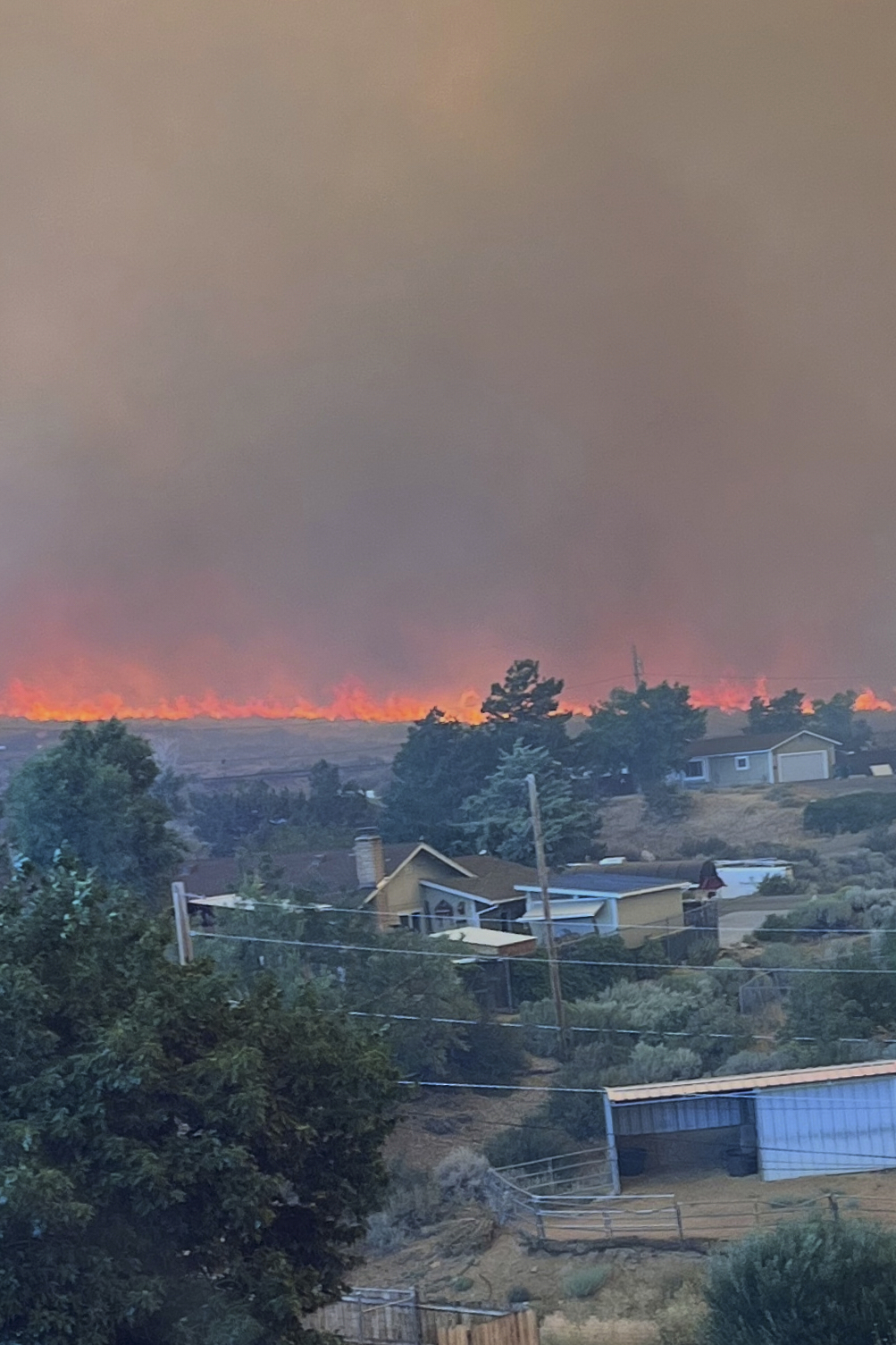
    The fast-growing Hawk Fire that was spreading toward neighborhoods and consumed some homes in northwest Reno, Nev., was caused by humans and was 0% contained Sunday, authorities said. At least six people were injured.

    Officials said at a news conference Sunday afternoon that 42,000 residents have been ordered evacuated, and the “GO NOW” zone reached the edge of the University of Nevada campus. An additional 45,000 people were in the evacuation warning zone, and encouraged to leave now and be prepared to stay away for several days to clear the roads for first responders.

    The fire had grown to 13,000 acres and was moving in different directions as the winds changed, complicating the fight.

    Authorities confirmed several structures have been destroyed in the fire and were assessing the totals.

    The injured included three civilians and three first responders, officials said.

    The fire has been burning across a rugged section of the Humboldt — Toiyabe National Forest where Peavine Mountain is ringed by homes and businesses on the Nevada side of the California state line, and some of these homes were consumed by the flames.

    Nevada Gov. Joe Lombardo declared a state of emergency in Washoe County and mobilized the Nevada National Guard to support aerial firefighting with two helicopter crews as well as 60 troops to help police safeguard evacuated neighborhoods.

    Nearly 10,000 customers were without power in Washoe County on Sunday. Portions of U.S. Route 395, a major north-south highway, were closed due to the fire. Reno has a population of more than 280,000 residents.

    Washoe County emergency officials opened the Reno-Sparks Convention Center to evacuees, but said they couldn’t bring their pets — small animals and large animals were to be left at two other locations.

    A family raced to grab possessions but lost their home

    Cari Kieffer said a video posted on social media showed her house entirely burned down, with only a scorched basketball hoop still standing.

    “I woke up this morning and just started crying — all my kids, they lost everything,” Kieffer said Sunday. “We lost all our stuff. Everything we own is gone.”

    Kieffer had been watching her son’s football game Saturday when she learned that their home on the outskirts of Reno was in the evacuation zone. An application the family used to track the fire’s progress had been lagging significantly behind its actual location, she said, so they thought firefighters had kept the blaze from their neighborhood.

    Instead, Kieffer, her husband, and their four children ages 3 to 16 raced to save their dogs and whatever possessions they could retrieve. Ash rained down and the wind blew like an oven blast from a wall of flames advancing down the hillside toward their neighborhood, she said.

    “I kept looking outside and the flames just kept getting closer and closer every time I looked,” Kieffer said. “I was like, we got to go like now.”

    Eyes watering and throat burning, Kieffer grabbed a handful of clothes, a Bible, her wedding photos, and her mother’s ashes. In the frenzy, as firefighters yelled at her family to leave immediately, she said she forgot her family’s birth certificates and was unable to salvage her childhood photos.

    The family drove to a friend’s home but had to evacuate again. They learned later Saturday evening that their own home was gone.

    A mountaintop home goes up in flames

    Jaida Hargrove’s grandfather, Rick Arrate, lived alone on Peavine Mountain, which overlooks Reno and Sparks. Firefighters used a bulldozer, cut down trees, and applied fire retardant in their attempt to contain the flames, Hargrove said.

    “They all thought it would be OK,” she said. “And then, in about 30 minutes, the winds just changed and it came way too fast.”

    Arrate and the firefighters were quickly forced off the mountain. “All he was able to take with him was his two golden retrievers,” Hargrove said.

    Arrate spent Saturday night with Hargrove’s parents, his next steps unknown.

    Separate GoFundMe crowdfunding campaigns were set up to assist Arrate and the Kieffer family.

    The fire wasn’t troubling to some at first

    The fire was so small Saturday morning that it wasn’t even a concern, said Tyler Duvall, who went camping over the weekend. By the next day, his house was in the evacuation zone and he couldn’t get back.

    “The wind really blew it up,” Duvall said, adding that he knows of some homes that burned about a mile from his place.

    Strong, gusty winds, low humidity, and dry vegetation are fueling its growth, according to Truckee Meadows Fire & Rescue in Reno.

    “Approximately 400 personnel are currently working on the incident, with resources coming together from local, state, and federal agencies, including ground crews and air resources,” the Truckee Meadows statement said.

    A Nevada transplant gets a rude welcome to Reno

    Retired police officer and firefighter Ted Melden has seen his share of Mother Nature’s fury since moving to Reno with his wife earlier this month from Chapin, S.C. So far, he’s experienced a hailstorm with flash flooding, two different power outages, and, now, the second wildfire incident in the region in two weeks.

    “Just another natural disaster,” Melden said.

    In the two years he lived in South Carolina, Melden said, Hurricane Helene knocked over trees in his yard, while a tornado did some damage in his neighborhood.

    For now, Melden hasn’t been ordered to leave his home, but he has his bags packed just in case.

    “This thing kicked off yesterday, and it just went,” Melden said in describing the wildfire’s fast movement. “I’m hoping they’ll get a good handle on it. You just have to roll with the flow and be ready. Always be prepared and have a full tank of gas.”

    Places just outside the evacuation zone are warned

    The University of Nevada’s Reno campus was just outside the evacuation zone Sunday morning. The university had an enrollment of about 24,000 students in fall 2025. University officials said they have established an emergency response plan should conditions change.

    The Reno-Tahoe International Airport also was outside the evacuation zone. Commercial flights at the airport were unaffected Sunday. The smaller Reno-Stead Airport was closed to general aviation traffic due to the Hawk Fire, but remained open to firefighting aircraft.

    Casinos in Reno offered discounts on hotel rooms to evacuees.

    “If you have been told to evacuate, please don’t wait!” Reno Mayor Hillary Schieve said in a statement posted on social media late Saturday night. “Structures have already been burned in this fire and your life is more important than a building.”

    Authorities also were keeping watch on a county detention facility that was several blocks from the outer edge of the evacuation warning area.

    Earlier this month, three wildfires fueled by hot, dry, and windy conditions north of Reno forced more than 13,000 residents from their homes, according to the Nevada National Guard. The largest of the three, the Bug Fire, burned nearly 150 square miles but now is almost fully contained.

  • After decades of free spending, Washington is facing some unpalatable choices

    After decades of free spending, Washington is facing some unpalatable choices

    Year after year, the federal government has spent more than it collected in taxes. Each annual shortfall increased the national debt, slowly at first and then by leaps, defying warnings of an inevitable reckoning.

    Now, the reckoning may be at hand.

    This week’s bond market sell-off brought government borrowing costs to their highest level in almost two decades and prompted an extraordinary Treasury Department intervention.

    On Friday, the yield on the 30-year Treasury bond topped 5.27%, up slightly from one day earlier, a sign that Treasury Secretary Scott Bessent’s plan to calm markets is not working. After decades of free spending, Washington may soon be compelled to make some long-deferred, and politically unpalatable, choices that will leave few Americans unscathed.

    “This is what the bond market is trying to signal: We’re going to have to make choices that hurt growth,” said Adam Abbas, who manages $4 billion in bonds for the Oakmark Funds. “We have two levers to do that: raise taxes or cut spending. Either option is not politically popular, and it will never be popular, but at some point we have to address the problem.”

    The problem is a $40 trillion national debt, along with crisis-level annual budget deficits that require significant new borrowing.

    When the Treasury Department woos investors for its bonds, it competes with other governments and corporations — notably the hyperscalers building the nation’s artificial intelligence infrastructure. All that competition for capital means investors can demand higher returns, or yields, from those that want their money.

    Fiscal watchdogs have warned for decades that rising U.S. debt will eventually trigger a crisis. As borrowing costs rise, debt becomes more expensive in what can become a vicious cycle, said Marc Goldwein, senior policy director for the nonpartisan Committee for a Responsible Federal Budget.

    “What I worry about is we’re on the verge of sort of a real debt spiral, which happens when your interest [bill] is growing faster than your economy,” Goldwein said.

    Fast-rising bond yields or interest rates often reverberate through the financial system in unexpected ways, exposing costly vulnerabilities. In 2023, for example, Silicon Valley Bank failed after rising bond yields blew a hole in its balance sheet.

    Today, potential weak spots in the financial system include some of the nation’s largest hedge funds, where borrowed money used for investments, or leverage, is “near all-time highs,” according to the minutes of the Fed’s July 28-29 meeting. Likewise, traditionally staid life insurers are holding riskier assets that would be difficult to unload quickly if they needed to raise cash during a crisis.

    Financial setbacks also could occur overseas in places like France or Japan, said Rebecca Patterson, former chief investment strategist for Bridgewater Associates and now a senior fellow at the Council on Foreign Relations.

    “When we’re thinking about what could cause a crisis in the U.S., don’t just think about what’s happening in the U.S. Think about other markets that could be vulnerable,” she said.

    Today’s fiscal pressures began building a quarter century ago after former President Bill Clinton and a Republican-controlled Congress balanced the budget four years in a row. The federal government actually began paying off its debt.

    That prompted Federal Reserve Chairman Alan Greenspan to give a speech in 2001 warning that eliminating the debt, and thus Treasury securities themselves, could disrupt financial markets. Even so, he expected it to happen.

    “Current forecasts suggest that under a reasonably wide variety of possible tax and spending policies, the resulting surpluses will allow the Treasury debt held by the public to be paid off,” Greenspan said.

    Instead, a series of policy choices and unforeseen crises swamped the nation’s fiscal progress beneath a tide of red ink.

    The problem has grown especially acute over the past decade. Between 1789 and 2016, the U.S. government borrowed a bit more than $19 trillion. Over the past 10 years, President Donald Trump and former president Joe Biden added an additional $20 trillion, doubling the national debt, and making debt service payments one of taxpayers’ largest annual burdens.

    The U.S. now spends more than $1 trillion each year paying interest on the national credit card, more than it devotes to Medicare, according to the nonpartisan Congressional Budget Office. As recently as 2010, the interest bill was less than one-fifth that amount.

    The rising U.S. debt load is part of a broader phenomenon. Global debt of all types hit a record $353 trillion earlier this year, more than three times the size of global output.

    Unlike the risky mortgage borrowing that triggered the 2008 financial crisis, recent years have featured governments as the biggest borrowers. Here and abroad, governments borrowed to repair their economies after the 2008 meltdown and borrowed again to get through the 2020 pandemic. Poorer nations in Africa and Asia have gone deeper into debt to finance higher energy and food bills following the wars in Ukraine and Iran.

    “The debt has transferred to governments. I don’t think this is only a U.S. story, by any means,” said Patterson.

    This week’s bond market drama returned long-term yields to the level they occupied for most of the 1990s. But there are important differences between that period and today. Debt was lower and growth was faster.

    In 1997, for example, when the yield on the 30-year bond was around 6%, the economy still managed to post growth that topped out at 6.8%, more than four times faster than the most recent quarter. Relative to the size of the economy, the national debt that year was less than half as big as today.

    “Demographics. Labor force growth is down because of aging, the recent departure of older workers, and diminished immigration. And Trump keeps throwing in supply-side shocks — tariffs, Iran wars. The supply-side is completely different now,” Douglas Holtz-Eakin, president of the conservative American Action Forum and a former director of the CBO, said via email.

    The only surefire way to restore order to bond markets would be credible action to reduce the nation’s yawning budget deficit, which the CBO estimates will hit a record $2.1 trillion this year.

    In a Thursday interview with CNBC, Bessent promised the Trump administration would soon announce “an increased” focus on the government’s finances, including an examination of potential changes on “both the revenue and the cost side.”

    But there is ample reason for skepticism. The administration’s initial attempt at overhauling government spending produced Elon Musk’s Department of Government Efficiency, which upended large swaths of the civil service while failing to back up exaggerated claims of savings.

    Despite that experience, Bessent said he expected “several hundred billion dollars” in savings from an anti-fraud task force led by Vice President JD Vance.

    The administration’s economic assumptions are also more optimistic than those of outside forecasters. Before the president’s signature tax legislation passed last year, the White House Council of Economic Advisers projected that this year’s deficit would be about $1.7 trillion.

    The CEA also assumes that the U.S. economy will grow at an average annual rate of 2.8%, notably faster than the CBO’s 2% forecast.

    Independent experts say some combination of higher taxes and cuts in popular entitlements such as Social Security and Medicare are unavoidable. But less than three months before November’s congressional elections, the administration’s promised fiscal consolidation “seems unlikely to be realized,” economists at Barclays told clients this week.

    Indeed, on Capitol Hill the debt issue so far has spurred little more than dutiful public statements.

    “Our reckless spending problem in Washington is immoral — it unfairly leaves our children and grandchildren to foot the bill — but it also is making our economic stability extremely fragile,” Sen. John Curtis (R., Utah) wrote Thursday on X. “The more we add to our debt, the greater the threat of disaster in the event of an economic shock.”

    Curtis is lead sponsor of a bipartisan bill to create a commission to propose ways to shrink the national debt to less than 100% of GDP by 2039. He also voted last year for the president’s tax legislation, which the CBO estimates will add $4.7 trillion to deficits over the next decade.

    Curtis’s office did not immediately respond to messages on Friday.

    Other lawmakers have proposed creating a commission to rescue Social Security, which is expected to run short of money to pay full benefits in 2032. If that happens, benefits are legally mandated to be slashed by 22%.

    Few expect early action. And Sen. Bill Cassidy (R., La.), a lead sponsor of one of the commission bills, said no one should expect such a commission to tackle problems beyond Social Security.

    “It’s easy to say, ‘fix everything at once,’ but we know that is not possible,” Cassidy said in an email. “Once we do this, it will prove that other areas of the debt can be addressed, but we should crawl before we walk.”

    As Congress tries to crawl and the Social Security trust fund’s depletion approaches, the bond market’s anxiety will grow, said Jason Fichtner, executive director of the LIMRA Retirement Income Institute and a former chief economist of the Social Security Administration.

    “I don’t see that meaning that the government defaults or goes bankrupt,” he said. “But I do think it means higher costs of living for everybody.”

  • U.S.-Canada breakdown shows limits of Trump’s aggressive trade strategy

    U.S.-Canada breakdown shows limits of Trump’s aggressive trade strategy

    The shocking collapse of U.S.-Canada trade talks is the latest sign that President Donald Trump’s bulldozer approach to remaking the nation’s trade relationships may be reaching its limits.

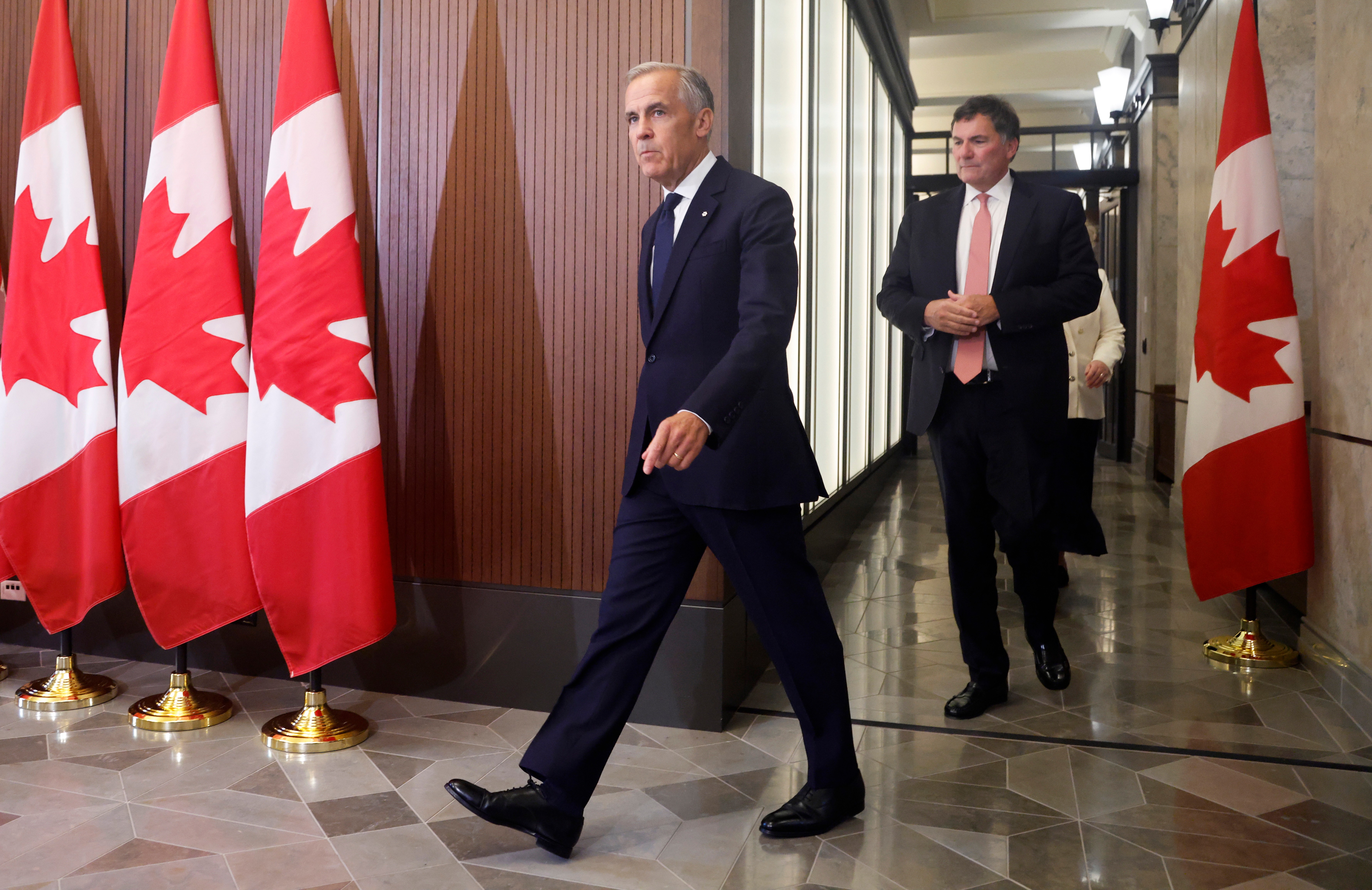
    The president tried in recent days to use an untested legal power to force Canada to swallow trade concessions. Instead, Canadian Prime Minister Mark Carney quit the negotiations rather than accept a lengthening list of U.S. demands.

    As a result, 50% U.S. tariffs took effect early Saturday on an array of Canadian products, including hockey sticks and Crown Royal whisky.

    As Carney prepared to walk away — a rare example of a foreign leader telling the president “enough” — Trump was retreating on another trade front. On Friday, after insisting for more than a year that tariffs do not affect consumer prices, he lifted tariffs on beef imports, saying the move would lead to lower grocery prices.

    The two developments, coupled with legal challenges to Trump’s tariffs, leave the president’s signature economic policy in a state of flux.

    “It’s a big setback for Trump’s trade policy. We’re at a juncture where other countries may be very closely watching how this plays out as they also are becoming increasingly frustrated with the demands the U.S. is placing on them in these largely one-sided trade agreements,” said Wendy Cutler, a former U.S. trade negotiator who is now senior vice president at the Asia Society Policy Institute.

    Indeed, the United States has negotiated 10 reciprocal trade agreements over the past year with nations such as Malaysia, Cambodia, and Argentina, along with other trade frameworks with the European Union, the United Kingdom, and Japan.

    Hearing of the concessions that the U.S. offered Canada, including reductions in tariffs on industrial metals, some trading partners may demand revisions to their deals, Cutler said.

    Administration officials have approached each bargaining round convinced of two things: Decades of U.S. trade policy hollowed out the nation’s manufacturing communities. And a muscular new approach, leveraging the appeal of the $32 trillion U.S. economy, can force other nations to give way and encourage the reindustrialization of the U.S.

    For the administration, trade negotiations are not a contest of equals. The talks start from the premise that U.S. negotiating partners must make concessions, opening their markets and in some cases promising to invest in the United States, simply to win a reprieve from unilateral U.S. trade barriers.

    Both Jamieson Greer, the president’s chief trade negotiator, and Treasury Secretary Scott Bessent have publicly complained that Canada and China are the only nations that retaliated for the tariffs that Trump imposed last year.

    The administration sees its actions as restoring fairness to an imbalanced global trade system, making such retaliation unjustified. But China’s tough stance last year, which included a temporary interruption of essential rare earth minerals, paid off. The president lowered his triple-digit tax on imports from China and reached a trade truce in an October meeting with Chinese leader Xi Jinping, who is due in Washington on Sept. 24 for more talks.

    The Canada negotiations were aimed at averting the new 50% tariffs, which Trump had threatened in July unless Carney dropped retaliatory measures imposed in response to earlier U.S. tariffs.

    On Tuesday, Trump delayed his initial deadline, posting on Truth Social that the two sides had reached “a DEAL” and needed three days to finalize the documents.

    The subsequent breakdown spotlighted tensions in the president’s strategy, including questions over the durability of any deal reached with the U.S. administration.

    After all, the U.S. and Canada, along with Mexico, already have a trade deal: the United States-Mexico-Canada Agreement (USMCA) of 2020, which Trump hailed at the time as “the largest, fairest, most balanced, and modern trade agreement ever achieved.”

    But this year, the president threatened to quit the deal and demanded sweeping changes to it, aimed at promoting more U.S. manufacturing. He also imposed tariffs on Canadian goods starting last year, a breach of the accord.

    On Saturday, speaking in Ottawa, Carney alluded to the difficulty of negotiating with a mercurial president.

    “We’ve recognized from the start that America has changed,” Carney said. “We recognize that sometimes, its signature is written in pencil.”

    Negotiating with the U.S. is also complicated by divisions within the administration. All top officials share Trump’s goal of spurring domestic manufacturing. But as Greer haggled with the Canadians this week, a split emerged over the U.S. trade representative’s willingness to reduce an existing 50% tariff on aluminum derivatives to 25% in return for Canadian concessions.

    At a White House meeting, White House trade adviser Peter Navarro and Commerce Secretary Howard Lutnick, whose department administers the national security tariffs, clashed with Greer, representing industry views that the higher aluminum tariffs were needed to encourage domestic manufacturing.

    “Navarro and Lutnick were both yelling at Greer saying: ‘What are you doing? This is stupid. You know, we’re not giving these things away,’” said one industry representative, who spoke on the condition of anonymity to describe the confidential talks.

    Late in the talks, the U.S. sought to exclude from tariff reductions heavy trucks produced in Ontario, such as the Ford F-350 and F-450, and the GM Silverado. Over time, that would have made it “more uneconomic” for the automakers to keep making the vehicles in Canada, Carney said. The administration also sought to restrict Canada’s right to sign trade deals with other countries, a key part of Carney’s strategy to reduce dependence on its increasingly unreliable southern neighbor.

    Trump’s undiplomatic style — including saying that Canada should surrender its sovereignty to become the 51st U.S. state — made it harder politically for the Canadian leader to accept a deal. Public opinion in Canada has turned fiercely anti-American.

    “A 160-year trading relationship has found its red line,” said Flavio Volpe, president of the Automotive Parts Manufacturers’ Association in Toronto. “Demanding that your closest trading partner mirror your trade policy with third countries is akin to asking them to surrender agency over foreign policy. This episode shows that doesn’t work, no matter the disproportionate market leverage of the USA.”

    Trump also has a general disregard for the $3.4 trillion worth of merchandise that the U.S. imports annually. Speaking in June about his North American neighbors, the president told reporters in the Oval Office: “We don’t need anything that Canada has, we don’t need anything that Mexico has, but they need everything that we have. … We don’t need their cars, we don’t need their lumber, we don’t need their energy, we don’t need anything that they have.”

    In fact, U.S. farmers rely on Canadian sources for nearly 80% of the potash fertilizer they use each year, according to the U.S. Geological Survey. Northern border states, including New York, Michigan, Vermont, Minnesota, and Maine, run on electricity produced by Canadian hydropower. And Midwestern refineries are optimized to process heavy sour crude oil from Canada, helping keep gas prices lower than they otherwise would be, according to the Federal Reserve Bank of Kansas City.

    Total U.S.-Canada trade each year exceeds $700 billion.

    The talks’ failure leaves businesses on both sides of the border burdened by a sudden jump in costs. Small businesses in the U.S. will face an especially sharp cash crunch, as they must pay tariffs before their customers pay them 30 or 60 days later, said Jason Miller, a professor of supply chain management at Michigan State University.

    “I expect a significant drop in a lot of these different import categories because importers simply can’t afford to bring them in. That may mean certain products not on the store shelves,” said Miller.

    In other cases, companies will struggle to find a domestic alternative to Canadian goods, especially for intermediate products such as packaging materials. So they will continue importing and pass along some of the 50% cost shock to their customers.

    On Saturday, Carney said Canada will retaliate on Sept. 8 for the new tariffs with its own trade measures. By delaying his response, he is leaving time for cooler heads to prevail, analysts said.

    “Then the parties come back to the table. North America is too integrated for it to unravel on the basis of a deal that was put together over 14 days,” said Dan Ujczo, a trade lawyer in Columbus, Ohio.

    If a deal had been reached this weekend, it would have paved the way for the official start of negotiations between the two nations over the proposed USMCA changes.

    Instead, the administration now must manage a cycle of retaliation and counterretaliation while perhaps facing a new courtroom fight over the legality of Trump’s 50% tariffs, which were imposed under a never-before-used 1930 trade law.

    Meanwhile, Trump’s 50% tariffs on goods ranging from hockey sticks to alcohol are expected to raise prices for American consumers less than three months before the Nov. 3 midterm elections, which have the potential to give Democrats control of Congress.

    Those elections, polls show, are expected to turn on voters’ frustration with the rising cost of living.

  • A trade war between Canada and the US further ruptures a once-close and durable alliance

    A trade war between Canada and the US further ruptures a once-close and durable alliance

    TORONTO — For decades, Canada built much of its prosperity on privileged access to the United States. Now, after the collapse of trade talks, one of the world’s closest and most durable alliances has been fundamentally altered, with both countries facing the risk of a full-scale trade war.

    Prime Minister Mark Carney acknowledged the break after last-ditch negotiations failed Friday, saying Canada had recognized that “America has changed” and that the countries would “not return to our old relationship.”

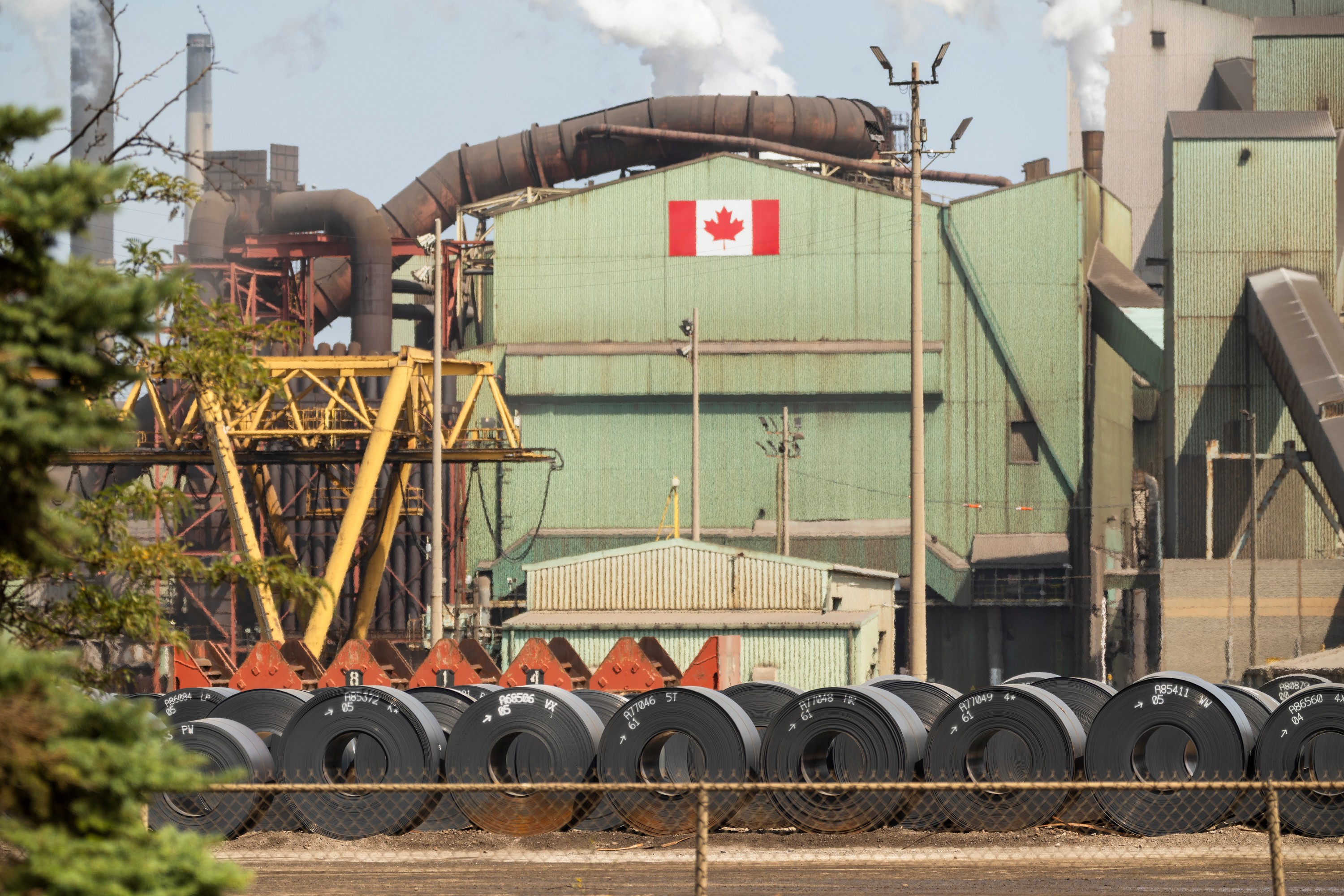
    The United States imposed 50% tariffs on about $20 billion worth of Canadian goods early Saturday. Carney said Canada would retaliate dollar for dollar beginning Sept. 8, targeting sectors including steel, dairy, appliances, agricultural equipment, pulp and paper, and electronics.

    Carney foreshadowed the shift at the World Economic Forum in Davos in January, declaring that the world was experiencing “a rupture, not a transition” and urging countries such as Canada to reduce their vulnerability to economic coercion by strengthening their economies at home and diversifying abroad.

    He said in Ottawa on Saturday that warning had been borne out. He accused the U.S. of using “economic integration as a weapon” and said its “signature was written in pencil.”

    “The collapse of the tariff talks points to the fact that the old Canada-U.S. relationship is over and, for many Canadians, it also confirms the perception that Canada can’t trust the Trump administration,” said Daniel Béland, a political science professor at McGill University in Montreal.

    The pressure from Republican President Donald Trump has gone well beyond tariffs.

    He has questioned Canada’s economic viability, repeatedly talked about making it the 51st U.S. state, and used trade measures to encourage production to move from Canada to the United States. That has angered many Canadians and fueled a sense of betrayal in a country that had long regarded the U.S. as its closest ally.

    Canadian travel to the U.S. remains sharply lower than before the dispute, with July return trips down nearly 29% by car and 27% by air from July 2024, Statistics Canada said.

    The failed negotiations underscored how far the relationship had shifted. Canada had been prepared to accept some U.S. tariffs for market access and greater certainty — a break from decades of policy aimed at eliminating trade barriers.

    For Canadians accustomed to preferential access under the 1989 Canada-U.S. Free Trade Agreement, NAFTA, and its successor, even reduced tariffs would mark a retreat from the old relationship.

    The collapse also puts Carney’s approach to Trump to the test.

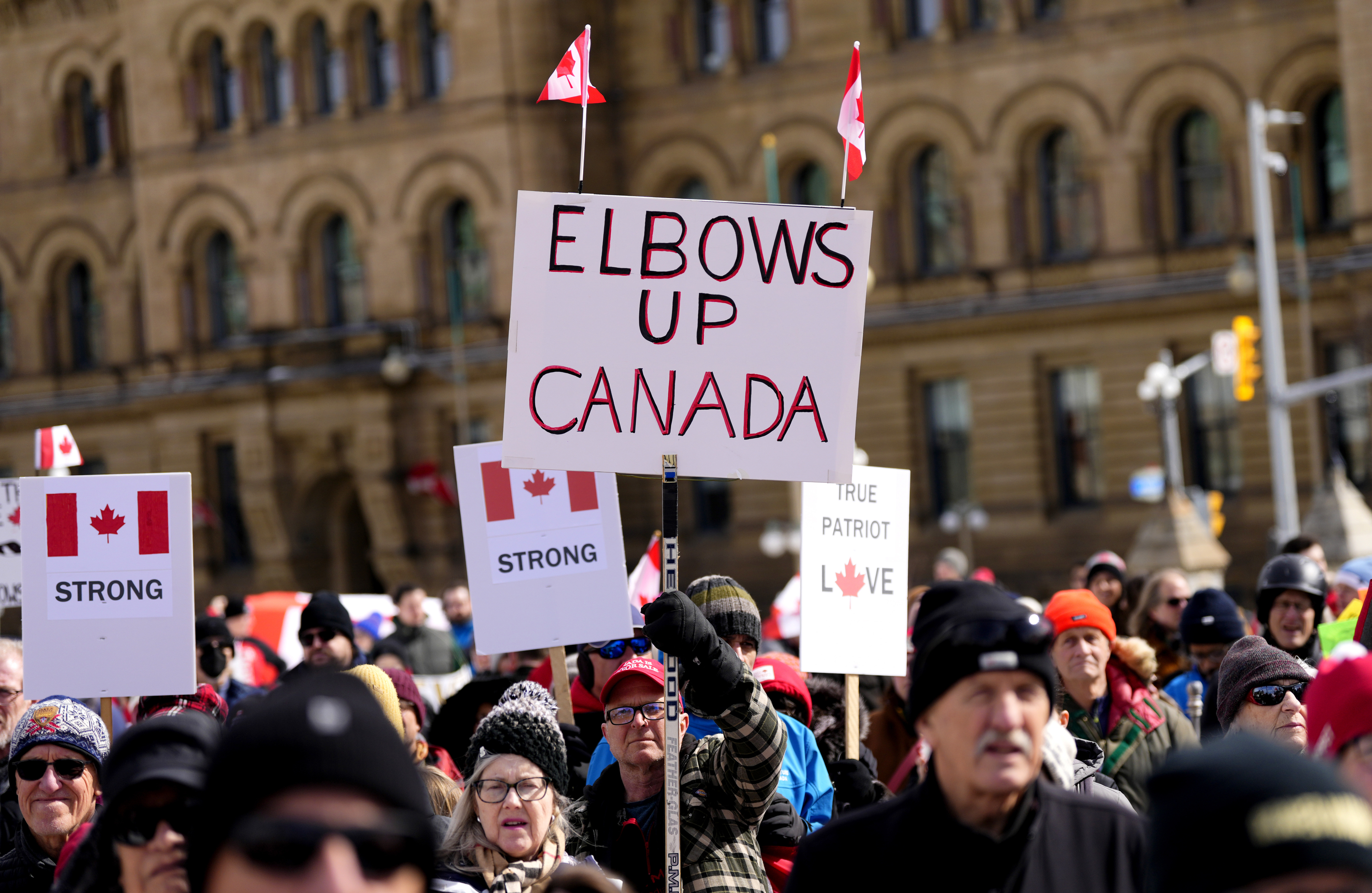
    The prime minister’s “elbows up” posture — hockey shorthand for playing aggressively and refusing to be pushed around — has helped keep him popular at home. His decision to resist U.S. pressure could also resonate abroad with those impressed by his Davos call for countries to resist economic coercion and reduce dependence on great powers.

    Provincial and conservative leaders broadly backed Carney. Saskatchewan Premier Scott Moe said, “The old status quo is not possible,” while Ontario Premier Doug Ford praised Carney for rejecting what he called a bad deal for the auto, steel, and manufacturing sectors.

    Ford said Trump “is not to be trusted whatsoever.”

    Former Alberta Premier Jason Kenney said Canada was “not cravenly surrendering in the face of constant economic and political aggression.”

    Lana Payne, national president of Unifor, Canada’s largest private-sector union, accused Trump of trying to weaken Canada’s industrial base.

    “What we have seen from the U.S. administration, or Donald Trump, is this consistent attempt to try and destroy the industrial economy of Canada with tariffs that have been strategically designed to attack us,” Payne said.

    Economic risks of fighting back and a shift seen as perhaps lasting

    Nearly three-quarters of Canada’s goods exports go to the United States. The U.S. economy is roughly 10 times larger than Canada’s, limiting Ottawa’s ability to retaliate dollar for dollar without inflicting disproportionate damage at home.

    Royal Bank of Canada economists estimate the tariffs directly affect about 0.4% of Canada’s GDP because they cover only about 5% of Canadian exports to the U.S. The damage could grow if retaliation broadens, more sectors are targeted, or the dispute curbs investment and disrupts supply chains.

    Carney himself acknowledged the cost of retaliation, saying the Canadian measures would “raise costs and reduce choice for Canadians.” He said his government would announce additional assistance for affected businesses and workers.

    Béland said the countries were witnessing “the beginning of a full-scale trade war,” though he cautioned that the situation could change rapidly.

    The dependence is not one-sided.

    Carney said Canada supplies 99% of U.S. natural gas imports, 85% of its electricity imports, and 60% of its crude oil imports. Trump has focused much of his pressure on autos, steel, and aluminum, fueling resentment among Canadians who see the push as an effort to hollow out key industries.

    Goldy Hyder, president and CEO of the Business Council of Canada, said businesses still view the U.S. as Canada’s most important trading partner but increasingly see the shift as lasting beyond Trump.

    “There is a new trade and investment model, one that could well be kept in place by future U.S. administrations whether Democrat or Republican,” Hyder said.

    Canada looks beyond U.S. because ‘things will never be the same’

    The breakdown adds urgency to Carney’s push to diversify beyond the United States. He has traveled abroad seeking investment and new trade ties, aiming to attract $1 trillion Canadian (US$730 billion) by 2030 and to double non-U.S. investment over the next decade. Canada has signed more than 20 trade and security agreements across five continents in the past year.

    That made Washington’s effort to restrict Canada’s ability to negotiate trade agreements with other countries particularly significant.

    In July, Ottawa and Alberta advanced plans for a new Pacific Coast oil pipeline to give Canadian crude greater access to Asian markets and reduce reliance on U.S. buyers.

    The immediate question is how long the latest tariff confrontation will last.

    Béland said the deeper change probably will, partly because U.S. protectionism is likely to remain influential under future administrations.

    “The idea that things will return to ‘normal’ once Donald Trump leaves the White House is probably just wishful thinking,” Béland said. “It doesn’t mean the relationship might not improve in the future but that things will never be the same.”

  • Iran security chief threatens neighbors against economic measures

    Iran security chief threatens neighbors against economic measures

    The new leader of Iran’s top security body is threatening neighbors against joining new U.S. efforts to squeeze Tehran’s economy. Egypt is trying to revive Iran-U.S. negotiations. And Iraq and Iran say Tehran has helped some ships carrying Iraqi oil to transit the Strait of Hormuz. France and Saudi Arabia are expected to discuss plans to bypass the waterway.

    Meanwhile, Israel has carried out strikes in Syria and in Gaza.

    Iran’s new top security adviser issues threats

    The hard-line new leader of Iran’s Supreme National Security Council threatened Tehran’s neighbors against joining the new U.S. effort to hurt Iran’s economy, and accused the United States of increasing global nuclear insecurity with months of war.

    “If (Trump) wants to do something, we will retaliate in a seismic manner,” he said in an interview with the state broadcaster that aired Saturday.

    Mohsen Rezaei was named this month as part of senior appointments widely seen as hardening Tehran’s political and military stance. His interview with IRIB is his most extensive public statement since then.

    Rezaei said Iran would target oil-shipping routes out of the Persian Gulf — alternatives to the Strait of Hormuz — if neighbors join what he described as the economic war against Iran. Those neighbors would be considered enemies and “we will target their interests,” he said.

    U.S. President Donald Trump in the past week has vowed to increase Iran’s pain by imposing an “unprecedented” level of economic warfare and isolation. Iran has lived under sanctions for years.

    Rezaei said discussions with Oman, located on the other side of the strait, over management of it were ongoing, and said fees would be imposed. Iran asserted control over what was seen as an international waterway shortly after the U.S. and Israel attacked on Feb. 28.

    Rezaei also vowed to make changes to Iran’s diplomacy and bring new capabilities to what he called the next war. He warned the U.S. against sending more military personnel to the region, and said the U.S. had increased nuclear insecurity because countries see that participating in international monitoring efforts, as Iran has done, is no protection against attack.

    Egypt tries to revive U.S.-Iran negotiations

    The top diplomats for Egypt and Iran discussed efforts to bring Tehran and Washington back to the negotiating table to settle the war, Egypt’s foreign ministry said.

    Iranian Foreign Minister Abbas Araghchi and Egyptian counterpart Badr Abdelatty also discussed the Iranian-Omani talks, the ministry said.

    Araghchi briefed Egypt’s foreign minister about “Iran’s view of ongoing developments, the course of negotiations and their challenges,” the ministry said, without elaborating. Araghchi confirmed the call. Separately, Araghchi said he had a call with Pakistan’s army chief, Field Marshal Asim Munir,

    Iran and Iraq say some Iraqi oil is facilitated through the strait

    The governments of Iraq and Iran said Tehran has helped some ships carrying Iraqi oil to transit the Strait of Hormuz, a key waterway for global oil, natural gas, and other supplies, but there were few details.

    “There is facilitation for some ships carrying Iraqi oil in the Strait of Hormuz,” Iraqi President Nizar Amidi said in comments published Saturday by the state-run news agency, adding that Iraq doesn’t have a national carrier for transporting oil.

    Iran’s state-run IRNA news agency said a number of Iraqi oil tankers have been permitted to transit. It was not clear how many or what Iran might have received in return.

    Syria says an Israeli drone strikes inside a village

    An Israeli drone strike on a vehicle wounded one person on Saturday in the southwestern Syrian village of Beit Jin, according to the Syrian state news agency SANA. Syria’s foreign ministry said several civilians were injured and called the strike a flagrant violation of the country’s sovereignty.

    The Israeli military said it targeted a “terrorist who advanced terror attacks in final stages of preparation,” without elaborating. It wasn’t immediately clear if it was the same strike.

    Israel has carried out hundreds of airstrikes around Syria after the ouster of former President Bashar Assad in late 2024, mainly destroying army assets to keep them out of the hands of his successors.

    Messages differ on the Golan Heights

    In an interview on Friday with Mario Nawfal, a Lebanese-Australian entrepreneur, U.S. Ambassador Tom Barrack said Israel “still” occupies the Golan Heights in violation of U.N. resolutions.

    Israeli Defense Minister Israel Katz on Saturday in a statement called Barrack’s remarks “full of inaccuracies and positions that contradict Trump’s own position.”

    Israel captured the Golan Heights from Syria in the 1967 war and annexed it in 1981. The U.N. considers the territory occupied Syrian land. But in March 2019, Trump signed a proclamation recognizing Israeli sovereignty over the Golan Heights, reversing decades of U.S. policy.

    French president, Saudi crown prince will meet

    French President Emmanuel Macron and Saudi Crown Prince Mohammed bin Salman are expected to discuss plans to develop alternative routes to the Strait of Hormuz during the Saudi leader’s two-day visit to Paris that starts on Sunday, according to officials in the presidency who weren’t authorized to be publicly named.

    Proposals include increasing trade through Omani ports outside of the Persian Gulf, expanding or doubling pipelines in Saudi Arabia and elsewhere, and developing new rail links, the officials said.

    France and Saudi Arabia have formed a task force on energy and logistics connections between the Middle East and Europe that is scheduled to meet at the ministerial level Monday. The officials said the work would focus on identifying the most strategic projects, securing financing, and establishing roles for French companies.

    An Israeli strike in Gaza kills 1 Palestinian

    An Israeli strike on the backyard of a house in central Gaza killed one Palestinian and wounded another Saturday, according to health officials at Al-Aqsa Martyrs hospital.

    Israel’s military said it targeted Sharif al-Hasanat, a Hamas commander who “advanced terror attacks and took part in efforts to restore Hamas’ underground infrastructure.” Days earlier, a U.S. negotiator reportedly asked Israel to draw down attacks while seeking to make progress on the ceasefire.

  • Trump urges court to reject BBC’s bid to secure records from his family in defamation case

    Trump urges court to reject BBC’s bid to secure records from his family in defamation case

    WASHINGTON — President Donald Trump has urged a federal judge to reject the BBC’s request for the court’s help in securing testimony and documents from three family members in response to his $10 billion defamation lawsuit against the British broadcaster.

    The BBC is trying to gain “politically-driven leverage” over Trump by serving subpoenas on daughter Ivanka Trump, son-in-law Jared Kushner and son Donald Trump Jr., personal lawyers for the Republican president argued in a court filing Friday.

    U.S. District Judge Jeffrey Kuntz in Miami did not immediately rule on the dispute.

    Kuntz, who was nominated to the bench by Trump, inherited the president’s lawsuit from another judge less than a week ago. Court filings did not immediately specify a reason for the case’s reassignment. The previous judge has set a February trial date.

    In May, a process server working for the BBC tried to serve subpoenas on Ivanka Trump and Kushner at their residence but encountered Secret Service agents who said they were not authorized to accept it, according to the president’s lawyers. They said the process server also visited Trump Tower in New York several days later in a failed attempt to serve Donald Trump Jr.

    In a court filing last week, the broadcaster asked for the court’s permission to serve subpoenas on Trump’s family members by certified mail instead of in person.

    Trump’s lawsuit, filed in December, accuses the BBC of deceptively editing portions of the speech that he delivered near the White House on Jan. 6, 2021, when a mob of his supporters attacked the Capitol to try to stop Congress from certifying Democrat Joe Biden’s victory over Trump. The suit claims the BBC spliced together separate parts of Trump’s speech to intentionally misrepresent what he said.

    The lawsuit alleges the BBC aired its documentary a week before the 2024 presidential election in “a brazen attempt to interfere in and influence” the outcome to Trump’s detriment.

    “The relief that the BBC’s Motion seeks cannot be segregated from the politically charged discovery campaign that it is based on, and which has already been ruled as improperly overbroad by this Court,” Trump’s lawyers wrote.

    The BBC has apologized to Trump for the misleading edit, but it denies defaming him.

  • TikTok settles with U.S. over child privacy concerns for $400 million

    TikTok settles with U.S. over child privacy concerns for $400 million

    WASHINGTON — TikTok on Friday reached a $400 million settlement in a lawsuit brought by the Justice Department that accused the company of illegally gathering children’s information.

    The 2024 suit, filed under the Biden administration, claimed that TikTok had gathered data from users under the age of 13 without parental permission. The suit accused TikTok of knowingly allowing children to create accounts and of failing to honor parents’ requests to delete their children’s accounts.

    TikTok violated federal privacy law along with a 2019 agreement with the government in which the app promised to take steps to protect children’s privacy, according to the government.

    Under the settlement announced Friday, TikTok will pay $300 million. The Justice Department also asked the court to eliminate the 2019 agreement, after which TikTok would pay the government an additional $100 million, according to a Justice Department news release.

    The settlement is the latest by the Trump administration, as it takes a softer approach toward ongoing government litigation against several major companies.

    In March, the Justice Department settled a lawsuit that accused Live Nation, the owner of Ticketmaster, of illegally maintaining a monopoly. The government also reached a settlement last year that allowed the technology company Hewlett Packard Enterprise to buy a rival, Juniper Networks, over the objection of some state attorneys general.

    The settlement between TikTok and the government also marks the latest win for the popular short-video app under the second Trump administration.

    During President Donald Trump’s first term, he signed an executive order to force the app’s Chinese owner, ByteDance, to sell it. But TikTok successfully sued to block that ban. In 2024, former President Joe Biden signed a law that would ban the app unless it was sold to a non-Chinese owner.

    After Trump returned to office, he repeatedly delayed enforcement of that law. In January, ByteDance announced that it had reached a deal, hammered out with the U.S. government, that spun off its American operations to a group of non-Chinese investors.

    Stanley E. Woodward Jr., an associate attorney general, called the settlement “a major victory for American children and parents” in a statement. A spokesperson for the U.S. version of TikTok did not immediately respond to a request for comment.

    This article originally appeared in the New York Times.

  • Federal judge vacates Trump policy that suspended processing of immigration visas from 75 countries

    Federal judge vacates Trump policy that suspended processing of immigration visas from 75 countries

    A federal judge in New York has vacated a Trump administration policy that suspended the processing of visas from 75 countries, including Afghanistan, Iran, Russia, and Somalia, whose nationals the Trump administration deemed likely to require public assistance in the United States.

    U.S. District Judge Jeannette Vargas, an appointee of former President Joe Biden, set aside the policy Friday as “contrary to law and in excess of statutory authority.”

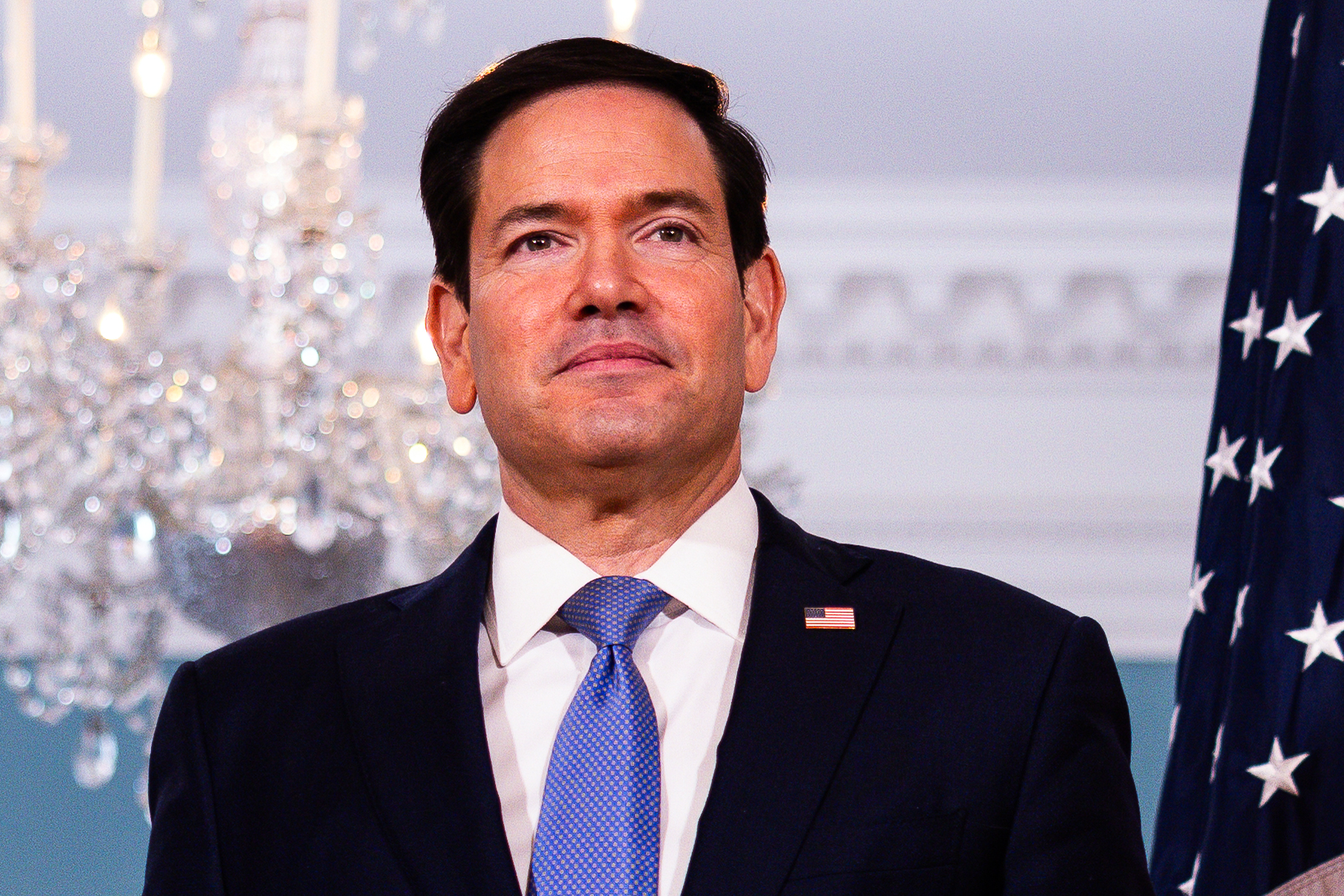
    Secretary of State Marco Rubio exceeded his authority by issuing the policy, which “runs afoul” of the Immigration and Nationality Act by mandating “the refusal of visas to eligible applicants without any basis in law,” the judge ruled.

    Judge says power lies with consular officers

    Vargas said the policy also undermines the congressional requirement that puts consular officers at the forefront of any visa decision.

    “Congress imbued these officers with exclusive authority and discretion to determine if an immigrant is eligible for a visa based upon review of specific and detailed criteria set forth in the statute,” she wrote. “The Policy, which categorically prohibits the issuance of immigrant visas based upon the nationality of the applicant, represents a direct abrogation of this statutory scheme.”

    The policy was challenged by two nonprofit organizations along with 11 individuals, including six whose family members had been refused visas. The remaining five are outside the country and had filed “employment-based petitions” to come to the United States.

    Advocates say keeping families apart is cruel

    “We welcome this ruling because, at its heart, this case is about keeping families together,” said Anna Gallagher, the executive director of CLINIC, a national nonprofit that provides training, resources, and support to a network of immigration legal service providers and was one of the plaintiffs.

    “Catholic social teaching calls us to uphold the dignity of every person and recognize the family as the foundation of society,” she said in a statement. “This decision affirms both those values and the rule of law, allowing families to once again move forward toward reunification.”

    Another plaintiff is African Communities Together, a Harlem-based nonprofit. One of its leaders called the ruling “a tremendous victory for the rule of law.”

    “This unlawful and racist ban caused immeasurable harm, cruelly keeping families and loved ones apart,” Diana Konate, deputy executive director for policy and advocacy, said in a statement. “Today, we are elated to tell our community members: this ban is no more.”

    Trump expands his anti-immigration agenda

    President Donald Trump has imposed a growing list of immigration and travel bans mostly for people from Africa, Asia, and Latin America. The State Department said Saturday that the Trump administration is “protecting the American people by upholding the highest standards of screening and vetting of visa applicants,” and that it would not comment on pending litigation.

    At the time the policy was issued, the State Department said it had instructed consular officers to halt immigrant visa applications from the 75 countries in accordance with a broader order in November that tightened rules around potential immigrants who might become “public charges.” Relying on Council of Economic Advisers data, the State Department said that more than 30% of households with immigrants from these countries received some form of public assistance.

    A separate notice sent to all U.S. embassies and consulates said that non-immigrant visa applicants also should be “fully vetted and screened” for the possibility that they might seek public benefits in the United States.

    The cable, a copy of which was obtained by the Associated Press, noted several times that the applicant must prove they won’t apply for public benefits while in the U.S., and that consular officers who suspect the applicant might apply should require them to fill out a form proving their financial bona fides.

    The ruling is the latest example of the courts upending Trump’s immigration agenda. In June, a federal judge struck down a Trump administration policy that made it harder for immigrants from dozens of countries to enter and stay in America — affecting elements like asylum, work permits, green cards, and citizenship applications. That judge said the policy threw countless immigrants’ lives “into indeterminate legal limbo,” and accused the U.S. Citizenship and Immigration Services of ignoring the law.

  • Canada will impose retaliatory tariffs on U.S. goods beginning Sept. 8 as trade negotiations collapse

    Canada will impose retaliatory tariffs on U.S. goods beginning Sept. 8 as trade negotiations collapse

    WASHINGTON — The United States imposed 50% tariffs on $20 billion worth of Canadian products early Saturday, and Canada said it would retaliate beginning Sept. 8 after last-ditch negotiations failed to resolve the latest strain in relations between the historic allies.

    President Donald Trump’s import taxes will hit about 5% of what Canada ships to the United States every year, including products ranging from hockey sticks to tongue depressors.

    Carney said, “in the coming days, we will release the details of these new tariff measures, which will come into force the Tuesday after Labor Day.” The dollar-for-dollar retaliation would target steel, dairy, appliances, agricultural equipment, pulp and paper, and electronics, he said from Ottawa.

    He disclosed that Canada had been willing to drop remaining retaliatory tariffs on steel, aluminum, and autos if the United States substantially lowered its own, and to encourage provinces to restore U.S. alcohol sales. But he said Washington’s final demands went too far, saying, “They asked too much and offered too little,” Carney said.

    Trump’s top trade negotiator, Jamieson Greer, said the Republican administration was offering to cut tariffs on steel, autos, and lumber, “things that are sensitive for them. And they’ve always had the best deal, and they still would have an even better deal, but they didn’t want that,” he told Fox & Friends Weekend.

    He added: “We’re moving forward with measures that respond to Canadian retaliation.”

    The moves also call into question the future of a North American trade agreement covering the United States, Canada, and Mexico that is crucial to industry in all three countries.

    Carney said the U.S. added last-minute terms that would have reduced tariff relief for Canadian-made vehicles, restricted Canada’s ability to strike trade deals with other countries, and weakened protections for language, culture, and sovereignty. He said such demands were “unacceptable.”

    But Greer, the U.S. trade representative, said that after a year of retaliation by its longtime ally, “We’ve said enough, and so we’ve taken countermeasures. Our interest is in protecting American workers and protecting American supply chains.”

    No further talks are planned.

    The breakdown in negotiations marked a sharp reversal from two days earlier, when officials from the two countries sounded as if they were headed toward a compromise.

    Carney said Ottawa would “hit back” with targeted tariff protection for industries exposed to the new U.S. duties, including some steel products.

    Ontario Premier Doug Ford, who leads Canada’s most populous province, backed Carney’s response, saying the prime minister had his “full support” for retaliation “tariff for tariff, dollar for dollar” and that “everything needs to be on the table.”

    A typically cooperative alliance goes sour

    The political impact will likely be even bigger than the economic fallout. The countries sold each other $880 billion worth of goods and services last year.

    The tariffs were initially supposed to kick in at 12:01 a.m. Wednesday. Trump extended the deadline for three days to allow talks to continue, but the countries could not reach an agreement in time.

    The U.S. and Canada have wrangled for decades over trade, poking each other over sore spots such as Canadian softwood lumber imports and U.S. access to Canada’s protected dairy market.

    Somehow, they still managed to remain friends, allies, and trading partners. Canadian soldiers fought alongside Americans in Afghanistan after 9/11. The 5,525-mile U.S.-Canada border is undefended, and nearly 330,000 people and $2 billion worth of goods cross it every day; 800,000 Canadians live in the United States.

    Trump’s approach to dealing with Canada marks an extraordinary departure from the traditionally cooperative relationship between the two countries. Trump has imposed tariffs on Canadian goods in a push to bring manufacturing back to the United States and made inflammatory comments about turning Canada into America’s 51st state.

    Carney said Canada had recognized that “America has changed” and that the two countries would “not return to our old relationship.”

    Canadians and Americans are frustrated

    The Canadian public is fed up. A petition to expel U.S. Ambassador Pete Hoekstra, a Trump ally, has collected nearly 248,000 signatures since July 21. It accuses the former Republican congressman from Michigan of having “normalized’’ Trump’s talk of annexing Canada, among other things.

    The two countries had good reasons to find a compromise.

    Nearly 72% of Canada’s goods exports last year went to the United States. The Trump administration might be wary of imposing new tariffs — paid by U.S. importers who try to pass along the cost to consumers via higher prices — before the November midterm elections. American voters are already frustrated with the high cost of living.

    “Canada likely wanted further sector-specific relief than the U.S. was willing to offer, or Canada’s concessions did not go far enough,’’ said Ryan Majerus, a partner at King & Spalding and a former U.S. trade official. ”Either way, I think both sides will be under immense pressure in the coming days to still find an off-ramp. But if Canada has agreed to also impose tariffs, the off-ramp may be even harder to find.”

    Candace Laing, president and CEO of the Canadian Chamber of Commerce, called the tariffs “a body blow to North American competitiveness” and warned they would raise costs for Americans while threatening Canadian customers, investment, and small businesses.

    Trump has turned to Depression-era trade penalties

    Trump has made tariffs the centerpiece of his second-term economic agenda. Last year, he imposed double-digit import taxes on almost every country, justifying them by declaring the long-standing U.S. trade deficit a national emergency. The Supreme Court in February ruled that he had overstepped his authority. The justices struck down the trade penalties and set the stage for the federal government to pay refunds to importers.

    So Trump has looked for other legal authority to justify tariffs.

    To punish Canada, he reached back to the Great Depression, invoking Section 338 of the Tariff Act of 1930 to threaten 50% tariffs on products that account for about 5% of Canadian exports to the United States.

    Nearly a century ago, with the U.S. and world economies in collapse, Congress passed the 1930 tariff law, imposing taxes on imports from around the world. Known as the Smoot-Hawley tariffs after their congressional sponsors, they are notorious among economists and historians for limiting world commerce and making the Great Depression worse.

    Section 338, which has never been used before to impose tariffs, authorizes the president to slap import taxes of up to 50% on imports from countries that have discriminated against U.S. businesses. No investigation is required to justify the levies. Nor is there any limit on how long they can stay in place.

    The rift comes as the United States, Mexico, and Canada are trying to renew a trade agreement that Trump negotiated in his first term and once praised as a triumph. The United States has begun formal talks with Mexico over revamping the US-Mexico-Canada Agreement, known as USMCA. But talks with Canada have not begun and escalating trade conflict casts doubt on whether they will.

    “Canada told the Americans in advance that if these tariffs landed, it would stop negotiating and retaliate,’’ said Barry Appleton, senior fellow at the Center for International Law at New York Law School. ”The American trade representative said publicly he would not tolerate retaliation. Both sides have now committed themselves in public, which is how escalation stops being a choice.’’