Category: Nation & World

  • Questions mount after deadly Berlin Pride attack. Here’s what to know

    Questions mount after deadly Berlin Pride attack. Here’s what to know

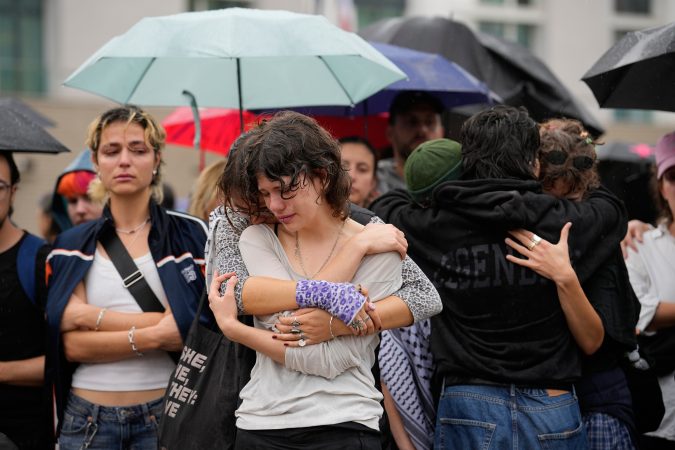
    BERLIN — Berliners mourned Monday after the deadly attack near the city’s Pride festival as questions mounted over how the suspect was able to move freely following a conviction linked to his ties to the Islamic State group.

    The 21-year-old Abdul Ballout, a German citizen, was killed following a search that lasted nearly 24 hours after Saturday night’s attack in downtown Berlin. He was suspected of driving a van into a crowd near the Pride festival before apparently cutting others with a machete in what authorities believe was an extremist terror attack.

    One woman was killed and 29 were injured.

    Chancellor Friedrich Merz on Monday wanted to know how the attack could have been prevented. Prosecutors said Ballout previously sought to join IS.

    “We must do everything to protect people in Germany as best possible from such criminals, from dangerous people who for whatever reason can’t be taken into custody,” Merz said.

    Here’s what we know:

    Officials seek answers about suspect’s sentencing

    Ballout, who was born in Germany and has Lebanese roots, traveled to Lebanon in 2025 with the goal of going to Syria to join the Islamic State group, Berlin prosecutors said. He made contact with several people who were presumed members — or at least he believed them to be, prosecutors said.

    He was arrested in Lebanon and sentenced by a military court to three months’ imprisonment for offenses including incitement to religious and sectarian conflict. He returned to Germany after completing his sentence, where he was arrested at the Berlin airport.

    In May, a juvenile court in Berlin convicted Ballout of preparing a serious act of violence endangering the state, as well as publishing Islamic State propaganda on his Instagram account and other charges, prosecutors said. He was sentenced to one year and 10 months in youth custody, which Berlin prosecutors appealed.

    Offenders who are 18 to 21 can be prosecuted in Germany’s juvenile system.

    Officials have said Ballout was given a suspended sentence. The Berlin courts, however, said his sentence had not been suspended but they had been determining whether it should be.

    The court said it released him because he was no longer in pretrial detention, which had been particularly long, and he did not meet statutory requirements governing flight risk, reoffending and other factors.

    Some German officials questioned the court’s decision. They vowed to investigate how Ballout ended up free and whether juvenile sentencing, sometimes seen as too lenient, needs to be reformed.

    Interior Minister Alexander Dobrindt, in an interview with public broadcaster ZDF, said that considering Ballout’s conviction and history of supporting the Islamic State group, it did not make sense why he was on the streets.

    “You can assume that it certainly would have made sense to put this person in custody,” he said.

    During an interview with regional broadcaster RBB, Berlin Mayor Kai Wegner said he didn’t want to question the court system’s independence but in this case, “words fail me.”

    Deradicalization experts believed he was unwilling to change

    The court ordered Ballout to attend a deradicalization program for high-risk offenders. He was evaluated twice by the Berlin-based Violence Prevention Network, which works with people at risk from right-wing extremism and Islamism. The organization defines deradicalization as a person successfully detaching from extremism ideology and distancing themselves from violence.

    Ballout was scheduled to meet with their staff Monday for his third and final evaluation, according to Cornelia Lotthammer, the nongovernmental organization’s public relations director.

    The staff expected to tell the court that Ballout was not a candidate for their program because he sought to misrepresent himself as a friendly person who was not an extremist and therefore did not need to be deradicalized.

    “Normally high-risk people are very convinced of themselves and of their ideology, and they would propagate it within those sessions,” Lotthammer said. “And then it’s easier to work with them. This is not a typical incident.”

    Ballout appeared to try to anticipate what the staff wanted to hear, she said.

    “They could see that he is a problem. I mean, everybody knew that he was a high-risk person,” she said. “But still, if he does not work together with our colleagues, then we can’t do anything.”

    She added: “But nobody would have said, ‘He’s not a threat, just let him go.’”

    He did not seem to be planning any attacks, Lotthammer said. If the staff had any indication otherwise, they would have involved law enforcement.

    Ballout would have had to find another organization to work with, or he might have been sent back to prison, Lotthammer said.

    She declined to comment on whether their organization believed Ballout should have been released from detention, calling that the court’s jurisdiction.

    Tragedy comes ahead of major German elections

    Three German states including Berlin hold elections in September. The attack is likely to feed into campaigning, and there are fears that anti-migrant rhetoric could boost the far right.

    A string of deadly attacks committed by immigrants was one factor in the 2025 national election in which the far-right Alternative for Germany, or AfD, finished second.

    AfD has assailed the government over migration and capitalized on discontent with other issues. In the eastern state of Saxony-Anhalt, it hopes to get its first state governor.

    Kristin Brinker, AfD’s local leader in Berlin, asked on X how a supporter of the Islamic State group was able to move freely in Germany after being in custody.

    “Who bears responsibility for that in the city government?” she said.
  • Trump wants to give U.S.-Iran talks ‘some space’ as he weighs escalation, aide says

    Trump wants to give U.S.-Iran talks ‘some space’ as he weighs escalation, aide says

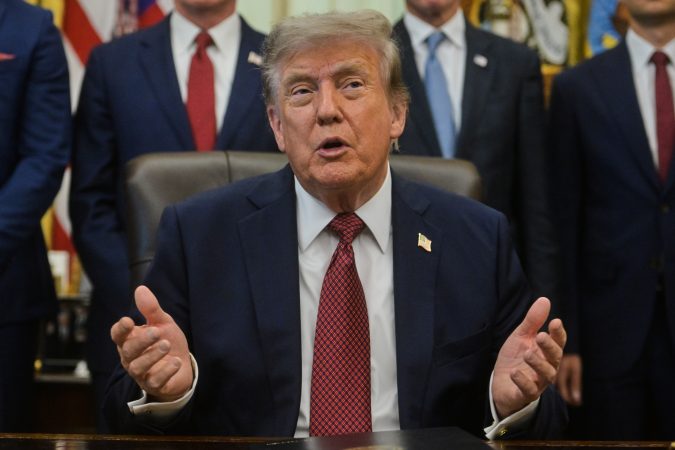
    President Donald Trump wants to give ongoing talks with Iran “some space” as he considers whether to escalate attacks, the U.S. ambassador to the United Nations said Sunday.

    Mike Waltz’s comments came as the U.S. military paused its bombing raids on Iran over the weekend after 13 consecutive days of heavy strikes and warnings by Trump of an even more aggressive bombing campaign.

    On Friday, Trump emphasized ongoing talks between the United States and Iran in an Oval Office appearance. The day prior, he had told Axios that he is “considering a massive attack. Bigger than ever before. I am close to making a decision.”

    When asked Sunday on NBC’s “Meet the Press” whether the U.S. has decided against ramping up attacks on Iran, Waltz said: “I wouldn’t go that far at all.” He said Trump is keeping “all options on the table.”

    “What the president is doing right now, as we’ve seen all along, is giving some talks some space,” Waltz said, adding that discussions are ongoing “on every level,” both technical talks and between governments.

    Waltz pushed back on reports that the decision to back away from escalation was driven in part by concerns within the Trump administration about depleted U.S. munitions.

    “The U.S. military, and I’ve verified this every which way, has everything that it needs to conduct this campaign” effectively, he said.

    Though the Pentagon has dismissed concerns about U.S. stockpiles, Pentagon officials have expressed far greater anxiety in private, according to current and former officials, arguing that the military desperately needs more money to replenish munitions, including to deter China and Russia.

    Waltz said one diplomatic challenge in negotiations is that those on the Iranian side are “divided.” He said that “there’s internal fighting,” with some seeking guidance from the supreme leader and others who “want to move in a different direction.”

    Still, the ambassador warned that Iran should “take the president very seriously. … The U.S. military is locked and loaded. In fact, more assets have gone into the region.”

    Despite the pause in U.S. strikes, the conflict with Iran has widened amid new turmoil in the Red Sea. Yemen’s Iran-backed Houthi rebels asserted responsibility for strikes Saturday on oil facilities belonging to the Saudi state oil company, Aramco, in the Red Sea towns of Yanbu and Jazan.

    The Houthi strikes could add to the pressure on global oil markets, which are already under severe strain amid disruptions caused by the closure of the Strait of Hormuz.

    On Sunday, Iranian state-affiliated media reported that an oil tanker exploded after hitting a mine in the strait.

    In a separate incident, Iran’s Foreign Ministry accused Ukraine of attacking a commercial Iranian vessel in the Caspian Sea on Saturday and killing a sailor.

    In a Saturday statement on Telegram, President Volodymyr Zelensky said Ukraine has had “good results” with long-range strikes on Russian targets, including in the Caspian Sea. He said targets included a warship and vessels involved in the transportation of military cargo linked to Iran.

    Iran’s Foreign Ministry on Sunday summoned Ukraine’s chargé d’affaires in Tehran over the attack. Iran’s assistant foreign minister, Manouchehr Moradi, said in the meeting that it amounted to an act of aggression, Iranian state media reported.

  • Medicare was one of the most successful civil rights laws in history

    Medicare was one of the most successful civil rights laws in history

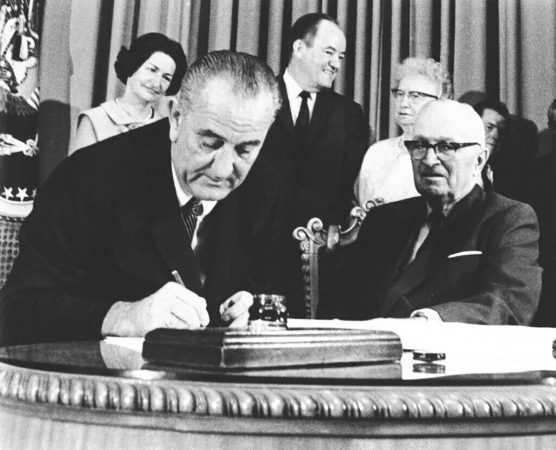
    When Americans think of the seminal Civil Rights legislation of the 1960s, they think of laws like the 1964 Civil Rights Act and the 1965 Voting Rights Act. Yet, there is one piece of historic 1960s legislation that unleashed a powerful civil rights tool that rarely gets remembered as “civil rights” legislation: Medicare.

    Hospitals desegregated — some almost overnight — worried that they would get cut off from Medicare funds. “White Only” signs came down, white-only facilities and segregated wards admitted patients without regard to race and Black clinicians received admitting privileges.

    And yet, a racial healthcare crisis persists. Over the past two decades, Americans have made no progress in narrowing racial disparities in medical care, although we know more about them today than ever.

    Black patients are less likely than white patients to receive pain medication, emergency cardiology care, lung cancer surgery, a kidney transplant, an appropriate mental health diagnosis and end-of-life home hospice care. Black people are disproportionately hospitalized for psychiatric services, excessively diagnosed with schizophrenia and more likely to have amputations. Surgery is more likely to kill Black patients, including children, than white patients, and Black mothers are three times as likely to die in childbirth as white mothers.

    These disparities remain after accounting for other characteristics that influence health.

    The history of Medicare, which turns 60 this year, offers a suggestion of how to rectify some of these problems. The desegregation of hospitals didn’t come when experts recognized that they were segregated, or even when courts declared such practices unlawful. Instead, the changes came when the government required hospitals to do better, verified compliance and withheld Medicare funding when they failed.

    This transformation forged by Medicare was as unexpected as it was abrupt.

    Hospitals, especially in the South, had been segregated before the Civil Rights Act. The federal government didn’t formally even document the practices and, in many cases, willfully ignored them.

    Title VI of the 1964 Civil Rights Act aimed to address this problem. It prohibited discrimination in federally funded institutions. Medical school-affiliated hospital facilities, which received much of their funding from federal government training and research grants, quietly began taking steps toward integration. Yet, at all other facilities, passage of the law changed little.

    Nationwide, but most dramatically in the South, Black patients continued to struggle to get care. Hospitals still hung “White” and “Colored” signs, separated patient records by race and shunted Black patients into basements or separate buildings, if they’d treat Black patients at all. Black women continued to give birth in dangerous conditions. Sometimes, while in labor, they had to solicit care from multiple white-only hospitals or facilities with limited beds for Black patients until one perhaps admitted them.

    Civil rights organizations filed hundreds of Title VI complaints. Yet, the federal government had no staff assigned to enforce compliance. As a result, the complaints accomplished very little.

    There were also several other impediments preventing progress. While healthcare facilities had long received federal funds through programs like the Hill-Burton Act, which paid for the construction of segregated hospitals, mostly in the South, Washington could not easily claw back federal dollars that had already been distributed to hospitals. Further, Title VI had no built-in enforcement mechanism. The Johnson administration, which in its first two years had been consumed with passing and implementing an array of ambitious legislation like the Civil Rights Act and the Voting Rights Act, was faced with going after individual hospitals on a case-by-case basis.

    Everything changed after Congress passed Medicare in 1965. Urged on by civil rights organizations, John Gardner, secretary of the Department of Health, Education, and Welfare (HEW), announced that to receive Medicare dollars, hospitals must comply with the Civil Rights Act. The new health insurance program covered 19 million seniors and promised to pay billions to healthcare facilities — but only if they complied. To Gardner, it was an unprecedented enforcement tool.

    HEW devised a process for determining compliance. Federal workers would inspect facilities. Were patients admitted and assigned the first bed available, regardless of race? Did hospitals extend admitting privileges to Black doctors? Were there disparities between their patient population’s racial composition and that of their service area?

    Made By History sponsors. FOR USE ON MADE BY HISTORY STORIES ONLY.Inquirer Staff

    Hospitals clearly in compliance would receive Medicare dollars. Others clearly out of compliance would not.

    Gardner did not have enough HEW staff to dispatch to inspect the nation’s 4,000 hospitals. So he put out a call for federal employees willing to volunteer in his department and conduct inspections. Over 1,000 came forward including tax accountants, veterinarians and scientists.

    In April 1966, civil rights movement activists trained them. Some violations would be obvious. That included “whites only” signs above entrances, bathrooms and in cafeterias, racially separate medical records and infants segregated by race.

    But trainers warned that hospital administrators might disguise a facility as integrated for the visit. Some did. One put a white administrator in a patient gown in a room with a Black patient. Another placed four comatose patients, each a different race, next to each other.

    Doing the “HEW shuffle” of fixing signs and shifting a few patients was insufficient, the inspectors explained. Facilities needed to be race-blind.

    The combination of a strict standard coupled with inspections worked.

    In three months, nearly all hospitals ended formal segregation and had been Title VI-certified as Medicare providers. After July 1, hospitals that had not been certified as Title VI compliant — those that lagged transforming their facility or refused on principle to do so — could not provide care for Medicare patients.

    The lives of Black people in the South radically changed. Before the intervention Black infants below the Mason-Dixon line died at twice the rate of whites. By 1971, however, Black infant mortality halved, largely because they more readily received care for treatable conditions and their mothers had access to hospitals for the first time.

    Yet, even as Medicare proved enormously successful in erasing formal segregation, racial stratification patterns remained apparent in hospitals throughout the U.S., exacerbated by residential segregation and referral networks systems.

    Ironically, we know this from Medicare itself. The program has long served as a tool for researchers to investigate disparities in healthcare: beneficiaries share a common insurance which makes it easier to isolate inequities.

    And racial separation persists among Medicare patients. Black Medicare patients are disproportionately treated at hospitals with fewer resources and worse outcomes. In some hospitals, certain teams treat only Black Medicare patients. Other teams treat only white ones.

    Starting in 2003, Medicare Advantage expanded the enrollment of Medicare recipients in commercial insurance alternatives. In Medicare Advantage, the federal government pays insurance companies fixed amounts for each enrollee and the companies then manage benefits. These programs, separate and unequal, also expose racial double standards.

    Even within the same Medicare Advantage plan, care is worse for Black and poor enrollees. Black enrollees tend to have worse follow-up care and chronic disease management than white enrollees. Additionally, they experience higher rates of preventable hospitalizations than white beneficiaries and are more likely to be readmitted.

    The 60th anniversary of Medicare should remind us that our greatest advance in health equity came from enforceable commitments to providing equal care, regardless of race. Racial disparities in healthcare can be eliminated if the federal government requires compliance — and then enforces it.

    For hospitals and physicians in 1966, equal treatment suddenly became a condition of financial survival. The immediate gains Black patients received suggest that if the federal government required healthcare systems and insurers to make real, measurable progress toward addressing racial health disparity, it would produce immediate and significant gains once more.

    The question is whether Americans — and their government — are willing to demand such accountability as they did 60 years ago?

    David Barton Smith is emeritus professor of health management and policy at Temple University. He was the recipient of a Robert Wood Johnson Health Policy Research Investigator Award and is author of three books and numerous articles related to this topic.

    Leila Morsy is an economic justice research fellow at the Legal Defense Fund Thurgood Marshall Institute and a senior lecturer at Flinders University. She is writing a book about the history of the exclusion of Black doctors and its contemporary consequences.

    Made by History takes readers beyond the headlines with articles written and edited by professional historians. Opinions expressed do not necessarily reflect the views of The Inquirer.

  • Trump administration reviewing ICE vetting process after Maine shooting

    Trump administration reviewing ICE vetting process after Maine shooting

    The Trump administration is reviewing its process for vetting U.S. immigration officers after reports that a man allegedly involved in the fatal shooting of an immigrant in Maine had a history of violent outbursts, a senior White House official said Sunday.

    In an interview with The Washington Post earlier this month, Ashley Brouillette, said her former spouse, David Brouillette, told her in a phone call that he was the Immigration and Customs Enforcement officer who fatally shot Colombian immigrant Johan Sebastián Durán Guerrero, in Biddeford, Maine, on July 13.

    Ashley Brouillette said her ex-husband had a pattern of violent outbursts, including throwing boiling hot water on her while she was holding their young daughter.

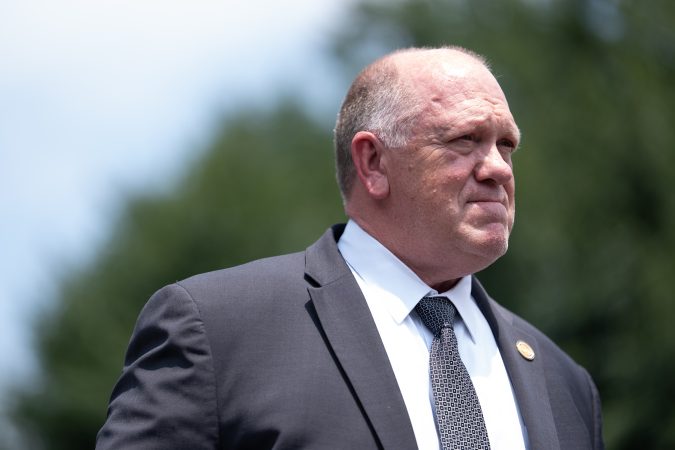
    “If this person had that type of history, it would have been a vetting issue, and it should have been brought to the attention of those” who make such decisions, White House border czar Tom Homan told CNN’s “State of the Union.”

    Homan did not confirm that David Brouillette shot Durán, but he said that the Department of Homeland Security is investigating whether the vetting process failed.

    “When they hire somebody, they put them through a vetting process and look at all that stuff, so I know, based on that information, that that’s part of the ongoing investigation,” Homan said.

    “Was that information not available? Did they not know? So there’s a separate administrative investigation on what happened here,” he added.

    The Department of Homeland Security has not publicly released the name of the officer who shot Durán. The 25-year-old’s death led to mass protests in Maine.

    Ashley Brouillette identified David Brouillette as the officer seen on video footage of the scene in Biddeford. The video does not show the shooting itself, but it does show two officers in the moments afterward.

    She accused her ex-husband of pointing a gun at her and threatening her, among other instances of past violence. Ashley Brouillette also told The Post that he was diagnosed with several mental health disorders as a young adult. The Post could not independently verify those claims.

    David Brouillette’s other ex-wife, Lucinda Brouillette, also has described a pattern of physical and mental abuse in court filings. In some filings, she said Brouillette had been medically discharged from the military in 2015 because of post-traumatic stress. The Post has not independently verified that claim.

    In a statement to The Post, Lucinda Brouillette said that throughout her marriage, “and in the years that followed, I have feared for a long time that his anger, aggression, and escalating behavior would eventually result in severe, life threatening violence.”

    The Post reported Friday that David Brouillette was found by a judge to have made statements in court last year that were not credible.

    He said in an October court hearing related to child support payments that he was struggling to earn money because he had health issues and his driver’s license had been revoked, but a judge concluded in a Nov. 17 ruling that those claims were not credible.

    The judge denied his request to terminate his child support payments to a former wife. Instead, the judge concluded that David Brouillette was “voluntarily underemployed.” David Brouillette did not respond to calls or emails for the story.

    Ashley Brouillette said David Brouillette was hired by ICE in November, as the federal agency was rushing to put thousands of new officers on the streets. Former Department of Homeland Security officials have publicly questioned whether those new hires were properly vetted.

    In the CNN interview, Homan said that ICE is also reviewing agent training and that agents are undergoing additional training.

    “I know this specific case, as far as the vetting, is under review by internal affairs section, so we’ll see where it lies,” he said.

    Durán, who had a work permit issued by the Trump administration, was shot shortly after leaving for work on July 13.

    ICE has said that officers were in the area surveilling an address associated with an individual who has a final order of removal when they saw Durán leave and attempted to stop his vehicle. The agency has alleged that Durán tried to flee the officers and that an officer fired because he feared for public safety.

    After the shooting, the office of Maine Attorney General Aaron Frey said the officer would be placed on leave. Sen. Angus King (I-Maine) said at a news conference that none of the officers involved in the fatal shooting were wearing body cameras.

    A spokesperson for King said Homeland Security Secretary Markwayne Mullin told the senator that Durán was not the target of the ICE operation.

  • Pentagon’s official Iran war death toll no longer lists 4 troops killed during renewed fighting

    Pentagon’s official Iran war death toll no longer lists 4 troops killed during renewed fighting

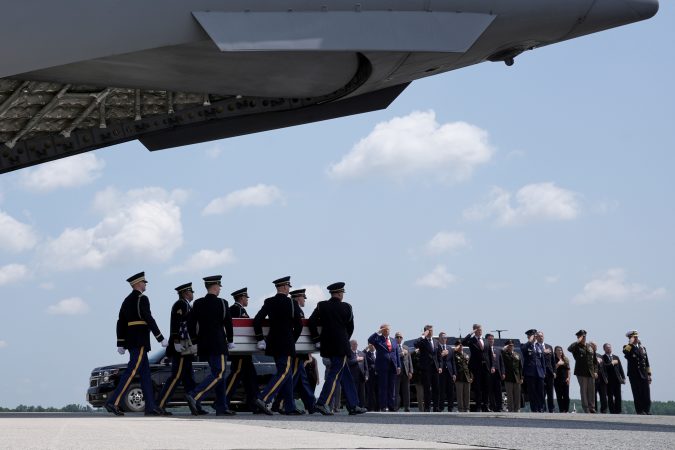
    WASHINGTON — The four American troops killed during renewed fighting between the U.S. and Iran in recent weeks are no longer listed as part of the Iran war death toll in the Pentagon’s official casualty count but have been placed in a new, separate category.

    It is raising questions about properly counting the impact to U.S. service members as the Trump administration escalated strikes on Iran in a bid to reopen the Strait of Hormuz, while providing little indication of how it intends to wind down a conflict that is unpopular with many Americans.

    The Defense Casualty Analysis System, which Pentagon officials have repeatedly pointed to as the definitive source on the numbers of dead and wounded from the conflict, removed the four fallen soldiers as well as dozens of wounded troops from its Iran war tally last week.

    On Sunday, a new category called “Overseas Operations” emerged on the system’s website, listing the four Army deaths by name as well as 207 wounded. It was unclear if all of the wounded were injured in the Iran conflict.

    U.S. Central Command, which oversees operations in the Middle East, referred questions to the Pentagon, which did not immediately respond.

    Pentagon described earlier changes to the system as ‘data disruptions’

    Pentagon press secretary Joel Valdez argued Thursday that the drop in casualty figures in the online system was not an effort to hide the growing human toll of the war but rather the result of “anomalies” and “temporary data disruptions” that were being resolved “imminently.”

    As late as Tuesday, the website was reporting the war’s official toll as 18 killed and 482 wounded.

    It appeared to reflect that four soldiers had been killed since fighting resumed despite the signing of an interim ceasefire deal last month — three on a base in Jordan that was struck July 17 by Iranian ballistic missiles and drones, and one in Iraq a day later during a controlled detonation of an Iranian drone.

    Adding further confusion, when the Pentagon announced two of the deaths in Jordan, it said the troops were supporting the U.S. mission to counter the Islamic State group. The other two were announced in press releases simply as supporting overseas operations.

    President Donald Trump has confirmed the total, writing in a Truth Social post on Tuesday that the “Iran Military Conflict” had claimed 18 lives.

    By Wednesday, the Iran war figures in the Pentagon’s system fell back to 14 dead and 420 wounded. However, a U.S. official told the Associated Press at the time that the actual number of wounded personnel in the war had grown to well over 500 troops.

    The Pentagon’s top spokesperson, Sean Parnell, took to social media that day to assert that the reported drop was a “temporary data disruption.”

    New category lists casualties following date of renewed fighting

    The U.S. and Israel launched the war in Iran on Feb. 28, and 14 troops were killed in the initial waves of fighting. Washington and Tehran agreed to a ceasefire in April and then signed an interim deal to end the war in mid-June.

    It was short-lived. Iran struck three merchant vessels in the Strait of Hormuz on July 7 that were transiting along a route near the coast of Oman overseen by the U.S. military. American forces launched strikes in response to the attacks on vessels in the key energy shipping corridor. Trump soon declared that the ceasefire was over.

    The Pentagon system’s new “Overseas Operations” category says it tallies casualties starting July 7.

    Since then, the U.S. and Iran have exchanged regular fire in a bid to control the crucial waterway, with the U.S. hitting Iranian targets nightly for nearly two weeks and Tehran responding with attacks on neighboring countries hosting American forces. There have been no strikes for two nights as mediators push for diplomacy.

    Since the renewed hostilities began, the Pentagon has provided even less information about military strategy and casualties than it did during the first phase of the conflict. The Pentagon has not held a press briefing about the war since early May, and officials at U.S. Central Command have stopped providing casualty updates to reporters.

    Pentagon officials such as Valdez and Parnell have insisted that the DCAS website is proof of the commitment to transparency about the number of dead and injured in the war.

  • Wildfires in France drive 250,000 people from their homes and creep toward wine city of Bordeaux

    Wildfires in France drive 250,000 people from their homes and creep toward wine city of Bordeaux

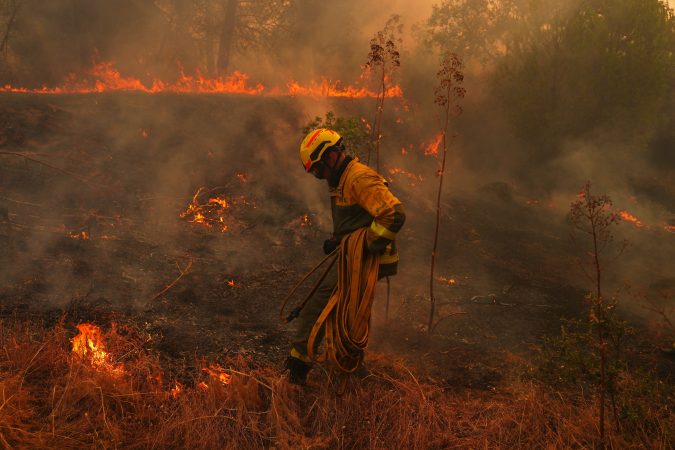
    LEGE-CAP FERRET, France — A raging wildfire in southwest France forced the evacuation of 55,000 people overnight Sunday, bringing the total forced out of their homes to a staggering 220,000 in one region alone, as flames crept ever closer to the wine region city of Bordeaux. Neighboring Spain oversaw its own fire evacuations on the country’s east coast.

    Shifting and gusting winds, as well as arid conditions, complicated massive efforts to limit the spread of the monster blaze burning out of control since midweek in France’s Gironde region, where Bordeaux is located. Authorities issued overnight evacuation orders for five more localities southwest of the historic city.

    “The situation remains very unfavorable,” French Interior Minister Laurent Nunez said after what he described as “another difficult night” for fire crews battling round the clock against the blaze that has burned an area four times the size of Paris.

    “The fire became extremely virulent again and unpredictable, generating its own winds and advancing erratically toward the Bordeaux metropolitan area,” Nunez posted on X.

    “It became calmer by the end of the night,” the minister added.

    Pope calls for prayers for victims of the ‘devastating wildfires’

    At the end of his Sunday Angelus prayer, Pope Leo XIV referenced “the devastating wildfires” in France and Spain and said: “I express my solidarity and invite everyone to pray for those affected and for the work of the rescue workers.”

    An estimated 162 square miles had burned in Gironde, the region’s prefecture said, much of it forests and scrubland made tinder-dry by successive heat waves. That is seven times the area of Manhattan island and four times the size of Paris.

    Firefighters raced in trucks to fight flare-ups and planes dropping water and retardants rotated in the smoke-filled air. Farmers delivered water in tanks to fire crews so they could fight the flames without interruption.

    “This allows firefighters to focus on the fire,” said Theo Hernandez, a wine grower. “It’s very strong, very virulent, it’s spreading everywhere.”

    The number of firefighters mobilized grew to 2,500, backed by 18 planes and helicopters, including from other European nations. Soldiers have also been called in. A giant A400M military cargo aircraft dropped plumes of ochre-colored retardant.

    The Gironde prefecture said 75 firefighters were treated for injuries. Hundreds of homes have been destroyed.

    Blaze has created firestorms

    In a first for France, the blaze alarmingly developed into a self-feeding firestorm on several occasions, most recently on Saturday night, generating lightning bolts that can start new flare-ups, authorities said.

    “It’s like being confronted by a hurricane,” said Gironde fire chief Marc Vermeulen.

    Forecast high temperatures starting Tuesday could complicate the firefighting, Gironde prefect Sophie Brocas said.

    Evacuees won’t be allowed back to their towns and villages until the blaze is brought under control, she warned. She urged holiday makers not to come to the region, which has popular Atlantic beaches and some of France’s largest woodlands.

    Fire creeps toward Bordeaux but the city isn’t evacuating

    Bordeaux Mayor Thomas Cazenave described the blaze as being “at the gates of the metropolitan area,” about 9 miles away at its closest point.

    But Cazenave said an evacuation of Bordeaux is not on the cards for now. The city is home to 268,000 people.

    Bordeaux turned an exhibition center into an emergency shelter, providing cots and food for thousands of evacuees, including hundreds of older people evacuated from care homes.

    A second fire burning farther south in the Landes region has also forced the evacuation of 36,000 people, driving the total number of displaced people in southwest France to more than 250,000.

    Fire crews have also been battling a blaze in the Var region of southern France on the Mediterranean. Nearly 3,000 people have been evacuated there.

    Tens of thousands of people also forced out of their homes in Spain

    In Spain, wildfires burned out of control around Madrid. Evacuations were also carried out Sunday in the Valencia region. A man was killed Saturday in a wildfire in Manises, a Valencia suburb, marking Spain’s first recorded death in the latest fires.

    “We still have some difficult hours ahead,” Prime Minister Pedro Sánchez said Sunday, but the night was “very positive in terms of bringing the flames under control.”

    A total of 76,000 people have been evacuated in Spain while 30,000 others have been confined to their homes, the government said.

    Evacuees fretted about what they’ll find when they’re allowed to return.

    “It looked like the apocalypse. You couldn’t see anything. Everything was covered in ash,” said Rocío Domínguez, who evacuated with her dog, Simba, from Chapinería, west of Madrid.

    “We don’t know when we get to the town, if we’ll have half the house burned down or we’ll have it intact or we won’t have a house,” she said. “All the clothes, all the memories, everything.”

  • UNESCO adds France’s D-Day beaches, Greece’s Mount Olympus. U.S. Okefenokee Swamp to World Heritage List

    UNESCO adds France’s D-Day beaches, Greece’s Mount Olympus. U.S. Okefenokee Swamp to World Heritage List

    SEOUL, South Korea — World War II’s D-Day landing beaches in northern France and the iconic Mount Olympus in Greece were among the sites added to the World Heritage List on Sunday at a U.N. committee meeting in South Korea reviewing dozens of nominations.

    The UNESCO committee, which meets in Busan through Wednesday, also inscribed the ancient Japanese capitals of Asuka and Fujiwara and South Sudan’s Boma-Badingilo Migratory Landscape, host to one of the world’s largest land mammal migrations and the country’s first addition to the World Heritage List.

    Last week, the committee added Georgia’s Okefenokee Swamp to the list. The Okefenokee Swamp is regarded as one of the world’s largest freshwater ecosystems, encompassing a vast network of wetlands that supports exceptional biodiversity and serves as the source of two major rivers. Its largely undisturbed peat beds preserve a 5,000-year record of environmental change, making the swamp both a globally significant natural habitat and a valuable source of information on long-term environmental change, according to a UNESCO description.

    The French designation covers the five Normandy landing beaches — Omaha, Utah, Sword, Gold, and Juno — where more than 150,000 Allied troops came ashore on June 6, 1944, along with the Pointe du Hoc assault site, all central to the campaign to liberate Western Europe from Nazi occupation during World War II.

    The International Council on Monuments and Sites, which evaluates submissions to the heritage committee, said the sites contain extensive remnants, from German fortifications and bomb-scarred landscapes to Allied harbor structures and sunken vessels, marking an “event widely perceived as having enabled the return of freedom and heralded a lasting peace on the European continent.”

    ICOMOS also called for stronger monitoring and preservation efforts on the sites, citing potential threats posed by tourism, climate change, and rising sea levels, and the development of wind farms near the areas.

    Ahlem Gharbi, France’s permanent delegate to UNESCO, said the Normandy landings marked a turning point from global conflict toward a postwar order built on peace and security, and that the designation of the sites carries added significance at a time of escalating international crises and wars.

    “It’s probably the greatest amphibious landing there’s ever been. It ought to be remembered for that alone,” historian David Edgerton said in a recent interview with the Associated Press.

    The World Heritage inscription of Mount Olympus, the mythical home of the 12 Olympian gods, rewarded a 12-year effort by Greece to secure recognition for its tallest mountain as a mixed cultural and natural heritage site. Rising 9,573 feet from a base near sea level, the mountain was believed to be the throne of Zeus, king of the gods, while also harboring rich biodiversity.

    Evangelos Geroliolios, mayor of Dion-Olympus, a municipality at the foot of the mountain, said in a recent interview with the AP that inclusion on the World Heritage List “places greater obligations on our part to protect this environment,” citing the potential impact of increased tourism.

    “We reaffirm our unwavering commitment to safeguarding Mount Olympus for the benefit of present and future generations,” said Georgios Koumoutsakos, Greece’s delegate to UNESCO. “As Greek mythology wisely reminds us, it is always best to remain on good terms with gods.”

    The designated Japanese locations in the western prefecture of Nara cover 19 archaeological sites from the 6th to 8th century capitals of Asuka and Fujiwara, where Japan established its first centralized state modeled after Chinese systems. The sites preserve the largely buried remains of royal palaces, government offices, Buddhist temples, and tombs from capitals that influenced the later capitals of Nara and Kyoto.

    Japanese Vice Culture Minister Shigeki Kobayashi thanked the committee for inscribing the Asuka-Fujiwara sites and said Japan reaffirms its commitment to “transmitting this valuable property to the future generations.” Japanese Prime Minister Sanae Takaichi, a Nara native, wrote on X that she hopes the World Heritage designation will boost tourism to the site.

    Yoshiyuki Aihara, a Nara University archaeology professor, told AP the sites are significant because they show how Japan’s ancient state was formed through influences from China and the Korean Peninsula.

    “If you dig underneath these rice paddies about 1 meter, you start finding a stretch of ruins in this area, though that’s not easy for ordinary visitors to understand,” said Aihara, who is continuing excavation work at the site.

    South Sudan’s Boma-Badingilo site encompasses vast wetlands, flood plains, and savannas shaped by seasonal rainfall and flood dynamics, with an estimated 6 million white-eared kob, tiang, and Mongalla gazelles moving across the landscape in response to changing environmental conditions.

    It also provides habitat for elephants, lions, cheetahs, and other wildlife while supporting various ethnic communities that have lived by herding, farming, and fishing for centuries, according to UNESCO.

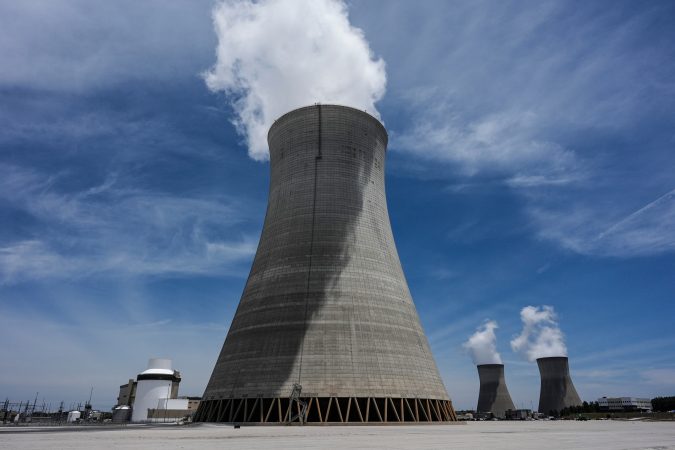
  • As Trump boosts nuclear power, regulators seek to eliminate a longstanding radiation safety practice

    As Trump boosts nuclear power, regulators seek to eliminate a longstanding radiation safety practice

    The Nuclear Regulatory Commission is proposing to eliminate a foundational safety principle that has for 50 years minimized the radiation people in the United States are exposed to and that has been adopted around the world.

    Currently, facilities such as nuclear plants, hospitals, or academic institutions that use radioactive materials must ensure radiation exposures are kept “as low as reasonably achievable” — the ALARA principle. The NRC proposal would abandon that philosophy while keeping a separate standard on maximum radiation exposure.

    The two standards have worked together in radiation safety. Dose limits set the maximum amount of radiation the public and radiation workers can be exposed to, while ALARA kept radiation exposure as low as practical under those limits. Research shows radiation exposure increases a person’s chance of getting cancer, a risk that increases as the dose increases.

    The dose limits are not changing. But the NRC, which regulates civilian nuclear energy technologies and radioactive materials, now wants to replace ALARA with a “graded approach” that includes several actions facilities must take depending on the potential dose of radiation to workers. More rigorous radiation protection measures would be required when approaching dose limits to ensure they aren’t exceeded.

    This comes as President Donald Trump attempts to quadruple domestic nuclear energy production because of surging electricity demand amid a data center and artificial intelligence boom. Reforming the NRC is one way Trump is trying to speed up nuclear reactor development. He instructed the federal agency in an executive order last year to “adopt science-based radiation limits.”

    The Energy Department, which oversees national energy policies, has already stopped using ALARA. The NRC expects to finalize its radiation protection regulations in the coming months.

    NRC Chairperson Ho Nieh said the commission is not lowering the bar on safety.

    “We’re just removing the ambiguity,” he said in a call with reporters. “But the standard for exposure to workers and the public, those are not changing. We’re just putting in place greater clarification.”

    Nieh doesn’t expect major changes within the nation’s existing fleet of large, traditional reactors. But companies designing and building new, smaller reactors could move faster with a clearer picture of the radiation protection requirements, he said.

    Without ALARA, could radiation doses creep closer to the limits?

    The NRC said radiation exposure limits are set well below levels associated with health effects, and it expects remaining standards and industry practices to keep radiation doses far below the limits. There’s incentive to do so — it’s more expensive and time-consuming to work in areas with higher radiation because access must be restricted and more surveys are required.

    The nuclear industry’s trade association agrees with the NRC.

    “We will always continue to look at what can we do to reduce the dose to workers, and maintain our doses to the off-site public as low as possible,” said Doug True, chief nuclear officer at the Nuclear Energy Institute. “It’s not like we’re just going to throw open the doors and let everything run up to the limits.”

    ALARA created a “moving target” for regulation, said Justin Friedman, a nuclear energy consultant who previously spent three decades at the U.S. Department of State. Getting rid of the rule would allow NRC scientists to make more rational decisions about appropriate levels of manageable risk, he added.

    Some experts question the wisdom of eliminating ALARA

    Edwin Lyman, director of nuclear power safety at the Union of Concerned Scientists, cautions that some parts of the NRC proposal could raise permissible radiation doses in certain cases, while still staying below the cap. Lyman highlighted a proposed revision to radionuclide emissions standards, in particular.

    Radiation exposure to the general public is limited to 100 millirem per year. A typical dose of radiation from a chest X-ray is 10 millirem.

    The NRC wants to increase its radionuclide emissions standards from a conservative 10 millirem per year dose to 25 millirem per year, based on a hypothetical person living in a house at the property line for a nuclear plant.

    The NRC says actual doses to the public would remain far lower because, in reality, people live farther from nuclear sites and benefit from dispersion in air and water.

    The NRC should improve, rather than eliminate, ALARA, Lyman said, to protect the public and workers. ALARA has become a political target because some people mistakenly believe radiation exposures have to be as low as possible no matter the cost, Lyman said. In reality, it allows tradeoffs.

    Katy Huff, a former U.S. assistant secretary for nuclear energy, said in some cases, the requirement may be challenging to regulate. Additional clarity would improve the regulatory environment without harming the public, added Huff, a professor and department chair at the University of Wisconsin-Madison.

    However, Huff said, she thought the NRC was going to clarify what reasonable means in ALARA without scrapping it. She said she’s open to being convinced the graded approach will be just as effective.

    Radiation protection expert says proposal is a mixed bag

    The National Council on Radiation Protection and Measurements, chartered by Congress to provide independent scientific guidance, has not formally weighed in yet. Council president Kathryn Higley said she personally likes some things in the 180-page document and thinks others are problematic.

    The NRC should look at the whole picture for managing risk, she said. For instance, if a worker at a nuclear power plant were to enter an area where airborne radioactive materials are present, in keeping with ALARA, they might wear full personal protective equipment with respirators, said Higley, professor emeritus at Oregon State University. That makes them move more slowly, potentially subjecting them to heat stress that could hurt them more than a low dose of radioactivity, she said.

    A concern with the proposal, Higley said, is that it maintains the current occupational dose limit for adult radiation workers at 5 rem, or 5,000 millirem, per year. With ALARA in place, the average dose to workers has been well below that cap.

    The International Commission on Radiological Protection recommends an occupational dose of 2 rem per year on average. The NRC previously found it wasn’t justified to match that, because workers were exposed to less than that and changing regulations is costly.

    Higley said the U.S. may need to align with the international community if ALARA is going away.

  • 2 mosques in the West Bank are set on fire during a deadly surge in settler violence

    2 mosques in the West Bank are set on fire during a deadly surge in settler violence

    TEL AVIV, Israel — Two mosques in the Israeli-occupied West Bank were set on fire overnight in an apparent Israeli settler attack, officials said Sunday, after a spate of deadly violence that killed four Palestinians and two Israeli soldiers.

    Palestinians and the Israeli opposition accuse Prime Minister Benjamin Netanyahu’s hard-line government of turning a blind eye to attacks by settlers against Palestinians, which threaten to ignite widespread violence across the territory.

    Israeli soldiers and police fanned out across the West Bank after the attack, closing off major roads and blocking access to a hospital where it said two militants were hiding. Israel also arrested more than 70 Palestinians over the weekend as they attempted to contain the escalating violence.

    Israel’s military says it condemns such incidents

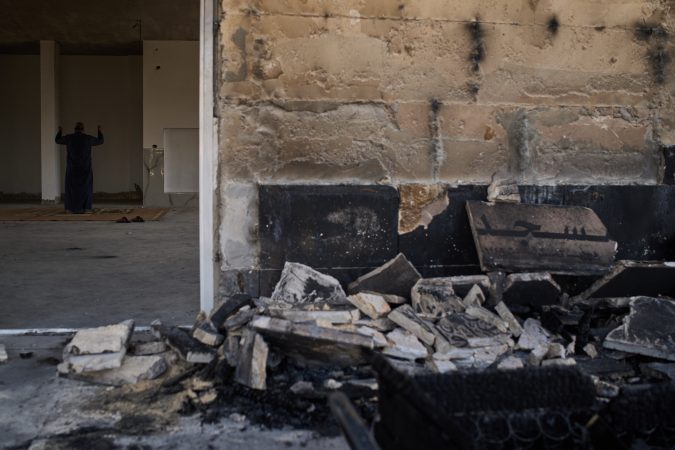
    The mosques, in the villages of Qusra and Kour in the northern West Bank, suffered extensive damage in the fires.

    In Qusra, the attackers spray-painted “revenge Benayahu,” referring to one of the Israeli soldiers killed on Friday, and “the land of Israel is redeemed with blood.” The soldier lived in a nearby settlement.

    Ahmed Abu Mahmoud, 64, who lives next to the Qusra mosque, said he heard noises at 3 a.m. and discovered the mosque had been set on fire. The fire was too large for him to fight on his own, so he called for help.

    “The military arrived here, saw with their own eyes, and then left,” Mahmoud said.

    Security footage in Kour obtained by the Associated Press showed three people dressed in civilian clothes setting off a large explosion in the entrance of the mosque in the middle of the night.

    On Sunday, residents held prayers despite damage to the entrance.

    Israel’s military said it was working with police to investigate the mosque attack.

    “The security forces strongly condemn incidents of this kind, including harm to religious sites, and will continue to act decisively to maintain security and public order in the area,” it said.

    The Israeli army often announces investigations into violence against Palestinians but rarely makes arrests or prosecutes settlers involved in violence.

    The military also reported it had sealed the homes of two Palestinian militants suspected of killing the soldiers in preparation for their demolition. Israel often demolishes the homes of attackers, claiming it deters future attacks.

    On Sunday, Netanyahu said troops entered villages across the West Bank to seize weapons and make arrests. “We are also prepared to operate on a broader scale against the terrorist nests,” he said.

    The exact circumstances of Friday’s deadly incidents remained unclear, but Israeli media reports and interviews with local Palestinian officials said they were sparked after a group of settlers entered the village of Tell and were confronted by residents who were fearful of an attack.

    According to the Israeli military, one of the Palestinians took one of the settlers’ weapons and fired on the group, killing Benayahu Mellet, 32, a security guard from a nearby settlement.

    Palestinians and human rights groups have increasingly documented armed Israeli settlers entering villages in the area. Livestock theft, arson, and the defacement of mosques are routinely reported.

    Leaders appeal for peace and pressure on Israel

    Arab League Secretary-General Nabil Fahmy urged U.S. President Donald Trump to restrain “the Israeli government’s extremist ambitions,” including its implementation of a “de facto annexation in the West Bank.”

    He called on Trump to confront Netanyahu ahead of their meeting in the United States this week.

    Palestinian President Mahmoud Abbas sent letters to Arab and other allies, including the European Union, urging them to pressure Israel to stop settler violence in the West Bank, which he described as a systemic Israeli policy and a dangerous escalation, the Palestinian news agency WAFA reported. The Palestinian Authority is the internationally recognized representative of the Palestinian people.

    Pope Leo XIV appealed for peace in the Middle East at the end of his weekly Sunday prayer, saying, “I am following with apprehension the persistence and escalation of violence in the Holy Land, of which recently many civilians in the West Bank and Gaza have also been victims.”

    He appealed for a “return to negotiating a just political solution.”

    According to the Palestinian Health Ministry, 87 Palestinians have been killed in the occupied West Bank this year, including 21 by Israeli settlers. Three Israelis have been killed in attacks by Palestinian militants in 2026, including the two soldiers on Friday.

    More than 700,000 Israeli settlers live in the occupied West Bank and east Jerusalem, territories captured by Israel in 1967 and sought by the Palestinians for a future independent state. The international community overwhelmingly considers Israeli settlements be illegal and obstacles to peace.

    Israel approves immunity for an international force in Gaza

    Israel’s security cabinet on Sunday took a step toward the deployment of an international stabilization force in Gaza, approving granting it immunity under Israeli law, a political source told the AP.

    Israel will also decide which countries will send forces and that the prime minister, defense minister, and foreign minister will approve them.

    So far, the international force is expected to have 200 members from different countries, including Uganda and Morocco, said the source, speaking on condition of anonymity to discuss a decision made in a closed-door meeting.

    Israeli forces control well over half of Gaza’s territory, which was largely destroyed in two years of war that followed the Hamas-led attack on Israel on Oct. 7, 2023. A fragile ceasefire began in October, but next steps in its implementation — including reconstruction — have been largely stalled over the issue of Hamas’ disarmament. Israel maintains its forces won’t withdraw until Hamas is disarmed.

    Last week, the U.S.-created Board of Peace meant to oversee Gaza’s reconstruction said it was working on a pilot governance and humanitarian zone in southern Gaza that would be secured by the international force.

  • Raúl Castro is absent as Cuba celebrates the anniversary of a key revolutionary attack

    Raúl Castro is absent as Cuba celebrates the anniversary of a key revolutionary attack

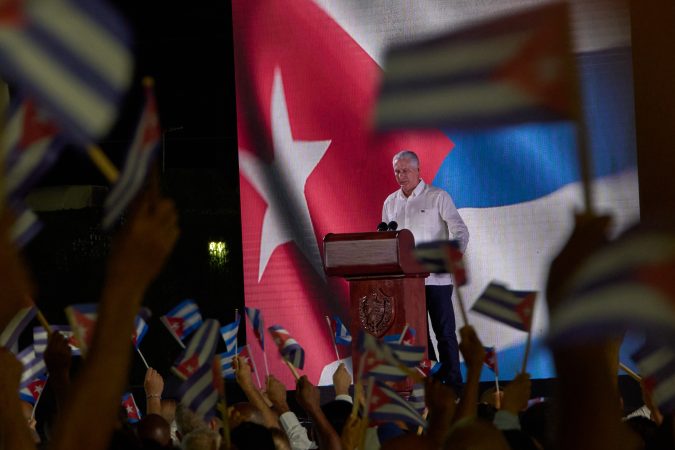
    HAVANA — Cuba held a traditional rally on Sunday to commemorate one of the revolution’s most important anniversaries but former President Raúl Castro was conspicuously absent.

    It was the first time in at least 30 years that Castro, 95, did not attend the event, and no explanation was given. President Miguel Díaz-Canel read a congratulatory message from Castro to his compatriots at the rally, held in the eastern city of Pinar del Río.

    The annual event commemorates the July 26, 1953, assault led by brothers Fidel and Raúl Castro on the Moncada and Carlos Manuel de Céspedes barracks in Cuba’s eastern region. The military action against former dictator Fulgencio Batista failed, but it marked the beginning of the revolutionary struggle that culminated on Jan. 1, 1959.

    Raúl Castro’s last public appearances were in June, during an event to establish the Ministry of the Interior, and on May 1 to celebrate Labor Day.

    He no longer holds any formal positions, but his symbolic presence is strong, and he was recently identified as one of the negotiators in talks with the United States following the imposition of a U.S. energy embargo.

    Facing a crowd of hundreds of people waving Cuban flags early Sunday, Díaz-Canel rejected a report that the U.S. State Department published last week that accused Cuba of running a leftist espionage and influence network against the United States and Latin America for decades.

    “Every day they issue a threat against the revolution, and every week they announce a new punishment for Cuban companies and officials,” the president said.

    In May, Castro was charged in a U.S. indictment with murder and other crimes for his alleged role in the downing of two civilian aircraft operated by Miami-based exiles in 1996 off the coast of the Caribbean island.

    The accusations were widely rejected by Cuba’s government.

    Cuba is going through one of the worst periods in its historically tense relationship with the United States.

    U.S. President Donald Trump has said he hopes to “take over” the island after his January attack on Venezuela — a key ally of Cuba for decades — and his imposition of an oil embargo that has practically paralyzed the Caribbean nation, pressuring it to change its economic and political model.

    “Cuba is the victim of a coldly calculated genocide,” Díaz-Canel said during his speech, in which he accused the Trump administration of imposing a policy of “maximum pressure” and intensified “economic strangulation.”

    Daily blackouts are lasting more than 20 hours, workdays have been reduced, industrial production halted, and shortages of water and medicine are hitting an island already undergoing a severe crisis in the past five years given previous sanctions imposed by the U.S. and an internal financial reform that sparked inflation.

    Meanwhile, hotel chains including Spain’s Meliá, payment processors like Visa and Mastercard, and airlines such as Air Canada and Air France have left the island as its economic and financial crises deepen.