Category: Nation & World

  • Mark Zuckerberg buys an Irish castle

    Mark Zuckerberg buys an Irish castle

    For two centuries, Strancally Castle’s towers and parapets have overlooked a bend in the Blackwater River and a swath of Irish land as it passed from one wealthy family to the next.

    It now joins the holdings of Mark Zuckerberg, one of the 21st century’s most prominent landowners, along with a place on an artificial island in Miami Beach, a large house in Washington, and compounds in California and Hawaii.

    A spokesperson for Zuckerberg, the 42-year-old billionaire CEO of Meta, confirmed this week that he had bought the castle, a Gothic-style estate in Waterford County, a region of southeastern Ireland with about 130,000 people. The castle was built around 1830 and renovated in the early 2000s.

    The purchase does not appear to be listed in Ireland’s ​property price register. The Irish Times, which reported the news Thursday, estimated that the estate could be worth $23 million to $35 million.

    Around the middle of the 19th century, the estate was valued at 61 pounds, according to an entry about the castle in a University of Galway archive of landed estates that also mentions it contained an art collection and a library.

    “Mark and his family look forward to caring for this historic home and visiting when traveling to Ireland,” said Brian Baker, the spokesperson for Zuckerberg.

    The castle was built for a former member of Parliament, John Keily, according to Ireland’s National Built Heritage Service, which describes the building as both “muscular” and “dour.”

    The estate has never left private hands, leaving the public to glimpse its interior only in historical archives. An entry about Keily on “The History of Parliament” website says the house was designed “on a lavish scale; it took a brisk walk of 4½ minutes to reach the dining room from the kitchen.”

    The castle was most recently owned by Michael Alen-Buckley, the chairperson of the investment firm RAB Capital, and his wife, Giancarla Alen-Buckley, a member of the family behind the luxury Rocco Forte Hotels group.

    “We leave our home of twenty-five years fondly and are grateful for the opportunity we have been given to save and restore Strancally Castle,” the couple said in a statement. “We are delighted that Mark and his family intend to build on our stewardship by continuing to invest in maintaining and enhancing the property and grounds as their home.”

    It is not clear how much time Zuckerberg or his family (he has three daughters with his wife, Priscilla Chan) will spend in Ireland, but his company has a significant presence there.

    Like many major U.S. companies, Meta uses an office in Dublin as its European headquarters, and about 1,500 employees work there. Ireland has become a hub for multinational corporations, both for its relatively low corporate income tax rate — 15% for big companies — and its history of allowing corporations to shift profits out of the country into places like Bermuda, Grand Cayman, and the Isle of Man.

    Ireland’s status as a base for several technological giants has made it a key player in enforcing European Union regulations and, increasingly, a center of protest against the companies and their data centers.

    Asked for comment about Zuckerberg’s purchase, the Waterford City and County Council extolled the area’s attractions — wild coastlines and mountains, picturesque festivals and towns — and the history of the county and city.

    “Founded by the Vikings in 914 AD, Waterford is Ireland’s Oldest City that has been shaped by centuries of history and today it is evident that the county’s remarkable architecture keeps its past vividly present,” the council said in an email.

    “We hope that Mr. Zuckerberg and his family fully enjoy all that Waterford has to offer.”

    This article originally appeared in the New York Times.
  • ICE begins deporting Haitians who lost TPS back to homeland

    ICE begins deporting Haitians who lost TPS back to homeland

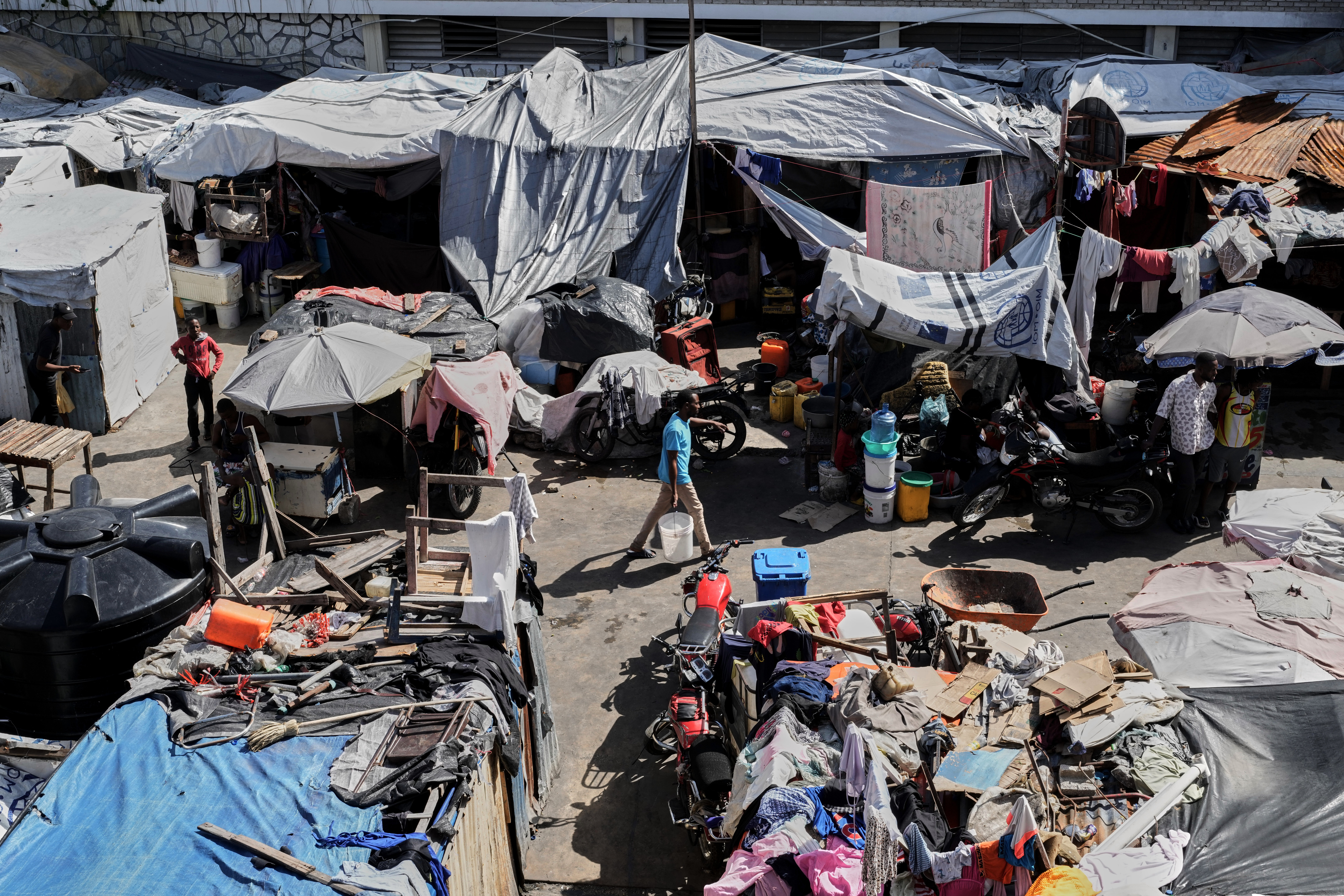
    The first deportation flight to Haiti since the Trump administration ended humanitarian protections for 350,000 people living in the United States landed Thursday in the Caribbean nation, and activists say immigration arrests are beginning to ramp up.

    The flight carrying 170 people, ranging in age from 19 to 71, landed in Cap-Haitien, on the northern coast of Haiti. Commercial flights from the U.S. have been blocked from landing in the Caribbean nation’s primary airport in the capital of Port-au-Prince due to gang activity and reports of aircraft being struck by gunfire.

    The federal government has been sending deportees back to Haiti on monthly flights, but Thursday’s removal was among the largest that community leaders said they had seen during the second Trump administration.

    Many of the passengers had been detained by U.S. Immigration and Customs Enforcement in the last three weeks, and at least one had recently lost temporary protected status, according to Guerline Jozef of the Haitian Bridge Alliance.

    “People are losing TPS status and losing their asylum cases,” she said. “It’s become easier and easier to be taken and deported.”

    The Department of Homeland Security did not respond to questions about the deportation flight.

    For months, Haitians have been bracing for ICE to begin making arrests en masse, although the new enforcement push has unfolded slowly and quietly so far.

    DHS has placed ankle monitors on Haitians who have lost their protected status. Arrests have also been made in communities home to large numbers of people from the violence-ridden Caribbean nation.

    The U.S. Supreme Court cleared the way for the Trump administration to end humanitarian protections for Haitians in June, and in early August a federal judge took the final step in allowing the Trump administration to terminate the benefit for Haitians.

    On Thursday, community leaders in Springfield, Ohio, said ICE arrested a well-known Christian pastor, Joubert Adrien. He was driving home when officers boxed in his vehicle at a gas station, the activists said. He had recently lost TPS, according to Vilés Dorsainvil of the Haitian Support Center.

    The arrest has sent chills through Adrien’s congregation and the larger Haitian community, Dorsainvil added.

    ICE officers have also been spotted making arrests over the last week in Springfield outside grocery stores and after traffic stops. Local residents and clergy members have been protesting the arrests, and a legal advocacy organization has been trying to help those detained.

    Many Haitians in Springfield are now wondering if they will be the next to get arrested, community leaders said.

    Springfield became a focal point during President Donald Trump’s 2024 campaign after he falsely claimed that Haitian residents there were killing and eating their neighbors’ pets.

    The city includes a large number of the country’s middle class who worked as physicians, judges, and in other professions in Haiti, Dorsainvil said. They moved to Ohio after the country was plunged into chaos following the 2021 assassination of the country’s then-president, he said.

    “That’s why they left Haiti,” said Dorsainvil, himself a former TPS holder. “They were not looking for work. They left because they were at risk.”

    But in Springfield they have worked factory jobs, filled healthcare vacancies, continued their university studies, and started businesses. Now, instead of using their skills to benefit U.S. communities, Dorsainvil said, they face the possibility of being sent back to a place where they recently had urgent reasons to flee.

    Dorsainvil said he is fielding dozens of calls each day from terrified neighbors who tell of ICE visits to their homes. He heard from a woman on Thursday who couldn’t find her husband on ICE’s detainee locator website and was panicking, believing that he could be on the deportation flight.

    Deportees from the U.S. are especially vulnerable to kidnapping, extortion, and murder once they land in Haiti, Jozef said. Criminals think they have been given money by the Trump administration to self-deport or have savings from their time stateside, he said.

    U.S. military personnel who served in Haiti recently testified in Congress on the country’s gang crisis and characterized the nation as a conflict zone.

    Top Haitian government security officials have been kidnapped by armed groups. More than 1.4 million Haitians have been internally displaced and much of the population is going hungry.

    “This isn’t a country where anyone should be deported right now,” said Savi Arvey of Human Rights First, an advocacy group tracking deportation flights. “We are gravely concerned this administration seems poised to intentionally take legal status from people in service of its mass deportation campaign and intentionally and knowingly deporting people to danger.”

  • Palestinian teenager killed after Israeli settlers enter West Bank village

    Palestinian teenager killed after Israeli settlers enter West Bank village

    TEL AVIV, Israel — A Palestinian teenager was killed Friday after Israeli settlers entered a village near the West Bank city of Hebron, local officials said, the latest in a surge of violence in the territory that has drawn international condemnation.

    The rising settler violence against Palestinians in recent weeks has presented a mounting challenge for Israel’s military. It is responsible for maintaining law and order in the territory but has been hesitant to take forceful action against settlers.

    The Health Ministry of the Palestinian Authority identified the victim as 17-year-old Kareem Shlaldeh. Palestinian and Israeli authorities offered differing accounts of events Friday.

    Saad Shlaldeh, the mayor of the village, called Sair, said a large group of settlers had attacked the village around 10 a.m., killing one person and setting fire to property.

    “These people are thugs and more,” he said in a phone interview, adding that his account was based on conversations with witnesses.

    The Israeli military said soldiers were sent to the area of Sair following a report of Palestinians throwing rocks at Israeli civilians. The military added that the Israelis “were present in the area without advanced authorization.”

    The statement said a “security official” had opened fire, causing “Palestinian casualties,” without clarifying whether the shooter was a soldier. Israeli civilians were also wounded in the incident, the statement added.

    The events that led up to the settlers entering the village also remain unclear. Shlaldeh said he had no knowledge of Palestinians throwing rocks when asked about the Israeli military’s account.

    Nabil Tharawa, 61, a resident of the area, said a second Palestinian was wounded and transferred to a hospital in Hebron. Khalid al-Sharif, an official at Ahli Hospital in Hebron, said a wounded person from Sair was brought to the emergency room.

    The violence Friday came as tensions in the West Bank were running high after the Israeli government published a tender for the construction of houses in a West Bank settlement near Jerusalem. The project is referred to as E1.

    Over the past day, 11 nations, including France, Canada, and Britain, issued a joined statement condemning Israel for the move. They said it “will undermine the prospect of the two-state solution by driving a wedge through the West Bank and harming the territorial contiguity of the Palestinian Territories.”

    Much of the international community regards the West Bank as being a core part of any future Palestinian state.

    For roughly two decades, the E1 plan wound its way through a bureaucratic Israeli zoning process. But intense international opposition, including from the Obama and Biden administrations, had mostly kept the project dormant.

    That changed under the current Israeli government, the most right-wing in Israel’s history.

    Ed Miliband, Britain’s foreign secretary, said the publication of the tender was “unacceptable and destructive” in a post on social media.

    Gideon Saar, Israel’s foreign minister, fired back at Miliband, asserting that “the Jewish people have the right to live throughout the Land of Israel,” an apparent reference to all the land between the Mediterranean Sea and the Jordan River.

    This article originally appeared in the New York Times.

  • Cuba says U.S. sanctions are blocking its efforts to open the economy to private investment

    Cuba says U.S. sanctions are blocking its efforts to open the economy to private investment

    UNITED NATIONS — The United States has demanded that Cuba open up to private investment, and Cuba has passed sweeping reforms to encourage just that. So Cuba’s U.N. ambassador says he wants to know why Washington keeps piling on sanctions that stymie the very economic opening it has sought for decades.

    Ambassador Ernesto Soberón Guzmán, in an interview this week with the Associated Press, directed his question to U.S. Secretary of State Marco Rubio, the main architect of the Trump administration’s Cuba policy:

    “What are you afraid of? If you are so convinced that the Cuban government is an incompetent government, why do you need to implement almost every two weeks new sanctions?”

    The U.S. State Department responded to a request for comment with a quote from Rubio saying new sanctions will continue to be announced every couple of weeks to close off “escape valves that they’re trying to create in every mechanism.”

    Then on Thursday, the U.S. imposed more economic penalties on Cuban industries, targeting state-owned mining, metal, and construction companies.

    Cuba has been pushed to the brink by an oil blockade imposed by the United States in January on top of a decades-old embargo, coupled with the escalating sanctions. The moves by President Donald Trump’s administration, meant to put pressure on the government by depriving it of funding, have worsened already debilitating blackouts, cut workers off from public transport, crippled infrastructure, and deepened shortages in medicine and food in the Caribbean island nation.

    Guzmán said the sanctions are the main obstacle to Cuba opening up its economy. He said the impact of the U.S. measures — specifically the shortage of electricity and lack of fuel to run a business or travel — has turned off investors and tourists, a major source of Cuba’s income.

    Some companies have pulled out of Cuba, including the Spanish hotel chain Meliá, which relied on tourist revenue and cited “significant operational, legal, economic, and financial difficulties” in explaining its decision to leave.

    ”Literally, the United States has done everything imaginable to try to prevent foreign investors,” said William LeoGrande, a professor at American University and a leading expert on U.S.-Cuba relations. ”When they say, `Well, we want to see Cuba open up to foreign investment,’ they’re being disingenuous. … It’s not possible for them to succeed without some kind of sanctions relief.”

    The goal of Trump’s Republican administration, he said, is “not just to open up Cuba economically but to overthrow the Cuban government — to change the nature of the Cuban political system.”

    Cuba announces major economic shift

    John Kavulich, president of the U.S.-Cuba Trade and Economic Council, said Cuba had to make changes when it lost its economic lifeline with the U.S. ouster in January of Venezuelan leader Nicolás Maduro.

    “The result is the Cuban government in the last eight months made more commercial, economic, and financial changes to the country than they have as a group since the revolution,” he said.

    Nonetheless, the Trump administration keeps ratcheting up sanctions, putting more pressure on Cuba, which is responding by making more changes, Kavulich said.

    “But from our standpoint, there are two parts missing: One is Cuba implementing by regulation everything that it’s announced, and secondly, the Trump administration allowing U.S. companies to have more access to the Cuban marketplace while these changes are underway,” he said.

    The changes announced by Cuban President Miguel Díaz-Canel in June aim to significantly shift Cuba’s economy and industry, which have been strictly controlled by the socialist government since the 1959 revolution.

    They include more space for private businesses, imports and exports without the state as an intermediary, free hiring of personnel, authorization for private banks, investment by Cubans abroad, and opportunities for fast-food chains to establish themselves on the island.

    Guzmán said there are opportunities for investments in real estate, solar farms, and energy to help ease the country’s electricity shortage, as well as in marinas and the tourism industry.

    Christopher Hernandez-Roy, acting director of the Americas program at the Center for Strategic and International Studies, recalled that the last economic opening under President Barack Obama’s Democratic administration “was later throttled by the Cubans themselves, who feared that the opening went too far and appeared to threaten political control.”

    Today, he said, it appears the Cubans really do want economic reforms and outside investment. Díaz-Canel’s economic reforms are not impossible, but U.S. sanctions “significantly constrain their prospects for success,” Hernandez-Roy said.

    He noted the irony that U.S. pressure ”is helping push the Cubans toward greater economic liberalization out of necessity, while simultaneously limiting the resources and access necessary for those reforms to actually improve the economy.”

    Rubio says Cuba’s leaders ‘don’t know what they’re doing’

    In late June, after the reforms were announced, the U.S. slapped sanctions on five state companies, three linked to a business conglomerate run by Cuba’s Revolutionary Armed Forces. Best known as GAESA, it is believed to command nearly 40% of Cuba’s gross domestic product.

    Rubio, a former U.S. senator from Florida whose parents were born in Cuba, did not appear to be impressed by the newly announced economic changes. He last month called Cuba “a failed state” with “a bad economic model.” He said Cuba’s leaders “don’t know what they’re doing” and “don’t know how to fix their economy.”

    “I think the challenge that Cuba has faced for the last 15 years is they want to somewhat improve their economy, but they’re afraid that if they improve it too much they’ll lose political control over people,” he said.

    The United States is prepared “to do what we can do to effectuate a positive change in Cuba because it directly impacts our national security” since it is only 90 miles from the U.S. mainland, Rubio said. “And we want Cuba to be prosperous. We want Cuba to be free.”

    The Cuban ambassador said implementing the economic changes would be far easier without the sanctions, if American companies were involved in Cuba and if trade between the two countries was possible.

    He said the good news is that talks are taking place between the United States and Cuba. He declined to give details of what he called “very sensitive conversations.”

    “But the point here is that even when Cuba is changing a lot,” Guzmán said, “the U.S. government keeps the same policy of aggression towards the Cuban people.”

  • Pentagon fires Stars and Stripes leaders who criticized DOD’s interference

    Pentagon fires Stars and Stripes leaders who criticized DOD’s interference

    The Pentagon on Friday fired the publisher and the editor in chief of Stars and Stripes, the military newspaper funded by the Department of Defense that has long enjoyed editorial independence from the government, according to the publication’s outgoing editor in chief.

    The Defense Department sent a separation notice to publisher Max Lederer, who announced his retirement this week, telling staff in a parting note he had disagreed with decisions from Pentagon top brass.

    Under Defense Secretary Pete Hegseth, the publication’s independence has come under threat during the second Trump administration as top Pentagon leaders have derided the newspaper as “woke.”

    Erik Slavin, the editor in chief, said he and reporter Lara Korte also received separation notices Friday.

    Slavin said he and Korte were fired for participating in a CBS News interview, during which he said any hypothetical censorship of the military newspaper would cross a red line.

    “I stand by the principle that Stars and Stripes should remain independent for service members,” Slavin said in a Friday interview with the Washington Post.

    In the interview with CBS’ Sunday Morning, Korte discussed the increasingly tense relationship between the publication and the DOD. “I am working for Stars and Stripes. Not for the Pentagon,” she said. “Not for any administration. Not for any policymaker. I am here to cover the military community.”

    “I consider it a great privilege to live alongside members of the military and share their stories,” Korte wrote in a Friday statement. “These firings are a shame for the institution and service members, who swore to defend the Constitution and deserve the right to a free and independent press.”

    Lederer did not immediately respond to a request for comment.

    The Pentagon confirmed the firings and said the three employees have a five-day period to appeal. They declined to offer further comment.

    In April, the Pentagon fired the Stars and Stripes ombudsman, a role charged by Congress with safeguarding the paper’s editorial independence.

  • Iran must plan to overcome ‘unjust’ U.S. sanctions, top Tehran official says

    Iran must plan to overcome ‘unjust’ U.S. sanctions, top Tehran official says

    A top Iranian official said Friday that his country would seek to dampen the effect of economic sanctions after the Trump administration vowed to aggressively tighten the pressure campaign against Iran.

    “We must plan for the unjust sanctions so that we can overcome them,” the Iranian official, Mohammad Bagher Ghalibaf, who is the lead negotiator in talks with the United States, told a gathering of Iranian and Iraqi business representatives in Baghdad, according to a post on his social media channel.

    The United States has already imposed debilitating sanctions on Iran’s economy and leadership, and the Trump administration has previously sanctioned foreign businesses and organizations that trade with Iran. But Washington suggested this week that officials were preparing measures to target countries that buy Iranian oil.

    President Donald Trump has promised an “economic D-Day” against Iran and vowed “tremendous economic consequences” for countries that do business with Iran.

    Treasury Secretary Scott Bessent, who is expected to detail the new measures targeting Iran at a news conference Monday, wrote on social media Thursday evening, “Any remaining tie to Tehran will hasten a nation’s economic oblivion, whether that tie be purposefully constructed or willfully ignored.”

    Trump’s threats of economic escalation seem to reveal his reluctance to return to the full-blown military confrontation with Iran that began in February with a large-scale U.S.-Israeli attack.

    Since a ceasefire in June, the war has settled into an uneasy standoff with little sign of diplomatic progress.

    In Baghdad, Ghalibaf told the business representatives, “The Americans and Israelis have realized that they cannot prevail against Iran and Iraq in conventional military warfare.”

    “Therefore,” he added, “they have entered into cognitive warfare and economic warfare, and now you are the soldiers and commanders on this battlefield.”

    The Trump administration has also taken aim at Iran’s allies in the region. On Thursday, Washington said Hezbollah, the Iran-backed militia in Lebanon, would be designated an affiliate of the Iranian regime under the command of the Revolutionary Guard. The announcement came along with the issuing of new sanctions against 10 individuals accused of working to smuggle cash to the militia.

    The United States has designated Hezbollah a terrorist organization since 1997 and has long accused the group of being an Iranian proxy. The announcement on Thursday appeared to formalize Washington’s view that the group was a direct arm of Iran in the Middle East.

    Broader sanctions targeting Iran’s ability to export oil would compound Iran’s economic challenges. The war and a U.S. blockade of the country’s ports have crippled key industries, and Iranians are already contending with sky-high inflation.

    This week, the United Arab Emirates, a major trading hub for Iran, announced that it was halting all trade and financial transactions with Iran. Analysts say the UAE has been key to Iranian efforts to evade international sanctions, though Emirati officials deny that.

    Iran has weathered decades of U.S. sanctions since the 1979 revolution that brought the Islamic republic to power, including by trying to diversify the country’s economy beyond oil. The U.S. naval blockade has severely restricted Iran’s ability to export oil.

    On Thursday, Shamseddin Hosseini, chairperson of the Iranian parliament’s economic commission, said it was important for Iran to reduce reliance on the country’s southern ports, where the U.S. blockade is in place, and to expand trading routes across the land border in the northeast, according to Iranian state media.

    “To get out of the current situation, the path of economic policymaking must be changed,” Hosseini said, according to the reports.

    China, Iran’s largest trading partner, could be one of the countries most affected by U.S. penalties on importers of Iranian oil. For years, Beijing has defied Western sanctions by buying as much as 90% of Iran’s oil exports, though that represents a marginal share of China’s total oil imports, analysts say.

    Lin Jian, a spokesperson for the Chinese Foreign Ministry, said Friday that his country opposed “unilateral sanctions” and called for the sides to resolve their differences through diplomacy.

    This article originally appeared in the New York Times.
  • U.S., South Korean militaries wrap up drill early, a day after North Korea’s missile barrage

    U.S., South Korean militaries wrap up drill early, a day after North Korea’s missile barrage

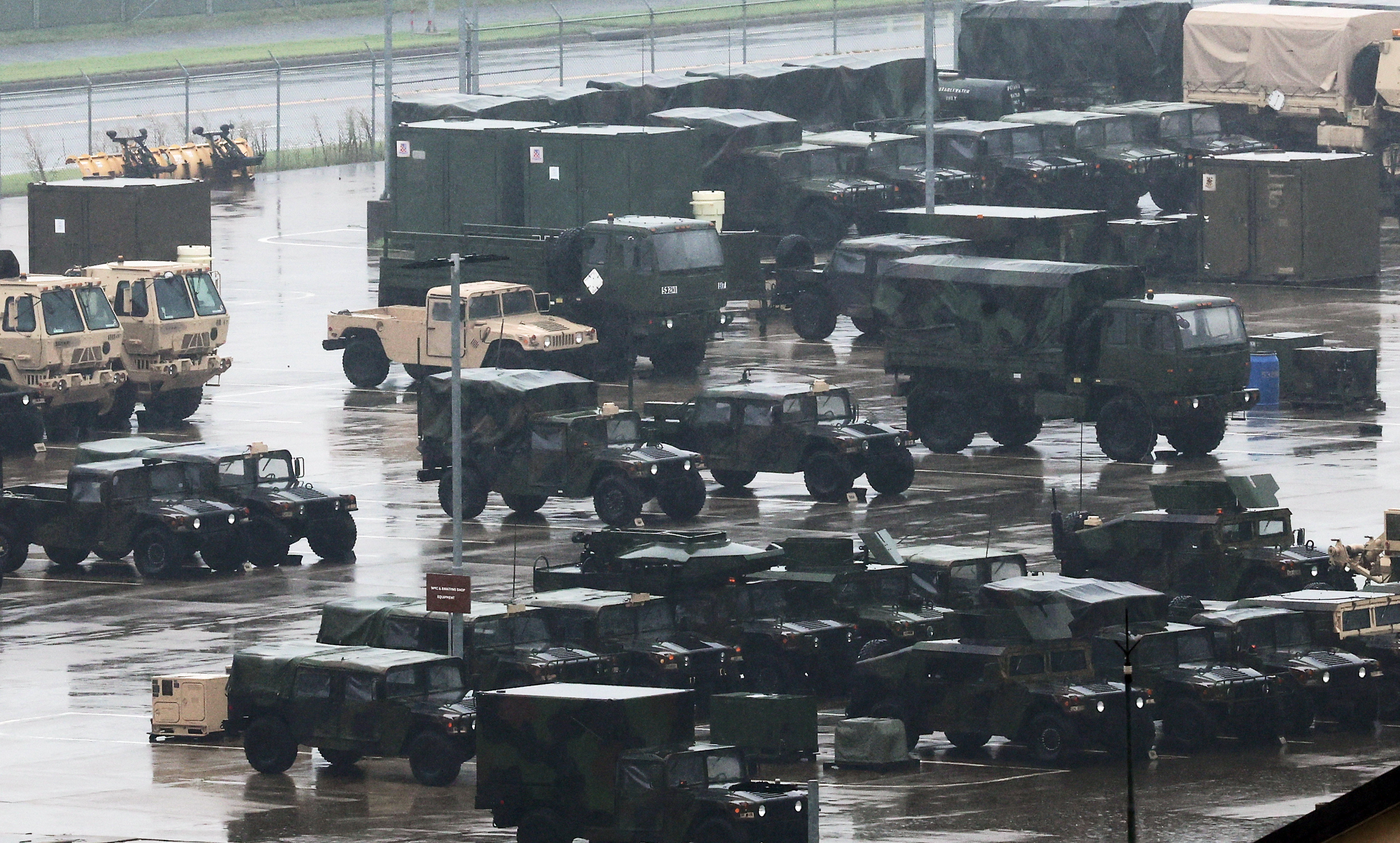
    SEOUL, South Korea — The U.S. and South Korean militaries wrapped up their annual drill six days earlier than initially scheduled on Friday in a conciliatory gesture toward North Korea, though the North said the step isn’t enough to persuade it to return to talks.

    U.S. President Donald Trump had earlier abruptly ordered the Pentagon to “substantially reduce” the Ulchi Freedom Shield exercise just before it began Monday. Trump cited what he described as a good relationship with North Korean leader Kim Jong Un and South Korea’s refusal to support Trump over the war in Iran.

    South Korea’s military said the Ulchi Freedom Shield, a command post exercise with the U.S., ended on Friday.

    This month’s exercise was initially reportedly scheduled to be held in two phases for 11 days in simulation of North Korean attacks — the first part until Friday on defensive operations and the second part until Aug. 27 on counteroffensive operations. North Korea is extremely sensitive to the second phase.

    South Korea and the U.S. had also planned to hold 14 joint field training exercises during the Ulchi Freedom Shield period. But they’ve agreed to halve them as well, according to South Korea’s military.

    North Korea shrugs off Trump’s outreach

    Kim Yo Jong, the influential sister of North Korean leader Kim Jong Un, brushed aside Trump’s overture on Wednesday, saying that reducing the duration and size of the drills won’t change their “provocative, aggressive nature.”

    The next day, North Korea fired about 10 short-range ballistic missiles toward the sea, apparently following through with its previous threat to respond to the U.S.-South Korean drills that it views as an invasion rehearsal.

    The U.S. Pacific Command said the events didn’t pose an immediate threat to U.S. territory or its allies. The command said the U.S. remains committed to the defense of the U.S. homeland and its allies in the region.

    Kim Yo Jong’s statement dampened hopes for an early resumption of talks between Trump and Kim Jong Un, whose earlier nuclear diplomacy collapsed in 2019. Kim Jong Un has used the diplomatic stalemate to increase his leverage by modernizing his nuclear and missile arsenals and aligning with Russia over its war against Ukraine. Kim Jong Un suggested last year that he won’t return to talks unless the U.S. drops its demand for North Korean denuclearization as a precondition for diplomacy.

    Kim Yo Jong still used relatively measured language, avoided typical harsh North Korean rhetoric, and touched upon what she called an “excellent” relationship between her brother and Trump. This suggests North Korea doesn’t want to completely shut the door for future talks and may seek to win bigger U.S. concessions, such as international recognition as a nuclear state and broad sanctions relief.

    More nuclear weapons, Russia ties give North Korea leverage

    With its supply of ammunition and troops to Russia, North Korea is likely receiving economic and military assistance in return, and its expanding ties with Russia provide it with leverage to ask for greater support from China, its biggest trading partner.

    “After this strategic play has run its course, Kim may seek further economic and reputational benefits from Washington,” said Leif-Eric Easley, a professor at Ewha University in Seoul. “But that will probably be after the U.S. midterm elections when Trump is expected to be in a weaker domestic political position and in search of headline-grabbing foreign policies.”

    Kim Dong-yub, a professor at the University of North Korean Studies in Seoul, said that Kim Yo Jong’s statement showed North Korea’s position that a personal relationship between her brother and Trump “can’t be a factor that moves current North Korean-U.S. relations.” He said Kim Yo Jong likely aimed to head off speculation that Trump’s move can restore diplomacy so as not to fully take the blame when it doesn’t happen.

    Kim Yo Jong denied Trump’s claim that Kim Jong Un had responded to his request for a conversation. When asked by reporters Wednesday if he would be meeting with Kim Jong Un this year, Trump said, “Yeah, I will be.”

    The Ulchi Freedom Shield is one of the main military exercises conducted by the U.S. and South Korea annually to enhance their ability to cope with potential North Korean aggression. Its downsizing has caused worries about joint U.S.-South Korean readiness.

  • Prince Harry and 6 others must pay initial $13M over failed invasion of privacy case

    Prince Harry and 6 others must pay initial $13M over failed invasion of privacy case

    LONDON — Prince Harry and six others, including Elton John, have been ordered to pay an initial 9.5 million pounds ($13 million) to the publisher of Britain’s Daily Mail newspaper following their failed invasion of privacy case — and could face an additional 25 million pounds in legal costs.

    In a judgment Friday, Justice Matthew Nicklin said in a written statement that the payment to Associated Newspapers Ltd. will have to be made by Aug. 28. The payment is at the upper end of expectations and marks a vindication for the journalists at the Daily Mail and a defeat for the losing claimants and their lawyers.

    The claimants lost a High Court case in London last month during which they had alleged malpractice, such as the illegal hacking of phones, on the part of Associated Newspapers.

    The other high-profile figures behind the case were Doreen Lawrence, the anti‑racism activist whose son Stephen was stabbed to death in 1993 as he waited for a bus; Elton John’s film producer husband David Furnish; actors Sadie Frost and Liz Hurley; and politician Simon Hughes. Lawrence’s costs are expected to be covered by the others.

    In excoriating comments accompanying his award, Nicklin said “several features” were important in his decision, including the “speculative” nature of the claims and the failure of the claimants to “voluntarily” withdraw serious allegations that could no longer be backed up.

    “The conduct was unreasonable to a high degree,” he said.

    Claimants face additional 25-million-pound charge

    The publisher has said it incurred more than 34 million pounds during the case. Should it pursue the claimants for the remainder of the costs, and get the necessary legal approval to do so, then Harry and the six others will be liable for a further 25 million pounds or so.

    The claimants took out insurance for around half of that total, in line with the budget estimates provided at the outset by the lawyers working for Associated Newspapers.

    Though the judge said the costs appeared “excessive,” he said he would not impose a cap that would have limited the claimants’ liabilities as it would have been “too broad brushed, would risk unfairness, and would be vulnerable to the charge that it was arbitrary.”

    The amount that will be paid could well be determined in the future by costs judges, specialists who assess and determine financial outcomes in civil litigation when parties cannot agree.

    David Bailey-Vella, chairperson of the Association of Costs Lawyers, said the ruling “could not have gone much worse” for the claimants.

    He said the claimants will “surely try again before the costs judges to try and show they relied on Associated’s original budget when buying the insurance and so should not have to pay more.”

    Hughes, a former member of the centrist Liberal Democrats, said he was “disappointed and surprised” that Associated Newspapers’ recoverable costs were not limited.

    None of the other claimants have yet commented on the judge’s decision. They have until Oct. 2 to decide whether to appeal.

    Harry and the rest had failed to even win one of 97 claims

    The publisher had strongly denied the claims made during the 11-week trial in London earlier this year. In his July 7 judgment, Nicklin said there had been a shortage of evidence to support the 97 claims and found there was a possibility that the reporting came from legitimate sources.

    In a statement following the decision, Associated Newspapers said the judgment is a “devastating critique of an attempt to destroy a newspaper and the reputations of its journalists, editors, and executives.”

    “The truth is that these outrageous claims should never have been brought,” it said. ”That they were pursued raises disturbing questions about the conduct of elements of the legal profession.”

    Cost verdict comes days after Harry’s bombshell U.K. return news

    The judgment comes two days after it was made public that Harry and his wife, Meghan Markle, are moving back to the U.K. The Duke and Duchess of Sussex, who are no longer working royals, decamped to California more than six years ago but will relocate back later this month to live in a nonroyal residence outside London.

    Harry’s defeat against Associated Newspapers brought an end to a trio of lawsuits accusing tabloid publishers of using unlawful tactics, such as phone hacking or hiring private detectives to dig up dirt on his life.

    Harry won a judgment in 2023 that condemned the publishers of the Daily Mirror for “widespread and habitual” phone hacking. Last year, Rupert Murdoch’s flagship U.K. tabloid, the Sun, made an unprecedented apology for intruding on his life for years and agreed to pay substantial damages to settle his privacy invasion lawsuit.

    Harry has said his litigation — in which he broke with royal family tradition to seek relief in the courts — was a primary source of his falling out with his father, King Charles III, and brother Prince William.

    His grudge with the tabloids runs deep and his legal actions are part of his larger quest to reform the news media that he says damaged his relationships and made him “paranoid beyond belief.”

    He blames the press for the death of his mother, Princess Diana, who was killed in a car crash in 1997 while being pursued by paparazzi in Paris, and for attacks on his wife, Meghan, that led the couple to abandon royal life and move to the United States in 2020.

  • Enrollment in SNAP grocery aid is dropping faster than expected

    Enrollment in SNAP grocery aid is dropping faster than expected

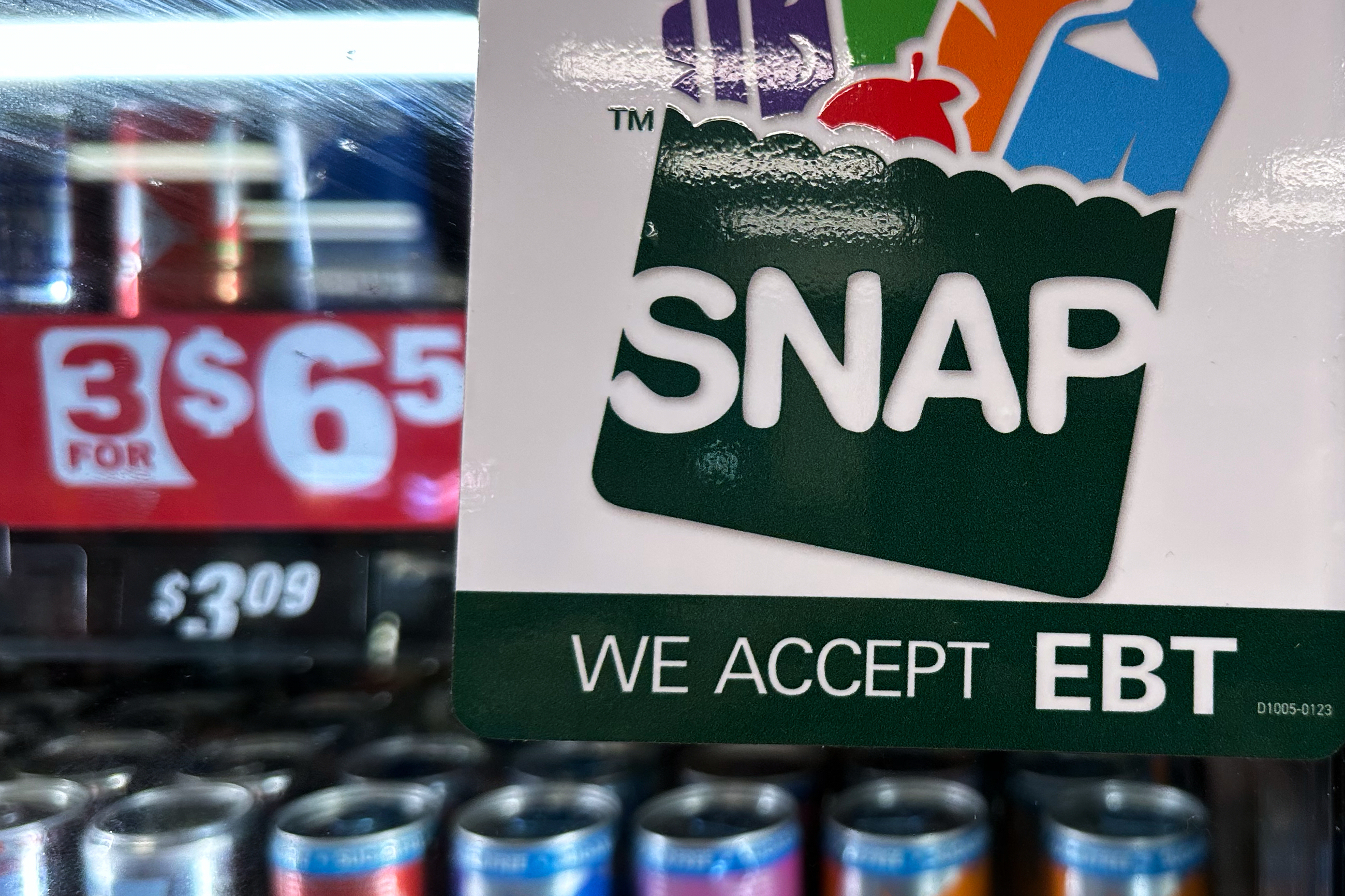
    PHOENIX — Enrollment in the biggest federally funded food aid program in the U.S. dropped by more than 13% in a 12-month span — a decline far steeper than the government estimated as work requirements and other provisions of President Donald Trump’s “big beautiful bill” take hold.

    Those losing coverage in the Supplemental Nutrition Assistance Program, or SNAP, include people who don’t meet the tightening requirements to participate, and, advocates say, some who qualify for the help but are rejected because they miss deadlines or don’t have the needed documentation handy. It’s too early to tell exactly how many fall into each group.

    It’s also unclear how many have lost coverage because some state agencies that run the programs are overwhelmed trying to keep up with changes. That was the case in Arizona, which saw the nation’s largest enrollment drop.

    Tia Fields, who analyzes social safety net policies at the advocacy group Invest in Louisiana, said the main reason she’s seeing people lose coverage is not failure to meet work requirements. “A lot of it is administrative paperwork,” she said.

    Proponents of welfare reform hope the roll reductions are driven by people earning too much to keep qualifying — a sign that policy changes are behaving as intended for a program they assert is riddled with fraud.

    “If there are people that are leaving the welfare rolls because they’re working and they’re moving forward,” said Rachel Sheffield, a research fellow at the conservative Heritage Foundation, which pushed for stricter requirements for SNAP, “that would be a step forward.”

    Arizona has had the steepest decline so far, with a 12-month drop of more than 50%, according to data compiled by the U.S. Department of Agriculture, which runs SNAP. The decline was more than 20% in Georgia, Louisiana, and Nevada — and in Florida, where the Department of Children and Families said in a statement that the decreasing number “is reflective of the state’s strong focus on advancing opportunities for Floridians and their families to achieve economic self-sufficiency.”

    Eligibility requirements are tightening

    SNAP helps more than 1 in 10 people in the U.S. buy food. Most of the beneficiaries have incomes below the poverty line. The monthly benefit, which is delivered on debit cards that can be used only for groceries, is $344 per household on average.

    Newly released federal data found SNAP enrollment fell from 42.2 million in May 2025 to 36.6 million in May, a drop of more than 13% in a year. The May data are preliminary and could be revised.

    Since 2010, the average number of monthly beneficiaries has been below 40 million for only two years — 2019 and 2020. The rolls started dropping after a recent peak of 43.3 million in October 2024. They’ve fallen much faster since implementation began last year for Trump’s “one big beautiful bill,” which cut taxes and overhauled social safety net programs.

    The expanded SNAP work requirement has now kicked in for most of the country, but it won’t begin in some places until next year.

    Many adults 54 and younger without minor children have long been required to work to get SNAP benefits. The new law requires most people who previously had been exempt from requirements to either work, volunteer, or go to school to get benefits. It now includes those ages 55 to 64, and those with children ages 14 to 17. Those 65 and older or with children younger than 14 remain exempt, as do those with health limitations. Some other groups that had been exempted from the requirement — including homeless people — no longer are.

    In February, the Congressional Budget Office projected that the new requirements and other factors would push SNAP enrollment down over the next decade, falling below 34 million by 2036. But the nonpartisan office did not expect the drop to be as fast as it’s been. By May, the number of people receiving the benefits was about as low as it was forecast to go in 2030.

    Experts expect another impact when states are required to pay part of the cost of benefits if their rate of payment errors — when recipients receive more or less than they should — is above 6%. Advocates for recipients say states may deny benefits to some people entirely rather than risk errors.

    The cost-sharing is scheduled to start in October 2027, though Congress has considered a delay.

    Changes have been hard to implement in Arizona

    In Arizona, enrollment plummeted by 55% from April 2025 to April 2026 — the biggest drop in the country, with more than 400,000 fewer people getting benefits now.

    The state said the drop was driven largely by the state’s own struggles putting new federal requirements in place.

    “Implementing the federally mandated changes triggered unprecedented call volumes and administrative hurdles, including additional verification requirements, creating real barriers for applicants,” said Brett Bezio, a spokesperson for the Arizona Department of Economic Security.

    Bezio said that hiring more staff members and introducing ways for people to submit their documents online have stemmed the enrollment drop in recent months as the state has reduced the chance for people who qualify to lose benefits.

    In Phoenix, LaDiamond Lopez lost her benefits in January, with officials telling her she needed more documentation about her income and household — something that’s needed for officials to determine whether enrollees meet work requirements.

    She’s been skipping meals and some bill payments to ensure her children have enough to eat.

    In her quest to be reinstated, she had previous employers sign forms confirming she no longer worked for them and added her children — ages 3 and 9 — to her apartment lease. She expected payments to resume in August, but she doesn’t know if they’ll last.

    “I was approved at the end of May, but now they’re asking me for more documents,” she said. “It’s a panic.”

    Other factors could be driving down enrollment

    The Heritage Foundation’s Sheffield says that some of the drop in SNAP use is likely a natural decline after peaks in the coronavirus pandemic era.

    Paco Velez, the president and CEO of Feeding South Florida, said the 22% one-year enrollment drop in Florida is driven partly by immigrants who are in the U.S. legally but fear being targeted by Trump’s immigration crackdown if they’re seeking government benefits.

    Invest in Louisiana’s Fields said SNAP enrollment declines have broader consequences. For instance, children in households that receive the benefit can be automatically enrolled in free school lunch programs or in the SNAP for Women, Infants, and Children program for low-income mothers, young children, and expectant parents if they meet the other criteria.

    “What happens when that child can’t pay for lunch?” she asked.

    Some food banks have ramped up donations to try to meet a demand that they say has risen as SNAP rolls have declined. But that isn’t expected to bridge the gap fully.

    “We’re very worried about it because we know that no other organization or program can replicate the scale and success of SNAP,” said Carolyn Vega, a policy analyst at the advocacy group Share Our Strength. “We know that schools can’t fill this gap. We know that food banks can’t fill this gap.”

  • Trump announces plan to lower beef prices, but ranchers and some Republicans are already balking

    Trump announces plan to lower beef prices, but ranchers and some Republicans are already balking

    WASHINGTON — President Donald Trump announced Friday that his administration will allow more beef to be temporarily imported into the U.S. without triggering higher tariffs, as he remains under pressure to cut costs and address affordability issues ahead of November’s midterms.

    Beef prices have climbed to record highs amid a sharp drop in the number of U.S. cattle, consistent consumer demand, and limits on cattle from Mexico, where the animals are facing a flesh-eating pest. The U.S. president has also imposed 50% tariffs on Brazil, a major beef exporter.

    The president’s plan, however, drew immediate skepticism from agricultural experts and backlash from cattle ranchers and conservative rural-state Republicans. Ranchers, normally some of the president’s biggest supporters, are enjoying some rare profitable years and worry cheap beef imports will reduce cattle prices — and with it, the incentive to increase herd sizes.

    “We all want lower grocery prices, but as I’ve said for months, we cannot do it at the expense of American producers,” Sen. Deb Fischer (R., Neb.) said in a statement. “Flooding the market with foreign beef hurts our livestock industry and undermines the long-term solution: growing the U.S. cattle herd to meet demand.”

    Sen. Tim Sheehy (R., Mont.) said in a social media post just hours after Trump’s announcement that the president’s “heart is in the right place,” but importing beef will “harm our ranching families who feed the nation.”

    The deal, Trump said, allows up to 300,000 metric tons of ground beef to be imported into the U.S. for the next 90 days without activating an “out of quota” tariff, which is a tax that goes into effect once a certain quantity of that product enters the country.

    The president said on social media that he had committed to ensuring the imported beef would be sold at 25% below current market rates, making it cheaper for American consumers. A White House official said the deal is with foreign beef exporters who have agreed to the discount on beef.

    “You don’t put America first by putting U.S. cattle producers last,” U.S. Cattlemen’s Association President Justin Tupper said in a statement. “This move will weaken our markets and gamble with food safety in the process.”

    The president’s announcement and other market interventions sacrifice “long-term stability for short term messaging,” Colin Woodall, CEO of the National Cattlemen’s Beef Association, said in a statement.

    Glynn Tonsor, a professor at Kansas State University who focuses on the cattle and beef industry, said he would like to see more details about the latest deal but that his immediate assessment was that it wouldn’t have a big effect on prices.

    That’s because 300,000 metric tons amounts to roughly 3% of what Americans eat yearly, he said. “The relative magnitude we are talking about is pretty small.”

    David Anderson, professor of agricultural economics at Texas A&M University, said he was skeptical other countries could redirect so much beef to the U.S. in such a short time period.

    “Is that even achievable?” he questioned in a phone interview.

    The White House official, who spoke on condition of anonymity to discuss a plan that has yet to be finalized, said the beef in question is lean beef trimmings that are used for ground beef production. Trump plans to sign an executive order formalizing the directive within two weeks, the official said. The administration made a push last year to buy more beef from Argentina to try to bring down prices.

    The president said Friday that his plan would help grow the U.S. cattle supply, which is the smallest it’s been in decades. Some ranchers and experts said the opposite effect was more likely.

    “Imports have been a major contributor to the decline in the U.S. cattle inventory,” said Bill Bullard, the CEO of the R-CALF USA, which represents independent cattle producers. “Using more imports today will exacerbate that decline and will prevent herd expansion.”