A suspected case of measles led to a Jefferson County woman’s death on Saturday, county coroner Greg Furlong has confirmed.
The 40-year-old woman was unvaccinated and developed telltale symptoms of an infection after known exposures, Furlong said in an interview Sunday. She also had underlying respiratory conditions that would make her particularly vulnerable to complications, he said.
Furlong, an elected Republican, said the woman died Saturday morning and that his office had reported the death to the state health department.
The state health department said in a statement they were aware of the coroner’s report and conducting a “thorough review” of the case.
“We are in touch with the coroner and appreciate his commitment to keeping the public informed,” the statement said. The department “will provide the public with updated information when it becomes available,” itsaid.
The woman’s death certificate lists her cause of death as “acute on chronic hypoxemic and hypercapnic respiratory failure” due to “suspected measles,” chronic obstructive pulmonary disease, and asthma, Furlong told The Inquirer.
The certificate also lists “supplemental oxygen dependence” as a “significant condition contributing to death but not resulting in the underlying cause.”
The woman also had hypertension and high cholesterol, Furlong said.
Pennsylvania’s measles outbreak so far this year has sickened 676 people and hospitalized 124. Two other deaths, reported by the state as measles-associated have led to a politically-charged dispute with federal health officials over the nature of the deaths.
Jefferson County has reported 26 measles cases so far this year.
Furlong said the woman had serious respiratory issues and used supplemental oxygen 24 hours a day.
Family members told the coroner she declined to be tested for measles before her death, but she had been exposed to several people with both confirmed and unconfirmed cases of the highly contagious disease, Furlong said.
She developed measles symptoms, including a rash and a fever, several days before her death, he said.
“‘Suspected’ means they had all the symptoms, all the signs, and they were exposed,” he said.
Furlong declined to name her.
Unvaccinated people with respiratory conditions face greater risks
Paul Offit, a physician and vaccine expert who heads the Children’s Hospital of Philadelphia’s Vaccine Education Center, said patients with respiratory conditions are at particular risk from measles.
“This person was particularly compromised, with chronic obstructive pulmonary disease and asthma,” he said. “That’s a person who could well die from this virus.”
Measles can linger in the air for up to two hours and infect up to nine in 10 unvaccinated people. Two doses of a measles vaccine are 97% effective at preventing the disease.
Nearly every reported case of measles in Pennsylvania this year has occurred among people who were not fully vaccinated, although on Friday state officials said they had identified four cases in people “appropriately vaccinated for their age.” These “breakthrough cases” tend to be milder and less likely to infect others.
The two deaths reported last month were Pennsylvania’s first in three decades associated with measles.
According to the health department’s website on Pennsylvania’s measles outbreak, the state defines a “measles-associated death” as one that occurs within 30 days of symptom onset in a person with clinical evidence of infection and a positive laboratory test.
The state also considers additional information on a case, including their medical records and whether a person was exposed to measles before their death.
Deaths without lab evidence of infection, deaths of people who have fully recovered from measles before death, and deaths from unrelated causes, like a car crash, are not counted as measles-associated.
State and federal officials spar over reporting measles-associated deaths
In its latest update Friday, the CDC still had not listed two deaths reported by the state on its website highlighting data on ongoing measles outbreaks around the country.
State and federal officials have clashed over whether those deaths were tied to the state’s measles outbreak. In announcing the two deaths, Democratic Gov. Josh Shapiro criticized President Donald Trump’s Health and Human Services Secretary, Robert F. Kennedy Jr., for spreading misinformation about vaccine safety through his longtime anti-vaccine activism. Kennedy then accused the state of “fabricating” the deaths, although he later acknowledged one had been caused by measles.
Lancaster County’s coroner has said he investigated one death caused by measles, in an infant with a severe genetic disorder, and another in an infant who contracted measles before birth and died shortly after.
Penn Medicine researchers are testing whether an ultrafast form of radiation therapy can treat cancers in the head and neck with fewer side effects.
The clinical trial marks the first time the technology, conformal FLASH proton therapy, is being used in humans.
Radiation therapy, one of the most commonly used cancer treatments, works by aiming high-energy beams at tumors. While this kills cancer cells, it can also cause damage to surrounding healthy tissues.
Patients with head and neck cancers, for example, can develop ulcers in the mouth, damage to the jawbone, dry mouth, and scarring as a result.
A trial launched this month at Penn Medicine’s Abramson Cancer Center will assess whether delivering radiation more than 100 times faster than typical therapies is safe and could lessen that damage.
The pilot trial will enroll 10 people whose head and neck cancers have returned.
These are patients who lack good treatment options and risk side effects that interfere with speaking, breathing, and swallowing.
“Giving another full dose of radiation is very hard for these patients,” said Jonathan Schoenfeld, who directs the Head & Neck Radiation Oncology program at Mass General Brigham and is not involved in the trial. “This is a good population that could potentially benefit from this type of approach.”
The specific type of FLASH radiation used in this study was developed by researchers at Penn and the Belgium-based Ion Beam Applications S.A. (IBA), which manufactures the platform and is sponsoring the study.
In mouse studies, FLASH proton therapy reduced side effects while still killing cancer cells. Researchers have since tested the approach in a clinical trial involving dogs with cancer.
However, promising results in animalsoften do not translate to humans. Even if the trial produces encouraging results, it could take years before the therapy becomes widely available.
The hope, ultimately, is not only to preserve quality of life in patients, but to make radiation therapy more convenient and accessible.
“Instead of 30 to 40 treatments, we can do the treatment in one to five treatments,” said Alexander Lin, a radiation oncologist at Penn and the trial’s lead investigator.
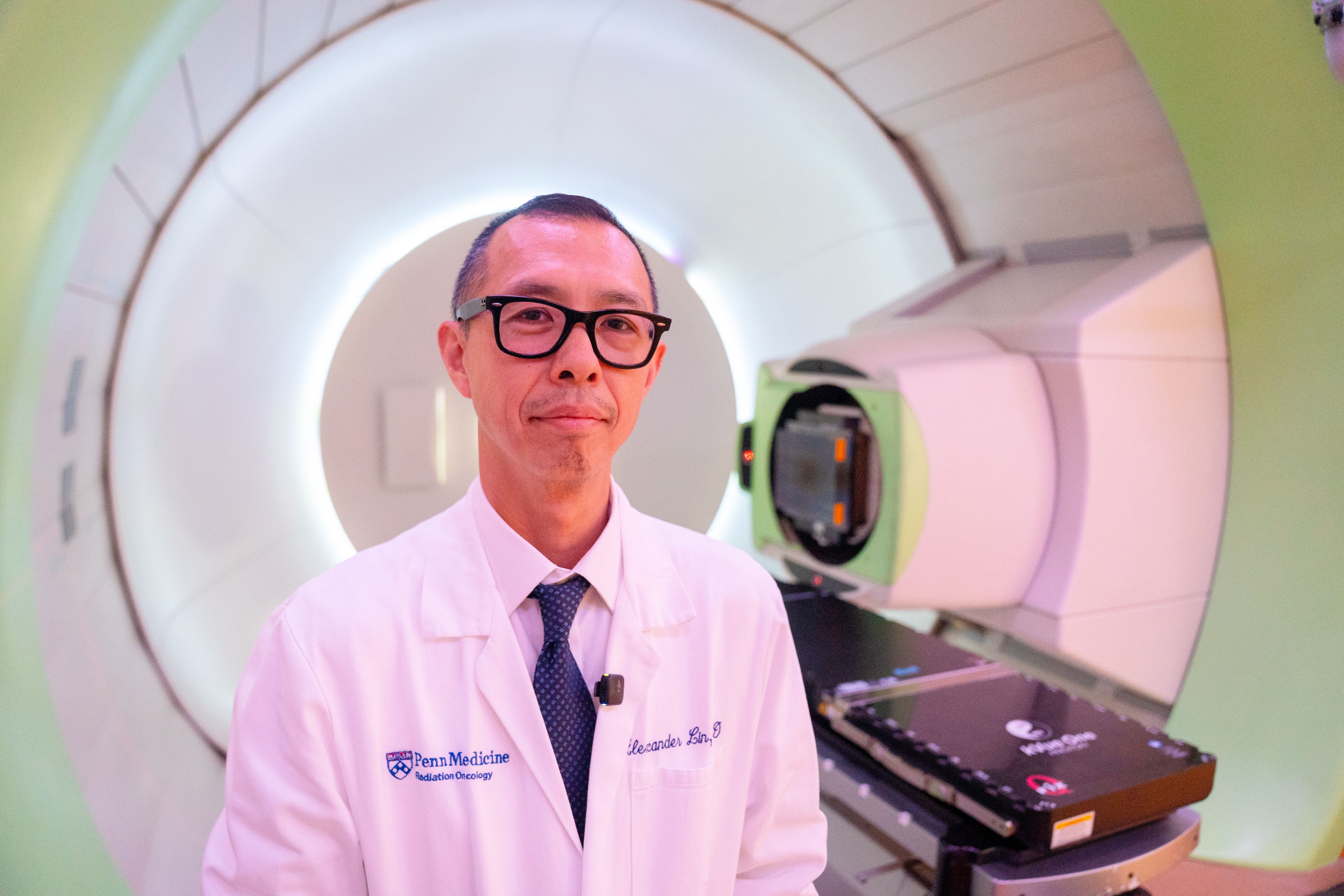
Lin walks through the Roberts Proton Therapy Center.Credit to Margo Reed Studios
Faster and fewer doses
Doctors typically divide a patient’s radiation therapy into dozens of daily treatments over several weeks.
FLASH radiation aims to accomplish that in fewer doses.
Think of it like air travel: A trip from the East to the West Coast would take hours with today’s technology. But if you can fly at the speed of light, it would take less than a second.
“We’re giving the same dose or similar dose, but the dosage rate changes,” said Constantinos Koumenis, the vice chair for research in Penn’s Department of Radiation Oncology and a developer of the therapy.
Lin hopes this lighter schedule could alleviate some of the time and financial burden of treatment.
The FLASH therapy builds upon a highly advanced radiation treatment, proton therapy, which uses protons to more precisely target tumors. Penn has heavily invested in the expensive technology, with its fourth proton therapy center — a $224 million facility at Penn Presbyterian Medical Center in University City — expected to open in 2027.
The researchers are also incorporating a technique called conformal radiation therapy, which shapes the radiation beam to match the tumor’s three-dimensional size and location. This helps limit exposure to nearby healthy tissue.
The exact biological explanation for FLASH radiation’s effects remains a mystery. However, scientists theorize that the treatment reduces damaging oxidation in healthy tissue while promoting faster recovery.
“The hope is that, if this type of trial is successful, you can treat patients who need more radiation with much lower risks,” Schoenfeld said.
But “it’s a new treatment that we don’t fully understand yet, so I would highlight that it’s still very early days,” he added.
First trial
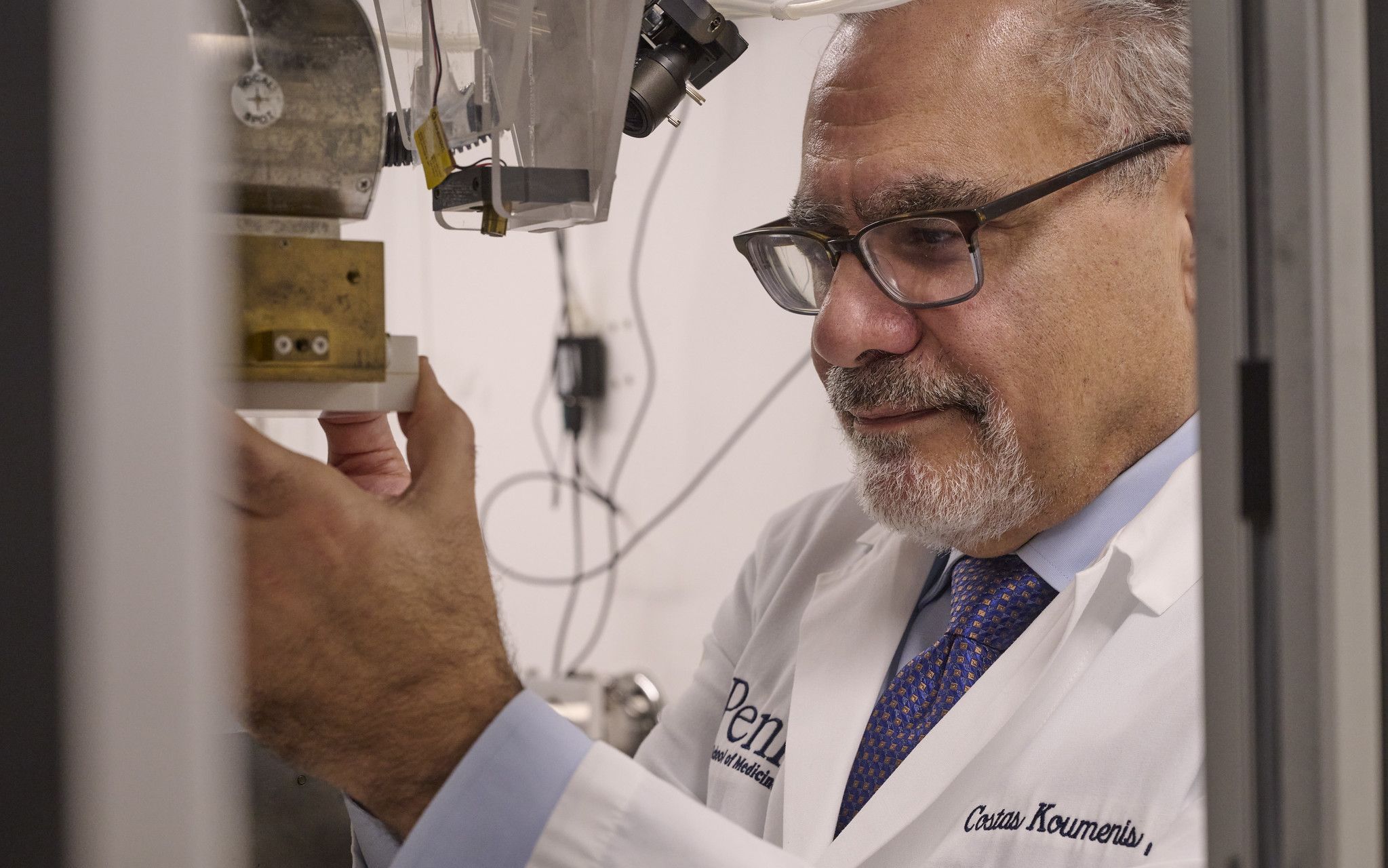
Constantinos Koumenis is the vice chair for research in Penn’s Department of Radiation Oncology and a developer of the new therapy being tested.Credit to Peggy Peterson
The primary focus of the Penn trial will be assessing the treatment’s safety and feasibility, with an eye on quality of life and cancer outcomes.
Researchers will be taking a more cautious approach to begin, using a dose and schedule that have already been found safe and effective in patients. The only difference will be giving the radiation at the FLASH speed, Lin said.
Schoenfeld said he would first want to see whether the team can deliver their treatment with the intended speed and precision — an accomplishment in itself for an early-stage trial.
Then he would look at how the tumors respond to FLASH and whether patients develop side effects over a period of months to years.
“Some of these side effects are longer term side effects, so it’s important to start to follow these initial cohorts of patients as long as possible,” he said.
The Penn team will follow patients for at least five years.
If the trial shows promise, the researchers hope to launch additional trials in other types of cancer, from gastrointestinal to liver tumors.
“If these trials show that they’re safe, we want to target any solid tumor that we can target,” Koumenis said.
Four Pennsylvanians who were vaccinated against measles have contracted the highly contagious illness, state officials announced Friday.
Called “breakthrough cases,” such infections in vaccinated people are rare, but sometimes occur if someone’s immune system “did not respond as well” as most patients’ to the vaccine, the CDC says.
Other times, vaccinated people can become sickened by the virus if they’re exposed for a long period to the disease — like living in a house where multiple unvaccinated people have measles. Vaccinated people tend to have a milder illness when this happens, and they’re less likely to spread measles to others.
The four breakthrough cases reported in Pennsylvania occurred in three adults and one child in Centre, Jefferson, Lancaster, and Lycoming Counties.
The state said that all of them were “appropriately vaccinated for their given ages.” None required hospitalization.
Before Friday, the state had identified no cases this year in people who were fully vaccinated. The breakthrough cases reported Friday make up less than 1% of the total cases reported in the state this year.
“When community transmission rises and our overall case numbers increase, we see that a handful of people who were vaccinated will get measles. Even so, vaccination still provides the best protection,” Pennsylvania health secretary Debra Bogen said at a news briefing.
The Centers for Disease Control and Prevention estimates that about three in 100 people who received the two recommended doses of the measles, mumps, and rubella vaccine will contract the disease if exposed. About 7 in 100 people who received one dose will contract the disease.
Sarah Long, a professor of pediatrics at Drexel University College of Medicine who previously served on two federal committees to recommend and license vaccines, called cases in vaccinated people “oddities.”
“This is a fabulous vaccine and a fabulously transmissible virus,” she said, emphasizing that the vast majority of people who get measles are unvaccinated.
A growing outbreak
Pennsylvania is in the midst of the biggest measles outbreak in more than 30 years, with 676 cases reported and 124 people hospitalized as of Friday.
The state recorded 52 new cases in the last two days alone. Local and state health officials have noted that it’s likely many cases are going unreported.
The rapidly rising case count last month, especially among adults ages 25 and 49, merits attention, said Rémy Pasco, research associate at the University of Colorado who helped develop a measles outbreak simulator based on school vaccination rates. In past outbreaks nationally, cases have been more common among children who were not yet old enough to have received both MMR doses.
He said those patterns could indicate the virus reached a community where both adults and children were largely unvaccinated.
The state has reported two deaths associated with the outbreak — namely, deaths where evidence of measles is present, even when the disease may not be assessed by the coroner as the immediate cause of death.
In its latest update Friday, the CDC still had not listed the deaths on its website highlighting data on ongoing measles outbreaks around the country.
Lancaster County’s coroner has said he investigated one death caused by measles, in an infant with a severe genetic disorder, and another in an infant who contracted measles before birth and died shortly after. The coroner has said he does not believe measles caused that child’s death, but rather a lacerated spleen, yet prominent physicians have noted measles can weaken a person’s spleen, putting it at risk of rupture.
Amid the outbreak, Pennsylvania is seeing more interest in vaccination, Bogen said Friday. Typically, healthcare providers in the Commonwealth give out 25,000 doses of the MMR vaccine a month, she said. In August, they gave out 46,000.
“That is 46,000 times Pennsylvanians have chosen to help stop this outbreak by protecting themselves and others,” Bogen said.
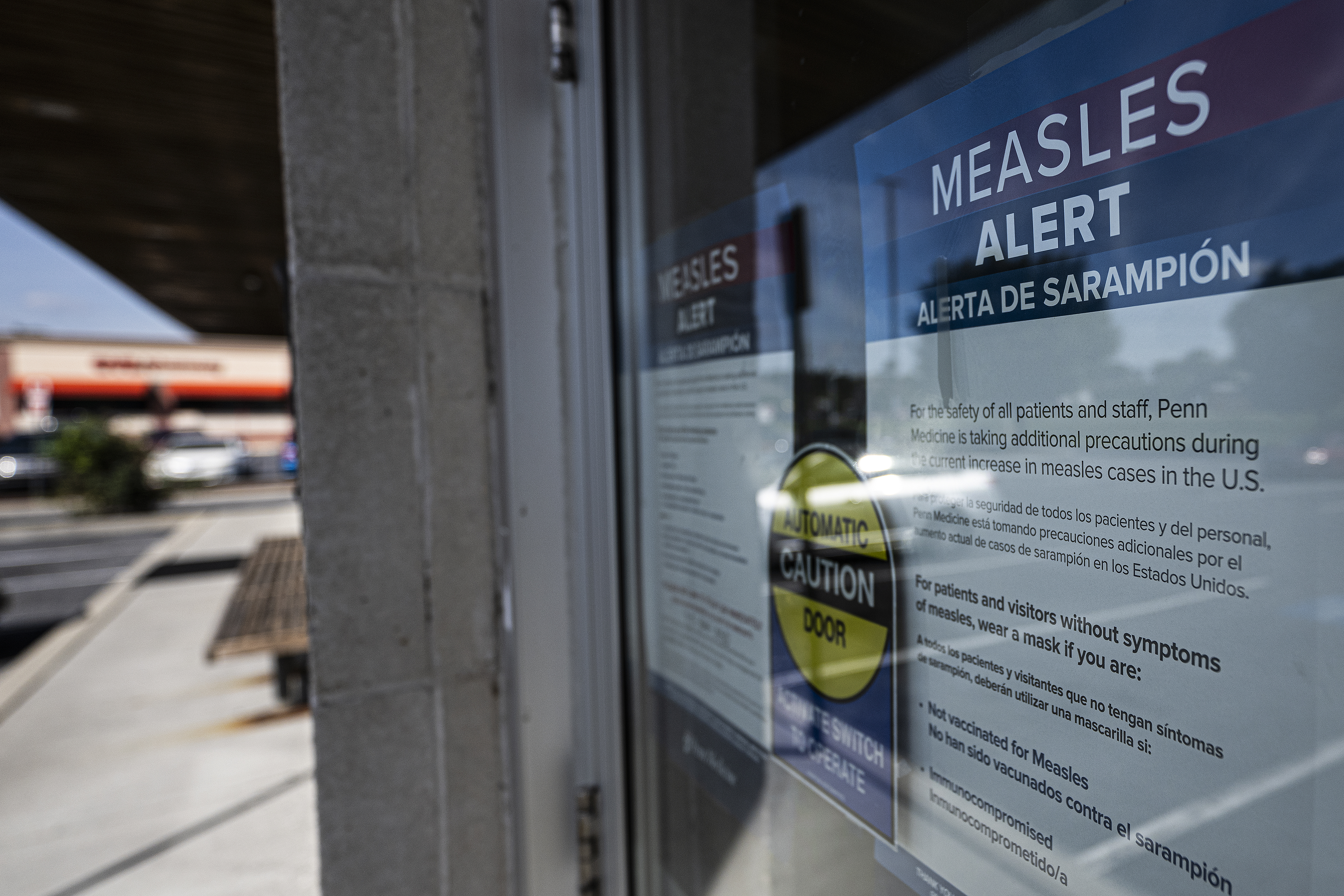
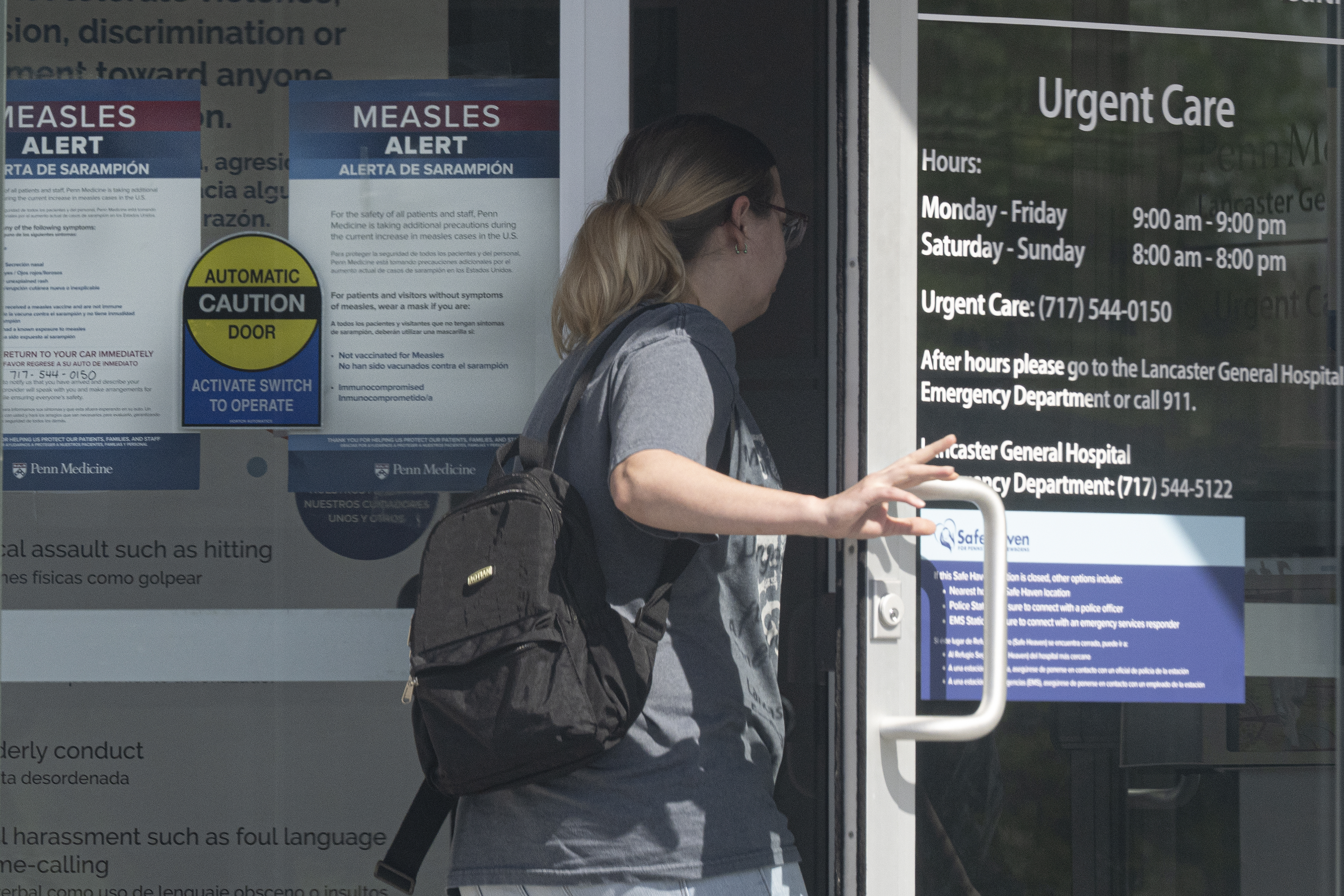
Measles alert signs in English and Spanish are posted on the front doors of an urgent care facility in Lancaster County last month.Jose F. Moreno / Staff Photographer
Breakthrough infections
People born before 1957, before the first measles vaccines became available, are generally considered protected against measles through natural immunity — because the disease was once prevalent in children.
Between 1968 and 1989, most children in the United States received one dose of the MMR vaccine, which is about 93% effective against the virus.
In 1989, measles cases among vaccinated schoolchildren prompted health officials to recommend children receive two doses of the vaccine, which together are 97% effective against the virus, a change that also prompted some older children to get a second shot.
Measles rates plummeted during the 1990s, and the disease was declared eradicated in the United States in 2000.
The MMR vaccine’s 97% effectiveness rate makes it “not perfect, but as good as our vaccines get,” said Rochelle Walensky, who served as CDC director during President Joe Biden’s administration and currently works as a professor of medicine at Harvard Medical School.
Smaller outbreaks with dozens of cases — not hundreds — may not see any breakthrough cases.
“The larger your outbreak, the more likely you’re going to see these,” Walensky said. “It’s just simple math.”
Large outbreaks, with hundreds of cases, will inevitably include breakthrough cases, she said.
Nationwide, 95% of the 3,294 measles cases logged by the CDC so far this year have been among unvaccinated people. The agency said 3% of those cases occurred in people with one dose of the MMR vaccine, and 3% in patients with two doses.
The concern also arose in last year’s major measles outbreak in Texas. A vaccinated person in Bucks County was among those who contracted a mild case of measles last year after traveling there.
Similar stories have emerged from Pennsylvania’s growing outbreak. For example, a mother in Lancaster County told The Inquirer earlier this summer that she was vaccinated and acquired the disease alongside her eight children, who were all unvaccinated; it’s unclear whether hers was one of the breakthrough cases recorded by the state.
Breakthrough illnesses can be contagious, said Paul Offit, a physician and vaccine expert at the Children’s Hospital of Philadelphia who heads the hospital’s Vaccine Education Center.
High levels of immunity in a given community protect everyone living there, Offit said. An unvaccinated person living around mostly vaccinated people is less likely to get measles because the virus has less chance to spread.
But vaccinated people who live around many unvaccinated people are at higher risk of getting a breakthrough case, due to the virus having more opportunities to circulate, he said.
Drexel’s Long recalled caring for children during a 1991 measles outbreak that sickened more than 1,000 people in Philadelphia and killed nine children.
“It’s a horrible, horrible disease. We are extremely grateful we live in the U.S. where these vaccines are developed and proved to be safe and highly effective,” she said.
NEW YORK — The largest cyclospora food poisoning outbreak in U.S. history is over, U.S. health officials said Friday.
U.S. Food and Drug Administration officials said they are confident that all recalled iceberg lettuce related to this specific outbreak is off the market.
Nearly 13,000 reported cyclospora cases were tied to the multistate outbreak, federal officials say. They represent the bulk of an unprecedented surge in the parasitic diarrheal illness this year.
Even with the outbreak deemed over, several questions remain, including about its origin. The parasite is spread through human feces, and it still isn’t clear how sewage could have contaminated enough food to sicken so many people.
“This contamination can happen if produce is grown in soil or comes into contact with water that has been contaminated,” said Ellen Shumaker, director of outreach for a North Carolina State University food safety program, Safe Plates.
Since May 1, the government has received reports of nearly 20,000 lab-confirmed cases, or more than 16 times the number reported during the same period last year. More than 6,100 suspected cases also have been reported.
The worst previous year in the U.S. for infections was 2019, when about 4,700 illnesses were reported nationally.
This year’s surge in cases was dominated by an outbreak in 21 states linked to iceberg lettuce. But there are thousands of other cases that have not been linked to that outbreak.
Michigan was the hardest hit state, with the most reported cases and the two U.S. deaths tied to the outbreak.
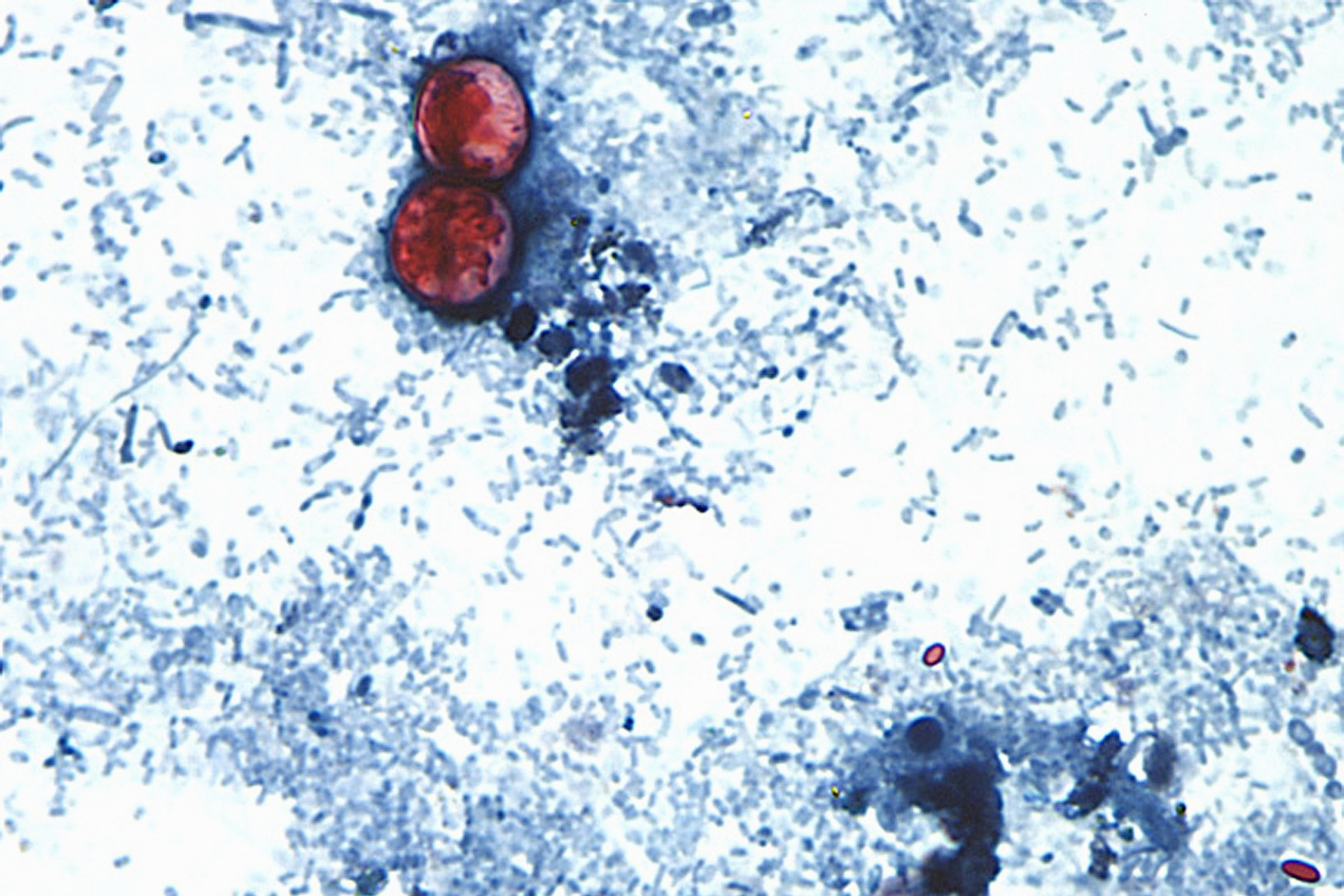
Cyclospora is a microscopic, spherical parasite that commonly causes watery diarrhea “with frequent and sometimes explosive bowel movements,” according to the CDC. Outbreaks tend to occur most often in the late spring and summer.
The illness, called cyclosporiasis, is less common than foodborne illnesses caused by other germs, including salmonella and E. coli. Many cases are never linked to a specific food or other source.
In this outbreak, investigators initially zeroed in on lettuce served at Taco Bell. Federal officials subsequently focused on Taylor Farms as the source of the lettuce, and the company recalled iceberg lettuce grown in central Mexico.
The Taylor Farms recall involved thousands of packaged salad products combining iceberg lettuce with other vegetables. The products were shipped to major U.S. restaurant chains, including Yum Brands, which owns Taco Bell, Pizza Hut and KFC.
The FDA has ended its on-site inspections and sample collection at iceberg lettuce growers and the processing facility in Mexico, the agency said Friday. Samples from the on-site inspections are pending analysis, the FDA said.
Alexus Mackenzye Dick and Trinity Jagdeo were 5 years old when they met on the blacktop at Mary F. Janvier School in rural Franklinville, Gloucester County.
While Dick isn’t around to tell the story anymore, Jagdeo remembers it well: They played hopscotch, but not in the traditional way. Dick zipped through the squares in her wheelchair. Jagdeo, a Vineland resident, said it amazed her.
“I’ve told the story 1,000 times,” said Jagdeo, 25. “But now that I think about it — and I’ve revisited the location — there was nothing else for her to do.”
The pair quickly became best friends. They bickered over the Justin Bieber tattoo Dick got at 15, gossiped at sleepovers, and traded lip gloss recommendations.
There’s a reason Jagdeo repeats those tales so often.
When they were still teenagers, Jagdeo founded a nonprofit, From We Can’t to We Can, inspired by her best friend. She has self-published comic books that turn local kids with disabilities into superheroes, hosted fashion shows for models with disabilities, frequented local TV stations, and gifted thousands of pieces of medical equipment to families denied by insurance or who can’t afford the supplies. Jagdeo has talked about Dick on social media for years, including to her nearly 50,000 TikTok followers.
The daily posts haven’t stopped since Dick died five months ago at 25 due to complications related to spinal muscular atrophy type 2, a genetic disease diagnosed in childhood that causes progressive muscle weakness.
“One of the things she said was, ‘I wish I could help people.’ … And so, in my heart, I knew that at that point, I wasn’t going to just let that conversation stay there,” Jagdeo said.
Now, another family is benefitting from the efforts to keep Dick’s memory alive.
Domenique Meyer, 33, lives in Aberdeen Township, Monmouth County, with her husband Mike and two children, Mikey and Mia. Born prematurely at 30 weeks, a lack of oxygen to Mikey’s brain left him with severe spastic quadriplegic cerebral palsy.
“He knows our voices, loves being talked to and cuddled, and has his own special way of showing us what he likes and dislikes,” Meyer said. “He has been fighting since the very beginning of his life.”
At 3 years old, Mikey is blind, nonverbal, unable to sit independently, and has multiple seizures per day. He receives his nutrition through a gastrostomy tube since he has a hard time swallowing. His disabilities mean a lot of time spent on care, and on one income, it’s been hard to get by, Meyer said. Their family fell behind on household bills as medical expenses piled up.
Mikey Meyer, 3, sits in a stroller given to him by From We Can’t to We Can in Aberdeen Township, Monmouth County.Domenique Meyer
“When you have a medically complex child, life does not stop because bills are due,” Meyer said. “There have been so many times when Mikey needed us at an appointment, in the hospital, or at home, and work simply had to come second.”
When Meyer reached out to From We Can’t to We Can for a medical stroller that would better suit Mikey’s needs, she explained their financial stressors to Jagdeo. Since the nonprofit had recently received thousands of dollars from anonymous donors, Jagdeo decided it was time to fulfill her best friend’s wish.
The Alexus Mackenzye Legacy Fund provided Meyer and her family with about $5,500 that went toward their mortgage and brought their utility bills up to date. And while times are still hard, Meyer said the foundation’s support gave them hope.
“For the first time in a while, it felt like we could breathe again and focus on our children instead of constantly worrying about what bill was coming next,” Meyer said.
The Meyers will attend Roar for a Reason at the Edelman Fossil Park & Museum in Mantua on Saturday, the first major event and fundraiser the nonprofit has hosted since Dick died. There, Jagdeo said she plans to release a hundred butterflies, Dick’s favorite, and read a letter addressed to her best friend. Kids with disabilities will walk the runway, and Jagdeo will introduce her newest book, Jaiyana and the Jainosaurus, which takes place at the museum and is based on the experiences of a local child with autism and a rare brain condition. She’ll introduce the new legacy fund to the public, which she said she hopes will support a family in need annually from now on.
Jagdeo has kept busy in the meantime. She still posts on social media every day, usually about Dick, and recently flew to Michigan to judge this year’s Miss Wheelchair USA competition. She’s been putting in hours on an outdoor memory garden for Dick in her yard, and she said she hopes monarch butterflies hatch this weekend in time for the celebration.
“Some people say, ‘This person was my world,’” Jagdeo said. “And for me, she wasn’t just my world. She was the world. I created a world because of her.”
When her back began to ache, Maria Morales attributed the soreness to her job as a therapist for children with autism, where she often moved around and sat in “little kid” chairs.
Then after a week with this pain, the 26-year-old from Miami started to feel like she had the flu, but a test for influenza was negative. The next day, she woke up with abdominal pain. At work, it seemed like her belly kept growing. “I couldn’t button my pants,” she said.
She went home, where later that day her boyfriend checked on her. “He put pressure on my stomach, and I yelled out in pain,” she said.
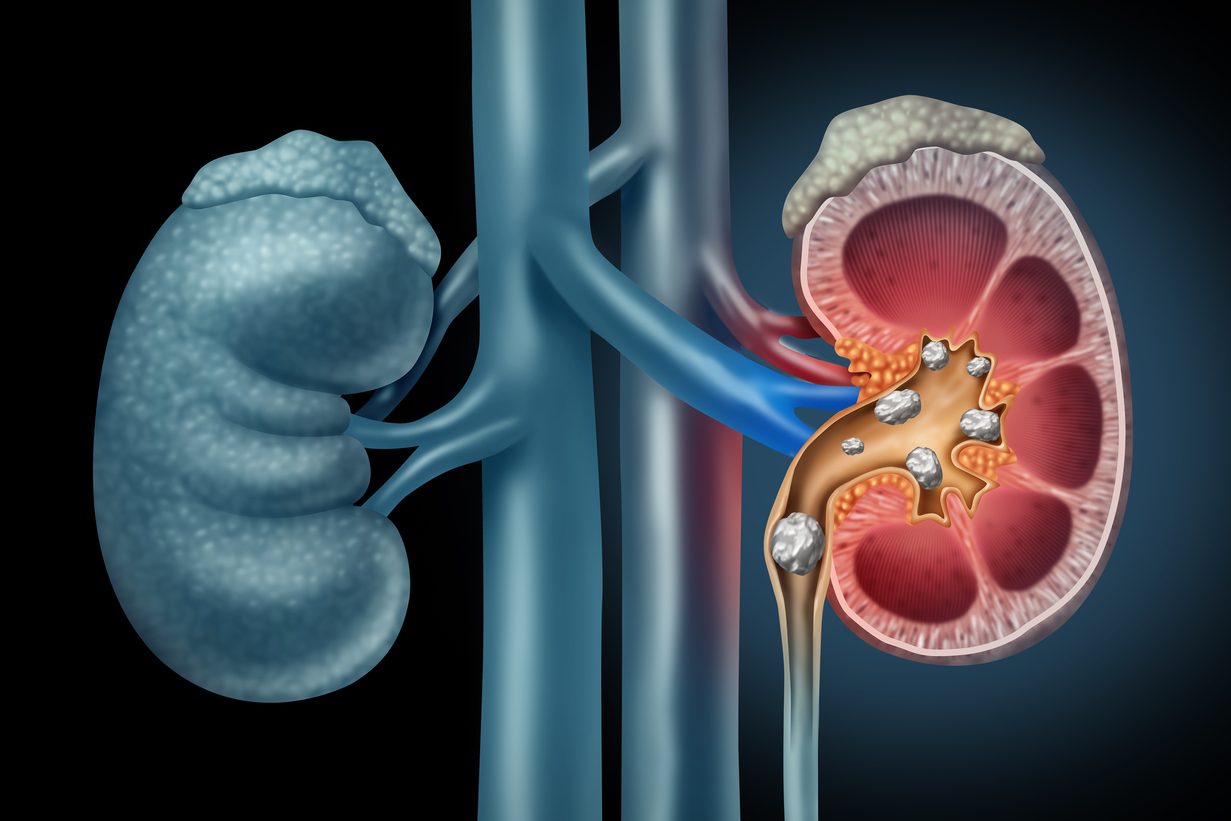
He took her to the emergency room, where a scan showed a mass on her right kidney surrounded by a pool of blood. Doctors said she had an angiomyolipoma, a benign tumor that is more common in women than in men. After undergoing a procedure to stop the bleeding, she was released from the hospital with a plan to monitor the tumor.
But four months later, her bloating and fatigue persisted, and the mass continued to grow. The diagnosis she eventually received was much more serious, requiring treatments that caused life-changing complications. The diagnosis was also surprising, given that the condition is almost always found in young children.
Scan finds a mass
Morales, now 34, grew up healthy. She ran regularly and participated in CrossFit programs as a young adult. A cousin’s Down syndrome sparked her interest in helping children with special needs, leading her to become a behavioral therapist for kids with autism.
When her back started to hurt in November 2018, she wasn’t surprised, given that therapy sessions can involve lifting children and twisting on the floor. But the abdominal pain she developed made her worry. When she arrived at the ER, doctors initially thought she might have appendicitis.
A CT scan revealed a kidney mass nearly the size of a baseball, with bleeding around it. Morales was admitted to the hospital, where additional scans suggested the growth was an angiomyolipoma, doctors said. The noncancerous tumors, made of fat cells, muscle tissue, and blood vessels, are somewhat common, especially in women, typically in middle age. They are often discovered when people undergo imaging tests for other reasons.
Morales said doctors assured her the problem wasn’t serious. “They said it was a very vascular tumor that burst, but it’s nothing to be concerned about,” she said. “We trusted them.”
Four days after Morales arrived at the ER, doctors performed an embolization, using a catheter to insert tiny beads of gelatin into blood vessels around the tumor to reduce the risk of additional bleeding and to try to shrink the mass. The doctors continued to refer to the tumor as a likely angiomyolipoma, even though their report from the procedure said “its appearance was not characteristic” of that.
Five days after the procedure, Morales was discharged from the hospital. Her pain subsided, but she still felt tired and her abdomen still seemed swollen.
The next month, she had clinic visits at separate health systems with two urologic oncologists, who specialize in cancers of the kidneys and the urinary system. Both agreed with the diagnosis of an angiomyolipoma and called for another CT scan in three months, with the first urologist saying it would be better to wait until the bleeding subsided so the image would be clearer.
By the time Morales next saw the first urologist three months later, in March 2019, a new CT scan showed the mass was growing. The doctor said he would continue to monitor the likely angiomyolipoma. He considered doing a biopsy to check if the tumor might be cancerous, according to medical records, but Morales said he didn’t do one. Doctors had not previously suggested she get a biopsy.
Surprising diagnosis
Morales returned to the second urologic oncologist, Mark Gonzalgo, at the University of Miami’s Sylvester Comprehensive Cancer Center. Gonzalgo, noting the large size of Morales’s apparent angiomyolipoma and now suspecting possible cancer, recommended removing the kidney, which would eliminate the root of the problem and allow for confirmatory testing.
But Morales and her parents, having been told by the other doctors that her condition wasn’t serious, were taken aback by the idea of getting rid of her kidney. What if she developed a problem with her remaining kidney?
Gonzalgo referred Morales to an interventional radiologist, who in April 2019 did two embolization procedures, like the one performed earlier in the hospital. When a CT scan showed the mass was still getting bigger, that doctor did another embolization in June 2019.
In July 2019, an additional CT scan was troubling for two reasons. Not only was the mass continuing to grow, but lesions also appeared on her liver. Biopsies of her kidney and liver tissue revealed that she had Wilms tumor, a type of kidney cancer found almost exclusively in children younger than 5. About 600 cases are diagnosed each year in the United States, only about 3% of them in adults.
The prognosis for children with Wilms tumor is good, but the outlook for adults is not as promising. A study in 2020 found that nearly 92% of children with the disease were alive 10 years later, compared with 70% of adults and roughly 52% of young adults.
In August 2019, Gonzalgo removed Morales’s kidney and the tumor, confirming she had Stage 4 Wilms tumor that had spread to her liver. The mass had doubled in size from her initial scan nine months earlier, to the size of a large grapefruit. When Gonzalgo saw Morales in March 2019, he thought she might have renal cell carcinoma, the most common type of adult kidney cancer, though the condition is typically seen in older adults. He did not suspect Wilms tumor, which is named after the German surgeon who first described it in 1899.
“It wasn’t at the top of the list, that’s for sure,” Gonzalgo said.
Morales doesn’t have inherited genetic mutations that account for a small proportion of Wilms tumor cases, said Aditi Dhir, a pediatric oncologist at the Sylvester Comprehensive Cancer Center who treated her. She does have some family history of cancer: Her maternal grandmother died of breast cancer at age 62, and her father, a former smoker, was diagnosed with lung cancer last year.
Treatment complications
Morales received two weeks of radiation treatments and an intense regimen of chemotherapy, getting combinations of five drugs over more than a year. The infusions, overseen by Dhir and other pediatric oncologists familiar with Wilms tumor, were delivered at the cancer center’s clinic for children, where nurses wore scrubs festooned with cartoons.
“It was me and a bunch of kids,” Morales said.
A few weeks after the chemotherapy began, Morales’s skin turned yellow. She developed veno-occlusive disease of the liver, also known as sinusoidal obstruction syndrome, a potentially fatal side effect of chemo and radiation. Small blood vessels in the liver become blocked, causing jaundice and a buildup of fluids.
Morales spent 10 days in intensive care, not allowed to leave her bed even to go to the bathroom. She had low levels of platelets, the blood cell fragments essential for clotting, and doctors worried movement might cause bleeding. Even today, her platelet count remains low, and she must be cautious about her activities.
The cancer treatments triggered early menopause and left Morales infertile, with ultrasounds detecting no follicles or eggs. To manage menopausal symptoms, she wears an estrogen patch and has an intrauterine device that releases progesterone. If she wants to have children, she will need to use an egg donor or surrogate.
For now, she and her husband, Octavio Goren, are uncertain about becoming parents. “I’ve had so much medical trauma. I don’t know if I want to experience more,” Morales said.
She wonders if she could have avoided the complications of her aggressive treatments if the cancer had been diagnosed earlier, before it spread. “What would my life have been like if they’d done the biopsy right away and took it out then?” she said.
Dhir said Morales’s cancer has been in remission since she finished chemotherapy in October 2020.
“The five-year mark was a good celebration point,” Dhir said. “The further and further she keeps going on, the lesser chances of it ever coming back.”
Shortly after Morales and Goren got married in 2024, they moved to the Denver area, where they enjoy hiking, camping, and exploring parks in the Rocky Mountains. They had visited Colorado in 2017, before Morales got sick, and became enamored with the scenery. When she later struggled with her cancer treatments, she vowed that if she survived, she would relocate and spend more time doing what she loves: appreciating nature.
“You can be on the highway and there’s a hike right there, so we’ll just stop and do it,” she said. “Everything is breathtaking, no matter what angle you look at it.”
Retired Philadelphia Police Capt. Mark Fisher gets winded and lightheaded while emptying the dishwasher or pushing his gas-powered lawnmower, his lungs forever scarred by the ankle-deep ash that he trudged through at ground zero.
WhenFisherarrived at the nation’s worst crime scene, two days after the Sept. 11, 2001, terrorist attacks, each step he took kicked up a powdery plume, coating his tan work boots. Dense smoke from fires burning beneath the rubble of the World Trade Center site stung his eyes and clogged his lungs.
Then a lieutenant in charge of the Philadelphia department’s crime scene unit, Fisher scoured the wreckage for nearly two weeks. He helped recover the lifeless body of a firefighter crushed under concrete. A torso. The severed arm of a businessman.
The coughing fits started about a year later. Then, about six years after 9/11, a chest X-ray revealed a thick, hardened fluid around his lungs, makingit difficult to breathe. He developedsevere pulmonary disease linked to exposure to toxins.
Fisher, 69, needs a double lung transplant soon, his doctors say, that at best will extend his life by five to seven years. His deteriorating health shows how grossly federal and local health officials underestimated the environmental hazards.
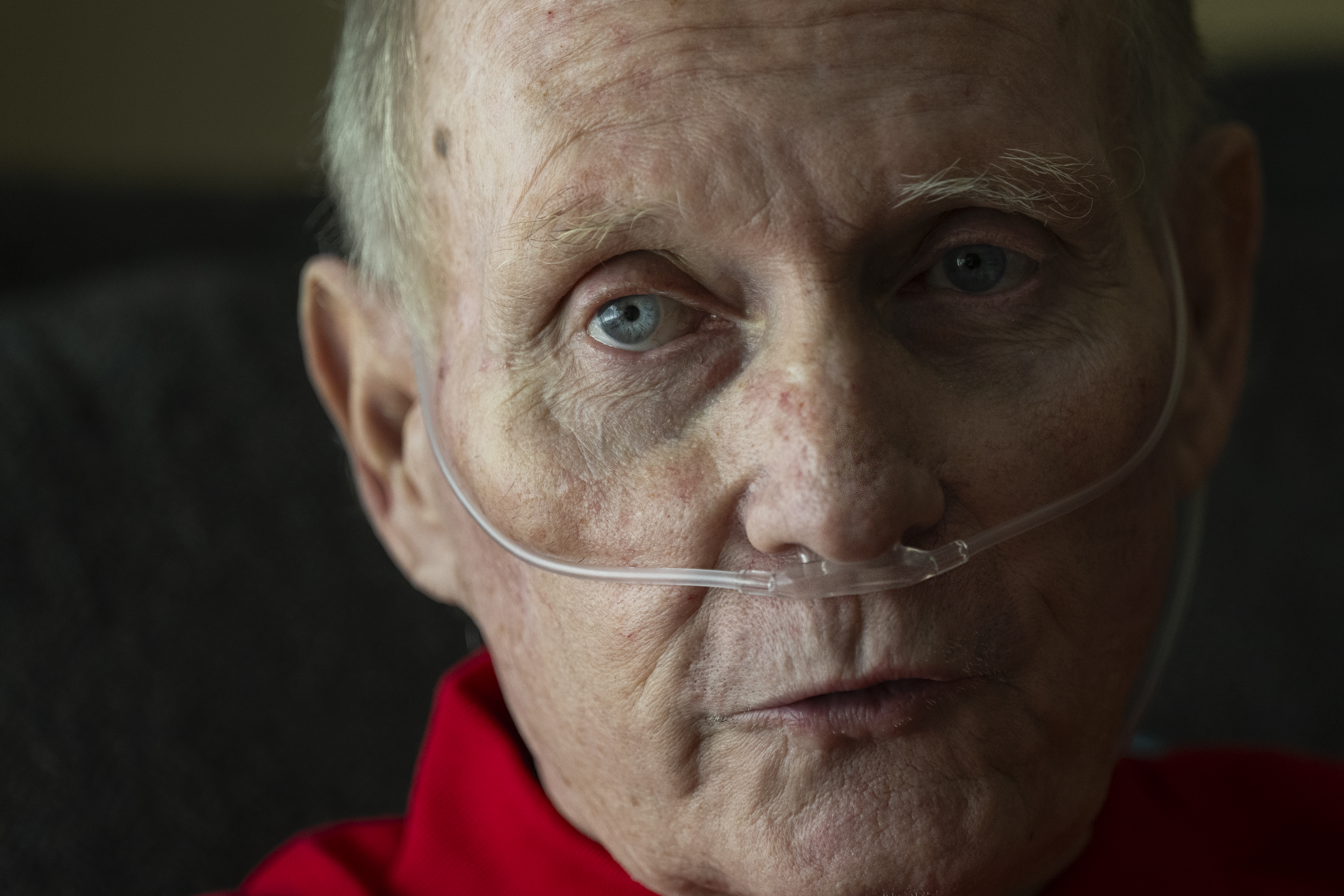
“I can’t breathe worth a darn. My lungs just aren’t going to last,” Fisher said, as he sat in his Northeast Philadelphia home with oxygen prongs in his nostrils and a heating pad against his back.
“Everything aches,” he rasped, coughing relentlessly.
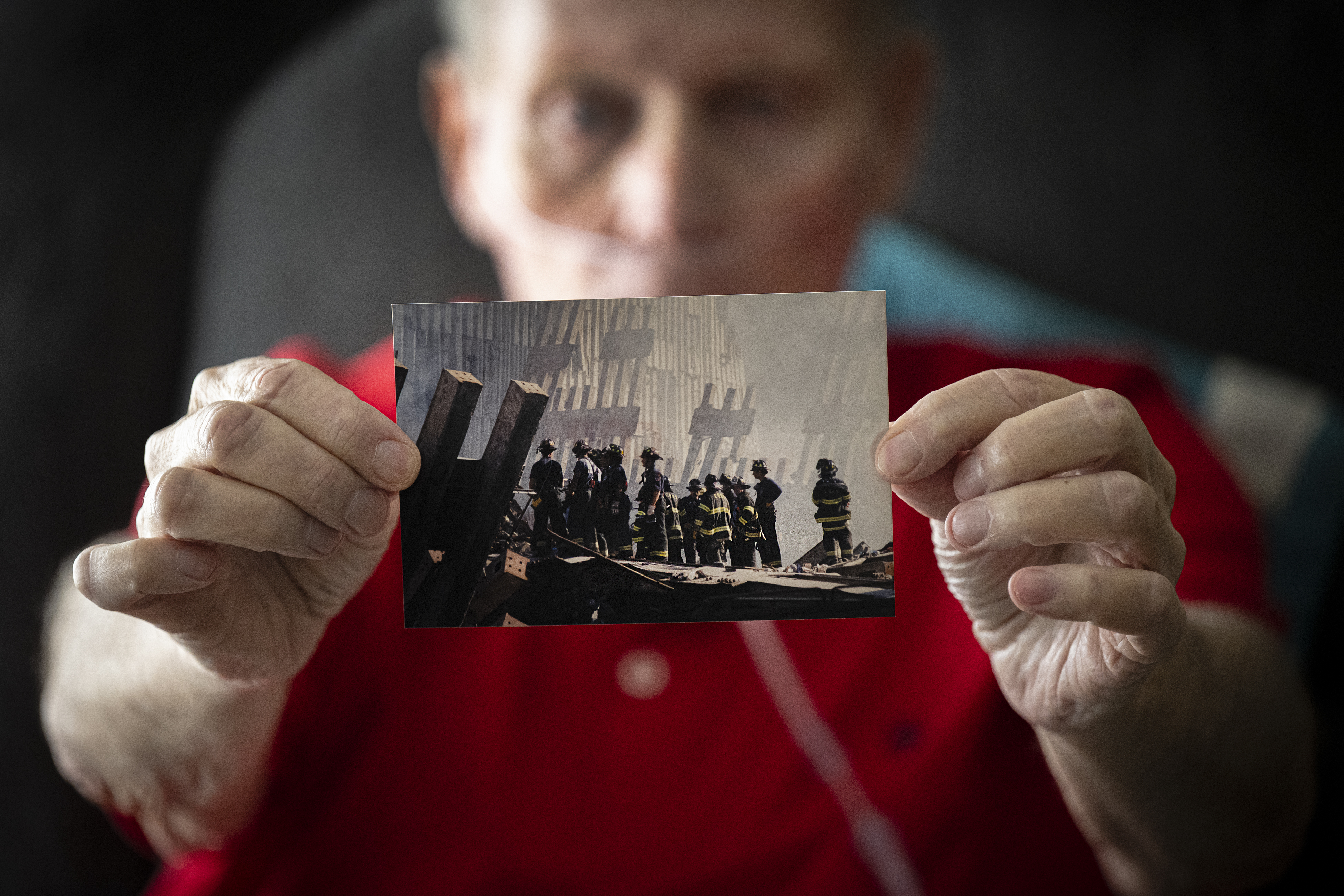
Retired Philadelphia Police Captain Mark Fisher, 69, shows a photograph he took while working as a crime scene investigator at ground zero.Jose F. Moreno / Staff Photographer
Cancer is the fastest-growing diagnosis, now that enough years have passed for tumors and other abnormalities to emerge, soaring from about 3,200 cases to more than 57,000 within the last 11 years.
Most of the toxic dust — as deep as snow drifts in spots — formed when the concrete floor slabs of the 110-story towers collapsed on top of one another in quick succession. The wreckage, known as “The Pile,” contained more than 350 chemicals andmineral agents:potassium hydroxide in concrete, calcium sulfate in wallboard, jet fuel, asbestos, glass insulation fibers, heavy metals — all finely groundand aerosolized.
“It was such a mixture of stuff, like a witch’s brew,” said Iris Udasin, a Rutgers Health doctor who treats 9/11 responders and studies the long-term health effects of the attack.
The alkaline alone in “the cement from all these buildings was toxic in and of itself,” she said. “It basically burned holes in people’s noses and made them more likely to absorb other chemicals and gases that were in the air.”
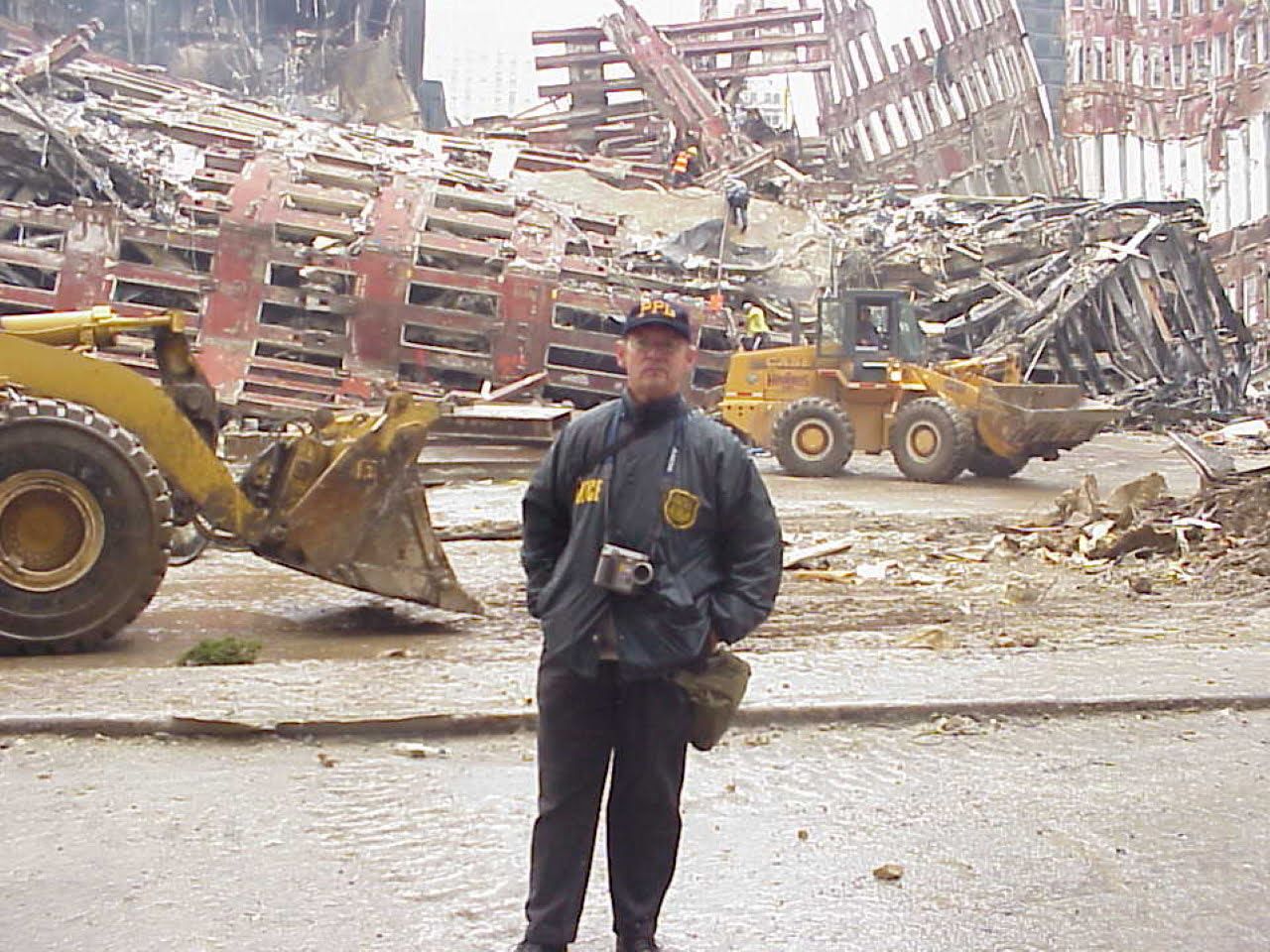
While at ground zero, then-Philadelphia Police Sgt. Greg Masi took photos of the dust and debris. When Masi started wheezing and coughing a few years later, he thought, “I’m just getting old. I didn’t want to believe that the days I was there affected me,” he said. He’s since been diagnosed with asthma, lung nodules, and a type of blood cancer linked to breathing toxic dust. Courtesy of Greg Masi
From WTC cough to lifelong disease
Udasin directs the WTC Health Program at Rutgers University in Piscataway, N.J. — one of six clinics created nationally to treat 9/11 responders.
When it opened in 2003, Udasin mostly treated responders for what she calls “World Trade Center cough,” a dry and persistent hacking that improved with asthma medication.
Now their cases are far more complicated and life-threatening, often requiring referrals to medical specialists, from pulmonologists to oncologists.
Udasin can name many of the roughly 3,000 responders she treats annually by their faces alone. She prefers to relay test results, both good and bad, to patients herself, rather than delegate.
On a recent morning,she escorted an older man from an exam room to the clinic’s lobby and asked: “Do you want me to call you with the results? If you are going to be scared, I can have somebody else call you with the results.”
Her patients, hailed as heroes after 9/11, could not have anticipated how working at ground zero would impact their long-term health.
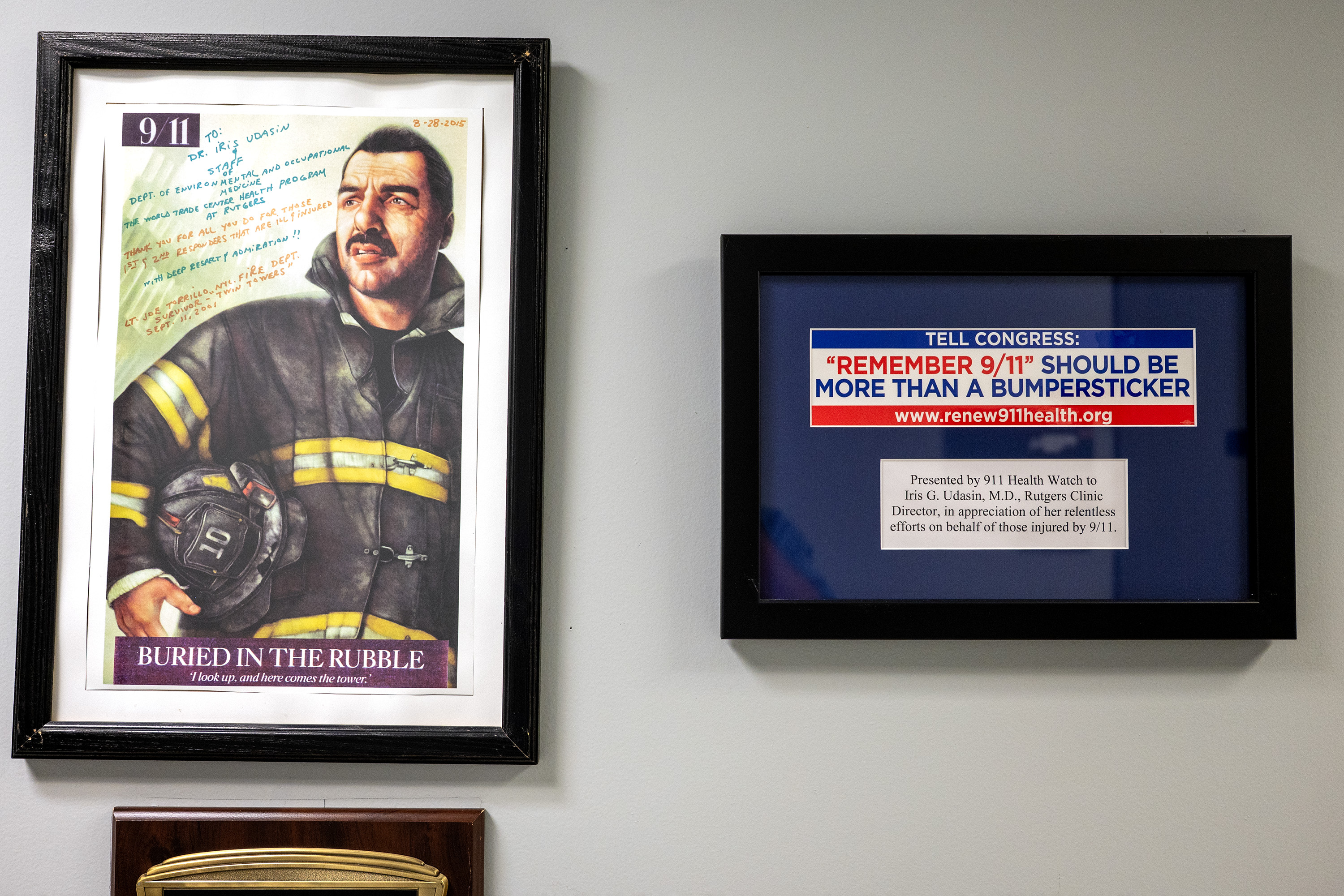
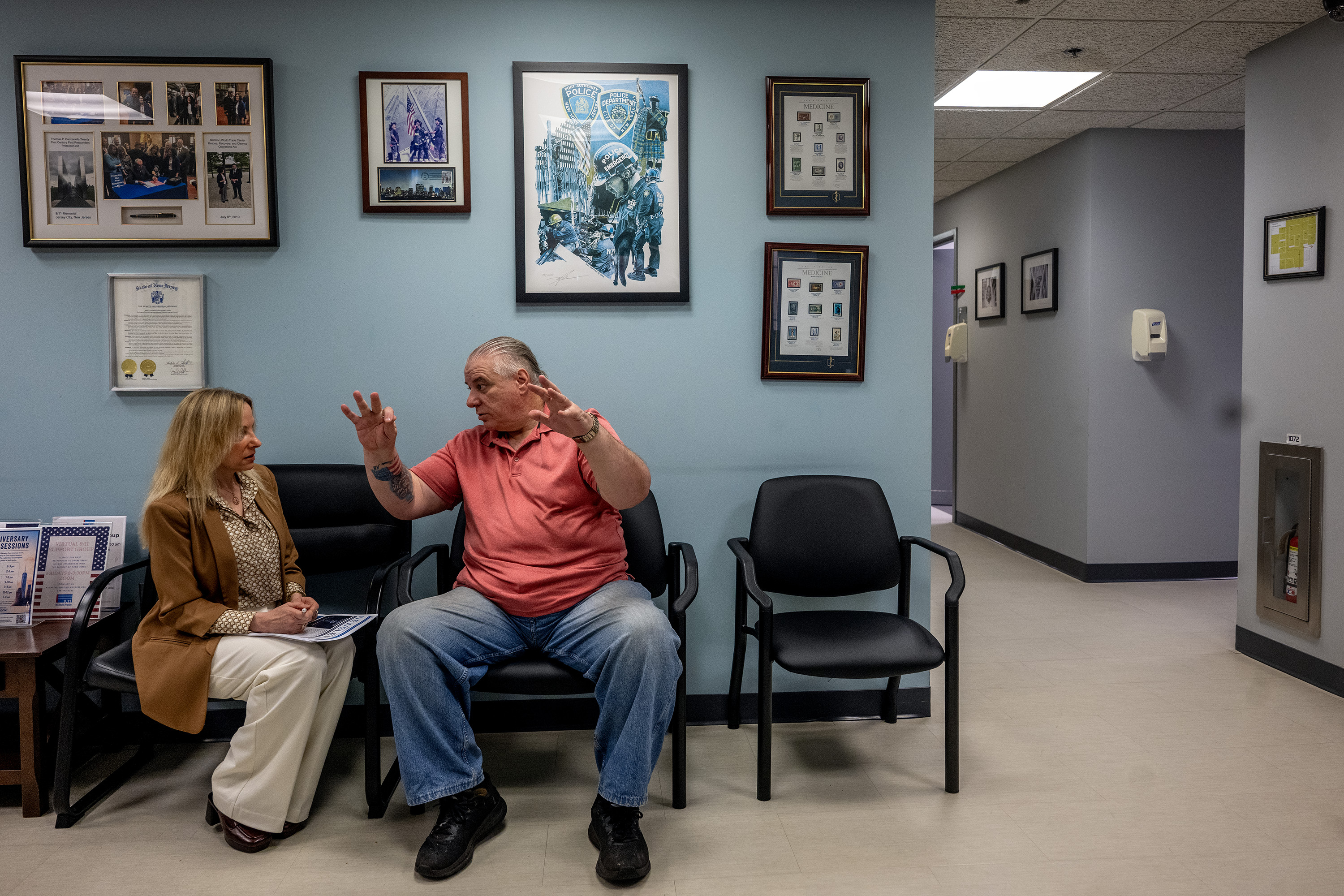
A plaque (right) presented to Iris Udasin, medical director of the World Trade Center Health Program at Rutgers University, hangs on the wall of the patient waiting room. Udasin’s federally funded clinic provides medical monitoring and free treatment to 9/11 responders. Tom Gralish / Staff Photographer
Local and federal officials initially minimized the environmental health hazards. Christine Todd Whitman, who was the head of the Environmental Protection Agency under President George W. Bush, infamously assured the public within days of the attack that the air around the WTC was “safe to breathe.”
“The [EPA] scientists did the best they could with the data that they had and with the knowledge they had at the time,” said Whitman, who had previously served as New Jersey governor.
“It’s a case of you don’t know what you don’t know,” Whitman added in an interview with The Inquirer late last month.
Whitman said her agency did urge responders on “The Pile” to wear protective gear, preferably respirators. The EPA distributed masks, but many refused to wear them, she said.
In hindsight, she said, the masks were not protective enough. Responders are now paying “the price” of breathing toxic air: “It sickens me to say it,” Whitman said.
The Rutgers program grew out of early alarms about air quality hazards, of which details are still emerging. On Tuesday, New York City officials publicly released a trove of documents revealing that toxins lingered in the air for months after the attacks.
Medical monitoring and free healthcare forresponders continue to evolve as the responder population ages.
Researchers evaluated more than 5,000 WTC responders, with an average age of 53 at the start of the eight-year study.
“As this population ages, we are seeing increasing concerns related to memory, attention, and executive functioning, sometimes at ages when the responders themselves are surprised to be experiencing them,” said Jodi Streich, mental health director at Rutgers’ WTC Health Program.
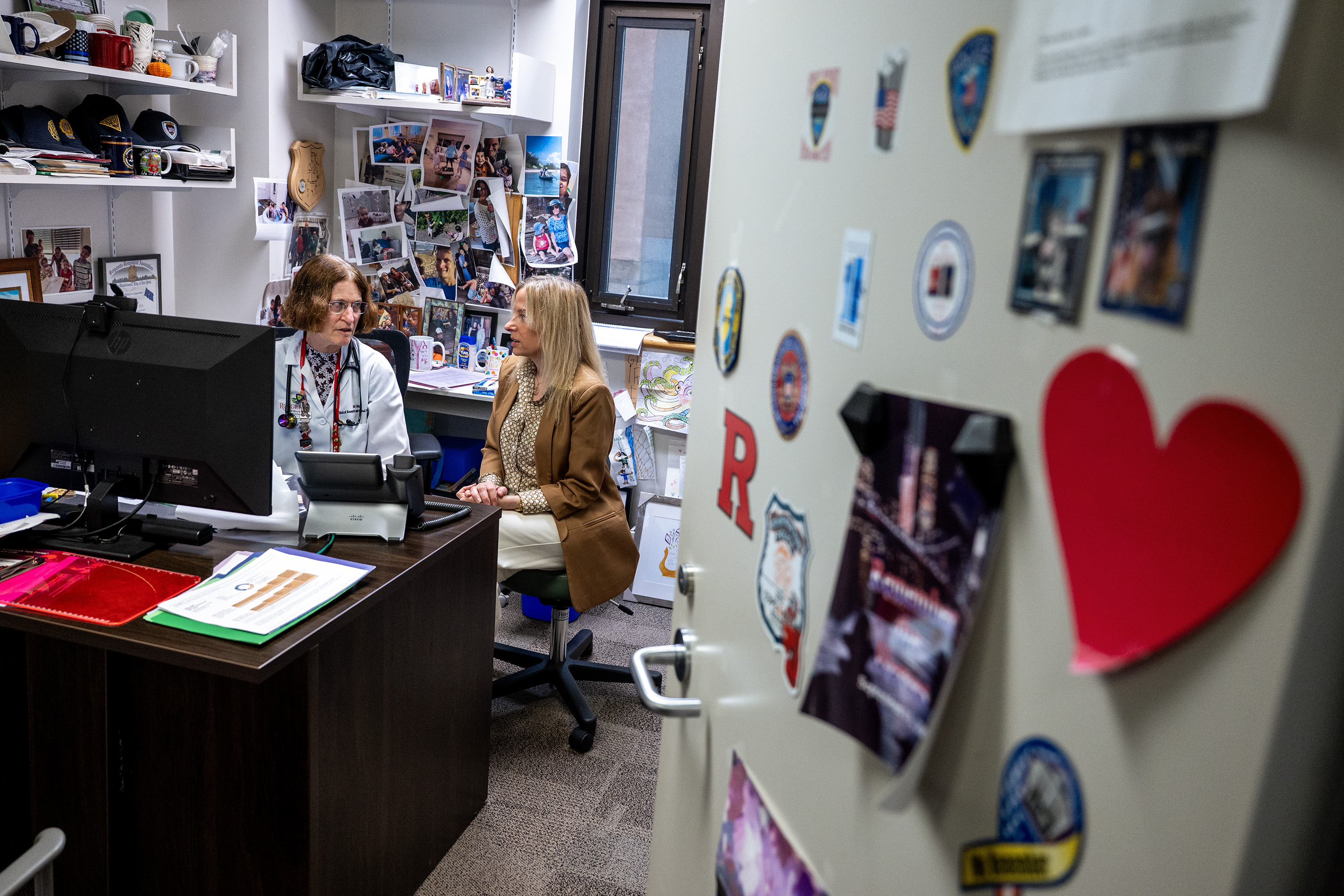
Iris Udasin, medical director, and Jodi Streich (right) mental health director, of the World Trade Center Health Program at Rutgers University sit together in Udasin’s office. They treat responders with WTC-related illnesses at the medical clinic, which is funded by the National Institute for Occupational Safety and Health (NIOSH) within the Centers for Disease Control (CDC). Tom Gralish / Staff Photographer
A stubborn and spreading blood cancer
Udasin’s clinic currently treats 1,177 cancer patients. Research shows that 9/11 responders suffer from thyroid, prostate, lung, and blood cancers at higher rates than the general population.
“The question is: Are certain cancers higher because we looked for them, or are they higher because they’re really higher?” Udasin said. “We really don’t know the answer to that, but my job is to treat everybody.”
In 2023, Udasin successfully lobbiedto have gynecologic cancers, including uterine, included on the list of WTC-related conditions.
Philadelphia Police Department Sgt. Greg Masi at ground zero just days after the twin towers fell. Then-Police Commissioner John Timoney dispatched Masi to New York City because of his expertise in radio communications. He’s developed asthma, lung nodules and T-cell lymphoma from breathing in toxic fumes and dust.Courtesy of Greg Masi
Greg Masi, 71, a retired Philadelphia police sergeant from the Northeast, was diagnosed with a form of blood cancer known as T-cell lymphoma in 2019.
First, red bumps appeared on his left arm. A scaly rash hassince spread over much of his body, killing hair follicles. His oncologists worry the cancer will find “a road map” into his organs.
Light therapy and topical medications did not work. Chemo and radiation would be a last resort. Since there is no cure, the goal is to slow it down.
Masi, an expert in radio communications, can still hear the horns that blared each time responders thought they found someone still alive beneath the rubble at ground zero, or to signal an imminent structural collapse.
The dust that caked cars and blanketed fire escapes struck himas a mere nuisance.
“We figured it was just dust, like dirt,” Masi said. “We had no idea it had harmful toxins in it.”
An avid runner and marathoner, Masi developed bad chest colds with wheezing about five years after Sept. 11. He was later diagnosed with asthma and nodules on his lungs, both common afflictions among responders.
He recently learned that one nodule has doubled in size, and doctors plan to monitor it for signs of cancer.
Then-Philadelphia Police Department Sgt. Greg Masi captured photos of the dust during his time at ground zero. Masi and three other department staffers have been diagnosed with WTC-related illnesses from breathing in deadly dust.Courtesy of Greg Masi
Mental health toll still mounting
Multiple diagnoses are commonly seen in 9/11 responders. Frank Geffre Jr., a retired firefighter from Central Jersey, has asthma, two types of cancer, and post-traumatic stress disorder.
In 2013, surgeons removed a “grapefruit-sized tumor” and parts of his colon and stomach to treat his stage-four colon cancer. Two years later, he learned the cancer had spread to his rectum.
After more than a decade of chemotherapy and radiation, his cancer is in remission. He credits Udasin, his primary care doctor, with saving his life.
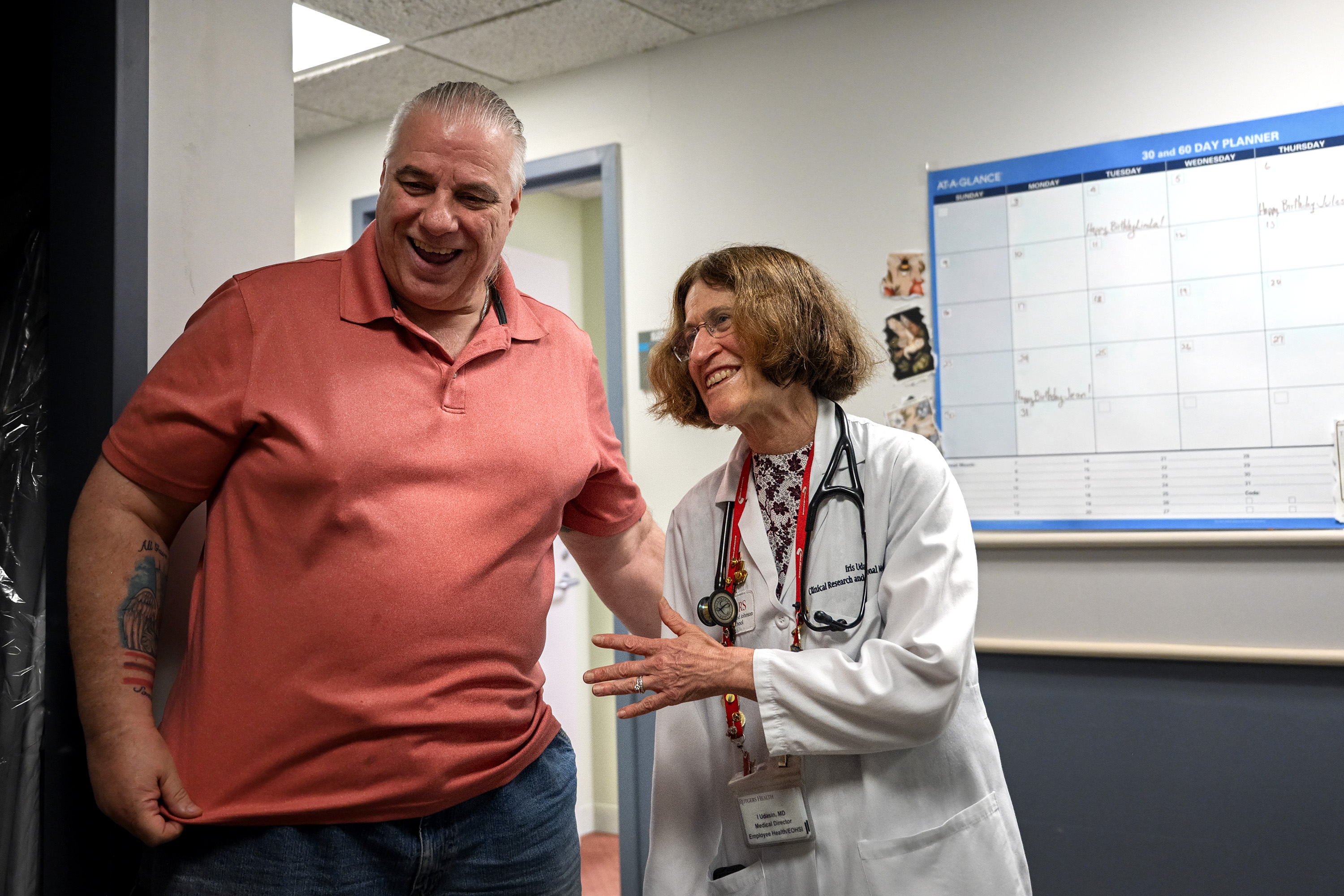
Retired Piscataway firefighter Frank Geffre Jr. shares a laugh with Iris Udasin, medical director at the World Trade Center Health Program at Rutgers University. Geffre credits Udasin and her team at Rutgers with saving his life after he was diagnosed with colon and rectal cancer. “Dr. Udasin is like the quarterback of the team,” he said.Tom Gralish / Staff Photographer
He sees a psychiatrist and a therapist for PTSD, which he finds especially hard to manage as Sept. 11 approaches each year. He lies awake after a recurring nightmare in which he is trapped in Manhattan with his family amid a terrorist attack, and he can’t get them out.
After the first plane struck on 9/11, Geffre and five other firefighters from Fire District No. 3 in Piscataway were immediately dispatched. His team got to ground zero shortly after the second tower violently pancaked.
“It was dark as can be, even though it was daylight. You had smoke clouds so thick you couldn’t even see your hand in front of your face,” Geffre said. “The dust was so thick it was like you had two foot of snow the night before.”
He initially wore respiratory gear, but the oxygen tank ran out as he worked nonstop over the first 30 hours. He saved roughly a dozen people after putting out fires that were blocking their exit from the burning buildings within the World Trade Center complex.
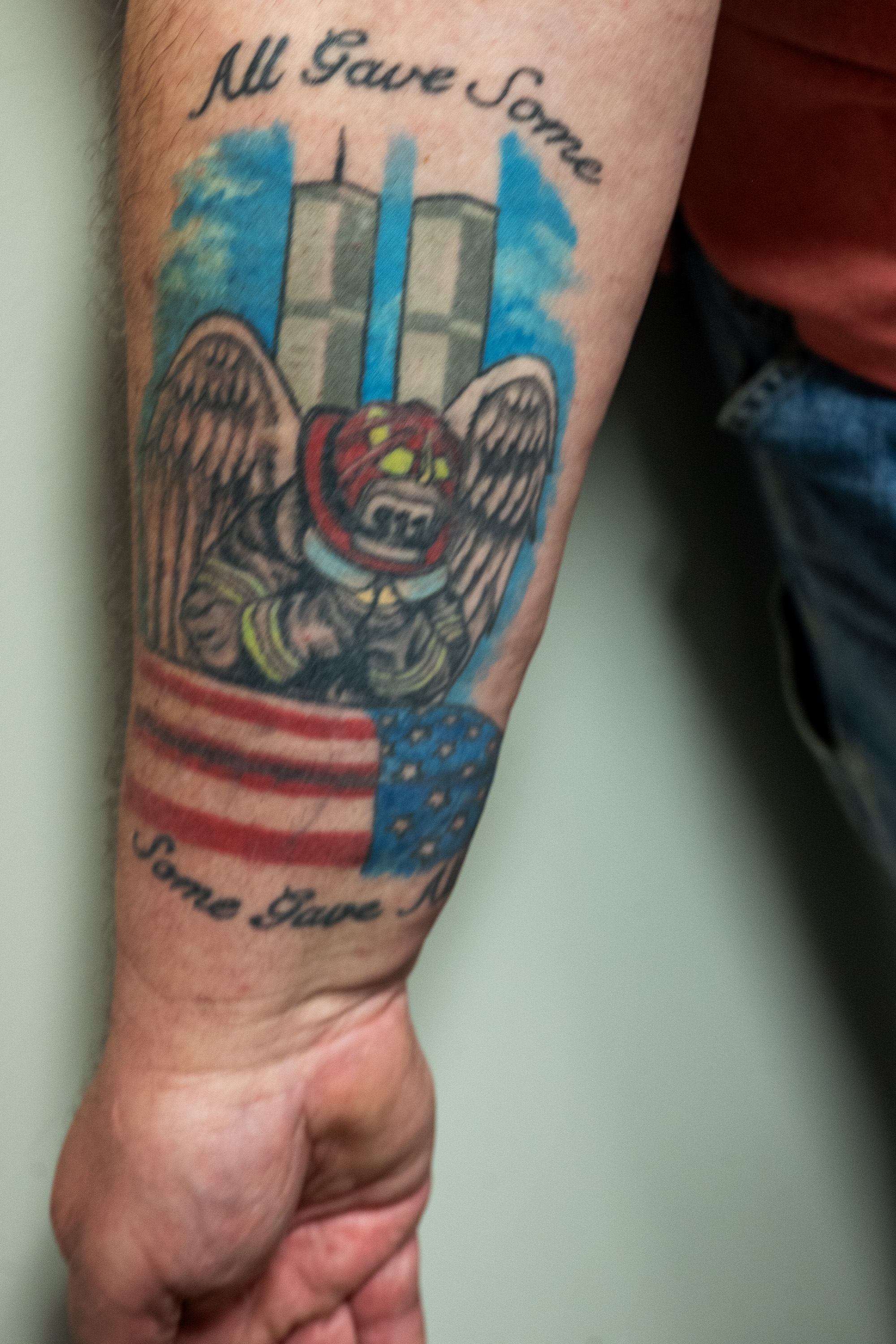
Retired firefighter Frank Geffre Jr. displays his 9-11 tattoo – “All Gave Some – Some Gave All” – during an appointment at the World Trade Center Health Program at Rutgers University. He designed the tattoo from a photo of himself splashing water on his face to rinse off dust and debris from ground zero. His wife said he looked like he was praying in the photo.Tom Gralish / Staff Photographer
He vividly recalls findinga brown dress shoe with a foot still in it. A blue polyester suit jacket with a torso seared to its lining. A wristwatch. A ring.
In all, he worked The Pile for 20 days, smearing Vicks VapoRub under his nose to cope with the“unforgettable, unbearably horrid smell of burning human flesh,” he said.
Now he can’t use the menthol and eucalyptus goo for his bouts of sinusitis, because the scent stirs bad memories.
“It feels like it was yesterday and a lifetime ago,” Geffre said. “The ‘Never Forget’ vow is not for first responders. We won’t ever forget. It’s embedded in us.”
He is ever-vigilant, prone to panic attacks. He avoids movie theaters and other places with crowds. “Too many variables,” he said.
He has a second home in Florida but drives back and forth. He won’t get on a plane. “I get paranoid that somebody on the plane is going to hijack it,” he said.
Two of the five firefighters with him on Sept. 11 have since died of cancer. He keeps in touch with four of the people he helped out of burning buildings. One committed suicide in recent years.
Retired firefighter Frank Geffre Jr. talks with Jodi Streich (left), mental health director of the World Trade Center Health Program at Rutgers University. Rutgers is one of six federally funded health clinics that monitors and treats 9/11 responders, as the health impacts continue 25 years later. The patient waiting room at the Rutgers clinic is adorned with photos of responders. Tom Gralish / Staff Photographer
Geffre, enrolled in the Rutgers program since its start, gets his mental healthcare through the clinic, which has seen a significant increase in demand for these services.
As more responders become ill or die from 9/11-related diseases, some have developed “heightened anxiety and vigilance about their own health,” Streich said.
Having more unstructured time in retirement, along with the loss of job identity and camaraderie, can be detrimental for mental health, she said.
“Things that we once buried — they come fully alive during retirement,” Streich said, adding that the support group she runs for retirees is now the most widely attended after the cancer support group.
Emergency responders who had felt too embarrassed or ashamed to seek help while working — because they feared being seen as weak — are coming in for the first time. Many are unable to eat or sleep, Streich said.
“We see them when they are at rock bottom,” Streich said. “They’ll come in and say, ‘I’m ready to talk about what I’ve been holding in for 25 years.’”
‘Exhaustion, desperation and heartache’
When asked if he regrets being dispatched to ground zero, Mark Fisher is emphatic: “Absolutely not.”
But he is tormented by images of people standing outside makeshift morgues with photos of their missing loved ones.
Fisher recalls becoming so distraught that a Red Cross volunteer pulled apart two tables piled with fresh clothes for responders to reach and embrace him.
“She hugged me for the longest time,” Fisher recalled, blowing air through his lips to steady his breathing and control tears. “I’m an Irish Catholic, so I wear my heart on my sleeve and face. I just had that look of exhaustion, desperation, and heartache.”
These days, he feels exhausted both emotionally and physicallyas his lung disease progresses. Fisher spent most of this summer in the hospital with a kidney infection that required two surgeries.
Five days after he got out of the hospital, his gall bladder became infected. “If I die, I want to die in a Catholic hospital,” he told his wife. Doctors removed his gall bladder in July.
The once-burly cop is rail-thin. He’s lost 35 pounds.
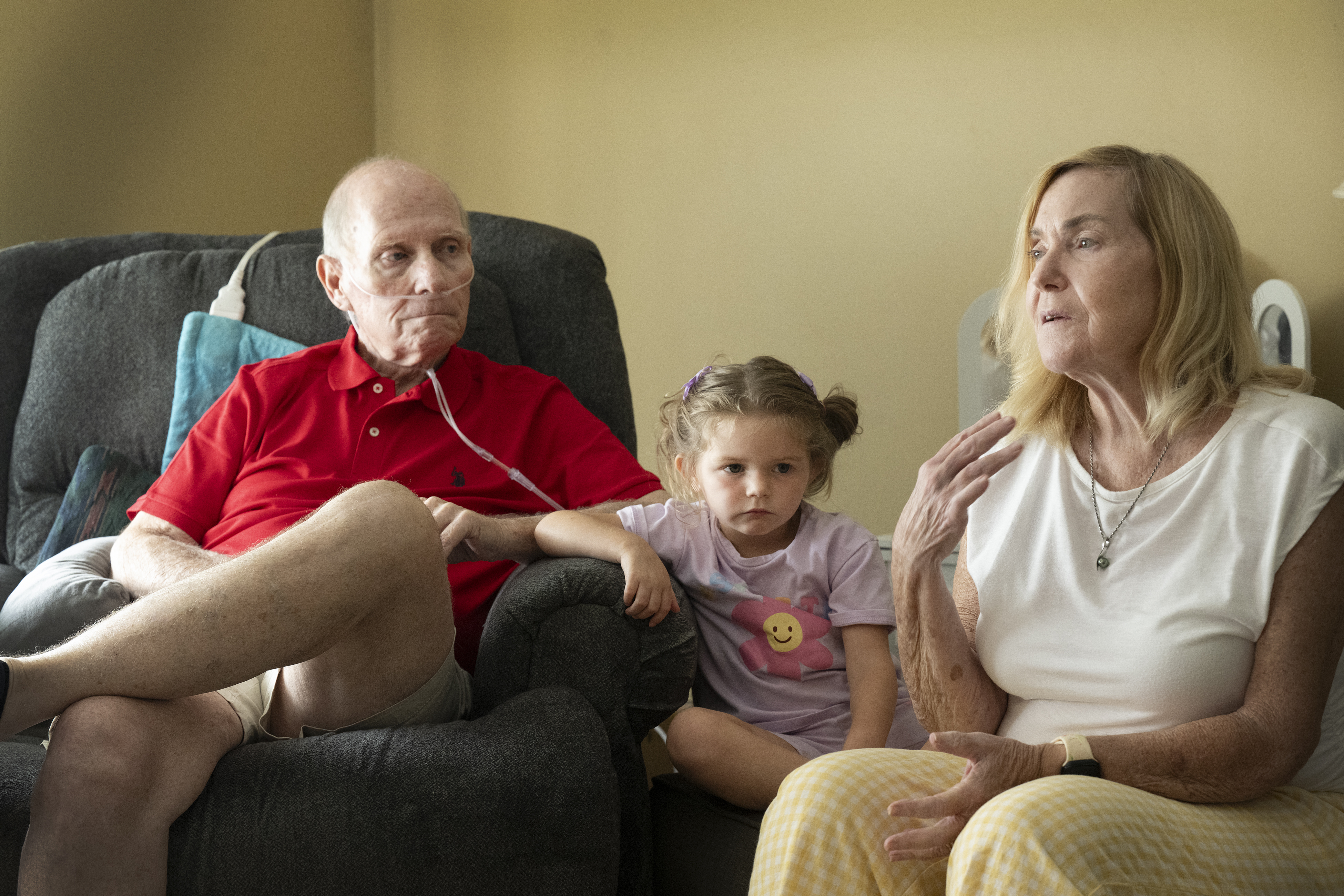
Inside their Northeast Philadelphia home, Sue Fisher (right) talks about the day she learned her husband, Mark Fisher, would need a double lung transplant. The couple’s 3-year-old granddaughter, Morgan Elizabeth Fisher, sits between them. Mark Fisher needs to use a portable oxygen tank to take walks with Morgan. Jose F. Moreno / Staff Photographer
Fisher’s priority right now is spending time with his wife and former sweetheart at Archbishop Ryan High School, and making sure she will be in decent financial shape when he dies.
Fisher, Masi, and two other responders from the Philadelphia Police Department are seeking written assurances from the city that if they die from their World Trade Center-related illnesses, their families will receive line-of-duty death benefits.
The status would enable their spouses to collect their full pensions, rather than half.
City officials said their families can apply to the Philadelphia Board of Pensions and Retirement, which would review each case individually after death.
Sue Fisher tries not to cry in front of her husband of 42 years;she’ll do it behind the shed in their backyard or on a walk with their golden retriever, Bentley.
He wants to delay as long as possible a double lung transplant, for which the survival rate is about five to seven years. “If they say that’s all he’s got, I’ll take it,” SueFisher said. “It’s better than him suffering the way he is.”
At night, she lies awake listening for the sound of Fisher’s breathing. Sometimes, she fears he has stopped. Then she nudges him with her toe until he stirs.
Retired Philadelphia Police Captain Mark Fisher wants the city’s word that if he dies of lung disease from his time at ground zero, his wife will get line-of-duty death benefits. City officials have said that his wife can apply to the pension board after he dies. Jose F. Moreno / Staff Photographer
Kelly N. Moore, 46, of Burlington Township, award-winning clinical psychologist, founder of Moore Wellness LLC, director of the Center for Psychological Services at Rutgers University, graduate school clinical associate professor, former fellow at the University of Pennsylvania’s Center for the Treatment and Study of Anxiety, mentor, author, mental health activist, volunteer, and 2026 Willingboro High School Hall of Fame inductee, died Thursday, Aug. 20, of kidney cancer at Virtua Voorhees Hospital.
Adept at treating anxiety, depression, trauma, and perinatal disorders, Dr. Moorebecame director of the Rutgers Center for Psychological Services and a clinical associate professor in the Graduate School of Applied and Professional Psychology in 2020. As CPS director, she mentored hundreds of doctoral students regarding academic requirements and clinical procedures, and supervised the center’s community mental health clinic.
She significantly expanded the center’s services and outreach, Rutgers colleagues said in a Facebook tribute, and forged important partnerships on campus and in the community. Colleagues said: “Her warm demeanor, melodic voice, vibrant spirit, and calming presence made all who met, and were fortunate enough to know her, feel seen, welcomed, and heard.”
She spent two years as a fellow at Penn’s Center for the Treatment and Study of Anxiety after earning her doctorate in clinical psychology at Rutgers in 2011. During the COVID-19 pandemic, she founded Moore Wellness LLC and focused on helping women, children, and clients of color.
“Wellness does not mean you will never experience challenges,” Dr. Moore said in an online profile for Psychology Today magazine. “Rather, it means having the tools to manage the challenges when faced with them.”
Dr. Moore was an outspoken activist for mental health education and services. She spoke with groups often, organized workshops, and was featured in newspapers and magazines and on TV and podcasts. “Just trying to get people to understand as much as they can about the impact their mental health and well being have on their day-to-day lives,” she said in a 2026 podcast interviewwith the Multicultural Counseling Institute.
She belonged to the American Psychological Association and the New Jersey chapter of the Association of Black Psychologists. She was active with the Therapy for Black Girls podcast and the Leadership Institute for Women in Psychology.
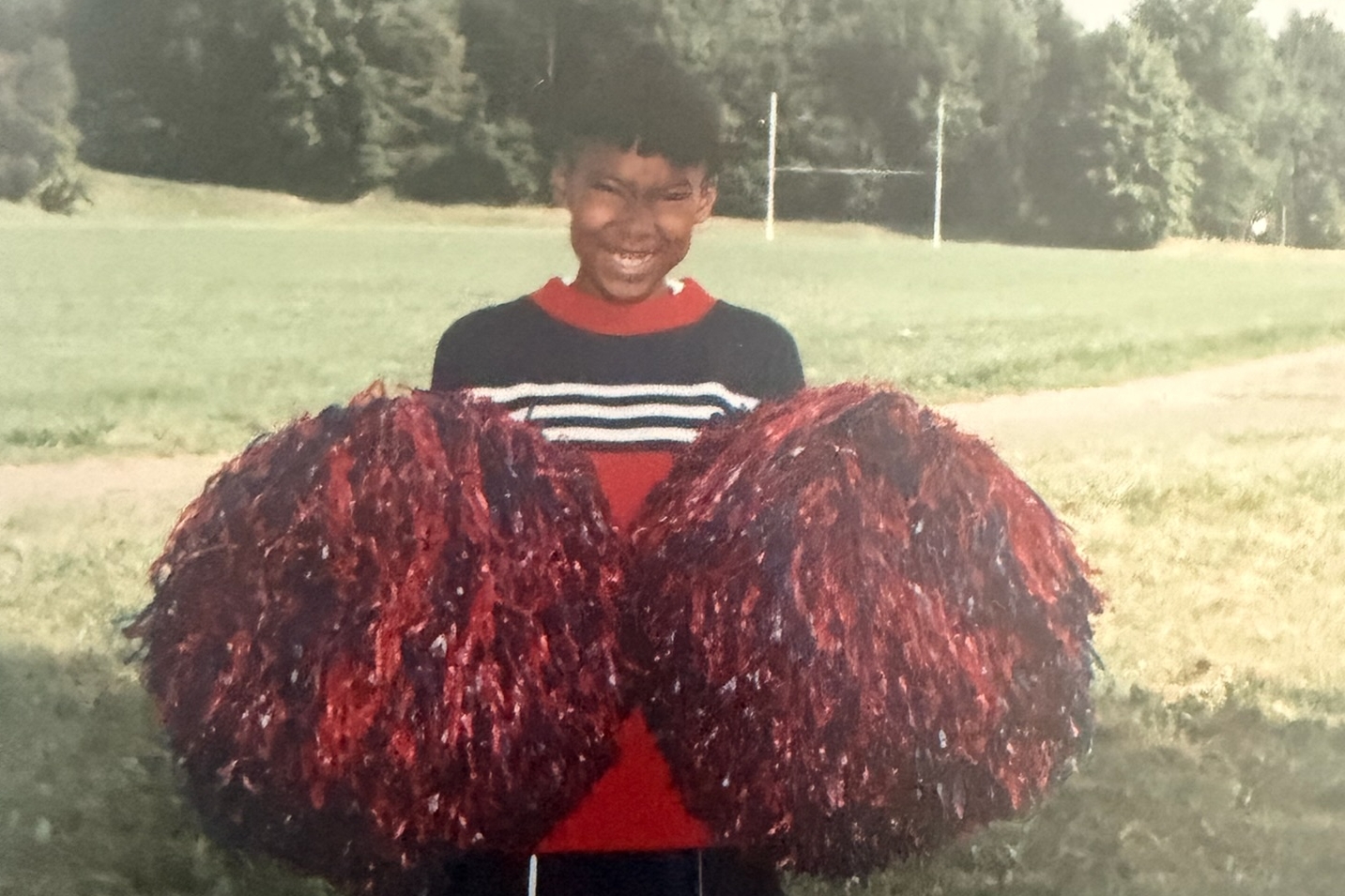
Dr. Moore was a cheerleader and lacrosse player, and graduated from Cornell University in 2002.Courtesy of the family
She earned leadership and achievement awards from the New Jersey Psychological Association, the National Council of Schools and Programs of Professional Psychology, and other groups. She was president and a board member of the Burlington County chapter of Jack and Jill of America Inc. Colleagues there called her “a beautiful example of leadership, service, grace, and love.”
Kelly Nicole Walker was born Aug. 20, 1980, in Philadelphia. Her family moved to Willingboro when she was 2, and she graduated from Willingboro High School in 1998.
She was a cheerleader and played lacrosse and viola as a teenager. Her mother, Diana, was a social worker, and she showed Dr. Moore up close how one person could impact their community.
“I was just fascinated by this concept,” Dr. Moore told the Multicultural Counseling Institute in the podcast interview. “It was already set at a young age that this was the kind of work I should be doing.”
She earned a bachelor’s degree in human development at Cornell University in 2002 and a master’s degree in education at Penn in 2003.
She met Melvin Moore through friends, and they married in 2004 and had sons Miles, Mason, and Matthew. They lived in Marlton and Delanco, and, since 2015, in Burlington Township.
Dr. Moore was a longtime member and dance choreographer at the Gospel Tabernacle Church. She joined Alpha Kappa Alpha Sorority Inc. at Cornell in 2000 and was on the executive board of its Pi Mu Omega chapter in Willingboro.
Friends noted her “warmth, generosity, and kindness,” and called her “genuine” and “quietly brilliant” in online tributes. One friend said: “She sure made me proud to be from Willingboro.”
Dr. Moore and her husband, Melvin, married in 2004 and had three sons. Courtesy of the family
Dr. Moore doted on her sons and called them her “M & M’s.” She was an avid reader and led several book clubs.
She liked to garden, play piano, take photos, cook, and crochet. She was diagnosed with renal medullary carcinoma about a year ago and was determined, her husband said, to reach her 46th birthday. She did it.
NEW YORK — The two measles-related deaths in Pennsylvania last month involved infants, and the virus itself caused one of the deaths, a Pennsylvania coroner confirmed Wednesday.
Lancaster County’s coroner, Dr. Stephen Diamantoni, said he told the Centers for Disease Control and Prevention of his conclusions. CDC officials, however, have not said whether they will count either death as measles-associated, and the agency’s website still carries a disclaimer about them.
Ivan Miller died on Aug. 14 shortly after his birth of a ruptured spleen, Diamantoni said.
Mary Stoltzfus was 6 weeks old when she died Aug. 18 at her home. She was born with a genetic birth defect that left her highly vulnerable to an infection. A measles infection killed her, Diamantoni told The Associated Press.
He said he was releasing the information in response to a state right-to-know law request by WPMT-TV, Fox 43.
The causes of death differed
Diamantoni’s office didn’t perform an autopsy on the girl. The cause of death was determined by the doctors caring for her, he said.
She had been born with a condition called Amish lethal microcephaly that causes an unusually small head and underdeveloped brain. Children with the condition typically live 6 months or less.
The girl’s immediate cause of death was listed as a cardiac arrest, due to hypoxemic respiratory failure, measles, and Amish lethal microcephaly, according to a coroner’s report obtained by The Inquirer through a right-to-know request. The manner of death was listed as “natural.”
Diamantoni’soffice did autopsy the boy, and determined he died from a ruptured spleen. Exactly how and when that happened is still under investigation, Diamantoni said.
The boy was infected with measles, which is listed on the death certificate as a contributing factor. But Diamantoni said measles did not contribute to what happened to the spleen, and that measles is noted only because it was considered “a significant condition” that the boy had at the time of death.
Ivan Miller’s death was attributed to a “traumatic torso injury,” and his manner of death was “pending investigation,” according to another document signed by the coroner and provided to The Inquirer through a public record request.
Neitherchild was old enough to be vaccinated; the first dose is typically given at around 1 year of age.
Because of the ongoing measles outbreak, Pennsylvania health authorities in recent months have recommended that children receive a first dose of a measles vaccine as early as six months old.
The deaths have received outsized attention
Details of the deaths have come under unusual national scrutiny and became the focus of a furious political battle between Pennsylvania’s Democratic governor, Josh Shapiro, and officials in Republican President Donald Trump’s administration.
Pennsylvania officials announced the deaths last month, with Shapiro stressing that vaccinations could have averted the deaths.
Soon after, U.S. Health Secretary Robert F. Kennedy Jr., a Trump administration appointee with a history of raising alarms about established vaccines, attacked Shapiro and suggested the deaths “may even have been altogether fabricated.”
Kennedy’s statements echoed ones he made last year, when three measles-related deaths were recorded. Kennedy questioned whether one of the children who died was killed by measles.
The health secretary oversees the CDC, and some public health experts have voiced concern about whether the CDC can still be counted on to post public health data that clashes with Kennedy’s worldview.
“Frankly, the CDC is not to be trusted in sharing information,” Dr. Georges Benjamin, executive director of the American Public Health Association, told the AP last week. “People are questioning their motives.”
CDC website still doesn’t show the deaths
That worry was fueled by some unusual edits to the CDC’s measles webpage. At one point, the webpage noted two measles-associated deaths but then was changed to say that the CDC was not counting the two deaths until it reviewed additional information.
The page, which was last updated Friday, now says, “CDC will update its reporting as additional information becomes available and relevant reviews are completed.” It still doesn’t reflect either Pennsylvania death.
In a social media post last week, Kennedy acknowledged Diamantoni’s conclusion that one of the deaths was due to measles.
Meanwhile, Pennsylvania’s measles outbreak continues to expand, with more than 620 cases across 37 counties this year, state officials said Wednesday.
The U.S. eliminated the domestic spread of measles in 2000 by maintaining high vaccination rates, but they have fallen in recent years to below the 95% coverage needed to prevent outbreaks. Meanwhile, measles infections have been surging in recent years.
In November, international health officials will meet to determine if the U.S. and Mexico have lost their measles-free status.
Inquirer staff reporter Aubrey Whelan contributed to this article.
Editor’s note: This article has been updated with additional information obtained by The Inquirer through a public records request.
Chinese esports player Jian “Uzi” Zi-hao was more than a star “League of Legends” player: He was so talented that his team structured its entire strategy around his abilities, funneling resources to him and another teammate, Shi “Ming” Sen-Ming, so the duo could lead the team to victory. Over the course of his career, he earned more than $500,000 in tournament prize money.
Video games have a reputation for keeping people glued to the couch. But for those who compete against the best players in the world, gaming can be surprisingly physically and mentally taxing.
The strain of ‘climbing the ladder’
The best esports players often have grinding schedules. They’re expected to regularly practice, participate in scrimmages, and compete in official matches. Even at the recreational level, esports players cite the mental toll: playing for hours a day, every day, to hone their skills so they can “climb the ladder.”
A 2021 study of Portuguese esports players found that 37% experienced anxiety and depression, and 45% experienced sleep disturbances. The most common physical injuries in esports generally fall under eye problems and musculoskeletal issues.
Many esport players — professional or otherwise — also battle hand and wrist pain, with repetitive button-smashing causing injuries such as carpal tunnel syndrome, tendonitis, and “gamer’s thumb,” which arises from overuse or irritation of the tendons around the thumb and wrist. Many of the overuse injuries seen among video game players are also familiar to assembly-line workers, whose jobs can involve similarly repetitive movements.
Then there are the back injuries. Players can remain seated for three or more hours without a break, and this prolonged sitting can take a toll on the lower back and spine.
The sedentary nature of esports has also led to a lesser-known — sometimes fatal — injury called deep vein thrombosis: a blood clot, often in the leg, that can become life-threatening if it travels to the lungs. In 2011, British gamer Chris Staniforth – who would play for as long as 12 hours at a time – died of the condition.
Ellis Celia and other students starting Staffordshire University’s esports degree course play “Counter-Strike” in the school’s London digital studio in 2019. A number of Universities launched degrees in esports to capitalize on the booming industry’s growing demand for skilled professionals. (AP Photo/Kelvin Chang)Kelvin Chang / AP
Preventive measures
As more esports injury research has been published, more treatment and prevention strategies have emerged.
Teams often incorporate group exercise activities to both build rapport among players and reduce the risk of injuries. During competition, proper positioning of the spine and limbs has become an essential injury prevention strategy. For example, selecting a chair that encourages an upright posture can reduce pain and injury risk, especially when gamers couple ergonomics with an exercise program that centers on functional strength, mobility, and stretching of the upper limbs.
Looking to the stage
When esports began gaining mainstream popularity in the 1990s and early 2000s, its proponents were eager to draw comparisons to traditional sports and athletic competition. The parallels helped establish esports’ legitimacy and gave non-gamers a familiar framework for understanding the competition.
As esports became a big businessand a lucrative career path, players and teams hired a web of support staff — trainers, coaches, and therapists — that mirrored the structure of professional sports. In this vein, a lot of esports injury research has pulled from the training methods of traditional sports.
However, as a scholar of exercise science, I think injury treatment and prevention strategies could be further improved by seeing esports competitors as more like musicians and dancers than football players and basketball players.
Performance optimization and injury research on professional performing artists has existed for centuries, and I think it represents a valuable, untapped resource. That’s because the physical and mental stresses experienced during musical performance have a lot in common with esports competition: long stretches of sitting; small, dexterous hand movements; and performing without the real-time input of a coach.
For example, biomechanics research has found similar patterns of forearm muscle fatigue among esports players and piano players. However, no studies to date have directly compared the two groups.
And what if the interest in joint hypermobility or hand size among performing artists were translated to esport populations? Could popular piano warm-up exercises be effective for esports athletes who use keyboards?
Even research on sports like car racing might offer valuable insights. As with gamers, many people overlook how physically demanding car racing can be — and, yes, that includes sitting for extended periods of time.
Prevention and rehabilitation techniques continue to improve. Even Jian, the player who retired in 2020, returned to play for a few splits, or partial seasons, in 2022 and 2023.
“League of Legends” star Lee “Faker” Sang-hyeok was once relegated to the bench due to cubital tunnel syndrome, but came back just a month later after physical therapy.courtesy of Riot Games
Through a treatment plan that included changing his gaming posture and intensive physical therapy, Lee was able to return to play just a month later. He went on to win three consecutive world championships, with his support team helping prevent recurrence of injury throughout each season.
Thanks to his rehabilitation, Lee’s fans will be able to follow his hunt for his fourth “League of Legends” World Championship, which kicks off in October 2026 in the United States.
Sienna Cinti assisted with the research and writing of this article.
Erica D. Henn is an assistant professor of kinesiology and exercise science at Temple University.