Category: Health

  • IBX and Highmark want to cut costs by moving more outpatient care to surgery centers

    IBX and Highmark want to cut costs by moving more outpatient care to surgery centers

    Independence Blue Cross, the Philadelphia region’s largest health insurer, launched this month a policy designed to move care into lower-cost surgery centers and away from hospitals and clinics that can generate payments twice as high for the same treatment.

    The policy started June 1 echoes Medicare’s efforts to slow federal healthcare spending by paying the same price for outpatient procedures such as colonoscopies and knee surgery in hospitals as in surgery centers.

    Pressure from employers to control costs has similarly motivated IBX and a newer regional competitor, Pittsburgh-based Highmark, which implemented a similar policy on Jan. 1. Both companies’ policies affect people with low risk of complications who are covered by commercial insurance or Medicare Advantage.

    When doctors seek insurance authorization for certain procedures, IBX reviewers will ask whether doctors can treat low-risk patients in a surgery center, according to the company’s chief operating officer Richard Snyder.

    “This is a gentle move,” Snyder said. “We’re not willing to force you to change doctors to have your colonoscopy or your service, but we want docs to get privileges in ambulatory surgery centers.”

    The region doesn’t have enough low-cost surgery center capacity for a large-scale move to that setting, Snyder said. That means the policy might not hit hospital finances right away.

    But the implication is that the policy could take a harder edge in the future. IBX’s goal is to spur the development of more surgery centers — either by the incumbent health systems or by new competitors, Snyder said.

    Even now, the potential for delayed care and denied coverage has several regional health systems worried. Temple University Health System, for example, does not own ambulatory surgery centers, so the time could come when it has to coordinate care with outside providers.

    The money at stake

    Surgery to remove torn cartilage on the knee can cost $7,190 when performed on an outpatient basis in a hospital, nearly three times the $2,477 cost in ambulatory surgery centers, according to Philadelphia-area commercial insurance averages from heath prices data firm Turquoise Health.

    Smaller gaps exist for hernia repairs and colonoscopies with a biopsy, Turquoise reported. Another data firm, Medscout, showed that a majority of those colonoscopies had already shifted to ambulatory surgery centers by 2024. The shift was far less advanced for hernia repairs — a procedure IBX is targeting.

    (function(){function e(){window.addEventListener(`message`,function(e){if(e.data[`datawrapper-height`]!==void 0){var t=document.querySelectorAll(`iframe`);for(var n in e.data[`datawrapper-height`])for(var r=0,i;i=t[r];r++)if(i.contentWindow===e.source){var a=e.data[`datawrapper-height`][n]+`px`;i.style.height=a}}})}e()})();

    Some physicians’ groups already are seeing opportunity in commercial and government insurers’ increased emphasis on surgery centers as a way to reduce spending — as well as regulatory changes that allow more procedures to be done in free-standing surgery centers.

    Southeastern Pennsylvania now has four relatively new cardiovascular surgery centers.

    Restore Orthopaedic Surgical Institute in Chadds Ford, founded by a group of Delaware doctors, has been quickly become a high-volume joint-replacement center.

    In the coming year, Rothman Institute plans to open three surgery centers in the Philadelphia region, the private practice’s CEO Christian Ellison said.
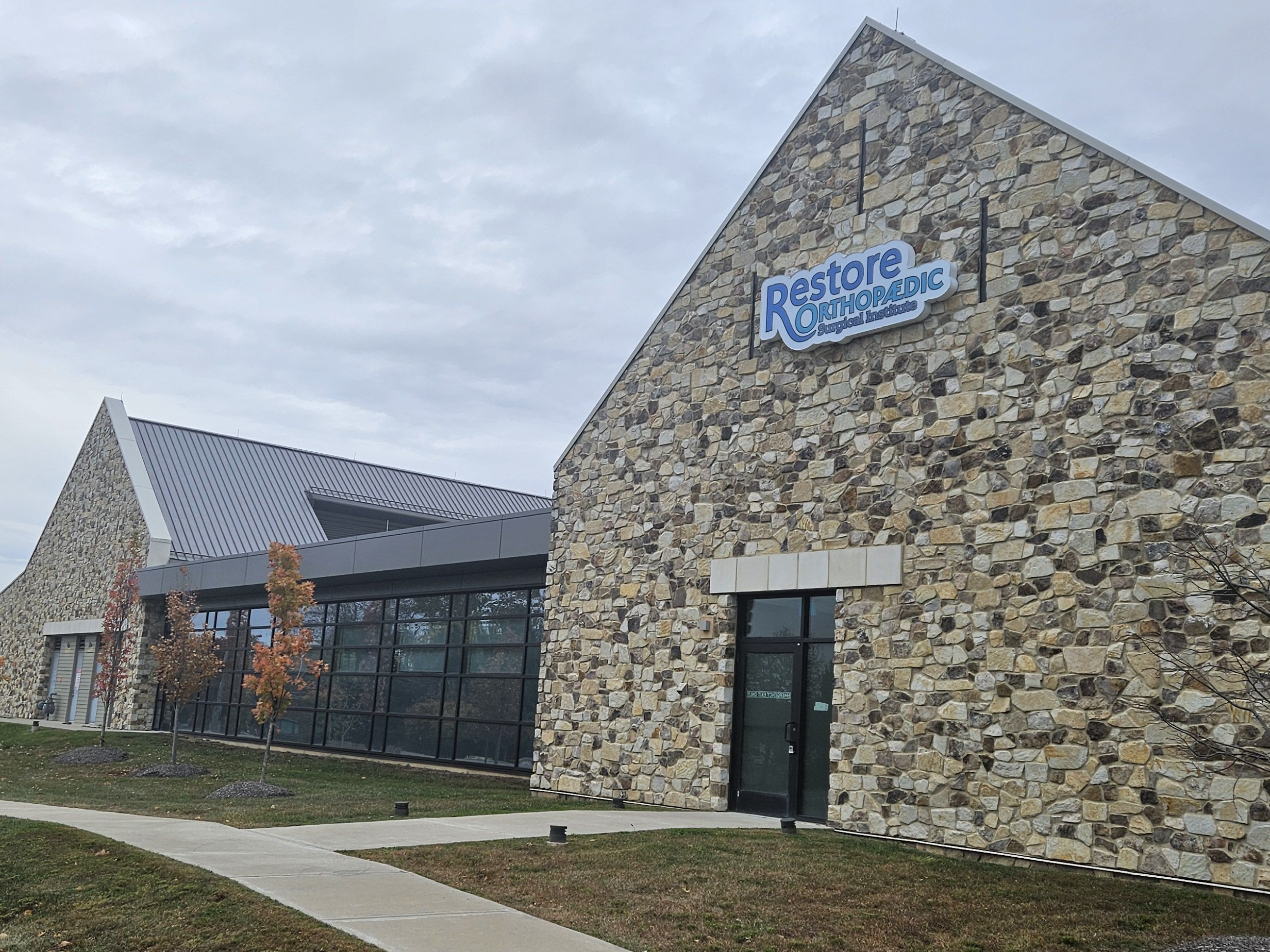
    Restore Orthopaedic Surgical Institute in Chadds Ford has grown quickly to become one of the top joint replacement destinations in Southeastern Pennsylvania after opening in March 2023. The center is positioned to take advantage of an effort by Highmark and IBX to move outpatient procedures from high-cost hospitals to lower-cost surgery centers.Restore Orthopaedic Surgical Institute

    Potential consumer impact

    Several major health systems said the new site-of-care review policies raise questions about the potential impact on patients, without commenting on the implications for their finances.

    Because Temple University Health System does not have any ambulatory surgery centers, “the policy will require certain studies and procedures to be referred outside the health system. This could create additional coordination requirements and may contribute to delays in testing, crucial diagnosis, and/or treatment,” Temple said in an email.

    Main Line Health also said it anticipates the policy “could disrupt established care pathways, including in circumstances where surgeons lack privileges at available free-standing surgery centers,” the nonprofit said in a statement. Main Line has ownership interest in three surgery centers in Philadelphia’s western suburbs.

    The University of Pennsylvania Health System said it will “advocate for our patients’ best interest and appeal any service denials based on the clinical and nonclinical exceptions outlined in the policy.”

    Additional concerns for consumers include complexity, confusion, and possibly more risk of having care denied to what can already be a burdensome prior authorization process, said Christine Monahan, assistant research professor at Georgetown University’s Center on Health Insurance Reforms.

    Monahan said she understands insurers’ impulse to steer people to lower-cost settings, but called policies like IBX’s “maybe not the most efficient way to handle the inefficient pricing in the system.”

    The economic and political backdrop

    The biggest increases in healthcare costs in 15 years are hitting employers this year, according to Mercer’s National Survey of Employer-Sponsored Health Plans.

    The average increase was 6.7%, according to the February survey of 161 chief financial officers, who were not identified.

    The increases are substantially higher than broader inflation. “It becomes more of a tax on employers,” Snyder said. “Next to salaries, many will tell you, that’s the biggest line item” in their expenses.

    IBX has taken other steps to reduce healthcare spending, such as in 2015 introducing a benefit design that includes a preventive colonoscopy with no out-of-pocket costs for the patient at what are called Preventive Plus facilities. Elsewhere, they have a $750 co-pay.

    Highmark and IBX have new policies designed to move more outpatient procedures and treatments out of high-cost hospitals and into lower-cost surgery centers.Pablo Martinez Monsivais

    Medicare has pushed for the last decade to pay the same for services in hospital outpatient departments as in doctors’ offices and surgery centers.

    Medicare prohibited most new off-campus hospital clinics from billing at hospital rates in 2017. So-called site-neutral payments expanded in 2019 to include clinic visits. This year, the government applied the standard to payments for drug administration, such as chemotherapy.

    Highmark Health Plans’ approach

    In the first five months of under new policy, Highmark Health Plans has found some health systems are willing to accept lower surgery center rates for procedures performed within hospitals.

    “What we’ve found is that a number have been willing to do that,” said Kate Musler, chief financial officer for Highmark’s insurance arm. “It may be advantageous for them to have that volume flow through the hospital and keep some volume there, it’s just not necessary in terms of the expense level.”

    Musler cited bariatric surgery as an example of how technology and surgical practices have advanced to the point where a hospital is no longer needed.

    It’s too early to say how much savings the new policy has generated, including in Southeastern Pennsylvania, Musler said. Highmark has seen its policy accepted at different levels across the five states where it took effect.

    Some hospital systems are proactively shifting care to surgery centers to reduce costs, said Musler, who oversees Highmark underwriters helping employers understand their health expenses.

    “We hear directly from employers who are making very difficult decisions,” she said. “It is now more than ever a question of whether they can afford employee health.”

  • Controversial spelling therapy gets a new read from RFK Jr.’s team

    Controversial spelling therapy gets a new read from RFK Jr.’s team

    Elizabeth Bonker is a silent woman with a loud mission. She wants government agencies to cover the costs of training people with autism in a form of communication called assisted spelling. One problem: Leading professional organizations don’t believe it works.

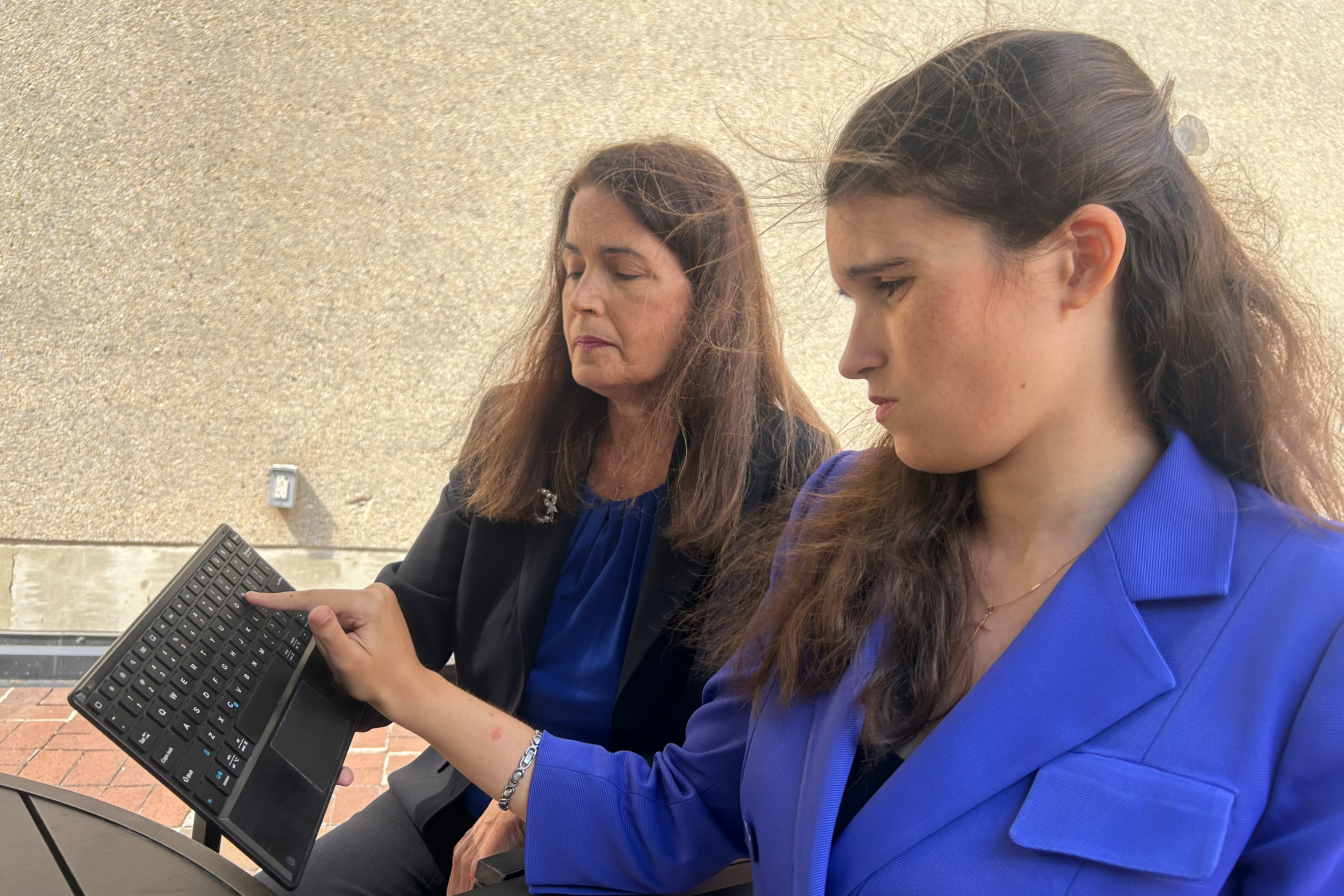
    “All nonspeakers above the age of 5 should be given the opportunity,” typed Bonker, who is 28 and cannot talk. Her mother, Virginia Breen, held a wireless keyboard for her. They sat on a hotel patio before an April 27 meeting with a senior aide to Health and Human Services Secretary Robert F. Kennedy Jr.

    “We are misunderstood and underestimated,” Bonker typed, occasionally humming or lightly groaning as she considered where to place a slender forefinger on the keyboard.

    Assisted spelling is used to help nonverbal people communicate by pointing to letters on boards or using keyboards with physical help from another person.

    Supporters say assisted spelling has improved the lives of thousands of people with autism, such as Bonker, and they have powerful allies. Kennedy appointed Bonker and another autistic “speller,” as they call themselves, to a 20-member autism panel made up largely of parents with children whose autism they attribute to vaccinations.

    At the reconfigured panel’s first public session on April 28, three other members said their nonspeaking adult children were learning to communicate through spelling. The panel issued a resolution with language from Bonker stating that “robust” communications programs are essential for autistic people. Bonker has urged the Department of Health and Human Services to support training in assisted spelling for those who want it.

    But leading professional groups for autism science, as well as those representing psychologists and speech pathologists, point to research showing that these methods — premised on the idea that people with autism have the normal range of cognitive powers but are imprisoned in malfunctioning bodies — are flawed or fraudulent.

    Other, validated methods enable nonspeakers to communicate through digital and analog pictures and letter boards. But assisted spelling isn’t autonomous communication, critics say: Consciously or not, the board holder may be influencing or responsible for the typed or pointed-at words — as with a Ouija board.

    For many parents in Kennedy’s Make America Healthy Again community, the spelling controversy is angrily ringing the same bells as the notion that vaccines cause autism — which they refuse to consider debunked. As some people see it: Established medicine damaged them with vaccines and now refuses to accept a helpful treatment.

    People with autism are “trapped in bodies that have betrayed them because the medical establishment has betrayed them,” said Louis Conte, who has a child with autism, in a September edition of a Kennedy-allied MAHA publication.

    By limiting access to spelling, “you are not just limiting expression, you are erasing identity,” said Katie Sweeney, the mother of an autistic adult who is affiliated with an anti-vaccine medical group, at the autism panel meeting.

    Mainstream autism experts and advocates in March convened the Independent Autism Coordinating Committee as a counter to Kennedy’s panel. At the new group’s meeting, one member spoke out against the spelling methods.

    “In this underfunded disability environment, I don’t want a single penny diverted to debunked interventions like spelling,” said Amy Lutz, a senior lecturer in history at the University of Pennsylvania and an autism support advocate who described her 27-year-old son as “profoundly autistic.”

    It’s not only a waste of time, she said later in an interview, but “people subjected to spelling are not given access to evidence-based education. Every interaction turns someone like my son into a puppet, and I find that very objectionable.”

    A patchwork of perspectives

    The universe of autistic people, their parents, researchers, advocates, and service providers is a broad, acrimonious spectrum. Some say that vaccines or chemical exposures caused a massive increase in autism, others that diagnostic changes account for most of the increase. Some seek mainstream or alternative treatments, some demand classroom inclusion, and others want residential treatment. Some people with autism say it’s a difference, not a disability.

    “When I tell the parents of a young child they have autism, it’s a tragedy,” said Audrey Brumback, a child neurologist at Dell Medical School at the University of Texas-Austin. “When I give the same diagnosis to a teenager, it’s good news. It means, ‘There’s nothing wrong with you; you’re just autistic.’”

    Scientific medicine has failed to deliver good treatments for autism. After four decades of concerted research, “the results have for the most part been very disappointing,” said David Mandell, a professor of psychiatry and pediatrics at the University of Pennsylvania.

    Noah Simmons has spent two years learning to spell and type. At a climbing center in Gaithersburg, Md., he communicated with the aid of his mother, Tracy Simmons, who is holding a laminated sheet with the alphabet. (Arthur Allen/KFF Health News)(Arthur Allen/KFF Health News)

    Severely autistic children — those requiring round-the-clock care with ailments like epilepsy and generally lacking in verbal language — account for about a quarter of all U.S. autism diagnoses. Caring for them may mean dropping careers and spending vast sums on therapy. “They ought to spell special education with a dollar sign,” said Tracy Simmons, whose 17-year-old son, Noah, has autism.

    Many parents of autistic children have tried vitamins and diets that exclude wheat, soy, or dairy. Some have turned to hyperbaric oxygen chambers, others to pig hormones to repair damage spuriously attributed to measles-mumps-rubella vaccines, and infusions of metal-leaching chemicals to remove traces of heavy metals in childhood shots. Recent regimens include camel milk, broccoli extract, and stem cell injections obtained at great expense in Panama and India.

    In September, the White House touted leucovorin, used in some cancer care and for an ultrarare genetic condition. Marty Makary, then-commissioner of the FDA, said the drug could help 50% to 60% of kids with autism.

    There’s little evidence behind any of these treatments, Brumback said. Many parents try multiple remedies at once; if a child’s condition improves, it’s hard to tell what worked — or whether the child simply grew out of a problem.

    Noah the speller

    During a Zoom session in which he typed on a keyboard held by his mother, Noah Simmons wrote glowingly about the world opened to him by two years of learning to spell and type.

    “Im a new person. I have friends, I write, climbing,” he typed. “Conversation. I can have one. I have a say. Im human now.”

    Later, at an indoor climbing center in Gaithersburg, Md., Noah scrambled nearly to the top of the wall before he slipped. He glided down the rope and slapped a high five with his climbing instructor as his mother approached. She carried a laminated sheet with the alphabet on it.

    Tracy Simmons held the paper while Noah stabbed at the letters one by one, ending with a flourishing swipe at the exclamation mark: “Im going to crush it again!”

    There, and at a later keyboard session at home, Noah seemed in control. But when Tracy stopped offering verbal prompts and encouragement, or stopped holding the board, Noah often got lost and signaled a need for help.

    Tracy Simmons acknowledges that whoever holds the board could be steering a speller’s words. Despite his climbing prowess, Noah lacks fine motor skills, is anxious, and has trouble controlling his body, she said.

    “He’s working on becoming an independent typer. He can do it short amounts of time,” she said. “But at times he gets overwhelmed.”

    The method used by Noah and his mother came into use in the United States in the early 1990s. At first, trainers guided the arms or hands of the spellers as they pointed to a letter board. The idea was that the intelligence or literacy of severely autistic people was trapped in bodies they couldn’t control. They needed help physically learning to spell, first with a pencil or finger pointing at stenciled or printed letters, and eventually by typing on a keyboard.

    Within a few years, however, dozens of experiments had shown that the facilitators, not the autistic people, were doing the spelling. A review published in 2018 found no evidence that the spellers could identify words or objects without their facilitators.

    In addition, the technique has resulted in numerous false sexual abuse charges — sometimes targeting fathers or other people in the autistic person’s life skeptical of the spelling process.

    Next came the Rapid Prompting Method, devised by Soma Mukhopadhyay, an Indian mother of a boy with profound autism, who brought her system to the United States in 2001. Elizabeth Vosseller, a speech pathologist in Herndon, Va., launched a nearly identical method, Spelling to Communicate. In both, the facilitator, not the speller, holds the letter board. But each method relies on prompts.

    Mukhopadhyay and Vosseller, who did not respond to requests for comment, have each declined to submit their systems to the kind of testing that disproved facilitated communication. Bonker said calls for such tests show a lack of respect for the disabled.

    Asked why, after 23 years as a speller, she couldn’t communicate alone or without her mother holding the board, Bonker typed, “I can do it in certain environments that don’t include interviews with strangers.” Severely autistic people need coaches to help control their anxiety, Breen said.

    Another star of the speller world, Woody Brown, spoke through his mother with Jenna Bush Hager on the Today show on April 1. The Browns were promoting his novel, Upward Bound, which became an immediate New York Times bestseller after its March release. During the segment, Mary Brown spoke in complete sentences that she said came from Woody, but the letters he typed, as far as the program’s viewers could see, did not correspond to her words and often looked like gibberish.

    This raised questions about how Woody Brown could be the author of what critics described as a brilliant, sensitive novel. They pointed out that Mary Brown has worked as a Hollywood script analyst. The Browns did not respond to efforts to reach them for comment.

    “Spellers” are best known to the public through the success of The Telepathy Tapes, which briefly unseated The Joe Rogan Experience as the country’s most popular podcast early last year. In The Telepathy Tapes’ first season, people with profound autism were allegedly revealed as clairvoyant superhumans.

    The evidence for their telepathic abilities was produced through spelling. The host showed spellers and facilitators two things, and the speller, with the facilitator present, typed out what the facilitator saw. Viewers had to wonder whether this was evidence of telepathy or confirmation of what critics have said all along: that the facilitator is the one controlling the words, often by feeding the speller subtle cues.

    Bonker said she appreciated the Telepathy Tapes’ host for including her nonprofit group’s information on its website. As for telepathic skills, “I believe nonspeakers have many gifts,” she said. “And I believe what they say.”

    The debate over spelling is playing out in boards of education and courtrooms, where parents of autistic children seek aid for their children’s spelling lessons.

    In New York state in March, anti-vaccine advocates for spellers showered scorn on state Sen. Patricia Fahy, the Democratic chair of the disabilities committee, after she inserted language into a disability rights bill requiring that payments go to “verified” communication methods that assured patient autonomy.

    Vikram Jaswal, a University of Virginia psychologist who works with spellers, said he’s seen people with severe autism who can type independently, though only a handful have that ability out of the couple of hundred spellers he’s met. More research is needed to figure out who can best benefit from the technique, he said.

    Tracy Simmons believes in the method, and so does her son — assuming he’s in control of what he types.

    On a recent morning, Tracy read aloud a beautiful escape-from-Alcatraz story she said Noah had written with her help and that of his spelling trainer. “He writes all the time in his head,” she said, but it could take years for her son to consistently type independently.

    KFF Health News is a national newsroom that produces in-depth journalism about health issues and is one of the core operating programs at KFF — the independent source for health policy research, polling, and journalism.

  • In Lancaster, measles cases are rising as providers try to combat low vaccination rates

    In Lancaster, measles cases are rising as providers try to combat low vaccination rates

    In late April, Joshua Good got a call from a parent at Ephrata Mennonite School: Two of their children had been diagnosed with measles.

    Good, who heads the private religious school in Lancaster County, knew he had to act quickly to prevent further spread of the highly contagious disease. But he was not particularly surprised that measles had turned up at his school.

    Ephrata Mennonite, a K-12 school with 375 students, is among the most under-vaccinated schools in the state. Less than half its 27 kindergarten students last school year were immune to measles, which can infect nine in 10 unvaccinated people.

    Good, who vaccinated his own children, had watched over the last 10 years as more and more parents in his school and church communities had opted out. He knew firsthand how difficult it had become to change minds.

    He contacted a local school district nurse who works closely with Ephrata Mennonite, and then got “right away on a conference call with the state Department of Health.”

    In neighboring Lebanon County, three people had arrived at a hospital days earlier with the highly contagious disease. State contact tracers quickly found eight more cases in the county.

    Now the outbreak had come to Lancaster.

    By this Friday, 53 measles cases had been detected in four counties in Southeastern and Central Pennsylvania, the state’s biggest outbreak in more than 30 years.

    The outbreak remains unpredictable as it unfolds in rural counties just west of the Philadelphia metro area, where a recent Inquirer analysis found under-vaccinated pockets pose a rising risk to a region with higher overall vaccination rates.

    Lancaster, which has some of the lowest kindergarten vaccination rates in the state, has been a hot spot all year, with 39 of the 65 total measles cases reported in the state.

    And healthcare providers there now worry that measles is circulating far more widely than anyone realizes in a county that, like most in the state, lacks a public health department, and where anti-vaccination sentiment runs high.

    Good provided information to help state heath officials trace classmates exposed to the infected students in an effort to contain the spread.

    The two students at Ephrata Mennonite have recovered, Good said, and there were no more cases at the school. He feels lucky: One of the infected students had never been at the school while contagious, and the school’s classes end around Memorial Day, so the virus no longer has a chance to spread there.

    He welcomed a pop-up vaccination clinic on campus, but even measles cases so close to home were not enough to convince many parents who had not previously accepted shots to immunize their children.

    “The measles continues to go around here in the Lancaster-Lebanon area,” he said. “Will that move things at all? I’m not sure.”

    Vaccination attitudes in Lancaster

    Pennsylvania’s first measles scare this year came in February, when eight people contracted measles in Lancaster County in an outbreak that expanded to neighboring Chester and Montgomery Counties, suburbs of Philadelphia. Twelve cases were ultimately reported, the bulk in Lancaster.

    Yet few people were aware of the threat at Lancaster’s bustling flea markets and “mud sales” in late February. While area libraries posted signs warning of a measles outbreak, some parents said they believed the risks of vaccination are worse than the prospect of catching measles.

    The Green Dragon Market in Ephrata bustles with activity in early spring. The area, in the north of Lancaster County, has seen several measles cases this year.Bob Williams / For The Inquirer

    One Amish father, who had never been vaccinated himself, said his 23-year-old son got immunized only because he was born prematurely.

    “God will send you what you want anyway,” said the man, who declined to share his name because he was speaking about private medical details.

    Only 88.5% of the county’s kindergartners were immune to measles in 2024, the last year for which data are available — well below the 95% threshold scientists consider necessary to protect a community.

    Several Lancaster parents said they’d vaccinated their older children and then had opted against immunizations for their younger children. Others said they’d always considered vaccination the best way to protect their children.

    Lancaster’s Amish communities have presented a unique concern for health providers, who have long sought to increase their access to vaccination.

    In 1991, these communities were at the center of an outbreak of rubella — a virus sometimes called “German measles” that produces a similar rash and fever to measles, and can cause severe birth defects in pregnant women. Today’s measles vaccines provide protection against rubella, too.

    Lancaster General Hospital physicians vaccinated hundreds to stop the outbreak, launching the Child Protect Clinic, which provides free vaccines to uninsured children and builds trust in communities that have difficulty accessing medical care.

    These days, about 70% of patients at the Child Protect Clinic are from Plain communities, Christian groups like the Amish and some Mennonite sects that adhere to modest dress codes and in some cases avoid modern conveniences.

    Some members of Plain communities oppose vaccination, but opinions can vary widely, and the current outbreak is not centered in Amish households, said Pia Fenimore, Lancaster General Hospital’s vice chair of pediatrics.

    Anti-vaccination sentiment has spread broadly across Lancaster — and is not confined to Plain communities — in recent years.

    At Ephrata Mennonite, Good said, opposition to vaccination has become entrenched in a “significant portion of parents,” with concerns ranging from how vaccines are developed to their safety to resentment over the handling of the immunizations and public restrictions during the COVID-19 pandemic.

    “And then you throw in messaging from key health people like RFK Jr.,” he said, referring to Robert F. Kennedy, Jr., the anti-vaccine activist at the head of the country’s public health apparatus.

    Higher vaccination rates at Ephrata Mennonite among seventh and 12th graders speak to how “there’s been a big shift in the last 10 years,” Good said.

    Good believes that vaccination is a parent’s choice, and supports Pennsylvania’s relatively lax vaccination exemption rules. Parents here can opt out of vaccinating children for religious, personal, or medical reasons.

    He vaccinated his own children and recalls how when they were young, he would often try to convince others in his community to do the same.

    “I would get into protracted conversations, trying to persuade people. But the amount of success that I’ve had in that has been pretty low,” Good said.

    “When someone asks me for my opinion, I’ll provide it to them.”

    Tracking cases

    As Pennsylvania’s worst measles outbreak in three decades spreads in Lancaster County, Alice Yoder said she remains unable to convince her fellow county commissioners to post details on the county’s website informing residents of the spiraling case counts and urging vaccination.

    The only Democratic county commissioner in Lancaster and a former nurse and executive at Lancaster General, she feels certain the county needs to do more to address the outbreak.

    The county’s health advisory website is so outdated that it advertises an April 2025 meeting, ironically on measles preparedness, beside a fact sheet that merely mentions vaccination as a “highly effective” prevention measure instead of the best defense against the disease.

    “If it wasn’t for our local newspaper, I don’t know how many people would be aware,” Yoder said.

    So far, Lancaster has reported 31 cases in the current outbreak.

    Twice in the last month, potential exposures in public places prompted state health officials to issue news releases. At a Kohl’s in Lancaster in late May, shoppers were potentially exposed to measles, which can linger in the air for up to two hours, over four days after an employee tested positive.

    And on June 3, a person with measles visiting the Lancaster County courthouse’s marriage license office may have exposed others to the virus between 10 a.m. and 4:30 p.m. The person is now isolating at home, officials said Friday.

    Neighboring Lebanon County, where vaccination rates for kindergartners are around 93%, has seen 19 cases. Berks and Dauphin Counties have reported three cases between them.

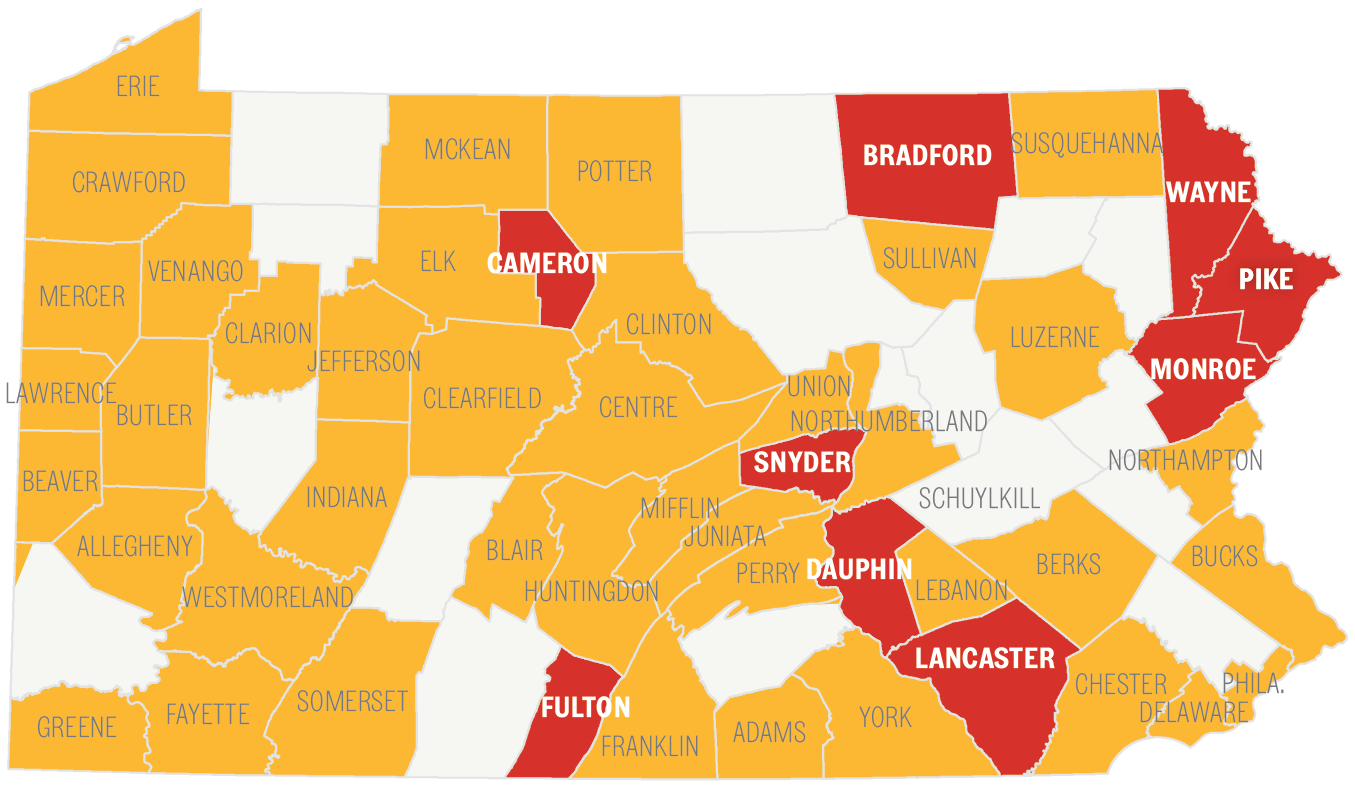
    A map showing vaccination rates in kindergarteners for the 2024-2025 school year. Counties in yellow have vaccination rates between 95% and 90%. Counties in red have vaccination rates below 90%. To halt the spread of measles, at least 95% of a given community must be vaccinated against the disease.John Duchneskie

    Last week, state health officials reported that they’d confirmed 20 cases. That alone surpassed the total of 16 cases statewide from all of last year.

    The rapid case jump, coupled with Lancaster’s low vaccination rates, concerns Remy Pasco, a research associate at the University of Colorado who helped develop a measles outbreak simulator based on school vaccination rates.

    Without more information on when and where patients developed symptoms, he said gauging future case patterns is difficult. Only three patients were still contagious as of Wednesday, according to the state.

    Measles can incubate in patients for up to 21 days; more active infections means more residents of the county are currently at risk.

    Local physicians fear cases are going unreported, and say communication remains a challenge as the outbreak spreads in a county without a local health agency to lead the response.

    “There may be many more cases in the community that don’t come to light because people aren’t getting tested,” said Jeff Martin, a physician who heads the family medicine department at Lancaster General.

    In some cases, patients may not appreciate why it’s important for health officials to track the spread of the disease, which typically presents with a fever and a rash but can cause brain inflammation and pneumonia in serious cases.

    Others may be afraid that if they report a measles case, “there will be some kind of repercussion,” said Fenimore, a hospital pediatrician.

    Could a local health department help?

    Yoder has spent years calling for a local health department that could update county residents regularly on health threats and educate about the importance of vaccination and other public health measures. But there is little political will to do so, she said.

    Lancaster, like 60 of Pennsylvania’s 67 counties, has no local health department, which makes it difficult for Martin and Fenimore to get the full picture of what’s happening.

    State officials, who are largely handling the response, say they’re working diligently to contain the outbreak, by conducting contact tracing and hosting vaccine clinics in hot spots that have drawn residents by the dozens.

    Martin tracks cases that come through Lancaster General Hospital and its affiliated provider offices. Despite serving on the county health advisory council, Martin learns of cases elsewhere in the county “through the newspaper just like anyone else.”

    Martin said that the health department should give physicians details on cases near them regardless of the health system they are detected in.

    And, he said, while state health officials are responsive to local physicians and “doing a very good job” at conducting contact tracing, sometimes residents are more receptive to information that comes from their local physician, instead of a state official.

    “From a state level, trying to do this in a local community is a little more difficult. We know the providers really well and the unique cultural variations within the community,” he said.

    Department of Health press secretary Neil Ruhland said the state is in regular communication with local health systems, working directly with providers to provide “resources and guidance” when cases are detected in an area. The state operates its own health centers in Lancaster and Lebanon Counties, which have “strong ties to the communities they work in.”

    State officials have hosted 12 vaccination clinics across the region as the outbreak has unfolded, and local providers routinely offer immunizations at doctor’s offices, fire departments, and state-run health clinics.

    Yet no details about the circulating measles threat have reached State Rep. Russ Diamond, a Republican who represents Lebanon County, even as cases in the community where the outbreak began have risen to 19.

    “If folks are worried about it,” he said, “then get your kid vaccinated. That’s your right.”

    “I don’t know how the state should respond.”

    Encouraging vaccination

    Parents who have opted against vaccinating their children because of misinformation about vaccine safety have become a focus for local pediatricians trying to halt the outbreak.

    The parents coming to Lancaster General often ask about the long-debunked theory that vaccinations cause autism, or ask whether measles is truly dangerous.

    In March, two members of Lancaster County’s health advisory board — a nonbinding group that meets every other month — falsely suggested measles vaccines can be deadly and raised long-debunked concerns about measles and autism, according to local news reports.

    Neither of Yoder’s two colleagues on the board of commissioners returned calls for comment on the county’s approach to the outbreak.

    As physicians race to increase vaccination rates among children whose parents have avoided immunization, they’re also trying to reassure parents in Lancaster whose children are too young to be vaccinated and concerned about the growing risks from measles.

    Typically, children receive two vaccines for measles, mumps, and rubella at 1 and 5 years old, but Fenimore increasingly recommends that young children receive an extra early dose at six months, especially if they’re going to spend time around unvaccinated people.

    The state is also considering whether to recommend that physicians deliver this “zero dose” to babies as young as six months old in affected counties, said Ruhland, the health department spokesman.

    Physicians in Lancaster say it’s key to take time to listen to parents, hear their concerns, and provide accurate information about vaccine safety. These efforts can take several visits.

    “We know scare tactics don’t work. What does work is developing a rapport,” Fenimore said. “The fact that we have a current measles outbreak makes this more imperative.”

    Inquirer staff writer Gillian McGoldrick contributed to this article.

  • How Philadelphia is preparing for measles and other disease outbreaks during FIFA World Cup events

    How Philadelphia is preparing for measles and other disease outbreaks during FIFA World Cup events

    On a muggy Friday days before the World Cup began, a small team of medical emergency planners inspected the cavernous, air-conditioned tent erected for patients at Lemon Hill in Fairmount Park, not far from the enormous screen where thousands can watch matches through July 19.

    Near a FIFA tent already full of merchandise, and branded “fan pavilions” in various stages of construction, Philadelphia’s host city medical lead, Patrick J. Brennan, paced what is now the medical home base for dozens of doctors, nurses, and EMTs over the next several weeks.

    Brennan, who is also the chief medical officer of University of Pennsylvania Health System, pointed out where the dunk tanks for heatstroke victims would go. He walked through tents with massive fans and misters and visited a smaller first-aid tent for minor medical issues.

    Philadelphia is no stranger to large events, from a papal visit to the NFL Draft to the annual Roots Picnic. But the World Cup fan festival at Lemon Hill will be open for more than a month — and is taking place in a summer of high-profile events expected to bring more than 1.5 million visitors to the city.

    Just as the international soccer clubs are packing up, visitors will arrive to mark the country’s 250th anniversary, followed closely by Major League Baseball’s All-Star Game and Home Run Derby in mid-July.

    “That’s the difference — the duration of the event,” Brennan said.

    Preparing for the full range of medical emergencies got underway nearly two years ago for Philadelphia’s public health leaders and largest health systems. They have prepared for heat-related illnesses, injuries, mass casualties, and terrorism.

    Infectious disease is a leading public health concern among host cities and national health agencies.

    Measles, a disease once considered eradicated through widespread vaccination and now on the rise across the country, is at the top of their list. An Inquirer analysis found that the Philadelphia region is pockmarked with vulnerable communities, where vaccination rates have fallen below the rate scientists say is necessary to prevent widespread illness.

    Not far from the World Cup action, an outbreak in Lancaster, Berks, Dauphin, and Lebanon Counties has sickened 52, as public health officials struggle to contain its spread.

    Now thousands of people from all over the world will turn Philadelphia into a petri dish prime for the spread of infectious diseases. Yet another concern is an Ebola outbreak in parts of Africa, including the Democratic Republic of Congo, which has a team participating in the World Cup games in Houston.

    Public health leaders say their best strategy for preventing widespread illness, especially should a case of highly infectious measles arise, is to respond as quickly and efficiently as possible.

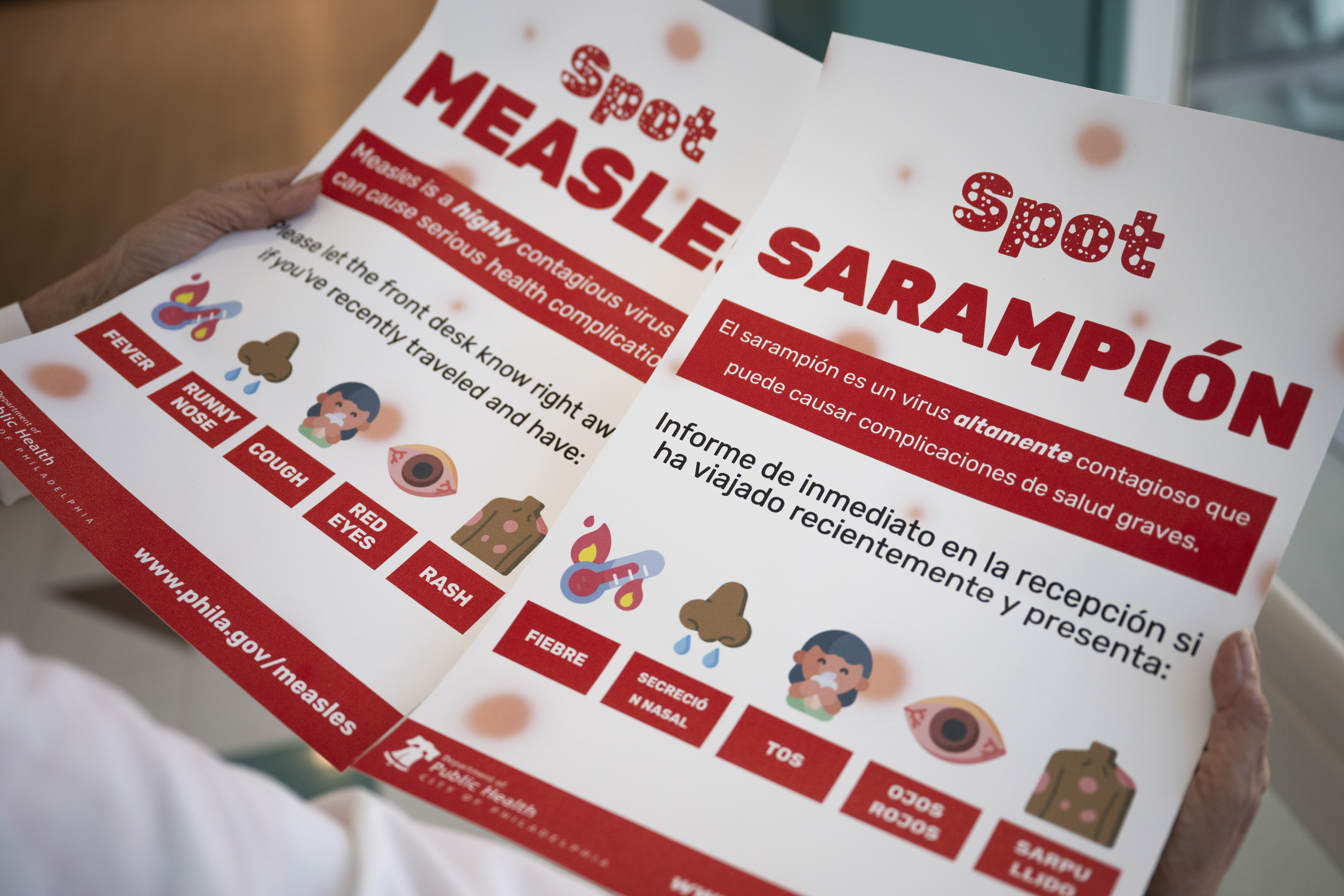
    Hospitals have added questions about measles vaccination to their routine emergency department screening, with weekend and evening contacts on call at the city lab that would test potential measles samples. Newly posted flyers in local medical buildings explain how to recognize the early signs of measles — which many doctors have never encountered.

    “My main concern with measles are the pockets where people are under-vaccinated, too few people are vaccinated to really stymie an outbreak,” Brennan said. “It’s going to be hard to prevent it from coming into the country.”

    Preparing for public health risks

    Public health preparations for the World Cup began almost two years ago with meetings to identify health risks and develop a plan for protecting against them.

    The city’s health department, public safety units, and leaders from top health systems, including Temple Health, Penn Medicine, and Jefferson Health, all had seats at the table.

    They hashed out responses for potential public health emergencies ranging from bioterrorism, a mass casualty, and violence to routine heat-related health issues. Experts anticipate that the ongoing heat wave, paired with high levels of alcohol consumption, will lead many to experience heat exhaustion, dehydration, and potentially heatstroke.

    The prep work built on efforts for past major events, such as Pope Francis’ visit in 2015 or the 2016 Democratic National Convention. New this time around, Philadelphia and World Cup host cities across the country are paying much more attention to infectious-disease concerns.

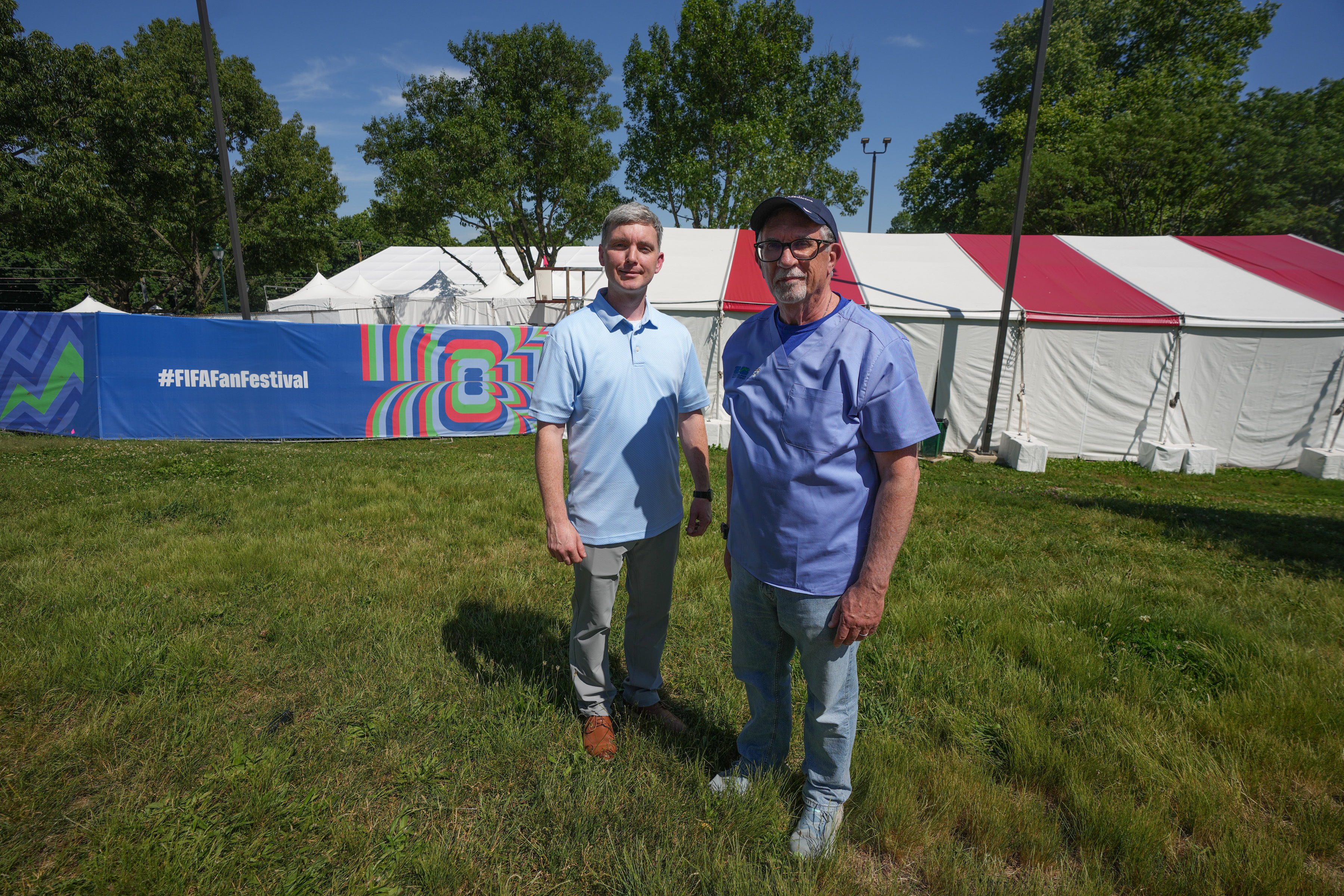
    P.J. Brennan (right), Penn Medicine’s chief medical officer and the medical team lead for FIFA’s Philadelphia events, stands with Jack Welsh, an emergency preparedness specialist and clinical nurse at Penn Medicine, outside the main medical tent at the FIFA Fan Fest in Lemon Hill Park.Jessica Griffin / Staff Photographer

    Until recent years, measles was not “immediately on the radar” for public health planning, said Jessica Caum, director of disease control for the Philadelphia Department of Public Health.

    “We’re in a different place now with measles,” she said. “More cases, increases in vaccine hesitancy, decreases in vaccination rates — all of these things are important to keep in mind.”

    The planners looked at staffing levels at medical tents and hospitals, including where surge staffing could come from. They developed a plan for where to quarantine a large number of people, in the event of an outbreak of measles or other infectious disease, but declined to provide details.

    “We want to be as prepared as possible,” Caum said.

    Game-day strategy for infectious disease

    All that preparation still may not provide a firewall against weeks of sustained sports chaos.

    The city’s game-day strategy, should a suspected measles case crop up, is to react as quickly as possible.

    Temple trained its emergency department staff to ask new screening questions about measles symptoms and vaccination status in an effort to quickly identify anyone who is at risk, said Daniel Feinberg, chief medical officer for Temple University Hospital Inc.

    Temple has been distributing measles information in Spanish and English to providers at its hospitals. Joe Lamberti / For The Inquirer

    People whose vaccination status is unclear, or who say they are unvaccinated, will immediately be whisked to an isolation room if they show symptoms associated with measles, such as fever, cough, runny nose, and red eyes.

    The telltale blotchy red rash does not typically appear for up to four days, though hospital administrators distributed photos of it to help medical staff recognize it.

    Once isolated, people with suspicious symptoms will be tested, with the sample rushed to a city lab on call for such emergencies.

    Administrators lined up contact information to reach the lab in the evenings or weekends, when it is typically closed, and discussed the fastest way to get a sample to the lab — potentially to have someone with good sneakers run.

    “We don’t want any time wasted,” said Carlene Muto, vice president of infection prevention and occupational health services at Temple Health.

    The MMR vaccine can protect against the virus if given to someone within 72 hours of being exposed. Measles immunoglobulin, which contains concentrated antibodies, can provide temporary protection against the virus if given within a few days of exposure. But it is often reserved for infants and other high-risk patients.

    The faster health providers identify a measles case, the faster they can work to trace who else may have been exposed.

    Medical tents are prepared to handle medical emergencies during the World Cup.Jessica Griffin / Staff Photographer

    The risk of exposure is high when someone with measles attends a busy outdoor event, and the challenge of locating all the people who could have come in contact with the disease is immense.

    Nine out of 10 unvaccinated people who come into contact with measles will get sick, making it among the most highly contagious diseases.

    Anyone who does not get treated in time and has not been vaccinated will need to quarantine for 21 days.

    At Jefferson, health system screening protocols are routinely updated to address the latest health threats, said Eric Sachinwalla, Jefferson’s medical director of infection prevention. Its hospitals recently added Ebola screening questions for patients who are being admitted and have traveled to at-risk countries.

    Jefferson and other health systems are more likely to see “low-impact” but predictable threats: COVID-19 and other respiratory illnesses, sexually transmitted infections, and gastrointestinal diseases. These illnesses “can spread between people pretty quickly,” he said, but health systems are generally equipped to handle them.

    A case of Ebola or measles, however, requires significant resources devoted to treatment and preventing further cases — so hospitals also have to carefully prepare for that possibility, he said.

    “It’s balancing those two things. We plan for the high-occurrence things but also [diseases with] high potential impact,” Sachinwalla said.

  • Trump bought tobacco stocks and raked in industry donations as FDA eased standards

    Trump bought tobacco stocks and raked in industry donations as FDA eased standards

    President Donald Trump, who once declared he had “saved” flavored vapes, grew his stock holdings this year to as much as $1.64 million in tobacco giant Philip Morris.

    He also had holdings in Altria and a third leading tobacco company, though an apparent discrepancy in his disclosures clouds the extent of his investments. In 2025, tobacco interests donated $6 million to MAGA Inc., a super PAC that supports the president, and Trump’s inauguration. And, on April 30, a week before FDA guidance that provided a critical boost to the industry, Reynolds American dropped an additional $5 million into the super PAC’s coffers.

    The stock trades and political contributions occurred as the Trump administration pursued a broadly pro-tobacco agenda: Its FDA piloted a fast-track program to approve nicotine pouches. It unveiled a program to allow vapes on the market more rapidly, despite resistance from career civil servants and leadership, culminating this year in guidance waving through flavored electronic cigarettes. It cut public health employees focusing on anti-tobacco policy. And it broadened enforcement against illicit e-cigarettes, competitors to the big industry players with a financial relationship to Trump.

    It amounts to the most pro-tobacco, pro-nicotine presidency in some time — a remarkable policy given the tens of millions of deaths cigarettes caused during the 20th century. Even in recent years, antismoking groups say a half-million Americans a year die from cigarettes. Industry advocates say the toll helps justify a shift to e-cigarettes and nicotine pouches, which they say are less harmful. However, public health advocates say these products carry their own risks, such as addiction.

    Lawmakers and public health leaders have criticized the recent FDA guidance and approvals as a “lucrative payday” that ignored scientific evidence to deliver what investment analysts have described as “very positive” steps for influential tobacco companies.

    The scale of the money is “unprecedented and problematic,” said Brian King, who was pushed out of the FDA’s tobacco office last April and now works as an executive at the Campaign for Tobacco-Free Kids. He fears that steering public policy toward tobacco — still addictive and harmful to health — puts Americans at risk.

    “It’s a gift on a platter with a side of public health malpractice,” he said.

    The White House did not comment on the president’s investments or industry donations to MAGA Inc. Spokesperson Kush Desai said, “The only guiding factor behind the Trump administration’s health policymaking is Gold Standard Science. FDA’s regulatory treatment of nicotine pouches and vapes is rooted in recent evidence that has found that these products can help adults quit smoking.”

    Philip Morris disputed any connection. Company representatives “regularly attend events and forums where we share our commitment to improving public health in the United States,” spokesperson Samuel Dashiell said, arguing that the company’s vapes offer a safer alternative to smoking cigarettes. “We do not comment on individual engagements or on the personal financial matters or disclosures of public officials.” Other tobacco companies whose stock Trump has bought and sold during his second term or that donated to groups aligned with Trump — Juul, Reynolds American, and Altria — did not respond to requests for comment.

    The financial stakes are huge. Investment analysts at Goldman Sachs say the newer products, touted as safer, make more money per sale than traditional cigarettes. Philip Morris expects Zyn pouches, for example, to make eight times the gross profits of its cigarettes, Goldman Sachs analysts said in March 2025.

    When he ran for his second term, Trump promoted himself as a pro-tobacco candidate, posting that he had “saved” flavored vaping and that President Joe Biden and Democratic nominee Kamala Harris “want everything banned.”

    Since late 2023, MAGA Inc. has received over $20 million in funding from the industry, federal campaign records show. Trump’s inauguration garnered nearly $4 million more. His ballroom project has disclosed donations of an unknown amount from Altria and Reynolds American.

    Recent Trump administration actions show he’s followed through with his campaign rhetoric. In May, the FDA released consequential guidance that allows manufacturers to market their vapes and nicotine pouches while awaiting agency approval. It also approved several vaping products. The month before, the Vapor Technology Association, which donated $1.25 million to Trump’s inauguration, told its vape-manufacturer members it had met with the White House to discuss its concerns.

    By that point, Trump had gone on a stock-purchasing spree. In March he made eight separate purchases of Philip Morris or Altria stock, worth as much as $275,000, according to a disclosure form that bears Trump’s signature.

    It is difficult to be precise about Trump’s tobacco investments, because the financial disclosures show only ranges of investment amounts. They also have an apparent discrepancy. In January, the president sold $500,000 to $1 million in Altria stock. But that’s confusing because previous disclosures didn’t show Trump held that much equity in Altria. The White House declined to comment on the matter.

    The FDA’s May guidance and approvals drew condemnation from public health leaders, who worry that the agency is allowing products with flavors especially appealing to young people. “After years of recognizing the dangers flavored e-cigarettes pose to youth, it is deeply troubling to see FDA ignore the scientific evidence and reverse course,” American Lung Association CEO Harold Wimmer said in a published statement.

    “I think it’s blatantly illegal, both on its merits and also procedurally, because it was issued as a final guidance without even giving the public an opportunity to comment on it,” said Mitch Zeller, a former head of the FDA’s tobacco center.

    A group of Democratic senators called the decision a “a free pass to addictive and harmful vapes” in letters to Reynolds American and Altria. It would lead to “a lucrative payday after years of unsuccessful legislative and regulatory efforts to weaken federal tobacco oversight,” they concluded.

    Members of Congress are barred from insider trading, and many legislators would like to see trading of individual company stocks banned for all members. In the wake of Trump’s most recent financial disclosures, with revelations that he often traded in companies manufacturing GLP-1 drugs before his administration steered policy in a favorable direction, some members are calling for the president, too, to be barred from stock trading.

    Trump’s tobacco policies have garnered favorable grades from investors. At Goldman Sachs, bankers described the May FDA guidance as “very positive” for Philip Morris and “a significant step in the FDA’s positioning toward enforcement and acceptance of nic pouch (as well as e-vapor) innovation generally.”

    And Barclays analysts said the FDA’s guidance was good news for Juul, a leading vape producer. (In November, the company contributed $1 million to MAGA Inc.)

    FDA resistance to speeding up approvals for these products reportedly contributed to the ouster of agency commissioner Marty Makary, who did not respond to requests for comment. According to The New York Times and The Wall Street Journal, the White House repeatedly intervened in the approval process.

    “I served during the entire first Trump administration as center director, and there was never any pressure from any political appointee at FDA, at HHS, or the White House when it came to application review,” Zeller said.

    But recent changes in FDA policy can be traced to the access tobacco firms have had to the White House, he said.

    By and large, the Trump administration has delivered on industry priorities. Soon after the inauguration — which tobacco companies had donated heavily to — the administration withdrew a Biden-era proposal to ban menthol cigarettes. The administration has eased the path for nicotine pouches such as Zyn. Investment analysts viewed government crackdowns on illicit e-cigarettes positively: Barclays wrote in January that “company commentary on enforcement has also been upbeat, suggesting that the tide could begin to turn in favor of the legal players in the market.”

    What’s more, the Trump administration’s government layoffs have decimated public health’s tobacco control offices. The work of the Centers for Disease Control and Prevention’s office of smoking has been sharply curtailed; its flagship “Tips From Former Smokers” campaign, which seeks to persuade viewers not to smoke, has been off the air for months, King said.

    “It’s not difficult to see that less dollars invested in prevention and control is going to lead to more tobacco product use and tobacco-related disease,” King said, especially given the government’s decades-long success in reducing cigarette usage.

    The shift is particularly ironic given the administration’s focus — through its Make America Healthy Again slogan — on chronic disease. “Attempting to combat chronic disease without tobacco control is like attempting a triathlon without a bicycle: You are destined for failure before leaving the starting line,” King concluded.

    KFF Health News is a national newsroom that produces in-depth journalism about health issues and is one of the core operating programs at KFF — the independent source for health policy research, polling, and journalism.

  • FDA’s e-cigarette authorization: Fruity vapes not significantly better than tobacco ones

    WASHINGTON — Fruit-flavored e-cigarettes recently authorized by the Food and Drug Administration were not significantly better at helping smokers quit than tobacco-flavored e-cigarettes, according to a new memo that’s likely to stir more questions about the agency’s decision.

    The FDA last month gave its first OK to fruit-flavored vapes — essentially endorsing them as a less-harmful alternative to traditional cigarettes. The decision came despite the agency’s longstanding position that such flavors appeal to children and must show extra health benefits to warrant approval for adults.

    Health groups and Washington lawmakers quickly condemned the decision and have called for an explanation.

    A six-page FDA memo released this week provides more details about the agency’s rationale. In it, FDA regulators appear to sidestep previous statements about the risks of sweet vaping flavors while acknowledging shortcomings in the data submitted by vape manufacturer Glas Inc.

    To meet federal standards, companies must show that their products benefit public health. In practice, that means demonstrating that their vapes help adult smokers switch or quit cigarettes, while not attracting underage use by teens.

    Smokers who tried Glas vapes were much more likely to completely switch from cigarettes over the course of a three-month study, according to the memo.

    But the data did not show “statistically significant differences” between adults using the company’s mango and blueberry flavors and those using a tobacco-flavored e-cigarette.

    That means the new vapes failed to meet the same bar as a handful of other flavored products previously sanctioned by the FDA, including menthol-flavored vapes from Juul and NJOY. Those companies showed that adults who used menthol were significantly more likely to cut down or quit cigarettes compared with those vaping tobacco flavors.

    Elsewhere, FDA regulators explained that the Glas flavored vapes “did not have to demonstrate added adult benefit,” because young people were unlikely to use them. Glas requires users to unlock each e-cigarette with an age-verifying cellphone app.

    The agency’s authorization also runs counter to recent FDA guidelines advising companies that fruit and dessert flavors would have to meet “a high evidentiary burden” for adult use, given their risks to children. Tobacco-flavored products are not popular with teens and generally face lower regulatory hurdles at the FDA.

    The FDA document is also unusual in its brevity.

    Previous FDA memos on new vaping products typically run dozens of pages. For example, last year’s document authorizing Juul’s menthol e-cigarettes was more than 90 pages and included detailed scientific data from research involving 50,000 people.

    The short memo on Glas does not include key details, such as how many smokers the firm studied.

    Previously, the FDA almost always posted such memos immediately after announcing an authorization. The document on Glas appeared on the agency’s website more than a month after regulators OK’d the products.

    The agency has faced questions from members of Congress about the decision. Last month, 10 Democratic senators sent a letter to the agency requesting more information about the authorization, calling it a “shortsighted and reckless decision.”

    The application from Glas, which also included menthol and tobacco-flavored vapes, followed a winding path to authorization. The small, Los Angeles-based company submitted a marketing request to the FDA in 2021.

    In February, FDA scientists authorized several of the flavors. But that decision was blocked by a senior official reporting to then-FDA Commissioner Marty Makary, according to internal memos later released by the agency.

    The mango- and blueberry-flavored products were finally OK’d during Makary’s last full week leading the agency. He resigned the post after months of criticisms from industry stakeholders, including tobacco companies that have lobbied President Donald Trump’s Republican White House for looser regulations on vaping flavors.

    A spokesperson for the company could not immediately provide comment when reached Thursday morning.

  • Oceans are warming, but scientists are concerned about this cold blob

    As the planet warms, it’s becoming increasingly rare to see cooler than average conditions across vast stretches of the ocean, particularly as an expected super El Niño scorches parts of the Pacific.

    But right now, an expansive area of well below-average ocean temperatures exists in the North Atlantic, to the east of Newfoundland. There, unusually cool waters have lingered for the last year.

    This patch of cool water is occurring in one of the few areas where the ocean hasn’t warmed in recent decades — and where scientists are closely monitoring for changes in the Atlantic meridional overturning circulation (AMOC).

    The AMOC, which extends deep into the Atlantic Ocean, is a vital current that carries heat northward from the tropics toward the pole and plays a critical role in the climate around Greenland, Iceland and northern Europe. If the cold blob persists for years, it could eventually cool the climate in these places — and signal this key current is weakening. Should it collapse, a massive cooling could occur in the Northern Hemisphere, while it warms in the south; sea levels could rise in some areas and seasons could flip in others.

    As this conveyer belt of warm, salty water reaches the North Atlantic, it loses heat to the cold air above, becoming denser and sinking into the deep ocean. But as ice in the Arctic melts, introducing more freshwater into the sea, it becomes harder for the water to sink, potentially slowing down the current.

    Scientists have been monitoring the current’s behavior in the Irminger Sea, south of Greenland, where the U.S. National Science Foundation recently announced that it is dismantling its ocean monitoring equipment.

    In Iceland, a collapse of the AMOC is considered a national security risk, since it would send winter temperatures plunging to minus-50 degrees Fahrenheit.

    Recently published research from a team led by Stefan Rahmstorf of the Potsdam Institute concluded that “the strong evidence for a weakening AMOC is a serious concern for society and policy” and that it requires “urgent attention.” However, other research published last year found no evidence of long-term weakening, but that it was still expected to slow some in the future.

    There’s high confidence that the AMOC is weakening according to the U.N. Intergovernmental Panel on Climate Change. The IPCC has indicated, with medium confidence, that it will not abruptly collapse before 2100.

    But what about the recent cold blob? Does it offer a sign of AMOC’s eventual collapse or can it be explained by a combination of forces?

    Over the last week, the current cold blob has trended on social media, raising fresh concerns about the status of AMOC.

    While stormy and windy weather in the North Atlantic have enhanced the cold blob this year, those factors don’t immediately describe why it has remained there for a year straight.

    Other natural climate patterns, such as the Atlantic Multidecadal Oscillation (AMO), have affected the ocean’s conveyer belt. When the AMO is in its positive phase, waters warm in the North Atlantic. The opposite is generally true when it’s in its negative phase.

    From mid-2023 to mid-2025, when the AMO was predominantly in its positive phase, the cold blob disappeared for extended periods. But when it became negative in mid-2026, the cold blob returned.

    Based on this, a mix of climate forces — including human-driven warming as well as natural variability — appear to be contributing to the current conditions. And climate models predict that the cold blob could linger for the rest of the year — and possibly expand and become more frigid.

    What the current cold blob means for the future state of AMOC is uncertain, but models stop short of signaling widespread cooling across western Europe, Iceland or Greenland — the doomsday scenario that has so far been the stuff of movies.

  • Trump sees 22 medical specialists, appearing to set new bar for presidents

    For George H.W. Bush’s first medical checkup as president in 1989, he was seen by five specialists, the White House said at the time. His son George W. Bush was seen by 12 in his first presidential checkup, White House officials said a dozen years later.

    President Donald Trump appears to have set a new bar: 22 medical specialists assessed him as part of his latest checkup, according to a medical report recently released by the White House.

    That figure is nearly double the number of specialists who assessed Trump for his past medical checkups as president, according to a review of publicly available statements by Trump’s doctors.

    The figure also represents the most medical specialists to assess a president for a single visit, based on a review of public statements and records, prompting questions from outside physicians who said they were already skeptical of the White House’s disclosures around the nearly 80-year-old Trump’s health.

    “It is an extraordinary number,” said Jonathan Reiner, a longtime cardiologist for former vice president Dick Cheney. “What specialties do they represent? Why so many?”

    White House officials said that the number was commensurate with the need to perform a “complete and preventive evaluation” of the president. Sean Barbabella, the president’s physician, said the assessment found that Trump was in “excellent health.”

    “The involvement of multiple specialists reflects a comprehensive, multidisciplinary evaluation consistent with best practices for executive-level medical care,” the White House said in a statement.

    A White House official said that physicians affiliated with Harvard University, Duke University and other prominent institutions helped perform the evaluation. The official also said that some generalist physicians were included in the administration’s count of 22 specialists.

    “We have nothing to hide,” the official said.

    The White House has often declined to answer specific questions about Trump’s medical assessments, such as what prompted the president to undergo a second physical exam at Walter Reed National Military Medical Center last year. Presidents usually make one annual trip unless they have an urgent condition. Nearly three months after the visit, and after initially telling reporters that he had undergone an MRI exam, Trump and the White House clarified that the president had received a CT scan as part of his assessment.

    Trump’s medical reports also no longer include a common hair-loss prevention drug that his physicians said he routinely used during his first term in office. White House officials have declined to comment on Trump’s past use of the drug, finasteride, and whether he had stopped taking it.

    The scrutiny of Trump’s health comes amid broader questions about the fitness of the current president and his predecessor, Joe Biden, to serve as commander in chief. Biden, who was 82 when he left office, and Trump, who turns 80 on June 14, are the two oldest men to serve as president.

    Karine Jean-Pierre, who served as Biden’s press secretary, said at a February 2024 press briefing that a team of “20 doctors” participated in Biden’s medical evaluation at Walter Reed that year.

    Past administrations have often elected not to disclose the specific number of specialists who consult on the president’s medical evaluations, which are traditionally performed at Walter Reed.

    Presidents are not required to disclose their health records, although lawmakers in both parties have called for more checks on chief executives, such as creating an independent commission that could assess the president’s health.

    But publicly available records and statements indicate that the number of specialists reviewing presidential health appears to have ballooned.

    The five specialists involved in President George H.W. Bush’s checkup in May 1989 included an ophthalmologist, a urologist, a dermatologist and two allergists — White House officials said at the time. The 65-year-old Bush then saw eight specialists the following year, including a radiologist, cardiologist, and rheumatologist, the White House said.

    His son, President George W. Bush, saw 12 specialists for his 2001 checkup, White House officials said then.

    As questions swirled about Trump’s fitness during his first year in office, Ronny Jackson, who served as Trump’s physician during his first term and is now a Republican member of Congress from Texas, arranged 13 specialists to see the president, he wrote in his memoir.

    “I didn’t do this physical by myself; I was assisted by an entire committee of top-of-the-line specialty doctors at Walter Reed, including ones who specialized in dermatology, orthopedics, gastroenterology, ophthalmology, urology, pulmonary medicine, otolaryngology, and cardiology,” Jackson wrote in his book, Holding the Line.

    “The cardiologist did his heart exam. The pulmonologist did his lung exam and pulmonary function testing, the dermatologist did his skin exam, and so on.”

    Trump saw 11 specialists for his 2019 checkup and 14 specialists for his checkup last year, according to past medical reports released by the White House.

  • Love coffee? Have the last cup at this time for a better night’s sleep. | Expert opinion

    Love coffee? Have the last cup at this time for a better night’s sleep. | Expert opinion

    How long does caffeine stay in my system? If I drink an afternoon cup or two, will it mess with my sleep?

    Java lovers, you may be in for a brewed awakening.

    A 2023 randomized trial published in the New England Journal of Medicine found that people who drank one or more cups of coffee each day lost on average 36 minutes of sleep compared with those who didn’t over a two-week period.

    There’s a catch though: People who were assigned to drinking coffee were also more active, taking an average of 1,000 more steps — the equivalent of walking about half a mile — per day than those randomized to the no-coffee group. The researchers speculated that perhaps the boost in activity is part of why coffee has consistently been shown to have many health benefits, including maybe even for longevity.

    That trade-off between energy and sleep is something many of us coffee drinkers know intimately. Miscalculate, and you can end up “tired and wired”— a miserable state of mind I was in too often during medical training, living cup to cup.

    Here’s the good news: You don’t need to quit. But you may need to move up your last cup to much earlier in the day than you think. Rather than the vague advice we’ve all heard to avoid coffee “close to bedtime,” researchers now have a more specific number. A 2023 meta-analysis of 24 studies on the effect of a standard cup of coffee (about 100 milligrams of caffeine) found that for the best night’s sleep, you need to finish drinking coffee at least nine hours or so before you sleep.

    So if you’re in bed by 10 p.m., your last cup should be by 1 p.m.

    Oof.

    My guess is that’s earlier than a lot of us have been operating. (I’m looking especially at you, my four-cups-and-counting-per-day friends). Otherwise, the study found, coffee could reduce total sleep time by 45 minutes and increase how long it takes to fall asleep — or the sleep onset latency — by around nine minutes. (And for context, sleep onset latency of less than 30 minutes is the goal.)

    Why some people can drink coffee in the evening

    Avoiding coffee nine hours before bedtime is a solid, general guideline, but as with anything in medicine, each of us responds a bit differently. Older studies looking at the half-life of caffeine in our systems found that it varies from two to 10 hours, depending on the individual.

    Some of the variation is written in your DNA. Scientists have identified several genes involved in how quickly we metabolize caffeine and how caffeine activates our brain’s reward system. The CYP1A2 gene controls how quickly your liver processes caffeine, while the ADORA2A gene encodes an adenosine receptor in the brain, which regulates how sensitive you are to coffee’s stimulating effects. Variants in the ADORA2A gene are associated with why some people feel anxious after coffee (*raises hand*) — and why some people experience more insomnia than others after the same cup.

    So that friend who’s sipping their after-dinner espresso at 9 p.m. and still sleeps beautifully? Thank (or envy) their genes.

    You may assume that regular coffee drinking could build a tolerance, eventually overcoming the sleep effects. However, the data supporting this in humans is surprisingly scarce — despite being popularly believed.

    How much coffee is too much coffee?

    The U.S. Food and Drug Administration advises adults to consume no more than 400 milligrams of caffeine per day, and not all cups are created equal. For instance, a medium iced latte from Dunkin’ has about 166 milligrams of caffeine and a grande Nitro Cold Brew from Starbucks has about 280 milligrams of caffeine. A typical Keurig pod contains 75 to 150 milligrams per eight-ounce cup.

    A randomized controlled trial in adult men found that, on average, a 100-milligram dose of caffeine consumed four hours before bedtime had little impact on sleep whereas a 400-milligram dose consumed 12 hours before bedtime had an impact. So if you crave an afternoon cup, switch to a less potent option to minimize the chances you’ll get the receipts at bedtime.

    What I want my patients to know

    Coffee is one of those wonderful rarities that science keeps finding reasons to love. Because it’s such a regular part of our daily lives, making some tweaks to how and when we drink it can have an outsize impact on our health in the long term. It may not just be sleep that benefits from morning coffee drinking: In one study, people who restricted their coffee drinking to the morning hours seemed to have a mortality benefit compared with those who drank throughout the day. A disrupted circadian rhythm, which plays an important role in inflammation and your immune system, is thought to be at least one possible contributor.

    Trisha Pasricha is a physician and journalist who writes the Washington Post’s Ask a Doctor column. She is an instructor in medicine at Harvard Medical School and author of “You’ve Been Pooping All Wrong.”

  • Philadelphia declares a heat health emergency starting Thursday with World Cup kicking off

    Philadelphia declares a heat health emergency starting Thursday with World Cup kicking off

    As Philadelphia launches festivities around the World Cup, the city has declared a heat health emergency beginning at 11 a.m. Thursday.

    A heat health emergency is declared when temperatures are high enough that vulnerable people, like elderly or homeless residents, are at a higher risk of becoming sick or dying from heat.

    Heat indexes could reach 103 degrees outside on Thursday and Friday, the National Weather Service warned. The city’s emergency declaration will last until 8 p.m. Friday but could be extended, health officials said.

    More than 50 Philadelphia schools will dismiss early Thursday because of the heat, and city officials said they are ensuring fans in town for the World Cup are prepared for the heat wave ahead.

    The city activates a number of special programs to protect residents during a heat health emergency, including the suspension of water shutoffs and increased outreach to people at risk.

    How heat exacerbates health issues

    Extreme heat can quickly overstress the bodies of people with certain conditions, including chronic illness and pregnancy, city officials said. Older adults and small children, as well as people who take medications that affect body temperature and people who use drugs or alcohol, are also at risk.

    The city warned that strenuous physical activity, working in a hot environment, or simply not having an air conditioner can become risky in a heat emergency.

    “The best way to protect our loved ones is to make sure they can get into air-conditioning during the hottest part of the day,” Health Commissioner Palak Raval-Nelson said in a statement, urging residents to check on friends, family, and neighbors over the next few days.

    Residents should drink lots of water and avoid caffeine and alcohol to prevent dehydration. Those relying on fans should open windows.

    People attending outdoor events are encouraged to bring water and identify shady or indoor, air-conditioned spots to rest. They should also wear sunscreen.

    Lightweight, light-colored clothing can help, as can showering in water that is close to skin temperature.

    Older people, children, and pets should never be left alone in cars.

    Early warnings of heat stress include decreased energy, slight loss of appetite, faintness, lightheadedness, and nausea.

    Rest in a cool environment, remove excess clothing, and drink fluids if you experience these symptoms, and call a doctor or 911 if there is no improvement.

    Serious signs of heat stress include unconsciousness, a rapid heartbeat, headache, dry skin, chest pain, mental confusion, irritability, vomiting, diarrhea, muscle cramps, staggering, and trouble breathing. These symptoms warrant an immediate 911 call and medical attention.

    World Cup visitors

    The FIFA Fan Festival at Lemon Hill, a massive gathering spot for World Cup fans to watch games, opens on Thursday. The site has two tents with fans and misters, multiple water stations, and picnic tables in shady areas to rest.

    The city is operating four hospitality hubs between City Hall and Lemon Hill with shade, water, and misting stations between 10 a.m. and 8 p.m. every day.

    Residents and visitors alike can text CUPPHL to 888-777 for free text alerts or follow the Philadelphia Office of Emergency Management’s WhatsApp channel for updates during the World Cup.

    They can get year-round alerts by texting READYPHILA to 888-777.

    Shelter from the heat

    On Thursday and Friday, the city will open cooling centers with extended hours at community centers and libraries. Residents can also call 311 for information on the nearest center.

    Philadelphia Parks and Recreation’s older adult centers will all be open with air-conditioning from 9 a.m. to 6 p.m.

    Pools across the city will open on a rolling basis starting Friday. The city keeps a list of pools on its website.

    The Philadelphia Corporation for Aging will also operate a hotline at 215-765-9040 for heat emergency questions from 8:30 a.m. to 8:30 p.m. Thursday and Friday, with nurses on hand to answer medical questions.

    Homeless outreach

    Street teams will patrol the city to offer shelter and other services to people sleeping outside. Anyone who sees someone outside in need of help can call a 24-7 outreach line at 215-232-1984.