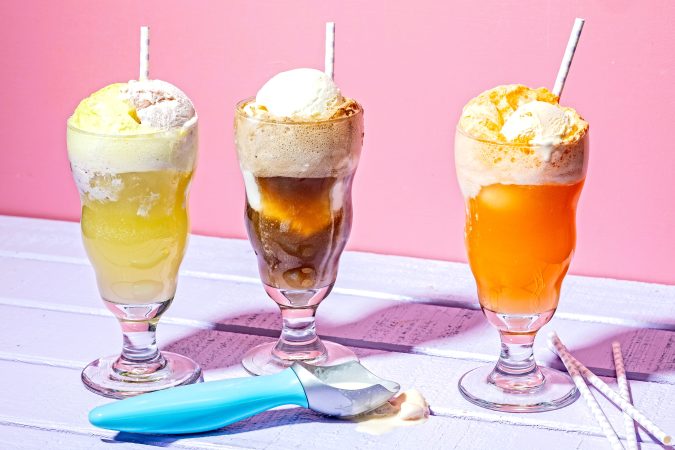
In the fall of 1874, Philadelphia entrepreneur Robert M. Green was looking to make his fortune selling soda fountains. So, he set up a stand at the grand exposition feting the Franklin Institute’s 50th birthday.
The monthlong fair — held near City Hall where Wanamakers would stand just two years later — drew hundreds of people a day. To Green’s dismay, another soda fountain manufacturer showed up to make his fortune, too.
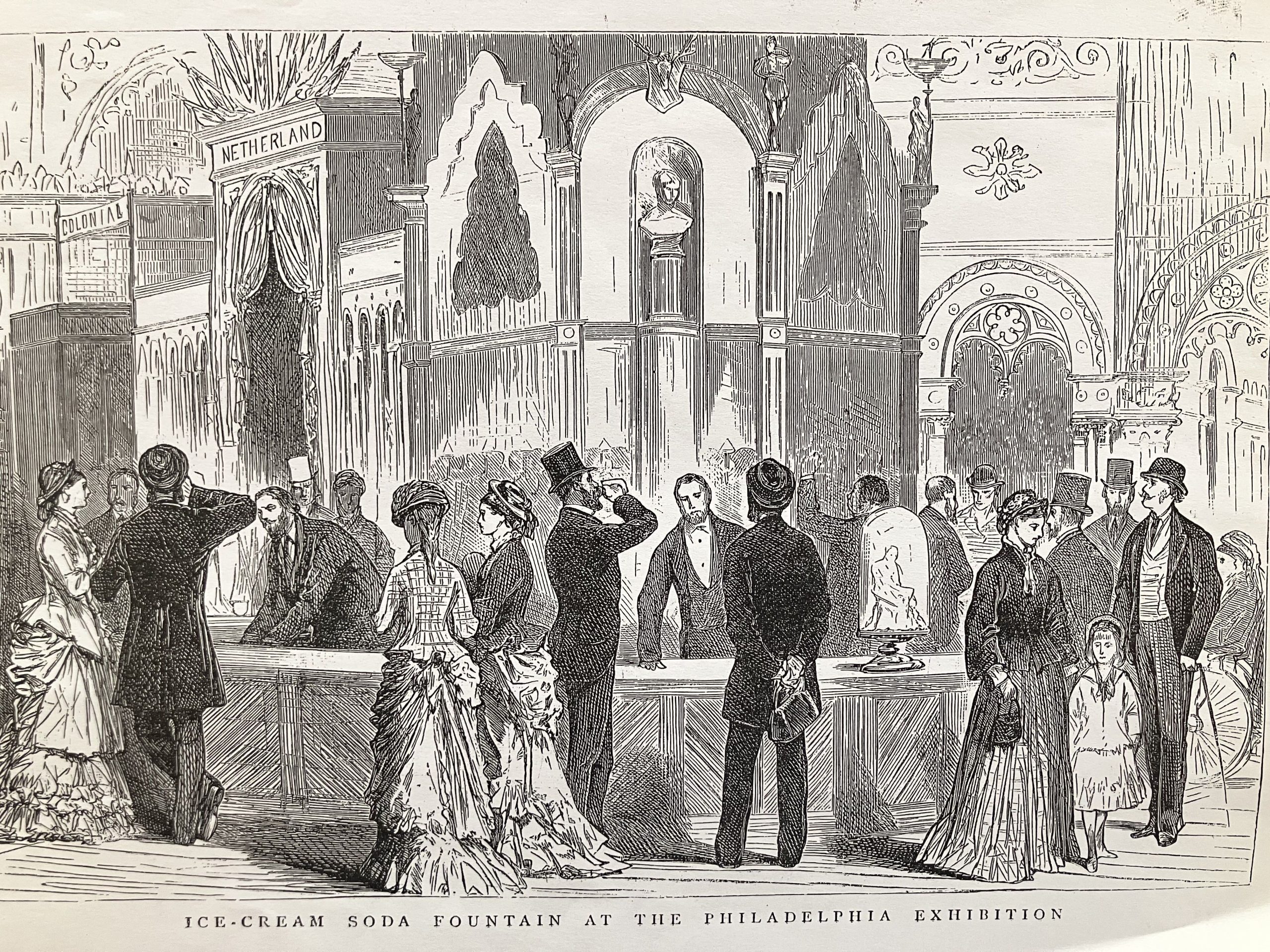
An ice cream soda fountain pictured at the Philadelphia World’s Fair.Colibri Workshop
To lure more fairgoers to the flavored soda water he was hawking at 10 cents a pop, Green added a dollop of vanilla ice cream. (Green purchased the ice cream from Henry Snyder, a confectioner at the corner of 13th and Vine.)
“The ice cream soda came out of a moment of desperation,” explained Eric Berley, self-anointed ice cream historian and owner of Franklin Fountain in Old City. “It started to fizz and bubble up creating a real 19th-century experience.”
The Philadelphia Historic District will honor ice cream soda’s effervescent beginnings at Franklin Fountain, Saturday July 18, from 11 a.m. to 1 p.m. It will be the district’s 29th firstival, part of a yearlong party celebrating America’s 250th birthday.
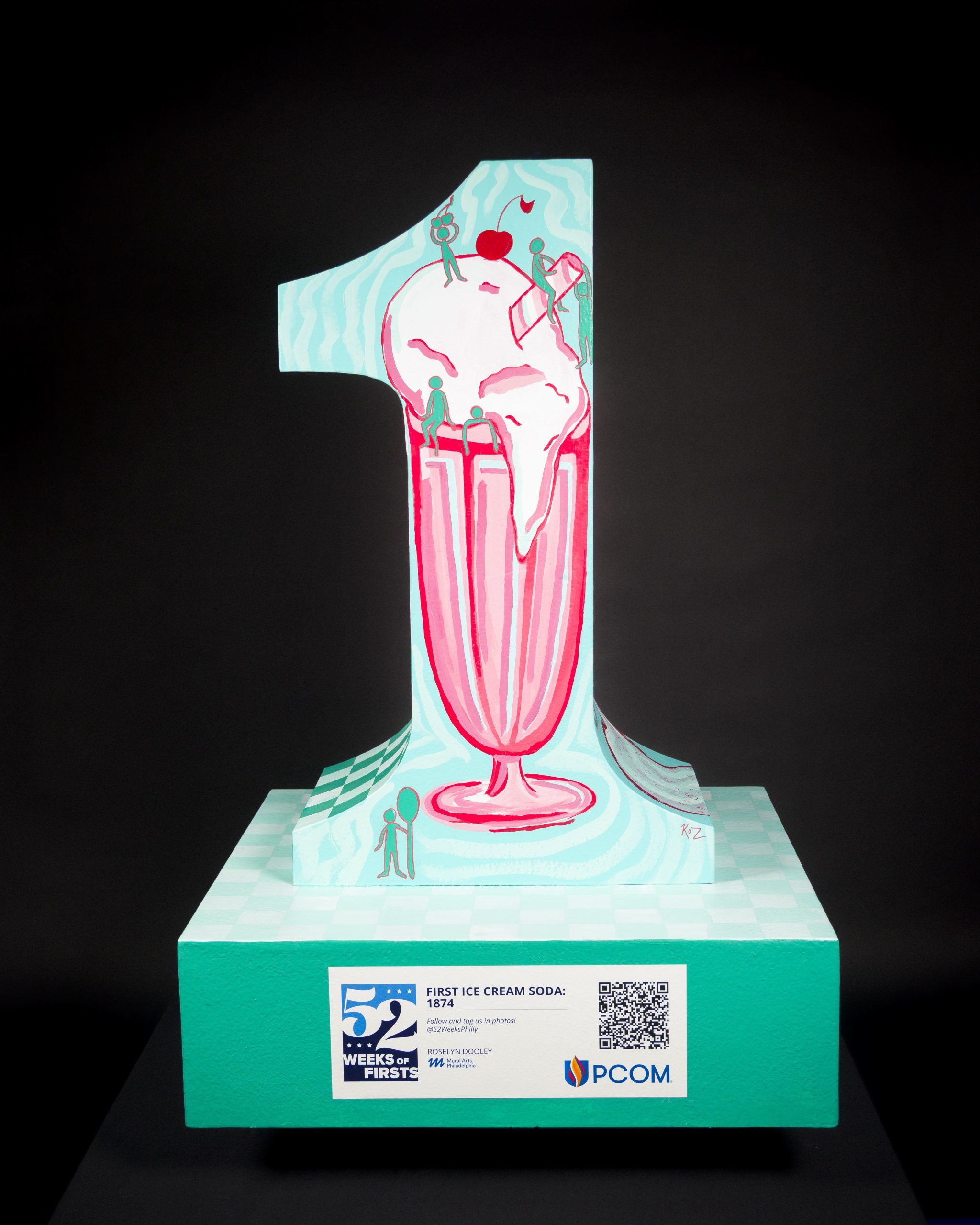
The first ice cream soda was served at the 50th birthday fete for the Franklin Institute back in 1874 by soda fountain salesman Robert M. Green.Colibri Workshop
Green made $8 that first day of ice cream soda sales. But he knew he could do better. According to a 1910 article in Soda Fountain, the next day he printed handbills advertising the creamy concoction. He gave teenagers free tastes and paid them to crowd around his booth to drum up interest.
By the end of the fair Green was pulling in $200 a day — $5,793 in today’s money.
Word of the sweet treat traveled throughout the country and ice cream sodas became a drugstore staple. Up until then, soda fountains were only used to make medicinal drinks like Alka-Seltzer. Ice cream helped turn drug stores into hot spots.
Ice cream sodas, according to an article in the 1920 Philadelphia Evening Ledger were the precursors to the “sundae, the banana split, and the various egg drinks and a score or more of the tasteful and appetizing things which are now offered to the public.”
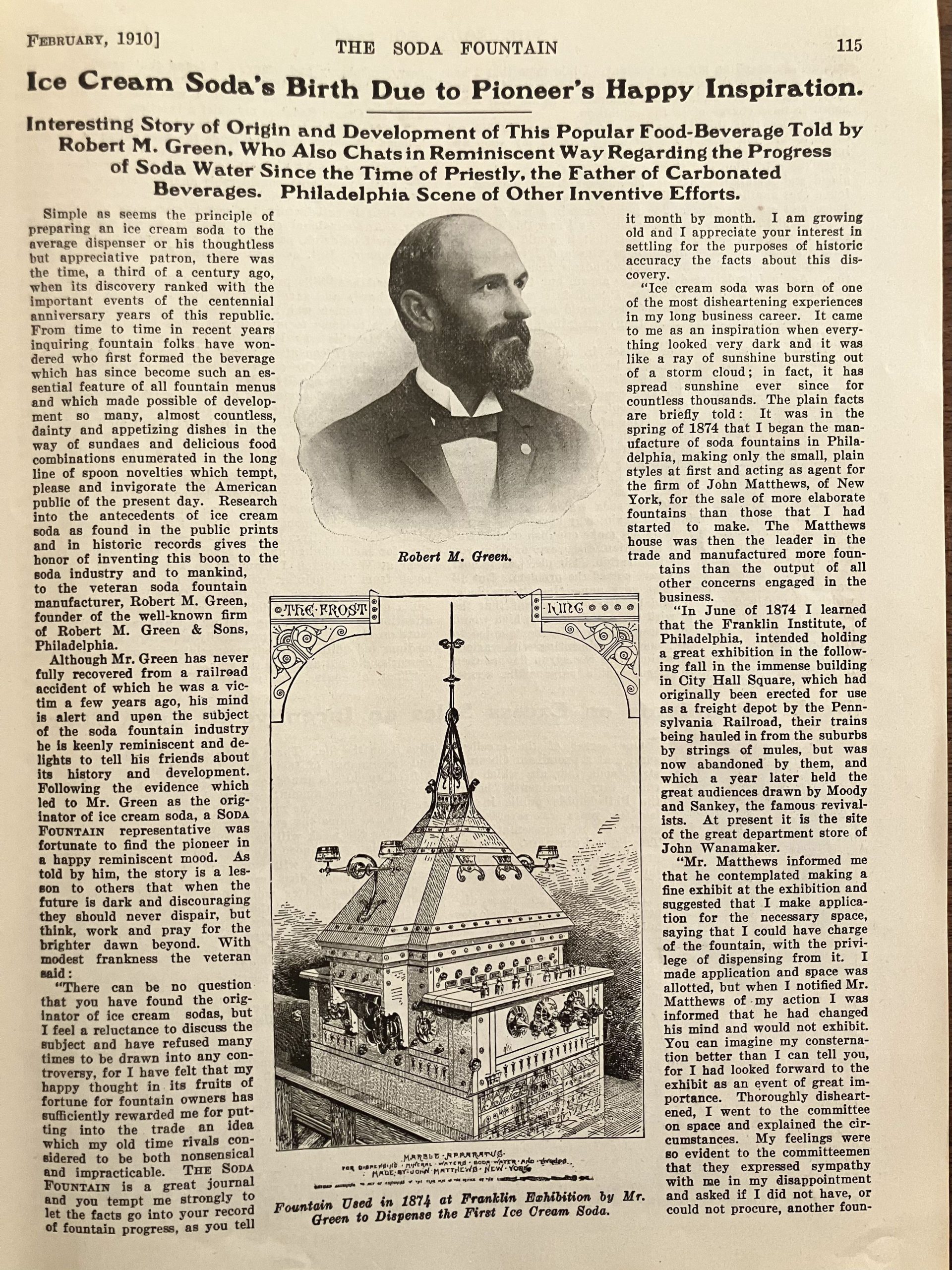
Robert M. Green recounted how he made the first ice cream soda in a 1910 article printed in the trade magazine The Soda Fountain.The Berley Bros. Collection.
Green opened Robert M. Green & Sons, at Broad and Vine, in the late 19th century where he sold soda machines and made a fortune. He’s buried in West Laurel Cemetery in Bala Cynwyd where his tomb stone reads: “Here lies the originator of the ice cream soda.”
While it’s tempting to end the ice cream soda story here, there is more to this sweet saga.
At the 1876 Centennial, Philadelphia-based pharmacist Charles Hires introduced the temperance drink Root Beer, a spicy blend of 16 wild roots and berries.
Seventeen years later, Frank J. Wisner, owner of a Colorado-based brewing company, plopped in a scoop of vanilla ice cream, inventing the Root Beer float.
The terms ice cream soda and ice cream floats are used interchangeably these days, Berley said.
“But it’s clear without Philadelphia you wouldn’t have an ice cream soda or a root beer float.”
The Ice Cream Soda Firstvial will be held, Saturday is Saturday, July 18, 11 a.m.-1 p.m. at the Franklin Fountain, 116 Market St.
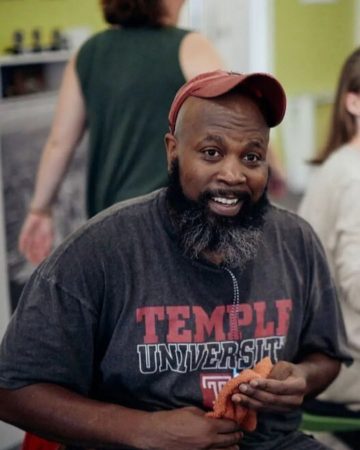
Mark Donovan Hagins,56, an actor, teacher, and producer who knew everyone in Philadelphia’s theater community, from the upstarts to the grizzled veterans, died Wednesday, June 24, at his home. His family said his death was sudden but could not provide further details.
As a resident producer with the Philadelphia Young Playwrights nonprofit, Mr. Hagins mentored, educated, and staunchly advocated for countless young members of the city’s theater community. Mr. Hagins was known as a laid-back person who could calmly solve problems under pressure, while remaining curious and dedicated to serving his students. Those who worked with him said he was an imaginative, collaborative artist who understood the history of Black theater in Philadelphia and was interested in cultivating its future. He had a talent for bringing entertaining stories to life, with even the barest of tools.
His acting career included productions with Philadelphia’s Freedom Theatre, Azuka Theatre, Walnut Street Theatre, and the Rutgers-Camden Center for the Arts, appearances in the second season of the HBO show The Wire, and roles in other theater workshops, television shows, and independent films.
One of his first roles came in 1999, when he connected with Philadelphia Young Playwrights as a student at Temple University and performed in the organization’s annual New Voices festival. After graduating in 2000, Mr. Hagins joined the nonprofit as a teaching artist and classroom actor to guide young playwrights and actors, even while his own theater career was just beginning. He produced numerous works by the city’s youth, including through the New Voices festival, where middle, high school, and even elementary school playwrights have their works performed by adult actors.
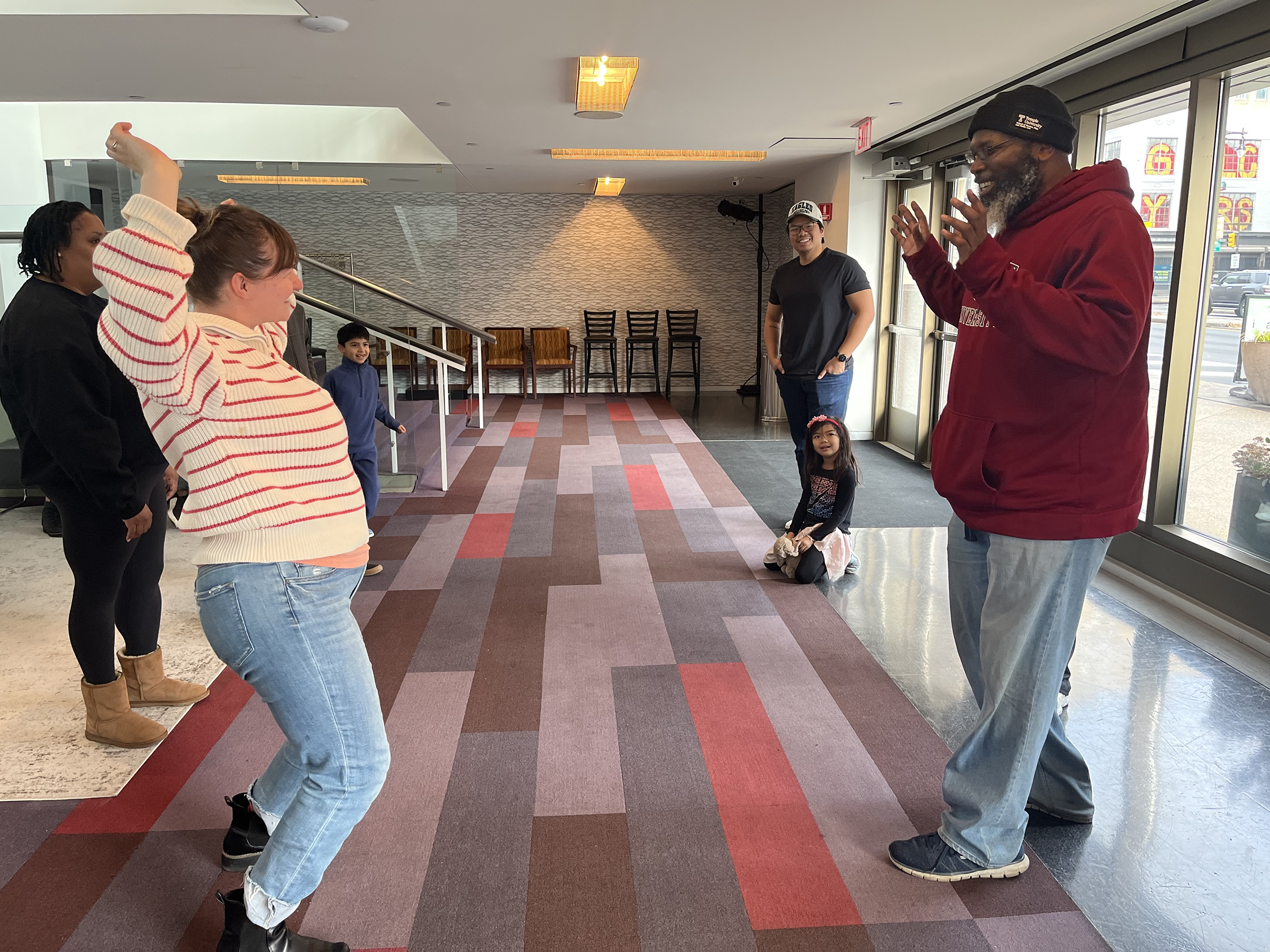
Mark Donovan Harris teaching Philadelphia Young Playwrights students. He first connected with the organization when he was a student at Temple University in 1999.Philadelphia Young Playwrights
“He believed that coming back to North Philadelphia … could make a difference in young people’s lives. And he said, if you could get through them through acting … you could change their momentum. You could change their environment. You could change their way of thinking. When they became adults, you know they would be better people in the world. So he invested into them,” said his aunt Millicent Platt.
Mr. Hagins was born July 2, 1969. He grew up in the Hartranft section of North Philadelphia with his parents, the Rev. Paul Hagins and Vermell Hagins, and sister, Ramona Johnson, and spent his summers visiting family in North Carolina. Mr. Hagins, who went by his middle name, Donovan, in the theater world, always was interested in theater, but found it to be his passion once he enrolled at Temple, his family said.
“A fixture of our Temple Theaters community, Donovan was a proud Temple alum invariably seen repping his school with a hat or shirt,” Temple Theaters posted in an online tribute. “He lived in Cherry and White. Donovan embodied the values of generosity and collaboration, showing an unwavering belief in the power of young voices.”
Professional actors who worked with him spoke highly of how he curated and directed student productions, said LaNeshe Miller-White, executive director of Philadelphia Young Playwrights. While he had a calming, comforting presence around people, Mr. Hagins was always willing to have fun, too, whether it be playing a silly character written by a student or taking hold of the microphone for his weekly karaoke outing, she said. He took his relationships with students seriously, and stayed in touch with some of his mentees long after their time with the program ended.
“Donovan’s dedication to young artists and to PYP was unwavering, and his generosity, wisdom, and kindness touched countless students and colleagues across Philadelphia and beyond,” her organization wrote after his passing.
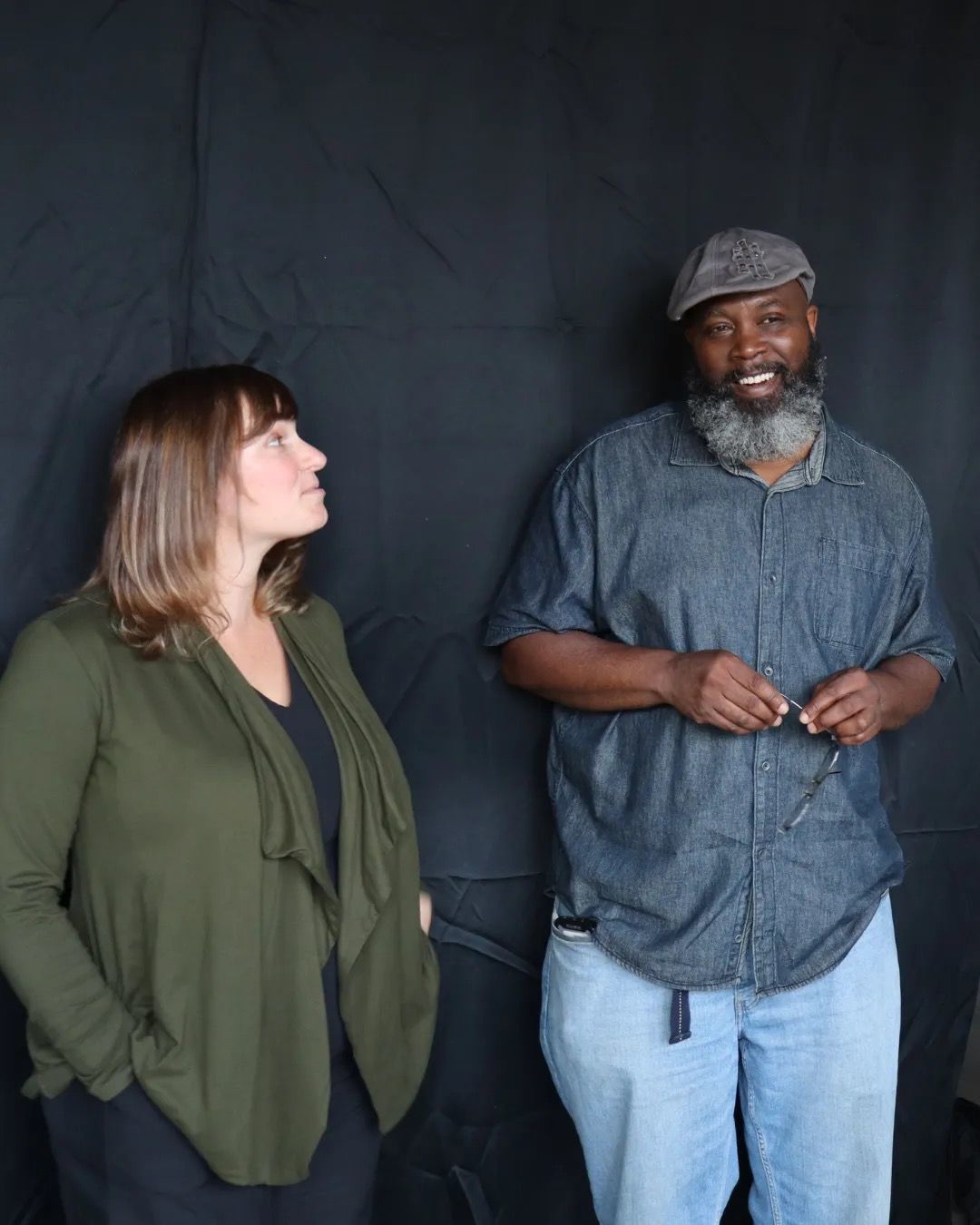
Mark Donovan Hagins stands with Philadelphia Young Playwrights operations manager Ali Nebistinsky.Philadelphia Young Playwrights
And while playwriting and theater drove him, Platt said, Mr. Hagins’ niece, Ragan Johnson, 25, and his nephew, Gregory Johnson III, 22, were his heart.
His niece remembered visiting her uncle in Philadelphia, where they would eat cheesesteaks or visit Reading Terminal Market, and bond over Michael Jackson’s music. She said he was a great listener, and recalled how fun it was to watch him perform onstage in Washington during a period when he lived with her family. She will miss their phone calls, she said, when they used to go over her schoolwork together.
Mr. Hagins’ parents and sister died earlier. He is survived by his niece and nephew; Platt and another aunt,Ella Mae Frederick; an uncle, Phillip Platt; a brother-in-law, Gregory Johnson II; and other family members.
His family will hold a memorial service, open to the public, on Saturday, July 18, at 11 a.m. at Nix & Nix Event Venue, 1525 W. Dauphin St., Philadelphia.
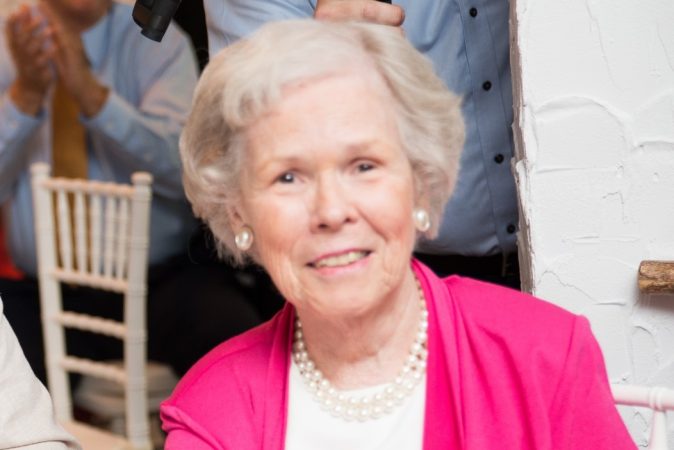
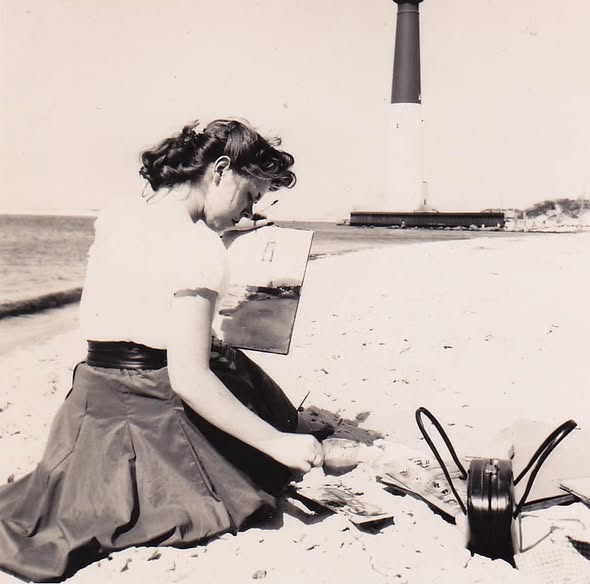
Kathy M. Winter, 91, formerly of Philadelphia, lifelong artist, art and grade school teacher, author, and former council president at Our Mother of Consolation Parish in Chestnut Hill, died Tuesday, June 9, of complications from pneumonia at Forbes Hospital in Monroeville, Pa.
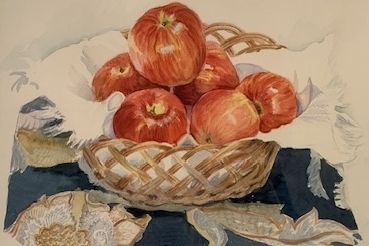
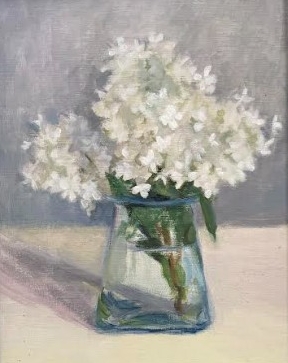
Born in Philadelphia, Mrs. Winter studied art at the Pennsylvania Academy of the Fine Arts and earned a bachelor’s degree in fine arts at the University of Pennsylvania. She specialized in portraits, still life, and landscapes, and worked mostly in watercolors, pastels, oils, and acrylics.
She painted portraits of celebrated naval chaplain John F. Laboon and Chinatown icon T.T. Chang, and contributed to a collection called “Lost Dreams on Canvas” that featured portraits of innocent victims of violent crime in Philadelphia. “You get into a portrait like that,” Mrs. Winter told the Chestnut Hill Local in 2012, “and you’re into the person.”
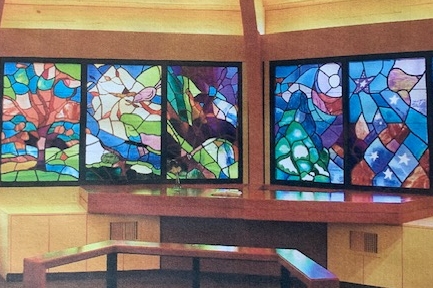
She painted the statue of St. Gianna Beretta Molla for the Shrine of the Nativity of Our Lord in Warminster, and her painting of a restored statue of St. Gabriel for a church in New Orleans was featured in The Inquirer in 2007. She also designed stained glass windows for St. Bede the Venerable Church in Holland, Bucks County, and the chapel at Shore Memorial Hospital in Somers Point, N.J.
“The best thing,” Mrs. Winter told the Chestnut Hill Local in 2012, “is that you don’t have to retire from making art.” Courtesy of the family
Mrs. Winter studied Chinese brush painting with artist Phoebe Shih in Flourtown and showed her work at the Woodmere Art Gallery, the Conshohocken Art League, Daylesford Abbey, the Lutheran Theological Seminary, the Knickerbocker Exhibition in New York, and elsewhere. She also taught art classes at the Abington and Main Line Art Centers, the Conshohocken Art League, Our Mother of Consolation School, and elsewhere.
“The best thing,” she told the Local in 2012, “is that you don’t have to retire from making art.”
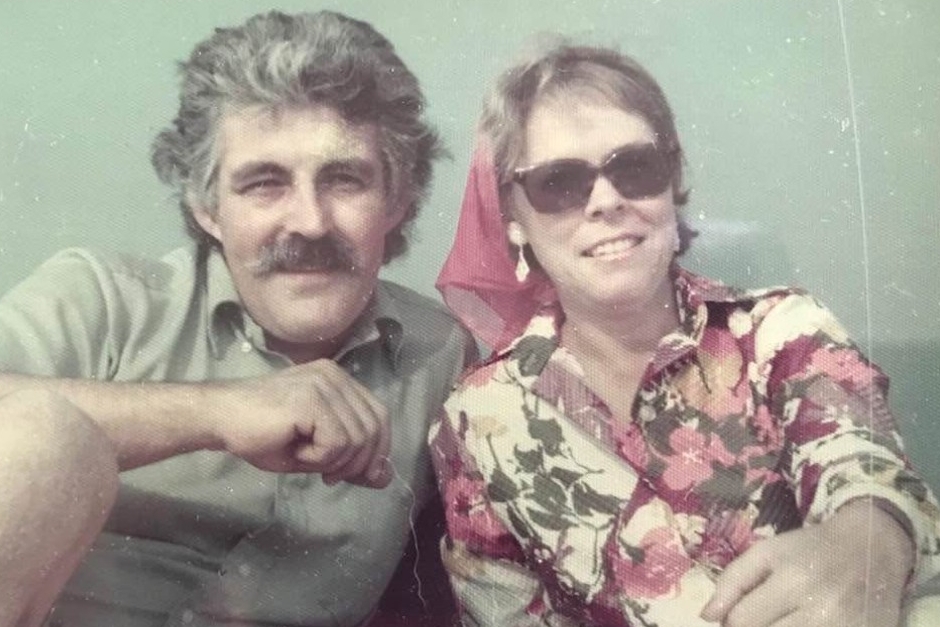
She met her husband, sculptor Joseph Winter, at the Pennsylvania Academy of the Fine Arts in 1953, and they opened Winter Art Studio in their Chestnut Hill home in 1983. For several commissions, he created the sculpture, and she painted it.
“Since Joe was a sculptor and I’m a painter, we complemented each other very well,” Mrs. Winter told the Chestnut Hill Local in 2021. “If we had both been painters or both been sculptors, it would not have worked out so well. There would have been too much competition.”
Mrs. Winter painted fruit and flowers.Courtesy of the family
In 2021, she self-published a 48-page children’s book called How the Bears Got to the Park.It features illustrations by her husband, and the plot she wrote is based on his award-winning 1966 sculpture Family of Bears that is displayed at Three Bears Park at Third and Delancey Streets in Society Hill.
Mrs. Winter was a longtime member and onetime council president at Our Mother of Consolation Parish. She and her husband moved to Chestnut Hill from Southwest Philadelphia in 1962 so their children could attend the parish school, and she taught all subjects to third and fourth graders for a few years.
Parish members scheduled Mass intentions to honor her on June 28, July 5, and July 10. “She was very determined,” her daughter Genienne Navarro said. “She never let anything stand in her way and would move mountains to get something done.”
Kathleen Marie McKenna was born April 21, 1935. Her family moved to Virginia when she was young and returned to Philadelphia a few years later, and she graduated from West Philadelphia Catholic High School for Girls.
Mrs. Winter and her husband, Joe, married in 1956. Courtesy of the family
A perceptive nun recognized her artistic skills in high school and arranged for an admission interview with officials at the Pennsylvania Academy of the Fine Arts. She received a full scholarship, met her husband there, and they married in 1956 and had daughters Kathy and Genienne and a son, Joseph.
Her husband died in 2020, and she moved to the Pittsburgh area a few years ago to be close to family. Mrs. Winter kept in touch with former classmates at the Pennsylvania Academy of the Fine Arts for years and took additional art classes later at Temple University and Chestnut Hill College.
She played piano, doted on her family, and survived cancer in the 1970s. A longtime friend called her a “true, loving, nourishing, protective, guiding, steadfast Blessed Mother to me.”
Her family said in a tribute: “She will be remembered for her friendship, spiritual support, listening ear, humor, deep caring, generosity, and undaunted optimism.”
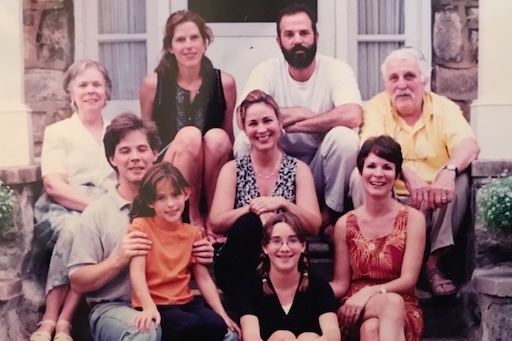
Mrs. Winter (rear left) enjoyed time with her family.Courtesy of the family
Her daughter Genienne said: “Her favorite saying was, ‘Nothing is impossible with God.’”
In addition to her children, Mrs. Winter is survived by six grandchildren, three great-grandchildren, and other relatives. A sister died earlier.
A memorial service is to be at 11 a.m. Saturday, Sept. 19, at Our Mother of Consolation Church, 9 E. Chestnut Hill Ave., Philadelphia, Pa. 19118.
Donations in her name may be made to Our Mother of Consolation Church and School, 9 E. Chestnut Hill Ave., Philadelphia, Pa. 19118.
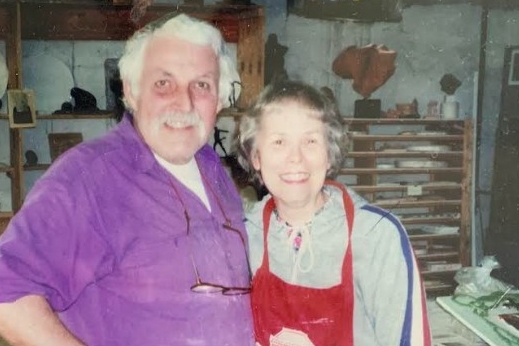
Mrs. Winter and her husband, Joe, pose in their Chestnut Hill home studio. Courtesy of the familyMrs. Winter was an expert in designing stained glass. Courtesy of the family
Even as it grapples with having less money to award next year, the Philadelphia Cultural Fund on Wednesday announced this year’s grants to arts and culture groups across the city. The fund is dispersing $5.6 million to 322 organizations representing arts and culture of all types, said Cultural Fund executive director Gabriela Sanchez.
“We have theater, we have dance, we have visual arts, poetry open mics, historic sites, sculpture gardens — it truly ranges across all genres,” Sanchez said.
The 2026 grants also reach beyond Philadelphia’s downtown marquee groups into all sections of the city.
“We are funding Districts 1 through 10, and that is exciting,” she said, referring to the city council districts into which the city is divided.
The Philadelphia Cultural Fund is an important source of money for arts groups, but especially for smaller ones. It is drawing more attention this year after the city’s budget process for fiscal year 2027 left the agency with a cut in funding. Instead of the $5 million it received from the city in FY26, it will now see only $3.5 million.
As a result, it will have to cut the number of grants it gives out in 2027. Although there is currently no specific target for how large that reduction will be, it could mean grants going to 100 fewer groups.
“When you look at 100 organizations that could be funded, that’s terrible, a painful thing to navigate,” said Sanchez. “We have to get creative to find other pathways to meet the need.”
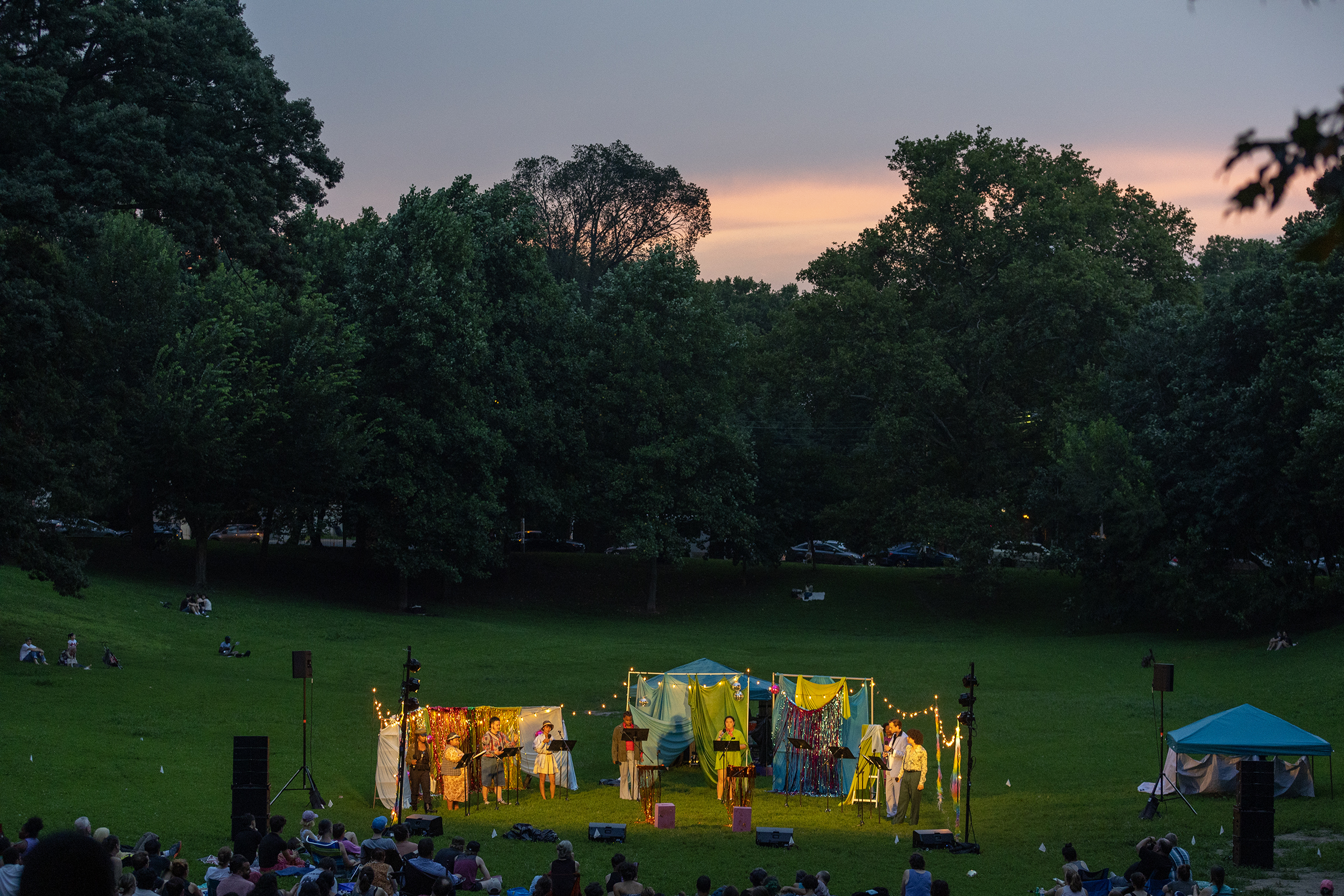
Shakespeare in Clark Park in 2023 performing “Two Gentlemen of Verona” in its rock musical adaptation by composer Galt MacDermot and lyricist John Guare.Charles Fox / Staff Photographer
In the wider world of arts funding, the grant amounts are relatively modest — either $12,875 or $23,375 — but they are critical to many groups, and the funding can have a compound effect.
Artcinia, for instance, is a small nonprofit with a Center City business address, but the organization brings concerts into a wide swath of neighborhoods — 200 performances in a five-year period, reaching 9,000 audience members in Fox Chase, Nicetown, Hunting Park, Manayunk, and elsewhere, according to a recent summary prepared by the group.
Its largest chunk of revenue comes from foundations, of which the money from the Cultural Fund is a part.
That grant is “significant, about 12% to 15% of our operating budget this year,” said Jake Kelberman, Artcinia’s artistic co-director and director of operations. The group presents music in various genres and has engaged hundreds of professional musicians, and, if the funding disappears, “it’s sad that it’s going to affect the volume of programming we can do,” he said.
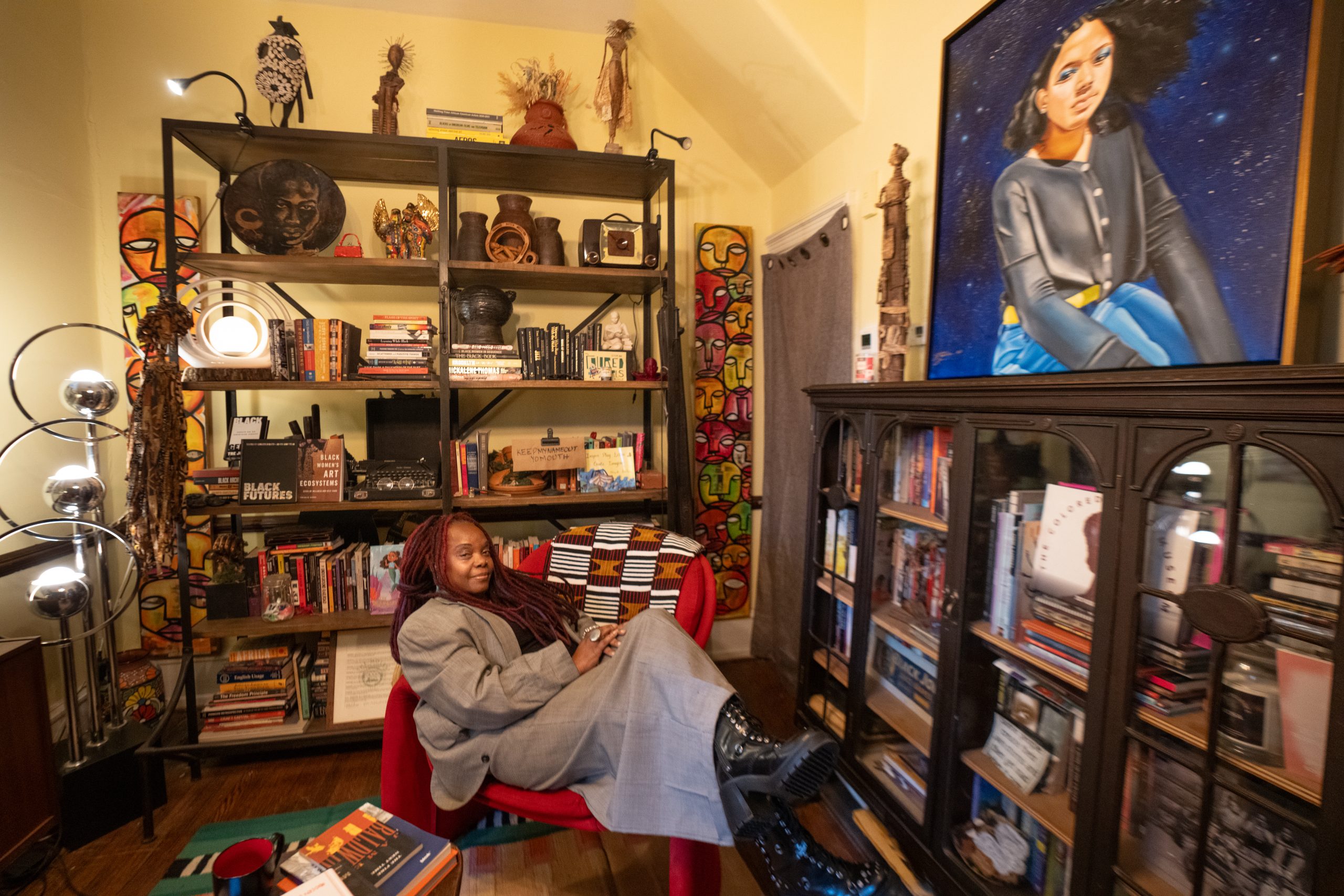
Colored Girls Museum founder and executive director Vashti DuBois at the museum in Germantown.Jessica Griffin / Staff Photographer
Two notable aspects of the Philadelphia Cultural Fund are the fact that it’s money that can be used for general operations (as opposed to being restricted to a specific project, which often requires raising additional money); and that there is no requirement that the money be matched with money from other sources.
These factors makes the kind of funding available from the fund increasingly rare, says Eric César Morales, development director of Movimiento Administradores de Arte en Pensilvania.
“This money from the Cultural Fund is what stabilizes the sector as a whole, because it allows grassroots organizations to become competitive and grow,” said Morales.
Movement of Arts Administrators in Pennsylvania, or MAAP, has often received money from the fund since its inception during the pandemic, Morales said, including $23,375 in this latest round. The money has a salutary effect on the local arts ecosystem; MAAP aims to increase arts access for BIPOC individuals and communities in Pennsylvania by giving Spanish-speaking artists training and resources in navigating the often tricky process of applying for funding.
Morales says that the $1.5 million reduction to the Cultural Fund may not sound like a lot, but with other sources of funding decreasing or threatened, “it’s evidence of a shrinking sector.”
Of the impending city cuts to the fund for FY27, Sanchez said:
“It’s obviously the worst-case scenario that we have to plan for, and I think that it’s also the reality. I hope that people take note of this change and become engaged in the way that they see fit — to talk to their council members around the importance of arts and culture in their neighborhood. That is a form of resilience and also action.”
As local arts groups continue to face decreases in city funding, a multiyear initiative is lending a hand to Philly-area craft makers and the organizations that support them.
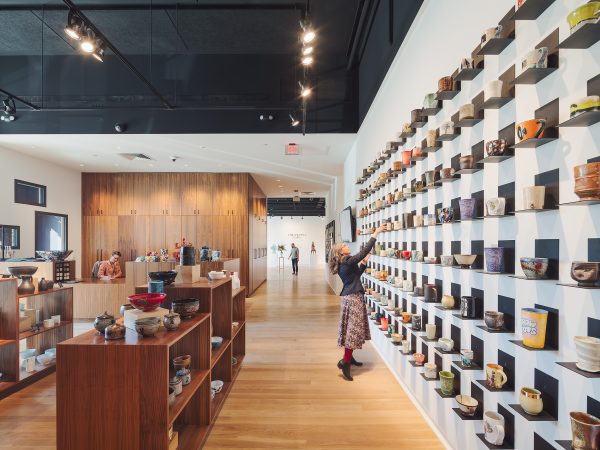
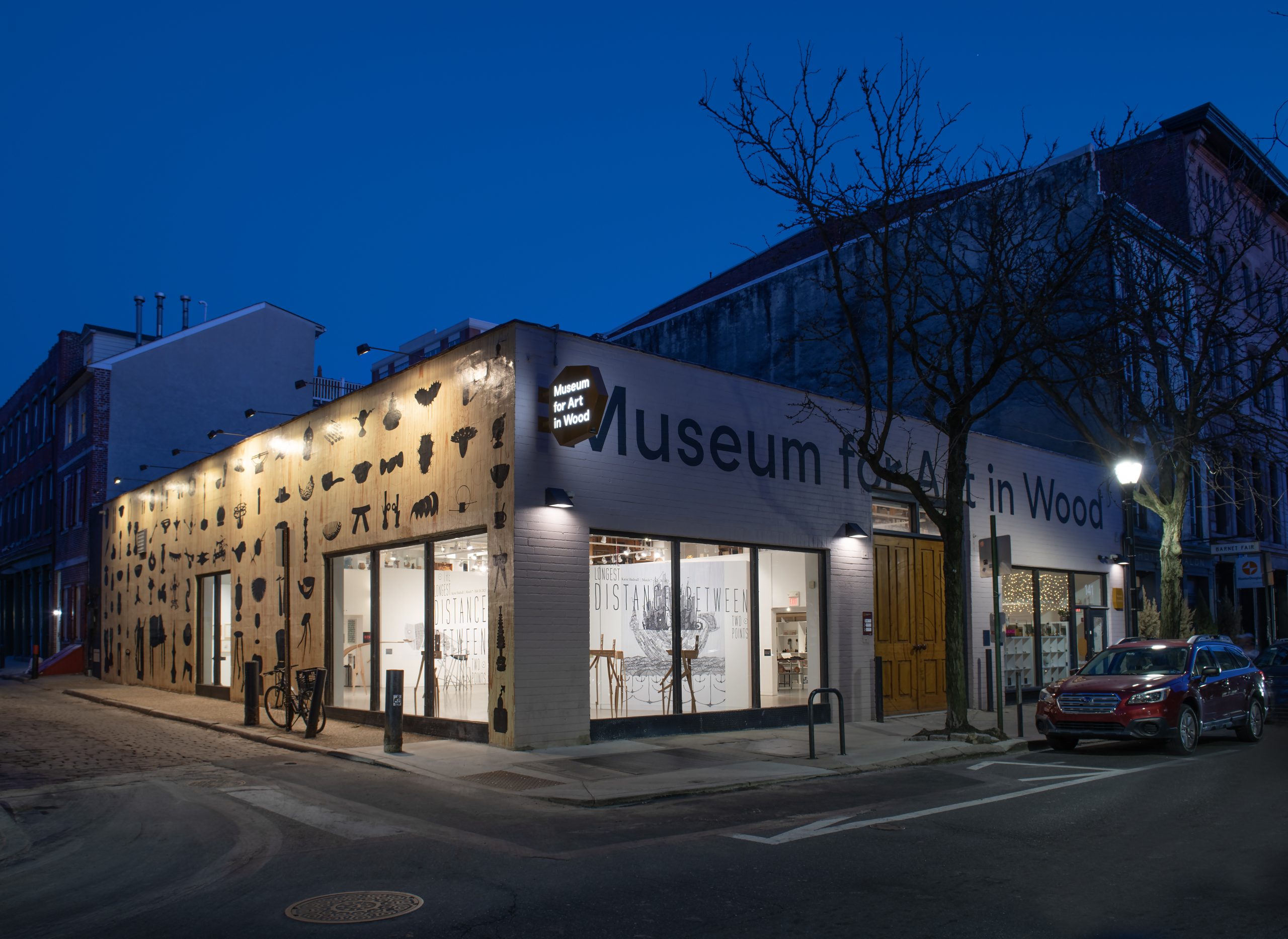
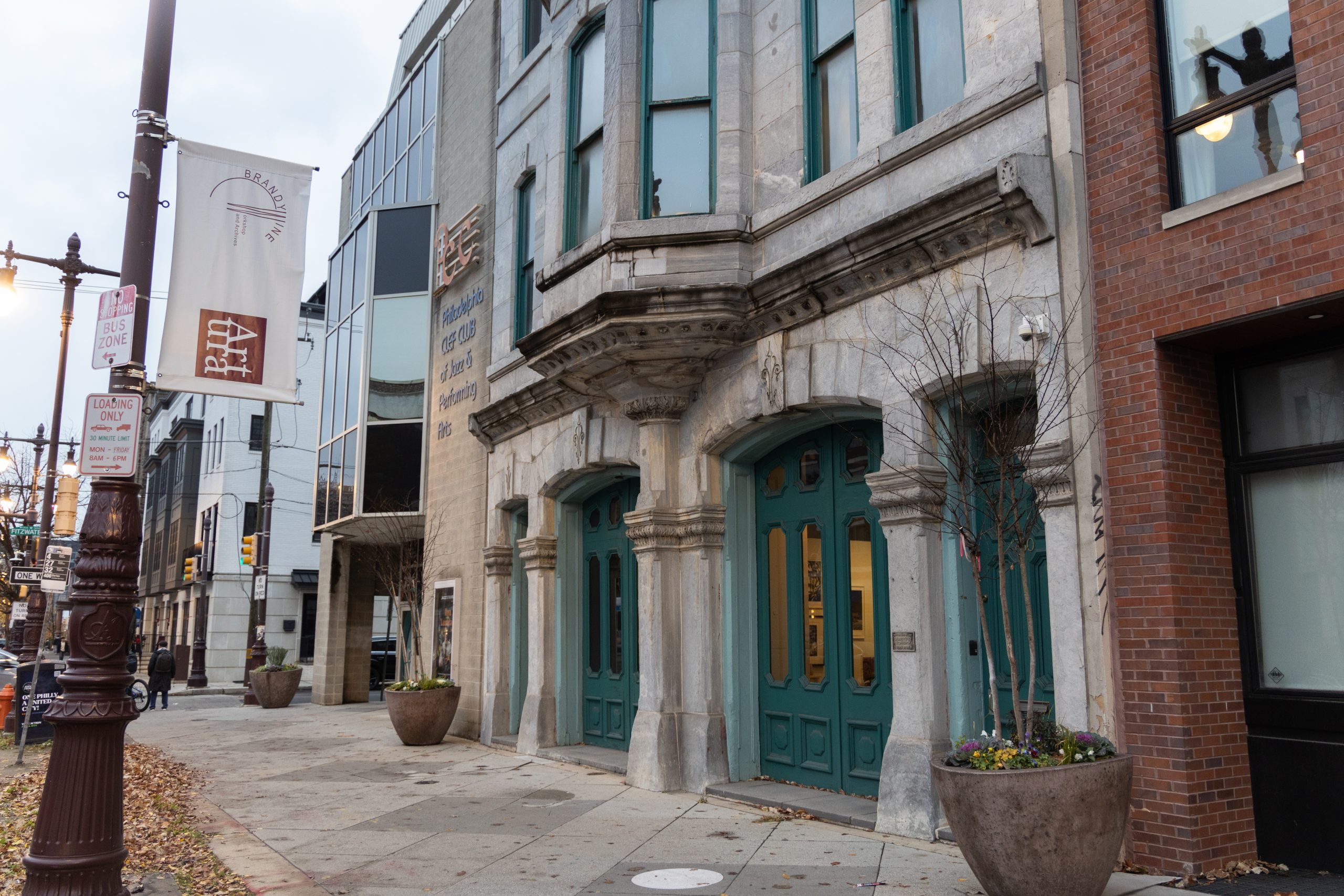
Through a collaboration with Etsy and the Center for Craft, five Philly-based arts organizations have received a combined $500,000 in grant funding. The recipients are the Brandywine Workshop and Archives, the Clay Studio, InLiquid, Fleisher Art Memorial, and the Museum for Art in Wood.
Each organization received a $100,000 place-based, unrestricted grant, allowing them to direct funding where it is most needed.
“It feels really exciting to be recognized in this way,” said Rebecca Morrison, executive director of the Brandywine Workshop and Archives. “Being recognized on a national stage in a city filled with so many incredible organizations is really special to us.”
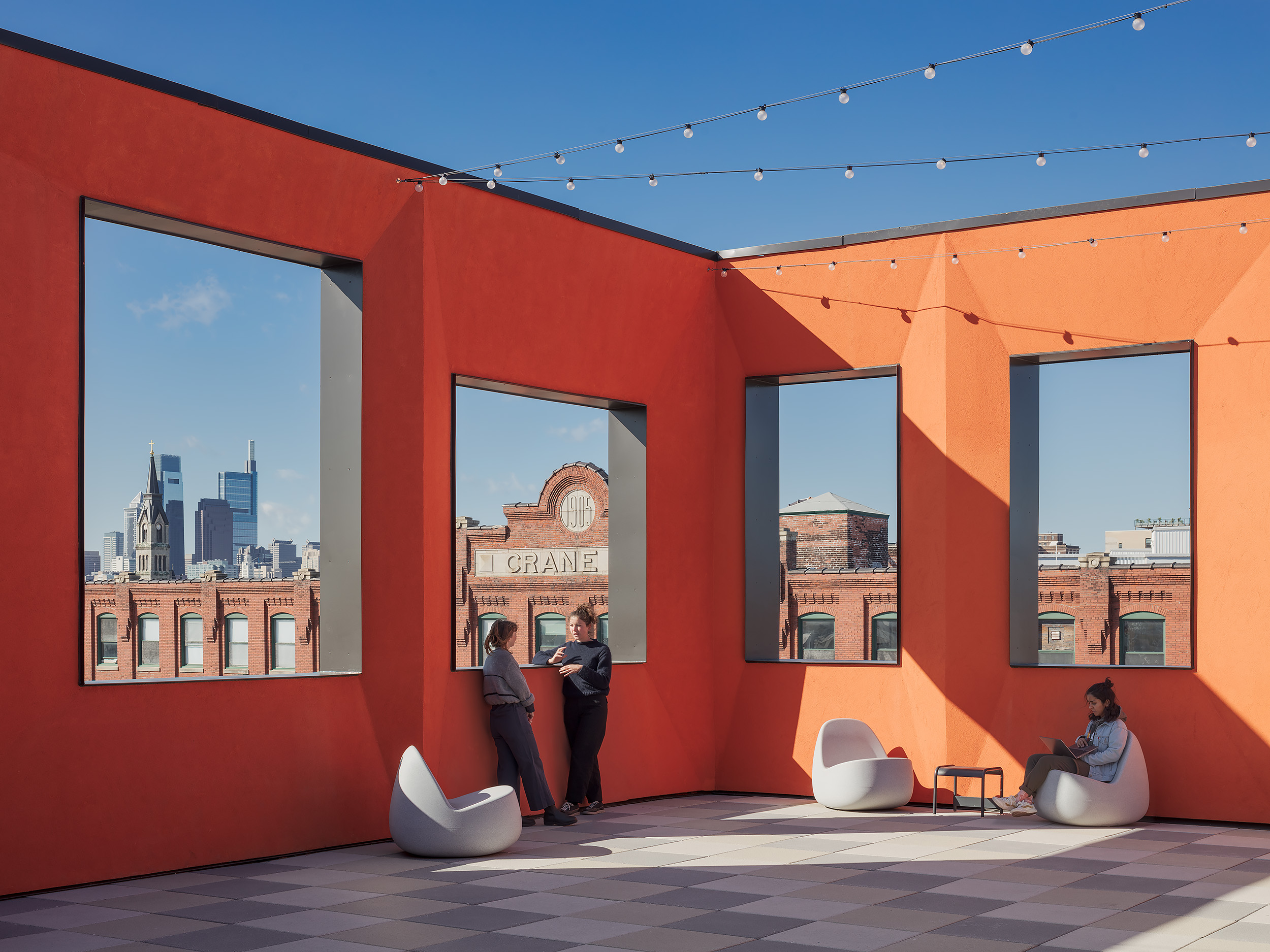
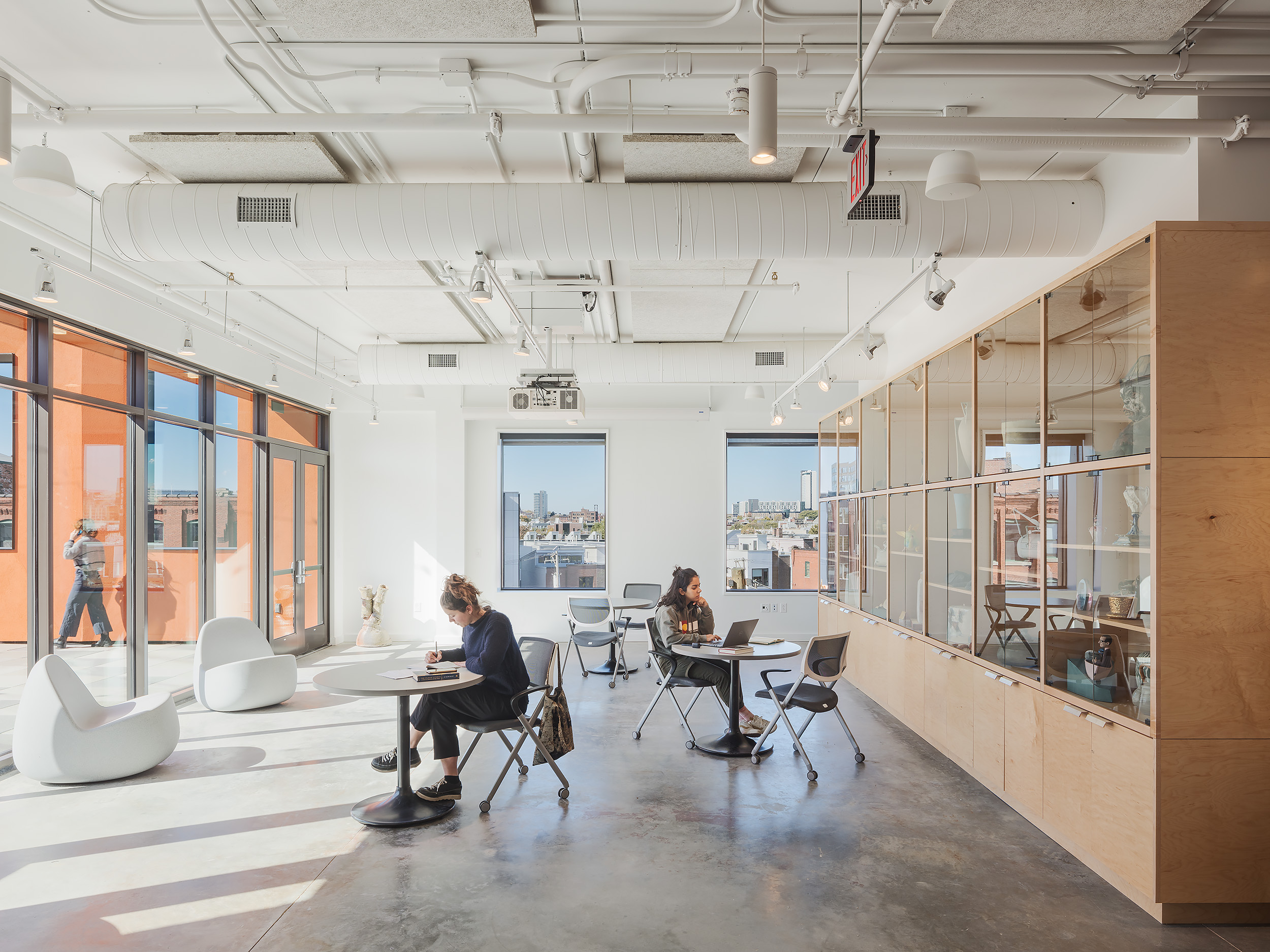
The Clay Studio’s open air roof deck event space with view of Center City Philadelphia.Courtesy of Sam Oberter
The funding is powered by Etsy and the Center for Craft’s Craft Catalyst Initiative, a new, multiyear collaboration that aims to support “greater organizational impact and resilience” within arts communities across the country.
According to the Center for Craft website, the two organizations will award a total of $10 million over three years to select “craft hubs.”
The Philly craft hub is among the first round of recipients. Other selected regions include Asheville, N.C., Berea, Ky., Santa Fe, N.M., and the San Francisco Bay Area.
An exterior image of the Museum for Art in Wood in Old City, Philadelphia, PA.Courtesy of John Carlano
In an “increasingly AI-driven and digitized world,” Center for Craft executive director Stephanie Moore said, these investments are “essential” for local arts groups and craft makers to thrive.
“This initiative will fortify craft’s place by investing in the spaces, relationships, and infrastructure that encourage artists, sustain creative careers, and strengthen communities across the country,” Moore said in a statement.
According to the Center for Craft website, these regions were selected based on research commissioned by Etsy.
Last month, arts organizations were notified that they were selected, and the grants were quickly distributed.
Artists at work inside The Clay Studio.Courtesy of Sam Oberter
Rachel Zimmerman, founder and executive director of InLiquid, a visual arts organization in Kensington, has already used a portion of the funds to give her staff raises.
“They are partly responsibly for this,” she said. “We couldn’t do the work without the people.”
Zimmerman said the funding arrived a year after InLiquid’s worst financial period since its founding.
The economic challenges were worsened by lower state and city funding, which led to “fierce” competition among other struggling arts groups to acquire fewer resources.
Zimmerman said the grant not only eased InLiquid’s financial struggles, but was also “affirming.”
Her hope is that it will incentivize other large corporations to invest in small, grassroots institutions that are working to uplift and sustain the careers of local creatives. “It’s not charity. We’re doing the work,” she said.
While her organization is still mapping out plans to administer the funds, Morrison said, she is excited to forge stronger connections and collaborations with other grant recipients.
“It’s great to know we have these organizations in our cohort, so we can learn from each other,” Morrison said. “With grant funding not being as easily accessible as it was in the past, this is a great way for us to work together.”
In a statement, Monica Zimmerman, executive director of Fleisher Art Memorial, said this recognition proves what she and other arts leaders already know: “Philly runs on creatives.”
The Fringe Festival celebrates its 30th anniversary this fall with a month of experimental, genre-blending, and provocative theater hosted all over Philadelphia.
Running Sept. 8 to 27, the festival will feature more than 338 productions spotlighting groundbreaking local and international talent, including a play about infectious disease scientist Anthony Fauci and AIDS activist Larry Kramer, an absurdist clown show, and a multimedia music experience inside the Franklin Institute’s planetarium.
“Fringe performance — often characterized by free expression, communal experience, collective wonder, challenging perspectives, and a DIY ethos — plays an essential role in our community,” said FringeArts CEO and producing director Nell Bang-Jensen in a statement. “This year, you can find us at nearly 100 venues, from traditional theaters and large cultural institutions to neighborhood bars and city sidewalks.”
With a lineup featuring world and regional premieres, the Philadelphia Fringe Festival is one of the biggest Fringe events in the country.
Organizers say they are on track to surpass the number of productions they presented last year, which was the largest festival in Philly Fringe history: A record high of more than 35,000 tickets were sold, with unique ticket buyers up 17% from the previous year — and for the first time, millennials and Gen Z made up more than half of the audiences.
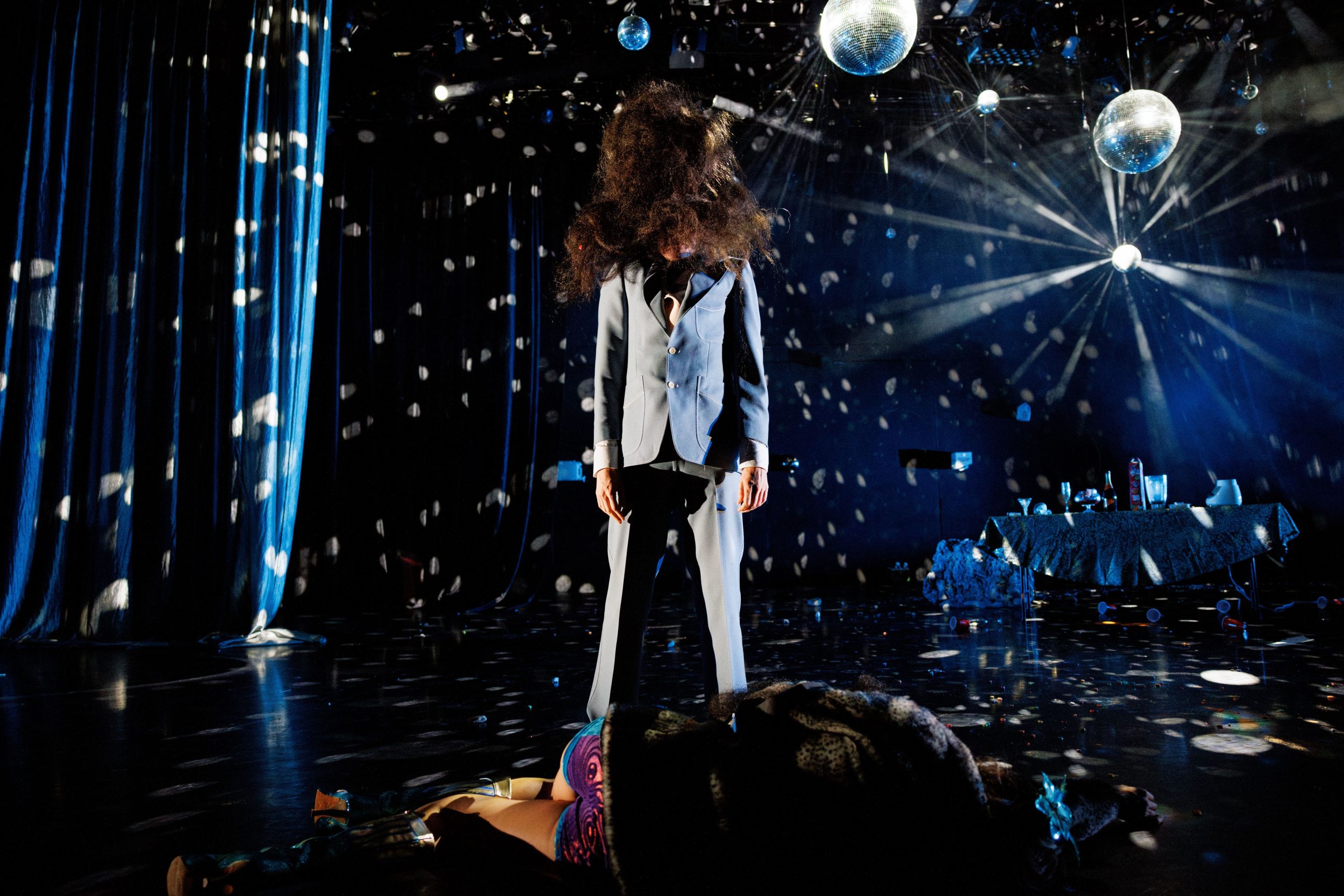
A scene from “Friday Night Rat Catchers” by Lisa Fagan and Lena Engelstein, playing at FringeArts from Sept. 17-19, 2026. Photo credit: Maria BaranovaMaria Baranova
Festival “hubs” returning this year include Cannonball (at Asian Arts Initiative and Icebox Project Space), Circus Campus Presents in West Mount Airy, Dumb Hub at Pig Iron Theatre in Olde Kensington, and West Philly’s Studio 34. Newcomers this year are the Lemonade Stand, focusing specifically on new artists at Skinner Studio at Plays and Players, and a dance-focused hub at Performance Garage in Spring Garden. Each hub hosts more than a dozen experiences.
Among the hundreds of shows participating, there are 10 curated productions from FringeArts with artists both familiar and new to Philly Fringe audiences.
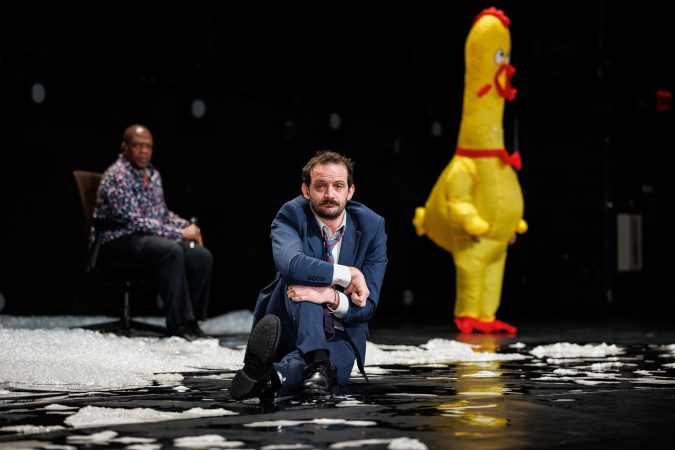
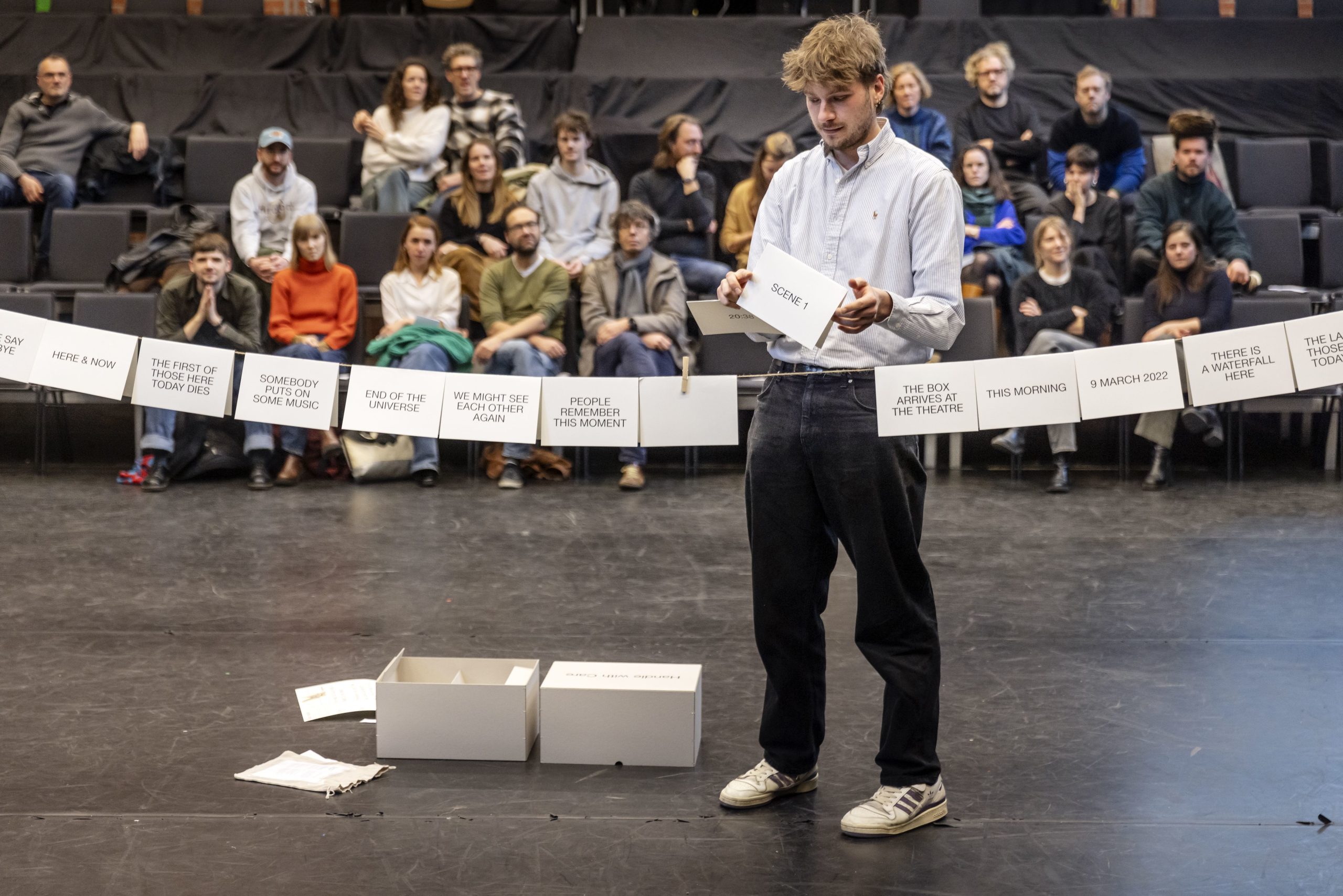
The lineup includes Friday Night Rat Catchers (Sept. 17-19 at FringeArts), a disco era-set dance production from choreographers Lisa Fagan and Lena Engelstein; Handle With Care (Sept. 17-19 at the Athenaeum of Philadelphia) from the boundary-testing Belgian theater collective Ontroerend Goed; and How Does It Feel to Look at Nothing (Sept. 25-27 at FringeArts), an avant-garde musical performance from clarinetist/vocalist Holland Andrews and violinist/composer yuniya edi kwon.
A scene from “Handle with Care” by Ontroerend Goed, which will perform Sept. 17-19 at the Athenaeum of Philadelphia.Ontroerend Goed
Another musical experience will take place inside the Fels Planetarium at the Franklin Institute with the Philadelphia premiere of Utopian Hotline: A Telephone Hotline, A Vinyl Record, A Performance (Sept. 24-27). The Brooklyn-based group Theater Mitu combines science and theater for fascinating explorations of humanity; in this case, they created a public hotline to encourage people to share messages to the future, taking inspiration from the Voyager space missions. The voicemails join the sounds of vinyl records and the visuals of the planetarium to immerse audiences into the otherworldly.
Kramer/Fauci (Sept. 8-11 at FringeArts), which premiered at New York University’s Skirball Center for the Performing Arts earlier this year, examines the contentious and complicated relationship between a public health official and a playwright/organizer. It’s a dramatic retelling of a C-SPAN segment from 1993 when Fauci, who led the National Institute of Allergy and Infectious Diseases, and Kramer, the founder of the AIDS activist organization ACT UP, clashed over a new AIDS task force. The two adversaries (Kramer publicly called Fauci “a murderer”) later developed a close friendship. Broadway director Daniel Fish, who won a Tony Award for his Oklahoma! revival, crafted the show verbatim from the heated but riveting news segment.
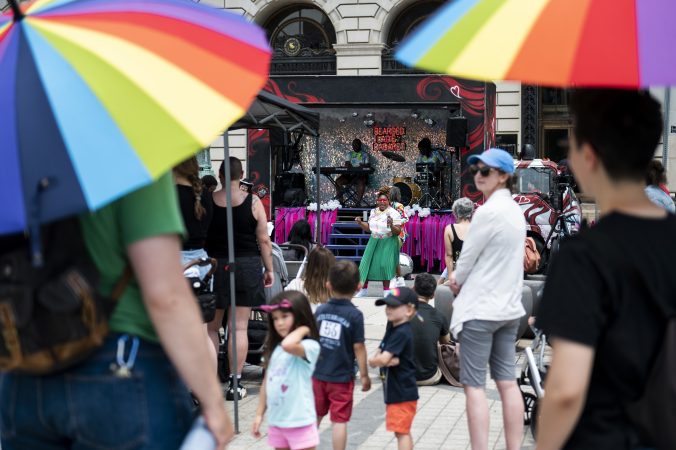
The beloved and eccentric drag queens of the Bearded Ladies Cabaret — frequent Fringe headliners — are taking a look back through 16 years of performances with an installation and show called Priority Hoarding: A Retro-spectacle (Sept. 10-27 at the Hairport, 444 N. Third St.). It’s designed to feel like viewers are digging through a chaotic closet full of baggage both literal and metaphorical. The cabaret will stage three performances weekly on Saturdays during the run.
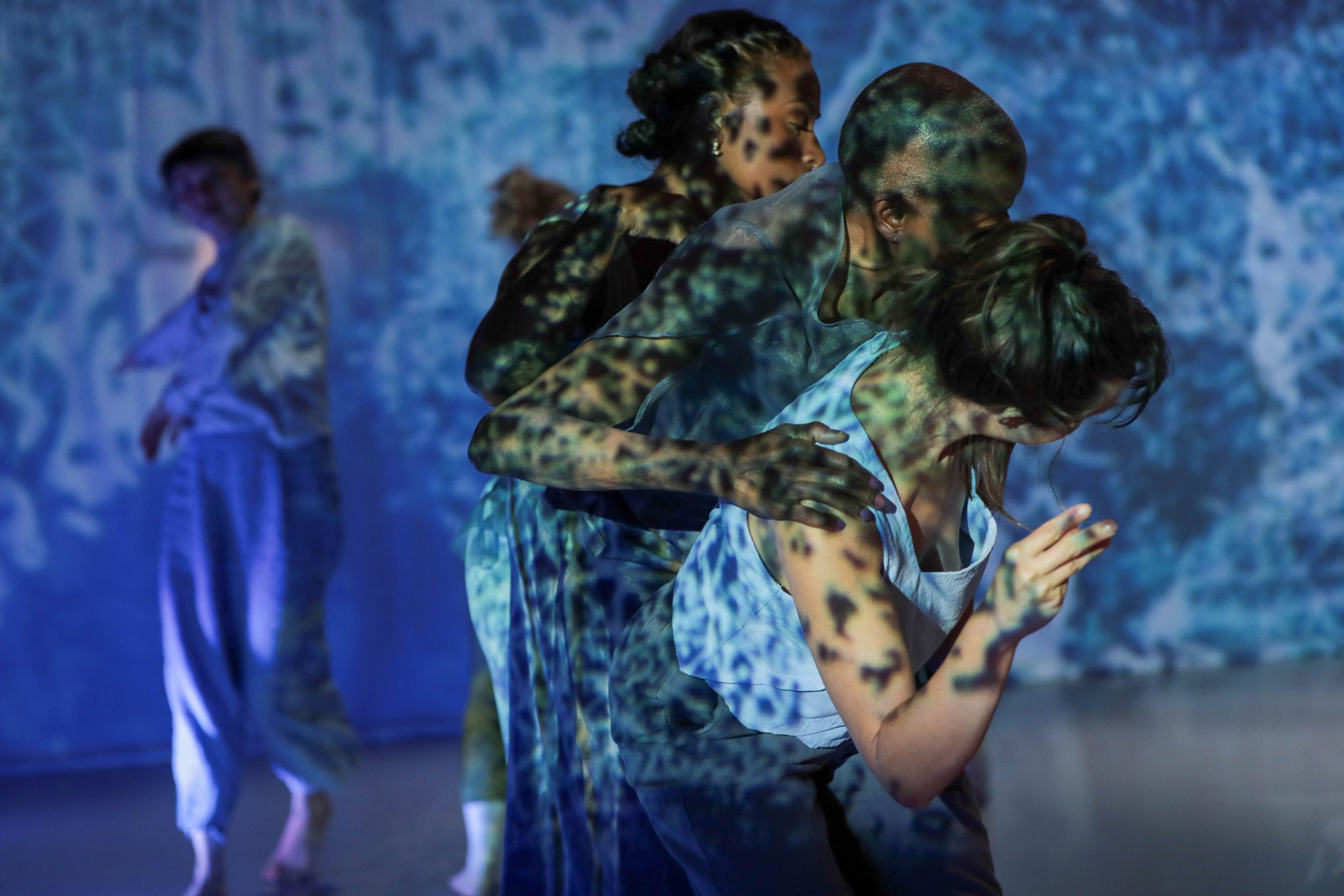
A scene from Nichole Canuso and Branching Path’s “Lunar Retreat,” which begins performances starting Sept. 10 at the Pearlstein Gallery. Photo credit: Theo CoteTheo Cote
Fringe regular Nichole Canuso will return with her eponymous dance company for the world premiere of Lunar Retreat (Sept. 10-20 at the Pearlstein Gallery), an interactive choose-your-own-path performance inspired by the moon’s orbit. Canuso developed choreography in collaboration with ocean explorer and visual artist Rebecca Rutstein.
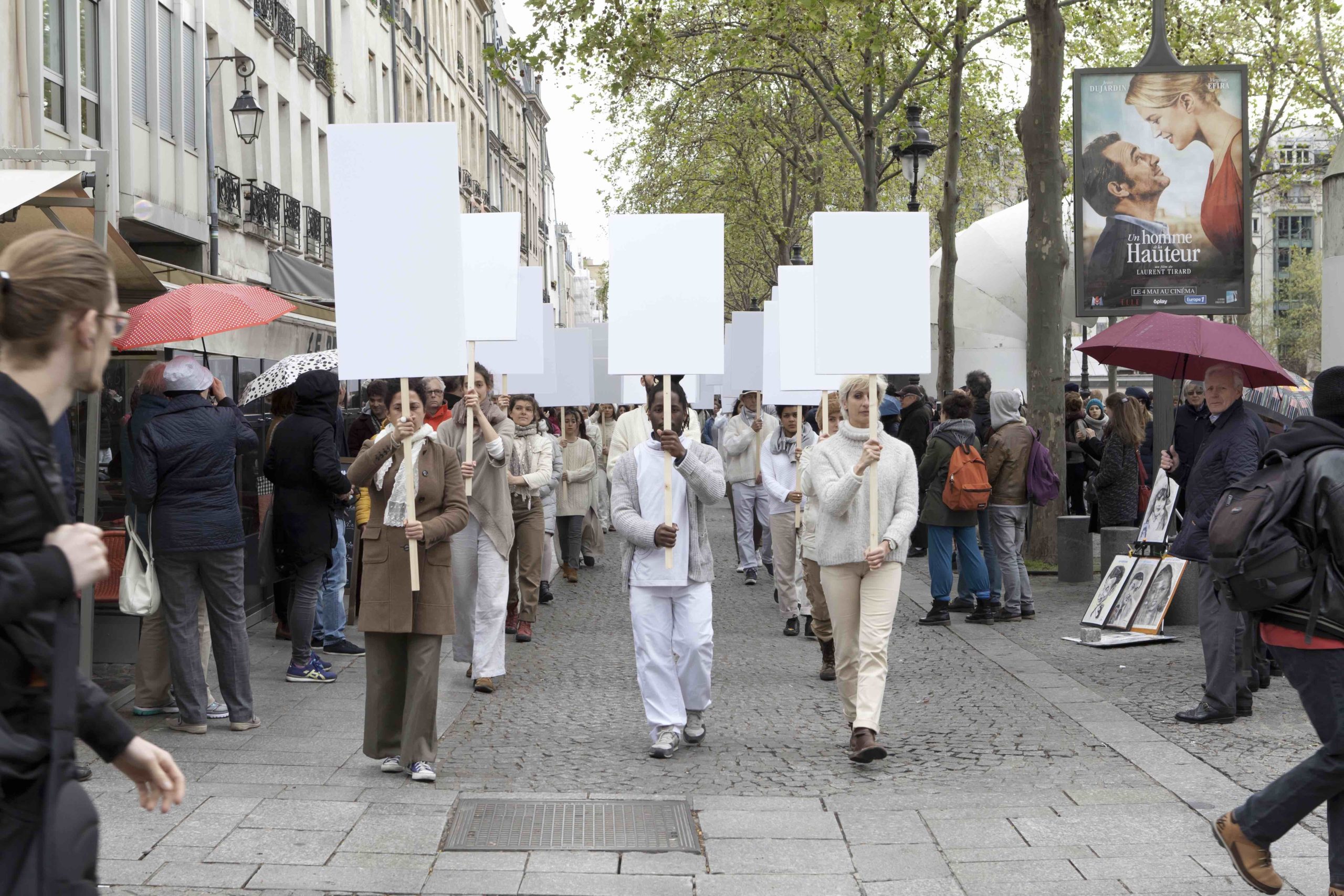
For audiences looking for something immersive and outdoors, Blank Placard Dance, Replay (Sept. 13) is a silent protest march in Center City. The first march of its kind debuted in San Francisco in 1967 from artist Anna Halprin as a response to the Vietnam War. The procession consists of protesters holding blank signs and posters, backed by a marching band; Philadelphia’s performance will be led by choreographer Sherwood Chen. It’s billed as an invitation for public engagement: “When intrigued passersby ask what they are protesting, the marchers turn the question back to them: What do you want to protest? A discussion ensues. Ideas circulate. Protest takes root.”
A scene from “Blank Placard Dance, Replay,” a silent protest march with blank signs. It will performed in Philadelphia on Sept. 13, 2026. Photo credit: Herve VeroneseHerve Veronese
The local experimental dance theater group the Ninth Planet is back at Fringe with a world premiere of The Holy Fool (Sept. 10-19 at Impact Services, 124 E. Indiana Ave.), a dreamy ghost story about an American family struggling with aging, grief, and heartache accompanied by original music featuring trumpet, percussion, and synthesizers.
One of the most curious offerings this year comes from an Estonian clown. In Ha Ha Ha Ha Ha Ha Ha(Sept. 10-13 at the Proscenium at the Drake), Julia Masli wants to solve people’s problems. With a persona that the New York Times described as “halfway between curious child and ingenuous alien just landed on Earth,” Masli asks audience members to tell her their problems and she invents unexpected solutions ranging from funny to serious.
Tickets for Philadelphia Fringe Fest go on sale July 15 for FringeArts members and July 18 for the public.
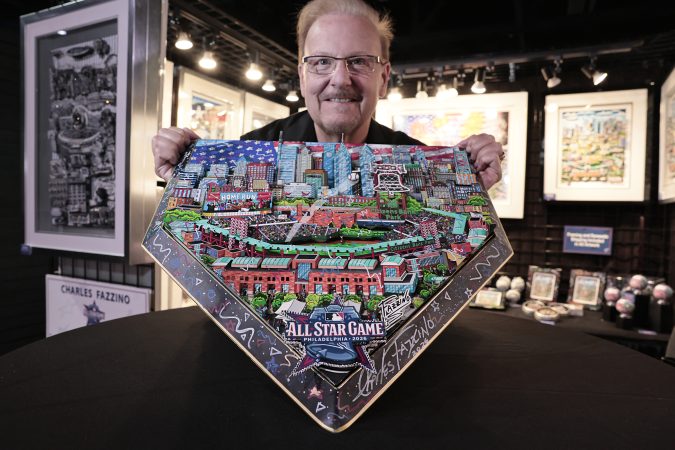
Artist Charles Fazzino’s work jumps out at you. And it sparkles.
Renowned for capturing colorful cityscapes and big sporting events, Fazzino has for decades handcrafted three-dimensional pop-out art to mark major occasions from the Grammys to the Olympics — and, in recent years, the annual MLB All-Star Game.
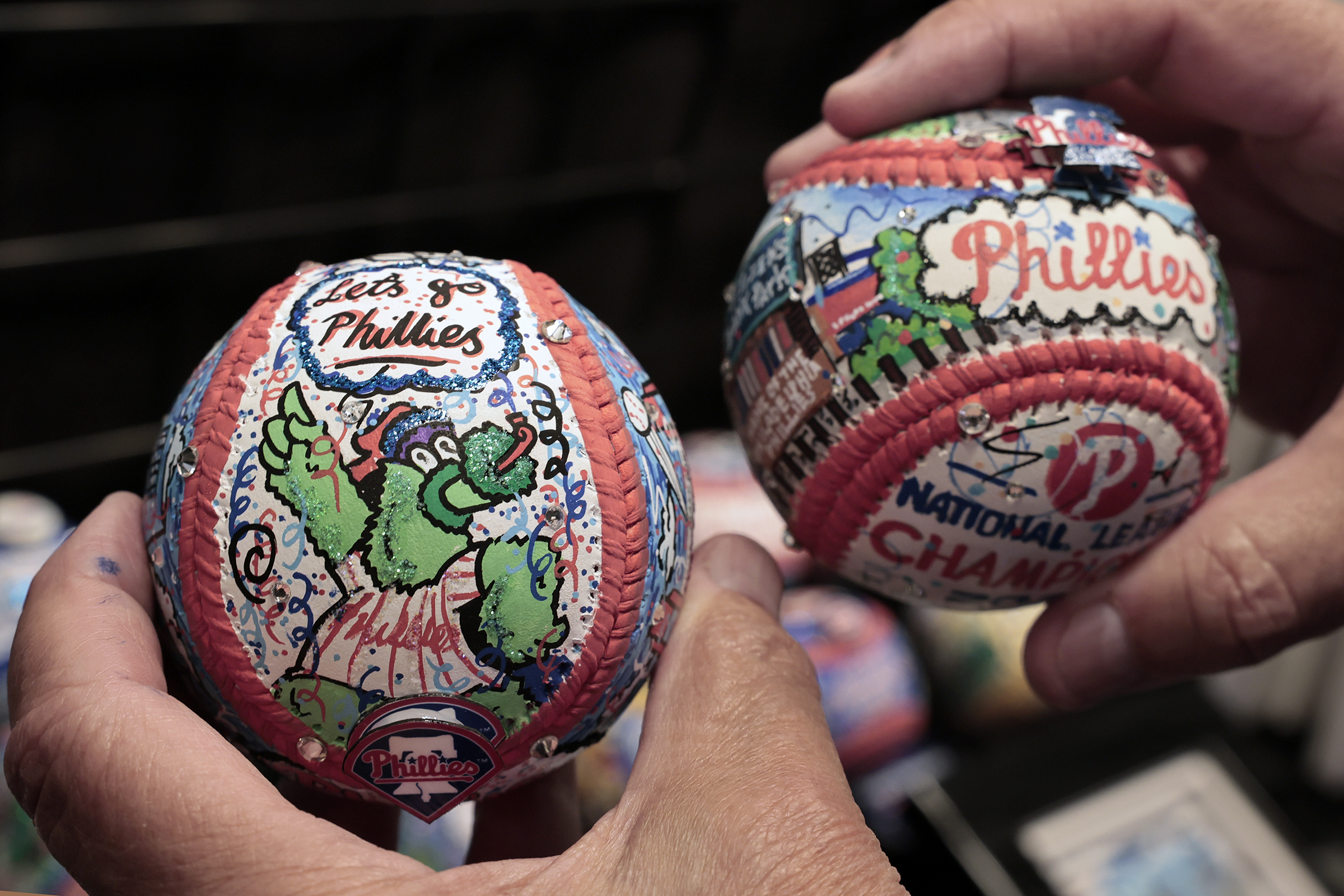
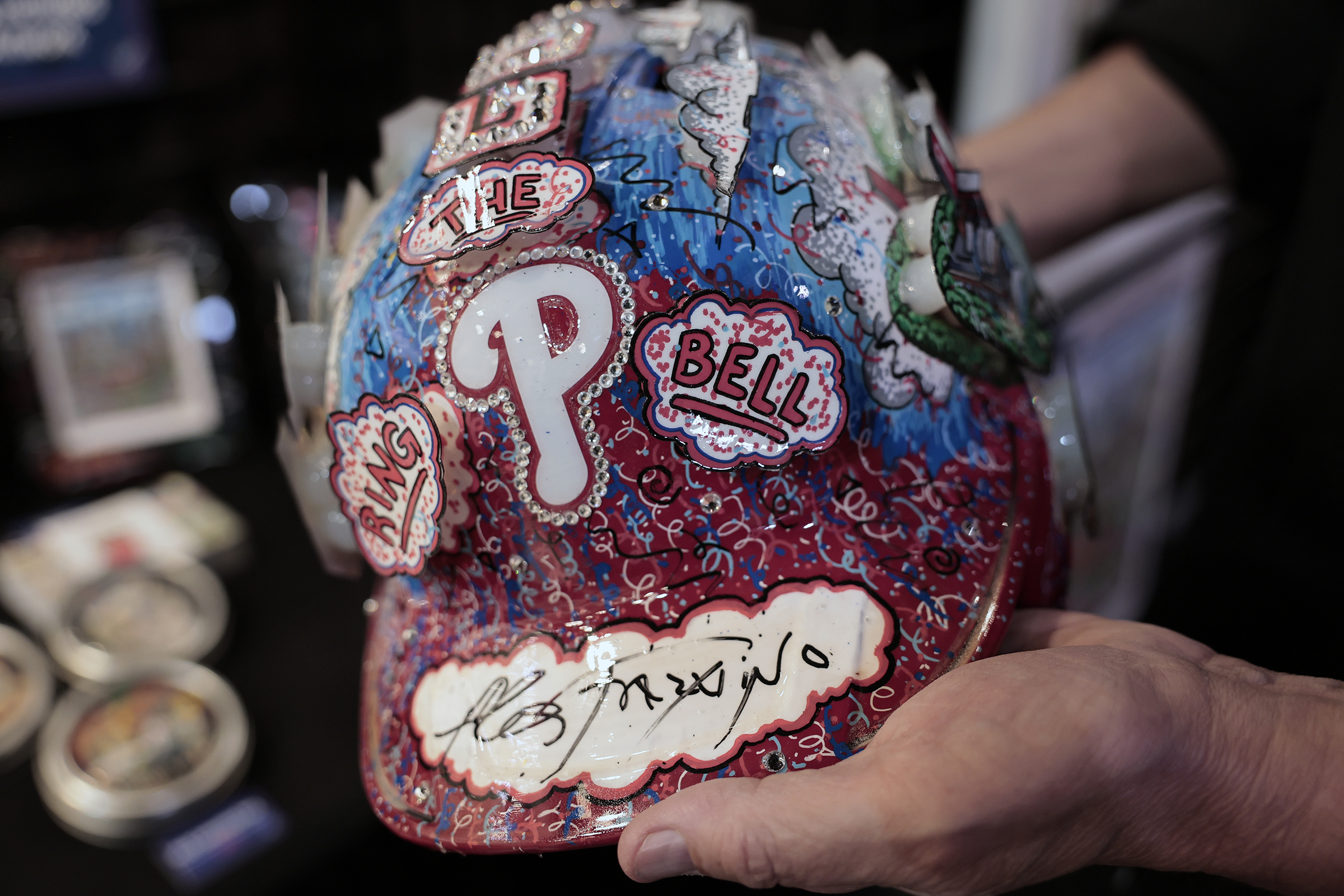
With the game in Philadelphia this year, Fazzino is in town as the official commemorative artist and he is bringing along the MLB All-Star Game portrait and some of his bedazzled baseballs, bats, and helmets to the MLB All-Star Village at the Pennsylvania Convention Center.
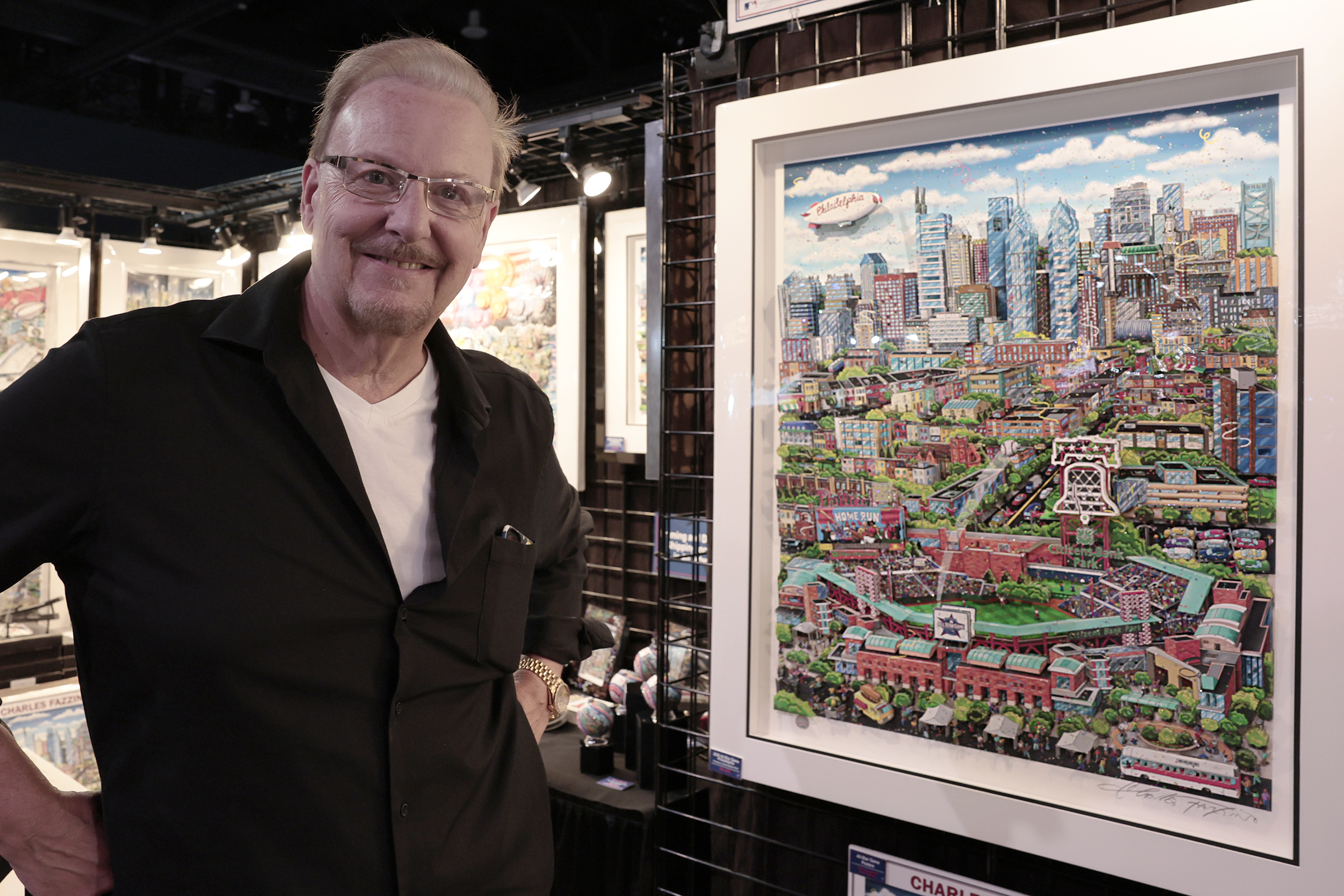
The MLB All-Star Game portrait spotlights the city of Philadelphia, featuring the skyline, Benjamin Franklin Bridge, SEPTA buses, and, of course, Citizens Bank Park.
Artist Charles Fazzino displays his hand painted baseballs available at his booth at the Capital One All-Star Village, Philadelphia Convention Center, on Thursday, July 9, 2026.Elizabeth Robertson / Staff Photographer
The portrait is one of his signature 3D pop-out pieces. Fazzino started making these pieces in the 1990s inspired by pop-up books. First, he prints drawings on a special cardboard-like material called museum board, made of cotton rags, and proceeds to cut out each person, landmark, and building with an X-ACTO knife. Then he meticulously arranges the figures using gobs of glue to create the three-dimensional artwork; the glue is not just an adhesive but a layering tool as well.
Finally, he applies Swarovski crystals and acrylic paint to make the canvas glitter.
His work has been collected by a wide range of fans from Presidents George Bush and Bill Clinton, to celebrities including Julia Roberts, Michael Jordan, and Reggie Jackson. To keep up with the demand, Fazzino runs a studio in New Rochelle, N.Y., with a staff of 60 who help with the painstaking process of cutting and gluing.
Artist Charles Fazzino created the official 2026 All-Star Game poster. His original 3D art that the poster is based on hangs at right. Fazzino was readying his booth at the Capital One All-Star Village at the Philadelphia Convention Center on Thursday, July 9, 2026.Elizabeth Robertson / Staff Photographer
“The artwork is different because everything still is printed by hand, made by hand, cut out by hand, glued, assembled, and constructed all by hand,” said Fazzino, who found a passion for art thanks to his artist parents. “That’s what I think differentiates me from other artists, and why the pieces are so unique.”
Fazzino has been making artwork depicting Philadelphia for years, earning a substantial following in the region as local galleries have sold his work over the past 30 years.
Artist Charles Fazzino displays a custom-made batting helmet that will be available at his booth at the Capital One All-Star Village at the Philadelphia Convention Center on Thursday, July 9, 2026.Elizabeth Robertson / Staff Photographer
“I’ve been going [to Philly] so many years, so I include the Mummers Parade or the Art Museum, Rocky sculpture, all the cool hotels, and the food culture,” he said.
In addition to the All-Star art, he made a piece commemorating the Semiquincentennial, featuring major landmarks from all 50 states.
Fazzino’s original 3D art costs between $3,000-$7,000 with framing, depending on the size, but he also sells posters at lower price points, in addition to a variety of baseball-related art.
At his booth at the Convention Center, visitors can see his Phillies-themed decorative baseballs as well as the ceremonial home plate that will be used in the first pitch at the All-Star Game on Tuesday.
An 1891 building that looks like a castle, a cathedral, and a factory
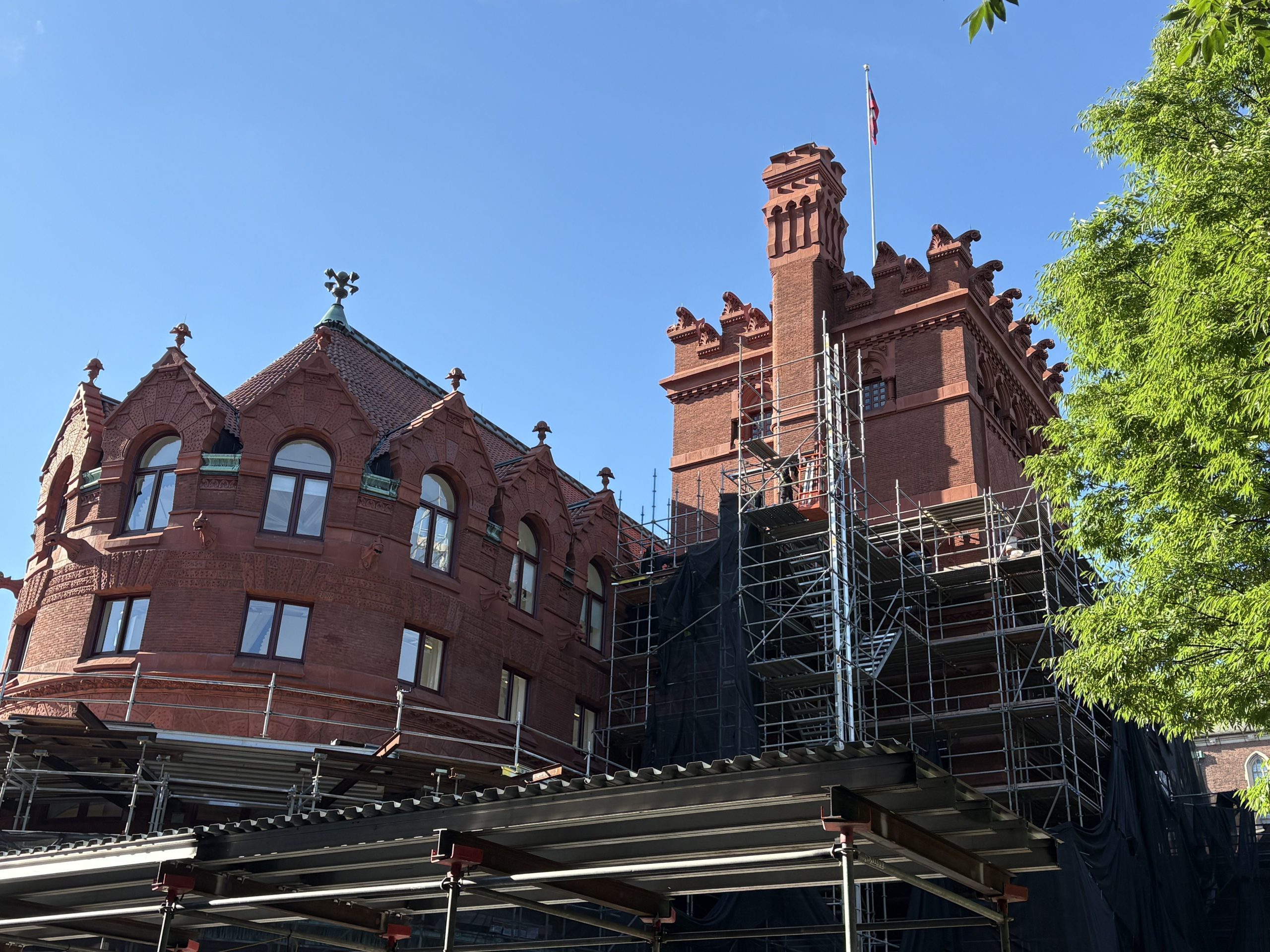
The Anne and Jerome Fisher Fine Arts Library on 34th Street near Walnut hasn’t quite been itself lately, cloaked in a metallic web of scaffolding. But it will soon reemerge after an exterior restoration and promises to be as striking as ever.
Dedicated in 1891, the building has had frequent updates.
“There was a significant [restoration] project done in the 1980s that Venturi’s firm led. It finished around the 100th anniversary of the building in 1991, and that really brought the building back,” said Mark Kocent, Penn’s university architect, referring to the Philadelphia practice then called Venturi, Scott Brown and Associates.
The Anne and Jerome Fisher Fine Arts Library, designed by Frank Furness, at the University of Pennsylvania, July 8, 2026. The exterior of the building from 1891 is being restored.Peter Dobrin
“This is coming back 35 years later and saying, ‘OK, it’s a building that you need to continue to reinvest in.’”
If Penn’s campus is a kind of museum of architectural eras and styles, Frank Furness’s exuberant piece of distinctly Philadelphia Victoriana hits the eye as a masterpiece. Highly ornamented and rendered in deep red-orange tones, the building in one section suggests a castle, a cathedral in another, and, on yet another side, a factory.
The current restoration project, whose principal architect is Vitetta, has a price tag of $16.5 million, and includes attention to the brick and terra cotta plus cleaning of masonry; repairing of the roof; replacing some windows and repainting of windows and doors; and adding lightning protection.
“So really, just kind of tightening the envelope of the building,” said Kocent.
The project began last April and is expected to wrap up this fall.
Penn’s core campus in West Philadelphia has close to 200 buildings totaling around 17 million square feet, says Kocent, and the university conducts ongoing assessments to determine which structures need work.
Among other recent notable restorations was a $87.4 million project at College Hall finished in 2025, and a $238 million renovation of the Quadrangle Dormitories along Spruce Street and Woodland Walk now nearing completion.
The Furness library building, though, is a favorite of Kocent’s, because of its detail and character, but also for a more personal reason: He was once a student at the school himself.
“It was kind of wonderful to have studios in there back in the day where as an architecture student you could go there in the evening at sunset and you’d see the sun setting on the west side of the building, and then after pulling an all-nighter, you’d watch the sun come up on the east side.”
The Fisher Fine Arts Library is at 220 S. 34th St. within the University of Pennsylvania campus.
— Peter Dobrin
Tierra Whack’s new video is for “Candle Wax” from her new mixtape “Whack’s Museum.”PhobyMo
Tierra Whack is back!
Tierra Whack always leaves you wanting more.
The Philly rapper and singer first garnered attention with her 2018 mixtape Whack World. That 15-song, 15-minute debut revealed her to be one of the most imaginative minds in hip-hop.
Since then, Whack has sometimes frustrated fans with her limited output — there’s been just one full-length album since. 2024’s World Wide Whack stretched her stylistically into alt-R&B and pop but didn’t entirely sate the appetite of fans awestruck by her wicked wit and rhythmic command.
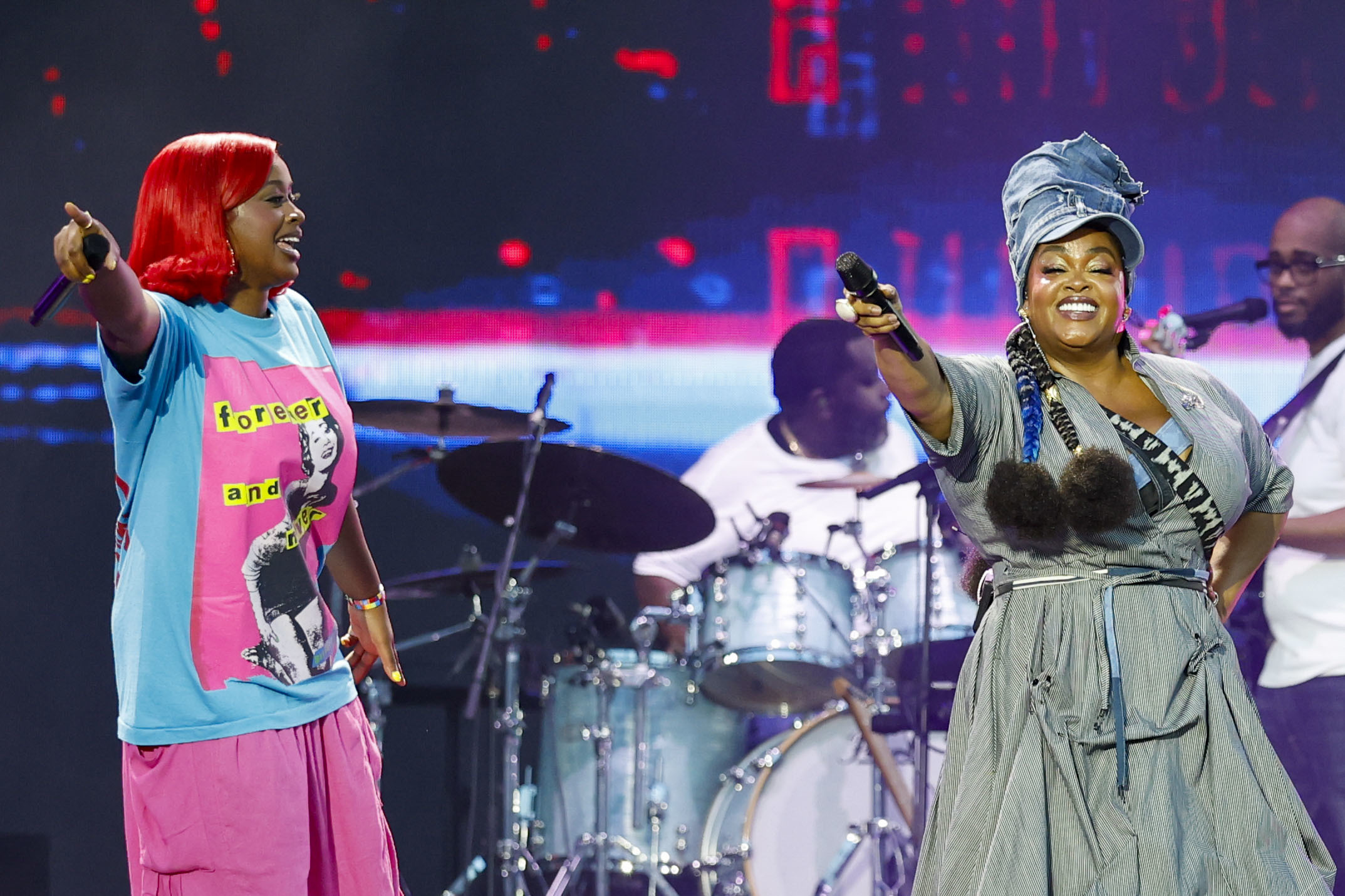
Whack — who was a standout star of the July 4 One Philly: Unity Concert for America in its pre-rain delay phase when she joined Jill Scott for “Norf Side” — finally does serve up the pure hip-hop her enthusiasts have been jonesing for, on Whack’s Museum.
“They said I should rap more,” she says on the opening “Whack Job,” which like much of Whack’s Museum, is a team-up with Kansas City producer Conductor Williams. “I’m the goat, show me who to go at,” she raps. “Shouldn’t have to say it, you should already know that.”
Tierra Whack (left) and Jill Scott on stage at One Philly: Unity Concert for America on the Benjamin Franklin Parkway, on Saturday, July 4, 2026, in Philadelphia.Yong Kim / Staff Photographer
Whack puts her abundant skills, predilection for puns, and interior rhyming on dazzling display throughout Whack’s Museum, which is typically concise and economical, with 12 songs clocking in less than half an hour and none lasting more than 3 minutes.
The mixtape was released on Juneteenth along with a video for “Siren” that featured visual nods to Allen Iverson and the Eagles, and a second also-filmed-in-Philly video for “Candle Wax” was released this week. On Saturday, she’ll perform in New York at the Family Style Food Festival at Pier 36.
“Whack’s Museum” is now available for streaming on music services.
— Dan DeLuca
A young Ben Franklin electrifies the stage
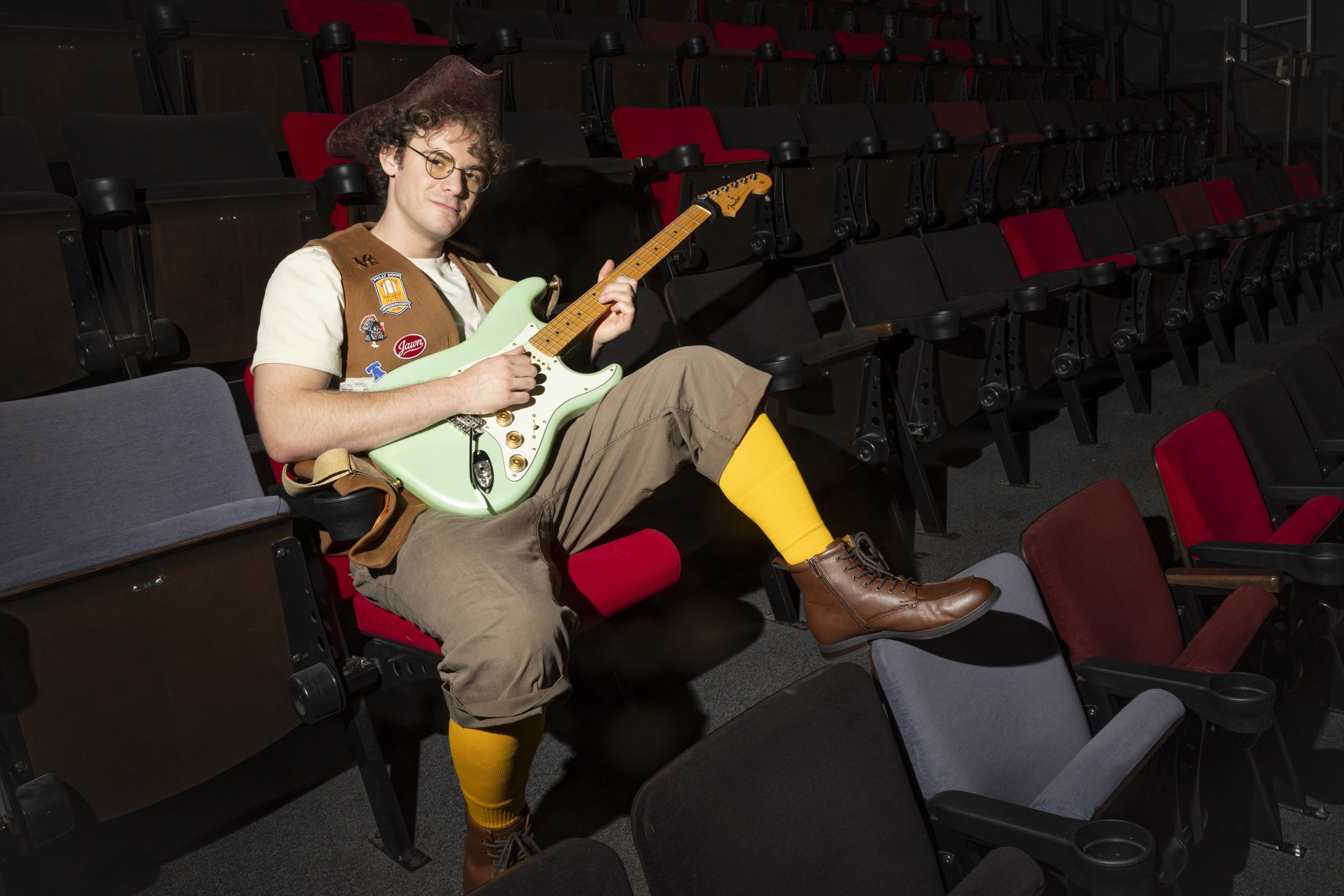
It’s hard to imagine Ben Franklin as anything other than the balding middle-aged man we see on the $100 bill. It’s even harder to imagine him with an electric guitar in his hands — until now.
The new musical The Sound of America imagines the story of Franklin’s younger days but with a twist: He starts a band with his buddies and discovers the electric guitar through a lightning strike.
Kohl Pilgrim, the actor bringing Ben Franklin’s rock ‘n’ roll persona to life, poses for a portrait at FringeArts during a dress rehearsal for “The Sound of America” musical on Wednesday, June 24, 2026.Aidan T. Gallo / Staff Photographer
As fame and fortune twist his morals, he finds himself abandoning his wife and bestie, and led down a dangerous path by a manipulative British lord (with a Shrek-like Scottish accent). Will Ben be able to come back to his roots, or is the power of electric rock ‘n’ roll too enticing to give up?
The show plays at the Delaware River-side FringeArts, fittingly right under the Benjamin Franklin Bridge, through the month of July.
With only two curtains separating the theater from the Fringe Bar, the show is an intimate musical experience.
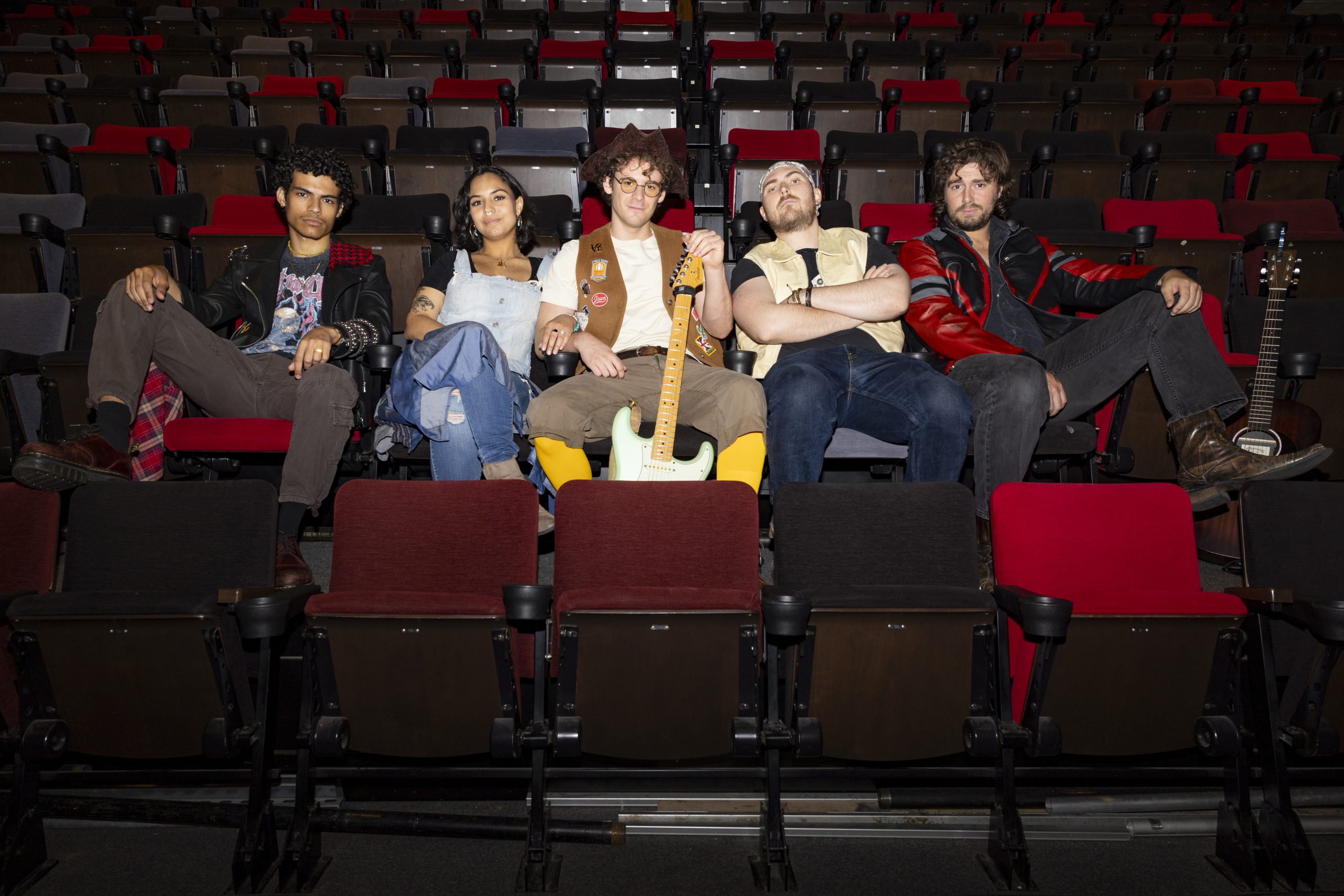
The cast of “The Sound of America” sit for a portrait during a dress rehearsal at FringeArts on Wednesday, June 24, 2026.Aidan T. Gallo / Staff Photographer
It had all of the musical elements I know and love; it felt like I was at one of my dad’s band’s dive bar gigs (which was precisely the feel creators Randall Lane and Todd Schwartz were going for).
The cast, led by Temple graduate Kohl Pilgrim, delivered their songs with ease, blending beautiful vocal harmonies and playing guitar at the same time (witchcraft, to me). Their chemistry was palpable, feeling like they never ran out of energy, even after the 2-hour show had ended.
Amid all the America 250 brouhaha, I have found it hard to find a history-related event that didn’t bore me to sleep. While this show may not be entirely historically accurate, this energetic yet flawed portrayal of a young Founding Father was endlessly entertaining, giving us a gritty Philly-style performance that I’ll never forget.
“The Sound of America” runs through Aug. 1 at FringeArts, 140 N. Christopher Columbus Blvd. Tickets start at $60. soundofamericamusical.com, 215-413-1318, or by email at hello@fringearts.com.
— Morgan Ritter
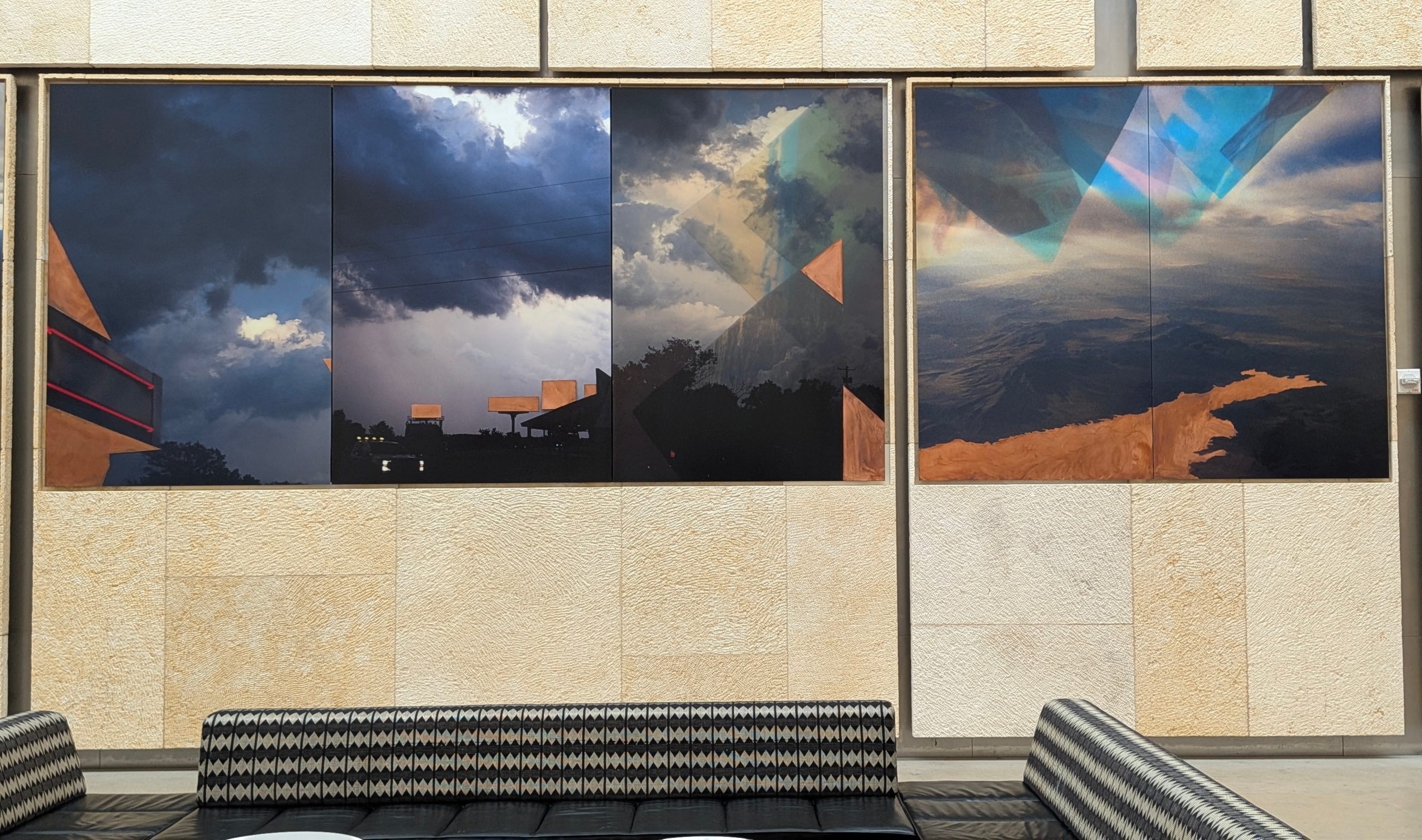
A section of the 11-panel work titled “Red Metal Dust” by artist Sky Hopinka. The artwork is on display at the Barnes Foundation’s Annenberg Court through January.Bedatri D. Choudhury
Copper landscapes and America 250
I have long admired Sky Hopinka’s films — last year’s Powwow People was one of the best of the year. I went to the “Red Metal Dust” exhibit at the Barnes Foundation expecting to see the Native American filmmaker’s video work but was pleasantly surprised when I got to the Foundation’s Annenberg Court.
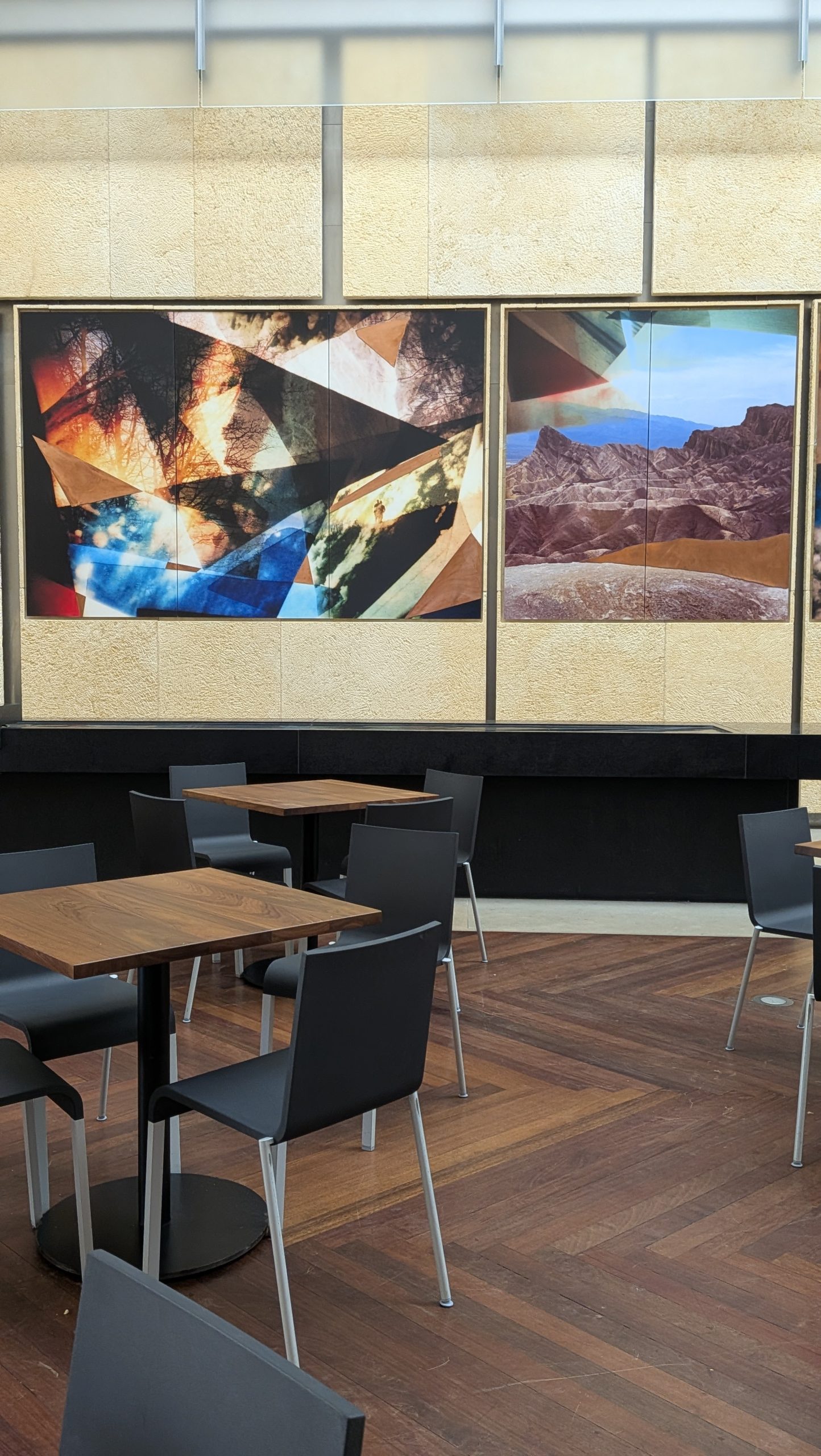
Photographs of sweeping landscapes make up 11 panels that flank one side of the walls. Hopinka uses photo prints of different transparencies to recreate the terrain of Tahlequah, Okla., which, Hopinka said to the arts publication Brooklyn Rail, is “one of the bigger towns in the Cherokee Nation.”
Mountains blend into tree tops, sunsets blend into the day sky, clouds bleed into buildings, human beings form little shadows, and billboards stand against the sky. Pieces of copper glisten in part of the image. It is at once one landscape continuing through the length of 11 panels, and also a different world contained within each panel.
“Red Metal Dust” is the Ho-Chunk way of describing copper— “naming the material not as a monument but as a remainder,” the program note says. The copper on the panels is not treated with wax and will, through the course of the exhibit, change color from oxidizing. What gleams in orange in the afternoon light today may turn greenish in a few days, changing how we see and perceive the landscapes in front of us.
A section of the 11-panel work titled “Red Metal Dust” by artist Sky Hopinka. The artwork is on display at the Barnes Foundation’s Annenberg Court through January 2027.Bedatri D. Choudhury
Hopinka’s work has always focused on Indigenous lands and people’s relationship to them. “Red Metal Dust,” created to commemorate the American nation’s 250th anniversary, centers on land that has been cared for by Native Americans for tens of thousands of years before the land got called a nation. It shows us what remains and reminds us what got taken away. It bears witness to aging and change and instead of looking at the country as one chunk of a land mass, “Red Metal Dust” gives us pause to stop and look at the many layers of disruption and repair that lie beneath what meets us in the eye. It is a reminder that this land was a nation of its own people who are way older than its 250 years of history.
“Red Metal Dust” runs through Jan. 18 at the Annenberg Court, Barnes Foundation, 2025 Benjamin Franklin Pkwy. barnesfoundation.org
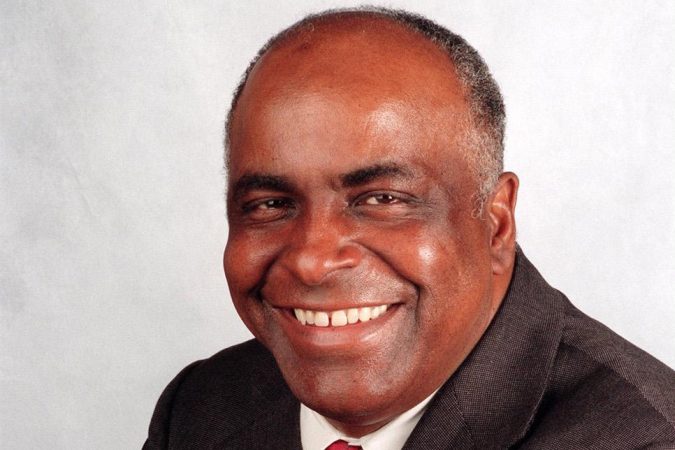
Richard H. Glanton, 79, formerly of Philadelphia, longtime lawyer, onetime executive deputy counsel to former Gov. Dick Thornburgh, business entrepreneur, former Lincoln University trustee, and innovative former president of the Barnes Foundation, died Sunday, June 21, of a heart attack at his home in Princeton.
Born and reared in rural Georgia and one of the first Black graduates of what is now the University of West Georgia, Mr. Glanton went on to become a prominent Philadelphia lawyer, state government policy and administration expert, corporate vice president, and indefatigable president of the Barnes Foundation’s collection of Impressionist, post-Impressionist, and modern art.
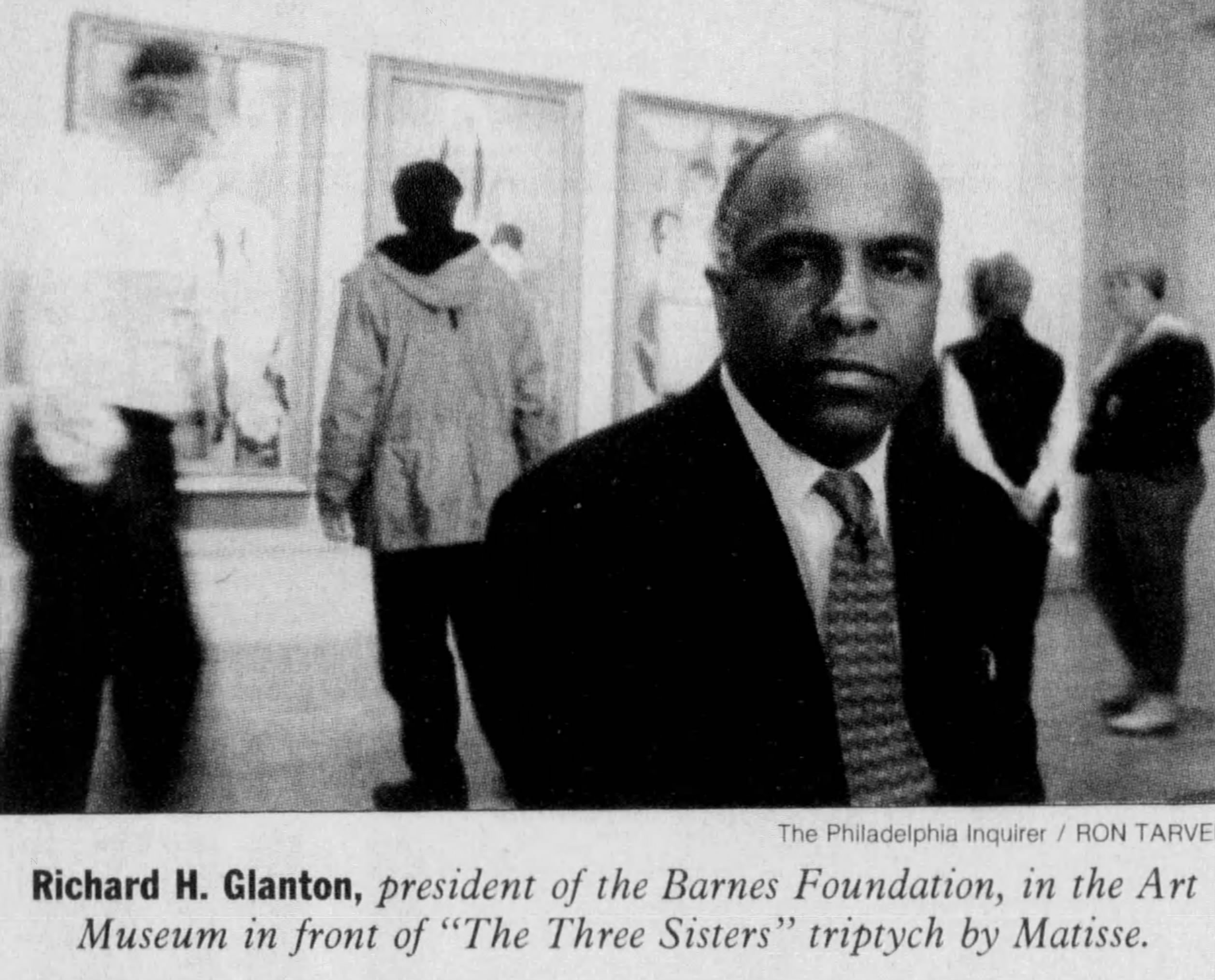
He was elected president of the Barnes Foundation in 1990, served until 1998, and championed a series of controversial initiatives to finance extensive gallery renovations and the operation of its art collection and related educational programs. To raise the money, he suggested, among other things, selling 15 of the collection’s hundreds of paintings, charging million-dollar fees for a worldwide lending tour of 83 paintings, extending visiting hours, increasing admission, building a new parking lot, selling a coffee-table catalog, and renting out its art studios.
All of his ideas, several of which did not materialize, drew supporters and critics, and Mr. Glanton, also a Barnes trustee, spoke often of his policy discussions with other Barnes officials, art experts around the world, politicians, and neighbors of the foundation building in Lower Merion Township. In 1990, he told The Inquirer: “I never purported to know anything about art. But I can lead.”
His most successful project turned out to be a two-year world lending tour of 83 foundation paintings that raised about $20 million and drew raves from museum leaders in Washington, Paris, Tokyo, Fort Worth, Toronto, and Philadelphia. The exhibition in Paris drew a then-record 1.5 million visitors, and Mr. Glanton was feted at every stop.
“Richard is somebody who started out by wanting to do something good and important and substantial, and persevered to do it despite a great deal of criticism,” Glenn D. Lowry, then director of the Art Gallery of Ontario, told The Inquirer in 1995.
Some critics said Mr. Glanton and others valued the foundation’s commercial success over its original educational role and what The Inquirer’s Edward J. Sozanski called “the Barnes mystique.” When the lending tour ended at the Philadelphia Museum of Art in 1995, Mr. Glanton told The Inquirer: “I never realized or understood that it could be controversial to make available to the public a collection that is a public trust.
“But I think if you think something’s right, you should do it, whether or not people disagree, and whether it is popular or not. … You have to think not only in terms of your lifetime, but in 100 years, 1,000 years. And when you do, these little slings and arrows don’t really matter that much.”
A story and this photo of Mr. Glanton appeared in The Inquirer in 1995.Newspapers.com
Mr. Glanton was executive deputy counsel to Gov. Thornburgh from 1979 to 1983, and he met often with constituents and helped fill judicial vacancies. “Richard is a political animal,” Ted Pillsbury, then director of the Kimbell Art Museum in Fort Worth, told The Inquirer in 1995. “He understands politics. He understands what makes politics work, and he understands people. And he does not take certain things personally.”
Mr. Glanton earned his law degree at the University of Virginia School of Law in 1972 and spent several years with the Equal Employment Opportunity Commission, United Airlines, and other companies. In Philadelphia, he represented politicians and other notable clients, and specialized in energy, insurance, and real estate cases for firms known now as WolfBlock and Reed Smith.
He was also senior vice president of corporate development at Exelon Corp., founder of a local TV station, social media company, and consulting firm, and board member at Aqua America, the Morris Arboretum, Children’s Hospital of Philadelphia, and other groups. He ended a workplace sexual harassment suit with a private settlement in the early 1990s and had public policy spats with local government officials and former Lincoln president Niara Sudarkasa.
He considered running for mayor in 1995. Former Gov. Ed Rendell said: “He was exceptionally bright, courageous, and never afraid to challenge the status quo in pursuit of what he believed was right.”
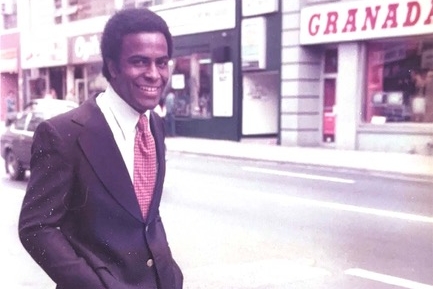
Mr. Glanton was at home in a suit jacket and tie.Courtesy of the family
One of 11 children, Richard Howard Glanton was born Nov. 21, 1946. He was reared in rural Villa Rica, Ga., did not start school until the fourth grade, and worked with his siblings for years on the family farm.
He earned a bachelor’s degree in English and, in 2005, was awarded an honorary doctorate from West Georgia. He married Scheryl Williams, and they had a daughter, Morgan, and a son, David.
After a divorce, he married Eileen Candia, and they had a daughter, Georgia. They lived in Philadelphia and Chicago, and moved to Princeton in 2009.
Mr. Glanton was a doting father, his family said. He taught his children to ride bikes and read Shakespeare. “He taught me that there was no room in which I didn’t belong or couldn’t strive to enter,” his daughter Morgan said. “I love him for that.”
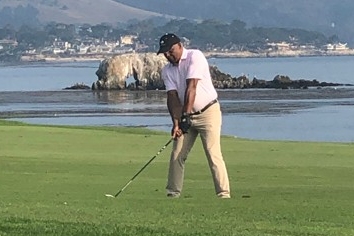
Mr. Glanton was an avid reader and golfer.Courtesy of the family
Nearly everyone he met remembered his laugh and perpetual suit jacket and tie. He played golf, was an avid reader, and would talk politics for hours.
“He was fearless in his conviction to do what he believed was necessary and proper to achieve his goals and provide for his family,” his son said. His wife said: “He was kind and generous. He made everyone he spoke to feel special. He was always bringing you in.”
In addition to his wife, children, and former wife, Mr. Glanton is survived by two sisters, four brothers, and other relatives. One sister and four brothers died earlier.
Memorial services are to be held at noon Saturday, July 18, at Pleasant Hill United Methodist Church, 119 Thomas Dorsey Dr., Villa Rica, Ga. 30180, and at 11 a.m. Friday, Sept. 18, at the Union League, 140 S. Broad St., Philadelphia, Pa. 19102.
On entering Suburban Station from the 16th Street entrance, one is welcomed by a vast, bare-walled concourse punctuated by empty retail spaces.
And then you turn right.
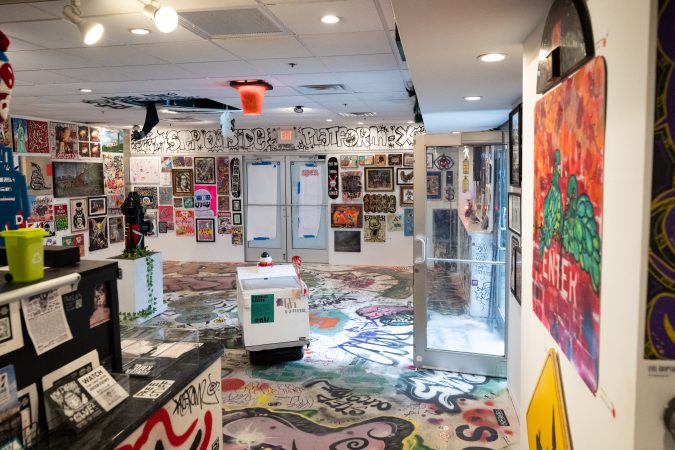
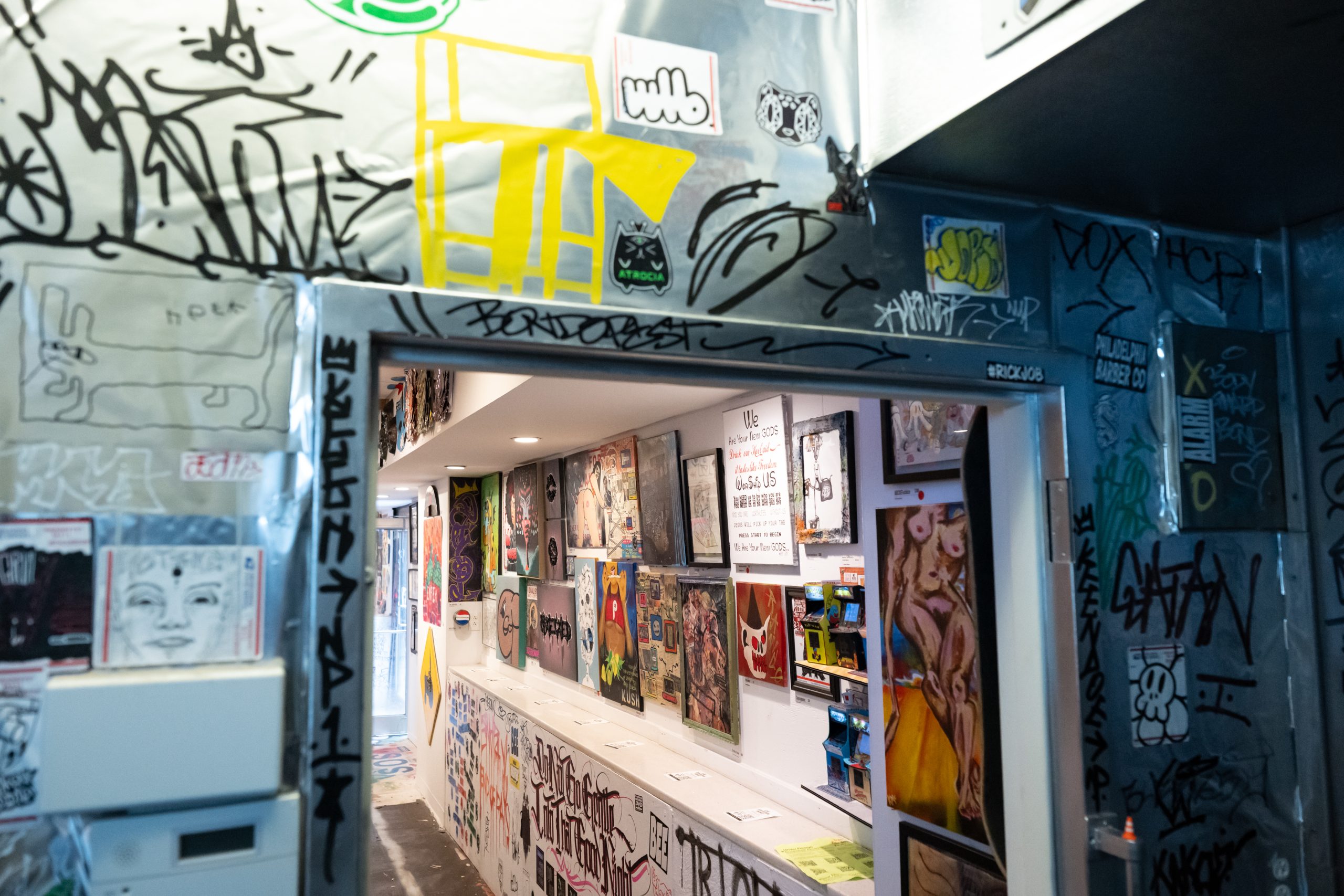
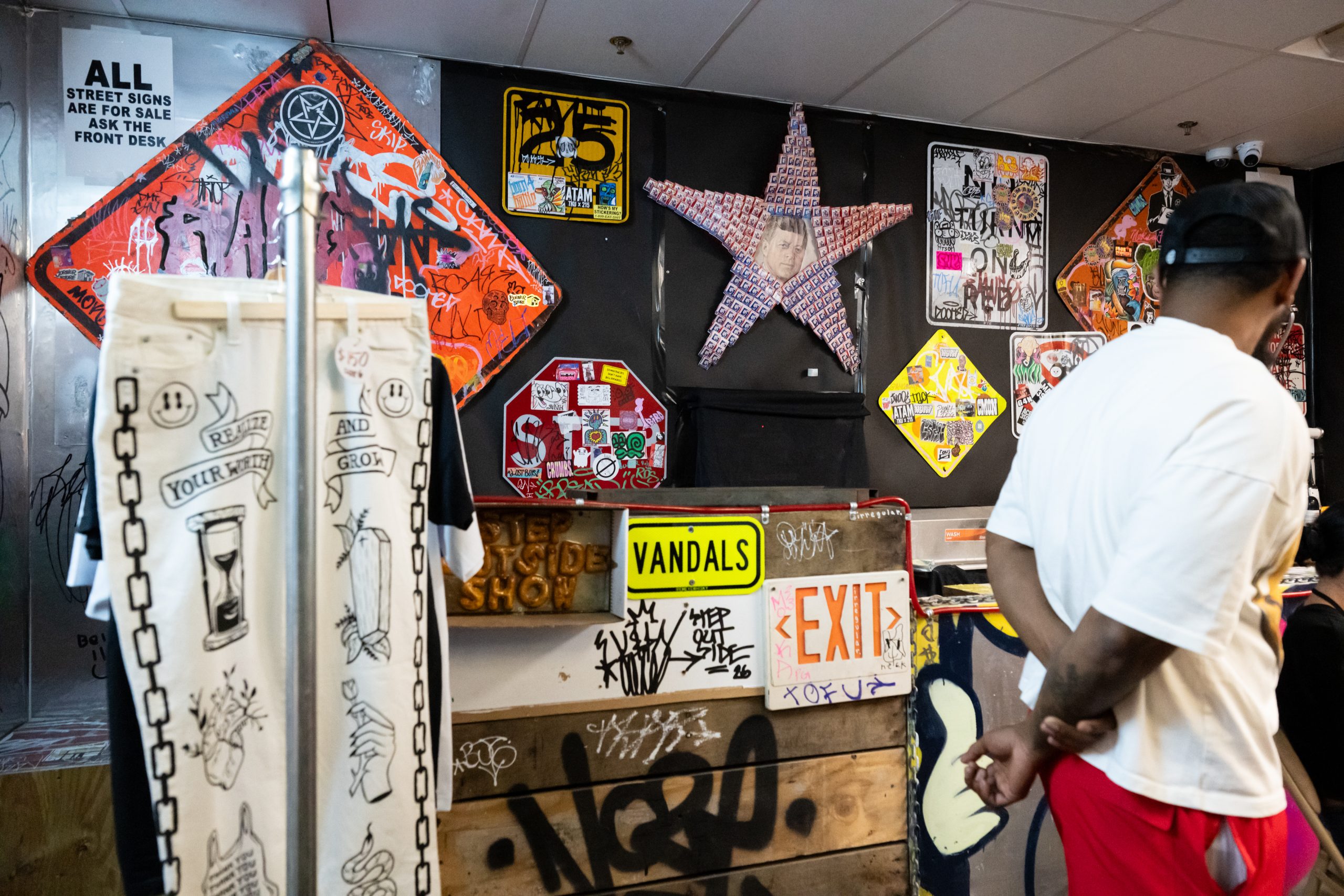
A painting made to look like a subway car stands out against the blank concourse. The inside is entirely covered in graffiti, along with paintings, drawings, and mosaics. Not an inch of space is bare.
Organizers and artists greet people as they come in and share stories about their street art journey.
A room in the exhibit looks like the inside of a SEPTA BSL train car, orange seats and all.
This is “Platform X,” a new era of graffiti art, organized by Step Outside, an artist-led program that transforms existing spaces into graffiti havens.
Exhibition curator and fashion designer Zucati Zuce poses for a photo at Platform X.Erin Blewett / For The Inquirer
“We’re all street artists and we care about this more than anything,” said the artist who goes by the name Doomed Future. “There’s not much opportunity in galleries to showcase graffiti and street art here in Philly. We want to have our own thing here.”
Doomed Future works alongside Step Outside organizers Philmadelphia, Inphltrate, Zucati Zuce, Raw G Zero, Ianismymiddlename, and RoboQ4. Because graffiti is considered criminal mischief under Pennsylvania law, the artists did not want to share their real names for this article.
SEPTA representatives reached out to Doomed Future in January and asked them to take a look at the vacant spaces for rent in Suburban Station for a potential exhibit. The artist decided to rent a space from a real estate agent.
Artwork showcased in the Platform X art exhibition, in which the back room was made to look like a subway car.Erin Blewett / For The Inquirer
“Street art’s grimy — it’s real, gritty, dirty,” Doomed Future said, “and so is the subway.”
A more rebellious Semiquincentennial
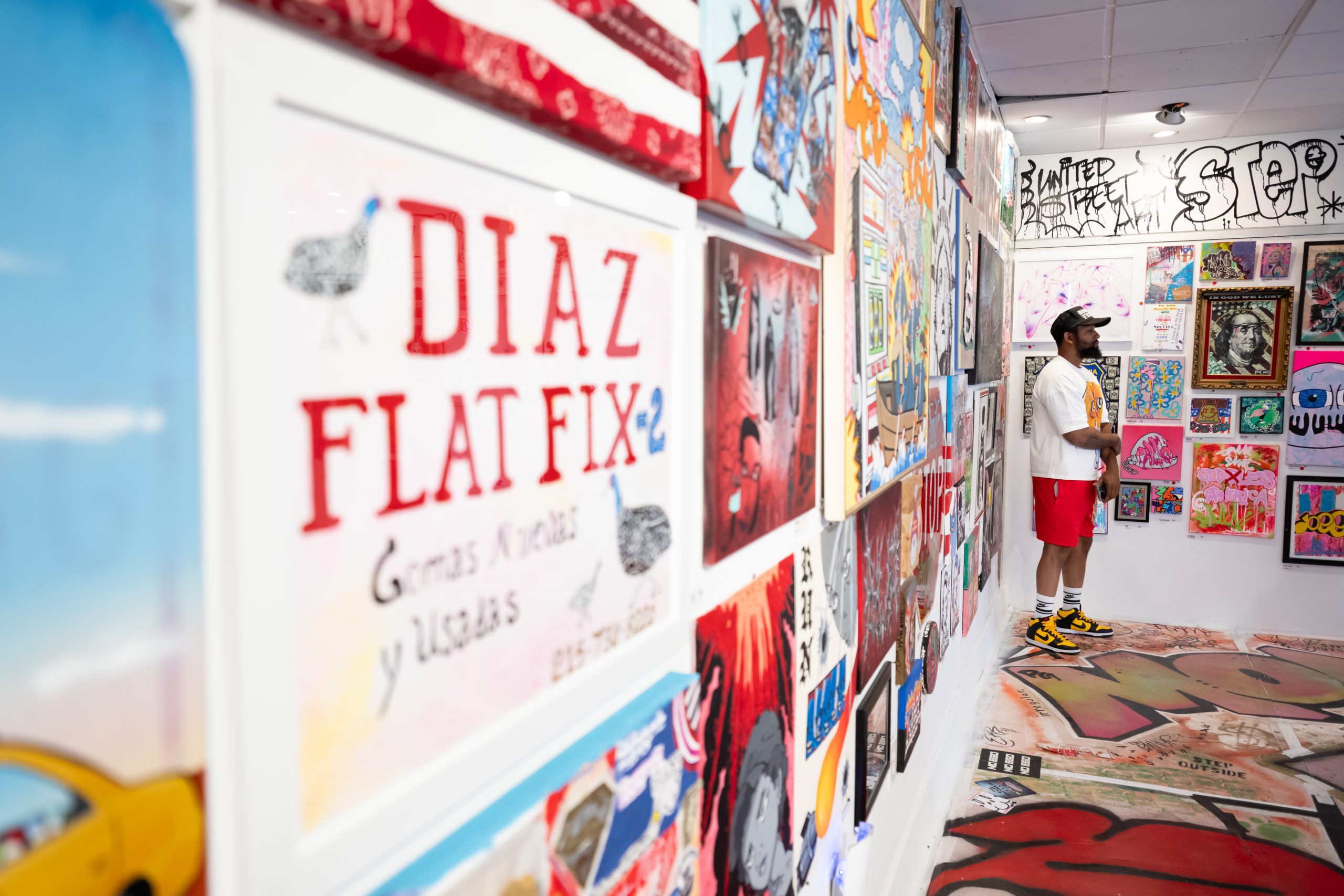
“USA 250″ is the theme around which 250 artists imagined their graffiti art.
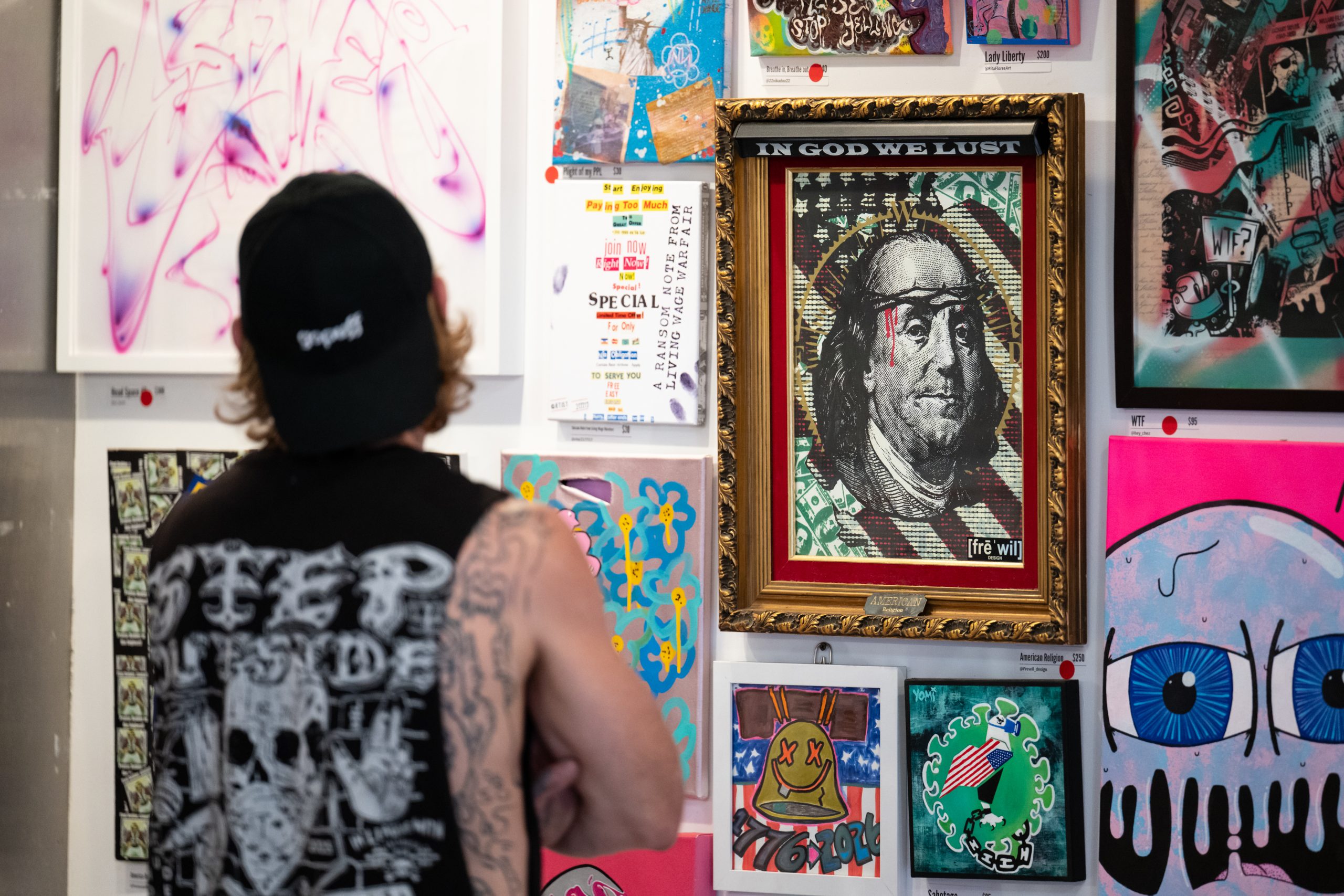
One piece, American Religion, depicts Benjamin Franklin with a crown of thorns and the words “In God We Lust” above his head, certainly a switch from the patriotic depictions of the Founding Father we’ve seen for the Semiquincentennial.
Exhibition organizer Ianismymiddlename looks at artwork at Platform X, including “American Religion” by @Frewil_design.Erin Blewett / For The Inquirer
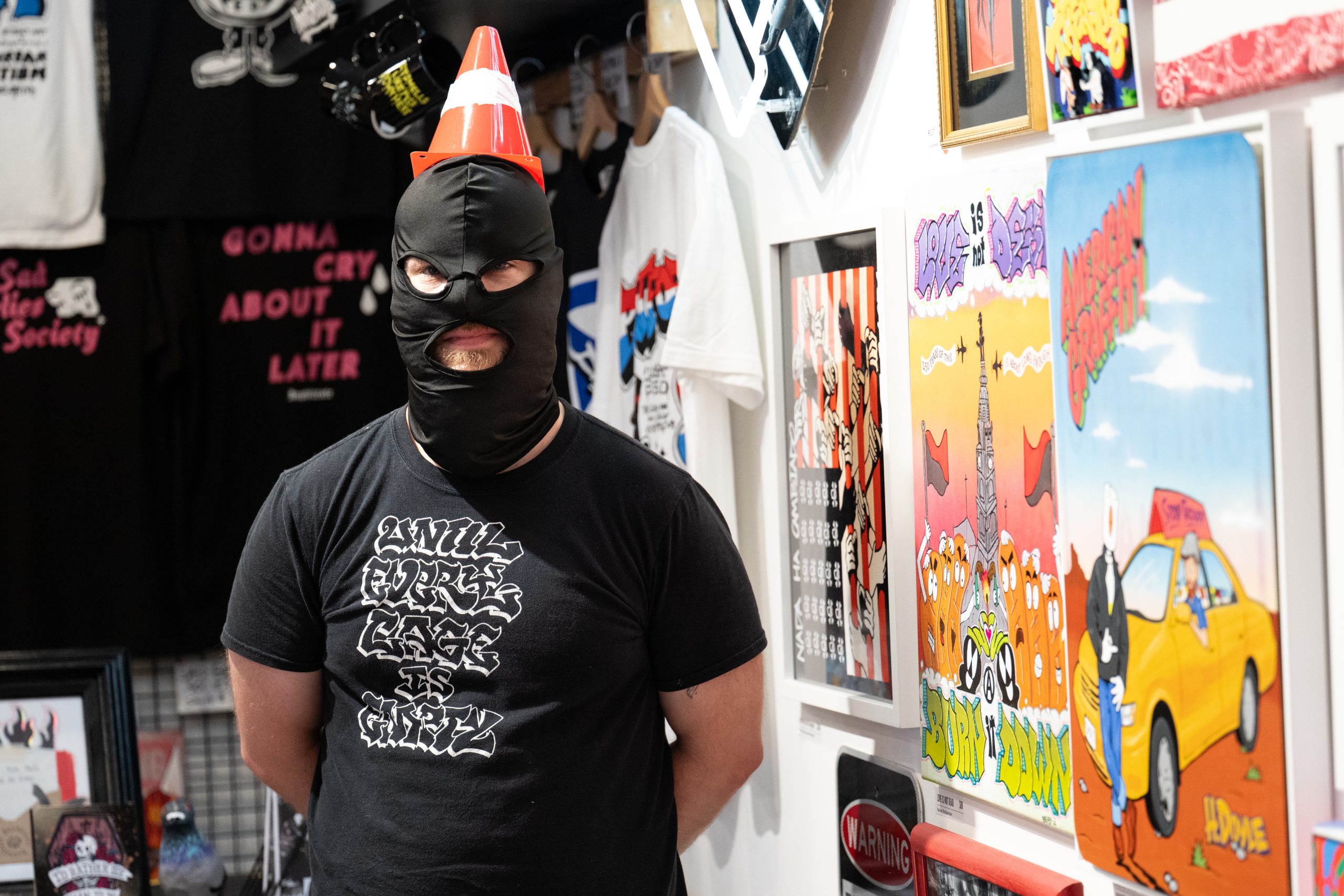
Other pieces present a more rebellious yet optimistic view. Love Is Not Dead by Banjax the Balaclava depicts a bunch of angry figures holding anarchist flags in front of City Hall, with a match burning between two traffic cones at the center.
“The thinking behind it was that there’s been a lot of burnout and frustration, particularly with folks that have been active in the street, fighting against injustices,” said Banjax. “I think it’s important to bring the message of love into these spaces as much as there is rage. As things get harder, continue to heat up, I want to remind people of that love is at the core of what we do.”
Artist Banjax the Balaclava poses with “Love Is Not Dead” at Platform X.Erin Blewett / For The Inquirer
“Platform X” is Step Outside’s fourth showcase after a year of operation, with this one put on in collaboration with the nonprofit United Street Art (USA). United Street Art is dedicated to advancing and highlighting street art and graffiti. Most of the artwork is for sale, with all profits going directly to the artists.
“Supporting the artists is our main mission. We’ve been doing free shows before, and this is our biggest one,” said RoboQ4 aka Robb Quattro, executive director of USA. “This is a big, long-term investment for us and we’re ready to continue doing more shows beyond this one.”
Establishment vs. antiestablishment
Graffiti, as an art form, is inherently antiestablishment, and the establishment still does not receive it well.
At the start of the year, the city announced the Gateways to Philadelphia project. In collaboration with Mural Arts and Pennsylvania Horticultural Society, it invests $11.5 million toward beautification initiatives, including landscaping, new murals, and graffiti removal.
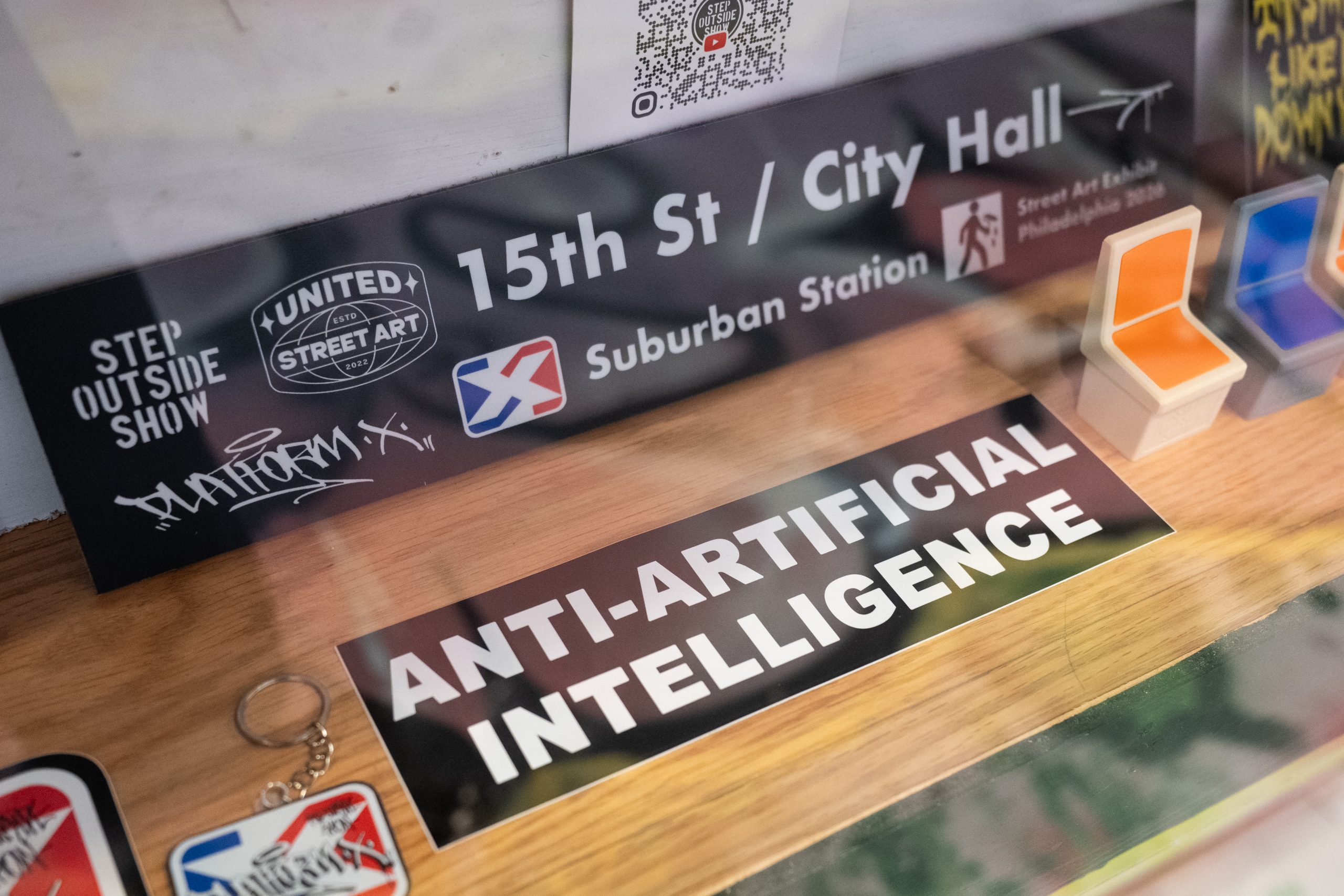
A sign for the Step Outside art exhibition with a sticker that says “Anti-Artificial Intelligence.”Erin Blewett / For The Inquirer
“I can understand some people saying some graffiti is an eyesore, but there’s a lot that’s not,” said contributing artist Satan, who has been making graffiti art for over 40 years. “This is helping me as an artist grow.”
The show has been received glowingly by visitors, who have been invited to add to the art themselves. People have drawn on the walls with chalk, spray painted their own tags, and left stickers anywhere there was room.
On Father’s Day, there was a father-son duo putting their own graffiti on the wall, said artist and organizer Inphltrate. “That was really cool to see,” she said. “This is a safe haven for not only street art and graffiti, but for any person who is creative who needs an outlet. You are safe and accepted here.”
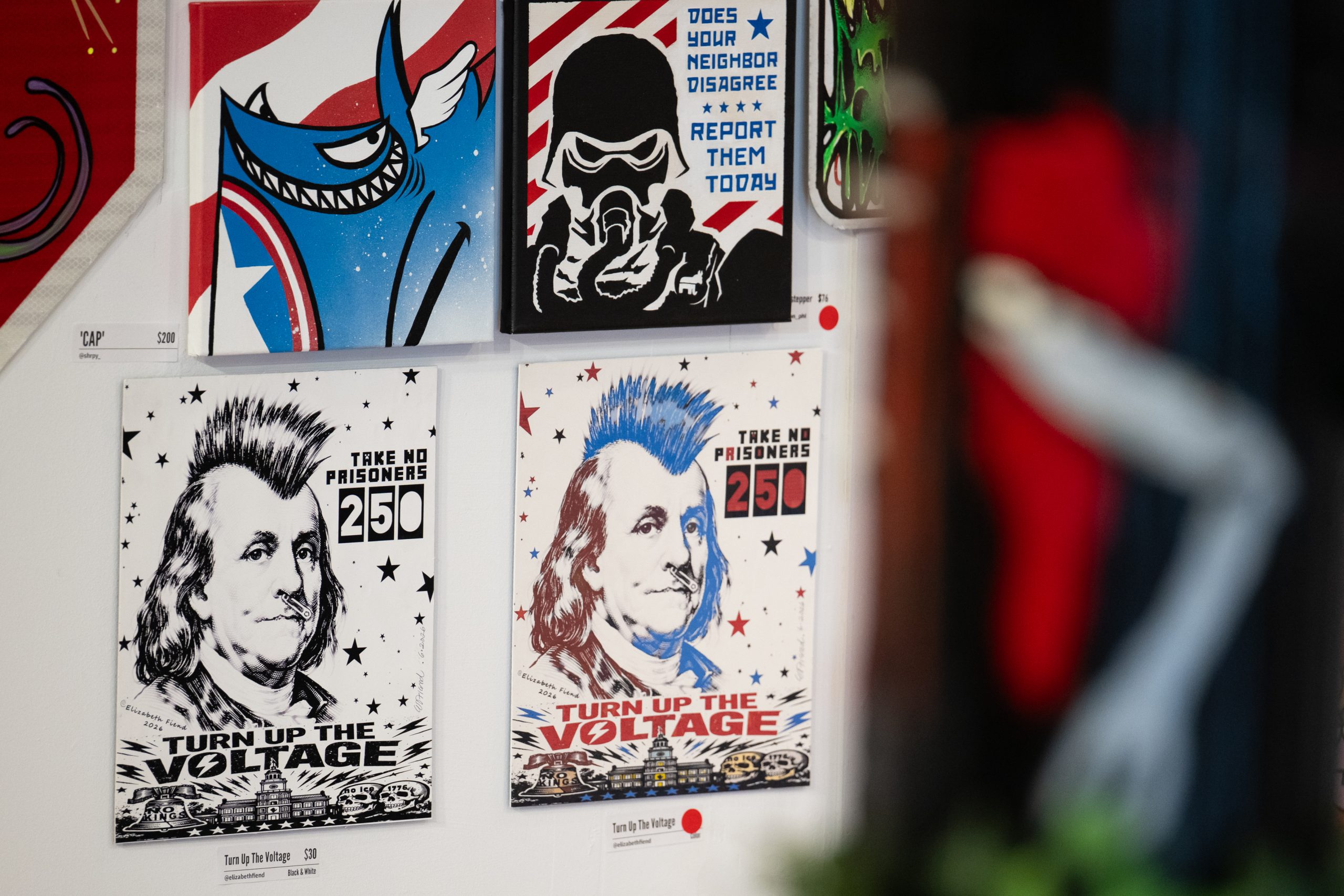
Artwork by the artist, who wishes to be identified with their Instagram username, @shrpy_ (top), and Elizabeth Fiend (bottom) is pictured at Platform X.Erin Blewett / For The Inquirer
“Writing our names, I didn’t look at it as art. We were vilified,” said wallwriter Lewis Pittman, also known as Lewis or King Lewis in the street art scene. “I’m glad I’m still above ground to see the evolution of this culture. I’m glad it’s accepted as an art form.”
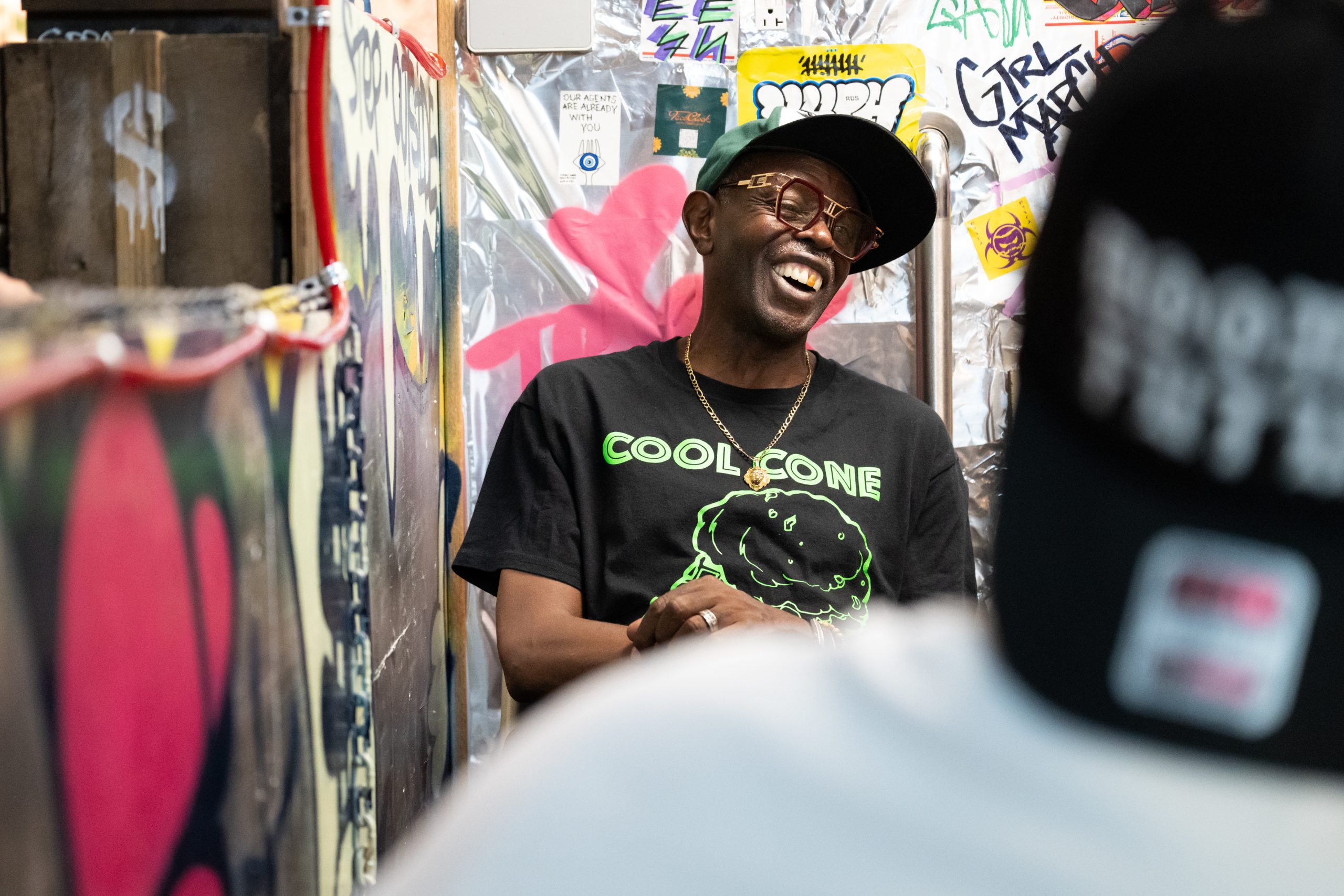
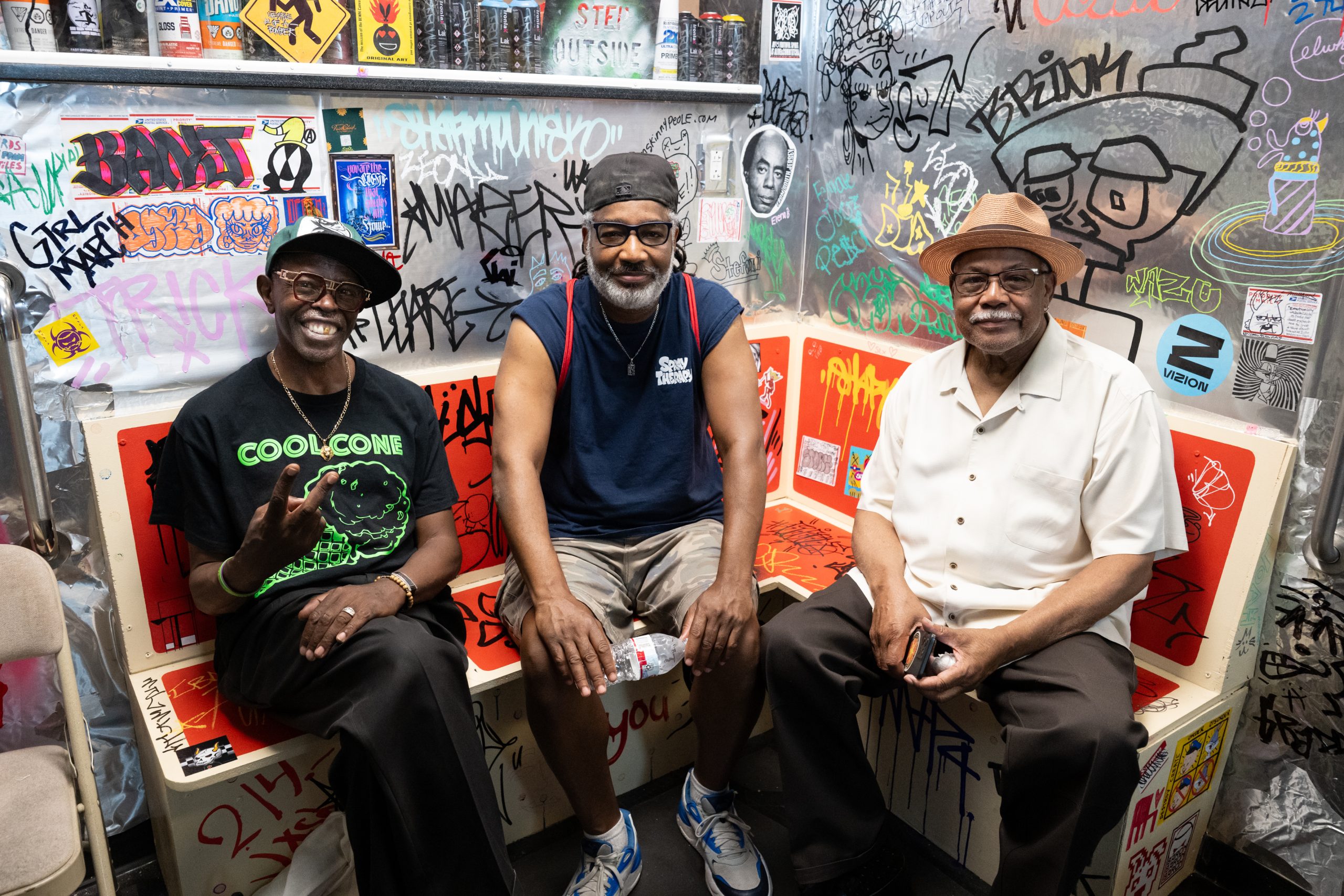
Pittman is one of Philadelphia’s original “wallwriters,” which is what graffiti artists called themselves in the 1970s. Pittman, along with wallwriters like Cool Cone and Cornbread, helped popularize the now iconic Philadelphia “gangster” handstyle, defined by tall, condensed letters.
“I remember Sunday nights going to Fern Rock, writing on all the buses and trains,” Cone, aka Cone ICP, said. “On Monday morning, nothing but my name came down Broad Street.”
Curator and fashion designer Zucati Zuce stands in front of street signs with graffiti, all of which are for sale.Erin Blewett / For The Inquirer
After the USA 250 show closes, Step Outside plans to put on a Then and Now-themed showcase in August at Platform X, showing the evolution of street art. Incorporating and paying respect to the OGs who popularized the art form is a necessity for their exhibits.
The deep history of Philly graffiti
As a teenager, Cone founded Imperial Casanova Persuaders (ICP), one of the country’s original graffiti clubs, known for tagging public transportation. They helped originate the “wicked” variant of the Philly gangster handstyle, which puts a more wild, energetic spin on the lettering.
“They could look at us as being the start of murals, too, since a lot of stuff started in Philly. But we don’t get the recognition because a lot of people don’t speak on it,” he said. “In American history, we’re one of the best kept secrets.”
Contributing artist and self-styled wallwriter, who wishes to be identified as Cool Cone, is interviewed by a reporter. As a teenager, he founded graffiti club ICP. Erin Blewett / For The Inquirer
Philadelphia, with its thousands of murals, is billed as the “Mural Capital of the World.” Mural Arts Philadelphia, the country’s largest public arts program, started off being a part of Philadelphia Anti-Graffiti Network in 1984.
Cone, like many graffiti artists, had several run-ins with police officers in the 1970s, getting targeted for wallwriting. Today, he travels the nation, speaking at museums and various art events, recognized as a trailblazer in street art history.
From left: Artists Cool Cone, Satan, and Lewis Pittman pose for a portrait at Platform X. The three are trailblazers in Philadelphia’s street art scene, going back to the 1970s and 1980s.Erin Blewett / For The Inquirer
ICP’s symbol, a capital “I” with two dots on the side, can still be seen tagged around the city and even in Platform X.
“You’re not going to stop the wallwriters,” Pittman said.
Closing receptions for the “Platform X” USA 250 show are Friday, July 10, from 5 to 10 p.m. and Saturday, July 11, from 1 to 10 p.m. The exhibit will stay open for the rest of the summer.
Platform X is located in Suburban Station down the steps on 16th Street between Market Street and JFK Boulevard in Center City, Philadelphia. More information on stepoutsideshow.com and @stepoutsideshow.