The Broad Street Avenue of the Arts makeover project, which broke ground in January, is inching its way to completion.
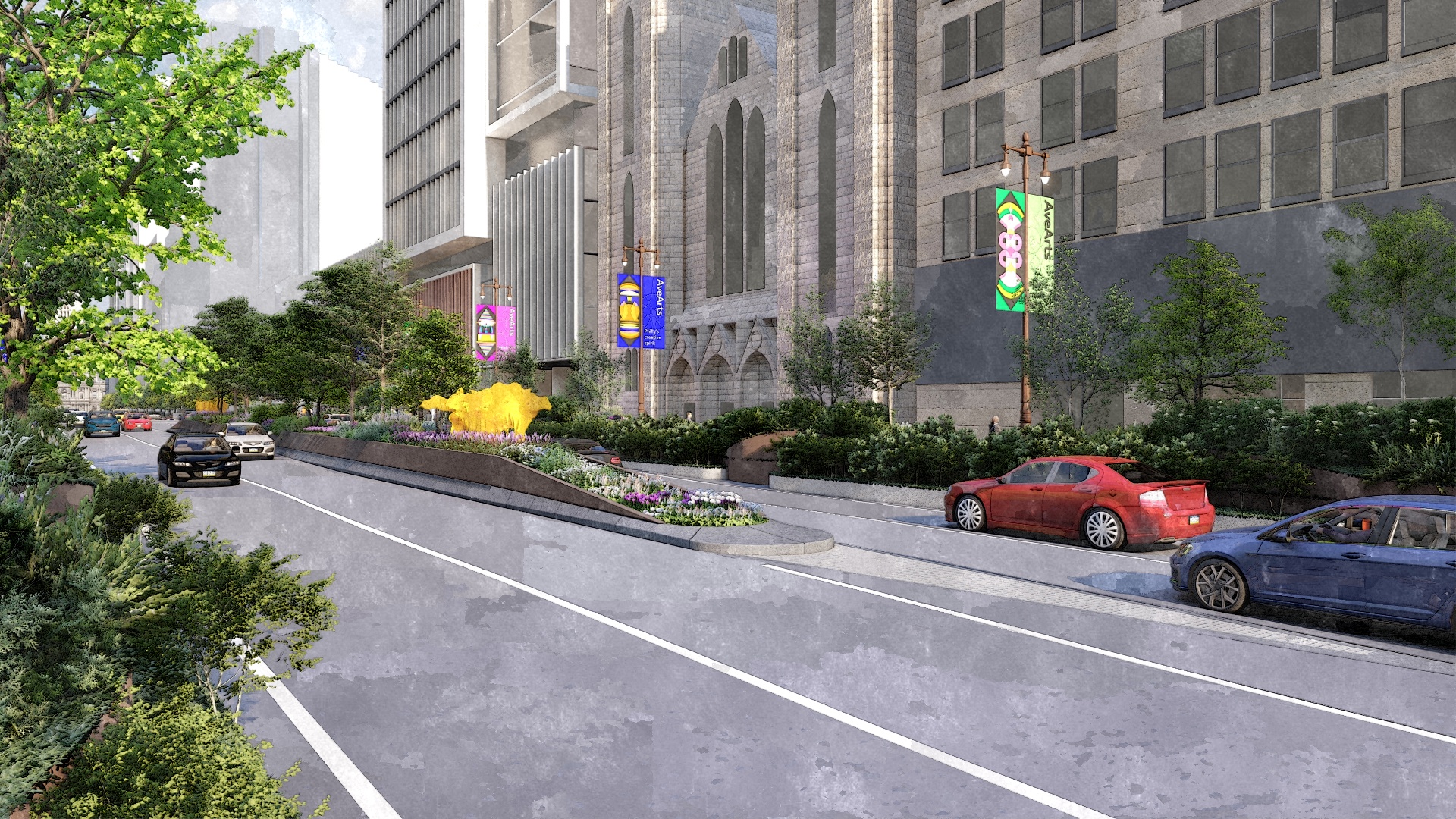
The remaking of the median on South Broad Street in front of the Kimmel Center, part of the larger AveArts 2.0 project, will now include the installation of a pair of sculptures by artist Miguel Horn.
The South Philly-based artist, who is behind several public sculptures in the city, including Center City’sContraFuerte, sought approval for the sculptures’ concept review in a Philadelphia Art Commission meeting on Wednesday.
The sculptures are scheduled to be installed this fall and remain in place for five years.
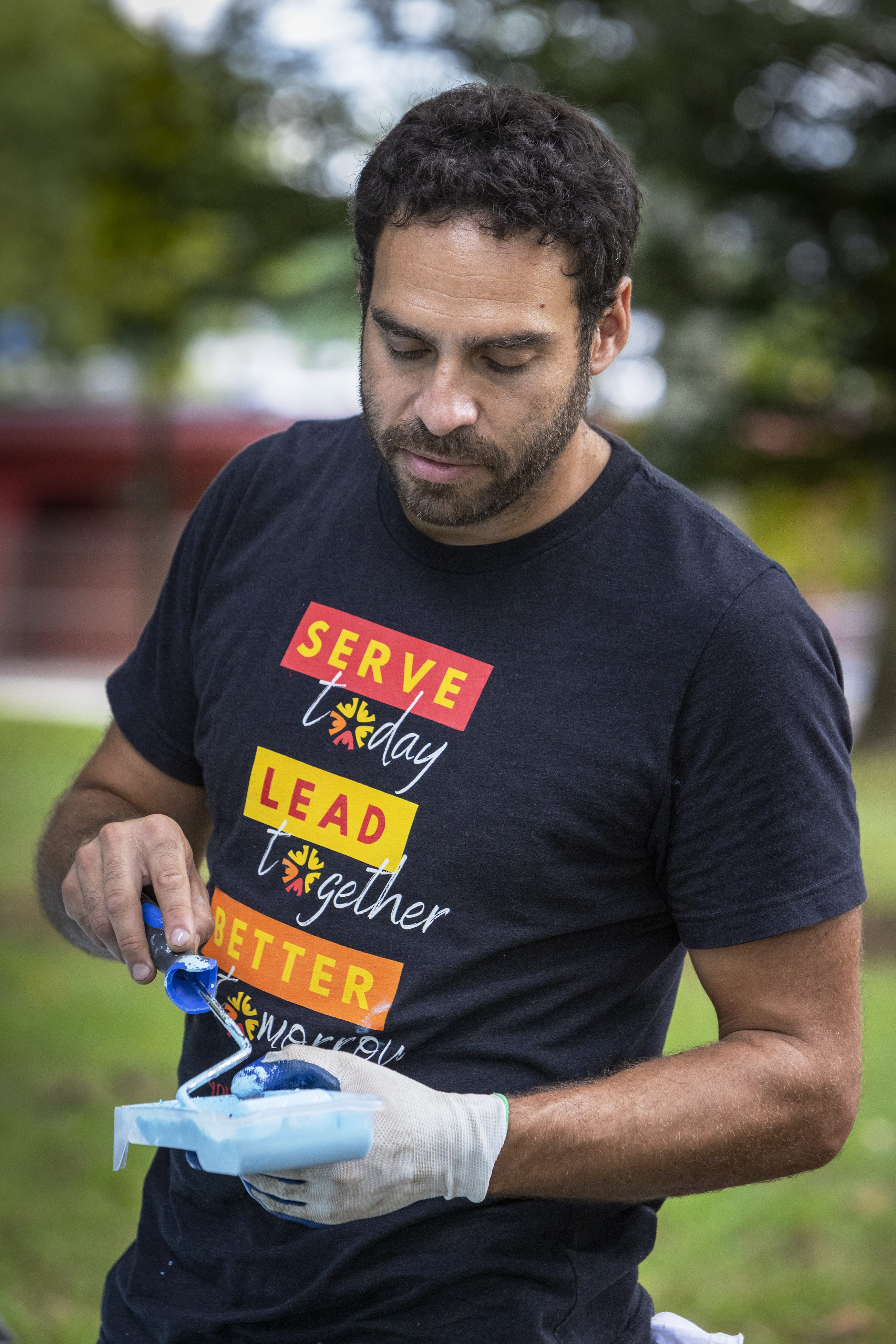
Artist Miguel Horn at Tacony Creek Park, 1101 E. Cayuga St., in the Juniata Park section of Philadelphia on Tuesday, September 13, 2022.Alejandro A. Alvarez / Staff Photographer
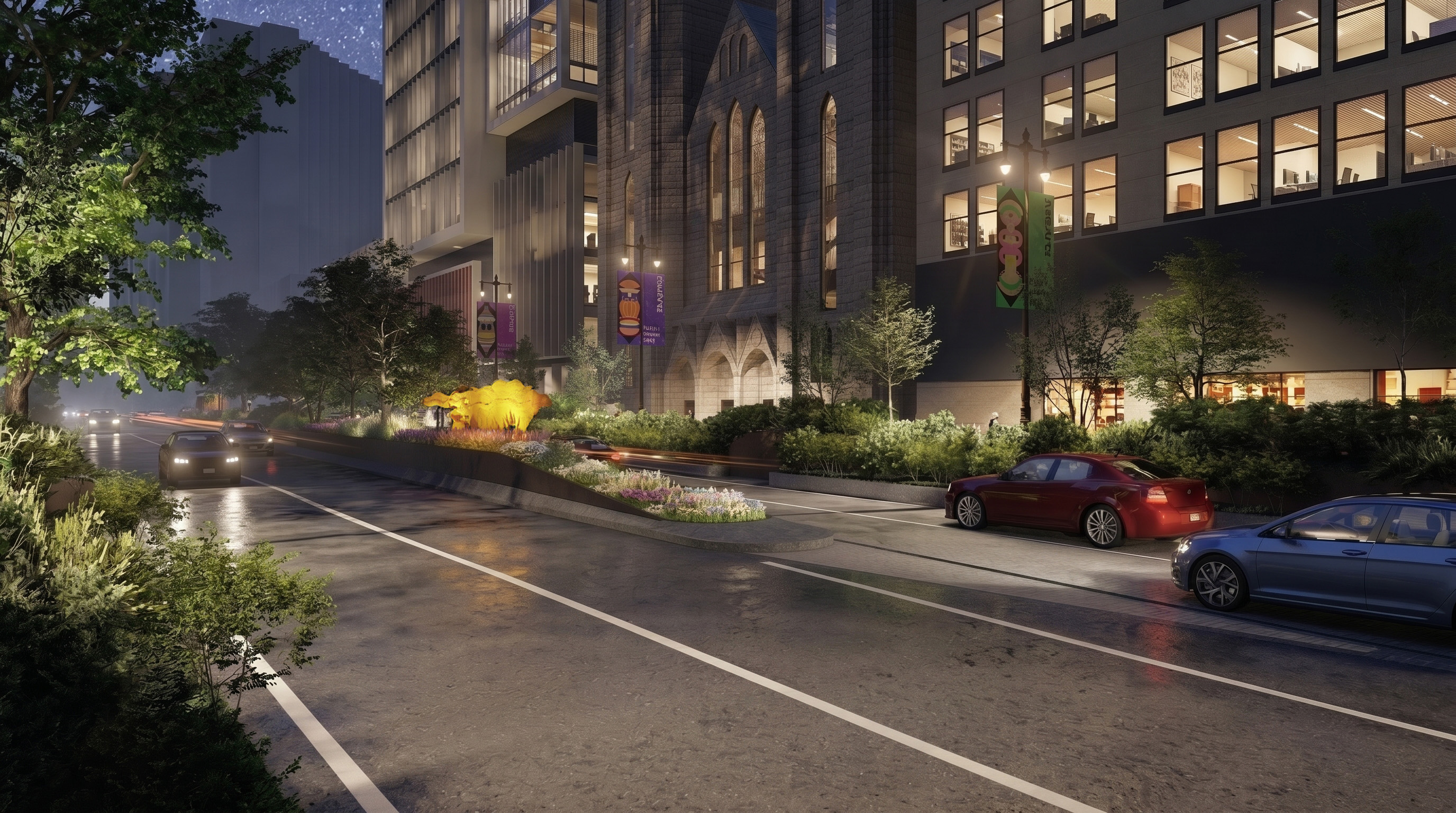
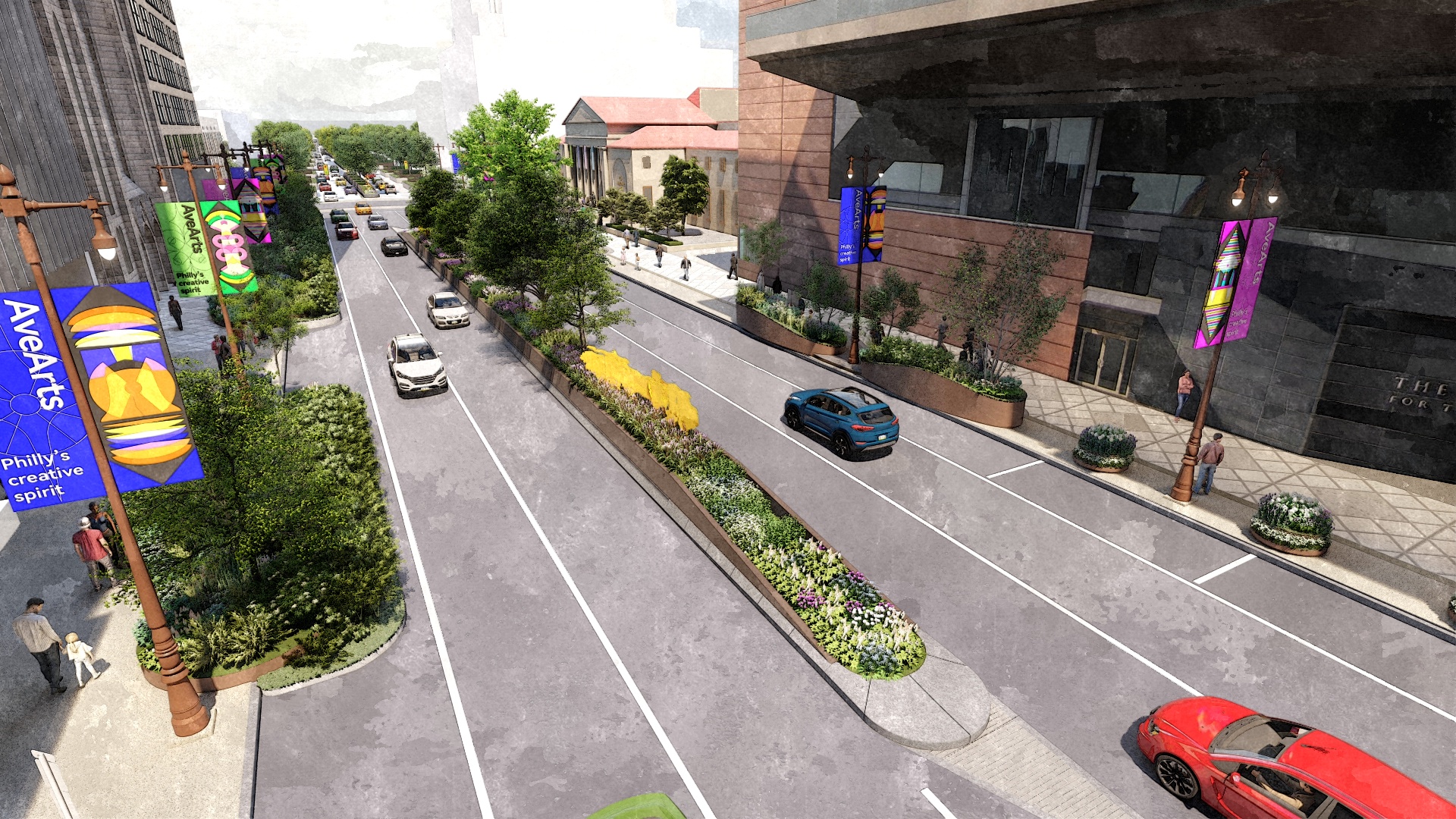
The Broad Street renovation project involves reconstructing the median into a raised planter, adding landscaping, restoring pavement, and installing pedestals and lighting for the public art. The median construction is scheduled to be completed this month, while Horn’s sculptures will be installed in the fall.
Made of bright yellow powder coated steel, Horn’s sculptures will display a blurred image of moving pedestrians. The concept for the design, Horn said, came from him making Light Detection and Ranging (lidar) scans of buildings around Philadelphia. He began to notice something interesting when people walked in front of the scanner.
“This section of the Reading Terminal Market at Filbert Street was flooded with pedestrians walking by, and these movements of pedestrians across this space created this tapestry of figurative elements, abstraction, and I just fell in love,” Horn said at Wednesday’s meeting.
A rendering shows the median on South Broad Street in front of the Kimmel Center, part of the larger AveArts 2.0 project, which will include sculptures by artist Miguel HornCourtesy of OJB & Miguel Horn
He then proceeded to go through the scans and select different movements to create the final sculpture design of walking pedestrians.
“This Muybridge-like study of movement for me was the most compelling thing sculpturally I’ve seen rendered on a computer screen in years,” he said, referring to the pioneering photographer best known for creating The Horse in Motion (1878).
Horn’s design did raise some concerns among attendees on Wednesday, including potential sight line blockages for motorists.
In the meeting, he assured that there was no concern for safety. His presentation to the Arts Commission claimed that the sculptures would still allow for a 215-foot sight line of incoming traffic on either side of the median.
A rendering shows the median on South Broad Street in front of the Kimmel Center, part of the larger AveArts 2.0 project, which will include sculptures by artist Miguel HornCourtesy of OJB & Miguel Horn
“There will not be an interruption to any visual sight lines,” he said.
Design Advocacy Group (DAG) vice-chair David Brownlee, who did not attend Wednesday’s meeting, considers planting trees in the median impractical.
“No one has ever said to me that the problem with Broad Street is there’s no shade in the middle of the street,” he said. “Or that’s the problem with Broad Street is you get out of the street and you look up and see that tower of City Hall.”
Rather than placing trees and sculpture in the middle of the road, Brownlee suggested widening of sidewalks and installing art on each side so pedestrians can view them while walking.
Horn’s concept review for the sculptures was approved by the Arts Commission, with a final review expected at a later date.
A rendering shows the median on South Broad Street in front of the Kimmel Center, part of the larger AveArts 2.0 project, which will include sculptures by artist Miguel HornCourtesy of OJB & Miguel Horn
The AveArts 2.0 project aims to beautify Avenue of the Arts into a cohesive streetscape. The plan is to renovate all 10 blocks between City Hall and Washington Avenue at a cost of $15 million per block.
Funding for the project is expected to be a mix of public money, corporate and individual donations, and foundation support.
“I find this to be a reclamation of our public space through this figurative artwork,” Horn said. “I’m constantly trying to find opportunities to bring the human experience to the forefront of these public spaces.”
A previous version of the article misstated the median project’s timeline. It will be completed this month.
The first shots of the Revolutionary War were fired in April of 1775 during the Battles of Lexington and Concord. And the colonists were victorious.
The Second Continental Congress convened at Independence Hall the following month to ignite the pioneers’ fighting spirit and in June, they authorized the formation of the Continental Army, the first branch of the American military.
“The Continental Army was established to wage war against Great Britain and to fight for the rights and liberties of Americans who still considered themselves a part of the British Empire,” explained Matthew Skic, director of collections and exhibitions at the Museum of the American Revolution.
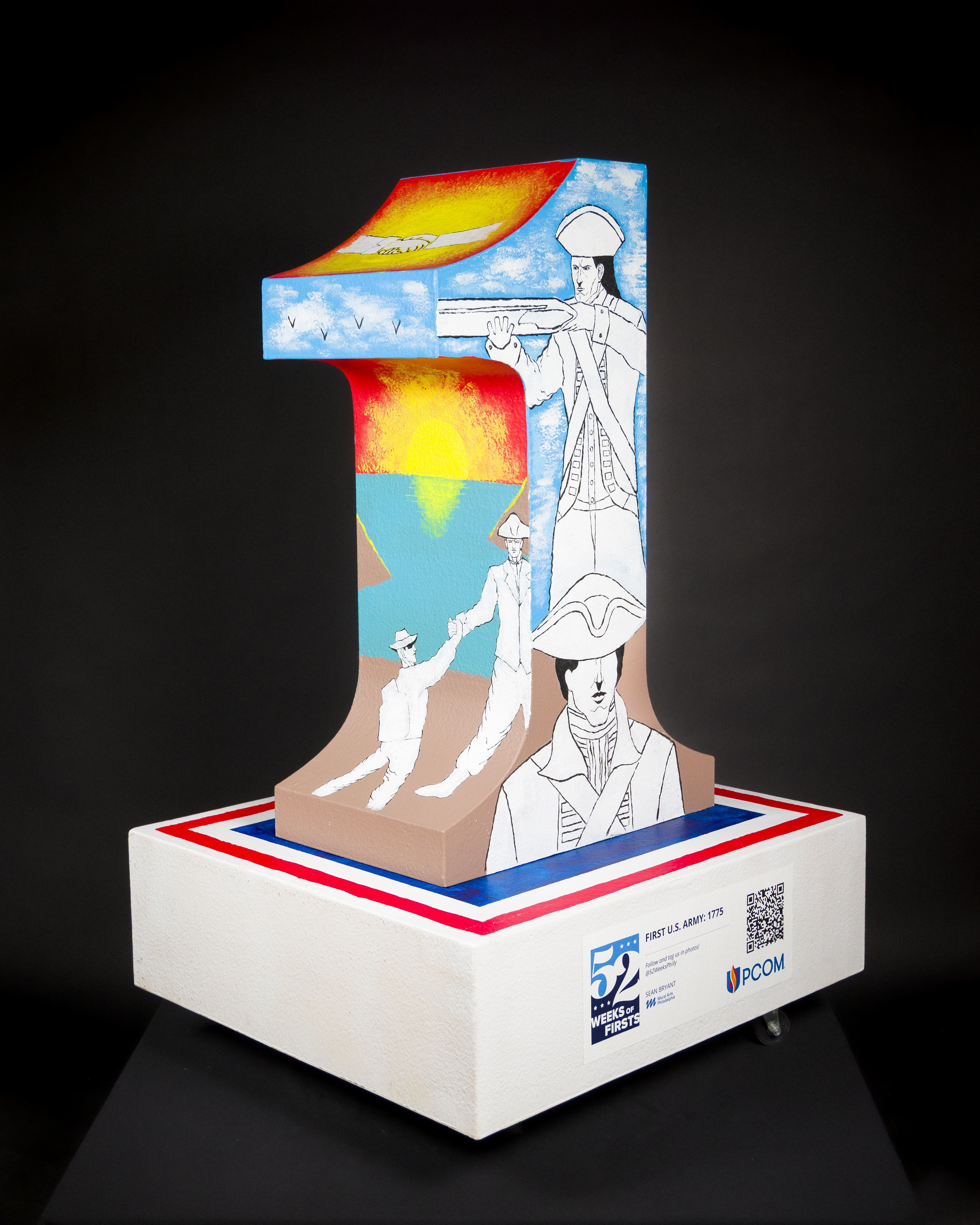
Artist Sean Bryant’s No. 1 design reflects discipline, service, and commitment, honoring the Army’s foundational role in the nation’s history and its enduring presence as a symbol of strength and perseverance.Sean Bryant and Colibrà Workshop
“George Washington was appointed commander-in-chief. Nobody knows at this point the war [was] going to last eight years,” Skic said.
The Philadelphia Historic District will honor the creation of the U.S. Army this Saturday at the Museum of the American Revolution. This weekend’s fete is the latest “Firstival,” a yearlong series of weekly day parties celebrating American events, places, and things with Philadelphia roots.
The Revolutionary War escalated quickly, Skic said, and by early 1776, the Founding Fathers were debating sovereignty. In July, the colonists declared their independence. Three months later, Congress issued an official order renaming our young country from the United Colonies to the United States.
“Now, the Continental Army isn’t fighting to restore the rights and liberties of British Americans,” Skic said. “It is now fighting to secure the independence of a new nation.”
The Continental Army was originally made up of troops from New York, New Hampshire, and Rhode Island. Pennsylvania, Maryland, and Delaware men quickly joined the fray, marching north and strengthening the Army’s force.
Some soldiers from Pennsylvania had previously served in the volunteer militia, the Philadelphia Associators, founded by Ben Franklin in 1747 to defend the city against foreign invasion. The seasoned vets would go on to become leaders in the Continental Army.
The Redcoats tried to capture Philadelphia in 1776, but Pennsylvania army men, led by Washington, held them off.
The next year, Pennsylvania troops fiercely defended Philadelphia during the Battle of Brandywine in Chadds Ford but lost. The British occupied Philadelphia for nine months, through June of 1778, when they evacuated and reassigned troops to New York. Earlier that year, France formed an alliance with the United States and the British military decided to use its resources to protect New York.
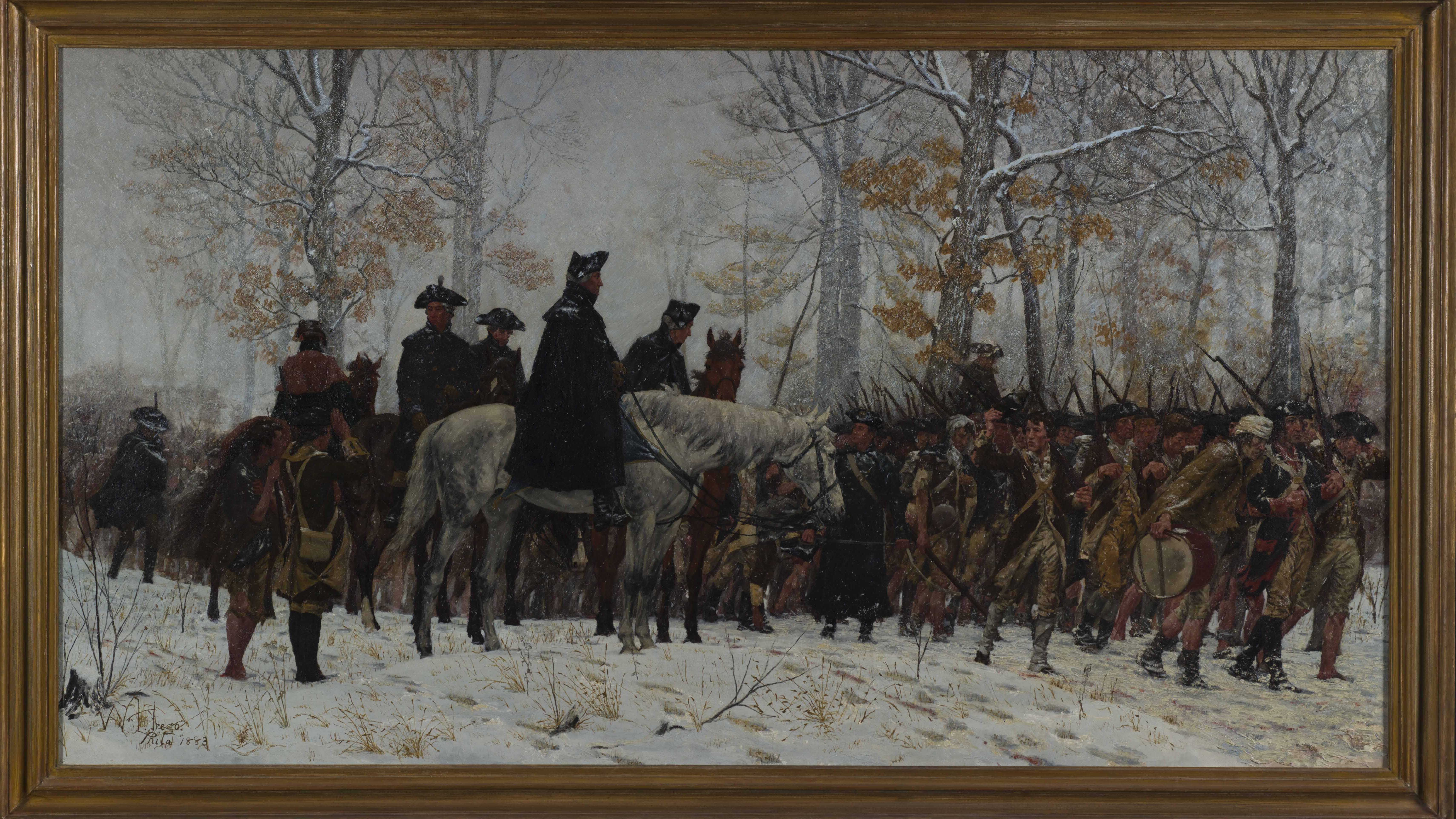
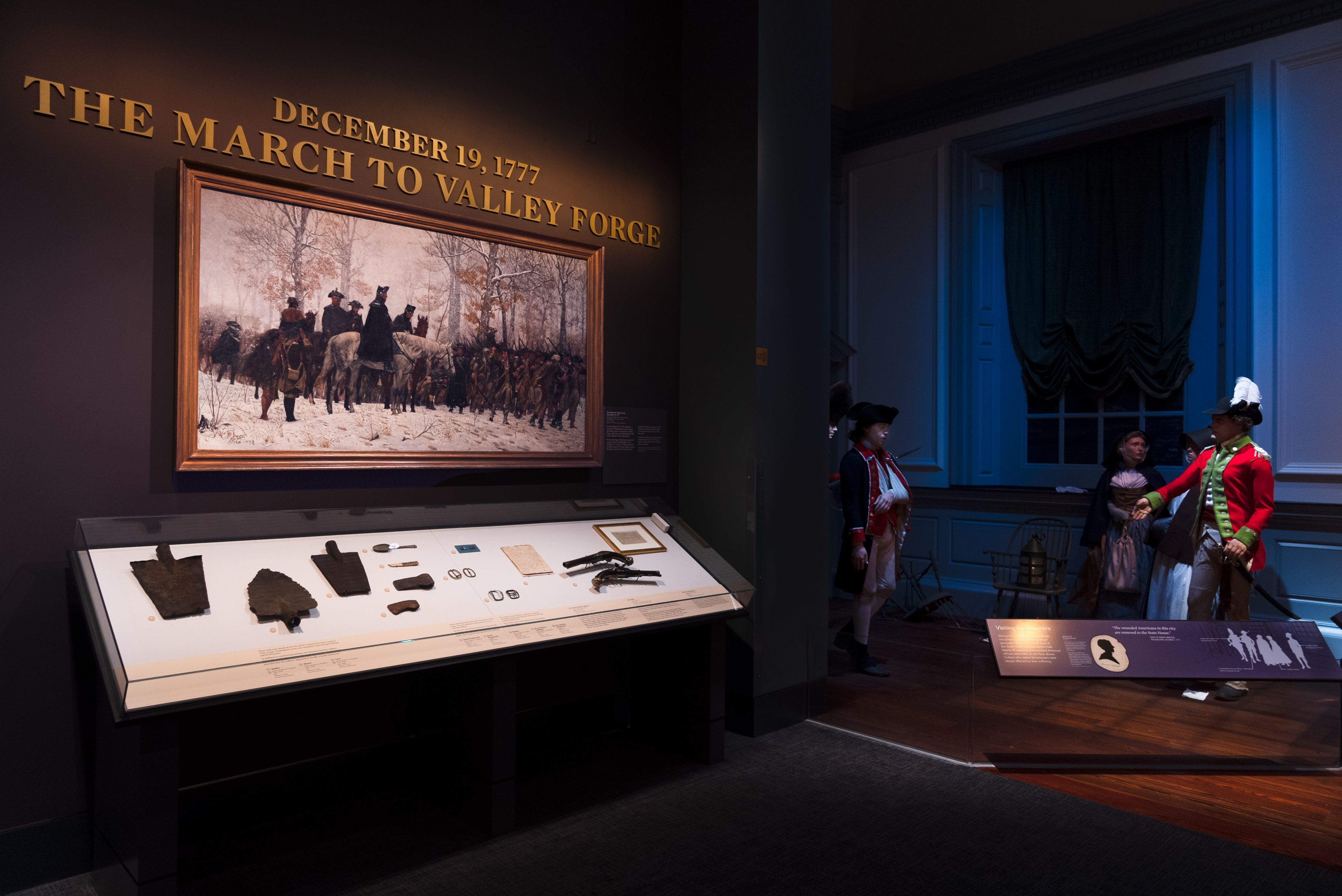
“The March to Valley Forge” December 19, 1777. The oil on canvas work was painted by William Brooke Thomas Trego in Philadelphia in 1883. It is conserved with funds provided by the Society of the Descendants of Washington’s Army at Valley Forge.Museum of the American Revolution
“The British leave Philadelphia and they don’t come back,” Skic explained. “The Continental Congress moves back in [to Independence Hall] and Philly becomes the capital of the revolution again.”
In the winter of 1778, the Continental Army retreated to Valley Forge and under the command of Prussian military officer Baron von Steuben, the Continental Army became a lean, mean fighting machine.
Realizing that the Union’s alliance with France, combined with its improved military prowess, would likely mean they would lose the war, Britain began to retreat. On Sept. 3, 1783, officials signed the Treaty of Paris, formally recognizing the United States as an independent sovereign nation.
The American Army fought valiantly during the Revolution, Skic said. Still, it’s important to note the conflict just didn’t impact America, a lesson our military would apply to subsequent wars.
The American Army was strong, Skic said. “But the global element of the war had an important impact on securing the independence of the United States,” he said.
This week’s Firstival is Saturday, June 13, 11 a.m.-1 p.m. at the Museum of the American Revolution, 101 S. Third St.
When Bucks County-raised pop star Pink began the Tony Awards on Sunday evening, she started somewhere she would be comfortable on stage — in the air.
Suspended from the rafters, she joked about feeling underqualified to host the awards ceremony because she’s never appeared on Broadway. But actor Neil Patrick Harris assured her that she would excel as her entertaining, acrobatic self: “Listen you’re Pink, you’re singular, you’re the best.”
Then she went on to belt “Lady Marmalade” with some of Broadway’s best performers and fit right in.
The night of revelry at Radio City Music Hall celebrated the biggest theater shows with major winners including Death of a Salesman, Schmigadoon!, Ragtime, The Lost Boys, and Liberation. The latter won for best play, recognizing playwright Bess Wohl, who became the fourth woman in Tony history to win that award. (Philly audiences will get a chance to see the show this fall when Liberation runs at Philadelphia Theatre Company in October)
The biggest local highlight was director Bill Rauch, who calls New York home now but spent part of his childhood in Haddonfield, where he participated in productions at Haddonfield Memorial High School. Rauch and his codirector, Zhailon Levingston, won the Tony Award for best direction of a musical for Cats: The Jellicle Ball, a revival of Andrew Lloyd Webber’s 1982 feline musical, set in New York’s queer ballroom scene.
“Ballroom is about audacity and disruption, in the words of Junior LaBeija, it do take nerve,” said Levingston when the pair accepted the award.
“Finally, ballroom is about chosen family,” said Rauch, getting emotional. “We chose each other, my husband, Christopher Liam Moore, 42 years ago, and you and our kids, Liam and Xava, are at the heart of anything I do that has any value in this world.”
Rauch, who leads New York’s Perelman Performing Arts Center, previously directed the Tony Award-winning production All the Way, about Lyndon B. Johnson during the civil rights era. That production received Tony Awards for best play and best lead actor in a play (spotlighting Bryan Cranston), in 2014.
Rauch credits his high school teacher and mentor Jack Shaw with inspiring him to pursue theater.
“I did six shows directed by Jack Shaw, and they really changed my life,” Rauch told 6abc. “I learned by example what a great director could be, and it made me want to become a director.”
On Sunday night, Shaw hosted a Tony Awards watch party at his home in Voorhees, where he and a group of about 15 of Rauch’s old theater classmates jumped and screamed as they saw him accept the award. The revered drama teacher is still close with dozens of his former students, who reunite often to celebrate Shaw’s milestone birthdays and have created a scholarship at Haddonfield Memorial High School to fund drama students in Shaw’s honor.
One of Shaw’s favorite memories of Rauch was during a production of Shakespeare’s Twelfth Night, when the teenager powered through his Malvolio monologue while in the middle of an allergic reaction.
“The poor guy literally ended up on the floor of the stage, going through a long speech [as] his neck and back cramped up,” said Shaw. “Unbelievably, he kept going — the ultimate ‘show must go on’ spirit. He delivered the speech from his knees, still in character, and the audience had no idea …[then] we took him offstage and put him in an ambulance.”
A proud teacher, Shaw was “choked up” seeing Rauch receive the Tony recognition and praised his former student’s “remarkable need to bring theater to lots of people.”
“Theater and the drama club was a place where anybody could come and be accepted. To my way of thinking, that’s my most happy part, and Bill, as a director, has had the same kind of philosophy,” Shaw said.
Cats: The Jellicle Ball was nominated for nine awards and took home three, including best choreography and best costume design of a musical, which went to Qween Jean (who also designed costumes for Liberation). Qween Jean made history becoming the first transgender person to win a Tony Award.
The bodies of poor and Black Philadelphians have long been exploited in the name of medical progress — even after death.
Grave robbing was a common practice among medical schools like the one at the University of Pennsylvania in the 18th and 19th centuries, when the cholera outbreak created great demand for cadavers. Medical schools paid people to steal freshly buried corpses for medical students to conduct research in the hope of developing cures.
Very often, a wealthy white population benefited from the cures derived from experimentation on these bodies.
Black Philadelphians were denied burial in the city’s cemeteries, so many of these bodies were buried in potter’s fields without tombstones.
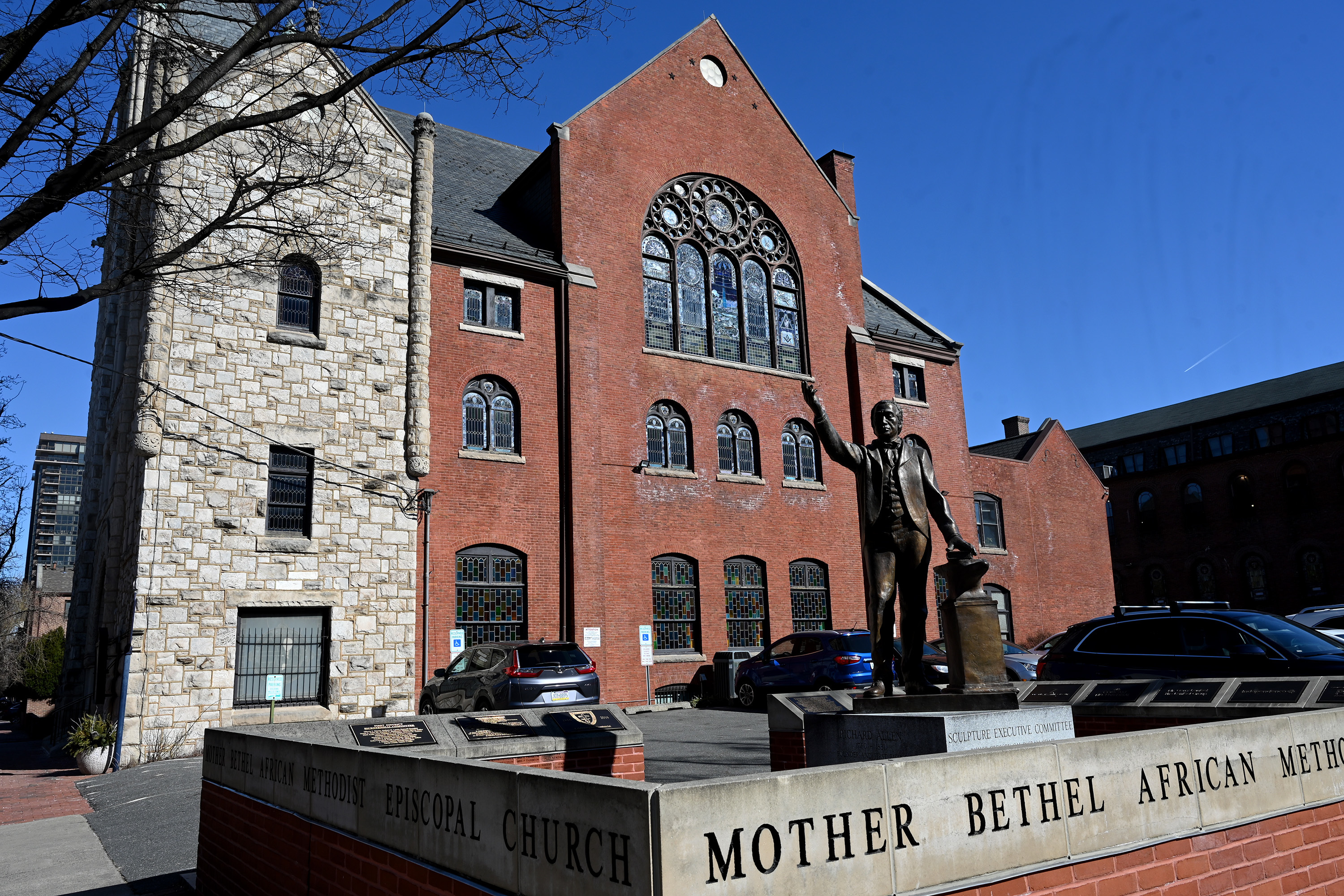
In 1794, after being denied worship at Old City’s St. George’s Methodist Church, the formerly enslaved Richard Allen founded the Mother Bethel African Methodist Episcopal Church, considered the world’s first AME congregation. In 1810, he purchased what today is called the Bethel Burial Ground.
A statue of Bishop Richard Allen outside Mother Bethel AME Church.Tom Gralish / Staff Photographer
The minister, who would go on to become one of America’s most influential Black leaders, wanted Black Philadelphians to receive a dignified final resting place, with tombstones.
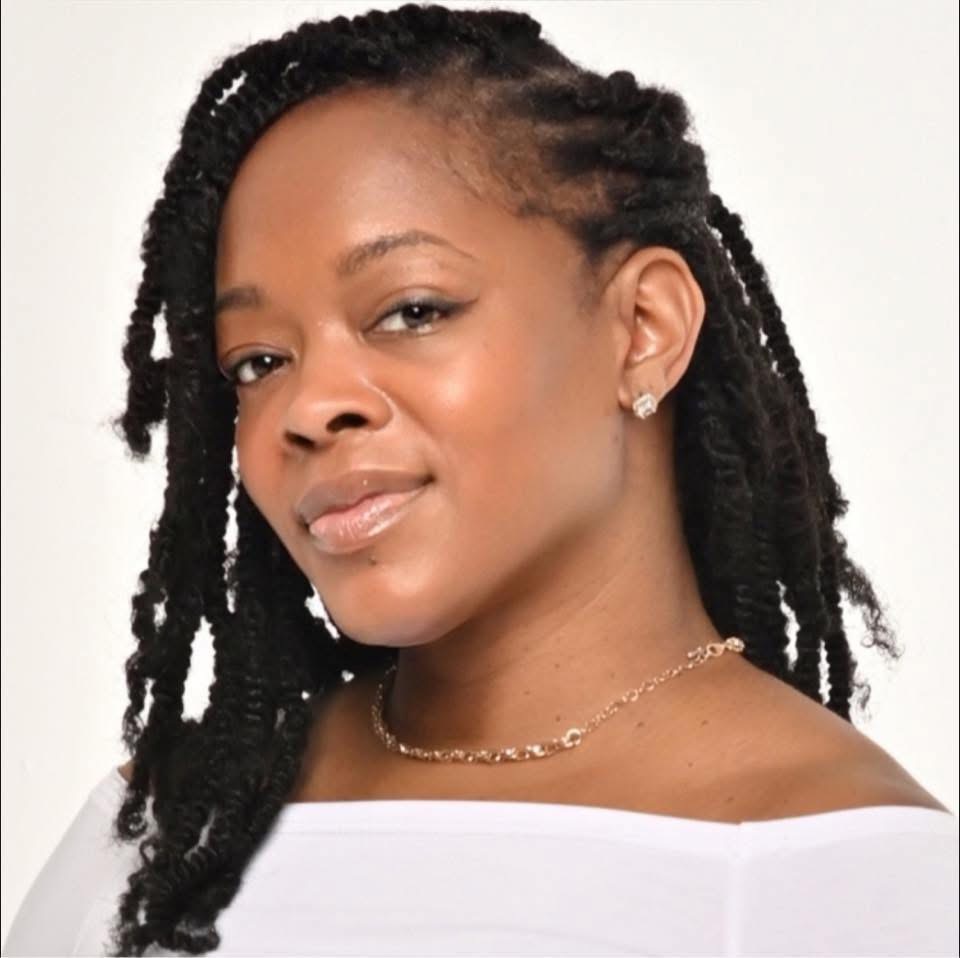
Through her 2024 play The Great Privation (How to Flip Ten Cents Into a Dollar), Harlem-raised playwright Nia Akilah Robinson seeks to offer audiences a peek into this macabre history with Philadelphia roots.
“This topic of grave robbing is a subject in which I had conversations around the dinner table with my parents,” Robinson said. “It is a practice that has a long and storied history in Philadelphia, especially institutions like University of Pennsylvania medical school, and these crimes continue today.”
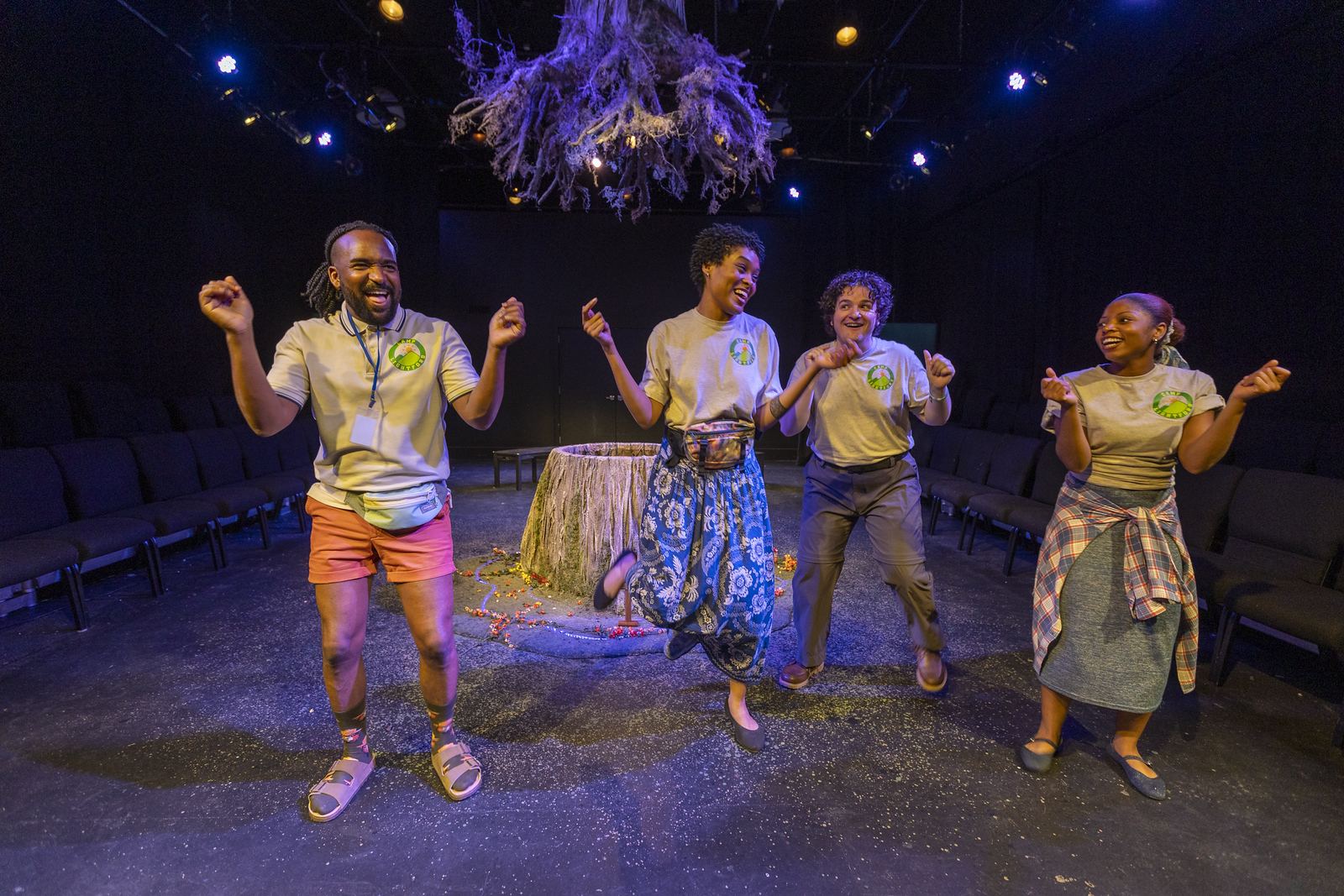
The play, set at Mother Bethel in 1832 and the present, is now being staged at Theatre Exile.
It explores the history of grave robbing in America in the name of medical progress, through the story of a Black American mother and daughter who keep vigil over their recently buried loved ones’ graves to protect their bodies from grave robbers or “resurrectionists,” who were often white.
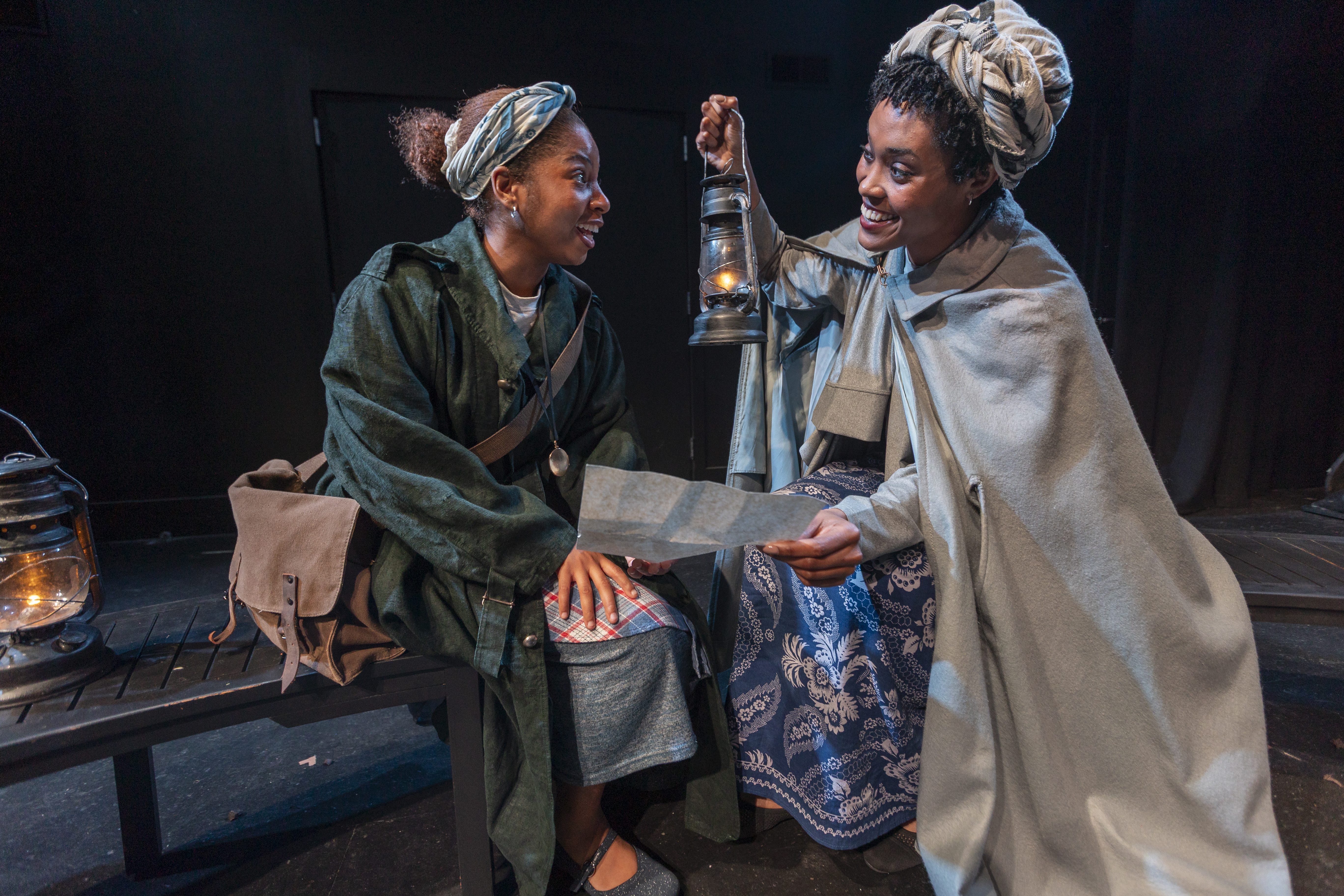
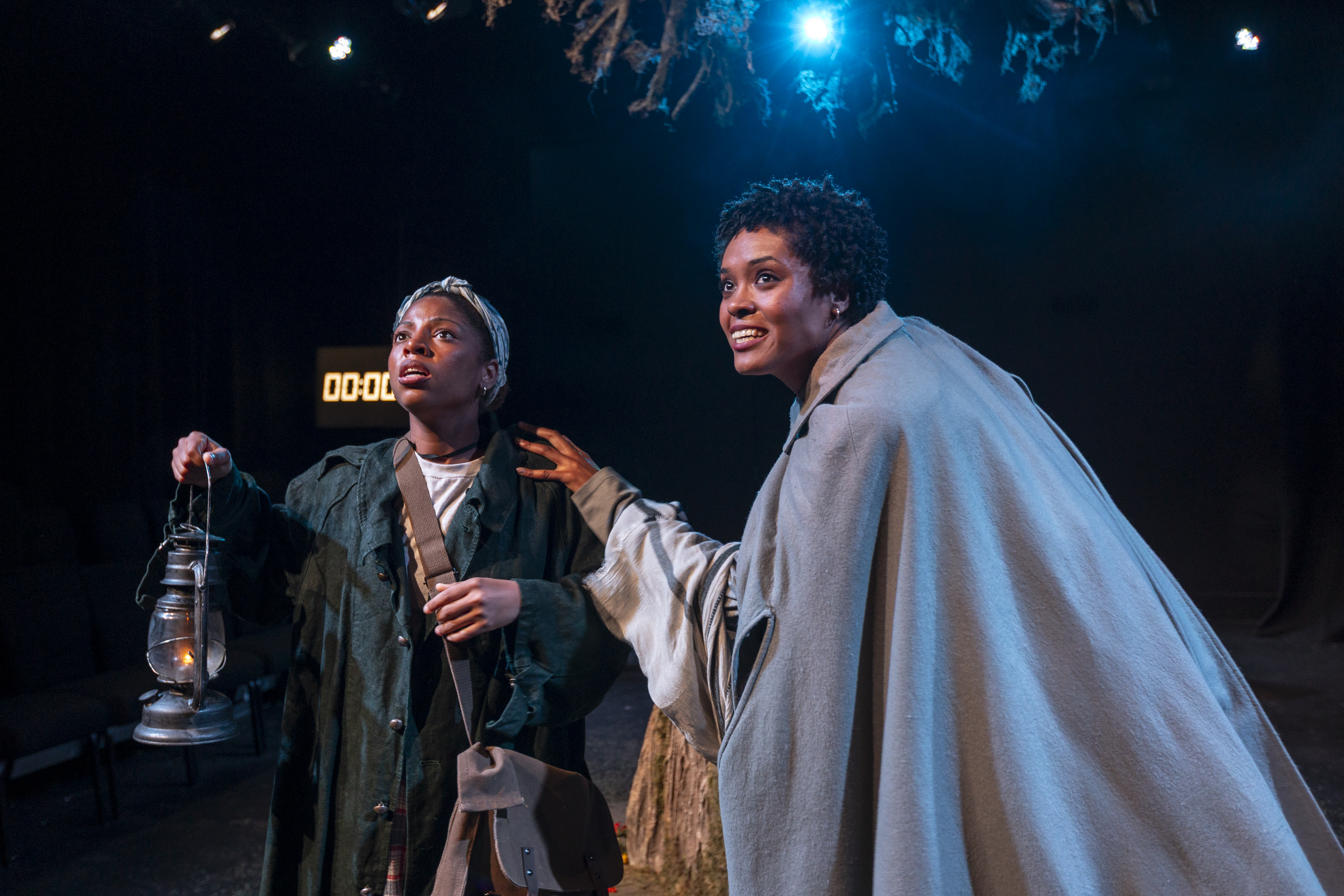
Andre G Brown, Rayne, Aidan McDonald, and Semaja Murphy in “The Great Privation (How to Flip Ten Cents Into a Dollar)”Paola Nogueras
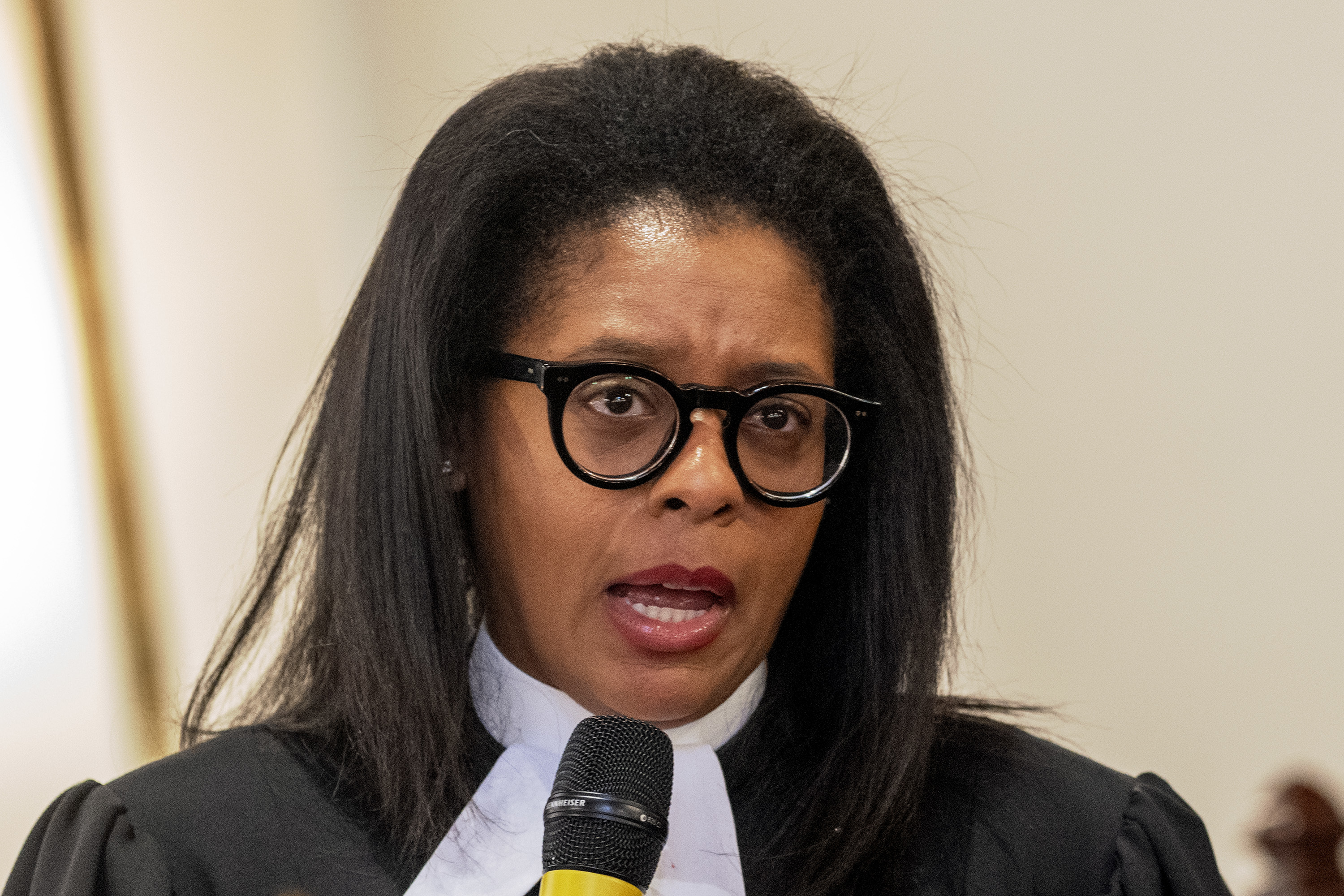
“I saw the description of a play, talking about an African Methodist Episcopal Church, 1832 graveyard in South Philadelphia,” the Rev. Carolyn C. Cavaness of Mother Bethel said. “That’s Mother Bethel! That’s me.”
The Rev. Carolyn Cavaness celebrates worship service Nov. 11, 2024 after Mother Bethel AME appointed her the first woman pastor in its history. CAVANESS-TBDTom Gralish / Staff Photographer
Robinson first drove past Weccacoe Playground and Bethel Burial Ground during rehearsals for Theatre Exile’s production. Philadelphia-based director Ontaria Kim Wilson wanted her to see the place that she had been writing about.
“When I was crossing into that block with Ontaria, as she was driving, I felt something, I can’t even explain it,” Robinson said.
“In Philly, there is a lot of respect paid toward talking about the history through those signs of what happened here. Sometimes when I go past those [historical markers], I see a tribute, and I feel a sadness. I get why it’s there and I also [think] maybe we need more plays doing that, too.”
Today, members of the Mother Bethel congregation, families visiting Weccacoe, and the thousands of Philadelphians and tourists walking past this small playground hold the juxtaposition of young life and centuries-old resting souls at once.
Philadelphia-based director Ontaria Kim Wilson has directed Nia Akilah Robinson’s 2024 play “The Great Privation (How to Flip Ten Cents Into a Dollar),” which is now playing at Theater ExileCourtesy of Theater Exile
Theatre Exile is partnering with Mother Bethel to offer the production crew a more real-world context to the story of the play. Cavaness met with Wilson and attended the first rehearsal and will participate in post-show discussions during the run of the production.
“You always have the contesting and the non-acceptance of Black bodies being fully human,” Cavaness explained. “‘You’re not fully human, so I can do with your pieces, I can do with your body, as I see fit.’”
Cavaness can’t help but think of Allen, who was initially buried in front of Mother Bethel.
“They would have people guarding his body. Again, this notion of protecting the dignity and of having to reinforce that and to show that,” she said.
Playwright Nia Akilah Robinson’s 2024 play “The Great Privation (How to Flip Ten Cents Into a Dollar),” is now playing at Theatre Exile.Courtesy of Theater Exile
Organizations like the Mütter Museum and Penn Museum hold the remains of Black people and Native Americans in their collections and in recent years have faced significant public backlash over their acquisition and display. The Mütter has engaged in extensive community programming regarding its background as a medical history museum while receiving criticism that its efforts to repatriate the remains of Indigenous people have moved too slowly. Penn has embarked on internment and repatriation processes that some critics and families argue have been flawed and rushed.
“We are the caretakers of this history. We are entrusted,” Cavaness said. “We have a responsibility to care for and uplift and to say their names and their stories. They just can’t go away.”
These real-world, very local connections continue to inspire Wilson’s direction of the play in preparation for sharing it with the descendants of those buried in the Bethel Burial Ground. The Great Privation could rely on its inherent didacticism, but Wilson’s direction is focused on uplifting the love story of a mother and daughter, and Robinson’s surprisingly humorous writing.
Robinson hopes the play can be received as a comedy, even as it holds so much grief.
Semaja Murphy and Rayne in “The Great Privation (How to Flip Ten Cents Into a Dollar)”Paola Nogueras
“I hope that [the audience] find themselves laughing. And I hope that Philly audiences feel like this play was written with care,” said Robinson.
“It’s Philadelphia. It’s the birthplace. It’s another chapter in who we are as a nation,” said Wilson. “And I think it’s important that, especially during this time, we grab onto any information that we can learn about this American experiment.”
“The Great Privation (How to Flip Ten Cents Into a Dollar)” runs through June 14, Theatre Exile, 1340-48 S. 13th St., theatreexile.org/tgp25
Big things are happening in Philadelphia this summer.
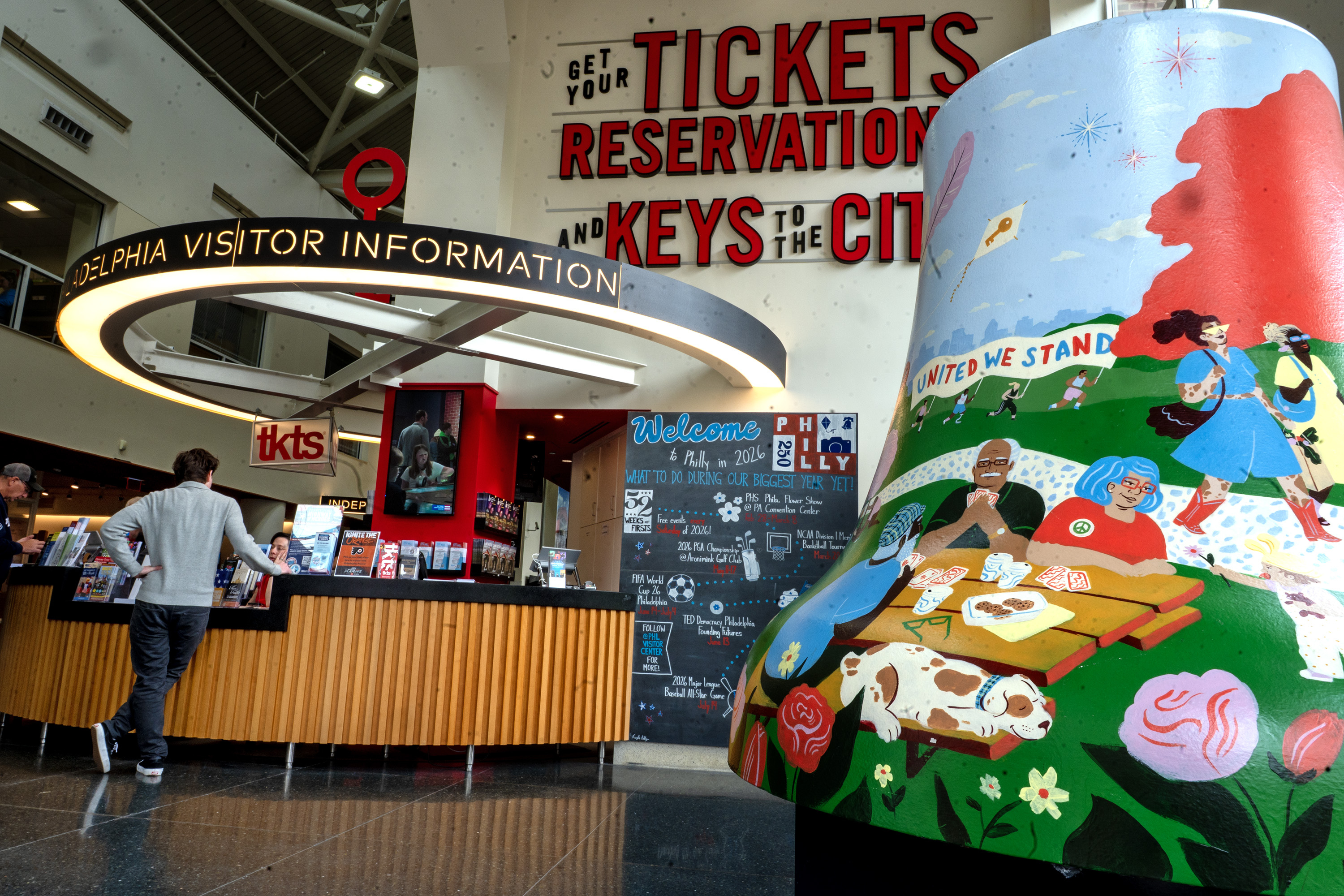
With the FIFA World Cup, MLB All-Star Game, and the nation’s 250th birthday celebration expected to draw millions of tourists this summer, the Philadelphia Visitor Center Corporation is gearing up to offer an even warmer welcome to tourists.
The visitor center’s nearly $600,000 expansion includes new locations at the Philadelphia International Airport and Reading Terminal Market, plus two pop-up resource tents along the Benjamin Franklin Parkway.
“For visitors, we want them to see a visitor center for every five to seven minutes on their walk from the Historic District to the Parkway,” said Kathryn Ott Lovell, president and CEO of the Visitor Center.
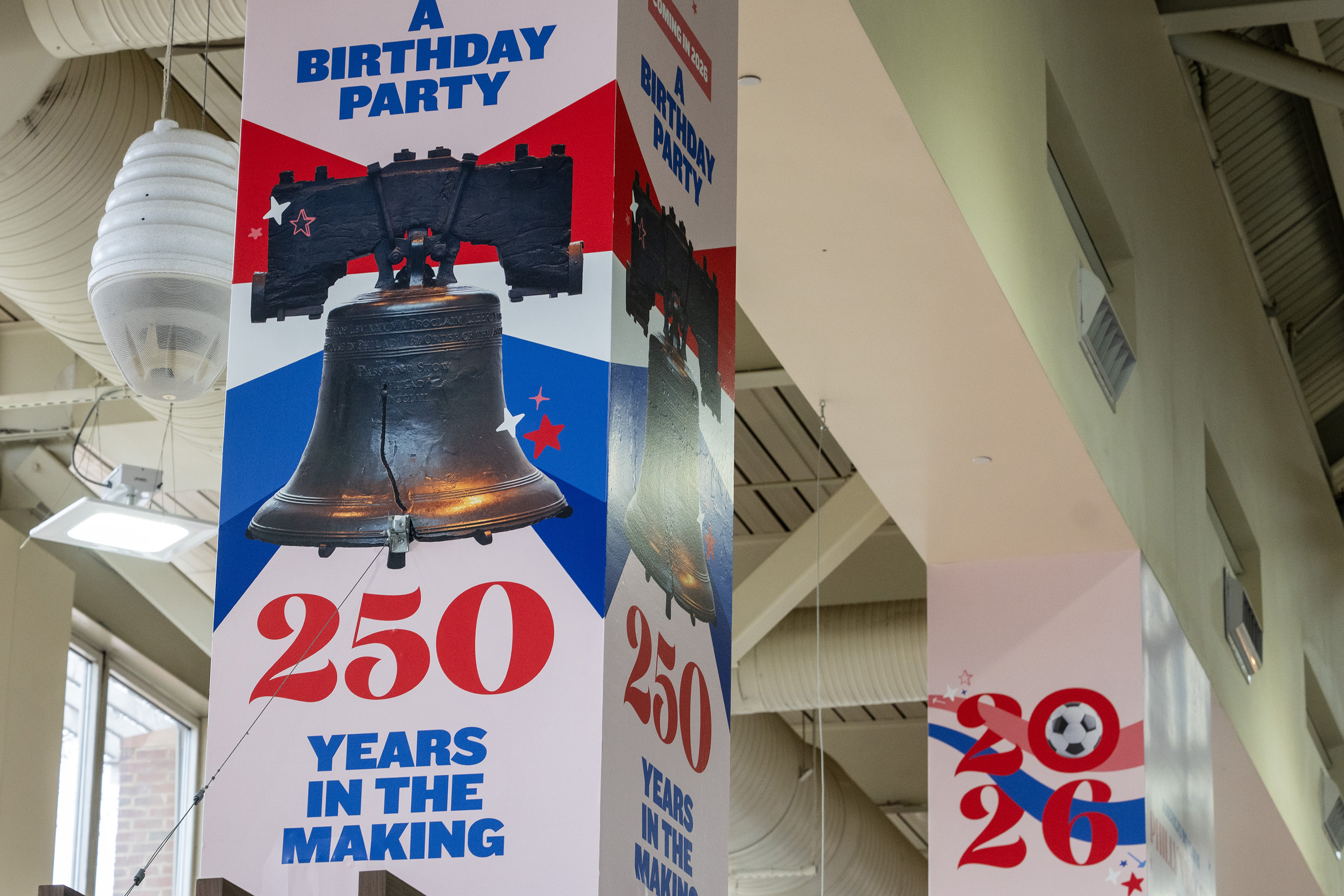
America 250 signage in Independence Visitor Center in Independence National Historical Park March 12, 2026.Tom Gralish / Staff Photographer
The PHL outpost will be located at the airport’s Terminal AL West, dedicated to international and trans-Atlantic travelers. A former MAC Cosmetics retail space will be temporarily transformed into a 1,000-square-foot visitor center, complete with maps, attraction tickets, itinerary planners, and Commonwealth-branded souvenirs and merchandise. Incoming and departing visitors will also be able to send postcards with images from notable Pennsylvania sites.
The Reading Terminal visitor center will be stationed near the entrance at 12th and Filbert Streets, at the site of a now-closed Visitor Center.
The new one, Lovell said, will be larger and have dedicated staff and volunteers running the kiosk. The hope, she said, is to make it a permanent resource for visitors.
The two visitor centers are under construction. Lovell said the plan is to open at least one by June 15, and have both fully operational within the next two weeks.
The PHL Visitor Center will be open daily from 7 a.m. to 10 p.m., and the Reading Terminal Market location will be open daily from 10 a.m. to 6 p.m.
The organization is also adding an air-conditioned Visitor Center tent at LOVE Park, and another across from the Oval at the end of the Parkway. These tents will be filled with souvenirs and retail items, flash tickets, transportation information, and other offerings. There will also be a water station and public restroom trailers that will be open to all visitors.
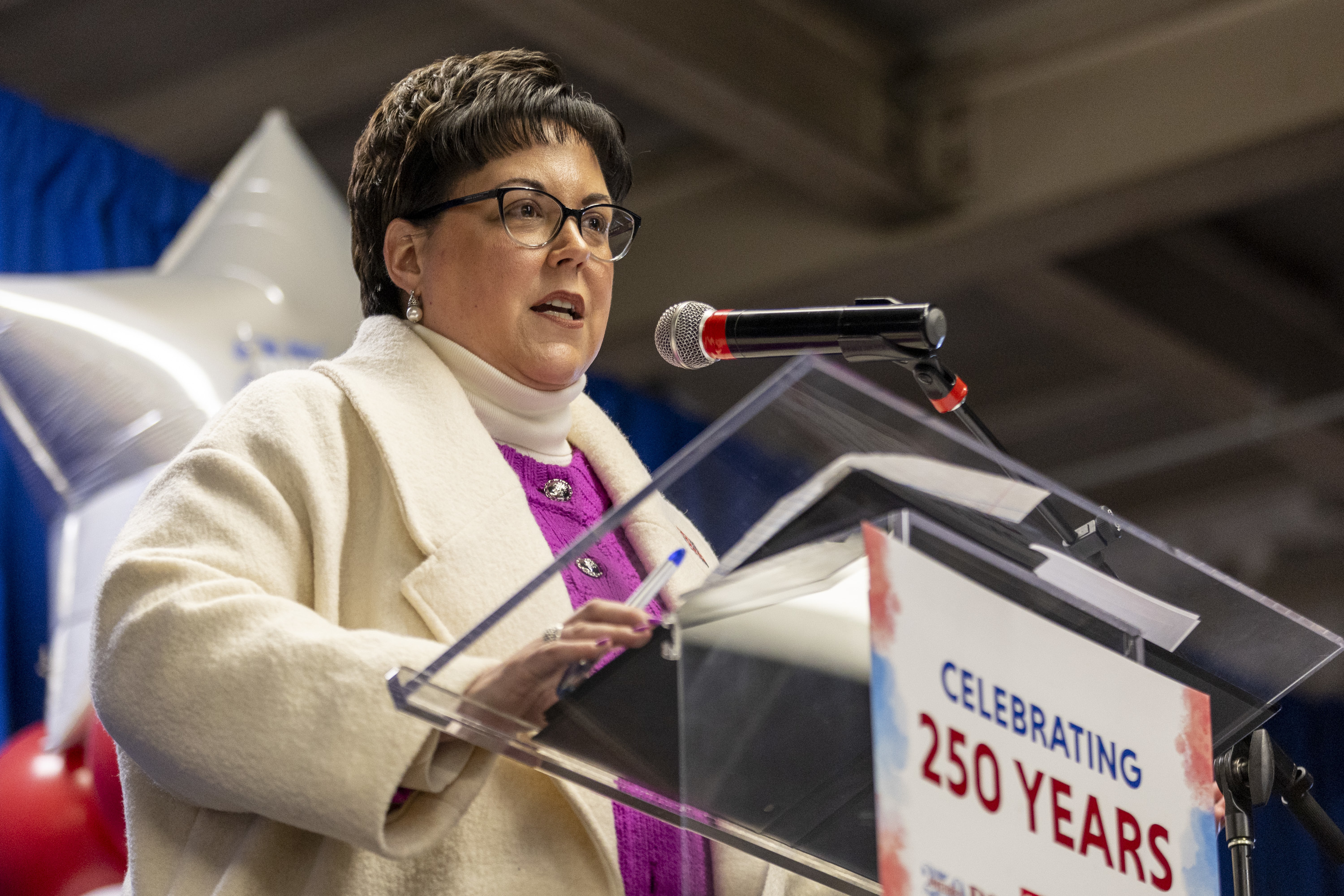
President and CEO of Philadelphia Visitor Center Corporation Kathryn Ott Lovell speaks at the Bells Across PA event in celebration of America’s 250th Birthday in Philadelphia, on Jan. 16, 2026.Tyger Williams / Staff Photographer
Starting Thursday, the resource tents will be open daily from 10 a.m. to 8 p.m. throughout the 39 days of the FIFA Fan Festival Philadelphia, ending July 19.
Along with paid Visitor Center staff, the nonprofit will position hundreds of volunteer greeters at these new Visitor Center locations. The bulk of these volunteers have already signed on as Phambassadors, who’ll act as the city ambassadors and connect visitors to the area’s many attractions. The program, launched in 2025, has already recruited more than 10,000 members.
Volunteers will include 26 high school students from Saints Neumann Goretti High School and the Girard Academic Music Program. These students are part of the newly-launched Youth Phambassador Program, designed in partnership with Temple University’s Lenfest Center for Community and Workforce Partnerships. It is aimed at training aspiring hospitality professionals on customer service, visitor engagement, and civic leadership.
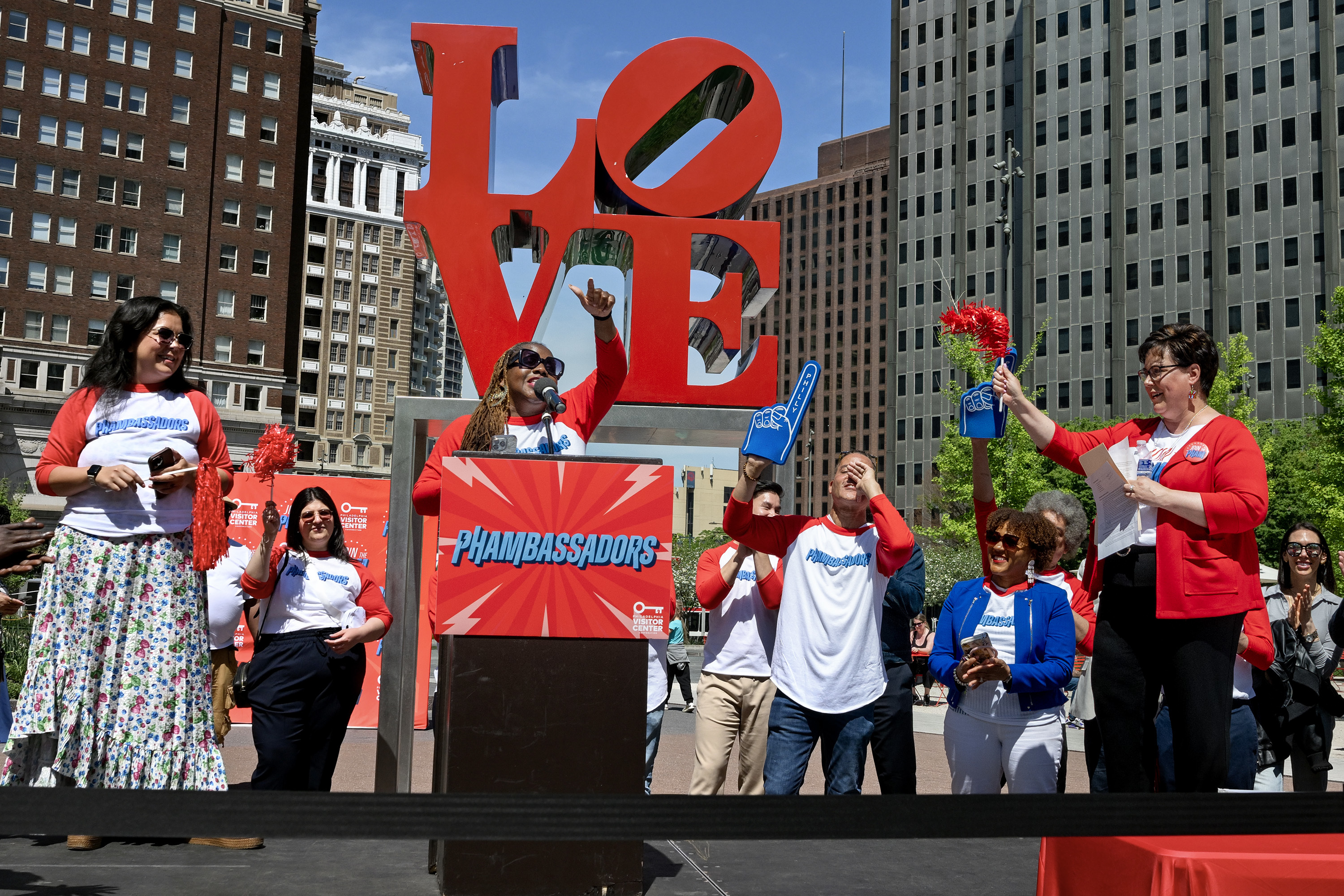
Tiphanie White (center), chief of staff in Council President Kenyatta Johnson’s district office, joins Michelle Freeman (left), CEO of Witty Gritty and Kathryn Ott Lovell (right), president & CEO of the Philadelphia Visitor Center Corporation and Philadelphia250, during a pep rally in LOVE Park Tuesday, Apr. 29, 2025, to kick off the city’s recruiting of 10,000 “Phambassadors” to serve as Philly champions, advocates, and storytellers ahead of America’s 250th birthday in 2026. The event featured pom-poms, foam fingers, a giant pledge card, all five Philly pro sports mascots (plus Temple’s owl), a DJ, cheerleaders, drum lines, and pep bands.Tom Gralish / Staff Photographer
The volunteers will be tasked with providing directions, offering recommendations, and other on-the-ground assistance throughout their six-week, paid summer work experience.
Lovell said the cost to build out and operate the two visitor centers for six months will total an estimated $400,000. The tents will cost roughly $200,000 to operate for six weeks.
The expansion, Lovell hopes, will not only raise the profile of the city as a global tourism destination for 2026, but for many years beyond this summer.
“This is our Super Bowl,” Lovell said. “We’re the Visitor Center. We’re the welcome wagon. We’re the ones that help connect visitors to their amazing experiences throughout our city.”
This article has been updated to reflect that the Reading Terminal visitor center kiosk will be run by staff and volunteers.
Popular Philadelphia director, actor, and teacher Amina Robinson will take the helm at Theatre Horizon as artistic director, the Norristown organization announced Monday.
The 21-year-old nonprofit theater, cofounded by Erin Reilly and Matthew Decker, had been searching for a permanent leader since the 2024 departure of Nell Bang-Jensen, who now heads FringeArts.
Decker has served as interim artistic director and will continue to do so until Robinson’s tenure begins in November.
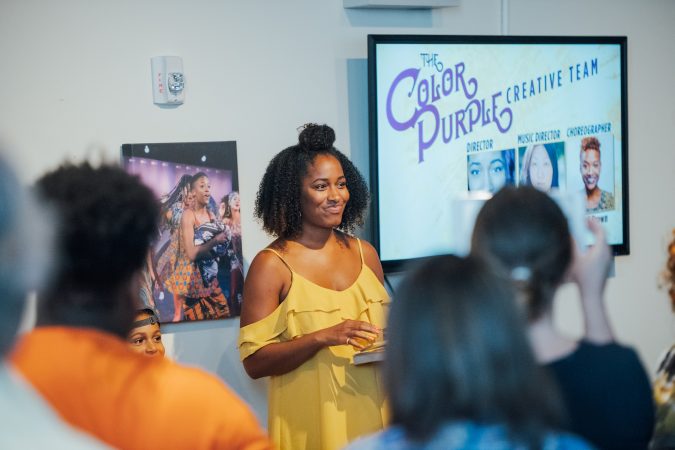
For Robinson, who grew up in South Philly and studied theater at Temple University, Theatre Horizon has been a creative home and launching pad for her work as a director. In 2018, she received wide acclaim for her direction of the musical The Color Purple, based on the classic Alice Walker novel and 1985 film. The Theatre Horizon production earned six Barrymore Awards and Robinson made Philly theater history, becoming the first Black woman to win the Barrymore for outstanding direction of a musical.
“I like to say [The Color Purple] put me on the map in Philly because it won a whole bunch of awards, and people responded really well to it,” said Robinson, who lives in Cherry Hill with her husband and teenage son. “I got the opportunity to work with people who have become family to me …[that’s] the culture of the theater. It’s built into their mission [to be] a place of gathering. I like to think of them as human-powered, people-centered, and that really coincides with who I’ve always been.”
Theater fans in the region will recognize Robinson’s name from some of the buzziest local productions in recent years, from directing James Ijames’ Pulitzer Prize-winning Fat Ham in 2023 at the Wilma Theater, to the Arden Theatre’s 2024 run of the musical Once on This Island, which Robinson set in Haiti as a comment on the Caribbean country’s turmoil.
“Amina is a visionary artist, a thoughtful collaborator, and someone who understands both the power of theater and the importance of community,” Decker said in a statement.
Robinson is an associate professor of acting and musical theater at Temple University and has appeared on screen in shows like Nurse Jackie, Law & Order, and Smash, and in the 2009 film Precious.
She is no stranger to Norristown, either, as she was formerly an artistic director at the Centre Theater.
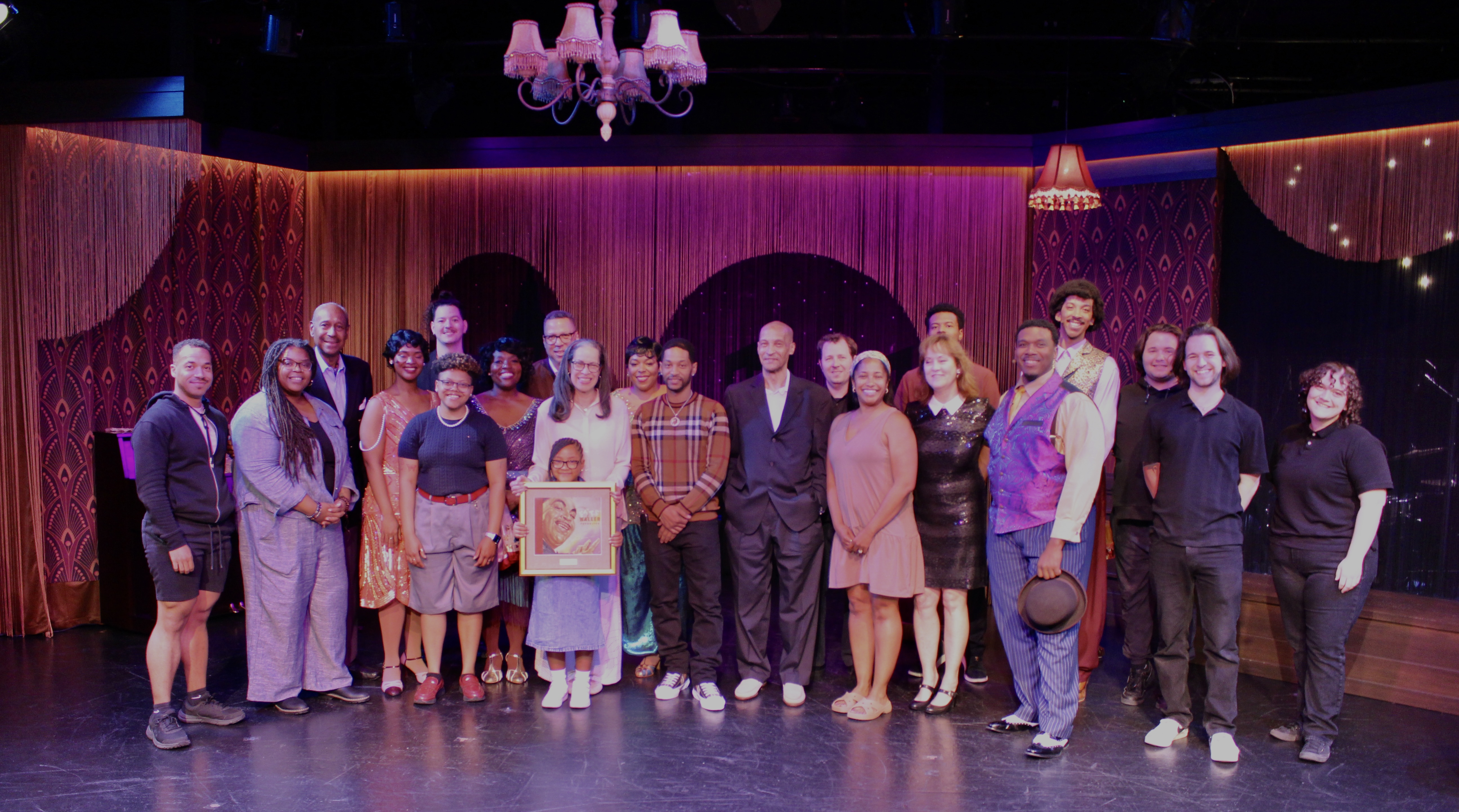
Director Amina Robinson with the cast and crew of “Ain’t Misbehavin’” at Theatre Horizon in spring 2026.Courtesy of Theatre Horizon
Robinson just wrapped work on Theatre Horizon’s production of the Fats Waller musical revue Ain’t Misbehavin’ and is now working on the forthcoming Arden Theatre production of Suzan-Lori Parks’ TOPDOG/UNDERDOG, opening this fall.
“As Theatre Horizon continues expanding how we serve artists and audiences in Norristown and throughout the region, I’m excited to partner with someone who believes deeply in theater as both an artistic home and a gathering place,” said Theatre Horizon executive director Mydera Taliah Robinson in a statement.
The two will work to expand community programming and reach new audiences; their plans so far include a permanent choir and potential events for Black History Month and Juneteenth in 2027, as well as a “season sampler” series of comedy nights, open mics, and staged readings under the title HorizoNEXT. In October, the theater will host an event celebrating Robinson’s start, showcasing performances from Ain’t Misbehavin’ and The Color Purple.
“I have a really burning desire to make theatergoing feel essential,” said Robinson. “When I’m talking about the history of theater, it finds its grounding in ancient African storytelling traditions, and that wasn’t only used for entertainment, it was used to share cultural values and strengthen community.”
She said sees an opportunity to create a community-driven theater, to produce shows that prompt people to think critically about social and political issues, or help process collective trauma together — all working toward the goal of building a sustainable, supportive community for artists and patrons alike.
“I want an essential theater, and that includes growing the audience and getting more people in the space to experience the power of creation and storytelling through the theater,” she said. “I’m invigorated by the power that theater has to impact people’s lives, and how miraculous the creation is.”
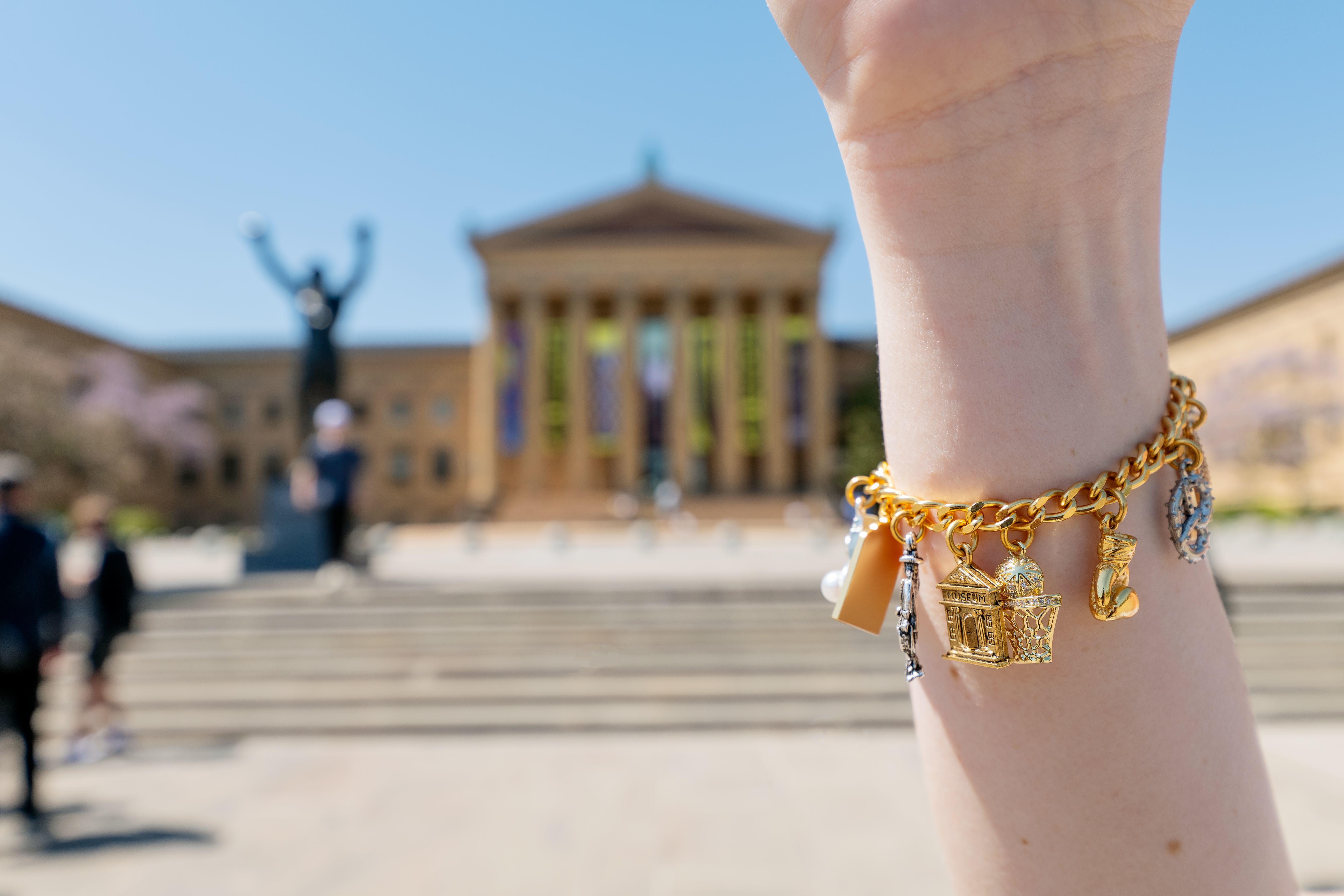
My John Wind charm bracelet featuring a salty soft pretzel, the LOVE statue, and a nattily dressed William Penn is one of my favorite pieces of Philly-centric jewelry.
In honor of our nation’s 250th birthday, Wind is giving the charms some more brotherly love. A proud Philadelphian, Wind has partnered with the Philadelphia Visitor Center for a six-piece commemorative jewelry collection featuring four necklaces, one bracelet, and a key chain/bag fob.
A commemorative John Wind charm bracelet available at the Philadelphia Visitor Center in honor of America’s 250th birthday.Nicole Vassallo for the Philadelphia Visitor Center
The soft pretzel, the LOVE statue, and William Penn remain a part of the jeweled tableau, and Wind has added a few knickknacks to the Semiquincentennial mix, like a boxing glove as a shout-out to Rocky; a soccer ball for World Cup afficionados, a star with red, white, and blue stripes for patriots, and a Liberty Bell.
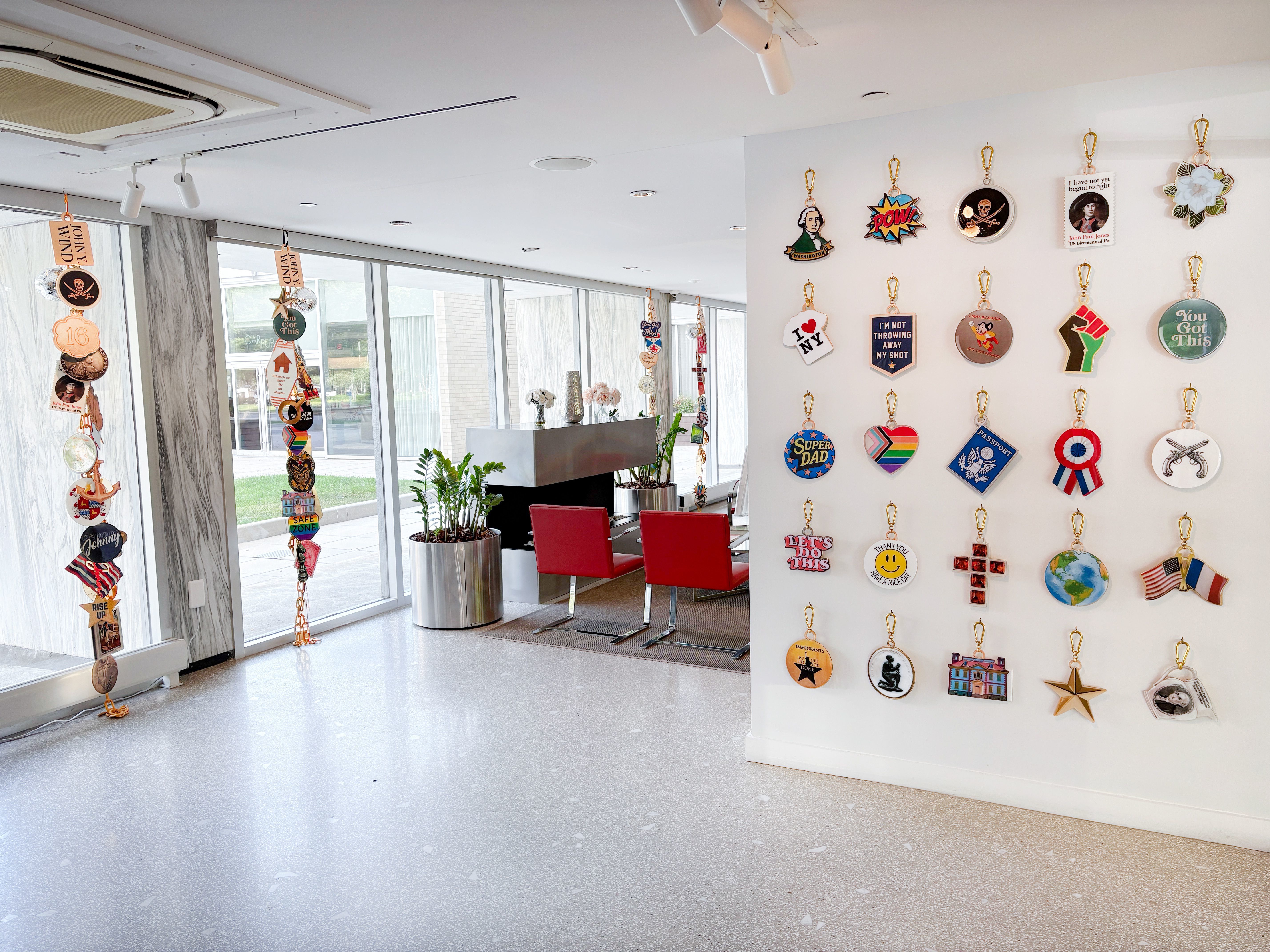
Wind, who has been making charm jewelry since he started his business in the 1980s, has turned some of his tiny amulets into giant pieces of public art.
John Wind’s exhibition at Park Towne Place, a collaboration between the Philadelphia artist and InLiquid.John Wind
Earlier in the week, Wind unveiled an installation of Philadelphia, patriotic, and social justice charms as wall art at Park Towne Place. The show, “Charm Offensive @ Reilly Memorial” will be up through Oct. 6. It is a joint project between Wind, InLiquid Art, and Park Towne Place. All of the wall charms are for sale at $150 each.
The John Wind x Philadelphia Visitor Center Collection is available at select Philadelphia Visitor Center locations and at johnwind.com. Prices range from $48 for the key chain/bag fob to $108 for the necklace.
— Elizabeth Wellington
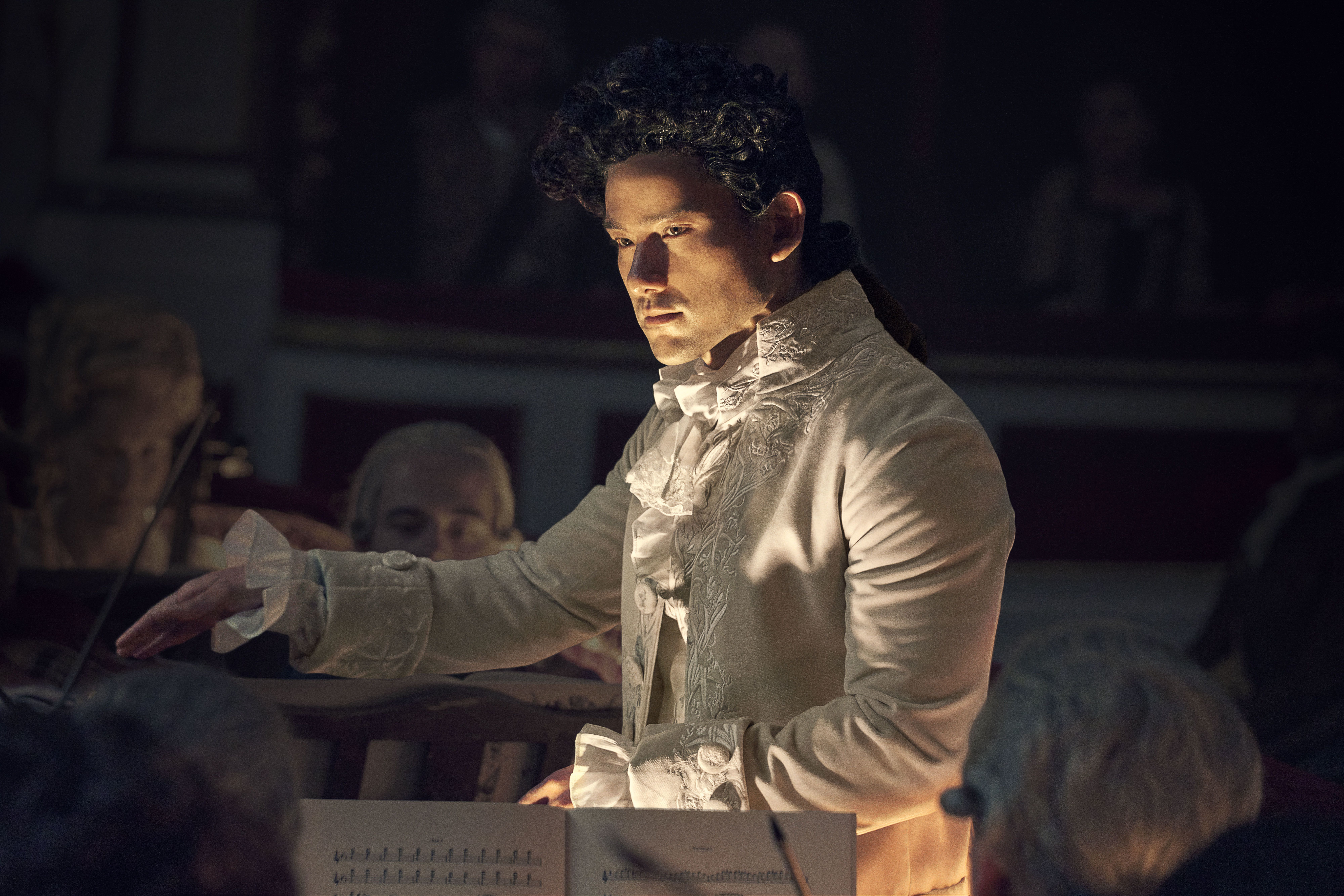
Will Sharpe as Mozart in “Amadeus,” the miniseries on Starz.Courtesy Starz
A new, hunky ‘Amadeus’
We’ll leave the notes on Amadeus, now streaming on Starz, to the film and TV critics — mostly. The miniseries based on Peter Shaffer’s play about Mozart and his less-than-genius jealous rival Antonio Salieri doesn’t have half the atmosphere or humor of the 1984 Milos Forman film.
That said, a hunky Mozart (Will Sharpe) seems like the update our age demands.
But we can offer a few notes on, well, the notes — the ones written by Mozart. Snippets of his music woven through the show last only a few seconds each, leaving a thirst to hear the rest of the musical works in recordings.
Mozart wrote only two piano concertos in minor keys, and one of them, the dark D Minor, K. 466, is heard in the opening credits. Annie Fischer’s 1959 recording with Adrian Boult and the Philharmonia Orchestra is exactly the storm you want.
Three pieces flicker by in Amadeus in the scene where Mozart’s wife, Constanze, shares Mozart’s scores with Salieri — The Sinfonia Concertante for Violin, Viola and Orchestra, ‘Gran Partita’ Serenade, and the Symphony No. 25. Each one of such beauty and invention there’s no mystery about why Salieri was undone by envy. A fun recording rabbit hole awaits listeners in each: the discovery that a particular interpretation can fundamentally alter the character of a piece.
A number of Mozart piano sonatas find their way into the miniseries, and Walter Gieseking’s recordings of crystalline tone and exquisite phrasing explain the kind of truths that are revealed when a composer finds his or her ideal interpreter. A form of genius, really.
“Amadeus” is streaming on Starz.
— Peter Dobrin
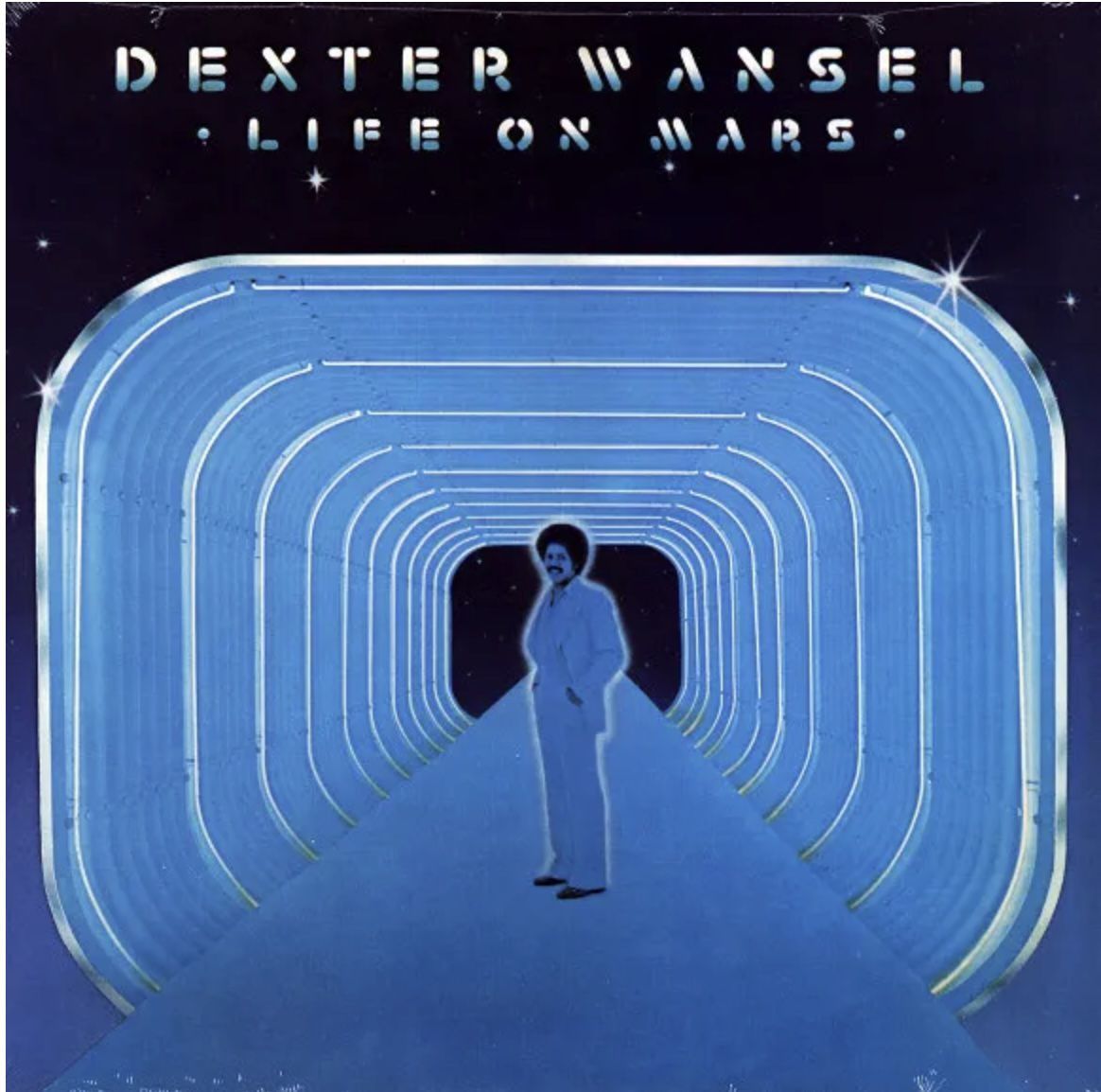
The cover image to Dexter Wansel’s 1976 album “Life on Mars.”Philadelphia International Records
Remembering a Philly jazz legend
Dexter Wansel was the player par excellence during the latter stage of Philadelphia International Records run of excellence in the late 1970s and 1980s. He wrote and produced for the Jacksons, Patti LaBelle, Teddy Pendergrass, the Jones Girls, and more.
As Kenny Gamble and Leon Huff said in a statement after Wansel’s death on May 31 at 75, he “brought a new age sound” to PIR. “Dexter’s synthesizer and keyboard sounds were iconic.”
As great a behind-the-scenes player as he was, Wansel was also a solo artist whose music pushed PIR forward, blending old school R&B with futuristic sounds and the kinds of sci-fi adventures that were au courant in the ’70s, with the work of artists like David Bowie and George Clinton.
Wansel’s 1976 space-funk album Life on Mars is the place to start looking into his legacy. It was partly inspired by Bowie’s 1971 song “Life on Mars,” but Wansel’s track of the same name is a different song. His use of the ARP 2600 synth was innovative, and Wansel expanded the interstellar theme with song titles like “Stargazer” and “Rings of Saturn.”
But the album, which points forward the silky soul Quiet Storm format, remains connected to funky, earthly pleasures and structured songwriting. “One Million Miles from the Ground” is actually about lovemaking, not planet exploring. Life on Mars also opens with a tribute to Gamble, Wansel’s PIR employer, with a horn-powered instrumental called “A Prophet Named K.G.”
On June 24, as part of Art Philly, DJ-producer King Britt will honor Wansel and Life on Mars with a live performance at Johnny Brenda’s as part of his weeklong “Blacktronika: Philadelphia Now and Then” event series. The Blacktronika Icon Award that was planned to be presented to Wansel at the show will be given posthumously.
“Blacktronika: Philadelphia Now and Then” at Johnny Brenda’s, 1201 N. Frankford Ave., June 23-29. johnnybrendas.com
— Dan DeLuca
A hotel full of art
I know where the cool kids were Wednesday night — crowding into Yowie for the launch of Elsewhere, an art fair produced by Blah Blah Gallery and hosted within the rooms of the boutique hotel.
The premise: a blend of Philly and international artists taking over hotel rooms and inviting guests into their suites. The result was three floors of contemporary art curated by some of today’s most exciting, thoughtful, and sustainable artists and galleries from around the world.
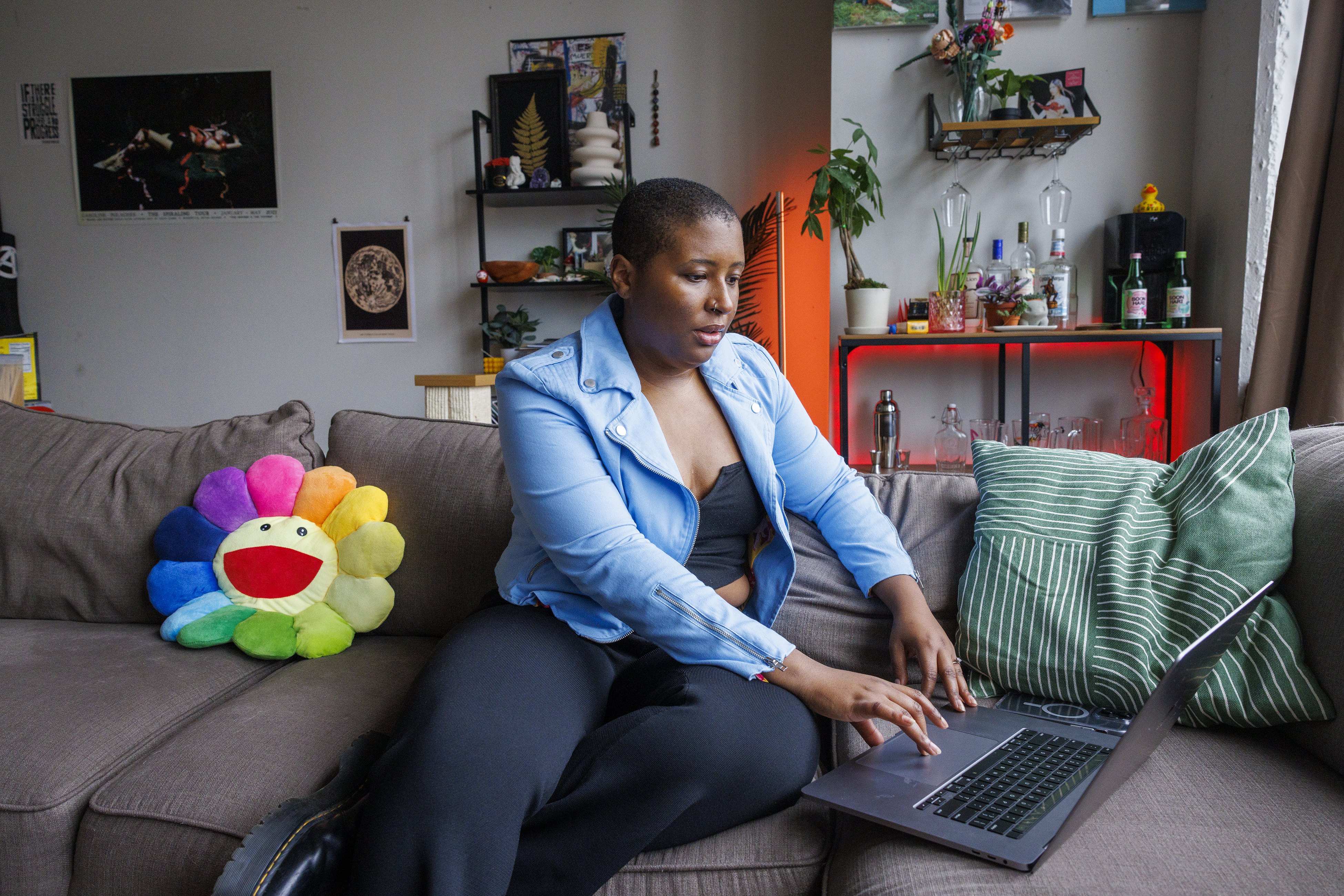
Qualeasha Wood in her apartment in Philly in 2023 after making the move from New York City.Alejandro A. Alvarez / Staff Photographer
There’s something extremely approachable and exciting about getting to hear about art while sitting on a couch with a gallery curator, sipping white wine together, being greeted by a piece of pop art inside a bathroom shower, or a Tadashi Adamson sculpture of toast with eyes staged on the hotel room’s kitchen counter.
I also spotted pieces by Philly-tied textile artist Qualeasha Wood in the hallway of an area on the second floor curated by DARLA out of New York. We love to see it.
Tina Fey as Kate, Marco Calvani center) as Claude, and Colman Domingo as Danny in Season 2 of “The Four Seasons.”Emily V. Aragones/Netflix
Shore laughs
It’s always a good time when Philly stars collab for big projects, and that’s especially true with Tina Fey and Colman Domingo in the second season of their Netflix comedy, The Four Seasons. As a cocreator and writer of the show, Fey decided that the show’s cast of vacationing couples should take a trip to the Jersey Shore, where she used to visit for many summers as a kid.
Those two episodes — filmed in Ocean Grove and Point Pleasant Beach — are some of the funniest in the season, and offer a chance for Fey’s and Domingo’s characters (Kate and Danny) to bond as they dream of opening a B&B.
One part that really had me cackling was when Will Forte, who plays Fey’s husband, makes a beach friend. Kate knows he’s been searching for a guy friend to talk sports or play games. There’s a moment when Kate and Danny see the two dudes talking and they start making fun of what topics they might be discussing (the Mets, TV sales, Gatorade flavors?) and then the camera cuts to the guys, who are actually talking about deep trauma and grief.
It’s a sweet and authentic portrayal of the Shore that feels like an excellent way to start the summer. There are so many laughs in this season I’d argue it might be better than the first. Plus, not to give anything away, but there’s even a brief trip to Philadelphia in the final episode, complete with a Wawa shout-out.
In the 25 years since Jennifer Weiner’s first book Good in Bed debuted, much has changed.
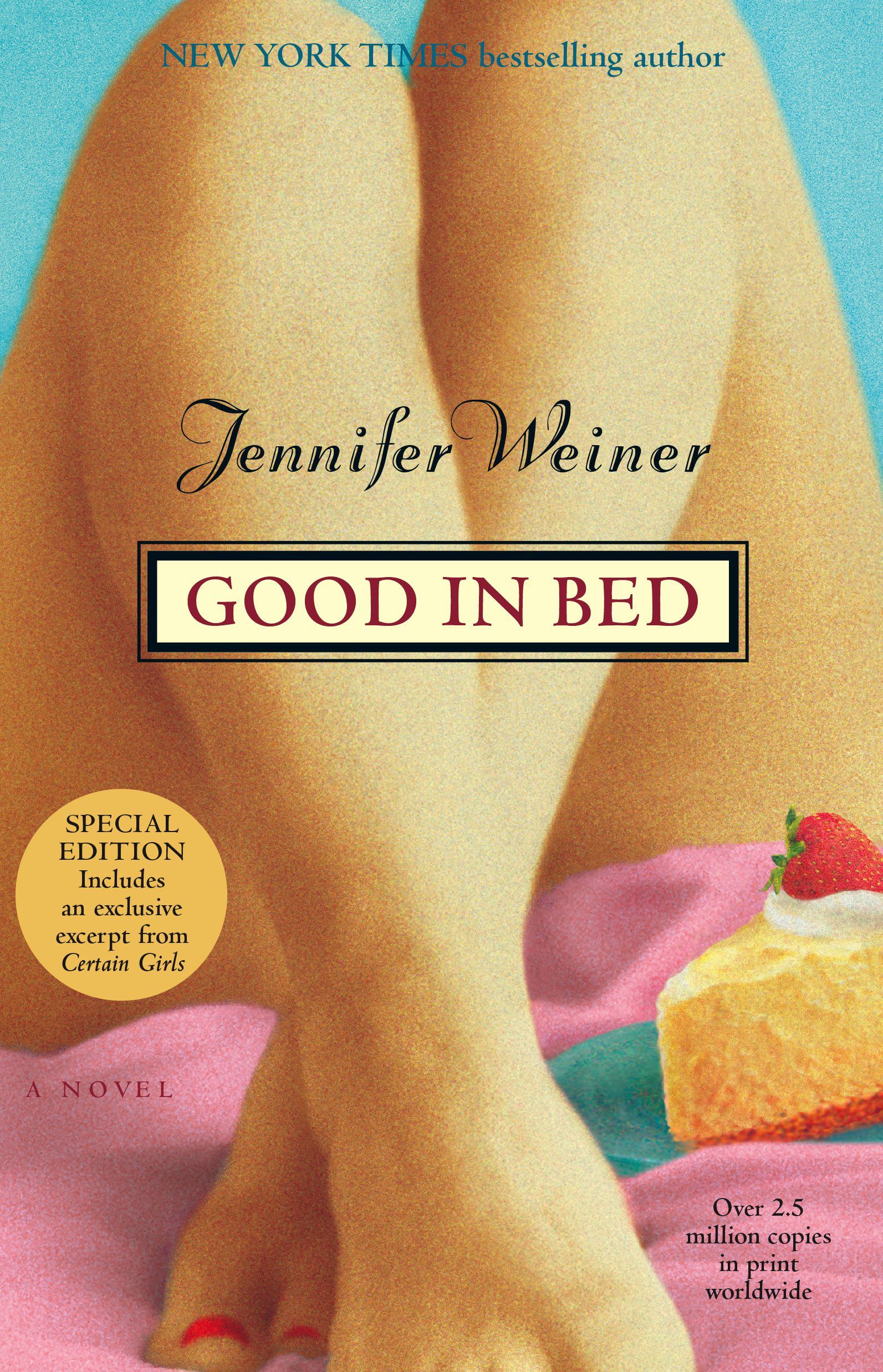
Considered the first chick lit novel centering women with imperfect bodies — basically all of us — Good in Bed is a fictional story about Connie Shapiro, a plus-size Philadelphia journalist, coming to terms with her body image.
Good in Bed spent almost a year onthe New York Times Best Seller list and was part of the early aughts’ pop-culture body positivity arsenal that gave curvy girls the courage to demand to be seen on the red carpet and in shopping haunts.
Cover of Jennifer Weiner’s first book “Good in Bed.”Simon & Schuster Books
Then came Ozempic and the rash of weight loss drugs.
“It’s kind of inevitable there would be a pendulum swing back,” Weiner said. “It’s always one step forward, two steps back. But I’m glad I wrote that first book and have written many books since that give women a chance to see themselves.”
Weiner, who was single when she wrote Good in Bed,has gone through her fair share of life changes.She married, had two daughters — Lucy and Phoebe — and divorced, married again, this time to her “second and final husband.”
Lucy graduated from college. Phoebe is on her way to college.
Weiner, who grew up in Connecticut and moved to Philadelphia in 1994 for a job at The Inquirer, has written 20 adult novels, a collection of essays, and three novels for middle grade students.
Jennifer Weiner’s “The Griffin Sisters’ Greatest Hits” was optioned by Universal Pictures in 2026. Amy Sherman-Palladino will write and direct.HarperCollins
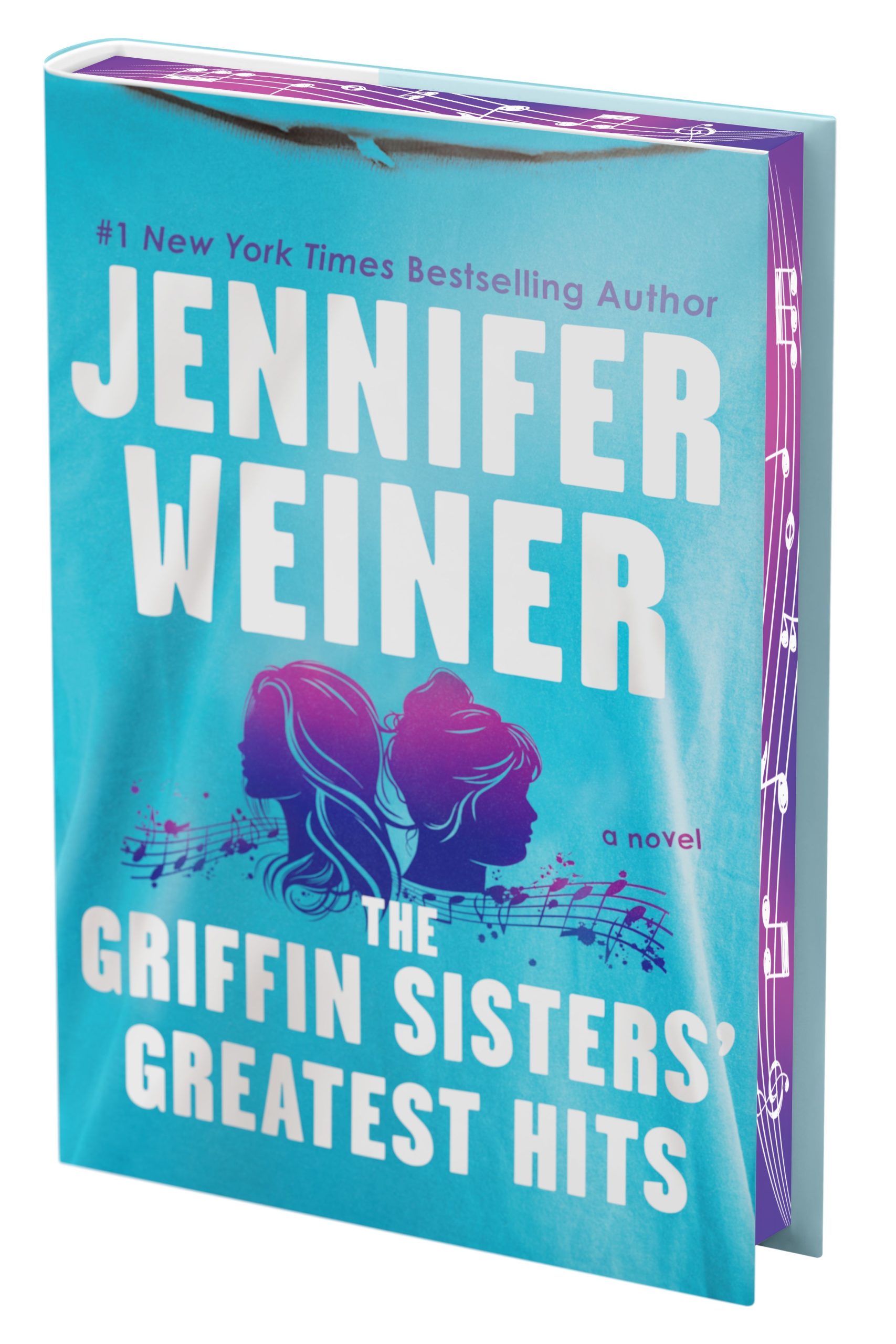
Her second novel, In Her Shoes, was turned into a 2005 movie starring Cameron Diaz. Earlier this year, Universal Pictures optioned the rights to develop her 2025 book TheGriffin Sisters’ Greatest Hits. Amy Sherman-Palladino will write and direct.
The Queen Village resident has gone from telling stories about 20-something Gen X women seeking relationships and falling in love with their authentic selves, to telling stories about 50-something Gen X women seeking relationships and falling in love with their authentic selves.
“I feel really, really lucky that I’ve gotten to do this for this long,” Weiner said on a recent video call. She was sitting at her desk, sipping iced coffee from a mason jar that her Instagram feed influenced her to buy.
“My readers stayed with me, I’ve picked up new readers. I feel really fortunate the characters I created along the way, and the questions I have asked them, have resonated.”
Here is Weiner’s idea of a perfect Philly day.
The conversation has been edited for clarity and brevity.
8 a.m.
I wake up. My husband and I do [the New York Times’] Wordle, Connections, and the Spelling Bee together. We usually win, but when we don’t, we know it’s going to be a bad day.
We take our dog Levon, third in our series of terriers, out for a walk at Mario Lanza Park in our Queen Village neighborhood.
Mario Lanza Park, in a photo from October 2022.Michelle Myers
Now, I would go to Fiore Fine Foods in Queen Village. Because it’s my perfect Philly Day, they have not moved [to Kensington] from our neighborhood. I’d order an iced coffee and theSaltie, a breakfast sandwich with scrambled eggs and ricotta cheese. It’s just the perfect breakfast sandwich.
10 a.m.
Next, I’m going to get some exercise. You know I’m a middle-aged woman. I try to sweat every day because it’s helpful when you are sitting at a desk all of the time. I lift weights atG-Strength. It’s funny, the same women who were doing step aerobics in the 1990s and aughts, and transitioned to yoga and Pilates, are now lifting weights. It’s like we all read the same health articles.
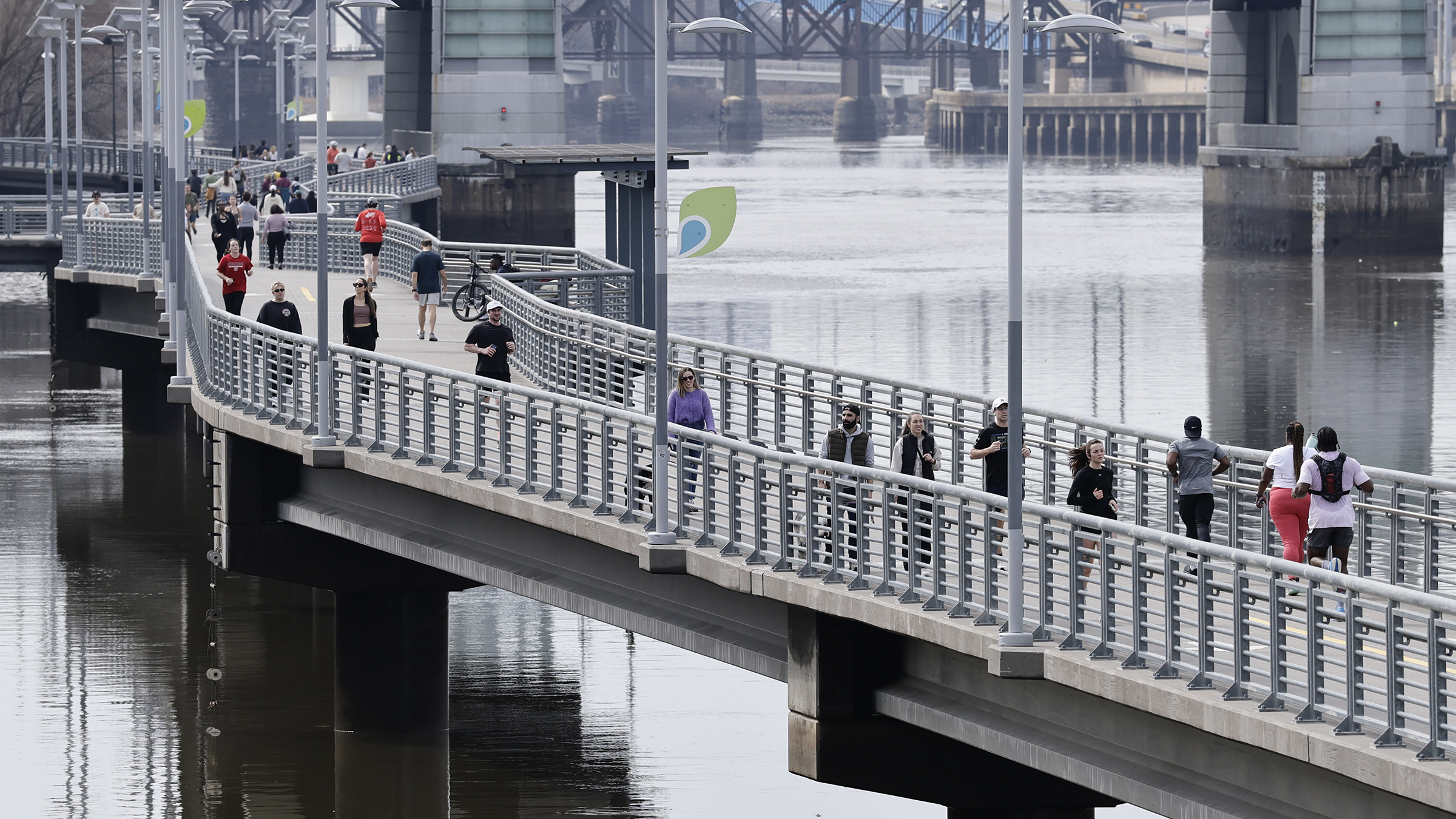
Joggers and walkers move along the Schuylkill Banks Boardwalk on March 8.Yong Kim / Staff Photographer
And because I have so much energy, I’d then ride with the Bicycle Club of Philadelphia. Since it’s a perfect day, the weather is great, there aren’t any cars parked in the bike lane, and people go around me without honking. I’d make my way up 26th Street, along the Schuylkill Banks,and meet at the Philadelphia Museum of Art or Cosmic Cafe and ride through Manayunk up to Narberth. We’d stop at GET Caféand Little Blue Owl Baking Company. The joke at the bike club is we are riding for coffee and a croissant.
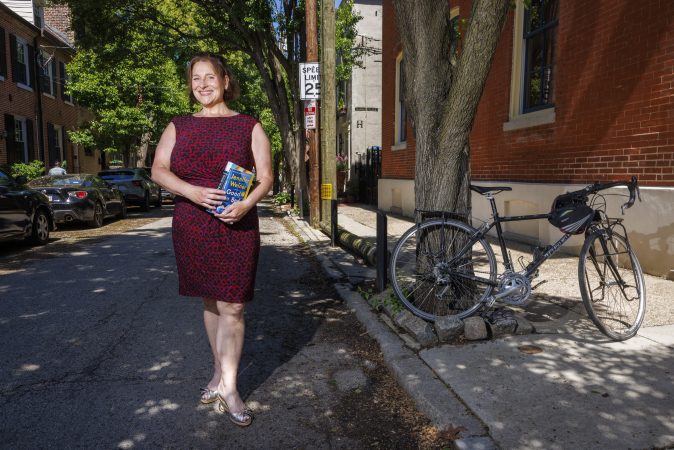
Jennifer Weiner with her bike in Rock Creek Park in August 2023. Amanda Andrade-Rhoades
2 p.m.
When I get home, my daughter Phoebe would be there and we’d go to Forîn Cafe on South Street for a matcha. That’s my daughter’s thing, she loves matcha.
We love thrifting, so we might wander over to ACE Coffee Outpost, a vintage clothing shop and cafe, and B-Bop, a shop that sells plus-size clothes. There is a chance I’ll go to Merrygold Shop and Wall Flower Paper & Party where they have cute baby things, presents, and beautiful cards.
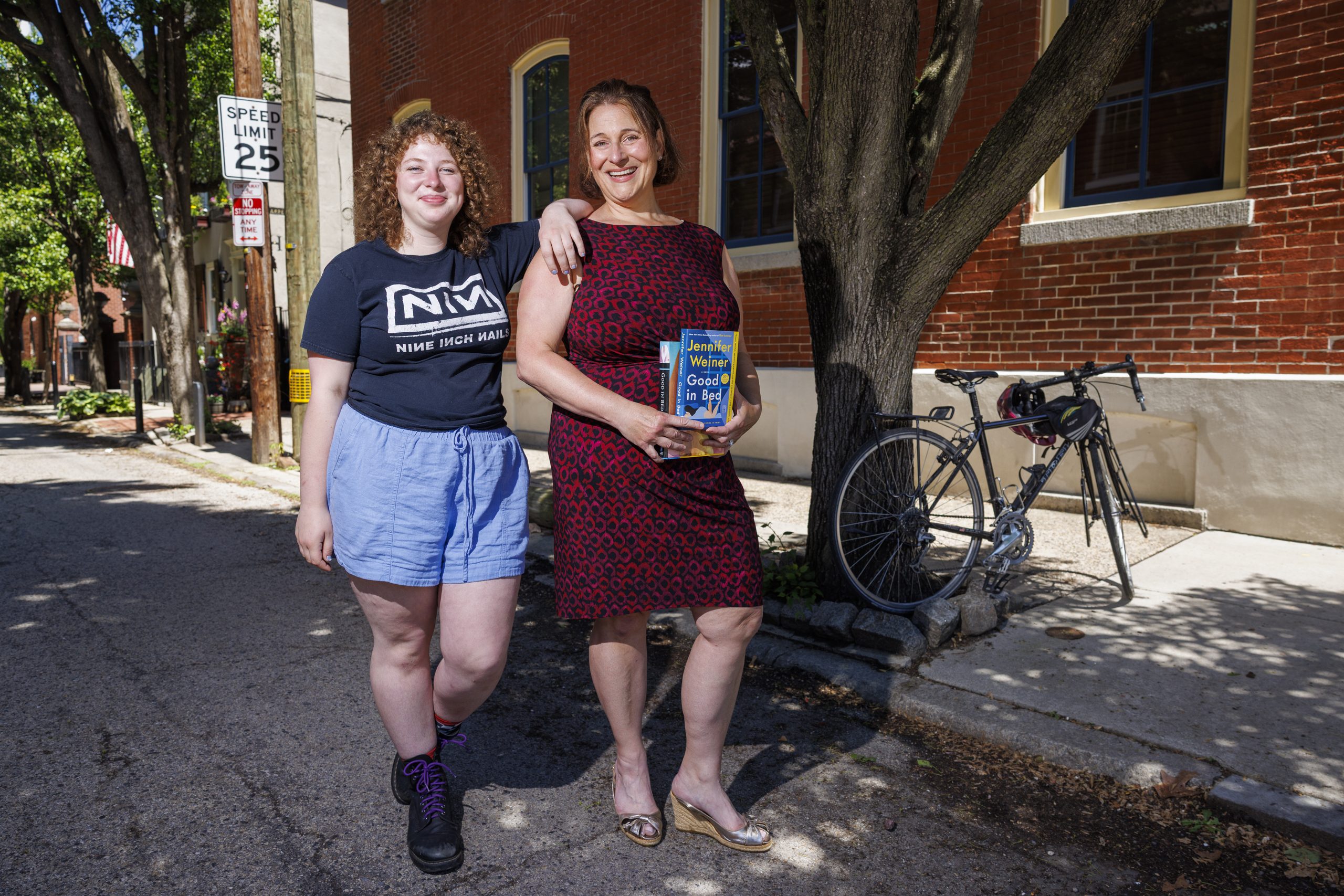
Philadelphia author Jennifer Weiner at her home in Queen Village on April 27. Going on the 25th anniversary of her book “Good in Bed,” Weiner is seen here with her daughter Phoebe Bonin, 18.Alejandro A. Alvarez / Staff Photographer
3:30 p.m.
Then I’ll take a shower and a nap. And I’ll write till about 6.
6 p.m.
Because it’s the perfect Philly day, I have the opportunity to bend the rules of time and space. So, now it’s 10 a.m. again and my husband and I are walking to places that would still be open at this time of day like the Mighty Bread Companyor Machine Shop Boulangerie in the Bok. Then we’d walk to Superétteon Passyunk.
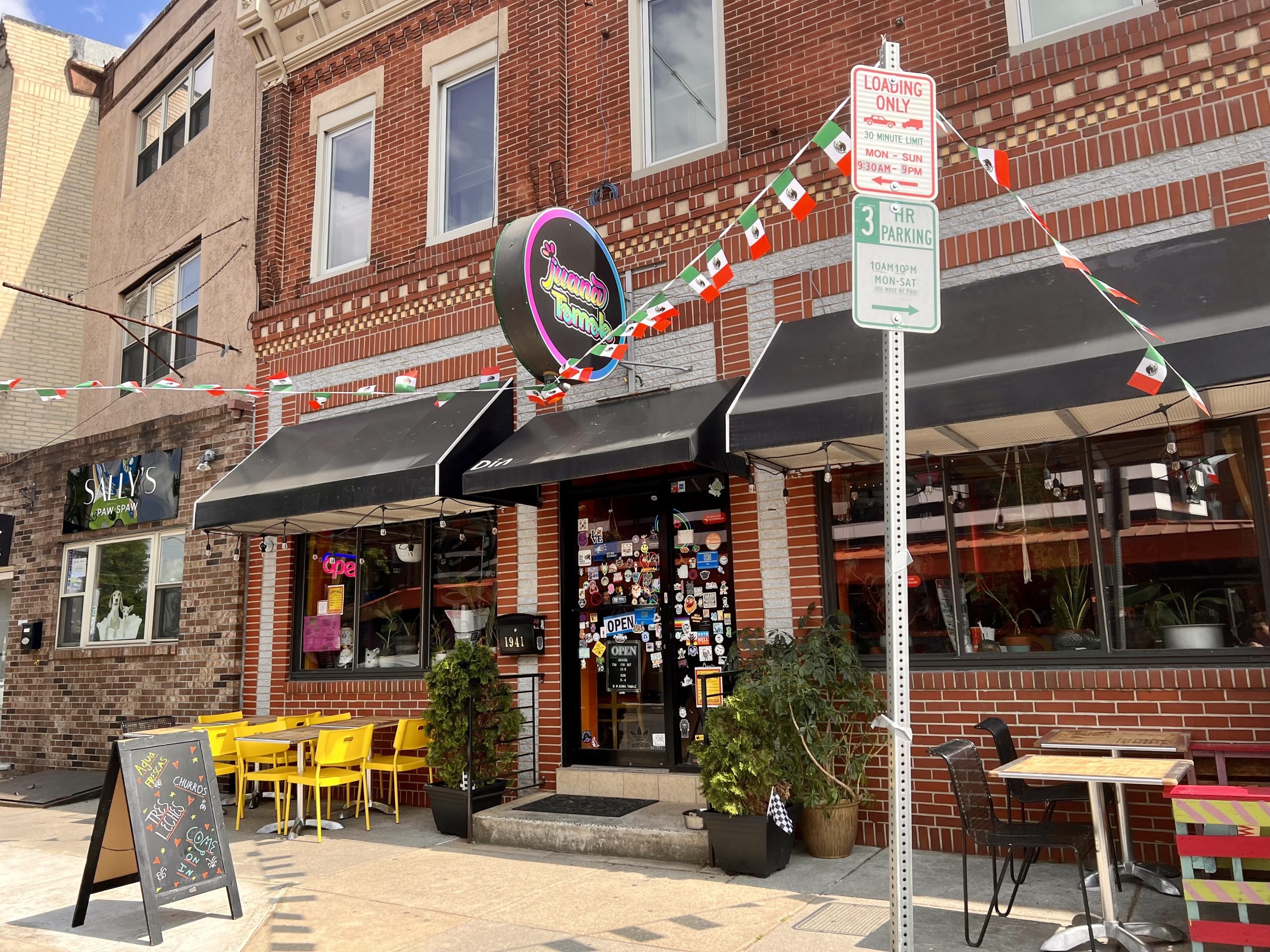
Now since I’m on Passyunk, I’d fast forward to evening and have dinner at Juana Tamale. My favorite is the birria quesadilla.
Juana Tamale, 1941 E. Passyunk Ave., on May 18, 2023.Michael Klein / Staff
8 p.m.
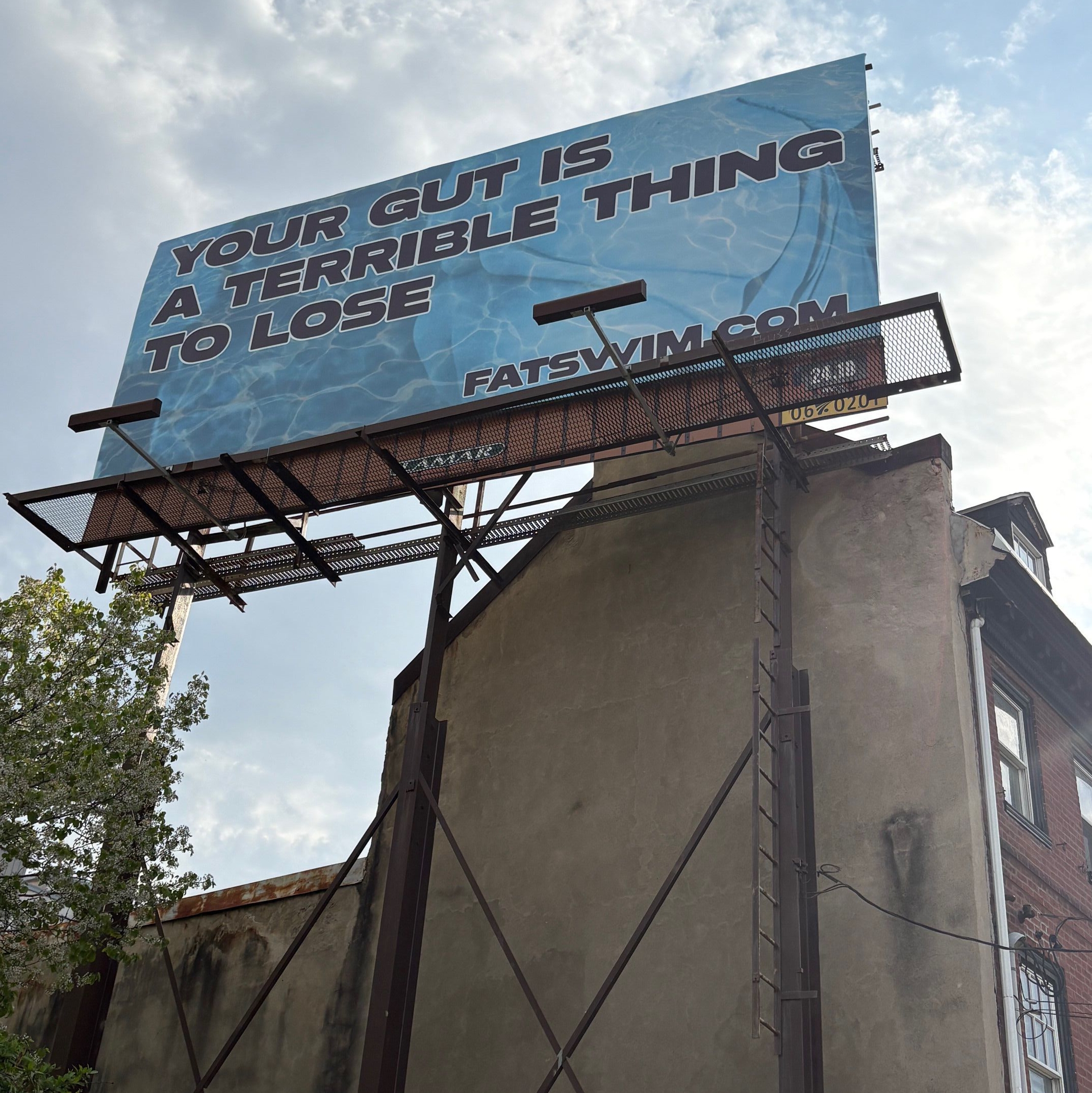
I’d end my perfect Philly day with a reading at a local bookstore, like Head House Books to support Philadelphia authors like Emma Copley Eisenberg, who might be reading from her new book, Fat Swim. I went to see the billboard the first day it was up. I work with her at Blue Stoop.
It’s important I end my Philly day trying to help the next generation of writers.
Emma Copley Eisenberg’s billboard touting the website that announces her newest collection of short stories, “Fat Swim.” The billboard is visible from I-95 right before you get to the Girard Avenue exit.Elizabeth Wellington
Weiner is celebrating the 25th anniversary of her debut novel “Good in Bed” all year. She is currently working on her next novel.
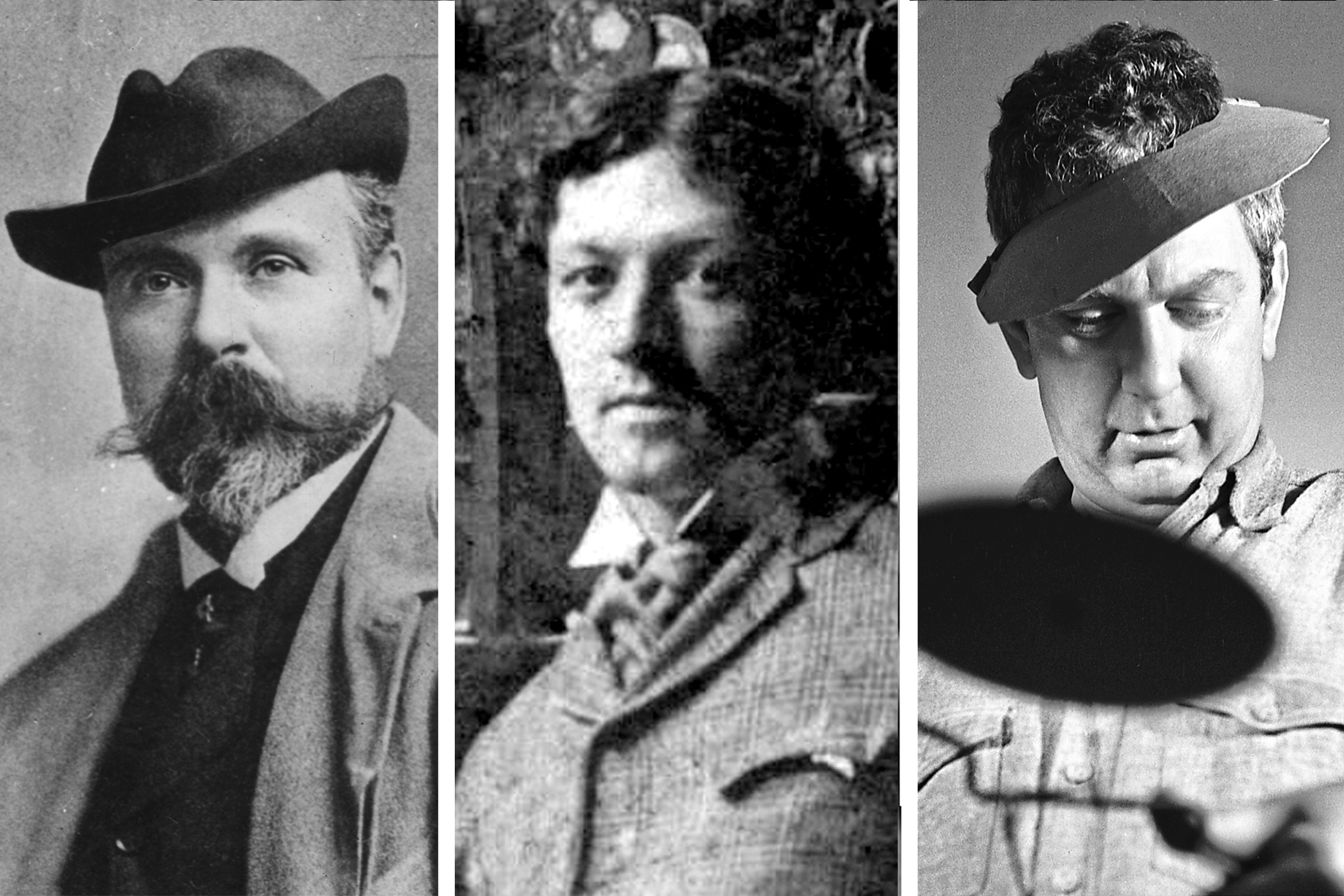
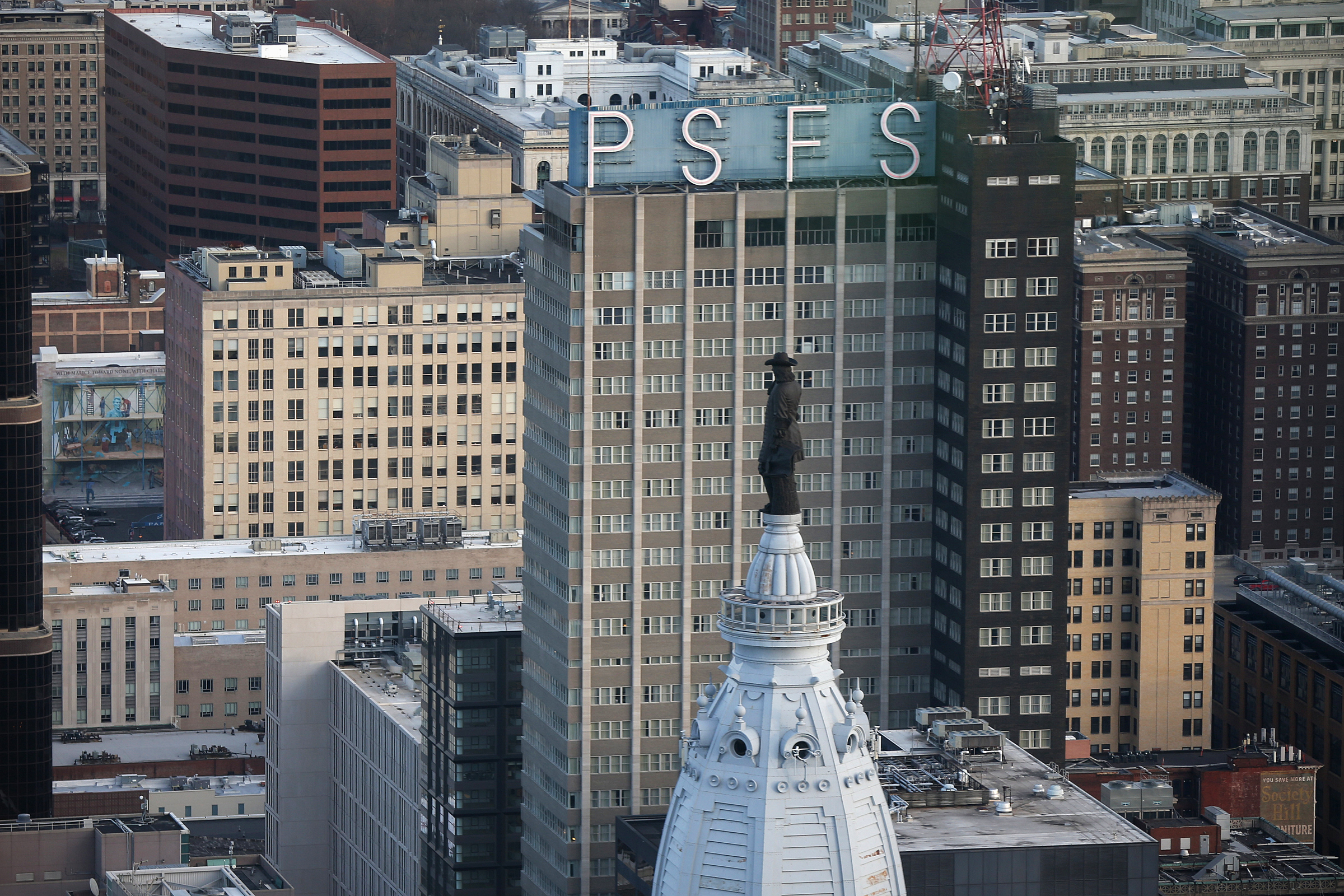
For more than quarter century, Greta Greenberger ended her tours of Philadelphia City Hall at the tower, just below the bronze buckled shoes of William Penn (1892), the shady colossus that Alexander Milne Calder sculpted.
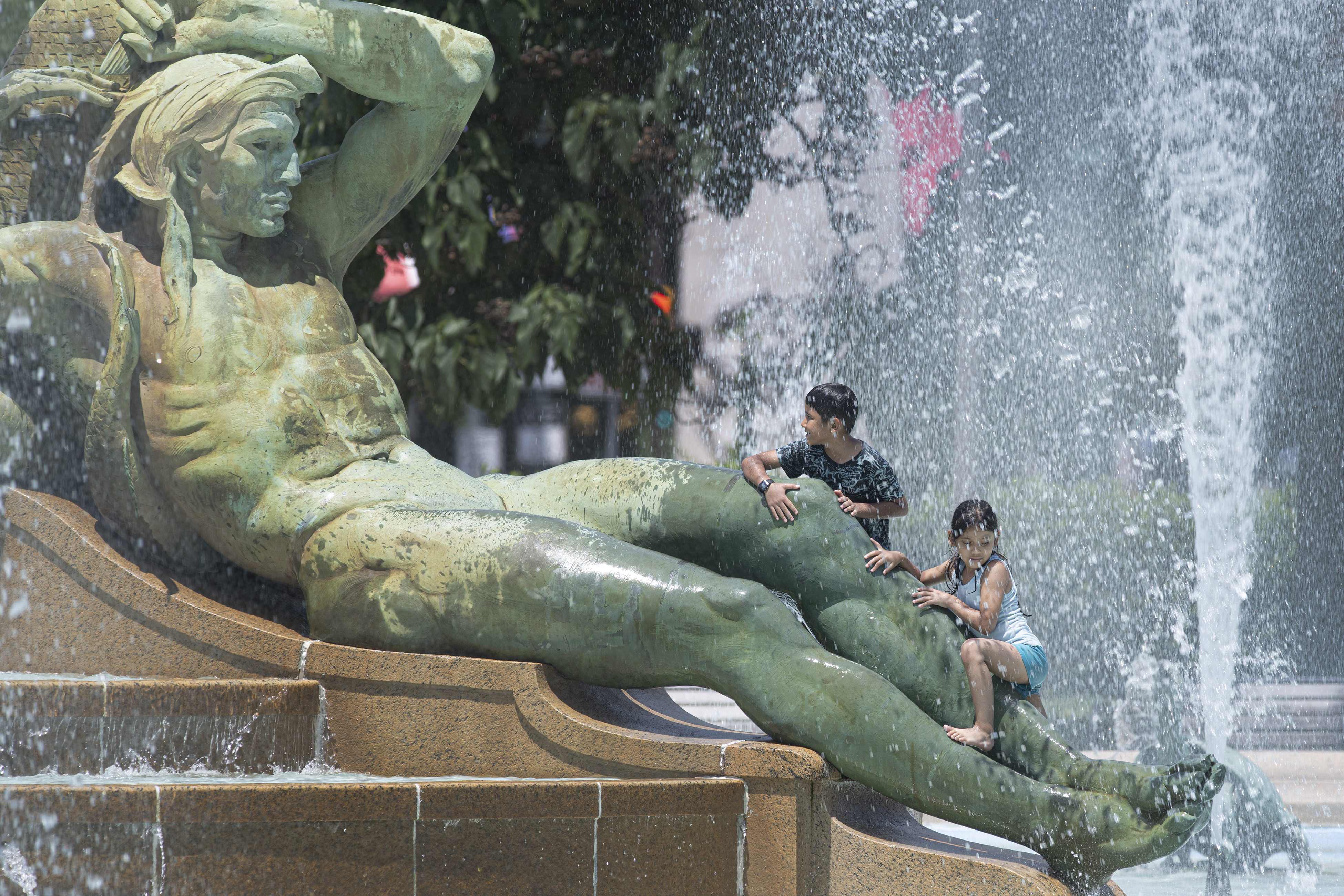
From there, she’d point up the Parkway to Logan Square, where on hot days children sneak into The Fountain of Three Rivers (1924), created by Calder’s son, Alexander Stirling Calder, to honor the Schuylkill, the Delaware, and the Wissahickon.
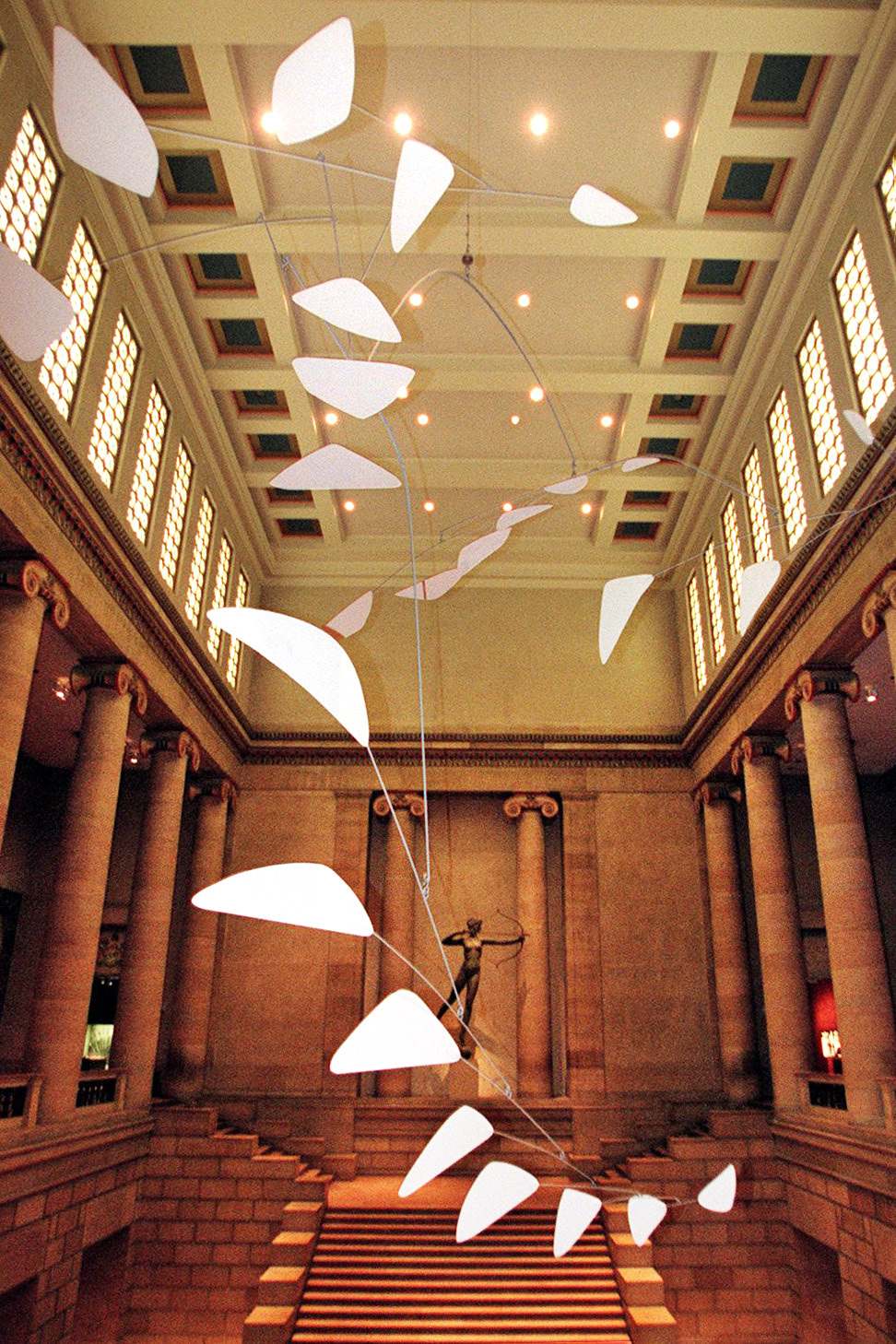
She’d finish her lesson at the Philadelphia Art Museum, where an unearthly, white mobile, Ghost (1964), designed by the third generation of Alexander Calders, Sandy, sways ever so slightly in the Great Stair Hall.
“Sometimes, I’d refer to this as ‘The Father, the Son and the Holy Ghost,’” she says. “It tells such a wonderful story.”
That story will be easier to tell now, with the opening of Calder Gardens at 21st Street and the Ben Franklin Parkway. The Gardens, focused on the work of the youngest Calder, known asSandy, brings another opportunity to celebrate the family dynasty’s in Philadelphia: three sculptors named Alexander Calder who have shaped the look of the city and beyond.
Exterior of the new Calder Gardens on the Ben Franklin Parkway.Alejandro A. Alvarez / Staff Photographer
“The Calder family is incredibly important to Philadelphia,” said Anna O. Marley, the former chief curator at the Pennsylvania Academy of Fine Arts (PAFA), where so many Calders studied. “They tell us so much about what it means to be an artist in the United States and how an American artistic identity was created in Philadelphia.”
And their work here offers “a pocket history of art,” in the view of Kathleen A. Foster, the Art Museum’s senior curator of American art.
“Between the three of them, you really go from the academic realism of the grandfather through kind of shift into Art Deco and modernism in the `20s with Stirling Calder, and then all the way into modern forms, completely abstract shapes and bright colors.”
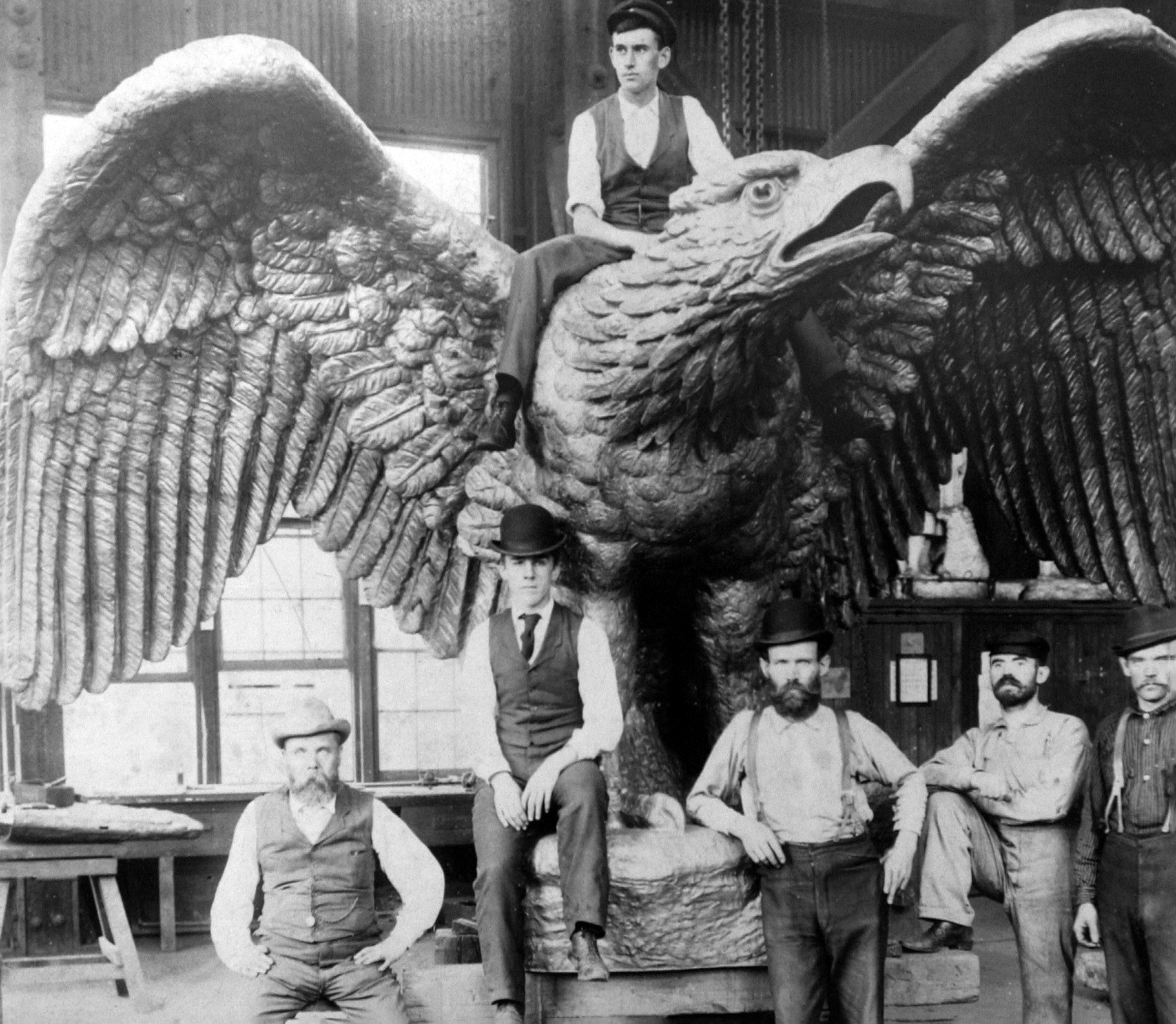
A photograph of workers and an Alexander Milne Calder eagle sculpture before installation around 1894, on display in the tower at City Hall. Calder created the statue of William Penn atop Philadelphia City Hall — and over 250 other works of sculpture on the exterior and interior of the building — from 1871-1901.Inquirer archives
‘One of the greatest’
The Philadelphia that Alexander Milne Calder, a Scottish stonecutter’s son from Aberdeen, first saw in 1868 was sorely in need of a makeover. The sprawling metropolis was known for building big things like ships and rail engines and a wealth of small manufacturers that earned it the nickname “Workshop of the World.”
It was also filthy.
“It’s clear that there is no future for a city that is just increasingly based on its industrial might, on the dirt-producing, noise-producing, the squalor,“ says David Brownlee, emeritus professor of the history of art at the University of Pennsylvania.
The boundaries of Fairmount Park had just been established the year before and plans would soon begin for a giant celebration of the country’s 100th birthday, the 1876 Centennial, which would show the world the city’s cultural achievements. The Benjamin Franklin Parkway was unfolding, a broad boulevard lined by art and leading to what Brownlee calls “one of the greatest monumental ensembles of sculpture ever created.”
That would be City Hall, the émigré Calder’s workplace for 22 years as he presided over the creation of more than 250 sculptures from his first floor office in the building’s southwest corner — and the towering figure of the colony’s founder.
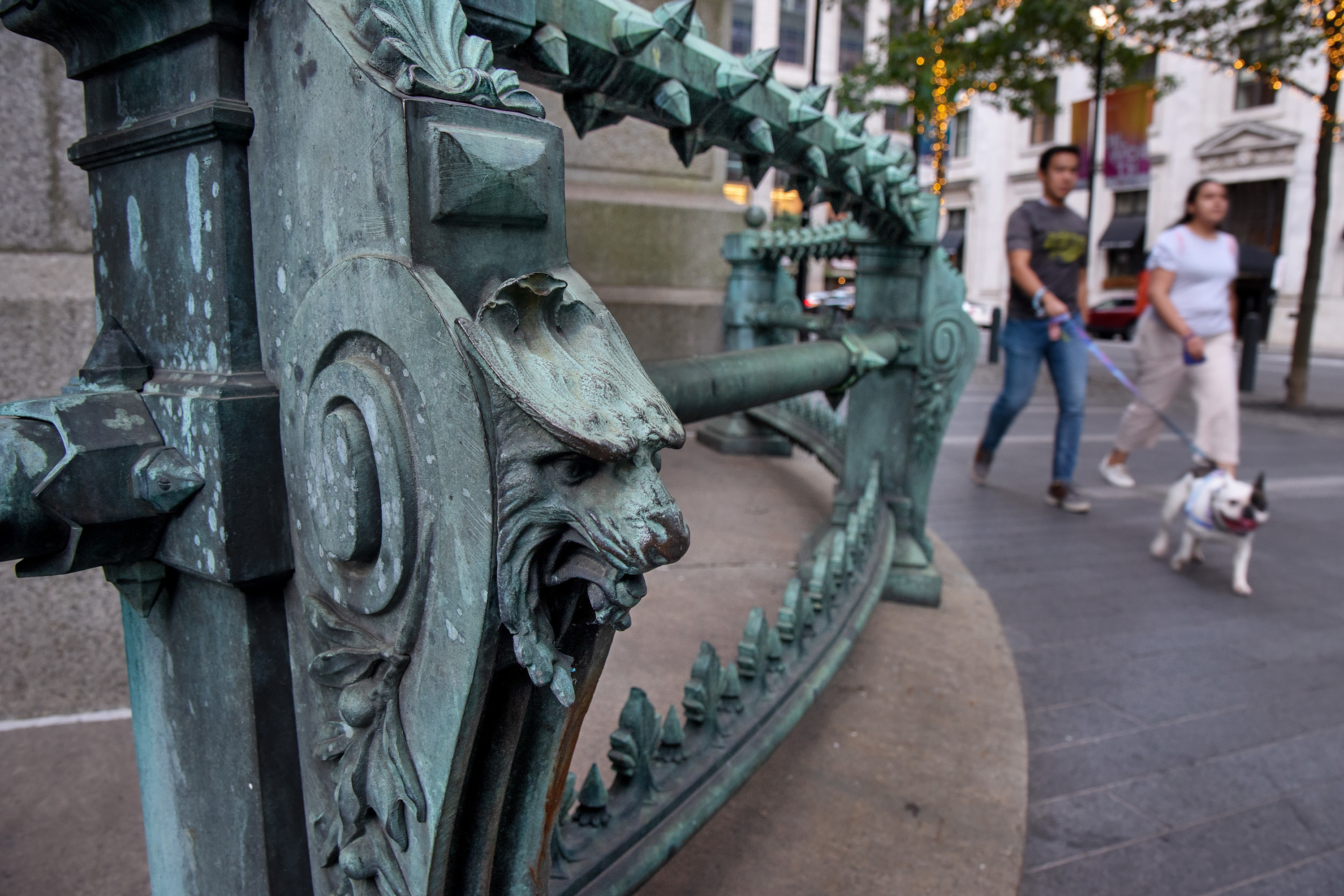
There were once almost 150 small lion heads on the ornate bronze spiked railing that surrounds City Hall. They, like most of the statuary on the building — including the big one of William Penn — were designed by Alexander Milne Calder. Less than two dozen of the lions remain after 100 years. TOM GRALISH / Staff Photographer
Calder had worked at the Royal Academy in Edinburgh and on the Albert Memorial in London before sailing to America. He stopped in New York, but chose Philadelphia, armed with a letter of introduction to the city’s most eminent sculptor, Joseph A. Bailly, and to the scion of a monument business, William Struthers. Calder was 22.
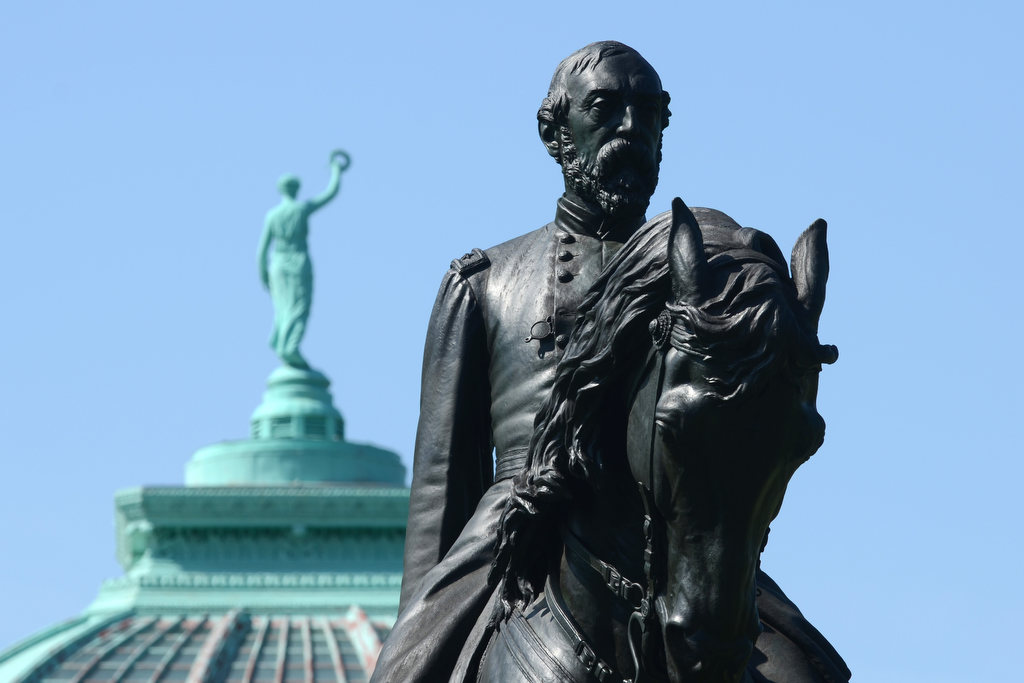
He registered that year at Pennsylvania Academy of the Fine Arts, the nation’s first art school and museum, and studied “antiques,” drawing from plaster casts of classic sculptures. It was not long before Calder won a prized commission over one of his instructors, to sculpt the likeness of Major Gen. George G. Meade atop his horse, Baldy. Meade, who’d defeated Robert E. Lee at Gettysburg, later designed many of the paths and drives of Fairmount Park. His statue stands now behind the Please Touch Museum on Lansdowne Drive.
Alexander Milne Calder’s Meade Equestrian Monument in the rear of Memorial Hall. It was cast using captured Confederate cannon for the bronze. Calder rendered Gen. Meade reining in his horse at a moment of crisis during battle.
When Greenberger gives tours of City Hall — though retired, she still volunteers one day a week — she likes to start in the north portico, where one can sample his expansive vision. Look up to the south, and there are Africans, surrounded by tobacco leaves, a lion. To the east, people from China, Japan, India, and an Asian elephant. West are the Native Americans and pioneers, and a bear. And north is Europe, people from Germany, England, France, maple leaves, and cattle. (She isn’t sure why cattle.)
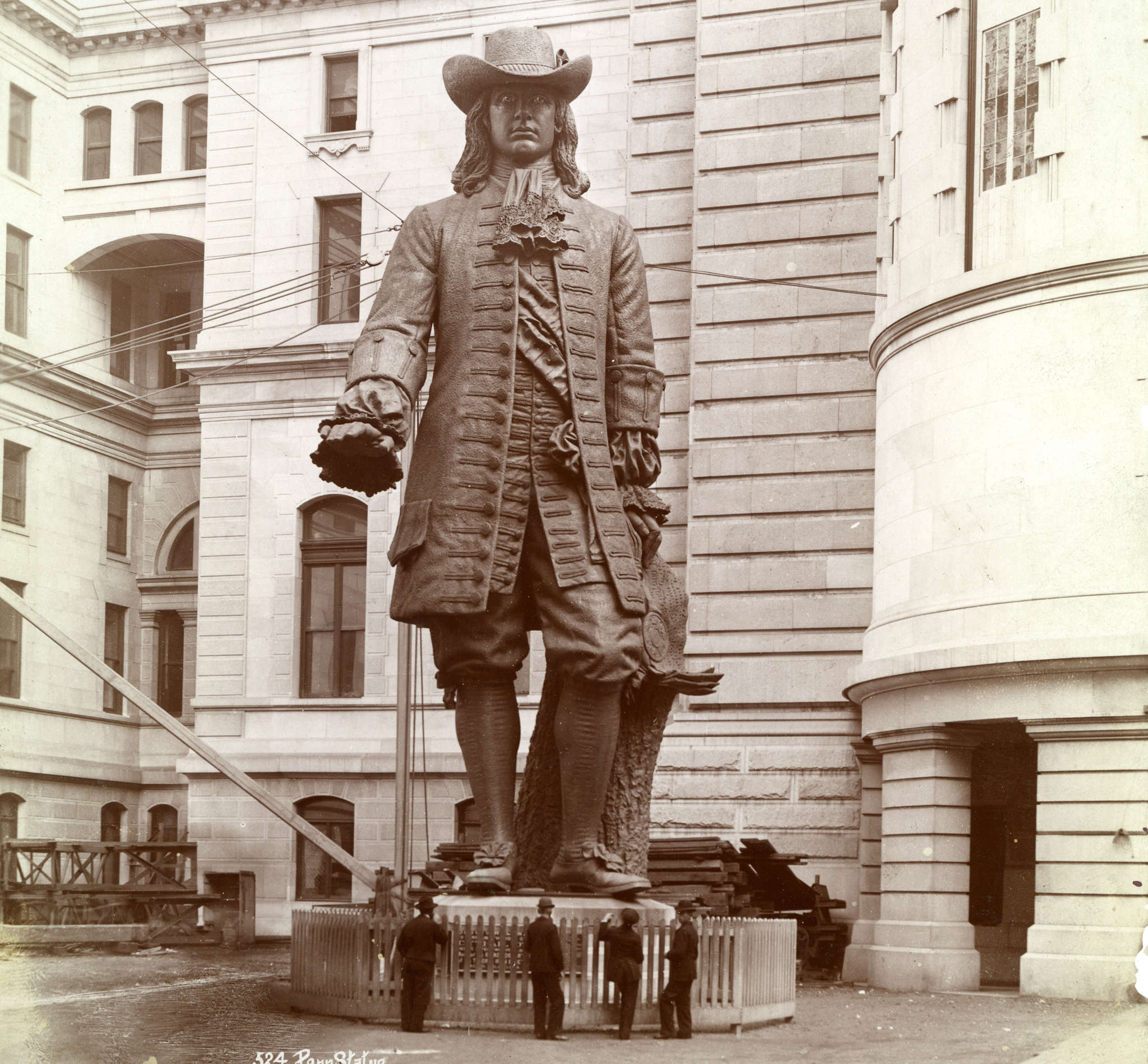
Calder started on the Penn sculpture in 1886. The iconic figure, now visible from miles away, was the fourth version of the colony’s founder that the sculptor created. Calder’s models were one-tenth the size of the 37-foot high statue. His goal, according to an article at the time in The Inquirer, was to create “William Penn as he is known to Philadelphians; not a theoretical one or a fine English gentleman.”
The William Penn statue on display in the City Hall courtyard in 1893, the year before it was hoisted, bit by bit, to the top.Historical Society of Pennsylvania
Four teams of horses drew massive plaster sections of the statue up Broad Street to the Tacony Iron & Metal Works. It wasn’t until Thanksgiving 1894 that the head was lifted onto the statue atop the tower, completing Calder’s colossus.
He was not happy with the result.
For most of the day, William Penn’s face is shadowed. That was not the artist’s intent. Calder had wanted Penn facing south, where the sun would light his youthful face and the intricate detail of his garb would be visible for all to admire.
But members of the Public Buildings Commission wanted Penn facing northeast, toward Penn Treaty Park, the site of the 1683 peace agreement with the Lenni-Lenape.
In a letter quoted in the Dec. 14, 1894 Inquirer, Calder wrote “I think that you will agree that is very disappointing from every point of view.”
Calder’s William Penn statue atop City Hall as seen from the Comcast Technology Center in Center City.TIM TAI / Staff Photographer
While Calder lived in a number of homes around the city — a home at 2020 Bainbridge St. and a studio at 337 Broad — when he registered at PAFA, the address listed was 1903 N. Park Ave., now on Temple’s campus. Decades later, his granddaughter, Margaret Calder Hayes, would remember the North Philadelphia house as “gloomy” — four floors with Empire furniture, a long dark hallway leading to a parlor where children were not welcome unaccompanied.
Calder had met his wife, Margaret Stirling, soon after his arrival in Philadelphia and married her after a brief courtship.
Three of their sons would study at PAFA and become artists — Ralph Milne Calder, and Norman Day Calder, and Alexander Stirling Calder. But it was “Stirling,” the eldest who left the biggest mark on Philadelphia.
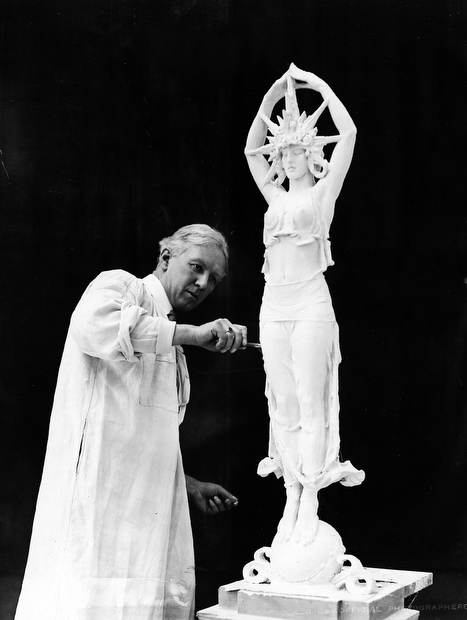
A portrait of A. Stirling Calder.
‘An idealist, somewhat withdrawn’
In a remembrance kept in the PAFA archives, Alexander Stirling Calder describes art as a fallback. Ever since he was 6 and saw the great Edwin Booth play Hamlet, Stirling Calder wanted to be an actor. But he was too shy. In 1885, he enrolled in art classes at the academy’s new building at Broad and Cherry, and years later recalled the first criticism of his teacher, the artist Thomas Eakins: “Attack all of your difficulties at once.” Eakins urged sculptors to paint, painters to sculpt, and to dissect cadavers to learn anatomy.
After studying at the École des Beaux-Arts in Paris, he returned home and won a commission to immortalize Samuel Gross with a statue that first stood on the National Mall in Washington, D.C. (It’s since been moved to the Center City campus of Thomas Jefferson University). At 25, he married a fellow PAFA student, Nanette Lederer, a painter.
To the critic Malcolm Cowley, Stirling Calder was “an idealist, somewhat withdrawn, wholly impractical, creating symbolic figures while brooding on the cruelty of nature.”
Foster says that looking at the allegorical figures in Logan Square’s Swann Fountain, you can see how Stirling inherited his father’s traditions.
Children cool off at the Swann Memorial Fountain in 2023.Jose F. Moreno/ Staff Photographer
“But the figures have a kind of sleek, modern simplicity to them,” she said. “They’re more stylized. So by the 1920s the Swann Fountain represents a kind of moving from the academic past into a more expressive and abstract style.”
The fence came off the Swann Fountain on a hot July day in 1924. The next evening, 10,000 revelers danced to tangos from a police band. Not everyone was pleased — some wondering if the average Philadelphian would grasp the significance of all that Calder had created.
He was unbothered.
“The meaning of works of art is just as mysterious as life itself. It can be explained in many ways by people of different philosophies. …,” he was quoted in the Evening Bulletin as saying. “There are lots of things in life we do not understand; art is no exception.”
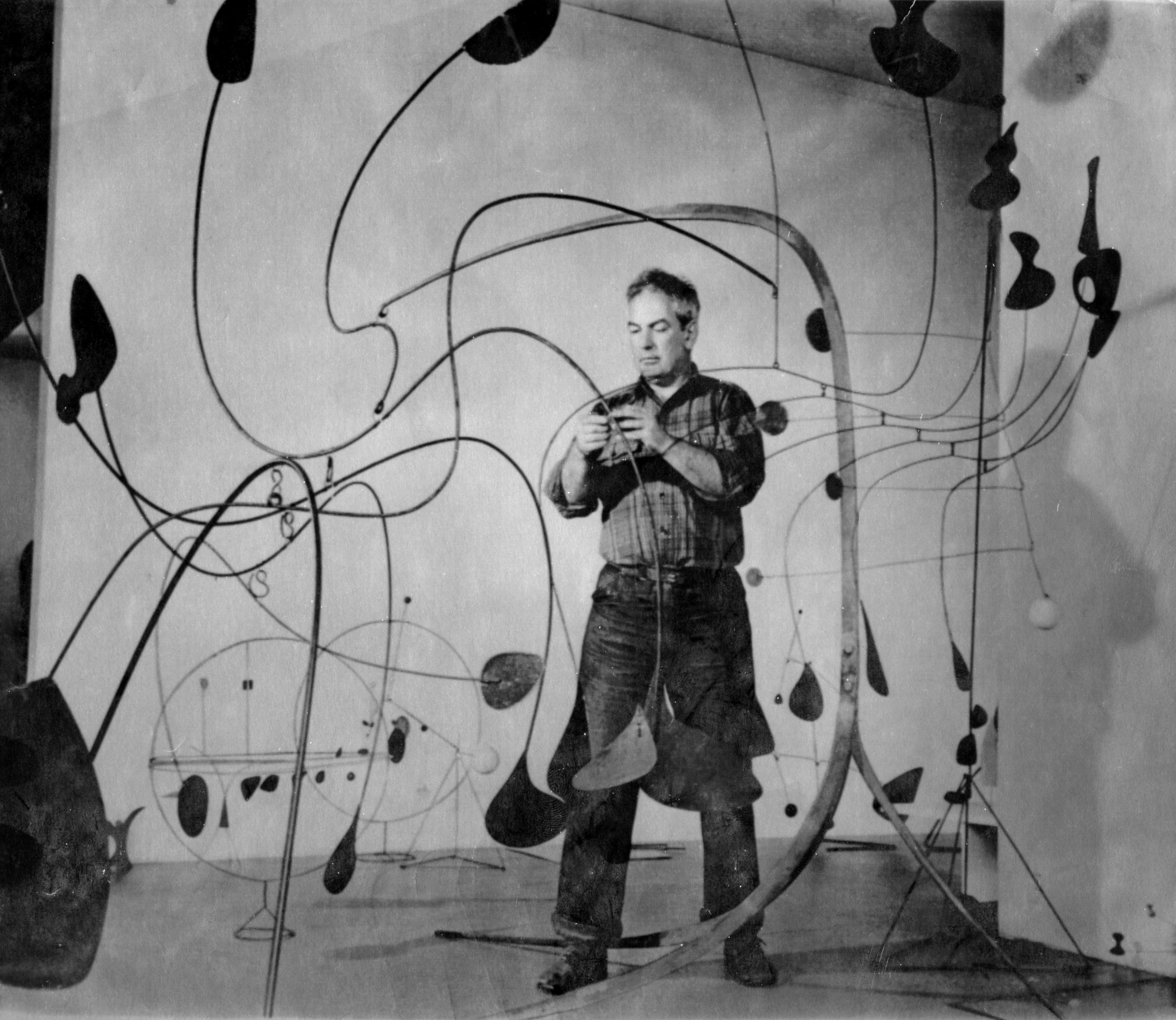
Alexander “Sandy” Calder installs his “Big Spider” mobile at New York’s Museum of Modern Art in 1943.The Evening Bulletin / Temple Urban Archives
‘A big child’
In his autobiography, Sandy Calder included a photograph of the sprawling mansion in Philadelphia where he says he was born. He called the place Lawnton. In 1898 when Calder was born, Lawnton was a neighborhood in East Oak Lane, served by the Reading Line and lined with grand homes where the wealthy went to escape the summer heat.
It’s unlikely Calder was born there. David Brownlee has dug into the mystery of the third and most famous Calder’s birthplace. While his family doctor lived in Lawnton, and it is possible that his mother delivered her son nearby, more likely, he was born near the edge of the growing city, at 1203 East Washington Lane in Germantown. City records showed that Stirling Calder rented that country place, while the family still owned a home on North Park Avenue.
In Margaret Calder Hayes’ memoir, she described how Sandy, two years younger, went to school in Buster Brown suits his mother had sewn and by 8 had built a Noah’s Ark of animals. He enrolled in Germantown Academy, when it was still in the city, but left at age 9 before moving to Croton-on-Hudson, N.Y.
“We love to claim him, but he only went to school here as a child,” Foster said of the youngest Calder’s time in Philadelphia.
Yet in some ways, he’s the essence of the city he was born in: practical, playful, unpretentious, no pushover.
He worked as a fireman on a steamer bound for San Francisco, spent a year keeping time in a Washington state logging camp. Trained as an mechanical engineer, he moved to New York City at age 25 to paint.
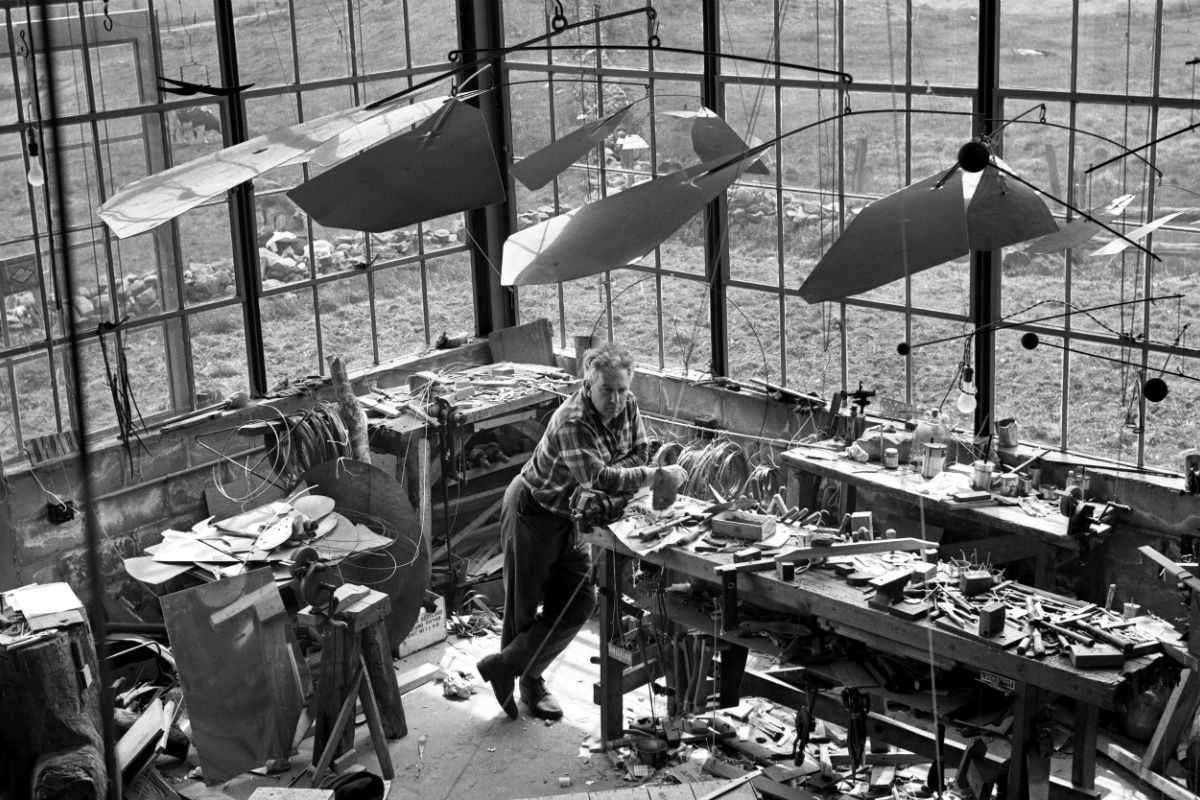
Calder with Mobile in his Roxbury, Ct., studio in 1941.Herbert Matter
He is known as a 20th century modernist, the artist who put sculpture in motion.
After visiting Calder’s Paris studio in 1931 and marveling at his sculptures that relied on little motors, Marcel Duchamp coined the word “mobiles” for these kinetic marvels.
Parisians took to him, while they scoffed at other American artists. Cowley, in an introduction to Hayes’ Three Alexander Calders had a theory:
”Of course his work in itself, continually inventive, playful, and enchanting, was his ticket of admission.” But Sandy and his wife Louisa, “a beauty,” Cowley wrote, entertained generously and simply. Calder was in the tradition of the Noble Savage, “who disregards social conventions and judges everything by his instinctive standards.”
“A big child,” as his friend the playwright Arthur Miller once put it.
Sandy Calder created Ghost in 1964 for a retrospective at the Guggenheim in New York City, that included 400 examples of his mobiles, stabiles, toys, jewelry, carvings, tapestries, etc. The Art Museum bought the 34-foot-long showpiece a year later and brought it to the city of his birth.
Ghost, in the Great Stair Hall at the Philadelphia Museum of Art (now, Philadelphia Art Museum). It was created to hang in the center of the Guggenheim Museum in New York for Calder’s exhibition there in 1964.Steven M. Falk / Staff Photographer
“It’s a colossal example of the mobile and it’s majestic,” Foster said. “When it moves, it’s just breathtaking, because it, it almost moves like a giant dinosaur or something. In other words, it’s got long spines and fins, and it moves very slowly and grandly in the air currents in the Great Stair Hall. … It’s delightful.”
“When every baby has a mobile hanging over their crib, you don’t think about Calder as being the genesis of this. I think he would be delighted to know that … because he was such a child at heart. He managed to keep that imagination.”
Now, Philadelphia will be home to an institution that celebrates that imagination. It’s a fitting homecoming for an artist whose life and legacy was so shaped by his family, who in turn both shaped and were shaped by Philadelphia.
The weight of a name
Tú Huynh was working at the National Gallery of Art in Washington, D.C., when he told a job applicant to look for him under the giant Calder mobile that hangs in the East Building.
That was in 1997. The applicant,Kaleo Bird, landed the job — and later, his heart. Three years later they moved as a couple to Philadelphia, where she started grad school. Soon they married.
In 2008, when their son was born, they didn’t take long to decide on a first name:
Calder.
He’s now 17, a senior at Penn Charter School.
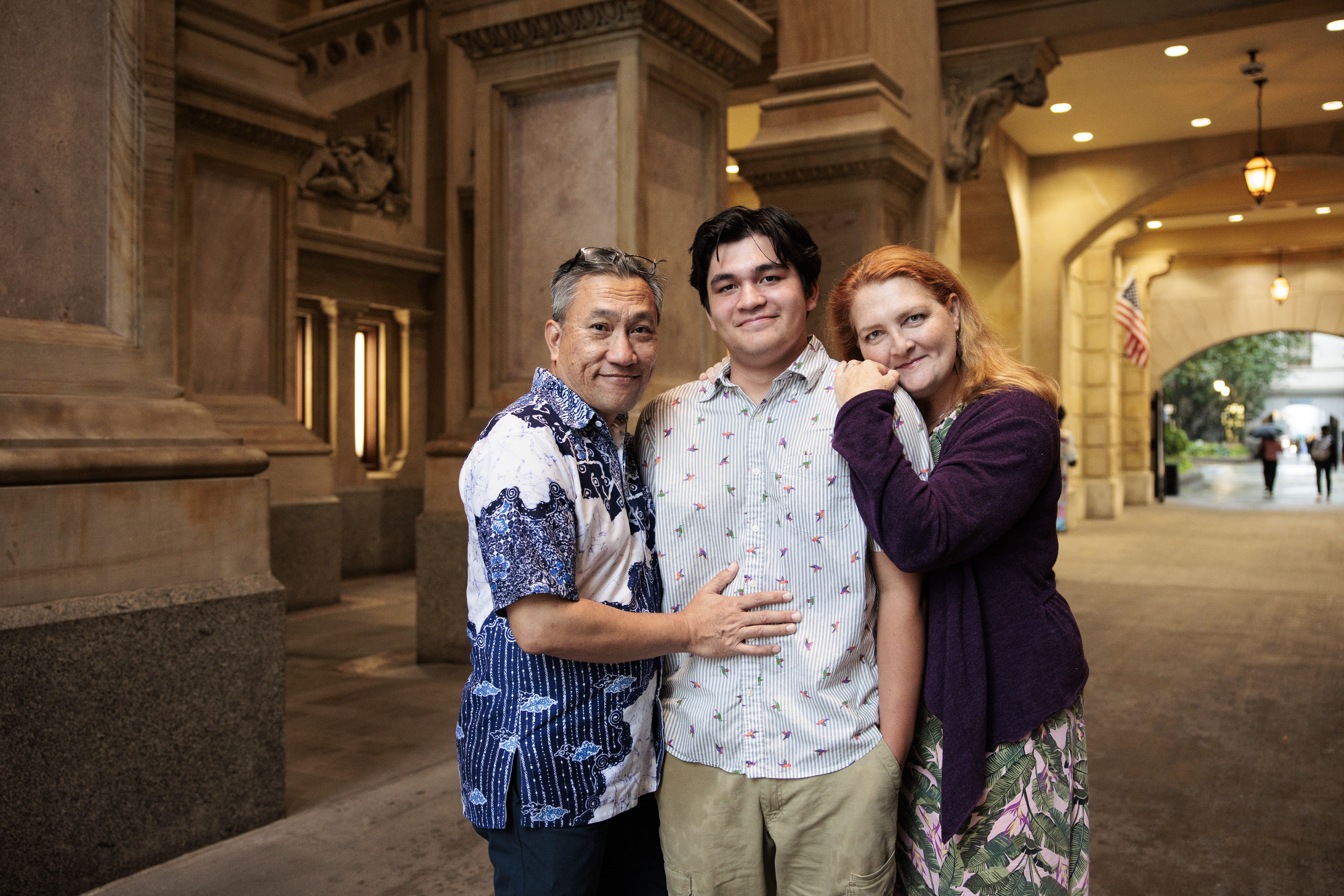
Tú Huynh, Calder Huynh, 17, and Kaleo Bird at Philadelphia City Hall where more than 250 of Alexander Milne Calder’s sculptures adorn the building, topped by his statue of William Penn. Monica Herndon / Staff Photographer
“I have yet to meet anyone my age who knows who the whole Calder family was, which is a shame because I feel they’ve had such an impact here, particularly with City Hall,” said the teen. “So many people think Ben Franklin is atop City Hall and don’t know anything about these beautiful sculptures.”
His father now runs the Art in City Hall program.
“I tell people that the true art of City Hall belongs to Alexander Milne Calder,” says Tú Huynh. “This was his Sistine Chapel. There are over 250 sculptures, leafs, busts all over this building. And that’s an homage to his ideal of what this city, state and country is supposed to be about. And he doesn’t sugarcoat anything. There are enslaved Africans, Indigenous populations, Europeans. It tells you the folks who’ve contributed to this extraordinary country.”
Calder Huynh says he feels the weight of his name — in a way that the two generations named after Alexander Milne Calder must have felt.
He paints, draws in charcoal, creates his own comic books — exploring themes with super heroes and Westerns, always with an eye on his father’s works that line the walls of their home.
“Naming me after them is such a big thing to put on someone. For me, it is a weight that Alexander Sandy Calder must have felt. A weight to achieve and create something that differs from what his family members had created, which is kind of cool. … Put something in this world that hasn’t been done yet.”
“The Magic of Calder Gardens” is produced with support from Lisa D. Kabnick and John H. McFadden. Editorial content is created independently of the project’s donors.
To support The Inquirer’s High-Impact Journalism Fund, visit Inquirer.com/giving
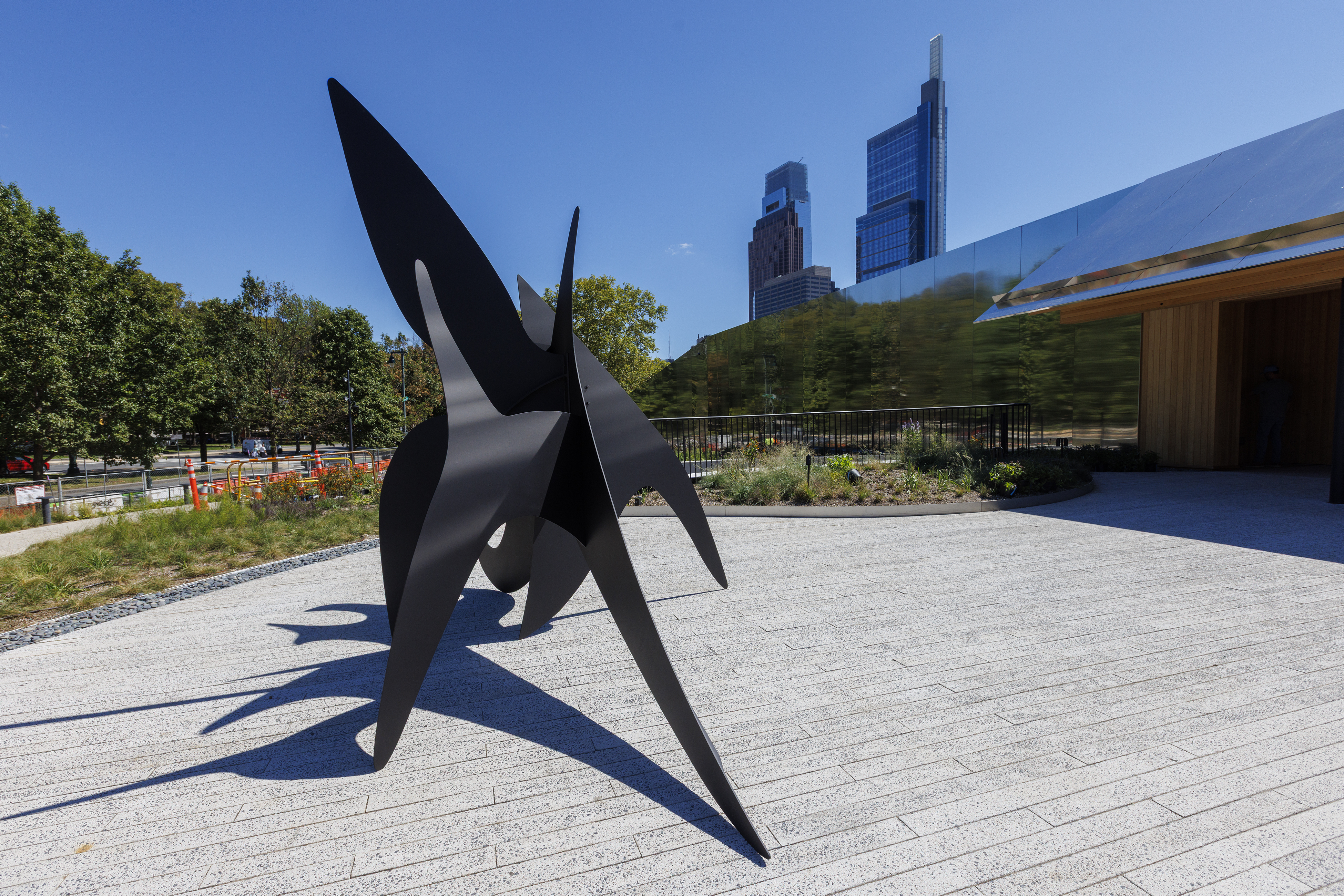
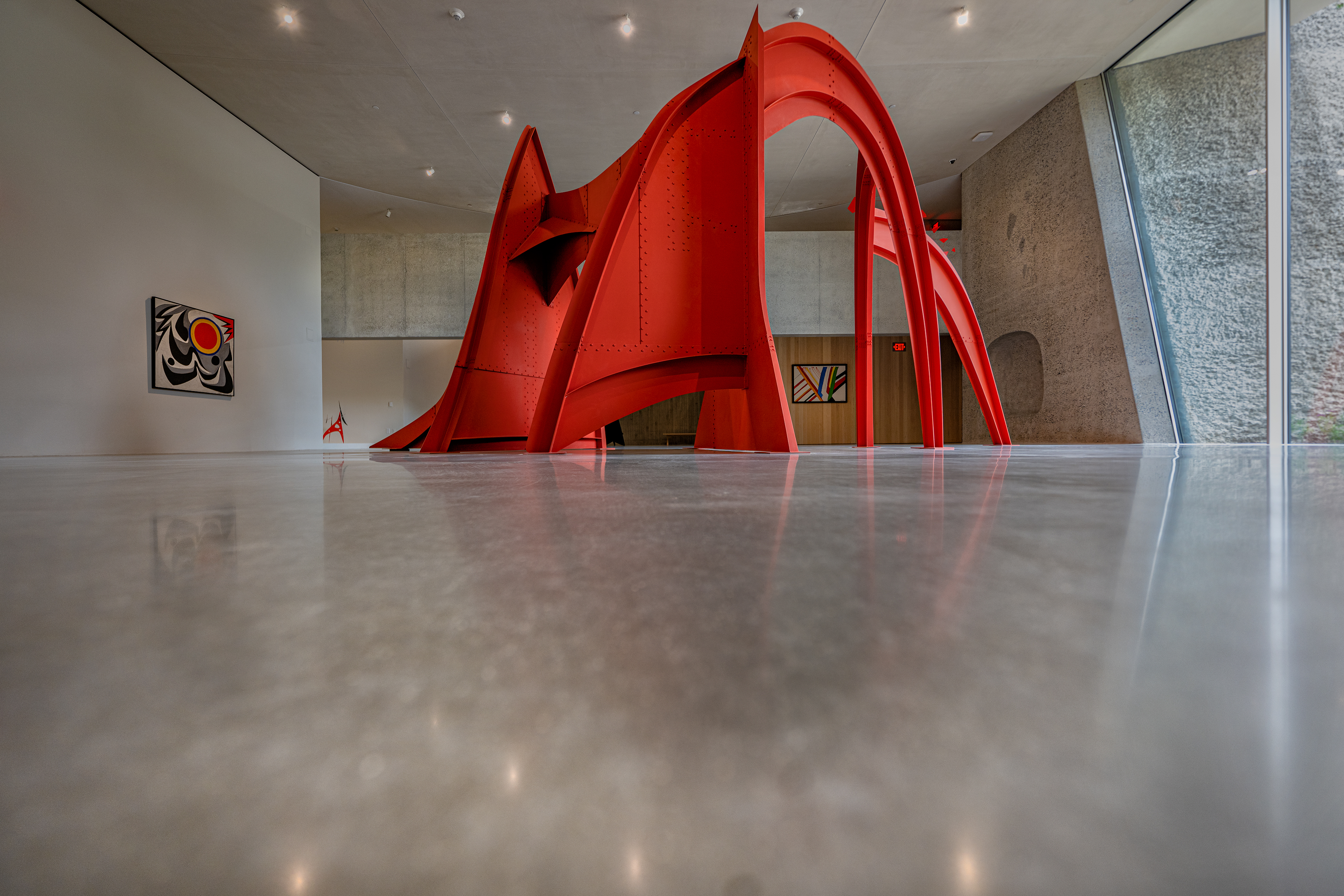
Jerusalem Stabile II, 1976 by Alexander Calder is shown on display at the Calder Museum in Philadelphia.Jose F. Moreno / Staff Photographer