Category: Arts & Culture

  • Garrett Brown, who made Rocky’s run up the Philadelphia Museum of Art steps possible, is the subject of a new documentary

    Garrett Brown, who made Rocky’s run up the Philadelphia Museum of Art steps possible, is the subject of a new documentary

    What is common to the Rocky run sequence up the Philadelphia Museum of Art steps, the hedge maze scene in The Shining, aerial shots of football games, and underwater footage of Olympic swimmers?

    They were all made possible thanks to the same Philadelphia-area inventor.

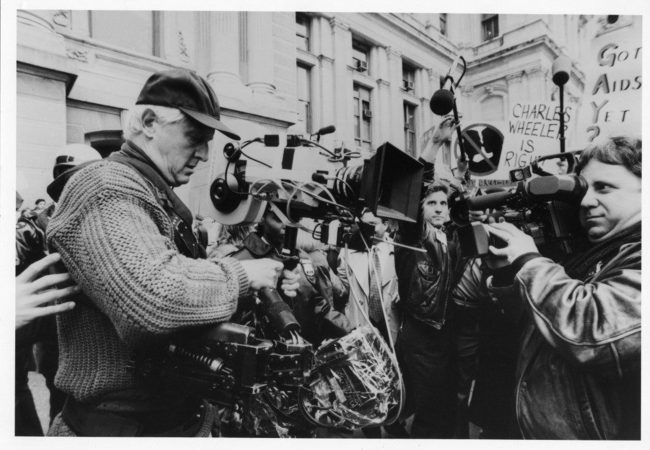
    Oscar-winning cinematographer Garrett Brown invented several camera systems, most notably the Steadicam, a wearable camera rig that allows for stable running shots without any shakiness. That creation, introduced in 1975, revolutionized filmmaking, and now the Philadelphia native’s story is the subject of a documentary Thank You, Mr. Brown.

    “He’s a really smart, wise individual, but also just a very humble down-to-earth guy who is very open about daring things and making sure he’s a part of the community,” said director Andrew Schwartz, a longtime friend of Brown’s.
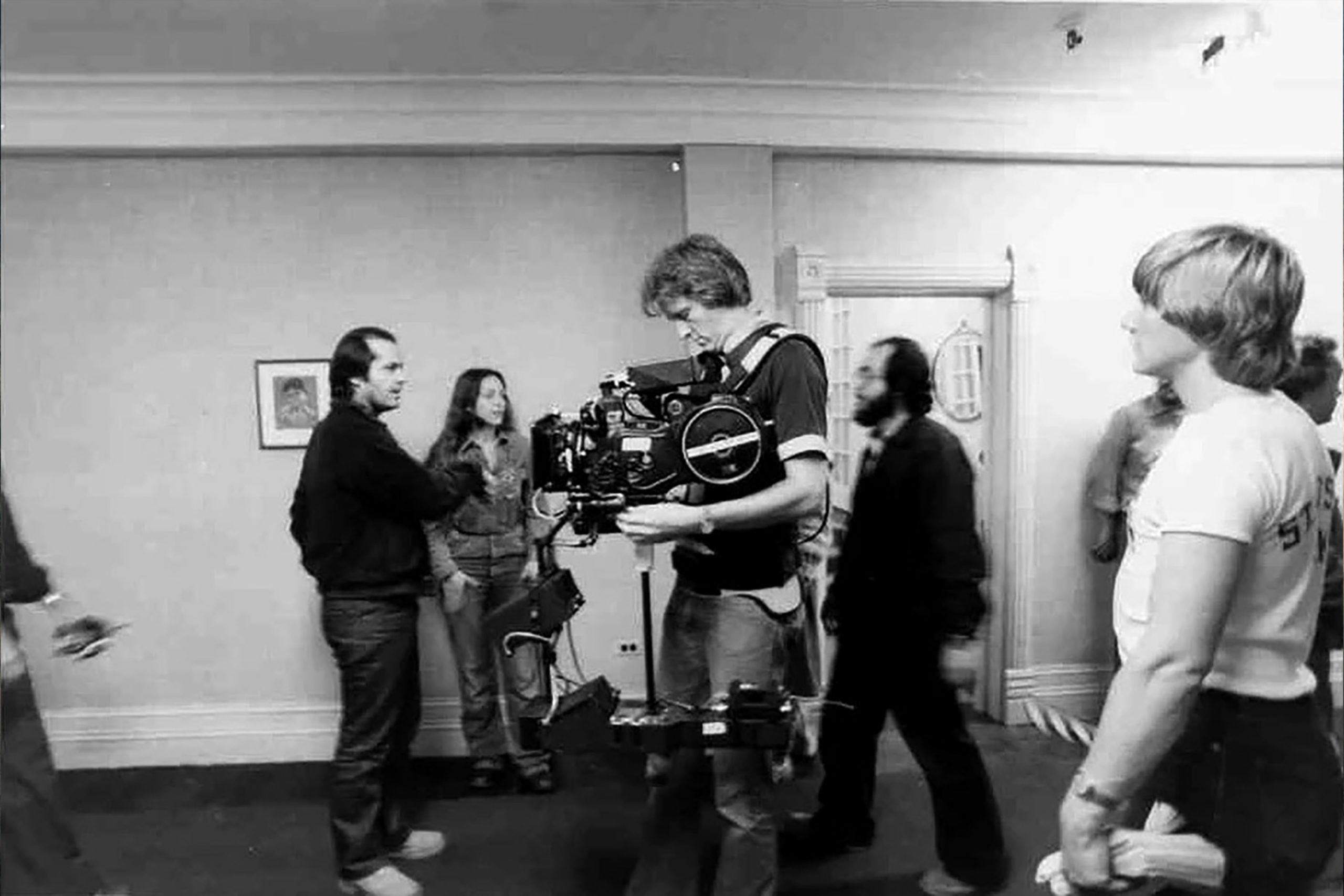
    Garrett Brown on set of “The Shining” (1980).Courtesy of Garrett Brown

    The two met when Schwartz started teaching at Steadicam workshops around two decades ago in Yellow Springs in Chester County. Brown was always present, he said.

    The documentary, currently being filmed in Philadelphia and produced by EBE Productions, includes interviews with Brown and other filmmakers, actors, sports broadcasters, and camera operators.

    This includes cinematographer Larry McConkey, best known for shooting the three-minute single shot of the Copacabana in Goodfellas. Francis Ford Coppola, who worked with Brown on One From the Heart, serves as an executive producer.

    “[Coppola] doesn’t normally do that for a lot of people and I think it just goes to demonstrate the type of relationship Garrett has fostered in the film industry and with people he worked with,” Schwartz said. “Knowing Francis’ career, this is another guy who’s really paved his own path in his own way and has demonstrated that same daringness and persistence toward his ideas with a somewhat relentless nature.”

    Brown, 84, was born in Long Branch, N.J., grew up in Haverford, and lives in the Philadelphia area. He was a folk singer until a friend gifted him a Bolex camera. Before long, Brown decided he wanted to work in the movie business and create something that had never been made before.

    “He basically locked himself in a motel room trying to figure out how to get a camera to be steady,” said William Forbes, one of the film’s producers. After creating a multitude of prototypes, Brown finally landed on something special.

    And that’s how the Steadicam was born.

    One of the earliest Steadicam shots is a demo reel of Brown’s wife, Ellen Shire, running up and down the steps of the Philadelphia Museum of Art, which convinced Rocky filmmaker, John G. Avildsen, to use Brown’s new contraption. The Shining followed, and Brown’s career got its jump start.

    Garrett Brown filming the hedge maze chase scene in “The Shining” (1980).Courtesy of Garrett Brown

    The Steadicam stabilizes a shot through three main components: the vest, the arm, and the sled. The vest is what the camera operator wears and the arm is what is attached to the vest. It allows the operator to move the camera around. The camera sits atop the pole-like “sled” and all of these come together to absorb the shock as the camera operator runs.

    “Everyone we talk to echoes the same sentiment, which is that there’s a before-Steadicam and an after-Steadicam when it comes to filmmaking and sports broadcasting,” said Forbes. “You can see the imprint of [Brown’s inventions] on all these new technologies that come out, from legacy movies like Avatar or smaller things like the GoPro, and all these little things that people are trying to be able to have new visual language in film.”

    Brown has patented several key camera systems that have been revolutionary in the world of sports broadcasting. The SkyCam, for example, shoots football games from above; the DiveCam tracks divers; and the MobyCam tracks Olympic swimmers underwater as they move across the pool.

    Michael Phelps, Forbes said, wouldn’t have won his gold medals if it weren’t for the MobyCam. The camera tracking “was able to show his fingertips touching just before another guy, which gave him his eight gold medals,” referring to Phelps’ historic sweep at the 2008 Beijing Olympic Games.

    Brown founded the Steadicam Operators Association in 1988, through which he and other camera operators teach workshops on using the machinery, working with new operators, and finding ways to alter the technology.

    More than 50 years after introducing the Steadicam, Brown is still not done tinkering with it.
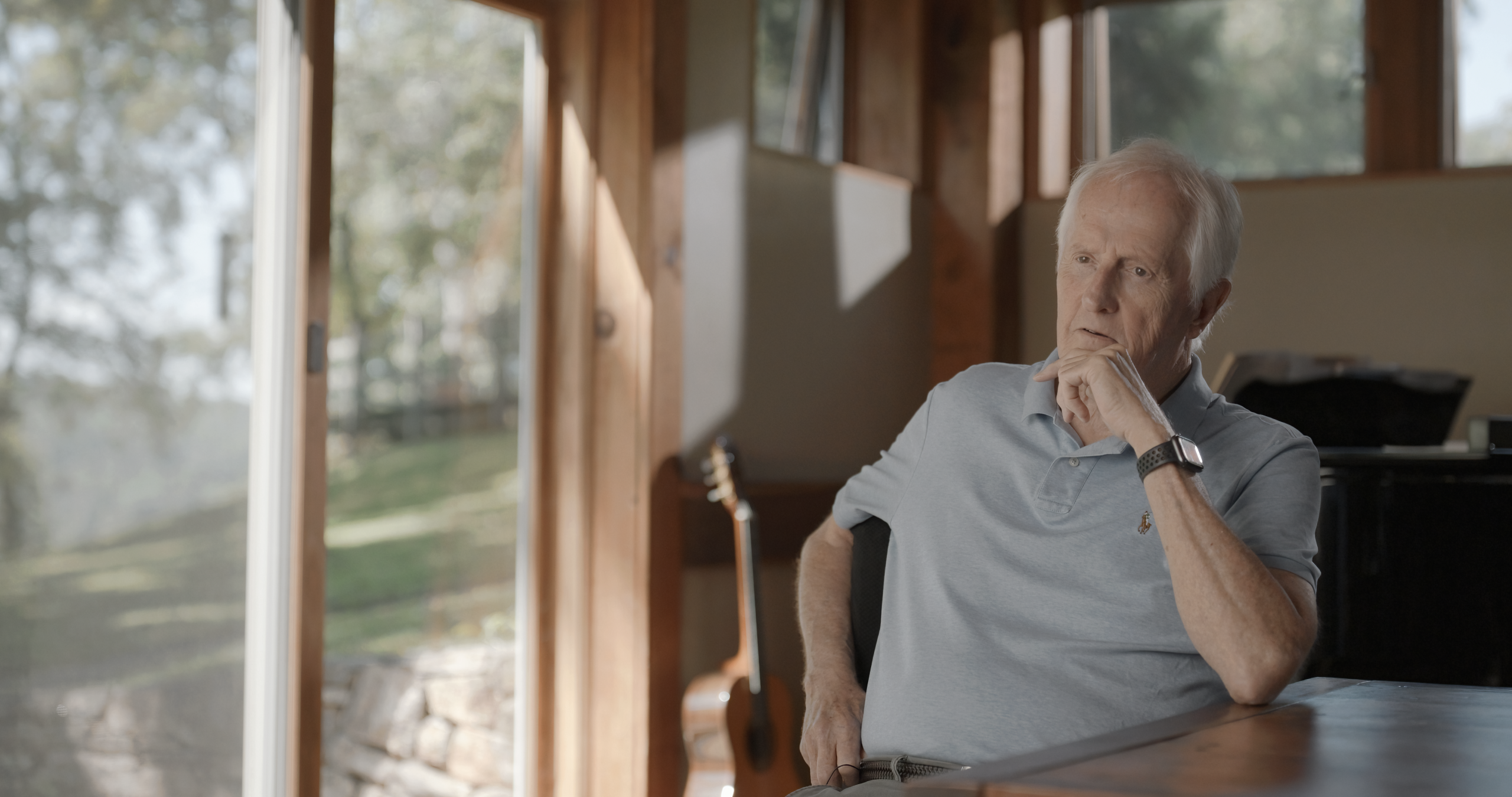
    Garrett Brown being interviewed for “Thank You, Mr. Brown.”Courtesy of EBE Productions

    “We’ve made incredible movies that we tell each other on screen even through sports that we watch,” said Schwartz. “Garrett very much brought us closer to communicating that way with the tools he made.”

    A lot of Brown’s story, he said, “is one thing to the next and an evolution that was somewhat accidental at times because he was just going on an adventure. I hope people are inspired by his story as much as they are educated by it.”

    A release date for Thank You, Mr. Brown is yet to be announced.
  • South Philly’s former ‘micro-bookstore’ has a new and expanded storefront on Passyunk Avenue

    South Philly’s former ‘micro-bookstore’ has a new and expanded storefront on Passyunk Avenue

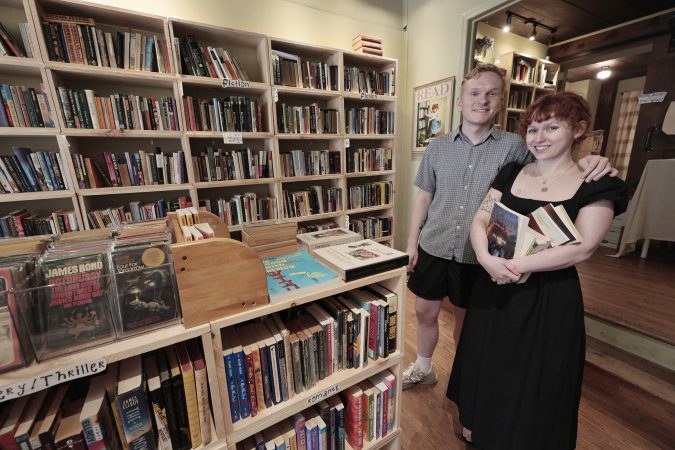
    When Ariel and Simon Censor opened their tiny used bookshop — Little Yenta Books — in the back of a South Philly children’s dressmaking shop in February, they knew it was an unconventional setup.

    What the couple — in life and now books — could not know is just how fast they would outgrow the space.

    And although they’re relinquishing the unofficial appellation as Philadelphia’s tiniest used book shop, the pair has moved their impressive literary thicket from their 150-square-foot loft space into a full-sized rented storefront on Passyunk Avenue.

    The problem was a great one: Business is booming.

    “People were telling us that they would walk by because it was way too crowded and they couldn’t fit,” said Ariel Censor, sitting behind the counter of the new shop, located at 1912 E. Passyunk Ave., home of the former Civil Stock General Store, which closed earlier this year. “We also just ran out of shelf space. We had way more books than we could fit.”

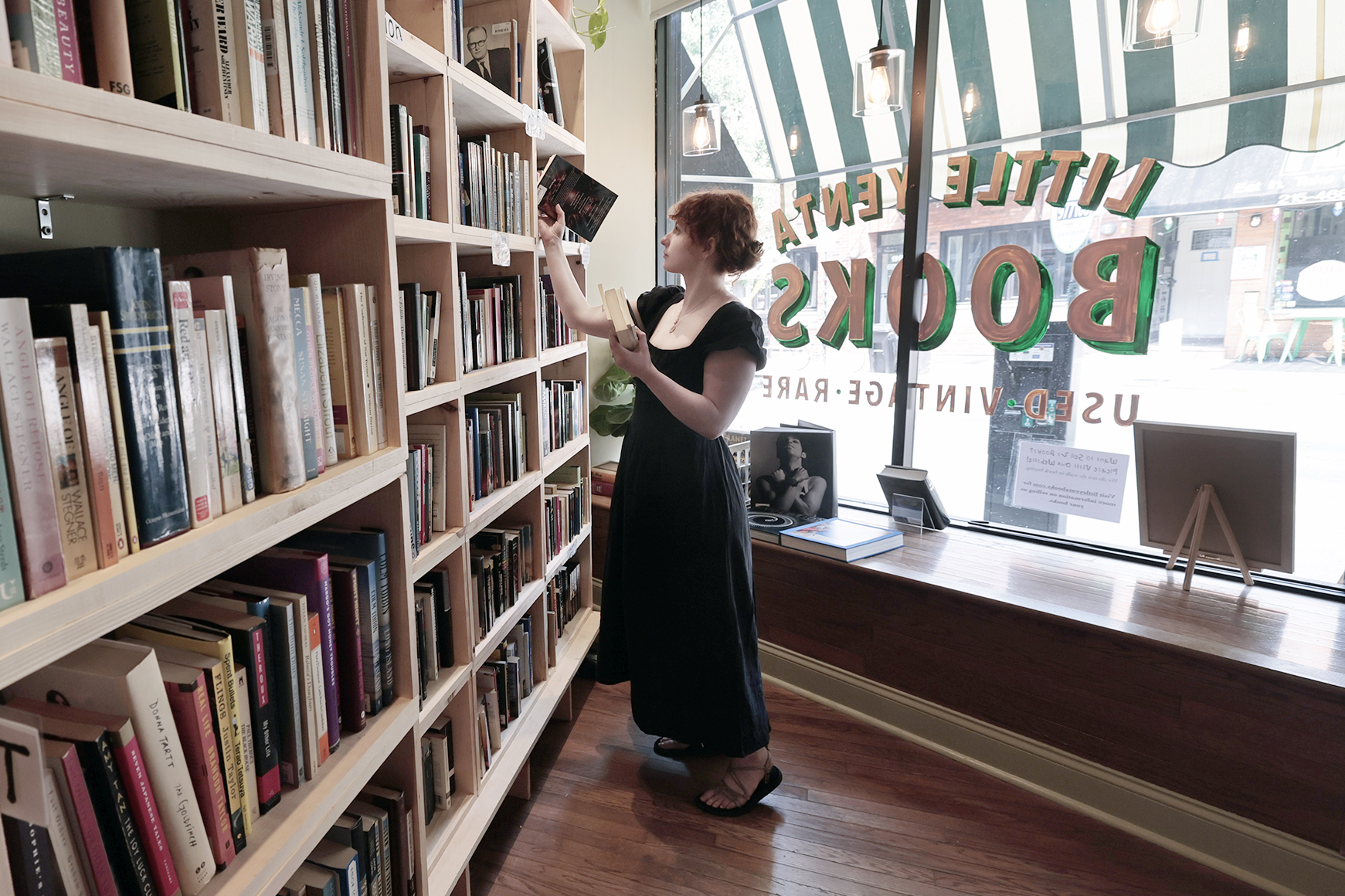
    Little Yenta Books co-owner Ariel Censor stocks the shelves with books at the new shop on East Passyunk Avenue in Philadelphia on Friday, July 17, 2026.Elizabeth Robertson / Staff Photographer

    The popular used bookstore — the only one along Passyunk — has nearly tripled its titles in the new storefront, which they opened last month. That means a whole lot more of the popular and literary fiction, classics, vintage sci-fi, poetry, and rare books customers have been buying up.

    “People really complimented our curation,” Censor, 27, said of the shop’s success. “People thought our taste was good, and our prices were good, and that they are really happy to have us.”

    The couple — Haverford College grads who live in the neighborhood — opened their initial tiny shop as a passion project, after holding used book pop-ups in South Philly bars.

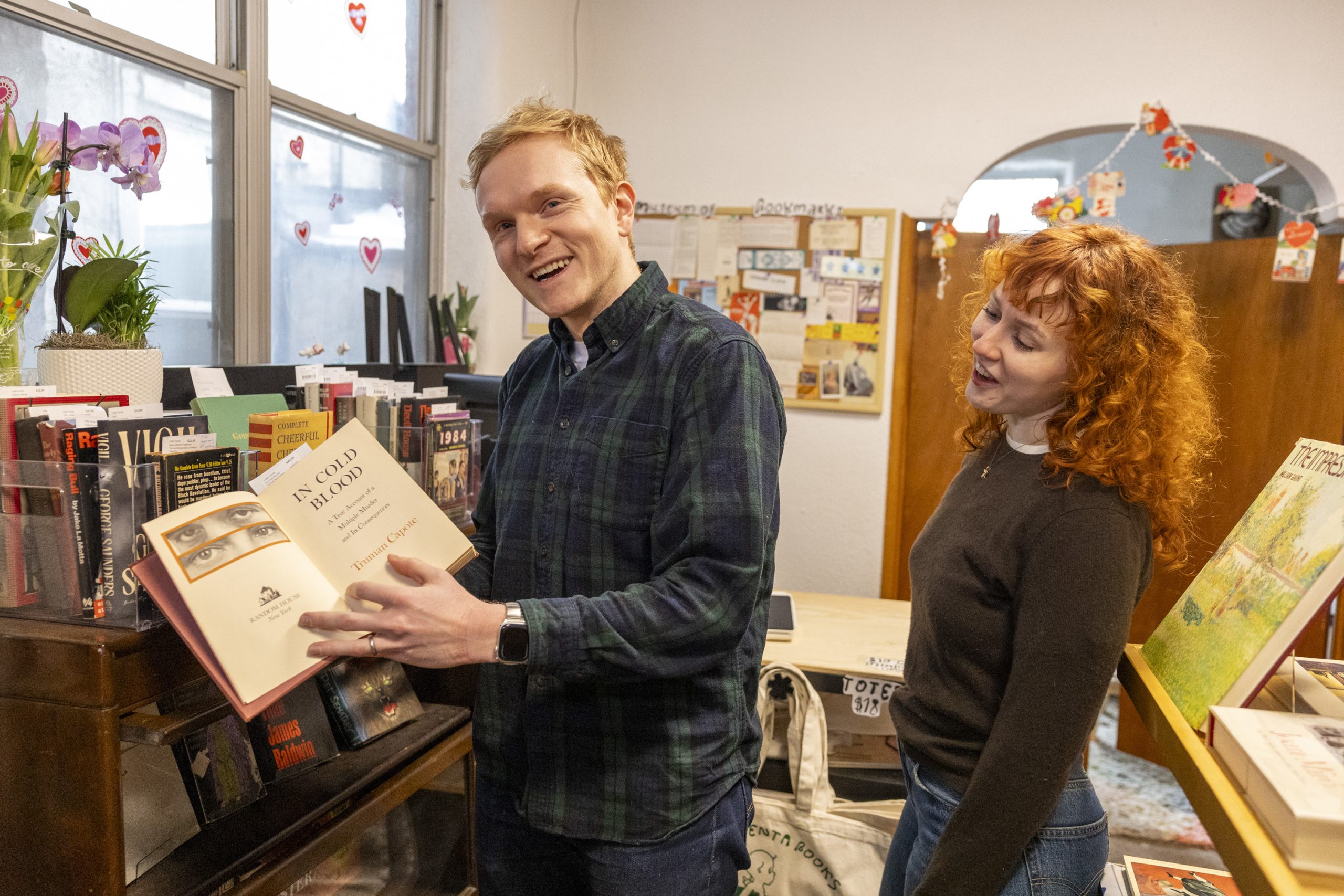
    Simon Censor, of Providence R.I., and Ariel Censor, of New York City, opened Little Yenta Books, in East Passyunk in February. They have now moved into a larger space nearby.Tyger Williams / Staff Photographer

    Situated speakeasy-style, in a postage-stamp-sized loft above the Painted Lady children’s boutique, the shop burst with over 1,500 titles.

    Now, with its green-and-white striped awning, stained-glass light fixture, and charming decor, the new shop has a spacious, homey feel.

    “One thing we got with the little shop is that people really liked that it wasn’t overwhelming,” said Censor. “They could look at every book. We have tripled the amount of books but wanted to make it feel manageable and still have a real eye to curation. I’m really excited about the mix of modern and classics that we have.”

    The expanded shop comes with expanded hours, with Little Yenta Books now open every day except Tuesday and Wednesday.

    On a recent afternoon, Aine McCauley, 24, dropped in at the new shop on her way home from work. She perused the shelves before landing on a copy of André Aciman’s 2008 coming-of-age novel, Call Me by Your Name.

    “It’s so awesome,” she told Censor about the shop. “You have every good book in here.”

  • Cirque du Soleil will return to Philadelphia with a holiday production

    Cirque du Soleil will return to Philadelphia with a holiday production

    Cirque du Soleil‘s popularity is as high as an acrobat’s leap through a suspended hula hoop. And the world’s largest circus company is getting ready to land on its feet in Philadelphia again.

    After dazzling Greater Philadelphia Expo Center audiences with Luzia’s elemental wonder earlier this summer, the entertainment group is coming back with a holiday-themed production.

    Cirque du Soleil’s Twas the Night Before … will be at the Met Philadelphia from Dec. 17-27.

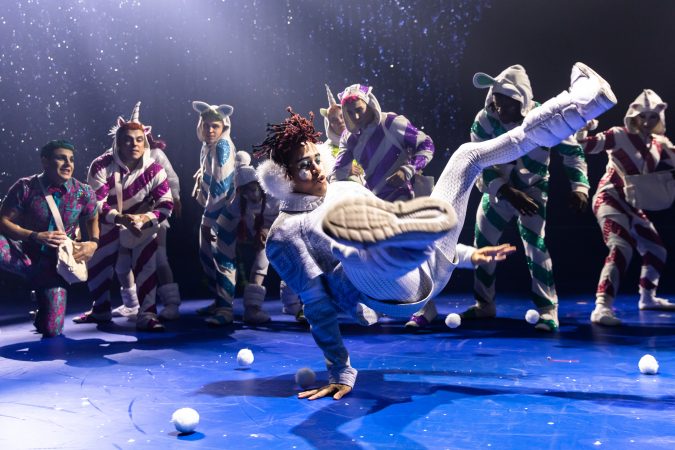
    Cirque du Soleil’s “Twas the Night Before…” is coming to the Met Philadelphia in December. The show will feature aerial strap duos, hoop diving, roller skating, and other performances.Courtesy of Benoit Z. Leroux

    Inspired by the classic 1823 poem, “A Visit from St. Nicholas,” the acrobatic tale follows a young girl who rediscovers the magic of the holiday season. The poem, largely attributed to Clement Clarke Moore, is believed to have inspired the very concept of Santa Claus.

    It’s thought that Moore was struck with inspiration while he rode a sleigh on a shopping trip around 1823, the year the poem was published anonymously. He later claimed authorship in 1837.

    Come December, the Met Philadelphia stage will transform into a winter wonderland, filled with high-flying aerial strap duos, hoop diving, roller skating, soaring hair suspension, and high-energy dancers across more than 10 acts.

    Twenty-six artists will perform to a soundtrack of reimagined Christmas classics and original songs, composed by musical director Jean-Phi Goncalves.

    Cirque du Soleil’s “Twas the Night Before…” is coming to the Met Philadelphia in December.Courtesy of Kyle Flubacker

    The 85-minute show is the company’s first Christmas show since its founding in 1984. Twas the Night Before … premiered in Chicago in 2019 and played in Philadelphia in 2024.

    Tickets to the production are available online for Cirque Club members beginning at 10 a.m. Tuesday. Cirque Club membership is free, and benefits include access to advance tickets and other special offers. LiveNation All-Access Presale begins at 10 a.m. Wednesday.

    General tickets are available starting at 10 a.m. Friday.

    For more information and to purchase tickets, visit themetphilly.com.

  • Germantown’s Colored Girls Museum transforms as vanessa german’s power figures take over

    Germantown’s Colored Girls Museum transforms as vanessa german’s power figures take over

    Vashti DuBois has removed all of the art from the first floor of the Colored Girls Museum. Its forest green and sunshine yellow walls now lay bare.

    The living room couches, settees, dining room set, and bookcases are in storage. Hundreds of books have been boxed up and the ceramic vessels tucked away.

    DuBois, TCGM’s founder and executive director, hired contractors to paint the Germantown museum’s galleries eggshell black and cover the hardwood floors with black carpet. Black curtains hang over the windows.

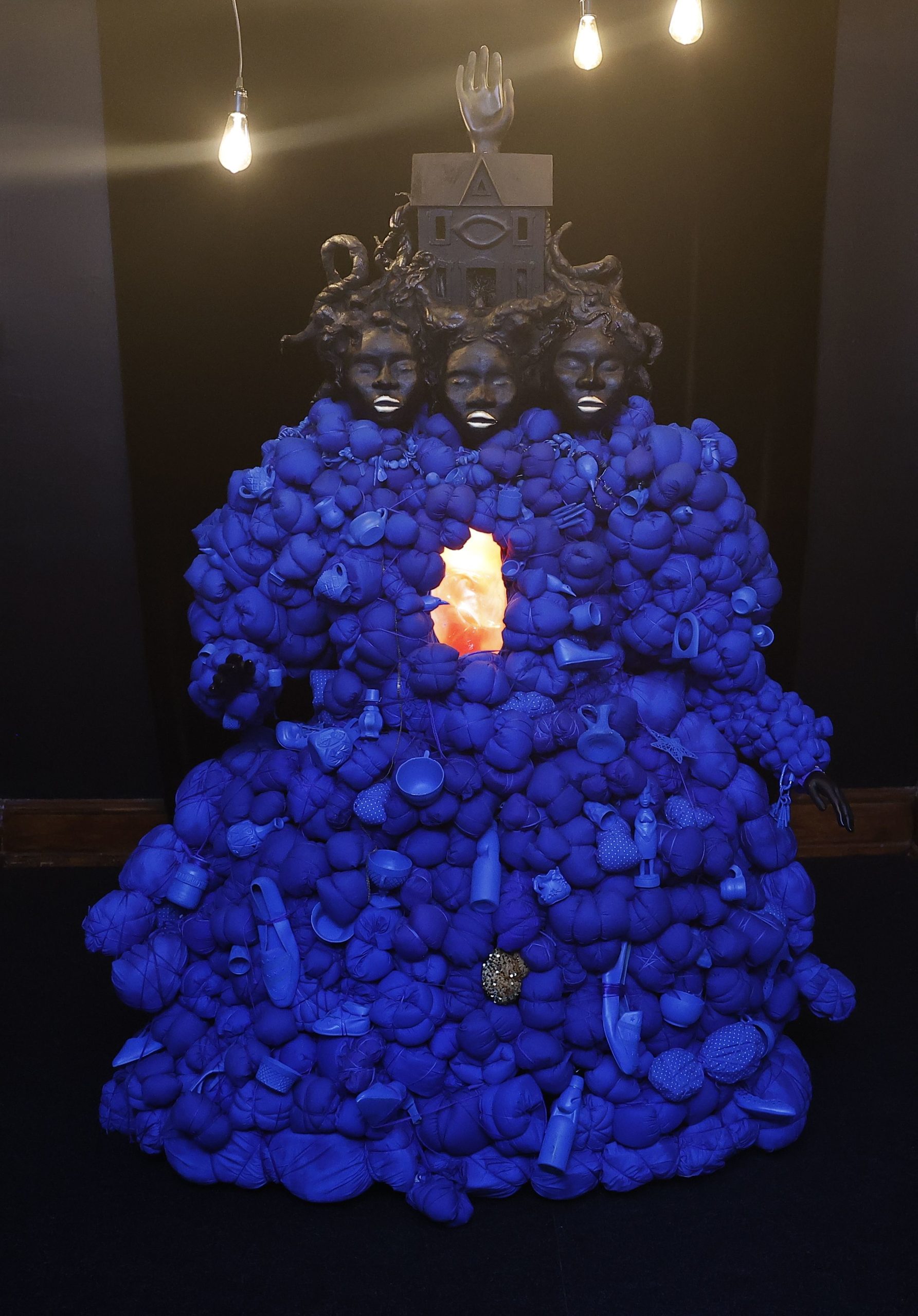
    These changes were all made at the behest of renowned artist vanessa german. Her new show, “The House, The Oracle and the Table,” a sparkling three-piece exhibit and theatrical presentation in honor of the Colored Girls Museum’s 10th birthday, was unveiled June 20.

    It is on view at TCGM and is the second act of the yearlong show “Say it loud, I’m Black and I’m proud.”

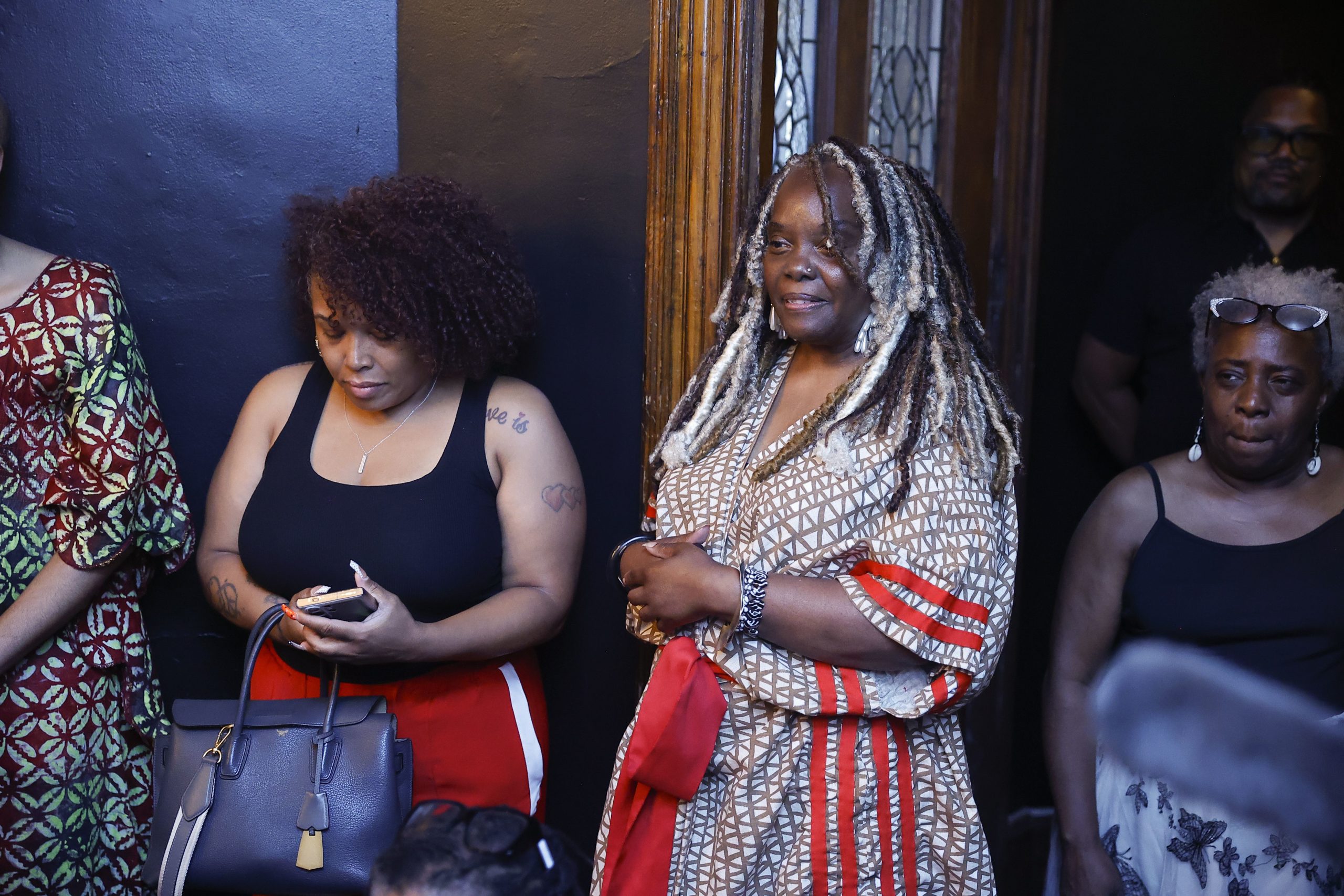
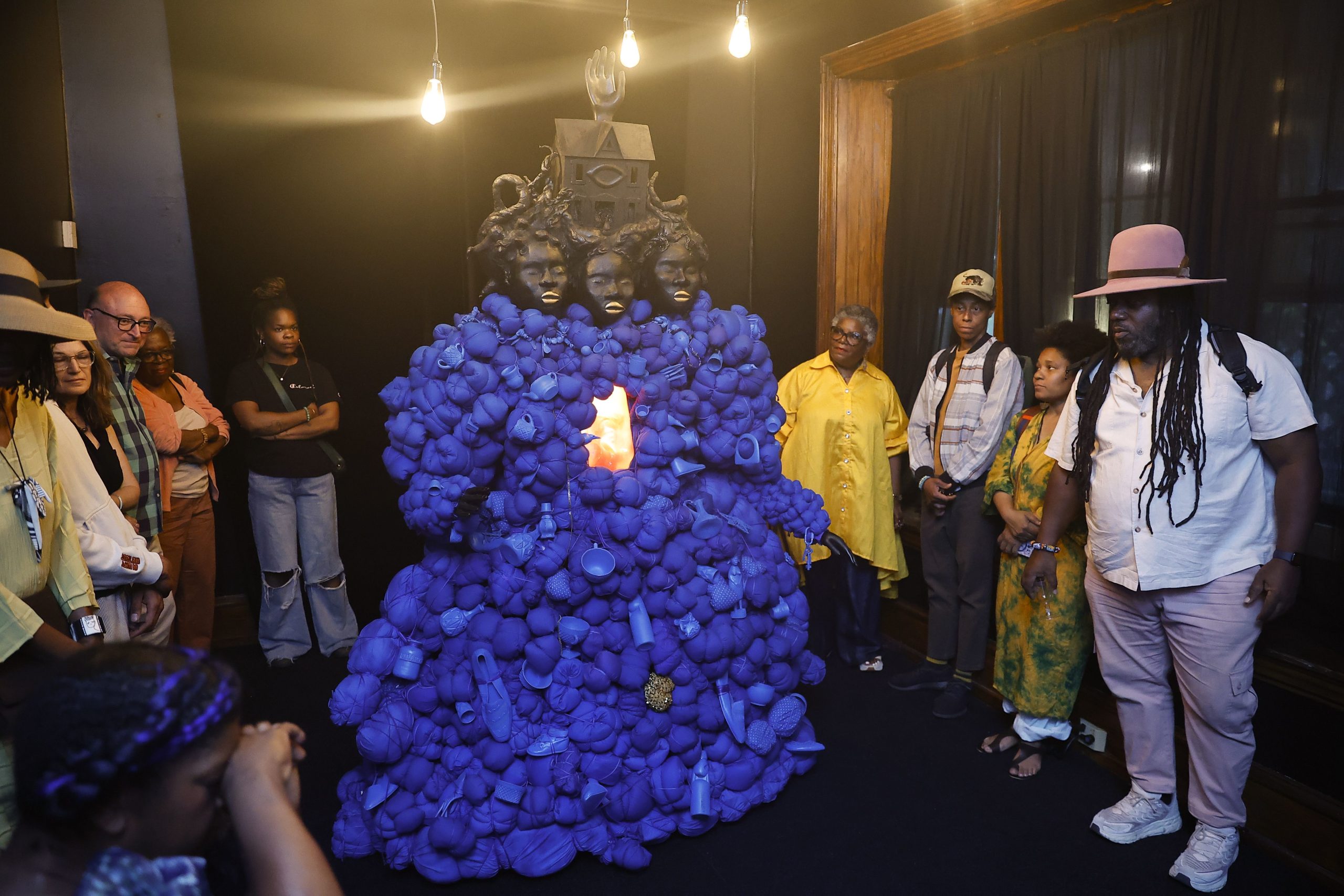
    “The House,” the central character in “The House, The Oracle and The Table” by vanessa german, stands in the Colored Girls Museum’s living room gallery. The show runs through Dec. 30.
    Zamani Feelings

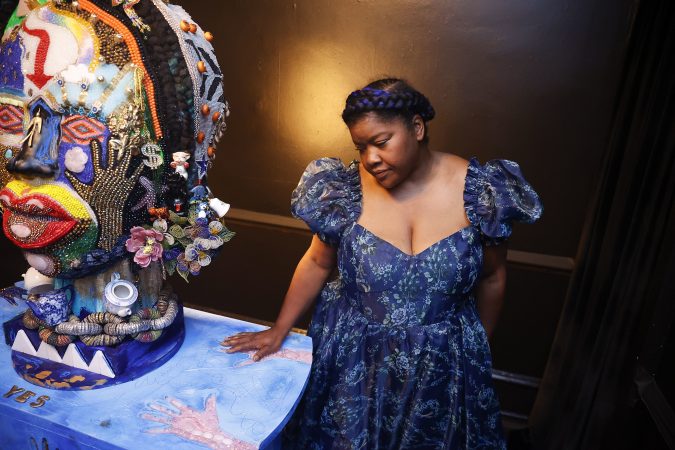
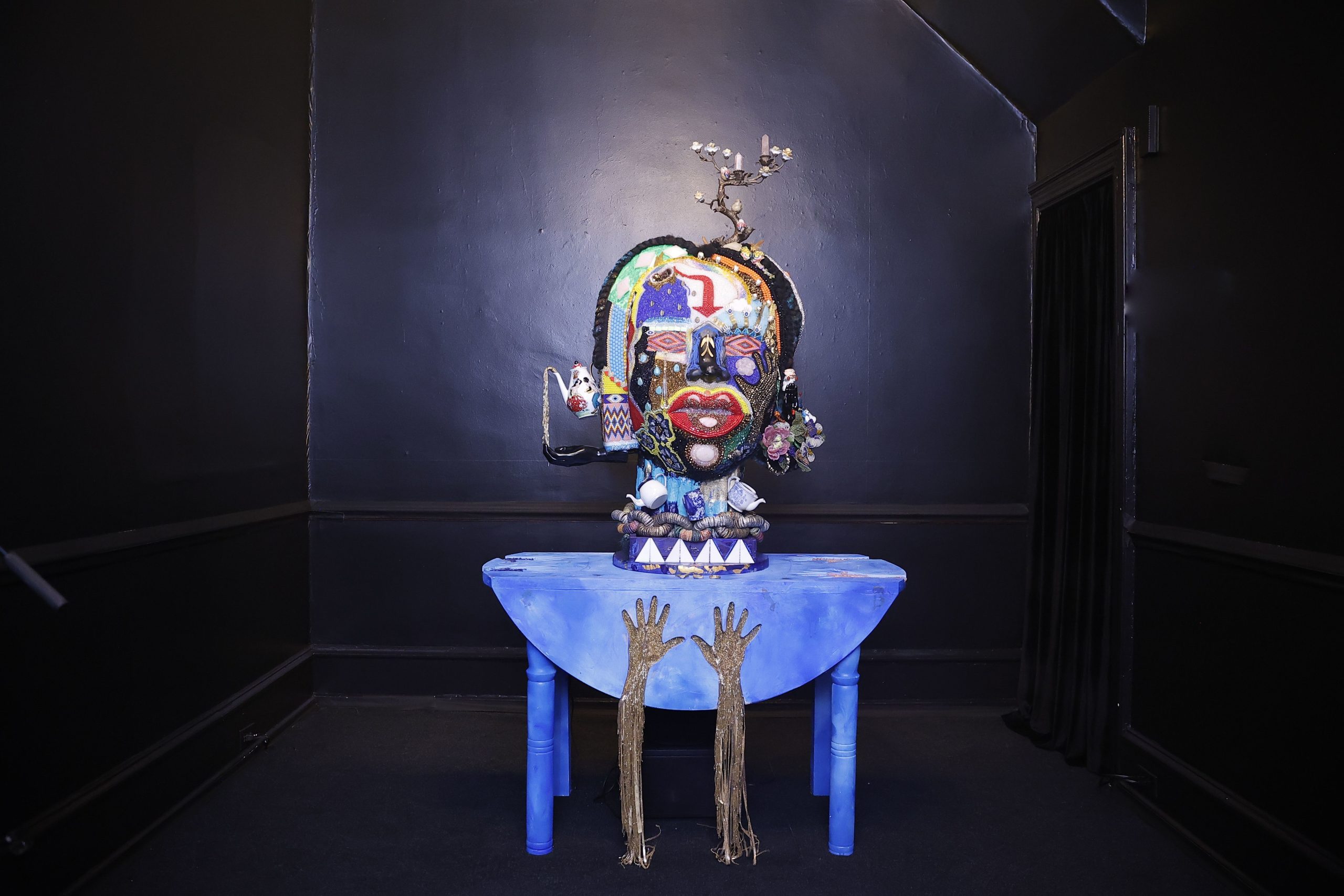
    “The House, The Oracle and The Table” is comprised of three pieces. The House, a 7-foot towering talisman; The Oracle, a gem-studded bust; and The Table, an inviting drop-leaf surface with crystal-filled hand carvings. The show is german’s offering to the museum and DuBois.

    “She’s one of a few artists I’d even dream of stripping the museum bare for,” DuBois said. “I released the old and I have so much more to show for it.”

    ‘Here the work is kinfolk’

    A poet, spoken word artist, and self-taught sculptor, german is among the country’s most important contemporary artists of the moment.

    Her work revels in the dynamism of the Black femme, reminding women that it’s OK to take up space with sequins — and lots of them. She’s best known for her “power figures,“ larger-than-life sculptures of Black women as sparkling, glittering, and magnificent spiritual and magical beings.

    Her power figures and altars are in the permanent collections of the Museum of Contemporary Art Chicago and Pittsburgh’s Carnegie Museum of Art. In 2021, the Pennsylvania Academy of the Fine Arts acquired german’s Declaration of Independence altar. The 17-foot-long piece rejects the idea that Black women — specifically Prissy in Gone With the Wind — should be relegated to subservient roles.

    German’s iconic Miracles and Glory Abound is presently on display at Doylestown’s Michener Art Museum as the centerpiece of its exhibit celebrating America’s 250th, “The Crossing: Picturing the American Revolution.” Miracles is a recreation of Emanuel Leutze’s famous 1851 oil painting Washington Crossing the Delaware. But in german’s sculpture, which features a life-size boat made from found objects, Washington and his soldiers are Black women.

    “The Table” and “The Oracle” are two of the characters in vanessa german’s show, “The House, The Oracle and The Table.”Zamani Feelings

    “Her work allows Black women and Black queer women to take up space in a way we just can’t ignore,” said Laura Igoe, Michener’s Gerry and Marguerite Lenfest chief curator. “She’s creating a different awareness, imagining a new future, and creating a new narrative.”

    It’s rare that an artist of german’s caliber creates a site-specific installation for a small community museum like TCGM, let alone makes the museum’s founder central to the show. This makes “The House, The Oracle and The Table” a big deal in local and national arts circles. TCGM is also of the community that inspires german’s art. Here, german’s work is not a spectacle or a teaching moment. It’s an understood and welcome family member.

    “Here the work is kinfolk,” DuBois said.

    Prayer pouches and healing monuments

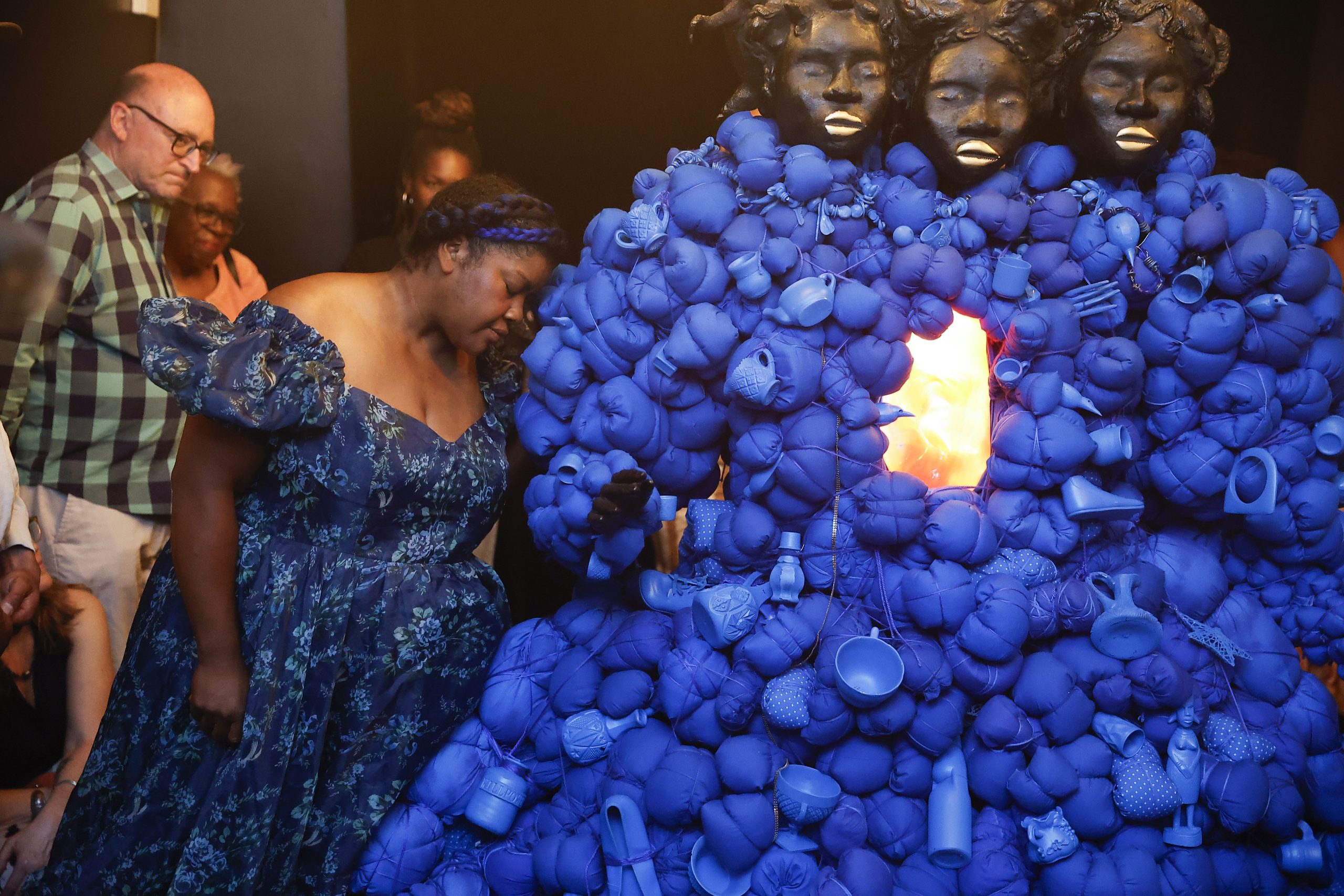
    The House, a 7-foot-tall, three-headed sorceress — the personification of past, present, and future — stands in the center of the living room gallery turned black-box theater, alone under a labyrinth of Edison lights. Each woman has a head of flowing locks and lips of cowrie shells. Each face — carved from plaster, epoxy resin, and wood glue and treated with a metallic finish — is slightly different from the one next to it.

    Artist vanessa german stands next to “The House,” one character in her three-piece show, “The House, The Oracle and The Table.” The three-headed sorceress resembles the Colored Girls Museum’s founder and executive director, Vashti DuBois.Zamani Feelings

    They all resemble DuBois’ face.

    “What’s really tender is that vanessa wasn’t afraid to see me: my past, my present, and my future,” DuBois said. “She didn’t look away. She installed the founder and executive director in this show.”

    The House wears an oceanic blue dress fashioned from found objects like bottles, baby shoes, vases, and carafes. DuBois has a few items nestled in including a tea cup of her own, a carafe, and a 19th-century doll. Eventually The House will move on and when it does, it will have DuBois’ energy embedded in it.

    Hundreds of quilted prayer pouches are sewn into the floor-length frock. German makes these building blocks of her assemblages by hand.

    Making the pouches is monotonous work. She cuts each one out, sews it together, and fills it with beads and intention, before stitching it together. This work she said, redirects her energy from sadness, depression, and suicidal thoughts to purpose, forgiveness, and healing.

    “It kept me from myself,” said german, who was born in Los Angeles, the daughter of the late quilter and fiber artist Sandra German. Her adolescence and early adulthood were filled with creative energy, but also melancholy.

    The prayer pouches helped kick off her art career in the 2000s while she lived in Pittsburgh’s Homewood neighborhood. She began to build structures made of found objects and prayer bags. They grew so big she began leaving them outside, attracting neighborhood children.

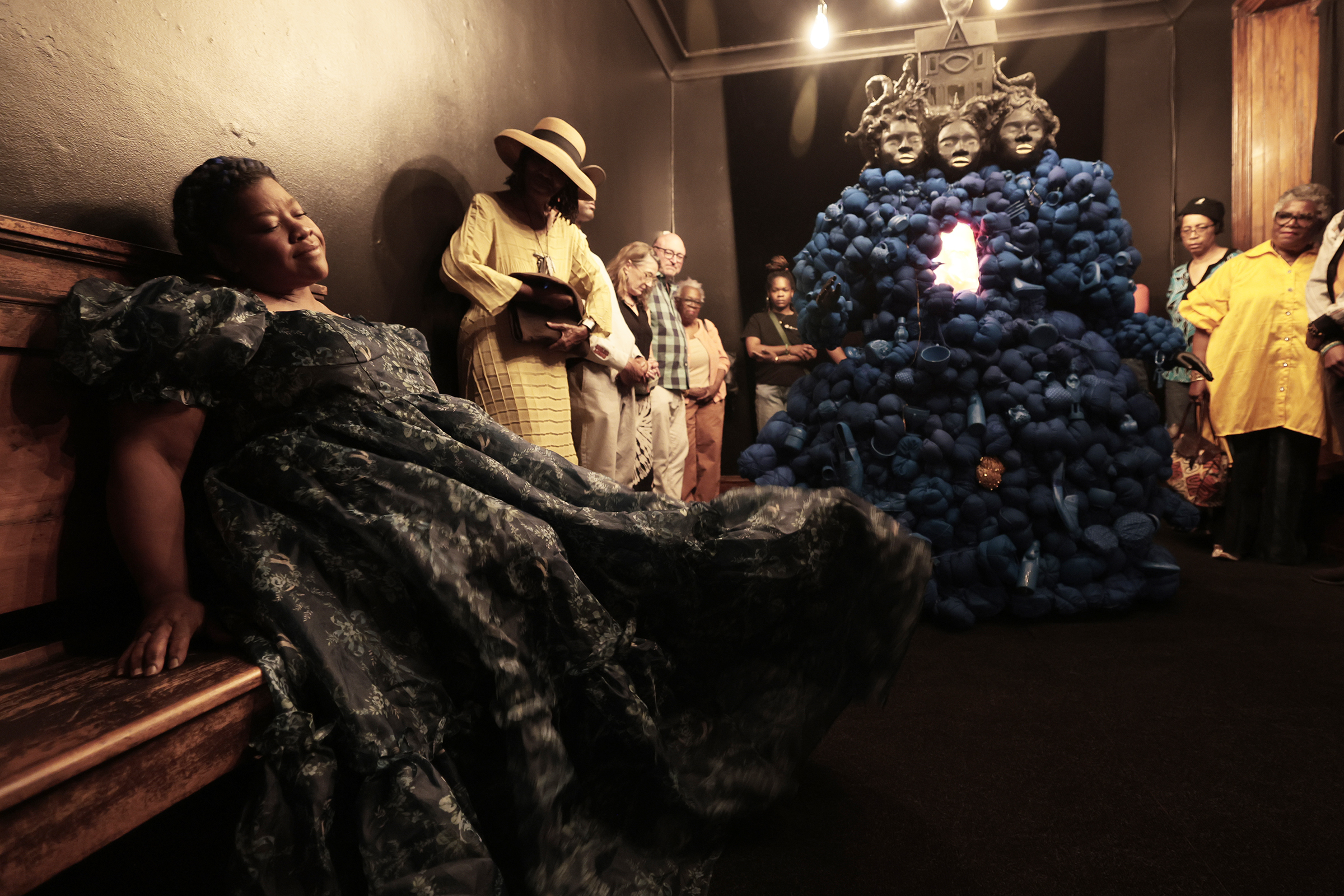
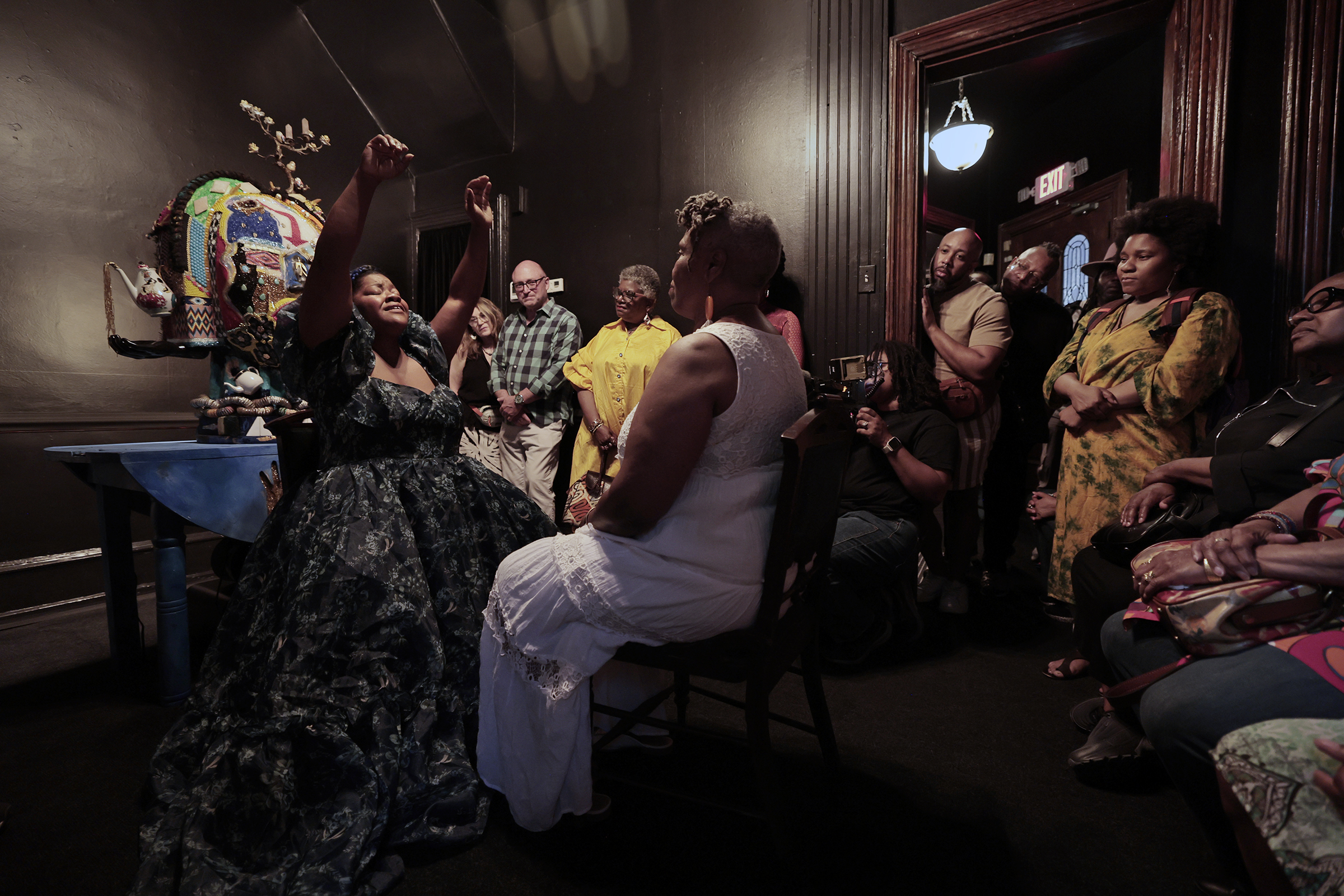
    Artist vanessa german, during her theatrical performance.Elizabeth Robertson / Staff Photographer

    ArtHouse, her community art space, was born and german began calling herself a citizen artist.

    “My body went on autopilot,” said german, who now lives in Asheville, N.C. She spent a few days in June at TCGM building The House’s dress and body from pieces she’d already assembled.
    “My hands would just do it and as my body repeated the task,” she said about the pouches, “I was able to make sense of things for myself. I began to heal.”

    Kindred spirits

    In the TCGM dining room are the exhibit’s two other pieces: The Oracle, a roughly 40-pound bust of a seer whose face is entirely made from crystals: clear quartz, turquoise, and rose quartz. Its ear, a found teapot pouring liquid gold.
    Abundance.
    “She is the soul of the house,” german said. “Her cup runs over.”

    The Oracle sits atop The Table, whose dropped leaf features carved hand prints filled with lapis lazuli and rose quartz. The carvings represent women in the TCGM community.

    DuBois has followed german’s work since ArtHouse and struck up a conversation with her on social media. But it was only three years ago that DuBois went to see german’s critically acclaimed exhibit at the Montclair Art Museum, “ … please imagine all the things I cannot say …”

    She decided she wanted german’s work at TCGM.

    Founder and executive director of the Colored Girls Museum, Vashti DuBois, watches as vanessa german blesses “The House, The Oracle and The Table” on opening night.Zamani Feelings

    “In that moment I knew we were kindred spirits,” DuBois said. “I didn’t ask her to do anything new. I would have been happy to have a loan from her.”

    That was out of the question for german, who said she had no intention of “phoning in the project.”

    “I wanted to take my time, I did not want to be frivolous with this gift … this opportunity,” german said.

    ‘This house is holy’

    German took the energy of all the things DuBois couldn’t say and infused it in her work.

    TCGM’s inception followed the unexpected death of DuBois’ husband, Al Stewart, in 2013. She opened TCGM in 2016 to celebrate the lives of ordinary Black women. Along the way, she healed.

    In the last 10 years, DuBois has stewarded the museum through more than a dozen shows and won awards and major grants. A tangle with the city of Philadelphia forced her to move out of her home in order to keep the museum open. So she moved out of the place, where for over 20 years, she raised her children and lived with her late husband.

    “There is exquisite pain and exquisite beauty here,” DuBois said.

    “The House” is the central character in vanessa german’s “The House, The Oracle and The Table.” German curated the show in honor of the Colored Girls Museum’s 10th birthday as an offering to the museum and its founder and executive director, Vashti DuBois.Zamani Feelings

    Hours before the summer solstice on the third Saturday in June, german blessed “The House, The Oracle and The Table” in five separate performances, moving from gallery to gallery like a calm blue wave.

    She prayed. she chanted. She sang. And many watched. Some even cried.

    “This show will awaken something in people,” german said. “They will start to say things out loud they once held inside and know to be true.”

    DuBois can testify to that.

    “I turned myself inside out getting ready for the show,” she said. “I’ve always known that I am holy and this house is holy. Now I can say it.”

    The Colored Girls Museum is located at 4613 Newhall St. “The House, The Oracle and the Table” is on view through Dec. 30.

    Artist vanessa german (left) performs while introducing her exhibit.Elizabeth Robertson / Staff Photographer
  • ‘Geaux Birds!’: Two French creators fell hard for Philly — and its brutally honest charm

    ‘Geaux Birds!’: Two French creators fell hard for Philly — and its brutally honest charm

    Paris natives Alex Durand and Tom Carles met as 12-year-olds in the Parisian suburb of Boulogne-Billancourt, sharing a love for playing soccer. In 2016, as teenagers, they attended soccer camp at Eastern University in Delaware County, marking their first trip to the U.S. together.

    Two years later, they moved back to the U.S. after earning scholarships to play college soccer — Durand at Malone University in Ohio and Carles at Mississippi College. But that dream was put on pause when the COVID-19 pandemic hit in 2020. Unable to travel back to Paris, they moved to South Carolina and started making social media content about their experience of being Parisians living in America.

    They first went viral on TikTok for their series trying to pronounce English words.

    Durand, 25, and Carles, 26, are the creators behind the Instagram account AT Frenchies. With more than 2 million followers, their pandemic pastime has become a hub for learning French.

    Over the years, the pair have traveled to California, Louisiana, South Carolina, and New York.

    Then, they came to Philadelphia. It was unlike any other stop.

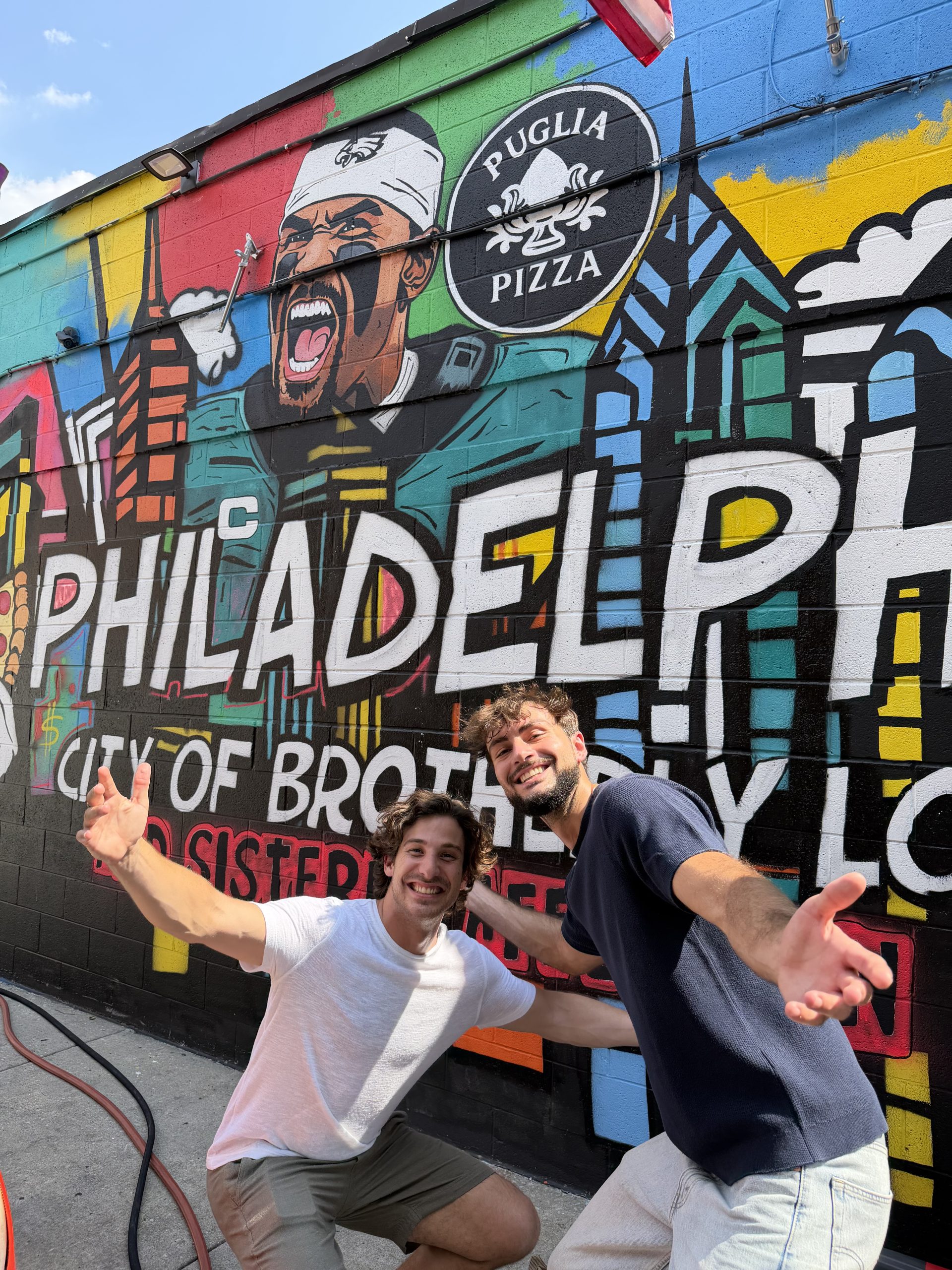
    Alex Durand (left) and Tom Carles pose in front of a Jalen Hurts mural outside of Puglia Pizza on South Street.AT Frenchies

    “We think most people don’t actually know how great Philly is,” said Carles. “When we came, we didn’t know much about Philly. We just had some friends living there saying it’s the best city, but we had no idea because nobody else talks about it.”

    The pair partnered with the French national soccer team this year and has been following them on its World Cup journey. The June 22 France-Iraq match brought the City of Love natives to the City of Brotherly Love, so they could watch some soccer and make their usual content around visiting an American city.

    Then, Philly happened to them: from cheesesteaks to water ice to being unable to stop saying “Go Birds!” or, as they pronounce it, “Gwo Beards!” or, as they write it, “Geaux Birds!”

    The pair posted reels guessing the meaning behind Philly slang and celebrating French wins with the crowds in the city. Their most-viewed reel from their trip is titled “POV: Us after spending 24 hours in Philly,” in which Carles referenced Philly slang like “jawn” and “jeet,” with Durand interjecting with frequent “Go Birds!”

    “I proclaim y’all as official Philly citizens,” a comment reads. “This jawn nails it. Y’all get it. You’re officially locals now,” reads another uncharacteristically positive Philadelphian’s reply.

    The two stayed in Philly for about 10 days, attending France’s games against Iraq and Paraguay on June 22 and July 4, respectively. In that time, they checked out the Rodin Museum, City Hall, Reading Terminal Market, Stateside Live!, Independence Hall, the Rocky statue, and even found their way to Philly’s crown jewel: Wawa.

    “Wawa is the absolute best brunch place on earth. I think we’ve tried every single thing on the menu,” said Durand, whose order is a chicken wrap and an iced latte with caramel drizzle. Carles opts for a mini hoagie with chicken and bacon.

    The pair even admitted to preferring the chain to the French convenience store equivalent, Franprix.

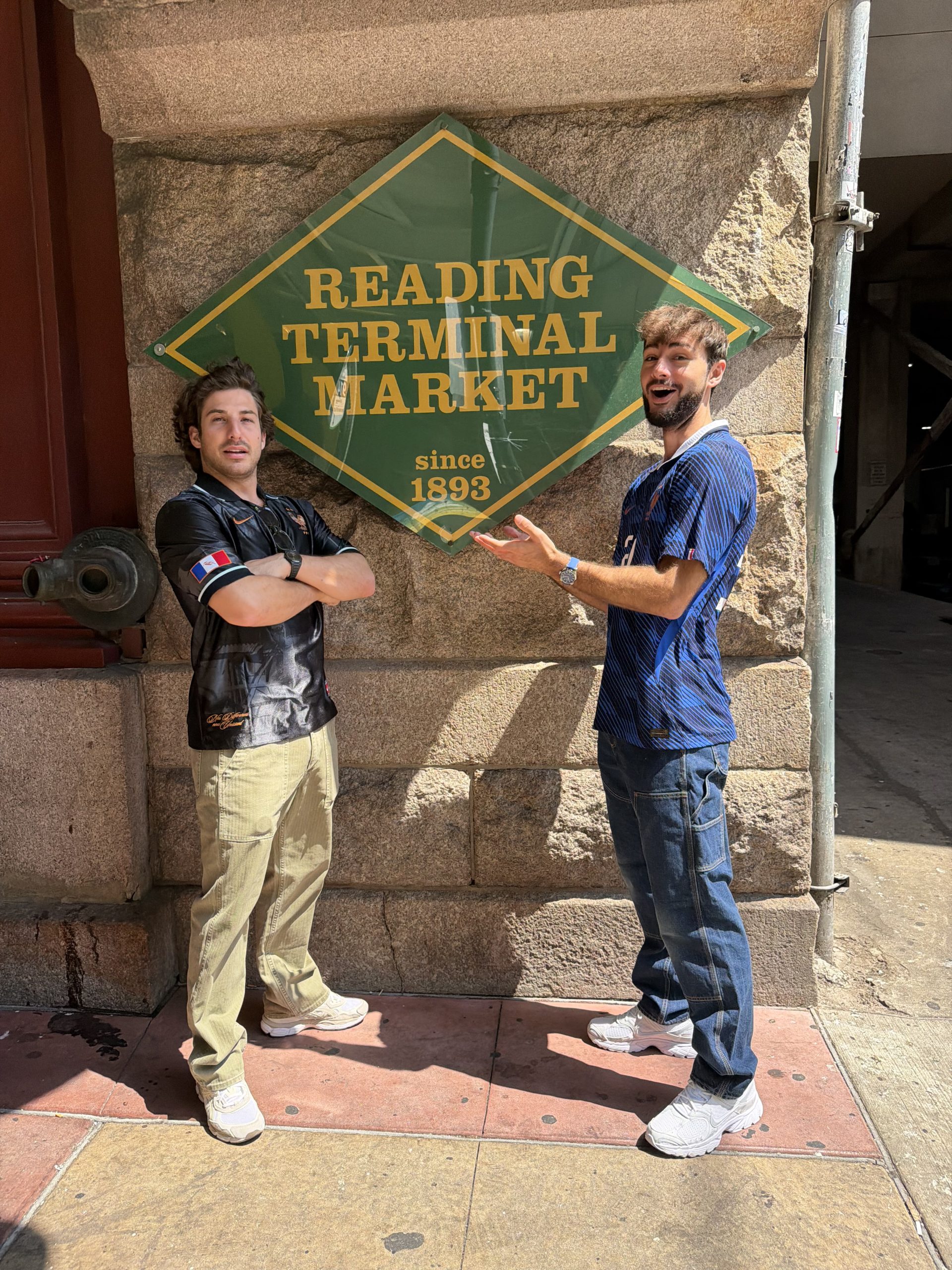
    “[Reading Terminal Market] was a little part of the city that you don’t see that often in other cities,” said Carles, who lives in New Orleans. “You can have any type of food and everybody’s so nice and wants you to try some food here and there. It’s a nice atmosphere, and you have people around that always smile and are super nice, but also if they have a bad day, they don’t hide it. It’s very brutal and honest.”

    Alex Durand (left) and Tom Carles stand outside Reading Terminal Market in Center City, Philadelphia.AT Frenchies

    Philadelphia’s unpolished authenticity is what made the pair fall in love with the city, they said.

    “People in Philly didn’t feel like they were trying too hard to impress people,” said Durand. “I live in LA and people care so much about the outside perspective of how they look and behave. But in Philly, it’s the Philly way or no way, and we loved it.”

    After France beat Paraguay 1-0 and the duo headed out of Philadelphia, they posted a heartfelt thank-you message to Philadelphians on their Instagram, something they had never done for any other American city.

    “Every bar we walked into during the games, every person who smiled at us wearing our jersey, every random ‘allez les bleus’ from someone we’d never met, it added up to something we didn’t expect to feel this strongly,” the post read.

    “We felt like we needed to say something because we had such a good time that we wanted to thank the city for having us,” Carles said. “We wanted to show our appreciation for everything that we’ve seen of the city.”

    Comments begged them to come back for an Eagles game. The Sixers official account commented, “we gotta get you back for a basketball game.”

    “Stay the same,” Durand said. “Stay proud of your city. You have every reason to be proud of where you’re from.”

    When they’re not following their national soccer team around and singing praises to hoagies, the two use AT Frenchies, whose social media accounts have more than 6 million followers combined, as an online center to teach French.

    “We do [French classes] three or four times a week, on Zoom and in-person, and we also have teachers with us,” Carles said. The AT Frenchies French club is 3 years old and has 500 members from over 60 countries.

    “It’s something that has made us super happy because we’re able to give back to our followers who want to learn French,” Carles said. “It’s been one of the most rewarding things that we’ve done in our business side of AT Frenchies.”

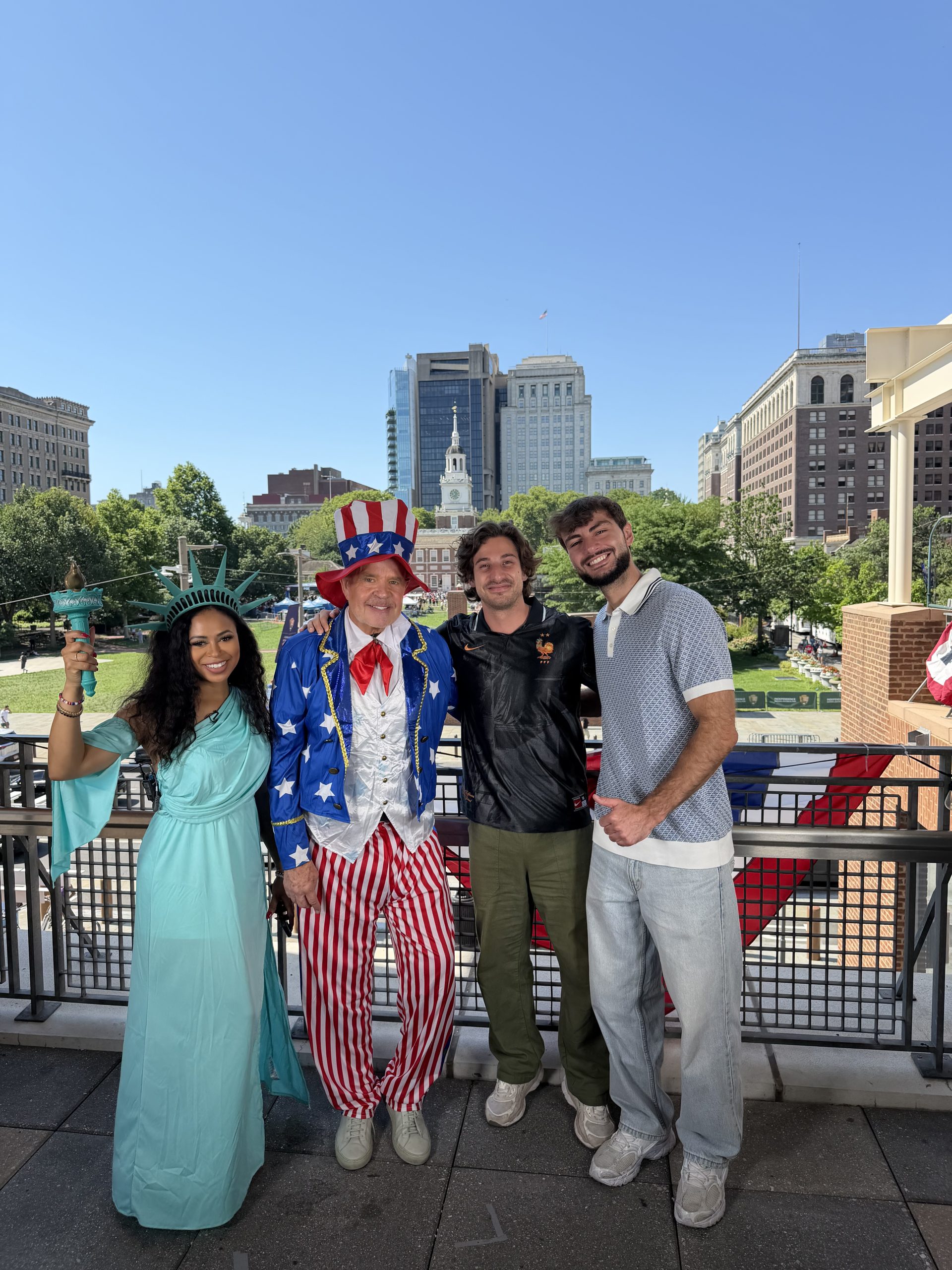
    Alex Durand (center right) and Tom Carles (far right) pose with Alex Holley (far left) and Mike Jerrick, hosts of Fox 29’s “Good Day Philadelphia,” after filming an interview with them.AT Frenchies

    Philadelphia’s World Cup journey is over, but it’s certainly not the last Philly sees of Durand and Carles.

    They plan to return when they tour for their upcoming book Pardon Our French, which releases Sept. 8 from Penguin Life Press. It’s a guide to embracing a minimalist, do-what-you-love Parisian lifestyle — one they think Philadelphians have already mastered.

    “In Philly, you don’t really hear French but it feels French,” said Carles. “[The French mindset] is more about doing whatever makes you happy without thinking about what other people think, and that’s what Philly’s all about.”

    “We were going to do one date in Philly, but now I want to try to do more than one,” Durand said. “We’ve been living in the U.S. since 2018, and no other city has made us feel this way. It’s incredible how much people have impacted our lives in 10 days.”

    Their to-do for when they return? Go to an Eagles game. And a Sixers game … and maybe even a Flyers game if they can find a way to do a three-way collaboration with all the teams.

    “In Paris, when [Paris-Saint Germain FC] plays, everybody’s on the streets. We’re very passionate about our teams. Tom and I have traveled to almost every big city in America, and in every city people are passionate about sports, but here?” Durand said rhetorically with an added gasp for dramatic effect.

    He has even set himself a goal for his next visit: “To make Saquon Barkley pronounce ‘Go Birds!’ in the Frenchest way possible.”

  • See it, hear it, feel it: All the Philly art we loved this week

    See it, hear it, feel it: All the Philly art we loved this week

    A different kind of bookstore opens on Pine St.

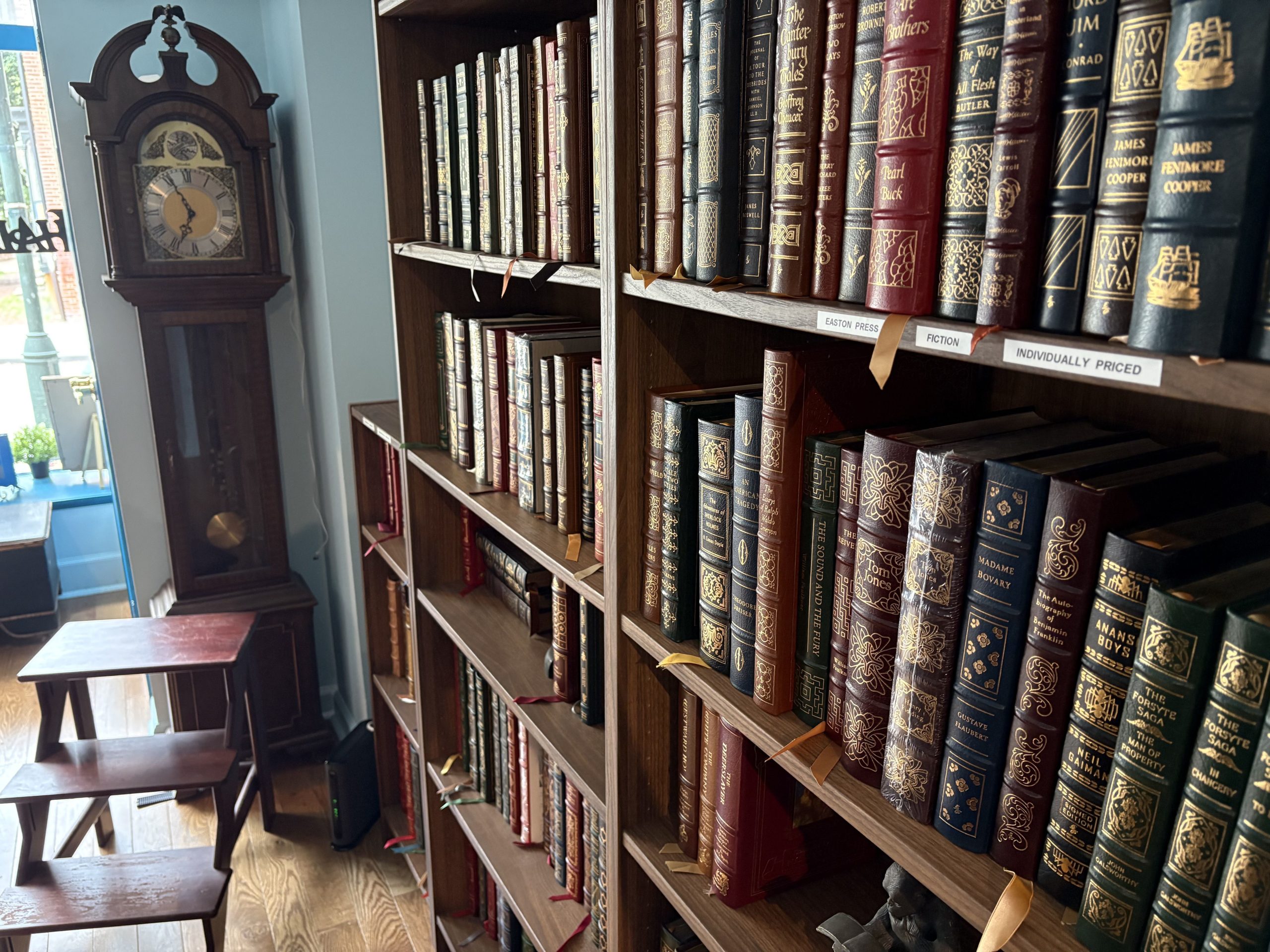
    It looks like the antiquarian bookstore of your dreams: a cozy corner storefront, the shelves lined with leather-bound and gilt-edged books. A poetic name is painted on the front window in retro gold letters: Whales & Windmills.

    But this new shop in the 1200 block of Pine Street isn’t quite what it seems. The books are old, and surely beautiful. Owner Yaoguang Jiang, however, was aiming for something more specific when she opened the doors in May.

    While the volumes in the front room look decidedly 19th century, many in fact are reprints from the middle or late 20th century — books like The Scarlet Letter or The Great Gatsby in handsome Franklin Library editions, or an Easton Press reprint of The Canterbury Tales.

    Inside of Whales & Windmills, the bookstore at 1220 Pine St.Peter Dobrin

    “What I’m really trying to be is something between a rare bookstore and a used bookstore,” says Jiang.

    Antiquarian book dealers may charge hundreds or thousands of dollars for first or early editions of certain titles. But these later editions at Whales & Windmills, while often beautifully bound and embellished with illustrations, might go for $15 to $30 (sometimes more, sometimes less).

    “I don’t want to sell super-rare books because it’s counter to my purpose, which is to get people to read books,” says Jiang, a former Penn neuroscience research associate.

    Among the many authors currently represented in the shop’s fancy-binding front room are John Galsworthy, James Fenimore Cooper, Pearl Buck, and Louisa May Alcott.

    In another room there are traditional used-bookstore paperbacks and hardcovers by Alice Munro, Jane Austen, Saul Bellow, and many others, some for $2 or $3 each.

    “We want to be on the one hand curative, selective, but on the other hand approachable. So we want books that are pretty and have another 50 years of shelf life, but not cost-prohibitive,” says Jiang.

    Her own favorites?

    “Shakespeare is pretty high on the list.”

    On her Instagram, she admits to an N. C. Wyeth obsession.

    About the bookstore’s name, Jiang says the idea came from a joke her husband made involving Moby-Dick and Don Quixote.

    “In the beginning when I started the online business and had zero followers, those were the only two books I could reliably sell.”

    The name Whales & Windmills carries another kind of literary resonance.

    “It’s in the theme of Pride and Prejudice, Sense and Sensibility — but whimsical.”

    It sends the message that the shop deals in classic literature, “but we don’t take ourselves too seriously.”

    Whales & Windmills, 1220 Pine St., is open Friday through Monday, 11 a.m. to 7 p.m. instagram.com/whalesandwindmills

    — Peter Dobrin

    An artifact from a little known colonial-era massacre

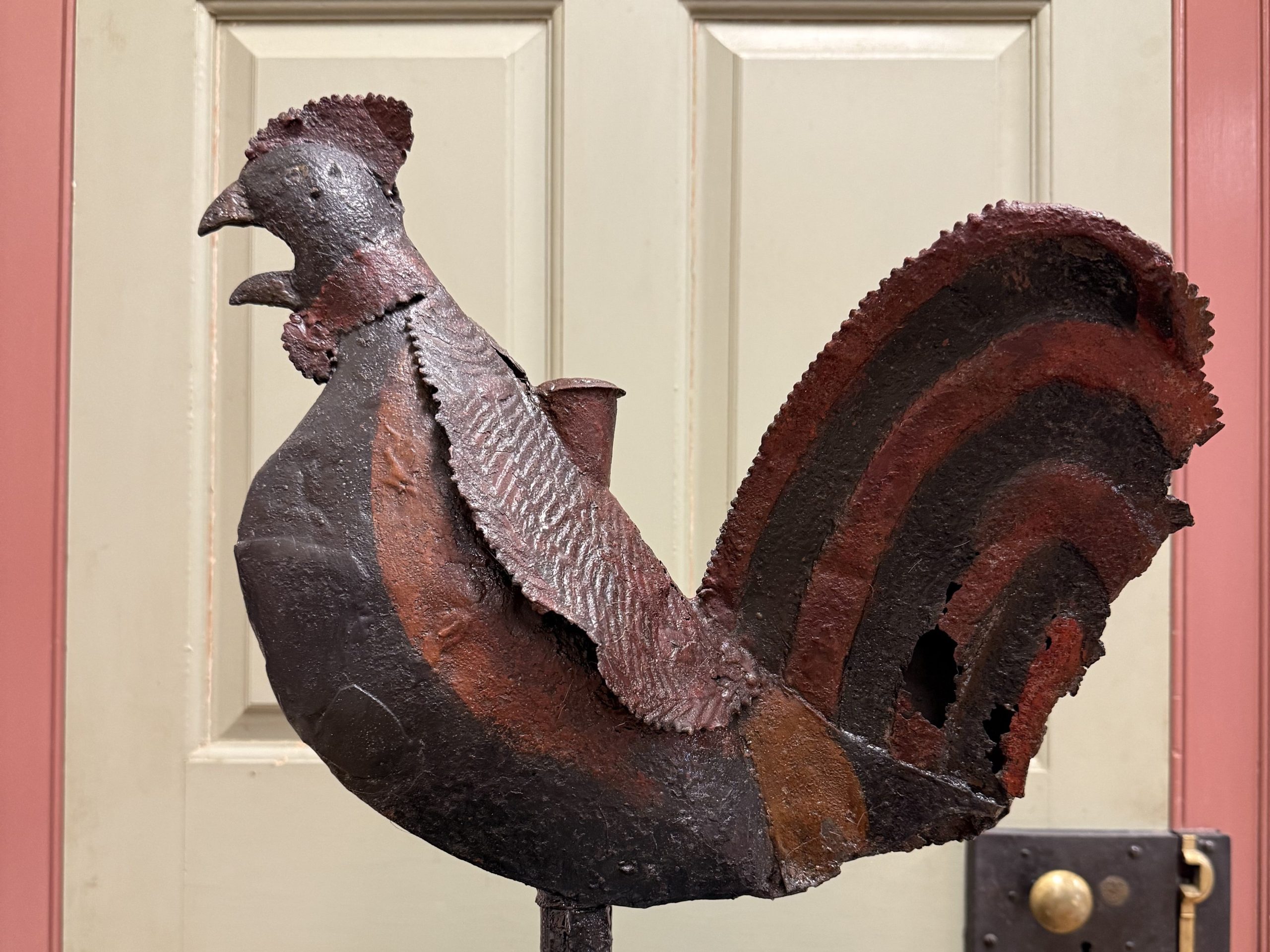
    A centuries-old rooster-shaped weather vane greets visitors at the Historic Germantown Visitor Center’s new rotating exhibit, “Rebellion and Remembrance in Freedom’s Backyard.” Its metallic feathers are worn from age. Just below the bird’s comb is a scratch that Historic Germantown’s executive director Tuomi Forrest surmises has been repaired.

    It’s how the scratch came to be that I find chilling.

    The weather vane was once on top of Germantown Presbyterian Church. It was damaged during the Paxton Boys’ Massacres in 1763 amid the turmoil of the French and Indian War. It is a part of Historic Germantown exhibit honoring America’s 250th birthday.Kaila Temple

    Historians suggest it came from rocks, stones, or perhaps even gunshots lobbed at the Germantown Reform Church on Market Square by the Paxton Boys, a violent group of revolutionaries who wanted to wipe Indigenous people from Pennsylvania.

    In December 1763, a mob of settlers from Paxtang Township, about 100 miles northwest of Philadelphia, murdered 20 unarmed Susquehannock Indians in Lancaster County. A month later, hundreds of these “Paxton Boys” marched toward Philadelphia to harass and kill more Indigenous peoples. Ben Franklin halted the march just outside of Germantown.

    The weather vane is part of a rotating exhibit examining Germantown’s place in the Revolutionary War. But it’s also a visceral reminder that when hate goes unchecked and is allowed to linger, it can be explosive.

    The Historic Germantown Visitor Center is located at 5501 Germantown Ave. “Rebellion and Remembrance in Freedom’s Backyard” runs through December.

    — Elizabeth Wellington

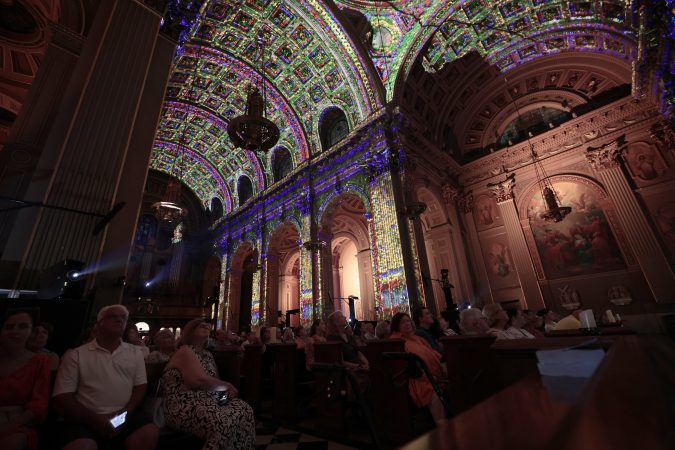
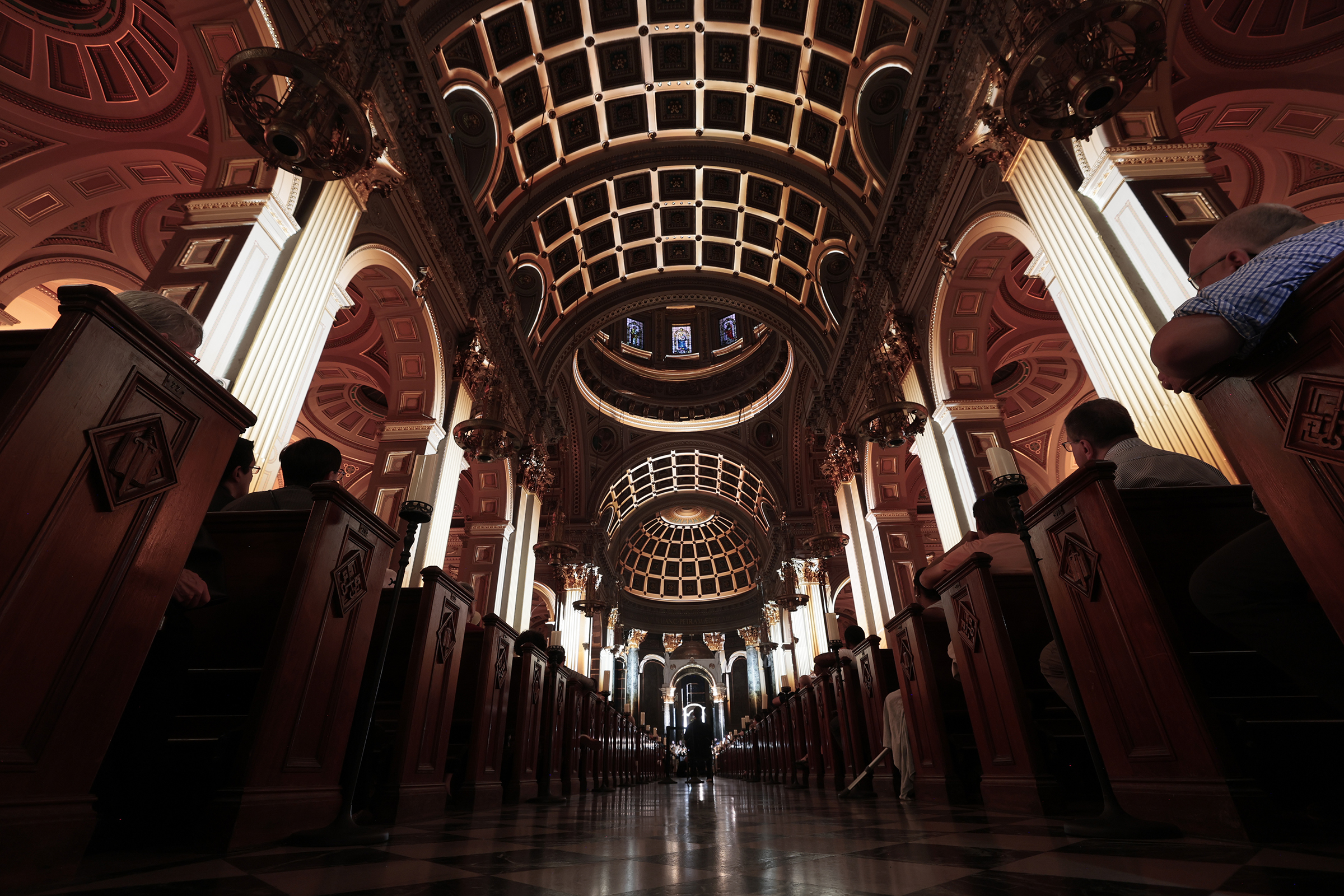
    The opening night performance of “Luminiscence Philadelphia: An Immersive Celebration of Light, Music and Story” lights up the interior of the Cathedral Basilica of SS. Peter and Paul in Philadelphia on June 11, 2026.Elizabeth Robertson / Staff Photographer

    Step inside Philly’s dazzling ‘Luminiscence’ experience

    At “Luminiscence Philadelphia,” time, history, and music converge inside the Cathedral Basilica of SS. Peter and Paul.

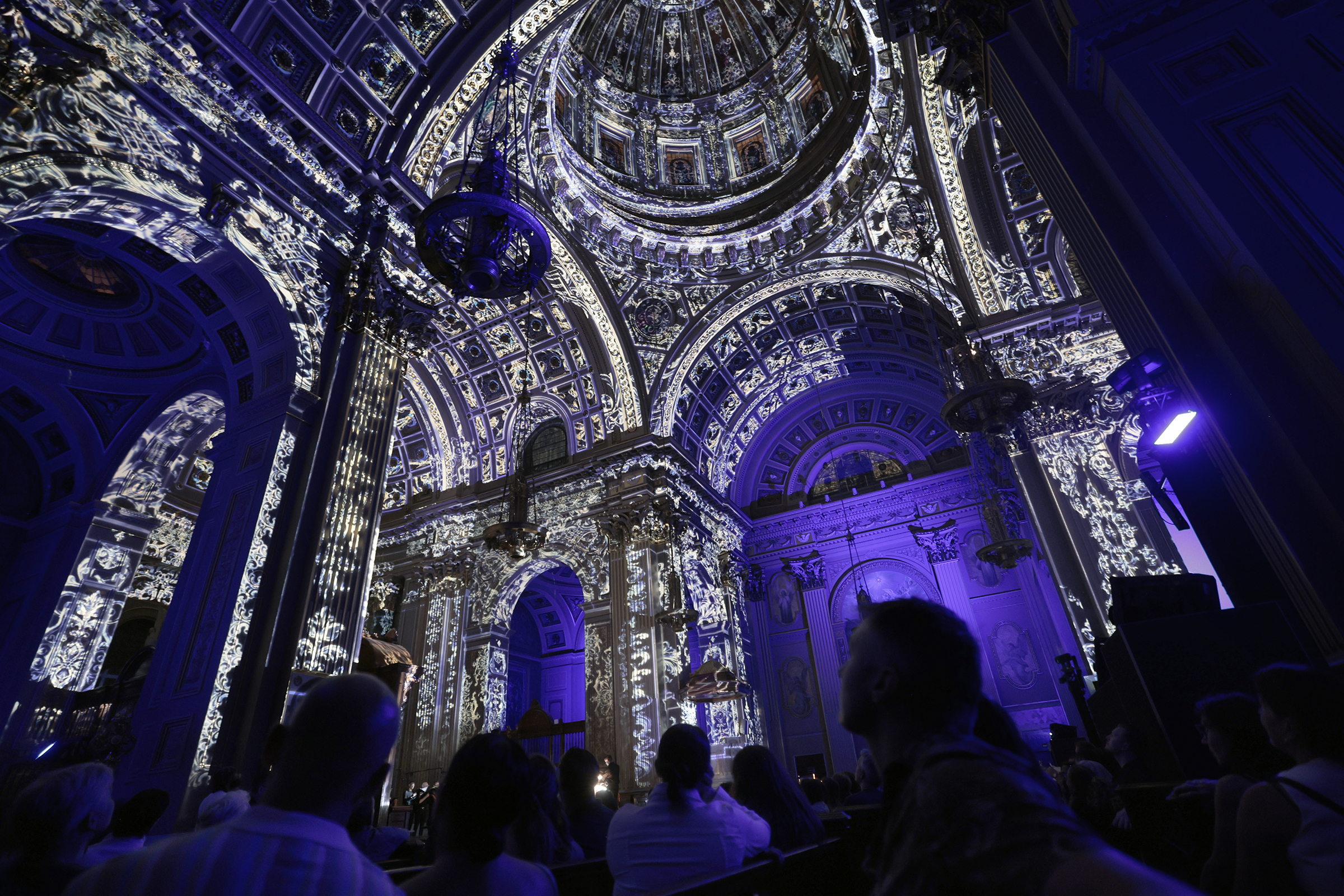
    The church’s barrel arches, Corinthian columns, and copper dome are bathed in atmospheric hues and kaleidoscope imagery. Its walls transform into a singular canvas, filled with dreamscapes that stretch from the altar to its entrance doors.

    Across the 45-minute show, produced by Banijay Americas Live, there are scenes of a glimmering palace, a starlit sky, a garden of falling blossoms, and angels resting in the heavens — all reminiscent of Italian Renaissance paintings.

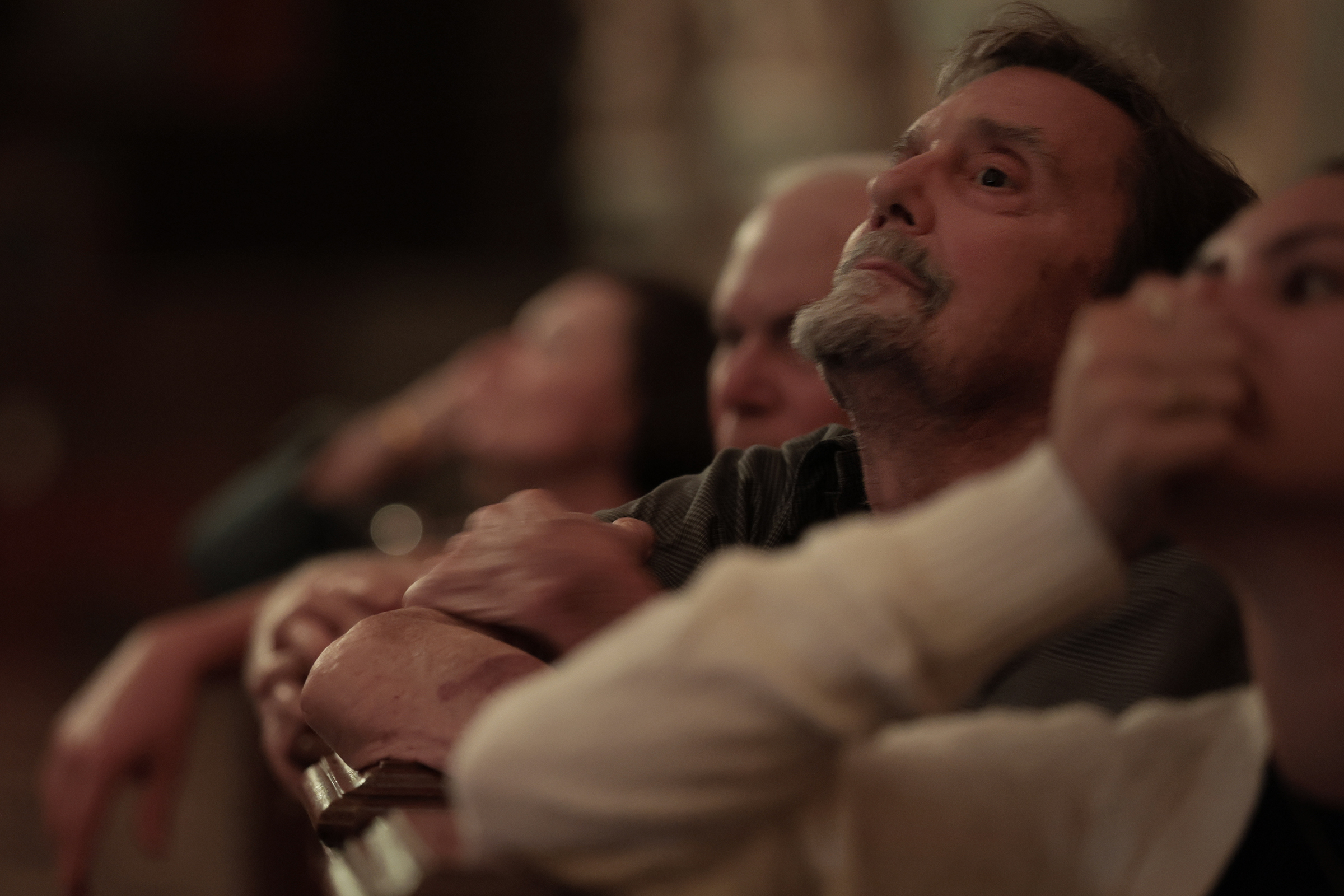
    Joseph Blanch of Havertown watches the opening night performance of “Luminiscence Philadelphia: An Immersive Celebration of Light, Music and Story” at the Cathedral Basilica of SS. Peter and Paul in Philadelphia on Thursday, June 11, 2026.Elizabeth Robertson / Staff Photographer

    Each vista is shaped by 25 high-definition projectors and 360-degree video mapping. As viewers lift their heads from the church’s pews, they are struck by a full panorama of colors, elevated by a blend of orchestral works.

    Beethoven’s “Ode to Joy” and Claude Debussy’s “The Sunken Cathedral” blare from the church’s sound system, while human silhouettes walk along the walls. Their shadowy presence adds to the show’s visual depth.

    The opening night performance of “Luminiscence Philadelphia: An Immersive Celebration of Light, Music and Story” lights up the interior of the Cathedral Basilica of SS. Peter and Paul in Philadelphia on June 11, 2026.Elizabeth Robertson / Staff Photographer

    On select nights, there are live choir and orchestra performances. Yet, even with prerecorded music, the experience is still deeply immersive. The narration, however, can be distracting. It’s difficult to make out what’s being said, other than references to the church’s formation and the nation’s 250th celebration.

    But what’s clear is Luminiscence’s allure. It’s an audio-visual experience that aims to enliven basilicas and cathedrals, with respect to their religious significance and architectural wonder. And with its unfurling inside the mother church of the Archdiocese of Philadelphia, it successfully melds these distinct worlds – the sacred and the luminary.

    “Luminiscence,” the Cathedral Basilica of SS. Peter and Paul on 1723 Race St., is open most Wednesday to Sunday nights into August. luminiscence.com/philadelphia

    — Earl Hopkins

    What is the true value of a dollar?

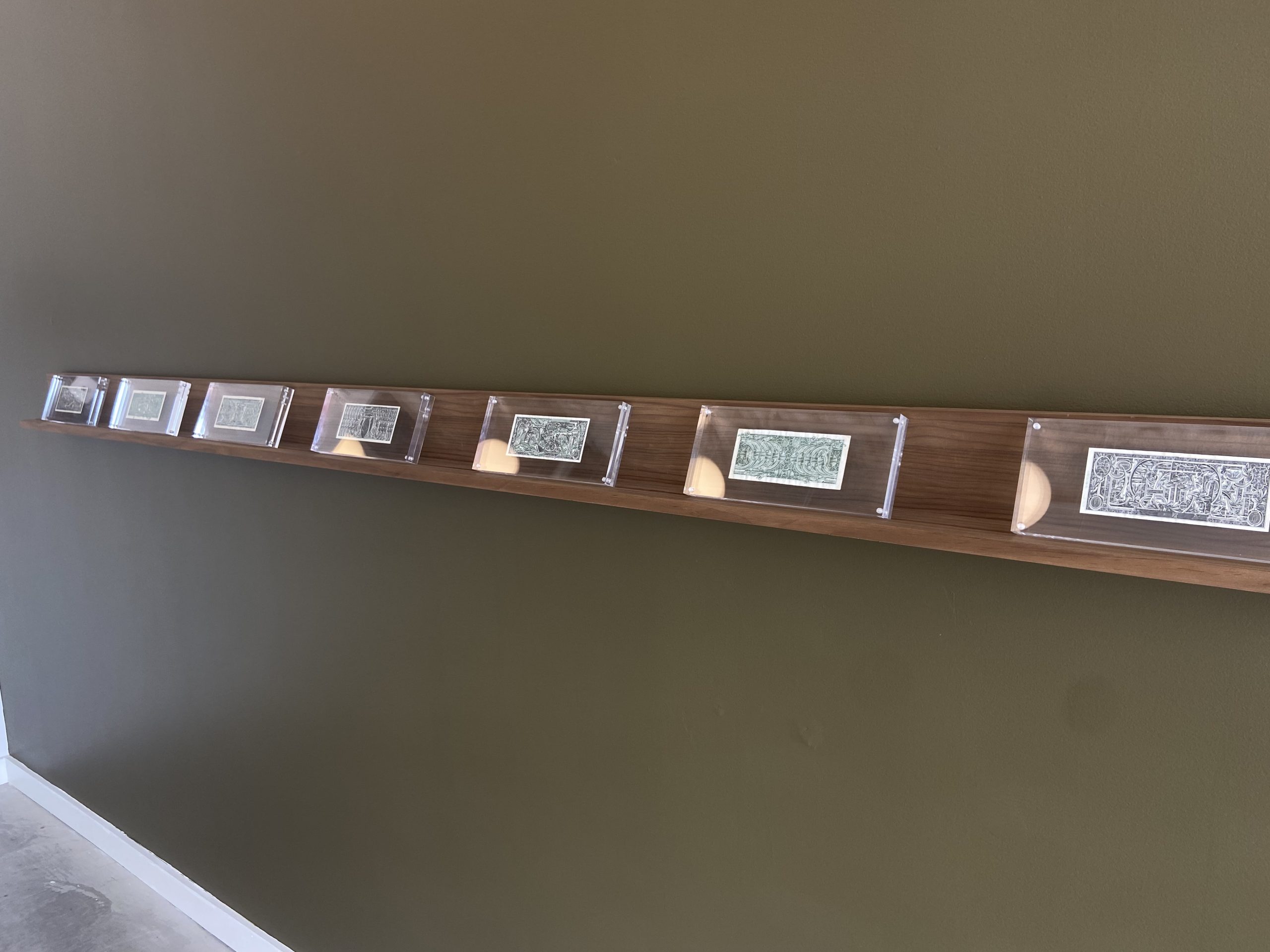
    A wall of artist Kaitlin Pomerantz’s “Rewilded Dollars,” featuring reworked collage designs.Morgan Ritter

    A U.S. dollar today doesn’t just represent currency. Artist Kaitlin Pomerantz shows that it also represents centuries of capitalism overriding the importance of the planet.

    Pomerantz’s new exhibit “(de)growth” in Studio 105 at Ray Philly exhibits the dollar bill in a more ecological fashion. On one wall of the exhibit hang several dollar bills that look normal from afar, but up close, are completely reworked.

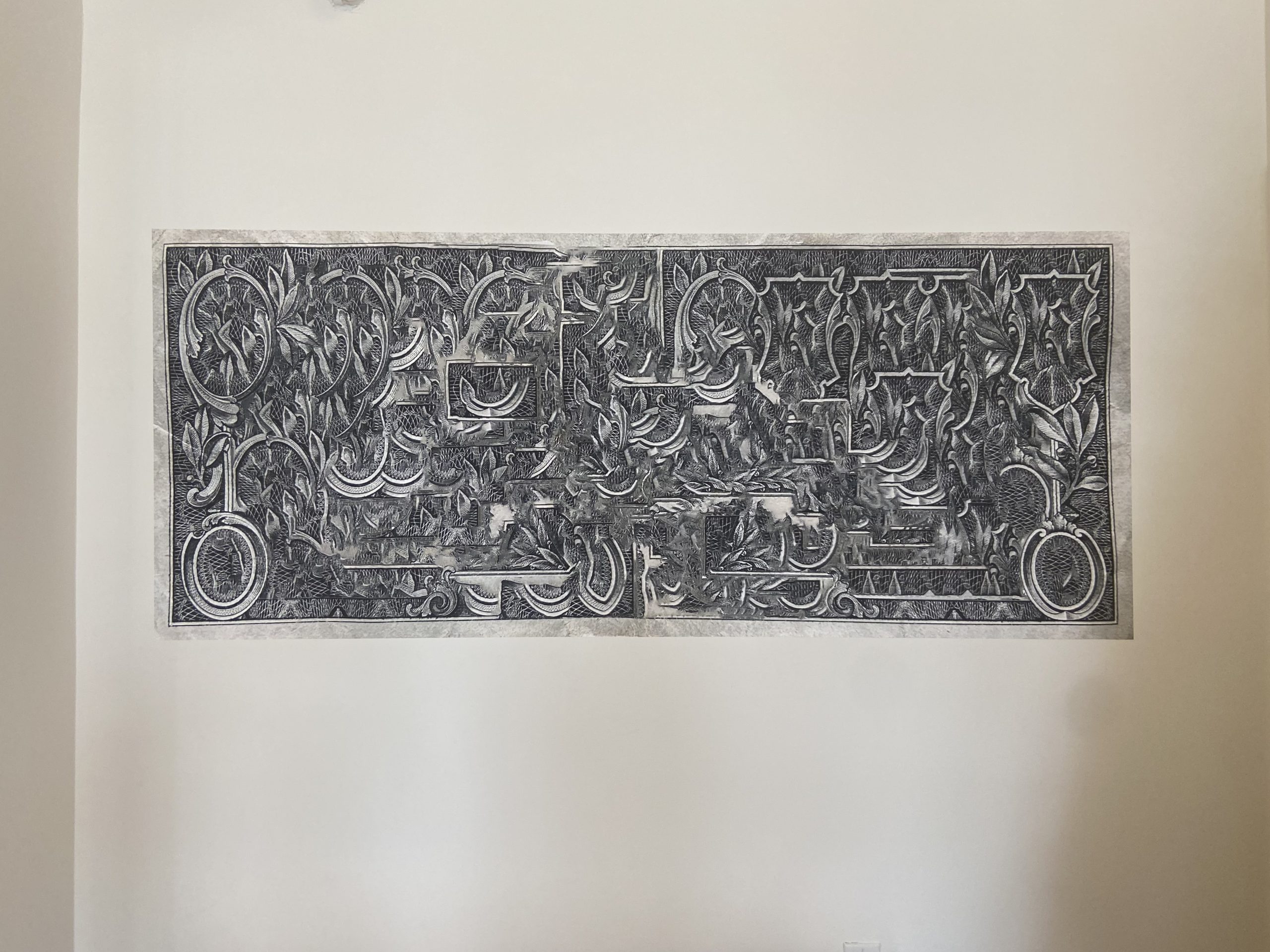
    A large prototype of artist Kaitlin Pomerantz’s “Rewilded Dollar” hangs at the entrance of the exhibit. It is a digital collage on adhesive vinyl.Morgan Ritter

    Pomerantz eliminated any symbols of political power from the dollar bill, cutting them up and collaging them to highlight the environmental aspects that exist on the dollar bill. Rather than the ecosystem being taken over by capitalism, “(de)growth“ imagines a world where nature reclaims itself.

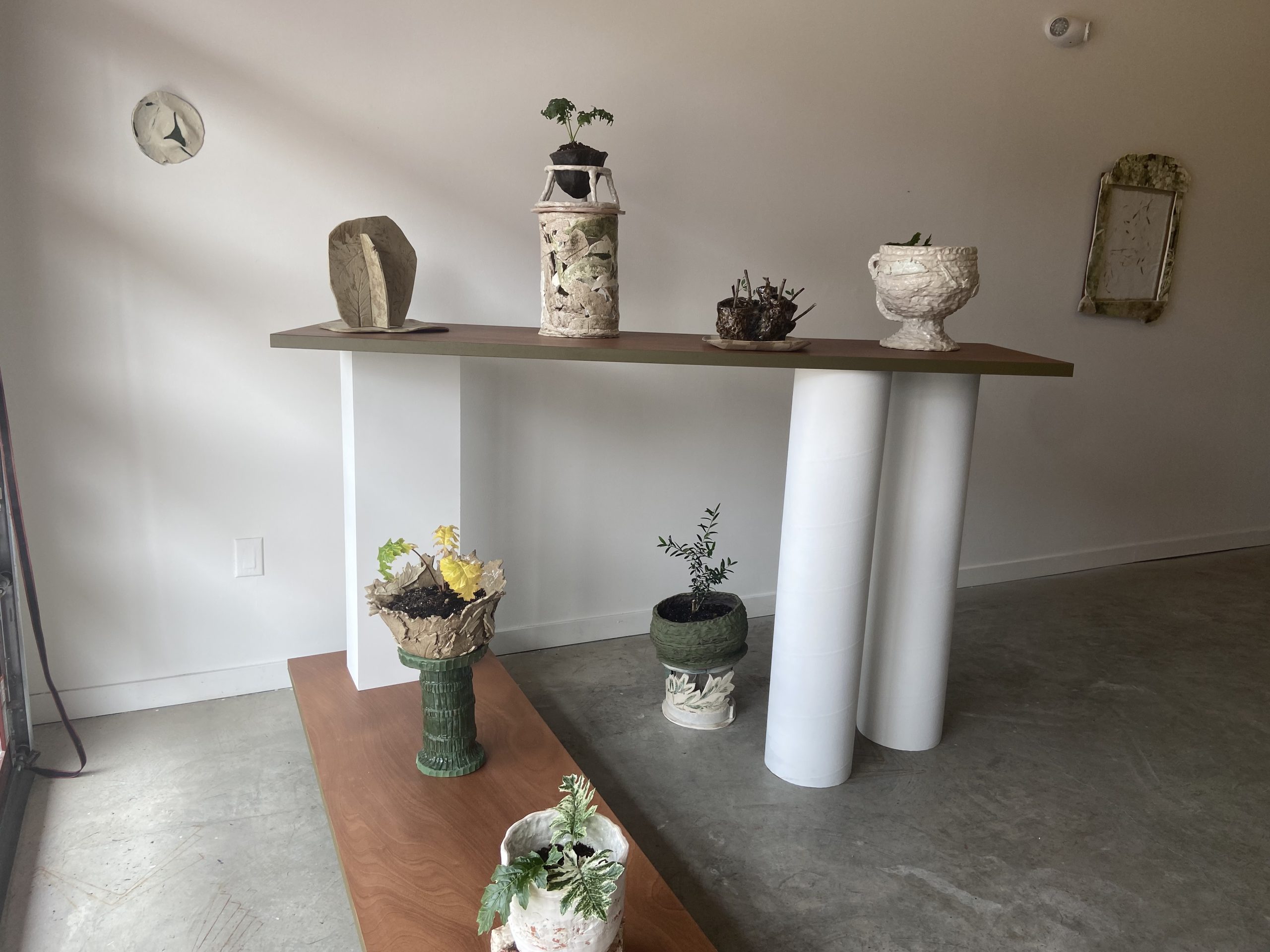
    Included in the exhibit are living plant installations placed in deliberately fractured ceramic pots, showing the damage we have already done to the environment, but that it can still regrow.

    A collection of ceramics and living plant installations, representing artist Kaitlin Pomerantz’s emphasis on the importance of ecological growth.Morgan Ritter

    It was nice to walk around the exhibit, imagining a world where the U.S. government places emphasis on protecting the environment and valuing the natural world around us. That being said, feelings of melancholy soon followed, remembering how damaging the ecological impact from capitalism has been.

    Pomerantz powerfully calls out how political domination has caused government powers to lose sight of what’s really important.

    It’s easy not to think about the meaning behind the design of the dollar bill. Pomerantz’s vision of changing it to be centered around the planet offers an almost optimistic perspective of what could be valued someday if oppressive systems are dismantled.

    “(de)growth” by Kaitlin Pomerantz, is on view through Aug. 2 at Studio 105 at Ray Philly, open Wednesday through Sunday from noon-6 p.m.

    — Morgan Ritter

    An earlier version of the article had an incorrect name of the exhibition at Ray Philly. It is called “(de)growth.”

  • Touring Camden’s Cathedral Kitchen, Andy Kim calls Trump’s cuts to SNAP ‘devastating and cruel’

    Touring Camden’s Cathedral Kitchen, Andy Kim calls Trump’s cuts to SNAP ‘devastating and cruel’

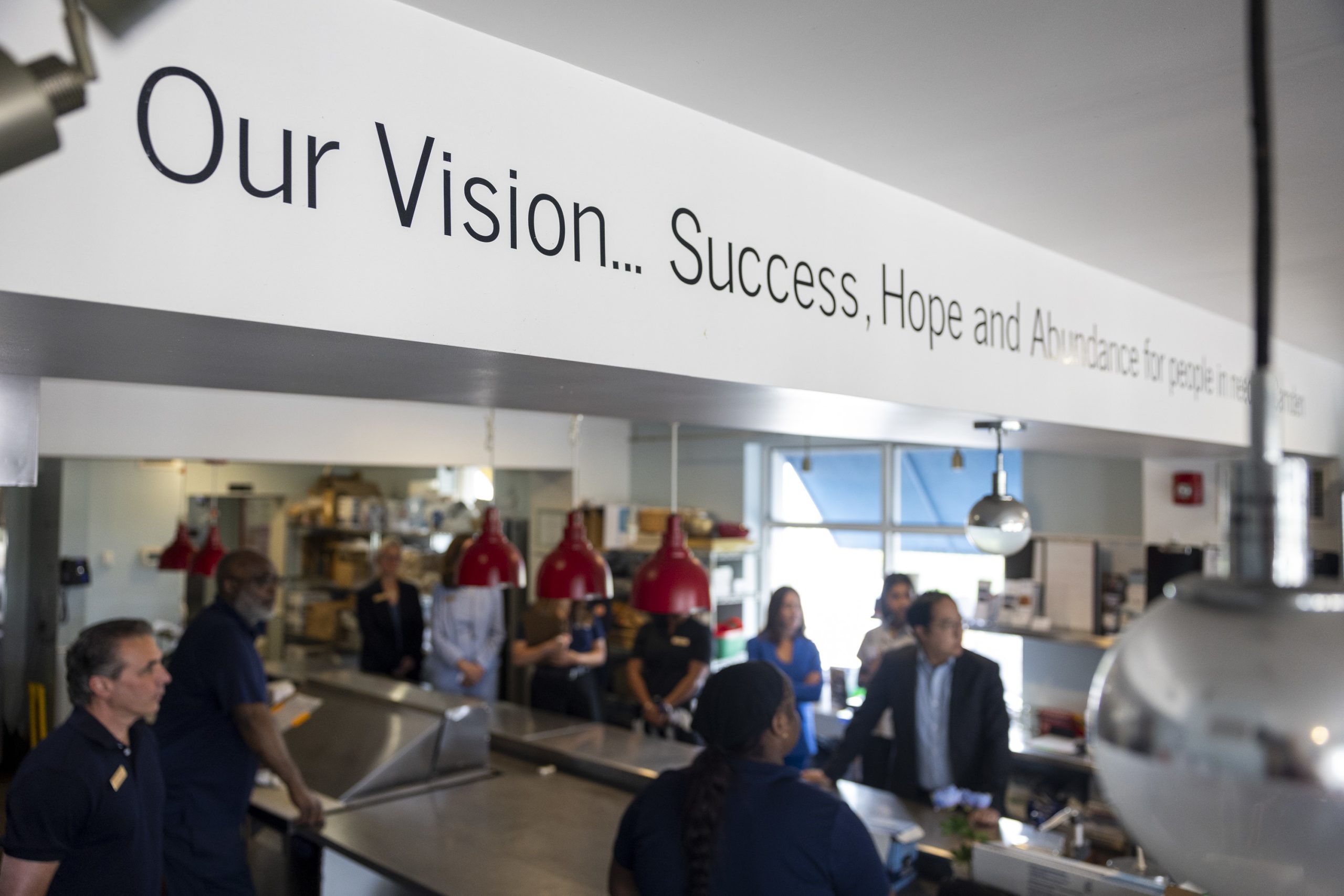
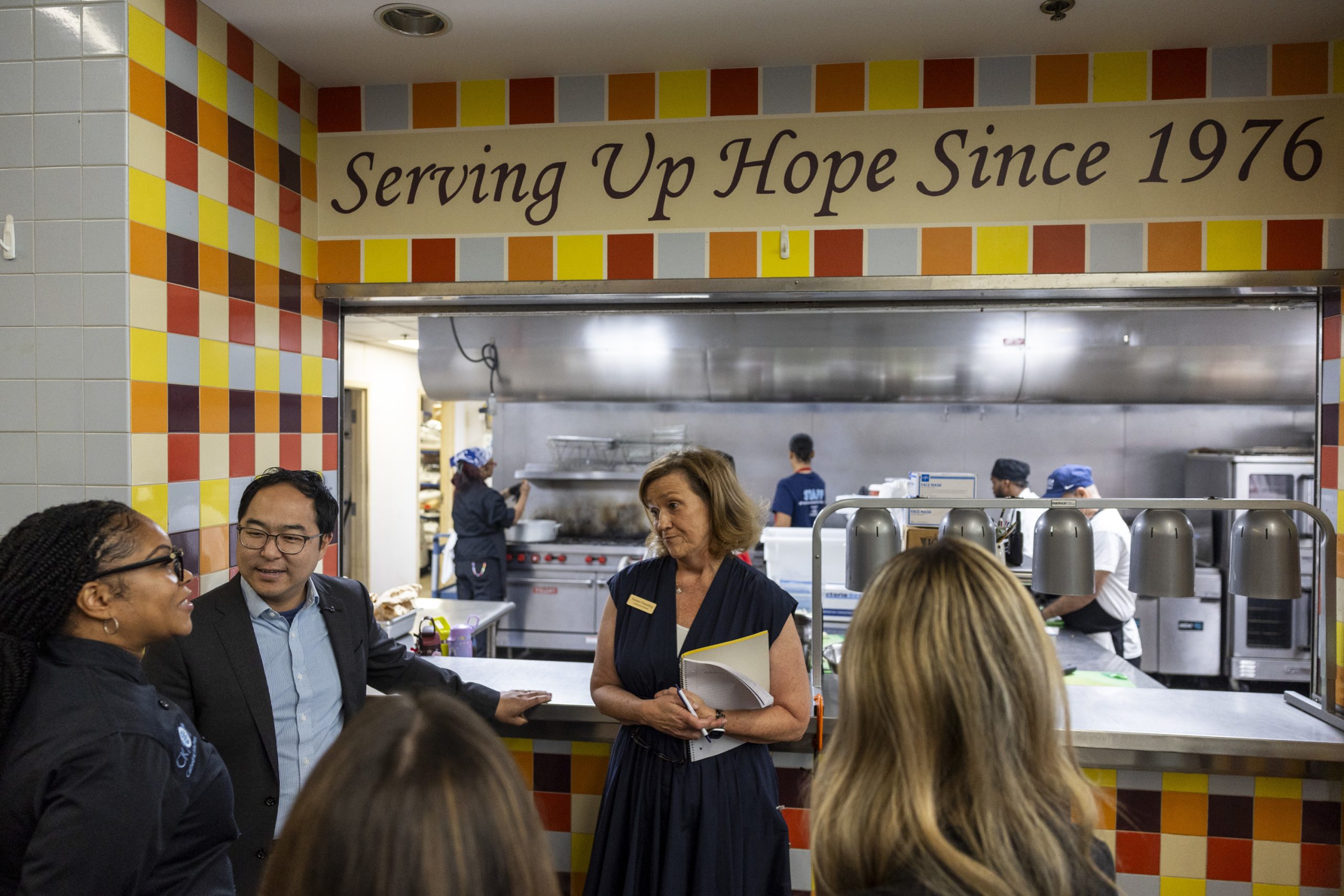
    Touring Cathedral Kitchen, the largest emergency meal supplier in South Jersey, Democratic Sen. Andy Kim praised the 50-year-old Camden institution Friday for the food it has served and the people it has saved.

    “The Kitchen is building community, right here in New Jersey,” said Kim, who noted that the nonprofit distributes 28,000 meals a month while training low-income people to be chefs and restaurant workers. Cathedral Kitchen also works to help people obtain IDs, apply for jobs and benefits, and find housing.

    Its work is needed more than ever, the New Jersey lawmaker said, with hunger on the rise because of high food prices and President Donald Trump’s One Big Beautiful Bill Act, which reduced federal food assistance such as SNAP (the Supplemental Nutrition Assistance Program) beginning July 4 of last year.

    Cutting SNAP benefits and changing eligibility requirements, Kim said, is a “devastating and cruel thing to do” at a time when cost of living has been climbing.

    “Why are we taking away necessary support at this time?” Kim asked. “I mean, we’re talking about food, the basics of being a human. Why is this happening now, at a time when people are struggling with affordability?”

    New Jersey Sen. Andy Kim visits Cathedral Kitchen in Camden, speaking to the workers who provide food for their community and those in need.Tyger Williams / Staff Photographer

    The food assistance cuts are coinciding with the economic fallout from tariffs and the Iran war, Kim noted.

    Nationwide, between January 2025 and January 2026, SNAP rolls decreased by more than 4 million people — from 42 million to 38 million — according to USDA figures.

    In New Jersey, SNAP participation has fallen by more than 50,000 individuals between March 2025 and March of this year, New Jersey Department of Human Services figures show.

    And in Pennsylvania, nearly 90,000 people lost SNAP benefits between July 2025 and April due to new eligibility requirements, according to an analysis by the Pennsylvania Department of Human Services (DHS).

    At the same time, food prices have risen more than 3% in the last year.

    As a result, in Camden, Burlington, Gloucester, and Salem Counties, the number of meals distributed to help those in need grew by 34% over the last four years, according to the Food Bank of South Jersey

    “I know the Camden area,” said Kim, who grew up in nearby Marlton and Cherry Hill. “I’ve seen the struggles that have been here and still persist.”

    The Trump administration has said the cuts it’s made to SNAP, Medicaid, and other programs were necessary to staunch “waste, fraud, and abuse.” It maintains that it’s instituted strict work requirements for SNAP to move more people into the workforce and reduce dependency on government support.

    Kim said many Americans don’t understand that a large number of people who live in poverty also work. “Millions with jobs are still poor, and this country needs a mindset shift to understand that,” Kim said.

    Sen. Andy Kim (D., N.J.) speaks with Naimah Rutling, executive chef at Cathedral Kitchen in Camden, N.J., on Friday.Tyger Williams / Staff Photographer

    As he continued his Tour of Cathedral Kitchen, Kim invariably found himself in the organization’s actual kitchen, bustling with food workers slicing carrots and onions, preparing for meals ahead.

    Clearly enjoying the moment, Kim said that at home, he makes his own bread, including pizza dough.

    Kim asked executive chef Naimah Rutling what her favorite food is. “Grilled cheese,” she said without hesitating. Kim laughed and said, “I have a 9-year-old and a 10-year-old. About 90% of what we eat is grilled cheese.”

    Before leaving, Kim praised workers in the kitchen for their diligence and dedication in preparing food for those who need it.

    “It gives meaning and purpose to their lives,” he said. “I love the passion I see.”

  • Ewart Rouse, retired award-winning Inquirer reporter and editor, author, and journalism professor, has died at 85

    Ewart Rouse, retired award-winning Inquirer reporter and editor, author, and journalism professor, has died at 85

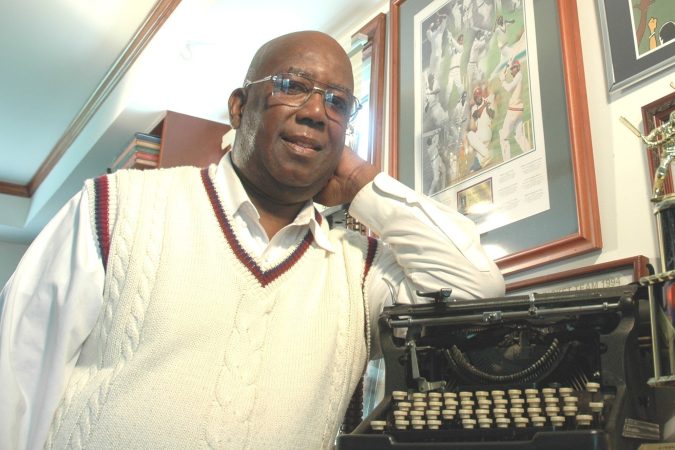
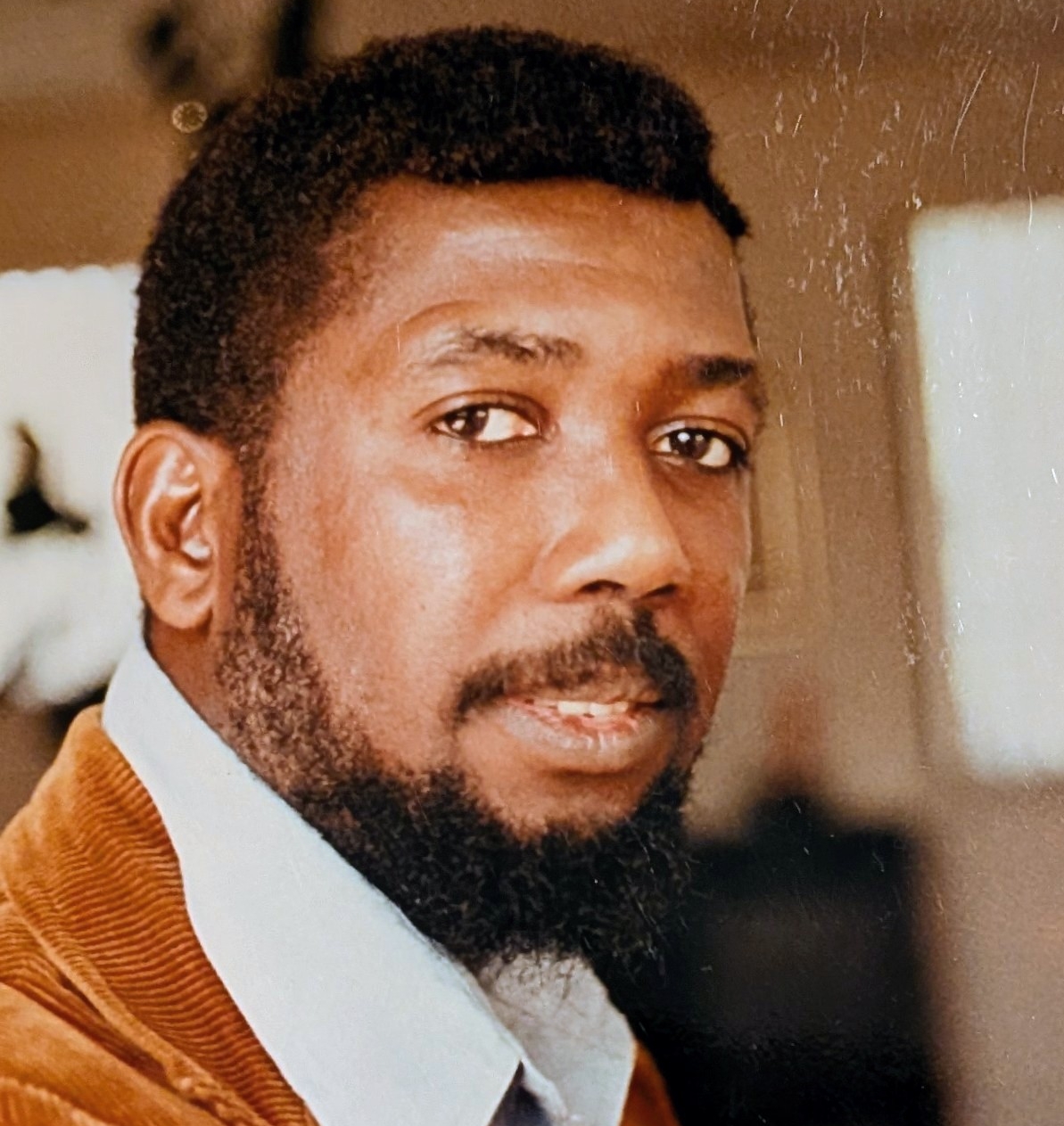
    Ewart Rouse, 85, of Lawnside, retired award-winning reporter and editor for The Inquirer, author, journalism adjunct professor, mentor, immigrant advocate, and indomitable cricketer, died Thursday, July 2, of age-associated decline at the Samaritan Center at Voorhees.

    Born in Trinidad, West Indies, Mr. Rouse immigrated to New York in 1969 and joined The Inquirer in 1974. For nearly 30 years, until he retired in 2002, Mr. Rouse was an award-winning business and news reporter, suburban editor, and mentor to hundreds of young journalists.

    He won a 1980 Keystone Award for a news series on city taxi service and was recognized for another series on street gang homicides involving Black youth. Later, he wrote business columns and covered South Jersey news.

    He opened a 1975 story about former President Gerald Ford’s first visit to Philadelphia with: “The old man sat alone and dejectedly with his flags against the wall of the Philadelphia National Bank building at 5th and Market Streets. ‘Not one,’ he muttered. ‘I haven’t sold not one flag today.’”

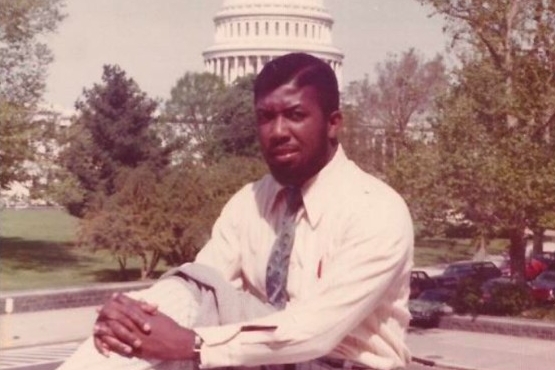
    Mr. Rouse worked for the Associated Press in Washington DC.Courtesy of the family

    Before The Inquirer, Mr. Rouse was a news and political reporter for the Associated Press in Newark, N.J., Atlantic City, and Washington, D.C. “He was a popular colleague who contributed importantly to the paper’s growth,” Gene Foreman, retired managing editor at The Inquirer, said on Facebook.

    Other former Inquirer colleagues called Mr. Rouse “professional and gracious,” “careful and respectful,” and “kind and generous.” Retired Inquirer editor Lil Swanson said on Facebook: “Ewart was filled with wisdom and grace. When he was an editor, young writers flocked to him because he always made their stories better and helped them grow.”

    He covered courts and politics for the Trinidad Guardian in Port-of-Spain before leaving for New York, and interviewed Trinidad Nobel laureate V.S. Naipaul for the 1997 book Conversations with V.S. Naipaul. In Philadelphia and South Jersey, he taught news writing, business writing, and investigative journalism at Temple, Rutgers, and Arcadia Universities.

    He mentored many students of color and edited books for other writers. He enjoyed fiction and detailed plots, and wrote a four-book series of cricket-themed novels he called the Sticky Wicket Collection.

    Mr. Rouse loved to play, watch, and write about cricket.Ewart Rouse

    Readers called his books “highly entertaining” and “a wonderful addition to cricket literature” in reviews. His daughter Karen said: “The clackety-clack (zing!) of his typewriter was a constant in our home.”

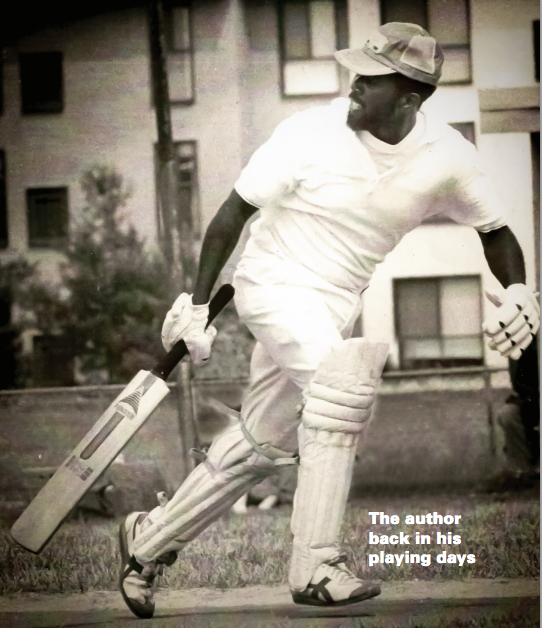
    Mr. Rouse played cricket in Trinidad and later in South Jersey, and he cofounded the Philadelphia Cricket League, the New Jersey Cricket Association, and the Echelon Cricket Club. He played the game, managed teams, and became one of the region’s greatest advocates for cricket and its immigrant players.

    In 2013, he earned a lifetime achievement award from the South Jersey Caribbean Cultural and Development Organization, and recognition from then-Camden Mayor Dana Redd for his contributions to the community as a journalist, teacher, and cricket activist. “It truly was an honor to be recognized by my own community,” he said on his website, ewartrouse.com.

    In a 2016 online interview, Mr. Rouse was asked to advise young writers. “Read anything you get your hands on,” he said, “From books and newspapers … to labels on paint. Each contains nuggets of information that the mind will retrieve for just the right spot in your next project.”

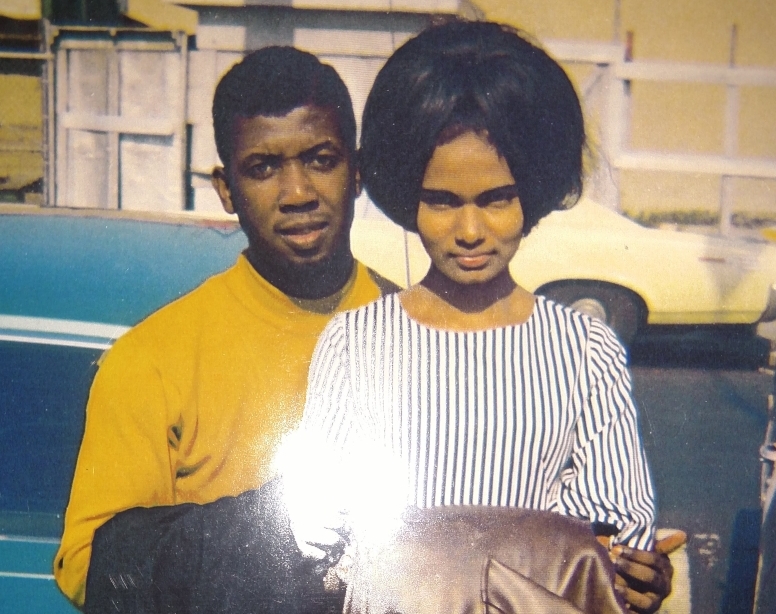
    Mr. Rouse and his wife, Vanda, met in Trinidad.Courtesy of the family

    Ewart Rigsby Rouse was born Sept. 16, 1940, in Tunapuna, Trinidad. He was an avid reader and creative writer as a boy, and noticed one day that several of his favorite writers — Charles Dickens, John Steinbeck, and Ernest Hemingway — started out as newspaper reporters.

    “And now I wanted to be a journalist like them,” he said in a short self-published autobiography.

    He met his wife, Vanda, in Trinidad, and they married and had daughters Joann, Karen, and Kristin. They lived in New York, Pleasantville, N.J., and Washington, and settled in Lawnside in the 1970s.

    Mr. Rouse was active with the C.C. Morris Cricket Library Association, the South Jersey Writers’ Group, and the Rainy Tuesday Writers Group. He was an avid gardener and routinely gave away bags of home-grown tomatoes to friends and neighbors.

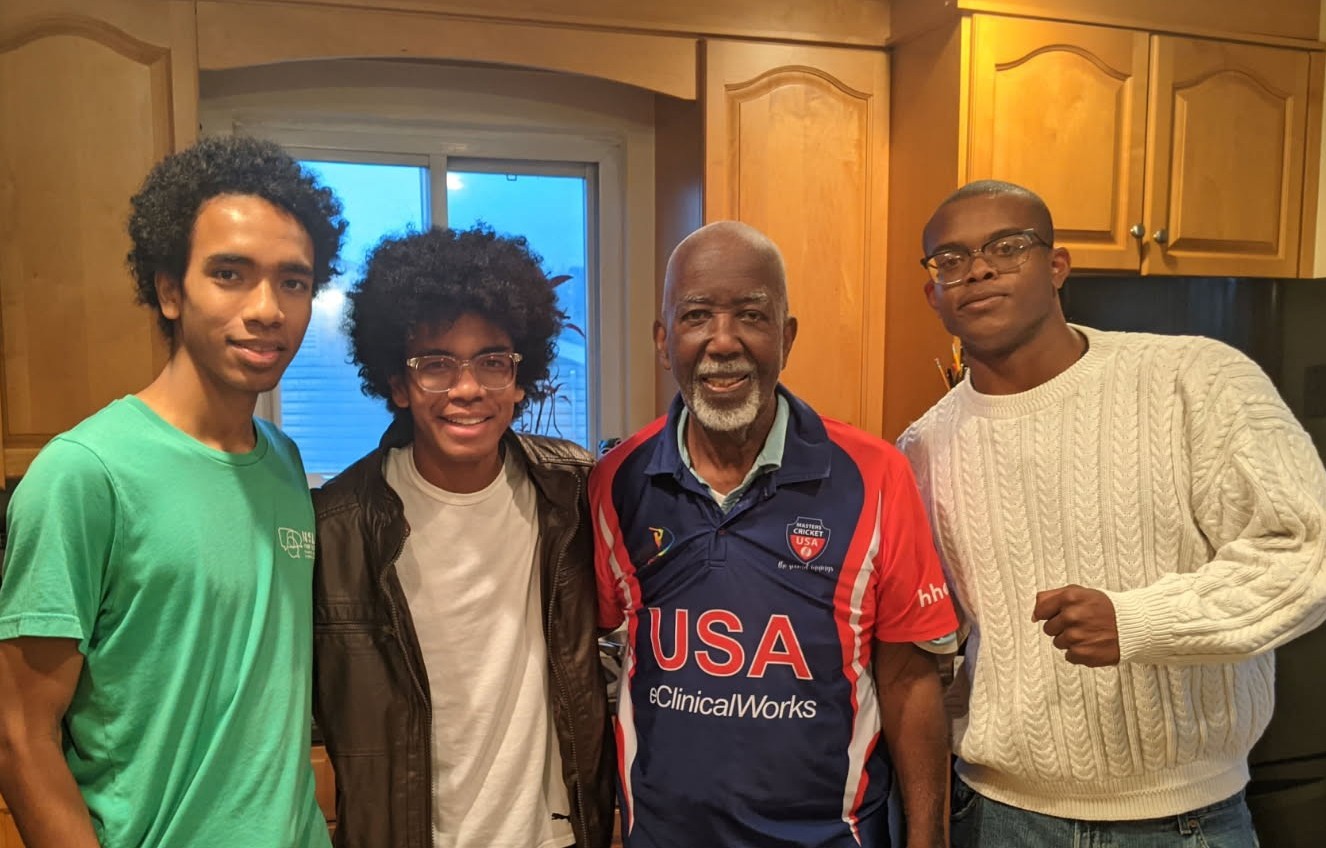
    Mr. Rouse enjoyed time with his grandsons. Courtesy of the family

    He collected records, listened to Nat King Cole and Frank Sinatra, followed the 76ers, and grilled outdoors as often as possible. He took his family on memorable trips to Trinidad that “opened up a world to us that was accessible, one that we could dare to explore,” said his daughter Karen.

    In 2016, Mr. Rouse told aspiring writers: “Who knows, maybe you end up with a bestseller. Some might call you a dreamer. But, hey, as the saying goes, you can’t have a dream come [true] if you don’t have a dream.”

    In addition to his wife and daughters, Mr. Rouse is survived by three grandsons, two sisters, a brother, and other relatives.

    A private celebration of his life is to be held later.

    Donations in his name may be made to the Philadelphia Association of Black Journalists, 30 S. 15th St., 15th Floor, Philadelphia, Pa. 19102.

    A former Inquirer colleague called Mr. Rouse “a true and kind gentleman.”Courtesy of the family
  • BalletX’s return to ‘The Little Prince’ is every bit as enchanting as before

    BalletX’s return to ‘The Little Prince’ is every bit as enchanting as before

    At 20, BalletX has developed into a contemporary company of strong dancers that consistently brings Philadelphia audiences something new. While most dance companies commission new work, BalletX leans heavily into the world premieres.

    This approach is largely a win for both the dancers and audiences. But when a standout work comes along, it can be a long wait before it returns.

    BalletX premiered Annabelle Lopez Ochoa’s The Little Prince in 2019 and brought it on tour, giving the company ample time to deepen its relationship with this delightful piece. But Wednesday’s opening night of the summer season at the Suzanne Roberts Theatre marked the first opportunity for Philly audiences to see it again in seven years.

    Nearly all of the dancers are new since 2016, and many of the costumes have been refreshed. Even so, assembling the finished product turned out to be a struggle. Three dancers were injured, artistic and executive director Christine Cox said in a pre-show introduction.

    The finished product was as charming as it was when it premiered.

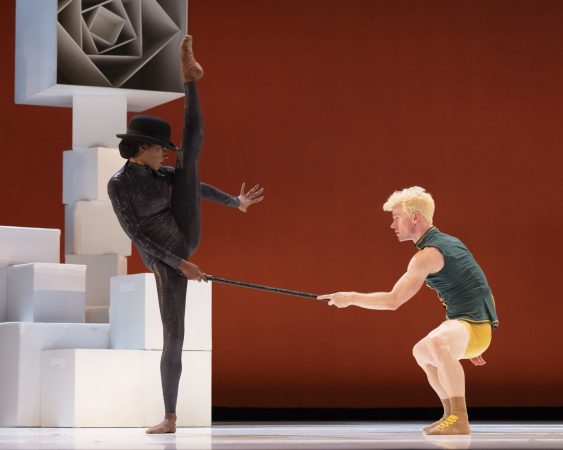
    The story on stage is clear, though reading the novella — or at least the program synopsis — beforehand adds helpful context. It is about a pilot who crashes his plane on an asteroid and meets a little prince who tells him a story about meeting wacky characters on various planets. The prince wants to get to earth to save his precious rose, but later discovers that she is not the only rose in the universe.

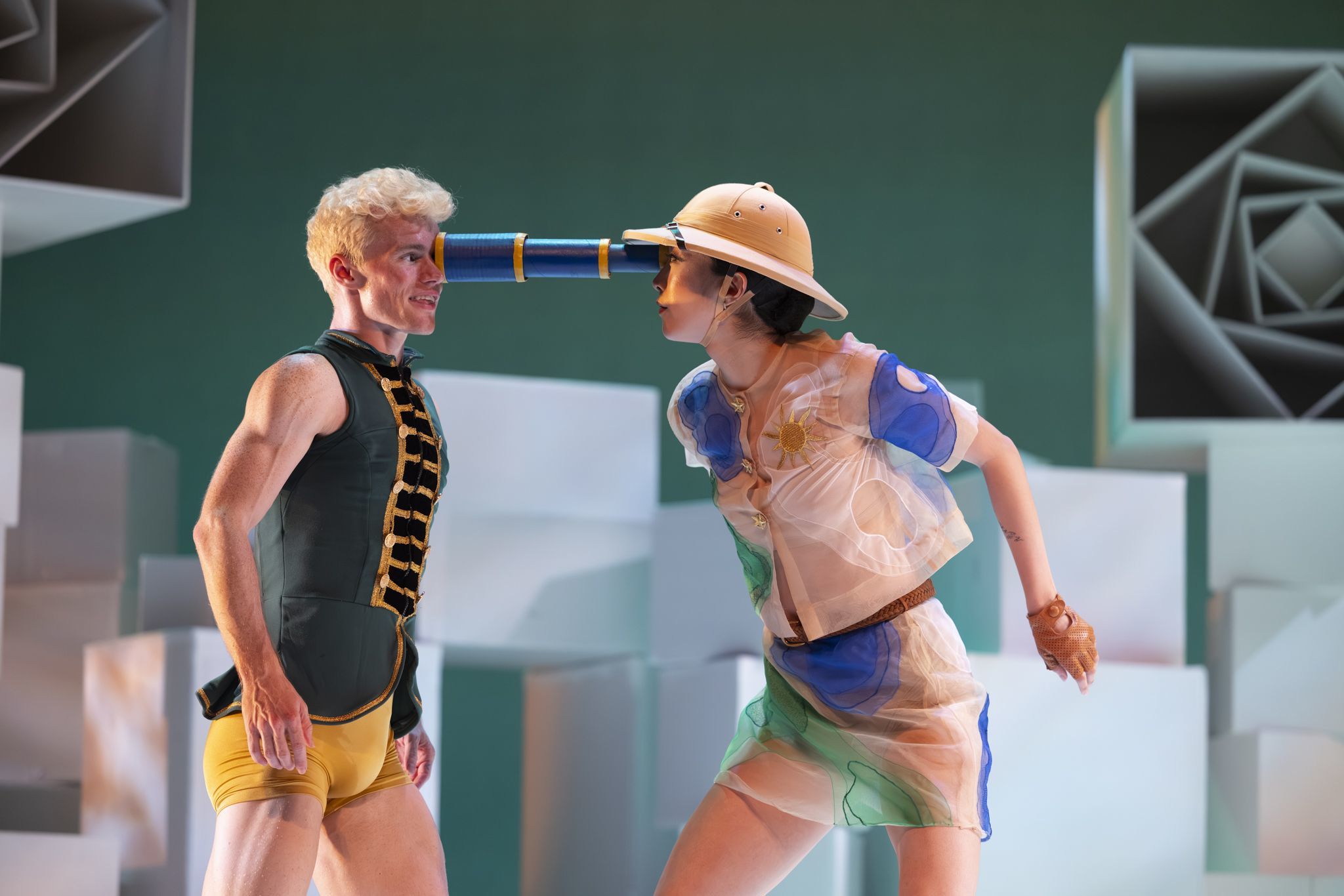
    BalletX dancers Eli Alford, left, as the little prince, and Eileen Kim, as the geographer, in Annabelle Lopez Ochoa’s “The Little Prince.”Vikki Sloviter / BalletX

    Meanwhile, death — in the former of a snake — slithers through the story, tempting both characters at every turn.

    For both the little prince and the pilot, the story is a journey toward returning home, giving it echoes of The Wizard of Oz. It also recalls BalletX’s other signature evening-length work, company co-founder Matthew Neenan’s Sunset, o639 Hours, which likewise centers on a plane crash and features live music performed onstage.

    In 2019, the role of the snake was so alluringly danced by former BalletX dancer Stanley Glover that it was hard to imagine it performed by anyone else. But Lopez Ochoa designed the role to be performed alternatively by a man and a woman, and Wednesday night it was performed by Ashley Simpson.

    Simpson doesn’t have Glover’s impossibly long limbs, but her technique is stellar and she made the role her own. She commands the stage, her fellow dancers, composer Peter Salem (who performs live on stage), and even the audience. Simpson has excelled in many BalletX roles, but this performance showcases her unmistakeable star quality.

    Eli Alford is a charming little prince who takes us through the story (Nancy Meckler was the librettist and dramaturgist) and interacts with all the characters.

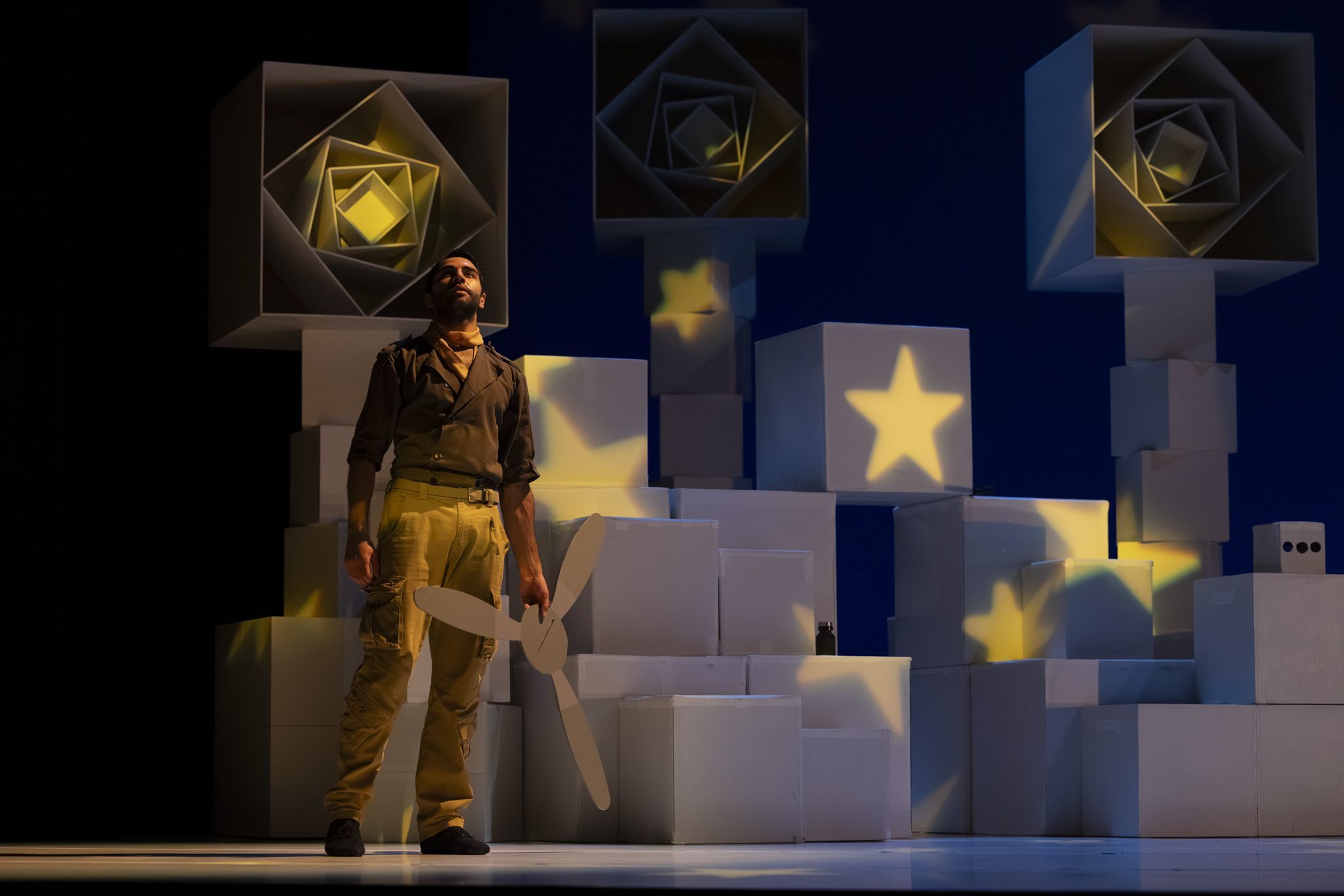
    Jonathan Montepara is another who got his moment in this unexpectedly smaller cast. Dancing the role of the pilot, he showed a range of emotion and movie-star good looks.

    BalletX dancer Jonathan Montepara as the pilot in Annabelle Lopez Ochoa’s “The Little Prince.”Vikki Sloviter / BalletX

    Though the story explores weighty themes of fear, despair and death, Lopez Ochoa balances them with a sense of wonder. Matt Saunders’ set — built from dozens of white boxes that suggest the limitless possibilities of a child’s imagination — and dancers darting across the stage carrying whimsical props keep the production visually playful.

    The Little Prince closes BalletX’s 20th anniversary season, which largely revisited works from the company’s repertory. The ballet runs through Sunday before returning to the archives.

    BalletX in “The Little Prince”

    Through Sunday, July 19. Suzanne Roberts Theatre. $50-$90, 215-225-5389 ext. 250 or boxoffice@balletx.org

  • Trailer for biopic ‘I Play Rocky’ shows iconic Philly scenes

    Trailer for biopic ‘I Play Rocky’ shows iconic Philly scenes

    How did Sylvester Stallone make and star in Rocky? Well, he had to put up a fight.

    The trailer for the forthcoming biopic I Play Rocky has officially been released by Amazon MGM Studios. The film follows a young Sylvester Stallone, played by Anthony Ippolito, on his harrowing journey pitching and filming his Oscar-winning movie.

    Scenes from the trailer show the many hardships that went into making the movie, including Stallone convincing the producers to breaking his hand while filming the meat-punching scenes.

    Filming took place from October to December 2025, in Los Angeles, New Jersey, and Philadelphia, according to USA Production News. The filmmakers created their own version of the iconic run up the museum steps, filmed at the Philadelphia Museum of Art, and filming was also seen taking place in Kensington.

    Ippolito is best known for portraying Al Pacino in the Paramount+ miniseries The Offer, another biographical production about the making of a film — in this case, The Godfather. The I Play Rocky trailer shows the rising actor looking nearly identical to Stallone, with the thick, deep voice to match.

    Other main roles include AnnaSophia Robb as Stallone’s wife, Sasha Czack; Matt Dillon as Stallone’s father, Frank Stallone Sr.; and Stephan James as Carl Weathers, who played Apollo Creed in the Rocky franchise.

    Peter Farrelly, born in Phoenixville, Chester County, directed the film. He is best known for directing and cowriting the 2018 comedy-drama film Green Book, which won the Oscar for Best Picture.

    The real-life Sylvester Stallone is not involved in the production.

    I Play Rocky is set to have a select theaters release on Nov. 6, according to Deadline. This will gear up the movie to be eligible for awards season.