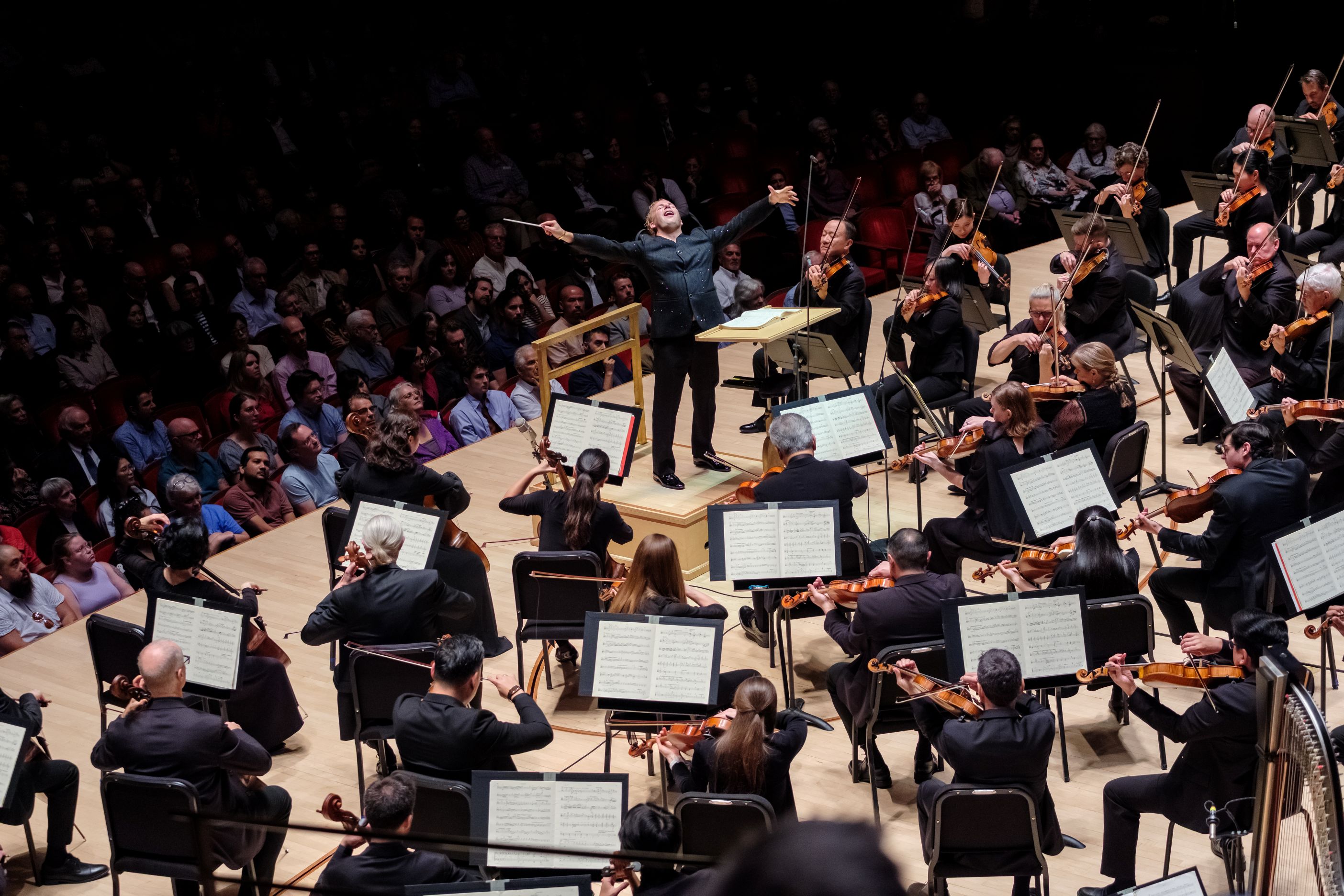
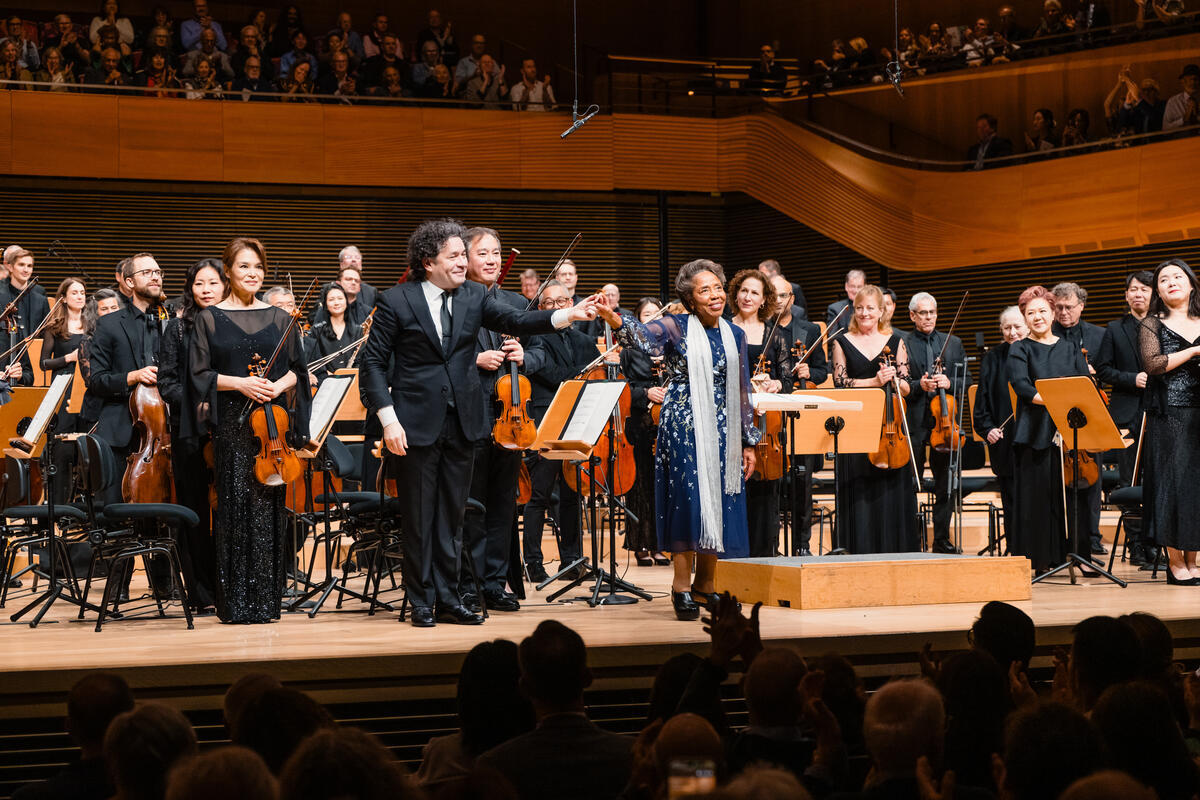
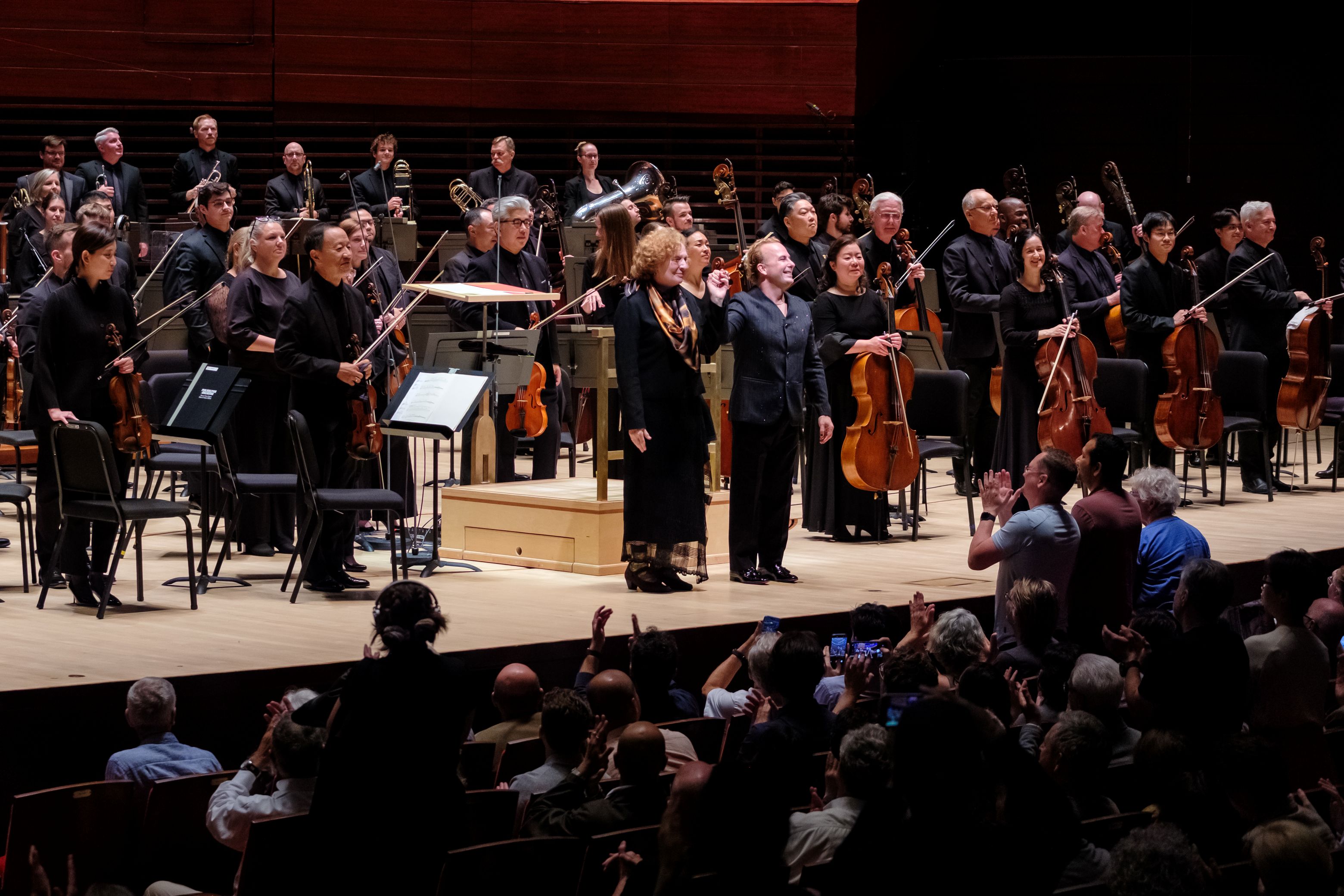
The symphonic world has evolved into an ongoing Mahler festival, so much that the composer’s Symphony No. 5 surfaced in adjacent performances this week — the New York Philharmonic under its new music director Gustavo Dudamel and the Philadelphia Orchestra under Yannick Nézet-Séguin.
I heard both — Dudamel on a livestream Tuesday at Lincoln Center and Philadelphia on Friday at the Kimmel Center.
Then there’s Mahler 7th in Boston and Mahler 3rd in Paris, available on radio broadcasts.
Is Mahler ruling the world?
Only a few years ago, any Mahler symphonies beyond the amiable 1st and 4th were heard occasionally. But the stormy 5th symphonies being heard almost simultaneously (Philadelphia’s will be repeated at Carnegie Hall Oct. 13) show that Mahler performances are rarely redundant experiences.
Even with expansive running times from 60 to 100 minutes, Mahler symphonies are packed with content. With so many performance instructions (the composer was a micro manager) any conductor/orchestra combination connects the dots quite differently.
Consider the contrasting personalities of the PHL and NYC orchestras.
NYC’s hot, Dudamel-appointed hornist David Cooper nearly turned the 5th Symphony into the world’s biggest horn concerto. He seemed to lead the Tuesday performance almost as much as Dudamel.
That wouldn’t do in Philadelphia with its tradition of blended sonorities dating back more than a century. The NY Phil has been called an orchestra of soloists. The Mahler 5th encourages that with high-profile incidental solos. But the amassed sonorities in Philadelphia have one-of-a-kind power.
Consider, also, the different conductor personalities: Nézet-Séguin’s treatment of the opening trumpet solo — at the start of a funeral March — felt like a dire warning. Dudamel’s was like a requiem. (Considering what his home country of Venezuela has been through lately, could it be any other way?) Nézet-Séguin generates excitement, often uses speed and clarity of intention. Dudamel creates a kind of frenzy seldom heard since Leonard Bernstein. But not always. The final moments of Dudamel’s Mahler 5th had it. But while his performance had solid playing and steady electricity, there were few surprises.
It was safe, which is understandable.
The pressure on Dudamel is enormous. His mandate isn’t just great music making but outreach, including concerts at Radio City Music Hall. He’s building an ensemble whose last three music directors, most recently Jaap van Zweden, didn’t make the orchestra their own. Dudamel himself recently came off a curtailed tenure at the Paris Opera. And he has left his longtime comfort zone, the Los Angeles Philharmonic.
At the end of Tuesday’s Mahler 5th, the floor-to-ceiling livestream video screens at David Geffen Hall showed Dudamel looking relieved, not joyful.
On the other hand, few orchestras have a history of stable leadership as the Philadelphians, and it shows with artistic consistency and ability to take risks with confidence. At this point, the Philadelphia Orchestra commands as much attention with supersoft playing as with fortissimos.
Yannick Nézet-Séguin and Julia Wolfe whose “Liberty Bell” was played by the Philadelphia Orchestra along with Mahler’s “Symphony No. 5” on Oct. 1 in Marian Anderson HallJeff Fusco
But the orchestra has not grown so refined that it can’t rock ‘n’ roll in the final section of Julia Wolfe’s Liberty Bell, co-commissioned by the orchestra, and also in Friday’s program. It’s apocalyptic as well as celebratory. Having grown up in the area, Wolfe spent formative weekends on South Street, and you hear that in this piece. But then, in the middle of the last section, comes an explosion sounding like World War III. Say it isn’t so.
Explosions, softness bode well for Mahler.
In the symphony’s long spans of music, Nézet-Séguin finds an underlying element that makes them more cogent, whether the underlying bass lines, the waltz rhythms of the third movement, or something less discernible in the finale where everything is happening at once. Layers of counterpoint, fugues plus antiphonal effects between upper and lower strings all tumble out at warp speed — and not with the light touch Nézet-Séguin employed in past years.
In Nézet-Séguin’s Carnegie Hall concerts with the Metropolitan Opera Orchestra, every symphonic motif behaves like a stage character. It comes naturally to those players, and I’m hearing more of that in his Philadelphia Mahler. It’s a great fit. These are some of the more fully realized Mahler performances I ever hope to hear.
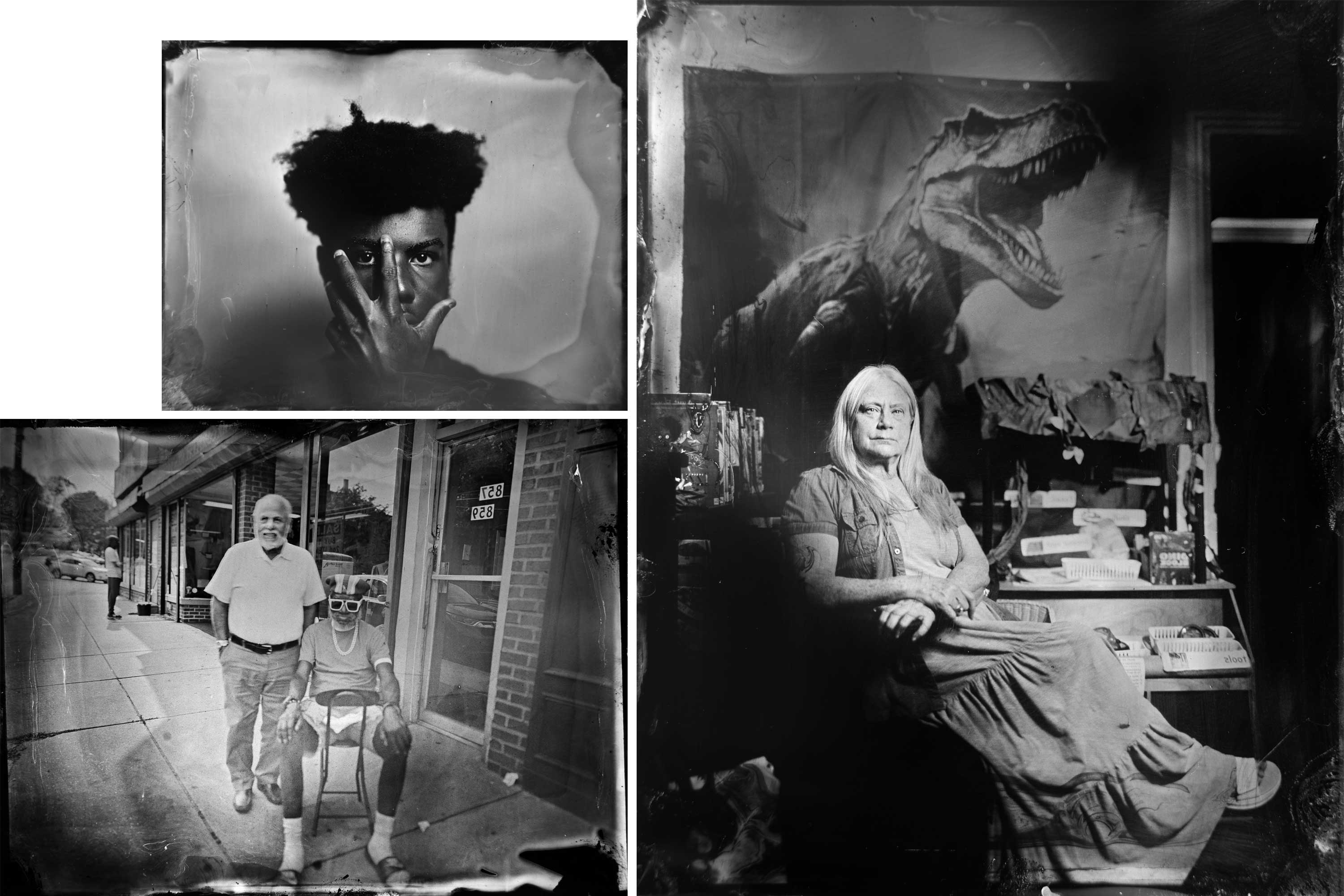
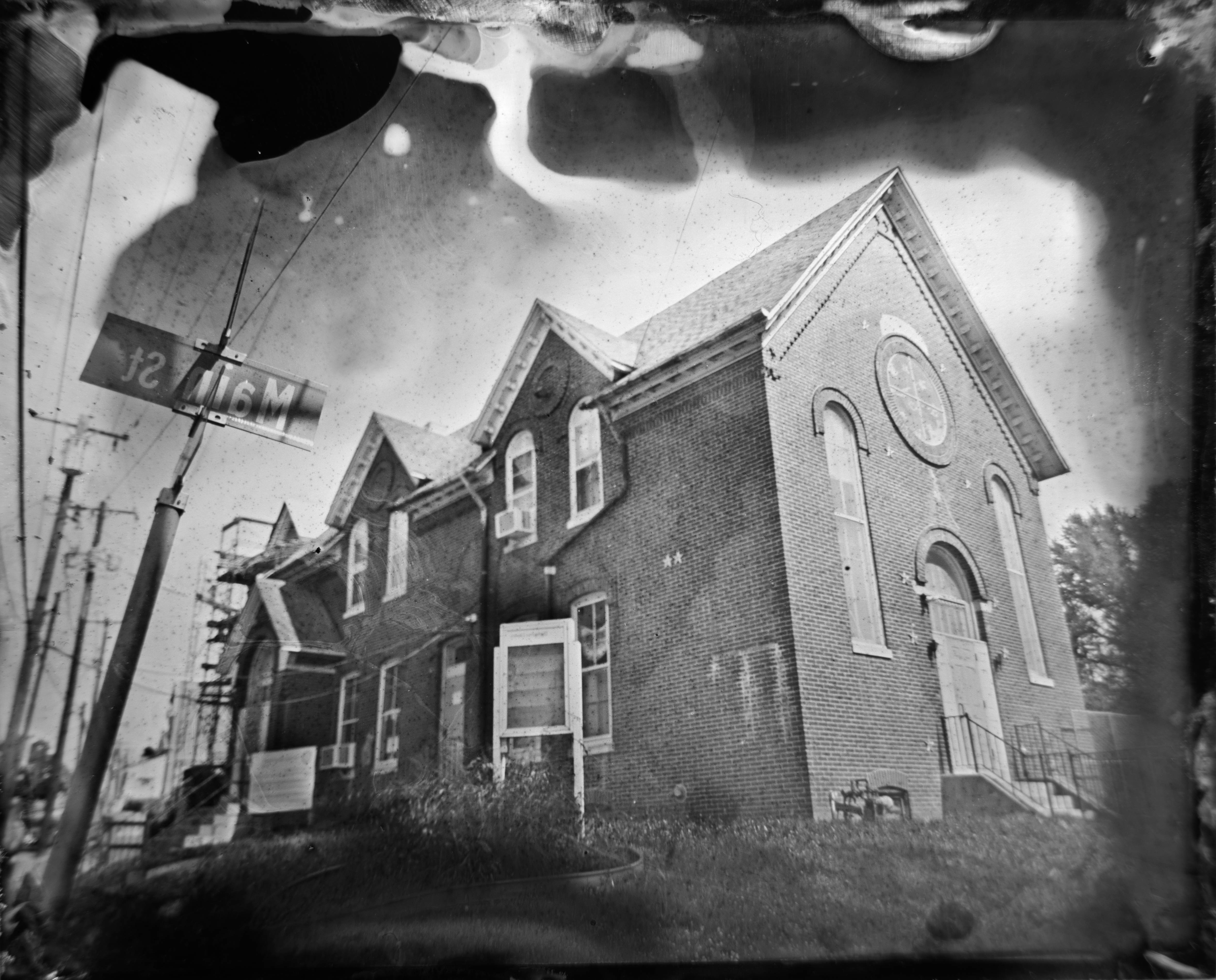
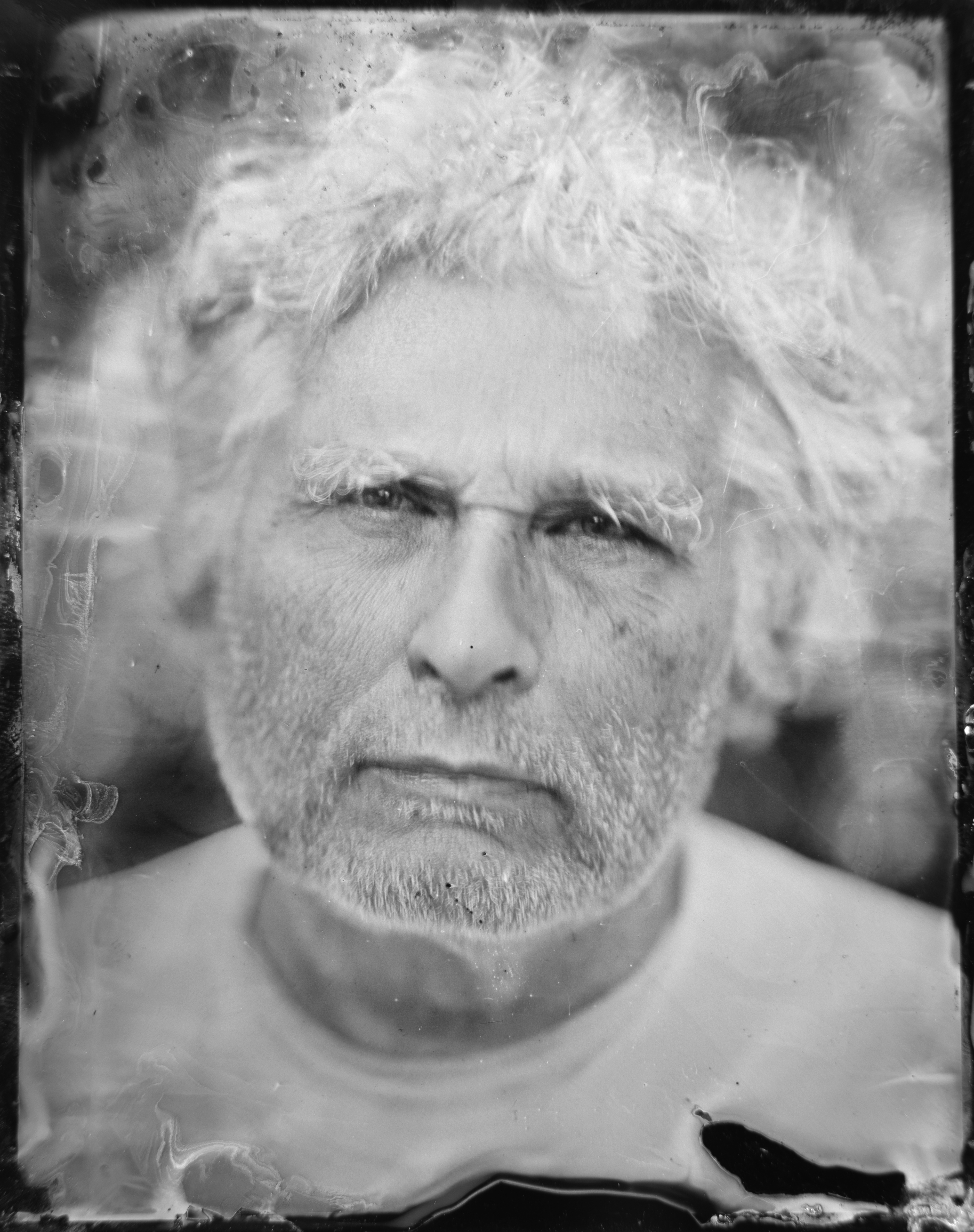
Armed with a vintage camera, the photojournalist John Pendygraft spent several weeks approaching people along Main Street in Darby, Pa., to ask if they’d like to collaborate on creating a photograph. Specifically, he asked if they wanted to create a tintype, a photographic process invented in the 1850s.
Tintypes need to be developed immediately on-site in a portable darkroom, and each one is a unique creation. It is a purely chemical process that takes time, embraces inefficiency, and is open to surprises.
During the process, subjects were invited to share their stories with Pendygraft. Together, the words and photos create a complex portrait of a changing town.
Main Street originated along the Great Minquas Path, and was settled by Quakers in 1682. Along the way, Main Street was a 1777 battle site, a historic foundation for the Underground Railroad, center of a boom town that busted, home to a growing African diaspora community, and ground zero to Hurricane Floyd’s destruction.
Through it all, Main Street in Darby has consistently been a place defined by the grit of people who call it home.
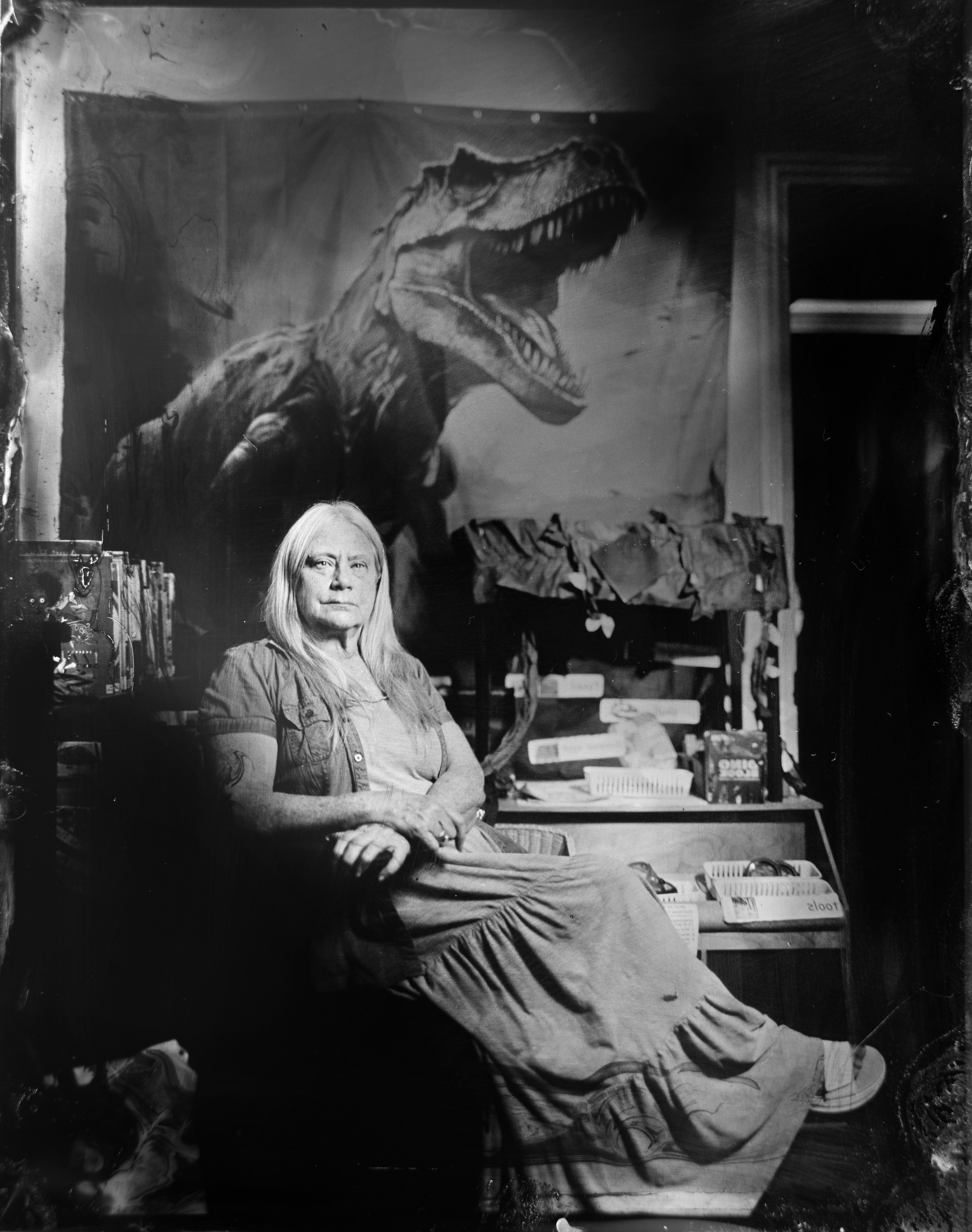
Susan Borders, 68, director of the Darby Free Library, poses in the children’s reading room, which was decorated with dinosaurs as part of the “Unearth a Story” 2026 summer reading theme.John Pendygraft / For The Inquirer
Susan Borders
The Darby Free Library is the country’s oldest library in continuous operation. The library was established in 1743 by 29 Darby Quakers. It was modeled after Benjamin Franklin’s Library Company of Philadelphia, which formed in 1731. The Darby library claimed the title “oldest library in continuous operation” when Franklin’s Library Company closed for repairs after a fire. The librarians who work there claim it is haunted.
For 34 of its 283 years, Susan Borders has been the heart and soul of the nation’s second-oldest library. She knows a nearby homeless shelter closes between 9 a.m. and 4 p.m., and makes sure the library is a welcoming place, rain, shine, or snow.
“I meet people who other people might be afraid of. The community needs us and we need the community.”
The Darby Free Library is the country’s oldest library in continuous operation. It was established in 1743 and modeled after Benjamin Franklin’s Library Company of Philadelphia, which formed in 1731. John Pendygraft / For The Inquirer
She takes a call about late fines: “Just bring the books in and we’ll waive the fees. I just want you to keep reading.” The caller got off easy. Normally, she makes people tell her a story before she waives the late fees.
She deals with a flustered dad and a grumpy toddler trying to make a letter-size print from an email attachment on an iPhone. “Just try to send it and we’ll see if the size is right. First one is on me.”
“The history of this place isn’t about dates. This is a living library. It is about 280-something years of days with people.”
Harold Finigan is a historian, educator, project manager of the Darby Library Company, and manager of the Darby Friends Meeting. John Pendygraft / For The Inquirer
Harold Finigan
Harold Finigan is untroubled by the sweat saturating his shirt or the record-breaking summer heat. He paces an open lot at 1000 Main St. with a cell phone to his ear, walking first toward the historic library, on the southwest side of the lot, and then toward the historic Darby Friends Meeting house on the north side.
Finigan is supervising renovations on both. He guides his days through time-honored Quaker principles: simplicity, peace, integrity, community, equality, and stewardship.
He traces his own Quaker values to 1682 — one year after King Charles II granted William Penn a charter for the land that would become Pennsylvania. That year, the Darby Quaker meeting was established along the Great Minquas Path by John Blunston as a foundation for Penn’s “holy experiment” — a country unified by a commitment to freedom of religion, equality, and democratic government.
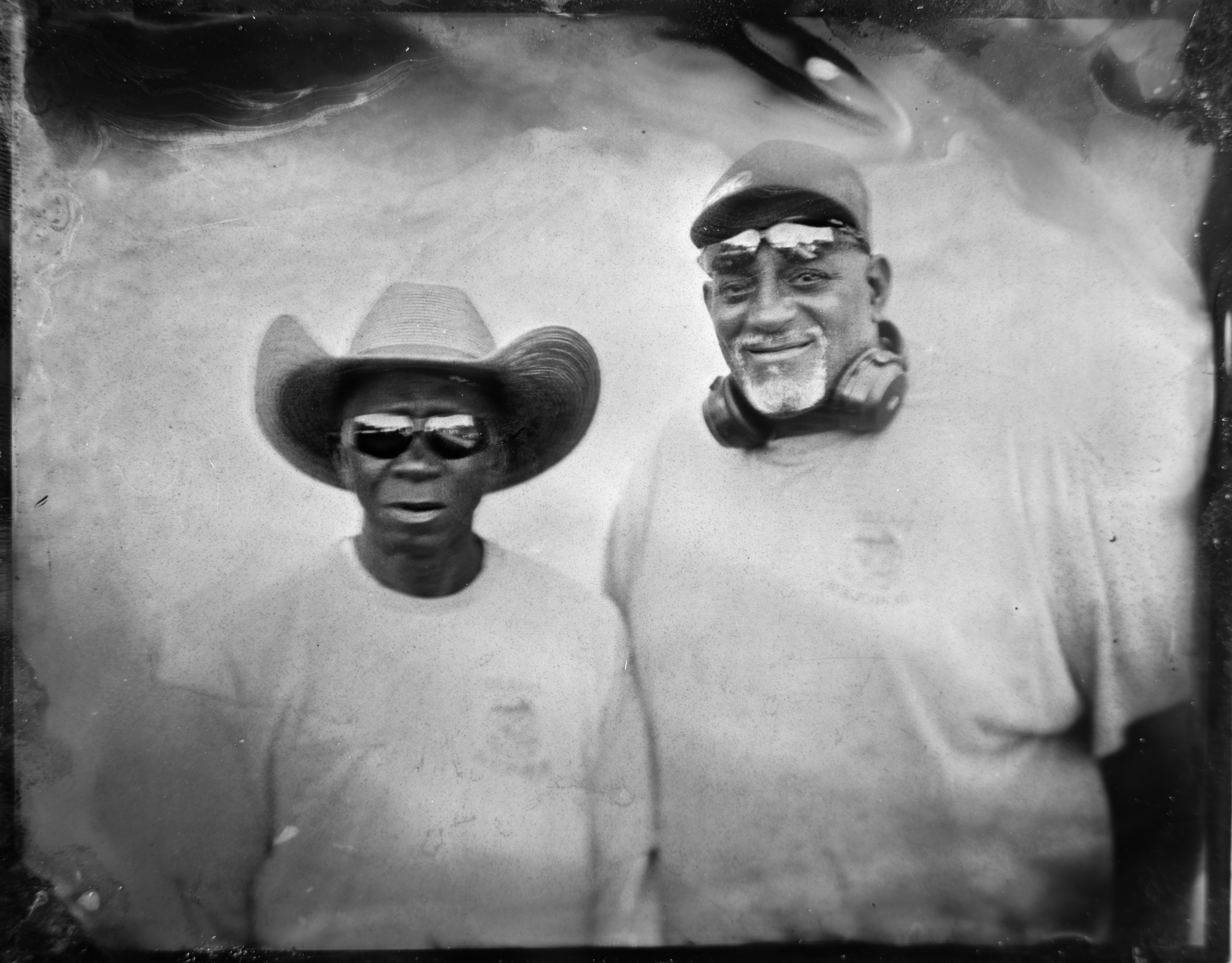
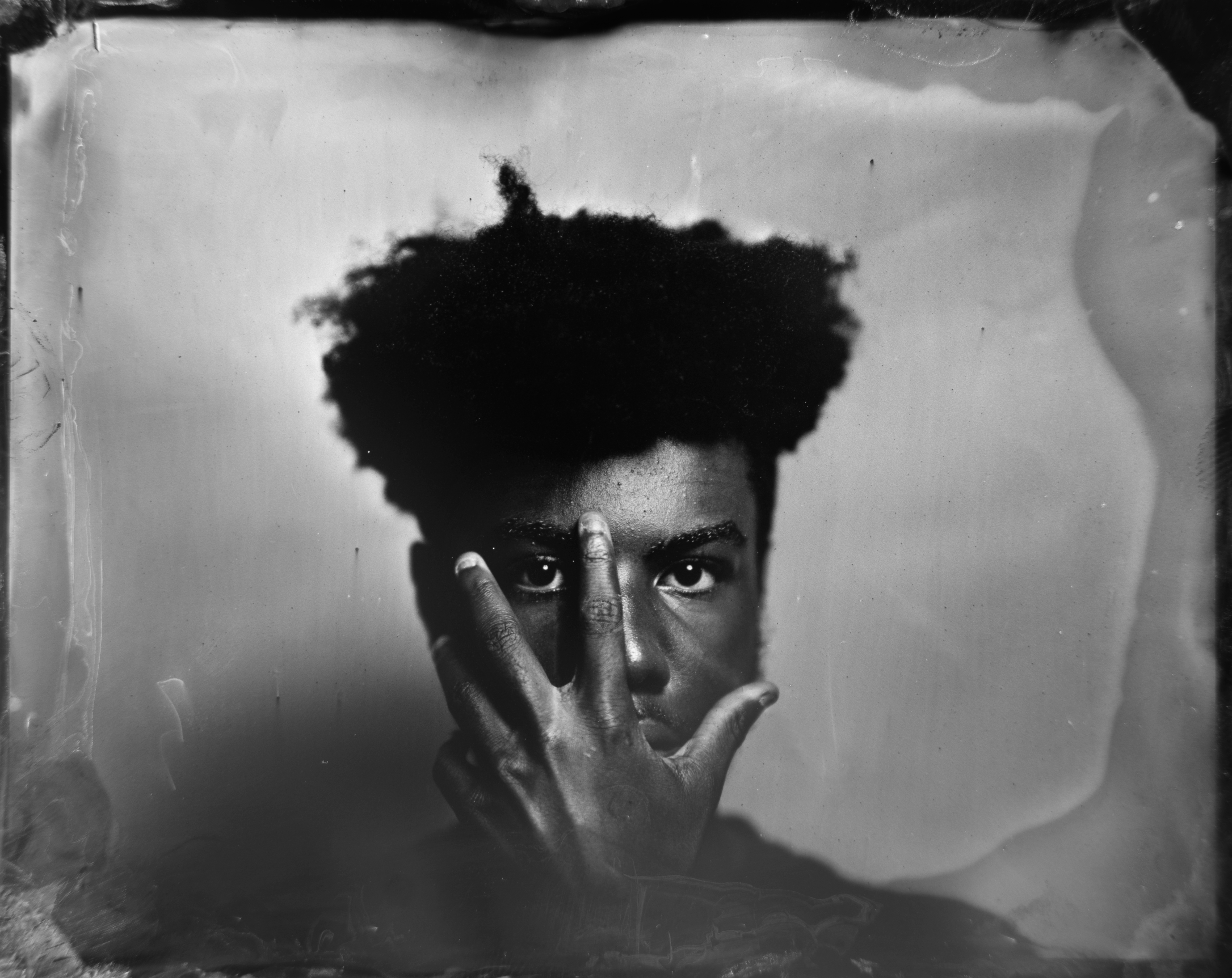
Bernard Freeman, 56, (right) and James Vani, 71, (left) take a break from mowing and edging the vacant lot on Main Street where Woolworth once stood.John Pendygraft / For The Inquirer
Bernard Freeman
As Bernard Freeman, assistant foreman for Darby Borough Public Works, rides his lawnmower across the now-vacant lot at 870 Main St., he remembers when it was Woolworth. He points to the corner of the lot where the cafeteria counter used to be. “Main Street back then was bustling. We had jewelry stores, hardware stores, shoe stores. You didn’t have to go to the mall for nothing. Christmas time? You did all your shopping here. Everything was right here in Darby. You could get everything you needed. Everything. Man, it was bustling. But now? People don’t do the small towns anymore. At least, not here.”
There was a huge Christmas parade, a Memorial Day parade with a tank kids could climb on, a parade to open Little League season, and a parade for the high school homecoming football game.
“Last parade I can remember must have been 15, 20 years ago?”
Freeman has five children, born between 1987 and 2006. Only the child born in 1987 had the opportunity to play Little League, PAL football, or was able to join a swim club. Local organizations dried up in the ’90s.
“We didn’t have the volunteers and parent participation. Recreation-wise, we didn’t have anything anymore.”
And then Floyd hit. The storm took one life, impacted 330 homes and 59 businesses. Many of the businesses never reopened. Scores of properties were purchased by the government, who relocated families and leveled homes.
Freeman was hired by the city as part of the cleanup. The job, which he still holds today, hit home. “I have aunts, uncles, sisters, cousins, all kinds of family here. 10th Street is named after my uncle, Marine Lt. General Ronald S. Coleman.”
This is his hometown, come what may. “If you can make it here you can make it anywhere. Darby makes you tough. It’s a no-nonsense type of town.”
James Vani
James Vani, 71, who is also with Darby Borough Public Works, fled Liberia’s civil war with his wife in 2002. They joined his parents in Florida. “My wife went to nursing school. She graduated and everything, but she couldn’t find a job. She tried to find a job in Florida, but she couldn’t because of our accent,” Vani explains. “A friend of my wife was here [in Darby] and she said ‘Come over here. You will be able to find a job because there are a lot of Africans here.’”
There are. According to Data USA, 20% of Darby Township is foreign-born, and 79% of that population comes from Africa. If you drive down Darby’s Main Street a short distance to the Philadelphia city line, the road turns into Africatown. The organization website touts the area as “the premier destination for the global African Diaspora, celebrating arts, culture, and business.”
As soon as Vani’s wife got a job, she called her husband to join her. “I’m lucky,” he says. “I have a job in Darby and I live in Darby. Thanks be to God.”
Machi Hall, 17, poses in the Darby Free Library after applying for a library card.John Pendygraft / For The Inquirer
Machi Hall
“Almost nobody from my generation is going to be able to buy a house,” laments Machi Hall, 17. His family moved to Darby two years ago from West Philly because “the crime here is lower and the houses are cheaper.”
Hall worries about AI replacing jobs, a future that might soon spin out of human control, and the possibility that current conflicts will escalate into a global war. He dreams of a career in 3D film animation, but what if AI takes those jobs?
He has also made plans to enroll in a four-year electrical contractor apprenticeship program, with an eye to joining a union. “I won’t get rich, but it will put food on the table,” he says.
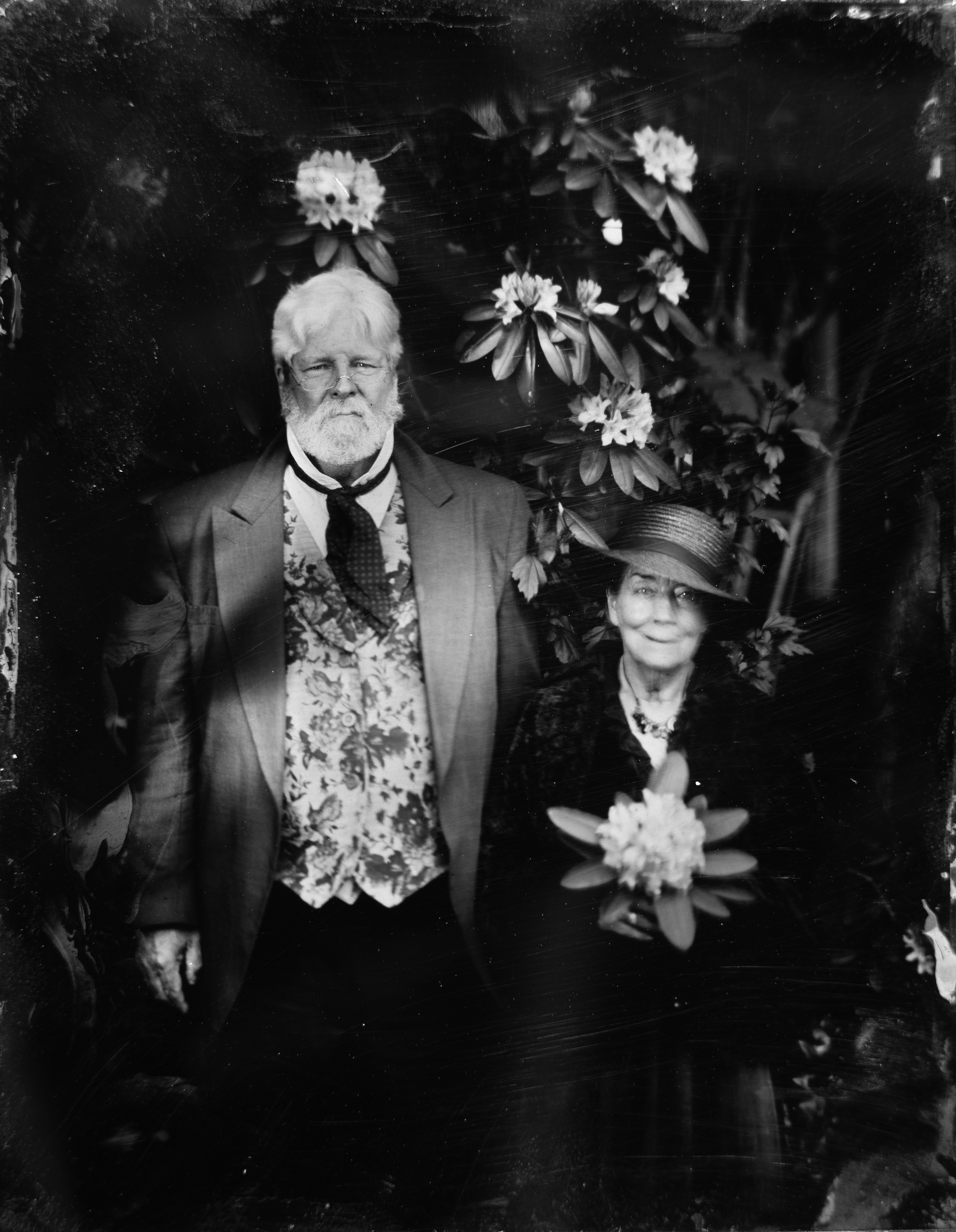
Jan and John Haigis, who jokingly describe themselves as “vaguely Victorian,” pose in front of their home on Main Street in Darby.John Pendygraft / For The Inquirer
Jan and John Haigis
Jan and John Haigis, who jokingly describe themselves as “vaguely Victorian,” pose in front of their home at 1006 Main St. The home was once owned by Passmore Williamson, who, along with “Father of the Underground Railroad” William Still, was jailed in 1855 for helping Jane Johnson and her two sons escape slavery.
Early on in any conversation with the couple, you will very likely hear about at least one of their two quirky obsessions. They will either sing a duet of one of the hundreds of songs they have written together (“I can always make a harmony,” Jan explains. “I don’t know what key he is going to be in, but we never stop singing.”) or they will dive into the minutiae of Darby history.
Their shared love of Darby history began in 1985 when John rode his bicycle past the Blue Bell Inn, a crumbling tavern at the very end of Main Street. He didn’t know that it was once frequented by George Washington, housed troops during the American Revolution, or was the site of an epic battle in 1777 led by Lord Cornwallis and 2,500 soldiers. But he was curious.
The couple learned the Blue Bell was on a list to be destroyed and approached the city about saving the inn.
“The city council told us ‘it would cost money to tear it down, so let’s see what they can do,’” John explains. They leased it to the couple for $1 a year.
A small grant allowed Jan and John to replace doors and windows and find a caretaker. The couple created Friends of the Blue Bell. The group of new friends became a kind of family.
They leased the inn from 1985 until 1999 and did what they could. Then Hurricane Floyd hit and flooded the interior. Today, the city maintains the exterior and the Haigises curate a website to preserve Darby history.
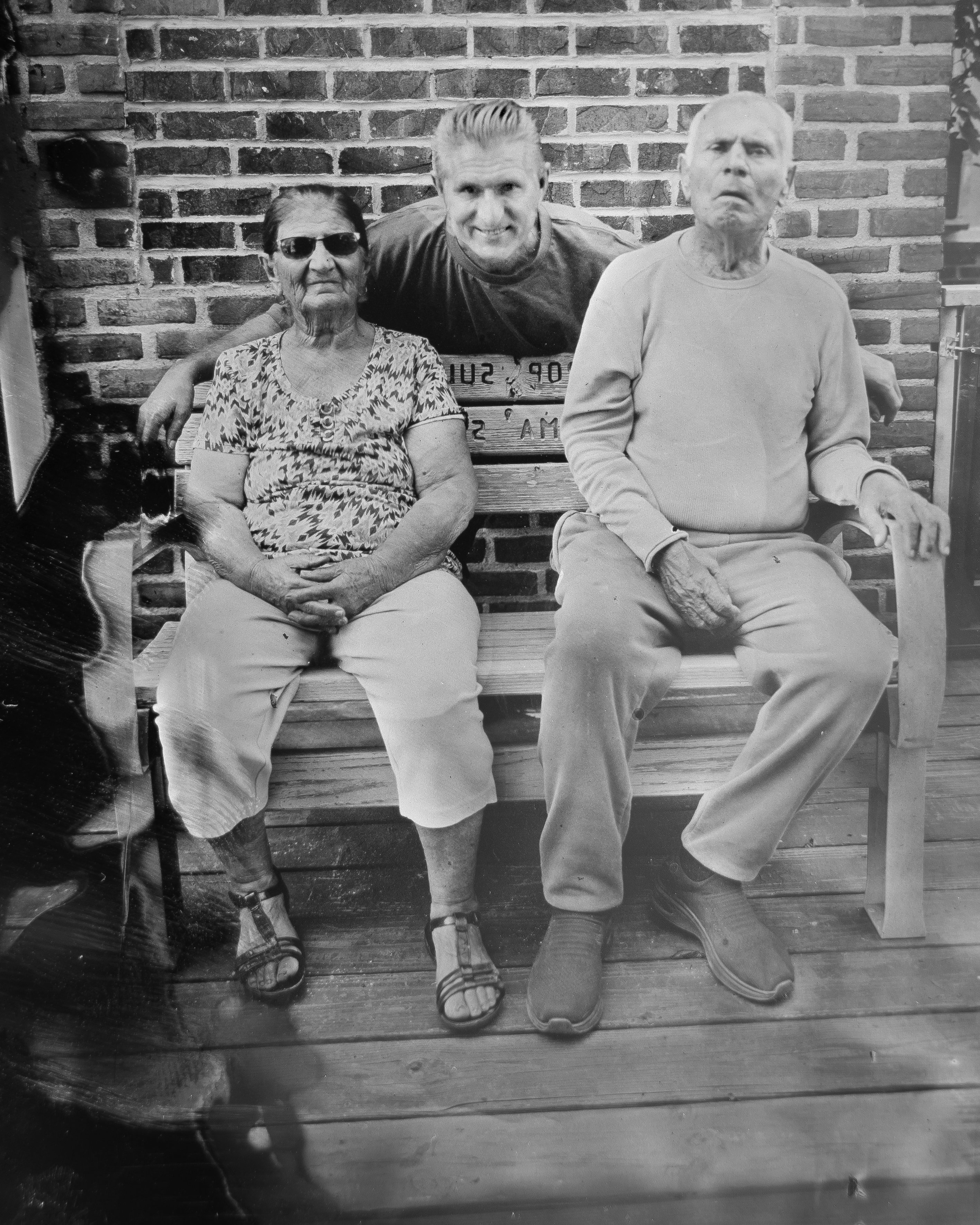
Artan Sulollari, 56, the owner of Main Street Pizza, poses with his mother Lule, 88, and father Irfan, 92, on the back porch of their home on Main Street in Darby.John Pendygraft / For The Inquirer
The Sulollari family
In 1990, Artan Sulollari was serving in the Albanian army. One day, they brought him in for questioning. At the time, he had no idea that one of his brothers had fled the communist country.
“They beat me up very good, to tell them what I knew. I didn’t know anything,” he says. He still suffers from hearing loss as a result of his injuries.
“It was a crazy life there. The communism was the worst communism. They would say ‘this guy does propaganda, this guy is a spy.’ They would arrest you. They’d beat you. They put you in jail. They’d take your family. They’d incarcerate you far, far away.”
The Sulollari family was granted political asylum in the early 1990s. Today, Tony and his brother run Main Street Pizza in Darby and care for their aging parents, who live just a few houses down from the restaurant.
“Have you ever seen the movie The Outlaw Josey Wales? Clint Eastwood says to the Apache chief, ‘I’ve come to live with you, because the government will follow you. I’ve come to live with you or fight with you. To die is easy. To live is hard. Because life is hard, and death is easy.’ That’s how it is.”
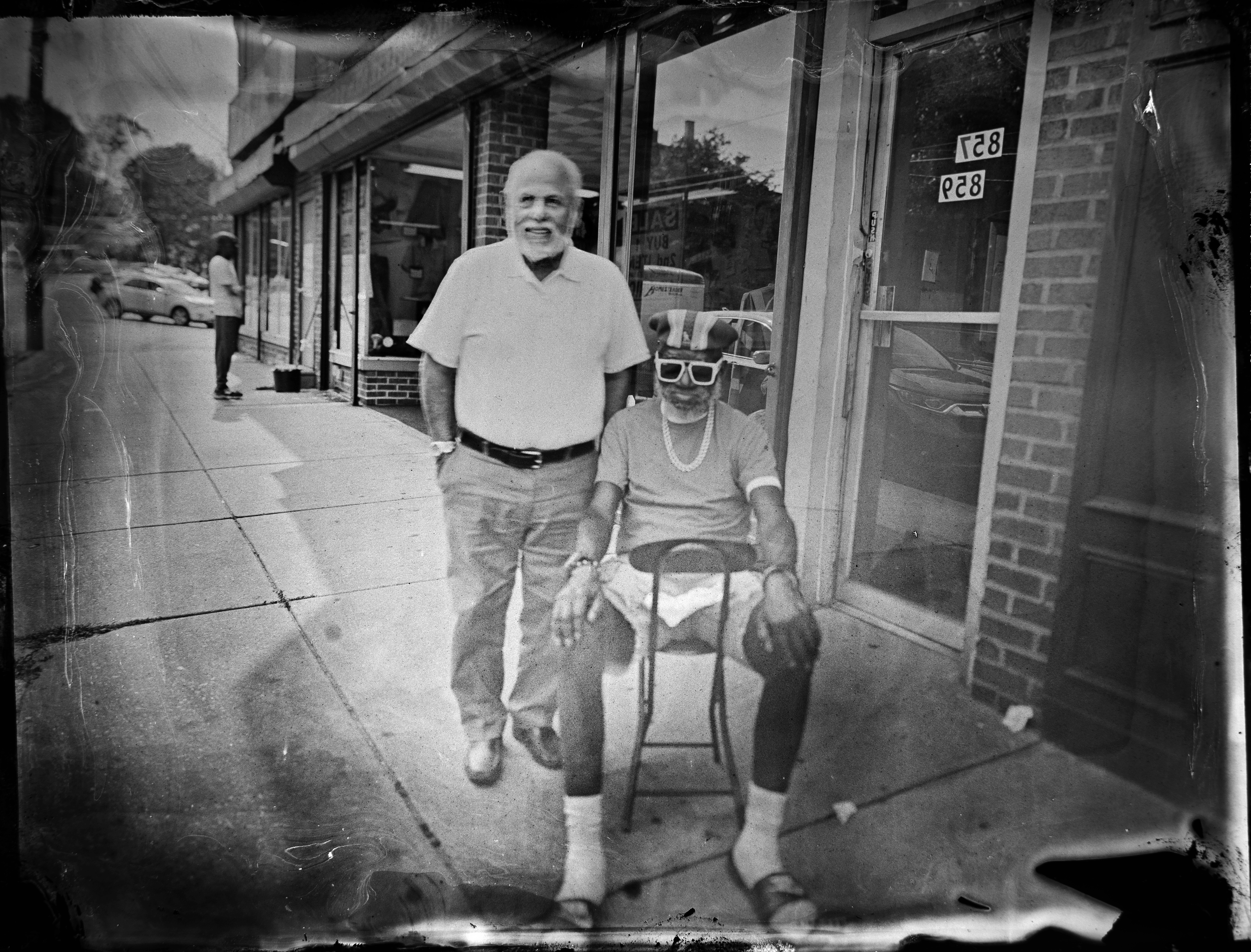
Benett’s menswear store owner Paul Feldman, 79, (left) and William Hall, 73, pose in front of Feldman’s store on Main Street.John Pendygraft / For The Inquirer
Paul Feldman and William Hall
Paul Feldman was born Sept. 18, 1947, one day before his father opened Benett’s menswear store on Main Street. “I remember as a kid my dad giving me a check to deposit in the bank on Friday night. I had to walk in the streets because the sidewalks were so crowded,” he remembers.
“You know how many stores there were in Darby that were run by a father and a son? I am the only one that is still around. Everyone else closed.”
Feldman looks around. “This place is starting to fall apart. I am, too.”
William Hall, 73, works a couple of days a week at the store. He remembers coming in as a young boy.
“My mother used to do a day’s work for $6 a day. So, I used to collect cans and bottles to take them back for the refund. I would bring my money here and put my clothes on layaway,” he said. “Heavens to Betsy, I didn’t know I’d be working here today.”
Two years ago, Hall was diagnosed with throat cancer. As the treatments wore on him, he turned to store manager Bud Teaford, who has navigated his own health challenges, for advice and support. Hall believes the friendship helped save his life.
“Now when I come in, I won’t say to him, ‘Hi.’ I say ‘Bud I love you.’ Every day.”
“I love you too,” Bud answers.
“If you don’t have love, you don’t get no love. You get that mental aggravation.”
Bud says with a laugh, “We get plenty of that here, too.”
John Pendygraft is a photojournalist who teaches visual storytelling at Penn State University.
A country hip-hop horse opera at the Mann, all thanks to Shaboozey
Shaboozey make both kinds of music: Country & Western.
That’s a Blues Brothers joke, but it’s also spot on when it comes to the artist born Collins Obinna Chibueze, particularly when it comes to the Virginia-raised rapper and singer’s 2026 release The Outlaw Cherie Lee & Other Western Tales. That’s his ambitious, cinematic, and loaded-with-guests album that’s the follow up to Where I’ve Been, Isn’t Where I’m Going, the 2024 breakthrough that made him a star.
That album, of course, included “A Bar Song (Tipsy)” that, along with Lil Nas X’s “Old Town Road” and Ella Langley’s current world dominating “Choosin’ Texas,” is one of the biggest country mega hits of the past decade.
Shaboozey performs during the Roots Picnic at the Mann Center in Philadelphia on Sunday, June 2, 2024.Monica Herndon / Staff Photographer
To his credit, Shaboozey followed that breakout success with “Tipsy,” and multiple contributions to Beyoncé’s Cowboy Carter, by swinging for the fences with Cherie Lee, a horse opera of an album that tells a story about a woman who sets out to sense her father’s death as not to make some bad relationship choices that put her own life in peril.
To tell the tale that plays like a Black cowboy spaghetti Western by way of Sergio Leone and Quentin Tarantino, Shaboozey enlists a stellar cast.
That includes Teyana Taylor, Jamie Foxx, Leon Bridges, Sam Elliot, Gunna, Kehlani, and Orville Peck on a set of songs that lean into Old West gunfighter tropes while mixing country, hip-hop, and film score flourishes.
When Shaboozey brings this shoot ‘em saga to Philadelphia with his “Outlaws Never Die Tour” — which is playing the Highmark Mann, where he made his local debut at the Roots Picnic in 2024 — he surely won’t have all those big name co-stars with him.
Or maybe he will, on screen.
The tour will include “cinematic pre-shot visuals that unfold throughout the performance, complementing the songs and immersing audiences in the world of the album,” so this show promises to be not just a concert but also a night at the movies.
Shaboozey’s “Outlaws Never Die” tour at the Highmark Mann, 5201 Parkside Ave, at 8 p.m. Tuesday. Highmarkmann.com
— Dan DeLuca
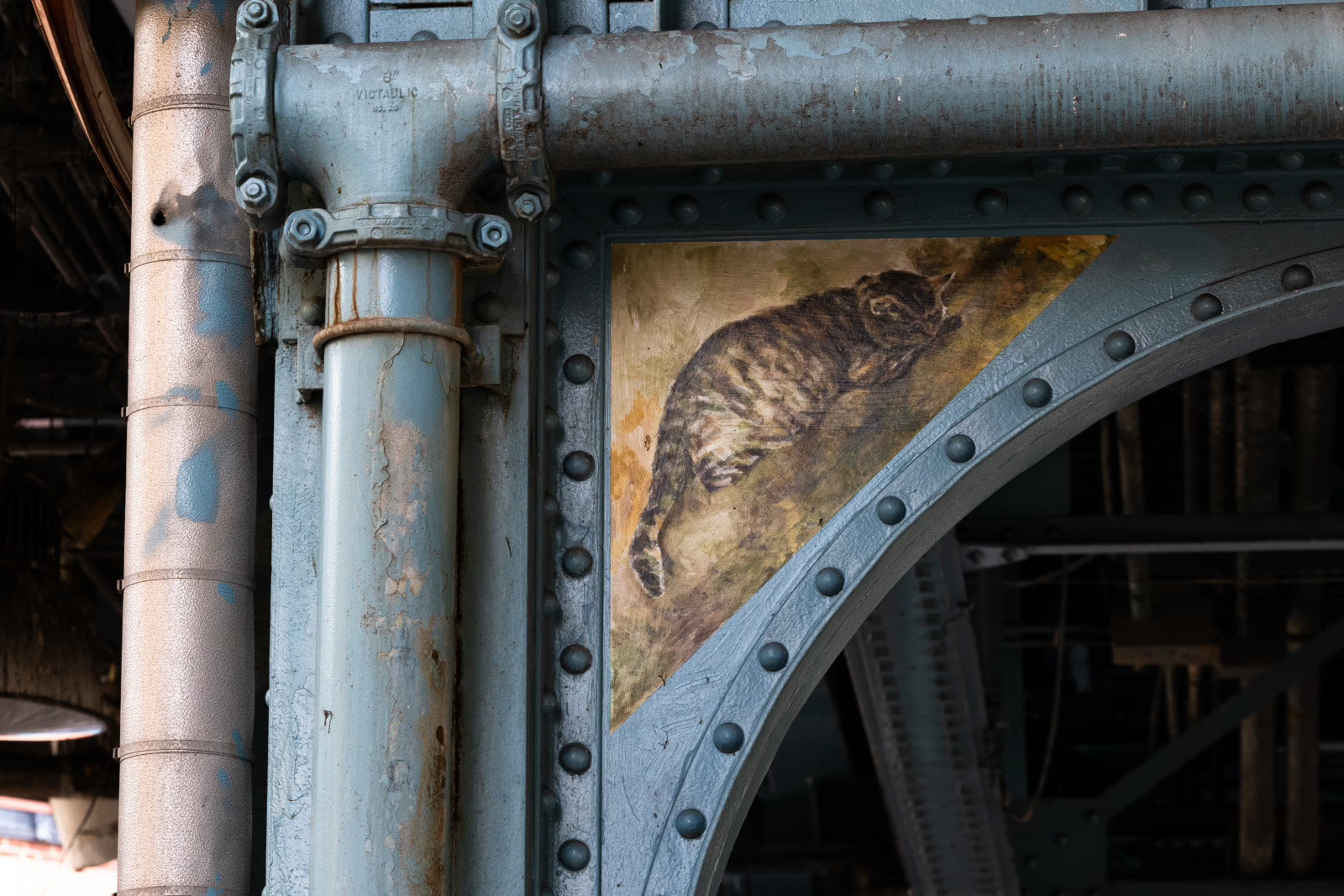
Best art, for, always emerges from the most unexpected places. Like gusset plates seen through the length of the Kensington Ave. underbridge; the triangular metal sheet piece that connects the horizontal and vertical beams of the SEPTA Metro track.
After getting my order of the excellent yuzu ginger cider from Càphê Roasters, I looked up on my way to the L. The afternoon sun fell on the avenue and lit up the art on each little triangle of metal. The artwork — dragons, cats, Pride flags, flowers, monkeys — is part of Mural Arts’ “Heart of Kensington Creates,” a community arts initiative. Each piece — there are more than 400 peeping out from under the bridge from Huntingdon to Tioga — has been drawn by Kensington residents.
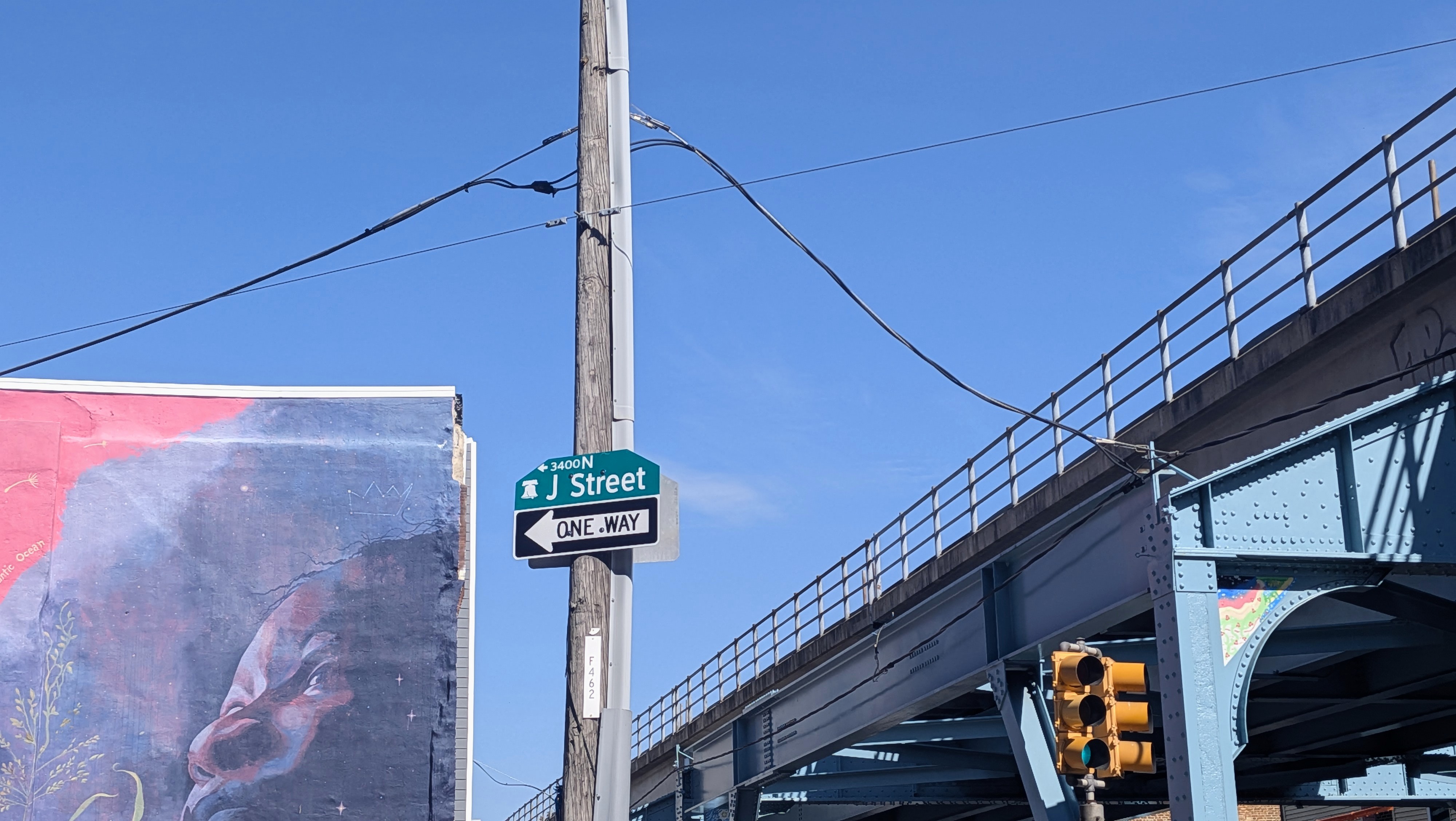
The Kensington Ave. mural “The Future Is Worth The Fight Just Hold On & You Will See” on the left stands side by side with the little triangle of art on the underbridge. That art was created as part of Murat Arts’ “Heart of Kensington Creates” initiative. Photo taken on Oct. 1 2026.Bedatri D. Choudhury
Right outside Càphê Roasters, at the intersection of J Street and Kensington Ave, a little triangular sea blue, red, yellow, and green peeps out from under the bridge. Right beside it, a mural called The Future Is Worth The Fight Just Hold On & You Will See by artists Jess X. Snow and Frisly Soberanis lights up a wall in its swathe of purple and pink.
A little street corner witnessing a conversation between artworks before the rush of the L took over the moment.
— Bedatri D. Choudhury
Dainty fine china fit for a president
Fine china is one of the most utilitarian pieces of art work a person can own; delicate and sturdy like the familial connections that use and enjoy it.
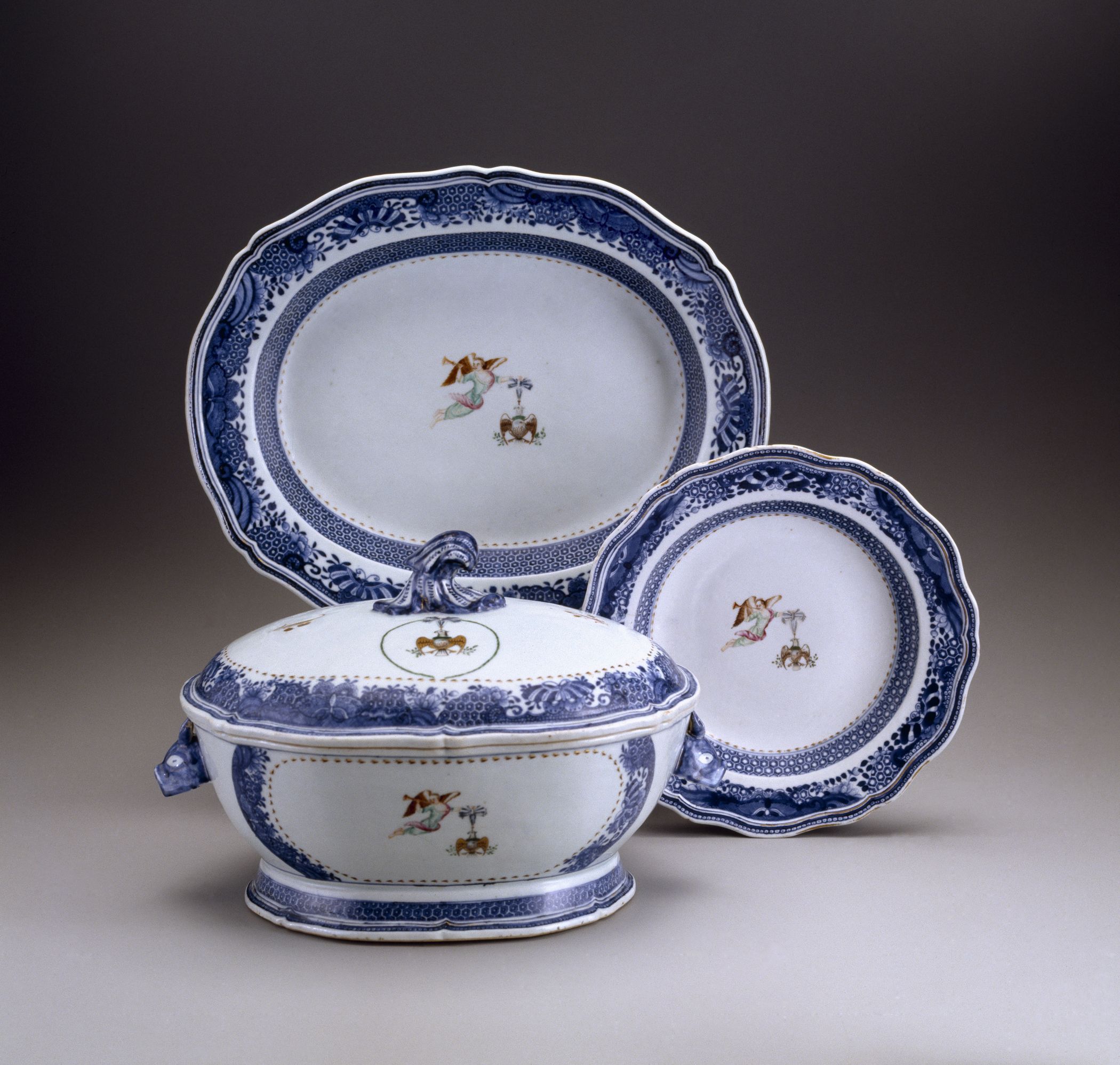
Winterthur Museum, Garden, & Library offers a peak at a famous family’s fine china: George Washington’s. Several pieces from his 302-piece set called “The Society of Cincinnati” are on display at the Delaware museum. “The Society of Cincinnati” was an elite organization of Revolutionary War officers of which Washington was the first president general.
The president and his family used this very set of china while living at the President’s House at Sixth and Market.
Three pieces: a tureen, platter, and plate that are on display at Winterthur Museum, Garden & Library as a part of George Washington’s china collectionWinterthur Museum, Garden & Library
Each piece features a blue border with the Society of Cincinnati’s emblem: a winged figure blowing a trumpet.
What an interesting way for war and art to come together.
With 74 pieces in its collection, Winterthur has the largest number of surviving pieces, acquired by the Delaware estate’s owner Henry Francis du Pont in the early 20th century.
Visitors to Winterthur can view the porcelain works of art in two places in the museum: the Du Pont Dining Room and on the fifth floor in China Hall.
We can only imagine how many slices of cherry pie were served on these dainty plates.
Winterthur Museum, Garden & Library is located at 5105 Kennett Pike. Hours are Tuesday-Sunday 10 a.m. to 5 p.m.
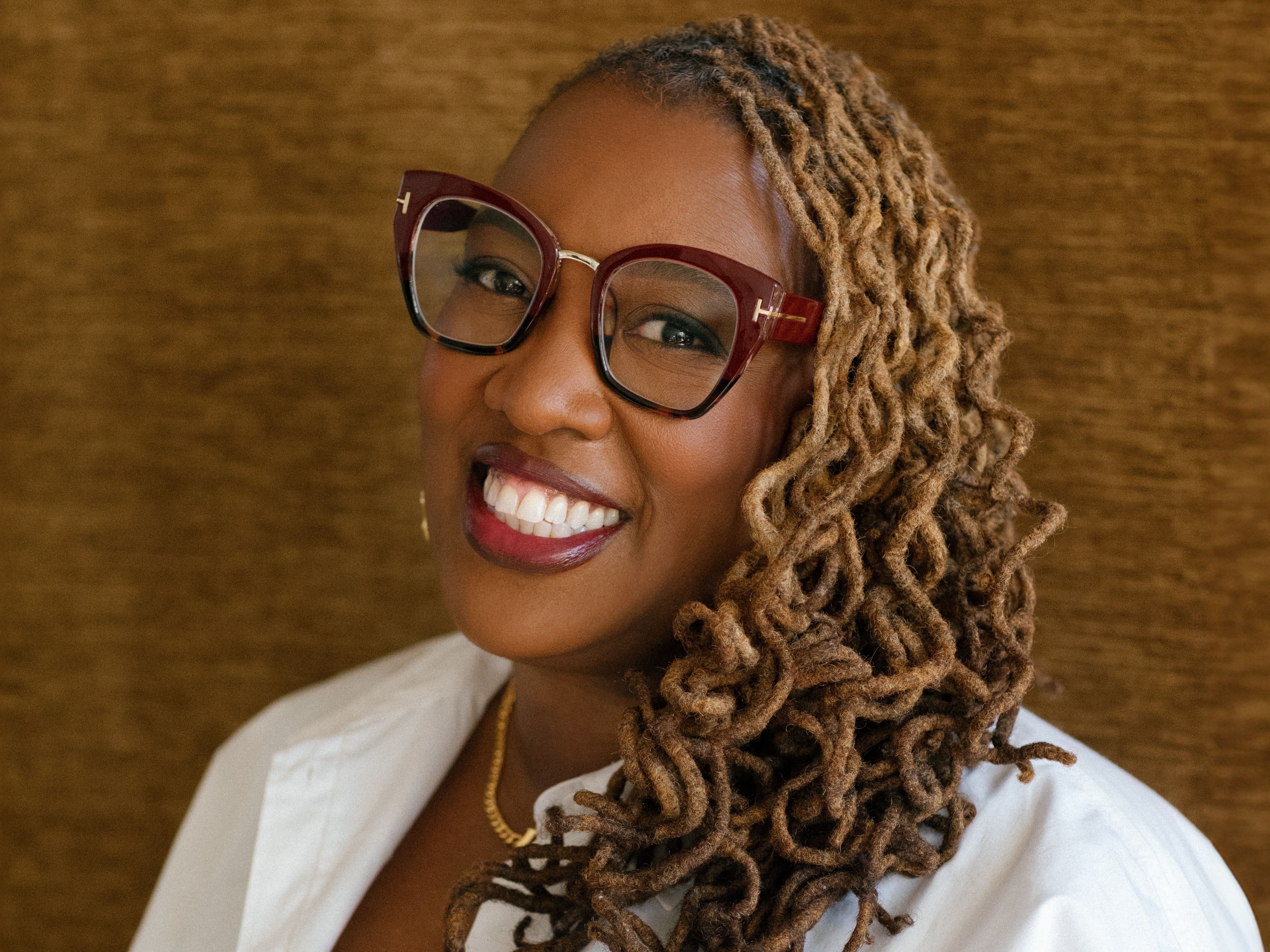
Despite her Philly sounding surname, award winning author Deesha Philyaw is not a Philadelphian — yet.
Philyaw, whose first book The Secret Life of Church Ladies(West Virginia University Press) won the 2021 PEN/Faulkner Award for fiction and was a finalist in 2020 for the National Book Award for Fiction, is planning to move to the City of Brotherly Love next spring.
Over the years she’s spent a fair share of weekends in the city visiting restaurants, shopping haunts, and art museums. Philly friends keep her up on the latest happenings. She already has plans to connect with the women and nonbinary literary group The Claw when she moves to town. And she’s on the BlackStar Film Festival’s host committee for its forthcoming gala.
And Philadelphia, she noted, is extra special to her because it is home to the preeminent Black church, Mother Bethel AME.
There is a lot of history here.
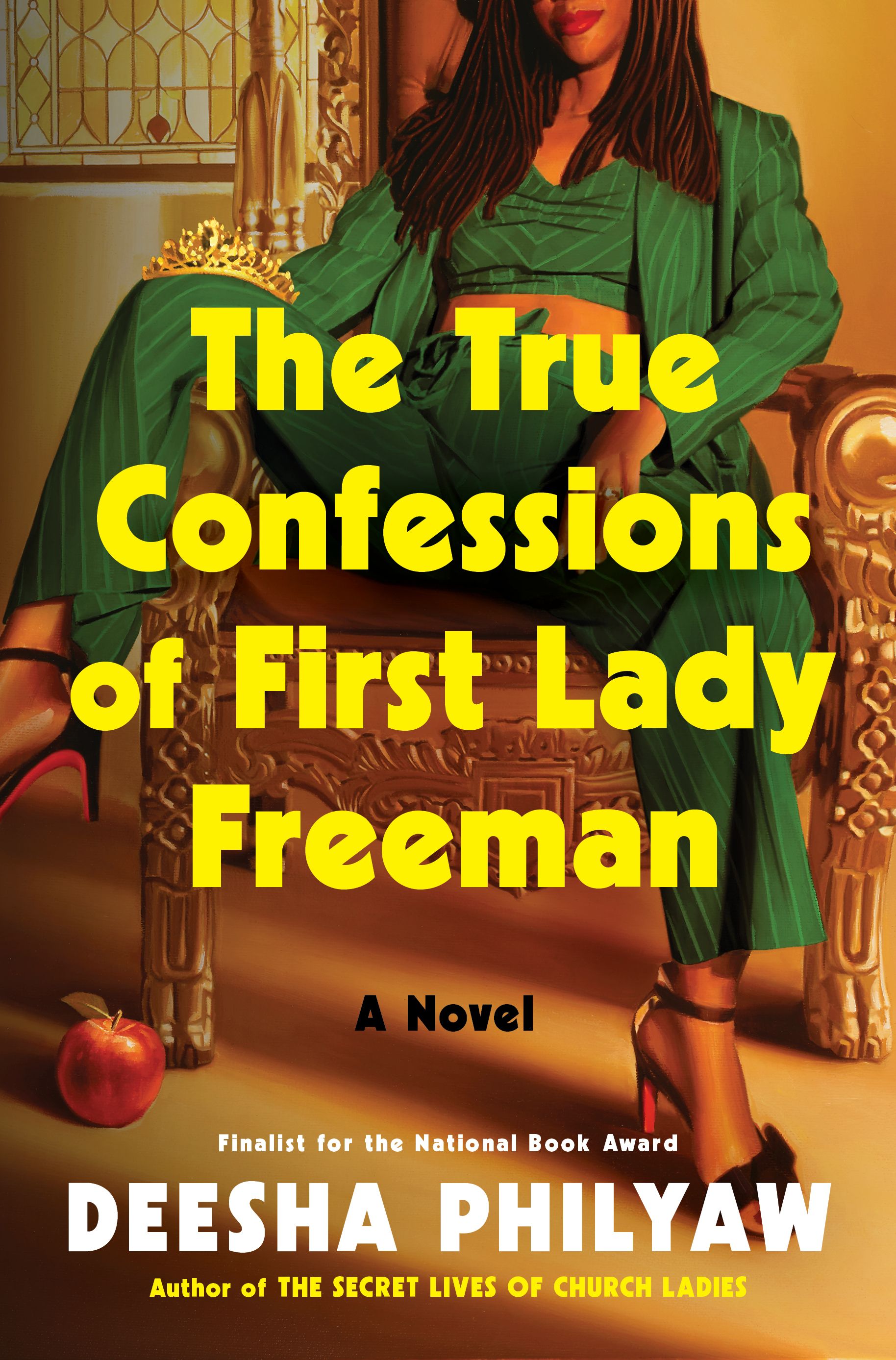
The highly anticipated debut novel ‘The True Confessions of First Lady Freeman” by Deesha Philyaw was released Sept. 29. Philyaw appear at a book signing on Oct. 5 at 6 p.m. at the Center City Barnes & Nobles.HarperCollins/Mariner Books
Philyaw grew up in the Black church and respects its storied past. Still, she says she doesn’t see eye-to-eye with the dogma, patriarchy, and misogynoir.
That was as apparent in The Secret Life of Church Ladies as it is in her latest novel The True Confessions of First Lady Freeman(HarperCollins, Mariner Books). True Confessions centers on the extravagant life of Atlanta first ladyScharisse Freeman as she tries to fit in with other first ladies in the mega church world. Just as she’s starting to fit in with the catty group, a sex scandal erupts. Scharrise is treated like a pariah and readers are left wondering how such cruelty can be perpetuated in His name.
“The stories in Church Ladies and True Confessions are not a middle finger to the church or its true believers,” Philyaw said. “They do, however, point out where the institutions have failed and hurt Black people, particularly Black women and queer folks. I don’t feel like I need to protect the church. That has been the problem. In doing so, we look the other way, remain silent, and down play these things.”
Philyaw, a mom of two who is queer, lived in Pittsburgh for 25 years before moving to Oxford, Miss. where she served as the 2022-2023 John and Renée Grisham Writer-in-Residence at the University of Mississippi before settling in Miami. She’ll be in town on Monday for a talk at Barnes & Nobles and in between book signing and book pedaling, she’ll be taking in the scene of her next homebase.
This is her idea of a perfect Philly Day.
One of Akwaaba Bed & Breakfast’s six overnight suites, The Blue Note, named after The Sound of Philadelphia’s most iconic group’s Harold Melvin and The Blue Notes.Akwaaba Bed & Breakfast
6:30 a.m.
I’m a woman of a certain age so I’m both an early bird and a night owl. On a wonderful morning, I’d wake up at Akwaaba, the West Philly bed-and-breakfast owned by Monique Greenwood. It’s so beautiful. I’d enjoy a lazy morning that would include having a breakfast of oatmeal without fruit. (Something about fruit and oatmeal irks me.) I’d also have some herbal tea and honey. I’m not a coffee girl.
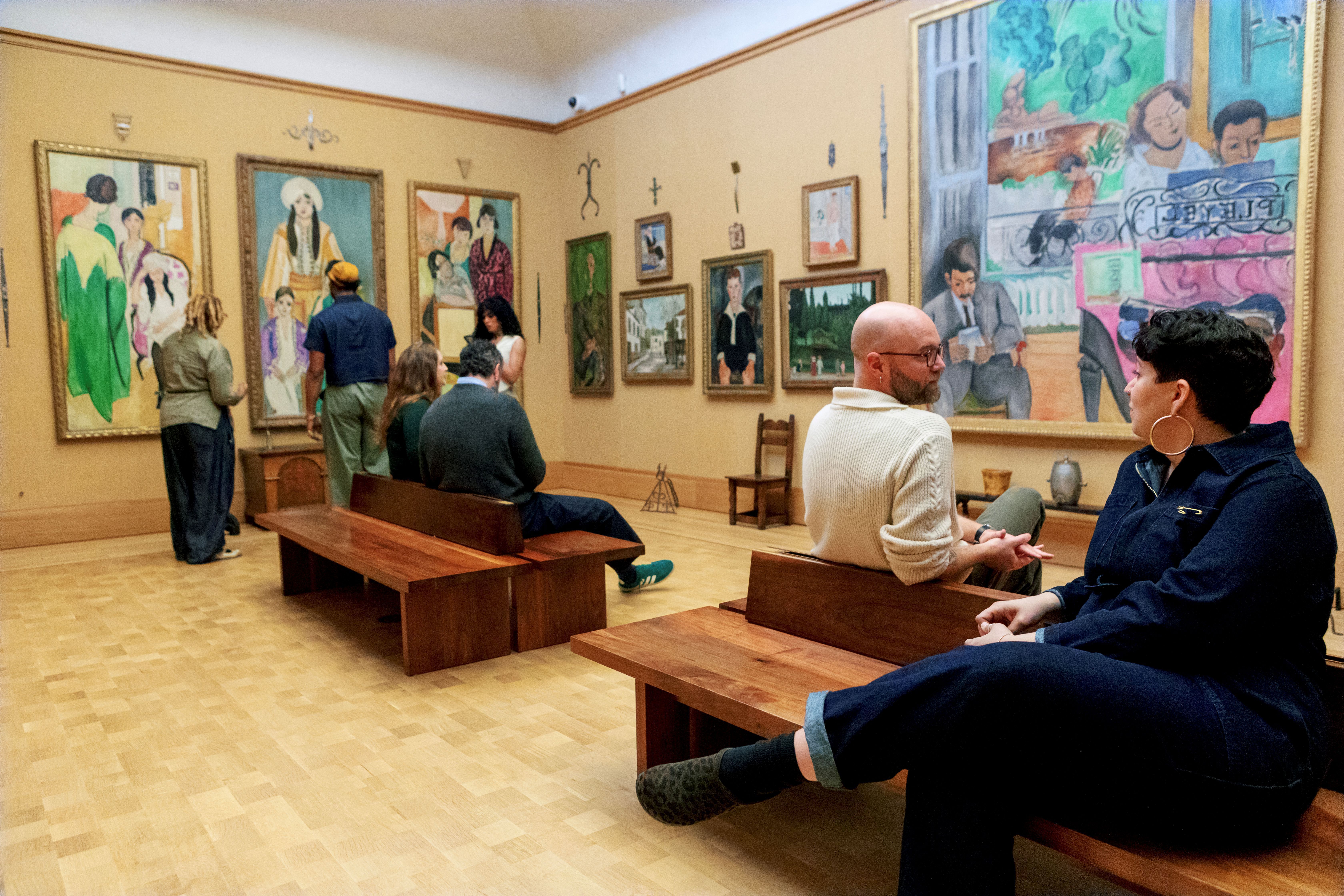
Inside of the Barnes Foundation’s galleries. The Barnes Foundation
10 a.m.
I would check out one of the private collection tours at the Barnes. I really enjoy the art. They always have such great curated exhibitions like [Maori Karmael Holmes and James Claiborne’s] “Freedom Dreams.” On a perfect Philly day, that exhibit would still be open.
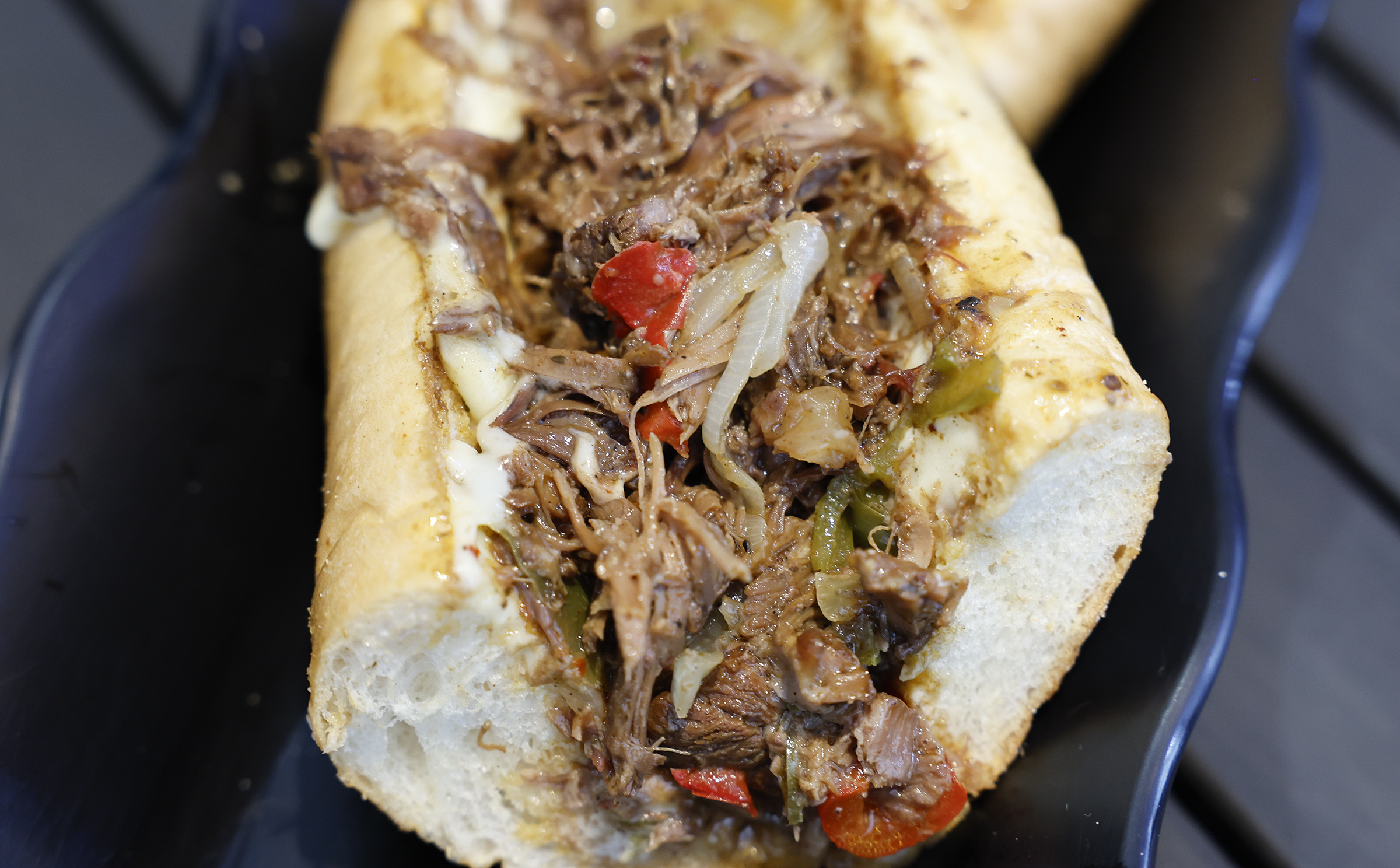
The oxtail cheesesteak from the Taste Cheesesteak Bar in Center City on Friday, June 14, 2024.Yong Kim / Staff Photographer
Noon
I’d have lunch at Logan Square’s Taste CheesesteakBar for the oxtail cheesesteak. Then maybe I’d visit the BlackStar film offices in the Bok Building, and definitely catch a movie if the festival was going on.
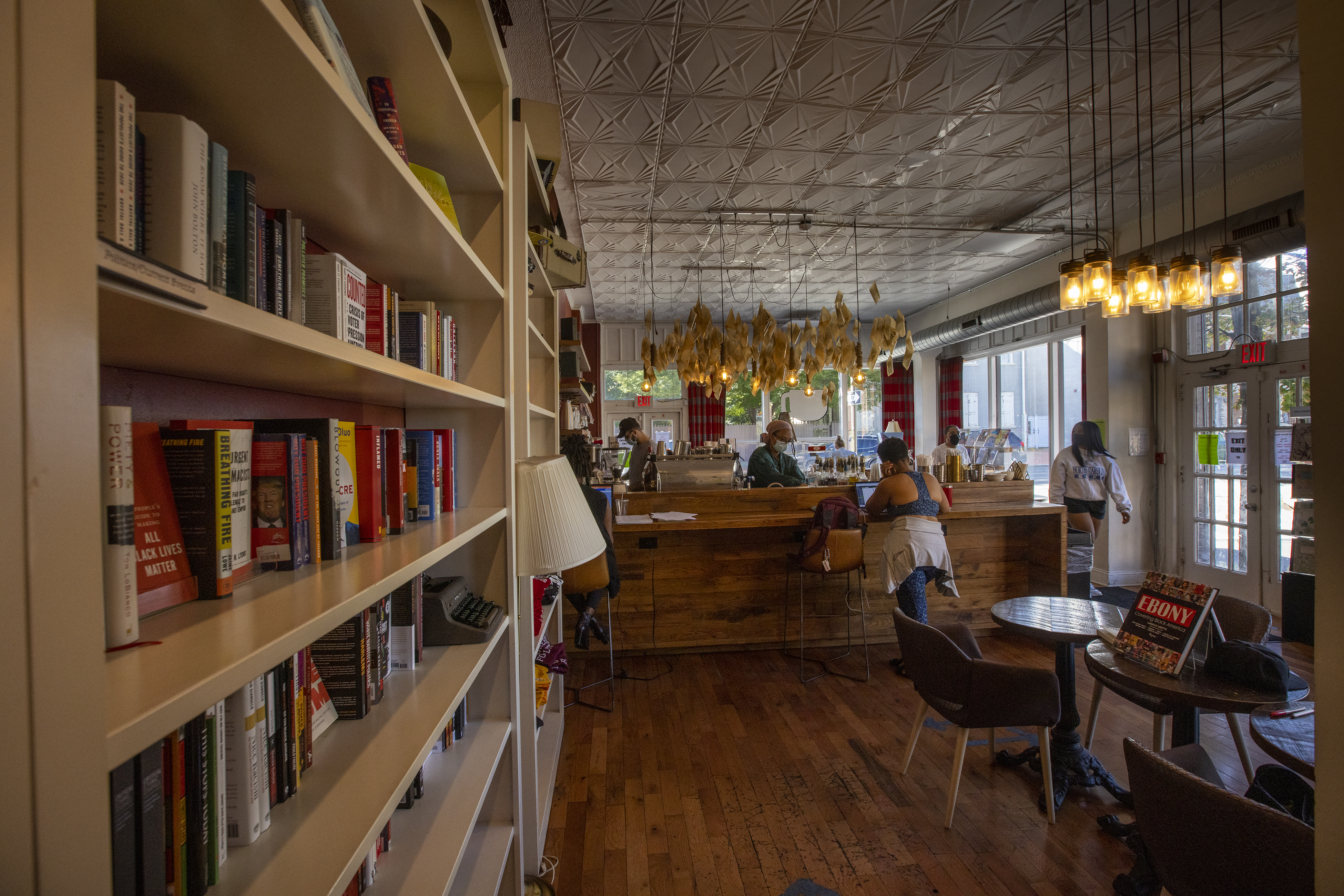
Interior of Uncle Bobbie’s Coffee and Books.ALEJANDRO A. ALVAREZ / Staff Photographer
I still mask indoors so Sally in Rittenhouse Square is one of the few places where I can eat outdoors year round. My friend Tre Johnson took me there a few years ago when I was in town for the AWP Conference (the Association of Writers and Writing Programs). It was in March and they had heated seats. I’d start with the Japanese eggplant, move on to the fennel sausage pizza and I’d have to get that sangarita
The Philadelphia Parkway Central Library on Logan Square.
7:30 p.m.
I’d end the night at a talk and book signing at the Free Library of Philadelphia. These are great events for writers and readers. There is so much to pick from.
This interview was edited for length and clarity.
Deesha Philyaw will appear Monday, Oct. 5 for a reading, book signing and live recording of Barnes & Nobles Poured Over podcast hosted by Miwa Messer. The event starts at 6 p.m. Barnes & Nobles Philadelphia, 1708 Chestnut Street, at 6 p.m. Tickets include the cost of the book are $34.56. Ticket information here.
Officials from Drexel University and the Academy of Natural Sciences were scheduled to meet Friday to continue discussing a path forward — with a potential split of the two organizations hovering over talks as one possibility.
“That’s certainly a [potential] outcome,” said one source familiar with the situation who requested anonymity because they weren’t authorized to speak on the matter.
But there likely also will be “reconciliation attempts,” the source said. “We either abide by the terms that we have been talking about or don’t.” If both sides abide by the terms, they said, “then everything continues peacefully.”
The Academy and Drexel announced an affiliation in 2011, merging aspects of their operations but keeping separate boards. The Inquirer reported in April that Drexel told the Academy to either fully merge with the university or it would move to disaffiliate, and the two have been negotiating a new affiliation agreement.
Neither the Academy nor Drexel returned calls early Friday evening seeking comment on whether the meeting had ended and its outcome.
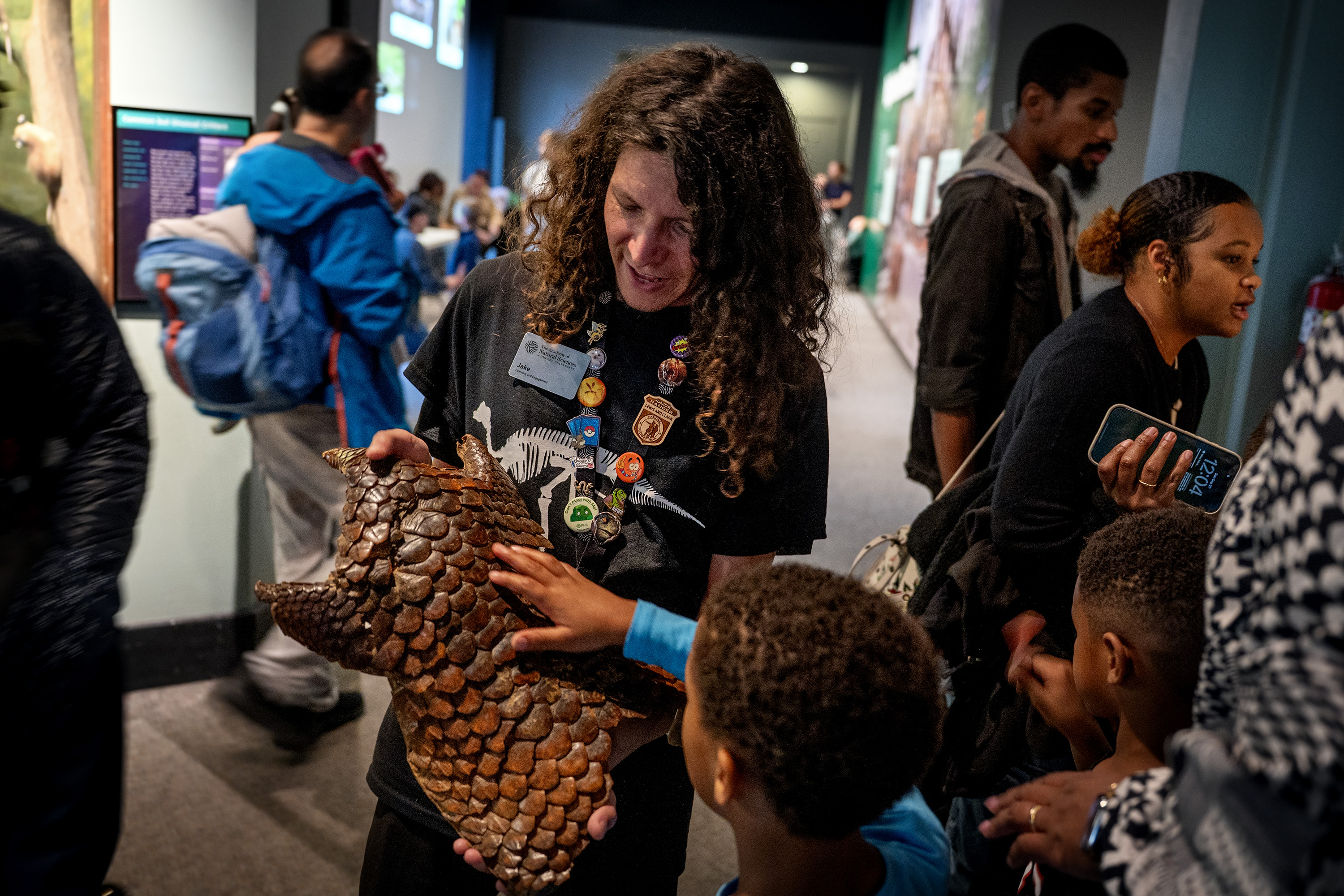
Science educator Jake Cook lets visitors feel the skin of a pangolin — a scaly anteater — at the Academy of Natural Sciences of Drexel University on Sunday.Tom Gralish / Staff Photographer
Drexel and the Academy disclosed plans in September to close the Academy museum, move the 19 million specimens in the collection, and eventually sell the building at 19th Street and the Benjamin Franklin Parkway.
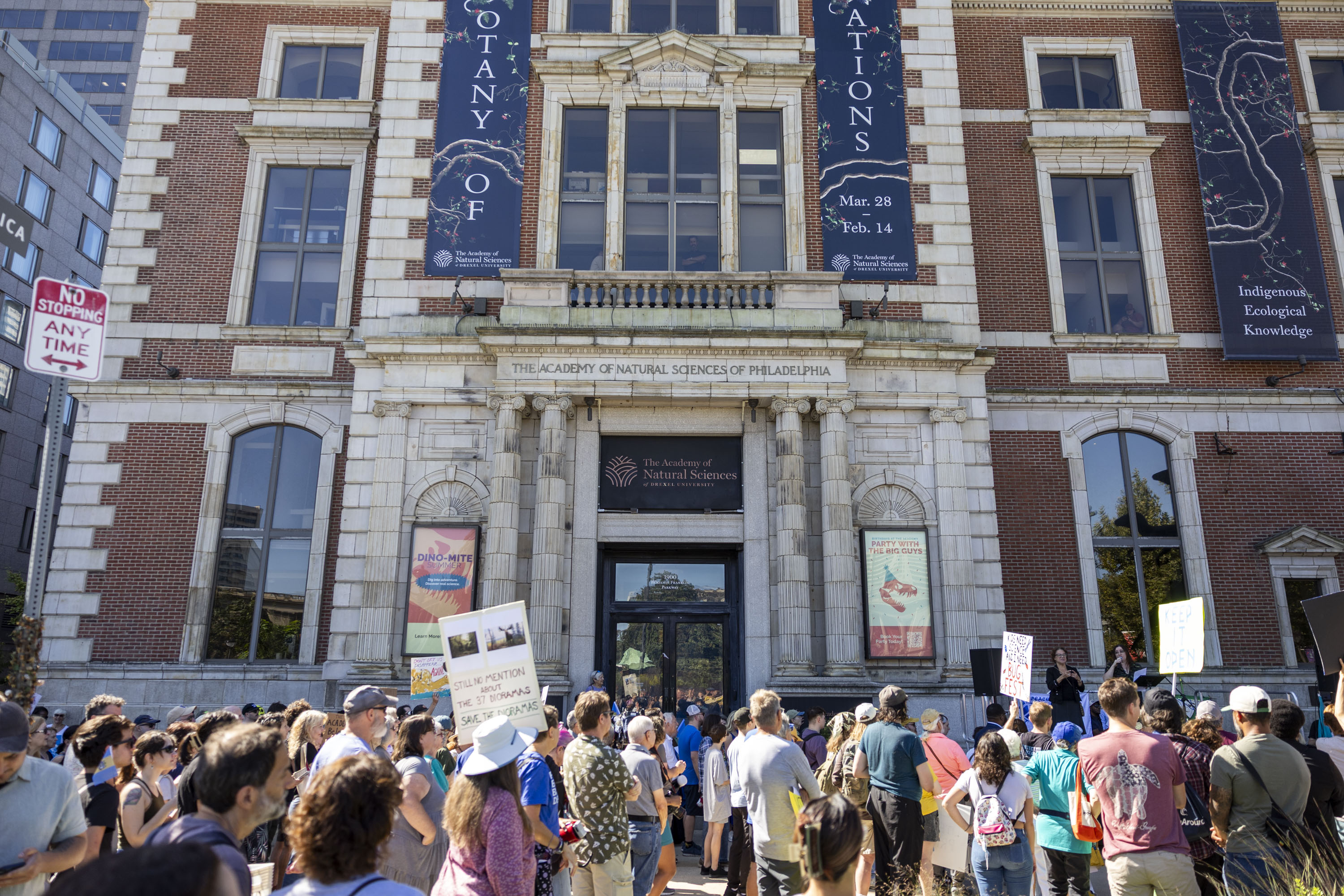
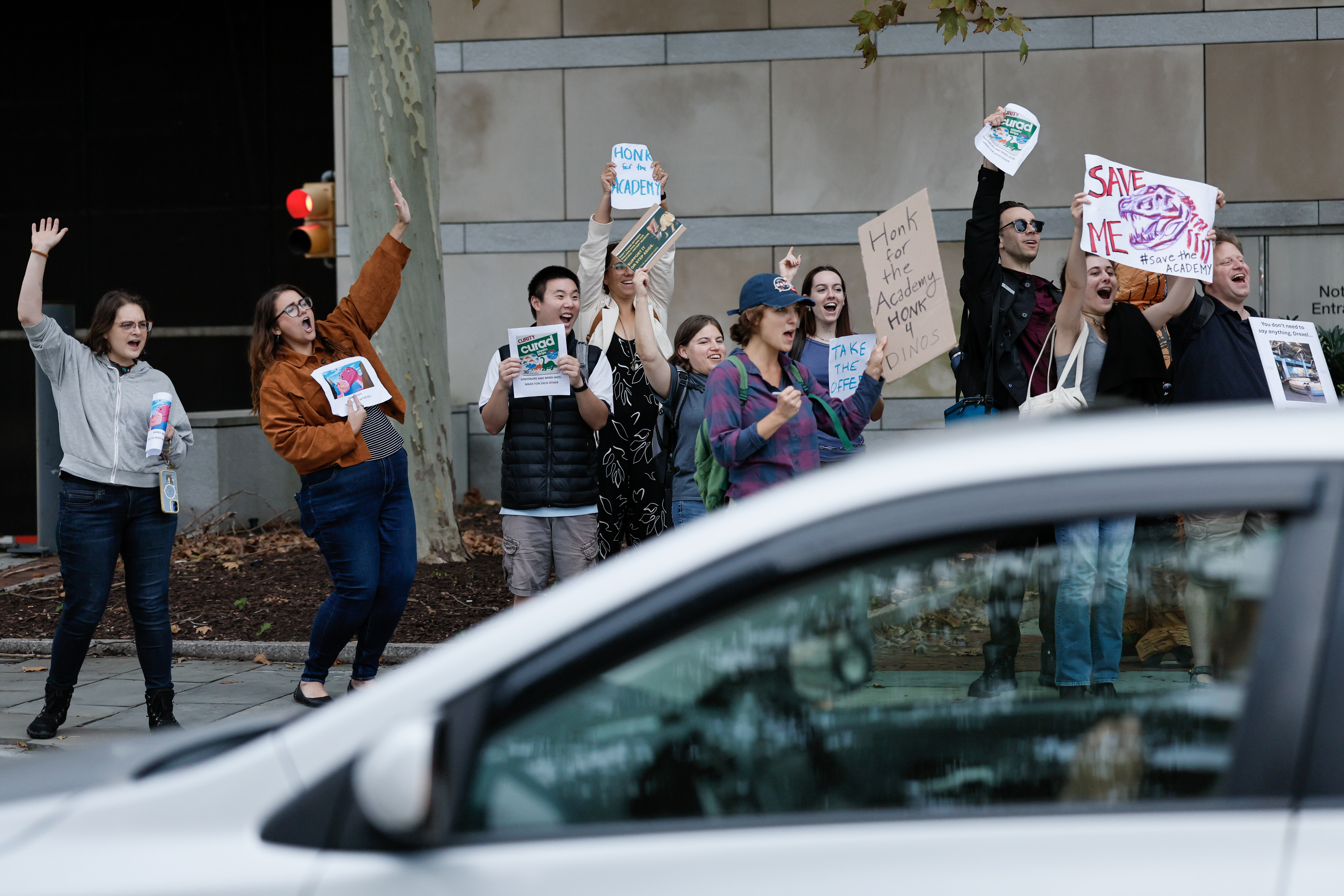
A group of protesters earlier this week gathered at the same time as a Drexel board meeting and called on the university to disaffiliate and give the Academy a chance to negotiate what’s best for it.
Drexel spokesperson Niki Gianakaris said earlier this week that the university had offered the Academy a path to disaffiliation.
“We have been, and remain, open to that possibility,” she said. “We continue to engage in good-faith discussions with the Academy about its future.”
Her comments came days after the William Penn Foundation made public its offer to underwrite operating costs for at least a year and keep the museum’s doors open while a permanent solution can be worked on.
William Penn said the goal was to “provide time to test the interest of other funders and supporters who have not been engaged so far,” and the Academy leadership said it was open to the reprieve.
The Academy, founded in 1812, has operated a museum since 1828, and its announced closure has generated street protests, more than 100,000 petition signatures, editorials, and the scheduling of City Council hearings for next week.
The museum was shuttered to the public at the end of the day last Sunday, following large numbers of visitors in recent weeks but prior years of declining attendance. In the 2025 fiscal year, it brought in 126,000 visitors — down from 2014 when it welcomed 208,000 science fans to its “dioramas, dinosaurs, butterflies, live animals, and the renovated Children’s Nature Discovery Center, Outside In,” according to the Academy’s tax return from that year.
The “Save the Academy” coalition gather outside of the National Constitution Center on Tuesday in an effort to keep the Academy of Natural Sciences museum open.Elizabeth Robertson / Staff Photographer
Since the beginning of the Drexel-Academy affiliation a decade and a half ago, “our goal has always been to improve the financial position of that museum and the Academy of Natural Sciences as a whole, the research and the collections,” said a Drexel source familiar with the matter who was not authorized to speak publicly about it. “That was written into the original affiliation, and as we moved forward in time we hit snags and different things we never quite achieved that financial resilience then. And then COVID hit and that became even more challenging for the museum.”
Drexel said that it had not received a formal proposal from William Penn but that it would be open to talking with the foundation about the matter.
Gianakaris did not comment Friday on whether talks had been held or scheduled.
“What William Penn has put forward is not enough,” said the first source, who had noted that a split was a possible outcome. “That wouldn’t do it.”
Gianakaris said Drexel’s focus is on “safeguarding the Academy’s collections and research enterprise” while developing a “long-term model” that allows the public to engage with its collections.
Drexel’s board of trustees earlier this week discussed the matter during a two-day meeting that was scheduled months ago. The meeting, the second held since Antonio Merlo became Drexel’s president July 1, 2025, was for the board to “focus on the university’s long-term future, strategic priorities and governance effectiveness,” Gianakaris said.
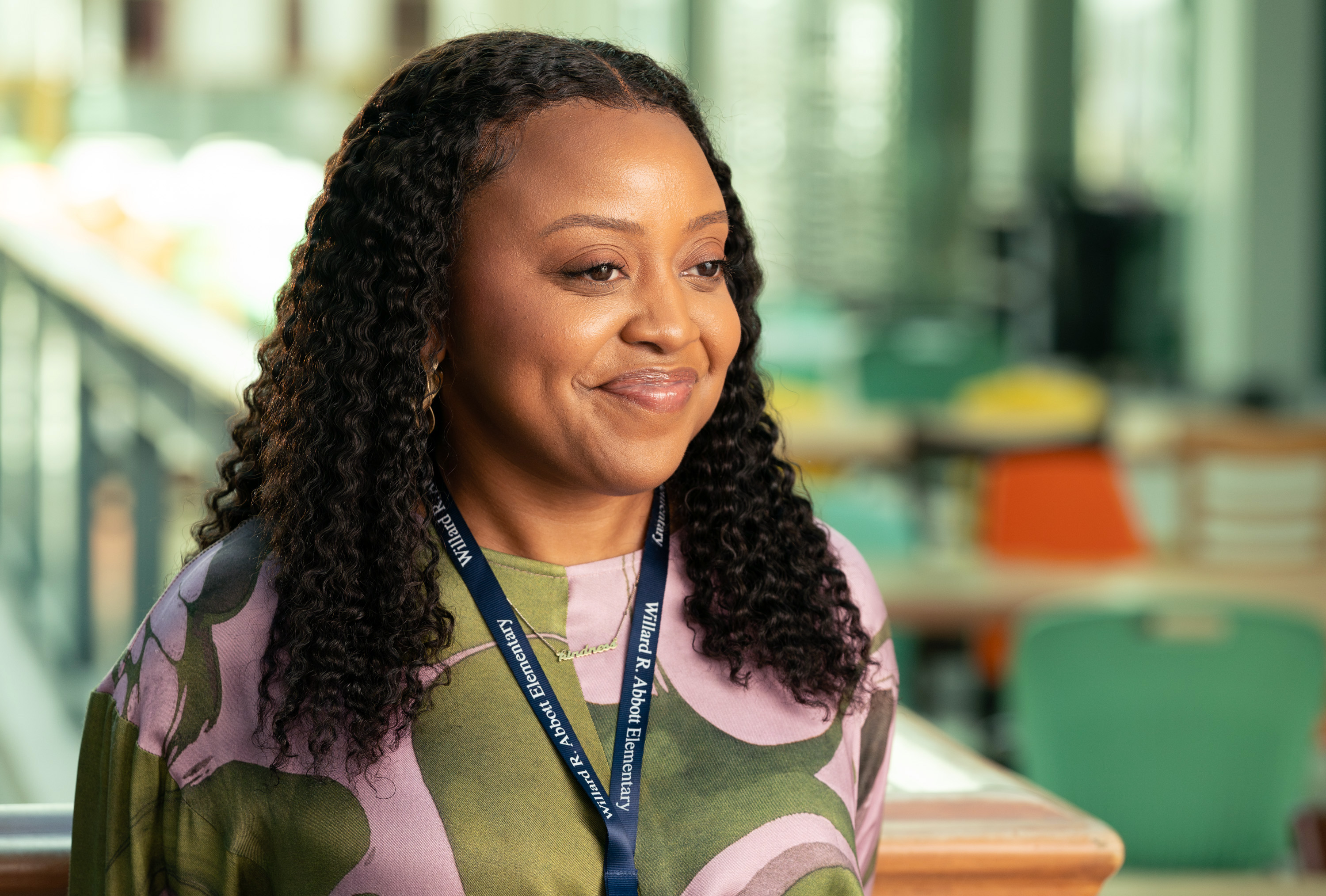
The new season of Abbott Elementary is nearly back in session. From the looks of it, there are some changes coming.
In the Season 6 trailer, which dropped Wednesday, it’s revealed that Tyler James Williams’ Gregory will now be the school’s assistant principal in addition to his regular teaching duties, and Lisa Ann Walter’s Melissa is now a teachers’ union representative.
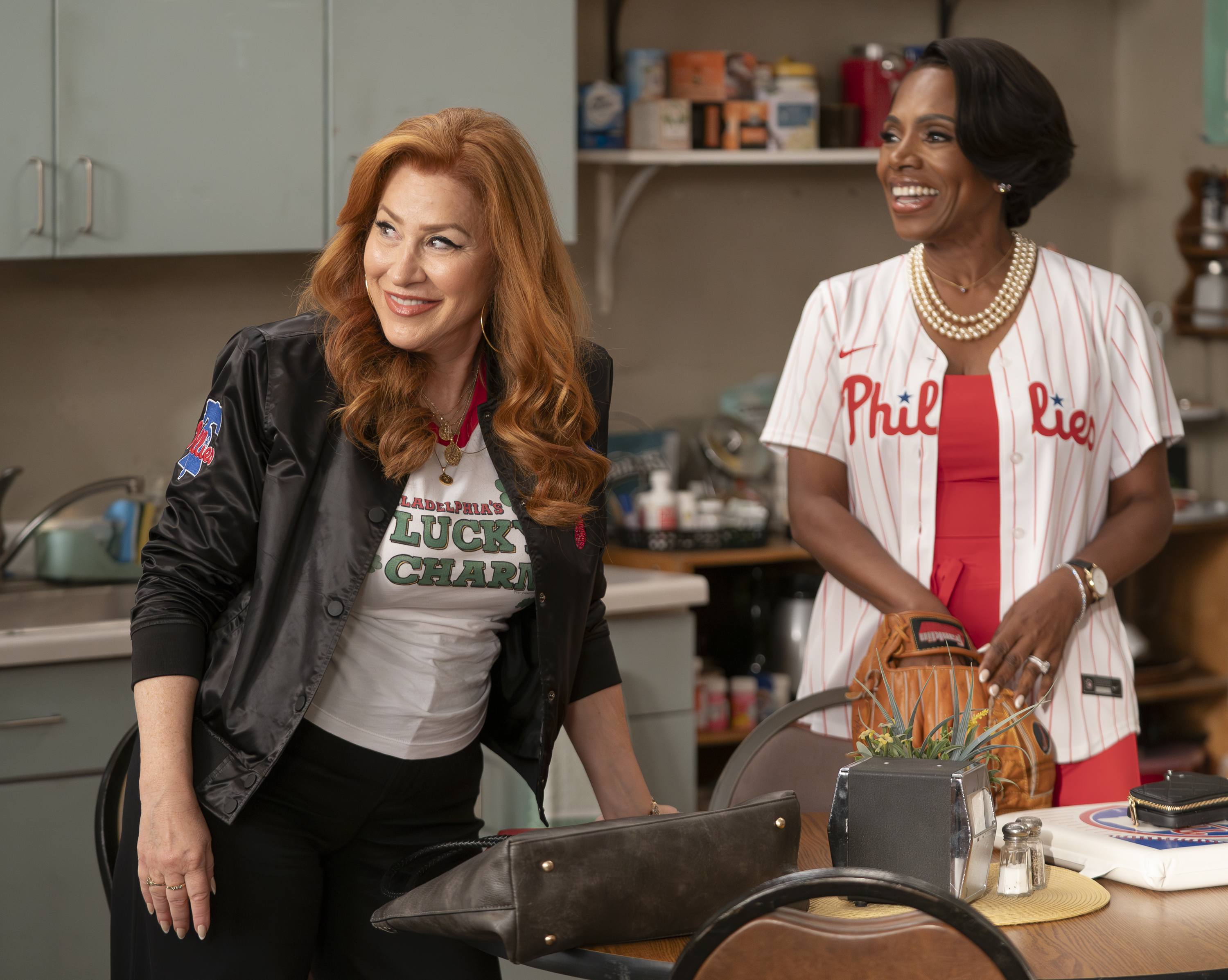
Melissa (Lisa Ann Walter) wears a “Philadelphia’s lucky charm” T-shirt and Barbara (Sheryl Lee Ralph) sports a Kyle Schwarber jersey in an episode of “Abbott Elementary.”Disney/Gilles Mingasson
Gregory’s new role will have him working more directly under Janelle James’ Ava, the hilariously self-absorbed principal of the fictional Philadelphia public school.
“It’s going to be the best year yet,” Ava says in the trailer.
Fresh into her union position, Melissa is at odds with guest star Katy Mixon, who plays a new staff member. “You’re not aware of the hierarchy around here,” Melissa says to Mixon’s character inside the break room. The newcomer retorts with, “I’m not going anywhere.”
The rest of the trailer, which opened with Guns N’ Roses’ “Welcome to the Jungle,” foreshadows another season of chaos in and outside the classroom.
Chris Perfetti’s Jacob is seen leading a PTA meeting line dance. Ava curses out fellow staff, and Gregory is startled by what appears to be an enraged parent.
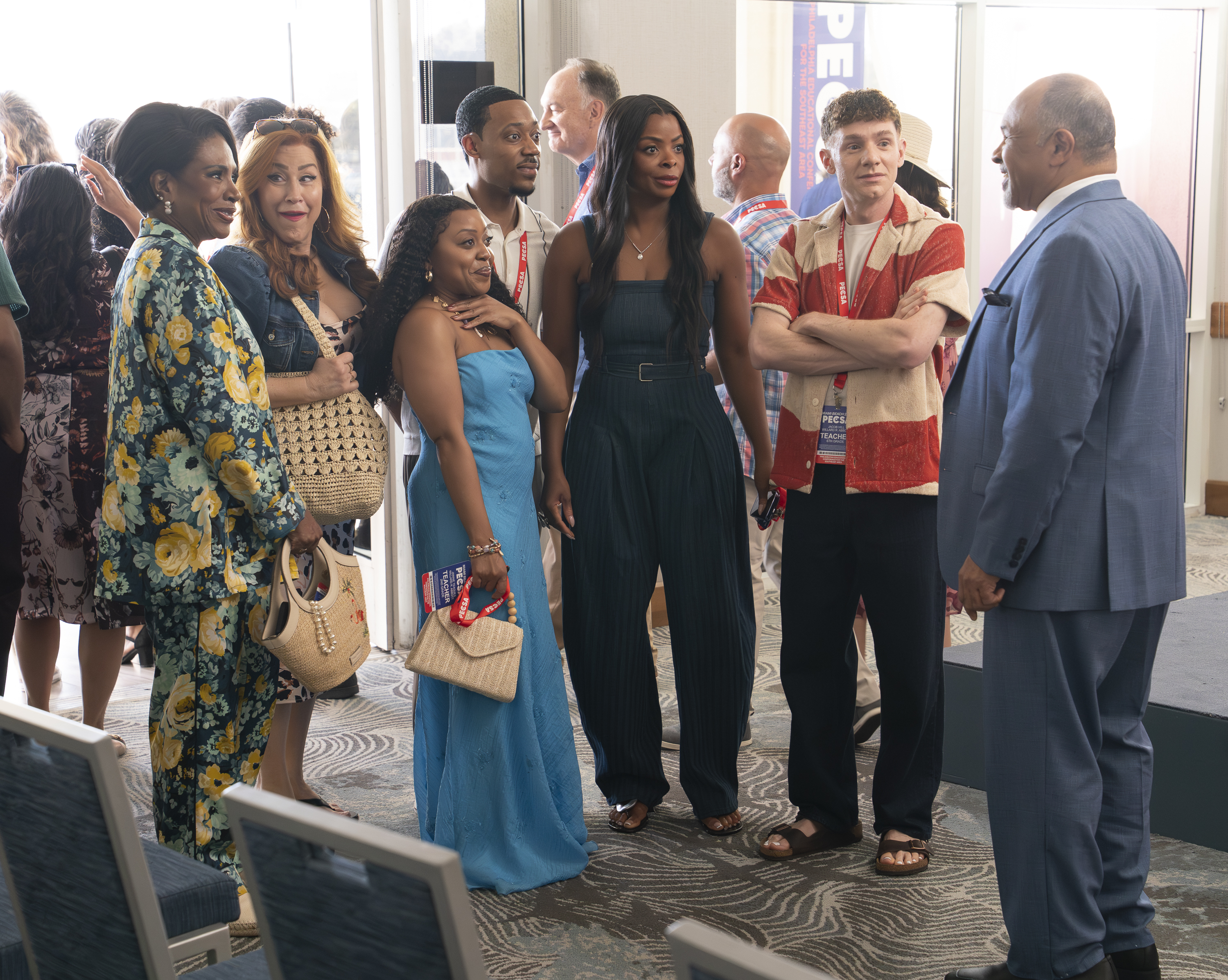
The teachers and principal of “Abbott Elementary” talk to the school district’s superintendent.Disney/Gilles Mingasson
Of course, there are homages to the city that serves as the series’ backdrop, although the show is filmed in Los Angeles. Janine appears wearing a Penn sweater, Melissa dons a black Eagles sweat jacket, and Jacob tosses a basketball at two characters wearing Sixers jerseys.
The new season follows an eventful Season 5, which hinted at upcoming drama, including a potential engagement between Janine and Gregory, an uptick in Abbott’s student intake due to multiple school closings, plus a power struggle between Ava and Gregory with his new role.
The Season 6 premiere is set to air at 8:30 p.m. Oct. 7 on ABC. In the words of Janine: “Anything can happen.”
The Philadelphia Fringe Festival celebrated its 30th year with more than 338 productions across the city. Our reporters found shows that left us dazzled and confused, tearful but still laughing, and truly amazed by all the strange, weird, and delightful originality that artists from Philly (and beyond) had to offer.
These were some of our favorite performances, including solo shows, interactive experiences, immersive dance, otherworldly journeys, and incisive political explorations.
Most optimistic: ‘Lunar Retreat’
To enter this performance, you must prepare for take off: Grab a set of headphones specifically curated for your group (an audience of just a dozen or so, per entry time) and remove your shoes.
Past the doors lies a transformed Pearlstein Gallery, with different sections divided by flowing white curtains. The calm voice in your ears provides instructions, like a guided meditation for a winding path through a constellation of dancers before you arrive in a maze of tall, twisting cardboard adorned with twinkling lights and images of the moon’s various cycles.
After billions of years orbiting the earth, our moon has been slowly inching away from us, the disembodied voice explains. The show asks: What does it mean to enter someone’s orbit, to connect with another person, when we all drift apart eventually, inevitably? At its core, Lunar Retreat tackles grief, prompting the audience to imagine a loved one who is physically distant. What detail about this person do you never want to forget? After we write down our answers, we’re guided into the maze, where the answers from previous attendees dot the spiraling walls.
Fringe Fest regular Nichole Canuso’s dance company Branching Paths is renowned for immersive and interactive performances; here she worked with ocean explorer/artist Rebecca Rutstein, sound designer Bobby McElver, video designer Kate Freer, and set designer Anna Kiraly, among many collaborators. The projections were especially astounding: In one room, a dancer performed a series of moves in one place that were recorded and projected to the same location on a loop, allowing her to essentially dance with and embrace the projected version of herself. It was a mesmerizing collaboration between dance and technology.
Founder and artistic director of Nichole Canuso | Branching Paths, presented “Lunar Retreat” in the 2026 Philadelphia Fringe Festival.Theo Cote
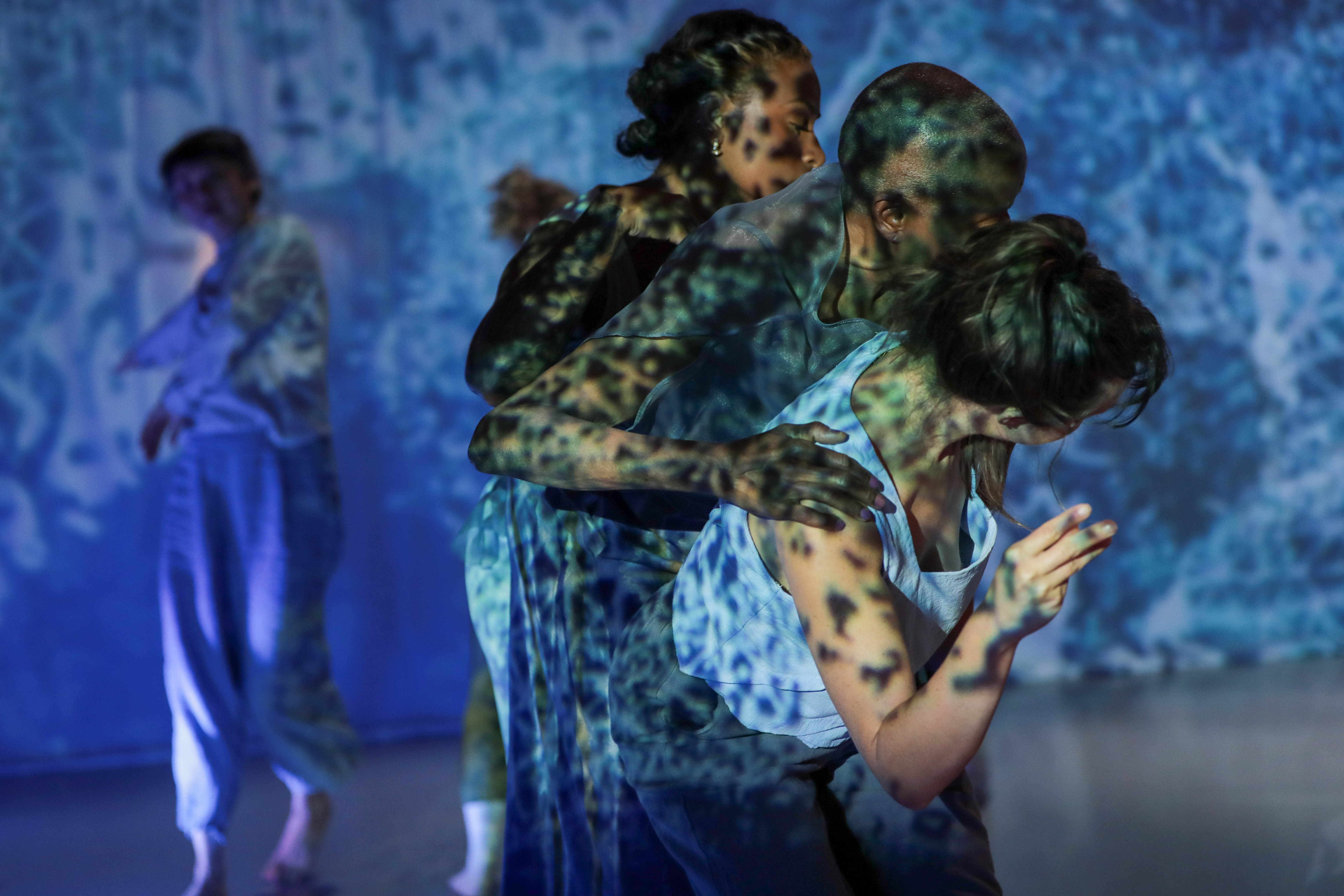
At the end, the three audience groups gathered for the finale, when eight dancers (including the choreographer, Canuso) evoked ocean tides as they converged and separated, where they kept reaching for one another and then leaping apart. I was in awe not only of the performance itself but of my fellow audience members, who embraced the experience with open hearts and curious minds — leaving me surprisingly optimistic about the future of humanity.
— R.C.
Standout Solo Show: ‘Tuzluk’
This wildly inventive coming of age story follows Turkish Colombian American theatre artist izzy sazak as they deconstruct the heroes of their childhood. It’s a bold, imaginative examination of how we recontextualize the stories that we are told as kids. Throughout the piece, sazak examines their father, his Turkish heritage, and the Turkish mythos that they grew up instilled with. It is a magnificent look at the crossroads of culture, legacy, and family; while also being frankly honest about how many people idolize political figures.
sazak is an effortless performer, immediately engaging with the audience, establishing a welcome and safe feeling throughout the performance. They are also very adept at comedy: their timing is precise, and they can easily adapt and improvise.
izzy sazak in a promo image for their show “Tuzluk” in the 2026 Philadelphia Fringe Festival.Courtesy of subject
The word tuzluk is Turkish for “salt and pepper shakers,” but it is also a colloquial name for the folded paper toys that kids use to tell their futures. This item is used both as a literary device, as sazak unravels their future through the show, and also as set pieces.
Several tuzluks of varying sizes are arranged on the stage, and are utilized as props. The final moments of the show, when the last tuzluk is opened, is one of the most cathartic, community focused finales I’ve ever experienced in a theatre.
— F.S.
Best true story, retold: ‘Kramer/Fauci’
C-SPAN isn’t usually the place where one might find dramatic inspiration. But for director/creator Daniel Fish, one hour of a televised debate in 1993 provided an insightful window into a painful history that still resonates deeply. His innovative verbatim play follows a contentious conversation between Larry Kramer, the fierce activist/playwright who founded ACT UP, and Anthony Fauci, head of the National Institute of Allergy and Infectious Diseases at the time, about then-President Bill Clinton’s new task force to address the AIDS crisis.
On the sparse stage only four actors appear, playing the moderator (Greig Sargent), Fauci (Pete Simpson), Kramer (Thomas Jay Ryan), and the callers who dial into the TV segment (Jennifer Seastone). There are no cameras, no desks or green screens to evoke the monotony of C-SPAN’s regular programming; instead, the moderator is seated and his guests move around freely while Seastone spins around on roller skates, occasionally donning a chicken suit. The pared down production allows Kramer and Fauci’s sparring to take the spotlight (literally) but also creates a dynamic movement that keeps the audience engaged in their hot-and-cold ping-pong match without feeling like we’re watching a live podcast taping.
It’s far from boring, no matter how wonky the dialogue gets. Ryan’s Kramer erupts on a dime, shouting and throwing barbs and teasingly threatening to slap Fauci, who deflects and delivers defensive, boilerplate responses typical of a bureaucrat, knowing that his answers are dissatisfying. Kramer is fuming and defiant, demanding urgency from a government and a public whose inert response to the epidemic was a systemic, fatal failure on an unimaginable scale. When the callers chime in, many express sympathy, but one chilling, virulently homophobic standout accuses him of infecting the nation’s bloodline.
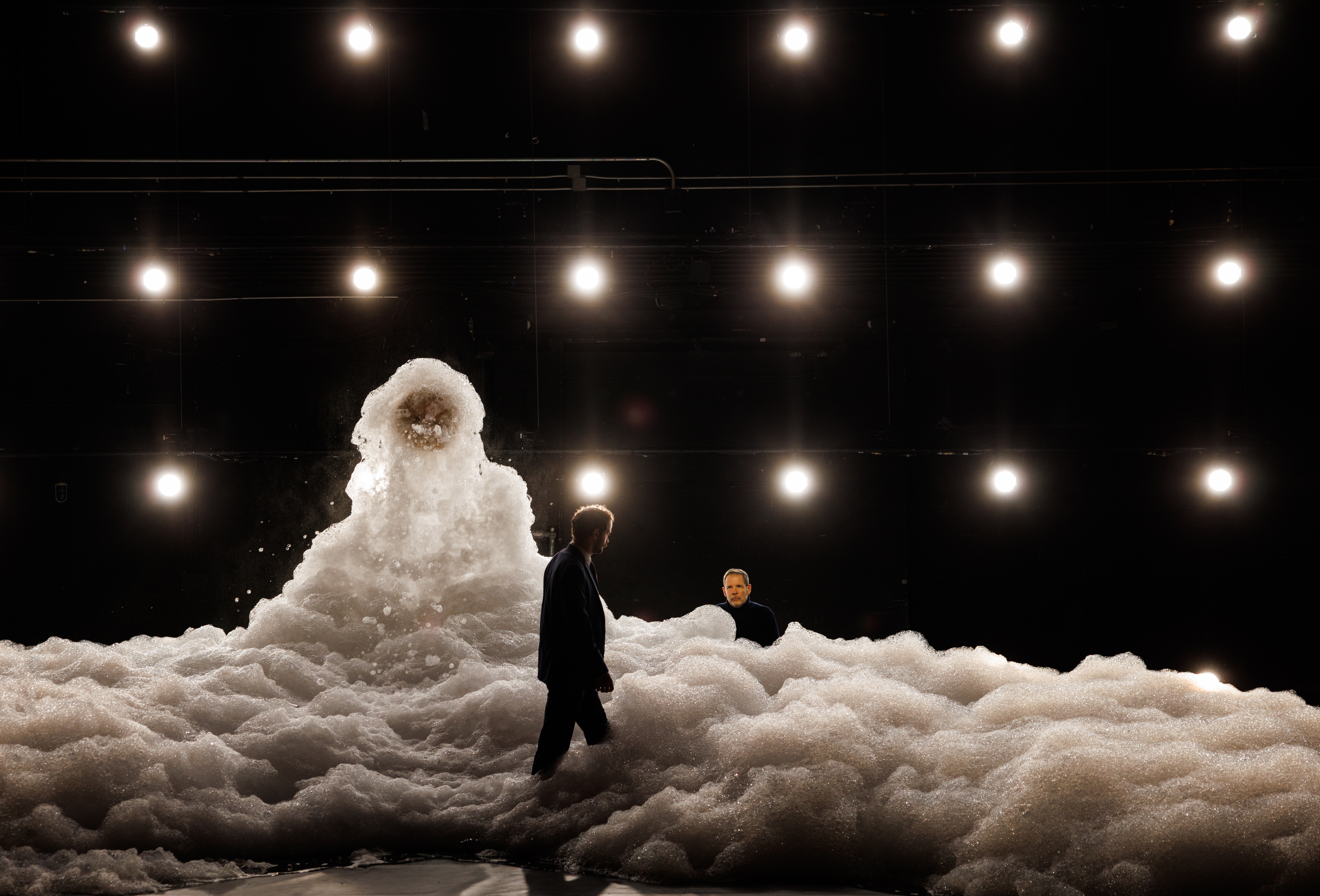
The most dramatic moment comes rather abruptly, when a towering bubble machine churns out a mass of suds that slowly takes over the stage. Kramer sits next to it, arms crossed, resigned as the machine whirs and the foam spreads.
Given the devastating subject matter, I didn’t expect to laugh so much. The pair at the center of the show hold profound respect for each other despite their disagreements and there’s a familiarity to their banter that underscores their shared goal; their debate is almost endearing to hear in retrospect today, if the reality wasn’t so infuriating. It ends with an epic line from Kramer when asked for his last word: “I want Bill Clinton to come out of the closet … and do something about this disease.”
— R.C.
A scene from “Returned, Iridescent,” part of the 2026 Philadelphia Fringe Festival.Seph McAndrew
Most Promising: ‘Returned, Iridescent’
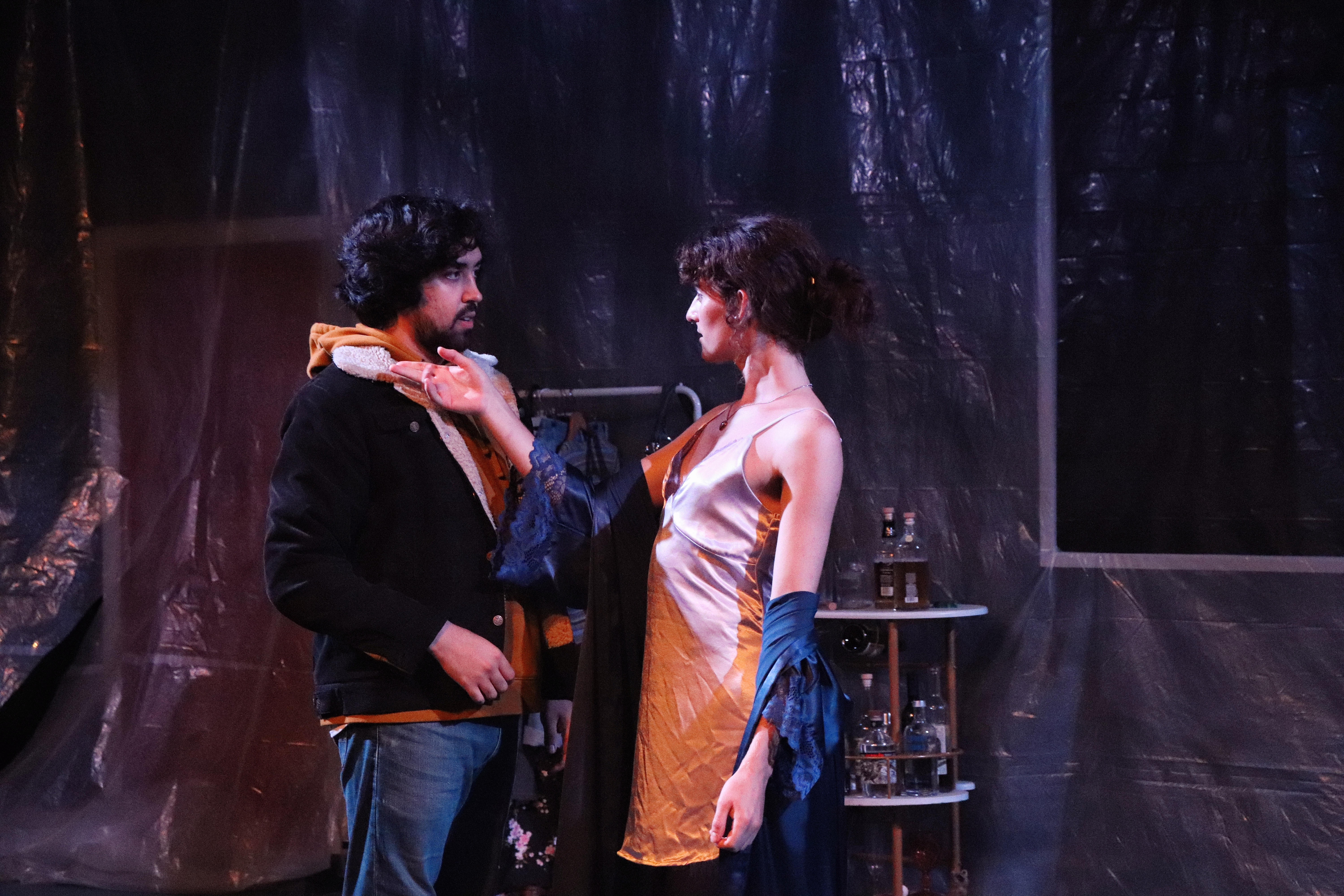
There is a scarcity of narrative stories that showcase LGBTQ+ people growing up and living into old age. Oftentimes, these characters are burdened with struggle, defeat, and frequently, a tragic end; especially stories of trans people. Returned, Iridescent, the new work by playwright Rose Farrell, defies this trope by taking the audience on a beautifully poetic journey of two queer characters who constantly collide, combust, and separate, only to be drawn back together again and again. The text shifts between realism and poetry, allowing the characters to be both their true selves and romanticized versions. It is a beautiful story about finding yourself, loving yourself, and accepting the happiness that you deserve.
Breathtakingly nuanced performances from the two leads (Olive Gallagher & Gideon Caro McDonald) help ground this work in the moment. Watching the two of them effortlessly push, pull, and play with each other is a joy. I’m eager to see what these two talents do next. Strong design elements, with direction by Jack McManus, help this play to soar.
This play is an extremely timely one, given the current social and political discourse around trans people, which often serves to dehumanize or vilify them. I commend Theatre by Development for choosing to tell this story now, and hope that it is told many times more.
— F.S.
Nerdiest romance: ‘Wikipedilove’
A Newfoundland town called Dildo. The erotic novella A Billionaire Dinosaur Forced Me Gay. Eva Braun?
All are ripe for exploration at the love-and-sex-themed Wikipedilove, the lo-fi, musical PowerPoint presentation staged at West Philly Fringe hub Studio 34.
Writer, singer, and guitarist Noam Osmond — who moonlights as a “troubadour for hire” and can occasionally be spotted serenading strangers in Clark Park — and singer and accordionist Anna Apostolidis take the audience through a whirlwind of weird internet, told through screenshots, academic analysis, and cutesy folk songs.
In under an hour, we learn, for instance, that gray whales mate in threes (“#consensuwhale”) and that there’s a Wikipedia page of “List of sexually active popes,” among many other NSFW topics.
At the packed Friday night performance I attended, audience members were game to sing and sway along, emblematic of the participatory theatre that makes the Fringe Festival so special.
Two actors dressed as sparkly winged green and yellow bugs who appeared in the finale were a highlight of the show — luna moths, which live for just one week, solely to mate. Because who says science can’t be silly and sexy?
— J.Z.
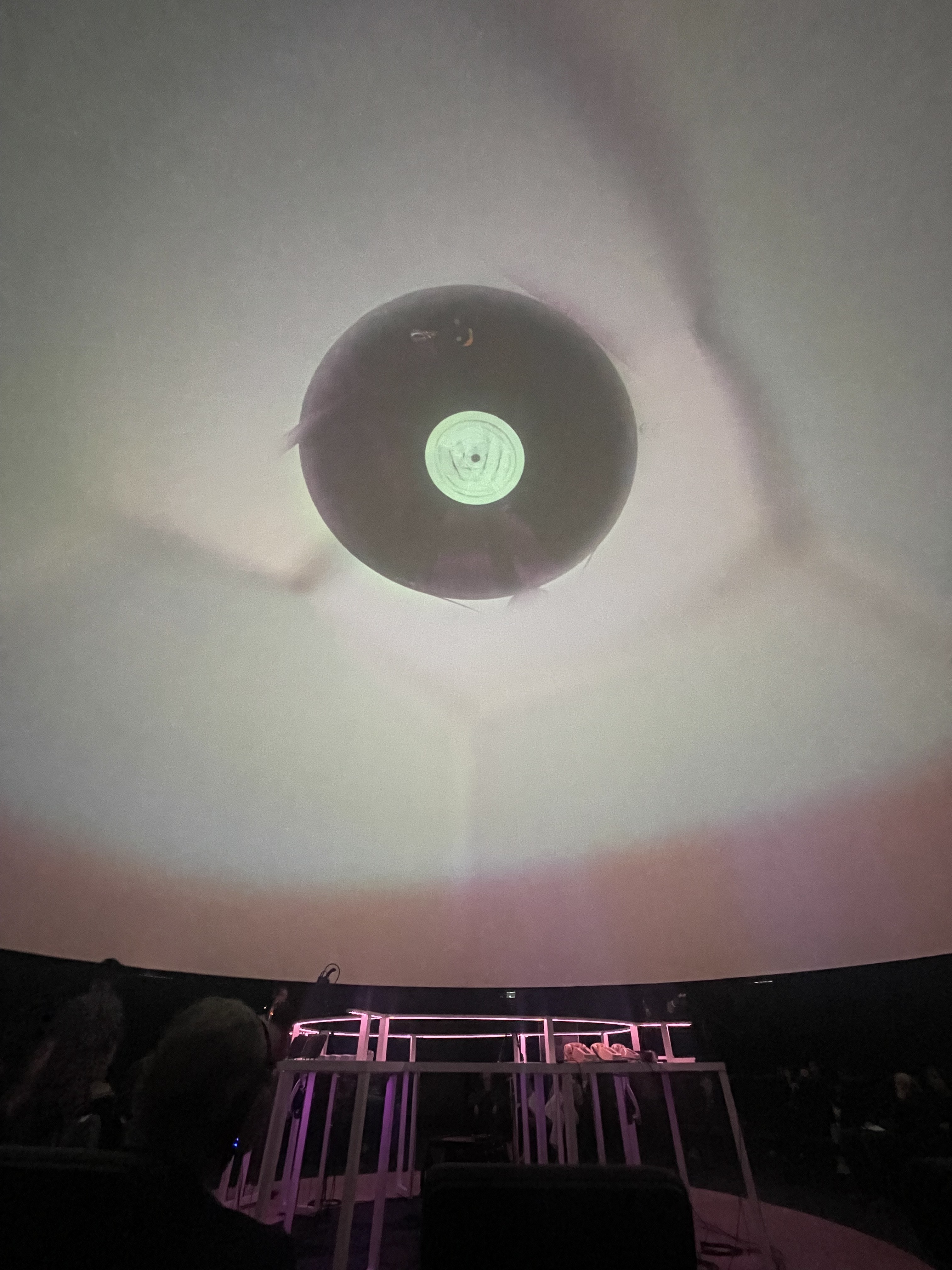
A projection of a vinyl record on the domed screen of Fels Planetarium for “Utopian Hotline,” part of the 2026 Philadelphia Fringe Festival.Rosa Cartagena
Strangest existential journey: ‘Utopian Hotline’
A night at the museum is always a fun set up for a new adventure. This trip to the cosmos — courtesy of the theatermakers at Mitu, an experimental group based in Brooklyn — took place inside the Franklin Institute’s Fels Planetarium.
At the center of the room sat a round desk with a camera, turntable, microphones, and telephones. Audience members wore headphones and sat back as the domed screen above came alive with the trippy, philosophical show.
The titular hotline is real, inspired by the Golden Record that NASA sent to space that’s meant to represent earth, featuring sounds from voices to waterfalls to classical music. Mitu’s project imagines the messages we could send out into the universe if we created another record with people answering the prompt, “How do you imagine a more perfect future?”
Their respondents express variations of similar feelings: that it’s a hard question to answer, that it’s especially difficult to imagine a future when our current present time is so fraught, that we all want compassion and care and kindness no matter how far humanity travels from earth. (It’s an active hotline for anyone who’d like to add their voice.)
The show was part listening session (headphones required) and part strange story time as the performers at the center, akin to astronaut guides in matching gray suits, tinkered with the machines in front of them, sometimes taking over the mic to sing and other times recording with the camera so that their face would appear in the screen like a ghost. They posed existential questions about whether we’re alone in this universe or if we’ll ever truly understand the fickleness of time. The performance was somewhat disorienting, but the experience felt strikingly unique regardless of the occasional confusion, or maybe because of it.
— R.C.
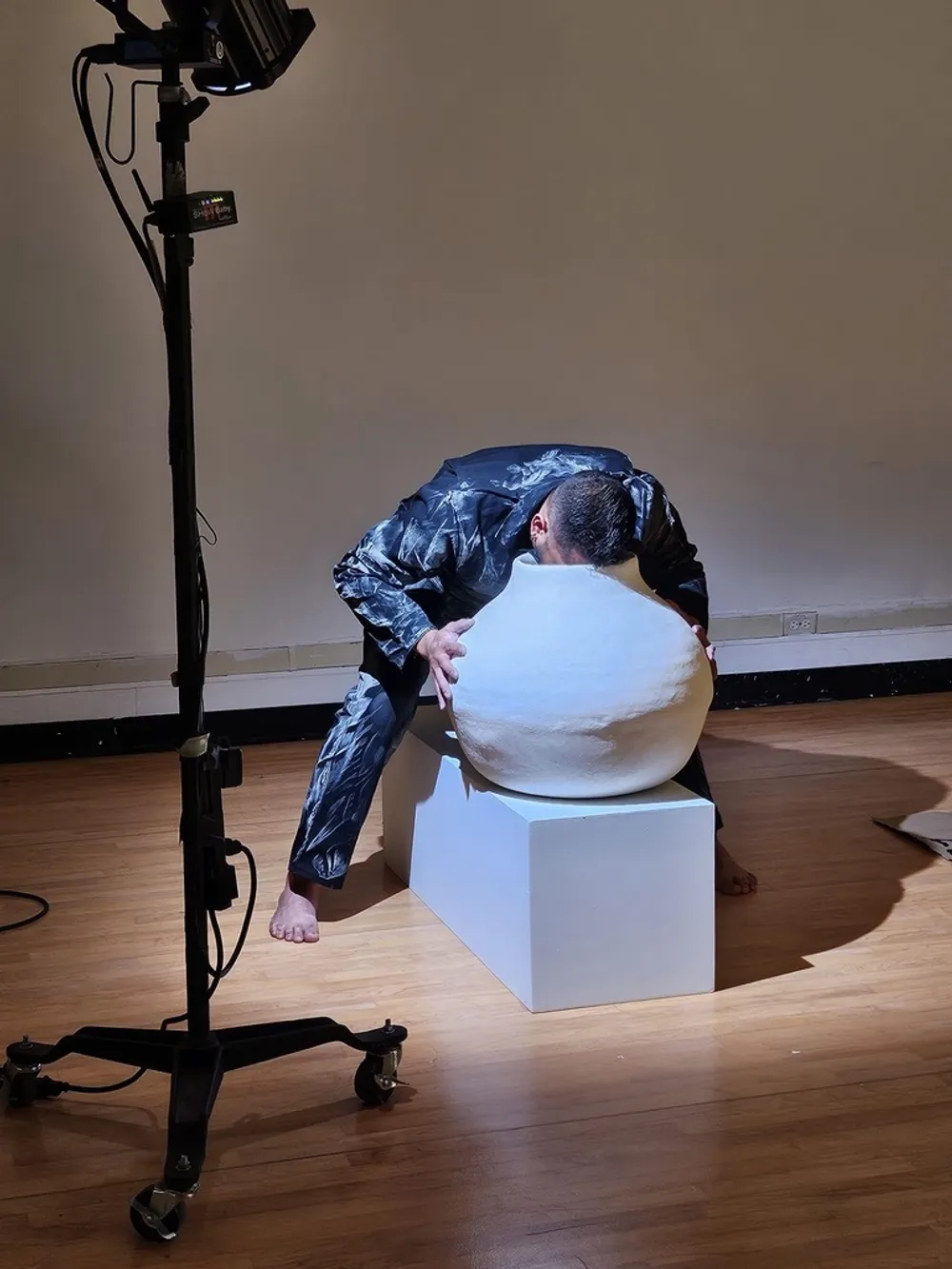
Actor Justin Jain in “Bad Clay,” a show in the 2026 Philadelphia Fringe Festival.Wendi Van Horn
Most Thought-Provoking: ‘Bad Clay’
Justin Jain brings the audience to the cross section of sculptural ceramics and performance art in his original work Bad Clay. An experimental piece about migration, America, and sculpture, it delights in the way Fringe shows often do; by highlighting something new and unexpected. Entering the space, the audience is greeted by a series of ceramics laid around the room, all of which are made by Jain. Throughout the piece, Jain interacts with each ceramic, and also throws some clay on a wheel, creating live sculptures in front of the audience. Conspicuously, there is also a mannequin in the room; dressed as an ICE agent, and draped in an American flag. Ever present, this mannequin provides a feeling of unease that permeates the room, and when it is finally addressed and incorporated into the piece, it results in a truly harrowing moment.
What really stood out about this piece was the prologue. In a prerecorded monologue from Jain, he explains that the piece we’re about to see is an experiment. He goes on to explain how he has struggled to be presented by the Asian Arts Initiative directly, and also how he came to be in the space that the piece is taking place in … as it was not the space he wanted to present in. According to this prologue, he was looked over for various fellowships and grants, which led to having to present this piece as part of the “pay to play” aspect of the Festival. As a Philly artist of some notoriety, Jain still has struggled for financial and creative stability. It was an interesting breath of realism, and a frank conversation about the state of arts funding throughout the city. Additionally, it also offered audiences a “peek behind the curtain” as they heard firsthand about the hurdles of presenting a fringe show, and how it affects performers and producers.
Bad Clay is something I would be intrigued to see again, and to see what it would look like as Jain envisions it fully. It is a piece that raises interesting thoughts and questions, paired with honest reflection, and fully seeing it as the artist intended would be an exhilarating experience.
— F.S.
Shows we’re excited to seeing develop further post-Fringe
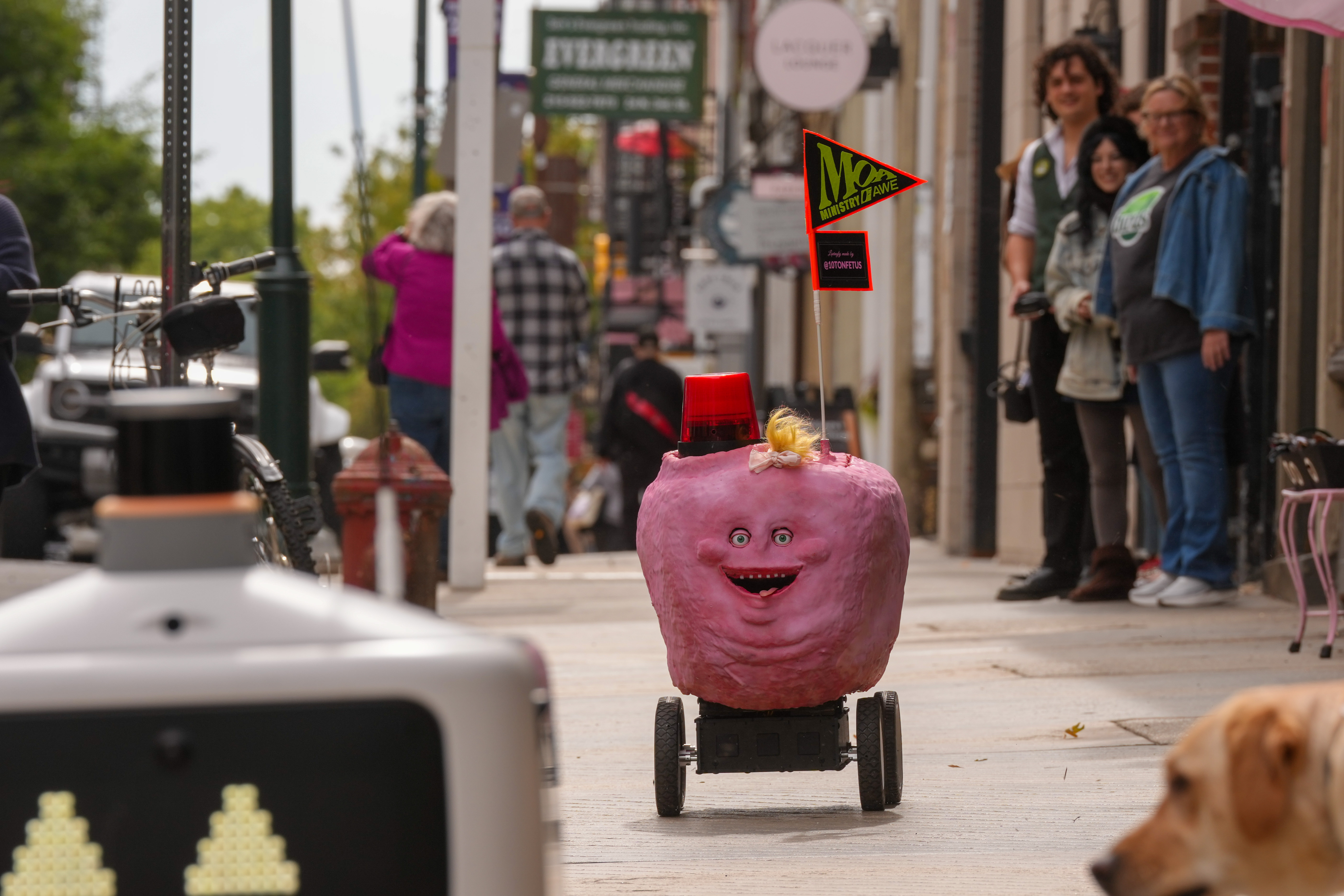
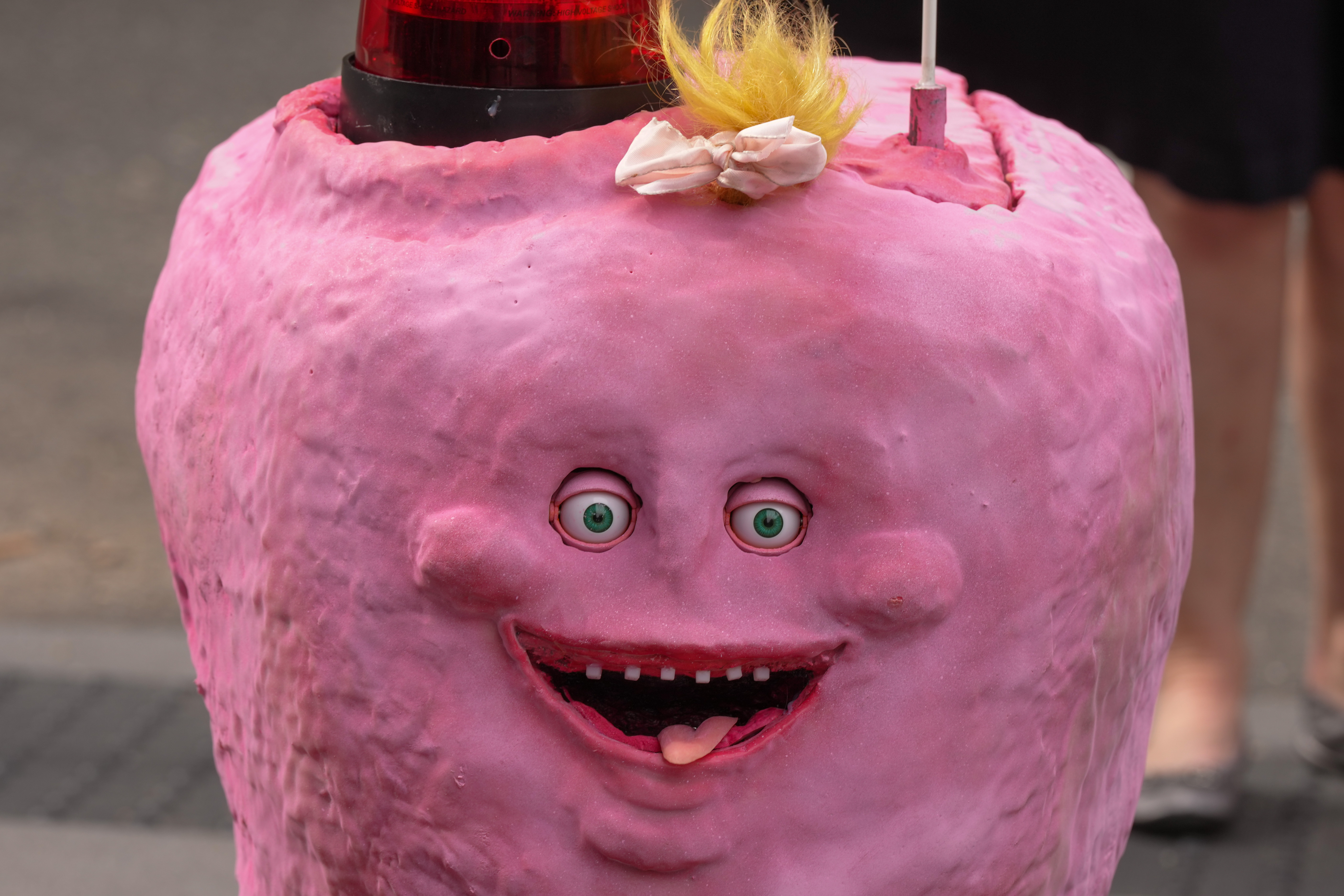
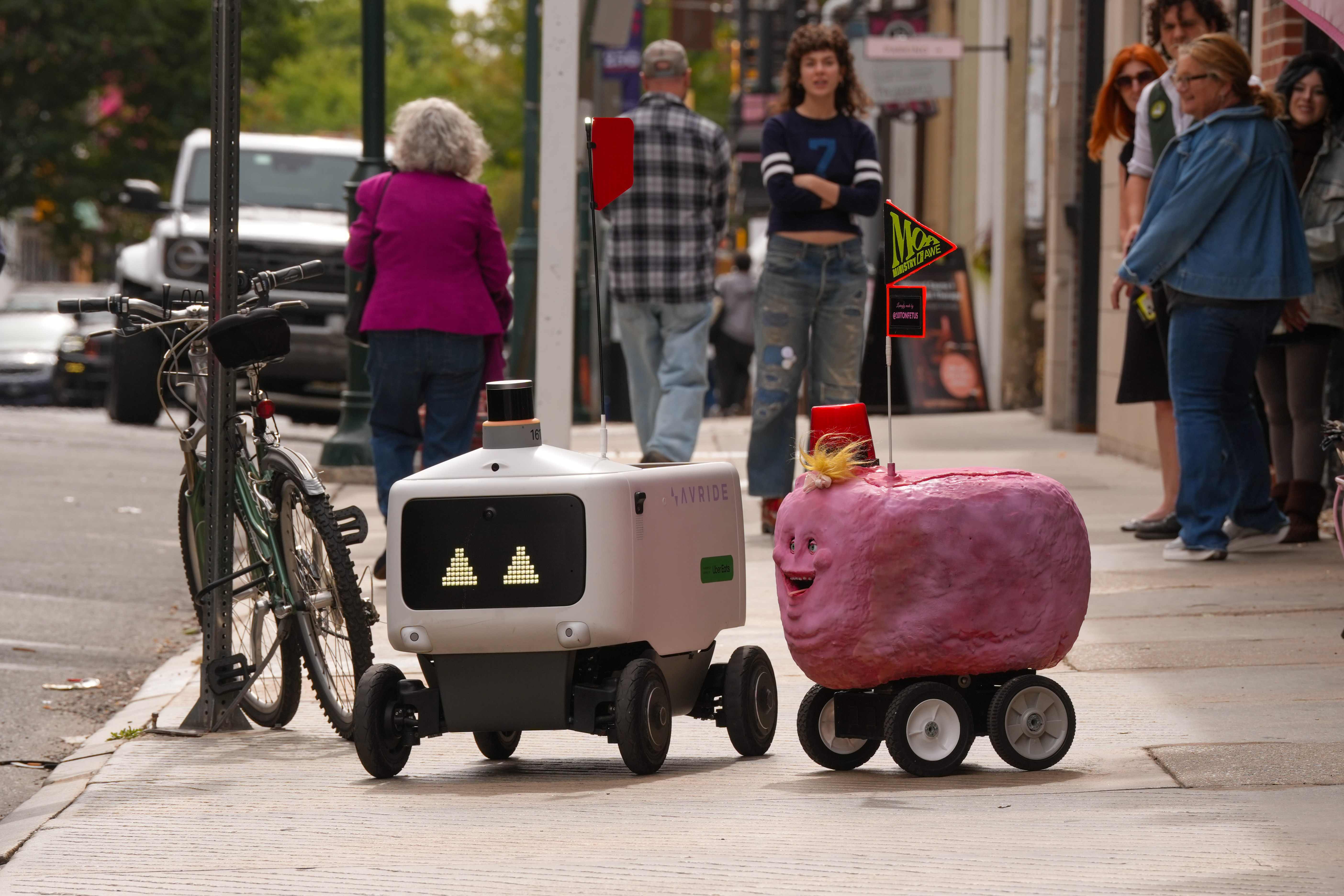
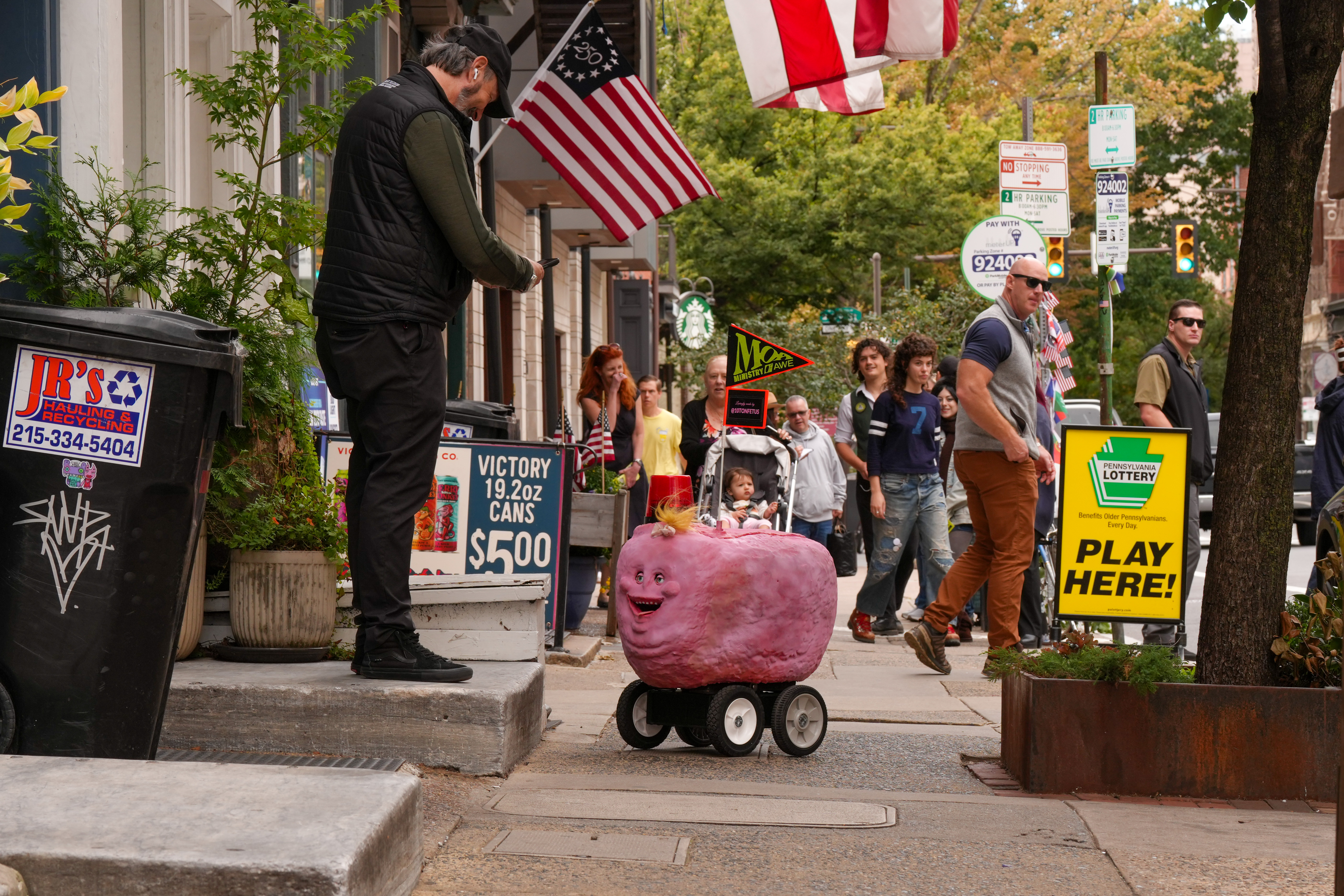
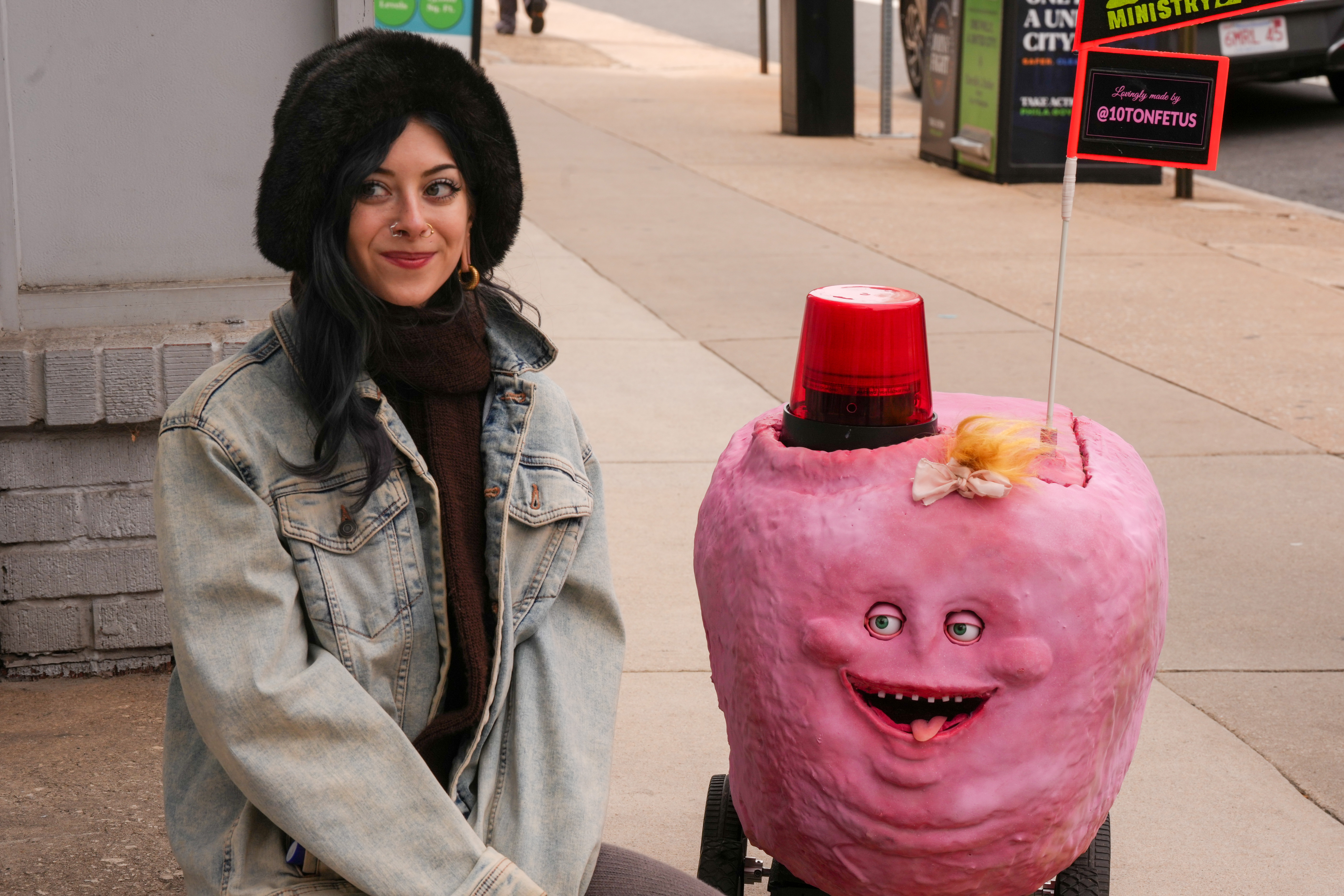
Orifice the Awebot rolled down the sidewalk across from the Betsy Ross House last Friday, striking joy, confusion, and mild terror in those who unexpectedly encountered her — and nobody expects to encounter a two-foot-tall, pink, potato-shaped robot with a dangling tongue, blue eyes, and a shock of blond hair.
As I trailed behind the little bot, I could hear people whisper and scream.
“Oh that’s adorable!”
“What did I just see?”
“It’s terrifying!”
Tourists on top of a double decker bus pointed at her. Philadelphians who didn’t have time for whatever this nonsense was steered clear. But after the initial shock of seeing Orifice wore off, most people smiled and laughed, like Justin Lutz of California.
Orifice the AwebotJessica Griffin / Staff Photographer
Lutz had already seen the Uber Eats robots on our sidewalks while visiting Philly and he immediately recognized that Orifice, despite being approximately the same size, was something quite different.
“I bet you Betsy Ross never thought a little robot would be scooting around in front of her house,” he said. “I love the personality and it’s super cool. We don’t even have these in California.”
I wanted to tell Lutz there’s a lot of great things we have in Philly they don’t have in California, like all four seasons and Gritty and the Phanatic, but I stopped short.
“Have a great time in our city,” I said, instead. “It’s just this weird here all the time!”
I was invited to follow Orifice around Old City with some folks from the Ministry of Awe (MoA), the interactive and immersive art installation created by Philly muralist Meg Saligman that’s housed in a 19th-century Old City bank.
The “Awebot” was born out of one of MoA’s community Co-Creation Nights as people were bouncing around ideas and discussing the Uber Eats robots that have become ubiquitous in Philly since they descended upon our city in March.
“We thought what if [robots] didn’t just bring things, what if they were used for purposes other than just delivery and business and commerce. Would that somehow let us reflect in a different way?” Saligman said.
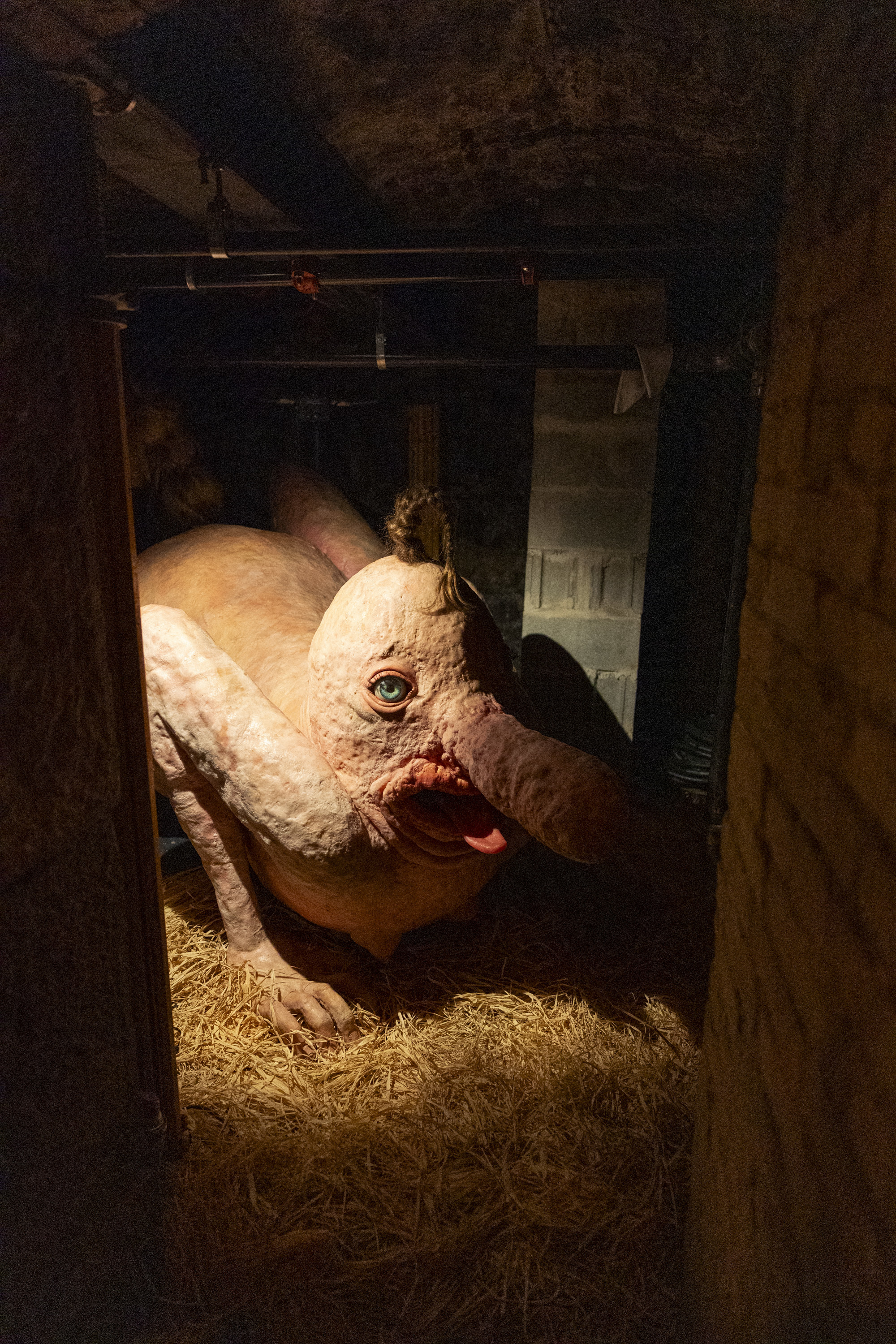
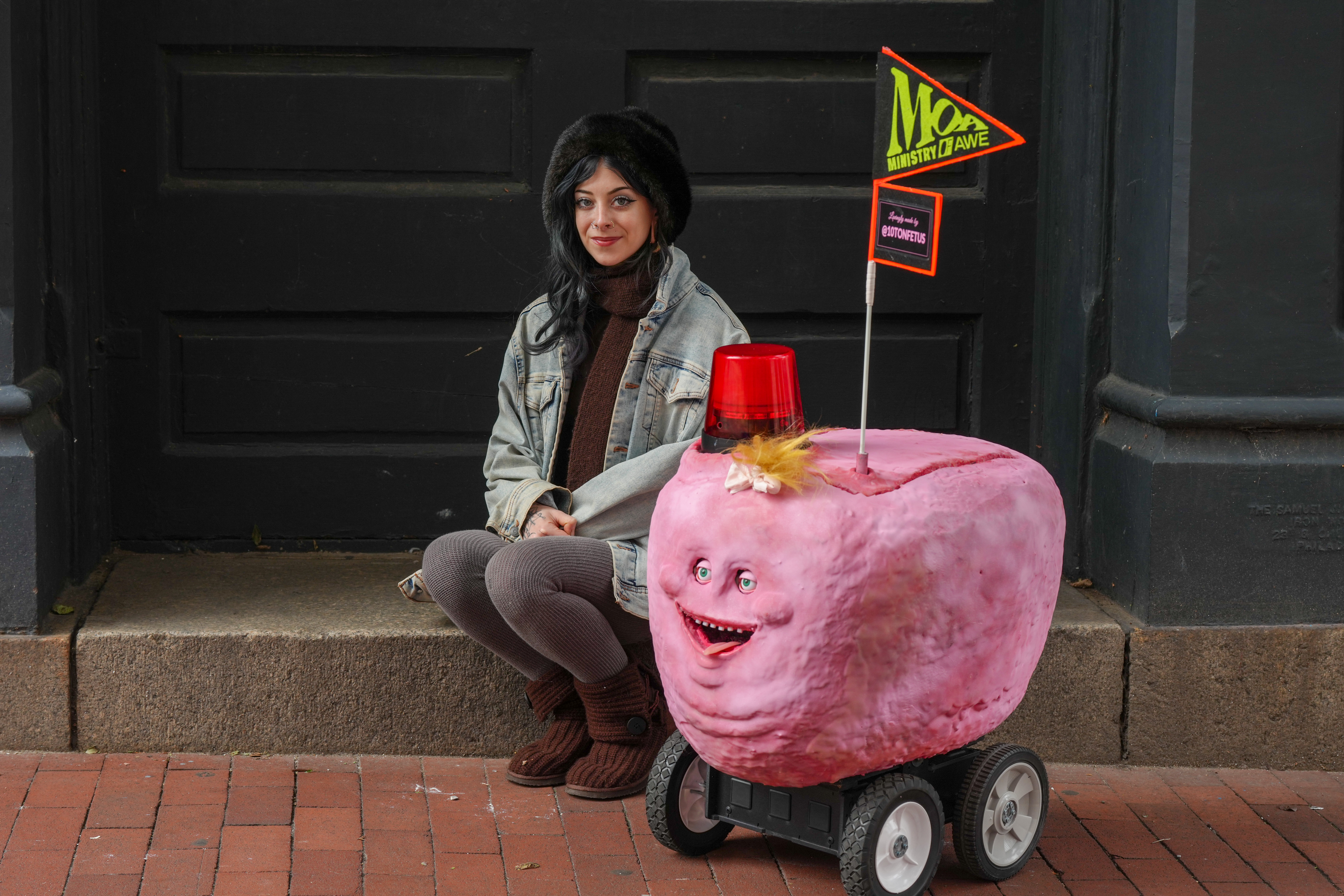
Artist Madison Polidoro (aka 10 Ton Fetus), a sculptor and metal fabricator whose human-animal-hybrid creatures like “Skin Horse” inhabit the bathrooms at MoA, brought Orifice to life. She’s affectionately known as the robot’s “mommy.”
“Skin Horse” is one of the sculptures from artist Madison Polidoro that inhabits the bathrooms at the Ministry of Awe. Tyger Williams / Staff Photographer
“What I find interesting about the Uber Eats robots is that they do create this kind of horror, this dystopian feeling in a lot of people,” Polidoro said. “So I was excited about the idea of making my own robot creature to sort of do an opposite thing where it could inspire something lighthearted and silly and fun and kind of magical.”
Polidoro fabricated Orifice’s base out of aluminum and left an empty vessel in the center, so it can carry things. She made the skin out of weatherproof urethane rubber and included an orifice on the robot’s rear end, which is where it gets its name.
Orifice is driven via a wireless remote but the range of the controller is quite far (at least half a city block), so the driver can remain pretty inconspicuous. The Awebot’s large blue eyes blink independently at intervals, but they can also be controlled by the operator. The dangling tongue, however, remains permanently out.
Artist Madison Polidoro with her creation, Orifice the Awebot.Jessica Griffin / Staff Photographer
“She’s a sweetie pie who’s curious and likes to explore and try new things. And she loves attention. She’s kind of like a dog,” Polidoro said of her creation.
‘They’re gonna fight!’
As a team of folks from MoA, including Saligman and Polidoro, set out with Orifice in Old City last Friday, they didn’t even get a few hundred feet down the block before people stopped to pet the Awebot and ask questions.
“Is this a good hair day or a bad day for it?” a man in an Eagles jersey asked.
“Does it poop?” another guy wondered.
He was assured it did not.
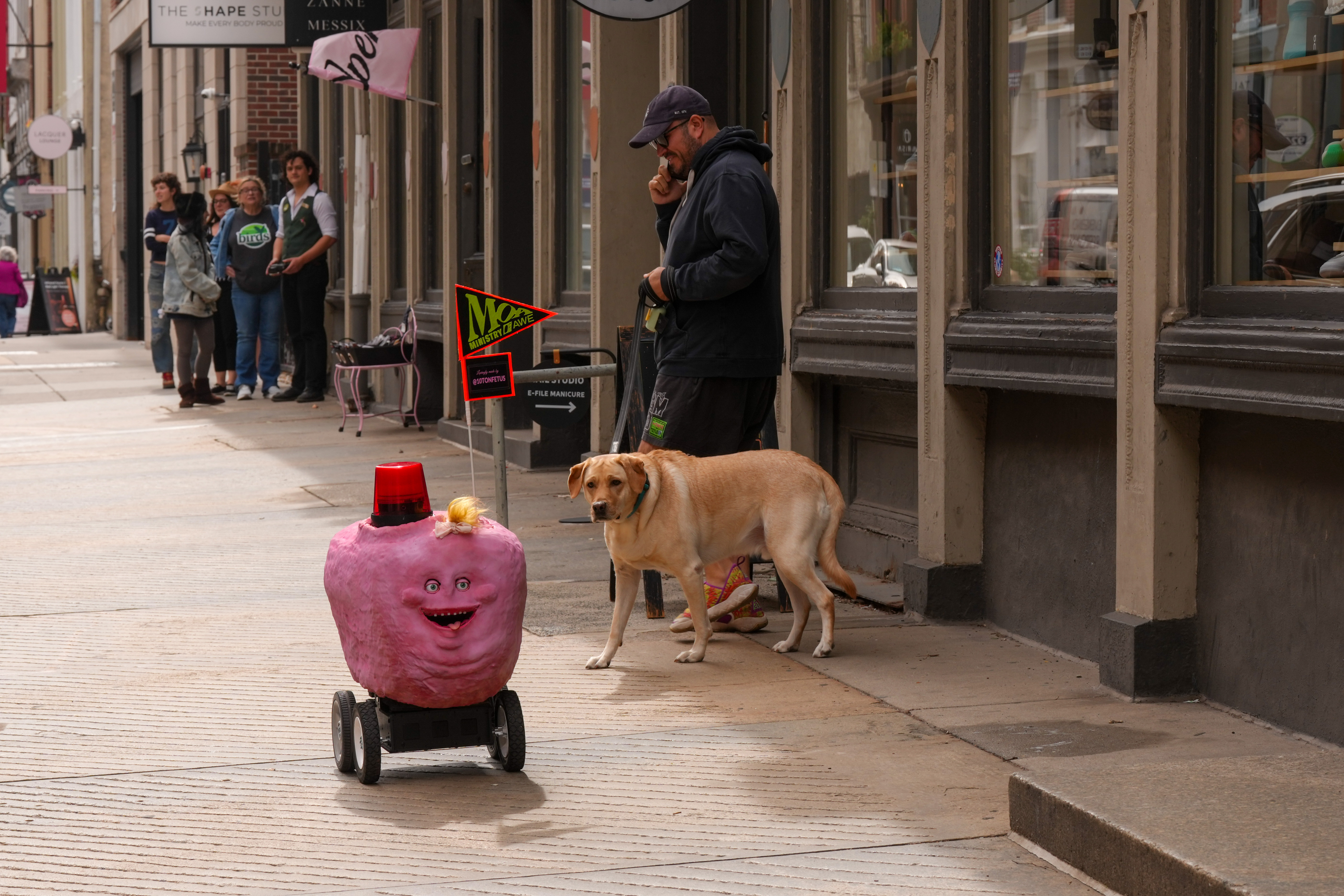
This yellow Labrador retriever was very dubious of Orifice the Awebot. Jessica Griffin / Staff Photographer
As Orifice rolled down the sidewalk, she scared a few dogs, people pulled over their cars to see her, and others ran across the street to take her picture.
An Xfinity van driver sitting in his vehicle looked stunned as we passed. Then we made eye contact, he shook his head, I shrugged my shoulders, and were shared an “only in Philly” laugh.
At one point, Saligman spotted an Uber Eats robot down the sidewalk and ran to stand in front of it and stop it so Orifice could meet it face-to-face.
“They’re gonna fight!” Polidoro said.
Alas, the meeting did not result in a new kind of BattleBots, but it was clear that at one point, a human must have taken control of the Uber Eats robot, because it skillfully maneuvered its way around Orifice and Saligman. I can only imagine what the person on the other end of that camera thought.
An Uber Eats robot rudely ignores Orifice the Awebot on the sidewalks of Old City. Jessica Griffin / Staff Photographer
All the while, MoA staffer Jordan Rampulla — who served as Orifice’s “conduit to humanity” — encouraged people to interact with the robot, handed them fliers for the MoA, and told them to click a QR code on an MoA flag attached to the robot, which leads to a landing page about the creation on the MoA website.
Orifice is not just MoA’s creative response to the dystopian Uber Eats robots, it’s also a inventive marketing tactic. While some people we met had heard of MoA, others had not, and they seemed interested in learning more about the experience after meeting its Awebot ambassador.
‘Bringing delight and surprise’
As the little pink robot passed by the little pink Tarte’s Pastry Shop on Arch Street near Second, owner Teresa Wall popped outside of her business, stunned by what she saw.
“It’s hysterical! We need more of that. I love it,” Wall said. “Any of this in today’s climate is great, any joy and laughter, we need it more.”
When Stephanie Gentle, who was out walking her French bulldog, Frank, first saw Orifice, she worried it might be a new kind of delivery bot. She was relieved to learn it was a creation of the MoA.
“I would much rather have this on the streets than an Uber Eats robot. It’s much less scary and much less evil,” Gentle said. “I’m so happy I ran into this. This made my day.”
A passerby takes a photo of Orifice the Awebot as she roams the streets of Old City. Jessica Griffin / Staff Photographer
I too would rather have Orifice wandering around Philly than those Uber Eats robots any day. She’s the rare kind of robot that connects humans with each other and illustrates the creativity of humanity in a unique way.
“When people see a lot of my creatures they intuitively connect with them through these anchoring points of the eyes and the skin and the hair and the orifices. Those are things that sort of force you to engage with another person when you look at them and meet them,” Polidoro said.
“They also force you to engage with my work in a very specific way, and I think that that’s something that I’ve really been leaning into and enjoying lately in a time of food-delivery-robot-dystopian-level technology that’s sort of separating us all from those very basic, but fundamental, important human connections.”
Polidoro and Saligman have big dreams for Orifice’s future. They’d like to take her to an Eagles tailgate and maybe out to lunch at Parc one day. If it doesn’t rain this Friday, they’re planning on bringing her to Elfreth’s Alley for the 11th anniversary celebration of the destruction of hitchBOT.
Orifice will make special appearances at MoA and her upcoming public appearances around the city will be announced on MoA’s social media channels, though she could pop up anywhere, unannounced, any day.
“She’s part of our bringing delight and surprise and letting it ripple through the city,” Saligman said.
Artist Madison Polidoro with her creation, Orifice the Awebot. Jessica Griffin / Staff Photographer
Crime and punishment in colonial America was a brutal business. Incarcerated people were barely fed, were often beaten, and fell ill from unsanitary conditions.
Inspired by the benevolent Quaker tradition, Benjamin Rush and Benjamin Franklin decided, in the late 17th century, to institute a new system through which people in prison could atone by reflecting and reading the Bible.
The catch was they had to be “penitent” all alone, without any human contact. With the birth of solitary confinement, came Eastern State Penitentiary.
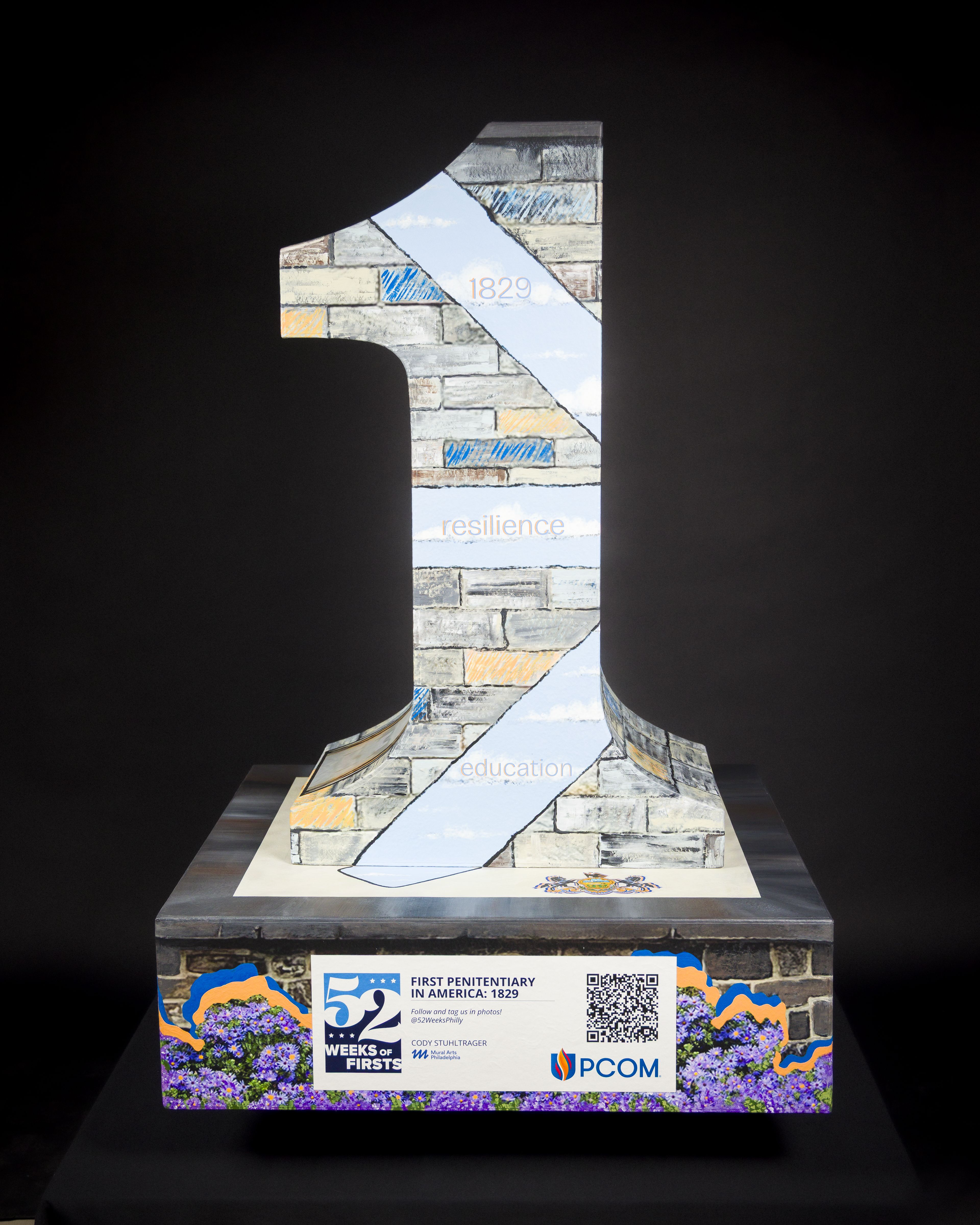
Artist Cody Stuhltrager captures the distinctive aesthetic of Eastern State Penitentiary and its enduring presence in Fairmount in this No. 1Cody Stuhltrager courtesy of Colibrí Workshop
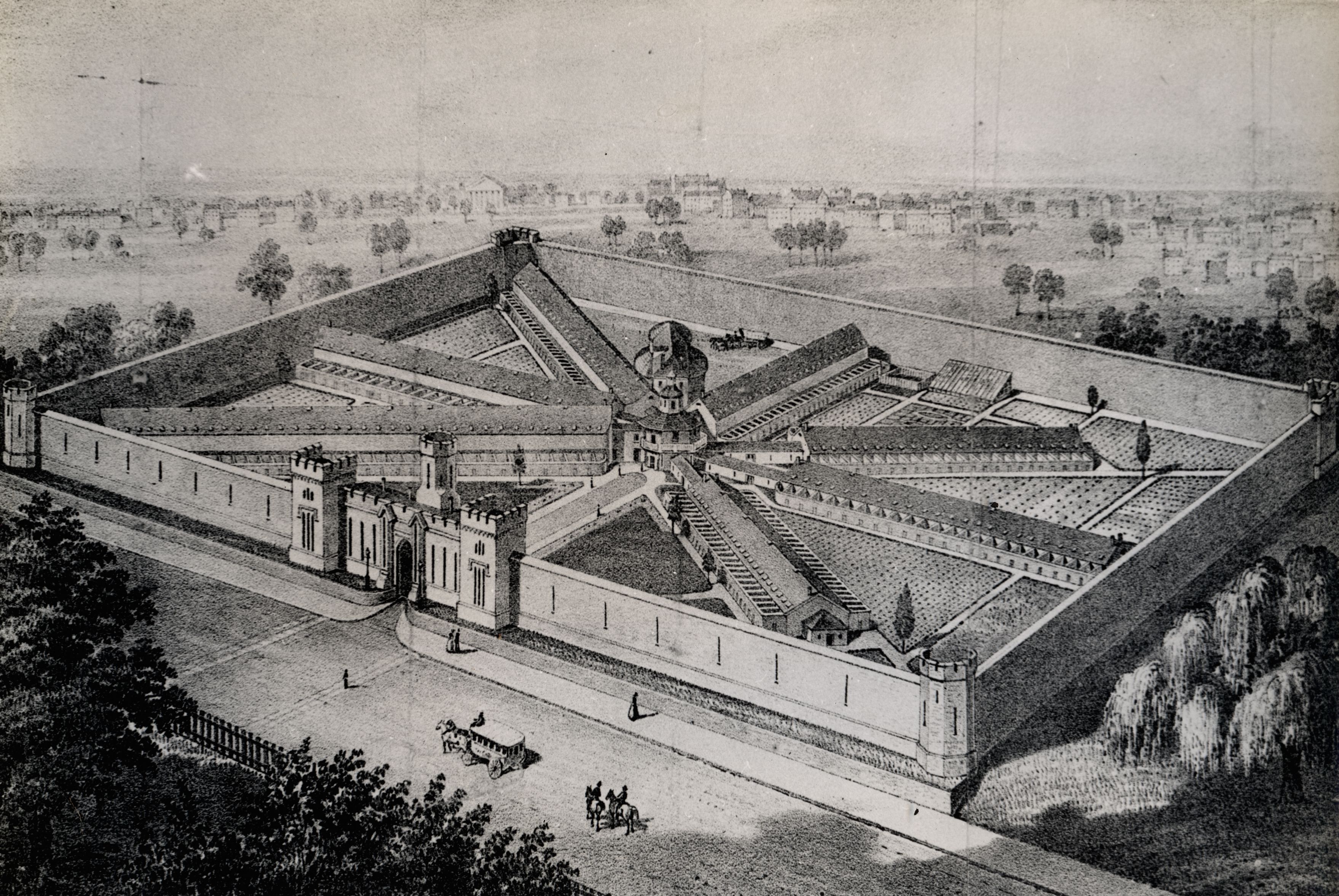
Construction started in 1821 and in 1829, the 11-acre institution opened on what was once a cherry orchard situated at the intersection of Fairmount Avenue, Corinthian Avenue, Brown Street, and 22nd Street. Nestled behind a 650-foot stone wall were 250 rooms.
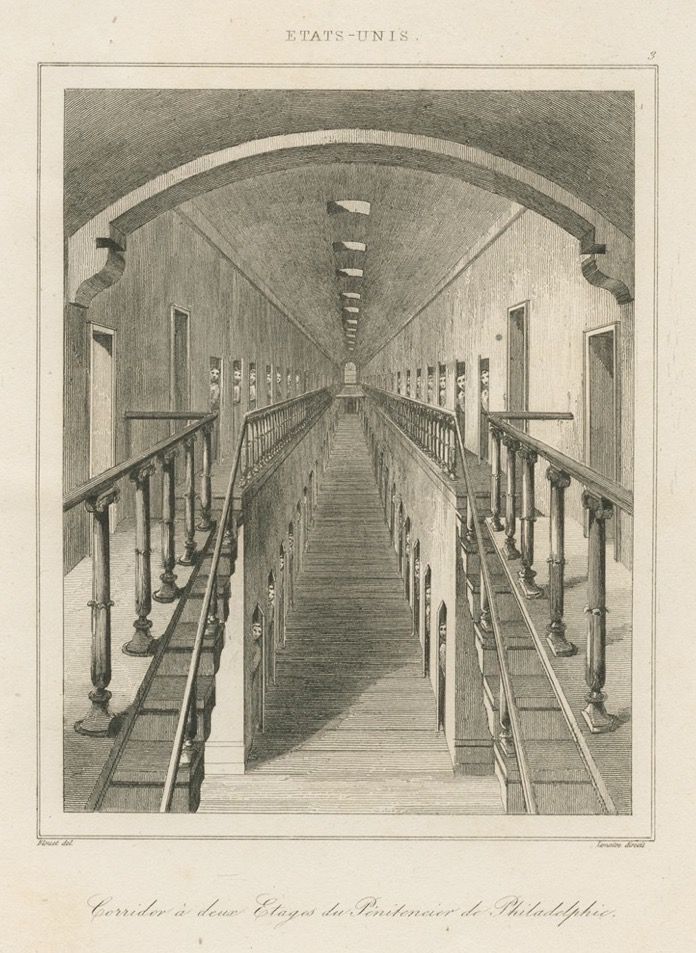
The intention was that every man, woman, and child would have their own cell and would neither see nor talk to another human being.
“Eastern State is considered the first penitentiary in America because it is the first institution that uses solitary confinement for the entire length of the inmate’s incarceration,” explained Kerry Sautner, president and CEO of Eastern State Penitentiary Historic Site, Inc.
America’s first penitentiary — the country’s first true correctional facility — will be remembered Saturday from 11 a.m. to 1 p.m. at Eastern State Penitentiary.
The observance is part of the Philadelphia Historic District’s 52 Weeks of Firsts Celebrations. The weekly day parties, or firstivals are part of a yearlong citywide celebration of America’s 250th birthday.
Eastern State Penitentiary’s legacy of torturous solitary confinement makes this a somber celebration.
The institution’s first prisoner was 18-year-old Delaware County burglar Charles Williams. Within a few years after his arrival, Eastern State became a model for prisons and penitentiaries throughout the country, Sautner said. Still, its controversial methods of rehabilitation were considered cruel.
Eastern State Penitentiary cellblock in 1837.Eastern State Penitentiary
During his first visit to America, author Charles Dickens, who toured the penitentiary, wrote, “I believe that very few men are capable of estimating the immense amount of torture and agony which this dreadful punishment, prolonged for years, inflicts upon its sufferers.”
“People quickly learned that solitary confinement was a cruel form of punishment,” Sautner said. “But they didn’t to let it go easily.”
Despite the formation of the Pennsylvania Prison Society — responsible for part of the state constitution that stressed on the rights of incarcerated people — solitary confinement lasted through the late 19th century. It remained a part of the prison’s culture until it was completely removed from the books in 1913.
During the early 20th century, each cell housed two people.
“We have evidence of a proclamation banning solitary,” Sautner said. “And we found evidence of small Christian gatherings celebrations [within Eastern State] of Jewish holy days in September.”
(Although the penitentiary was founded in the Quaker tradition, there is evidence that prisoners worshipped in Christian, Jewish, and Muslim faiths within its walls by the 19th century.)
In 1965, it was designated a national historic site by the federal government. By the early 1970s, Eastern State Penitentiary was immensely overcrowded with more than 2,000 prisoners. It closed in 1971 and its population was moved to Graterford.
Throughout the 1980s, the building remained mostly abandoned except for a few sporadic instances like when it served as the set for the filming of Tina Turner’s 1985 single “One of the Living” from the Mad Max soundtrack.
In the late 1980s, the city began looking at ways to restabilize what many considered an eyesore in the center of Fairmount, a neighborhood that was in the midst of being revitalized. Planners considered turning the space into condos, a shopping center, and even a youth hostel.
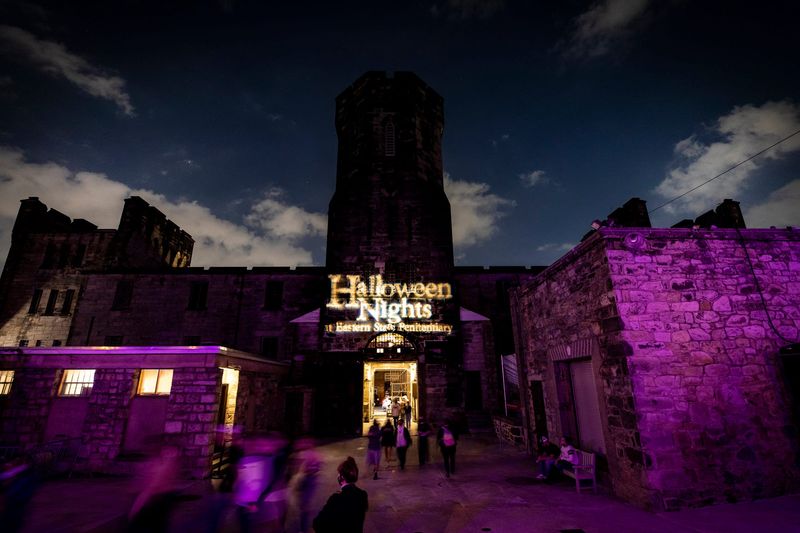
Eastern State Penitentiary hosts Halloween Nights, a festival-like attraction with characters dressed as scary clowns, zombies, vampires and other ghouls — but not prisoners or prison guardsEastern State Penitentiary
In 1988, at the urging of a task force of concerned architects, preservationists, and historians, Philadelphia Mayor Wilson Goode halted the process of selling the site. And in 1994, it opened as a nonprofit historic site offering group tours under the leadership of Sally Elk.
1997 marked the first “Terror Behind the Walls” the annual haunted house attraction. In 2021 it was rebranded as “Halloween Nights,” a less spooky, more gentrified version with a beer garden.
This week’s Firstival is Saturday, Oct. 3, from 11 a.m.-1 p.m., at Eastern State Penitentiary at 2027 Fairmount Ave
Netflix’sA Different World, a reboot of the 1987 NBC original, is what I thought Bel-Air would be. It remains true to the original show’s characters: Whitley (Jasmine Guy) is still an entitled snob, Dwayne (Kadeem Hardison) remains as thoughtful as he is brilliant.
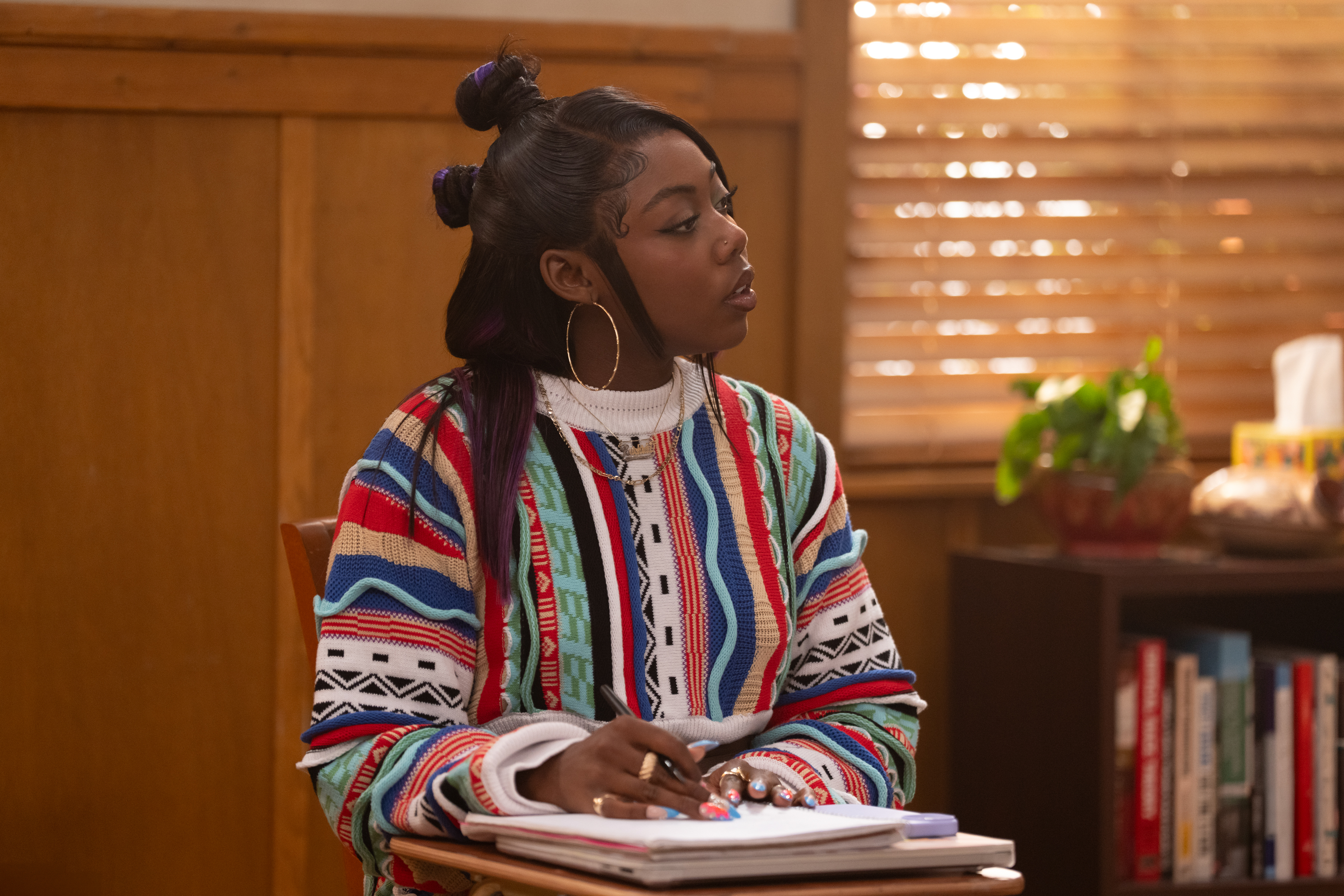
And Dwayne and Whitley’s daughter, Deborah (Maleah Joi Moon), is a delightful blend of her mom’s sense of bougieness and her dad’s altruism. It’s a stone-cold gas that her favorite accessory are flip glasses just like Dwayne Wayne. (It made me want to dig mine out.)
The obvious Philly connection is North Philly’s own Bill Cosby, who created the show in 1987 as spinoff to the immensely popular The Cosby Show. Cosby starred as Huxtable patriarch Cliff Huxtable and father to Denise Huxtable (Lisa Bonet). In the original A Different World, Denise attended her parents’ alma mater, the storied fictional Virginia-based historically Black school Hillman College.
Alijah Kai Haggins as Rashida Duvall in “A Different World.”Netflix
But there is another more subtle Philly association in Netflix’s version in actress Alijah Kai Haggins, who plays Rashida Duvall, Deborah’s roommate. Rashida’s mother (on the show and in real life) is Tichina Arnold (Martin and The Neighborhood) and, though Haggins grew up in Los Angeles, her dad is Carvin Haggins, the Grammy-award-winning Philly-area producer who has worked with Jill Scott, Jazmine Sullivan, Chris Brown, and Justin Timberlake. Haggins also happens to be Scott’s cousin.
See? Without Philadelphia, we wouldn’t have A Different World — the original or its highly anticipated reboot.
I blew through all 10 episodes of the Different World reboot this weekend and cheered at the return of familiar faces: Whitley, Dwayne, Freddie Brooks (Cree Summer), Jaleesa (Dawnn Lewis), Ron (Darryl M. Bell), and Col. Taylor (Glynn Turman).
I swooned at a few new characters, like Coach Bryce Coles (Cliff “Method Man” Smith), a total shout-out to Gen Xers who came of age with the show. It cracks me up to think that during the original show’s run, Smith was in the New York City streets rapping about how dope it was to be M-E-T-H-O-D Man as a star member of the Wu-Tang Clan.
(From left) Dawnn Lewis as Jaleesa Vinson-Taylor, Glynn Turman as Col. Bradford Taylor, Kadeem Hardison as Dwayne in “A Different World.”Netflix
For a few hours, I was back in my New York bedroom as a teenager inspired by my television role models to go to college.
Where did all the time go?
Much like the original A Different World, produced by Debbie Allen— who reprises her role as the school psychologist and like her character of yesteryear, urges students to “relax, relate, and release” — Netflix’s version deals with timely issues.
Allen and showrunner Felicia Pride (Bel-Air and Gray’s Anatomy) deftly handle the current presidential administration’s attack on Black history, rampant mismanagement of funding by university administrators, and what it’s like for this generation of college students to engage with professors and each other after almost two years of COVID-19 lockdown.
This image released by Netflix shows Debbie Allen in a scene from “A Different World.” Uncredited
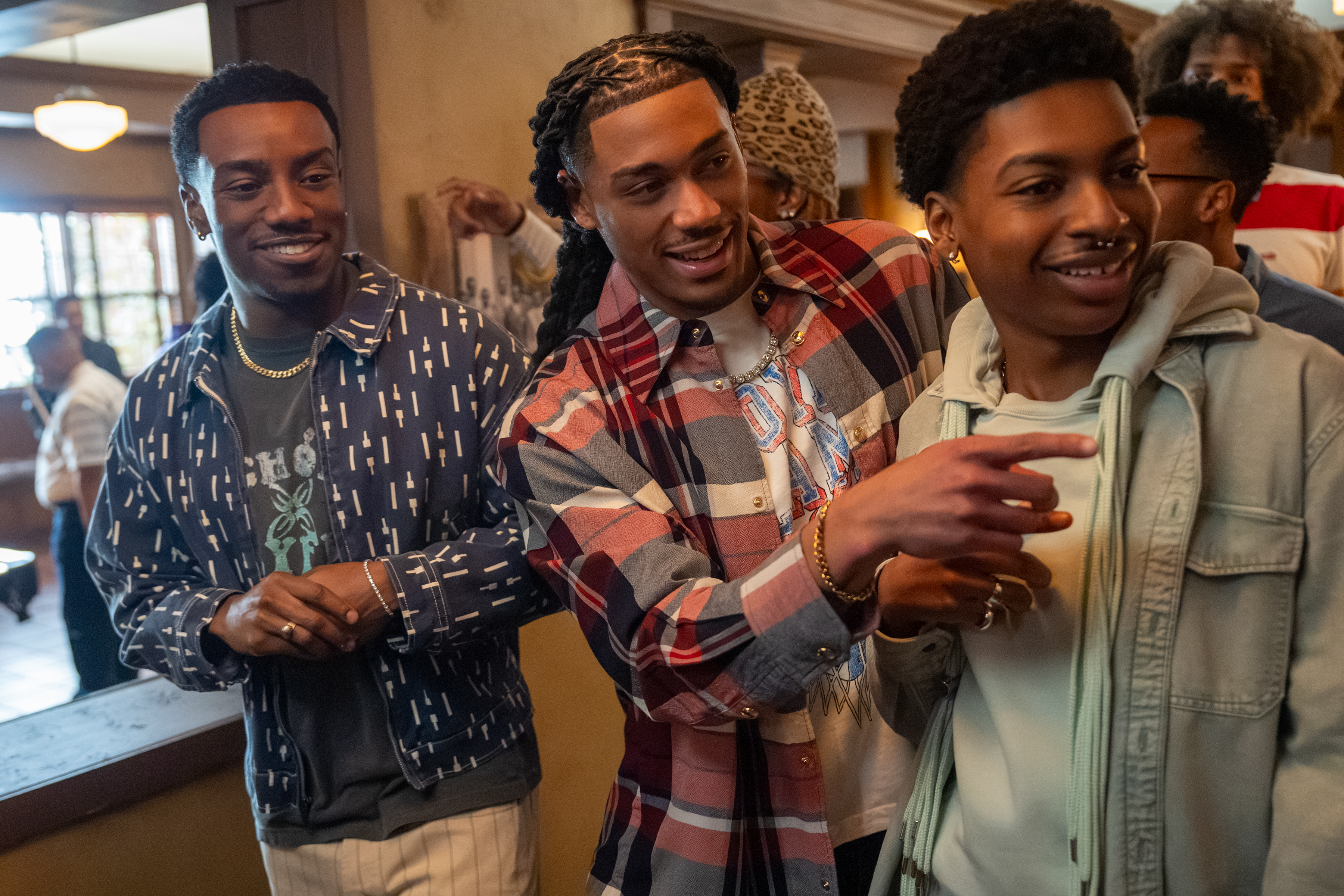
The three male leads — Cornel Young IV (Shaquille Johnson), Amir Rodale (Jordan Aaron Hall), and Chibuikem Uche (Kojo Achebe) — are much more open about their emotions and sexuality than my peers ever were.
Men who were young in the ’90s — now in their late 40s and 50s — might learn a thing or two from them. For example, Amir is a gay man who is open and honest about his sexuality. If we had such nuanced queer characters in the ’90s, perhaps men wouldn’t have felt the need to hide their sexuality and be on the “down low” and risk their partner’s lives by exposing them to HIV.
Today’s A Different World even addresses Gen Z church girls who are firm in their faith without judging friends who may have different relationships with God. Hazel Henry (Kennedi Reece) is as empathetic as she is passionate about religion.
This image released by Netflix shows Chibuikem Uche, from left, Cornell Young IV, and Jordan Aaron Hall in a scene from “A Different World.” Quantrell Colbert
It’s a great reboot. Despite the rude internet chitchat on how Guy and Summer look older — Duh, they are nearly 60 now — the Philly associations stand out the most to me.
Among others:
Hillman is based off an historically Black college of which Cheyney University is the first in the nation. Again, no Philly, no Hillman, no A Different World.
Jada Pinkett Smith, back in her breakthrough role as the rambunctious Lena James from Baltimore, is a much more sophisticated version of her militant younger self. (No spoilers here.) Smith starred in A Different World years before she made the ultimate West Philly partnership, her marriage to Will Smith.
Maleah Joi Moon as Deborah and Vincent Jamal Hooper as Ellington in “A Different World,” the Netflix reboot.Netflix
My greatest wish is that at some point in Season 2, Patti LaBelle returns as Adele Wayne, Dwayne Wayne’s mother and Deborah’s grandmother. I wonder if Deborah will have replaced Dwayne as her favorite little “chipmunk.”