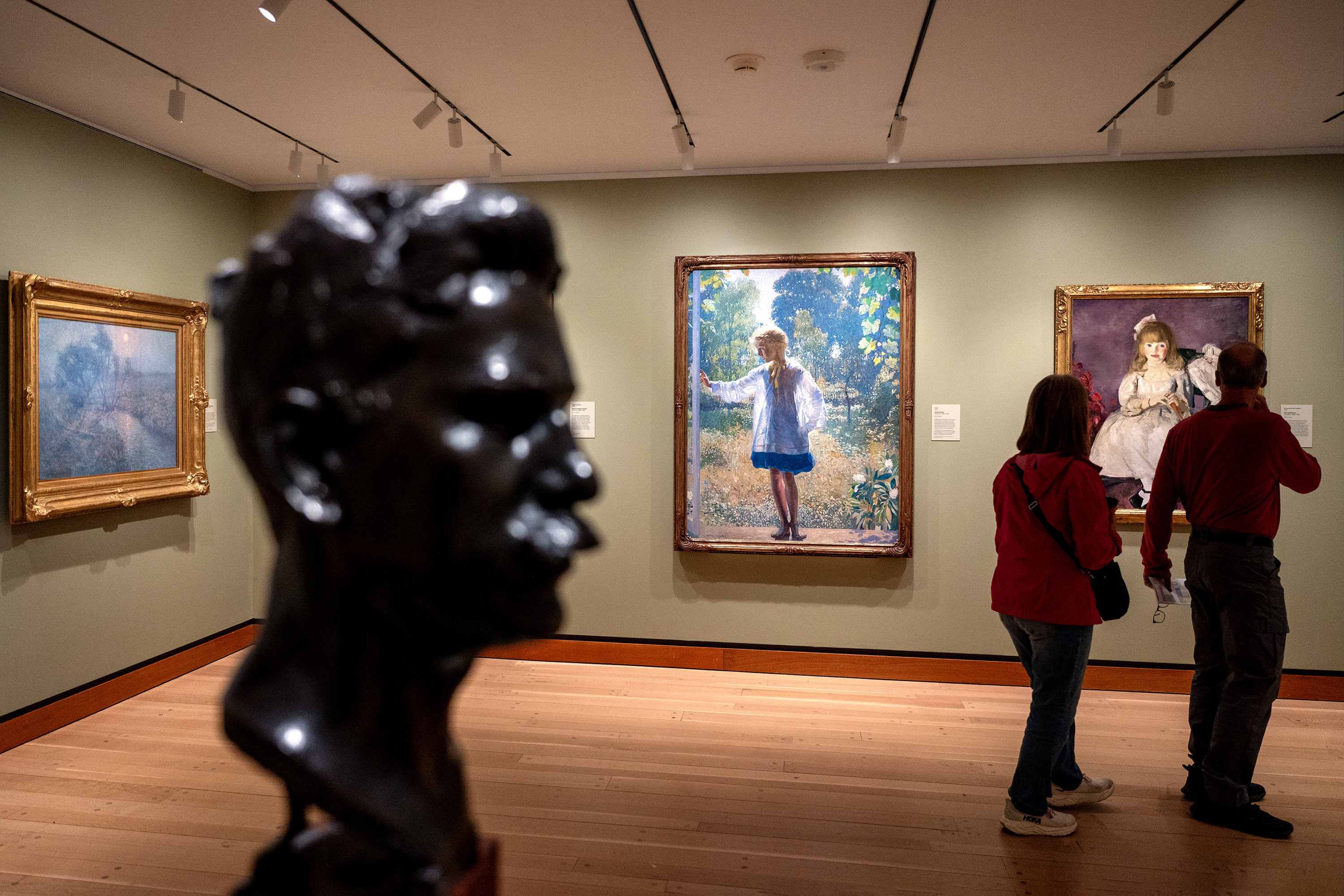
To find “A Nation of Artists” at the Philadelphia Museum of Art, you walk from the Great Stair Hall down a long gallery lined with art that’s not part of the show. The path zigs left and tightens into what looks like a service corridor, and then zags right past the bathrooms.
After this distinctly unceremonious approach, you’ve arrived at one of the museum’s most spectacular events of recent years.
Not only is “A Nation of Artists” momentous — it is billed as the “most expansive presentation of American art ever mounted in Philadelphia” — but it comes with the added juice of inaugurating the museum’s newly renovated American wing on the second floor after a 14-month closure.
The occasion brings yet another distinction: amazingly, after three more galleries open in the wing, it will be the first time in a decade that all of the galleries in the main building will have been open at the same time.
The odd journey to the second-floor American galleries has long been in place, but it seems especially odd now. It would have been nice to reopen this major piece of real estate with more of an architectural drumroll than a drab, winding hallway, especially for an institution that, after the tumultuous year it’s had, could use a thing or two to celebrate.
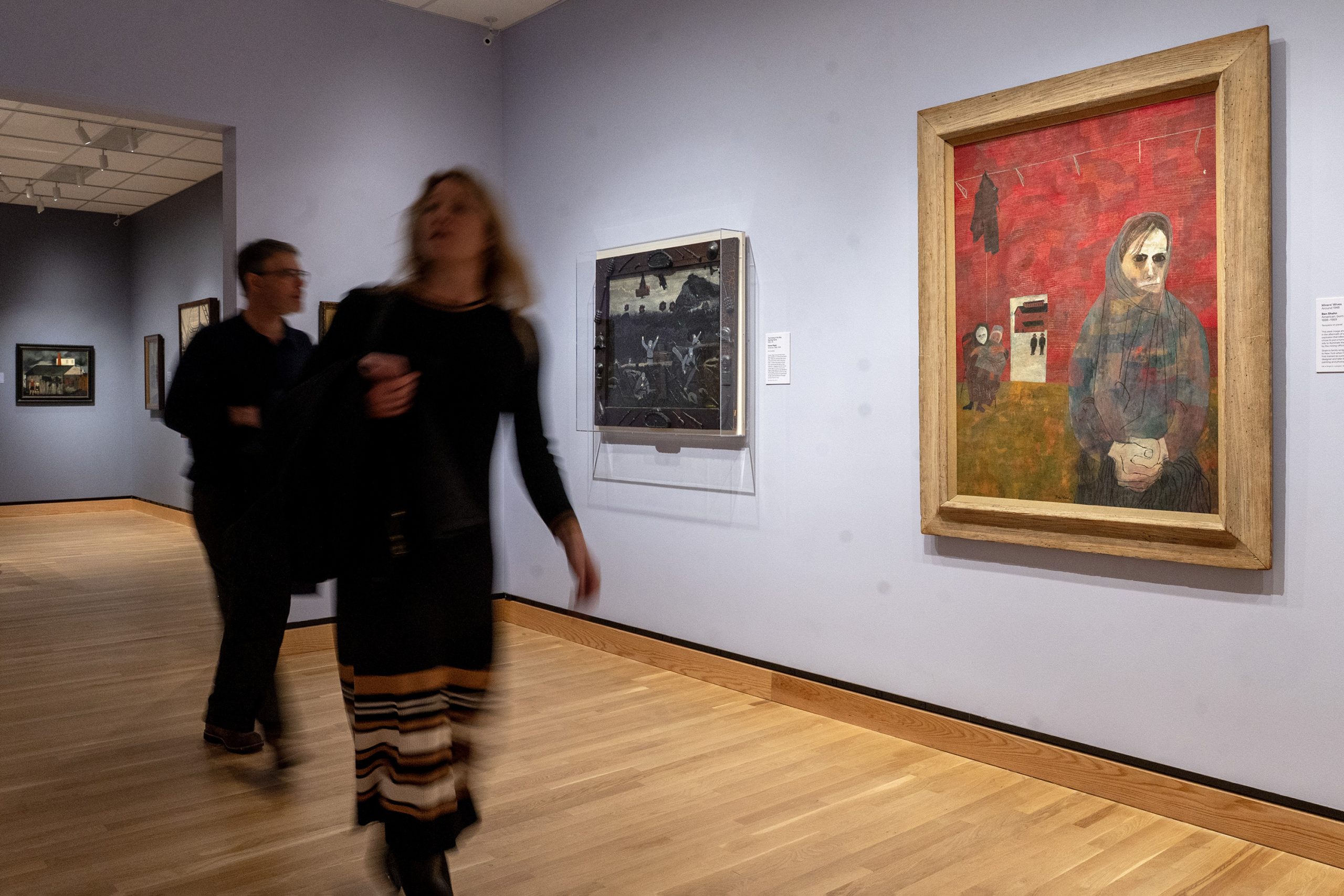
It might also be easy to miss the show’s greater significance to the museum and its cohost, the Pennsylvania Academy of the Fine Arts. “A Nation of Artists,” which opened in April with more than 1,000 works at both museums, arrives as a bolt of ambition as the groups work their way through deficits and reorganizations and remind audiences and funders that beyond crisis, there is art, and it is glorious.
The show is the city’s major visual arts celebration of the nation’s 250th anniversary, and while it’s an impossible task to compress the story of art in America into any single show, the overall image that emerges is not a cohesive snapshot, but a fascinating mirror.
There’s sometimes a random, almost improvisatory feeling to “A Nation of Artists” — despite the show’s attempt to place works around themes like the American West or inequity — because America is itself ever-random and improvisatory.
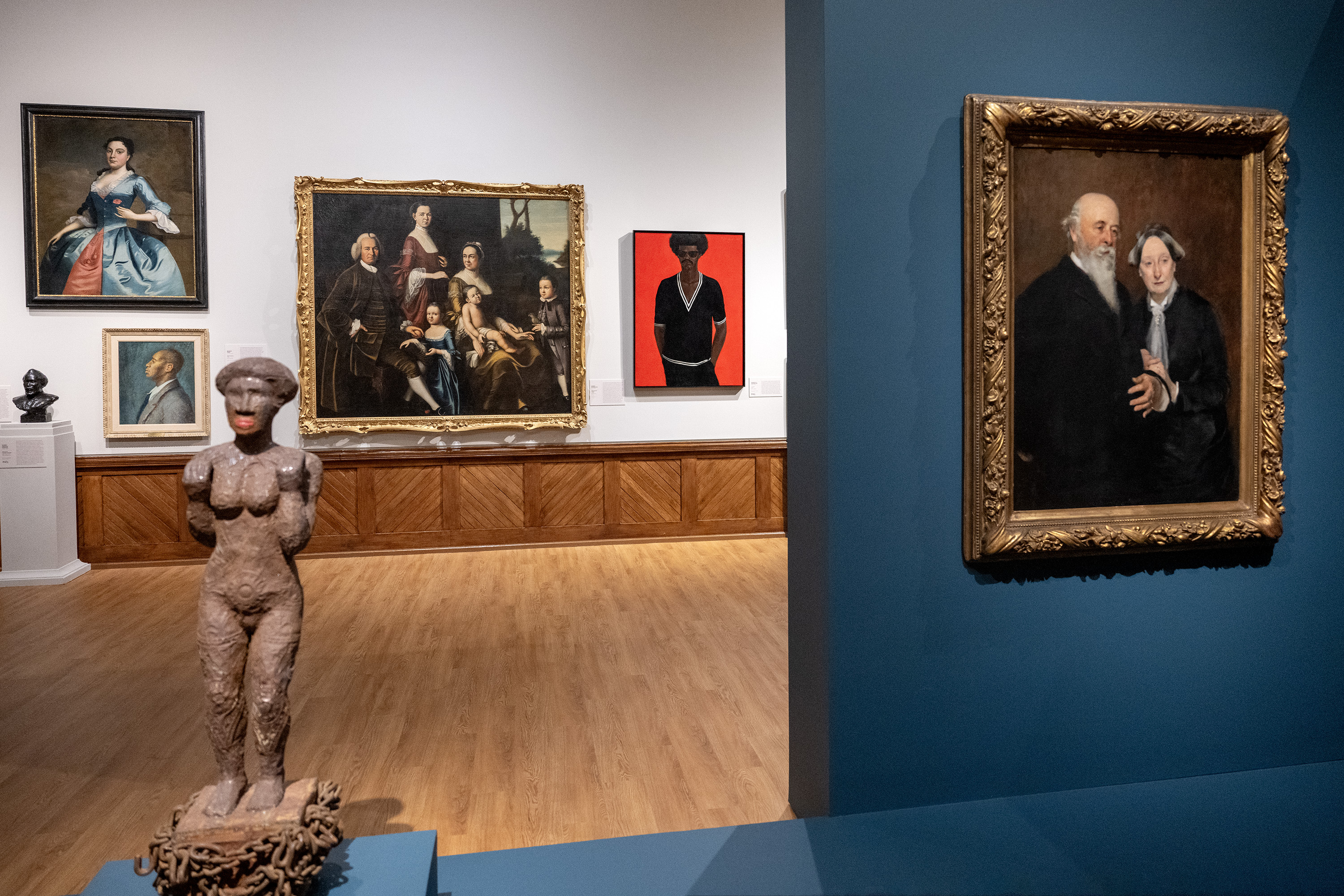
More than 120 works from the collection of John and Leigh Middleton and their family are augmenting “A Nation of Artists.” But after the show closes and the Middleton works are gone, PAFA will put in place a newly curated permanent collection, and the PMA will be left with a sweeping look at American art that starts on the first floor with earlier works and proceeds to the second to bring it up to the mid-20th century.
In other words, “A Nation of Artists” absorbs the Middleton works, but also spotlights the incredible riches in residence nearly all the time. That’s no small thing at a time when arts and culture in Philadelphia is struggling for engagement in the attention economy.
A crisp reset at PAFA
At PAFA, the outside world seems to creep in in ways both positive and worrisome.
How can you admire the fruitful pedagogy at PAFA on display by generations of academy students and instructors without feeling concern for the place? The relationship between the museum and school — a specific artistic legacy unique to Philadelphia — is what makes PAFA special, and it remains to be seen whether a recently revamped certificate program at the school is the ultimate answer, artistically or financially.
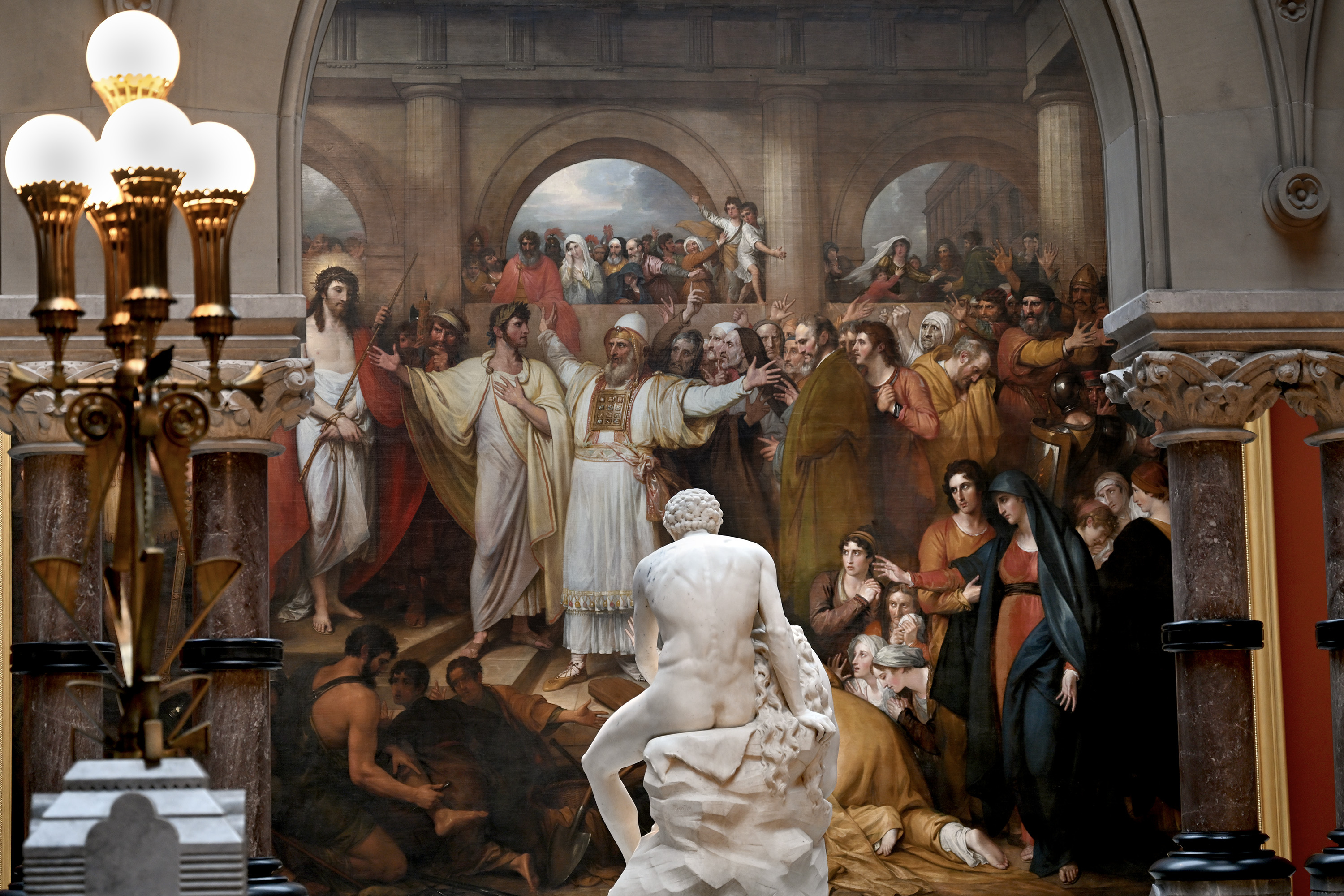
The exhibition marks a crisp reset: the reopening of PAFA’s jewel of a building, the riotously detailed 1876 Furness and Hewitt-designed landmark, after a renovation project that included a new HVAC system and other renovations.
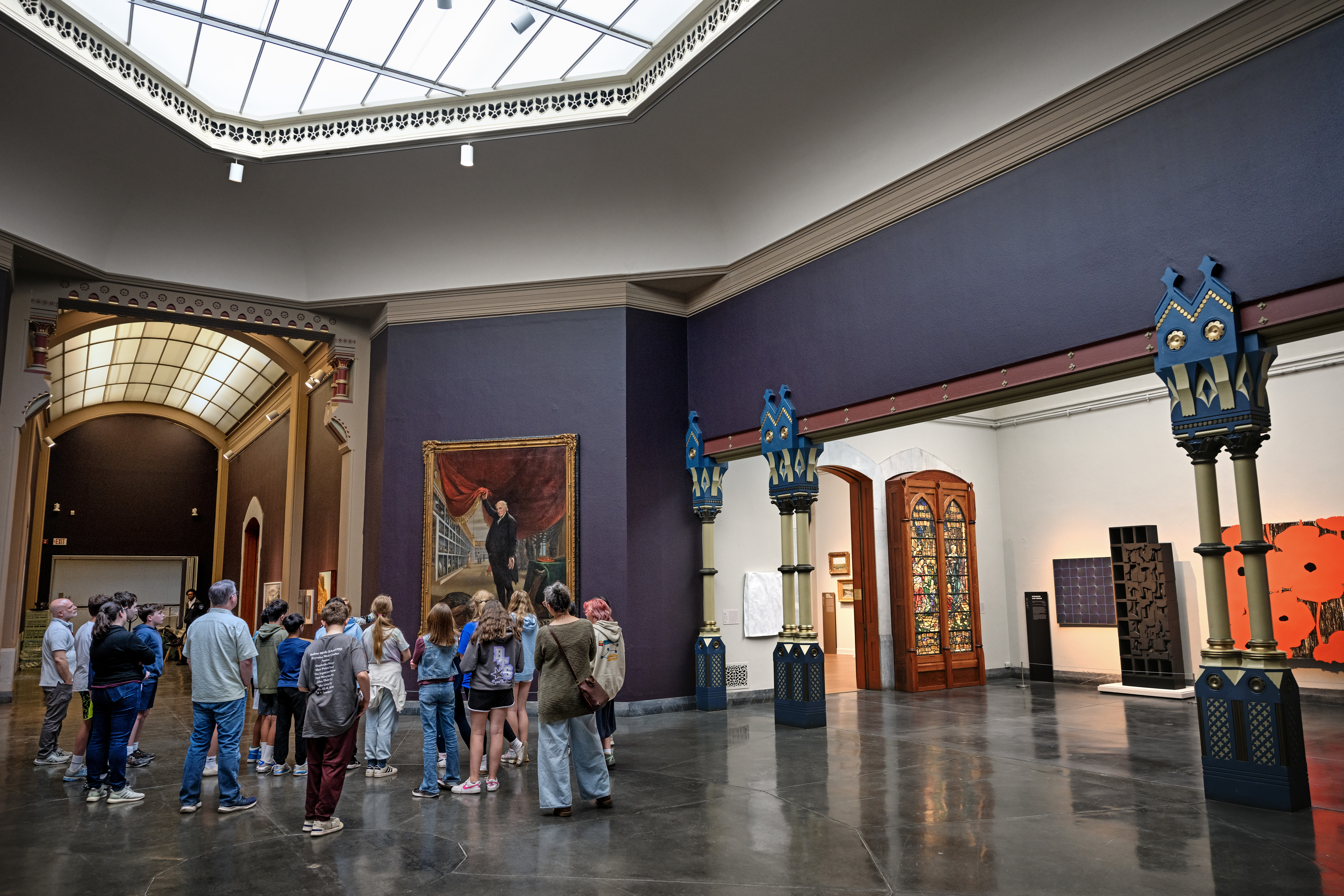
It’s good news that there are no dramatic changes; the building continues to dazzle. I visited the show there a half dozen times, and via the church-like rose window and skylights, nature played handmaiden to art. When clouds parted, sun filtered into some of the spaces, and in one gallery the natural light made the whites and colors of George Bellows’ North River pop.
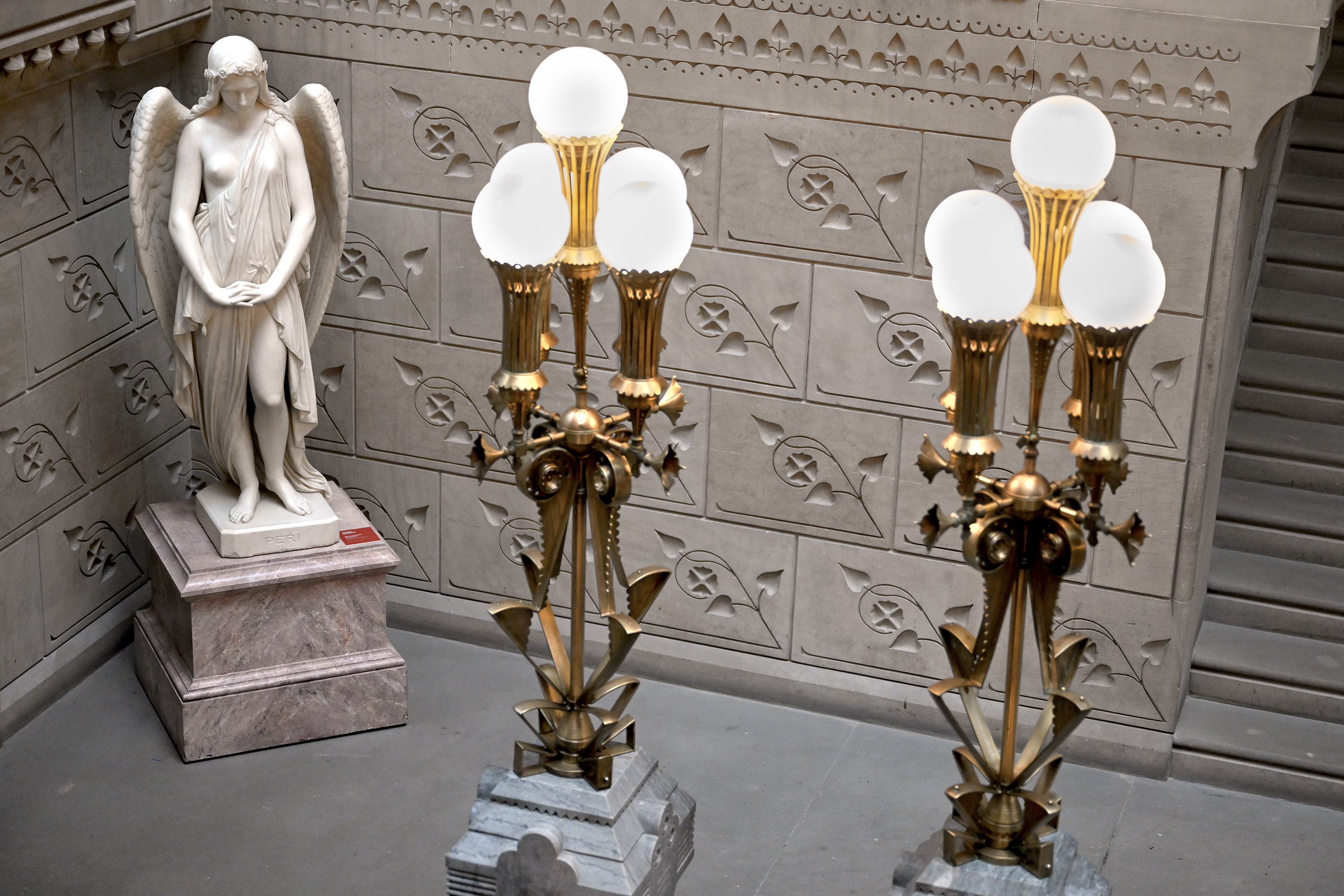
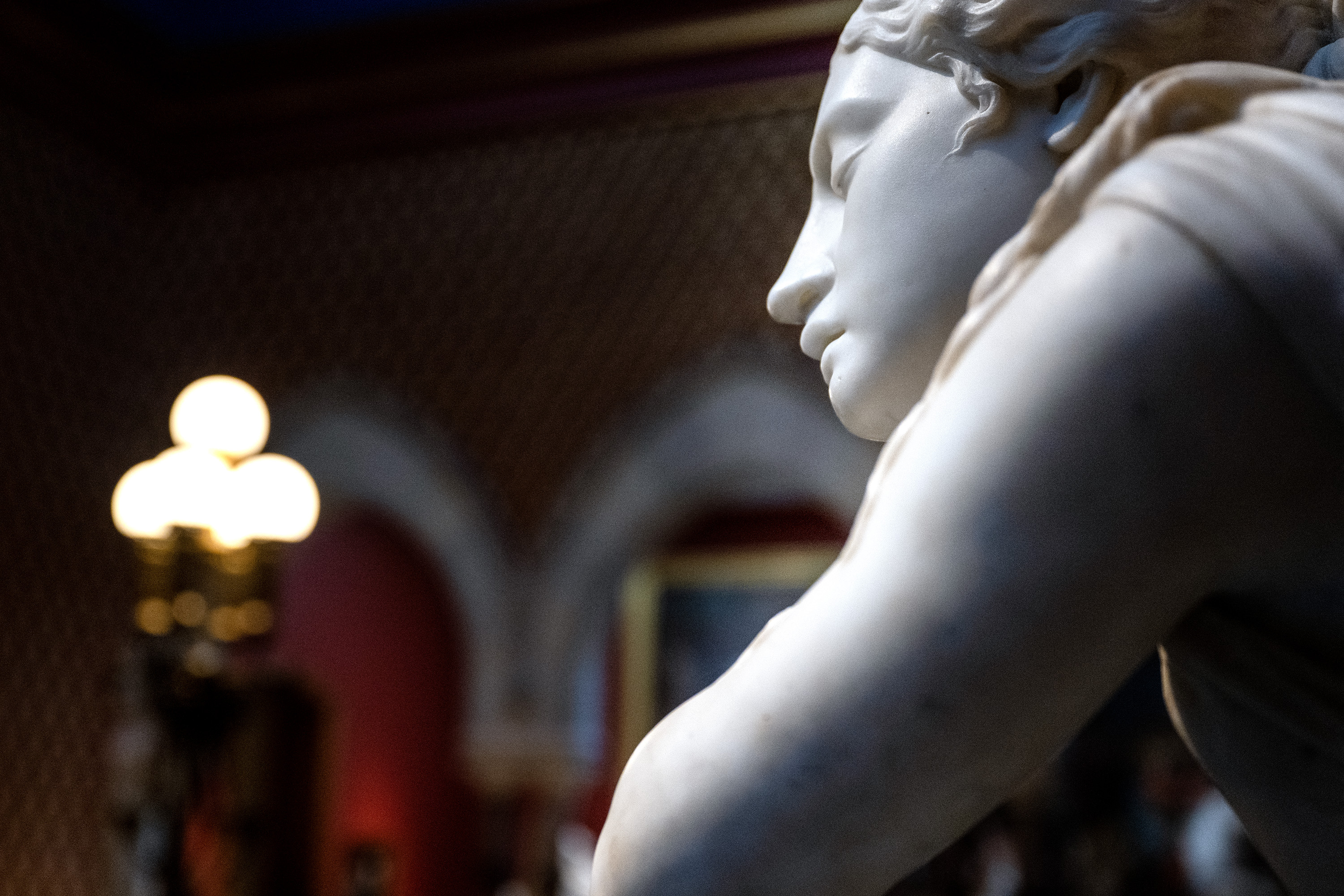
On another morning, the sunlight made the grand stair hall of the Furness building practically vibrate. The smooth white of marble sculptures like Thomas Crawford’s Peri at the Gates of Paradise glowed and the stars-on-cobalt pattern beneath the skylight seemed to be showering down.
Here on this day, there was no more beautiful interior in the city.
A more sequestered PMA
If PAFA maintains a lively relationship with the outside world, the PMA’s new American wing feels sequestered. There are no visible windows letting in light in the second floor American galleries — no natural light except for a small opening in a staircase.
The layout and footpath (including that unceremonious approach) is largely the same as it had been before the renovation. But the flow within and from gallery to gallery is more open, and there is now a central spine of four continuous middle galleries that opens up a vista that helps to orient the visitor. Three remaining galleries in the renovated American wing are expected to reopen, though the date is uncertain.
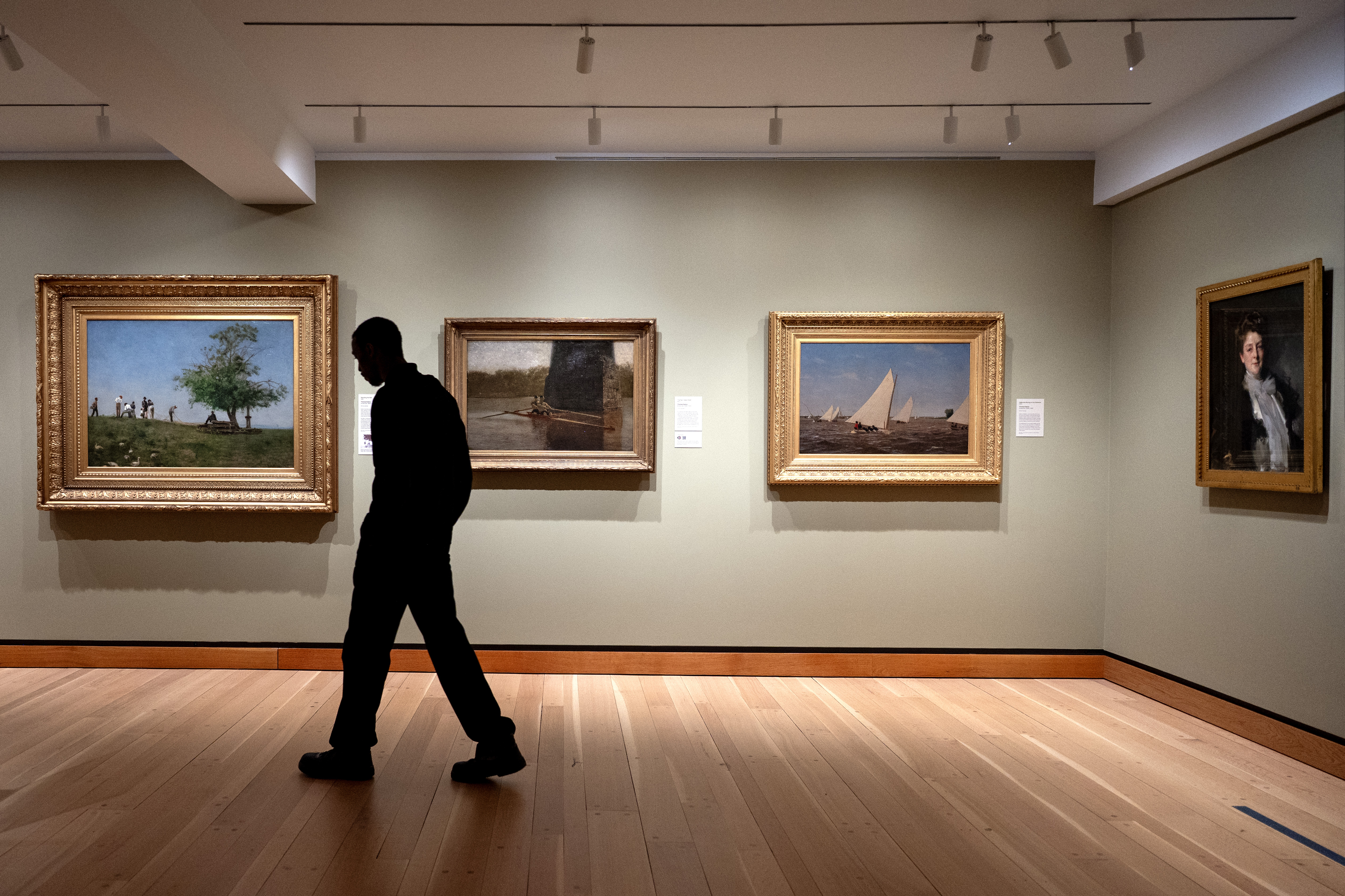
The PMA half of “A Nation of Artists” features a lot of big names (Andrew Wyeth, John Singer Sargent, Georgia O’Keeffe), as well as about three dozen works by Thomas Eakins — intimate portraits as well as epic canvases. There’s a beautiful sequence of three Eakins oils, all painted within a decade of one another, all with rivers in various hues and states of excitement: The Pair-Oared Shell, Sailboats Racing on the Delaware, and the stunning Mending the Net, a seemingly ordinary scene that gathers filmic mystery and story through minutely detailed figures mending a fishing net by the river against a gauzy beyond.
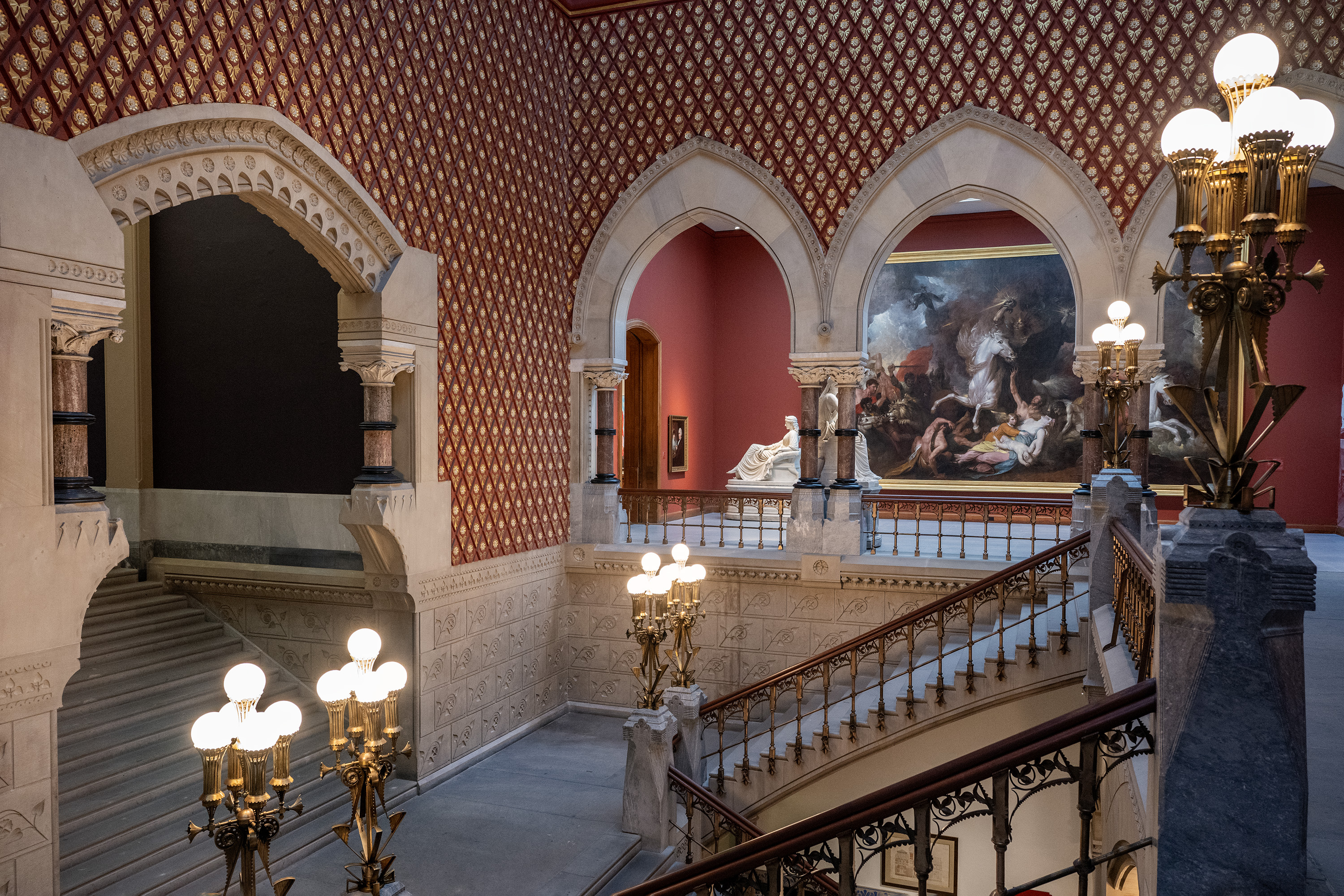
In terms of visitor experience, the new second floor American space succeeds most in moments of drama. The wall in one gallery uses a specially reproduced rich-burgundy period wallpaper, and the relationships among the paintings, furniture, pottery, and other items in the room ricochet beautifully.
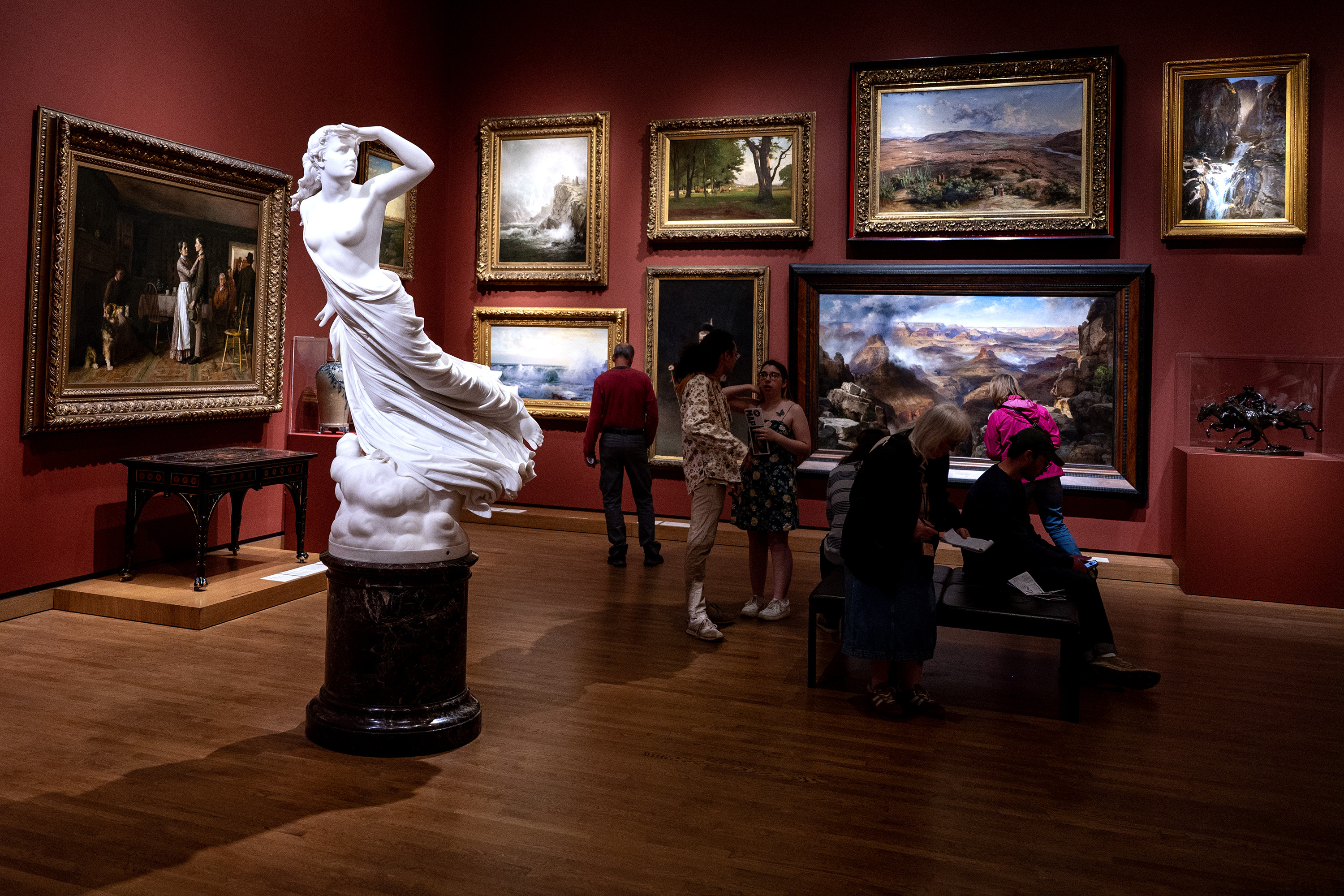
A sumptuous feeling immerses visitors in the high-ceilinged salon-style room (gallery 211) that includes vast landscapes and marble sculpture. Though it’s not immediately obvious, the first-floor American works are also part of the show, and they hold yet more Middleton works.
Classics and surprises, and a lot of charm
There’s greater poetry in the architecture at PAFA, but the work itself at both museums is undeniably impressive in scope, and especially at the PMA: painting, sculpture, furniture, silver, fabric, works in clay, and more.
The curators — Kathleen A. Foster and Alexandra A. Kirtley at the PMA, and Leah Triplett and Lea C. Stephenson at PAFA — have delivered not just old favorites, but also surprises.
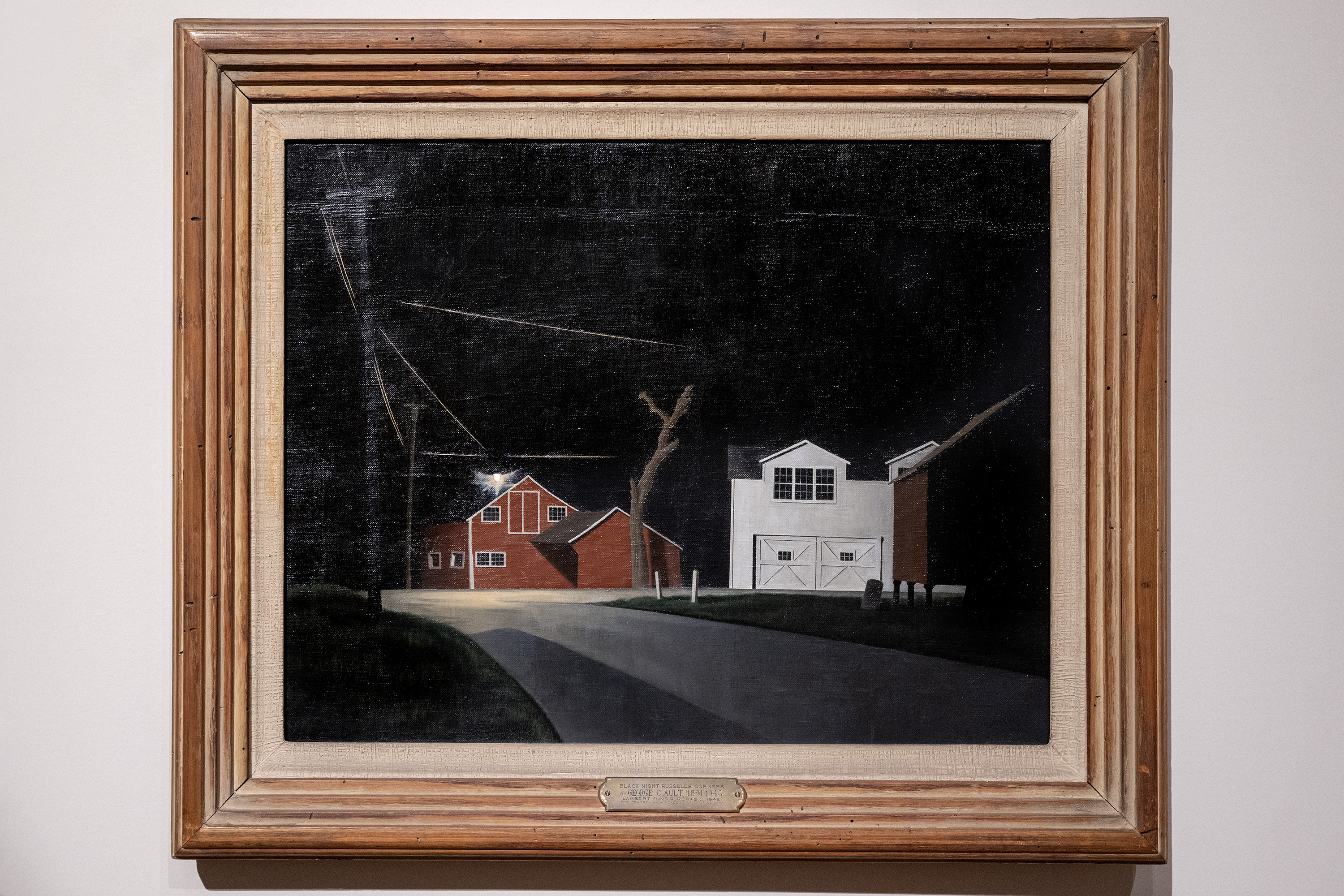
PAFA’s classics include Winslow Homer’s Fox Hunt; the Jasper Johns Flag 1960-66 from the Middletons (which the couple brought home from an auction in 2010 for $28.6 million); and George Copeland Ault’s Black Night: Russell’s Corners (1943), whose flat, cold, electric light suggesting a modern encroachment on agrarian life, can only be appreciated in person.
Among the pieces to which I kept returning: Pink Flower with Clock by PAFA 2011 graduate Aubrey Levinthal, because of the smart way it plays with the idea of photographic positive and negative imagery even though it is an oil; and Harriet Goodhue Hosmer’s Puck on a Toadstool, from 1856, whose supernatural energy is so potent that the figure appears poised to shape-shift and break free of its marble confines.
At the PMA, a single canvas has me reconsidering Edward L. Loper Sr., the Wilmington artist who had his beginnings working for the WPA. Loper’s Abandoned Ferry Terminal is a complex refraction of shadows and colors from 1958 whose geometries never seem to stop shifting.
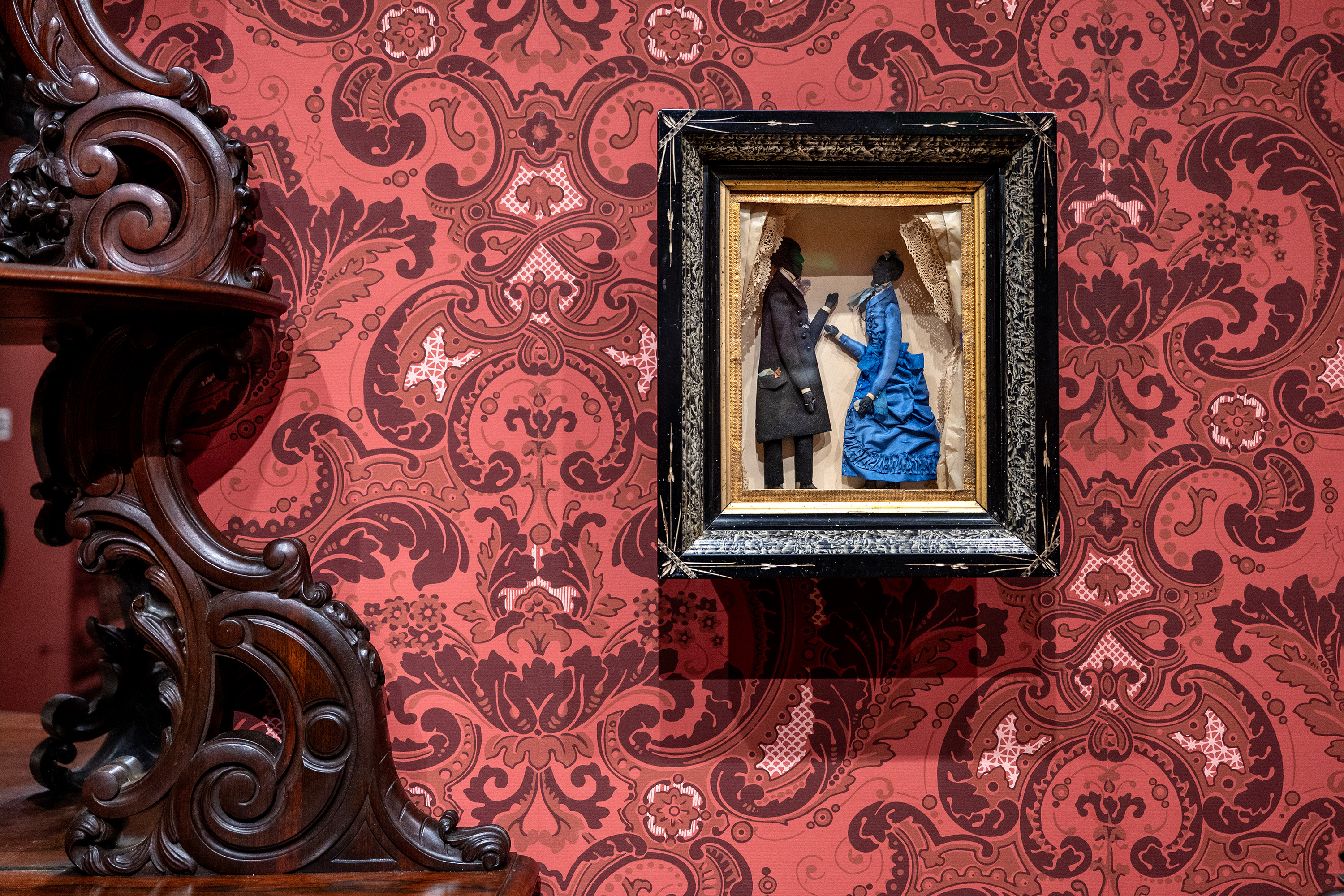
A small shadowbox of a man and woman formally costumed from around 1880 might be the most unassuming bit of charm in the entire exhibition. Its maker is unknown.
Leaning into representation
If you ever wanted a lesson in the difference how a work is displayed can make, just consider how much more substantial an achievement The Gross Clinic looked a few months ago. With bright but warm lighting at the PMA, Eakins’ 1875 canvas was frightening in its vividness, the red of blood on the surgeons’ hands glistening. Today, at PAFA, it looks a little washed out, overpowered by the light coming through the nearby rose window.
Both museums have made a conscious effort to represent a spectrum of identity — gender, regional origin, ethnicity, and so on. This is all to the good, of course. Everyone will find something relatable in this exhibition, and many will discover works that aren’t necessarily relatable on first examination but become so. This is why museums, and good curators, are important.
It’s a fascinating marker of time to think about the cultural whiplash of the past couple of years in this country, and how vulnerable the simple concept of representation now feels. The tastes of the art establishment change, and so too does how we perceive art.
How could it be otherwise? Every movement comes in with an air of moral and scholarly authority that purports to lay down once and for all an accurate cultural perspective.
The prevailing ethos arrives as the new reality. Then the next reality comes along.
“A Nation of Artists” runs through July 5, 2027, at the PMA, 2600 Ben Franklin Parkway; and Sept. 5, 2027, at PAFA, Broad and Cherry Streets. philamuseum.org, pafa.org.
Leave a Reply