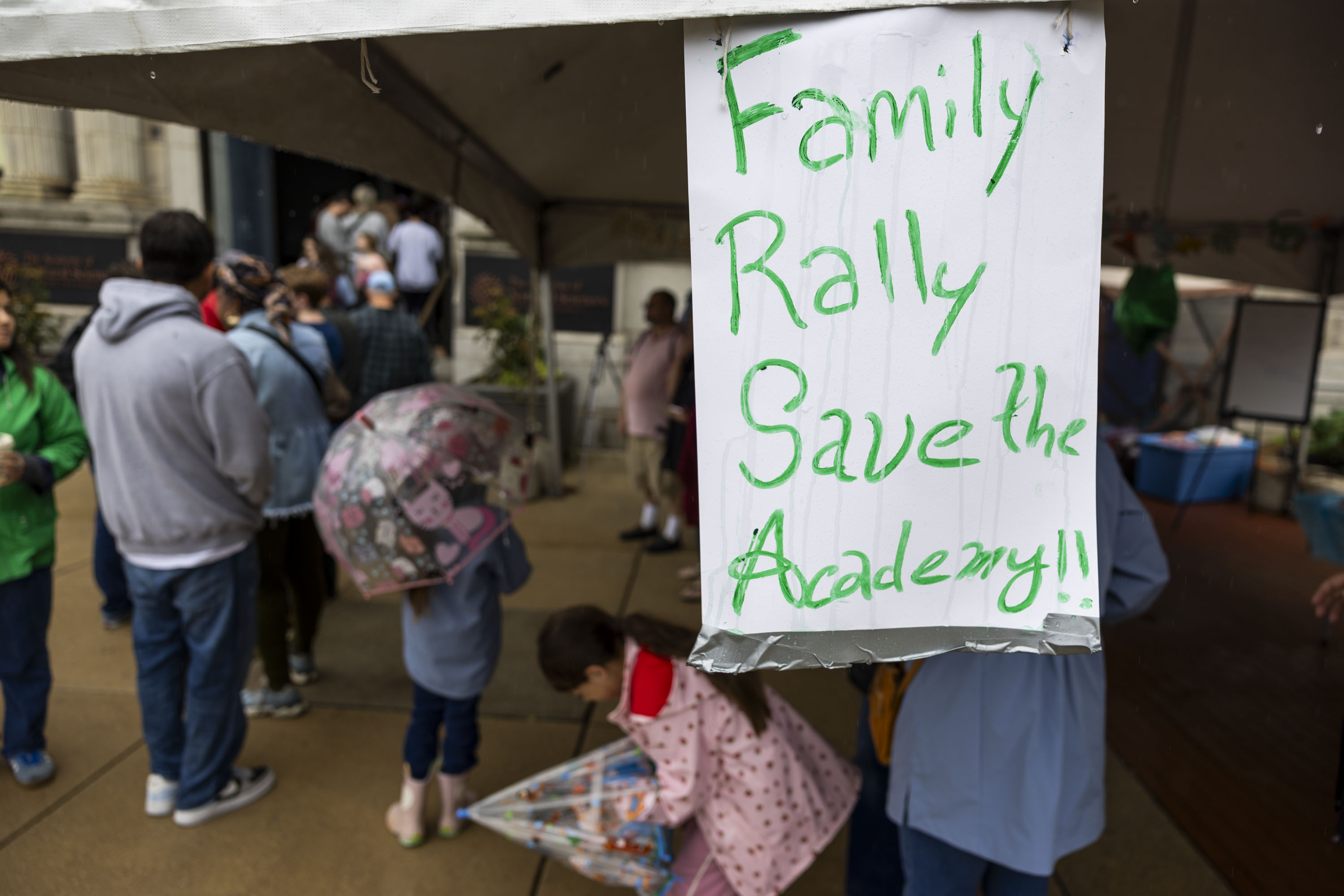
Even after a massive wave of love and a crescendo of protests over the weekend, the Academy of Natural Sciences of Drexel University museum won’t be getting an immediate reprieve.
Philadelphia’s beloved gateway to the natural world will remain shuttered after Drexel University released a statement Monday in response to an offer from the William Penn Foundation to temporarily underwrite operating costs and keep the doors open.
Drexel’s statement neither accepts nor rejects William Penn’s offer. Rather, it suggests that the university is open to talking.
Drexel says that while it appreciates the William Penn Foundation’s “public suggestion that it assist in temporarily keeping the Academy’s museum open,” they have “not received a formal proposal with a defined level of financial support.”
With that in mind, Drexel linked the William Penn offer with keeping both the museum and collections in the current building and what it says is a substantial amount of money that would be needed to bring the building at 19th Street and the Benjamin Franklin Parkway up to snuff.
Drexel said Monday that it looked forward to “continuing to explore the possibility of Foundation support — alongside the considerable commitment Drexel has already made to preserving the research and education missions of the Academy — as we consider the substantial financial and operational challenges, including significant deferred maintenance needs associated with keeping the Academy of Natural Sciences’ collections at their current location.”
“We believe that we are all working toward the same goal, which is to ensure that the treasures of the Academy remain accessible here in Philadelphia over the long-term,” said William Penn executive director Shawn McCaney in a statement Monday. “There are many considerations to determine the best path forward, and our offer of support is intended to help keep the museum open while a plan is developed.”
No meetings between Drexel and the Foundation were scheduled, a Drexel spokesperson said.
“Drexel intends to continue conversations with the William Penn Foundation to better understand and evaluate its offer,” said a Drexel source familiar with the matter who was not authorized to speak publicly about it.
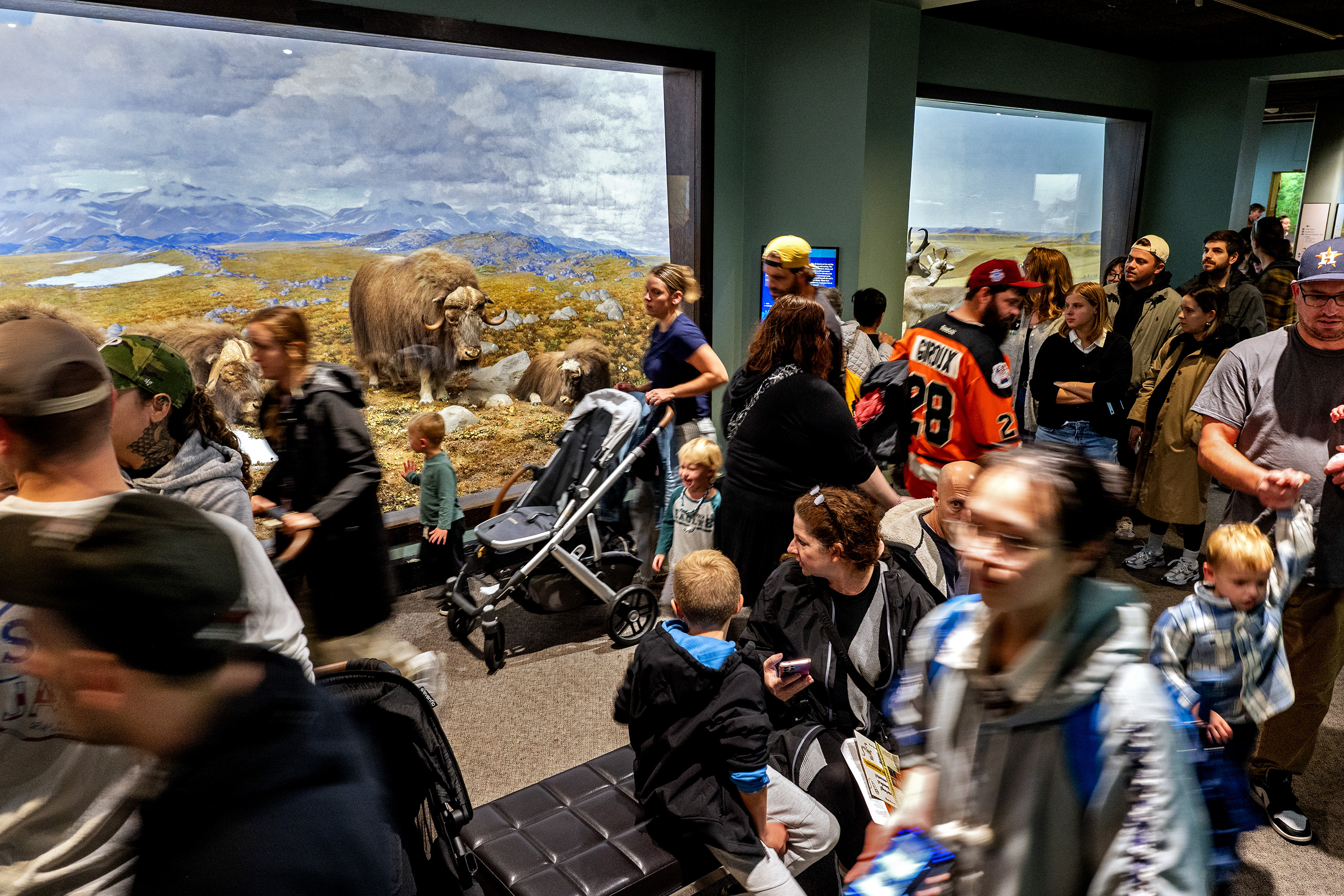
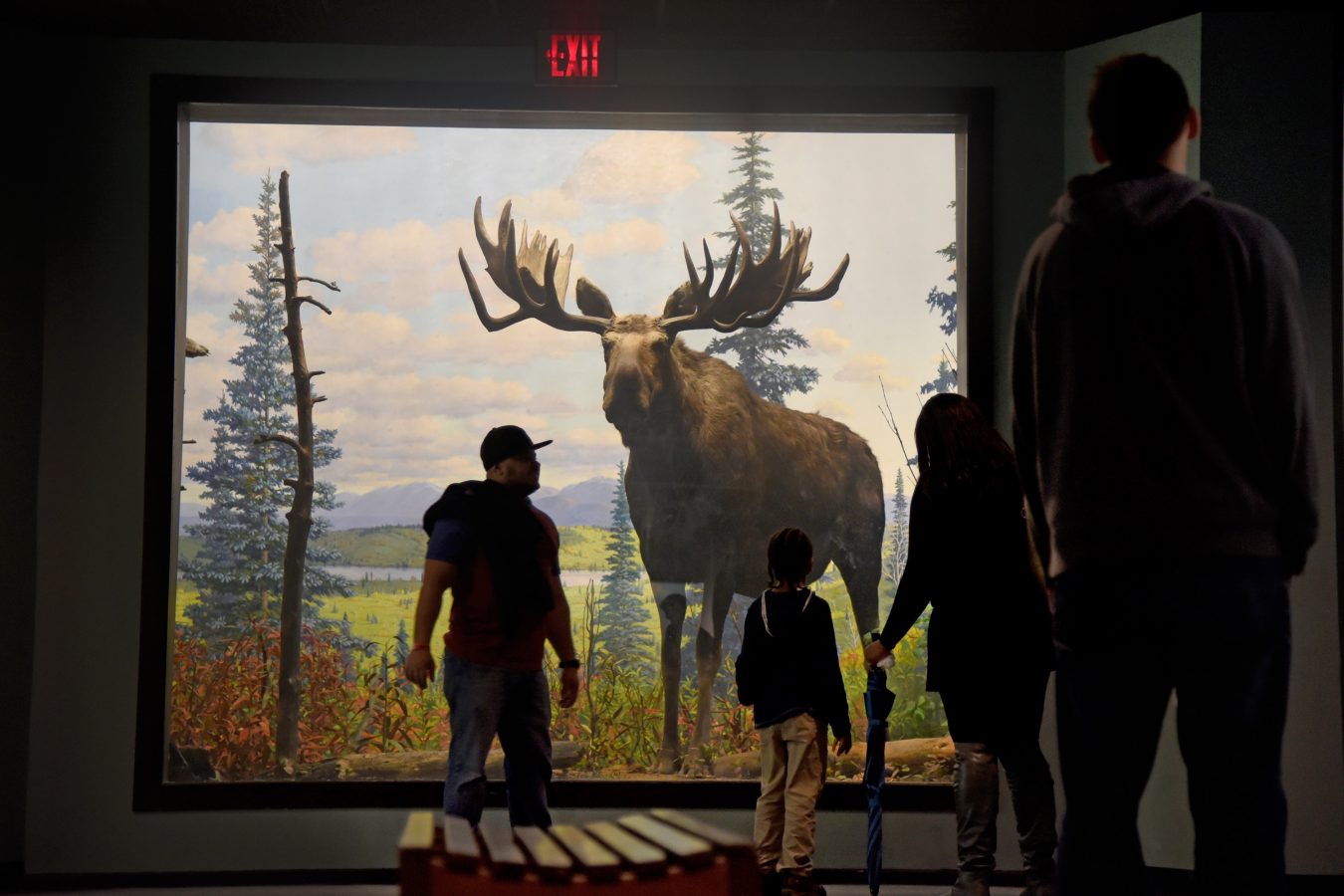
Visitors at the dioramas in the Academy of Natural Sciences of Drexel University on Sunday, the last day the museum was open to the public.Tom Gralish / Staff Photographer
The nearly two-century-old natural history museum closed to the public at 5 p.m. Sunday, and while the Academy‘s research and collections remain operational, leaders have said they intend to sell the building and move the collections at some point to an as-yet undetermined location. A public-facing museum experience of some kind is being envisioned elsewhere, but no details are set.
Academy board chairperson Suzanne Biemiller on Monday did not immediately offer a comment.
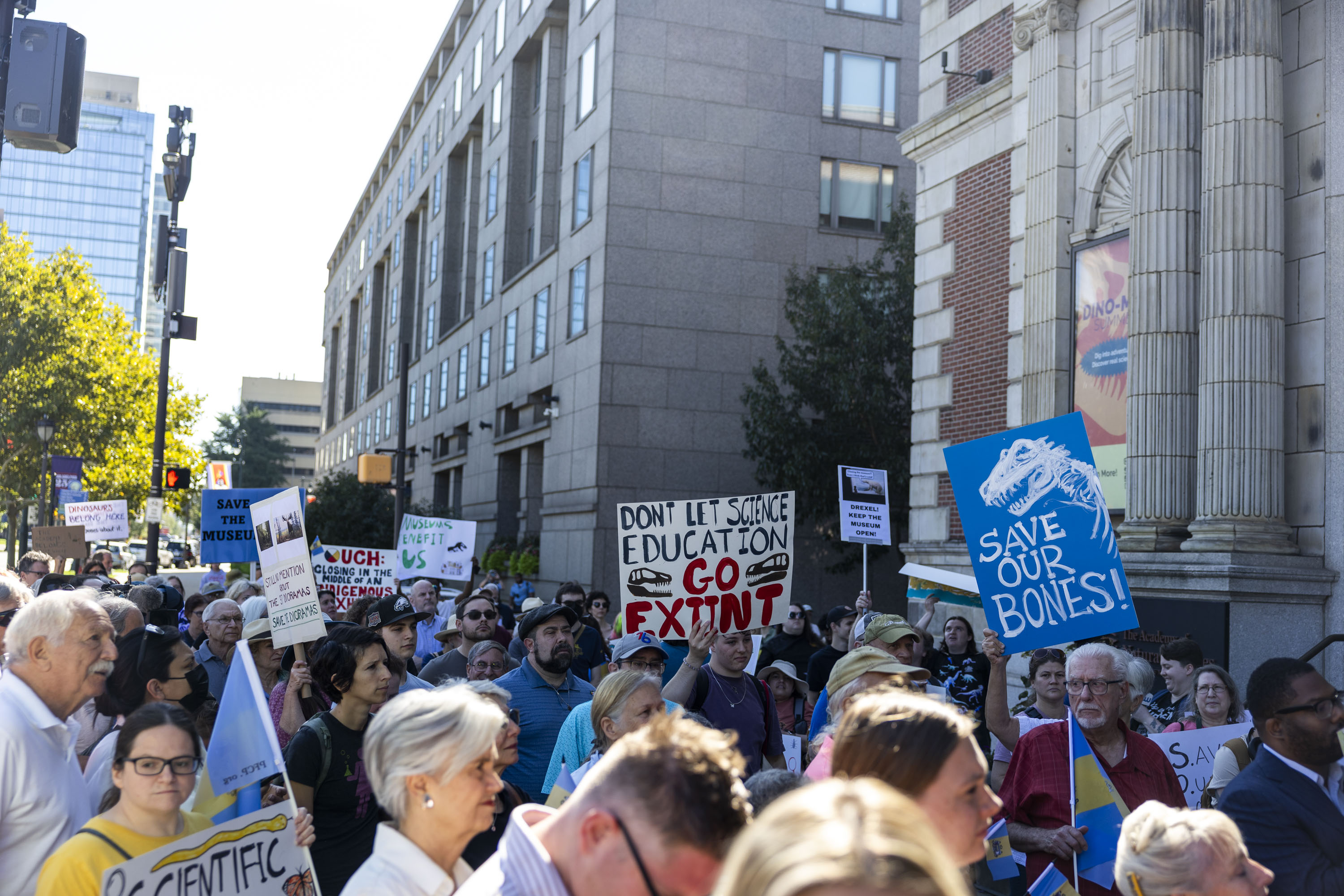
Citing a challenging financial picture and attendance trends, the Drexel and Academy boards on Sept. 1 abruptly announced the museum’s closure in 30 days without first coming forward with a public appeal for funds to help keep it open. Public demonstrations attracted hundreds at first, and in recent days online petitions topped 100,000 signatures.
With the closure date fast approaching, William Penn last week extended a hand, offering to cover the cost of the operating subsidy Drexel has been providing to keep the museum open for at least another year, “so that the full range of options for the future of the museum could be properly explored, and to provide time to test the interest of other funders and supporters who have not been engaged so far,” said McCaney in a statement.
One of the North American dioramas at the Academy of Natural Sciences of Drexel University just before the museum closed on Sunday.Tom Gralish / Staff Photographer
The William Penn offer was intended to help float the Academy’s museum operations while due diligence was done on answering a number of questions about the Academy’s viability. Among them are determining the costs of addressing deferred maintenance in the building and gauging the level of philanthropic support that could be counted on to fund the museum on an ongoing basis.
Biemiller said last week that the Academy was supportive of the idea.
A Drexel spokesperson said that the Academy board and leadership team undertook an “extensive planning process” throughout much of 2024 and 2025 to identify a path toward long-term financial stability. The effort included an assessment of the Academy’s business model and explored options for a more sustainable financial and operational model, including the level of ongoing support required from Drexel.
Although the university did not publicly reject the William Penn money last week, it said that “no proposal has been presented that would provide a permanent, sustainable path forward for the Academy’s museum.”
Pressure intensified over the past few days, with politicians and activists asking why, if the hurdle was financial, Drexel would turn down such an offer.
“We urge Drexel and the Academy to jointly agree to accept the William Penn Foundation’s gracious offer and keep the Academy of Natural Sciences open for the public to continue to enjoy,” wrote City Councilmembers Nina Ahmad and Jeffery Young Jr. in a statement Saturday.
“Anything else is a clear abdication of their public duty, and a demonstration of their contempt for this priceless cultural resource.”
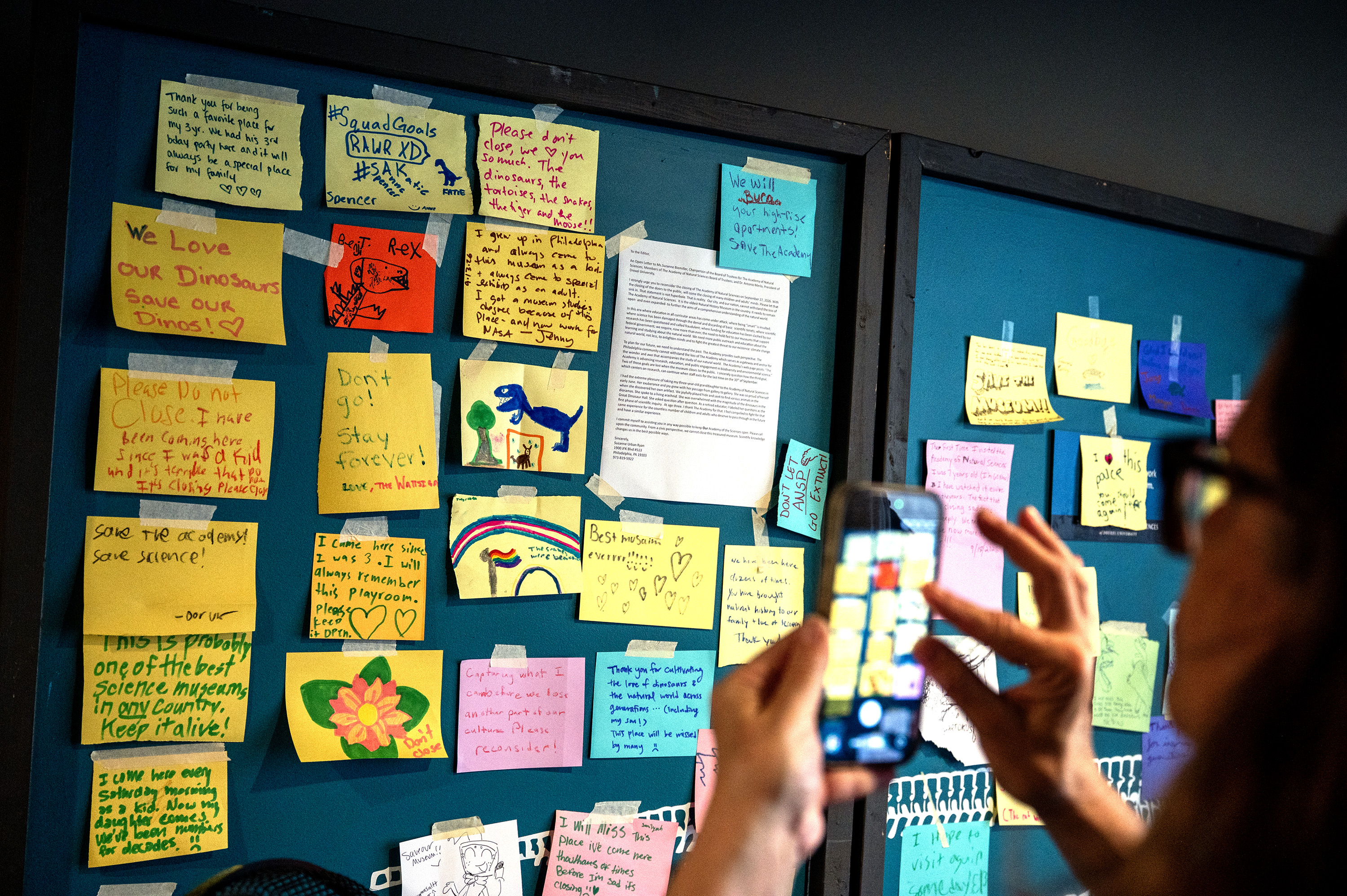
Visitors left love notes inside the Academy of Natural Sciences of Drexel University Sunday.Tom Gralish / Staff Photographer
Drexel says it has contributed $49 million toward the Academy’s budget since the two formed an affiliation announced in 2011. Yet, the institute has still struggled.
“If somebody came in today and said, ‘here’s all the money you need to do all of the deferred maintenance, to do what needs to be done to the building to make sure that you can care for all of the collections and all of the research,’ and it’s feasible to do it there from an economic perspective, which would be wonderful, then I think we would be very open to it,” said the Drexel source. “But we probably still would have to keep the museum closed for a bit, just to be realistic because what needs to be done may not necessarily be able to be done while the museum’s open.”
In the weeks since the impending closure was announced, attendance has soared, and revenue along with it. Estimated ticket revenue for September 2026 alone nearly matched the total ticket revenue for all of 2025, a Drexel spokesperson said.
The Drexel and the Academy boards are in the process of renegotiating their affiliation agreement, brokered in part by David L. Cohen — the onetime Comcast executive and U.S. ambassador to Canada — at the behest of Gov. Josh Shapiro and Mayor Cherelle L. Parker.
“That agreement includes a process for evaluating the future of the collections and the museum,” said Monday’s statement from Drexel. “Until that agreement is fully executed and approved by both boards, we do not intend to alter the plans that the Academy’s board and Drexel have agreed to.”
The Greater Philadelphia Cultural Alliance on Monday lauded the William Penn Foundation’s “generous offer” and said it deserved consideration, but added that responding to one crisis won’t be enough.
“Philadelphia must make a stronger, sustained commitment to the cultural institutions that are fundamental to our civic life,” said the GPCA statement.
Classical music has long sought a friendlier mien, and this fall the genre seems to have redoubled its efforts. New books and author chats are in abundance, aiming to demystify the art form and make personal connections. Films with live orchestra have become not a special event, but a regular feature. Concert formats continue to get rejiggered in an effort to make the tent bigger.
There’s a danger, of course, that in its quest for relevance, classical will no longer be the main event. Some of the Philadelphia Orchestra’s appearances with pop artists, for instance, are hard to justify artistically. The balance bears watching.
But in a season that offers rare Bach and Mozart, the continuation of a chamber music series second to none, and a generous pipeline of new works, it’s hard to feel anything but fortunate as the curtain raises on a new season in one of the nation’s classical music hot spots.
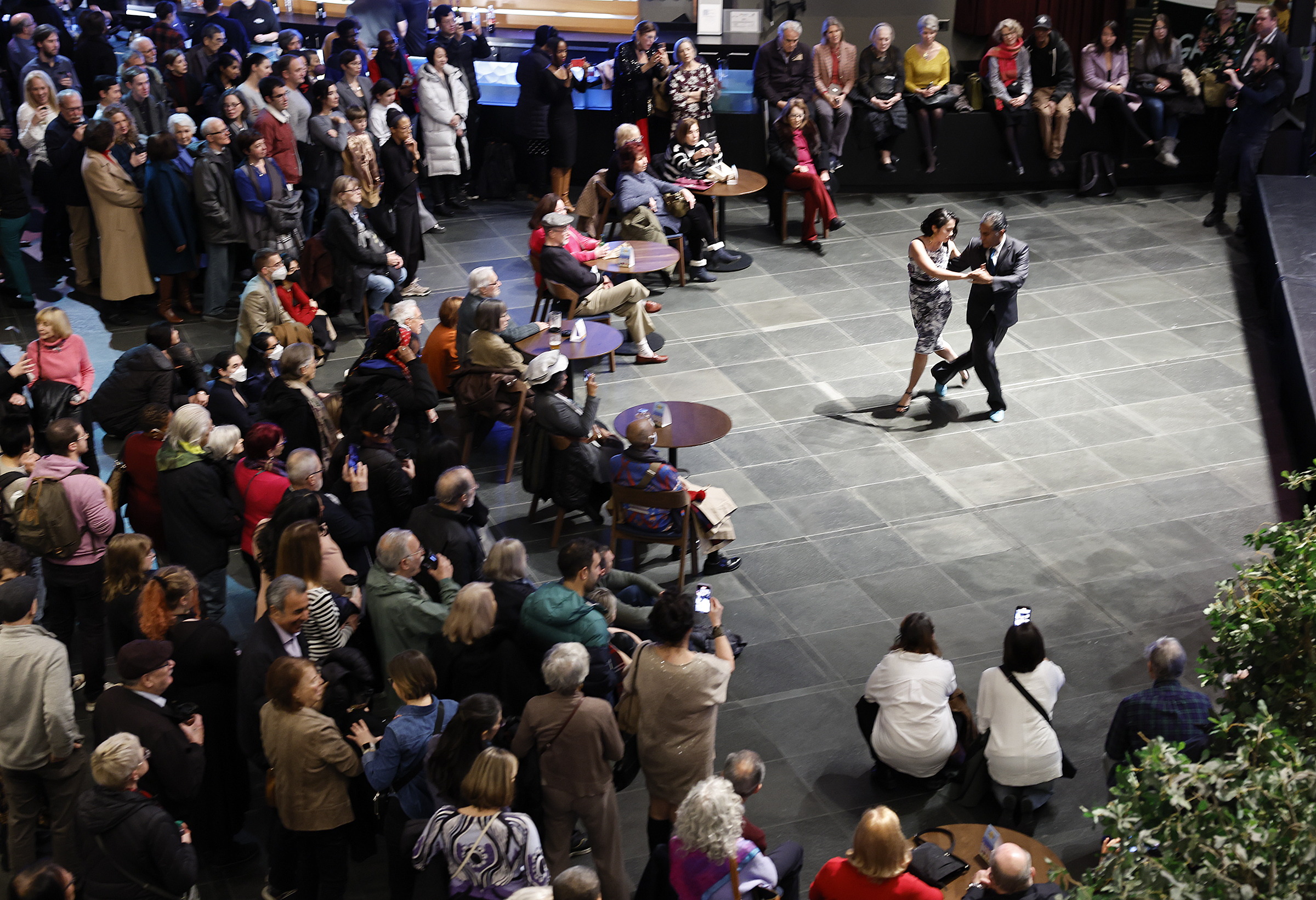
In the Kimmel Center plaza, Andres Amarilla (right) and Amy He of the Philadelphia Argentine Tango School perform at an Orchestra After 5 event in 2024.Yong Kim / Staff Photographer
Orchestra After 5
Oct. 8, Marian Anderson Hall
The Philadelphia Orchestra sometimes launches an initiative only to let it quietly fade, but the Orchestra After 5 series has had remarkable staying power. Now in its fourth season, it’s designed to be a friendly on-ramp for newbies, though one suspects that it’s also luring experienced listeners with its earlier start time, conviviality, and brevity.
The first of three such concerts this season features the orchestra and popular guest conductor Dalia Stasevska in Respighi’s Pines of Rome and, with Gil Shaham, Saint-Saëns’ Violin Concerto No. 3. It starts with a 5 p.m. happy hour in the Kimmel plaza, and the hourlong concert is followed by an artist chat. philorch.ensembleartsphilly.org, 215-893-1999.
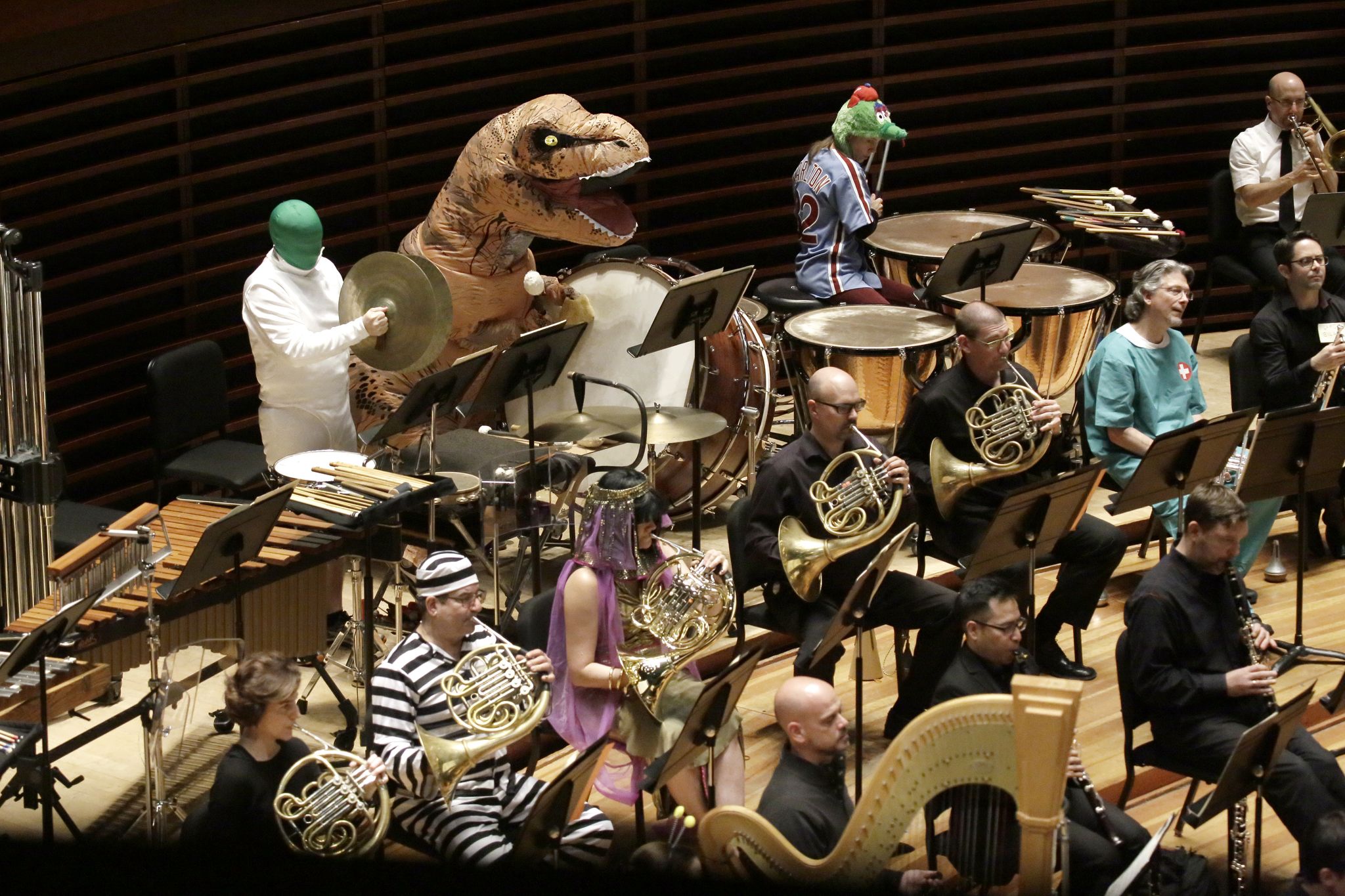
The Philadelphia Orchestra performing a Halloween concert in 2016.ELIZABETH ROBERTSON / Staff Photographer
Philadelphia Orchestra Children’s Halloween Spectacular
Oct. 10, Marian Anderson Hall
With excerpts from Elmer Bernstein’s Ghostbusters Suite, Bach’s Toccata and Fugue in D Minor, and Grieg’s “In the Hall of the Mountain King” from Peer Gynt, the Saturday morning family concert promises to be a fright. But within bounds. This first of five full-orchestra offerings in the coming season aimed at young listeners is sensory-friendly, with house lights kept at mid-level, a cool-down space for stimulated guests, and other accommodations. The aim for all is an introduction with impact to the world of the symphony orchestra, which this ensemble never fails to deliver. Austin Chanu conducts. philorch.ensembleartsphilly.org, 215-893-1999.
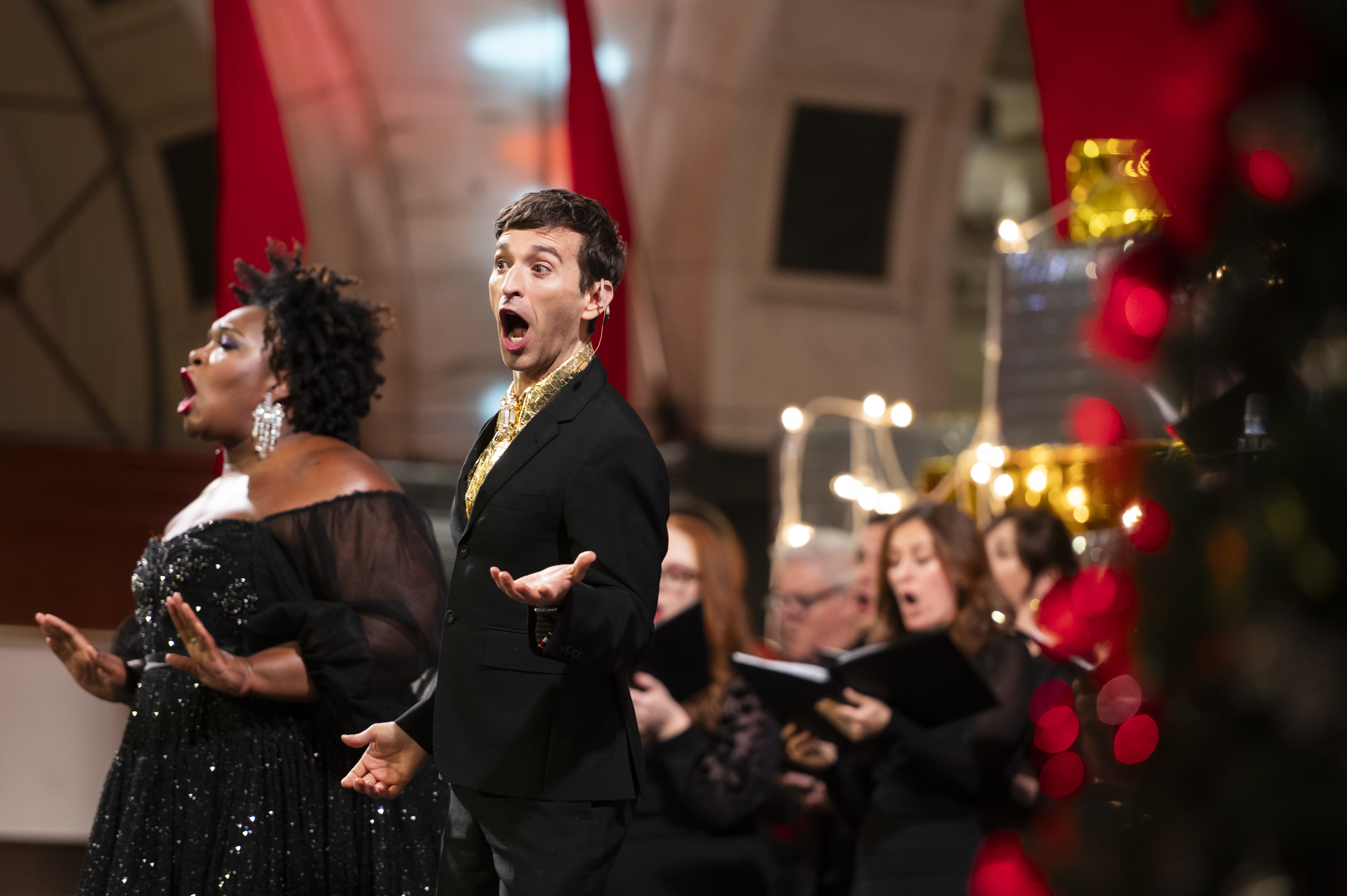
Leah Hawkins (left), soprano, and Anthony Roth Costanzo, countertenor, performing at the Wanamaker Building’s Grand Court in 2025.Allie Ippolito / For The Inquirer
Anthony Roth Costanzo’s ‘Countertenor’
Oct. 27, Free Library of Philadelphia Parkway Central Library
“When you are nervous about going onstage, they say you’re supposed to picture the audience naked. But what happens when you’re nervous about actually being naked onstage in front of three thousand fully — and mostly very nicely — dressed people?”
Costanzo, who has maintained a busy performing schedule as a countertenor while running Opera Philadelphia, recounts the unusual experience of performing naked at the Metropolitan Opera in his forthcoming book. What is a countertenor? Costanzo explains his unusual voice type in this mix of autobiography and opera history, which he’ll discuss at the Free Library’s author series.
There is, of course, a companion recording, which comes out a few days before his talk. Tracks include not just works of Osvaldo Golijov, Philip Glass, and Mozart, but also, intriguingly, the Frankie Valli and the Four Seasons tune “Walk Like a Man.” freelibraryfoundation.org/events.
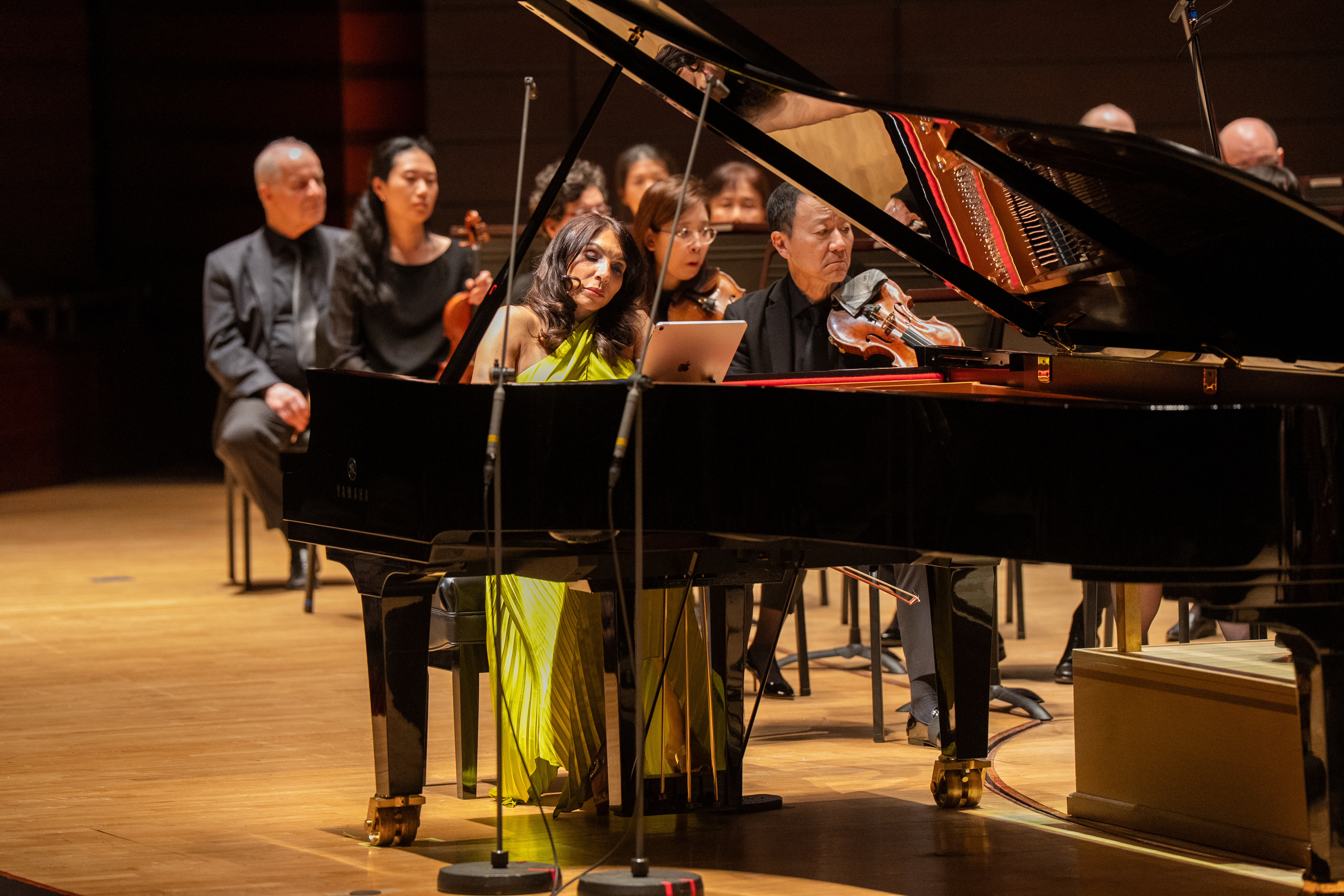
Lara Downes with the Philadelphia Orchestra in Marian Anderson Hall in 2025.Jessica Griffin / Staff Photographer
Lara Downes with Rhiannon Giddens
Oct. 30, Rowan University Pfleeger Concert Hall
In a “musical conversation” called Sounds Like America, pianist Downes and singer-cultural historian Giddens explore the “roots and routes” of American music, with stops at “Amazing Grace” and Paul Simon’s “American Tune” along the way. go.rowan.edu/america.
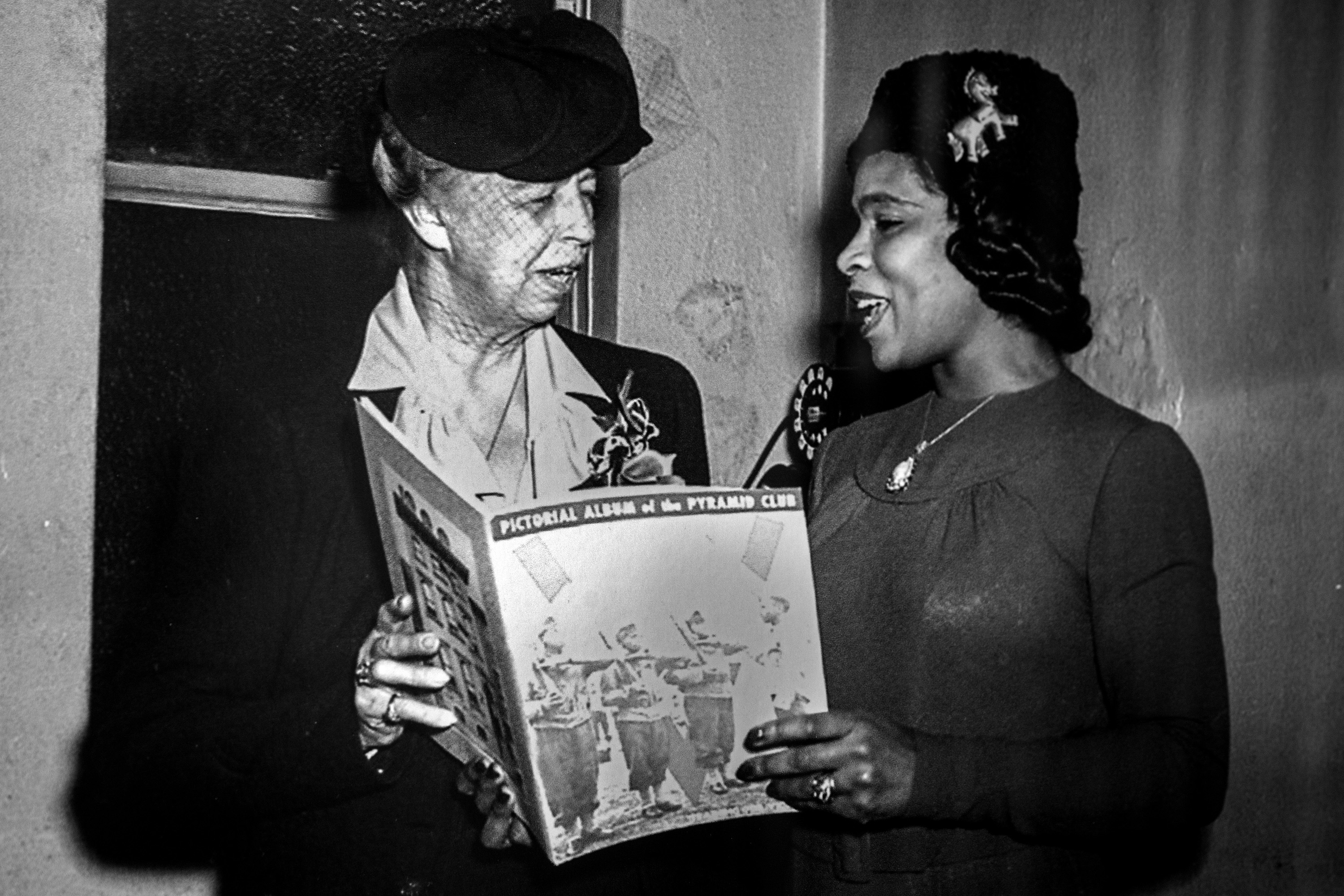
A photo by John W. Mosley of Eleanor Roosevelt (left) and Marian Anderson at the Pyramid Club in Philadelphia in 1943.John W. Mosley Photograph Collection, Charles L. Blockson Afro-American Collection, Temple University Libraries
Anthony Tommasini, author of ‘Voice of a Century: The Life and Artistry of Marian Anderson,’ in conversation with Anthony McGill
Nov. 12, Free Library of Philadelphia Parkway Central Library
The former chief classical music critic of the New York Times chats with Anthony McGill, principal clarinetist of the New York Philharmonic, about Tommasini’s new biography of the Philadelphia contralto and civil rights leader. freelibraryfoundation.org/events.
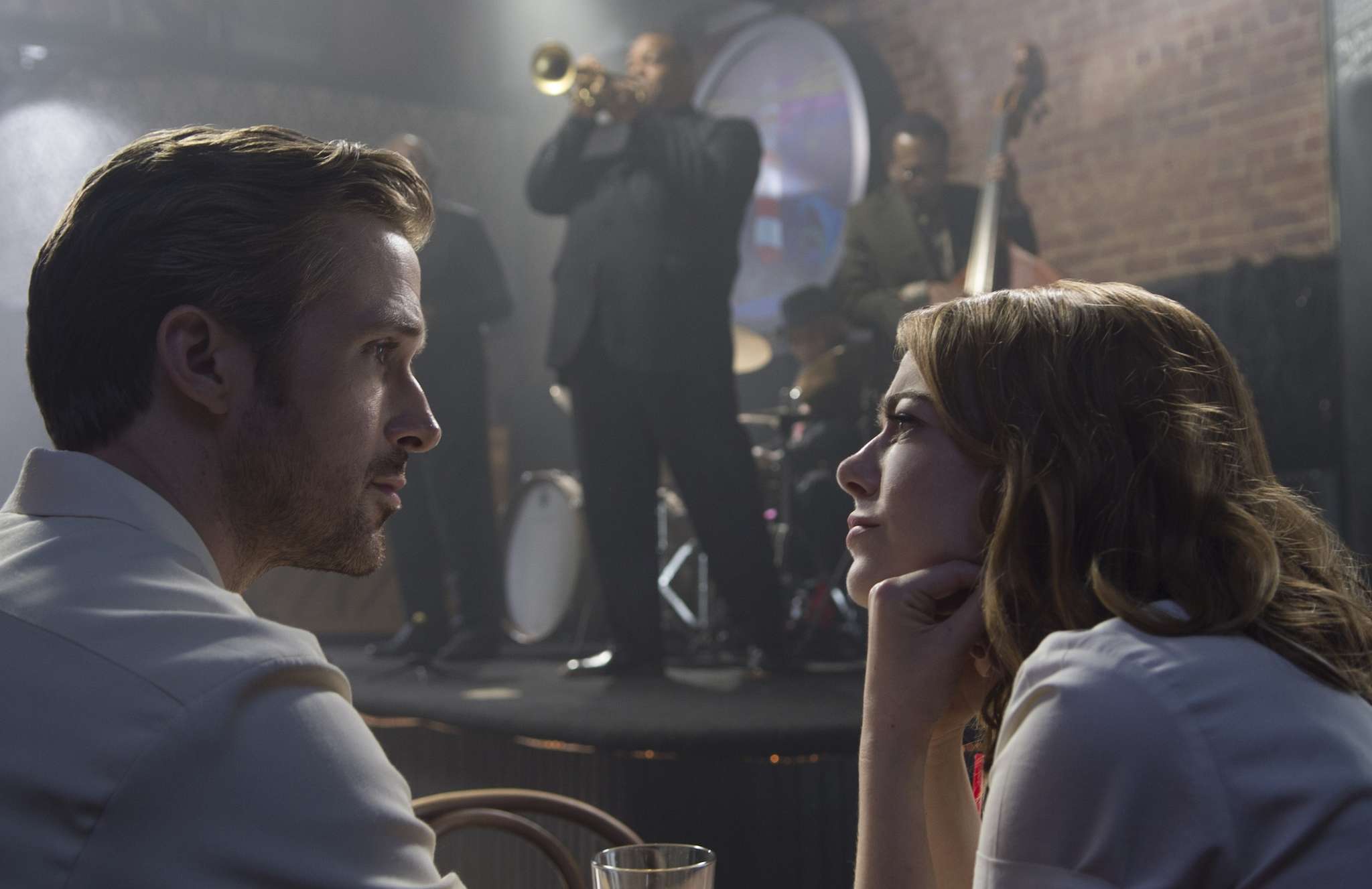
Ryan Gosling and Emma Stone in “La La Land.”DALE ROBINETTE / Lionsgate
Philly Pops ‘La La Land’ in Concert
Nov. 28, The Met Philadelphia
Can it really be a decade since La La Land was released? I never quite got the film, at least not in the way many others did. But this presentation puts a live orchestra and jazz band behind it, which promises to up the daffy appeal and vibe in the room a few notches. Conducted by Esin Aydingoz. phillypops.org.
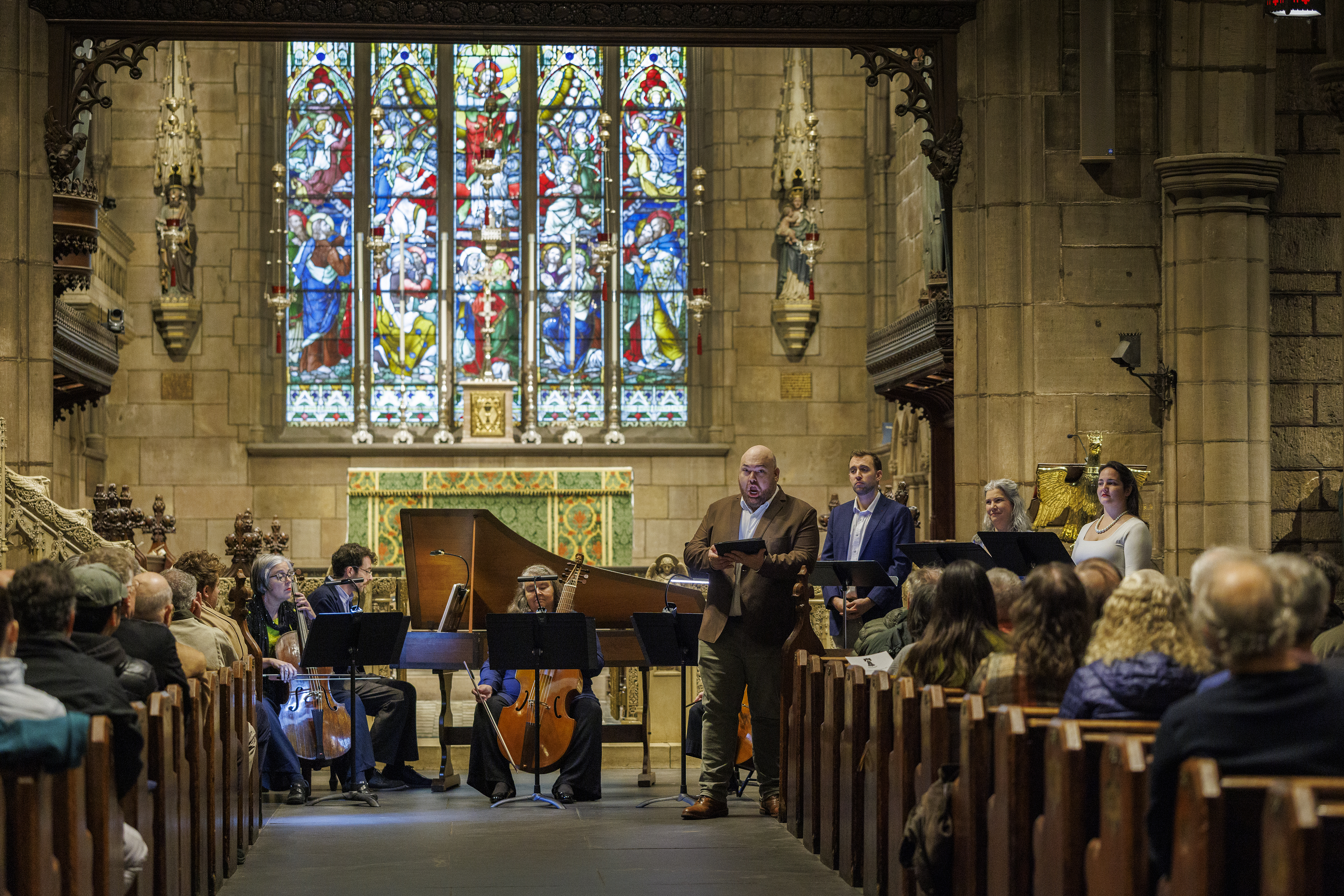
Bass Daniel Schwartz singing in a Philadelphia Bach Collective performance at St. Mark’s Church in 2025.Alejandro A. Alvarez / Staff Photographer
Philadelphia Bach Collective in ‘Nun komm, der heiden Heiland, BWV 62′
Dec. 1, St. Mark’s Church
So seemingly endless is Bach’s genius that even the experienced listener will keep finding gems previously unknown. This is the promise of the Philadelphia Bach Collective, a series of short, pay-as-you-wish afternoon concerts featuring Bach cantatas and other works. To mark the start of Advent, the skilled instrumental and vocal forces take up Nun komm, der heiden Heiland, BWV 62. It’s a concise cantata whose opening chorus based on a Lutheran hymn announcing the coming of the Savior is a beautiful paradox: in a minor key, yet so joyous it can barely contain itself.
“The idea is that Advent is a time of joyful but active anticipation. It’s essentially a call to arms,” says Heather Miller Lardin, one of the collective’s co-artistic directors.
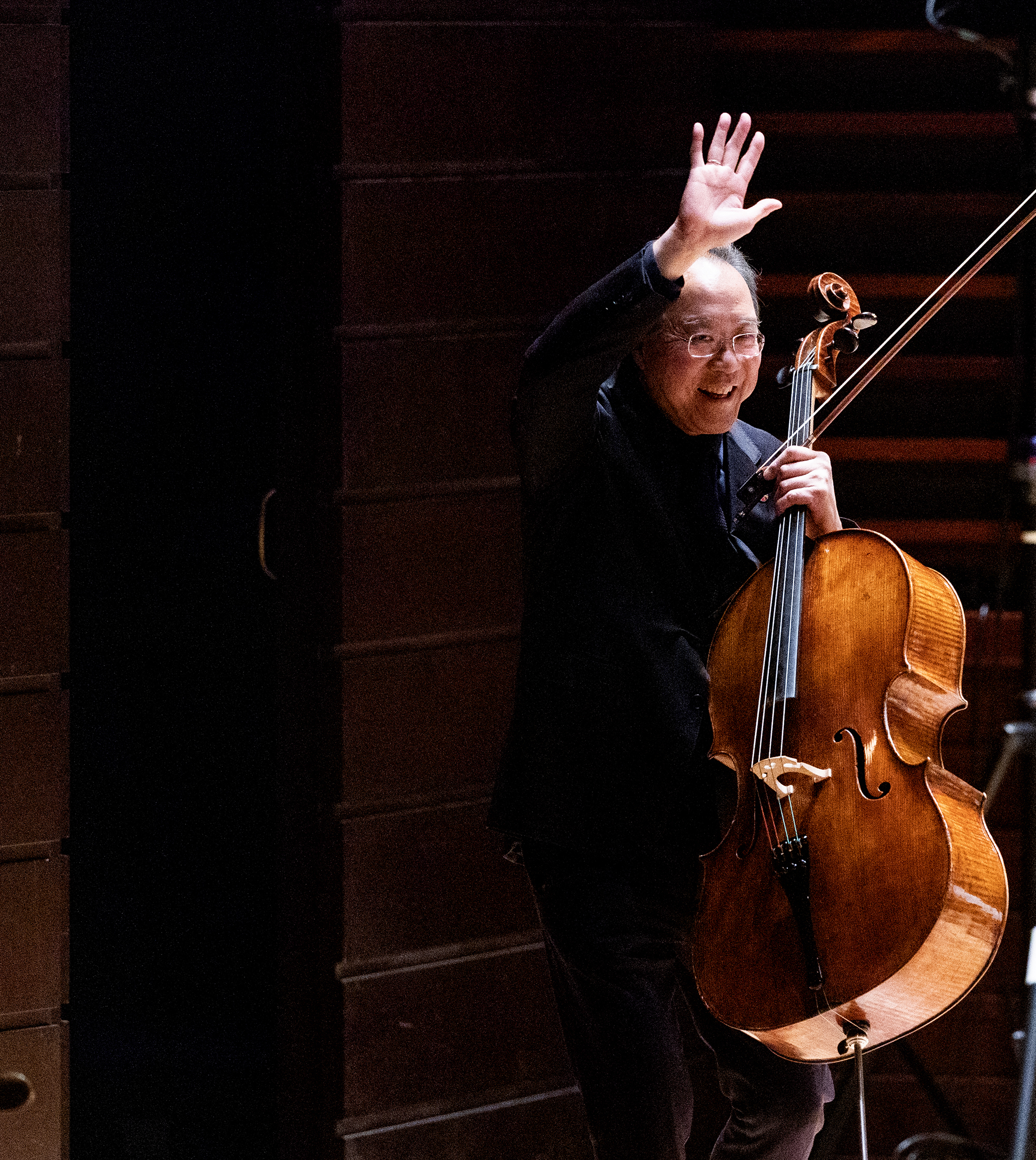
Cellist Yo-Yo Ma at a Kimmel Center appearance in 2024.Charles Fox / Staff Photographer
Yo-Yo Ma and Emanuel Ax
Dec. 6, Marian Anderson Hall
Beethoven? Brahms? Rachmaninoff? The program remained unannounced at press time, but it’s a pretty sure bet that the only thing most ticket buyers really need to know are the names of the cellist and pianist who have both entered the increasingly rarified realm of the legendary. ensembleartsphilly.org, 215-893-1999.
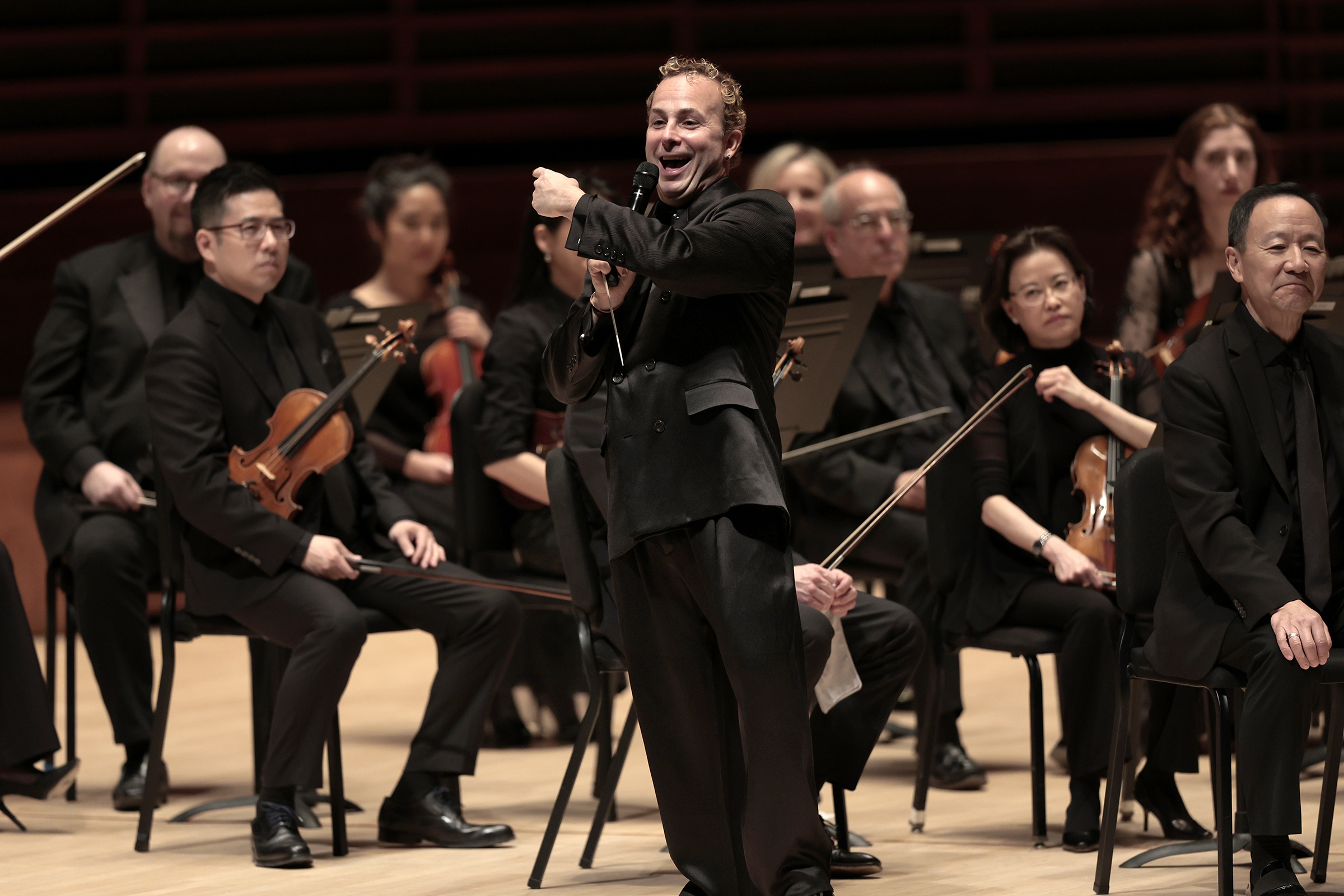
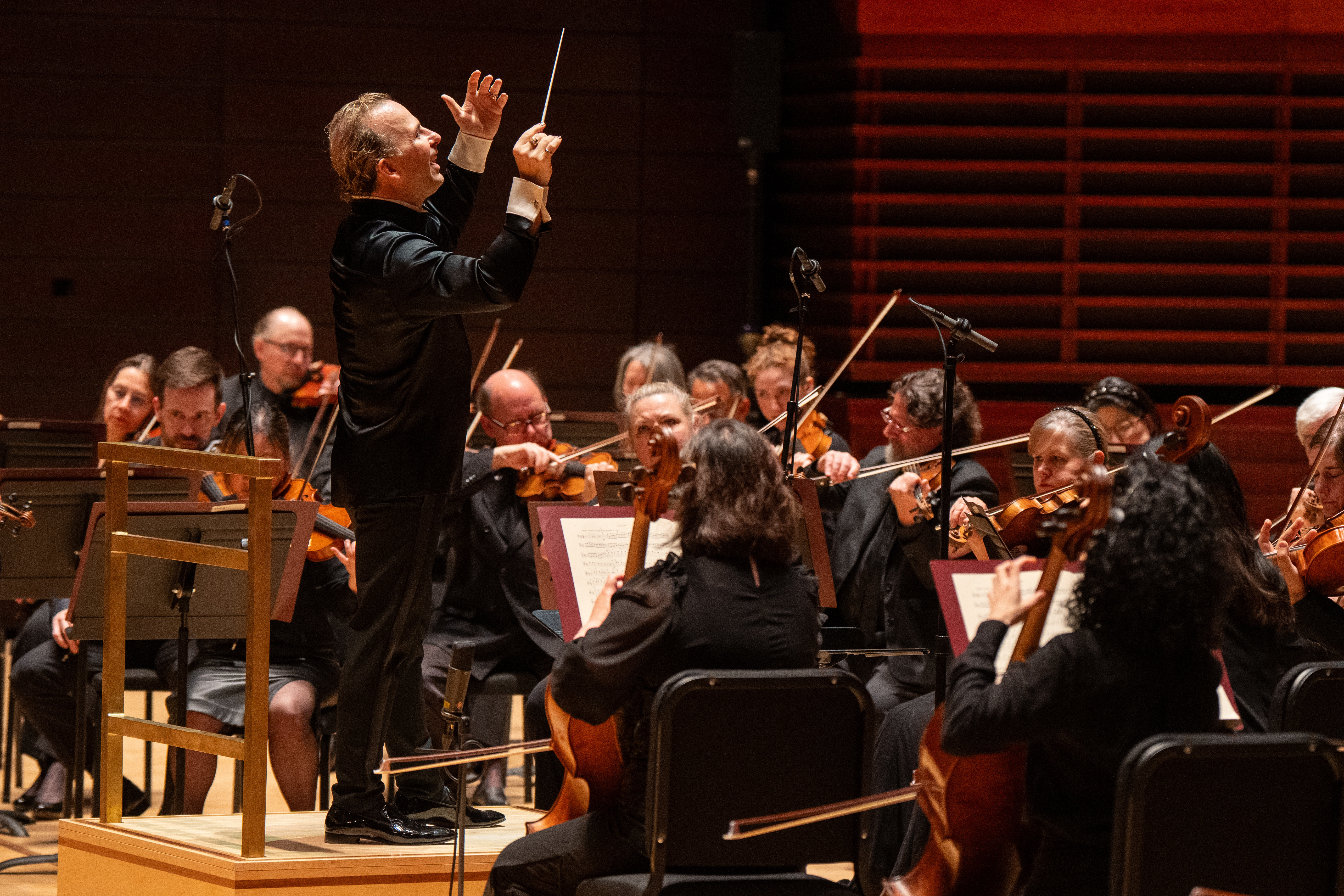
Philadelphia Orchestra conductor Yannick Nézet-Séguin in Marian Anderson Hall in April.Elizabeth Robertson / Staff Photographer
Bach’s ‘Christmas Oratorio’ with the Philadelphia Orchestra
Dec. 12 and 13, Marian Anderson Hall
Bach’s packaging of six cantatas into one vast canvas encompassing the Christmas story offers an astonishing variety of orchestral combinations and colors, not to mention emotional realms. The Philadelphia Orchestra, which has never before performed the work in its entirety, is led here by its music and artistic director, Yannick Nézet-Séguin.
The program, by the way, is in addition to (and not instead of) the orchestra’s traditional Messiah, which will be performed Dec. 4 and 5 with conductor Bernard Labadie. philorch.ensembleartsphilly.org, 215-893-1999.
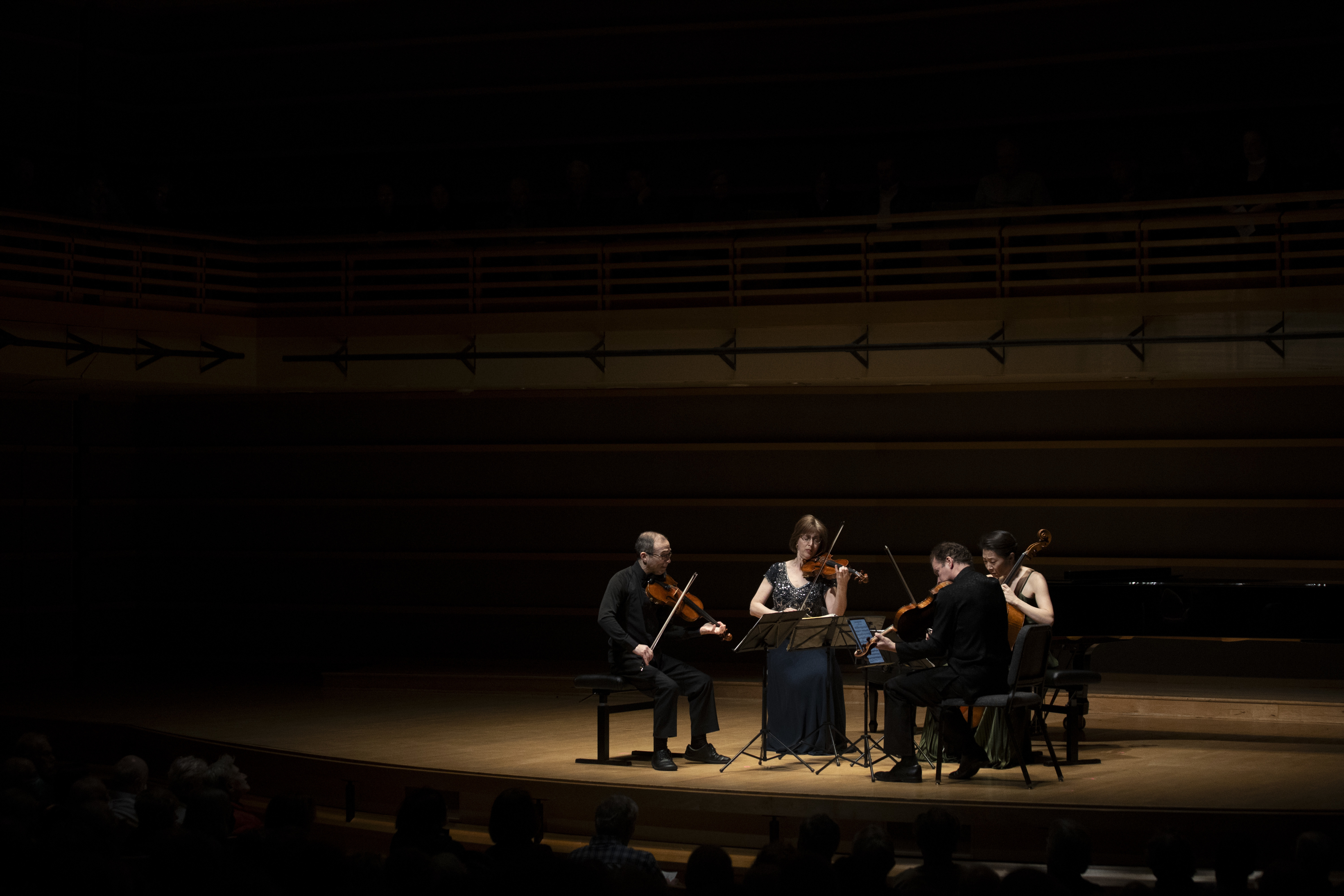
The Brentano Quartet at the Perelman Theater in 2024.Monica Herndon / Staff Photographer
Brentano Quartet
Dec. 13, Perelman Theater
The fugue in classical music is like the golden mean in nature or classical columns in architecture. Once you know it’s there, you start seeing it everywhere. Put simply, it is where a melodic theme is introduced and then repeated in another key while the first one continues. It’s more complicated than this, but basically it’s an almost mathematical tool for creating a dense overlap of competing (though complementary) voices.
Is there a greater meaning to the fugue — say, a philosophical one? The Brentano Quartet, in residence at Yale University, explores that question in works of Beethoven, Shostakovich, and, of course, the fugue’s unsurpassed innovator, Bach. pcmsconcerts.org, 215-569-8080.
David Hayes, music director of the Chamber Orchestra of Philadelphia.Alejandro A. Alvarez / Staff Photographer
Chamber Orchestra of Philadelphia, Bach Brandenburg Concerti
Dec. 19 and 20, Bryn Mawr College’s Goodhart Hall and Philadelphia Film Society Center
Philadelphia’s long-running chamber orchestra has adopted a format of concerts running more or less an hourlong in venues around town. That includes this holiday-time one with Bach’s Brandenburg Concerto Nos. 1, 3, and 4. They are joined by Christopher Theofanidis’s Muse, which was inspired by the third Brandenburg concerto. David Hayes conducts. chamberorchestra.org, 215-545-1739.
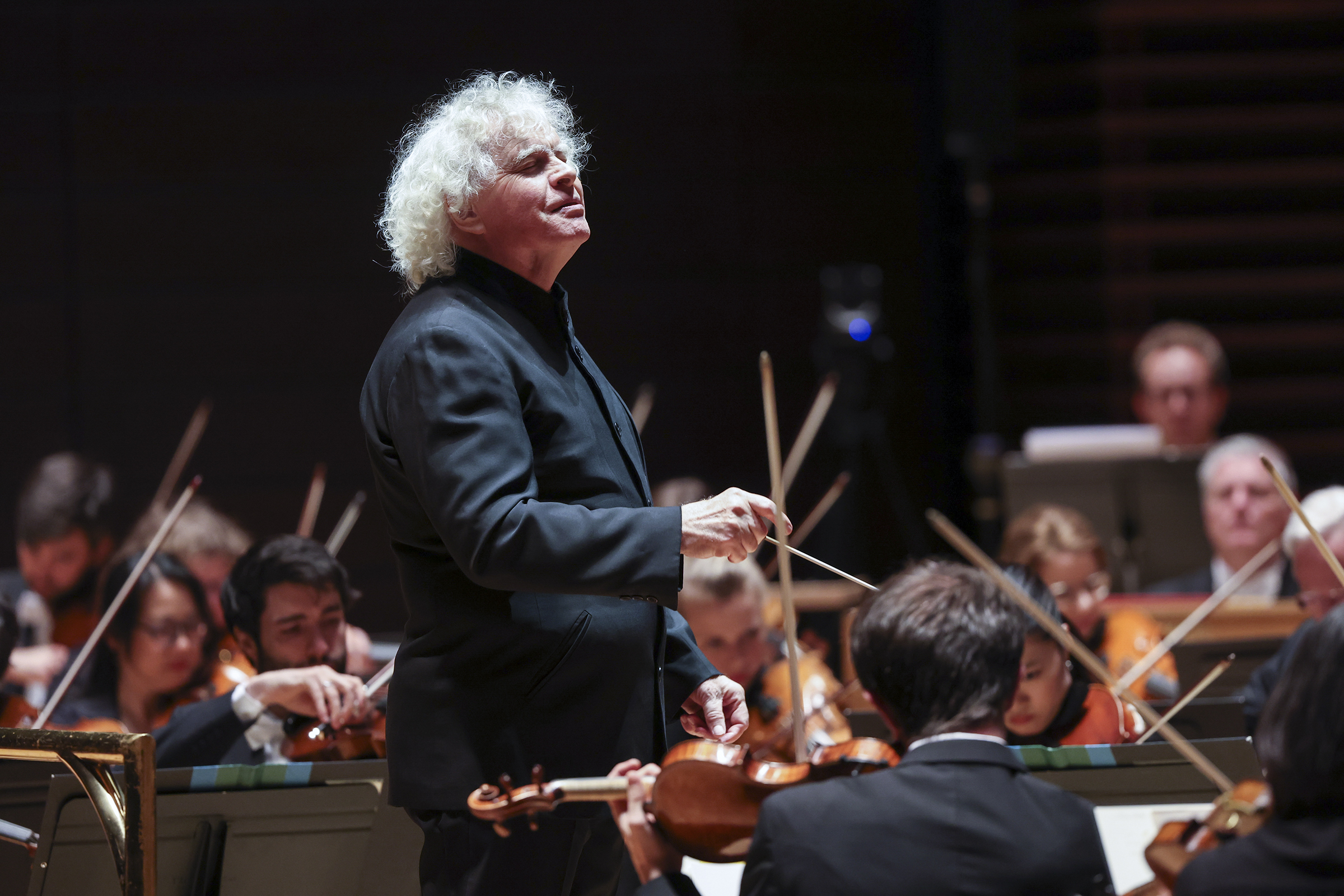
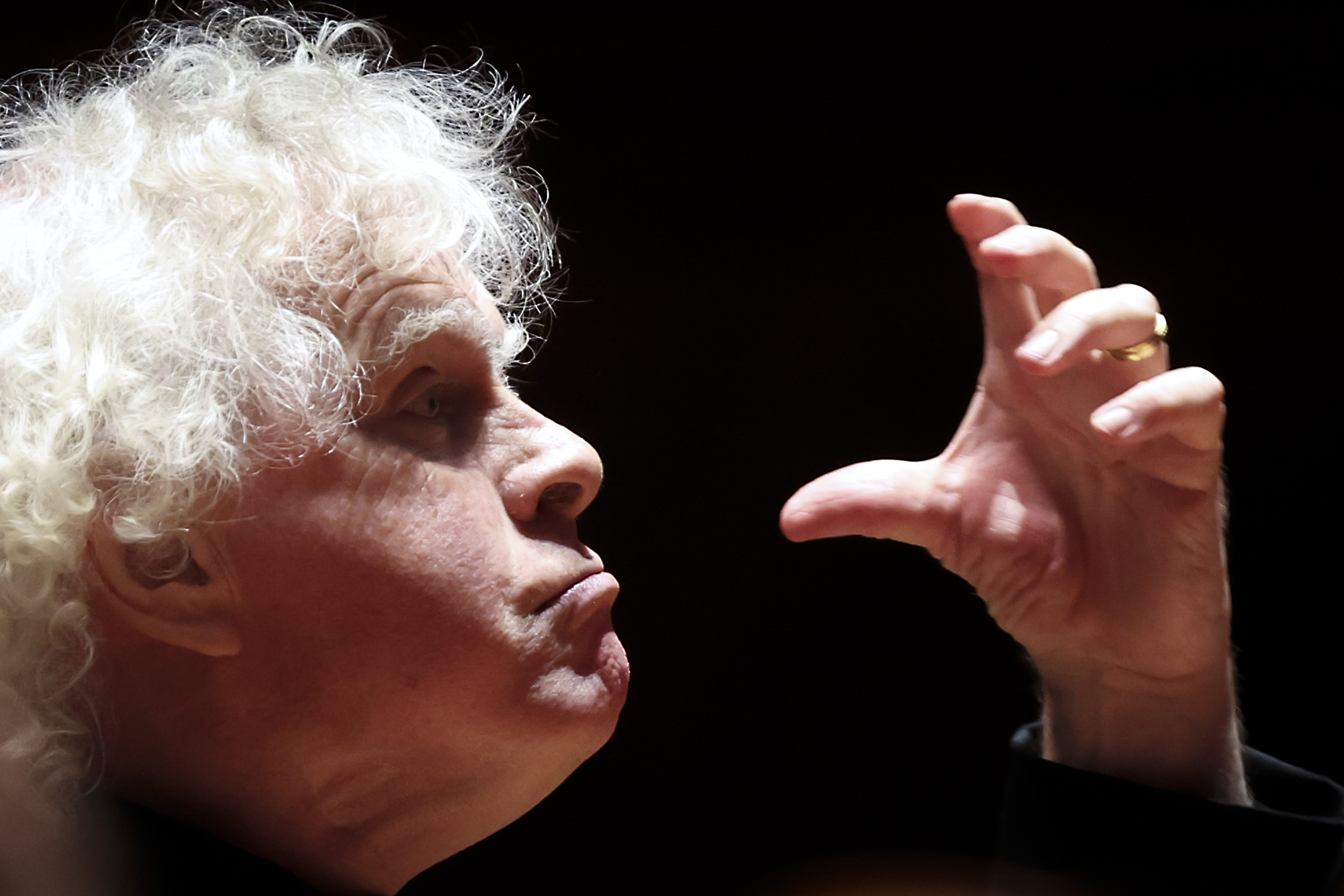
Simon Rattle conducting the Bavarian Radio Symphony Orchestra at the Kimmel Center in 2024.Heather Khalifa / Staff Photographer
Simon Rattle and the Philadelphia Orchestra
Jan. 28, 29, and 30, Marian Anderson Hall; Feb. 2 at Carnegie Hall
Even if he didn’t end up being music director, Rattle still visits the Philadelphia Orchestra’s podium from time to time. His current absence from the orchestra has been a painfully long one — a decade — and he returns with a program of works that seems bound by nothing other than their potential for virtuosity from the ensemble and interpretive depth from the podium: John Adams’ Harmonielehre, Debussy’s La Mer, and the second suite from Ravel’s Daphnis et Chloé. That works just fine for us. philorch.ensembleartsphilly.org, 215-893-1999.
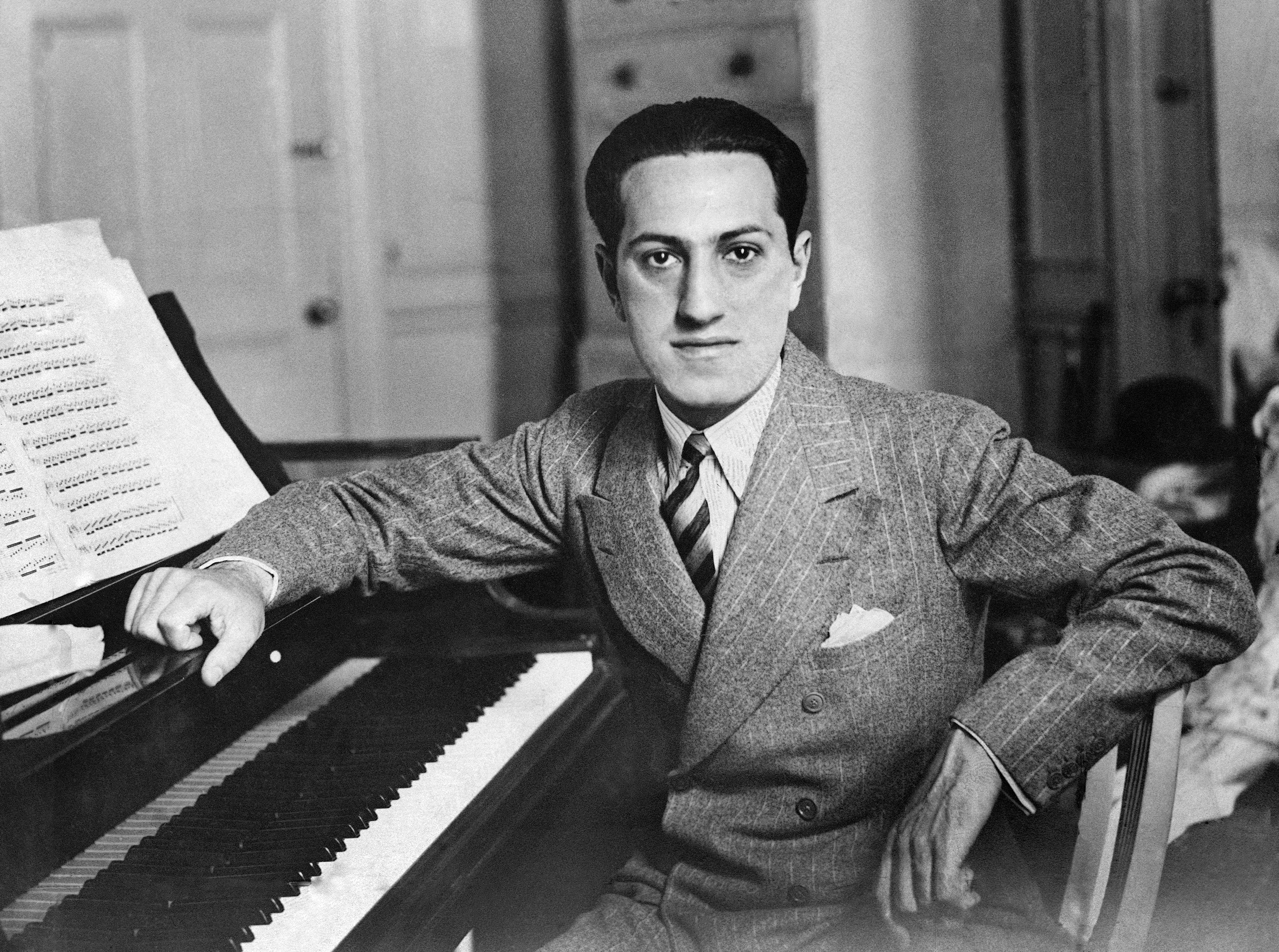
The Gershwins’ ‘Let ‘Em Eat Cake’
Jan. 29, 30, and 31, the Academy of Music
Who knew this is where we’d end up as a country? George and Ira Gershwin did, in an opera with a book by George S. Kaufman and Morrie Ryskind. The piece depicts an election denier who renovates the White House and establishes a dictatorship. “You couldn’t write a better farce about what’s going on in the world than this,” said Costanzo, who is bringing the work from 1933 to Opera Philadelphia for the first time. Conducted by Corrado Rovaris and directed by Zack Winokur. operaphila.org, 215-732-8400.
Opera Philadelphia has taken on a new creative partner for its upcoming production of the Gershwin brothers’ rarely performed Let ‘Em Eat Cake. After aJanuaryrun at the Academy of Music, the musical will be presented by New York City Center as part of its “Encores!” series with 15 performances in March, both companies announced Wednesday.
Let ‘Em Eat Cake is a natural fit for Encores!, which specializes in the revival of American musicals. For Opera Philadelphia, where musical theater is more of a novelty, the partnership could open up possibilities for casting, which isn’t yet set.
“I think that because City Center is such an established brand in this world, it could attract certain famous names and people that I don’t have connections to or that might not otherwise consider coming to what is an opera company,” said Opera Philadelphia general director and president Anthony Roth Costanzo.
In this first-ever collaboration between the two arts organizations, the production could be the same in both places, or not — it is yet to be fleshed out — but there will be at least some differences. The orchestra and chorus in Philadelphia will be larger, and the conductor will be different in each city (Corrado Rovaris in Philadelphia, Rob Berman in New York).
Still, for both, director Zack Winokur “will develop the whole concept and idea for the production,” said Costanzo.
Partnering with City Center will yield a “financial benefit” for Opera Philadelphia, he said. “We share costs. We bring in partnership revenue and that helps to cover the costs of what we’re trying to do.”
Let ‘Em Eat Cake, written by George and Ira Gershwin with a book by George S. Kaufman and Morrie Ryskind, premiered on Broadway in 1933 and, despite a memorably melodic score and sharp social and political commentary, hasn’t been heard much since. The story — about a U.S. president who doesn’t accept the election results, establishes a dictatorship, and renovates the White House — was meant at the time as satire.
Opera Philadelphia has never before produced a Broadway show, though it has a strong track record with works that don’t fall into neat categories.
“Somebody said to me the other day, ’Is this an opera or is it a musical?’ And I said, ‘Well, I’m not really here to gatekeep opera,’” said Costanzo. “I think it’s storytelling through music, and that’s what opera fundamentally is.”
“Let ‘Em Eat Cake” runs Jan. 29, 30, and 31 at the Academy of Music, Broad and Locust Sts., operaphila.org; and at New York City Center, 131 W. 55th St., March 17-28, nycitycenter.org.
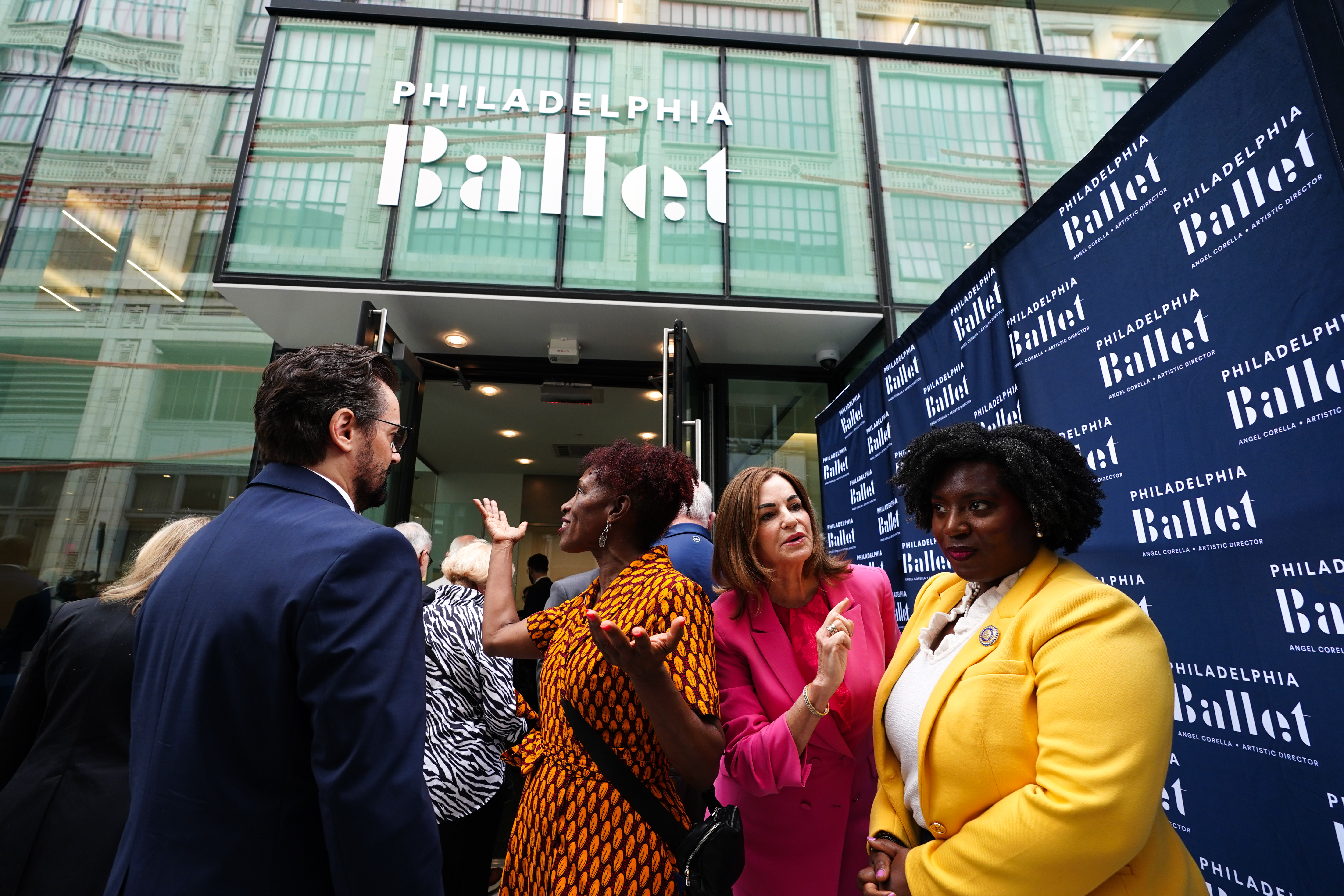
Years in the making, after a series of fits and starts that included both a premature groundbreaking and a real one, Philadelphia Ballet’s sparkling new headquarters on North Broad Street officially opened Friday morning.
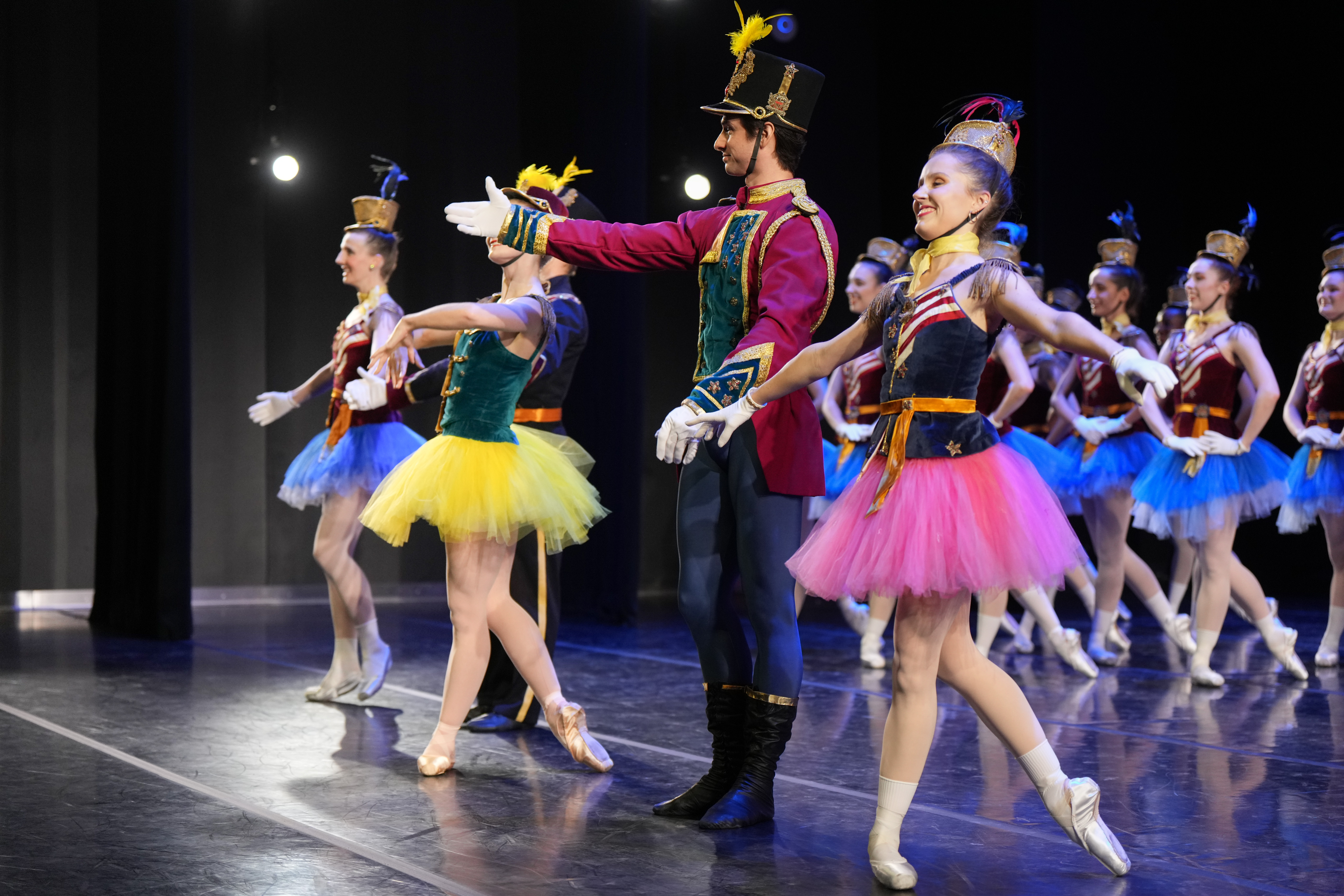
Ballet leaders and other officials formed a kind of corps de ballet to cut a ribbon in front of the building’s main entrance on Wood Street. A miniperformance by actual dancers in the new black box theater followed, featuring an excerpt from George Balanchine’s Stars and Stripes.
A number of dignitaries were on hand with celebratory words; State Sen. Nikil Saval spoke particularly eloquently about dance and the place of the arts in a “thriving city.”
But it was Louise H. Reed, the stalwart ballet supporter who has seen the company through thick and thin over several decades, who perhaps put it best.
“It’s a miracle,” she said after walking into the building lobby lined with paintings of dancers captured in roles from Giselle, The Prodigal Son, and other works.
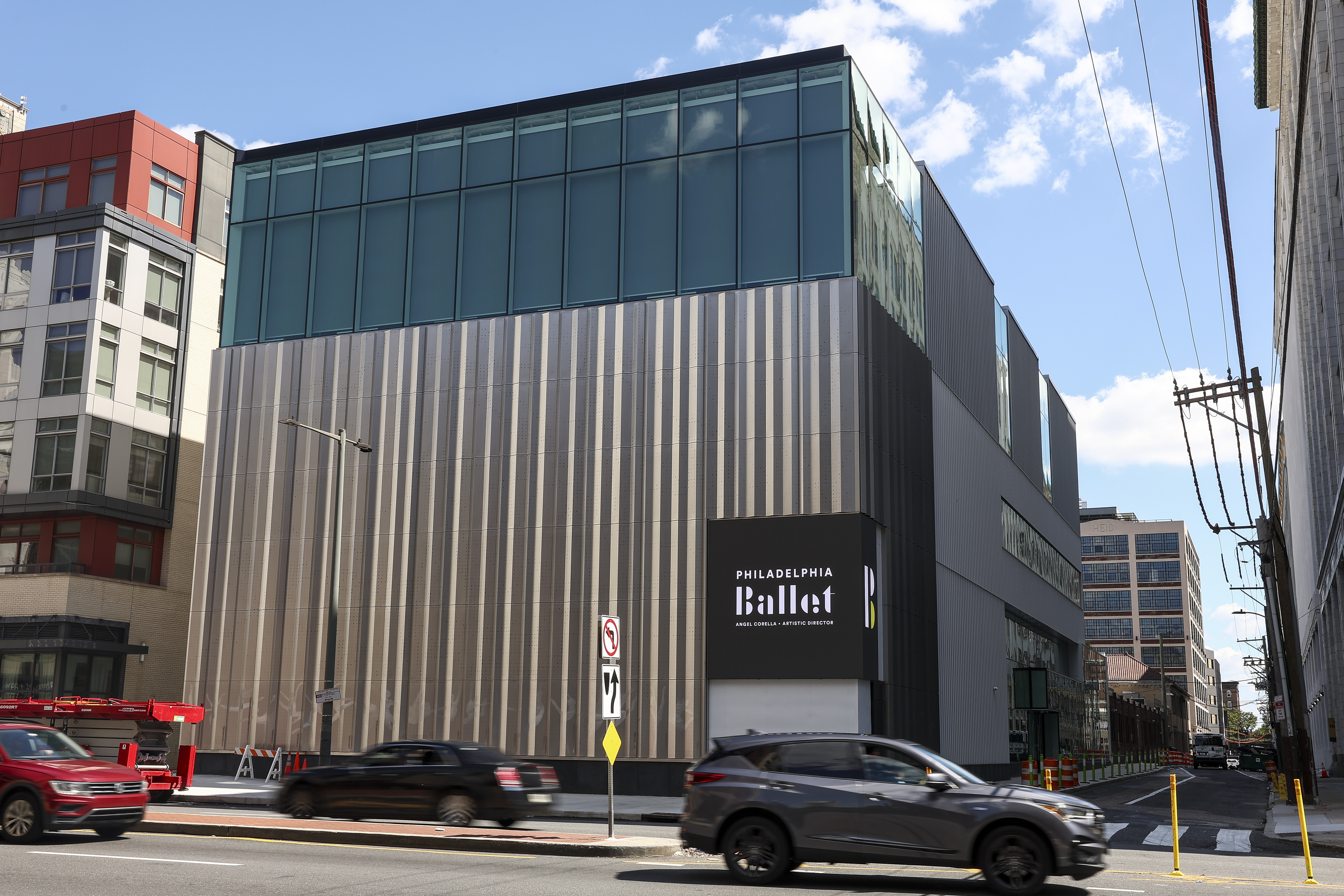
The Philadelphia Ballet Center for Dance on North Broad St.Monica Herndon / Staff Photographer
The new facility doubles the ballet’s space for rehearsing — including a studio that matches the size of the stage of the Academy of Music, where it often performs — as well as allows for roomier quarters for the school, wardrobe shop, offices and a music library.
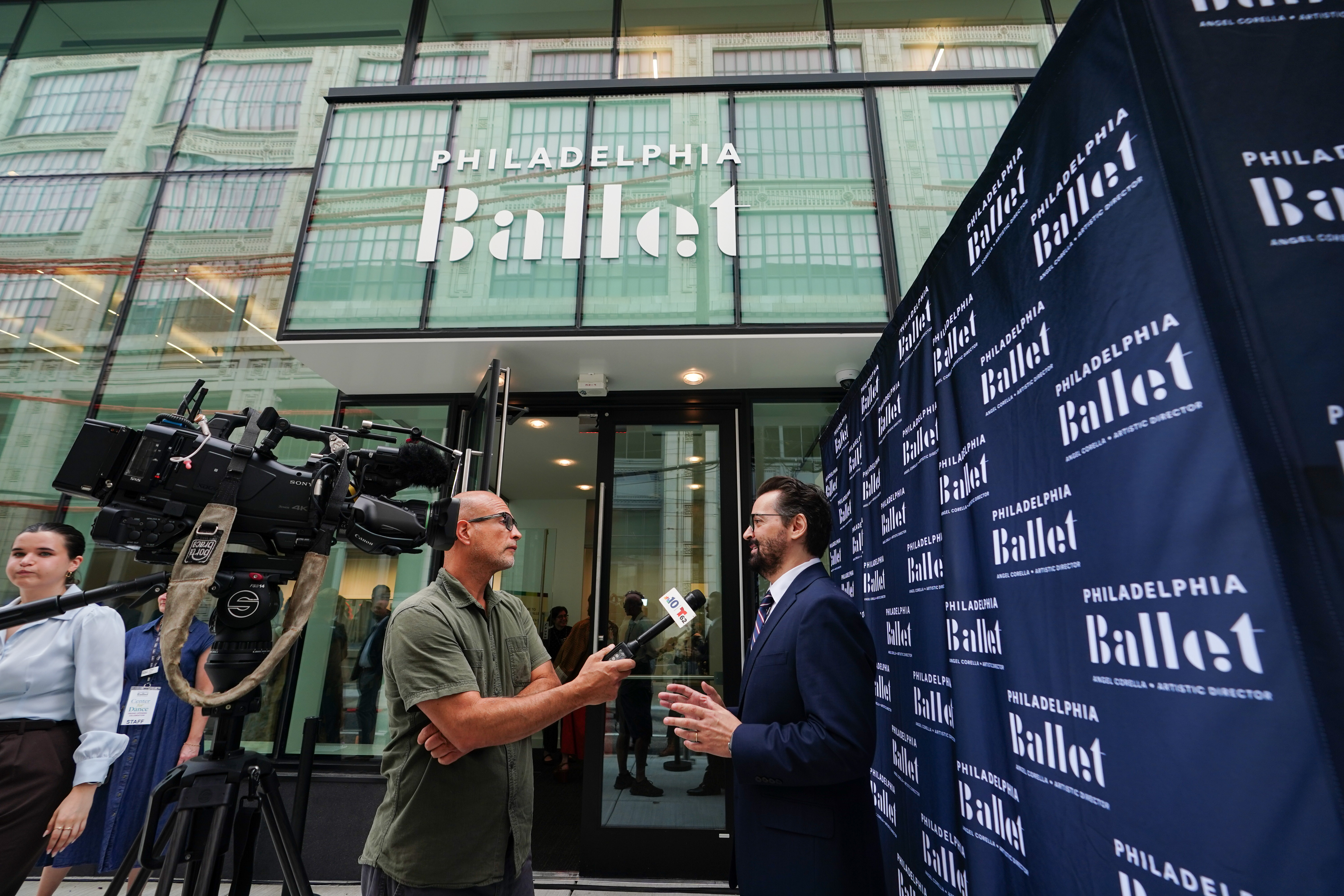
“It’s providing everything the dancers and the school needs as well as a way for us to invite people into our home,” said ballet CEO Shelly Power. “That’s our mantra, really making this for the community. This opens a whole new chapter for us, something we couldn’t do before because we didn’t have enough space.”
Leaders say the new facility brings Philadelphia Ballet up to the standards enjoyed by other major American dance companies — a boast heretofore elusive.
Cutting the ribbon, from left: ballet artistic director Angel Corella; current ballet board chairman David F. Hoffman; ballet CEO Shelly Power; State Rep. Mary Isaacson; State Sen. Nikil Saval; Philadelphia cultural chief Val Gay; and Victoria B. Mars, the ballet’s next board chairperson.Jessica Griffin / Staff Photographer
“Our dancers and our staff have a building, a space, that matches the quality of the organization,” said Victoria B. Mars, a major donor to the project and, as of the end of this month, the ballet’s new board chairperson. “What they were in before was, I would have used the word kind of unacceptable, for the quality of the company we have. So now we finally have a space where everyone can flourish and everyone can feel that they are supported, that they have the tools they need to perform at their highest level.”
The building may be up, but the work isn’t done. About $36 million has been raised toward the $50 million project (whose budget includes not just construction but also costs like financing and outfitting the building).
The ballet’s development department has been expanded and “over the next year will be working really hard to finish this project off. Hopefully donors will see the impact it has on the city and company and the school,” said Power.
The arrival of the five-story 43,000-square-foot building allowed for the renovation of the ballet’s other building set back from Broad Street. That older structure, which will primarily house the school, has been joined with the new one, giving the group a total of 58,000 square feet.
The company is also entering a new era of leadership. It now has Mars, who follows David F. Hoffman, who headed the board for 13 years. She is former chairperson and director of the board of Mars, one of the largest family-owned corporations in the U.S., whose products include M&Ms, Cheez-Its, Pop-Tarts, Snickers, Life Savers and other snack items, as well as pet food and pet care services.
Philadelphia Ballet artistic director Angel Corella being interviewed outside of the company’s new building Friday.Jessica Griffin / Staff Photographer
Mars, 69 — the great-granddaughter of Mars founder Frank C. Mars — said in an interview this week that she was introduced to Philadelphia’s ballet company about a dozen years ago after being seated next to Angel Corella at a dinner party around the time he became artistic director.
“I was inspired by his vision, I was inspired by his commitment and passion for transforming the Philadelphia Ballet into a quality organization that we could all be proud of. And I’ve watched that transition. When I now go to the ballet and when I bring my friends to the ballet, I am proud and inspired by what is being performed.”
Every performance, Mars says, “impresses me, amazes me, and so that passion that Angel has and had at that point in time is what inspired me and has kept me connected.”
Mars — who studied ballet as a child in Paris, holds degrees from Yale and the Wharton School and lives in the Philadelphia area — said that among her goals was increasing philanthropic support for the company.
“I’m talking about everything from government funding to corporate support to contributed revenue coming from foundations, individuals — all the pieces that support the arts.”
The ballet has received $6.7 million in money for the new building from the state.
Members of the Philadelphia Ballet performed an excerpt from George Balanchine’s ‘Stars and Stripes’ in the black box theater of the ballet’s new building after Friday’s ribbon-cutting ceremony.Jessica Griffin / Staff Photographer
Part of Philadelphia Ballet’s pitch to funders is the idea of the building as more than a factory for dancers. The group is still planning its slate of public events, but already has scheduled a series of talks about dance; performances to introduce children and families to classical ballet; and master classes for high school students to create their own dance works.
The building also provides space to woo philanthropists by giving them close-up encounters with the art form. Beyond the artistic connection, a significant enticement awaits potential donors. The ballet’s building currently has a generic placeholder name, the Philadelphia Ballet Center for Dance, while it stumps for a gift that would involve a naming opportunity.
“I was inspired by a story, by a person, by a passion,” says Mars. “The building now enables us to bring people into that space and hopefully inspire them in the same way that I was inspired.”
Musicians and management of the Philadelphia Orchestra have struck a tentative agreement on a new three-year labor deal. The pact, whose terms were finalized in the past few days after more than six months of talks, would, if ratified, put the base minimum salary of orchestra members at $200,008 annually by the end of the contract.
Players were presented with the deal Monday and, after a mandatory 48-hour period to mull it, are slated to hold a ratification vote starting Wednesday.
The old contract expired Monday at 12:01 a.m., but no interruption of performances is expected. Opening night of the 2026-27 season is Sept. 24 — a benefit concert for the musicians’ retirement fund featuring Joe Hisaishi’s Orbis and Beethoven’s Symphony No. 9.
The musicians’ negotiating committee recommended the contract — which keeps the Philadelphia Orchestra’s players among a group of the best paid in the U.S. — to the full membership.
“It’s a step in the right direction,” Ellen Trainer, president of local 77-274 of the American Federation of Musicians, said of the tentative deal. “I think the association [management] understood our narrative and worked with us to achieve something we can all be proud of.”
“This is a deal that commits to the artistry of the orchestra,” said Philadelphia Orchestra and Ensemble Arts president and CEO Ryan Fleur. “We’re trying to assure short- and long-term economic stability. It does make an investment in our artists and it is a competitive deal that will keep them among their highest-paid peers.”
The new contract follows one whose negotiations in 2023 were publicly acrimonious and left some orchestra board members feeling bruised. Players authorized a strike, though a strike never happened, and they filed unfair labor practice complaints with the National Labor Relations Board.
Talks this time did not bubble over in public, though musicians did make labor-solidarity statements over the summer such as wearing union T-shirts to rehearsals.
The new contract calls for an increase in base salary from the current $176,280 to $200,008 over the contract’s three-year span. Many players earn more, and some, like principals, make much more.
The contract does not call for changes in healthcare coverage. It provides work-rule changes, such as opening up more rehearsals to students, and spells out protocols for hearing loss protections during performances using amplified sound. The third year of the contract grants supplemental payments to substitute and extra musicians for their retirement accounts.
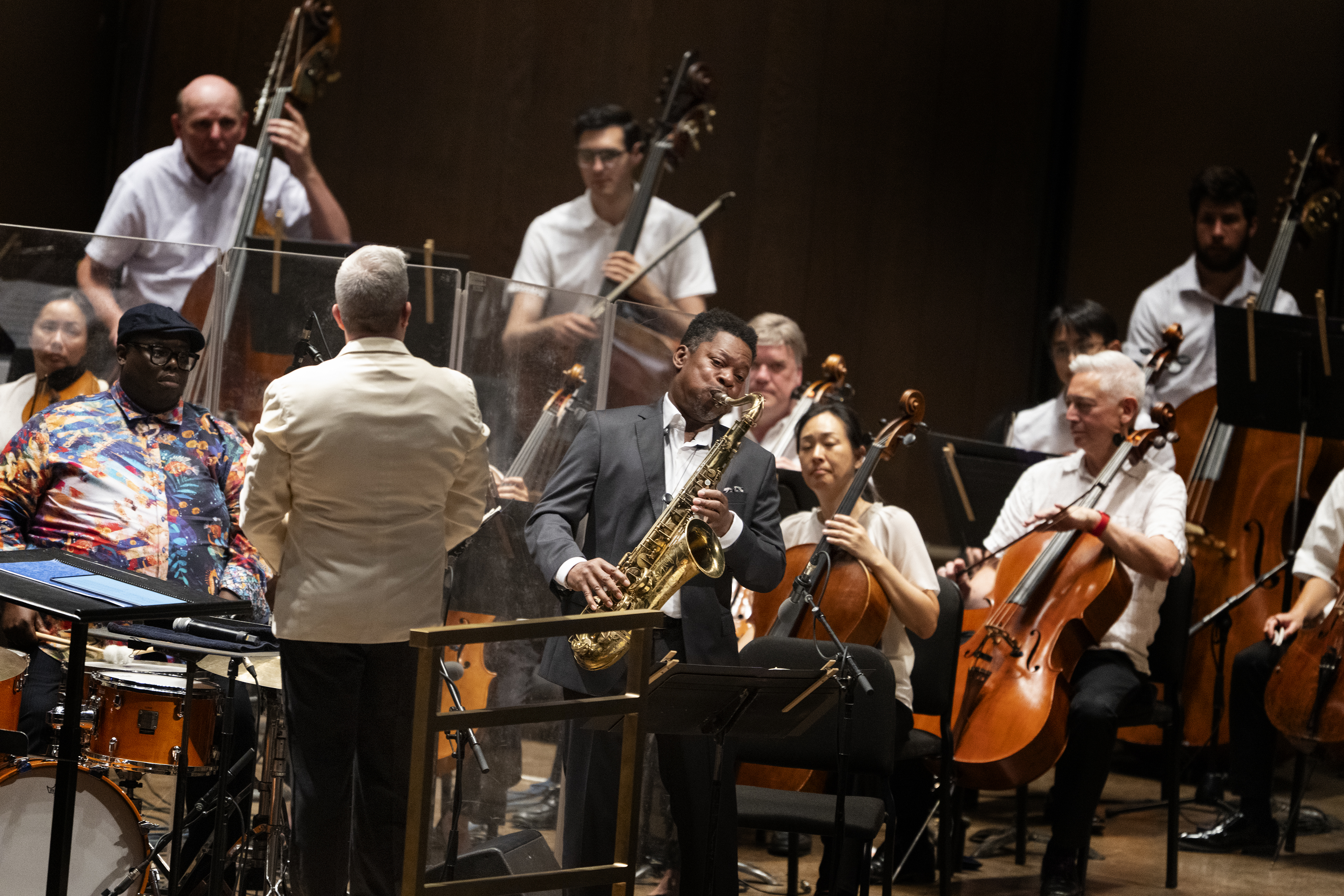
Ravi Coltrane and the Philadelphia Orchestra, conducted by Edwin Outwater, during a concert celebrating the 100th anniversary of John Coltrane’s birth at the Highmark Mann Center this past July.Jose F. Moreno / Staff Photographer
The new contract increases the size of the “complement” — that is, the number of full-time members — from the current 103 to 104 by the third year.
The deal also enshrines for the first time a limit on the number of live-to-screen movie presentations that can be programmed to two per subscription season, with no more than three performances per movie. The contract does not restrict the number of film concerts in summer.
Fleur said it’s not the film music itself that concerns the orchestra’s musicians. But film scores are typically recorded in multiple sessions, and when an orchestra performs the entire score all at once, “it’s a very intense process and requires skills that are not consistent with the skills when responding to [music and artistic director] Yannick [Nézet-Séguin] in a Mahler symphony.”
The new contract also provides for a process at the end of the season to review “the quality of all programs featuring a nonsymphonic work, including, but not limited to, programs featuring pops music,” to discuss the income generated as well as the “impact of the programming on the artistic health of the Philadelphia Orchestra.”
Musician dissatisfaction has been around certain concerts at which “the orchestra is playing with stand-lights and they’re not really a partner on the stage but more in the background,” said Trainer. “They want to be mutually featured.”
A number of other major U.S. orchestras have been in negotiations recently. This month, the National Symphony Orchestra settled a new contract, as did the Boston Symphony Orchestra last month. Players of the Cleveland Orchestra recently voted to authorize a strike. The San Francisco Opera canceled opening night of its 104th season on Sept. 12 after musicians of the orchestra went on strike.
Philadelphia Orchestra has also had its share of strikes, though the most serious work stoppage in past years was three decades ago — a 64-day strike in 1996.
Fleur said that recent talks featured a “collaborative process,” and while there were times when each side got frustrated, “that’s what happens when there’s an open dialogue, and we worked through it.”
Orchestra negotiating committee chairperson and violinist Dara Morales said that this time in talks she felt that “the musicians’ voices and our collective knowledge of the orchestra and our industry were taken seriously.”
Philadelphians reacted with outrage when Drexel University and the Academy of Natural Sciences announced the closing of its museum on the Ben Franklin Parkway earlier this month.
But the museum is only a part of what the academy does. And while most Philadelphians think of dinosaurs and dioramas,the main business of the academy — its “beating heart,” as one board member calls it — will continue, even if it has often escaped the notice of the general public.
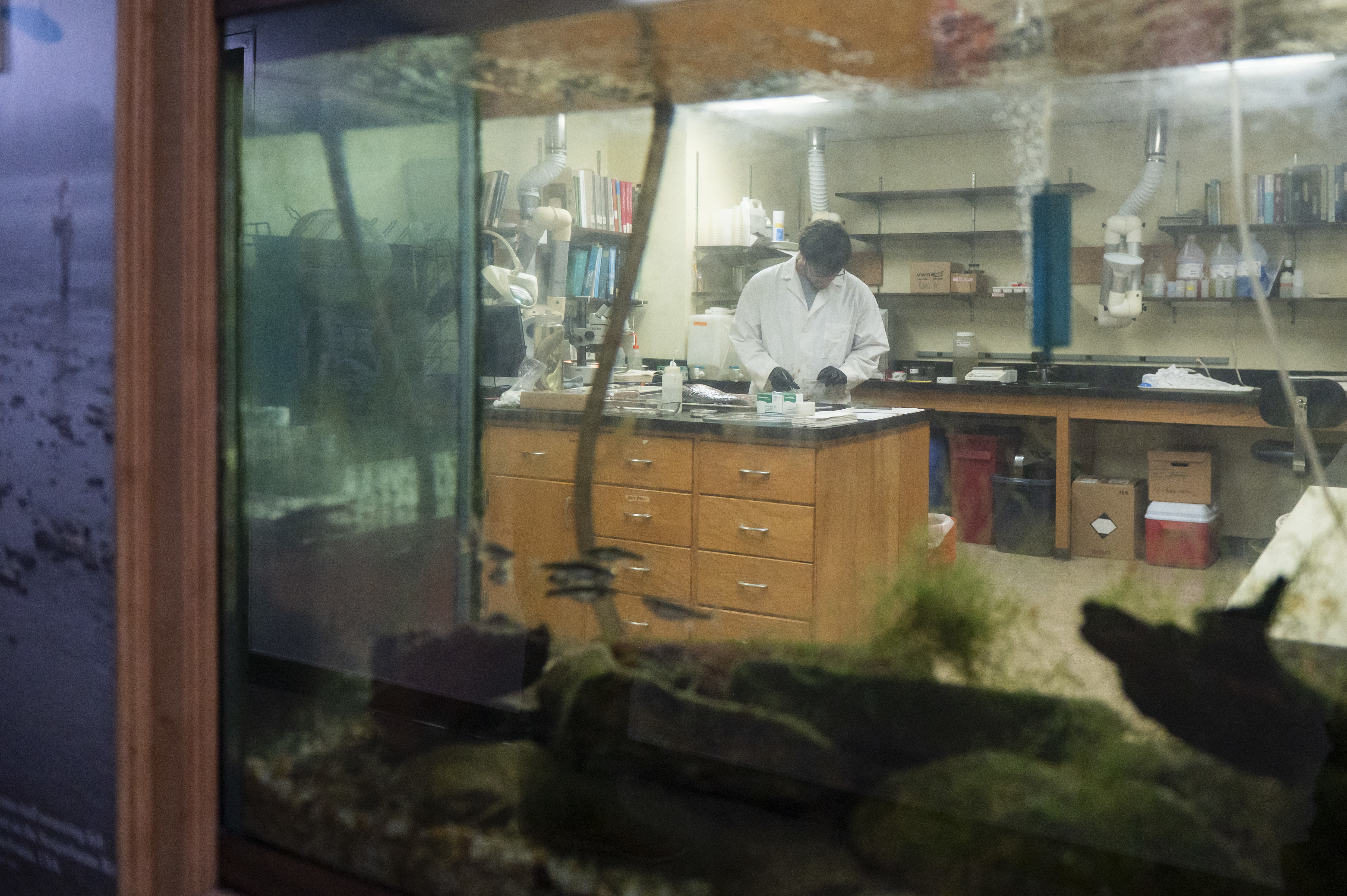
Housed backstage beyond the museum walls is one of the world’s largest repositories of natural specimens: bird carcasses, fish, mollusks, minerals, and bones of various kinds — millions of them amassed over more than two centuries.
And now, amid reports that the academy’s building may be sold and the collection moved, all eyes are on the fate of this trove.
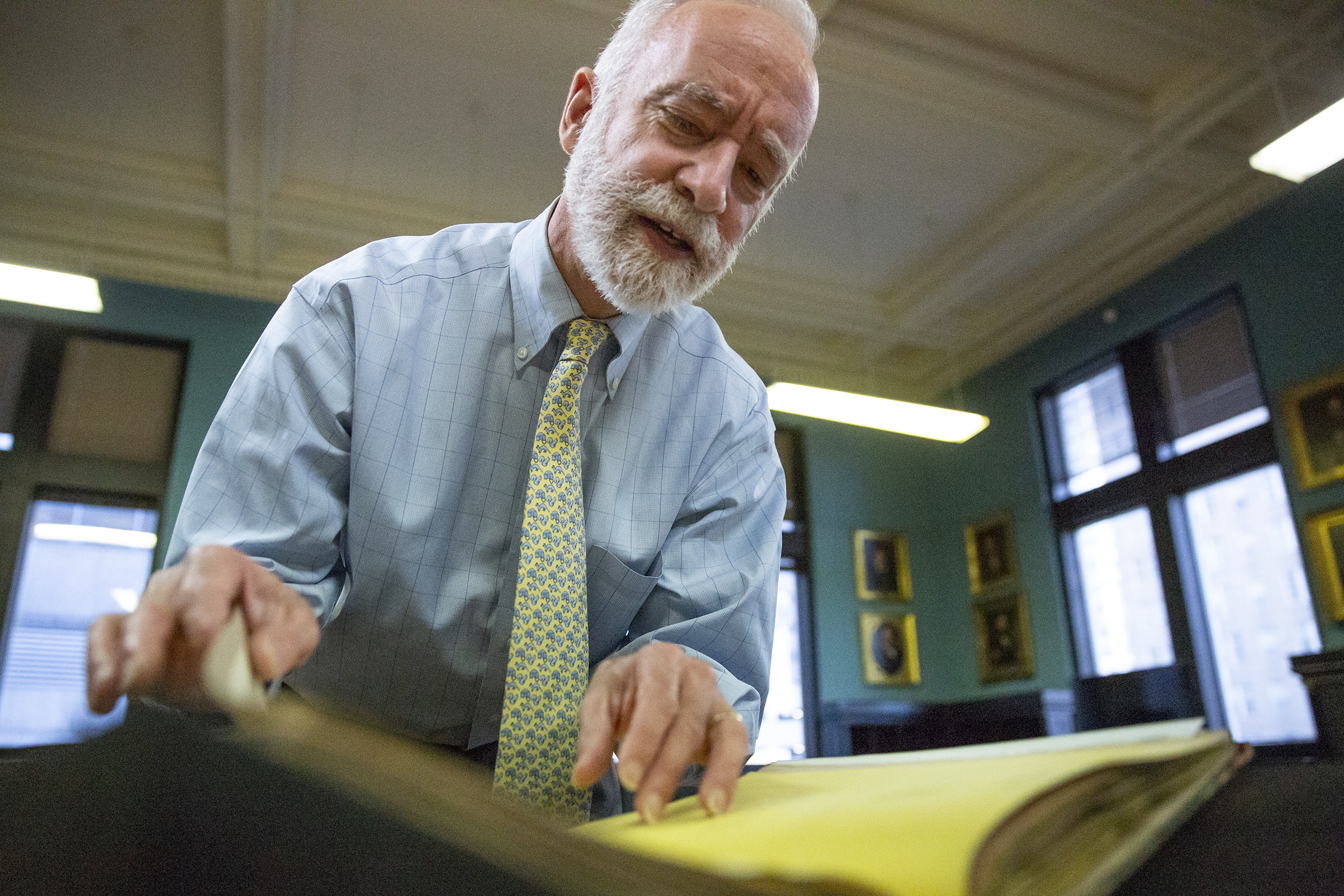
“It’s not just the scope of the collection that’s so important — 19 million specimens representing every aspect of the natural world,” says Robert McCracken Peck, curator of art and artifacts and senior fellow emeritus of the Academy of Natural Sciences of Drexel University. “The collections are not only important because of their associations with historical figures like Lewis and Clark and Thomas Jefferson.
“But these collections were made at specific times in history. We can never go back to collect more of these voucher specimens. They tell us how our world is changing.
“It is by definition irreplaceable.”
Microalgae too numerous to count
Among its peers, the academy’s group of species collections is one of the most significant in the world, and is perhaps unrivaled in certain areas of concentration and historical importance.
More than 220 plant specimens collected by Lewis and Clark on their landmark 1804-06 expedition between the Mississippi River and the Pacific Ocean are housed at the academy. Among the institution’s corresponding members over the years were Thomas Jefferson, John James Audubon, and Charles Darwin. The American Medical Association was founded here in 1847.
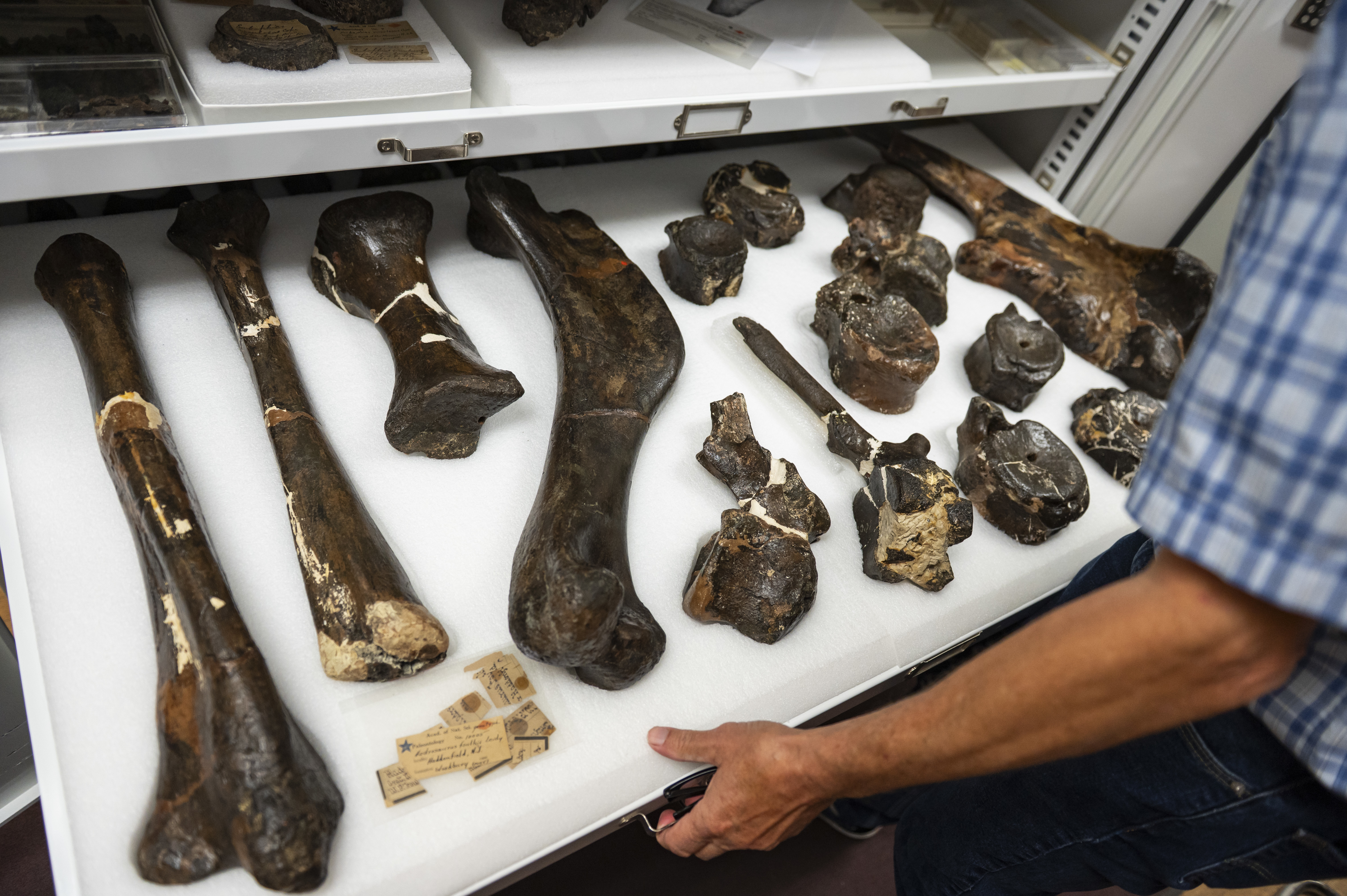
Ned Gilmore, collection manager for vertebrate paleontology, pulls out a drawer filled with bones from the Academy of Natural Sciences’ “Hadrosaurus foulkii.”Allie Ippolito / For The Inquirer
The plants and fungi collection holds 1.4 million specimens of algae, lichens, fungi, and slime molds and includes some of the oldest and most important plant collections in the Americas. The invertebrate paleontology collection is the oldest such collection in the United States.
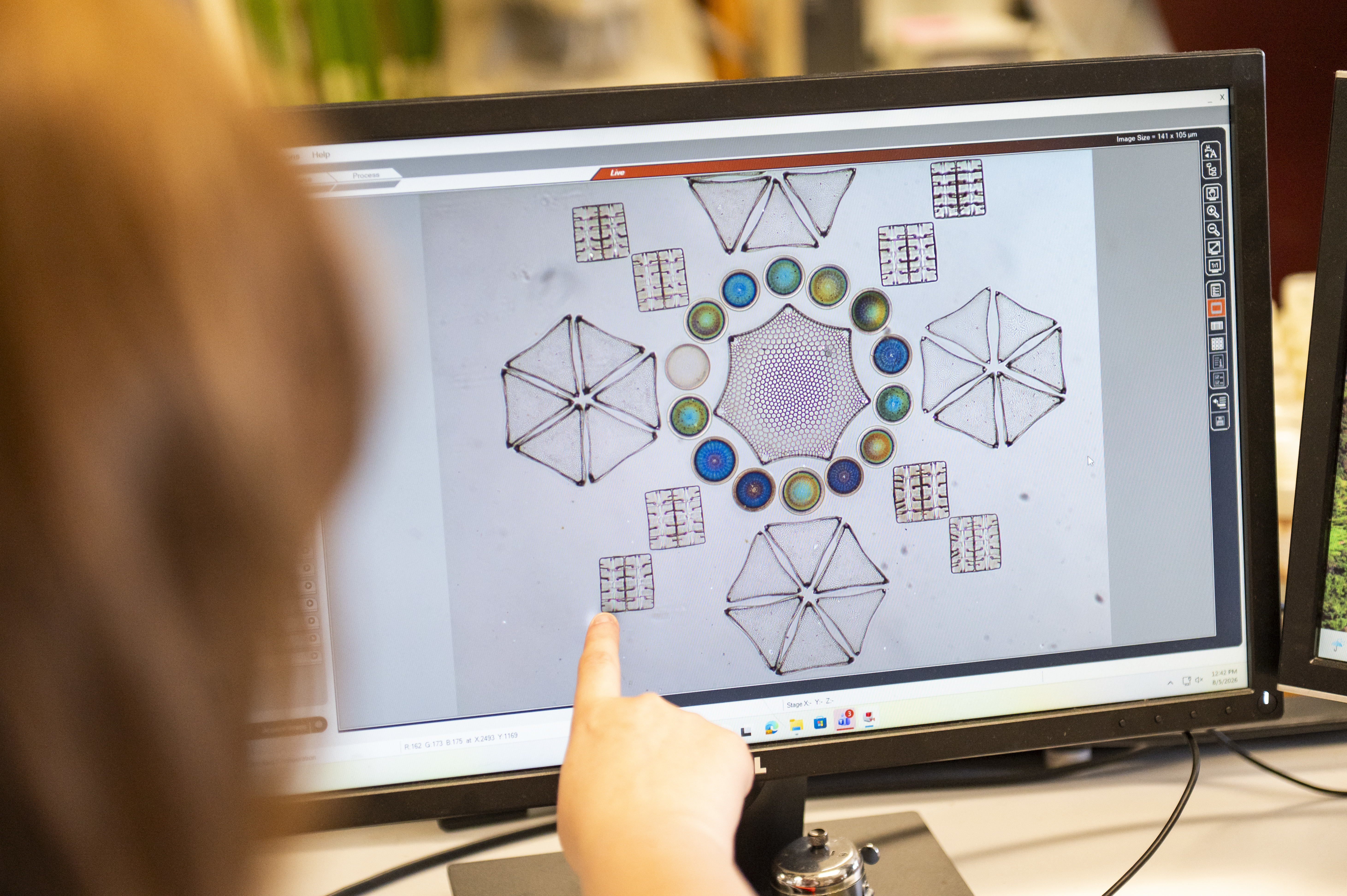
The number of diatoms in that collection is unknown, says Laura Aycock, manager of the academy’s hoard of the single-celled microalgae that are neither animals nor plants, though the academy has around 300,000 slides, with some slides containing upward of a hundred thousand diatoms.
“I’m not going to attempt to calculate that,” Aycock said.
Laura Aycock, collection manager of diatoms at the Academy of Natural Sciences. The diatoms serve as a time capsule.Allie Ippolito / For The Inquirer
The diatoms captured at the academy — which go back to the 19th century and come from around the world — serve as a time capsule.
“You can actually look at water quality and monitor how it’s changing and biodiversity of the diatoms looking at our slides,” says Aycock. “So people will reach out wanting to see, ‘Hey, can I see a snapshot of what this river looked like X many years ago?’”
The academy’s collections are a magnet internationally, says Ted Daeschler, professor emeritus, curator, and chair of vertebrate zoology at the academy.
“It’s a stopping point for people studying a wide variety of different things,” says Daeschler. “Every time I talk to any mollusk person in the world who’s done research, they’re like, ‘Oh yeah, I’ve been to the academy. I’ve done research there.’ Talk to anybody working on crickets and grasshoppers — ‘Oh yeah, I’ve been to the academy.’ People working on Devonian fish, they all came through at one point or another.”
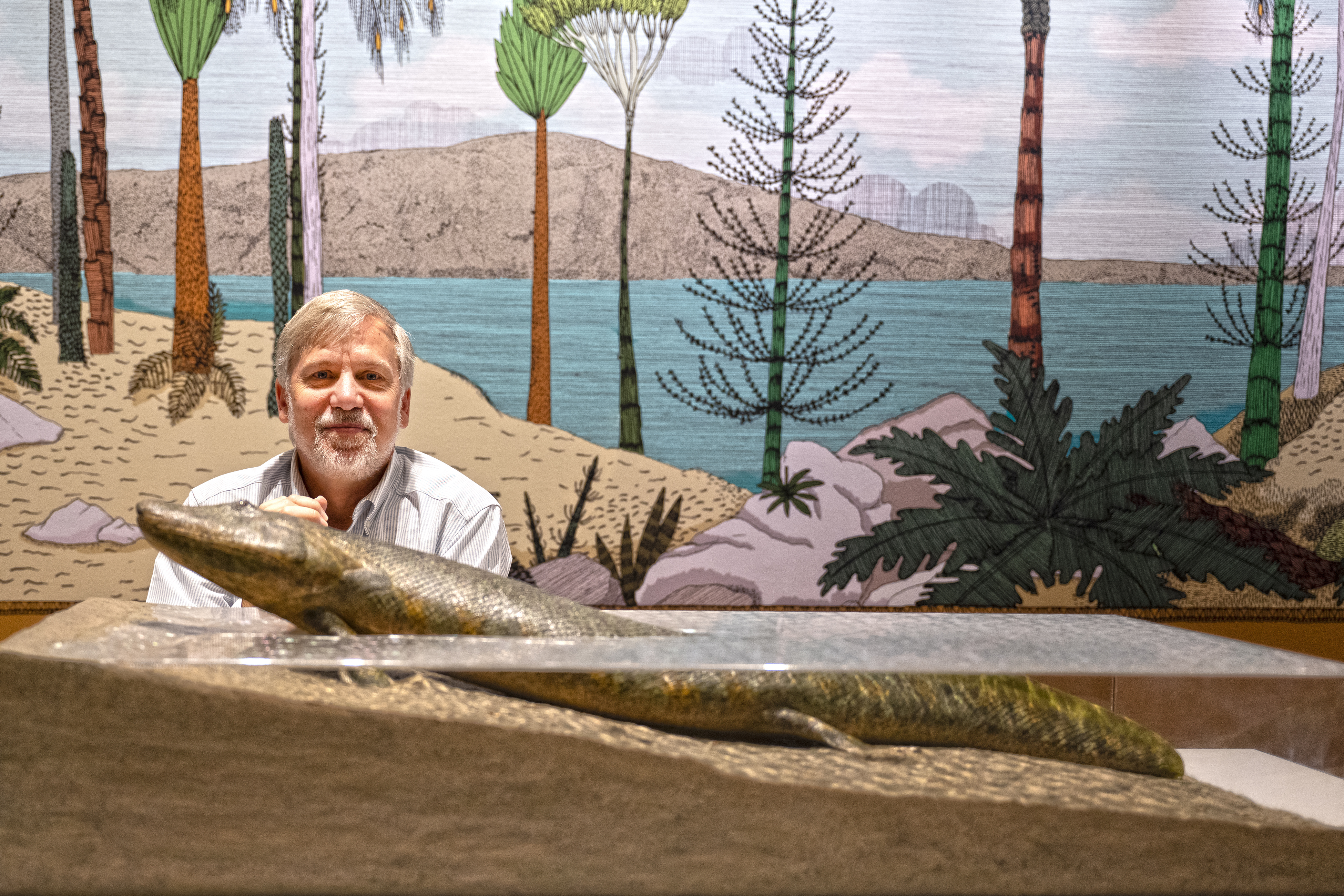
Ted Daeschler in 2023 with a model of “Tiktaalik roseae,” a 375-million-year-old beast whose discovery by Daeschler, Neil H. Shubin, and Farish A. Jenkins Jr. established a new link between fish and land creatures.Jose F. Moreno / Staff Photographer
The academy has seen some novelties over the years: an albacore tuna shipped to the institute from Ernest Hemingway in 1934, fingernail samples from now-retired U.S. Supreme Court Justice Stephen G. Breyer collected in 2010, and two red-eared sliders donated in 1977 by Sylvester Stallone as souvenirs from the original Rocky film.
Hemingway’s tuna remains. But Breyer’s fingernails were tested for stable isotopic composition of carbon and nitrogen to determine the justice’s diet and then discarded, and the turtles Cuff and Link are no longer with us, a spokesperson said.
A key to the ‘next pandemic’?
If some of the collections work and research going on at the academy seems esoteric, there’s no way of knowing what might become urgently relevant at some point.
“We all lived through a pandemic recently — pretty much hell on earth for most of us,” says Jason D. Weckstein, curator of the academy’s ornithology collection and professor at Drexel University College of Arts and Sciences.
“Understanding the ecological interactions that lead to those kinds of events is part of this kind of research. So why are some parasites specific to some hosts, whereas other ones can jump between hosts easily, and there are ecological characteristics that allow that?”
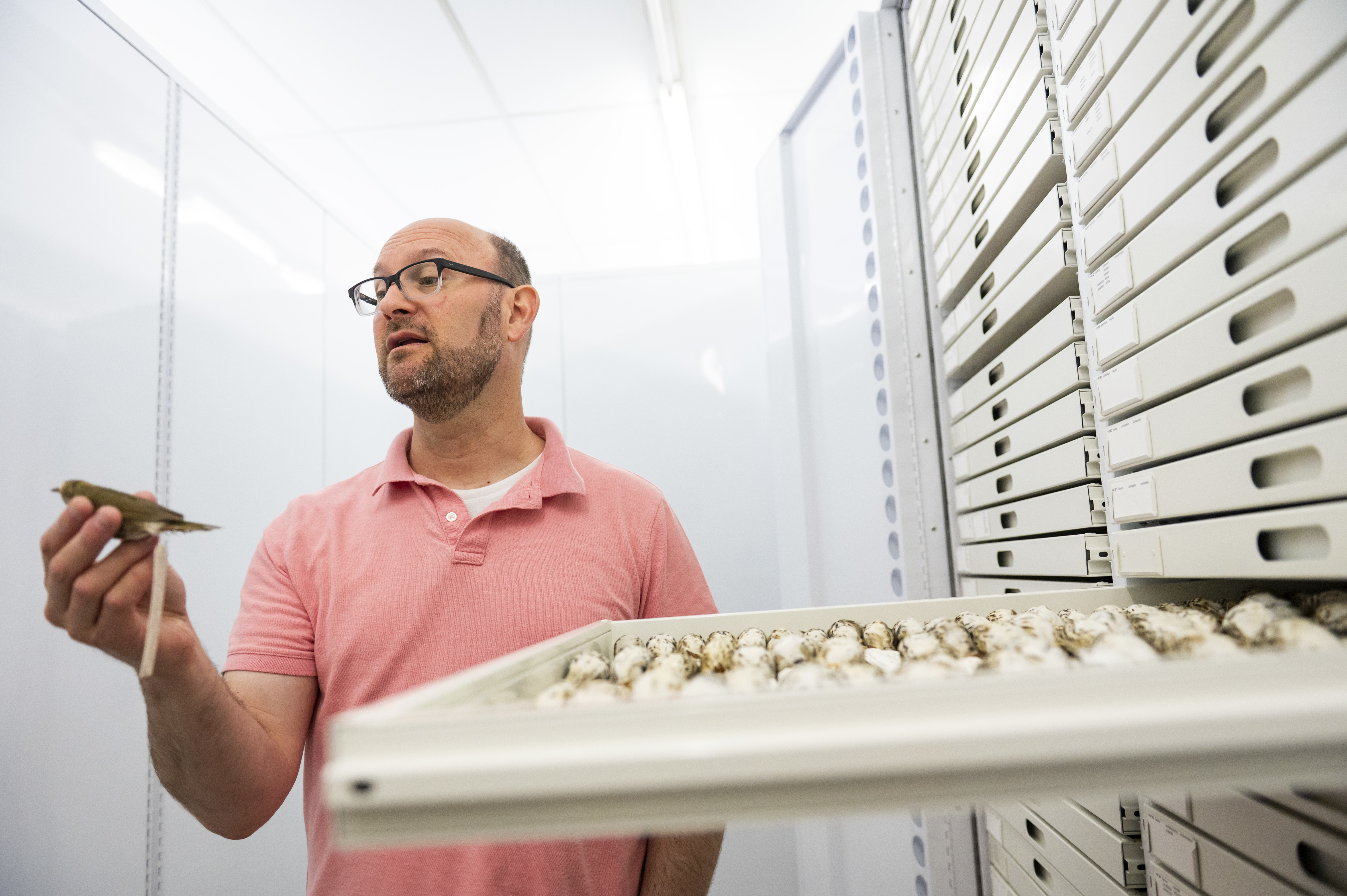
Jason Weckstein, curator of orninthology, holds a warbler at the Academy of Natural Sciences.Allie Ippolito / For The Inquirer
“You just never know when something’s going to happen in the world,” says Weckstein, “and then it turns out there’s something here. We have tissue samples from all over the world. It’s possible we could discover something in those samples that is important for understanding the next pandemic.”
That’s possible, in part, because in the future, specimens might be tested for characteristics whose existence is beyond our current base of knowledge.
Paul Callomon, the academy’s collection manager for malacology and general invertebrates, says that when the first snails entered the academy, “We had no idea what an isotope was. Nobody knew anything about that. But we had an unshakable faith that if we preserve and stabilize these things, as time goes on, they’ll become more important to more people. And so it’s turned out to be. And now of course, with climate change and with this enormous Anthropocene influence on the natural system, the number of ways in which our specimens are going to help tell that story is enormous.”
Each specimen functions as an irreplaceable snapshot in time. Organic materials in their environment are continually breaking down and becoming something else. But when a bird or fish is plucked from its environment, it becomes a permanent record — of itself, but also of the world as it existed at that particular moment.
Biological specimens are often called upon to help solve certain mysteries.
“There are examples in the world generally of new pharmaceutical products being developed from the study of mollusks and their venoms,” says Callomon, “or closer to the academy, we provided shells that were material evidence in the lawsuit against BP for the gulf [Deepwater] Horizon oil spill — historical specimens that proved there was oil in the gulf’s waters before any drilling started, but that it was of a very low level.”
There’s a bigger role now for the academy’s species collection to play, Callomon says.
“The real world is on fire. And the real natural world, the natural ecosystem that sustains all life on Earth, is undergoing enormous changes at the moment. And the only place that you can find material evidence for what it was like before that started, or what it was like at an earlier stage of that process, is natural history collections, and they are mostly housed in museums.”
Several hundred Academy of Natural Sciences supporters came out to protest the decision by Drexel University and the Academy to close the Academy’s museum, Sept. 8, 2026.Tyger Williams / Staff Photographer
‘Profound concern’
Curators and scientists say that as the academy has arrived at a vulnerable juncture, its collections and research are more critical than ever given the march of climate change, microplastics contamination, biodiversity loss, and other crises.
The scientific powerhouse’s own future is a question mark at the moment. Drexel is facing deficits and a challenging enrollment environment, and, in a cost-cutting move a decade and a half after a partial merger of Drexel and the academy, the two groups announced last week that the academy museum will end its nearly two-century run at the end of the month.
The aim now is to move the collection and sell the building, according to a source close to the situation who asked not to be identified. This raises questions about the fate of the academy’s historic building and the critical mass of the Parkway’s cultural attractions, as well as concerns for the future of the collection and the academy’s historically significant library and archive, whose holdings span five centuries.
“Profound concern” is how a group whose board includes the largest and most important natural history and science centers in the U.S. has expressed its apprehension over the future of the academy.
“As the oldest natural science research institution and museum in the United States, the academy is a globally important natural history collection and center for biodiversity research,” the Washington, D.C.-based Natural Science Collections Alliance wrote in an April statement after news of a potential schism between Drexel and the academy.
“Any administrative or structural changes at the Academy must prioritize the integrity of these collections. The destabilization of the institutional support or the specialist staff required to maintain these specimens for active use in research would represent an immense loss to the city of Philadelphia, the state of Pennsylvania, and the global scientific community.”
The NSCA’s concerns remain, said president Trina E. Roberts this week, and while “we’re glad to see that the importance of the collection has been acknowledged in public statements,” she said, the closing of the museum was an unwelcome surprise.
“Education, research and collections are all part of a truly functioning natural history museum. It would be wonderful if the academy can find a way to maintain all of those,” she said.
Academy leaders say they will work to find “new and financially sustainable opportunities for the public display of elements” of its collections, but have not specified any details.
In a statement last week, the two institutions affirmed their attention to the trove of specimens, library, and archive.
“The stewardship of the Academy’s collections and their use to advance scientific knowledge will be the focus of our work for the near future,” said a statement from Drexel president Antonio Merlo and academy board chair Suzanne Biemiller.
A Drexel spokesperson this week said there were no immediate plans to move the collection, and, regarding a potential sale of the building, “no decisions have been made regarding its future disposition.”
“The academy’s home will continue to house its collections, library, archives, and laboratories while Drexel and academy leadership consider potential pathways forward,” said Britt Faulstick.
Should relocation become part of a future plan, Faulstick said, “maintaining appropriate access to the collections for research [during a move] would be an important consideration in that process.”
Robert McCracken Peck, curator of art and artifacts and senior fellow emeritus of the Academy of Natural Sciences of Drexel University.HEATHER KHALIFA / Staff Photographer
‘A recipe for disaster’
Moving the collection would be expensive and time-consuming, says Peck, who, with Patricia Tyson Stroud, co-authored AGlorious Enterprise: The Academy of Natural Sciences of Philadelphia and the Making of American Science.
Peck says that in the 1970s, parts of the collection were moved into the former Reliance Standard Life Insurance Co. building on Pennsylvania Avenue now occupied by the Philadelphia Museum of Art, and then, a short time later, were moved back.
“I imagine it would take a couple of years,” he says of a potential move now of 19 million specimens, “because that’s how long it took to move our collections to and from the Art Museum area, and they didn’t even move them all.”
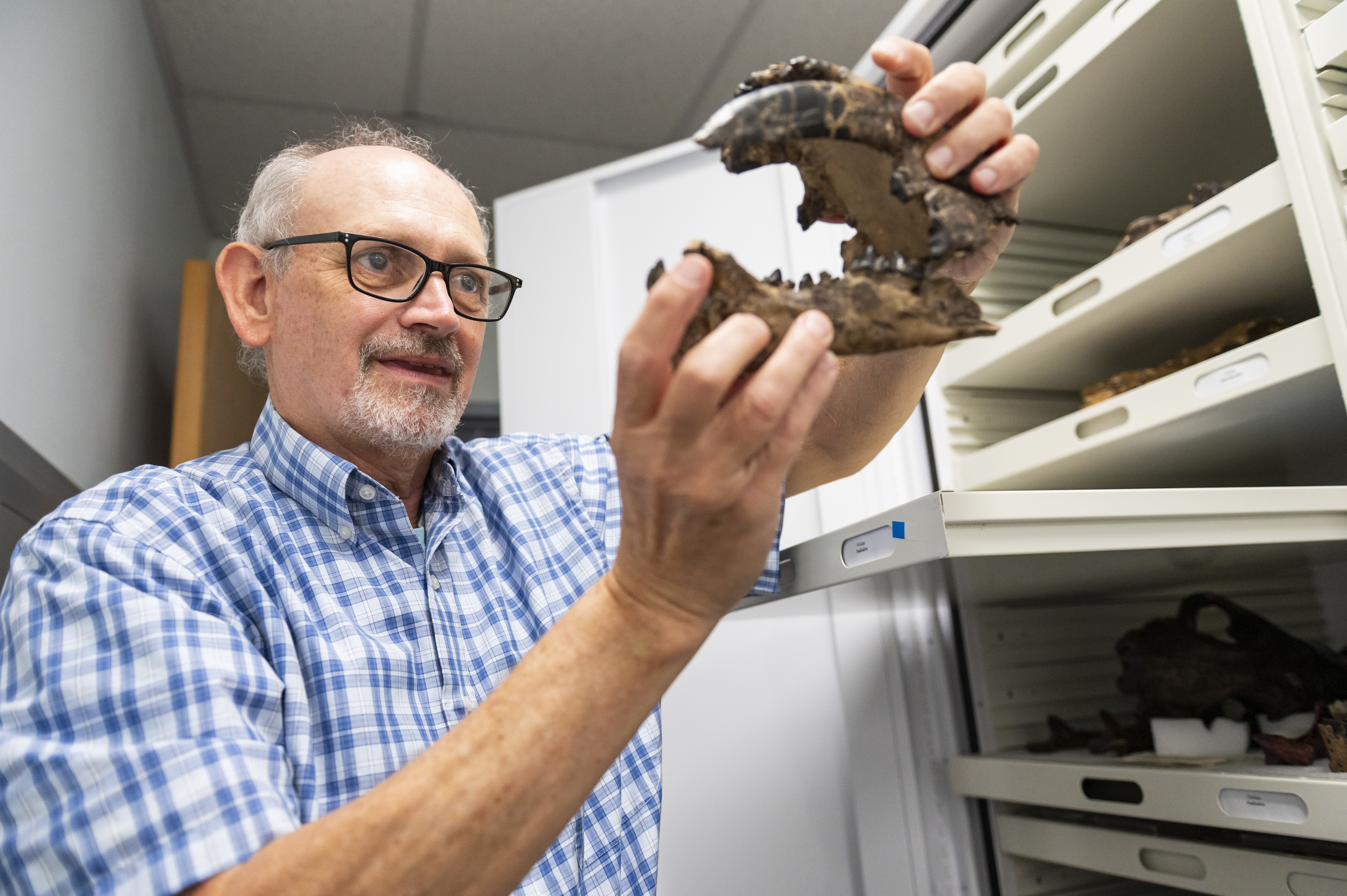
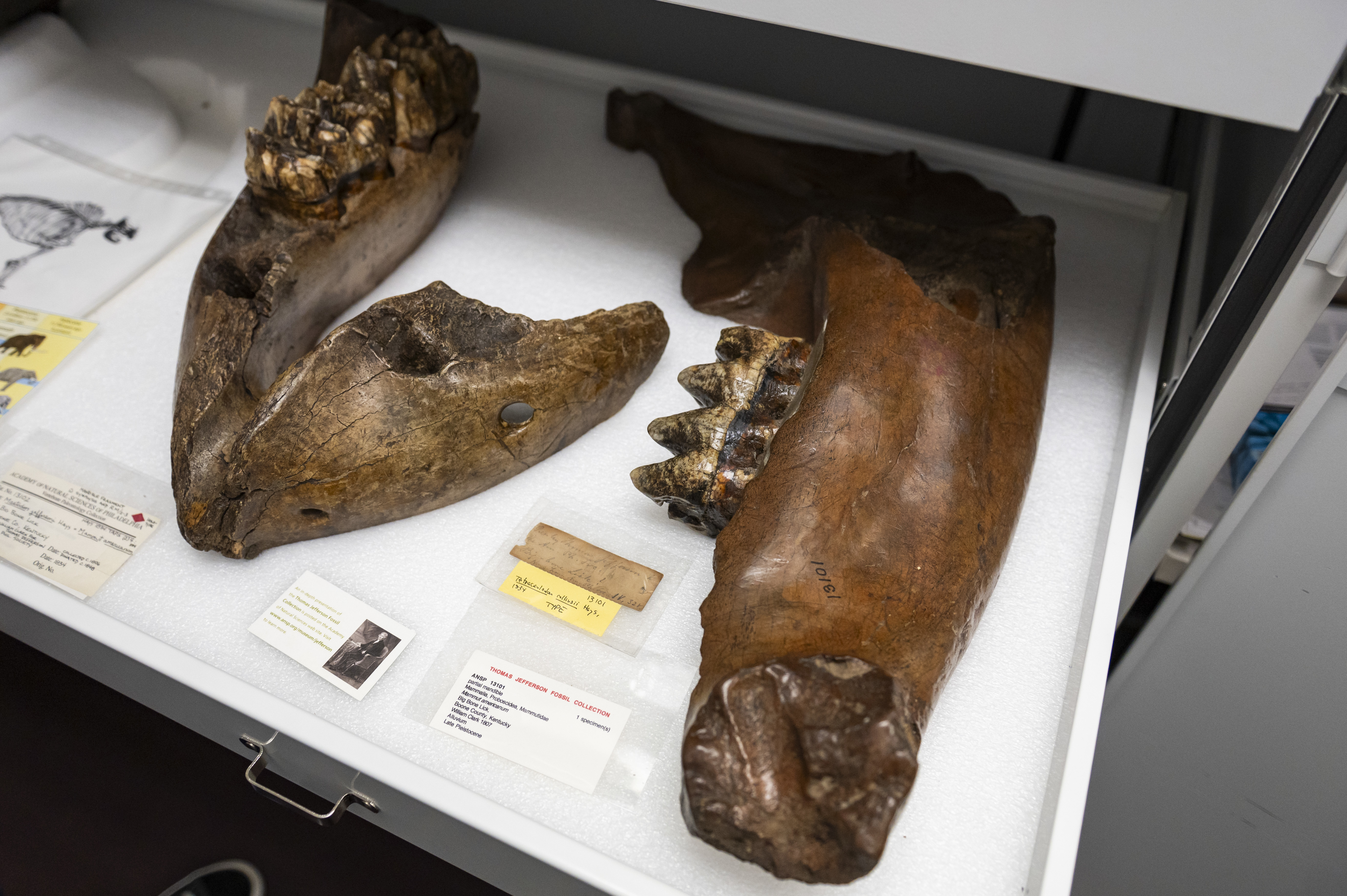
A partial mandible from an American mastodon from the Thomas Jefferson Fossil Collection at the Academy of Natural Sciences.Allie Ippolito / For The Inquirer
“It can be done, and it can be done in a professional and careful way that maintains the integrity of the collection, but you can’t do it in a hurried way,” says the NSCA’s Roberts. “That is a recipe for disaster for a collection of this size and importance. They need to plan for a year before they move any specimens out of the building.”
Collections like these require a specific kind of care, says Roberts, who is also associate vice president for collections at the Natural History Museums of Los Angeles County.
Specimens can degrade over time if not maintained properly, she said.
“We rely on good temperature and humidity control depending on what kind of specimen you have. A dinosaur bone that is basically stone is a lot less sensitive than a plant specimen that is a dried leaf. We’re also concerned about the curatorial and collections expertise that’s represented by the staff.”
Much of the academy’s collection is digitized, and a certain amount of information can be gleaned online, but for some purposes, the actual specimen must be available, which happens either by a visit to Philadelphia or a loan.
“DNA research is just exploding in natural history collections because it turns out that we have this resource we’ve been building for hundreds of years that can still be used for DNA,” says Roberts. “So a plant specimen, an insect specimen, a mammal specimen in a natural history collection from 100 years ago, you can get DNA out of that, and that’s an amazing resource. You absolutely cannot do that from a digitized record.”
It’s possible now, she says, “to look at actual gene expression patterns in different environments — for example, what genes are turned off or turned on in cold vs. hot conditions. That might be something important in an era of climate change if we want to understand how something like plant communities and animal communities are going to respond to that.”
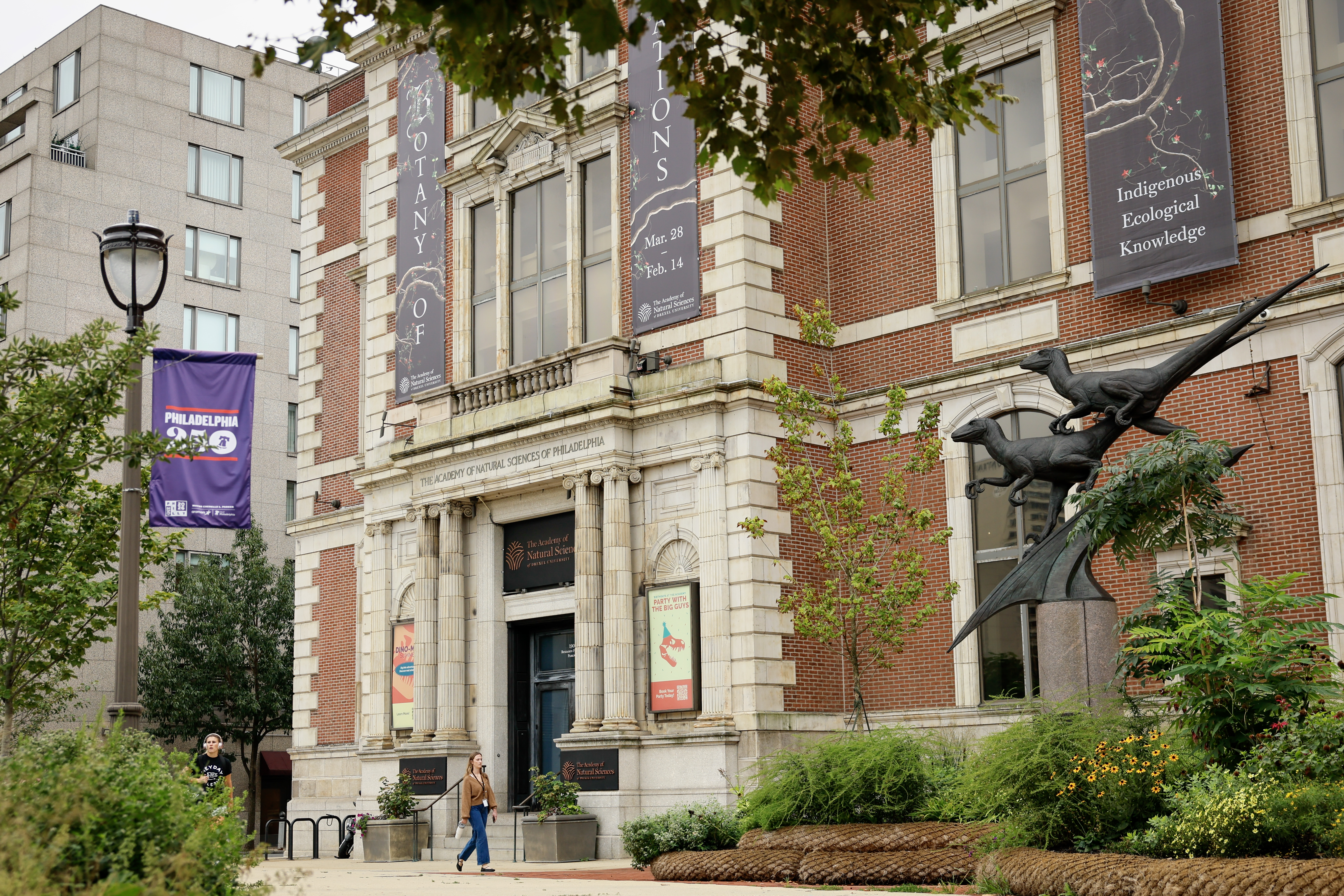
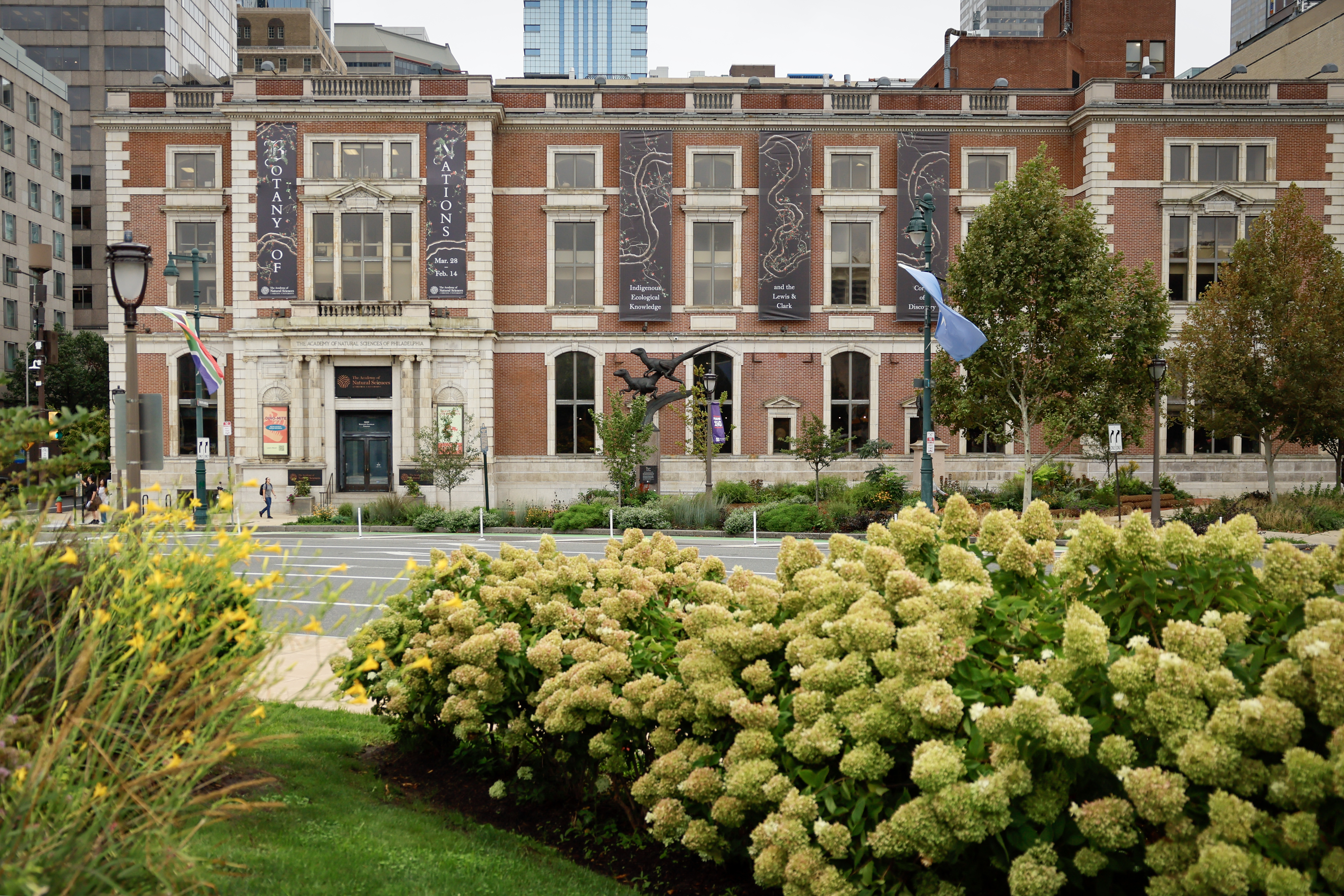
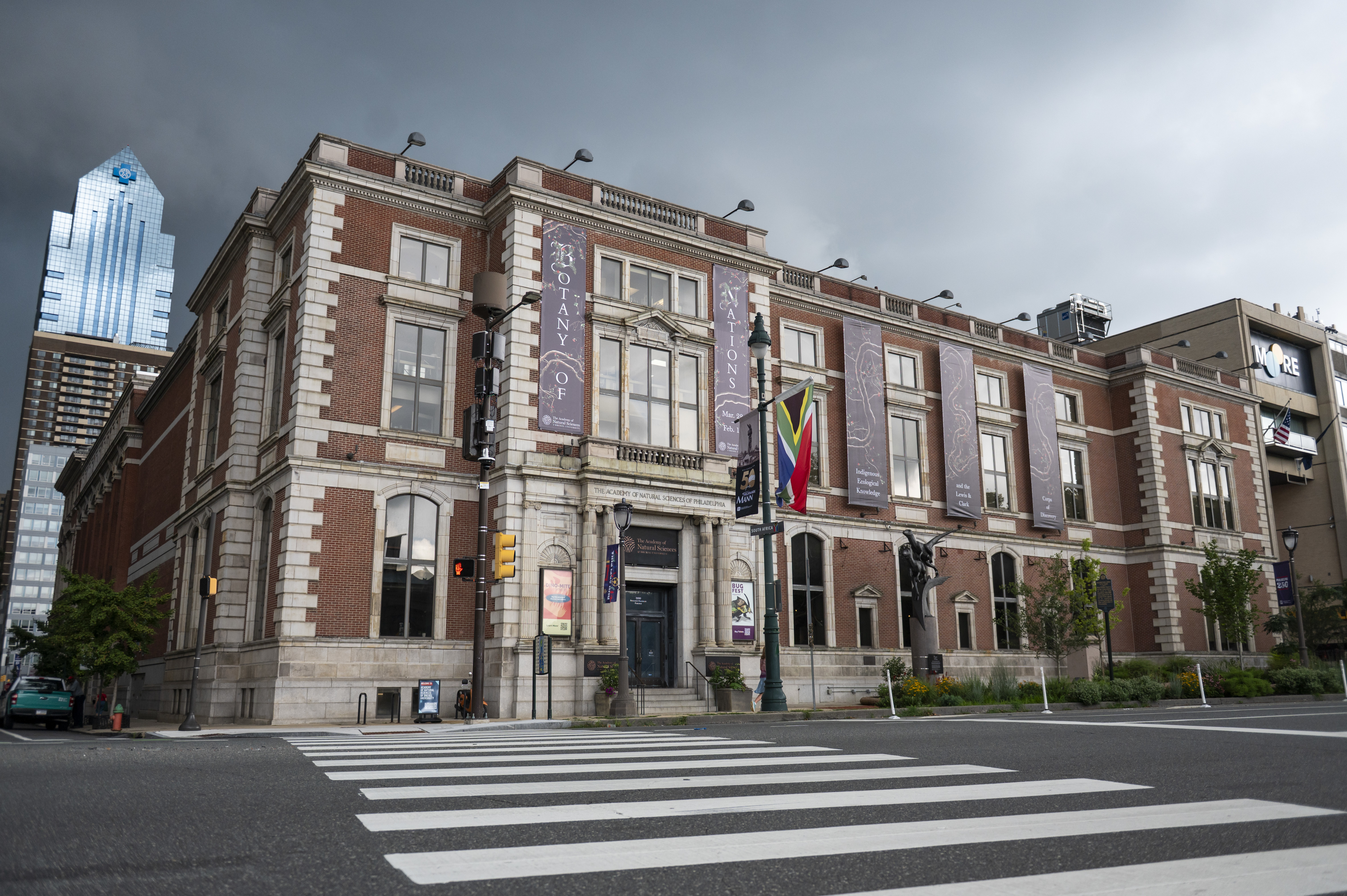
The Academy of Natural Sciences of Drexel University on the Ben Franklin Parkway.Elizabeth Robertson / Staff Photographer
‘It changed their minds completely’
The academy-Drexel partnership, 15 years in, was much in evidence during a several hour visit in early August. In one room at the academy, a group of students was removing organs from birds, and in another, Drexel environmental sciences undergraduate Ean Geller-Nocella was examining a freshwater drum, an invasive species that’s recently turned up in local waters, to see what the fish has been eating.
“I’ve been cutting them open, taking out their stomachs and removing the stomach contents. All that is mussels — freshwater mussels,” he said, referring to a small cluster of crushed up shells.
Another invasive species is being looked at by the academy.
Ean Geller-Nocella, Drexel University co-op student, inspects the contents of the stomach of a freshwater drum in the fisheries department at the Academy of Natural Sciences.Allie Ippolito / For The Inquirer
“Ten years ago in Tinicum, snakeheads weren’t there and we got a picture of what the diet was for the resident fish,” said David Velinsky, senior scientist of the Patrick Center for Environmental Research and professor at Drexel University College of Arts and Sciences. “They’re now there, so we’re doing a study. We already have the samples collected, analyzing on the mass spectrometer how the food web changed, and this gives us an idea of what needs to be protected or not protected.”
Weckstein recently had a Drexel undergraduate student who sequenced the genomes of the parasitic lice living on vultures.
Having students working there “just adds a vibrancy to the place,” says Velinsky.
Says the malacology department’s Callomon:
“I think the role that I’m proudest of our collection’s playing is when Drexel undergrads come here on their co-op and we have successfully diverted careers in medicine, the law, and engineering in favor of working in our part of the world, in our part of science, because of the experience. They came and did a six-month co-op here and it changed their minds completely. It changed their minds because it moved their hearts, and your heart is what drives your mind. But they had no way of previously knowing.”
One persuading factor: at the academy, students have direct, hands-on contact with specimens in the collection.
“Other places use photographs,” says Peck. “Drexel students, thanks to the academy, get to work with real specimens, which dramatically enhances their interest in and understanding of the natural world.”
Just another reason, advocates say, that the academy’s treasures must be kept intact and accessible to all.
“My greatest concern is over keeping the collection together,” says Peck. “It needs to be cared for, for reasons that extend well beyond Philadelphia and the academy. These are collections we hold in trust for the world.”
Staff writer Susan Snyder contributed to this article.
After the threat of a possible split, the Academy of Natural Sciences and Drexel University reached a tentative agreement that will continue their affiliation and maintain Drexel’s financial support of the Academy, multiple sources confirmed Wednesday. It will also give the university control over its major decision-making.
Also on Wednesday, Drexel and the Academy appointed Patricia “Trish” Wellenbach to temporarily lead the Academy, serving as its senior adviser. She is deputy mayor to Philadelphia Mayor Cherelle L. Parker’s administration and previously president and CEO of the Please Touch Museum. Wellenbach is on loan from the city and will not receive any compensation from Drexel or the Academy for her new role.
Drexel holds the reins
The announcement comes one day after Drexel and the Academy said they would close the Academy’s museum effective Sept. 30 and that Academy CEO Scott Cooper would be stepping down immediately. Sept. 27 will be the last day the museum will be open to the public.
Though not part of the new terms, the goal now is to relocate the Academy’s collections and sell its 1876 building at 19th and the Benjamin Franklin Parkway, which has numerous deferred maintenance needs, said a source close to the talks between Drexel and the Academy who asked not to be identified.
The new “nonbinding” terms of the letter of intent maintain Drexel’s financial support of the Academy, modify the governance structure, and preserve the right of the Academy board to de-affiliate from Drexel and find a new partner or partners for its collections should it wish to do so.
The terms cover issues such as selection of an interim leader and a permanent leader of the Academy and budgeting, according to a source close to the talks. While Drexel and the Academy will engage in a collaborative process to find a new leader, the final decision will rest with Drexel, the source said.
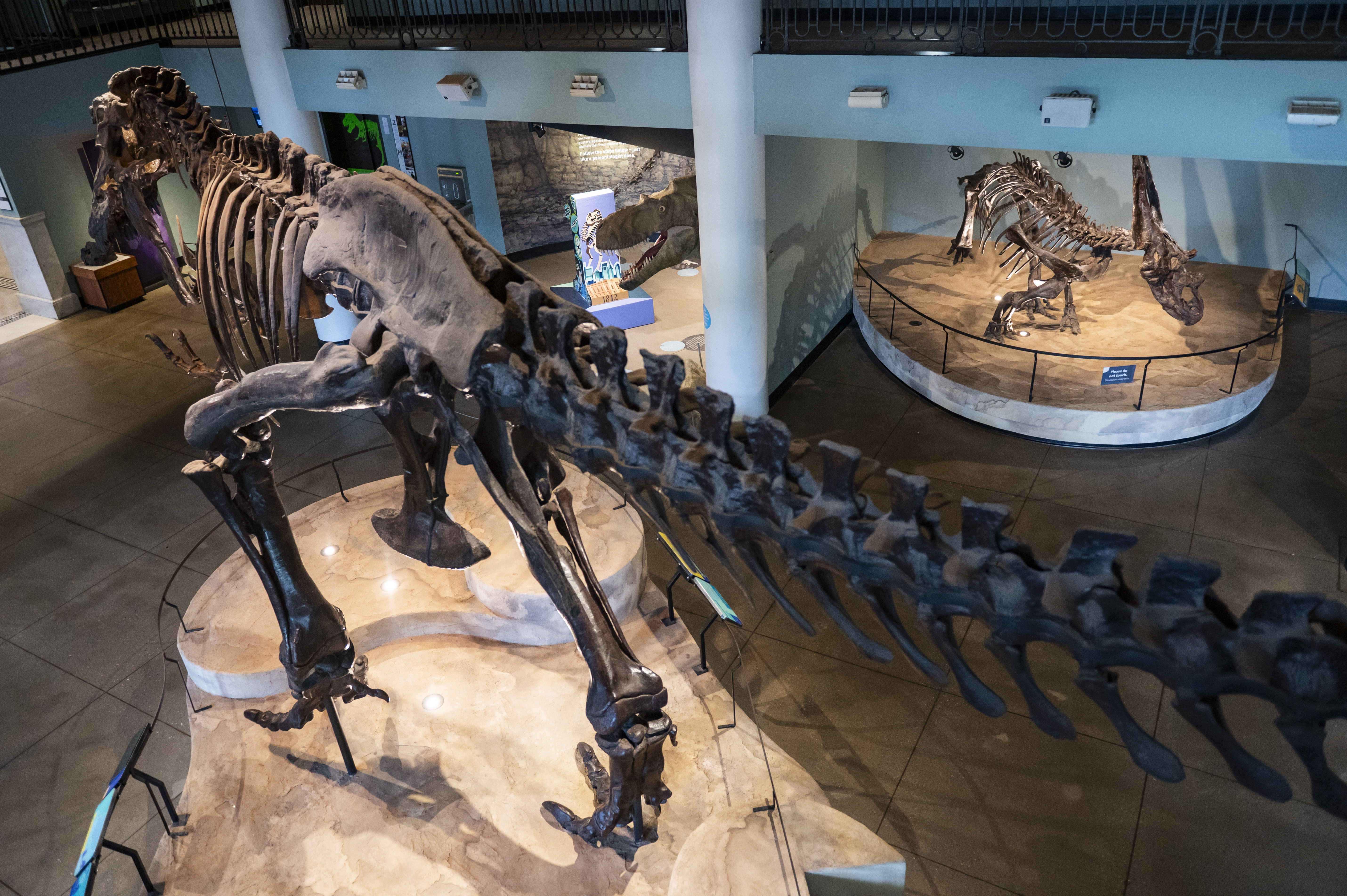
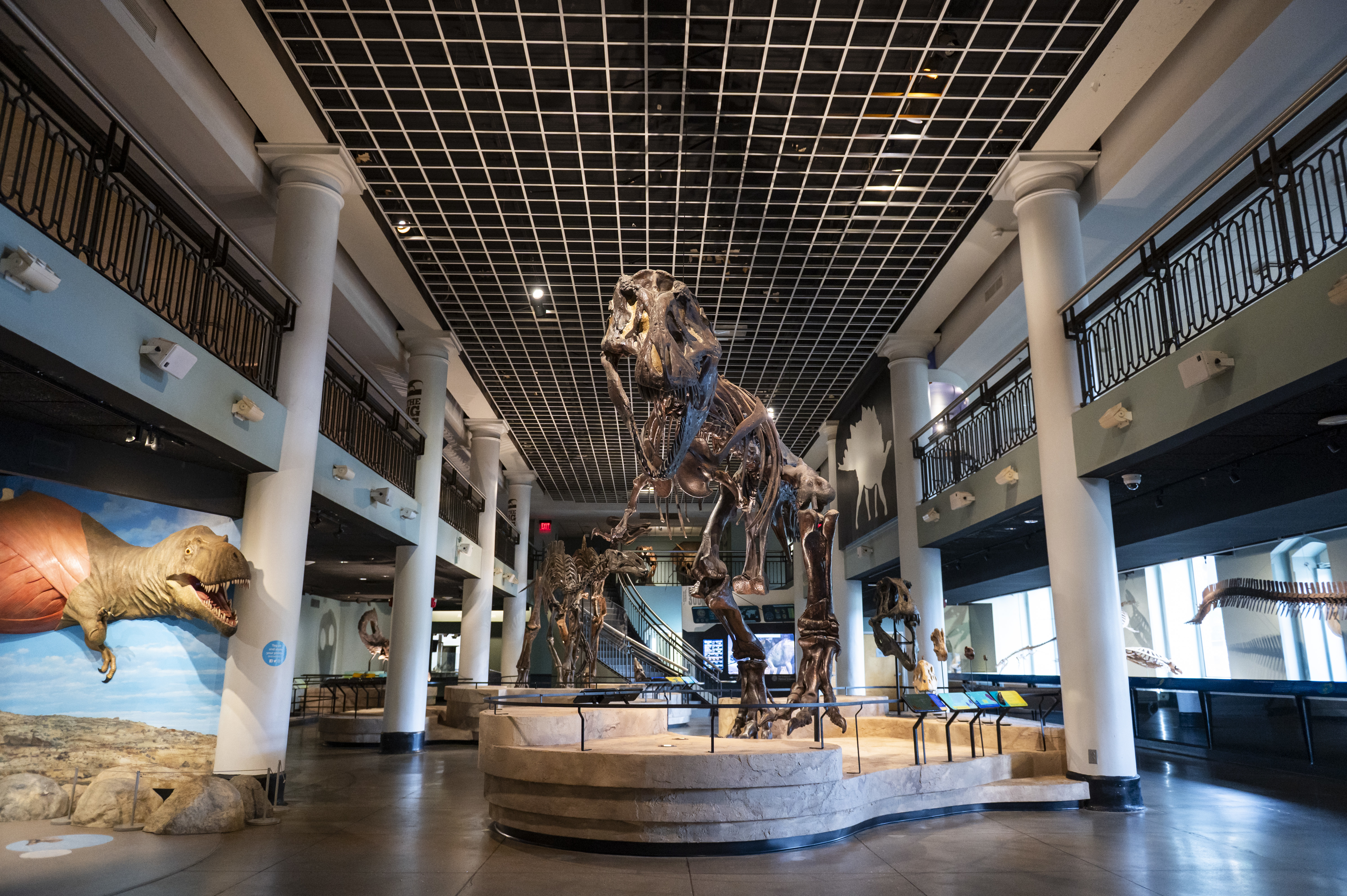
Dinosaur Hall at the Academy of Natural Sciences on Wednesday, Aug. 5, 2026.Allie Ippolito / For The Inquirer
“It’s fair to say all decisions of importance have to be approved by Drexel,” the source said, including the budget, which is about $25 million annually.
Under the affiliation agreement in 2011, Drexel provided substantial financial support to the Academy and covered its deficits.That will continue, and Drexel also will cover the costs of relocation of the collection and other transition expenses, the source said.
Academy board chair Suzanne Biemiller did not respond to messages seeking comment.
A ‘solid’ but nonbinding resolution
Of the new terms, another Academy board member said:
“I’m hopeful that something positive will come of it. The goal is to find a way to keep the Academy in existence and achieve its mission, so I think it’s a solid resolution,” said the board member, who asked that their name not be used.
Like most letters of intent, the agreement is nonbinding until the two sides come to a complete binding agreement, the source said.
The Inquirer reported in April that Drexel was seeking to totally take over the Academy or end the partnership. The terms signed Tuesday were brokered by former Comcast executive and U.S. Ambassador to Canada David L. Cohen at the behest of Gov. Josh Shapiro.
Sept. 27 is the last day the Academy of Natural Sciences of Drexel University will be open to the public.Elizabeth Robertson / Staff Photographer
The leaders of Drexel and the Academy signed the terms sheet on Tuesday, Cohen said. But there are significant ongoing issues for the Academy and Drexel to work through, he added.
“They include the responsible move of the collections, and a variety of other transition activities,” he said. “The Academy needs a senior representative, a senior voice in these ongoing discussions both to communicate internally at the Academy and with other stakeholders including Drexel.”
She will have a voice in discussions on finding another location to display some of the collections, now that the museum will be closed, Cohen said.
Patricia Wellenbach, former president and CEO of the Please Touch Museum.Heather Khalifa / Staff Photographer
A temporary leader
Wellenbach will be based at the Academy part of the week while also continuing in her city role. She will lead temporarily while Drexel and the Academy search for an interimleader.
“Ms. Wellenbach has had a distinguished career spanning nonprofit leadership, healthcare, governance and public service,” said the announcement from Drexel president Antonio Merlo and Biemiller.
Mayor Parker in a statement called the Academy “a critical, longstanding part of Philadelphia’s cultural and educational landscape” and said she was pleased to loan Wellenbach to the effort.
“We are working collaboratively with Gov. Shapiro, Ambassador Cohen, the Academy and toward the outcome we all seek for the City of Philadelphia,” Parker said.
The Academy museum is ending operations after nearly two centuries because of declining visitorship and rising expenses, according to the Academy and Drexel.
“Over time, it became clear that these were not temporary pressures, but fundamental changes in the economics of the Academy’s operational model, costs that have imperiled the Academy’s ability to discharge its overall mission and preserve its legacy,” the two institutions said in a joint statement Tuesday.
Biemiller and others have pledged to not abandon the Academy’s role in educating the broader public about the natural world.
While it was “incumbent upon us to find places and ways” for the museum to continue, she said earlier this week, the exact form it would take has not been determined.
While Drexel has the major decision-making power, the Academy board will continue to be the fiduciary board and decision-maker for the Academy’s endowment, though management of it has been delegated to Drexel’s investment office, according to the source close to talks.
Philadelphia’s Academy of Natural Sciences of Drexel University is closing its museum after nearly two centuries in existence, citing financial pressures and dwindling attendance.
The museum, which opened to the public in 1828, will cease operations at the end of the business day Sept. 30. Its last day open to the public with regular hours will be Sunday, Sept. 27, staff were notified on Tuesday.
Visitorship at the museum had slipped in recent years, according to a statement signed by Drexel president Antonio Merlo and Academy board chair Suzanne Biemiller. Though the Academy had worked to rebuild attendance after the pandemic, “patterns of visitation and audience behavior changed in lasting ways, while the costs of operating the museum continued to rise,” the statement said.
“Over time, it became clear that these were not temporary pressures, but fundamental changes in the economics of the Academy’s operational model, costs that have imperiled the Academy’s ability to discharge its overall mission and preserve its legacy.”
Closing the current Parkway museum, was, therefore, “a difficult decision taken to concentrate resources on the Academy’s enduring scientific assets and research,” said the statement.
The aim is ultimately to relocate the Academy’s collections and sell the building, which, is owned by the Academy, and has a lot of deferred maintenance needs, said a source close to the talks between Drexel and the Academy, who asked not to be identified.
The Academy building on the Benjamin Franklin Parkway at 19th Street, “will continue to house collections and laboratories while we consider possible pathways forward that place the utmost priority on preservation and support of the collections, library, archives, and research initiatives,” a Drexel spokesperson said.
Biemiller declined to comment on the potential relocation of the collections.
The museum cut back its hours of operation from five days a week to three — Friday through Sunday — as of last Oct. 1 (though it added back Thursdays in July and August for its Dino-Mite Summer program).
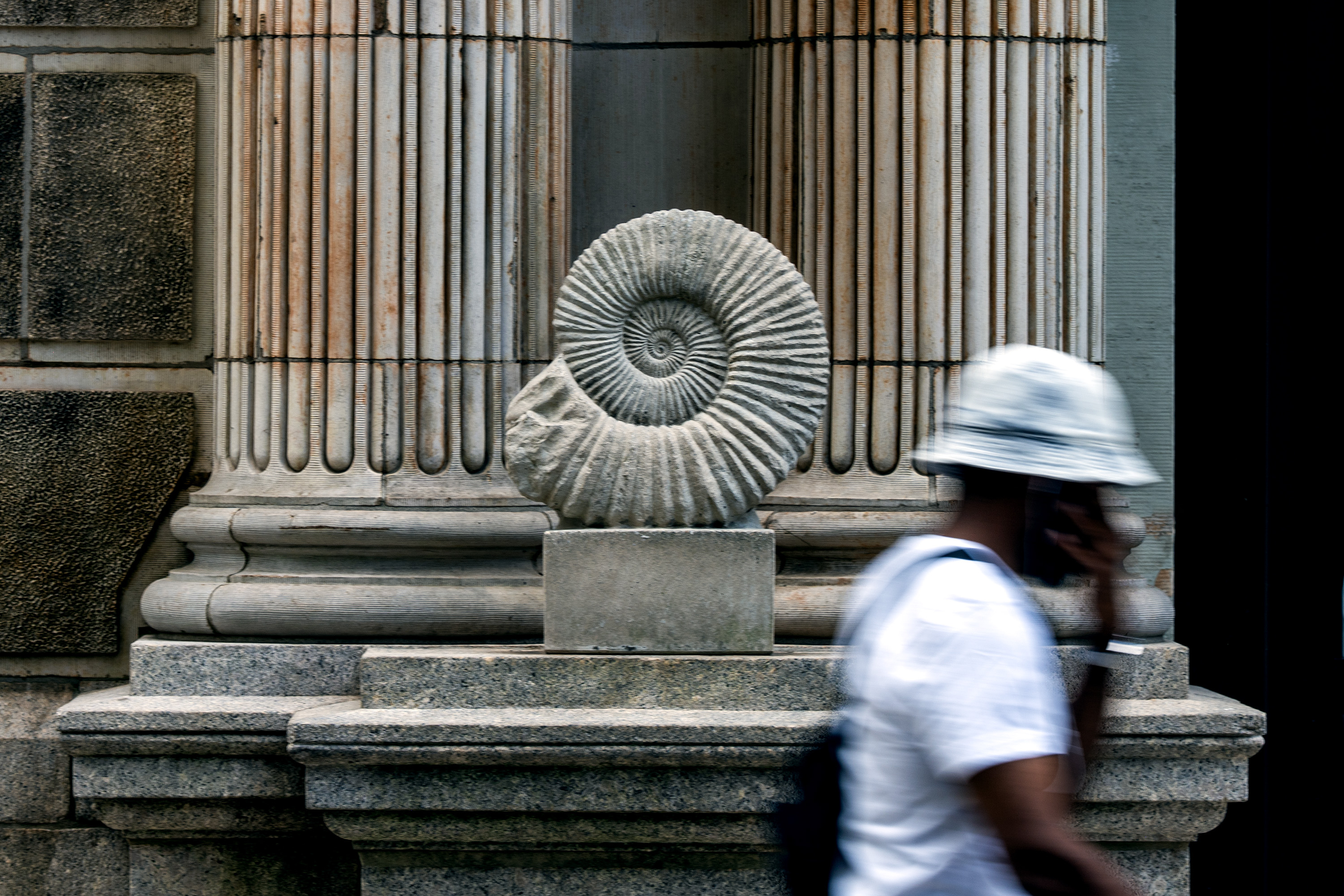
One of two shell sculptures placed on either side of the 19th Street entrance to the Academy of Natural Sciences of Drexel University on Aug. 17.Tom Gralish / Staff Photographer
Drexel said 27 of the Academy’s 80 employees — about a third — will be “impacted” by the closure. The university did not say whether that meant they would be laid off or transferred, and did not respond to a question on how much money the move will save.
Simultaneously Tuesday, the university and science institute announced that Scott Cooper, Academy of Natural Sciences president and CEO for nearly nine years, is stepping down immediately.
The Drexel and the Academy boards will “continue working together to identify an appropriate governance structure and interim and permanent leadership for the Academy,” the statement said.
Former Comcast executive and U.S. Ambassador to Canada David L. Cohen, who has been helping to broker an agreement between Drexel and the Academy, said the two institutions are close to striking a deal on a “term sheet” on governance and finances.He has been tapped by Gov. Josh Shapiro to serve as a third-party facilitator in the process, the university said in its message.
“We want to preserve the Academy,” he said, “but we also don’t want to jeopardize Drexel.”
Collections and research will remain unaffected
The Academy, which became affiliated with Drexel in 2011, is known to the general public for its museum that features a Dinosaur Hall with dinosaur bones and full-scale replicas. Its exhibitions have explored environmental issues and centered on the Academy’s collection of approximately 19 million specimens, as well as historically significant items associated with Thomas Jefferson and Lewis and Clark.
It offers hands-on science experiences, like a “big-dig” fossil exhibit, and old-school dioramas of bison, bears, tigers, and other animals in their ecosystems. The museum’s current “Botany of Nations” show “reshape[s] the historic tale of Lewis & Clark through Indigenous perspectives,” says an exhibition description.
Closure of the museum does not affect the rest of the institution, which builds and maintains the collections and conducts research through departments such as the Patrick Center for Environmental Research, all housed in the Parkway structure. All of that will remain there, the university said.
Biemiller said that “the trustees of the Academy know that this news about the closure of the museum is going to be a blow to Philadelphians, and I would love for them to know we share their feelings of loss about this beloved space and place. And we also know that work remains to develop and fund a new strategic and operating model that will ensure that the Academy’s important centuries-long mission to understand the world and inspire us to care for it continues.”
Asked whether the intent was to reopen a museum, Biemiller said: “I would hope so. That’s the goal. I think we have not given up on that part of our mission. The Academy is research, it is [specimens and library] collections, and it is public engagement.”
While she said it was “incumbent upon us to find places and ways” for the museum to continue, what form it would take has not been determined.
“It could be at the current location in a different configuration, it could be a new location, it could be imagined in different ways.”
What’s important, she said, was the “fundamental goal to ensure that people have access to the natural world, can see these birds from North American or dinosaur bones and fossils the Academy scientists have collected and understand how they connect to the world.”
“It’s a sad day to see it close,” said Franklin Institute president and CEO Larry Dubinski of the Academy museum, which is about a block from the institute. “It’s a profound loss for the community and for the city and the region. And it’s one of those days that I hope the community takes stock in. This is a city driven by arts and culture. We have a phenomenal city of arts and culture, unlike almost any other in the United States.”
However, Dubinski said, the arts here are “underresourced and underfunded, and that does continue to challenge the ability to have a sustainable arts and culture community. I think today’s another wake-up call to that issue.”
Dinosaur Hall at the Academy of Natural Sciences Aug. 5, 2026.Allie Ippolito / For The Inquirer
Ongoing financial challenges at Drexel
The museum closure comes amid financial challenges at Drexel University, which has been seeking to overcome a budget deficit, overhaul academic programs, change from a quarter-based calendar to semesters by fall 2027, and cope with another national dip in high school students beginning this year.
Over about the last decade, the West Philadelphia university has lost about 20% of its enrollment. Last fall, Drexel saw a 19% drop in freshmen; numbers for this fall aren’t yet available, though the school is projecting a 16% jump in first-year students. And the school, which enrolled 20,868 undergraduate and graduate students in 2025-26, is projected to continue to run deficits through fiscal year 2028, according to a report from Moody’s, a global financial services company that releases credit ratings.
Merlo, Drexel’s president, told The Inquirer in April that the school projected ending the year with a $20 million deficit, down from almost $40 million last year and $63 million in 2024. In May, the school said it had implemented $93 million of “permanent strategies” to deal with the “structural imbalance” and had identified $11 million more.
The Academy has become a drain on the university, a source familiar with the situation, who was not authorized to speak about the matter and asked not to be identified, told The Inquirer in April.
The university has provided the Academy with substantial support — $8,288,000 and $8,914,000 for operations in fiscal years 2025 and 2024, respectively, according to financial statements posted on the Academy website. These numbers include in-kind support that Drexel is providing to the Academy.
Friction between the Academy and Drexel became public in April, The Inquirer reported, revealing Drexel’s wish to totally take over the Academy, or end the partnership.
Uncertain long-term future for the Academy
Talks are continuing between the two institutions, with the offices of Gov. Shapiro and Mayor Cherelle L. Parker involved, underscoring the importance of the Academy to both the city and the state.
“I don’t want to lose the Academy on my watch, and neither does the mayor,” Shapiro told Cohen, according to Cohen, who has led dozens of meetings over the last eight months and created a draft proposal for an agreement between Drexel and the Academy.
“Drexel and the Academy are working with my office, with Governor Shapiro’s office, and with Ambassador David L. Cohen, as the governor’s representative, to preserve the essential mission of the Academy,” Parker said in a statement.
“We are working collaboratively toward the outcome we all seek for the City of Philadelphia.”
The governor’s press office did not respond to The Inquirer’s request for comment.
Cohen has long been a negotiator in many major city issues, formerly serving as chief of staff to former Philadelphia Mayor Ed Rendell and leading the board of trustees at the University of Pennsylvania.
“Together, we are advancing discussions focused on the Academy’s long-term future and identifying new opportunities to strengthen its scientific mission, ensure access to its world-renowned collections, expand public engagement in the natural sciences, and maintain the Academy’s enduring presence in Philadelphia,” the statement said.
The Academy of Natural Sciences on the Parkway, Aug. 5, 2026.Allie Ippolito / For The Inquirer
The Academy’s affiliation with Drexel is 15 years old. It announced a partnership agreement with Drexel in 2011 that blended the two organizations somewhat, but stopped short of being a full merger. The two groups maintain separate boards.
According to a 2013 Drexel audit, the 2011 affiliation agreement between the two institutions stated that the Academy would retain its status as separate nonprofit organization, but that as of September 2012 it would become a Drexel subsidiary owned 100% by the university.
A Drexel spokesperson said in April that the school had “invested a substantial amount annually in the Academy to maintain access to the Academy’s collections while we worked with the Academy and the community to identify a sustainable path to keep this resource in Philadelphia.”
Cooper was named the Academy’s leader in 2017 after serving as vice president of collections, knowledge and engagement at the Royal British Columbia Museum in Victoria, Canada. Before that, he was director of museums at the Qatar Foundation in Doha, Qatar.
Under his leadership, the Academy “renewed its public and scientific mission,” Tuesday’s joint statement from Drexel and the Academy said. “It revitalized galleries, developed original exhibitions showcasing its collections and research, and advanced co-curatorial approaches that brought new voices into programs and interpretation.”
Cooper, who will remain for a time as a consultant to the Academy, was not available for comment, a spokesperson said.
“We’re sorry he’s leaving, but understand his decision,” said Biemiller.
“It’s a competitive world that museums inhabit, and people make choices every single day,” Cooper told the Inquirer after his 2017 announcement. “We need to ensure that when they come to the Academy they are getting a reward for their investment of time.”
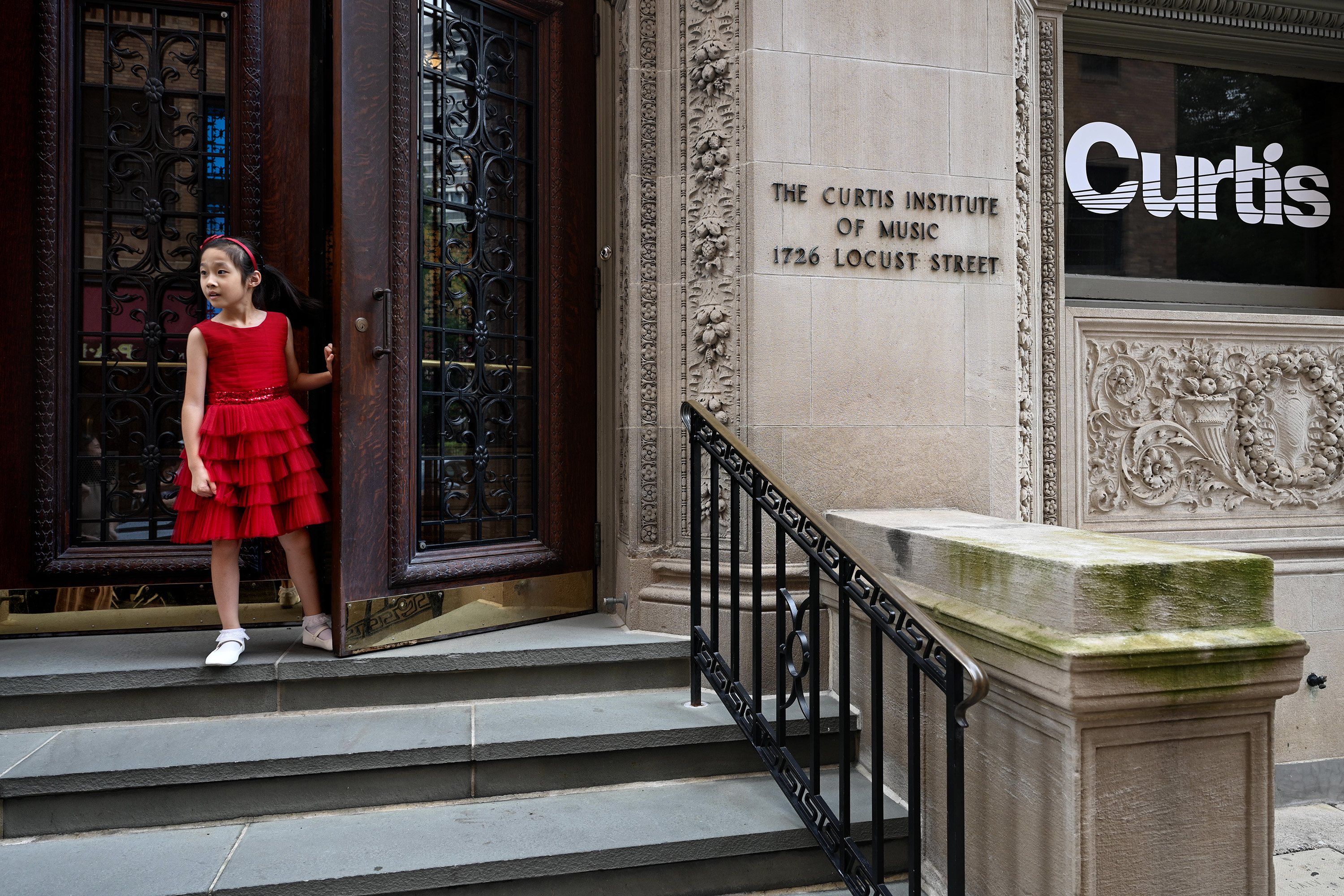
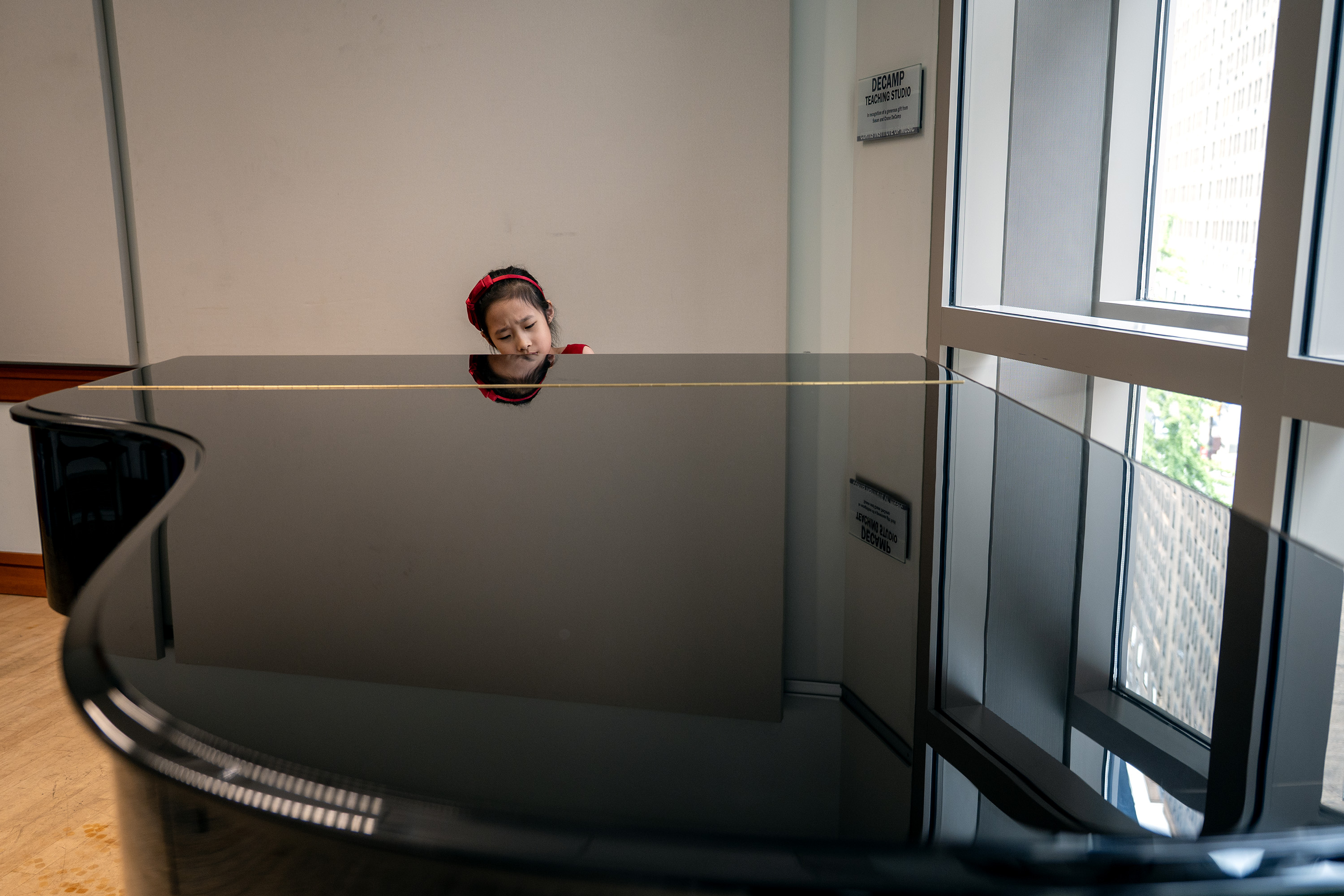
In the lobby of the Curtis Institute of Music’s Lenfest Hall, Olivia Li, in a frilly-sparkly red dress, is running back and forth through a turnstile. A few minutes later, she is at the piano transformed — playing Chopin eyes closed, a countenance most serious, and seemingly a decade more mature.
If her legs aren’t long enough for her feet to reach the piano’s pedals without an extender, give her time. She is 7 years old.
Olivia is one of nearly four dozen new students now arriving at Curtis for the fall term. The school on Rittenhouse Square, one of the world’s top music conservatories, has always had its share of young talent. This year it will have 13 musicians entering school under the age of 18.
But even at a place known for prodigies, Olivia is unusual. She is believed to be the youngest student to study at Curtis since 1950, when 6-year-old violinist Diana Halprin matriculated.
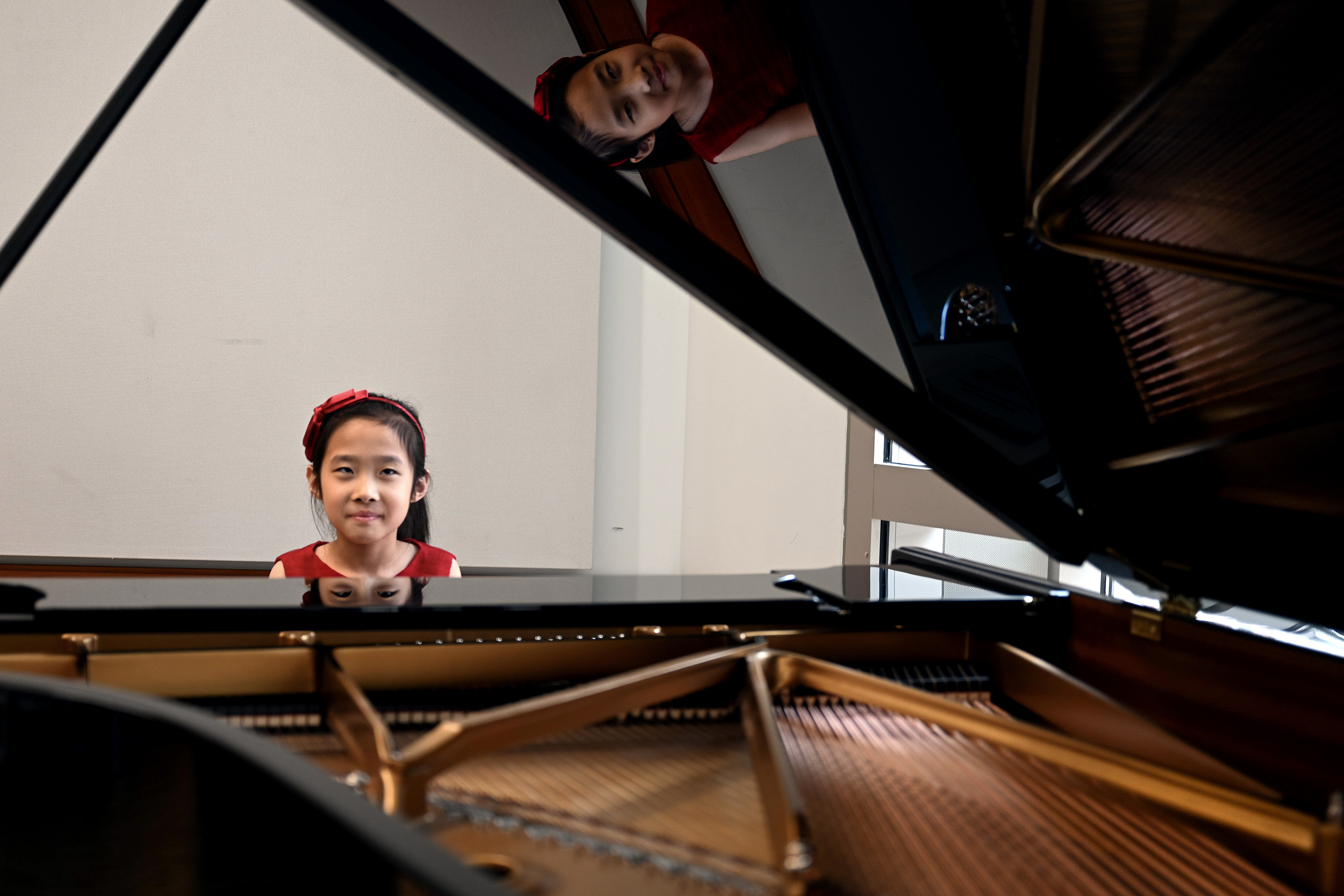
Olivia Li, 7, plays the piano in a rehearsal room at Lenfest Hall at the Curtis Institute of Music.Tom Gralish / Staff Photographer
“I was actually preparing for Juilliard,” Olivia said, “but my teacher said I could try for Curtis, and I just did. I didn’t expect I would get in.”
She got in. Juilliard, too.
Asked why she chose Curtis, she said, simply, “I just like Curtis better than Juilliard.”
Michelle Cann, one of two professors with whom Olivia will study at Curtis (the other is Ignat Solzhenitsyn), says that the young pianist has “phenomenal fingers.” Then again, so did others who tried out for the school and did not get in.
(function(){function e(){window.addEventListener(`message`,function(e){if(e.data[`datawrapper-height`]!==void 0){var t=document.querySelectorAll(`iframe`);for(var n in e.data[`datawrapper-height`])for(var r=0,i;i=t[r];r++)if(i.contentWindow===e.source){var a=e.data[`datawrapper-height`][n]+`px`;i.style.height=a}}})}e()})();
For the current school year, Curtis received 154 applications to the piano department, a spokesperson said. Sixty-three of those auditioned live in the first round and 15 advanced to the finals. Four were eventually accepted.
What set Olivia apart in her audition, Cann said, was “how musical she was and how much personality and character about the music-making she had that you don’t expect to see in a 7-year-old. It just stood out so much.”
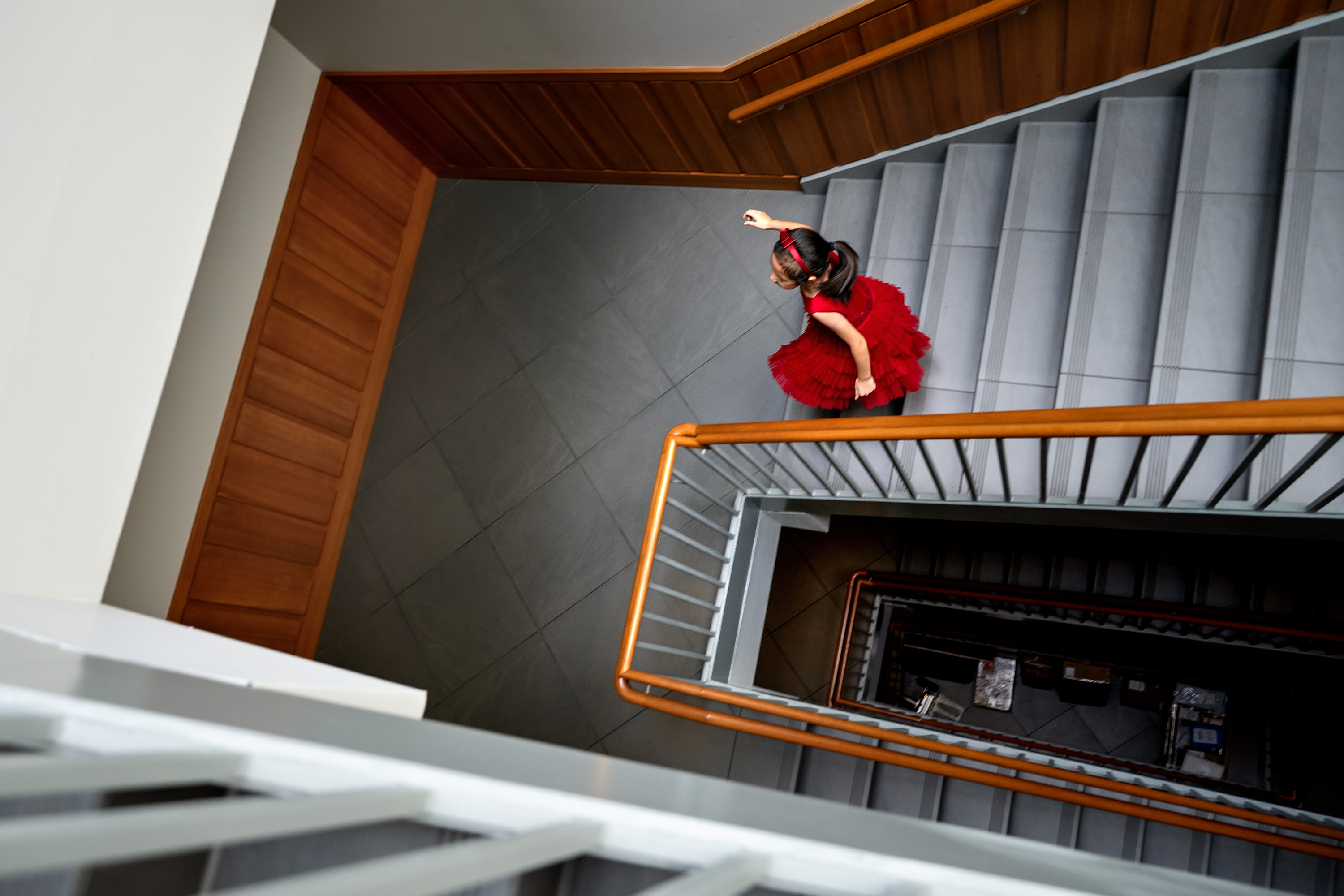
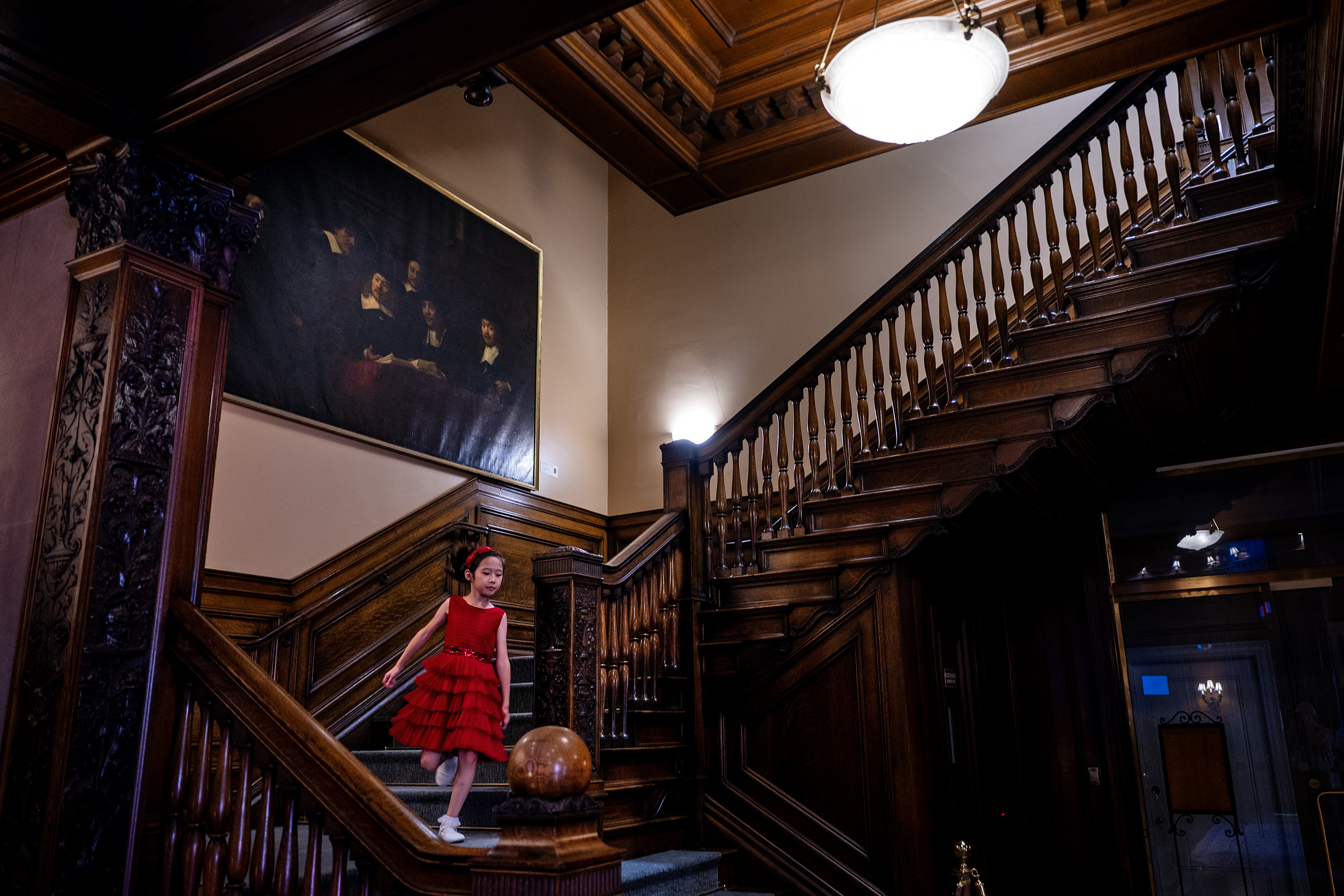
Seven-year-old pianist Olivia Li rushes down the stairs of Lenfest Hall at the Curtis Institute of Music on Monday, Aug. 17, 2026. She began studying the piano at age 4 and will receive a full-tuition scholarship to the prestigious institution.Tom Gralish / Staff Photographer
The sole criterion for admission at Curtis is artistic promise, said provost and dean Nick DiBerardino. “It’s rare for someone as young as Olivia to have won a place at Curtis,” he said, “but it does happen, and when it does, it’s because there was something really special happening at the piano.”
Curtis has had students younger than Olivia. The school is still in the process of reviewing its records, but to the best of its knowledge the youngest was pianist Ruth Slenczynska, who was 5 years and 2 months old when she arrived in April 1930. She stayed just a few weeks.
The youngest to come and stay was Sol Kaplan, who was 5 years, 7 months when he began studies in 1924, the year Curtis was founded; he went on to compose music for episodes of the original Star Trek TV series and a slew of movie scores.
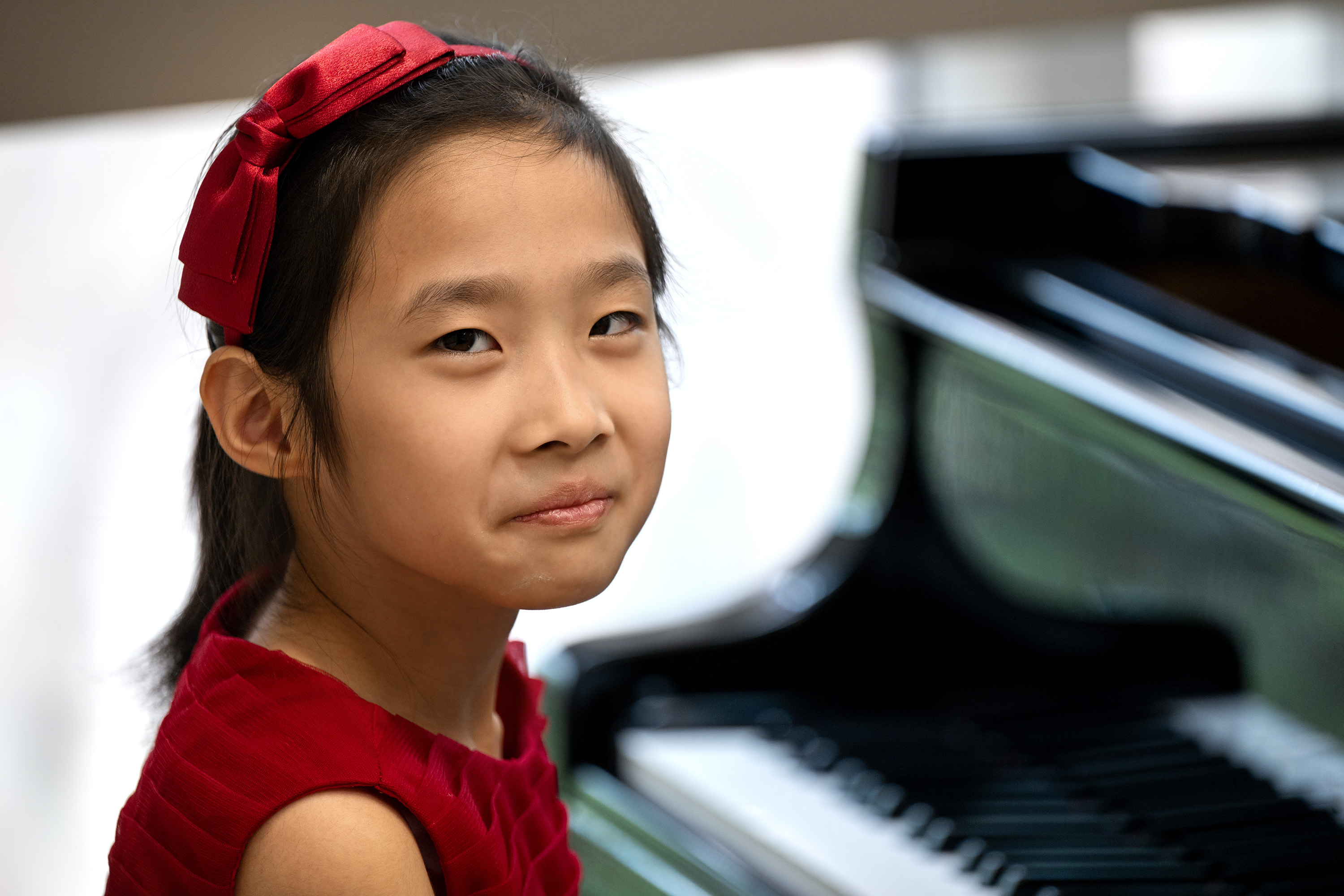
Olivia Li is one of the youngest students to study at the Curtis Institute of Music.Tom Gralish / Staff Photographer
Olivia is in exceedingly rare company. More than 4,000 composers, conductors, vocalists, pianists, and other instrumentalists have graduated from Curtis in its century-plus existence. Only 13 other students were under the age of 10.
She comes to Curtis from East Williston, Long Island, N.Y. No one in her family is particularly musically inclined, said her mother, Yanan Zhang, who did study piano as a child and continued to play a bit on a digital piano the family had at home.
“She just naturally started,” said Zhang of Olivia’s attraction to piano. “She saw me playing, and we hired a teacher to come to home once a week to teach her. So initially it was just for fun.”
Olivia started studying with a teacher — a Yale and Juilliard graduate — who gave her “very systematic training. So from that time, we took the learning seriously,” Zhang said.
The teacher told Zhang that Olivia learned fast and had strong fingers.
Seven-year-old pianist Olivia Li in the lobby of the historic 1726 Locust St. mansion at the Curtis Institute of Music on Monday, Aug. 17, 2026. She began studying the piano at age 4 and will receive a full-tuition scholarship to the prestigious institution.Tom Gralish / Staff Photographer
“I think he told me several times that she is outstanding, but I didn’t really take it seriously. I thought it’s just encouragement from teachers — that’s how they encourage kids, encourage parents.”
Olivia was 4 when she started piano, and despite her quick progress, it did not occur to Zhang for a while that there was anything unusual about her daughter.
“I just thought maybe that’s how all kids do.”
Olivia, of course, is not like other children, and she won’t be like her fellow students at Curtis, either.
While students are taking coursework during the day covering music theory and history, Olivia will be attending third grade at Germantown Friends School. After her normal elementary school day, she will go to Curtis for two hours of piano lessons per week and receive individualized instruction in other areas like ear-training, music history, and repertoire studies.
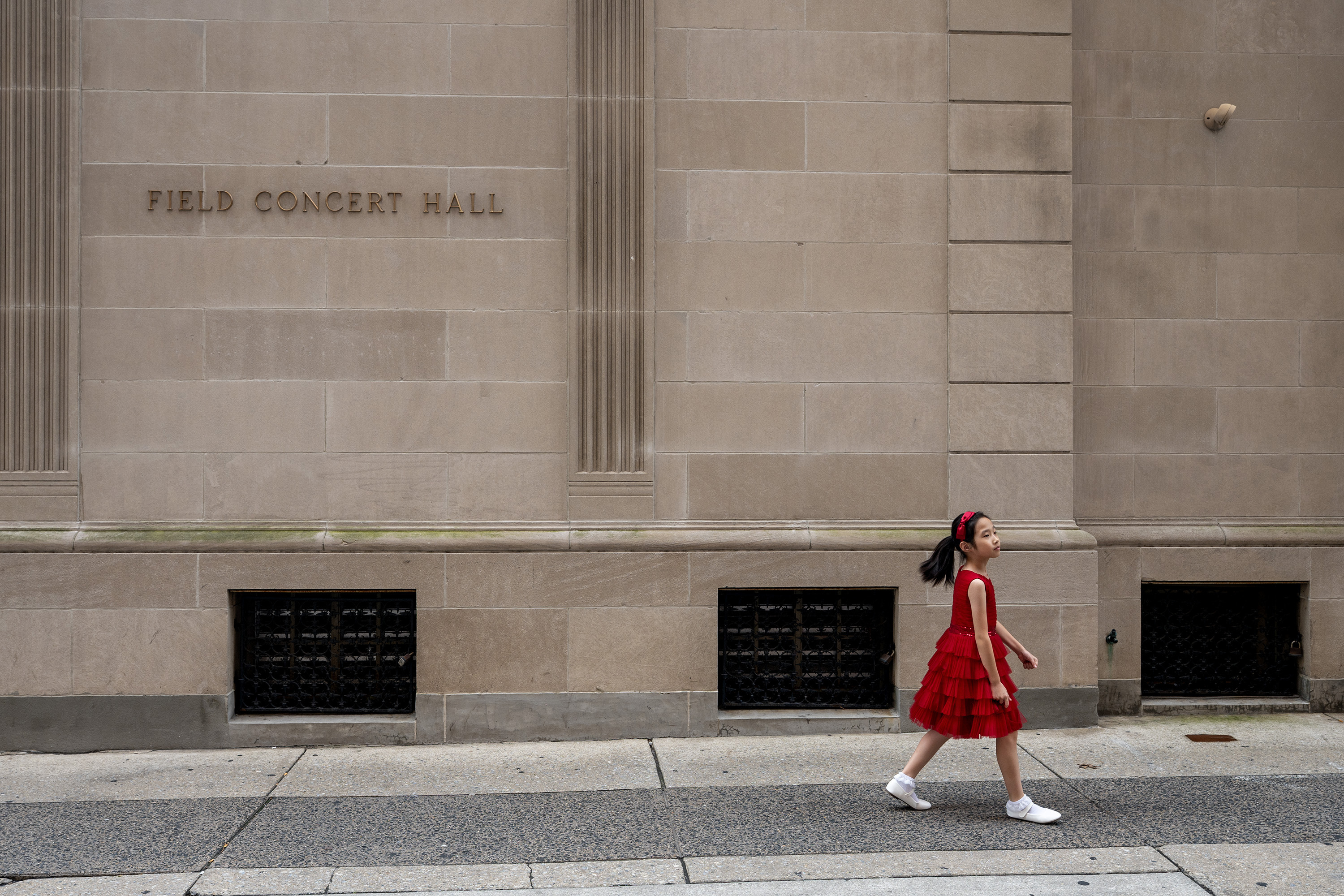
Olivia Li walks toward the entrance to 1726 Locust St., the one-time mansion that is home to the Curtis Institute of Music.Tom Gralish / Staff Photographer
Curtis requires students under the age of 18 to live with a parent or guardian, and so Zhang, who works remotely for a bank in risk management, has moved to Philadelphia and set up house locally. Olivia has a younger brother, who loves music but has not yet taken up an instrument.
How does a 7-year-old integrate socially at a school where some students will be three times her age?
“We haven’t had a 7-year-old [recently],” DiBerardino said, “but our undergraduate students are very accustomed to playing music with younger people and making a deliberate effort to make them feel welcome.”
Olivia LiTom Gralish / Staff Photographer
Some socializing will happen organically, DiBerardino said, but “we do have some structures in place to try to help with that process. We have a dedicated work study program for our undergraduate students who are trained by our student services team to be mentors or big brothers or big sisters. And we regularly check in on students like Olivia. So Olivia definitely would have that support.”
Outside of practicing, Olivia likes drawing, writing, math, and swimming.
“When she’s not practicing, she reads a lot,” Zhang said. “She holds a book when she is brushing her teeth.”
“I like to read fiction,” Olivia said.
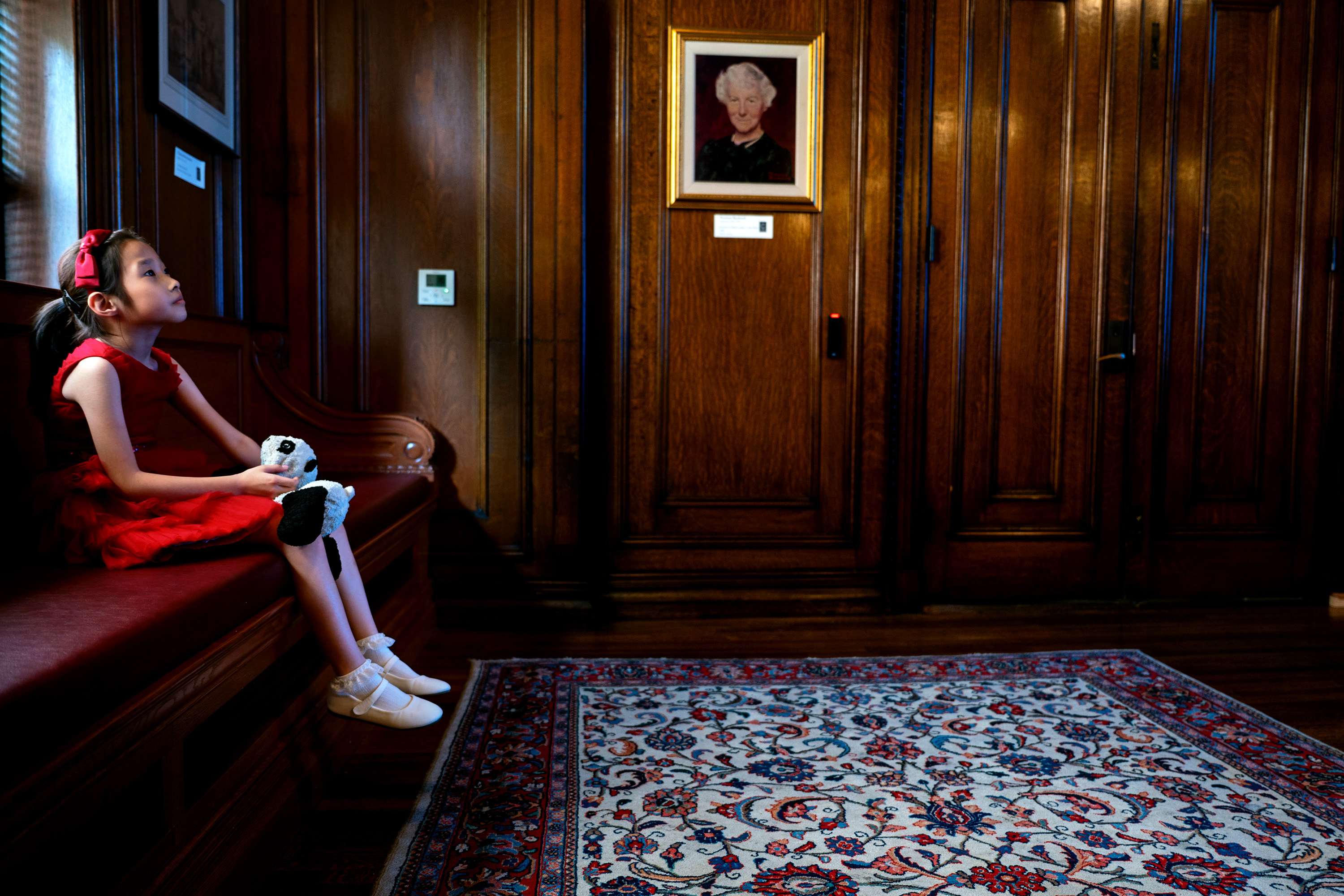
With a Norman Rockwell portrait of Curtis founder Mary Louise Curtis Bok Zimbalist nearby, 7-year-old pianist Olivia Li sits with her stuffed panda.Tom Gralish / Staff Photographer
Curtis does not have a separate precollege program the way some other music conservatoires do. Olivia won’t be enrolled in a bachelor’s program, but, rather, a diploma program.
Several forks in the road lie ahead. She could end up continuing at Curtis post-high school, enrolling in the bachelor’s degree program. That means she could end up being at Curtis well over a decade, a prospect that has some Curtis professors joking that they will be retired by the time she graduates.
Olivia could also decide at some point that she has gotten what she needed from Curtis and move on to another conservatory or music school.
Asked whether she would like to be a professional pianist, Olivia said she doesn’t know yet. She is also interested in conducting, “because you get to, like, conduct a whole orchestra.”
Olivia could also decide that music isn’t where she wants to end up. “We don’t know if at some point she’ll say, ‘I don’t want to do this with my life.’ Who is supposed to know that at 7?” Cann said.
Zhang said she doesn’t have any thoughts on the matter.
For now, the artist herself seems content to let the endgame play out. She has plenty to do in the meantime. Of what she wants from a Curtis education, she said:
“I hope that I can play piano really good and learn a lot of pieces and share my music with the world.”
To find “A Nation of Artists” at the Philadelphia Museum of Art, you walk from the Great Stair Hall down a long gallery lined with art that’s not part of the show. The path zigs left and tightens into what looks like a service corridor, and then zags right past the bathrooms.
After this distinctly unceremonious approach, you’ve arrived at one of the museum’s most spectacular events of recent years.
Not only is “A Nation of Artists” momentous — it is billed as the “most expansive presentation of American art ever mounted in Philadelphia” — but it comes with the added juice of inaugurating the museum’s newly renovated American wing on the second floor after a 14-month closure.
The occasion brings yet another distinction: amazingly, after three more galleries open in the wing, it will be the first time in a decade that all of the galleries in the main building will have been open at the same time.
The odd journey to the second-floor American galleries has long been in place, but it seems especially odd now. It would have been nice to reopen this major piece of real estate with more of an architectural drumroll than a drab, winding hallway, especially for an institution that, after the tumultuous year it’s had, could use a thing or two to celebrate.
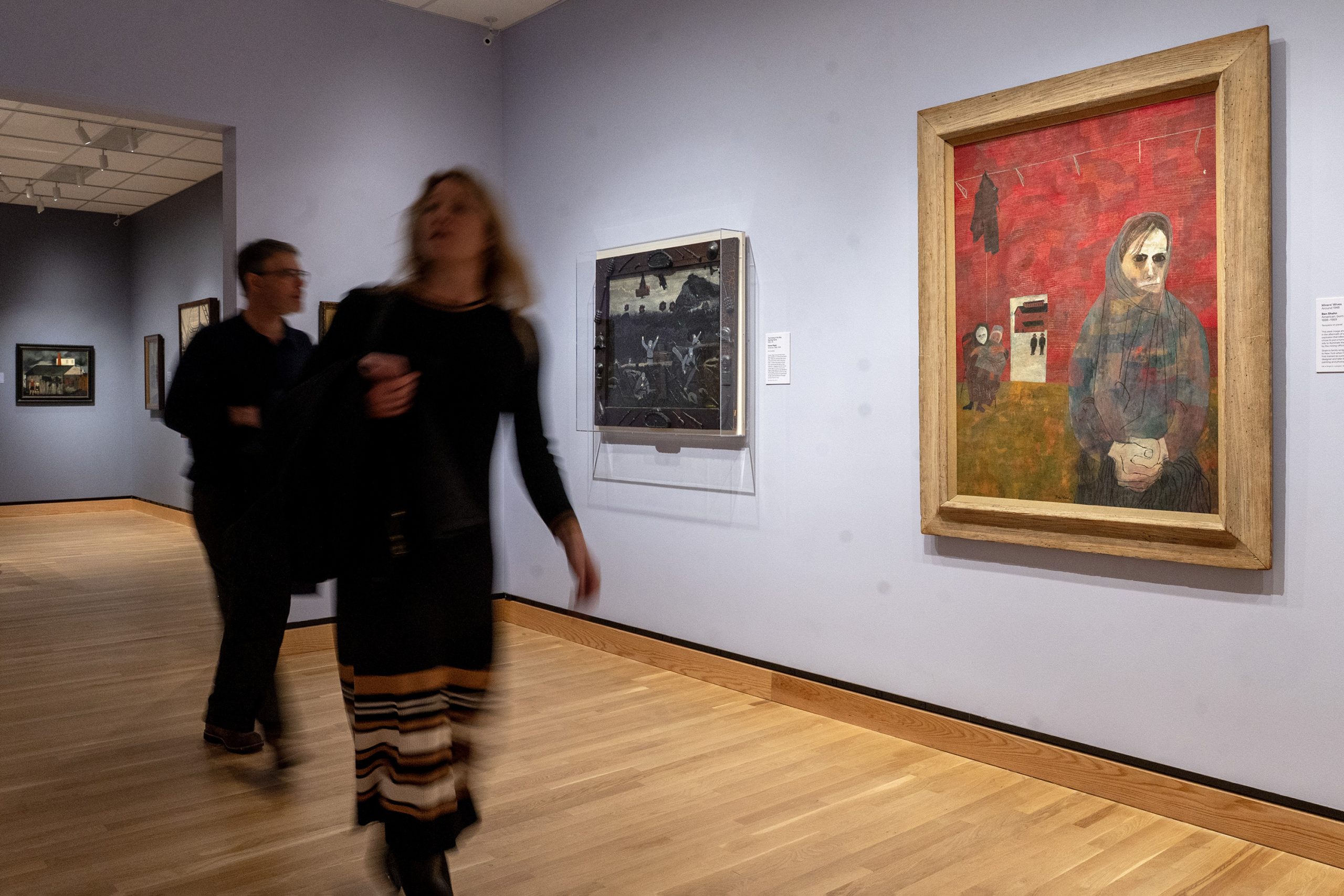
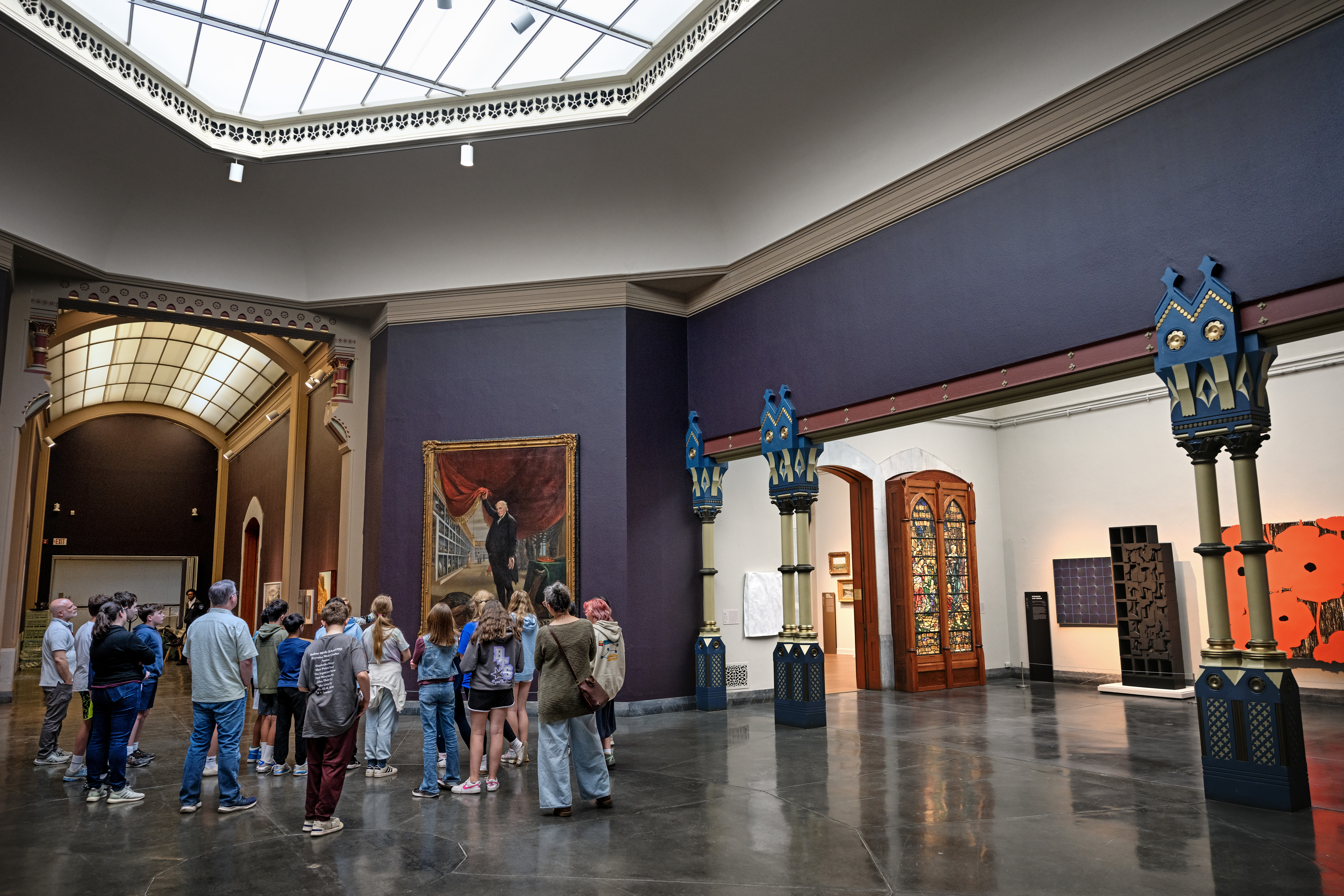
“Miners’ Wives” (right) by Ben Shahn and “The End of the War, Starting Home” by Horace Pippin at the Philadelphia Museum of Art.Tom Gralish / Staff Photographer
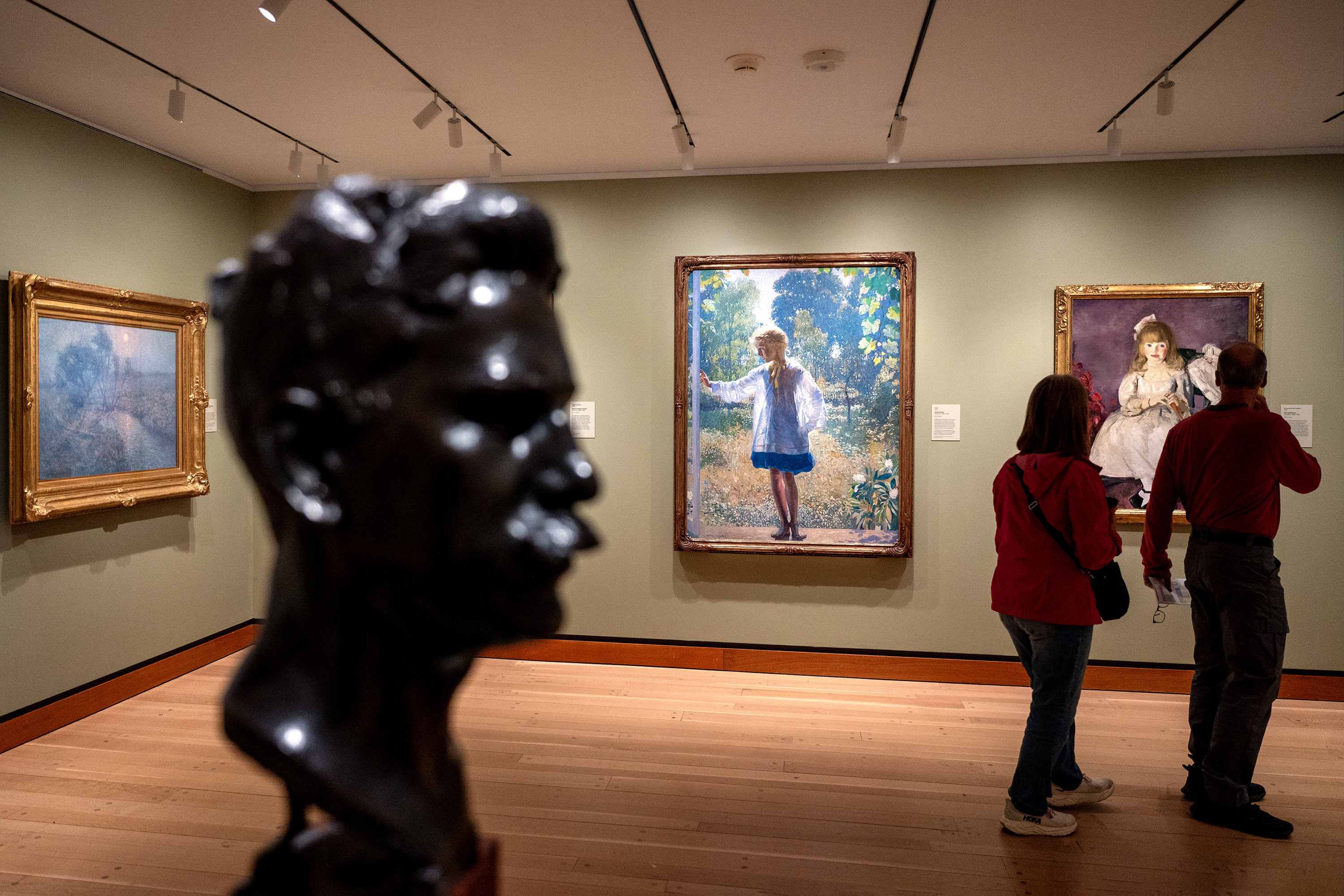
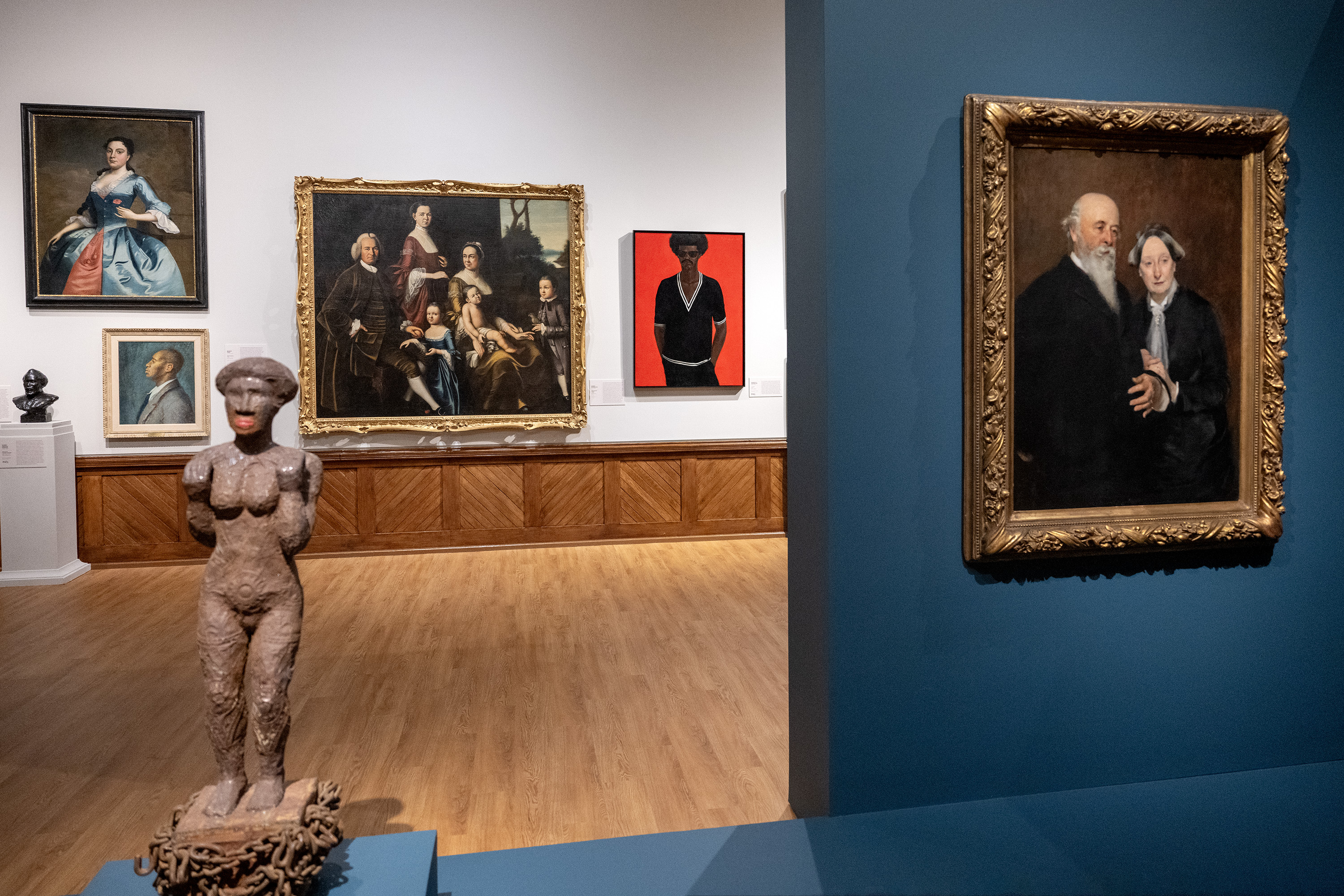
It might also be easy to miss the show’s greater significance to the museum and its cohost, the Pennsylvania Academy of the Fine Arts. “A Nation of Artists,” which opened in April with more than 1,000 works at both museums, arrives as a bolt of ambition as the groups work their way through deficits and reorganizations and remind audiences and funders that beyond crisis, there is art, and it is glorious.
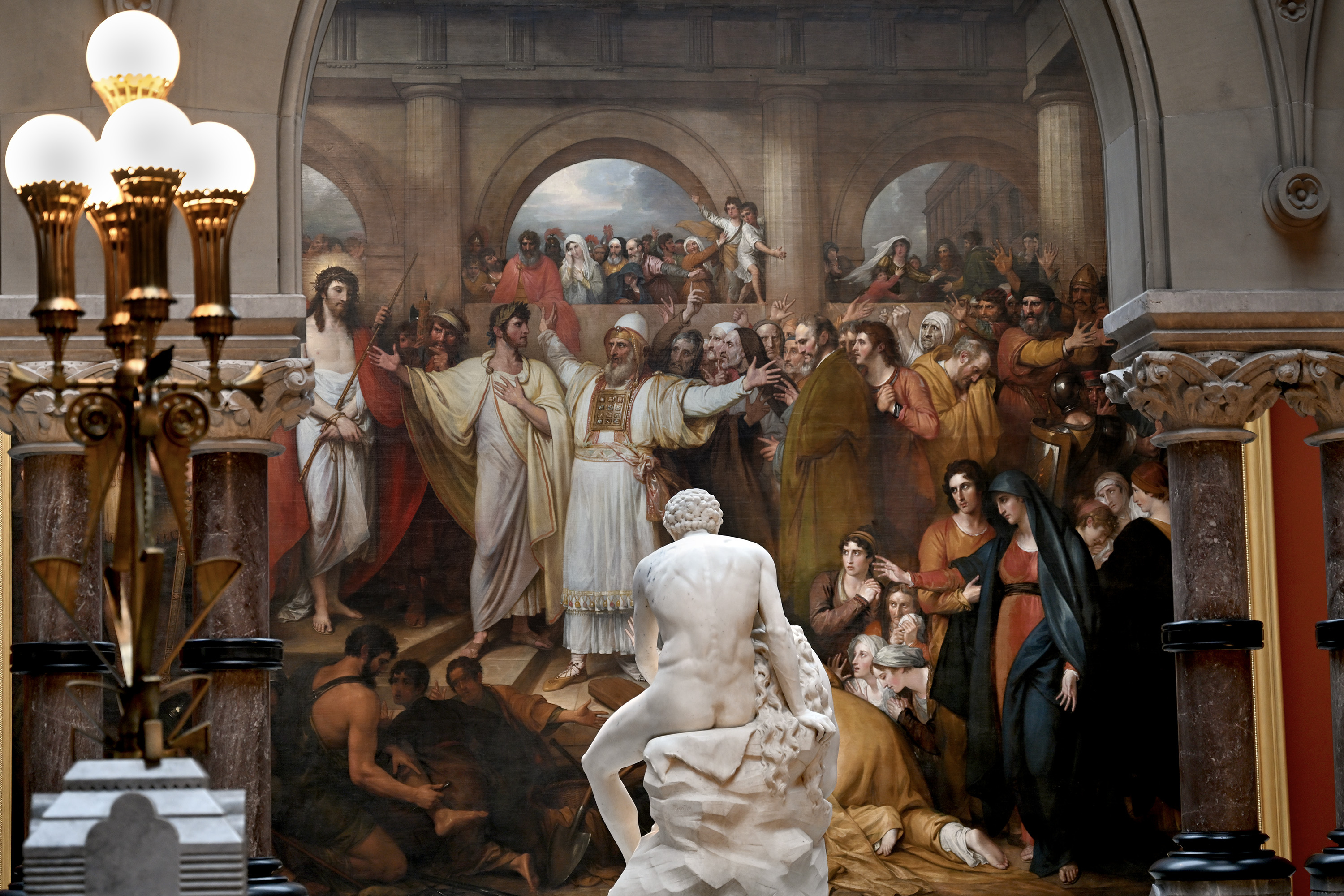
The show is the city’s major visual arts celebration of the nation’s 250th anniversary, and while it’s an impossible task to compress the story of art in America into any single show, the overall image that emerges is not a cohesive snapshot, but a fascinating mirror.
There’s sometimes a random, almost improvisatory feeling to “A Nation of Artists” — despite the show’s attempt to place works around themes like the American West or inequity — because America is itself ever-random and improvisatory.
Works in thematically grouped ensembles in ‘A Nation of Artists’ in the newly renovated Furness and Hewitt building at the Pennsylvania Academy of the Fine Arts.Tom Gralish / Staff Photographer
More than 120 works from the collection of John and Leigh Middleton and their family are augmenting “A Nation of Artists.” But after the show closes and the Middleton works are gone, PAFA will put in place a newly curated permanent collection, and the PMA will be left with a sweeping look at American art that starts on the first floor with earlier works and proceeds to the second to bring it up to the mid-20th century.
In other words, “A Nation of Artists” absorbs the Middleton works, but also spotlights the incredible riches in residence nearly all the time. That’s no small thing at a time when arts and culture in Philadelphia is struggling for engagement in the attention economy.
The painting “Christ Rejected” by Benjamin West and marble sculpture “Paradise Lost” by Joseph A. Bailly at the Pennsylvania Academy of the Fine Arts.Tom Gralish / Staff Photographer
A crisp reset at PAFA
At PAFA, the outside world seems to creep in in ways both positive and worrisome.
How can you admire the fruitful pedagogy at PAFA on display by generations of academy students and instructors without feeling concern for the place? The relationship between the museum and school — a specific artistic legacy unique to Philadelphia — is what makes PAFA special, and it remains to be seen whether a recently revamped certificate program at the school is the ultimate answer, artistically or financially.
The exhibition marks a crisp reset: the reopening of PAFA’s jewel of a building, the riotously detailed 1876 Furness and Hewitt-designed landmark, after a renovation project that included a new HVAC system and other renovations.
Laylights (variously utilizing natural or artificial light) in the newly renovated Furness and Hewitt building at the Pennsylvania Academy of the Fine Arts.Tom Gralish / Staff Photographer
It’s good news that there are no dramatic changes; the building continues to dazzle. I visited the show there a half dozen times, and via the church-like rose window and skylights, nature played handmaiden to art. When clouds parted, sun filtered into some of the spaces, and in one gallery the natural light made the whites and colors of George Bellows’ North River pop.
The marble sculpture “Peri at the Gates of Paradise” by Thomas Crawford in the grand staircase at the Pennsylvania Academy of the Fine Arts.Tom Gralish / Staff Photographer
On another morning, the sunlight made the grand stair hall of the Furness building practically vibrate. The smooth white of marble sculptures like Thomas Crawford’s Peri at the Gates of Paradise glowed and the stars-on-cobalt pattern beneath the skylight seemed to be showering down.
Here on this day, there was no more beautiful interior in the city.
At the Pennsylvania Academy of the Fine Arts. In the rear is the oil painting “Death on the Pale Horse” by Benjamin West.Tom Gralish / Staff Photographer
A more sequestered PMA
If PAFA maintains a lively relationship with the outside world, the PMA’s new American wing feels sequestered. There are no visible windows letting in light in the second floor American galleries — no natural light except for a small opening in a staircase.
The layout and footpath (including that unceremonious approach) is largely the same as it had been before the renovation. But the flow within and from gallery to gallery is more open, and there is now a central spine of four continuous middle galleries that opens up a vista that helps to orient the visitor. Three remaining galleries in the renovated American wing are expected to reopen, though the date is uncertain.
Three Thomas Eakins oils (from left): “Mending the Net,” “The Pair-Oared Shell,” and “Sailboats Racing on the Delaware.”Tom Gralish / Staff Photographer
The PMA half of “A Nation of Artists” features a lot of big names (Andrew Wyeth, John Singer Sargent, Georgia O’Keeffe), as well as about three dozen works by Thomas Eakins — intimate portraits as well as epic canvases. There’s a beautiful sequence of three Eakins oils, all painted within a decade of one another, all with rivers in various hues and states of excitement: The Pair-Oared Shell, Sailboats Racing on the Delaware, and the stunning Mending the Net, a seemingly ordinary scene that gathers filmic mystery and story through minutely detailed figures mending a fishing net by the river against a gauzy beyond.
In terms of visitor experience, the new second floor American space succeeds most in moments of drama. The wall in one gallery uses a specially reproduced rich-burgundy period wallpaper, and the relationships among the paintings, furniture, pottery, and other items in the room ricochet beautifully.
“The Lost Pleiad” by Randolph Rogers in the Philadelphia Museum of Art’s salon-style gallery.Tom Gralish / Staff Photographer
A sumptuous feeling immerses visitors in the high-ceilinged salon-style room (gallery 211) that includes vast landscapes and marble sculpture. Though it’s not immediately obvious, the first-floor American works are also part of the show, and they hold yet more Middleton works.
Classics and surprises, and a lot of charm
There’s greater poetry in the architecture at PAFA, but the work itself at both museums is undeniably impressive in scope, and especially at the PMA: painting, sculpture, furniture, silver, fabric, works in clay, and more.
The curators — Kathleen A. Foster and Alexandra A. Kirtley at the PMA, and Leah Triplett and Lea C. Stephenson at PAFA — have delivered not just old favorites, but also surprises.
“Black Night: Russell’s Corners” by George Copeland Ault at the Pennsylvania Academy of the Fine Arts.Tom Gralish / Staff Photographer
PAFA’s classics include Winslow Homer’s Fox Hunt; the Jasper Johns Flag1960-66 from the Middletons (which the couple brought home from an auction in 2010 for $28.6 million); and George Copeland Ault’s Black Night: Russell’s Corners (1943), whose flat, cold, electric light suggesting a modern encroachment on agrarian life, can only be appreciated in person.
Among the pieces to which I kept returning: Pink Flower with Clock by PAFA 2011 graduate Aubrey Levinthal, because of the smart way it plays with the idea of photographic positive and negative imagery even though it is an oil; and Harriet Goodhue Hosmer’s Puck on a Toadstool, from 1856, whose supernatural energy is so potent that the figure appears poised to shape-shift and break free of its marble confines.
At the PMA, a single canvas has me reconsidering Edward L. Loper Sr., the Wilmington artist who had his beginnings working for the WPA. Loper’s Abandoned Ferry Terminal is a complex refraction of shadows and colors from 1958 whose geometries never seem to stop shifting.
A small shadowbox of a man and woman formally costumed from around 1880 might be the most unassuming bit of charm in the entire exhibition. Its maker is unknown.
Custom wallpaper at the Philadelphia Museum of Art, with “Portrait Figures of a Man and a Woman, in a Shadowbox.”Tom Gralish / Staff Photographer
Leaning into representation
If you ever wanted a lesson in the difference how a work is displayed can make, just consider how much more substantial an achievement The Gross Clinic looked a few months ago. With bright but warm lighting at the PMA, Eakins’ 1875 canvas was frightening in its vividness, the red of blood on the surgeons’ hands glistening. Today, at PAFA, it looks a little washed out, overpowered by the light coming through the nearby rose window.
Both museums have made a conscious effort to represent a spectrum of identity — gender, regional origin, ethnicity, and so on. This is all to the good, of course. Everyone will find something relatable in this exhibition, and many will discover works that aren’t necessarily relatable on first examination but become so. This is why museums, and good curators, are important.
Detail of “Nydia, the Blind Girl of Pompeii” by Randolph Rogers at the Pennsylvania Academy of the Fine Arts.Tom Gralish / Staff Photographer
It’s a fascinating marker of time to think about the cultural whiplash of the past couple of years in this country, and how vulnerable the simple concept of representation now feels. The tastes of the art establishment change, and so too does how we perceive art.
How could it be otherwise? Every movement comes in with an air of moral and scholarly authority that purports to lay down once and for all an accurate cultural perspective.
The prevailing ethos arrives as the new reality. Then the next reality comes along.
“A Nation of Artists” runs through July 5, 2027, at the PMA, 2600 Ben Franklin Parkway; and Sept. 5, 2027, at PAFA, Broad and Cherry Streets. philamuseum.org, pafa.org.