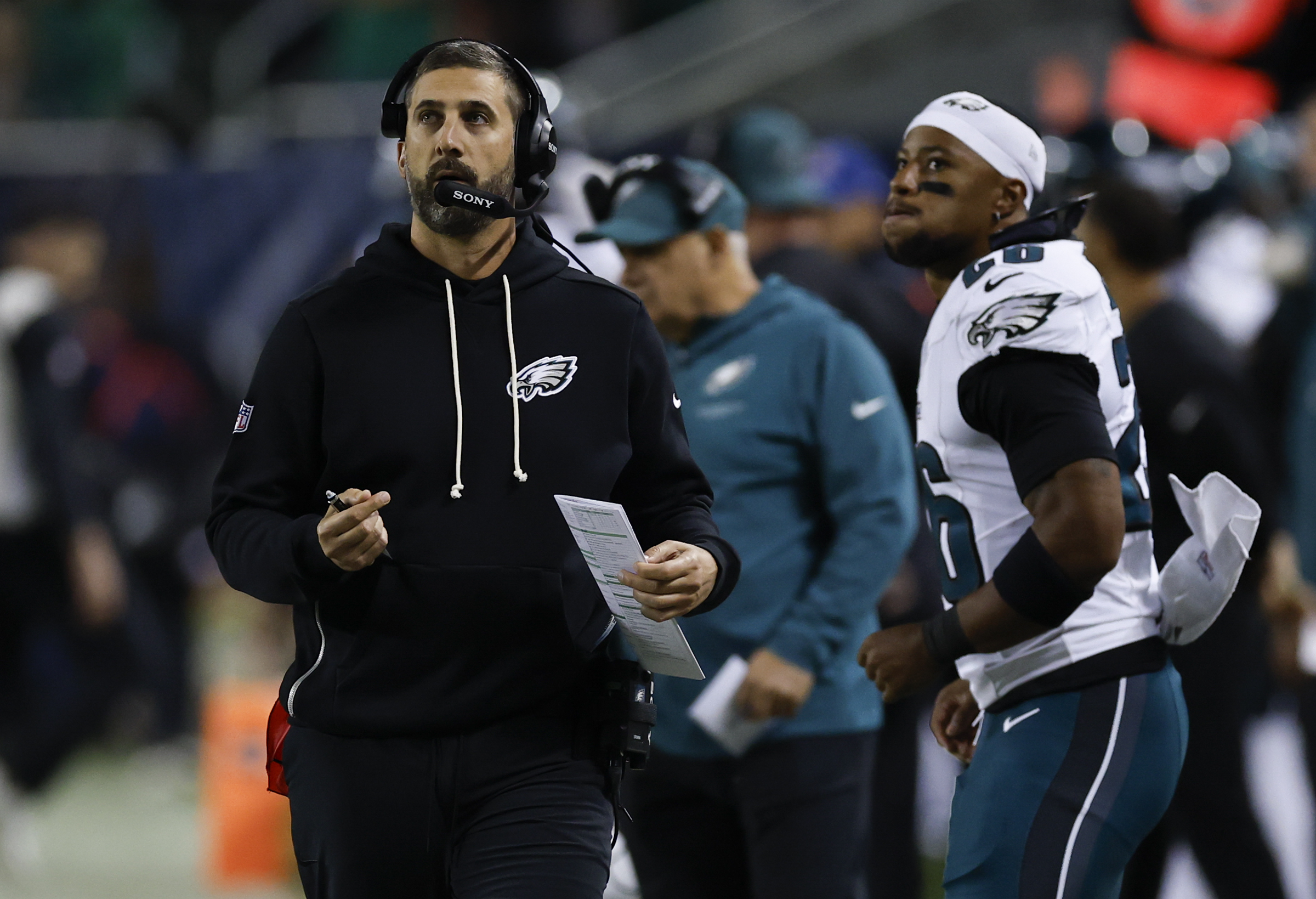
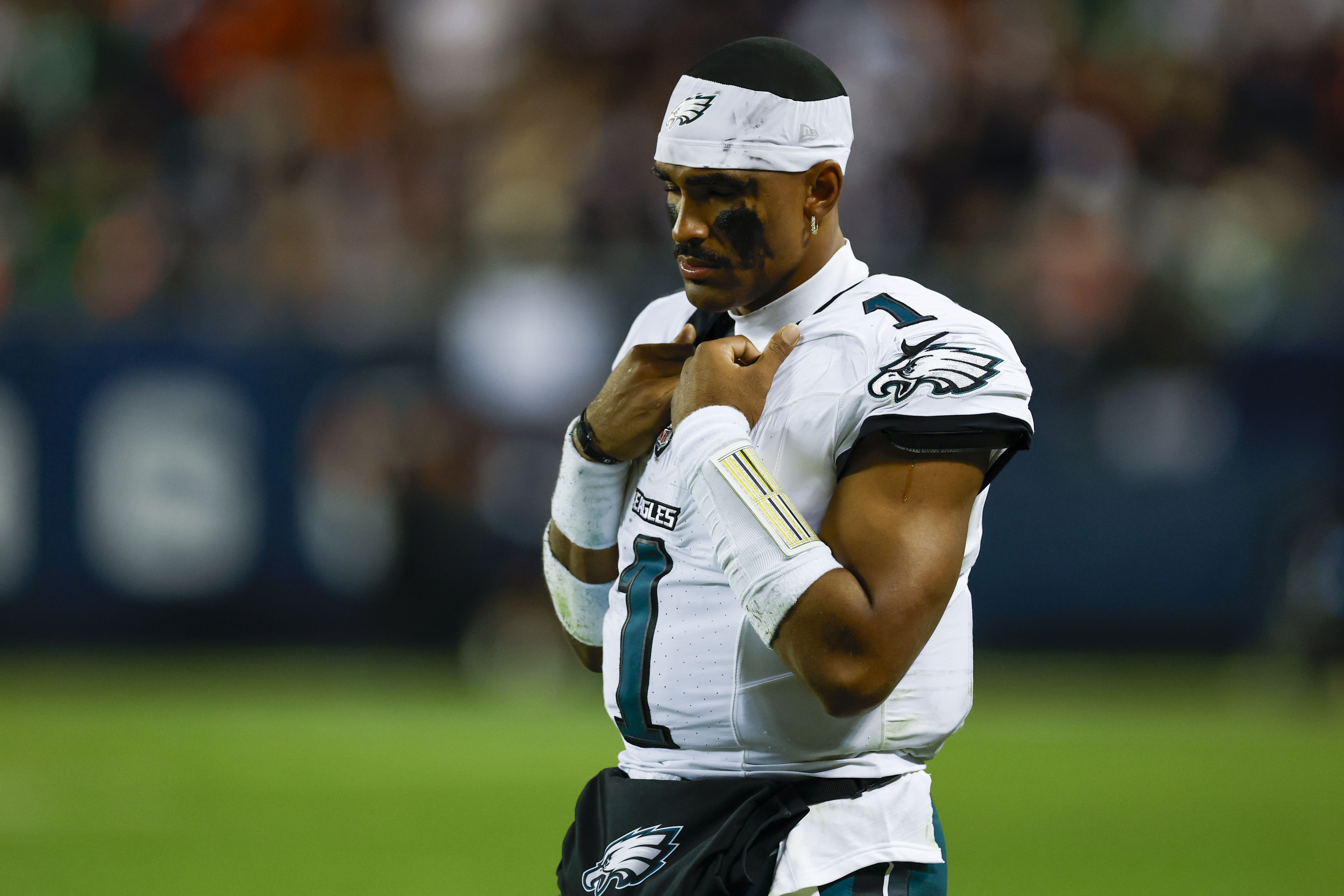
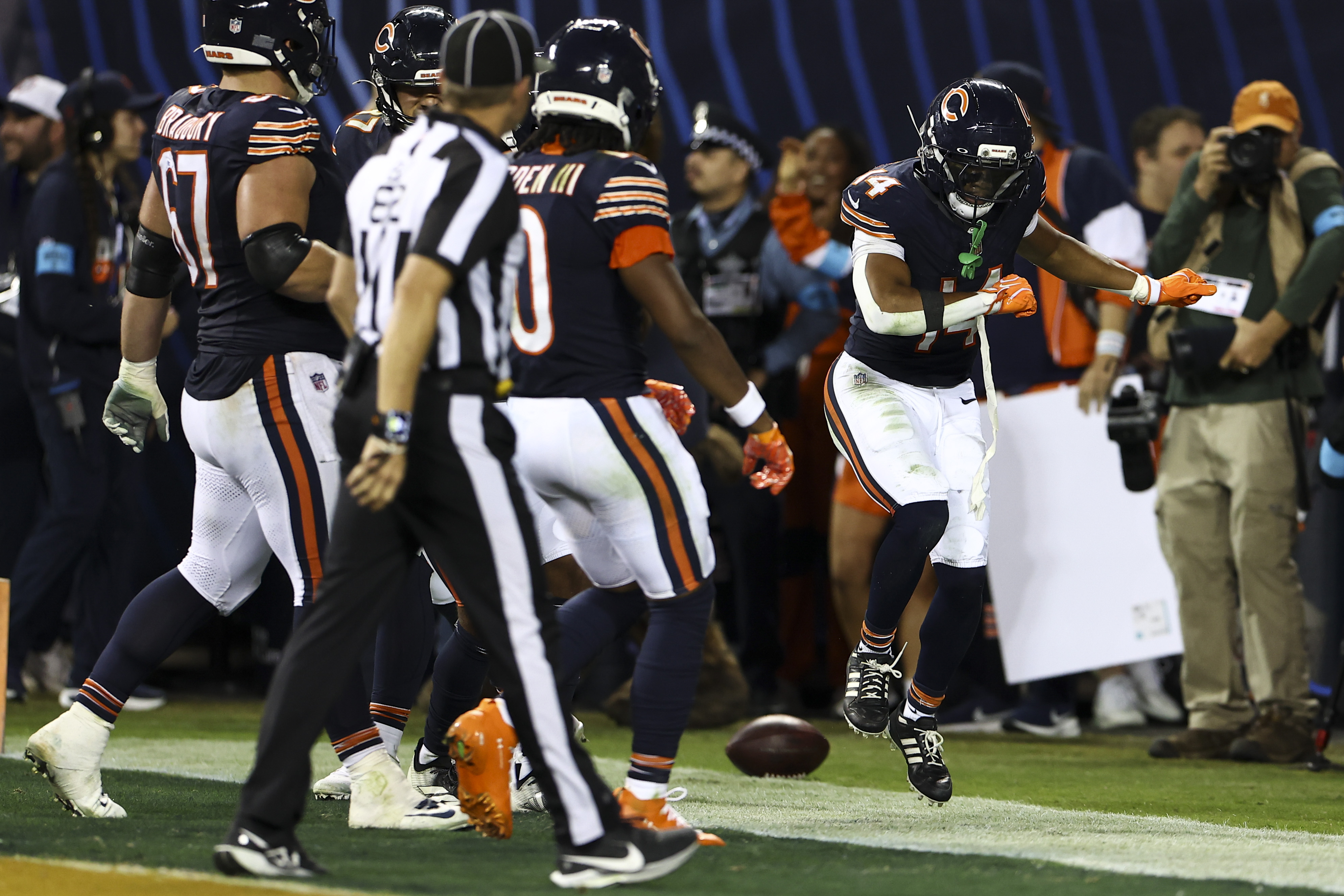
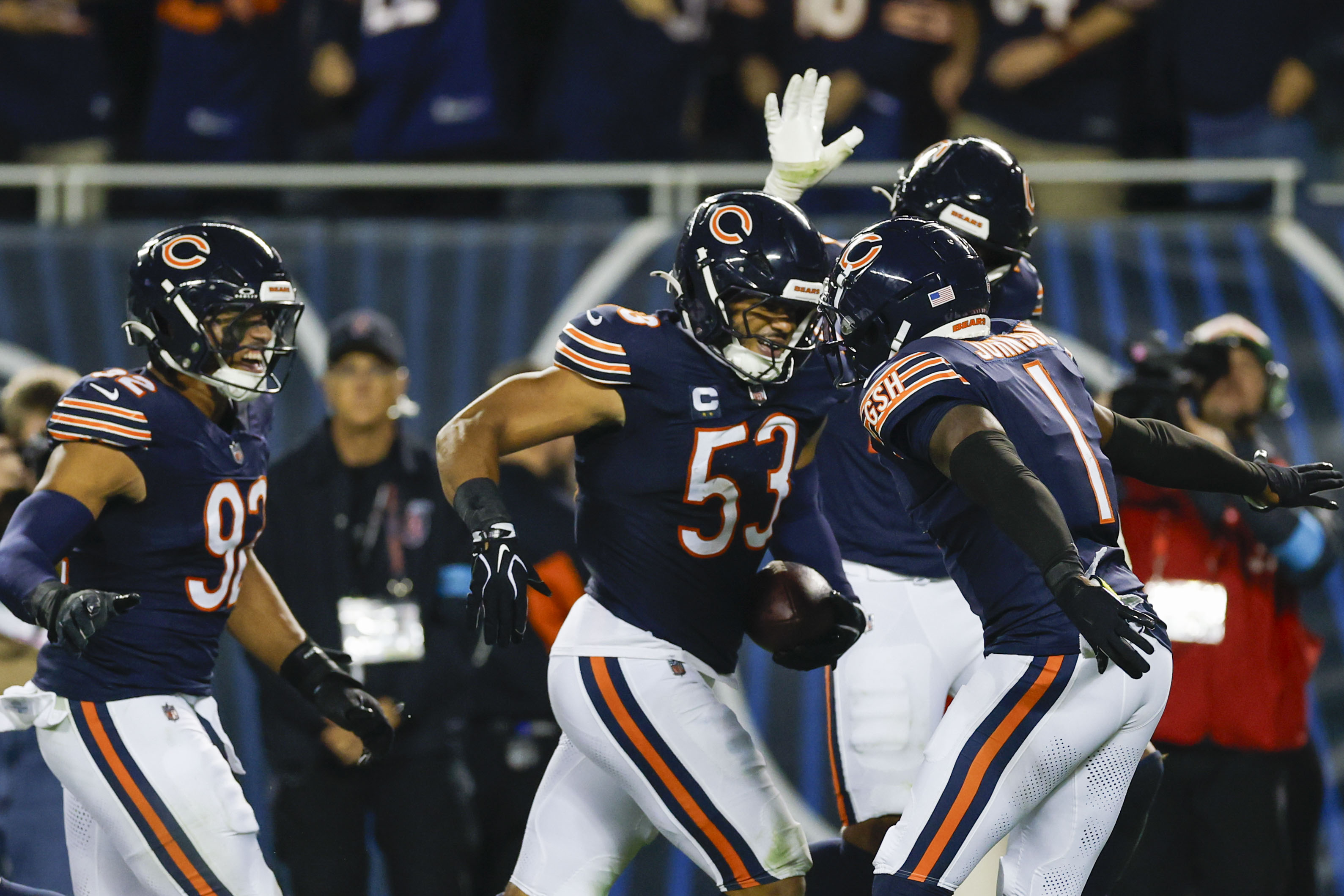
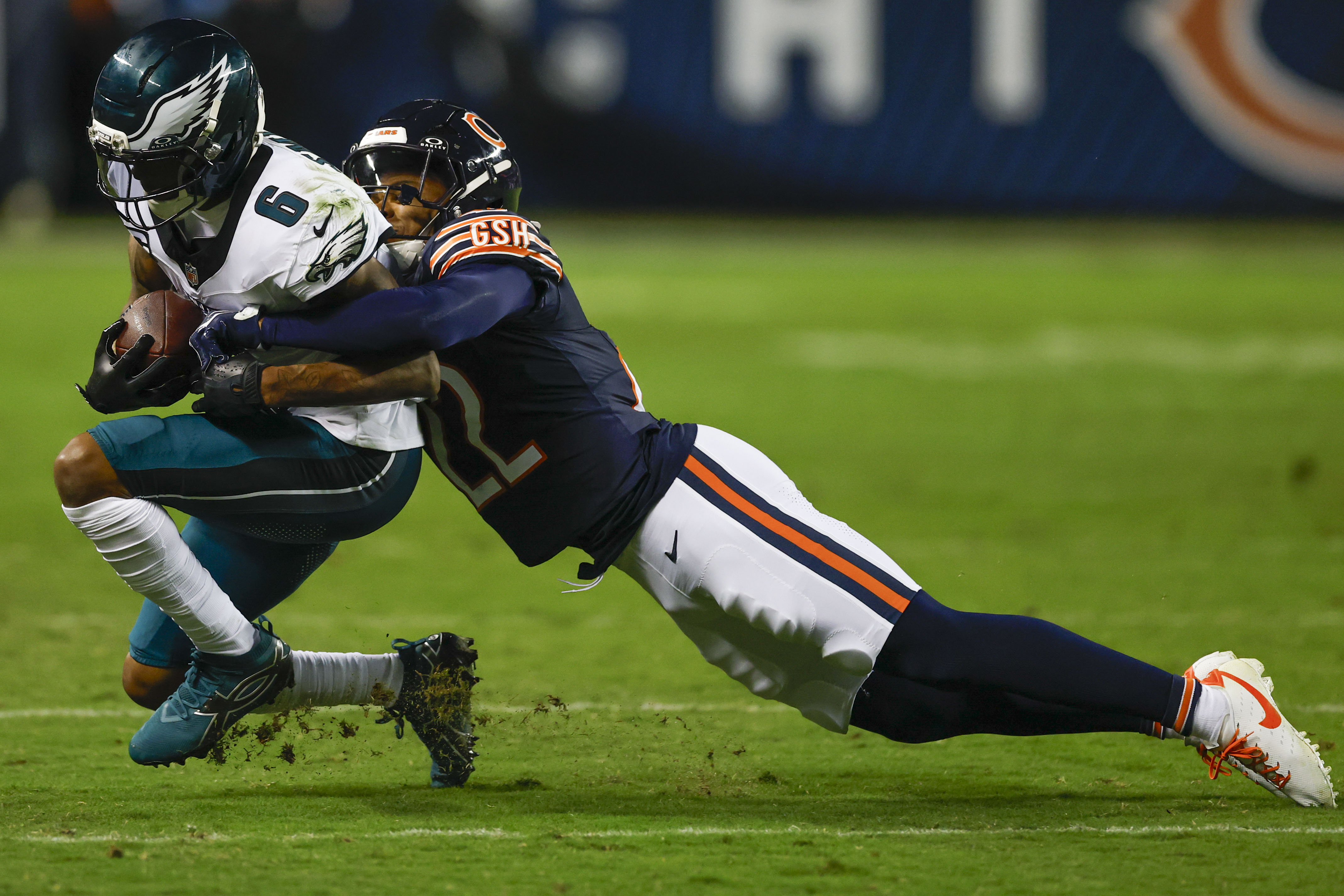
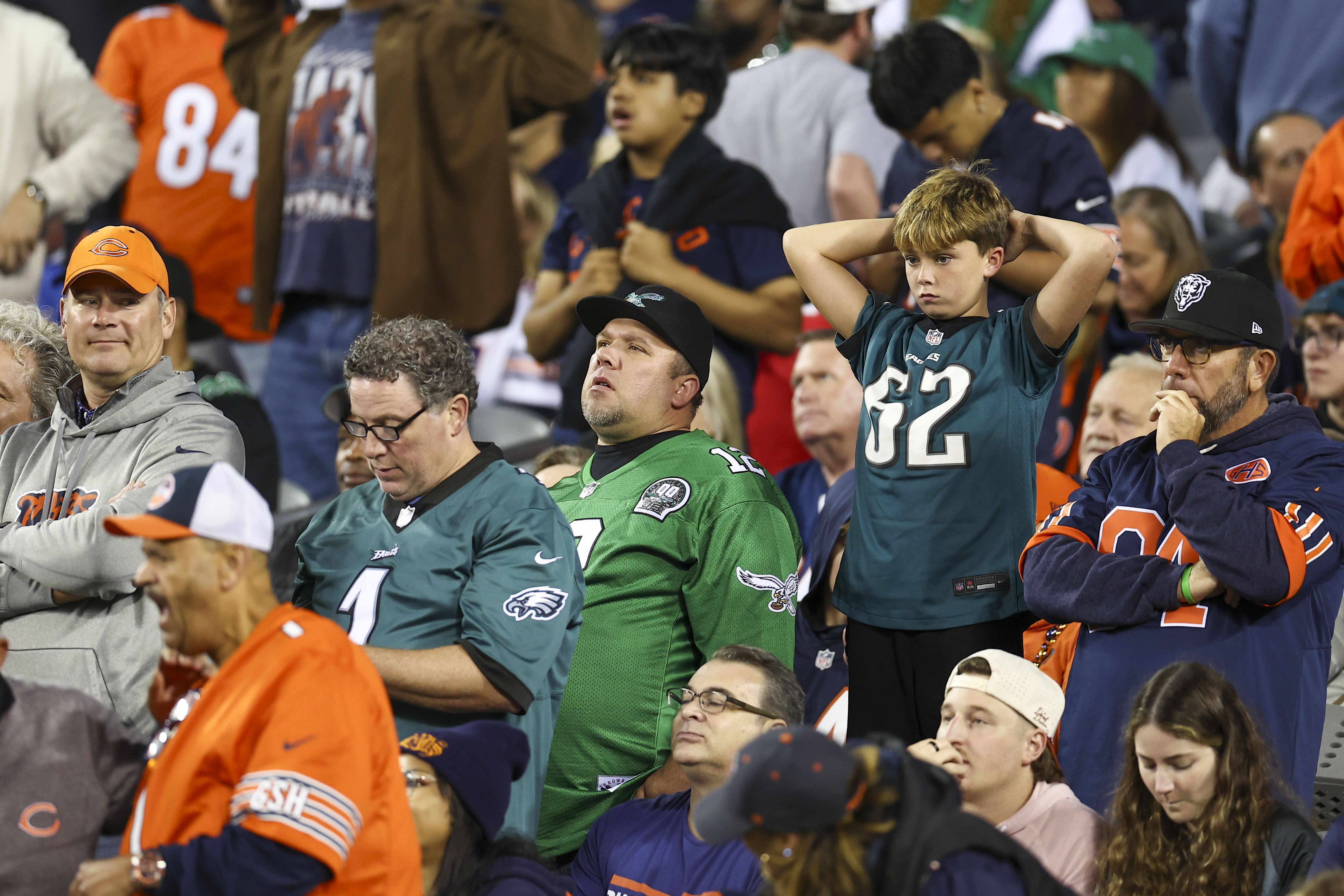
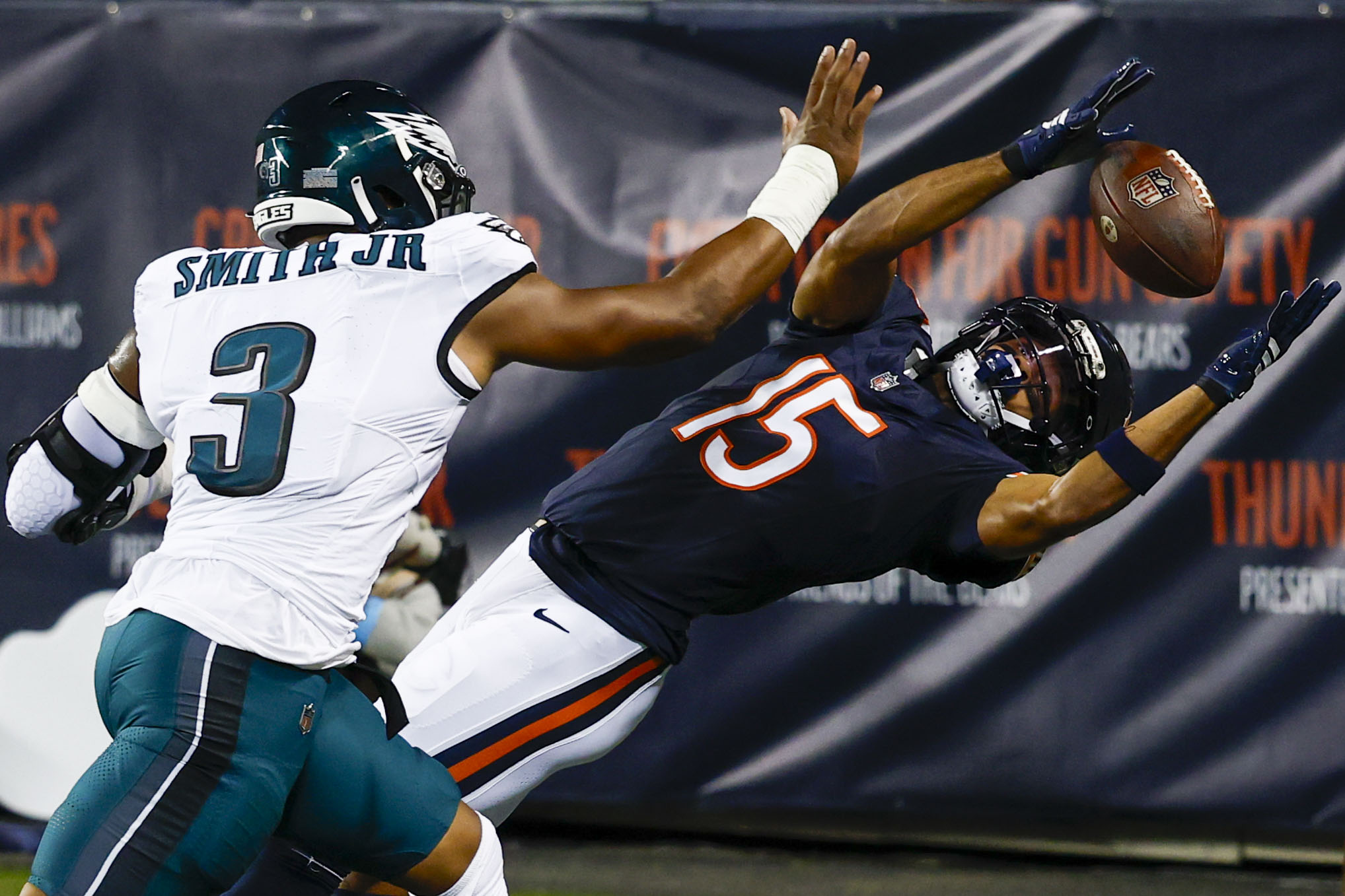
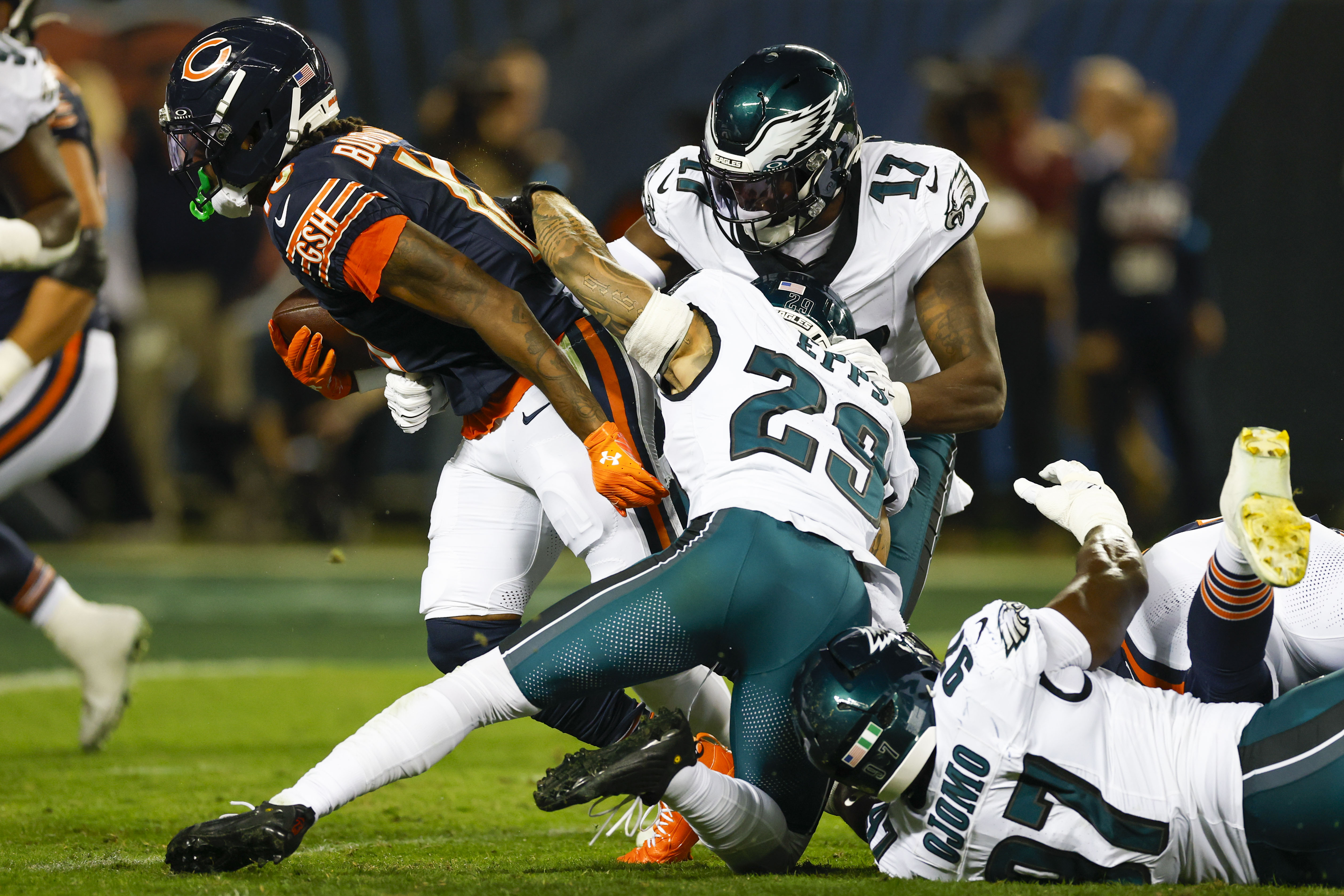
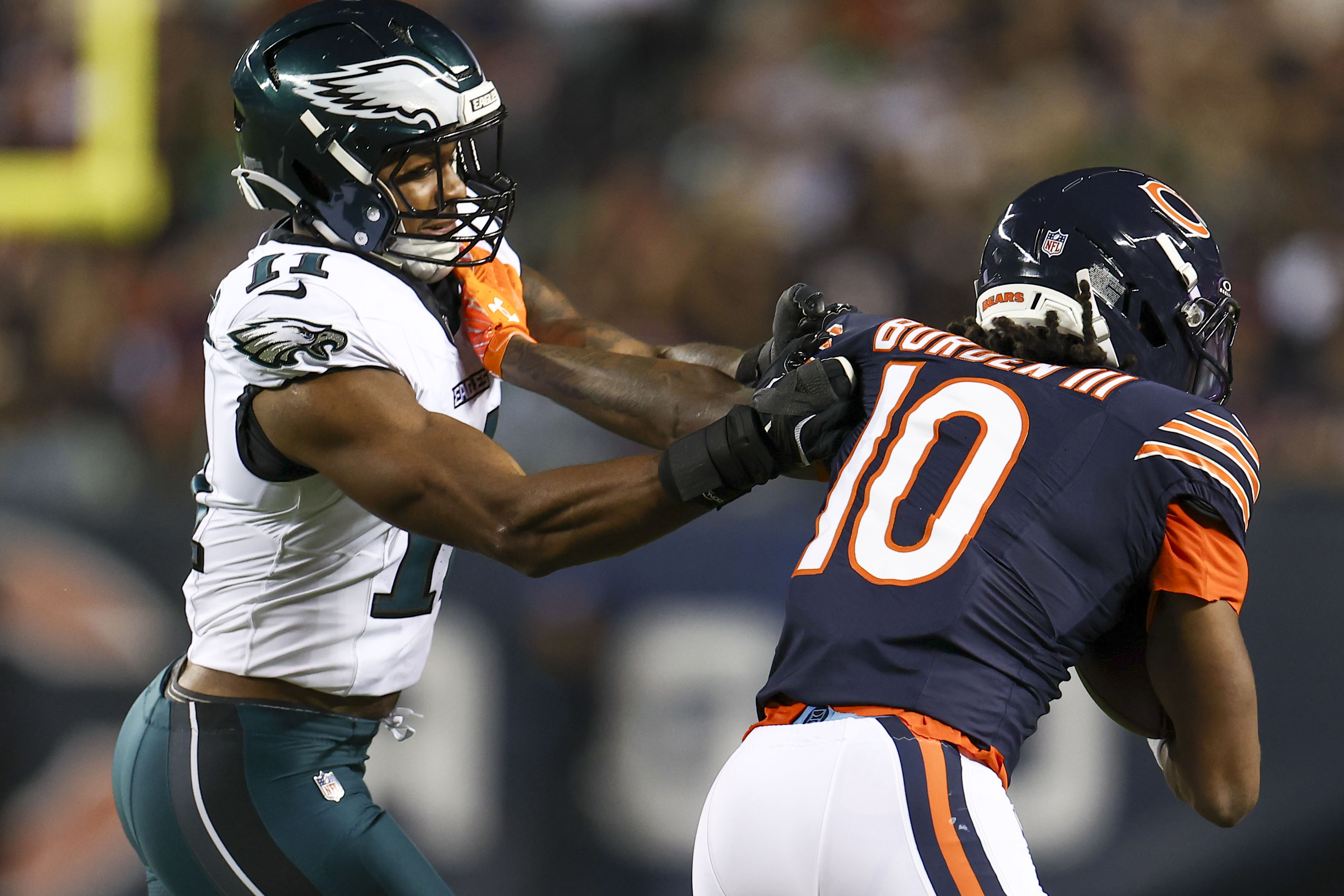
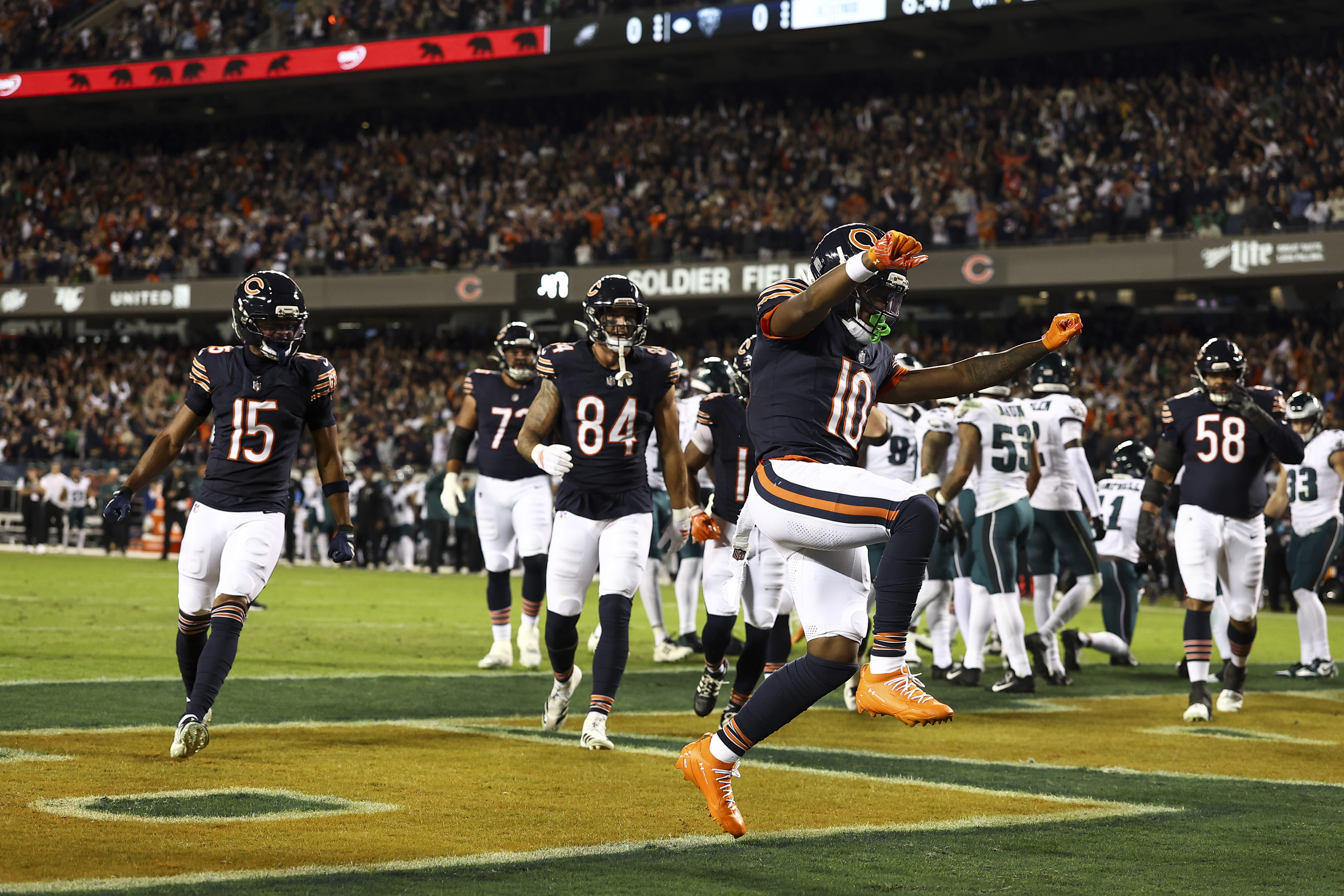
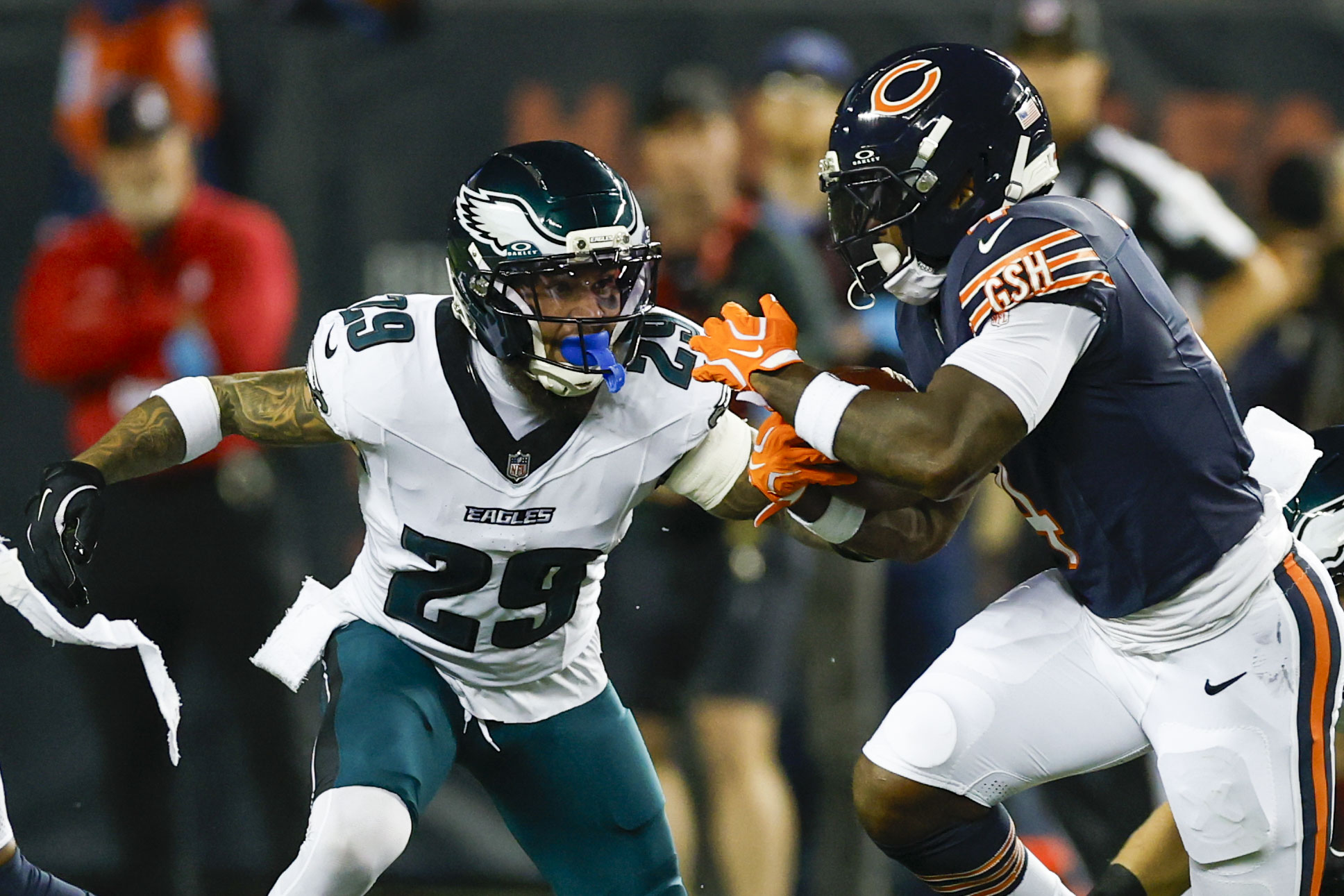
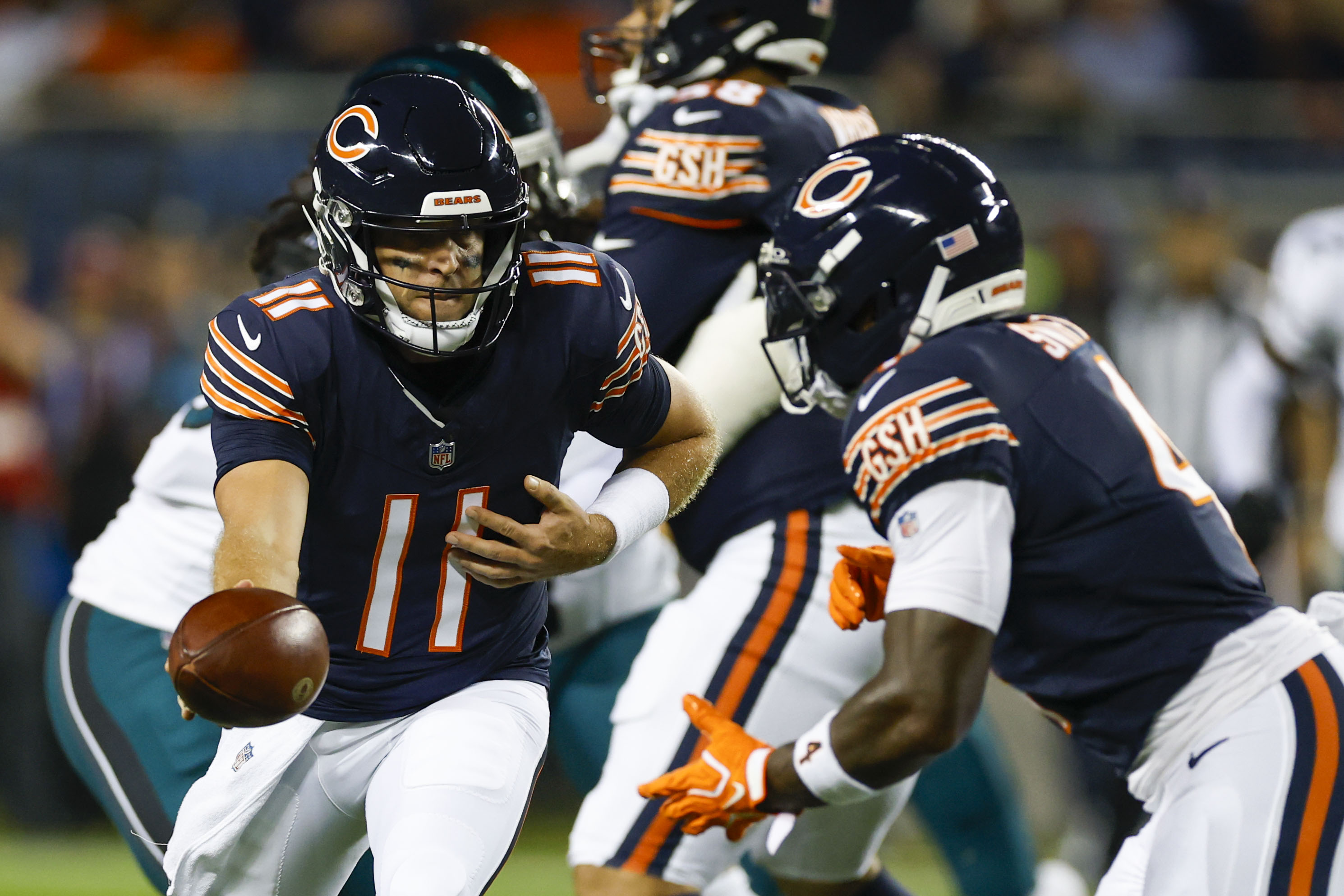
One more time, Nick Sirianni had spent several days seeking shelter from a storm whose clouds he had created. The Eagles’ 27-7 loss to the Bears last Monday had been a greatest-hits collection of the flaws his critics cite whenever they want to make a case that he’s the luckiest head coach in the NFL, that Howie Roseman’s brain and one of the league’s best rosters often save Sirianni from himself.
He had screamed an obscenity at Bears linebacker D’Marco Jackson just after Jackson had sent Jalen Hurts flying near the sideline. With the Eagles down by just two scores in the third quarter, he had decided to have his offense punt on fourth-and-1, seeming to freeze in the moment once he realized the distance to earn a first down was too long for Hurts to try a quarterback sneak. His team had been unprepared and overwhelmed from the start against third-string QB Case Keenum and a defense that doesn’t exactly recall Buddy Ryan, Mike Singletary, and the ’85 Bears.
Yes, it was another one of those weeks for Sirianni, which means it’s another one of those moments for Sirianni, the kind he has faced before during his five-plus seasons in Philadelphia. From a 2-5 start in 2021 to the Eagles’ free fall late in 2023, from teetering on the edge early in 2024 to winning a Super Bowl months later, he has these inflection points when it felt as if a season — or his career — could go either way. Find a way to win, and he quiets the noise and keeps his job. Fail to stop the spiral, and people start asking what Jeffrey Lurie might be thinking.
Now here’s his latest walk on the high wire. The Eagles are 2-1 but reeling after that embarrassing loss in Chicago, missing DeVonta Smith, Zack Baun, and several other key players, and hosting the Los Angeles Rams on Sunday — a championship-caliber team that’s ticked off that it’s 1-2. The following week, they travel to London to play the Jacksonville Jaguars, who are emerging as a contender in the AFC. No one should be surprised if the Eagles end up staring at a three-game losing streak and a 2-3 record out of these two weeks, and it’s on Sirianni to make sure everything doesn’t fall apart.
“Whether you win or you lose, you go through the same process,” he said. “I read something Kobe [Bryant] said: ‘You win, great. You’ve got to get up and do the same thing. You lose, it sucks, but you’ve got to get up and do the same thing.’ …
“I know it’s boring, and you can probably say, ‘Hey, that’s just coach-talk.’ But you’ve got to have faith in the process until the process produces results in everything that you do. So business as usual this week. I have a lot of faith in all the guys in this building. That’s why they’re in this building. That’s why they’re on the team.”
Sirianni could have said the same thing in ’21, when the Eagles won seven of nine games and scratched into the playoffs, or in ’24, when they won 16 of 17 and earned the right to party in New Orleans in early February.
Those turnarounds came with strategic changes on offense, sure, and Sirianni and Sean Mannion might need to rethink their approach. But first things first: Sirianni and his players can’t allow that Bears loss to snowball into an avalanche.
“You make the corrections, but you don’t stay on it too long,” defensive tackle Moro Ojomo said. “You can’t let a team beat you twice. We’ve got to game-prep, and we’ve got a hell of a team coming in. They’re a playoff team. They’ve been a great team. So you’ve got to flush that really quick. If you don’t, you’re going to lose twice on the same thing. You’ve probably got 24 hours to deal with it. That’s it.”
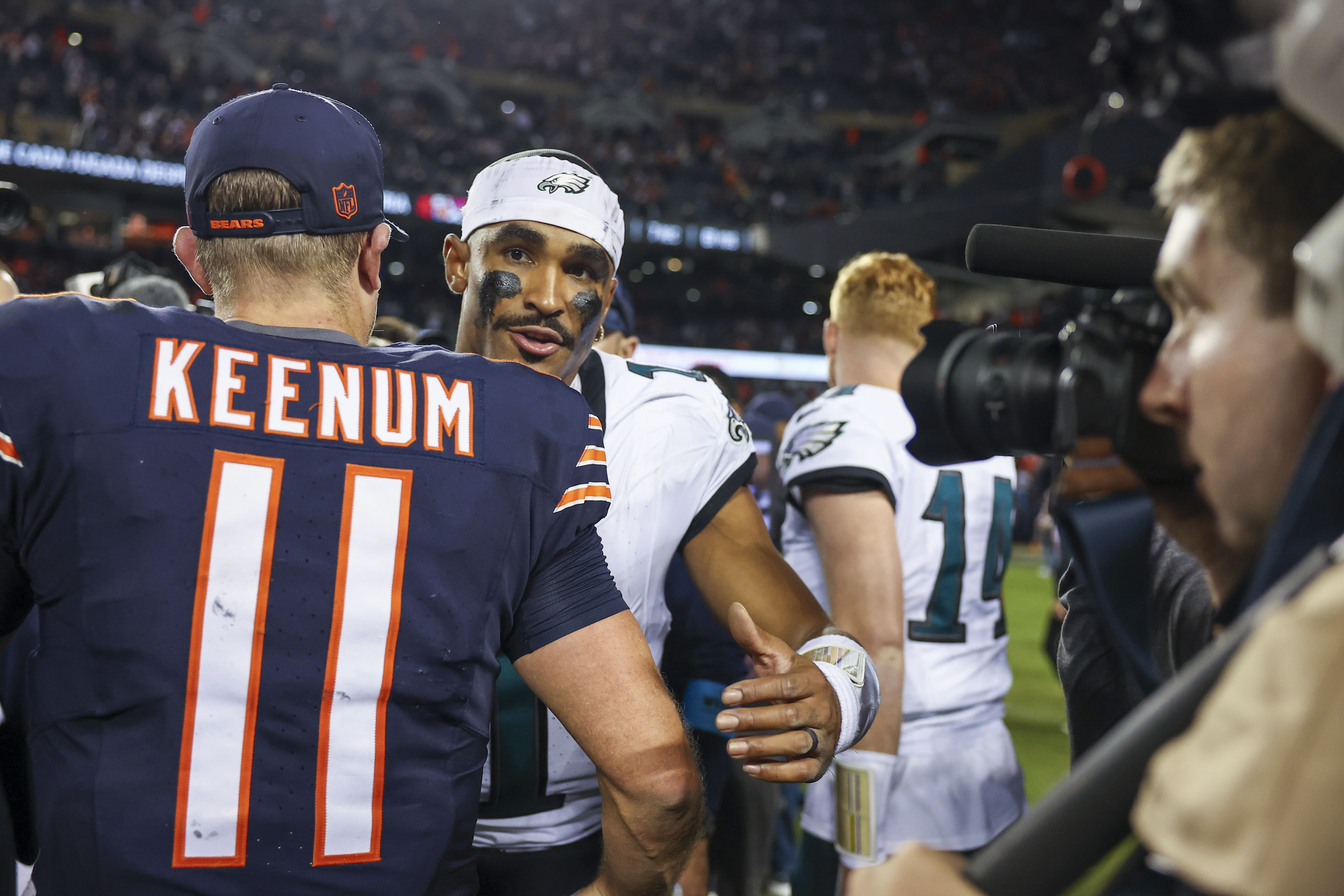
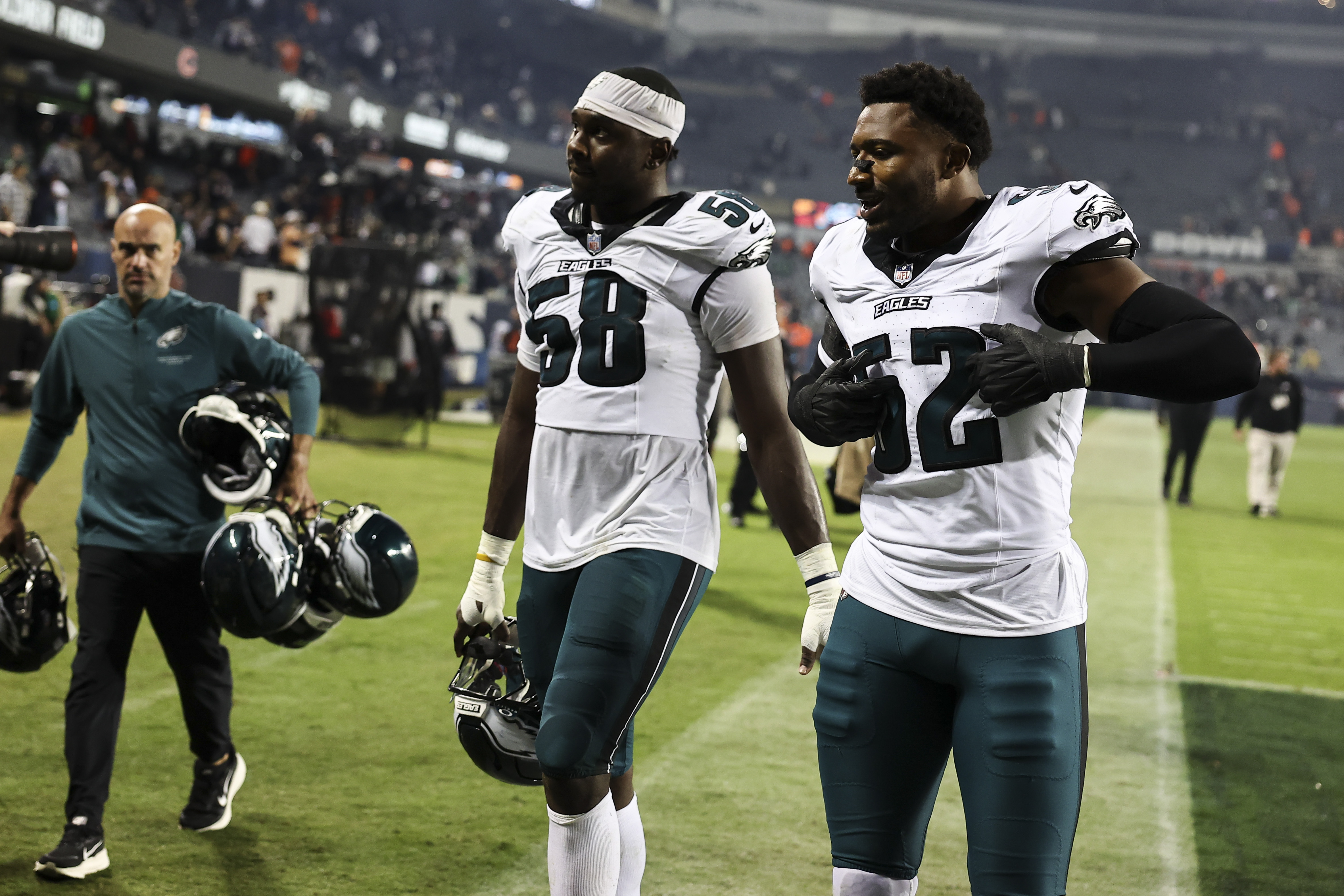
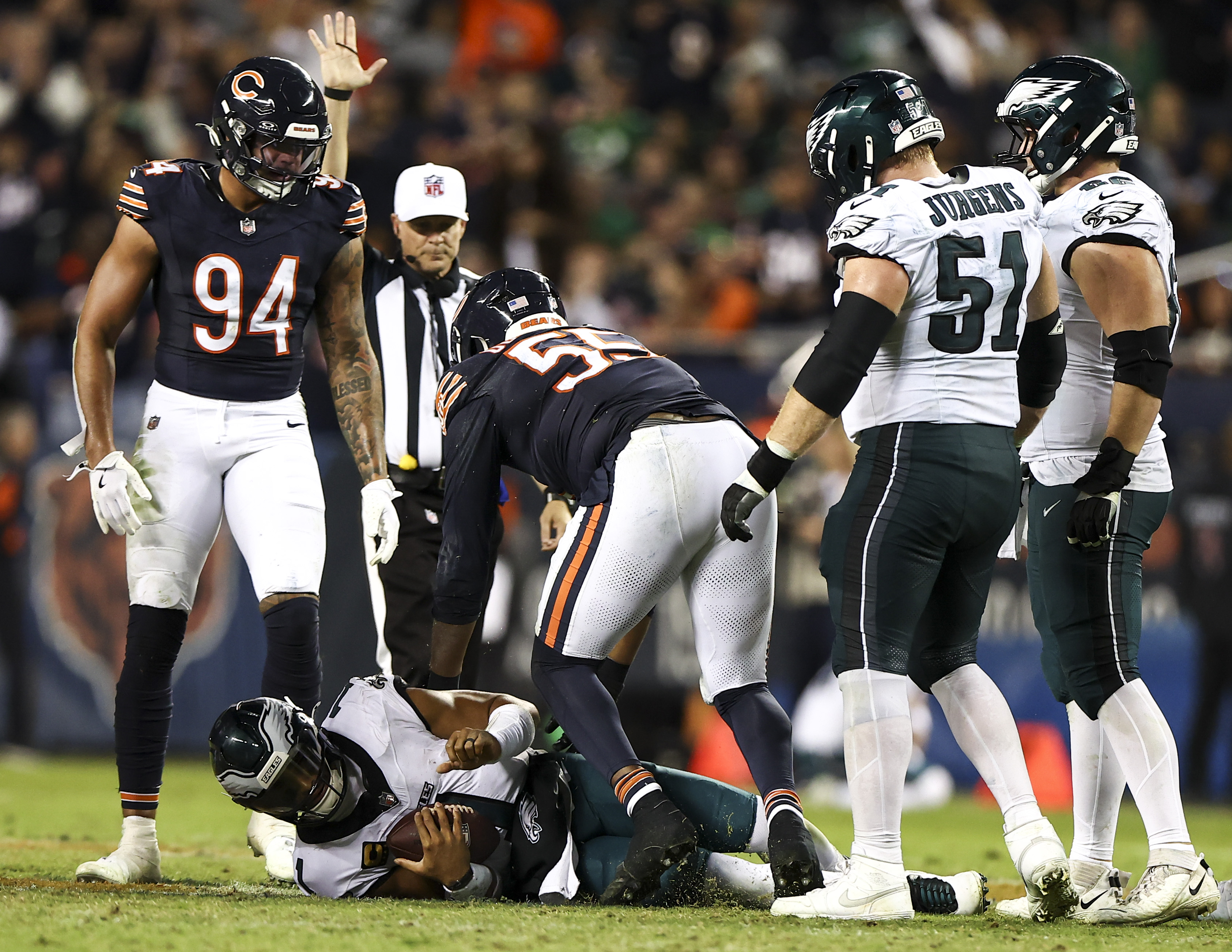
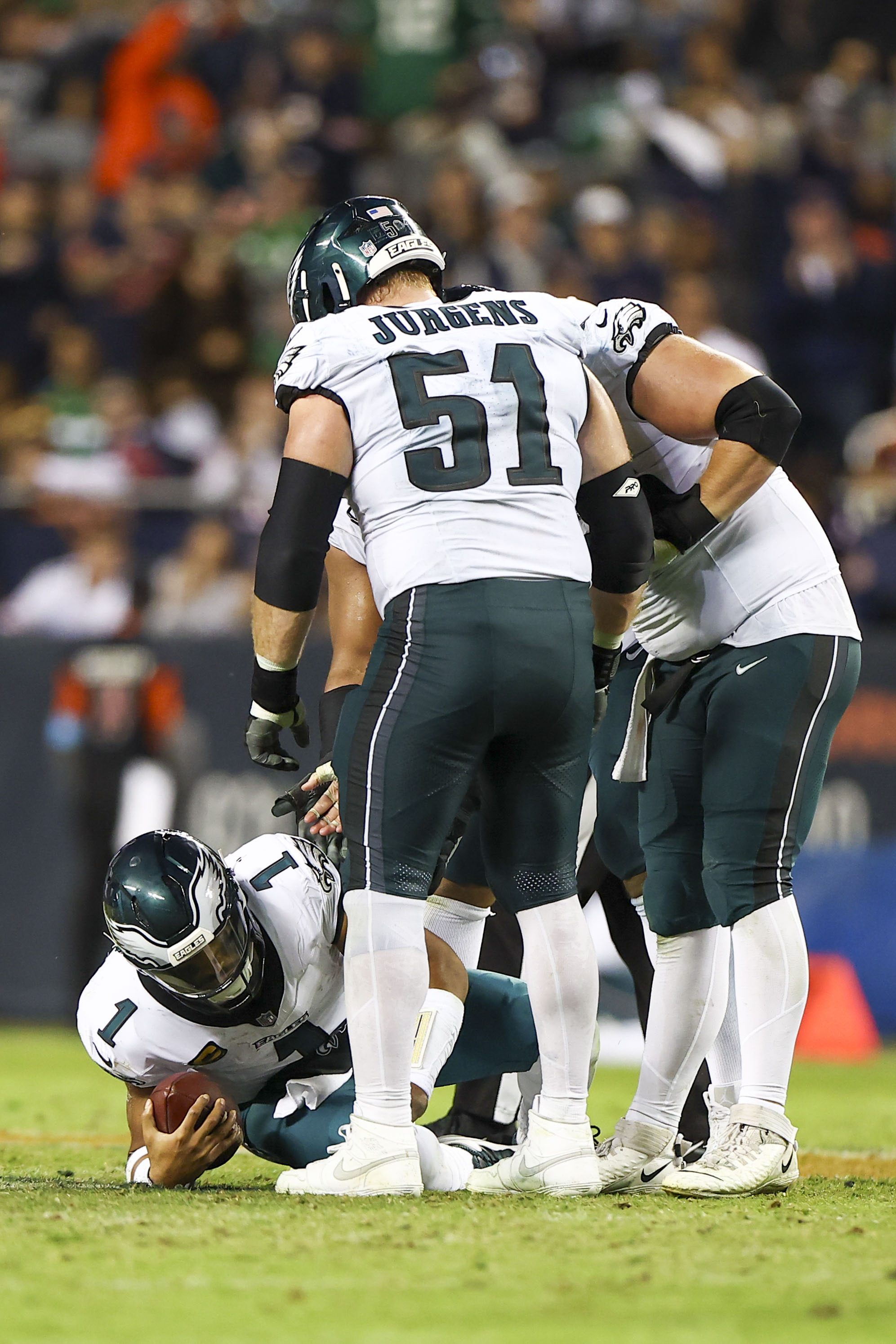
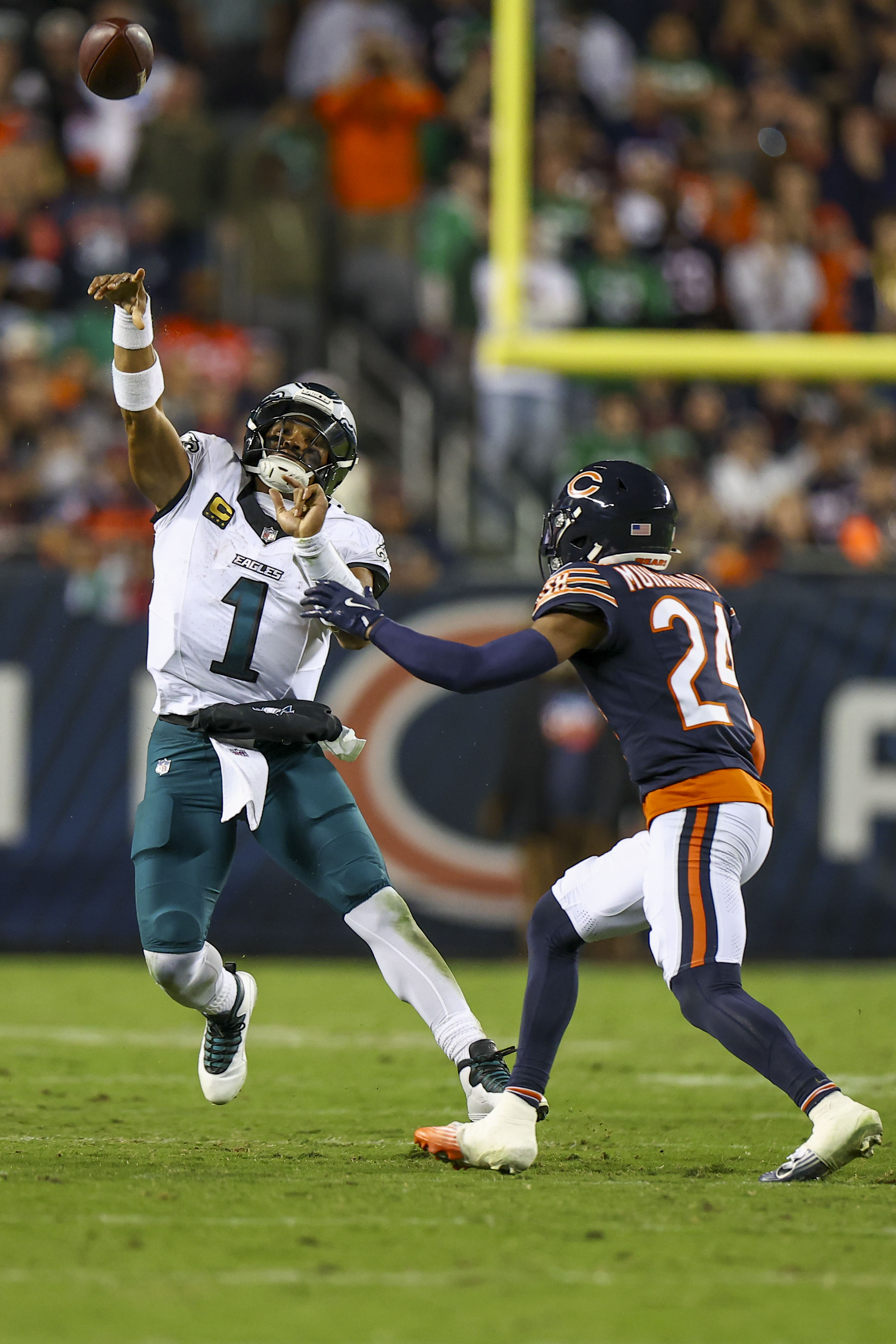
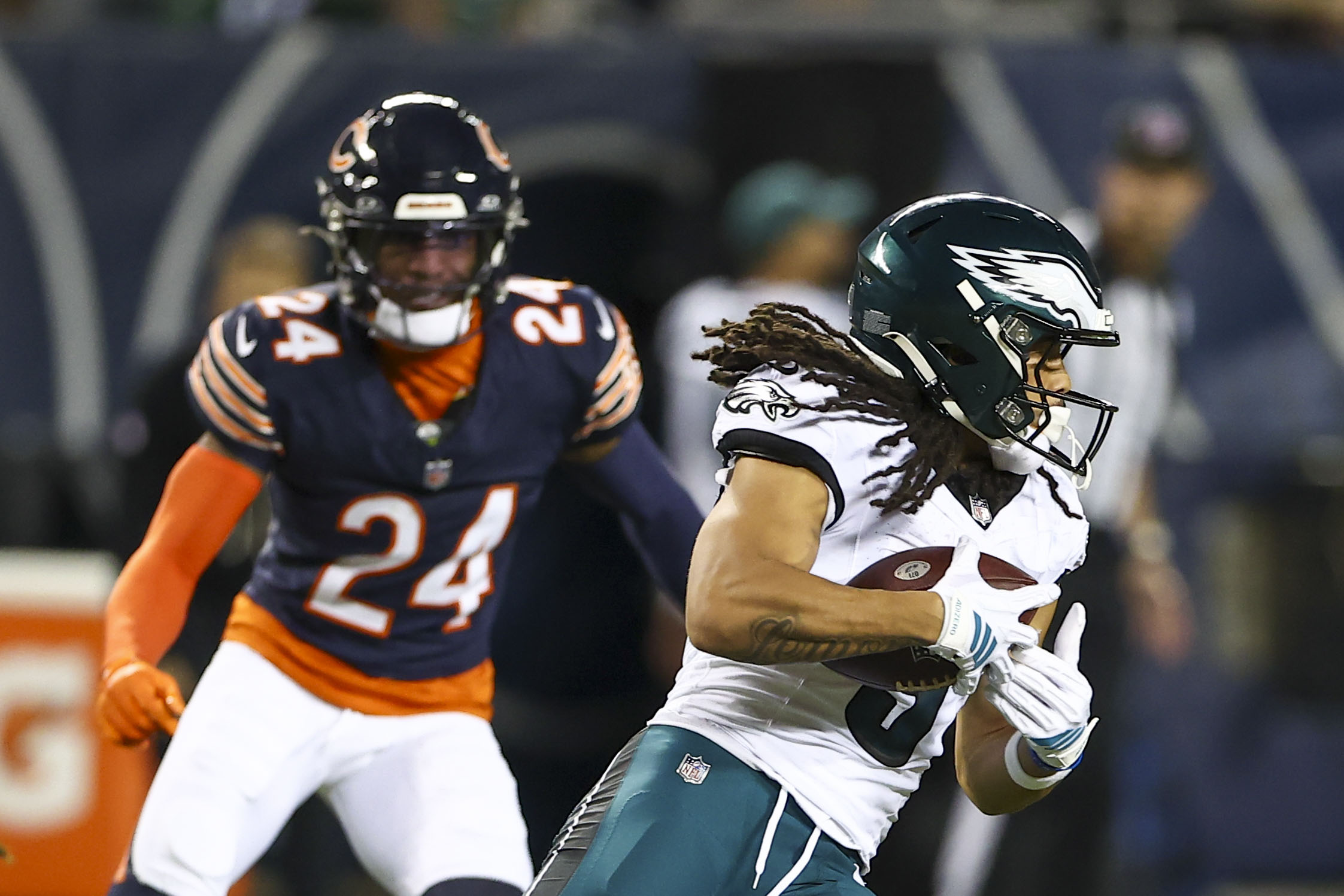
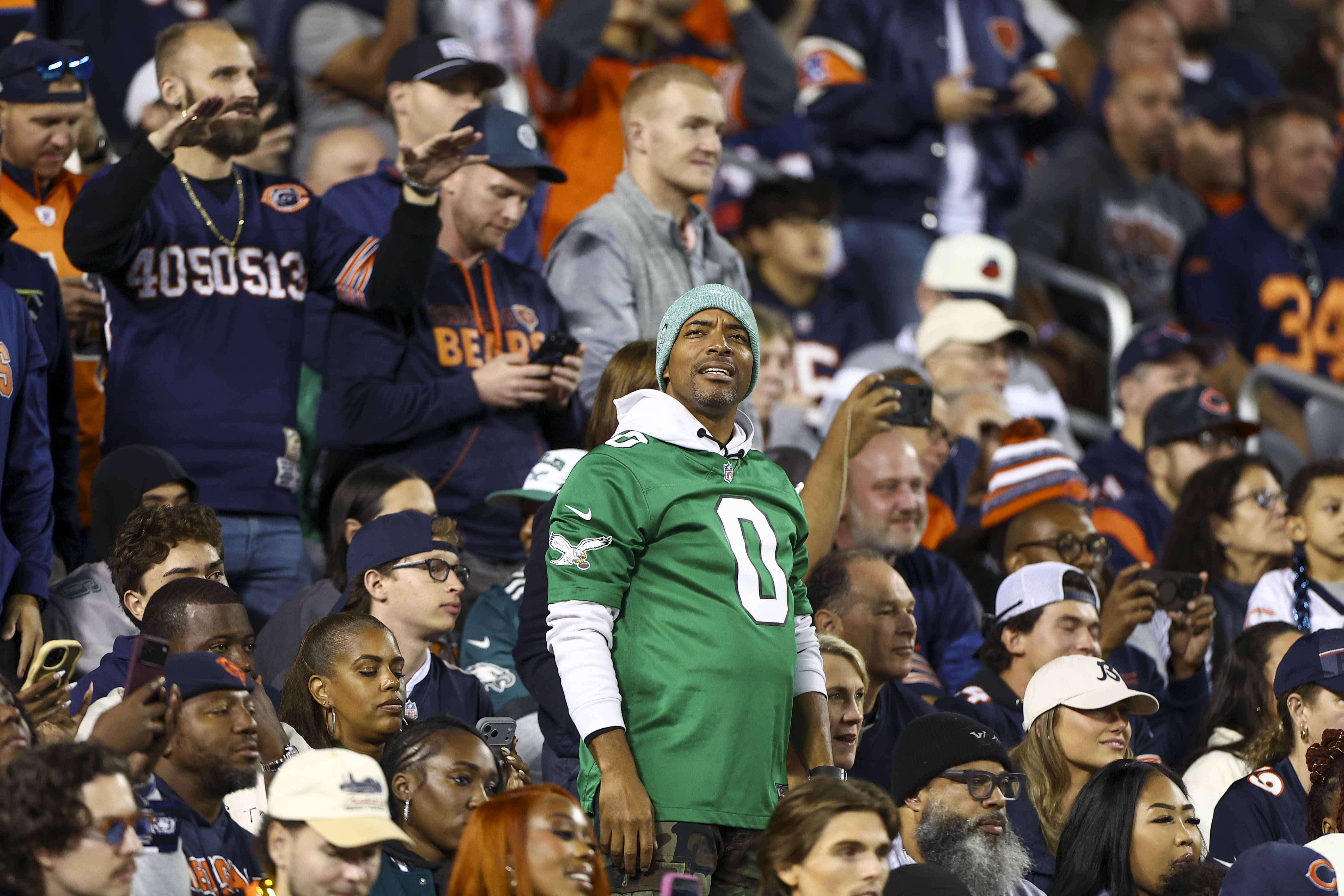
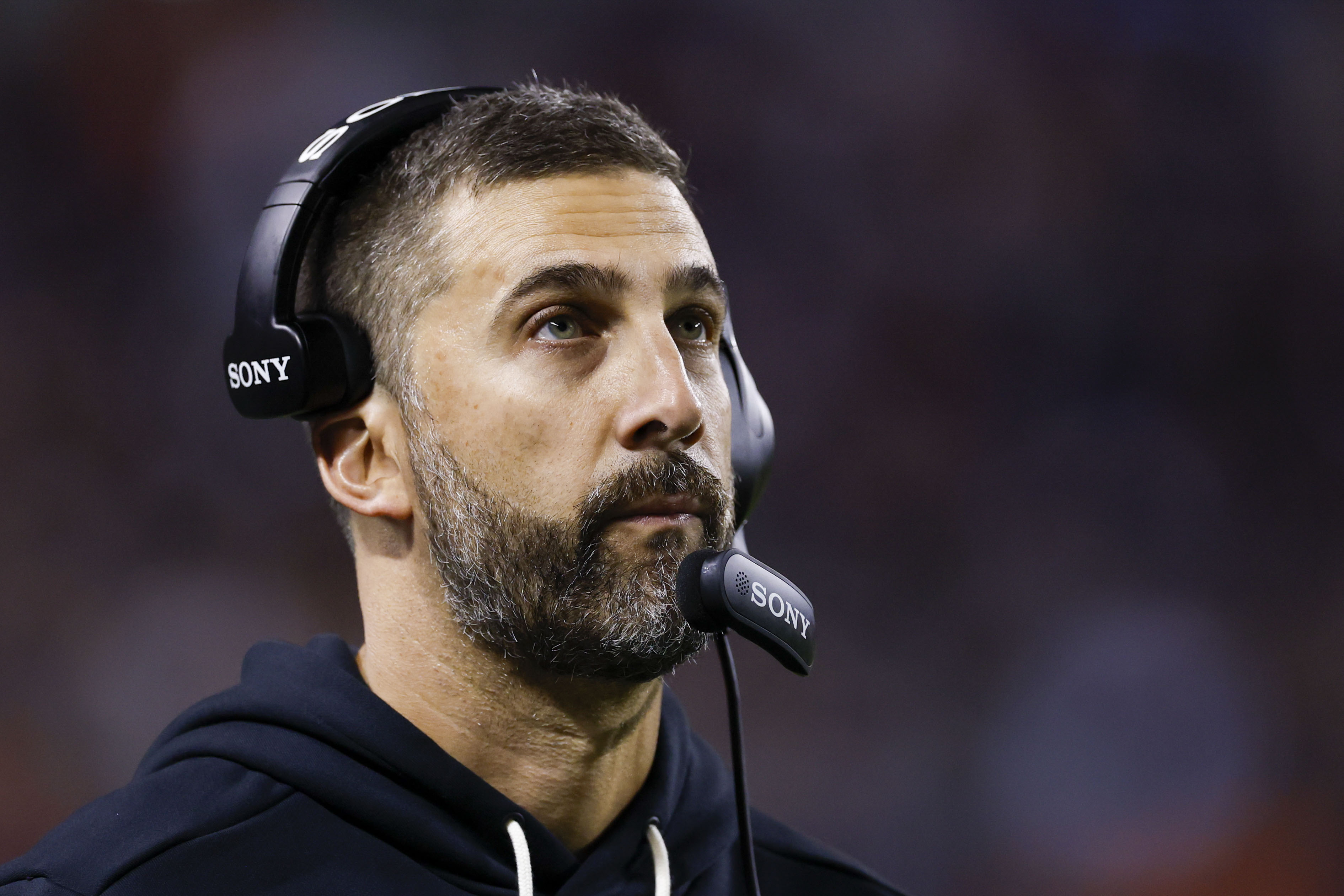
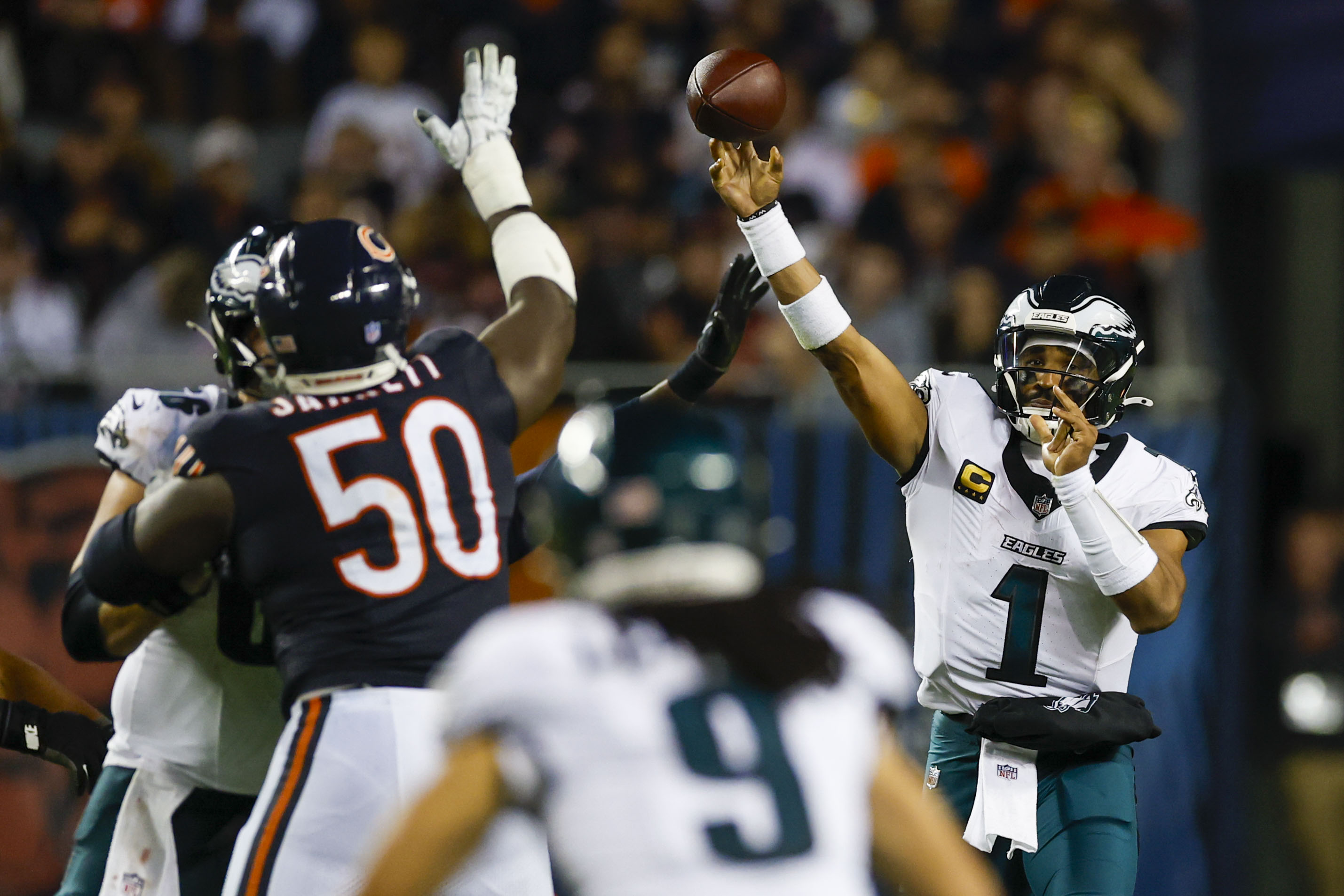
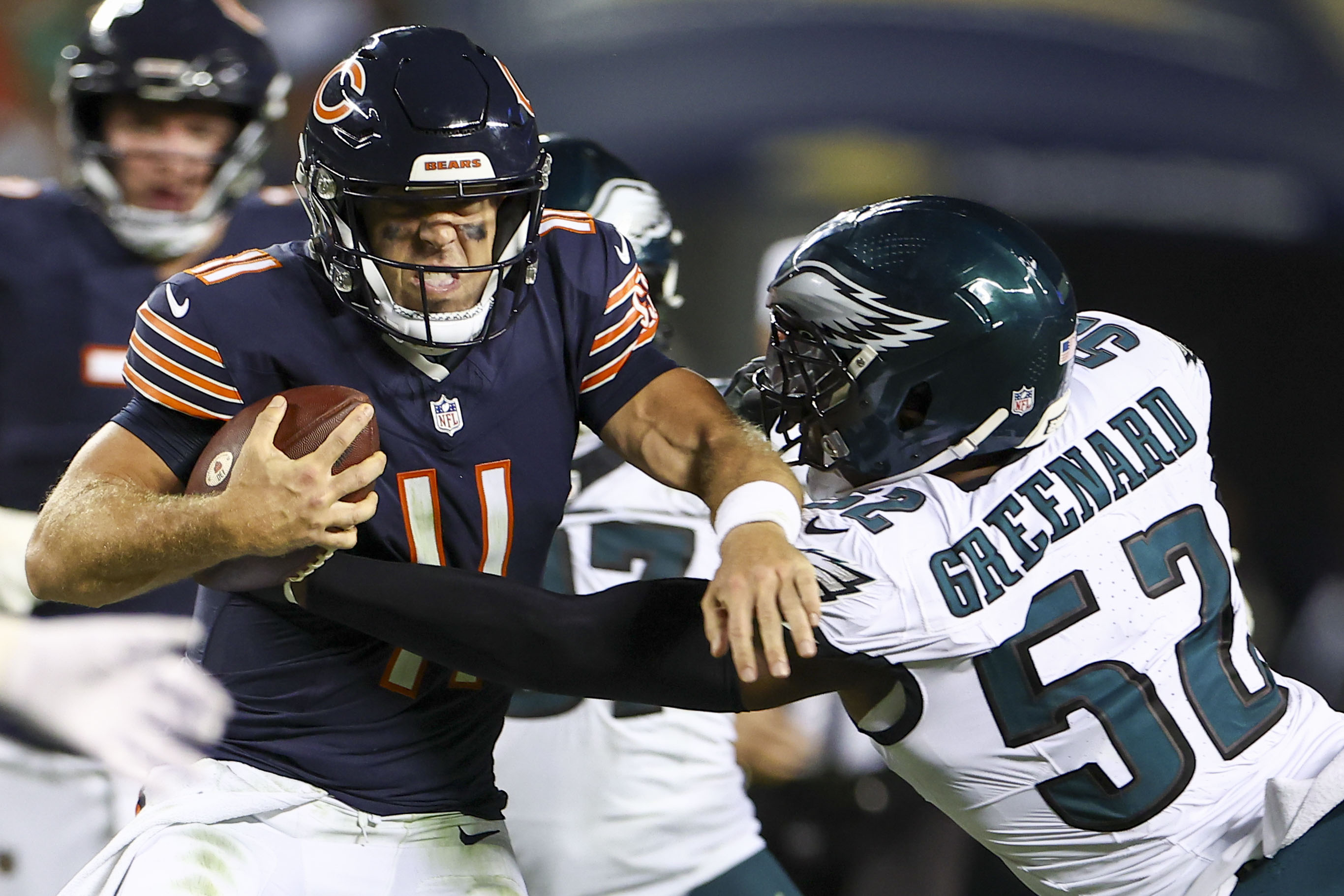
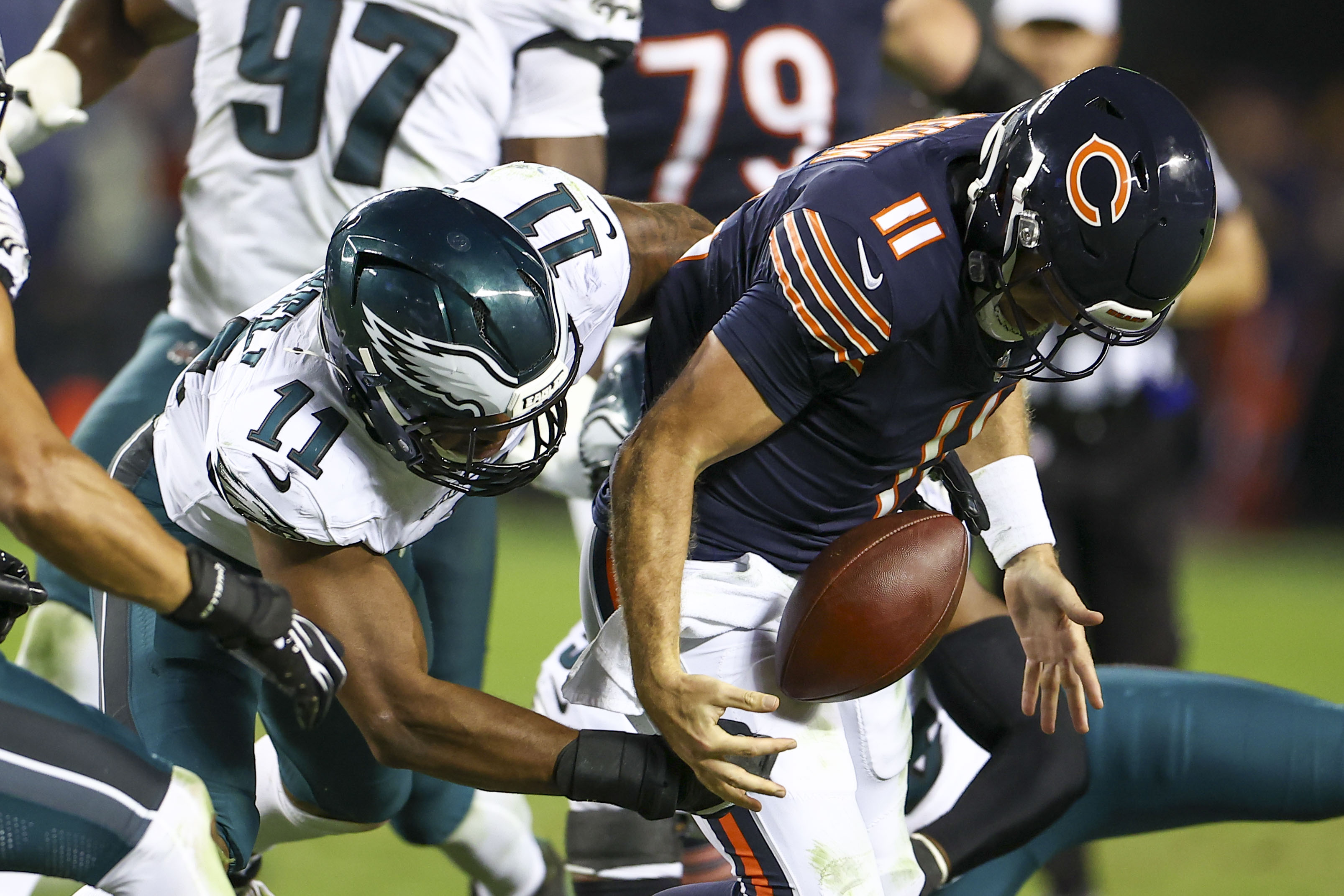
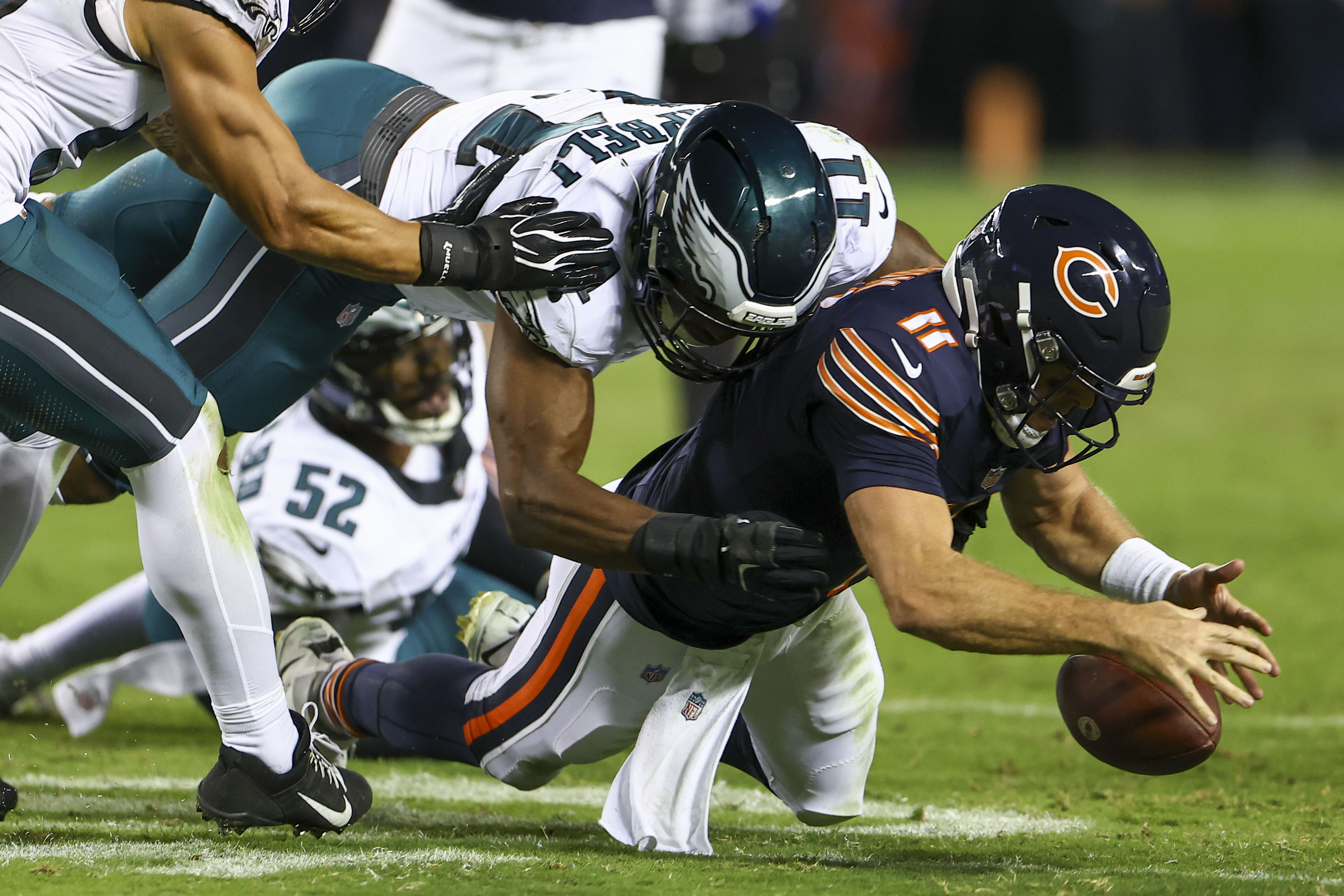
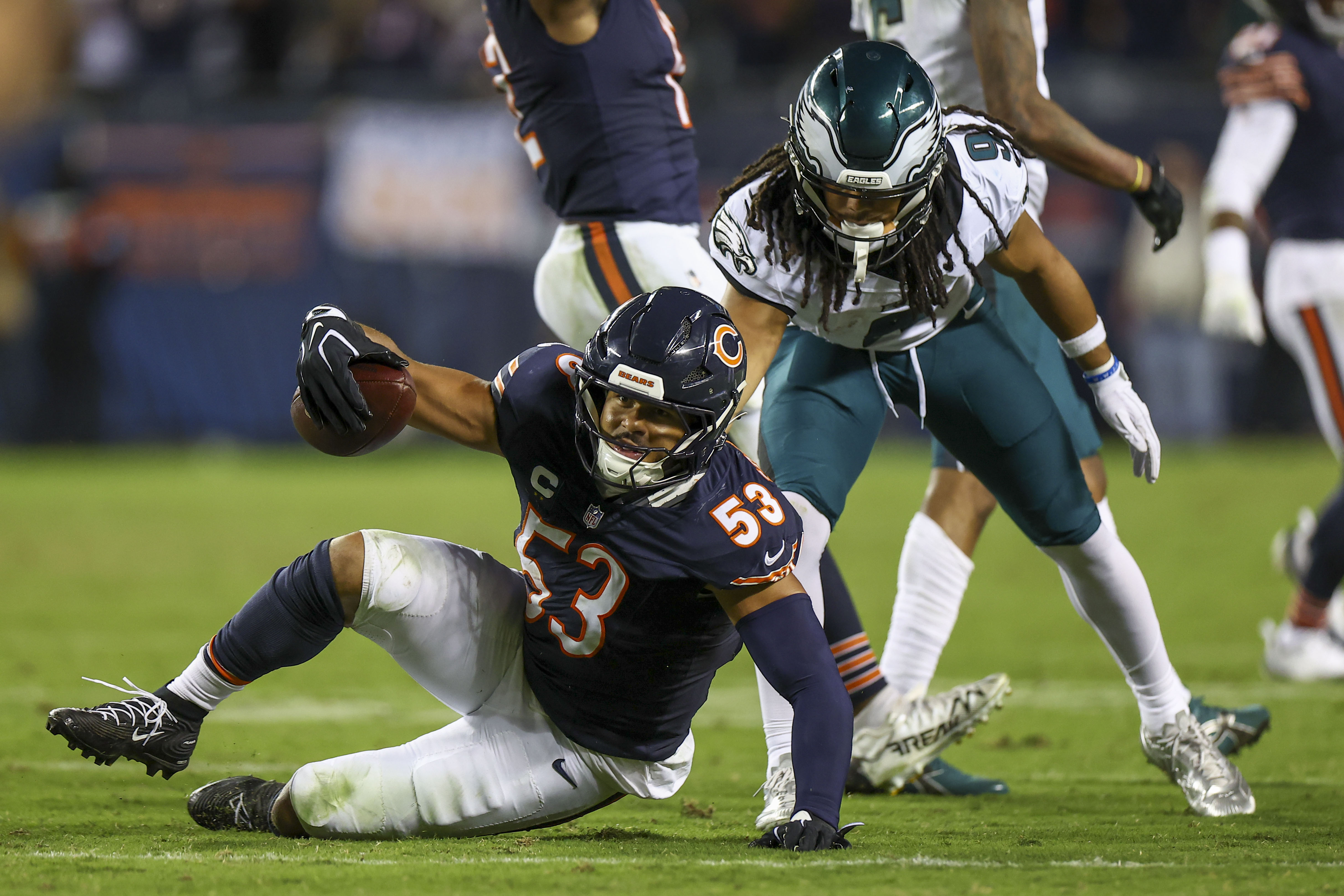
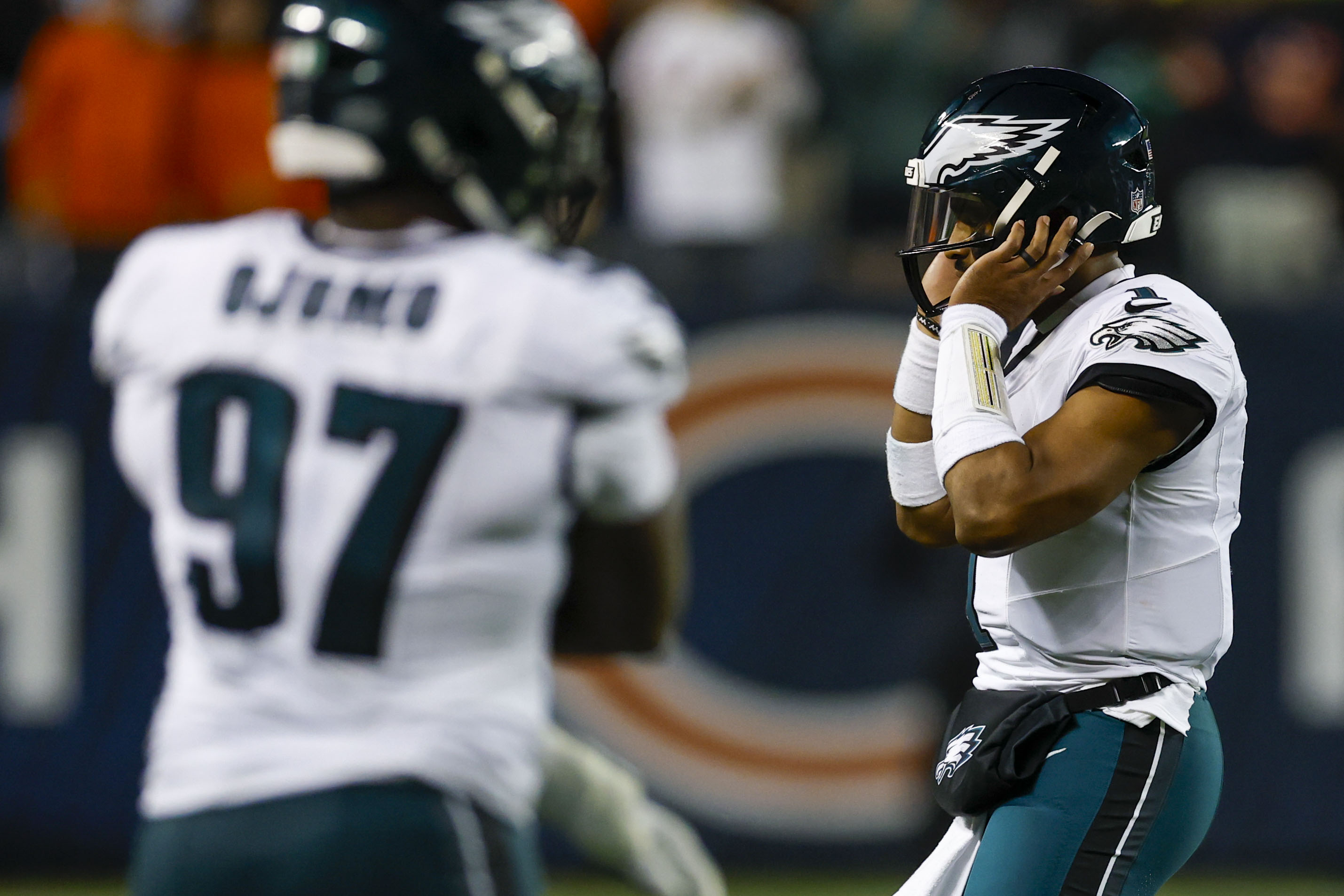
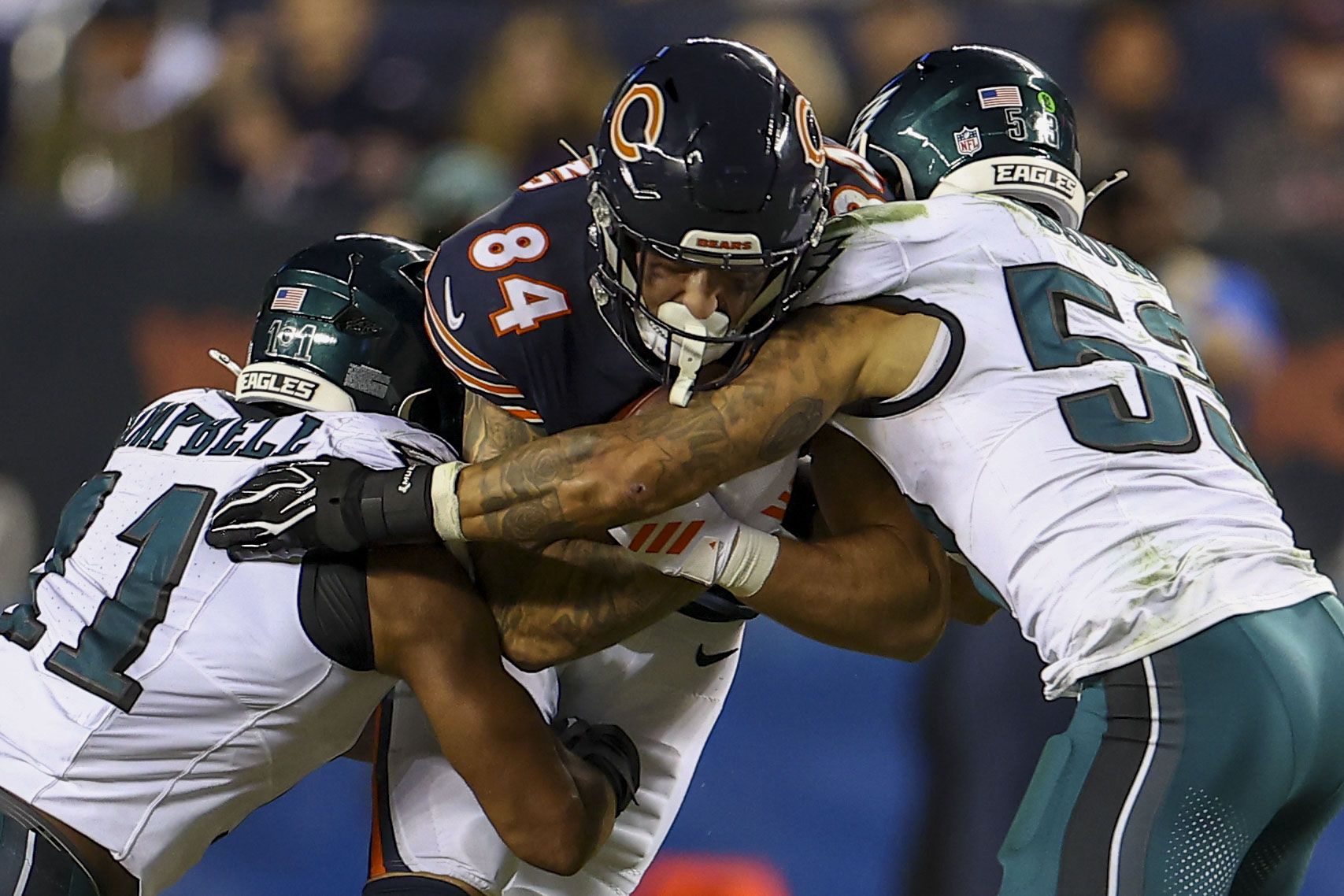
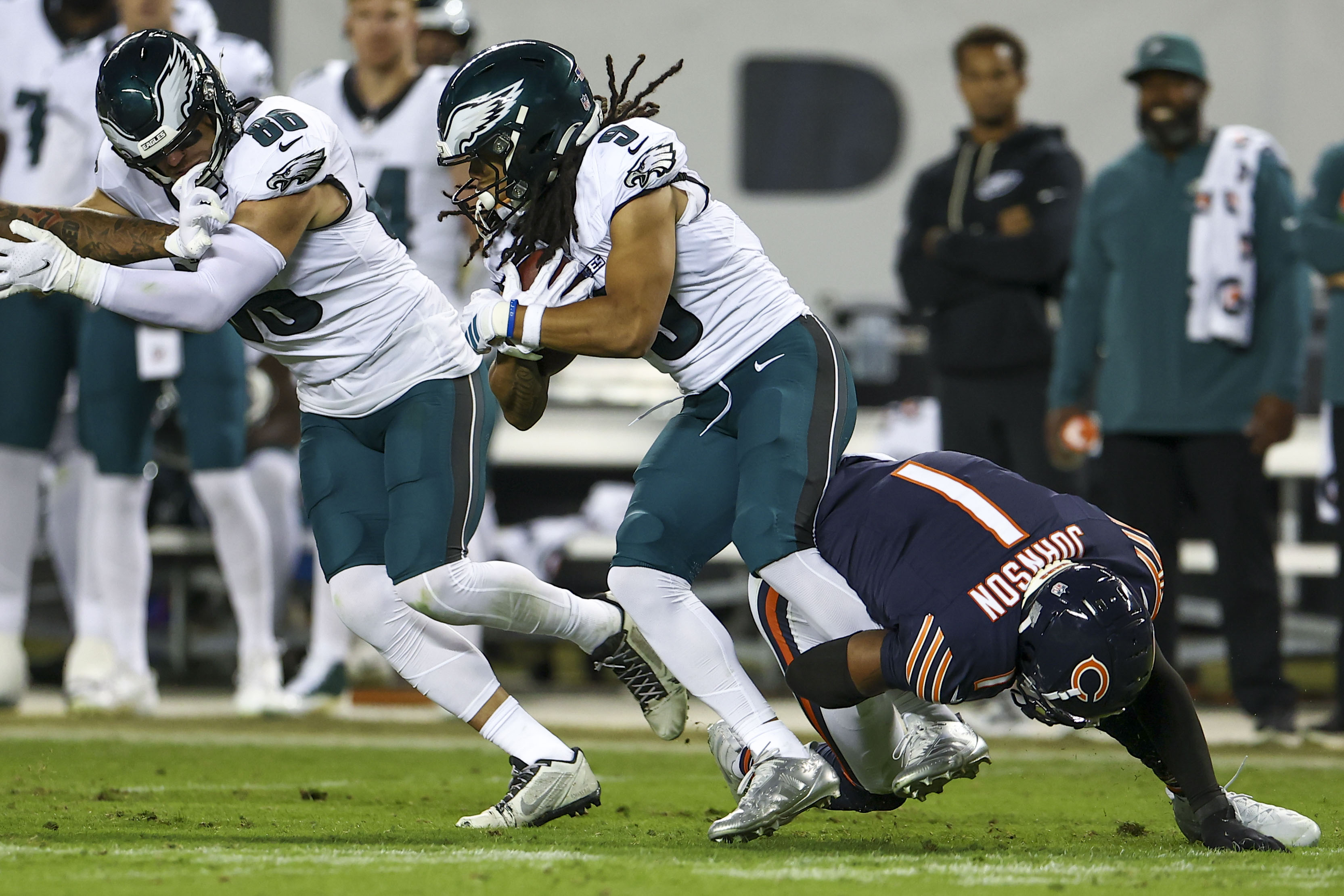
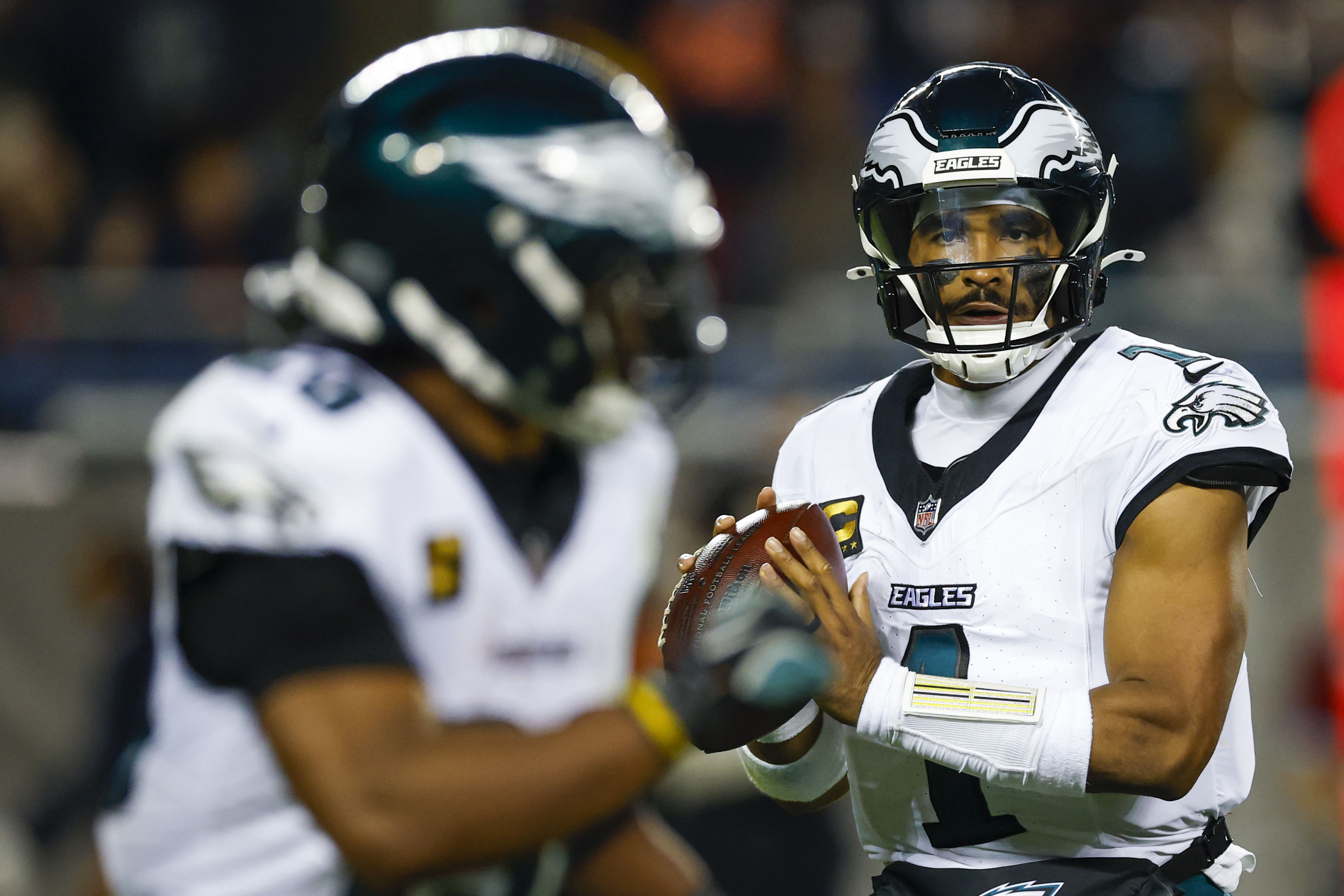
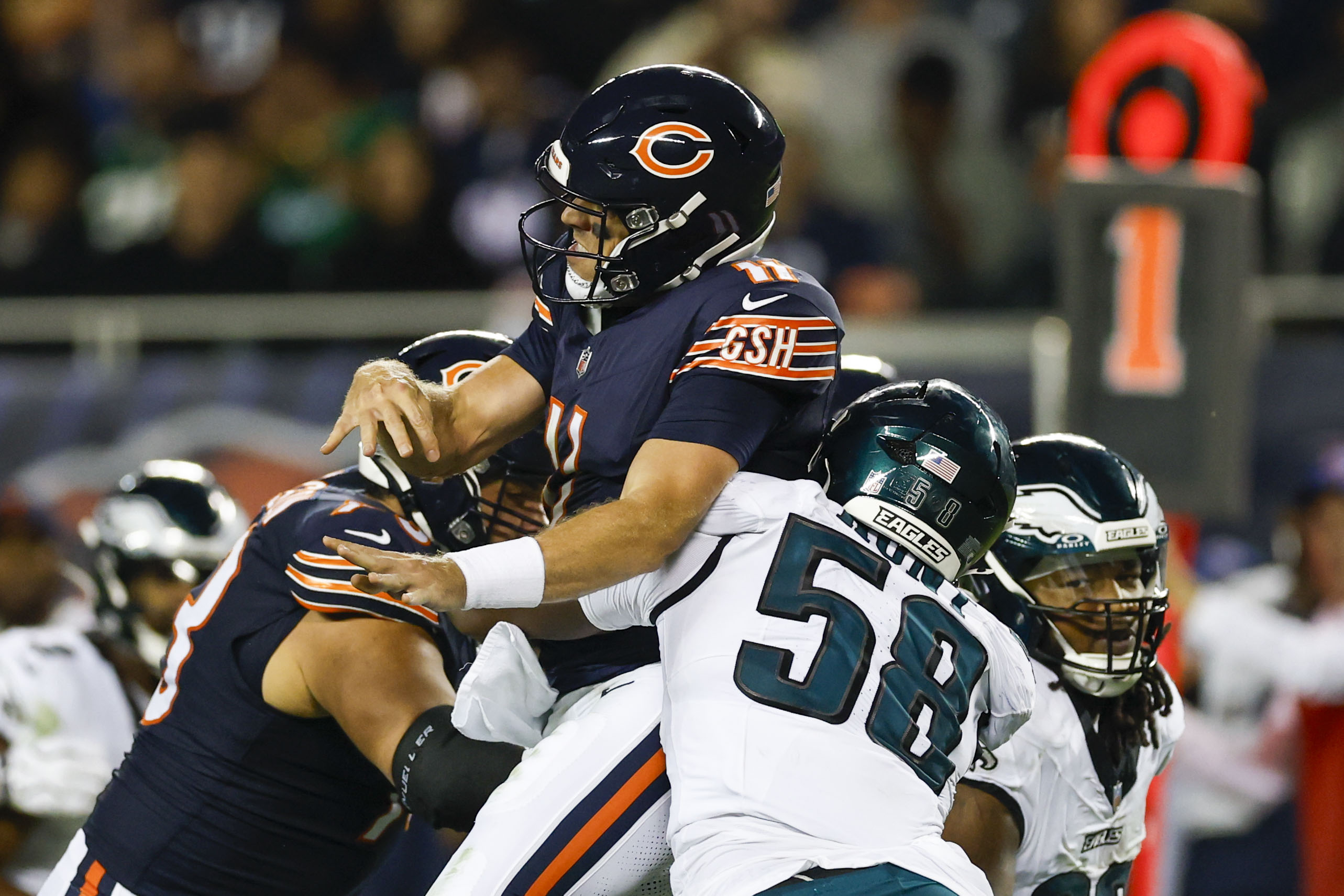
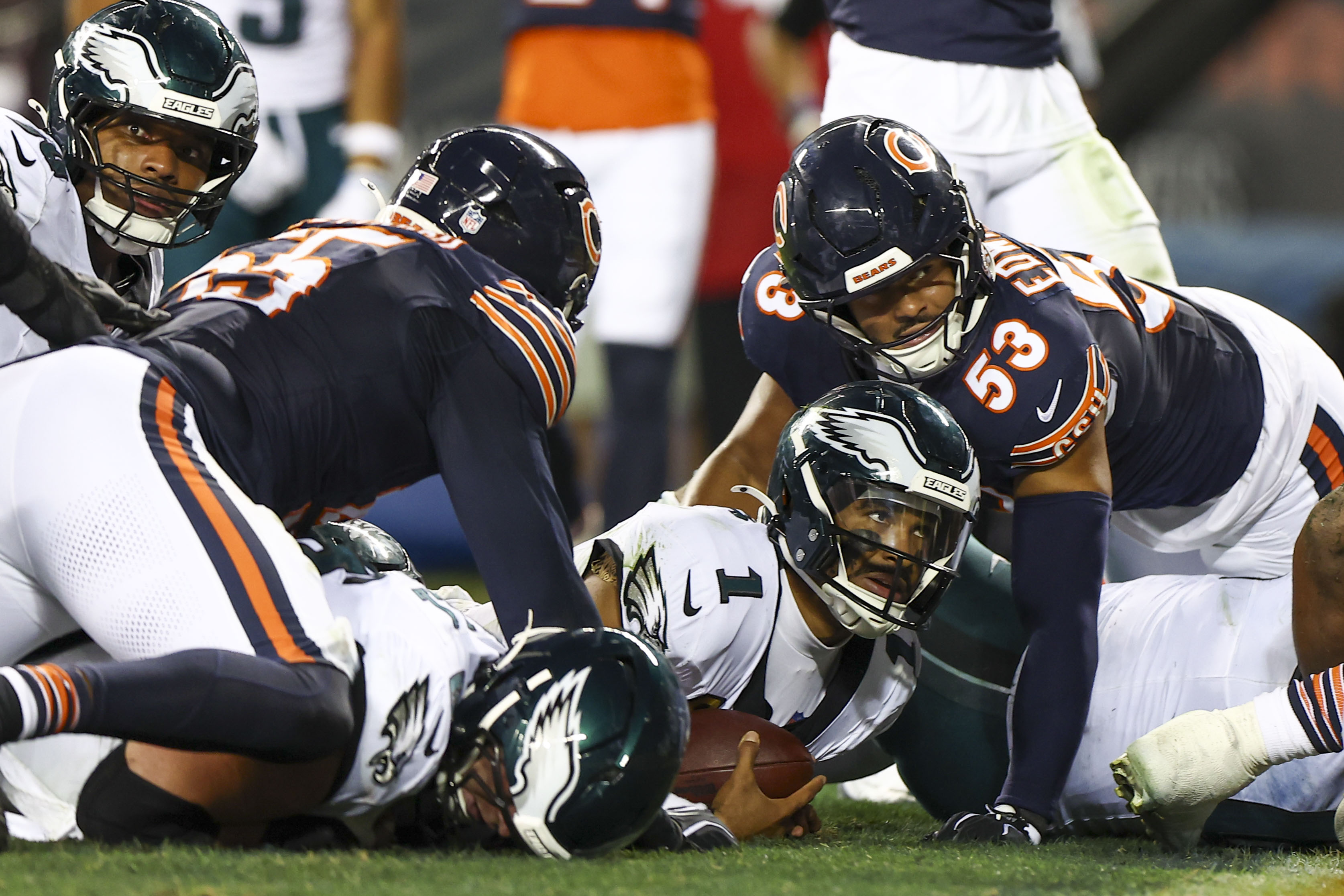
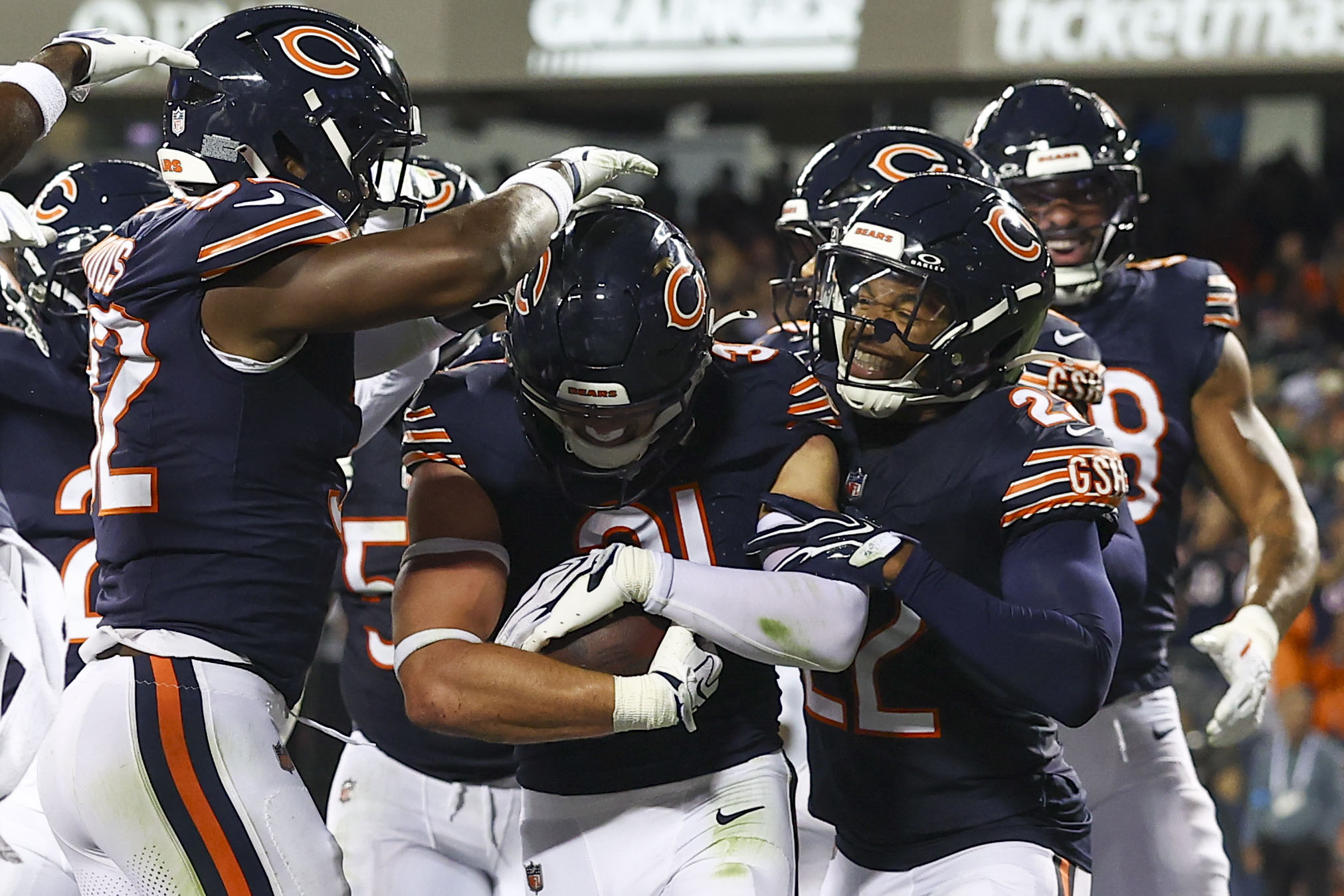
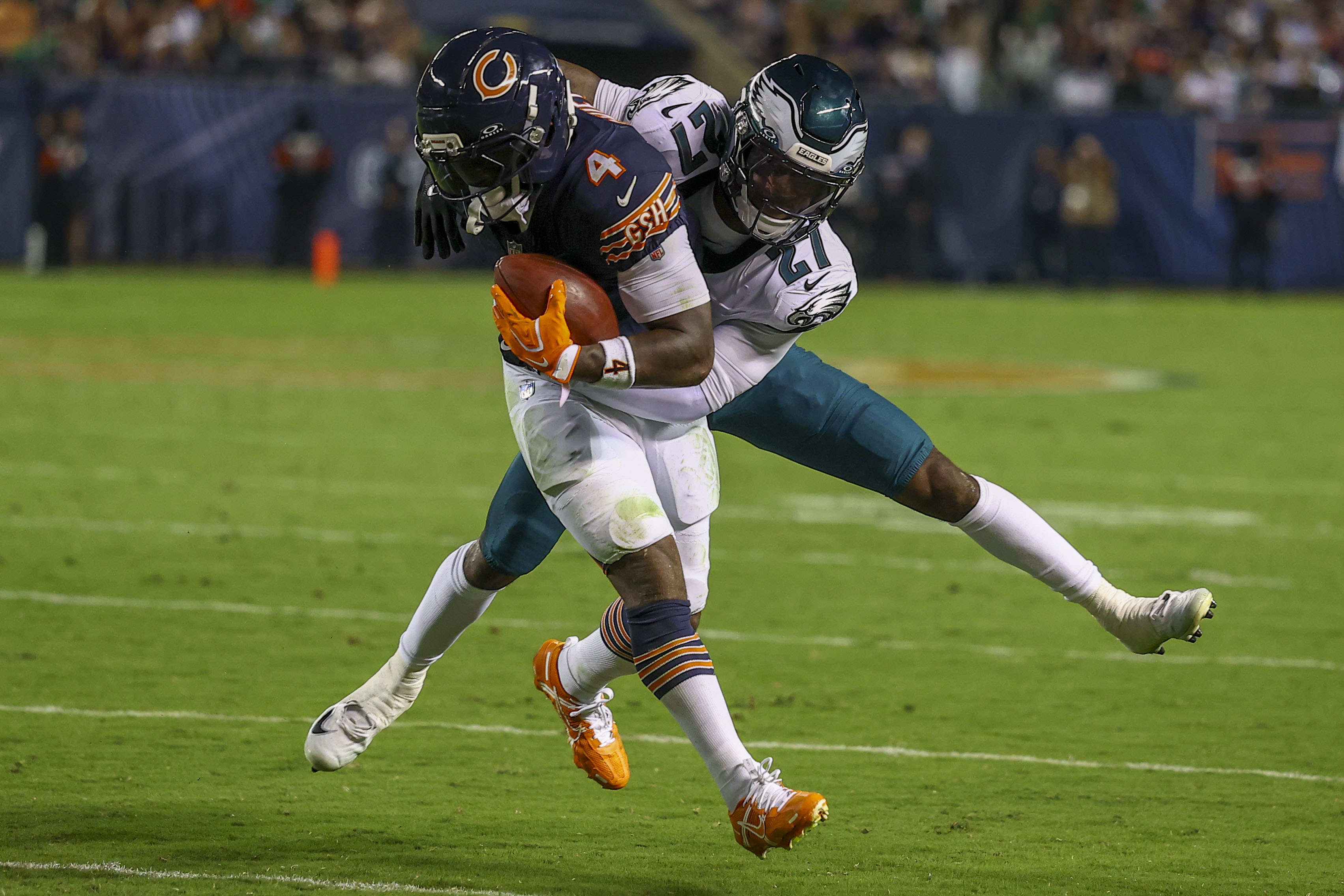
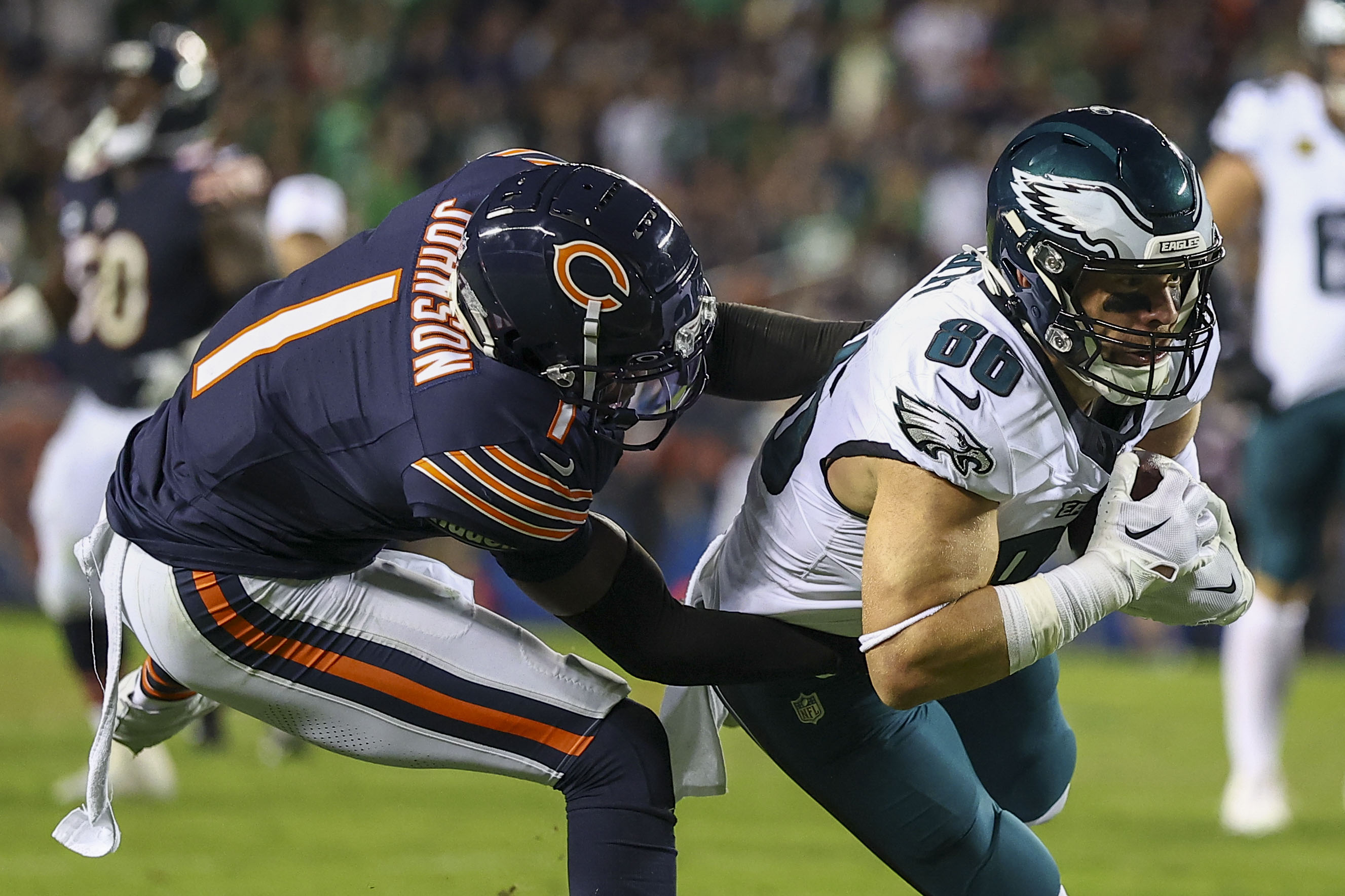
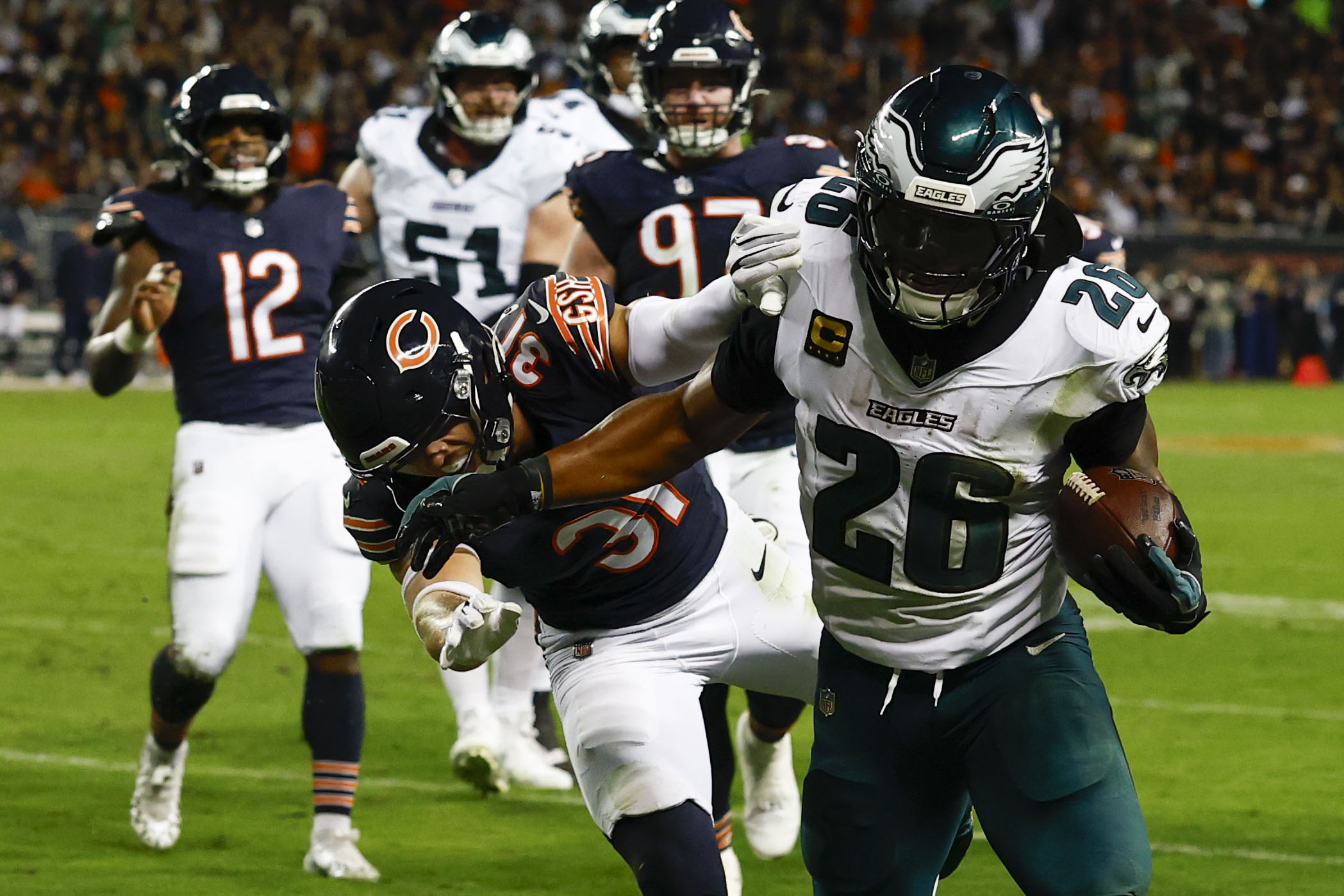
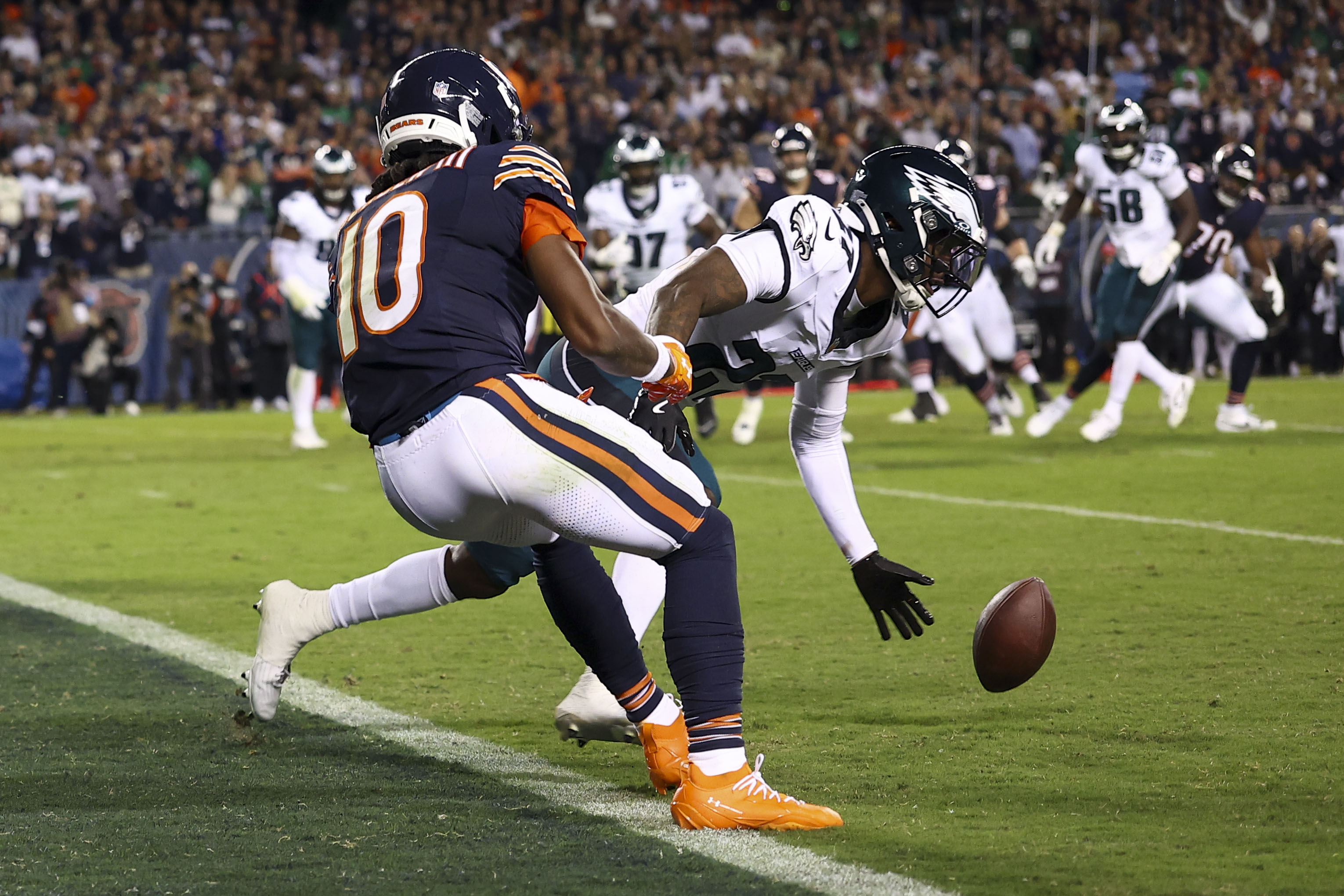
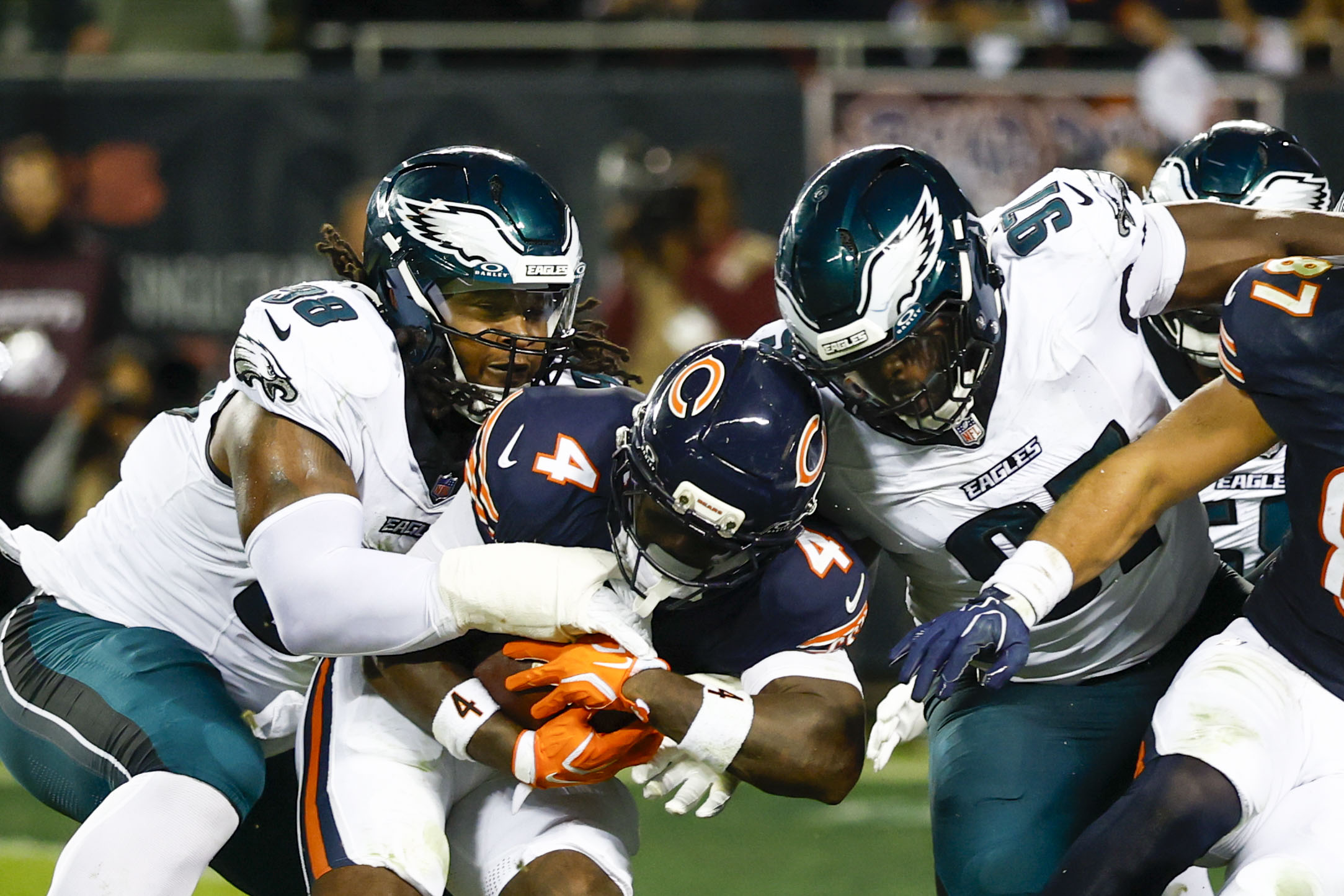
Philadelphia Eagles quarterback Jalen Hurts and Chicago Bears quarterback Case Keenum embrace at the end of the game at Soldier Field on Monday, Sept. 28, 2026, in Chicago, Ill. Chicago won 27-7.Monica Herndon / Staff PhotographerPhiladelphia Eagles linebacker Jalyx Hunt and Philadelphia Eagles linebacker Jonathan Greenard leave after the Chicago Bears game against the Philadelphia Eagles at Soldier Field.Monica Herndon / Staff PhotographerPhiladelphia Eagles quarterback Jalen Hurts lies on the ground after getting sacked during the fourth quarter of the Chicago Bears game.Monica Herndon / Staff PhotographerPhiladelphia Eagles quarterback Jalen Hurts watches the last two minutes of the game against the Chicago Bears at Soldier Field. Chicago won 27-7.Yong Kim / Staff PhotographerPhiladelphia Eagles quarterback Jalen Hurts gets up after getting sacked in the fourth quarter.Monica Herndon / Staff PhotographerPhiladelphia Eagles quarterback Jalen Hurts throws long on fourth down in the fourth quarter, pass incomplete at Soldier Field on Monday, Sept. 28, 2026, in Chicago, Ill.Monica Herndon / Staff PhotographerPhiladelphia Eagles wide receiver Makai Lemon makes a reception in the fourth quarter.Monica Herndon / Staff PhotographerPhiladelphia Eagles fan reacts after a penalty is called in the fourth quarter.Monica Herndon / Staff PhotographerPhiladelphia Eagles head coach Nick Sirianni in the fourth quarter. Chicago won 27-7.Yong Kim / Staff PhotographerPhiladelphia Eagles quarterback Jalen Hurts throws the ball to Philadelphia Eagles wide receiver Makai Lemon in the fourth quarter.Yong Kim / Staff PhotographerPhiladelphia Eagles linebacker Jonathan Greenard tackles Chicago Bears quarterback Case Keenum in the fourth quarter.Monica Herndon / Staff PhotographerChicago Bears quarterback Case Keenum almost loses possession of the ball in the fourth quarter.Monica Herndon / Staff PhotographerPhiladelphia Eagles linebacker Jihaad Campbell tackles Chicago Bears quarterback Case Keenum in the fourth quarter.Monica Herndon / Staff PhotographerChicago Bears linebacker T.J. Edwards after intercepting a pass in the third quarter.Monica Herndon / Staff PhotographerPhiladelphia Eagles quarterback Jalen Hurts after throwing a third-quarter interception.Yong Kim / Staff PhotographerChicago Bears wide receiver Kalif Raymond celebrates a touchdown during the third quarter.Monica Herndon / Staff PhotographerChicago Bears linebacker T.J. Edwards celebrates an interception in the third quarter.Yong Kim / Staff PhotographerPhiladelphia Eagles wide receiver DeVonta Smith is wrapped up by Chicago Bears safety Elijah Hicks in the third quarter.Yong Kim / Staff PhotographerPhiladelphia Eagles fans in the third quarter.Monica Herndon / Staff PhotographerPhiladelphia Eagles linebacker Jihaad Campbell and Philadelphia Eagles linebacker Zack Baun tackle Chicago Bears tight end Colston Loveland in the third quarter.Monica Herndon / Staff PhotographerPhiladelphia Eagles wide receiver Makai Lemon was tackled by Chicago Bears cornerback Jaylon Johnson in the third quarter.Monica Herndon / Staff PhotographerPhiladelphia Eagles quarterback Jalen Hurts throws the ball to Philadelphia Eagles running back Saquon Barkley.Yong Kim / Staff PhotographerPhiladelphia Eagles linebacker Jalyx Hunt goes after Chicago Bears quarterback Case Keenum in the third quarter.Yong Kim / Staff PhotographerChicago Bears fan reacts to the last-minute “tush push” score by Philadelphia Eagles quarterback Jalen Hurts.Monica Herndon / Staff PhotographerPhiladelphia Eagles quarterback Jalen Hurts looks up after scoring on the tush push with one second left to go.Monica Herndon / Staff PhotographerChicago Bears safety Dillon Thieneman celebrates an interception in the second quarter.Monica Herndon / Staff PhotographerPhiladelphia Eagles cornerback Quinyon Mitchell stops Chicago Bears running back D’Andre Swift in the second quarter.Monica Herndon / Staff PhotographerPhiladelphia Eagles tight end Zach Ertz is defended by Chicago Bears cornerback Jaylon Johnson in the second quarter.Monica Herndon / Staff PhotographerPhiladelphia Eagles running back Saquon Barkley runs by Chicago Bears safety Dillon Thieneman in the second quarter, just short of a touchdown.Yong Kim / Staff PhotographerPhiladelphia Eagles cornerback Quinyon Mitchell breaks up a pass intended for Chicago Bears wide receiver Luther Burden III in the second quarter.Monica Herndon / Staff PhotographerChicago Bears running back D’Andre Swift gets stopped by Philadelphia Eagles defensive tackle Jalen Carter (left) and Philadelphia Eagles defensive tackle Moro Ojomo (right) in the second quarter.Yong Kim / Staff PhotographerIncomplete pass to Chicago Bears wide receiver Rome Odunze in the second quarter, defended by Philadelphia Eagles linebacker Nolan Smith.Yong Kim / Staff PhotographerChicago Bears wide receiver Luther Burden III scores as the Philadelphia Eagles defense tries to stop him during the first quarter.Yong Kim / Staff PhotographerPhiladelphia Eagles linebacker Jihaad Campbell forces Chicago Bears wide receiver Luther Burden III out of bounds in the first quarter.Monica Herndon / Staff PhotographerChicago Bears wide receiver Luther Burden III celebrates a touchdown during the first quarter.Monica Herndon / Staff PhotographerChicago Bears running back D’Andre Swift runs with the ball against Philadelphia Eagles safety Marcus Epps in the first quarter.Yong Kim / Staff PhotographerChicago Bears quarterback Case Keenum hands off to Chicago Bears running back D’Andre Swift in the first quarter.Yong Kim / Staff Photographer
The good thing for Sirianni and his team this time is that the standard for success has to be different, has to be a little lower. Losses to the Rams and to the Jaguars wouldn’t necessarily be the worst possible outcomes for them. The nature of those losses — of how the Eagles play — would matter more. Put simply, even if they go down, the Eagles have to go down fighting. They can’t get blown out again. They have to remain competitive. They have to give everyone, themselves included, reason to believe they can turn things around once they get healthier, once all their defensive starters settle into Vic Fangio’s system, once Mannion has more opportunities to show whether he’s the budding genius the Eagles have billed him to be.
A 2-3 start is still too early in a season to write off any team, especially one that has qualified for the playoffs five years running. After Jacksonville, the Eagles get the Carolina Panthers and the Dallas Cowboys, both at home, so the schedule will ease up a bit, at least in theory. The most important task for Sirianni over the next month is to hold the locker room and the coaching staff together, to prevent what happened in 2023 — one awful loss leading to another and another, morale plummeting, veterans looking out for themselves instead of focusing on the team’s greater good — from happening again.
“You get in a bind,” Ojomo said, “and it’s hard to get out of it.”
For the Eagles and their head coach, then, the mission is simple: Don’t get in one.
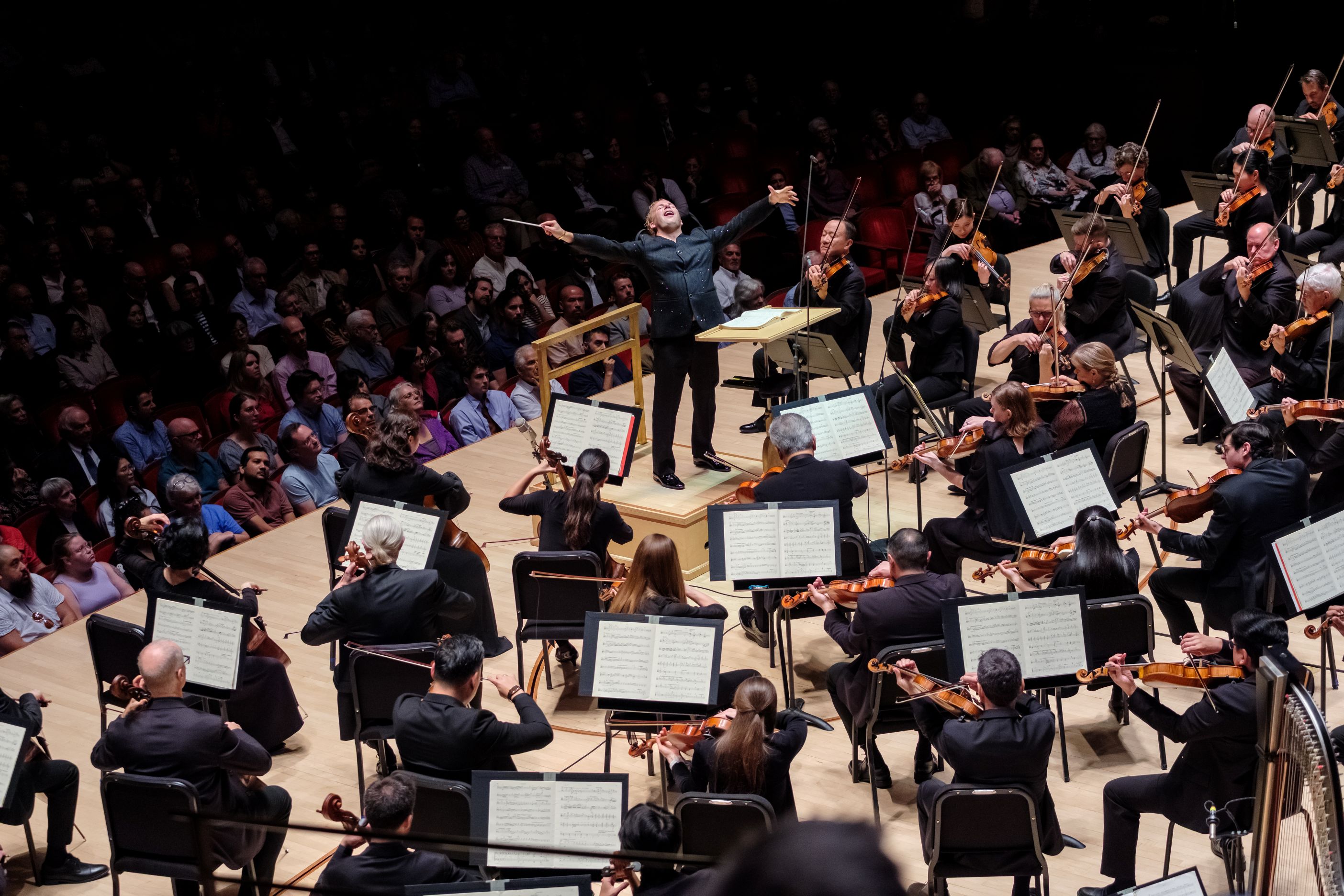
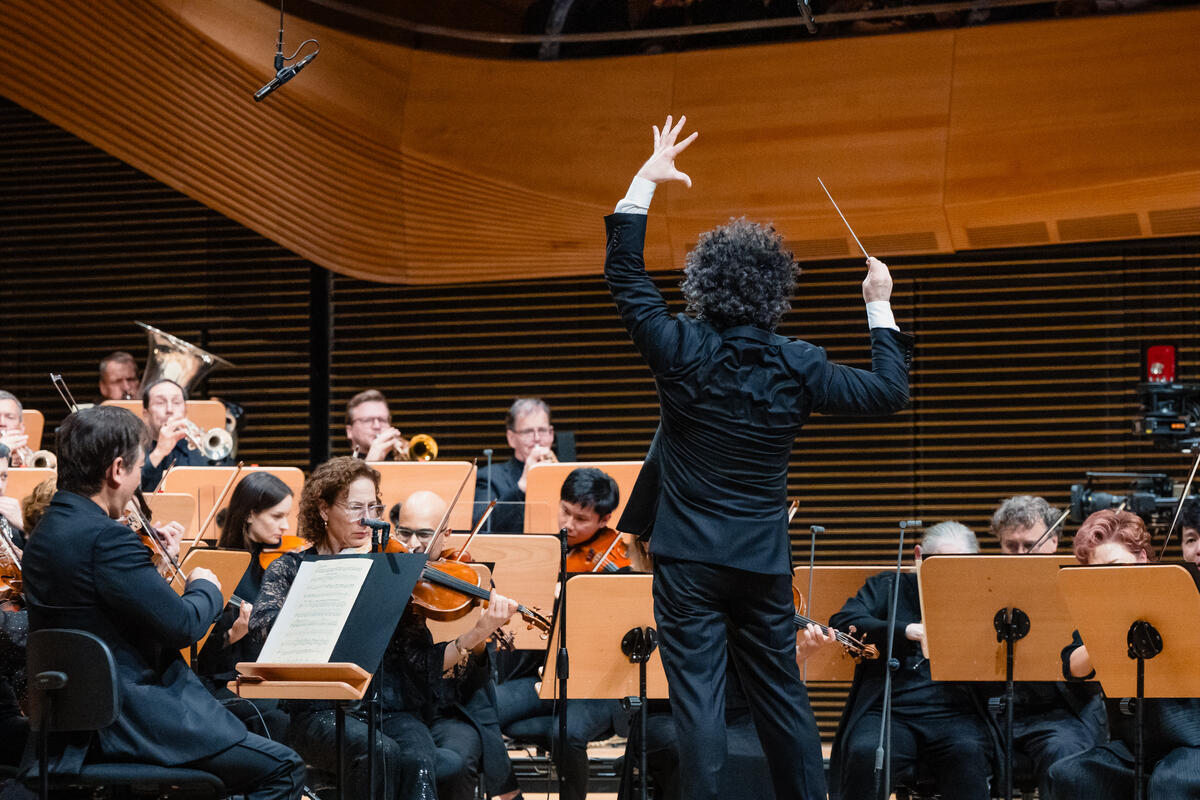
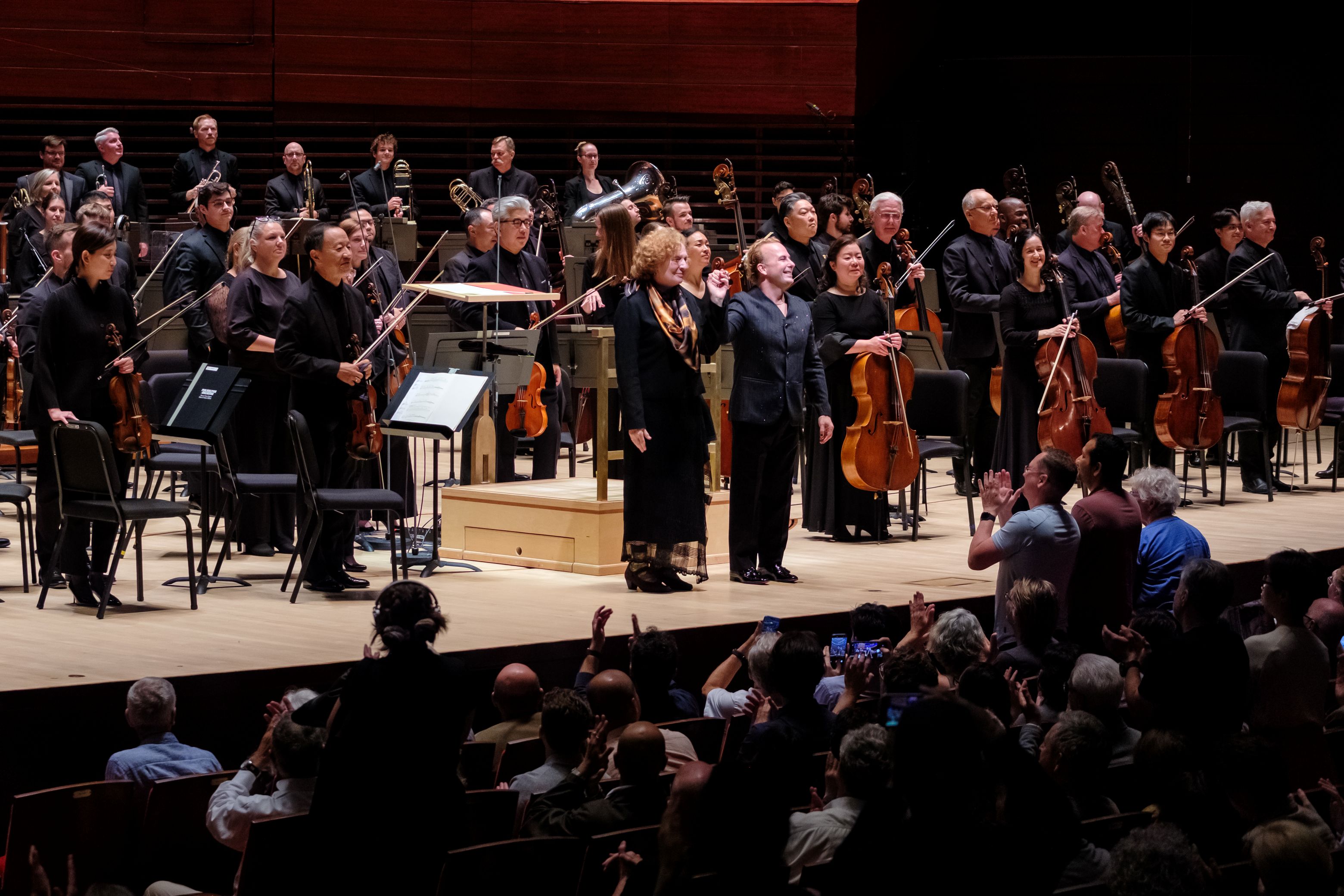
The symphonic world has evolved into an ongoing Mahler festival, so much that the composer’s Symphony No. 5 surfaced in adjacent performances this week — the New York Philharmonic under its new music director Gustavo Dudamel and the Philadelphia Orchestra under Yannick Nézet-Séguin.
I heard both — Dudamel on a livestream Tuesday at Lincoln Center and Philadelphia on Friday at the Kimmel Center.
Then there’s Mahler 7th in Boston and Mahler 3rd in Paris, available on radio broadcasts.
Is Mahler ruling the world?
Only a few years ago, any Mahler symphonies beyond the amiable 1st and 4th were heard occasionally. But the stormy 5th symphonies being heard almost simultaneously (Philadelphia’s will be repeated at Carnegie Hall Oct. 13) show that Mahler performances are rarely redundant experiences.
Even with expansive running times from 60 to 100 minutes, Mahler symphonies are packed with content. With so many performance instructions (the composer was a micro manager) any conductor/orchestra combination connects the dots quite differently.
Consider the contrasting personalities of the PHL and NYC orchestras.
NYC’s hot, Dudamel-appointed hornist David Cooper nearly turned the 5th Symphony into the world’s biggest horn concerto. He seemed to lead the Tuesday performance almost as much as Dudamel.
That wouldn’t do in Philadelphia with its tradition of blended sonorities dating back more than a century. The NY Phil has been called an orchestra of soloists. The Mahler 5th encourages that with high-profile incidental solos. But the amassed sonorities in Philadelphia have one-of-a-kind power.
Consider, also, the different conductor personalities: Nézet-Séguin’s treatment of the opening trumpet solo — at the start of a funeral March — felt like a dire warning. Dudamel’s was like a requiem. (Considering what his home country of Venezuela has been through lately, could it be any other way?) Nézet-Séguin generates excitement, often uses speed and clarity of intention. Dudamel creates a kind of frenzy seldom heard since Leonard Bernstein. But not always. The final moments of Dudamel’s Mahler 5th had it. But while his performance had solid playing and steady electricity, there were few surprises.
It was safe, which is understandable.
The pressure on Dudamel is enormous. His mandate isn’t just great music making but outreach, including concerts at Radio City Music Hall. He’s building an ensemble whose last three music directors, most recently Jaap van Zweden, didn’t make the orchestra their own. Dudamel himself recently came off a curtailed tenure at the Paris Opera. And he has left his longtime comfort zone, the Los Angeles Philharmonic.
At the end of Tuesday’s Mahler 5th, the floor-to-ceiling livestream video screens at David Geffen Hall showed Dudamel looking relieved, not joyful.
On the other hand, few orchestras have a history of stable leadership as the Philadelphians, and it shows with artistic consistency and ability to take risks with confidence. At this point, the Philadelphia Orchestra commands as much attention with supersoft playing as with fortissimos.
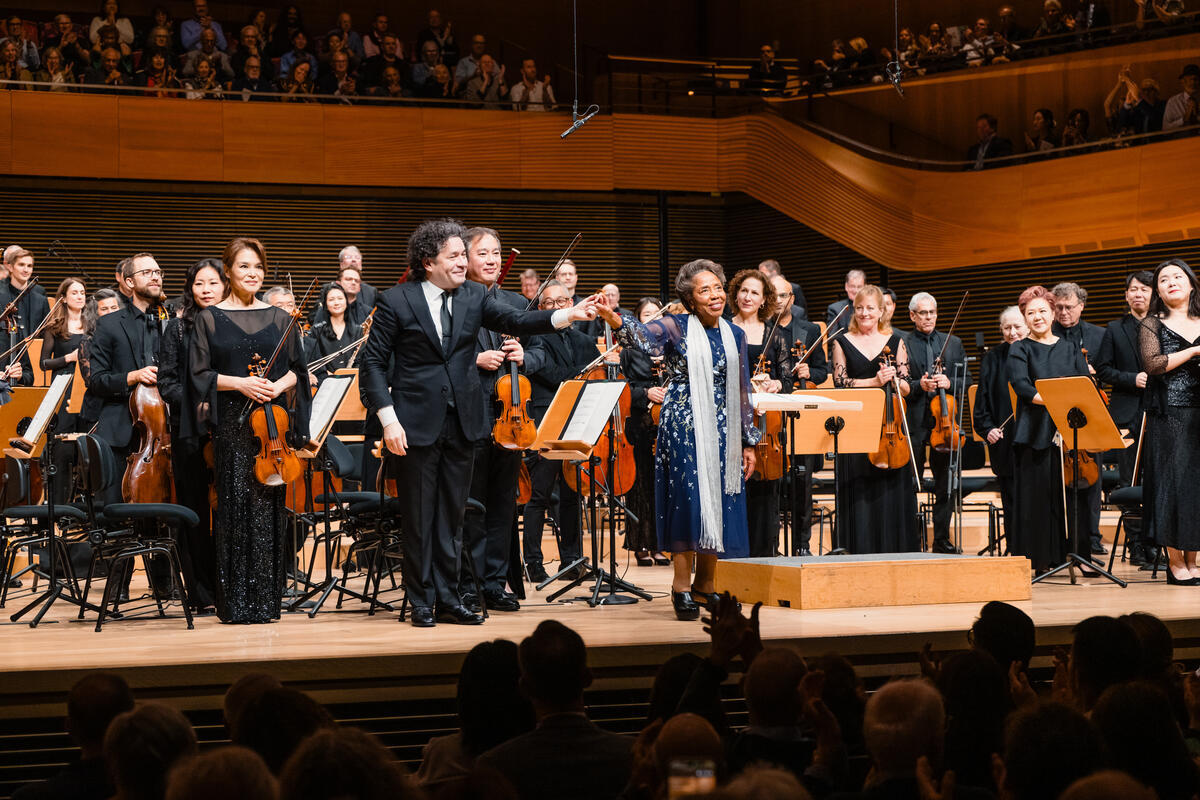
Yannick Nézet-Séguin and Julia Wolfe whose “Liberty Bell” was played by the Philadelphia Orchestra along with Mahler’s “Symphony No. 5” on Oct. 1 in Marian Anderson HallJeff Fusco
But the orchestra has not grown so refined that it can’t rock ‘n’ roll in the final section of Julia Wolfe’s Liberty Bell, co-commissioned by the orchestra, and also in Friday’s program. It’s apocalyptic as well as celebratory. Having grown up in the area, Wolfe spent formative weekends on South Street, and you hear that in this piece. But then, in the middle of the last section, comes an explosion sounding like World War III. Say it isn’t so.
Explosions, softness bode well for Mahler.
In the symphony’s long spans of music, Nézet-Séguin finds an underlying element that makes them more cogent, whether the underlying bass lines, the waltz rhythms of the third movement, or something less discernible in the finale where everything is happening at once. Layers of counterpoint, fugues plus antiphonal effects between upper and lower strings all tumble out at warp speed — and not with the light touch Nézet-Séguin employed in past years.
In Nézet-Séguin’s Carnegie Hall concerts with the Metropolitan Opera Orchestra, every symphonic motif behaves like a stage character. It comes naturally to those players, and I’m hearing more of that in his Philadelphia Mahler. It’s a great fit. These are some of the more fully realized Mahler performances I ever hope to hear.
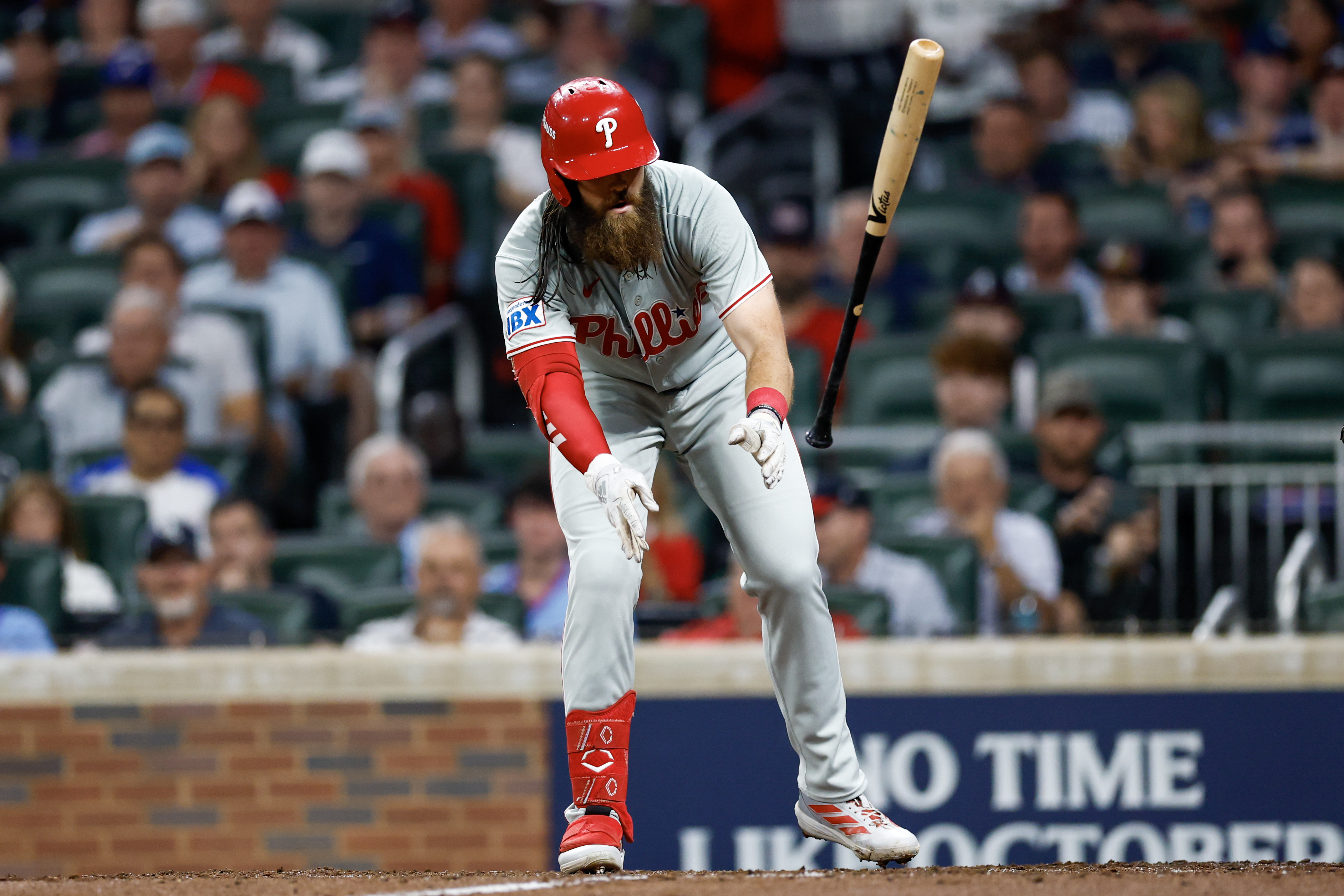
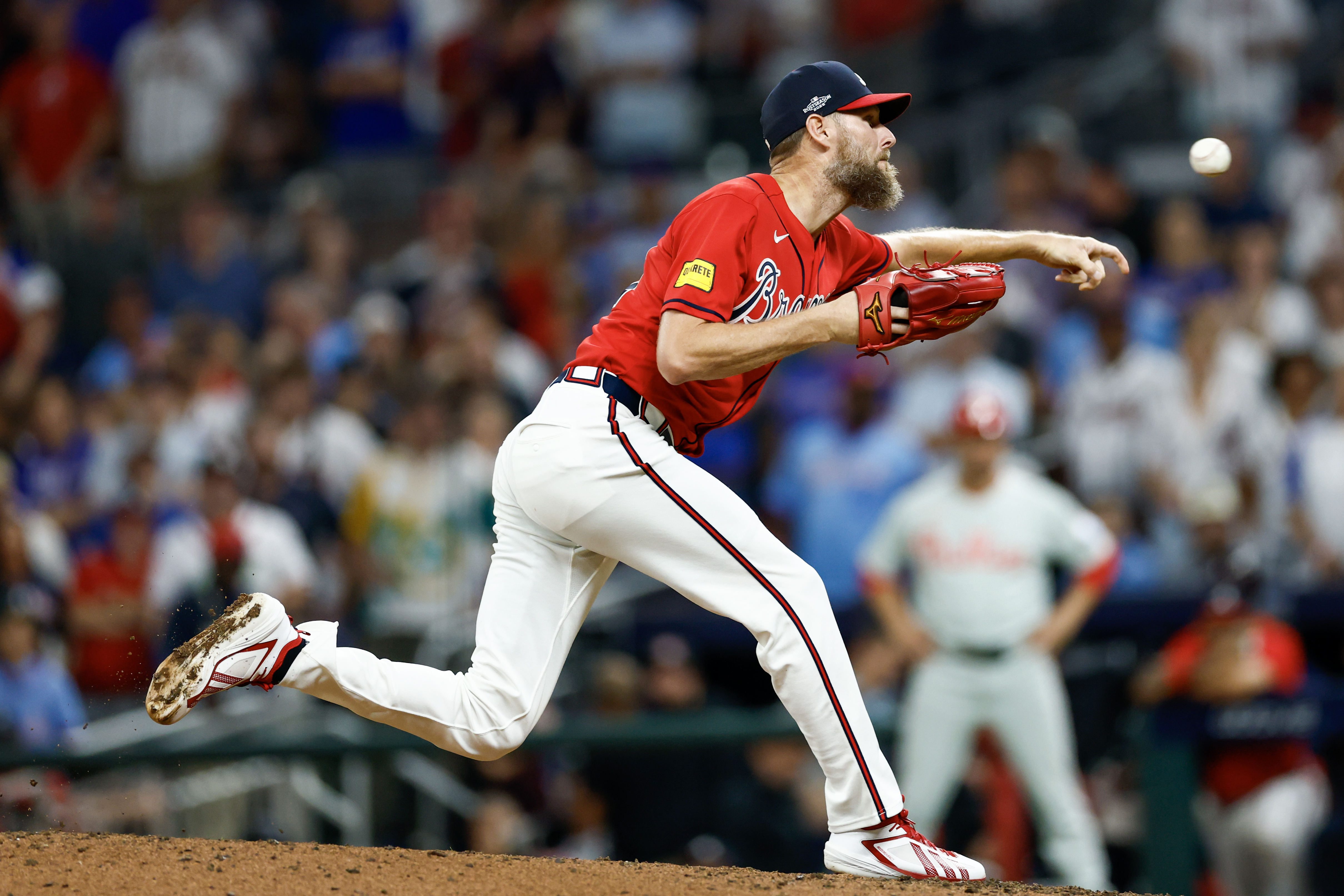
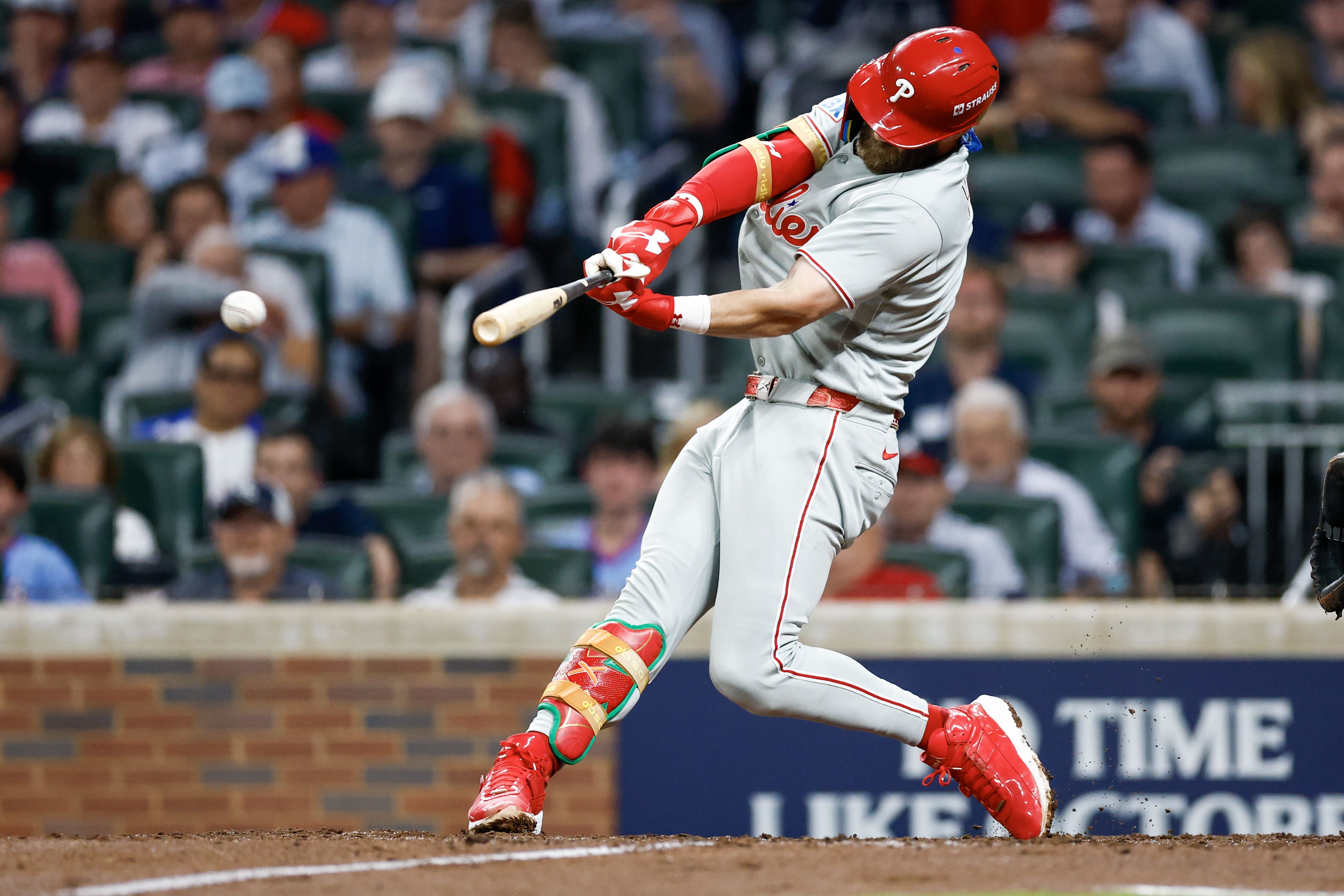
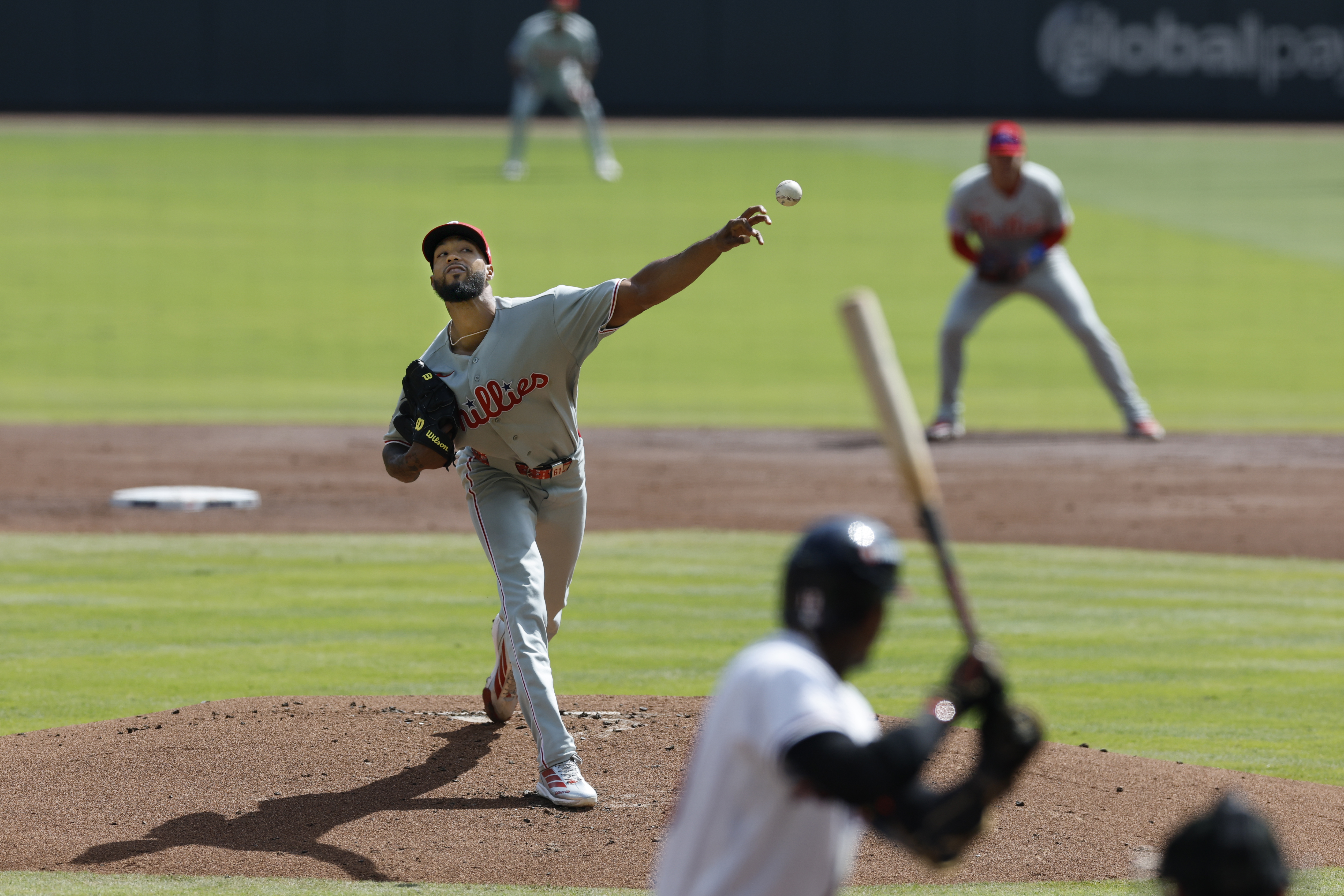
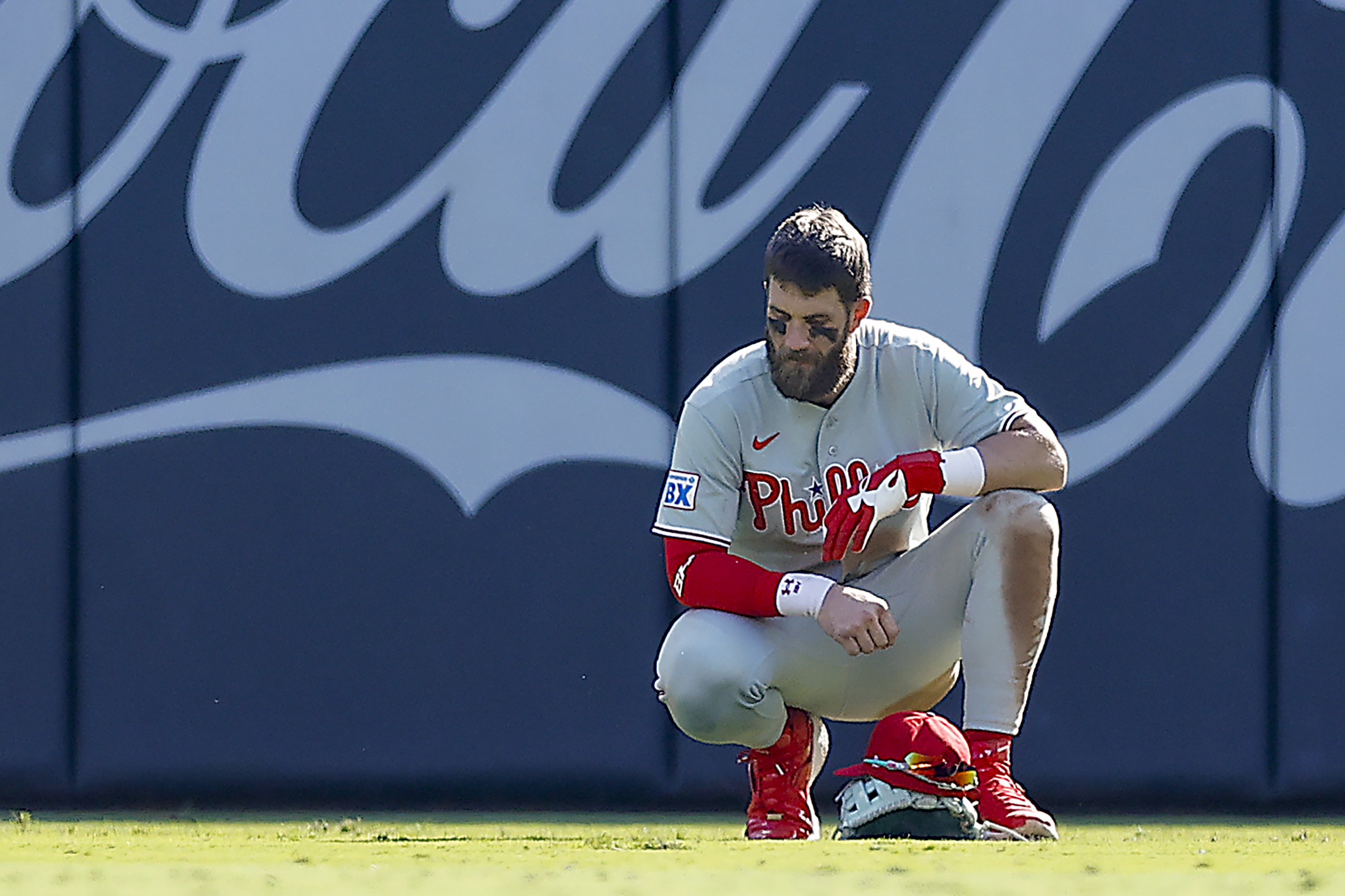
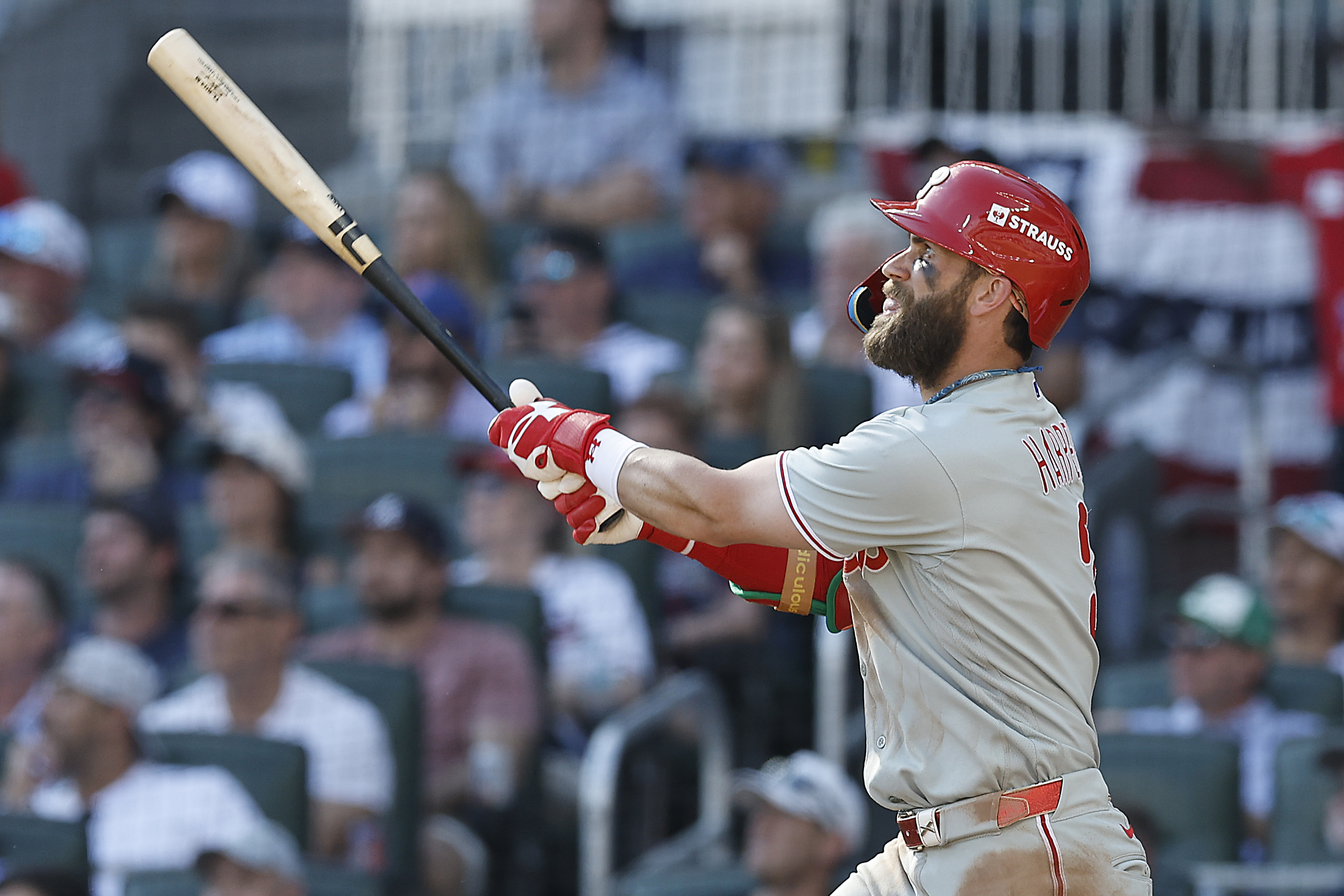
As Bryce Harper came to the plate, with two out in the eighth inning Thursday night and the Phillies trailing by four runs, the Braves prepared their final insult.
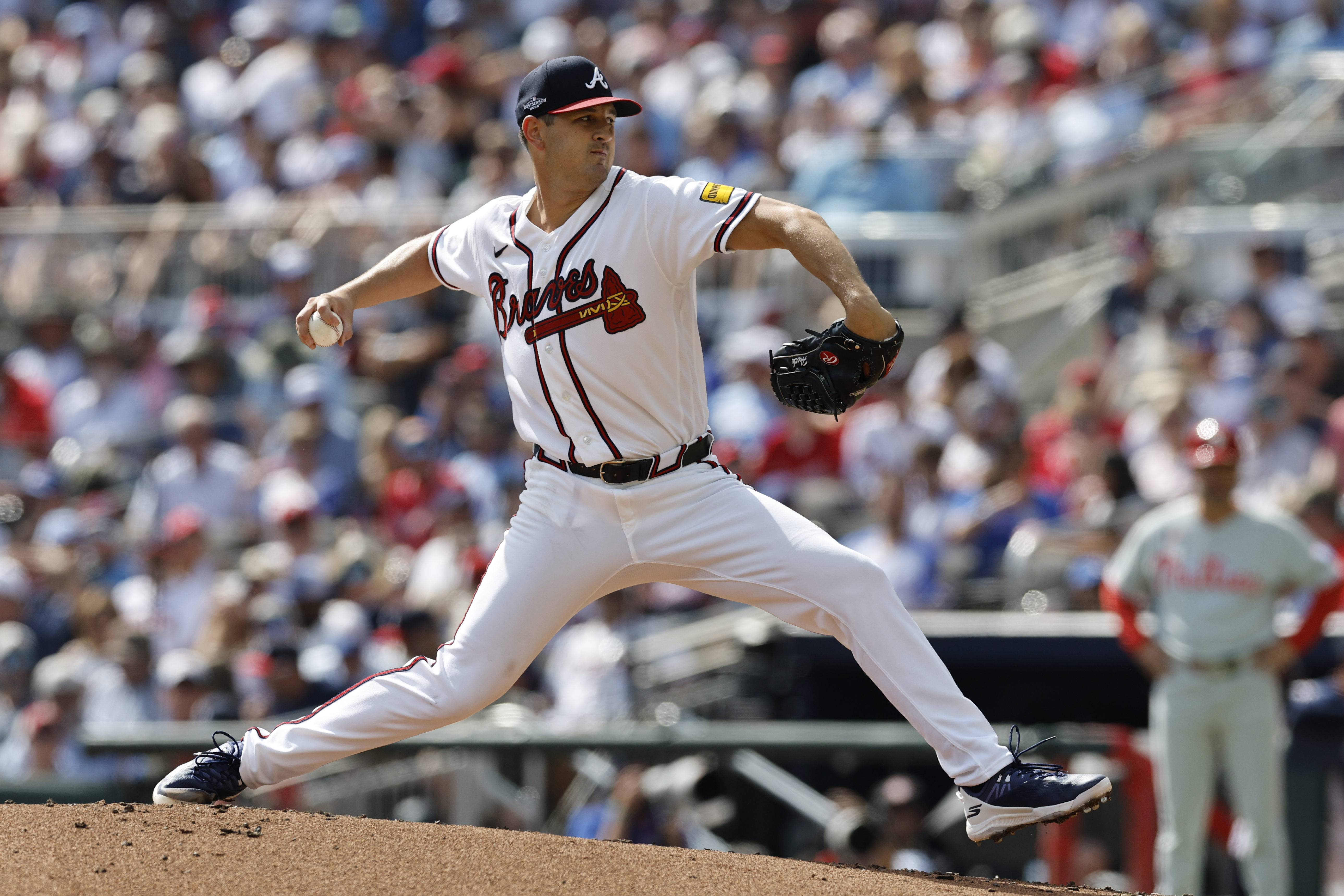
They brought in Chris Sale.
Sale is Harper’s Kryptonite and has struck him out in 14 of 25 at-bats through the years. This time, the Braves ace and future Hall of Famer slung four hellacious sliders. Harper flailed at three, the last of which wound up in the other batter‘s box and skipped to the backstop.
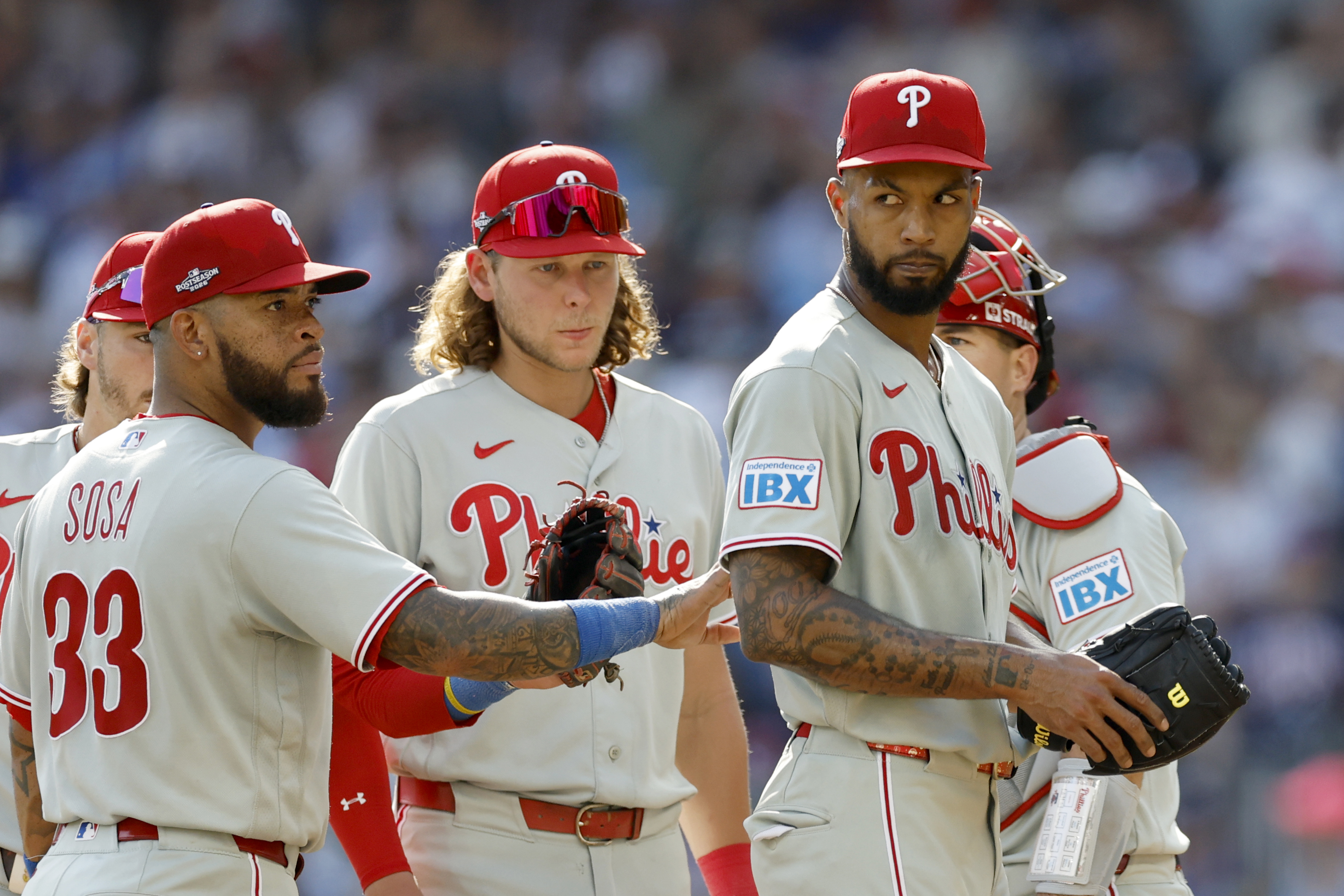
It wasn’t the last image from another early postseason ouster, but it will be the one that lingers the longest. The Phillies have made the playoffs five years in a row for only the second time in their 144-season history, but haven’t won a series since 2023. In fact, they’ve backslid one round every year since their unexpected run to the 2022 World Series.
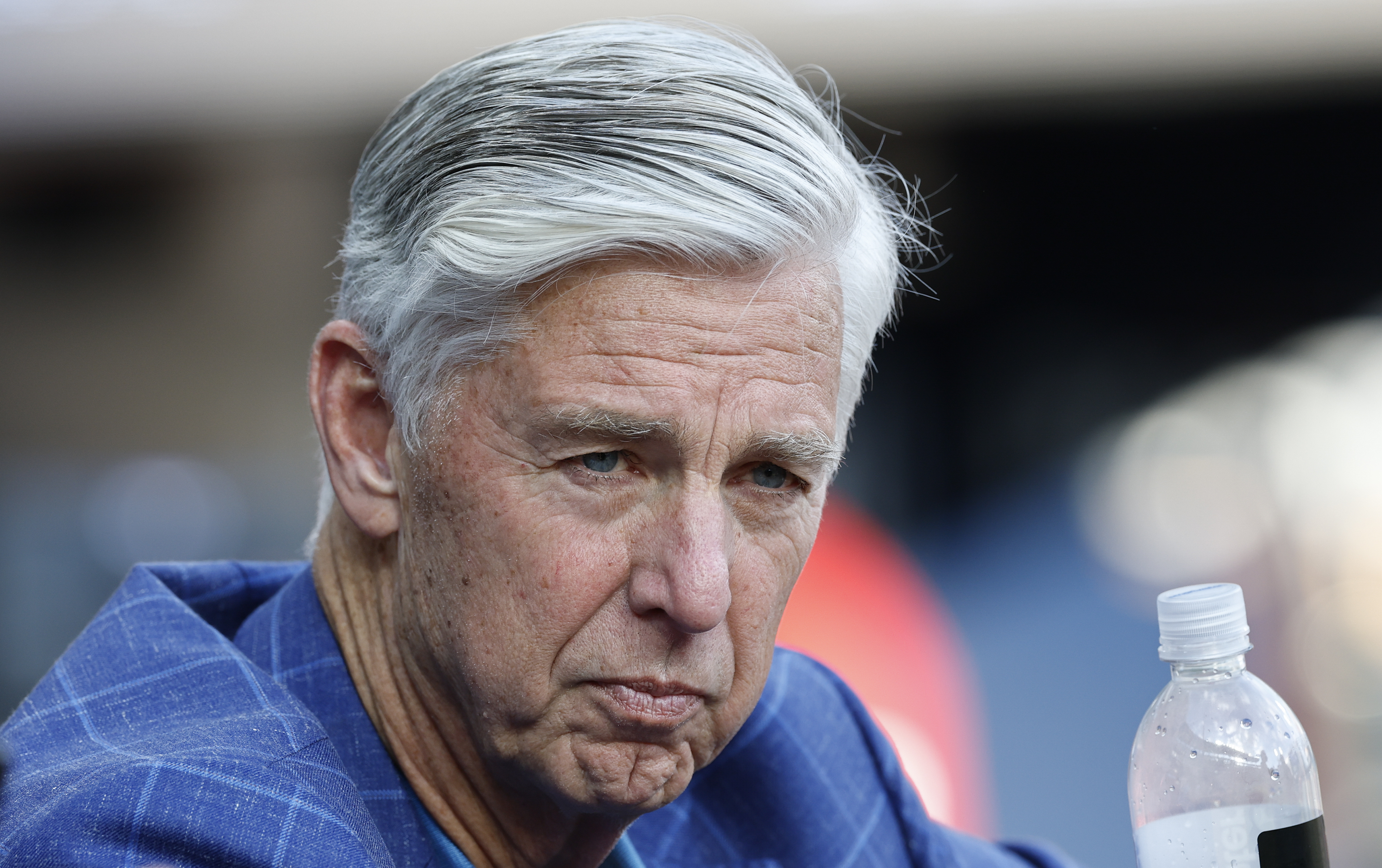
Dave Dombrowski has one year left on his contract and is expected to get an extension. If there was even a sliver of doubt, it vanished last Sunday when owner John Middleton said interim manager Don Mattingly’s future is “Dave’s decision.”
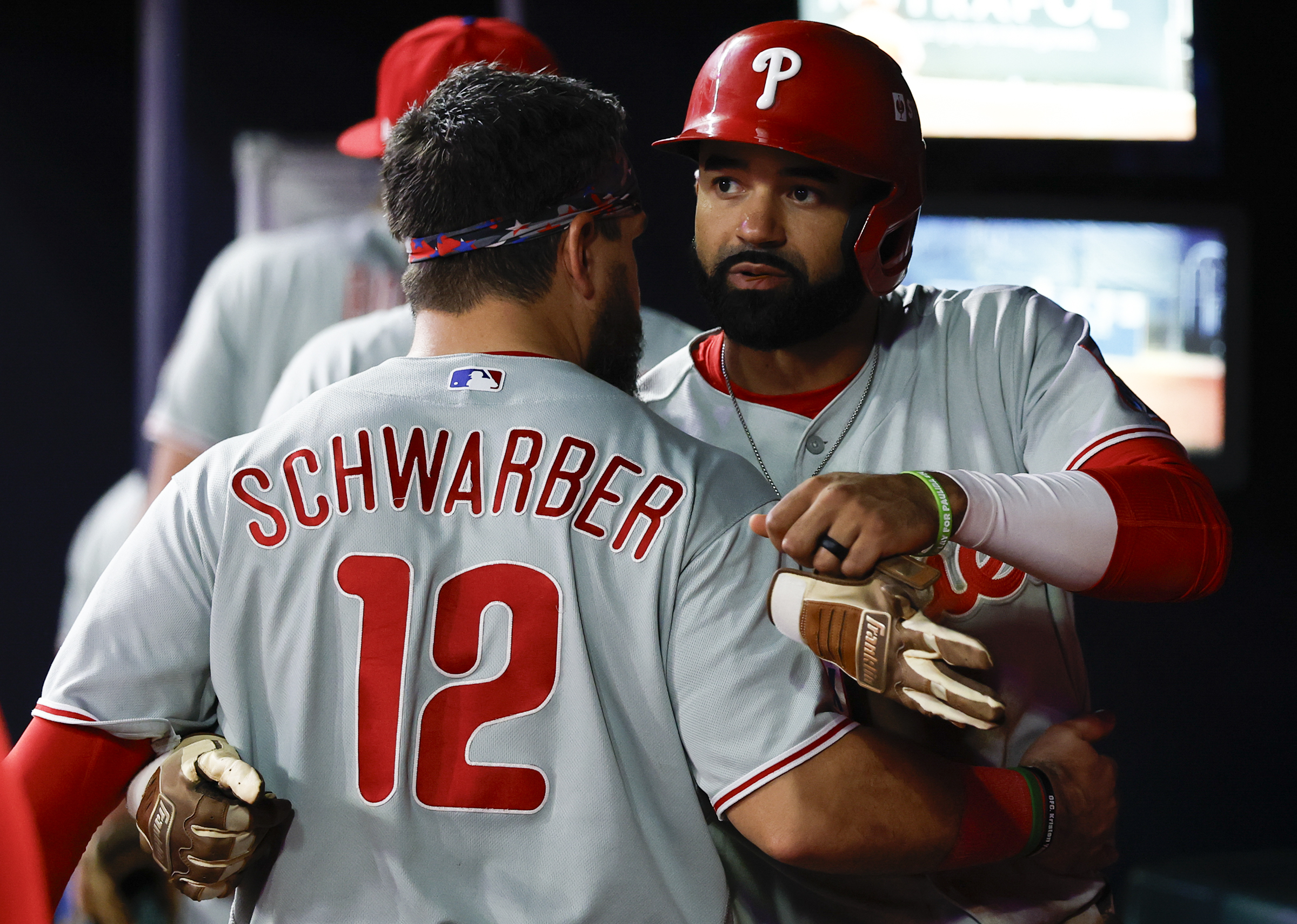
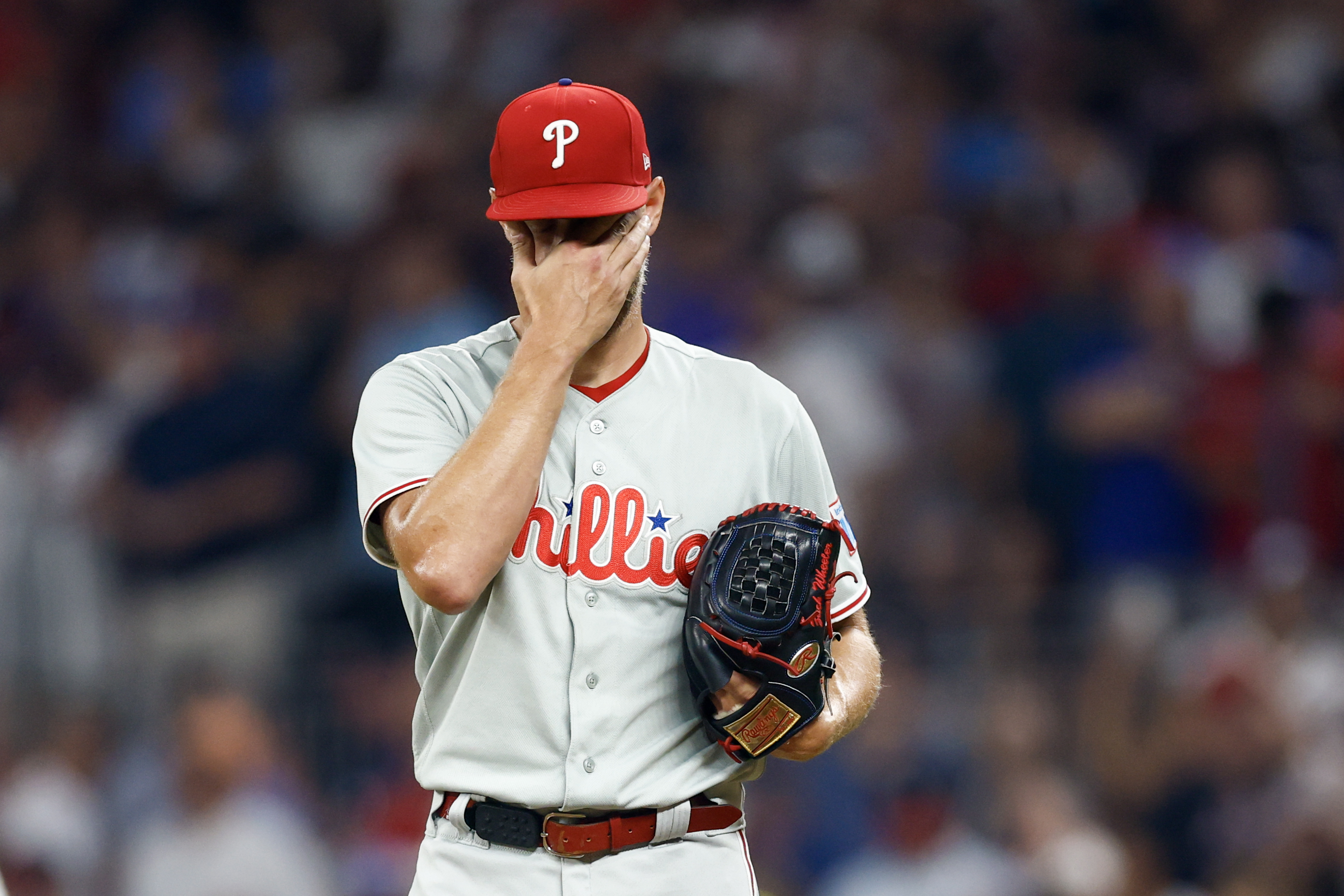
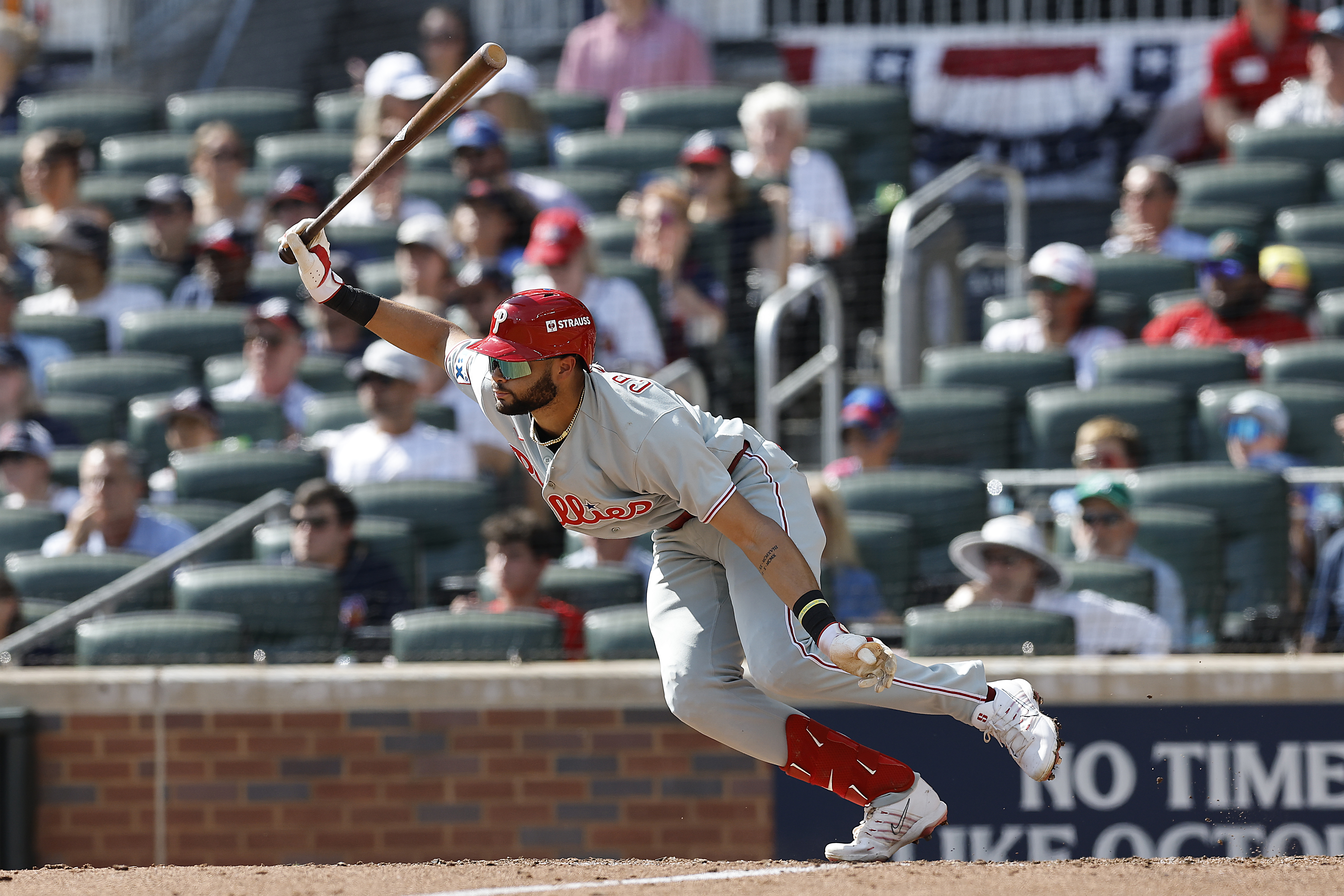
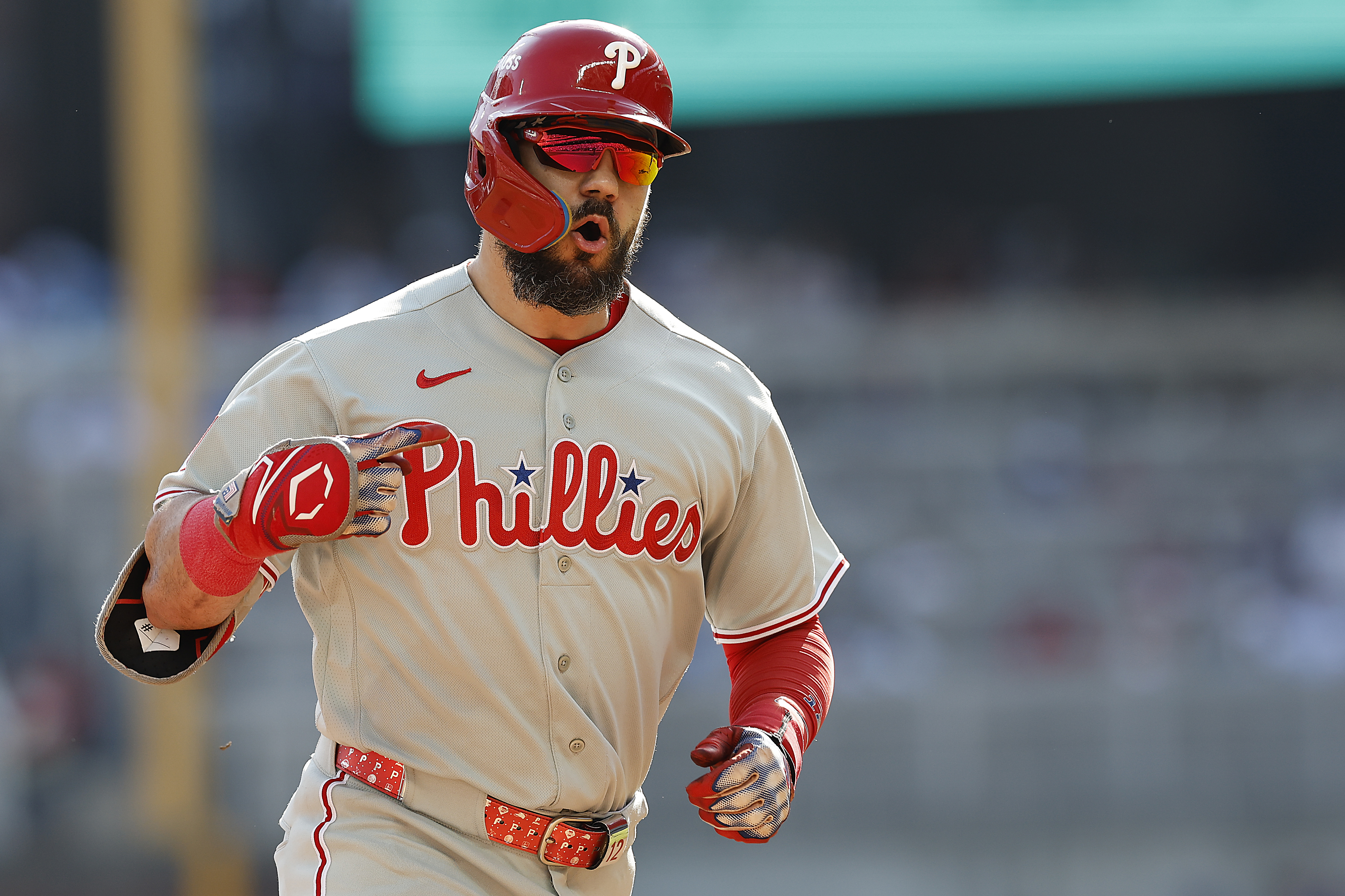
Fixing the roster is up to Dombrowski, too. And neither Harper, who turns 34 in two weeks, nor the rest of the core that has been kept together through it all — Kyle Schwarber (33), Trea Turner (33), Aaron Nola (33), J.T. Realmuto (35), and Zack Wheeler (36) — is getting any younger. Their baseball biological clocks are ticking.
Derek Hill, Kyle Schwarber, and the Phillies begin “a long offseason” after losing to the Braves in their wild-card series.Yong Kim / Staff Photographer
“It’s going to be a long offseason,” Harper said, in the most literal sense.
Everybody knows what’s coming. Baseball’s owners are pushing for a salary cap, a nonnegotiable issue for the players’ union for decades. The collective bargaining agreement expires Dec. 1, at which time the owners intend to lock out the players, effectively shuttering the sport.
Five years ago, a 99-day lockout preceded an agreement in mid-March and a slightly delayed 162-game season. This labor fight may last much longer.
In that case, so will the taste in the Phillies’ mouths, which is more bitter than a case of lemons.
Will the Thirtysomethings ever win the World Series that they need to cement their legacies as franchise greats?
Will the Phillies keep Turner at shortstop or move him to another position?
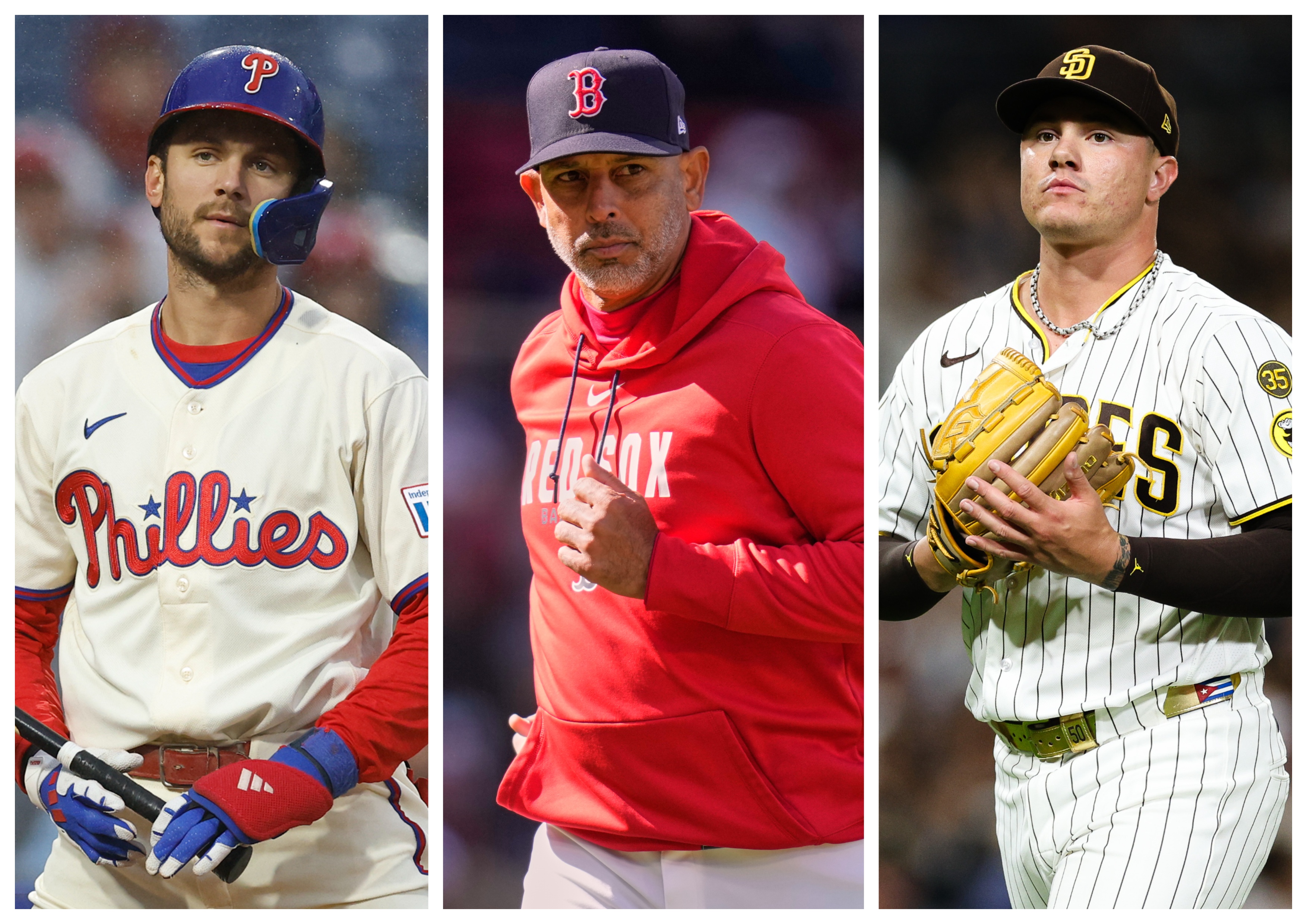
Amid industrywide speculation that Dombrowski will try again to hire Alex Cora, does he need to make moves that are more drastic than a new manager and the coaching changes that would come with it?
Is that even possible with $236.5 million in luxury tax commitments already for 2027?
“Yeah, I don’t know,” said Harper, never shy about sharing his State of the Phillies thoughts. “I mean, I obviously have trust in the organization and people that are in charge, you know? We’ll see where we go.
“I’d imagine this team is going to look a lot different next year, with the guys that are kind of leaving this clubhouse. So we’ll see.”
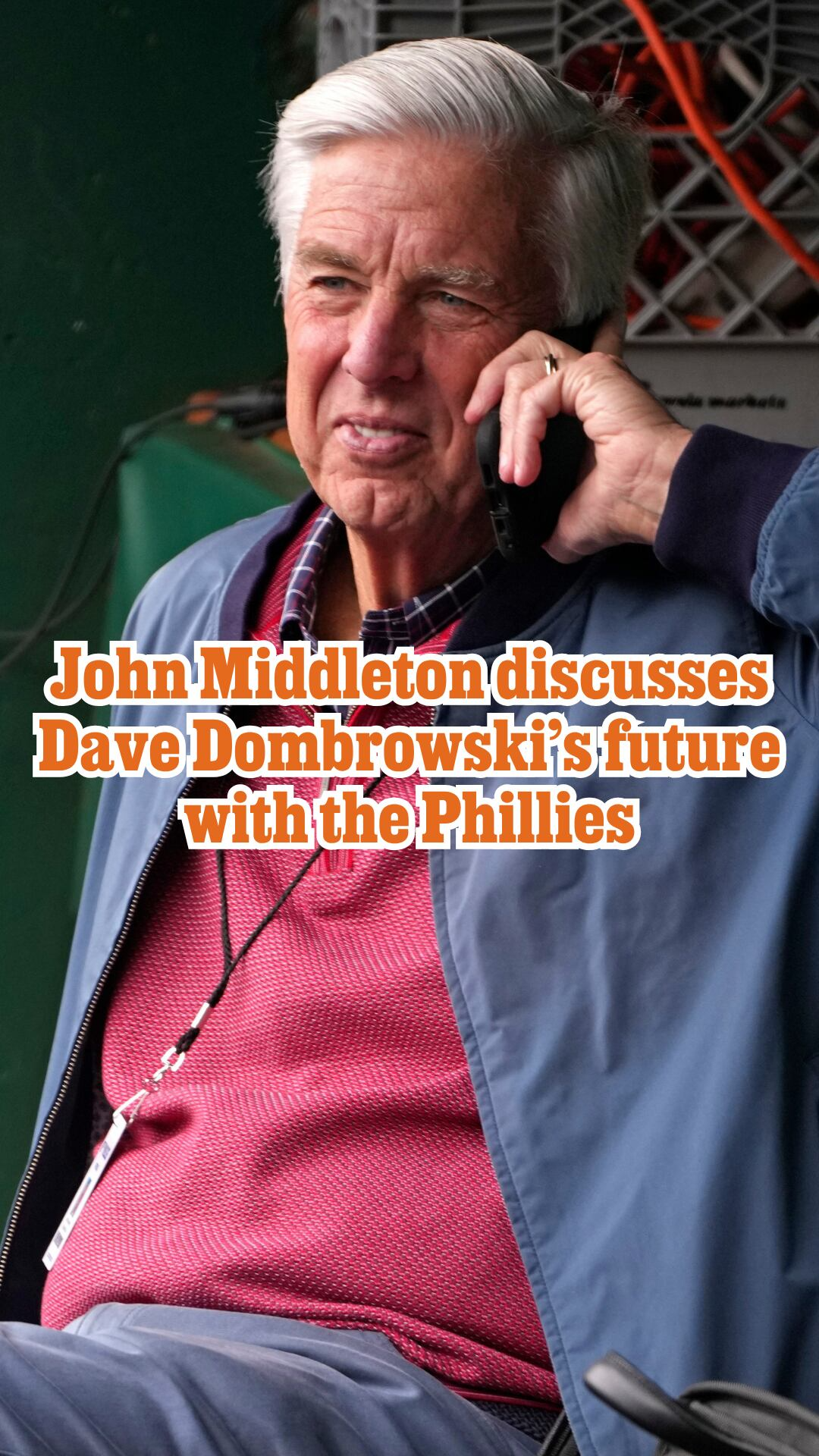
Video: John Middleton discusses Dave Dombrowski’s future with the Phillies
There will be opportunities for Dombrowski to find some answers in the next two months. In 2021, a flock of free agents signed before the lockout.
But there’s a lot of work to be done on a $322 million roster that only narrowly avoided a historic collapse in the last week of the season only to exit the playoffs one round earlier than the 2024 and 2025 runs, which were one round shorter than 2023.
Let’s dive in:
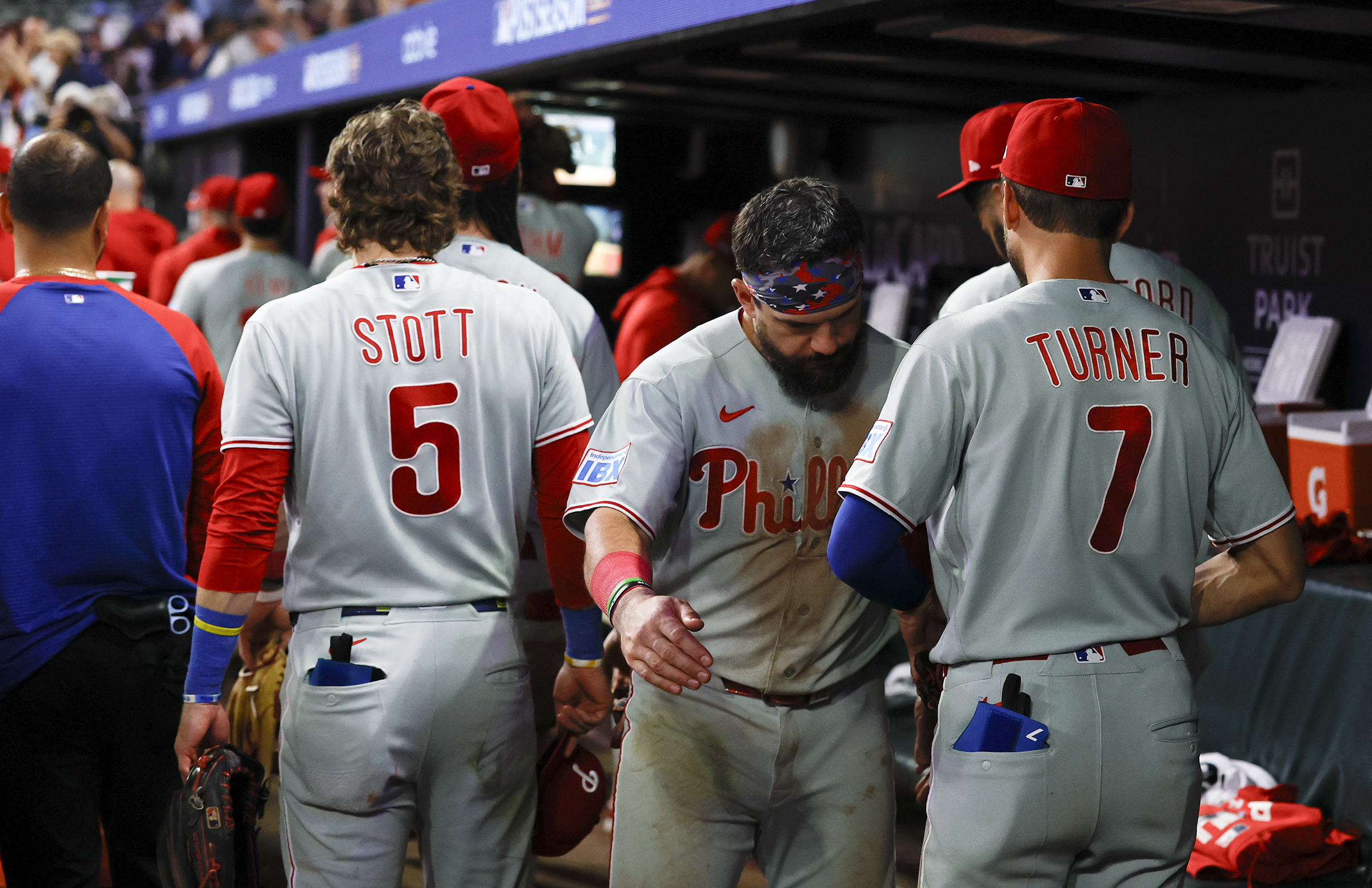
Kyle Schwarber (middle) and Trea Turner are part of a veteran core that hasn’t gotten back to the World Series.Yong Kim / Staff Photographer
Is time up for the Thirtysomethings?
Dombrowski and his lieutenants push back on the idea of a “championship window,” noting that the Phillies added three rookies — Andrew Painter, Justin Crawford, and, later in the season, reliever Alex McFarlane — in meaningful roles.
Schwarber is clinging to that narrative, too.
“Maybe I’m just the positive outlook guy, right?” he said, mustering a smile. “But we had a lot of first-year guys here who came in and just got their feet wet, not just in the big leagues but also in the postseason. That experience is huge.”
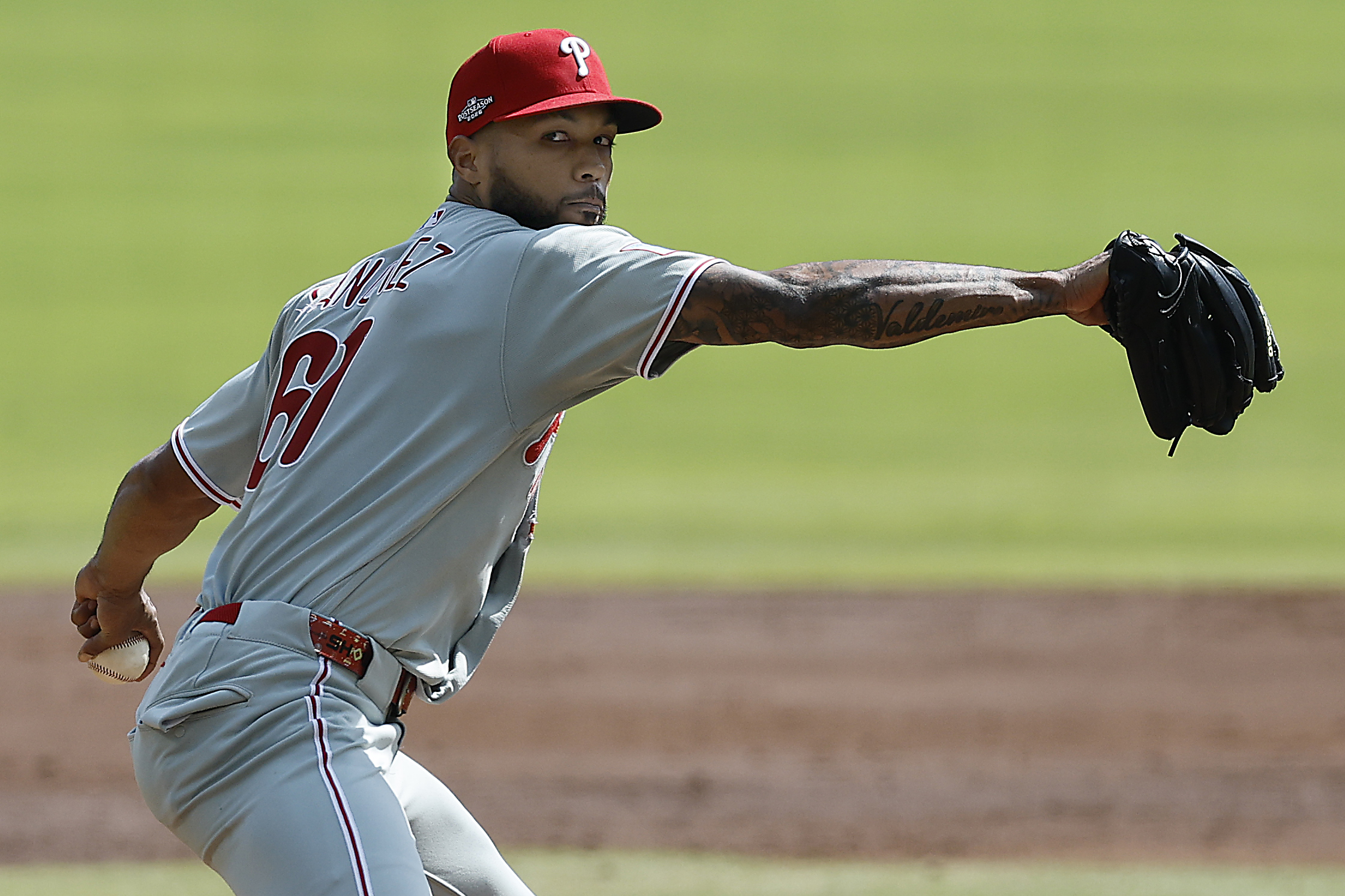
Painter, in particular, appears poised to fulfill his top-of-the-rotation promise. The Phillies demoted him to triple A with a 7.06 ERA in mid-June. He returned 44 days later, posted a 3.65 ERA in 11 starts, then threw three scoreless innings in relief in Game 2 against the Braves, a performance that Realmuto called “career-altering.”
Crawford’s impact is less certain. His tendency to hit the ball on the ground and defensive imperfections put him in a center-field platoon with Derek Hill. But context is important: Crawford was among only 10 players this season with at least 400 plate appearances at age 22 or younger. And he impressed teammates and staff with his poise and confidence
Maybe he develops into an everyday player. Maybe not.
Phillies center fielder Justin Crawford was among only 10 players this season with at least 400 plate appearances at age 22 or younger.Yong Kim / Staff Photographer
McFarlane, a converted starter who throws 100 mph, could be a bullpen fixture. Then again, the Phillies once said the same about the player drafted one round after him in 2022: Orion Kerkering. Once a late-inning mainstay, Kerkering got demoted in triple A in September.
The Phillies’ previous infusion of youth produced Alec Bohm, Bryson Stott, and Brandon Marsh, solid players who remained supporting actors. They need Painter, Crawford, and eventually Aidan Miller (more on him shortly) to be leading men.
But, mostly, Dombrowski must deepen an organization that lacked a No. 6 starter and had three catchers and only two trustworthy leverage relievers on the playoff roster.
“When you look at our team, it’s easy to kind of point to us older guys and say that that’s why we succeed,” Schwarber said. “I think the biggest thing is that it takes everyone.“
The Phillies’ proverbial window often is tied to Wheeler, who is under contract through 2027 and unsure if he will play beyond then. With Cristopher Sánchez, Jesús Luzardo, and Painter under control through at least 2031, the Phillies believe the window can stay open for longer.
Phillies shortstop Trea Turner has seven years and nearly $191 million left on his contract. Yong Kim / Staff Photographer
How do they fix the offense?
Over the last six years, Dombrowski’s solution to most problems has been to throw money at them.
That might not be possible now.
Even if the owners are unsuccessful in getting a salary cap, the penalties for the high-payroll teams almost certainly will be harsher in the next CBA. The Phillies had the fourth-highest luxury-tax payroll this season. After getting taxed $56.06 million last year, their 2026 bill is projected to be $61 million.
That’s a lot to pay for three postseason games — none at home — and one win.
The Phillies scored three runs or less in 72 games, including the postseason. They were 19th in the majors in runs, 22nd in OPS, and 23rd in on-base percentage. And they were 28th in on-base percentage from the right side of the plate.
Something needs to change.
Dombrowski’s impulse may be to sign a free-agent right fielder such as Seiya Suzuki or Randy Arozarena, right-handed hitters who will be 32 on opening day. It will help that $38 million in dead money for released Nick Castellanos and Taijuan Walker finally will be off the books.
But without knowing the financial rules of the sport, Dombrowski may have to get more creative. Marsh went from an All-Star starter in July to not cracking the Phillies’ lineup against a lefty opener in winner-takes-all Game 3 in Atlanta. His value went through the floor. But if the Phillies can spin him in a trade for a hitter who better fits their lineup (righty-hitting outfielder Jo Adell comes to mind), they should.
An All-Star starter in July, Brandon Marsh struggled after the break. Yong Kim / Staff Photographer
Bohm is heading into free agency. The 30-year-old third/first baseman grew up before our eyes after the Phillies drafted him third overall in 2018. He was miscast as a cleanup hitter, but 88 or more RBIs in three of the last four seasons won’t be easy to replace.
“I would love to be back if they would have me back,” Bohm said, though it’s unlikely after the Phillies dangled him in trade talks in consecutive offseasons.
With seven years and nearly $191 million left on his contract, Turner isn’t going anywhere — except maybe to a new position. The Phillies will talk internally about a move, maybe to the outfield, which would open shortstop eventually for Miller. But the 22-year-old top prospect missed almost the entire season because of a back condition that necessitated a spinal procedure in June.
Regardless, Turner understands his role in all this.
“I’ve got a lot of work to do to kind of just go over everything and figure out as much as I can, find answers, see what I did bad,” Turner said. “But I think this year is the biggest question mark for me offensively in a long time.”
It’s reasonable to expect a rebound from Turner after the worst season of his career. But it wouldn’t solve all of the Phillies’ problems, either.
Phillies president of baseball operations Dave Dombrowski has long struggled to solve his bullpen issues.Yong Kim / Staff Photographer
How do they fix the bullpen?
Dombrowski probably is bound for the Hall of Fame, if he ever stops working. But building a bullpen has long been a blind spot.
To be fair, the Phillies didn’t know Brad Keller would tear a ligament in his elbow three months into a two-year, $22 million contract. But they signed Keller based on one big season with the Cubs. And while Dombrowski won a reliever swap with the Royals to get Jonathan Bowlan for Matt Strahm, the Phillies needed more.
Instead, they banked on José Alvarado and Kerkering. Neither pitched in the postseason. Dombrowski acquired lefty Brooks Raley and Caleb Kilian at the trade deadline. The former was ineffective; the latter got injured.
Now, Dombrowski must recast most of the bullpen around closer Jhoan Duran. Alvarado is a free agent and needs a fresh start. Kerkering’s stock plummeted, but it’s in everyone’s interest to move on.
Dombrowski could throw money at pending free agent Adrian Morejon, although the hard-throwing lefty may be seeking a chance to close after setting up for Mason Miller with the Padres.
There isn’t much help in the farm system, unless the Phillies turn former first-round pick Gage Wood into a reliever. It wouldn’t be the worst idea. The fiery 22-year-old once was a closer in college at Arkansas.
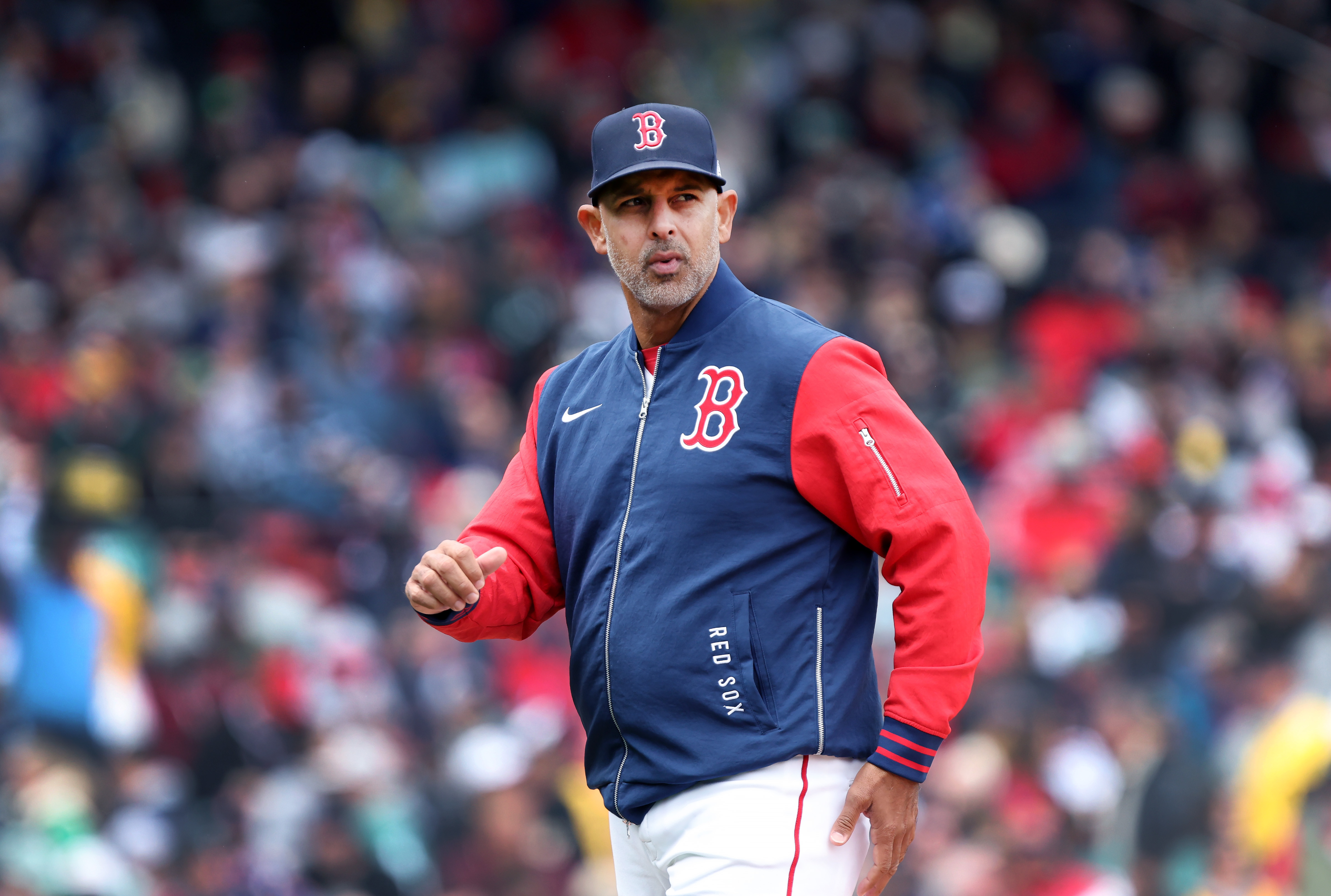
Alex Cora was fired as Red Sox manager in April.Jim Davis
Who will be the manager?
Absent changes to the core, Dombrowski’s biggest move may be to hire Cora.
Dombrowski gave Cora his first managerial job nine years ago in Boston, and they won 108 games and World Series with a high-payroll team in their first season together. They’ve remained close, with Cora often calling Dombrowski a “mentor” and Dombrowski comparing Cora to Hall of Fame tacticians Tony La Russa and Jim Leyland.
Cora turned down Dombrowski’s offer to manage the team in April (while Rob Thomson still had the job). After getting fired days earlier by the Red Sox, Cora preferred to spend the summer at home with his young family while still getting paid.
Only then did Dombrowski elevate Mattingly from bench coach after firing Thomson. It’s notable that Mattingly’s interim tag wasn’t removed even though the Phillies went 79-55 under his leadership after a 9-19 start.
One thing is clear: If Cora is ready to get back in the dugout, Dombrowski surely will have him.
But Cora can’t bat cleanup or get three outs in the eighth inning.
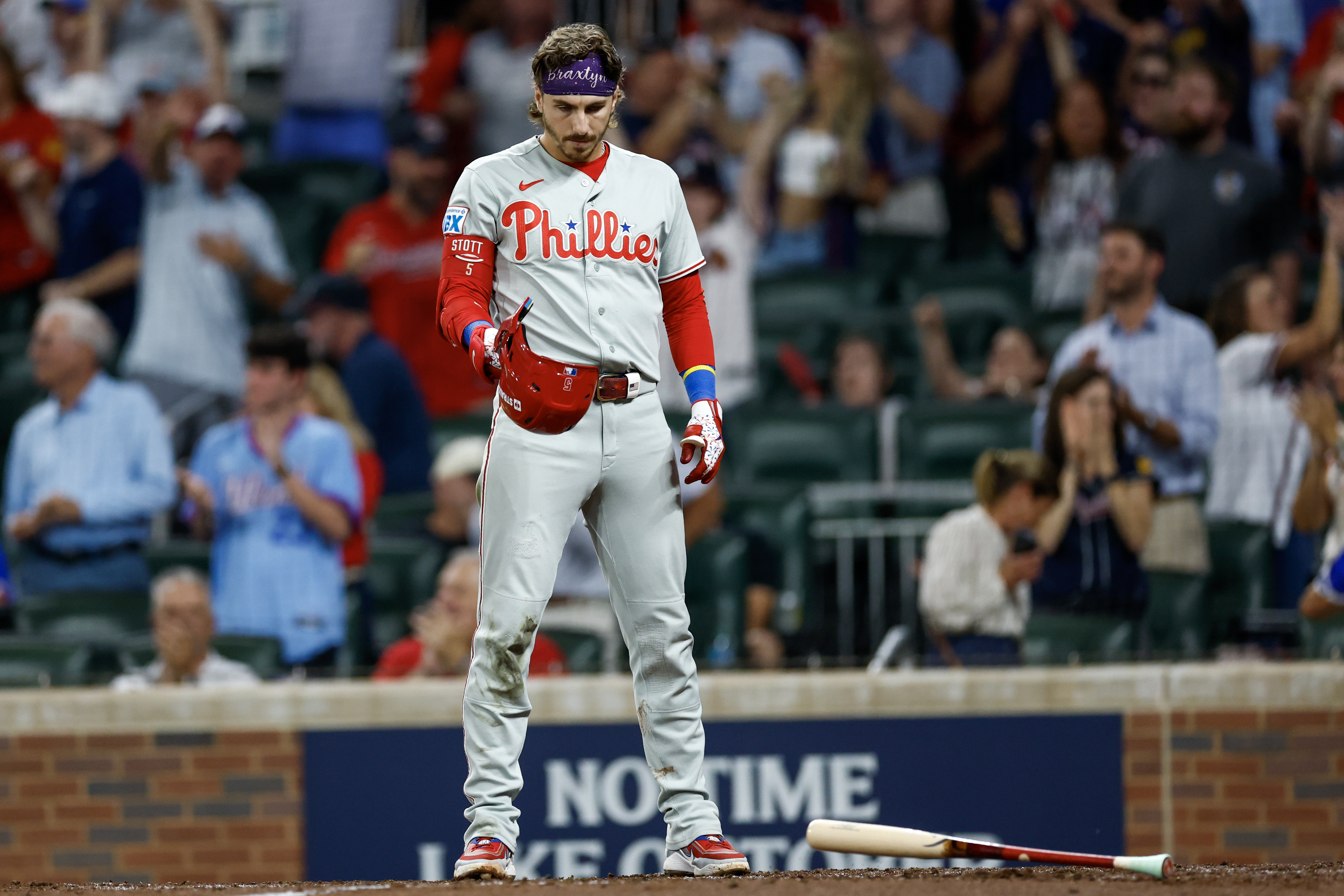
Considering the efficiency he has shown at second base, the brilliance he’s shown at third base, his capacity to play shortstop, his durability, his affability, and his age, Bryson Stott surely will be in somebody’s lineup for at least the next five years.
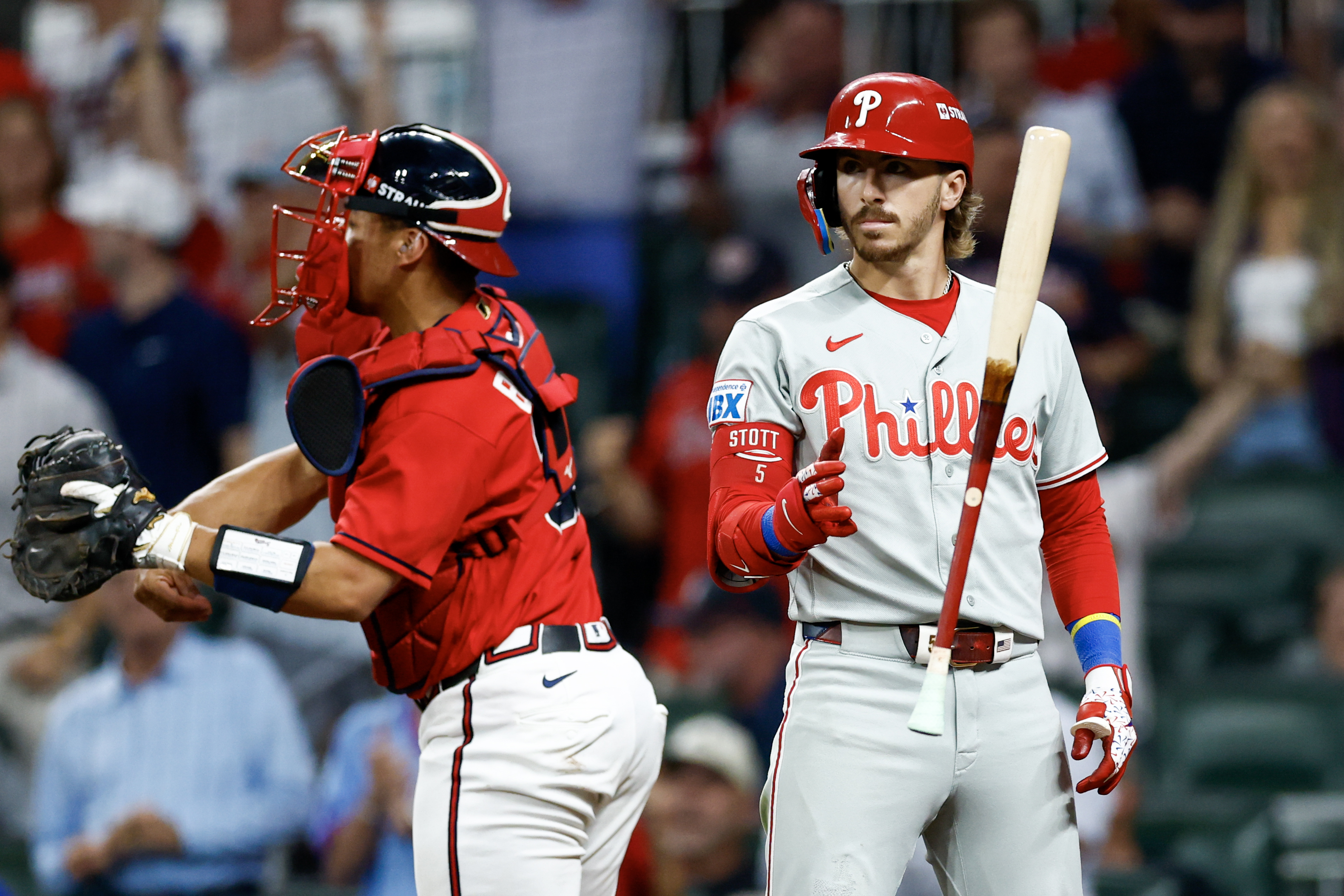
On Thursday, Stott was among the last of the Phillies to shower and dress after the Game 3 wild-card loss in Atlanta ended their season. But then, it’s always more of a challenge to get ready when you’re carrying the weight of personal failure on your shoulders with your future in doubt.
Stott, who will be 29 on Tuesday, is entering his final season of arbitration and will be a free agent in 2028 (all of this assumes, perhaps naively, that the 2027 season will not be affected by labor strife.)
He might not be expensive, but, if he continues to sputter, will Stott even be worth the roster spot for a Phillies team already heavily invested in contending for a title for the next five to seven years? As expensive, aging players like Trea Turner and J.T. Realmuto and their diminishing contributions are sure to occupy spots in the lineup, can the Phillies afford to carry even one player who isn’t dynamic at the plate?
Stott’s fun to watch. He is 100% baseball player. His aura is the closest thing the Phillies have had to Chase Utley’s since Ut was traded in 2015, all scruff and gristle muscle and bone and unsettling ferocity, possessed of baseball knowledge beyond his years and baseball instinct beyond his peers.
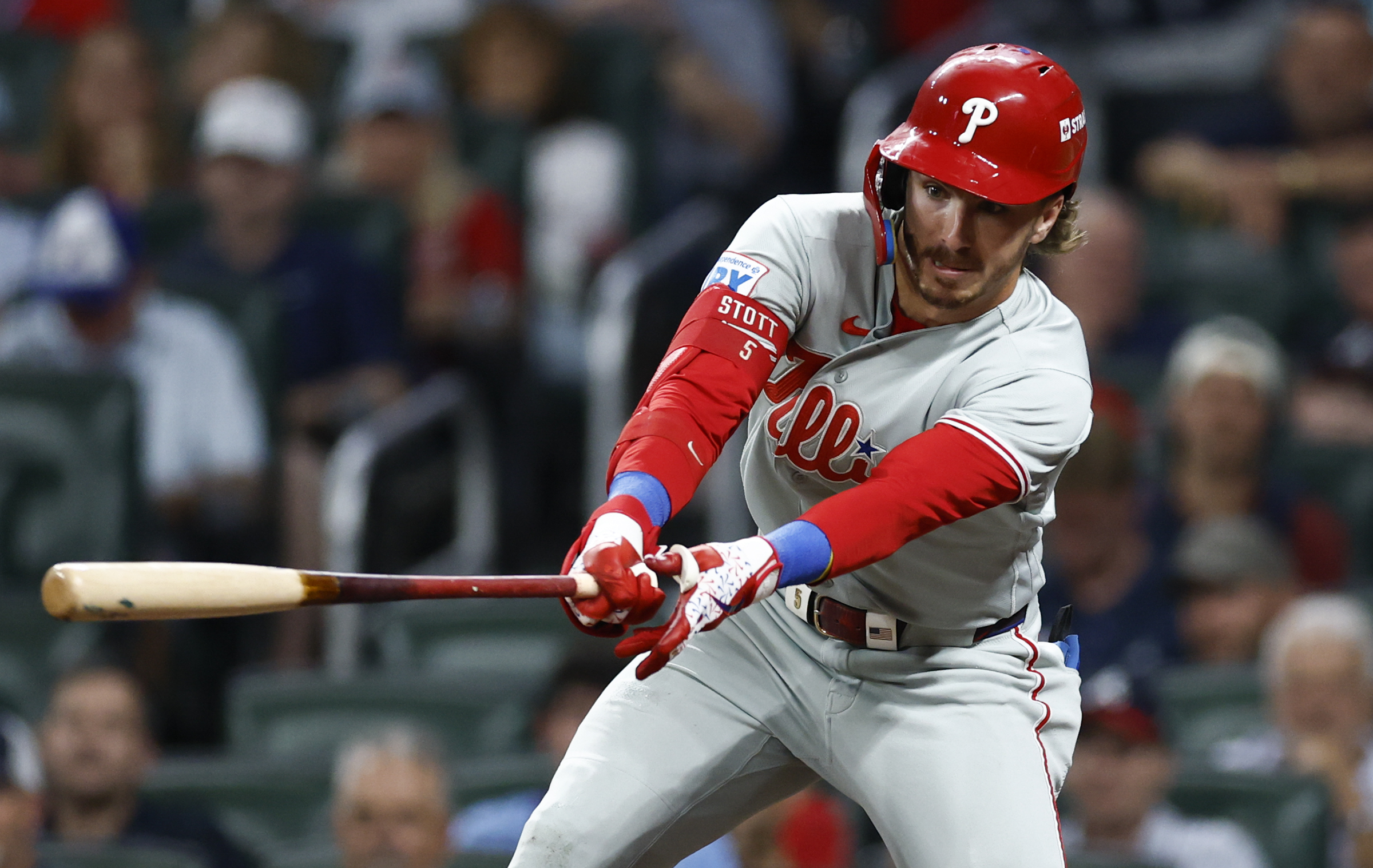
While his bat has been inconsistent, Bryson Stott’s defense at second and third base bring value to the Phillies.Yong Kim / Staff Photographer
Nevertheless, considering Stott’s pedestrian offensive production in the recent regular seasons and his disappearances in the recent playoffs, it’s fair to question whether a player like Stott should be in any lineup intent on winning in October, particularly considering Stott’s last three Octobers.
Stott is 6-for-37 in the Phillies’ losses in their first-round collapses of 2024, 2025, and 2026. That’s a .162 average, and it has been consistent: He managed just two hits in each of those series. He has no home runs. Two RBIs. Thirteen strikeouts.
He was a first-round pick in 2019 who, at one point, was considered an option to lead off a lineup ahead of a batting champion, an MVP, and a home run king. It’s his baseball DNA. Stott hit leadoff at both UNLV and in the minor leagues. In his second big-league season, 2023, Stott batted leadoff 39 times in a lineup that included monied, veteran leadoff hitters Turner, who’d won a batting title, and Kyle Schwarber, who’d led the National League in home runs.
Stott finished 2023 with a .280 average, 15 home runs, and a brilliant future.
His future now is clouded.
Bryson Stott has hit .252 averaged 11 homers and 63 RBIs over the past three seasons.Yong Kim / Staff Photographer
Since 2023, Stott’s batting average is .252, he has averaged 11.2 home runs, and he hasn’t moved the needle in eons. He has batted leadoff just 48 times.
He’s the poster child for long, freezing-cold streaks: He hit .216 with a .638 OPS through his first 58 games this season, hit .301 with an .832 OPS in his next 70 games, then reverted to early-season form for the remainder.
His defense is the only thing that keeps him in the lineup, because, as Donna Summer sang, when he’s bad, he’s so, so bad.
“I tell the hitting coaches, if I can just hit .230 in my bad months, my overall numbers will look a lot better,” Stott said. At issue: “Trying to find ways to get out of those ruts, those bad months, as fast as possible.”
That’s part of any hitter’s maturation. Pitchers find weaknesses and exploit them. The hitter must adjust in kind. Stott presents an intriguing history of weaknesses, though. In 2024, four-seam fastballs ate him up. Last year, sliders and curveballs. This season, curves and split-finger fastballs.
Stott studies. Maybe too much. That might be the issue with his postseason woes.
“You look at how a team pitches you all season and what they’re doing, and you plan going into a game,” Stott said. “Then you get to the playoffs and it could be a complete 180.”
And, after the first time not being served what you thought you’d be served …
“Your initial thought is, ‘That was one at-bat. They’re gonna go back to what they did for 12 or 13 games.’ But sometimes they don’t,” Stott said. “Then, you’ve got to adjust on the fly. It’s just a giant cat-and-mouse game.”
Bryson Stott, who will be 29 on Oct. 6, can be a free agent after the 2027 season.Yong Kim / Staff Photographer
In that metaphor, Stott mostly has been the mouse.
He pointed to his feeble plate appearance against Braves left-handed reliever Dylan Lee in Game 2. Moments before, Schwarber and Bryce Harper, the former MVP, had homered and tied the game. When Stott came to the plate, the afterglow of those heroics overshadowed how badly Stott was overmatched.
Lee threw Stott four fastballs that averaged about 94 mph. The first one was high, and he took it for ball one. The next three were in the top of the strike zone: take, foul, whiff, sit.
The cat ate the mouse.
“I’ve never faced Dylan Lee that I didn’t see a slider,” Stott said.
Entering that at-bat Stott was 2-for-4 against Lee, with a hit in each of his previous two plate appearances, but losing this sort of mind game has been typical for him in the last three playoff series.
“I see sinkers and splitters and changeups from some of these guys all season, then see cutters and four-seamers that I didn’t see in the regular season,” Stott said. “So you want to stick to your plan going up there for that specific event, but sometimes it’s the complete wrong one.”
Every hitter faces this issue. The hitters who adjust are hitters who keep their spots on competitive teams. Stott has at least one more chance to adjust as a Phillie.
The hitters who can’t adjust?
If they aren’t a good fielder, then they start selling real estate.
If, like Stott, they’re 100% ballplayers, then they become placeholders on noncontenders until there’s no longer a spot on the roster for a light-hitting, 30-something, hard-nosed defensive specialist.
ATLANTA — It turns out you can’t win a World Series — or even a wild-card series — with a roster that includes more catchers (three) than trustworthy relievers (two).
Oh, and the Phillies’ icy-cold bats turned the surname of a little-known lefty opener into a four-letter word ever more in the Delaware Valley: Kerr. Ray Kerr.
“It’s always frustrating,” Kyle Schwarber said after the Phillies lost their fourth consecutive postseason series dating to the 2023 NLCS. “From every postseason that I’ve been in, it’s always going to hurt when you’re not the last team holding it up, if you’re knocked out in the first round, DS, CS, World Series.”
We’ll spend the next few days picking apart these three games against the Braves because, well, it’s what we do. It usually starts with the manager. Go ahead, then, and second-guess Don Mattingly for bringing in Jhoan Duran too early in Game 1, or starting Nola over Wheeler in Game 3, or whatever other gripe you may have. Then, hang up and listen.
Or you can skip all that and cut to the real issue: Dave Dombrowski built a Jenga tower of a roster for $322 million (calculated for the luxury tax) and will have limited time to begin fixing it before a work stoppage shuts down the sport from the expiration of the collective bargaining agreement on Dec. 1 until who knows when.
Phillies president of baseball operations Dave Dombrowski has a decision to make about the future of interim manager Don Mattingly.Yong Kim / Staff Photographer
First, though, there’s the question of whether Mattingly returns as the manager.
“It’s not the time to talk about anything like that,” Mattingly said. “I’m not concerned about myself in this situation. I want the Phillies to do what they need to do to set themselves up for success. Yeah, it’s like, my stuff doesn’t really matter.”
Mattingly, 65, is a baseball icon, not to mention the father of Phillies GM Preston Mattingly, who works under Dombrowski. But he also knows this: He was elevated from bench coach to the manager’s office after Rob Thomson was fired on April 28 only because Alex Cora turned down the job.
Dombrowski hired Cora with the Red Sox. They won a World Series together in 2018 and became close friends. When the Sox fired Cora on April 25, Dombrowski offered him the Phillies’ job — even though Thomson hadn’t been let go yet.
Under Mattingly, the Phillies went 79-55, and despite a costly 9-14 stumble down the stretch, captured the last National League wild-card spot. But Dombrowski didn’t remove the interim tag from Mattingly, saying he would wait until after the season to make a decision and fueling speculation across the sport that he will try again to lure Cora.
Last Sunday, amid the Phillies’ wild-card-clinching celebration, owner John Middleton said Mattingly did a “pretty damn good” job but didn’t weigh in on whether he wants him to stay on.
“That’s Dave’s decision,” Middleton said.
Mattingly, who only joined Thomson’s staff this season and signed a two-year contract, had instant respect with the players, even though none are old enough to remember his Hall of Fame-worthy career. He’s also an honest and direct communicator.
Alec Bohm works with interim manager Don Mattingly before Game 3 of the Phillies’ wild-card series in Atlanta.Yong Kim / Staff Photographer
“I just felt like he was just calm, man,” Trea Turner said. “He was easy to talk to. I could talk to him about anything hitting. He just seemed like a cool guy that wanted to be here, and then if he needed to let you know something was wrong, he’d let you know. I appreciate the honesty.”
Said J.T. Realmuto: “I like Donnie. Donnie’s great. He was a great for us.”
Surely, the Phillies have heard the Cora whispers.
“That’s not for me to speculate,” Realmuto said. “I have the utmost respect for Donnie, and I would love to have him back.”
Like any manager, especially Thomson before him, Mattingly’s pitching moves will be scrutinized in the aftermath of another early Phillies exit. Since the Phillies went to the World Series in 2022, they lost in Game 7 of the NLCS in 2023, the divisional round in 2024 and 2025, and now, the wild-card round.
But given the bullpen Dombrowski gave him, he was bringing a knife to a gunfight.
Phillies interim manager Don Mattingly takes starting pitcher Aaron Nola out of Game 3 during the second inning.Yong Kim / Staff Photographer
Consider this: In the three games, the Braves brought 114 batters to the plate. All but 12 faced a Phillies starting pitcher (Jesús Luzardo in Game 1, Cristopher Sánchez and Andrew Painter in Game 2, Nola and Wheeler in Game 3), or Duran. Five of those 12 batters faced Jonathan Bowlan in the eighth inning of out-of-reach Game 3.
Mattingly also had a postseason bench that included two backup catchers. The season ended with infielder Otto Kemp, who hadn’t taken a major league at-bat since May 20, flailing at a hellacious slider from Chris Sale, a future Hall of Fame lefty.
The questions will persist about whether this Phillies core, which has been together since 2022, can ever get over the top, especially because Harper (34 in two weeks), Turner (33), Realmuto (35), Schwarber (33), Wheeler (36), and Nola (33) aren’t getting any younger.
“I don’t know,” Harper said. “I can’t really answer that question. … I’d imagine this team is going to look a lot different next year with the [free agents] that are kind of leaving this clubhouse, so we’ll see.
“Yeah, I don’t know. It’s going to be a long offseason, obviously. I have trust in the organization and the people that are in charge. We’ll see where we go.”
ATLANTA — You can blame the manager for his handling of the pitching staff. You can blame the front office for forcing him to handle a grenade. I suppose you can blame the pitchers themselves: Jhoan Duran for giving up the decisive three-run home run in Game 1, Aaron Nola for doing the same in Game 3.
A baseball season is a maddening, fluky, grind of a thing. Qualifying for the playoffs in five straight seasons is an extraordinarily difficult task. The Phillies are one of only nine franchises in major league history who have ever done it. Their current streak is the second-longest active one in the majors, behind only the Dodgers (14). That’s not apologetics. It’s reality.
Just ask the Braves, who were down to their last four outs in Game 1 when Austin Riley homered off Duran. Or, heck, ask the Dodgers. Los Angeles made the playoffs seven straight times without winning a World Series before finally breaking through in 2020. That initial stretch included three National League Division Series losses. They’ll be favored against the Braves in this year’s NLDS, which starts Saturday. They know how little it means.
“It’s just as frustrating as last year, and the year before that,” said Kyle Schwarber, who had two of the Phillies’ six hits against a Braves team that used six pitchers, none for more than 10 outs. “We have to keep finding ourselves in position, first off, to be in this position. Because it’s never going to be a guarantee that you’re in a postseason. You have to keep fighting to be in those spots and when you are in the postseason, keep trying to find a way to win a game.”
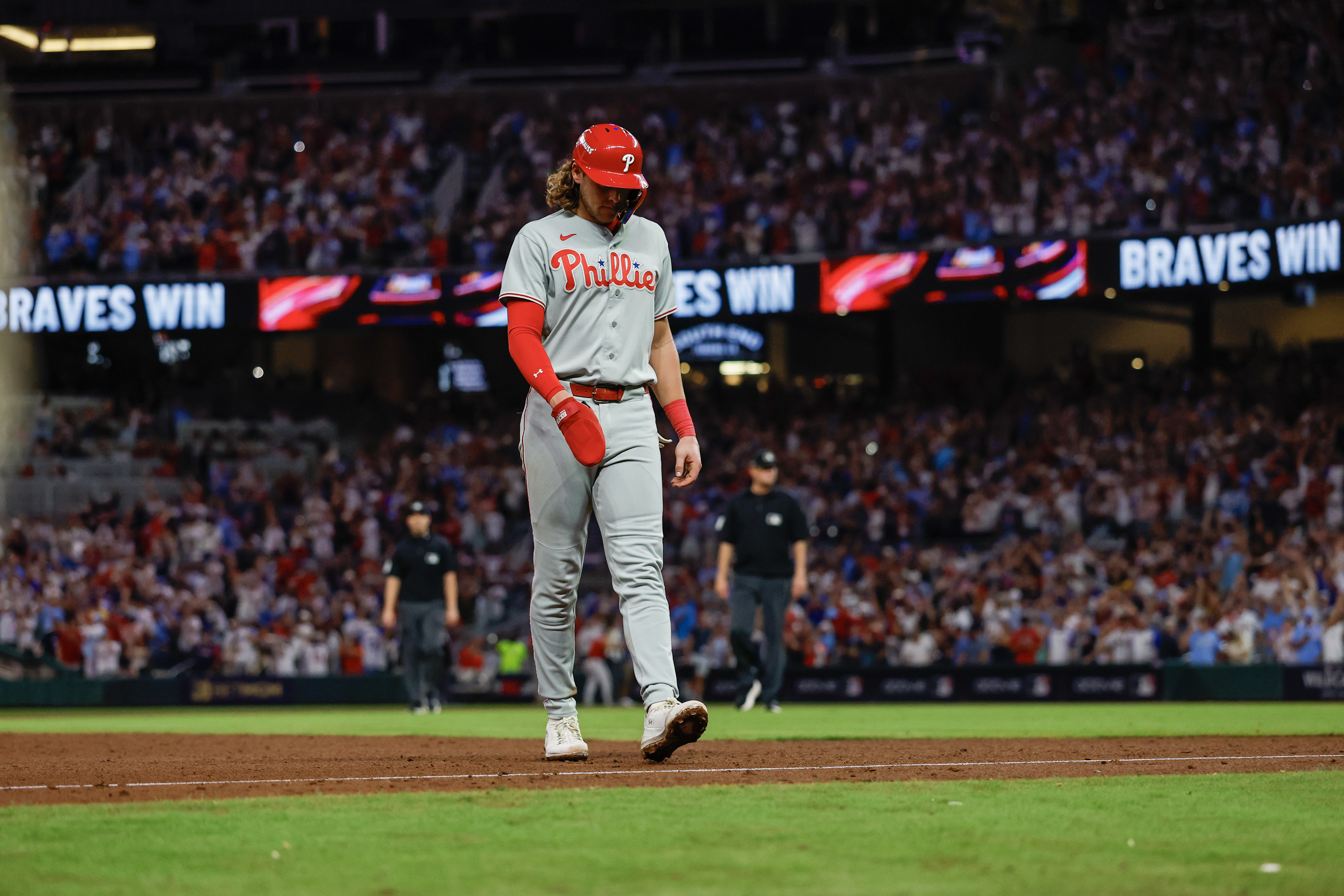
Alec Bohm walks off the field after the Phillies lost to the Braves in Game 3 on Thursday.Yong Kim / Staff Photographer
None of this is meant to serve as consolation. Nor does it nullify the litany of criticisms one can and should direct at these Phillies. As difficult as it is to make five straight postseasons, it is nearly as difficult to lose four straight postseason series on luck alone. There are clearly some structural issues here.
In their last nine postseason games, the Phillies have scored a total of 10 runs in the first six innings. About a third of those runs came in one inning, when they scored three off Shohei Ohtani in Game 1 of last year’s NLDS loss to the Dodgers.
In those same nine postseason games, the Phillies have allowed a remarkable 19 runs in the seventh inning or later.
Just as obvious as these KPIs are their underlying causes. The Phillies are a top-heavy team in both phases of the game. Dave Dombrowski’s biggest failure over the last three-plus years has been his inability to address either.
The last time the Phillies won a playoff game where neither Bryce Harper nor Kyle Schwarber homered was Game 4 of the 2023 NLDS. In fact, the duo has combined for at least two home runs in five of the six wins since. It is neither sustainable nor reasonable to place that much responsibility on two members of a nine-man lineup.
Same goes for the pitching staff, which has leaned so heavily on its key members that you can’t help but wonder about the cumulative effects.
In Game 3, 36-year-old Zack Wheeler was out there throwing 68 pitches on three days rest. This was two days after Jesús Luzardo threw 77 pitches in his first start off a three-week stint on the injured list. Which was the same day Duran threw 27 pitches in the seventh and eighth innings and wasn’t heard from again.
Zack Wheeler threw 68 pitches in Game 3 on three days’ rest.Yong Kim / Staff Photographer
You can second guess some of what interim manager Don Mattingly did with his pitching staff against the Braves. Bringing Duran into Game 1 when he did, allowing him to throw as many pitches as he did, starting Nola in Game 3. None of these decisions looked much different from the ones the previous guy would have made. This is how it looks when a manager feels like he does not have enough options.
“I don’t think it’s the time right now to try to evaluate why or whatever happened, what’s good, what’s bad,” Mattingly said after the loss. “It’s like any situation. You look at your club, you evaluate it, what went wrong, what went right, what’s the positive, what’s the negative, how do you move forward.
“But again, that’s not my place to talk about that. I think that’s the organization’s place. It’s Dave’s spot to — how they build the club. I’m sure those are things they’ll be thinking about over the winter.”
Mattingly is right to defer to his boss. The onus is clearly on Dombrowski, obviously. Credit him for drafting Alex McFarlane in the fourth round in 2022. The rookie setup man is the kind of arm the Phillies needed to find to have any hope at solving their longest running issue. Of course, we once said the same of Orion Kerkering.
You can’t fault Dombrowski’s effort. He’s taken plenty of swings. The whiff rate is the issue. Neither of the two relievers he acquired at the trade deadline was on the playoff roster: Caleb Kilian due to injury, Brooks Raley due to ineffectiveness. Same goes for Dombrowski’s biggest offseason acquisition. Setup man Brad Keller went down in early July with an elbow injury that will likely sideline him through next season. Kerkering finished the season in triple A, capping a steady downward slide from his promising debut in late 2023. Dombrowski’s best move of the year was acquiring righty Jonathan Bowlan from the Royals for lefty Matt Strahm. But Bowlan, too, spent most of the series on ice, appearing only after the Braves had taken a 5-0 lead in Game 3.
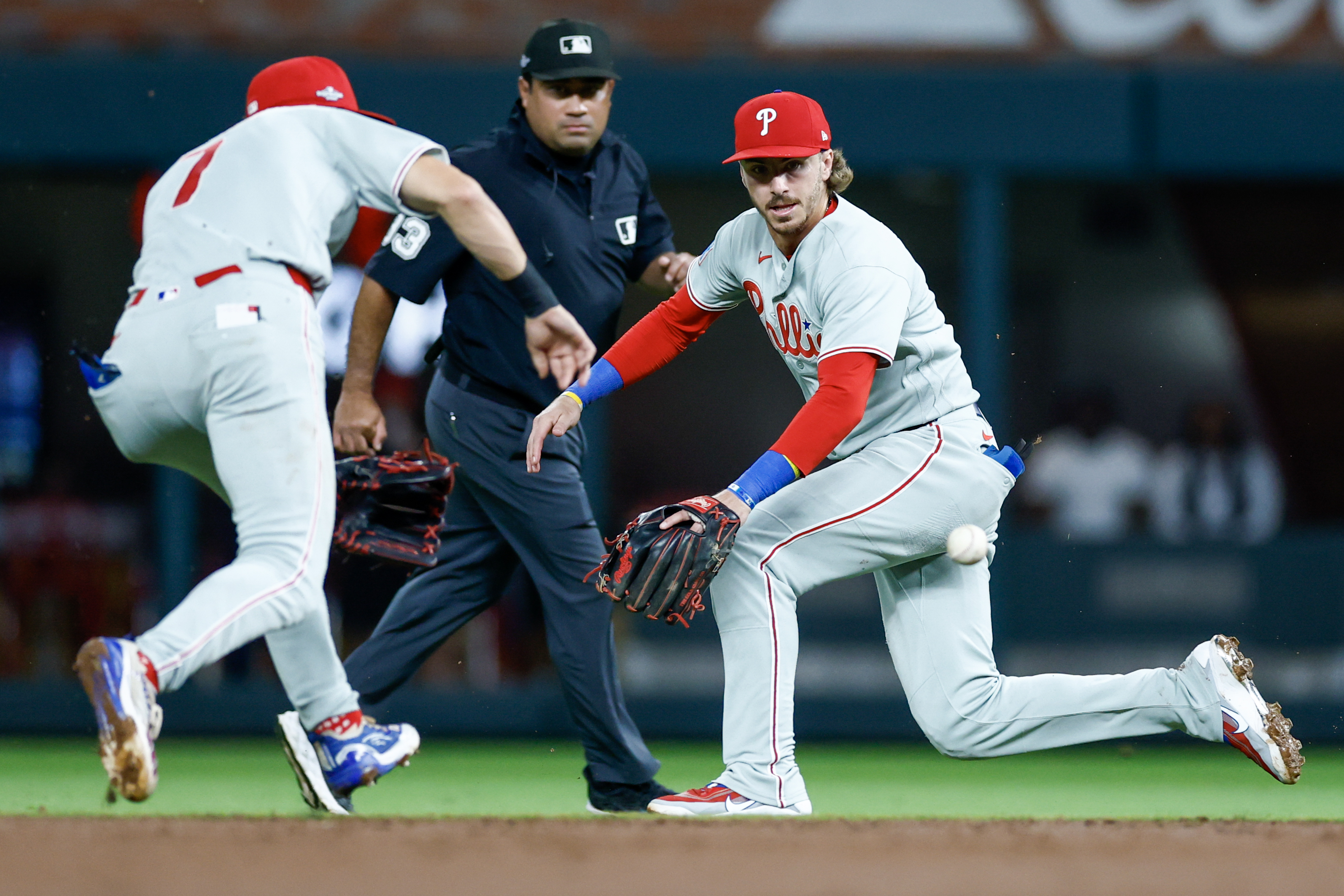
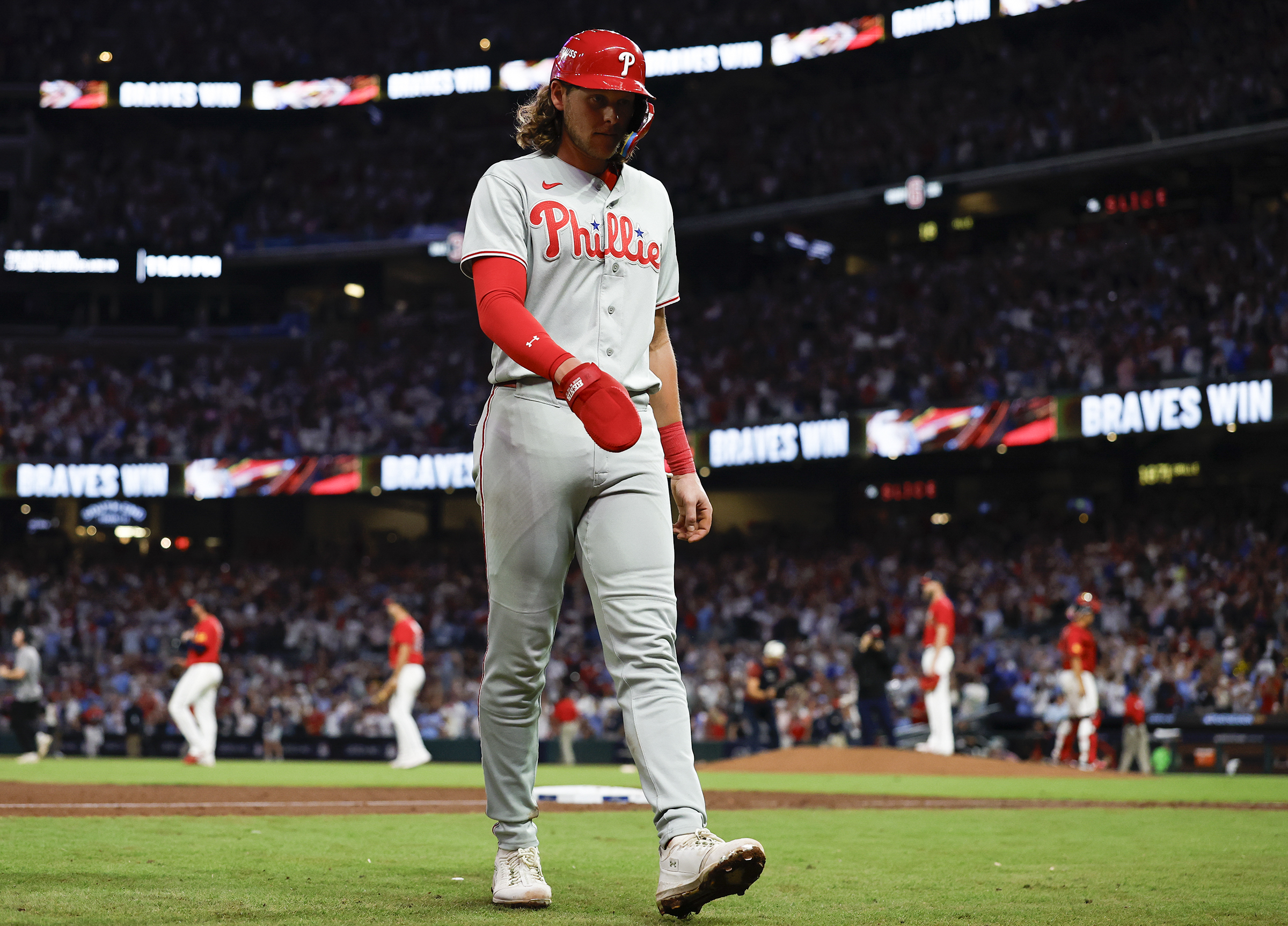
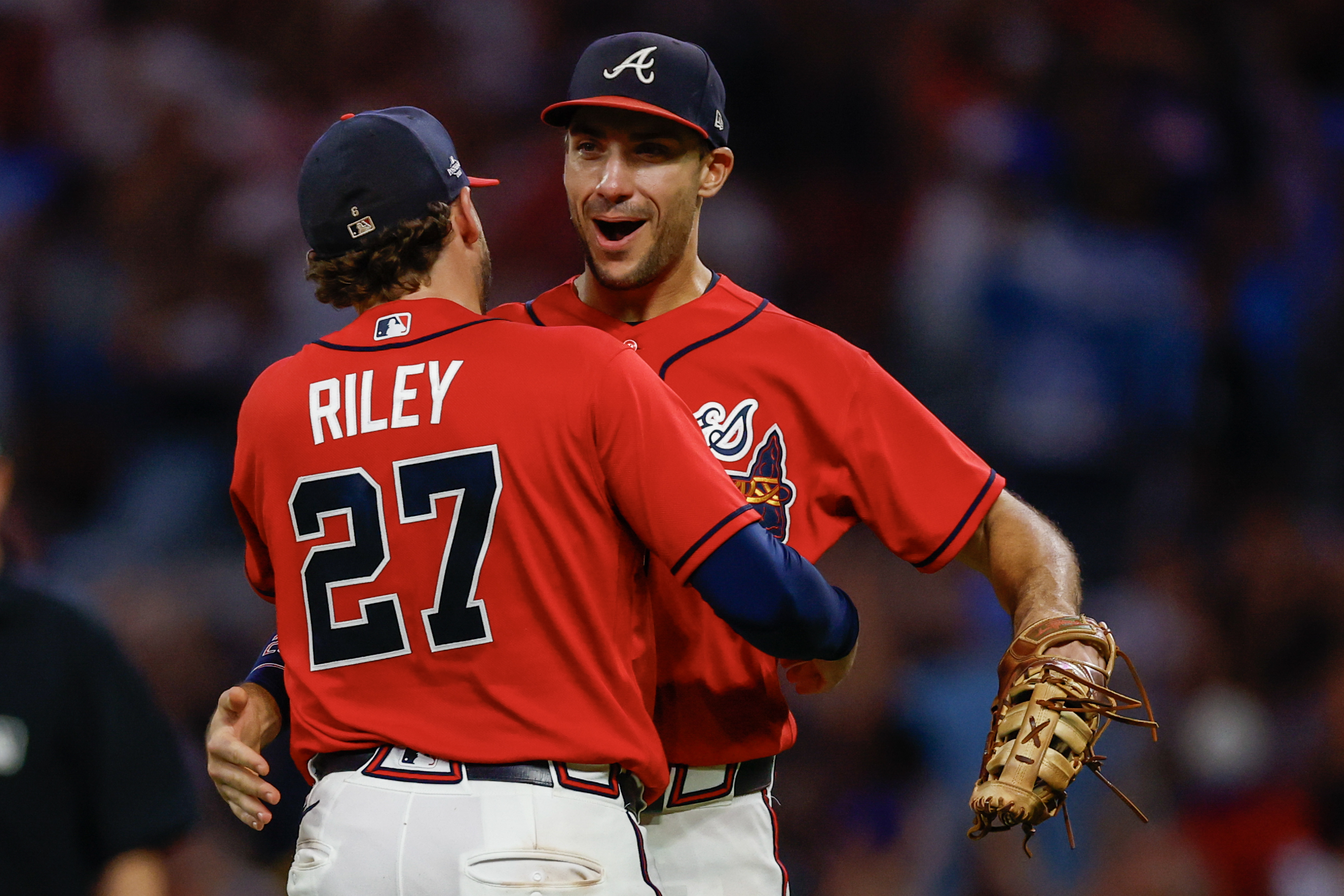
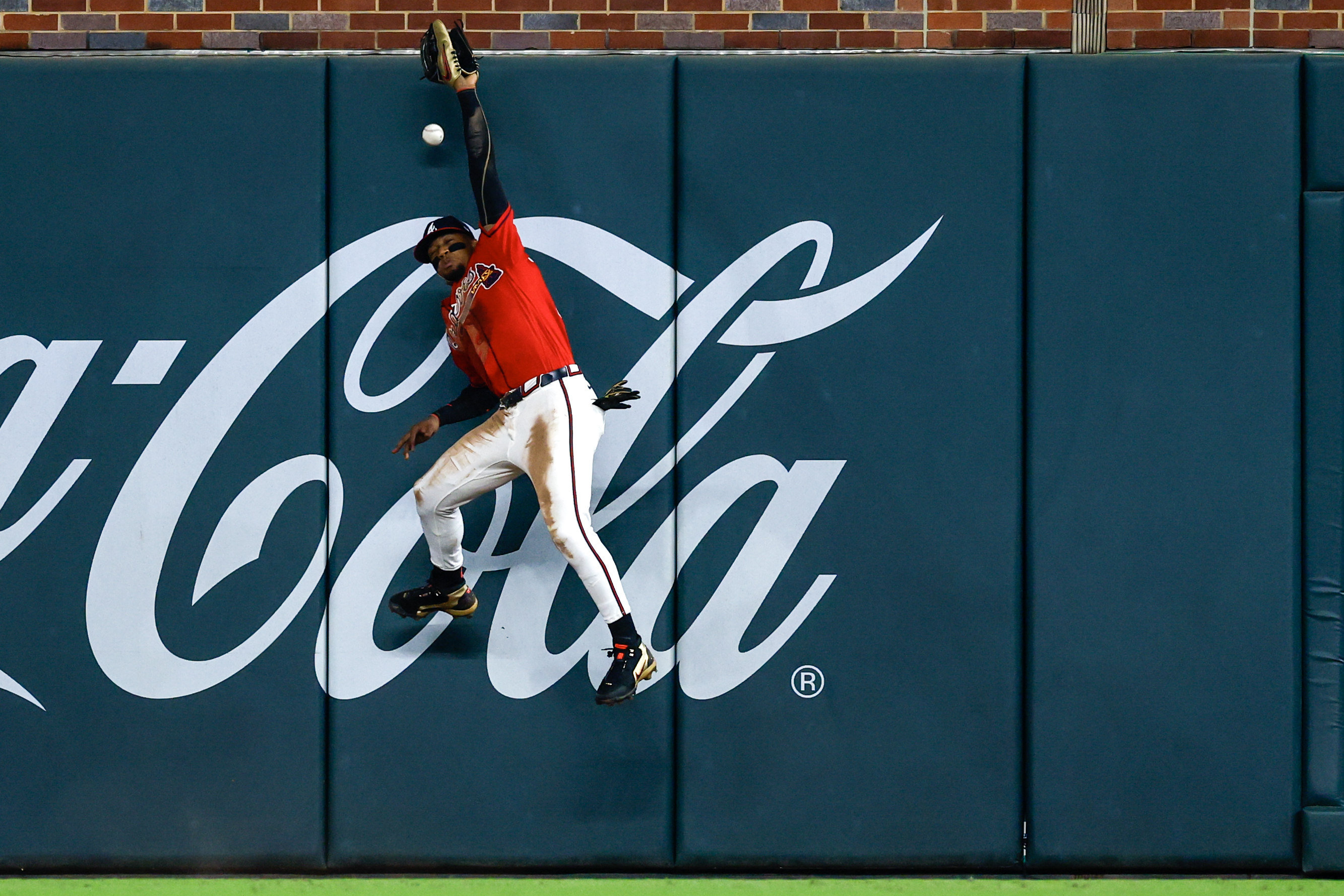
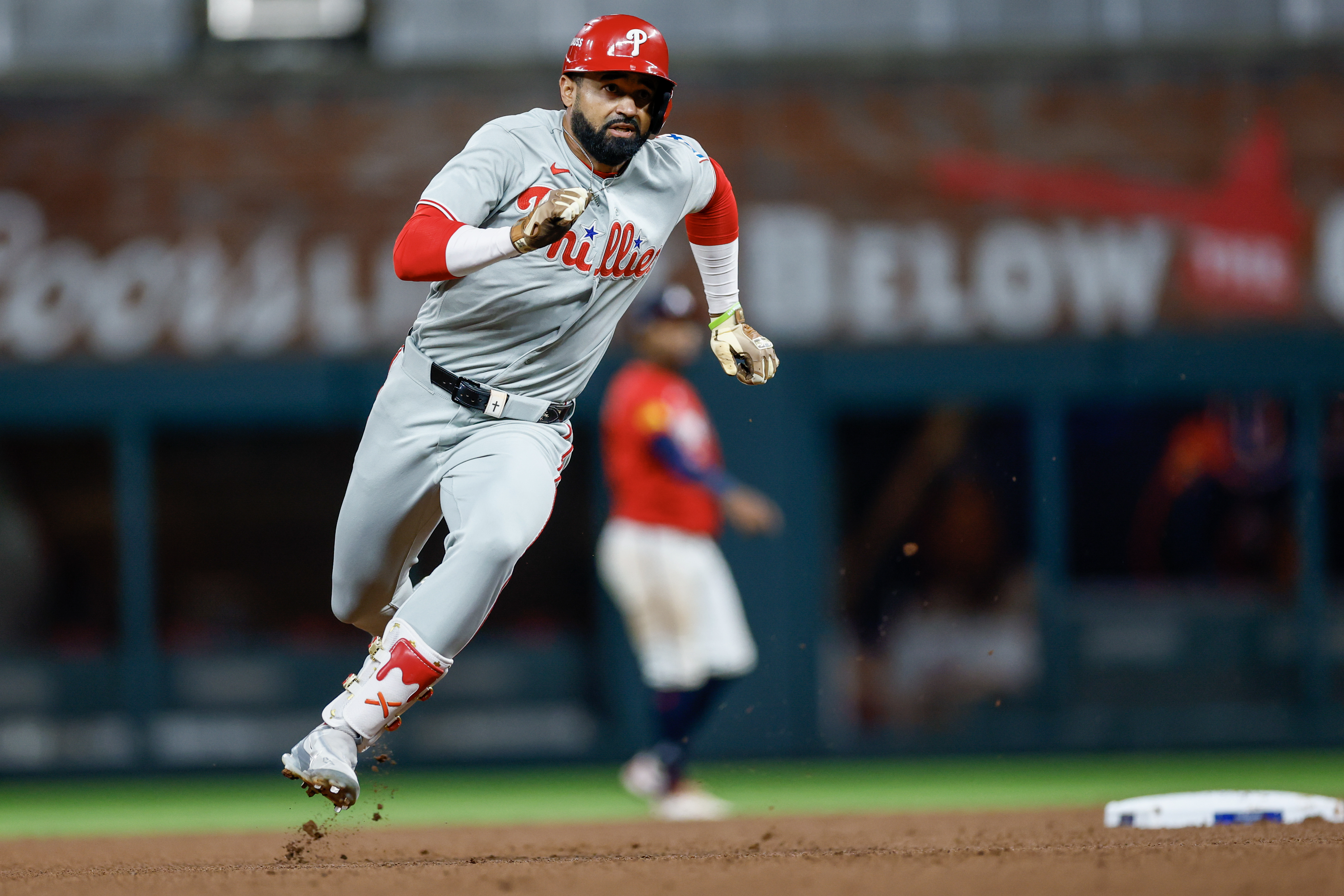
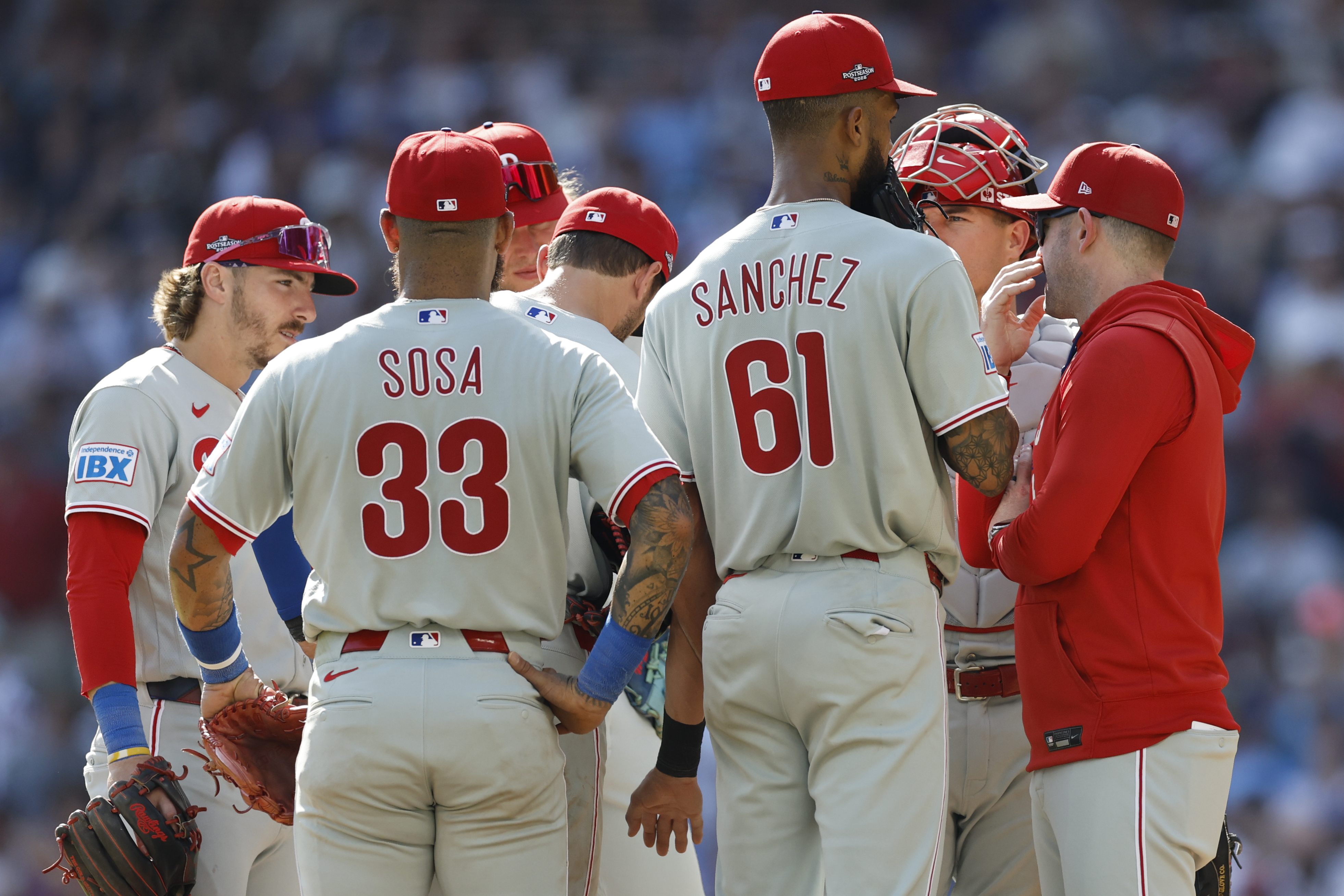
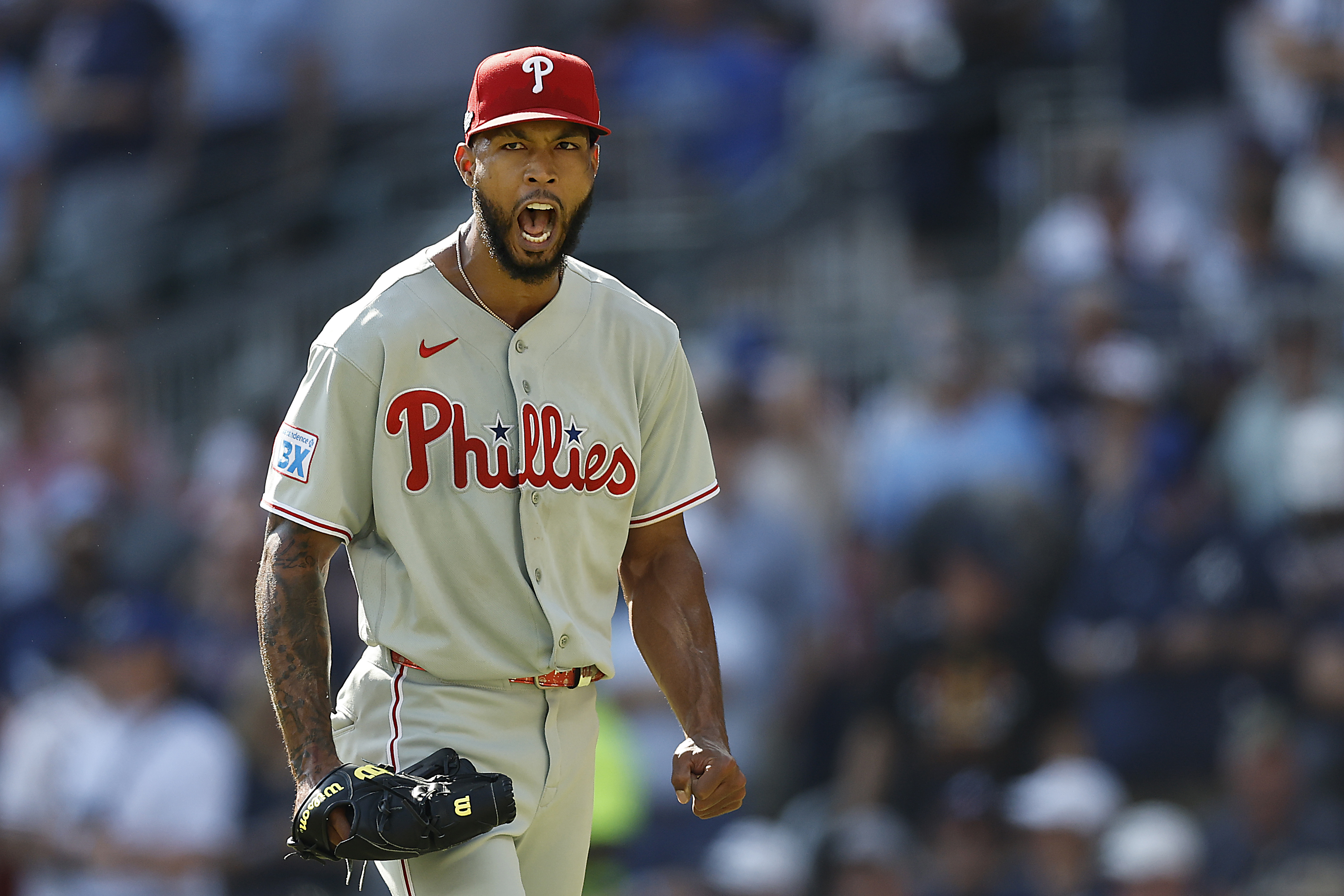
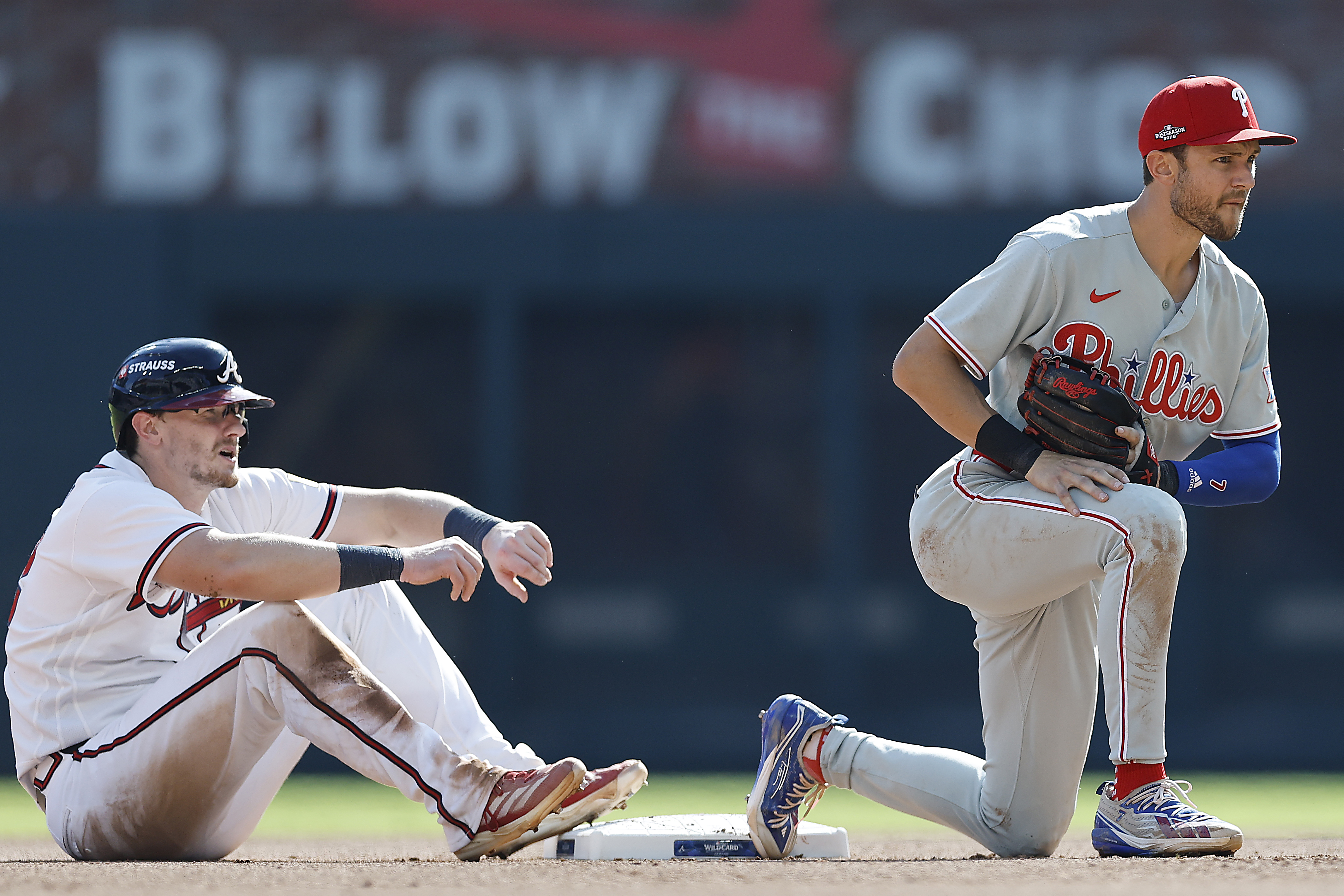
Phillies Alec Bohm walks off the field after the final out in Game 3 of the National League wild-card series against the Braves Thursday, Oct. 1, 2026, in Atlanta.Yong Kim / Staff PhotographerBraves Austin Riley (left) and Matt Olson celebrate their win in Game 3 of the National League wild-card series over the Phillies Thursday, Oct. 1, 2026, in Atlanta.Yong Kim / Staff PhotographerBraves starting pitcher Chris Sale closes the game during the ninth inning in Game 3 of the National League wild-card series against the Phillies Thursday, Oct. 1, 2026, in Atlanta.Yong Kim / Staff PhotographerBraves right fielder Ronald Acuña Jr. attempts to catch Phillies Derek Hill triple during the eighth inning in Game 3 of the National League wild-card series Thursday, Oct. 1, 2026, in Atlanta.Yong Kim / Staff PhotographerPhillies Derek Hill runs to third after hitting a triple during the eighth inning in Game 3 of the National League wild-card series against the Braves Thursday, Oct. 1, 2026, in Atlanta.Yong Kim / Staff PhotographerPhillies pitcher Jonathan Bowlan after Braves Matt Olson hits a solo home run during the seventh inning in Game 3 of the National League wild-card series Thursday, Oct. 1, 2026, in Atlanta.Yong Kim / Staff PhotographerBraves Matt Olson hits a solo home run during the seventh inning in Game 3 of the National League wild-card series Thursday, Oct. 1, 2026, in Atlanta.Yong Kim / Staff PhotographerPhillies first baseman Bryce Harper hits a double during the sixth inning in Game 3 of the National League wild-card series against the Braves Thursday, Oct. 1, 2026, in Atlanta.Yong Kim / Staff PhotographerPhillies designated hitter Kyle Schwarber hits a single during the sixth inning in Game 3 of the National League wild-card series against the Braves Thursday, Oct. 1, 2026, in Atlanta.Yong Kim / Staff PhotographerPhillies Bryan de la Cruz hits a single during the fifth inning in Game 3 of the National League wild-card series against the Braves Thursday, Oct. 1, 2026, in Atlanta.Yong Kim / Staff PhotographerPhillies Brandon Marsh tosses his bat after drawing a walk during the fifth inning in Game 3 of the National League wild-card series Thursday, Oct. 1, 2026, in Atlanta.Yong Kim / Staff PhotographerPhillies second baseman Bryson Stott after he strikes out looking to end the fourth inning in Game 3 of the National League wild-card series against the Braves Thursday, Oct. 1, 2026, in Atlanta.Yong Kim / Staff PhotographerPhillies pitcher Zack Wheeler after Braves Ozzie Albies hits a two-run homer during the fourth inning in Game 3 of the National League wild-card series Thursday, Oct. 1, 2026, in Atlanta.Yong Kim / Staff PhotographerPhillies pitcher Zack Wheeler after Braves Ozzie Albies hits a two-run homer during the fourth inning in Game 3 of the National League wild-card series Thursday, Oct. 1, 2026, in Atlanta.Yong Kim / Staff PhotographerPhillies pitcher Zack Wheeler throws a pitch during the third inning in Game 3 of the National League wild-card series against the Braves Thursday, Oct. 1, 2026, in Atlanta.Yong Kim / Staff PhotographerPhillies pitcher Tim Mayza throws a pitch during the second inning in Game 3 of the National League wild-card series against the Braves Thursday, Oct. 1, 2026, in Atlanta.Yong Kim / Staff PhotographerPhillies second baseman Bryson Stott (right) and shortstop Trea Turner (left) go after a single hit by Braves designated hitter Dominic Smith during the second inning in Game 3 of the National League wild-card series Thursday, Oct. 1, 2026, in Atlanta.Yong Kim / Staff PhotographerPhillies manager Don Mattingly takes out pitcher Aaron Nola during the second inning in Game 3 of the National League wild-card series against the Braves Thursday, Oct. 1, 2026, in Atlanta.Yong Kim / Staff PhotographerPhillies pitcher Aaron Nola after giving up a three-run home run to Braves Michael Harris II during the first inning in Game 3 of the National League wild-card series against the Braves Thursday, Oct. 1, 2026, in Atlanta.Yong Kim / Staff PhotographerBraves Michael Harris II hits a three-run home run during the first inning in Game 3 of the National League wild-card series against the Phillies Thursday, Oct. 1, 2026, in Atlanta.Yong Kim / Staff PhotographerPhillies designated hitter Kyle Schwarber hits a single during the first inning in Game 3 of the National League wild-card series against the Braves Thursday, Oct. 1, 2026, in Atlanta.Yong Kim / Staff PhotographerPhillies shortstop Trea Turner and back-up catcher Garrett Stubbs (right) throw the baseball during warm ups before the Phillies play on the Atlanta Braves in game 3 of the National League wild-card series on Thursday, Oct. 1, 2026 in Atlanta.Yong Kim / Staff Photographer
The issues with the lineup will be even more difficult to solve. The Phillies still haven’t found a replacement for Rhys Hoskins behind Schwarber and Harper. Whit Merrifield, Austin Hays, Adolis García, none even managed to offset the decline and fall of Nick Castellanos.
These aren’t just nitpicks. These are issues that will almost certainly need to be solved before the Phillies are capable of winning three or four straight playoff series, let alone one. And, really, they transcend whatever transaction-level pass-fail grades you assign to Dombrowski’s moves. The Phillies’ structural issues extend to their payroll. For the most part, their big-money guys performed about as well as can be expected, at least when grading against typical aging curves (i.e. in the case of J.T. Realmuto and Nola).
The one significant exception is shortstop Trea Turner, who has seven years and roughly $190 million remaining on his contract and is coming off a 33-year-old season in which he posted a career-low .675 OPS. He went 1-for-11 with no walks in three games against the Braves. Turner is 8-for-55 in his last 14 playoff games dating back to Game 5 of the 2023 NLCS.
“I think it starts with me,” Turner said of the offense’s struggles. “I take a lot of responsibility for it.”
Phillies shortstop Trea Turner has seven years left on his $300 million contract.Yong Kim / Staff Photographer
Even with some improvement from Turner, Dombrowski will need to take a careful look at every level of his organization and consider how to better balance this team beyond spinning the roulette-wheel of mid-level free agents and living trade deadline to trade deadline. He will need to explore the offseason trade market. He will need to come up with an accurate assessment of top hitting prospect Aidan Miller’s short- and long-term future after he missed most of the year with a back injury. He may need to consider whether Brandon Marsh can be swapped for a better lineup fit as the outfielder heads into his walk year.
These are difficult decisions. But they are the reason Dombrowski’s job exists.
The issue with the Phillies is not their heart, or their brains, and it certainly isn’t their grit. It isn’t their age, or their two best hitters. They came back from a disastrous start that earned their beloved manager a pink slip. They came back from a disastrous seventh inning in Game 2, one day after a victory slipped away from them late. Schwarber and Harper were as good a tandem as any in the league, all the way through this loss to the Braves.
The hardest general managin’ is taking a roster from good to great. Here we are, seeing it once again.
ATLANTA — If you weren’t careful you’d have gotten blood on your shoes when Trea Turner fell on his sword.
Turner knows exactly why the Phillies don’t score as much as they should. He looks that reason in the eye every morning.
“Me,” he said. “I mean, it’s pretty simple.”
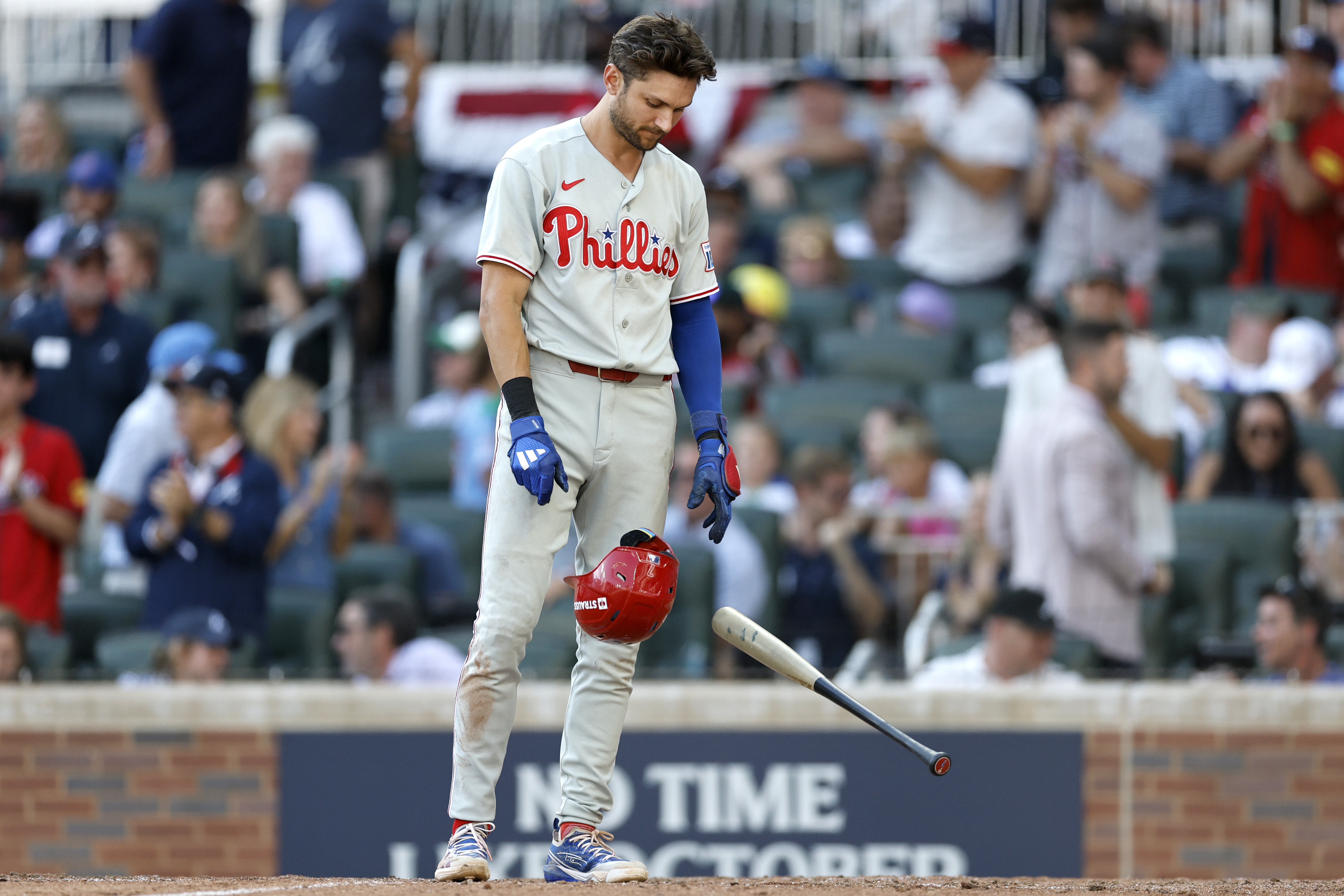
Turner spoke in front of his locker in the visiting clubhouse at Truist Park after a Game 3 wild-card loss to the Braves crushed the Phillies’ playoff hopes, the fourth consecutive year in which a billion-dollar lineup produced dime-store offense and, as a result, for the third consecutive season, it exited the postseason in the first series in which it played.
Turner’s dead wood isn’t the only issue on this club. It lost crucial deadline addition Luis Arraez, a .300 hitter, to injury last week. Its bullpen, flawed even when whole, was ravaged by injury as well. It is a poor defensive team with subpar speed that often is amplified by bafflingly bad base-running.
Turner isn’t the only hole in the lineup, either. Bryson Stott has been just as bad at times, as has catcher J.T. Realmuto, who went hitless in the 2024 postseason and was 2-for-10 against the Braves.
But both Stott and Realmuto are defensive stars. Turner can be a defensive liability, even though he plays shortstop. But then, that’s a different conversation, and besides, it only reinforces this reality: No money is more poorly spent by the Phillies than the money they’ve spent on Turner. There is no simple solution. Turner is 33, he has an untradeable contract, and he’s locked in for seven more seasons. Hopefully, by the time he’s 40, he will have figured it out.
Trea Turner can be a defensive liability at shortstop.Yong Kim / Staff Photographer
Dave Dombrowski, the team’s president, gave Turner a $300 million contract in 2023 with a simple, specific job: Get on base in front of Kyle Schwarber and Bryce Harper so they could drive him in.
Sure, he might hit the odd home run, but Turner has two batting titles, and he’s got speed to burn.
All he’s been burning in the Phillies’ postseasons is John Middleton’s cash.
“You know, when you hit first or second, you get a lot of at-bats, and I kind of get things going,” he said.
He spoke of the design, not the execution.
Because he hasn’t gotten things going. Not in a long time. Not in the playoffs, especially.
After their 6-2 loss Thursday, the Phillies now have three runs or fewer in the first nine innings in 11 of their last 13 playoff games. That encompasses the last two games of the NLCS against the Diamondbacks in 2023, the four NLDS games against the Mets in 2024, the four NLDS games against the Dodgers in 2025, and the three against the Braves this year.
Not coincidentally, they now have lost 10 of those 13 games.
In those 13 games, Turner is 8-for-52. That’s a .154 average.
And that, folks, is the biggest reason why the Phillies can’t score.
Further, lack of scoring is the biggest reason why the Phillies can’t win. Not the bullpen. Not the defense.
Turner’s postseason struggles from last year bled into his regular-season efforts this year. His batting average fell from .304 in 2025, best in the National League, to .242, the worst of his 13 full seasons — the worst by 24 points. The Phillies’ team average dipped from No. 2 in the NL in 2025 to No. 12 in 2026. They also scored 65 fewer runs in 2026 than in 2025.
Some of those runs, had they been scored in late September, would have helped the Phillies earn home-field advantage in the wild-card round. The Phillies held the top wild-card spot, but, with five games to play, they hit a four-game slide. They scored one run in three of those games. They were shut out in the fourth.
As such, they needed to win Game 162 in order to ensure the third wild-card slot, and they burned ace Zack Wheeler in that game. That meant Wheeler was not available for Game 1 of the wild-card series against the Braves on Tuesday.
Phillies Alec Bohm walks off the field after the final out in Game 3 of the National League wild-card series against the Braves Thursday, Oct. 1, 2026, in Atlanta.Yong Kim / Staff PhotographerBraves Austin Riley (left) and Matt Olson celebrate their win in Game 3 of the National League wild-card series over the Phillies Thursday, Oct. 1, 2026, in Atlanta.Yong Kim / Staff PhotographerBraves starting pitcher Chris Sale closes the game during the ninth inning in Game 3 of the National League wild-card series against the Phillies Thursday, Oct. 1, 2026, in Atlanta.Yong Kim / Staff PhotographerBraves right fielder Ronald Acuña Jr. attempts to catch Phillies Derek Hill triple during the eighth inning in Game 3 of the National League wild-card series Thursday, Oct. 1, 2026, in Atlanta.Yong Kim / Staff PhotographerPhillies Derek Hill runs to third after hitting a triple during the eighth inning in Game 3 of the National League wild-card series against the Braves Thursday, Oct. 1, 2026, in Atlanta.Yong Kim / Staff PhotographerPhillies pitcher Jonathan Bowlan after Braves Matt Olson hits a solo home run during the seventh inning in Game 3 of the National League wild-card series Thursday, Oct. 1, 2026, in Atlanta.Yong Kim / Staff PhotographerBraves Matt Olson hits a solo home run during the seventh inning in Game 3 of the National League wild-card series Thursday, Oct. 1, 2026, in Atlanta.Yong Kim / Staff PhotographerPhillies first baseman Bryce Harper hits a double during the sixth inning in Game 3 of the National League wild-card series against the Braves Thursday, Oct. 1, 2026, in Atlanta.Yong Kim / Staff PhotographerPhillies designated hitter Kyle Schwarber hits a single during the sixth inning in Game 3 of the National League wild-card series against the Braves Thursday, Oct. 1, 2026, in Atlanta.Yong Kim / Staff PhotographerPhillies Bryan de la Cruz hits a single during the fifth inning in Game 3 of the National League wild-card series against the Braves Thursday, Oct. 1, 2026, in Atlanta.Yong Kim / Staff PhotographerPhillies Brandon Marsh tosses his bat after drawing a walk during the fifth inning in Game 3 of the National League wild-card series Thursday, Oct. 1, 2026, in Atlanta.Yong Kim / Staff PhotographerPhillies second baseman Bryson Stott after he strikes out looking to end the fourth inning in Game 3 of the National League wild-card series against the Braves Thursday, Oct. 1, 2026, in Atlanta.Yong Kim / Staff PhotographerPhillies pitcher Zack Wheeler after Braves Ozzie Albies hits a two-run homer during the fourth inning in Game 3 of the National League wild-card series Thursday, Oct. 1, 2026, in Atlanta.Yong Kim / Staff PhotographerPhillies pitcher Zack Wheeler after Braves Ozzie Albies hits a two-run homer during the fourth inning in Game 3 of the National League wild-card series Thursday, Oct. 1, 2026, in Atlanta.Yong Kim / Staff PhotographerPhillies pitcher Zack Wheeler throws a pitch during the third inning in Game 3 of the National League wild-card series against the Braves Thursday, Oct. 1, 2026, in Atlanta.Yong Kim / Staff PhotographerPhillies pitcher Tim Mayza throws a pitch during the second inning in Game 3 of the National League wild-card series against the Braves Thursday, Oct. 1, 2026, in Atlanta.Yong Kim / Staff PhotographerPhillies second baseman Bryson Stott (right) and shortstop Trea Turner (left) go after a single hit by Braves designated hitter Dominic Smith during the second inning in Game 3 of the National League wild-card series Thursday, Oct. 1, 2026, in Atlanta.Yong Kim / Staff PhotographerPhillies manager Don Mattingly takes out pitcher Aaron Nola during the second inning in Game 3 of the National League wild-card series against the Braves Thursday, Oct. 1, 2026, in Atlanta.Yong Kim / Staff PhotographerPhillies pitcher Aaron Nola after giving up a three-run home run to Braves Michael Harris II during the first inning in Game 3 of the National League wild-card series against the Braves Thursday, Oct. 1, 2026, in Atlanta.Yong Kim / Staff PhotographerBraves Michael Harris II hits a three-run home run during the first inning in Game 3 of the National League wild-card series against the Phillies Thursday, Oct. 1, 2026, in Atlanta.Yong Kim / Staff PhotographerPhillies designated hitter Kyle Schwarber hits a single during the first inning in Game 3 of the National League wild-card series against the Braves Thursday, Oct. 1, 2026, in Atlanta.Yong Kim / Staff PhotographerPhillies shortstop Trea Turner and back-up catcher Garrett Stubbs (right) throw the baseball during warm ups before the Phillies play on the Atlanta Braves in game 3 of the National League wild-card series on Thursday, Oct. 1, 2026 in Atlanta.Yong Kim / Staff Photographer
“Having your pitching set up is really important this time of year,” Turner said. “And we didn’t do a good job playing down the stretch to have that happen.”
The Phillies lost that game. They had to use closer Jhoan Duran early, and for too long, and he tired, and they lost.
Turner went 0-for-3 in Game 1. He got picked off, too.
It was a rough visit to Georgia.
Turner finished the wild-card round 1-for-11 despite having the two magnificent sluggers hitting behind him, as they did all season.
“A lot of that’s on me,” Turner said. “I think you know, Kyle and Bryce did a good job.”
Harper was 3-for-13 with a double, a homer, and two RBIs. Schwarber was 4-for-11 with a homer. Their overall postseason production, however, is Ruthian.
To be fair, in his 67 career playoff games, Turner has not been a total bust. He hit .270 in his first 54 playoff games, which included a World Series title run with the Nationals in 2019. In his first 11 playoff games with the Phillies, in 2023, he hit .415 with three homers, five doubles, and 1.224.
He has been a black hole since. Again, he is not alone.
Stott, since Game 6 of the 2023 NLCS against the Diamondbacks, is 8-for-45 (.178) with one extra-base hit and 14 strikeouts.
Bryson Stott strikes out looking to end the fourth inning in Game 3.Yong Kim / Staff Photographer
But then, Stott has made about $10 million since 2023.
Turner has made almost $110 million since 2023.
He makes more than $27.2 million per season. How will he better earn his money in 2027?
Turner has no idea.
“It’s a question. Got a lot of work to do. Go over everything and just figure out, as much as I can. Find answers. See what I did bad,” Turner said. “This year was the biggest question mark for me offensively in a long time. I’ve got to figure that out. So I’m definitely gonna have a lot of work to do there. And I’ll do it.”
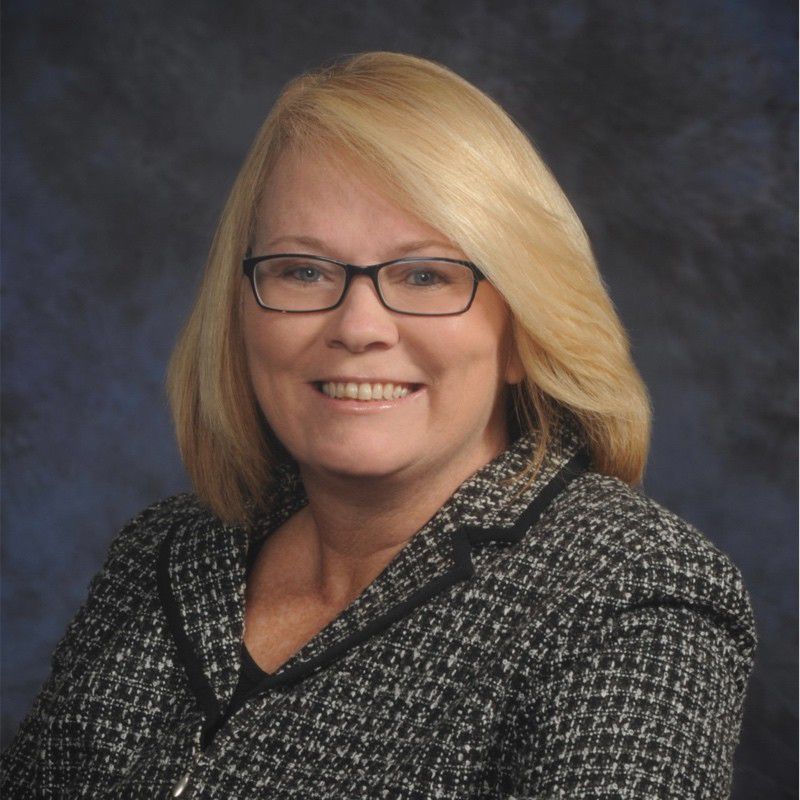
St. Christopher’s Hospital for Children named Claire Alminde permanent president on Thursday, following a period of leadership turmoil at the North Philadelphia safety-net institution.
Alminde, who will continue to serve as chief nursing officer, had taken over in January from another acting president.
“Claire brings a unique combination of frontline clinical experience and hospital leadership, along with firsthand knowledge of what it takes to operate a hospital like St. Chris that plays such a vital role in Philadelphia and beyond,” St. Chris said in an email.
One of Alminde’s tasks will be to work with leaders at Nemours Children’s Health, Jefferson Health, and Temple Health to build an alliance announced in July to secure the future of St. Chris, which struggles financially because most of its patients have low-paying Medicaid insurance.
St. Chris’ chief nursing officer, Claire Alminde, has been named president of the North Philadelphia safety-net provider.St. Christopher's Hospital for Children
Alminde was the third interim or acting executive appointed to the top management position at the nonprofit hospital since February 2024 and its fourth leader since 2020.
Drexel University and Tower Health have owned St. Chris in a 50-50 joint venture since 2019. Tower oversees day-to-day operations.
“After several years of leadership changes, this appointment gives St. Christopher’s strong, permanent leadership from someone who knows our hospital, our people and the community we serve incredibly well,” Tower CEO Michael Stern said in a message to employees. “Claire understands what makes St. Chris such a special place and what it will take to move us forward.”
The safety-net provider received a $76 million revenue boost from its inclusion for the first time in a program that taxes Philadelphia hospitals and uses the money to increase the government’s Medicaid funding for facilities that disproportionately care for low-income patients.
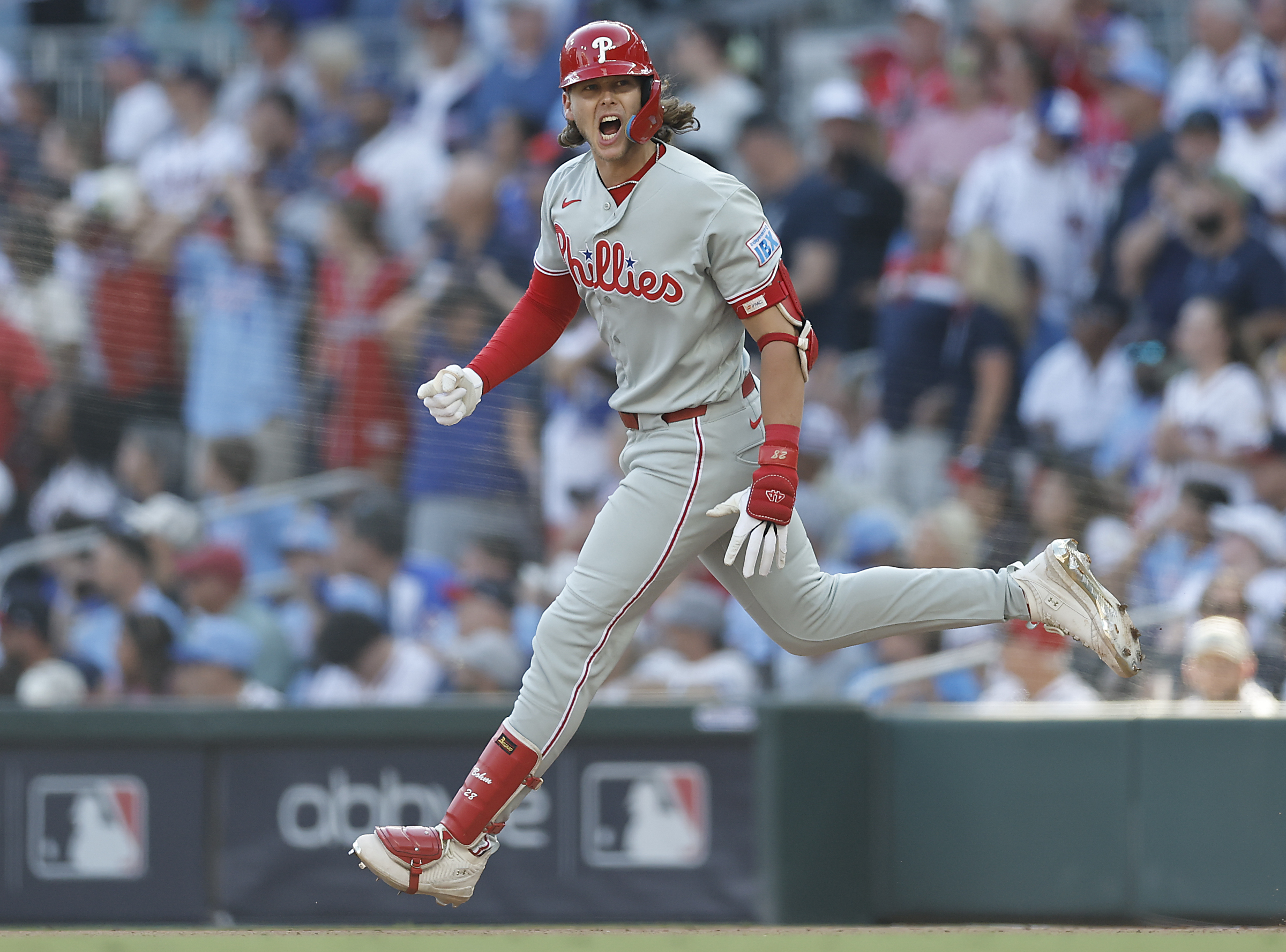
ATLANTA — Alec Bohm sat behind a microphone for what could have been the last time as a Phillie on Wednesday morning, and he reflected on his 6½ seasons in the majors as a Phillie, supporting rosters dotted with future Hall of Famers. He will be a free agent this winter, and his inconsistent play combined with his occasional truculence have led to assumptions that he will be moving on.
Then, five hours later, Bohm, hitting in the No. 4 spot, rocked the winning home run in the 10th inning of Game 2 of the wild-card series against the Braves. The Phillies took a 4-3 lead, which held up in the bottom of the inning as rookie Andrew Painter dealt the third of his three scoreless innings, and the season was saved.
With it, Bohm might have saved his future in Philadelphia and erased some of the less jubilant moments of his past.
The Phillies have tried to platoon him, they’ve benched him in the playoffs, they’ve shoved him from the cleanup spot to the bottom of the order, and they’ve put him on the trading block so often he might as well have been a bale of beaver pelts in the Old West. He never much cared, it seemed, until now.
Once a Philly hater, he now desperately wants to be a Phillie for life.
“I would love nothing more than to stay,” he said afterward. “I mean, if you think about it, like, not that often does a guy get to play his whole career in one place.”
“Yeah. You got to show up when it matters,” he said. “I think that’s a big part of it.”
The hit was Bohm’s second of the game, his third of the playoffs, and, with an earlier walk, it marked the fourth time he’d reached base in his nine plate appearances. He also drove in a run in Game 1.
That’s what he does. He doesn’t hit many home runs, but, hitting behind Bryce Harper, Kyle Schwarber, and Trea Turner, he has averaged just over 82 RBIs the past five seasons.
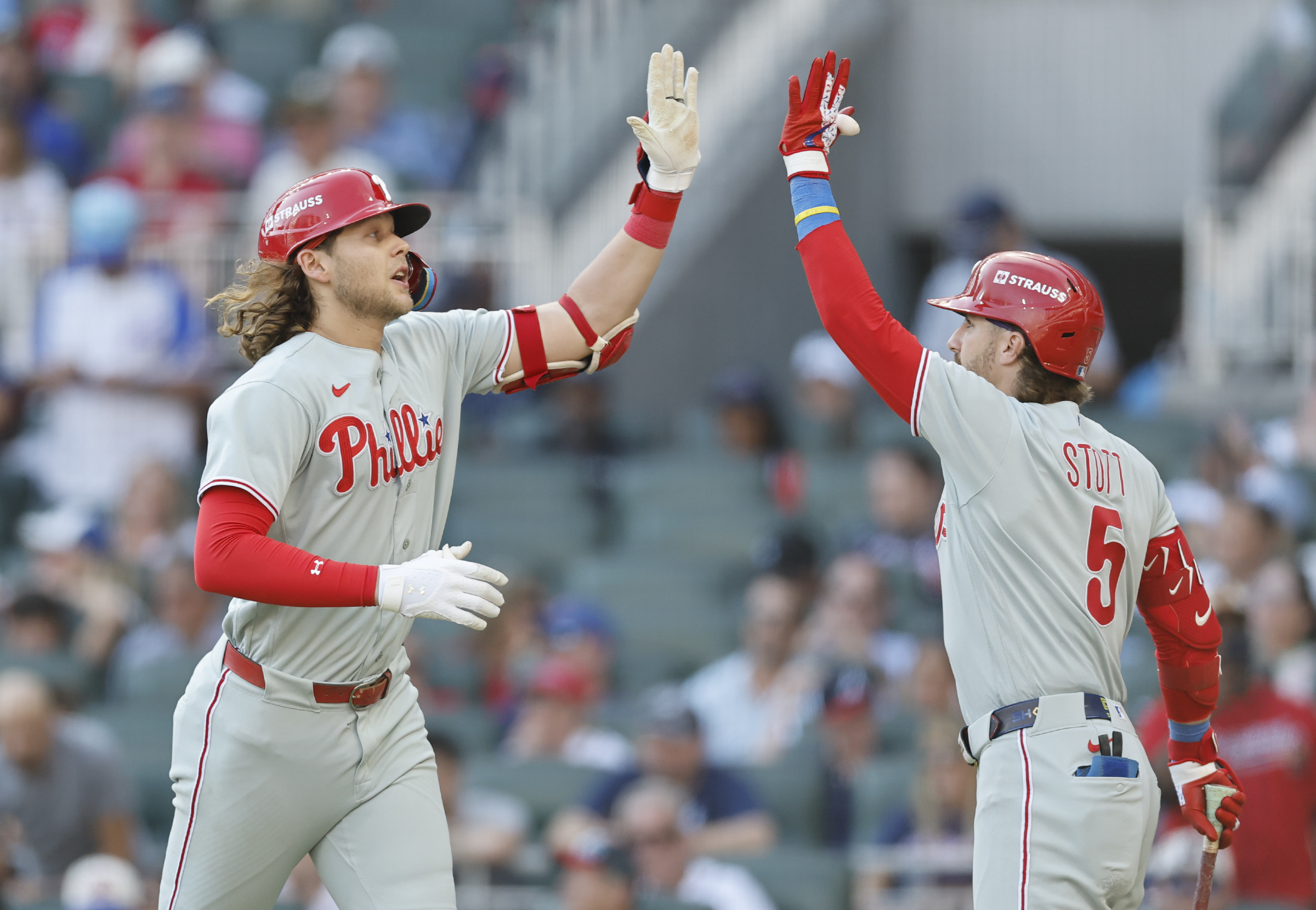
Alec Bohm celebrates with teammate Bryson Stott after Bohm hit a go-ahead 10th-inning homer.Yong Kim / Staff Photographer
“Seems like with Alec, everybody is always looking for more, for more,” interim manager Don Mattingly said before the game. “And he always ends up driving in around 90 runs, gets key hits.”
He has played among veterans his whole career, and he’s played like a veteran lately, to be sure. He’s a rare right-handed bat who plays first and third base and produces runs.
The question: If Bohm moves on, can the Phillies adequately replace him?
And, if so, how much will it cost … and how much will he cost?
Bohm is a homegrown first-round pick, drafted third overall in 2018. He turned 30 in August. He’s a productive everyday player.
He started slowly this season, but there were mitigating circumstances. He was in a contract year. He was suing his parents for mismanaging his money (that has been settled).
Harper stressed that the situation with his family clearly affected Bohm more than anyone let on.
“Man, I’m proud of him,” Harper said. “He’s been through the wringer this year, you know, on and off the field. No person, or player, or anybody should have to go through those situations.”
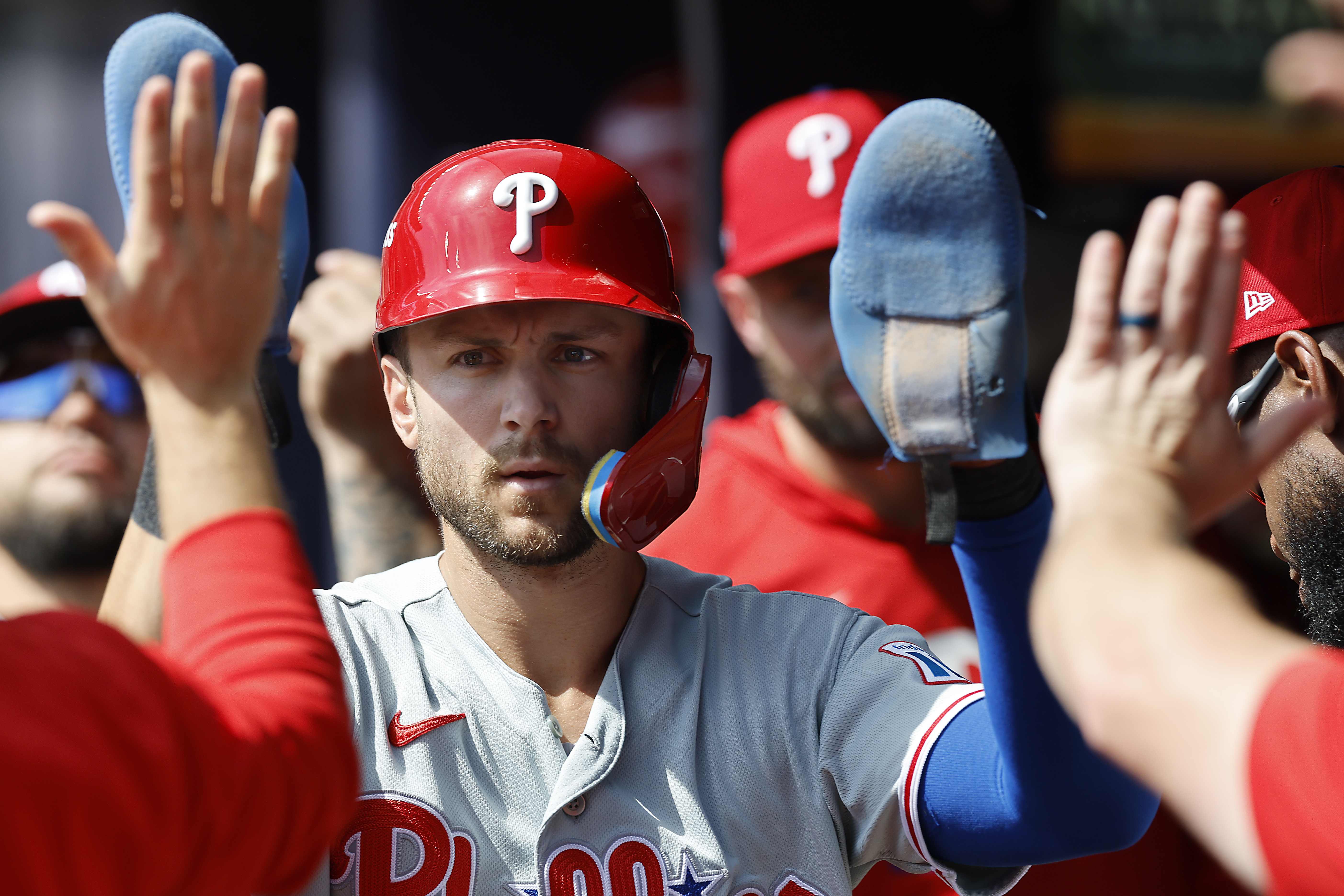
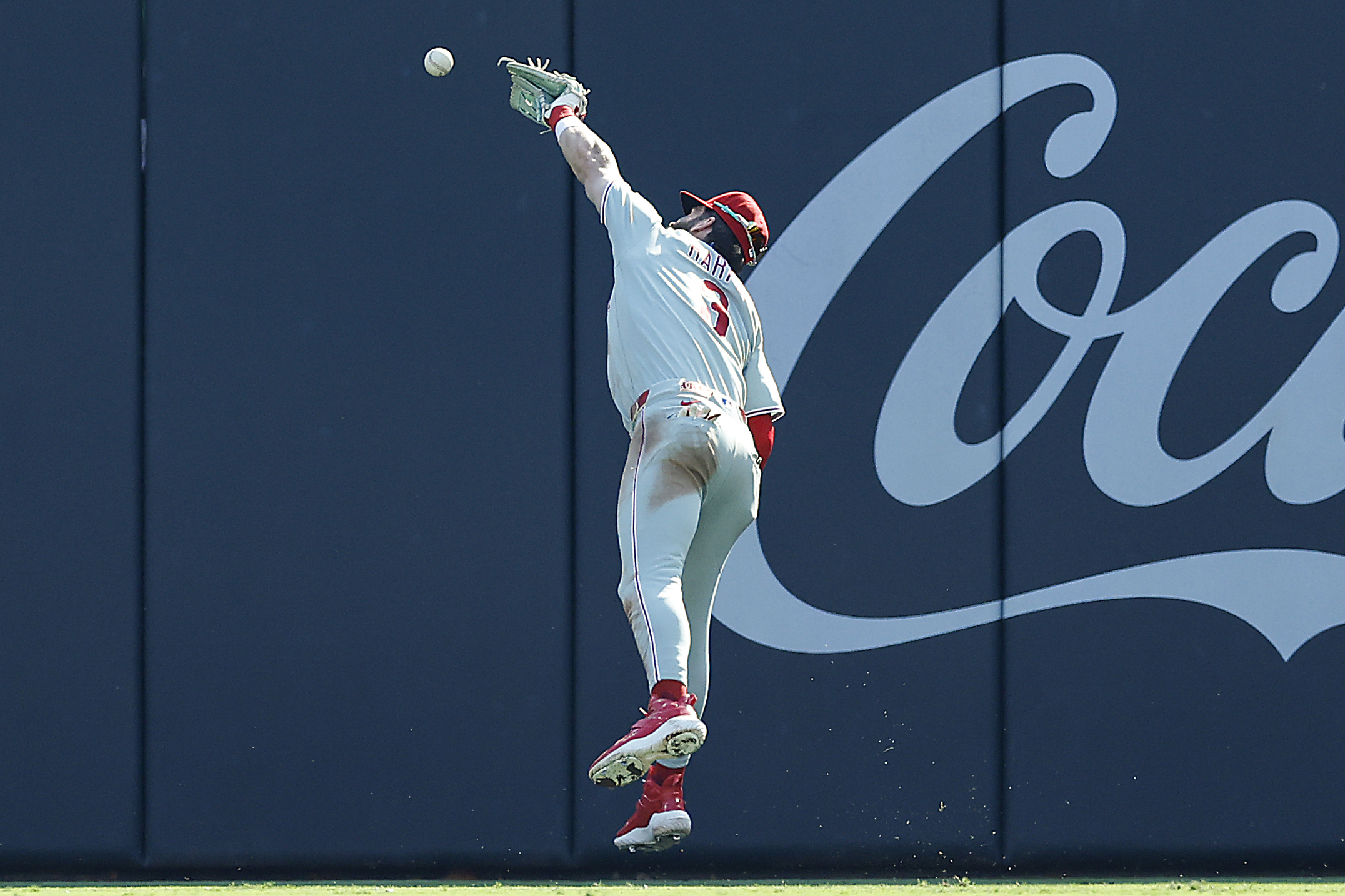
Philadelphia Phillies Trea Turner doubles against the Atlanta Braves in the first inning.Yong Kim / Staff PhotographerPhiladelphia Phillies Trea Turner celebrates in the dugout after scoring in the first inning.Yong Kim / Staff PhotographerPhiladelphia Phillies Bryce Harper hits a RBI single in the first inning.Yong Kim / Staff PhotographerPhiladelphia Phillies starting pitcher Cristopher Sanchez throws in the first inning.Yong Kim / Staff PhotographerPhiladelphia Phillies starting pitcher Cristopher Sanchez throws in the first inning.Yong Kim / Staff PhotographerAtlanta Braves pitcher Tyler Mahle throws against the Philadelphia Phillies in game 2.Yong Kim / Staff PhotographerPhiladelphia Phillies center fielder Justin Crawford singles in the fourth inning.Yong Kim / Staff PhotographerPhiladelphia Phillies pitching coach Caleb Cotham (right) talks with Cristopher Sanchez with the bases loaded for the Atlanta Braves in the sixth inning.Yong Kim / Staff PhotographerPhiladelphia Phillies starting pitcher Cristopher Sanchez reacts after getting out of a bases loaded jam in the sixth inning.Yong Kim / Staff PhotographerPhiladelphia Phillies shortstop Trea Turner (right) looks on as Atlanta Braves Sean Murphy was safe at second in the seventh inning.Yong Kim / Staff PhotographerPhiladelphia Phillies Bryce Harper couldn’t catch a ball off the bat of Atlanta Braves catcher Drake Baldwin in the seventh inning of game 2 of the National League Wild Card series in Atlanta, Ga. on Wednesday, Sept. 30, 2026.Yong Kim / Staff PhotographerPhiladelphia Phillies starting pitcher Cristopher Sanchez (right) prepares to exit the game after the Atlanta Braves scored two runs in the seventh inning.Yong Kim / Staff PhotographerPhiladelphia Phillies Bryce Harper pauses in right field during a pitching change in the seventh inning.Yong Kim / Staff PhotographerPhiladelphia Phillies designated hitter Kyle Schwarber hits a solo homer in the eighth inning.Yong Kim / Staff PhotographerPhiladelphia Phillies Bryce Harper hits a solo homer in the eighth inning.Yong Kim / Staff PhotographerPhiladelphia Phillies Edmundo Sosa leaves the game in the ninth inning.Yong Kim / Staff PhotographerPhiladelphia Phillies shortstop Trea Turner drops his bat and helmet after popping up for the third out in the ninth inning.Yong Kim / Staff PhotographerPhiladelphia Phillies third baseman Alec Bohm celebrates his solo homer in the tenth inning.Yong Kim / Staff PhotographerPhiladelphia Phillies Andrew Painter pitches against the Atlanta Braves in the tenth inning.Yong Kim / Staff PhotographerPhiladelphia Phillies catcher J.T. Realmuto celebrates their win.Yong Kim / Staff PhotographerPhiladelphia Phillies third baseman Alec Bohm celebrates his solo homer in the tenth inning against the Atlanta Braves in game 2 of the National League Wild Card series in Atlanta, Ga. on Wednesday, Sept. 30, 2026. Phillies win 4-3.Yong Kim / Staff Photographer
It all has worn on Bohm, both over the years and over the past few months.
“It’s just been a long road, with a lot of ups and downs,” he said. “I’ve learned a lot. I’ve made a lot of really close friends along the way. I’ve had a lot of people to lean on.”
He was an All-Star two years ago, but, really, he’s never been a better player than he is today.
From Aug. 2 to the end of the regular season, Bohm hit .308 with an .818 OPS, destroying lefties in particular.
“I don’t think there was a specific adjustment that I made,” Bohm said before the game. “I kind of just started seeing the ball a little better and got more comfortable.”
Bohm sure is comfortable. He has been as big a part of the Phillies’ late-season surge as anyone. He is entering his prime. There is no reason to end this relationship, now that it’s just heating up.
In 2022, the Phillies planned to either replace Bohm at third base or platoon him with Bryson Stott, but injuries squelched those plans. Still, as Bohm struggled early that season, he was caught on camera on the home field saying, “I [bleeping] hate this place.”
Phillies fans gave Alec Bohm an ovation after making a routine play at third 😅
Bohm apologized for that moment. He’s a kid from Nebraska who played college ball in Kansas, so he had to learn how to survive in a big city. He got better at third base. He moved to first base this year at the trade deadline when the Phillies acquired second baseman Luis Arraez, and there he has shined: He made two fine plays Wednesday.
Certainly, it wasn’t all Bohm on Wednesday.
Cristopher Sánchez delivered 6⅔ innings, allowed three runs, and threw a career-high 116 pitches, helping Mattingly avoid a beleaguered bullpen.
Painter, the fifth starter, made his playoff debut with three scoreless innings of relief — the eighth, ninth, and 10th — the first time he’s ever pitched in relief in those innings.
And, of course, there was Lightning and Thunder.
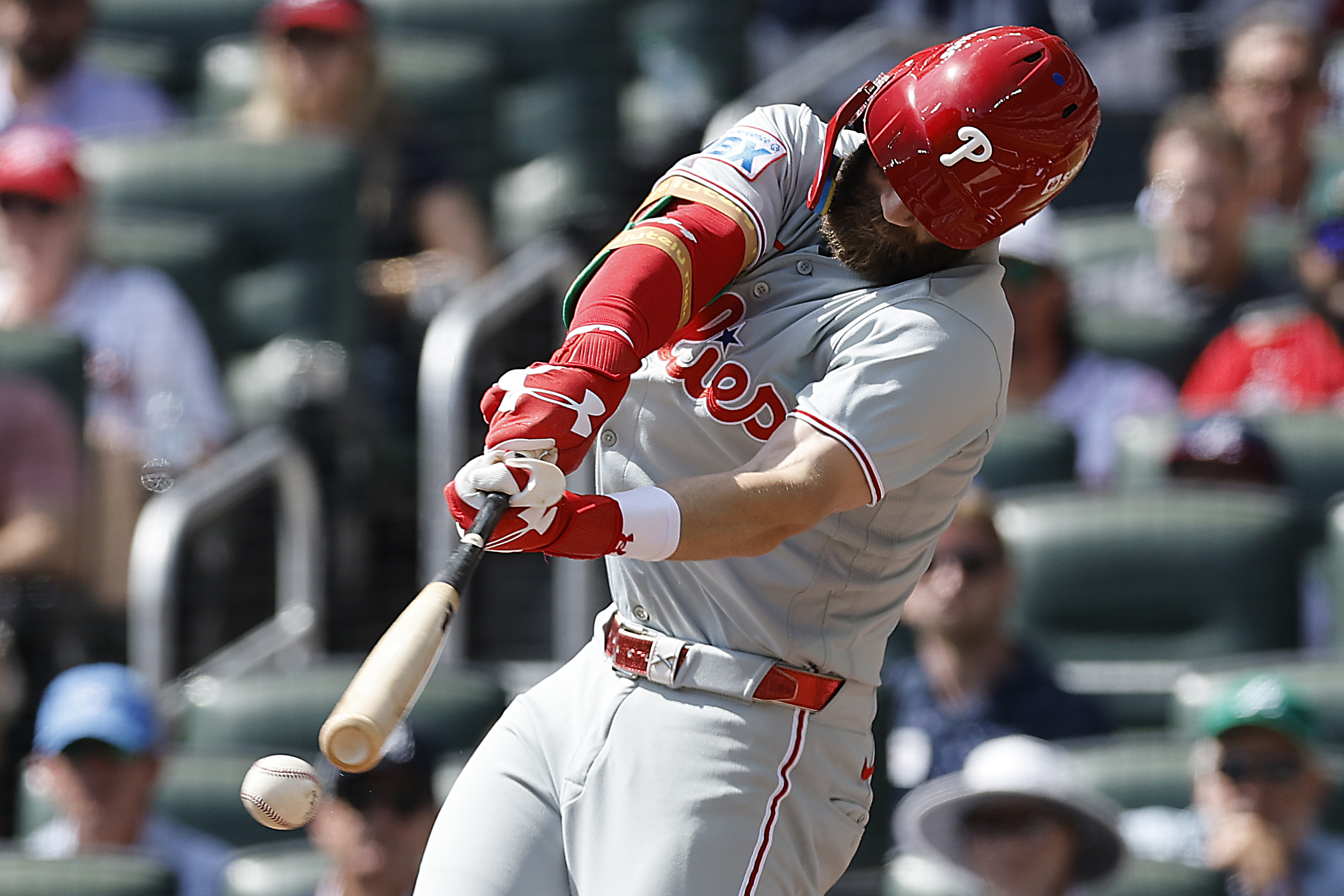
Bryce Harper’s eighth-inning homer tied the game at 3.Yong Kim / Staff Photographer
With their season in peril, Schwarber and Harper hit back-to-back home runs in the eighth inning and tied the game at 3. That took Sánchez off the hook.
They also absolved Harper and Bohm of defensive miscues in the seventh that gave the Braves two runs and a 3-1 lead.
More than anything, they forced extra innings in a must-win game whose loss not only would have given the Braves a 2-0 series sweep but, considering how disappointing the Phillies have been the past three postseasons, might have ended this era. It almost certainly would have ended Mattingly’s tenure.
Instead, they play Game 3 on Thursday. Bohm will be in the four-hole.
It’s hard to overstate, fairly or not, the low regard the organization has shown Bohm.
The Phillies spent $100 million on Nick Castellanos to serve as their right-handed cleanup hitter from 2022-26, but they released him this offseason after he’d failed in the role. They spent $10 million on his replacement, Adolis García, but he hit just .195 before injury ended his season in June. They traded for Arraez at the deadline and let him hit fourth until he sprained his ankle last week. Stott batted cleanup in the season finale Sunday.
But it’s been Bohm’s spot the past two games, and he has shown up, to the delight of the fans who have ridden him harder than any Phillie in the past six years.
Alec Bohm battled cleanup on Wednesday and will do so again for Thursday’s decisive Game 3.Yong Kim / Staff Photographer
He’s a hero tonight, even in Harper’s eyes. Harp is a good and nurturing teammate, but, as a future Hall of Fame No. 3 hitter, in spring training he was disappointed that the Phillies failed to better fortify the No. 4 spot in the offseason.
“I think the numbers in the four-spot weren’t very good last year for our whole team,” Harper said. “Whoever is in that four-spot is going to have a big job to do.”
Bohm got the job done Wednesday, and Harper acknowledged it.
“Today, he’s one of the best players, and probably one of the favorites, in Philadelphia right now,” Harper said.
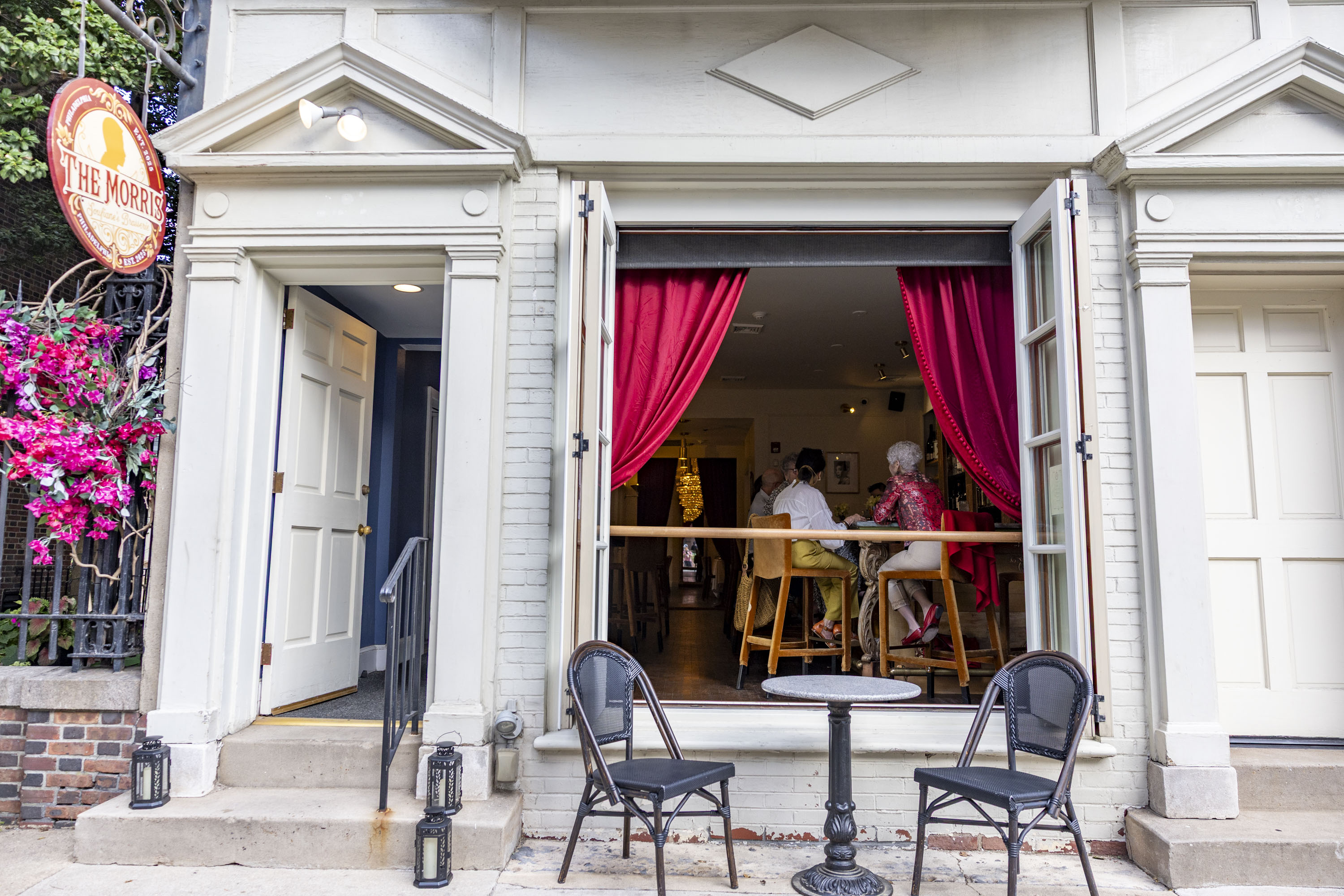
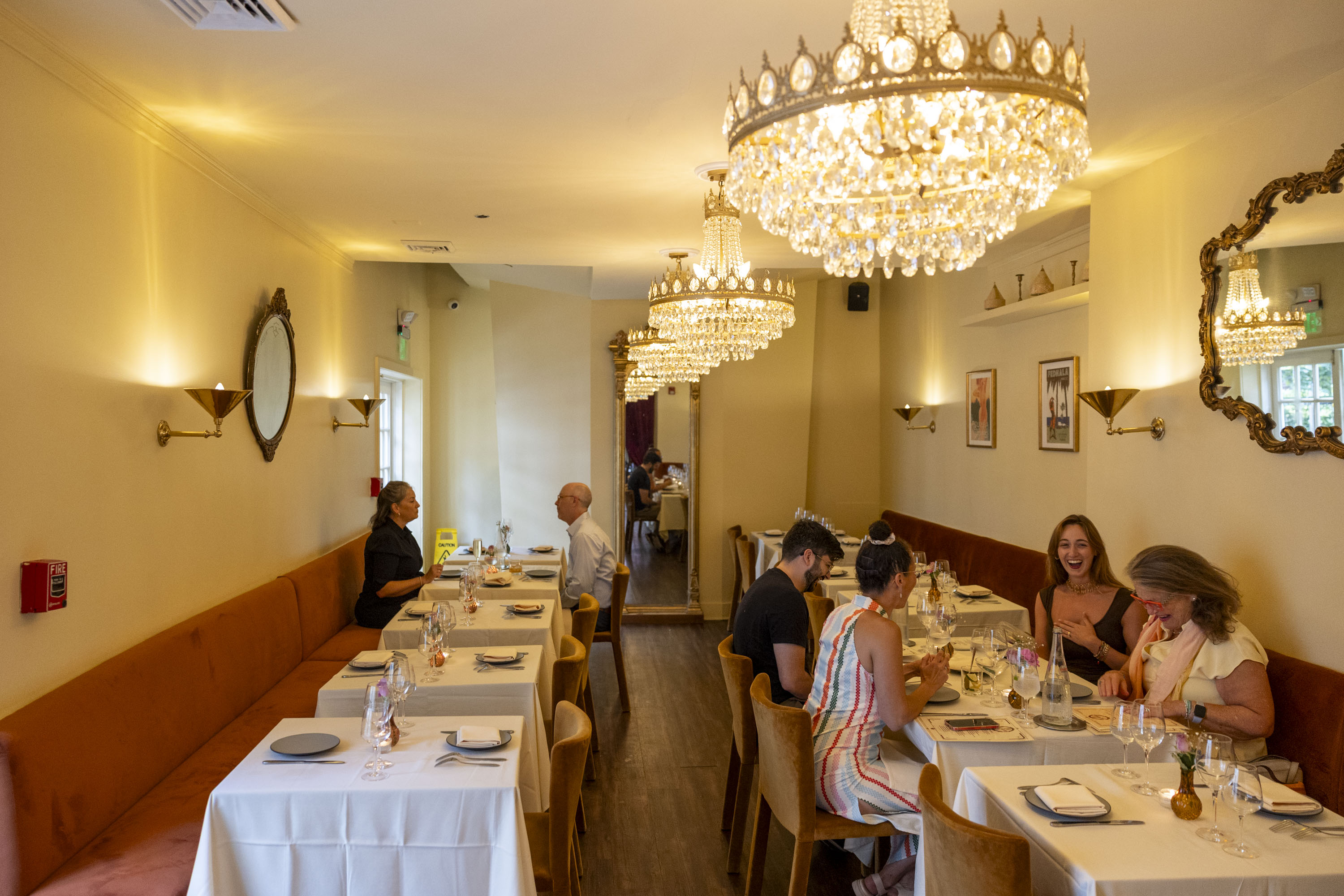
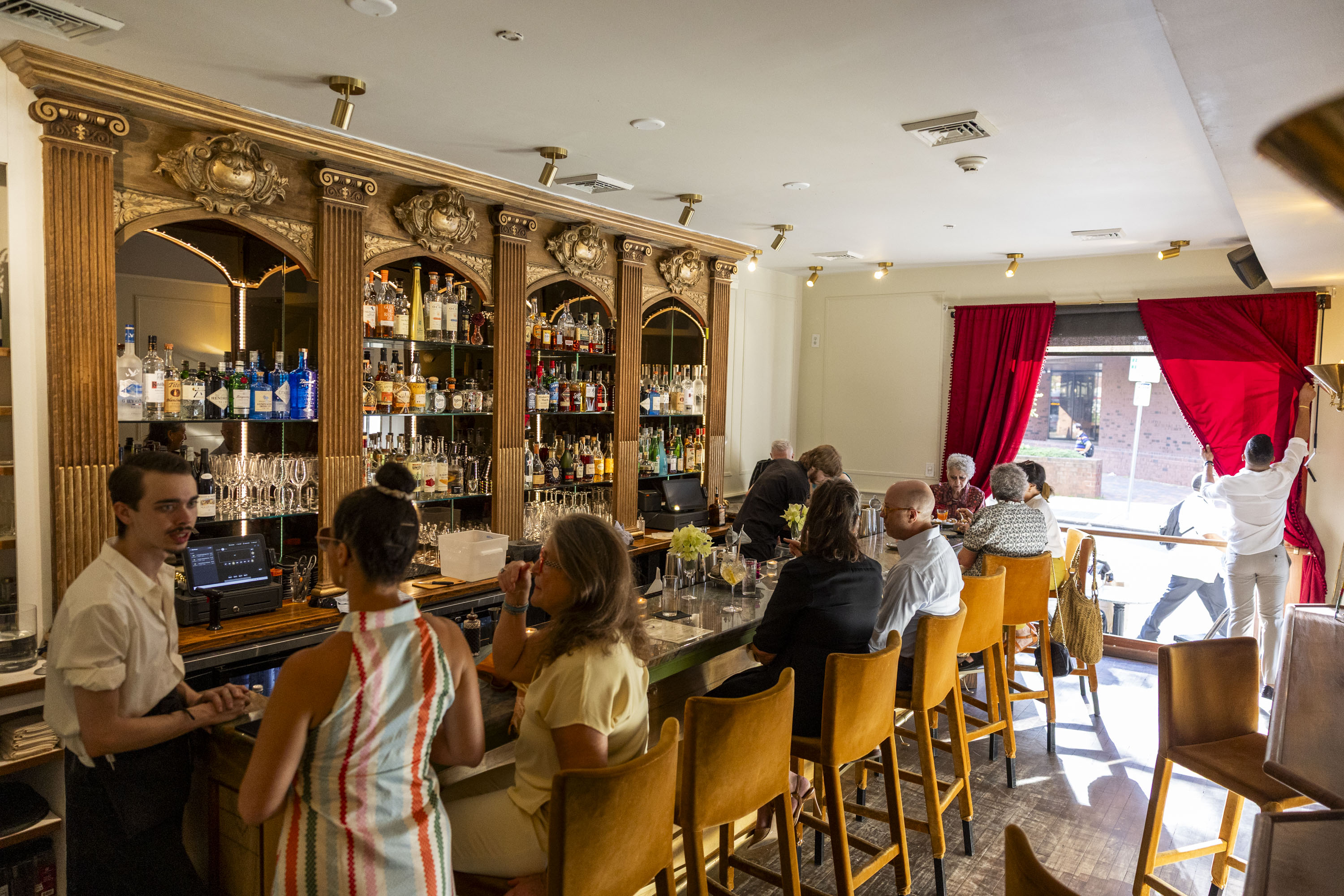
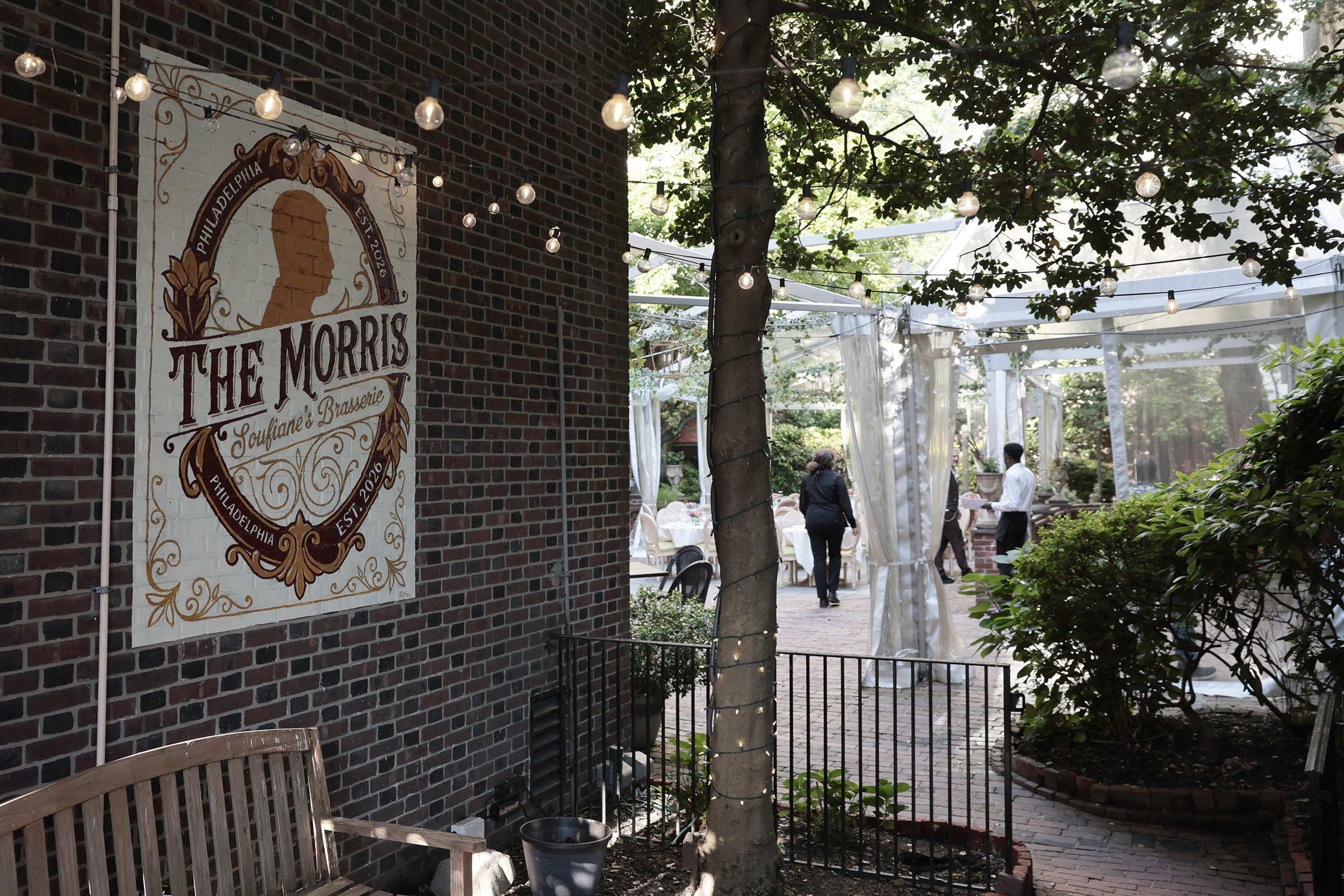
The Morris House Hotel has always had the bones to host a hit restaurant. Its Georgian-style brick buildings boast some genuine historic character dating back to 1787, when the Constitution was being written just a few blocks away. There’s a gracious courtyard oasis tucked behind an iron gate with room for 75 diners beneath a garland-draped tent ringed by dogwood and magnolia trees. A cozy indoor space with room for 45 more beside that garden and a plush bar offer a dramatic view through red curtains onto Eighth Street. Situated close to Washington Square, surrounded by residential neighborhoods and the vital pulse of a hospital district, it’s not lacking for foot traffic.
And yet, the Morris House has long been the Philadelphia restaurant equivalent of the Bermuda Triangle. Over the last 20 years since it was refurbished into an elegant inn, several talented chefs have come along in hopes of unlocking its potential as a destination dinner hideaway — only to succumb to its more profitable use as a wedding party factory. The fits and starts of multiple new operators, most recently the bistro-style Morris, which closed after less than a year in 2023, have continued to cloud the public’s perception of what happens at 225 S. Eighth St.
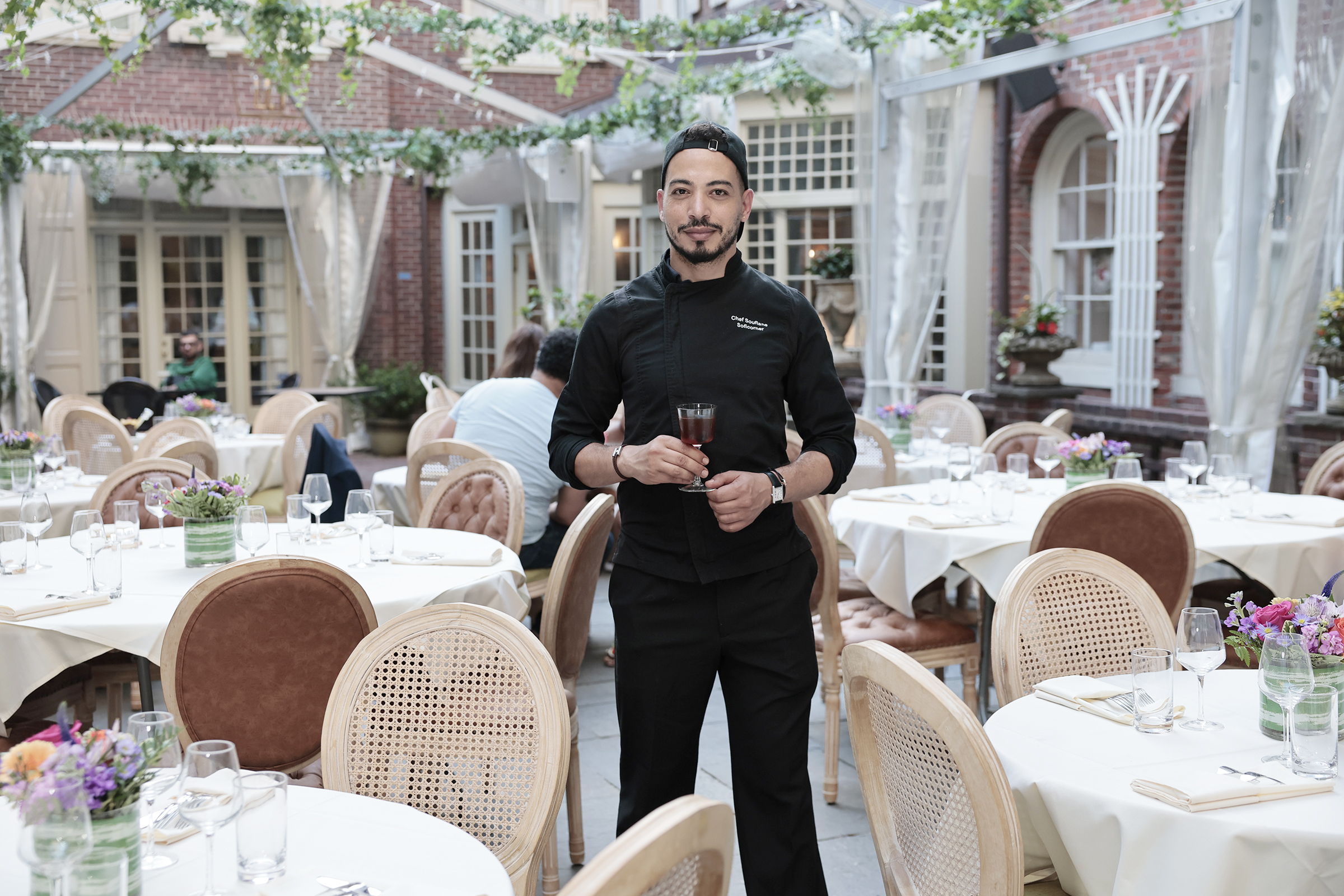
The outside of Soufiane at the Morris on Sept. 10, 2026, in Philadelphia, Pa.Tyger Williams / Staff PhotographerSoufiane Boutliliss shows off the outdoor dining in the garden during a friends-and-family preopening of Soufiane at the Morris in Philadelphia on May 27, 2026.Elizabeth Robertson / Staff Photographer
What this space needs is a restaurant with a distinct identity. So I could not have been more excited to learn that Soufiane Boutliliss and Christophe Mathon of Sofi Corner Cafe were bringing a more expansive expression of their Moroccan-French magic to the fine-dining setting of the Morris House.
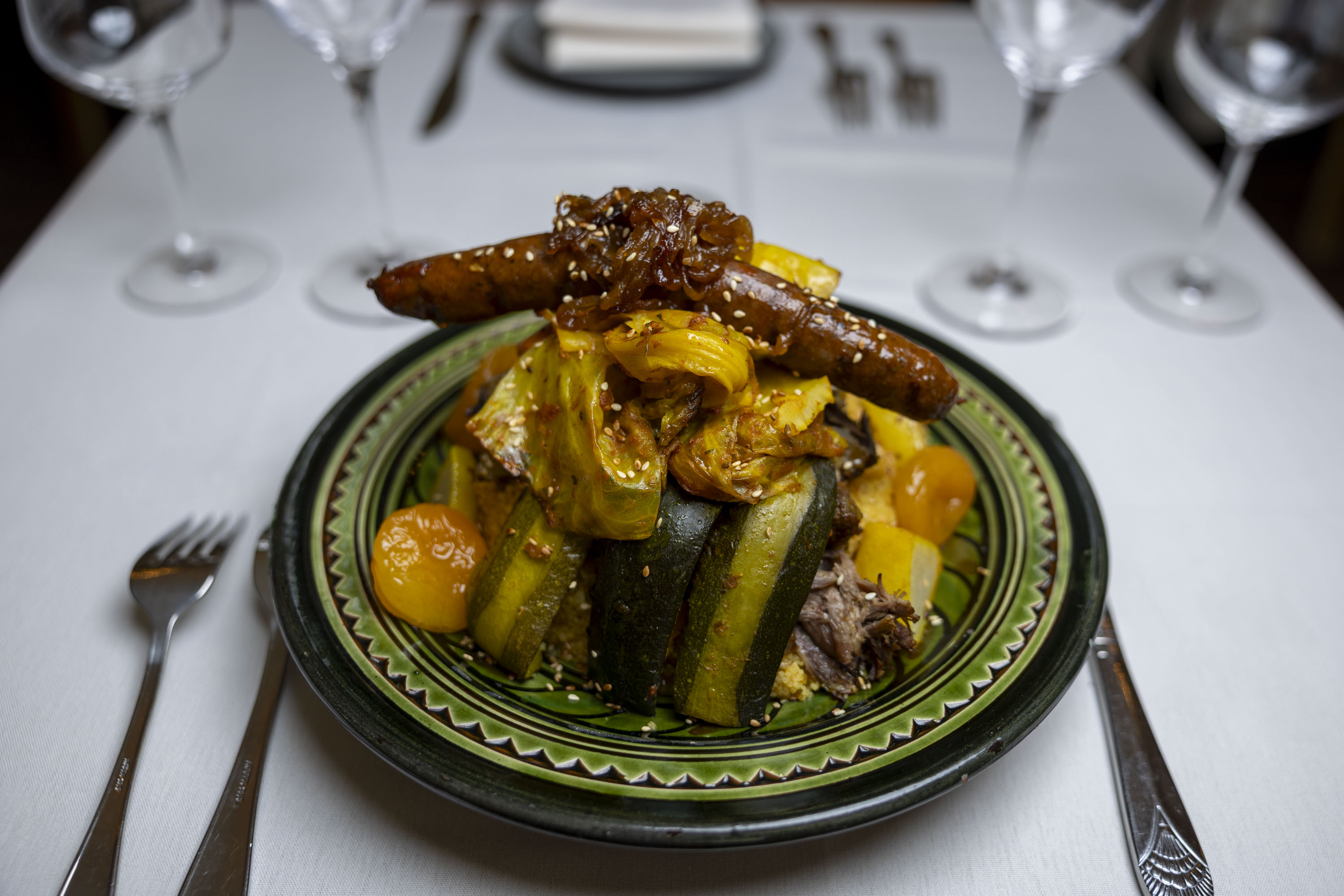
I still daydream of the couscous royale I once ate at Sofi Corner, the casual, counter-service breakfast-lunch cafe this married couple still operates for daytime service a few blocks away on Locust Street. I was thrilled to find another rendition of that cultural keystone dish celebrated here, a deep-green painted terra-cotta platter of mounded couscous scented with nutty aged butter draped with heaps of stewed veggies, tagine-braised chicken and lamb, sesame-speckled dried fruits, and a cuminy link of merguez rocking over top like a sausage seesaw.
Couscous royale with meat at Soufiane at the Morris on Sept. 10, 2026, in Philadelphia.Tyger Williams / Staff Photographer
But something was missing. It wasn’t just the need for a more generous splash of the deeply steeped broth kissed with rose water that should unite these disparate elements. (You can always ask for extra broth with your couscous.) This centerpiece to our dinner also arrived 90 minutes after our arrival, pointing to much bigger issues of service and inexperience with a project this large that are hampering this duo from realizing their vision at the Morris House.
The restaurant was so completely unprepared on a midweek evening for a busy room that what might be a boon of customers for most restaurants became a crisis here. The frantic staff was stretched so thin that it took a server nearly 30 minutes to take our drink orders, and then only with a sigh while leaning halfway through the doorway to the patio, where several more customers waited. Menu items kept dropping out of our reach before we could ask for them. The Moroccan briouats pastries? Gone. The piperade roast peppers and toast? Gone.
Inside dining area at Soufiane at the Morris on Sept. 10, 2026, in Philadelphia.Tyger Williams / Staff PhotographerSoufiane Boutliliss, owner of Sofi Corner Cafe, and his husband, Christophe Mathon, pose for a portrait in front of the restaurant in Philadelphia on Dec. 29, 2023.Tyger Williams / Staff Photographer
“Let me send you a roasted marrow bone compliments of the house!” a manager offered my unlucky-in-ordering guest as a consolation. It never came. Neither did the duck confit, substituted without mention by a seared duck breast, which was salty, tough, and small for $37.
“A couple people did not show up in the kitchen today,” conceded yet another staffer who ultimately took our order. That might also explain why an otherwise wonderfully seasoned duck pâté en croûte marbled with pistachios and herbes de Provence arrived with its underbaked pastry crust still pale and doughy.
It does not take skilled kitchen labor, however, to realize that four hungry diners could use more than a few miserly slices of baguette to dig into a trio of flavorful Moroccan eggplant and carrot salads. “Some more bread, please?” we begged politely, knowing it would be at least another 20 minutes until we saw it.
All new restaurants go through growing pains, and some will take longer to sort them out than others. But it would be unfair to suggest that Soufiane at the Morris is not worth the trouble. To the contrary, there were several glimmers of hope in my first meal here. The bar has been beautifully refurbished with wood paneling and pilasters salvaged from Lynnewood Hall along with a gilded antique French rococo mirror. The cocktails served to the diners at cushy barstools there incorporate fun Moroccan touches, from a gin-infused mint tea to an old-fashioned that arrives inside a dome of cinnamon and bay wood smoke.
People enjoying food and drinks at the bar at Soufiane on Sept. 10, 2026, in Philadelphia.Tyger Williams / Staff PhotographerA Moroccan old-fashioned at Soufiane at the Morris on Sept. 10, 2026, in Philadelphia.Tyger Williams / Staff Photographer
The kitchen also delivered some memorable plates, including a soulfully stewed chicken tagine scented with cardamom, olives, and preserved lemon. We also especially loved an obscure French standby called veal Marengo, a wine-stewed tumble of tender meat, mushrooms, and pearl onions with silky mashed potatoes. It’s a dish that Coast Guard veteran-turned-chef Henry McGuigan (Zahav, Laser Wolf, Lucky’s Last Chance, June BYOB, Tavern on Camac) has been mastering for years. They were both so good we would come back just for them.
In fact, we did. A few weeks later, the service was far more focused and the menu’s bicultural aspirations (with both hits and misses) came into clearer view. The menu is a split concept, more than pure fusion, and is very much a reflection of the couple behind this restaurant, the Tangier-born, Paris-raised Boutliliss and his husband, Mathon, a Frenchman who moved to the States as an executive with Coty.
The Veau Marengo (braised veal with white wine, pearl onions, mushrooms, house purée) served during a friends-and-family preopening of Soufiane at the Morris in Philadelphia on May 27, 2026.Elizabeth Robertson / Staff Photographer
With McGuigan digging deep into his repertoire of French standards, some of the Gallic flavors were among the most satisfying, from a standout beef tartare with a quail egg shrouded in rosemary smoke to some tender escargots broiled with garlicky breadcrumbs inside their shells (worth it just to use the pincerlike escargot tongs!). I’d place Soufiane’s French onion soup among Philly’s best. Made over the course of two days with slowly caramelized onions and both beef and veal stocks steeped in-house, this soup has cognac-splashed layered depth and the satisfaction of a generously cheesy molten Gruyère lid.
The steak frites is also a winner, a perfectly cooked prime-grade hanger lavished with a garden green spoonful of a zesty parsley purée enriched with shallots, confit garlic, and anchovies. Those shoestring frites cooked in beef tallow were also a crucial, sauce-soaking vehicle for la mouclade de moules, one of the most distinctive mussel dishes in town that taps a traditional preparation from the French coastal town of La Rochelle, its shellfish jus enriched with crème fraîche and curry.
The Escargots de Bourgogne (garlic and herb butter) served during a friends-and-family preopening of Soufiane at the Morris in Philadelphia on May 27, 2026.Elizabeth Robertson / Staff PhotographerSteak frites at Soufiane at the Morris on Sept. 10, 2026, in Philadelphia, Pa.Tyger Williams / Staff Photographer
Where this kitchen most frequently fell short was on the Moroccan side of the menu, where the flavors were often good, but the execution and touch were off — a symptom, perhaps, of the fact that Boutliliss is less involved in the kitchen’s day-to-day operations.
The fish tagine’s tomato-based sauce was appealingly fragrant with cumin and smoked paprika, but the red snapper fillet was overcooked and dry. Chermoula sauce is one of Boutliliss’ family treasures, a velvety green purée of cilantro, parsley, lemon, and olive oil whose aromatics of garlic and cumin must be added in order and in proper balance. (“You have to respect the grandmother’s touch,” says Boutliliss.)
But the tiny bay scallops that arrived inside a terra-cotta crock of that bubbling hot chermoula were terribly overcooked. In both cases, though, McGuigan has recognized the flaws and altered the dishes since my visits, changing the technique on the fish and subbing in larger sea scallops to better showcase the flavors.
Chef Henry McGuigan plates the Tartare de Bœuf “On a Cloud” during a friends-and-family preopening of Soufiane at the Morris in Philadelphia on May 27, 2026.Elizabeth Robertson / Staff Photographer
When it came to dessert, however, it was the Moroccan-inspired flavors that were most successful, a “pain perdue” French toast soaked in orange blossom syrup with caramel and pistachios, as well as a simple lemon tart inspired by Boutliliss’ grandmother with a lime zest-dusted condensed milk custard set into a crust of crushed Biscoff cookies.
It was a pleasant enough finale, but Mathon and Boutliliss must have sensed things had not gone smoothly and could be seen circulating among the room’s lingering guests with complimentary pours of Rémy Martin 1738 Cognac.
“We know we can do better,” Mathon told our table, tipping the brandy our way. “We never want you to leave without a smile.”
That kind of personal touch, the one that earned them fans at tiny Sofi Corner, is certainly the right idea, and when a Frenchman breaks out the cognac you know he means it. But if they hope to change two decades of precedent and transform the larger challenge of Soufiane at the Morris into a lasting restaurant success, they’ve got bigger issues of staffing and kitchen consistency to solve.
The crème brûlée served during a friends-and-family preopening of Soufiane on May 27, 2026.Elizabeth Robertson / Staff Photographer
Dinner Tuesday through Sunday, 4:30 p.m. to midnight.
Wheelchair accessible through garden entrance.
About 35% of the menu is gluten-free or can be modified.
Entrees, $30-$48 (couscous for two).
Menu highlights: beef tartare; Moroccan briouats; escargots; chermoula scallops; French onion soup; couscous royale; chicken tagine; steak frites; veal Marengo; la Mouclade curried mussels; tarte au citron.
Drinks: Cocktails are the focus, with a range of classic ideas executed with a North African flourish, from a Casablanca old-fashioned smoked with cinnamon and bay wood to a gin- and Carpano-infused Moroccan mint tea. About a dozen wines by the glass, largely French, offer a solid range of standard choices for $16 or less.
The entrance of Soufiane at the Morris on May 27, 2026.Elizabeth Robertson / Staff Photographer