Category: Philadelphia News

  • Booker Rowe, celebrated trailblazing Black violinist with the Philadelphia Orchestra, has died at 85

    Booker Rowe, celebrated trailblazing Black violinist with the Philadelphia Orchestra, has died at 85

    Booker Rowe, 85, of Philadelphia, award-winning violinist, the first Black musician to play with the Philadelphia Orchestra and the Nashville Symphony String Quartet, the second permanent full-time Black player in the Philadelphia Orchestra, teacher, mentor, and role model, died Friday, July 31, of complications from pneumonia and sepsis at Jefferson Abington Hospital.

    A lifelong musician — he played piano at age 5 and violin at 11 — Mr. Rowe was invited by famed music director Eugene Ormandy in 1968 to become the first Black musician to perform with the Philadelphia Orchestra. He was a substitute violin during most of the 1968-69 season and returned for good in 1971 as the orchestra’s second Black permanent full-time member.

    Mr. Rowe stayed for 49 years.

    “My first day, I came in late from New York, and the orchestra was already rehearsing, and I sat myself down on the last stand to play,” Mr. Rowe told The Inquirer’s Peter Dobrin in 2020. “The sound was amazing. It was like stereo all around me. The stage was slanted down, and when the brass and winds would play I had to brace myself with my right leg from being blown off stage. It was just so beautiful.”

    For five decades, until his retirement in 2020, Mr. Rowe played with half a dozen elite conductors and traveled the world in the orchestra’s second violin section. He and his colleagues gave thousands of memorable performances at the Academy of Music, the Kimmel Center, and the Mann Center in Philadelphia, Carnegie Hall and the Lincoln Center in New York, and the Saratoga Performing Arts Center.

    They played at the 1993 World Series at Veterans Stadium, for Pope Francis in 2015, and at the Vail Music Festival in Colorado. They played in Europe, South America, Asia, and elsewhere around the world.

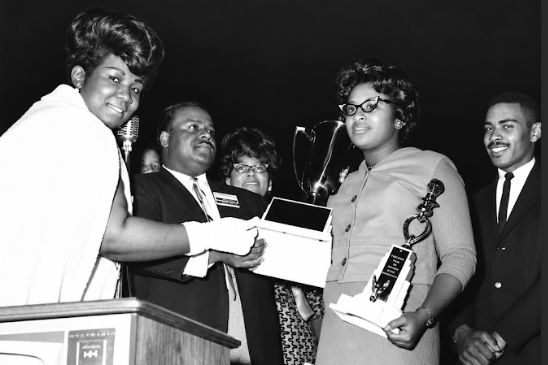
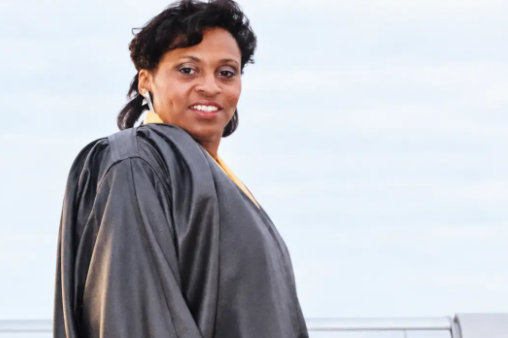
    This photo of Mr. Rowe (left) appeared in the Daily News in 1993

    In 1973, the orchestra made a historic 10-day, five-concert cultural exchange tour in China, and Mr. Rowe told the Daily News afterward that he visited a commune and returned with Chinese instruments. In 2008, he mingled with former Secretary of State Alexander Haig and other international notables after a concert in Beijing.

    In 2013, he posed for pictures with the Chinese welcoming contingent at Shanghai Airport. “Booker was such a kind soul, and his passion, his artistry, and his humanity are woven into who we are,” Yannick Nézet-Séguin, the orchestra’s music and artistic director, said in a tribute.

    Ryan Fleur, the orchestra’s president and chief executive officer, said: “He was a warm and steadying presence in our orchestra.”

    Born in Kentucky, Mr. Rowe and his family moved to North Philadelphia when he was 2. His father was a singer, and his mother played piano, and they “pushed me in the direction of classical music,” he told the Daily News in 1981.

    He became concertmaster for the West Philadelphia High School orchestra, the All-City high school orchestra, and the old all-Eastern Conference college orchestra. He earned a bachelor’s degree in music at Temple University in 1963 and a master’s degree in music at Yale University in 1968.

    Before Philadelphia, he played solo in New York and with symphony orchestras in Nashville, New Haven, Conn., and Washington D.C. Later, he played with the old Symphony Club of Philadelphia, the Lansdowne Symphony Orchestra, and other local groups.

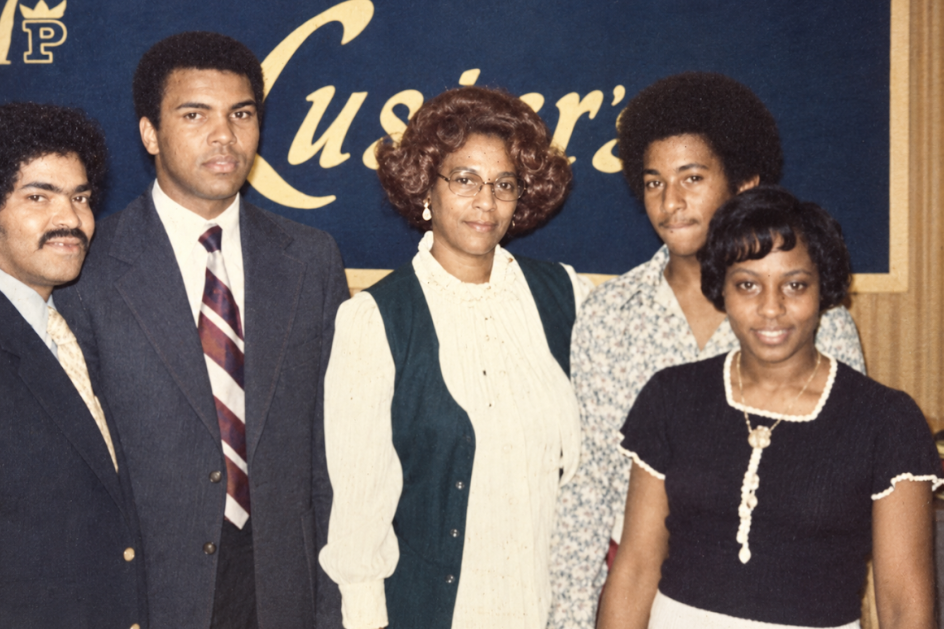
    Mr. Rowe (left) stands with fellow musicians Andre Watts (center) and Renard Edwards.

    He also got freelance gigs with Sammy Davis Jr., Isaac Hayes, Smokey Robinson, the Supremes, Barbra Streisand, Aretha Franklin, and other stars. He played with chamber music ensembles around the country and gave dozens of free concerts for children, churches, and community and scholarship fundraisers.

    He championed racial and ethnic diversity, and was active with the Philadelphia Orchestra’s cultural diversity initiative. He sought and performed work by Black and other minority composers, and mentored dozens of colleagues and students.

    He encountered at least one racist incident that first year in Philadelphia and told the Daily News in 1981: “The time was right for an Afro-American in the Philadelphia Orchestra. It was just a matter of finding somebody who was ready.”

    Mr. Rowe and his family lived in Center City, East Mount Airy, and Germantown.

    A friend said on Facebook: “His legacy and historical contributions are unparalleled.”

    Mr. Rowe taught at the Settlement Music School and gave private lessons. He earned music and service awards from City Council, the American Foundation for Negro Affairs, and other groups.

    In 2019, he was asked to advise young musicians in a video interview for the Philadelphia Orchestra website, philorch.ensembleartsphilly.org. “Practice, practice, practice,” he said. “But also enjoy, enjoy, enjoy. Do it with love in your heart.”

    Booker Taliaferro Washington Vance Rowe Jr. was born Dec. 10, 1940, in Lexington, Ky. In Philadelphia, he studied at the old Philadelphia Musical Academy and the Settlement Music School, and his father worked at RCA Victor records in Camden. So their home was always filled with music.

    Mr. Rowe (rear center) stands with Philadelphia Orchestra colleagues and members of the Chinese welcoming contingent in 2013.

    He met soprano Patsy Baxter at a Philadelphia Orchestra concert, and they married in 1970, and had a son, Landis, and a daughter, Vivian. They lived in Center City, East Mount Airy, and Germantown, and visited his family often back in Kentucky and Tennessee.

    Mr. Rowe enjoyed puzzles, hiking and kayaking with his family, and tai chi. Friends noted his “kindness,” “million-dollar smile” and “cheerful presence” in Facebook tributes.

    “He liked people,” his wife said. “He liked socializing. He liked to stick with one thing and concentrate on it.”

    His son said: “My father and I always had a good time together, and we never knew when playful sparring would break out.”

    Mr. Rowe and his wife, Patsy, married in 1970.

    His daughter said: “He was very fiery and loveable. He was always who he was. He was one of a kind.”
    In addition to his wife and children, Mr. Rowe is survived by a daughter-in-law, Maria, two granddaughters, and other relatives.

    A celebration of his life is to be held later.

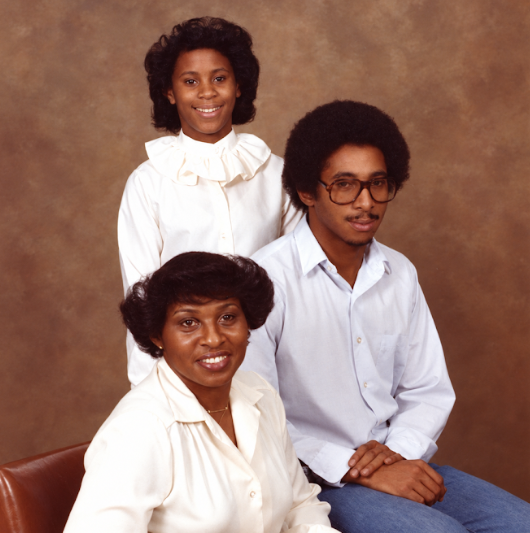
    Mr. Rowe (rear second from left) enjoyed time with his family.
  • DA Larry Krasner to appeal overturned murder conviction in 2012 killing of Philly cop Moses Walker Jr.

    DA Larry Krasner to appeal overturned murder conviction in 2012 killing of Philly cop Moses Walker Jr.

    District Attorney Larry Krasner on Tuesday said he strongly disagreed with a judge’s decision to overturn the murder conviction of a man who killed Philadelphia Police Officer Moses Walker Jr. in 2012 and vowed to appeal.

    Krasner said Common Pleas Court Judge Jennifer Schultz, who handed down the ruling Monday, was “legally incorrect” in vacating the conviction of Rafael Jones, who is serving life in prison for killing the officer during a street robbery at the end of his shift.

    In deciding that Jones deserved a new trial, Schultz cited the case’s connection to disgraced ex-homicide detective Philip Nordo, who was convicted in 2022 of sexually abusing witnesses and suspects for more than a decade.
    But Krasner, speaking at a news conference alongside Walker’s mother and FOP President Roosevelt Poplar, said Jones’ conviction was different from others involving Nordo that have since been reevaluated.
    “We believe now that Rafael Jones is guilty — that he murdered Moses Walker Jr.,” Krasner said.

    If the appellate court denies the district attorney’s appeal, he added, “We will be retrying this case. We have a lot of evidence to do so. And we will be retrying it vigorously.”

    Walker, 40, was shot and killed shortly before dawn on August 18, 2012.

    The officer had just left the 22nd District station in North Philadelphia dressed in civilian clothes when Jones and another man, Chancier McFarland, targeted him in a robbery, prosecutors said.

    Jones fired at Walker after the officer reached for his gun, according to prosecutors. Both men were arrested, and McFarland pleaded guilty and testified against Jones as part of a deal to avoid life in prison.

    Years later, during Nordo’s sexual abuse trial in 2022, one of his accusers testified that the detective steered him toward a $20,000 reward and later raped him.

    Though Krasner acknowledged the “messy history” that came with Nordo’s involvement in Jones’ case, he said the district attorney’s office was confident in the conviction.

    There were multiple pieces of evidence that pointed to Jones’ guilt, he said, including a murder confession that was not introduced at trial because Jones did not testify, and McFarlane’s eyewitness account of the crime.

    “We concluded years ago that this conviction was in the category that should not be disturbed,” Krasner said.

    The district attorney’s office will appeal Schultz’s ruling to Superior Court, a process Krasner said could take up to two years.

    Poplar, president of Fraternal Order of Police Lodge 5, said he had faith that Krasner’s office would prevail.

    “Yesterday was a tough day,” he said, echoing comments made by Police Commissioner Kevin Bethel, who said he was disappointed by the ruling.

    Walker’s mother, Wayne, said she and her family “would not allow these latest developments to weaken us.”

    “We remain confident justice will prevail,” she said, adding that she hoped that the death of her son, not the vacated conviction of his killer, would “remain at the center of this case.”

    “No decision rendered can alter what happened on August 18, 2012,” she said.

  • A new trial is ordered for a man convicted in the slaying of Philly police officer in 2012

    A new trial is ordered for a man convicted in the slaying of Philly police officer in 2012

    A Philadelphia Common Pleas Court judge on Monday ordered a new trial for a man serving a life sentence for the death of a police officer in 2012, reportedly citing the connection of disgraced ex-homicide detective Philip Nordo to the case.

    Court records show that Judge Jennifer Schultz vacated the 2014 murder conviction of Rafael Jones, who was sentenced the following year to life in prison without the possibility of parole for the fatal shooting of Officer Moses Walker during a street robbery after the end of his shift on Aug. 18, 2012.

    KYW Newsradio reported the judge cited the case’s connection to Nordo, who was convicted in 2022 of sexually abusing witnesses and suspects.

    During Nordo’s trial, one of his accusers was an informant in the Walker homicide investigation who said Nordo helped steer a $20,000 reward to the man and then, years later, raped him.

    Multiple cases involving Nordo, including murder convictions, have been overturned in recent years.

    District Attorney Larry Krasner said he would address the order for a new trial at a news conference Tuesday.

    Police Commissioner Kevin Bethel said in a statement: “I am disappointed by today’s decision, particularly for the family of Officer Moses Walker and every member of this Department who continues to carry his loss.”

    Bethel added: “At the same time, we respect the court and the legal process. We remain confident in the evidence surrounding this case and believe that, when the process is complete, the individual responsible for Officer Walker’s murder will continue to be held accountable and will never again walk free.”

    Jones and Chancier McFarland were arrested during the homicide investigation. McFarland pleaded guilty and testified against Jones as part of a deal with prosecutors to avoid life in prison.

    A lawyer for Jones could not be reached for comment. According to court records Monday, Jones was being held at the State Correctional Institution in Chester City.

    Shortly before dawn on Aug. 18, 2012, the 40-year-old Walker left the 22nd District station at 17th Street and Montgomery Avenue in North Philadelphia dressed in civilian clothes — shorts, athletic jacket, and baseball cap — and carrying a backpack and wearing earphones.

    Walker was targeted, McFarland testified, because he looked like a student from nearby Temple University — “an easy mark.”

    McFarland testified that Jones shot Walker when the officer reached for a weapon.

    After Walker collapsed at Woodstock Street and Cecil B. Moore Avenue, McFarland said, he grabbed the officer’s iPod and earphones before taking off.

  • Covering 20 locales over 20 weekends, ‘Neighborhood Jawnts’ tour series highlights Philly’s diverse communities

    Covering 20 locales over 20 weekends, ‘Neighborhood Jawnts’ tour series highlights Philly’s diverse communities

    The tour bus heaved and weaved through the residential streets of Mount Airy, rolling over speed bumps, slowing for passing cars, and pulling over for the occasional gawking.

    “I invite you to look around,” tour guide Marianne Ruane said, gesturing out the window as her voice echoed from a transmitter microphone into the audiences’ earpieces. The attendees murmured as they admired the homes of the streetcar suburb.

    This was “Neighborhood Jawnts,” a free, hyper-localized tour running throughout a diverse swath of Philadelphia’s neighborhoods this summer and into the fall. The “jawnts” — get it? like “jaunts” but Philly-style — are an effort by the city’s tourism arm to engage every locale, from Africatown to the Far Northeast, during the Semiquincentennial.

    “Philadelphia’s a city of neighborhoods,” said Kathryn Ott Lovell, president and CEO of Philadelphia Visitor Center Corp. and Philadelphia250, the nonprofit in charge of planning the 250th celebrations. The series is a collaboration between Ott Lovell’s organizations, with sponsorships from the city and Fulton Bank, which allow the tours to be offered at no cost.

    “We wanted to make sure that people have the opportunity to get to know the whole city and to get to know the city through the neighborhoods and the diversity of our city — the cultures, the communities, the histories,” Ott Lovell said.

    The tours, which began in late May and will run until October, feature a different area weekly, totaling 20 neighborhoods in the series. The tours are offered once on Fridays and twice daily on Saturdays and Sundays, and launch from the Independence Visitor Center.

    Passengers board the PHLASH bus at the start of the “Neighborhood Jawnts” tour in Philadelphia on July 24.

    On a recent Friday in July, a commandeered PHLASH bus carted about 30 people around Chestnut Hill and Mount Airy. Each tour is led by a professional tour guide — someone who gives the “play by play” — and a community host — a resident who can add “color commentary” — Ott Lovell said.

    Attendees visited the French and English Villages; the country’s oldest country club, Philadelphia Cricket Club; and the Wissahickon Inn, and they tasted “midnight chocolate” ice cream from Mount Airy institution Zsa’s Ice Cream, all while learning about the area’s history and how architecture has shaped the community and its landscape.

    “I really love how Philadelphia 2026 has been about celebrating the city as a whole, not just Old City and downtown, but all of the neighborhoods that give Philadelphia its identity,” said Philip Dawson, community host and executive director of Mount Airy Community Development Corp.

    Dawson added: “This tour really helped to highlight Mount Airy’s history, its housing and architecture, its businesses, its people, its diversity. It was really meaningful.”

    Surprisingly, Ott Lovell said, Philadelphians — not out-of-towners — have capitalized on the tours. The majority of July 24 attendees were from the Philly area and most had already gone on a “jawnt.”

    It was Janice Rudd’s fourth such tour. The 60-year-old recently moved from Houston to South Philadelphia and has been using the series as a way to familiarize herself with her new home city.

    “I’m learning so much,” Rudd said. “It’s such a big city, there’s much to do downtown, in South Philly, out to the [Philadelphia Museum of Art] … but people just never go beyond there. … It’s nice to see real neighborhoods.”

    While ambitious, “Neighborhood Jawnts” is paying off: Forthcoming tours are nearly full or completely sold out with a waiting list to join, according to organizers. Ott Lovell said they are brainstorming ways to keep low-cost and affordable tours going past the summer of the Semiquincentennial.

    “We are a city of neighborhoods and it’s something we should celebrate as much as we celebrate our history,” she said.

    The “Neighborhood Jawnts” series runs until Oct. 25. Tours start at 2 p.m. on Fridays and at 10 a.m. and 2 p.m. on Saturdays and Sundays. Tours are free, but online registration is required.