Category: New Jersey News

  • How Sandy prepared parts of the Jersey Shore for last week’s nor’easter

    How Sandy prepared parts of the Jersey Shore for last week’s nor’easter

    BRIGANTINE, N.J. — With its full moon and stacked high tides over multiple days, last week’s nor’easter left Shore towns with some of the worst flooding and erosion since Hurricane Sandy.

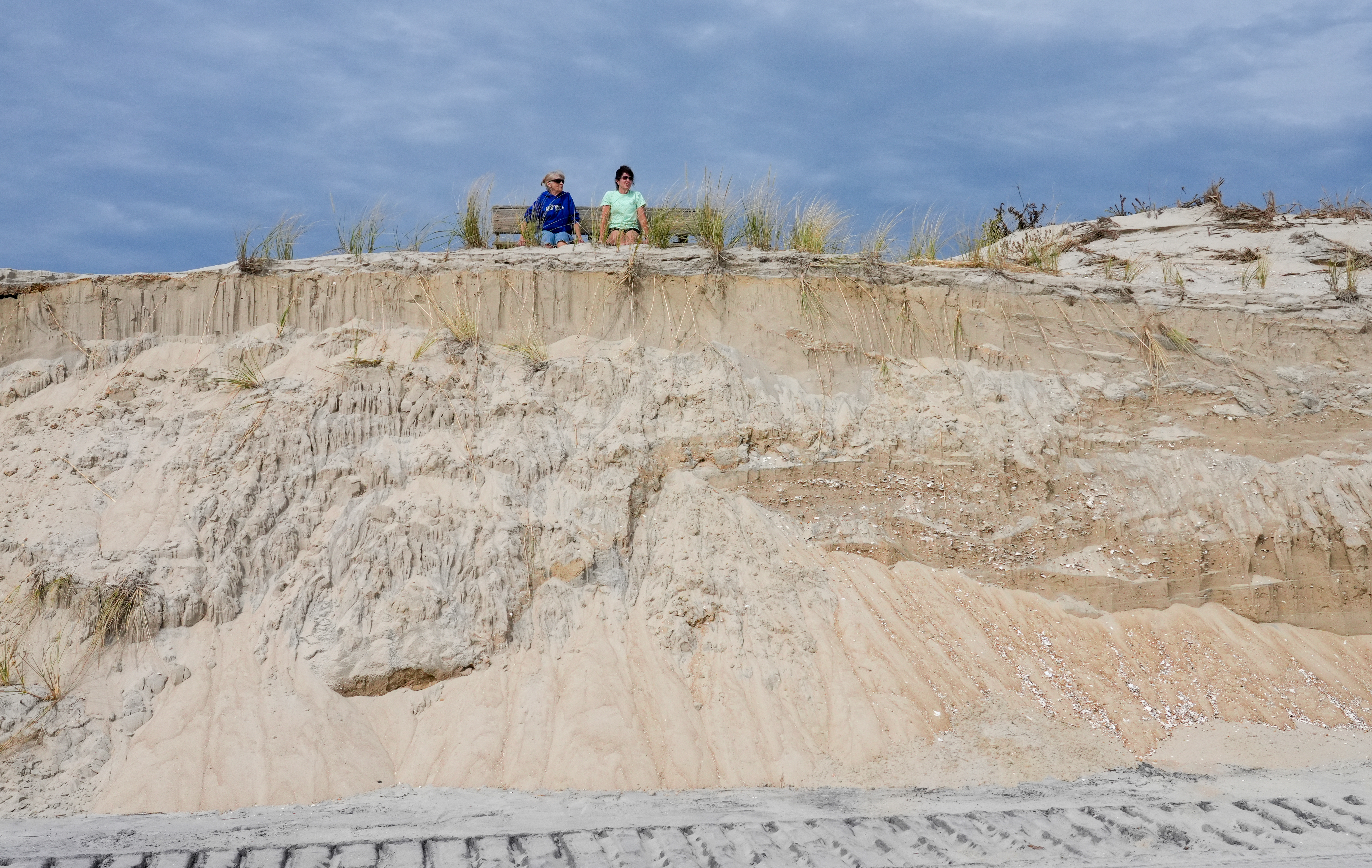
    In dramatic fashion, the nor’easter produced some feared Shore scenarios: dunes sliced into cliffs, beaches vertically eroded, popular restaurants flooded to the point of closing altogether for the season, water lapping into ground floors, cars ruined. Days later, firefighters were responding to raging electrical fires, at least one of which was linked to a flood-soaked golf cart.

    Still, the nor’easter was also a testament of what went right, a test of flood resilience tactics implemented in the 14 years since Sandy — a series of flood pumps in Brigantine, an elevated artery in Ocean City, raised homes throughout the Shore — that prevented a much worse outcome.
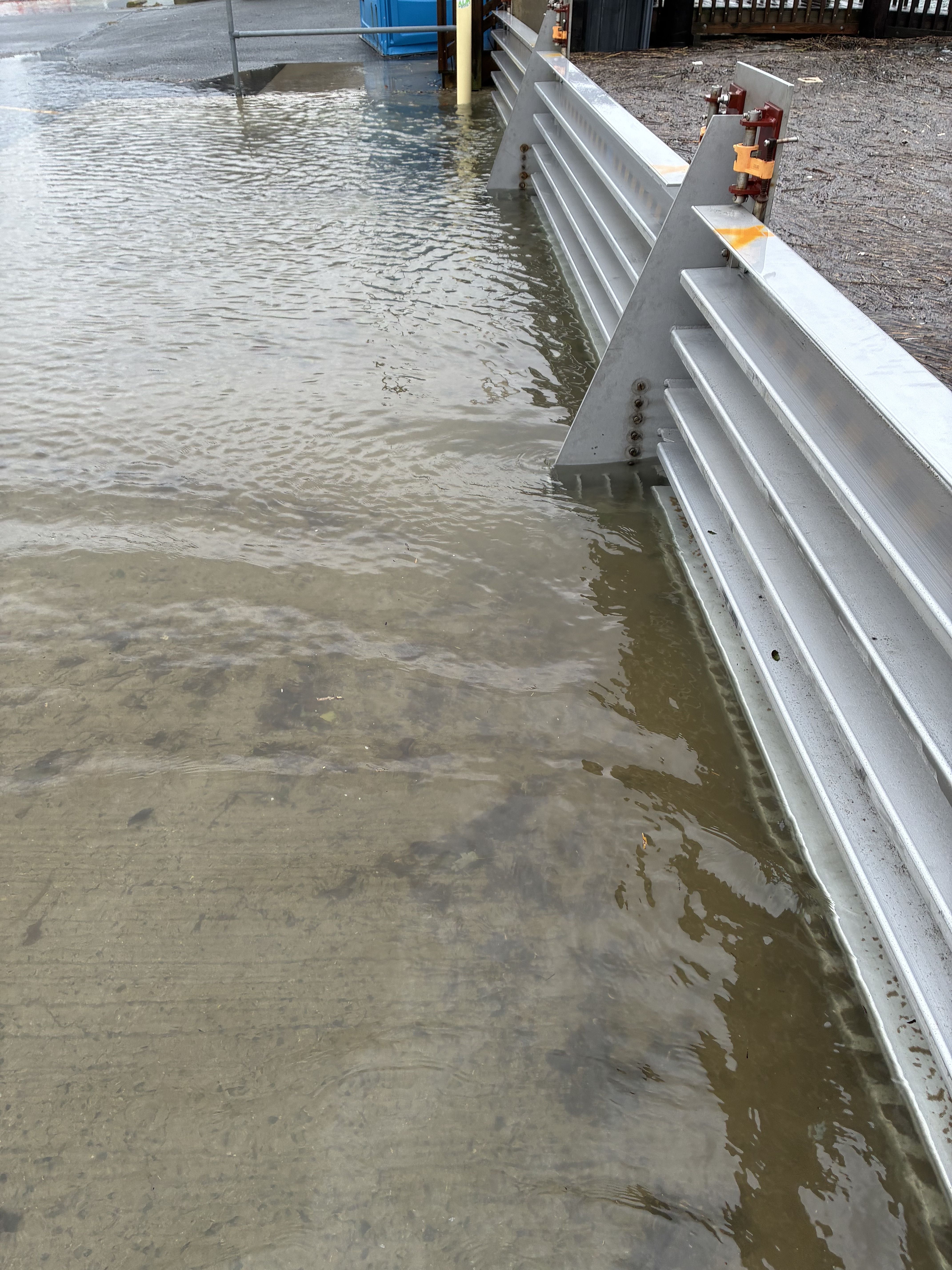
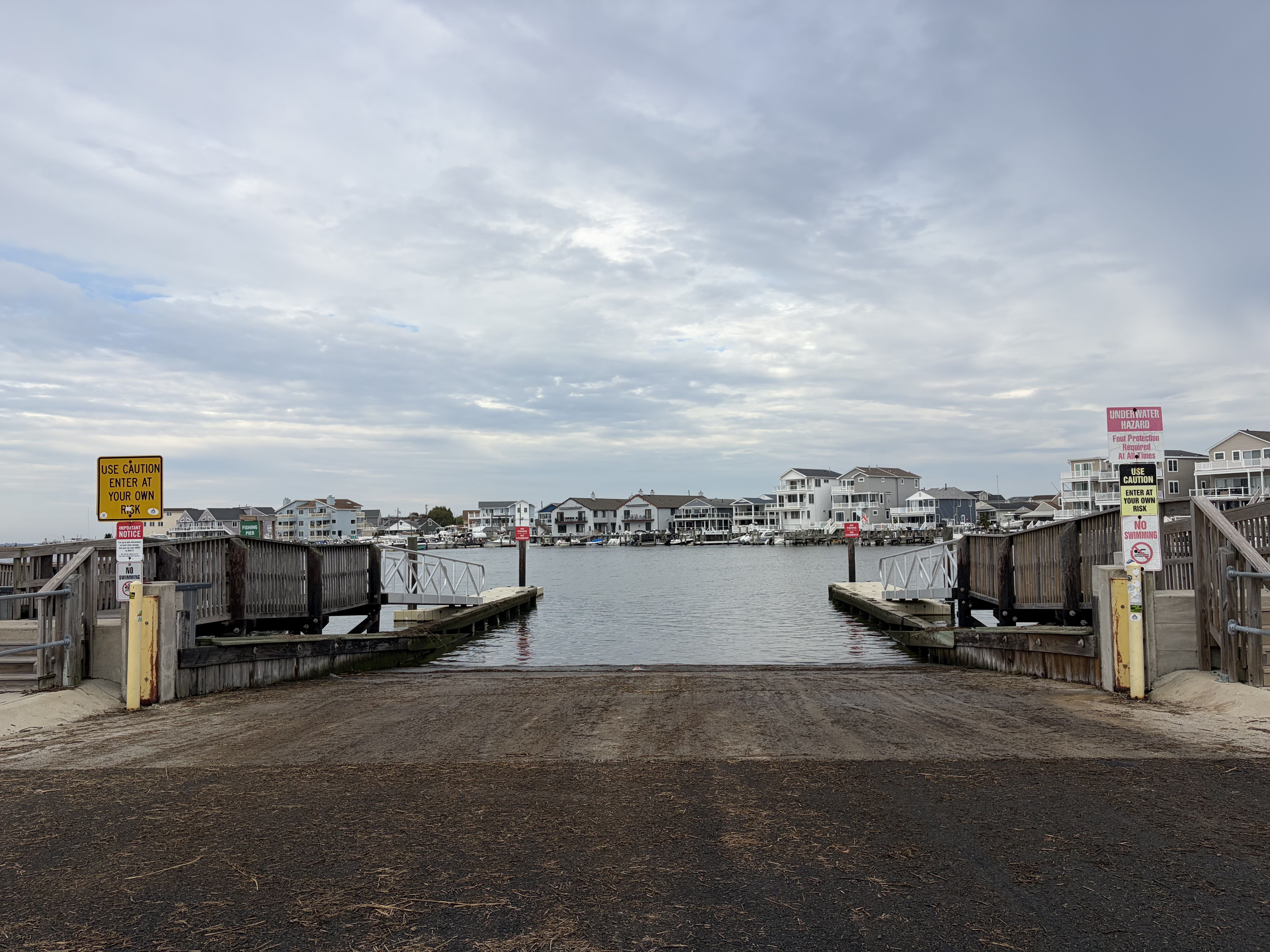
    During the September 2026 nor’easter, metal floodgates were brought in to the city’s Municipal Boat Ramp by the city of Brigantine to physically block flood waters.John Cunnion
    Brigantine’s municipal boat ramp was previously an entry way to devastating flooding. But city officials installed flood pumps and metal gates to keep the water off the island, and to drain the island between high tides.Amy S. Rosenberg / staff

    ‘Our girl took a beating’

    In parts of Holgate, Brigantine, Atlantic City, and North Wildwood, the storm left cliffs six feet or higher, cutting off access to the beach at multiple street ends. Vertical erosion uncovered old structures including rotting old wooden piers.

    Streets in Long Beach Township, West Wildwood, and Atlantic City took on water through multiple days of high tide, damaging residential garages and other ground floor spaces.
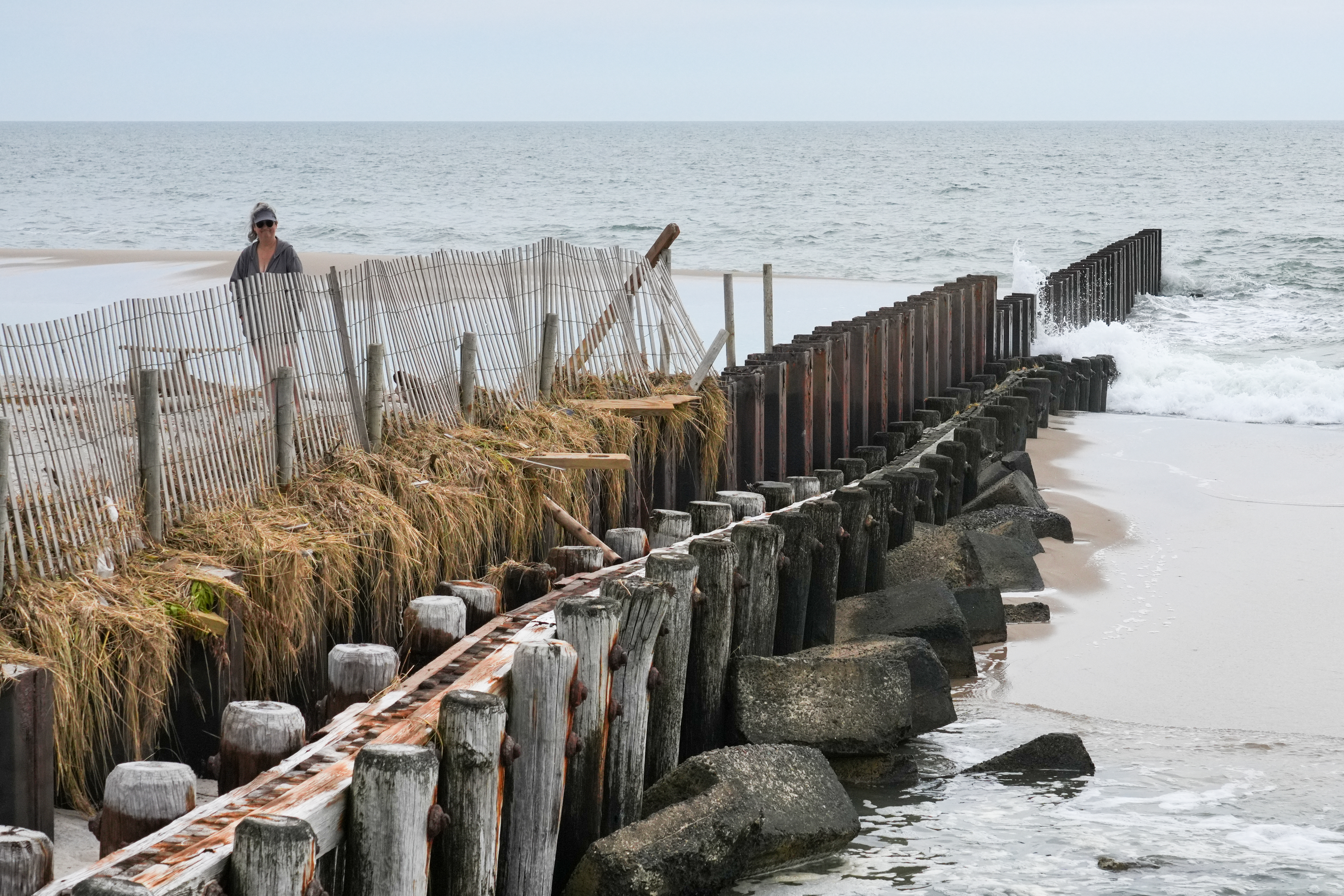
    Abby Mason, of Pottstown, looks at storm damage in Holgate on Thursday.Tim Hawk / For The Inquirer

    On Sigsbee Avenue, contractor Vincent Allen of B. Grigoletto Contractors was ripping out ruined insulation and dry wall on two houses, both second homes.

    He noted that since Sandy, a lot of the smaller homes had been torn down and replaced by elevated homes, where the ground floors are not, technically, living spaces. “Basically, if you lived on the bay, you got water,” he said. “This wasn’t as high as Sandy, nowhere near it.”
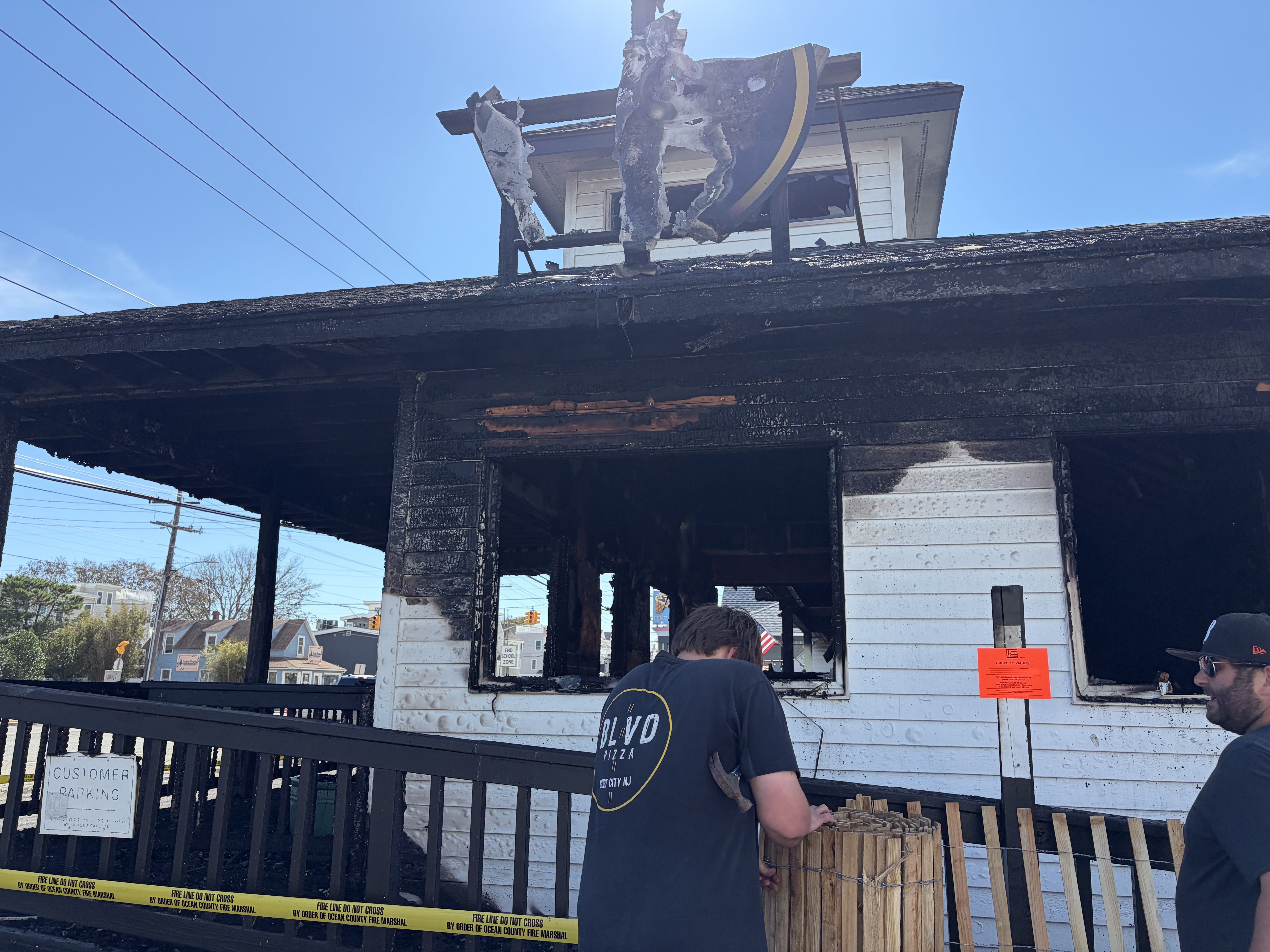
    Owner Mike Franzoni at what’s left of his BLVD Pizza in Beach Haven, which was flood damaged days before a fire broke out.Amy S. Rosenberg / staff

    On Long Beach Island and Atlantic City, numerous businesses were mopping up or closing early for the season after flood damage.

    “We are truly sick to our stomachs, and it hurts,” Moments at Scannicchios, a restaurant on Fairmount Avenue in Atlantic City, said in a Facebook post. “In the end we will reopen.” The restaurant asked people to help out a nearby corner bodega, El Rinconcito Grocery, it said lacked similar resources.

    On Long Beach Island, the ruined insides of the Dockside Diner were strewn across the front of the restaurant. “Our team, our family, is safe,” the owners wrote on Facebook. “But our old girl Dockside took a beating.”

    Nearby, Mike Franzoni looked at the charred remains of BLVD Pizza’s Beach Haven location, which suffered flood damage and had a fire a few days later. Another location, in Surf City, was undamaged.
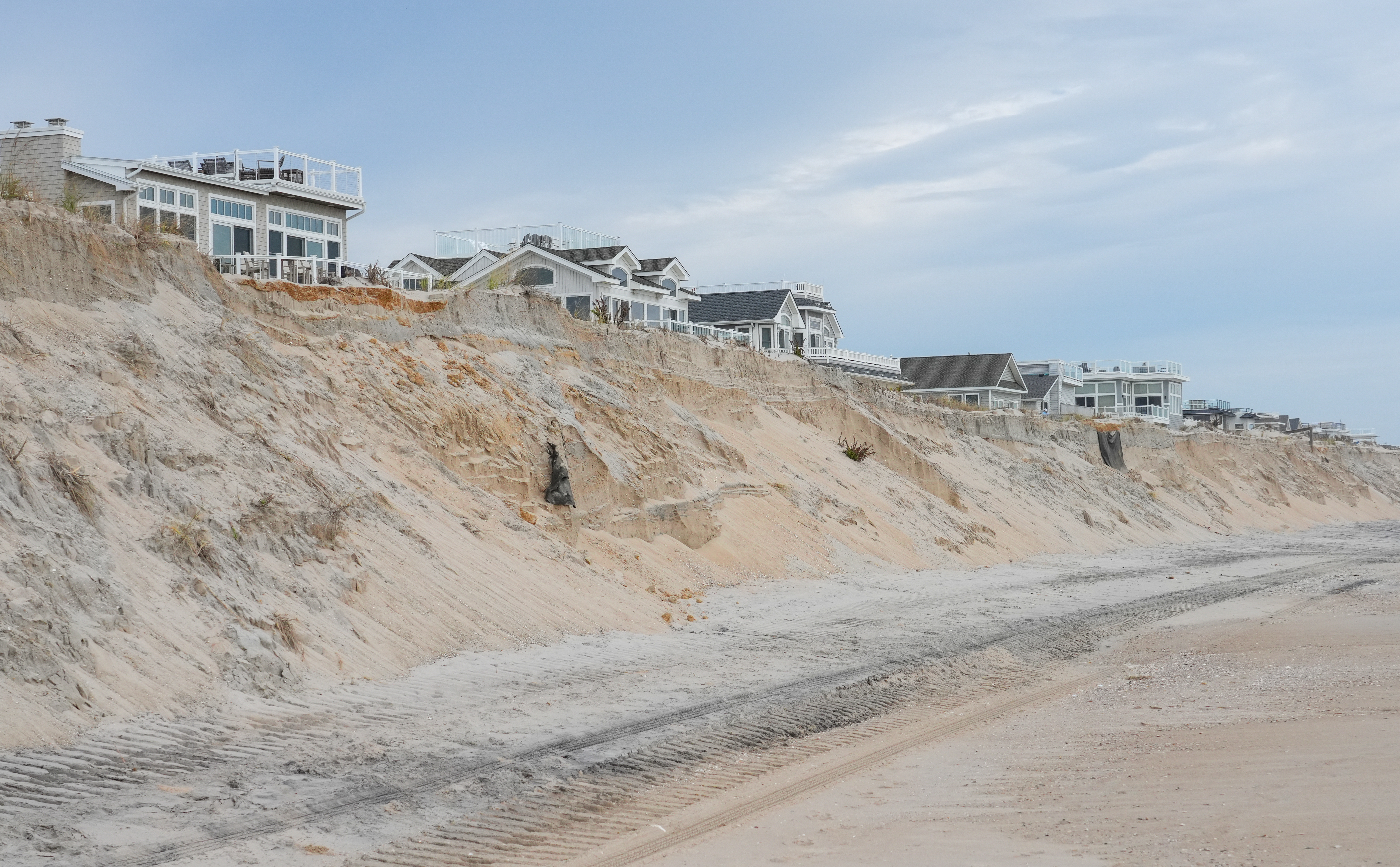
    Storm damage in Holgate on Thursday.Tim Hawk / For The Inquirer

    On Long Beach Island, the beloved “karaoke garage,” belonging to the family of Diane O’Donnell, 80, of Yardley, Pa., took on two feet of water, half of Sandy levels.

    Last week, an Indigo Girls song was playing out of the space where Kelly Kolbjornsen and her family would recruit people to stop and sing karaoke on their way down Long Beach Boulevard.

    “It’s part of having a beach house, but it’s a little overwhelming,” Kolbjornsen said.

    ‘A good gauge’

    New Jersey Gov. Mikie Sherrill and U.S. Rep. Jeff Van Drew brought representatives from FEMA and the Army Corps of Engineers to focus on severe damage to ramps from Brigantine’s concrete promenade in the north end and the near breaching of a private retaining wall that was the only line of defense after surging waves destroyed dunes at the promenade’s edge.

    But Mayor Vince Sera also pointed out that neighborhoods devastated during Sandy remained mostly damage-free.

    “We put floodgates in before the storm came into Brigantine,” he said. “They closed all of the floodgates and prevented a lot of water from coming in. On each low tide, they let the water out to drain, and closed them again for the next high tide.

    “Any water that comes into the streets, we have pumps around the island,” he said. “It pushes the water out over the bulkhead and back into the bay. It drains the island.”

    Residents near those points of vulnerability took note.

    “Without the pumps, it would have been horrible,” said Terri Cunnion, whose home sits on Bayshore Avenue across from the boat ramp, a major thoroughfare of flooding during Sandy (when the previous home on her lot was destroyed). “Without those gates, this block wouldn’t be.”

    Through multiple high tides, last weekend’s floodwaters never got past the lip of the garage in the Cunnion’s house, whose living spaces are built 14 feet to new elevation standards.

    Ocean City’s newly elevated Roosevelt Boulevard was also credited with mitigating damage from the nor’easter, staying above floodwaters and allowing an evacuation route, said Mayor Jay Gillian. The road was reconstructed so that portions were raised by 12 to 20 inches.

    During Hurricane Sandy, bay waters roared right up Brigantine’s municipal boat ramp and surged across Bayshore Road, totaling houses with four feet of water.

    Since the installation of eight permanent flood pumps and two portable flood buster pumps, vulnerable spots like Bayshore Drive and the neighborhood around the town’s golf course are newly fortified. In addition, bulkheads were raised.
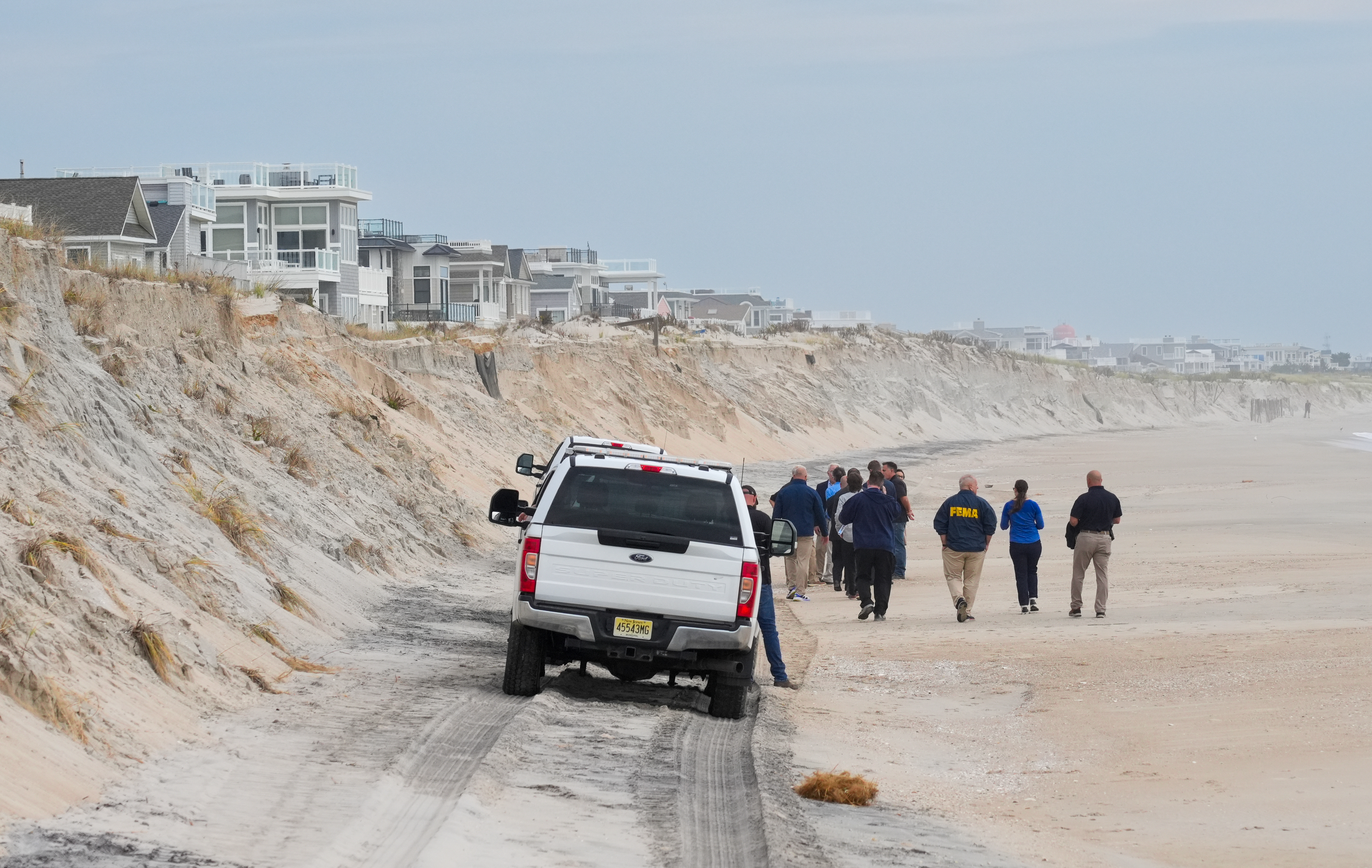
    U.S. Rep. Jeff Van Drew, together with federal, state, and local officials, tour storm damage in Holgate on Thursday.Tim Hawk / For The Inquirer

    Atlantic City, similarly, installed pumps at its Atlantis Avenue station and rebuilt bulkheads in Chelsea and Chelsea Heights. It has yet to complete similar projects in its Ducktown neighborhood, which saw major flooding last weekend, leaving some businesses with tens of thousands of dollars in equipment and merchandise loss.

    Van Drew pointed to other improvements since Sandy that protected utility infrastructure and homes. Homes that were elevated had ground levels that allow water to flow in and then out, he noted. He is advocating a permanent $1 billion “Coastal Trust Fund,” funded by revenue from federal offshore oil and gas leases to provide a stable source of funding for beach fills, dune restoration, and other coastal remediation.

    “The good news is we’ve done a lot of good work,” Van Drew said. “We’ve hardened a lot of structures. When you look at electrical substations, in many cases, they’ve been raised. When you look at transmission lines, rather than being on wooden poles, they are now on industrial grade steel lines that are actually put on much, much stronger holes.”
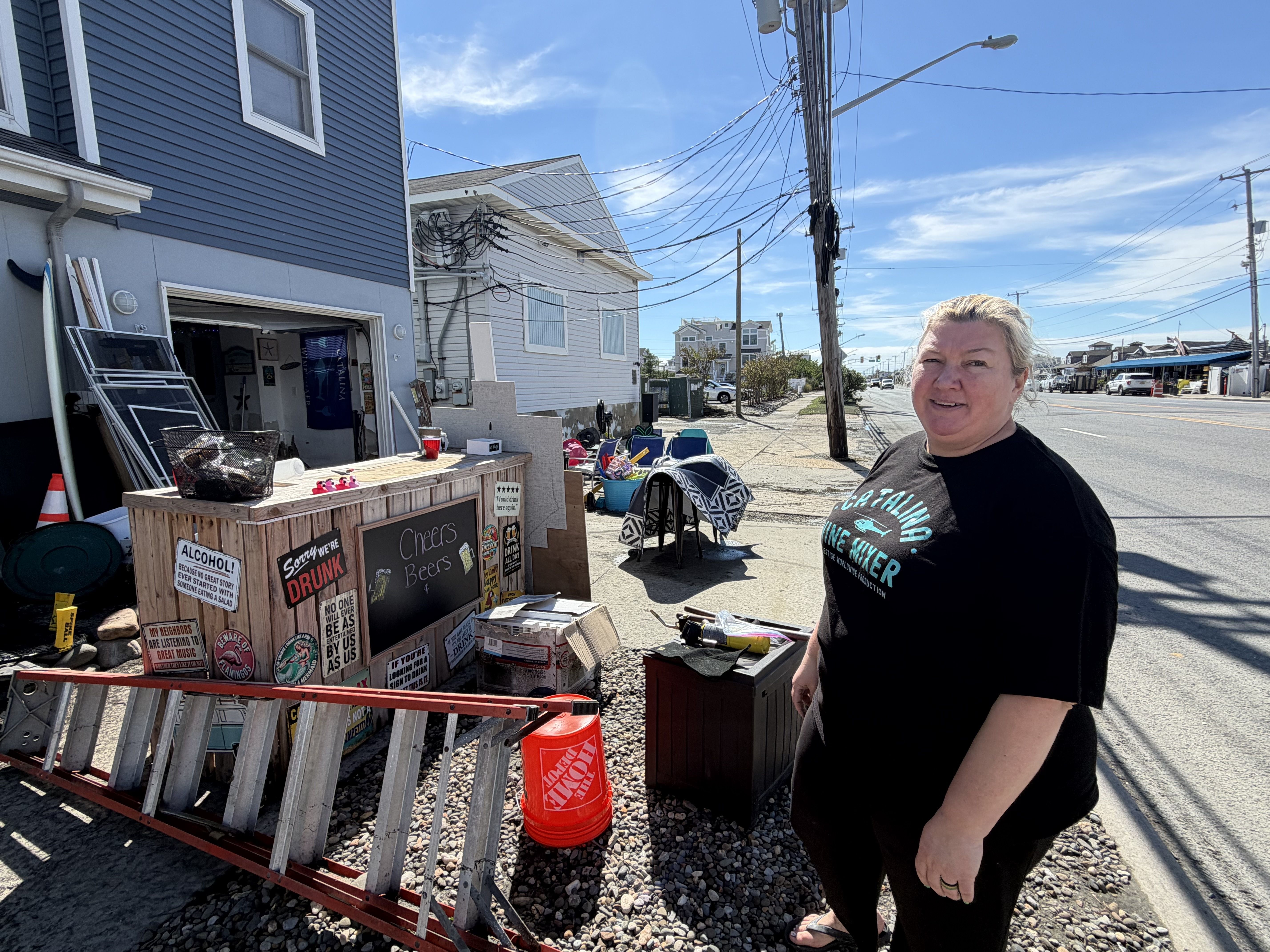
    Kelly Kolbjornsen looks at the damaged bar from her garage, where she and her family recuited passers by to sing karaoke, on Wednesday, days after the nor’easter.Amy S. Rosenberg / staff

    ‘Sacrificial sand projects’

    On an Oct. 1 tour from Long Beach Island to North Wildwood, Van Drew made the case for continued beach replenishment funding, despite the storm eating through a good chunk of the $99 million in recent beach replenishment, most recently in Sea Isle City, Strathmere, Ocean City, Avalon, and Stone Harbor.

    D. Lee Forsgren, the performing assistant secretary for the Army for Civil Works, who oversees the Army Corps, made a point of calling beach replenishment projects “sacrificial sand projects.” He compared the engineered beaches to your car’s “crumple zones” that are made to take the initial beating.
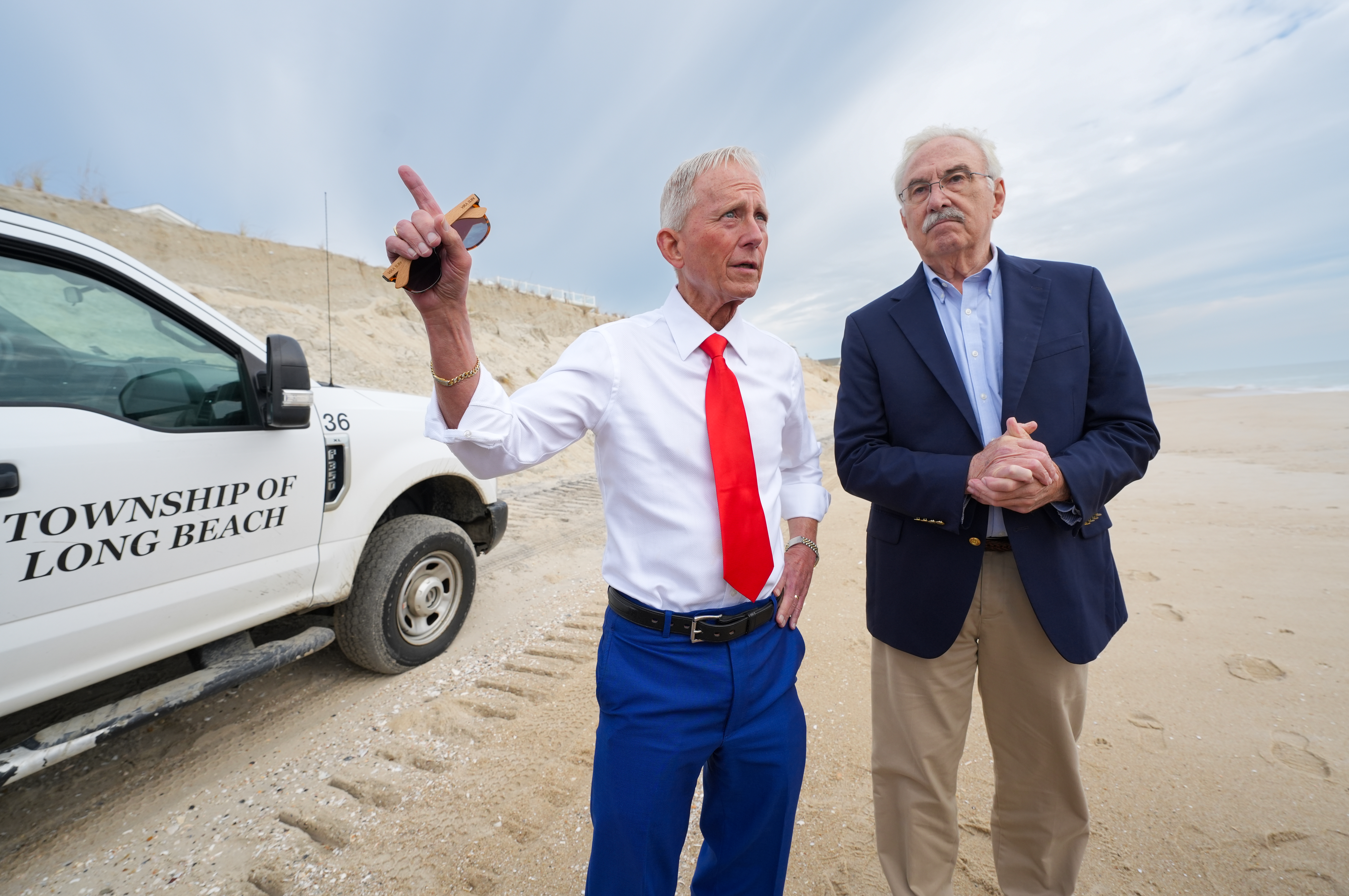
    U.S. Rep. Jeff Van Drew (left) talks with Holgate Mayor Joseph H. Mancini in front of beach erosion in Holgate on Thursday.Tim Hawk / For The Inquirer

    “We don’t put sand on these beaches to make them pretty beaches,” he said. “They are designed for storm damage reduction.”

    Still, he cautioned Van Drew that “the best opportunity to really make progress would be with a supplemental appropriation associated with the storm because there’s not a lot of pocket change sitting around in the core budget.”

    That will require a disaster declaration from Sherrill, who toured Brigantine on Tuesday.

    Aside from more sand, Van Drew said the towns, state, and Army Corps were looking at funding hard structures — like jetties, groins, and seawall extensions — as ways to keep the elevated tides that accompany storms from overwhelming beaches.
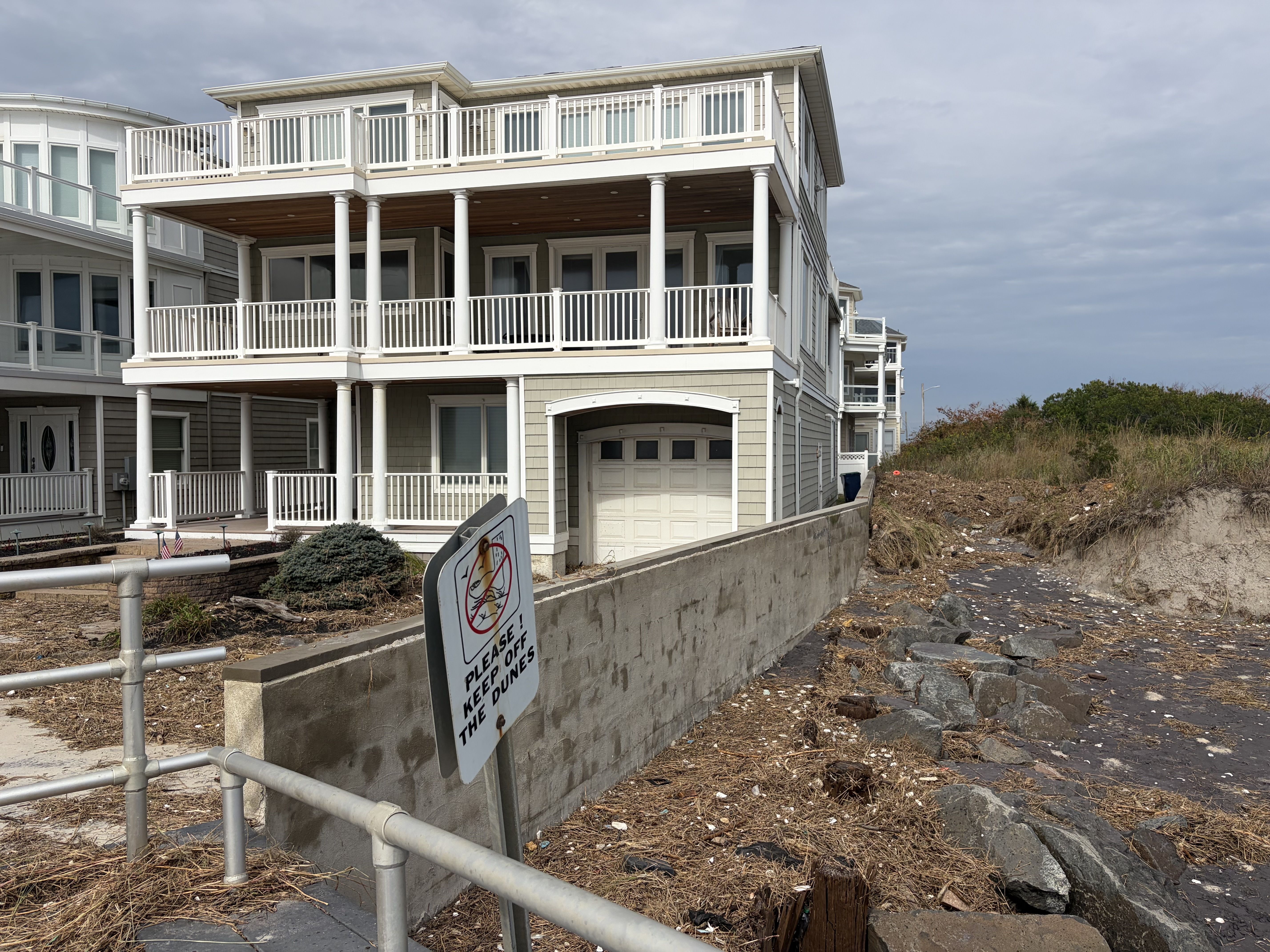
    A house on Brigantine’s north end belonging to Clay and Lori Goldsmid and other nearby homes were spared major damage during the recent nor’easter.Amy S. Rosenberg / staff

    In Brigantine, Mayor Sera rode out the storm at the tip of the promenade, watching railings get blown off, dunes disappear, and the nearby retaining wall nearly buckle. He said city officials had compiled a list of who was in nearby homes in case of an emergency evacuation.

    He is seeking to extend the promenade another 250 feet north, and says the state is studying whether adding hard structures to keep the sand in place will help a situation where a sandbar that has in recent years grown into what is now called Horseshoe Island is starving Brigantine of sand.

    The city’s flood mitigation efforts since Sandy have resulted in a 25% discount for residents on flood insurance, he said. And he wholeheartedly recommends flood pumps and gates to other municipalities, like Ventnor, whose Ventnor Heights section was cut off at both ends by flooding for hours during high tides.

    Sera and other knows the big storms will come again, probably this winter, with the El Niño warming in the equatorial Pacific.

    With sea levels rising, some residents who came out to see the federal officials in Brigantine wanted to know about timelines.

    “How fast is fast,” interrupted Louise Seitel, of nearby Absecon, as officials spoke of extending the seawall.

    “A study is probably going to be 18 months,” Nate Barcomb, an Army Corps deputy district engineer based in Philadelphia, acknowledged.

    “Government is tough,” Van Drew said.
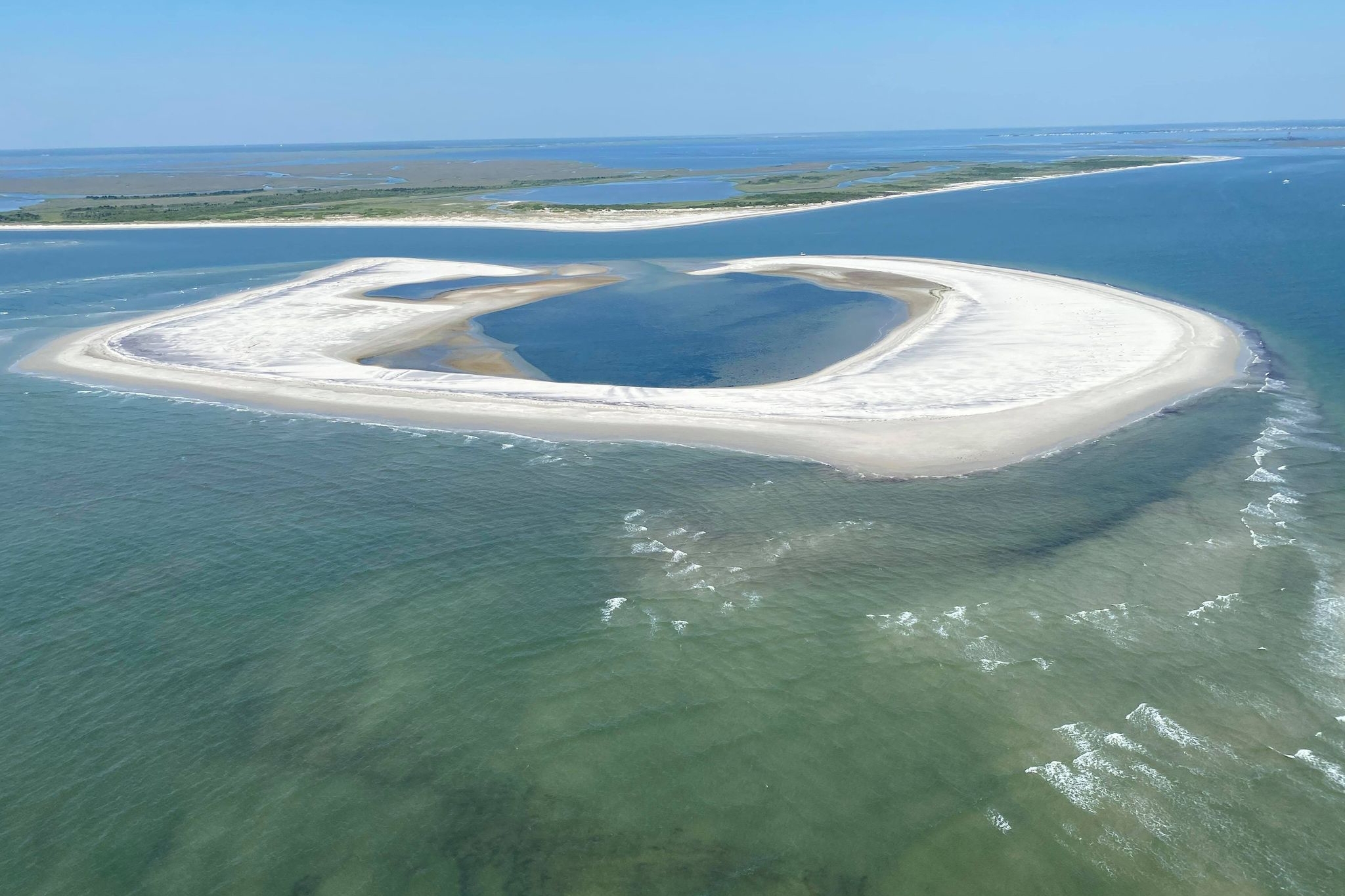
    Aerial photograph of New Jersey’s Horseshoe Island in June 2021.N.J. Department of Environmental Protection / U.S. Fish & Wildlife Service
  • The Gaudreau brothers will be honored with life-saving equipment at a South Jersey park

    The Gaudreau brothers will be honored with life-saving equipment at a South Jersey park

    Washington Lake Park sees more than 100,000 visitors every year. Now there’s a new way to keep them safe — and it honors the lives of two South Jersey hockey players.

    The Aliver Foundation, a nonprofit that works to promote cardiac arrest prevention, donated outdoor automated external defibrillator equipment to the Gloucester County park in the spring. AEDs analyze the heart’s rhythm and deliver an electric shock to help recalibrate the heart if necessary, according to the American Red Cross.

    The bright yellow enclosure, which keeps the AED in a climate-controlled environment, features a small plaque memorializing Johnny and Matty Gaudreau, Salem County natives and brothers who used to skate at a rink not far from the park.

    Johnny, an NHL player, and Matty, an American Hockey League alumnus, died in 2024 when they were struck and killed while riding their bikes in Salem County. Johnny was 31, and Matty was 29.

    Jane Gaudreau, Johnny and Matty’s mother, said she’s glad that something used to save lives is honoring her sons.

    “My sons were always there for everybody else. They always wanted to help other people,” Jane said. “They would take their shirts off their backs for someone.”

    Although the equipment has been up and running for months, the AED will be officially dedicated to the Gaudreaus at a community celebration at Washington Lake Park on Hurffville-Cross Keys Road on Sunday, from 10 to 11 a.m. There will also be AED and CPR demonstrations, children’s activities, and the chance to engage with first responders.

    Placed on the brick wall of Washington Lake Park’s ranger station, the AED equipment is in the same park where the Gaudreau family hosts an annual memorial 5K run, and less than two miles from Hollydell Ice Rink in Sewell, a place the brothers used to skate and where their father, Guy Gaudreau, teaches skating lessons for kids.

    To access the kit, visitors in need must call 911 to get a code to open the AED enclosure.

    Barbara Moore, Washington Lake Park’s events coordinator, said the park already has an AED, but the equipment isn’t outdoors and public-facing.

    “With the amount of youth sports, daily visitors and community events taking place at the park, having readily accessible outdoor AED equipment is an important additional safety measure that can be accessed while emergency responders are en route,” Moore wrote in an email.

    Five years ago, Jill Pall, Aliver’s founder, experienced cardiac arrest at a park in North Jersey. Her friend did CPR for nearly 15 minutes, and because there was no AED on site to use, Pall had to wait for first responders to arrive with the equipment.

    Since then, Pall’s organization has helped place more than 185 outdoor AEDs in 12 states, with the majority located in New Jersey.

    The Gaudreau family once needed the emergency equipment, too.

    In 2018, Guy collapsed while running up a hill during Philly’s annual Love Run, Jane said. Luckily, there was an AED on a nearby golf cart, and after a few days in an induced coma, he recovered.
    Jane said her husband still runs the Love Run, but he doesn’t push himself so hard on the hills. And now, runners who pass through Washington Lake Park for the Gaudreau 5K every spring will have life-saving equipment close by, too.

    “Anything we can do to keep John and Matty’s legacy alive, we’re for it,” Jane said.

  • Go the way of the dinosaurs

    Go the way of the dinosaurs

    It’s one of the many places I guess I’d just assumed would always be there.

    But the Academy of Natural Sciences of Drexel University is not the first museum in Philadelphia to close in the past decade.

    In 2018, it was the Atwater Kent Museum. It housed a collection that told over 300 years of the city’s history: everything from a 1682 Lenni Lenape belt to Joe Frazier’s boxing gloves. Its closing was followed by the Neon Museum (2022), the Insectarium & Butterfly Pavilion (2023), and the Art Alliance (2024).

    Sure, I know nothing lasts forever and cities change as time marches on. A favorite restaurant, bookstore, movie theater, the beautiful old home you walked past in your neighborhood. Suddenly one day they disappeared behind a construction fence.

    But it was surprising when the Academy closed last weekend after 198 years of being open to the public.

    A dinosaur-costumed visitor passes behind the T-rex in Dinosaur Hall on Sunday, Sept. 28, the last day the museum was open to the public.Tom Gralish / Staff Photographer

    Like everyone else who in the past few weeks has shared their memories on social media, in interviews with reporters or in conversations with others in parents groups or on the playground, I found myself thinking not only about the dinosaur skeletons but also about the feelings and sense of wonder I had experienced there.

    I didn’t grow up here, so I don’t have any of the childhood memories many Philadelphians do, but I did visit often for fun as a young adult, with my own children and even as a grandparent. I also photographed many memorable stories there as a visual journalist.

    Science educator Buddy Muhler shows visitors the eyeball of a cow, during a talk on the Academy’s closing day.Tom Gralish / Staff Photographer

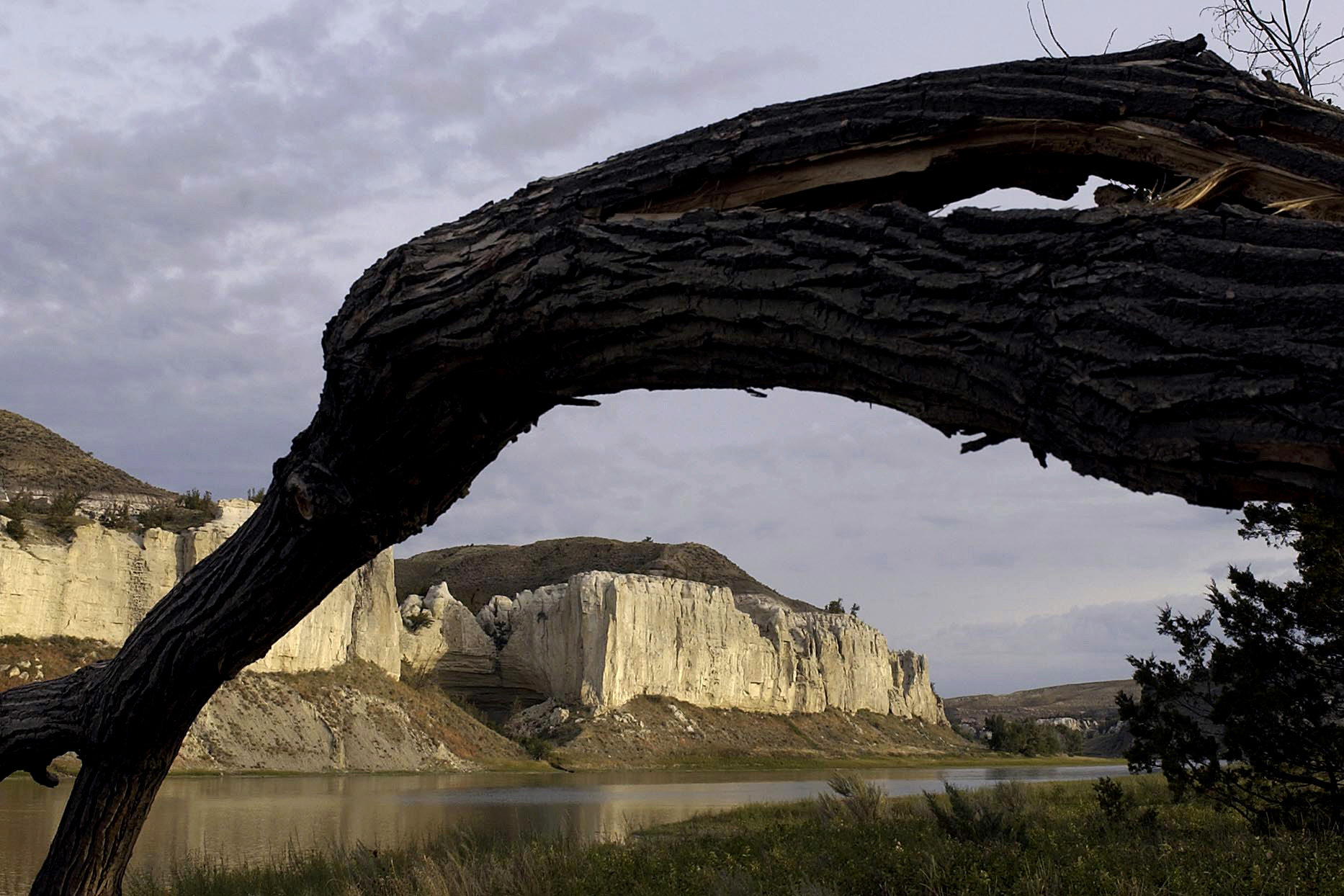
    One of my favorites was a project I did for the 200th anniversary of the Lewis and Clark Expedition in 2004. I made four trips out west logging thousands of miles on rental cars, seeing all the places I read about in history class. Those stories all start out west, where the explorers paddled up the Missouri River in 1804 to see the Louisiana Purchase and find an easy water route to the Pacific Ocean.

    But it was in Philadelphia where it all started.

    When Thomas Jefferson was elected president in 1801, he picked a U.S. Army captain, Meriwether Lewis to pursue his dream of a scientific exploration of the unmapped West. To prepare for the journey Jefferson sent him to the intellectual, medical, scientific and trading center of the new United States: Philadelphia. Here, he spent a month in the spring of 1803 gaining specialized training and purchasing supplies for the expedition.

    Flash forward a few years, and among the 122 animals they “discovered” were 178 plants that were “new” to science (Western science anyway — of course Native Americans already knew about everything the explorers found).

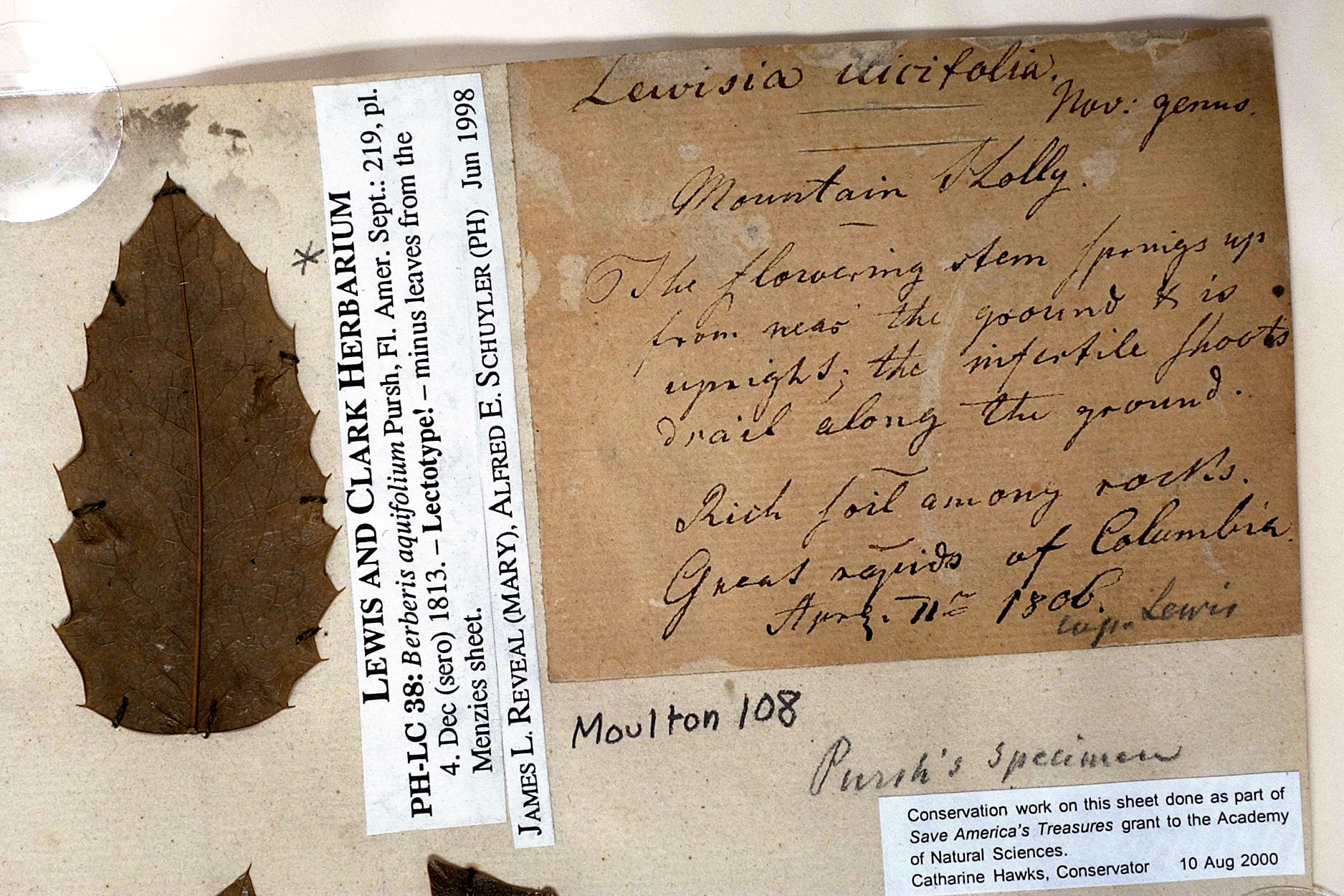
    A few horns are all that still exist from the animal specimens Lewis and Clark collected for Jefferson. But almost all of those plant specimens survived to this day, and nearly all of them are now housed at the Academy.

    Close up detail of labels and mounted dried specimen of Berberis aquifolium, the Oregon grape, collected by Lewis and Clark on Feb. 12, 1806 near present-day Astoria, Oregon.Tom Gralish / Staff Photographer

    In 1938 a taxidermied Western lowland gorilla from what is now the Central African Republic was sealed behind glass in a diorama — and was not touched by human hands for decades. In 2018 workers opened the case and the Academy allowed me to go behind-the-scenes as it embarked on the monthslong historic renovation of their dioramas.

    Workers use different wavelength lighting to find imperfections and repairs in the gorillas before they are removed from the Academy in 2018. TOM GRALISH / Staff Photographer

    During the days of COVID-19, I photographed Stephanie Gleit a designer at the Academy who created interesting social distancing signage for their public spaces. “Maintain 6 feet between your herd and others,” said one of the signs.

    I spent an early morning in 2013 as 40-foot-long animatronic Tyrannosaurus rex was installed on the sidewalk outside the Academy’s front door. It was part of an exhibit that featured more than a dozen realistic, animatronic full-bodied dinosaurs, as well as skeletons, fossil casts of skulls, claws and horns, real specimens of mosasaur and spinosaurus teeth, an Oviraptor egg, and the ever-popular coprolite (dino poop).

    I was judicious when deciding the very few newspaper assignments I would take one of my kids on. I tried never to take advantage or exploit my position at the newspaper, and I was always concerned with their safety as well as that of the subjects of our story. I worried about the ethics and appropriateness and what the impact might be with their presence. But there were a few times I had to ask — my editors and the subjects — if it would be okay.

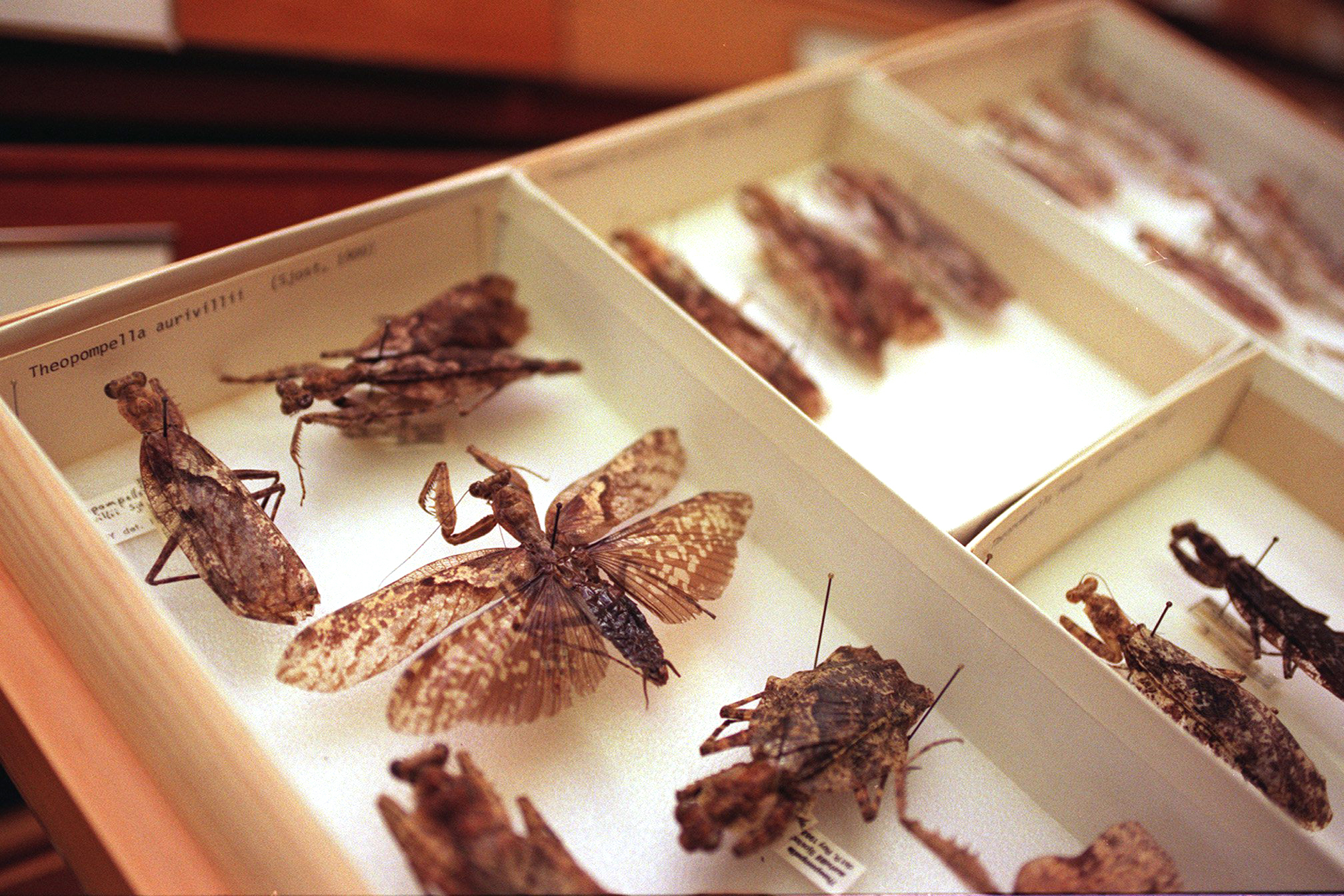
    Among the 28,000 or so species of orthoptera (jumping insects) at the Academy are these leaf mimicking mantids are from Africa, photographed in 1999;Tom Gralish / Staff Photographer

    One of those was a time I got to go ”backstage” in one of the world’s largest repositories of natural specimens: bird carcasses, fish, mollusks, minerals, bones … and bugs. My son’s favorite animals. My day as “Cool Dad.”

    Since 1998 a black-and-white photo has appeared every Monday in staff photographer Tom Gralish’s “Scene Through the Lens” photo column in the print editions of The Inquirer’s local news section. Here are the most recent, in color:

    » SEE MORE: Archived columns and Twenty years of a photo column.

  • The N.J. education department will hold a public forum on school funding Monday

    The N.J. education department will hold a public forum on school funding Monday

    State funding for school budgets, a contentious topic among taxpayers and school boards, will be the focus of a public forum on Monday sponsored by the New Jersey Department of Education at Camden County College in Blackwood.

    Some complain their districts are shortchanged by state funding. Many district leaders fume that unpredictable funding levels make annual budgeting a guessing game.

    In Cherry Hill, the Fair Funding Cherry Hill Facebook page advocates for more funds for the district. On the page, a suggested note for residents to send to Gov. Mikie Sherrill in June said: “You stated that you fully funded education in NJ, but after drastically being underfunded for years and shortchanged almost $350M+, Cherry Hill residents need the relief that these restored funds will bring.”

    The Education Department forum, which runs from 6 to 7:30 p.m. at Civic Hall, Gabriel E. Danch Center, 200 College Dr., will include an overview of school funding with public comments. The comments will be reviewed after all six forums as part of the School Funding Outreach Project, according to the Education Department. Registration for the forum is here.

    “Through a collaborative, stakeholder-driven process, NJDOE will work with families, educators, school leaders, legislators, advocates, and community partners to identify opportunities for improvement,” according to the education department.

    One regional forum was held in Edison in late September. Others, besides the one on Monday, are:

    • Oct. 14: Stockton University, Galloway
    • Oct. 22: Virtual statewide forum
    • Oct. 27: Essex County Donald M. Payne School of Technology, Newark
    • Nov. 12: Virtual statewide forum

    The sessions are each from 6 to 7:30 p.m. Email updates from the state about school funding are available through email by signing up here.

    70and73.com is a hyperlocal news site focused on South Jersey, including the communities of Cherry Hill, Evesham, Mount Laurel, Voorhees, Medford, Medford Lakes, and Moorestown.

  • New Jersey’s drought officially is history, and the Atlantic hurricane season is making history

    New Jersey’s drought officially is history, and the Atlantic hurricane season is making history

    Go ahead New Jersey, drink up and wash the cars: After 300 days, the governor’s office has officially lifted the statewide drought warning.

    The decree came Thursday after three months that have featured an assortment of downpours and general rainfalls, with a bonus early-season nor’easter, throughout the Garden State and the Philadelphia region that may have had a lot of folks wondering when too much would be enough.

    The region has another shot at rain Sunday, but the atmosphere may be poised to flip into a radically different, season-changing, rain-repelling pattern.

    In fact, said Richard Bann, a meteorologist with the federal Weather Prediction Center, “If this were January, people would worry about how cold it would be.”

    Any rain Sunday would be the result of a stalled front and “a surge of tropical moisture from the Gulf,” distantly related to the remnants of Hurricane Polo, said Matt Benz, senior meteorologist with AccuWeather Inc.

    Polo, of course, originated in the Pacific, which has been on fire with tropical activity — the mirror opposite of the Atlantic.

    The Atlantic Basin, which includes the Gulf and the Caribbean, hasn’t spawned a single hurricane this season, and this has a shot at becoming the first season without a verified hurricane in 132 years.

    One extraordinary feature of the Philly region’s remarkable turn in rain fortunes has been the absolute absence of tropical-storm related rainfall, which often has been an important source of late summer and early fall rainfall around here.

    The weekend outlook for the Philadelphia region

    On the subject of turnabouts, that was the sun that reappeared in the skies over Philly Thursday and Friday after a September in which it seemed as if the region was living under a dropped ceiling. For the month, Philly officially had three clear days.

    The average is about eight during one of the sunnier and drier months of the year.

    As though the sun was making up for lost time, on Friday temperatures in Philly shot into the mid-80s. While that’s not a record for the date — that would be 95 degrees, set in 2019 — the normal high for the date is 73.

    And that’s about what is forecast for Saturday, which should be a fabulous day for hay-riders and corn-maze enthusiasts.

    A storm was expected to form along as stalled front and move near the region and was likely generate showers on a Sunday afternoon that would be several degrees cooler than Saturday.

    And October weather really arrives with the workweek, said Benz.

    Next week is looking sunny and dry with daytime highs that might not get much past 60 degrees Tuesday and Wednesday, and fall into the 40s both mornings. If the foliage experts are right, those sunny days and cool nights should be ideal for the leaf-color.

    A fond farewell to the drought

    At least the trees won’t be moisture-starved.

    It may be hard to remember that on July 1, Philadelphia officially had experienced 16 consecutive months of below-normal precipitation.

    Antecedent dryness was one thing that moved New Jersey to declare a drought “warning,” asking residents to conserve water voluntarily, on Dec. 5.

    On June 1, Philadelphia, its seven neighboring counties, and all of New Jersey were in states of at least “moderate drought,” according to the interagency U.S. Drought Monitor.

    However, in June, the celestial faucets turned on again, and the National Weather Service Office in Mount Holly issued a record number of flood warnings.

    Through Wednesday, rain totals in all the counties of New Jersey and Eastern Pennsylvania were well above normal during the previous 90 days, according to the Middle Atlantic River Forecast Center.

  • New Jersey’s drought officially is history, and so is the Atlantic hurricane season

    New Jersey’s drought officially is history, and so is the Atlantic hurricane season

    Go ahead New Jersey, drink up and wash the cars: After 300 days, the governor’s office on Thursday officially lifted the statewide drought warning.

    The decree comes after three months that have featured an assortment of downpours and general rainfalls, with a bonus early-season nor’easter, throughout the Garden State and the Philadelphia region that may have had a lot of folks wondering when too much would be enough.

    The region has another shot at rain during the weekend, but the atmosphere may be poised to flip into a radically different, season-changing, rain-repelling pattern.

    In fact, said Richard Bann, a meteorologist with the federal Weather Prediction Center, “If this were January, people would worry about how cold it would be.”

    Any rain this weekend would be the result of a stalled front and “a surge of tropical moisture from the Gulf,” distantly related to the remnants of Hurricane Polo, said Matt Benz, senior meteorologist with AccuWeather Inc.

    Polo, of course, originated in the Pacific, which has been on fire with tropical activity — the mirror opposite of the Atlantic.

    The Atlantic Basin, which includes the Gulf and the Caribbean, hasn’t spawned a single hurricane this season, and this has a shot at becoming the first season without a verified hurricane in 132 years.

    One extraordinary feature of the Philly region’s remarkable turn in rain fortunes has been the absolute absence of tropical-storm related rainfall, which often has been an important source of late summer and early fall rainfall around here.

    The weekend outlook for the Philadelphia region

    On the subject of turnabouts, that was the sun that reappeared in the skies over Philly after a September in which it seemed as if the region was living under a dropped ceiling. For the month, Philly officially had three clear days.

    The average is about eight during one of the sunnier and drier months of the year.

    The sun is due for an encore during a summery Friday, with highs expected in the mid-80s, but as an autumnal front approaches, showers are possible at night.

    Saturday should be a fabulous day for hay-riders and corn-maze enthusiasts, with sun and highs expected to be more October-like, perhaps 15 degrees cooler than Friday’s.

    A storm is expected to form along the front as it stalls and moves toward the region, perhaps transporting some of Polo’s leftovers, and showers again are possible Sunday and Sunday night.

    But October weather really arrives with the workweek, said Benz.

    Next week is looking sunny and dry with daytime highs that might not get much past 60 degrees Tuesday and Wednesday, and fall into the 40s both mornings. If the foliage experts are right, those sunny days and cool nights should be ideal for the leaf-color.

    A fond farewell to the drought

    At least the trees won’t be moisture-starved.

    It may be hard to remember that on July 1, Philadelphia officially had experienced 16 consecutive months of below-normal precipitation.

    Antecedent dryness was one thing that moved New Jersey to declare a drought “warning,” asking residents to conserve water voluntarily, on Dec. 5.

    On June 1, Philadelphia, its seven neighboring counties, and all of New Jersey were in states of at least “moderate drought,” according to the interagency U.S. Drought Monitor.

    However, in June, the celestial faucets turned on again, and the National Weather Service Office in Mount Holly issued a record number of flood warnings.

    Through Wednesday, rain totals in all the counties of New Jersey and Eastern Pennsylvania were well above normal during the previous 90 days, according to the Middle Atlantic River Forecast Center.

  • Democrats add Zack Mullock’s challenge of Jeff Van Drew in South Jersey to their ‘districts in play’ list

    Democrats add Zack Mullock’s challenge of Jeff Van Drew in South Jersey to their ‘districts in play’ list

    National Democrats added U.S. Rep. Jeff Van Drew’s South Jersey district on Friday to a list of their target races to flip, signaling they’re taking Cape May Mayor Zack Mullock’s candidacy more seriously than before.

    Mullock decisively won a crowded primary in June to face Van Drew, a Cape May County Republican.

    Van Drew has comfortably warded off challengers in recent years. He was first elected as a Democrat in 2018, but then declared his loyalty to President Donald Trump and switched parties a year later.

    The designation was a long time coming for Mullock, as mail ballots have already begun to come in 32 days before the Nov. 3 election.

    Still, it came as a surprise to him. He learned on Friday he made the cut at the same time everyone else did, through social media, he said.

    “We may be purplish-red, but you know, we are not a just ‘go with whatever the president says’ kind of district,” Mullock said in a phone call. “We voted for Obama twice. We voted for Jeff Van Drew as a Democrat.”

    Local Democrats have been optimistic that Mullock is their best shot yet at ousting Van Drew, but the race had flown under the national radar. The Democratic Congressional Campaign Committee (DCCC), the party’s main campaign arm in House races, had excluded the district from its “2026 Districts in Play” map until Friday morning.

    The announcement likely indicates that the national committee will send resources to Mullock’s campaign, such as staff support, but it does not come with the funding that the most competitive “Red to Blue” seats get.

    Still, it serves as a nudge to donors to take the race seriously.

    U.S. Rep. Jeff Van Drew speaks next to President Donald Trump at a Keep America Great campaign rally in Wildwood, NJ on Tuesday, Jan. 28, 2020.HEATHER KHALIFA / Staff Photographer

    Van Drew’s district was one of eight districts across the country added to the battleground list, showing that Democrats see a blue wave as increasingly likely as Trump’s popularity suffers amid the Iran war and inflation.

    National Democrats are now targeting a total of 66 House races, which they say is nearly double as many as in 2024 when Republicans maintained control of the chamber.

    Van Drew’s campaign spokesperson Ron Filan, in a statement, said Democrats make the race seem competitive every cycle as a “fundraising ploy,” and that Van Drew “proves them wrong” each time.

    “We predicted back in June they would follow this same playbook and appreciate them proving us right,” Filan said. “The DCCC has about a third of House Republicans on one of their silly wish lists or another.”
    Van Drew has been thrusting out attack ads as Mullock campaigns across the district, showing that he sees the local mayor as a threat. Filan noted that Van Drew “doesn’t take anything for granted and will continue to campaign as hard as he always has.”

    Previously, the only seat in the Garden State on the DCCC’s battleground list was U.S. Rep. Tom Kean’s 7th District in Central Jersey, which is still the only one on the “Red to Blue” list. Kean, who was absent from Congress for months without explanation until he revealed it was for depression, is viewed as highly vulnerable as Democrat Rebecca Bennett tries to oust him.

    The nonpartisan Cook Political Report has rated the 7th District as leaning toward Democrats, but Van Drew’s “solidly Republican” seat will be a more difficult challenge to flip.

    The Cape May lawmaker’s closest challenge was in 2020 from Amy Kennedy, who still fell nearly 6 points behind him. He was reelected in 2022 by 19 points and in 2024 by 17 points.

    National Republicans cite a double-digit win for Trump in the district in 2024, but Democrats note Gov. Mikie Sherrill came within single digits of her Republican opponent Jack Ciattarelli in the district last year as she reversed red shifts in the state while consistently attacking Trump.

    Mullock said he thinks constituents are becoming disillusioned about Van Drew’s support of Trump.

    “I think people are realizing what I realized … I thought Jeff was a moderate Democrat that became a moderate Republican, and that is just not what he has become,” the Democrat said.

    The 2nd Congressional District spans several South Jersey counties, extending from the Jersey Shore to rural farmland and the Philadelphia suburbs.

    DCCC chair Suzan DelBene said in a statement that voters will send Van Drew “packing” because he “prioritizes tax breaks for the wealthiest few while gutting healthcare and raising costs for his constituents.”

    The National Republican Campaign Committee (NRCC), meanwhile, is focused on defending Kean’s district, the only Jersey seat on its “Patriots” list.

    NRCC spokesperson Maureen O’Toole said in a statement that “Democrats are living in a fantasy.”

    “New Jersey families know Jeff Van Drew delivers results, they trust him, and they’ll proudly reelect him in November,” she said.

  • Human remains found off Atlantic City 45 years ago identified as retired Coast Guard officer

    Human remains found off Atlantic City 45 years ago identified as retired Coast Guard officer

    New Jersey State Police have identified the remains of a man found off the coast of Atlantic City 45 years ago.

    Glen Napoleon Burbage, a retired U.S. Coast Guard officer from South Carolina, was last seen in March 1981. Burbage, who was 59 when he disappeared, had flown to Atlantic City that month, and was never heard from again, officials said in a statement.

    Two months later, on May 22, 1981, a group of boaters found a human body in the ocean about a mile off Raleigh Avenue in Atlantic City. At the time, investigators believed the man had died several weeks before his remains were recovered.

    Police, however, were unable to immediately identify the remains. Previous DNA testing did not reveal any matches in the Combined DNA Index System, a national, federally managed DNA profile database. And lacking further leads, the case went unsolved for decades.

    In April, authorities enlisted the help of Ramapo College’s Investigative Genetic Genealogy Center. Founded in 2022, the Mahwah center specializes in training students in an increasingly utilized field of DNA-based investigative technology that uses data from commercial genetic testing to identify previously unidentified victims and suspects.

    That month, the center said, it had undergraduate students and law enforcement officials attending a weeklong boot camp examine the then-unidentified body’s DNA. Students built family trees and examined genealogical records in an effort to identify the man.

    Following the boot camp’s end, they found a lead in Burbage, who had been missing since March 23, 1981. New Jersey State Police later conducted what they called a “one-to-one familial DNA comparison” with DNA collected from one of Burbage’s living children. South Carolina authorities also assisted in the case.

    “For 45 years, Glen Burbage had a name and a family, even though investigators did not yet know who he was,” said center director Cairenn Binder in a statement. “Investigative genetic genealogy gives us a way to revisit cases that once seemed to have reached the limits of available technology.”

    Burbage’s case is not the first solved with help from Ramapo’s center. Perhaps most notably, in June last year, it identified through similar means the remains of Henry Goodsell, the captain of a schooner that wrecked off the coast of Brigantine in December 1844.

    When it was solved, Goodsell’s case was among the oldest closed using investigative genetic genealogy, at more than 180 years old. Goodsell, having been unidentified for so long, and his remains discovered along a wide swath of the New Jersey coast, had become known colloquially as “Scattered Man John Doe.”

    Investigative genetic genealogy differs from traditional DNA testing in that it is more expansive, and is able to identify more distant relatives. Regular DNA testing, meanwhile, looks at relatively little DNA information, Binder told The Inquirer last year.

    With that additional information, genetic genealogists are able to reverse-engineer an unidentified person’s family tree to home in on the identity.

    That investigative technique became widely known in 2018, when it was used to identify the Golden State Killer in California. Since then, it has been employed in notable cold-case identifications locally, including in identifying the so-called “Boy in the Box” and the Fairmount Park rapist.

    Burbage’s death, however, remains under investigation, as authorities have not determined what led to his disappearance or demise. Officials have asked anyone with information about the case to contact the New Jersey State Police Missing Persons Unit at missingpinformation@njsp.gov.

  • Three animals in Gloucester County have tested positive for rabies this week

    Three animals in Gloucester County have tested positive for rabies this week

    One person and a dog were exposed to rabies in Glassboro after coming into contact with an infected bat on Tuesday — one of three animals in Gloucester County to test positive for the disease this week, according to public health officials.

    The Gloucester County Health Department announced that in addition to the bat near Joseph L. Bowe Boulevard, raccoons found near Florence Avenue in Pitman and Quest Court in Mantua both tested positive for rabies on Thursday.

    This week’s cases come not long after a rabid raccoon bit a Glassboro man in July.

    The agency is advising residents to make sure their pets are up-to-date on their rabies vaccinations and to avoid contact with wildlife and stray animals.

    Anyone bitten or scratched by a wild animal should wash the area with soap and water, seek medical attention, and contact local animal control or health officials.

  • Caldwell’s church has questions | Inquirer South Jersey

    Caldwell’s church has questions | Inquirer South Jersey

    Good morning, South Jersey. We’re finally out of a drought after the governor’s office lifted the statewide warning.

    After former New Jersey Lt. Gov. Dale Caldwell resigned following an investigation into his conduct, he’s now defending himself against his church.

    And the federal government will spend $2.5 million to clean up underground contamination in Camden.

    Plus, Bancroft NeuroHealth seeks to build a school on its Mount Laurel campus, and more news of the day.

    — Taylor Allen (southjersey@inquirer.com)

    If someone forwarded you this email, sign up for free here.

    Caldwell faces another investigation

    Former Lt. Gov. Dale Caldwell is being investigated by his own church.

    A bishop of the Eastern Pennsylvania and Greater New Jersey Episcopal Area sent an email about the probe to colleagues on the same day of Caldwell’s resignation last week, which followed the release of the initial report finding evidence of sexual harassment.

    Caldwell, who is a senior pastor at Covenant United Methodist Church in Plainfield, told the Inquirer that the Eastern Pennsylvania and Greater New Jersey Episcopal Area was “investigating the investigation, based on the same information” and referred to the examination as a “piling on.”

    He is suspended from his church duties until the investigation is complete.

    The Inquirer’s Susan K. Livio has the story.

    A $2.5 million environmental cleanup

    The U.S. Environmental Protection Agency awarded a $2.5 million grant to dig up layers of a 1.6-acre site to get rid of contamination.

    It’s from a 45-foot-high pile of illegally dumped construction waste that was removed years ago in Camden’s Bergen Square neighborhood that left behind lead, arsenic, and PFAS, aka “forever chemicals.”

    The EPA, Camden Mayor Victor Carstarphen, and other officials announced the grant on Thursday. The money will come after the city finds a developer and submits plans for new use at the site, the EPA said.

    Reporter Frank Kummer explains the next steps of the project.

    What to know today

    • An investigation from Floodlight and The Guardian revealed that the DataOne data center in Vineland emitted large amounts of air pollution for almost a year before regulators stepped in. The center was recently hit with a $1 million fine for violating clean-air laws by operating dozens of natural-gas power generators without the required state permits.
    • Bancroft NeuroHealth seeks to build a two-level school for 160 students on its Mount Laurel campus. The proposal will go before the township’s planning board next week, according to 70and73.
    • A new Rutgers University poll shows South Jersey residents are less supportive of Gov. Mikie Sherrill than the rest of the state.
    • A recently introduced bill would allocate $60 million in state grants for farmers who lost crops from the surprise April freeze. Under the proposed legislation, farmers would need to apply and the most impacted would have priority, according to New Jersey Monitor.
    • Fresh off its recent rebrand, Cooper Norcross Health released the first renderings of its planned $650 million Camden patient tower, which is set to open in 2028, the Philadelphia Business Journal reports.
    • A small shark was captured on video swimming in Surf City’s flooded streets during last weekend’s nor’easter.

    🧠 Trivia time

    Which celebrity popped into Haddonfield’s Inkwood Books after seeing their memoir in the shop window?

    A) Jennette McCurdy

    B) Patti Smith

    C) Michelle Zauner

    D) Cher

    Think you know? Check your answer.

    What we’re …

    🏒 Reliving: The day Gritty visited the Inquirer office.

    🦅 Listening to: The performance of the one-woman band who does the Eagles fight song on game days.

    🎃 Preparing: Halloween decorations — but probably not to this impressive level.

    📸 Photo of the week

    Philadelphia 76ers LeBron James poses for a portrait during NBA Media Day at the team’s training facility in Camden on Monday. Jose F. Moreno / Staff Photographer

    Enjoy your weekend! See you on Monday. 😎

    By submitting your written, visual, and/or audio contributions, you agree to The Inquirer’s Terms of Use, including the grant of rights in Section 10.