Author: Tom Gralish

  • Go the way of the dinosaurs

    Go the way of the dinosaurs

    It’s one of the many places I guess I’d just assumed would always be there.

    But the Academy of Natural Sciences of Drexel University is not the first museum in Philadelphia to close in the past decade.

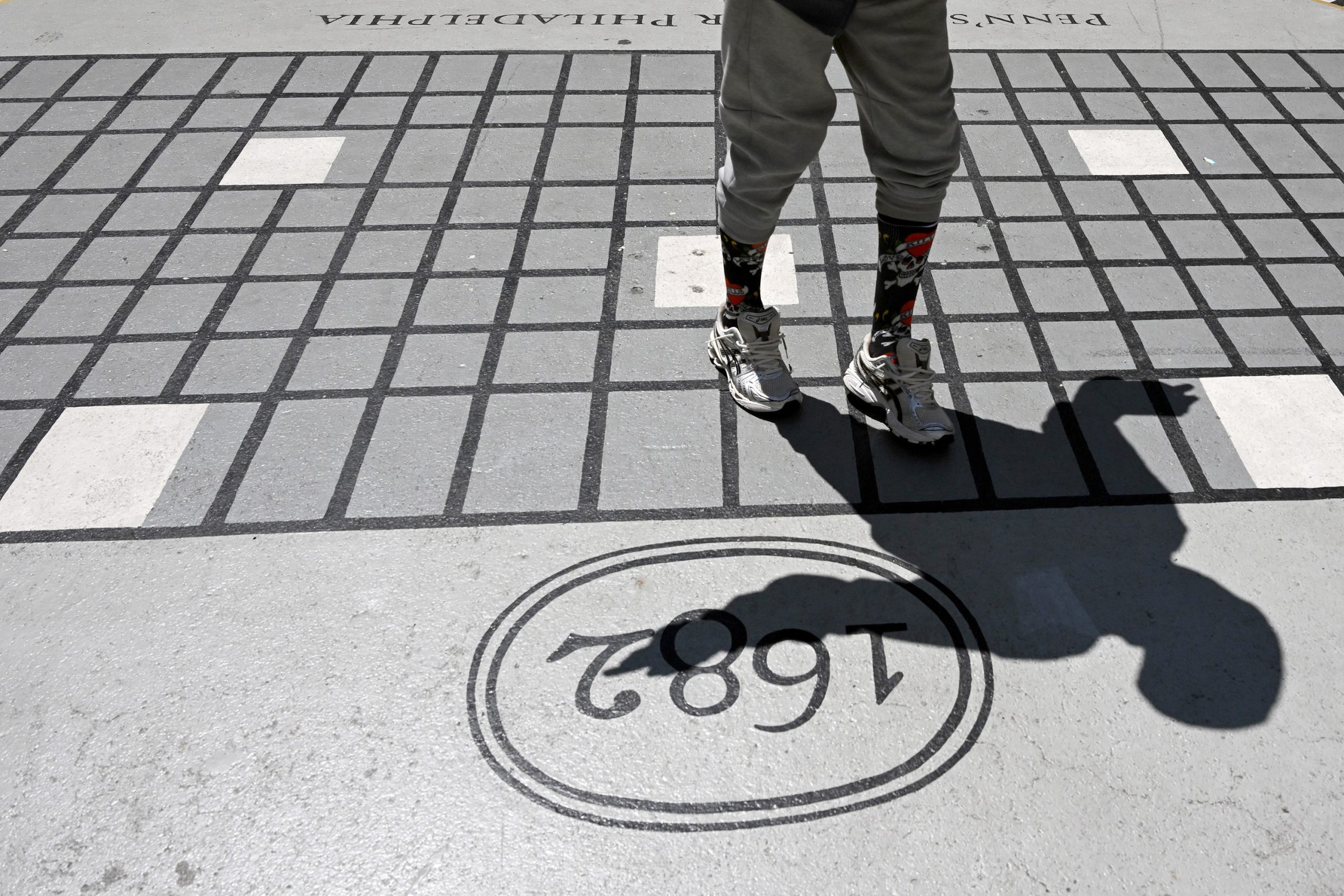
    In 2018, it was the Atwater Kent Museum. It housed a collection that told over 300 years of the city’s history: everything from a 1682 Lenni Lenape belt to Joe Frazier’s boxing gloves. Its closing was followed by the Neon Museum (2022), the Insectarium & Butterfly Pavilion (2023), and the Art Alliance (2024).

    Sure, I know nothing lasts forever and cities change as time marches on. A favorite restaurant, bookstore, movie theater, the beautiful old home you walked past in your neighborhood. Suddenly one day they disappeared behind a construction fence.

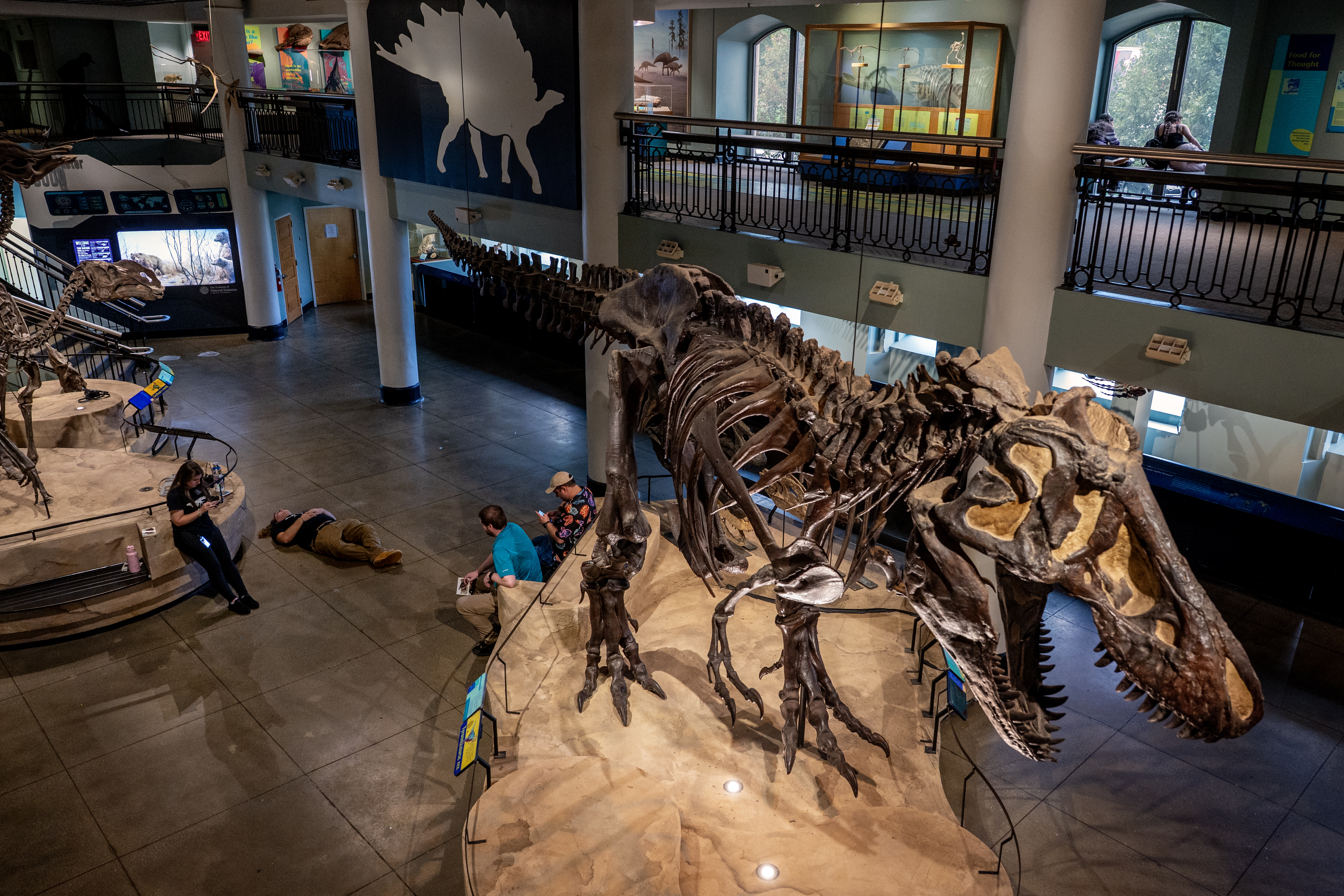
    But it was surprising when the Academy closed last weekend after 198 years of being open to the public.
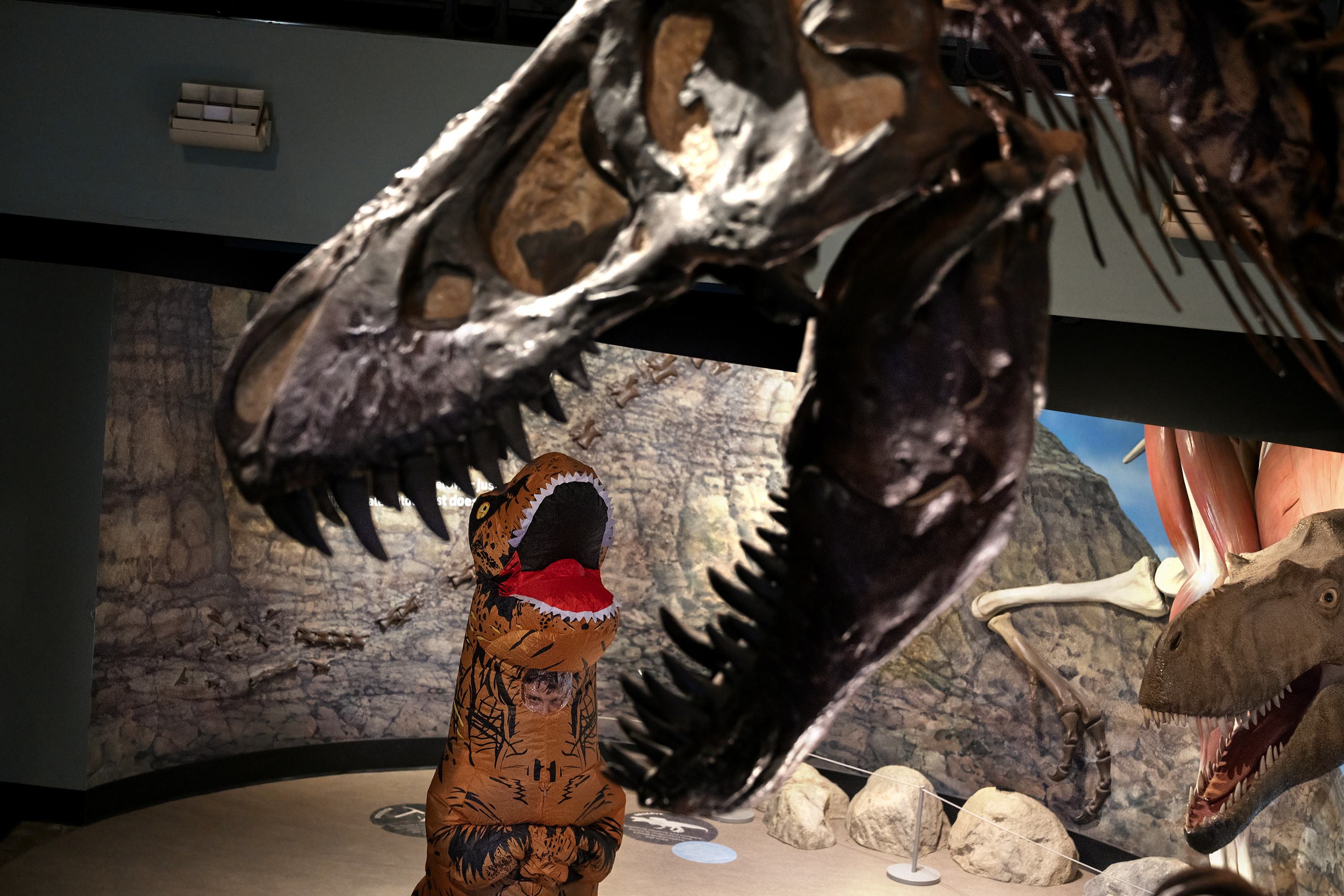
    A dinosaur-costumed visitor passes behind the T-rex in Dinosaur Hall on Sunday, Sept. 28, the last day the museum was open to the public.Tom Gralish / Staff Photographer

    Like everyone else who in the past few weeks has shared their memories on social media, in interviews with reporters or in conversations with others in parents groups or on the playground, I found myself thinking not only about the dinosaur skeletons but also about the feelings and sense of wonder I had experienced there.

    I didn’t grow up here, so I don’t have any of the childhood memories many Philadelphians do, but I did visit often for fun as a young adult, with my own children and even as a grandparent. I also photographed many memorable stories there as a visual journalist.
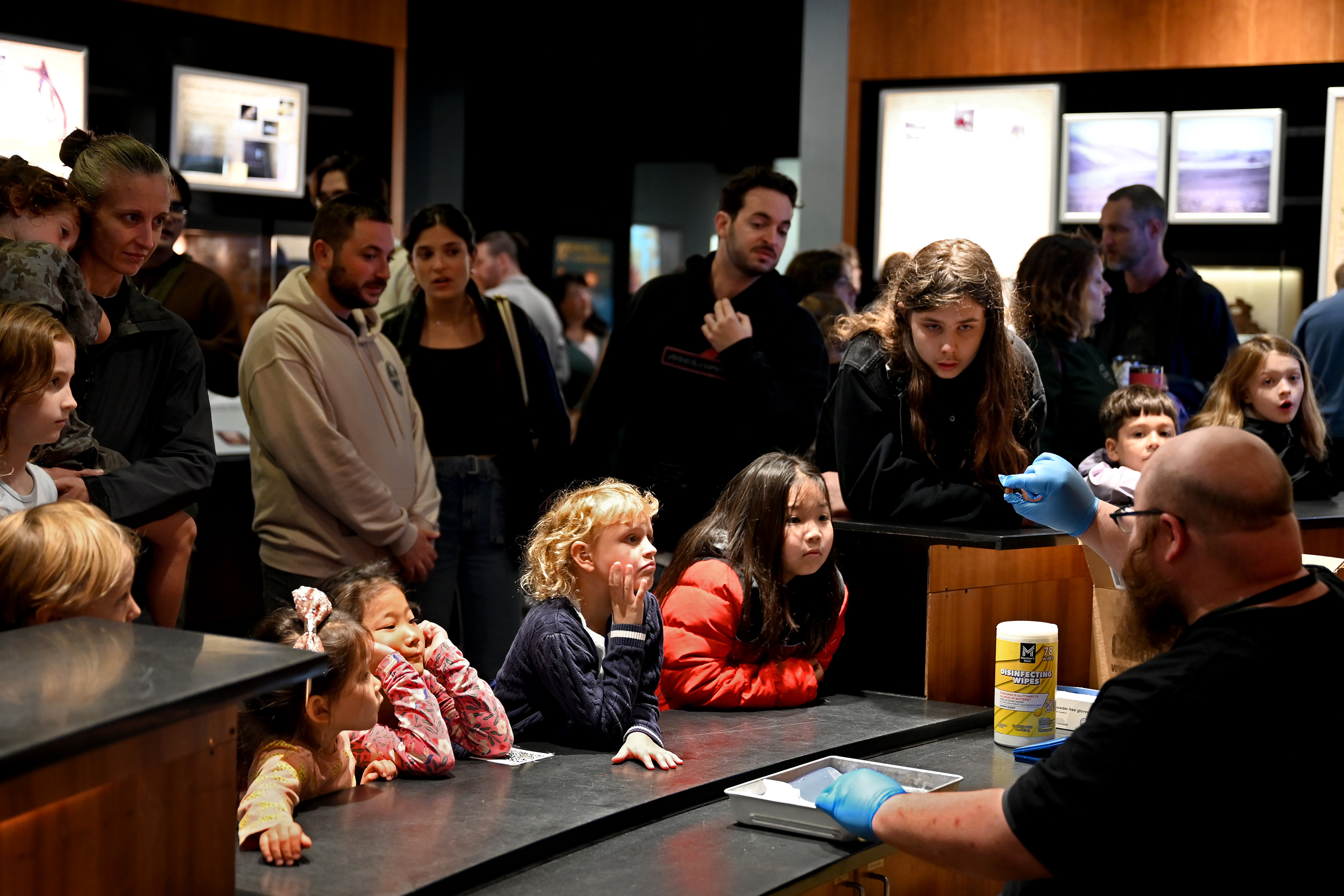
    Science educator Buddy Muhler shows visitors the eyeball of a cow, during a talk on the Academy’s closing day.Tom Gralish / Staff Photographer

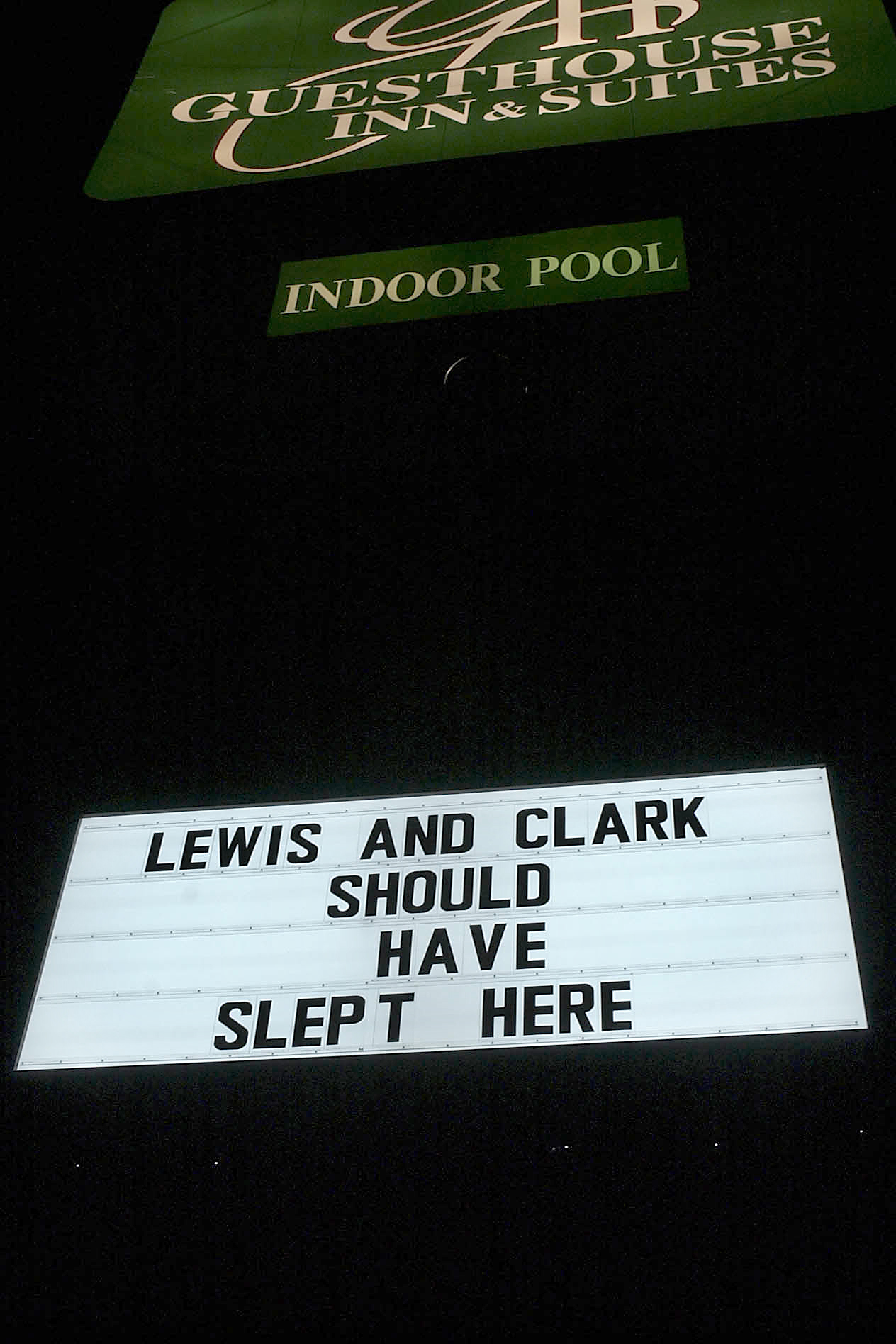
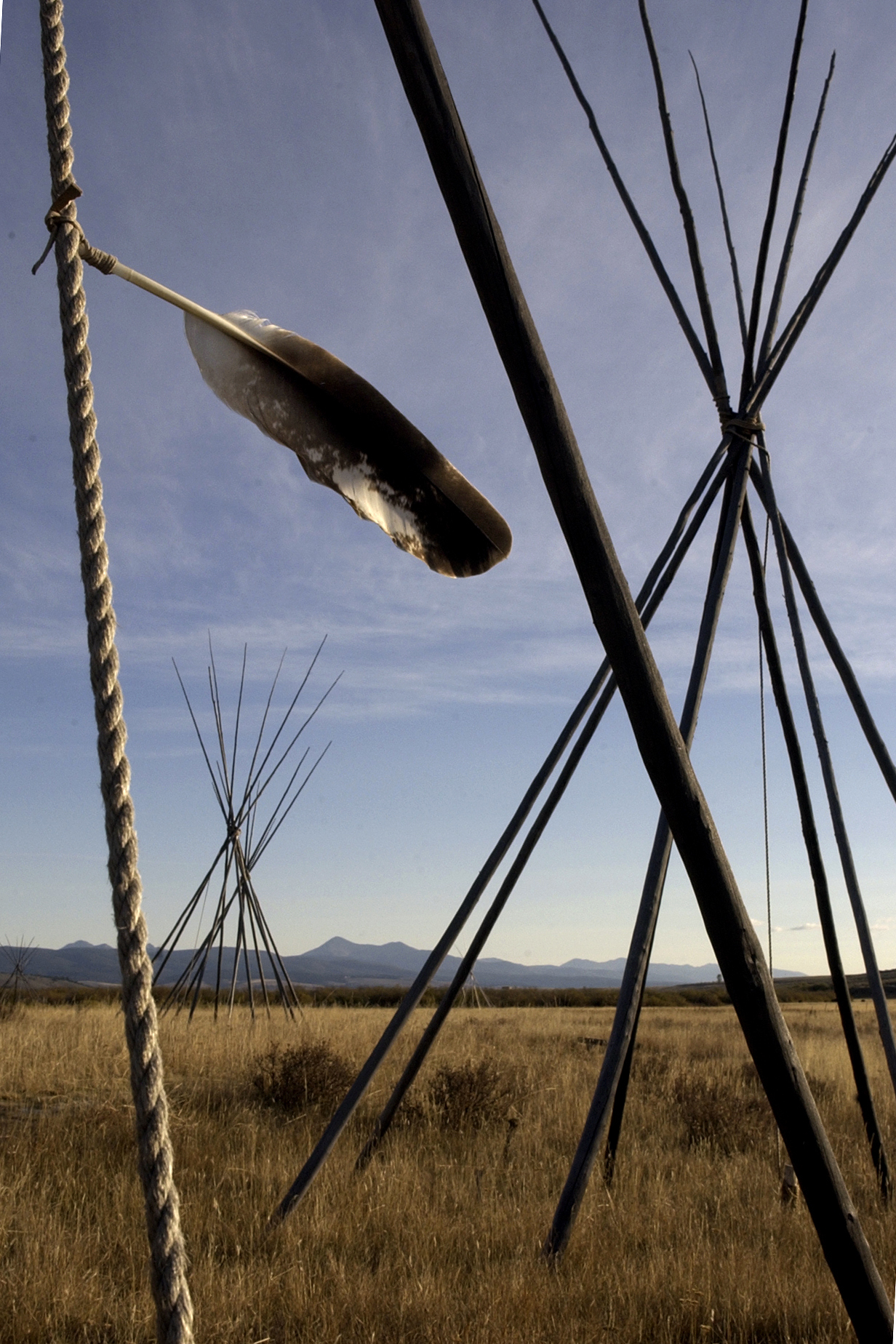
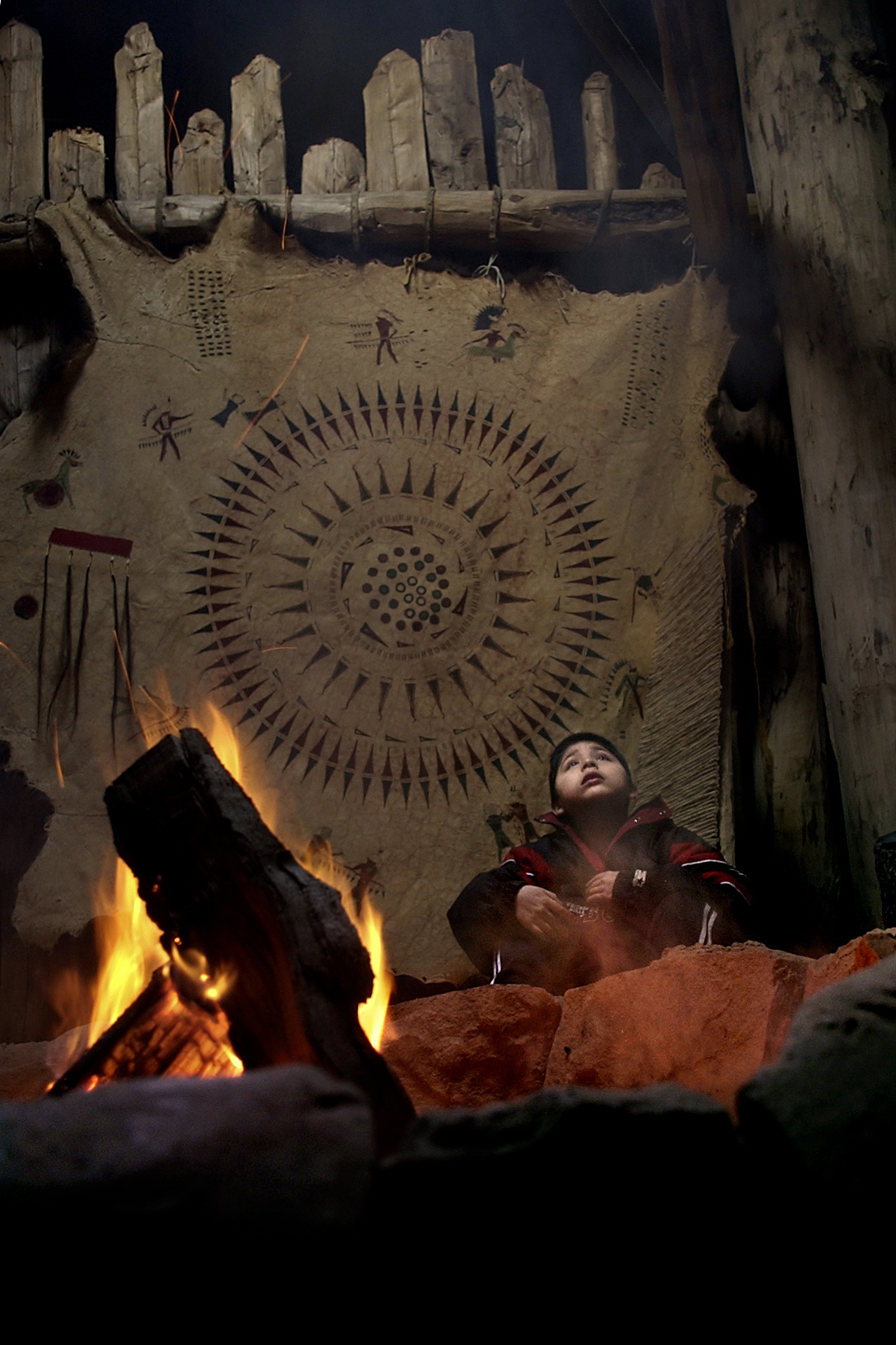
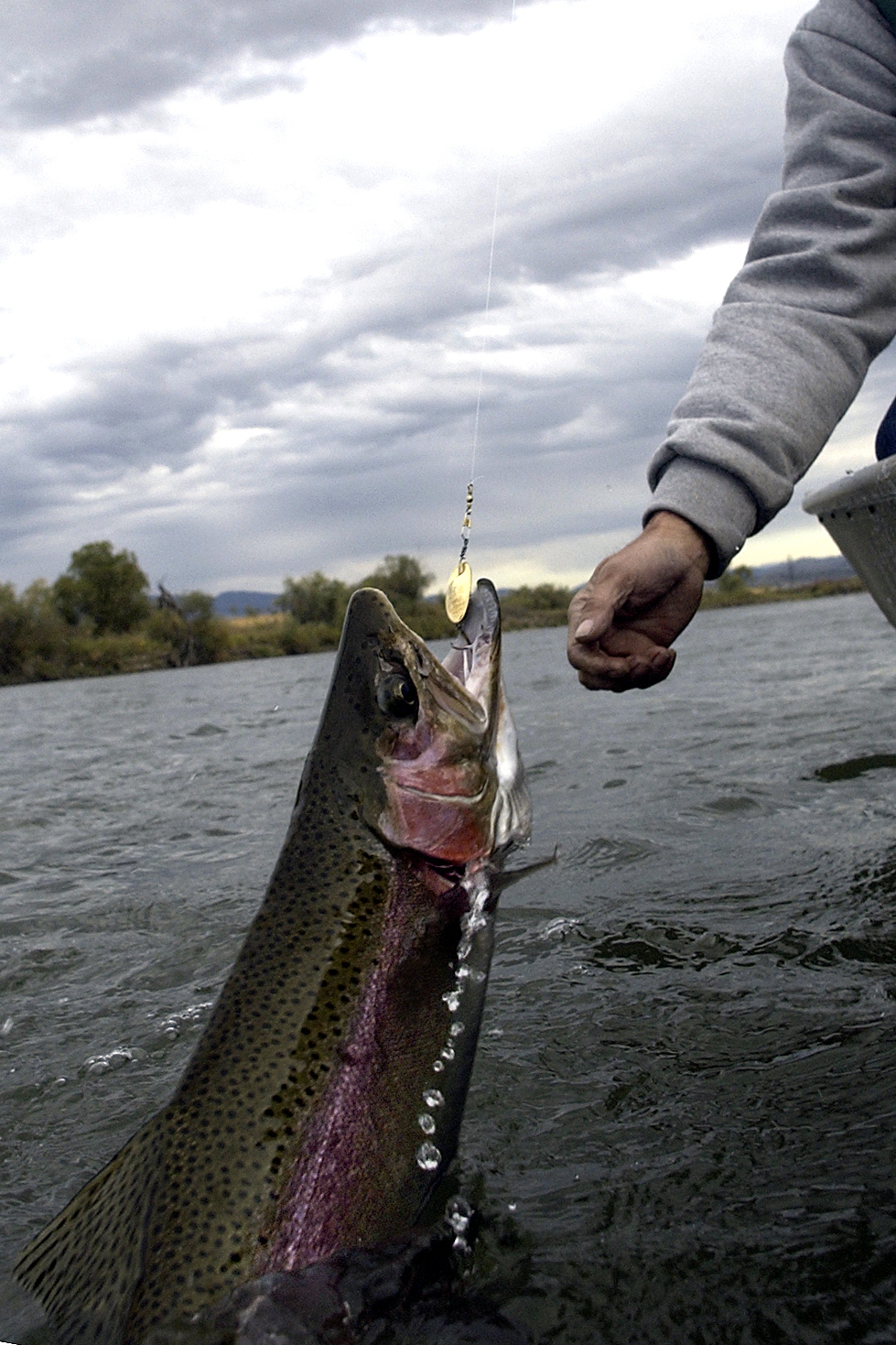
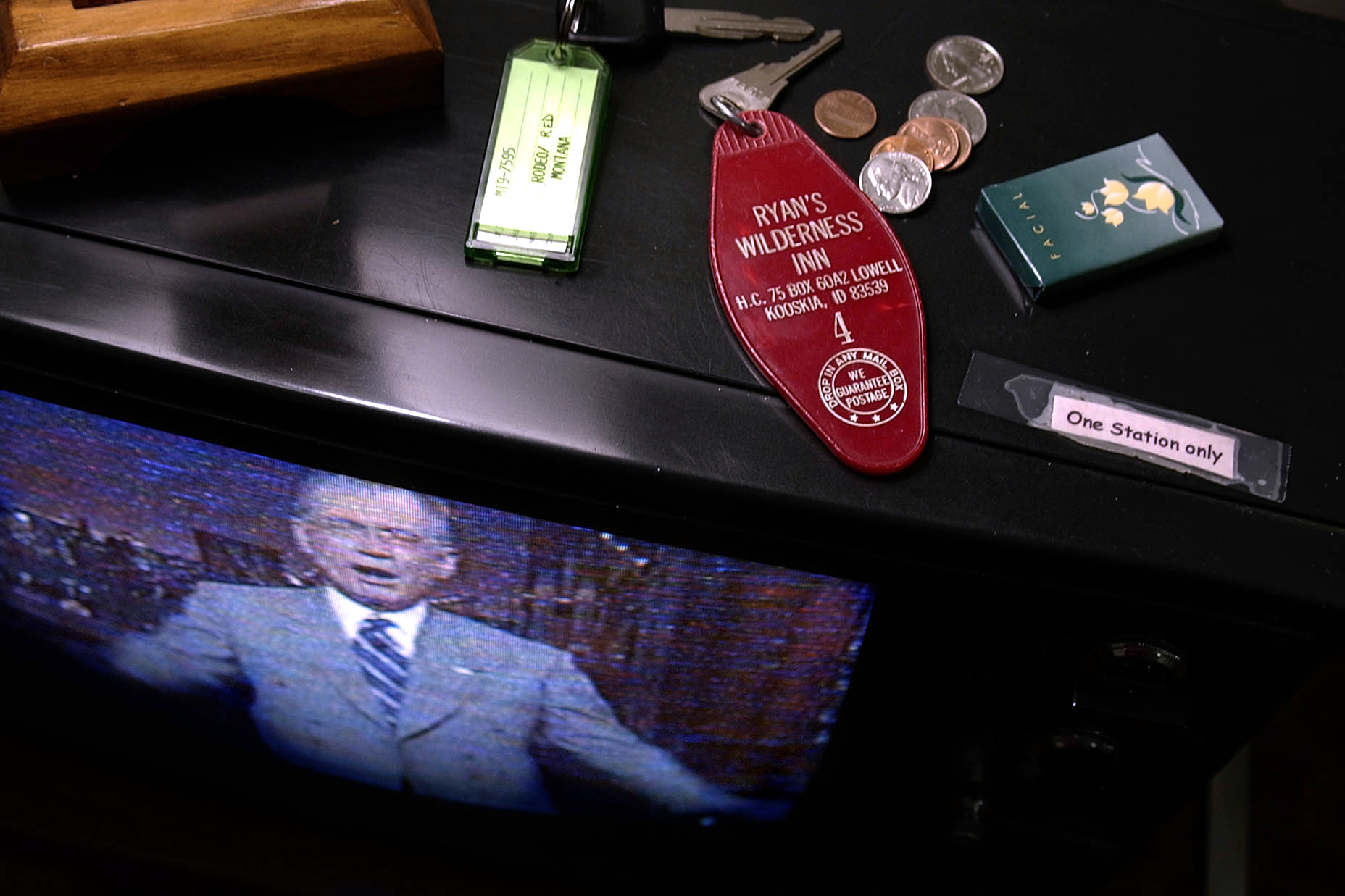
    One of my favorites was a project I did for the 200th anniversary of the Lewis and Clark Expedition in 2004. I made four trips out west logging thousands of miles on rental cars, seeing all the places I read about in history class. Those stories all start out west, where the explorers paddled up the Missouri River in 1804 to see the Louisiana Purchase and find an easy water route to the Pacific Ocean.

    But it was in Philadelphia where it all started.
    When Thomas Jefferson was elected president in 1801, he picked a U.S. Army captain, Meriwether Lewis to pursue his dream of a scientific exploration of the unmapped West. To prepare for the journey Jefferson sent him to the intellectual, medical, scientific and trading center of the new United States: Philadelphia. Here, he spent a month in the spring of 1803 gaining specialized training and purchasing supplies for the expedition.

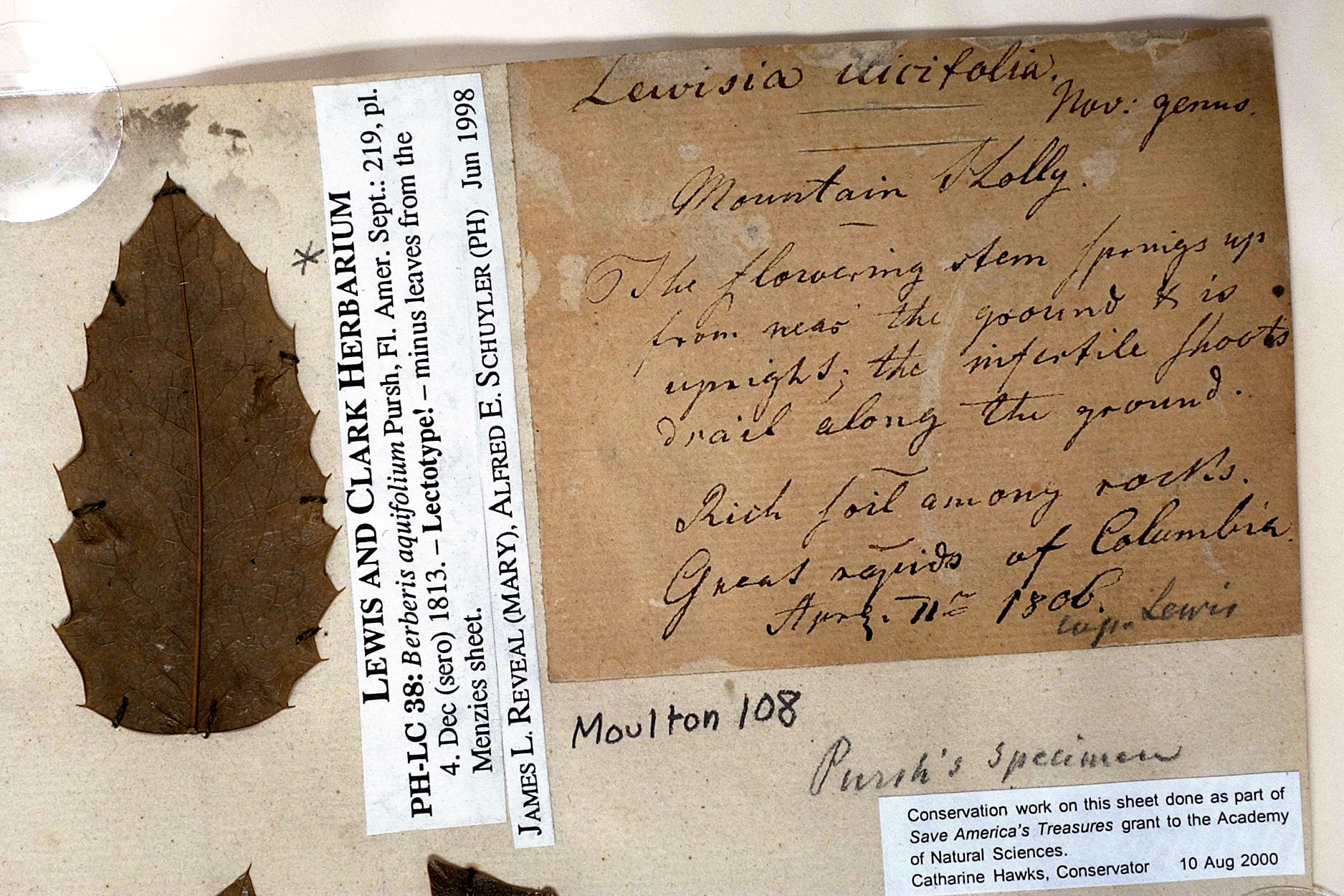
    Flash forward a few years, and among the 122 animals they “discovered” were 178 plants that were “new” to science (Western science anyway — of course Native Americans already knew about everything the explorers found).

    A few horns are all that still exist from the animal specimens Lewis and Clark collected for Jefferson. But almost all of those plant specimens survived to this day, and nearly all of them are now housed at the Academy.

    Close up detail of labels and mounted dried specimen of Berberis aquifolium, the Oregon grape, collected by Lewis and Clark on Feb. 12, 1806 near present-day Astoria, Oregon.Tom Gralish / Staff Photographer

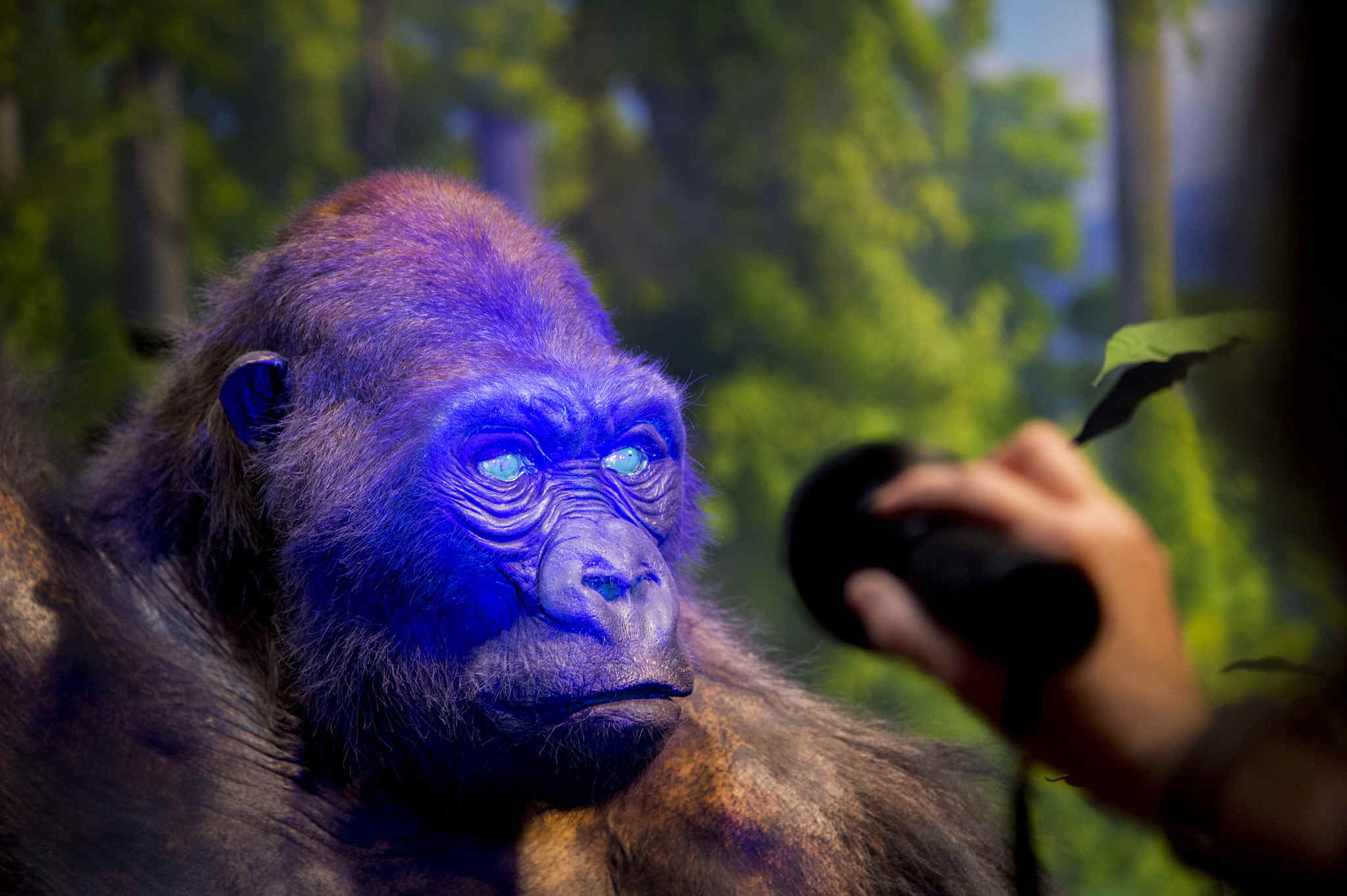
    In 1938 a taxidermied Western lowland gorilla from what is now the Central African Republic was sealed behind glass in a diorama — and was not touched by human hands for decades. In 2018 workers opened the case and the Academy allowed me to go behind-the-scenes as it embarked on the monthslong historic renovation of their dioramas.

    Workers use different wavelength lighting to find imperfections and repairs in the gorillas before they are removed from the Academy in 2018. TOM GRALISH / Staff Photographer

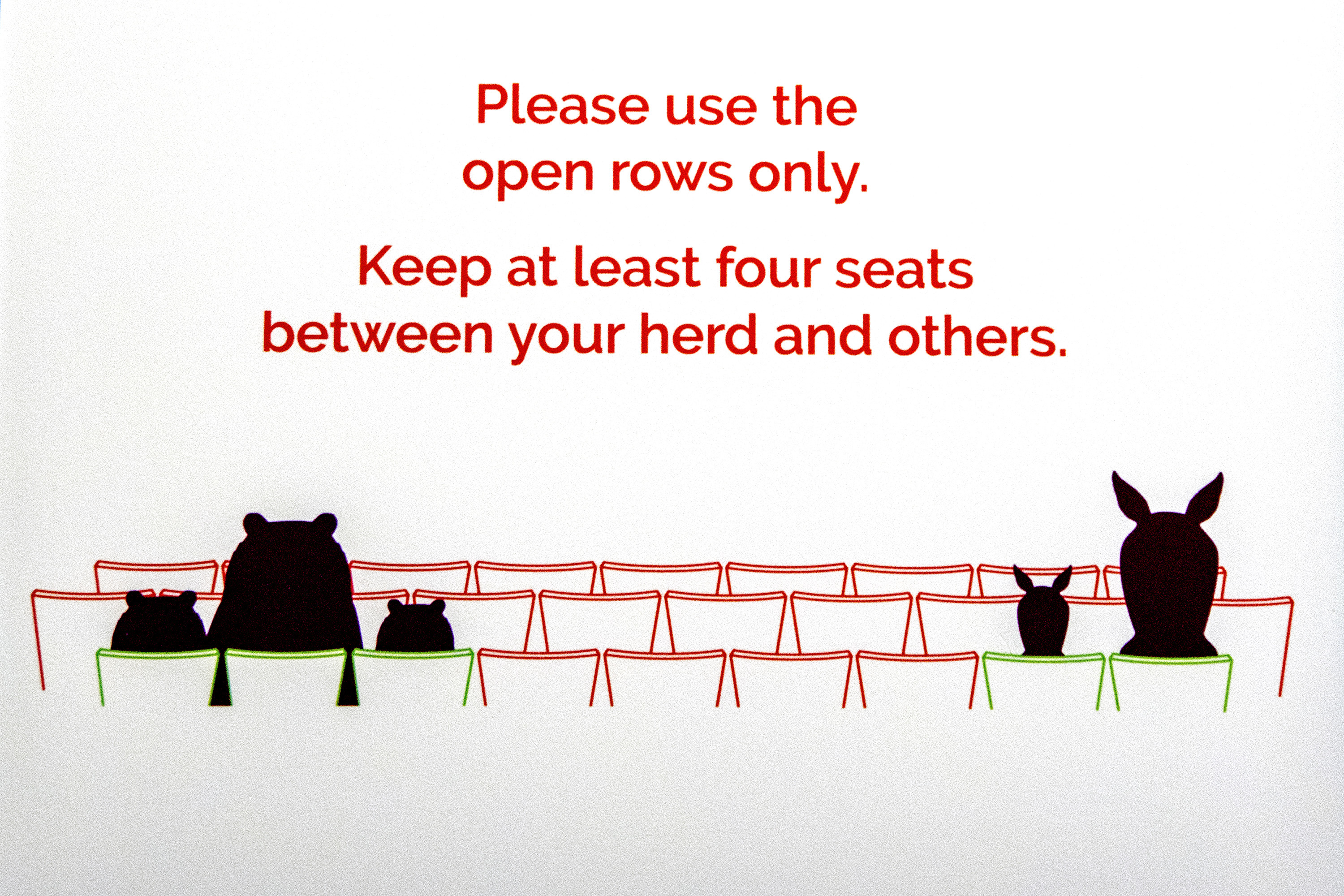
    During the days of COVID-19, I photographed Stephanie Gleit a designer at the Academy who created interesting social distancing signage for their public spaces. “Maintain 6 feet between your herd and others,” said one of the signs.

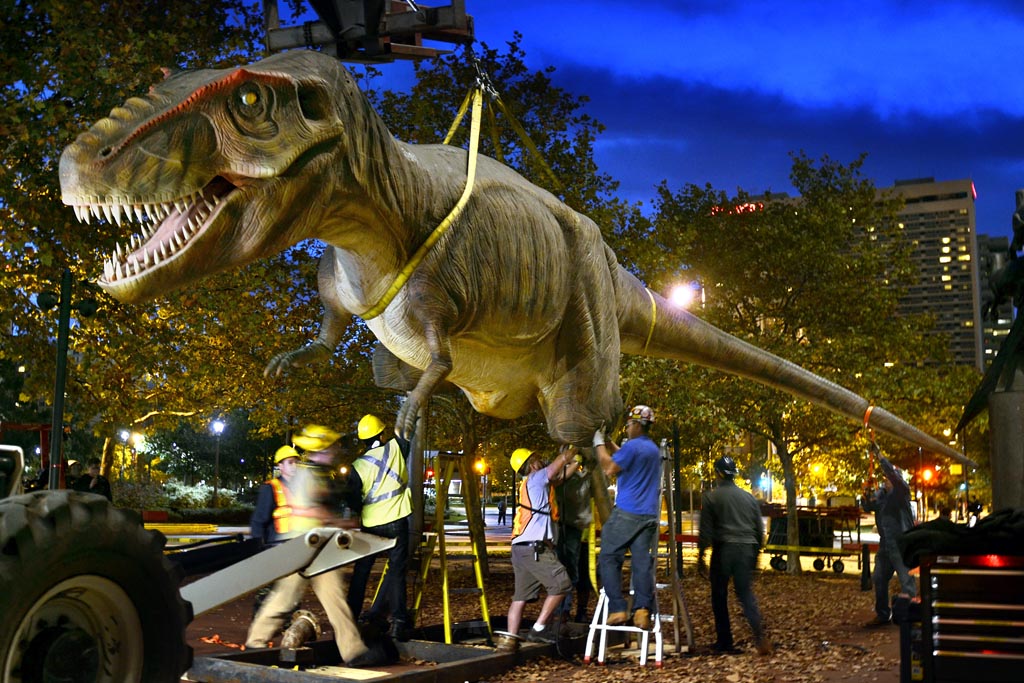
    I spent an early morning in 2013 as 40-foot-long animatronic Tyrannosaurus rex was installed on the sidewalk outside the Academy’s front door. It was part of an exhibit that featured more than a dozen realistic, animatronic full-bodied dinosaurs, as well as skeletons, fossil casts of skulls, claws and horns, real specimens of mosasaur and spinosaurus teeth, an Oviraptor egg, and the ever-popular coprolite (dino poop).

    I was judicious when deciding the very few newspaper assignments I would take one of my kids on. I tried never to take advantage or exploit my position at the newspaper, and I was always concerned with their safety as well as that of the subjects of our story. I worried about the ethics and appropriateness and what the impact might be with their presence. But there were a few times I had to ask — my editors and the subjects — if it would be okay.

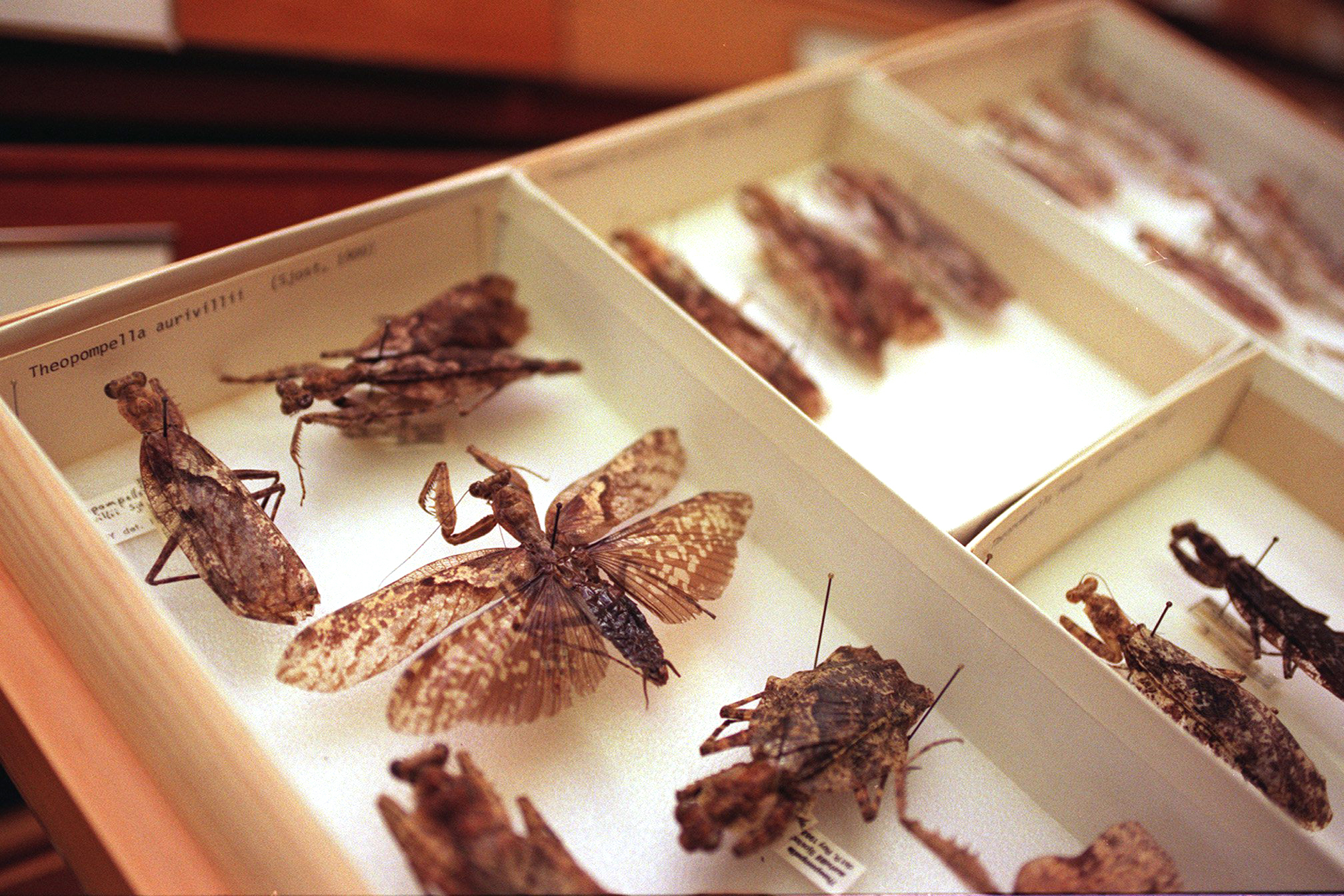
    Among the 28,000 or so species of orthoptera (jumping insects) at the Academy are these leaf mimicking mantids are from Africa, photographed in 1999;Tom Gralish / Staff Photographer

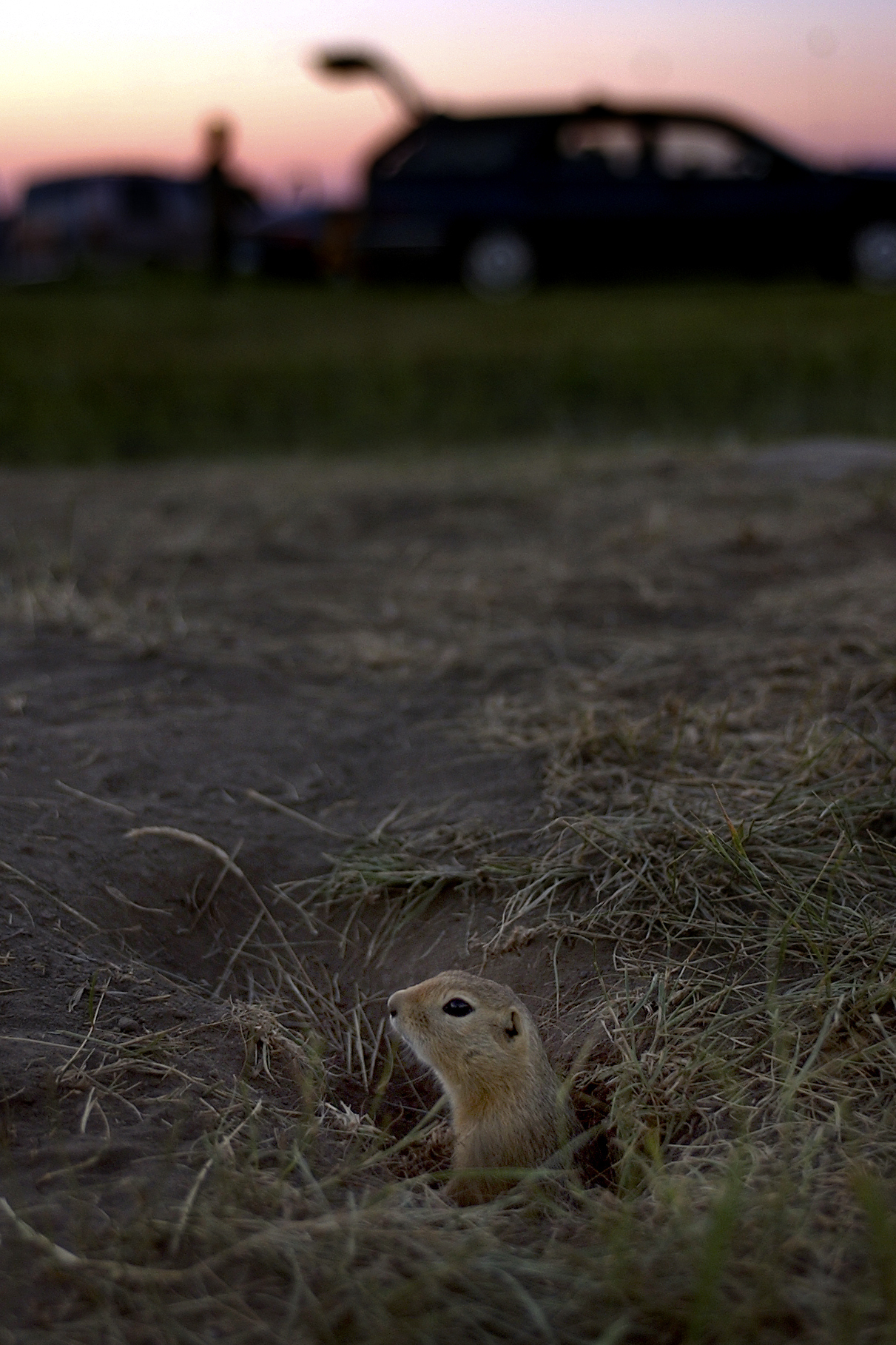
    One of those was a time I got to go ”backstage” in one of the world’s largest repositories of natural specimens: bird carcasses, fish, mollusks, minerals, bones … and bugs. My son’s favorite animals. My day as “Cool Dad.”

    Since 1998 a black-and-white photo has appeared every Monday in staff photographer Tom Gralish’s “Scene Through the Lens” photo column in the print editions of The Inquirer’s local news section. Here are the most recent, in color:

    » SEE MORE: Archived columns and Twenty years of a photo column.

  • Hurry up and wait

    Hurry up and wait

    The “hurry up and wait,” often for ridiculously long times for a news conference to start, or a newsworthy event to happen, or even everyday life to unfold is not just an occasional part of a career in journalism, it becomes the basic rhythm of the job.

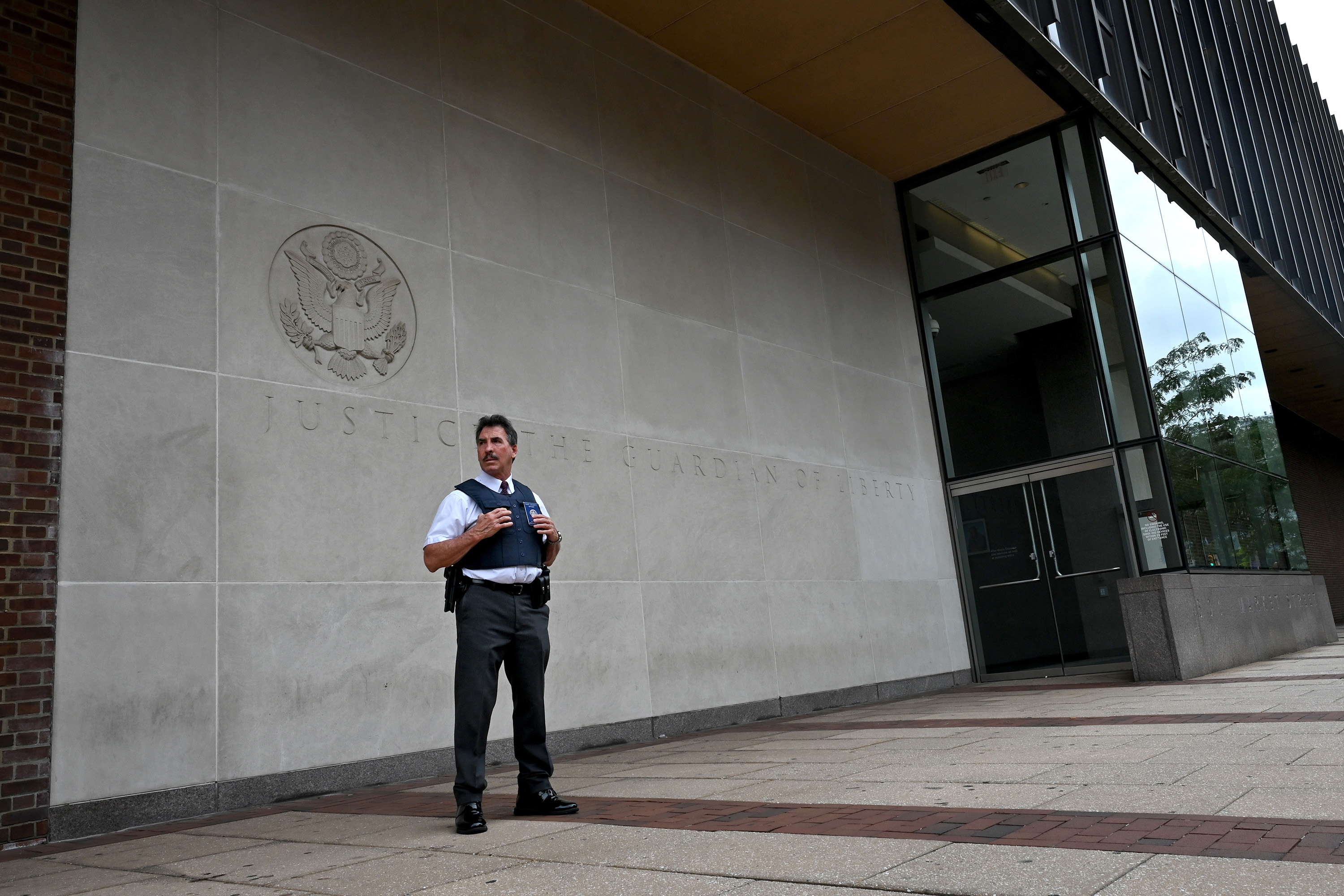
    Like spending an entire day outside a courthouse for a few brief moments and the opportunity to photograph defendants arriving or leaving (cameras are not allowed in courtrooms in Pennsylvania).

    Waiting, with an officer with the United States Marshals Service, outside the James A. Byrne U.S. Courthouse at 6th & Market Streets.Tom Gralish / Staff Photographer

    You’re waiting for something you can’t control, all the while trying to alert for the moment it finally happens.

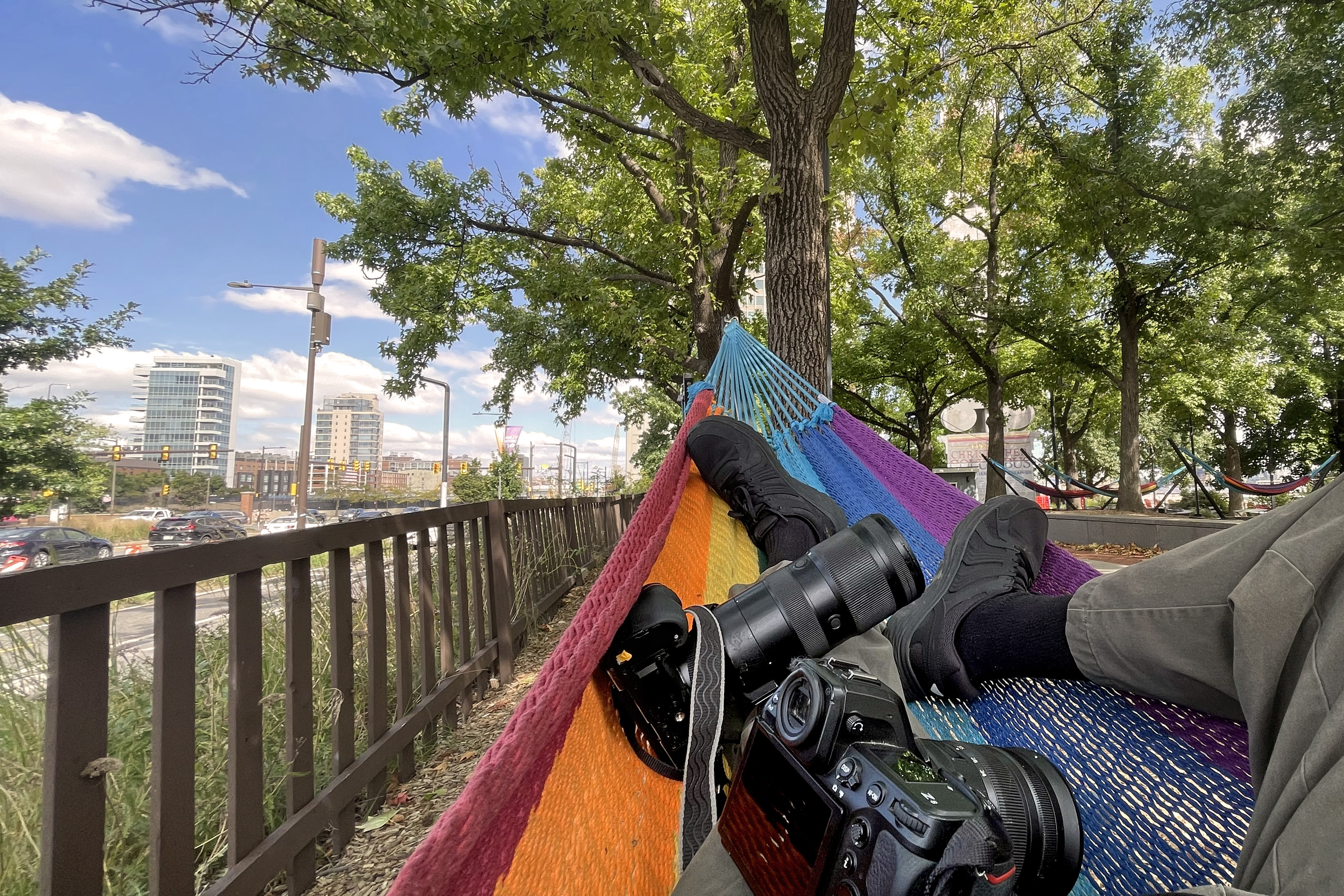
    Over my years as a photographer there has been one “wait” that is even more constant and one that I probably could control.

    When I am assigned to photograph a building or city street scene I could just make sure my camera setting are all correct, my battery is fresh and I have clean SD card in the slot. Then make a quick snap to show readers what the building or street scene looks like and move along.

    But no, I wait. A lot. For a bunch of random elements to line up perfectly.

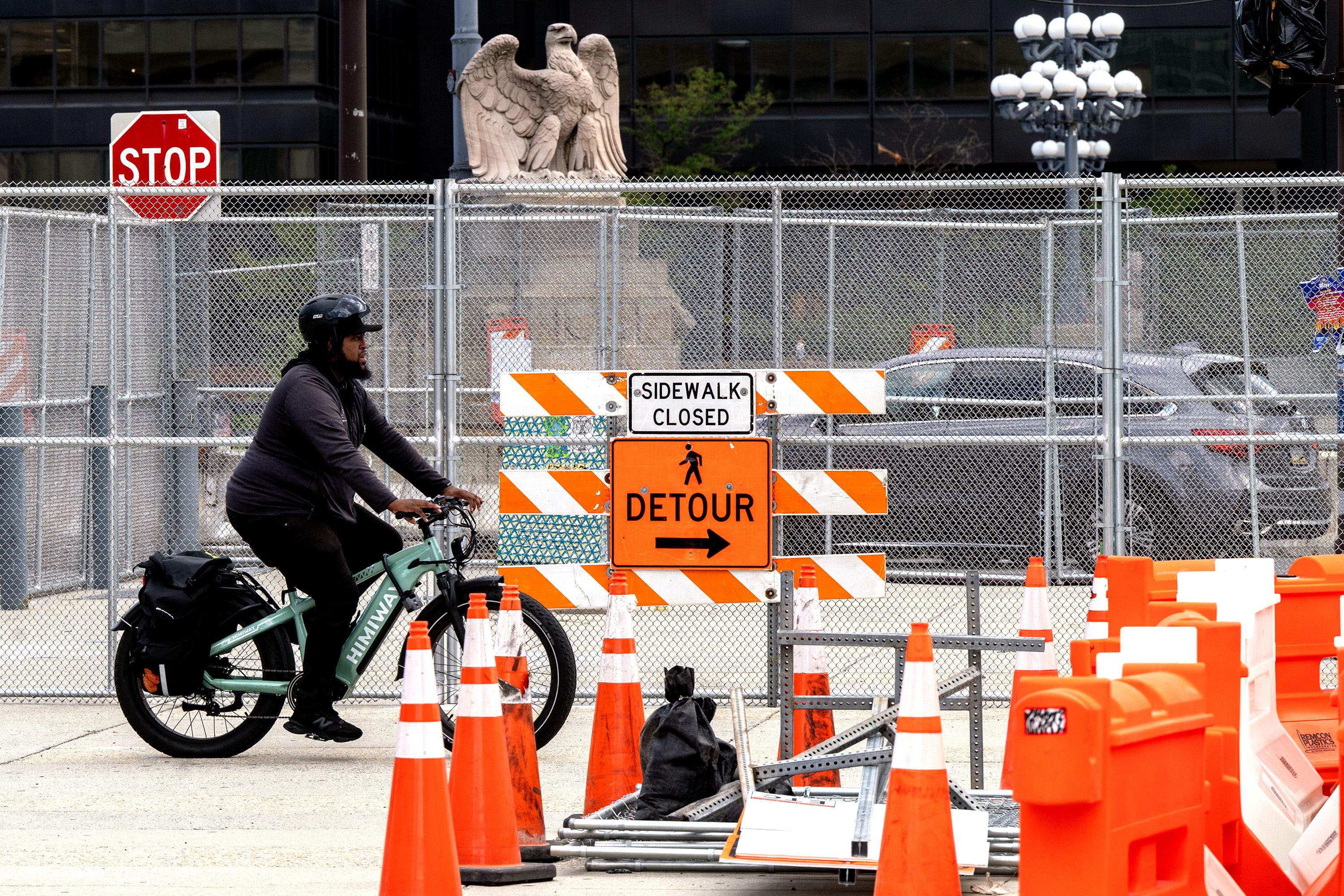
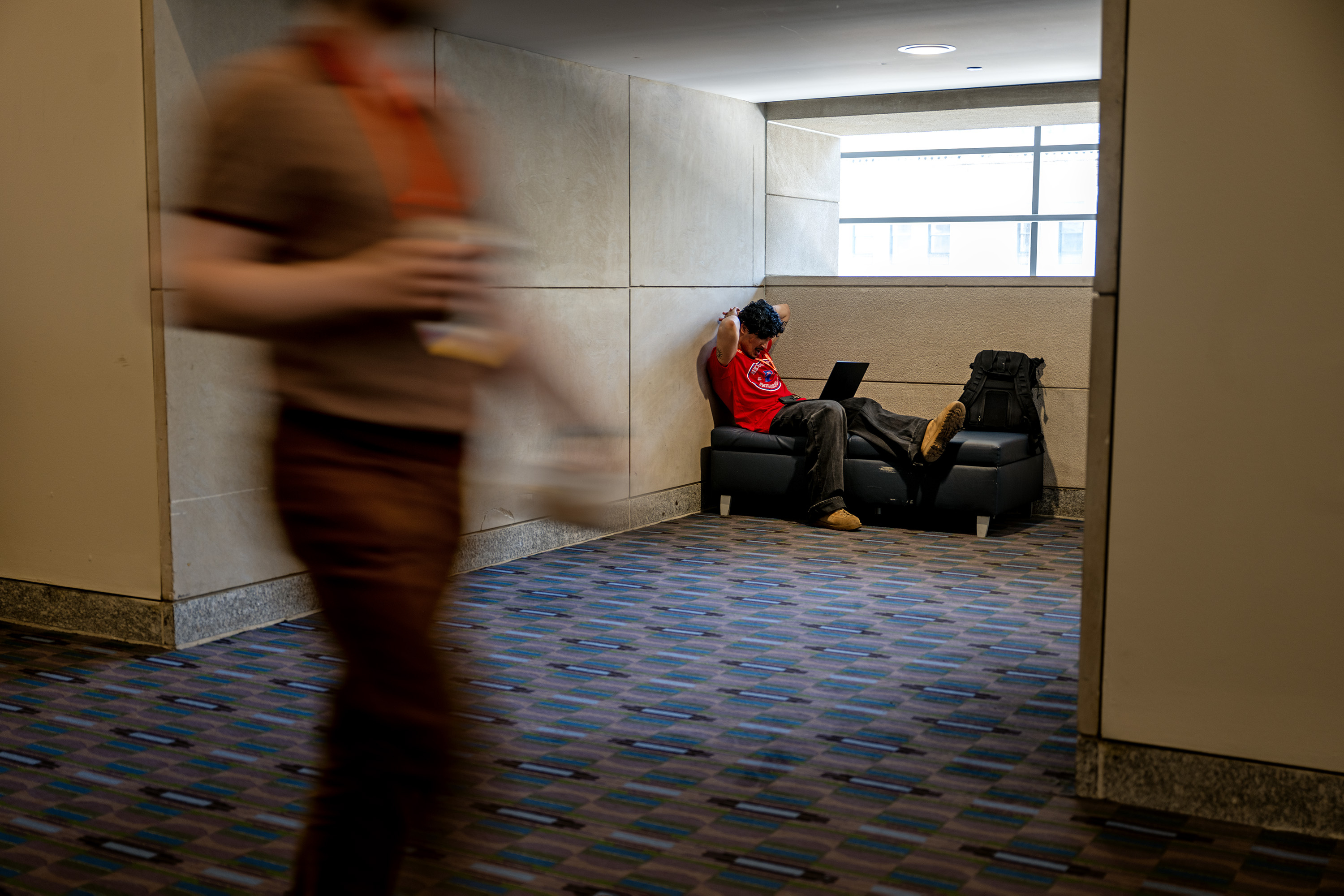
    Waiting – without any luck – for an orange-clothed pedestrian or bicyclist. Tom Gralish / Staff Photographer
    I stand there like the two characters in the 1952 Nobel Prize-winning Samuel Beckett absurdist play, Waiting for Godot. But instead of some mysterious stranger, I am waiting — and hoping — the stars all align just right, the photo gods are willing, and the universe gets it together to allow that one person, dog-walker, jogger, bicyclist, scooter, car, bus, or trolley to pass through my carefully pre-composed frame at just the “right” time. In the “right” place.

    And maybe the “right” color. Like my yearslong Oy-Yo yellow pursuit (those waits however were for a mere 7.6 minutes at a time).

    I like to think of myself as being patient and even visually heroic; good qualities to have in a photojournalist.

    But anytime I really think about it or try to explain the “why?” to friends or even colleagues it ends up sounding both obsessive and pathetic.

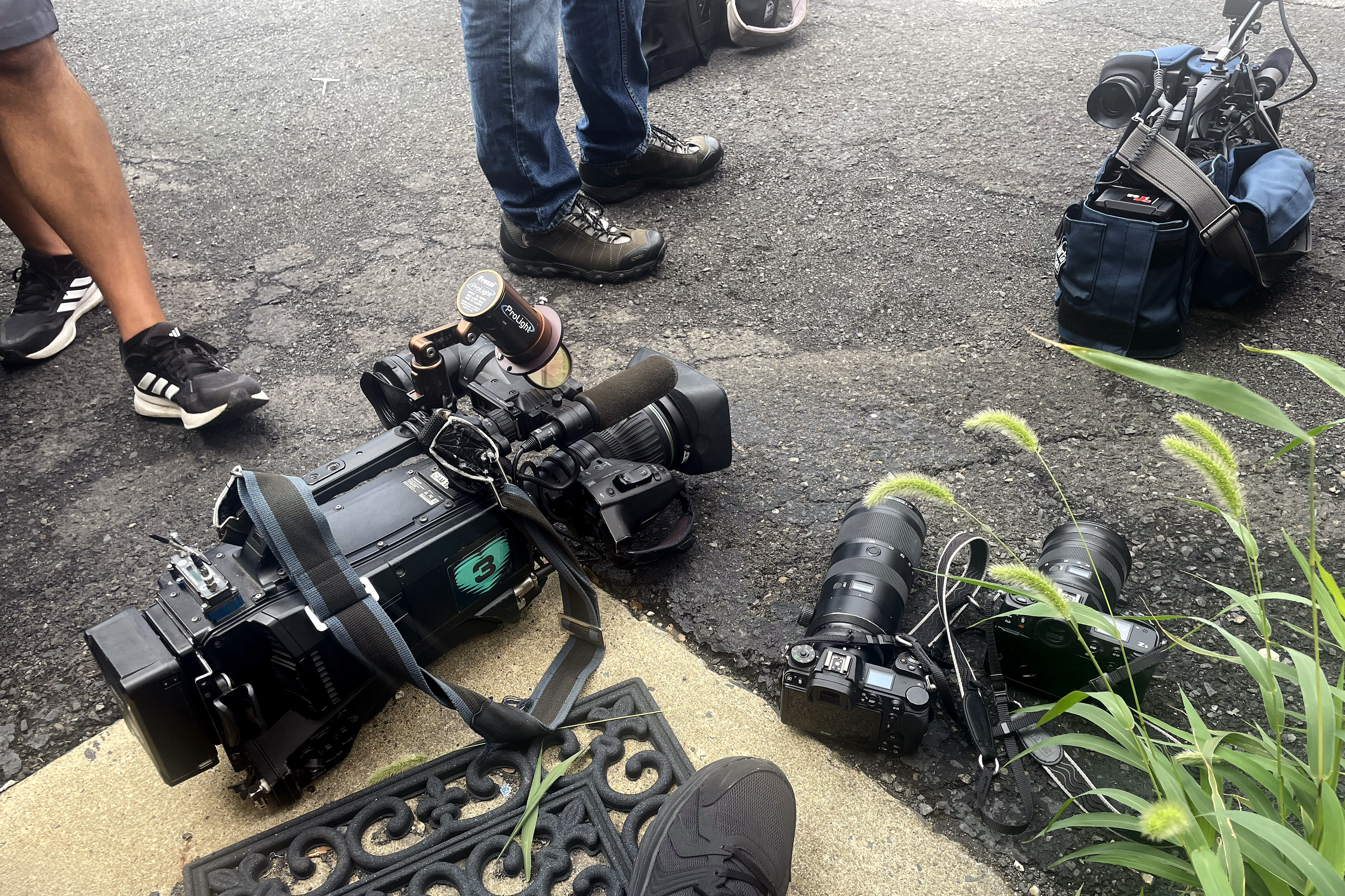
    The solitary waits are a great time for self-reflection. Or during more media busy events a chance to hang out with photo friends.

    Waiting with the cameras and news photojournalists outside Montgomery County Magisterial District Court in Jenkintown.Tom Gralish / Staff Photographer

    One last literary reference, before unfolding a few of the photos I’ve made recently while waiting. They’re another way I keep myself entertained, and help avoid feeling too much like Sisyphus, condemned to push that stone up the hill only to watch it roll back down.

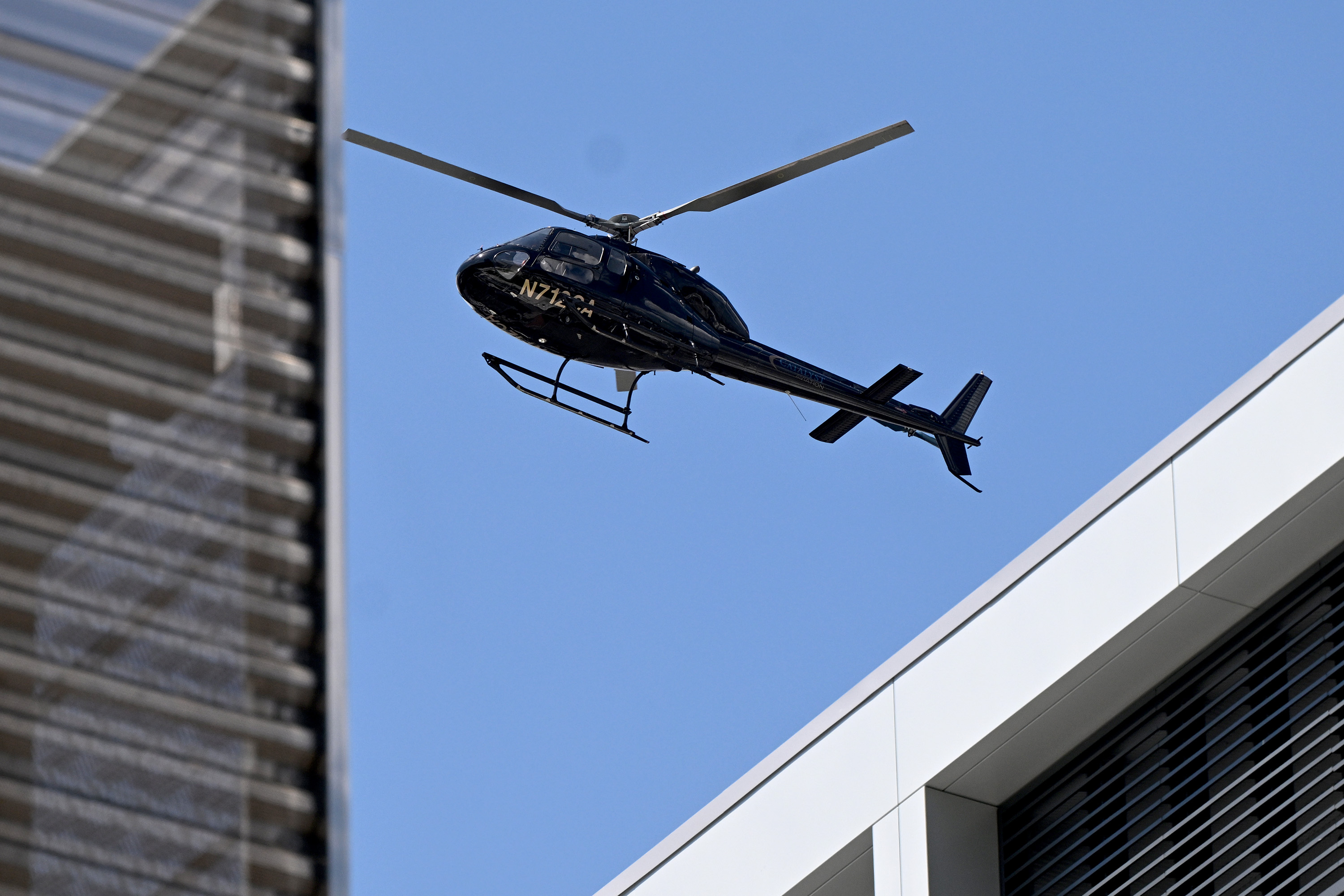
    Waiting in University City and looking up as a helicopter conducting power line inspections passes overhead.Tom Gralish / Staff Photographer
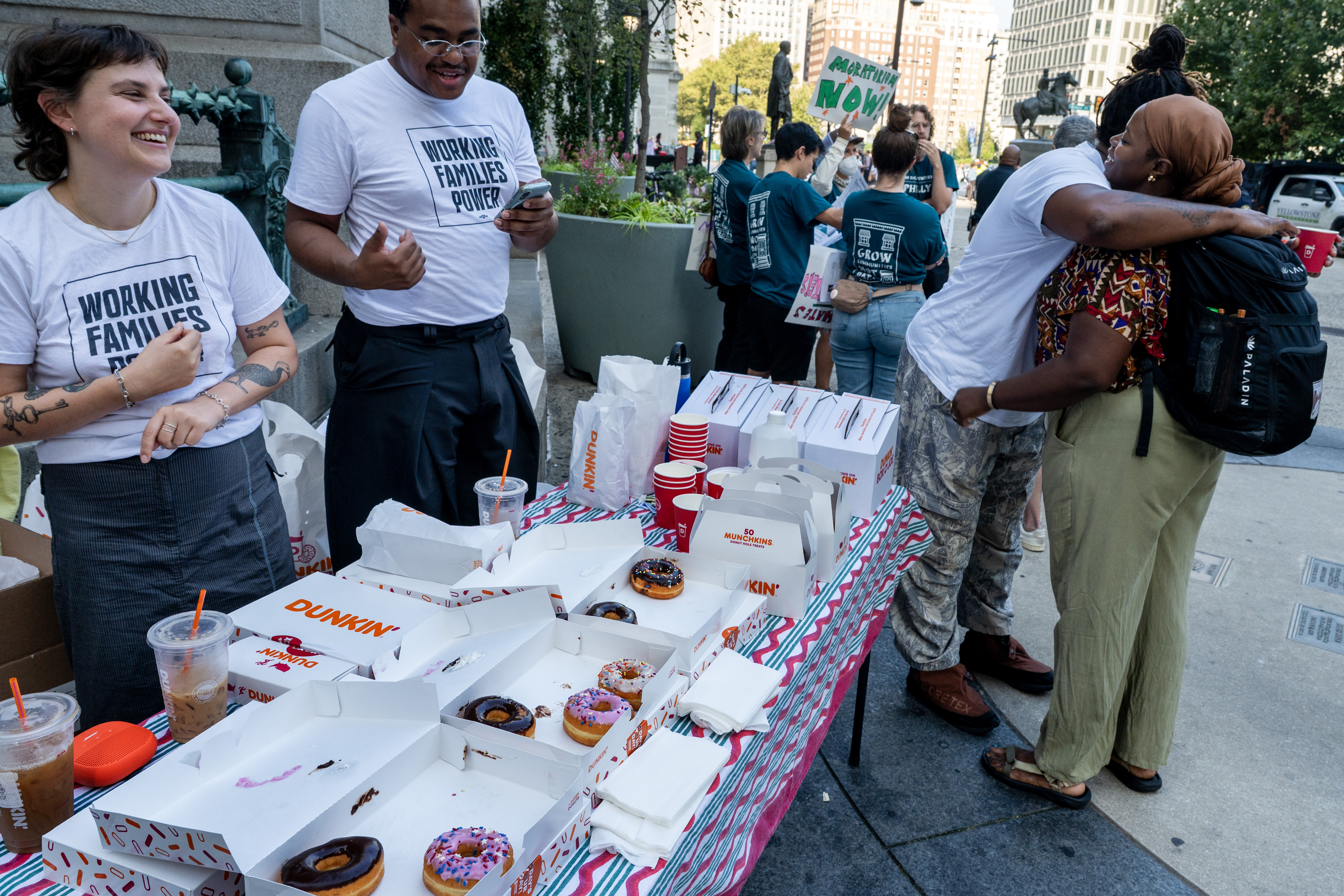
    Waiting outside City Hall – with free coffee and donuts for those arriving early – for the day’s meetings and protests to begin.Tom Gralish / Staff Photographer
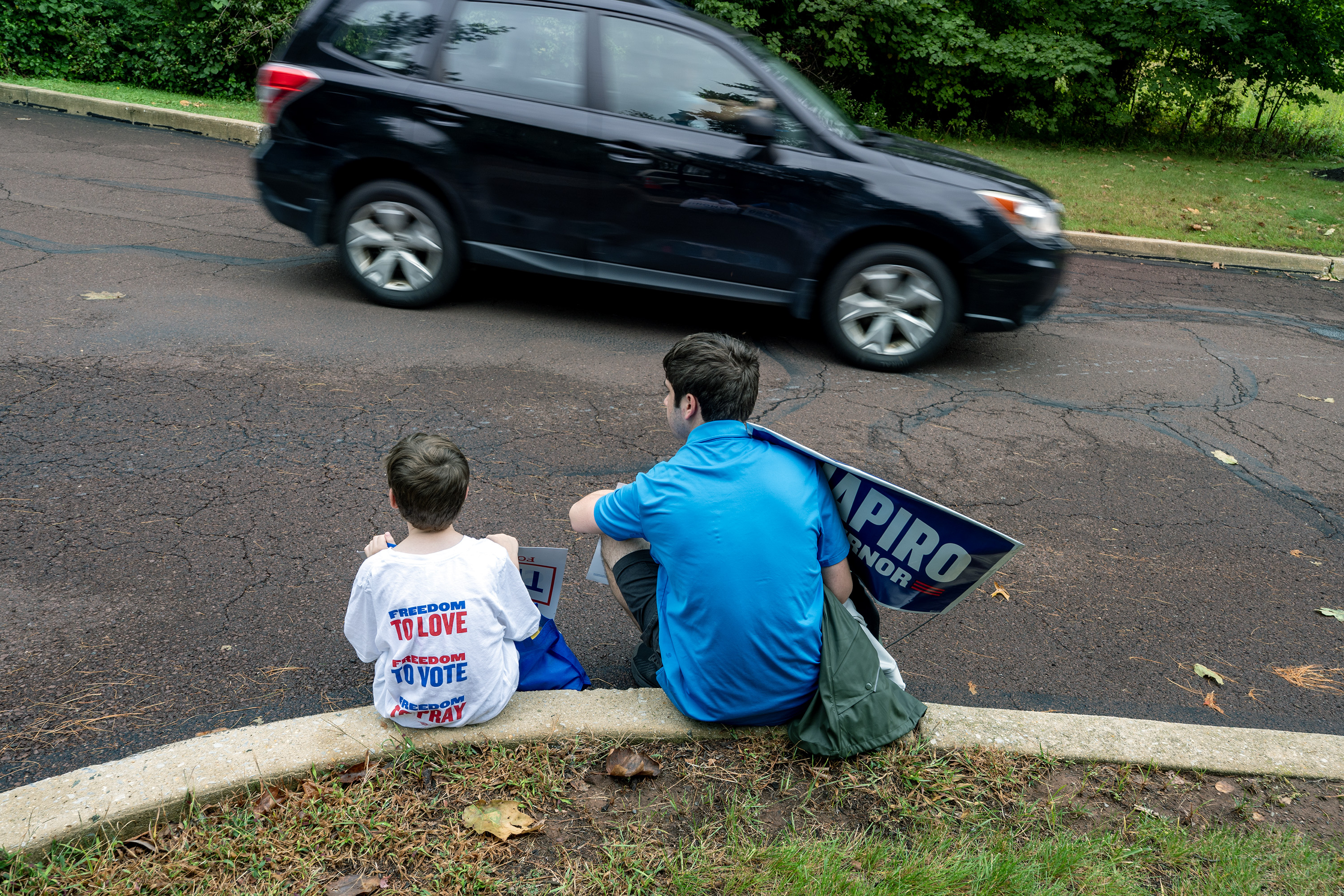
    Waiting at a candidate’s rally.Tom Gralish / Staff Photographer
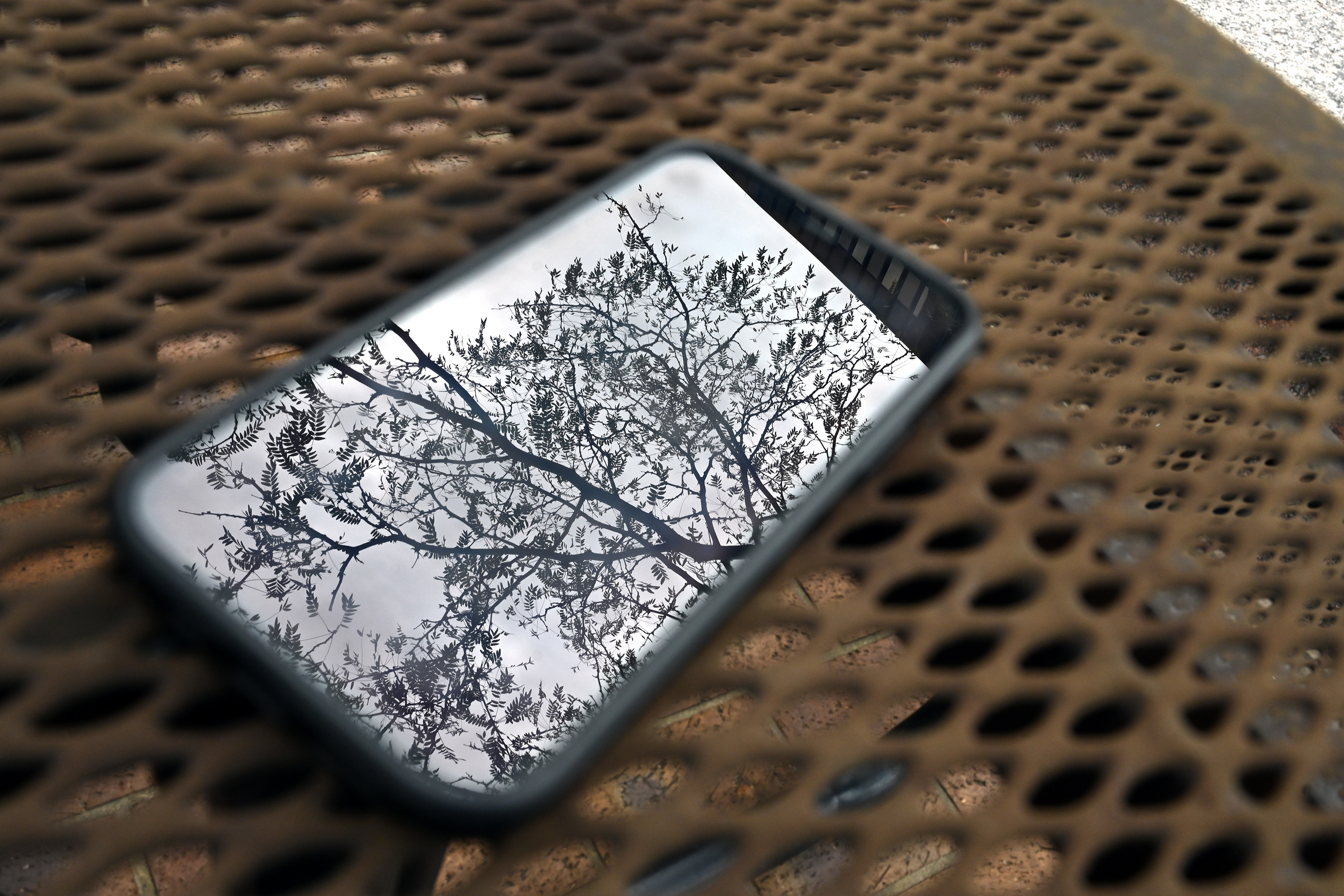
    Waiting outside a courthouse, and watching the cell phone – and reflections – for that text from inside that a hearing is over.Tom Gralish / Staff Photographer
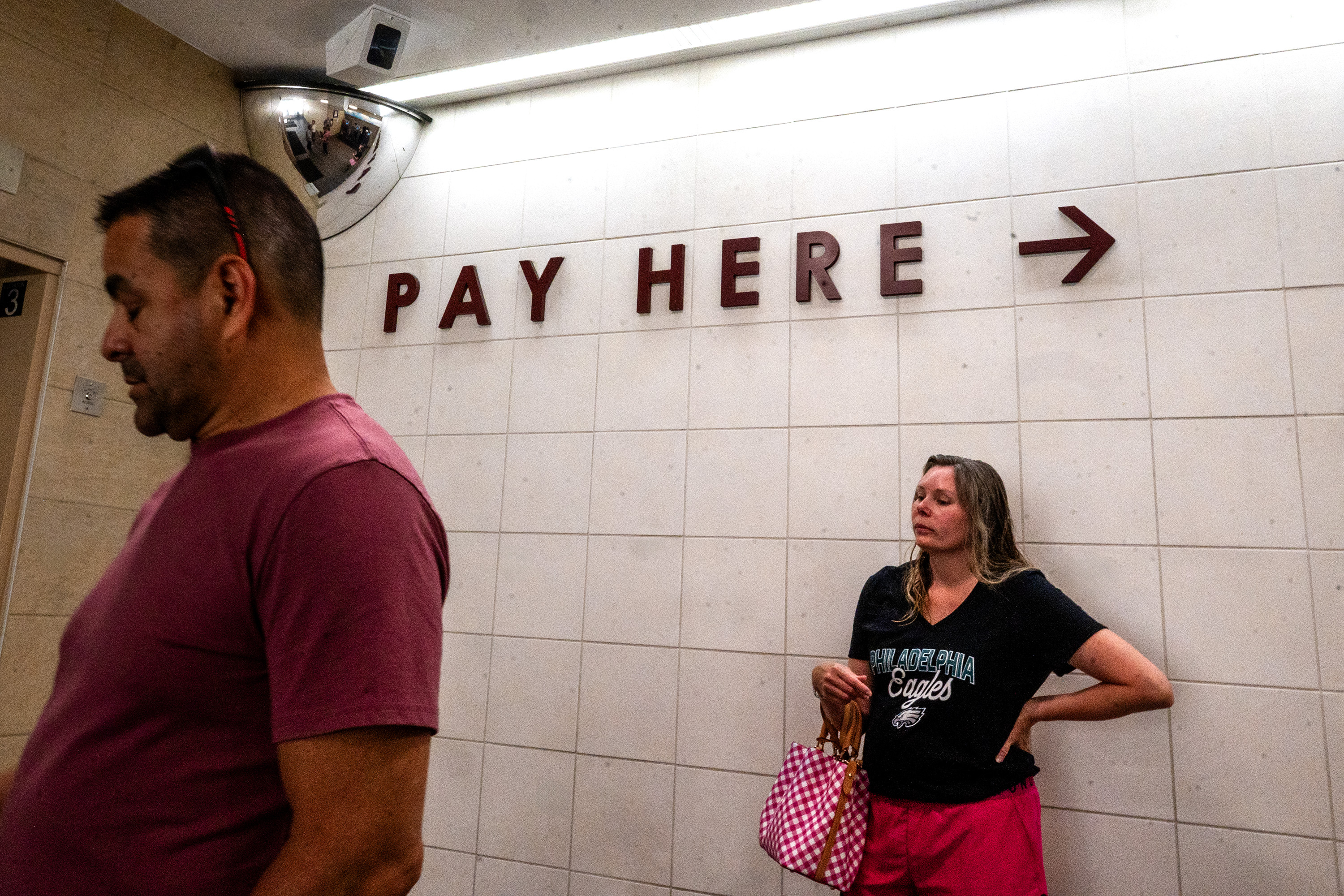
    Waiting for the parking garage elevator.Tom Gralish / Staff Photographer
    The photographer takes a break from waiting – and hoping.Tom Gralish / Staff Photographer

    Since 1998 a black-and-white photo has appeared every Monday in staff photographer Tom Gralish’s “Scene Through the Lens” photo column in the print editions of The Inquirer’s local news section. Here are the most recent, in color:

    » SEE MORE: Archived columns and Twenty years of a photo column.

  • The philanthropic Eagles in action

    The philanthropic Eagles in action

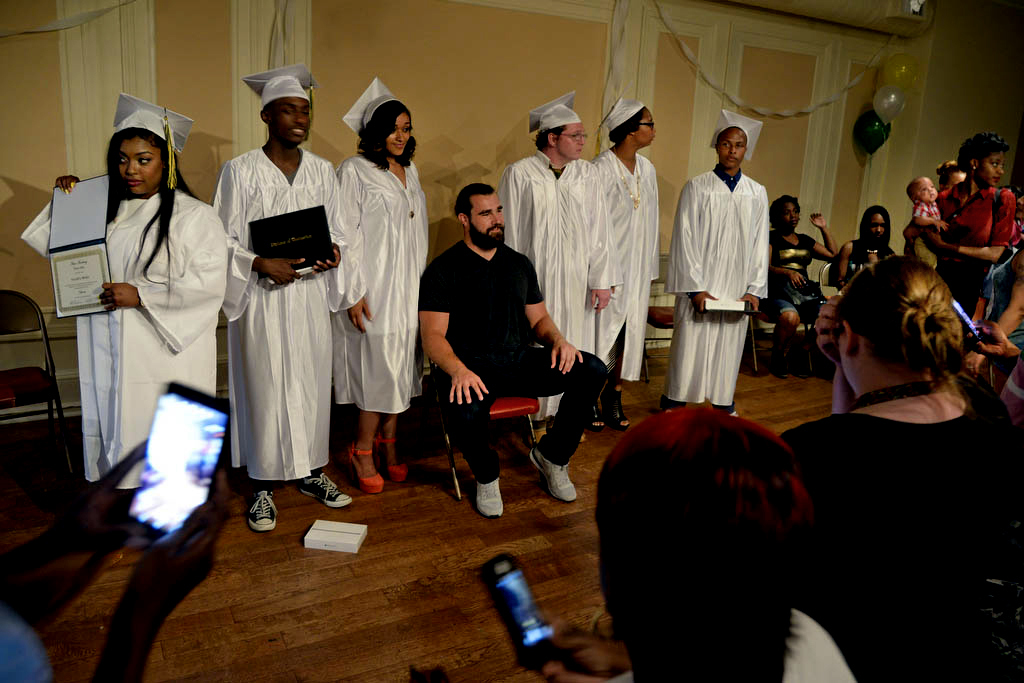
    Long before Jason Kelce ripped off his pants to reveal his patriotic Speedo & bikini wax, or turned into “Fat Batman” on the sidelines. Even before he invaded WrestleMania 40 with teammate Lane Johnson in green-and-white luchador masks, I photographed him in 2015 at a commencement ceremony for just six high school graduates.

    I didn’t know much about the Eagles center who was still two seasons away from his first first-team All-Pro honor, and well before his Mummer’s Super Bowl parade speech would make him a Philly folk hero and a viral celebrity.

    I didn’t even know there would be a speaker, let alone a football player. The event was in a small room upstairs at the William Way Community Center, with kids from a charter school for students in foster care, community homes, or shelters.

    It was not a media event; he wasn’t there for the cameras. I was the only other outsider, attending just because I was working on a story on one of the students.

    She said Kelce was nice and very genuine. And he gave all the graduates iPads. “That was cool,” she recalled recently, “because none of us could afford one.”

    But I was really impressed by what he said to the handful of young people and their families. He stayed around afterward and posed for photos, talked about his life — and theirs.

    Since that night, I’ve seen him involved in other efforts supporting foster-care children and students, including “A Philly Special Christmas,” which has provided gifts to thousands of children in foster care.

    I thought of Kelce this week when I covered two other Eagles giving back (and once again made it — with some off-the-field non-action — into The Inquirer’s weekly Big Picture look back at the week’s best sports photos).

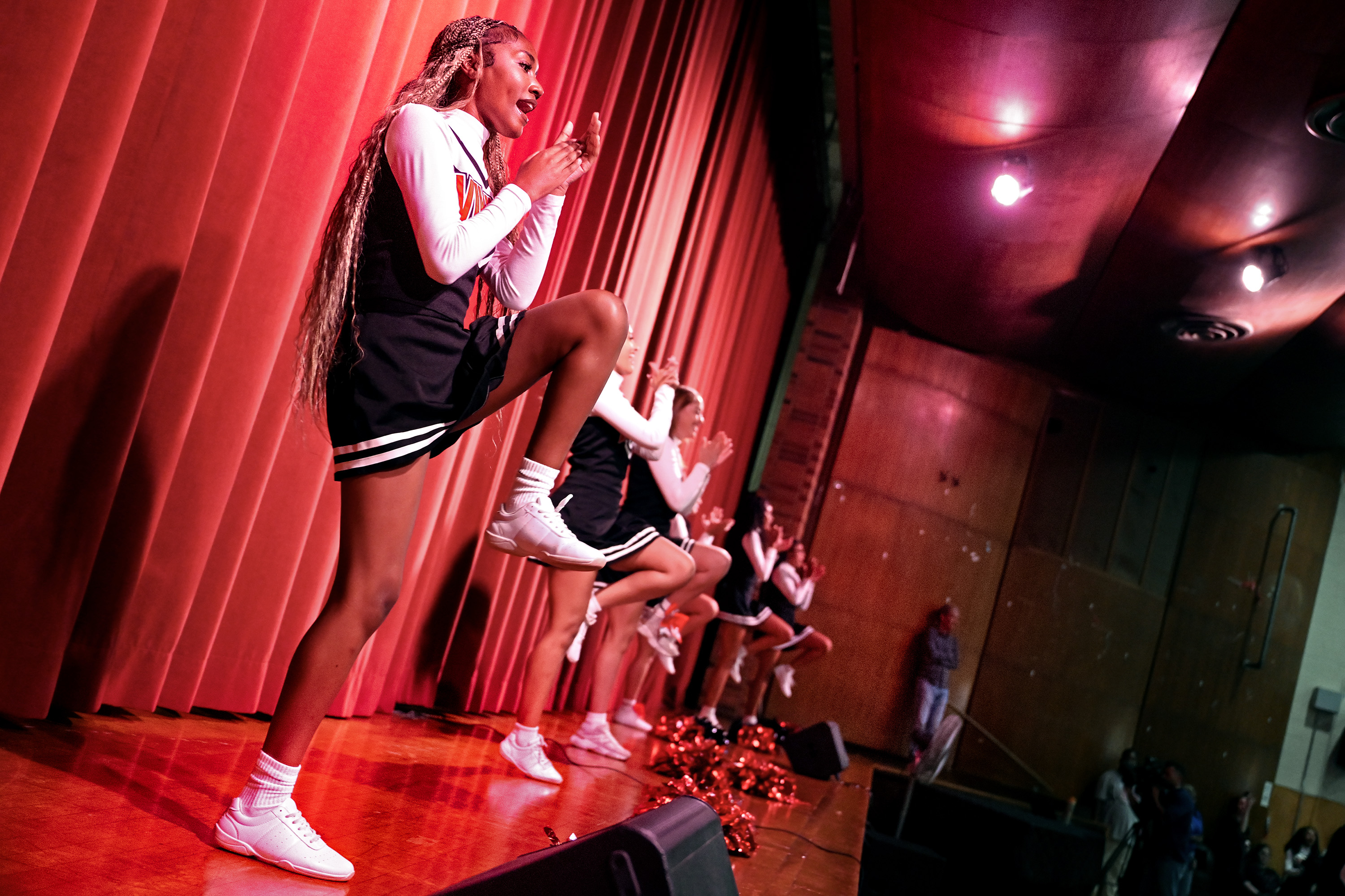
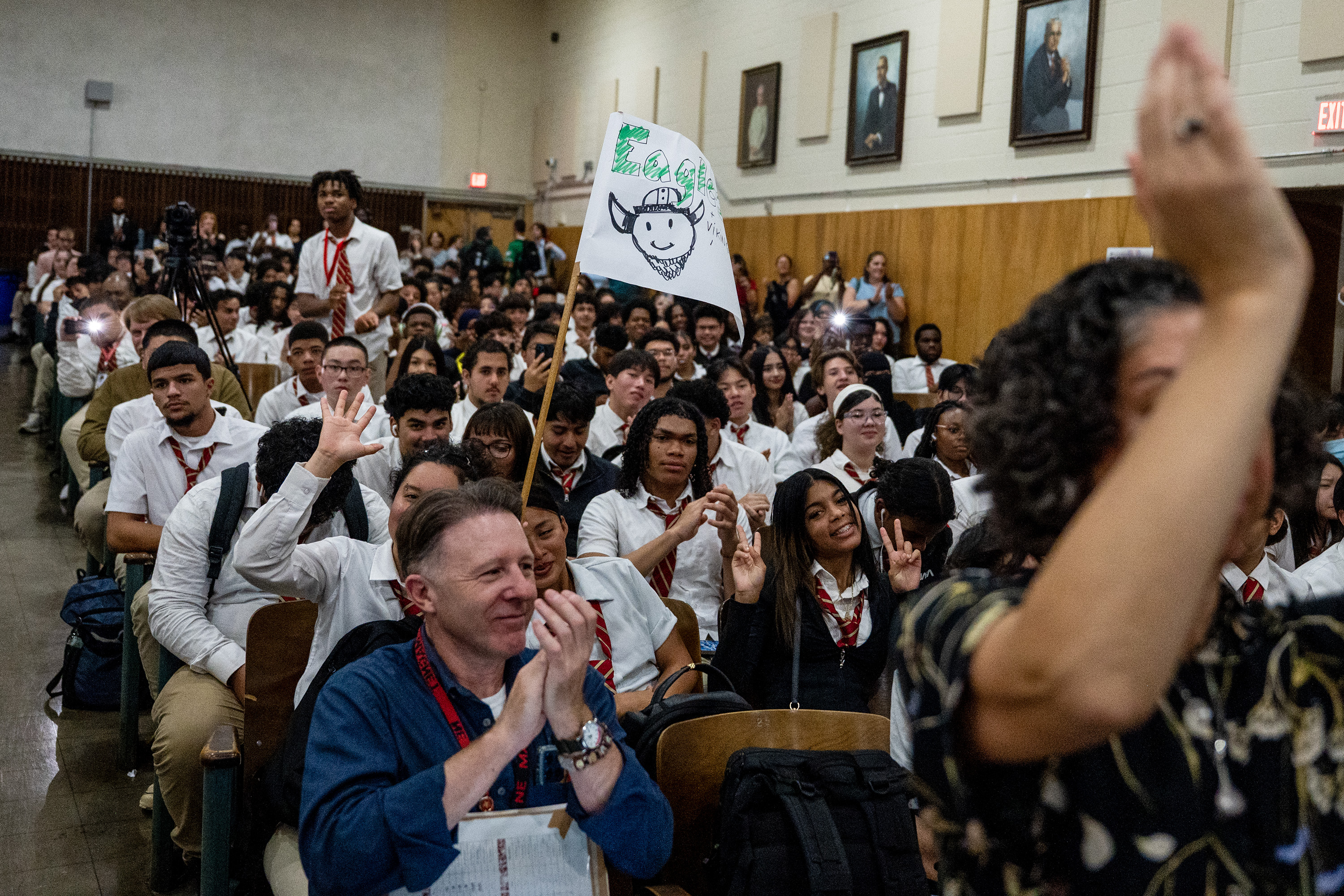
    On Tuesday, quarterback Jalen Hurts donated $600,000 for air conditioning at Philadelphia’s largest high school. Asked why he was turning his attention to city schools, Hurts said he was influenced by his educator parents and the people who made a way for him. “It’s about service and showing up for those around you,” he said.

    Northeast High School Viking cheerleaders warm up the (sweltering) auditorium.Tom Gralish / Staff Photographer
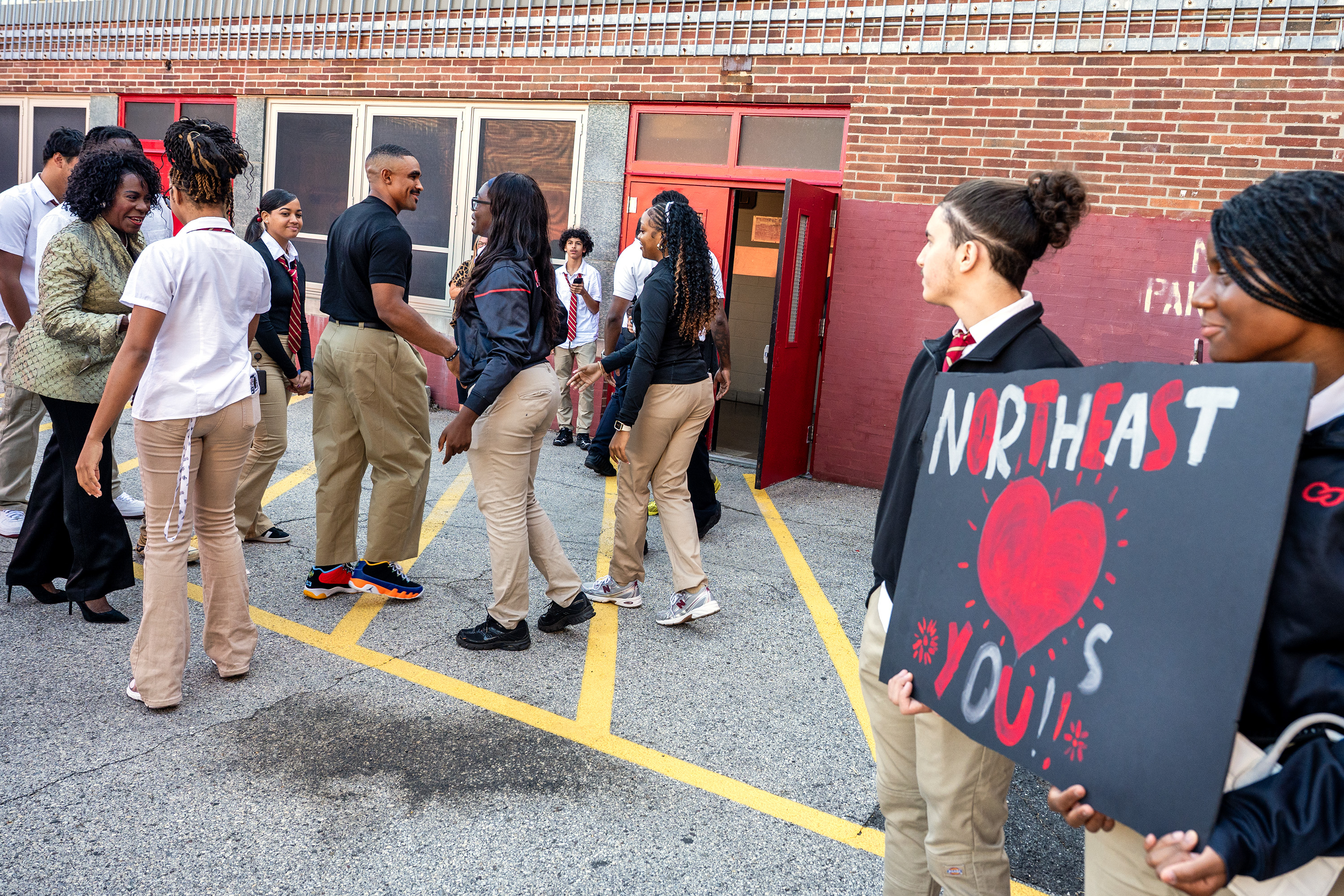
    Students and staff react as Hurts arrives.Tom Gralish / Staff Photographer

    Covering the pep rally at the school, I was much more in the political-candidate zone than celebrity-athlete mode.

    When I arrived at Northeast High School and was escorted with all the other news media to a corner in front of the sweltering auditorium (it really does need the AC!), I didn’t want to just wait around with everyone else until the program started. So I excused myself saying I needed to go back out to get something from my car.

    Outside, I talked to teachers working with the student greeters and police officers about the arrival of the football player and school district officials, when as luck would have it, a bunch of big black SUVs arrived.

    Just like the night with Kelce, I was the only news media there, so I hung back, not wanting to get booted away. But I also knew I would be getting plenty of photos inside, so I didn’t need to be an obnoxious paparazzo. I positioned myself to focus more on the students when Hurts and the Mayor left their cars.

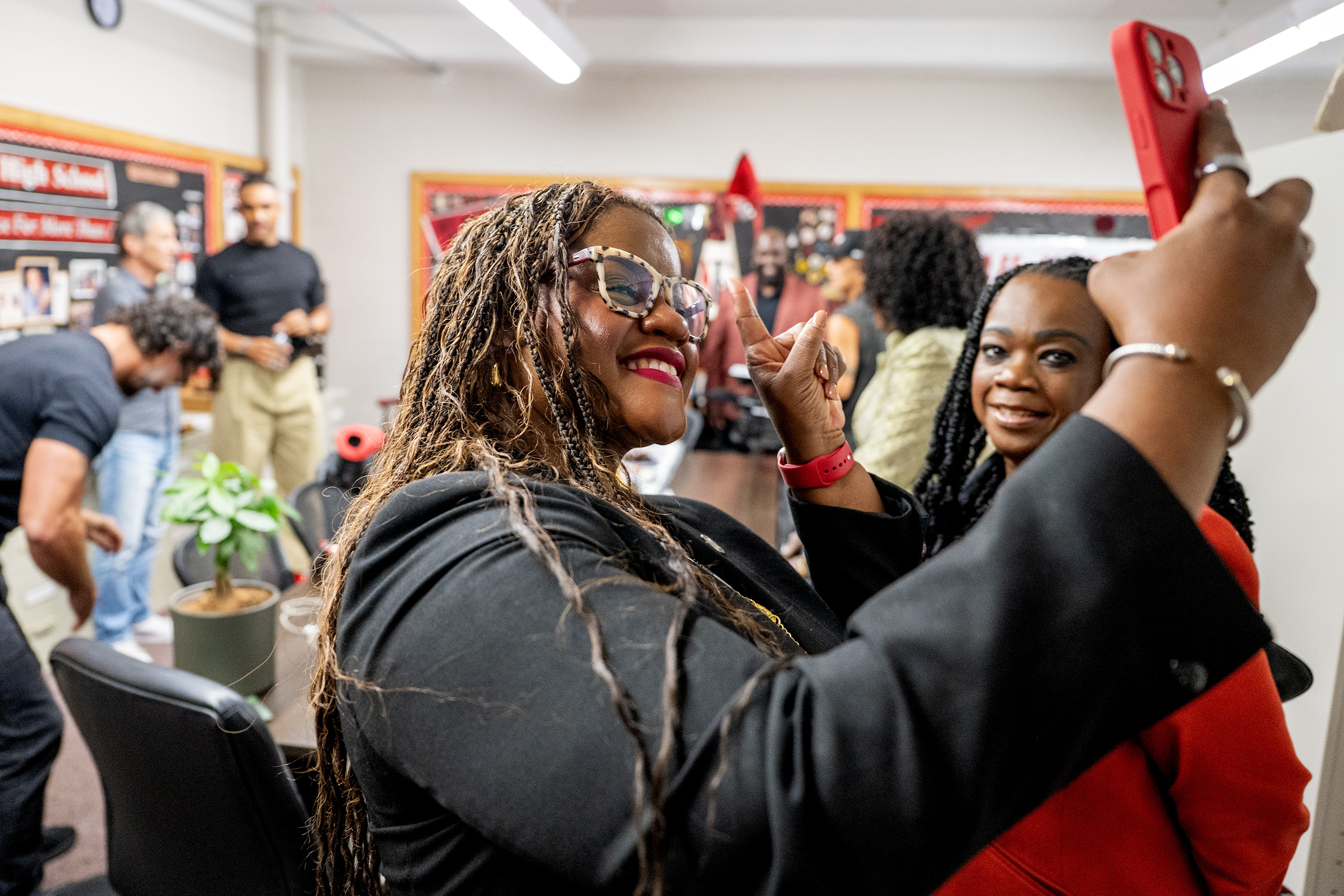
    After following their entourages into a holding area conference room laid out with snacks, I left, but not before making a quick photo — a high-ranking member of the Mayor’s staff sneaking a selfie, just to show the universal appeal of a superstar, world-class athlete.

    The Mayor’s chief of staff Tiffany W. Thurman takes a surreptitious selfie.Tom Gralish / Staff Photographer

    The pep rally was energetic and visually exciting, but still wearing my covering-political-candidates hat and trying to get something different, I skipped Hurts’ post-event media availability and went to scout opportunities for a photo as he left. As you’d expect, for safety reasons there are multiple ways out from school auditoriums.

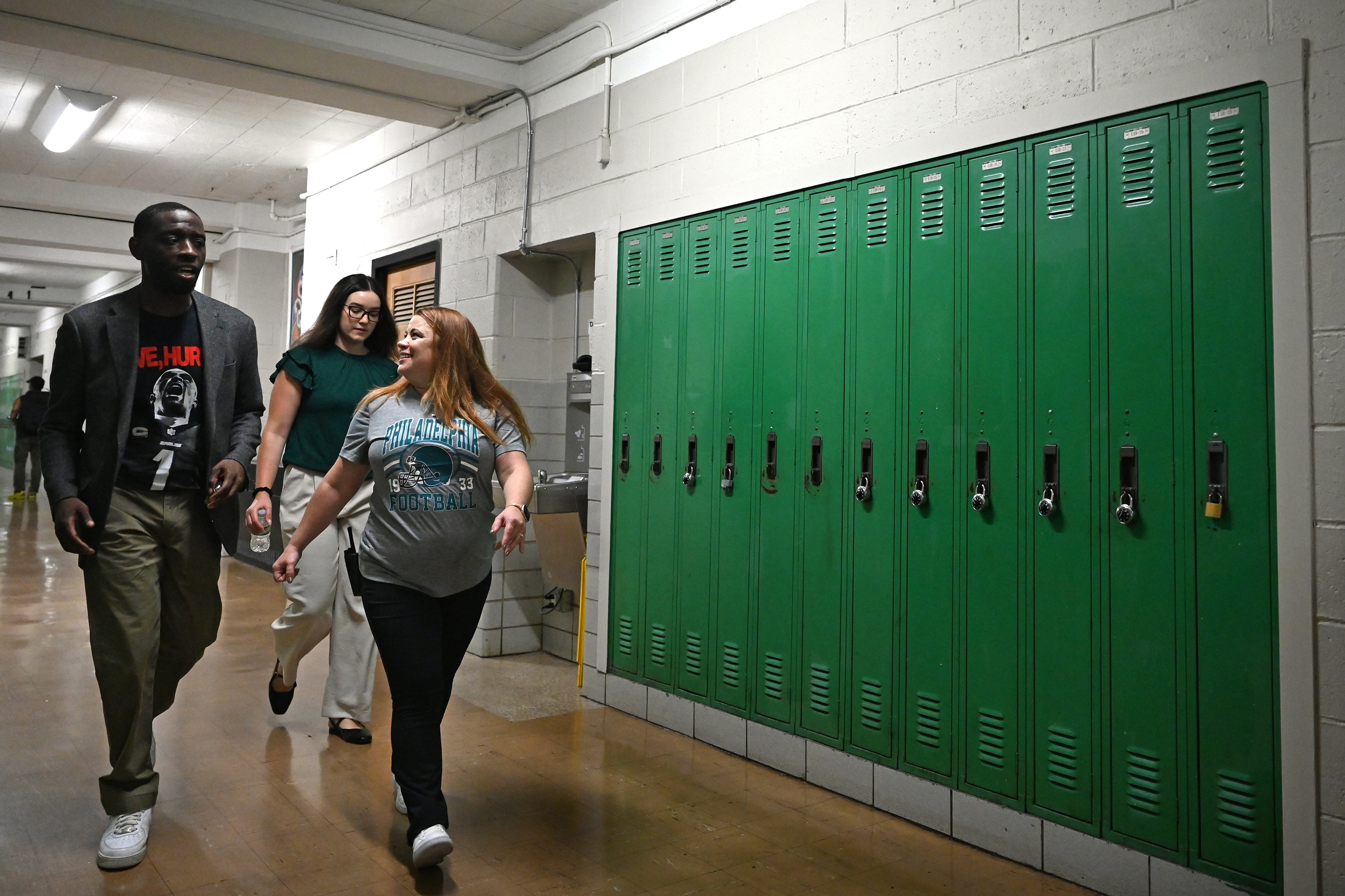
    While the school safety officers cleared all the students from the hallway I was talking with them over the exit plan and found a good spot — across from some Eagles’ Midnight Green lockers.

    City Councilmember Isaiah Thomas leaves Northeast High School Tuesday after attending a rally with Eagles quarterback Jalen Hurts.Tom Gralish / Staff Photographer

    But, just like in football — and politics — you win some and you lose some. At the last second I heard an officer’s walkie-talkie squawking “they’re going out the back.”

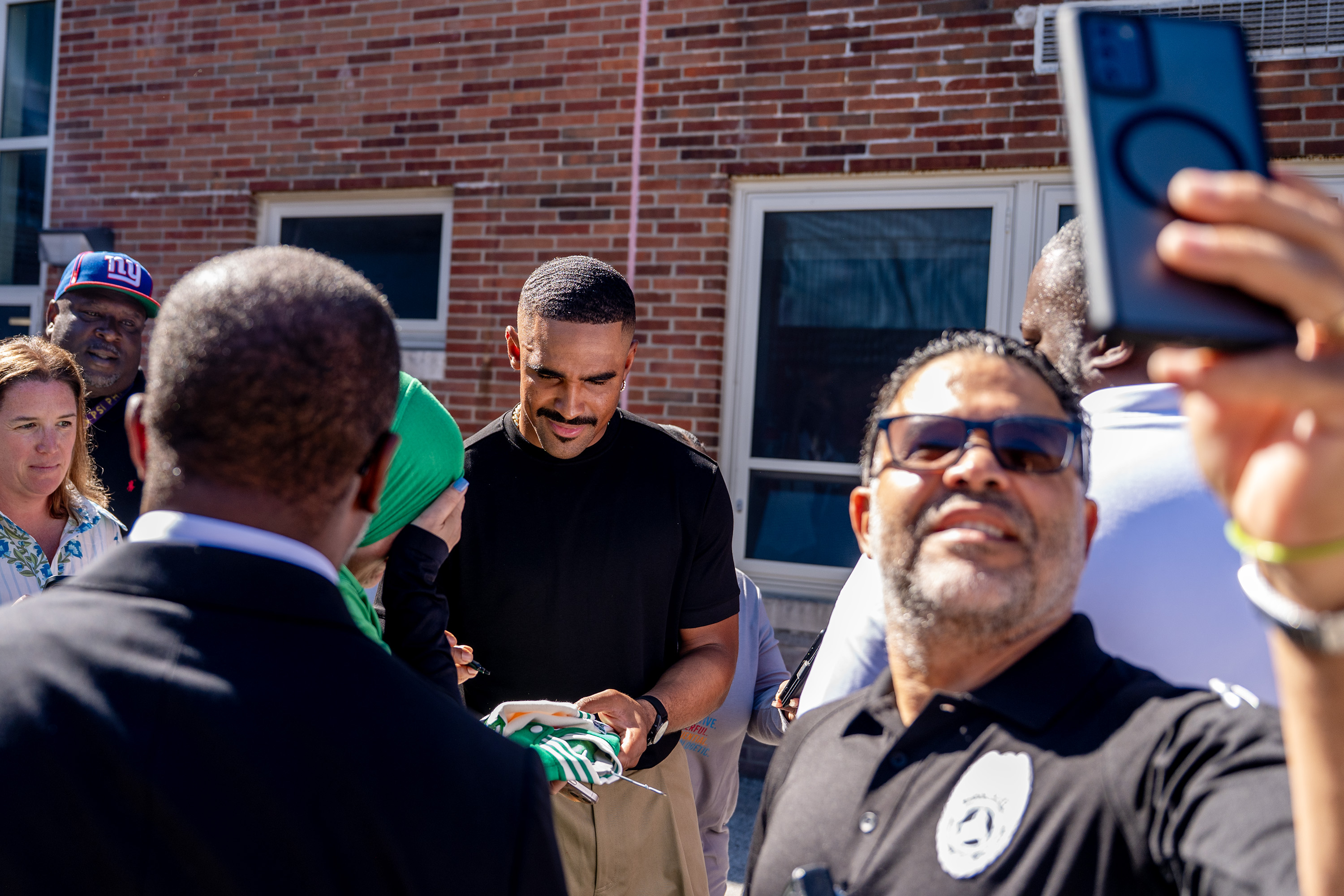
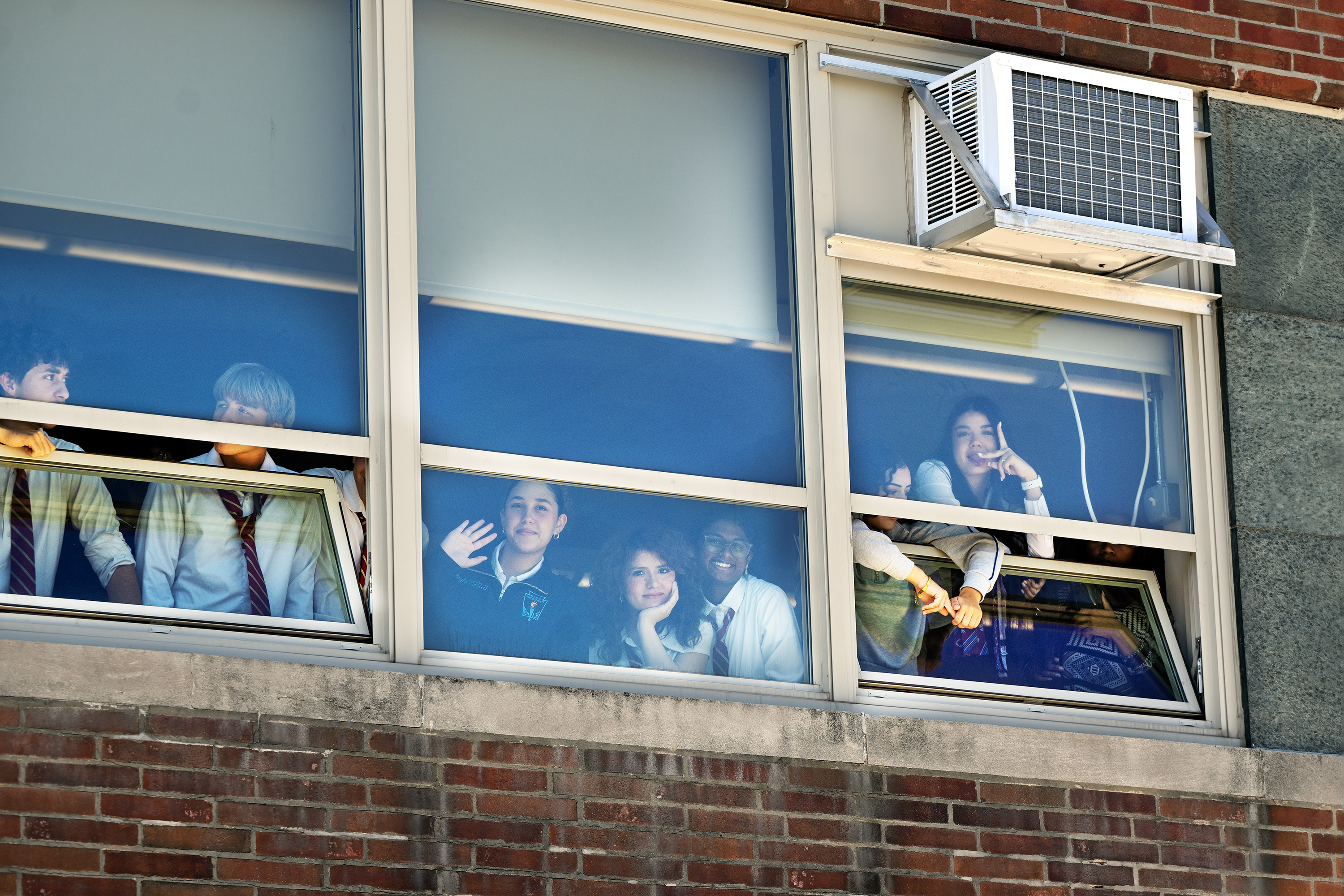
    However, I did get to see them leave outside, and photograph students watching from their classroom — with a window AC unit — as the limos drove away.

    Hurts signs jerseys and meets with school staff as he leaves.Tom Gralish / Staff Photographer
    Students watch from their classroom – with a window AC unit – as Hurts drives away.Tom Gralish / Staff Photographer

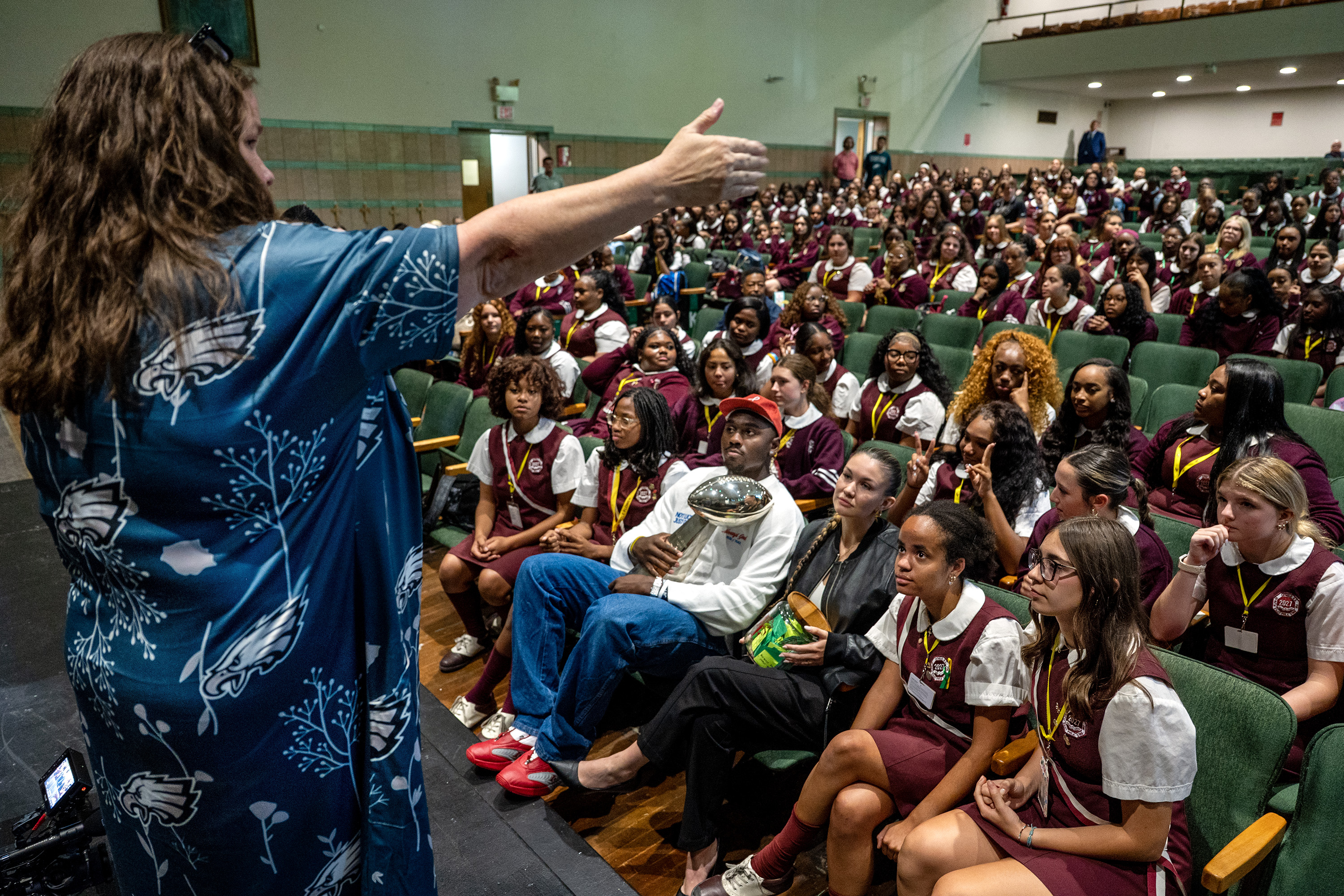
    From there I went across town to Little Flower Catholic High School for Girls where Eagles linebacker Jalyx Hunt was at another assembly announcing that he was establishing four new scholarships.

    Little Flower president Kristie Dugan positions the students for a group photo with Kristie Dugan positions the students for a group photo with Eagles linebacker Jalyx Hunt – and the Super Bowl Lombardi Trophy.Tom Gralish / Staff Photographer

    He got to know the school when he was drafted by the Eagles and started a fundraiser for underfunded school sports programs. Little Flower’s basketball team was one of the first recipients. That was two years ago, and he has kept up that relationship with what he calls a “whole bunch of little sisters” in the hundreds of students there.

    As Eagles beat reporter Olivia Reiner reported, he was heeding his teacher mother’s advice: “You don’t have to originate in a place to become a part of that place.“

    The scholarships are each named after women in his life.

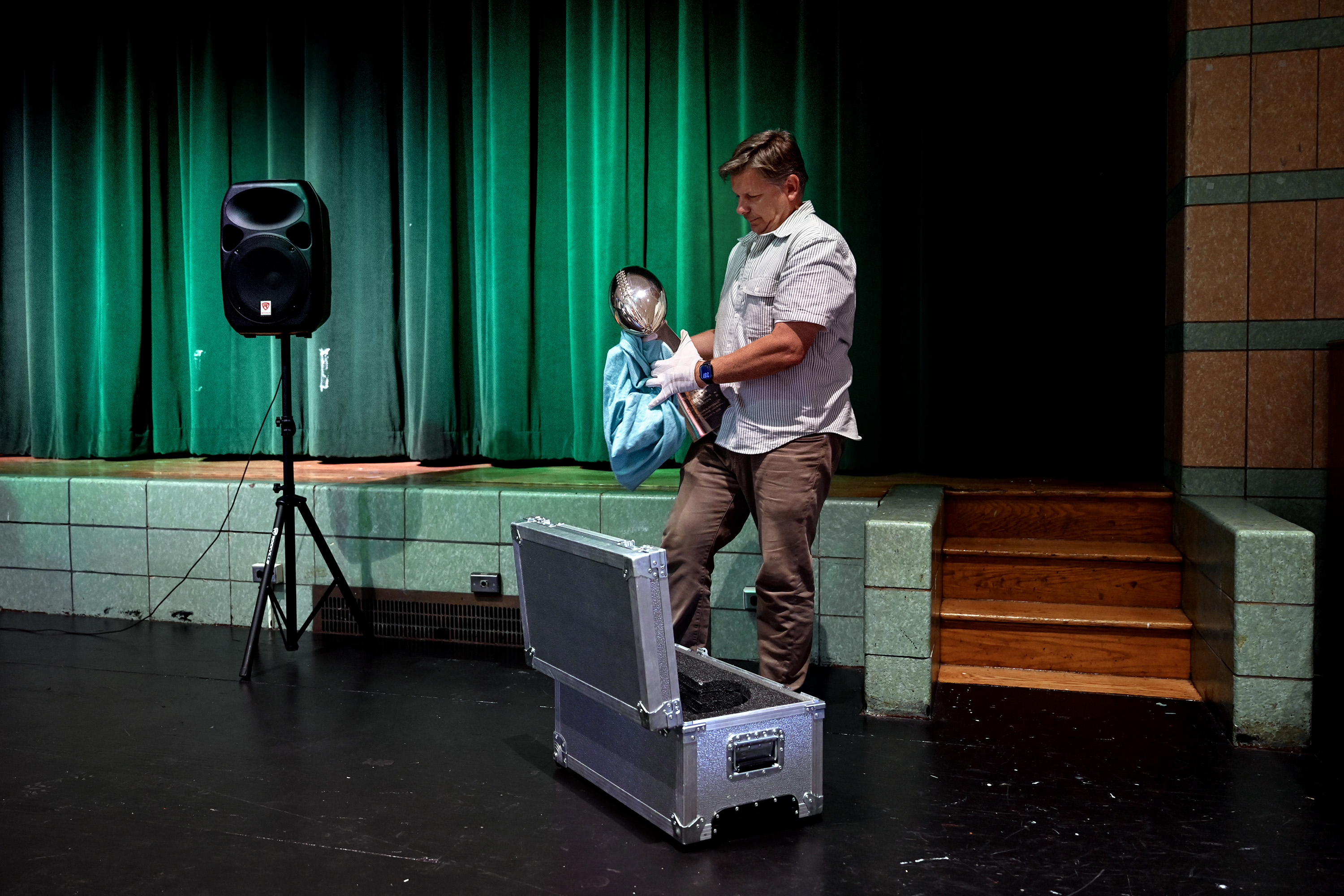
    Christian Molnar, the Eagles’ director of team relationships, unpacks the Lombardi Trophy at Little Flower Catholic High School for Girls Tuesday, Sept. 15, 2026.Tom Gralish / Staff Photographer

    Since 1998 a black-and-white photo has appeared every Monday in staff photographer Tom Gralish’s “Scene Through the Lens” photo column in the print editions of The Inquirer’s local news section. Here are the most recent, in color:

    » SEE MORE: Archived columns and Twenty years of a photo column.

  • Looking back in order to look ahead

    Looking back in order to look ahead

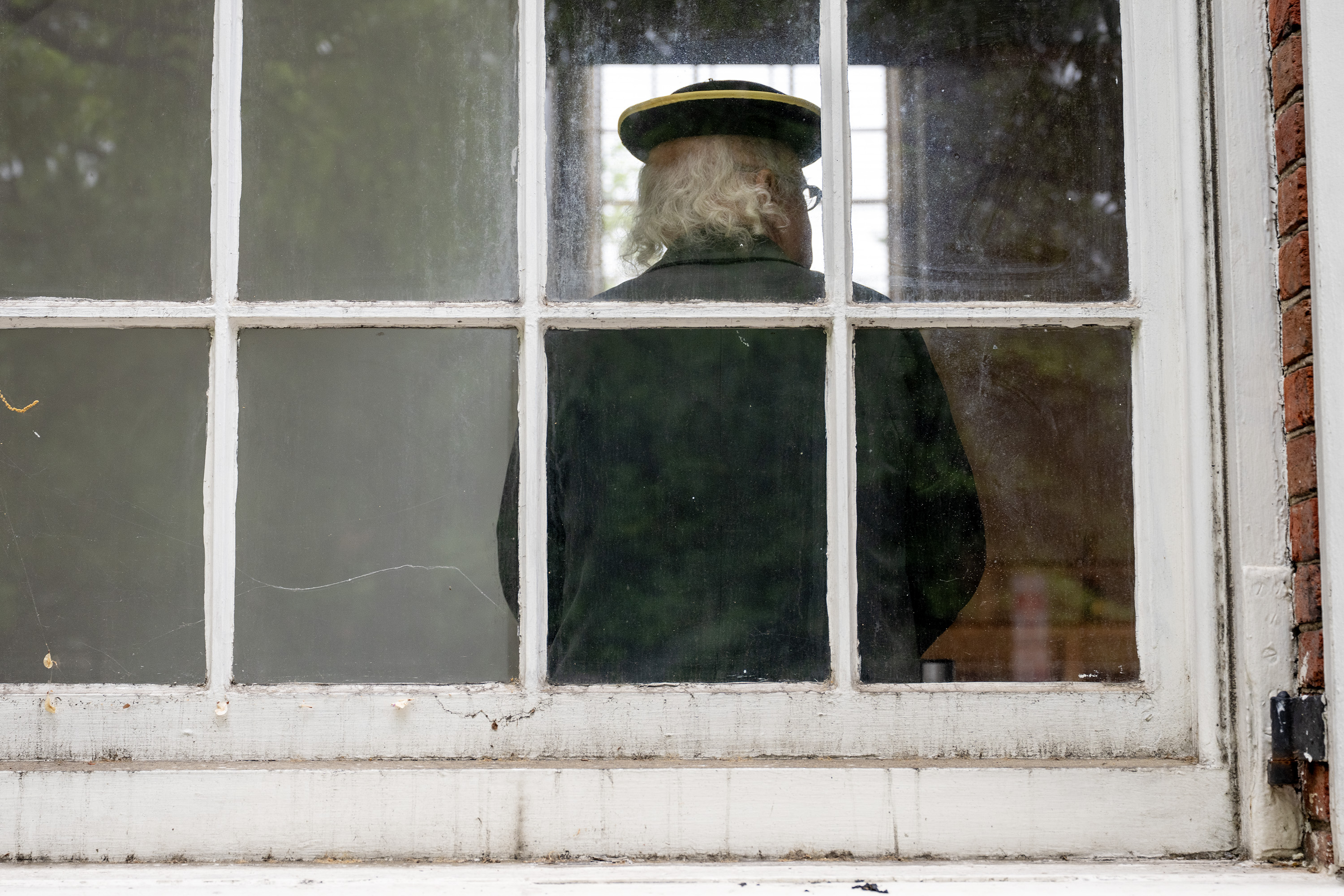
    I was standing next to a big sign before the start of an event this week. It had a photo of the host and the large words “America 250.” More than one person arriving wondered out loud, “Why the 250?” Or, “Isn’t that passed?”

    They weren’t asking me. I was just there, inside looking out the front door, waiting for re-enactor Chris Lewis to step into a favorable position so I could make the photo above.

    The registration table was farther inside, so nobody was there to say something like, “Just because July 4 is behind us doesn’t meant we can’t continue the celebration of what was accomplished in 1776. Or we could think about what we want the next 250 years to look like.”

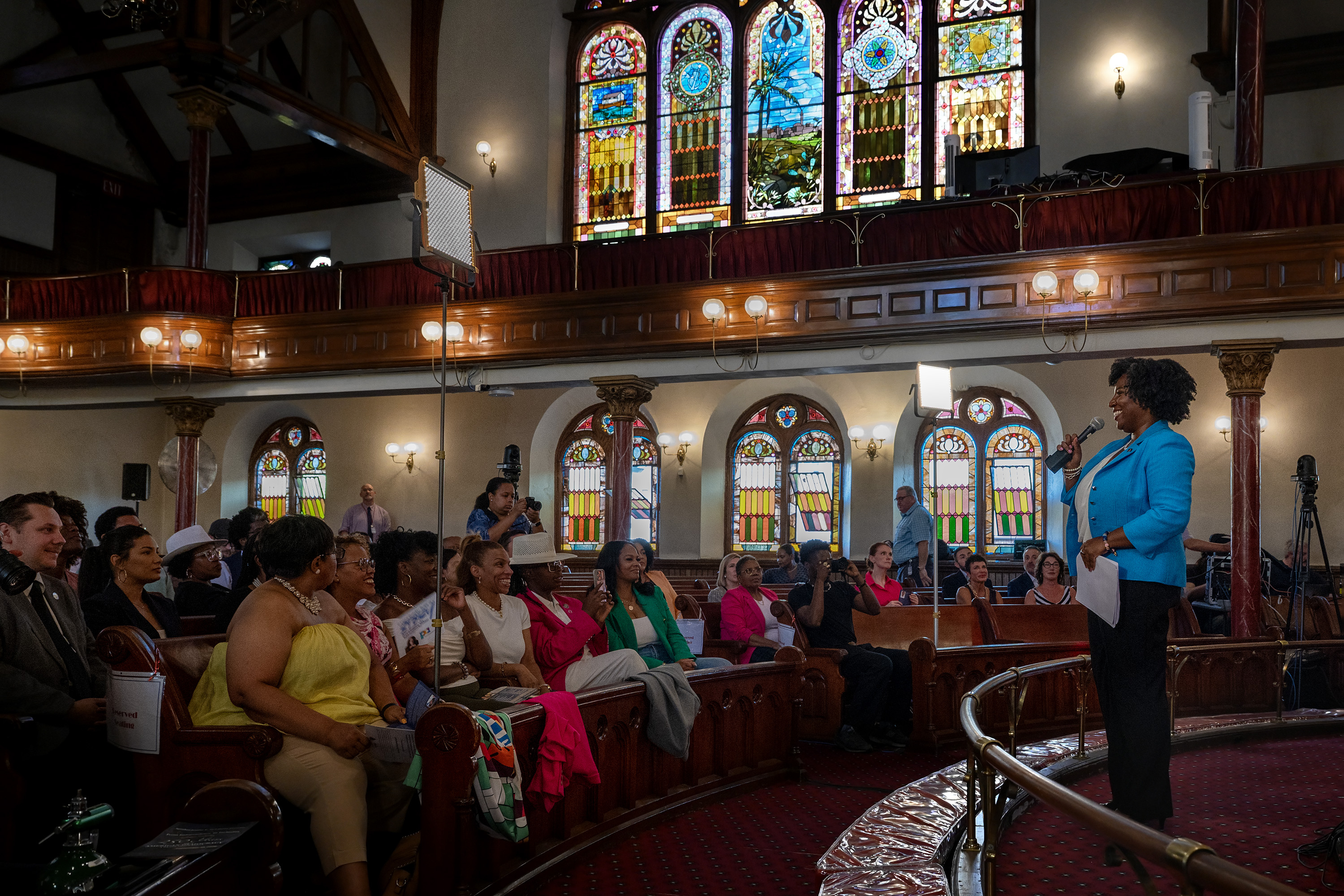
    House Speaker Joanna McClinton hosts an America 250 Conversation at Mother Bethel AME Church Thursday Sept. 10, 2026.Tom Gralish / Staff Photographer

    That’s what Pennsylvania House Speaker Joanna McClinton and three other historic statehouse speakers from Delaware, Illinois, and New York did, reflecting on America’s history while looking ahead.

    I did my own share of looking both back and forward while covering another anniversary this week. Those of us old enough to remember knew even on that day that nothing about our future would never be the same again.

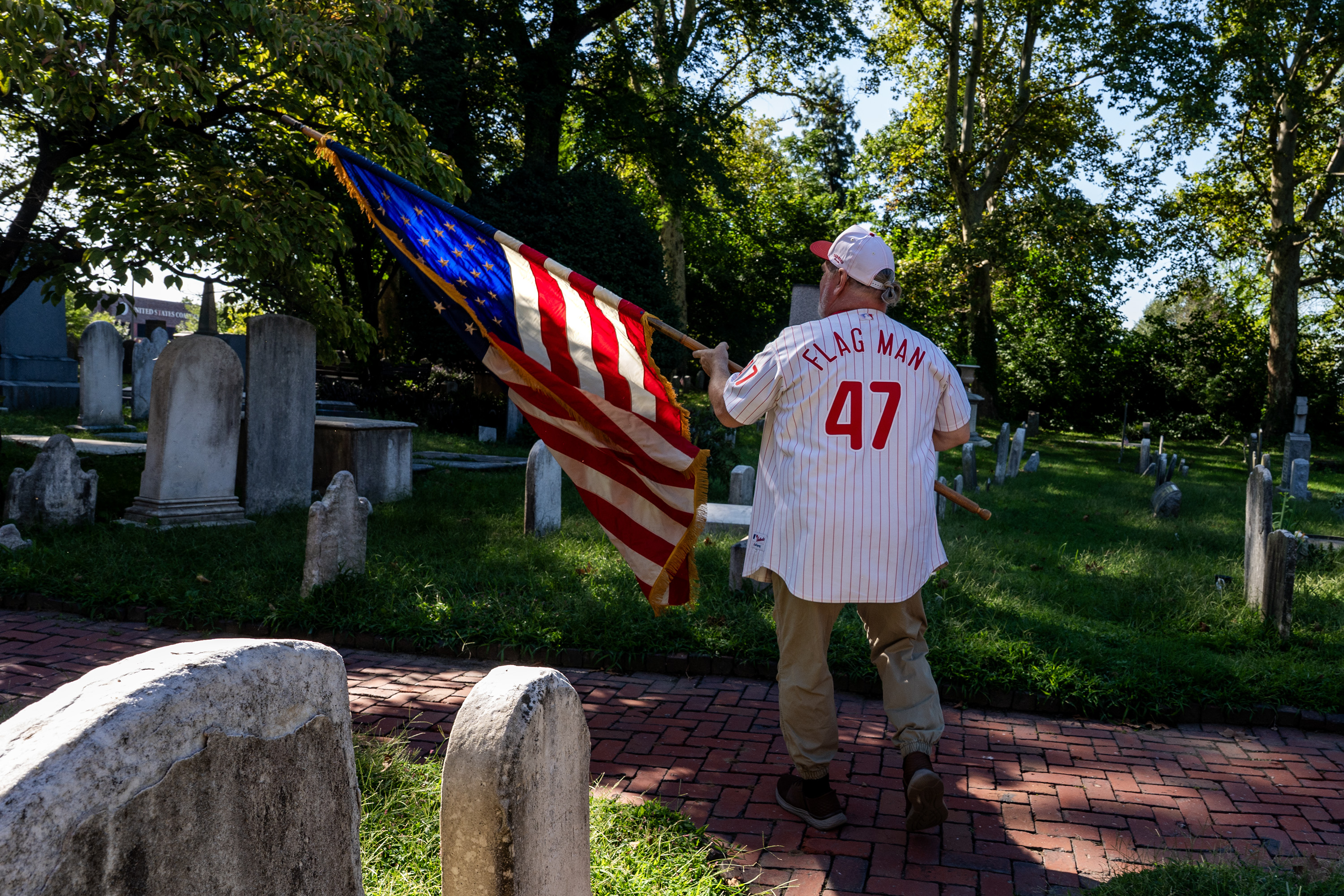
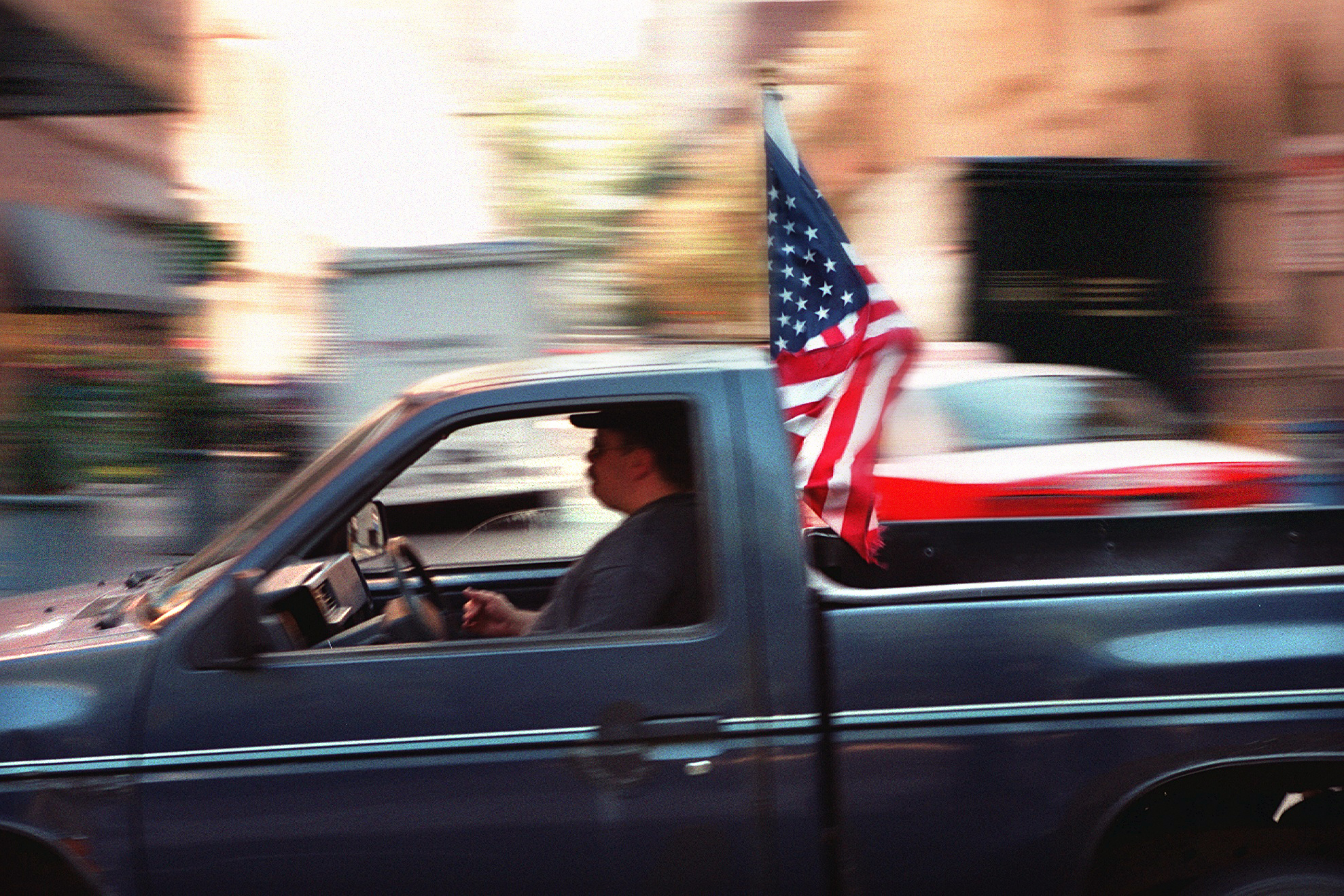
    After 9/11 the flag became a symbol of shared feelings, giving people a way to express emotions that words could not.

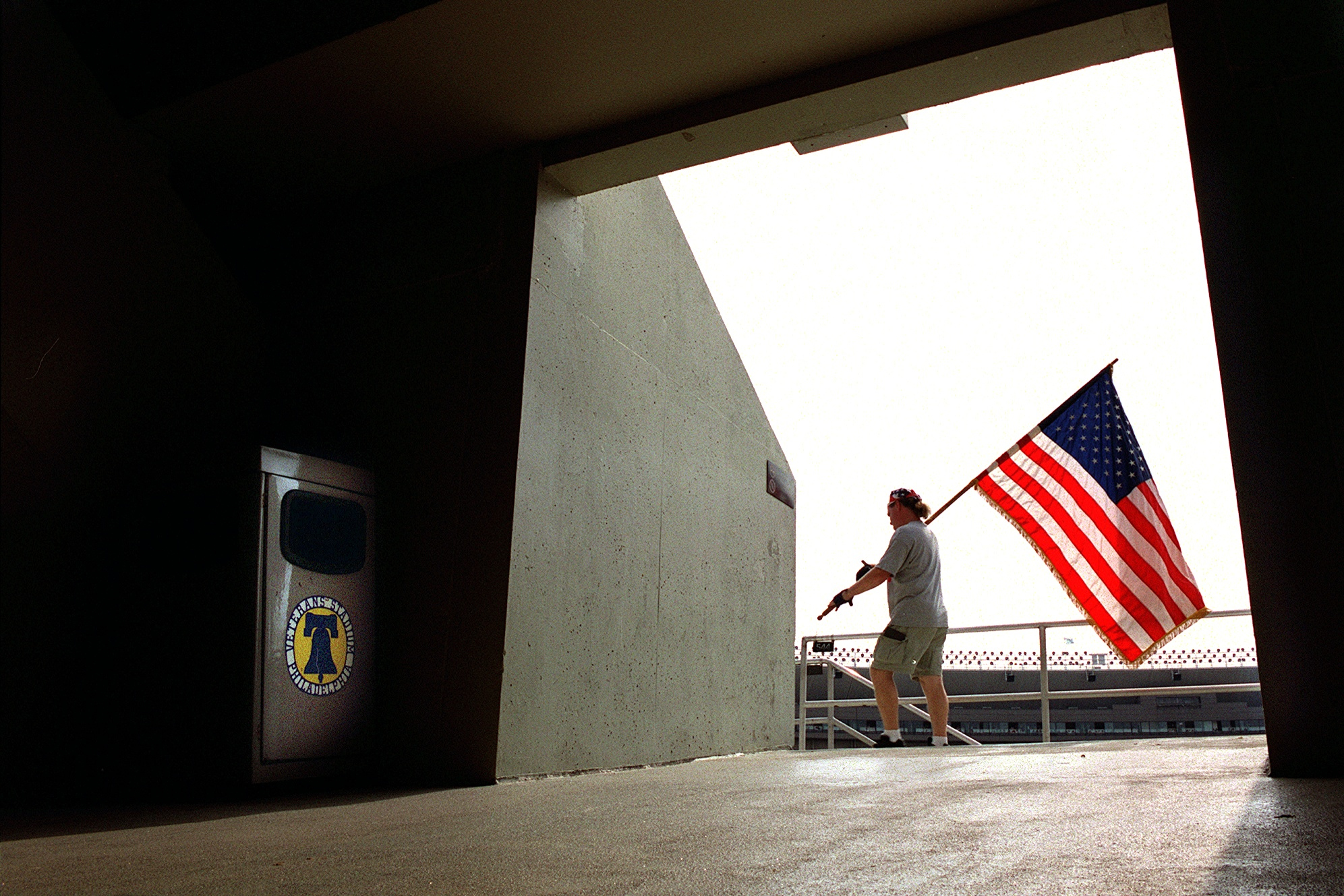
    Sports reporter Matt Breen — a Northeast Philly native and Temple grad — writes the kind of stories I like to read, full of history and nostalgia, trivia, and tidbits. And plenty of “Only in Philadelphia” characters. Like Flag Man.

    Jim Minacci at Veterans Stadium, September, 2001.Tom Gralish / Staff Photographer

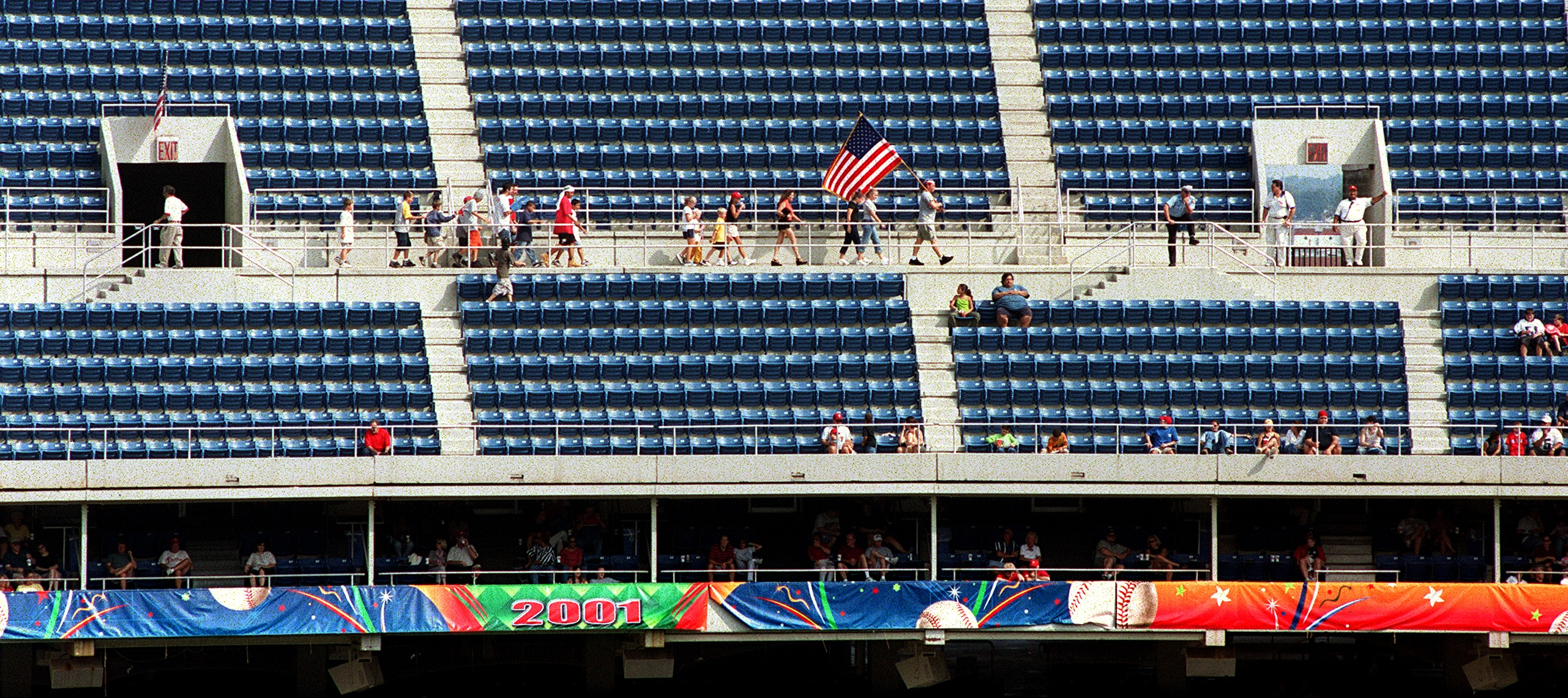
    I photographed Jim Minacci twenty-five years ago when the Phillies were back at Veterans Stadium after the season was paused following 9/11.

    He and his son walked around all the concourses carrying a large American flag — trailed like the Piped Piper by a line of kids. They did it at every home game for the rest of that season as he became a symbol of patriotism.

    Minacci still attends Phillies games and he still has the flag (but it’s too big to be allowed into Citizens Bank Park).

    Breen wrote about him and I made the photos at Gloria Dei (Old Swedes’) Episcopal Church, where he and his wife Paula still live and work as sextons.

    Jim Minacci at Gloria Dei Old Swedes Episcopal Church Tuesday, Sept. 8, 2026.Tom Gralish / Staff Photographer

    Surprisingly, while there have been stories about the Minaccis — and the dozens of music events they host all yearlong to raise money for the historic church — it looks like Matt is the first one to write about Flag Man since 2001.

    Looking ahead, it would be great if Americans could reclaim that feeling today, reclaim the sense of community that emerged from the tragedy (without something else terrible having to happen).

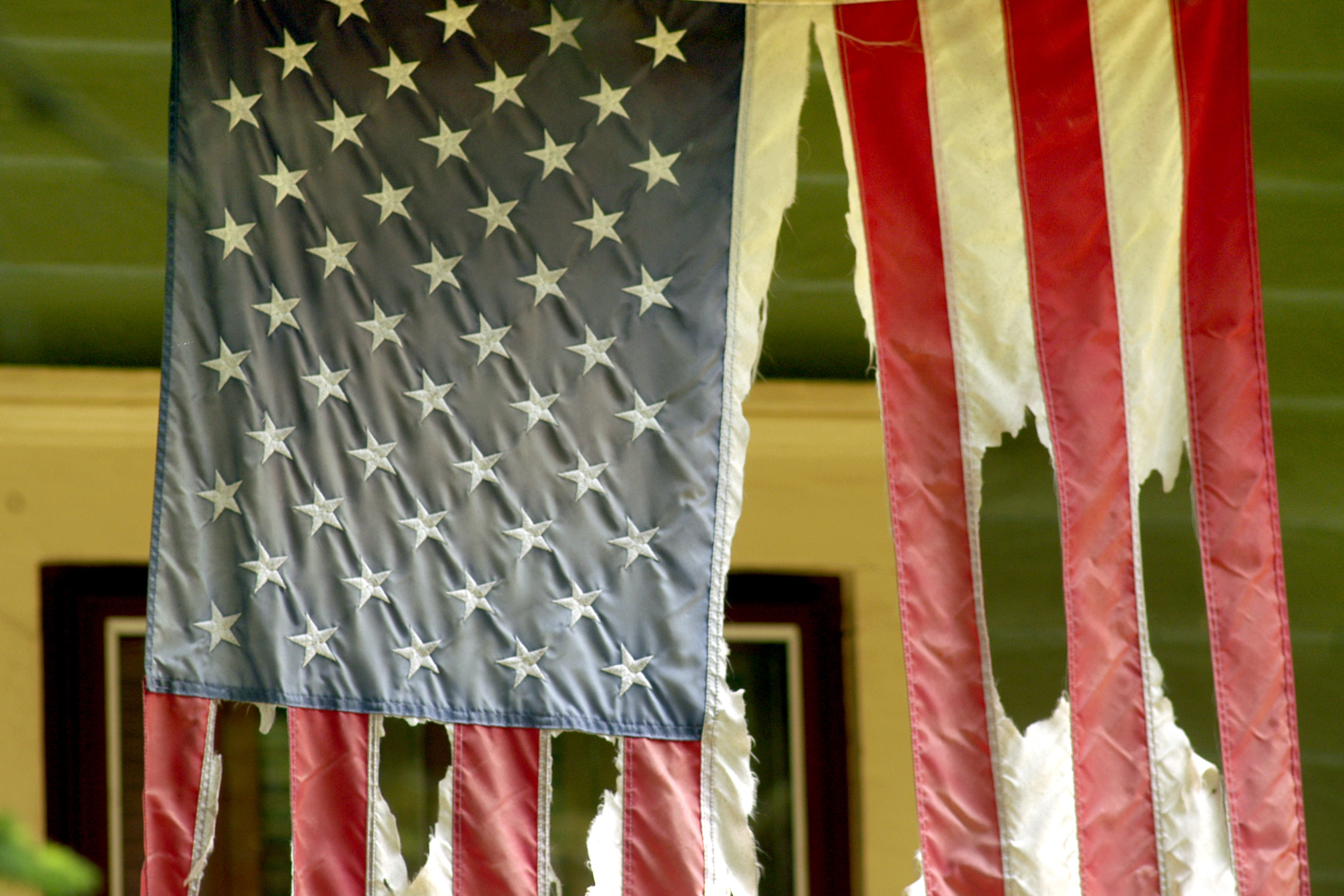
    A flag at a South Jersey home on Flag Day, June 14, 2005, tattered, torn and tarnished by time over the years after 9-11, when well-intentioned home-owners bought flags to display in the heat of patriotism. Tom Gralish / Staff Photographer
    Since 1998 a black-and-white photo has appeared every Monday in staff photographer Tom Gralish’s “Scene Through the Lens” photo column in the print editions of The Inquirer’s local news section. Here are the most recent, in color:

    » SEE MORE: Archived columns and Twenty years of a photo column.

  • Philly’s dog days of summer

    Philly’s dog days of summer

    The ancient Greeks and Romans knew the annual appearance of Sirius, the brightest star in the constellation Canis Major (“Greater Dog”), would bring them the most sultry and sweaty stretch of summer.

    I’ve always associated the “Dog Days” with images of a lazy city, slowing down in August; this year especially after our once-in-every-250-years July.

    It’s standard practice across Europe — “Les grandes vacances,” the really big holidays — for offices, factories, and ministries to shut the doors for most of the month. Even here the mayor’s daily media advisory on many days last month just read, “The Mayor has no public events scheduled.”

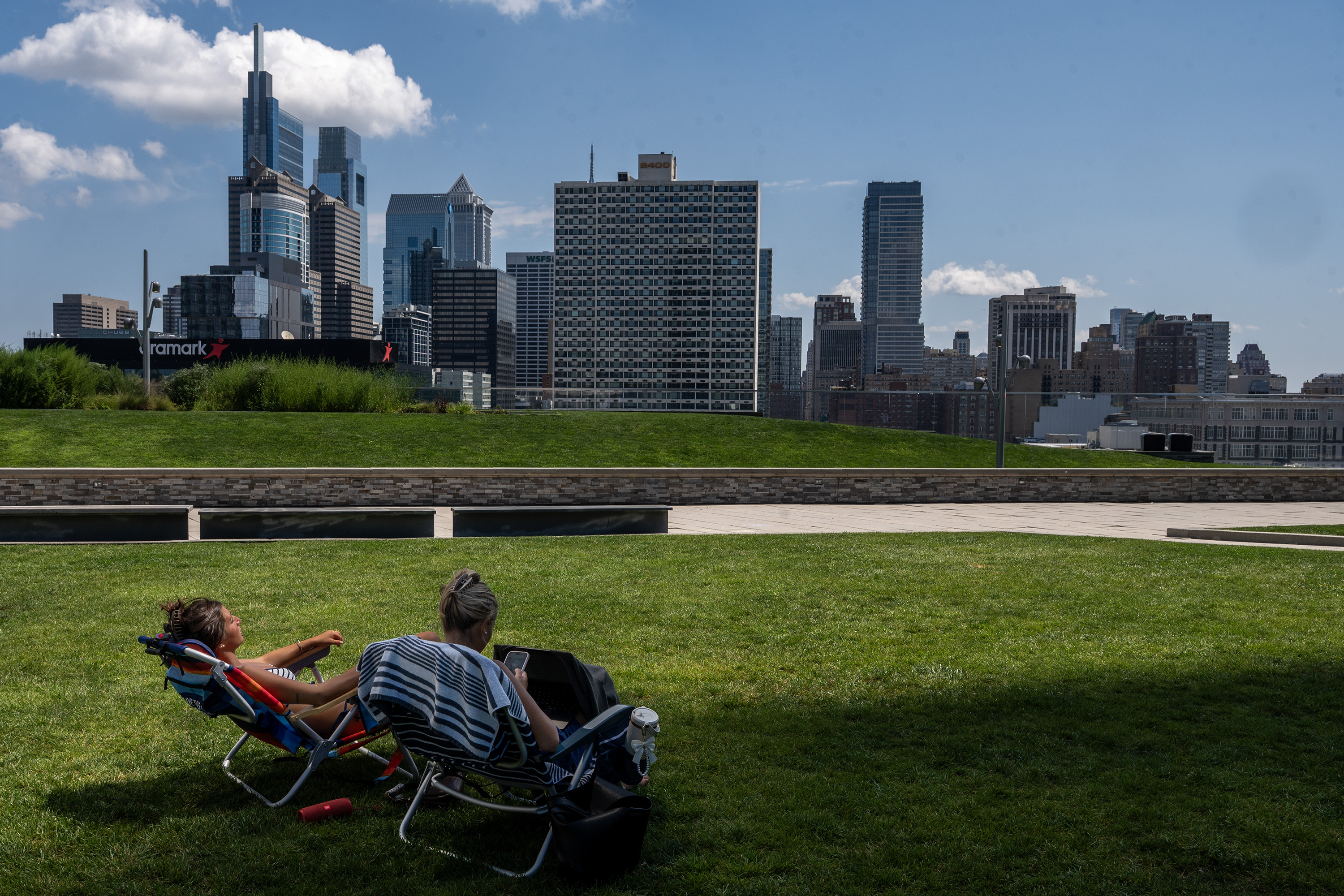
    Madelyn Moore and Lea Cifelli (right) have the rooftop Cira Green park – and the view – all to themselves on a lazy August afternoon.Tom Gralish / Staff Photographer

    So it’s surprising for me to look back at what a wonderfully full, fascinating, and fun month August was for photography.

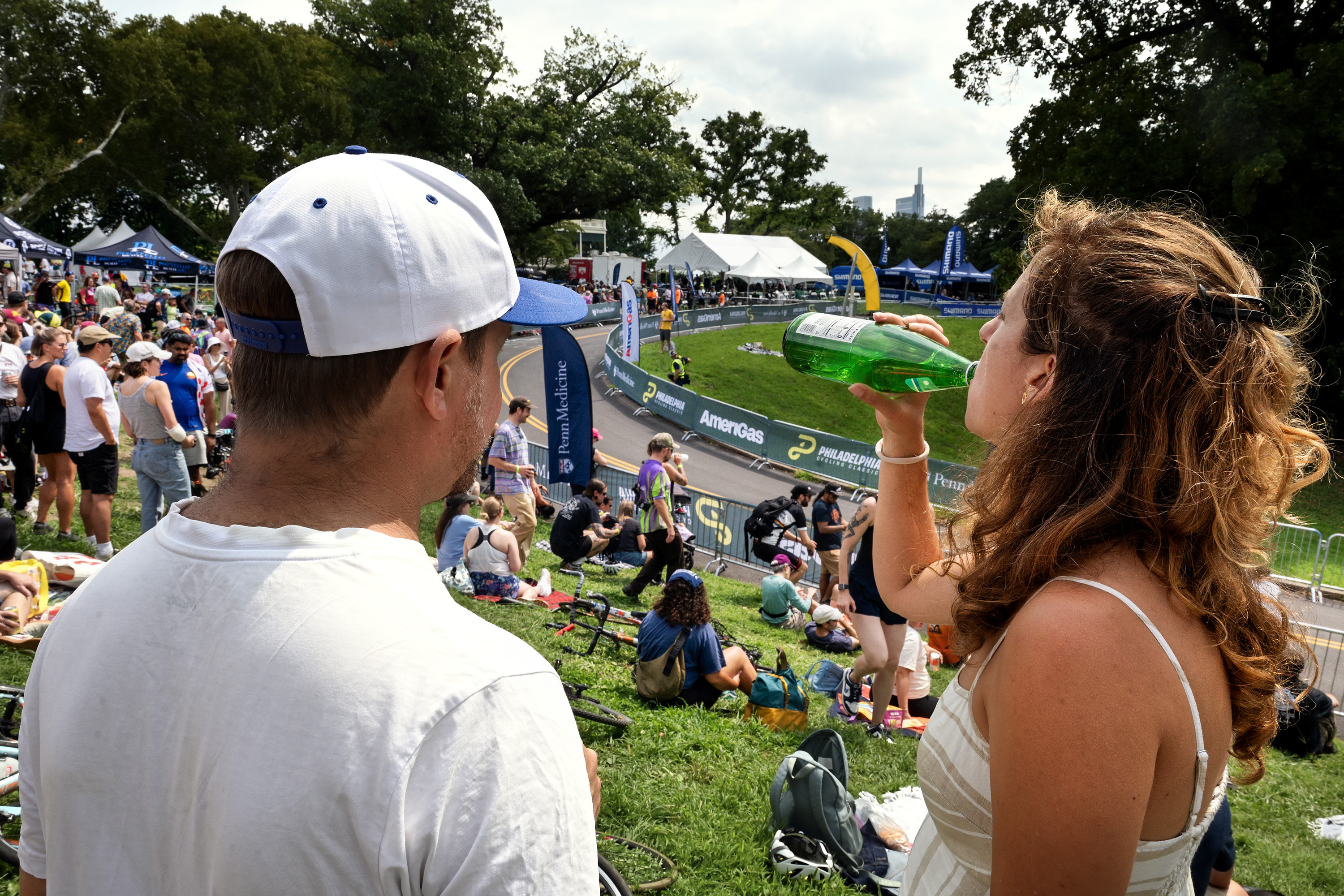
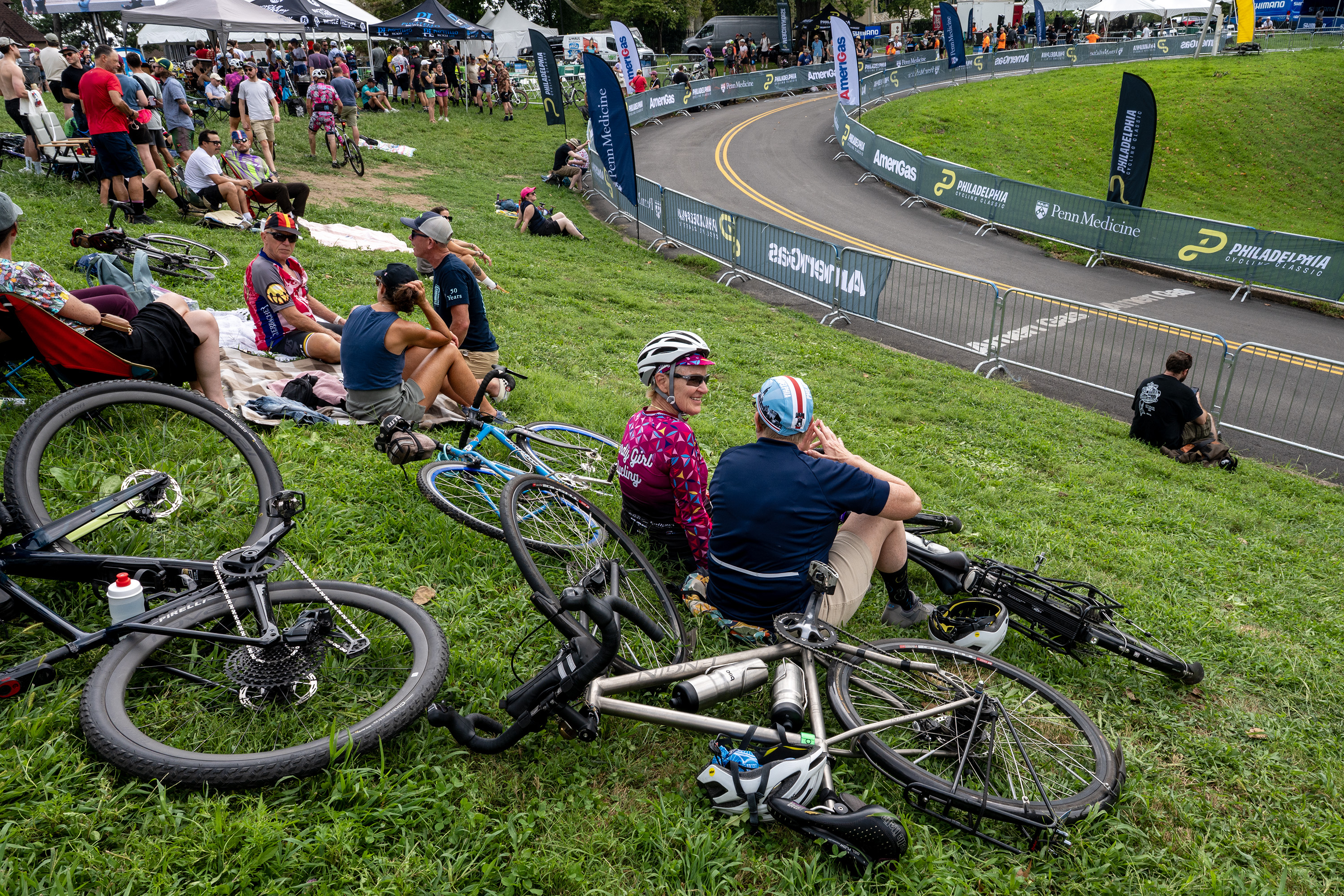
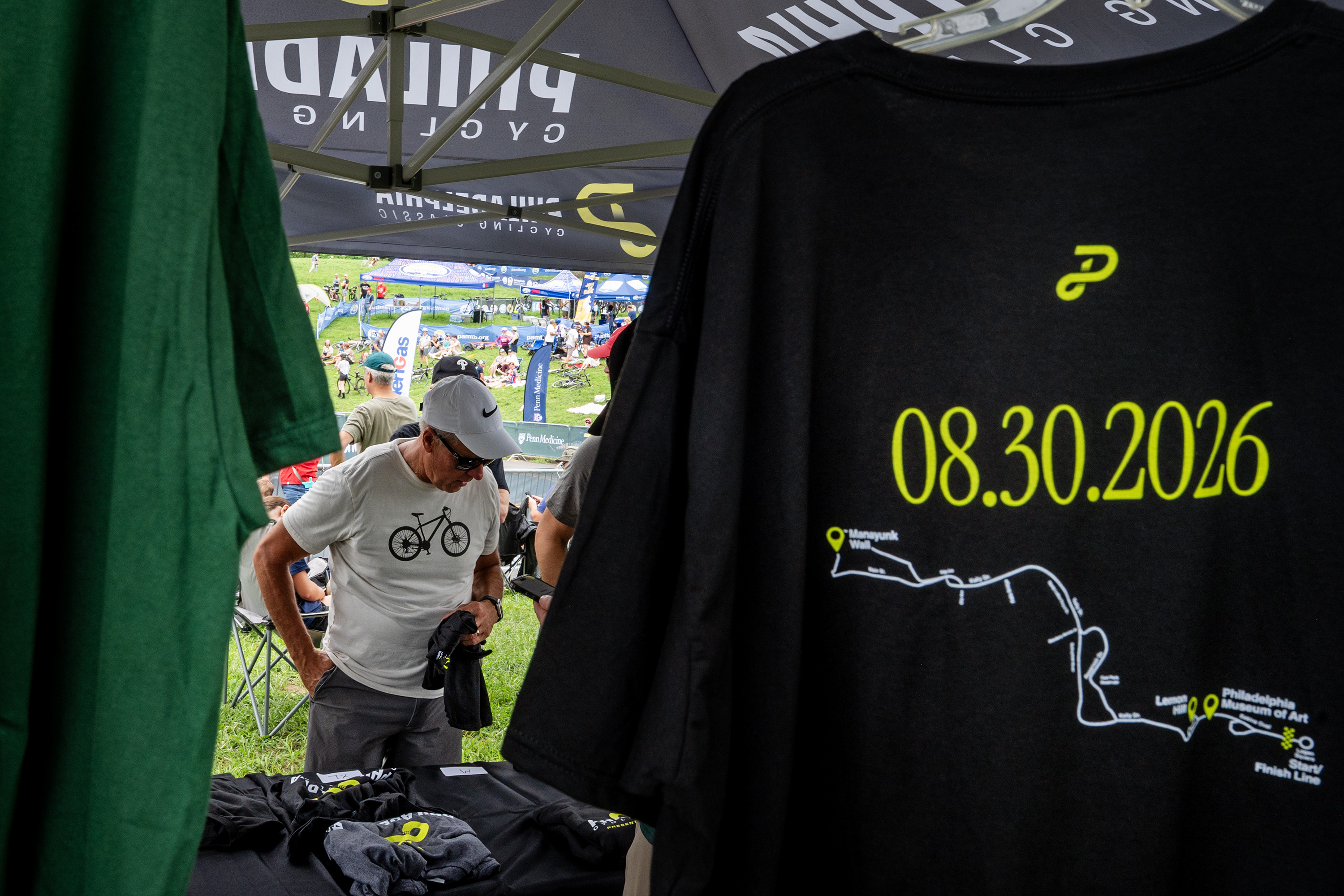
    The Philadelphia Cycling Classic made a return following a 10-year hiatus, and Team Inquirer Visual had four of us on the course plus two videographers. Jose F. Moreno covered the starts and finishes on the Ben Franklin Parkway, Monica Herndon rode on the back of a motorcycle moving alongside the peloton, and David Maialetti was up and down the “Wall” in Manayunk. I was with the spectators on Lemon Hill, while Jenna Miller and Gabe Coffey captured video.

    Dan O’Halloran and Sonja Nakasian (right) wait on Lemon Hill between laps.Tom Gralish / Staff Photographer
    Jody Twer (left), 75, of Kindnersville, Pa. has been biking for decades and lately rides with the club Sturdy Girl Cycling.Tom Gralish / Staff Photographer

    In the lulls between laps — 8 for the men, 4 for the women — I tried to scope out different vantage points to make the most of each 10 second pass the bikes made every half hour. And spot spectators I could focus on.

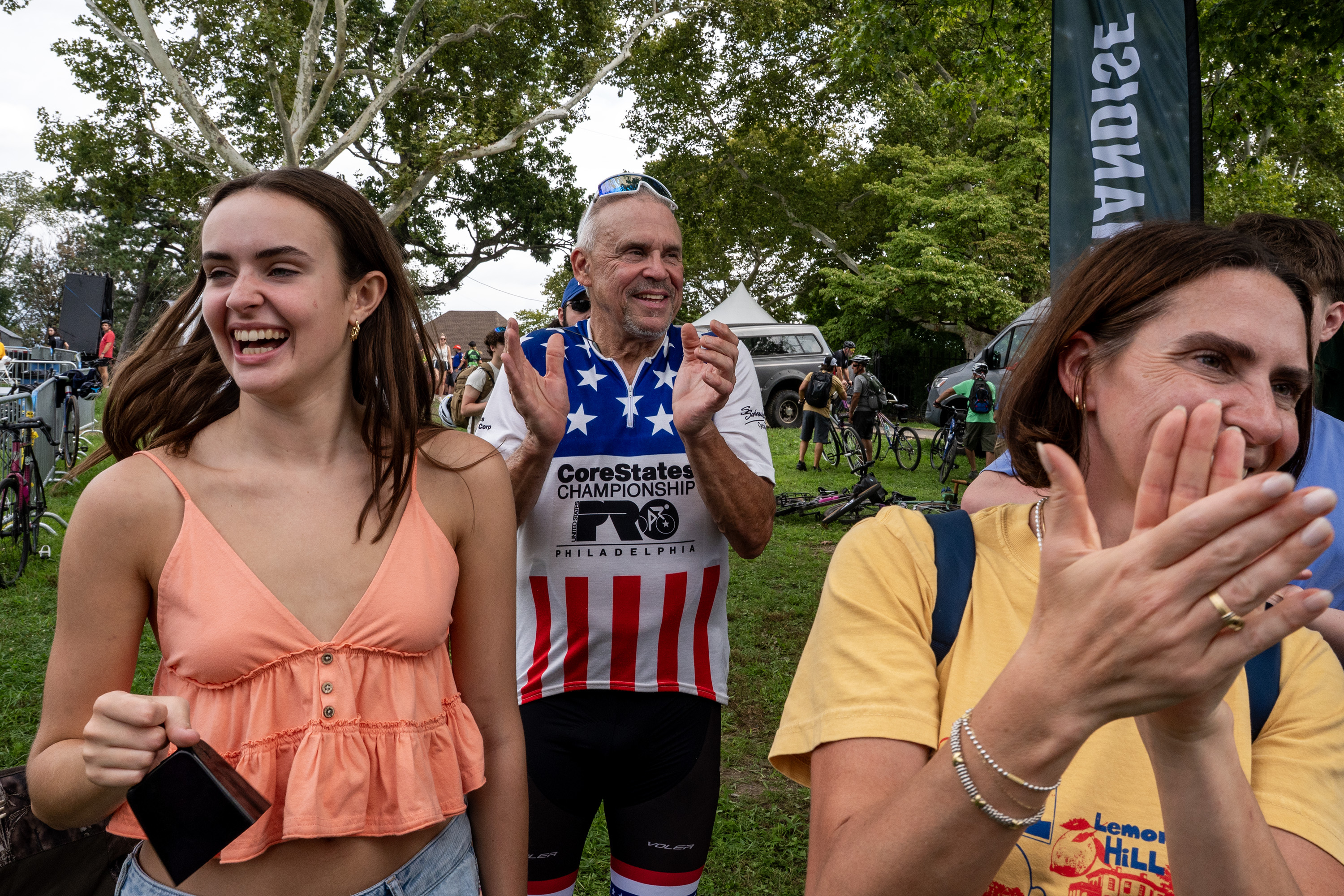
    Having covered the race in its first year, when I saw the T-shirt Joe Manacchio was wearing I immediately recognized the logo as one from the original 1985 CoreStates USPRO Championships (won by Olympic gold medal speed skater Eric Heiden). Joe was there with his family, and they pointed out he was the 2024 Masters (Men 65-69) National Champion at the USA Cycling National Championships in Georgia.

    Joe Manacchio with daughter Arbella Cherkis (right) and granddaughter Talia Cherkis.Tom Gralish / Staff Photographer

    Theirs were not the only friendly faces I met in the crowd. Most, like me, rode bikes into the park and almost everyone seemed to be having as much fun as I was.

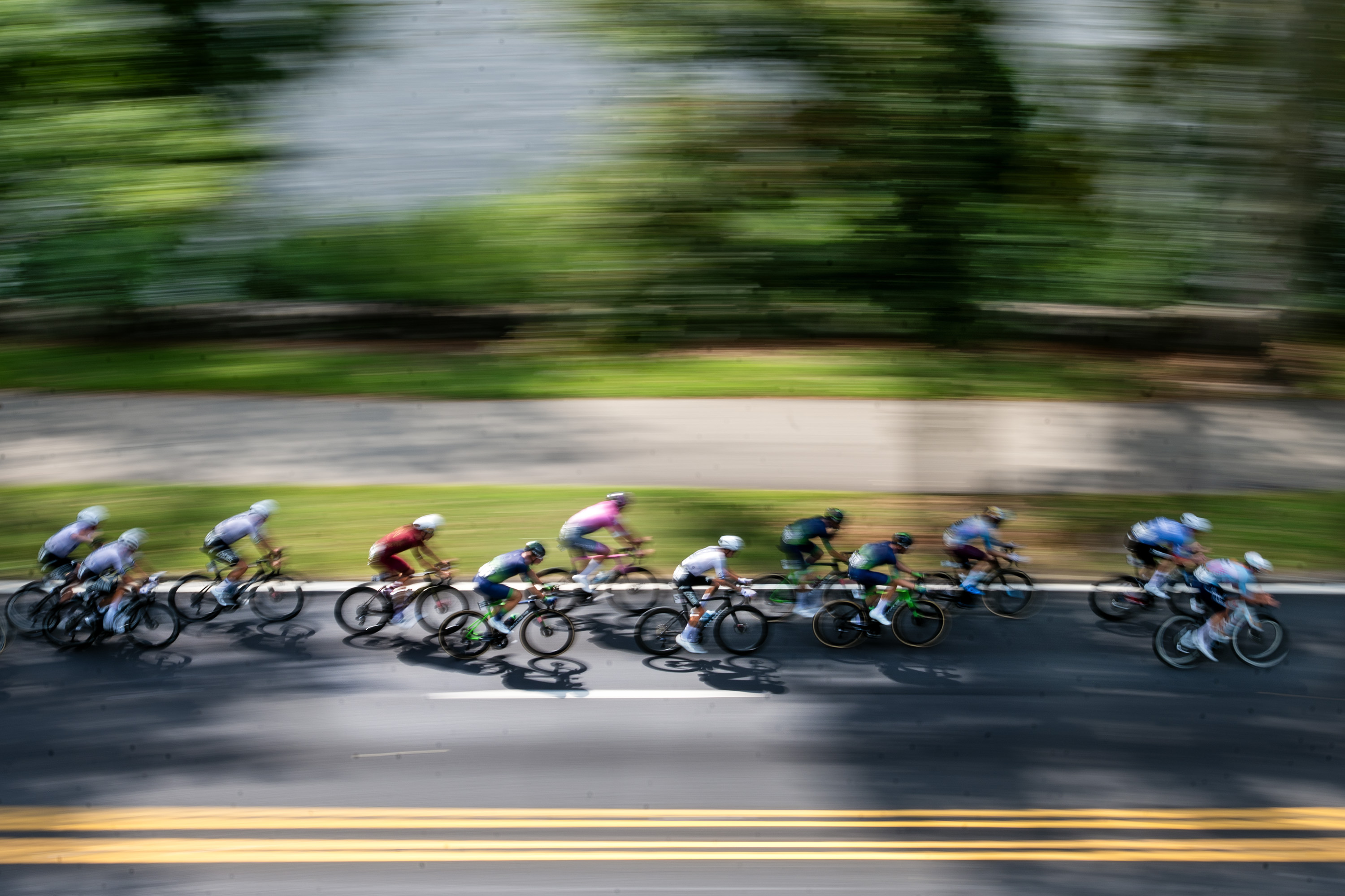
    Besides composing for the course’s curves there in Fairmount Park, I also wanted to make the cliched but fun (there’s that word again) photos where the bikes are relatively sharp but the background is streaked and blurred.

    To make those, it’s best to be positioned perpendicular to the riders and on a straightaway so you can pan during the exposure, use a slower shutter speed (around 1/15th sec), and move the camera smoothly at the same speed as the passing cyclists.

    I know from covering snowstorms, and regattas, and flooding on the Schuylkill that there are great vantage points looking down from Laurel Hill cemetery. Except in late August trees block most of the views of Kelly Drive, so I had to hike along the edge to find a clearing.

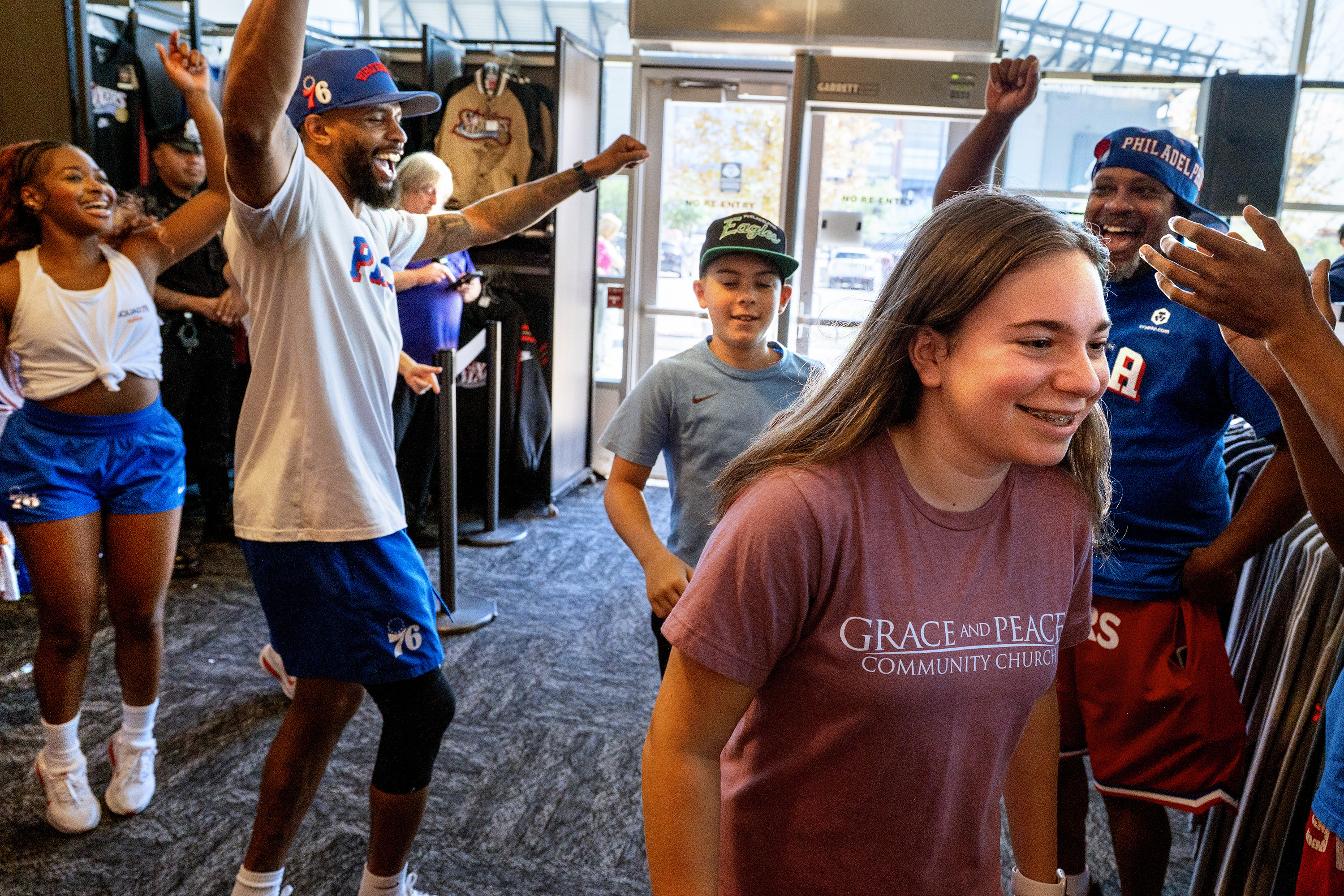
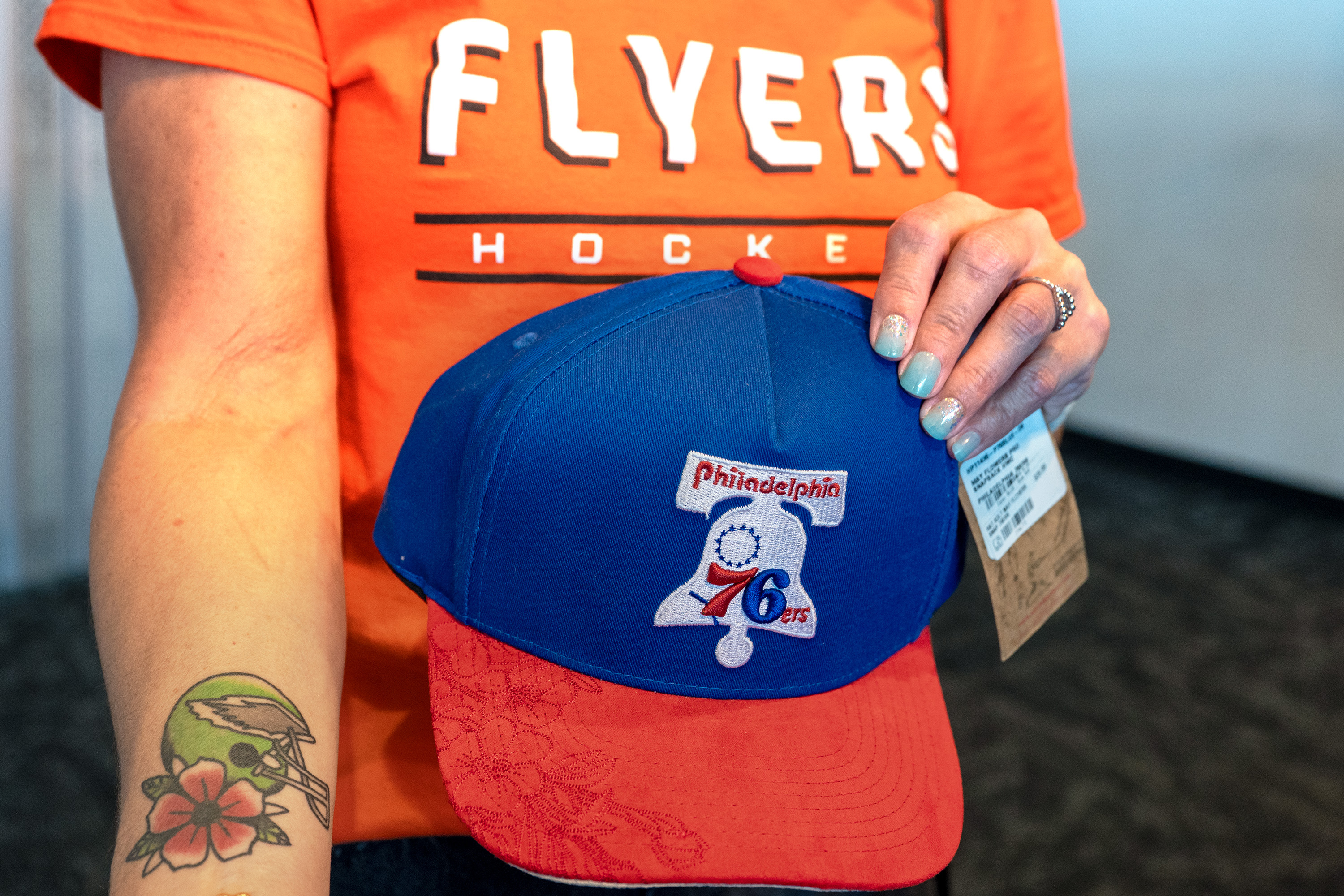
    In other sports news, the LeBron hype continued as Sixers fans lined up outside the team store at Xfinity Mobile Arena for James (and Jaylen Brown) jerseys.

    Evelina, 12, and Anthony Capelli, 10, of South Philadelphia were there with their dad, Chris Capelli. He won a free LeBron jersey, but the kids left empty-handed as the store didn’t have any youth sizes. Wearing her Flyers T-shirt, I met Stacy Romeo — also from South Philly — who showed me her Eagles tattoo while shopping for Sixers merch.

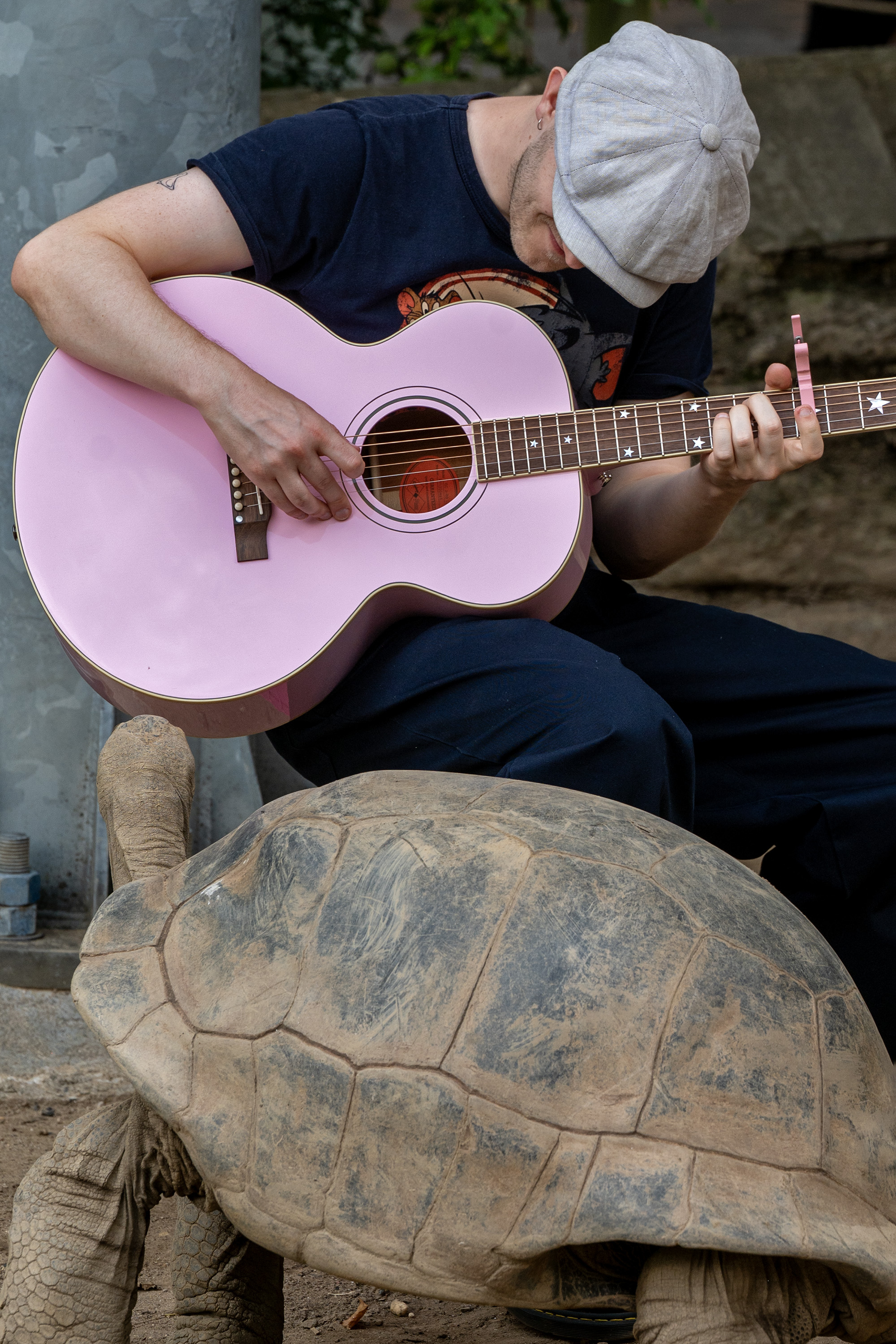
    My daughter (the same one who first exposed me to Buc-ee’s) shared viral videos of French singer-songwriter and animal advocate Loris Assadian, known as Plumes, serenading farm and zoo animals with his flamingo-pink guitar. Count former President Barack Obama among the millions of viewers worldwide who have been mesmerized.

    When she told me he would be making his very first appearance at any U.S. zoo, I had to let her know I wouldn’t get to cover it because his sold-out appearances were all in the evening. Then I got the chance to meet Assadian (and his mom and brother social media team) and watch him as he made a day-before visit to the tortoises at the Philadelphia Zoo.

    Tom Gralish / Staff Photographer
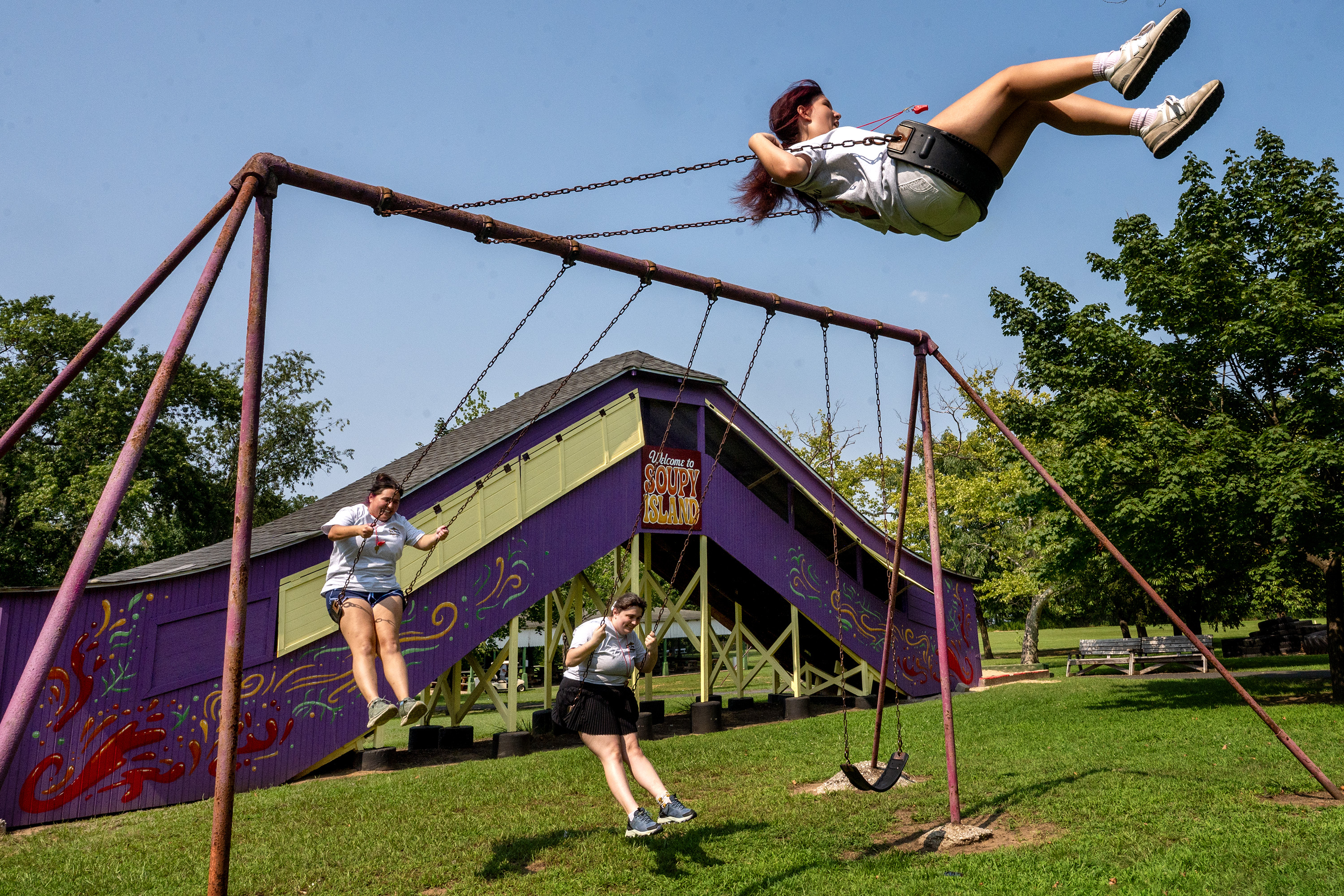
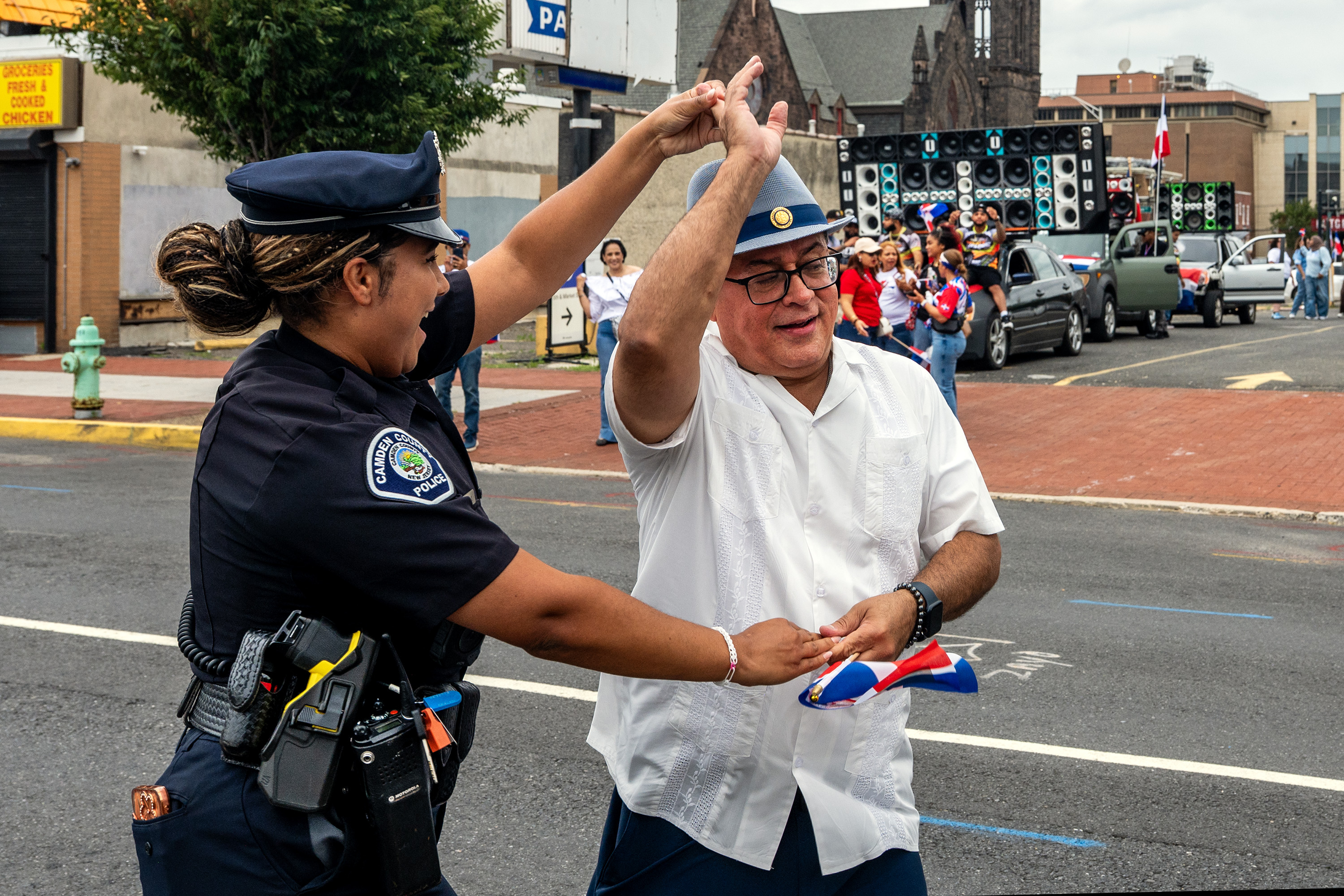
    Also in August, the young counselors at Soupy Island in West Deptford, N.J. unwinded at the end of their day at the free summer day camp founded in 1877 to give sick city kids fresh outdoor air. That weekend, Camden County Police Officer Marina Urena danced in the street with City Council President Angel Fuentes before a parade celebrating Dominican pride.

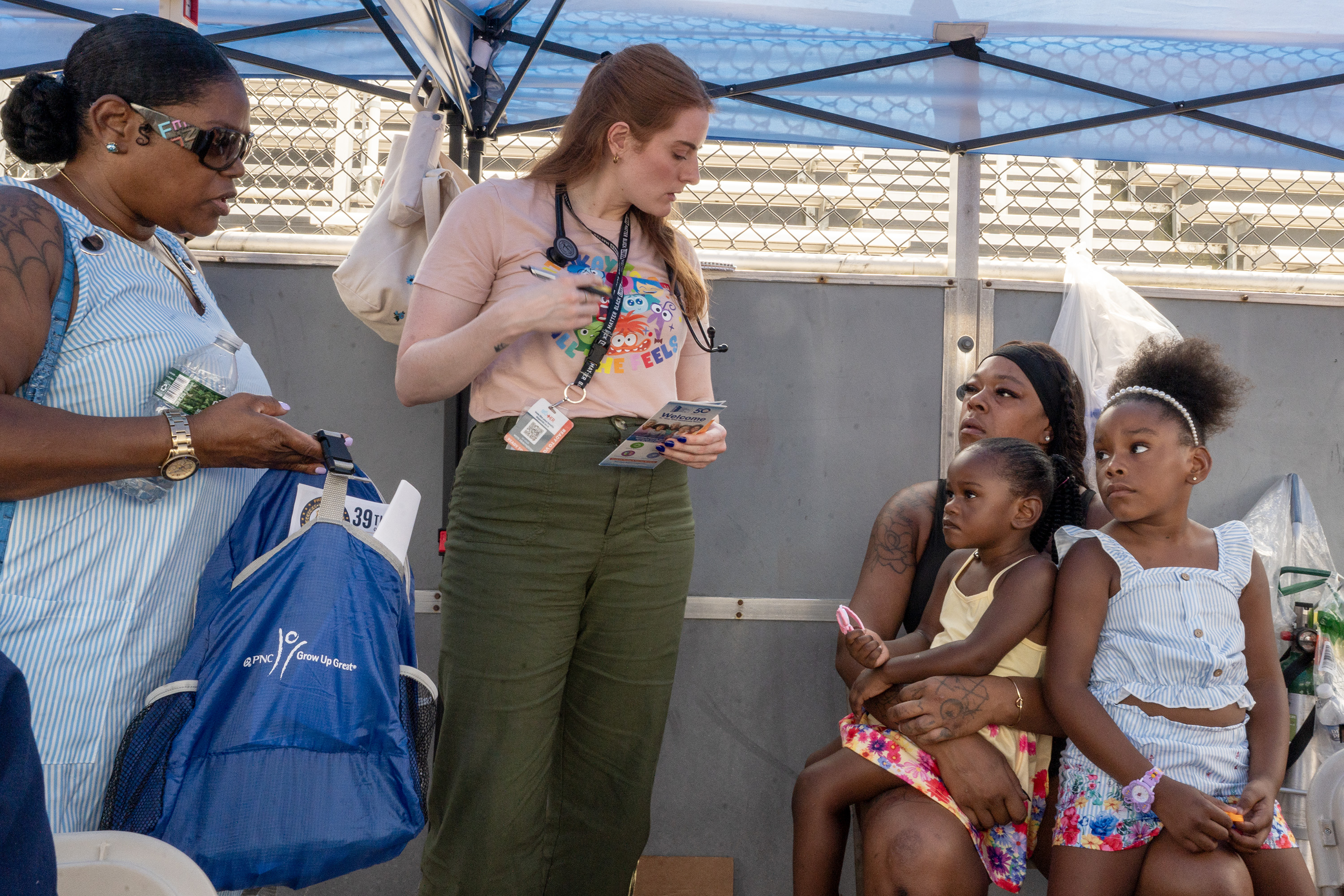
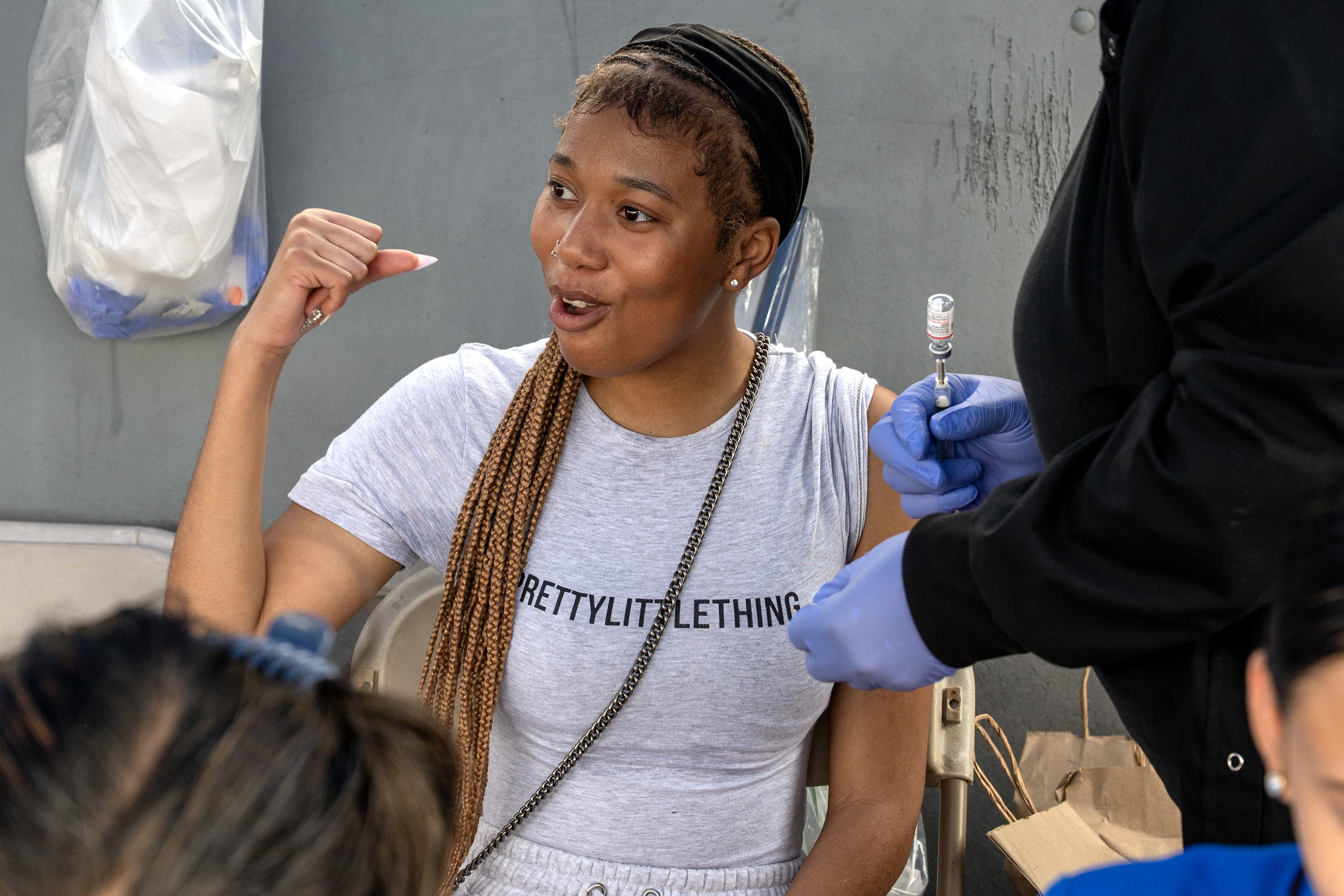
    For a story on measles vaccination rates declining in the Philadelphia area as an outbreak spreads across Pennsylvania, I met three generations of the Jason family and high school junior Cianey Brown at a back-to-school clinic where pediatrician Amanda Bernard was giving out the shots — and important health information.

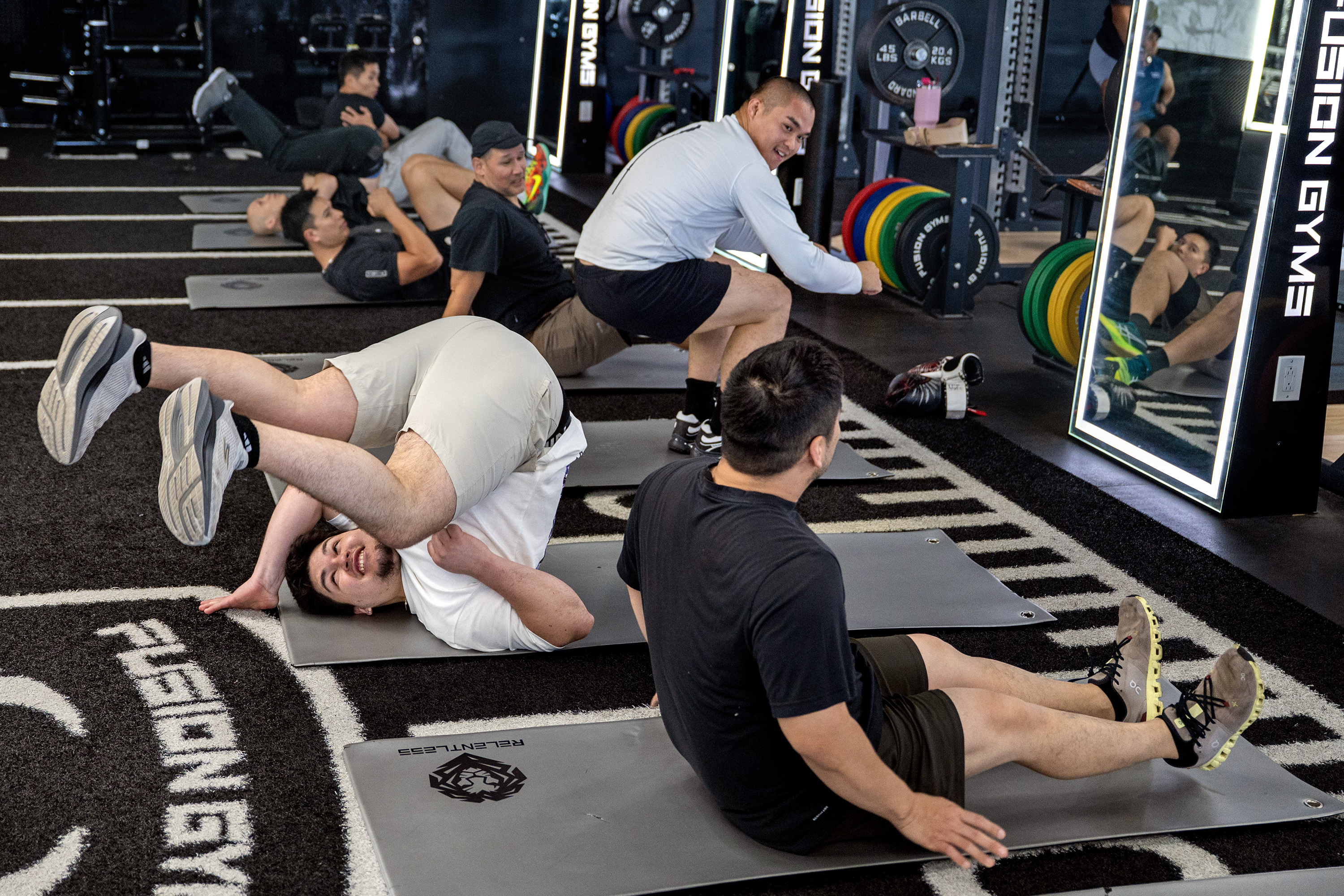
    Also in August, I saw firsthand how exercising with friends boosts your workout motivation as I joined food writer Kiki Aranita who was reporting on seven sushi chefs who work out together, spotting one another as they lifted weights equivalent to a bluefin tuna.

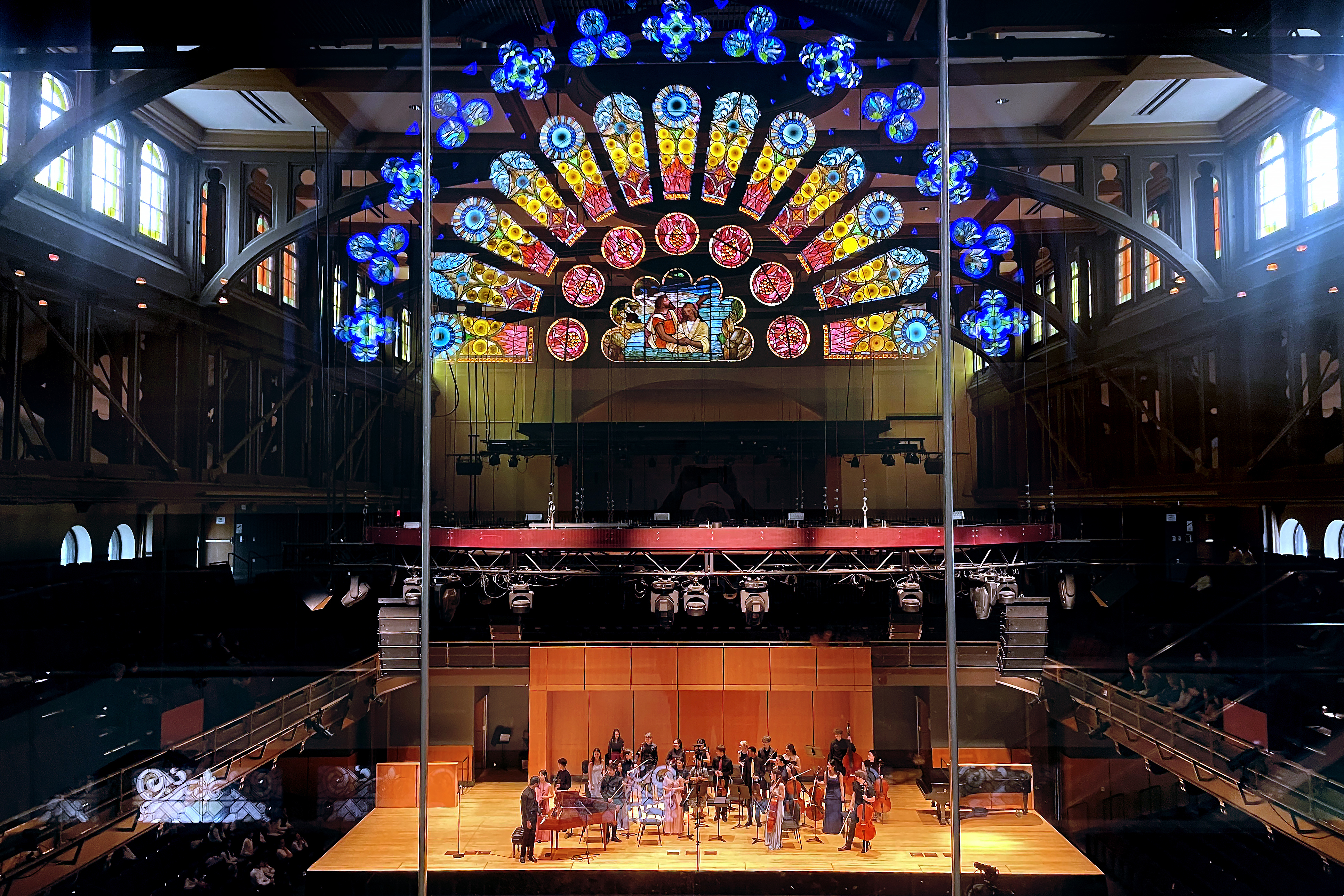
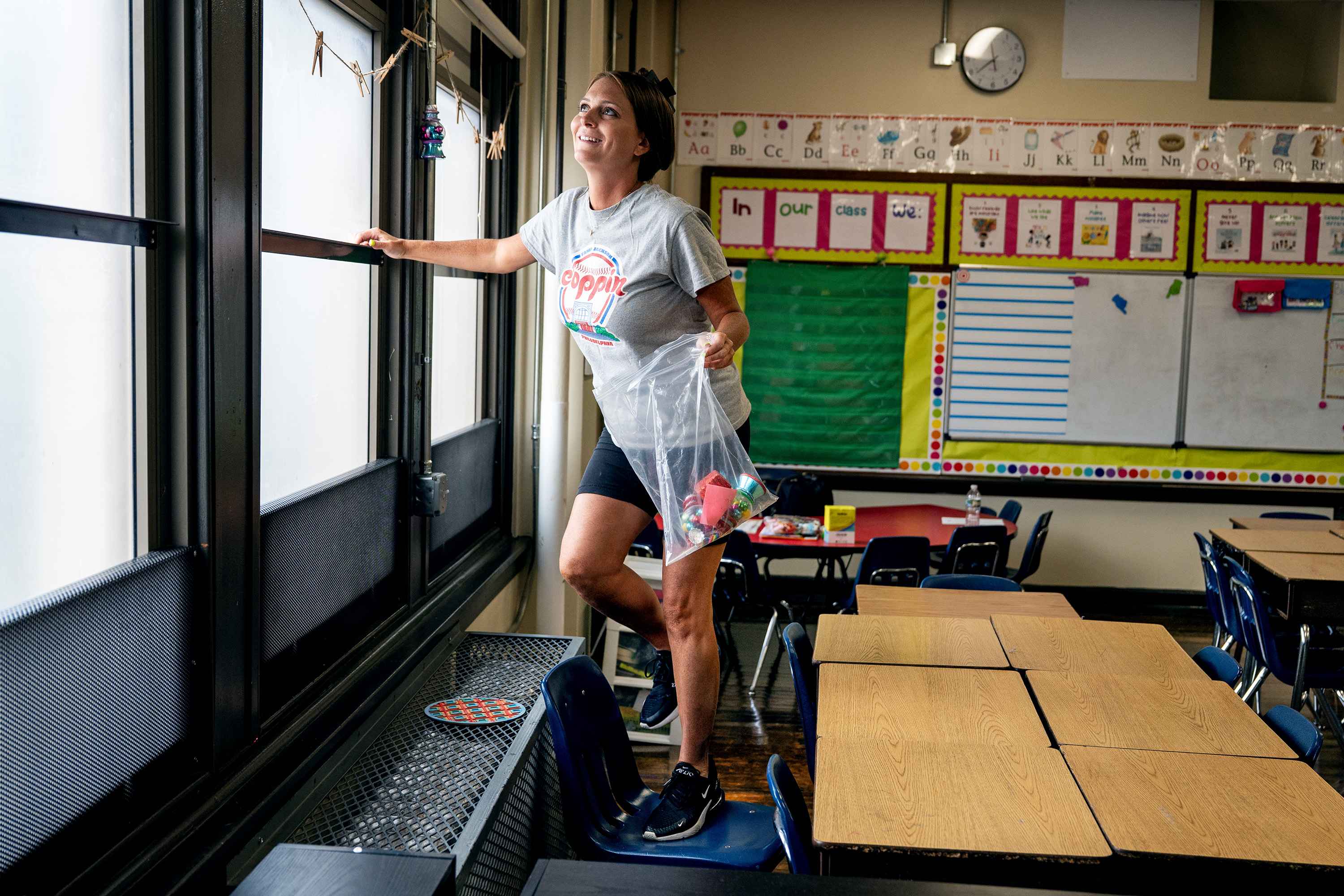
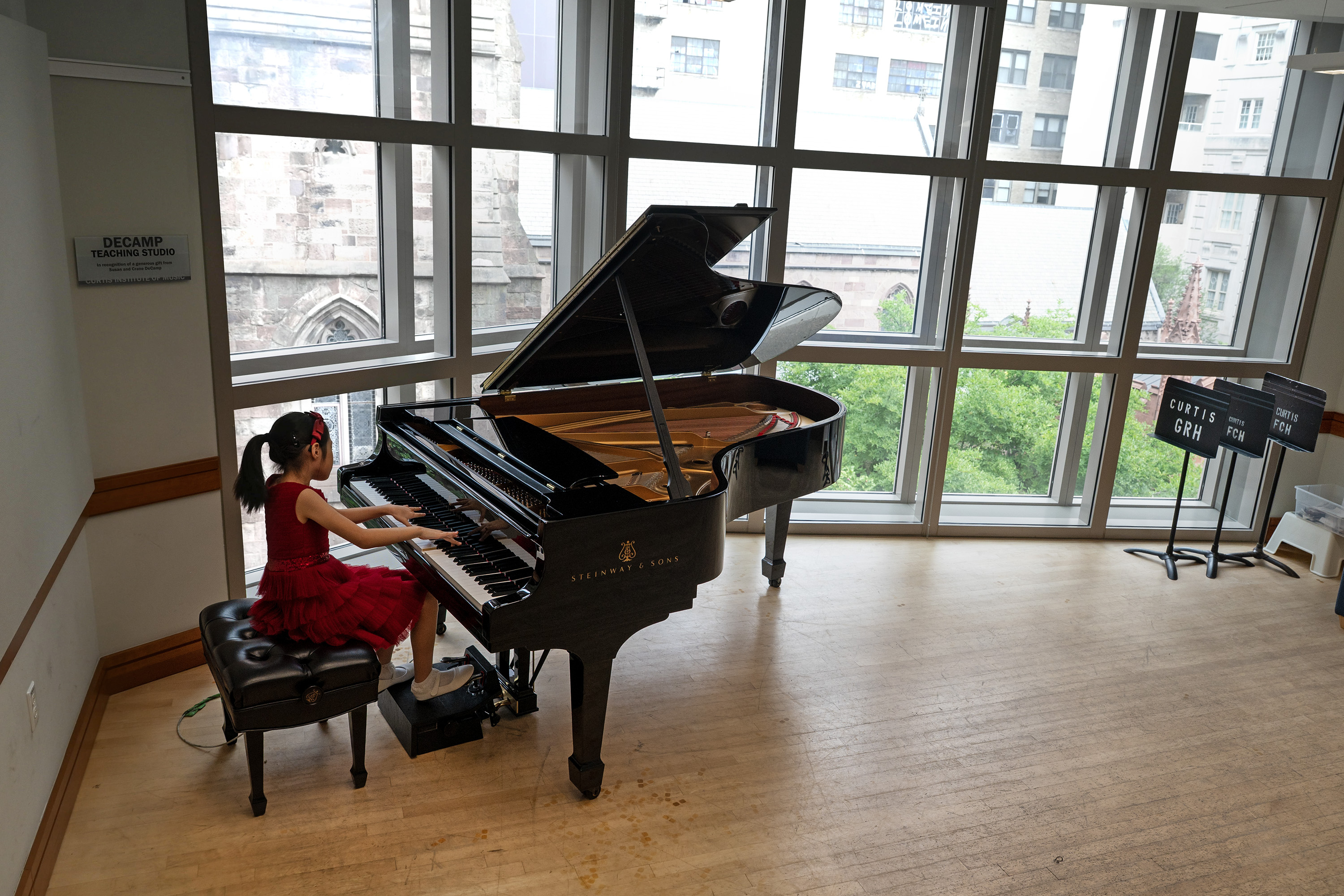
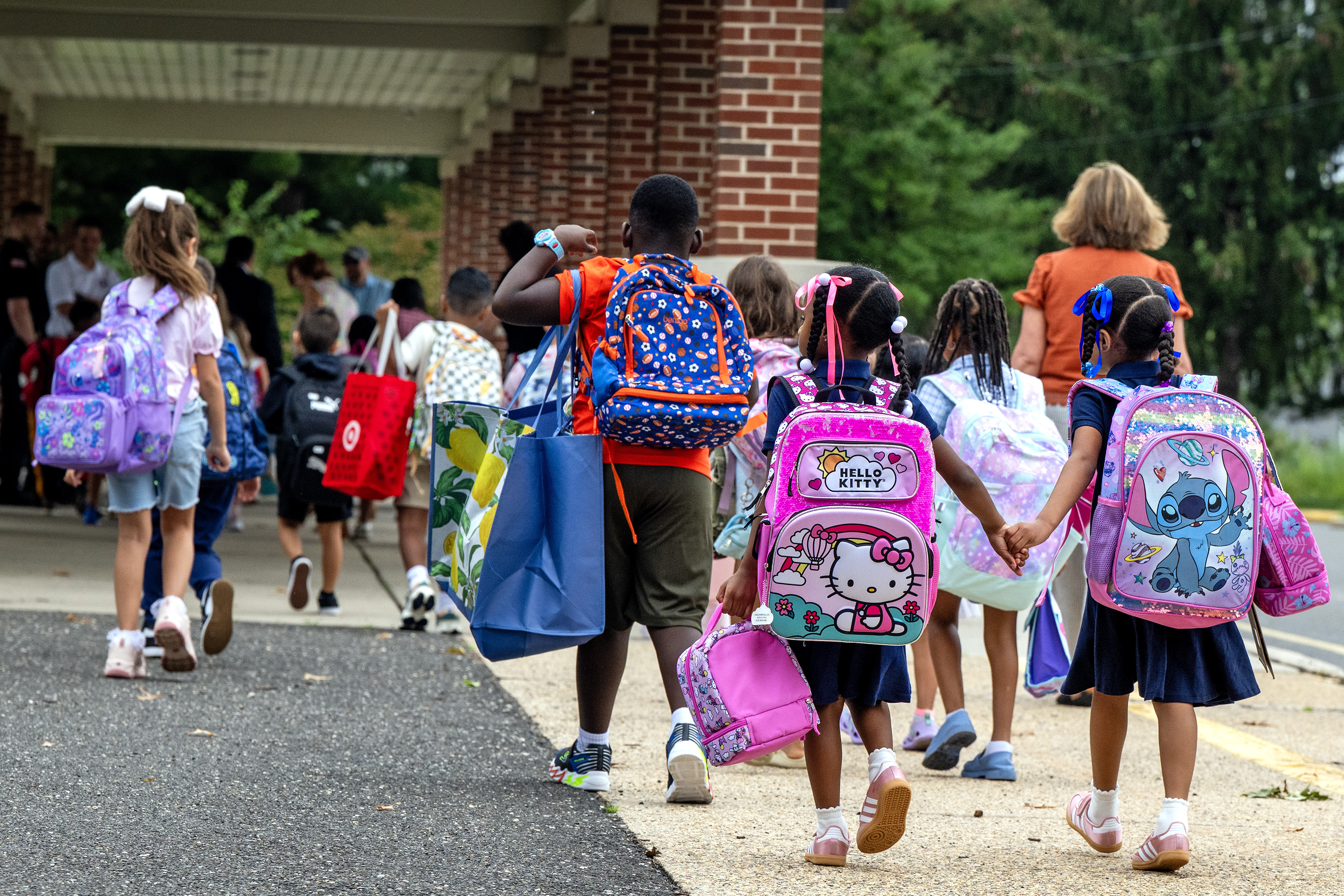
    The end of summer means the start of a new school year. I met teachers like second grade’s Gabrielle DiCrosta getting ready at Fanny Jackson Coppin Elementary in South Philly, and a seven-year-old pianist — believed to be the youngest student to study at the Curtis Institute of Music since 1950.

    First-day Kindergarten siblings Makenna (left) and Makenzie Lucas arrive at the New Albany School in Cinnaminson, N.J. Tom Gralish / Staff Photographer
    Finally, next week America will be marking the 25th anniversary of the Sept. 11 attacks.

    On that day in 2001 I was working a noon-8 p.m. shift, so I was running errands in the morning. I had just gotten back into my car at the bank when I heard the first reports of a small plane hitting the World Trade Center on KYW News Radio. My first thought was of the 1945 crash of a B-25 bomber into the 78th floor of the Empire State Building. I switched between my car’s AM radio and WHYY-FM to listen to NPR’s reporting as more information came in — including news of another plane crashing into the second tower.

    I rushed home, tossed some things in a suitcase and told my wife I was headed to the New Jersey Turnpike.

    By then The Inquirer had already dispatched a team of reporters and my photo colleagues to New York so I was instead sent to Independence Hall and the Liberty Bell to document the local reaction.

    Over the next few days, like everyone else, I couldn’t take my eyes off the news coverage, including the work of Daily News photographer Jim MacMillian, who just wrote about that first day and night at Ground Zero. He had gone there with reporter Chris Brennan, who later wrote his own story about their journey.

    Jeff Tull, 40, of Doylestown tried to drive to Manhattan but ended up watching with lots of other people near exit 16 on the New Jersey Turnpike. “After Pearl Harbor you could join the army, plant victory gardens, or have a scrap drive. But we don’t know what to do with ourselves this time,” he told me when I saw him two days later driving around Center City.

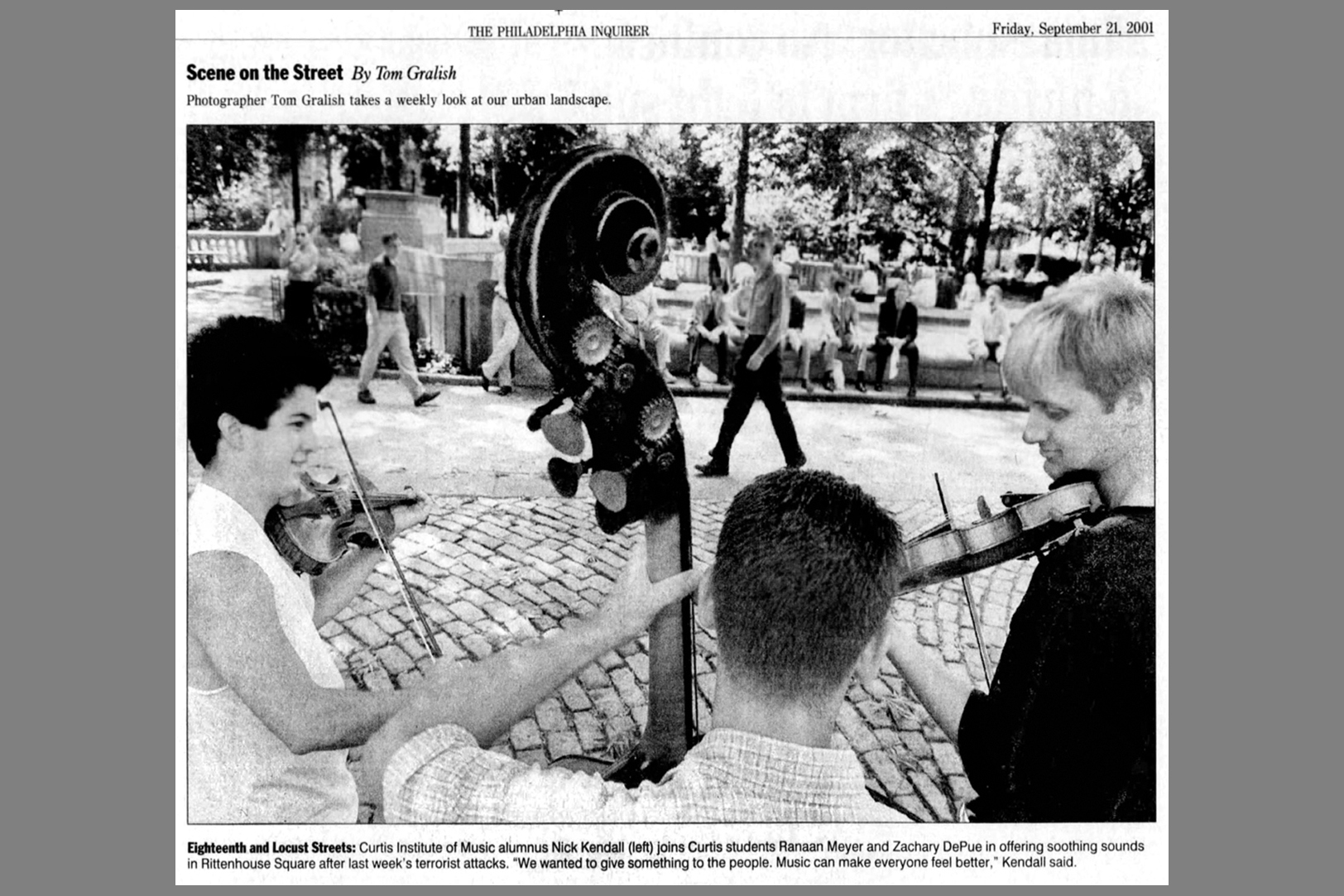
    One of the most memorable moments for me that week was hearing the soothing sounds of a classical trio in Rittenhouse Square. Curtis Institute of Music alumnus Nick Kendall was joined by current Curtis students Ranaan Meyer and Zachary DePue offering their talent to “give something to the people,” Kendall told me. “Music can make everyone feel better.” They called themselves Time for Three, and over the years I ran into them on other assignments, as they went on with their careers in music.

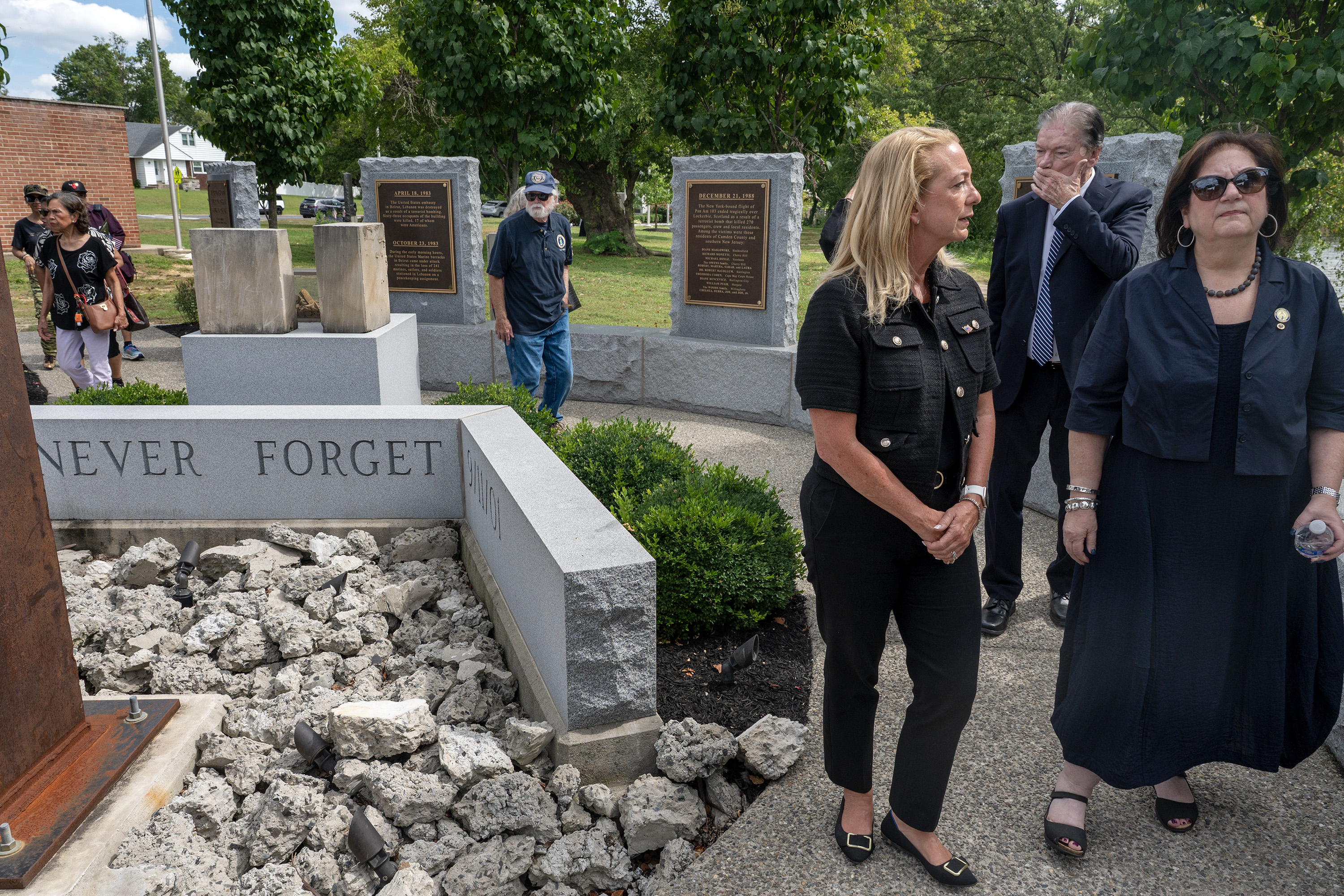
    Five years ago for our story on the 20th anniversary of 9/11, I was in the Western Pennsylvania borough of Shanksville to visually report on the nearby Flight 93 National Memorial, where a pathway marks the final flight path of the Boeing 757. A marble wall stands with the names of the 40 passengers and crew, the crash impact site serving as their final resting place.

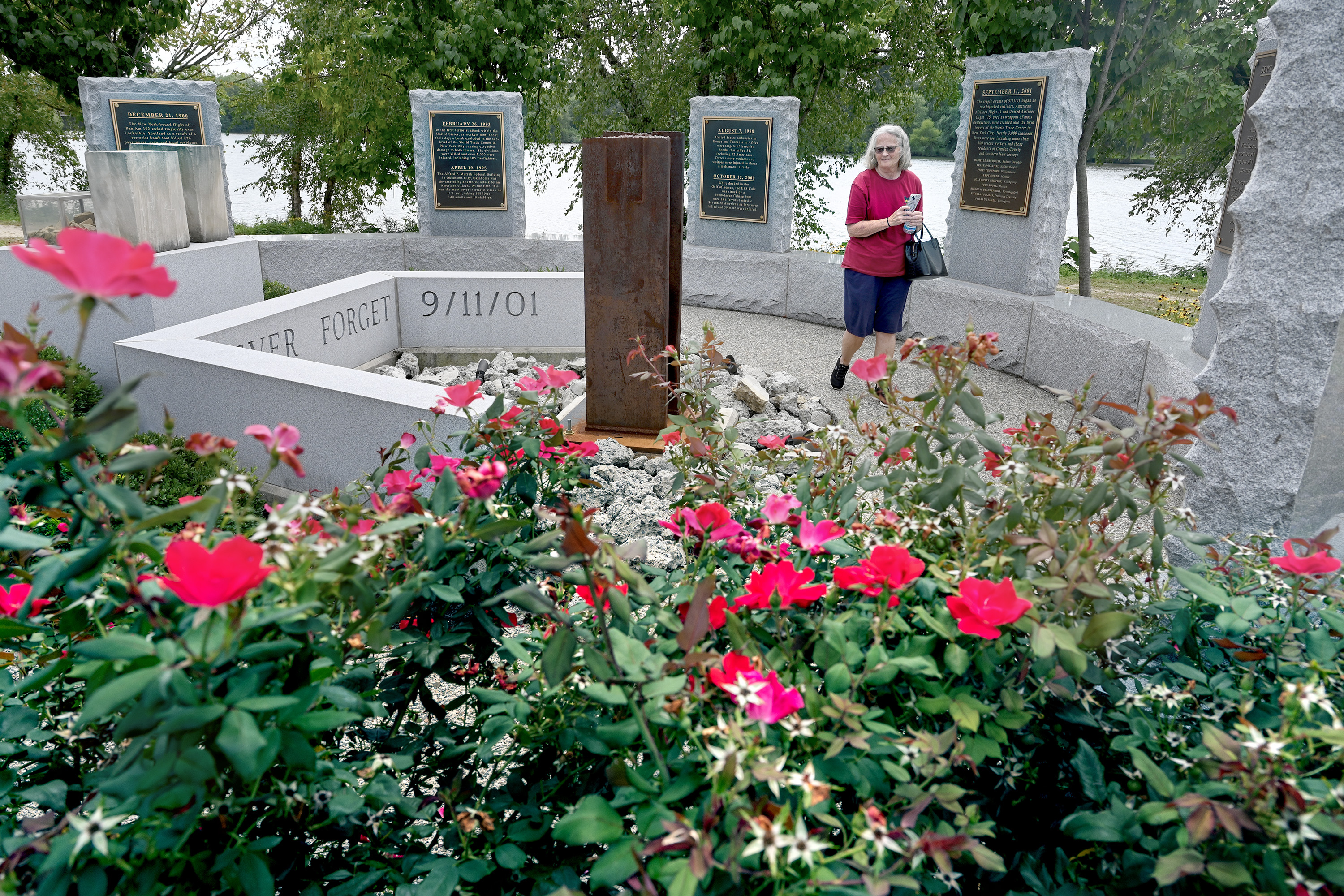
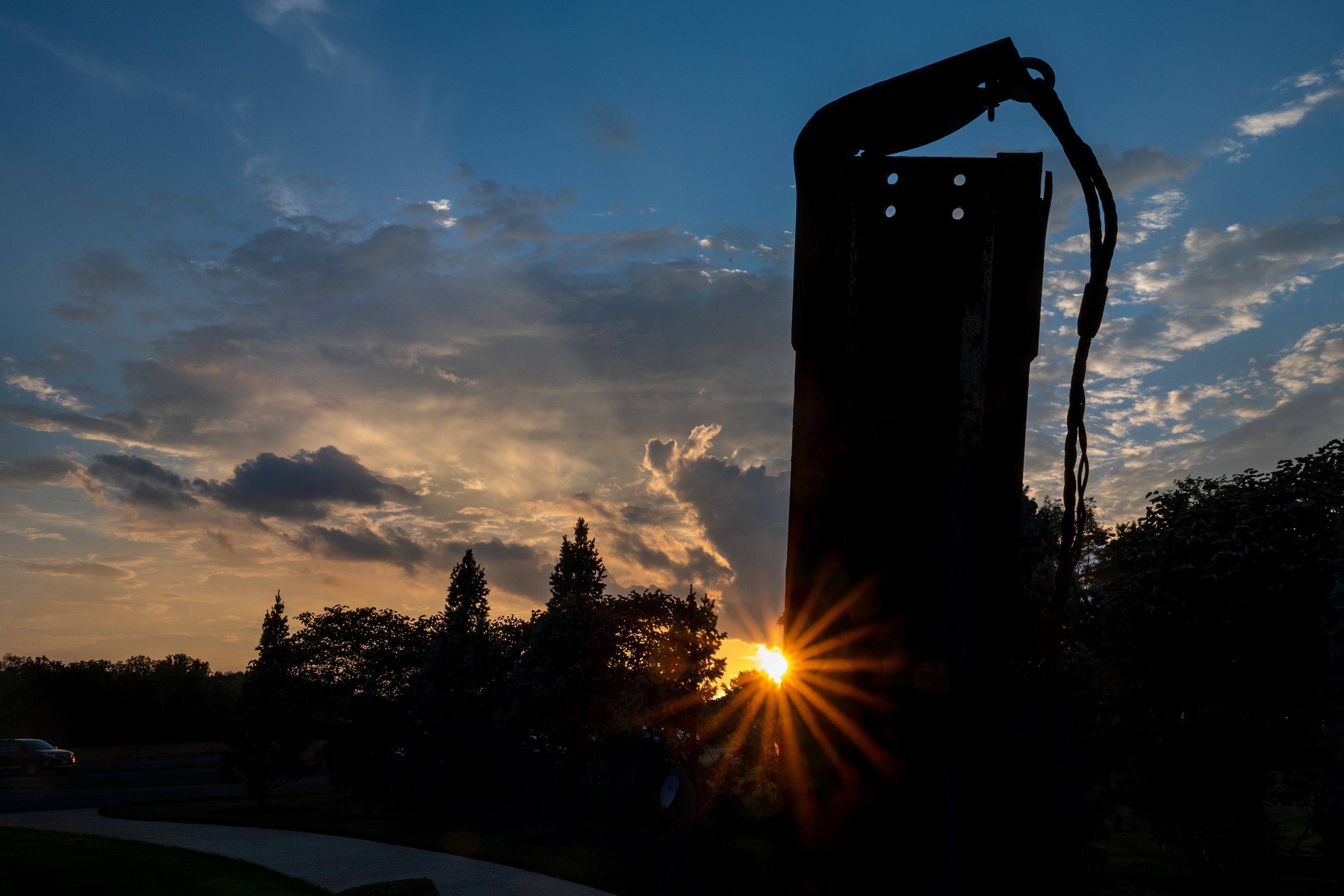
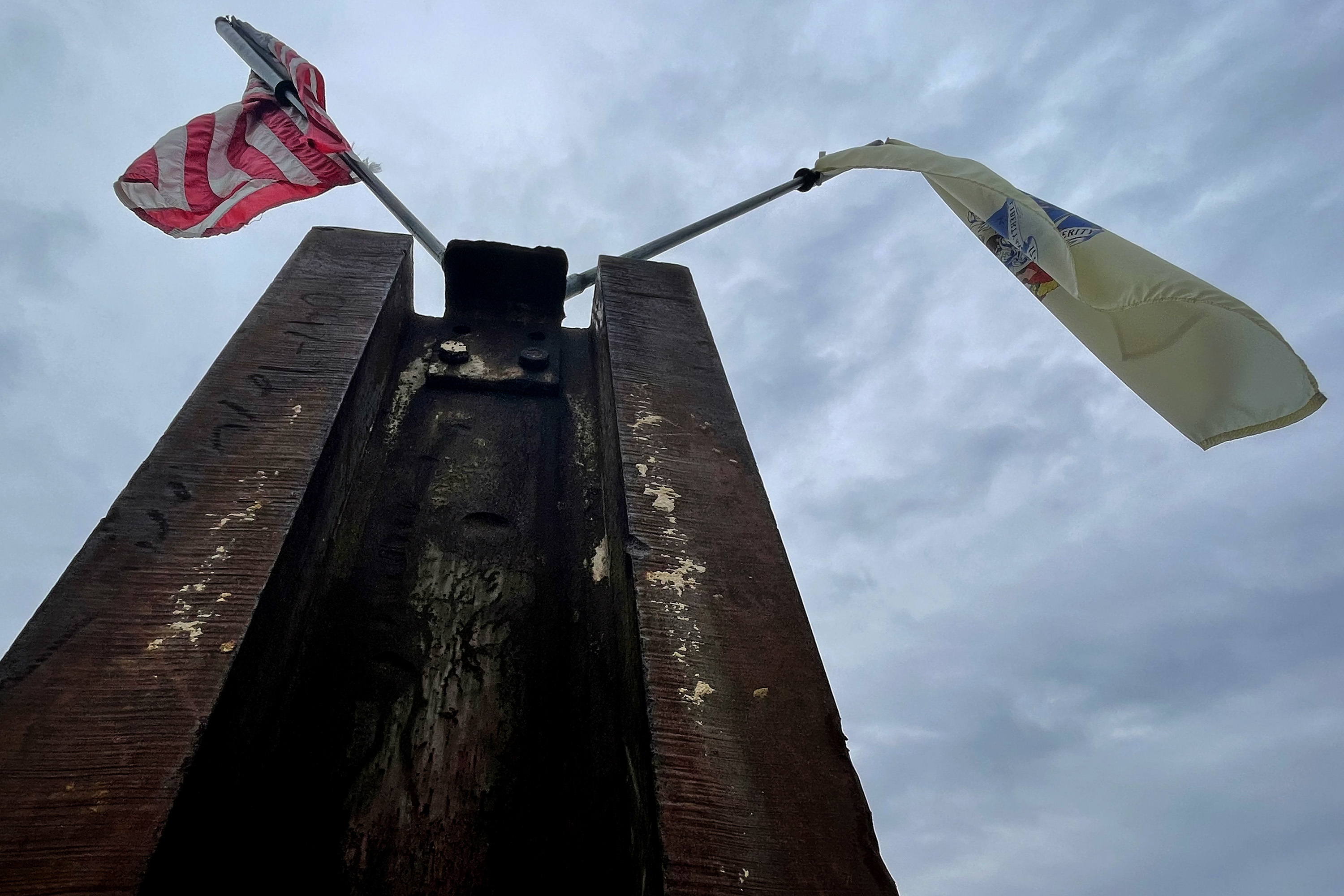
    For another photo essay that year, I visited some of the hundreds of artifacts — steel fragments of the World Trade Center — that were distributed across the U.S., and beyond, to create local memorials.

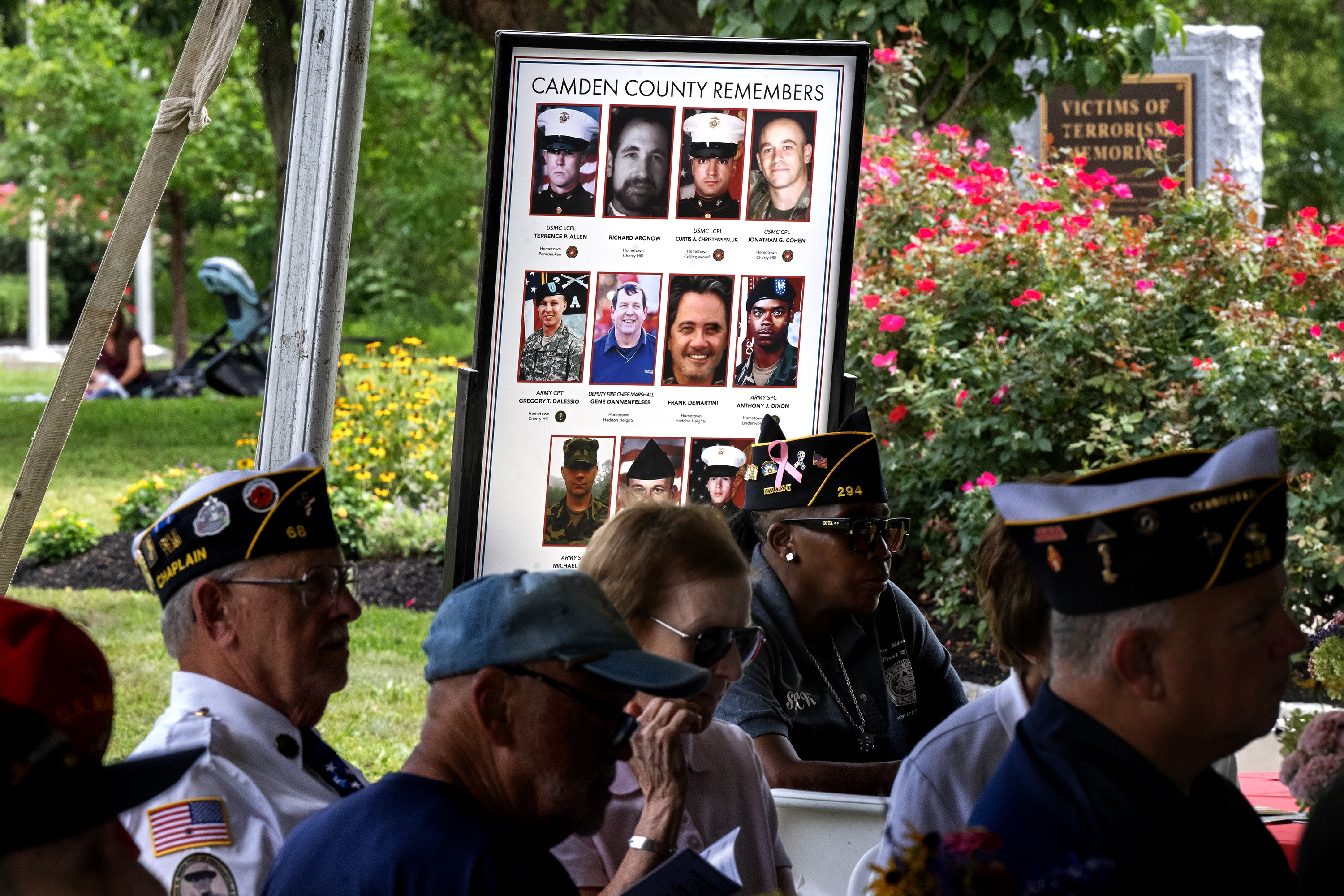
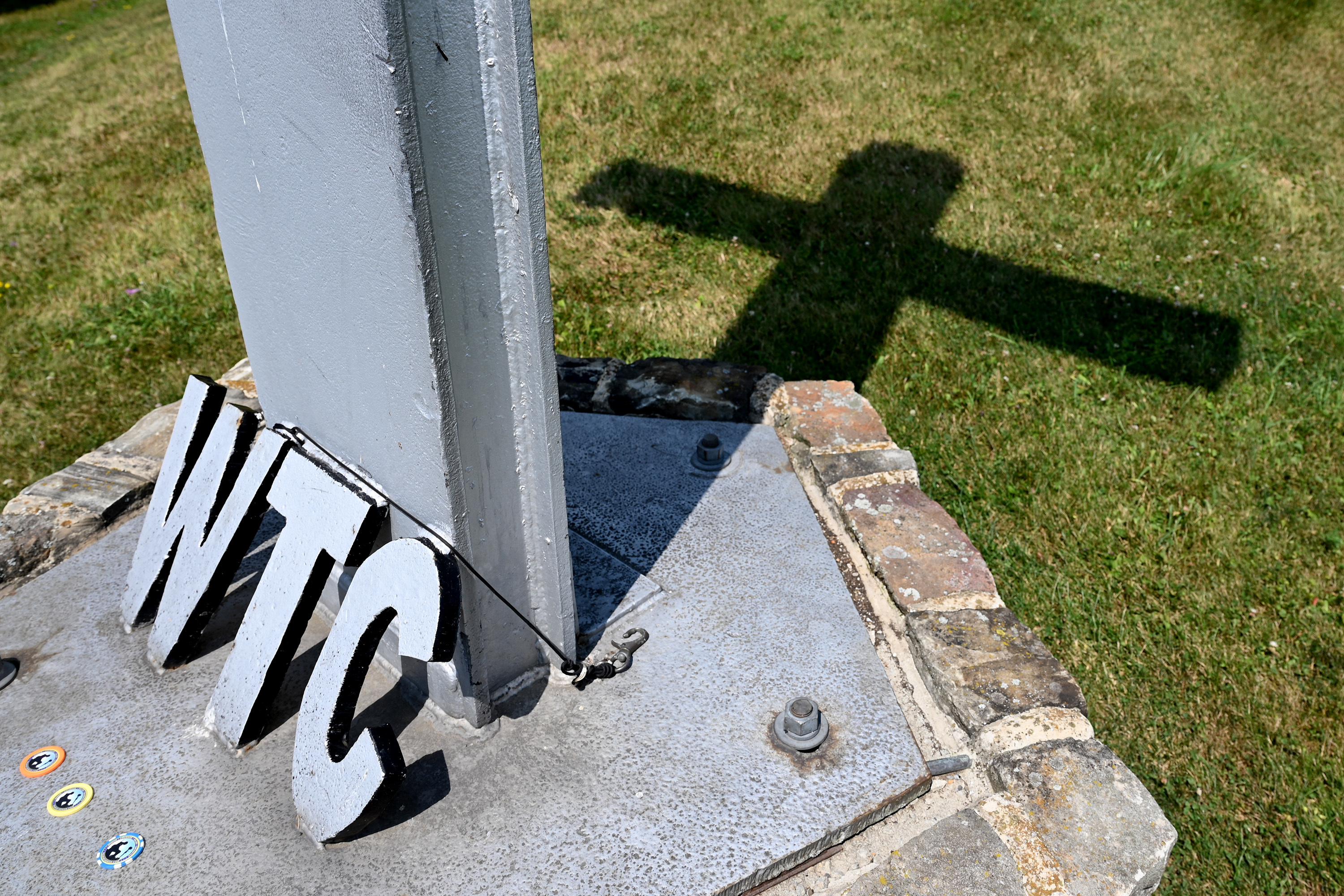
    A cross made of World Trade Center steel from the North Tower is outside Shanksville Volunteer Fire Company Aug. 12, 2021. There are 154 artifact pieces in New Jersey towns, 82 in Pennsylvania.Tom Gralish / Staff Photographer
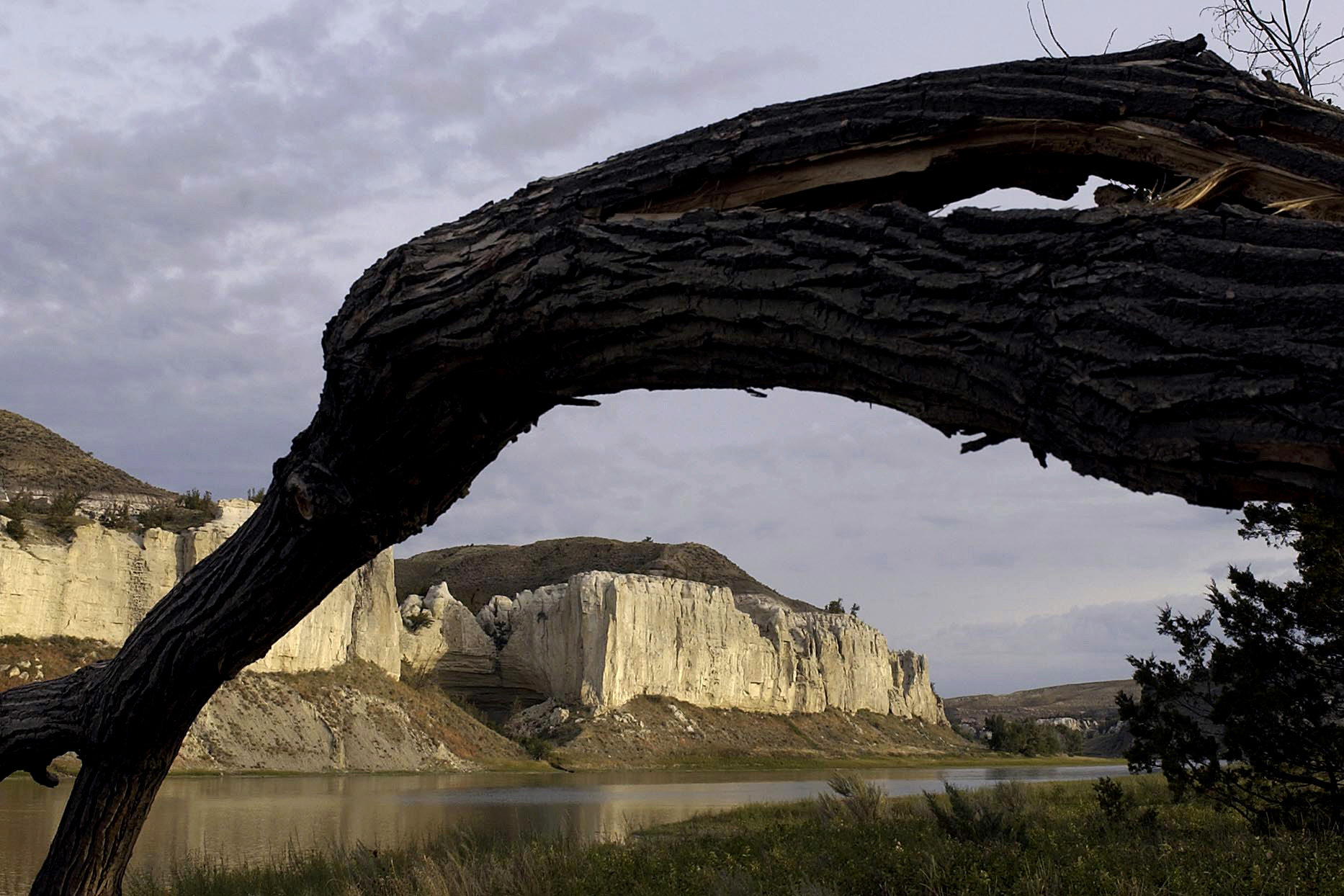
    Since 1998 a black-and-white photo has appeared every Monday in staff photographer Tom Gralish’s “Scene Through the Lens” photo column in the print editions of The Inquirer’s local news section. Here are the most recent, in color:
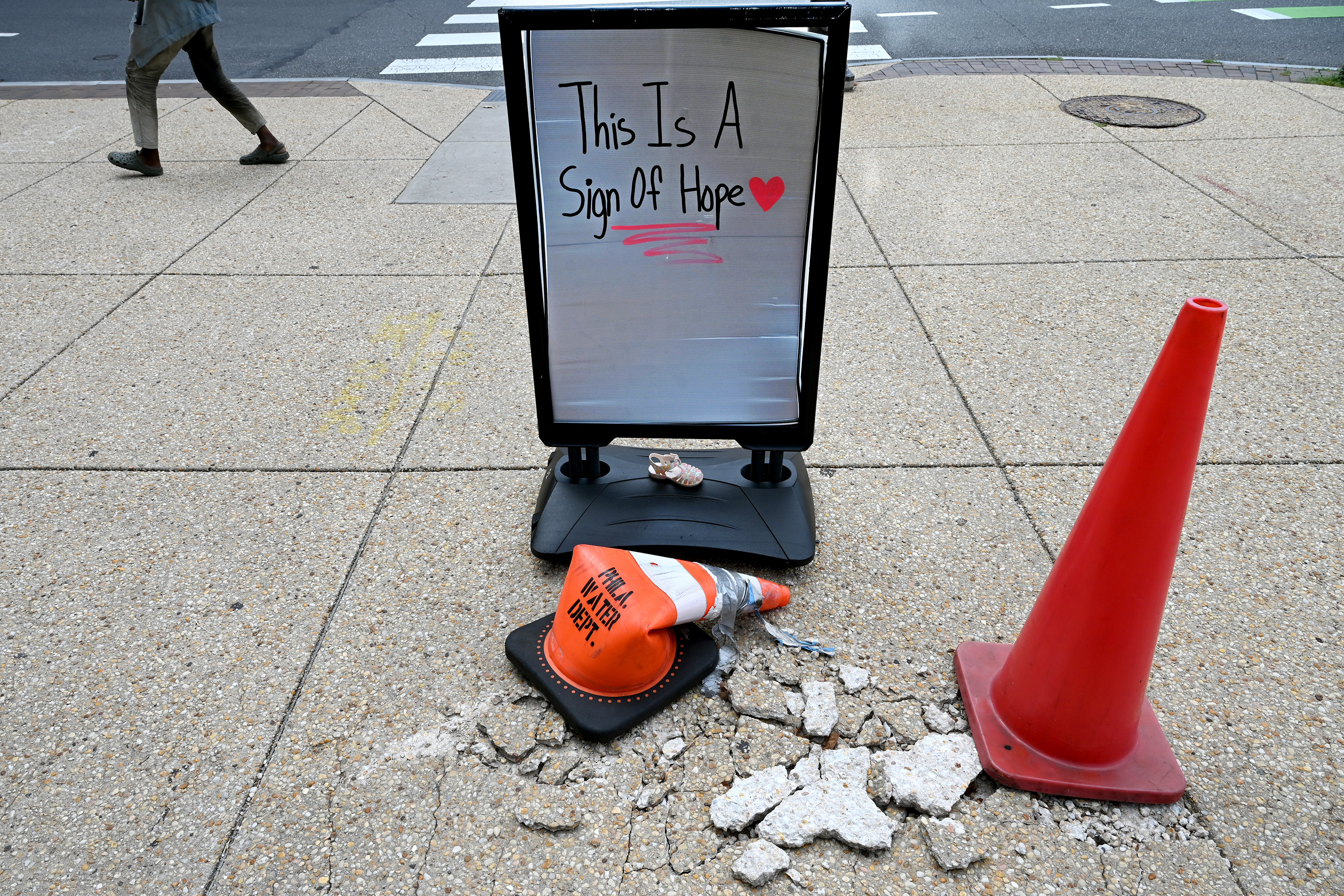
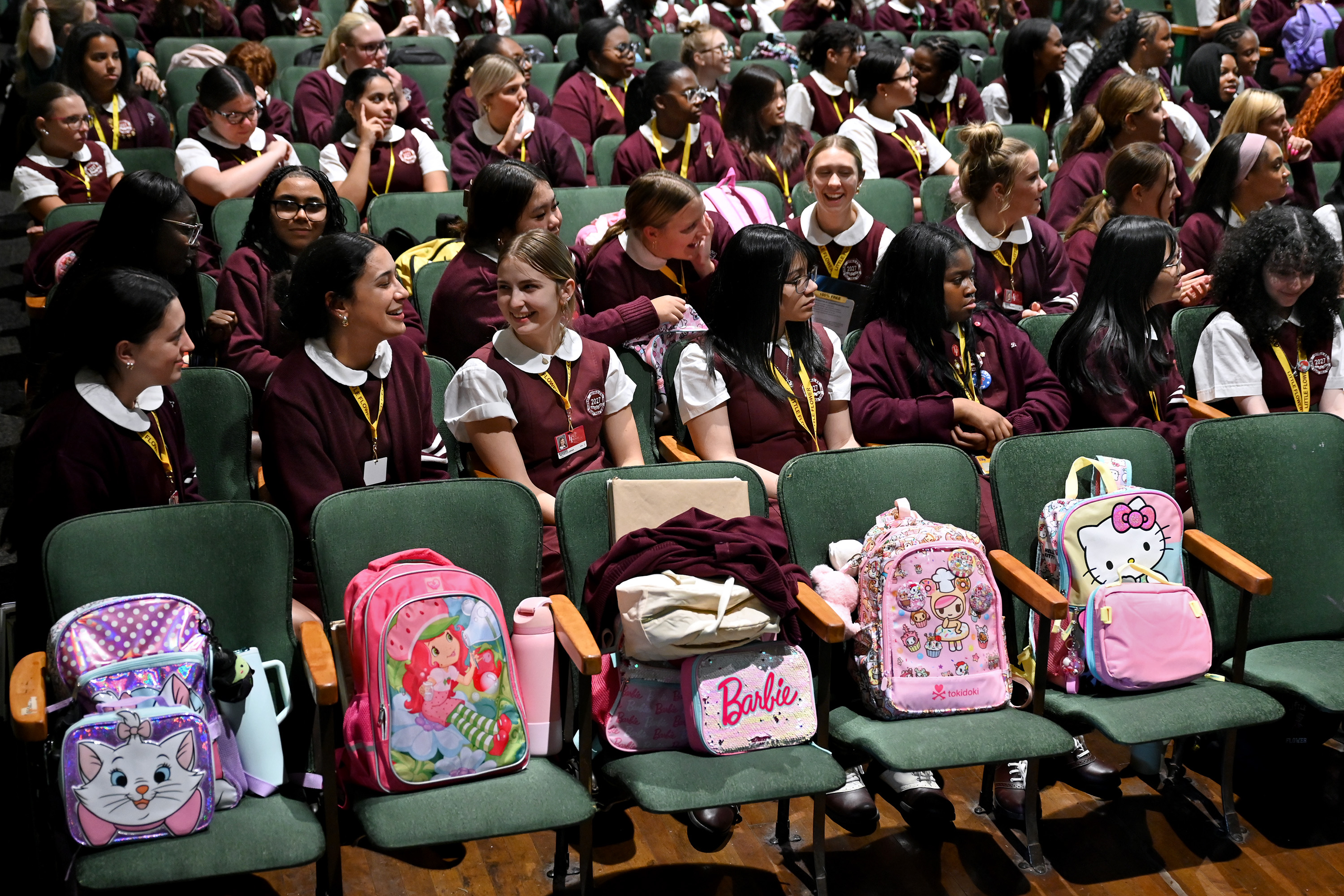
    » SEE MORE: Archived columns and Twenty years of a photo column.

  • Photo essay: pieces of the past

    Photo essay: pieces of the past

    This article was originally published Sept. 14, 2021.

    After Sept. 11, 2001, thousands of rusted pieces of twisted steel from the Twin Towers, damaged emergency vehicles, signs, clothing and other relics were disseminated to all 50 states and to the far reaches of the world. The Port Authority of New York and New Jersey began a program to distribute them to more than 2,000 fire and police departments, museums, municipalities and organizations to remember the nearly 3,000 people who died that day.

    There are 154 artifact pieces in New Jersey towns, 82 in Pennsylvania. In the weeks leading up to Sept. 11 this year, we visited some of those towns and spoke with the people who live there.

    Shanksville, Pa.

    A cross made of World Trade Center steel is mounted outside the Shanksville Volunteer Fire Company. They were the first firefighters to respond when United Flight 93 crashed nearby,Tom Gralish / Staff Photographer
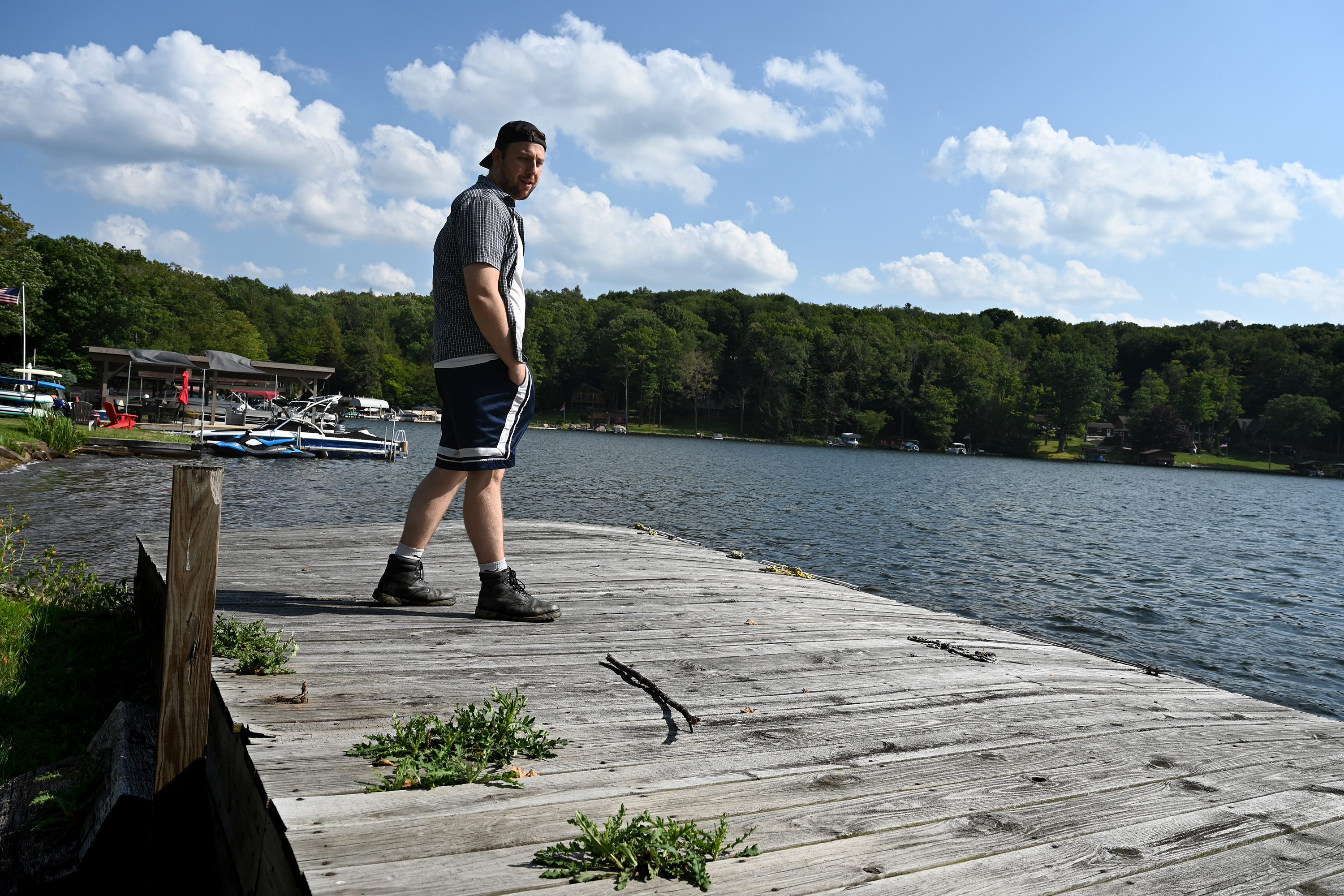
    Dan Wolf is redoing his grandfather’s cabin on Indian Lake, where debris from Flight 93 washed up. He hopes it becomes a place for his brothers to gather following the deaths of their parents a few years ago.TOM GRALISH / Staff Photographer

    Lehigh Valley International Airport

    “Victorii Rebuild” in Bethlehem was carved by Florida artist Sandra Priest from a 4-foot-thick piece of the underground wall that still protects the foundation of the World Trade Center site from Hudson River groundwater seepage. The wall survived the attacks on 9/11, and pieces of it were removed later to make room for the new PATH station that now sits beneath the rebuilt center.Tom Gralish / Staff Photographer
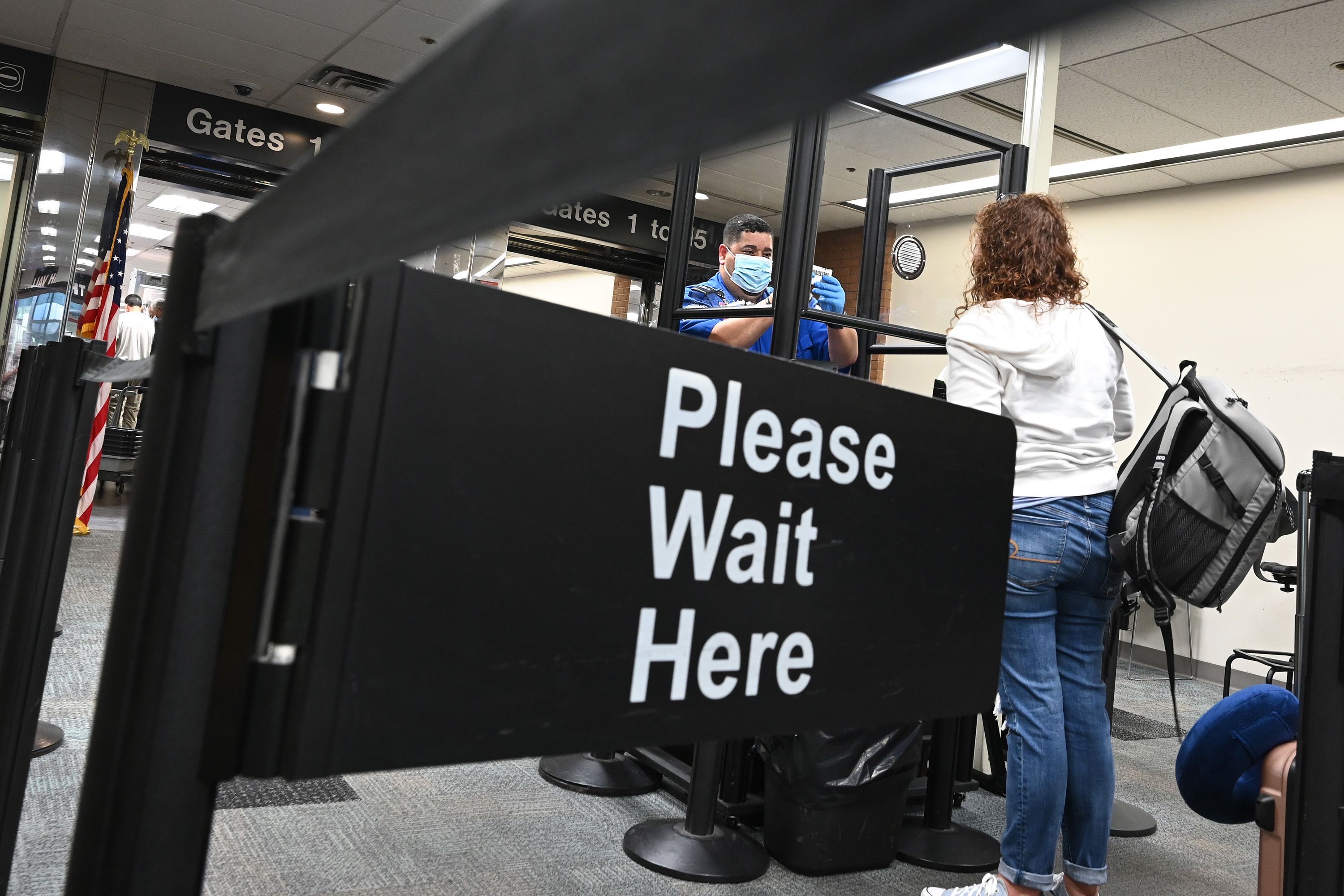
    TSA worker Hector Rivera Jr., 47, screens passengers departing Lehigh Valley International Airport. He worked for a security contractor there, then joined the Transportation Security Administration when it was founded after 9/11.Tom Gralish / Staff Photographer

    Haddon Township, N.J.

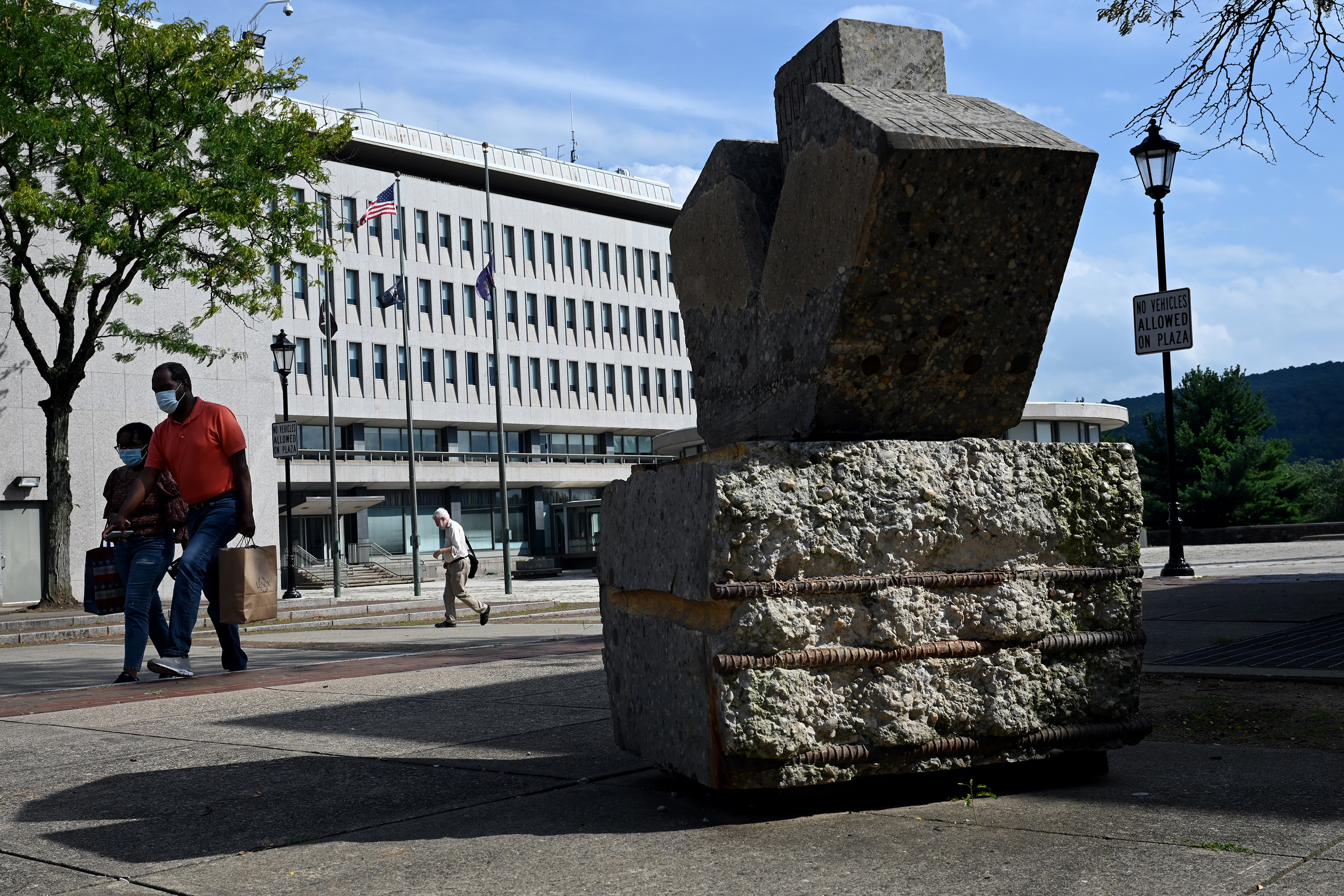
    The township’s memorial is made of three parts: Steel from the World Trade Center, limestone from the Pentagon and a stone from Shanksville.Tom Gralish / Staff Photographer
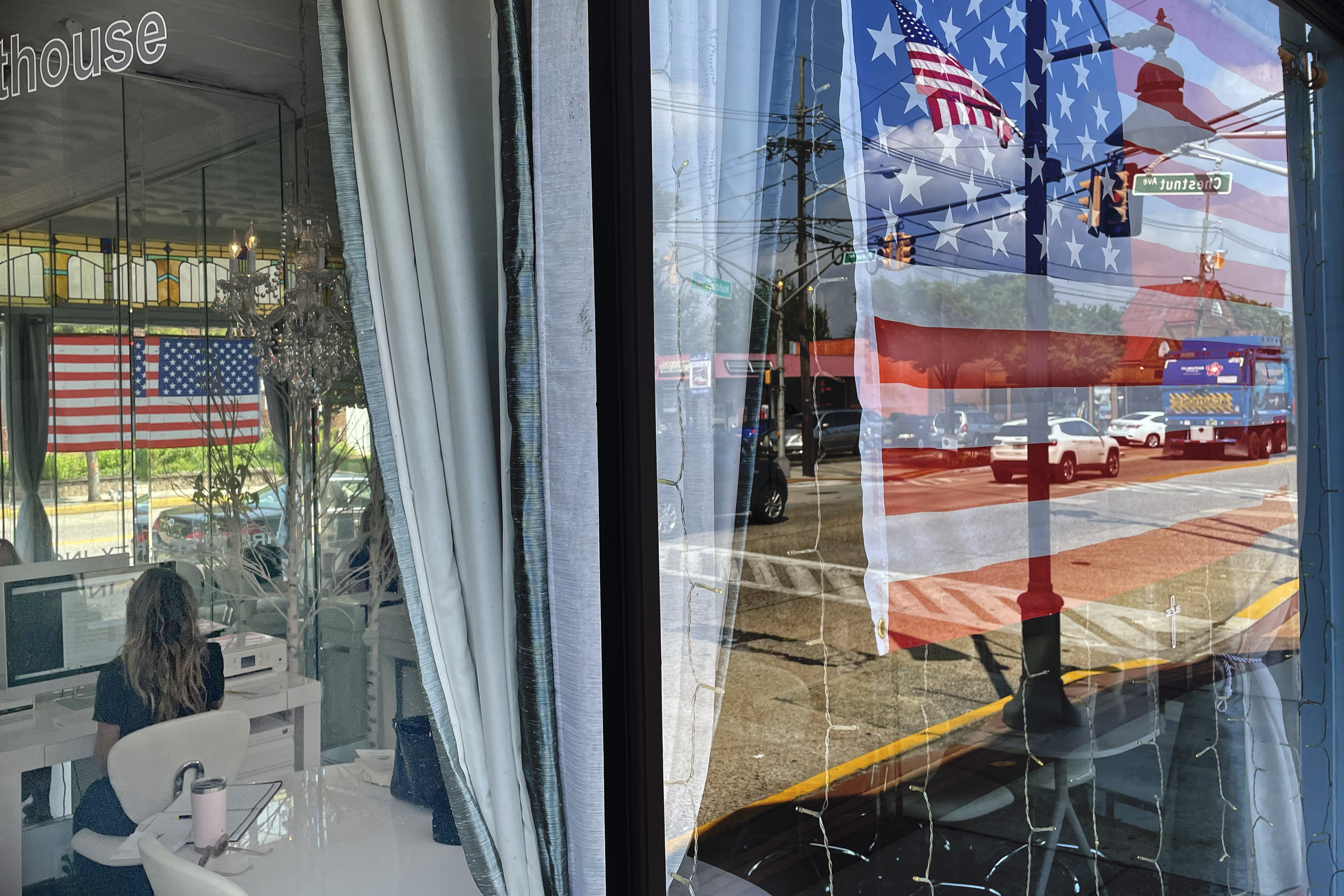
    Emily Stout works in her real estate storefront office a block away from the memorial at Westmont Fire Company No. 1.TOM GRALISH / Staff Photographer

    Absecon, N.J.

    Granite reproductions of the Twin Towers in Absecon’s Heritage Park showcase a 16-foot I-beam from the 39th floor of the South Tower as well as memorial markers for the victims in Shanksville and at the Pentagon.Tom Gralish / Staff Photographer
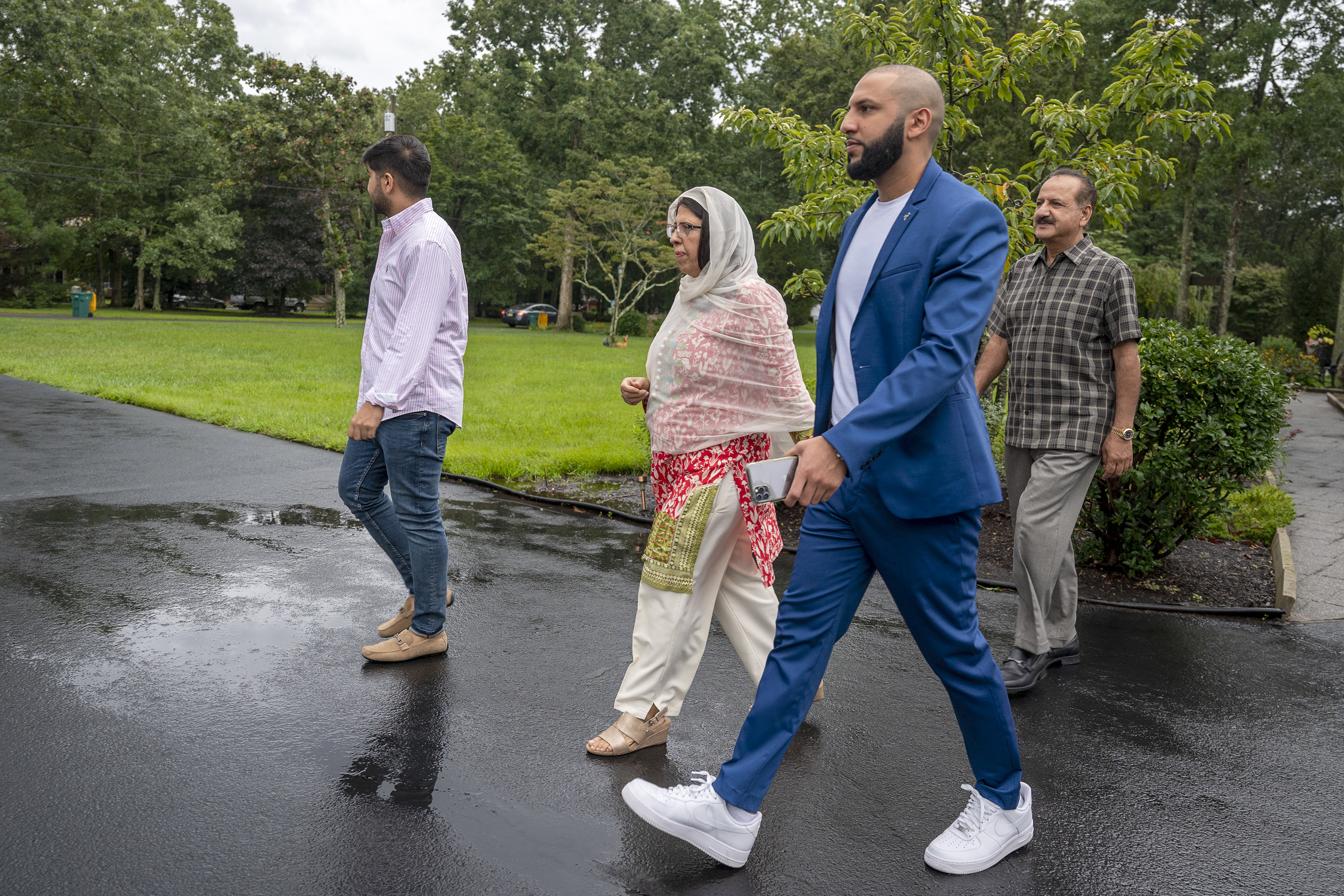
    Amjad Rehman, of nearby Galloway Township, goes out to dinner with his wife, Neelamm, and sons, Ali and Sammad. Rehman moved to New Jersey from Pakistan as a child. Ali, 30, was in fifth grade on 9/11 and suffered anti-Muslim taunting from classmates.Tom Gralish / Staff Photographer

    Mantua, N.J.

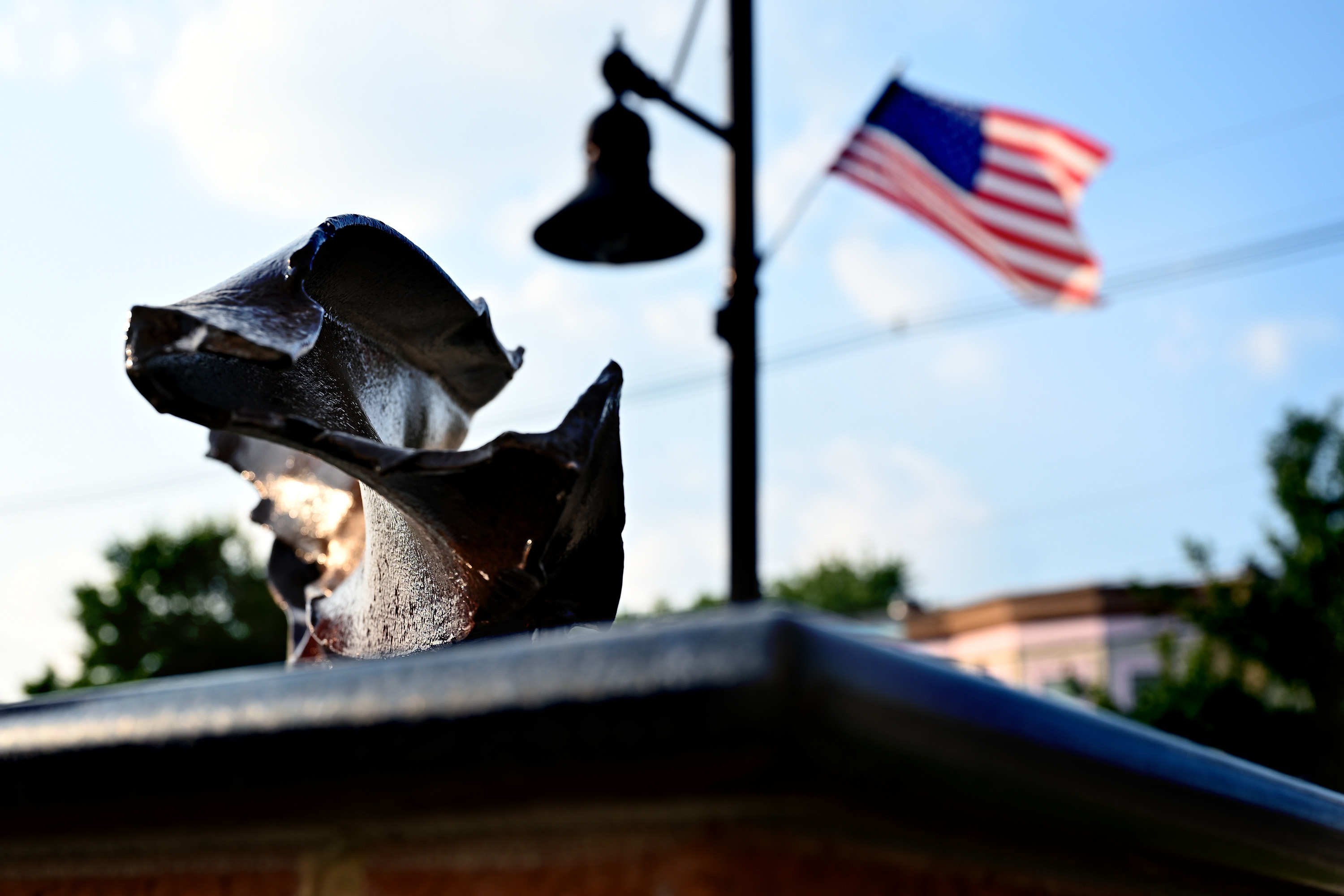
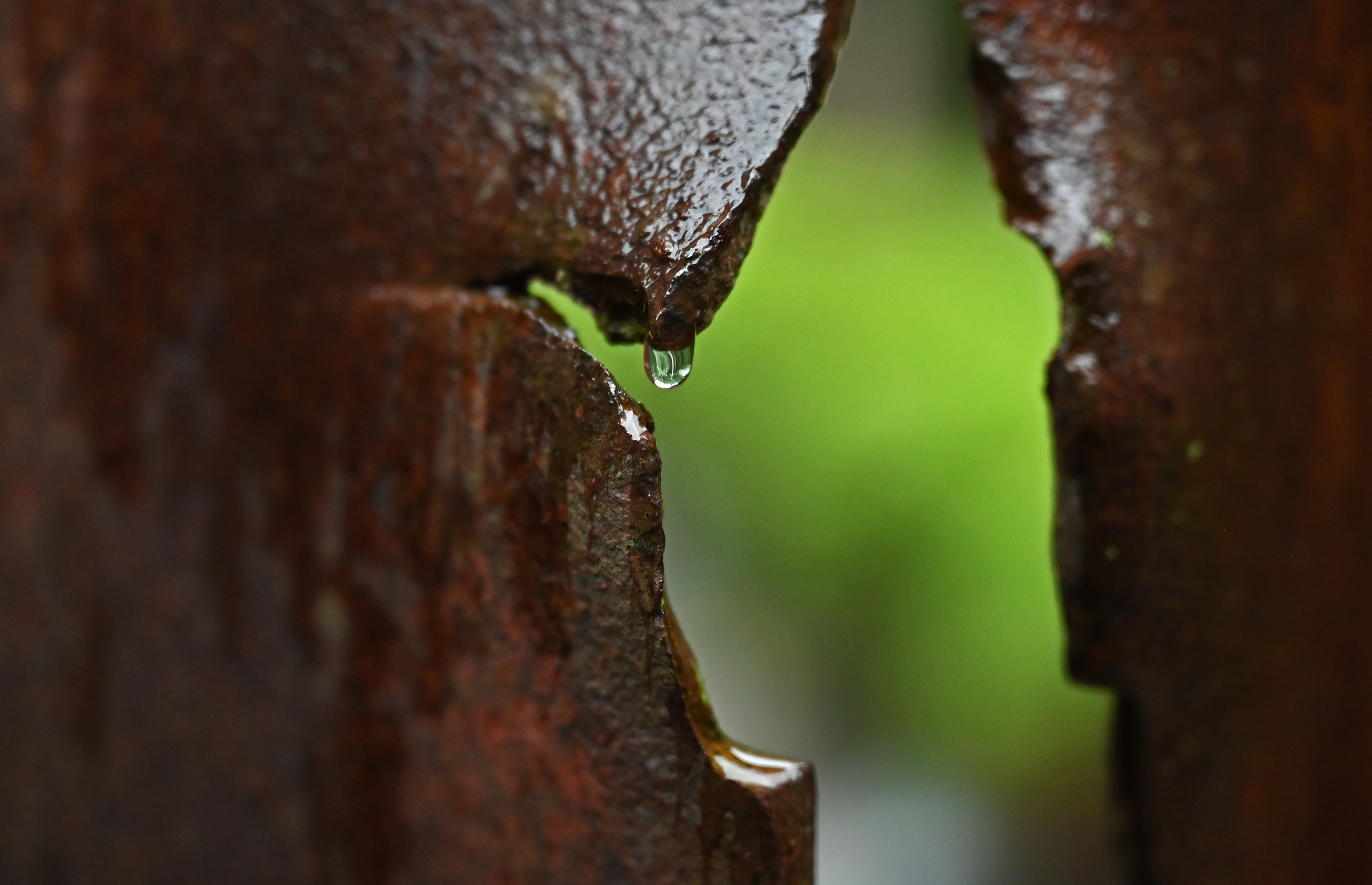
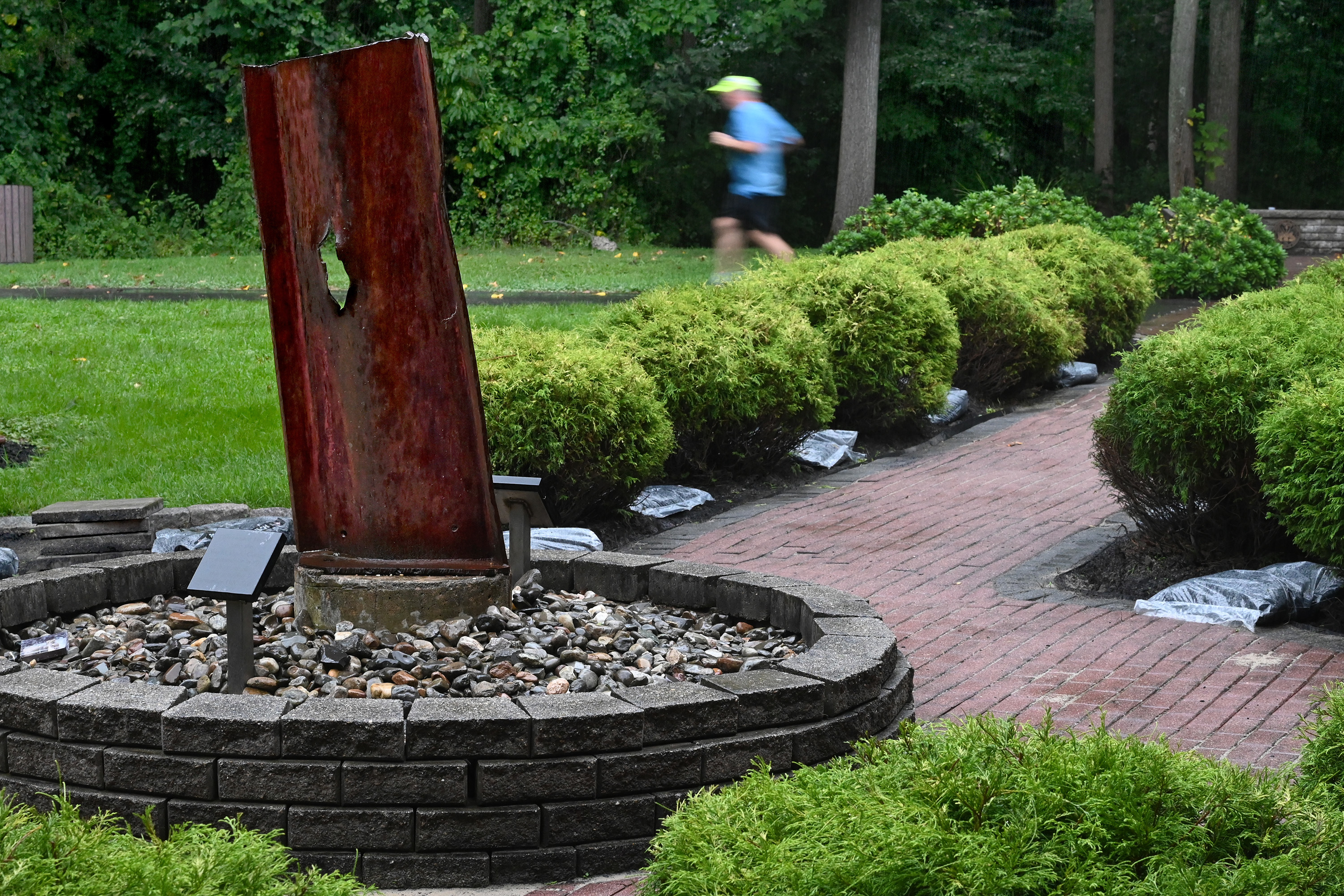
    A 3-foot World Trade Center steel I-beam with a hole ripped through it in Chestnut Branch Park’s Place of Reflection in Mantua.Tom Gralish / Staff Photographer
    A quarter-mile walk from the parking lot along a tree-lined path leads to the Place of Reflection, dedicated to three Gloucester County residents who lost their lives on 9/11.Tom Gralish / Staff Photographer
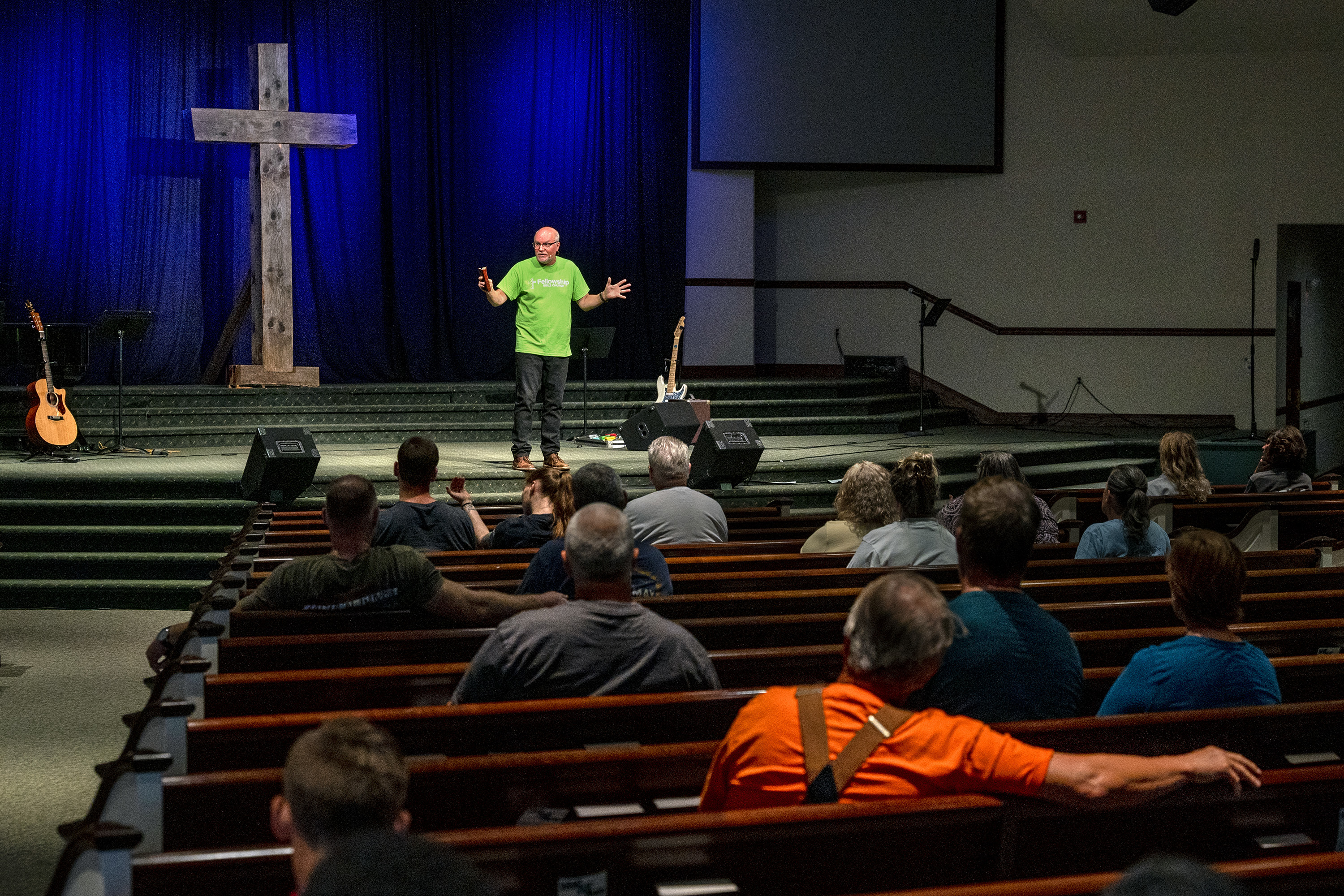
    Pastor Phil Moser at Fellowship Bible Church in nearby Mullica Hill. Ten years after 9/11, the church also served victims of Hurricane Sandy, and this month helped neighbors clean up after tornadoes ravaged their community.Tom Gralish / Staff Photographer

    Coatesville, Pa.

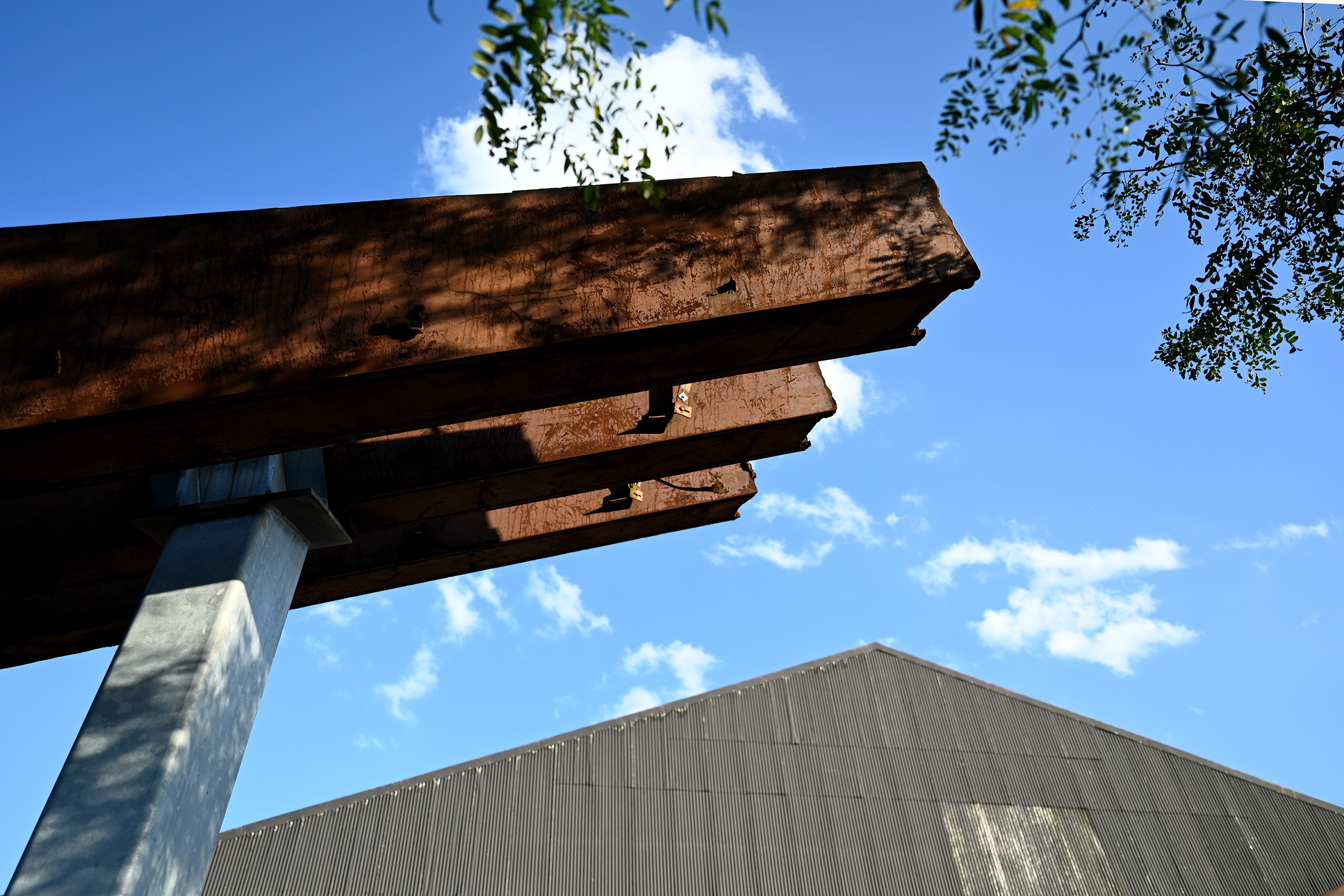
    One of the steel supports from the North Tower is displayed outside the National Iron & Steel Heritage Museum in Coatesville. Originally made at the Lukens Steel plant there for construction of the World Trade Center in 1966, it helped to support the first nine floors of the Twin Towers. A portion of these columns was the only structure left standing when the towers collapsed on 9/11.Tom Gralish / Staff Photographer
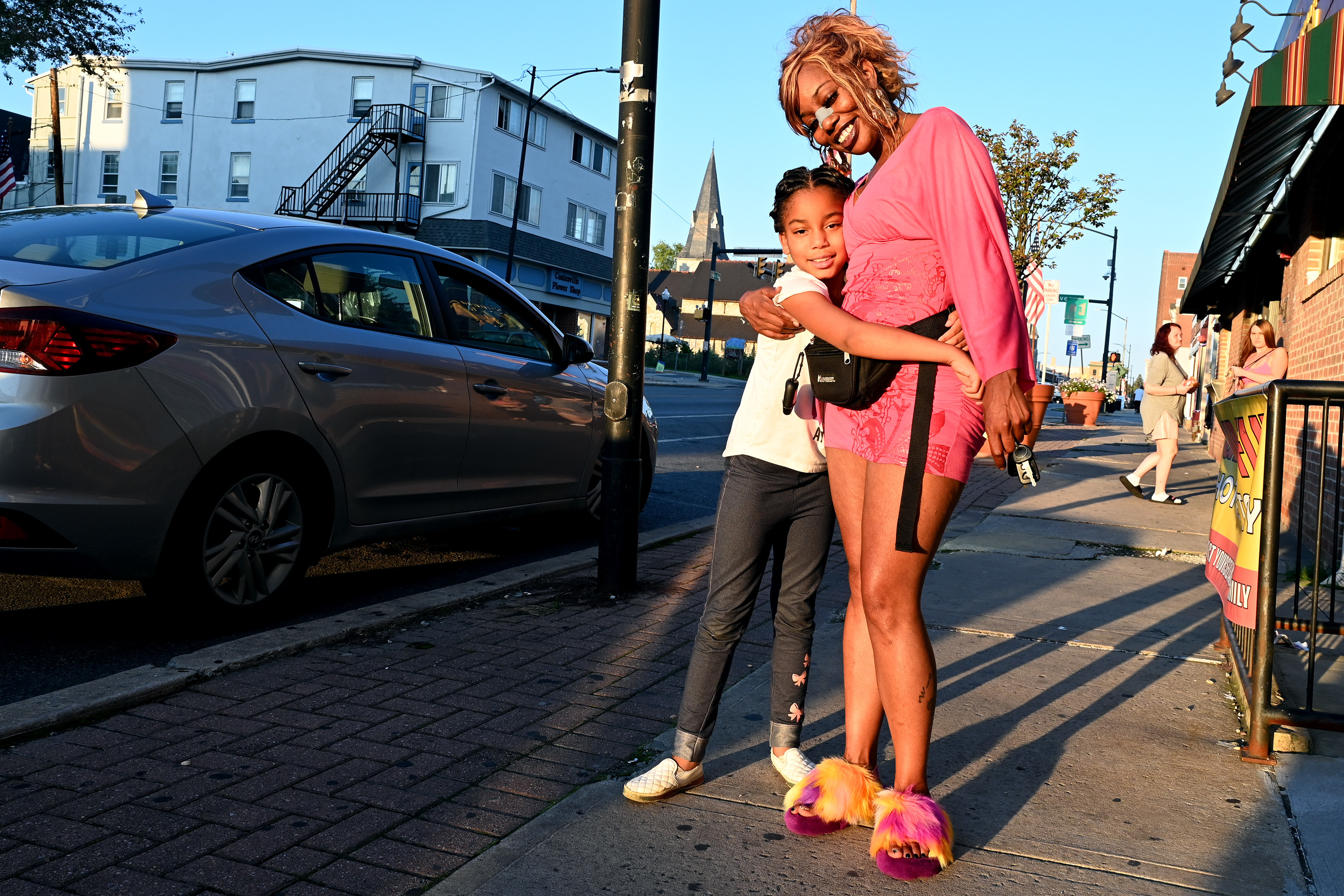
    Waleah Britt, 39, pauses outside a salon after her daughter Janiyah got her back-to-school hair styled in downtown Coatesville, in Chester County.Tom Gralish / Staff Photographer

    King of Prussia

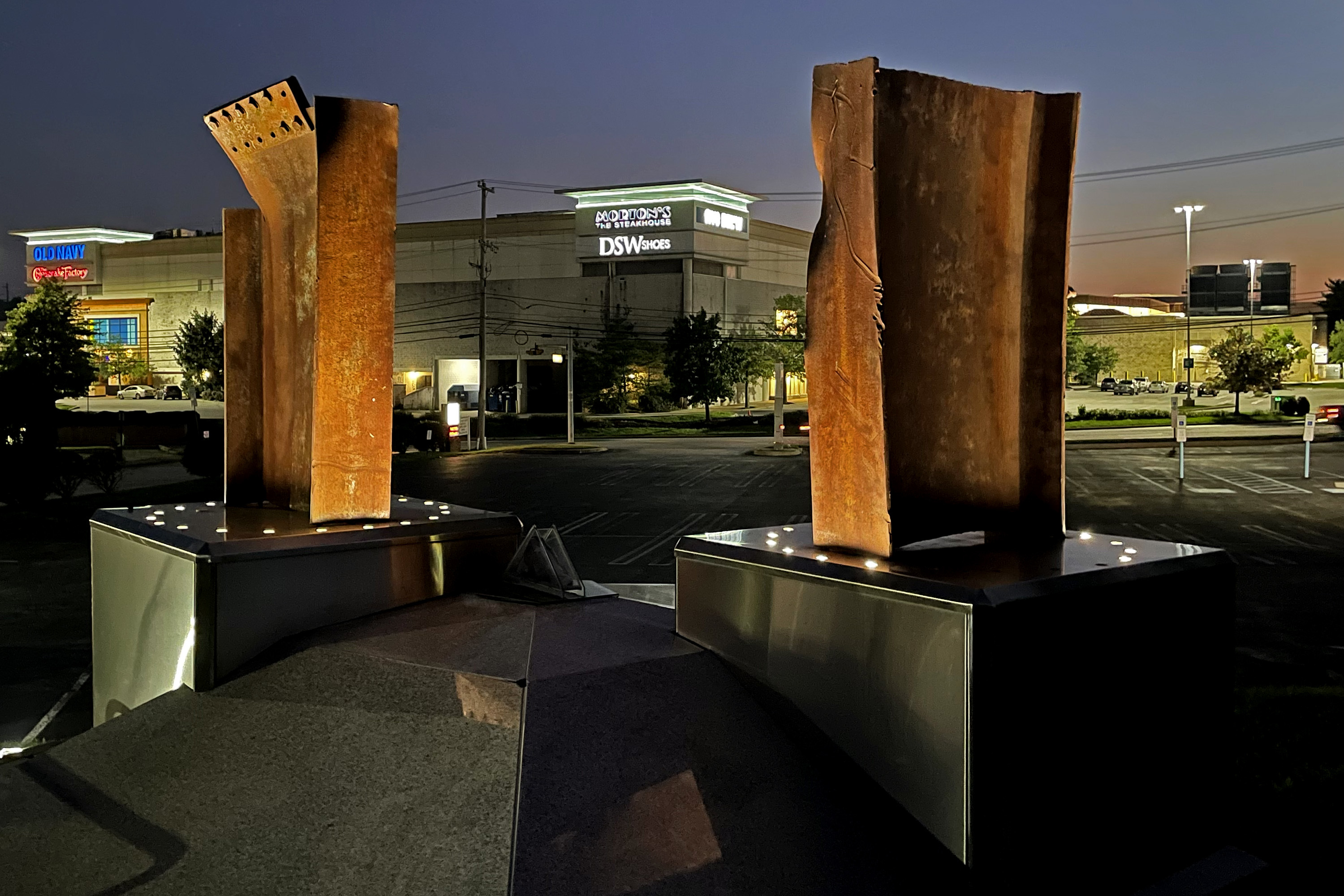
    Next to the King of Prussia Volunteer Fire Company Station 47, and across from the mall, the 9/11 memorial features two World Trade Center steel I-beams and design elements that represent all four doomed flights on 9/11.Tom Gralish / Staff Photographer
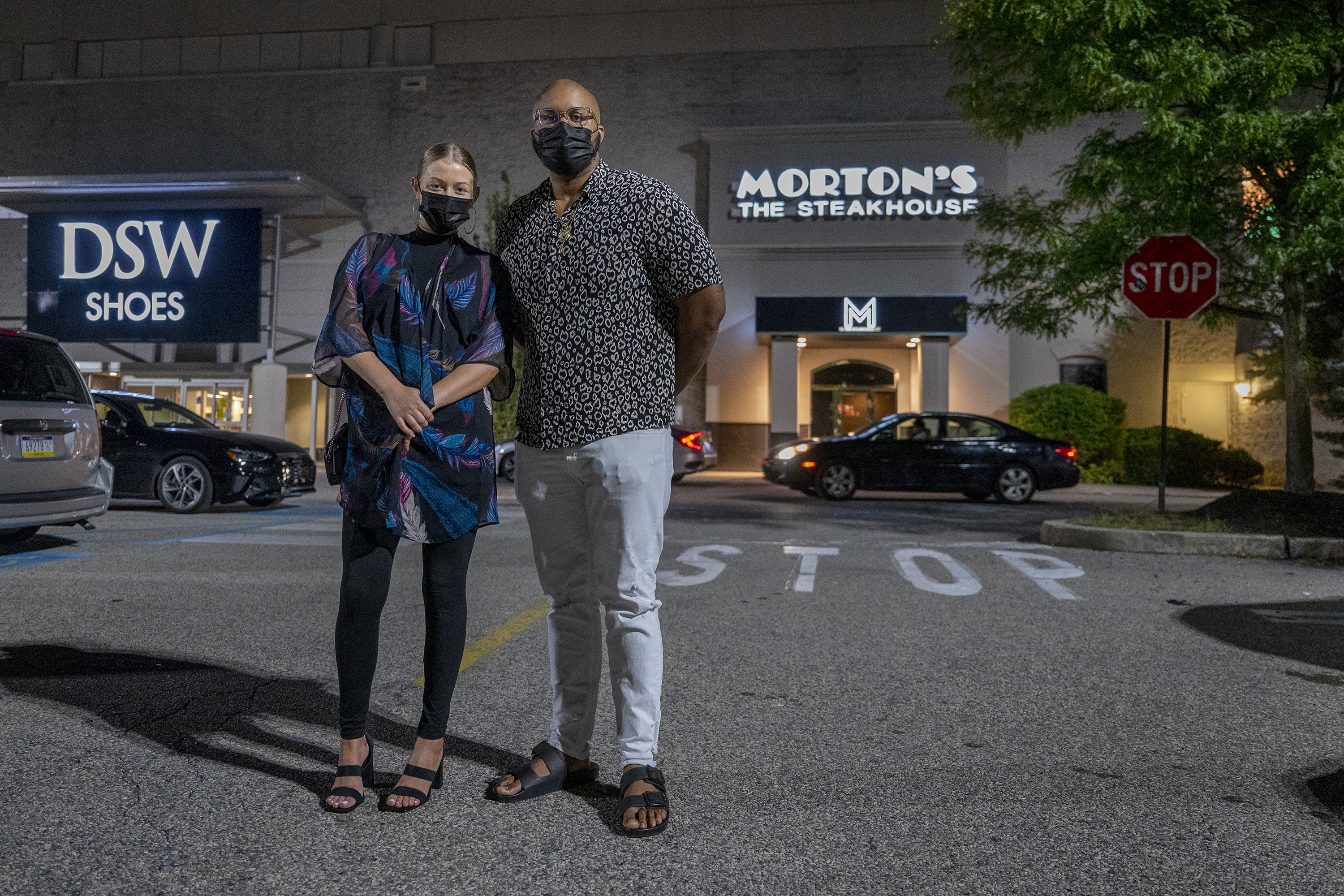
    Engaged couple Shawn Harrison II and Kaitlyn Buckley before dinner at Morton’s at the King of Prussia Mall, across the street from the 9/11 memorial.Tom Gralish / Staff Photographer

    Medford Lakes, N.J.

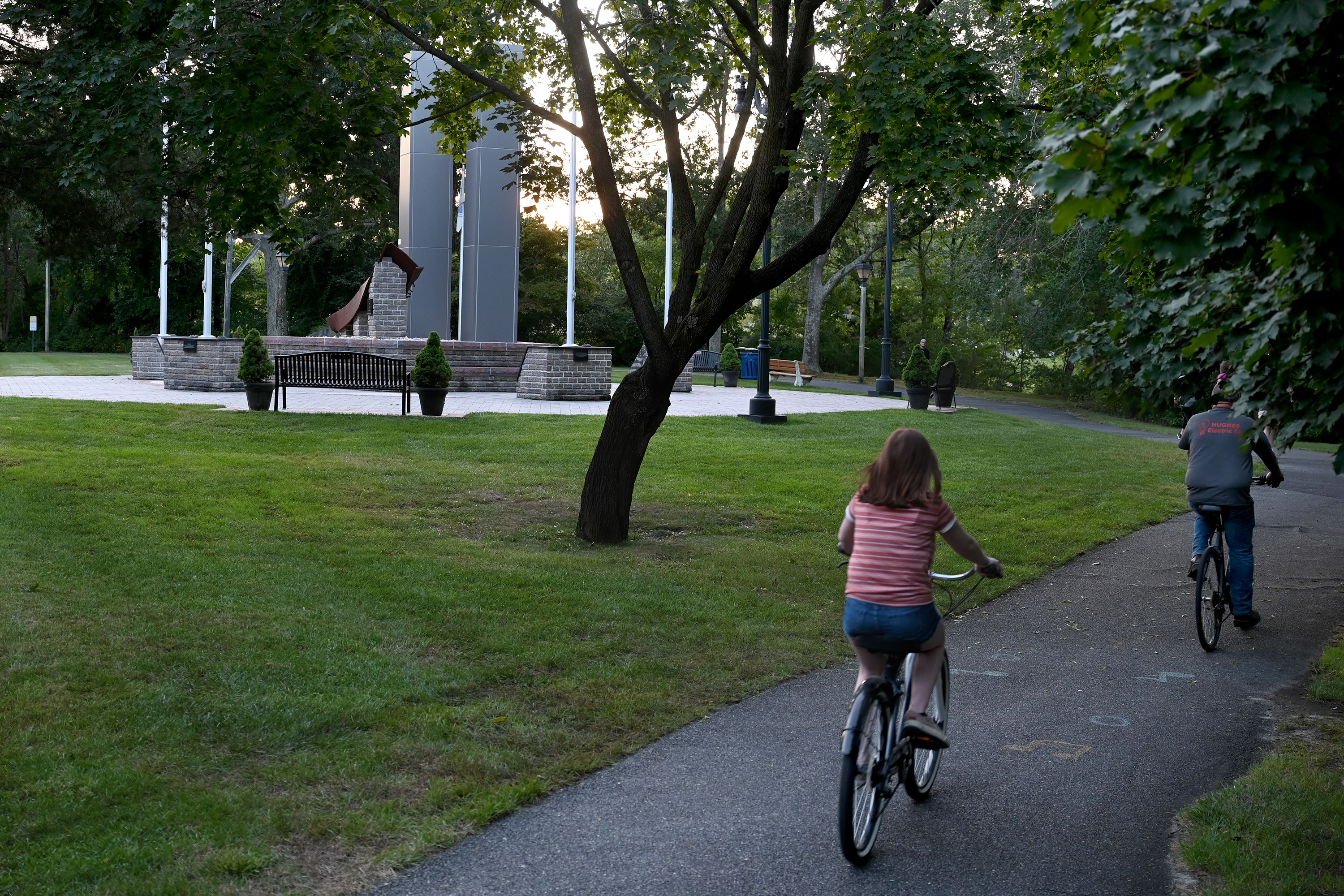
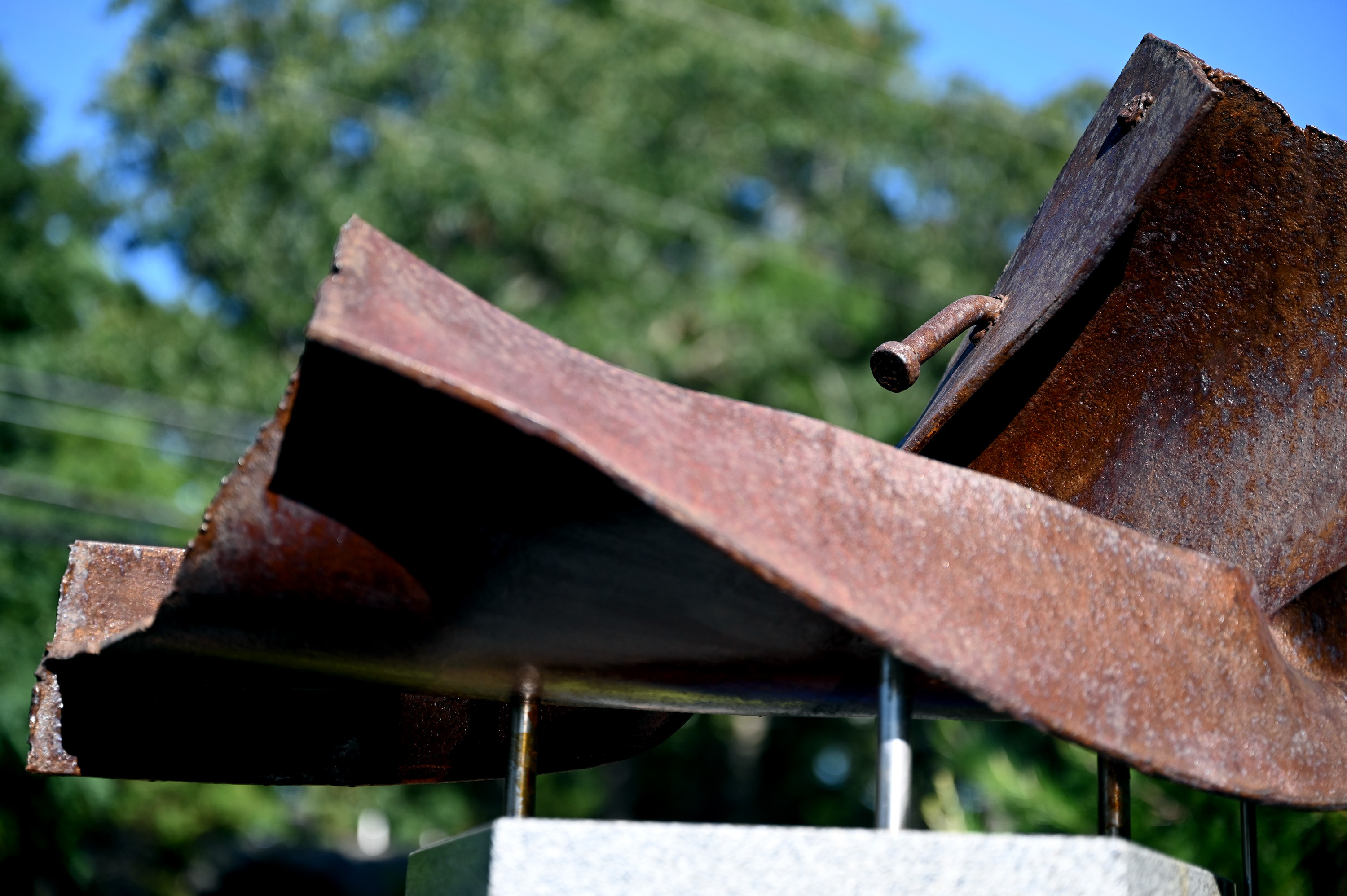
    A pentagon-shaped concrete pedestal holds a granite monument topped with a piece of steel from the North Tower surrounded by a water feature in Leon E. Todd Memorial Park.Tom Gralish / Staff Photographer
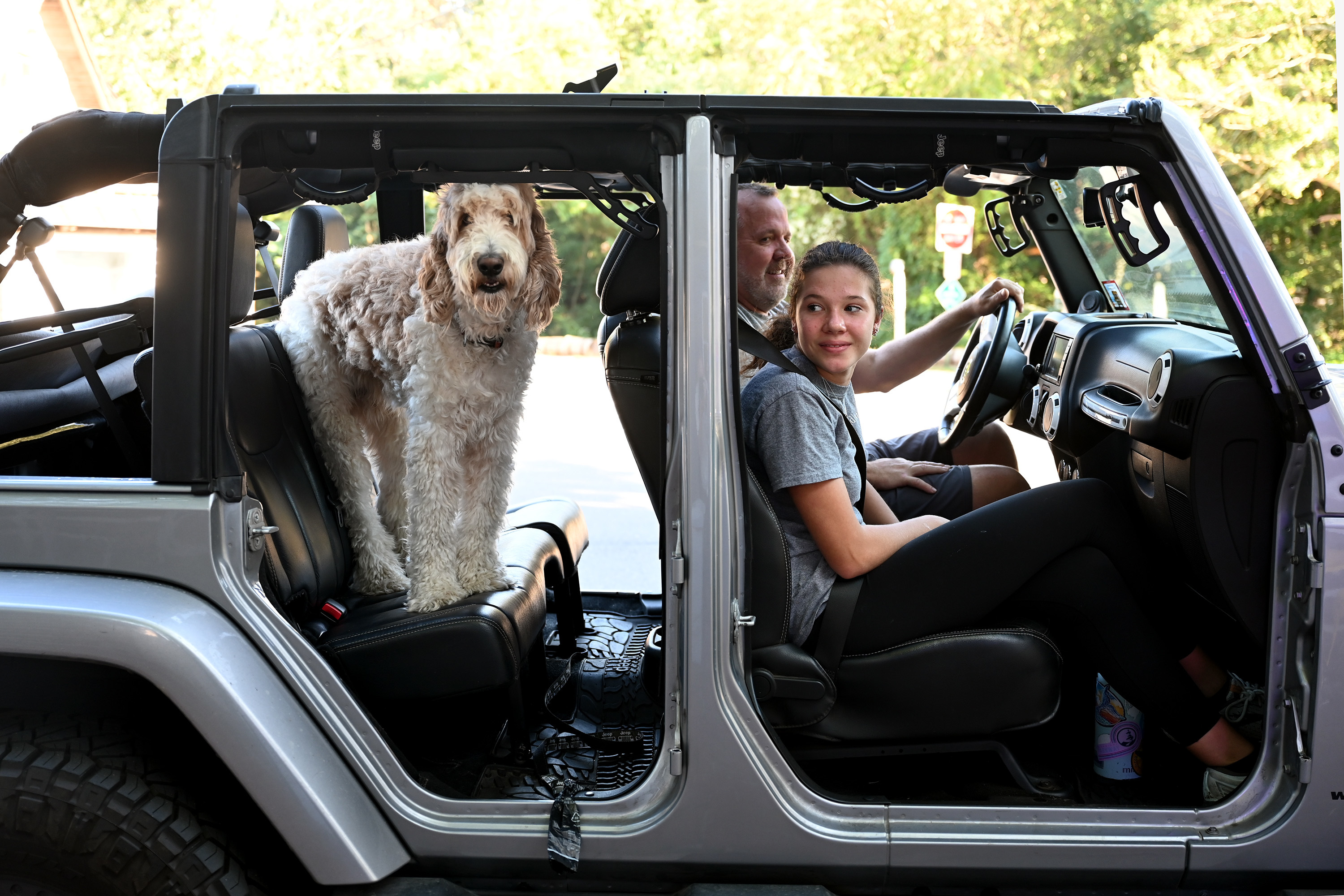
    Dan Kiernan, 54, daughter Sydney, 16, and golden doodle Oskar.Tom Gralish / Staff Photographer

    Atlantic City, N.J.

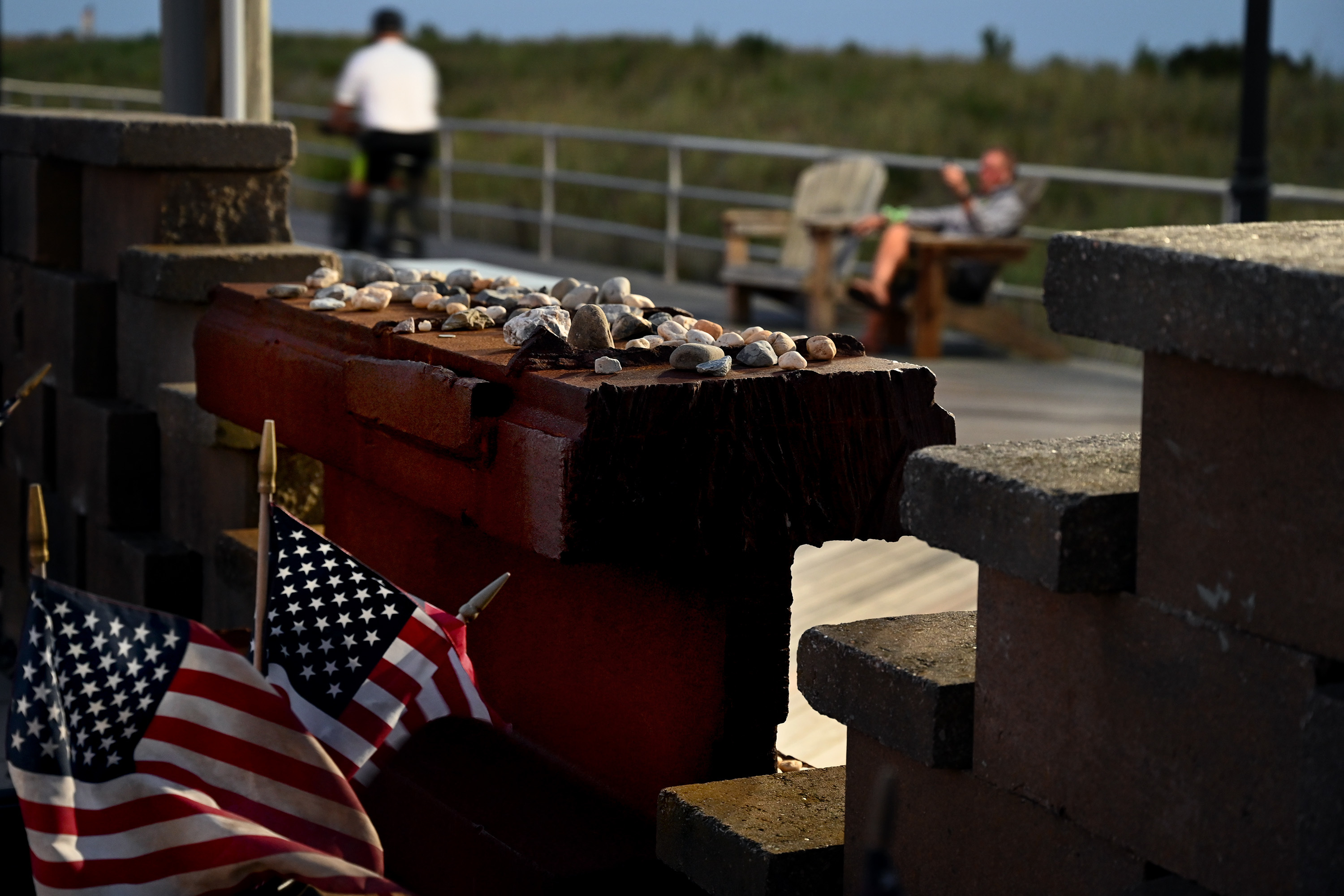
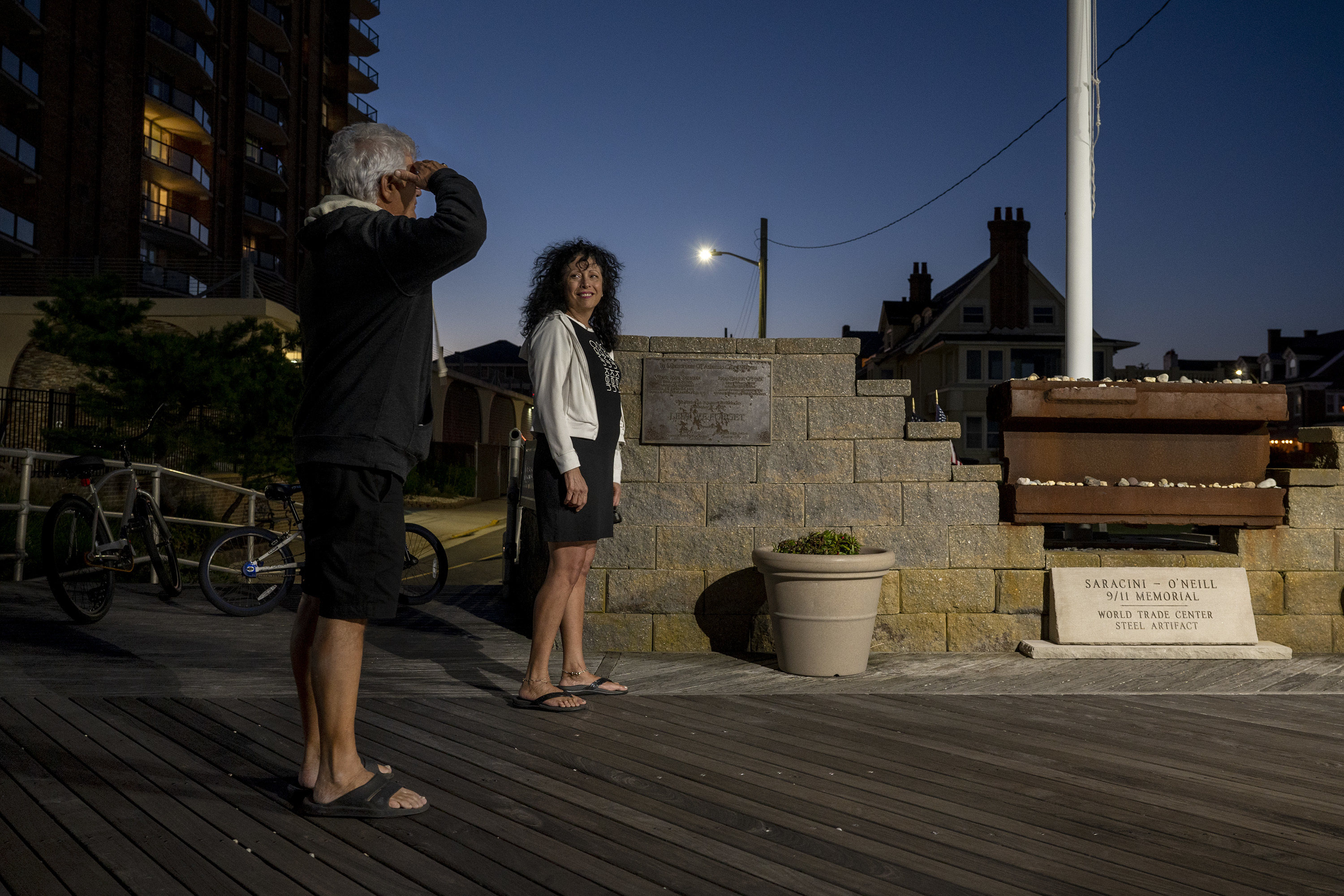
    The Saracini-O’Neill 9/11 Memorial on the Boardwalk at Jackson Avenue, on the border of Atlantic City and Ventnor. The memorial is dedicated to Atlantic City natives Victor John Saracini and John P. O’Neill.Tom Gralish / Staff Photographer
    Tom Harris, walking with his wife, Carol, after dinner salutes the flag at the 9/11 Memorial. John P. O’Neill was head of security at the World Trade Center, who died while helping others to evacuate. Victor J. Saracini was the pilot of Flight 175 when it was hijacked and flown into the South Tower.Tom Gralish / Staff Photographer

    Brooklawn, N.J.

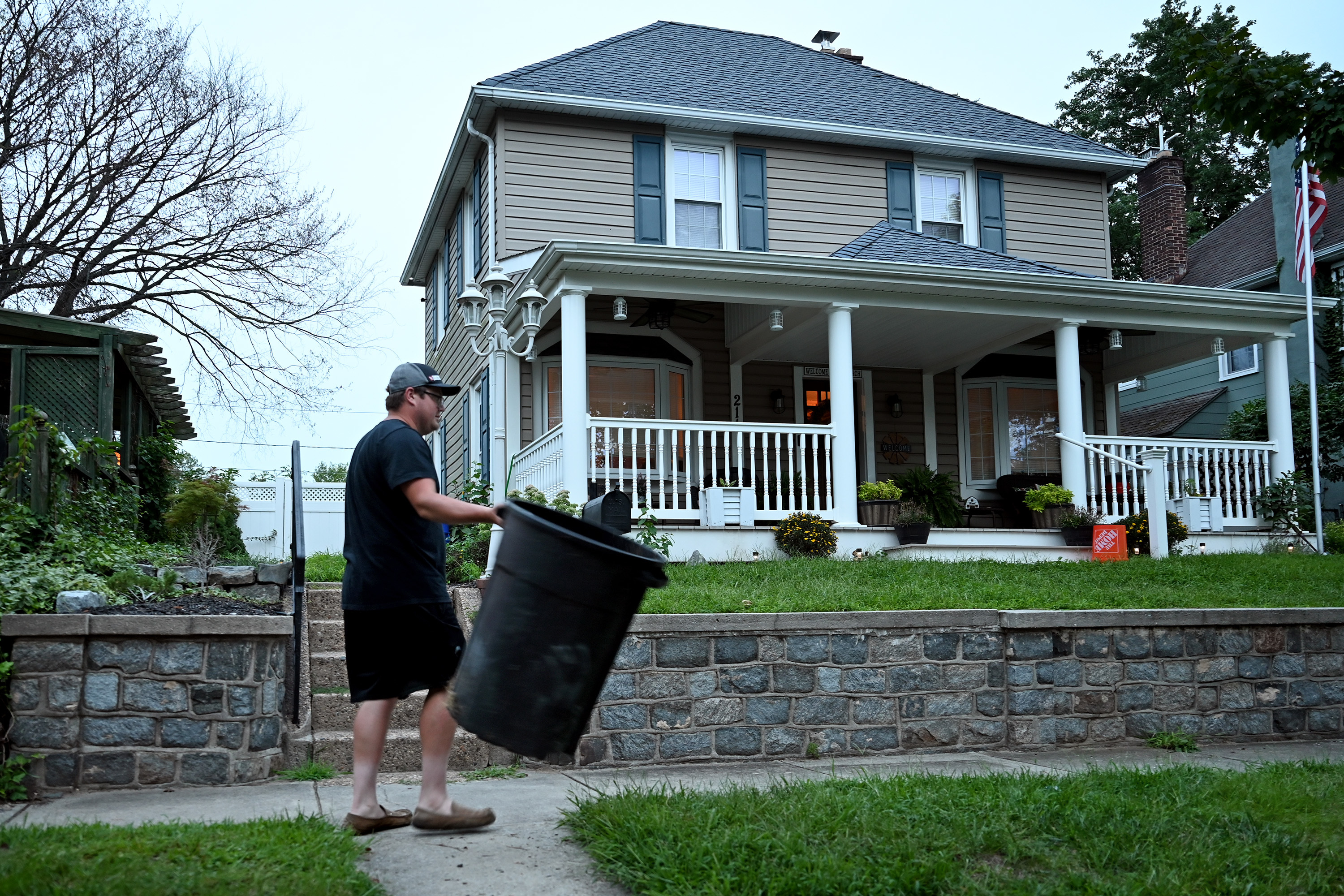
    The township’s 9/11 Memorial features a Pentagon-shaped base supporting a 9-foot-11 piece of World Trade Center steel. It is framed by two stone pedestals supporting artifacts from Shanksville and the Pentagon.Tom Gralish / Staff Photographer
    Miles Jesuncosky outside his home in Brooklawn, N.J., which is around the corner from the memorial.Tom Gralish / Staff Photographer

    Berwick, Pa.

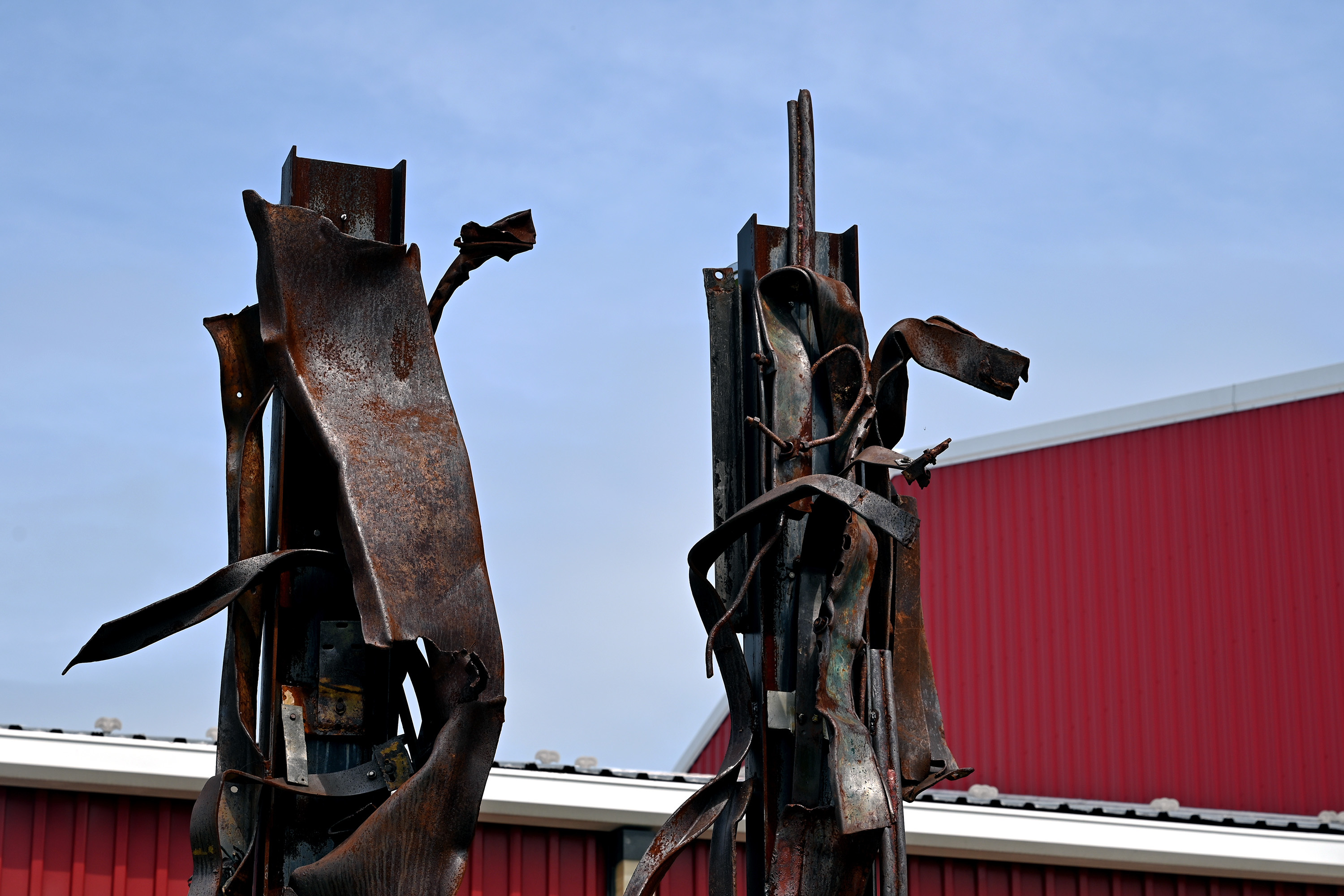
    Boy Scout Colin Hill built a memorial from steel remnants of the World Trade Center for his Eagle Scout project. Two 12-foot beams made from 350 pounds of twisted metal are outside Reliance Fire Company No. 1, in Berwick, Columbia County,Tom Gralish / Staff Photographer
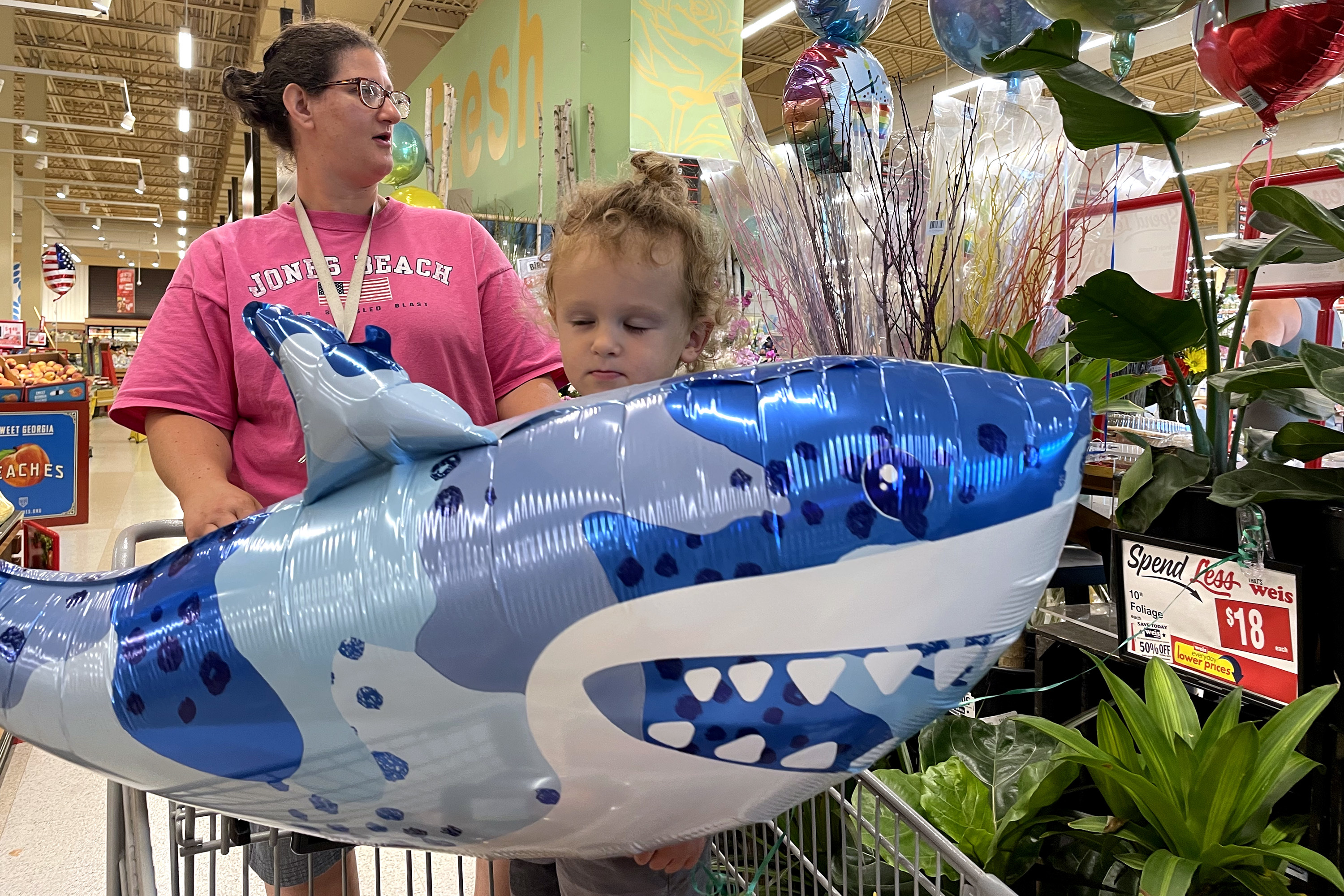
    Heather Schon shops at the Weis Markets grocery store in Bloomsburg, Pa., with her 2-year-old son, Blaise.Tom Gralish / Staff Photographer

    Lower Makefield Township, Pa.

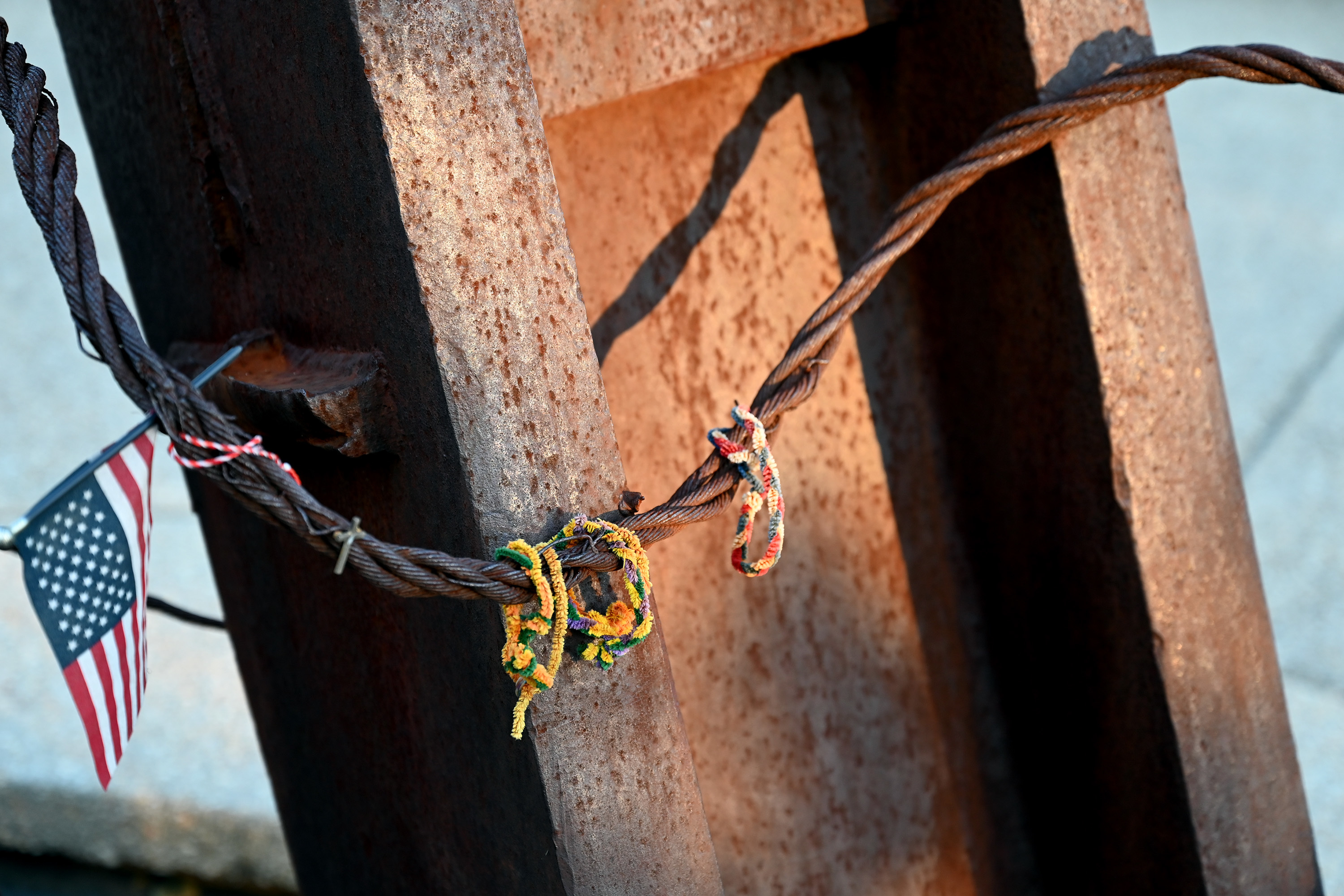
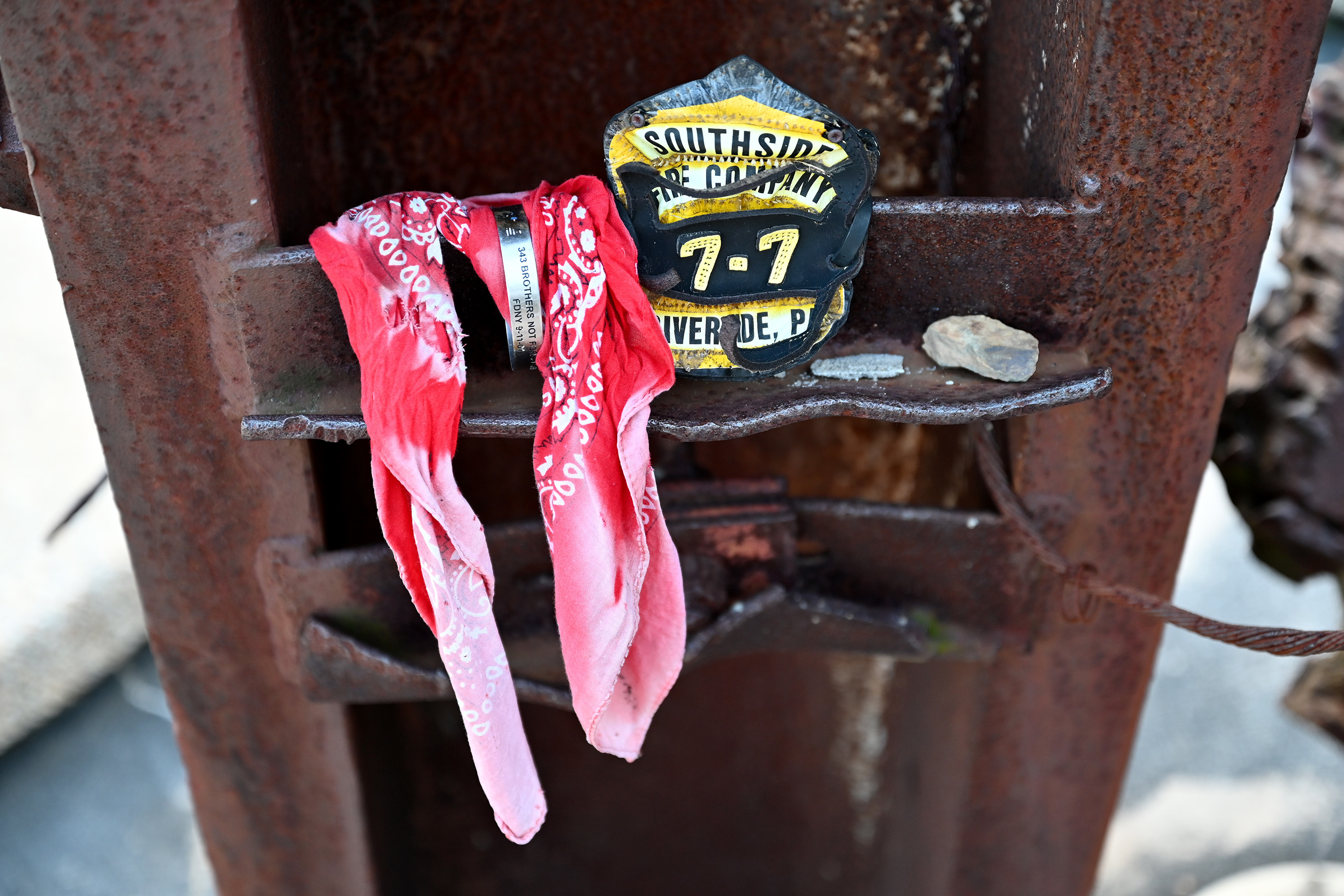
    The official Pennsylvania memorial to the victims of 9/11 in Bucks County.TOM GRALISH / Staff Photographer
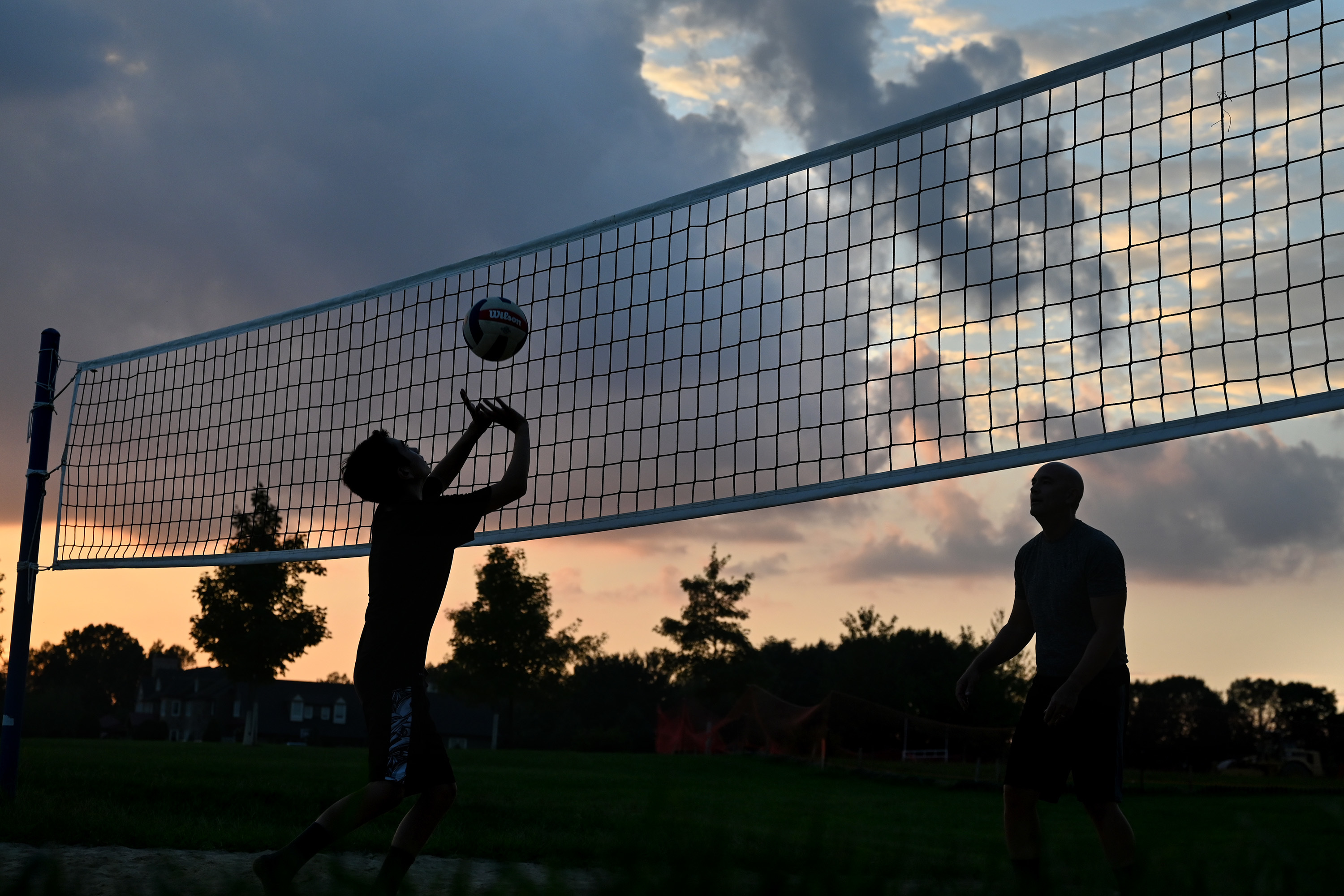
    Steve Murphy practices volleyball with son Stevie, 11, in one of the fields at 62-acre Memorial Park in Lower Makefield Township.Tom Gralish / Staff Photographer
    58 Pennsylvania were killed in the attacks. Among them were 18 from Bucks County and nine residents of Lower Makefield.Tom Gralish / Staff Photographer
  • The anti-headshot

    The anti-headshot

    Among the most common types of newspaper photo assignments, I have a least favorite: a portrait of someone being interviewed by a reporter. Or being interviewed by a bunch of reporters. (Don’t worry, this is not a half-empty glass gripe. Keep reading, it’s actually a positive post.)

    On TV they’re called “talking heads” and in still photos they’re “headshots.” But they’re not really heads. Their sole purpose is to show viewers/readers what a person looks like. A face.

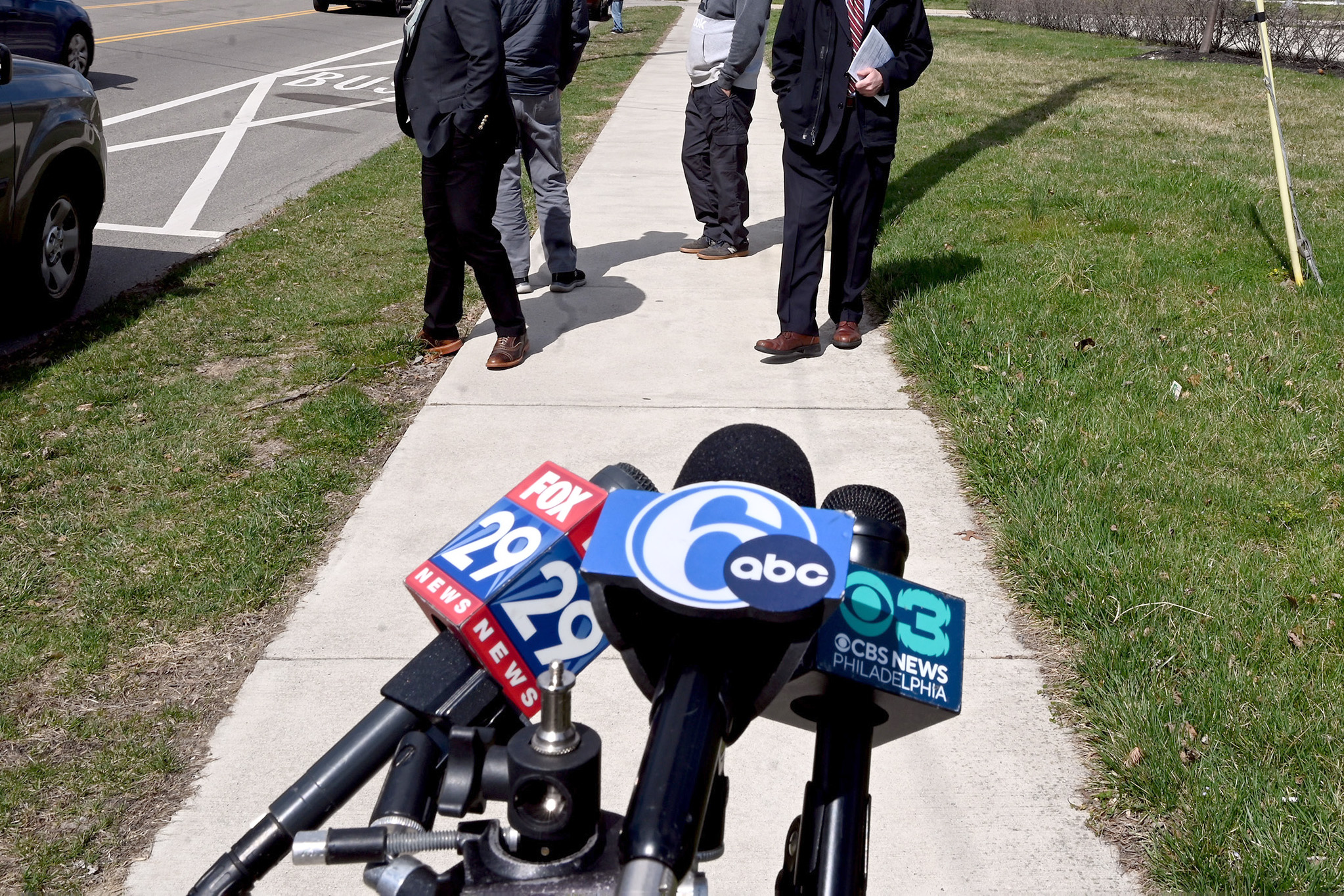
    Attorneys arrive for a press conference after filing a civil lawsuit Mar. 19, 2024.Tom Gralish / Staff Photographer

    A while back, possibly while focused on a person standing behind a bank of microphones, my mind wandered and I started to think about different ways of photographing the press conference. Call it an anti-headshot.

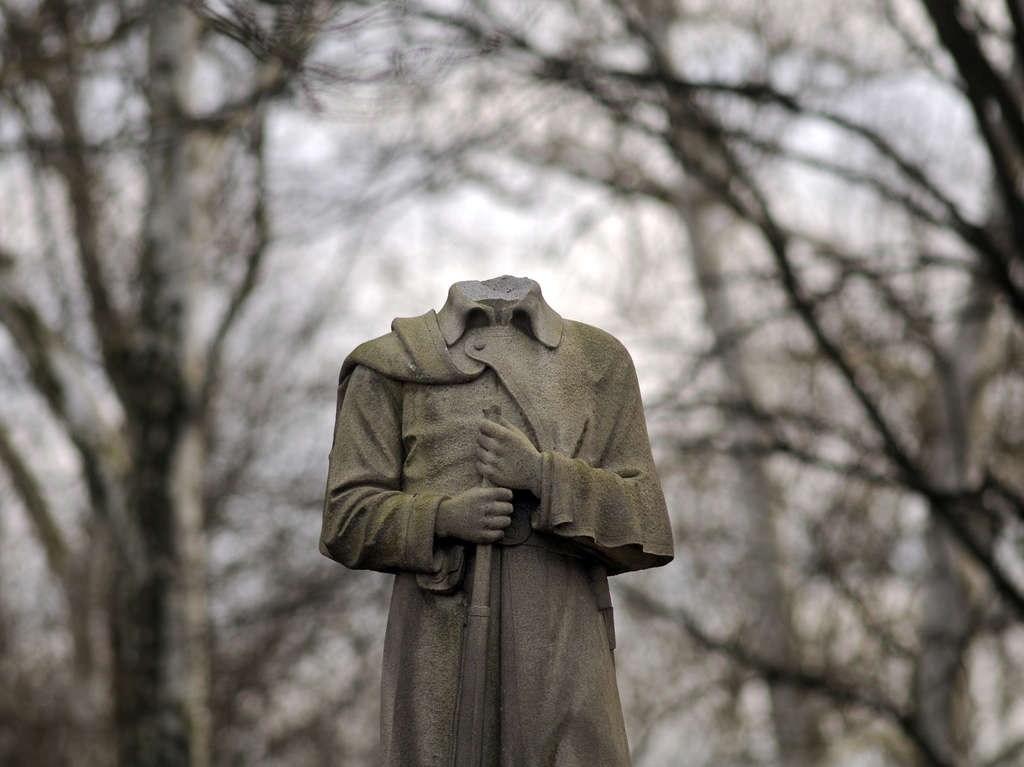
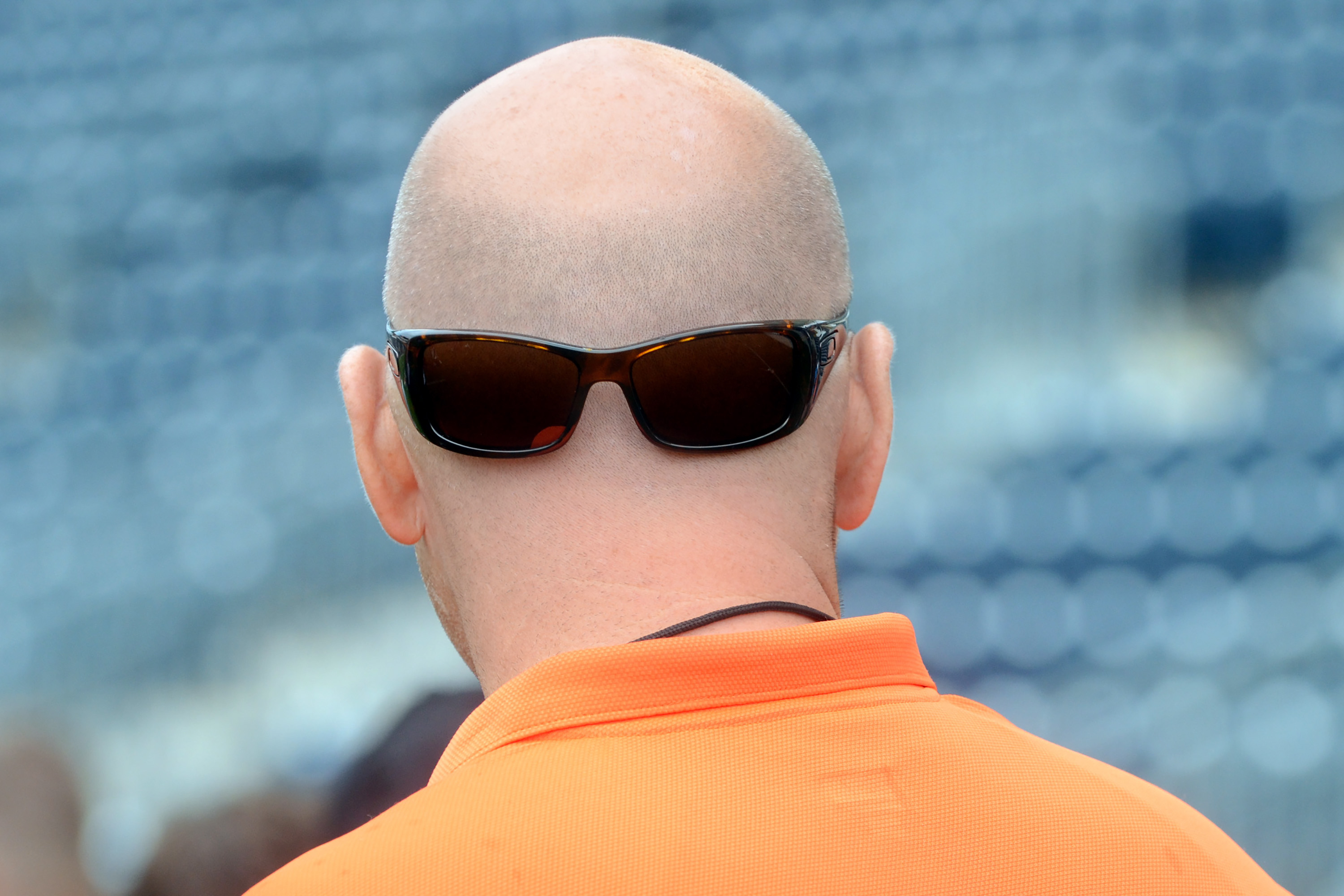
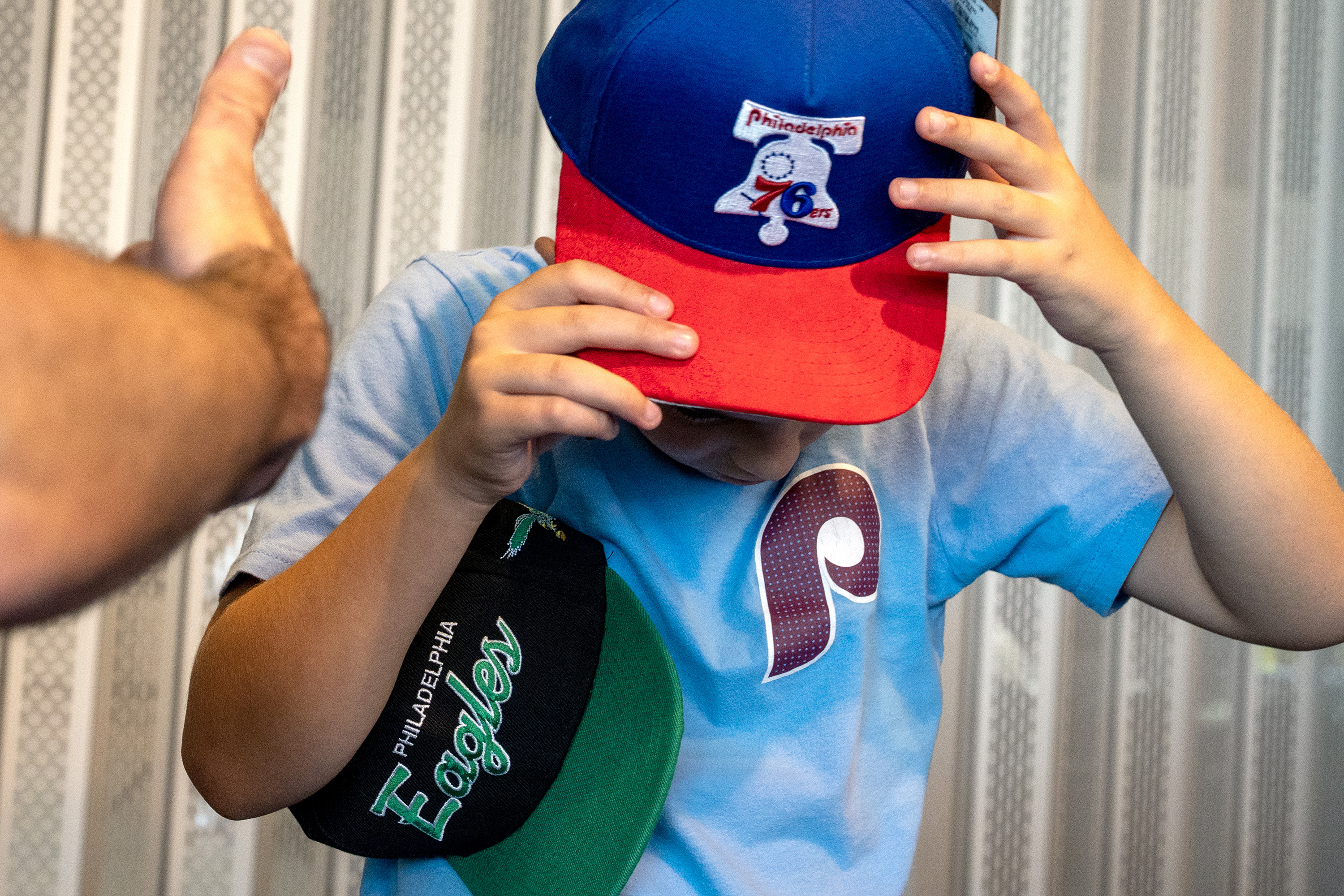
    That evolved into something I continued, collecting unconventional views of non-faces.

    A vandalized Civil War memorial in Bridgeton, N.J., Jan. 31, 2012.Tom Gralish / Staff Photographer
    Major League Lacrosse team practice at PPL Park in Chester Aug. 23, 2013.Tom Gralish / Staff Photographer
    A fan of all Philly teams shopping for Sixers merchandise and jerseys Aug. 25, 2026.Tom Gralish / Staff Photographer

    At some point, maybe with more press conference daydreaming, I wondered what if… Say the images ended up on an art gallery wall? A highfalutin critics might say something like “the work is a meditation on our identity and desire to be seen. Gralish turns the idea on its head (no pun intended), showing us images that conspire against the countenance, and therefore, counter the very premise of a portrait.”

    If I weren’t having fun with photography I would have stopped doing it decades ago.

    My “funnest” assignment this week? My colleague Peter Dobrin’s sweet story of a musical prodigy, and what it takes to get into a top music conservatory while still in elementary school.

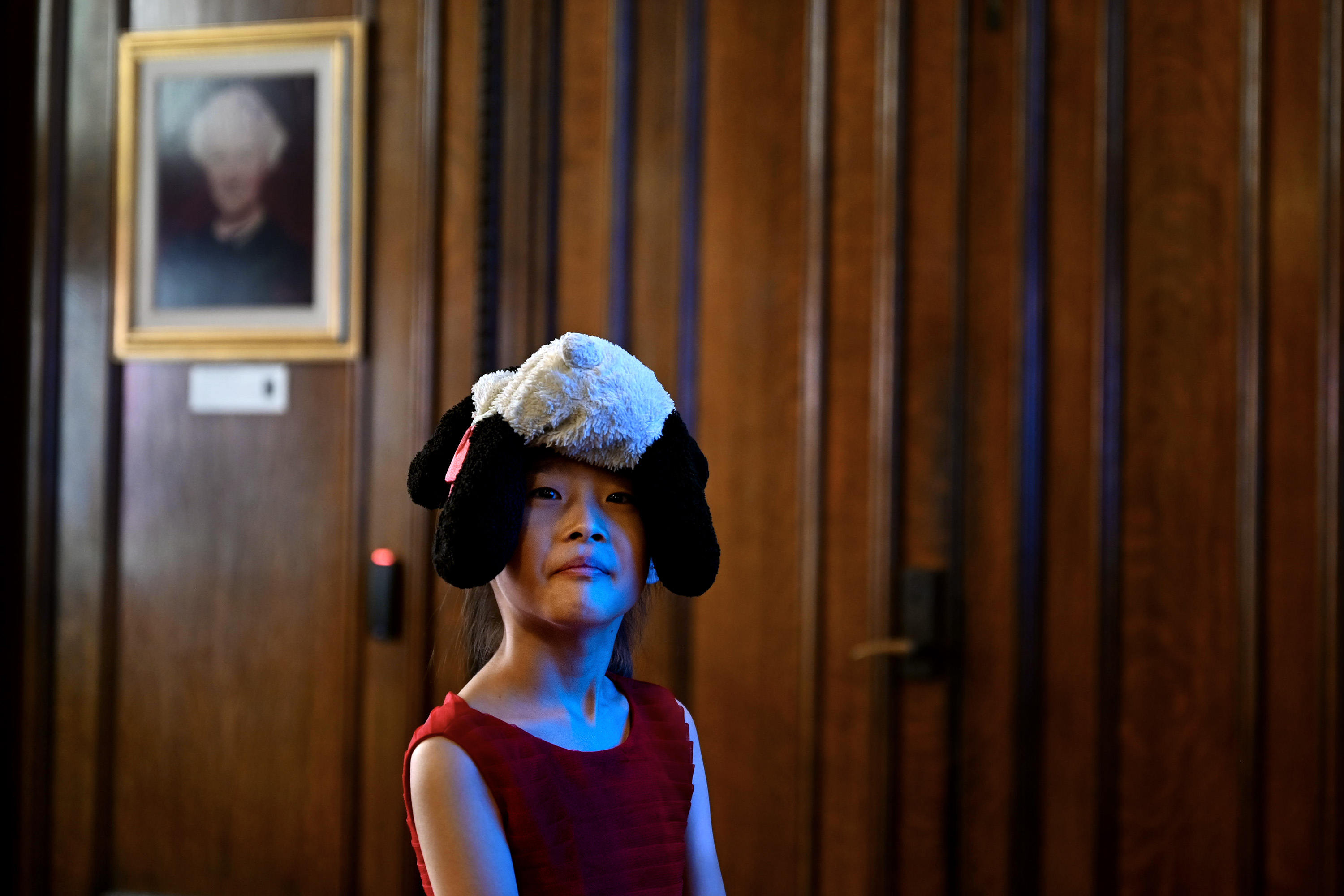
    Seven year-old pianist Olivia Li with her stuffed panda in the lobby of the Curtis Institute. She began studying the piano at age four and will receive a full-tuition scholarship to the prestigious institution. On the wall is a Norman Rockwell painting of Curtis founder Mary Louise Curtis Bok Zimbalist (1877–1970).Tom Gralish / Staff Photographer

    As is often the case with businesses and institutions, the public relations department always has ideas of how to pose the picture — usually with their sign, name or logo prominent. After photographing the young pianist playing — with an extender to reach the piano’s pedals — I just watched her as we toured the conservatory.

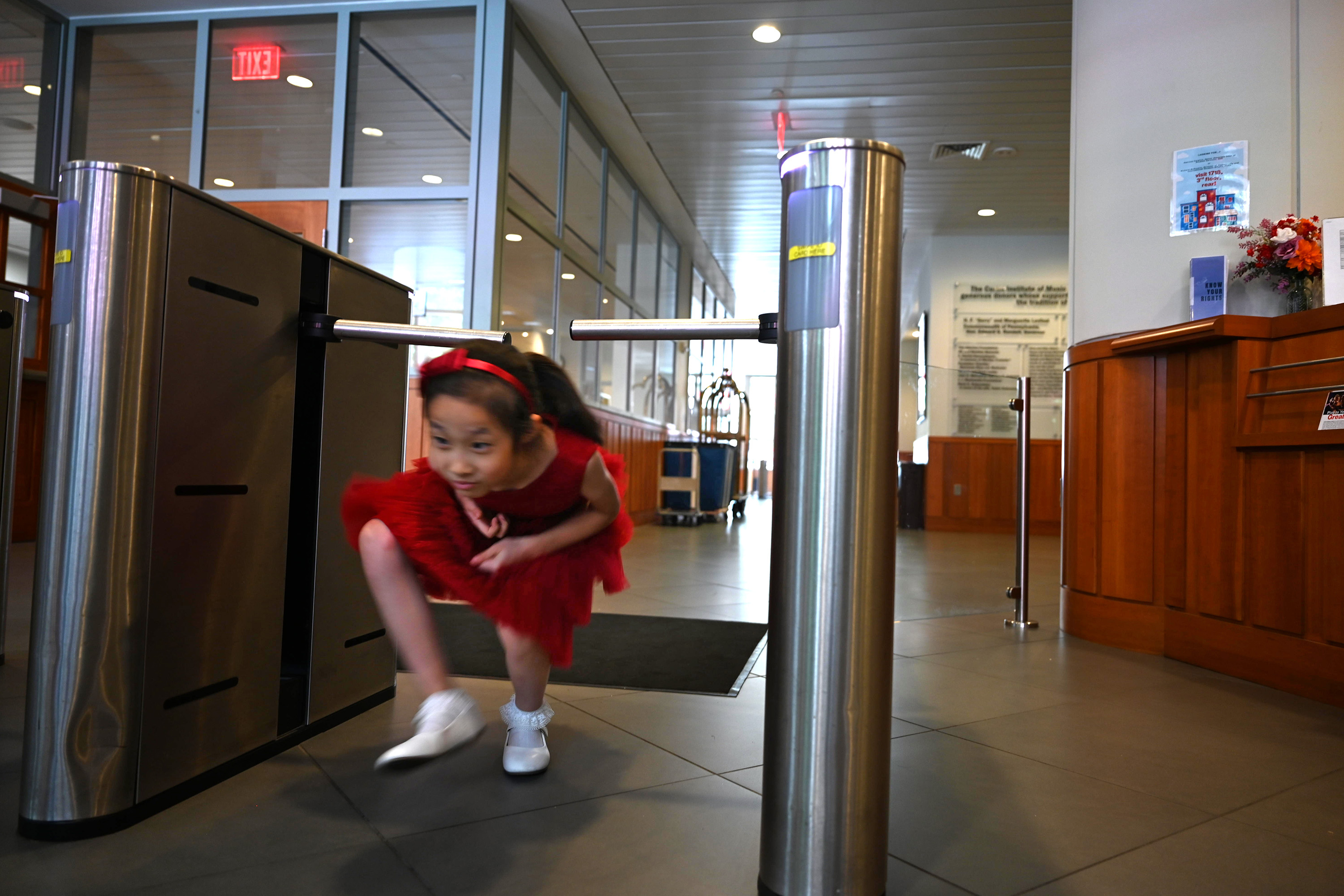
    I prefer letting things unfold in front of me, anticipating what a person might do. Sometimes it works, and sometimes it doesn’t. I wondered how Olivia would pass though the security entrance. I guessed correctly — but used too slow a shutter speed. But, my glass was still half full. I had plenty of good photos (even one that likely made Curtis happy — with their name displayed).

    Having just one person to focus on is a joy, but I also love photographing when there are lots of people and lots of action at events or gathering. The difficulty for me is just dealing with the visual overstimulation. Sometimes there is just too much going on.

    Over the years, I have learned how to cope. I try to find one or two people in the crowd, meet them, and let them get used to me and to being photographed. Then I watch for them throughout the rest of the time I’m there. Sometimes even arriving early.

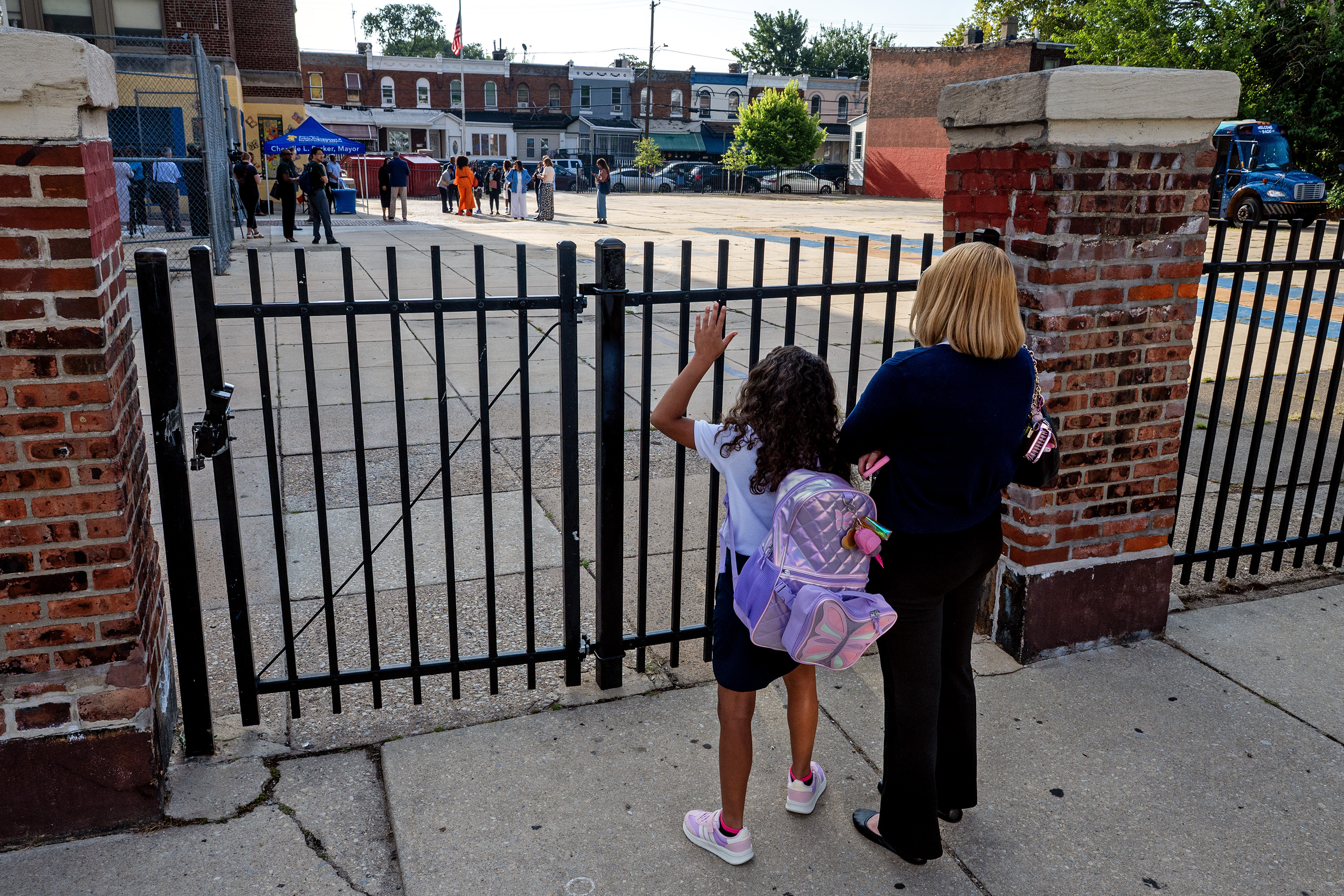
    Tanisha Ortega and her daughter Ahlaura Conley, 7, are the first to arrive, before the gates even open getting an early start on second grade at McClure Elementary Aug. 24, 2026 on the first day of school in the Philadelphia.Tom Gralish / Staff Photographer

    That way, no matter how distracted I get as my head is spinning around while I keep turning to see things happening all around me and missing other photos while I write down names, I always have those first folks I can return to.

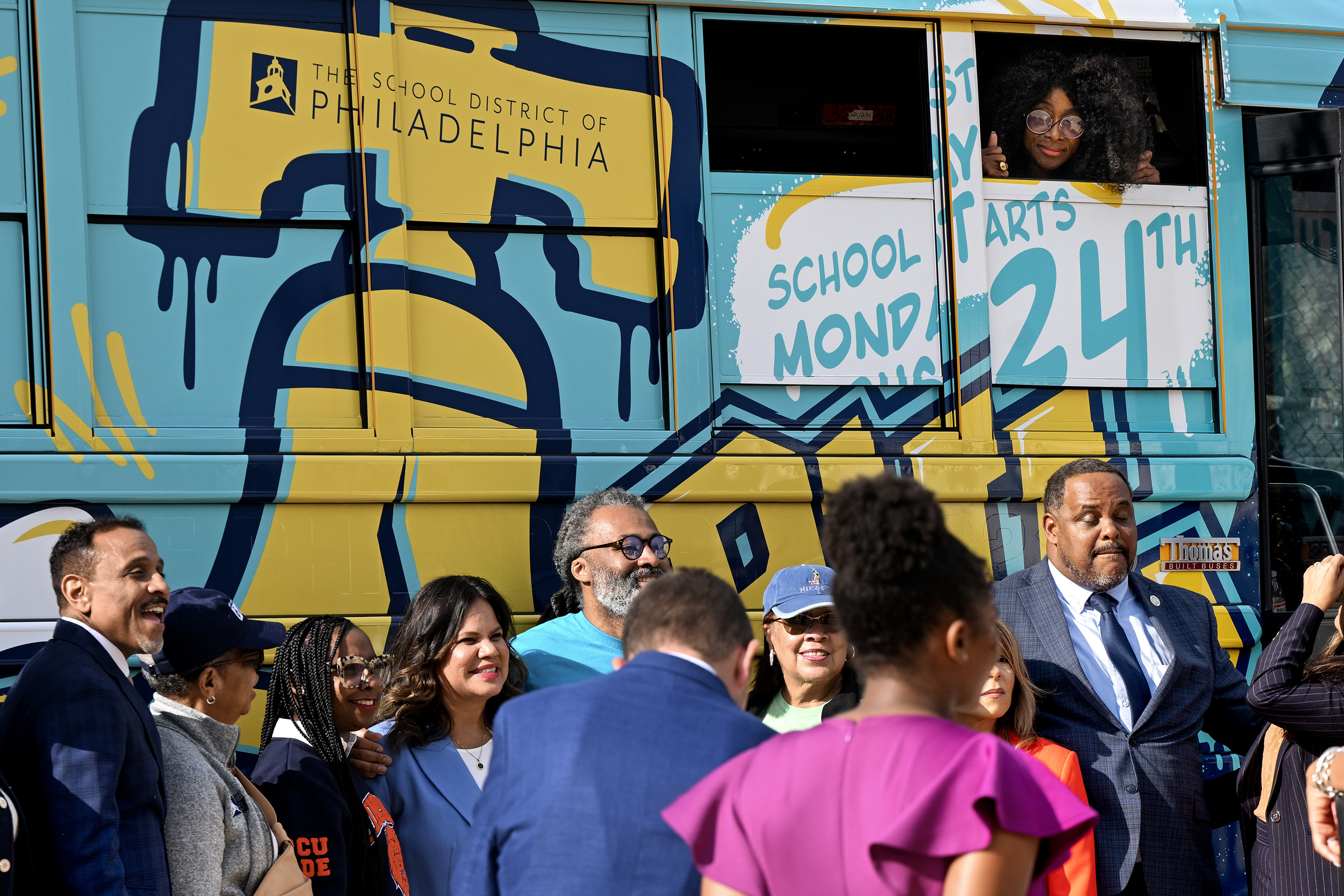
    That brings me back to the photo at the very top. I had noticed officials looking out of a window of the district’s bus on its annual Back-to-School Celebration visit to schools all around Philadelphia.

    But I knew I had my photo when Superintendent Tony B. Watlington Sr. (at far left in the photo) started to gather everyone together for a group photo outside the bus and the president of the principals union showed up in the window. (She then left the bus to join in the photo.)

    Since 1998 a black-and-white photo has appeared every Monday in staff photographer Tom Gralish’s “Scene Through the Lens” photo column in the print editions of The Inquirer’s local news section. Here are the most recent, in color:
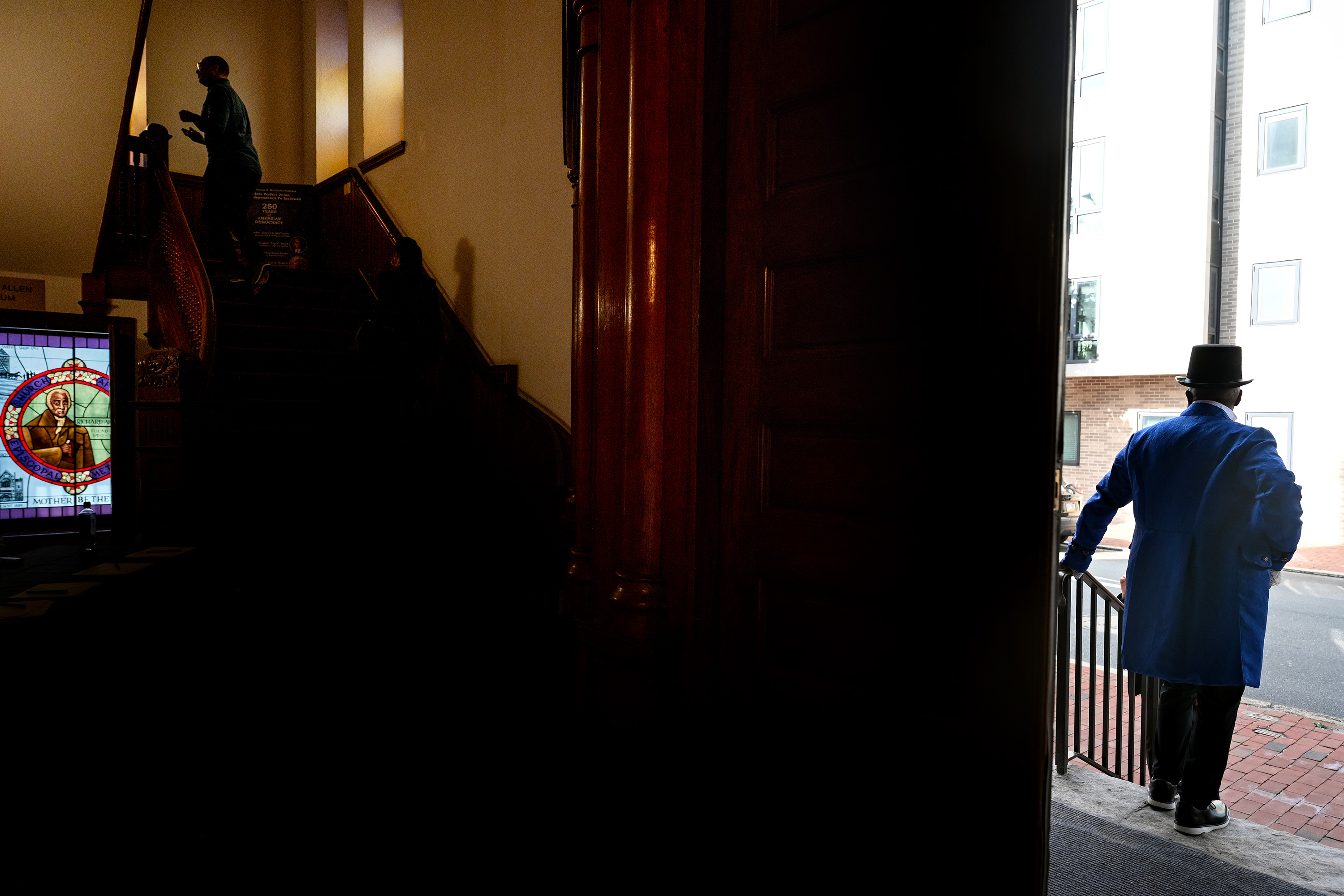
    » SEE MORE: Archived columns and Twenty years of a photo column.

  • Back to school in South Philly

    Back to school in South Philly

    This week Philly teachers were prepping for the start of a new school year and I went to Fanny Jackson Coppin School in South Philadelphia to photograph them hanging posters, arranging desks, taking new books out of boxes, and opening packages of supplies,

    I walked from classroom to classroom, saying hi and introducing myself. Most were happy to have me come in and show the newspaper’s readers how they spend hours making their room feel welcoming and comfortable.

    I was definitely feeling at ease by the time I got to the first grade classroom of teacher Lauren Cucinotta.

    Because I wrote just last week about the senses triggering memories I was expecting all morning that what’s known as the “Proust phenomenon” would kick in. But it wasn’t the waxy smell of the crayons.

    No, as a visual person it was the sight of a cup full of freshly sharpened pencils.

    There is nothing more basic, more ordinary than a pencil — well except maybe for paper. But then we get into a chicken or the egg thing, and I don’t want to go there, so I’m sticking with pencil.

    All those little points of graphite evoke a feeling of possibility. More than being ready to make the first marks of a new school year, I see them representing a clean slate (page) or even a new way to look at an annual recurring photo assignment.

    You can’t see them in the photos, but for a moment even the erasers at the other end of the pencils evoke memories of my own first days of school and remind me that yesterday’s mistakes do not have to follow me into today, that there is always something new to see and photograph.

    That’s enough navel gazing for one column, so let’s talk about this week’s installment of my colleague Elizabeth Wellington’s series highlighting a Philly “first” for the ongoing celebration of America’s 250th birthday. This week celebrated the first selfie still in existence, which was taken in Philadelphia in 1839.

    They were first called self-portraits, and before smartphones, they involved putting cameras on tripods or tabletops and using timers or long cable shutter releases. Photographers — especially after small 35mm cameras came along — did use a wide-angle lens with the “extend your arm” technique, and the first I can remember seeing was when our wedding photographer took one of himself with me and my bride.

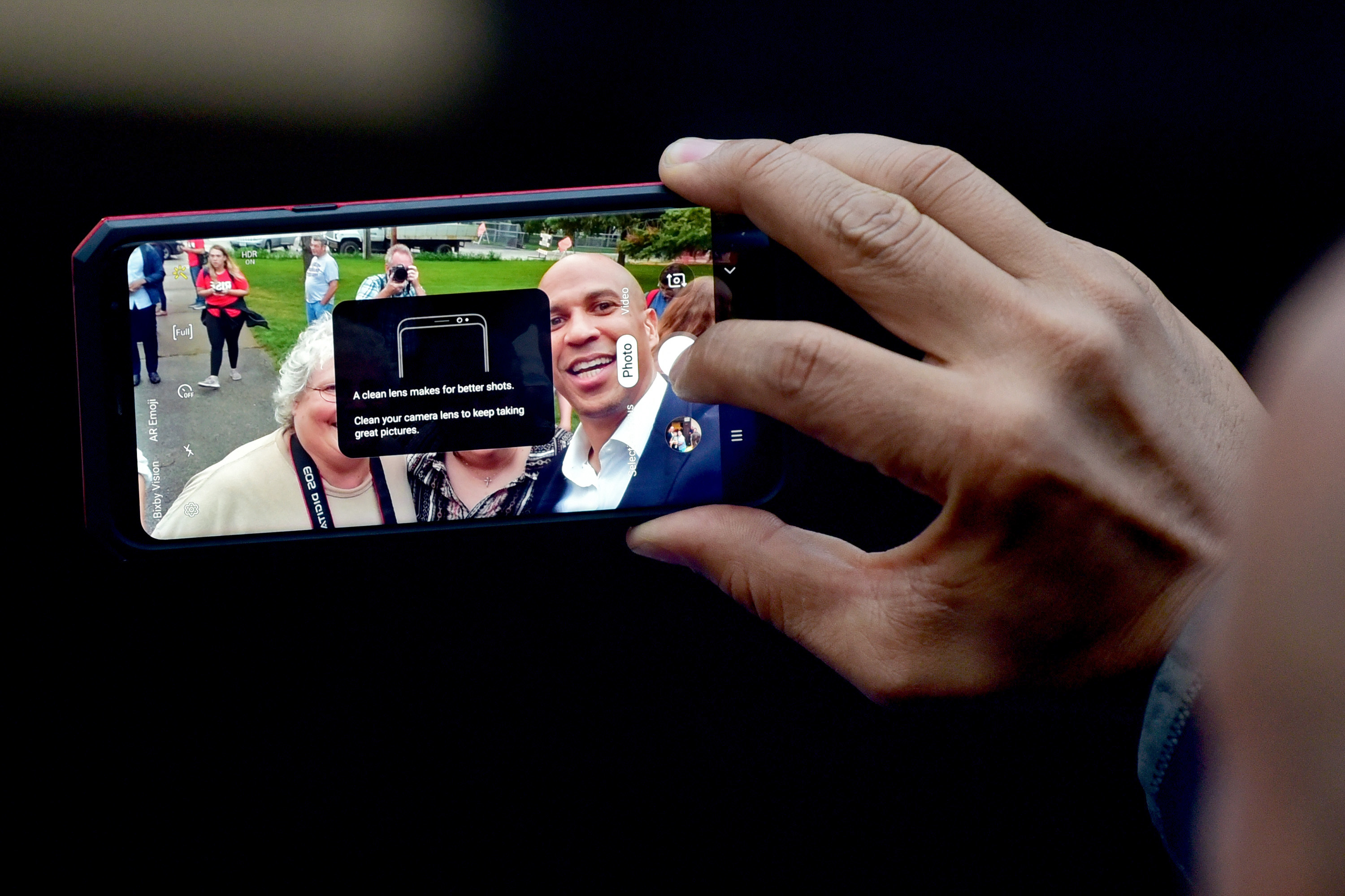
    That’s a cherished selfie, but my all-time favorite selfie is one with U.S. Sen. Cory Booker when I spent time with him in Iowa during his short-lived 2020 presidential campaign. And since then, often on his home turf, in New Jersey. You can see me in the background — right behind the helpful photography tip a supporter’s cell phone offered (he cleared the message before taking the photo).

    Which brings me to a few other photos to share from this week:

    Flags and a bright blue sky are reflected in the windows of a Center City Philadelphia hotel on Monday.Tom Gralish / Staff Photographer
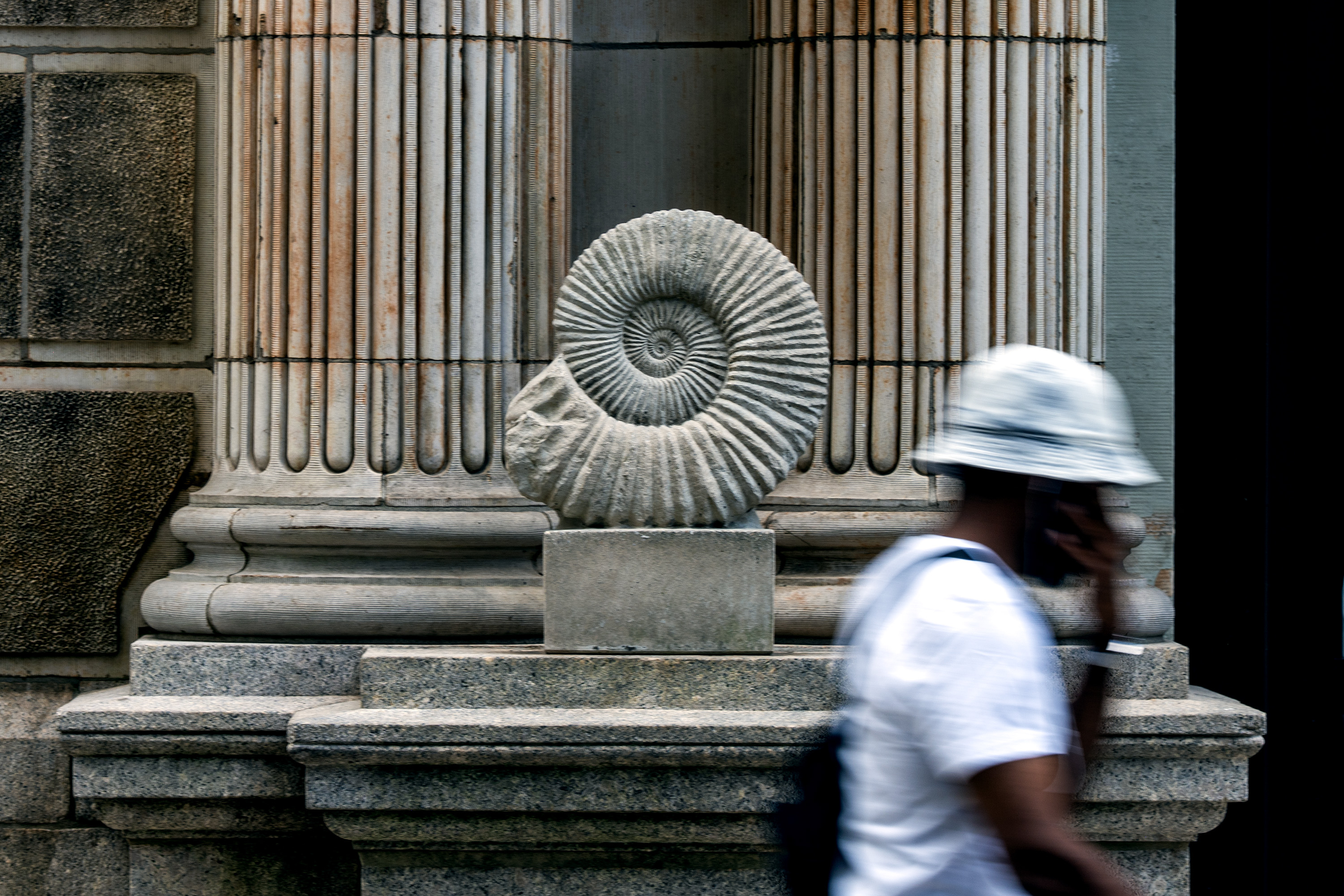
    One of two shell sculptures placed on either side of the entrance on the 19th Street entrance to the Academy of Natural Sciences of Drexel University on Monday. Created by unidentified artists and installed in 2010, a Philly public art website describes the small shell sculptural details as a “complement [to] the museum’s historic focus on malacology (the study of mollusks and their shells).”Tom Gralish / Staff Photographer

    And a story I wrote this week on viral French singer-songwriter and animal advocate Loris Assadian, known as Plumes, who sang for tortoises at the Philly Zoo.

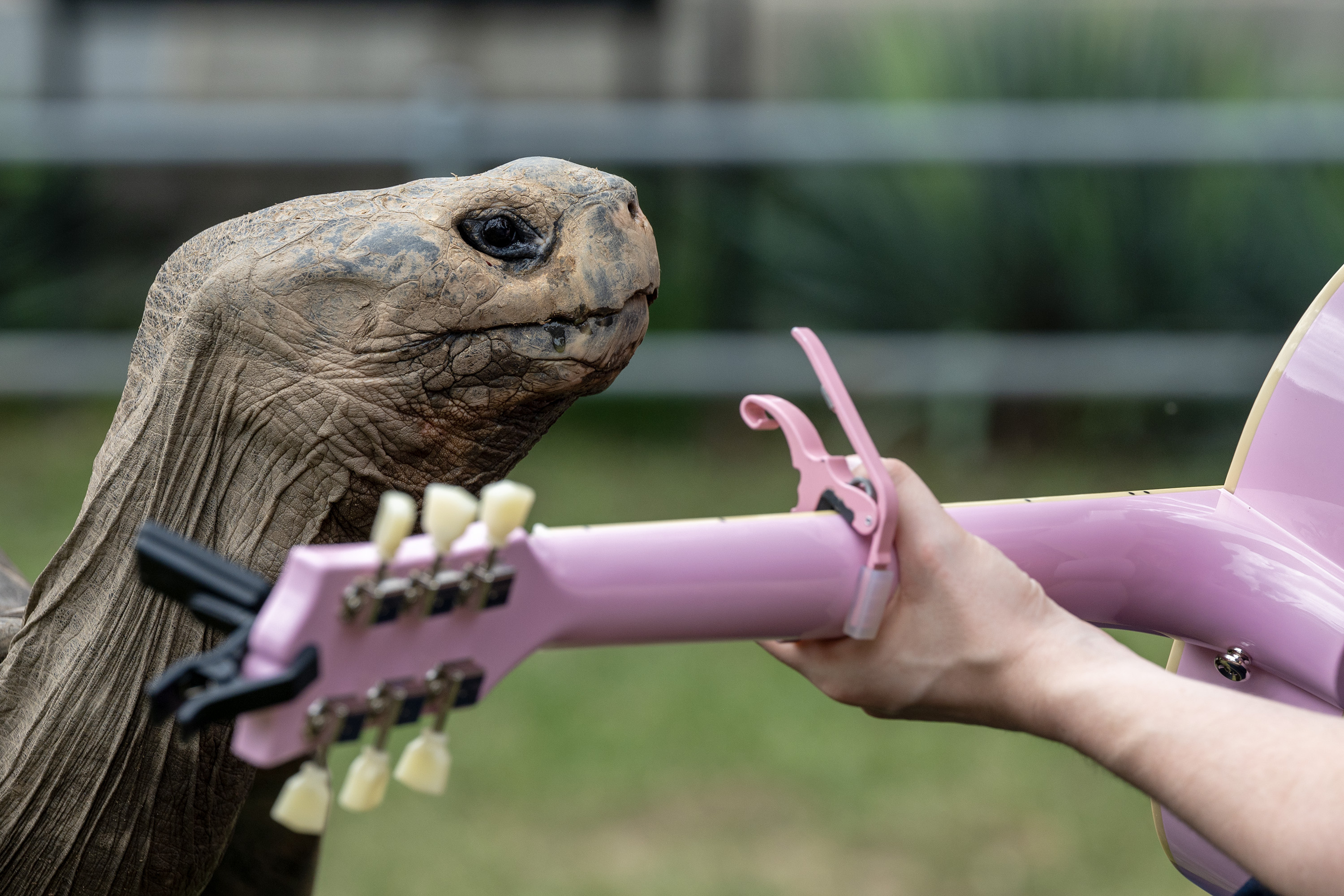
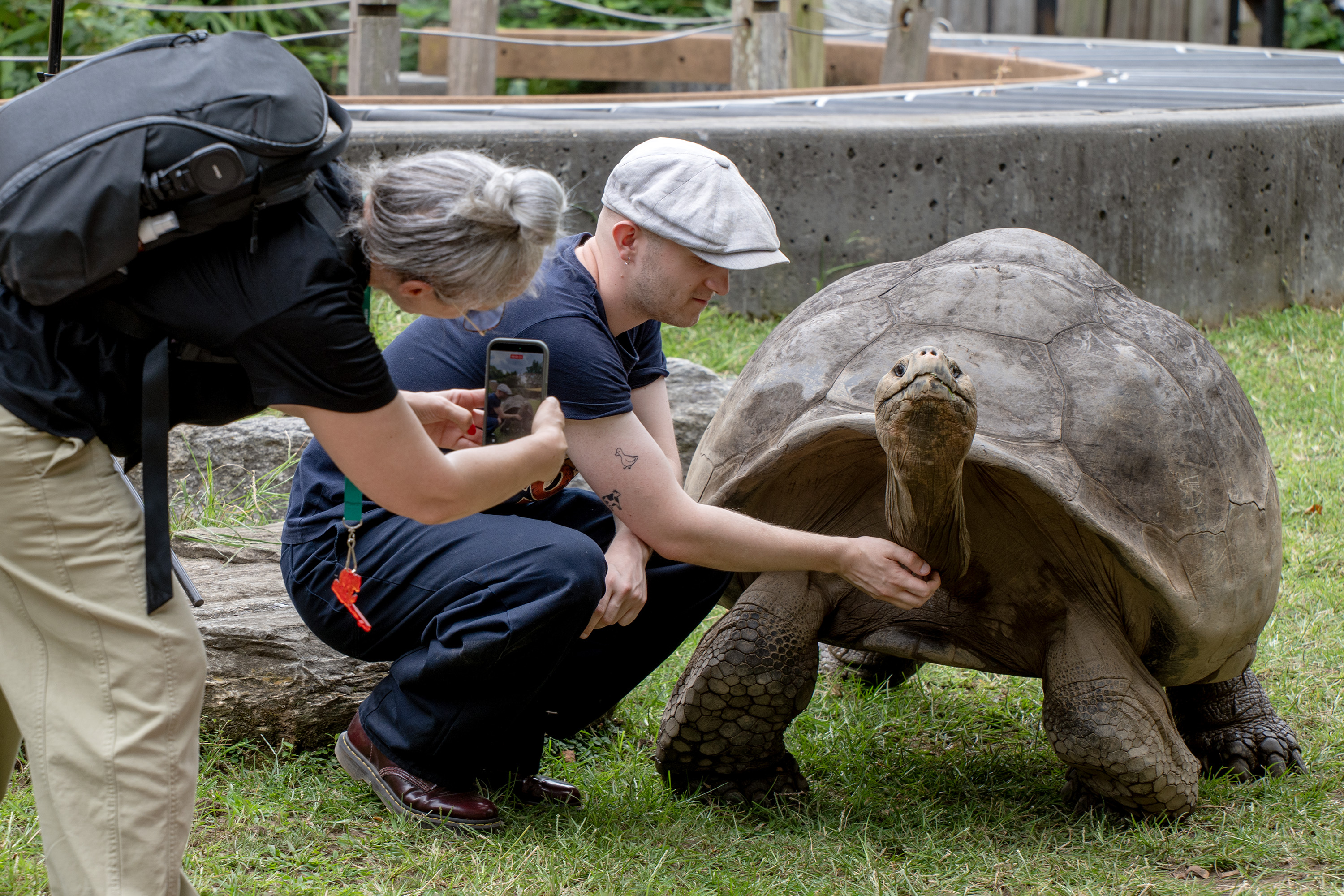
    Assadian serenades Abrazzo, a Western Santa Cruz Galapagos tortoise estimated to be around 97 to 100 years old.Tom Gralish / Staff Photographer

    Since 1998 a black-and-white photo has appeared every Monday in staff photographer Tom Gralish’s “Scene Through the Lens” photo column in the print editions of The Inquirer’s local news section. Here are the most recent, in color:
    » SEE MORE: Archived columns and Twenty years of a photo column.

    » SEE MORE: Archived columns and Twenty years of a photo column.

  • Viral French musician Plumes serenades animals at the Philly Zoo

    Viral French musician Plumes serenades animals at the Philly Zoo

    Loris Assadian, a French singer-songwriter and animal advocate known professionally known as Plumes, is globally recognized and celebrated for his distinctive sound and special connection with animals.

    Videos of him playing his flamingo-pink guitar for farm and zoo animals have captivated millions of viewers worldwide, including former President Barack Obama, who talked about Assadian earlier this summer during the final month of The Late Show with Stephen Colbert.

    Also count Megan Paier, of Cherry Hill, among the many fans of his calming musical moments. A member and volunteer docent at the Philadelphia Zoo, she thought it would be great after watching his reels on Facebook if he came here. “The way animals respond to him just warms the heart,” she said.

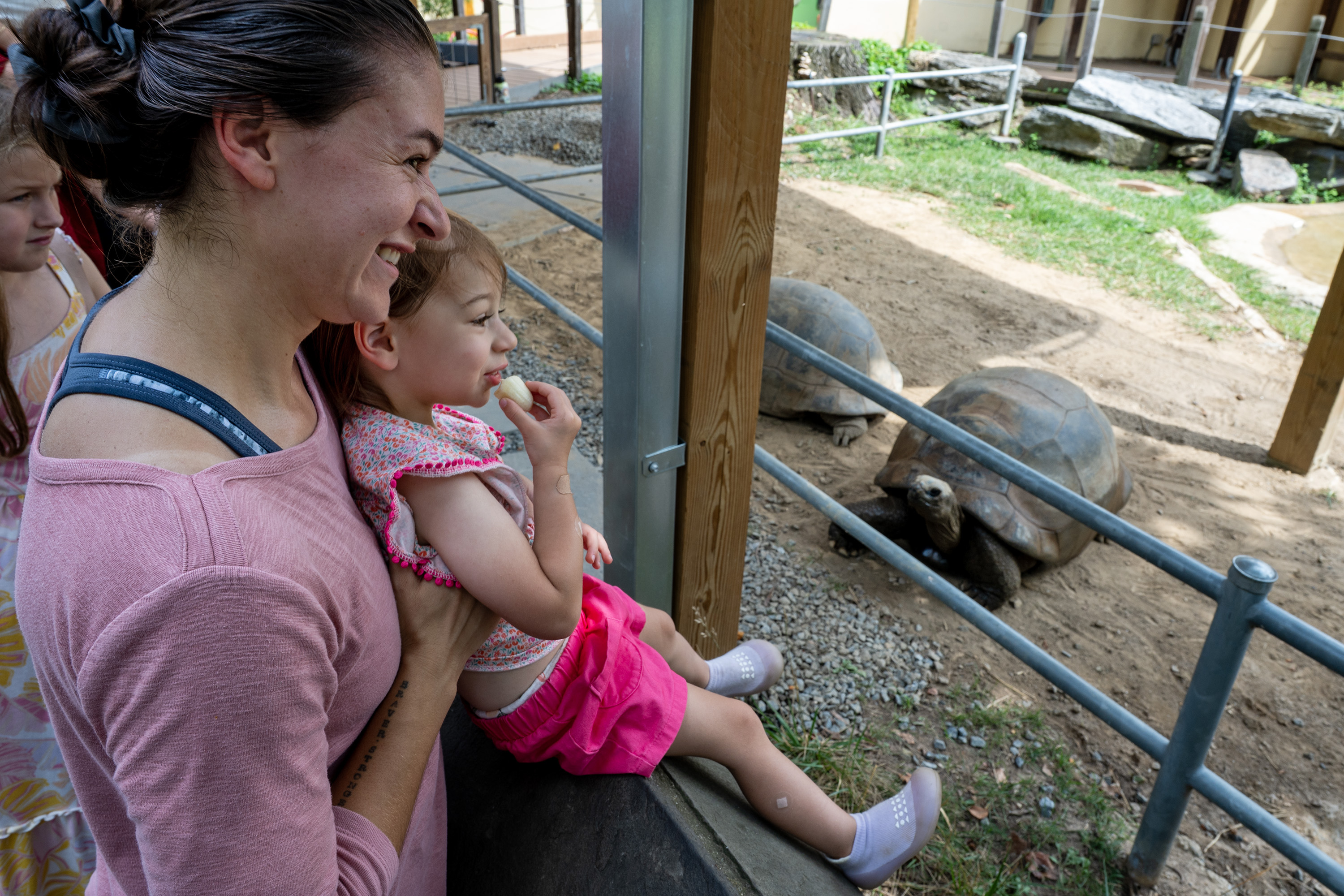
    Assadian warms up before stepping to the tortoise environment.Tom Gralish / Staff Photographer

    So she reached out in March, DMing him. “What do I have to lose?”

    He got back to her right away.

    She asked how much it would cost, and he told her he didn’t accept any money, he just needed his expenses covered.

    He visited the zoo Tuesday — after running up the Rocky steps — and serenaded the tortoises ahead of sessions on Thursday and Friday, when he will play for other animals. Most tickets are already sold out.

    Assadian serenades Abrazzo, a Western Santa Cruz Galapagos tortoise estimated to be around 97 to 100 years old.Tom Gralish / Staff Photographer

    Assadian began performing for animals three years ago in France when he played Beatles songs for some local cows.

    His appearance in Philly is the first at any U.S. zoo, and only his second visit to the United States (he went to Alaska last month).

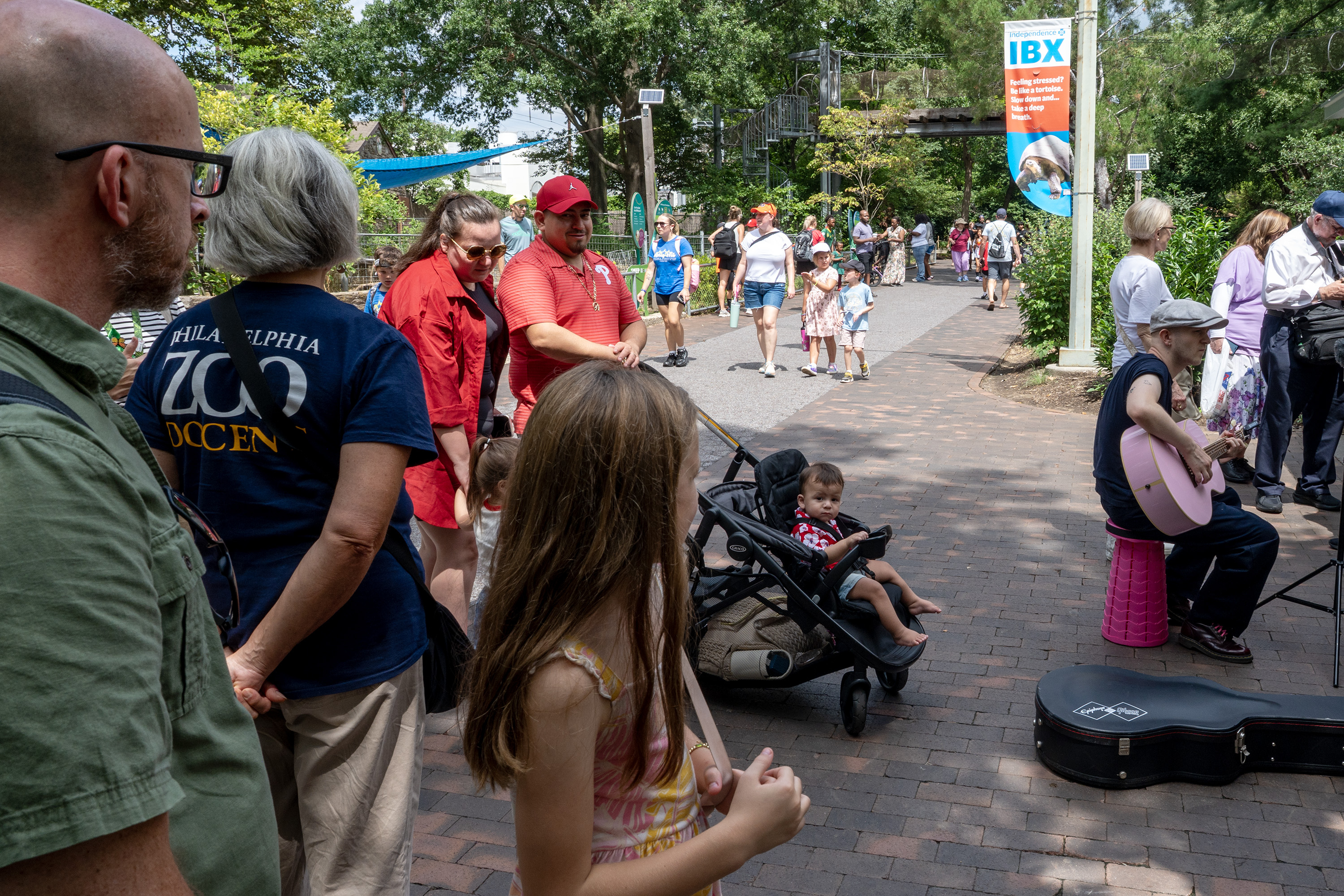
    Elizabeth Gibbons and her 2-year-old daughter Opal watch as the tortoises listen.Tom Gralish / Staff Photographer

    Elizabeth Gibbons, of Kennett Square, is an “oh my gosh, a huge fan” and was excited to see he was coming to Philadelphia but disappointed she wouldn’t be able to be there.

    She was at the zoo on Tuesday with 2-year-old daughter Opal and a mothers group from West Chester when she saw him opening his guitar case and teared up.

    Megan Paier, the docent, noticed and got Assadian to take a selfie with her.

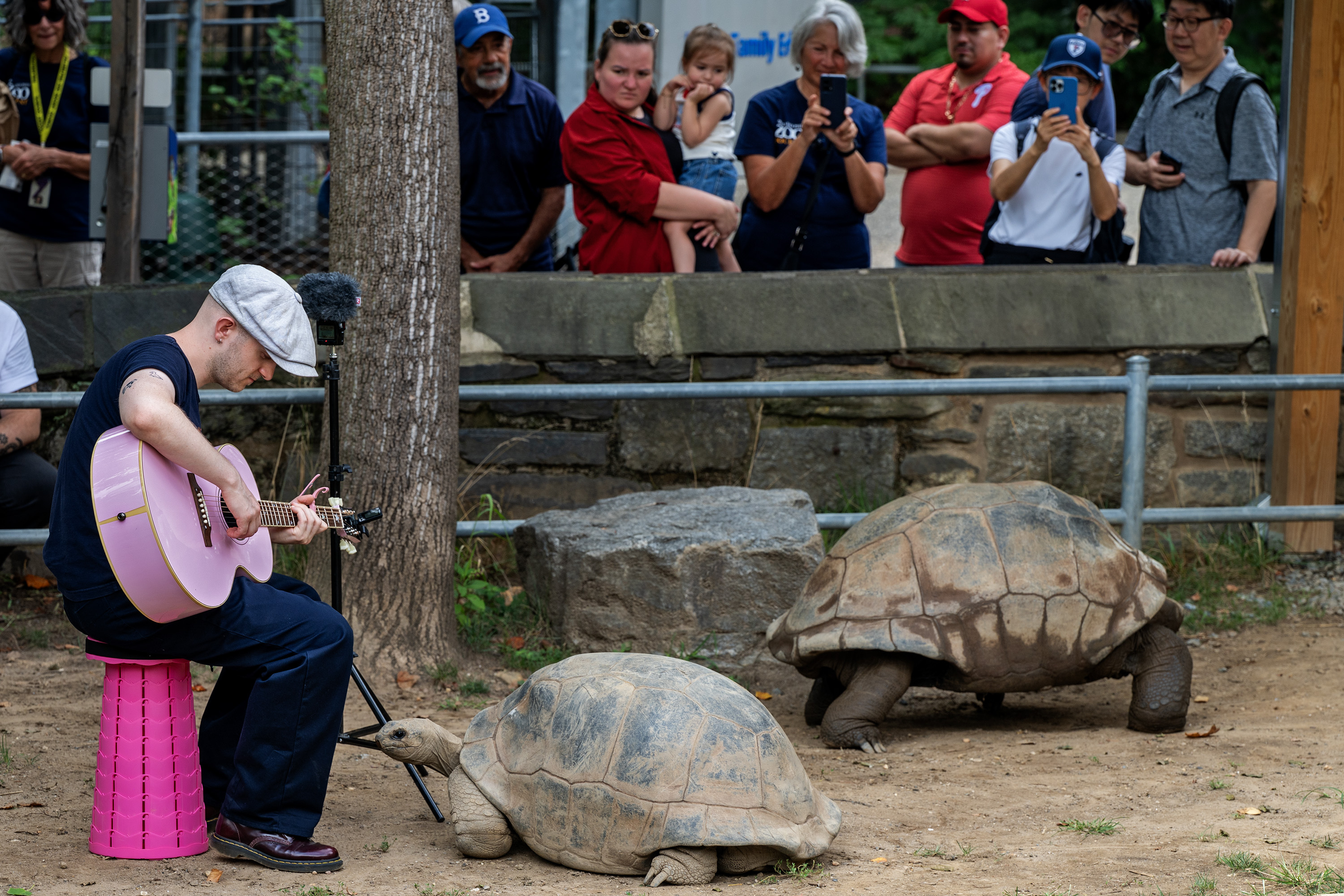
    Before he plays, Assadian always talks with the animals’ caretakers to learn about their personalities and behavior. He keeps his own body language neutral, avoids sudden movements, and doesn’t expect or force interaction.

    Assadian’s mother, Valerie, his social media videographer, records him with Abrazzo, a Western Santa Cruz Galapagos tortoise estimated to be around 97 to 100 years old.Tom Gralish / Staff Photographer

    Beyond social media popularity, Assadian’s acoustic sessions serve as genuine behavioral enrichment for animals. Last year, he partnered with the Université de Nanterre for a scientific study at the Branféré animal park to evaluate music’s direct impact on animal behavior.

  • You think you know a place

    You think you know a place

    Say you’re delivering packages, pizzas, or people. Or you’re a newspaper photographer out looking for pictures. If you’ve been driving around a city for a few years, the streets might seem ordinary, but then something about an intersection, a store front or a sign gives you that feeling of Déjà vu.

    Of all our senses, sound, taste and smell are usually considered the most powerful memory triggers. Like when Sam “Plays it again” in Casablanca or Anton Ego tastes Remy’s ratatouille. Or when any of us open a brand new box of Crayola crayons.

    But as a photographer it is the visual reminders that are powerful. Driving in the city I am always taken back to a graduation party I photographed down a particular street, or the sunset I framed. Or how I negotiated a hill in a snowstorm, or covered a shooting on that block.

    Sometimes I feel like I have been leaving bread crumbs behind me as I drive everywhere, waiting to be remembered.

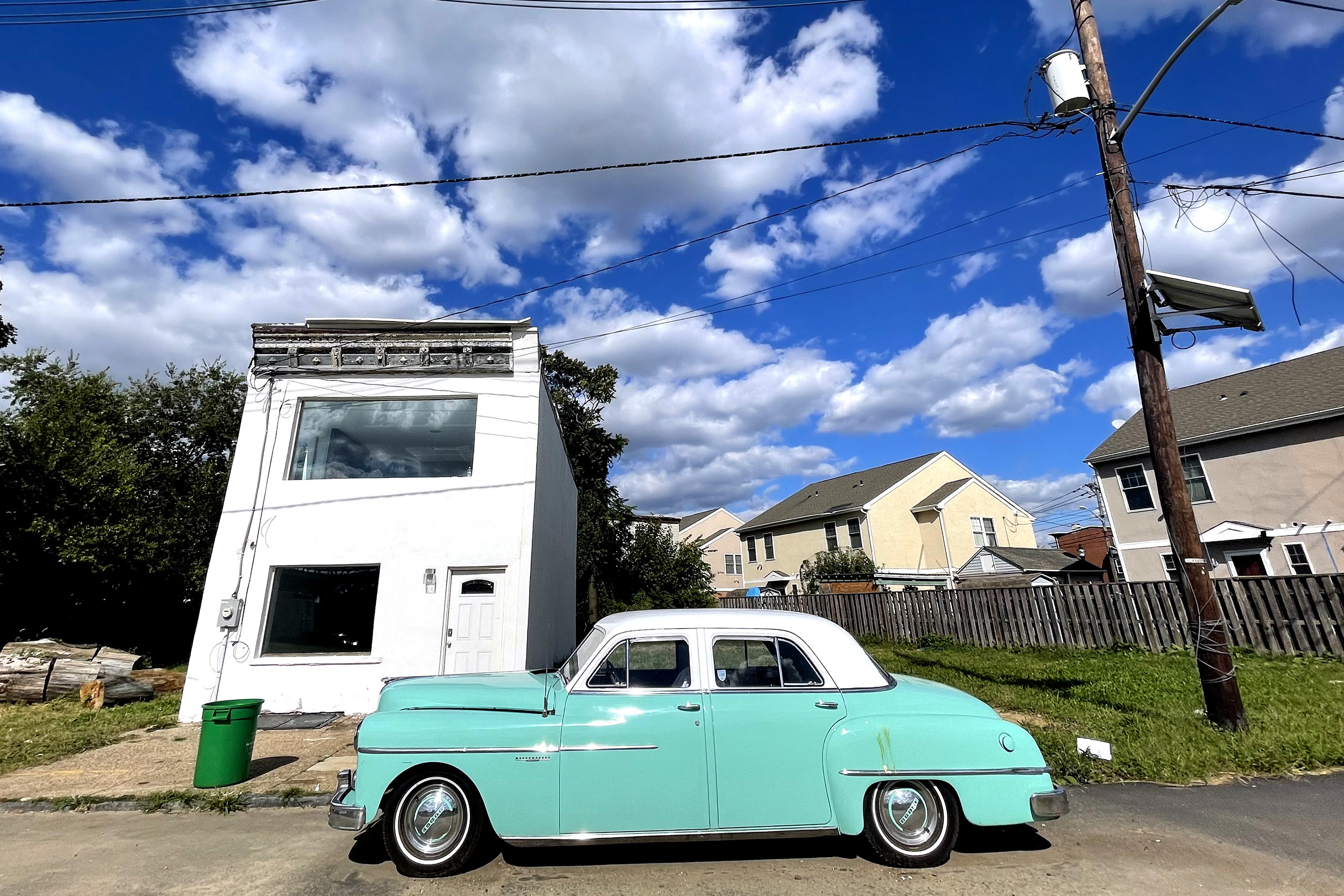
    A 1950s Dodge Meadowbrook parked near Front and Main Streets in Camden.Tom Gralish / Staff Photographer

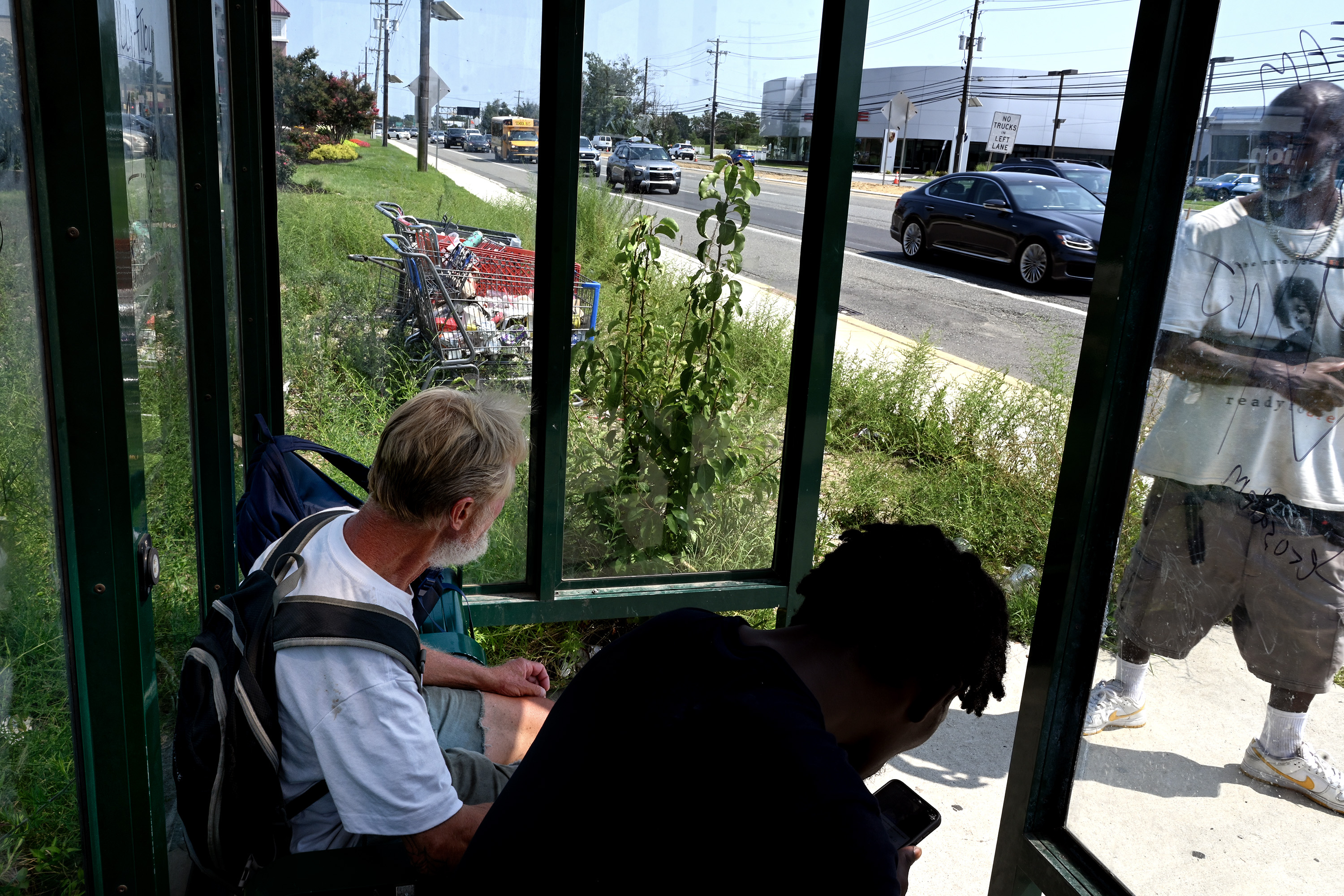
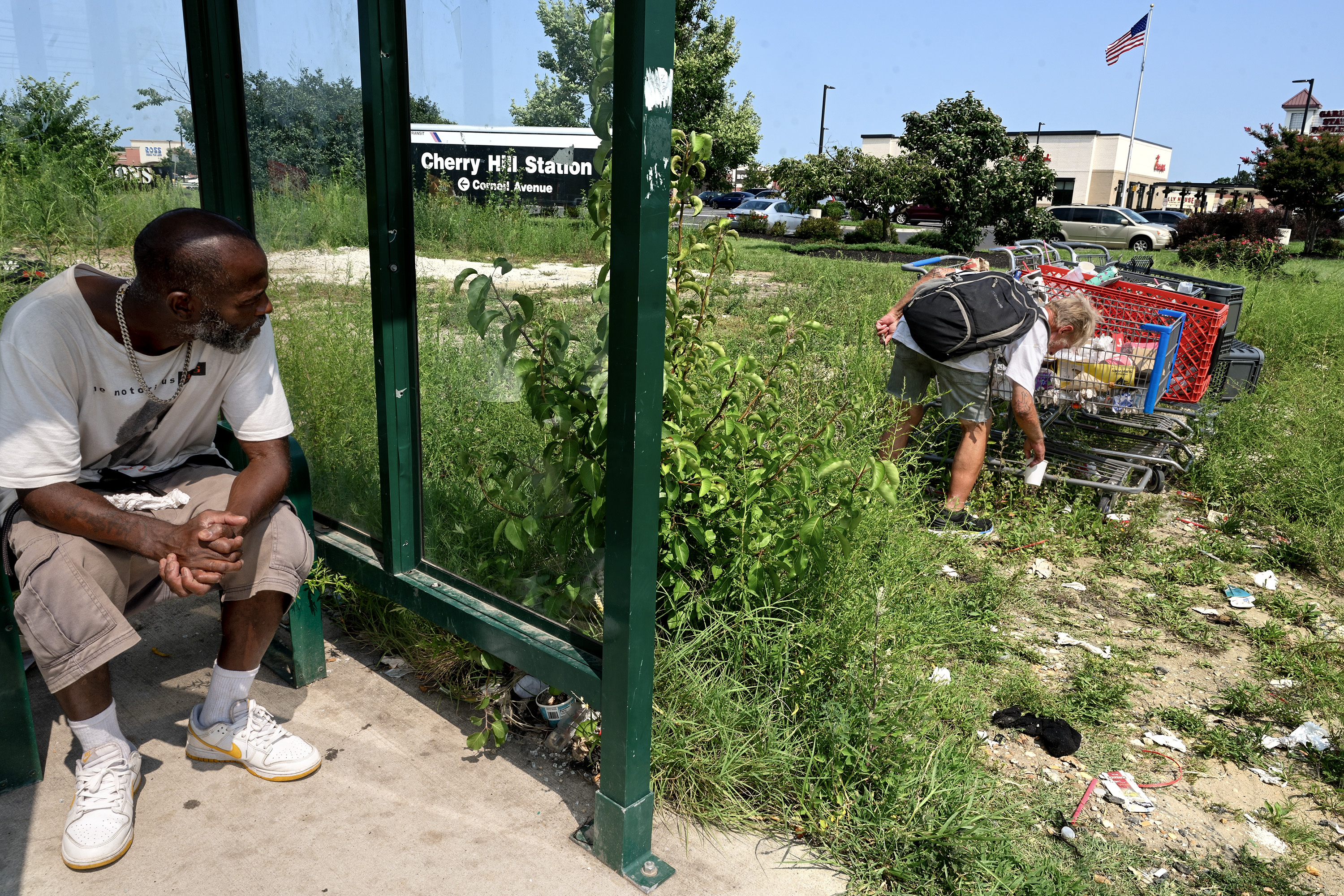
    Stalled in backed-up traffic for the ongoing construction on Rt. 70 in Cherry Hill last week, I glanced over at a bus shelter. I recalled years ago seeing riders standing in the slim shadow of a utility pole to get just a tiny bit of some shade from the sun while waiting for their bus.

    They waited next to a multimillion dollar retail development on the site of the former Garden State Racetrack. The mostly minimum wage workers who rode the bus to their jobs there didn’t even have a bench to sit on — let alone relief from the elements while waiting to go home. Back then I photographed commuters sitting on overturned shopping carts and tried to interest an editorial writer to take up their cause.

    Eventually, a bench was put there, and a few years later a shelter was installed. But as I sat in my car the other day, it still didn’t look right. I turned into the shopping center and walked over.

    Wayne Peters picks up trash while waiting for a bus with Bobby White.Tom Gralish / Staff Photographer

    Wayne Peters tells me he’s been taking NJ Transit’s 406 bus to and from Camden for about two years, and says this stop has “gotta be the worst in the state.” He says he always picks up trash when he’s there, and adds more to the piles already in the shopping carts that serve as receptacles.

    Fellow rider Bobby White added, “You’d think something in Cherry Hill would be better. How hard would it be to put a trash can here?” Before their bus arrives, Peters, trying to be positive about the shelter, reminds him “They fixed a broken window once.”

    Another thing about revisiting so many corners of our region is it becomes easy to think I’ve seen it all. And then I hear about a place I didn’t know anything about.

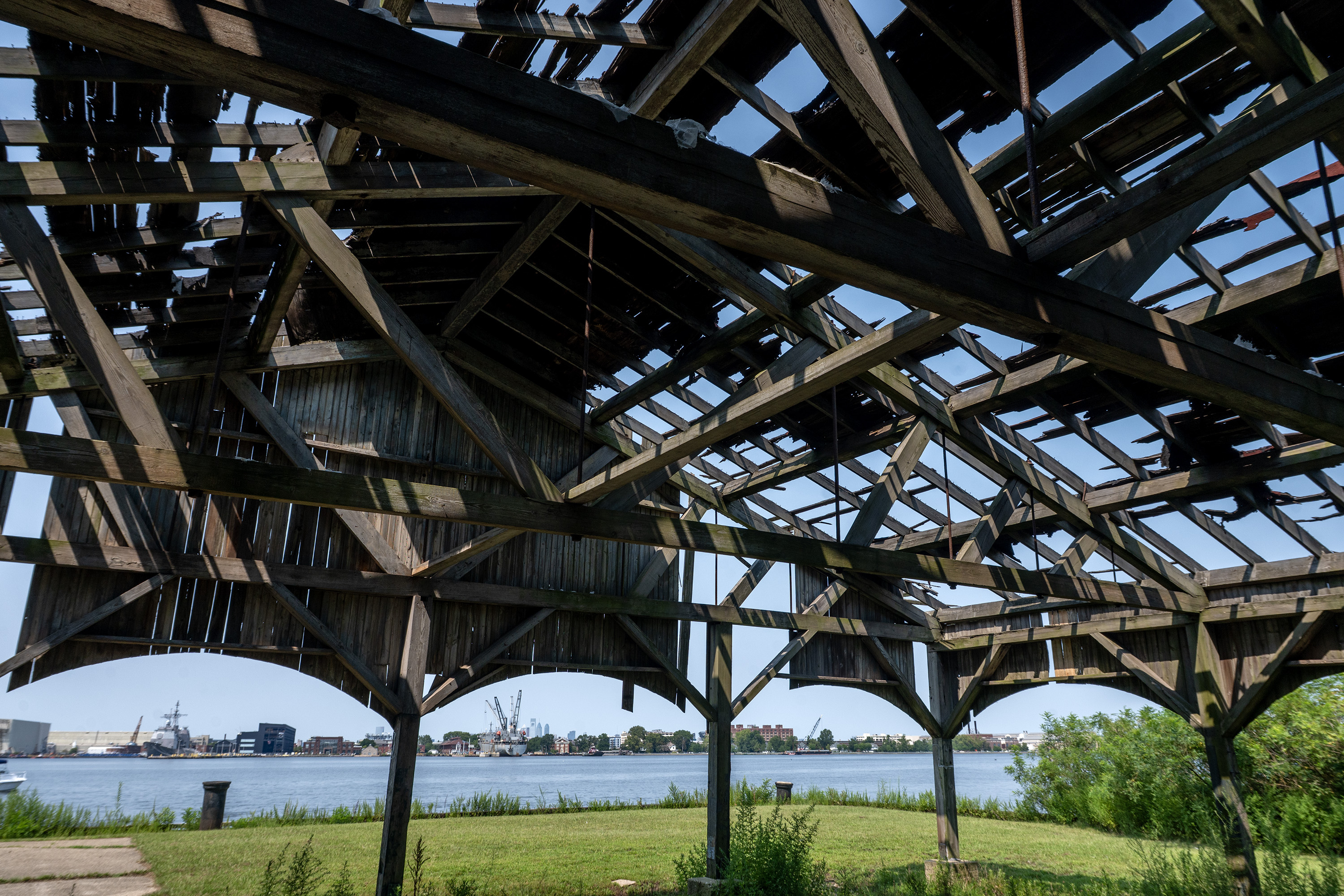
    A semi-retired friend from Bucks County and her friend try to take weekly drives every Thursday they call “Highways of History.” Last week she texted me some photos saying “guess where we are.”

    My photo of an old wharf and pavilion on the Delaware River Wednesday, Aug. 12, 2026. The Nary Yard in Philadelphia is across the river.Tom Gralish / Staff Photographer

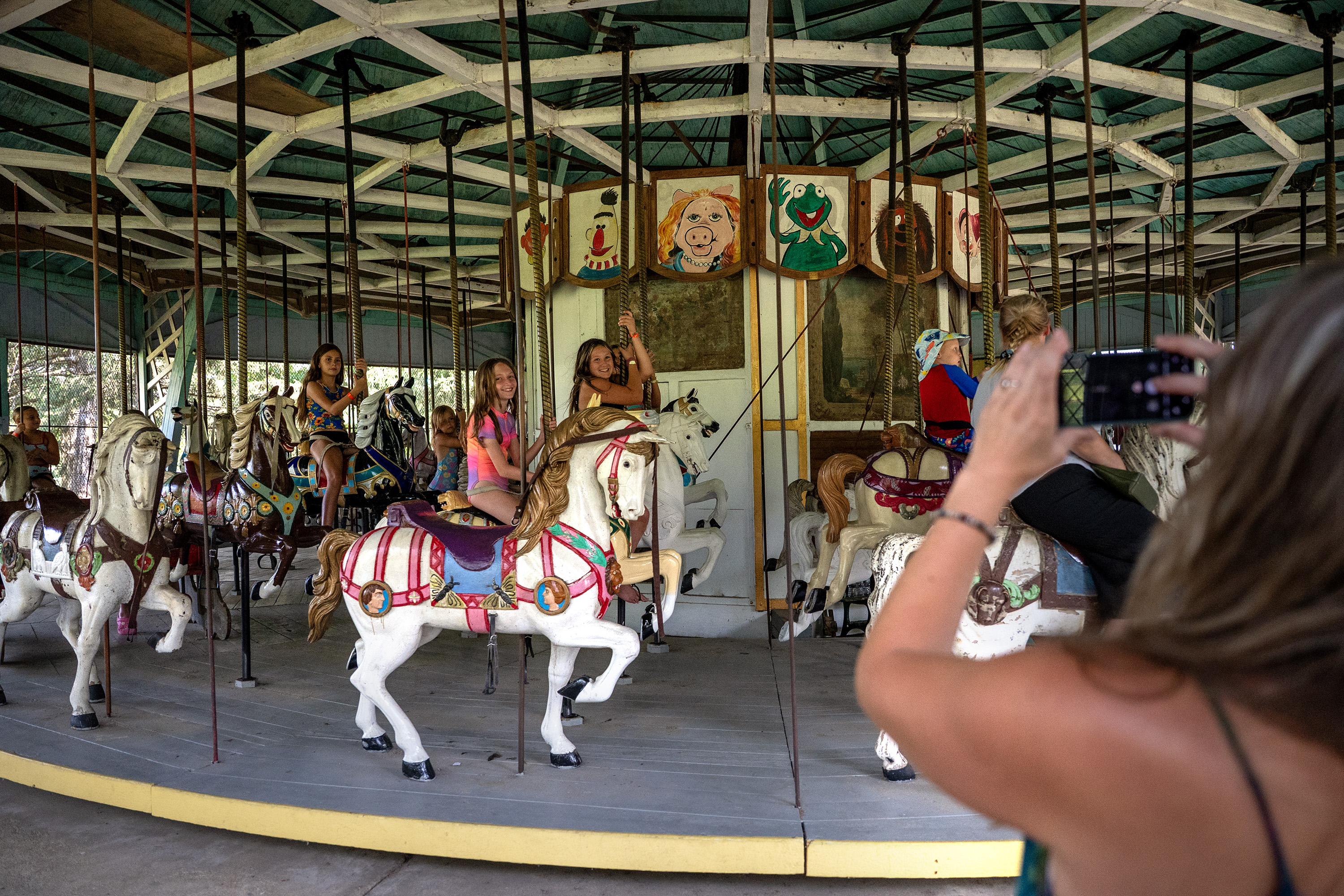
    Now in all my years of being like a UPS, DoorDash, or Lyft driver I had never been to the place in her pictures. I could tell from her other stops that she was nearby, which made it even more mysterious. There was a carousel and other things for kids, like a smaller version of the giant covered wooden slide I’d been to at Smith Memorial Playground & Playhouse in Philadelphia’s Fairmount Park.

    Just like the well-known Philly playground that is considered a childhood rite of passage, a New Jersey version has been around for well over a century and when she told me it was only twenty minutes from my house I was completely gobsmacked.

    Not only had I never even heard of the place as a journalist, but it never even entered my consciousness during those years when my wife and I were constantly googling “things to do with a toddler” finding ways to keep our kids — and ourselves — entertained and out of the house.

    She told the me her father took the ferry there from Penn Treaty Park in Fishtown and “spent many a happy day along with hundreds of other poor kids in the 1930s for free soup and crackers and a carefree day.”

    It’s called Soupy Island. It was founded in 1877 on an island in the Delaware River by the Sanitarium Association of Philadelphia, a group of doctors who wanted to help sick city kids with tuberculosis recover with fresh air, playtime, and that free soup. When the Delaware was dredged a few years later and the island was wiped out, the camp moved to the mainland, on the Jersey banks of the river.

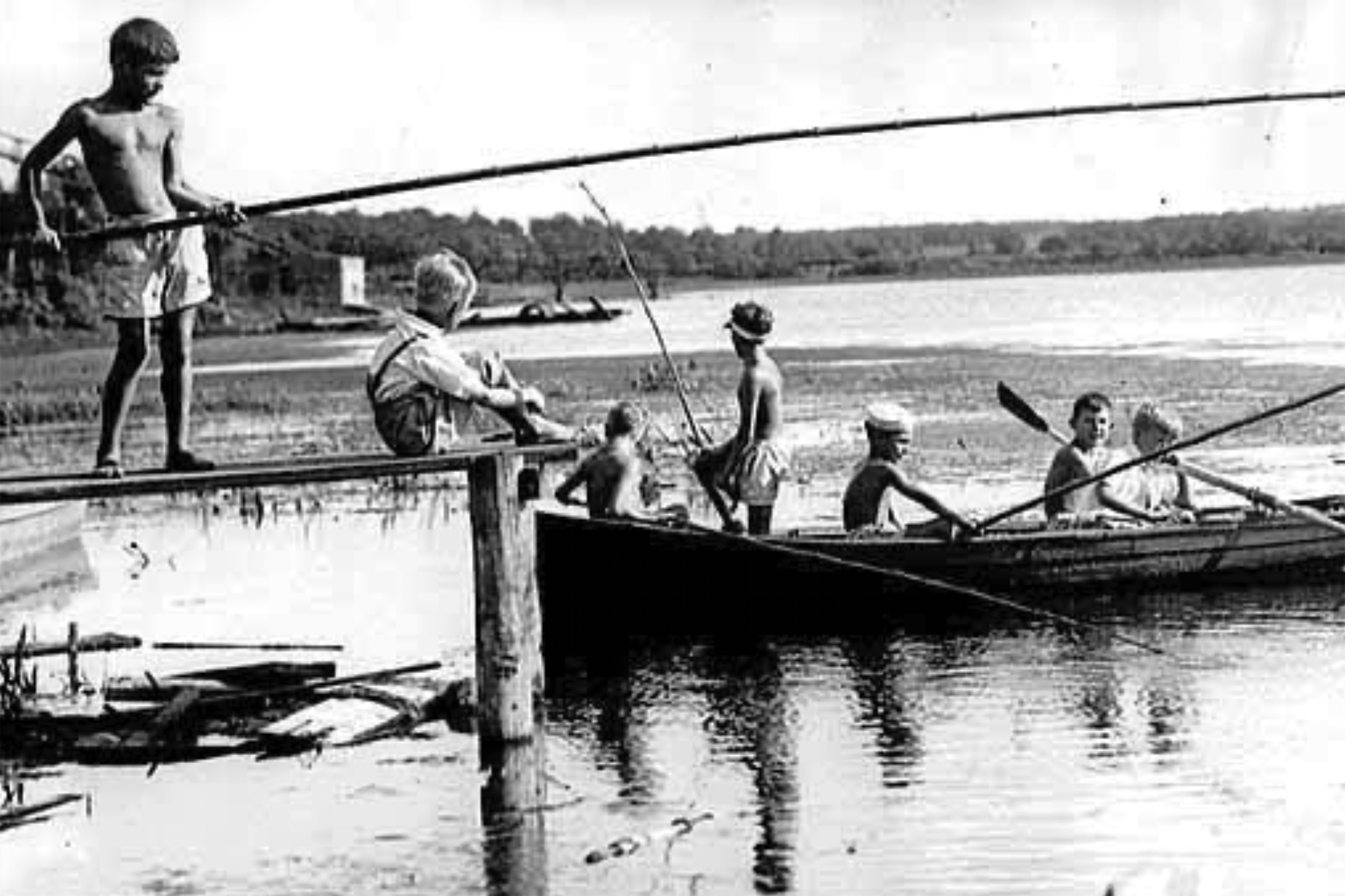
    My love of history was sparked and I could not believe the connections. My own father, growing up in St. Paul, Minnesota, was sent away every summer to the “Prev.” He shared many great memories with me of learning how to swim and fish at a preventorium on a lake.

    Boys fishing at the Children’s Preventorium on Lake Owasso near Shoreview, Minnesota in the 1930s.Minnesota Historical Society

    As its name implies, it was designed to halt tuberculosis among children by getting them away from their crowded, mostly immigrant inner-city neighborhoods and out to the country.

    I spent the weekend digging around and reading everything I could to learn all about Soupy Island, amazed to see The Inquirer had done a number of stories about it, even in the years I’d lived here (kids were still coming over by ferry from Penn Treaty well into the 1980s.)

    An original 1930s German-made Ferrari-Heyn carousel at Soupy Island.Tom Gralish / Staff Photographer

    Seeing that it was closing up for the summer, I planned to reach out the caretaker on Monday to go make pictures. That’s when I learned my colleague, reporter Sarah Nicell, was visiting on their penultimate day of the season. She grew up in South Jersey, and she had never heard of it before either.

    I made sure I got the photo assignment.

    Since 1998 a black-and-white photo has appeared every Monday in staff photographer Tom Gralish’s “Scene Through the Lens” photo column in the print editions of The Inquirer’s local news section. Here are the most recent, in color:
    » SEE MORE: Archived columns and Twenty years of a photo column.