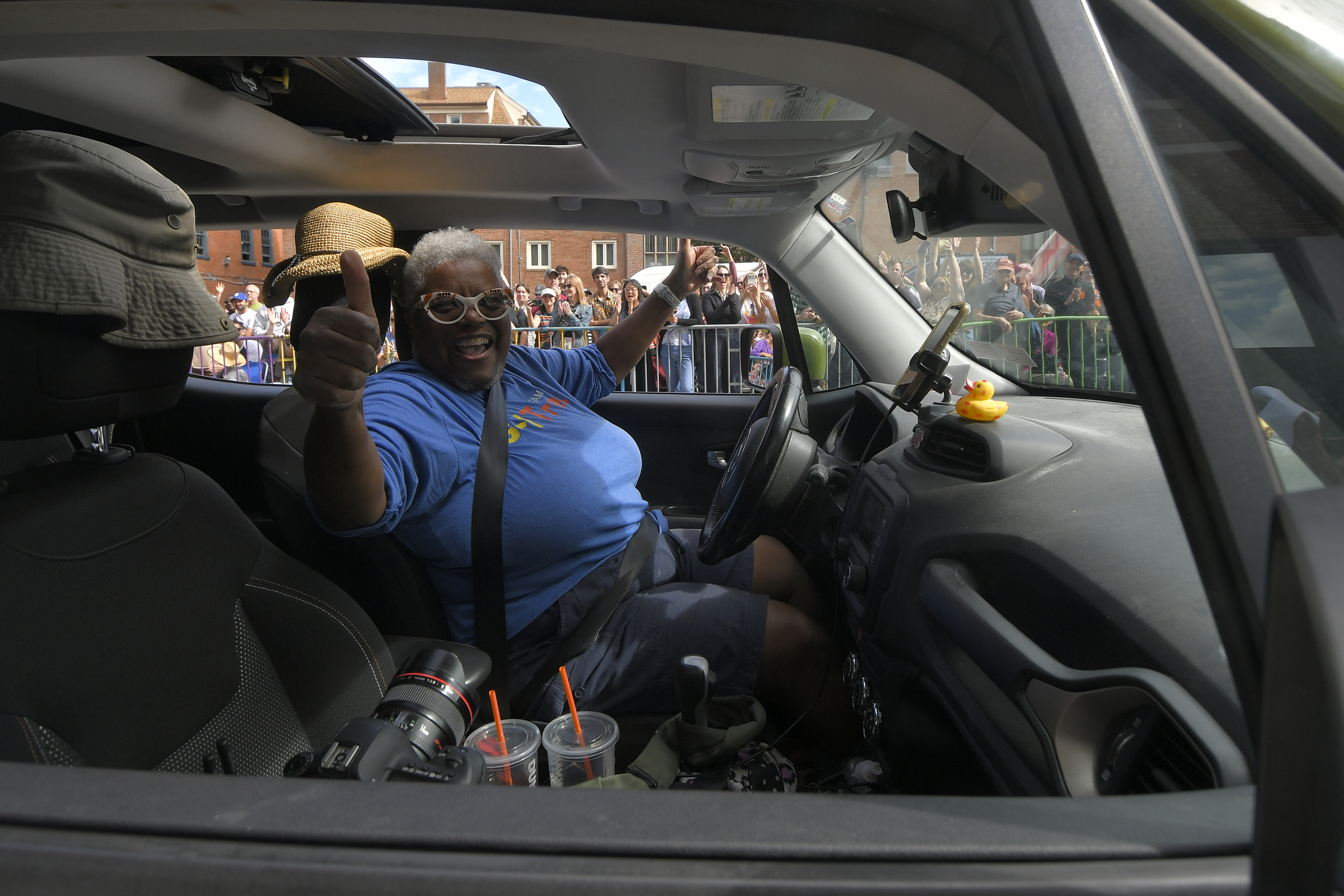
There was no curbing Philadelphians’ enthusiasm at the first Philadelphia Parallel Parking Association (PPPA) Championship at Headhouse Plaza in Society Hill on Saturday, as hundreds of revved-up spectators gathered to watch 14 competitors put themselves into a tight spot.
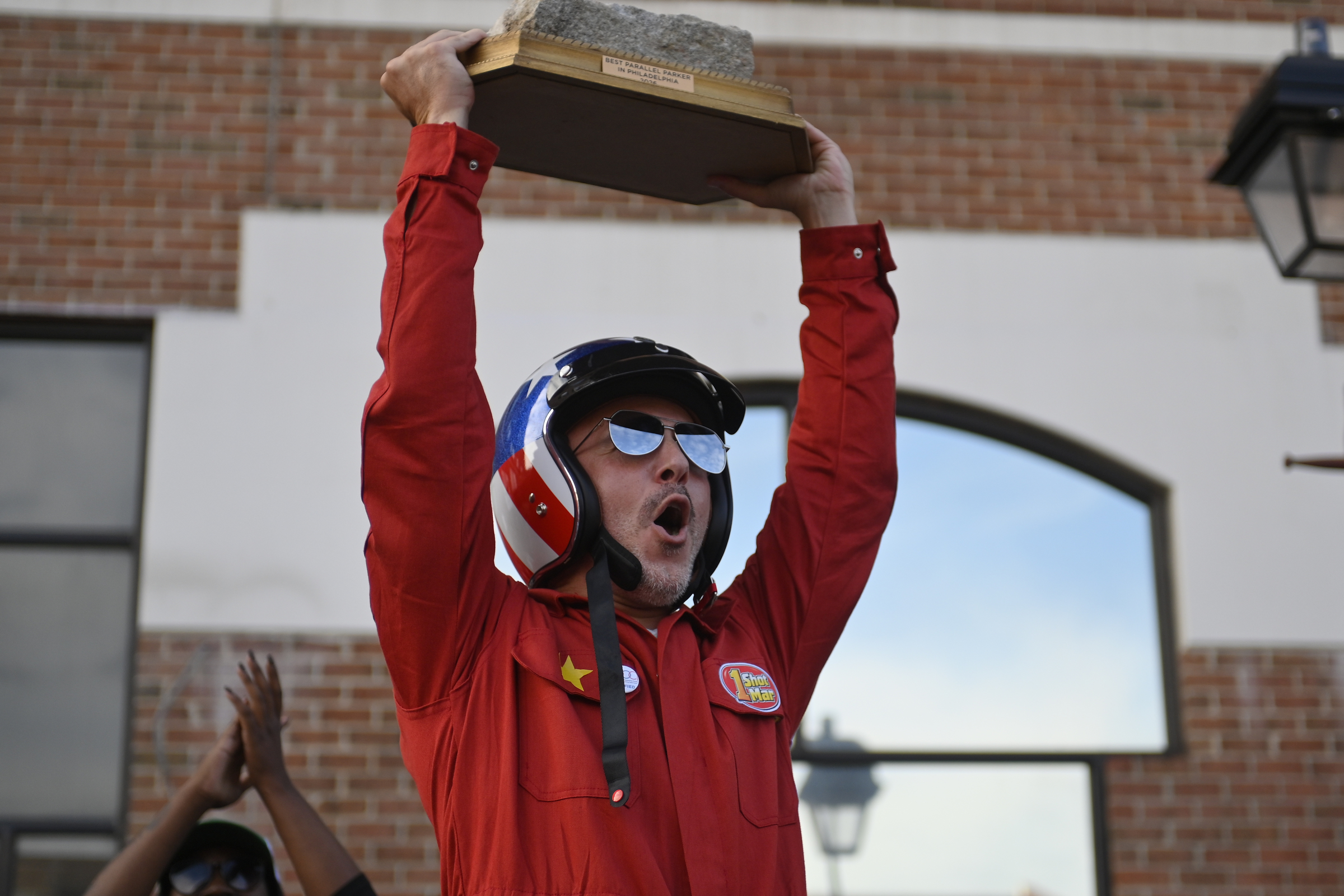
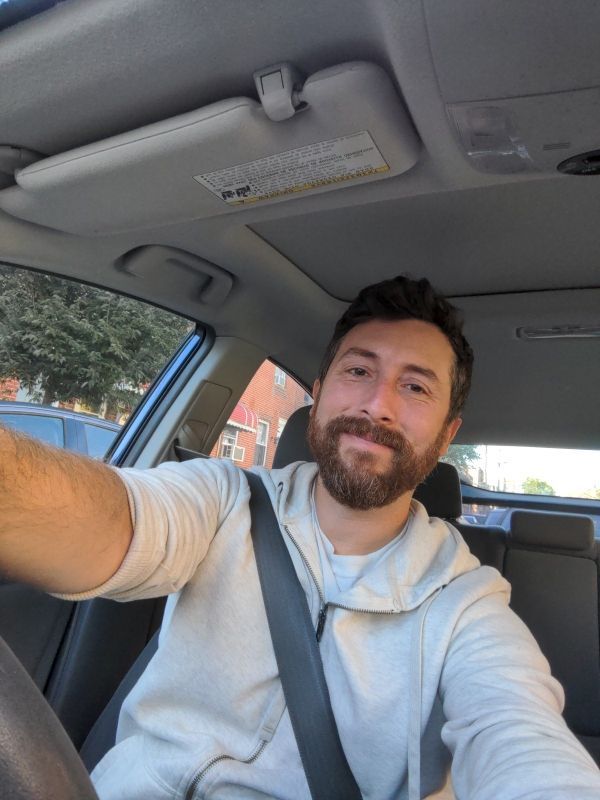
After several rounds, one of which involved dodging things like a spontaneous Eagles fan celebration and a snow-shoveling citizen using a folding chair for savesies, Mario “One-Shot Mar” Zucca of West Mount Airy was crowned the Best Parallel Parker in Philadelphia.
“Total bliss,” Zucca said, of the feeling that washed over him when he won the title. “It was amazing.”
Mario Zucca wins the first Parallel Parking Championship at Headhouse Plaza.Bastiaan Slabbers/ For the Inquirer
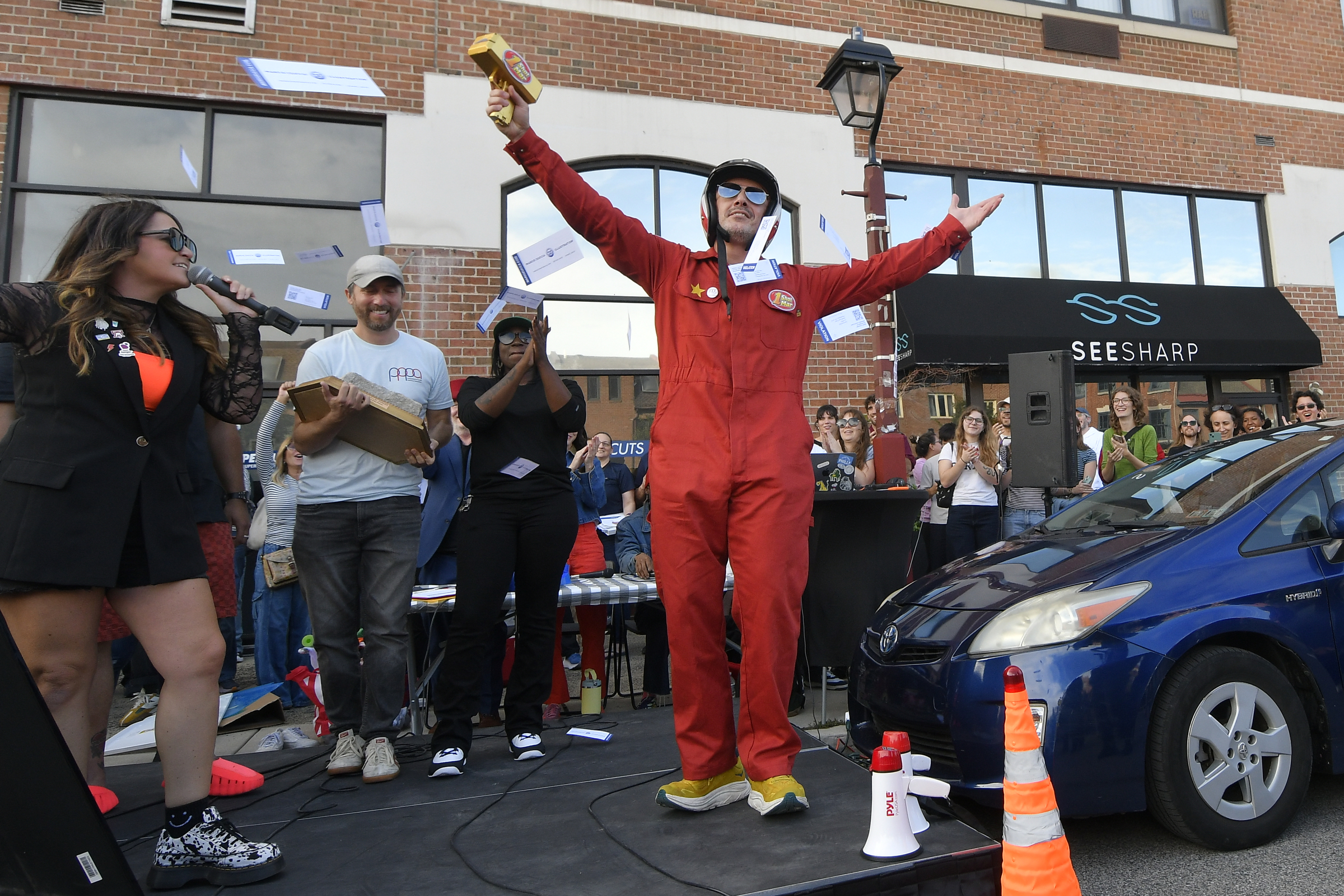
While his win had a lot to do with skill, it also had a lot to do with flair. Zucca, who is an artist and illustrator, donned a red stuntman suit and, just prior to competing in the final round, opened up the hatchback of his 2012 Mazda and out popped a bunch of balloons, including a gold “1,” which remained tied to his car as he parked. After revealing the balloons, he then ran up and down the crowd with a money gun shooting fake Philadelphia Parking Authority (PPA) traffic tickets with his nickname on it into the audience.
For winning the title, Zucca received bragging rights for a year, a trophy with a piece of a curb on it, and $76 to pay for his next parking ticket.
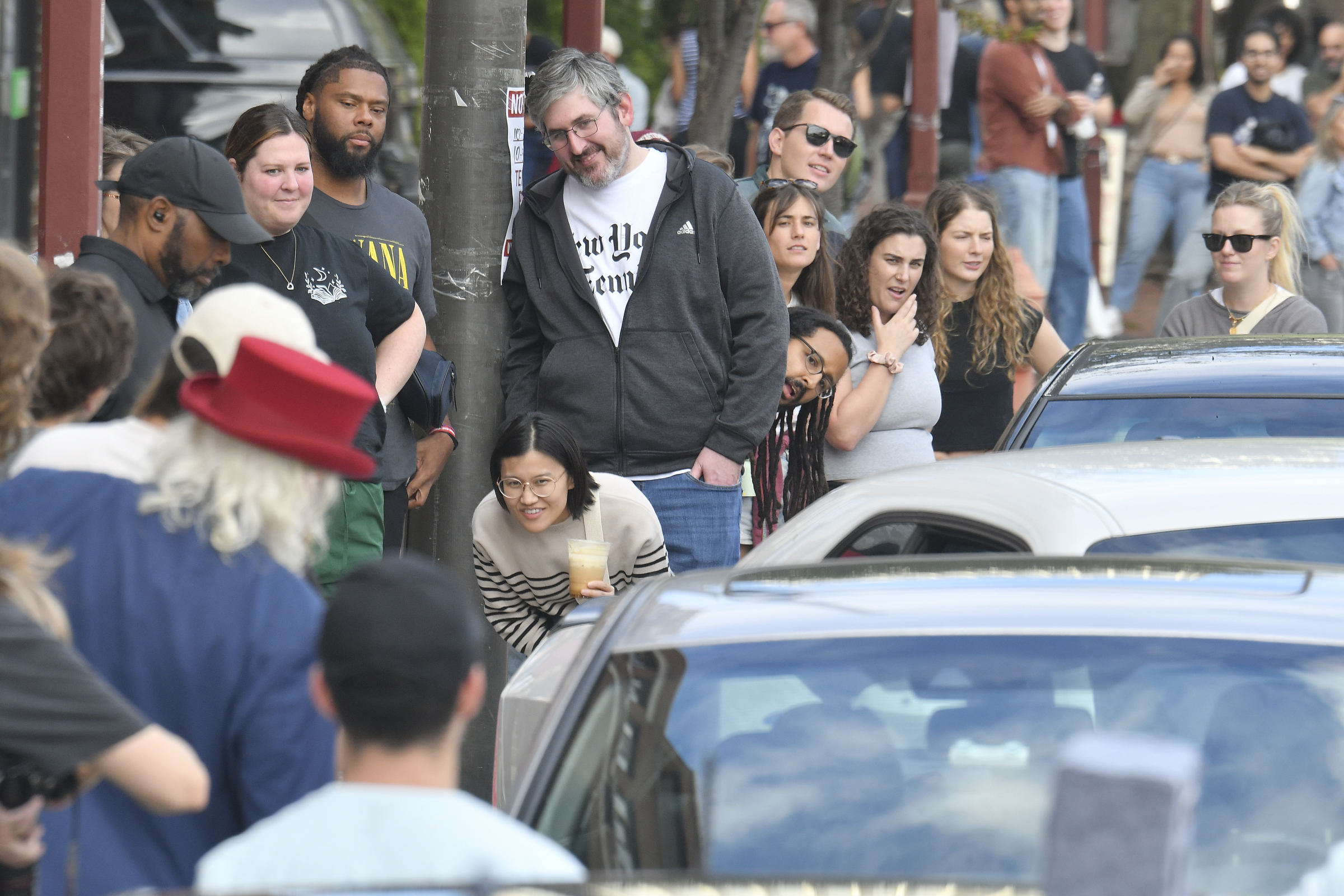
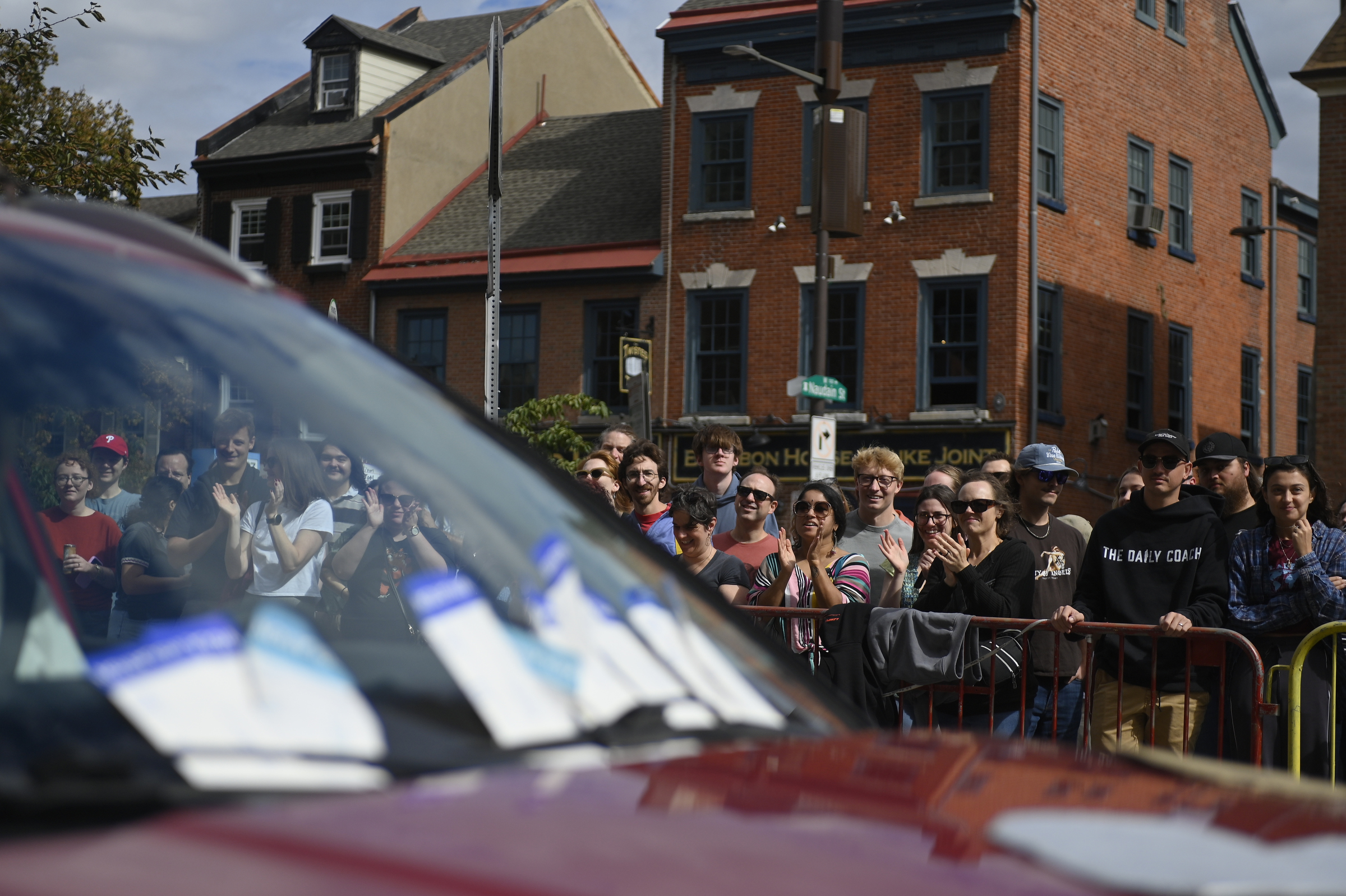
The crowd looks on as drivers compete in the first Parallel Parking Championship at Headhouse Plaza on Saturday.Bastiaan Slabbers/ For the Inquirer
Adam Wodka, self-appointed commissioner of the newly formed PPPA, which is not affiliated with the PPA, also made a surprise announcement at the start of the championship that the PPA had reached out to him and promised to give the top three finalists free parking in any Center City garage for the month of October.
Rounding out the finalists were LaTasha “Tasha” Hall of Northeast Philly, a heavy equipment operator who works at the Delaware River Port Authority, and Shafir “Pirate One Shot” Mondal of Norris Square, whose dad owns Mondal Driving School.
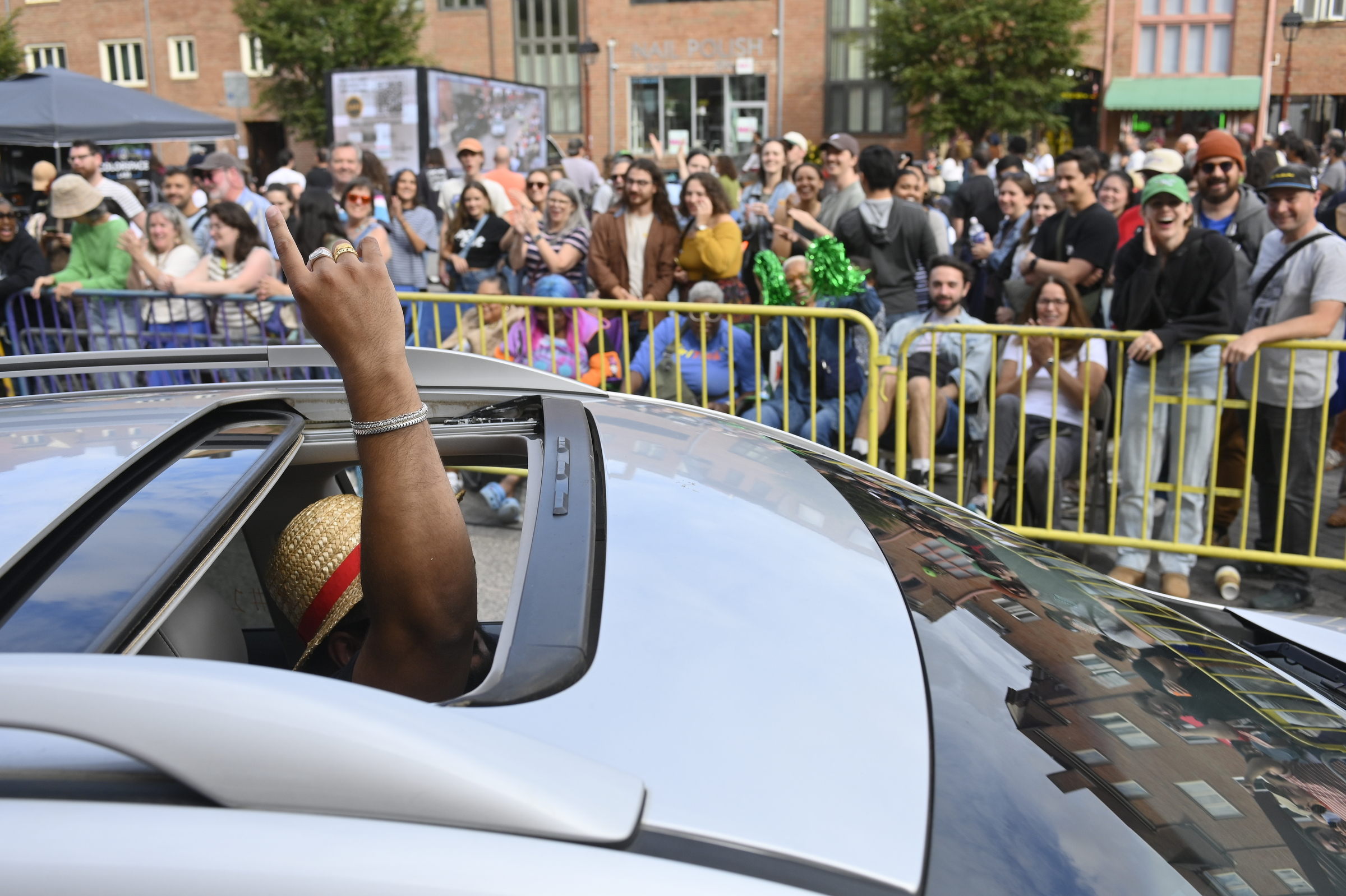
Mondal, who outfitted his car with decals from the manga series One Piece and wore a Monkey D. Luffy hat, said even though he didn’t win, the experience was worth it.
The crowd reacts as Shafir “Pirate One Shot” Mondal sticks his hands through the sunroof of his car after competing in the first Philadelphia Parallel Parking Championship at Headhouse Plaza Saturday. Bastiaan Slabbers/ For the Inquirer
“I feel great. I loved the energy that people had for parallel parking and the love they had for Philadelphians,” he said.
Nearly 900 people applied for the first PPPA Championship, which Wodka created earlier this year to promote excellence in parallel parking. Ten finalists were chosen by PPPA’s executive board, which is made up of seven of Wodka’s friends, and five were chosen by a popular vote online.
In classic Philly fashion, one of the competitors didn’t show up (he’s probably still circling the block looking for a space) and most of those who did participate didn’t use their turn signals.
Cynthia Malachi White, aka “Cynthia Strawberry,” of Mount Airy, competes in the first-ever Philadelphia Parallel Parking Championship at Headhouse Plaza on Saturday.Bastiaan Slabbers/ For the Inquirer
As DJ Elevator Machine Room pumped music about cars and emcee Marisa Magnatta and referee Rebekah Rickards pumped up the crowd, competitors faced off in their own vehicles without using their backup cameras in three separate categories:
One shot: Get closest to the curb in one attempt.
Tight squeeze: With 18 inches of clearance, park closest to the curb using the least amount of moves.
Under duress: Park as fast as you can while faced with distractions.
The tight squeeze category was definitely the most challenging, with many competitors giving more than just a light tap to the cars in front and behind them. Those vehicles were owned by Wodka and his partner, who offered them up as a sacrifice.
Under duress was a crowd-favorite category in which drivers had to try to ignore any number of things they might encounter on a Philly road, including a Mummers parade, a spontaneous fan celebration, a trash can fire, Philly Elmo and his drum line, a Ben Franklin impersonator, and, of course, a woman with a folding chair and a serious case of the savesies.
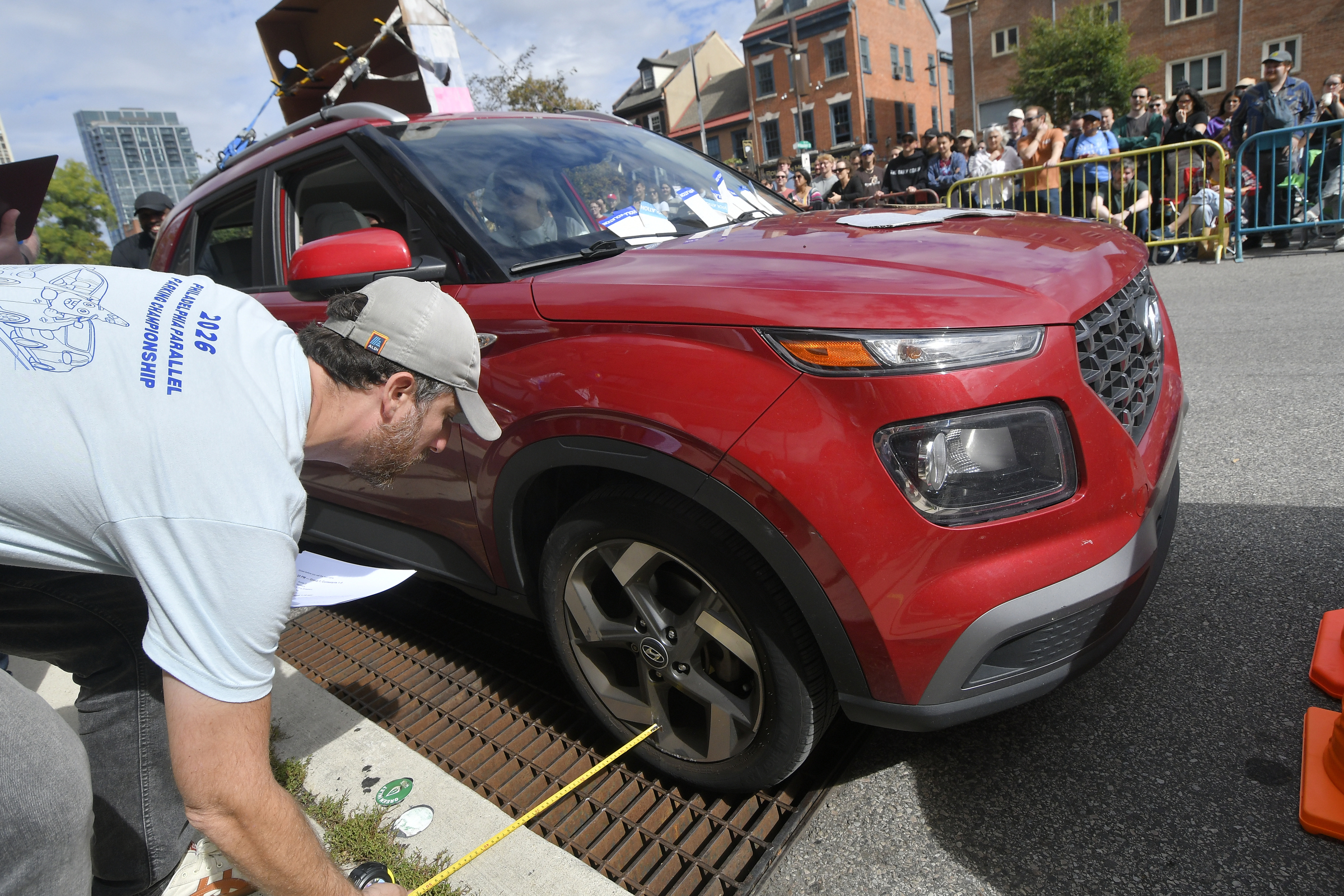
Philadelphia Parallel Parking Association Commissioner Adam Wodka measures a competitor’s distance from the curb during the PPPA Championship Saturday. Bastiaan Slabbers/ For the Inquirer
Competitors were given points based on their closeness to the curb and how many moves they made. The three judges — pub owner Fergus “Fergie” Carey, viral crossing guard Jamele Ransom, and comedian and social media influencer Betsy Kenney — were also able to hand out three points every round to whomever they chose to influence the scores. The top three scorers then went on to the final round, where the winner was chosen by the judges.
“I always say parking is made worse with an audience and this is one hell of an audience,” Carey said.
The crowd of backseat drivers came with kids, dogs, and posters, and residents around the plaza came out on their balconies and rooftops to watch the spectacle.
Philadelphia’s newest mascot also made his debut at the event. Parallel Pete is a giant orange traffic cone with fuzzy dice, rearview mirrors, and an unsettlingly anxious face.
Proceeds from a merchandise table went to Families for Safe Streets Greater Philadelphia, a program of the Bicycle Coalition of Greater Philadelphia.
The crowd reacts as a driver who has papered their windshield in parking tickets competes in the Philadelphia Parallel Parking Association Championship on Saturday at Headhouse Plaza. Bastiaan Slabbers/ For the Inquirer
While he made no promises, Wodka said he’d love nothing more than to have the championship become an annual event.
“I love the energy. I love that people had fun with it,” he said. “It’s tough out there and we all have stuff going on, so it was really great for a few hours to just celebrate and be silly and have fun.”
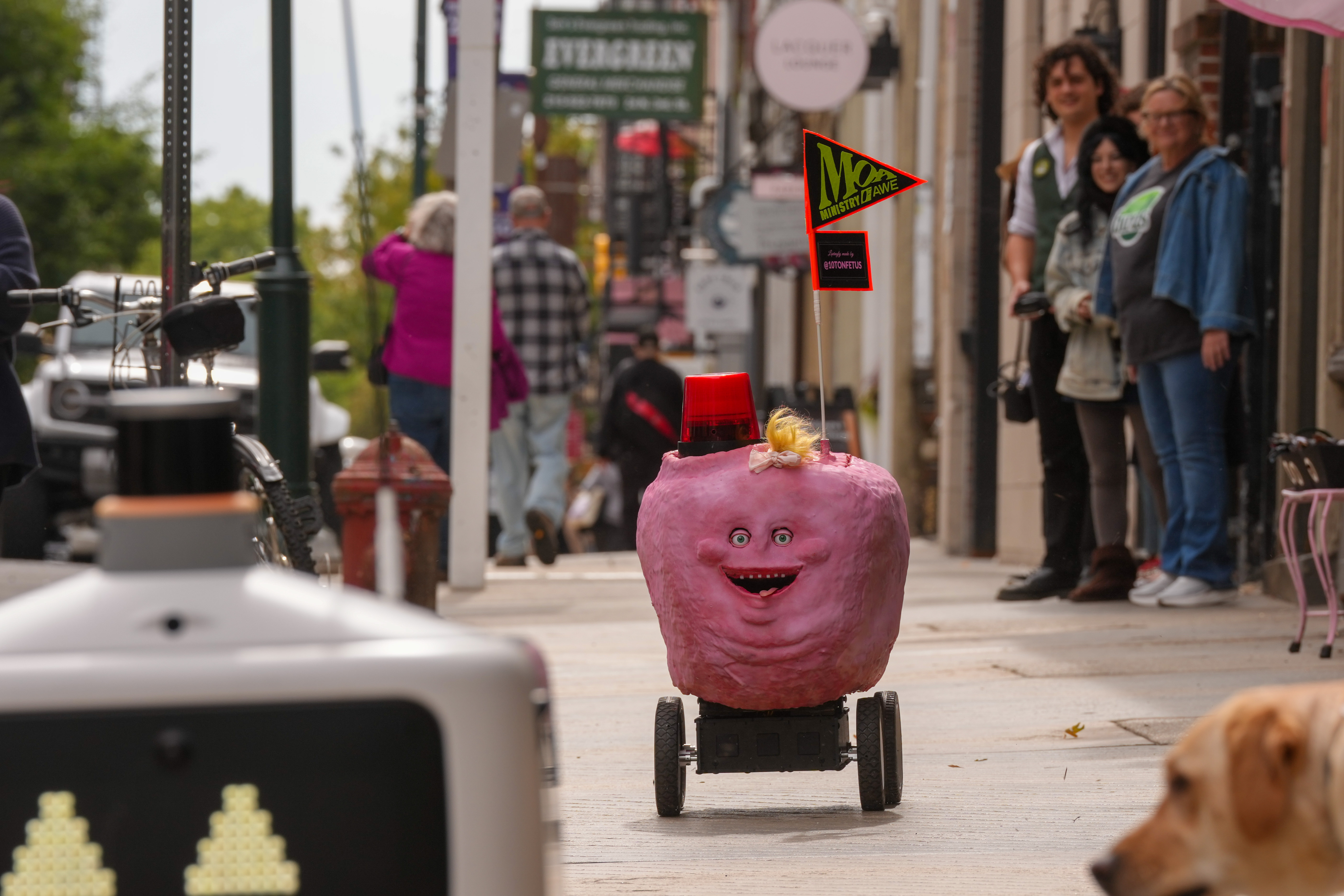
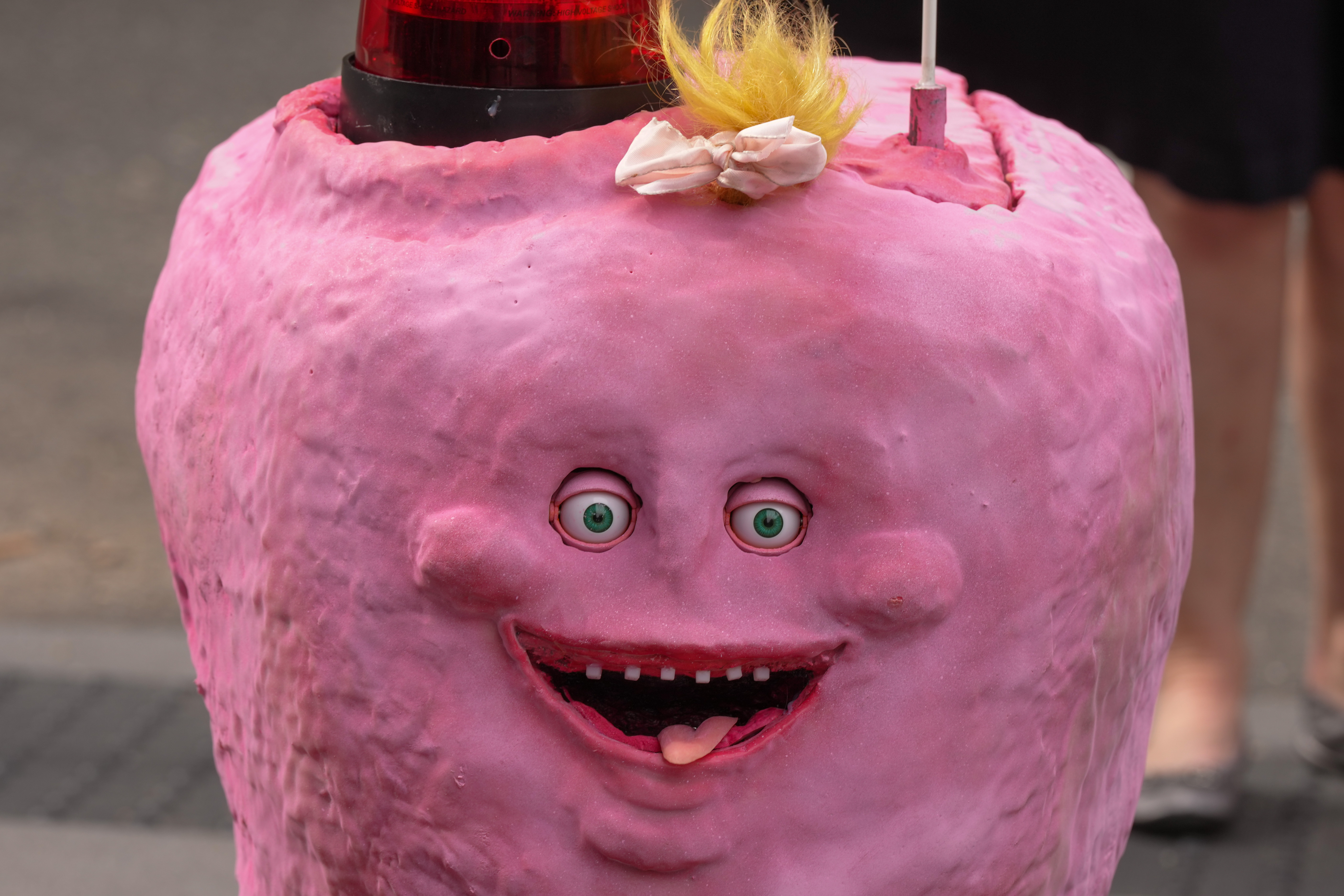
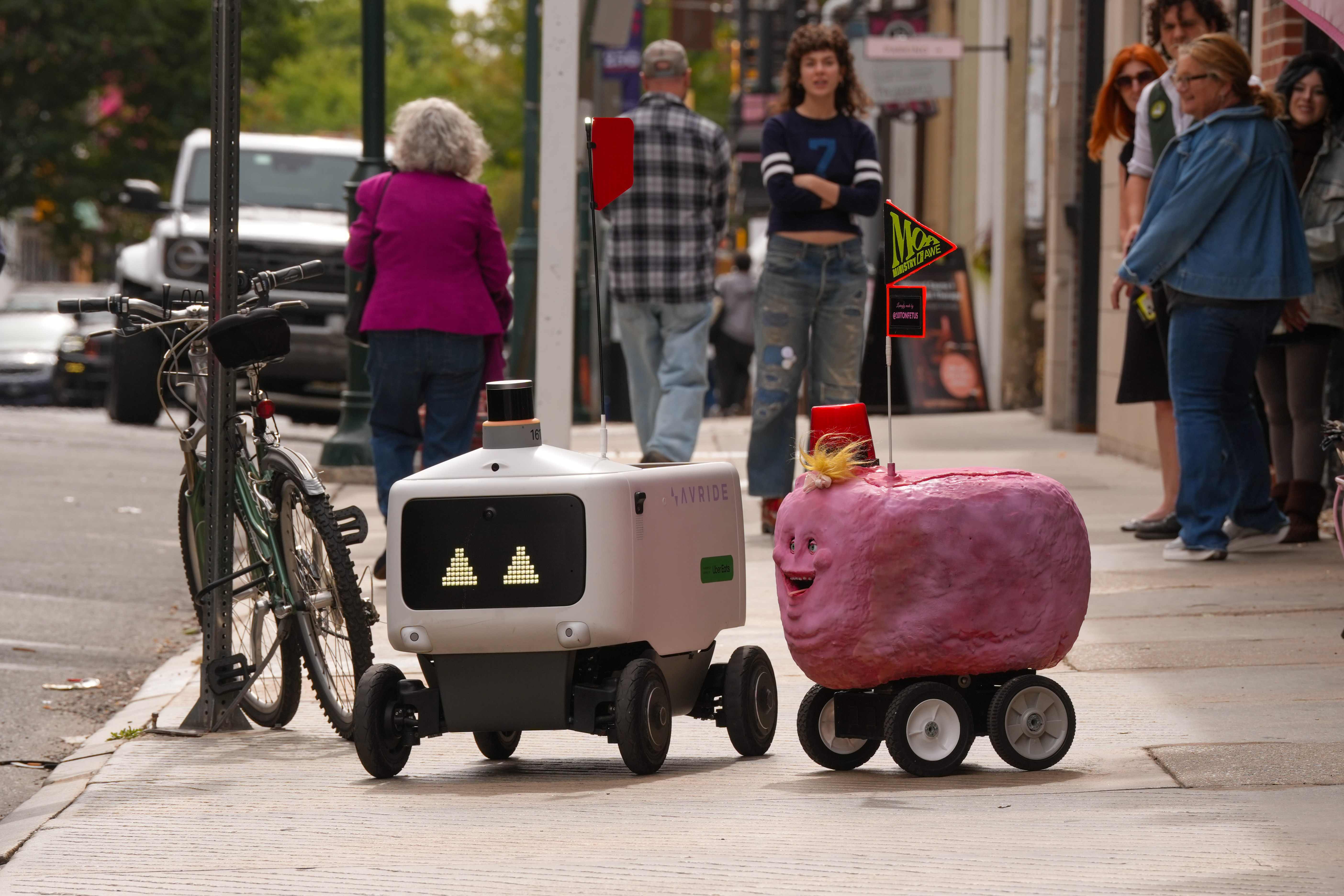
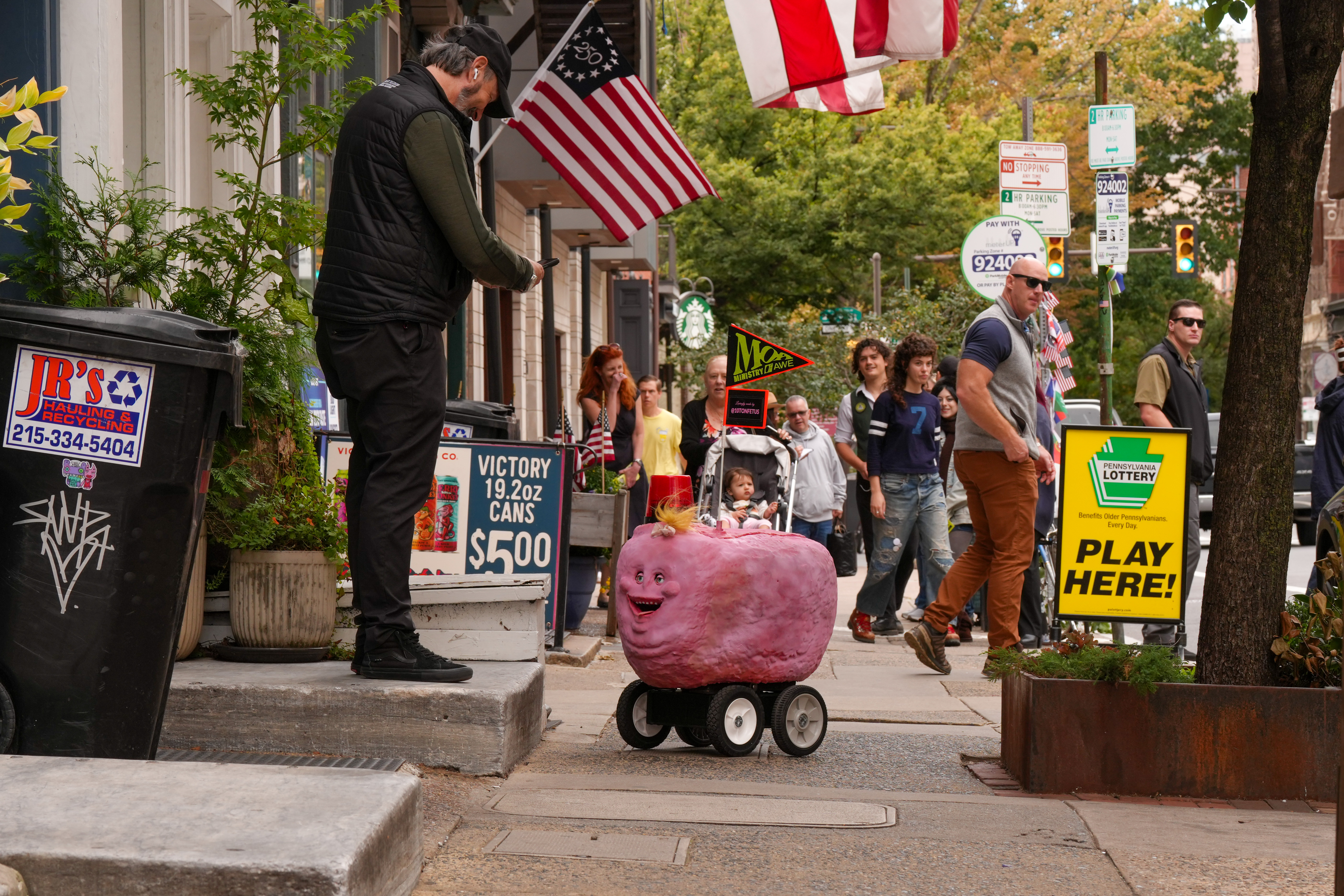
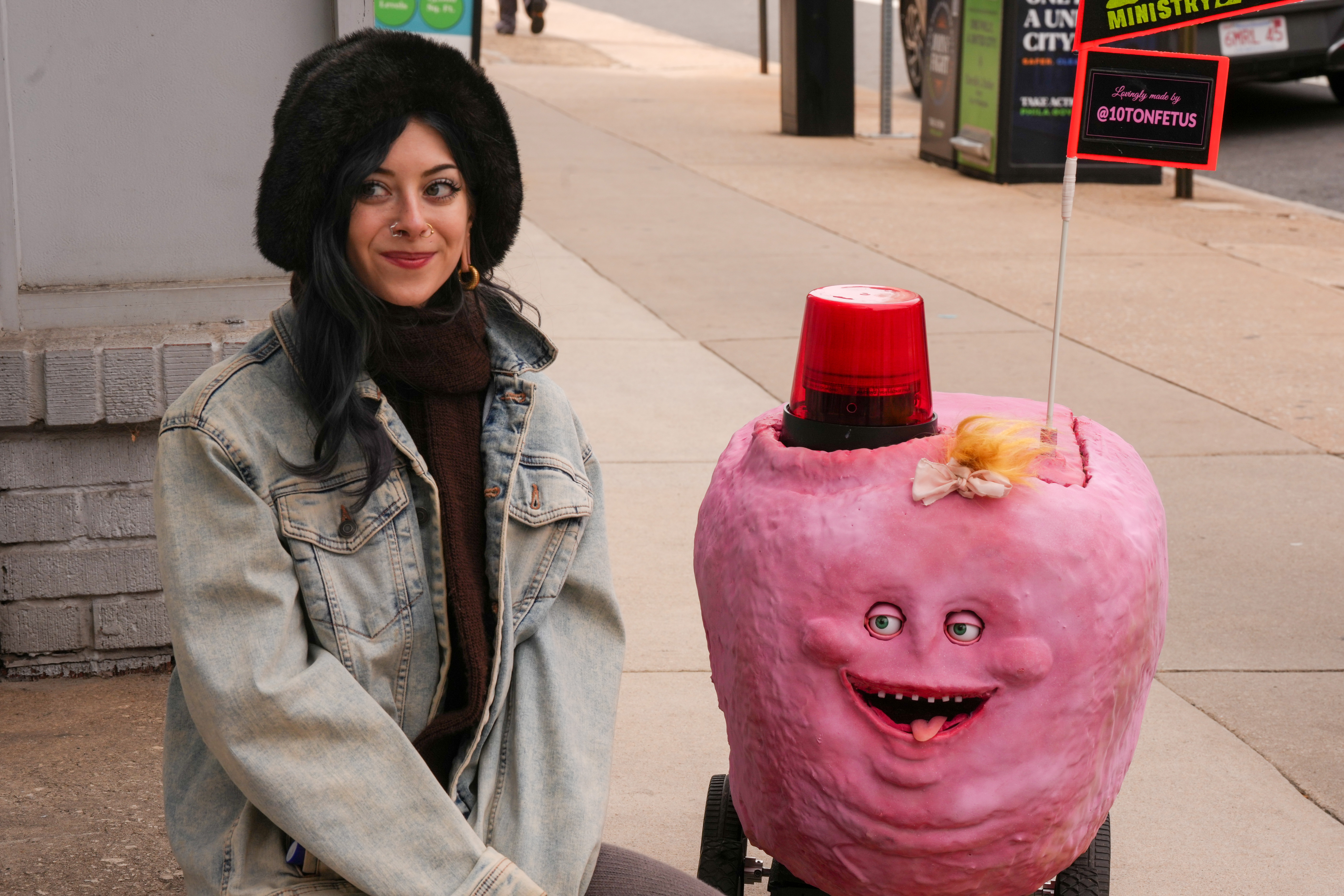
Orifice the Awebot rolled down the sidewalk across from the Betsy Ross House last Friday, striking joy, confusion, and mild terror in those who unexpectedly encountered her — and nobody expects to encounter a two-foot-tall, pink, potato-shaped robot with a dangling tongue, blue eyes, and a shock of blond hair.
As I trailed behind the little bot, I could hear people whisper and scream.
“Oh that’s adorable!”
“What did I just see?”
“It’s terrifying!”
Tourists on top of a double decker bus pointed at her. Philadelphians who didn’t have time for whatever this nonsense was steered clear. But after the initial shock of seeing Orifice wore off, most people smiled and laughed, like Justin Lutz of California.
Orifice the AwebotJessica Griffin / Staff Photographer
Lutz had already seen the Uber Eats robots on our sidewalks while visiting Philly and he immediately recognized that Orifice, despite being approximately the same size, was something quite different.
“I bet you Betsy Ross never thought a little robot would be scooting around in front of her house,” he said. “I love the personality and it’s super cool. We don’t even have these in California.”
I wanted to tell Lutz there’s a lot of great things we have in Philly they don’t have in California, like all four seasons and Gritty and the Phanatic, but I stopped short.
“Have a great time in our city,” I said, instead. “It’s just this weird here all the time!”
I was invited to follow Orifice around Old City with some folks from the Ministry of Awe (MoA), the interactive and immersive art installation created by Philly muralist Meg Saligman that’s housed in a 19th-century Old City bank.
The “Awebot” was born out of one of MoA’s community Co-Creation Nights as people were bouncing around ideas and discussing the Uber Eats robots that have become ubiquitous in Philly since they descended upon our city in March.
“We thought what if [robots] didn’t just bring things, what if they were used for purposes other than just delivery and business and commerce. Would that somehow let us reflect in a different way?” Saligman said.
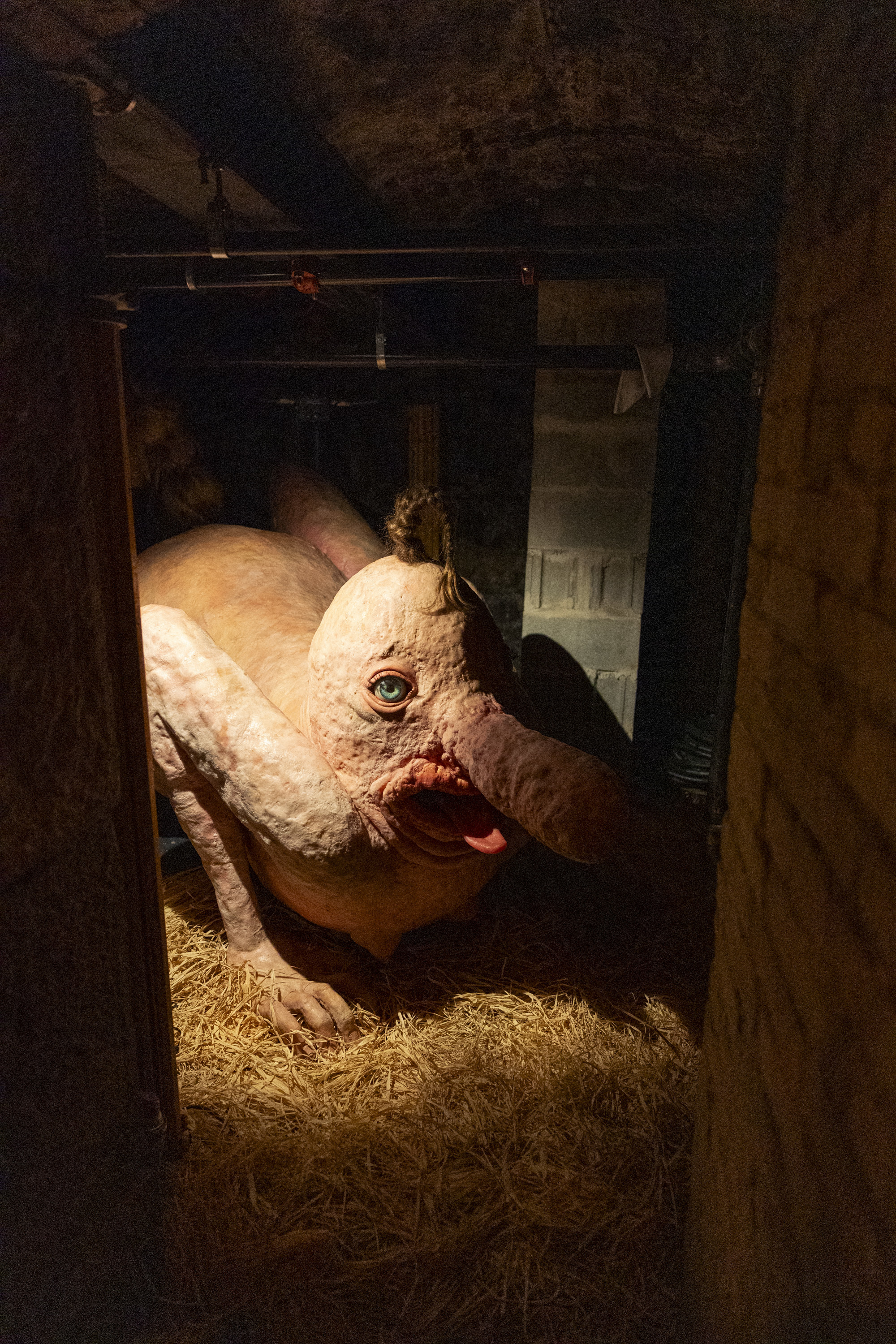
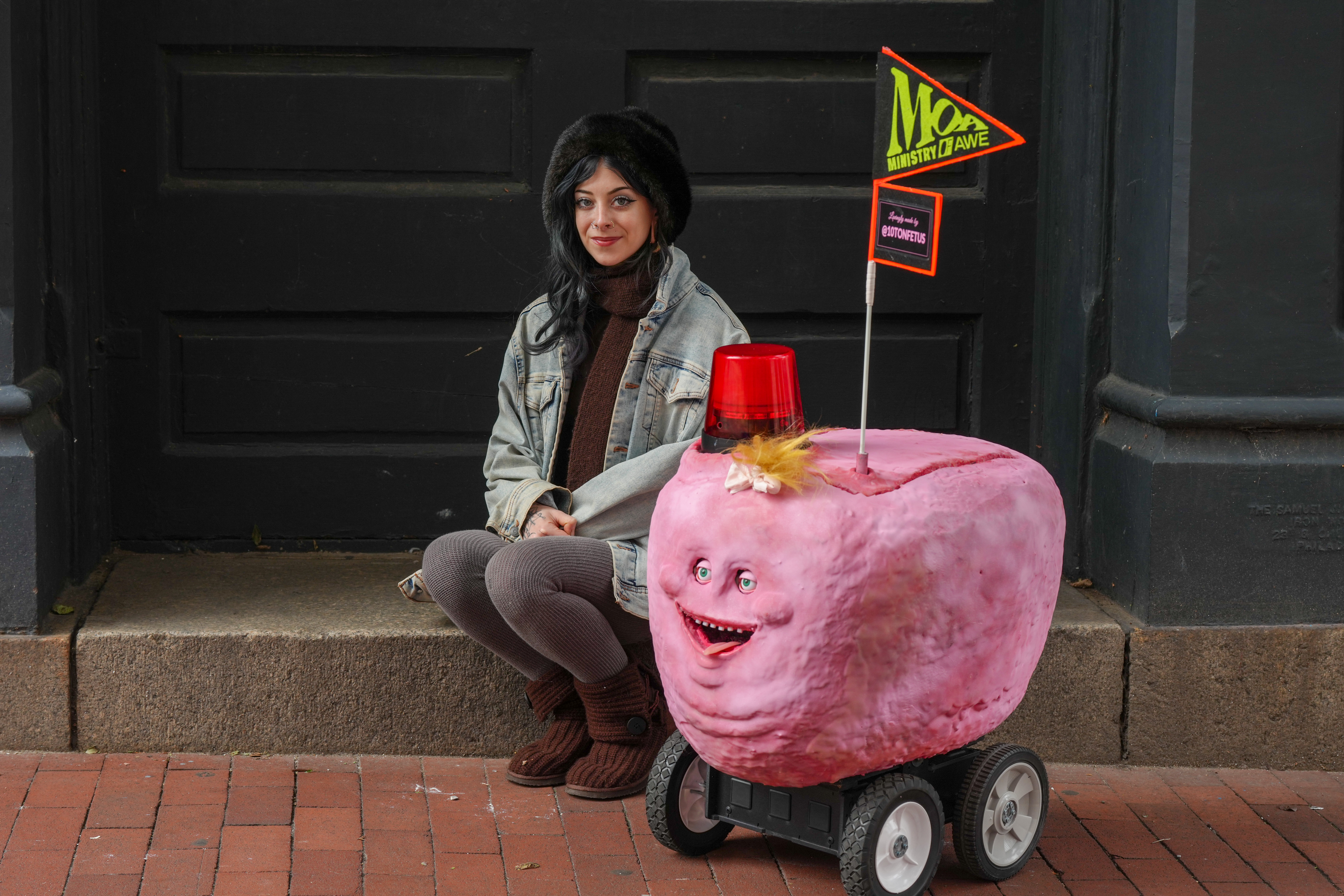
Artist Madison Polidoro (aka 10 Ton Fetus), a sculptor and metal fabricator whose human-animal-hybrid creatures like “Skin Horse” inhabit the bathrooms at MoA, brought Orifice to life. She’s affectionately known as the robot’s “mommy.”
“Skin Horse” is one of the sculptures from artist Madison Polidoro that inhabits the bathrooms at the Ministry of Awe. Tyger Williams / Staff Photographer
“What I find interesting about the Uber Eats robots is that they do create this kind of horror, this dystopian feeling in a lot of people,” Polidoro said. “So I was excited about the idea of making my own robot creature to sort of do an opposite thing where it could inspire something lighthearted and silly and fun and kind of magical.”
Polidoro fabricated Orifice’s base out of aluminum and left an empty vessel in the center, so it can carry things. She made the skin out of weatherproof urethane rubber and included an orifice on the robot’s rear end, which is where it gets its name.
Orifice is driven via a wireless remote but the range of the controller is quite far (at least half a city block), so the driver can remain pretty inconspicuous. The Awebot’s large blue eyes blink independently at intervals, but they can also be controlled by the operator. The dangling tongue, however, remains permanently out.
Artist Madison Polidoro with her creation, Orifice the Awebot.Jessica Griffin / Staff Photographer
“She’s a sweetie pie who’s curious and likes to explore and try new things. And she loves attention. She’s kind of like a dog,” Polidoro said of her creation.
‘They’re gonna fight!’
As a team of folks from MoA, including Saligman and Polidoro, set out with Orifice in Old City last Friday, they didn’t even get a few hundred feet down the block before people stopped to pet the Awebot and ask questions.
“Is this a good hair day or a bad day for it?” a man in an Eagles jersey asked.
“Does it poop?” another guy wondered.
He was assured it did not.
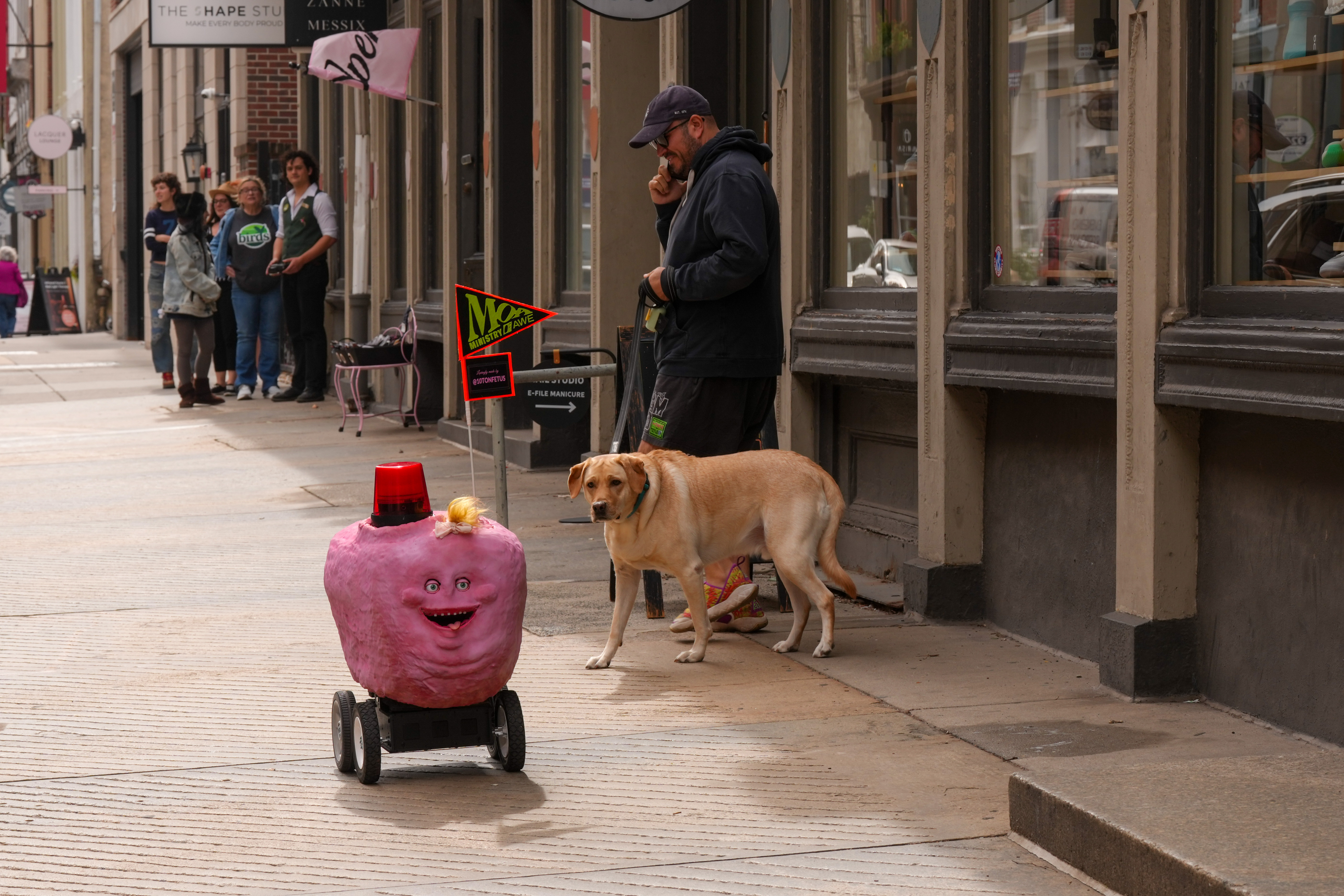
This yellow Labrador retriever was very dubious of Orifice the Awebot. Jessica Griffin / Staff Photographer
As Orifice rolled down the sidewalk, she scared a few dogs, people pulled over their cars to see her, and others ran across the street to take her picture.
An Xfinity van driver sitting in his vehicle looked stunned as we passed. Then we made eye contact, he shook his head, I shrugged my shoulders, and were shared an “only in Philly” laugh.
At one point, Saligman spotted an Uber Eats robot down the sidewalk and ran to stand in front of it and stop it so Orifice could meet it face-to-face.
“They’re gonna fight!” Polidoro said.
Alas, the meeting did not result in a new kind of BattleBots, but it was clear that at one point, a human must have taken control of the Uber Eats robot, because it skillfully maneuvered its way around Orifice and Saligman. I can only imagine what the person on the other end of that camera thought.
An Uber Eats robot rudely ignores Orifice the Awebot on the sidewalks of Old City. Jessica Griffin / Staff Photographer
All the while, MoA staffer Jordan Rampulla — who served as Orifice’s “conduit to humanity” — encouraged people to interact with the robot, handed them fliers for the MoA, and told them to click a QR code on an MoA flag attached to the robot, which leads to a landing page about the creation on the MoA website.
Orifice is not just MoA’s creative response to the dystopian Uber Eats robots, it’s also a inventive marketing tactic. While some people we met had heard of MoA, others had not, and they seemed interested in learning more about the experience after meeting its Awebot ambassador.
‘Bringing delight and surprise’
As the little pink robot passed by the little pink Tarte’s Pastry Shop on Arch Street near Second, owner Teresa Wall popped outside of her business, stunned by what she saw.
“It’s hysterical! We need more of that. I love it,” Wall said. “Any of this in today’s climate is great, any joy and laughter, we need it more.”
When Stephanie Gentle, who was out walking her French bulldog, Frank, first saw Orifice, she worried it might be a new kind of delivery bot. She was relieved to learn it was a creation of the MoA.
“I would much rather have this on the streets than an Uber Eats robot. It’s much less scary and much less evil,” Gentle said. “I’m so happy I ran into this. This made my day.”
A passerby takes a photo of Orifice the Awebot as she roams the streets of Old City. Jessica Griffin / Staff Photographer
I too would rather have Orifice wandering around Philly than those Uber Eats robots any day. She’s the rare kind of robot that connects humans with each other and illustrates the creativity of humanity in a unique way.
“When people see a lot of my creatures they intuitively connect with them through these anchoring points of the eyes and the skin and the hair and the orifices. Those are things that sort of force you to engage with another person when you look at them and meet them,” Polidoro said.
“They also force you to engage with my work in a very specific way, and I think that that’s something that I’ve really been leaning into and enjoying lately in a time of food-delivery-robot-dystopian-level technology that’s sort of separating us all from those very basic, but fundamental, important human connections.”
Polidoro and Saligman have big dreams for Orifice’s future. They’d like to take her to an Eagles tailgate and maybe out to lunch at Parc one day. If it doesn’t rain this Friday, they’re planning on bringing her to Elfreth’s Alley for the 11th anniversary celebration of the destruction of hitchBOT.
Orifice will make special appearances at MoA and her upcoming public appearances around the city will be announced on MoA’s social media channels, though she could pop up anywhere, unannounced, any day.
“She’s part of our bringing delight and surprise and letting it ripple through the city,” Saligman said.
Artist Madison Polidoro with her creation, Orifice the Awebot. Jessica Griffin / Staff Photographer
Things are starting to line up like a perfectly positioned side-view mirror for the first Philadelphia Parallel Parking Association (PPPA) Championship Saturday, with final details about the event being released this week.
Fifteen drivers, each of whom claims to be the best parallel parker in the city, will go bumper-to-bumper in a series of challenges from 1 to 4 p.m. at Headhouse Plaza in Society Hill to determine who’s telling the truth and who’s full of hot air.
The competition is being held by the PPPA with the South Street Headhouse District serving as co-presenter. Formed this year, the PPPA is a semi-silly group created by self-proclaimed Commissioner Adam Wodka of South Philly that takes the art of parallel parking very seriously. Its executive board is made up of seven of Wodka’s friends.
Philadelphia Parallel Parking Association Commissioner Adam Wodka behind the wheel.Courtesy of Adam Wodka
Earlier this month, Marisa Magnatta from WMMR’s Preston and Steve Show was announced as the event’s emcee and on Tuesday, the PPPA revealed its three local celebrity judges.
Among them is Fergus Carey, the longtime owner of Fergie’s Pub and several other drinking establishments across the city, who’s generally known in Philly by just one name, Fergie, because around here he only needs one, like Cher.
Someone fairly new to the Philly limelight who came onto our screens and into hearts this spring is also serving as a judge — crossing guard Jamele Ransom. In May, Ransom gave an animated interview to NBC10 about witnessing a carjacked truck crash into a playground and he gave that interview while actively eating a soft-serve vanilla ice cream cone the entire time. The clip quickly went viral, with people hailing Ransom as a Philly “legend” and “hero.”
Rounding out the trio of judges is comedian and social media influencer Betsy Kenney, whose ASMR videos, which are spoken with a strong Philly accent and feature sounds like the soft crushing of wooder ice, have been wildly popular online.
Just shy of 900 people entered the competition in the month applications were open, according to Wodka, with many submitting videos in which they illustrated their skills or told tales of their parallel parking prowess. Ten contestants were chosen by the PPPA and the remaining five were voted on by the public.
Many of the drivers are going by nicknames like “Pirate One Shot” and “Missy Parks Good.” One competitor, Mary Zheng, was a contestant on Survivor, and another, who’s going by the name “Dark Transit,” is a SEPTA bus driver. Some filmed their video applications on the street or in their car, and at least one guy, “Joe Cocomo” of South Philly, appears to have filmed his lying in bed.
“I’ve been parallel parking since I was 8 years old,” Cocomo said in his application video, which is posted to the PPPA’s Instagram page along with those of the other finalists.
The contenders hail from neighborhoods across Philadelphia, from Uptown to South Philly and from Eastwick to West Mount Airy, and they range in age from folks in their 20s to people in their 70s. (There was a 90-year-old finalist but she recently backed out.)
Contestants are required to use their own vehicles and will compete in three categories:
One shot: Get closest to the curb in one attempt.
Tight squeeze: With 18 inches of clearance, park closest to the curb using the least amount of moves.
Under duress: Park as fast as you can while faced with distractions.
The judges will score each contestant on a 10-point scale based on speed, competency, proximity to the curb, and flair. The three drivers with the highest scores will move on to the final round, a “pure show me what you got,” where one will be crowned best parallel parker in Philadelphia 2026, according to Wodka.
Initially, the PPPA was going to allow backup cameras in the competition, but it has since reversed that decision.
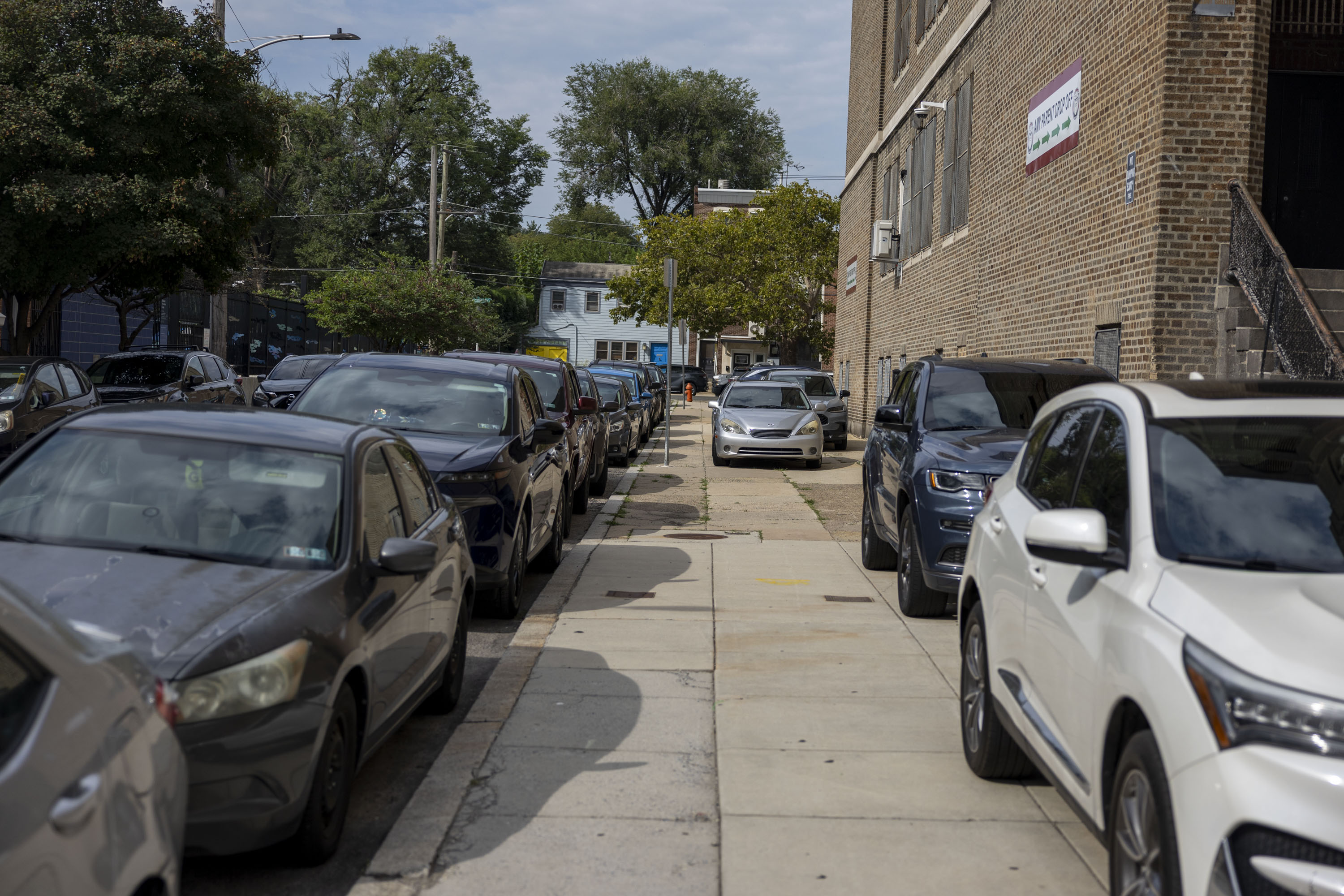
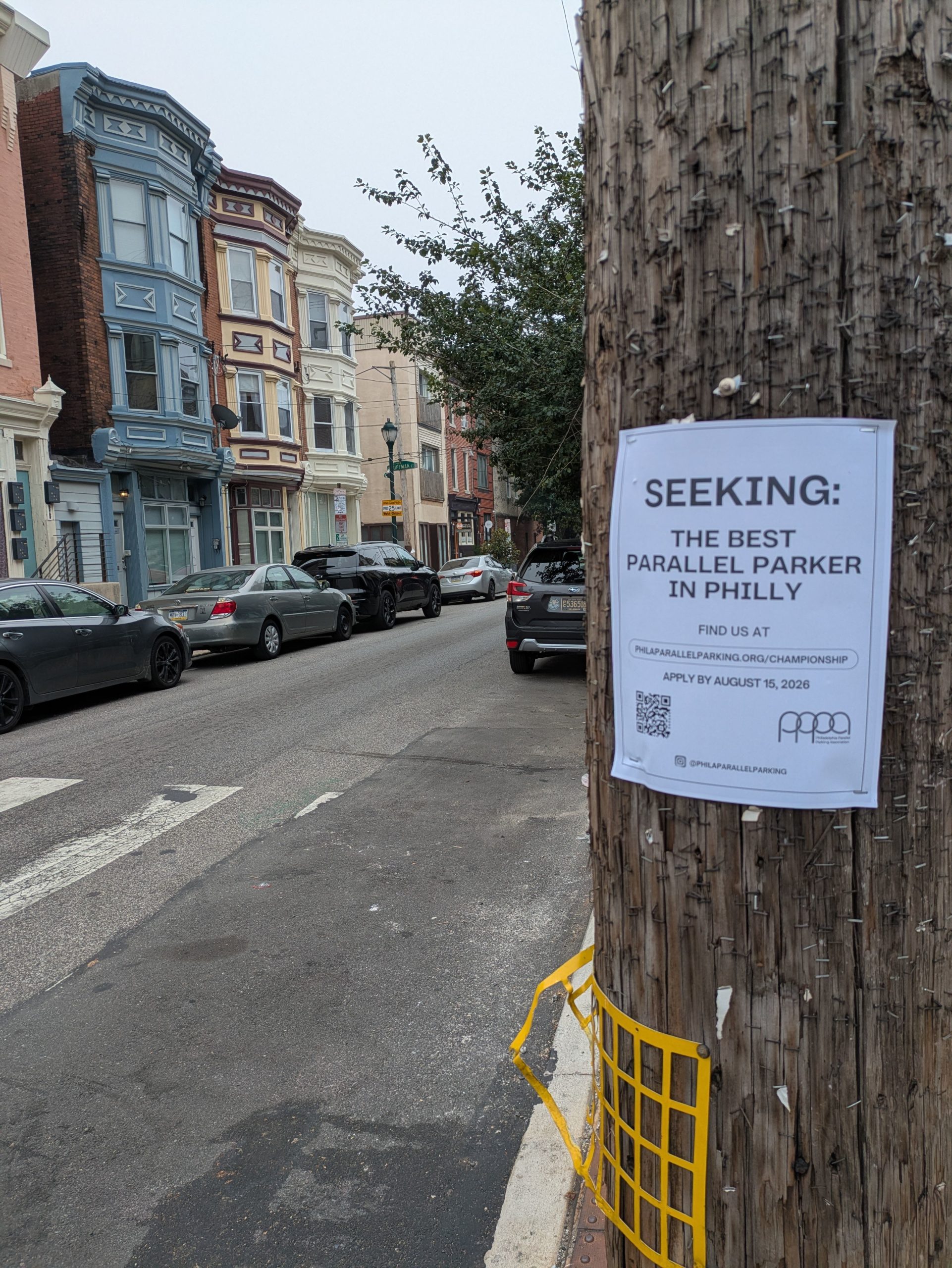
A sign advertising the 2026 Philadelphia Parallel Parking Association Championship is affixed to a pole across from some fine examples of parallel parking in the city.Courtesy of Adam Wodka
“While going through the contestant applications, so many people took pride in calling out that they don’t need it or use it that we decided for someone to be the Best Parallel Parker in Philadelphia it should be earned through the grit of doing it old-school,” Wodka said via email.
Saturday’s competition will also feature a parallel parking practice for kids, merchandise, and the debut of the PPPA’s mascot, Parallel Pete, who is an orange traffic cone.
The winner of the PPPA Championship will receive best parallel parker in Philadelphia bragging rights for a year, a trophy that will include a piece of a curb, and $76 to cover their next parking ticket.
The invitation to visit sculptor Zenos Frudakis’ studio arrived unexpectedly in my inbox this summer, soon after I included his Freedom sculpture in The Inquirer’s 76 neighborhood gems article.
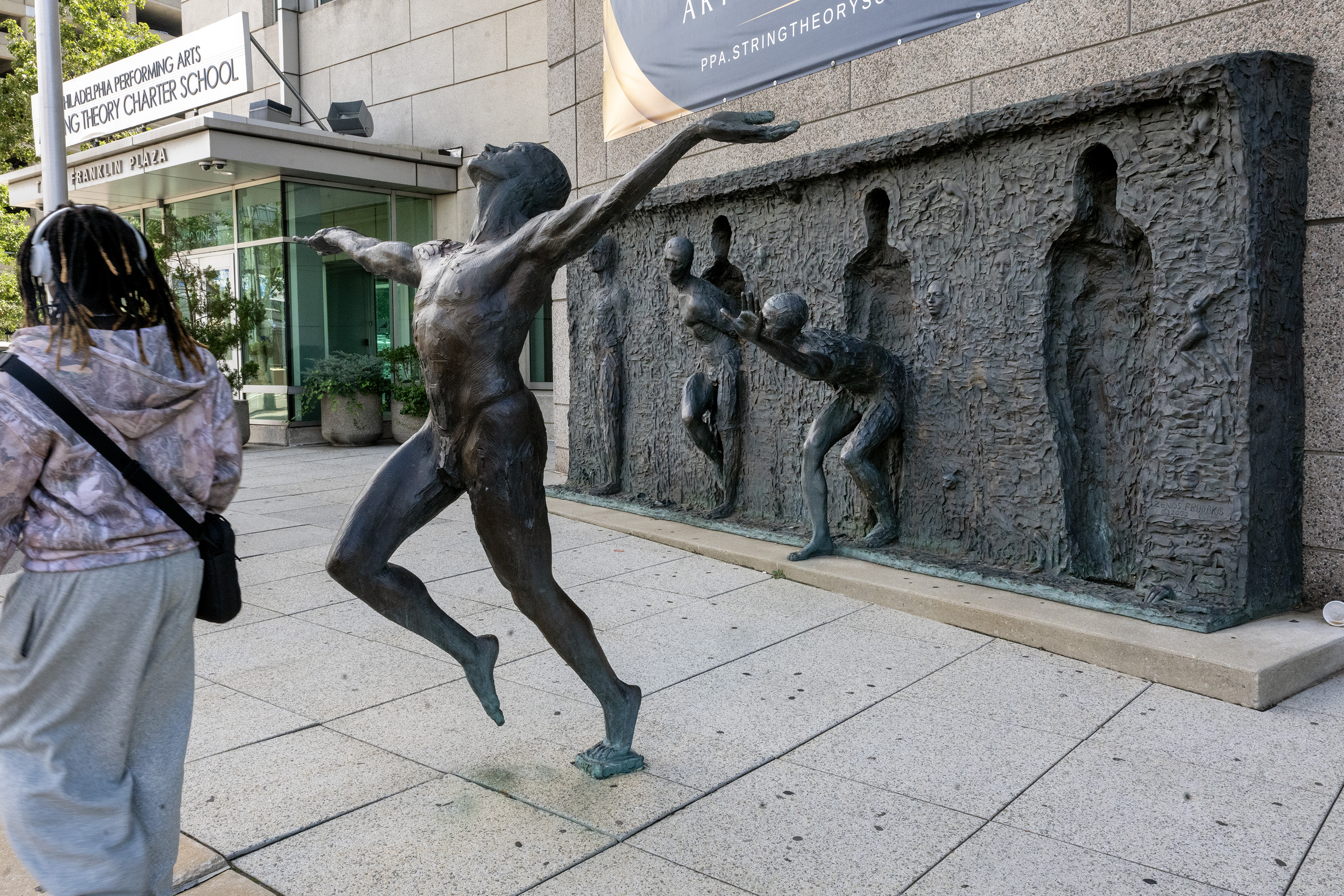
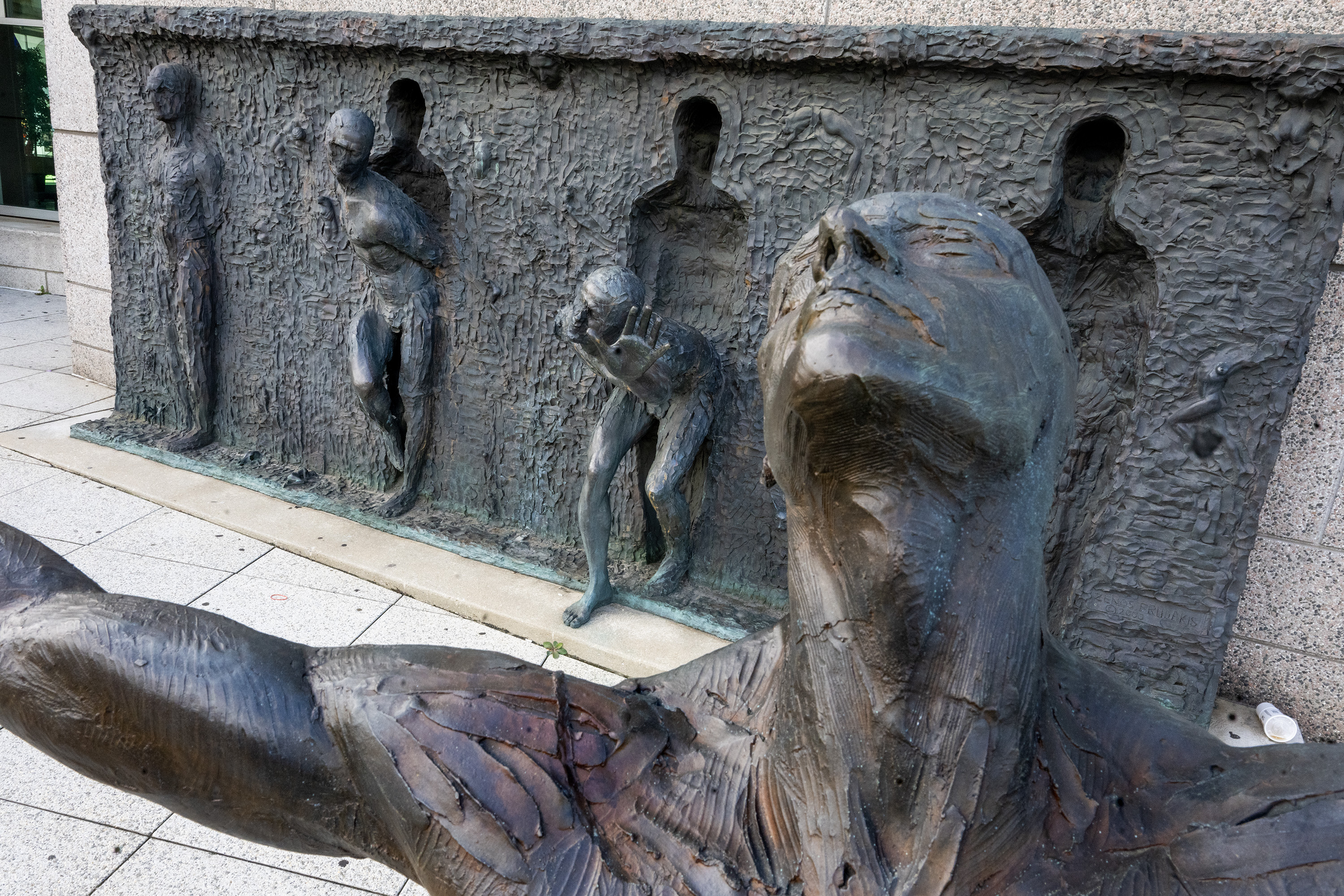
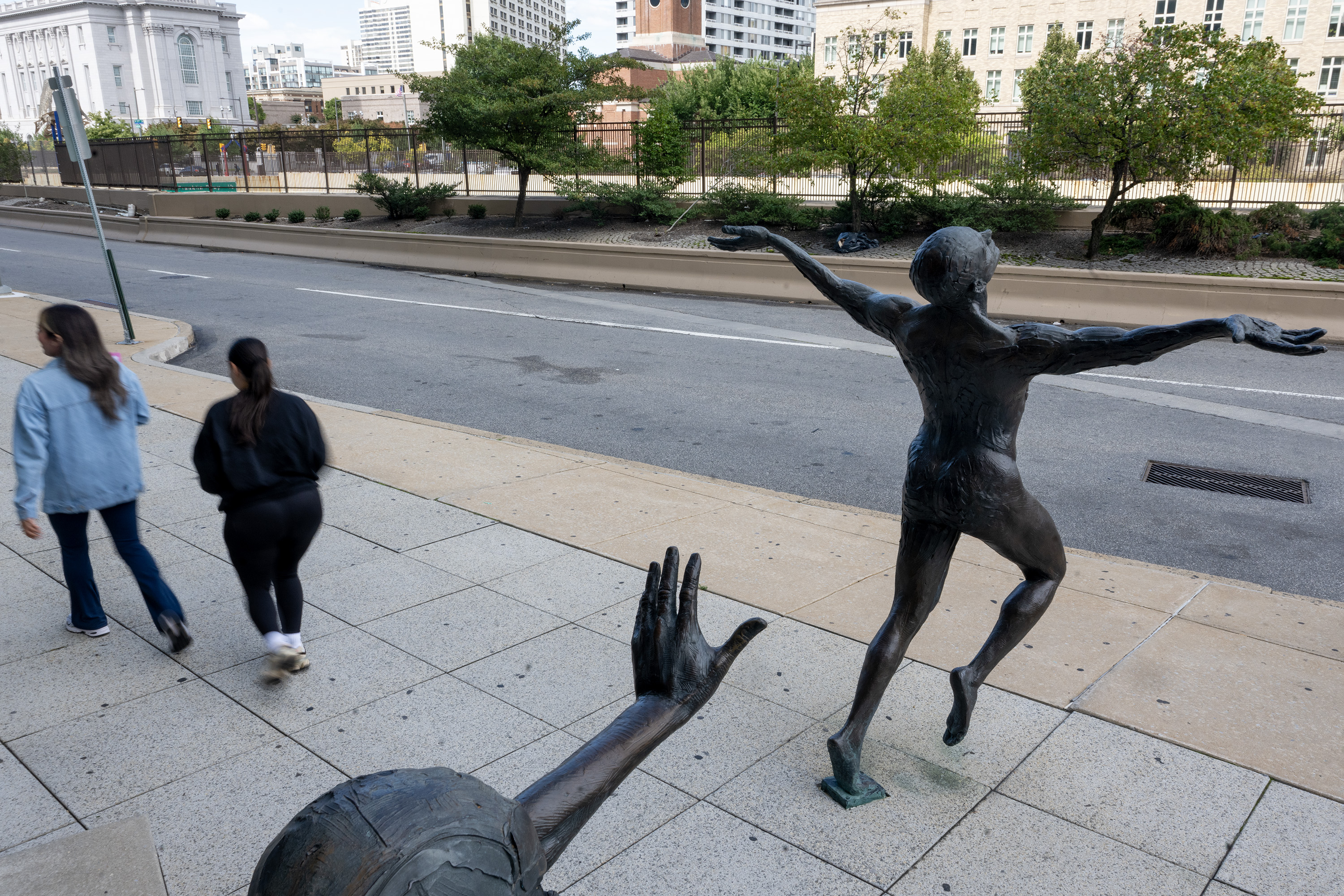
I’ve always thought the 20-foot bronze piece, on Vine Street near 16th, depicting a human figure breaking free of a wall in four stages, with the final figure on the sidewalk, his arms outstretched and face lifted, makes our city a more interesting place.
Artist Zenos Frudakis’ “Freedom” sculpture on Vine Street near 16th in Center City. Tom Gralish / Staff Photographer
“I think on my deathbed, if I’m conscious, I’ll think about that piece,” Frudakis, 75, later told me. “That’s something that I’ve done that I feel good about.”
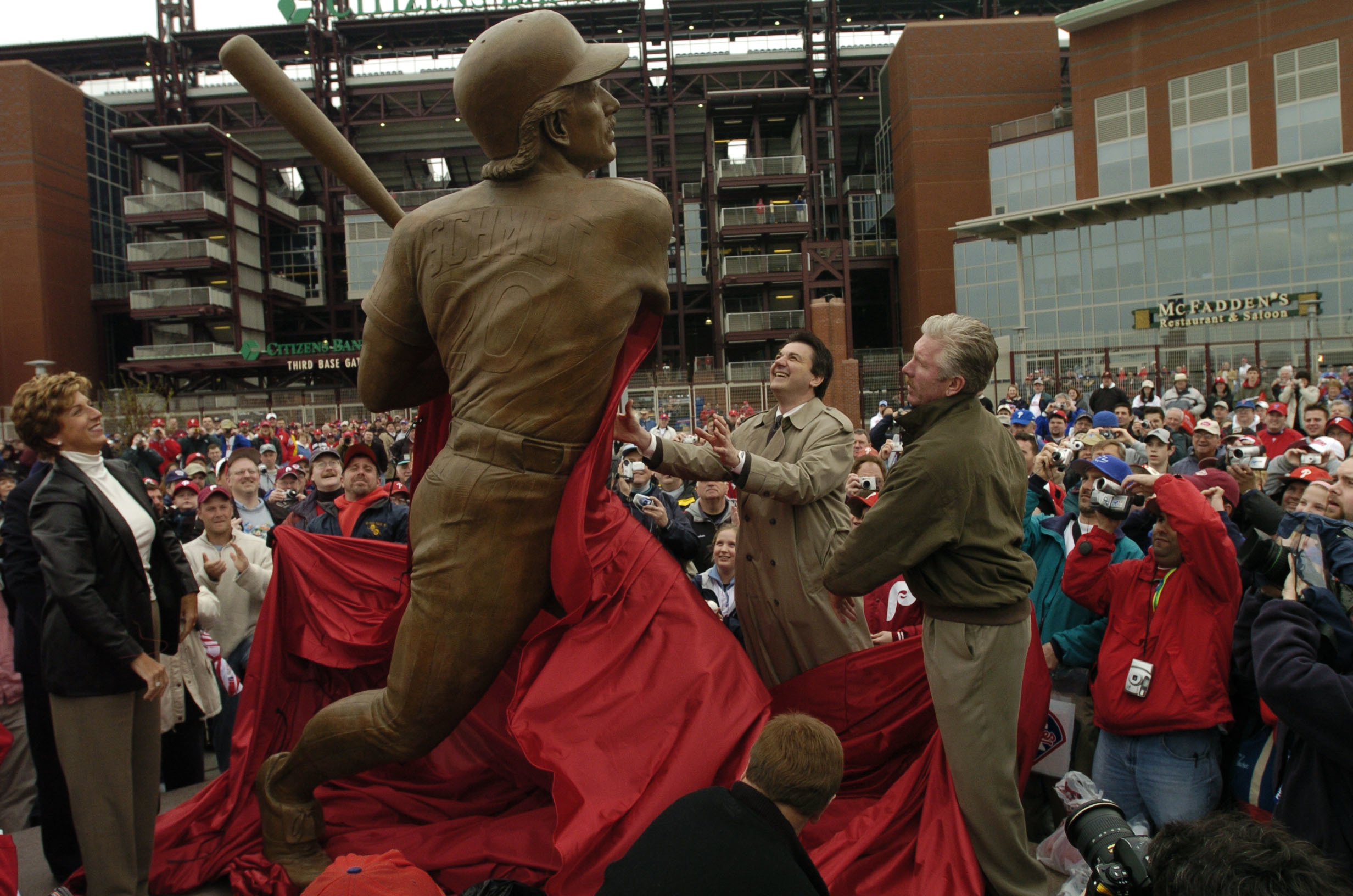
In this 2004 file photo, Mike Schmidt helps unveil the Mike Schmidt statue outside of the third base entrance to Citizens Bank Park on opening day. Sculptor Zenos Frudakis, center, was also on hand for the unveiling. Jerry Lodriguss
It was only after I accepted the invitation and was researching for our interview that I realized Frudakis also created one of the most divisive pieces of public art in Philadelphia history: the statue of highly controversial former mayor and police commissioner Frank Rizzo.
Flooded with art and light
When I arrived at Frudakis’ Glenside studio I was met by his business partner and co-owner of his studio, Rosalie Frudakis. She’s also his best friend and ex-wife (it’s not just Frudakis’ sculptures that are complicated).
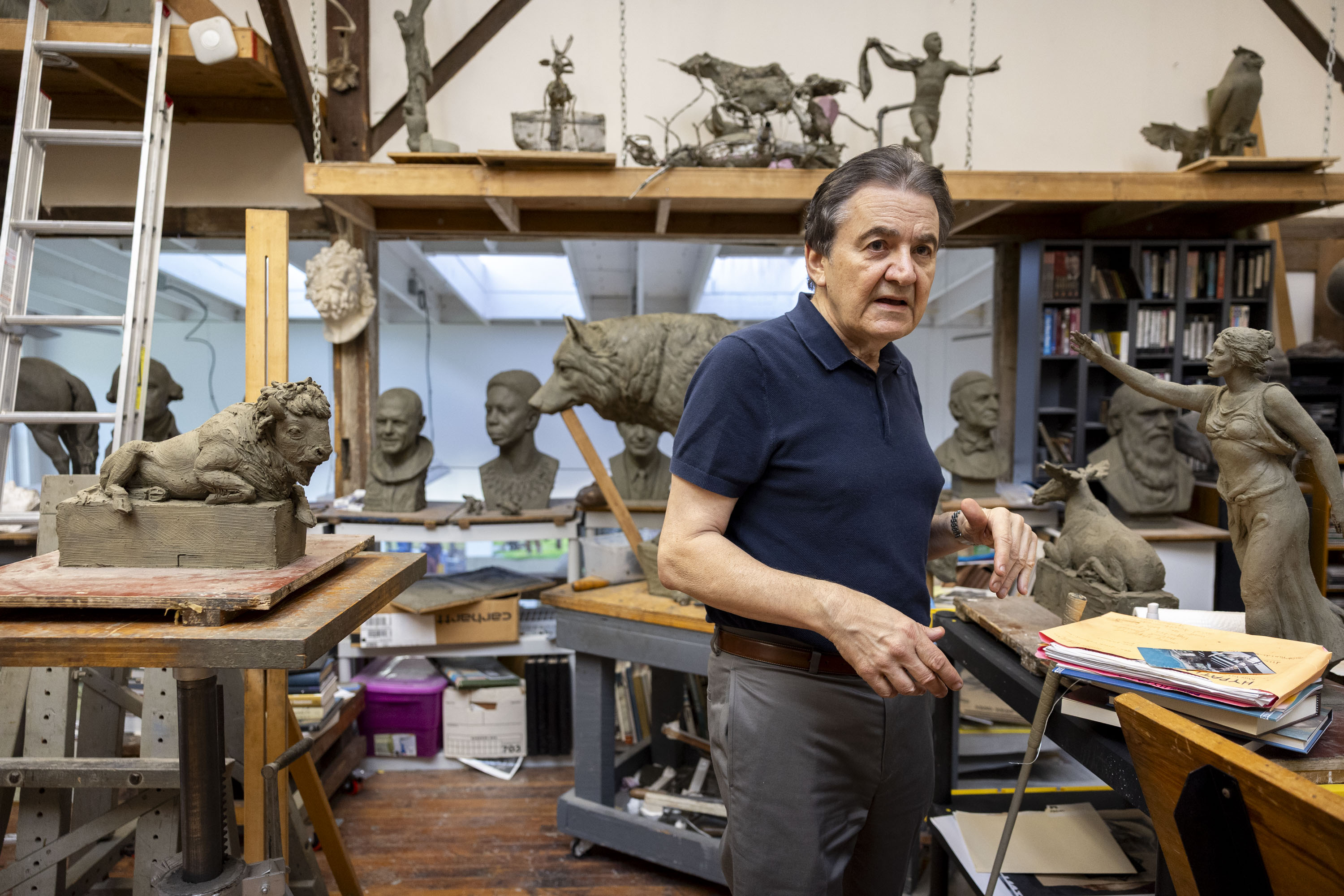
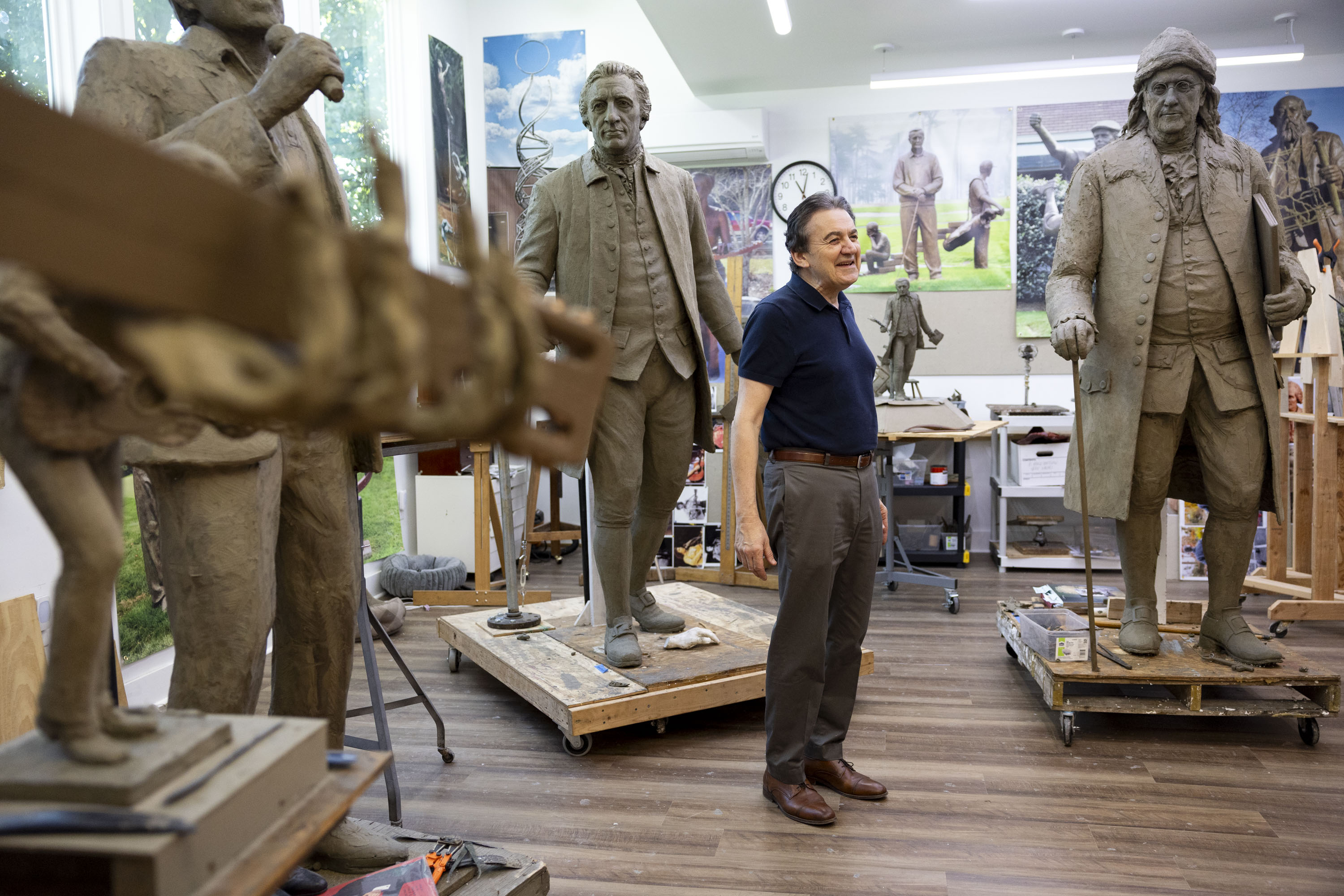
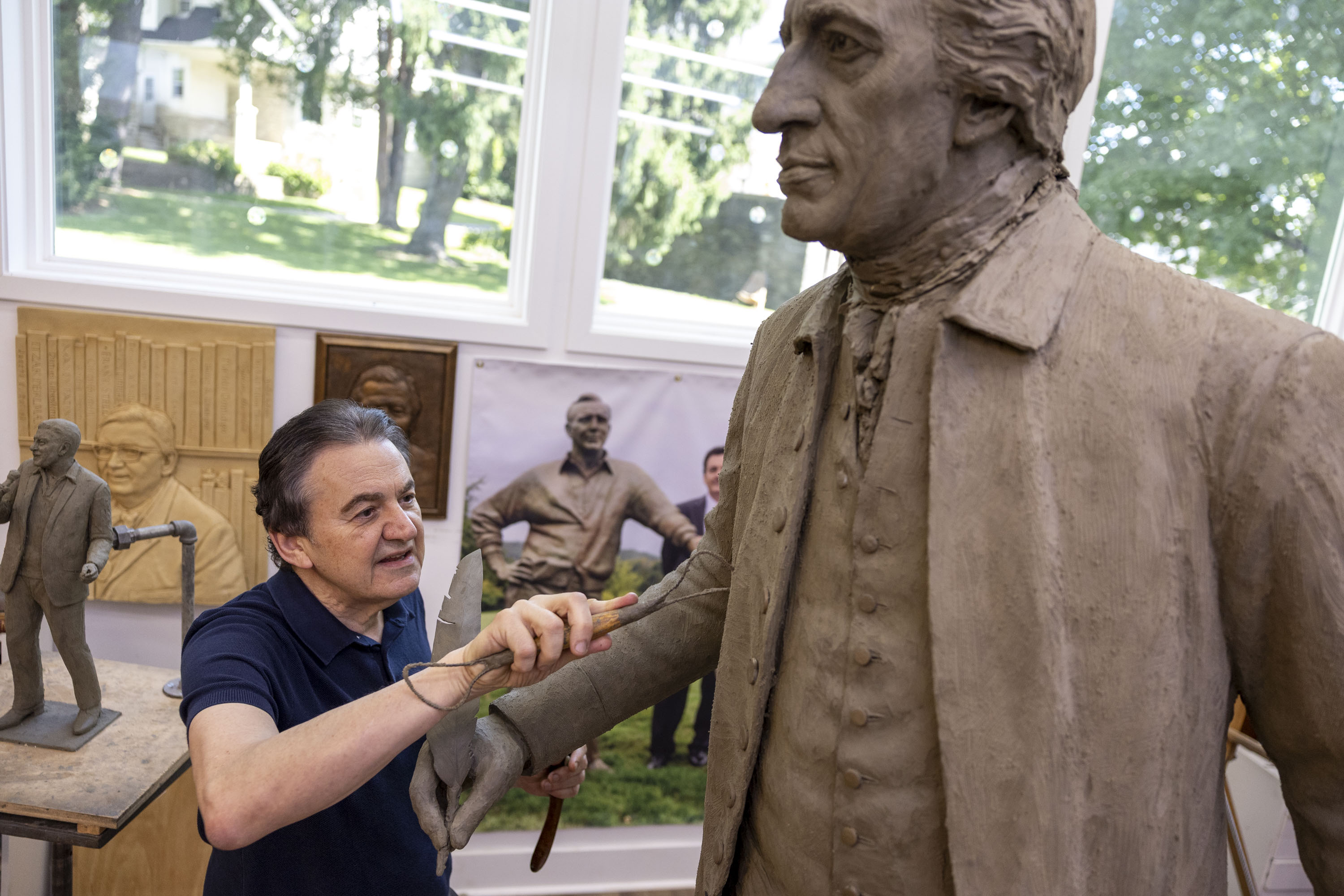
Entering the 275-year-old renovated carriage house behind the artist’s home, I was captivated by how the space was flooded with art and light. Frudakis’ 7-foot statues of Benjamin Franklin and Thomas Paine, still in clay, dominated the center of the room, along with similarly sized sculptures of musicians Bobby Rydell and Don McLean. Busts of historical figures by Frudakis lined the shelves and poster-size pictures of his many commissions papered the walls.
Zenos Frudakis in his studio. To the left of Frudakis is a sculpture of Thomas Paine he’s working on and to the right, is his sculpture of Benjamin Franklin. Tyger Williams / Staff Photographer
Frudakis told me he’s juggling a dozen commissions right now, including two full-size replicas of his Freedom sculpture — destined for where, he won’t say, but he promises it’s exciting. He often works until 2 a.m. in his studio with his cat, Mr. Gray, and hopes that sculpting will lengthen his life. After all, his older half brother — noted sculptor EvAngelos Frudakis, who made The Signer statue at Fifth and Chestnut Streets — lived to be 97 and sculpted right up to the end.
For three hours, Frudakis and I talked about his childhood growing up in a Greek family in Gary, Ind., where his first sculptures were made with his mother’s bread dough; about his move to Philly in 1972 on a scholarship to the Pennsylvania Academy of the Fine Arts; and about his commitment to reading because, if Leonardo da Vinci spent time studying every day, he figured he should, too.
“I wasn’t going to let anybody outwork me or have more knowledge if I could … because that’s your resource, that’s where your ideas come from,” he said.
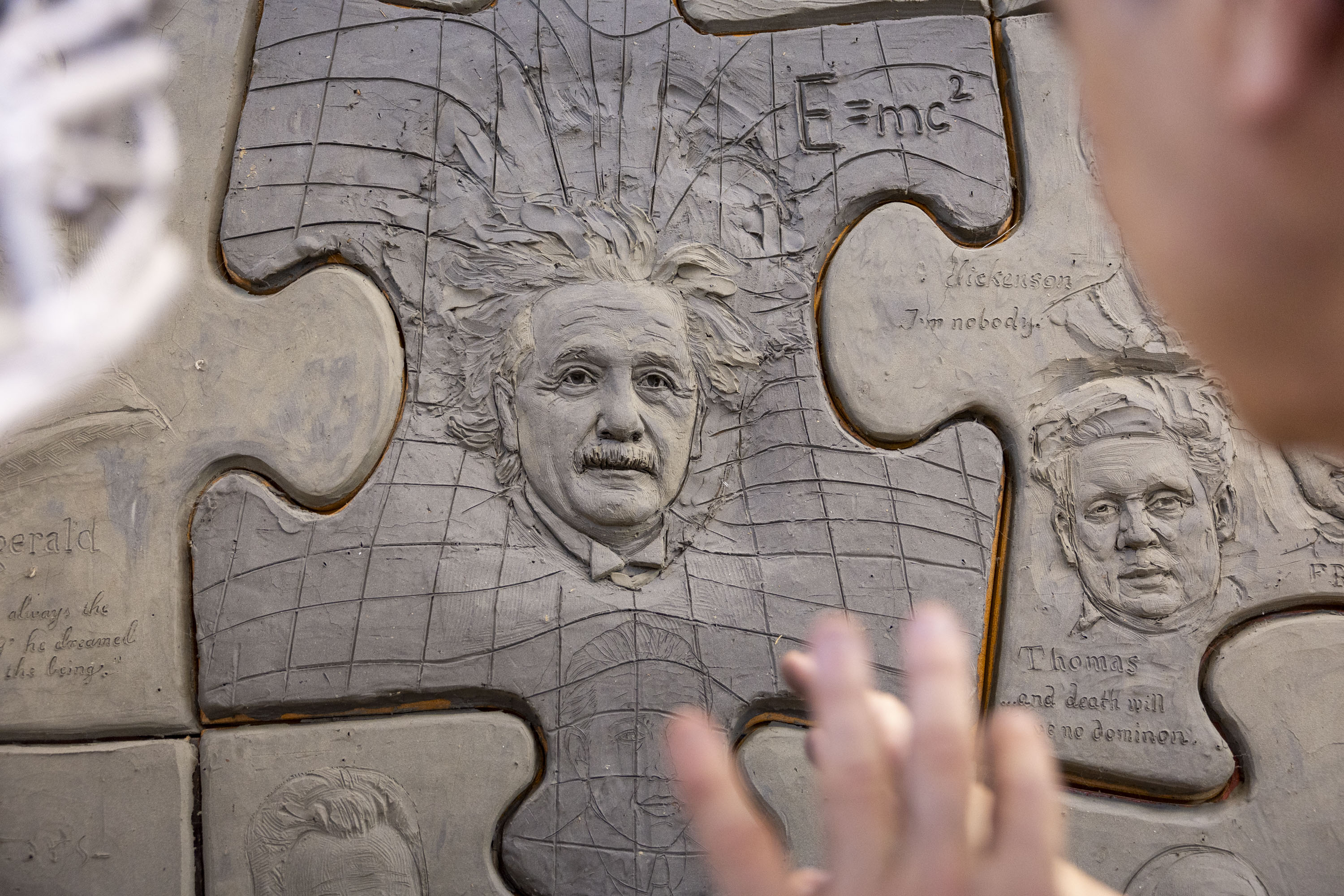
A puzzle piece featuring Albert Einstein is part of a project that Zenos Frudakis is working on in his Glenside studio.Tyger Williams / Staff Photographer
As if to make his point, Frudakis quoted more than a dozen authors and philosophers by name during our chat including: Albert Camus, T.S. Eliot, Aristotle, D.H. Lawrence, Friedrich Nietzsche, and Jean-Jacques Rousseau.
He spoke of science and reason, of being a humanist and of the balance between the emotional and cerebral. He talked about life as a working artist, of the commissions he took and the pieces he created. And he spoke of how history is not set in stone, even for a sculptor.
“You live long enough and sometimes pieces come down,” he said.
A pachyderm and people
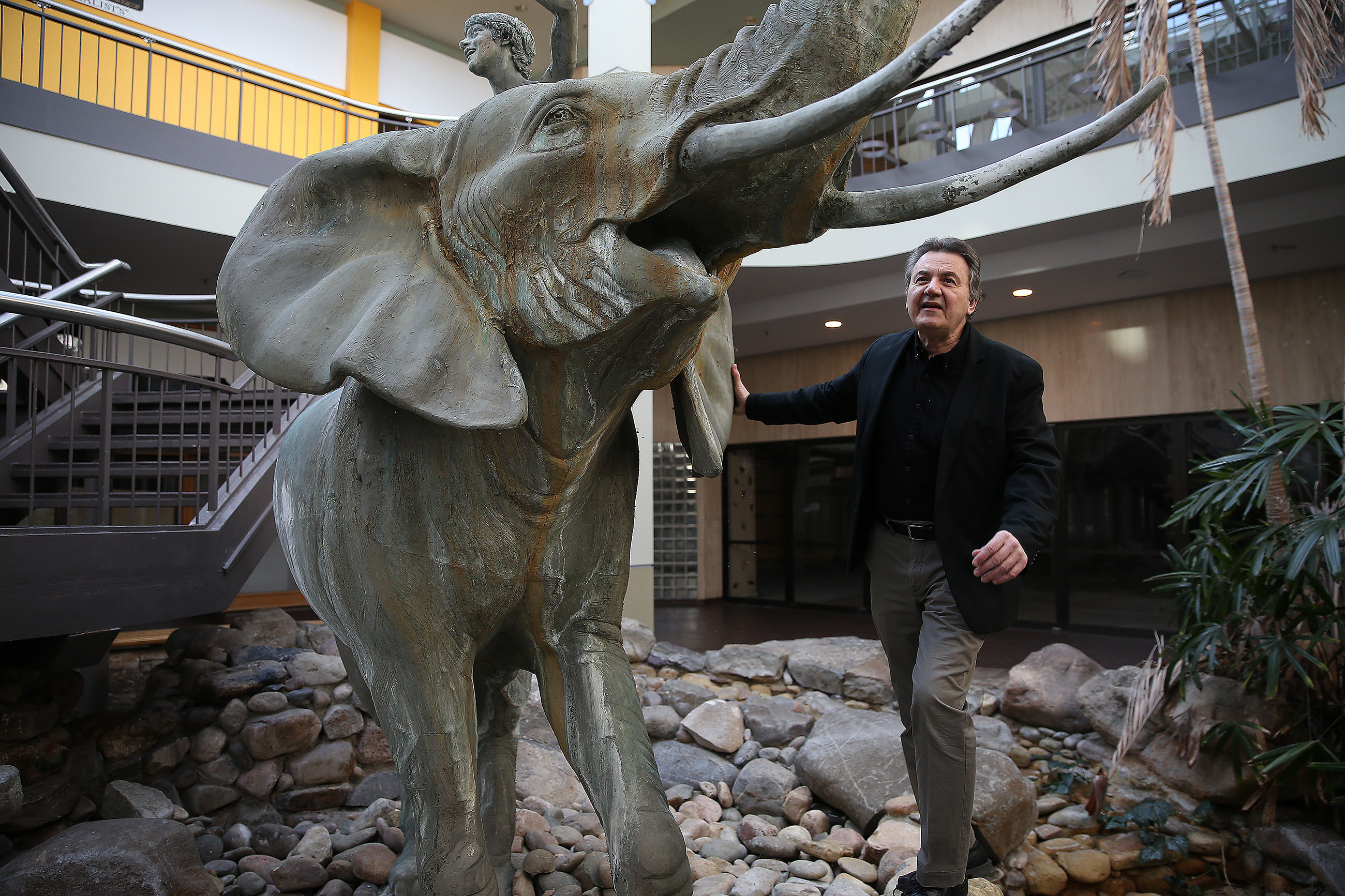
Frudakis’ first public large-scale commission was in 1982 for a bronze sculpture of a boy riding an elephant in the now-shuttered Burlington Center Mall.
Sculptor Zenos Frudakis looks over his first commissioned piece at the now-closed Burlington Center Mall in Burlington, N.J., in 2018.DAVID MAIALETTI / Staff Photographer
In the following years, commissions came for busts of W. Wilson Goode, the city’s first Black mayor, and Joseph E. Coleman, the first Black president of City Council.
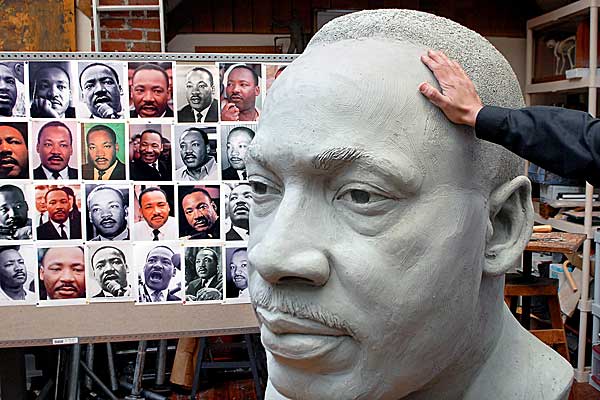
In 1989, Frudakis did a commissioned bust of the Rev. Dr. Martin Luther King Jr. for the U.S. Embassy in Pretoria, South Africa, and traveled there to present it while the country was still under apartheid. It’s one of many commissioned busts he’s done of King, including a 4-foot bronze one for MLK Park in Chester.
Sculptor Zenos Frudakis in his Glenside studio with the plasticine bust of the Rev. Dr. Martin Luther King Jr. that was cast in bronze for the city of Chester in 2010.
It wasn’t until 1994 that Frudakis received his first commission for a public, full-body sculpture of a person in a suit, from the Frank L. Rizzo Monument Committee.
“That’s most commissions that you get, a person who does my kind of work, is men in suits. And the hardest one to get is the first job,” he said.
‘I survived another day’
Rizzo was a polarizing figure as police commissioner (1967-1971) and mayor (1972-1980), and the controversy has only grown since his death in 1991. While some praised his law-and-order style, many see his tenure as an era of unchecked police brutality that targeted members of the Black and LGBTQ+ communities.
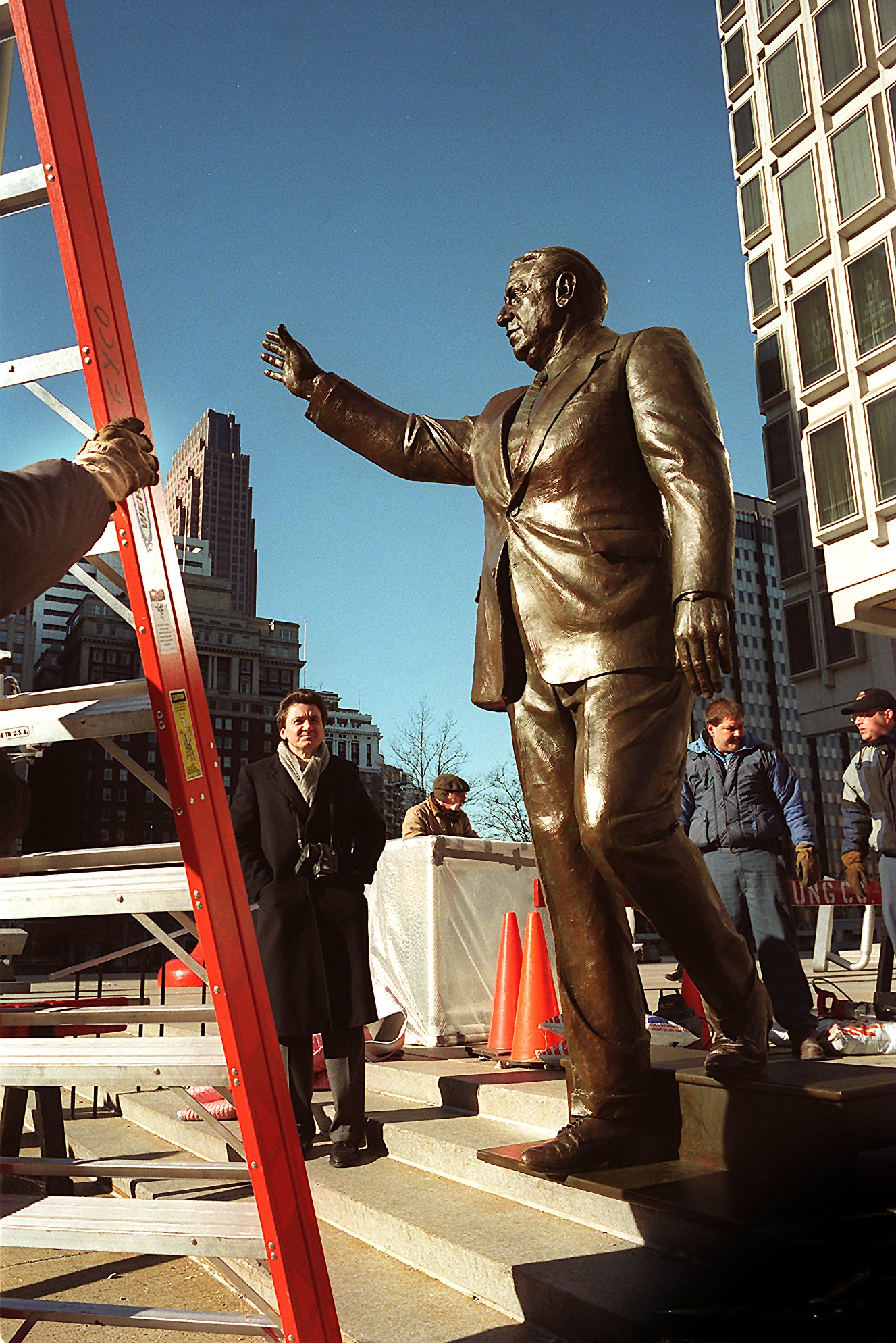
But back in the 1990s, the Philadelphia Art Commission approved a public sculpture of Rizzo, which was paid for by private funds. After some controversy about its placement — backers wanted it in a more prominent place like LOVE Park — it was unveiled in 1999 on the steps of the Municipal Services Building.
Sculptor Zenos Frudakis, left, looks on as Rizzo’s statue is placed on the steps of the Municipal Services Building ahead of its unveiling in 1999.Eric Mencher
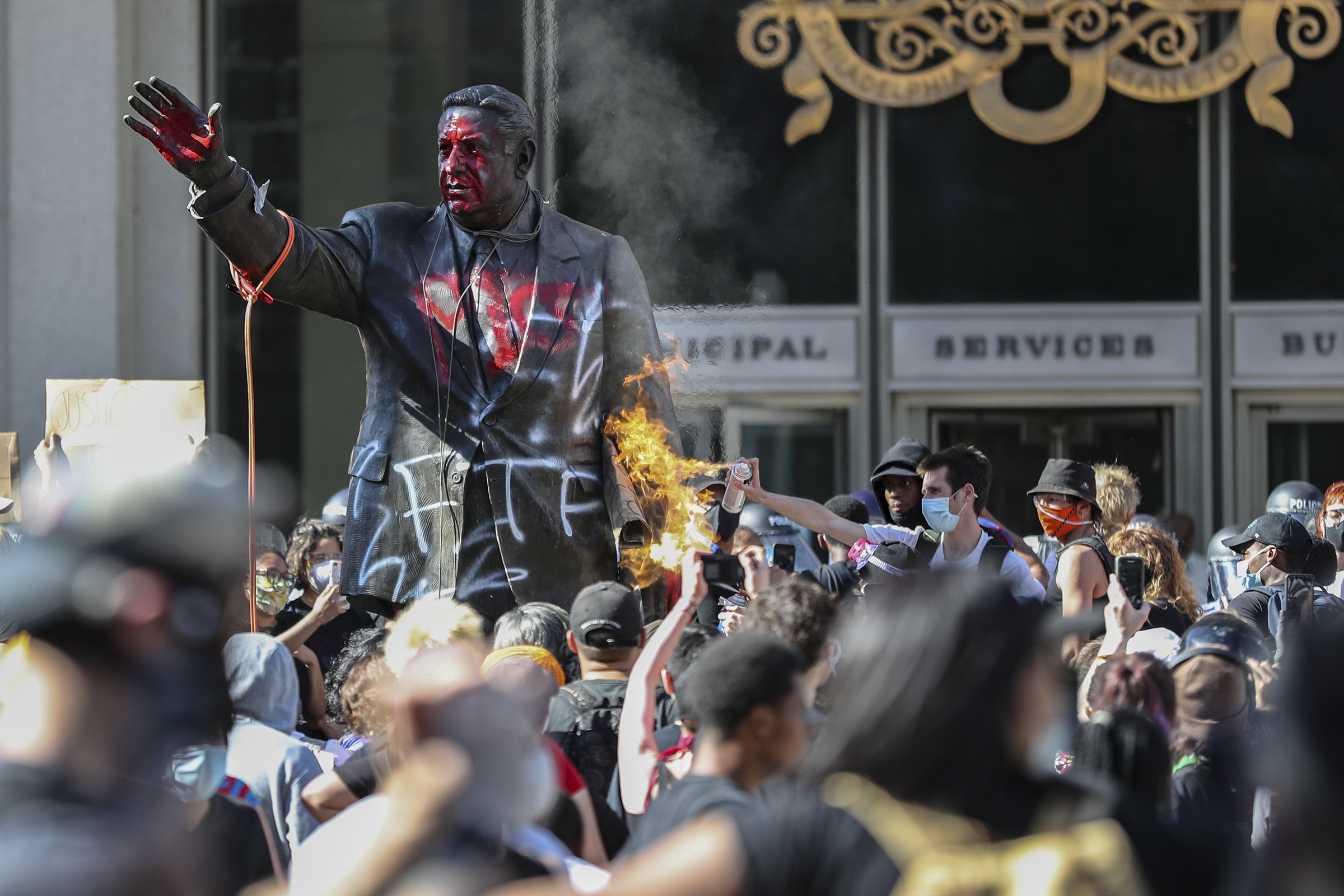
In 2016, amid the Black Lives Matter movement, a petition began circulating for the statue’s removal and in the following years, it became a lightning rod for civil rights protests and was repeatedly defaced.
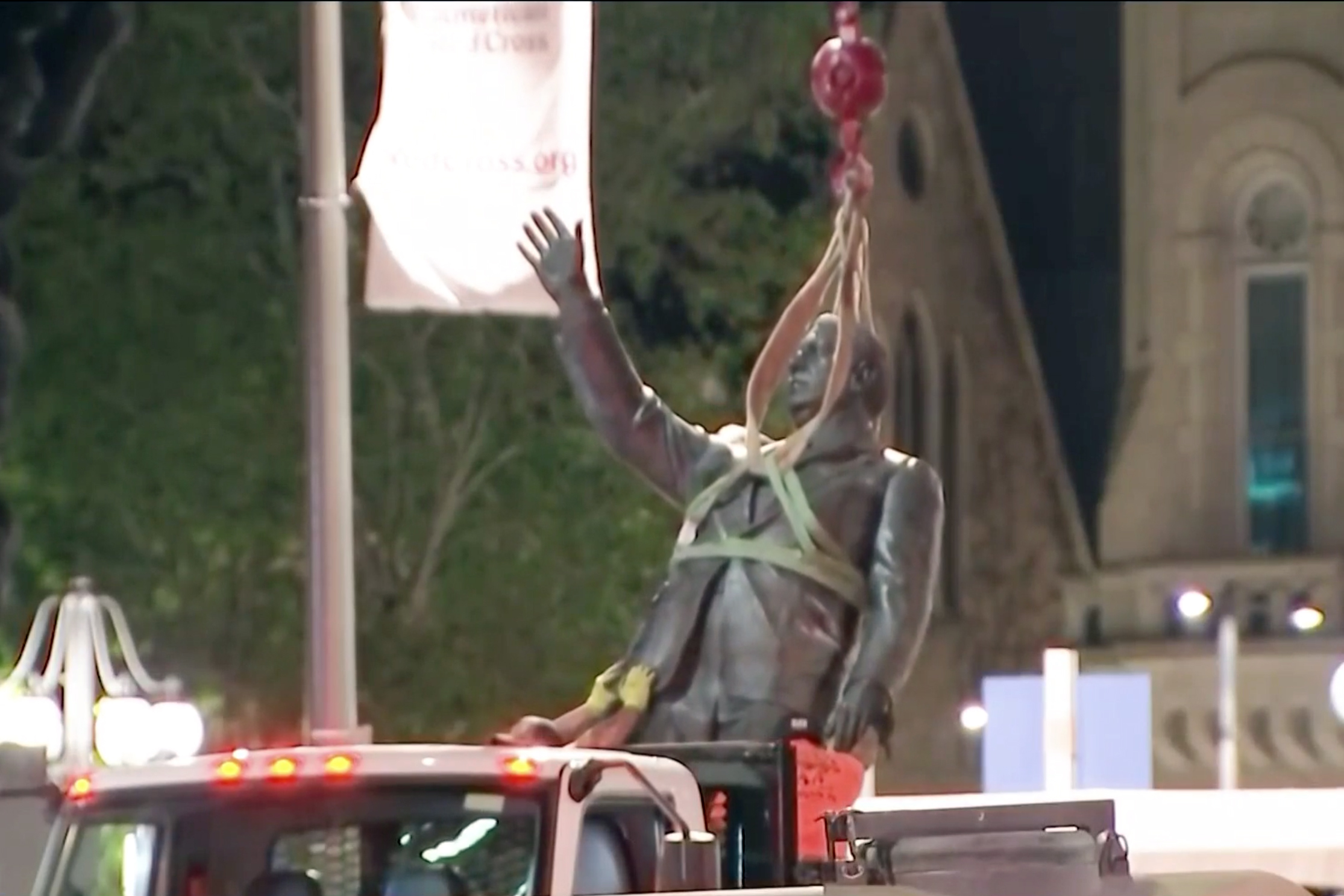
But it wasn’t until the civil rights protests in the wake of the murder of George Floyd in 2020, when then-Mayor Jim Kenney called the statue “a deplorable monument to racism, bigotry, and police brutality,” that it was removed. It remains in storage.
Protesters attempt to burn and bring down the Frank Rizzo statue outside of the Municipal Services Building in Center City during a protest against the death of George Floyd in 2020.HEATHER KHALIFA / Staff Photographer
While I’ve received plenty of hate mail in my career, I can’t imagine having a piece of my work so publicly reviled.
Throughout our chat, I tried to ask Frudakis indirectly about the statue — were there any sculptures he struggled with? Any lessons he’s learned from his career?
But he didn’t take the bait.
Finally, at the end of our interview, I asked him about the Rizzo statue. He wasn’t taken aback and in no way tried to skirt my questions. I felt he answered honestly, even if, at times, he seemed conflicted.
Frudakis told me that when the work was commissioned, he had second thoughts — he didn’t vote for Rizzo, and has always been concerned with civil rights and social issues. But the statue was going to be built one way or another, he figured, and he needed the work.
“I got to do a lot of sculptures because I did that [commission],” he said, adding that the Phillies chose him for their ballpark sculptures because of the Rizzo statue.
“I survived another day as an artist.”
‘A weird blip’
Frudakis says he agrees with the Rizzo statue being removed, for safety reasons. He didn’t want protesters to get hurt trying to topple it. “I made sure I put it in so it couldn’t be pulled out very easily,” he said.
But if he had his way, he’d have liked the statue to have remained up, placed next to a statue of a prominent Philly civil rights leader, like the late Rev. Leon Sullivan, to promote education and dialogue.
“If you take it down, they’re not gonna learn anything. People who love him will still love him. People who hate him will still hate him,” he said.
The statue of former Philadelphia Mayor Rizzo is removed from the Municipal Services Building in 2020. Courtesy NBC10
I came to Philly in 2007, and I didn’t really learn about what happened under Rizzo’s tenure until the protests ramped up around the statue. I agree with its removal, but I have to wonder if I would’ve ever learned so much about that dark chapter in Philly’s history if the statue was never there at all.
One of the last things Frudakis said to me before I left was: “I’ve tried to make up for the Rizzo statue.”
Should he have to? Should I feel torn now about my love for his other work? I called up Conrad Benner, founder of the Streets Dept, a local media organization focused on public art. I remembered the popular videos he did in 2024 with Frudakis at the Freedom sculpture and wanted to get his thoughts on the Rizzo statue too.
“It’s this really weird blip in his career. It seems like everything he’s done since then and probably before then supported maybe a clearer vision of what he’d like to see in the world,” Benner said. “My impression was he was young, he made a decision, and then his career grew and he got more opportunity to have more control over his work.”
Benner pointed out that it’s very uncommon to create bronze monuments to people who’ve lived recently and that Philadelphia doesn’t have any other statues of its mayors.
“You might think the monuments in your city and country are some representation of true history when really they are the culmination of powerful and cultural interests,” Benner said.
“But we get to choose. Every generation gets to choose. We don’t have to inherit anything, whether that be a political dynasty, tax policy, or a monument. Just because they’re on a podium doesn’t mean we can’t change them.”
‘A one-man show’
A year after the Rizzo statue was unveiled, Frudakis’ Freedom sculpture was installed on the exterior of what was then GlaxoSmithKline and is now the Philadelphia Performing Arts Charter School.
It was a piece born of his own heart and mind. It was the kind of work that taking commissions for other less passionate projects made possible.
“I had to do something more philosophical and poetic for myself,” Frudakis said.
When I thought about our conversation later, I couldn’t help but wonder if in some ways, for Frudakis, the figure in Freedom symbolized his own desire to break free of the art that pays the bills for the art that fills the soul.
Zenos Frudakis’ “Freedom” sculpture on Vine Street near 16th in Center City. Tom Gralish / Staff Photographer
“It’s not an accident that my favorite piece, my most popular piece by far, is the one that I got the most freedom to do,” he said.
Frudakis sculpted Freedom on a small scale, but he had to get the 20-foot-long version commissioned by GlaxoSmithKline in order to cast it in bronze. When he scaled it up, Frudakis decided to get weird with it.
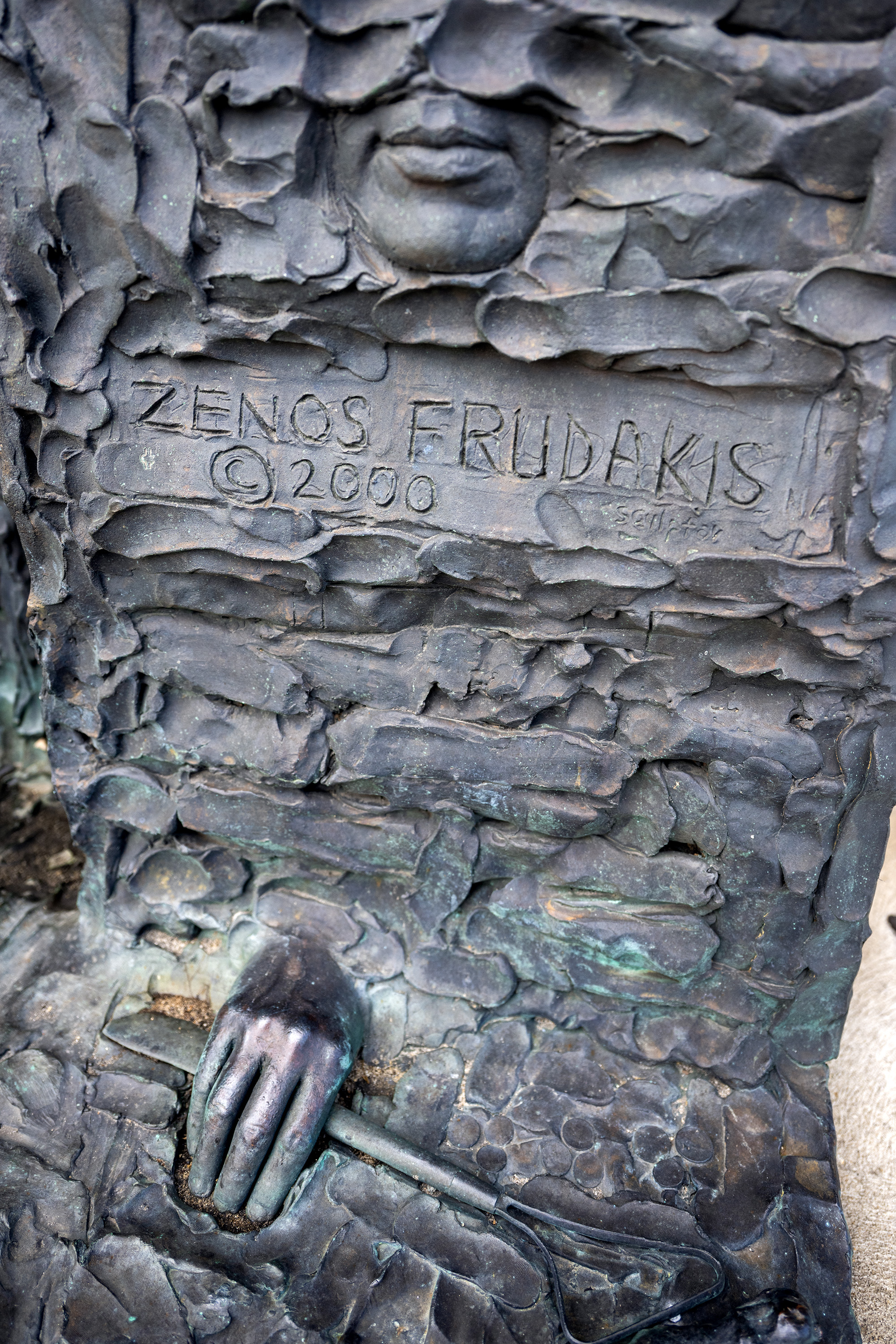
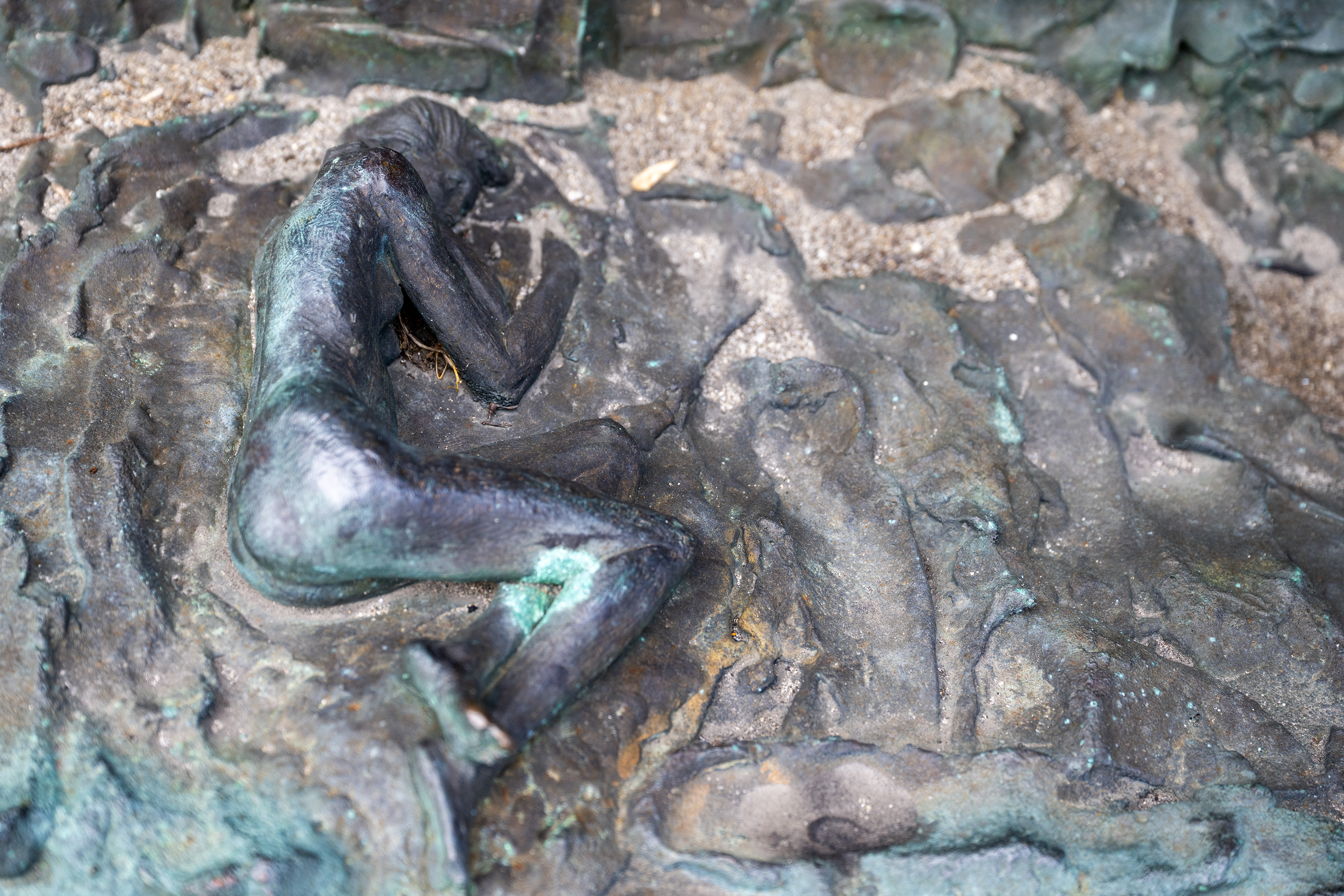
Details in Zenos Frudakis’ “Freedom” sculpture include part of a face and a cast of the artist’s hand with a sculpting tool. Tom Gralish / Staff Photographer
“Since I was having trouble getting in a gallery in Philadelphia, [I decided] that I would put about 20 pieces of mine in the background so I’d have a one-man show that was ongoing,” he said.
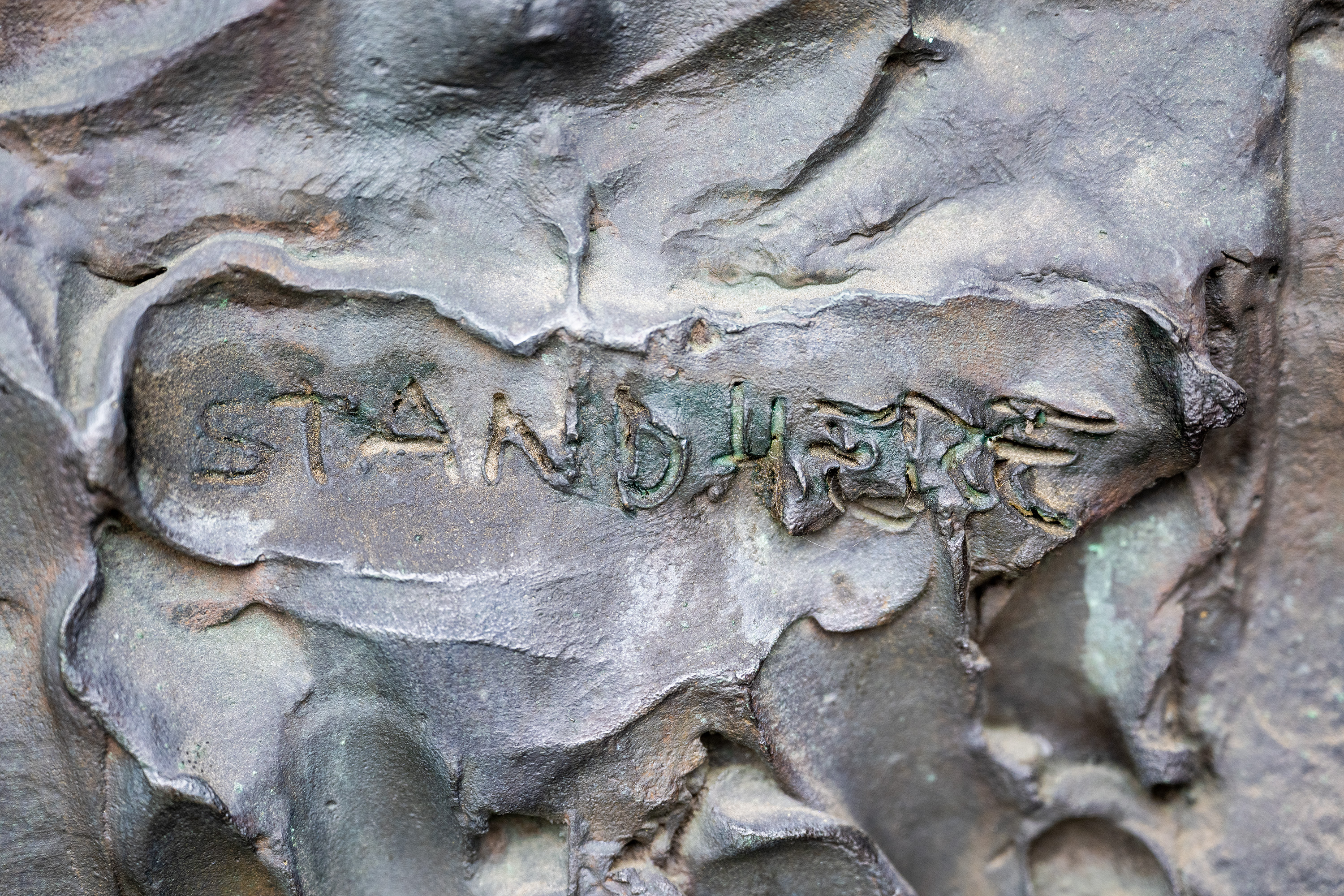
Among the many Easter eggs Frudakis hid within Freedom are a self-portrait, a cast of his hands with a sculpting tool, and a sculpture of his cat’s head. One of my favorite details is carved into the empty space where the final figure has broken free from the wall. There, the words STAND HERE are written, inviting you to become a part of the piece.
The words “STAND HERE” appear in an empty space in Zenos Frudakis’ “Freedom” sculpture, inviting the viewer to become a part of the piece. Tom Gralish / Staff Photographer
Photos of Freedom have appeared in self-help and scholarly books and it has been cited as one of the most fascinating sculptures in the world by Architectural Digest.
“It’s the most personal sculpture I’ve ever done and it’s the most universal,” Frudakis said.
‘It was creating me’
Of course there are other pieces Frudakis is proud of — his sculpture for the National Air Force Memorial Honor Guard in Washington, D.C.; a statue of Nina Simone in Tyrone, N.C., that includes some of her ashes; and a sculpture of Clarence Darrow at the Tennessee courthouse where the Scopes Monkey Trial was held.
The statues of Franklin and Paine he’s working on now are intended for the U.S. Capitol building and the National Mall, respectively. If pending legislation to approve their placement is ever passed (both were first proposed years ago), the bronze castings will be paid for with private funds, Frudakis said.
Artist Zenos Frudakis in his studio working on his sculpture of Thomas Paine. Tyger Williams / Staff Photographer
With an oeuvre of work behind him and his larger-than-life-size bronze figures fetching $400,000 or more today, Frudakis now has the freedom to do statues and commissions he truly believes in.
Frudakis still has sculptures he wants to create for himself too. He dreams of doing one of Hypatia, a female scientist from ancient Greece who was “murdered by religious zealots who tore her whole body apart.” He’s got busts of Amelia Earhart in his studio that he’d love to see in bronze someday. And like he did with Freedom, Frudakis wants to tackle another big human concept through his work — time.
One of the subtle details in Zenos Frudakis’ “Freedom” sculpture. Tom Gralish / Staff Photographer
Just like every story I’ve ever written forged me into the journalist I am today, even those that make me cringe in hindsight (and there are plenty), every sculpture Frudakis created made him the artist he is now, including the Rizzo statue.
But I don’t think any of his pieces has had a more profound effect on the landscape of Philadelphia, or people around the world, than the one that had the most profound effect on him as well.
“I was a different person when I finished my Freedom sculpture. I wasn’t just creating it, it was creating me,” he said.
The final figure breaks free in Zenos’ Frudakis “Freedom” sculpture. Tom Gralish / Staff Photographer
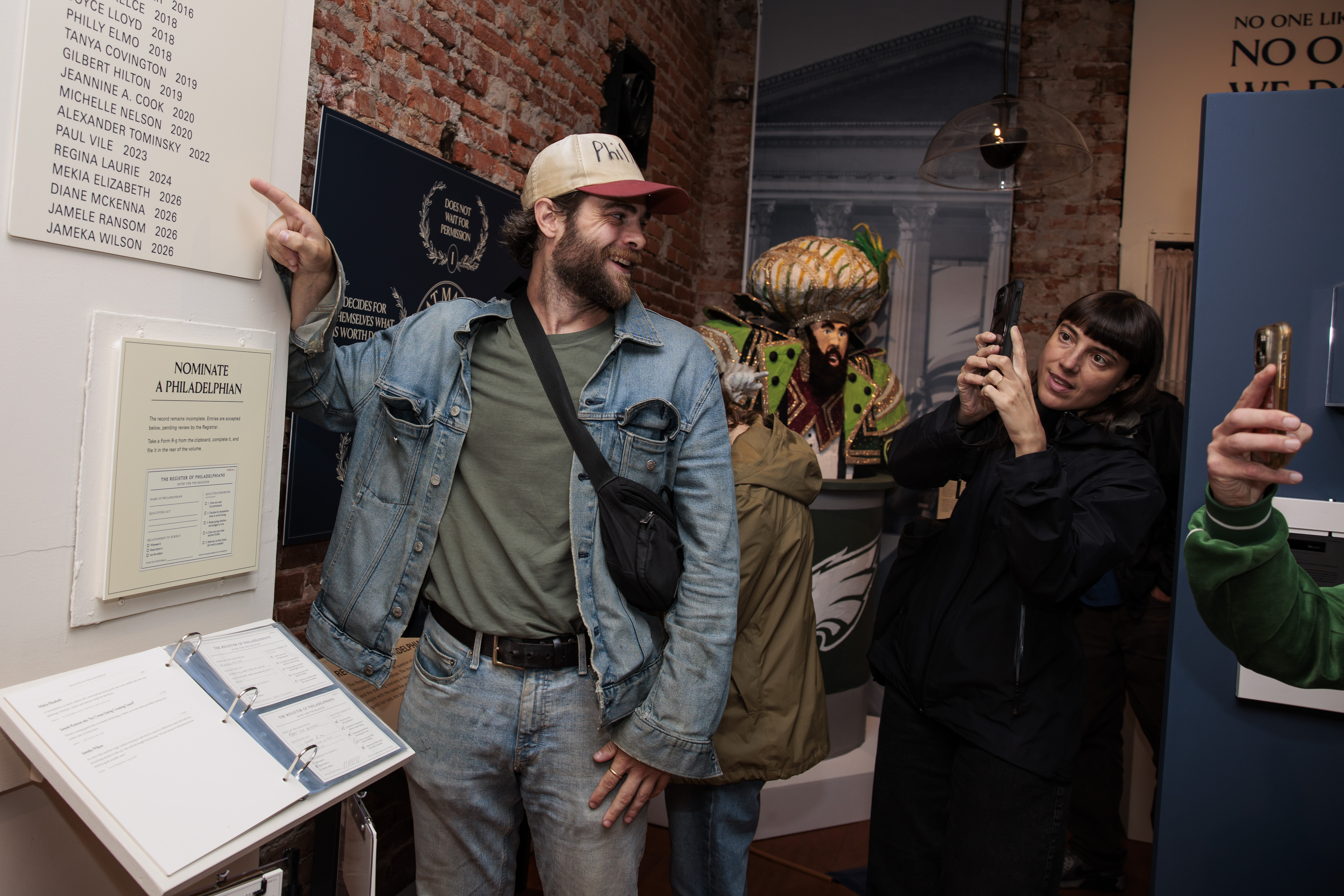
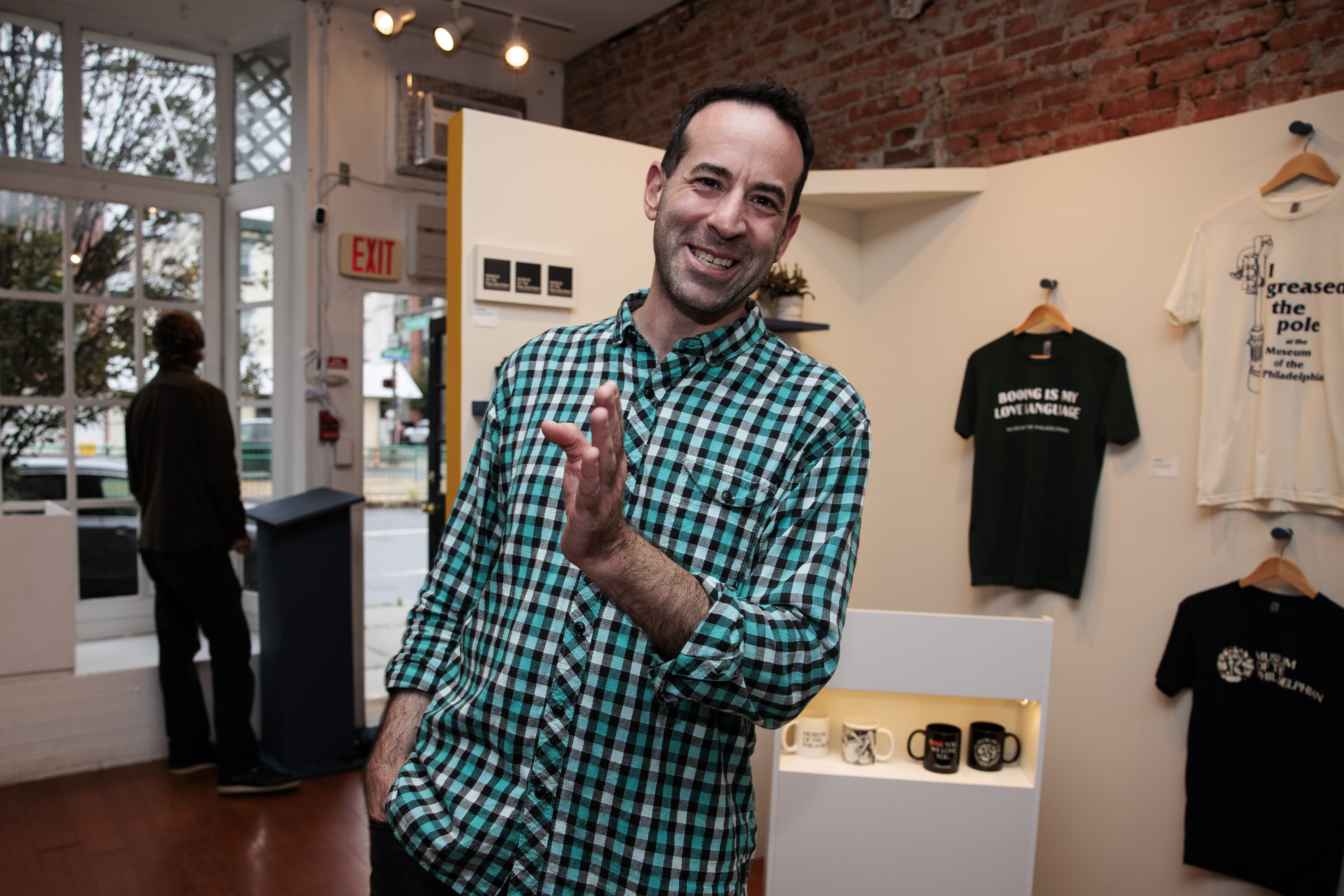
Alexander “Chicken Man” Tominsky walked into the Museum of the Philadelphian in a Canadian tuxedo and a baseball hat with “Phillies” written on it in marker on Tuesday and was blown away to find his name on a plaque alongside other local legends like Benjamin Franklin and Philly Elmo.
“No way! Oh my gracious! Who would have known when I was a little kid crying in my pillow something like this would happen,” he said, pointing to his name.
Tominsky — who became renowned throughout the land in 2022 for eating 40 rotisserie chickens in 40 days, culminating with a public noshing of a chicken on an abandoned Walmart pier in South Philly — was invited to a preview opening for the museum by its founder and creator, Brian Adoff.
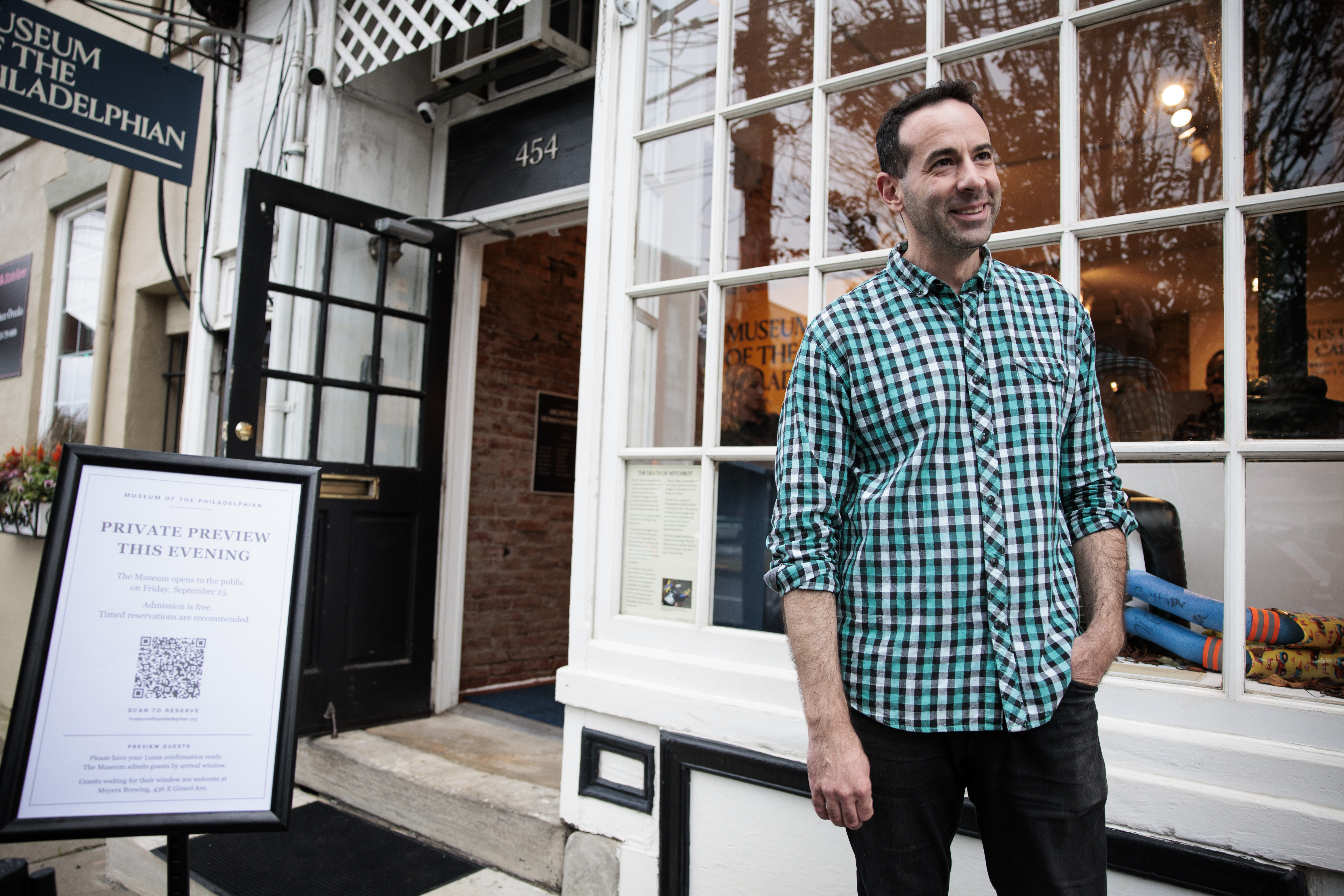
Founder and creator Brian Adoff outside his Museum of the Philadelphian in Fishtown.Monica Herndon / Staff Photographer
“The museum is about the personality and attitude and conduct of Philadelphians,” Adoff said. “My personal hope is that you leave inspired to really be the best version of yourself, the best Philadelphian you can be.”
Located in a 300-square-foot storefront that was previously Adoff’s office on East Girard Avenue in Fishtown, the free, temporary “micro museum” is just down the road from another Philly landmark — the “I Hate Bank of America” sign. The large, yellow banner was put up by a homeowner in 2007, after the bank branch across the street ticked him off. The branch closed many years ago, but the sign remains, a grand tribute to Philadelphians’ spite.
View on Threads
What makes Philadelphians this way? And what makes it so oddly endearing? These are questions Adoff explores in his absurd and unexpectedly heartwarming museum, which opens Friday.
“There’s an emotional narrative arc the museum takes in its 300 square feet, where it ends with literally a book of Philadelphians who exhibit five qualities that I’ve determined, with my crack team of curatorial advisers, that make up a Philadelphian,” Adoff said.
As of a student of the Philadelphian who’s written hundreds of profiles of the everyday people who make me love this city more every day, I thought Adoff had set a lofty goal for himself when we first met earlier this month. How do you distill what it means to be a Philadelphian in 300 square feet? And how do you decide who makes the cut?
At the preview Tuesday, I was pleased to find that over the course of about 20 exhibits in the space, Adoff skillfully addresses the Santa-hating-battery-throwing-robot-killing tropes that haunt Philadelphians, while also getting to the oddly-touching truths behind those, and other very Philly stories.
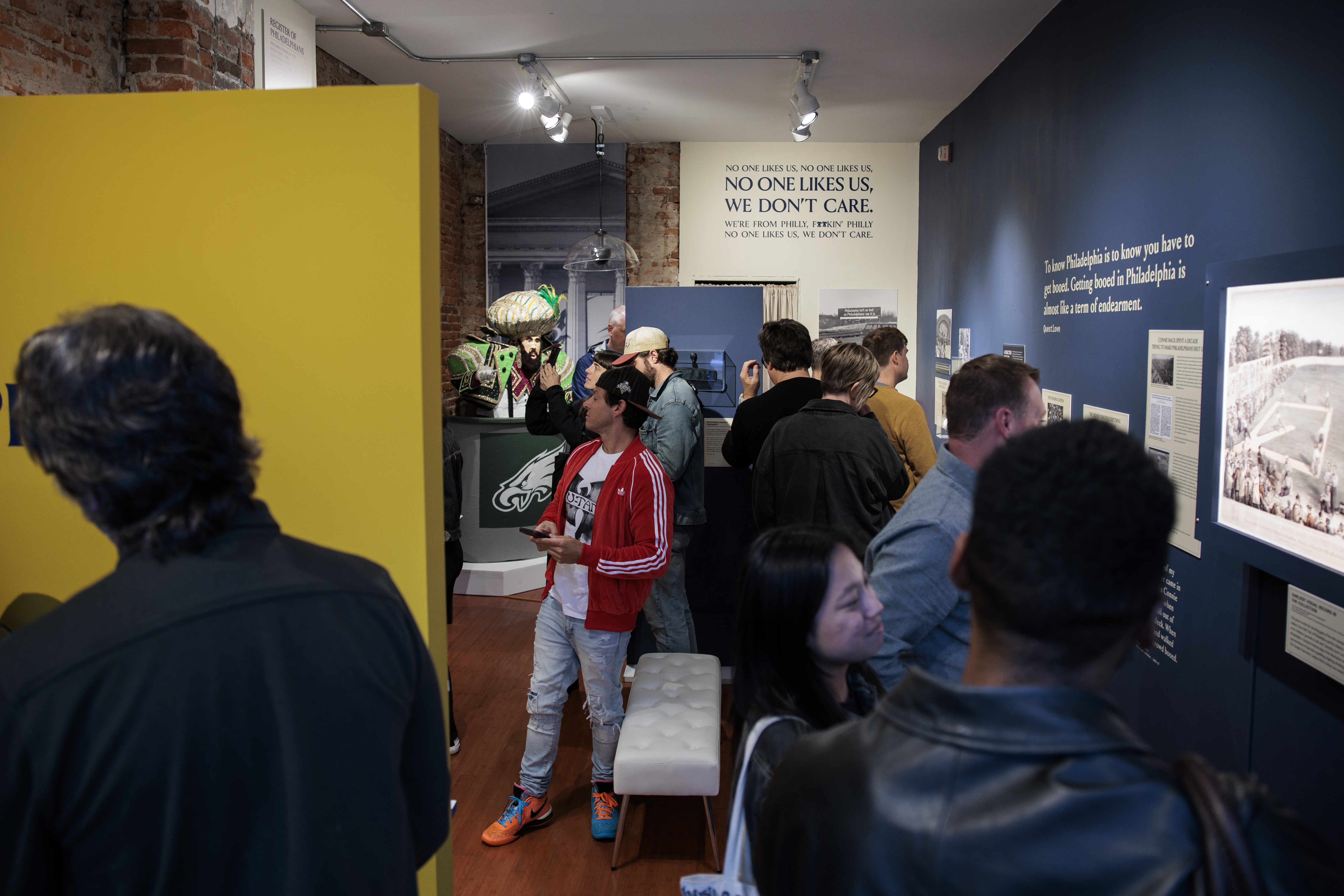
Visitors browse the Museum of the Philadelphian.Monica Herndon / Staff Photographer
And while Adoff and his team have compiled a “Register of Philadelphians” with more than 50 names and stories of local folk heroes who epitomize what it means to be a Philadelphian, their best decision may have been to include cards for visitors to nominate their own quintessential Philadelphian. Because if one thing is certain, Philly is going to have thoughts.
Grease the pole
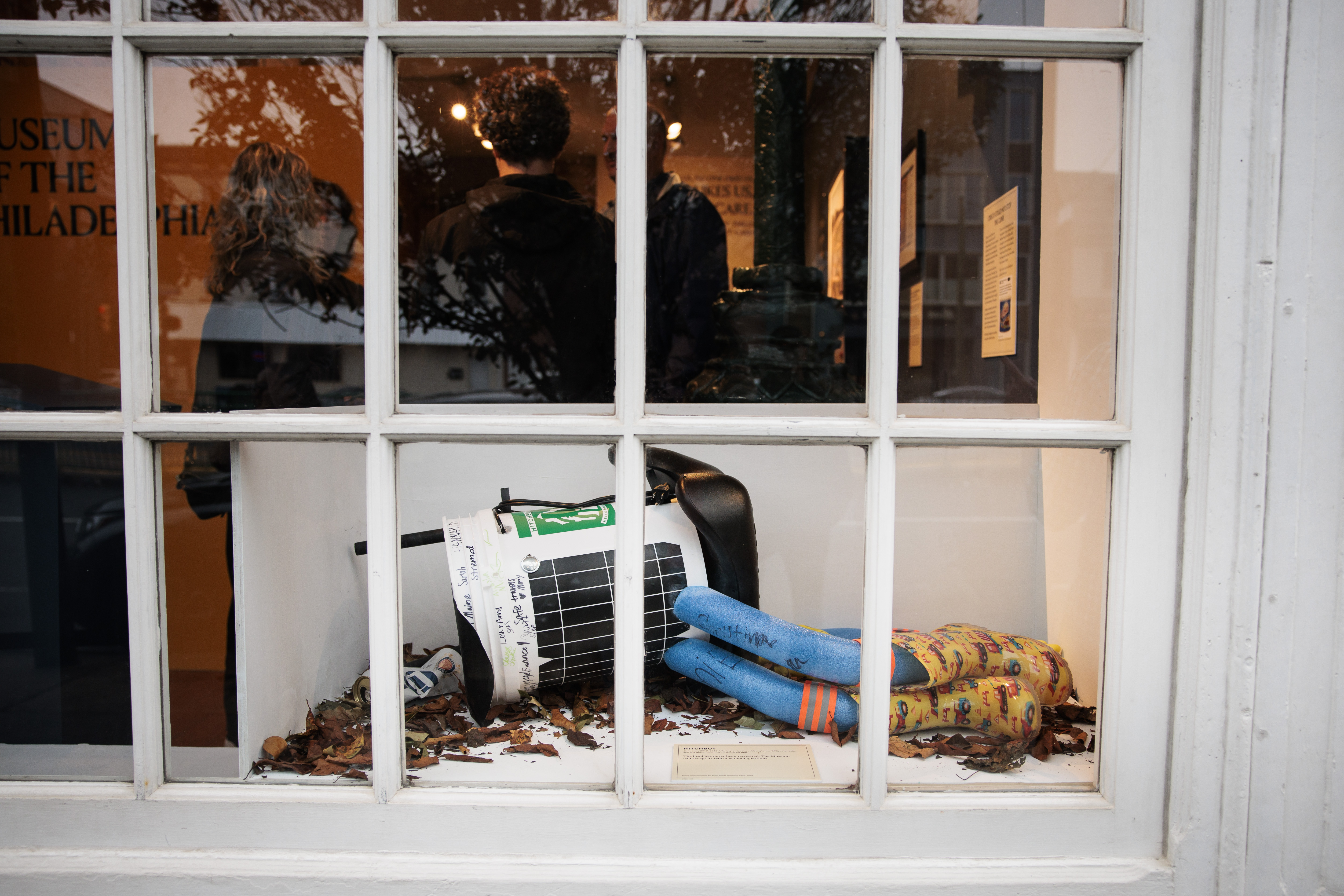
Guests are greeted in the museum’s front window by a re-creation of the death of hitchBOT, the hitchhiking Canadian robot who traveled across the country on human kindness, only to be dismembered and beheaded in Philly. In the accompanying plaque, Adoff notes that Philadelphians offered to rebuild the robot, and that a Philly police detective jokingly blamed the crime on New Jerseyans.
A re-creation of the death of hitchBOT is displayed in the front window of the Museum of the Philadelphian.Monica Herndon / Staff Photographer
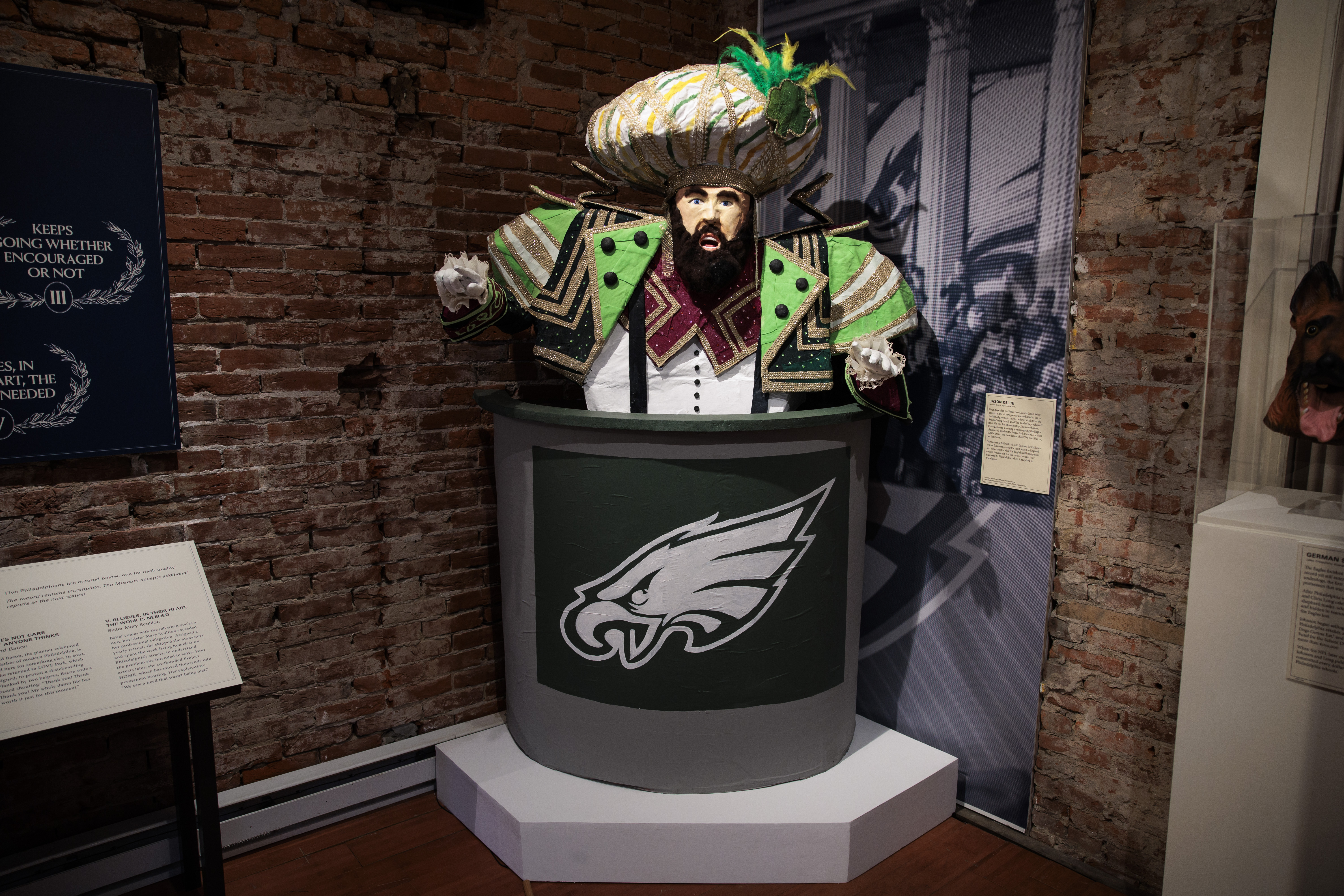
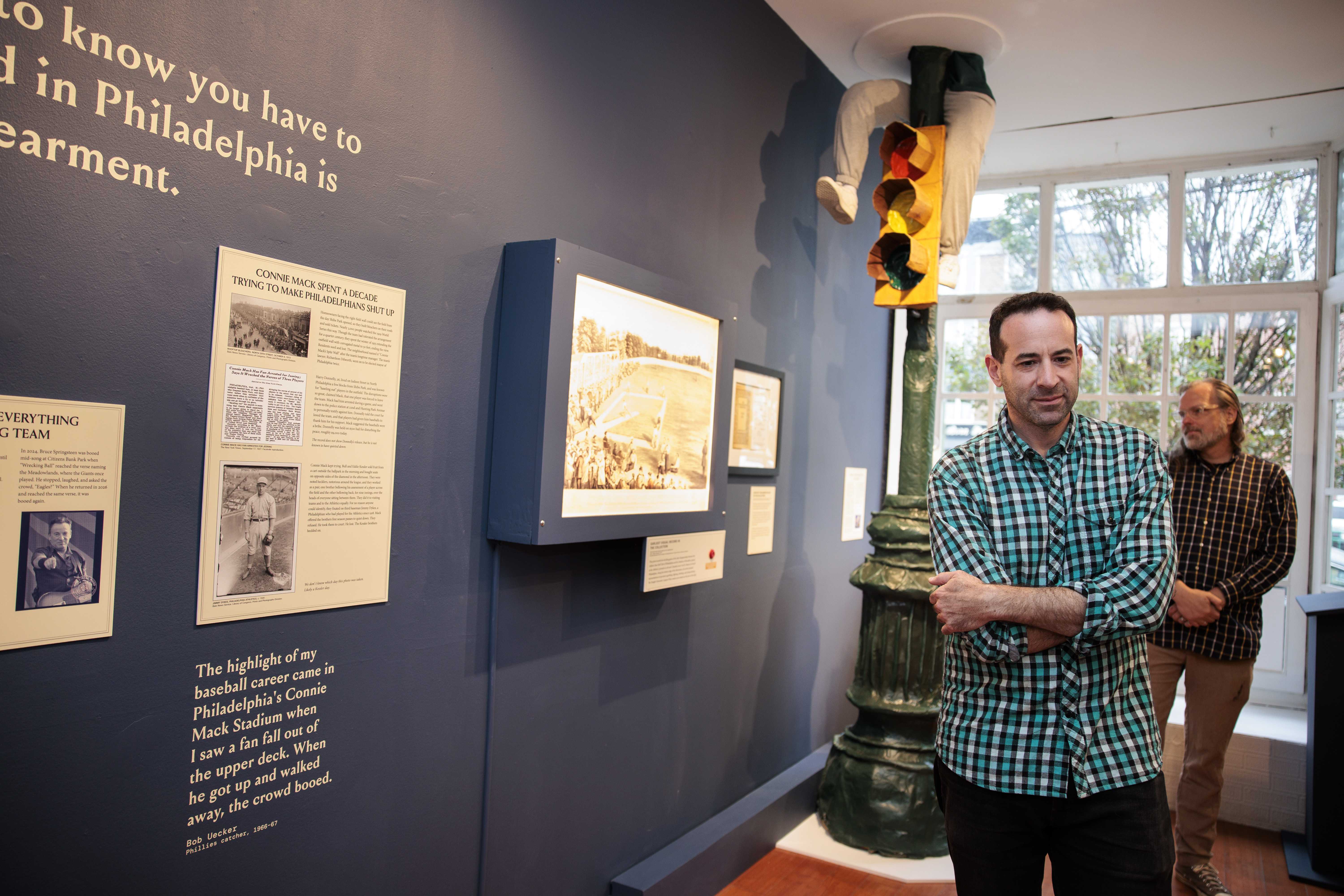
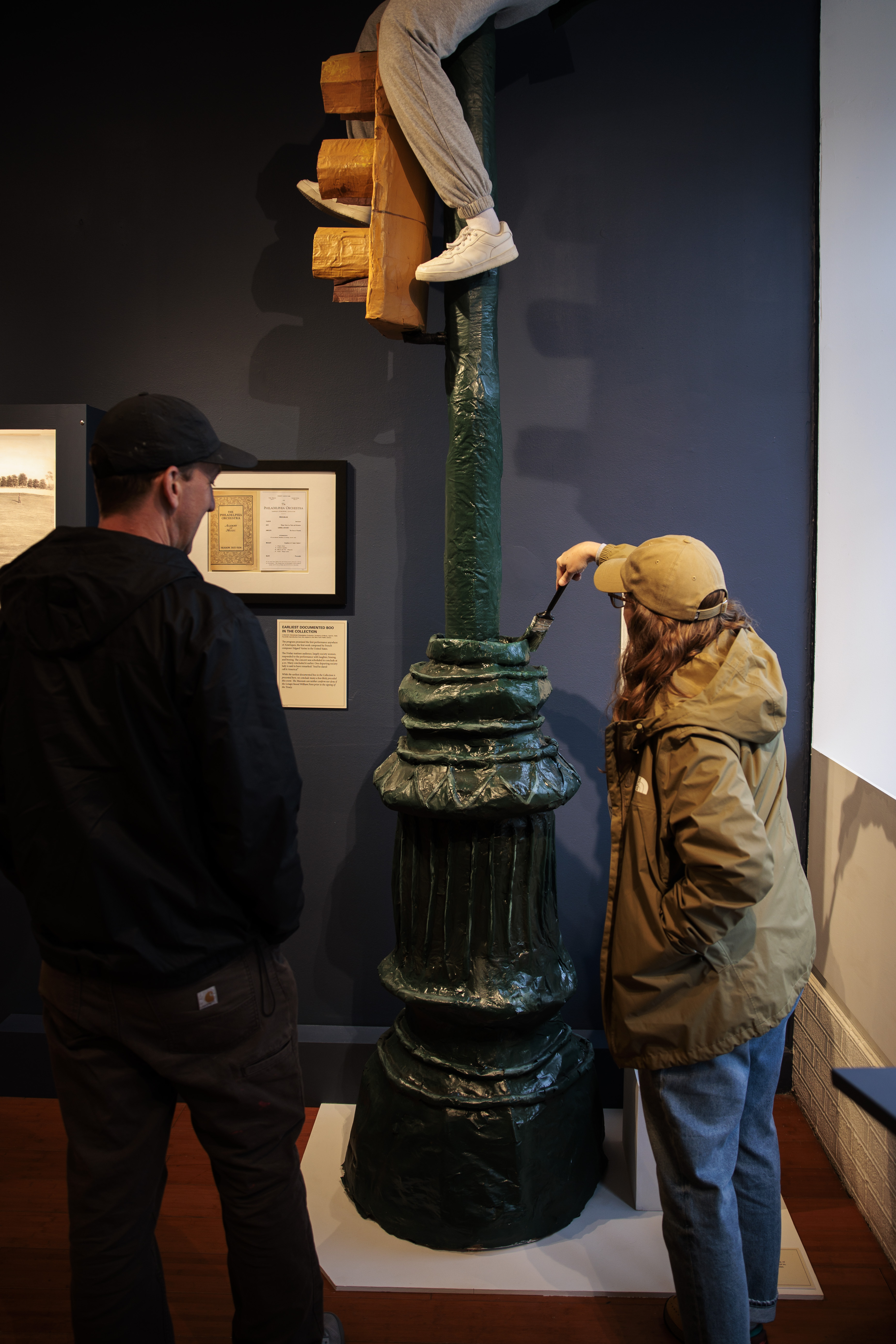
Once inside the museum, two large papier-mâché sculptures immediately catch the eye — one, of a Philadelphian climbing a greased pole, and the other of Jason Kelce during his Eagles Super Bowl speech. In the first, guests are invited to “grease the pole” with a paintbrush and clear goo from a nearby can (you know I did it!), and at the latter, visitors can stand under a sound dome (fancy!) in front of the sculpture to hear Kelce’s “Hungry Dogs” speech.
A papier-mâché sculpture of Jason Kelce during his 2018 Eagles Super Bowl speech is featured in the Museum of the Philadelphian.Monica Herndon / Staff Photographer
In the center of the room is a freestanding wall with a rearview mirror on it. The accompanying plaque tells the story of Ted Passon, whose parked car was flipped in the aftermath of the Phillies 2008 World Series win. Passon created a blog asking Philadelphians who enjoyed the spectacle to help pay for his vehicle, and through the generosity of donors, he was able to get a new car and give $3,000 to someone else whose car was flipped. On an iPad at the exhibit, visitors can play a YouTube video of the flipping and read Passon’s blog.
I remembered the story well because I interviewed Passon about it in 2008. Seeing him at the event Tuesday was a full-circle Philly moment for both of us. Passon, who’s now an Emmy Award-winning documentarian, said he was happy to loan the mirror of the vehicle Philly claimed from him to the museum.
“It’s an honor to be included in the story of Philadelphia,” he said. “If I can be a footnote in the city’s history, I did something right in my life.”
‘Booing is my love language’
Other exhibits explore Philadelphians’ history with booing, our history of throwing things, and the five qualities Adoff and his team have decided make a Philadelphian, with number one being, “Does not wait for permission.”
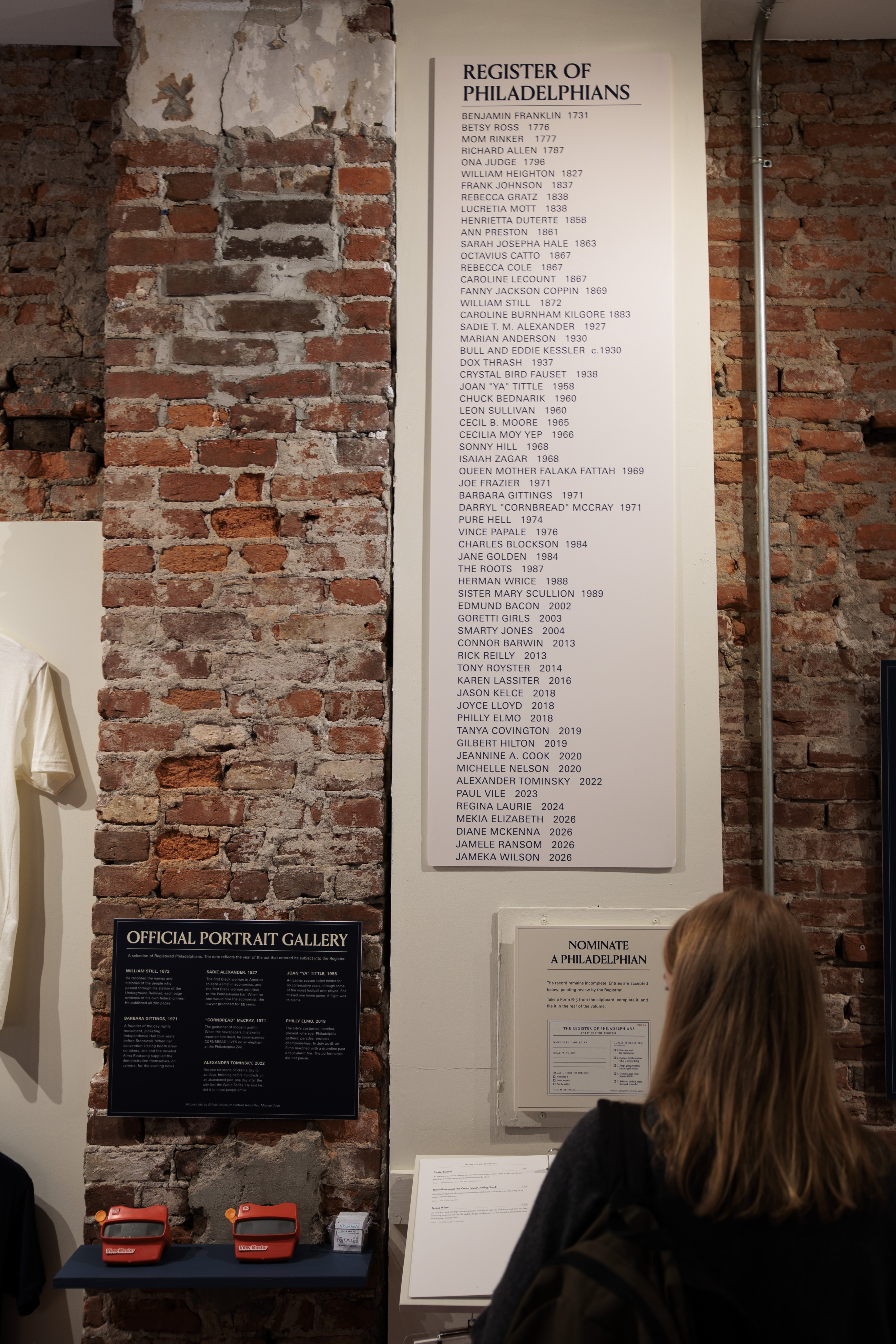
The “Register of Philadelphians” on the wall and accompanying book begins in 1731 with Benjamin Franklin and ends this year, with Jameka Wilson, the woman who went viral for her TV interview about kicking a man in a Chucky mask who was terrorizing pedestrians.
The Register of Philadelphians features notable Philadelphians ranging from Ben Franklin to Jameka Wilson. To the left of the register is the museum’s official portrait gallery, which can be seen through two ViewMasters. Monica Herndon / Staff Photographer
I was excited to see a couple people I’ve written about on the list, including Paul “Jelloman” Vile and the late Gilbert Hilton, who turned heads across the city for years in his “Badillac” car, which was covered in items from Goodwill, and who was one of the most Philly people I’ve ever met.
There’s also a portrait gallery by the Rev. Michael Alan of seven Philadelphians in the register that can only be seen through an old-school ViewMaster, which were a hit with the crowd.
“It was a small space and this was a way to make something look bigger without being bigger,” Alan said.
Creator and founder Brian Adoff talks about the Museum of the Philadelphian in front of the museum’s gift shop. Monica Herndon / Staff Photographer
The tiny museum even has a gift shop with shirts that say “I greased the pole at the Museum of the Philadelphian” and bumper stickers that read “Booing is my love language.”
‘The most Philadelphian thing’
The museum was funded by Adoff through his experience design studio, Architects of Human Connection, and admission is free because he believes “the Philadelphian has paid enough.”
The museum is a culmination of Adoff’s many endeavors over the years, from music, clowning, absurdist theater, and working as a tour guide for the Greater Philadelphia Film Office, to managing a software business and, most recently, creating events that connect Philadelphians.
In 2023, he cofounded the Fishtown Choir,and last year, Adoff created Join Philly, which connects Philadelphians with area clubs and groups.
The idea for the museum came to Adoff in June, as he was trying to think of uses for his storefront office space. With the help of five paid collaborators, Adoff built the museum in less than three months, which is impressive, given the amount of research that clearly went into the exhibits, plaques, and bios.
“It started kind of absurd and silly until I was like, ‘Oh, this is just like everything else I do. It matters and it actually has heart and it has meaning,” he said.
Brian Adoff in the Museum of the Philadelphian he created in Fishtown. Monica Herndon / Staff Photographer
Here’s the potentially scandalous thing — Adoff isn’t a Philly native. He’s originally from Long Island, moved to Cherry Hill as a kid, and came to Philly to attend the University of Arts. He spent time in Chicago then returned to Fishtown 20 years ago, where now lives with his wife and son.
Knowing how nativist Philly can be (my native colleagues said transplants can “never” say they’re from Philly if they moved after the age of 13), I had to ask Adoff what gave him the gall to open the museum.
“Because I express the qualities that make a Philadelphian,” he said.
“But you decided those qualities, right?” I asked. (They are: 1. Does not wait for permission 2. Decides for themselves what is worth doing 3. Keeps going whether encouraged or not 4. Does not care what anyone thinks 5. Believes, in their heart, the work is needed).
“Yes, which is the most Philadelphian thing I could have done,” he said.
Adoff wants people to leave his museum feeling as inspired as he did after watching the opening of the Obama Presidential Center on TV. He dreams of Rob Mac narrating an audio tour of the exhibit, like Steve Buscemi does for Eastern State Penitentiary. And his longterm goal is to open a more universal experience one day — a fart museum. Everybody isn’t lucky enough to be a Philadelphian, but everyone farts.
I imagine Benjamin Franklin, a fellow Philly transplant who once wrote a satirical essay about flatulence, would think that’s a gas.
Darrin Rowland (left), and Leslye Rowland grease the pole sculpture at the Museum of the Philadelphian on Tuesday. Monica Herndon / Staff Photographer
Know before you go
The museum, 454 E. Girard Ave., is open Fridays (5 to 8 p.m.), Saturdays (noon to 5 p.m.), and Sundays (noon to 5 p.m.) Sept. 25 through Nov. 1.
Admission is free, but timed reservations online are recommended. Opening night is already booked and only a few spots remain for this weekend.
Like Philadelphia, there is a lack of public bathrooms at the museum, in that there are none.
The museum is wheelchair accessible via a temporary ramp. Email visit@museumofthephiladelphian.org prior to visiting so staff can have the ramp ready.
All ages are welcome, but some exhibits do include profanity.
Transit fans who asked what in the El was happening with SEPTA’s old stuff inspired a sale of vintage items from its vault this month, marking the first time in the agency’s six decades of existence that Philly’s biggest fleet has held anything close to a garage sale.
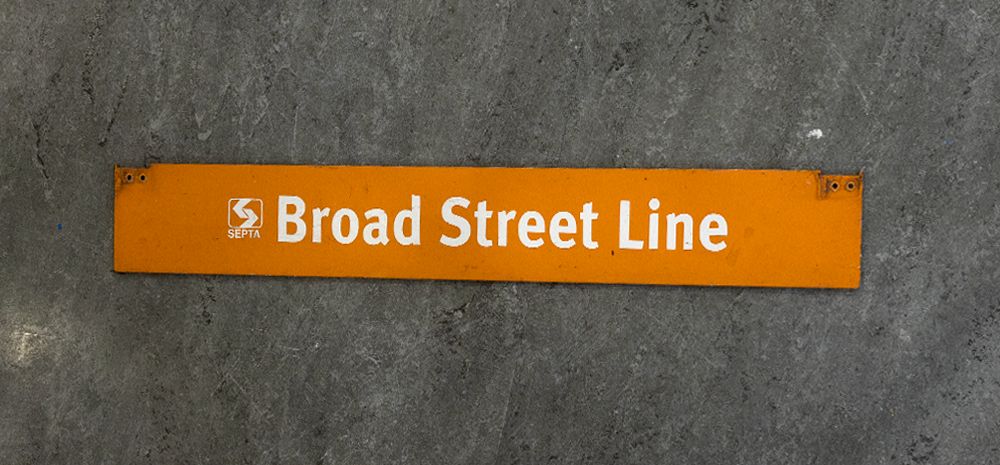
Dubbed “RETROmania,” the sale began online Sept. 14 and is already proving to be a gravy train for SEPTA, with decommissioned transit signs selling out for up to $350 a pop.
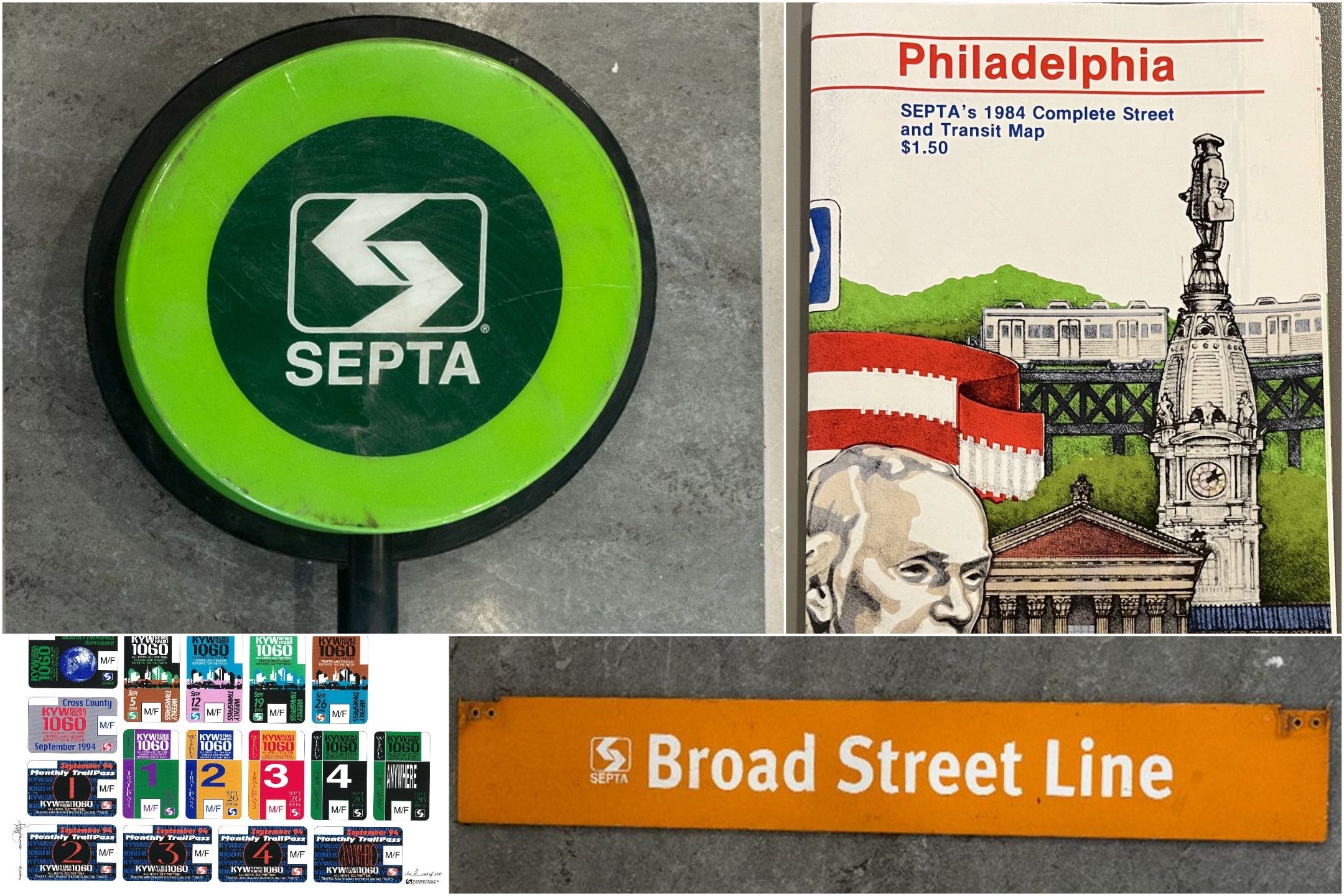
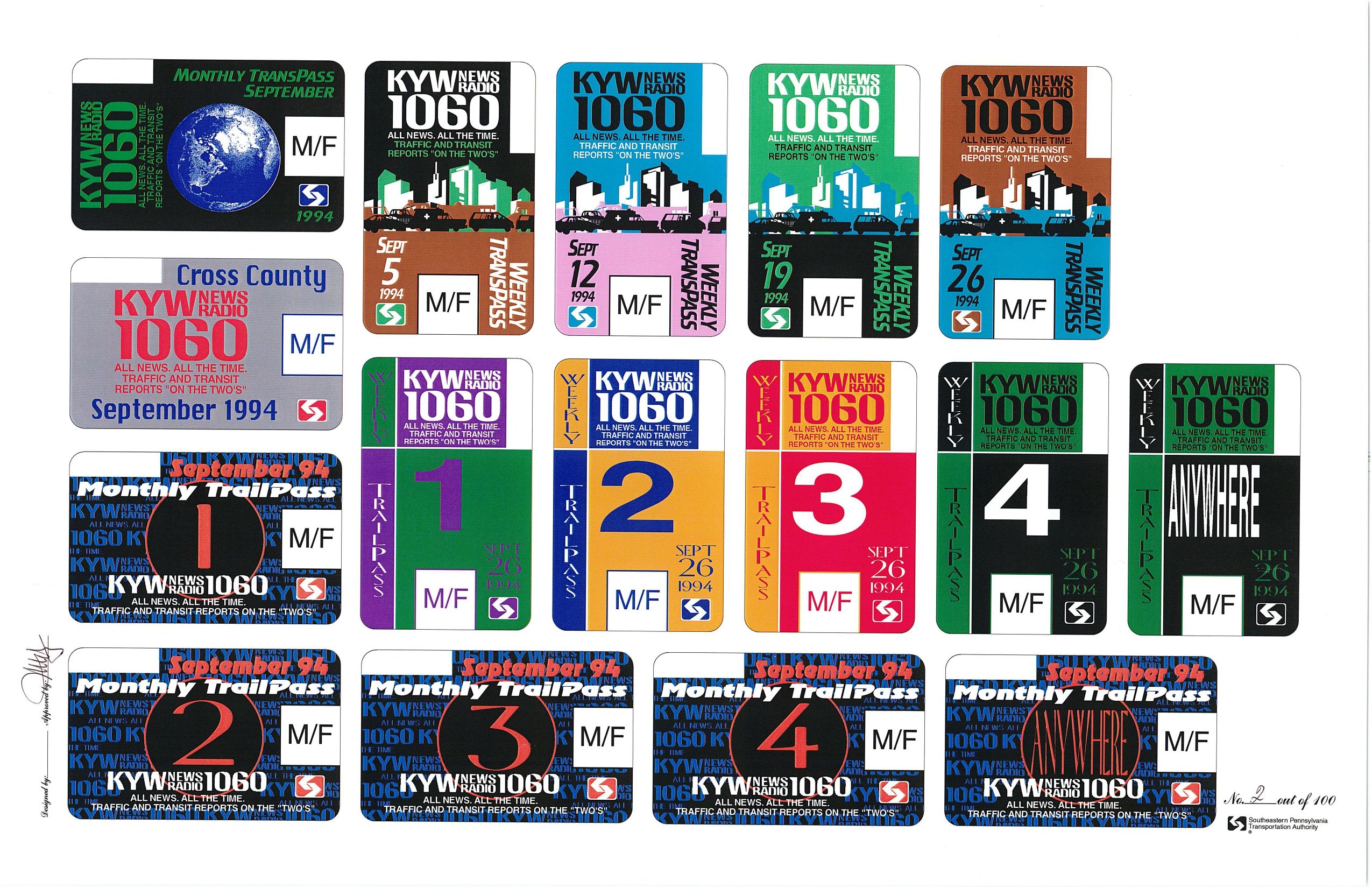
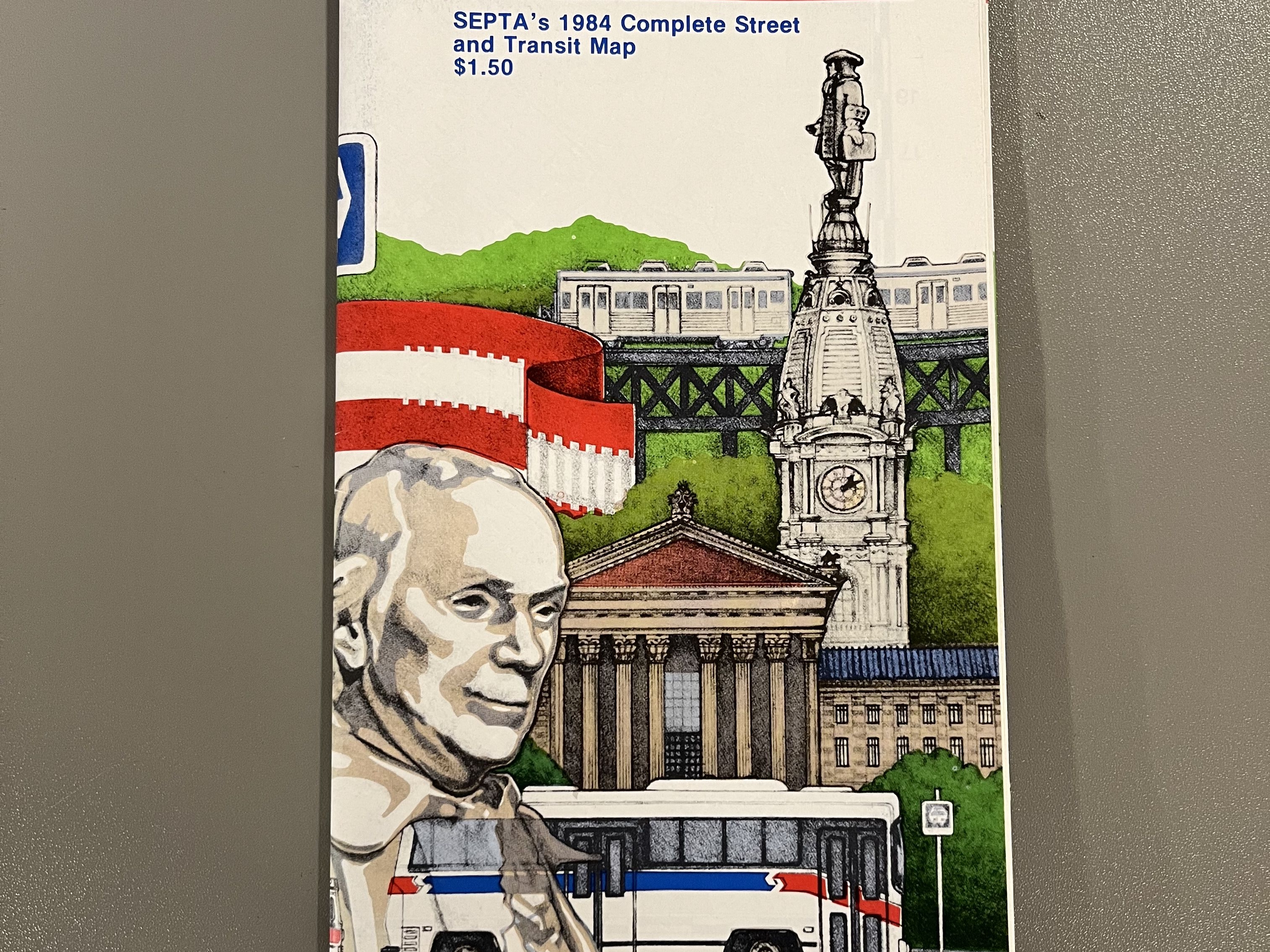
It’s no surprise that signs for the Broad Street Line, which has shuttled Philly sports fans to and from the stadium complex for decades, have been among the hottest-ticket items. Other available products include old street and transit maps and vintage TransPass design sheets.
A TransPass sheet from 1994 is selling for $50 during SEPTA’s RETROmania sale.Courtesy of SEPTA
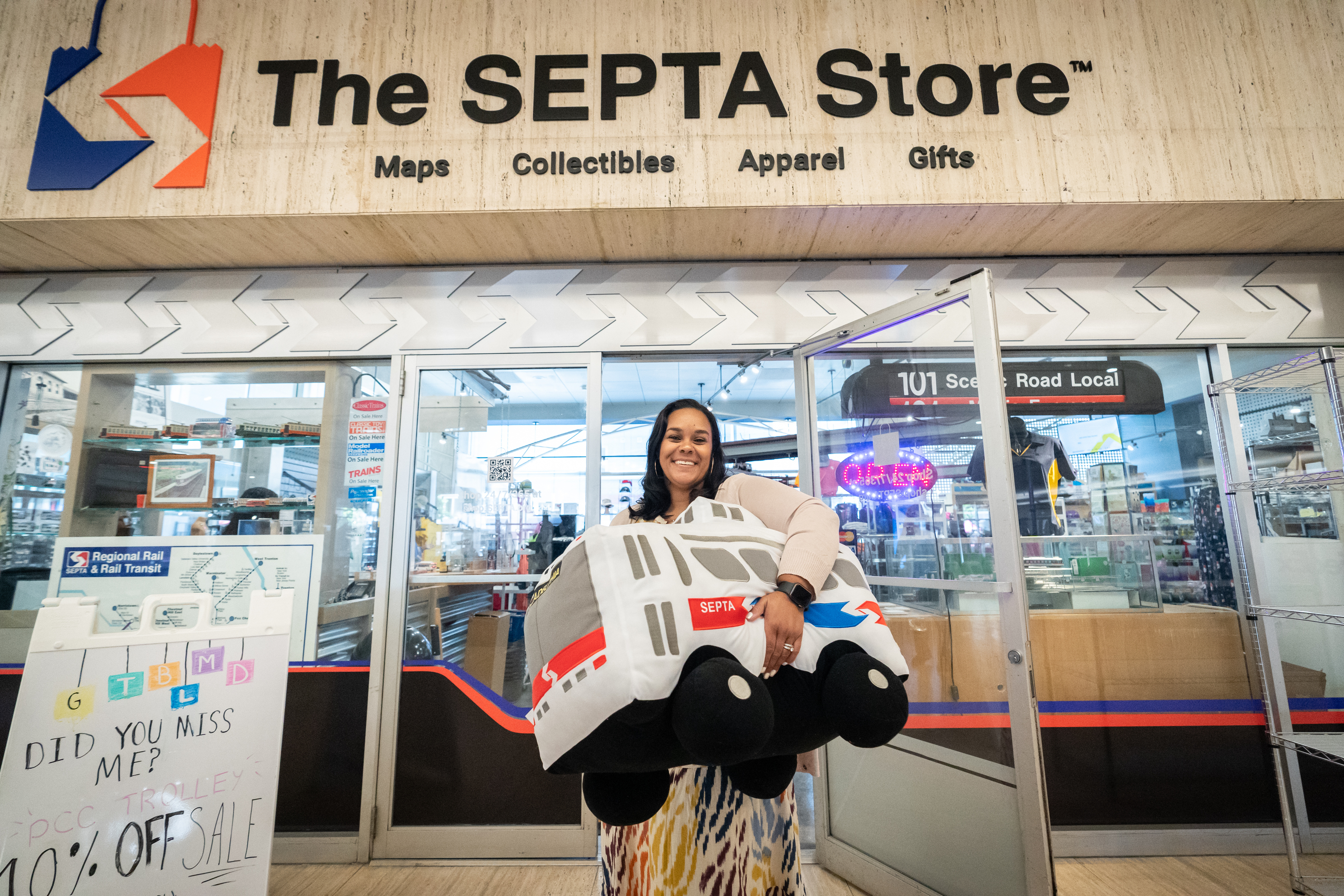
The early success of the online sale has SEPTA Store manager Al’Lee Floyd and store supervisor Melissa “Meli” Smalls excited for the in-person sales at the store on Oct. 2 and 3.
“It was a big surprise … we did not anticipate some of the signs would sell out in one day,” Floyd said.
Since taking over the SEPTA Store at the agency’s headquarters on Market Street near 12th in Center City in 2021, Floyd has reinvigorated the agency’s merchandise and fan base with wildly popular items like viral pint glasses and must-have ugly Christmas sweaters.
Al’Lee Floyd, manager of the SEPTA Store, outside of the store at the SEPTA headquarters in Center City in 2024. Jessica Griffin / Staff Photographer
But SEPTA’s vintage sale — the first of its kind anyone can recall — was inspired squarely by its customers. Over the last two years, as SEPTA rebranded the names of its lines and signage, like switching the Broad Street Line to the B (a change many Philadelphians have neither accepted nor acknowledged), SEPTA fans have inquired about what’s happening to the signs with the old names on them.
“When people started noticing the stations were switching over, a lot of people were coming into the store and asking what we were doing with the signs coming down,” Smalls said. “We got with our wayfinding team and asked what the plans were and they said they could get them to us if we wanted them.”
Smalls and Floyd took their customers’ curiosity as a sign and went full steam ahead with a vintage sale, digging up other items from SEPTA’s warehouse.
This 1984 street and transit map from SEPTA sold for $25 in its RETROmania sale.Courtesy of SEPTA
Street and transit maps from 1966 to 1999, which were priced at $25 each, have already sold out, but a Delco Public Transit Map and Guide from the 2010s is still available. There are also plenty of vintage TransPass sheets from 1993 and 1994 still for sale at $50 each.
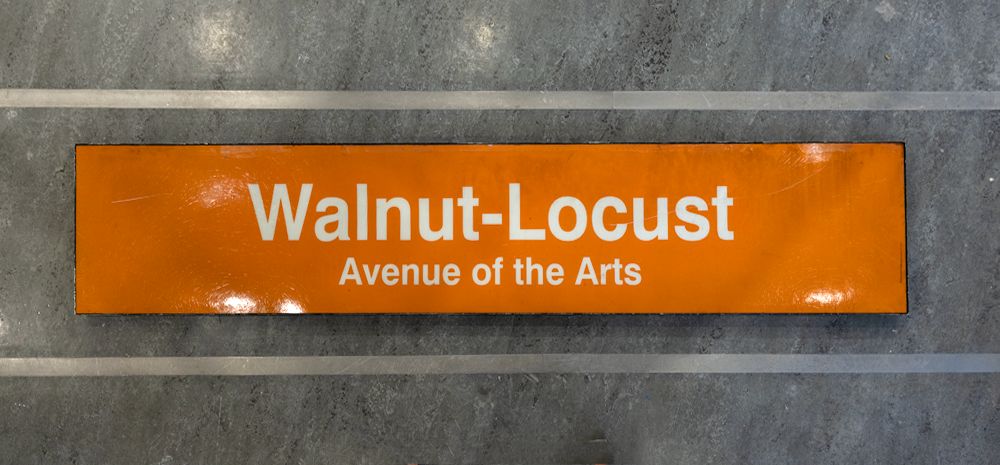
This Walnut-Locust sign was still available, as of publishing time, for $350 in SEPTA’s RETROmania sale.Courtesy of SEPTA
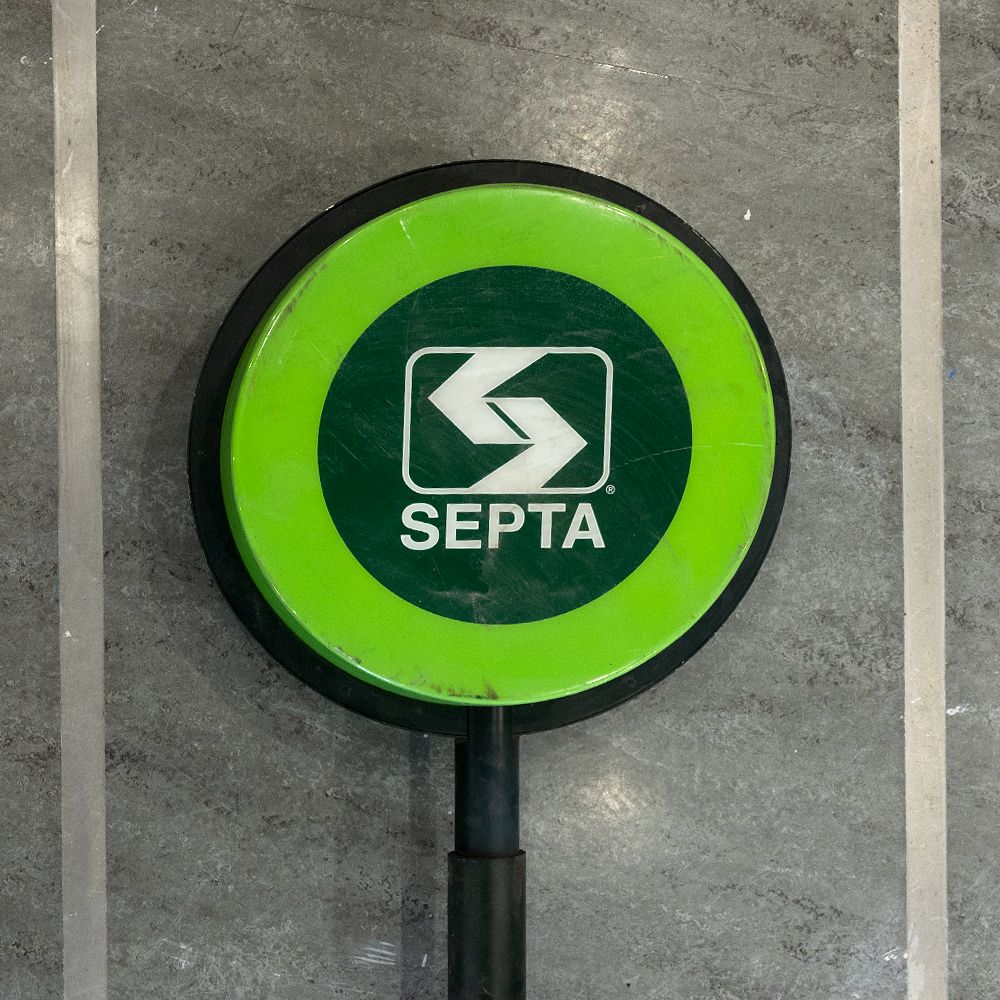
Among the most popular items were what SEPTA calls its “lollipop” signs, circular plastic signs ringed in green with the SEPTA logo in the center, that sold for $350, and, of course, the Broad Street Line signs, which ranged from $125 to $350.
“If a sign identified anything to do with NRG [Station] or any sports complex stuff, it was a little more of a higher ticket item,” Floyd said.
Broad Street Line signs, like the one pictured above, quickly sold out in SEPTA’s RETROmania sale.Courtesy of SEPTA
SEPTA had already sold more than 100 signs as of Sept. 18, when it dropped a new batch of signs into the mix — prototypes with the current names of the lines on them for $50 each.
Unsurprisingly, those haven’t been as popular as the old signs that are drenched in nostalgia (and probably other things) and aged with a fine Philadelphia subway patina.
Anyone who buys a decommissioned SEPTA sign is required to sign an agreement that they will not use it for commercial purposes, Floyd said.
Affectionately referred to by staff as “lollipop” signs, these circular signs already sold out at $350 a pop during SEPTA’s RETROmania sale.Courtesy of SEPTA
The in-person sale at the SEPTA store will include merchandise similar to that in the online sale, along with vintage apparel. A preview sale will be held from 10 a.m. to 4 p.m. Oct. 2 at the store, with the main sale taking place from 10 a.m. to 4 p.m. Oct. 3.
Floyd recommends getting in line early.
“It’s first come, first served, once it’s gone, it’s gone,” she said.
Meta released its new personal AI agent on Tuesday and named it Muse (like this bot is going to inspire humanity to write the next great tragedy and not relegate us to become the lead characters in one).
Of course, Muse could refer to the act of thinking about something very carefully, but that would be even more ironic, given that some experts in the field have sounded alarm bells that AI is advancing faster than humanity is prepared for.
Admittedly, I didn’t hear about the launch until two days after its release (I’m not a tech reporter and still keep a paper calendar), but I was surprised by how it did come to my attention.
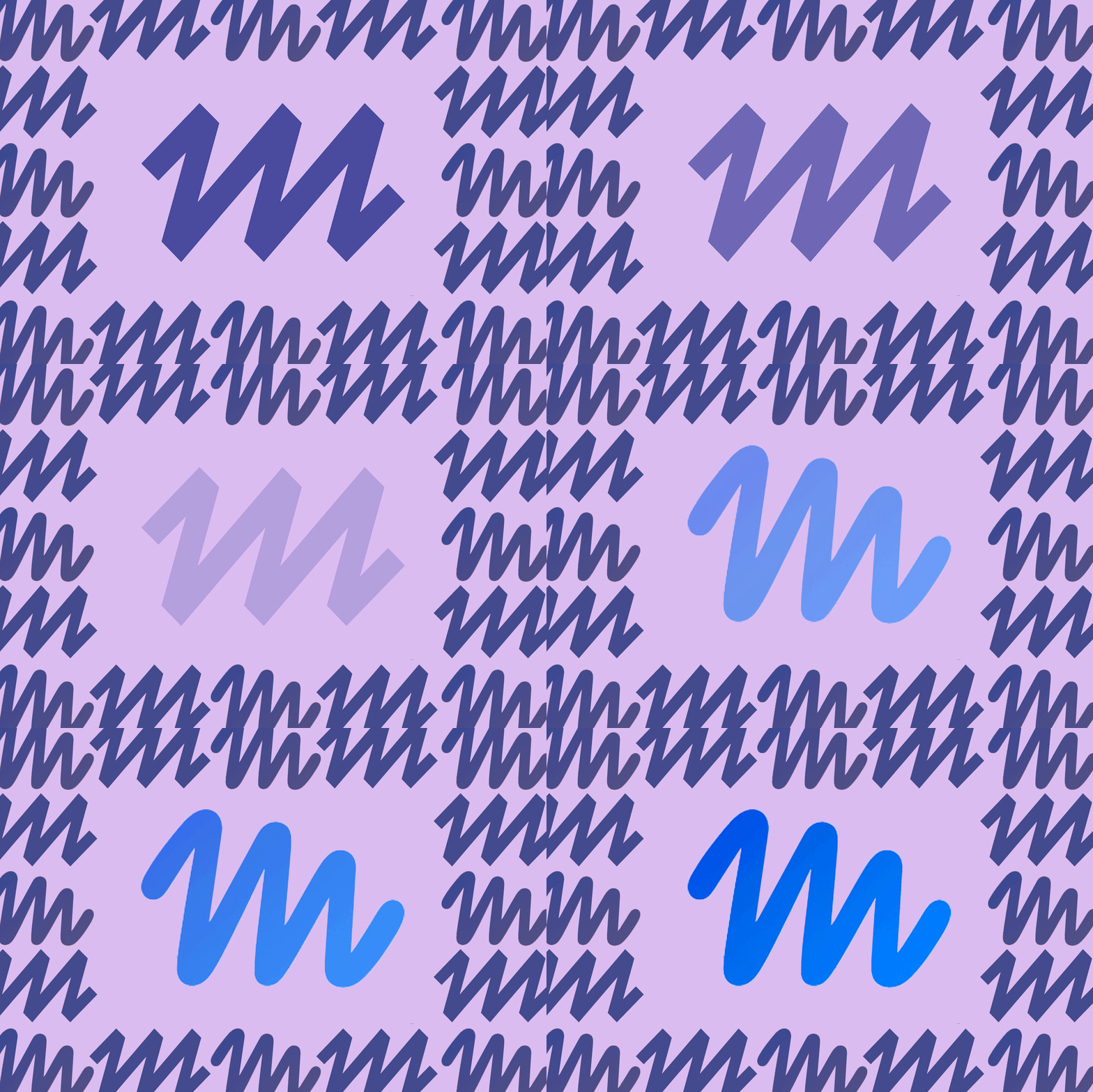
In a post on Threads, user @rpennone pointed out how similar Muse’s stroke-like “M” logo is to the logo of one our city’s most beloved institutions, Mural Arts Philadelphia.
View on Threads
I pulled up the two logos on my computer, put them side-by-side, and it painted a pretty clear picture.
Part of our DNA
Typically an “M” is two sets of arches, sometimes with a little rat tail on the upper left side for flair. But both of these Ms have three peaks and valleys with little rat-tail flairs at both ends. Granted, Muse’s logo is blue, while Mural Arts’ is typically purple (though like Gritty’s belly button, it can change colors), and the former’s logo also has more fluid lines, while the latter’s are more rigid. Still, the resemblance is enough to make you go “hmm…”
View on Threads
Given how much people are worried about AI copying everything we create, this isn’t going to help the situation. Maybe nobody outside of Philly would catch it, but Mural Arts is a part of the very fabric of this city, part of its DNA, and someone here was bound to notice the similarity and defend its honor. Nobody paints our baby into a corner.
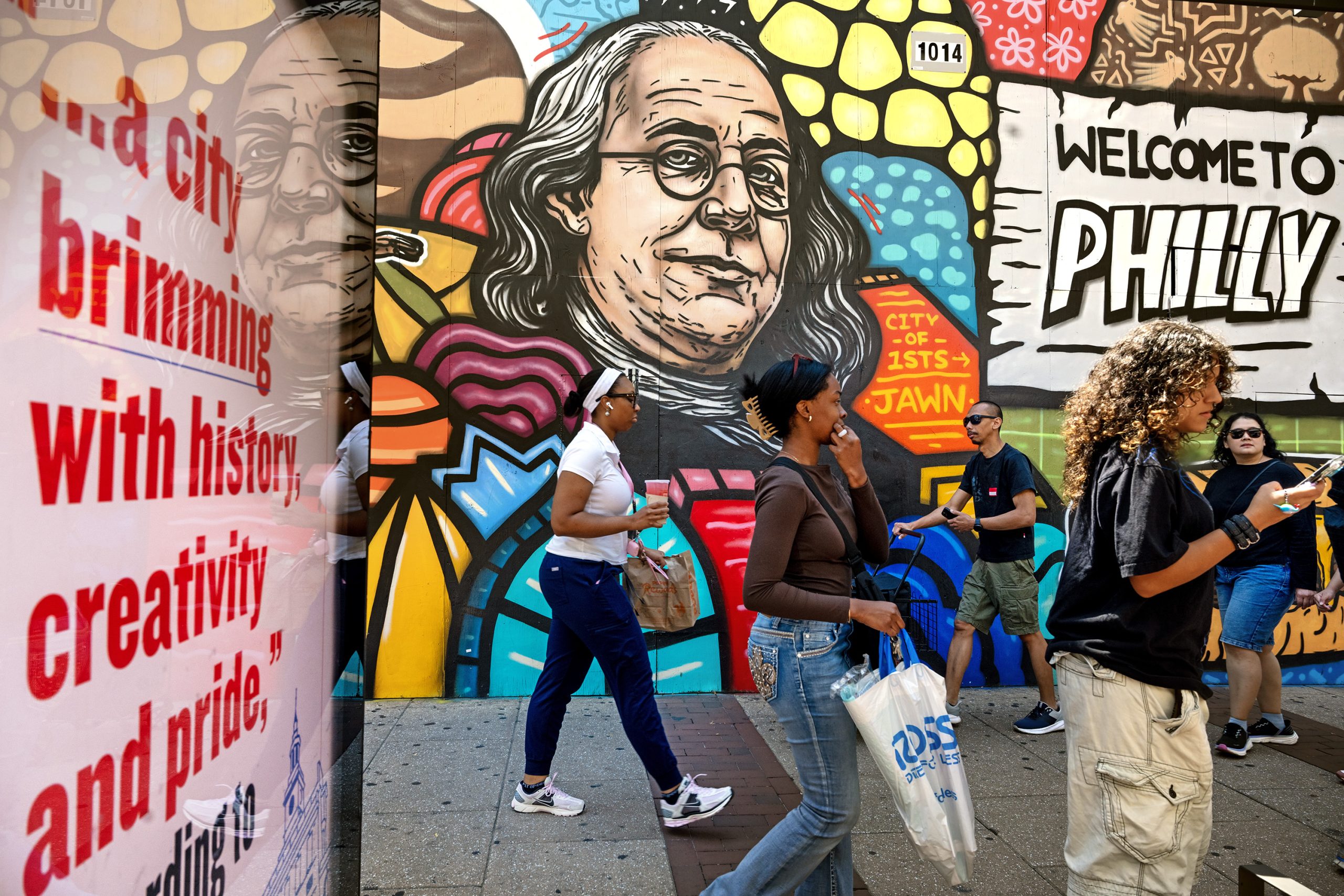
The 150-foot “Welcome to Philly” mural by artist Alloyius McIlwaine on the 1000 block of Market Street. The mural was a collaboration between Mural Arts Philadelphia, the Center City District, Comcast, HBSE, and the ownership group of the 76ers.Tom Gralish / Staff Photographer
For its part, Mural Arts was very diplomatic about the matter. Spokesperson Frank Luzi told me there’s no concern on the nonprofit’s part about copyright infringement and there are no plans for legal action.
“They feel like they are two very different organizations,” he said.
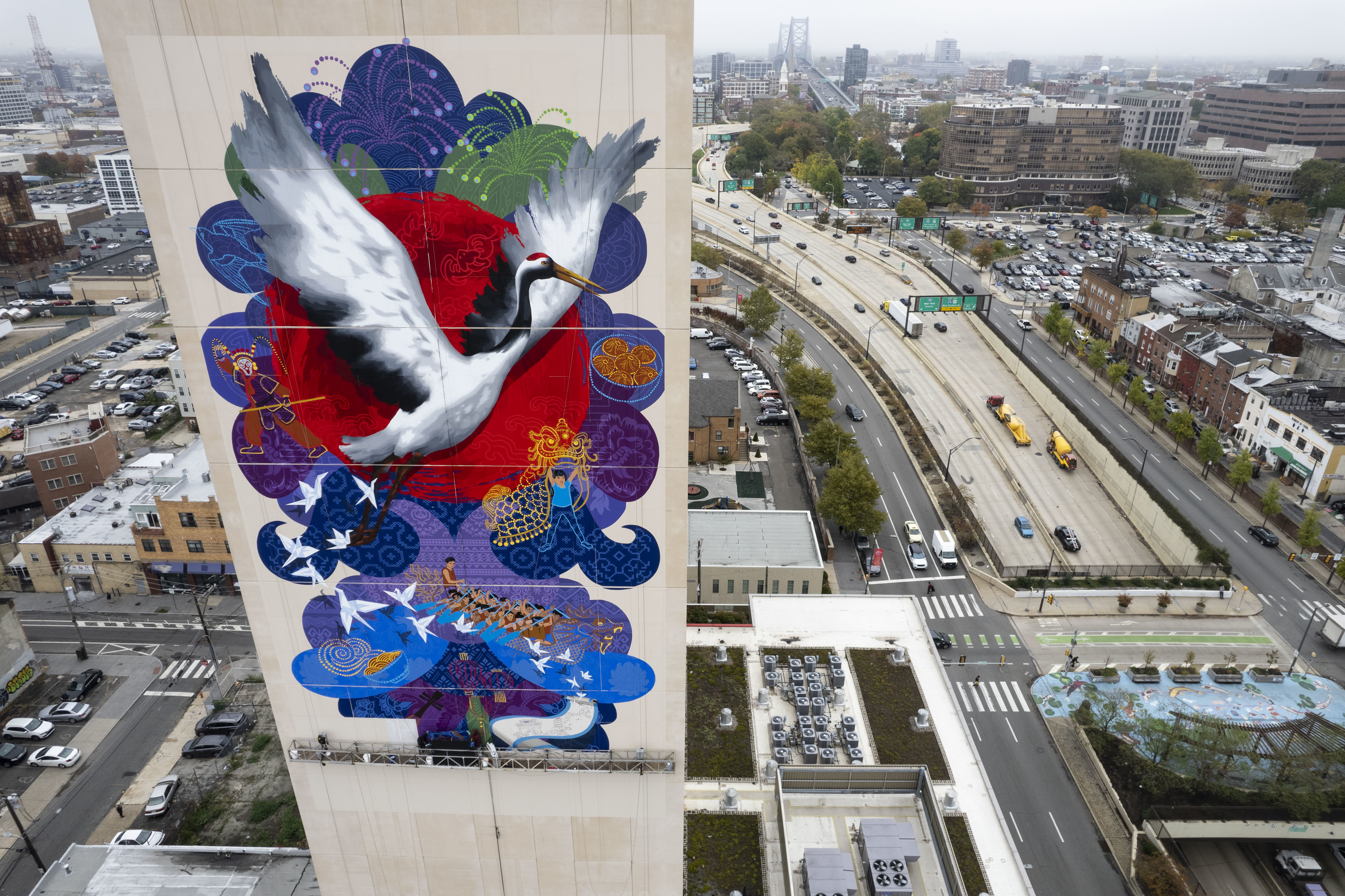
Designed by artist Chenlin Cai, “The Past Supporting the Future” mural in Chinatown was collaborative project by the Philadelphia Chinatown Development Corporation, Mural Arts Philadelphia, and the Philadelphia Housing Development Corporation.Monica Herndon / Staff Photographer
‘Definitely a resemblance’
Here’s the interesting thing, Muse’s logo was designed by a human who “cut my creative teeth in Philadelphia,” according to her website.
Jessica Hische is a lettering artist and author specializing in “typographical work for logos, film, books, and other commercial applications,” whose previous clients include companies like Target and Hallmark and people like Barack Obama and Wes Anderson. Based in Oakland, Calif., she graduated from Temple University’s Tyler School of Art and Architecture in 2006 with a bachelor’s degree in design and illustration.
I reached out to ask her about the similarities in the logos. In an e-mailed statement, she said Meta contacted her after doing its own sketch of an M inspired by a pen stroke or scribble. She said she refined the design by “playing with the stroke angles, end treatments, and vertical rhythm.”
Hische sent me a screenshot of the “M” Meta provided her and 30-plus variations she worked on until she landed on the final version.
I had to squint pretty hard to detect the differences, but lettering isn’t my field of expertise. Meta’s initial version does look more rigid and even more like Mural Arts’ logo, while Hische’s is more fluid.
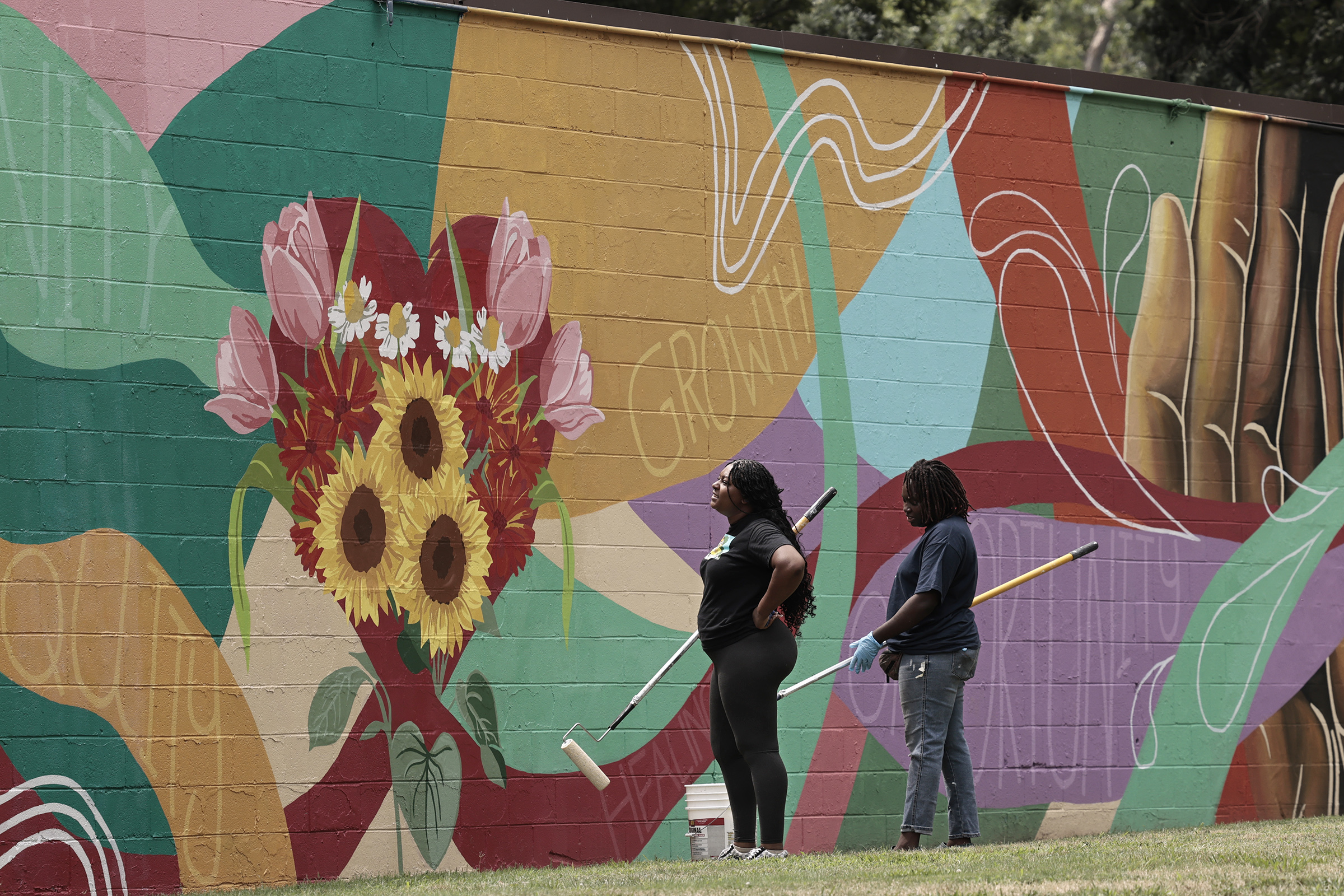
Mural Arts Philadelphia lead teaching artist and muralist Jamee Grigsby (left) and an apprentice continue painting a mural focused around what accessible justice looks like, at the Mayfair Athletic Club in Russo Park on Edmund Street in Philadelphia on July 30, 2024.Elizabeth Robertson / Staff Photographer
Hische said she was familiar with the Mural Arts program from her time in Philly but hadn’t seen its logo, which was created by J2, a Philly-based branding company, and debuted in 2016.
“There’s definitely a resemblance (and it would have been even closer had we landed on the brushier versions of the “M” I had explored!) but ultimately what Meta hired me to do was to make the mark they had created less rigid and more fluid,” Hische wrote. “The rigidity, regularity, and perfect symmetry are defining qualities of the Mural Arts M (along with the brush stroke treatment), and it’s a great logo.”
Common threads
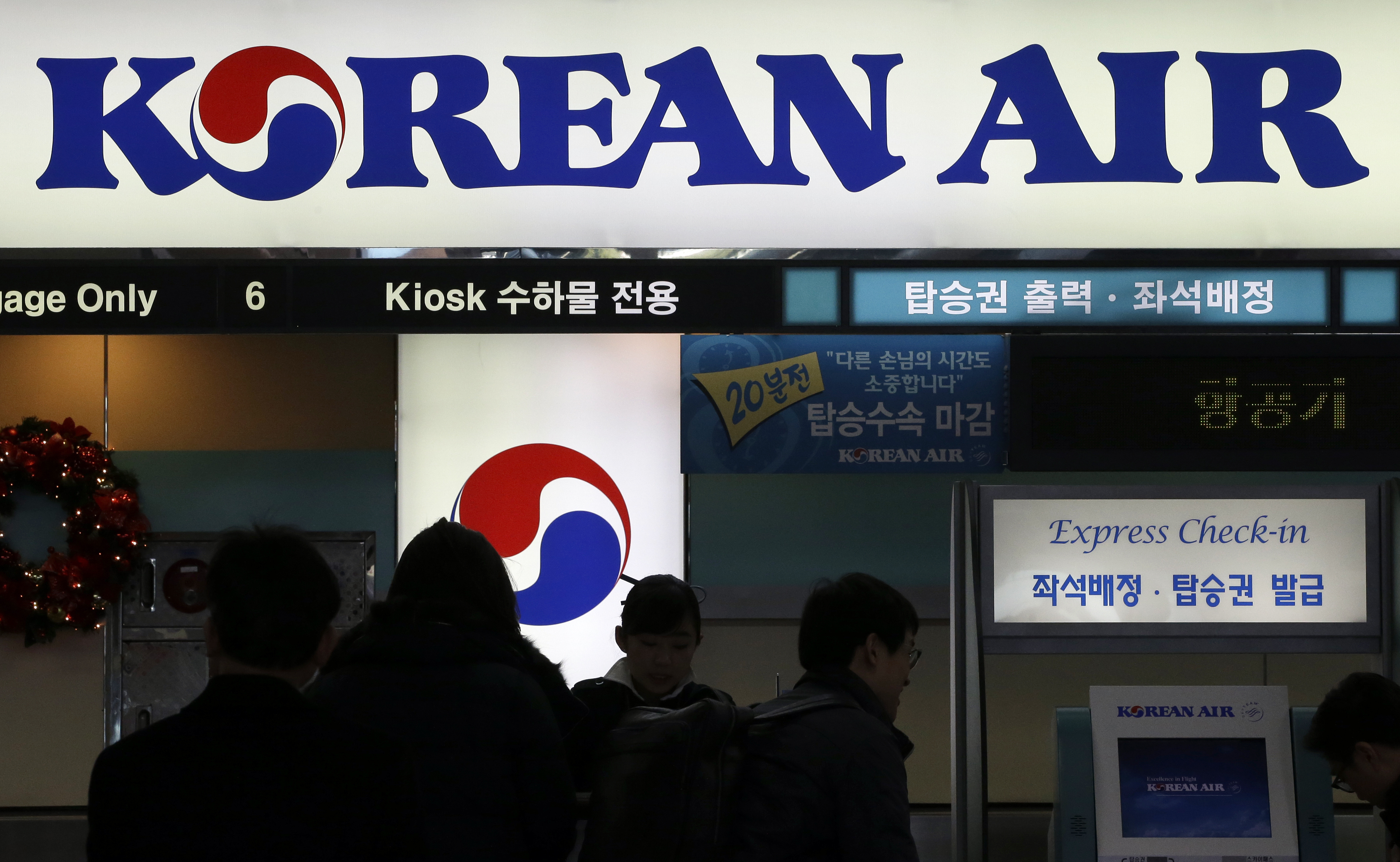
I appreciated Hische’s response and recognition of the resemblance. It’s not the first time logos have looked similar (Korean Air’s logo looks more like the Pepsi logo than the Pepsi logo does). It’s unclear where or how Meta came up with the original “M” logo Hische was asked to fine-tune. Meta did not return my requests for comment.
The logo for Korean Air bares an uncanny resemblance to Pepsi’s logo. Lee Jin-man
Later in the day, I saw Hische was catching flak online from people in her field for a completely different reason.
Because the digital world is a creepy stalker, as I was scrolling on Threads that evening, my feed suddenly become flooded with posts about Hische from people I don’t follow. Users on Threads — which is owned by Meta — were both condemning her for working on Meta’s AI project and defending her for working on it. Hische also penned her own nine-part Thread explaining her rationale, which includes the line “I have literally been touching grass more because of AI” and ends with a pitch for her latest children’s book.
I couldn’t help but wonder if this is right where Threads wanted me to end up. Why did that initial post about the logos from someone I didn’t follow pop up in my feed? Why did it also end up in the feed of an editor who sent it my way, confirming for me I should write this piece?
I thought I was pulling a thread, but maybe Threads was pulling me all along.
Unsurprisingly, the United States of America found a lot of ways to celebrate its own birthday this year. Modesty never was one of our strong suits.
Events held to mark the 250th anniversary of the signing of the Declaration of Independence included concerts, reenactments, and Ultimate Fighting Championship matches on the White House lawn that future historians will have to grapple with someday.
Then there was the stuff: the products, promotions, and items people and companies created to commemorate, or to capitalize off of, the Semiquincentennial. Since receiving the first news release for 250th merchandise on Jan. 5, I’ve been collecting the more unusual items I’ve come across that were created in the name of this nation’s birthday.
As summer comes to a close, I’d like share my anthropological findings with you.
Bobbleheads of state
The National Bobblehead Hall of Fame and Museum in Milwaukee, Wis., has made a bobblehead for almost every pop culture figure and event over the last couple years. There’s a few of Pope Leo, two of Mike “The Situation” Sorrentino (“Old Sitch” and “New Sitch”), and one of Jimothy, the raccoon from Seattle who’s believed to have short spine syndrome and went viral earlier this year.
But the most improbable bobble — one seemingly even more difficult to create than a raccoon who appears to have no neck — is one without a head at all.
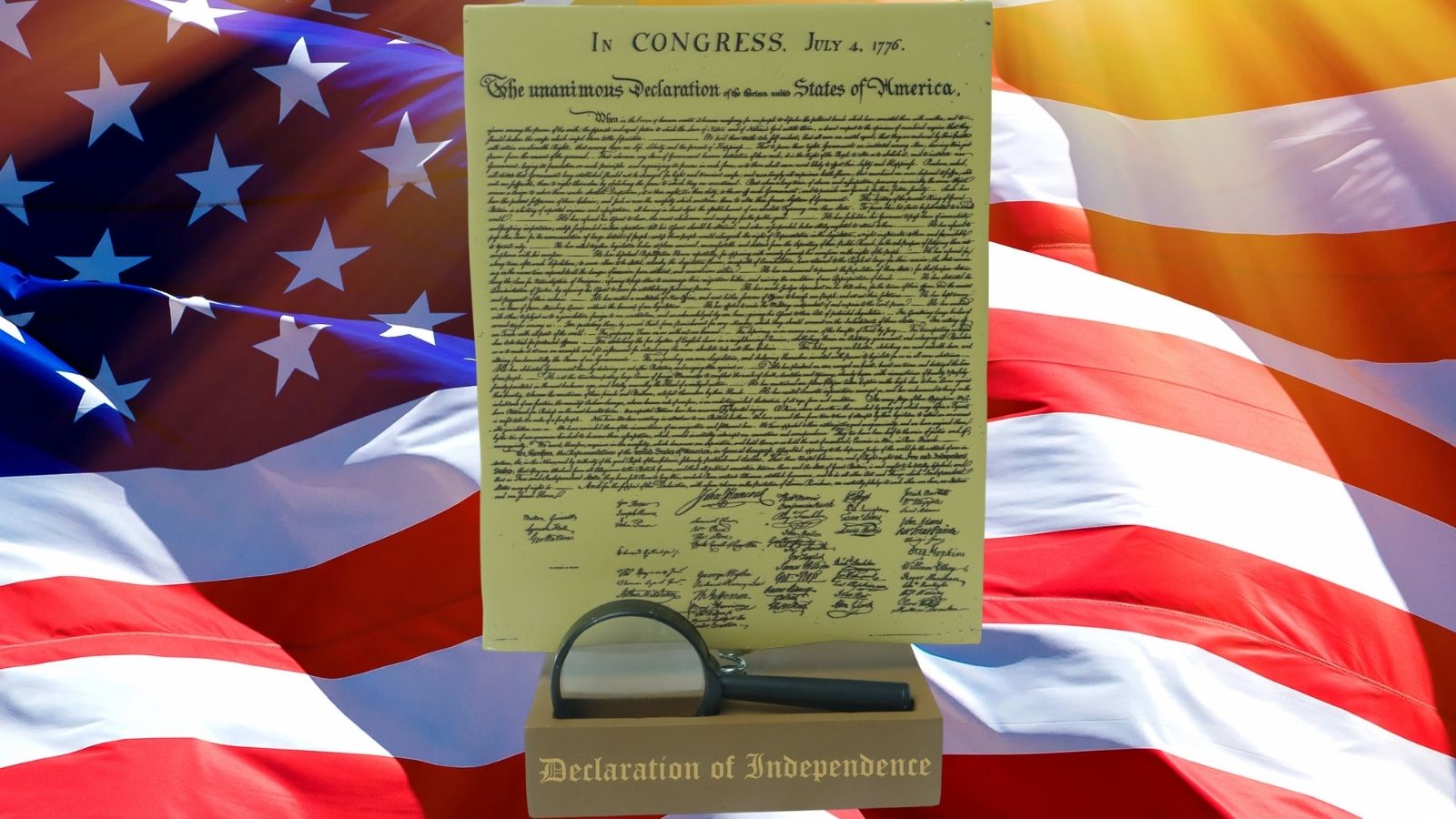
An image from the National Bobblehead Hall of Fame and Museum of its Declaration of Independence bobble created for the nation’s 250th anniversary.Courtesy of the National Bobblehead Hall of Fame and Museum
The Declaration of Independence bobble is among a series of 16 bobbleheads made for the nation’s 250th. It consists of a facsimile of the document that bounces back and forth on a small, brown pedestal with a magnifying glass on it.
The company confidently states that this is “the first bobble of Declaration of Independence,” and I’m pretty sure I don’t need to fact check that. Because when others ask: “Why in the world?” the National Bobblehead Hall of Fame and Museum asks: Why not? And make it bounce!
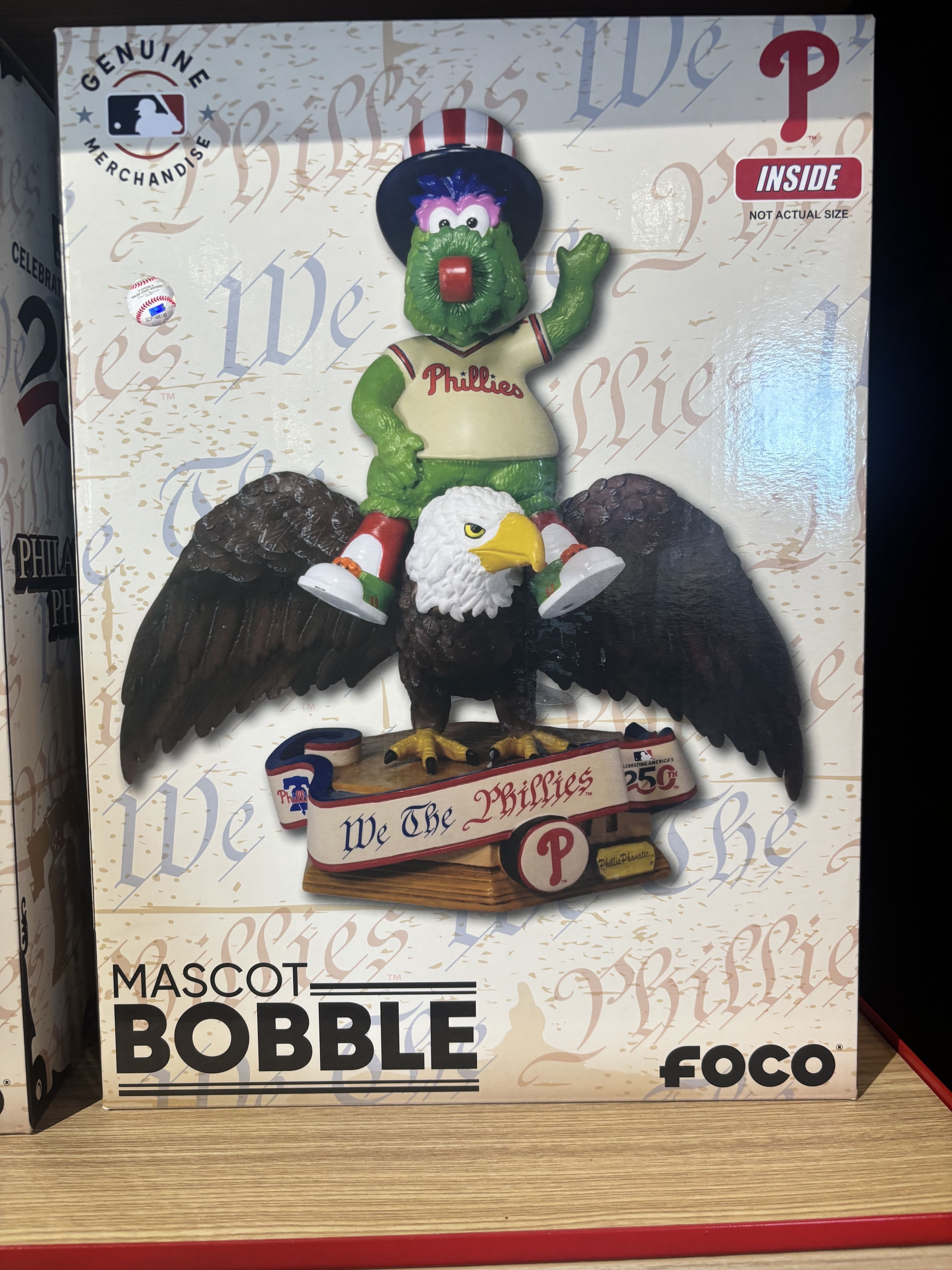
Nothing says “Happy 250th birthday, America” like a bobblehead Phanatic riding a bald eagle.Stephanie Farr / Staff
The Phillies and FOCO also got into the commemorative bobblehead game by creating one of the Phanatic in an Uncle Sam hat confidently riding a bald eagle like it was his hot dog cannon ATV. The eagle (who alas, is not Swoop) stands upon a podium wrapped with a banner that reads: “We the Phillies 250.” Sadly, it’s only available at the New Era Phillies Team Store at Citizens Bank Park and sadly, that store is no longer carrying the Liberty Bell Phillies cap I went in for when I spotted this.
Ghee whiz!
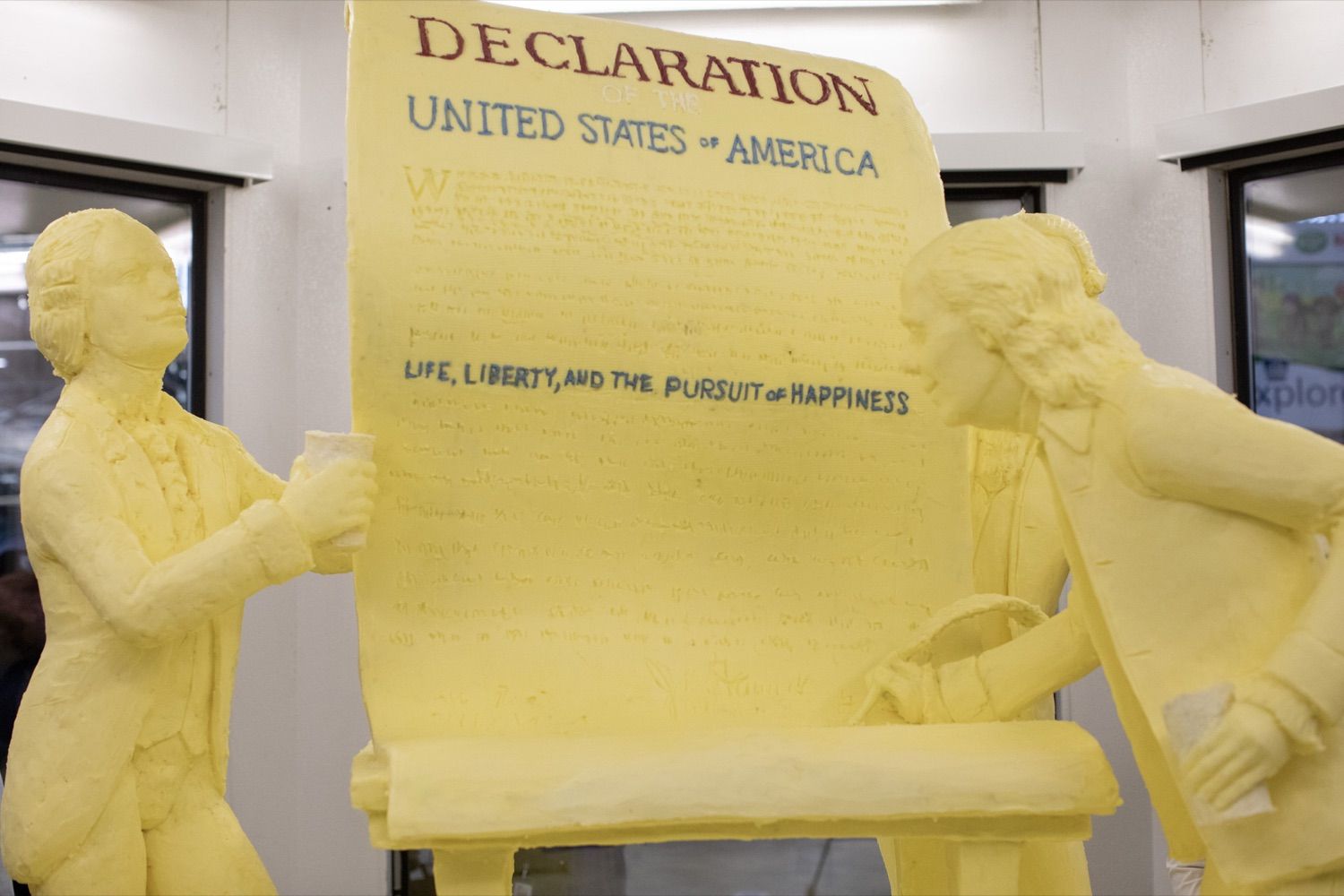
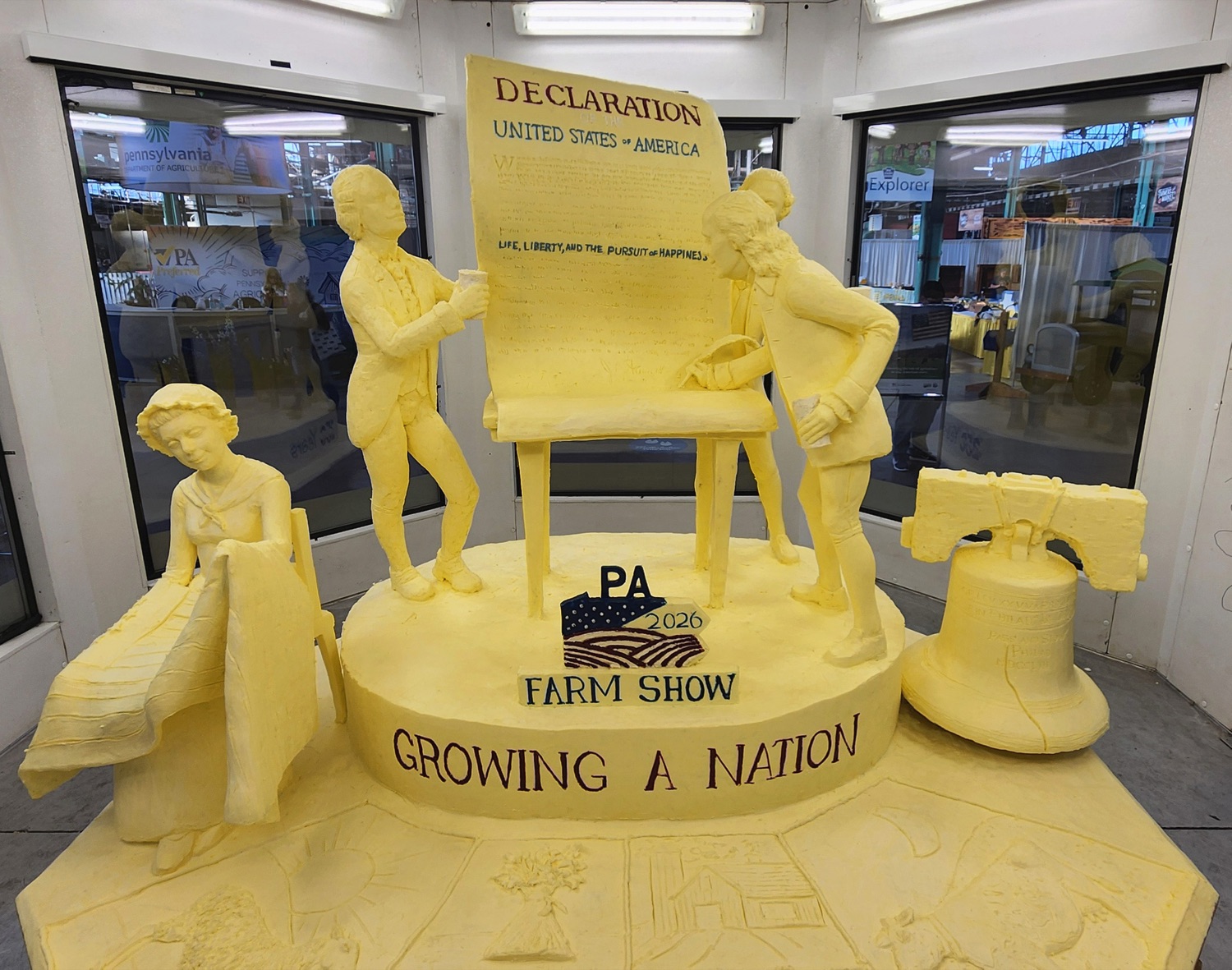
You butter believe the Pennsylvania Farm Show churned out one of the most epic nods to our nation’s 250th back in January when it unveiled a sculpture of three Founding Fathers signing the Declaration of Independence — made out of 1,000 pounds of Land O’ Lakes butter.
The sculptors, Jim Victor and Marie Pelton of Conshohocken, also added glasses of milk into the Founding Fathers’ hands in order to buttermilk the dairy theme. Also depicted in the sculpture are the Liberty Bell and Betsy Ross.
The 2026 Pennsylvania Farm Show Butter Sculpture depicts three of the Founding Fathers signing the Declaration of Independence. Also included in the sculpture are Betsy Ross, at left, and the Liberty Bell, at right. Provided
Just to clarify, when the Farm Show was over, the butter was spread out to Reinford Farms in Juniata County, where it was turned into renewable energy in a methane digester, according to a news release.
One margarinely interesting fact: This isn’t the first time Benjamin Franklin has appeared in a Farm Show butter sculpture. In 1991, he was the subject of the event’s first butter sculpture, and in 2007, he was sculpted again with the Liberty Bell, according to PennLive.
Beavers and beers
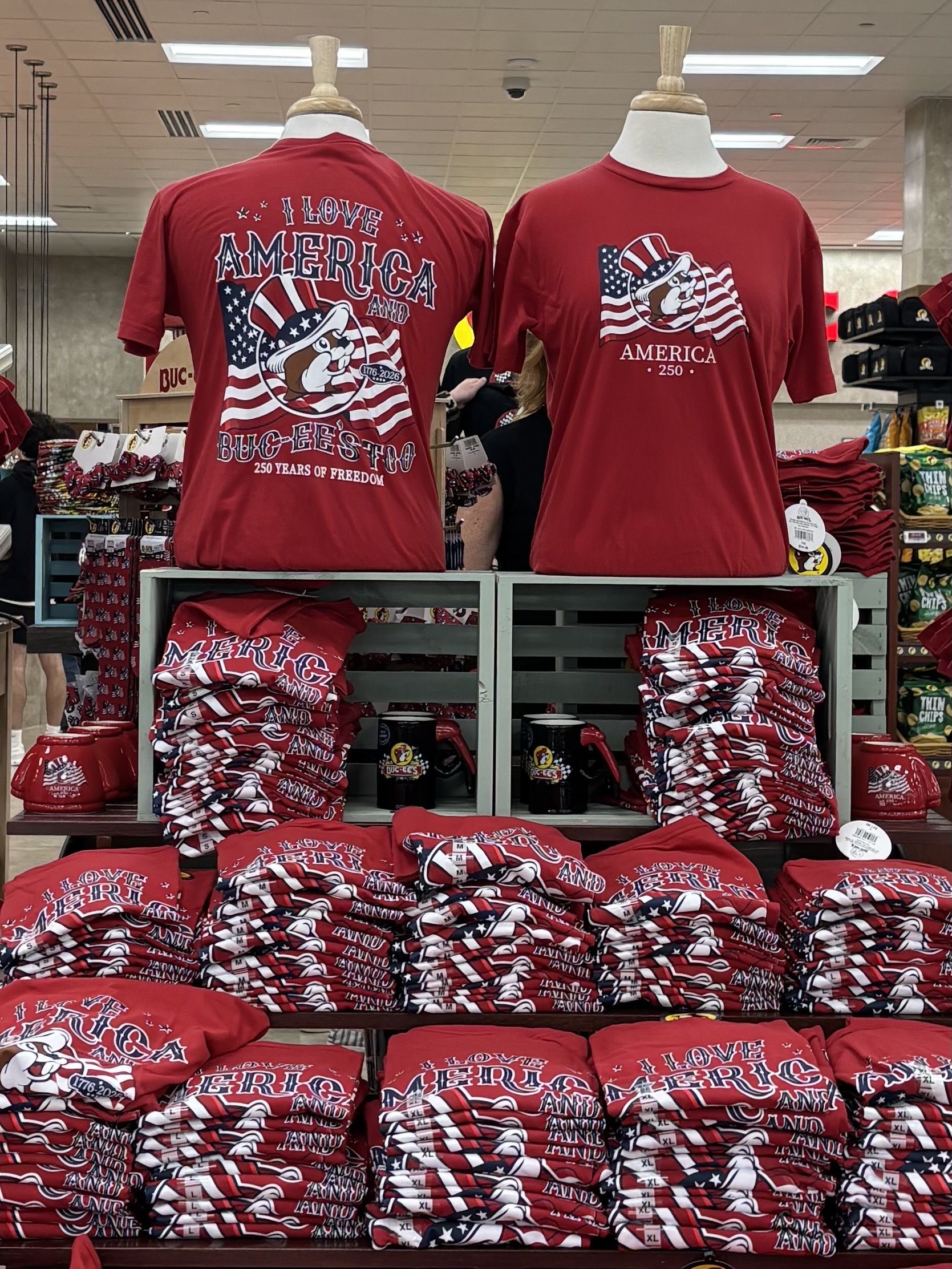
Shirts for sale at the Buc-ee’s in Mount Crawford, Va., read “I love America and Bucee’s too.”Stephanie Farr / Staff
Among the more head scratching T-shirts about the nation’s 250th I saw was one I spotted during my first trip to a Buc-ee’s, in Mount Crawford, Va., this May. The convenience store is a temple to merchandising and consumerism so it was no surprise its 250th T-shirt, which featured its beaver mascot in an Uncle Sam hat, read: “I love America and Buc-ee’s too.” Because nothing says I love my country like equating your affection for it with a convenience store.
One of the 250th shirts for sale at the Independence Visitor Center this summer.Stephanie Farr / Staff
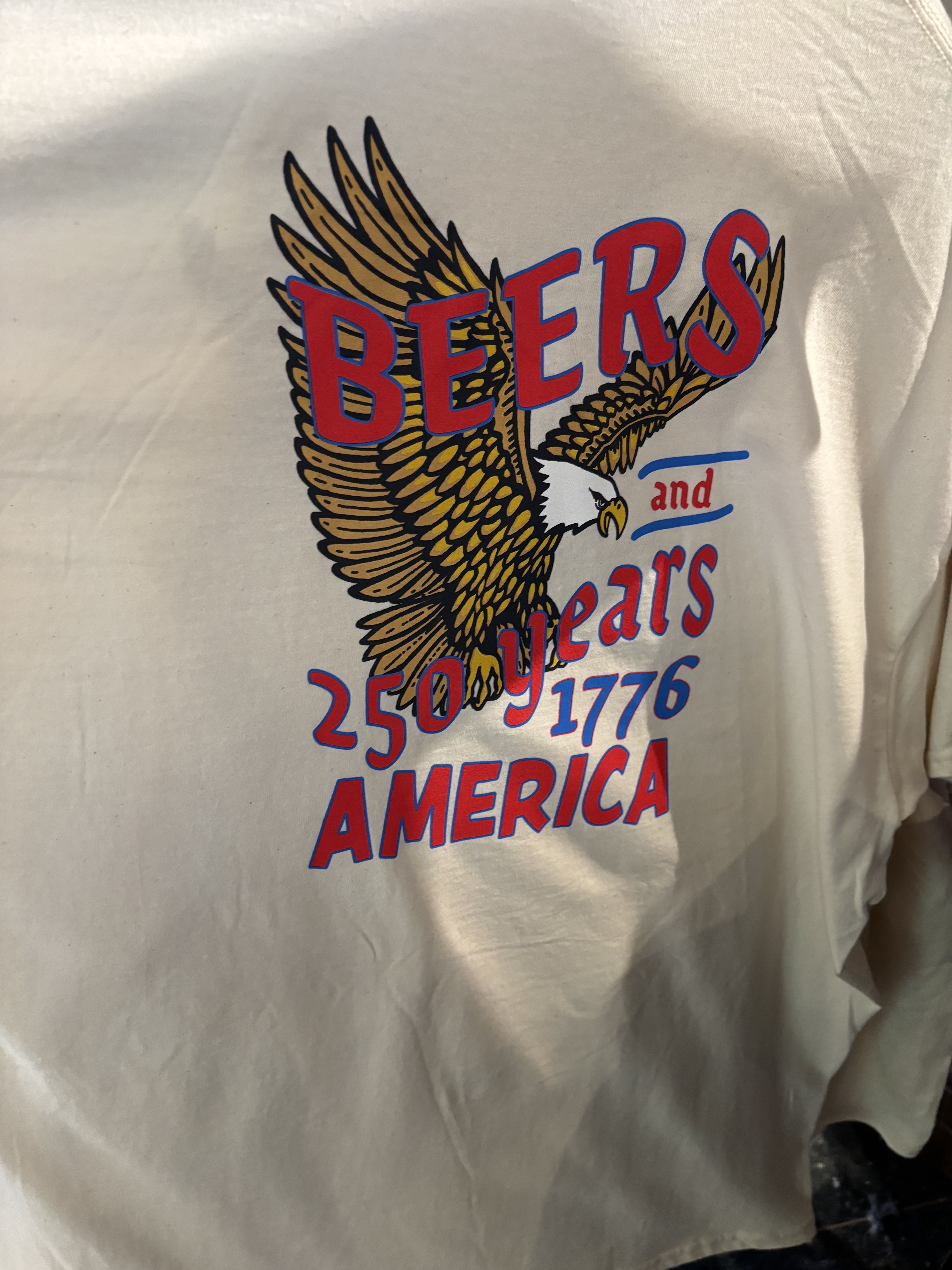
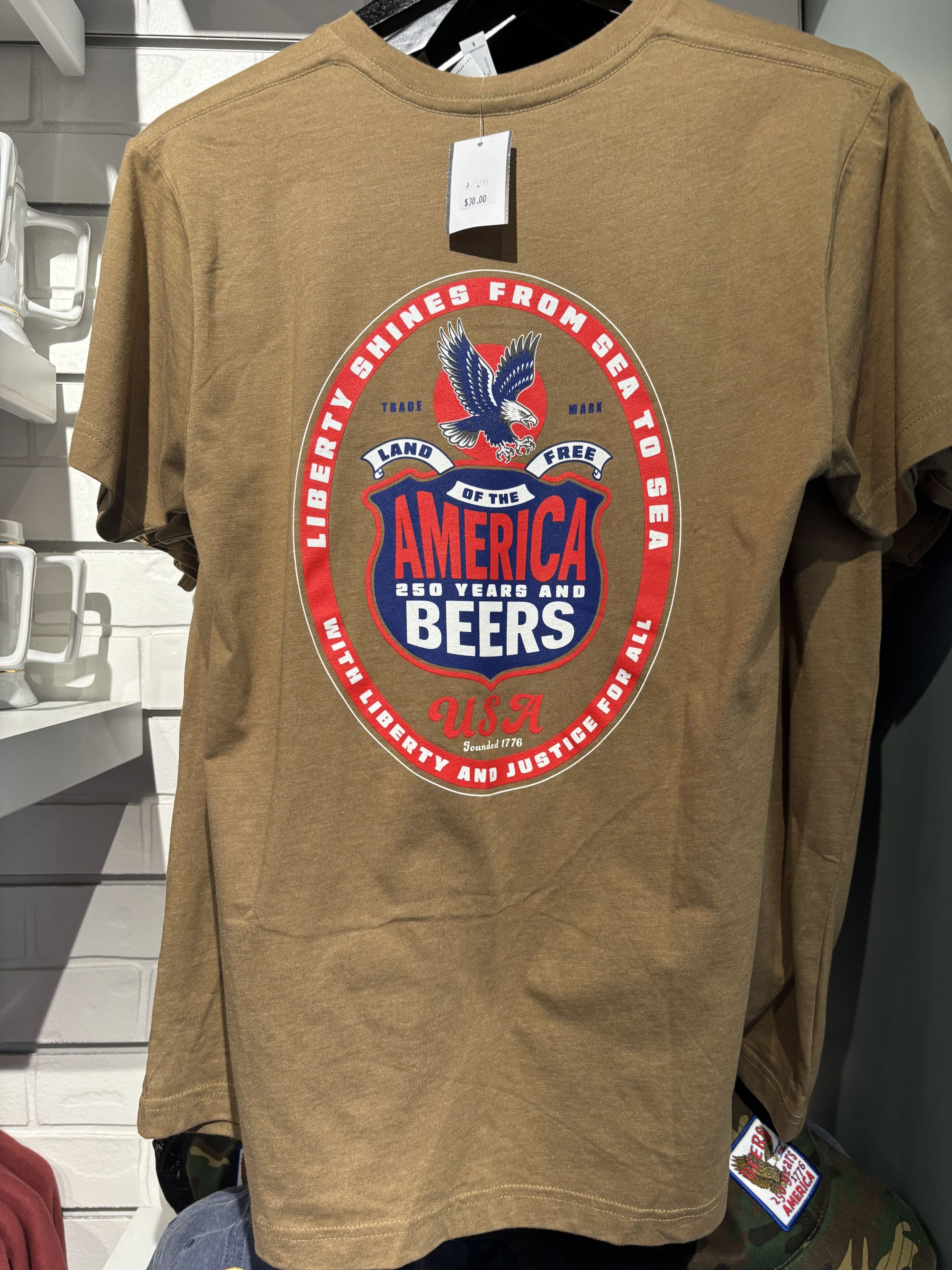
The other baffling T-shirts I saw were closer to home. This summer the Independence Visitor Center gift store had shirts that read: “Beers and 250 Years 1776 America” and “Land of the free America 250 years and beers.”
A shirt for sale this summer at the Independence Visitor Center seemed to equate the number of years this country has existed with how many beers it’s birthed. Or drank. It’s pretty hazy on details.Stephanie Farr / Staff
I’m not sure who their target audience was, ale I know is they finally managed to create a shirt that makes those “Ben Drankin’” ones seem classy. If the Visitor Center wanted to wordplay on beer, they missed a huge opportunity by not making “Pursuit of hoppiness” shirts.
Booze cues
Speaking of alcohol, that industry really stirred things up by creating a host of intoxicating beverages to cheers 250 years with.
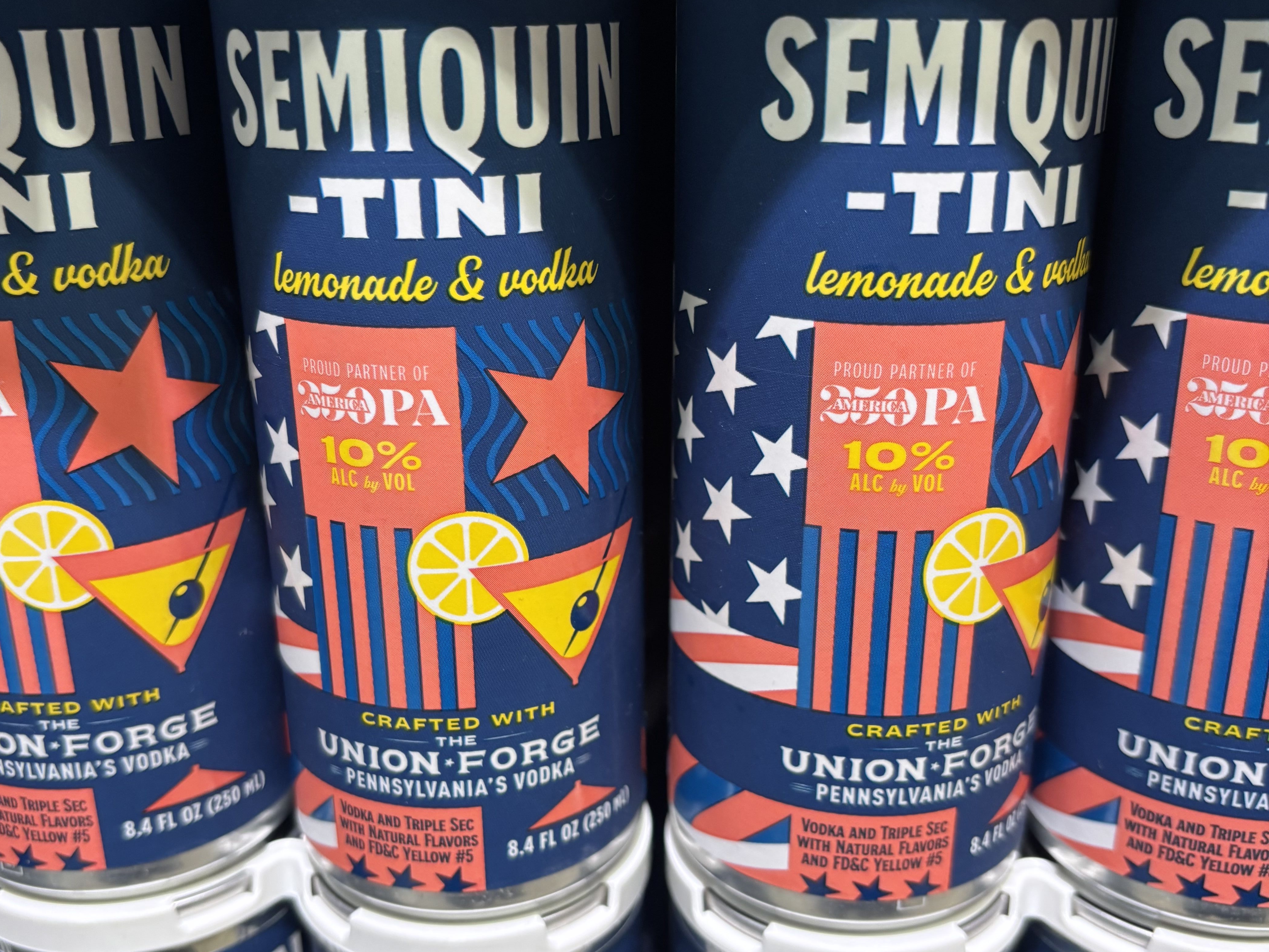
When it comes to names, it’s hard to top the Semiquin-tini, a canned lemonade-and-vodka cocktail by Union Forge that comes in at 10% ABV.
The Semiqin-tini by Union Forge is one of numerous boozy beverages created to commemorate the birth of our country.Stephanie Farr / Staff
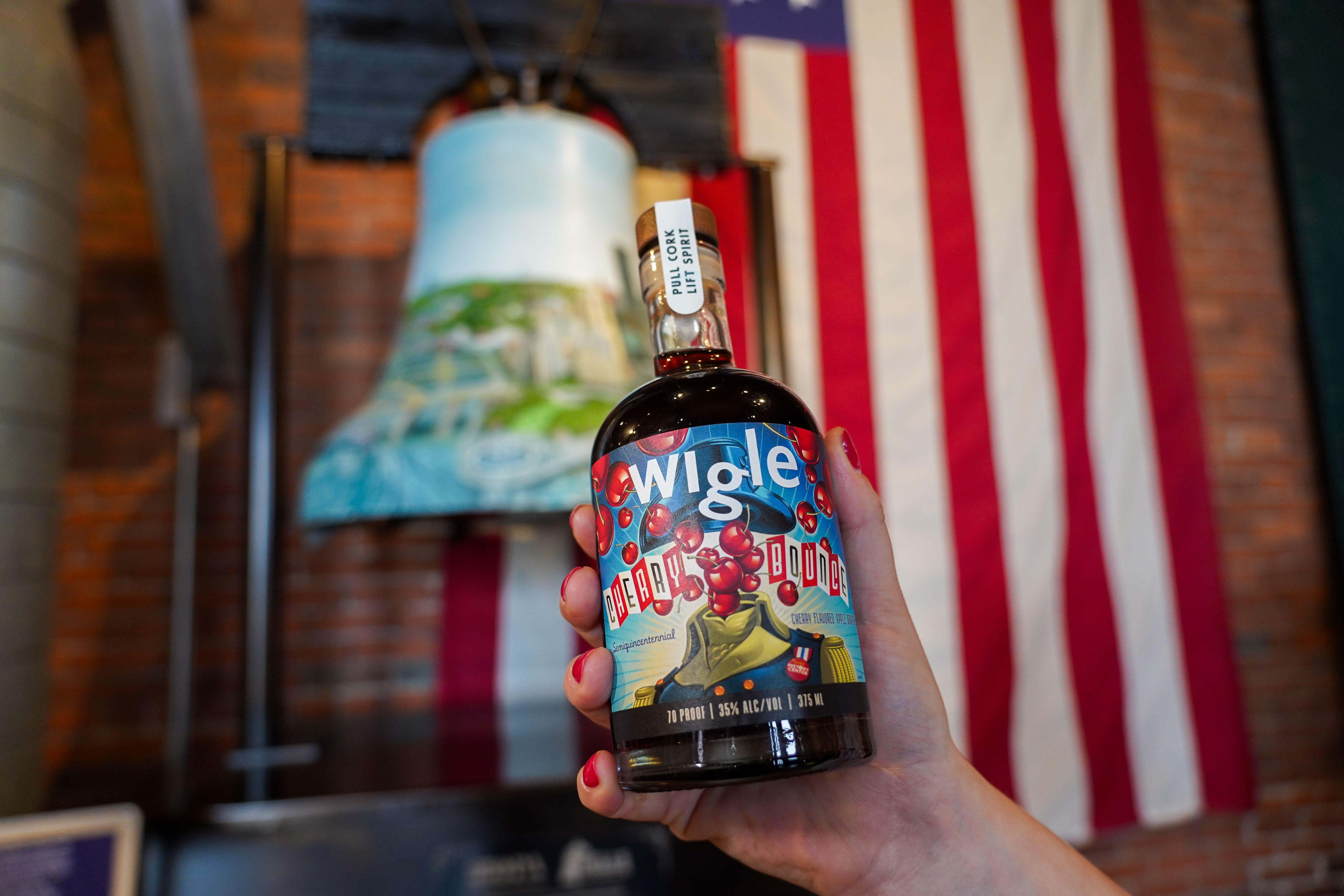
Out in Pittsburgh, Wigle Whiskey teamed up with the Senator John Heinz History Center to resurrect one of George Washington’s favorite spirits, Cherry Bounce. The cordial, which Washington packed canteens of on long journeys, is made of tart cherries, spice, and brandy. It clocks in at 35% ABV, so don’t go trying to cross the Delaware after consuming it.
Wigle Whiskey’s Cherry Bounce pictured at the Senator John Heinz History Center.Courtesy of Wigle Whiskey
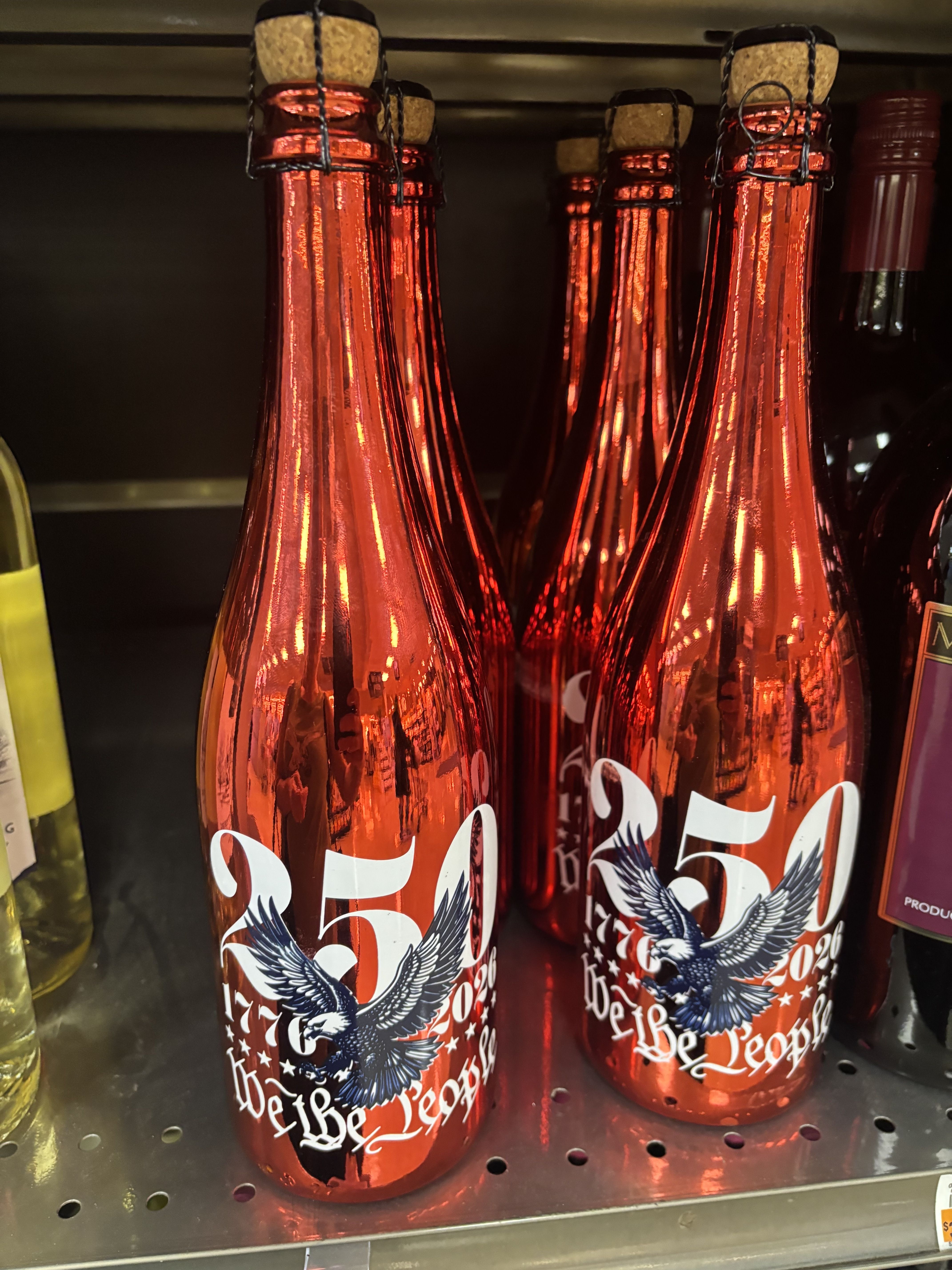
At Giant, I spotted “We the People” carbonated wine by Mano’s Wine of Kansas City, Mo. It was hard not to see it because it came in garish metallic rockets-red-glare bottles that I’m sure somebody shot fireworks out of once they finished it.
We the People carbonated wine by Mano’s Wine of Kansas City, Mo.Stephanie Farr / Staff
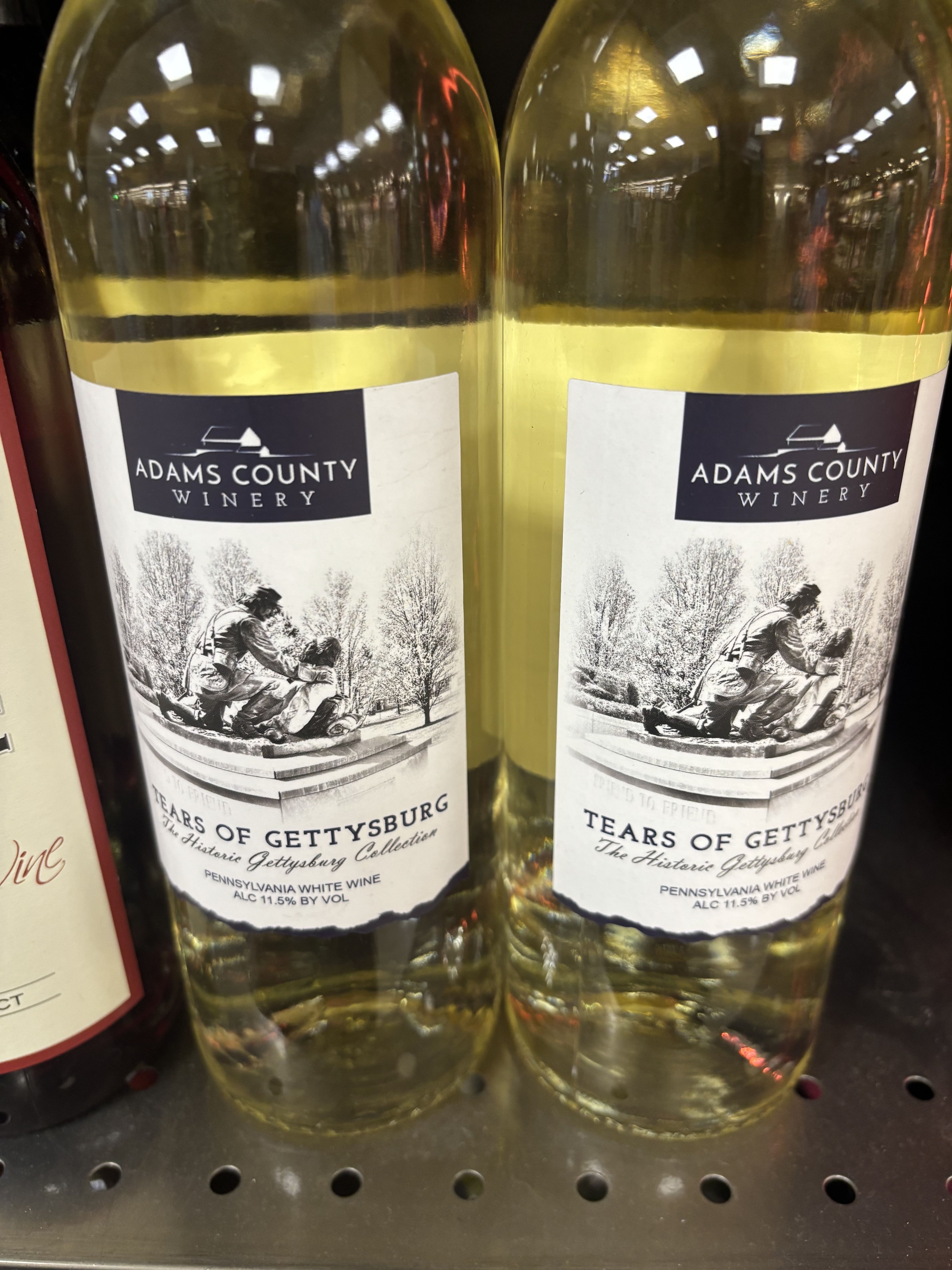
Next to those bottles on the supermarket shelf was something that actually made me gasp out loud: “Tears of Gettysburg” white wine. How did someone bottle the tears of Civil War soldiers? Why did they turn it into wine? And why market it for the anniversary of the Revolutionary War?
I had so many questions.
Tears of Gettysburg wine from Adams County Winery.Stephanie Farr / Staff
As it turns out, this sweet white wine (why are the tears sweet!?!) from Adams County Winery wasn’t made for the 250th, it was made for the 125th anniversary of the Battle of Gettysburg in 1988 and has been around ever since.
Hallmark moment
I know you may not believe me, but I totally called that signing of the Declaration of Independence butter sculpture at the Farm Show. As someone who waits every year for the butter sculpture reveal, it seemed like the most obvious and absurd choice.
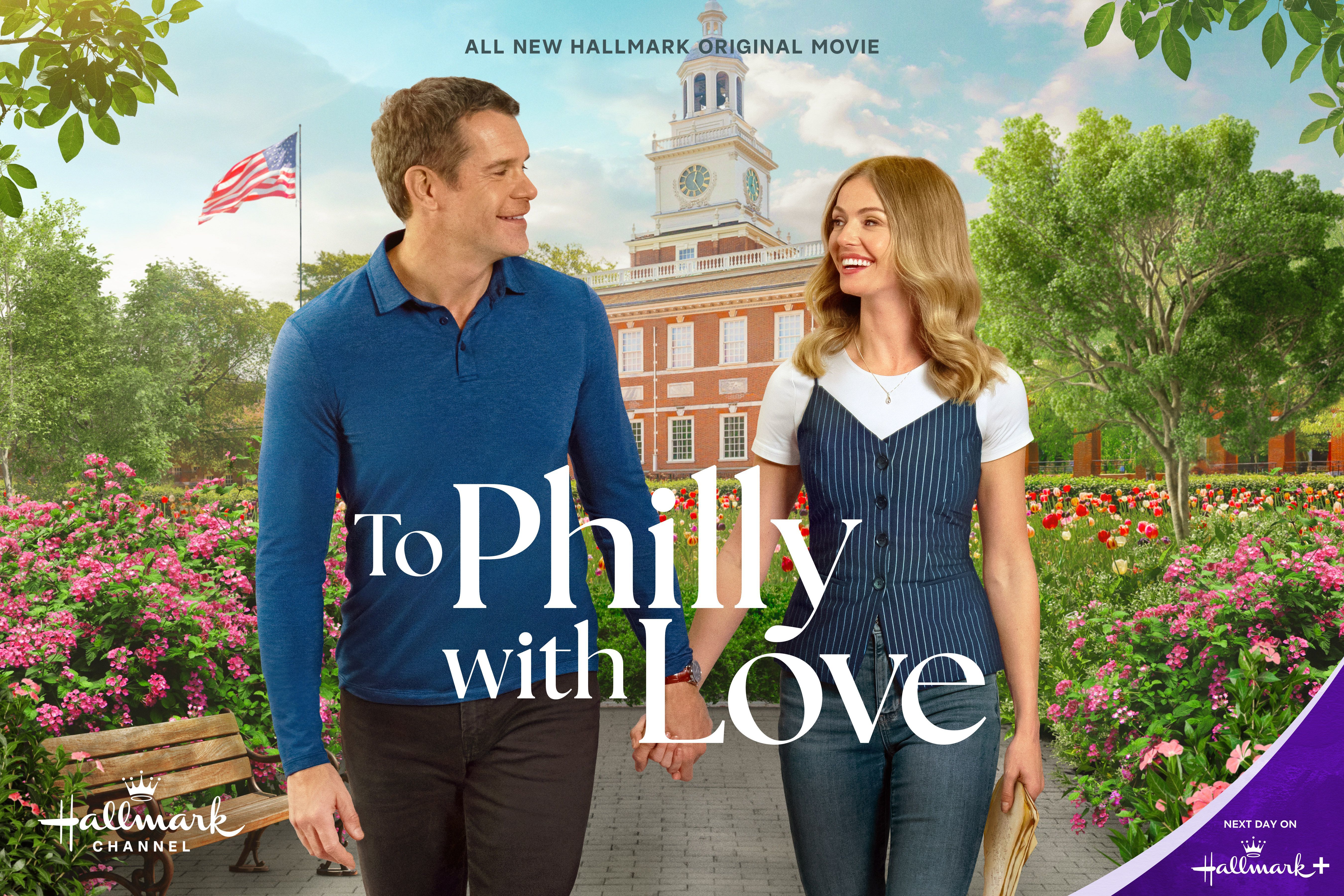
What I did not expect, what none of us could have ever expected to be created to commemorate the nation’s 250th anniversary, was a Hallmark movie set in Philadelphia.
A promotional image for “To Philly With Love,” a new Hallmark Channel movie set in Philadelphia starring Stephen Huszar and Rebecca Dalton.Courtesy of Hallmark Media
To Philly With Love, a two-hour history-mystery-romance movie, was clearly trying to be National Treasure meets The Notebook. But that goal was doomed from the start because a hallmark of Hallmark movies is the complete lack of suspense or interesting plot. Captivating dialogue is also out.
This movie, which was partially filmed in Philly, also included a cliché cheesesteak scene, a character with no Philly accent telling someone it’s pronounced “wooder,” and a completely tone-deaf scene filmed at the President’s House Site.
We hold these tooths
The Founding Fathers left “the pursuit of happiness” open to interpretation and woodn’t you know, someone found a way to pursue it with toothpicks.
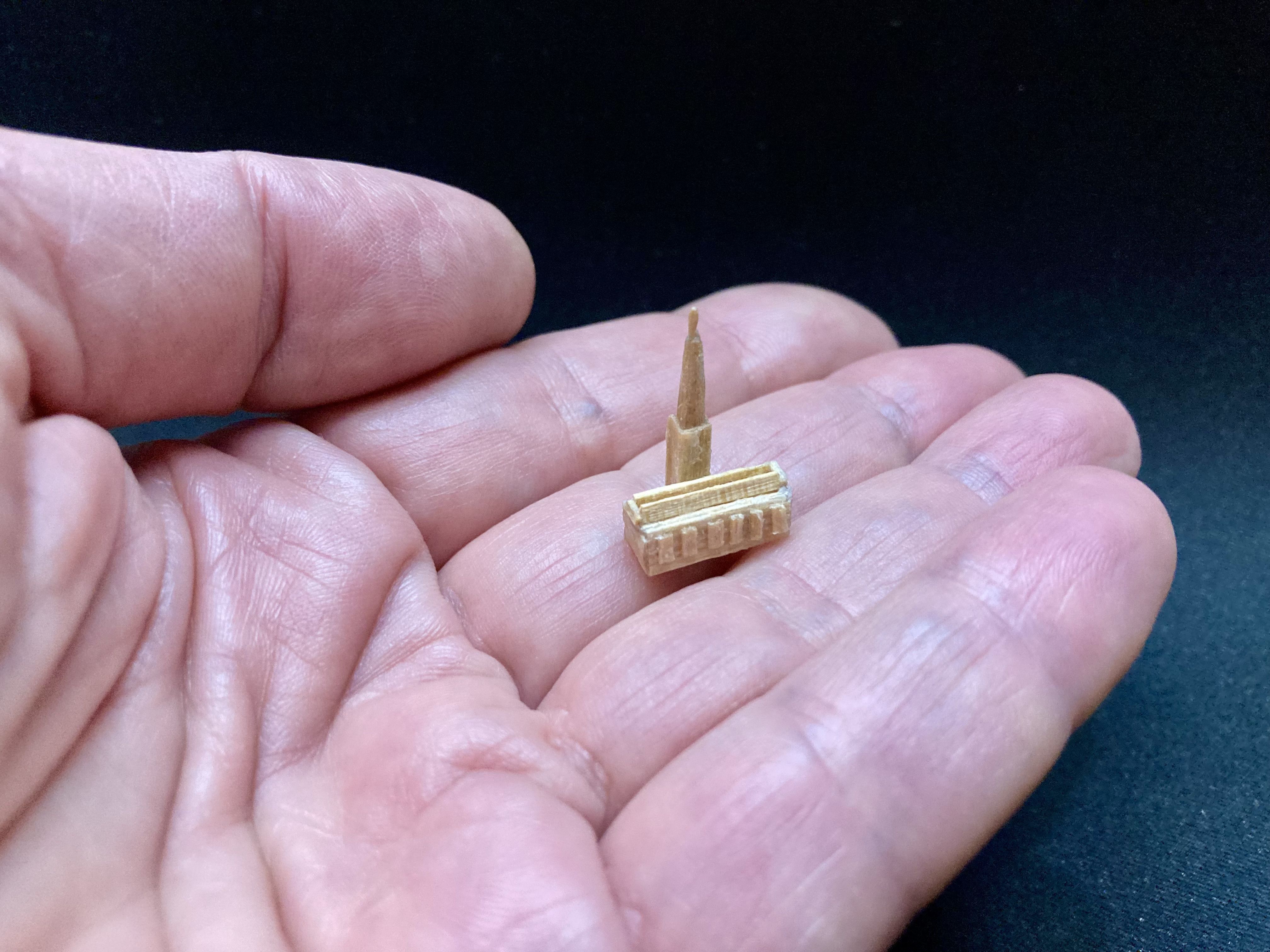
Steven J. Backman of San Francisco has made toothpick art for five decades. This year, he created a sculpture of Independence Hall out of a single toothpick to mark the Semiquincentennial.
San Francisco artist Steven J. Backman has crafted a model of Independence Hall from a single toothpick in celebration of America’s 250th birthday this summer.Courtesy of Steven J. Backman
A few minor points: Backman used a Diamond toothpick and cut strands off it with a straight-edged razor. He then glued pieces into place without a magnifying glass, using only his naked eyes.
“I’m living in an American dream. … I’m doing something I love,” Backman told The Inquirer.
Let freedom ring
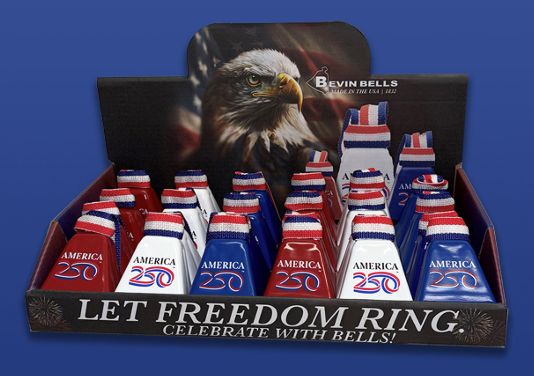
If you’ve got Semiquincentennial fever, the only prescription is more America 250-branded cowbells!
You know what this Semiquincentennial needs…more cowbells!Courtesy of America250
The Liberty Bell may get all the fame and glory, but these little guys — that come in red, white, or blue — are a fantastically annoying way to let people know you’ve arrived and you’re patriotic. Sure, you could play Stars and Stripes Forever on a kazoo, but it wouldn’t have the same ring to it.
Calling these souvenirs dumbbells would be udderly incorrect. They are keepsakes intended to be herd by future generations.
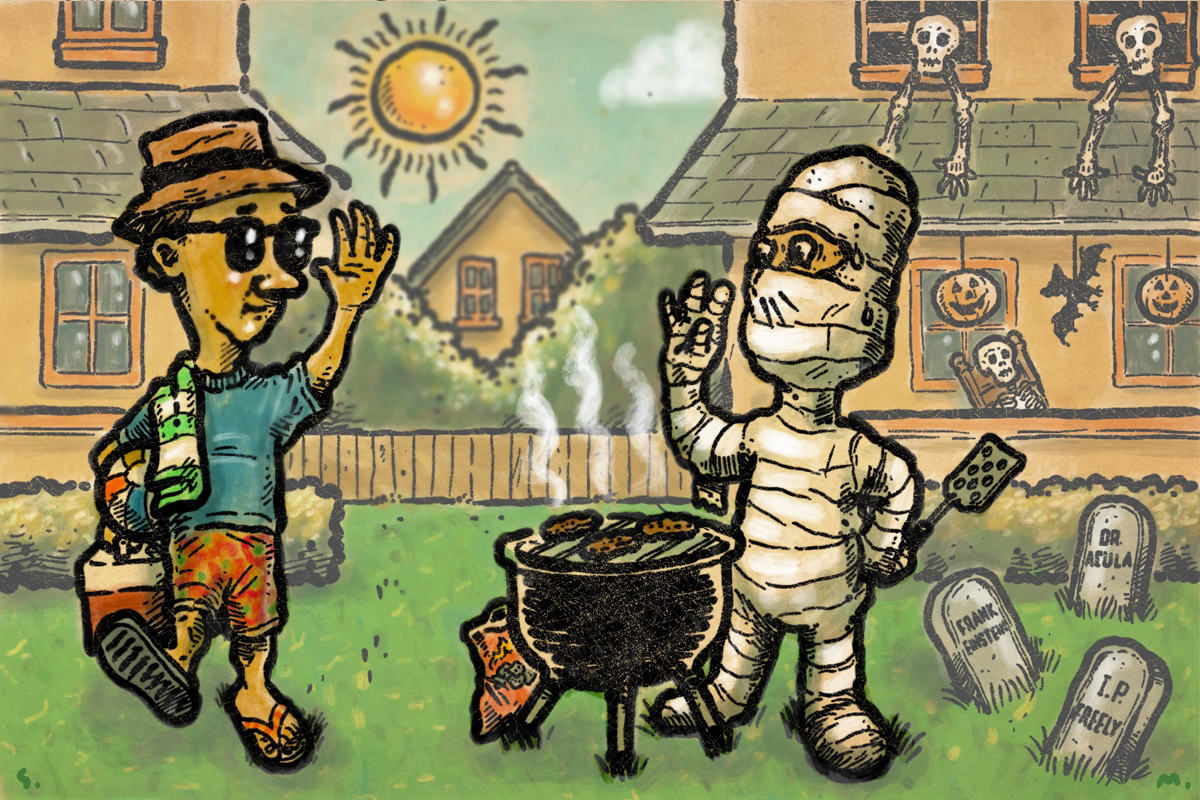
My neighbor has started decorating for Halloween. There are six skeletons in the yard, jack-o’-lanterns hanging around the whole front of the house, fake tombstones that have punny names (I.P. Freely), and I know a lot more is coming. Halloween is more than two months away and it’s still 90 degrees outside. Is it too early for this or am I being a Grumpy Gus?
Elizabeth Wellington, Features columnist
Yes, you are being a Grumpy Gus, but I’m right there with you. I’m one of the people who get sad on June 21 on the summer solstice when the days start getting shorter.
People who rush autumn get on my nerves. That goes for the stores that stock back-to-school supplies in July, and the pumpkin spice lattes available the second week of August.
Stephanie Farr, Features columnist
I just said last weekend “I can’t wait for Christmas,” so I’m about doing whatever you need to do to get you from now until the end of the year. That being said, part of what makes decorations special is that they’re only up for a limited amount of time every year.
If this person wants to approach their neighbor about these decorations, how would you suggest they go about it, Elizabeth?
EW: Ugh… you are one of those I love Christmas people… (I guess I’m a little bit of a Grinch, too).
Honestly, I don’t think a person has the right to approach their neighbor about their decorations. Their house. Their skeletons. But perhaps the offended — and I do count myself in this group — can do some self-care to soften the blow. Perhaps you sit by your window and drink margaritas. Maybe you just close your eyes tightly when you walk by? Maybe retaliate and decorate your home with sunflowers and a “Welcome Summer!” banner in March?
SF: I’m down with that retaliation plan, Grinchy McGrinch. Honestly, when I moved to this region I was shocked by how many holidays people decorate for. I didn’t even know that there were Thanksgiving decorations, and now everybody has a dang inflatable turkey in their front lawn in November! Heck, there are already fall and Eagles decorations around me in Delco, which should definitely get their time in the sun before folks start exhuming their Halloween decorations.
There’s one person in my neighborhood who keeps their 12-foot skeleton up all year around, but just takes the legs off in the offseason. I think I’d definitely have to say something to them if I lived next door.
EW: Only you can call me Grinchy McGrinch.
But what do you say to a person about their decorations? I hate your pumpkins and cornucopia, please take them down until Sept. 1? That’s wrong, too. I think we McGrinches have to grin and bear it.
For the record, I think Eagles decorations are about Philly pride and sportsmanship (and I’m not even a sports fan). They don’t make me grimace. They are allowed to be up year round just because. That’s contradictory, isn’t it?
I think First Amendment rights extend to holiday decorations, even though it makes me crazy.
SF: Bringing in the founding principles of our country, that’s some heavy fire power!
It’s very admirable of you to grin and bear it in silence. But I also think there’s a growing portion of the population who do whatever they want and don’t care how it affects others and that does bother me.
EW: I just don’t think putting up holiday decorations rises to the level of infringing on my rights. It’s infringing on my personal joy, yes. But not my rights. Why should I be forced to think about my future because you don’t want to deal with your present?
SF: I guess it depends on whether you put your decorations out early to bring yourself joy or to bring joy to others. In the end, the only person you can make happy is yourself, so if you find putting skeletons up in August humerus, go for it.
But if you put your Halloween decorations up in August to bring joy to others, they’re going to lose their luster by the time October comes.
EW: Yeah, if you like getting all gussied up for the holiday, go for it. Nobody can stop you. Just know you might be triggering Scrooges… Your joy isn’t someone else’s.
SF: One person’s treat could always be another person’s trick — or ick.
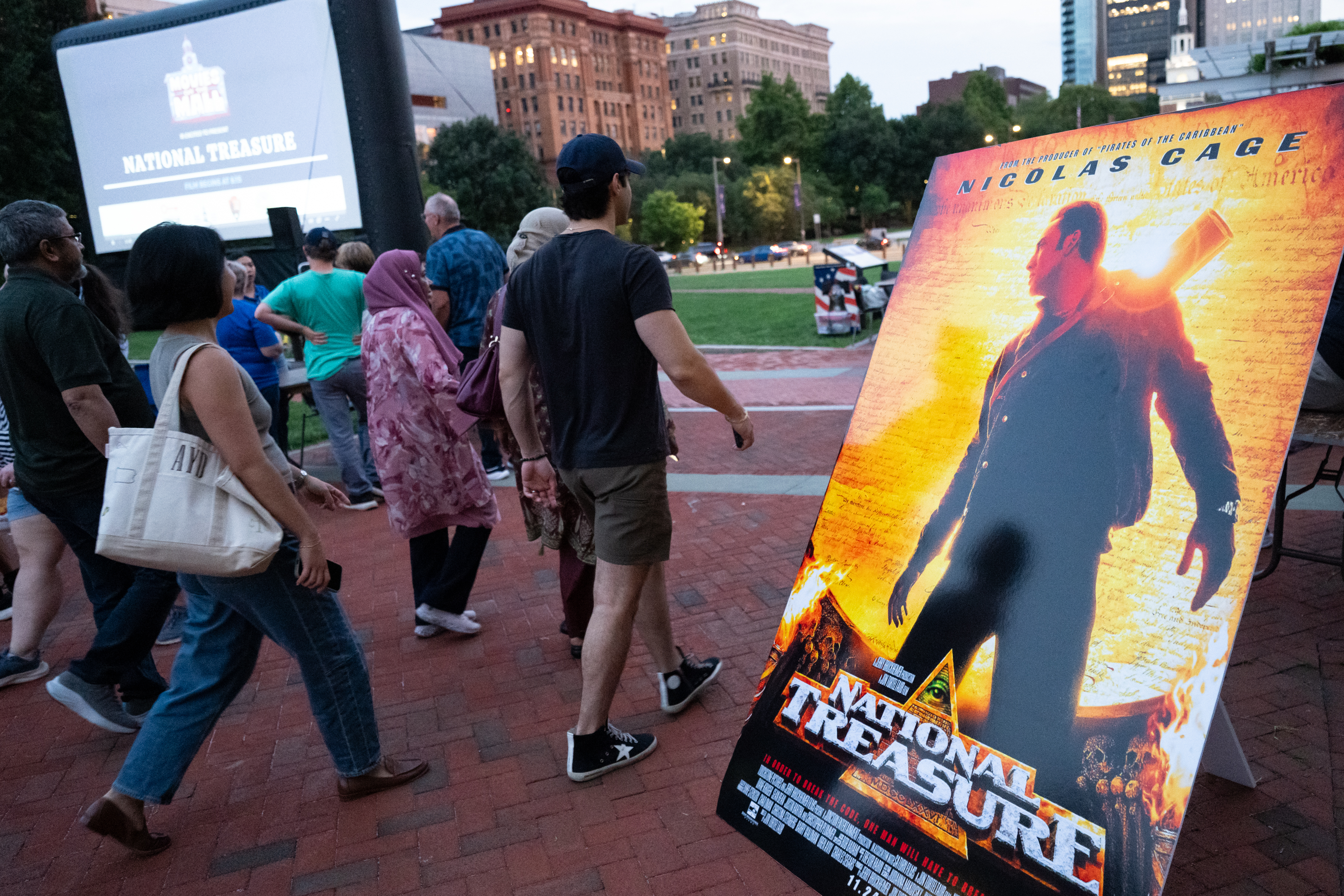
I’ve watched National Treasure more times than I can count and if I could count how many times I’ve seen it, I wouldn’t admit it to you.
It’s a confluence of things that keep me coming back — the scenes filmed in Philly, Nic Cage taking an absurd plot line very seriously, and the fact that this movie always seems to be on TV. Plus, there’s a quick cameo of my favorite stand in Reading Terminal Market, which closed in 2016, that always makes me nostalgic (RIP Salumeria).
On Friday, I got to geek out with other fans of the film and its sequel, National Treasure: Book of Secrets, during a ticketed talk with the director of the franchise, Jon Turteltaub, at the Independence Visitor Center. Turteltaub’s other films include Cool Runnings, While You Were Sleeping, and The Meg, which tracks.
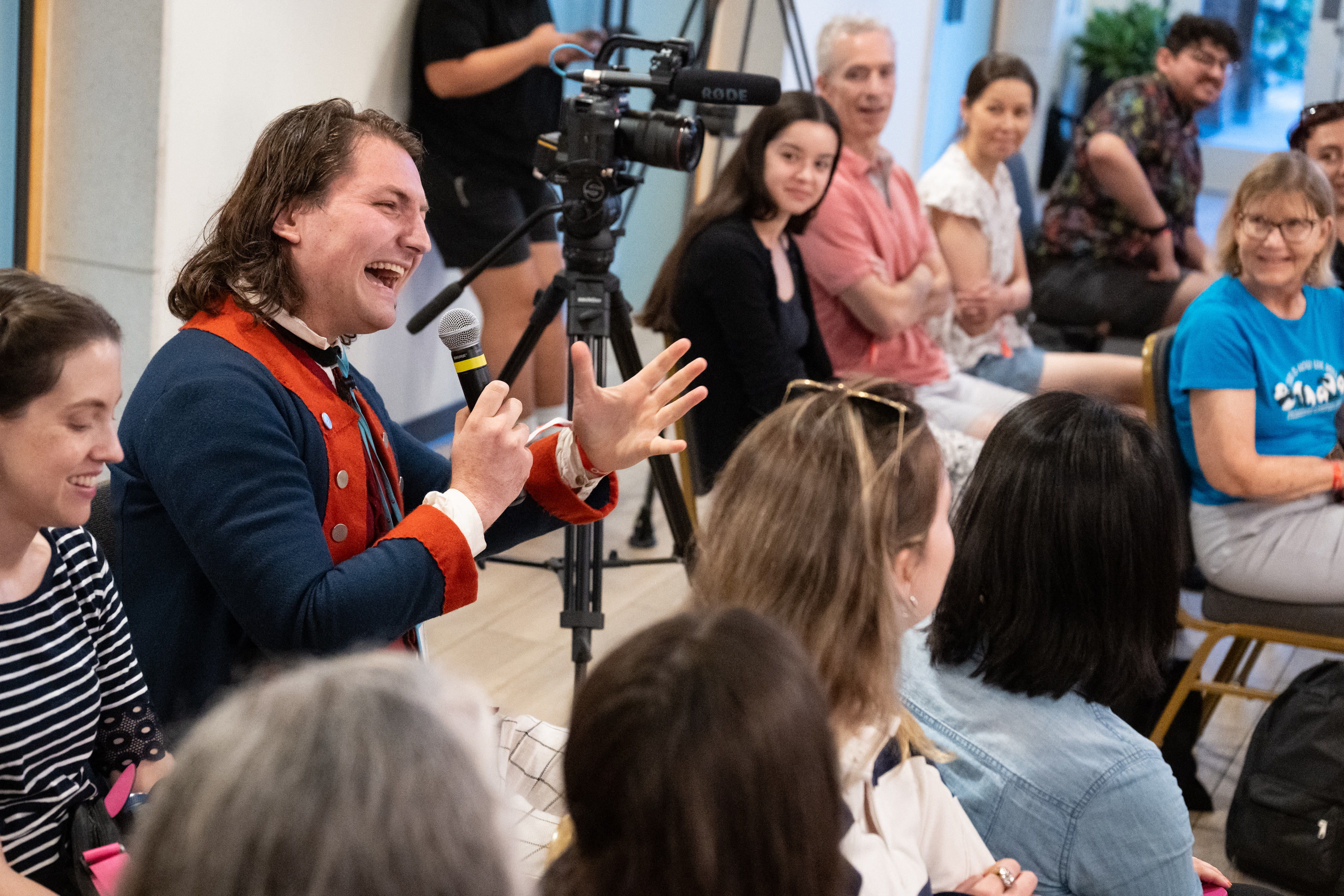
In the audience were a self-proclaimed “real-life treasure hunter,” several Freemasons, and Philly tour guide Stephen Pierce of Havertown. Pierce came dressed in his finest colonial garb and told me the movie, which came out when he was 9, was “definitely a huge inspiration for me growing up.”
Stephen Pierce, a local tour guide with America’s Rising Son Tours, asks a question while wearing colonial-era clothing during a live recording of the “National Treasure Hunt” podcast at the Independence Visitor Center in Philadelphia on Friday, Aug. 21, 2026.Erin Blewett / For The Inquirer
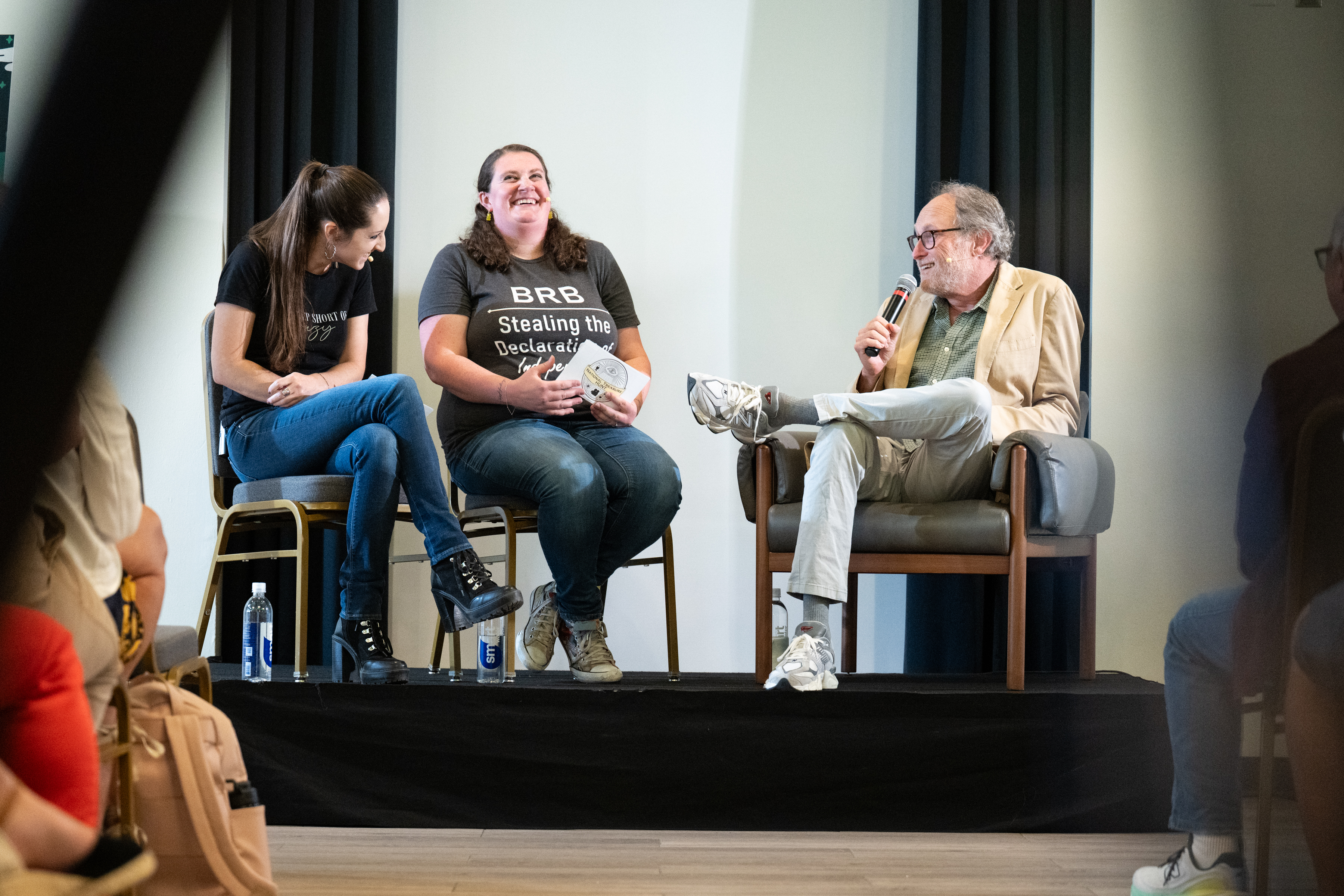
But there were no bigger fans in attendance than the cohosts and moderators for the evening, Aubrey Paris and Emily Black, creators of the National TreasureHunt podcast, who helped curate Philly’s first National Treasure Weekend of events in conjunction with the Philadelphia Visitor Center.
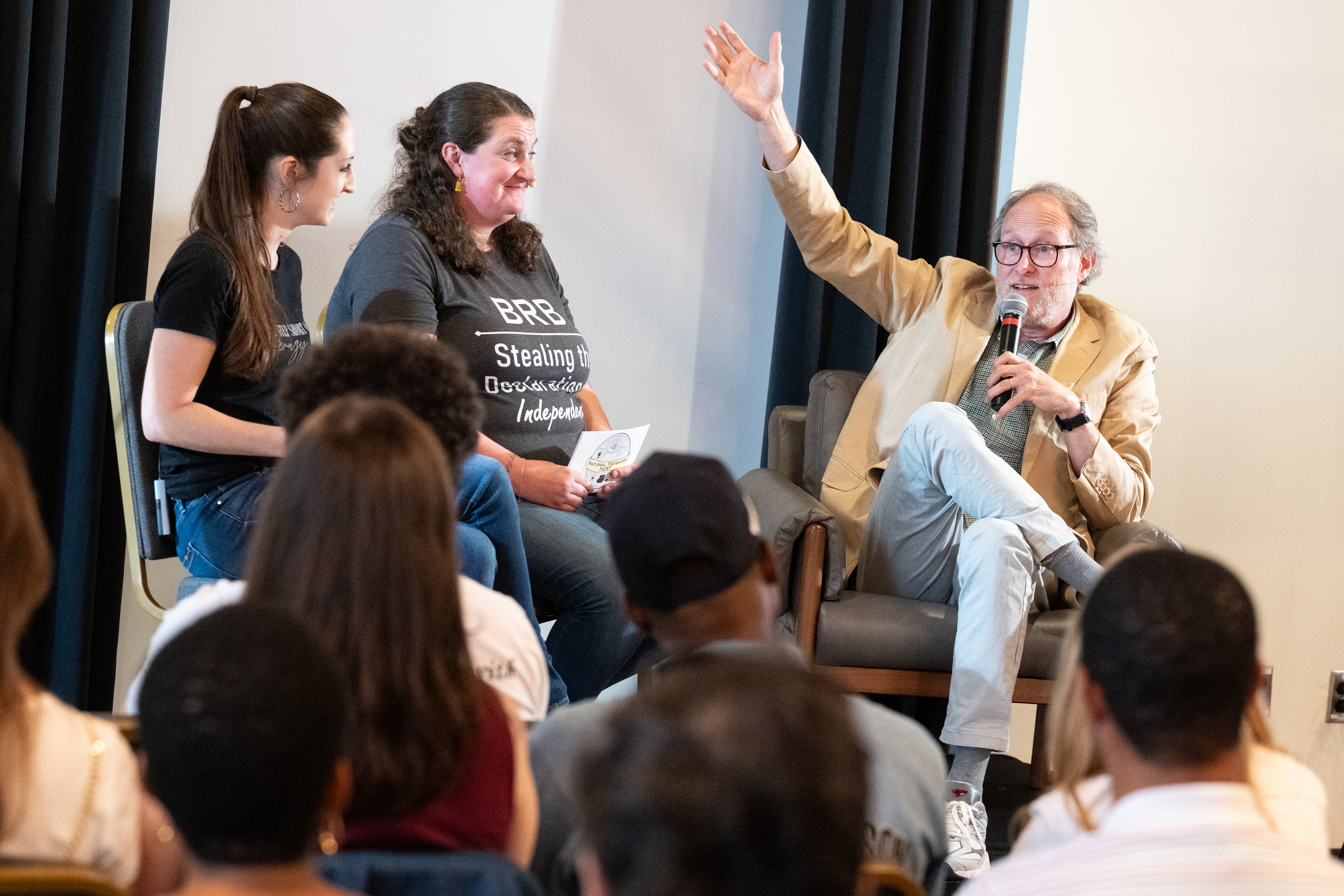
Aubrey Paris (left) and Emily Black (center), creators and hosts of the “National Treasure Hunt” podcast, speak with “National Treasure” director Jon Turteltaub during a live recording at the Independence Visitor Center in Philadelphia on Friday, Aug. 21, 2026.Erin Blewett / For The Inquirer
Their palpable joy while interviewing Turteltaub for their podcast was only exceeded by the shock and excitement that washed over their faces when the director gave them the scoop that National Treasure 3 is “finally real.”
That wasn’t the only gem Turteltaub dropped during their talk, though. Here are five other nuggets and behind-the-scenes stories the director shared about one of the best and most ridiculous films ever partially filmed in Philly.
All up in Independence Hall
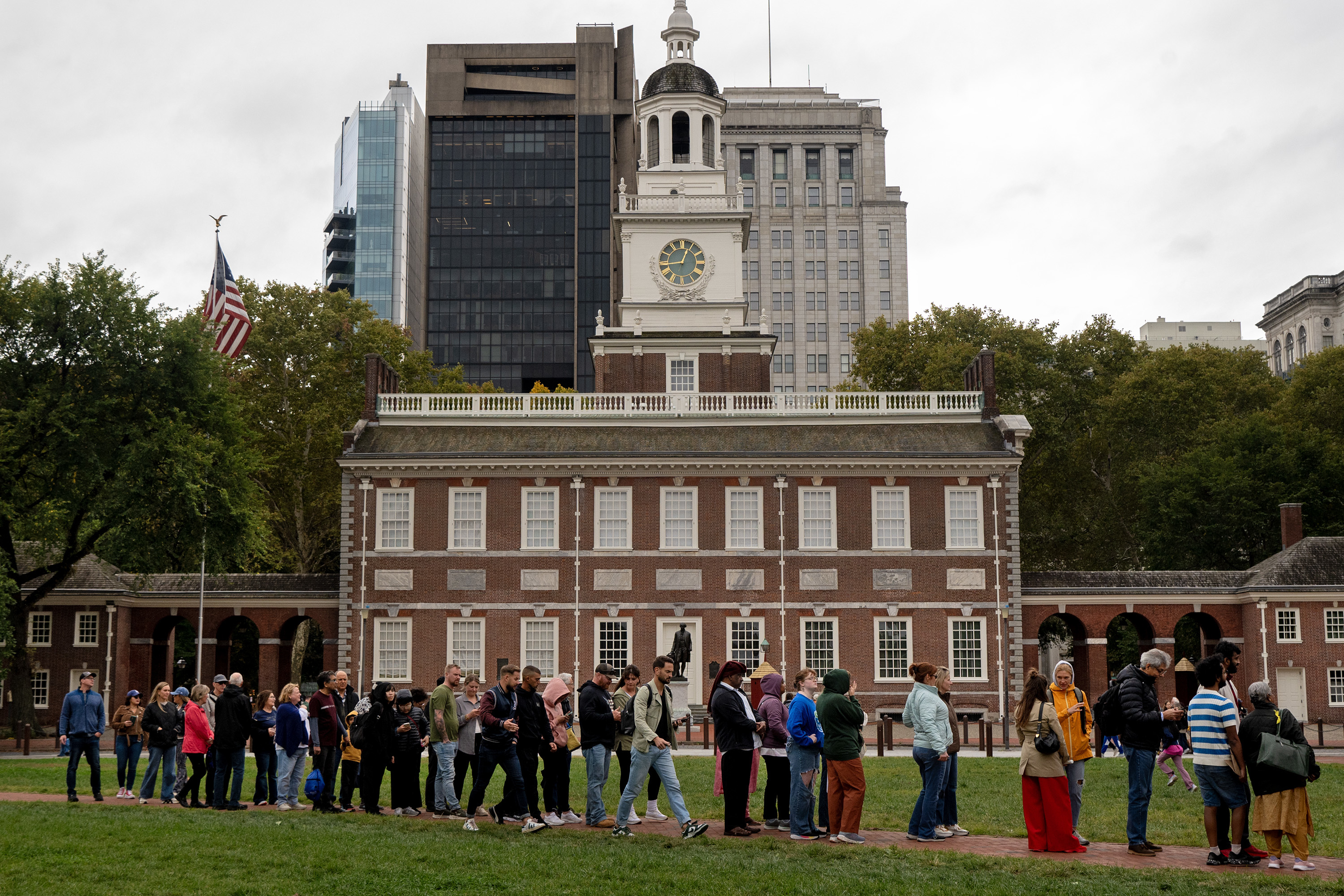
Turteltaub said he was surprised that the National Park Service let the cast and crew climb up Independence Hall’s bell tower to film.
“That was special. Being next to the Centennial Bell — amazing. More interesting was being behind the clock, coming up those stairs and seeing how that works was like ‘Wow, this is why I want to be in the movie business,’” he said. “It’s not art. You just get treated better than other people.”
Visitors stand in a long line on Oct. 12, 2025, in front of Independence Hall waiting to view the nearby Liberty Bell.Tom Gralish / Staff Photographer
But the NPS didn’t allow filming at the doors or inside the building because it would have impeded visitors’ experience, Turteltaub said. And it was at this point in the conversation I learned there’s a replica of Independence Hall at Knott’s Berry Farm in Buena Park, Calif., which is where the interior scenes of the film were shot.
So I either need to make a movie or go to California to live out my dream of climbing the bell tower. Duly noted.
A meaty role
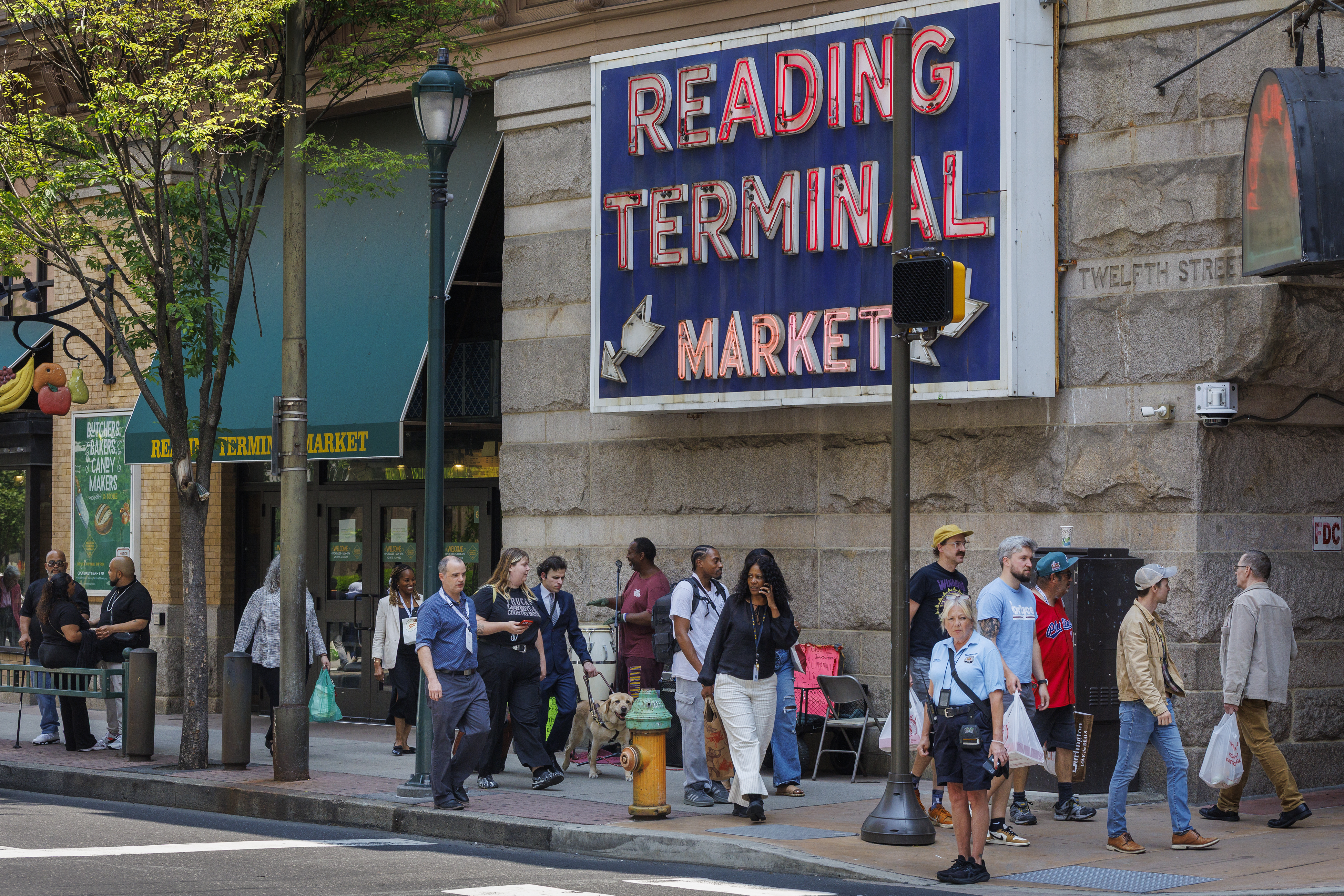
During the chase scene that winds through Reading Terminal Market, Abigail (played by Diane Kruger) ducks into a butcher stand while clutching the Declaration of Independence. The woman running the counter initially says in the most unenthusiastic, Philly way possible: “If you’re not a steak, you don’t belong here.”
But when Abigail tells the woman she’s running from her “ex-husband” (who’s actually a bad guy), the woman says: “Honey, stay as long as you like.”
Pedestrians fill the sidewalk outside Reading Terminal Market in Center City on June 3, 2025.Alejandro A. Alvarez / Staff Photographer
Paris said that the butcher has become “a favorite non-named character.” Some have even called her “the real national treasure.”
“It’s a huge cult thing,” Paris said.
Mark another win for Philly’s notoriously kind-but-not-nice attitude.
Stripped down
Turteltaub revealed that the first version of the original film was four hours long, so many scenes had to be left on the cutting room floor, including the original ending.
“The original ending scene, they were back at the National Archives looking at the Declaration back where it belonged. We thought the world needed to know that,” Turteltaub said. “Everyone’s feeling good and then they get started talking about a different treasure and they go off like, ‘Oh no, I’m not doing that!’ It’s like the end of a Gilligan’s Island episode.”
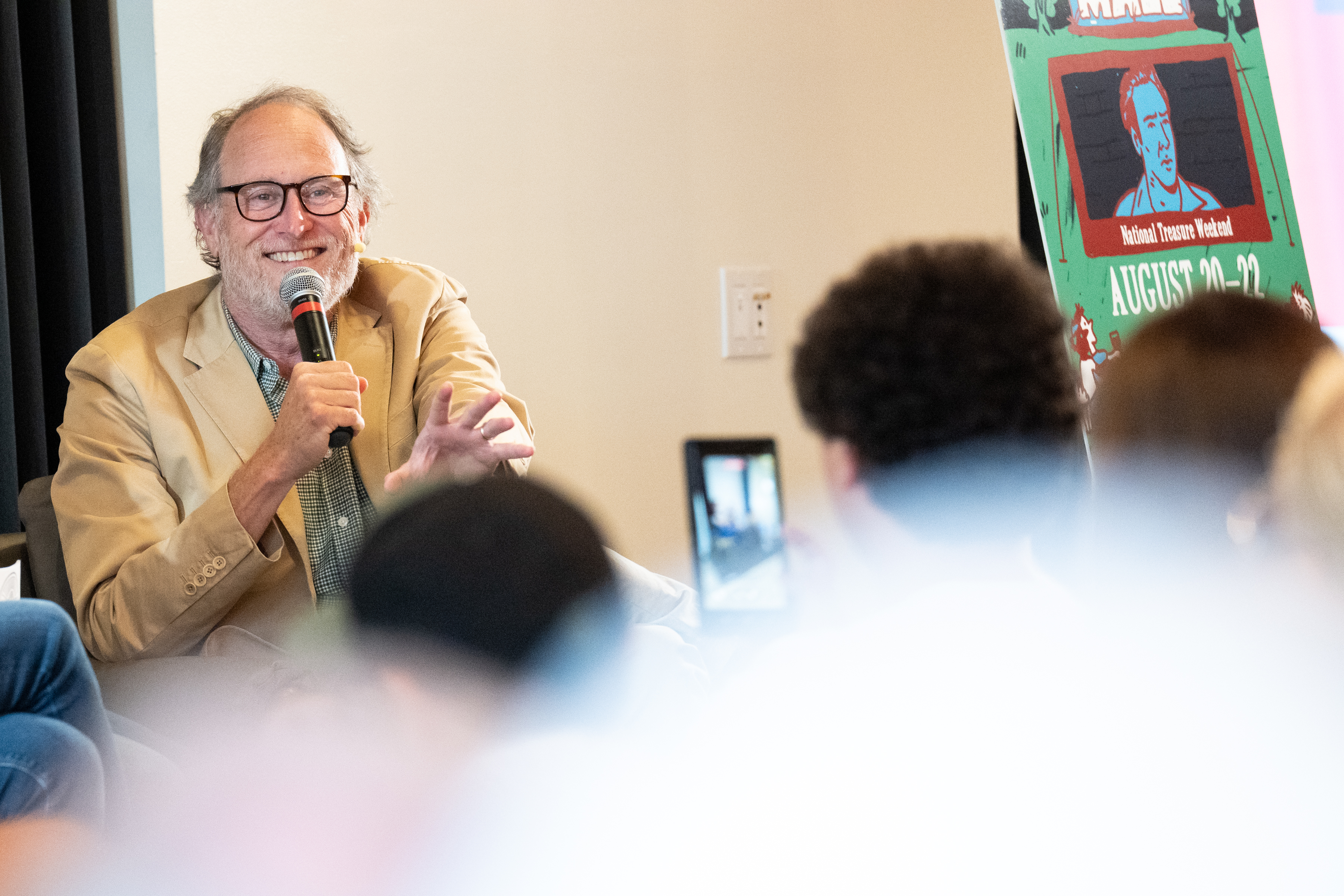
Jon Turteltaub, director of the 2004 film “National Treasure,” speaks during a live recording of the “National Treasure Hunt” podcast at the Independence Visitor Center in Philadelphia on Friday, Aug. 21, 2026.Erin Blewett / For The Inquirer
Another scene that was stripped from the film took place when Abigail and Riley (played by Justin Bartha) are chased through Center City.
“As Riley’s being chased, he cuts into a strip club and he runs through the strip club to get away,” Turteltaub said. “So my idea was he runs in and no one’s in there and it’s just some guy vacuuming and [Riley] says, ‘Well, that was disappointing,’ and keeps going.”
I’m disappointed the cleanest scene ever filmed in a strip club didn’t make the cut.
High school reunion
Turteltaub and Cage attended Beverly Hills High School together and the director said the two were friends.
“He’s kind of a great, nonconforming, march-to-his-own drum guy, which in high school is not easy,” Turteltaub said. “I was desperate to fit in and be liked by every single person ever. He didn’t care.”
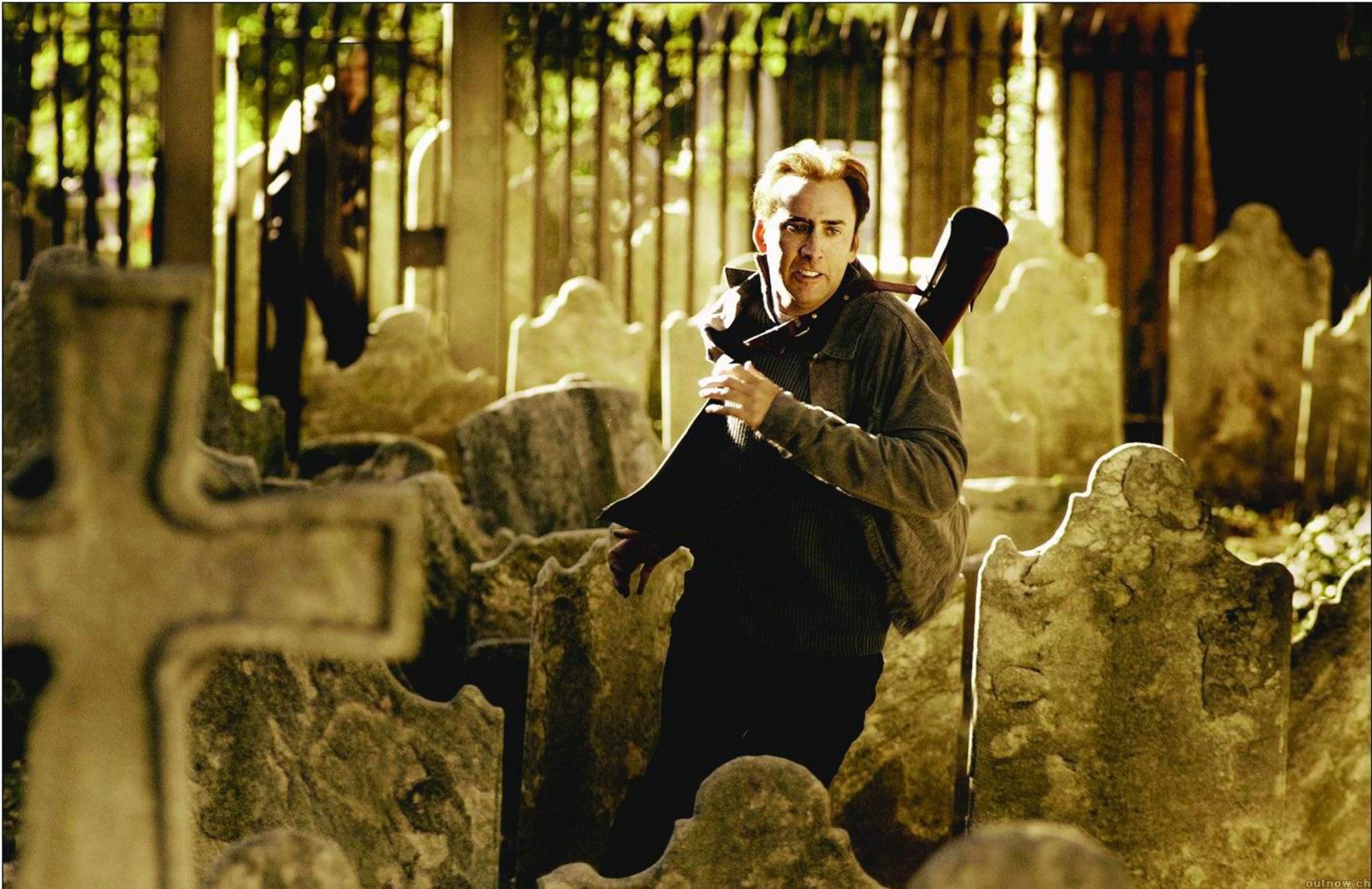
Nicolas Cage runs through the Old Pine Street Presbyterian Church cemetery in a scene from “National Treasure.”Alamy Stock Photo
The director said he sold the actor on taking the part of Benjamin Franklin Gates in National Treasure when he described the character to Cage with one word: audacity.
“Nic is audacious and that was that connection. Nic never has a superficial connection to a character. He goes and finds the person,” Turteltaub said. “Sometimes that’s insane stuff and craziness and awesomeness and unpredictability and sometimes it just makes somebody very, very real.”
Page turner
During audience questions at the end of the talk, a child of no more than 6 asked Turteltaub: “What’s on page 47?” to thunderous applause from the crowd.
The question referred to the end of the sequel film, when the President of the United States asks Gates what he thinks of what’s on page 47 of the book of secrets handed down from president to president. Gates calls what’s contained on the page “life-altering,” but its contents are never revealed to the audience.
It may not be a secret for much longer, though.
“The worst thing, to make it interesting, was we added the line at the last second — ‘life-changing, life-altering’ so now we have to come up with something that’s ‘life-altering,’” Turteltaub said. “If I said ‘I don’t know,’ everyone will hate me. If I said ‘I do know,’ you’ll hate me for not telling you, but I don’t think we can make the third movie without at least helping people out.”
Aubrey Paris (left) and Emily Black (center), creators and hosts of the “National Treasure Hunt” podcast, speak with “National Treasure” director Jon Turteltaub during a live recording at the Independence Visitor Center in Philadelphia on Friday, Aug. 21, 2026. The event was part of Philadelphia’s first National Treasure Weekend.Erin Blewett / For The Inquirer