Tag: Big Read

  • In Pennsylvania, the epicenter of online gambling, anger over addiction and loss fuels a backlash

    In Pennsylvania, the epicenter of online gambling, anger over addiction and loss fuels a backlash

    Reynaldo Rivera had little interest in sports betting. He preferred playing slots and table games at casinos around Philadelphia, where he’d unwind a couple times a week after covering the graveyard shift as a tow truck driver.

    But when the COVID-19 pandemic left most forms of indoor recreation off-limits in 2020, Rivera downloaded some sportsbook apps, and sampled their digital simulations of casino games.

    He soon discovered that he had no reason to ever return to Rivers Casino on Delaware Avenue, or Parx Casino in Bensalem, to play slot machines and Ultimate Texas Hold’em.

    “You open your phone,” he said, “and it’s right there.”

    Occasional after-work gambling turned into constant on-the-job gambling. Rivera sat for hours in the cabin of his tow truck, the outside world dark and still, while he tapped and tapped on his phone.

    Hundreds of dollars in losses became thousands. Then, tens of thousands. By this spring, he’d wagered about $2.4 million, losing $137,000.

    As his losses ballooned, the gambling companies made sure he knew how valuable he was to them. They granted Rivera VIP status and supplied him bonus credits and gifts, like a Peloton bike, courtesy of DraftKings.

    BetMGM arranged an even more remarkable reward through a sponsorship deal with the Philadelphia Phillies. On a spring evening in May 2022, Rivera was led onto the lush infield grass at Citizens Bank Park, before the Phillies played the Texas Rangers. As thousands of fans watched, Rivera tossed a ceremonial first pitch.

    Yet the constant gambling and losing left Rivera feeling ashamed and foolish. He was struggling to get by, instead of living comfortably from the money he made driving a tow truck.

    He just couldn’t stop.

    “Listen, I don’t have a drug addiction,” Rivera, 56, said in a recent interview. “But if that’s what it feels like, that’s crazy.”
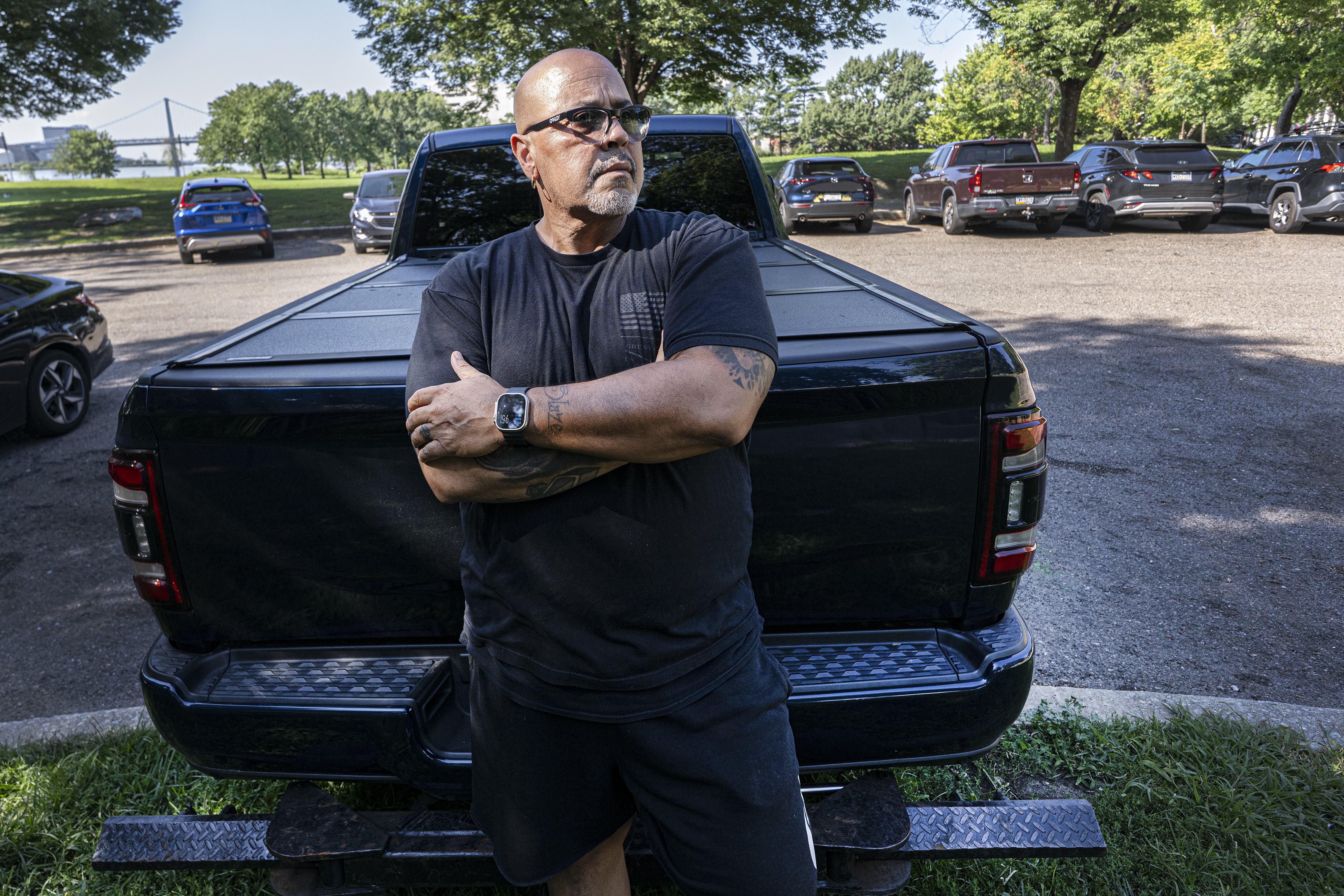

    Reynaldo Rivera said he grew addicted to playing online casino games on his phone while working as an overnight tow truck driver in Philadelphia. Earlier this year, his attorney filed a lawsuit against DraftKings and FanDuel over his addiction.Jose F. Moreno / Staff Photographer
    As Rivera’s gambling losses deepened, he said companies granted him VIP status and enviable rewards, like throwing out the first pitch before a Phillies game at Citizens Bank Park in 2022. Courtesy of Reynaldo Rivera

    Less than a decade ago, gamblers had to invest time and physical effort if they wanted to bet on sports or play casino games, whether it meant going to Las Vegas or Atlantic City, or meeting up with a bookie. Now, it takes only the flick of a thumb to open an app.

    And it’s no longer a fringe activity that needs to be sought out. Nearly everywhere Americans look, there are advertisements about sports betting or prediction markets: billboards alongside highways, banner ads in stadiums, sponsored segments in sports broadcasts, and TV and online pitches featuring global stars-turned-well-paid ambassadors, including Philadelphia 76er LeBron James, tennis legend Maria Sharapova, and Academy Award winner Jamie Foxx.

    But a corollary backlash is also taking shape, as the repercussions of nearly unlimited access to gambling have become impossible to ignore.

    Lawmakers are demanding greater control over how sportsbooks and prediction markets operate, while a wave of litigation is attempting to hold those companies responsible for their customers’ addictions, echoing similar legal action that’s been taken against social media companies. (Meta agreed in August to pay up to $18 billion to settle lawsuits it faced over claims that it designed its products to be addictive to children and teens.)

    The impact of the gambling industry’s skyrocketing growth might be felt more acutely in Pennsylvania than anywhere else. In March, the American Gaming Association wrote in a report that Pennsylvania had the largest online gambling market in the U.S., generating $3.46 billion in revenue in 2025 — a 27.9% increase from the year before.

    Pennsylvania recorded $7.7 billion in overall gambling revenue in 2025, a sum that trailed only Nevada, according to the gaming association. Pennsylvania is also one of just eight states that have thus far legalized both online gambling and sports betting.

    Philadelphia, meanwhile, is the seventh-largest commercial casino market in the country, having generated $1.4 billion in 2025, the gaming association said, and last year was the top market for online gambling advertisements.

    “The casino itself has expanded basically into infinity,” said Timothy Fong, the co-director of the UCLA Gambling Studies Program, which researches gambling disorders and evidence-based addiction treatments.

    While brick-and-mortar casinos have long wooed bettors with offers of free meals and hotel rooms, the modern gambling industry bears little resemblance to the neon palaces of past generations.

    “If you go back in time, like 25 years ago, and you compare the differences, it’s obviously not the same world,” Fong said. “It’s not even the same universe, and it’s because gambling is frictionless right now. It takes very little effort to get bets down. And you also have a much wider array of choices of how to bet, what types of wagers are out there.”

    The state’s Gaming Control Board last week published an annual overview of its regulatory activity, and reported that 30,000 people are enrolled in its self-exclusion programs, which prevent bettors with addictions from being able to legally gamble.

    Researchers at Pennsylvania State University’s Criminal Justice Research Center have found that between 60% and 73% of adults in the state had engaged in some form of betting in 2025, with as much as 30% gambling online. The average age of online gamblers was 37, and more than 77% were men, with 61% identifying as white.

    Overall, Penn State found that between 2.4% and 6.4% of Pennsylvanians might be problem gamblers — more than double the reported national average of 1% to 3%.

    “That’s an inordinate amount of people,” said Eric Webber, a senior behavioral health therapist for Caron Treatment Centers, which offers addiction rehabilitation services in Pennsylvania, Florida, Georgia, New York, and Washington, D.C.

    Webber, since 2013, has been treating people who have gambling addictions. The number of his patients — who include lawyers, executives, and college students — has climbed steadily since the U.S. Supreme Court ruled in 2018 that states could adopt their own sports betting laws.

    He described one young client whose compulsions led him to coordinate a phone, laptop, and tablet to play multiple hands of blackjack simultaneously.

    “I tell people this is the new epidemic,” Webber said, and Pennsylvania “is at the epicenter of it.”

    Rivera is among a half dozen former customers of FanDuel and DraftKings who have recently sued the companies in Common Pleas Court of Philadelphia. Their lawsuits allege that the apps use “hyper-personalized algorithms” and loyalty programs to target “the most addicted, problem users” that make up a disproportionate chunk of the sportsbooks’ revenue.

    Rivera’s lawyer, Jennifer Hoekstra, said her Pensacola, Fla.-based firm, Aylstock, Witkin, Kreis & Overholtz, has retained about 15,000 clients with similar claims, and has filed lawsuits against sportsbook operators in Delaware, Massachusetts, and New Jersey.

    “FanDuel and DraftKings have created, essentially, an addiction crisis,” Hoekstra said. “They built an addictive product intentionally.”

    Rivera’s attorney, Jennifer Hoekstra, said DraftKings and FanDuel banned him from their apps after he sued the companies. Rivera said he still can’t bring himself to delete the apps. Jose F. Moreno / Staff Photographer

    The companies have rejected that characterization and said they offer tools that allow players to monitor and set limits on their deposits, wagering, and playing time.

    FanDuel “supports and exceeds the comprehensive requirements set by Pennsylvania regulators for how we monitor customer behavior and respond to signs of harm,” a spokesperson wrote in an email.

    In 2025, the company spent $158 million on responsible gaming technology, conducted 58,000 account reviews, and removed 5,700 users from FanDuel’s platform, the spokesperson said.

    A DraftKings spokesperson wrote that while the company won’t comment on pending litigation, it “takes responsible engagement concerns very seriously” and has a team of more than 50 full-time employees and a chief responsible gaming officer who focus on that issue. “Responsible engagement is embedded across our business and essential to DraftKings’ long-term sustainability,” the spokesperson said.

    The sportsbooks have asked judges to dismiss other lawsuits that have accused them of product liability and violating state consumer protection laws. Their attorneys have argued that FanDuel and DraftKings don’t sell an actual product, but instead offer a free app and have no obligation to protect customers from placing lawful bets, even if their gambling becomes excessive.

    Shortly after Rivera’s lawsuit reached the court docket in July, DraftKings and FanDuel banned him from their apps, and the friendly VIP managers who had once texted him regularly no longer responded to his messages, his lawyer said. Yet Rivera can’t bring himself to delete the sportsbook apps from his phone. The urge to place a bet remains just under the surface, an itch he can’t scratch. Sometimes, he imagines winning back the money he’s lost.

    “If I had access to them apps, I’d probably be on them,” he said. “I know I’d be on them.”
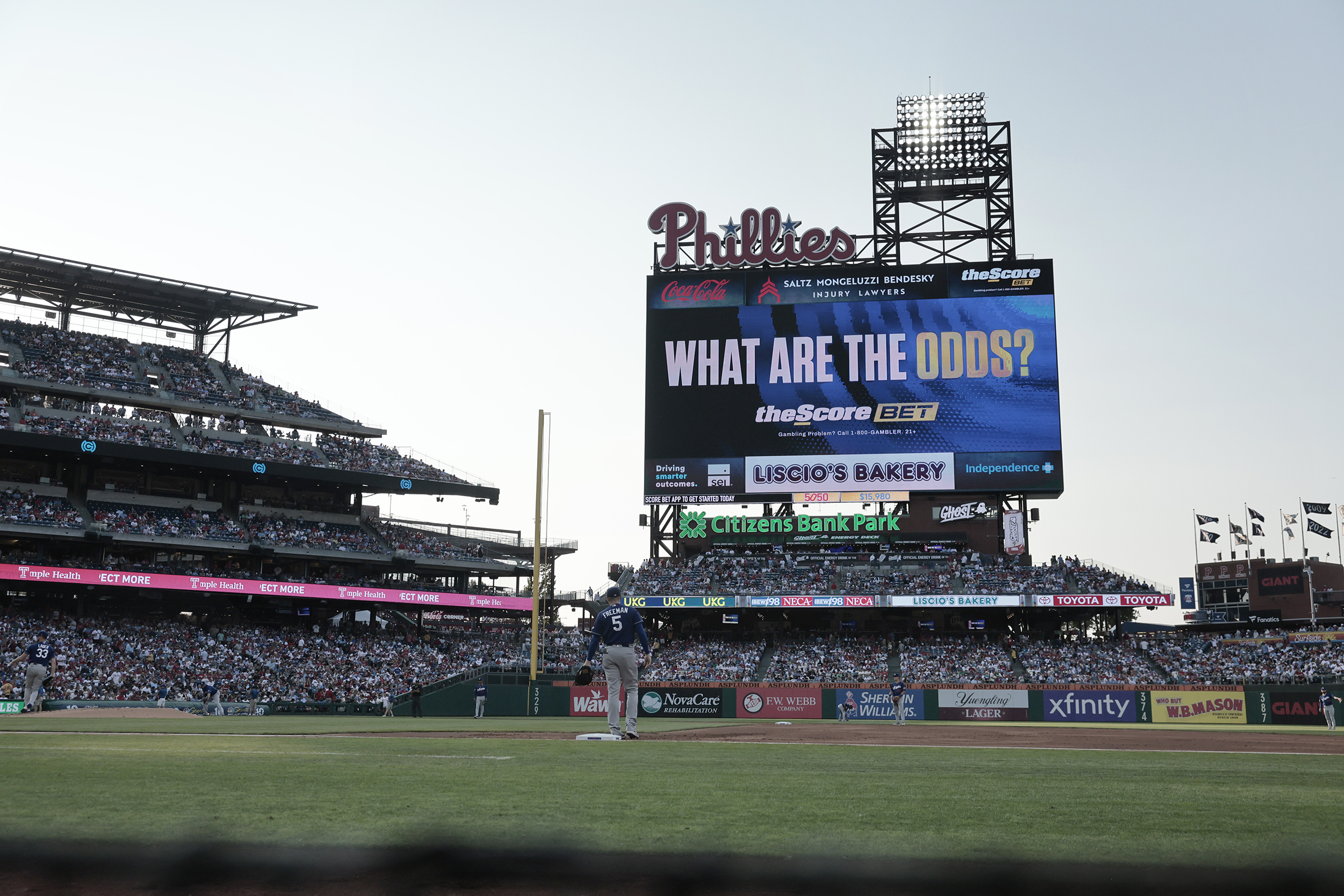
    Advertisements for sports betting can now be easily found at professional sports stadiums and during broadcasts of games. Elizabeth Robertson / Staff Photographer

    A bond, broken

    On Sept. 23, a cluster of parents walked through the echoey halls of the Russell Senate Office Building in Washington to a small, cream-colored room. Once inside, they unspooled personal accounts of how gambling addiction had impacted their lives. Politicians and advocates listened and nodded solemnly, and discussed the urgency of a newly announced gambling reform movement.

    Raymond Mikesell described the inseparable bond that he shared with his son, Ray, who at the age of 4 began helping out at Cafe Raymond, the breakfast and lunch spot that Mikesell operated for 17 years in Pittsburgh, beginning in 2007. Ray became a full-time fixture in the restaurant as he grew older, whipping up blueberry ricotta pancakes in the kitchen while his father amiably chatted with customers.

    By age 20, Ray had enough money to buy his own house. That picture of success was punctured when Mikesell one day received some of his son’s bank statements by mistake, and discovered that his account had been repeatedly flagged for insufficient funds.

    “I said, ‘Ray, what’s going on here? You got to explain this to me,’” Mikesell recalled. “He said he was betting.”

    Mikesell wanted to help his son climb out of debt. He began managing his finances, giving him an allowance, and sometimes paying his mortgage. Mikesell said he also avoided mentioning professional sports altogether, for fear that it would drive his son to place more wagers.

    “Within a month, he was kicking my door down to tell me I’m ruining his life,” he said. “We all knew what it was. It was the addiction to gambling. He just wanted to bet all his money.”

    Mikesell said his son spiraled deeper into addiction. He maxed out his credit cards, and his home fell into foreclosure, and then was sold at a sheriff’s sale.

    Among those who had assembled in the senate room with Mikesell were U.S. Sen. Richard Blumenthal (D., Conn.) and U.S. Rep. Paul Tonko (D., N.Y.). In 2025 the lawmakers introduced the SAFE Bet Act, which would prohibit sportsbooks from marketing during live games and using artificial intelligence to inform the promotions they offer to bettors.

    Blumenthal and Tonko each addressed the parents, who represented a nonprofit, Families and Friends of Gamblers, which was created with the help of the Public Health Advocacy Institute. (Lawyers for the institute in March sued FanDuel, DraftKings, and the NFL on behalf of Terry Thompson and Christopher Sage, men from the Philadelphia suburbs who developed sports gambling addictions.)

    Blumenthal accused sportsbook companies and prediction markets of exploiting their customers’ compulsions.

    “It drives families apart. Ruins people’s careers,” he said. “It basically decimates lives, because gambling can be an addiction. We know it’s an addiction. It’s a disease, like every addiction.”

    Tonko and Blumenthal in August demanded that FanDuel end its VIP services, citing reporting from The Inquirer that revealed that a FanDuel VIP host had sent a personalized video of Phillies star Bryce Harper to Thompson, who earlier this year planned to end his life after gambling away the last of his family’s savings.

    A FanDuel executive disclosed to the lawmakers in a Sept. 24 letter that the company has sent approximately 30 personalized videos from athletes and entertainers to its customers during the last two years, but said such perks are not meant to encourage betting.

    In response to the congressional scrutiny, the Major League Baseball Players Association has said it would support prohibiting players from doing promotional work for gambling VIP programs.

    Such measures arrived too late for Mikesell’s son.

    A few days before Thanksgiving in 2024, Mikesell spoke by phone with Ray, who was still staying in his foreclosed-upon house in South Fayette. Neither knew that Allegheny County Sheriff’s Office deputies planned that day to serve Ray with an eviction notice.

    When the deputies later arrived and knocked on Ray’s door, they heard a single gunshot.

    Ray, 24, had died by suicide.

    Mikesell later said that he didn’t believe his son had planned on taking his life — he had already packed his belongings and his two cats in his car — but might have panicked when he saw police at his property.

    “We found a note in his garage,” Mikesell recalled. “It said, ‘Please take care of my cats.’”
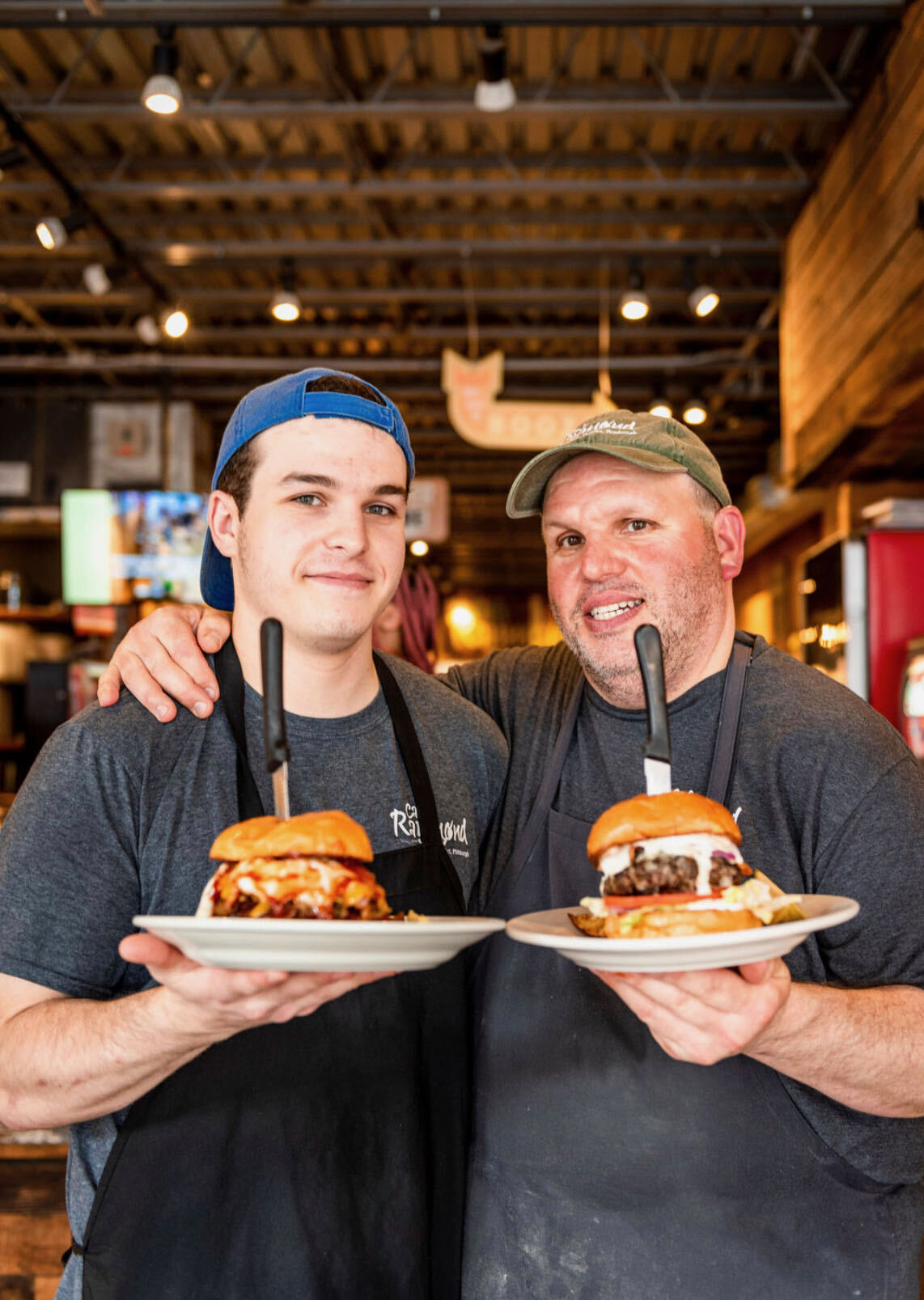
    Raymond Mikesell (right) and his son Ray (left) worked together daily at Cafe Raymond, Mikesell’s restaurant in Pittsburgh. Courtesy of Raymond Mikesell

    Grief-stricken, Mikesell contacted Rep. Jason Ortitay, an Allegheny County Republican, to ask if anything could be done to address gambling addiction. Earlier this year, Ortitay introduced a bill that would prevent betting apps from being accessed within Pennsylvania schools.

    “I called my wife and daughter, and we cried,” Mikesell said, his voice breaking. “Because it’s a small step in a big thing that’s going to mean a lot someday soon.”

    After police closed their investigation into Ray’s suicide, investigators returned his cell phone to his parents. They discovered that a month after his death, Ray’s phone was still buzzing with promotional offers from gambling companies.

    “There was one text from DraftKings,” Mikesell said, “asking him, ‘Are you betting with someone else? What’s going on?’”

    Advertisements that encourage viewers to try online gambling or prediction markets have become nearly inescapable. Staff Illustration

    ‘The gambler’s fallacy’

    Tales of tragedy and heartache like Mikesell’s have spurred other legislative and legal efforts to rein in sportsbooks and prediction markets.

    Pennsylvania lawmakers are drafting legislation to ban in-game microbets and curtail VIP programs, and have introduced additional bills to prohibit consumers from using credit cards to place wagers, restrict gambling entities’ ability to send push notifications to customers, and ban insider trading on prediction markets.

    The Sports Betting Alliance — a national advocacy organization whose members include FanDuel, DraftKings, BetMGM, bet365, and Fanatics — has said it would oppose legislation to eliminate microbets, and has likened VIP services to rewards that retailers like Starbucks offer to frequent customers.

    New York Attorney General Letitia James has sued prediction markets Polymarket and Kalshi, accusing each of operating illegal gambling platforms. The federally regulated markets are available in 50 states, and customers can be as young as 18, while the legal gambling age remains 21.

    Prediction market officials insist that their products are not gambling apps — even after recording tens of billions of dollars in sports wagers during the FIFA World Cup — but rather a financial product similar to the stock exchange.

    In early September, New Jersey Attorney General Jennifer Davenport petitioned the Supreme Court to decide whether states should have the authority to regulate prediction markets as they do gambling.

    Amid those legal tussles, researchers are still assessing the complex picture of addiction that has been associated with the widespread growth of online sports betting and prediction markets.

    In early September, Bank of America Institute published an analysis that showed the largest share of customers who engaged in online betting in July came from lower- and middle-income households.
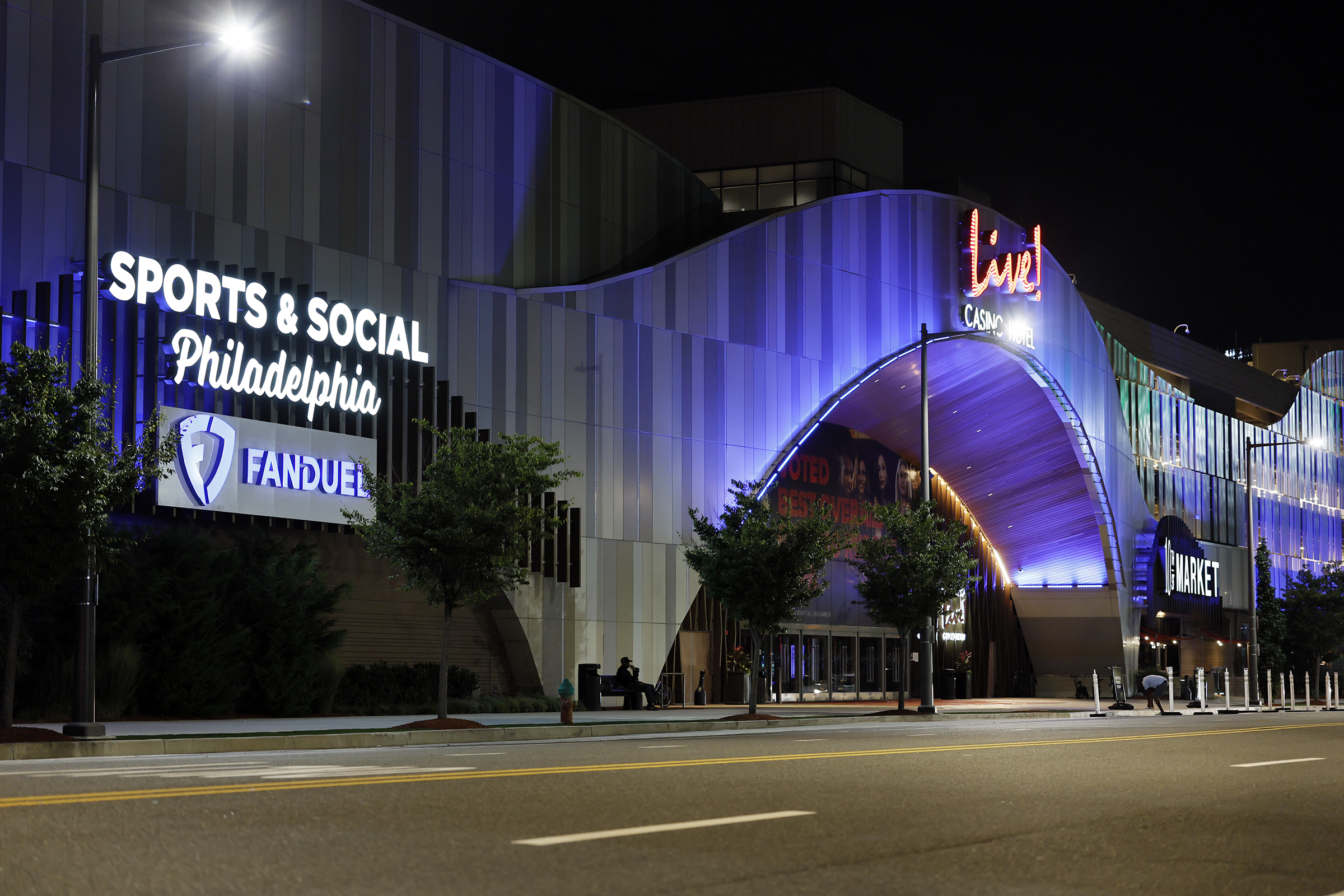
    FanDuel’s logo can be found next to the entrance of Live! Casino & Hotel, which sits about a block north from Citizens Bank Park in South Philadelphia.Elizabeth Robertson / Staff Photographer

    The institute said that median account balances of households that participated in online betting was 59% of those that did not, but didn’t include demographic or other details about those customers.

    “There’s something called the gambler’s fallacy, which basically goes like this: ‘If I keep doing this, I have to win,’” said Webber, who conducts inpatient rehabilitation at Canon’s 110-acre campus in Berks County.

    “From a biological standpoint, it’s a dopamine rush, so even if I’m losing, I’m getting a reward. It’s the excitement of the chance — ‘I might get this. And VIP [rewards] are going to make me feel like the man.’”

    In June, researchers from West Virginia University and the University of Oviedo published a study suggesting that the legalization of sports betting could lead to a 3% increase in the annual divorce rate. “Effects emerge gradually and are driven almost entirely by online wagering,” the authors wrote. (The study, which examined state and county data from 2012 to 2024, has not yet been peer-reviewed.)

    A 2025 report from the Democrat-leaning Progressive Policy Institute, meanwhile, found a 36% decrease in bankruptcies between 2019 and 2024 in states that legalized online sports betting, with “no sign of a tidal wave of bankruptcies or consumer credit downgrades.”

    That same year, The Lancet Regional Health-Europe published a study that showed suicide was the leading cause of death among 6,899 patients in Norway who had a gambling disorder between 2008 and 2021.

    Though those patients had a higher suicide risk than the general population, the researchers found that gambling addiction had a lower suicide risk than substance use disorders, alcohol dependence, psychotic disorders, or mood disorders.

    None of that research, though, captures how easily even a new gambler’s experience can escalate from a fun diversion to a life-altering obsession.
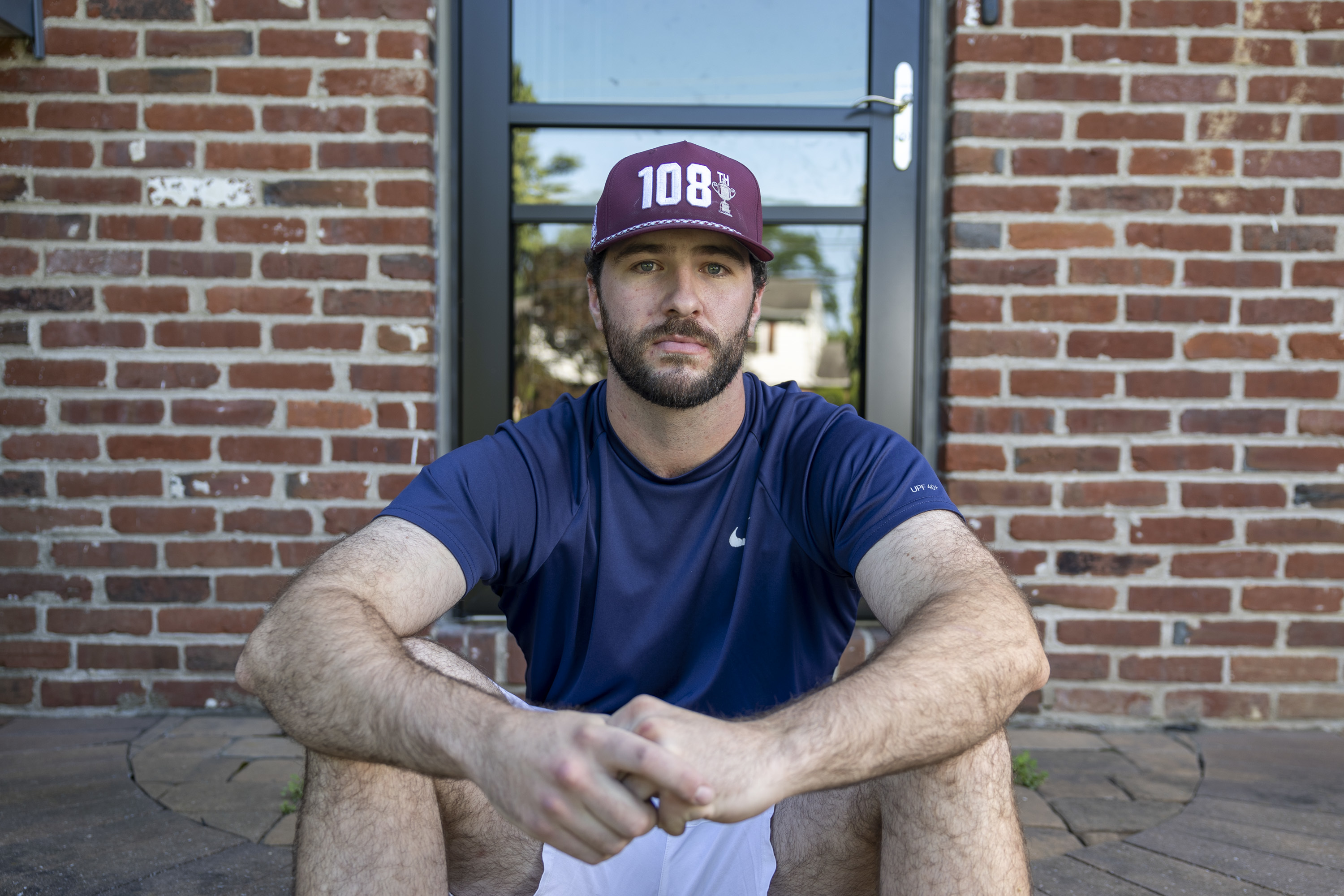
    Hiding his online gambling addiction from those closest to him left John Field feeling like he was living a double life, and ultimately drove him to lose a long-term relationship. Tyger Williams / Staff Photographer

    A double life

    When John Field turned 21, he opened accounts with DraftKings and FanDuel, and occasionally placed football parlay bets when he hung out with friends. Eventually, he tried the apps’ casino offerings, and became hooked on slots — 20 cents a spin at first, then 50 cents, then 5 bucks, then 10 dollars.

    He gambled nonstop at a warehouse job that he held in Clifton Heights, but hid this newfound compulsion from those closest to him. He felt like he was leading a double life.

    “Have you ever seen the show Severance?” Field asked, referring to the Apple TV sci-fi show in which office workers live separate lives in and out of work. “It was just like that. I had to basically pretend like I was a completely different person.”

    One person knew the truth: Field’s mother, Debbie. She still had access to his bank account from when he was younger and observed that Field was regularly moving money to a FanDuel account.

    “It started off slow,” Debbie said, “and then every year, it got worse.”

    Field recognized that he had a problem, and said he tried several times to close his FanDuel or DraftKings accounts. But then he felt a maddening urge to start gambling again.

    “Every time I’d run out of money, I’d see an ad, like, ‘Deposit 50 bucks and get $500 in casino credit.’ So when I was down real bad I’d download the other apps,” Field said. “I knew they’d give me a bunch of money to start with.”

    His phone eventually held apps from Fanatics, BetRivers, Borgata Online, BetMGM, Caesars Palace Online, SugarHouse, Stardust, and Bally Bet. Some weeks, he gambled away nearly his entire paycheck.

    Debbie Field saw that her son’s bank account was plunging into negative figures, and accruing overdraft fees. She implored him to disclose his addiction to his longtime girlfriend. The couple had started dating when they were sophomores at Penncrest High School in Middletown, Delaware County, and were planning to get an apartment together.

    “I was like, ‘John, you can’t move in with your girlfriend without telling her. You tell her, or we will,’” Debbie recalled. “He was petrified.”

    Field told his girlfriend about his struggles with addiction. The couple forged ahead and moved in together in February 2025.

    “I figured we got our own place, I got rent, bills, I really should probably stop this,” Field said. “And it just, again, got way worse. Because then when I lost money, I was like, ‘Holy s—, I have to pay rent, I have to get groceries.’”

    He chased his losses, diverting more money into gambling apps.
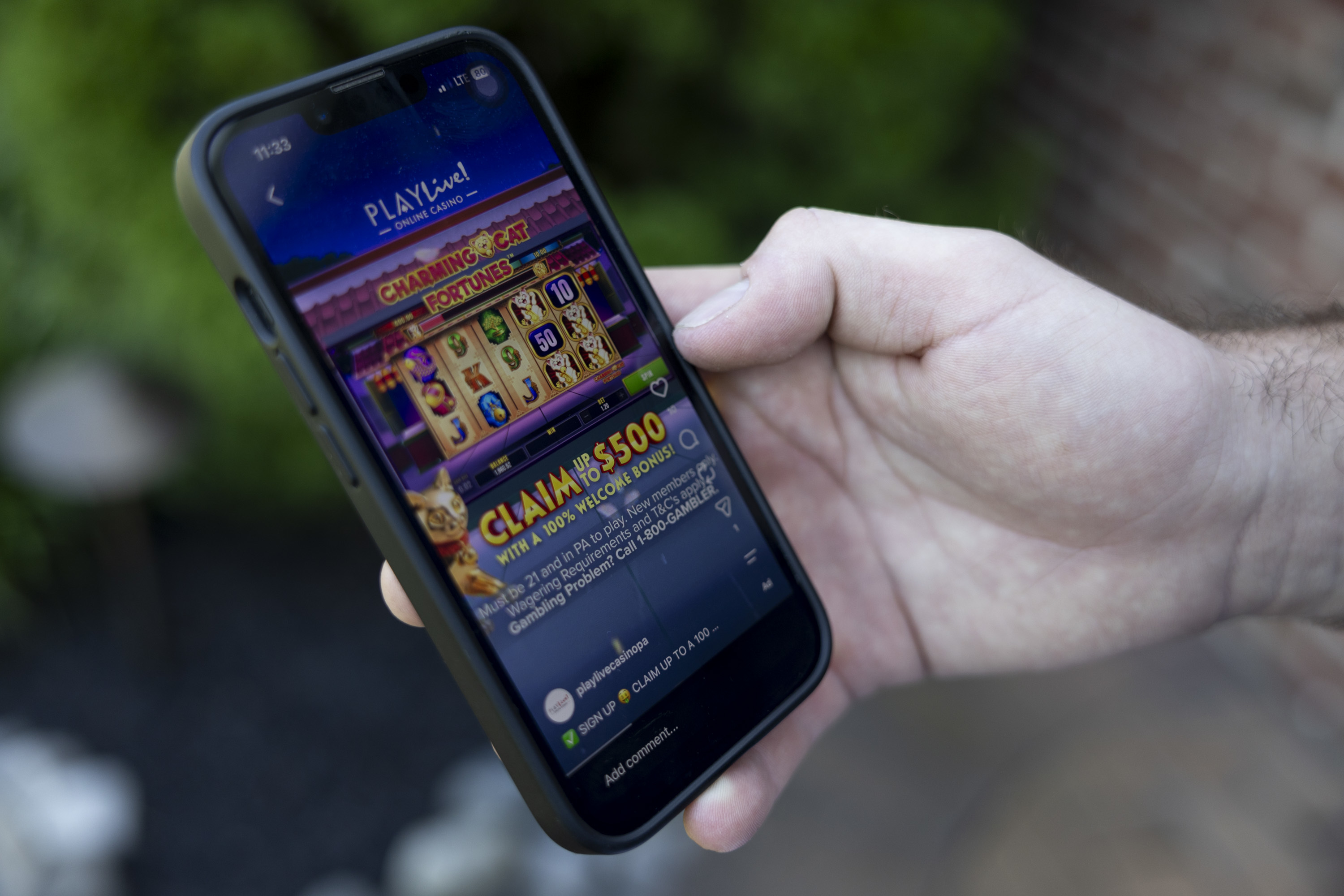
    After losing his apartment, Field moved in with his parents and began undergoing treatment for gambling addiction. He said he still encounters numerous daily ads for gambling on social media. Tyger Williams / Staff Photographer

    By March 2025, Field needed his parents to pay his rent. Two months later, he and his girlfriend broke up. Heartbroken, he moved back in with his parents, and agreed to participate in online therapy sessions through ETHOS Treatment.

    Field’s therapist, Phil Waibel, said there is so much demand for gambling addiction treatment, he now has a waiting list for his group sessions. “It’s taking the hearts and minds of young people — especially young men — at an astonishingly high rate,” he said.

    Waibel has treated patients who discovered that it was difficult to escape gambling marketing and push notifications even when they attempted to quit.

    “They’re seeking out even those people who have gone out of their way to block or delete contacts, to self exclude or unsubscribe from email lists,” Waibel said. “They continue to be bombarded, which would indicate a predatory or extremely offensive stance, to loop people back in as soon as possible.”

    Field, 27, said he now feels like his addiction is under control. He excluded himself from all gambling activities in Pennsylvania, secured a union job with a construction company, started going to a gym, and began repairing relationships with friends and family members.

    “Every aspect of my life is significantly better,” he said.

    Yet gambling isn’t out of the picture entirely.

    Recently, Field used Venmo to send some money to his sister, and faced a pop-up ad from a casino app that offered a $1,000 deposit match and up to 1,000 spins.

    “Sign up today,” the message read.

    After opening his Instagram app, he encountered ads for Charming Cat Fortunes — a slots game from PlayLive! Casino whose motto is “Stay entertained 24/7” — in addition to ads for a gold digger-themed slots game from betParx.

    Field estimates that he sees nearly 20 gambling ads across various social media platforms each day. “I’d be having a good day, not thinking about it,” he said, “and then boom, you’d see an ad, and feel that little itch, and you just kind of got to get rid of it.”

    He now considers the barrage of advertising to be a form of motivation.

    “It’s like, ‘F— these guys.’ All they’re trying to do is shove it down my throat,” he said. “It’s just insane how inescapable it is.”

    The Inquirer will continue to report on issues related to the growth of gambling addiction — among teens and adults — across Pennsylvania. If you, or someone you know, wants to speak with a reporter, please contact David Gambacorta or William Bender at dgambacorta@inquirer.com and wbender@inquirer.com

    <style>
    h6.font-inquirer-headline.antialiased.font-normal.text-white.text-5.leading-[26px].sm:text-6.sm:leading-8.mt-2.sm:mt-4.lg:mt-4.px-4.lg:px-0 {
        max-width: 450px;
        margin-left: auto;
        margin-right: auto;
    }
    
    blockquote.inq-blockquote.my-7.lg:my-12.text-center {
        max-width: 430px;
        margin-left: auto;
        margin-right: auto;
    }
    
    .inq-icon.inq-icon--link {
      color: red;
    }
    
    a.relative.z-1.text-blue-mid.hover:shadow-lightmode {
        color: #db1f1f;
    }
    </style>
  • Once Upon Main Street: Portraits from Darby, Pa.

    Once Upon Main Street: Portraits from Darby, Pa.

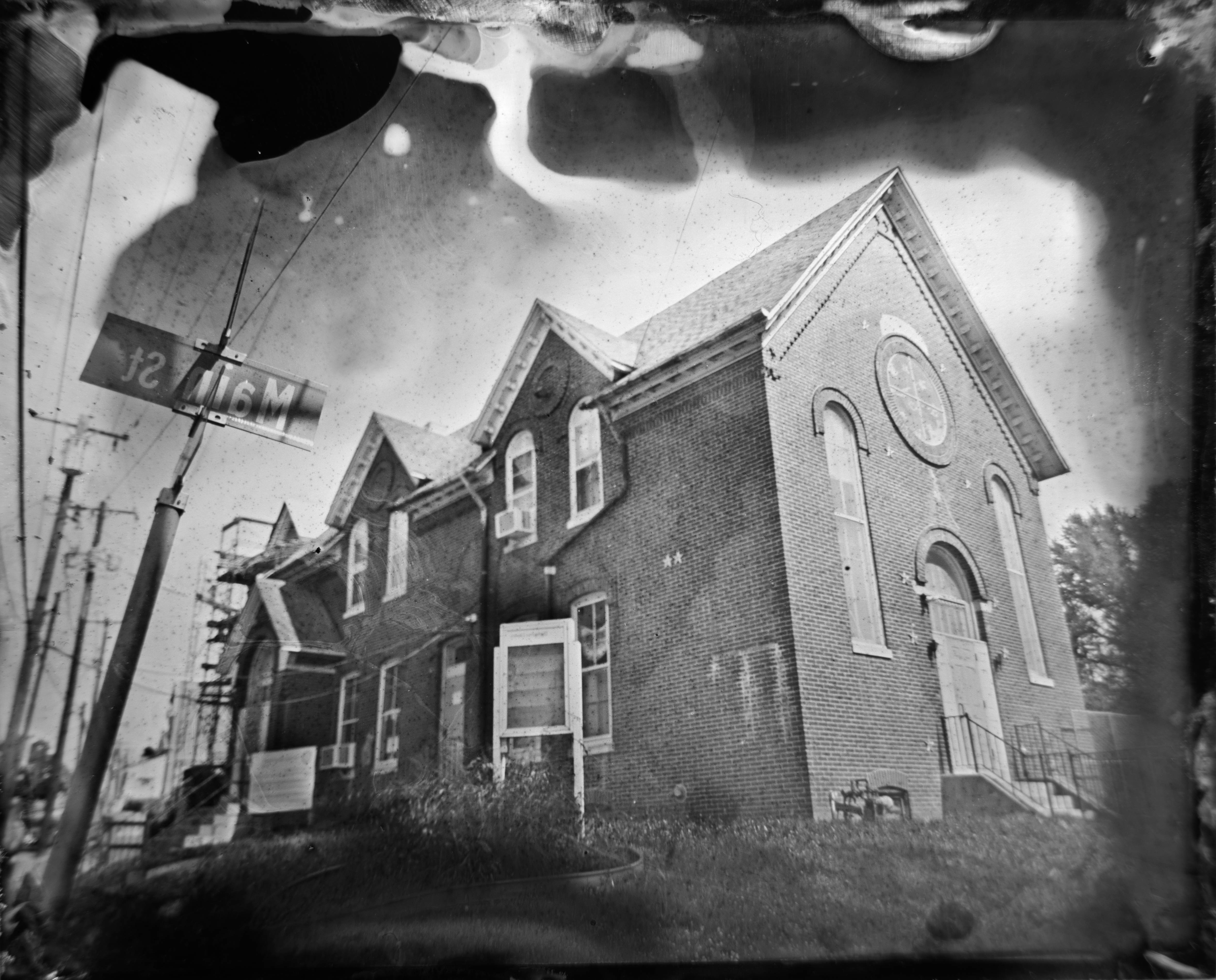
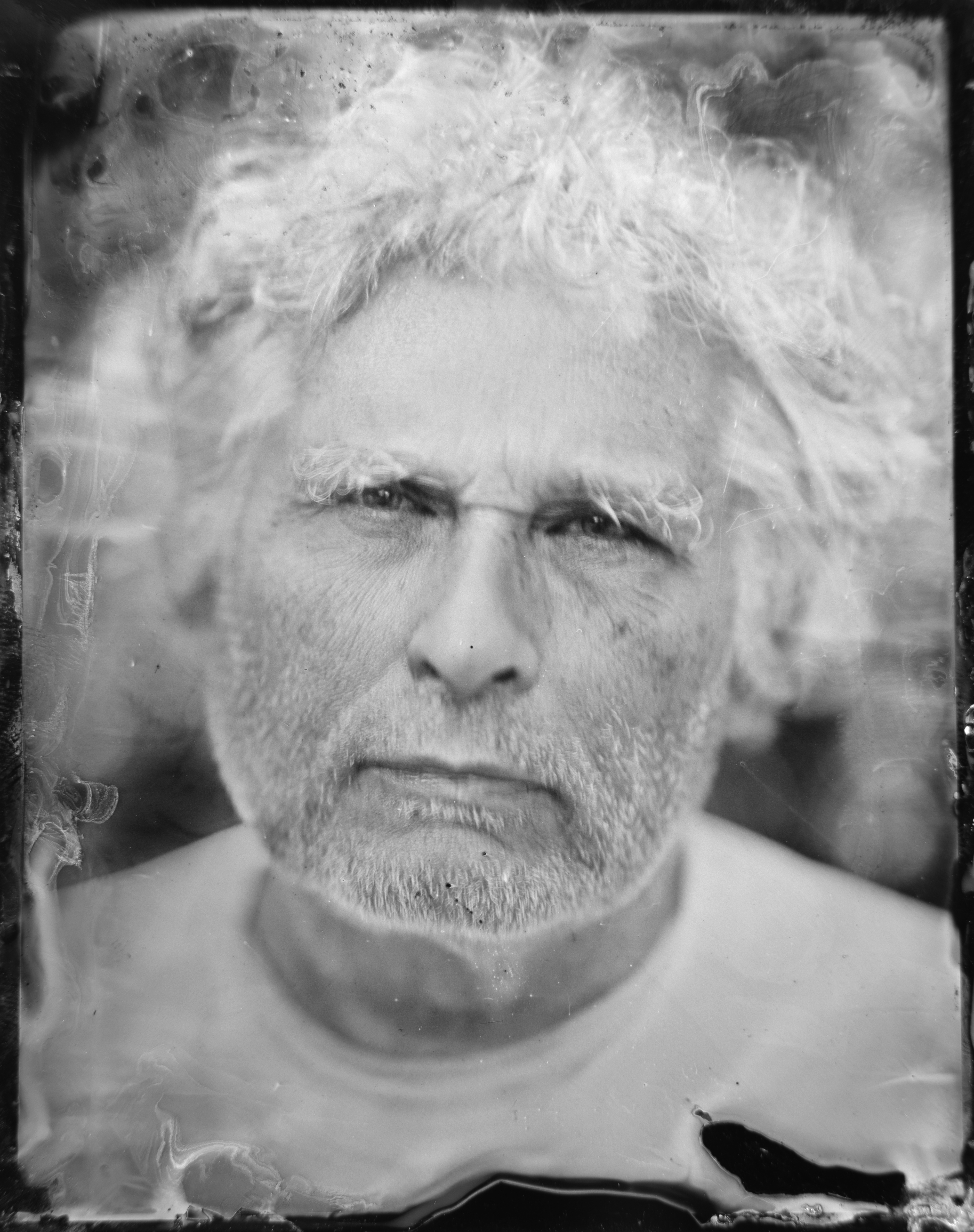
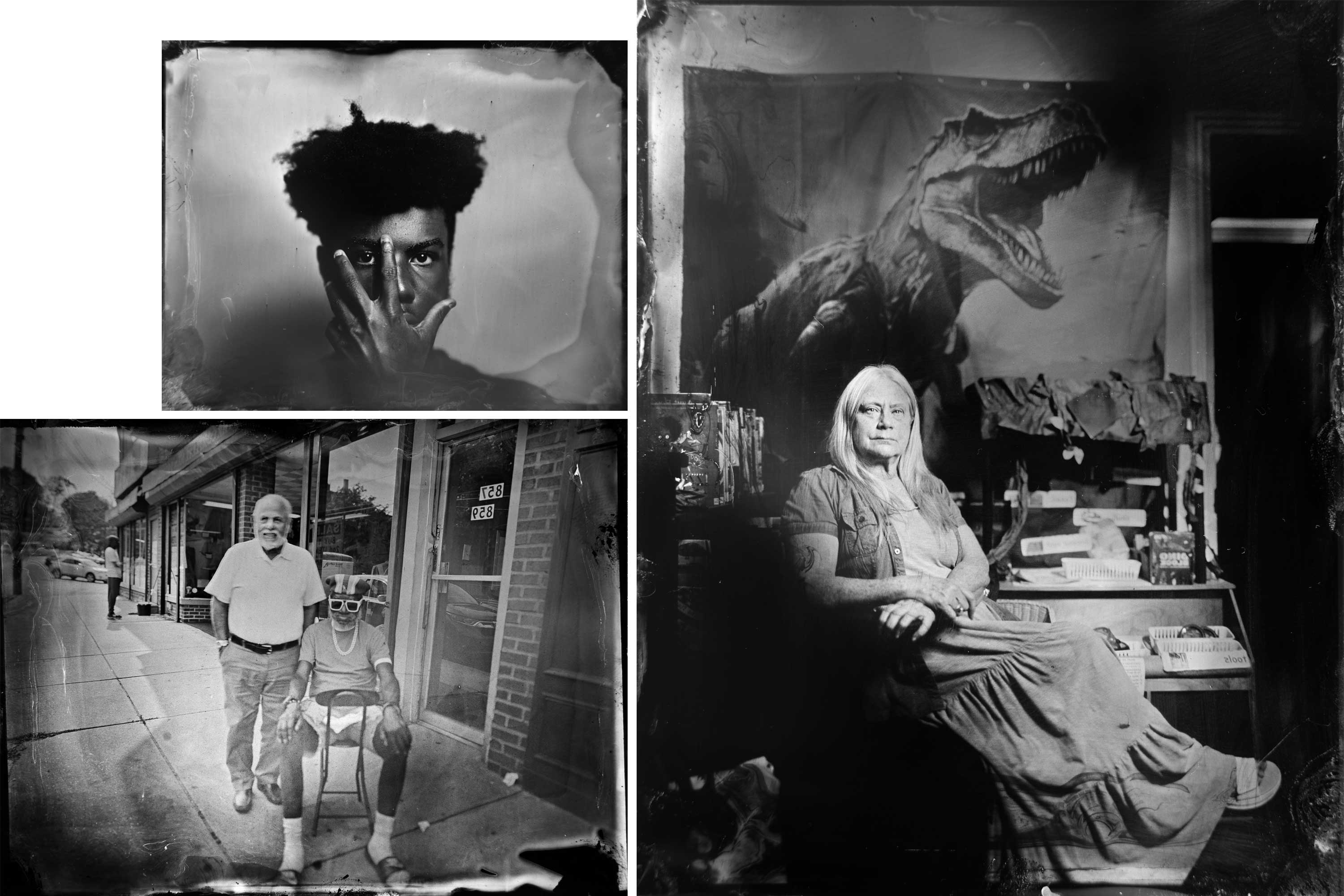
    Armed with a vintage camera, the photojournalist John Pendygraft spent several weeks approaching people along Main Street in Darby, Pa., to ask if they’d like to collaborate on creating a photograph. Specifically, he asked if they wanted to create a tintype, a photographic process invented in the 1850s.

    Tintypes need to be developed immediately on-site in a portable darkroom, and each one is a unique creation. It is a purely chemical process that takes time, embraces inefficiency, and is open to surprises.

    During the process, subjects were invited to share their stories with Pendygraft. Together, the words and photos create a complex portrait of a changing town.

    Main Street originated along the Great Minquas Path, and was settled by Quakers in 1682. Along the way, Main Street was a 1777 battle site, a historic foundation for the Underground Railroad, center of a boom town that busted, home to a growing African diaspora community, and ground zero to Hurricane Floyd’s destruction.

    Through it all, Main Street in Darby has consistently been a place defined by the grit of people who call it home.

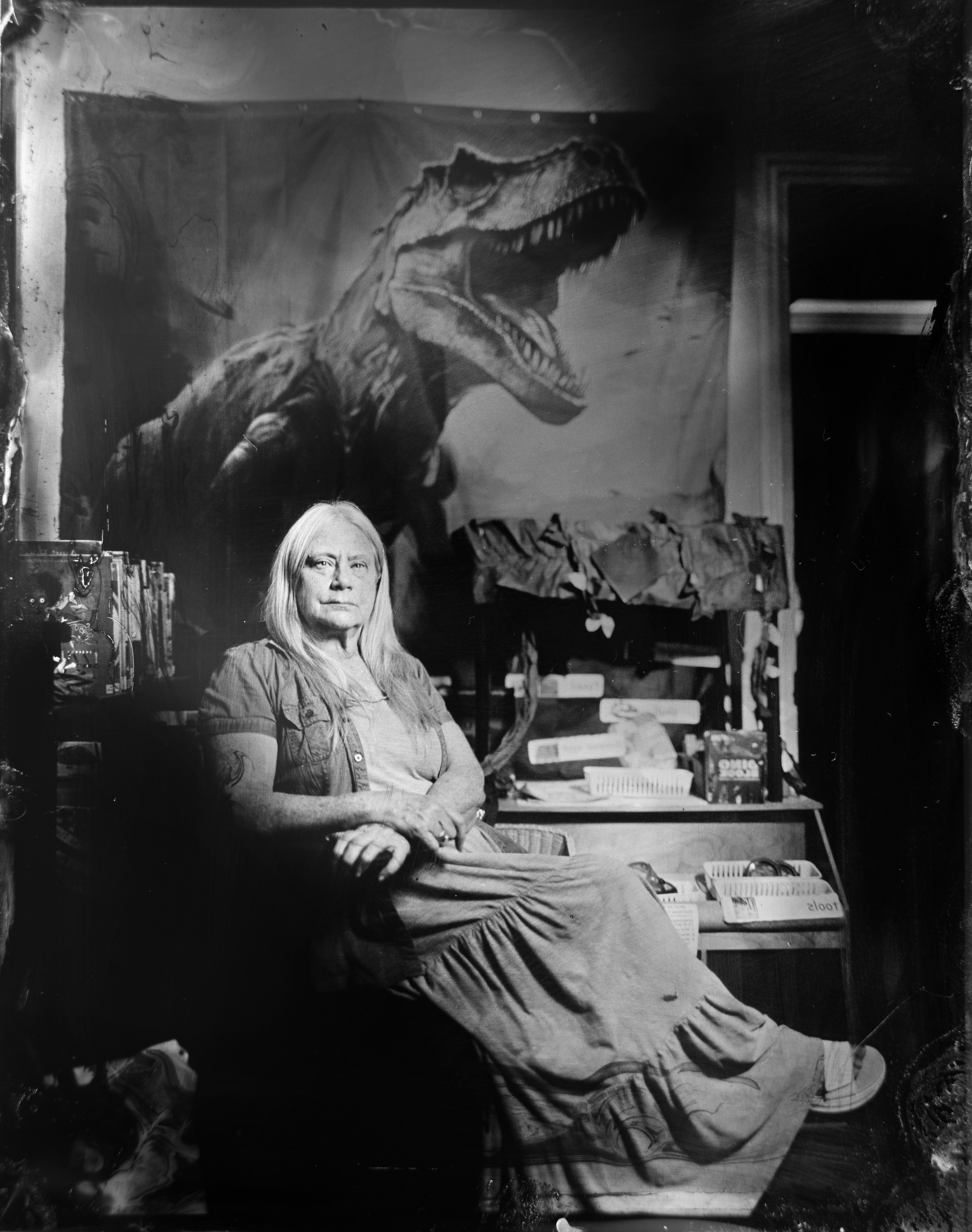
    Susan Borders, 68, director of the Darby Free Library, poses in the children’s reading room, which was decorated with dinosaurs as part of the “Unearth a Story” 2026 summer reading theme.John Pendygraft / For The Inquirer

    Susan Borders

    The Darby Free Library is the country’s oldest library in continuous operation. The library was established in 1743 by 29 Darby Quakers. It was modeled after Benjamin Franklin’s Library Company of Philadelphia, which formed in 1731. The Darby library claimed the title “oldest library in continuous operation” when Franklin’s Library Company closed for repairs after a fire. The librarians who work there claim it is haunted.

    For 34 of its 283 years, Susan Borders has been the heart and soul of the nation’s second-oldest library. She knows a nearby homeless shelter closes between 9 a.m. and 4 p.m., and makes sure the library is a welcoming place, rain, shine, or snow.

    “I meet people who other people might be afraid of. The community needs us and we need the community.”

    The Darby Free Library is the country’s oldest library in continuous operation. It was established in 1743 and modeled after Benjamin Franklin’s Library Company of Philadelphia, which formed in 1731. John Pendygraft / For The Inquirer

    She takes a call about late fines: “Just bring the books in and we’ll waive the fees. I just want you to keep reading.” The caller got off easy. Normally, she makes people tell her a story before she waives the late fees.

    She deals with a flustered dad and a grumpy toddler trying to make a letter-size print from an email attachment on an iPhone. “Just try to send it and we’ll see if the size is right. First one is on me.”

    “The history of this place isn’t about dates. This is a living library. It is about 280-something years of days with people.”

    Harold Finigan is a historian, educator, project manager of the Darby Library Company, and manager of the Darby Friends Meeting. John Pendygraft / For The Inquirer

    Harold Finigan

    Harold Finigan is untroubled by the sweat saturating his shirt or the record-breaking summer heat. He paces an open lot at 1000 Main St. with a cell phone to his ear, walking first toward the historic library, on the southwest side of the lot, and then toward the historic Darby Friends Meeting house on the north side.

    Finigan is supervising renovations on both. He guides his days through time-honored Quaker principles: simplicity, peace, integrity, community, equality, and stewardship.

    He traces his own Quaker values to 1682 — one year after King Charles II granted William Penn a charter for the land that would become Pennsylvania. That year, the Darby Quaker meeting was established along the Great Minquas Path by John Blunston as a foundation for Penn’s “holy experiment” — a country unified by a commitment to freedom of religion, equality, and democratic government.

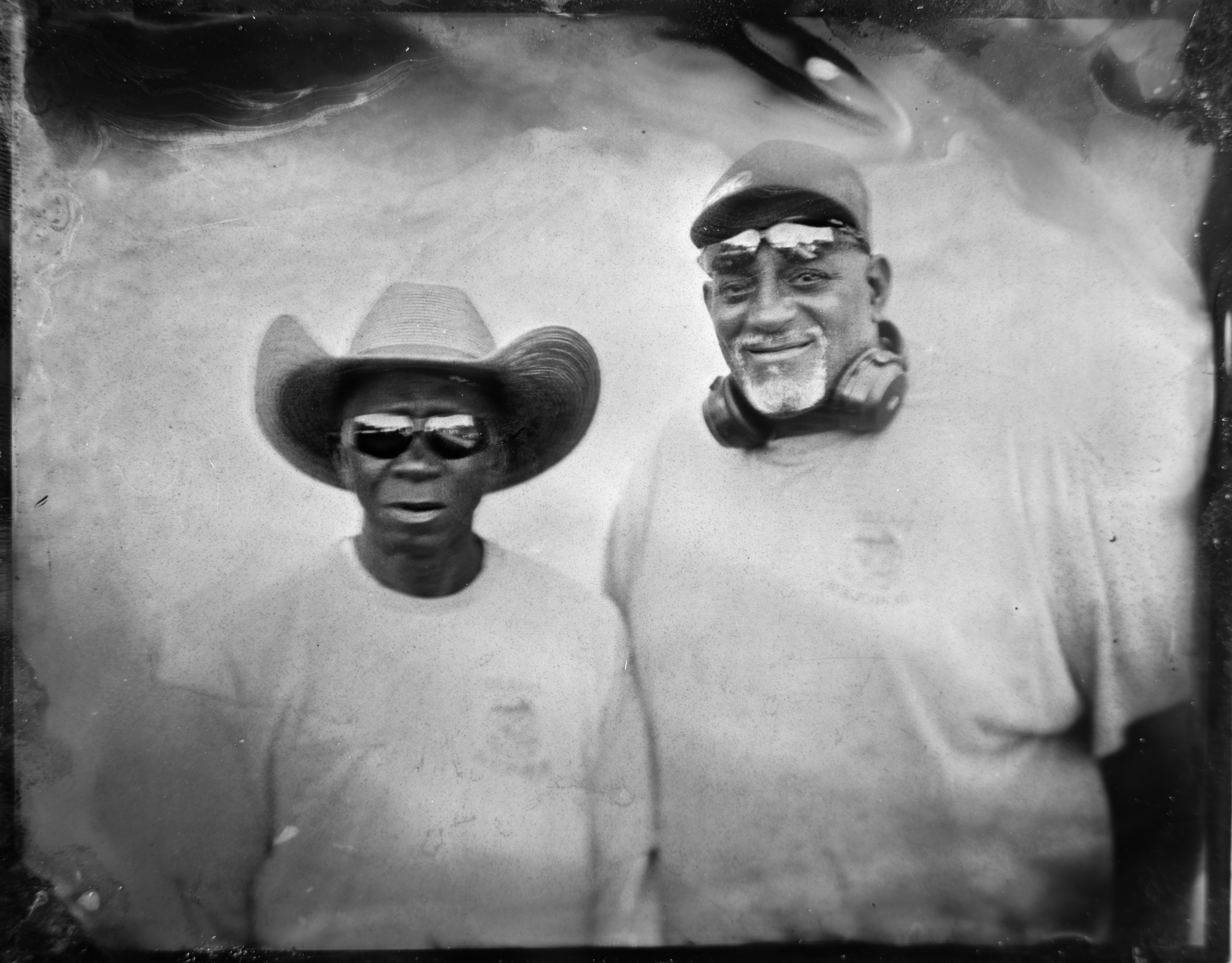
    Bernard Freeman, 56, (right) and James Vani, 71, (left) take a break from mowing and edging the vacant lot on Main Street where Woolworth once stood.John Pendygraft / For The Inquirer

    Bernard Freeman

    As Bernard Freeman, assistant foreman for Darby Borough Public Works, rides his lawnmower across the now-vacant lot at 870 Main St., he remembers when it was Woolworth. He points to the corner of the lot where the cafeteria counter used to be. “Main Street back then was bustling. We had jewelry stores, hardware stores, shoe stores. You didn’t have to go to the mall for nothing. Christmas time? You did all your shopping here. Everything was right here in Darby. You could get everything you needed. Everything. Man, it was bustling. But now? People don’t do the small towns anymore. At least, not here.”

    There was a huge Christmas parade, a Memorial Day parade with a tank kids could climb on, a parade to open Little League season, and a parade for the high school homecoming football game.

    “Last parade I can remember must have been 15, 20 years ago?”

    Freeman has five children, born between 1987 and 2006. Only the child born in 1987 had the opportunity to play Little League, PAL football, or was able to join a swim club. Local organizations dried up in the ’90s.

    “We didn’t have the volunteers and parent participation. Recreation-wise, we didn’t have anything anymore.”

    And then Floyd hit. The storm took one life, impacted 330 homes and 59 businesses. Many of the businesses never reopened. Scores of properties were purchased by the government, who relocated families and leveled homes.

    Freeman was hired by the city as part of the cleanup. The job, which he still holds today, hit home. “I have aunts, uncles, sisters, cousins, all kinds of family here. 10th Street is named after my uncle, Marine Lt. General Ronald S. Coleman.”

    This is his hometown, come what may. “If you can make it here you can make it anywhere. Darby makes you tough. It’s a no-nonsense type of town.”

    James Vani

    James Vani, 71, who is also with Darby Borough Public Works, fled Liberia’s civil war with his wife in 2002. They joined his parents in Florida. “My wife went to nursing school. She graduated and everything, but she couldn’t find a job. She tried to find a job in Florida, but she couldn’t because of our accent,” Vani explains. “A friend of my wife was here [in Darby] and she said ‘Come over here. You will be able to find a job because there are a lot of Africans here.’”

    There are. According to Data USA, 20% of Darby Township is foreign-born, and 79% of that population comes from Africa. If you drive down Darby’s Main Street a short distance to the Philadelphia city line, the road turns into Africatown. The organization website touts the area as “the premier destination for the global African Diaspora, celebrating arts, culture, and business.”

    As soon as Vani’s wife got a job, she called her husband to join her. “I’m lucky,” he says. “I have a job in Darby and I live in Darby. Thanks be to God.”

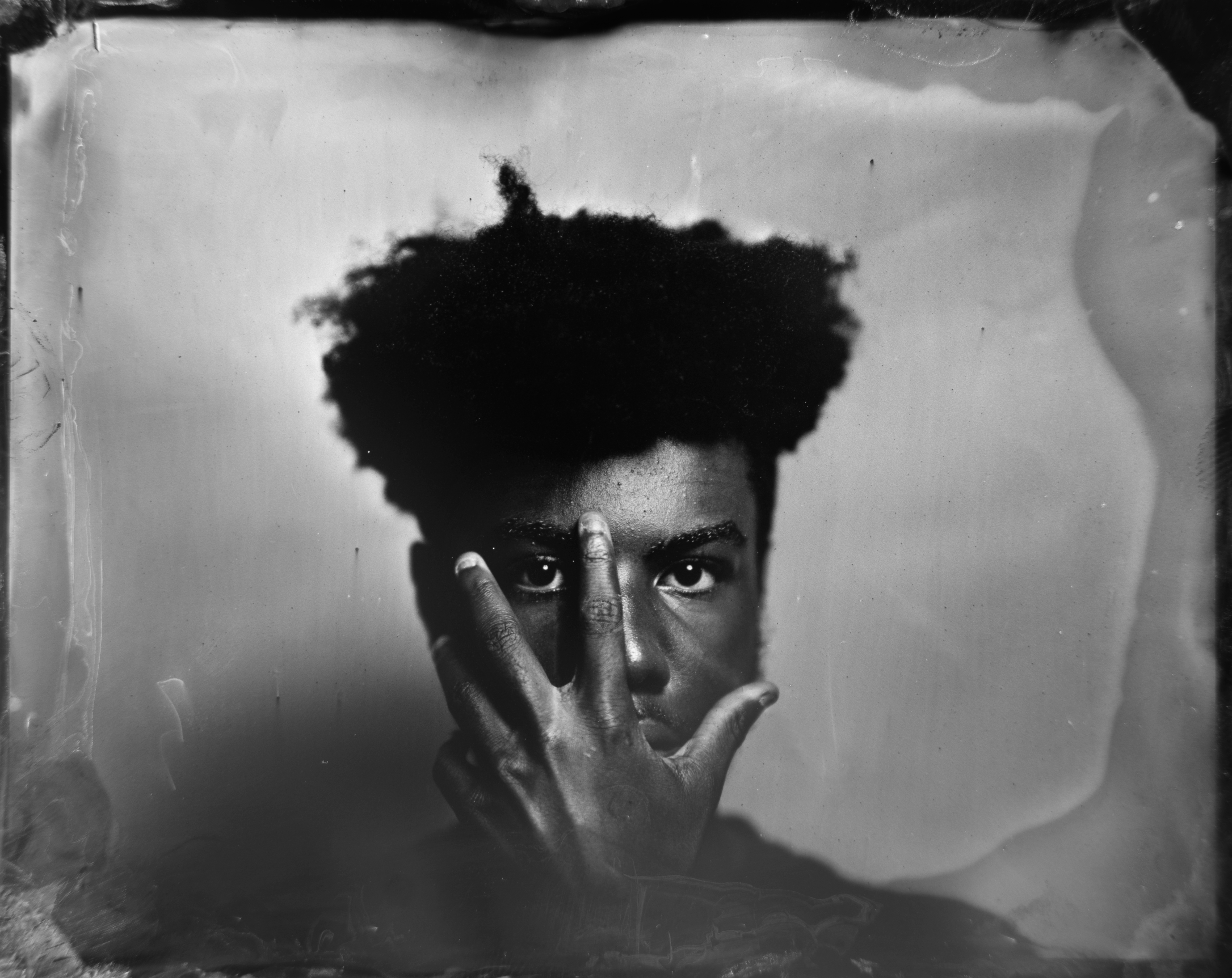
    Machi Hall, 17, poses in the Darby Free Library after applying for a library card.John Pendygraft / For The Inquirer

    Machi Hall

    “Almost nobody from my generation is going to be able to buy a house,” laments Machi Hall, 17. His family moved to Darby two years ago from West Philly because “the crime here is lower and the houses are cheaper.”

    Hall worries about AI replacing jobs, a future that might soon spin out of human control, and the possibility that current conflicts will escalate into a global war. He dreams of a career in 3D film animation, but what if AI takes those jobs?

    He has also made plans to enroll in a four-year electrical contractor apprenticeship program, with an eye to joining a union. “I won’t get rich, but it will put food on the table,” he says.

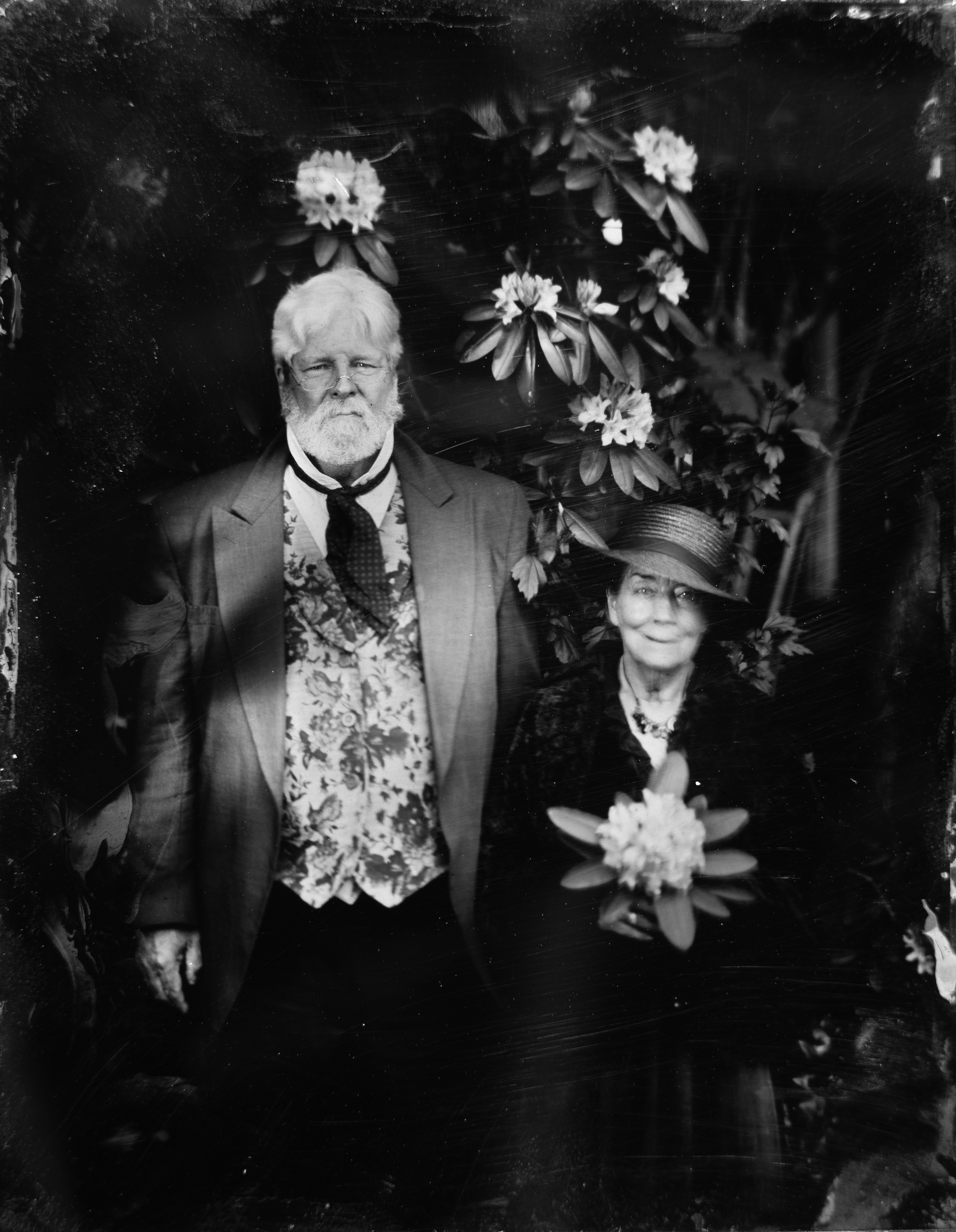
    Jan and John Haigis, who jokingly describe themselves as “vaguely Victorian,” pose in front of their home on Main Street in Darby.John Pendygraft / For The Inquirer

    Jan and John Haigis

    Jan and John Haigis, who jokingly describe themselves as “vaguely Victorian,” pose in front of their home at 1006 Main St. The home was once owned by Passmore Williamson, who, along with “Father of the Underground Railroad” William Still, was jailed in 1855 for helping Jane Johnson and her two sons escape slavery.

    Early on in any conversation with the couple, you will very likely hear about at least one of their two quirky obsessions. They will either sing a duet of one of the hundreds of songs they have written together (“I can always make a harmony,” Jan explains. “I don’t know what key he is going to be in, but we never stop singing.”) or they will dive into the minutiae of Darby history.

    Their shared love of Darby history began in 1985 when John rode his bicycle past the Blue Bell Inn, a crumbling tavern at the very end of Main Street. He didn’t know that it was once frequented by George Washington, housed troops during the American Revolution, or was the site of an epic battle in 1777 led by Lord Cornwallis and 2,500 soldiers. But he was curious.

    The couple learned the Blue Bell was on a list to be destroyed and approached the city about saving the inn.

    “The city council told us ‘it would cost money to tear it down, so let’s see what they can do,’” John explains. They leased it to the couple for $1 a year.

    A small grant allowed Jan and John to replace doors and windows and find a caretaker. The couple created Friends of the Blue Bell. The group of new friends became a kind of family.

    They leased the inn from 1985 until 1999 and did what they could. Then Hurricane Floyd hit and flooded the interior. Today, the city maintains the exterior and the Haigises curate a website to preserve Darby history.

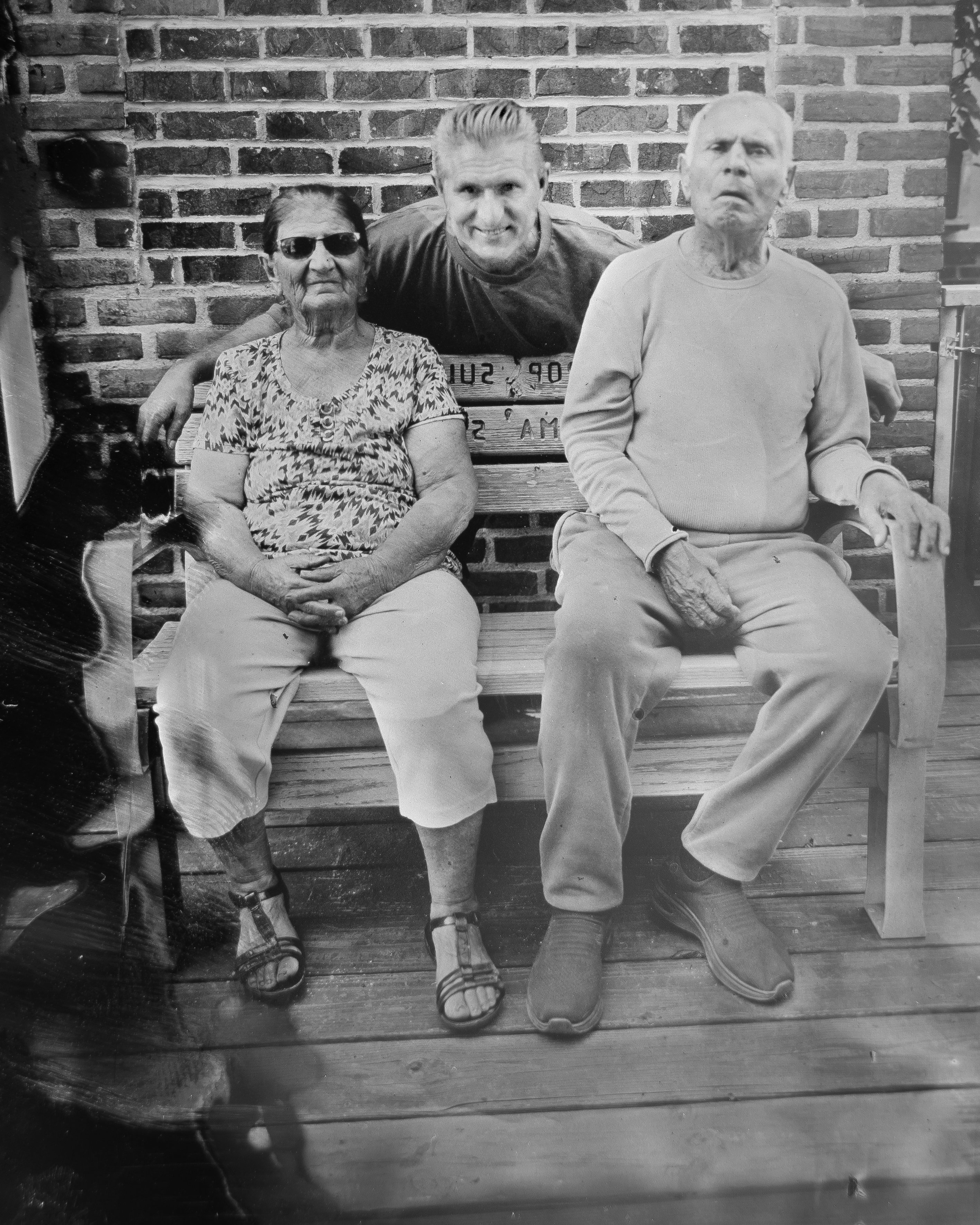
    Artan Sulollari, 56, the owner of Main Street Pizza, poses with his mother Lule, 88, and father Irfan, 92, on the back porch of their home on Main Street in Darby.John Pendygraft / For The Inquirer

    The Sulollari family

    In 1990, Artan Sulollari was serving in the Albanian army. One day, they brought him in for questioning. At the time, he had no idea that one of his brothers had fled the communist country.

    “They beat me up very good, to tell them what I knew. I didn’t know anything,” he says. He still suffers from hearing loss as a result of his injuries.

    “It was a crazy life there. The communism was the worst communism. They would say ‘this guy does propaganda, this guy is a spy.’ They would arrest you. They’d beat you. They put you in jail. They’d take your family. They’d incarcerate you far, far away.”

    The Sulollari family was granted political asylum in the early 1990s. Today, Tony and his brother run Main Street Pizza in Darby and care for their aging parents, who live just a few houses down from the restaurant.

    “Have you ever seen the movie The Outlaw Josey Wales? Clint Eastwood says to the Apache chief, ‘I’ve come to live with you, because the government will follow you. I’ve come to live with you or fight with you. To die is easy. To live is hard. Because life is hard, and death is easy.’ That’s how it is.”

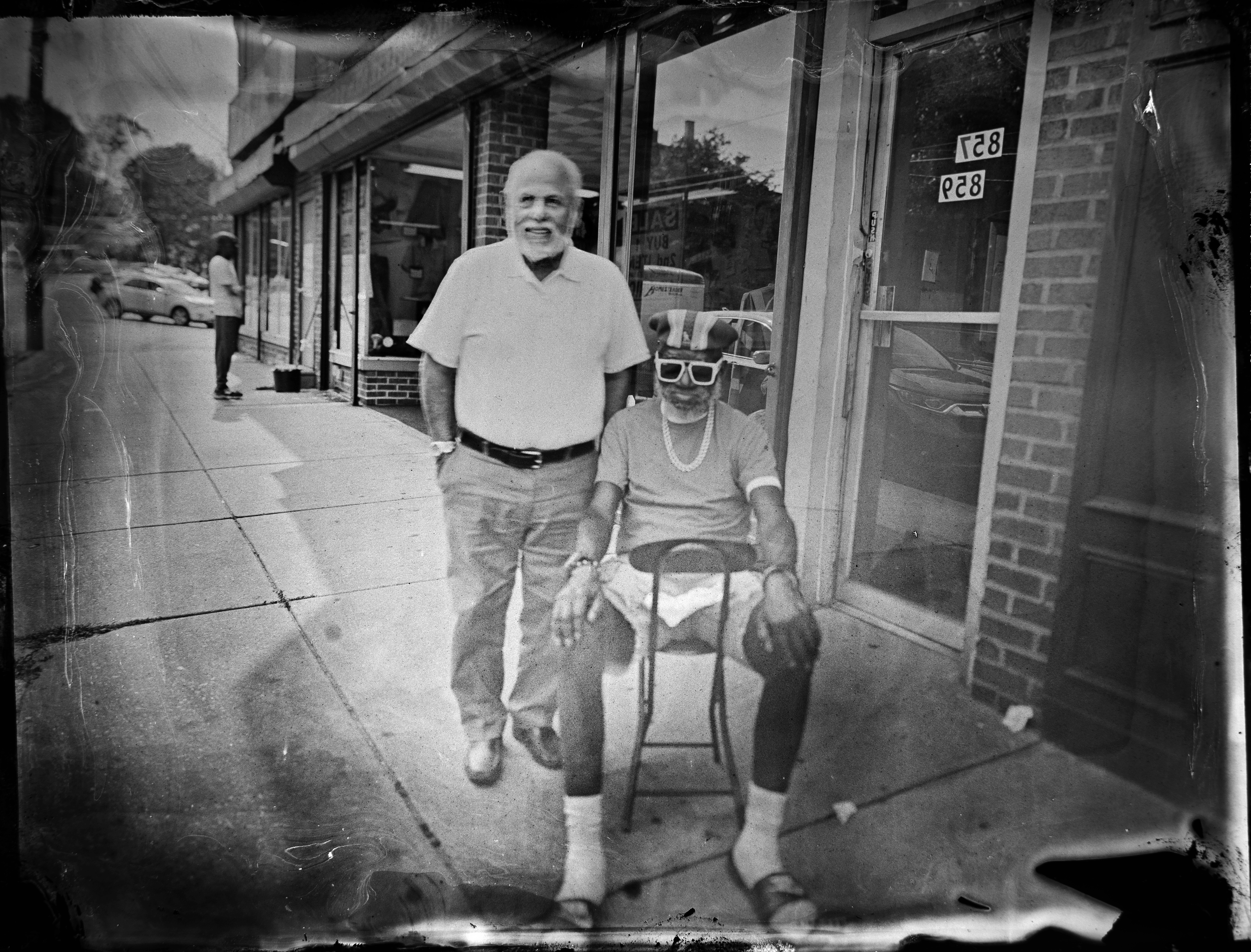
    Benett’s menswear store owner Paul Feldman, 79, (left) and William Hall, 73, pose in front of Feldman’s store on Main Street.John Pendygraft / For The Inquirer

    Paul Feldman and William Hall

    Paul Feldman was born Sept. 18, 1947, one day before his father opened Benett’s menswear store on Main Street. “I remember as a kid my dad giving me a check to deposit in the bank on Friday night. I had to walk in the streets because the sidewalks were so crowded,” he remembers.

    “You know how many stores there were in Darby that were run by a father and a son? I am the only one that is still around. Everyone else closed.”

    Feldman looks around. “This place is starting to fall apart. I am, too.”

    William Hall, 73, works a couple of days a week at the store. He remembers coming in as a young boy.

    “My mother used to do a day’s work for $6 a day. So, I used to collect cans and bottles to take them back for the refund. I would bring my money here and put my clothes on layaway,” he said. “Heavens to Betsy, I didn’t know I’d be working here today.”

    Two years ago, Hall was diagnosed with throat cancer. As the treatments wore on him, he turned to store manager Bud Teaford, who has navigated his own health challenges, for advice and support. Hall believes the friendship helped save his life.

    “Now when I come in, I won’t say to him, ‘Hi.’ I say ‘Bud I love you.’ Every day.”

    “I love you too,” Bud answers.

    “If you don’t have love, you don’t get no love. You get that mental aggravation.”

    Bud says with a laugh, “We get plenty of that here, too.”


    John Pendygraft is a photojournalist who teaches visual storytelling at Penn State University.

    <style>
    .inq-image.inq-image-topper-style {
        max-width: 1200px;
        margin-left: auto;
        margin-right: auto;
    }
    
    .inq-p--has-dropcap::first-letter {
      font-weight: 400 !important;
    }
    
    .-mx-4.md:mx-0.md:w-full.w-screen {
        max-width: 1000px;
        margin-left: auto;
        margin-right: auto;
    }
    
    img.inq-image.max-h-75vh {
      max-height: none !important;
    }
    
    div.topSpacer {
      margin-top:50px 
    }
    </style>
  • He made one of the greatest pieces of public art in Philly. He also made the Rizzo statue.

    He made one of the greatest pieces of public art in Philly. He also made the Rizzo statue.

    The invitation to visit sculptor Zenos Frudakis’ studio arrived unexpectedly in my inbox this summer, soon after I included his Freedom sculpture in The Inquirer’s 76 neighborhood gems article.

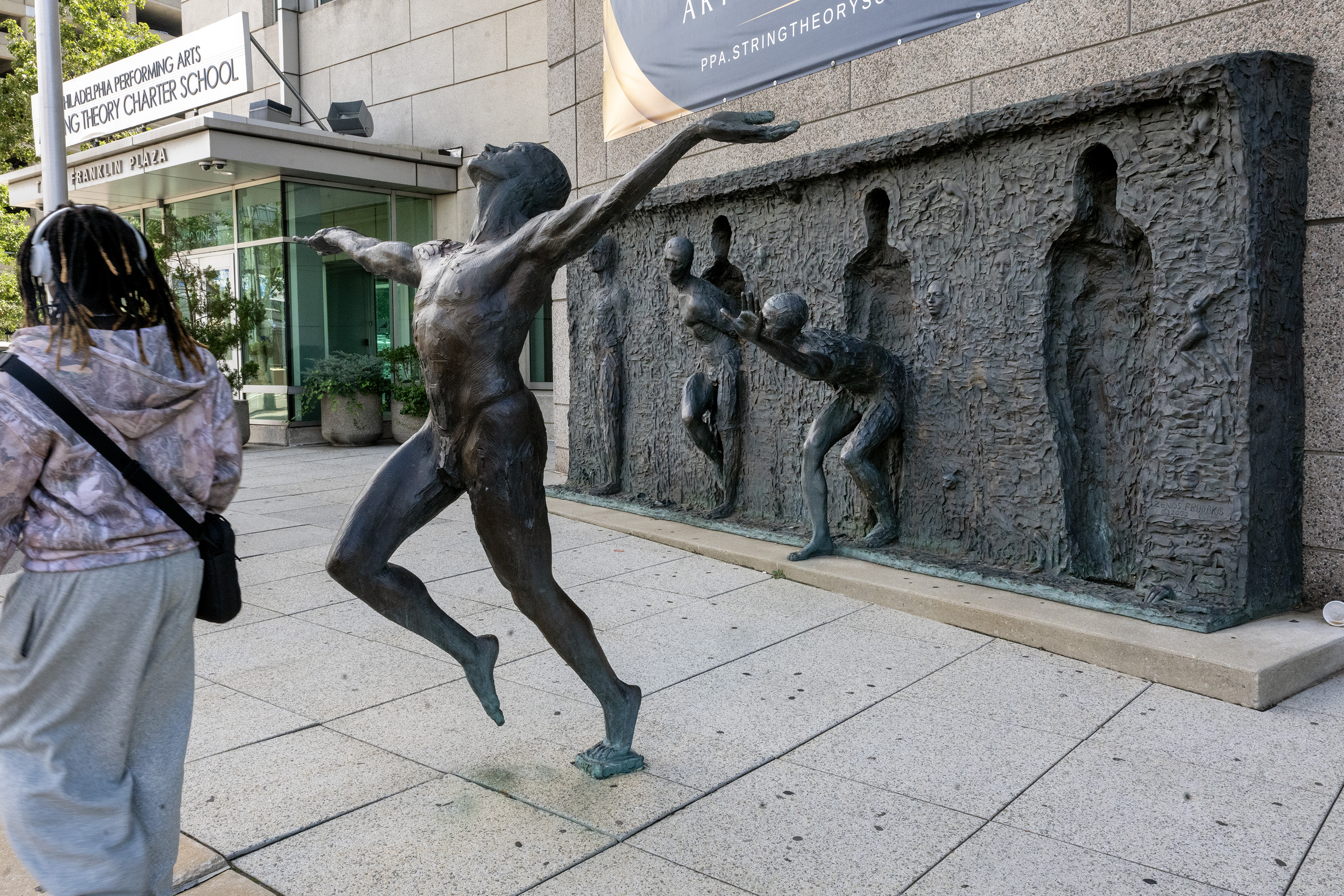
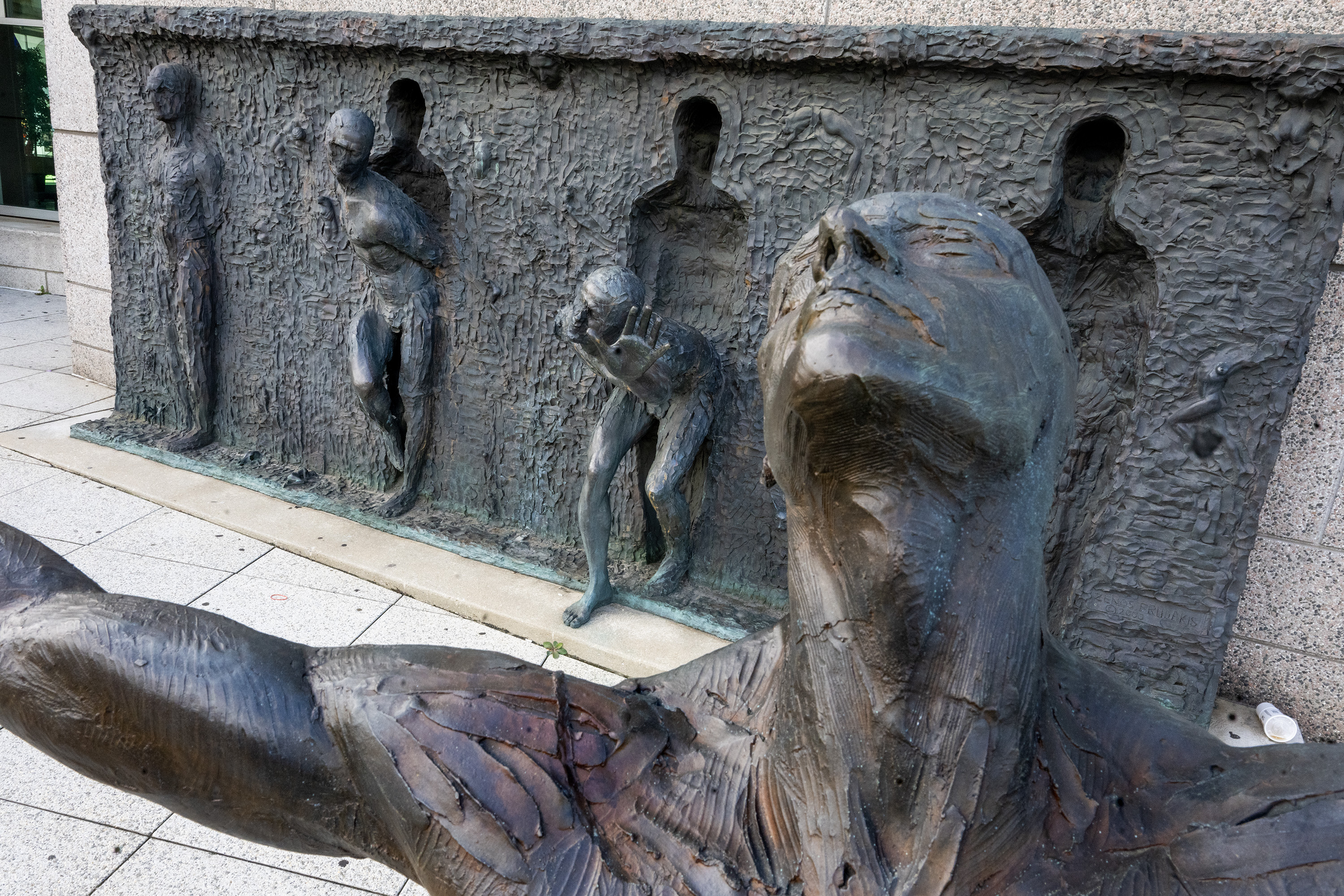
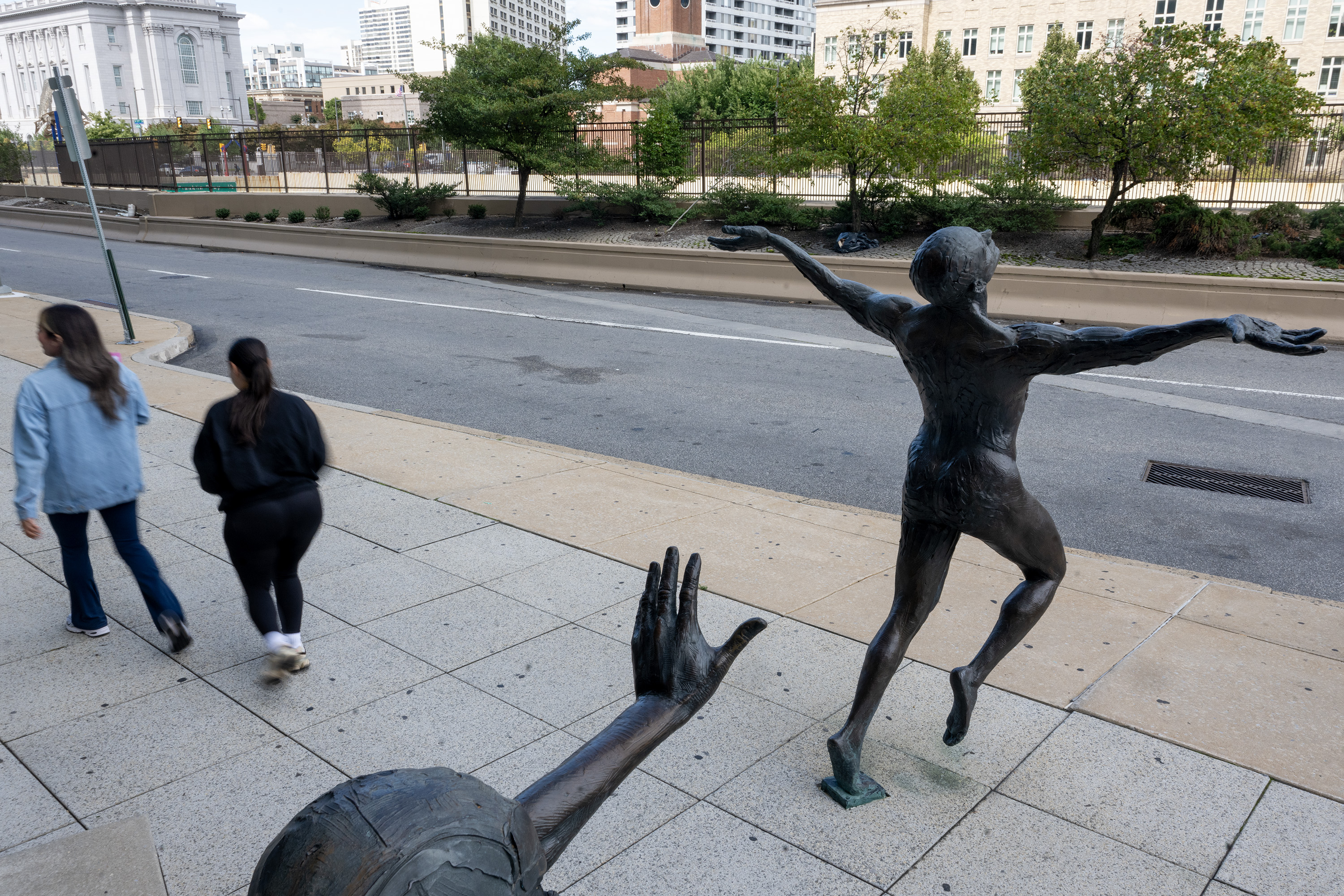
    I’ve always thought the 20-foot bronze piece, on Vine Street near 16th, depicting a human figure breaking free of a wall in four stages, with the final figure on the sidewalk, his arms outstretched and face lifted, makes our city a more interesting place.

    Artist Zenos Frudakis’ “Freedom” sculpture on Vine Street near 16th in Center City. Tom Gralish / Staff Photographer

    “I think on my deathbed, if I’m conscious, I’ll think about that piece,” Frudakis, 75, later told me. “That’s something that I’ve done that I feel good about.”

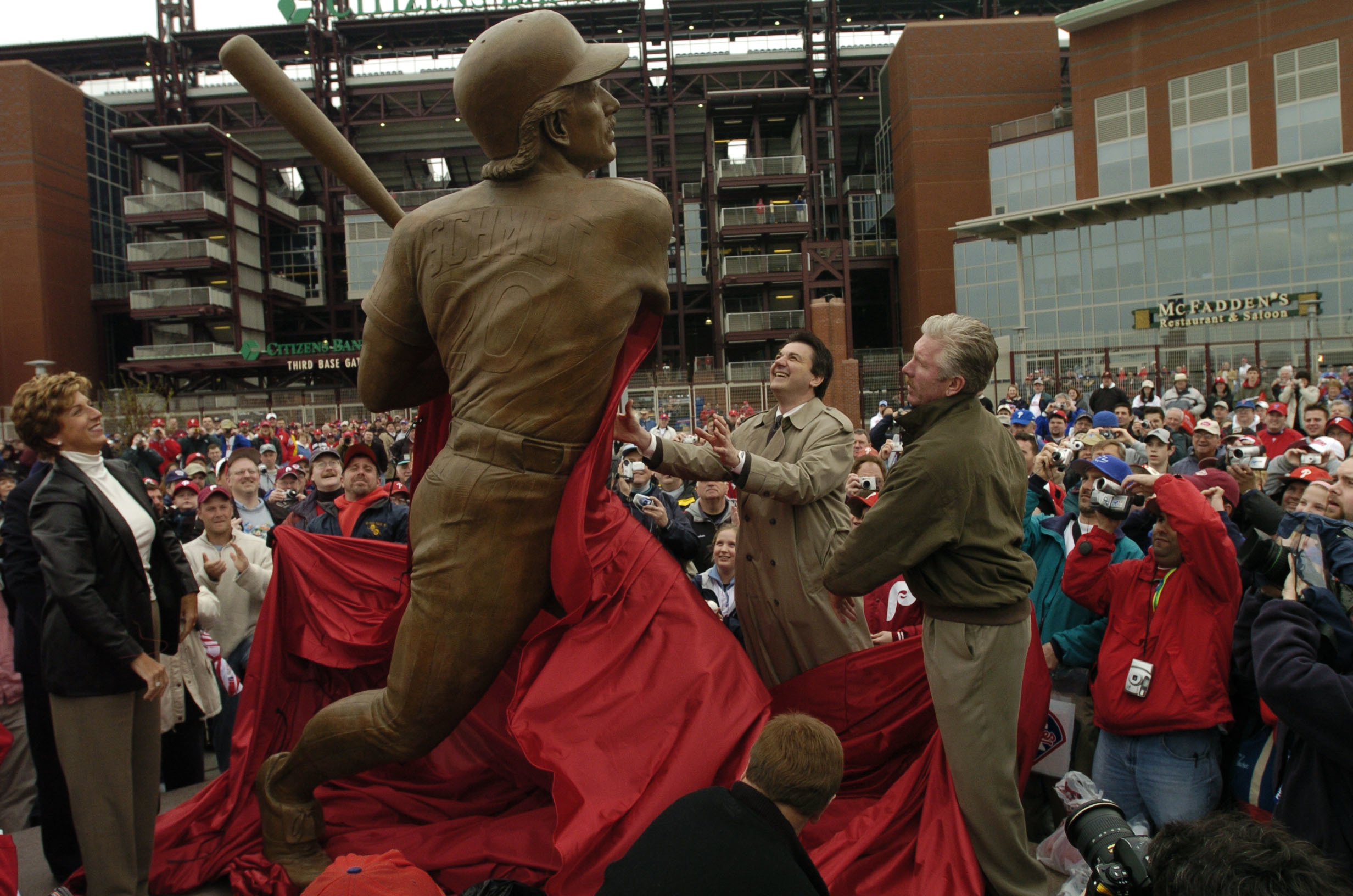
    Frudakis also feels good about sculpting the four 10-foot statues of Phillies players at Citizens Bank Park, including one of Mike Schmidt, who sat for him in his studio. He also has sculptures at the Elmwood Park Zoo, the University of Pennsylvania, Washington Square, and Philadelphia International Airport, along with more than 160 works across the country and around the world.

    In this 2004 file photo, Mike Schmidt helps unveil the Mike Schmidt statue outside of the third base entrance to Citizens Bank Park on opening day. Sculptor Zenos Frudakis, center, was also on hand for the unveiling. Jerry Lodriguss

    It was only after I accepted the invitation and was researching for our interview that I realized Frudakis also created one of the most divisive pieces of public art in Philadelphia history: the statue of highly controversial former mayor and police commissioner Frank Rizzo.

    Flooded with art and light

    When I arrived at Frudakis’ Glenside studio I was met by his business partner and co-owner of his studio, Rosalie Frudakis. She’s also his best friend and ex-wife (it’s not just Frudakis’ sculptures that are complicated).

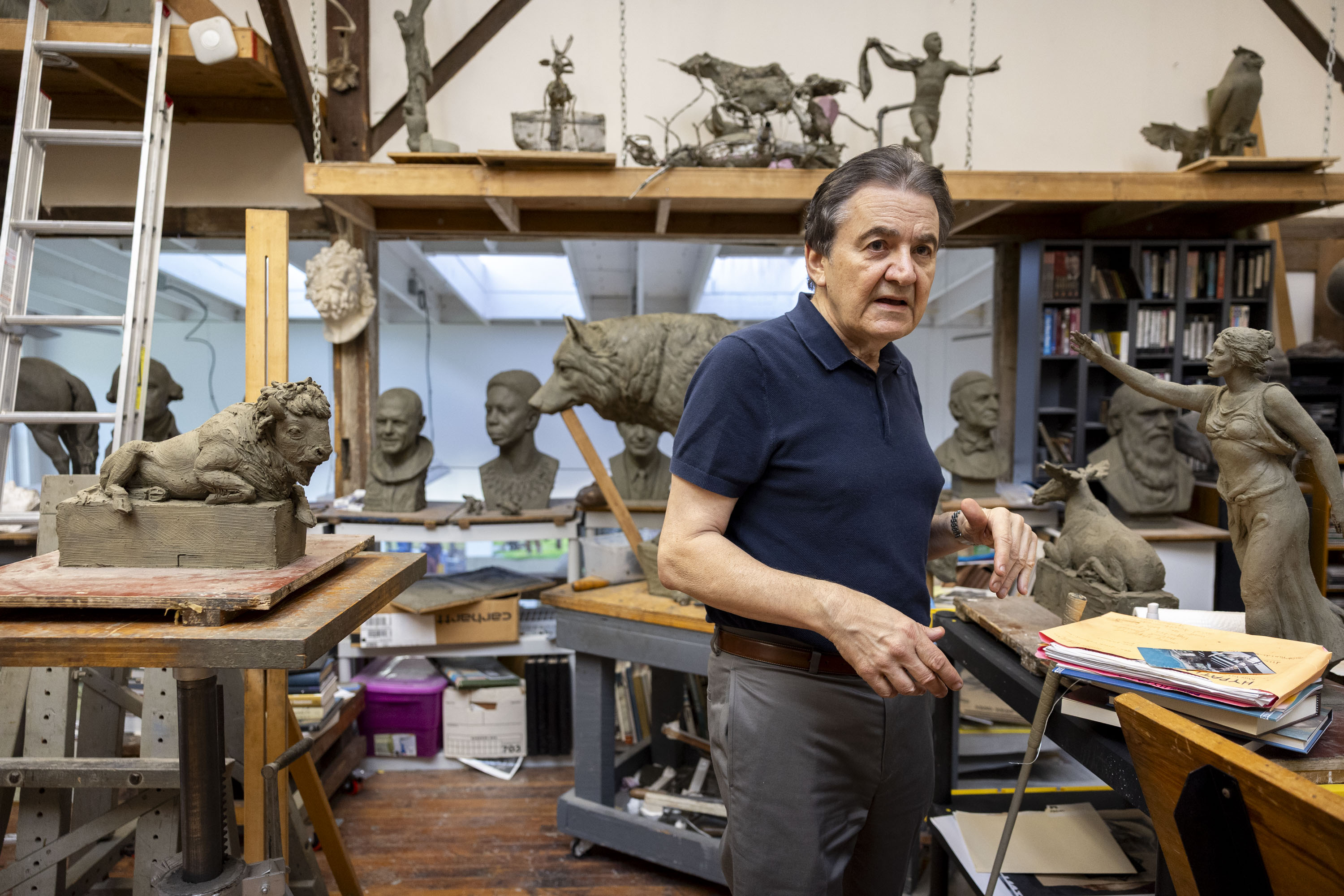
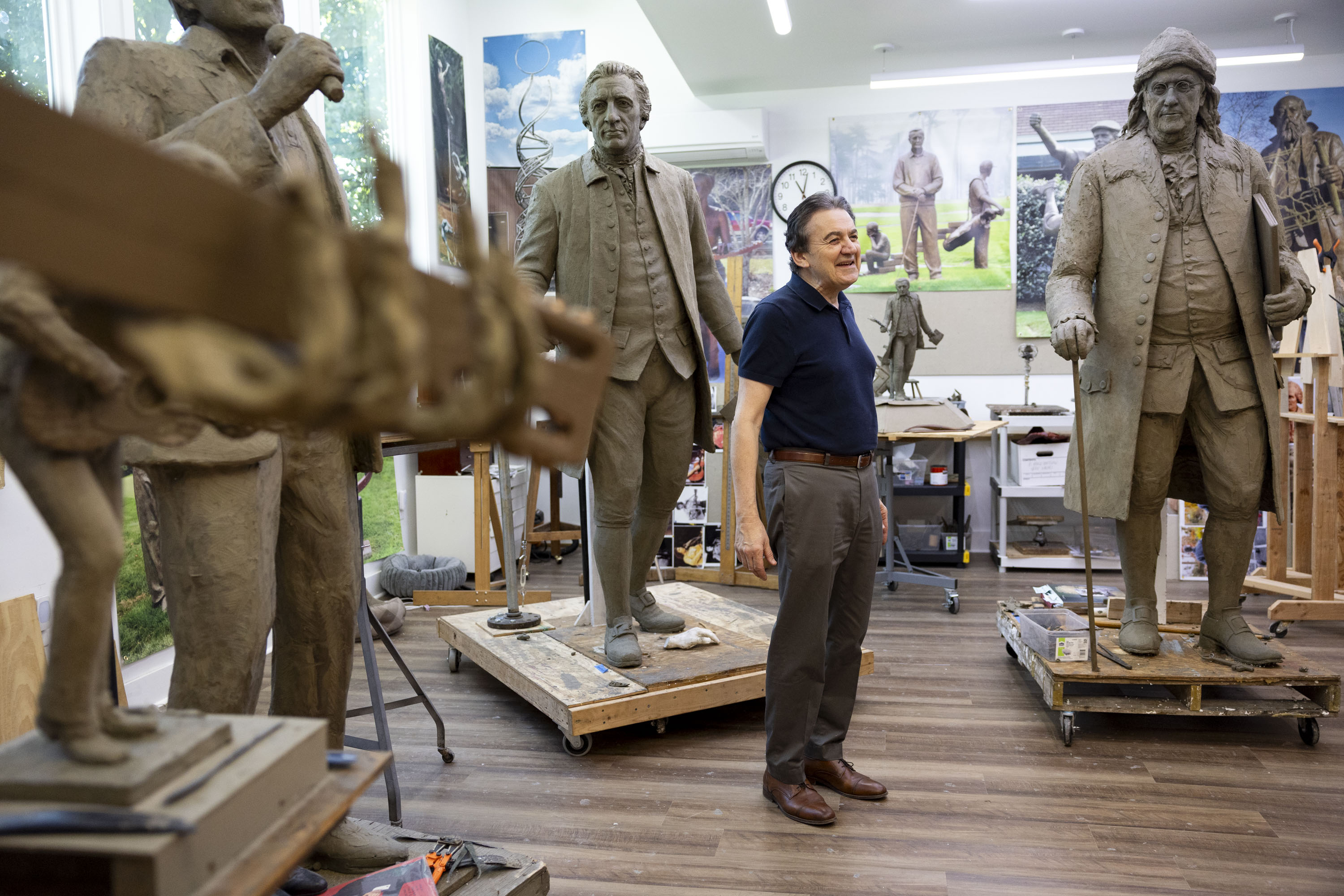
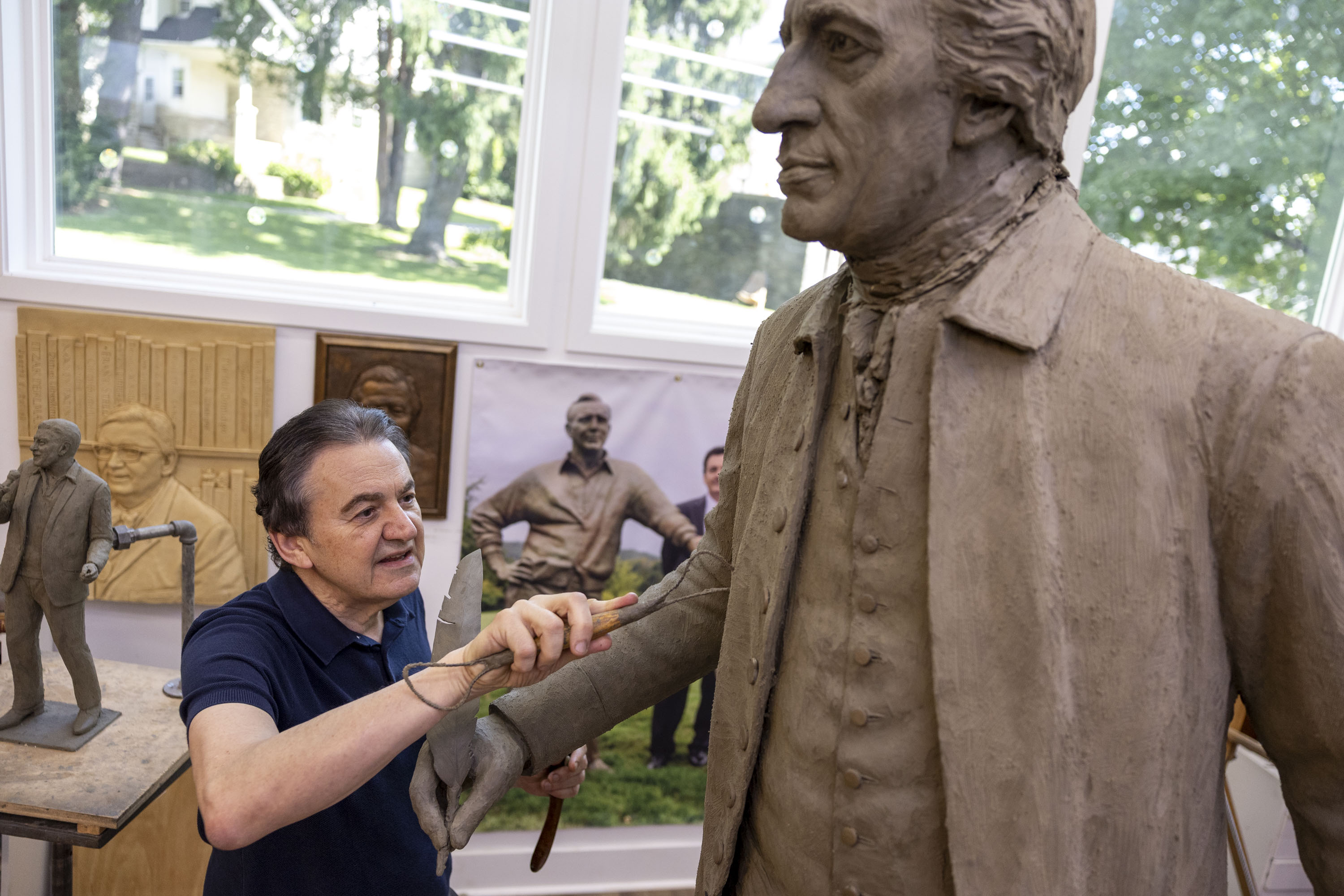
    Entering the 275-year-old renovated carriage house behind the artist’s home, I was captivated by how the space was flooded with art and light. Frudakis’ 7-foot statues of Benjamin Franklin and Thomas Paine, still in clay, dominated the center of the room, along with similarly sized sculptures of musicians Bobby Rydell and Don McLean. Busts of historical figures by Frudakis lined the shelves and poster-size pictures of his many commissions papered the walls.

    Zenos Frudakis in his studio. To the left of Frudakis is a sculpture of Thomas Paine he’s working on and to the right, is his sculpture of Benjamin Franklin. Tyger Williams / Staff Photographer

    Frudakis told me he’s juggling a dozen commissions right now, including two full-size replicas of his Freedom sculpture — destined for where, he won’t say, but he promises it’s exciting. He often works until 2 a.m. in his studio with his cat, Mr. Gray, and hopes that sculpting will lengthen his life. After all, his older half brother — noted sculptor EvAngelos Frudakis, who made The Signer statue at Fifth and Chestnut Streets — lived to be 97 and sculpted right up to the end.

    For three hours, Frudakis and I talked about his childhood growing up in a Greek family in Gary, Ind., where his first sculptures were made with his mother’s bread dough; about his move to Philly in 1972 on a scholarship to the Pennsylvania Academy of the Fine Arts; and about his commitment to reading because, if Leonardo da Vinci spent time studying every day, he figured he should, too.

    “I wasn’t going to let anybody outwork me or have more knowledge if I could … because that’s your resource, that’s where your ideas come from,” he said.

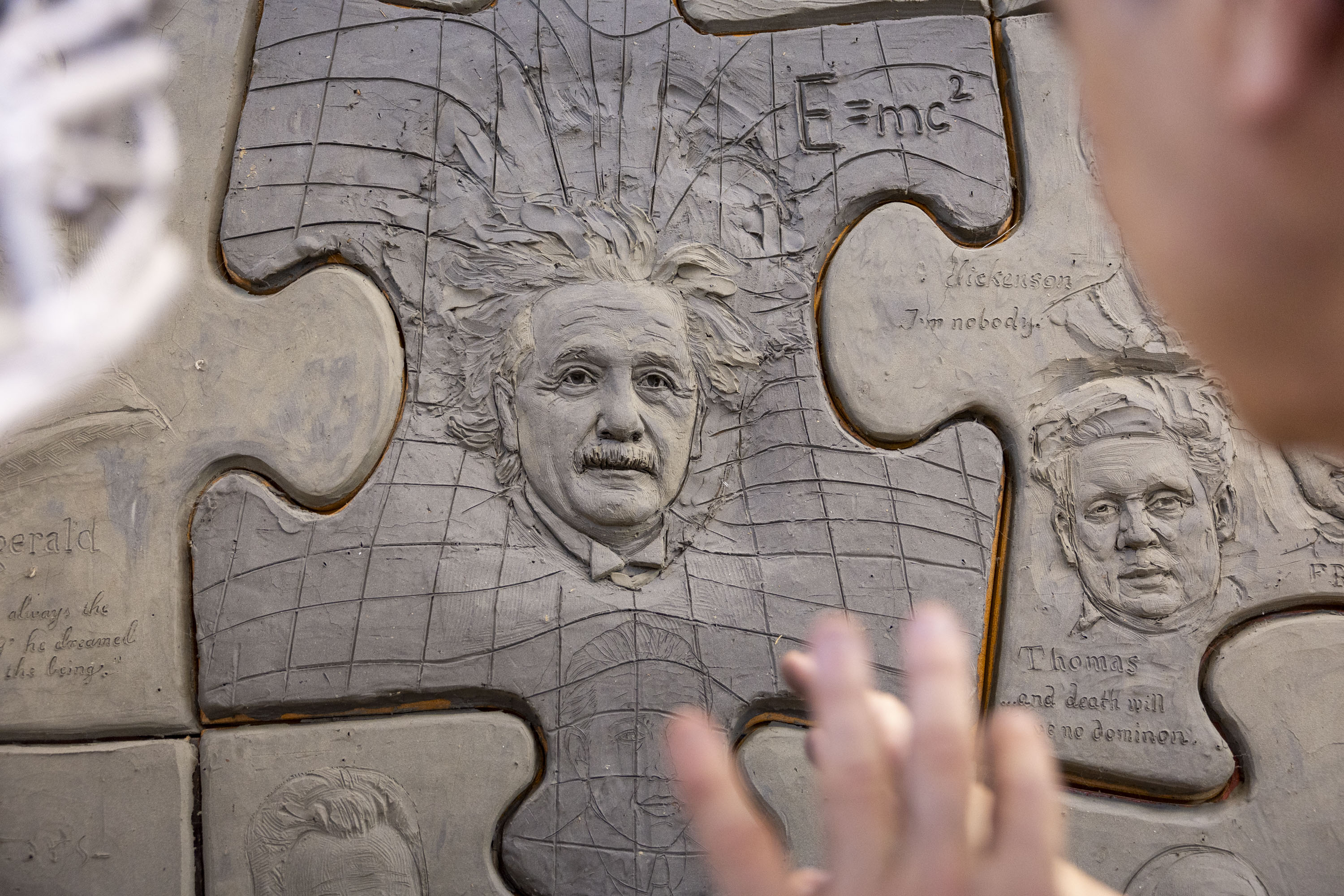
    A puzzle piece featuring Albert Einstein is part of a project that Zenos Frudakis is working on in his Glenside studio.Tyger Williams / Staff Photographer

    As if to make his point, Frudakis quoted more than a dozen authors and philosophers by name during our chat including: Albert Camus, T.S. Eliot, Aristotle, D.H. Lawrence, Friedrich Nietzsche, and Jean-Jacques Rousseau.

    He spoke of science and reason, of being a humanist and of the balance between the emotional and cerebral. He talked about life as a working artist, of the commissions he took and the pieces he created. And he spoke of how history is not set in stone, even for a sculptor.

    “You live long enough and sometimes pieces come down,” he said.

    A pachyderm and people

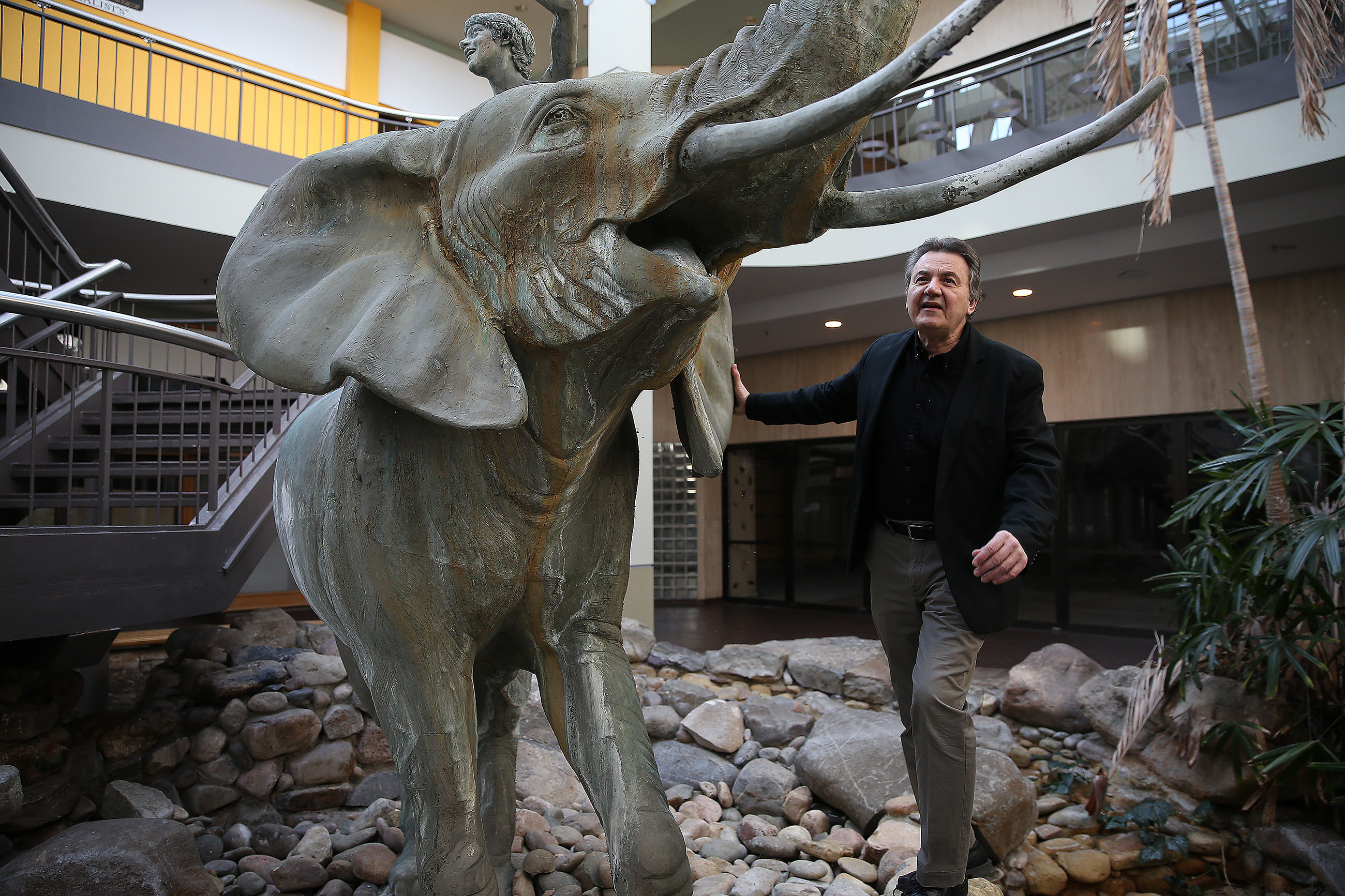
    Frudakis’ first public large-scale commission was in 1982 for a bronze sculpture of a boy riding an elephant in the now-shuttered Burlington Center Mall.

    Sculptor Zenos Frudakis looks over his first commissioned piece at the now-closed Burlington Center Mall in Burlington, N.J., in 2018.DAVID MAIALETTI / Staff Photographer

    In the following years, commissions came for busts of W. Wilson Goode, the city’s first Black mayor, and Joseph E. Coleman, the first Black president of City Council.

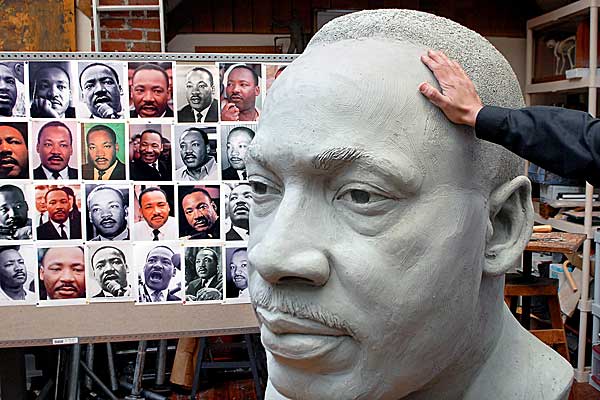
    In 1989, Frudakis did a commissioned bust of the Rev. Dr. Martin Luther King Jr. for the U.S. Embassy in Pretoria, South Africa, and traveled there to present it while the country was still under apartheid. It’s one of many commissioned busts he’s done of King, including a 4-foot bronze one for MLK Park in Chester.

    Sculptor Zenos Frudakis in his Glenside studio with the plasticine bust of the Rev. Dr. Martin Luther King Jr. that was cast in bronze for the city of Chester in 2010.

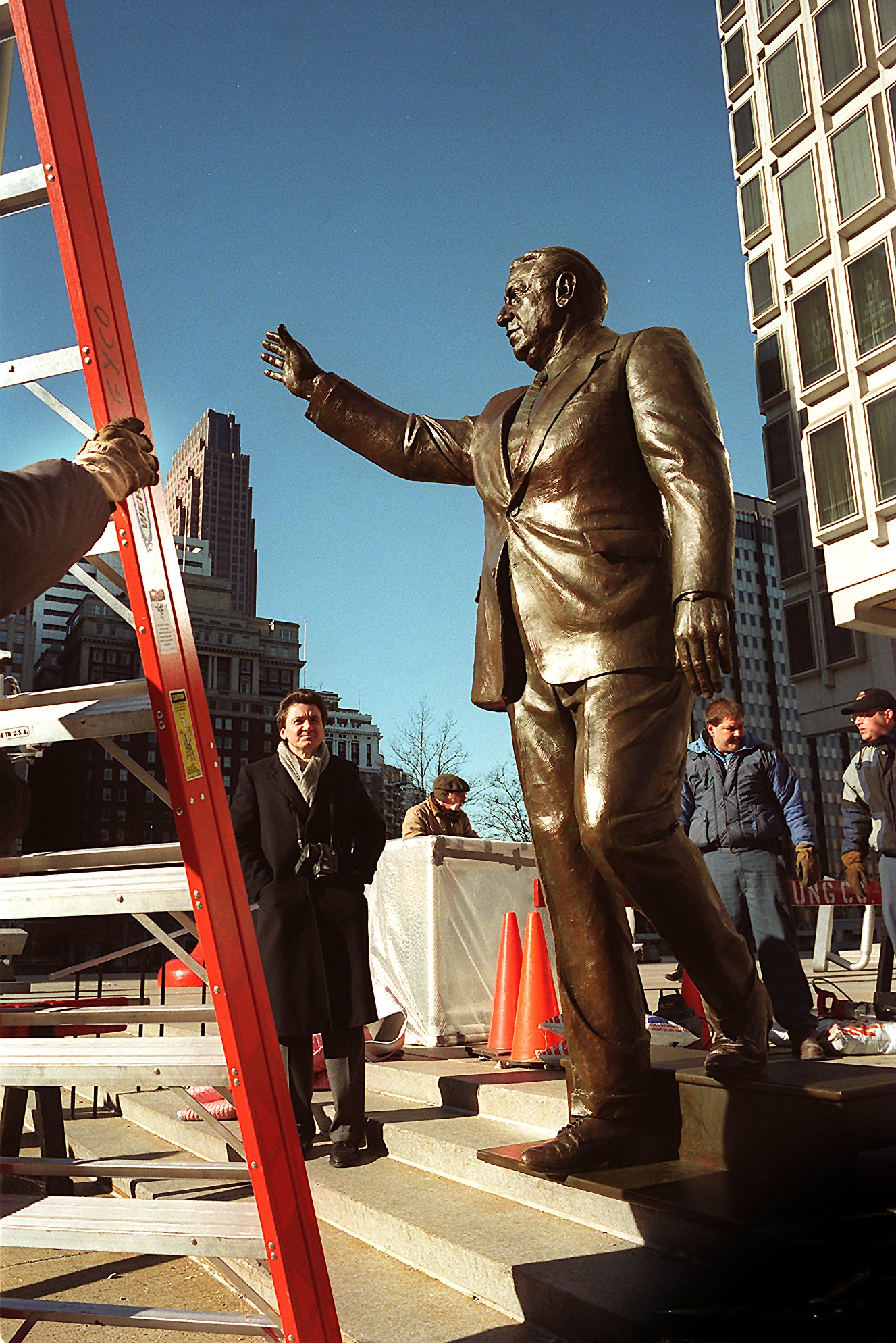
    It wasn’t until 1994 that Frudakis received his first commission for a public, full-body sculpture of a person in a suit, from the Frank L. Rizzo Monument Committee.

    “That’s most commissions that you get, a person who does my kind of work, is men in suits. And the hardest one to get is the first job,” he said.

    ‘I survived another day’

    Rizzo was a polarizing figure as police commissioner (1967-1971) and mayor (1972-1980), and the controversy has only grown since his death in 1991. While some praised his law-and-order style, many see his tenure as an era of unchecked police brutality that targeted members of the Black and LGBTQ+ communities.

    But back in the 1990s, the Philadelphia Art Commission approved a public sculpture of Rizzo, which was paid for by private funds. After some controversy about its placement — backers wanted it in a more prominent place like LOVE Park — it was unveiled in 1999 on the steps of the Municipal Services Building.

    Sculptor Zenos Frudakis, left, looks on as Rizzo’s statue is placed on the steps of the Municipal Services Building ahead of its unveiling in 1999.Eric Mencher

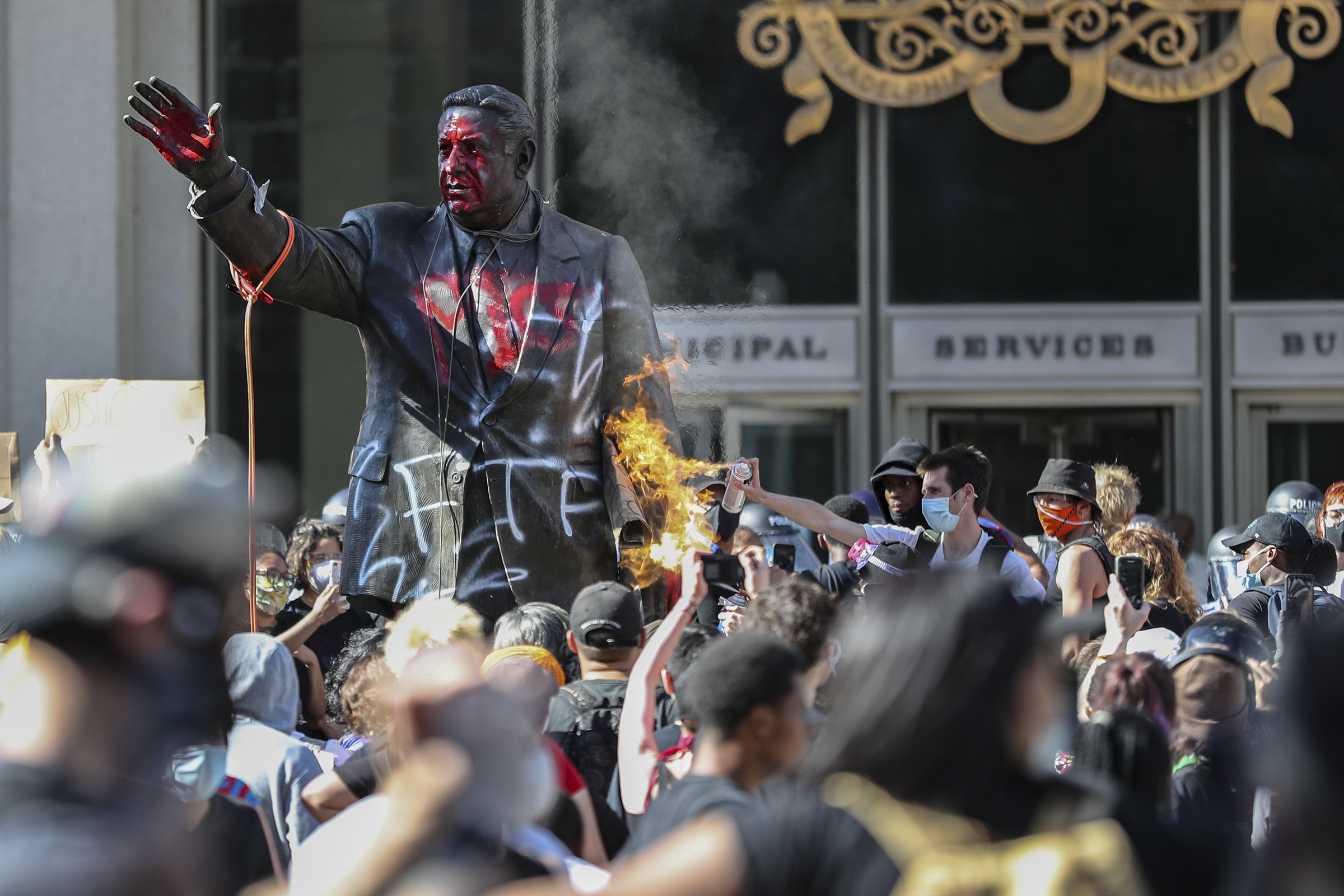
    In 2016, amid the Black Lives Matter movement, a petition began circulating for the statue’s removal and in the following years, it became a lightning rod for civil rights protests and was repeatedly defaced.

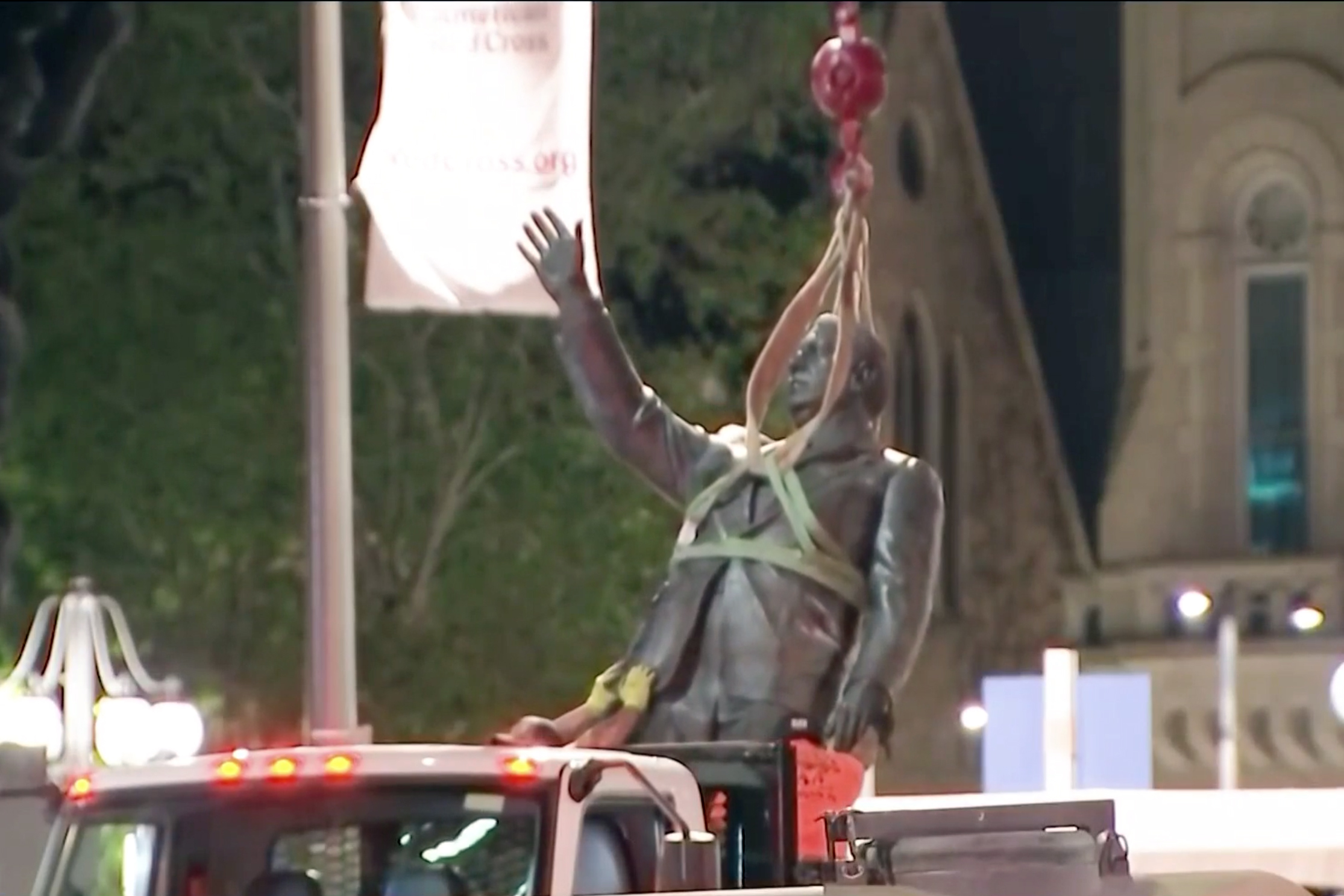
    But it wasn’t until the civil rights protests in the wake of the murder of George Floyd in 2020, when then-Mayor Jim Kenney called the statue “a deplorable monument to racism, bigotry, and police brutality,” that it was removed. It remains in storage.

    Protesters attempt to burn and bring down the Frank Rizzo statue outside of the Municipal Services Building in Center City during a protest against the death of George Floyd in 2020.HEATHER KHALIFA / Staff Photographer

    While I’ve received plenty of hate mail in my career, I can’t imagine having a piece of my work so publicly reviled.

    Throughout our chat, I tried to ask Frudakis indirectly about the statue — were there any sculptures he struggled with? Any lessons he’s learned from his career?

    But he didn’t take the bait.

    Finally, at the end of our interview, I asked him about the Rizzo statue. He wasn’t taken aback and in no way tried to skirt my questions. I felt he answered honestly, even if, at times, he seemed conflicted.

    Frudakis told me that when the work was commissioned, he had second thoughts — he didn’t vote for Rizzo, and has always been concerned with civil rights and social issues. But the statue was going to be built one way or another, he figured, and he needed the work.

    “I got to do a lot of sculptures because I did that [commission],” he said, adding that the Phillies chose him for their ballpark sculptures because of the Rizzo statue.

    “I survived another day as an artist.”

    ‘A weird blip’

    Frudakis says he agrees with the Rizzo statue being removed, for safety reasons. He didn’t want protesters to get hurt trying to topple it. “I made sure I put it in so it couldn’t be pulled out very easily,” he said.

    But if he had his way, he’d have liked the statue to have remained up, placed next to a statue of a prominent Philly civil rights leader, like the late Rev. Leon Sullivan, to promote education and dialogue.

    “If you take it down, they’re not gonna learn anything. People who love him will still love him. People who hate him will still hate him,” he said.

    The statue of former Philadelphia Mayor Rizzo is removed from the Municipal Services Building in 2020. Courtesy NBC10

    I came to Philly in 2007, and I didn’t really learn about what happened under Rizzo’s tenure until the protests ramped up around the statue. I agree with its removal, but I have to wonder if I would’ve ever learned so much about that dark chapter in Philly’s history if the statue was never there at all.

    One of the last things Frudakis said to me before I left was: “I’ve tried to make up for the Rizzo statue.”

    Should he have to? Should I feel torn now about my love for his other work? I called up Conrad Benner, founder of the Streets Dept, a local media organization focused on public art. I remembered the popular videos he did in 2024 with Frudakis at the Freedom sculpture and wanted to get his thoughts on the Rizzo statue too.

    “It’s this really weird blip in his career. It seems like everything he’s done since then and probably before then supported maybe a clearer vision of what he’d like to see in the world,” Benner said. “My impression was he was young, he made a decision, and then his career grew and he got more opportunity to have more control over his work.”

    Benner pointed out that it’s very uncommon to create bronze monuments to people who’ve lived recently and that Philadelphia doesn’t have any other statues of its mayors.

    “You might think the monuments in your city and country are some representation of true history when really they are the culmination of powerful and cultural interests,” Benner said.

    “But we get to choose. Every generation gets to choose. We don’t have to inherit anything, whether that be a political dynasty, tax policy, or a monument. Just because they’re on a podium doesn’t mean we can’t change them.”

    ‘A one-man show’

    A year after the Rizzo statue was unveiled, Frudakis’ Freedom sculpture was installed on the exterior of what was then GlaxoSmithKline and is now the Philadelphia Performing Arts Charter School.

    It was a piece born of his own heart and mind. It was the kind of work that taking commissions for other less passionate projects made possible.

    “I had to do something more philosophical and poetic for myself,” Frudakis said.

    When I thought about our conversation later, I couldn’t help but wonder if in some ways, for Frudakis, the figure in Freedom symbolized his own desire to break free of the art that pays the bills for the art that fills the soul.

    Zenos Frudakis’ “Freedom” sculpture on Vine Street near 16th in Center City. Tom Gralish / Staff Photographer

    “It’s not an accident that my favorite piece, my most popular piece by far, is the one that I got the most freedom to do,” he said.

    Frudakis sculpted Freedom on a small scale, but he had to get the 20-foot-long version commissioned by GlaxoSmithKline in order to cast it in bronze. When he scaled it up, Frudakis decided to get weird with it.

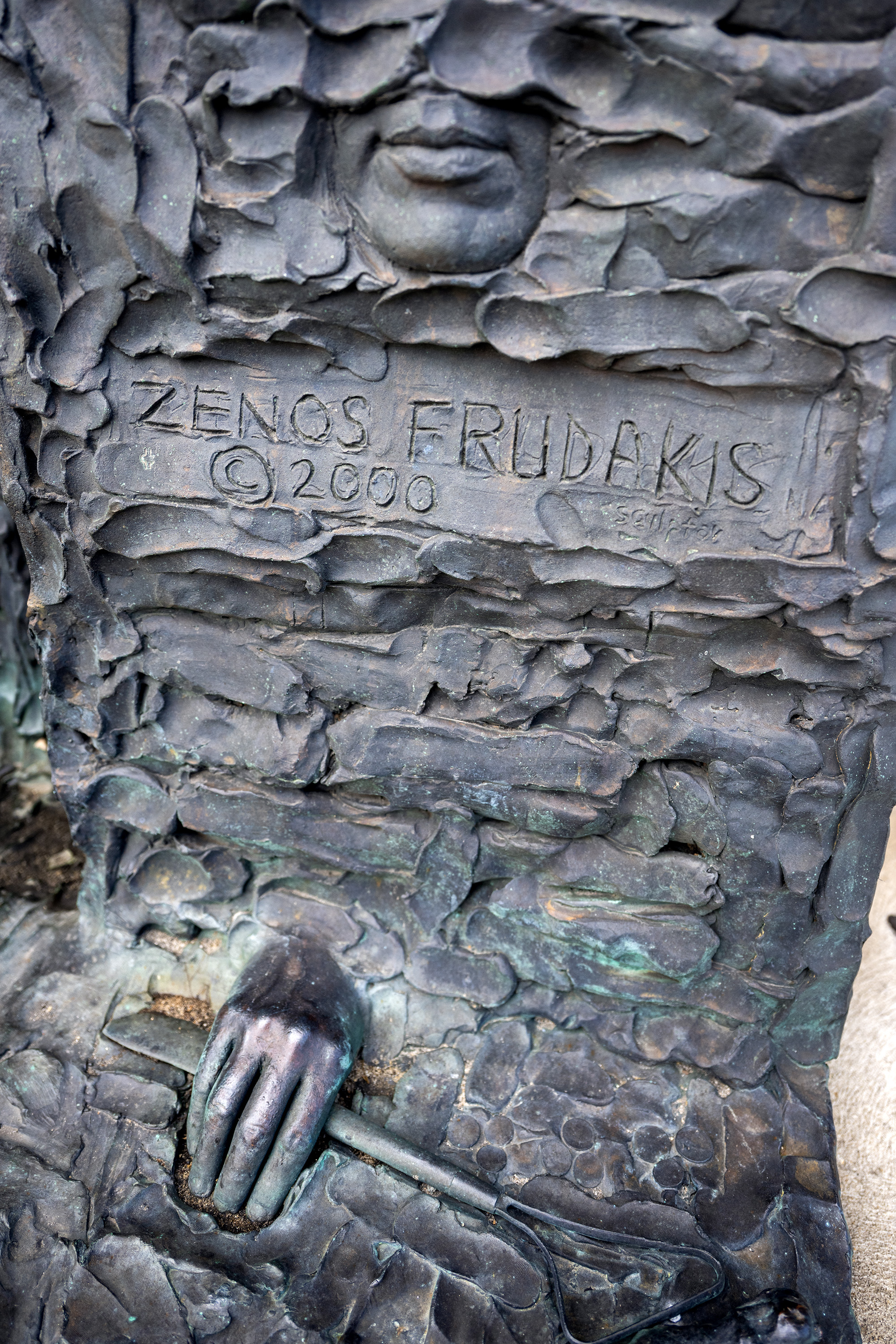
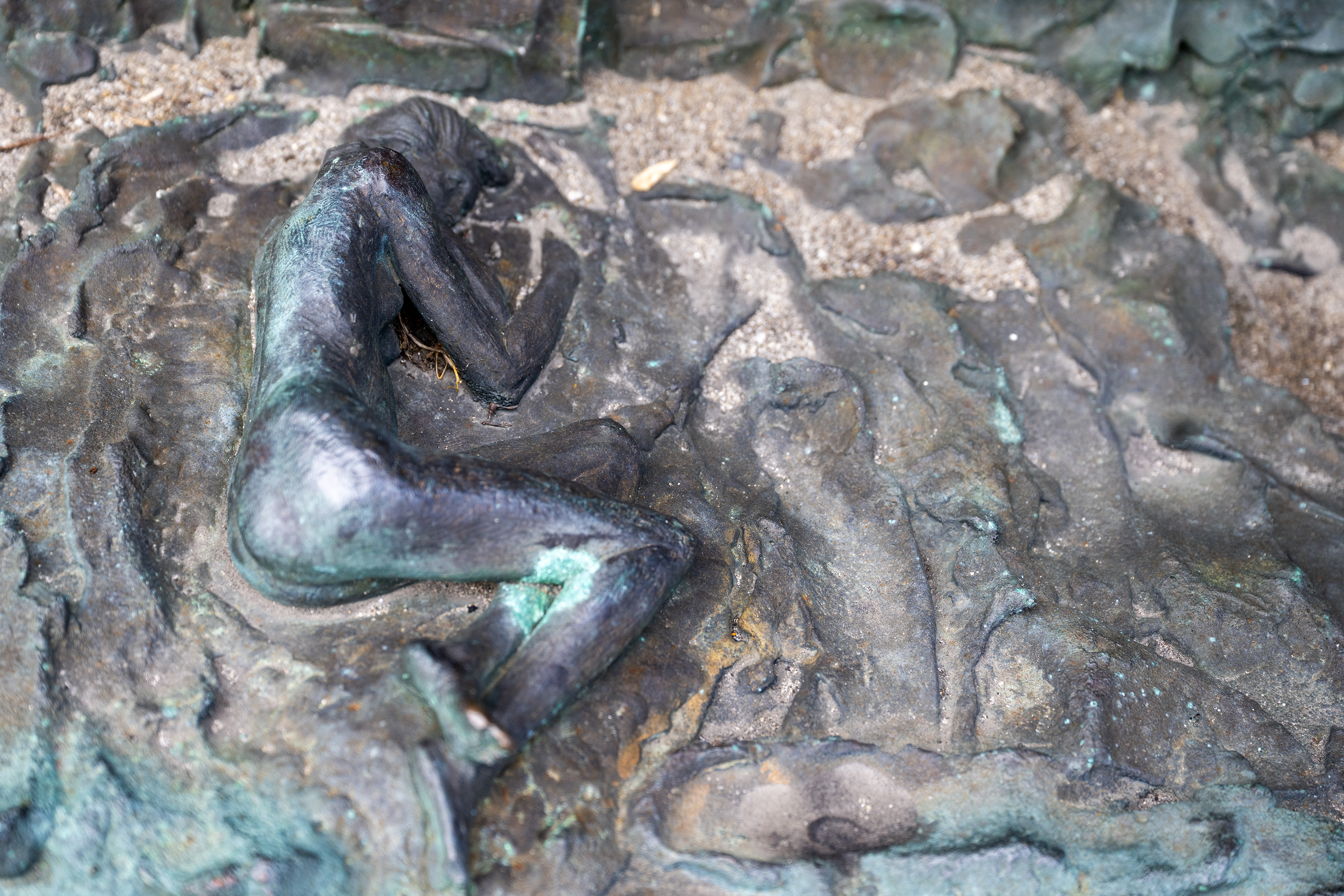
    Details in Zenos Frudakis’ “Freedom” sculpture include part of a face and a cast of the artist’s hand with a sculpting tool. Tom Gralish / Staff Photographer

    “Since I was having trouble getting in a gallery in Philadelphia, [I decided] that I would put about 20 pieces of mine in the background so I’d have a one-man show that was ongoing,” he said.

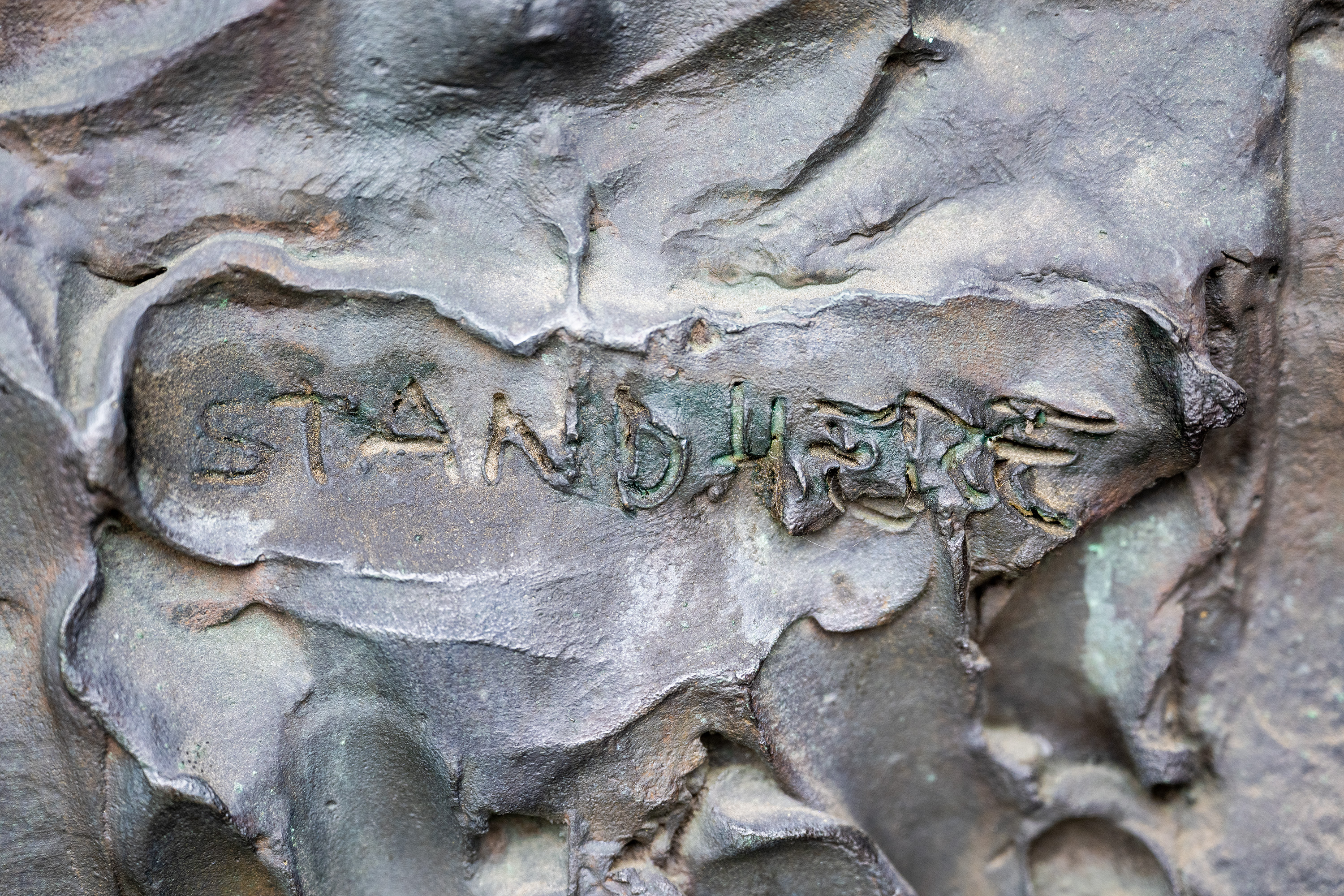
    Among the many Easter eggs Frudakis hid within Freedom are a self-portrait, a cast of his hands with a sculpting tool, and a sculpture of his cat’s head. One of my favorite details is carved into the empty space where the final figure has broken free from the wall. There, the words STAND HERE are written, inviting you to become a part of the piece.

    The words “STAND HERE” appear in an empty space in Zenos Frudakis’ “Freedom” sculpture, inviting the viewer to become a part of the piece. Tom Gralish / Staff Photographer

    Photos of Freedom have appeared in self-help and scholarly books and it has been cited as one of the most fascinating sculptures in the world by Architectural Digest.

    “It’s the most personal sculpture I’ve ever done and it’s the most universal,” Frudakis said.

    ‘It was creating me’

    Of course there are other pieces Frudakis is proud of — his sculpture for the National Air Force Memorial Honor Guard in Washington, D.C.; a statue of Nina Simone in Tyrone, N.C., that includes some of her ashes; and a sculpture of Clarence Darrow at the Tennessee courthouse where the Scopes Monkey Trial was held.

    The statues of Franklin and Paine he’s working on now are intended for the U.S. Capitol building and the National Mall, respectively. If pending legislation to approve their placement is ever passed (both were first proposed years ago), the bronze castings will be paid for with private funds, Frudakis said.

    Artist Zenos Frudakis in his studio working on his sculpture of Thomas Paine. Tyger Williams / Staff Photographer

    With an oeuvre of work behind him and his larger-than-life-size bronze figures fetching $400,000 or more today, Frudakis now has the freedom to do statues and commissions he truly believes in.

    Frudakis still has sculptures he wants to create for himself too. He dreams of doing one of Hypatia, a female scientist from ancient Greece who was “murdered by religious zealots who tore her whole body apart.” He’s got busts of Amelia Earhart in his studio that he’d love to see in bronze someday. And like he did with Freedom, Frudakis wants to tackle another big human concept through his work — time.

    One of the subtle details in Zenos Frudakis’ “Freedom” sculpture. Tom Gralish / Staff Photographer

    Just like every story I’ve ever written forged me into the journalist I am today, even those that make me cringe in hindsight (and there are plenty), every sculpture Frudakis created made him the artist he is now, including the Rizzo statue.

    But I don’t think any of his pieces has had a more profound effect on the landscape of Philadelphia, or people around the world, than the one that had the most profound effect on him as well.

    “I was a different person when I finished my Freedom sculpture. I wasn’t just creating it, it was creating me,” he said.

    The final figure breaks free in Zenos’ Frudakis “Freedom” sculpture. Tom Gralish / Staff Photographer
  • What’s in a pepper pot? Black chefs gather to celebrate, revive, and update Philadelphia’s signature soup.

    What’s in a pepper pot? Black chefs gather to celebrate, revive, and update Philadelphia’s signature soup.

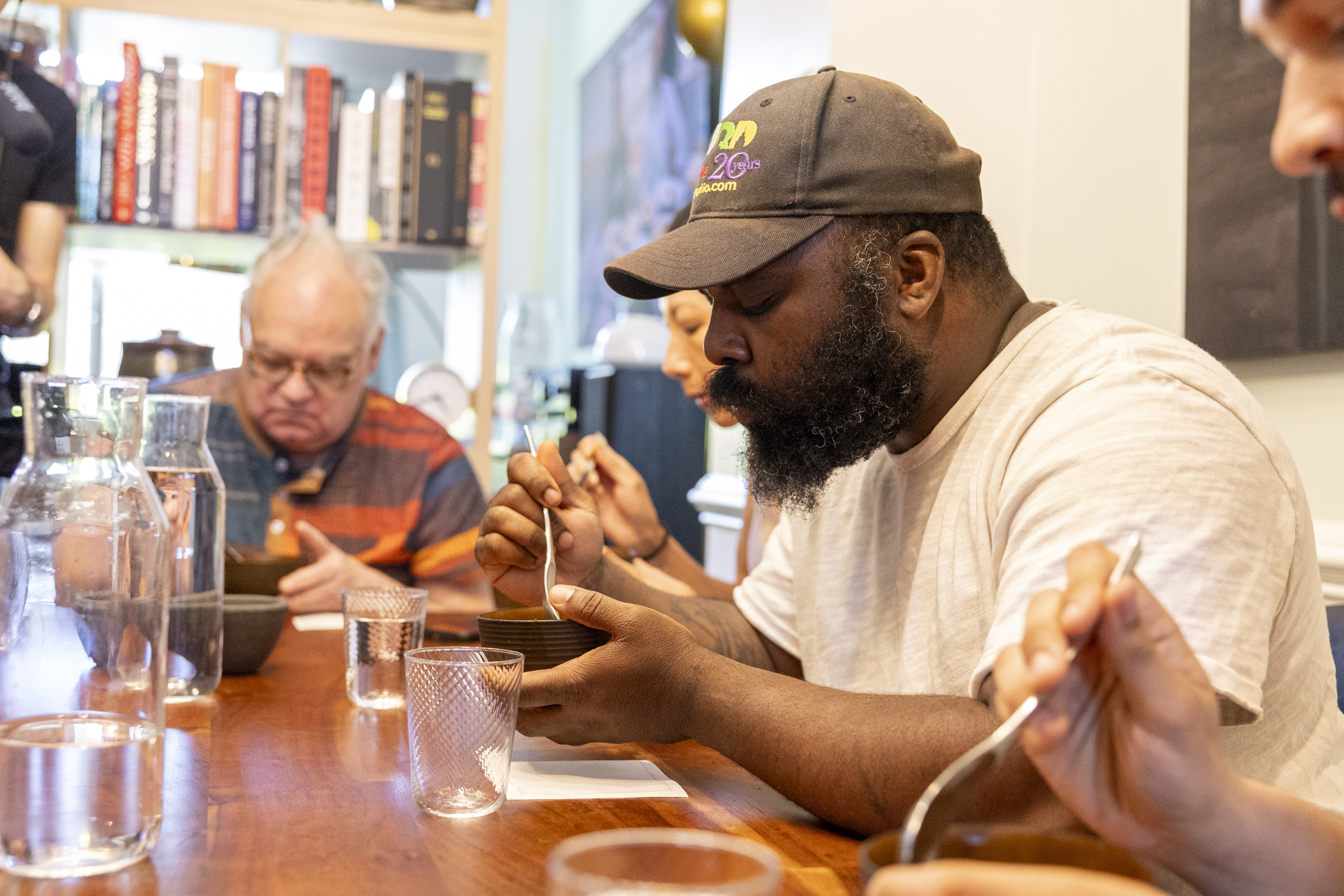
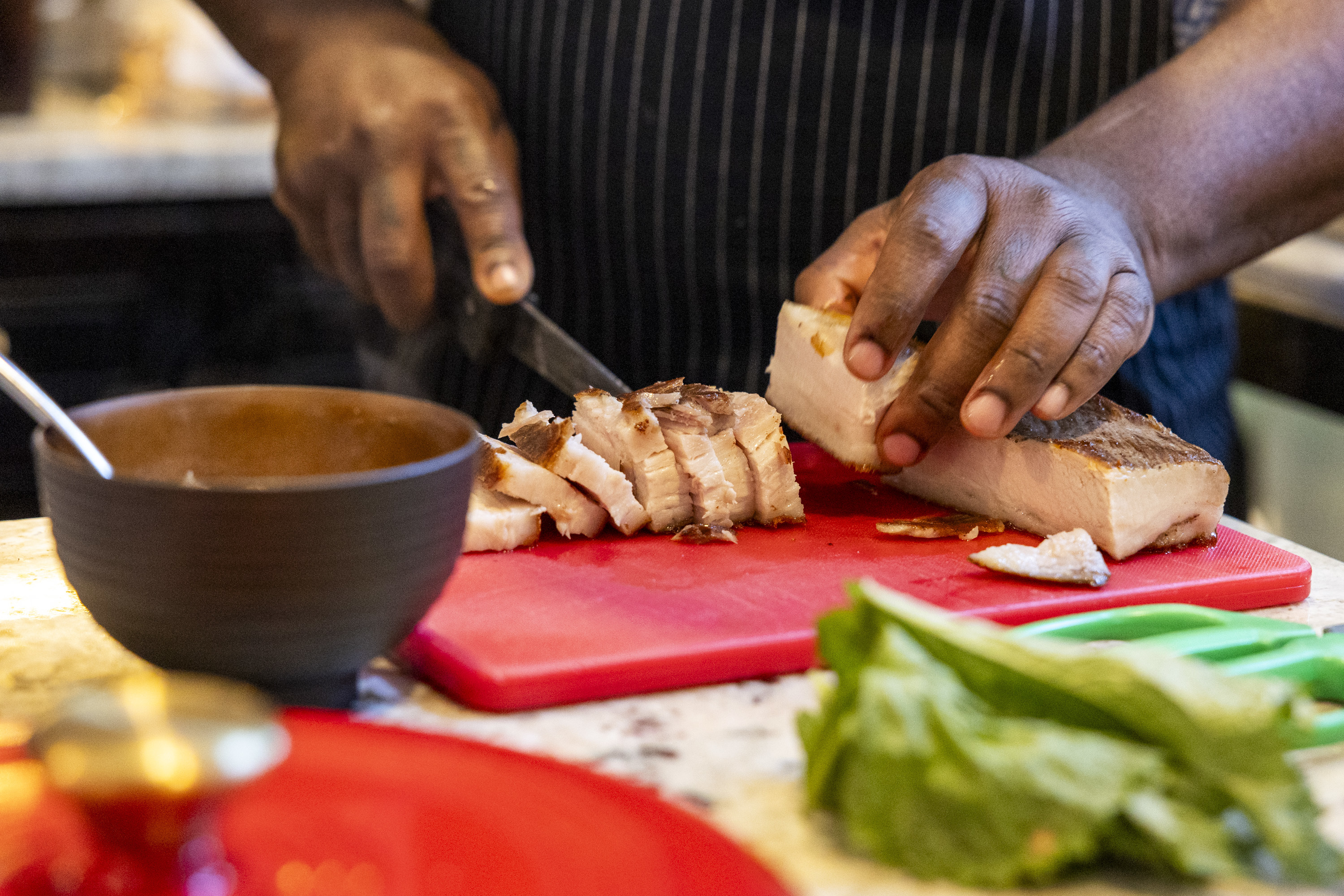
    The parade of soup bowls that perfumed the air of chef Shola Olunloyo’s South Philadelphia home kitchen with spice and heady broth could not have been more different. A buttery brown stew enriched with veal and bacon. An ethereal orange purée of squash that harbored habanero heat and delicate shellfish. A modernist collage of deconstructed elements — oxtail, pork belly, and frilly tripe dabbed with a gingery green mince of Caribbean herbs — artfully posed over a shallow splash of dark broth. But each one answered to the same name: pepper pot.

    “Pepper pot! Smoking hot!”

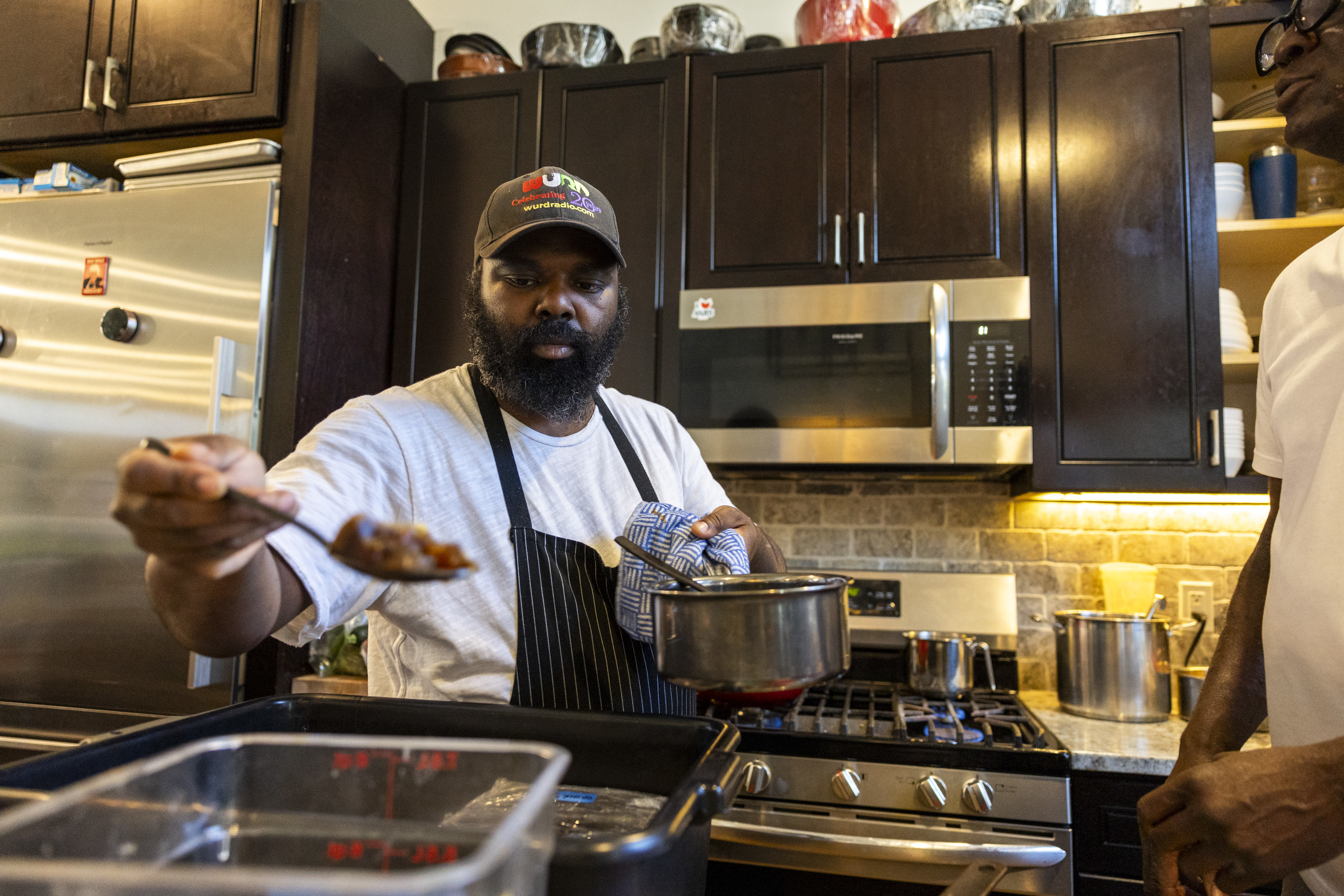
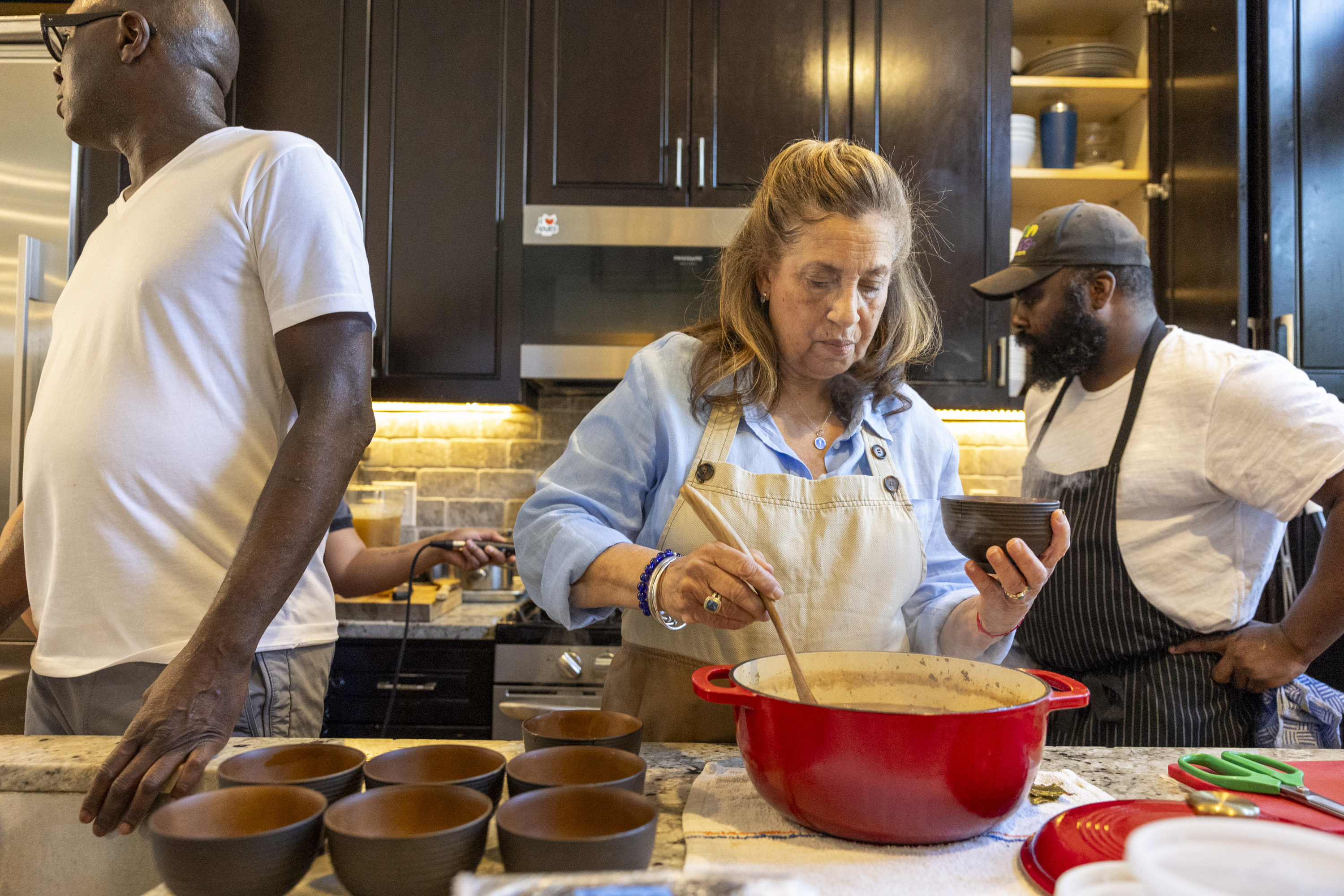
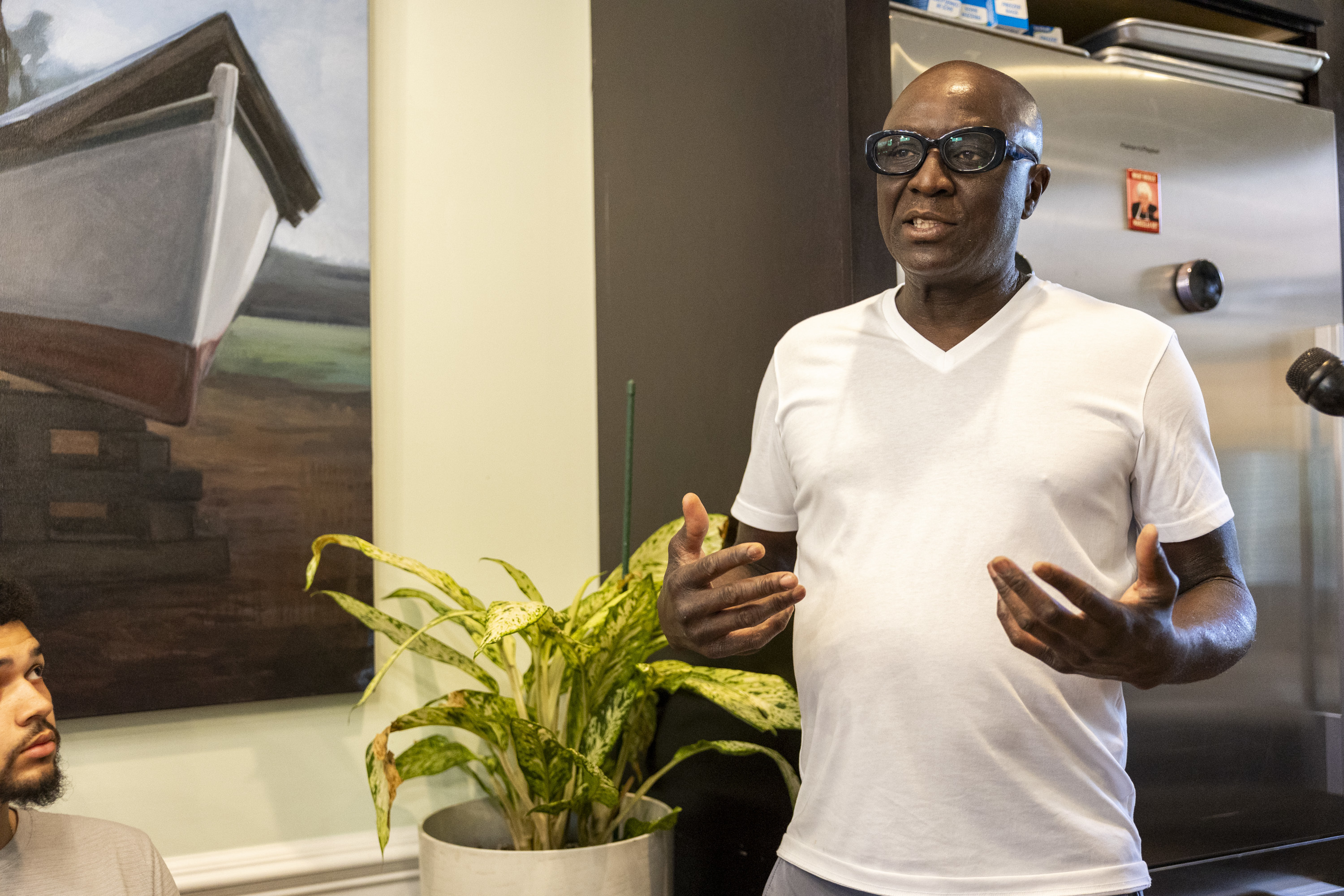
    Chef Angie Brown prepares to serve her version of pepper pot for fellow chefs to try.Tyger Williams / Staff Photographer

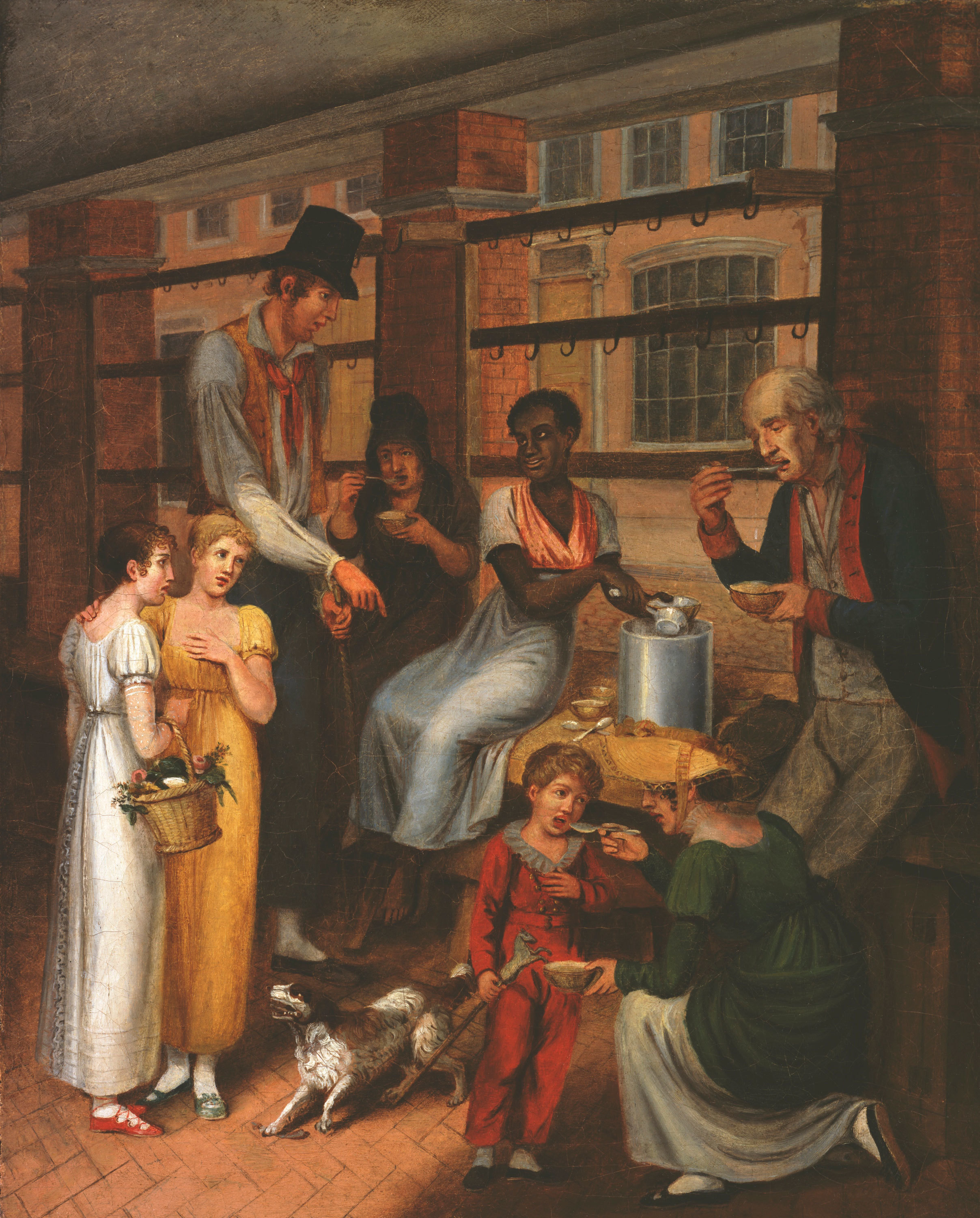
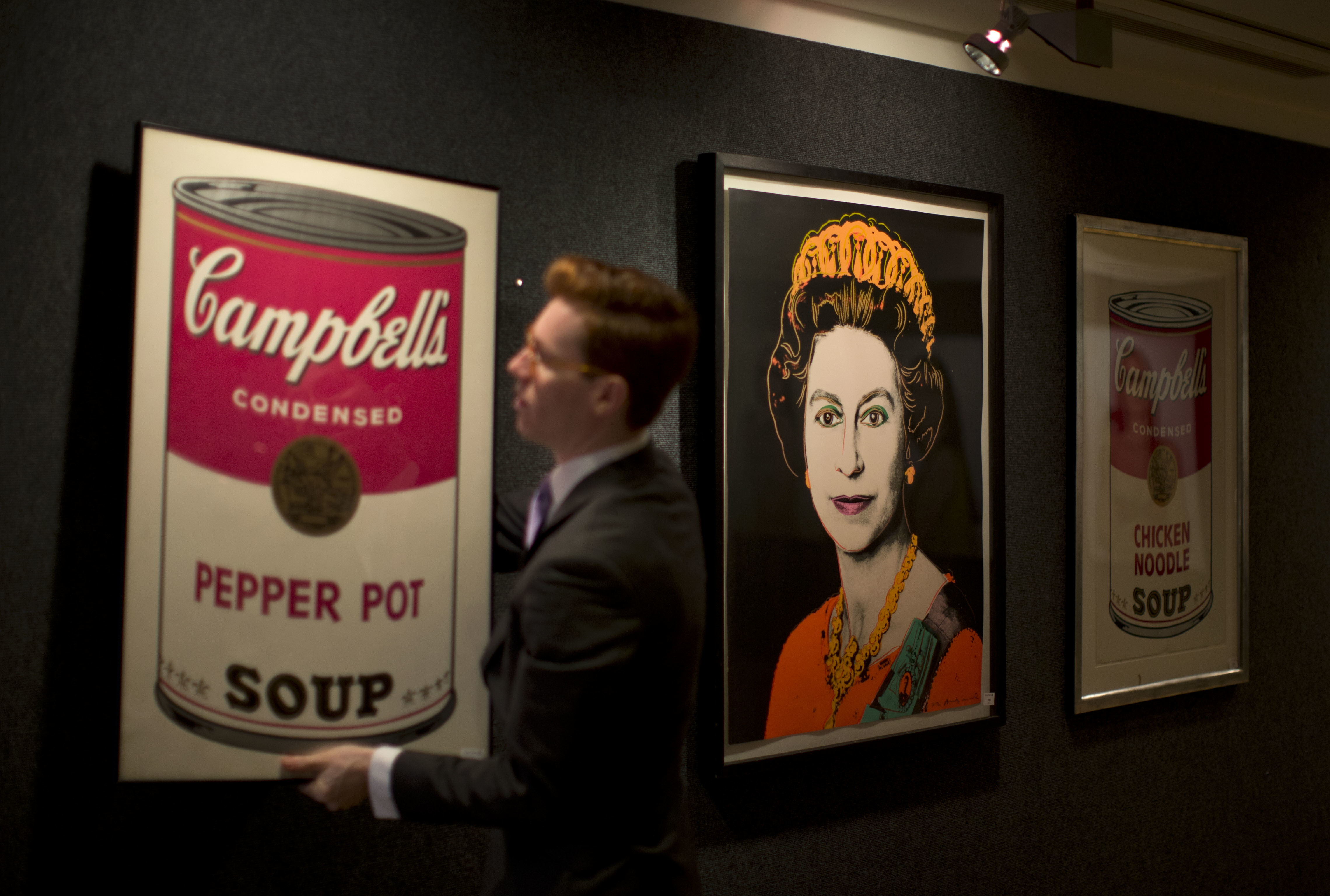
    So went the chant of the colonial-era vendors whose pepper pot cauldrons simmered on street corners across Philadelphia, America’s first capital city, with a “pleasant feast” made from an improvised variety of inexpensive cuts of meats, often including ox foot, tripe, and “a great portion of spice.” This iconic soup, largely produced by Black women from the West Indies, was immortalized as a city staple in an early 19th-century booklet chronicling the street cries of Philadelphia, a painting of an 1811 market scene painting by John Lewis Krimmel that hangs in the Philadelphia Museum of Art, and, more than 150 years later, Andy Warhol’s Pop Art series of Campbell’s soup can prints.

    “Pepper-Pot: A Scene in the Philadelphia Market” by John Lewis Krimmel depicts Philadelphians of varying classes enjoying the soup. Philadelphia Museum of Art: 125th Anniversary Acquisition. Gift of Mr. and Mrs. Edward B. Leisenring, Jr., 2001-196-1

    Over time, pepper pot evolved into a broad diversity of styles, hinted at by the starkly different interpretations on the table at Olunloyo’s home. Olunloyo, a culinary consultant and the chef of Studio Kitchen, had gathered a small group of Black chefs there for a pepper pot summit — to taste and compare recipes, reflect on its legacy, and, perhaps, spark a local resurgence.

    “I was excited to learn that Philadelphia had a distinct dish that was not just cheesesteaks or pretzels, and to be a part of understanding what cemented Philadelphia’s culinary reputation,” says chef Omar Tate, who served us a test run of a pepper pot he plans to add to the menu at Honeysuckle this fall.

    Chef Chad Williams, who was unable to attend the June gathering, is planning to serve a version of pepper pot on the tasting menu soon at his Michelin-starred Friday Saturday Sunday. He’s starting his process with the flavor memories of a pepper pot his grandpa Chester once made in West Philadelphia, along with other variations Williams cooked earlier in his career, then “working our way backwards.”

    “We’ve got to put it on restaurant menus again because if we don’t cook it, it dies,” says Angela Brown, a private chef and former culinary director for Rex at the Royal, who led off the lunchtime event with a hearty rendition of the dish she learned from her great-grandmother. “This new generation of cooks doesn’t know anything about pepper pot, so it’s nice to bring it back.” (The meal was also documented for radio by NPR reporter Justin Kramon for WHYY’s The Pulse.)

    Andy Warhol’s 1968 color screenprint “Pepper Pot.”Matt Dunham

    The rise and fall of pepper pot

    The effort can’t come soon enough. In 2026, pepper pot as we once knew it has become nearly extinct. Campbell’s stopped producing it in 2010, coinciding with a dwindling appetite for tripe. History-minded chef Adam Diltz still produces it occasionally at Elwood. There have been efforts by local food historians and home cooks to keep its memory alive. The last local restaurant to regularly serve pepper pot was City Tavern (although chef Walter Staib’s West Indies version was without tripe), before the replica of the historic tavern closed in 2020.

    The timing of this pepper pot party is not a coincidence. Reflections on history have been at the forefront of this year’s celebration of America’s 250th anniversary. Food historian William Woys Weaver, among the tasters at Olunloyo’s house, argues in his forthcoming Pepperpot City that no proto-Philadephia dish may be as meaningful — or elusive — to grasp.

    Weaver unearths a stunning array of pepper pots in the book, due out in October, from the humblest market-stall versions to those ladled from the gilded tureens of society’s hautest tables: There are myriad variations of meats, seafood, seasonal produce, dumplings, and numerous cultural influences. The breadth of iterations makes it impossible to define Philadelphia’s pepper pot as one specific thing, aside from the inclusion of tripe (usually, but not always) and the presence of spice. It was a way of life and cooking more than a particular bowl of soup.

    “What’s pepper pot? It’s whatever you had there right in front of you,” says Weaver. “These chefs did not live by written recipes, but oral traditions they learned from a mentor. That’s why there were so many different kinds. Each person cooked from their soul.”

    The ever-morphing nature of the soup became emblematic of colonial Philadelphia as a focal point for the New World melting pot, he says, where the confluence of Black, white, and Creole foodways began to define this newly founded country’s culinary personality.

    “The City of Brotherly Love helped create a singular identity that helped shape what we know today as American cuisine,” writes Weaver. “Especially when winnowed through the hands of Black cooks.”

    Chef Omar Tate served a test run of a pepper pot he plans to add to the menu at Honeysuckle this fall.Tyger Williams / Staff Photographer

    Diverse foodways, all in one dish

    Philadelphia’s pepper pot shares Afro-Caribbean roots with a number of soups that go by the same name in the Caribbean and South America, although they’re distinctly different, since many are flavored with the caramelized cassava juice known as cassareep. It is also cousins with the callaloos and pepper soups of West Africa, as well as New Orleans gumbo and Haitian soup joumou. Pepper pot reflects Philadelphia’s unique status as a haven for free Black communities who had access to the tropical foodstuffs — allspice, habaneros, sea turtles, and pumpkins — arriving at its vibrant port on ships that also supplied the West Indies slave trade.

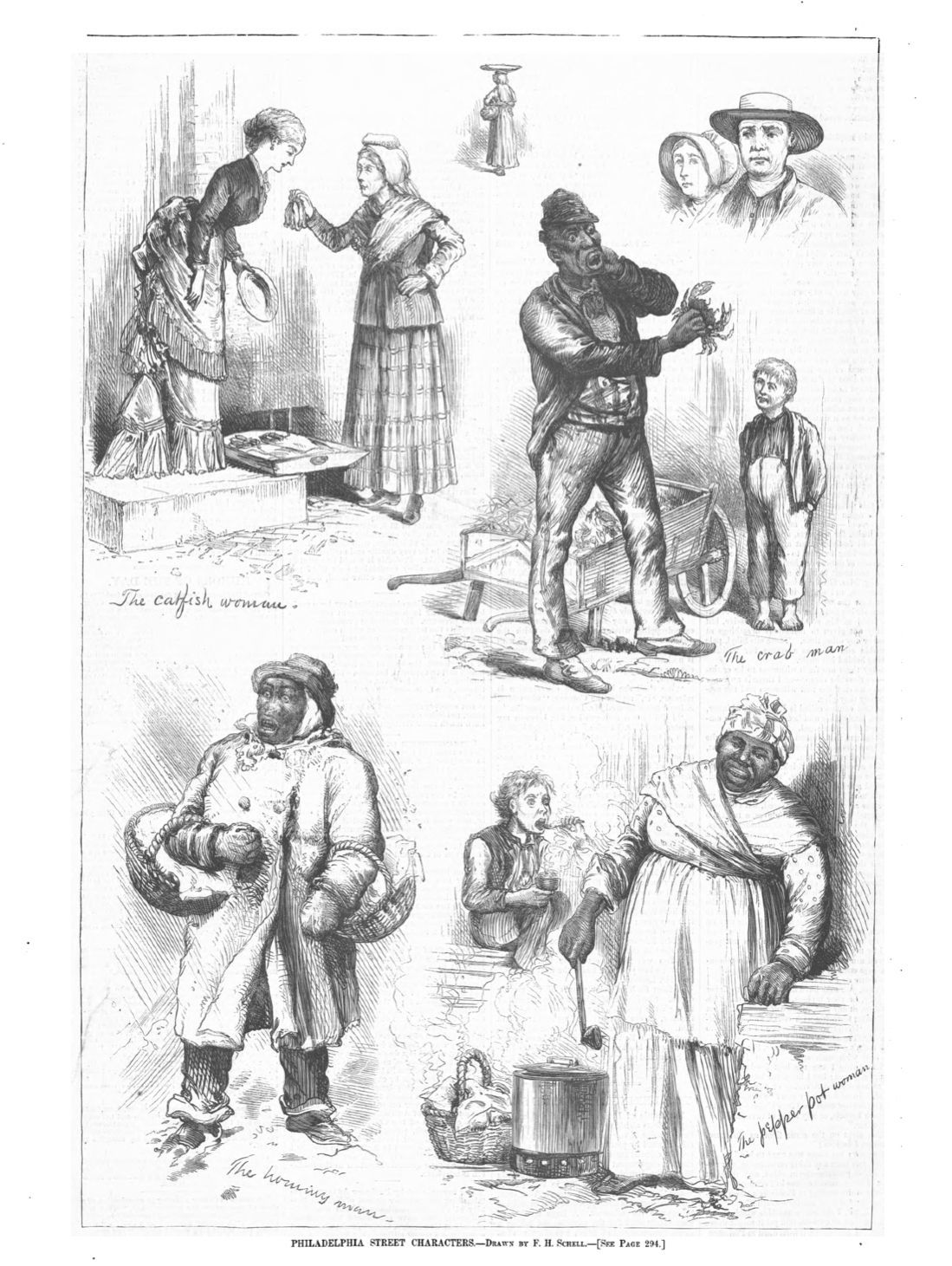
    This illustration of “Philadelphia street characters” was published in Harper’s Weekly in 1876. “The pepper pot woman” stands at the bottom right.Harper's Weekly/Google

    For this reason, many, including Weaver and food historian Jessica B. Harris, have come to regard early Philadelphia as the northernmost Creole city.

    “Nowhere is this connection more apparent than in Philadelphia’s pepperpot soup,” Harris writes in her book Beyond Gumbo. In a recent interview, she elaborated: “You’ve got a port bringing foods from other places and people also who are coming in from all over, enslaved and free. This kind of urban polyglot mix — that is the matrix of Philadelphia. And then you start getting their food. You know women of West Indian origin are going to make use of their skills and call on their memories to make something palatable to the people in this new place. All those things come together in pepper pot.”

    That lineage was especially resonant for Angela Brown, whose deeply flavored and nuanced stew of veal, bacon, and tripe took on a buttery texture from a dark roux and delivered just a gentle glow of peppercorn spice.

    “As a Black woman, when I think about all those women in the 1700s out there on the wharfs cooking soup to sell for the day and praying they get enough money, I feel sort of sad that my ancestors had to work that hard,” she says.

    Chef Angie Brown prepares her version of pepper pot for fellow chefs.Tyger Williams / Staff Photographer

    Yet cooking pepper pot also brought her joy, because it conjured warm memories of Brown’s childhood in Mount Airy. She’d walk to the neighborhood butcher for a pound of tripe, then closely watch her great-grandmother, Carrie Smithers, make it, beginning by sizzling the holy trinity of celery, bell peppers, and onions in rendered bacon fat and veal drippings.

    “That’s the reason I knew how to layer it,” says Brown. “I was very close to my great-grandmother, and she would be so proud that I made it delicious. I might have even made it better than hers.”

    Brown’s soup was the closest we’d taste that day to the thick, meaty tripe stew from Campbell’s that stamped pepper pot as a Philadelphia specialty, along with a version popularized nationwide on the dining cars of the Pennsylvania Railroad.

    “But there never really was a single ‘Philadelphia-style’ pepper pot. It was a marketing device, because this was a diverse city and pepper pot changed with every neighborhood,” says Weaver, who documents several 19th-century soup halls known as “pepperpot hotels” across the city, along with recipes that range from Esther Levy’s Jewish beef-and-mutton pepper pot from 1871 to pepper pot with crab, asparagus tips, and dumplings from a culinary instructor named Aunt Matilda in 1879. “Every Philadelphia recipe I’ve seen is different.”

    A recipe published for the Philadelphia World’s Fair in an 1876 cookbook from the Women’s Centennial Exhibition Committee featured two kinds of tripe in a veal knuckle broth studded with veal dumplings. Another completely different pepper pot called gingambo au potiron — with sea turtle broth, seafood, and a Brazilian pumpkin — emerged from the émigré Creole neighborhood called Hamiltonville, on the Woodlands estate southwest of the University of Pennsylvania campus.

    Chef Shola Olunloyo, a culinary consultant and the chef of Studio Kitchen, made a variation of a seafood-pumpkin pepper pot he once cooked at the restaurant Deux Cheminees.Tyger Williams / Staff Photographer

    A soup that unlocks memories

    Coincidentally, Olunloyo served us a variation of that same seafood-pumpkin pepper pot, a dish he grew fond of making regularly when he launched his career at Deux Cheminées. The late chef-owner there, Fritz Blank, had amassed a legendary cookbook collection and befriended both Weaver and Harris, who published Blank’s recipe in Beyond Gumbo.

    Olunloyo’s soup skipped the turtle broth for rich fish stock and swapped out pumpkin for butternut squash. The froth of its silky orange puree — enriched with vermouth, cream, and leeks — sparks with Scotch bonnet, ginger, and a scant pinch of aromatic mace. Sweet little bay scallops, added to the bowl raw, cook in its warmth alongside mussels and other shellfish. It was an elegant reminder of the refinements that European-trained French chefs gave to the high-society kitchens of early Philadelphia, one of “two separate strands” — the vernacular creativity of its street foods being the other — that shaped the city’s culinary evolution, says Weaver. Ever-evolving pepper pot existed in both spheres.

    For Olunloyo, whose career as a consultant and supper club chef has been most influential in its advocacy of modern methods and cutting-edge technology, diving back into pepper pot has been a reminder of his formative years as a cook and the enduring value of classic techniques.

    Chef Shola Olunloyo ladles out a meaty version of Nigerian pepper stew, a not-so-distant cousin of pepper pot.Tyger Williams / Staff Photographer

    The dish transports him even farther back to his childhood in West Africa and the pepper soups he grew up eating in Nigeria. In addition to his seafood-squash pepper pot, he served the group a boldly spiced version of that pepper soup — a rustic, bone-in stew of goat, beef neck, and tripe flavored with a blend of Nigerian seeds and dried chilies, with an extra hit of habanero and fresh green shiso he snips over each bowl to replicate hard-to-find African scent leaves. The connection to the West African roots of pepper pot’s creators could not have been more obvious.

    “Taste is not linear,” observed Omar Tate. “It is kind of like a spiral, the memory is trying to circle back home at every point when you pick up an ingredient.”

    Chef Shola Olunloyo explains his pepper pot recipe in his home kitchen in South Philadelphia.Tyger Williams / Staff Photographer

    The importance of historical Black dishes in 2026

    For Tate, whose pepper pot efforts sit squarely within the provocative explorations of the Black American foodways Honeysuckle is known for, the point of the exercise for him was not to recreate history — “I’m not interested in copy-and-paste tradition” — but to modernize it for today’s tastes. His rendition with oxtail, pork belly, and honeycomb tripe was partly inspired by the Krimmel painting of a woman serving a market crowd of early 18th-century Philadelphians. But Tate’s deconstructed presentation, with each element suspended above locally raised vegetables and a puddle of intensely flavored broth spiced with fish peppers from Honeysuckle partner Plowshare Farms, looks like the melting pot in reverse. (Seeds for the fish pepper, an heirloom chile used by Black caterers in Baltimore in the 1800s, were publicly reintroduced by Weaver in 1995.)

    “I’ve never been able to fully sit in the idea of what tradition is because of my relationship to Black history in America, and realizing that the strongest, most consistent Black tradition is being uprooted constantly all the time,” he says. “Yes, we are preserving culture and honoring the past, but I’m constantly trying to disrupt what I know about that, because it helps understand how people navigated change.”

    Chef Omar Tate of Honeysuckle plates his version of pepper pot.Tyger Williams / Staff Photographer

    In this respect, the timing could not be more keen for a pepper pot tribute and the conversations it starts about the important role Black chefs played in shaping the nation’s cuisine. Keeping history front and center through food remains a powerful act, especially after the administration of President Donald Trump abruptly altered displays at the President’s House on Independence Mall to sanitize George Washington’s role there as an enslaver of nine people, including the seminal chef Hercules Posey.

    “We tried to honor their history and make sure tradition was preserved, but now that’s been disrupted and they have to be reimagined,” said Tate of the enslaved individuals previously commemorated at the President’s House, where the changes, he said, have deeply affected him. “That can only come through the possibility of taste and oral history.”

    Chad Williams agrees.

    “You have to cook it to keep it alive. Much of what makes dishes truly great is difficult to put into a recipe — the flavor, the experience of the dish, and making sure that gets pushed forward into the future by cooking it hand-to-hand. It can’t always come from a book.”

    Honeysuckle chef Omar Tate tastes the pepper pot recipe of Angie Brown.Tyger Williams / Staff Photographer

    Pepper pot keeps evolving

    The beauty of Philadelphia’s pepper pot is that it has proven to be less of a specific recipe than a culinary approach tied to this city, a resourceful way to coax tender sustenance and comfort in a stew flared with spice and the memories of a faraway land using whatever was locally available. As Tate and others at the tasting noted, such dishes have, in fact, continued to thrive with the arrival of new waves of immigrant communities, even if their fiery tripe-laced soups go by other names.

    Vietnamese bún bò Huế. Mexican menudo. Mauritanian tripe and cow skin gravy over Jollof rice. Spicy Korean beef gopchang-jeongol. Polish flaki. Italian trippa alla Romana. Excellent versions of all these and more can be found here, which, in the context of Pepperpot City, means they, too, could be considered as part of a grand centuries-old Philadelphia tradition that’s not quite ready to fade away.

    “They’re all pepper pots,” insists William Woys Weaver. “That’s our local word for it, you know! Let’s stop pretending that pepper pot is one thing. Pepper pot is Philadelphia’s soul soup.”

    The cover of “Pepperpot City,” a book about Philadelphia food history by local historian William Woys Weaver. The cover features a portion of an 1811 painting by John Lewis Krimmel depicting a pepper pot vendor selling the soup in a market.Courtesy University of Pennsylvania Press
  • We made 10 Shore predictions for 2026. Here’s how we did.

    We made 10 Shore predictions for 2026. Here’s how we did.

    Things not on my 2026 Jersey Shore predictions bingo card: a canceled luau, and a dispute over live outdoor music featuring audio of 911 complaints posted to Facebook.

    But, at the start of the season, I did make 10 predictions on how the Shore summer would go.

    Here’s how I did.

    Full speed ahead for Icona in Wonderland. ✅

    I’m calling this a win (for my predictions score; people have very different views of the hotel). In June, Eustace Mita finally got his dream of a declaration that the old Wonderland Pier site at 600 Boardwalk in Ocean City is “in need of rehabilitation.”

    The Icona developer is now in negotiations with Ocean City about a hotel proposal, which he says will be a scaled-down version of his initial seven-story, 252-room plan that called for saving the Ferris wheel and historic carousel. City council is vowing to be guided by recommendations from a Boardwalk subcommittee. Meanwhile, council hired a lawyer to defend against a lawsuit by citizens’ groups.

    Eustace Mita talks about the construction of this beachfront Achristavest home on 116th Street in Stone Harbor on Tuesday, August 18, 2026.Vernon Ogrodnek / For The Inquirer

    Atlantic City’s Irish Pub will rise again. ❌

    Alas, not even the sale of the Irish Pub in Philadelphia appeared to jump-start any renovations in Atlantic City, where owner Cathy Burke has been in a stalemate with state inspectors over whether the iconic, beloved pub on St. James Place should be considered a high-rise. The pub has been closed since January.

    Will locals have their fish and chips and Guinness on Christmas Eve as per usual? You never know. Burke did not answer a text message seeking an update. Asked about the Irish Pub’s status, Atlantic City spokesperson Andrew Kramer said he had “nothing new from my end on this one.”

    But, in an upset, the city has begun paving Atlantic and Pacific Avenues, in a development Mayor Marty Small Sr. called “massive,” and said would be completed by year’s end.

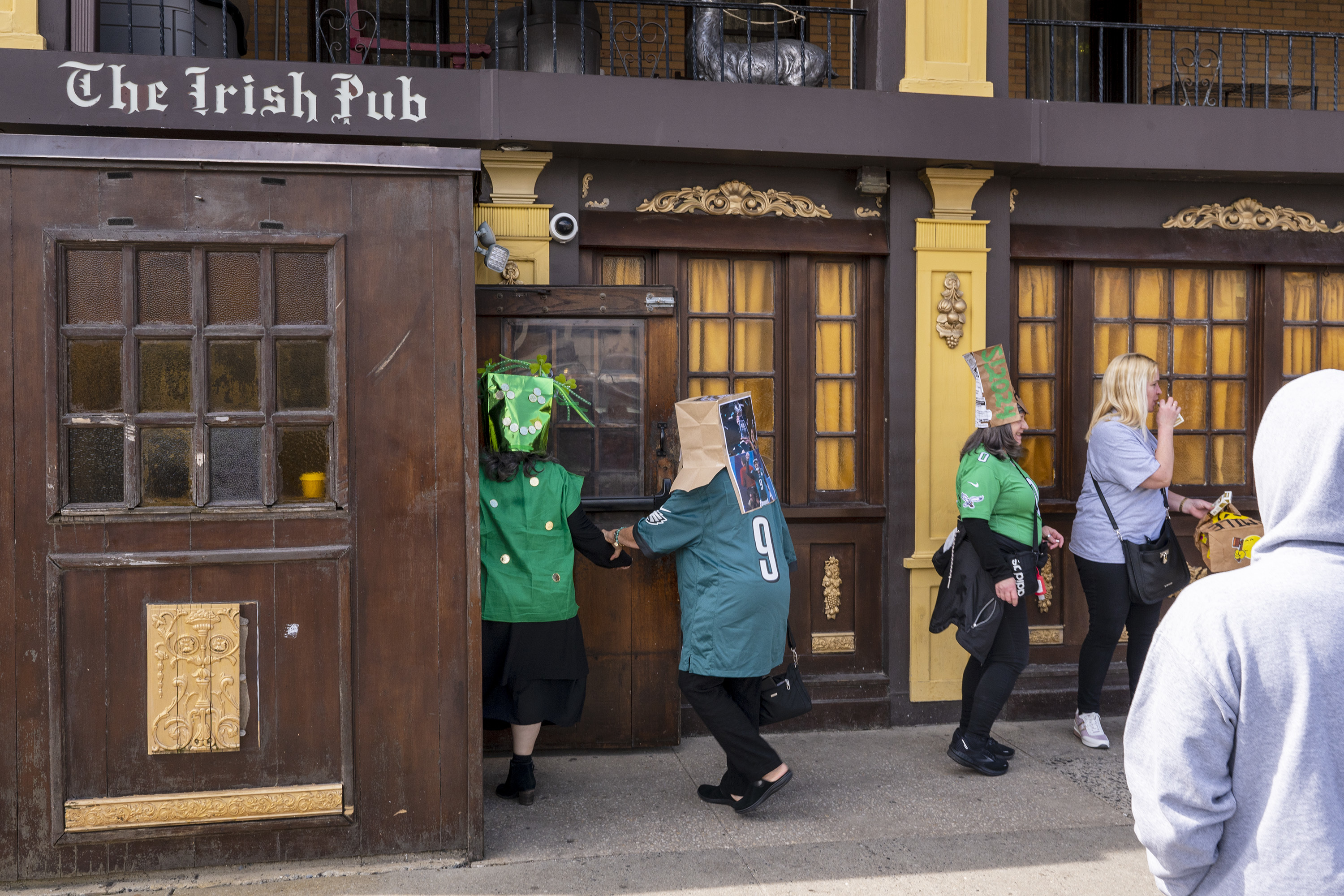
    Fran Cann (left) helps Debbie Stiles (#9, right) get through the door, since she can’t see as well wearing a “St. Nick” Foles bag over her head, as they celebrates Bag Day at the Irish Pub in Atlantic City Monday, Mar. 18, 2024. The friends, from Berlin, N.J.were attending their first Bag Day. The tradition got started when a late-to-the-party patron showed up to the 24-hour bar a day after St. Patrick’s, then put a bag on their head.Tom Gralish / Staff Photographer

    Shore restaurants will tough it out, but struggle. ✅

    Restaurants were stressed this summer. As is usual in late summer, many lost employees as the season wore on all the way to Sept. 7, and had to cut back seating or hours. Others pleaded with their clientele for patience. Still, there were lines down the block for coffee places, and booked up reservations for favorites like Steve & Cookie’s and Cafe 2825. New places were opening deep into summer, like Culina Mundi in Ventnor and Sabrina’s Kitchen in Atlantic City.

    Bakeria 1010 owner and pizza savant Mike Fitzick posted a mock obituary for himself at summer’s end: “Welp that’s all she wrote folks. … Right from start I knew this season was gonna be rough. All the staff I tried to hire fizzled out and the staff I had last year were mostly gone. This summer was pretty treacherous in every aspect … June was trash, July was ok and we finally hit our stride in August. Better late than never, I guess. Unfortunately I have passed away due to self-inflicted cortisol poisoning. In lieu of flowers please donate to the Bakeria 1010 all winter. Jokes aside we WILL be open for lunch today…”

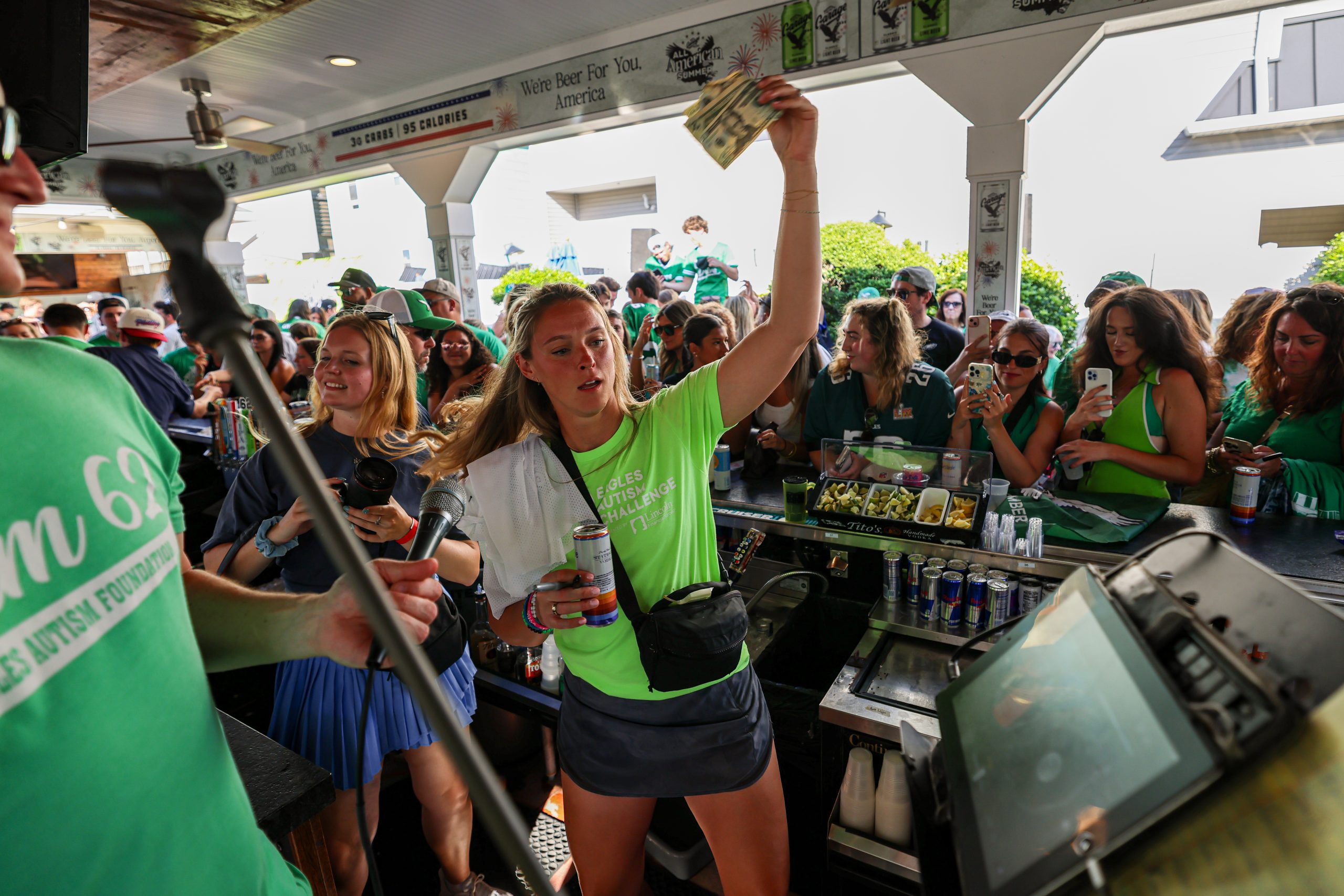
    Kylie Kelce adds some money to the cash register during the Shore Birds celebrity bartending event in Sea Isle.Courtesy of the Philadelphia Eagles

    Taylor and Travis will not honeymoon in Sea Isle, but…? ✅ ❌

    No, they did not honeymoon in Sea Isle, choosing instead Big Sky, Mont. (a lovely place), so that’s an easy one in my favor. But my leaving open the possibility that they would make an appearance in Sea Isle seems, on balance, ridiculous. Maybe they’re waiting for Jason and Kylie Kelce to finally make it off the waiting list for the Sea Isle Yacht Club. Maybe a celebrity bartending gig for Taylor at the Eagles Autism extravaganza next summer? Meanwhile, have fun in Ohio!

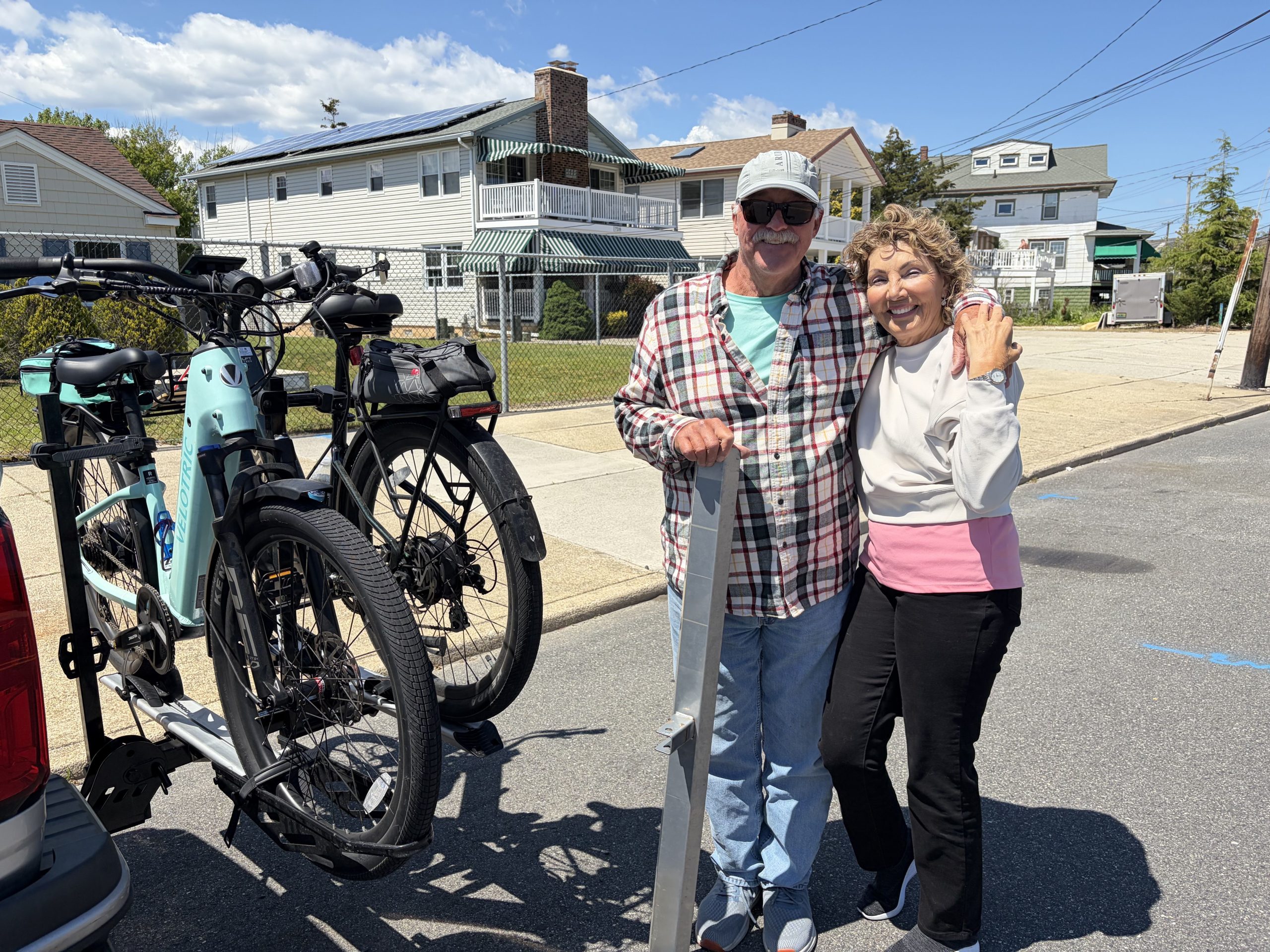
    Mike and Annamarie Carr of Ventnor, owners of Jagielky’s candy shops, with the e-bikes they love to ride. Ventnor won’t allow them on its own Boardwalk. The couple drove to Ocean City on June 2 and started and ended from there.Amy S. Rosenberg / staff

    E-bikers will be hauled off the boardwalks and fill municipal court Zoom hearings. ❌

    There was a lot of confusion over the new e-bike law in New Jersey.

    First the state Motor Vehicles Commission said Pennsylvania visitors shouldn’t sweat the new registration requirements, then they changed their mind and said visitors should start their week down the Shore with a trip to the DMV. Adding to the confusion, the MVC requirements explainer page that says out-of-staters should comply now also says, “This page is intended for New Jersey Residents.”

    In all, the MVC has issued a total of 13,850 e-bike registrations, according to commission statistics; 365 of those for out-of-state residents.

    But police were generally light-handed on enforcement measures for the new law, with departments focusing on safety issues, like helmets, and age restrictions, rather than registrations.

    Doug Bergen, a spokesperson for Ocean City, said no citations were issued there this summer under the new law.

    In Ventnor, Lt. Bryan Gaviria said between May 1 and Sept. 10, the department issued six curbside warnings to juveniles, 10 e-bikes on the boardwalk warnings, and one ticket for riding on the boardwalk.

    “We’re still in the education phase,” he said.

    Statewide, statistics show 628 total citations under the e-bike and motorized bicycle law for July and August, according to data supplied by the New Jersey Judiciary.

    Of those, just 77 were given for low-speed electric bicycles, 22 citations were for failing to have the registration required by the new law, and two were for drivers being under 15. The rest of the citations issued were for motorized bicycles, the higher speed classification.

    Retiring boomers will continue their takeover of Shore towns. ✅

    Yes, who else can afford to buy?

    Real estate prices remained mostly in rarified air, like this adorable yellow 760-square-foot North Wildwood cottage that sold for $1.7 million in mid-August. It’s a tear down, naturally.

    Or how about this 17,684-square-foot house in the Avalon dunes, built on spec by Eustace Mita (see above), with the distinction of being Avalon’s largest house and an expected price tag in the tens of millions.

    In related news, the home elevator, once considered a luxury, is now considered an essential amenity for new homes in Ocean City, N.J., among other towns.

    Rendering of a 17,684 square foot home being built as a spec house in the dunes in Avalon, at 5745 Dune Drive, by developer Eustace Mita. It will be the largest home in the borough.Courtesy Avalon Borough

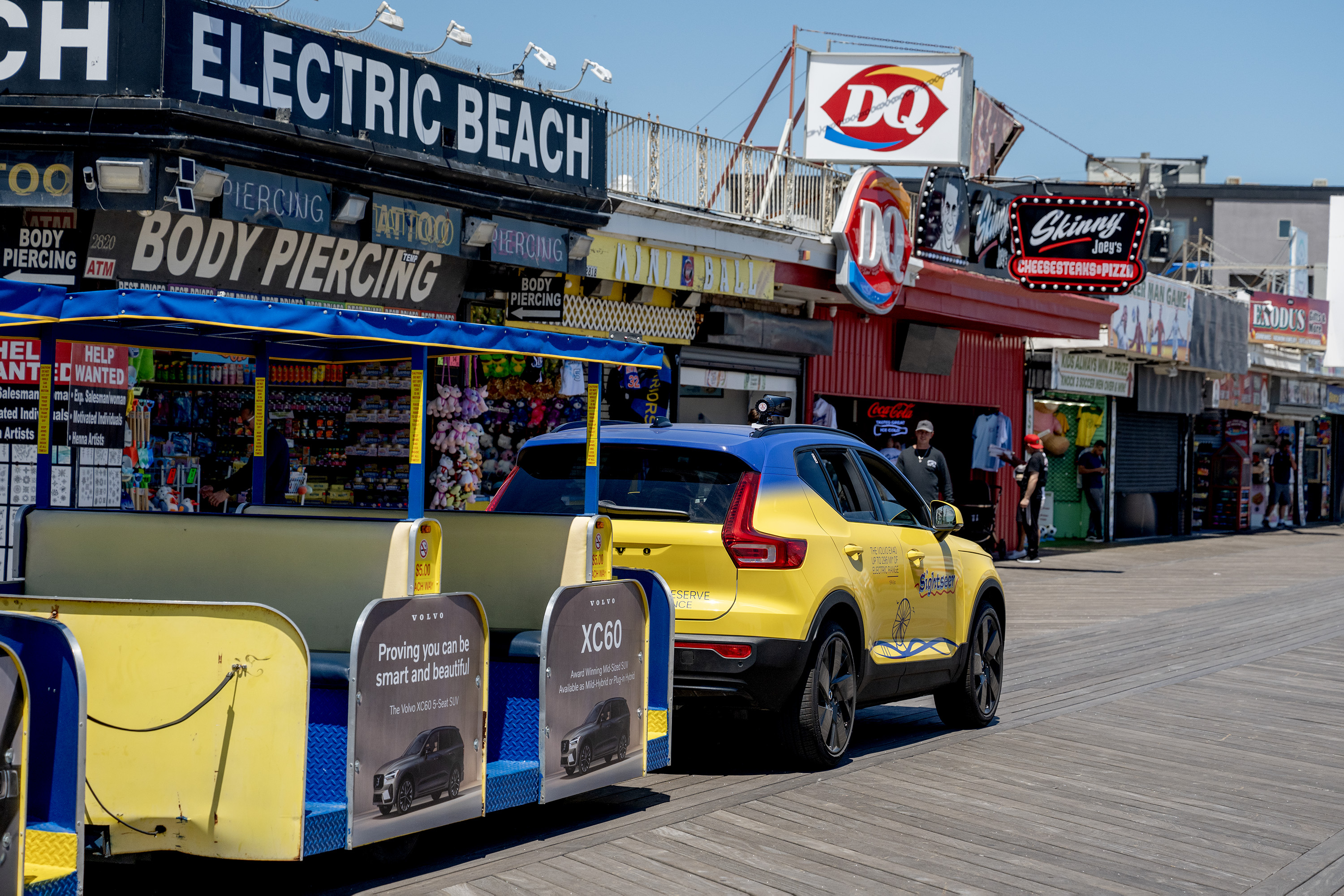
    Wildwood boardwalk hours will again be expanded overnight, but all people will talk about are the electric Volvo SUVs driving the tram cars. ✅ ❌

    Wildwood spokesperson Alicia Deluca says the hours remained curtailed, with the boardwalk closing between 1 and 5 a.m.

    The grumbling over the new Volvo tram cars continued all summer, though. People do not like change. Meanwhile, though, Wildwood is preparing a 20-year redevelopment plan for its boardwalk that will see mixed-use projects, including hotels, apartments, condominiums, businesses, and centralized parking garages.

    A Sightseer tram car is pulled by a Volvo EX40 electric vehicle on the Boardwalk in Wildwood Tuesday, June 2, 2026. The Wildwoods Boardwalk Special Improvement District struck a deal with Volvo to provide three free electric vehicles in return for ads placed on the individual tram cars. Four of the older engines remain in use for now.Tom Gralish / Staff Photographer

    There will be a lot of complaining about changing parking regulations. ❌

    I didn’t hear much over the din of loud music from Gully’s, and Facebook groups seemed preoccupied with other things: flies, shaming noise complainers, and finding the best chicken Parm.

    The return of the day-tripper. ✅

    This prediction was a good one. Costs continued to rise, making shorter trips and day trips appealing. I predicted Atlantic City would get renewed attention, and it did, with groundbreakings for new housing developments, a container retail park close to opening, and the enduring appeal of a wide, free beach and a relatively inexpensive real estate picture.

    Obvious miss on the predictions front: Atlantic Avenue is finally being paved. The odds were very long on this one.

    The exterior of Bar 32 on Thursday, June 11, 2026 in Atlantic City, NJ. Bar 32 offers bean-to-bar chocolate, handmade desserts, and craft cocktails.Monica Herndon / Staff Photographer

    The summer will seem verrrrry long. ✅

    So long. How long? Basically an extra week until the Sept. 7 Labor Day. Which left beach patrols, restaurants, and other business strapped for employees, and rewarded marathon beach lovers with two days of atrocious flies on the beach Sept. 4 and 5, worse than anyone had ever experienced, like, really terrible! See ya next year!

    Total score: 6/10. We’ll get ‘em next summer, hopefully over a plate of lollipop meatballs at the Irish Pub.

  • ‘Who are these Schuylkill Dragons?’: How a band of women dragon-boaters conquered the Schuylkill

    ‘Who are these Schuylkill Dragons?’: How a band of women dragon-boaters conquered the Schuylkill

    “It’s a great art, is rowing. It’s the finest art there is. It’s a symphony of motion. … When you near perfection, you’re touching the Divine.”

    — George Y. Pocock, renowned rowing coach and boatbuilder

    “If you want to be a Schuylkill Dragon, don’t be a schmuck.”

    — Judy Gernon, 81

    Boathouse Row, on the Schuylkill, is the epitome of old-money elegance — a Ralph Lauren catalog come to life.

    Home to more than a dozen of the city’s storied rowing clubs, it’s a timeless civic fixture. Opulent brick houses with palatial decks. American flags fluttering from poles. Young rowers with sinewy physiques and well-earned tans, milling about the docks.

    There’s a reason it is considered one of the city’s most iconic settings, the subject of postcards and poetry.

    Boathouse Row, a picturesque scene located along the east bank of the Schuylkill.TOM GRALISH / Staff Photographer

    About two miles upriver, meanwhile — far from this extravagant scene — sits another boathouse, of far less renown.

    To get to it, you have to trek through knee-high grass, past the porta-potties and discarded car tires, and the mosquitoes as big as Buicks. Go past the chain-link fence choked by weeds and the dead trees the city hasn’t yet gotten around to clearing, and soon enough, you’ll reach it.

    The humble headquarters of the Schuylkill Dragons.

    It is 4 feet by 6 feet. It is packed with faded life jackets, water jugs, a smattering of rusted, secondhand tools. The only thing WASPy about it are the actual wasps — which, at the moment, have infested a corner of the small structure.

    It is damp and dirty, thick with dust and cobwebs.

    To the ladies of the Schuylkill Dragons — the city’s oldest all-woman dragon-boating team and its unlikeliest sports dynasty — there might be no better place on earth.

    The Schuylkill Dragons on June 2, 2026.Allie Ippolito / For The Inquirer

    A ‘dump truck’ on the water

    My introduction to the Schuylkill Dragons came on a Saturday morning this summer, at a team practice along the Schuylkill.

    As I followed the team down a dirt path toward the water, a tiny white-haired woman in her 80s sidled up to me.

    “It’s a good thing you didn’t come last Thursday,” she said, “‘cause it was raining like a b—.”

    The “boathouse” of the Schuylkill Dragons stands on the west bank of the Schuylkill, near the team’s dock. Members of the team built the structure in 2015.Dugan Arnett

    For 25 years, the Dragons have been rumbling their way up and down the Schuylkill.

    And for 25 years, they have been the river’s most immovable force — a sweatin’, swearin’, swaggerin’ group of bandits that no one has quite figured out how to tame.

    “Underestimate them at your own peril,” says Bob Mina, a longtime member of the Philadelphia Dragon Boat Association.

    Many are in their 60s, 70s, and 80s, and — having endured some of life’s cruelest challenges: cancer, divorce, the loss of spouses — do not find it particularly daunting to propel a two-ton boat upriver until their backs and shoulders scream.

    There is Cindy Roberts, a 65-year-old retired preservationist known for growling loudly throughout races. And Sue Ferry, 64, who goes by the nickname “Machete” — due to the fact that she once brandished one at practice and used it to hack a path through the weeds to the team’s boat ramp.

    Judy Gernon, drummer with the Schuylkill Dragons, yells out calls during a practice ahead of an forthcoming race.Allie Ippolito / For The Inquirer

    There is “Crazy Judy” Gernon, a tattooed 81-year-old former Army brat who stands 5-foot-1 (“and a half”) and has never met a sentence she felt couldn’t be enhanced with an expletive (or six). A while back, the team had to convince her to stop flashing people on the river.

    Nothing has been able to slay the Dragons. Not injury (they’ve been known to schedule their hip-replacement surgeries around dragon-boating season). Not the city’s rowers (with whom they regularly clash), or the younger, fitter teams they routinely find themselves lined up against (the Dragons have won medals across the globe and are widely considered the gold standard for women’s dragon-boating in the city).

    Even their own coaches have occasionally found themselves at the mercy of the Schuylkill’s Bad News Bears.

    Years ago, the team was led by a man who worked as an attorney for a prominent pharmaceutical company, a guy with a reputation for navigating the corporate world with iron-fisted efficiency.

    “What cracked us up is he had no qualms going into some office and firing everybody there,” says Crazy Judy.

    “But to work with a women’s dragon-boating team? He couldn’t say s— if he had a mouthful.”

    The Schuylkill Dragons on Tuesday, June 2, 2026.Allie Ippolito / For The Inquirer

    ‘Renegades’ of the river

    Since hosting its first regatta in 1835, the Schuylkill has been a national hub for U.S. rowing. It has produced Olympic rowing medalists and national collegiate champions, been the training ground for clubs with names like Vespa and Crescent.

    It was into this hallowed setting, meanwhile, that the Schuylkill Dragons arrived, in 2001, with all the subtlety of a right cross.

    Though not the first dragon-boating team on the river — at least one men’s team started in the mid-1980s — the Dragons quickly established themselves as the most colorful.

    “We were like renegades,” says Patti Miller, 72, one of the Dragons’ founding members. “We were a novelty: Who are these Schuylkill Dragons?”

    If rowing is jazz — smooth, elegant — then dragon-boating is a half-dozen teenagers in a garage, thrashing on electric guitars and banging on drum kits.

    Their stroke is urgent and aggressive. Their boats — usually adorned with large dragon heads and tails — are massive, measuring some 40 feet in length. Unlike rowing, which typically includes no more than eight people to a boat, dragon boats hold 22: 20 paddlers, a drummer (who sits up front, banging a drum to set the paddling pace and barking instructions through a microphone) and a steersperson (stationed in the back and responsible for keeping the boat on course).

    Amy Virus, a 52-year-old member of the Dragons, explains it this way:

    The Schuylkill is like a smooth-running highway, the rowers and kayakers minding their own business.

    “And then a dump truck gets on,” she says, “and gets in [everybody’s] way.”

    The Schuylkill Dragons are Philly’s oldest all-woman dragon-boating team
    Video: The Schuylkill Dragons are Philly’s oldest all-woman dragon-boating team

    The early years weren’t always easy. To find members, the Dragons handed out flyers and published classified ads in the newspaper: Women wanted to paddle on the Schuylkill.

    For years, the team was stationed on the Kelly Drive side of the Schuylkill, their boats tied to a tree on the river’s bank. Before each practice, the women — many postretirement age — had to rappel down a rock wall to board the boat.

    Introducing dragon-boating to the Schuylkill, meanwhile, was a little like releasing a pack of honey badgers into a wedding reception.

    Years ago, a group of male dragon-boaters — who’d apparently done a little too much prerace imbibing — managed to tip their boat during a race, sending themselves spilling into the river. When a police boat arrived to pull them out of the water, they managed to sink that boat, too.

    Lora Dunnigan, one of the coaches of the Schuylkill Dragons, on Tuesday, June 2, 2026.Allie Ippolito / For The Inquirer

    It was “basically like West Side Story on the water,” says Mina, of the PDBA, of the rower-dragon-boater tension. “Only without the jaunty musical numbers.”

    When the Dragons first started on the river, the mostly male rowers would report the team to the Schuylkill Navy — the river’s rule-enforcement body — for rules violations. Or scream at the women to get out of their way.

    Today, the two groups seem to have reached an uneasy detente, though plenty of Dragons believe the rowers would be happy if they packed up their hulking boats and disappeared forever. Says Meg Fasy, 62, “They’re looking at us like we’re a bunch of old broads, I’m sure.”

    Which is not to say, of course, that the Dragons do not give as good as they get.

    Not long ago, when the team encountered a group of younger male rowers on the river during practice, one Dragon couldn’t help herself.

    “I’ve got shoes older than you!” she bellowed.

    The Schuylkill Dragons on Tuesday, June 2, 2026.Allie Ippolito / For The Inquirer

    ‘I was better than they were’

    Because many came of age before Title IX, the Dragons are, for some, the first team they’ve ever been a part of.

    Growing up in Massachusetts, Susan Wilson — the Dragons’ oldest member at 83 — spent childhood evenings playing street baseball with the boys in her neighborhood — long, glorious hours chasing fly balls under a fading New England sun.

    But at a certain point, the boys all joined organized teams, and Wilson was relegated to the bleachers — a development particularly unjust, she explains, considering “I was better than they were.”

    When she eventually discovered dragon-boating several decades later, in her late 50s, it was a revelation.

    “The first night I went out on the water, there were whitecaps [and] hail,” says Wilson. “And I went, ‘Oh, yes, this is for me.’”

    One after another, members credit the Dragons with bringing them out of their shells, with instilling in them a newfound confidence.

    As a young mother, Karen Anderson, 72, says, she was so competition-averse that during her kids’ youth sporting events, “I’d hope for a tie, so everyone left happy.”

    Now?

    “I never know what’s going to come flying out of my mouth,” she says. “It’s made me really like a crazy woman when I’m racing.”

    Consider Marina Della Putta Johnston. On land, she is a mild-mannered, 62-year-old former Italian Studies lecturer at Penn. On water, she’s “The Marinator” — a nickname earned following a race in Sarasota, Fla., in which the boat she was steering inadvertently clipped that of a rival team, dumping its occupants into the lake.

    “They flipped,” Johnston says, “and we kept going.”

    Beneath all their bluster, the Dragons care deeply for one another.

    Stacy Kent Wyckoff, a member of the Schuylkill Dragons, an all-woman dragon-boating team, sits with teammates before the start of practice on the Schuylkill on Tuesday, June 2, 2026.Allie Ippolito / For The Inquirer

    They arrange meal trains when a teammate is sick or injured. They check in on one another. When her husband’s health was declining in 2022, says Stacy Kent Wyckoff, 66, it was the Dragons who helped her through her grief.

    “It was just a very healing thing to jump into,” she says.

    This is another Dragons specialty — moments of quiet tenderness amid all the grunting and growling and middle-finger salutes.

    Two years ago, at a team camp in Florida, a few Dragons were driving from their hotel to dinner. In the passenger seat, 79-year-old Phoebe Wood — who is typically about as sentimental as a court order — suddenly grew nostalgic.

    “I just want to say,” she announced, “that I love everyone in this car.”

    The Schuylkill Dragons warming up before a practice on June 2, 2026.Allie Ippolito / For The Inquirer

    ‘Solemn and deadly’

    At competitions, some teams arrive at the starting line light and loose — laughing, dancing. The Dragons prefer a different approach: “Looking solemn and deadly,” says Wood.

    Talking is almost always prohibited in the boat, even at practice — the better to stay focused.

    Today, the team has a standing offer: $20 to anyone who pukes during a race.

    The Dragons train four days a week in the summer — Tuesday and Thursday evenings, plus Wednesday and Saturday mornings. In the winter, many team members travel more than an hour each weekend to Pottstown, where they train indoors in a simulation paddling pool. Each spring, a group of Dragons attends a grueling preseason dragon-boating camp in Florida, enduring hours-long days on the water.

    The Schuylkill Dragons on June 2, 2026.Allie Ippolito / For The Inquirer

    They have competed across the world — Hungary, Canada, Italy. Members have paddled for Team USA at the dragon-boating world championships, considered the sport’s Olympics.

    “If you want to race seriously,” says Mina, “that’s the club you want to go to.”

    Indeed, it is not for the faint of heart.

    The Dragons have paddled with torn rotator cuffs, artificial hips, wonky knees. You could field a marching band with all the Dragons who are currently in physical therapy for one ailment or another. One local paddler with emphysema used to lug her oxygen tank with her onto the boat.

    The Schuylkill Dragons launch off the dock at the start of a practice on Tuesday, June 2, 2026.Allie Ippolito / For The Inquirer

    Today, Philadelphia is home to more than a dozen competitive dragon-boating teams, many of which share a pair of docks on the Schuylkill’s western bank, off Martin Luther King Jr. Drive.

    And while this growth has been viewed very much as a positive, it has occasionally resulted in what the husband of one team member refers to as “Dragon Drama.”

    For the Dragons, much of that drama has involved another of the city’s longstanding women’s dragon-boating teams, a rivalry that — like many great conflicts — is rumored to trace its origins to failed romance.

    Years ago, according to one version of rivalry lore, the then-coaches of the two teams became romantically involved — which was fine, up until the relationship came to an unceremonious end.

    “Then it became, ‘Kill the Dragons!’” says one longtime member of the rival team.

    For a long time, the two teams wouldn’t acknowledge each other. Or, conversely, would acknowledge each other too much — lobbing insults from their respective boats before races.

    The iciness has since thawed — to a degree.

    “We might like them off the boat,” says Anderson. “But on the water … we want to beat their asses.”

    The Schuylkill Dragons on June 2, 2026.Allie Ippolito / For The Inquirer

    ‘You ever heard of dragon-boating?’

    The team built its own boathouse, over a single weekend in 2015. They own three dragon boats — long, massive vessels of wood and fiberglass — which they store, patch, and repair themselves. Whereas the clubs of Boathouse Row have stocked bars and gleaming workout facilities — the University of Pennsylvania’s College Boat Club recently underwent a $13.5-million renovation — the Dragons have 70-year-old Julie Regnier, nicknamed “MacGyver” for her proficiency with a two-by-four and a can of epoxy.

    Says Linda Breitstein, a 72-year-old Dragon: “These are not women who are used to saying, ‘I’ll call the man to take care of everything.’”

    Keeping the team competitive, meanwhile, has required a constant commitment to recruiting, a duty the Dragons have embraced with the intensity of a Southeastern Conference football coach on the hot seat.

    They’ve plucked new team members from the gym, from the community garden, from dinner parties. They are not above cornering a fit-looking stranger in the cereal aisle of their local grocery store and extolling the virtues of dragon-boating.

    Emma Thomas, center, has served as the Schuylkill Dragons’ tireless team president since 2025. The job includes everything from organizing team events to facilitating the team’s annual training camp in Florida to – on occasion – weed whacking. Thomas joined the team in 2021.Allie Ippolito / For The Inquirer

    Once, Anderson found herself at a Bucks County hospital. Her daughter had just gotten out of surgery, and was being wheeled into the post-operation room, but Anderson couldn’t take her eyes off the attending nurse.

    “She was tall and she was fit and she had some muscles,” says Anderson, now one of the team’s three coaches. “And I said, ‘I’m going for it.’”

    “Excuse me,” she said, as her daughter lay unconscious a few feet away. “Have you ever heard of dragon-boating?”

    The nurse joined the team soon after, bringing a neighbor with her.

    Though the Dragons are open to women of all ages — their youngest member is 23 — the team has long trended older. As of last year, the average age of the team sat somewhere in the neighborhood of 60.

    Lately, there’s been a conscious push to bring in younger paddlers — “our succession plan,” says one former member of the team’s board of directors. The team has instituted an annual rookie camp to scout new members; of the six paddlers who received invitations to join the team this summer, five were under the age of 40.

    Short of that, the Dragons have developed a backup plan for ensuring the team’s longevity.

    When Crazy Judy told coach Stacey Scanlan recently that they’d have to find a replacement for her eventually, Scanlan shrugged.

    “Just don’t die,” she replied.

    A steerer on the Schuylkill Dragons, an all-woman dragon-boating team, practices with the team on the Schuylkill.Allie Ippolito / For The Inquirer

    The race

    On a Saturday afternoon in July, the Dragons gathered in an asphalt parking lot near Baltimore’s Inner Harbor, one of a dozen teams across the Northeast competing in the Charm City’s Dragon Boat Challenge.

    It was not going well.

    Earlier in the day, the team had finished third in a race they’d hoped to win; afterward, they’d stalked silently to their team tent, pulling out knitting needles or hardcover books and keeping largely to themselves.

    Now, as they boarded their boat for the regatta’s final event — the 2,000-meter, the sport’s longest and arguably most grueling race — they vowed to salvage their day.

    The Schuylkill Dragons’ final competition of the season takes place Saturday, Sept. 19, at the Mercer County Dragon Boat Festival. The Dragons are among nearly 70 teams competing in the event. Allie Ippolito / For The Inquirer

    Ten minutes later, they’d done it, cruising to an easy victory in the eight-team race.

    Their smiles returned. They bumped fists. They slapped the side of their boat.

    “What a show!” someone yelled from the crowd.

    At the awards ceremony a few minutes later, the event’s teams gathered near the water. One by one, they stepped forward to collect their medals. But when it was the Dragons’ turn, the team was nowhere to be found.

    “Schuylkill Dragons…” an MC called over a microphone.

    “Schuylkill Dragons, are you still here?” he said, finally. “Do you want your medals?”

    Far across the parking lot, however, the Dragons were lost in their own little world, giggling and dancing to “Funkytown” and looking to all the world like there was nowhere they’d rather be.

  • Philadelphia Ballet’s new home makes a daring leap onto North Broad Street. Will its solid facade keep people away?

    Philadelphia Ballet’s new home makes a daring leap onto North Broad Street. Will its solid facade keep people away?

    The last decade has done a number on Philadelphia’s legacy cultural institutions.

    Venerable names that we assumed would be around forever — the Philadelphia History Museum, the University of the Arts, and, most recently, the Academy of Natural Sciences — have been winking out like dying stars, casualties of the pandemic, changing leisure habits, funding cuts, and Philadelphia’s peculiar dearth of deep-pocketed patrons.

    The city’s surviving legacy organizations are now working overtime to increase their visibility and bring in new audiences with community events and crowd-pleasing programs.

    Nothing captures the public imagination quite like a new building, especially one with an address on Broad Street, the long, straight boulevard branded the Avenue of the Arts. After 19 years of trying, the Philadelphia Ballet will formally open its eye-catching new home just north of the Vine Street Expressway with a gala on Sept. 17.

    In times like these, any new arts building in Philadelphia is cause for jubilation, whatever its flaws.

    Although the Philadelphia Ballet Center for Dance is primarily a working building that provides the company with modern practice studios and support services, it also allows the ballet to operate its own public theater for the first time in its 63-year history. Shelly Power, the group’s CEO, rightly views the 150-seat space as a major opportunity for community-building outreach.

    So, it’s frustrating to see the ballet repeat the architectural mistakes of an earlier generation of cultural venues. With its glass-enclosed rooftop studio and pleated metal facade, the building initially dazzles with shimmer and light, especially at night. But it quickly becomes clear that this is just another hermetic box that walls itself off and sabotages its own efforts to engage the public.

    The absence of street-level windows on North Broad Street is particularly galling given the corridor’s spectacular revival over the last decade, including hundreds of apartments, the Met concert hall and the award-winning Honeysuckle restaurant.

    With its glass-enclosed rooftop studio and pleated metal facade, the Philadelphia Ballet’s new Center for Dance initially dazzles us with shimmer and light, especially at night.Inga Saffron

    Rising to new heights

    Designed by Varenhorst, a Philadelphia firm that toggles between high-end suburban homes and downtown apartments, the $45 million building is, in some ways, everything a big city ballet could want. The five-story structure does a great job at integrating the soaring, light-filled practice studios for elite dancers, with a dedicated classroom wing for the ballet’s school. Dancers are so energized by the scale of the new space, Power said, they can “jump higher.”

    While the majestic Academy of Music will remain the ballet’s main performance space, the stripped-down, black box theater gives the company the opportunity to experiment with more intimately scaled works. And because the performance area is the same size as the Academy stage, the ballet can also do dress rehearsals there.

    The new Philadelphia Ballet Center for Dance was built with four soaring practice studios, including this light-filled, double-height rooftop space overlooking North Broad Street.Jose F. Moreno / Staff Photographer

    Having access to such an assortment of quality spaces promises to lift the ballet to new creative heights. Although the corps regularly ranks among America’s 10 best classical ballet companies, its dancers and school became itinerant after financial troubles forced the company to sell its old home at Broad and Washington in 1992. For many years, the school was housed in one location, dancers practiced in another, and administrators worked out of a third space. The lack of a stable home made it more challenging to woo top talent.

    In 2007, the ballet purchased two small buildings at the corner of Wood Street with the goal of consolidating its operations under one roof. The Avenue of the Arts was just taking shape, and the location promised to give the northern stretch — always a bit of an afterthought — a marquee destination. As a longtime occupant of The Inquirer’s former North Broad Street home — the big white Tower of Truth (now the police headquarters) — I couldn’t wait to see human activity return to those sad blocks above Vine Street.

    It’s an understatement to say that things didn’t go smoothly.

    The design and the architects changed several times. The ballet, which, it is worth pointing out, received no city money for this important project, even lost its financing at one point. Architect Stephen Varenhorst, who signed on around 2016, deserves credit for sticking with the ballet through its many ups and downs.

    Maybe because the ballet was space-deprived for so long, his design was driven by a desire to make sure the company had the best of everything. Along with four large practice studios, the building is outfitted with a sprawling costume department, workshops for storing and dyeing dance shoes, a music room, and a generously equipped wellness spa.

    Costumes line the wall in the wardrobe room in the Philadelphia Ballet’s new building on Broad Street.Allie Ippolito / For The Inquirer

    To pack all this onto the deep, narrow site, Varenhorst put the ballet’s front door on Wood Street. Architects often prefer to locate the main entrance on the long side of a building because it’s easier to organize the interior circulation.

    That arrangement definitely makes things more convenient for dancers and visitors, since Wood Street now effectively serves as an automobile drop-off. But it badly shortchanges the pedestrian experience on North Broad Street.

    A daunting facade

    Early in the design process, the ballet decided it would install the black box theater at the Broad Street end of the building. As the name suggests, black box theaters have no windows. That meant the most important facade, the one facing the Avenue of the Arts, would be a blank wall.

    By putting the main entrance to Philadelphia Ballet Center for Dance on Wood Street, instead of North Broad Street, the architects at Varenhorst were able to create an automobile drop-off, a convenience for parents dropping off their children at the ballet school.Inga Saffron

    To enliven the solid, four-story expanse, Varenhorst has covered the surface with a crimped, stainless-steel screen. The treatment is meant to suggest a theater curtain. Unfortunately, it’s a closed one.

    Varenhorst and the ballet have gone to great lengths to dress up the metal scrim. The stainless steel is good quality, manufactured by Zahner, the same firm that did Frank Gehry’s metalwork. The pleats are etched with ghostly figures of the corps’ dancers and perforated with pinholes that sparkle with fairy lights at night. If you crane your neck, you might be able to see dancers moving around the glass-walled studio on the top floor.

    It’s about as good as a blank wall gets, but it’s still a daunting cliff.

    To activate the large expanse of metal, the ballet clamped a digital sign onto the corner. The dance company plans to use it to advertise upcoming shows and display videos of dancers. We could just as easily stare down at our phones to get the same content.

    Ghostly images of dancers have been etched into the pleated, stainless steel facade of the new Philadelphia Ballet Center for Dance on North Broad Street.Jose F. Moreno / Staff Photographer

    What’s most disappointing about the design is that the ballet is not the first venue on the Avenue of the Arts to treat Broad Street as an afterthought. Although the Kimmel Center can at least claim a Broad Street entrance, its heavy brick facade was similarly unfriendly, especially when no performances were taking place. Those solid walls were one reason the Kimmel floundered in its early years. It took a series of interventions — a cafe, restaurant, and, yes, a digital sign — to make the large building feel more alive.

    Moved by the same reasoning, the Wilma Theater also retrofitted its building to create a ground-floor cafe on Broad Street.

    Arts administrators always promise us lively sidewalks when they announce a new building, yet there seems to be something in Philadelphia’s architectural DNA that produces the opposite result.

    Take the Weitzman National Museum of American Jewish History on Sixth Street. Although it faces Independence Mall, a symbol of democratic openness, that facade is sheathed in opaque glass. Its main entrance is around the corner on Market Street.

    The new Philadelphia Ballet Center for Dance is bracketed (left) by the Hanover apartments, which opened in 2017, and the former Packard Motor Car building, which was converted to apartments in 1986.Monica Herndon / Staff Photographer

    Ironically, the three buildings — the ballet, Kimmel, and Weitzman — all follow the same format: Each features a transparent glass structure at the top, far from the madding crowd.

    Why couldn’t the ballet have reversed this arrangement and put its black box theater on the upper level? That way, a glass-fronted practice studio could have faced Broad Street. Even if Wood Street remained the main entrance, the transparency would have enlivened the ground floor and made the ballet a visible presence in the city. Instead, the blank wall reinforces the idea that ballet is an elite form of culture.

    Power and Varenhorst told me they briefly considered, then rejected, the arrangement because the company’s dancers would have objected to being put on display during stressful rehearsals.

    But who says that a ground-floor studio could be used only by the ballet’s professional dancers? The Alvin Ailey American Dance Theater in Manhattan, which opened a six-story practice facility and school in 2005, got around that problem by making its transparent ground-floor studio a space for public classes. Watching the dance students go through their moves there has become so popular, Alvin Ailey installed a bench outside.

    To compensate for the solid facade on its new North Broad Street building, the Philadelphia Ballet Center for Dance installed a digital sign at the corner of Wood Street. The former Philadelphia Inquirer tower, now the police headquarters, can be seen across the street.Inga Saffron

    Like other cultural leaders, Power is now focused on using the building to build a community of dedicated ballet supporters, much as Anthony Roth Costanzo has done at Opera Philadelphia. She wants to hold public events with dancers on Wood Street and is looking into making Carlton Street a pedestrian walkway.

    “Our challenge is this: How do we activate the building?” she said.

    Good question. Unfortunately, the ballet missed a big opportunity to show, as well as tell, what’s going on in the Center for Dance. In sacrificing public urbanism for its own private needs, the ballet does everyone a disservice.

  • The Academy of Natural Sciences museum is closing, but all eyes are on its specimens — all 19 million of them

    The Academy of Natural Sciences museum is closing, but all eyes are on its specimens — all 19 million of them

    Philadelphians reacted with outrage when Drexel University and the Academy of Natural Sciences announced the closing of its museum on the Ben Franklin Parkway earlier this month.

    But the museum is only a part of what the academy does. And while most Philadelphians think of dinosaurs and dioramas, the main business of the academy — its “beating heart,” as one board member calls it — will continue, even if it has often escaped the notice of the general public.

    Housed backstage beyond the museum walls is one of the world’s largest repositories of natural specimens: bird carcasses, fish, mollusks, minerals, and bones of various kinds — millions of them amassed over more than two centuries.

    And now, amid reports that the academy’s building may be sold and the collection moved, all eyes are on the fate of this trove.

    “It’s not just the scope of the collection that’s so important — 19 million specimens representing every aspect of the natural world,” says Robert McCracken Peck, curator of art and artifacts and senior fellow emeritus of the Academy of Natural Sciences of Drexel University. “The collections are not only important because of their associations with historical figures like Lewis and Clark and Thomas Jefferson.

    “But these collections were made at specific times in history. We can never go back to collect more of these voucher specimens. They tell us how our world is changing.

    “It is by definition irreplaceable.”

    Microalgae too numerous to count

    Among its peers, the academy’s group of species collections is one of the most significant in the world, and is perhaps unrivaled in certain areas of concentration and historical importance.

    More than 220 plant specimens collected by Lewis and Clark on their landmark 1804-06 expedition between the Mississippi River and the Pacific Ocean are housed at the academy. Among the institution’s corresponding members over the years were Thomas Jefferson, John James Audubon, and Charles Darwin. The American Medical Association was founded here in 1847.

    Ned Gilmore, collection manager for vertebrate paleontology, pulls out a drawer filled with bones from the Academy of Natural Sciences’ “Hadrosaurus foulkii.”Allie Ippolito / For The Inquirer

    The plants and fungi collection holds 1.4 million specimens of algae, lichens, fungi, and slime molds and includes some of the oldest and most important plant collections in the Americas. The invertebrate paleontology collection is the oldest such collection in the United States.

    The number of diatoms in that collection is unknown, says Laura Aycock, manager of the academy’s hoard of the single-celled microalgae that are neither animals nor plants, though the academy has around 300,000 slides, with some slides containing upward of a hundred thousand diatoms.

    “I’m not going to attempt to calculate that,” Aycock said.

    Laura Aycock, collection manager of diatoms at the Academy of Natural Sciences. The diatoms serve as a time capsule.Allie Ippolito / For The Inquirer

    The diatoms captured at the academy — which go back to the 19th century and come from around the world — serve as a time capsule.

    “You can actually look at water quality and monitor how it’s changing and biodiversity of the diatoms looking at our slides,” says Aycock. “So people will reach out wanting to see, ‘Hey, can I see a snapshot of what this river looked like X many years ago?’”

    The academy’s collections are a magnet internationally, says Ted Daeschler, professor emeritus, curator, and chair of vertebrate zoology at the academy.

    “It’s a stopping point for people studying a wide variety of different things,” says Daeschler. “Every time I talk to any mollusk person in the world who’s done research, they’re like, ‘Oh yeah, I’ve been to the academy. I’ve done research there.’ Talk to anybody working on crickets and grasshoppers — ‘Oh yeah, I’ve been to the academy.’ People working on Devonian fish, they all came through at one point or another.”

    Ted Daeschler in 2023 with a model of “Tiktaalik roseae,” a 375-million-year-old beast whose discovery by Daeschler, Neil H. Shubin, and Farish A. Jenkins Jr. established a new link between fish and land creatures.Jose F. Moreno / Staff Photographer

    The academy has seen some novelties over the years: an albacore tuna shipped to the institute from Ernest Hemingway in 1934, fingernail samples from now-retired U.S. Supreme Court Justice Stephen G. Breyer collected in 2010, and two red-eared sliders donated in 1977 by Sylvester Stallone as souvenirs from the original Rocky film.

    Hemingway’s tuna remains. But Breyer’s fingernails were tested for stable isotopic composition of carbon and nitrogen to determine the justice’s diet and then discarded, and the turtles Cuff and Link are no longer with us, a spokesperson said.

    A key to the ‘next pandemic’?

    If some of the collections work and research going on at the academy seems esoteric, there’s no way of knowing what might become urgently relevant at some point.

    “We all lived through a pandemic recently — pretty much hell on earth for most of us,” says Jason D. Weckstein, curator of the academy’s ornithology collection and professor at Drexel University College of Arts and Sciences.

    “Understanding the ecological interactions that lead to those kinds of events is part of this kind of research. So why are some parasites specific to some hosts, whereas other ones can jump between hosts easily, and there are ecological characteristics that allow that?”

    Jason Weckstein, curator of orninthology, holds a warbler at the Academy of Natural Sciences.Allie Ippolito / For The Inquirer

    “You just never know when something’s going to happen in the world,” says Weckstein, “and then it turns out there’s something here. We have tissue samples from all over the world. It’s possible we could discover something in those samples that is important for understanding the next pandemic.”

    That’s possible, in part, because in the future, specimens might be tested for characteristics whose existence is beyond our current base of knowledge.

    Paul Callomon, the academy’s collection manager for malacology and general invertebrates, says that when the first snails entered the academy, “We had no idea what an isotope was. Nobody knew anything about that. But we had an unshakable faith that if we preserve and stabilize these things, as time goes on, they’ll become more important to more people. And so it’s turned out to be. And now of course, with climate change and with this enormous Anthropocene influence on the natural system, the number of ways in which our specimens are going to help tell that story is enormous.”

    Each specimen functions as an irreplaceable snapshot in time. Organic materials in their environment are continually breaking down and becoming something else. But when a bird or fish is plucked from its environment, it becomes a permanent record — of itself, but also of the world as it existed at that particular moment.

    Biological specimens are often called upon to help solve certain mysteries.

    “There are examples in the world generally of new pharmaceutical products being developed from the study of mollusks and their venoms,” says Callomon, “or closer to the academy, we provided shells that were material evidence in the lawsuit against BP for the gulf [Deepwater] Horizon oil spill — historical specimens that proved there was oil in the gulf’s waters before any drilling started, but that it was of a very low level.”

    There’s a bigger role now for the academy’s species collection to play, Callomon says.

    “The real world is on fire. And the real natural world, the natural ecosystem that sustains all life on Earth, is undergoing enormous changes at the moment. And the only place that you can find material evidence for what it was like before that started, or what it was like at an earlier stage of that process, is natural history collections, and they are mostly housed in museums.”

    Several hundred Academy of Natural Sciences supporters came out to protest the decision by Drexel University and the Academy to close the Academy’s museum, Sept. 8, 2026.Tyger Williams / Staff Photographer

    ‘Profound concern’

    Curators and scientists say that as the academy has arrived at a vulnerable juncture, its collections and research are more critical than ever given the march of climate change, microplastics contamination, biodiversity loss, and other crises.

    The scientific powerhouse’s own future is a question mark at the moment. Drexel is facing deficits and a challenging enrollment environment, and, in a cost-cutting move a decade and a half after a partial merger of Drexel and the academy, the two groups announced last week that the academy museum will end its nearly two-century run at the end of the month.

    The aim now is to move the collection and sell the building, according to a source close to the situation who asked not to be identified. This raises questions about the fate of the academy’s historic building and the critical mass of the Parkway’s cultural attractions, as well as concerns for the future of the collection and the academy’s historically significant library and archive, whose holdings span five centuries.

    “Profound concern” is how a group whose board includes the largest and most important natural history and science centers in the U.S. has expressed its apprehension over the future of the academy.

    “As the oldest natural science research institution and museum in the United States, the academy is a globally important natural history collection and center for biodiversity research,” the Washington, D.C.-based Natural Science Collections Alliance wrote in an April statement after news of a potential schism between Drexel and the academy.

    “Any administrative or structural changes at the Academy must prioritize the integrity of these collections. The destabilization of the institutional support or the specialist staff required to maintain these specimens for active use in research would represent an immense loss to the city of Philadelphia, the state of Pennsylvania, and the global scientific community.”

    The NSCA’s concerns remain, said president Trina E. Roberts this week, and while “we’re glad to see that the importance of the collection has been acknowledged in public statements,” she said, the closing of the museum was an unwelcome surprise.

    “Education, research and collections are all part of a truly functioning natural history museum. It would be wonderful if the academy can find a way to maintain all of those,” she said.

    Academy leaders say they will work to find “new and financially sustainable opportunities for the public display of elements” of its collections, but have not specified any details.

    In a statement last week, the two institutions affirmed their attention to the trove of specimens, library, and archive.

    “The stewardship of the Academy’s collections and their use to advance scientific knowledge will be the focus of our work for the near future,” said a statement from Drexel president Antonio Merlo and academy board chair Suzanne Biemiller.

    A Drexel spokesperson this week said there were no immediate plans to move the collection, and, regarding a potential sale of the building, “no decisions have been made regarding its future disposition.”

    “The academy’s home will continue to house its collections, library, archives, and laboratories while Drexel and academy leadership consider potential pathways forward,” said Britt Faulstick.

    Should relocation become part of a future plan, Faulstick said, “maintaining appropriate access to the collections for research [during a move] would be an important consideration in that process.”

    Robert McCracken Peck, curator of art and artifacts and senior fellow emeritus of the Academy of Natural Sciences of Drexel University.HEATHER KHALIFA / Staff Photographer

    ‘A recipe for disaster’

    Moving the collection would be expensive and time-consuming, says Peck, who, with Patricia Tyson Stroud, co-authored A Glorious Enterprise: The Academy of Natural Sciences of Philadelphia and the Making of American Science.

    Peck says that in the 1970s, parts of the collection were moved into the former Reliance Standard Life Insurance Co. building on Pennsylvania Avenue now occupied by the Philadelphia Museum of Art, and then, a short time later, were moved back.

    “I imagine it would take a couple of years,” he says of a potential move now of 19 million specimens, “because that’s how long it took to move our collections to and from the Art Museum area, and they didn’t even move them all.”

    A partial mandible from an American mastodon from the Thomas Jefferson Fossil Collection at the Academy of Natural Sciences.Allie Ippolito / For The Inquirer

    “It can be done, and it can be done in a professional and careful way that maintains the integrity of the collection, but you can’t do it in a hurried way,” says the NSCA’s Roberts. “That is a recipe for disaster for a collection of this size and importance. They need to plan for a year before they move any specimens out of the building.”

    Collections like these require a specific kind of care, says Roberts, who is also associate vice president for collections at the Natural History Museums of Los Angeles County.

    Specimens can degrade over time if not maintained properly, she said.

    “We rely on good temperature and humidity control depending on what kind of specimen you have. A dinosaur bone that is basically stone is a lot less sensitive than a plant specimen that is a dried leaf. We’re also concerned about the curatorial and collections expertise that’s represented by the staff.”

    Much of the academy’s collection is digitized, and a certain amount of information can be gleaned online, but for some purposes, the actual specimen must be available, which happens either by a visit to Philadelphia or a loan.

    “DNA research is just exploding in natural history collections because it turns out that we have this resource we’ve been building for hundreds of years that can still be used for DNA,” says Roberts. “So a plant specimen, an insect specimen, a mammal specimen in a natural history collection from 100 years ago, you can get DNA out of that, and that’s an amazing resource. You absolutely cannot do that from a digitized record.”

    It’s possible now, she says, “to look at actual gene expression patterns in different environments — for example, what genes are turned off or turned on in cold vs. hot conditions. That might be something important in an era of climate change if we want to understand how something like plant communities and animal communities are going to respond to that.”

    The Academy of Natural Sciences of Drexel University on the Ben Franklin Parkway.Elizabeth Robertson / Staff Photographer

    ‘It changed their minds completely’

    The academy-Drexel partnership, 15 years in, was much in evidence during a several hour visit in early August. In one room at the academy, a group of students was removing organs from birds, and in another, Drexel environmental sciences undergraduate Ean Geller-Nocella was examining a freshwater drum, an invasive species that’s recently turned up in local waters, to see what the fish has been eating.

    “I’ve been cutting them open, taking out their stomachs and removing the stomach contents. All that is mussels — freshwater mussels,” he said, referring to a small cluster of crushed up shells.

    Another invasive species is being looked at by the academy.

    Ean Geller-Nocella, Drexel University co-op student, inspects the contents of the stomach of a freshwater drum in the fisheries department at the Academy of Natural Sciences.Allie Ippolito / For The Inquirer

    “Ten years ago in Tinicum, snakeheads weren’t there and we got a picture of what the diet was for the resident fish,” said David Velinsky, senior scientist of the Patrick Center for Environmental Research and professor at Drexel University College of Arts and Sciences. “They’re now there, so we’re doing a study. We already have the samples collected, analyzing on the mass spectrometer how the food web changed, and this gives us an idea of what needs to be protected or not protected.”

    Weckstein recently had a Drexel undergraduate student who sequenced the genomes of the parasitic lice living on vultures.

    Having students working there “just adds a vibrancy to the place,” says Velinsky.

    Says the malacology department’s Callomon:

    “I think the role that I’m proudest of our collection’s playing is when Drexel undergrads come here on their co-op and we have successfully diverted careers in medicine, the law, and engineering in favor of working in our part of the world, in our part of science, because of the experience. They came and did a six-month co-op here and it changed their minds completely. It changed their minds because it moved their hearts, and your heart is what drives your mind. But they had no way of previously knowing.”

    One persuading factor: at the academy, students have direct, hands-on contact with specimens in the collection.

    “Other places use photographs,” says Peck. “Drexel students, thanks to the academy, get to work with real specimens, which dramatically enhances their interest in and understanding of the natural world.”

    Just another reason, advocates say, that the academy’s treasures must be kept intact and accessible to all.

    “My greatest concern is over keeping the collection together,” says Peck. “It needs to be cared for, for reasons that extend well beyond Philadelphia and the academy. These are collections we hold in trust for the world.”

    Staff writer Susan Snyder contributed to this article.

  • 25 essential songs that didn’t make the Philly 76 song list

    25 essential songs that didn’t make the Philly 76 song list

    Only 76 songs to encapsulate the history of the boundlessly rich and impossibly varied sound of Philadelphia?

    That wasn’t nearly enough.

    Earlier this year, in time for the approaching Philly 250 celebration of the nation’s Semiquincentennial, and with the help of my classical music colleague Peter Dobrin, I compiled a list of 76 songs made in the city — or about the city, or by people from the city or region — that are essentially Philadelphian.

    I’m not complaining. It was fun and sent me on journeys of discovery to learn stuff I didn’t know about the bottomless depth of Philly soul, the city’s enthralling jazz history, or the range of indie rock that’s become a calling card this century.

    But list-making is a difficult, fraught process, and I made lots of choices that I immediately had second thoughts about. Like cutting Grover Washington Jr. to make way for the Trammps, or leaving Sister Sledge or Jazmine Sullivan or personal favorites like Go To Blazes off the list. Or including the Soul Survivors’ “Expressway To Your Heart” but leaving “I-76” by G. Love & Special Sauce parked on the side of the road.

    Were those stupid decisions? Possibly. So this list that follows — 25 more essential songs of Philadelphia — is a chance to make room for those shoulda-coulda selections and bring the total number up to a more reasonable 101. Which, quite frankly, will still be an inadequate number for any true Philly music lover.

    Some ground rules: Artists who were included in the original 76 were ineligible this time. So while the initial list featured the O’Jays’ “Back Stabbers,” I ruled out another undeniably iconic O’Jays song, “For the Love of Money,” to make way for other artists.

    And I didn’t consider holiday songs, which belong in a separate category. So apologies to the Philly Specials’ “Fairytale of Philadelphia” and Alan Mann’s “Christmas on the Block.”

    Also, these songs are numbered in reverse, but I thought of them more as a playlist than a worst-to-first ranking. They’re all worthy additions to the original 76.

    The Fugees reunite as Lauryn Hill (middle) is joined by Pras Michel (left) and Wyclef Jean during the Roots Picnic Philadelphia at the Mann in Fairmount Park on June 3, 2023.Elizabeth Robertson / Staff Photographer

    25. The Fugees, “Ready or Not”

    The Fugees are not a Philly band — they’re from Haiti and North Jersey. But the hip-hop trio of Lauryn Hill, Wyclef Jean, and Pras Michel recorded for Ruffhouse Records, the Conshohocken label founded by Chris Schwartz and Joe “The Butcher” Nicolo, which also released Hill’s 1998 album The Miseducation of Lauryn Hill, as well as albums by Cypress Hill, Kris Kross, and Ben Arnold. “Ready or Not,” from the Fugees’ 1996 album The Score, represents Ruffhouse because its chorus is based on a Philly soul classic, the Delfonics’ “Ready or Not Here I Come (Can’t Hide From Love),” written by William Hart and Thom Bell.

    24. Mark Knopfler, “Sailing To Philadelphia”

    “Sailing to Philadelphia” is a song about surveyors. Dire Straits leader Mark Knopfler was making his way through Thomas Pynchon’s 1997 novel Mason & Dixon, about Charles Mason and Jeremiah Dixon, the Englishmen who drew the boundary line that became recognized as the United States’ free states and slave states when he wrote what he once called a “two-minute take on a two-ton book.” (The lovely narrative ballad, which is a duet with James Taylor and the title cut of Knopfler’s 2000 album, is actually five and a half minutes long.)

    Indie rock harpist and “Wawa By the Ocean” composer Mary Lattimore. Scott Troyan

    23. Mary Lattimore, “Wawa by the Ocean”

    Philly’s favorite convenience store and the Jersey Shore, all in one song title? Indie rock harpist Mary Lattimore’s sparkling, transporting instrumental was inspired by a Wawa steps away from the beach on Long Beach Island.

    22. The Wonder Years, “Came Out Swinging”

    The lead track from the Lansdale-born band the Wonder Years’ 2011 album Suburbia I’ve Given You All and Now I’m Nothing reps Philadelphia’s central role in this century’s pop-punk and emo scene, which includes bands like Modern Baseball, Algernon Cadwallader, and Marietta.

    Singer Dan “Soupy” Campbell is frank about struggling with his mental health on the song’s coda, repeated three times: “I came out swinging from a South Philly basement, caked in stale beer and sweat under half-lit fluorescents,” Campbell sings (and shouts). “And I spent the winter writing songs about getting better, well, if I’m being honest, I’m getting there.”

    21. Clap Your Hands Say Yeah, “The Skin Of My Yellow Country Teeth”

    To be honest, I didn’t like this song by the Philly band led by Alec Ounsworth when it came out in 2005. There’s the unappealing title, and I never understood the Talking Heads comparisons, other than a vocal similarity to David Byrne.

    But with its driving, hypnotic rhythm, it’s aged well and is a great example of a Philly band at the center of a moment in music history. It’s a “blog-rock” success story from a time when the internet seemed like a wide-open, not malignant place. Bands like CYHSY could make their music available for free download on MP3 blogs and create a buzz that spread like wildfire, resulting in a career still going strong two decades later. Those were the days.

    20. Go To Blazes, “New Morning Sun”

    Hard-hitting Philly roots-rockers Go To Blazes made a series of bruising blues- and country-infused albums in the 1990s, each one marked by high-quality songwriting by singer Ted Warren and guitarist Tom Heyman that, in retrospect, was ahead of the Americana boom to come. This swaggering song from 1996’s Eric “Roscoe” Ambel-produced Waiting Around for the Crash faces the day after a restless night: “I can’t sleep, for the things I know I had done.”

    19. Phyllis Hyman, “Old Friend”

    Written by 2026 Rock & Roll Hall of Fame inductee Linda Creed — who died of cancer months before the song’s 1986 release — “Old Friend” is a melancholy ballad by the statuesque Philly soul singer on her first album for Philadelphia International Records. A modest hit, it became a sentimental fan favorite, particularly after Hyman’s death in 1995 at age 45.

    18. Bill Haley & His Comets, “Rock Around The Clock”

    With his kiss curl and clean-cut image, Bill Haley presented as more palatable to middle America than subversive 1950s sorts like Elvis Presley, Little Richard, and Chuck Berry. But that doesn’t mean Haley didn’t have a sizable pop-cultural impact. With 1954’s “Rock Around The Clock,” which was written by Max C. Freedman and James E. Myers, the singer and bandleader who transitioned from Western swing to rock and roll and grew up in Boothwyn in Delaware County, scored the first rock-and-roll song to top the pop charts in both the U.S. and the U.K.

    The Three Degrees.Courtesy of the artist

    17. The Three Degrees, “When Will I See You Again”

    My first exposure to this Gamble and Huff composition with a lead vocal by Sheila Ferguson and support from Fayette Pinkney and Valerie Holiday came from an episode of the 1970s sitcom Sanford and Son in which the Philly soul vocal trio guest-starred as themselves. Another fun fact: In the ‘70s, the Three Degrees were the favorite group of the now-king, Charles III, and performed at his 30th birthday party at Buckingham Palace in 1978 when he was known only as Prince Charles.

    16. Benny Golson and the Philadelphians, “I Remember Clifford”

    Hard-bop saxophonist Golson — with a band that included his fellow Philly natives Percy Heath, Lee Morgan, Ray Bryant, and Philly Joe Jones — paid tribute to Delaware trumpeter Clifford Brown, who died in a car accident in Pennsylvania in 1956 at 25. The song has been covered by dozens of artists, including Ray Charles and Sonny Rollins.

    15. Sylk 130, “The Reason”

    Philly DJ, producer, and Blacktronika professor King Britt put his own 1990s house music spin on classic Philly soul with his Sylk 130 project. Jafar Barron’s haunting trumpet and Vicki Miles’ seductive vocal add a touch of class.

    14. The Jacksons, “Enjoy Yourself”

    Yes, Michael Jackson recorded in Philadelphia. In the years between the Motown era with the Jackson 5 and his partnership with Quincy Jones, Michael and his brothers recorded as the Jacksons at Sigma Sound Studios on both 1976’s The Jacksons and 1977’s Goin’ Places. On the former, the songs were written by Kenny Gamble and Leon Huff. The upbeat “Enjoy Yourself” was the biggest hit from the Jacksons’ Philly years, and the one song from the era that points forward to the unstoppable alchemy that Michael and Jones would find starting with Off the Wall in 1979.

    13. Jimmy Smith, “Walk on the Wild Side”

    Norristown native Jimmy Smith revolutionized the Hammond B-3 organ as an instrument central to jazz and was the leading light of the long lineage of Philly organists that includes Shirley Scott, Charles Earland, Jimmy McGriff, Trudy Pitts, and Papa John DeFrancesco and Joey DeFrancesco.

    “Walk on the Wild Side” is not the Lou Reed song. It’s an instrumental version of the Brook Benton song from a 1962 film noir. Later that year, Smith — whose music would later be sampled by hip-hop artists including the Beastie Boys, Nas, and Gang Starr — scored an unlikely hit from his album Bashin’: The Unpredictable Jimmy Smith.

    12. Dee Dee Sharp, “Mashed Potato Time”

    A 1962 dance-craze song by Kal Mann and Bernie Lowe that borrowed from the Marvelettes’ “Please Mr. Postman.” The Orlons sang backup vocals on the No. 1 hit from the American Bandstand era, when Philadelphia was the center of the pop music industry until Dick Clark moved the show to California in 1963.

    Nina Simone performing at the Harlem Cultural Festival in 1969, featured in the documentary “Summer of Soul.” / AP

    11. Nina Simone, “Mississippi Goddam”

    Nina Simone grew up in North Carolina as Eunice Waymon, the name she went by when she moved to West Philadelphia in 1950 with a plan to study at the Curtis Institute of Music. Her application was denied, which she attributed to racism, a characterization the Curtis and many historians have disputed.

    But her failure to gain acceptance spurred reinvention: She adopted the stage name Nina Simone while playing piano and singing at the Midtown Bar & Grill in Atlantic City. A great career as an artist and civil rights activist followed. There are many songs to choose from — “Sinnerman,” “Feeling Good”— but I’m going with her most urgent and arresting, written in part as a response to the murder of Medgar Evers in 1963.

    10. G. Love & Special Sauce, “I-76”

    It might not be the best advice, but it does rhyme: “If you want to get downtown real quick, the only way to go is I-76.” Garrett Dutton’s ode to the Schuylkill Expressway from the hip-hop bluesman’s 1997 album Yeah, It’s That Easy includes shout-outs to Sixers players and the mascot from the 1983 championship year: “Big Shot, and Mo Cheeks and Moses Malone / Julius Erving called Philly his home.”

    The Philadelphia rock band the A’s in the late 1970s. Left to right: Terry Bortman, Rocco Notte, Rick DiFonzo, Richard Bush, and Mikey Snyder. Courtesy of the A's

    9. The A’s, “After Last Night”

    A ripping power-pop masterwork that showcases the magnetism of Richard Bush, the lead singer of the A’s, the New Wave-era band that energized the Philly club scene before breaking up in 1982. One of two killer A’s singles written by Bush — who performs locally with his band the Peace Creeps — and songwriting partner Rocco Notte, along with “A Woman’s Got the Power.”

    8. Laura Nyro, “Gonna Take A Miracle”

    “Gonna Take A Miracle” is a case study in how Kenny Gamble, Leon Huff, Thom Bell, and Sigma Sound Studios founder Joe Tarsia turned Philadelphia into a music mecca in the early 1970s.

    Nyro was a New York songwriter three albums into her career when she came to Sigma Sound in 1971 to record an album of cover songs with Labelle — the trio of Patti LaBelle, Nona Hendryx, and Sarah Dash, who would explode in popularity with “Lady Marmalade” three years later.

    The Gonna Take a Miracle album was produced by Gamble and Huff, and featured the MFSB Sigma house band, with horn and string arrangements by Bell and Bobby Martin. And the title cut, originally a hit for the Royalettes in 1965, is cowritten by Teddy Randazzo, one of Bell’s musical heroes.

    7. John Legend and the Roots, “Wake Up Everybody”

    For their 2010 collaborative album Wake Up!, mostly made up of covers of socially conscious R&B songs, Penn grad Legend and the Philly hip-hop band picked a winner. Sure, Legend isn’t equal to Teddy Pendergrass, who sang the original version of the John Whitehead-, Gene McFadden- and Victor Carstarphen-penned title cut from Harold Melvin & the Blue Notes’ 1975 album. But then, who is?

    6. The Tymes, “So Much In Love”

    Swoony street corner harmony from 1963, written by Tymes singers George Williams and Roy Straigis with producer Billy Jackson, who voices the spoken intro. A hit on the Cameo-Parkway label in pre-Beatles doo-wop era, it was later a hit for R&B vocal group All-4-One in 1993.

    In 1983, Robert Hazard filmed a music video for his song “Change Reaction” at what was then J.C. Dobbs.File Photograph

    5. Robert Hazard & the Heroes, “Escalator Of Life”

    Along with the Hooters and Tommy Conwell & the Young Rumblers — whose “I’m Not Your Man” is a near miss on this list — Robert Hazard was one of the most-likely-to-succeed faces of Philadelphia rock in the 1980s. The son of a Philadelphia Opera Company tenor wrote and recorded “Girls Just Want To Have Fun” in 1979, four years before Cyndi Lauper turned it into a megahit. Hazard was in heavy rotation on FM stations WMMR and WYSP with this echoey electro-pop hit and “Change Reaction,” from his self-titled 1982 EP.

    4. Grover Washington Jr., “East River Drive”

    “Just The Two of Us,” Washington’s 1980 team-up with Bill Withers, was the much bigger hit. Will Smith repurposed it for a different song of the same name on 1997’s Big Willie Style. And “Mister Magic,” the nine-minute jazz-R&B jam that’s the title cut from his 1975 album is another Grover contender. But I’m going to go geographical on this smooth-jazz mood piece from the Philly saxophonist, who cruised down what is now Kelly Drive on his 1981 album Come Morning.

    Kathy Sledge from Sister Sledge performs with the Roots at the July Fourth concert on the Benjamin Franklin Parkway.Yong Kim / Staff Photographer

    3. Sister Sledge, “We Are Family”

    “You couldn’t find room for Sister Sledge’s ‘We Are Family’ on a list of 76 songs?” was a refrain I heard in various forms. In excluding it I might have given too much weight to the fact that “We Are Family” became closely associated with Pittsburgh after the Pirates used it as their theme song on the way to winning the World Series in 1979.

    In any case, “We Are Family” endures, well beyond its origins as a 1979 disco hit that was the first song penned by Nile Rodgers and Bernard Edwards outside of their own band, Chic. Kathy Sledge delivered a stirring version of it with the Roots at the One Philly concert on the Ben Franklin Parkway, and just the other night, I heard it at a Phillies game.

    2. Maze, “Before I Let Go”

    Frankie Beverly grew up in Germantown and didn’t hit his stride as a purveyor of smooth, sensual soul music until moving to San Francisco in the 1970s. Over time, songs like “Joy and Pain” and “Before I Let Go” sung by Eagles quarterback Jalen Hurts’ favorite musician became essential to Black culture, as “the soundtrack of cookouts and summer music fests … and that kind of bliss that is sweet and peaceful,” as novelist S.A. Cosby put it when Beverly died in 2024. Beyoncé covered “Before I Let Go” at Coachella in 2018, and Questlove has called the song “the happiest breakup song ever” and “the national anthem.”

    1. Jazmine Sullivan, “Pick Up Your Feelings”

    The standout track from Sullivan’s 2021 tour de force Heaux Tales is full of soaring, swooping vocal runs and staccato syncopations. Along with other hits like “Bust Your Windows,” it demonstrates why Sullivan is the premier contemporary embodiment of the grand Philly soul tradition of great vocalists like Patti LaBelle, Teddy Pendergrass, and Russell Thompkins Jr.

  • A man from Amish country bet on the U.S. Open, then sent a bomb threat. Things will only get worse.

    A man from Amish country bet on the U.S. Open, then sent a bomb threat. Things will only get worse.

    When he was told of the bomb threat, Brian Maguire was where he was supposed to be and doing what he was supposed to do: on the grounds of the USTA Billie Jean King National Tennis Center in Queens, just 100 feet from the complex’s security command center, watching, noting, sizing up.

    It was Monday, Sept. 2, 2024, the U.S. Open in full swing, clouds dimming the early afternoon sun. Inside Louis Armstrong Stadium, a surprise was brewing. Jasmine Paolini, the No. 5 seed in the women’s singles tournament, was losing her quarterfinal match to an unseeded opponent, Karolina Muchova. Maguire, the USTA’s director of security, wouldn’t learn the full significance of the match’s outcome until later.

    Brian Maguire was the U.S. Open’s security director the day of the bomb threat.Courtesy of Brian Maguire

    He answered a call from one of his staff members. At 12:12 p.m. — less than seven minutes before Muchova polished off Paolini, 6-3, 6-3 — someone had sent a direct message to the USTA’s Twitter/X account:

    “I’m inside Louis Armstrong with a bomb that will go off at 1 pm est”

    Louis Armstrong Stadium has a seating capacity of 14,000, and Maguire estimated that, among spectators, staff, and athletes, there were at least an additional 4,000 people on the 46.5-acre campus. All of them had been screened or searched — metal detectors, explosive-detection K-9 teams — so he was confident that the threat was empty. Still, for a man in his position, there was no such thing as being too careful, and if, somehow, there actually was a bomb out there somewhere …

    He called his bosses at the USTA to inform them of the threat, then walked back to the command center. Once he arrived, he glanced at a computer screen to see the message for himself, and he conferred with his staff and with on-hand representatives from both the New York Police Department and the Federal Bureau of Investigation.

    Built like a solid barrel, Maguire had been an NYPD detective for 27 years, 15 of them on the department’s joint-terrorism task force. Madison Square Garden, Yankee Stadium, Citi Field, the Barclays Center, the United Nations General Assembly, countless Midtown parades, even several previous U.S. Opens: Before the USTA hired him in June 2024, he had worked every major event at every major venue in New York. This kind of situation was not new to him, and he brought an investigator’s calm and logic to bear in evaluating and handling it.

    “The Open is a great event,” he said. “Not a lot of bad things happen here, so this was like a one-off when we had this threat. I also knew that bomb threats, since online gambling has become a thing, have just skyrocketed.”

    Maguire requested that the FBI open a guardian — that is, begin gathering evidence for a federal case — against the person who had made the threat. The NYPD’s bomb squad and the FBI’s special-agent technicians, accompanied by bomb-sniffing dogs, canvassed the campus. Within 20 minutes, the officers and agents were radioing back from their search to tell Maguire, We’re clear. Louis Armstrong Stadium was never evacuated.

    “The likelihood of a device getting on our campus is pretty slim,” Maguire said. “But I’m still taking resources away from other places. We have to take every threat as if it’s real. I know in my mind, ‘Is there going to be a device? Probably not.’ But I still have to go through the motions.

    “He’s not thinking that far ahead, this poor sap.”

    Arthur Ashe Stadium, the main court at the Billie Jean King National Tennis Center, home to the U.S. Open. Charly Triballeau / AFP via Getty Images

    A young man’s future on the line

    Aidan Getchius trudged into a courtroom with his lawyer and his mother. Twenty-one years old, with small features and a few dark whiskers drooping around his pursed mouth, wearing a black plaid shirt, he gave the impression of a student who always took a seat near the back of the classroom, to try to go unnoticed. If he was anxious, he did not show it. His nerves already had done their work. Flecks of his dark hair had gone gray.

    He was there, inside the Edward N. Cahn Federal Building in Allentown on a rainy morning in May, because he had admitted to doing a stupid and reckless thing. He had used a gambling app to place a $100 wager on the Muchova-Paolini match, betting on Paolini to win. But as Muchova won point after point on her first serve and it became clear that Paolini would lose, Getchius panicked. He wanted to keep his money, and the only way to do it, he thought, was to disrupt or stop the match. From 160 miles away, from the Lancaster County house where he lived with his mother, Trisha Sullivan, he had thumb-typed and sent the bomb threat.

    Authorities had an easy time tracing the message back to Getchius and his Twitter/X account. He was charged with conveying false information and hoaxes, a count to which he had pleaded guilty in November 2025. Now he was in court for his sentencing hearing, facing up to five years in prison and a $250,000 fine.

    He took a seat at the defendant’s table, its mahogany top gleaming. Sullivan, in a black blazer and a librarian’s glasses, slid into a row just behind him. The lawyers whispered and fiddled with their folders and papers. There was no other sound in the courtroom.

    In less than an hour, U.S. District Judge John M. Gallagher would determine Getchius’ punishment and, in turn, his future, but that revelation was just one angle in a story with several worth accenting and examining. The case of Aidan Getchius had come in contact with so many disturbing trends and developments in the relationship between sports and American society that Gallagher’s decision would be the least compelling aspect of it.

    The Billie Jean King National Tennis Center hosts the U.S. Open ever year, with tens of thousands attending every day of the event.Angela Weiss / AFP via Getty Images

    ‘He doesn’t talk at all’

    Getchius had a factor — one rare set of circumstances for someone charged with a federal crime — working in his favor. Neither the attorney defending him nor the attorney prosecuting him believed or argued that he deserved jail time.

    He was 19 when he sent the direct message to the USTA, and Jeremy Isard, the federal public defender representing him, framed Getchius as a good kid from a decent home who, while not a dangerous loner or incel, had temporarily lost any sense of social norms and boundaries.

    “This is the only time that Mr. Getchius has done such a thing,” Isard said in court. “We live in a world where even the momentary frustration of a teenager can have real-world consequences. That is the reality that all of us are living in for the first time.”

    Someone with Getchius’ background and upbringing, though, might feel more removed from those consequences than the average teen who stares at a screen all day. From the east, a car ride out to Strasburg, a town of fewer than 3,200 residents, will likely take someone past the Railroad Museum of Pennsylvania. There isn’t a big-brand supermarket or retailer to be found. And as drivers zoom past eggshell white barns and endless acres of verdant cornfields, they have to mind the shoulder of the road for any Amish and Mennonite farmers and children, dressed plainly, who might be walking, riding modest bicycles, or coaxing horses to keep on clip-clopping as the animals tug them along in wooden buggies.

    Throughout middle school, Getchius was bullied “on a near-daily basis,” Isard wrote in a sentencing memorandum. So Sullivan, who raised him by herself and works full time at an insurance company, enrolled him in Pennsylvania Leadership Charter School, an online high school headquartered in West Chester. His four years there “overlapped almost perfectly with the COVID-19 pandemic,” Isard wrote, and allowed him to “focus on academics while saving him what had developed into not insignificant social anxiety.” Multiple messages to the school’s communications office, seeking a comment on or insight into Getchius’ tenure there, went unreturned.

    A farmhouse in Strasburg, Pa., and silo stand in front of a cornfield, a few miles from the home of a Lancaster County man who pleaded guilty to a bomb hoax targeting the 2024 U.S. Open tennis tournament.Jose F. Moreno / Staff Photographer
    An Amish buggy travels in Strasburg, Pa., a few miles away from the home of a Lancaster County man who pleaded guilty to a bomb hoax targeting the 2024 U.S. Open tennis tournament.Jose F. Moreno / Staff Photographer

    “There are reasons related to Mr. Getchius and his own vulnerabilities,” Isard said in court, “that the sting of losing a bet hits harder for this gentleman than it would for many of the rest of us. … This was someone who [was] living an isolated and digital life.”

    After graduating, Getchius took a job at Don’s Collectibles, a sports and pop-culture memorabilia store owned by his grandfather, Don Dorwart. The store is a fixture in Strasburg, open at its location on Main Street since 1984. For the two years he worked there, Getchius waited on customers and wrote and designed listings for items that Dorwart sold on eBay.

    “He’s very quiet,” Dorwart said one morning at the store last month. “He doesn’t talk at all.”

    Among the sports cards and trinkets and classic toys that he sells, Dorwart had recently ordered 300 pounds of foreign coins to offer to his customers. Several bags of them were stacked near his cash register, as if the store were a bank vault. Hundreds of coins from Brazil, Canada, and Italy rested in a wide, shallow cardboard box on the front counter. Dorwart was asked about sports gambling, and he was quiet as he considered how and why his grandson had come to place bets and to write and send that threatening message.

    “It’s all this,” he said as he ran his left hand through the coins in the box. “He’s not that kind of kid.”

    The match at the center of the bomb threat: Karolina Muchova (left) and Jasmine Paolini in a fourth-round singles match in the 2024 U.S. Open at Louis Armstrong Stadium.Sarah Stier / Getty Images

    The hold on him

    The implication of Dorwart’s gesture — that Getchius and others like him had given in to the addictive allure of legalized sports betting, the rush it delivered, and especially the winnings it promised — would have resonated with Josh Davison, the assistant U.S. Attorney prosecuting the case.

    Davison agreed that Getchius didn’t need to be sentenced to federal prison for the bomb threat. Getchius knew he had screwed up, had owned up to his awful mistake, and hadn’t denied it or dodged it or fought the charges; he had pleaded guilty as fast as he could. But there were two aspects of the crime, Davison asserted at the hearing, that Gallagher ought to consider when imposing the sentence. Distilled, they were danger and fear.

    Getchius began betting in 2022, when he was 18, after getting back in touch with a few friends from middle school. They formed a group text chain, and Getchius, according to court documents, found comfort in the rekindled friendships and the daily, sometimes minute-by-minute routine of betting. His user name on his Twitter/X account was “GetchiSoto” — a combination of his last name and that of one of his favorite baseball players, star outfielder Juan Soto — and he used that name or a derivative of it on several other accounts, some of which were vessels for his betting: Instagram, Facebook, Reddit, Kik, PlayStation, Xbox, and TikTok.

    His mother didn’t know he was gambling. And even after his arrest and plea, even after attending at least 10 sessions of counseling, Getchius continued to bet small sums of money on sports.

    Located in Strasburg, Pa., Don’s Collectibles, owned by the grandfather of a Lancaster County man who pleaded guilty to a bomb hoax targeting the 2024 U.S. Open tennis tournament.Jose F. Moreno / Staff Photographer

    “It’s certainly legal to place those bets,” Davison said during the hearing. “It’s just disappointing that someone with a pending sentence, who is still facing the threat of incarceration, is placing those bets. That tells the government, ‘Wow, that’s a strong hold.’ That confirms to the government that bringing this case was entirely the right thing.”

    The group chat became a forum for banter among the boys and for hyperbolic reactions to lost bets. “As Mr. Getchius understands it,” Isard wrote, “this is how the rough script for his threat to the U.S. Open entered his mind.” He did not pause to consider what might happen if he shared that script.

    A train car on the Strasburg Rail Road.Jose F. Moreno / Staff Photographer

    The scope of the problem

    When it comes to the potential damage of his actions, Getchius was no different from others who have tried to intimidate or menace athletes or have engaged in “swatting” — falsely reporting an emergency with the intent of victimizing an individual or institution. The goal is the same. The chaos and upheaval are the point.

    In August 2025, for example, a report of an active shooter at Villanova University caused “panic and terror,” the Rev. Peter M. Donohue, the school’s president, said in a statement. The report was false, and in April federal prosecutors charged a juvenile suspect who was allegedly part of an online group claiming responsibility for similar calls to several colleges and universities.

    “This hearing would look a lot different,” Davison said, “if we had Villanova students here.”

    Two months before the Villanova hoax, during a Grand Slam Track meet at Penn’s Franklin Field, a bettor who identified himself on Twitter/X as “@mr100kaday” screamed at sprinter Gabby Thomas as she stood at the starting line for one of her races, calling her “Trash Spice.” After Thomas — a three-time Olympic gold medalist — lost her events, the man followed her around the track, insulting her, before posting screenshots of betting slips that showed he had won money by wagering against her.

    “I made Gabby lose by heckling her,” he wrote on Twitter/X. “And it made my parlay win.”

    The accumulation of such incidents can create a boy-who-cried-wolf effect that numbs people to a harsh truth: It takes just one of these threats to be genuine, just one bona fide villain who follows through, for an atrocity to occur. And the ubiquity and casual acceptance of betting don’t help.

    Matthew Wein, an expert in cybersecurity and a former policy adviser at the Department of Homeland Security, keeps a database of incidents in which athletes have been harassed or threatened. A quarter of those incidents, he said in a phone interview, have been connected to gambling, and his database doesn’t paint a full picture of the problem, given how many threats go unreported.

    Wein recommended that sports leagues and franchises start sharing information on problematic or malevolent bettors. The Phillies, for instance, were playing at Citizens Bank Park, less than six miles south of Franklin Field, on the same day that the anonymous gambler hounded Thomas.

    “If you’re the Phillies’ owners, wouldn’t you like to know if this man had a ticket to your game?” Wein said. “I’ve described it as a pre-9/11 mindset. In the aftermath of the 9/11 commission hearings, we said that one of the big problems was that people weren’t working well enough together to make the puzzle pieces fit.

    “A lot of it comes back to, are teams and leagues and sportsbooks and players unions and social-media platforms and other stakeholders willing to invest in sports-integrity measures? When sports gambling is marketed to young men, some who have mental-health issues, it’s a potent mixture that can really create an on ramp to criminal activity and violence.”

    Neither Getchius nor Sullivan responded to requests for an interview, so certain questions about why he did what he did remain unanswered. How much money had he lost? How far in the hole was he? Why did a modest hundred-dollar bet inspire such a dumb and desperate reaction? And why was he betting on tennis?

    In today’s gambling culture, there’s no sport or competition too obscure, no over/under or opening tap or coin toss too insignificant, that a wager can’t and won’t be placed on it. Yet even by that standard, the women’s singles bracket of the U.S. Open seemed a strange and random event for a bet from a young man from Amish country. Getchius was not a fan of the sport. He didn’t follow it. Why the Paolini-Muchova match? Why that tournament?

    A clue might come from one of his favorite and most familiar places. Near the front window of his grandfather’s collectibles shop, atop a large glass case displaying stacks of baseball cards and a Richie Ashburn figurine, rested the largest item in the store. There was no telling how long it had been there. It was a jumbo lime green Wilson tennis ball. Across the ball, in red lettering, were the words “US OPEN.”

    The home, near Strasburg, Pa., of a Lancaster County man who pleaded guilty to a bomb hoax targeting the 2024 U.S. Open tennis tournament.Jose F. Moreno / Staff Photographer

    The life and threats to come

    As Gallagher prepared to hand down Getchius’ sentence, he told him, “You have the right to be heard, to say anything you want to me or nothing at all.”

    Getchius remained seated at the defendant’s table and spoke in a low monotone.

    “I apologize for my actions,” he said. “I understand the severity, and I take full responsibility. I’ve learned a lot over the past two years, and I can promise that nothing like this will ever happen again.”

    He showed no reaction when Gallagher imposed the sentence: three years’ probation; a $1,000 fine; and the imposition of certain conditions — that Getchius had to attend Gamblers Anonymous or another treatment program and that he was forbidden from engaging in any gambling activity of any kind. Getchius nodded to Isard, consenting to the terms. His mother kept her hands folded on her lap.

    “Instead of losing a bet, you lost a lot more,” Gallagher said. “None of this is to excuse what you did, Mr. Getchius, but I do have to consider who you are. … You have a full and lawful and productive life ahead of you. You have people who care about you. You have everything you need. We all want you to put this bad decision behind you and go on living that happy and productive life.”

    The 2026 U.S. Open is underway. It has been less than two weeks since the first day of Aidan Getchius’ sophomore year at Millersville University. He carried a 3.24 GPA in his first semester there, makes deliveries for DoorDash to earn some money, and is for now a useful cautionary tale. What he said in court is probably true: He won’t do anything like this again. But if we aren’t careful, someone else will. Someone else will do something worse. And someone will die.