Tag: Weekend Subscribers

  • Meet the 2026 Eagles: What to know about every player

    Meet the 2026 Eagles: What to know about every player

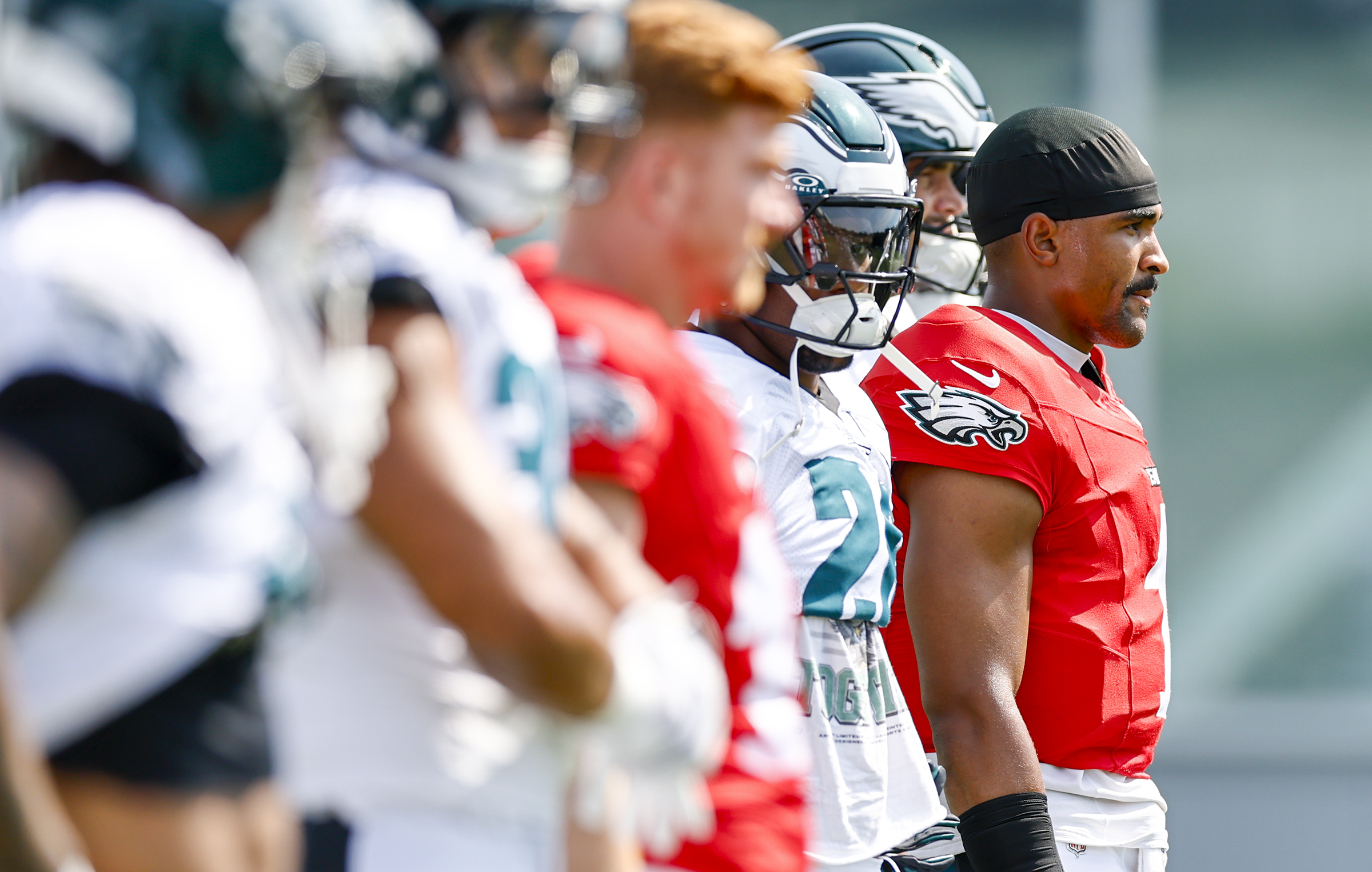
    The two-time defending NFC East champion Eagles begin their season Sunday, with the Washington Commanders coming to town for the Week 1 opener at the Linc (4:25 p.m. Fox). With that in mind, let’s meet every member of the 53-man squad. Players are listed by expected order on the Eagles’ depth chart.

    Quarterbacks (4)

    Jalen Hurts

    College: Oklahoma | Years pro: 6 | 6-1, 223

    Another year, another new offensive coordinator and play caller for Hurts, who has dealt with constant change since he was in college. All eyes are on the quarterback as the Eagles enter 2026 with a revamped offense under new coordinator Sean Mannion. How will Hurts take to running an offense that has him taking more snaps from under center, utilizing more play action, and one that may even ask him to run a little more often? How will he deal with a wide receiving corps that doesn’t have A.J. Brown anymore? There are a lot of question marks hanging over the offense, and Hurts is under the spotlight. — Neiburg

    Andy Dalton struggled in the preseason. Could he still be a trade target?Yong Kim / Staff Photographer

    Andy Dalton

    College: TCU | Years pro: 15 | 6-2, 220

    The Eagles traded a seventh-round pick for Dalton in hopes that the 38-year-old could compete for the No. 2 job behind Hurts or, if Tanner McKee outperformed him in camp, could be used as trade bait to a quarterback-needy team. Neither happened, and so Dalton enters the 2026 season either second or third on the depth chart. Dalton has played a lot of football, but he’s four years removed from being a starter. — Neiburg

    Tanner McKee

    College: Stanford | Years pro: 2 | 6-6, 231

    Coach Nick Sirianni and GM Howie Roseman are hesitant to name a backup quarterback, so McKee will either be the No. 2 or No. 3 guy behind Hurts on the depth chart. It’s a clear battle between him and Dalton, who might have the edge due to his experience. McKee has shown flashes over the years — tossing 269 yards and two touchdowns in a meaningless game against the Giants in 2024 — but he hasn’t quite jelled with Mannion’s offense. — Novozinsky

    Cole Payton

    College: North Dakota State | Years pro: 1st | 6-3, 232

    Payton, a rookie fifth-round pick from North Dakota State, fell victim to the QB battle in front of him this summer. He saw some garbage-time action in the preseason, but it wasn’t nearly enough to showcase his dual-threat potential. Roseman and Sirianni (rightly) gave his reps to Dalton and McKee, who are still battling for the QB2 job. — Novozinsky

    Saquon Barkley’s effectiveness in Sean Mannion’s offensive scheme will be a major storyline. Elizabeth Robertson / Staff Photographer

    Running Backs (3)

    Saquon Barkley

    College: Penn State | Years pro: 8 | 6-0, 233

    The offense took a step back last year in part because Barkley could not come close to replicating his 2024 season, when he became the ninth player in NFL history to rush for more than 2,000 yards in a season. Doing it again would have been a big ask, but Barkley’s ability to pile up yards was hampered by an offensive line that was injured and an offensive scheme that couldn’t find ways to get him the ball in space. This year, the Eagles are implementing a wide zone running scheme that should favor Barkley and a running game that will be pivotal to the team’s success. — Neiburg

    Tank Bigsby

    College: Auburn | Years pro: 3 | 5-11, 215

    The Eagles acquired Bigsby a few weeks into the 2025 season and the backup running back was one of the few bright spots on offense. He rushed 58 times for 344 yards (5.9 per carry) but had more than four carries in only three games. A new-look rushing attack could ask for Bigsby to spell Barkley more often this year. — Neiburg

    Will Shipley

    College: Clemson | Years pro: 2 | 5-11, 209

    Shipley enters his third season with the team as the third-string running back behind Barkley and Bigsby and as a key special teams contributor, particularly at kick returner. He won’t likely have ample touches on offense, but he acquitted himself nicely in the preseason, both as a runner and as a receiver. Mannion could find a role for him in the offense in certain situations. — Reiner
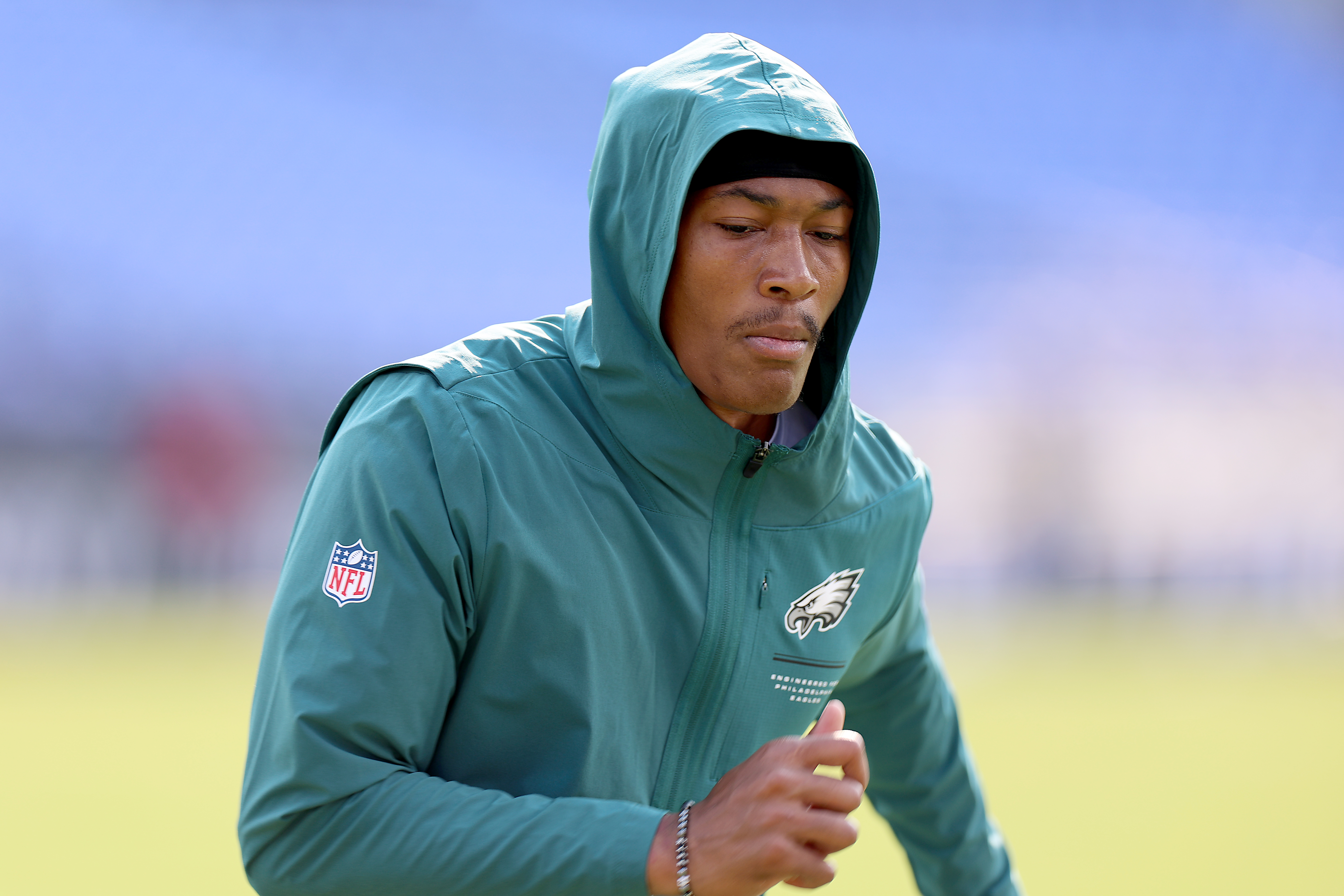
    is DeVonta Smith ready to embrace WR1 status?David Maialetti / Staff Photographer

    Wide receivers (6)

    DeVonta Smith

    College: Alabama | Years pro: 5 | 6-0, 170

    With A.J. Brown shipped off to the Patriots, all eyes are on Smith as the Eagles’ WR1. Prominent members of the organization, including Sirianni and Roseman, have stated they believe Smith is ready to take on a bigger role in the offense. Smith, who turns 28 in November, could be the team’s leading receiver for the first time since 2021. He missed most of training camp with a hamstring injury, but he is expected to be available for Week 1. — Reiner

    Dontayvion Wicks

    College: Virginia | Years pro: 3 | 6-1, 206

    The Eagles acquired the 25-year-old Wicks from the Green Bay Packers this offseason. He made the most of his opportunities throughout camp, and with Makai Lemon sidelined for a significant portion of the offseason with a hamstring injury, Wicks made his case for the WR2 job. Wicks’ best season came in his rookie year in 2023, when he racked up 581 yards and four touchdowns on 39 receptions. The two seasons that followed paled in comparison. Wicks will look to prove he’s capable of taking on a greater workload in the Eagles offense. — Reiner
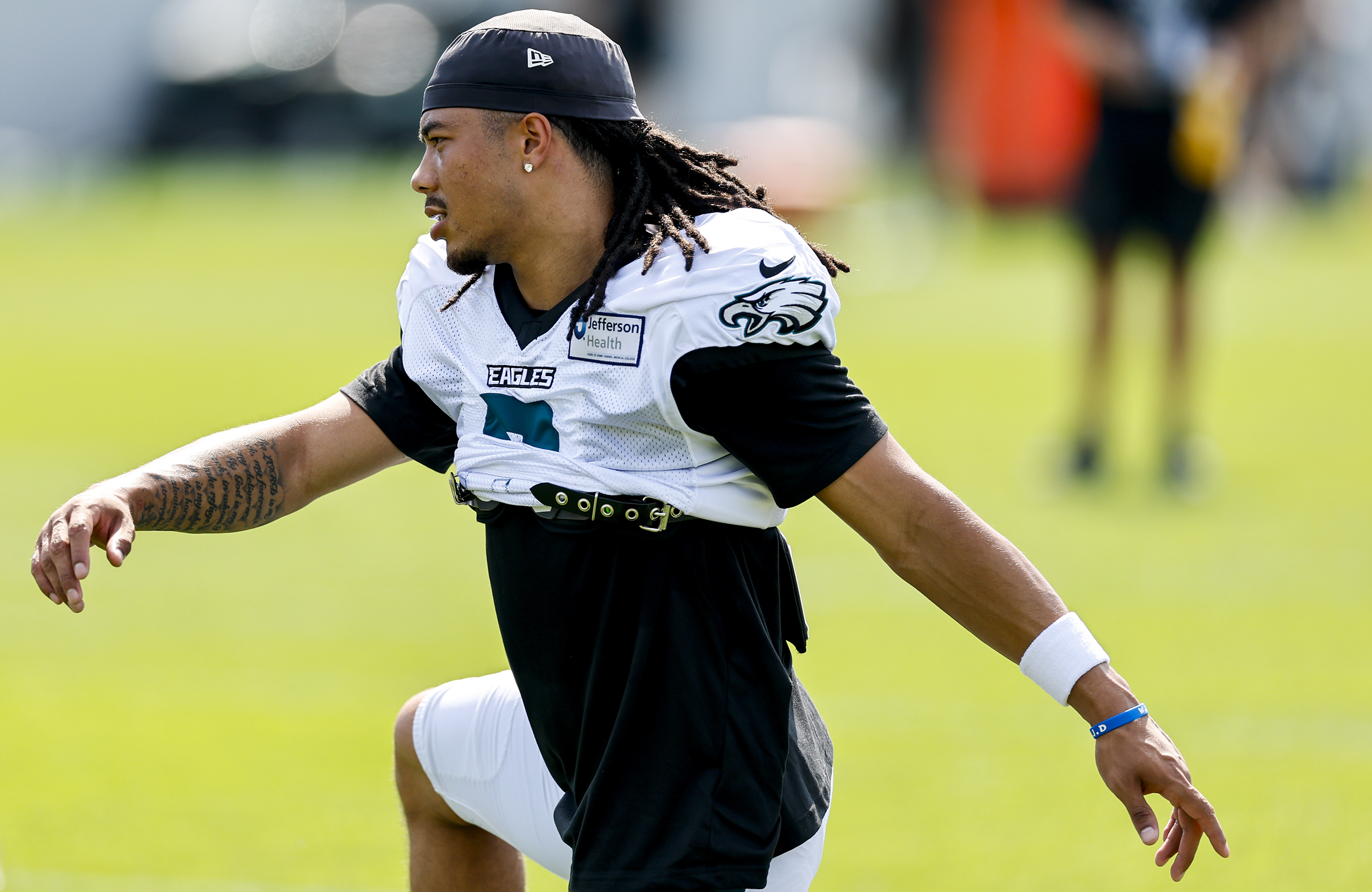
    Can Makai Lemon recover from a low-impact preseason and training camp?Yong Kim / Staff Photographer

    Makai Lemon

    College: USC | Years pro: 1st | 5-11, 192

    Fans and pundits will be looking at Lemon under a microscope this season — and for good reason. The 22-year-old rookie was drafted in hopes that he could help replicate Brown’s production in the aggregate, alongside the Eagles’ other weapons. Lemon isn’t off to the best start, missing the majority of training camp then struggling in his lone preseason appearance (3 yards on three catches and a drop that led to an interception). — Novozinsky

    Darius Cooper

    College: Tarleton State | Years pro: 1 | 5-11, 210

    Last year’s training camp darling earned a roster spot by doing a lot of what Sirianni called the “dirty work.” The Eagles asked Cooper mostly to be a blocker and play special teams. He was targeted just 11 times on 212 offensive snaps. Cooper had a good start to training camp but seemed to fade a little down the stretch. That being said, there’s an opportunity for Cooper to have a bigger role in the offense this year. — Neiburg
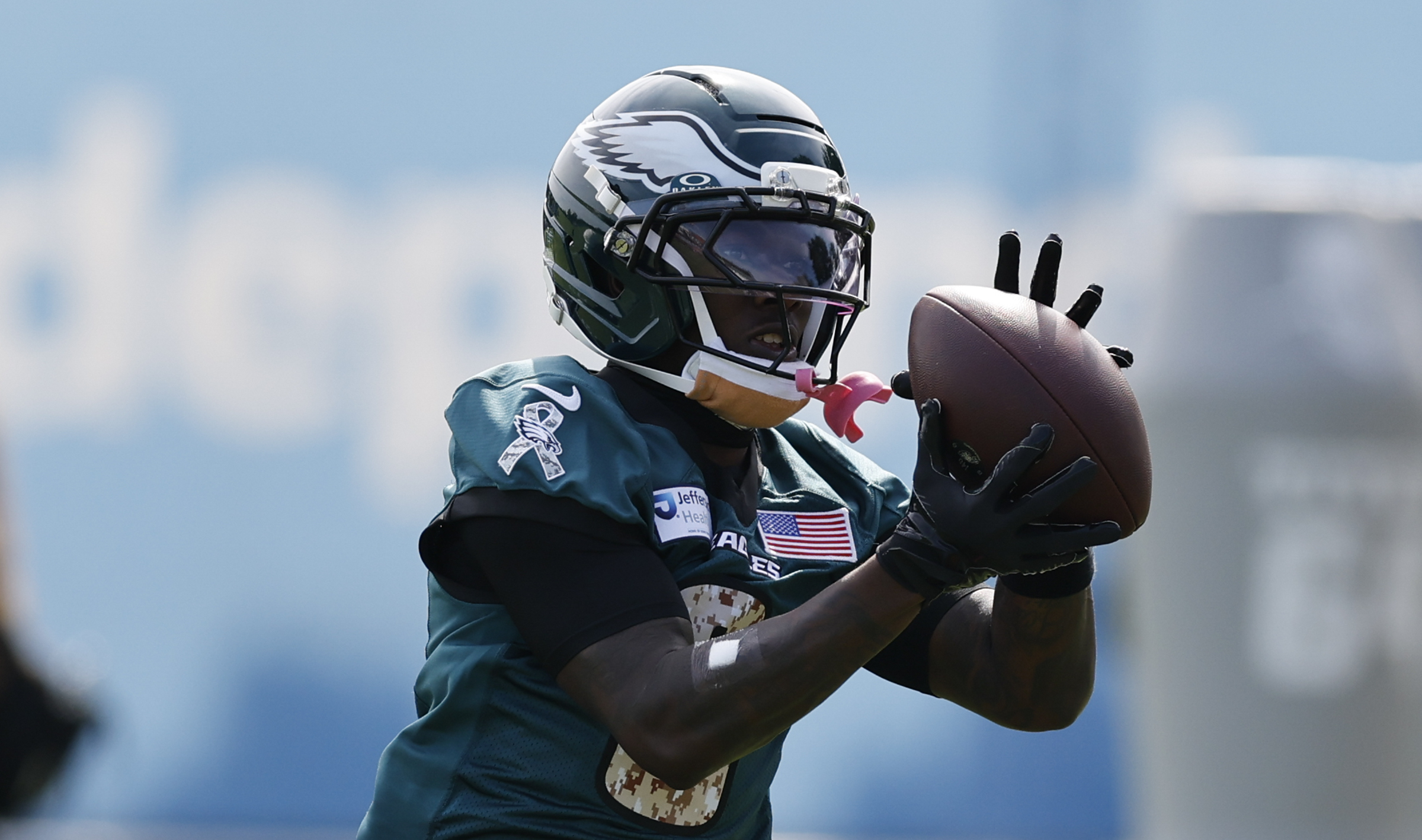
    Hollywood Brown is a former 1,000-yard receiver who is looking to revive his career in Philly. Yong Kim / Staff Photographer

    Hollywood Brown

    College: Oklahoma | Years pro: 7 | 5-9, 170

    Roseman signed Brown to a one-year deal in free agency worth $5 million guaranteed after Brown followed up an injury-shortened 2024 campaign by catching 49 passes for 587 yards and five touchdowns last year with Kansas City. He’s not the same receiver he was when he broke into the league as a 2019 first-round pick with Baltimore, but Brown could be a reliable third or fourth option despite being invisible at times during his first training camp in Philly. — Neiburg

    Elijah Moore

    College: Ole Miss | Years pro: 5 | 5-10, 178

    Out is A.J. Brown, in is his college friend and teammate. The Eagles signed Moore to a one-year deal to add some depth to the position group. The 2021 second-round pick then went out and earned his spot with a strong training camp. Moore’s 2025 season with the Bills and Broncos was rocky, and he came to the Eagles facing a career crossroads. He could have a revival, especially if Lemon struggles early and the Eagles ask Moore to be their slot receiver. — Neiburg

    unCovering the Birds: Is tight end the biggest area of concern?
    Video: unCovering the Birds: Is tight end the biggest area of concern?

    Tight ends (4)

    Dallas Goedert

    College: South Dakota State | Years pro: 8 | 6-5, 256

    Goedert is back with the Eagles for a ninth season after the team signed the 31-year-old to a one-year deal. Goedert is coming off a productive 2025 season where he had more touchdowns (11) than he did in the previous three seasons combined. Goedert will again be relied on in the passing game, but the Eagles will need him to give a little more as a blocker in a run scheme that asks more of the tight ends than the previous one did. — Neiburg

    Johnny Mundt

    College: Oregon | Years pro: 8 | 6-4, 245

    Blocking from the tight end spot was a struggle at times for the Eagles in 2025, so they tried to rectify that by signing Mundt, who has become one of the better blocking tight ends in the NFL over the last few seasons. What’s more, he’s also experienced in the Eagles’ new style of offense, having played on multiple teams that deploy some version of the Kyle Shanahan-Sean McVay offense. — Neiburg
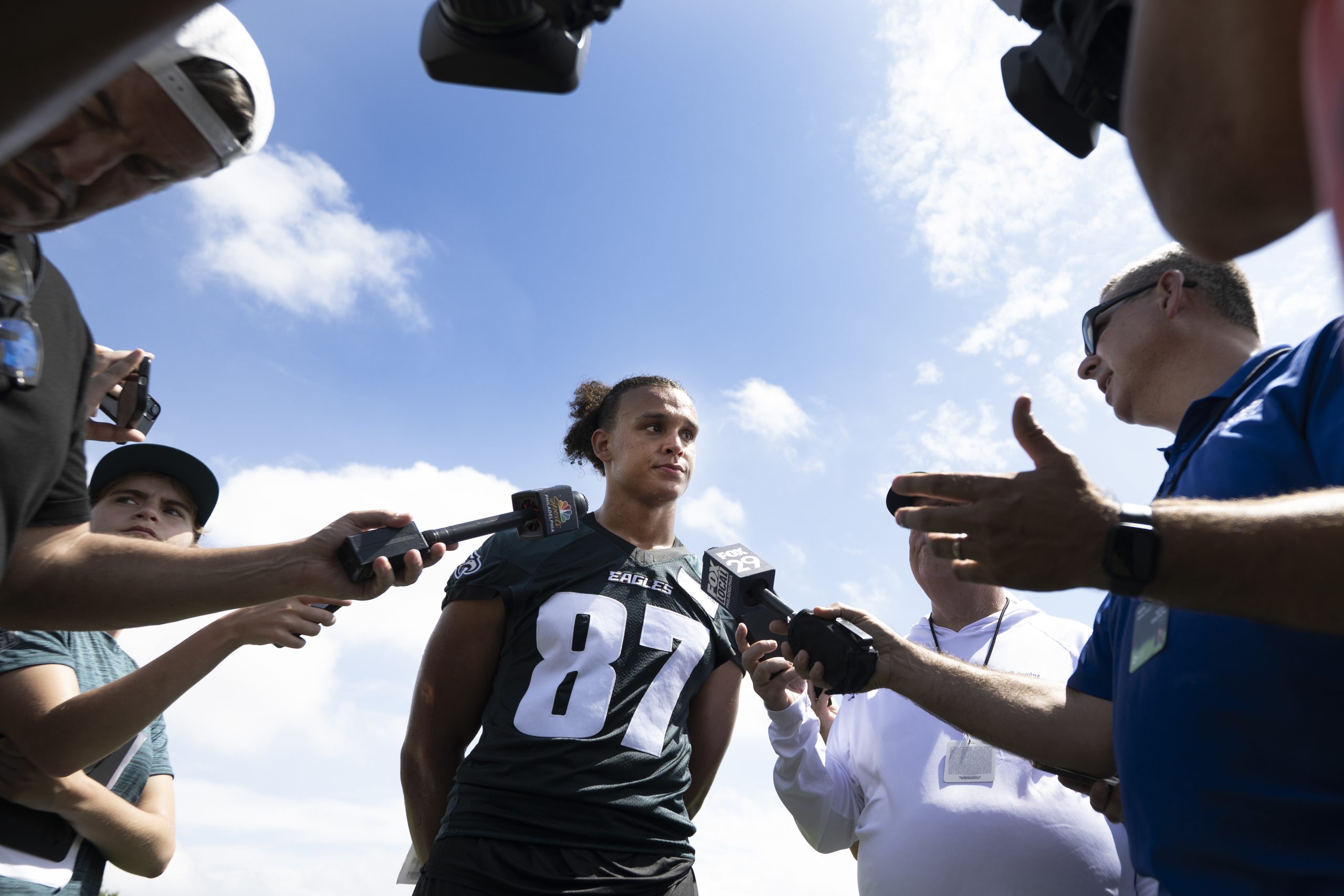
    Eli Stowers’ ability to make a Year 1 impact is in question. Jose F. Moreno / Staff Photographer

    Eli Stowers

    College: Vanderbilt | Years pro: 1st | 6-3, 239

    The Eagles selected Stowers with their second-round pick in part because it’s past time they started planning for the future at the position. Stowers is a former quarterback who transitioned to tight end in college after a shoulder injury. The Eagles loved his athleticism and think they’ll eventually be able to take advantage of some mismatches when he’s running routes, but it’s unclear how involved the rookie will be in the offense early in the season. — Neiburg

    EJ Jenkins

    College: Georgia Tech | Years pro: 1 | 6-6, 245

    Jenkins was one of the bubble offensive skill players who made the initial 53-man roster. He has been with the Eagles for most of the last three years, primarily on the practice squad, and he has appeared in 14 games between the regular season and the postseason. Jenkins checks the box as another “Y” tight end responsible for lining up inline and blocking, a coveted role in the Shanahan/McVay offense. — Reiner
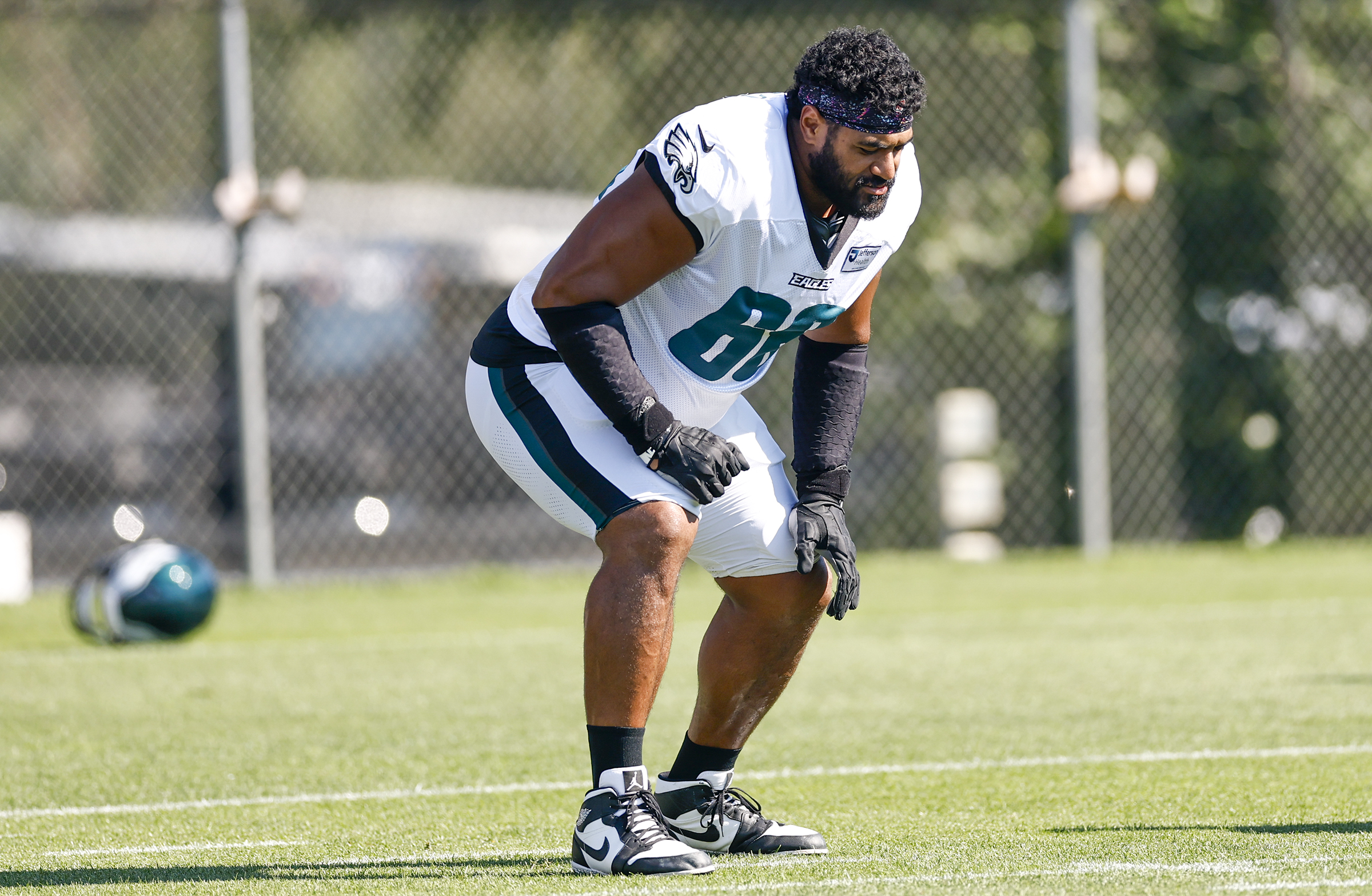
    Jordan Mailata returns as one of the Eagles’ most reliable players. Yong Kim / Staff Photographer

    Offensive linemen (9)

    Jordan Mailata

    College: N/A | Years pro: 8 | 6-8, 365

    While most of the offensive line was hampered by injury last season, Mailata was one of the unit’s healthiest members, starting in all 16 games that the starters played (not including Week 18). He has seemingly improved with age — according to Pro Football Focus, Mailata conceded two sacks in 2025, the second-lowest total of his career (he gave up one sack in 2024). Two years ago, he earned second-team All-Pro honors. Can he earn leaguewide acclaim in 2026? — Reiner

    Landon Dickerson

    College: Alabama | Years pro: 5 | 6-6, 332

    Dickerson admitted that last season, he returned to action too quickly after undergoing meniscus surgery. He had a full offseason to recover from his various injuries, which included traveling to Colombia to receive stem cell therapy to manage his pain. Now, Dickerson says he’s healthy as he aims to bounce back in his sixth season as the starting left guard. Can he get back to the standard he established from 2022-24 when he was an original-selection Pro Bowler for three straight years? — Reiner
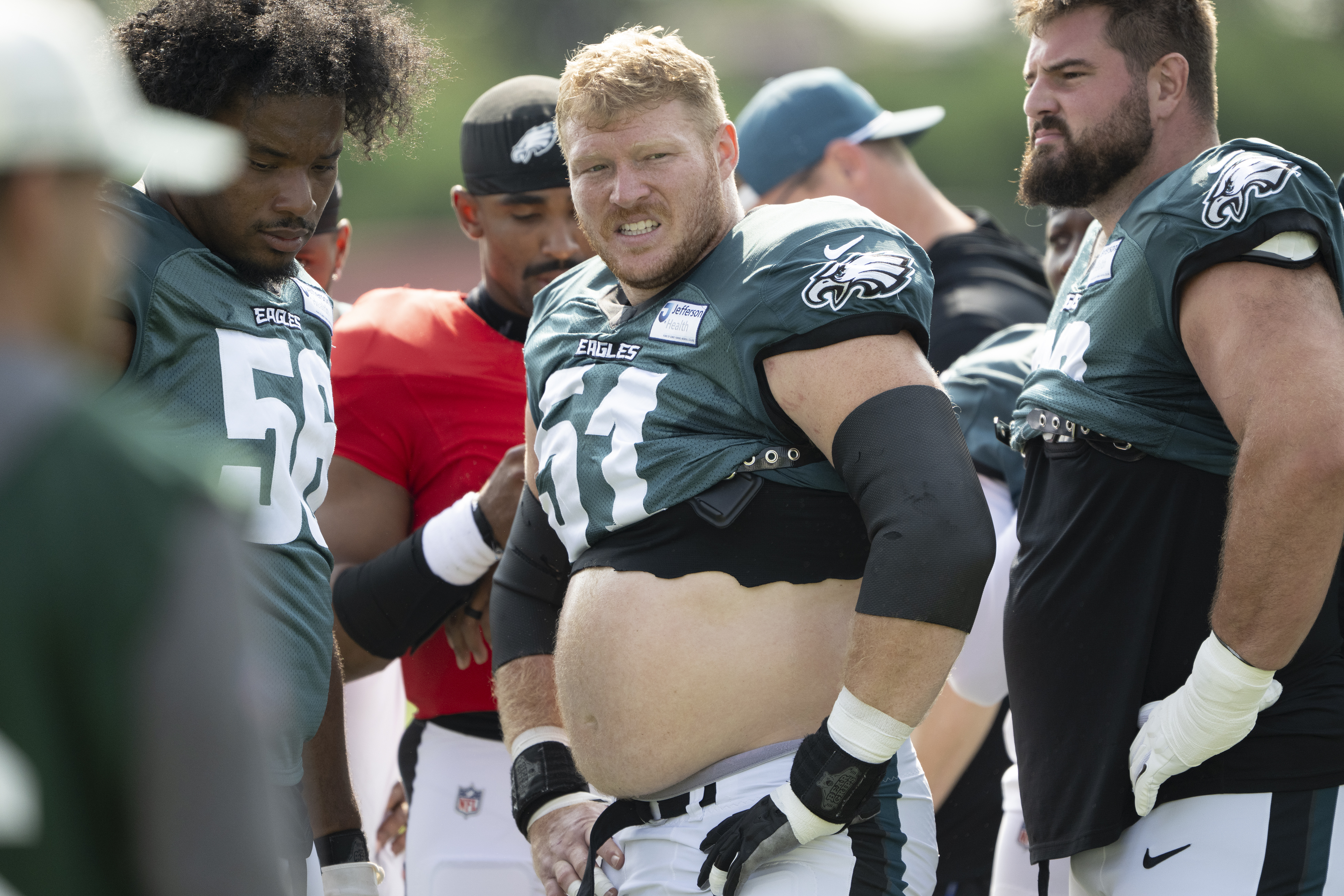
    A healthy Cam Jurgens would be a mark in the Eagles’ favor in 2026. Jose F. Moreno / Staff Photographer

    Cam Jurgens

    College: Nebraska | Years pro: 4 | 6-3, 303

    Chronic back pain slowed Jurgens at times in 2025, though he still was named to the Pro Bowl for the second consecutive season. Like Dickerson, Jurgens sought to rid himself of that pain by flying to Colombia for stem cell therapy treatment during the offseason. Jurgens says he’s feeling a lot better, and he appears to be moving around a lot better, too. The new running attack should fit his athletic profile. — Neiburg

    Tyler Steen

    College: Alabama | Years pro: 3 | 6-6, 321

    Steen is heading into his second season as the starting right guard. He was solid in his first season, conceding just two sacks, according to PFF. His teammates have lauded his improvement throughout training camp as he heads into a contract year. Steen will have an opportunity to play his way into a pay raise, either in Philadelphia or elsewhere. — Reiner
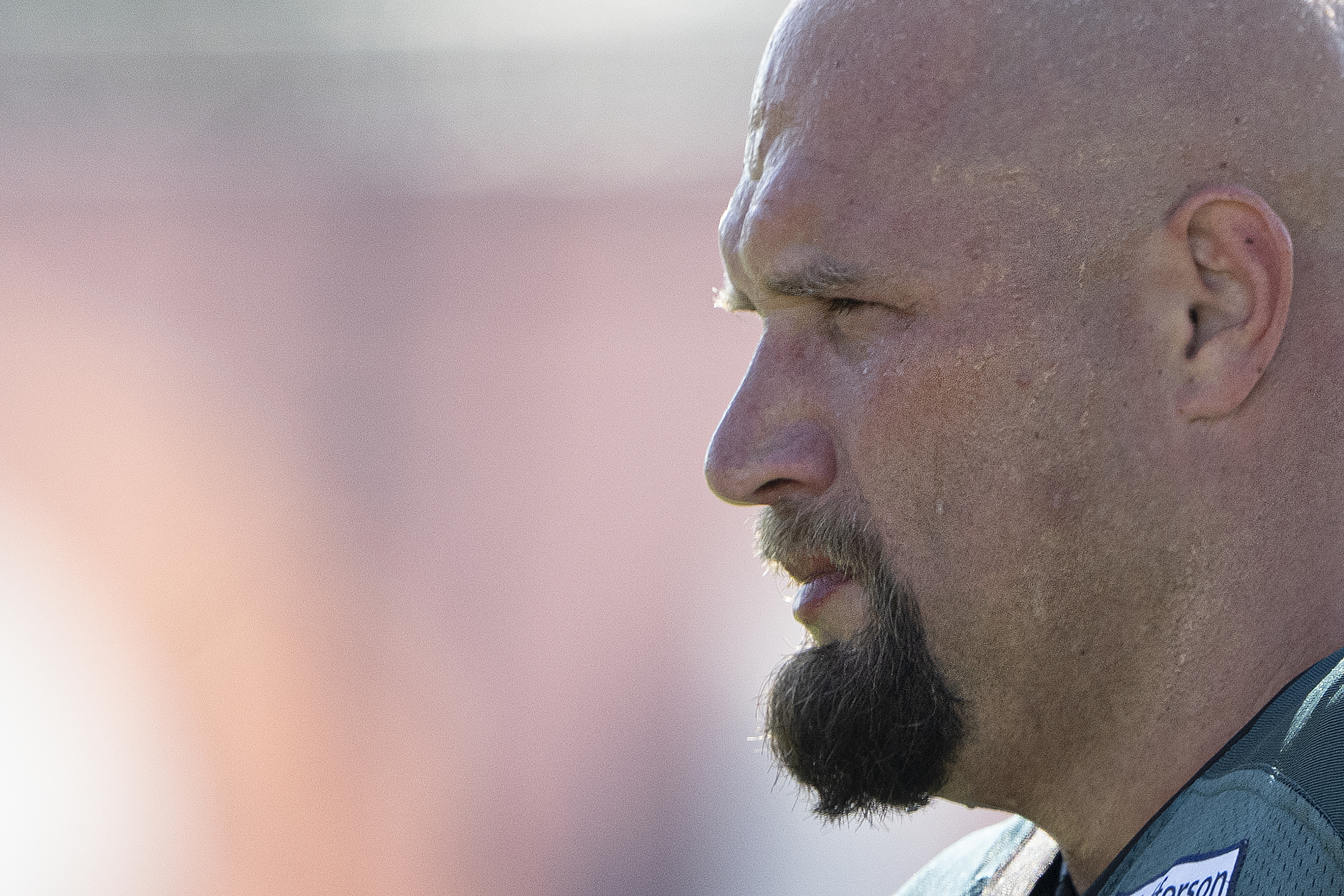
    Lane Johnson said 2026 will probably be his last go-round. Jose F. Moreno / Staff Photographer

    Lane Johnson

    College: Oklahoma | Years pro: 13 | 6-6, 325

    Johnson’s reign at right tackle is nearing its end. During training camp, Hurts’ 36-year-old protector said that 2026 will “probably” be his final season. Johnson played just 10 games last season, as he was sidelined with a Lisfranc foot injury. The six-time Pro Bowl, two-time All-Pro right tackle will have an opportunity to end his career on a high note in a new offense featuring a different blocking scheme in the run game, so long as he can stay healthy. — Reiner

    Fred Johnson

    College: Florida | Years pro: 7 | 6-7, 326

    Johnson has been a quiet mainstay in his previous three seasons with the Eagles, appearing in all 57 of the team’s games from 2023-25 (51 regular season, 6 playoffs). He’s mainly played on special teams units but has also earned 14 starts as the swing tackle during his time in Philly, including eight last year. Whether he serves as the primary tackle backup this season remains an open question — the team is high on rookie Markel Bell — but Johnson will provide veteran depth no matter his place on the depth chart. — Novozinsky
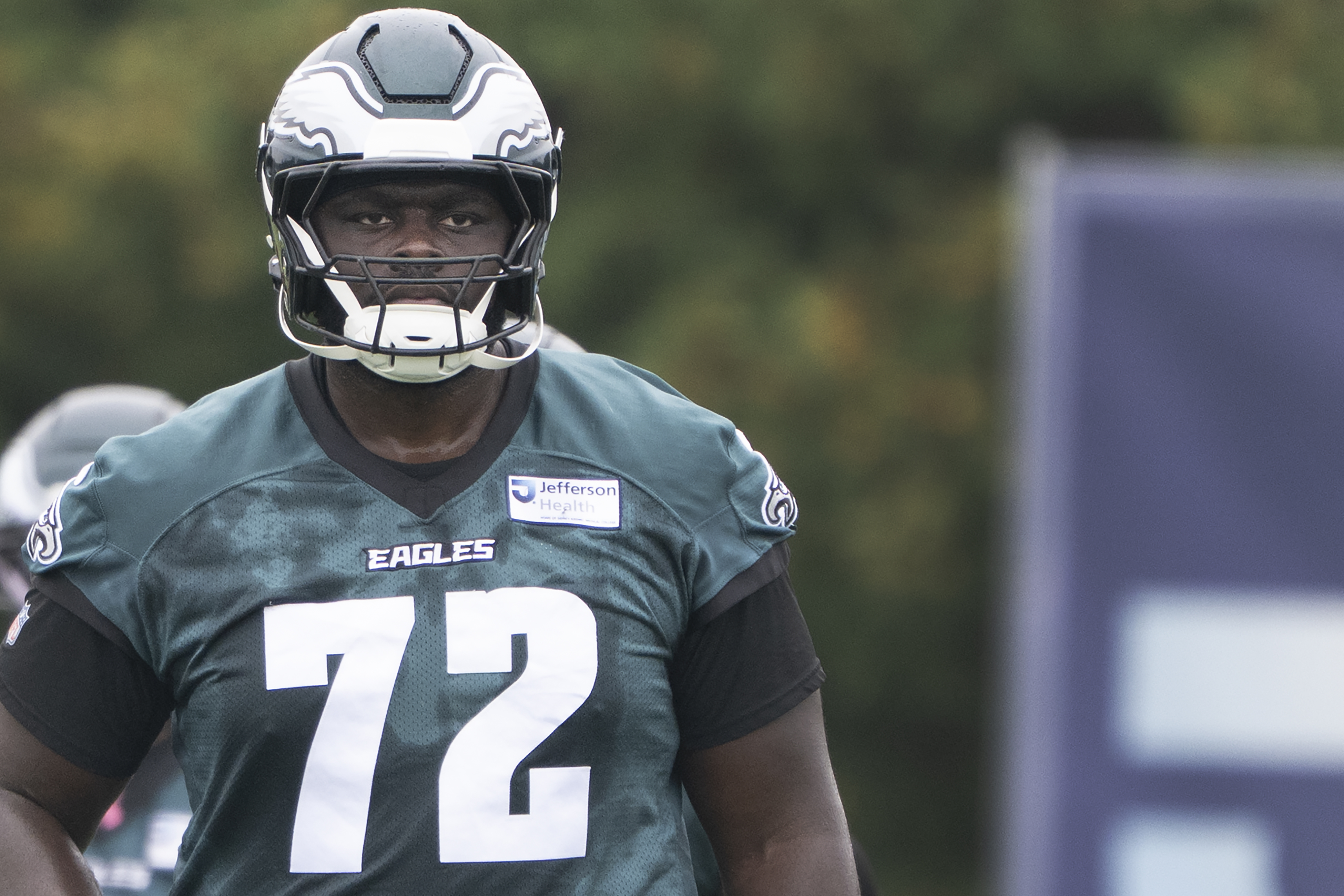
    Markel Bell could be the Eagles’ starting tackle of the future. Jose F. Moreno / Staff Photographer

    Markel Bell

    College: Miami (FL) | Years pro: 1st | 6-9, 346

    The Eagles identified Lane Johnson’s heir apparent when they selected Bell in the third round of the draft. Throughout camp, he made the transition to right tackle, as he had primarily played at left tackle in college. Bell will have the opportunity to develop this season behind Johnson. If the 14-year veteran gets hurt, the Eagles don’t necessarily have to turn to Bell right away, as they also have Fred Johnson in a reserve role. — Reiner

    Drew Kendall

    College: Boston College | Years pro: 1 | 6-4, 308

    The Eagles drafted Kendall, a college center, in the fifth round last year and then started cross-training him at guard. A year working behind some veteran offensive linemen and getting in an NFL training facility has done wonders. Kendall is bigger, stronger, and looks ready to step in if called upon to play any of the three interior offensive line positions. — Neiburg
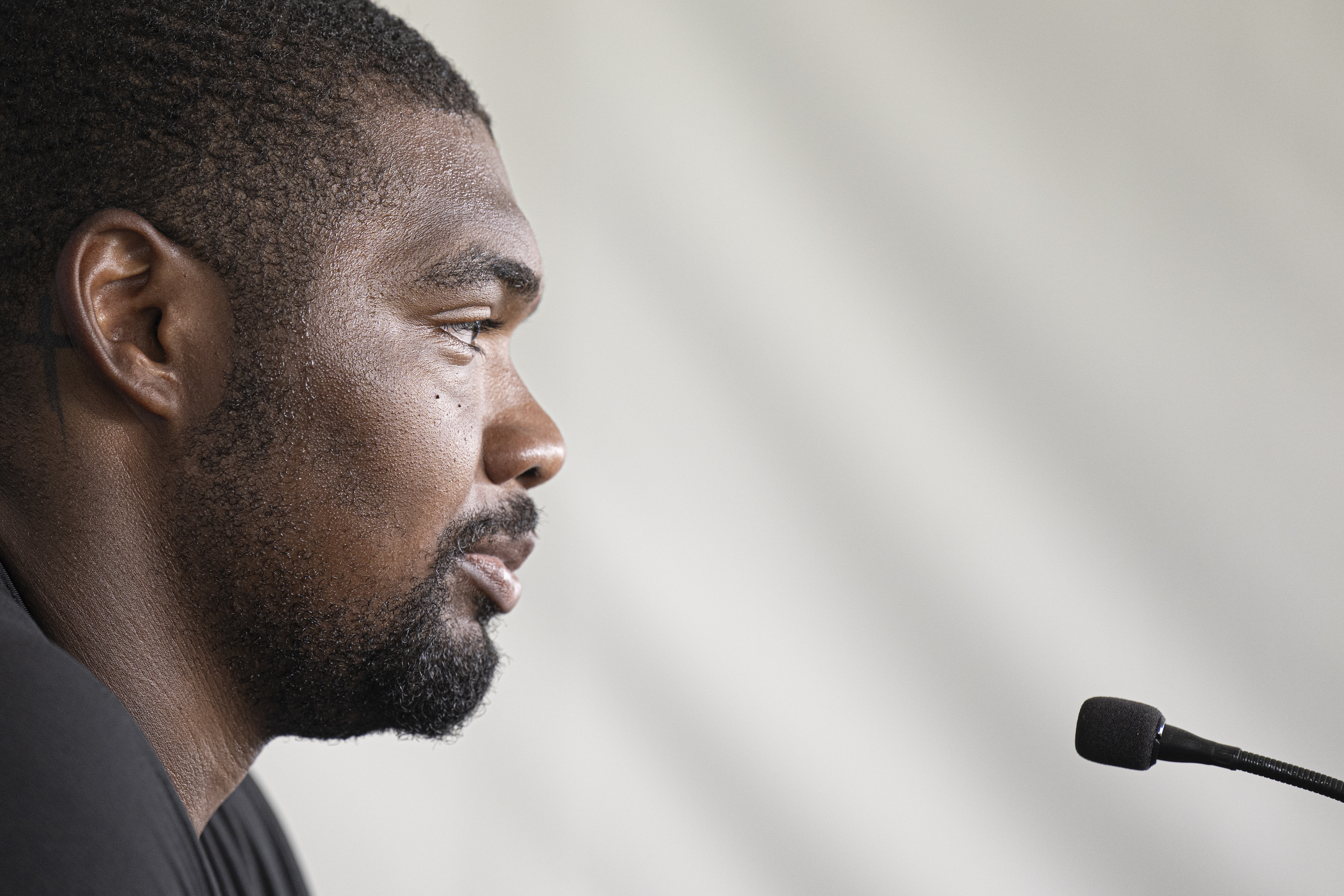
    Willie Lampkin was one of the stories of training camp for the Eagles. Jose F. Moreno / Staff Photographer

    Willie Lampkin

    College: North Carolina | Years pro: 1 | 5-11, 290

    The Eagles claimed Lampkin at the end of camp last season after the Los Angeles Rams waived him with an injury designation. He spent the entire season on injured reserve. Finally healthy, Lampkin impressed throughout the preseason despite his undersized stature and earned himself a spot as a depth interior lineman on the initial 53. Can the Eagles find a way to get him on the field in specialized personnel packages this season? — Reiner

    Micah Morris

    College: Georgia | Years pro: 1st | 6-5, 334

    It’s easy to see why the Eagles, in search of offensive line depth, used a sixth-round pick on Morris this year. He has the body type and athleticism to play guard in the NFL. Morris showed some flashes during training camp and in preseason contests. He’s likely the last guy on the depth chart and won’t be called upon to play much, but the 23-year-old could be an intriguing prospect for the future. — Neiburg
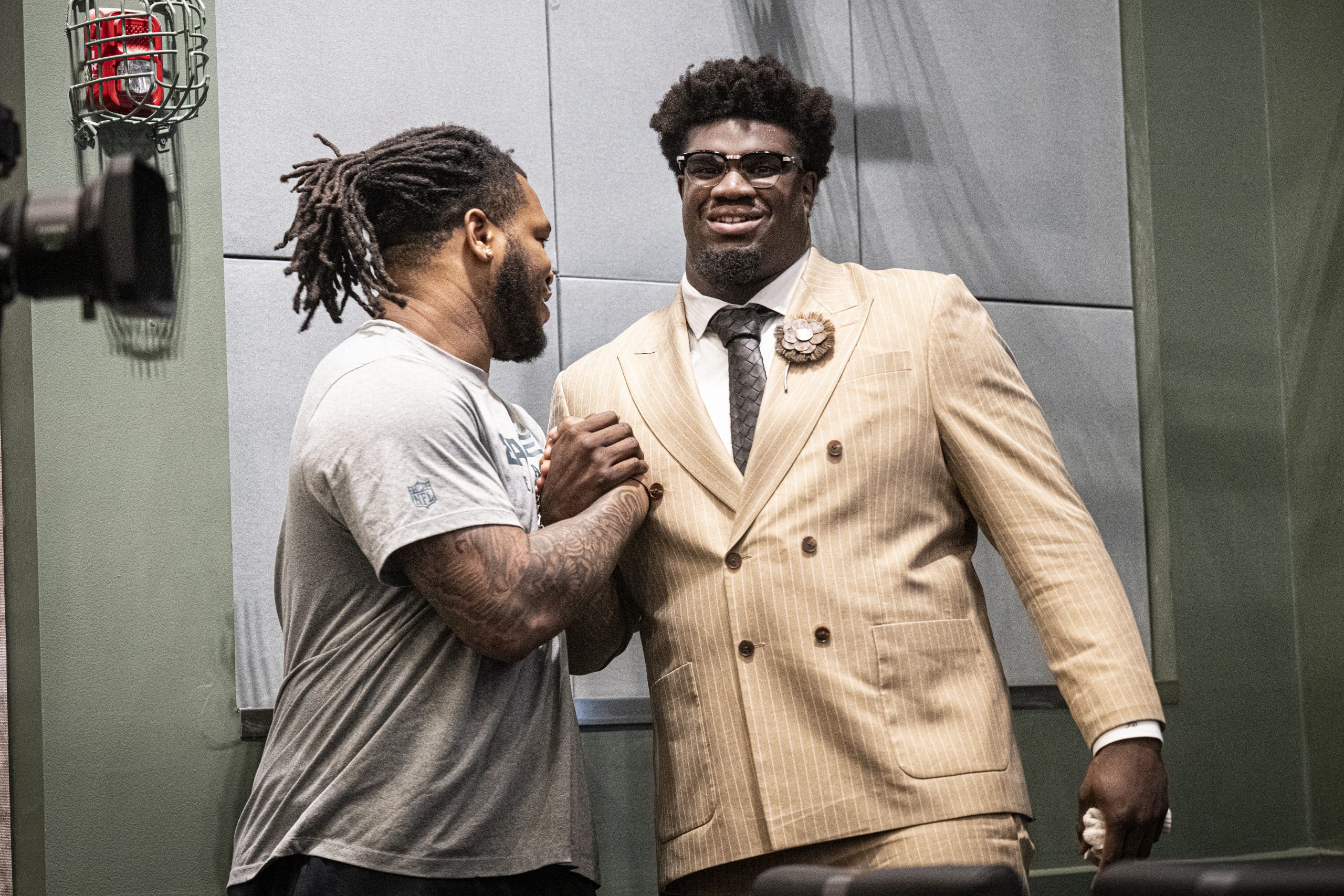
    Jalen Carter (left) and Jordan Davis are both looking to deliver in 2026 after earning huge offseason contract extensions. Jose F. Moreno / Staff Photographer

    Interior defensive line (5)

    Jalen Carter

    College: Georgia | Years pro: 3 | 6-3, 314

    He got paid. Now can he bounce back? Last season, Carter generated a career-low 7.7% pressure rate while facing a double-team on a career-low 41.7% of his pass rushes, according to Next Gen Stats. This came after his wildly successful 2024 season, during which he helped propel the Birds to a Super Bowl win. Now recovered from injury and 10 pounds lighter, Carter should be one of the top defensive tackles in the league this season. — Novozinsky

    Jordan Davis

    College: Georgia | Years pro: 4 | 6-6, 336

    It’s clear that Davis has a different mindset entering this season. Look no further than the fact that the Eagles named the 26-year-old a first-time captain on Friday. Davis, who inked a three-year, $78 million extension in March, is going to be a force in Vic Fangio’s defense once again this year. He’s coming off a career-best 72-tackle and 4.5-sack season and should replicate that this season. — Novozinsky
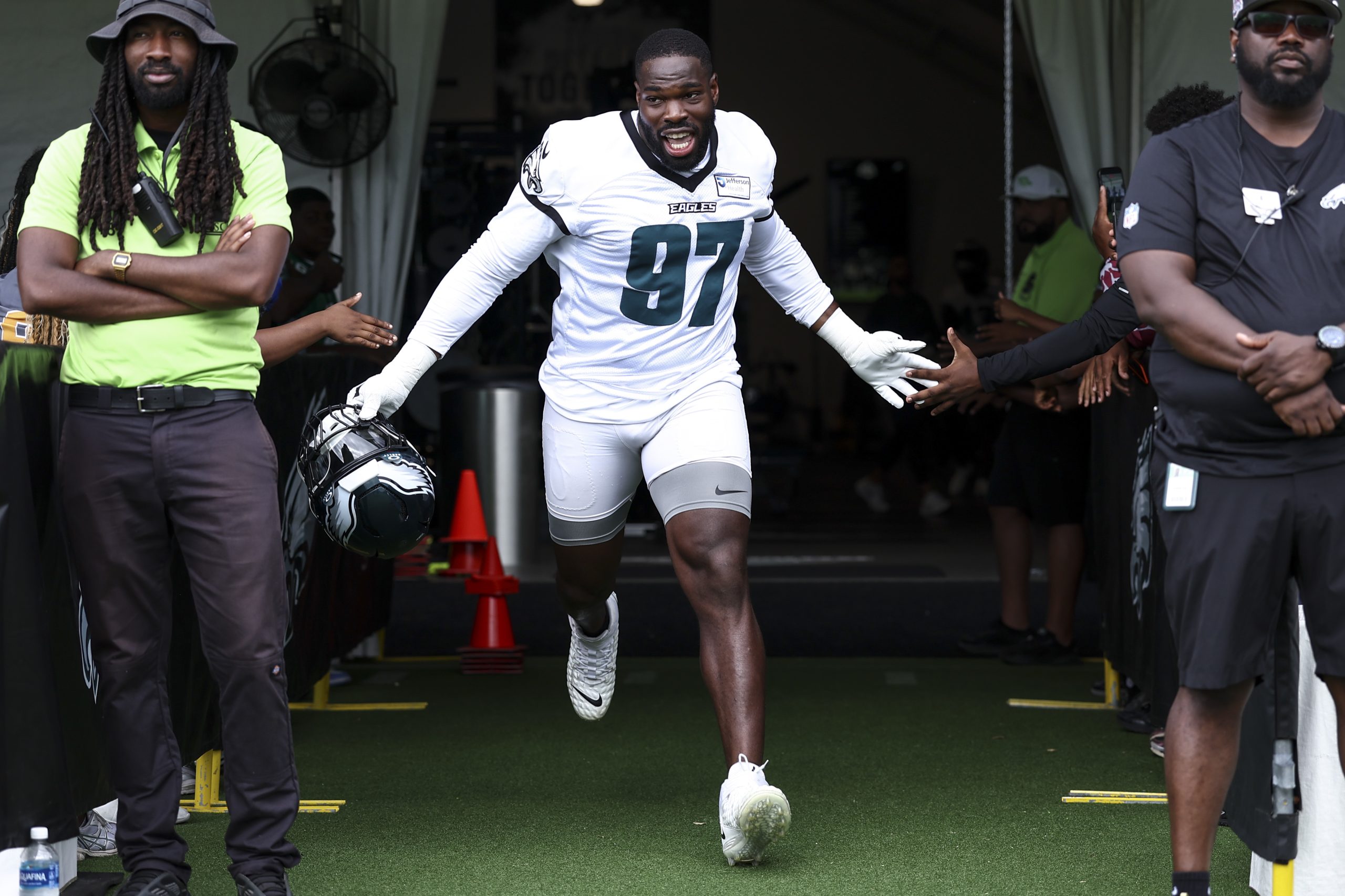
    Moro Ojomo had a strong training camp for the Eagles. Monica Herndon / Staff Photographer

    Moro Ojomo

    College: Texas | Years pro: 3 | 6-3, 292

    Ojomo watched Carter and Davis — who sit ahead of him on the depth chart — become two of the highest-paid defensive tackles in the league this offseason. The 2023 seventh-round pick is using that as motivation. The trio of Carter, Davis and an extra-motivated Ojomo have a chance to form the best DT trio in the NFL this season. — Novozinsky

    Byron Young

    College: Alabama | Years pro: 3 | 6-3, 292

    Young is sort of the other guy along a defensive interior front that could be among the best in the NFL with Carter, Davis and Ojomo. But Young has more than held his own when the Eagles have called his number. He played in all 17 games last season and tallied 37 tackles. He had three tackles for loss and four quarterback hits while playing 30% of the defensive snaps. With a healthier Carter, Young could see fewer snaps, but the Eagles certainly like what they have with their No. 4 defensive tackle. — Neiburg
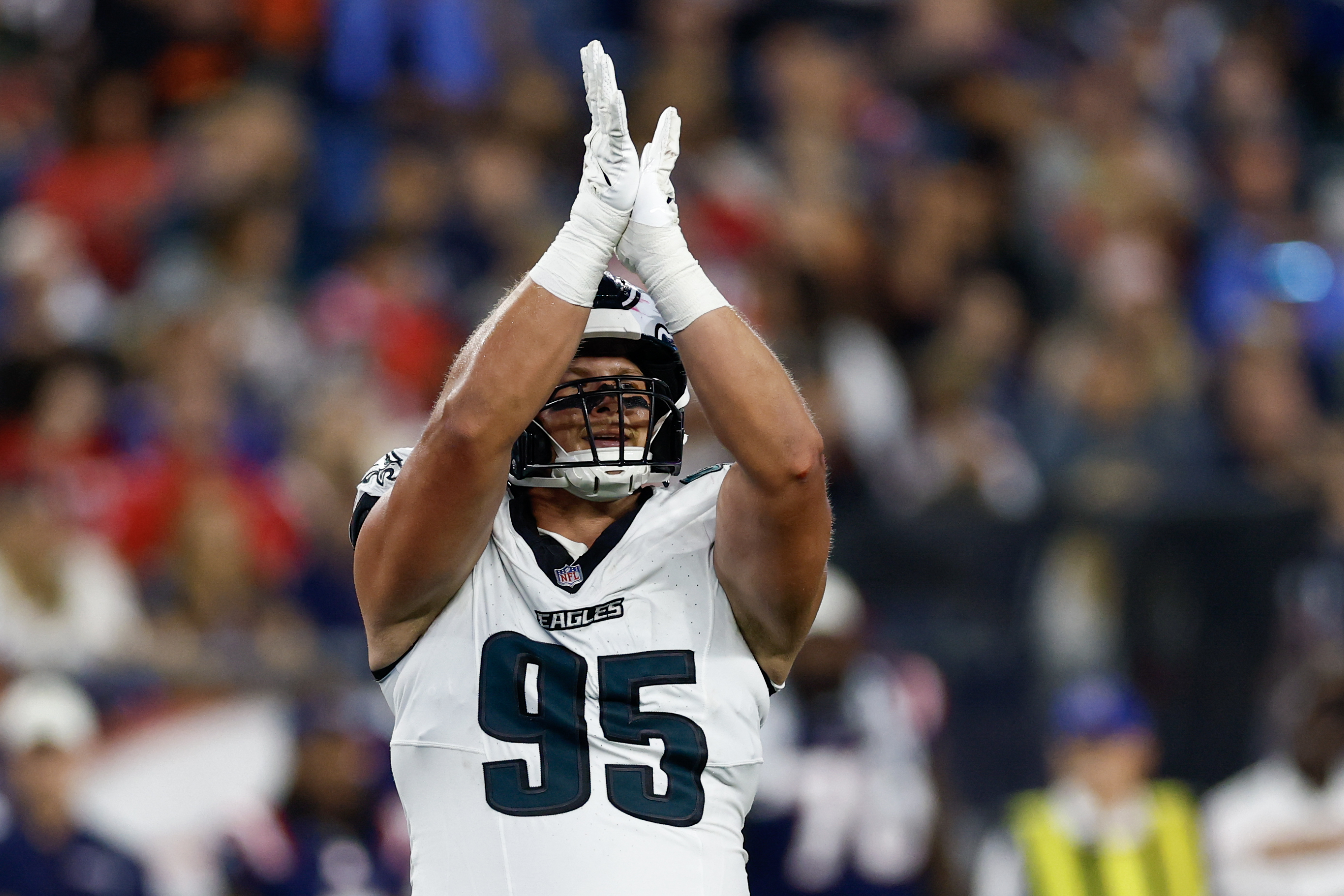
    Ty Robinson was a preseason standout. Yong Kim / Staff Photographer

    Ty Robinson

    College: Nebraska | Years pro: 1 | 6-5, 288

    Robinson has been on “life support” for the past year, according to Fangio, as he struggled to get on the field in his rookie season. His defensive coordinator said he “came to life” as training camp progressed. Robinson led the Eagles with three sacks in the preseason. He will have the opportunity to make an impact in a depth role behind the top trio of Carter, Davis, and Ojomo. — Reiner

    Edge rushers/outside linebackers (5)

    Jonathan Greenard

    College: Florida | Years pro: 6 | 6-3, 263

    Greenard was the biggest acquisition of the offseason. The Eagles during draft weekend sent two third-round picks to Minnesota to acquire Greenard and a seventh-round pick, and then quickly signed the 29-year-old to a four-year deal worth nearly $100 million. But Greenard missed all of training camp after suffering a pectoral injury late in the offseason and his availability for Week 1 is uncertain. When he’s healthy, the Eagles will need Greenard to consistently get after the quarterback. He had at least 12 sacks in 2023 and 2024 before his injury-shortened 2025 season. — Neiburg

    unCovering the Birds mailbag: Analyzing Jalyx Hunt's productive training camp
    Video: unCovering the Birds mailbag: Analyzing Jalyx Hunt’s productive training camp

    Jalyx Hunt

    College: Houston Christian | Years pro: 2 | 6-3, 252

    Hunt arguably had the best training camp of any Eagles player this summer. The 25-year-old edge rusher lived in the backfield during training camp, sweeping past the Eagles’ best offensive tackles with ease. With Greenard potentially injured to start the season, look for Hunt to take his reps and thrive. He had a 6.5-sack season last year. It’s not a stretch to say he might double that this year. — Novozinsky

    Nolan Smith Jr.

    College: Georgia | Years pro: 3 | 6-2, 238

    Smith re-injured his triceps last season, forcing him to miss over a month of game action. His production declined, going from 6.5 sacks in 2024 to three in 2025. Now healthy, Smith had a strong performance in training camp opposite Hunt while Greenard was sidelined. He’ll look to take his game to the next level with the opportunity for a contract extension looming. — Reiner
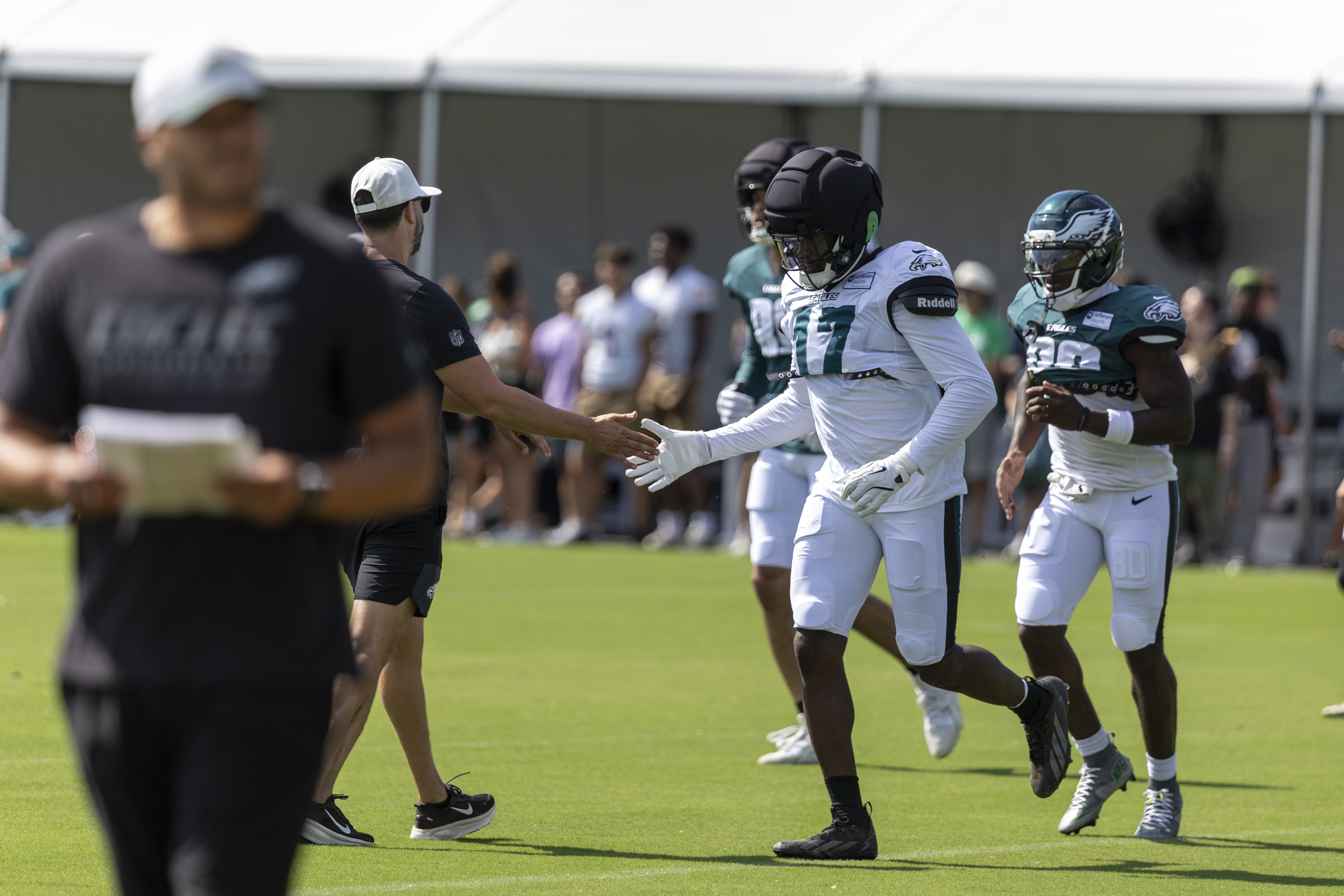
    Former Penn State and Temple star Arnold Ebiketie (17) is looking to make his name as an Eagle. Tyger Williams / Staff Photographer

    Arnold Ebiketie

    College: Penn State | Years pro: 4 | 6-3, 256

    After four years with Atlanta, Ebiketie hit free agency and found a team in the Eagles who needed to fill out the depth chart on the edge. His playing time dropped off a bit in 2025. He was on the field for 35% of the defensive snaps after playing 49% a year earlier. The Eagles have some workhorses at the top of the depth chart in Greenard, Hunt and Smith, but Ebiketie may need to play a little more if Greenard isn’t ready for Week 1. — Neiburg

    A.J. Epenesa

    College: Iowa | Years pro: 6 | 6-6, 260

    It was a weird offseason for Epenesa. The Browns signed him to a one-year deal worth up to $5 million before balking at the deal weeks later, reportedly due to a failed physical. Now, he finds himself on a loaded Eagles defensive front — and he couldn’t be happier. The 27-year-old looked sharp in camp too, recording a handful of sacks and nabbing an interception on Day 2. — Novozinsky
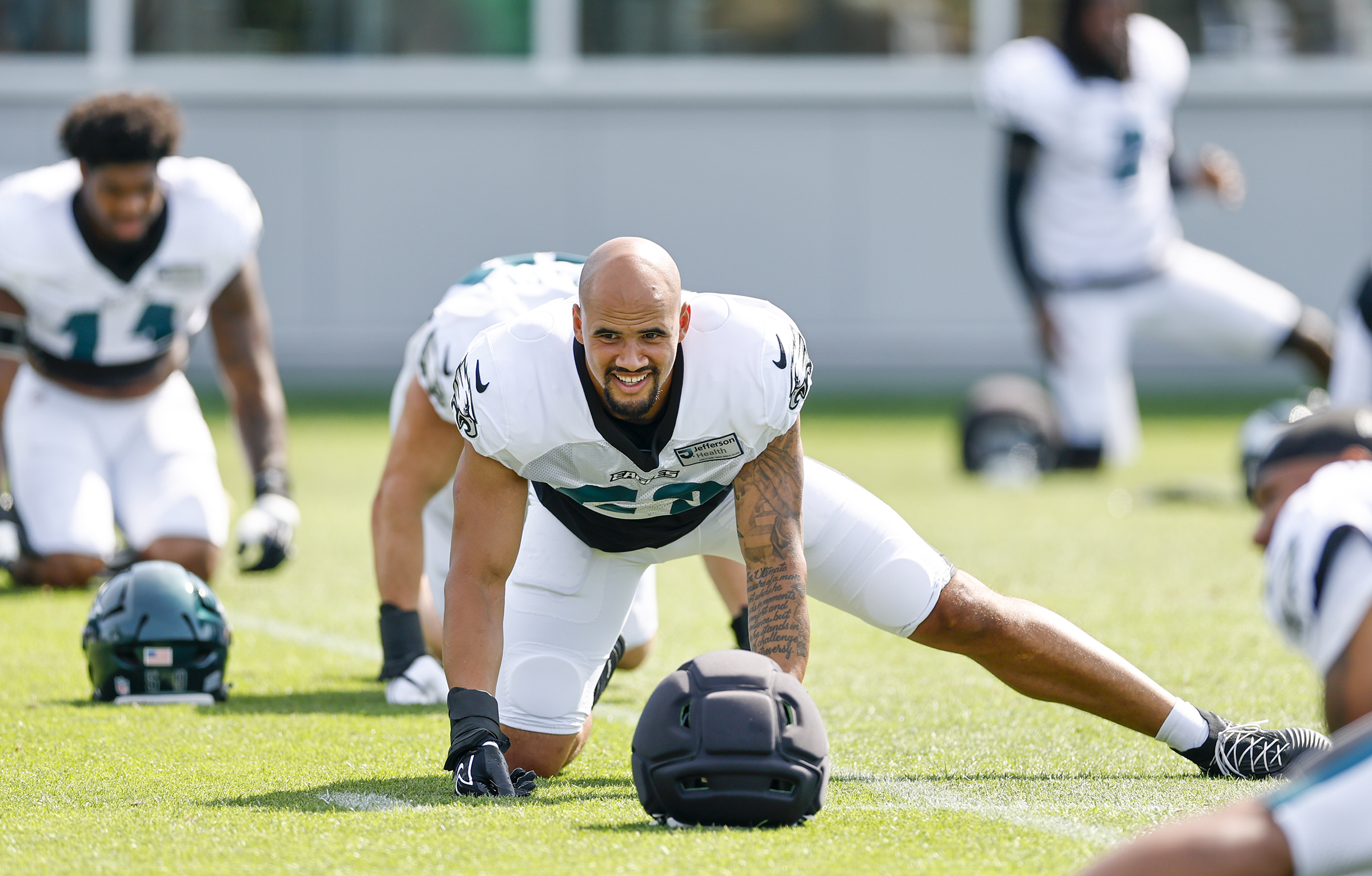
    Zack Baun is a linchpin of the Eagles defense. Yong Kim / Staff Photographer

    Inside linebackers (4)

    Zack Baun

    College: Wisconsin | Years pro: 6 | 6-3, 225

    Three years ago, Baun arrived in Philadelphia as an expected special teams ace and a prospective edge rusher. Since then, he’s become an All-Pro, two-time Pro Bowl, Super Bowl champion inside linebacker and one of the most important players in Fangio’s defense. After Nakobe Dean signed with the Las Vegas Raiders in free agency, Baun is set to take on green dot responsibilities as the on-field defensive play caller this season. — Reiner

    Jihaad Campbell

    College: Alabama | Years pro: 1 | 6-3, 235

    Campbell made an immediate impact in his rookie season, playing in all 17 games and recording a decent stat line of 80 tackles, one interception and three pass deflections. Can he have an even stronger sophomore year? He’ll have help in the room — Campbell, Zack Baun and Jeremiah Trotter Jr. form one of the deepest linebacker corps in the league. — Novozinsky
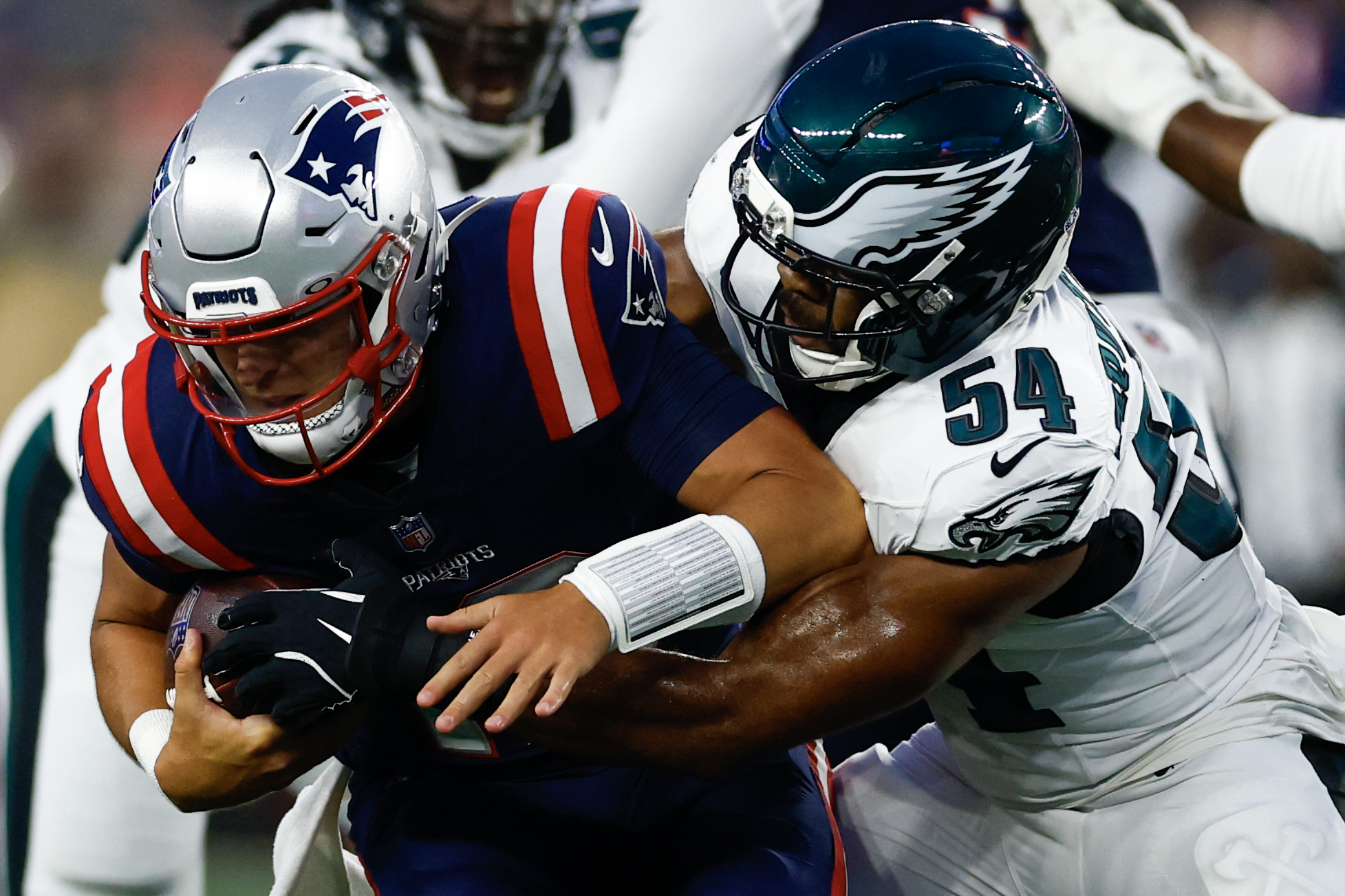
    Is this the year Jeremiah Trotter Jr. (54) breaks through on defense? Yong Kim / Staff Photographer

    Jeremiah Trotter Jr.

    College: Clemson | Years pro: 2 | 6-0, 225

    Trotter heads into his third season with the Eagles as the next man up behind Baun and Campbell. But the 2024 fifth-round pick has demonstrated in the preseason that he could start in any other defense. He finished behind Robinson with two sacks in the preseason, plus one tackle for a loss. Should either Baun or Campbell go down this year, the Eagles ought to feel comfortable with Trotter taking their place. — Reiner

    Smael Mondon Jr.

    College: Georgia | Years pro: 1 | 6-2, 224

    The 2025 fifth-round pick played just 14 defensive snaps last season but was a core special teamer. That shouldn’t change much in 2025 unless the Eagles suffer a few injuries. Linebacker is arguably their deepest position. Mondon seems to be developing nicely and held off a few challengers for a roster spot. — Neiburg
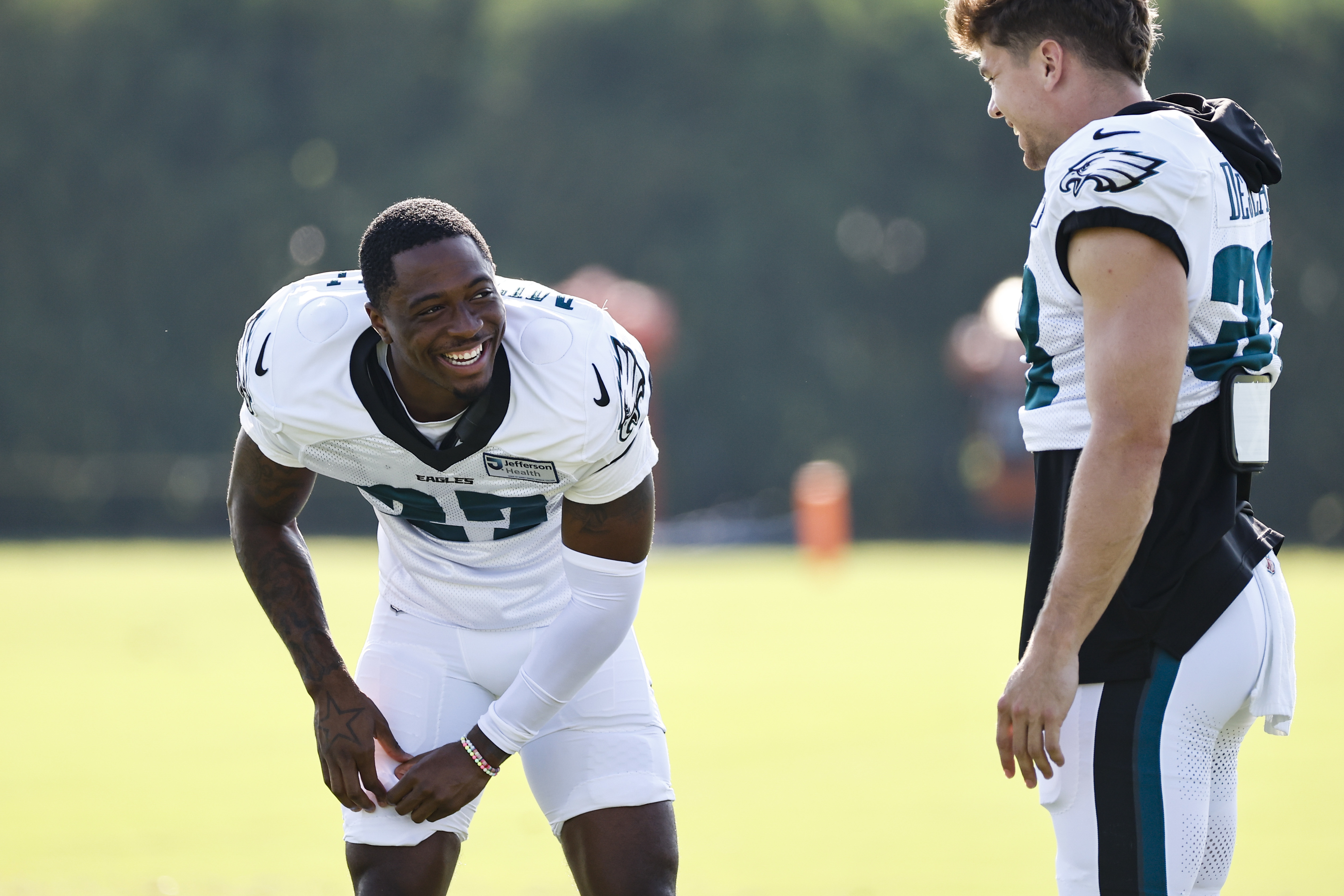
    Quinyon Mitchell (27) and Cooper DeJean are seeking to build on All-Pro seasons. Monica Herndon / Staff Photographer

    Cornerbacks (6)

    Quinyon Mitchell

    College: Toledo | Years pro: 2 | 6-0, 193

    In his rookie season, Mitchell proved he was a stud in the making, being named to the All-Rookie team and finishing second in Defensive Rookie of the Year honors. He took it another step last year when he was named an All-Pro and a Pro Bowler. Can Mitchell keep leveling up in Year 3? Can he prove that he’s the best cornerback in the NFL (and deserves to get paid like it)? — Novozinsky

    Cooper DeJean

    College: Iowa | Years pro: 2 | 6-0, 198

    DeJean followed up an impressive rookie season by being selected as a first-team All-Pro and being named to the Pro Bowl. DeJean is arguably the best nickel corner in the NFL, but he’s taking on a new job for 2026: safety. DeJean will play on the back line when the Eagles are in their base defense and return to the slot in nickel and dime packages. — Neiburg

    Riq Woolen amazed after meeting 'swole' Eagles legend Brian Dawkins
    Video: Riq Woolen amazed after meeting ‘swole’ Eagles legend Brian Dawkins

    Riq Woolen

    College: UTSA | Years pro: 4 | 6-4, 210

    Woolen’s career with the Seahawks got off to a hot start. He was a Pro Bowler and All-Pro in his rookie season in 2022 and was a key member of their Super Bowl team last season. So, how did the Eagles manage to sign him to a one-year deal in free agency? Well, his inconsistency made him an occasional liability for Mike Macdonald in Seattle. Let’s see if the 6-foot-4 corner can find stability in Fangio’s defense. — Novozinsky

    Jonathan Jones

    College: Auburn | Years pro: 10 | 5-9, 190

    Jones is expected to be the Eagles’ top backup cornerback. He spent last season with the Commanders — Philly’s Week 1 opponent — and signed a one-year deal, $2-million contract with the Eagles in March. He had 78 starts in his first 10 seasons, so he brings a wealth of experience if an Eagles corner goes down this season. — Novozinsky
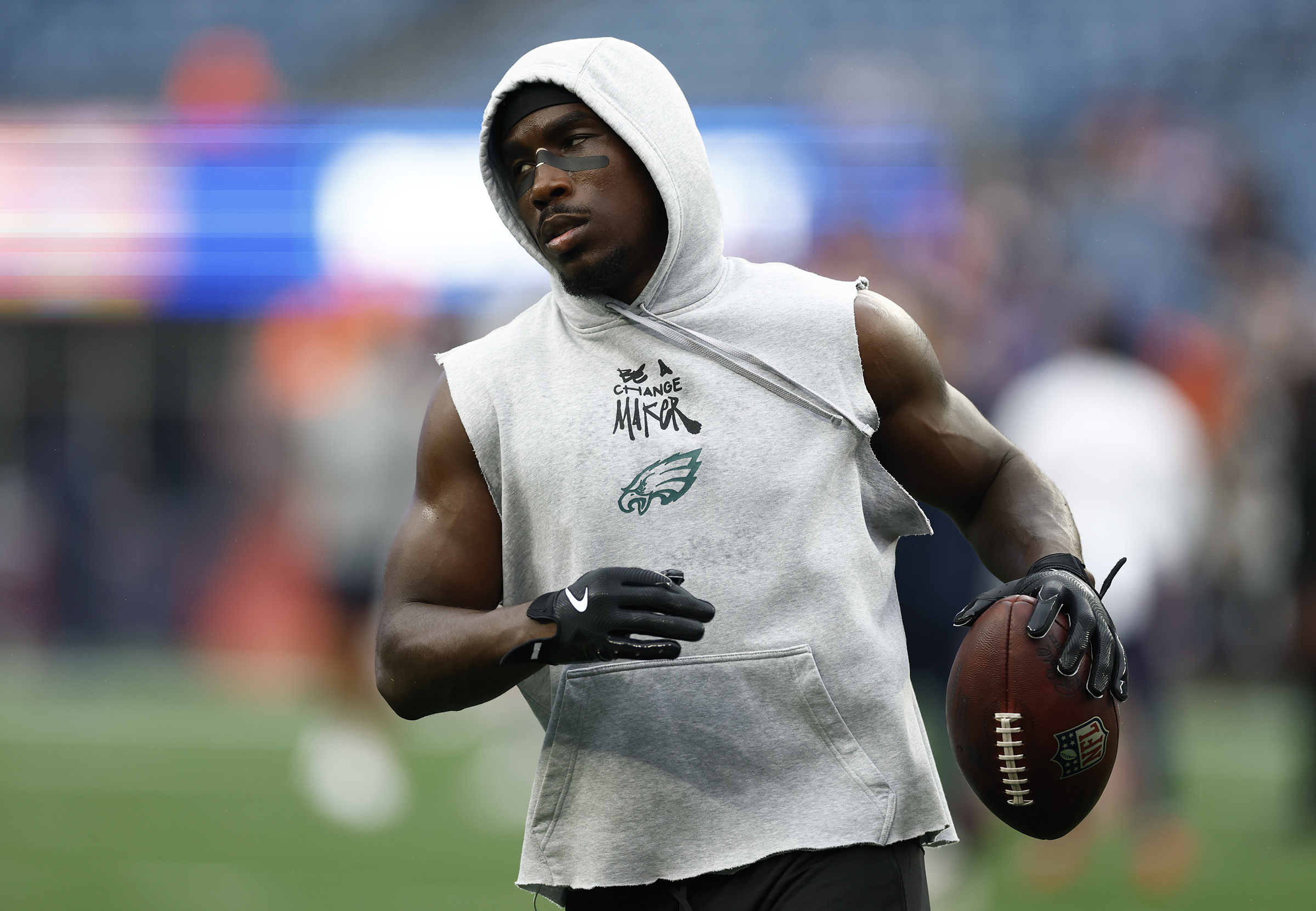
    Kelee Ringo remins a valuable secondary backup and special-teamer. Yong Kim / Staff Photographer

    Kelee Ringo

    College: Georgia | Years pro: 3 | 6-2, 207

    Last training camp, Ringo was in competition with Adoree’ Jackson for the starting outside cornerback job opposite Mitchell. This year, Ringo wasn’t in the picture, with Woolen signing a prove-it deal in the offseason to command that post. Ringo isn’t even the first outside cornerback off the bench — that’s Jones’ job. But the 24-year-old cornerback is a valued special teamer, hence his roster spot. — Reiner

    Mac McWilliams

    College: UCF | Years pro: 1 | 5-10, 191

    McWilliams looks like a more well-rounded version of his rookie self. He earned occasional reps with the first-team defense throughout training camp and made some plays when doing so. He won’t start if the cornerback room stays healthy, but don’t be surprised if he climbs up the depth chart and earns snaps. — Novozinsky
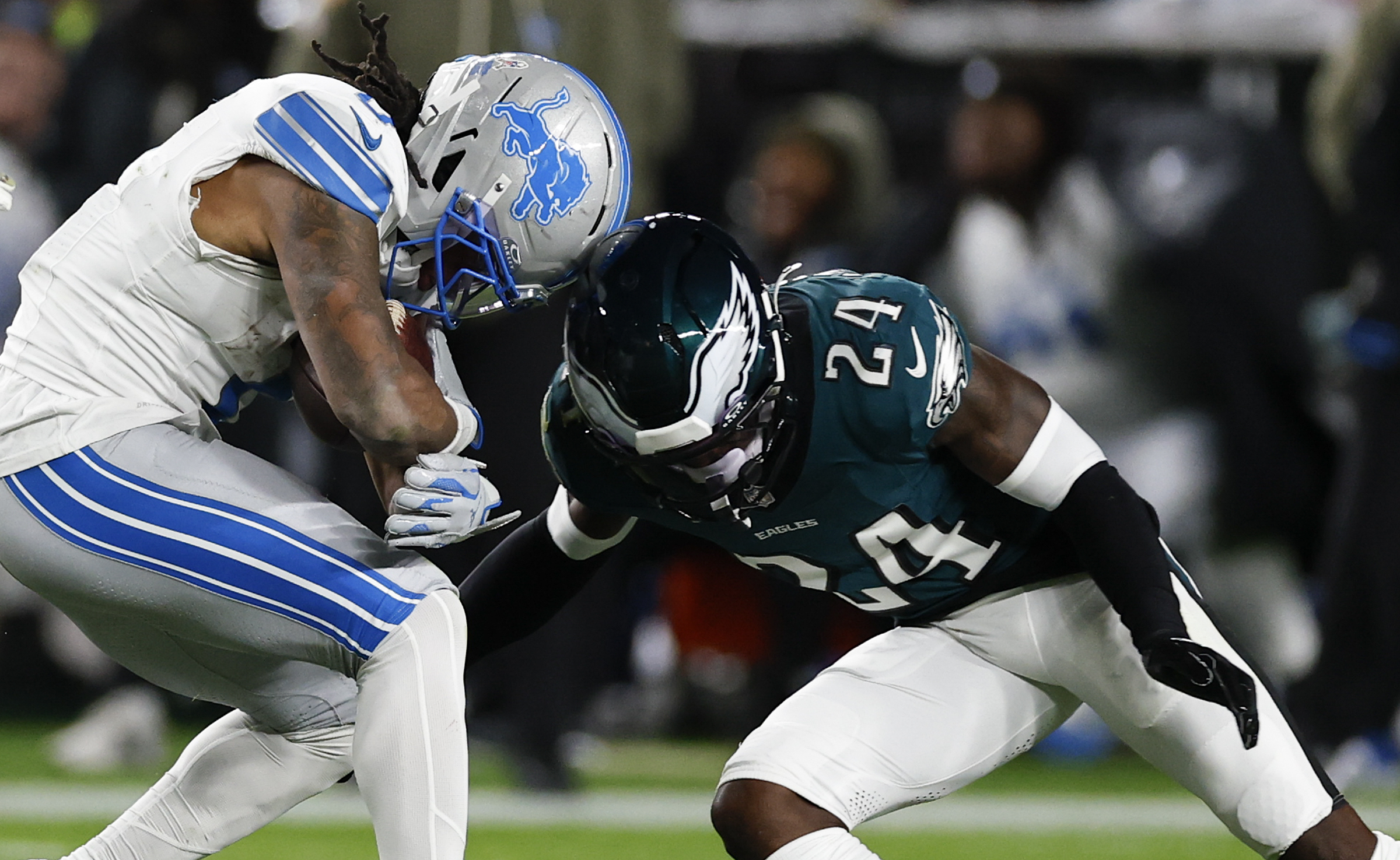
    Can Andrew Mukuba (24) bounce back from the injury that prematurely ended his 2025?Yong Kim / Staff Photographer

    Safeties (3)

    Andrew Mukuba

    College: Texas | Years pro: 1 | 5-11, 186

    Mukuba saw his rookie season cut short in late November when he fractured his fibula. Now healthy, he will look to stay on the field in his role as one of two starting safeties in his sophomore season. Despite missing the last two months of the 2025 season, Mukuba did not see any preseason action, reinforcing the confidence that the Eagles have in him to do his job come Week 1. Fangio lauded Mukuba’s improved “knowledge and knowhow of the defense” in training camp. — Reiner

    Marcus Epps

    College: Wyoming | Years pro: 7 | 6-0, 198

    Epps is expected to serve as the starting safety alongside Mukuba in Week 1. It was a tough battle between him and Michael Carter II this summer, but Epps experience and institutional knowledge — he was a key starter on the Eagles’ 2022 Super Bowl team — won him the job. Now comes the hard part for Epps: Can he keep the job all season? Carter will be gunning for it every week. — Novozinsky

    Michael Carter II will have a key role after a productive training camp and preseason. Monica Herndon / Staff Photographer

    Michael Carter II

    College: Duke | Years pro: 5 | 5-10, 184

    With Mukuba and Epps the likely Week 1 starters at safety, Carter figures to serve as the next safety off the bench. He is the expected backup to DeJean at nickel cornerback, too. Fangio also revealed that Carter will be the sixth defensive back on the field in the dime package. Even though it always seemed like Epps was the frontrunner for the starting safety vacancy this offseason, Fangio said Carter did “nothing but [help] himself” with his performance in camp. — Reiner

    Specialists (3)

    Jake Elliott

    College: Memphis | Years pro: 9 | 5-9, 167

    Elliott is coming off of another shaky season in which he went 20-for-27 on his field goal attempts (74.1% conversion rate; his second-lowest rate of the regular season). He is 48-for-63 over the last two regular seasons (76.2%). Still, the Eagles displayed their confidence in the 31-year-old kicker this offseason by restructuring his contract in 2026, agreeing on a $1 million pay cut but guaranteeing $5 million. He did not have any competitors in camp, further reinforcing that the job is his to keep so long as he can establish consistency. — Reiner

    Braden Mann (10) and Jake Elliott (right) are back, but will have a new teammate doing the snapping on kicks. Monica Herndon / Staff Photographer

    Braden Mann

    College: Texas A&M | Years pro: 6 | 5-11, 198

    Mann had a good offseason. The 28-year-old punter got paid in March, signing a four-year, $14 million contract extension, and he looked rock solid in training camp. He’s a practice squad success story, with the Eagles initially picking him up from the Steelers in 2023. — Novozinsky

    Rocco Underwood

    College: Florida | Years pro: 1st | 6-3, 240

    The Eagles had stability at long snapper from 2000-2024, with Mike Bartrum, Jon Dorenbos and Rick Lovato all being good enough to earn multiple contracts. They’re hoping Underwood can be that next guy — though things aren’t off to the best start. Underwood, who has shown potential in the past, winning the 2024 Patrick Mannelly Award for the nation’s best long snapper, had a rough start to training camp due to a few bad snaps. He’s since turned it around, but it’s hard to forget those early mistakes. For now, they’ll have to deal with his possible inconsistency and bank on his potential. — Novozinsky
  • Who is the federal judge overseeing the case roiling Philly DA Larry Krasner’s office? And what will he do next?

    Who is the federal judge overseeing the case roiling Philly DA Larry Krasner’s office? And what will he do next?

    Nearly a decade ago, when U.S. District Judge Paul S. Diamond was asked to determine the fate of a prosecutor who admitted breaking the law, he did not hold back.

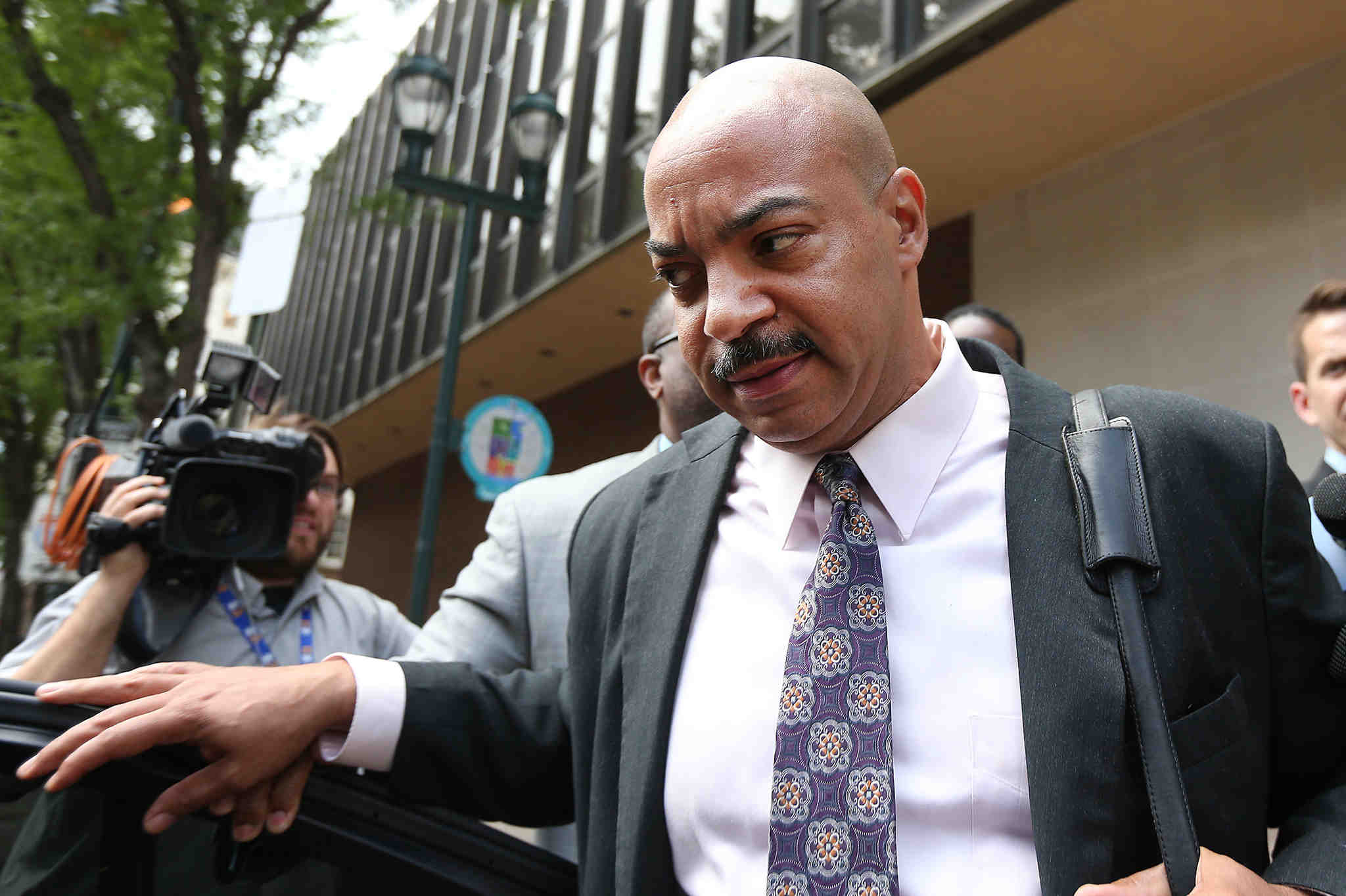
    Just moments after then-Philadelphia District Attorney Seth Williams pleaded guilty in a public corruption case, Diamond had Williams handcuffed and hauled off to jail to await sentencing.

    Then, a few months later, Diamond imposed the maximum prison term allowed by law — five years. And he upbraided Williams as a “criminal” who surrounded himself with “parasites” and “fed his face at the trough” of public money.

    Then-District Attorney Seth Williams leaves the federal courthouse in 2017.DAVID MAIALETTI / Staff Photographer

    Now, Diamond is overseeing a new case with a new set of accusations against a different district attorney.

    The allegations against top prosecutor Larry Krasner have come as part of a dispute with staffers over how to handle a case, and Diamond has already made clear that he views the assertions as serious — suggesting in a hearing last month that he believed some could amount to federal crimes.

    “If what they say is true, potential wrongdoing abounds,” Diamond said, listing off offenses including perjury, conspiracy, and obstruction of justice.

    To some area legal observers, the pointed remarks were reflective of Diamond’s reputation as a stern, no-nonsense jurist — particularly when it comes to assessing the conduct of fellow lawyers.

    In the last year, Diamond had a hand in federally disbarring one of Krasner’s staffers and suspending another for three years.

    Then-Assistant District Attorney Paul George (back left) was disbarred in federal court in 2025.JESSICA GRIFFIN / Staff Photographer

    In 2017, while the case against Williams was still pending, he ordered it to proceed to trial just months after the indictment was unsealed — a highly unusual timetable for a federal case, but one the judge said was necessary because of its “obvious and possibly calamitous effect on the city’s criminal justice system as well as the city itself.”

    And even in a comparably trivial legal dispute in 2014, Diamond was unabashedly critical of a lawyer who sued over the rights to a song by the R&B artist Usher, writing: “It is difficult to convey the poisonous atmosphere created by [the lawyer’s] continual belligerence.” The lawyer was ultimately suspended from practicing in the region’s federal courts for three months.

    Samuel Stretton, a veteran defense lawyer who often handles legal ethics cases, said Diamond “has high standards. And if someone violates, in his mind, those high standards, he takes a very tough position on them and voices that opinion quickly.”

    Still, Stretton said he thinks Diamond’s principled views are sometimes expressed in overly harsh ways.

    “He has a strong belief in ethics, and lawyers having those especially, and he feels he must enforce them,” Stretton said. “But sometimes his manner of enforcing them is overstated, and he’s abrupt and a little bit of a bully.”

    The question now facing Krasner is what actions Diamond might take in the post-conviction case pending in his courtroom — and whether any could lead to consequences for the city’s DA.

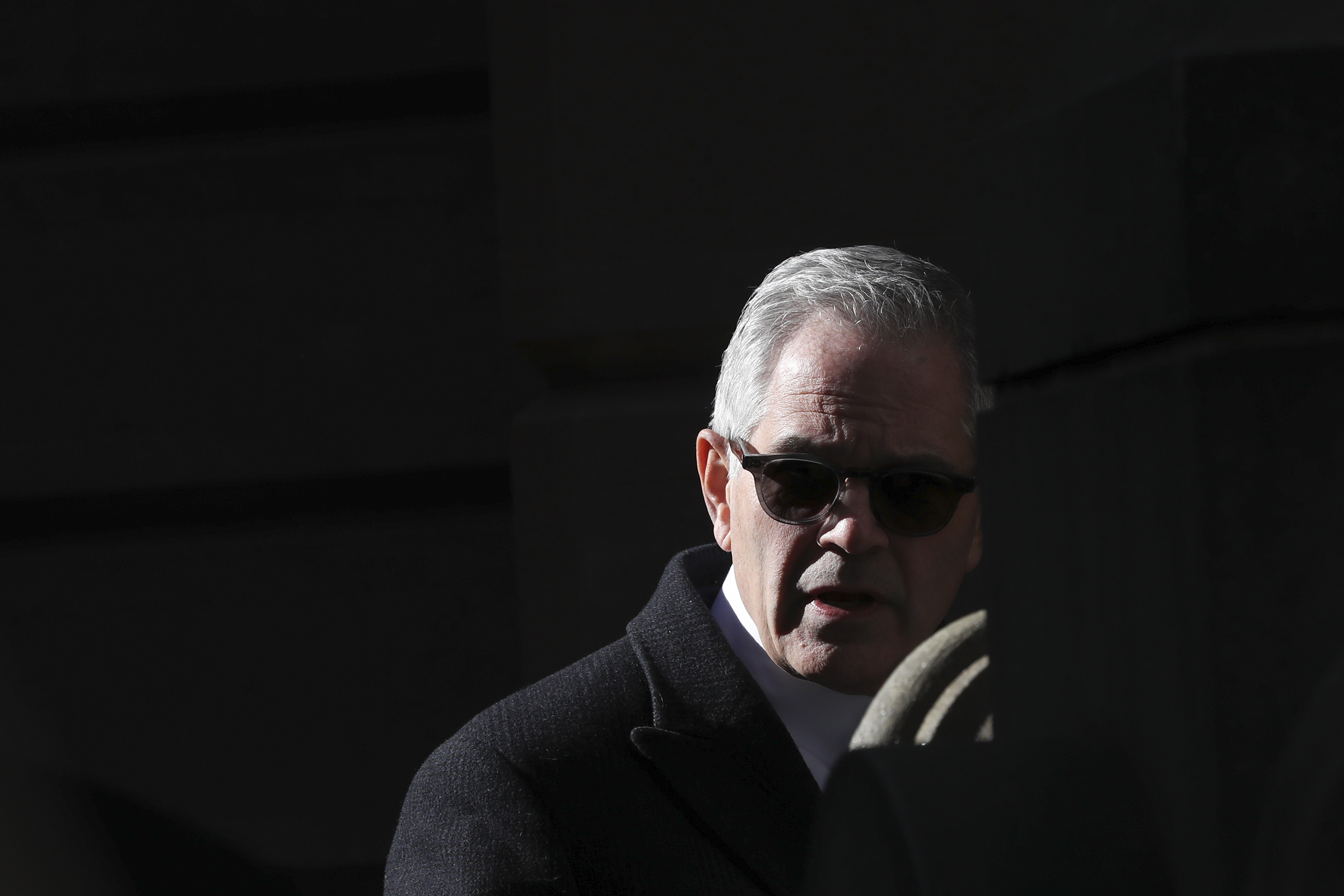
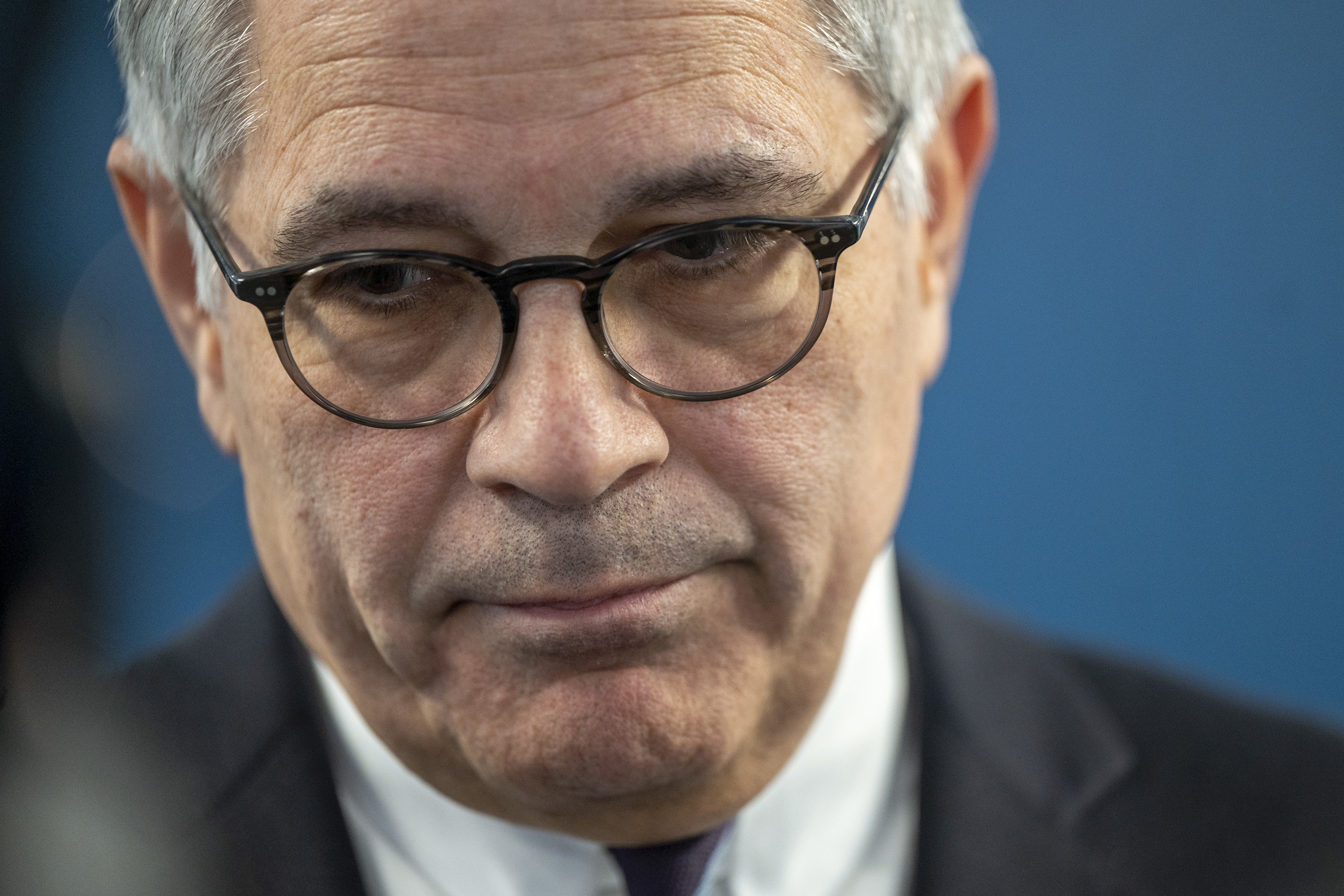
    District Attorney Larry Krasner in a file photo from 2023.Allie Ippolito / Staff Photographer

    Who is Paul Diamond?

    Diamond, 73, was appointed to the region’s federal bench in 2004 by then-President George W. Bush. He was unanimously confirmed by the U.S. Senate.

    Before his judicial nomination, he spent nearly two decades in private practice. He began his career as an assistant district attorney in Philadelphia in the late 1970s, and graduated from the University of Pennsylvania law school and Columbia University.

    While he worked in private practice, Diamond focused on civil litigation, white-collar criminal cases, and disciplinary matters, according to an online biography. And his clients were sometimes unique.

    In 1994, he represented a South Philadelphia candy making company that pleaded guilty to safety violations after an unguarded taffy-pulling machine killed one of its workers.

    A few years later, he represented Lower Merion Township when the Barnes Foundation sued and accused township officials of using racism and discrimination to try to hurt the foundation. The suit was dismissed, and a defiant Diamond was later quoted in The Inquirer saying he planned to bill the Barnes around $1 million to cover the township’s legal fees.

    “This is a claim that should never have been filed; it’s outrageous that it was ever filed, and now the Barnes is going to see the mother of all fee petitions,’’ he said.

    A consistently exacting judge

    Like all federal court judges, Diamond oversees a mix of criminal and civil cases. And even though not all receive significant public scrutiny, Diamond is viewed by some as a consistently exacting judge.

    In 2012, for example, he ordered a 60-year-old grandmother jailed for using her dead mother’s Social Security checks to support her grandchildren.

    “Did it ever occur to you to go out and get a job?” Diamond asked the woman. “Did it ever occur to you that the way to help your grandchildren is not to commit a series of endless federal frauds?”

    The federal courthouse in Philadelphia.TYGER WILLIAMS / Staff Photographer

    Last year, he was subtly critical of the Trump administration in court documents, writing that it was using competing interpretations of the law to try to justify its policy to detain nearly all undocumented immigrants.

    It is “difficult to credit the Government’s squarely contradictory position here,” Diamond wrote.

    The Krasner matter that ended up in his courtroom arrived as a routine post-conviction case: Dennis Johnson, who was found guilty of second-degree murder in state court in 2009, filed a petition in federal court seeking to have his conviction overturned.

    The petition was filed more than 10 years ago, but it wasn’t until 2022 that the origins of the current controversy would begin to take shape.

    A frenzy within the DA’s office

    That year, after the district attorney’s office had spent years opposing Johnson’s bid for relief, prosecutors changed course.

    Then-Assistant District Attorney Jaclyn Mason filed a brief agreeing with Johnson’s lawyers that his trial counsel had been ineffective. And she said her office had discovered problems or inconsistencies with testimony from key witnesses, leading her to recommend that the conviction be overturned.

    The case was first sent to a federal magistrate to review, and Judge Lynne A. Sitarski — relying on Mason’s brief — agreed with her position.

    But Sitarski’s recommendation was not binding — the final call would fall to Diamond. And this spring, Diamond signaled he was not inclined to accept the assertions in Mason’s brief. He scheduled an evidentiary hearing to hear testimony that could corroborate — or undercut — the office’s conclusion.

    That triggered a frenzied sequence of events inside the DA’s office, prosecutors have since testified.

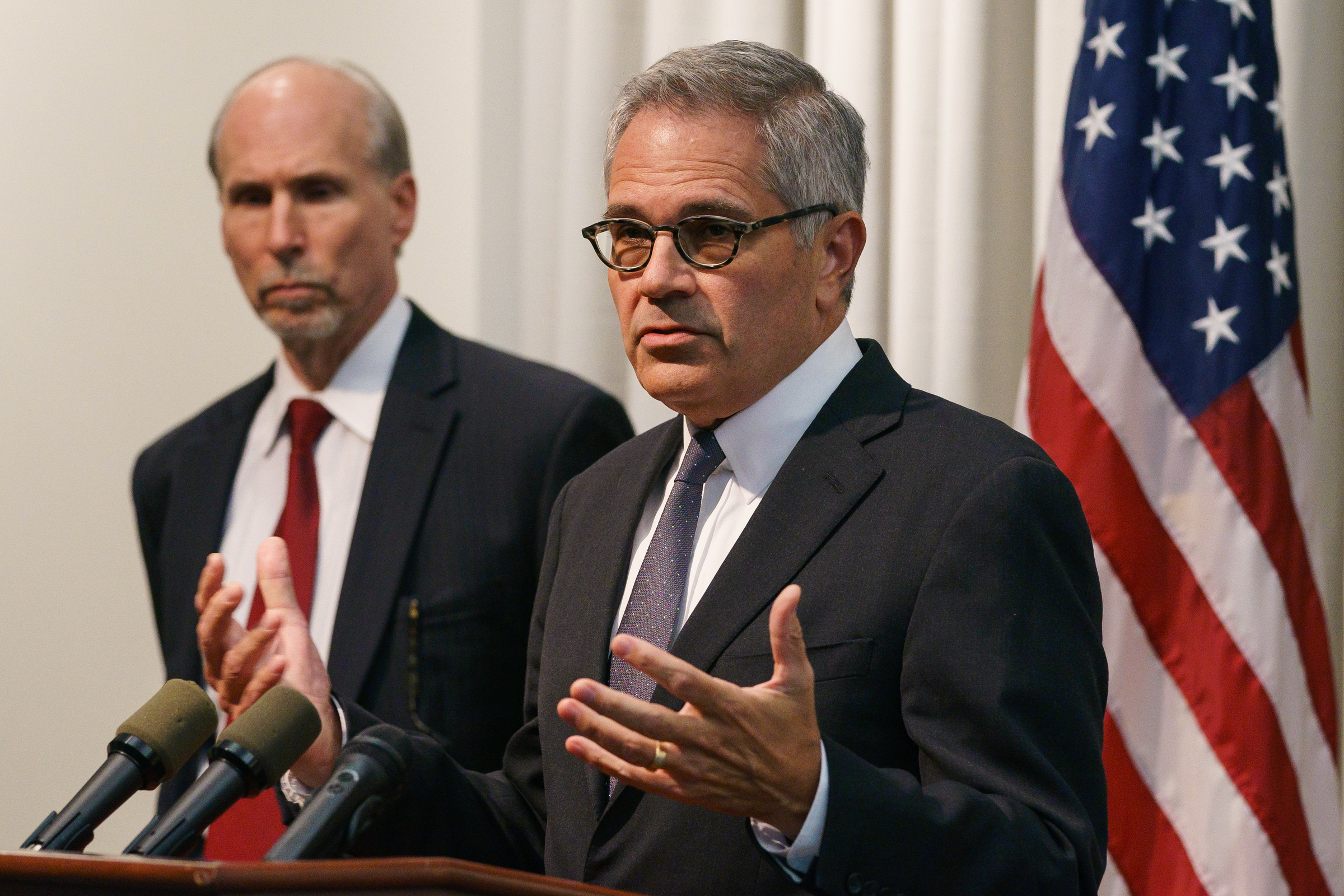
    District Attorney Larry Krasner speaks at a news conference while flanked by two prosecutors who have since testified about actions he took in a controversial post-conviction case: David Napiorski (left) and Peter Andrews.Tom Gralish / Staff Photographer

    To prepare for the hearing, Mason’s supervisors in the law division reviewed her brief and found a series of what they called “material misstatements.” They decided they needed to try to withdraw Mason’s filing and apologize to Diamond for the mistakes. And they asked that Mason sign on to the new filing with them.

    But Mason declined and resigned. She’s since said she only filed her brief at the urging of her then-boss, Matthew Stiegler, who she said had done nothing to review the case himself but instead was “colluding” with Johnson’s defense attorneys to secure his release from prison.

    Mason said she didn’t want to become a scapegoat for Stiegler or the office. And she accused her colleagues of attempting to force her to lie to protect the institution.

    Her former supervisors have denied that, saying that once they noticed the errors in her brief, they were ethically obligated to correct the record in front of Diamond.

    But as they strategized their approach, they said, they encountered consistent resistance from an unusual source: Krasner.

    In their telling, Krasner was ardently opposed to asking the state attorney general’s office to take over the case — something the supervisors generally agreed was appropriate because of the drama surrounding the matter within their office.

    Assistant District Attorney David Napiorski, head of the office’s law division.Alejandro A. Alvarez / Staff Photographer

    And according to the supervisors — Katherine Ernst, Steven Wildberger, David Napiorski, and Peter Andrews — Krasner made a series of notable statements during their discussions, including that he wanted to handle the case in a way that would “protect the office,” that those who didn’t follow his orders would face “consequences,” and that he wanted to keep the matter from the attorney general’s office because he viewed its staffers as “Nazis.”

    Several potential paths forward

    All of those assertions were aired in Diamond’s courtroom in recent weeks, after the judge decided the evidentiary hearing in Johnson’s case would, for now, focus on the conduct of the prosecutors involved, rather than the merits of his petition. The judge said he’ll evaluate that aspect of the case later.

    The attorney conduct portion of the hearing concluded last month, leaving Diamond with several choices about what to do with their startling testimony, legal observers said.

    The most immediate issue is whether he’ll allow the DA’s office to continue handling Johnson’s case. Given the dysfunction prosecutors testified to, he could ask the attorney general’s office to take over instead.

    But Krasner — who was not called to testify and who has said he can’t comment on the case while it’s pending — will likely have the opportunity to propose his own solution in court documents. In earlier filings, he said he engaged an outside lawyer to handle the matter on the office’s behalf — which, in his view, would insulate the case from the issues roiling his office, and preclude the need to involve state prosecutors.

    Beyond that question, however, the testimony about conduct by the DA’s office could, in theory, lead to other consequences.

    District Attorney Larry Kranser was not called to testify in front of U.S. District Judge Paul S. Diamond in the post-conviction case that Diamond is overseeing.Heather Khalifa / Staff Photographer

    Stretton, the defense lawyer and ethics expert, said Diamond could refer the matter to the federal court’s disciplinary committee. There, a panel of judges could seek to determine if any of the prosecutors involved — including Krasner — behaved in a way that might warrant disciplinary action, such as a suspension or disbarment from practicing in federal court.

    That process, which is largely confidential, would also likely be lengthy: In an earlier federal case that led to sanctions for two supervisors in Krasner’s office, a federal judge said he was seeking to initiate the disciplinary process in 2022, and punishments were not decided for another three years.

    After that, Stretton said, if discipline is imposed in federal court, the matter would likely be forwarded to the state’s disciplinary board, which would make its own determination of possible penalties. That could also be an extended process.

    And in what would likely be the most serious scenario, Stretton said, Diamond could refer the matter to federal or state prosecutors — or prosecutors could decide to pursue it themselves — to determine if crimes were committed. That, too, would almost certainly not be resolved quickly.

    Stretton said any of those processes — and any potential outcomes — could also be further delayed or complicated because of inevitable disputes or competing interpretations over what lawyers did. In his view, for example, ethical rules generally allow a supervisor such as Krasner to pursue a legal strategy opposed by his subordinates as long as he had a “reasonable” argument for doing so.

    And the testimony that unfolded before Diamond has already demonstrated that different lawyers had different recollections of what occurred: Mason accused her bosses of encouraging her to participate in a cover-up, but the supervisors said that wasn’t true.

    The supervisors, meanwhile, accused Krasner of trying to get them to violate their ethical obligations, a contention he has similarly denied.

    For now, the case remains on hold as Diamond weighs how to move forward. He has asked lawyers in the case to file additional briefings by Tuesday about how they believe the case should proceed.

    Beyond that, Diamond has not indicated how quickly he might rule on the matter.

  • How a Michelin-starred Philly restaurant secured a $1.5 million state grant to take over the rowhouse next door

    How a Michelin-starred Philly restaurant secured a $1.5 million state grant to take over the rowhouse next door

    One of Philly’s most prominent fine-dining restaurants received a state grant to create an even higher-end establishment. The project promises to create 100 jobs and help cement Philly’s place as a culinary hot spot. It drew criticism over the use of tax dollars.

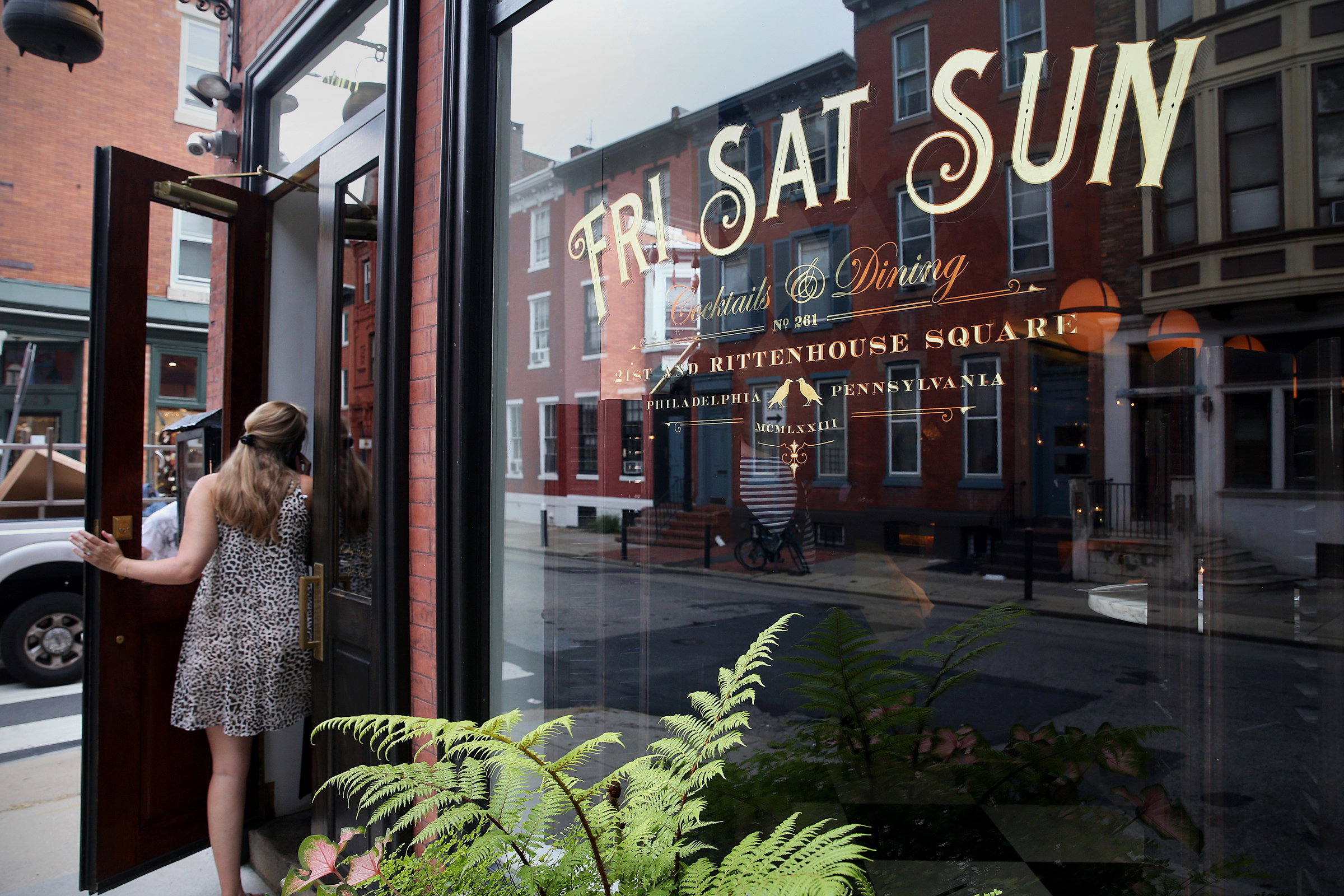
    The Weekend Restaurant Group, which owns the acclaimed Rittenhouse Square restaurant Friday Saturday Sunday, was awarded $1.5 million from the state’s Redevelopment Assistance Capital Program in July to help finance the expansion of the Michelin-starred restaurant. The grant will cover only a fraction of the project’s multimillion-dollar budget.

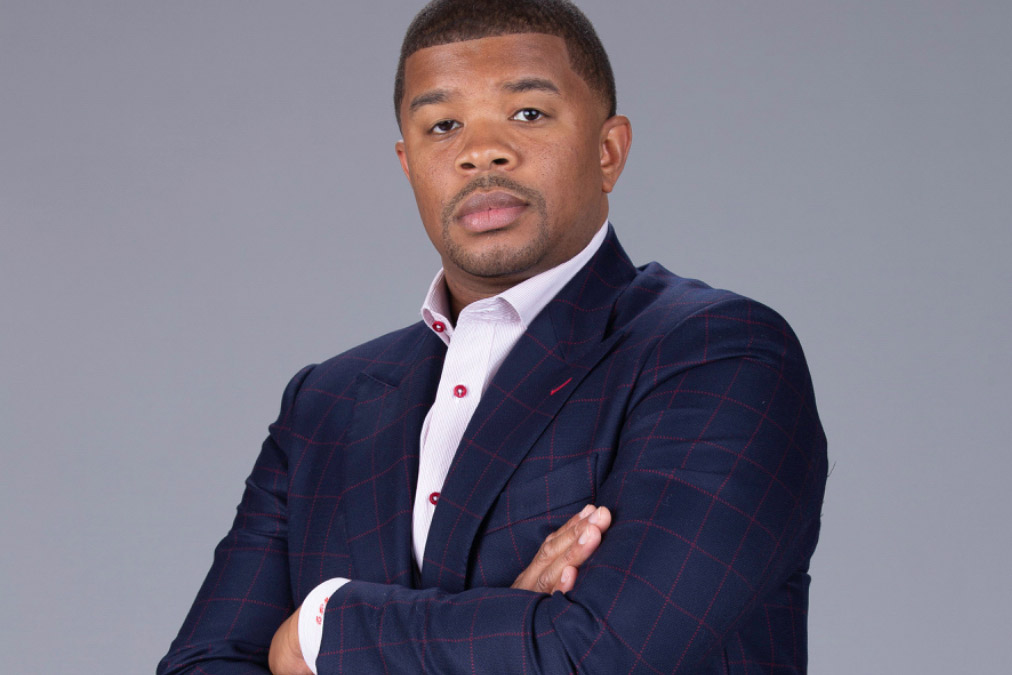
    The endeavor will be the “first minority-owned restaurant of its kind” in the United States, wrote Friday Saturday Sunday chef-owner Chad Williams, who is Black, in the restaurant group’s application.

    The undertaking involves connecting Friday Saturday Sunday with a neighboring rowhouse that will eventually be transformed into a three-story dining destination with an 18-seat chef’s counter, private dining rooms, and a post-dinner sweets lounge.

    Williams runs Friday Saturday Sunday with his wife, Hanna. Together, they announced plans to grow their award-winning restaurant at 261 S. 21st St. last summer, after entering an agreement to buy the adjoining property at 2048 Rittenhouse Square. Neighbors enthusiastically endorsed their ambitious plan, which came five months before the restaurant earned a Michelin star.

    The interior of Friday Saturday Sunday’s upstairs dining room, which offers a $205-per-person tasting menu.Monica Herndon / Staff Photographer

    In the state grant application, Williams wrote “the project will generate significant cultural impact [by] retaining and creating high-quality jobs, attracting visitors from the region and beyond, and raising Philadelphia’s profile.” Renovating the storied Philadelphia restaurant “demonstrates a long-term to commitment to the city, with the scale and ambition to be a generational anchor in its neighborhood.”

    Yet when news of the grant spread on social media last month, it was met with critics who were angry that taxpayer dollars were funding a fine-dining restaurant.

    “Luxe restaurant getting a grant to become more luxe? … WTF?” one person wrote under an Instagram post about the grant with over 100 comments, many of which were critical.

    “Give it to the schools” instead, wrote another.

    The grilled quail with coco bread at Friday Saturday Sunday, photographed in 2022.MONICA HERNDON / Staff Photographer

    Williams says the grant money — which is from a fund for construction projects that would benefit the state culturally and economically — is a win for the city, not just Friday Saturday Sunday.

    “I was born here. I left, learned all that I could, and came back. What we want to do is push the culture forward and, with that, hopefully [bring] economic benefits for everyone in the city,” Williams said.

    “There’s going to be tax revenue and jobs that come back in a very real way.”

    A much-debated grant program

    Better known as RACP, the Redevelopment Assistance Capital Program defrays the cost of construction-ready projects across Pennsylvania that stand to generate substantial economic growth. The fund has stirred controversy in the past.

    The program was launched in 1986 to support construction and real estate projects that intend to create jobs, boost tax revenue, or have significant cultural and civic impact. Eligible projects must cost at least $1 million and secure at least half of their funding from other sources.

    Chef Chad Williams and Hanna Williams at their restaurant Friday Saturday Sunday.Monica Herndon / Staff Photographer

    Because grants are decided at the governor’s discretion, the program has previously been criticized for a lack of transparency and glad-handing.

    RACP was overhauled in 2012 after an audit found that the Gov. Tom Corbett administration did not adequately disclose or document why projects were awarded grants. Similar accusations cropped up again in 2020, when critics alleged Gov. Tom Wolf and state legislators were misusing the program for political favors.

    This July, Gov. Josh Shapiro’s administration allocated $445 million in RACP grants to 356 projects across the state. Recipients range from private real estate developments and public parks to affordable housing and renovations of schools, hospitals, and community centers. The program was particularly competitive in Philadelphia: 170 projects applied. More than half were rejected.

    (function(){function e(){window.addEventListener(`message`,function(e){if(e.data[`datawrapper-height`]!==void 0){var t=document.querySelectorAll(`iframe`);for(var n in e.data[`datawrapper-height`])for(var r=0,i;i=t[r];r++)if(i.contentWindow===e.source){var a=e.data[`datawrapper-height`][n]+`px`;i.style.height=a}}})}e()})();

    Friday Saturday Sunday’s expansion is projected to cost $7.5 million overall, according to the grant application. Once complete, Williams told The Inquirer, it will add 100 front- and back-of-house jobs to the Weekend Restaurant Group’s payroll. (The group currently has 40 employees, according to the application.)

    Not all RACP hopefuls are awarded the full amount of funding they applied for. Friday Saturday Sunday’s expansion was one of 12 Philly projects awarded the full amount requested.

    Other fully funded recipients include Rhoads Industries, a defense contractor awarded $4 million to build a new shipbuilding facility in the Navy Yard, and Comcast Spectacor, which received $1.4 million to build a traffic operations center at the sports complex, as well as Philadelphia Youth Basketball, the Community College of Philadelphia, and the Steamfitters Union. (The Philadelphia Eagles also received $4 million grant to renovate their training complex; the team applied for $7.725 million.)

    (function(){function e(){window.addEventListener(`message`,function(e){if(e.data[`datawrapper-height`]!==void 0){var t=document.querySelectorAll(`iframe`);for(var n in e.data[`datawrapper-height`])for(var r=0,i;i=t[r];r++)if(i.contentWindow===e.source){var a=e.data[`datawrapper-height`][n]+`px`;i.style.height=a}}})}e()})();

    A spokesperson for the Shapiro administration told The Inquirer over email that the Weekend Restaurant Group’s proposal “is fully consistent with the purpose and authorized uses of the RACP program and represents an appropriate use of RACP funds.”

    Building on a legacy

    Chad and Hanna Williams bought Friday Saturday Sunday — already a Philadelphia dining institution — in 2015, transforming the space into a cozy, first-floor bar and an elegant upstairs dining room. They reopened the restaurant in 2017, serving a tasting menu rich with Caribbean, Asian, and soul-food influences. Local and national praise has been steady ever since. Friday Saturday Sunday routinely earns a spot in Craig LaBan’s annual Top 10 and The Inquirer’s annual 76. It won the James Beard Award for Outstanding Restaurant in 2023 and was named on the World’s 50 Best in North America two years in a row. The first-floor Lovers Bar has also been twice-nominated by the James Beard Awards’ Outstanding Bar.

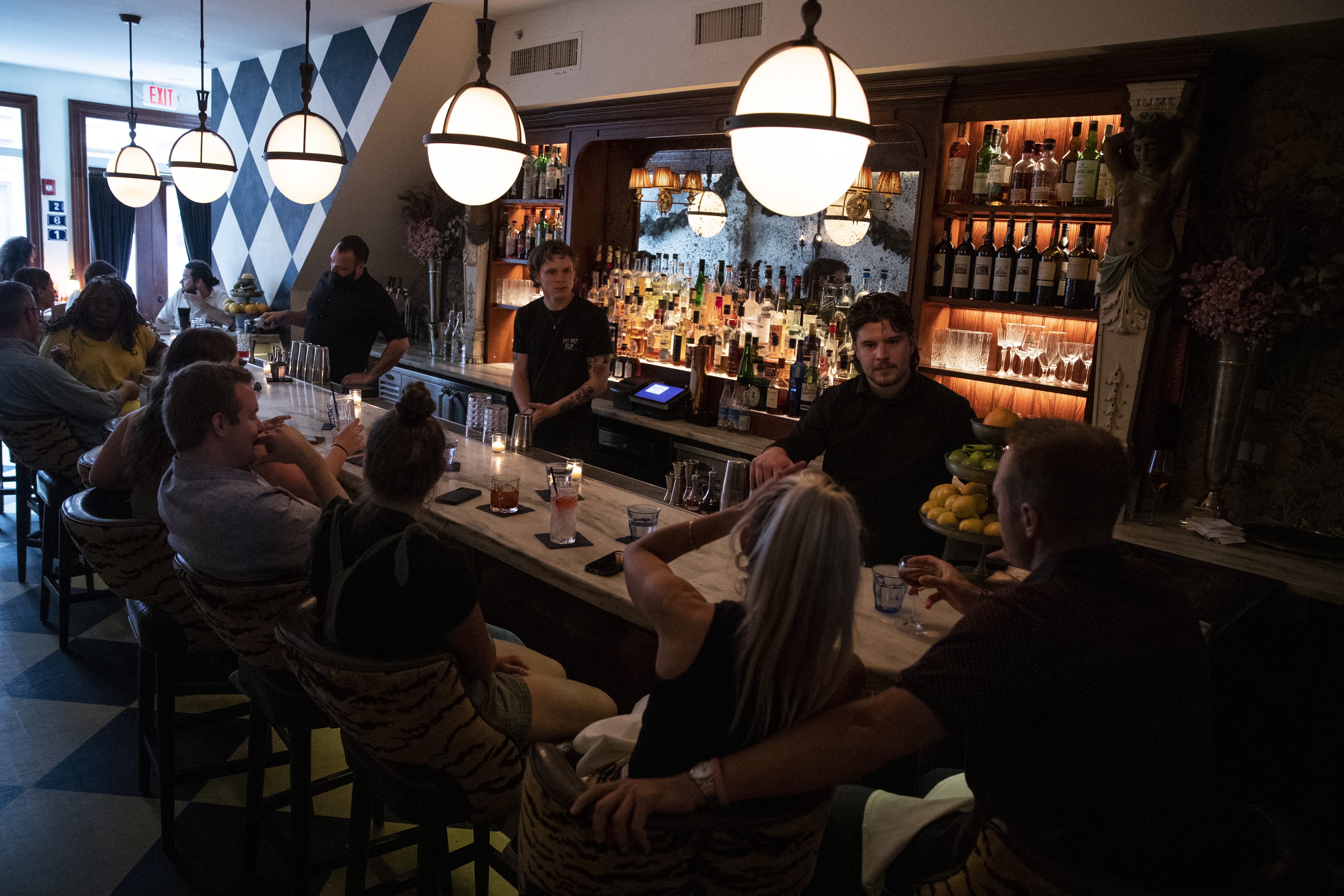
    The downstairs Lovers Bar at Friday Saturday Sunday is a two-time James Beard Award nominee.Monica Herndon / Staff Photographer

    Receiving the RACP grant was a relief, said Williams, who said he is funding more than half of the $7.5 million project with loans.

    Taking on the financial liability is “not a rosy story necessarily,” Williams said, “but it’s a risk we’re willing to take.”

    Williams envisions the 3,500-square-foot rowhouse at 2048 Rittenhouse Square as a chance to create an old-school fine-dining experience inspired by the likes of Le Bec-Fin and Vetri Cucina. Guests will start with welcome drinks on the ground floor before moving upstairs for an intimate meal at a chef’s counter helmed by Williams. Diners will finish the meal on the third floor in a designated dessert space, Williams said.

    The octopus and beans from the bar menu at Friday Saturday Sunday, photographed in 2023.Monica Herndon / Staff Photographer

    The concept will extend the Friday Saturday Sunday brand and render the original tasting menu into a “less formal” affair that is more in line with “what neighbors and regulars want,” Williams said. The connected properties will also enable Friday Saturday Sunday to serve large parties and potentially open seven days a week. The expanded hours will allow for more staff, Williams said

    Williams said the project could break ground in October. He’s optimistic about a September 2027 opening.

    He framed Friday Saturday Sunday’s expansion as a moonshot. “To be frank, for a Black chef to have this opportunity and do it is a big deal,” Williams said.

    “Having a chance to practice our craft at this level is extremely rare.”

    ‘We need all the help we can get’

    Williams decided to apply for RACP funds after exhausting more traditional financing routes.

    “Without state support, the project would face a significant financing gap,” he wrote in the application, “as private funds alone cannot absorb both the acquisition and essential structural work.”

    Despite his restaurant’s extremely successful track record, the chef found the process similar to the original financing of Friday Saturday Sunday — which required the Williamses to sell their home and submit paperwork to “14 different banks” before finding one that would take a chance on them.

    Friday Saturday Sunday, run by chef Chad Williams and his wife, Hanna, earns a Michelin star at the Kimmel Center on Nov. 18, 2025.Elizabeth Robertson / Staff Photographer

    It’s a struggle many Black entrepreneurs know well: Several studies have found that Black-owned businesses are discouraged to apply, denied, and offered inferior loans at higher rates than white counterparts, even when appearing more creditworthy.

    “We’ve put in our work here, had some success and won some things, but it did not make [financing] any easier,” said Williams. He was attracted to RACP because it was described to him as a “colorblind grant” by other BIPOC entrepreneurs who encouraged him to apply.

    Friday Saturday Sunday is not the first Philly restaurant to receive state funding through RACP. North Philly’s Caribbean Feast was awarded $750,000 in 2022 for construction costs associated with renovating their kitchen facilities to support other Caribbean-owned food businesses through a commissary model. The program also awarded $500,000 to FringeArts in 2014 for creating a Delaware River waterfront restaurant and $1.5 million to Yards Brewing Co. in 2019 for its Spring Garden brewery and taproom build-out.

    Chef and co-owner Chad Williams (right) in the kitchen at Friday Saturday Sunday on Aug. 14, 2022.Monica Herndon / Staff Photographer

    Williams is hopeful that other restaurants will consider applying for RACP after seeing his success.

    “If I wouldn’t have done the research, I would’ve never known this was possible,” he said. “We need all the help we can get.”

  • Finding heroes in the Cheltenham football assaults | Expert Opinion

    Finding heroes in the Cheltenham football assaults | Expert Opinion

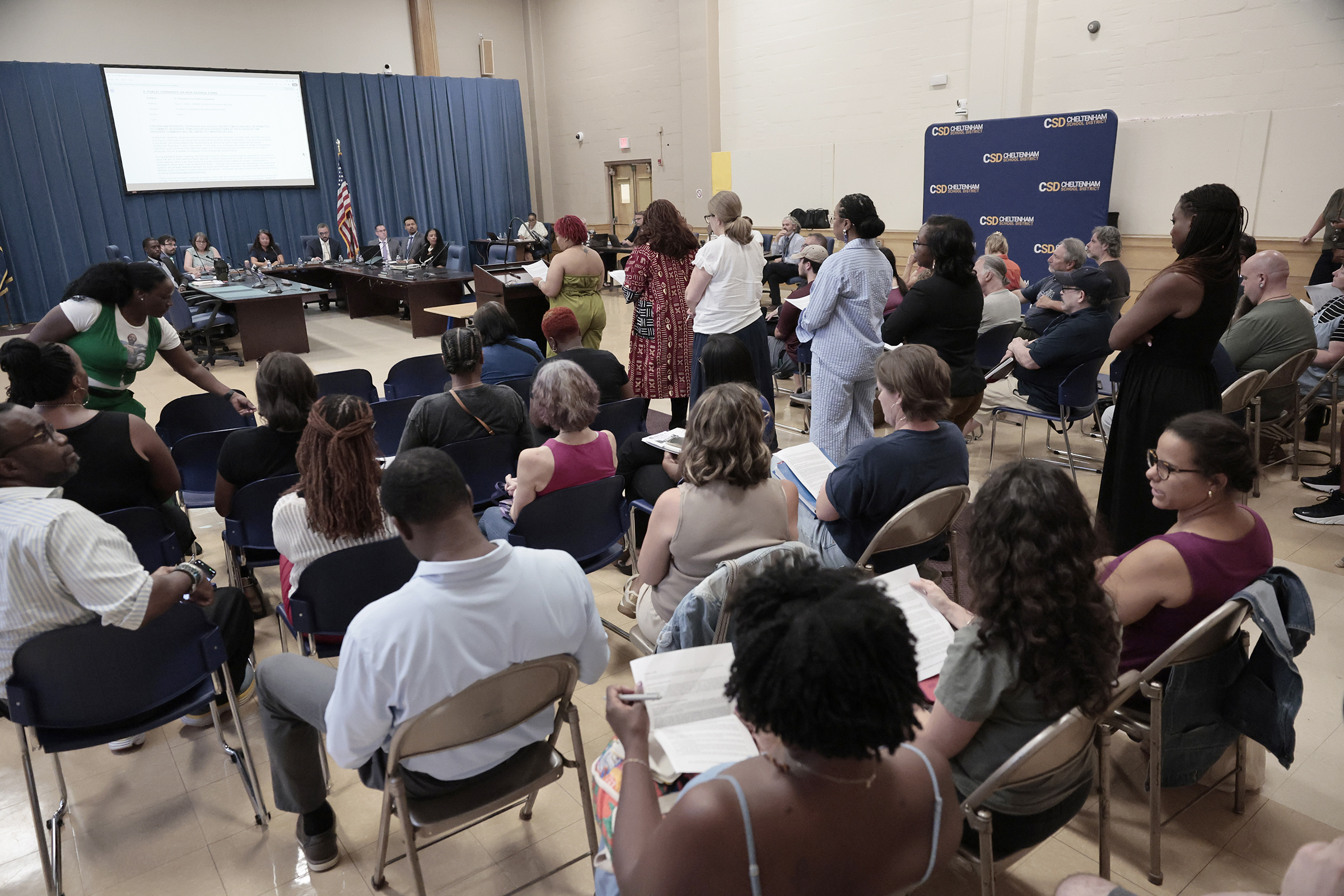
    The disturbing story of the assaults in the Cheltenham High School football locker room is sadly not unique. Incidents of hazing and locker-room violence have made headlines for decades.

    The allegations in Cheltenham have many familiar features: a younger or more vulnerable student was targeted, other students knew what was happening, and adults appear to be protecting the team rather than a victimized child.

    But within this terrible story, I see two heroes — and both offer lessons for parents.

    The first is the person who reported the violence through Pennsylvania’s Safe2Say system. That report helped move information about the abuse outside the closed world of the football program and into the hands of authorities.

    That matters. According to prosecutors, coaches exchanged messages saying the incident had to be “kept quiet,” with one writing that if it became public, “They will cancel the whole season.”

    Closed systems are dangerous. Information cannot get out, outside help cannot get in, and problems can fester — especially when the people responsible for setting the rules are also the people with something to lose.

    The second hero is the victim’s mother.

    She knew her son well enough to recognize that something was wrong. Their relationship was strong enough that he eventually told her he had been attacked. And when he did, she acted.

    Experts will undoubtedly recommend changes in supervision, reporting, hazing prevention, and school culture. But there are also things parents can do, starting at home.

    Lesson 1: Make it clear: We never blame the victim.

    One of the most heartbreaking details in this story is that the young man eventually switched to virtual school after being harassed by other students following the attacks.

    Being victimized should never become a source of shame for the person who was harmed.

    Parents can make one family value unmistakably clear: In our family, we never blame or humiliate someone for being victimized.

    We do not mock someone for being smaller, frightened, or embarrassed. We do not treat reporting abuse as weakness or betrayal. We think about how it feels to be in their shoes.

    Schools can adopt programs and conduct training, but culture begins long before a child walks through the schoolhouse door. When parents send kids to school already believing that cruelty is unacceptable and victims deserve support, schools have a much better chance of creating and maintaining a healthy culture.

    This is particularly important in adolescence. Teenagers can reason remarkably well, but the brain systems involved in empathy, impulse control, and weighing consequences are still developing. At the same time, adolescents are especially sensitive to the opinions of peers, social pressure, and belonging.

    That is not an excuse for cruelty. It is precisely why adults should create environments in which empathy, respect, and intervention are explicitly expected.

    Lesson 2: Don’t wait for a crisis to talk about sex and sexual violence.

    Too many families wait until there is a sense of immediacy; puberty is about to arrive, a child sees something explicit online, a dating relationship begins, or a frightening story about sexual assault like Cheltenham appears in the news.

    In that moment both parent and child may feel distressed and unprepared.

    Research consistently finds that parents remain an important influence on their adolescents’ sexual decision-making, even though parents often underestimate how much influence they have. Parent-child communication about sexuality is also associated with healthier and safer sexual behavior.

    Too many kids are now learning about sex from peers, pornography, and predators, and what they learn is often inaccurate and rarely matches the values parents have for their children.

    In The Sex-Wise Parent, I encourage parents to share sexuality information and values not as “the talk,” but as an ordinary part of parenting that begins early and develops as children grow. Parents need not know every answer in the moment. Rather, they should communicate that questions are welcome, and children can bring uncomfortable experiences to them without fear of being blamed.

    The Cheltenham victim eventually told his mother because something in their relationship allowed him to. Every parent can build that kind of relationship before a child ever needs it.

    And a relationship where a child can ask questions about sexuality is important for more than just crisis intervention; ultimately, we want our kids to grow up and be sexually safe and healthy in every aspect of their life. Parents who can discuss sexuality with their kids of every age are a gift; they send sexually safe and healthy people out into communities where they are safe peers, partners, and members of the public.

    Janet Rosenzweig, Ph.D., is a longtime child welfare and sexuality-education professional and author of “The Sex-Wise Parent,” a practical guide for parents to support healthy sexual development. The updated third edition was released in July.

  • 10 affordable options for Philly families beyond the Academy of Natural Sciences

    10 affordable options for Philly families beyond the Academy of Natural Sciences

    For nearly two centuries, the Academy of Natural Sciences of Drexel University has stood as a monument to curious minds — and, at least for the last few decades, a respite for parents of restless children.

    So, when the museum closes its doors at the end of this month, Philadelphia families may be left with one less kid-friendly haven and dwindling options on where to spend a rainy afternoon at an accessible price.

    An adult ticket (ages 13 and up) to the Academy of Natural Sciences runs $22, while admission for children older than 2 cost $18 and those under 2 get in for free. That’s cheaper, across all age groups, than the Franklin Institute or the Please Touch Museum, for example. And unlike an outdoor experience, like the Philadelphia Zoo or any of the city’s many parks, an enjoyable afternoon at the Academy of Natural Sciences didn’t depend on the weather.

    There’s still time to see the full-scale dinosaurs, taxidermy, and live animals — the museum’s last day open to the public will be Sunday, Sept. 27. But here’s 10 post-Academy-era alternatives for families looking to spend an afternoon indoors at a similar price tag.

    Independence Seaport Museum

    The Independence Seaport Museum may float the nautical nerd’s boat.

    Located on the Delaware River waterfront, the museum tells the region’s history through its major river artery, with some 10,000 objects and a million documents chronicling the area’s long maritime history. The museum boasts one of the continent’s largest maritime art and artifact collections, which includes a chart from Benjamin Franklin, a sea chest from the Spanish-American War, and a passenger list from the Titanic.

    Visitors can also explore the USS Olympia, a historic World War I cruiser and the world’s oldest floating steel warship. Self-guided tours of the Olympia are included in the general admission package; guided tours of the Becuna, a World War II submarine, are also available for an additional $10.

    🕒 Daily, 10 a.m.-5 p.m. last entry at 4:30 p.m., 💵 $23+ for adults, $18+ ages 3-17,📍 211 S. Columbus Blvd., Philadelphia, Pa. 19106, 🌐 phillyseaport.org

    Fireman’s Hall Museum

    Got a kid that really loves firetrucks? The Fireman’s Hall Museum might spark some joy.

    The Hall, located in a renovated firehouse, is one of the nation’s premier fire museums. Visitors can see antique apparatuses, try on firefighter boots and coats, and steer a fire boat — all while learning about fire safety and important skills, like when to call 911.

    Pretty fire, right?

    🕒 Tuesdays through Sundays, 10 a.m.-4 p.m., 💵 Free,📍 147 N. Second St., Philadelphia, Pa. 19106, 🌐 firemanshallmuseum.org

    Penn Museum

    Worldly cultures converge in University City .

    The Penn Museum connects humanity across continents and millennia through archaeology and anthropology, cultivating “endless exploration,” according to its website.

    The Inquirer previously reported that the Penn Museum’s 2018 renovation made the space more interactive and kid-oriented.

    🕒 Tuesdays through Sundays, 10 a.m.-5 p.m., 💵 $23 for adults, $14 ages 6-17 and college students, free for children 5 and under,📍3260 South St., Philadelphia, Pa. 19104, 🌐 penn.museum

    Wagner Free Institute of Science

    For those looking for a dinosaur fix in the post-Academy era, Wagner Free Institute of Science in North Philadelphia has a collection of Camarasaurus bones. The Wagner is a rare surviving 19th-century natural history museum with rocks, fossils, taxidermy, and skeletons galore.

    Bone voyage!

    Check out what other dinos are on display throughout the Philly region, here.

    🕒 Tuesdays through Fridays, 9:30 a.m.-4:30 p.m., and select Saturdays, noon to 4 p.m., 💵 Free,📍 1700 W. Montgomery Ave., Philadelphia, Pa. 19121, 🌐 wagnerfreeinstitute.org

    Science History Institute

    An up-and-coming chemist might like learning all about the people behind the world’s most significant scientific achievements at the Science History Institute. On Saturdays, the institute hosts “Stories of Science,” an interactive family-geared program highlighting strange and surprising histories.

    Also, currently running is a special exhibition on fireworks — kaboom!

    🕒 Wednesdays through Saturdays, 10 a.m.-5 p.m., 💵 Free,📍 315 Chestnut St., Philadelphia, Pa. 19106, 🌐 sciencehistory.org

    Betsy Ross House

    A staple — or stitch — in the Philadelphia experience is the home of Betsy Ross, a colonial woman credited with sewing America’s first flag. Visitors can meet Betsy and explore artifacts throughout her home, including her sewing table. In the home’s basement kitchen there are interactive activities for kids, a spokesperson said.

    Outside the Betsy Ross House and around Old City, people can also visit Once Upon A Nation Storytelling Benches for short, free, delightful stories about Philly’s little-known history. The storytelling benches run throughout the summer and end this Labor Day weekend.

    🕒 Daily, hours vary by season 💵 $15+ for adults, $13+ ages 6-12, free for children 5 and under,📍 239 Arch St., Philadelphia, Pa. 19106, 🌐 historicphiladelphia.org/betsy-ross-house

    Museum of the American Revolution

    Budding history buffs can dive deeper into the birth of the nation and ongoing American experiment at the Museum of the American Revolution. The museum’s kid-friendly programming includes a replica parlor, privy, and privateer ship, living historical interpreters, and theatrical reenactments. Through these exhibits — including those apt for Philly’s “revolutionary” Semiquincentennial summer — visitors can learn about the diverse people who influenced early American history.

    The Museum of the American Revolution is also just a jaunt from Independence National Historic Park, where you can see historic iconography, like the Liberty Bell and exterior of Independence Hall, for free. (Tours of the interior of Independence Hall are ticketed.)

    🕒 Daily, 9:30 a.m.-5 p.m., 💵 $25 for adults, $14 ages 6-17, free for children 5 and under,📍 101 S. Third St., Philadelphia, Pa. 19106, 🌐 amrevmuseum.org

    African American Museum in Philadelphia

    The African American Museum chronicles the Black experience in America from pre-colonial times to the present. The museum explores themes like the African diaspora, prominent Black Philadelphians, and contemporary narratives. In addition to its exhibits, the museum also hosts holiday festivals and a monthly Family Fun Day.

    Of note: The museum will be closed to the public beginning Sept. 7, while new exhibitions are installed. Check with the museum for a reopening date.

    🕒 Wednesdays, noon-5 p.m., Thursdays through Sundays, 10 a.m.-5 p.m., 💵 $20 for adults, $10 ages 4-12 and students,📍 701 Arch St., Philadelphia, Pa. 19106, 🌐 aampmuseum.org

    Weitzman National Museum of American Jewish History

    Admission to the Weitzman’s core exhibition, which traces nearly four centuries of Jewish American history, is always free. But for a limited time (Sept. 9 through Oct. 4) a ticketed gallery, “Colors of Creation,” a color-soaked journey through the origins of the world, will be offered at no cost.

    “Colors of Creation” is a 26-minute interactive and immersive show, combining concert-style lighting, projections, and original music, as well as a time-unlimited playspace, a spokesperson said. The exhibit is geared toward young children, recommended for ages 3 and up, and their families.

    🕒 Wednesdays through Sundays, 10 a.m.-5 p.m., 💵 Free general admission, ticketed special exhibits,📍101 S. Independence Mall E., Philadelphia, Pa. 19106, 🌐 theweitzman.org

    American Swedish Historical Museum

    South Philly’s American Swedish Historical Museum — the oldest Swedish museum in the United States — is located on lands that were once part of the New Sweden Colony. The museum now houses exhibits that explore that early relationship between Swedish culture and Philadelphia, Swedish contributions to the United States, and craft arts.

    Monthly, the museum hosts “Toddler Time” for children ages 2 to 5. The hourlong programming includes “interactive stories, engaging hands-on activities and social interaction,” according to its website. The program is $5 for nonmembers.

    🕒 Tuesdays through Sundays, 10 a.m.- 4 p.m., 💵 $15 for adults, $5 ages 5-11, free for children 5 and under,📍 1900 Pattison Ave., Philadelphia, Pa. 19145, 🌐 americanswedish.org

  • Mayor Parker’s election put lobbyist William Dunbar at the center of Philly politics. Now he’s awaiting sentencing on tax fraud charges.

    Mayor Parker’s election put lobbyist William Dunbar at the center of Philly politics. Now he’s awaiting sentencing on tax fraud charges.

    When Mayor Cherelle L. Parker took office in early 2024, William F. Dunbar Sr. became one of the most important people in Philadelphia politics.

    A confidant of Parker who played an important advisory role in her 2023 campaign, Dunbar was also a registered lobbyist with a growing client list.

    When other key figures in Parker’s campaign took top roles in her administration, Dunbar stepped into an official, but unpaid, role managing People for Parker, the mayor’s political committee.

    Those dual roles created an unusual circumstance: Someone who raised money from donors for the mayor’s campaign was also a lobbyist whose clients paid him to influence her administration.

    And they were physically embodied in a 2,250-square-foot office in the Penn Center complex one block west of City Hall. Dunbar’s lobbying firm, Dunbar Public Affairs & Associates, rented the space in March 2024, and People for Parker paid half of the $3,750 rent through a sublease agreement, according to lease documents obtained by The Inquirer.

    But the heady days for Dunbar didn’t last. Parker let Dunbar go from her campaign in August 2024. Neither side has publicly explained what led to the separation. And last week, he pleaded guilty to federal tax fraud charges unrelated to Parker’s campaign.

    A plea agreement Dunbar signed allows U.S. District Court Judge Kelley B. Hodge to consider three instances of “additional misconduct” — separate from the tax fraud scheme — that did not result in charges when she decides his sentence in January.

    One instance stemmed from a dispute over the sublease agreement for the Penn Center office. (In the other incidents, prosecutors said Dunbar falsified a document for a mortgage application and submitted false financial information to receive additional financial aid at a private school.)

    In the plea agreement, Dunbar stipulated that he “falsely modified the terms of the lease agreement” to increase the notice the campaign was required to give him to terminate the lease, a move that could have resulted in the campaign paying him money he was not owed had it not been discovered.

    City law prohibits officials from using government resources, including City Hall office space, for political purposes. By renting space with Dunbar’s firm, Parker and her team could pop across the street and attend to political tasks without running afoul of ethics rules.

    In a letter from March 2025 that was obtained by The Inquirer, an attorney for Dunbar wrote that his firm “had no need for an office space that was close to City Hall other than to support the Mayor’s needs.”

    The dispute culminated in the final breakdown of their already-strained relationship, an exchange of emails between lawyers for Parker and Dunbar shows.

    “It has come to our attention that Mr. Dunbar has misrepresented that he continues to have relationships with People for Parker to current and prospective clients,” Timothy J. Ford, an attorney for Parker, wrote to Dunbar’s lawyer, Mark Jaffe, in March 2025. “Mr. Dunbar must cease and desist immediately from making incorrect statements of any affiliation with People for Parker, Mayor Parker in her political or personal capacity, or staff or consultants related to People for Parker.”

    Jaffe fired back.

    “Respectfully, my client asks that the Mayor cease and desist from contacting all donors and personal/business contacts that Dunbar Public Affairs supplied her immediately,” Jaffe wrote Ford in response. “It has come to Mr. Dunbar’s attention that the Mayor continues to misrepresent that Dunbar is still supportive of her efforts and that said relationships should still support her.”

    Dunbar asked for “a letter of formal apology from the Mayor [for] the harm she has caused as to his reputation and financial losses to his company.”

    Dunbar declined to comment for this story.

    From Lincoln to ‘kitchen cabinet’

    Dunbar, 42, first met Parker, 53, around 2005, when he was a student at Lincoln University, he said in a 2023 interview. Parker, a Lincoln alum, was a Pennsylvania state representative, and she visited her alma mater to speak to political science students.

    “She was a star to the folks at Lincoln then,” Dunbar said in the interview. “Cherelle is the big sister. She sometimes call me the big little brother. I’m very, very protective of Cherelle.”

    Both were elected student government presidents during their time at the historically Black university in Chester County.

    They maintained a connection over the years as they made their way up the ladder in local politics, Parker as an increasingly high-profile elected official and Dunbar as a well-connected operator.

    By the time Parker began preparing to launch her mayoral campaign, Dunbar had become a lobbyist for Comcast. He volunteered as part of her “kitchen cabinet” of informal advisers, and he made a key contribution by championing a strategy of Parker leaning into her life experience, from growing up in a household that needed public assistance to being a single mother.

    “I always would come back to that we need to continue to define Cherelle as the authentic Black woman working mom,” he said. “Cherelle is able to live with that every day, so I knew and believed that the message would always resonate more, in particular with Black women, who obviously are the No. 1 voting bloc in our city.”

    An unexplained separation

    When the top aides in Parker’s campaign joined her administration, preventing them from managing or being paid by a political group, the mayor turned to Dunbar to run People for Parker in 2024.

    Although Parker is not up for reelection until 2027, her campaign has remained active, raising and spending hundreds of thousands of dollars each year since she became mayor.

    Meanwhile, Dunbar’s lobbying practice grew: the School District of Philadelphia, which employed him a subcontractor, and an ATM company became clients in January 2024, according to the public records. (Dunbar is no longer representing the district because the primary contractor terminated their agreement, according to the district.)

    But his arrangement with Parker didn’t make it through the summer. Parker acknowledged the separation in an interview while she was at the 2024 Democratic National Convention in Chicago.

    “Will has been a valued friend to me, and let me just say that life is good right now [for Dunbar] and business is good and it’s growing,” she said.

    Dunbar said at the time: “I’m very much still an informal senior adviser but because of a different set of priorities, the mayor has decided to manage her politics herself. … My business has continued to grow as we work to support our clients.”

    In the March 2025 letter, Dunbar’s attorney said Parker in August 2024 had “agreed to continue a business relationship for public perception” after the split.

    The sublease dispute that unfolded over the next six months eliminated that possibility.

    Two documents, one lease

    The Inquirer has obtained two versions of the sublease agreement, one with a 30-day termination window and one lasting a year. Both versions include electronic signatures from Dunbar on March 2, 2024, and Gabrielle Cook-Frazier, on behalf of the campaign, on March 8, 2024.

    Parker’s attorney said it only ever had the version with a 30-day window. Federal prosecutors alleged Dunbar forged the version with a one-year window to squeeze more rent payments out of the campaign.

    “People for Parker is particularly concerned that Mr. Dunbar produced a different version of the Document containing a term to which People for Parker did not and never would have agreed,” Ford wrote.

    Ford said the campaign was willing to make rent payments through the end of 2024 to “soften” Dunbar’s separation, but not after. The campaign made rent payments totaling $22,850 to Dunbar Public Affairs between March 2024 and November 2024, according to campaign finance records.

    In the letter, Dunbar’s attorney suggests Parker’s aides could have violated city ethics laws by doing political work “on City time using said space for political meetings with the Mayor.”

    The Parker campaign declined to answer questions for this story, but sent a statement rejecting Jaffe’s assertion in the 2025 letter.

    “The allegation is patently false,” Ford said in a statement. “Neither the Mayor nor her team engaged in political activity on City time or using City resources.”

    It’s far from clear that the arrangement would be a violation of ethics rules. The top officials in Parker’s administration were salaried employees for the city who worked far more than 40 hours per week, making it difficult to assess when they were on the clock. They are allowed to participate in political meetings so long as they are not paid by the campaign and have only “minimal input” on strategy, communications, or finance, the city’s ethics regulations state.

    Despite the breakdown in their relationship, Dunbar held out hope for a reconciliation.

    “Notably, if the Mayor or her political team would ever like to reconcile and restore this relationship, my client would welcome that and he stands ready to continue to be a selfless supporter of the Mayor and her administration,” Jaffe wrote, adding that Dunbar would no longer seek additional rent payments.

    Weeks later, Dunbar learned that federal agents were investigating him for tax fraud.

  • Across the nation, Salvadoran immigrants brace for loss of temporary protected status

    Across the nation, Salvadoran immigrants brace for loss of temporary protected status

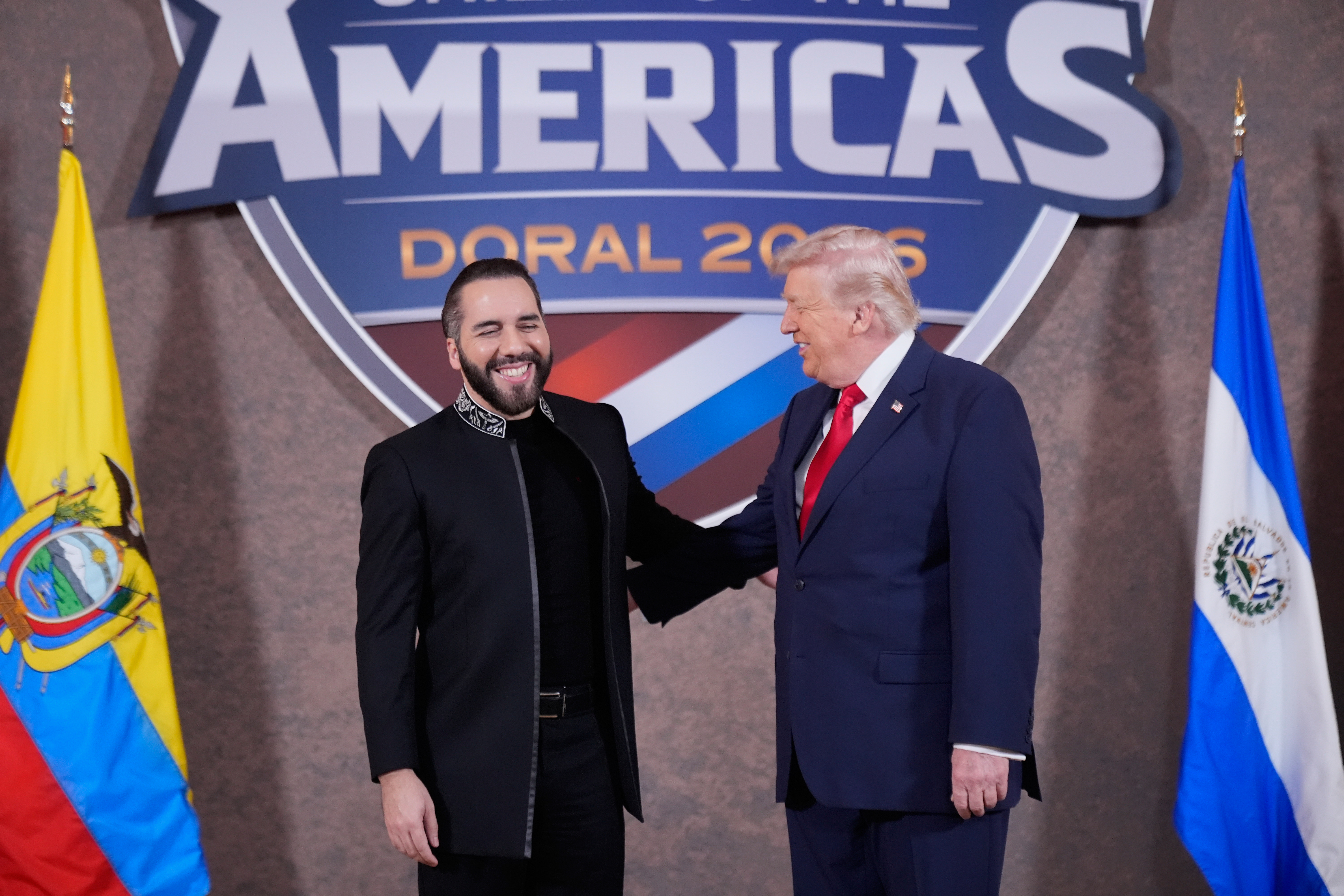
    Weeks after thousands of Haitian and Syrian immigrants saw the end of their protected status in the U.S., exposing them to ICE arrest and deportation, more than 170,000 people from El Salvador now face the same fate.

    And soon.

    Temporary protected status for the Central American nation is set to end on Sept. 9, a deadline that’s provoked urgency and uncertainty among community leaders, activists, and businesspeople around the country. They say the loss of legal status hurts not only the immigrants who have built lives and families here, but also Americans who depend on their labor, expertise, and tax dollars.

    TPS, as it’s called, has been a mainstay of U.S. immigration and humanitarian policy for more than three decades — and now is fast disappearing under the Trump administration.

    It was created by Congress in 1990, and El Salvador became the first country to be designated, in 1991, in response to Salvadorans fleeing a brutal 12-year civil war.

    As of last year the U.S. provided TPS to about 1.3 million people, allowing them to live and work in this country while their homelands grappled with war, environmental disaster, epidemics, or other extraordinary circumstances.

    When Trump returned to office in January 2025, TPS was provided to nationals of 17 countries. Since then the administration has ended or is moving to end status for 13, affecting about 1 million of the 1.3 million recipients, according to the Pew Research Center.

    A key aspect of that evolving effort came in June, when the Supreme Court ruled that the administration could terminate TPS for countries such as Haiti and Syria. And further that Department of Homeland Security decisions about TPS would be largely unreviewable by lower courts, disarming advocates of a weapon they had used to fight cancellations.

    The Trump administration insists that temporary means exactly that, that TPS was never meant to become a path to permanent residency. The White House promises to deport those who lose legal status, an outcome that advocates say is guaranteed to hurt immigrant families that include spouses and children who are American citizens.

    Homeland Security posted video of a Haitian deportation flight on social media, where it said: “Those with terminated TPS are in our nation Illegally. They have two options: LEAVE IMMEDIATELY or be DEPORTED.”

    Some legal groups argue that the law requires the secretary of Homeland Security to formally extend or terminate TPS at least 60 days before the expiration date for any particular country. And that the Trump administration failed to publish such a notice for El Salvador in the Federal Register, meaning that protections should automatically extend for six months.

    However, U.S. Citizenship and Immigration Services says the TPS designation expires on Sept. 9, as scheduled.

    El Salvador has the third-highest TPS population in the U.S. at just over 170,000, ahead of the 101,000 from Ukraine, whose status expires next month.

    Elnora Bassey, a policy attorney at CLINIC, the Catholic Legal Immigration Network Inc., said in a statement that renewing TPS for El Salvador offers the administration “an opportunity to make a choice that demonstrates its ability to protect vulnerable populations, and that we are a nation that demonstrates compassion for all people.”

    The 1991 designation for El Salvador was followed by immigration relief that allowed El Salvadorans to stay when initial TPS finding expired. In 2001 the country was redesignated after two earthquakes killed at least 1,100, injured nearly 8,000, and displaced more than one million people.

    An estimated 2.5 million Salvadorans live in the U.S., according to a Pew Research Center analysis of census data. Philadelphia is home to an estimated 2,759, with about 17,300 statewide and 78,000 in New Jersey.

    El Salvador, known as the “Land of Volcanoes” for its frequent and often destructive eruptions, is roughly the size of New Jersey and has a population of about 6.3 million people.

    For years, the nation was beset by one of the world’s highest homicide rates, more than 100 per 100,000 people. That has declined dramatically amid the government’s use of emergency powers that have seen the detention of more than 80,000 suspected gang members.

    The U.S. State Department ranks El Salvador at Level 1, its safest travel rating, and says “gang activity has decreased dramatically since 2022, causing a drop in violent crime and murders.”

    Research by the National TPS Alliance says that deporting Salvadoran immigrants would deepen difficult socioeconomic conditions in that country and potentially cause political unrest and destabilization.

    The alliance estimates that remittances from the U.S. to Salvadoran families would decrease by more than $1.2 billion. And that poverty rates there would increase 10%, with older, deported immigrants unable to find jobs, and younger ones facing unemployment.

    TPS provides immigrants in the U.S. with work authorization and protection from removal, but no path to permanent residency or citizenship. Once TPS protection ends, holders revert to their previous immigration status.

    For many that means they become undocumented and subject to removal proceedings.

    TPS holders work at higher proportions than the country as a whole, pay billions of dollars each year in federal and local taxes, and contribute to the solvency of a Social Security system from which they are unlikely to ever draw benefits.

    TPS holders from El Salvador annually pay about $1.5 billion in federal, state, and local taxes, according to the National TPS Alliance. They work mainly in construction, in buildings and grounds services, in transportation, and in manufacturing.

    “TPS holders from El Salvador are our neighbors, friends, colleagues, faith leaders, highly skilled workers, and small-business owners,” said Dulce Guzmán, executive director of Alianza Americas, a nonprofit group that supports Latino communities. “At a moment when immigrant communities face tremendous uncertainty and fear, our faith and shared humanity call us to choose compassion, uphold human dignity, and love our neighbors without distinction.”

  • A Philly charter and its former CEO will pay $4 million to resolve claims they discriminated against Black students

    A Philly charter and its former CEO will pay $4 million to resolve claims they discriminated against Black students

    A Philadelphia charter and its former CEO have agreed to pay nearly $4 million to resolve claims they discriminated against Black students in the school’s admissions lottery.

    Franklin Towne Charter High School, in the Northeast, deliberately fixed its 2023 lottery to exclude students from certain majority-Black ZIP codes, Franklin Towne administrator Patrick Field told The Inquirer that year. The order to shut out those students came from Joseph Venditti, a longtime Franklin Towne CEO, who has since left the school, Field said.

    Field sued the school and Venditti in federal court later in 2023, alleging Franklin Towne retaliated against him after he came forward about the lottery manipulation.

    The U.S. Department of Justice brought the case against Franklin Towne and Venditti after Field’s allegations surfaced.

    U.S. Attorney David Metcalf announced the settlement Friday.

    “Racial discrimination has no place in school admissions,” Metcalf said in a statement. “Selecting or excluding students because of their race is illegal and violates the agreements schools sign when they accept federal grant money.”

    Despite signing off on the settlement, neither Franklin Towne nor Venditti admitted wrongdoing.

    “Defendants deny the United States’ allegations,” court documents read.

    Public schools are prohibited by federal law from discriminating against students based on race or national origin; Franklin Towne violated the federal False Claims Act by its actions, Metcalf’s office said Friday.

    Franklin Towne — a public charter school funded by taxpayer dollars — must pay $3.6 million, and Venditti $275,000 from his private funds, as part of the settlement.

    Part of the money will go to the U.S. government, and part to Field, whose suit raised the issue of the improprieties.

    Field and Venditti could not immediately be reached for comment.

    Franklin Towne’s CEO, Brianna O’Donnell, said in a statement that the school had settled allegations about past enrollment practices that “do not reflect how the school is being led or operated today.”

    “We have taken the necessary steps to address this matter while maintaining our full commitment to serving our students, families, faculty and staff,” O’Donnell said, noting that the school’s operations were “continuing as normal.”

    Federal officials said the school “has made significant governance changes, including replacing the Chief Executive Officer and hiring an independent third party to conduct all future admissions lotteries at the school.”

    Franklin Towne remains a top academic performer, but the Philadelphia school board moved to revoke its charter over the lottery manipulation allegations.

    The revocation hearing’s goal, the board said at the time of the vote, was not necessarily to close Franklin Towne, but to effect change. Board officials said the only tool they possess under Pennsylvania law to trigger a public accounting of serious allegations of impropriety is a revocation hearing, which includes witnesses and evidence before an independent hearing officer.

    Franklin Towne filed suit against the board, objecting to its choice of hearing officer for the revocation proceedings, which have not yet begun.

    Reginald Streater, the school board president, said in a statement that the charter school’s office’s “serious concerns” about Franklin Towne admissions data over several years led to the revocation notice of the school. It’s still pending, Streater noted.

    “The board is committed to striving for fair and equitable access to public education for all Philadelphia students,” Streater said in a statement. “We will continue to uphold the standards and requirements that apply to all public schools and to take action when there are concerns about compliance with those requirements.”

    Staff writer Abraham Gutman contributed to this article.

  • Cathy Engelbert did next to nothing to help the WNBA. Its next commissioner has to be a real leader.

    Cathy Engelbert did next to nothing to help the WNBA. Its next commissioner has to be a real leader.

    Cathy Engelbert was the Jalen Hurts of the WNBA, the subject of the same kind of questions about whether a prominent figure on a speeding ship was the captain or a passenger — except with her, the answers were more definitive and damning.

    For these last few years, for the period in which the league has made its greatest gains in popularity, relevance, and quality of play, she was at best a nonfactor and at worst an impediment. The people behind those gains were the players, one in particular, and with the announcement Friday that Engelbert, a Collingswood native, was “retiring,” the WNBA has a better chance of accelerating its growth and calming the churning waters around it.

    No one looks or will look at Engelbert’s tenure atop the WNBA and credit her for the league’s progress, and no one should. The rise of women’s sports in America, particularly of women’s basketball, already was a wind at her back when she became commissioner in 2019.

    Title IX had been doing its good work on behalf of girls and young women for nearly two generations by then. Because the WNBA, founded in 1996, rarely has players to enter the league after leaving college early, women’s college basketball has been a fertile garden of talent and star power, feeding the league long before Engelbert oversaw it. UConn, Tennessee, Notre Dame, Baylor: These programs and others like them pumped out stars who had spent four years in school setting records and competing in Final Fours, whose names and games had become familiar before they’d ever signed their first professional contracts.

    The WNBA’s biggest stars include Caitlin Clark (left), Aliyah Boston, A’Ja Wilson, Olivia Miles, and Jessica Shepard.Nam Y. Huh

    That tide turned into a wave that has crested with Caitlin Clark, with the woman who can lay claim to the title of the most popular and important female athlete in the United States. The NBA lifted off in the early 1980s — once talent poured in after the league merged with the ABA, once Magic Johnson and Larry Bird brought their rivalry to the Lakers and the Celtics — and the WNBA should be on its way to telling a similar story. It has Clark. It has A’ja Wilson and Paige Bueckers and Olivia Miles and Breanna Stewart. It has a depth and breadth of talent unmatched in its history. The games should matter more than they ever have. The games should matter most.

    Except … they don’t. Who wants to hear that story now? Out of Engelbert’s lack of leadership, out of her inability and unwillingness to speak simple truths in plain language or take strong stands to benefit it, the WNBA has morphed into a cudgel in the culture war.

    On one side are the sexists and misogynists who don’t watch women’s basketball — and wouldn’t dare confess to tuning in even if they did — but whittle away their days complaining about the sport and attacking its athletes on Twitter/X. On the other are the activist players, coaches, fans and compliant media members so defensive and discomfited over the slightest criticism or question — about the inevitable byproducts of a major pro sport going mainstream and gaining a new audience — that they seem to wish that only people like them were permitted to play and watch and cover it.

    Engelbert let those sides squish her like a grape. It was bad enough for the league’s image, for its attempts to shake the perception that it was small-time in its operations and approach, that she botched the pronunciation of Golden State Valkyries coach Natalie Nakase’s last name when she presented Nakase (nuh-KAH-say) the WNBA Coach of the Year Award. That it took Clark’s presence and some timely social media posts before Engelbert stopped insisting teams fly commercial and instituted a charter flight program for the league. That her communication skills with the players were so poor that one, Napheesa Collier, felt emboldened enough to say that the league “had the worst leadership in the world.”

    No, what has been worse is Engelbert’s cowing in the face of obvious problems with obvious solutions. The league should have started hunting for better, more qualified officials years ago, rather than waiting until May to … form a task force about the topic. Engelbert must have been living in a dream world when, according to Collier, she said that Clark and the WNBA’s other stars “should be on their knees” thanking the league for the prominence it has given them … when it’s actually the other way around.

    But it’s the latest and silliest controversy — over the league’s policy, or lack thereof, on transgender athletes — that brought Engelbert’s weakness most clearly to bear.

    Royce White and Enes Kanter Freedom are clowns for their publicity campaign to declare themselves to be women so they can join the league. A commissioner with any spine would have swatted them away like gnats simply by pointing out what everyone can already see: Royce, you’re 6-foot-8. Enes, you’re 6-10. You guys played in the NBA! Do you have any idea how pathetic you are for begging to be in our league?

    A commissioner with any spine would have pointed out that FIBA, the IOC, and the USOPC already have policies that only biological females can compete in women’s sports, that the WNBA’s players follow those guidelines when they compete internationally — as they are right now, in the FIBA World Cup — and that the league’s policy reflects those policies. Instead, Engelbert has stayed silent, allowing the issue to fester, allowing this sideshow to dominate conversation about the sport.

    This is a critical moment for women’s athletics and for the WNBA. The league is expanding, adding three more franchises in the next four years, including one here in Philadelphia. It has an opportunity both to solidify its existing fan base and build upon it. It has an opportunity to climb to a level that, just a decade ago, few would have thought reachable. It will need a new commissioner who can be more than the one Cathy Engelbert was, more than someone sitting on the deck, doing nothing to avoid the swells and crashes, more than someone just along for the ride.

  • SEPTA bus drives through wet concrete outside of Termini Bros. in what locals say is the ‘most South Philly thing ever’

    SEPTA bus drives through wet concrete outside of Termini Bros. in what locals say is the ‘most South Philly thing ever’

    In what Joey Termini of Termini Brothers Bakery is calling the “most South Philadelphia thing ever,” a Route 47 bus drove through wet concrete after two people reportedly hopped off to move street barricades so the bus could pass Thursday.

    The sinking bus, which tilted on a slight edge as it got stuck on South Eighth Street outside Termini Bros., drove through the concrete only two minutes after city crews poured it into the road.

    In surveillance footage provided by Termini, the bus, aptly adorned with Top Dog Law advertisements, slows to a halt in front of two A-frame street closure signs on Eighth Street. Two passengers are then seen hopping off the bus, casually moving the signs out of the way and directing the bus driver like air traffic controllers around the patch of concrete in the middle of the road. As the bus gets stuck and tilts to the side, smacking the pavement in the process, hardly any of the passengers on the bus can be seen visibly reacting.

    “In South Philly, people are like, “I’ll find a way,” Termini said. “At the time I was a little frustrated because we waited months to get that pothole fixed, but you know looking back at it now, it really is funny. I’m just glad nobody was hurt.”

    The brothers Termini have been coordinating with the city to get the pothole-turned-sinkhole resolved since it formed 14 months ago, Termini said. He knew it was getting bad when the sinkhole started swallowing traffic cones placed inside it — a time-honored Philadelphian quick fix.

    Their prayers were answered Thursday when city crews came in the afternoon to repair the street. But right after the concrete was poured and the street blocked off at 7:21 p.m., a 47 bus found its way into the concrete pit at 7:23 p.m., according to Termini’s surveillance footage.

    The bus was towed within about 45 minutes, SEPTA spokesperson Andrew Busch said. According to an inspection, the only damage to the bus was from cement on one tire, so it will not be out of service for an extended period of time, Busch said.

    The city posted notices about the scheduled maintenance along the street in the days preceding the repair and no-parking signs were posted. “This wasn’t something that they just decided to do on a whim,” Termini said.

    SEPTA had a detour in place for this block along Route 47 on Thursday, which is standard operating procedure during planned road maintenance, Busch said. All internal notices of the detour were made, including to operators working on the 47.

    “We have an internal review underway to determine exactly why this occurred,” Busch said. “We will also see what we can learn from it and possibly improve on moving forward.”

    Termini feels for the driver, who wasn’t the first to have trouble on Eighth Street, as he saw at least three other buses making difficult turns to move around detours — something he felt could have been coordinated better by the city and SEPTA.

    “I know the driver was probably really stressed out,” Termini said. “But the guy getting off the bus to move the barriers and then run back on the bus, even after the bus got stuck in concrete, I was like, ‘This is Philly.’”

    And to make the ending sweeter, when city crews came out Friday morning to repair the bus-botched repair job, Termini handed out cannolis to those working on the road.

    “There’s enough craziness going on in the world out there,” Termini said. “Sometimes, we just have to laugh.”