Tag: Weekend Subscribers

  • The Academy of Natural Sciences is closing its museum after nearly two centuries

    The Academy of Natural Sciences is closing its museum after nearly two centuries

    Philadelphia’s Academy of Natural Sciences of Drexel University is closing its museum after nearly two centuries in existence, citing financial pressures and dwindling attendance.

    The museum, which opened to the public in 1828, will cease operations at the end of the business day Sept. 30. Its last day open to the public with regular hours will be Sunday, Sept. 27, staff were notified on Tuesday.

    Visitorship at the museum had slipped in recent years, according to a statement signed by Drexel president Antonio Merlo and Academy board chair Suzanne Biemiller. Though the Academy had worked to rebuild attendance after the pandemic, “patterns of visitation and audience behavior changed in lasting ways, while the costs of operating the museum continued to rise,” the statement said.

    “Over time, it became clear that these were not temporary pressures, but fundamental changes in the economics of the Academy’s operational model, costs that have imperiled the Academy’s ability to discharge its overall mission and preserve its legacy.”

    Closing the current Parkway museum, was, therefore, “a difficult decision taken to concentrate resources on the Academy’s enduring scientific assets and research,” said the statement.

    The aim is ultimately to relocate the Academy’s collections and sell the building, which, is owned by the Academy, and has a lot of deferred maintenance needs, said a source close to the talks between Drexel and the Academy, who asked not to be identified.

    The Academy building on the Benjamin Franklin Parkway at 19th Street, “will continue to house collections and laboratories while we consider possible pathways forward that place the utmost priority on preservation and support of the collections, library, archives, and research initiatives,” a Drexel spokesperson said.

    Biemiller declined to comment on the potential relocation of the collections.

    The museum cut back its hours of operation from five days a week to three — Friday through Sunday — as of last Oct. 1 (though it added back Thursdays in July and August for its Dino-Mite Summer program).

    One of two shell sculptures placed on either side of the 19th Street entrance to the Academy of Natural Sciences of Drexel University on Aug. 17.Tom Gralish / Staff Photographer

    Drexel said 27 of the Academy’s 80 employees — about a third — will be “impacted” by the closure. The university did not say whether that meant they would be laid off or transferred, and did not respond to a question on how much money the move will save.

    Simultaneously Tuesday, the university and science institute announced that Scott Cooper, Academy of Natural Sciences president and CEO for nearly nine years, is stepping down immediately.

    The Drexel and the Academy boards will “continue working together to identify an appropriate governance structure and interim and permanent leadership for the Academy,” the statement said.

    Former Comcast executive and U.S. Ambassador to Canada David L. Cohen, who has been helping to broker an agreement between Drexel and the Academy, said the two institutions are close to striking a deal on a “term sheet” on governance and finances. He has been tapped by Gov. Josh Shapiro to serve as a third-party facilitator in the process, the university said in its message.

    “We want to preserve the Academy,” he said, “but we also don’t want to jeopardize Drexel.”

    Collections and research will remain unaffected

    The Academy, which became affiliated with Drexel in 2011, is known to the general public for its museum that features a Dinosaur Hall with dinosaur bones and full-scale replicas. Its exhibitions have explored environmental issues and centered on the Academy’s collection of approximately 19 million specimens, as well as historically significant items associated with Thomas Jefferson and Lewis and Clark.

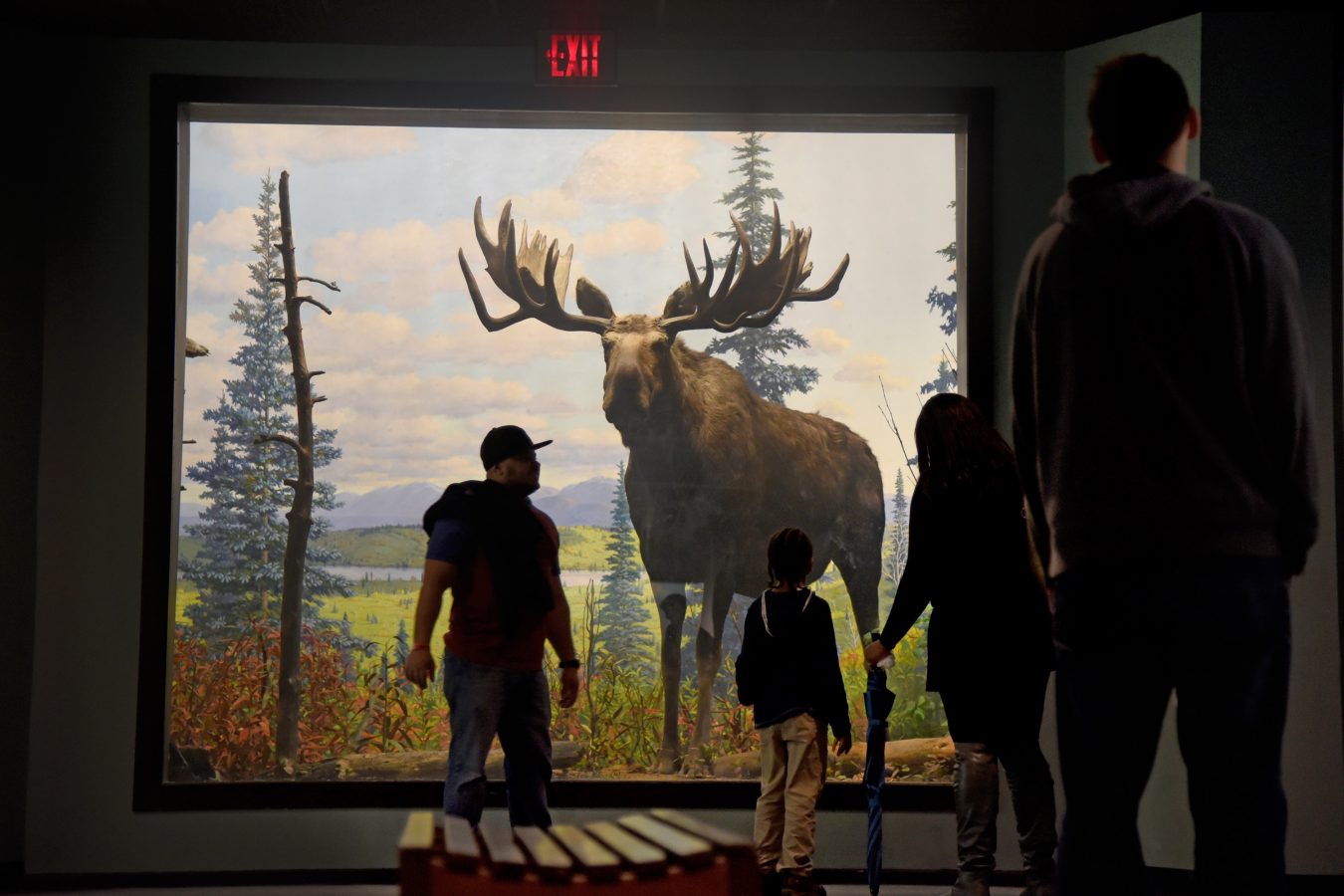
    It offers hands-on science experiences, like a “big-dig” fossil exhibit, and old-school dioramas of bison, bears, tigers, and other animals in their ecosystems. The museum’s current “Botany of Nations” show “reshape[s] the historic tale of Lewis & Clark through Indigenous perspectives,” says an exhibition description.

    Closure of the museum does not affect the rest of the institution, which builds and maintains the collections and conducts research through departments such as the Patrick Center for Environmental Research, all housed in the Parkway structure. All of that will remain there, the university said.

    Biemiller said that “the trustees of the Academy know that this news about the closure of the museum is going to be a blow to Philadelphians, and I would love for them to know we share their feelings of loss about this beloved space and place. And we also know that work remains to develop and fund a new strategic and operating model that will ensure that the Academy’s important centuries-long mission to understand the world and inspire us to care for it continues.”

    Asked whether the intent was to reopen a museum, Biemiller said: “I would hope so. That’s the goal. I think we have not given up on that part of our mission. The Academy is research, it is [specimens and library] collections, and it is public engagement.”

    While she said it was “incumbent upon us to find places and ways” for the museum to continue, what form it would take has not been determined.

    “It could be at the current location in a different configuration, it could be a new location, it could be imagined in different ways.”

    What’s important, she said, was the “fundamental goal to ensure that people have access to the natural world, can see these birds from North American or dinosaur bones and fossils the Academy scientists have collected and understand how they connect to the world.”

    “It’s a sad day to see it close,” said Franklin Institute president and CEO Larry Dubinski of the Academy museum, which is about a block from the institute. “It’s a profound loss for the community and for the city and the region. And it’s one of those days that I hope the community takes stock in. This is a city driven by arts and culture. We have a phenomenal city of arts and culture, unlike almost any other in the United States.”

    However, Dubinski said, the arts here are “underresourced and underfunded, and that does continue to challenge the ability to have a sustainable arts and culture community. I think today’s another wake-up call to that issue.”
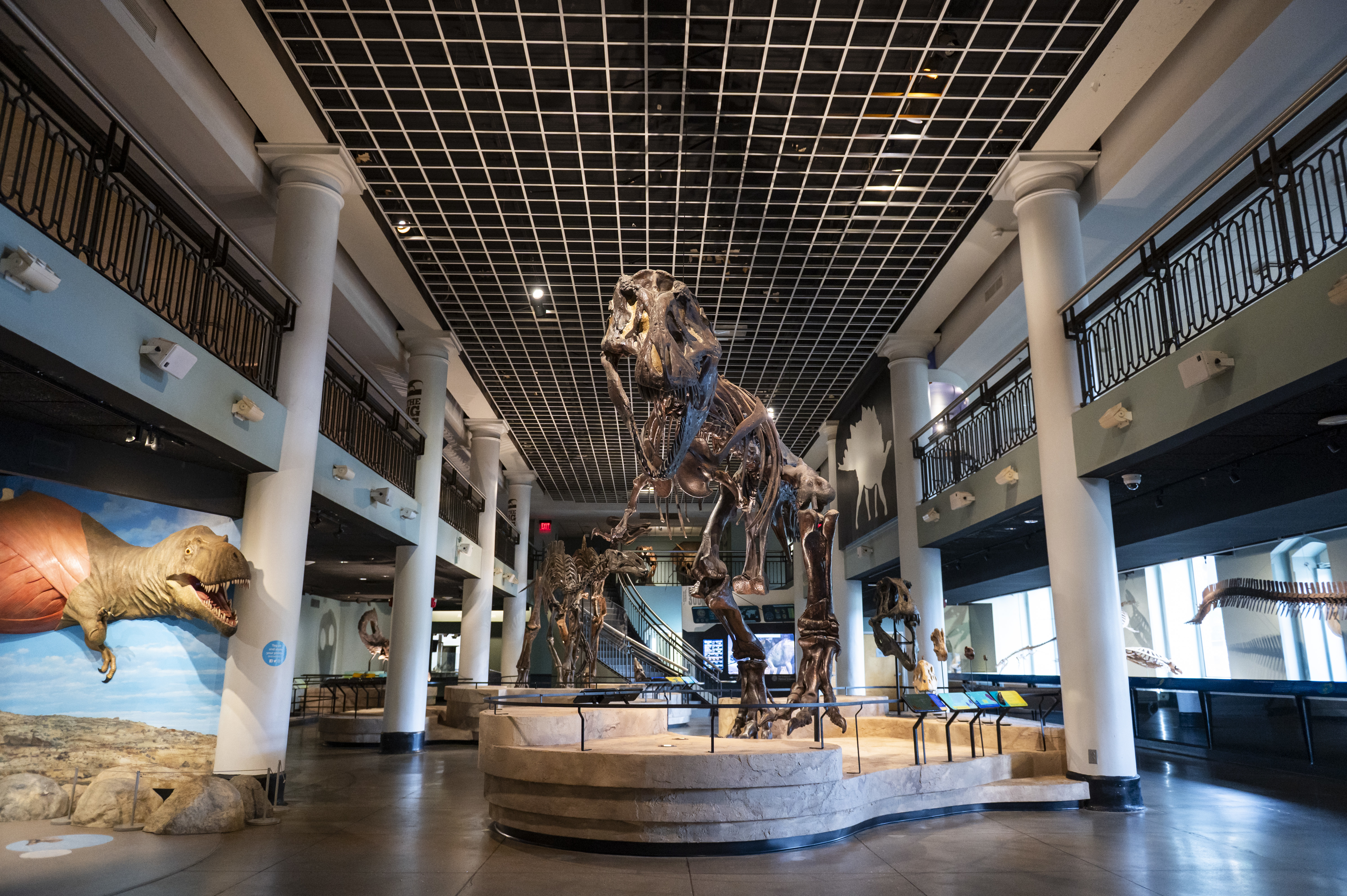
    Dinosaur Hall at the Academy of Natural Sciences Aug. 5, 2026.Allie Ippolito / For The Inquirer

    Ongoing financial challenges at Drexel

    The museum closure comes amid financial challenges at Drexel University, which has been seeking to overcome a budget deficit, overhaul academic programs, change from a quarter-based calendar to semesters by fall 2027, and cope with another national dip in high school students beginning this year.

    Over about the last decade, the West Philadelphia university has lost about 20% of its enrollment. Last fall, Drexel saw a 19% drop in freshmen; numbers for this fall aren’t yet available, though the school is projecting a 16% jump in first-year students. And the school, which enrolled 20,868 undergraduate and graduate students in 2025-26, is projected to continue to run deficits through fiscal year 2028, according to a report from Moody’s, a global financial services company that releases credit ratings.

    Merlo, Drexel’s president, told The Inquirer in April that the school projected ending the year with a $20 million deficit, down from almost $40 million last year and $63 million in 2024. In May, the school said it had implemented $93 million of “permanent strategies” to deal with the “structural imbalance” and had identified $11 million more.

    The Academy has become a drain on the university, a source familiar with the situation, who was not authorized to speak about the matter and asked not to be identified, told The Inquirer in April.

    The university has provided the Academy with substantial support — $8,288,000 and $8,914,000 for operations in fiscal years 2025 and 2024, respectively, according to financial statements posted on the Academy website. These numbers include in-kind support that Drexel is providing to the Academy.

    Friction between the Academy and Drexel became public in April, The Inquirer reported, revealing Drexel’s wish to totally take over the Academy, or end the partnership.

    Uncertain long-term future for the Academy

    Talks are continuing between the two institutions, with the offices of Gov. Shapiro and Mayor Cherelle L. Parker involved, underscoring the importance of the Academy to both the city and the state.

    “I don’t want to lose the Academy on my watch, and neither does the mayor,” Shapiro told Cohen, according to Cohen, who has led dozens of meetings over the last eight months and created a draft proposal for an agreement between Drexel and the Academy.

    “Drexel and the Academy are working with my office, with Governor Shapiro’s office, and with Ambassador David L. Cohen, as the governor’s representative, to preserve the essential mission of the Academy,” Parker said in a statement.

    “We are working collaboratively toward the outcome we all seek for the City of Philadelphia.”

    The governor’s press office did not respond to The Inquirer’s request for comment.

    Cohen has long been a negotiator in many major city issues, formerly serving as chief of staff to former Philadelphia Mayor Ed Rendell and leading the board of trustees at the University of Pennsylvania.

    “Together, we are advancing discussions focused on the Academy’s long-term future and identifying new opportunities to strengthen its scientific mission, ensure access to its world-renowned collections, expand public engagement in the natural sciences, and maintain the Academy’s enduring presence in Philadelphia,” the statement said.
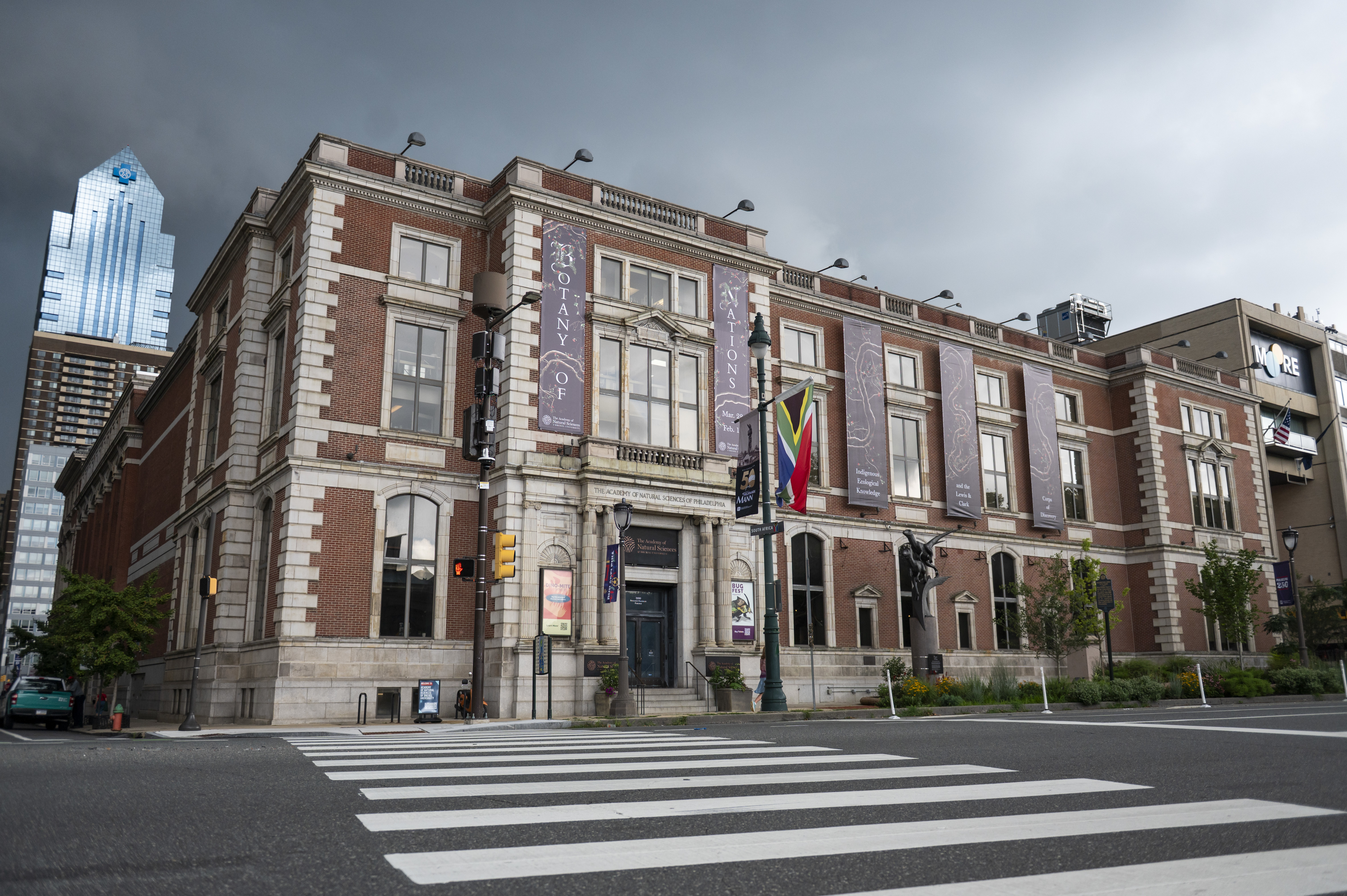
    The Academy of Natural Sciences on the Parkway, Aug. 5, 2026.Allie Ippolito / For The Inquirer

    The Academy’s affiliation with Drexel is 15 years old. It announced a partnership agreement with Drexel in 2011 that blended the two organizations somewhat, but stopped short of being a full merger. The two groups maintain separate boards.

    According to a 2013 Drexel audit, the 2011 affiliation agreement between the two institutions stated that the Academy would retain its status as separate nonprofit organization, but that as of September 2012 it would become a Drexel subsidiary owned 100% by the university.

    A Drexel spokesperson said in April that the school had “invested a substantial amount annually in the Academy to maintain access to the Academy’s collections while we worked with the Academy and the community to identify a sustainable path to keep this resource in Philadelphia.”

    Cooper was named the Academy’s leader in 2017 after serving as vice president of collections, knowledge and engagement at the Royal British Columbia Museum in Victoria, Canada. Before that, he was director of museums at the Qatar Foundation in Doha, Qatar.

    Under his leadership, the Academy “renewed its public and scientific mission,” Tuesday’s joint statement from Drexel and the Academy said. “It revitalized galleries, developed original exhibitions showcasing its collections and research, and advanced co-curatorial approaches that brought new voices into programs and interpretation.”

    Cooper, who will remain for a time as a consultant to the Academy, was not available for comment, a spokesperson said.

    “We’re sorry he’s leaving, but understand his decision,” said Biemiller.

    “It’s a competitive world that museums inhabit, and people make choices every single day,” Cooper told the Inquirer after his 2017 announcement. “We need to ensure that when they come to the Academy they are getting a reward for their investment of time.”
  • How Carlton Williams rose from a scandal-plagued department to one of Philadelphia’s most powerful government positions

    How Carlton Williams rose from a scandal-plagued department to one of Philadelphia’s most powerful government positions

    Eleven years ago, Carlton Williams was, to some, a symbol of government dysfunction.

    He was leading the troubled Philadelphia Department of Licenses and Inspections, an agency engulfed in controversy over safety lapses and staffing issues following the deadly 2013 Market Street building collapse. The city controller called on Williams to resign, and Jim Kenney, then a candidate for mayor, promised that he’d get rid of him.

    And yet Williams remained.

    In July, he was named Philadelphia’s managing director, one of the most powerful positions in city government, second only to the mayor. He is assuming responsibility for L&I again, plus dozens of other agencies and thousands of employees who carry out the day-to-day operations that make the city run.

    It is perhaps an improbable outcome for a longtime city employee who absorbed a level of scrutiny that could have easily ended his career.

    But Williams proved durable, cycling through leadership positions across several departments while establishing himself as a City Hall insider. He has politically powerful allies and a reputation among City Council members as someone who will quickly act on their needs. That goes a long way with 17 politicians who value responsiveness and omnipresence, traits that they did not see in Williams’ predecessor, Adam K. Thiel.

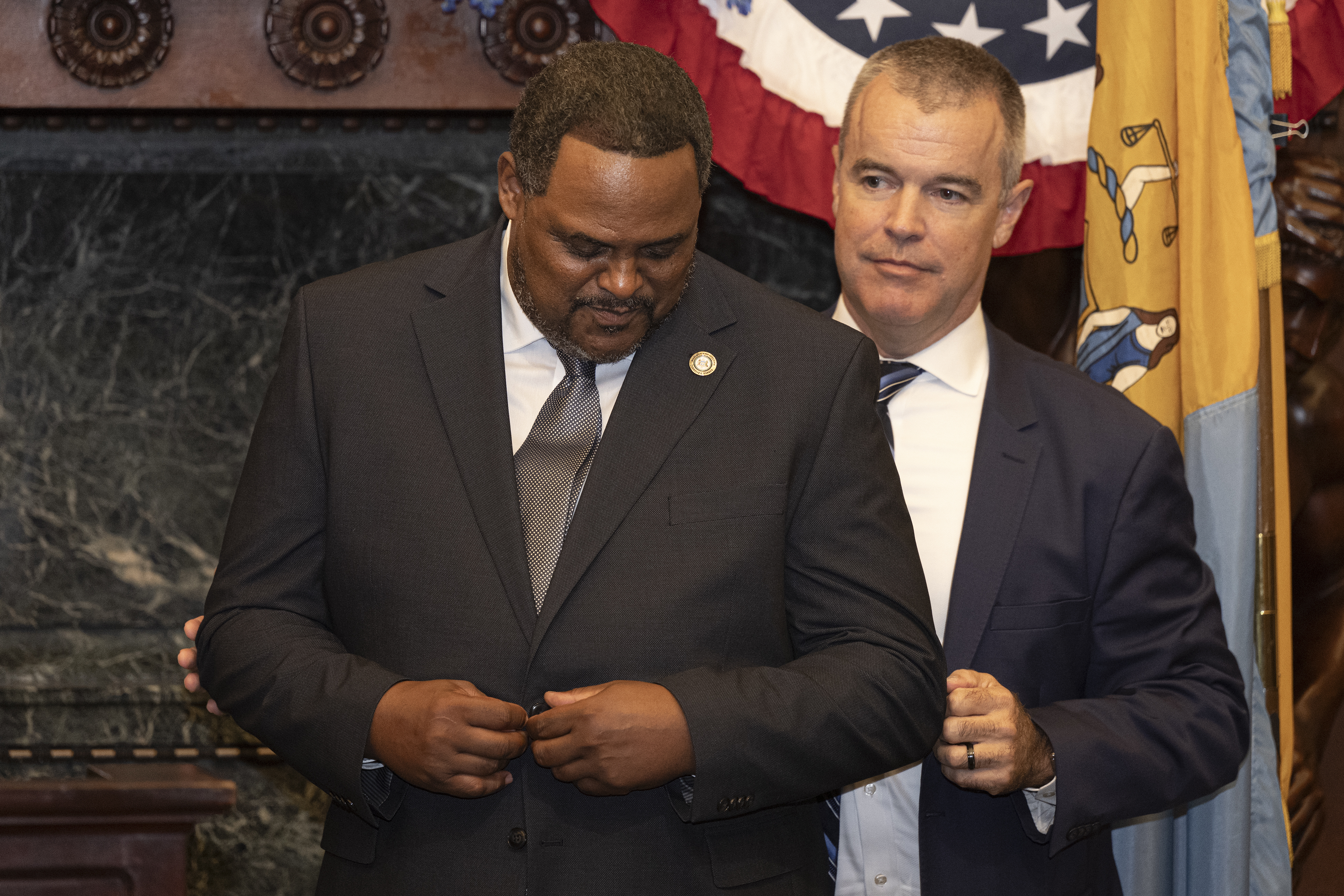
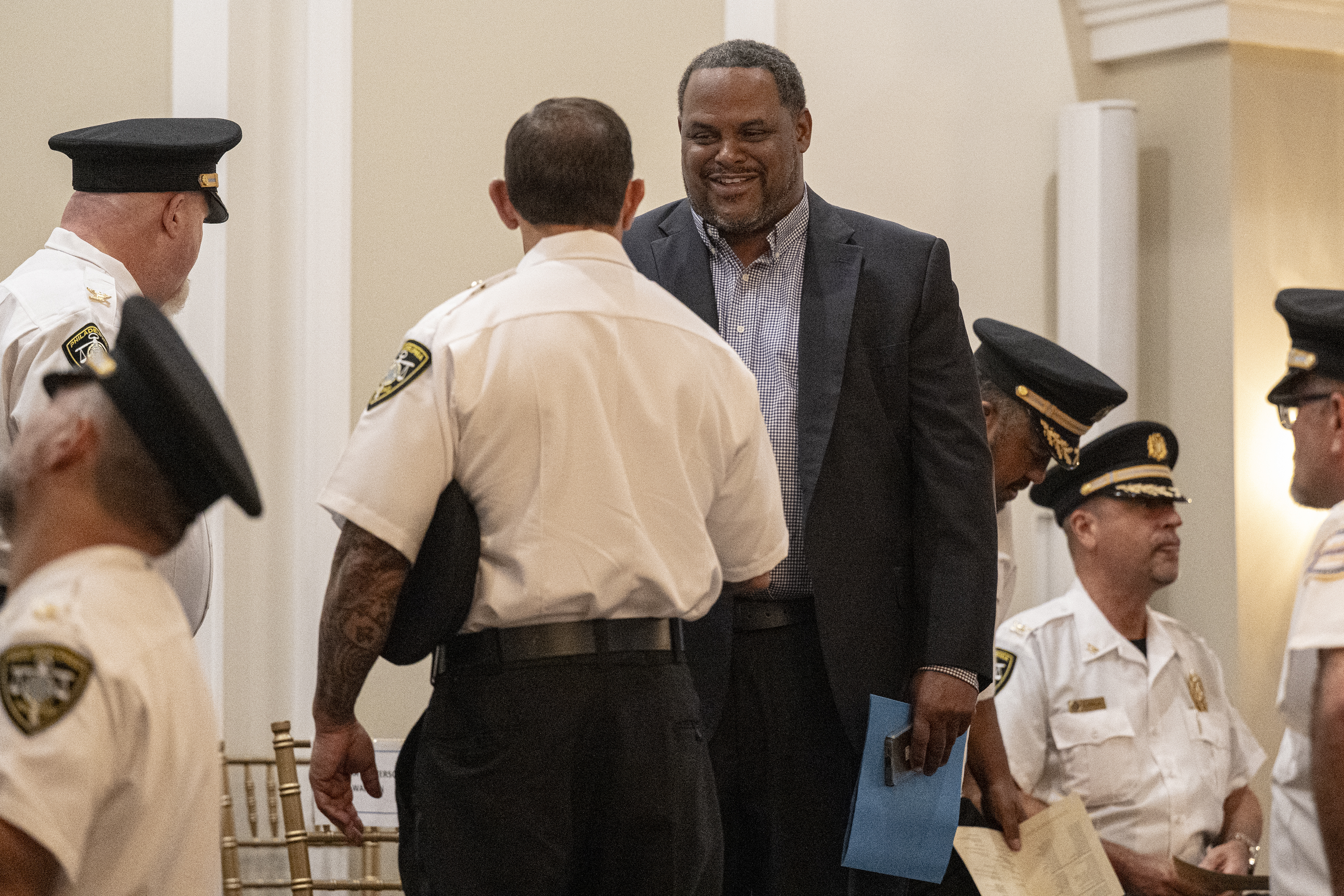
    Newly appointed Managing Director Carlton Williams interacts with city officials during a correctional officer graduation ceremony at FOP Lodge 5 in Philadelphia on Friday.Jose F. Moreno / Staff Photographer

    Perhaps most importantly for Williams’ ascent: he is all-in on Mayor Cherelle L. Parker.

    The ties between Parker, 53, and Williams, 57, stretch back to their childhoods in Northwest Philly — he played football for the Oak Lane Wildcats, and she was a cheerleader. The team remains a part of both of their identities: Williams has led the Oak Lane Youth Association for 20 years, and the mayor often says proudly that she is a “Wildcat for life.”

    Later in life, both found allies in the storied Northwest Coalition, a powerful political family. Williams said that he has known for 20 years that Parker would one day sit atop City Hall. And he most recently led Parker’s Office of Clean and Green Initiatives, overseeing the implementation of some of her key campaign promises.

    “I’m bringing the ‘One Philly’ brand to the managing director’s office,” Williams said in an interview, echoing the mayor’s oft-used slogan. “Not to say it wasn’t being done under my predecessor. But I want to make sure it’s completely aligned with the mayor’s goals, because I believe in that vision.”

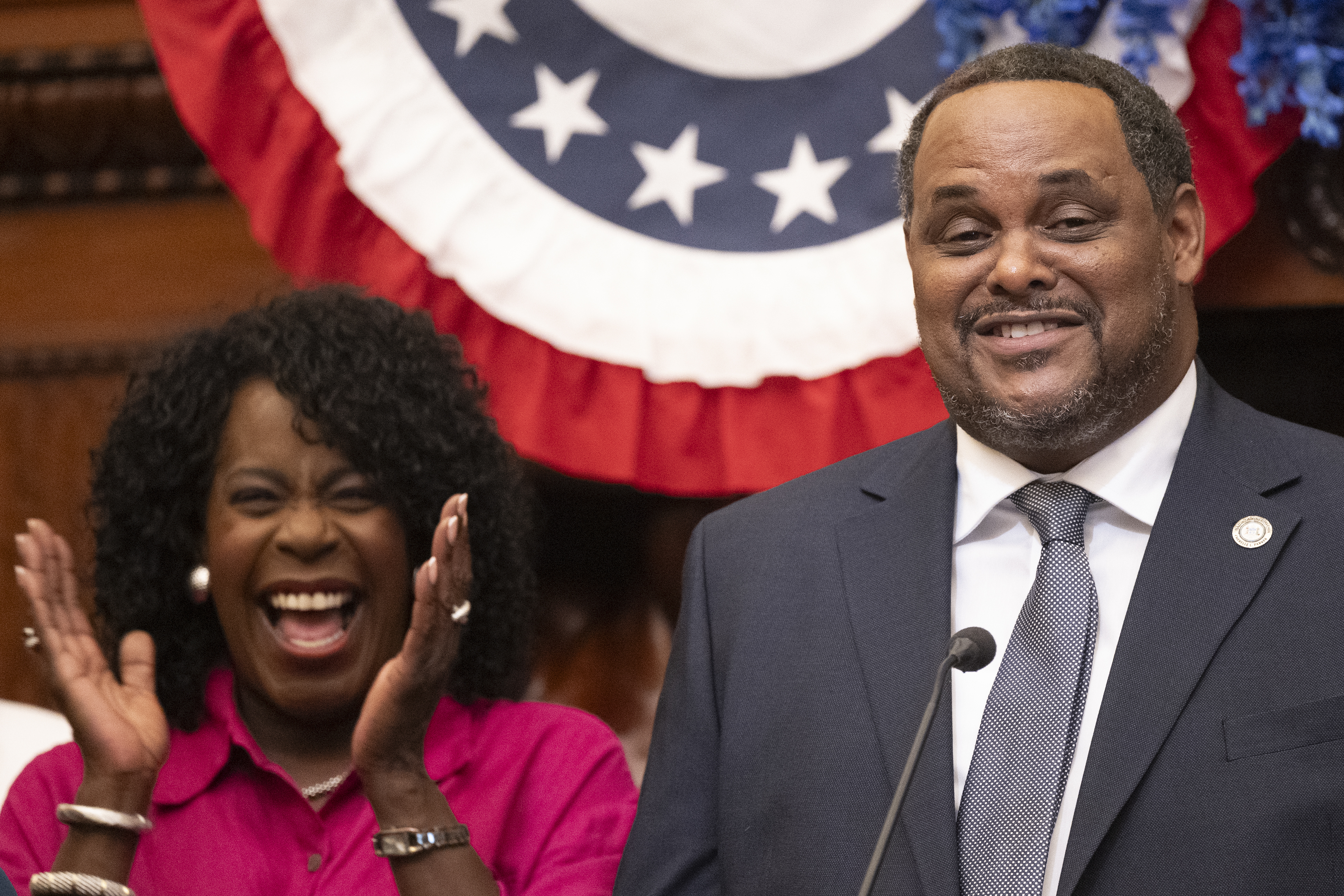
    New Philadelphia Managing Director Carlton Williams speaks at the podium after being announced by Philadelphia Mayor Cherelle L. Parker during a July 28 news conference at City Hall.Jose F. Moreno / Staff Photographer

    His appointment as managing director marks a new stage for the Parker administration that has seen significant turnover at its highest levels. And it is indicative of what Parker values in her inner circle: vast institutional knowledge and loyalty.

    For the mayor, trust in Williams’ ability to operate within the bureaucracy and advance her priorities may outweigh his mixed record of management.

    “Whenever we had a crisis of any kind in this city, he has been on my speed dial,” Parker said when she announced Williams’ appointment last month. “No matter who’s been leading, I’ve always called him for his counsel.”

    Overseeing ‘a very broken’ L&I

    Parker’s bet on Williams would have seemed almost unimaginable a decade ago.

    A year after Williams was appointed to lead L&I, an excavator demolishing a wall on Market Street in Center City toppled the building onto an adjacent Salvation Army store, killing six people and injuring a dozen more. The inspector responsible for the demolition project died by suicide a week later.

    Calls for reform abounded and questions swirled about whether the city’s agencies were responsible. There were multiple investigations launched and commissions convened to probe the disaster, and within days, Council members were pressing Williams to institute reforms that would bolster safety on private construction sites.

    In response, Williams sought to hire more inspectors, increase their training, raise demolition standards, and create new specialized units within L&I.

    Today, he says the collapse on Market Street was “one of the saddest moments” of his time in government.

    “You have to lead through some tough challenges when you’re a leader,” he said. “You don’t get to pick and choose when you lead.”

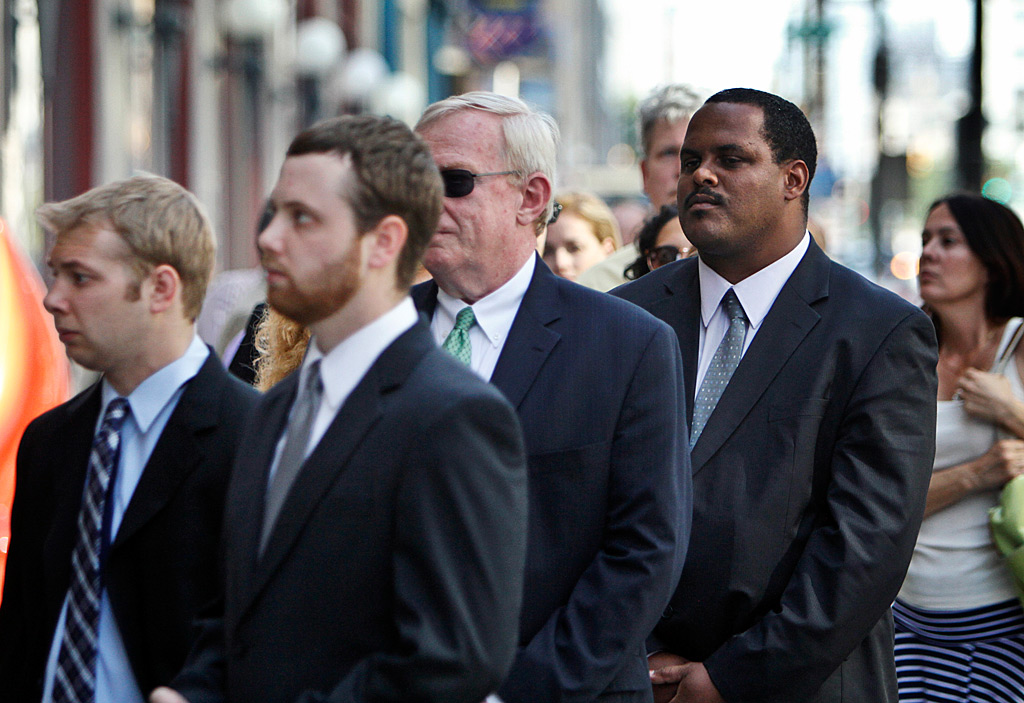
    In this June 2013 file photo, then-Philadelphia Commissioner of the Department of Licenses and Inspections Carlton Williams (second from right) waits in line to attend a memorial service for Anne Bryan, who was among the victims of the Market Street building collapse.JOSEPH KACZMAREK / Associated Press

    But it was not the only controversy he faced.

    The Inquirer reported that, in 2014, Williams personally intervened in the demolition of a Point Breeze building and allowed it to proceed without the requisite permits.

    And in 2015, L&I was forced to reorder hundreds of inspections after sending unlicensed and unqualified inspectors to examine unsafe buildings across the city.

    By fall 2015, then-City Controller Alan Butkovitz was calling on Williams to be fired. He said at the time that L&I had long been troubled, but that his office’s audit of the agency found that Williams had not made enough improvements.

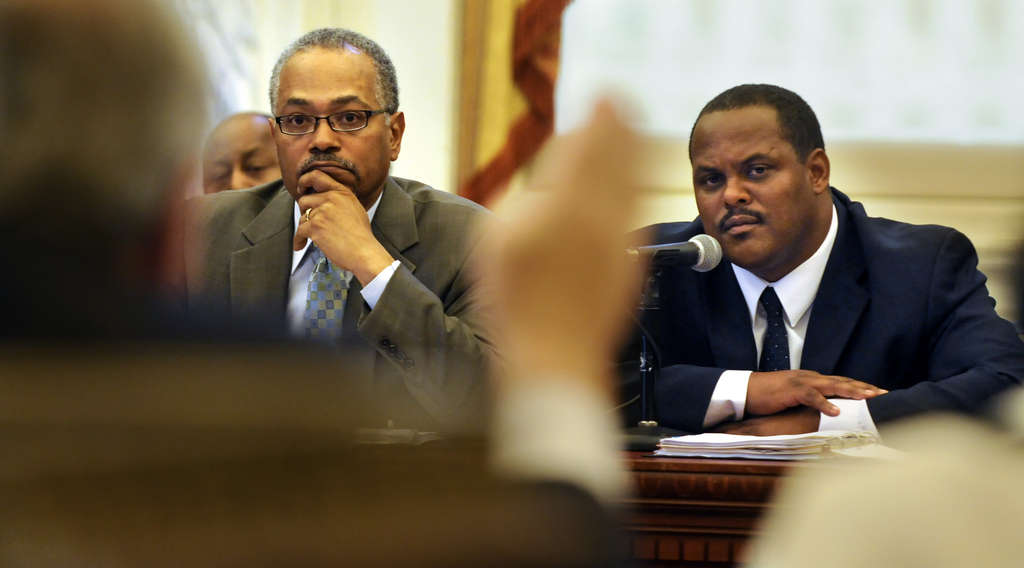
    In this 2013 photo, then-Deputy Mayor Everett Gillison (left) and then-Commissioner of Licenses and Inspections Carlton Williams listen to members of City Council during a hearing.TOM GRALISH / Staff Photographer

    Butkovitz now says that he blames former Mayor Michael Nutter instead, and that Williams was “caught between the mayor and me.” He said Williams had promised to provide the controller’s office with documents to assist in an audit, and then did not.

    “I took it out on Carlton Williams at the time,” Butkovitz said. “His inclination was to cooperate with me, but at the time, it looked to me like duplicity. And I don’t think it was. I think he was overridden by higher authority.”

    Nutter did not respond to a request for comment.

    Estelle Richman, a former Philadelphia managing director who has held a variety of roles in local, state and federal government, said L&I is “one of the most difficult city departments.” She noted that past agency leaders have been pushed out, fired, indicted, and jailed.

    “We can go back and say ‘maybe [Williams] should have done this or that,’ but the reality is it was a very broken department,” she said. “I think he did more to try to get it restabilized and back on track than any other commissioner at that time could have done.”

    ‘You have to be accessible’

    Before taking the helm at L&I, Williams was a career bureaucrat.

    Born in North Philly and raised in West Oak Lane, Williams started with the city at age 19, working in Fairmount Park as one of the first-ever members of the Philadelphia Ranger Corps. The program paid for part of his tuition to attend Temple University and marked his foray into public service.

    Jeffrey Montague, who led the Philadelphia Ranger Corp. and has been a mentor to Williams for decades, said that at a young age, Williams showed potential.

    “He didn’t try to fit in. He always stood out on his own independence,” Montague said. “He wasn’t trying to fit into a crowd.”

    After working as a ranger, Williams spent three years running a Harrisburg youth program for AmeriCorps — the first and last time Williams lived outside the city.

    He returned to Philadelphia to work for the Parks and Recreation Department, rising to become a deputy commissioner in both the recreation and streets departments.

    Then came the four-year stint leading L&I, and when Kenney took office in 2016, he moved Williams back to his old job as a deputy in the streets and sanitation department.

    But it didn’t last. Five months after Kenney took office, the streets commissioner was arrested for assault. Williams ascended to the role, and suddenly, the person who Kenney said he wouldn’t retain to lead L&I was in charge of one of Philadelphia’s most visible departments, overseeing transportation and sanitation operations citywide.

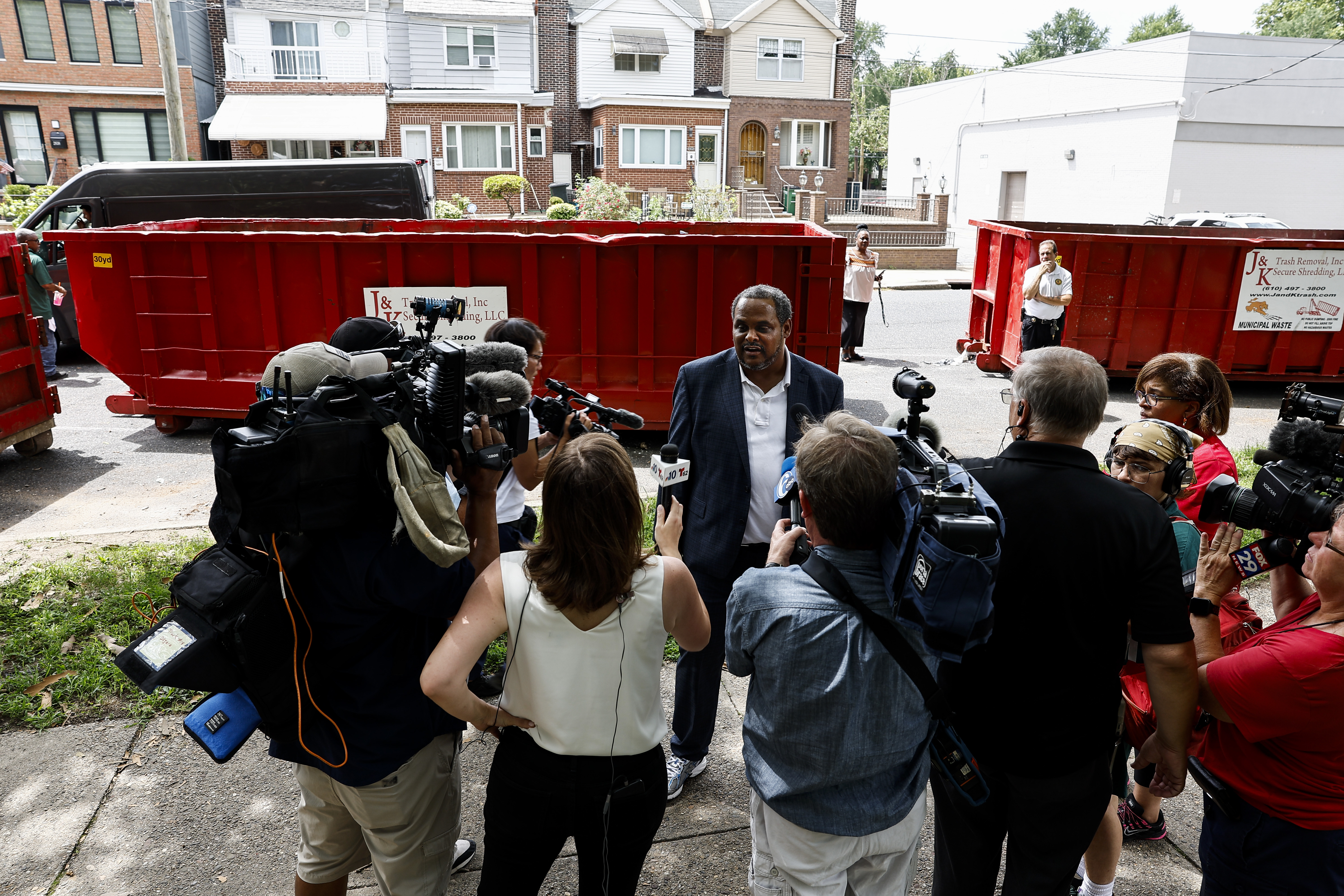
    Carlton Williams, then the director of the Office of Clean and Green Initiatives, speaks during a news conference at Bigler and South 15th Streets on July 7, 2025.Monica Herndon / Staff Photographer

    It was there where Williams solidified himself as a City Hall fixture. He said that as an administration staffer, he has “one primary that I listen to” — the mayor — but he has always tried to be attentive to Council.

    That may be a key difference between Williams and Thiel, his predecessor. Thiel was the former fire commissioner and a nationally recognized expert in emergency management who was seen as a skilled behind-the-scenes operator.

    But Council members said that Thiel did not foster close relationships with members of the city’s legislative body who are often conduits between residents and the mayor’s administration.

    In addition, Thiel was often absent during major events in the city and he was frequently on leave — he joined the Army Reserve eight months into his tenure, and held several jobs outside city government, including as a consultant and professor.

    That was a departure from prior administrations, when the managing director was often the public face of city operations.

    On several occasions during the Parker administration, it was Williams who was in the spotlight. As director of the Office of Clean and Green Initiatives, he played a key coordinating role during the eight-day municipal worker strike that halted city services — most visibly, trash pickup.

    And he oversaw the city’s response to a severe winter storm earlier this year that left much of the city encased in ice, despite weather emergencies typically falling under the managing director’s purview.

    New Philadelphia Managing Director Carlton Williams (left) stands near the former director, Adam Thiel, before an introduction by Philadelphia Mayor Cherelle L. Parker during a July 28 news conference at City Hall.Jose F. Moreno / Staff Photographer

    City Councilmember Anthony Phillips, whose district includes Northwest Philadelphia, said that prior to Thiel’s resignation, members of Council were “gravely concerned” about his frequent leave. Some members said that, in Thiel’s absence, Williams was their primary contact among Parker’s top staff.

    “You can’t get certain things done and you can’t expect an efficient and effective city when you’re not present,” Phillips said. “Carlton is going to be the complete opposite of that.”

    Williams said that his role as managing director is his only job aside from volunteering.

    “It’s a full-time, 24-hour, seven-day-a-week job,” he said. “You have to be accessible.”

    Williams’ coziness with elected officials has also drawn criticism.

    A former city employee who previously worked for Williams said his relationships with Council amount to a “favor machine.” The staffer spoke on the condition of anonymity in order to preserve relationships.

    “There is this cycle of Council getting calls from constituents, like ‘there’s a pothole,’ and then they get it fixed, and that’s the main work,” the former staffer said. “It’s not actually setting up systems that are solving the problems. It’s reacting to them.”

    But Williams said some of his proudest achievements have resulted in systemic change: he led the installation of some of the first spraygrounds in the city, overhauled the recycling program, had BigBelly trash cans placed throughout Philadelphia, and started the annual Philly Spring Cleanup.

    “He is probably one of the most well-prepared managing directors that the city has had,” Richman said. “He knows not only how operations work within the city departments, he knows the political structure of the city. And I believe a managing director has to know both.”

    Testifying in the Johnny Doc trial

    Williams’ close relationship with a Council member also came under a microscope in a federal courtroom in 2021.

    John Dougherty, the former leader of the politically powerful Local 98 of the International Brotherhood of Electrical Workers, and his ally, ex-Councilmember Bobby Henon, were on trial for bribery and other corruption charges. Prosecutors accused Henon of taking official actions as a Council member at Dougherty’s behest in exchange for a salaried, no-show job with the union.

    One of the schemes prosecutors presented during the trial focused on efforts by union officials in 2015 to halt the installation of an MRI machine at the Children’s Hospital of Philadelphia, a project that was being completed with nonunion labor. Williams, at the time, was at the helm of L&I.

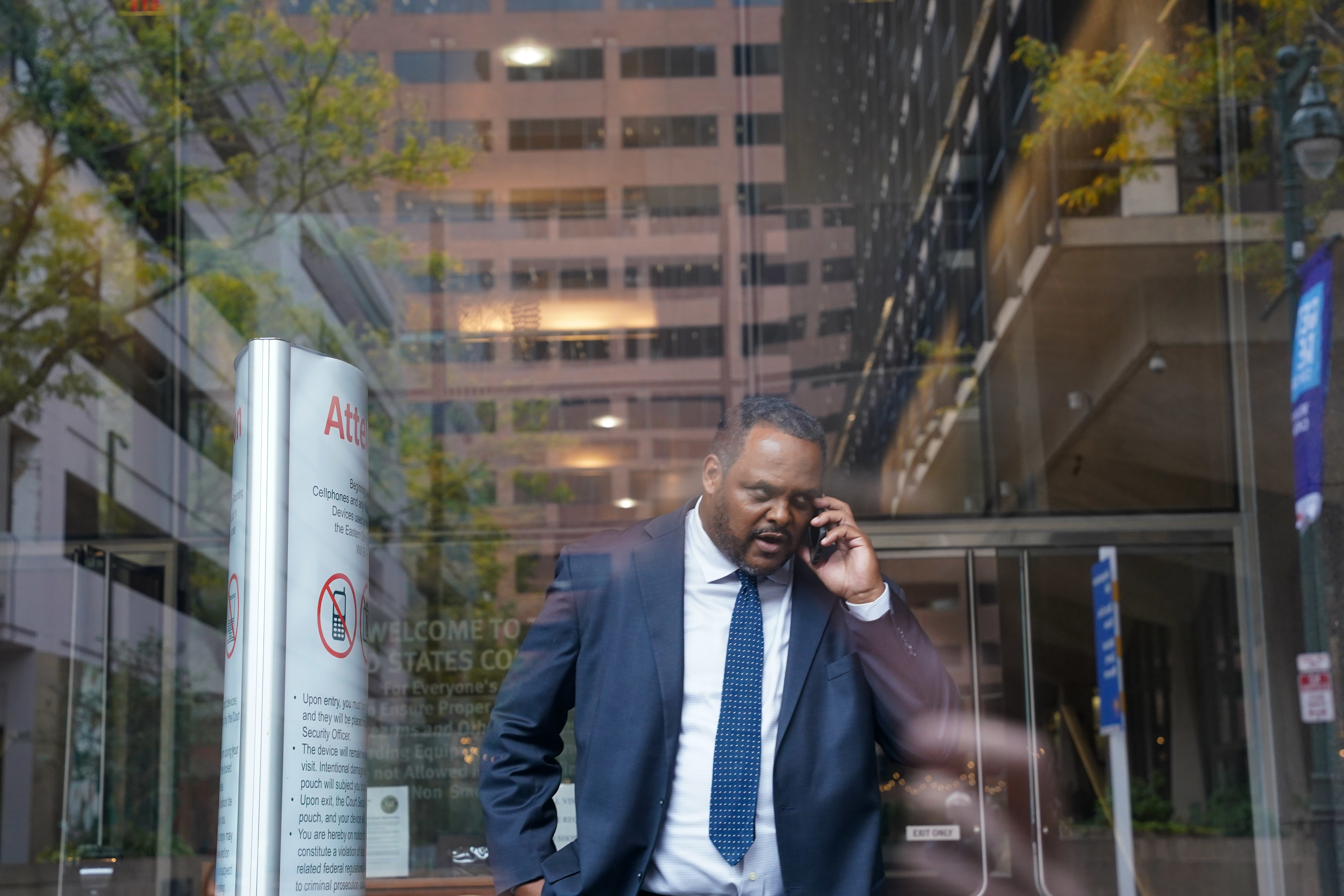
    Department of Streets Commissioner Carlton Williams exits federal court on Oct. 12, 2021, after testifying in the John Dougherty and Bobby Henon bribery trial.Thomas Hengge / Staff Photographer

    During the 2021 trial, Williams was called to testify. He told the jury that Henon called him in August 2015 to report that an unlicensed contractor was working at CHOP, and that he dispatched an inspector to investigate.

    The inspector, Williams testified, issued a stop-work order on the construction of the MRI machine. But he insisted that he did not direct the inspector to do so, and told the jury that responding to complaints from Council members was a routine part of his job.

    Ultimately, L&I reversed the stop-work order, and the MRI machine was built.

    Prosecutors said Dougherty paid Henon to be his “man on the inside” in City Hall and used the episode at CHOP to establish evidence of a corrupt agreement between the two.

    “You heard what happened,” Assistant U.S. Attorney Frank Costello told the jury during closing arguments. “Henon contacted Carlton Williams, Carlton Williams sent inspectors out and they issued orders — they issued orders to shut the job down.”

    But defense attorneys said one public official asking another to take action doesn’t constitute a crime.

    “Carlton Williams was the recipient of information just passed on to him about the MRI and the unlicensed contractor,” said defense attorney Brian McMonagle. “That ain’t a crime.”

    Dougherty and Henon were both convicted. Henon was released from prison last year, and Dougherty remains incarcerated.

    Carrying out Parker’s vision

    During the 2023 mayoral campaign, when a half-dozen Democrats could have plausibly won the party’s nomination, Williams nearly left the city.

    He said he got a job as the public works director in San Francisco, but before he accepted, Parker won the primary election. Williams decided to stay.

    “I wanted to work for Cherelle Parker,” he said. “I believed in her vision.”

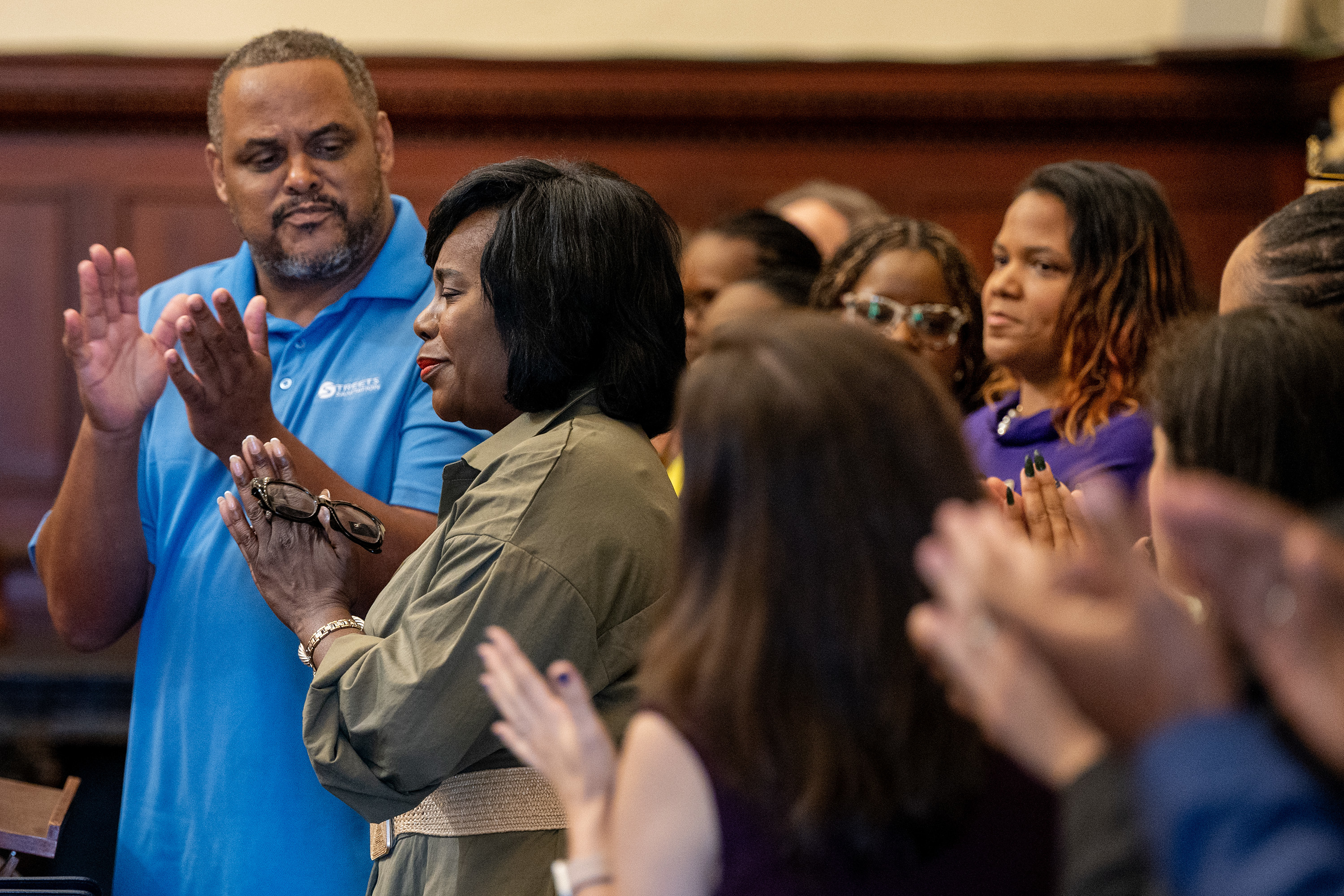
    Mayor Cherelle L. Parker is applauded by members of her administration at City Hall on July 9, 2025, hours after reaching a tentative contract agreement with District Council 33 leaders overnight, ending the workers’ strike. At left is Carlton Williams, director of the Office of Clean and Green Initiatives. Chief Deputy Mayor Sinceré Harris is behind the mayor at right.Tom Gralish / Staff Photographer

    Parker took office in 2024 and created a new role: director of the Office of Clean and Green Initiatives. Williams would carry out her campaign promise to rid the city of its “Filthadelphia” moniker by implementing twice-weekly trash collection, an expansion of illegal dumping enforcement, and a biannual citywide program to clean every block.

    As managing director, Williams’ portfolio will grow substantially. He will be responsible for the city’s response to public health and homelessness, as well as overseeing large agencies like the fire department and the prisons.

    He will also coordinate the city’s strategies in Kensington, the beleaguered neighborhood and the site of an open-air drug market that the Parker administration has spent more than two years working to shut down. Williams said there is inherent pressure that comes with being responsible for addressing such long-entrenched issues.

    “But I work best under pressure, and so I take that as a badge of honor,” he said.

    Williams said he intends to prioritize communication with residents because they “understand that everything can’t get fixed at one time.”
    “But at least we can say what needs to be done, when it’s going to [be] fixed, what’s the timeline,” he said. “I manage through the eyes of everyday citizens. I want what they want.”

  • The 53-man roster is here, but a big mystery remains. Can the Eagles be patient with Makai Lemon and Eli Stowers?

    The 53-man roster is here, but a big mystery remains. Can the Eagles be patient with Makai Lemon and Eli Stowers?

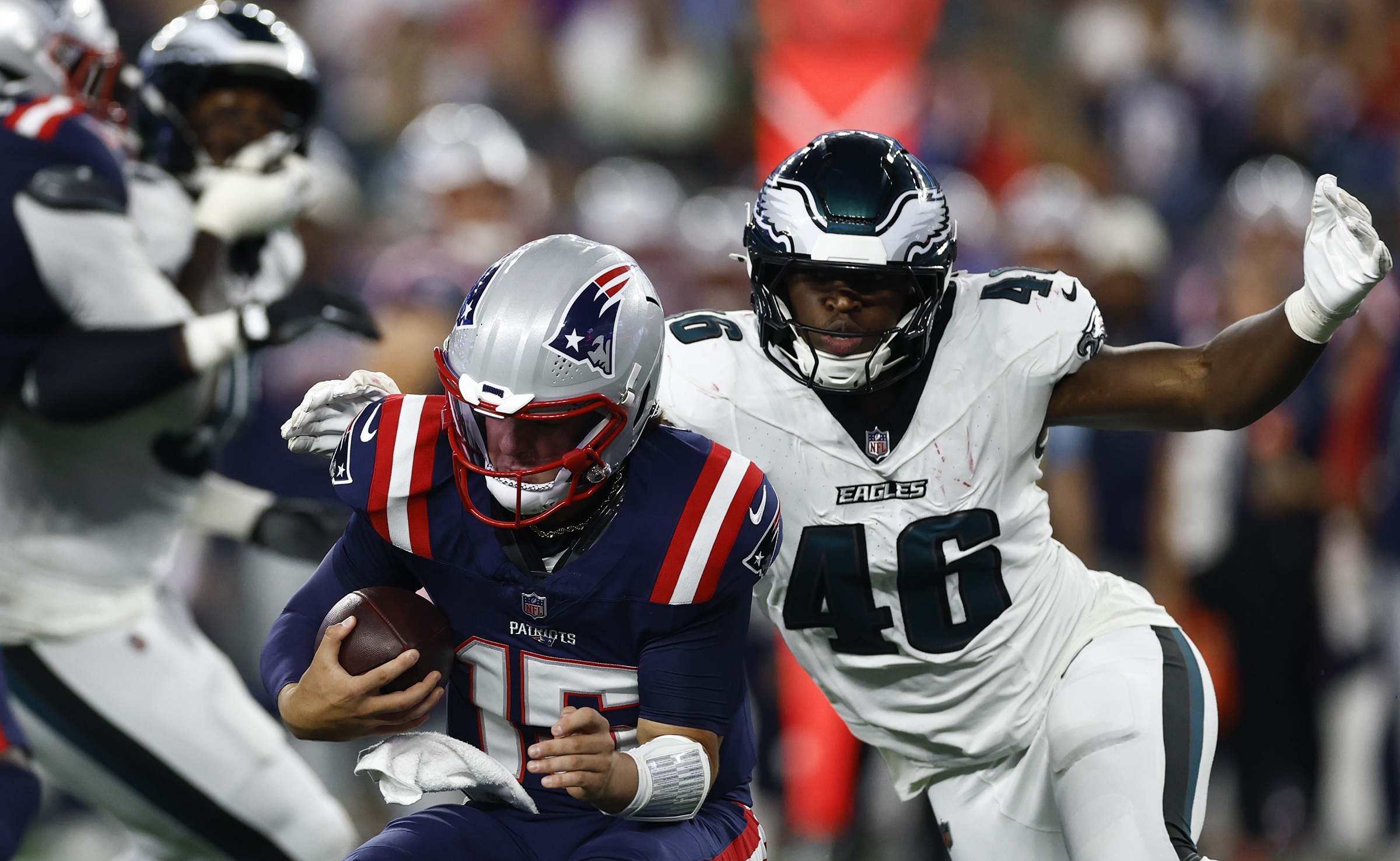
    The Eagles’ drafts from 2021 to 2024 were successful, first and foremost, because the team identified talented prospects, particularly in the first three rounds. But hardly ever forcing a positional need with a draft pick expanded the pool and decreased the expectations that often come attached with being selected early.

    Makai Lemon wasn’t necessarily drafted in the first round to replace A.J. Brown. Eagles general manager Howie Roseman had the parameters for a trade that would move the discontented wide receiver to the New England Patriots in place by the time Lemon was chosen with the 20th pick overall. But Roseman had already begun the process of restructuring the position.

    It wasn’t a complete rebuild, of course. DeVonta Smith was returning as the now-bona fide No. 1 receiver. But Roseman signed free agents Hollywood Brown and Elijah Moore and traded for Dontayvion Wicks by the time the draft arrived. Having them already on the roster would allow Roseman the freedom to take a receiver in the first round and potentially not rush him.

    But what became apparent over the course of training camp was that the Eagles had not only intended for Lemon to play meaningful snaps from the jump, they needed him to start in the slot. Wicks, Brown and Moore all had their moments during the summer — to varying degrees — but the dropoff from Smith was significant.

    Lemon, meanwhile, missed three weeks — including the increasingly important joint practices with the Patriots — with a recurring hamstring injury and didn’t play in the preseason until Saturday’s finale vs. the Cincinnati Bengals.

    It was a small sample, but he looked far from ready to make an impact. He was receiving passes from a quarterback he hardly worked with in camp, but it wasn’t as if he had popped when Jalen Hurts was throwing during practices in which he was healthy.

    The Eagles knew that tight end Eli Stowers would likely need more development, particularly as a blocker. But they had envisioned a scenario in which he would thrive as the “F” tight end on passing downs, much as Zach Ertz did in his first season with the team 13 years ago.

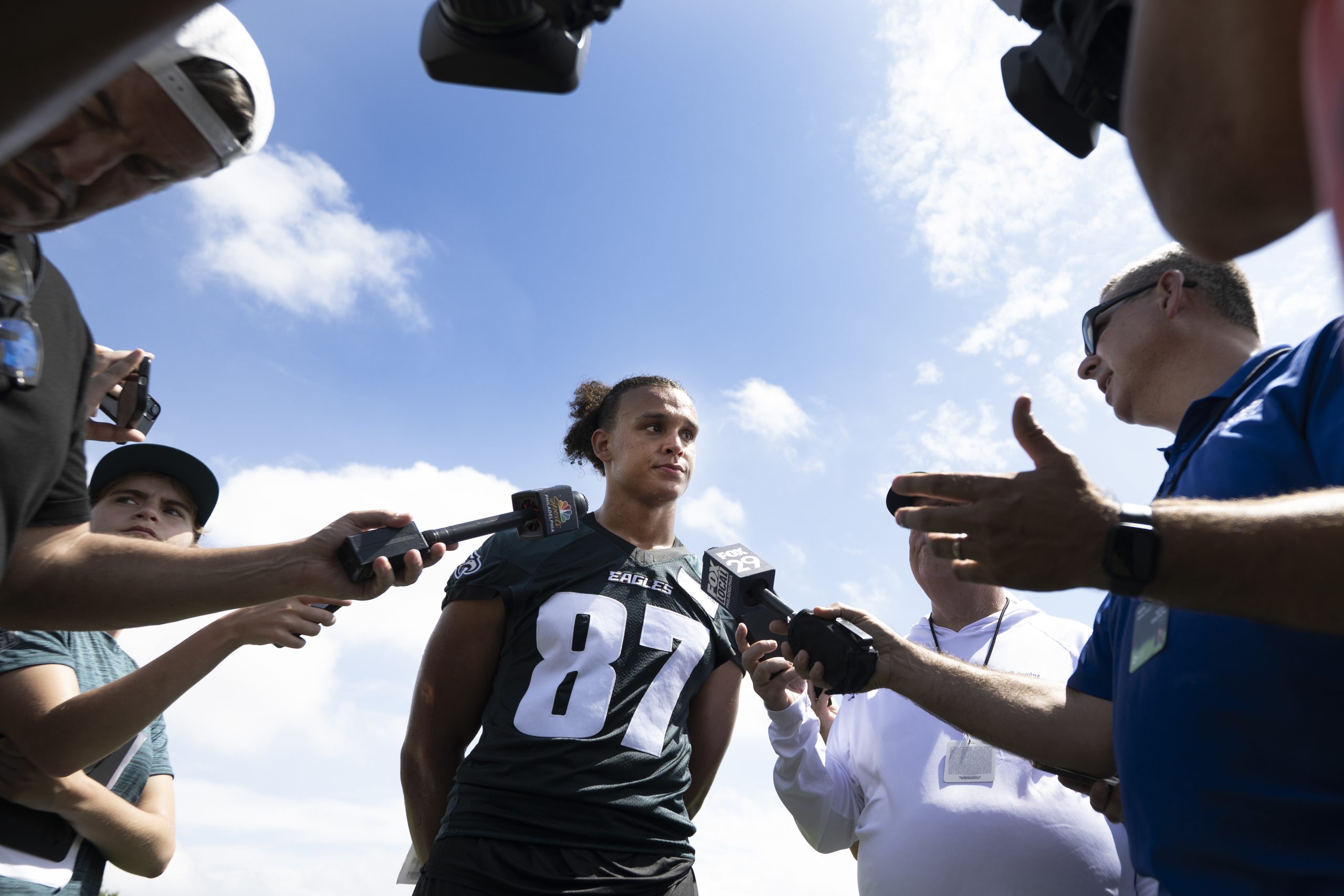
    Eli Stowers struggled to make an impact in camp and did not work with the first-team offense. Jose F. Moreno / Staff Photographer

    But Stowers never worked with Hurts in team drills throughout camp. And just when it seemed like he was making progress, a hamstring injury put him on the shelf for the final week of the preseason. Even before the injury, there was a question of whether the former quarterback would be active for the season opener on Sept. 13.

    Roseman isn’t panicking — at least on the surface.

    “This is the only business that you look at how guys are doing right away and sometimes there are early judgements made. Any other business there’s a long-term view,” Roseman said when asked about Lemon and Stowers contributing right away. “And we see it on our roster, guys how they have developed over two, three, four years. And I understand there are big resources into those guys — first- and second-round picks.

    “Tremendous confidence in who those guys are as players, what their skill set is. Obviously, they had some setbacks here physically and we looked at that as a staff and a group and maybe can figure out some changes here to get those guys going a little bit sooner from a skill position perspective.

    “But don’t have any doubt about what they’re going to be in the NFL over time. Still believe they’re going to contribute to our 2026 team.”

    That may end up the case. But Roseman’s 53-man roster construction suggests he went deeper at receiver and tight end than he did a year ago to account for Lemon’s and Stowers’ stunted starts.

    Moore, as the sixth receiver, could shoulder some of the load on concepts designed for Lemon if he struggles early. And while EJ Jenkins, as the fourth tight end, won’t factor much as a pass catcher, his blocking ability will allow for Dallas Goedert to line up more in the “F” role.

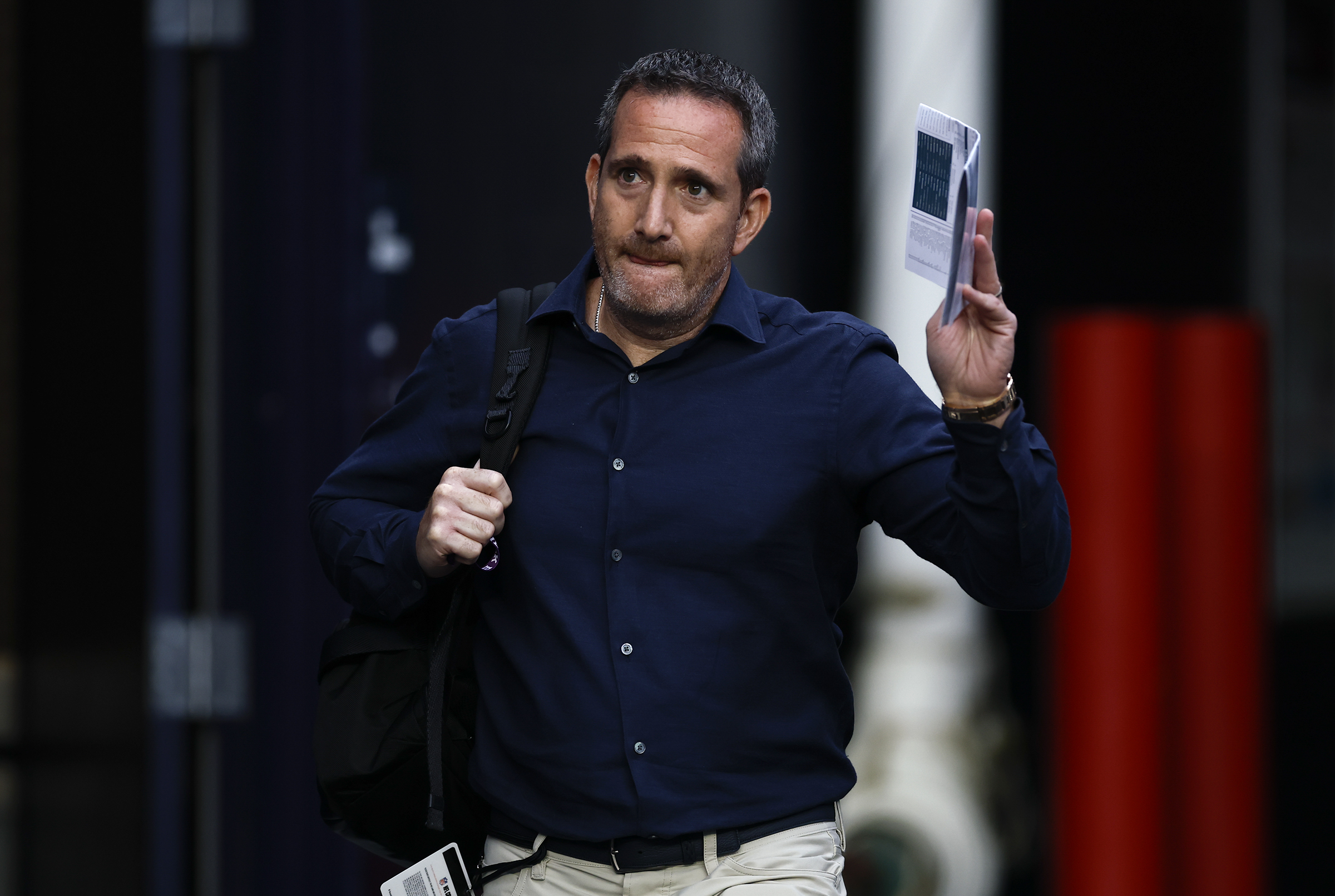
    Howie Roseman did not make a trade as the roster came together, but will continue to look for ways to improve the roster. Yong Kim / Staff Photographer

    Roseman’s actions, ultimately, will demonstrate how he feels about both positions. He’s yet to make a trade during this period — which is uncharacteristic — but he has a week until on-field preparation for the Washington Commanders begins and has other avenues to add players if necessary.

    But Roseman seems to want to follow his own advice, which is to be patient. And that may apply to the new offensive system as much as it does the youngsters. Coordinator Sean Mannion kept his cards close in camp, joint practices, and the preseason. But the offense was objectively scattershot.

    “I think that there has to be a level of patience about how guys are going to look,” Roseman said. “We’re not showing everything in the preseason. That’s not what anyone’s doing. You get an opportunity. The first four games of the season have always been kind of another ramp-up period for your football team.

    “You get an opportunity to evaluate. The trade deadline’s a long way away.”

    And this year the deadline was extended a week to Nov. 10. But Roseman doesn’t have to wait that long to address a need, and he doesn’t even have to part with a commodity if he wants someone sooner.

    Ertz is on the street and available. There’s a question about his recovery from the knee injury that ended his season last December with Washington. But the 35-year-old is open to returning and finishing his career where it started. And he could step into the “F” spot, while also being the ideal mentor to Stowers.

    “First, I’d say what an unbelievable player, what an unbelievable person, tremendous respect for him,” Roseman said when asked about Ertz. “At the same time, love what we have going in our tight end room, too.”

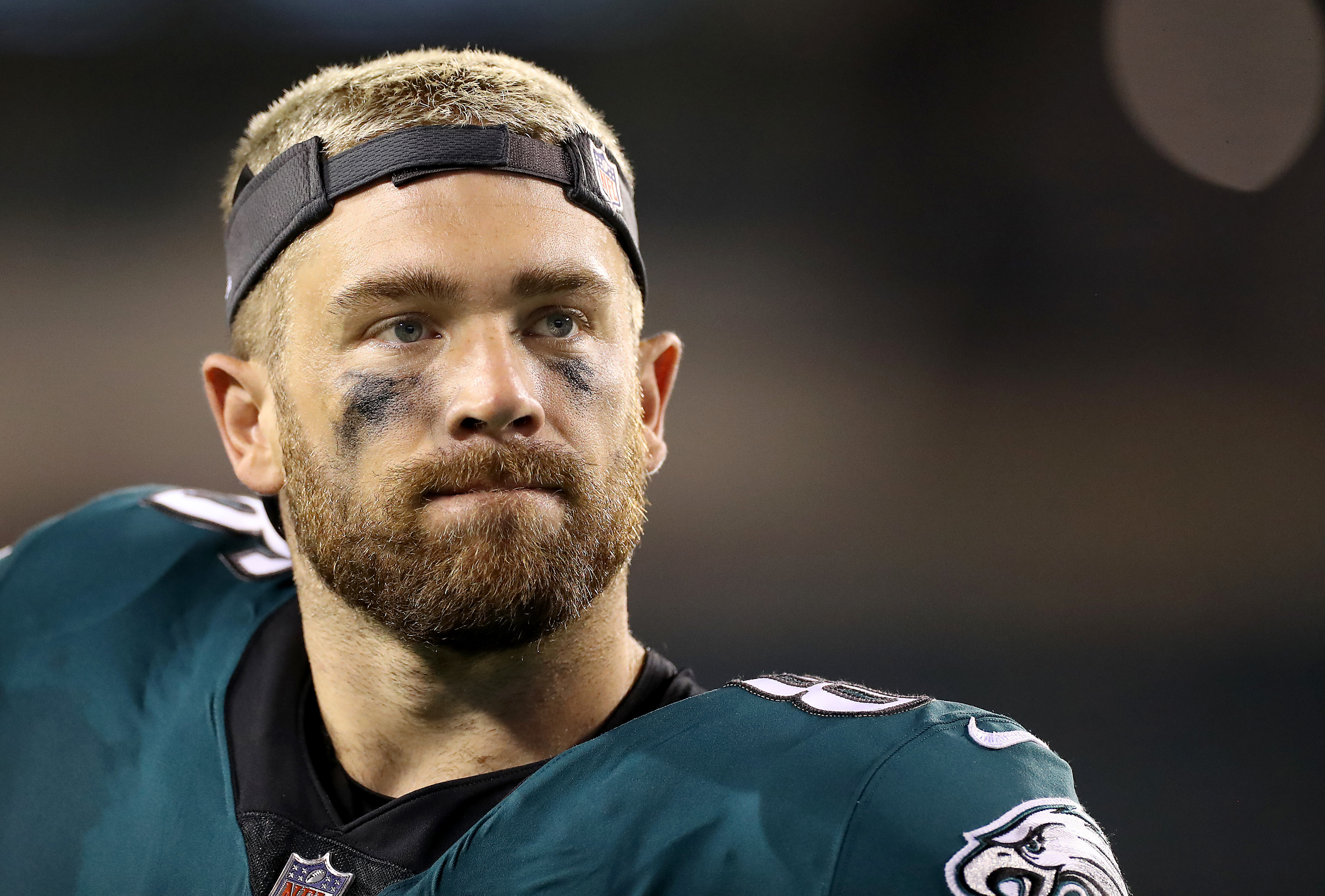
    Could decorated tight end and fan favorite Zach Ertz be an option for the Eagles? DAVID MAIALETTI / Staff Photographer

    Goedert will run the majority of routes in the new scheme that asks for more point-of-attack blocking from its “Y” tight ends. That’s why Johnny Mundt was signed in the offseason and why Jenkins got the nod over Cameron Latu, who was claimed off waivers by New England.

    “You see in this league where the position is going, where it’s trending,” Roseman said. “A lot of similar offensive systems to some of the things we’re running where these “Y” tight ends, they’re highly valued in free agency, they’re highly valued in the draft.”

    And they may have even more value in the Eagles’ version of the Kyle Shanahan-Sean McVay offense because its effectiveness will likely be contingent on how well they can run the ball. There have been signs that the new wide-zone blocking scheme will capitalize on strengths at offensive line and running back.

    But the health of the O-line, in particular left guard Landon Dickerson and 36-year-old right tackle Lane Johnson, warrants monitoring. And if defenses are once again allowed to focus on slowing Saquon Barkley, the deficiencies of the pass offense could be exposed.

    And A.J. Brown, despite his issues last season, won’t be around to alter coverages and win one-on-ones. And it’s unclear whether Roseman did enough to offset his departure, especially if Lemon and Stowers need significant time.

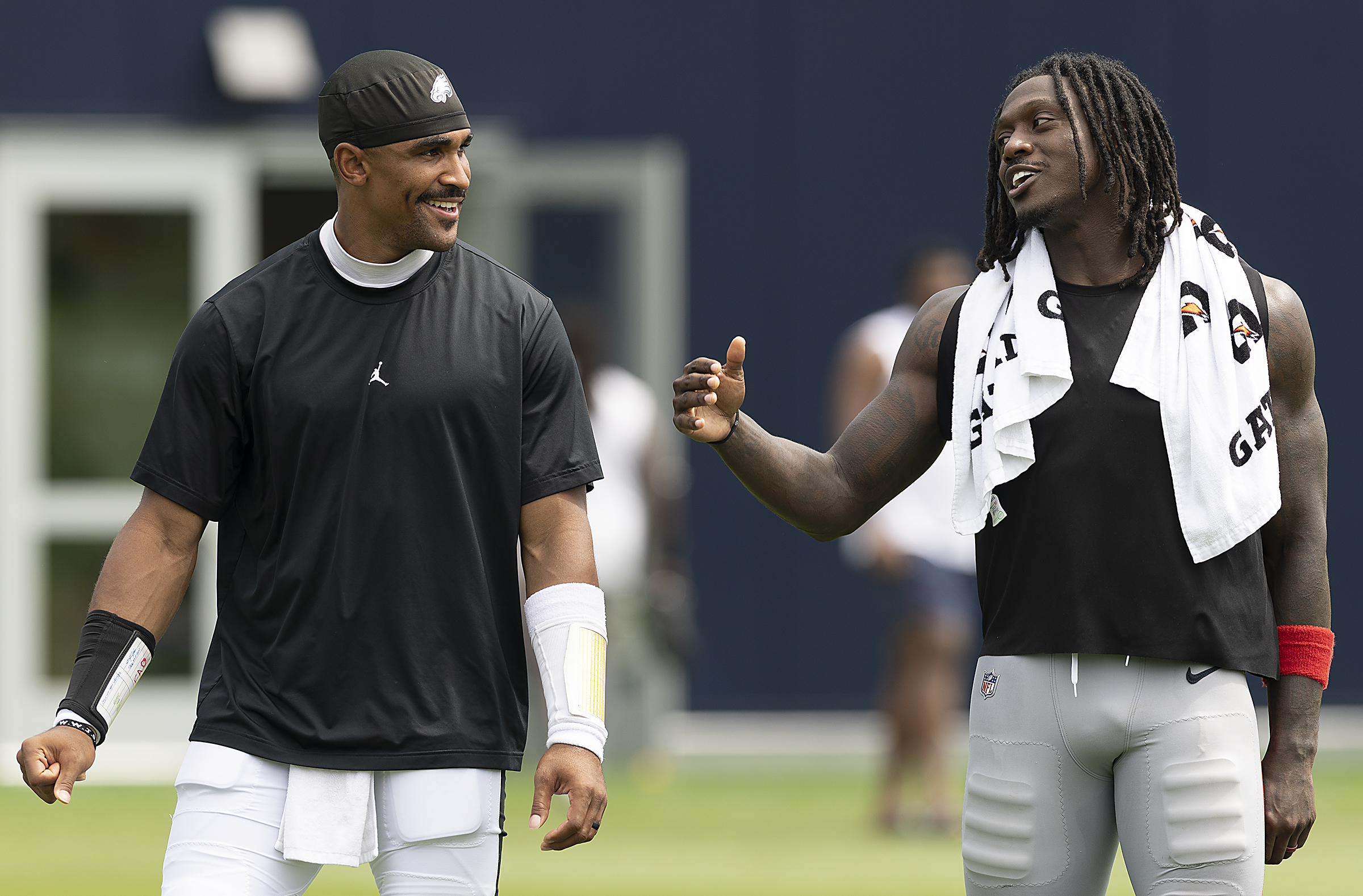
    Jalen Hurts (left) will have to find a way to get by in the post-A.J. Brown era. Yong Kim / Staff Photographer

    For the first time since Nick Sirianni became coach and Hurts his starting quarterback, there is some mystery to the offense. The element of surprise could be a good thing vs. defenses. Or it could be bad, with even Roseman unsure of how it will look.

    Either way, the quarterback will be central to how it unfolds.

    “I think Jalen’s adjusted really well to the new offense. Now again, we’re at a moment in time, we haven’t played a game,” Roseman said. “This isn’t in reference to Jalen; this is in reference to anything else. I think that a lot of the things that we’ll do during the regular season when we have game plans, I think from an offensive perspective, they’re going to be different than what we’ve done in the past.

    “Jalen’s embraced it. He’s excited about it, and obviously we’ve got to be better than we were last year.”

    Even if that’s a relatively low bar to clear, it is an uncertainty.

  • William Dunbar, a key adviser for Mayor Cherelle Parker’s 2023 campaign, pleaded guilty to federal tax evasion charges

    William Dunbar, a key adviser for Mayor Cherelle Parker’s 2023 campaign, pleaded guilty to federal tax evasion charges

    William F. Dunbar Sr., a Philadelphia lobbyist who was an important unpaid adviser to Mayor Cherelle L. Parker’s 2023 campaign, on Monday pleaded guilty to federal criminal charges related to a tax fraud scheme that lasted six years.

    Dunbar’s lawyer, Brian McMonagle, said Dunbar “accepts full responsibility for his conduct.” The charges were filed in July but were under seal until Monday morning. Dunbar entered his plea on Monday afternoon before District Court Judge Kelley B. Hodge.

    Dunbar, 42, was charged with four counts including tax evasion and filing a false tax return. He was charged by information, a process used when a defendant intends to plead guilty.

    “Today’s plea reflects his commitment to resolving this matter with honesty, accountability, and respect for the judicial process,” McMonagle said. “He has taken decisive steps to satisfy his outstanding tax obligations and has implemented appropriate financial controls and professional oversight to help ensure this does not recur.”

    McMonagle added that Dunbar “has dedicated his professional and personal life to serving his community through public service, civic leadership, and charitable engagement.”

    A spokesperson for the U.S. Attorney’s Office declined to comment on the case Monday.

    The charges carry a maximum sentence of 16 years in prison, plus supervised release and fines. A sentencing hearing was scheduled for Jan. 11, and Dunbar was released on bail pending sentencing.

    Dunbar pleaded guilty to filing fraudulent income tax returns for himself and his wife from 2020 through 2025. Prosecutors say Dunbar inflated his charitable giving and business expenses while dramatically undervaluing his taxable income, a scheme that likely would have lowered the couple’s tax bill.

    For example, they said, in the 2024 tax year, Dunbar claimed $1.45 million in total business expenses while indicating he had no taxable income. Dunbar also reported that he owed $46,000 in total taxes for that year, a sum that can include other taxes outside the income tax, but prosecutors said the amount he actually owed was “materially greater” than what he reported on his tax form.

    Prosecutors did not specify how much money Dunbar owed the government in taxes, but said in court papers that it was between $350,000 and $750,000.

    Assistant U.S. Attorney Louis D. Lappen told Hodge that, due to the fraudulent returns, Dunbar for tax year 2023 received a refund of about $30,000 while his spouse received a refund of about $36,000. Lappen said the couple claimed similar refund sums each year from 2020 through 2025, and that they should have paid additional taxes when they filed their returns instead of receiving refunds.

    “Had the taxes been filed accurately and appropriately and without fraud, [Dunbar and his spouse] would have owed,” Lappen said.

    Although prosecutors accused Dunbar of inflating expenses associated with his political consulting firm, Dunbar Public Affairs & Associates, there are no accusations in his charging documents that connect his conduct with Parker or others affiliated with her campaign.

    Dunbar was a key member of Parker’s “kitchen cabinet” of informal advisers during her 2023 run, in which she bested a crowded field to win the Democratic primary and become the city’s first female mayor. Dunbar also has had ties to other high-profile Democratic politicians, including Gov. Josh Shapiro, U.S. Sen. Cory Booker of New Jersey, and members of Philadelphia City Council.

    The Inquirer reported earlier this month that federal investigators last summer issued subpoenas for documents and financial records related to Dunbar, according to three sources with direct knowledge of the probe.

    One of the sources said the investigation appeared to be a “fairly broad” review of Dunbar.

    Parker’s campaign has dramatically increased its spending on legal services since early 2025, around the time the sources said subpoenas were issued, according to campaign finance reports.

    The campaign paid its law firm, Dilworth Paxson, about $108,000 since the start of 2025, The Inquirer reported. By comparison, it paid the firm less than $15,000 during the 2023 election year and about $19,000 in 2024.

    Parker last week declined to comment on the subpoenas related to Dunbar or on her campaign’s increased legal spending.

    Spokespeople for the mayor’s office and for Parker’s campaign declined to comment on the charges against Dunbar on Monday.

    Dunbar was never paid for his role in the campaign during the 2023 mayoral election.

    In 2024, Parker’s first year in office, Dunbar took over management of the campaign. The campaign paid Dunbar’s firm a series of rent payments totaling $22,850 between March 2024 and November 2024.

    Parker let Dunbar go from her campaign in the summer of 2024 in a move that Dunbar said at the time was the mayor’s decision. The campaign is now managed by Aren Platt, who was one of the architects of Parker’s 2023 run and served as chief deputy mayor in her administration before resigning in October 2024.

    Dunbar appears to still be active in politics despite no longer being on Parker’s team. Two weeks ago, he posted on social media a series of behind-the-scenes photos from a filming session at a West Philadelphia barbershop for a Shapiro campaign advertisement, writing: “Where politics meets the people.”
    Manuel Bonder, a spokesperson for Shapiro’s reelection campaign, said in a statement that Dunbar has “no formal or informal role with the Shapiro for Pennsylvania campaign.”
    Dunbar’s lobbying clients include Comcast, the Chamber of Commerce for Greater Philadelphia, and Jackmont Hospitality, an airport concessions company, according to his lobbying registration with the city.

    Dunbar previously lobbied for the Philadelphia School District, but a district spokesperson said earlier this month that he stopped working for the district in June.

    Staff writers Abraham Gutman and Ryan W. Briggs contributed to this article.

  • After more than three decades, Cecily Tynan delivers her final forecast for 6abc

    After more than three decades, Cecily Tynan delivers her final forecast for 6abc

    The long-term forecast for 6abc? No more Cecily Tynan.

    The beloved meteorologist offered her final weather report on Action News Monday night, capping off a career spanning three decades as one of Philadelphia’s most-watched personalities.

    Tynan choked up as she thanked 6abc for giving her a chance nearly 31 years ago and praised her colleagues for letting her be her “authentic self” as she rose up the ranks from weekend weather anchor to become the station’s first meteorologist.

    “We’ve been through so much together,” Tynan said before ticking off major storms like the record snowstorm of January 1996 and Superstorm Sandy in 2012. “But after I leave here, that’s not what I will remember the most. I’ll be thinking about just how much fun I’ve had here for more than three decades now.”

    “I may be retiring, and you won’t see me here on the news anymore, but I know I will always be part of the Action News team,” Tynan added. “And I thank you for that.”

    Tynan devoted most of her farewell message to thanking viewers across the Delaware Valley, who have followed her career — and weather forecasts — for more than a generation.

    “I’ve met families who’ve been watching Action News for several generations. Most people in this area can sing the Action News theme song, and I’ve even met several young Cecily’s named after me,” Tynan said. “What an honor.”

    Among those on hand to celebrate Tynan’s final broadcast was retired Action News anchor Jim Gardner, a Philly media institution in his own right who trekked back to his former studio to celebrate his former TV partner.

    “The viewers will miss her terribly,” Gardner said. “She such a compelling television personality who really owns the screen when she’s on camera. The rest of us just appeared on TV.”

    “I’m not sure people give her enough credit for being a scientist, which is what she is first and foremost,” Gardner added. “She’s so committed to keeping viewers safe and informed when the weather presents serious challenges.”

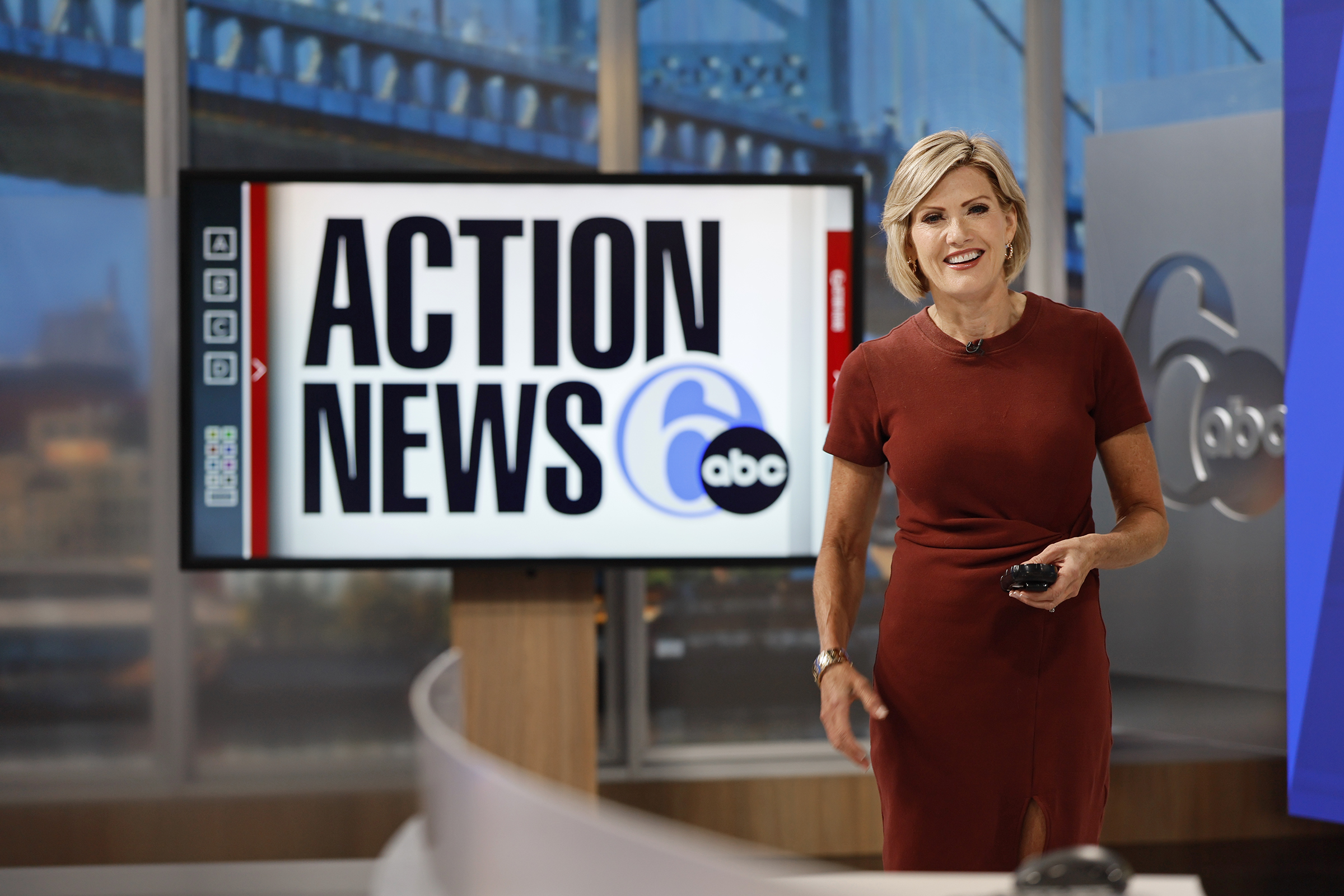
    Cecily Tynan, seen here in 6abc’s weather center, has been the station’s chief meteorologist since 2009. Elizabeth Robertson / Staff Photographer

    Tynan’s other longtime partner, current Action News anchor Rick Williams, was there in 1995 when she first joined the station fresh off a stint in Las Vegas. Nearly 31 years later, Williams offered a heartfelt goodbye during the 5 p.m. newscast to his “closest friend,” though the two couldn’t avoid cracking a joke or two.

    “You’re my work husband,” Tynan said.

    “And we’re getting divorced,” Williams shot back.

    Despite retiring relatively young at 57, Tynan has no immediate plans, outside of splitting her time between her Delaware County home and waterskiing at her second house in Florida with her husband, Greg. She even turned down a chance to host the Thanksgiving parade one final time so she could spend the holiday with her family.

    “We’ve always been in a hotel by the parade route, and I’ve never actually cooked,” Tynan told The Inquirer last month. “This year I was like, ‘No, I’m going to stay home. I’m going to cook Thanksgiving dinner from scratch.’ Hopefully my family appreciates it.”

    Tynan’s departure is the latest in a string of exits in recent years by some of the city’s most-beloved and longest-serving media personalities.

    Tracy Davidson retired from NBC10 last year after nearly 30 years with the station, while Jim Donovan said goodbye to CBS3 after 22 years. Muckraker Jeff Cole also walked away from the spotlight last year after spending 25 years with Fox 29.

    They were all preceded by Gardner, who delivered his final newscast nearly four years ago.

    “Retirement is a thief, if you ask me,” longtime 6abc anchor Brian Taff joked on social media.

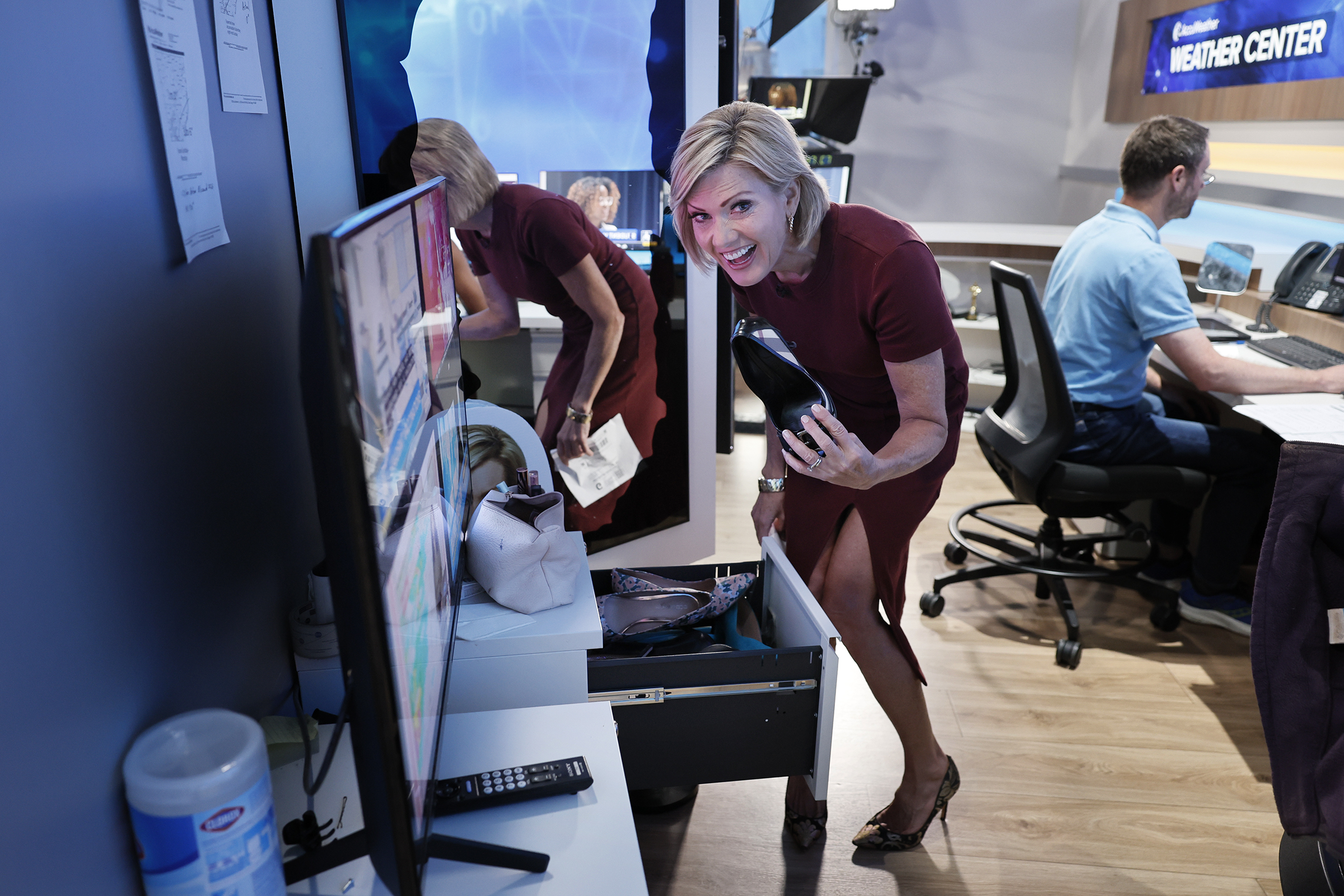
    6ABC meteorologist Cecily Tynan grabs a shoe from one of two shoe drawers she has in the weather center.Elizabeth Robertson / Staff Photographer

    6abc hasn’t yet announced who will replace Tynan as the station’s chief meteorologist on the 6 p.m. and 11 p.m. editions of Action News. The obvious candidates are 6abc veterans Karen Rogers and Adam Joseph, both of whom have spent more than 20 years on Action News.

    “Channel 6 is so much bigger than any individual, and it will continue on with extremely talented people doing the weather,” Gardner said. “But there’s only one Cecily Tynan.”

  • Answering your AMA questions about the Eagles roster: Zach Ertz return? QB plan? Trades possible?

    Answering your AMA questions about the Eagles roster: Zach Ertz return? QB plan? Trades possible?

    Less than 24 hours after the Eagles announced their 2026 roster, The Inquirer’s Jeff Neiburg conducted an AMA (ask me anything) session with Eagles Reddit users, discussing topics including the quarterback plan, the possibility of general manager Howie Roseman making a deal or two, and what’s going on at tight end (including the possible return of fan favorite Zach Ertz).

    The following has been edited for length and clarity.

    What do you think of the roster? Any mistakes? Many concerns? How much are we winning the Super Bowl by?

    Neiburg: Well, I’m both surprised and not surprised. In my final 53-man roster prediction that I submitted Friday night when the game went final, I had the Eagles keeping four quarterbacks. Just didn’t see a trade materializing over the weekend.

    Mistakes? Howie Roseman has won two Super Bowls and I’m, well, me. So I can’t say there are any mistakes.

    That being said, I did find a few things surprising. I didn’t expect both IPP players to get waived. I had both on my final 53, and I thought Joshua Weru was basically a lock. I don’t expect either to be claimed when waivers process today (Monday), but I thought the Eagles would avoid the risk, especially with Weru. (Editor’s note: Neither player was claimed and have been listed on the practice squad.)

    Joshua Weru (46) being exposed to waivers was a mild surprise. Yong Kim / Staff Photographer

    I know EJ Jenkins is a great blocker, and Eli Stowers is a bit behind, but I didn’t expect Jenkins to be on the roster.

    I will say I’m pleasantly surprised Elijah Moore made the team. I had them cutting him simply because he’s a vested veteran that wouldn’t have needed to clear waivers, and they could have brought him on the practice squad and promised him a gameday elevation. But Moore outperformed Hollywood Brown during camp and good camps deserve to be rewarded. Plus, he could’ve signed anywhere else if the Eagles released him, too, and given their question marks in a world without A.J. Brown, keeping six makes some sense.

    Re: the last question … I wouldn’t be shocked if the Eagles won the Super Bowl. The defense is that good. But — spoiler alert — I’ll have them losing in the NFC title game to the Los Angeles Rams when our season preview comes out.

    Which cut surprised you the most based on what you saw day to day throughout training camp?

    Neiburg: I was a little bit surprised by the IPP guys just based on the risk and whatnot. But that’s not really the spirit of your question. Besides them, I’m not really sure. I did nail 50 of the 53 in my final projection. I guess I’ll say Cameron Latu being cut in favor of EJ Jenkins was a bit surprising, but Jenkins is a really good blocker.

    Any positions you see the team adding someone at before opening day or do you think the roster is set?

    Neiburg: I do not think the roster is set. And I wouldn’t be surprised if they brought in players at two or more positions between now and opening day.

    Let’s list some spots.

    Tight end: Eli Stowers doesn’t look ready to play NFL football right now. That’s not to say the pick is a bust. It’s way too early to say that, and anyone who believes he is a bust right now is being hyperbolic. But besides Dallas Goedert, there’s not another reliable weapon in the passing game in the room right now. Johnny Mundt and EJ Jenkins are block-first tight ends. Those are important in this new offense, but what good is 12 or 13 personnel if the defense knows one or two of the tight ends isn’t a real threat in the passing game?

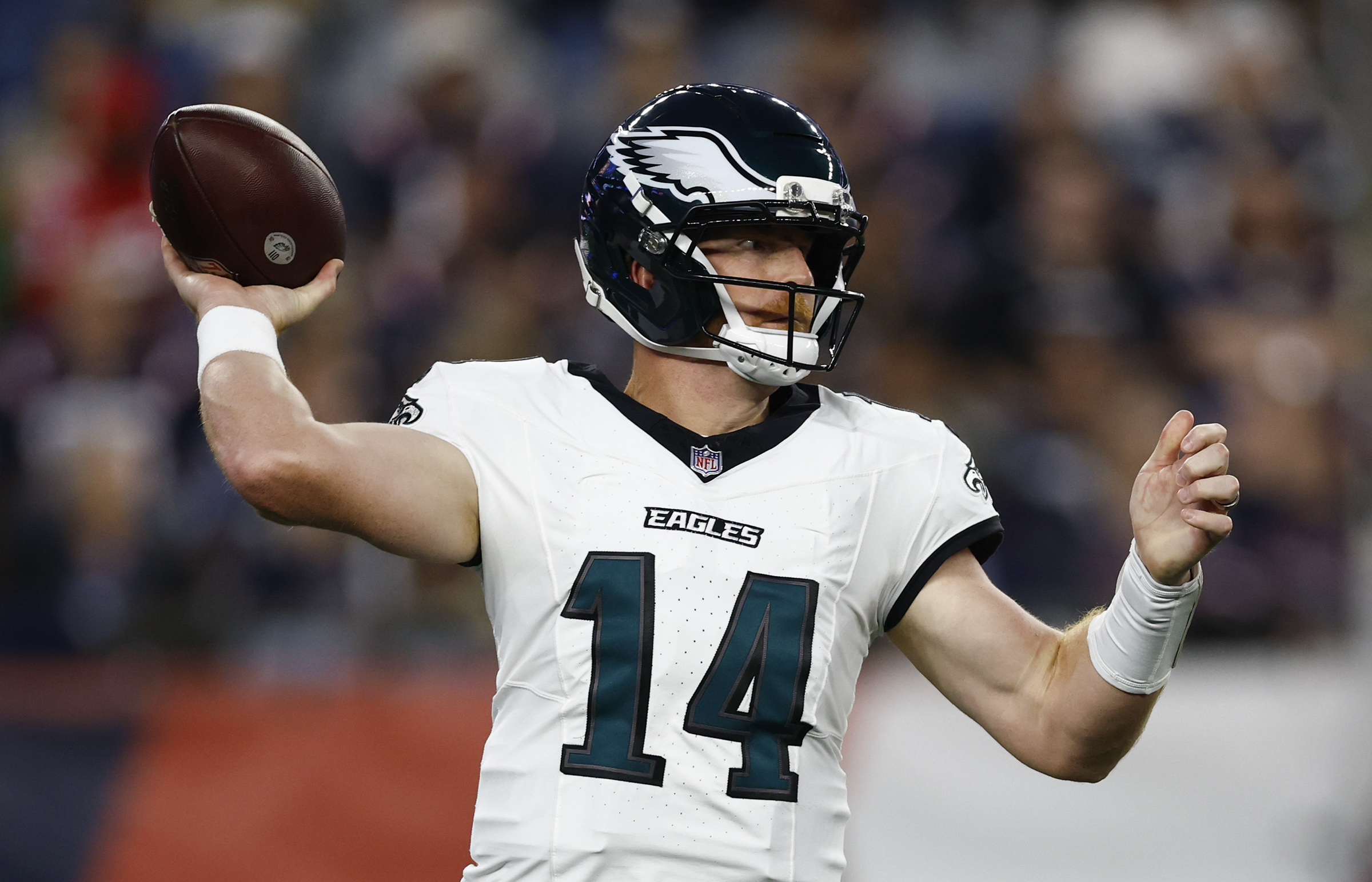
    Could Andy Dalton (14) still prove expendable?Yong Kim / Staff Photographer

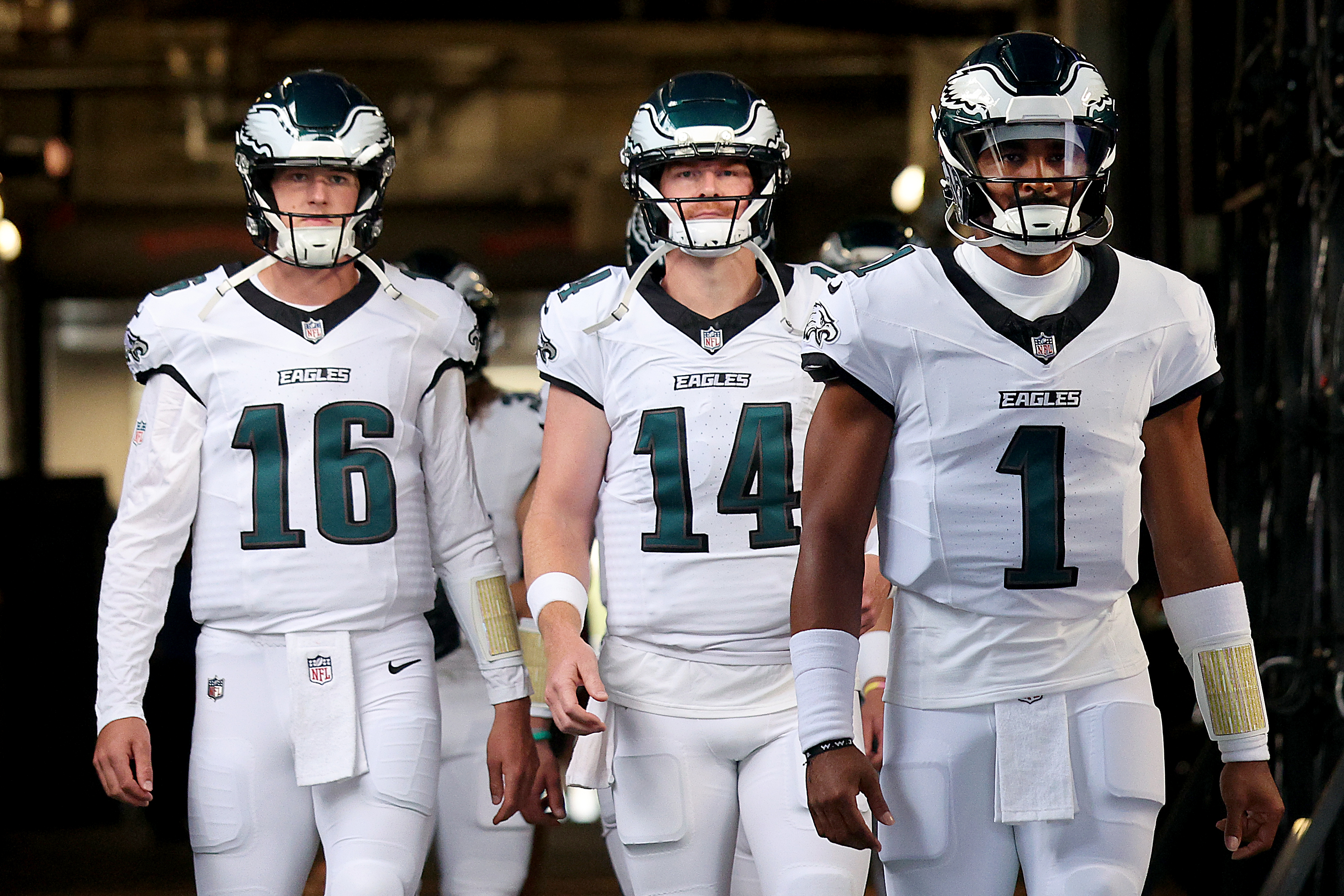
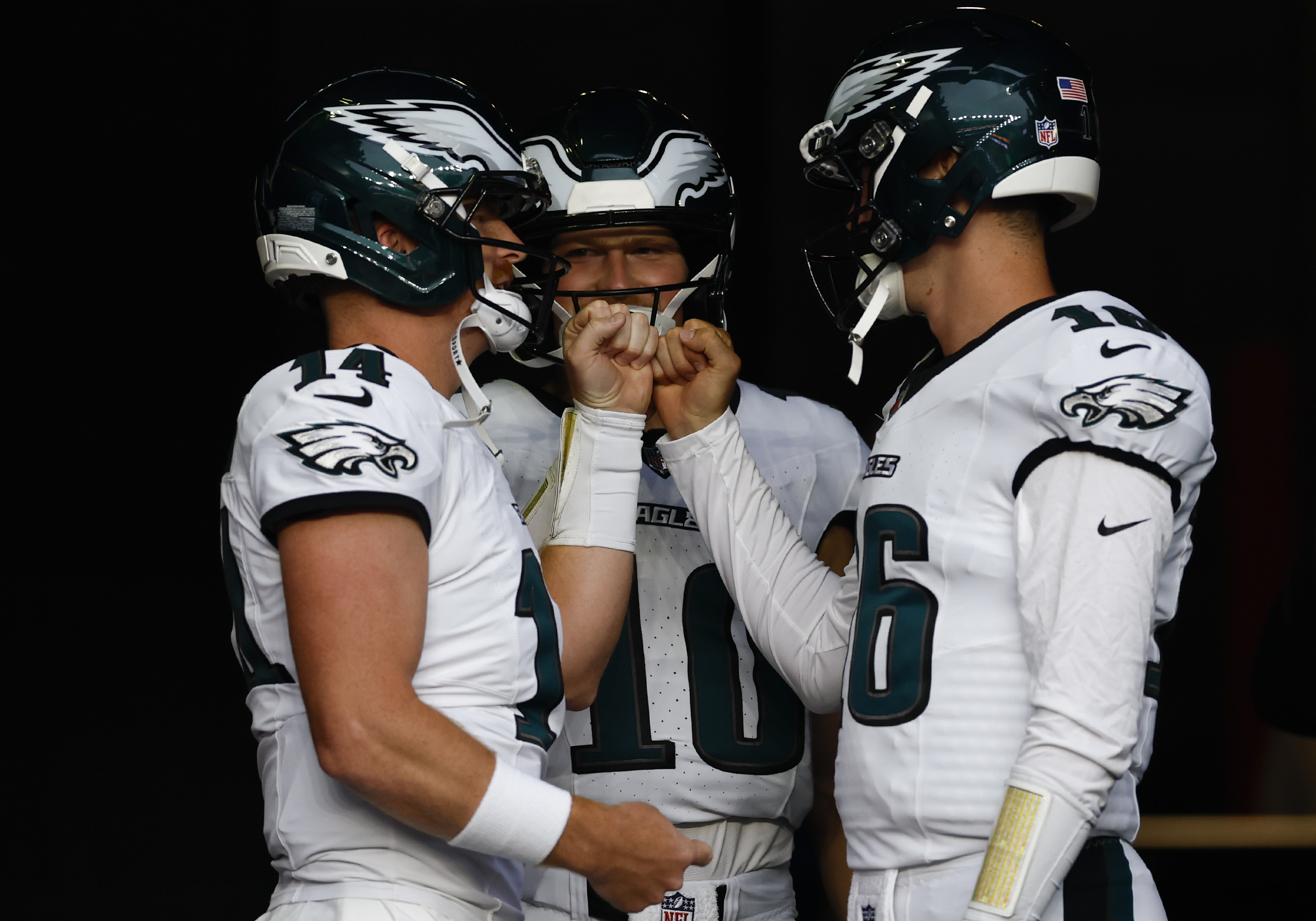
    Quarterback: Is it possible the QB2 isn’t on the roster right now? I think so. Not saying it’s likely the Eagles trot out on opening day with a quarterback not named [Andy] Dalton or [Tanner] McKee backing up Hurts, but there’s definitely a chance. It’s easy to overreact to preseason games. But they are relatively meaningless and only one small part of the evaluation process. Fans don’t get to watch practice. I can tell you, though, that everything you’ve read about practice is true. Neither player was that good. If I’m the Eagles, I’m not sure I want to enter a season with Super Bowl aspirations and have either one of those dudes as my primary backup.

    Safety: It’s still the thinnest position on the roster. They kept only three guys on the initial 53. But because Cooper DeJean will be on the field there at base, the need for multiple reserves isn’t really there. Still, besides 30-year-old Marcus Epps, there’s a dearth of experience at that spot. Drew Mukuba played 11 games last year as a rookie and is coming off a season-ending injury. Michael Carter II has primarily been a slot corner. DeJean might be an all-world defensive back, but he hasn’t really played safety at the NFL level.

    Who was the ‘Camp MVP’ that stats or preseason games might not have fully captured, but who consistently stood out in practice drills and scrimmage situations?

    Neiburg: Jalyx Hunt probably was the most consistent performer in camp (and you definitely didn’t see him play in a preseason game). Moro Ojomo was also a wrecker, and Jalen Carter, too. Based on what else was going on around him, Elijah Moore had a really good camp, too. Darius Cooper gets a lot of love, but Moore was super consistent throughout camp I thought, and he was deserving of a roster spot.

    Is a Nick Sirianni and Zach Ertz reunion in the offing?David Maialetti / Staff Photographer
    Is there a world where Zach Ertz ends up on this roster, maybe after Week 1? What are the implications for the other tight ends if it happens?

    Neiburg: There is definitely a world. My former Inquirer colleague EJ Smith, who now works at PHLY, reported that a return to the Eagles is possible.

    If it happens, my guess is it happens after Week 1. Why? The Eagles wouldn’t need to guarantee his salary if he’s not on the roster for Week 1. If Ertz doesn’t work out, it’s not a waste of resources. Plus, this scenario allows them to play a game and see where they’re at, too.

    I do think there’s a need for a second reliable pass catcher at the position given that Eli Stowers needs some more seasoning. The implications of signing Ertz or trading for a tight end for the others would be one of them gets cut (looking at you, EJ Jenkins).

    Which wide receivers will be on the field most frequently for Jalen Hurts?Monica Herndon / Staff Photographer
    What is the expected WR depth chart? We know Devonta [Smith] is locked at WR1, [Dontayvion] Wicks seems to be 2. Has [Makai] Lemon done enough yet to get WR3?

    Neiburg: Good question. I’m not sure there’s a firm answer yet, but I’d guess the depth chart looks like: Smith, Wicks, Lemon, Brown, Cooper, Moore. Not sure there’s a need to distinguish between WR2 and WR3 for Lemon, who will mostly line up in the slot. I don’t see him being on the field often in two-receiver sets.

    Do you think Uar Bernard or Joshua Weru will provide any long term value to the team? What’s your record prediction? I say 12-5

    Neiburg: The odds say no. But they both have athletic profiles worth trying to develop, and I think the Eagles would be thrilled if both cleared waivers and they had a chance to keep working with them. That’s the most likely outcome. It’s hard to imagine another team bringing either into their building on signing them to their 53, knowing they aren’t ready to play and won’t be for a while.

    But the Eagles will only be able to designate one of them as their IPP player and theoretically will only be able to control one of them that way.

    If I had to guess, I’d say Weru has the better chance at playing NFL snaps than Bernard.

    I’m with you at 12-5, and I think the season ends in a conference title game loss to the Rams.

    Will Jonathan Greenard be ready to make his Eagles debut in Week 1?David Maialetti / Staff Photographer
    Any concern at linebacker with the final number that made the roster?

    Neiburg: If we’re talking off-ball linebacker? Absolutely not. Arguably the best position group on the team. Jeremiah Trotter Jr. would start on some teams, and Smael Mondon is progressing nicely and is a reliable special teamer (like Trotter). I didn’t see a reason for the Eagles to keep five off-ball linebackers, no matter how much Vic Fangio professed his love of Chance Campbell. Plus, UDFA Deontae Lawson might’ve been the one pushing for that fifth spot anyway.

    If we’re talking outside linebacker/edge rusher, I do think there’s some concern entering the season. Jonathan Greenard may not be ready for Week 1, but since the Eagles didn’t put him on PUP/IR, they do expect him back within the first four games. Good sign. And Jalyx Hunt had an excellent camp and may reach double-digit sacks this year.

    But beyond the top two, I think there’s some question marks. Nolan Smith Jr. is coming off another injury and has been passed on the depth chart by Hunt. Arnold Ebiketie is on a sort of prove-it one-year deal. A.J. Epenesa was signed off the street in June after things didn’t work out when he tried to sign with Cleveland. There’s some upside overall in the room, but there’s a low floor, too.

    Saquon Barkley’s evolution in the Sean Mannion offense is worth watching. Elizabeth Robertson / Staff Photographer
    Do you think the run game will improve this year? If so why?

    Neiburg: Yes. If only because it can only go up?

    Joking aside, the offensive line seems to be healthier right now. Cam Jurgens is moving around great and says he feels much better after getting his stem cell treatment in the offseason. Lane Johnson looks good, too. I still would be concerned about Landon Dickerson getting through the season if I were the Eagles, and they’re probably thrilled Drew Kendall is progressing well.

    Besides the health of Saquon Barkley’s blockers, the wide zone blocking scheme should favor him and most of the linemen. The Eagles have an athletic bunch up front. They have some capable blockers at tight end in Johnny Mundt and EJ Jenkins and even Dallas Goedert.

    It’s hard to imagine Barkley not having more holes to run through this year, and given the wider nature of some of these running plays, he should find himself in more advantageous situations with the ball in his hands.

    Read Jeff Neiburg’s complete AMA here.

  • The day Larry Krasner’s office was put on trial — by his own prosecutors

    The day Larry Krasner’s office was put on trial — by his own prosecutors

    There were so many jaw-dropping moments in U.S. District Court Judge Paul S. Diamond’s courtroom on Thursday that it is hard to know where to begin.

    For starters, I had a stint covering courts in the mid-2000s, and have never seen a courtroom packed with so many lawyers — including lawyers representing lawyers — for a hearing in an exoneration case. An overflow room was needed to handle the rapt onlookers.

    The hearing grew out of efforts by Philadelphia District Attorney Larry Krasner’s office to overturn the conviction of Dennis Johnson, who was found guilty of second-degree murder in the 2007 shooting of a man at a North Philadelphia convenience store. While Johnson’s future was ostensibly on the line, it quickly became clear that so was Krasner’s.

    By the end of the day, the future for both men looked bleak.

    While Johnson was in court with his attorneys, the hearing focused on the machinations within Krasner’s office.

    The office has already run into a heap of legal trouble over previous efforts to overturn other convictions or reduce sentences, mainly for those convicted of murder.

    Federal courts have disbarred and suspended prosecutors in Krasner’s office for lying to the court. The state Supreme Court found more lies and, in an unprecedented move, appointed the state attorney general to review future efforts to undo prior convictions.

    So essentially, Krasner’s office now has a court-appointed babysitter because it can no longer be trusted.

    It was easy to see why after three prosecutors — who still work for Krasner — provided damning testimony about their own office’s sloppy handling of efforts to vacate Johnson’s conviction. They accused Krasner of conduct that bordered on paranoia and cover-up, and painted a picture of an office that seemed less focused on the pursuit of justice than on shielding itself.

    Katherine Ernst, the chief of training in the law division, went first, followed by colleagues Steven Wildberger, an assistant district attorney in the appeals unit, and David Napiorski, the head of the law division.

    David Napiorski, the head of the law division in the Philadelphia District Attorney’s Office, testified that Krasner eschewed his official email account and “always prefers oral, in-person conversations.”Alejandro A. Alvarez / Staff Photographer

    They came with receipts, providing meeting times, memos, and emails documenting conversations with Krasner about how to handle errors in court filings by the DA’s office related to an attempt to undo Johnson’s conviction.

    Krasner did not respond to a request for comment, but in an earlier filing his office said the prosecutors were “ill informed.”

    The three prosecutors provided alarming testimony detailing how Krasner avoided using his official office email and threatened them.

    “DA Krasner typically didn’t use that email,” Ernst said about his office email. “He wouldn’t check it. And so, if you wanted to email him, then you typically had to email his private address.”

    Napiorski backed that view: “He always prefers oral, in-person conversations.”

    In late June, after the three prosecutors drafted a memo to Krasner detailing the office’s conflict of interest in handling the Johnson matter, he responded with an email sent from the account of his chief of staff, Jennifer Lin, which began, “This response is not from Jen Lin, it is from Larry Krasner.”

    At another point, Wildberger testified that when they presented Krasner a letter turning the Johnson case over to the state attorney general, he went “apoplectic.”

    “He said something about having already told us not to bring him printed-out material, things in writing,” Wildberger said.

    ‘Paraguay’

    The prosecutors pushed for the attorney general to take over, because their self-interest had become a focus rather than the merits of the case. In their view, they had conflicts, and so did Krasner.

    But Krasner wanted to hire an outside lawyer to handle the matter, and repeatedly resisted efforts to turn the case over to the state Office of Attorney General, or OAG.

    Ernst testified that Krasner “hated” everyone in the OAG. Wildberger said Krasner “referred to the Office of the Attorney General as Paraguay” and “the people that work there as Nazis.”

    Adding to the drama was the fact that the attorney questioning Ernst and Wildberger was John Boscia, a senior deputy attorney general in the OAG.

    To clarify, Boscia asked Wildberger, “So that the people from the OAG’s office were escaped Nazis who had gone to Paraguay?”

    “That’s my understanding,” Wildberger responded.

    All three prosecutors testified that throughout the internal discussions, Krasner remained adamant about retaining control of the case in order to “protect the office” — a phrase that came up more than two dozen times during the hearing.

    At one point, Judge Diamond asked if Krasner’s reference to “protect the office” meant “protect himself?”

    “I think that was probably part of it,” Napiorski said.

    In another twist, Thomas Gaeta, the DA’s civil litigation supervisor, was involved in some of the internal discussion, yet he handled the brief and mild cross-examination of his colleagues on Thursday.

    The roots of the DA’s conflict began after Johnson appealed the verdict, claiming his defense attorney was ineffective.

    In 2022, then-Assistant District Attorney Jaclyn Mason filed a document that agreed with the arguments made by Johnson’s attorneys at the Pennsylvania Innocence Project, and that his conviction should be overturned. According to the document Mason signed, the detective’s testimony in Johnson’s trial was improper and had “tipped the scales” toward a conviction.

    But this spring, following an order from Diamond, Ernst and some of her colleagues reviewed the case. Ernst said she found multiple errors in Mason’s motion and confronted her.

    Ernst and her colleagues urged Mason to fall on her sword for the office, take responsibility for the errors, and withdraw the motion. Napiorski said he told Mason he had done something similar in a different exoneration case that blew up.

    Profiles in courage.

    ‘Reluctantly but loudly’

    The main hero in what is shaping up to be an unraveling of Krasner’s mass exoneration scheme appears to be Mason.

    Her dramatic testimony in Diamond’s courtroom last month provided a window into the lack of independent investigation by Krasner’s office into the wrongful conviction claims. (Mason also appears to have provided some backbone to the three prosecutors who testified on Thursday.)

    Mason explained that she had only been on the job a few months in 2022, and had largely taken directions from her supervisor, Matthew Stiegler, who she said told her if Johnson’s claims were good enough for the Innocence Project, they were good enough for him.

    In the meeting with the prosecutors, Ernst recounted that Mason said, “This is all Matthew Stiegler’s fault.”

    Mason told her colleagues that Stiegler should have to sign the withdrawal motion, as well. Apparently, that was not an option. Instead of going along with the plan to take all the blame, Mason resigned on June 2.

    In a two-page resignation letter addressed to Krasner, Mason wrote that she had limited experience with federal habeas law when she was hired. Yet, the first two cases Stiegler assigned to her “involved complicated cases where he determined that it was appropriate to concede habeas relief.”

    Mason said she “trusted” Stiegler, but later learned about a mass exodus of prosecutors when he oversaw the federal litigation unit.

    Mason said Stiegler had “worked closely with the Innocence Project and the Federal Defenders on the [Johnson] case, deeming it worthy of a concession with little independent investigation.”

    Therein lies the problem when it comes to reviewing past convictions. Under Krasner, the prosecution and defense are largely on the same team.

    Mason added that Stiegler reviewed several drafts of the concession she filed in the Johnson case, but did not sign his name to it. Mason ended by writing that she “reluctantly but loudly” resigned.

    After Mason quit, all three prosecutors testified that Stiegler hatched a plan to manage the fallout. He suggested combing through Mason’s past cases for errors and claiming she was a rogue operator.

    Ernst testified that Stiegler asked to meet and told her, “Mason purposely inserted the false facts into the response.” Ernst explained that Stiegler wanted to make it seem as if any mistakes in the case were “100% [Mason’s] fault and 0% his fault.”

    Krasner was on board with Stiegler’s plan, according to Ernst, who recounted a conversation with the district attorney.

    Krasner said Stiegler “gave me this really good idea,” Ernst testified. “I think that we should go through Ms. Mason’s cases, say that this was a pattern by her, and then file something with the court saying that.”

    Why the deference to Stiegler is unclear. He has come and gone from Krasner’s office three times and remains a lightning rod. Stiegler now oversees the Conviction Integrity Unit, a departmental name fast becoming an oxymoron.

    Stiegler sat in the front row of Judge Diamond’s courtroom on Thursday as the other prosecutors testified about his role and reputation with the office.

    Wildberger testified that in the meeting with Mason and the other prosecutors, he told her, “You’ll find no Matt Stiegler apologists here.” He later explained that Stiegler “was not well liked” and had chased away many prosecutors.

    The internal drama and legal troubles have roiled Krasner’s office. Ernst testified that many frontline prosecutors were “angry” at Krasner for what happened to Mason. Wildberger said he had “lost faith in the administration of the Philadelphia District Attorney’s Office.”

    Amid the discussions over whether to tell the court about the errors in the Johnson case came another bombshell.

    Ernst testified that Napiorski warned her Krasner had threatened “to fire anyone who tells the judge about this.” She added that Wildberger clarified Krasner didn’t use the word fire, but said that “there would be consequences.”

    Early on in the proceeding, Judge Diamond signaled his take on the emerging testimony.

    “If what they say is true, potential wrongdoing abounds,” Diamond said. “There’s a question of whether perjury was committed, subornation of perjury was committed, criminal conspiracy was committed, and obstruction of justice was committed.”

    The hearing is scheduled to continue on Tuesday. It is unclear what the judge will do next.

    I left the courthouse thinking about the Watergate hearings and, in particular, a March 1973 meeting in which White House counsel John Dean warned Richard Nixon about a “cancer” on the presidency.

    Has something similar metastasized in Krasner’s office?

  • How to give up your car (sometimes), save money, and save the planet

    How to give up your car (sometimes), save money, and save the planet

    If you have ever considered giving up your car, now is the time.

    There’s the price of gasoline, which has shot up by more than 35% since President Donald Trump launched the war against Iran in February. Even if you never start the ignition, simply owning a car will now set you back an average of $8,000 a year in insurance, maintenance, and loan payments.

    And those are just the immediate costs. As a major source of greenhouse gases, cars contribute significantly to climate change, which is already pushing up the price of food and everyday purchases.

    So, let’s say you’re ready to ditch your money pit on wheels. Then what?

    I’ve been struggling with this question since I moderated a panel this spring with Sarah Goodyear and Doug Gordon, the duo from the popular podcast The War on Cars, who just published a rousing call to arms, Life After Cars: Freeing Ourselves from the Tyranny of the Automobile. The event, held at the capacious Resurrection Philadelphia church in Center City, was sponsored by Philly Bike Action and 5th Square Advocacy, two groups dedicated to promoting alternatives to driving.

    Resurrection’s sanctuary was packed — with the converted. When Goodyear and Gordon asked the audience who had traveled to the event by car, only a few sheepish hands went up.

    While their book does a great job of detailing the ways cars “ruin everything,” there is little in it to help the car-dependent kick the habit. The problem is, most people have no idea where to start.

    Even in the Philadelphia region, which has better-than-average transit and cycling infrastructure, the prospect of living without a car can seem a little like trying to swim without arms and legs. How will you take the kids to sporting events, look after elderly parents, and buy groceries without a vehicle? Our local transit services — SEPTA, NJ Transit, and PATCO — don’t serve every nook and cranny of the region and don’t run as frequently as they should.

    Like everything else in America these days, the debate over the role of cars in our daily lives tends toward extremes. Philadelphia urbanists can sometimes come off as unsympathetic, as if they expect people to go cold turkey and swap their vehicles for bikes and SEPTA. Meanwhile, the pro-car lobby keeps insisting, against the evidence, that the car-free life is not practical outside a few transit-rich neighborhoods, like Center City.

    But who says it has to be all or nothing?

    ‘Habituate walking’

    My advice: Keep your car — for now, at least — but look for opportunities to get around by other means. Walk to the grocery store. Ride a bike to dinner at a nearby restaurant. Think of these excursions as a trial run. Once you feel comfortable, take the train or bus to work. You may never give up your car permanently, but you will save a bundle on gas and maintenance, reduce congestion, and boost your step count.

    That’s how Jane Murray started weaning herself from the car. The Ardmore resident, who now runs a popular Instagram account called @Janewalksardmore, first began taking long walks as a way to experience her Main Line town on a deeper level. To give shape to her Instagram project, she decided to visit every block in Ardmore and document her travels.

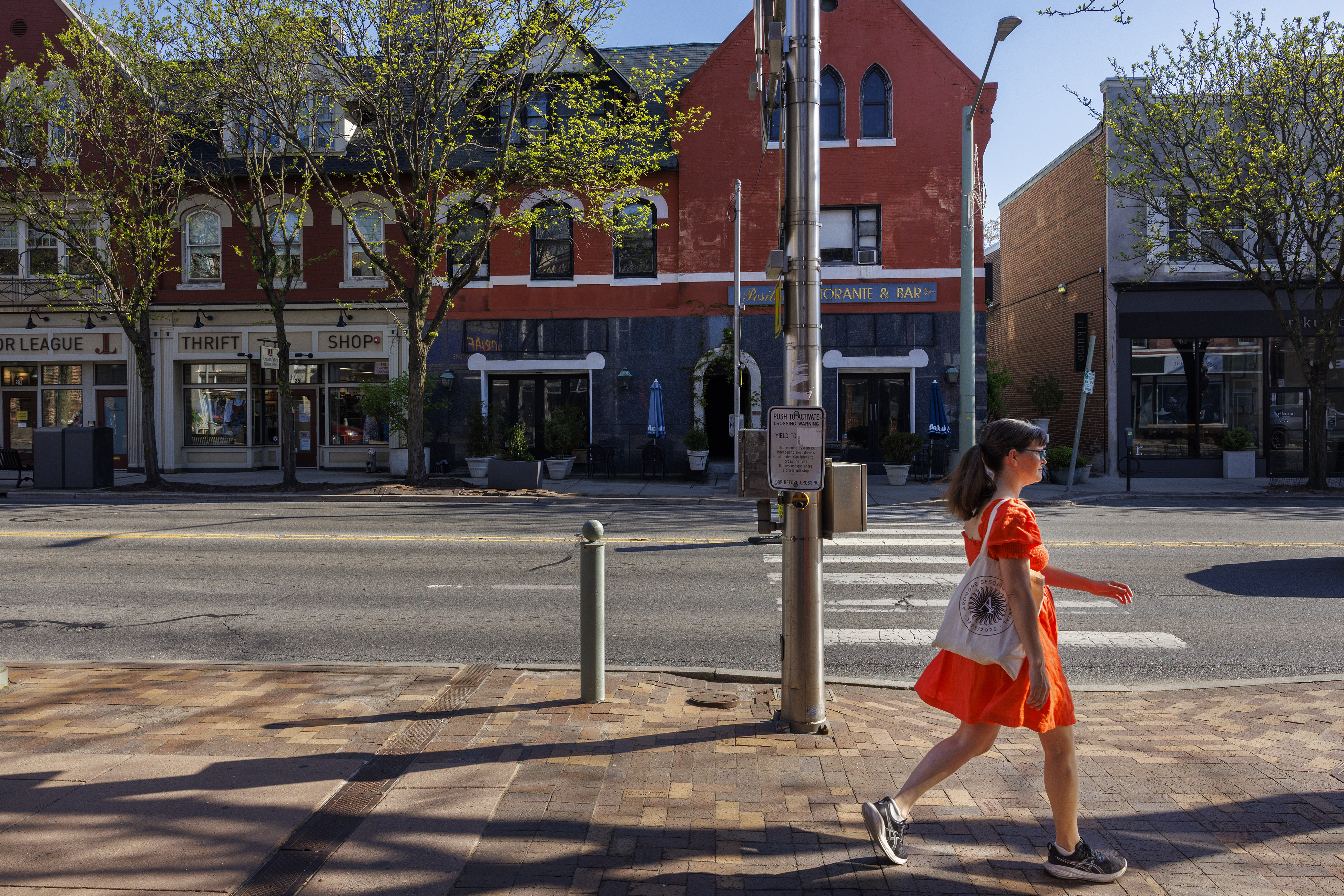
    Jane Murray walks along Lancaster Avenue in downtown Ardmore, as part of a project to to walk every street in the Main Line town.Alejandro A. Alvarez / Staff Photographer

    The more she walked, the more comfortable she felt leaving her car at home. She now wheels a “granny cart” to Trader Joe’s, a 15-minute walk from her house. Not long ago, she hopped a SEPTA bus to meet friends for quizzo in a pub a few towns away. At the end of the night, she took an Uber home.

    Murray’s kids still have to take a bus the four miles to their middle school and she drives them to distant sporting events, but makes a conscious effort to “habituate walking” into her routine. Before leaving the house, she checks her transit apps to see if she can get to her destination without driving. Sometimes, she mixes it up: When she’s running errands, she’ll drive part of the way, then walk the last few blocks. Her Instagram has inspired her neighbors, who pepper her for tips about safe walking routes.

    A mobility menu

    Living in America without a car is often portrayed as a hardship, something that people on the margins are forced to endure. But, for me, living without a car has been a joy.

    I didn’t know what to expect when I impulsively decided to get rid of my aging clunker 30 years ago after being presented with an expensive repair bill. Before then, I had rarely taken taxis or splurged on Amtrak to visit family in New York. Since I would no longer have to pay for car insurance, I promised to allow myself those indulgences. My husband and I were living in Center City, which certainly made our experiment more doable. (I should mention that I was pregnant at the time. I took a taxi to and from the hospital.)

    Besides saving a lot of money, not having a car has liberated me in ways I never could have imagined. Bike lanes were virtually nonexistent in Philadelphia in the ’90s; today my bicycle is my main form of transportation. Thanks to the city’s mostly flat terrain, I can easily cycle to interviews and events in far-flung neighborhoods. My ride is equipped with side baskets, allowing me to do my grocery shopping by bike. When my destination is beyond biking distance, or when I have to look presentable, I’ll take SEPTA or reserve a Zipcar from the local car-sharing company. In a pinch, I can always summon an Uber, a Lyft, or a taxi. I still walk a lot, and it’s no exaggeration to say I run into people I know on every outing.

    The key here is to think of mobility as a menu of options, rather than a car/no-car binary. While low-speed electric bikes have made it easier to cover long distances, not everyone can, or wants to, bike. Even transit can be daunting for a novice. The fear of crime also deters some people from using SEPTA, even though serious incidents have fallen dramatically in the last decade.

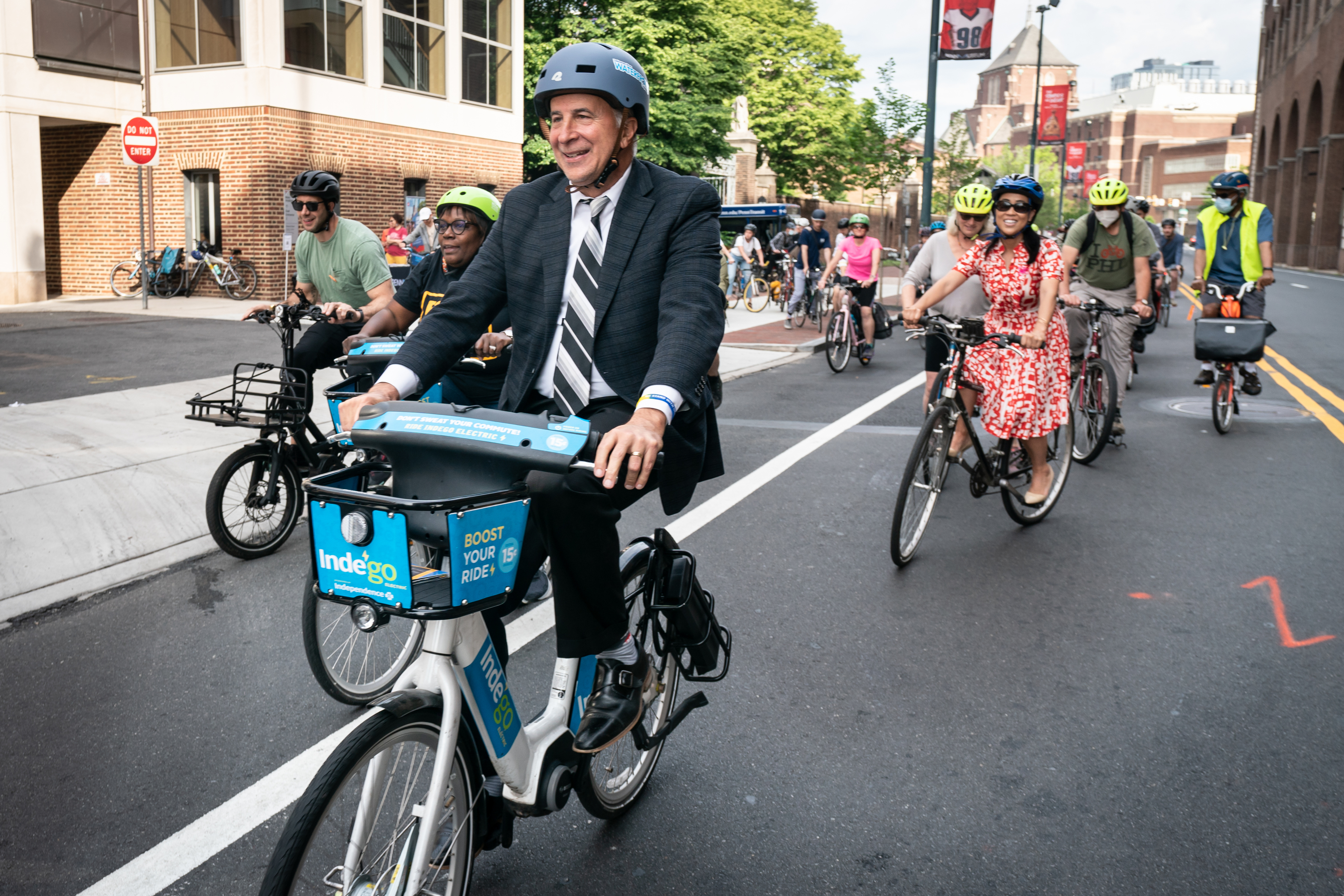
    In 2022, Councilmember Mark Squilla (center), former Eagle Connor Barwin, Councilmember Kendra Brooks, and Councilmember Helen Gym took part in a Bike to Work Day event sponsored by the Bicycle Coalition of Greater Philadelphia to promote cycling as a means of transportation.JESSICA GRIFFIN / Staff Photographer

    Eden MacDougall vividly remembers his trepidation when he started commuting from Langhorne, in Bucks County, to Temple University on SEPTA’s Regional Rail. “I kept thinking, how will I know it’s my stop?”

    By the time MacDougall graduated in 2022, he was a super-commuter. To get to his new job at Mastery Charter School, where he is an AmeriCorps reading instructor, he had to use three forms of transportation: He started his day by biking two miles from his home to the Langhorne station. After taking a SEPTA train to Fern Rock, he changed to the Broad Street subway, getting off at Erie. The trip took an hour and 45 minutes, but MacDougall, who never learned to drive, loved it. “I’d open up my book and read the whole way.”

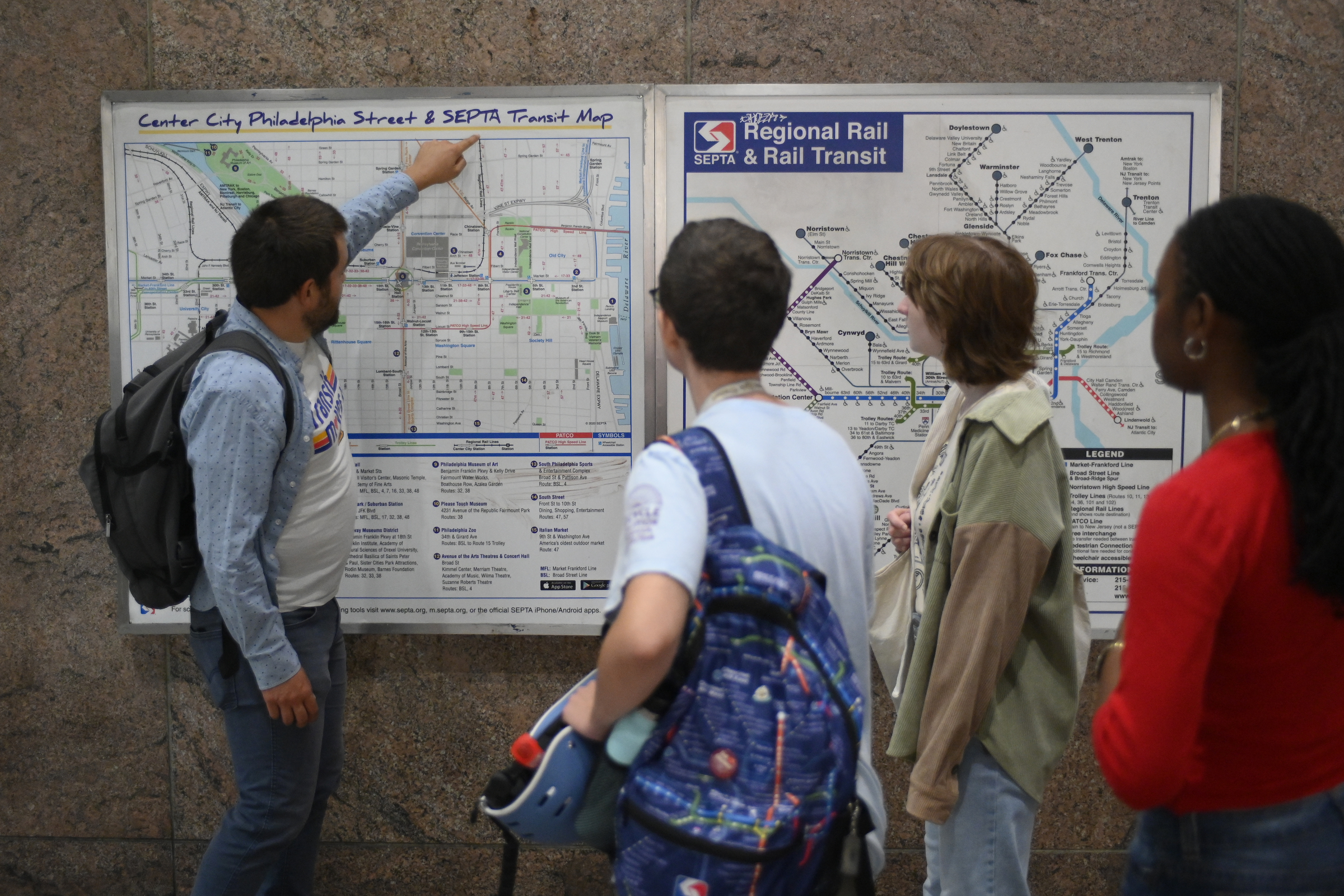
    Stephen Bronskill, coalition manager for Transit Forward Philadelphia, shows incoming Temple University students how to navigate SEPTA during a tour organized at the start of the new semester. Bastiaan Slabbers / For The Inquirer

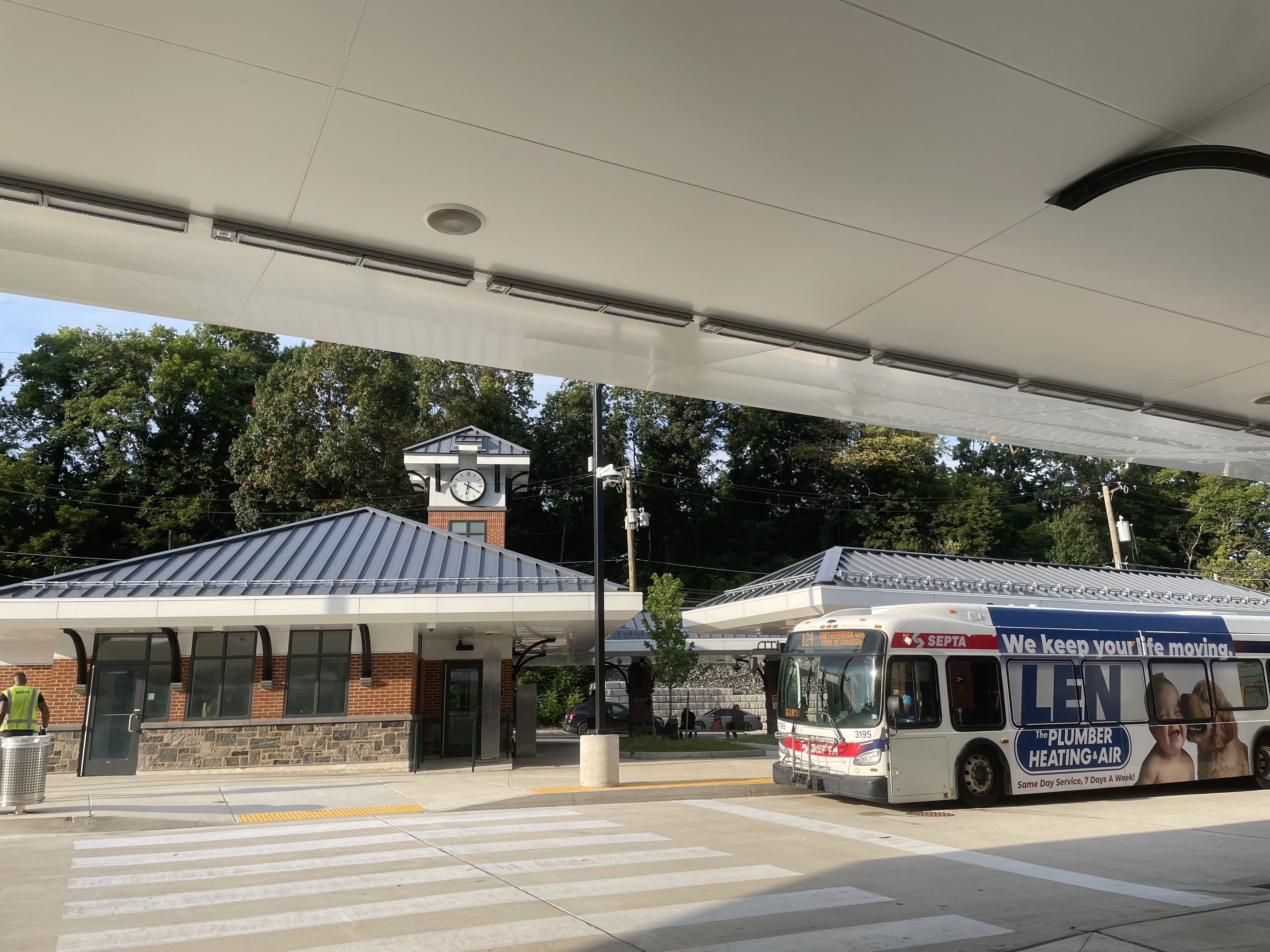
    Now he lives in Philadelphia and volunteers as an instructor for Transit Forward Philadelphia and the Bicycle Coalition of Greater Philadelphia, which run Saturday tours to help people feel more confident riding SEPTA. Although the events provide practical advice, like how to use a transit app, they’re intended to be fun excursions. MacDougall recently shepherded a group from Roxborough to the Clark Park farmers market, showing them how to change from the Route 9 bus to a West Philadelphia trolley. Along the way, the group got to see SEPTA’s efficient new Wissahickon Transit Center on Ridge Avenue, where 11 bus routes converge.

    The two groups, which have been lobbying the state legislature to help SEPTA secure much-needed state funding, started the Saturday tours as an extension of their advocacy work. They believe the exposure to SEPTA’s system can help reset public perceptions.

    SEPTA’s new Wissahickon Transportation Center on Ridge Avenue in Manayunk is a major upgrade for the city’s bus riders. The sprawling, $50 million station opened in January 2026 and allows 5,000 passengers a day to switch between 11 bus lines. (photographeed Aug. 2026)Inga Saffron / For The Inquirer

    “People had a lot of negative experiences during the pandemic,” Julio Rodriguez, the Bicycle Coalition’s policy director, told me. So, when SEPTA announced it was implementing its long-awaited schedule changes this summer, the transit advocates saw a chance to change the conversation.

    Helping SEPTA boost ridership isn’t their only goal, however. Because they believe fewer cars will make Philadelphia a safer, more livable city, they’re organizing similar outings to get people comfortable with bike commuting.

    Changing habits

    Even while these advocates are gaining adherents, many skeptics remain convinced people will never give up their cars.

    But the public’s cheerful response to this summer’s car-free celebrations around Philadelphia suggests that habits can change. Almost 600,000 people converged for World Cup watch parties at Lemon Hill in Fairmount Park during the 39-day FIFA Fan Festival — even though parking was banned. After the games ended, I saw hundreds of people streaming along the Schuylkill River Trail to 30th Street Station, a distance of 1.5 miles. Thousands took transit, rode bikes, or walked to the Ben Franklin Bridge to celebrate its centennial in July.

    Thousands of people took transit, biked, or walked on July 11 to parade across the Ben Franklin Bridge to celebrate the 100th anniversary of its opening.Elizabeth Robertson / Staff Photographer

    For people who switch to alternative forms of transportation, the payback is immediate. But Philadelphia and the region also have much to gain from having fewer cars racing through the streets: cleaner air, less noise, more casual social encounters with neighbors, and less wear-and-tear on infrastructure

    The impact on climate change is a different story. Individual actions can only do so much to slow the dramatic shifts in global weather. It’s also a frustrating chicken-and-egg situation. People won’t see car-free living as truly feasible until there is intensive government investment in transit, bike infrastructure, and pedestrian safety.

    Until that happens, carry a fare card, sign up for car-share, install a transit app on your phone — and don’t forget to wear a helmet.

  • The QB2 fallacy, the need for a dynamic RB2, and other (initial) Eagles roster thoughts

    The QB2 fallacy, the need for a dynamic RB2, and other (initial) Eagles roster thoughts

    Thinking our way through the least climactic day on the NFL schedule. . .

    The Eagles backup QB discourse has been a thrill ride over the last couple of years. We’ve gone from nothing-less-than-a-second-round-pick-for-Tanner-McKee to the Eagles trading for Andy Dalton to both-these-guys-stink to the Eagles keeping both quarterbacks plus rookie Cole Payton on their initial 53-man roster.

    The only meaningful takeaway isn’t really a takeaway at all. More so, it’s a reminder of the longest-standing conventional wisdom in the game. In a league where half the teams don’t have a capable starting quarterback, nearly every team is going to have worse than that as its backup quarterback. It’s silly to suggest that the Eagles could have a better backup quarterback if only they looked outside of McKee or Dalton. What you see is what you get.

    The devil is in the definition, as always. Gardner Minshew and Kenny Pickett were at the extreme upper end of capability among backups. Minshew has posted a .500 or better record in both of his seasons where he made at least 12 starts. Pickett (somehow) is 16-11 in his career. Yet, in their combined three seasons as Jalen Hurts’ backup, the Eagles lost three of the four games in which they attempted at least 16 passes.

    Virtually every team in the NFL will be screwed if its starting quarterback goes down for an extended period of time. The only somewhat reliable exceptions are those teams that have invested significant draft capital or significant cap dollars in the No. 2 man on the depth chart. Nick Foles was an outlier. Even then, the Eagles were paying him more than triple what they are paying McKee and Dalton.

    Eagles quarterbacks (from left to right) Andy Dalton, Cole Payton and Tanner McKee are all on the roster … for now. Yong Kim / Staff Photographer

    The Eagles are at a point in their competitive and financial cycle where they can’t afford to be throwing around that Chase Daniel cheddar. The trade for Dalton was a workaround somewhat similar to the trade for Pickett. He is in the second-year of a two-year, $8 million extension, but the Eagles are responsible for a fraction of it.

    In a best-case scenario, they get a backup QB who has shown the ability to, at the very least, give a team a chance at remaining relevant through a short- or medium-term absence. Dalton is just 2-6 in his starts since going 6-8 as a 35-year-old with the Saints in 2022.

    But all of those starts were in relief of Bryce Young, who is just 14-30 himself over that span. That would be the equivalent of an additional three to four wins over 17 games compared to Dalton. Such a pace could be the difference between sneaking into the playoffs and giving up on the season for a team like the Eagles, who are expected to win 10-12 games with an upside well beyond that.

    The actual calculus of Dalton versus McKee versus keeping both is far too marginal to be conveyed in an expository sentence. At such a minuscule level, the expected value between the lines must be compared to a variety of factors outside of the lines, including the expected value in practice or the film room of Player X versus Player Y.

    That the Eagles have decided, at least for the moment, to keep both Dalton and McKee speaks to their regard for both. Ultimately, that regard, and the factors that compose it, will need to be weighted against the value of the additional roster spot that one of them will occupy. The real question isn’t Dalton versus McKee. It’s the other versus the lineman or defensive back or linebacker who isn’t currently on the roster because of them.

    On that note. . .

    Dollar for dollar, the biggest improvement the Eagles could make to their roster would be adding a running back who can do something different than Saquon Barkley and Tank Bigsby. Unless Will Shipley is that guy.

    Will Shipley has caught only nine passes with the Eagles.Yong Kim / Staff Photographer

    The most glaring anomaly on the Eagles roster is one that hasn’t gotten much attention over the last couple of years. Very few teams in the league have a less diverse running back room than they do. For the sake of the argument, let’s reduce it to a generalization that is overly broad and thus not entirely accurate. The Eagles don’t have a complement to Saquon Barkley, at least not one you’d classify as “pass-catching” or “change-of-pace.”

    Unless Will Shipley is that guy.

    I don’t necessarily think they need such a guy. I’m not even sure that such a guy would be attainable even if they thought they needed him. All I know is that they don’t have him. And, also, that his absence is worth contemplating for a team that should be looking for creative ways to distribute the touches that previously went to A.J. Brown.

    The Ravens’ Justice Hill is the guy I think of when I think of a guy the Eagles could use. Two years ago, he touched the ball 89 times and gained 38 first downs with an average of 6.9 yards per touch. To put that in perspective, Bigsby gained 17 first downs on 61 touches with an average of 6.2 yards per touch in 2025. Meanwhile, Shipley has touched the ball a total of 57 times in the two years since the Eagles drafted him in the fourth round. That, with 13 first downs and 3.9 yards-per-touch.

    Justice Hill caught 21 passes for the Ravens in 2025.Nick Wass

    Is it a big thing? Maybe not. But it’s certainly an area where the Eagles can improve. Last season, they were one of only four teams in the NFL who didn’t have multiple running backs catch at least 10 passes. That’s not necessarily a bad thing. The Rams scored the most points in the league without a traditional pass-catching running back.

    But the Eagles are clearly bucking convention in their backfield. We don’t even need to compare them to the rest of the league. Just look at their recent history. Even in 2024, when Barkley led the league with 345 rush attempts and 2,005 yards, Kenny Gainwell managed to catch 16 passes for 116 yards while carrying the ball 75 times for 290. Gainwell and Boston Scott were both members of the 2022 Super Bowl team. Go back to 2017. Think about Corey Clement’s touchdown catch.

    The modern NFL game is all about mismatches, both between and within personnel groups. Tight ends are in vogue because they thrive on those margins. While Shipley brings top-end speed, he has yet to display the feel, shiftiness or receiving chops that would make him a competitive advantage in a dedicated package. Bigsby is the ideal back-up to Barkley, a power runner who you’d be comfortable handing off to 15-20 times a game. But he has 11 receptions in three NFL seasons. It just feels like the Eagles are missing an element.

  • Why was this previously healthy 14-year-old so sick? | Medical Mystery

    Why was this previously healthy 14-year-old so sick? | Medical Mystery

    A previously healthy 14-year-old male was brought to the emergency department after experiencing fatigue, fevers, and decreased appetite for four days. Two days earlier, he’d been seen in an urgent care center, where doctors prescribed a course of amoxicillin for suspected middle ear infection. Now, he was feeling worse and complaining of abdominal pain.

    When examined in the ED, the patient had a fever, an increased heart rate, and low blood pressure requiring IV fluids. He was admitted to the pediatric intensive care unit for close monitoring. His doctors were worried about sepsis, which is the body’s extreme response to infection and is a life-threatening medical emergency.

    But what was the underlying cause of his illness? Initially, doctors were concerned about pancreatitis, as his pancreatic enzymes (amylase and lipase) were elevated in his blood. However, the patient developed new symptoms including neck pain and limited neck motion, as well as reddening of his eyes, which is not consistent with this diagnosis.

    The answer

    Further laboratory testing revealed elevated heart enzyme levels, indicating damage to his myocardium, or heart muscle, as well as very high levels of c-reactive protein, which indicates generalized inflammation. Due to the evidence of inflammation in multiple organ systems, his doctors now suspected a condition called multisystem inflammatory syndrome in children, or MIS-C.

    What is MIS-C?

    MIS-C is a rare but serious complication of COVID-19 that can occur in susceptible patients, usually presenting around 2-6 weeks after initial COVID infection. This patient was not aware of having had COVID recently, but an asymptomatic COVID infection can still spur MIS-C. MIS-C can present with persistent fever, multiorgan dysfunction, and elevated inflammatory markers, which were all present in our patient. This condition was much more prevalent at the heights of the COVID-19 pandemic. Cases dropped rapidly after distribution of the COVID vaccine. This particular patient presented before the creation of the COVID vaccine.

    Since this patient’s inflammatory symptoms were progressing and tests showed signs of heart involvement, treatment for MIS-C was started. Specific treatment courses can vary but all include intravenous immunoglobulin (IVIG), steroids, and aspirin. The patient’s symptoms improved quickly; he was soon able to move his neck without pain, and the redness in his eyes abated. COVID-19 antibody testing eventually came back positive, further supporting the diagnosis.

    The bottom line

    As we get further into life with COVID-19 as a part of our overall medical picture, it’s important to take a step back and look at all we have already learned about the disease. MIS-C is a well documented complication of a COVID infection; however, it may no longer be foremost in physicians’ minds. COVID vaccination has proven highly effective in preventing this frightening condition; a CDC study from 2021 reported 91% effectiveness of these vaccines in preventing MIS-C, as well as more severe disease in MIS-C patients who were unvaccinated. For this patient, there was a full recovery thanks to doctors who quickly recognized the signs and symptoms of MIS-C and started treatment rapidly. Moving forward, it’s important for parents to understand that vaccination can help prevent COVID-related complications, and for our primary care teams to continue communicating everything we have learned over the past six years.

    Jordan Priess is a third-year pediatric resident and Hayley Goldner is a pediatrician in the adolescent medicine department at Nemours Children’s Hospital, Delaware.