The Rev. Jay Bergen was at the sign-in table inside the Friends Center, where No ICE Philly was holding its regular public meeting last week, when a police civil affairs officer appeared.
Bergen asked what was happening, and said the officer responded, “We’re just here to make sure everyone’s safe.”
The activist group was preparing to serve cake, to celebrate its one-year anniversary.
Bergen, who leads No ICE Philly, was concerned that the officer brought his gun into the Center City facility, which includes a Quaker meetinghouse. The pastor escorted the officer down the hall to the door, explaining that he could attend the public meeting if he wished ― then noticed a second civil affairs officer outside.
The two officers stayed there, watching, for the duration of the three-hour gathering, Bergen said, their presence leaving those inside feeling confused, intimidated, and surveilled.
“Who gave the order, and what was the goal?” Bergen asked in an interview. “Why are we more of a threat than ICE agents are? … It’s another instance of the Philadelphia police being interested in targeting Philadelphians instead of protecting Philadelphians.”
The police department said in a statement last week that “the Sept. 9 event was identified as a scheduled protest.” Civil affairs officers routinely attend demonstrations as part of their duty to public safety and the First Amendment, and “their presence was not specific to No ICE Philly,” the statement said.
But on Monday, Staff Inspector Frank Palumbo, who oversees the civil affairs unit, said he would open an investigation into the matter.
Palumbo said he did not know why an officer would have entered the Friends Center. That would be outside department policy, he said, unless there was a disturbance inside.
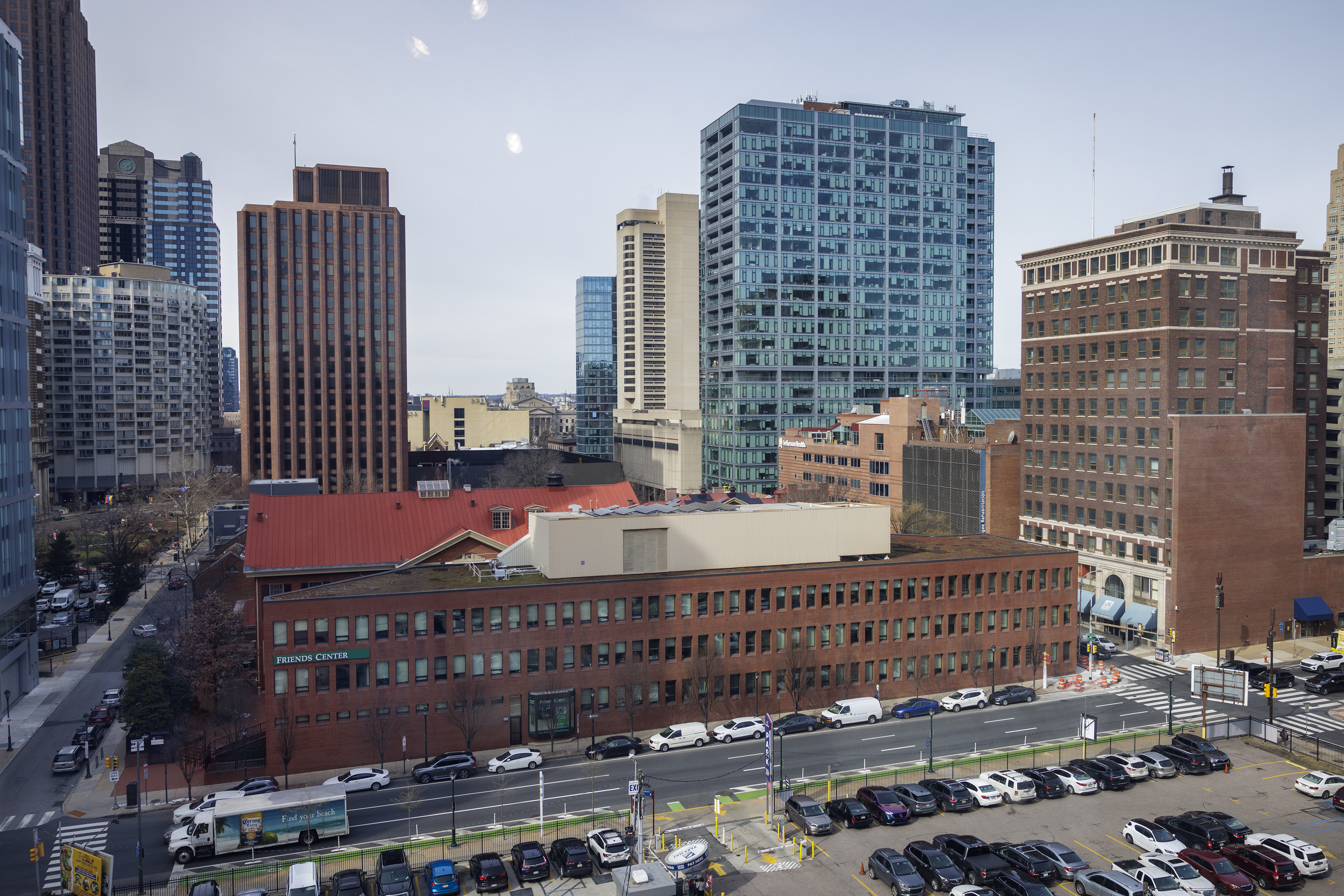
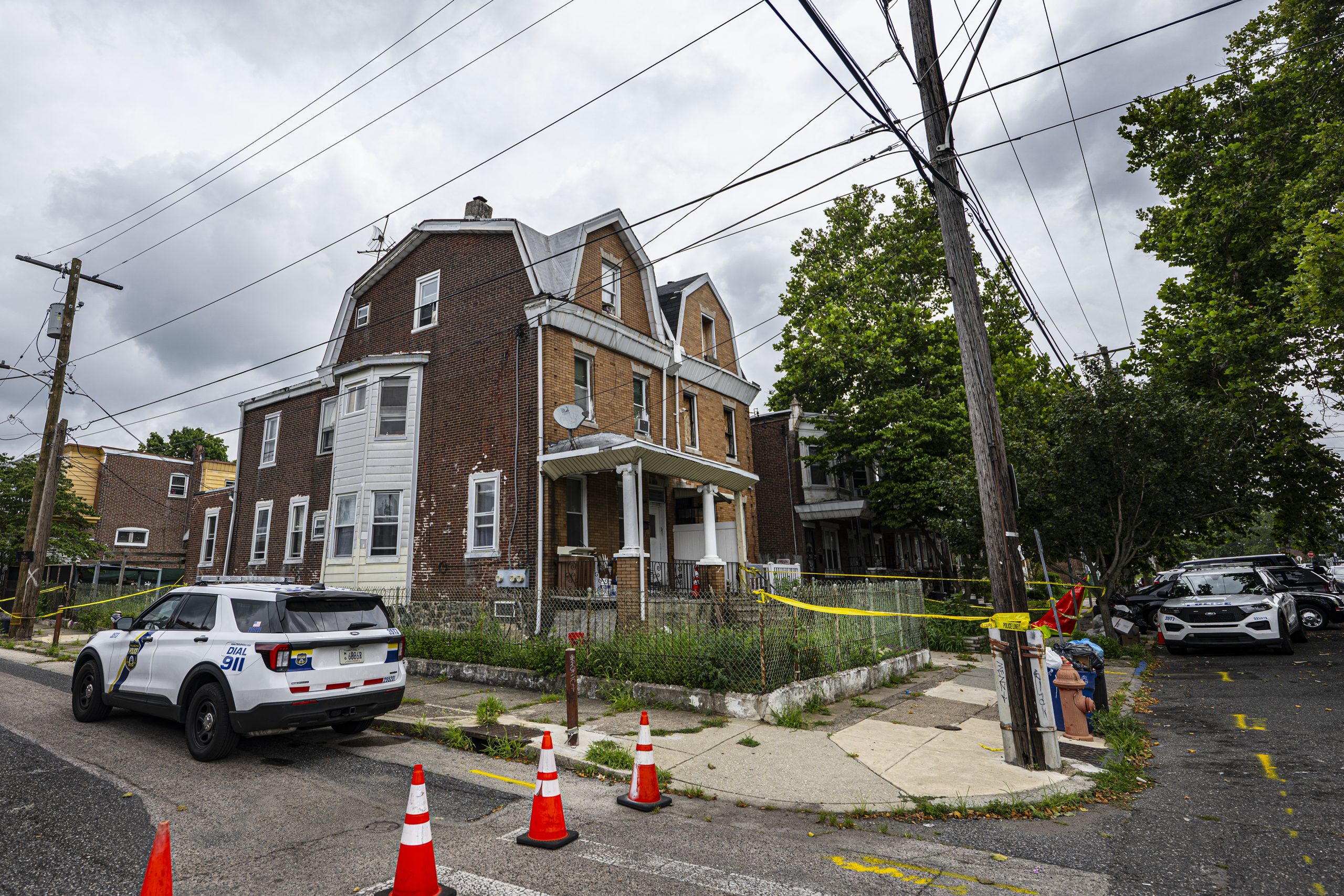
The Friends Center at 15th and Cherry Streets.Alejandro A. Alvarez / Staff Photographer
If the group had gathered outdoors, Palumbo said, the department would have sent more officers ― including some in uniform. It did not do so, he said, because “there was no indication whatsoever that there would be destruction of property, violence, or anything that would even result in civil disorder.”
He added, “This will not continue to occur.”
Civil affairs units are specialized teams of officers designed to act as neutral liaisons between sides during what might be contentious protests, labor actions, or big public gatherings. Like other officers, they always carry their guns while on duty.
In Philadelphia, the police department says, civil affairs officers operate in a diplomatic and impartial capacity to ensure that constitutional rights are protected for all. The officers prioritize protection of life and property while preventing vandalism, assaults, or other illegal acts not covered by First Amendment rights, the department says.
Niles Wilson of the Center for Policing Equity, a California-based research and reform group, said a key question of any investigation into the matter should be why the officers were at the meeting at all.
“What intelligence did the police department have that would either lead these officers to do this, or were these officers acting on their own?” he asked. “That needs to be answered.”
The stakes reach beyond any particular meeting, he said.
A civil affairs unit is an asset, one that can help “towards transparency and building trust between the police department and the community,” Wilson said. But “anytime the public trust is lost in that service, then it disrupts public safety everywhere.”
Philadelphia civil affairs officers are commonly present at demonstrations led by No ICE Philly, which in the last year has emerged as perhaps the boldest and most visible of the city’s pro-immigrant organizations.
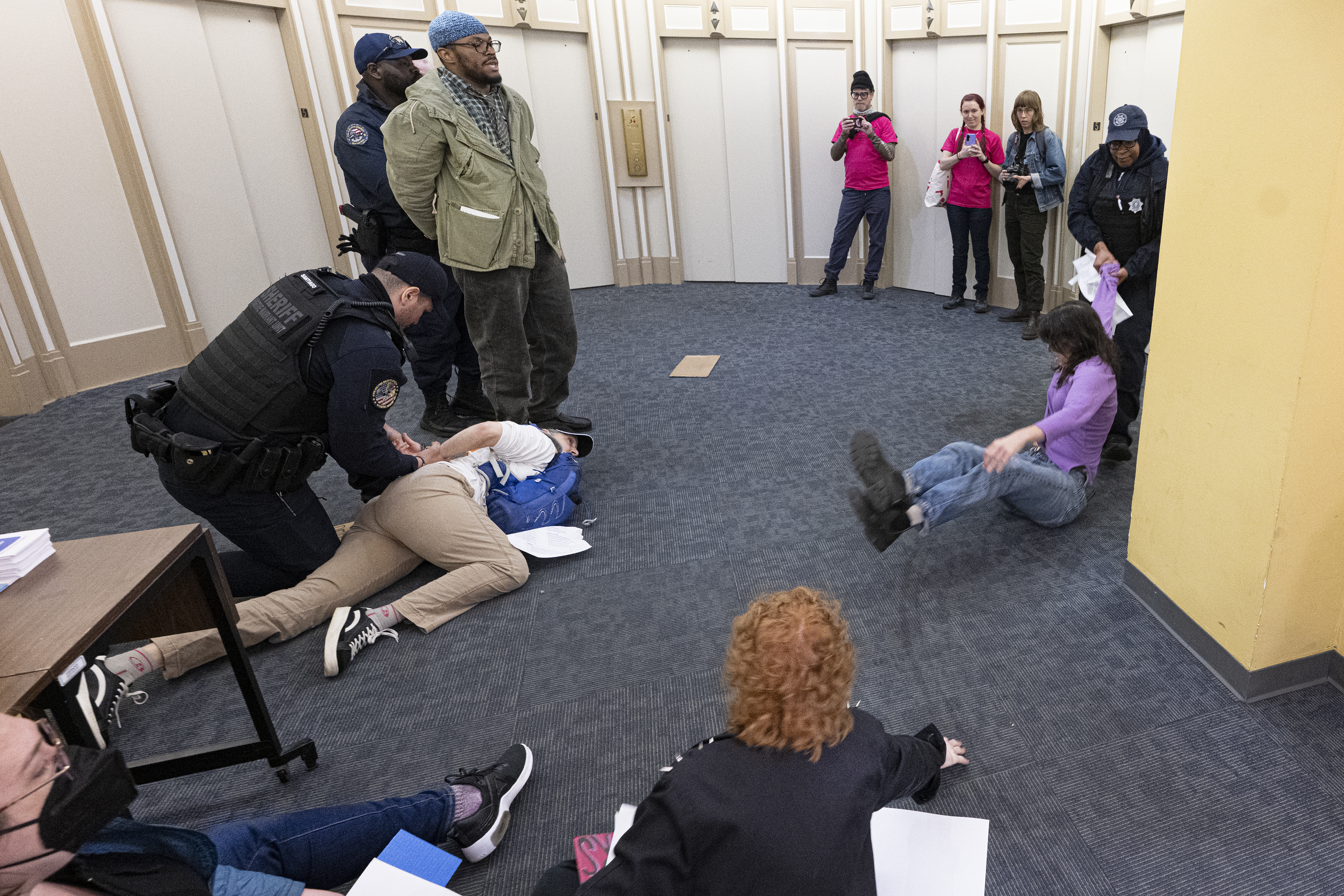
No ICE Philly activists and supporters are handcuffed and taken into custody at a sit-in outside the office of Sheriff Rochelle Bilal in April 2026.Jose F. Moreno / Staff Photographer
The Sept. 9 gathering, however, was a regular meeting, generally held twice a month, open to all, and advertised in advance on social media. Other meetings have drawn far more people than the 60 or so present at this one, organizers said, which made the police presence puzzling.
“It felt kind of like a threat, like, ‘We’re watching,’” said Em Auerbach, a group member who attended. “It made people feel on edge.”
As the meeting was ending, Auerbach said, one of the officers approached a Friends Center employee at the front desk and asked: “Are you good? Do you need anything?”
The worker answered that she was fine, Auerbach said.
No ICE Philly members waited for the employee to finish her work, and then everyone left together, Auerbach said.
“It was weird,” Auerbach said of the officers’ presence. “I think they were there to intimidate us. … Unless there was a threat against our group, I don’t think this was a good use of taxpayer funds.”
Bergen described at one point asking the officers, “‘Why are you surveilling us?’ They said, ‘We’re not surveilling.’ I said, ‘That’s what a body camera is for.’”
The pastor said that as people entered the meeting, they said the police officers had asked who they were and why they were there.
Palumbo said if that happened, it would fall outside department policy, that even at combative street demonstrations people generally are not asked their names “unless it is necessary to determine who they are for the purposes of an investigation. This was not an investigation.”
Palumbo said the relationship between the police and No ICE Philly has been cordial. He estimated that police have cited protesters twice in the last year, issuing citations with $100 penalties that are similar to parking tickets.
Those citations, he said, are “the most extreme police enforcement we’ve ever done with this group.”
Correction: This story has been updated to correct the pronouns used by Rev. Jay Bergen and Em Auerbach.
Even in an age where driving is as safe as it has ever been, hundreds of people still die on New Jersey roads each year.
Across South Jersey, an analysis shows, there are seven corridors that are particularly problematic — stretches where four or more people have died in crashes in the last seven years.
The Inquirer analyzed about 330 fatal crashes across South Jersey’s limited-access highways, which led to more than 360 deaths between 2019 and July 2026, according to New Jersey Department of Transportation data.
Drive north along I-76 to Philly or take Route 42 south to the Shore, and you will likely cross one of South Jersey’s most dangerous sections. The interchange where I-76 meets Route 42 and I-295, in Camden County, has recorded some of the highest rates of fatal accidents in the region, as city commuters, long-haul truckers, and beachgoers navigate a snarled intersection.
(function() {
var l2 = function() {
new pym.Parent(‘risk_corridors_map_4’,
‘https://media.inquirer.com/storage/inquirer/projects/innovation/arcgis_iframe/risk_corridors_map_4.html’);
};
if (typeof(pym) === ‘undefined’) {
var h = document.getElementsByTagName(‘head’)[0],
s = document.createElement(‘script’);
s.type = ‘text/javascript’;
s.src = ‘https://pym.nprapps.org/pym.v1.min.js’;
s.onload = l2;
h.appendChild(s);
} else {
l2();
}
})();
I-76 in South Jersey runs five lanes wide in both directions and spans only three miles, but each mile has seen fatalities. And within a 1.3-mile stretch, 10 fatal crashes occurred, more deaths than on any other highway segment. On the mile of I-295 leading up to the I-76 merge, four fatalities occurred.
“There are a whole bunch of reasons why, around intersections, you have crashes,” said Chris Pollard of the Delaware Valley Regional Planning Commission.
Highways like I-76 with tricky merges, heavy congestion, and sharp bends are more likely to be fatal than calmer sections of road, Pollard said. When cars go around curves or merge at high speeds around other, slower-moving vehicles, accidents are more likely.
“It’s often based on the geography of the road,” Pollard said.
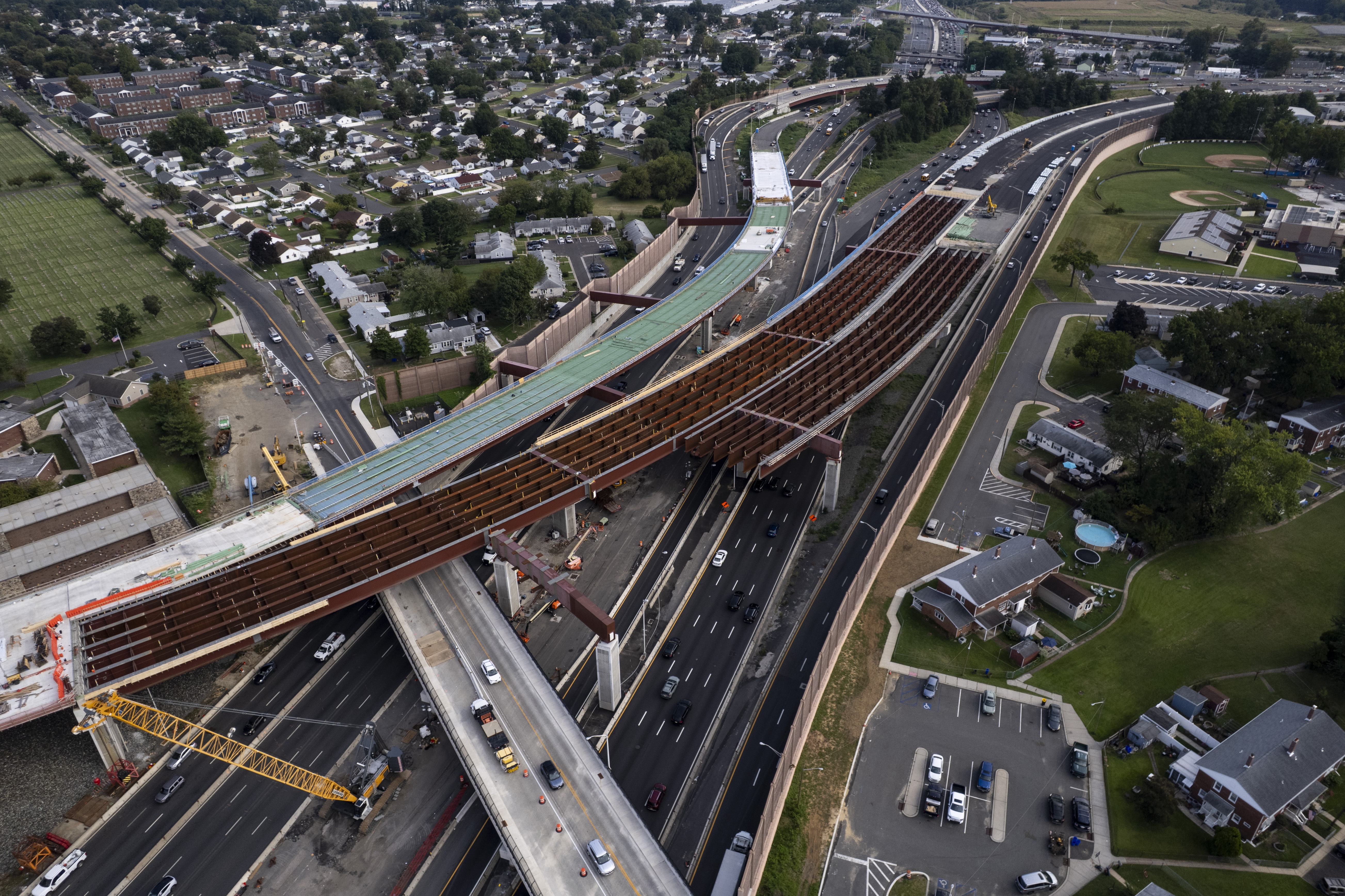
I-76 in Camden County near the I-295/I-76/Route 42 Interchange construction on Thursday, Sept. 17, 2026 in Bellmawr, NJ.Monica Herndon / Staff Photographer
Distracted driving played a role in nearly half of South Jersey’s fatal car crashes, contributing to more than 140 deaths, while alcohol was a factor in more than 75 fatal accidents.
Other dangerous hot spots in South Jersey include a mile stretch of I-295 in Oldmans Township, Salem County, where seven fatal crashes occurred, a half-mile stretch of the New Jersey Turnpike in Mount Laurel Township, Burlington County, with four fatal crashes, and a 0.6-mile stretch of I-676 before the Ben Franklin Bridge, with four fatal crashes.
(function() { var l = function() { new pym.Parent( ‘sj-crashes3__graphic’, ‘https://media.inquirer.com/storage/inquirer/ai2html/sj-crashes3/index.html’); }; if(typeof(pym) === ‘undefined’) { var h = document.getElementsByTagName(‘head’)[0], s = document.createElement(‘script’); s.type = ‘text/javascript’; s.src = ‘https://pym.nprapps.org/pym.v1.min.js’; s.onload = l; h.appendChild(s); } else { l(); } })();
A recent call for safer highways
A string of fatal crashes on one of South Jersey’s safer highways this summer has legislators asking questions.
Since July, four crashes have killed five people on Route 55, a 40-mile freeway that runs from Cumberland County up to the Route 42 entrance in Deptford.
In response to the string of crashes, Assemblyman William Moen, a Democrat in the New Jersey Legislature, cosigned a letter with eight other politicians to NJDOT, urging the department to examine how Route 55’s design could have led to the deaths.
Moen’s social media post about the highway reached more people, about 200,000, than any post he has made in his decade as an elected official, he said. The interactions showed him the public wants answers, too.
“There’s always that question of, ‘Could there be things that are being used on other highways that the state operates that simply aren’t in place on Route 55?’” Moen said.
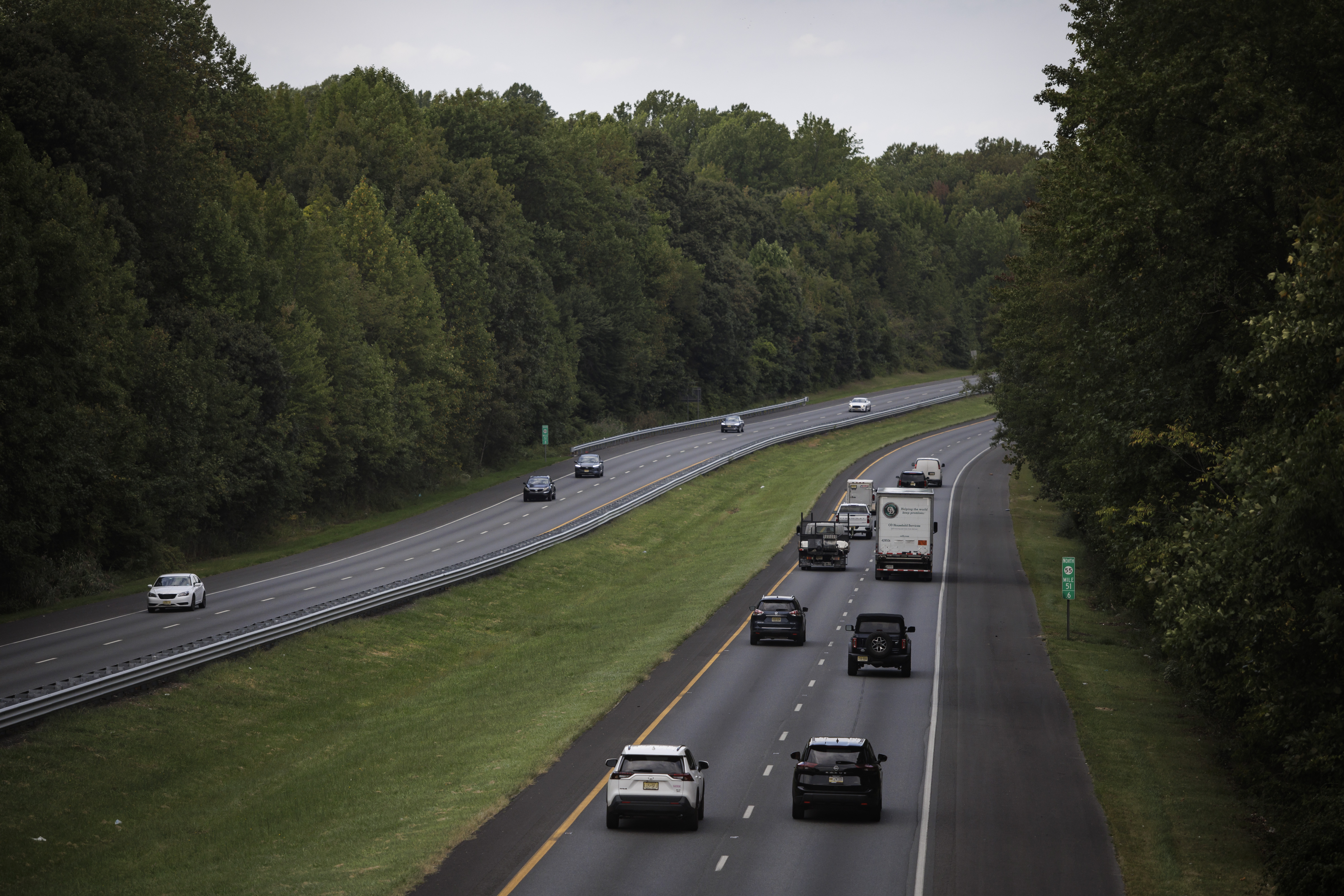
Unlike some of the region’s more complex roadways, Route 55 is onlytwo lanes, and has few, if any, sharp bends.
Still, 46 people have died on the highway between 2019 and this July. One 0.64-mile-long segment of Route 55, by Mantua Township, Gloucester County, has seen a high volume of fatal crashes, four total, in recent years. That included a crash that killed a Bridgeton resident in a wrong-way crash in July.
As a result of the letter, NJDOT is in talks with legislators to “identify safety improvements needed along the corridor,” according to Steve Schapiro, an NJDOT spokesperson. Miranda Toner, Moen’s spokesperson, said the assemblyman has since been briefed by NJDOT on the matter and has received an official letter from the department outlining plans for Route 55.
Route 55 near the Pitman Road overpass on Thursday, Sept. 17, 2026 in Pitman, NJ. NJ DOT sent a letter to concerned legislators about Route 55 in Gloucester County, saying new safety improvements would be added.Monica Herndon / Staff Photographer
In January 2025, the legislature approved the New Jersey Target Zero Commission, created to eliminate “all traffic fatalities and serious injuries” on public roadways by 2040.
Part of that law required NJDOT to track the state’s fatal crash data through its High-Injury Network, which flagged one-mile segments of public roadways with seven or more fatal or serious-injury crashes between 2021 and 2023. Since NJDOT updates the map every three years, recent crash data will not be available there until 2028.
No segments of Route 55 are currently featured on the network, but various miles of roadways throughout Camden, Gloucester, Burlington, and Cumberland Counties made the list.
Schapiro said 90% of state-maintained, one-mile segments on the High-Injury Network, which includes 88 locations, are currently undergoing projects, and the rest will start safety projects, too. Plus, the department regularly uses its data to identify high-risk areas, crash patterns, trends, vulnerable populations, and driving times.
Correction: This story was updated to correct the Gloucester County municipality with the high-fatal-crash corridor on Route 55.
The stunning remarks by U.S. District Judge Paul S. Diamond — that Krasner may be guilty of conspiracy or obstruction of justice, and that federal prosecutors should investigate — triggered uncertainty over the future of one of the city’s top elected officials, who is a nationally recognized leader of the progressive prosecutor movement.
Legal experts said Diamond’s decision to refer actions by Krasner and one of his supervisors to the U.S. Attorney’s Office would almost certainly lead to an inquiry of some kind. But the fate of any possible probe into Krasner not only was difficult to predict, they said, but could take months or longer to determine.
Political repercussions could arise as well.
While Krasner’s Republican enemies reiterated their long-held disdain for the reform-oriented prosecutor, no elected Democrats immediately came to his defense. And some Democrats in the city have quietly begun discussing potential contingency plans if Krasner is forced from office before the end of his third term in 2030.
Krasner, for his part, has denied wrongdoing, and said in a statement that he planned to appeal Diamond’s ruling, in which the judge also disqualified Krasner and a lawyer in his office, Matthew Stiegler, from participating in the underlying case — a matter in which a man is seeking to have his murder conviction overturned.
Here is a recap of what led to Diamond’s scathing filing, and what might be next for Krasner.
What happened in the underlying case?
The case at issue began in 2015, when Dennis Johnson — found guilty in 2009 of second-degree murder — filed a petition in federal court seeking to have his conviction overturned.
For years, the district attorney’s office opposed Johnson’s bid for relief. But in 2022, then-Assistant District Attorney Jaclyn Mason filed a brief reversing course and agreeing that his trial counsel had been ineffective.
This spring, while preparing for a hearing before Diamond about the case, Mason said, she reached out to new supervisors in the law division: Katherine Ernst, Steven Wildberger, David Napiorski, and Peter Andrews. And Ernst said when she reviewed Mason’s brief, she discovered it contained “significant errors,” and the supervisors decided they needed to try to withdraw it.
Mason thought they were setting her up to take the blame, so she quit. And in her resignation letter, she said that Stiegler — her onetime boss — had forced her to file a faulty brief and that she would not lie or mislead the court to protect him.
After that, the supervisors testified, Stiegler proposed an unusual path forward, effectively suggesting they find a way to cast Mason as a “rogue” prosecutor prone to making mistakes.
Stiegler also shared his proposal with Krasner, the supervisors said, and the district attorney told them he thought it was a “really good idea.”
But the supervisors rejected it, they said. Wildberger told Diamond he found the notion “tremendously inappropriate.”
From internal disagreements to potential crimes
Krasner ultimately did agree to let the supervisors try to withdraw Mason’s brief. But he and the supervisors then got into heated arguments about whether to refer the case to state prosecutors — something the supervisors thought was appropriate because of the internal drama consuming their office.
As the referral debate raged on, the supervisors said, Krasner told them the case needed to stay in-house so someone could “protect the office” and “control the proceedings.” He also threatened “consequences” if any of them told Diamond about their discussions — which they took to mean being fired.
Diamond, in his memorandum, said threatening people’s jobs when they are trying to tell the truth to a judge could amount to obstruction of justice, as could attempting to conceal the truth about Stiegler’s role in the drafting of Mason’s brief.
He also said Krasner’s attempts to work with Stiegler to create a false narrative about Mason could amount to conspiracy.
And while the judge said he found the supervisors and Mason to have testified credibly, he said Stiegler may have committed perjury, calling his testimony “often contradictory, evasive, or outright dishonest.”
Will Krasner actually face charges?
For those reasons, Diamond said, he sent the case to the U.S. Attorney’s Office to investigate if Krasner or Stiegler should be charged.
Diamond, as a judge, does not have the power to prosecute the case himself. And how or if prosecutors decide to proceed remains an open question — and one that might remain unclear for some time.
Legal experts said it is rare, though not unprecedented, for judges to refer potential wrongdoing to prosecutors. And any time that happens, they said, prosecutors take it seriously — reviewing any materials the judge disclosed, deliberating paths forward, and potentially empaneling a grand jury to begin calling witnesses.
Still, full criminal investigations often take months or years to conduct. And such probes — conducted in secret — can go in unexpected directions. Sometimes that might mean a broader discovery of wrongdoing than was initially expected. Other times, investigations can close without charges.
Also unclear is whether the local U.S. Attorney’s Office would oversee any potential investigation into Krasner — or if staffers from elsewhere in the Justice Department might be called on to handle it, since Philadelphia-based federal prosecutors often work on cases with lawyers in Krasner’s office.
A spokesperson for the U.S. Attorney’s Office declined to comment on Diamond’s memorandum.
Krasner has made no secret of his antipathy for President Donald Trump, and Trump, in his second term, has been unabashed about asking the Justice Department to prosecute political foes. It was not clear how or if that might influence prosecutors’ course of action in this case.
Whatever might happen, experts said, one thing was generally clear: A referral from a federal judge targeting an elected district attorney was practically unheard of.
“I really cannot think of an equivalent situation,” said Lauren Ouziel, a Temple University Beasley Law School professor and former federal prosecutor.
Michael Levy, who worked as a federal prosecutor in Philadelphia for nearly 40 years before retiring in 2019, said: “For a judge to do this, it’s really unusual.”
Could Krasner face other consequences?
Even if Krasner and Stiegler are not criminally charged, they could still face additional consequences.
If the case is referred to the federal court’s disciplinary committee, for example, a panel of judges could seek to determine whether any of the prosecutors involved behaved in a way that would warrant a suspension or disbarment from practicing in federal court.
That would likely be detrimental to Stiegler, who has spent much of his career working on federal cases. But it would be even more problematic for Krasner — and could raise questions about whether he could continue to serve as the city’s district attorney.
Still, similar to any criminal investigation, the disciplinary process — which is largely confidential — would also likely be lengthy. When some of Krasner’s deputies were disbarred or suspended in federal court in 2025, those outcomes came about three years after a federal judge said he was sending the case out for a disciplinary review.
Diamond did not specify if he was referring the matter to the region’s chief federal judge, the first step in a potential disciplinary inquiry. Legal experts said prosecutors — if they investigate — would likely prefer to have their probe take precedent over any potential disciplinary proceeding.
Will there be political fallout?
Outside of the legal realm, Krasner, a Democrat, has faced political attempts to oust him before.
In 2022, the Republican-led Pennsylvania House voted to impeach Krasner, saying he had not adequately enforced state laws and, by extension, had contributed to the city’s gun violence crisis.
State Rep. Martina White, a Republican from Northeast Philadelphia who led the impeachment drive against Krasner, on Wednesday called for him to resign, saying in a statement that “Philadelphia needs a reliable DA, not a defendant-in-waiting.”
Few top Democrats defended Krasner.
Mayor Cherelle L. Parker declined to comment this week, as did City Council President Kenyatta Johnson, who supported Krasner’s bid for reelection last year.
Some activists on the progressive left said they still support Krasner and see Diamond’s referral as politically motivated. Diamond was appointed by former President George W. Bush, a Republican, in 2004.
“This is unfortunately a continuation of the right’s assault on DA Krasner and the policies that he’s implemented,” said Robert Saleem Holbrook, executive director of the progressive political group Straight Ahead. “This is a judge using an internal conflict in the office to further the objective of removing Krasner from office.”
Krasner has proved politically resilient over the years, winning three terms despite the impeachment drive and opposition from elected officials in his own party, said Sergio Cea, political director of the progressive group Reclaim Philadelphia.
Krasner, he said, is “like Teflon.”
“He is somebody that has consistently, without the Democratic establishment support, won primary after primary,” he said. “And that is because he is wildly popular with Philly voters who are tired of status quo district attorneys who are more focused on filling jails than achieving justice.”
A ‘devastating’ environment
Krasner, meanwhile, is not in the office this week, according to people familiar with his whereabouts. First he was on a recruiting trip in Washington, they said, then he was headed on a pre-planned personal trip to Ireland.
Inside the office Wednesday, staffers said they were sharing feelings of dismay and fatigue from years of upheaval and political headlines under Krasner’s leadership. Several prosecutors, who spoke on the condition of anonymity to speak candidly about a sensitive matter, said they have endured the impeachment saga, mass firings, and the departure of veteran staffers.
And although some said Diamond’s ruling was not entirely surprising — the judge had signaled at a previous hearing that he might refer the matter to federal prosecutors — they also anticipated that any investigation could stretch on for months or even years.
One longtime prosecutor called the allegations “devastating” and said the reputation of the office “has been reduced to rubble.”
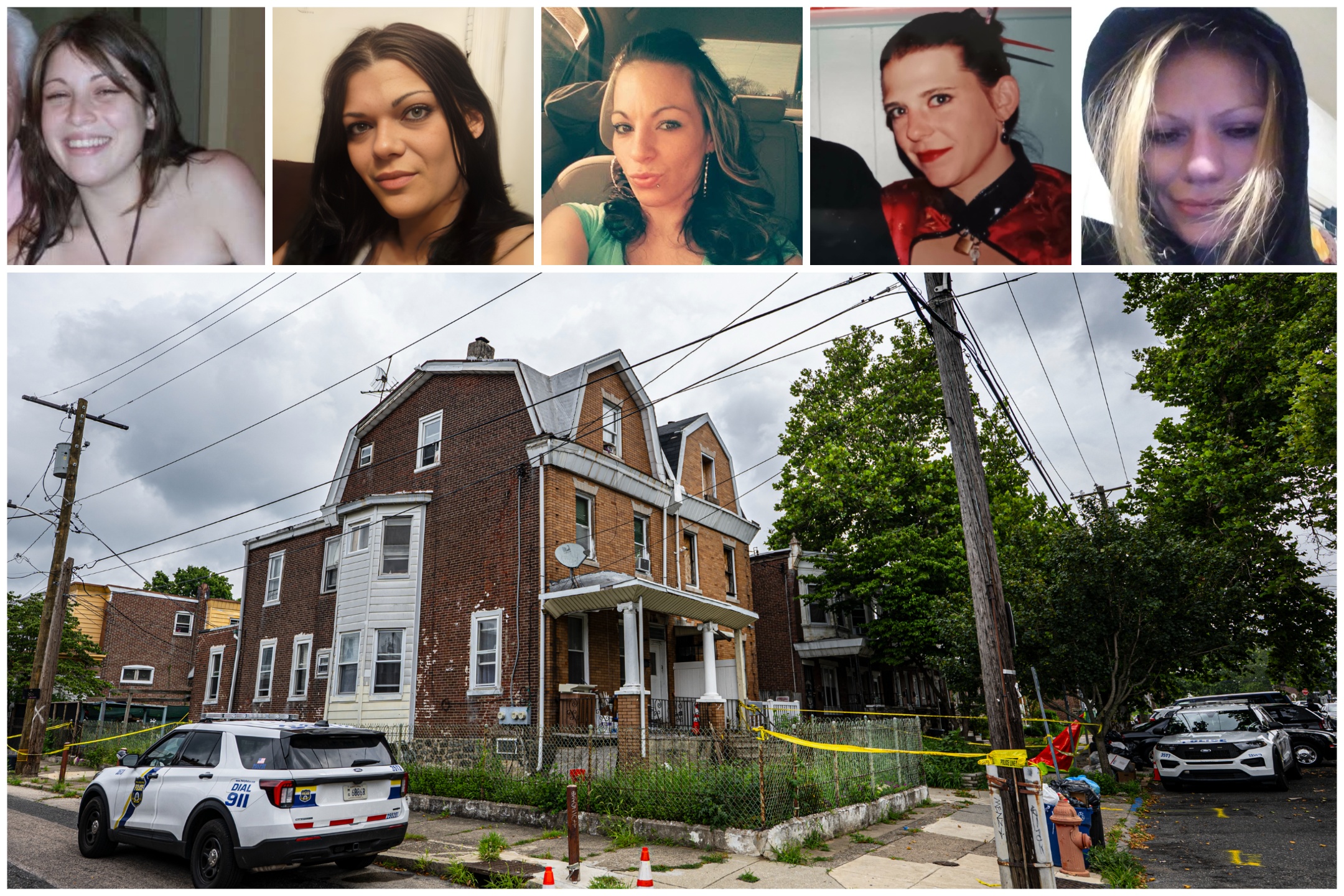
Police have recovered images they believe show two additional women dead inside the residence of the late Raymond “R.C.” Horsch, officials said Wednesday — bringing the total number of dead or missing women linked to the violent pornographer’s Olney twin home to seven.
The discovery marked the latest turn in a sprawling local and federal investigation into the drug, sex, and porn operation Horsch ran out of his home. Horsch left behind a digital archive of more than a million photos and videos that detectives now believe shows a mix of real and staged violence — as well as potential killings.
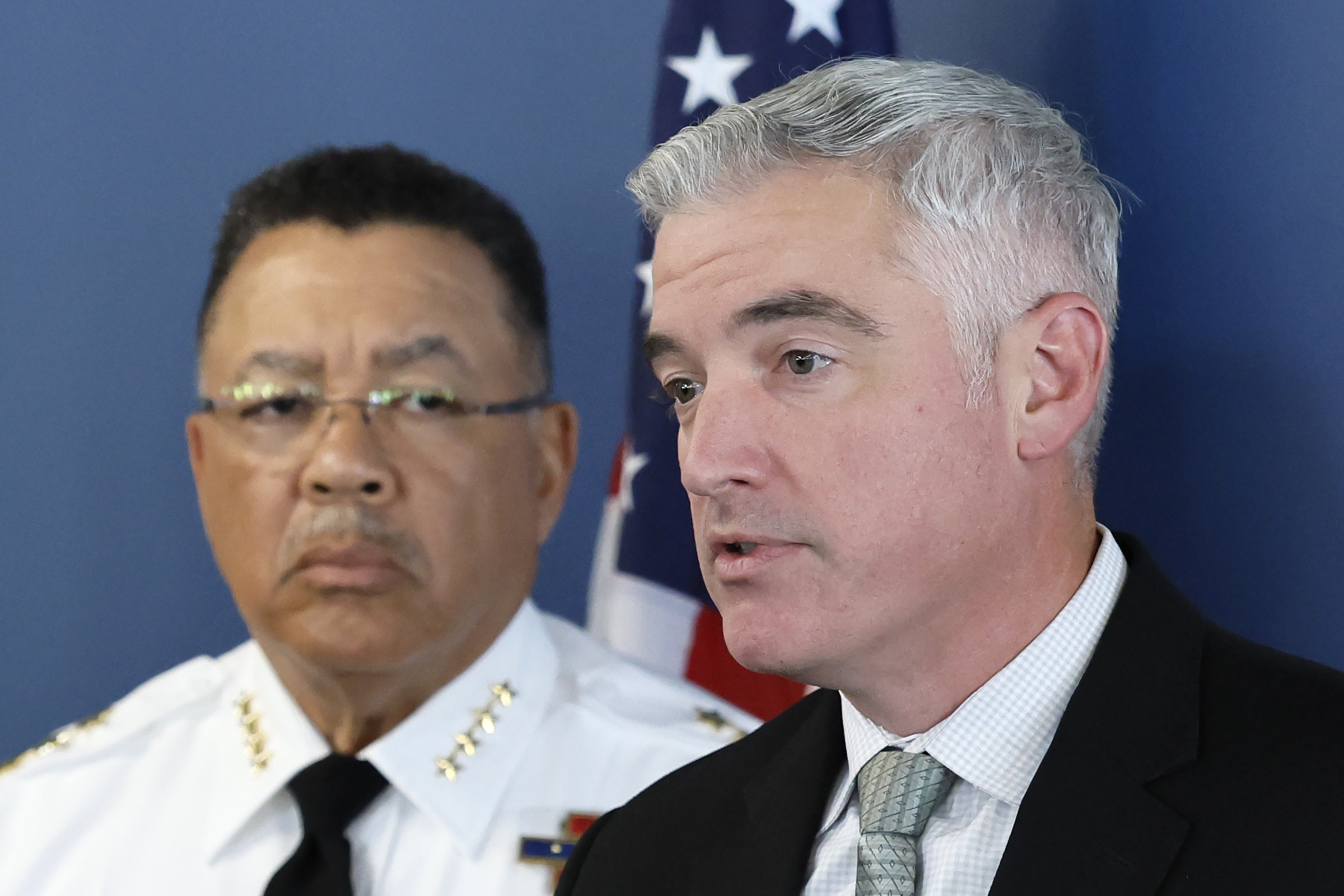
During a news conference Wednesday, Deputy Police Commissioner Frank Vanore said investigators recovered photos that showed a 25-year-old woman unconscious, with visible injuries, inside the Chew Avenue home where Horsch and his son, Eugene, lived for decades.
The woman, who was from Philadelphia, had not been reported missing, police said. Vanore declined to identify her at the request of her family.
Detectives also recovered images showing another woman lifeless with injuries. Investigators have not yet been able to identify her, Vanore said, but she appeared to be in her mid-20s.
Nicole Fusaro was reported missing in 2018 when she was 27. Police believe she was killed by Raymond “R.C.” Horsch in his Chew Avenue home.Courtesy of Jonathan Hallo
Vanore also confirmed that police recovered a video that appeared to show Horsch strangling a woman. Horsch used two cameras — one mounted in the room, and another that he held — to film the assault, he said. In the video, he said, the woman used drugs before Horsch gave her money and handcuffed her to the bed. He was naked and tightened a zip tie around her neck until she became unconscious, Vanore said.
Police last month also announced they recovered images that appeared to show two women dead inside the home: Maribel Fresses, who was 27 when she was reported missing in February 2018, and Gabrielle Amarando, who went missing in September 2012 at the age of 22.
Vanore said the metadata of those images shows both were photographed in 2017.
Police have not recovered any human remains.
Gabrielle Amarando, (left) missing since 2012 and Maribel Fresses, 27, reported missing in 2018. Police believe they were killed inside the Olney home.Obtained by The Inquirer
Horsch died last year at age 82 of lung issues.
Special Agent Wayne Jacobs, of the FBI in Philadelphia, said federal agents have been assisting city homicide detectives in downloading and sorting through the excessive amount of digital evidence. So far, he said, they have reviewed about 30% of the existing materials.
“The objective here is thoroughness, not simply speed,” he said.
Vanore said investigators have identified 58 people in the images and videos they have reviewed. Of those, five women appeared to be dead.
There are 10 other women who subsequently died of an overdose elsewhere, he said. Police have interviewed 16 people who are still alive, he said. They are still working to track down 25 others.
The investigation has been protracted, in part because Horsch spent decades producing pornography that often focused on the brutalization of women in addiction — producing photos and videos for books, movies, and his website that featured women in various staged scenarios, including being drowned, shot, and strangled.
“Some of this is playacting, and some of it we believe could be real,” Vanore said. “But we’re not there yet. We don’t want to end our investigation before it even — we’re not even in the middle of it. There’s a lot more to unpack.”
Police Commissioner Kevin Bethel (left) looks on as Ryan Gallagher, of the forensics lab, speaks Wednesday.Elizabeth Robertson / Staff Photographer
Police Commissioner Kevin Bethel also counseled patience. A large team of detectives, he said, was diligently and carefully reviewing the materials and working to ensure any identified victims and their families are handled with care.
“We have a duty to those families who are all concerned about whether their loved one lost their lives in that house, or maybe somewhere else,” he said. “And so we’re going to take the time, we’re going to put the effort in. We’re going to do all the things that we have at our disposal.”
Police started searching the home of Raymond Horsch, and his son Eugene, at 417 Chew Ave. in June. Jose F. Moreno / Staff Photographer
Police will search the home again
Police started looking into Horsch and his son, Eugene, in June, after a car stop near Independence Hall.
A U.S. park ranger encountered Eugene Horsch and a woman inside his black BMW on June 19, police said. When the officers questioned them, the woman produced a fake ID in the name of Blair Tonzelli, a woman who had been missing since 2023. Police searched the car and found two guns, drugs, a cattle prod, and a phony federal drug enforcement badge.
Local and federal law enforcement spent weeks searching the home on Chew Avenue and found additional drugs and weapons, as well as a basement holding vats of mysterious fluids and a 55-gallon drum leading to a water line.
Police also recovered five urns containing cremated remains. Ryan Gallagher, the police department’s assistant director of forensics, said authorities now believe those urns hold the ashes of Raymond Horsch, his sister, and a friend. Investigators are still working to identify the other two, he said.
Tests for DNA and of the chemicals in the basement remain ongoing.
FBI Philadelphia Special Agent in Charge Wayne Jacobs (center) looks to Deputy Police Commissioner Frank Vanore (left) during a press conference, regarding the Raymond “RC” Horsch case, at the Philadelphia Police Headquarters on Wednesday, September 16, 2026.Elizabeth Robertson / Staff Photographer
The case expanded when investigators learned Raymond Horsch’s ex-wife, Amy McHale, had been reported missing in 2016, and was also last seen at the home.
Police then excavated the yard of the home in search of physical evidence linked to the missing women.
Vanore said investigators have not recovered any digital evidence as to the whereabouts of Tonzelli or McHale.
Eugene Horsch, 44, remains in federal custody on drug and gun charges. Vanore said investigators have not found evidence that connects him to the dead or missing women.
Bethel said police intend to return to the Chew Avenue home in the coming weeks to recover additional materials, and will meet with neighbors.
Staff writer Barbara Laker contributed to this article.
A prominent Center City personal injury lawyer, known for his active TikTok account, choked his girlfriend and threw her to the ground during a dispute on a walking path in Lower Merion, according to police.
Thomas Bosworth, 37, has been charged with simple assault and harassment in connection with the Sept. 3 incident. He was released on $15,000 unsecured bail.
Bosworth, a resident of Gladwyne, did not respond to a request for comment. His attorney, Michael van der Veen, said in a statement that Bosworth “is presumed innocent, maintains his innocence and has full confidence in the courts.”
In the years since, he has opened his own law firm amid accusations from his former employer that he poached its clients and sanctions for his behavior from a federal judge.
Meanwhile, he has expanded his social media following through videos that give advice on everyday goods from his vantage point as a personal injury lawyer and the context for high-profile lawsuits he litigates.
On the day of the Lower Merion assault, four people told police they saw Bosworth attacking a woman on a section of the Cynwyd Heritage Trail behind Union Avenue in Bala Cynwyd, according to the affidavit of probable cause for his arrest. After choking the woman, the witnesses said, he threw her into bushes along the path, then walked away as she screamed.
The witnesses also said the woman slapped Bosworth and threw rocks at him while on the ground next to the trail, according to the affidavit.
Officers responding to the call found the woman with “redness on her cheeks and discoloration of the skin around her neck,” the document said. She told the officers she had fallen, and declined to speak with them further, as did Bosworth.
Witnesses later told police they overheard the couple arguing about Bosworth’s alleged infidelity, and the dispute escalated when the woman mentioned a text thread from his secretary he had deleted.
The assault took place in front of the couple’s newborn daughter, who was with them in a stroller, the affidavit said.
A judge ruled that attorney Tom Bosworth could keep displaying two TikTok videos critical of Penn Medicine, including the one from which this image is taken, in which he alleges that the health system’s radiology department is understaffed.
Bosworth’s arrest was not the first time in recent years that he has been the subject of scrutiny.
His separation from Kline & Specter in 2022 led to an ugly court dispute between the prestigious firm’s partners and their former young associate.
Tom Kline and Shanin Specter accused Bosworth of poaching clients, which he denied, and in return accused his former bosses of defamation. The parties reached a settlement in 2024 but have returned to court multiple times since, accusing each other of violating the agreement.
Kline and Specter are not the only ones who took issue with Bosworth’s conduct in the courtroom or online.
In 2023, Penn Medicine asked a Philadelphia judge to order Bosworth to stop posting on social media about a medical malpractice case he filed against the health system, saying he misrepresented facts and “poisoned” the potential jury pool. The judge sided with Bosworth.
That same year, a federal judge sanctioned Bosworth for “misconduct” during four expert depositions in a product liability case, saying the lawyer was “rude, demeaning, and obnoxious” to a female defense attorney.
And last week, the Pennsylvania Superior Court called Bosworth’s conduct in the courtroom “deplorable” even as it upheld the $19.7 million verdict he won while at Kline & Specter.
Bosworth had been accused of repeatedly ignoring the instructions of a Philadelphia Common Pleas Court judge during a medical malpractice trial in an attempt to inflame the jury.
“The courtroom is one of the only places left in our democracy where the everyday person can hold to task wrongdoers, no matter how rich powerful,” he said.
Bosworth is scheduled to appear for a preliminary hearing in the assault case Oct. 6.
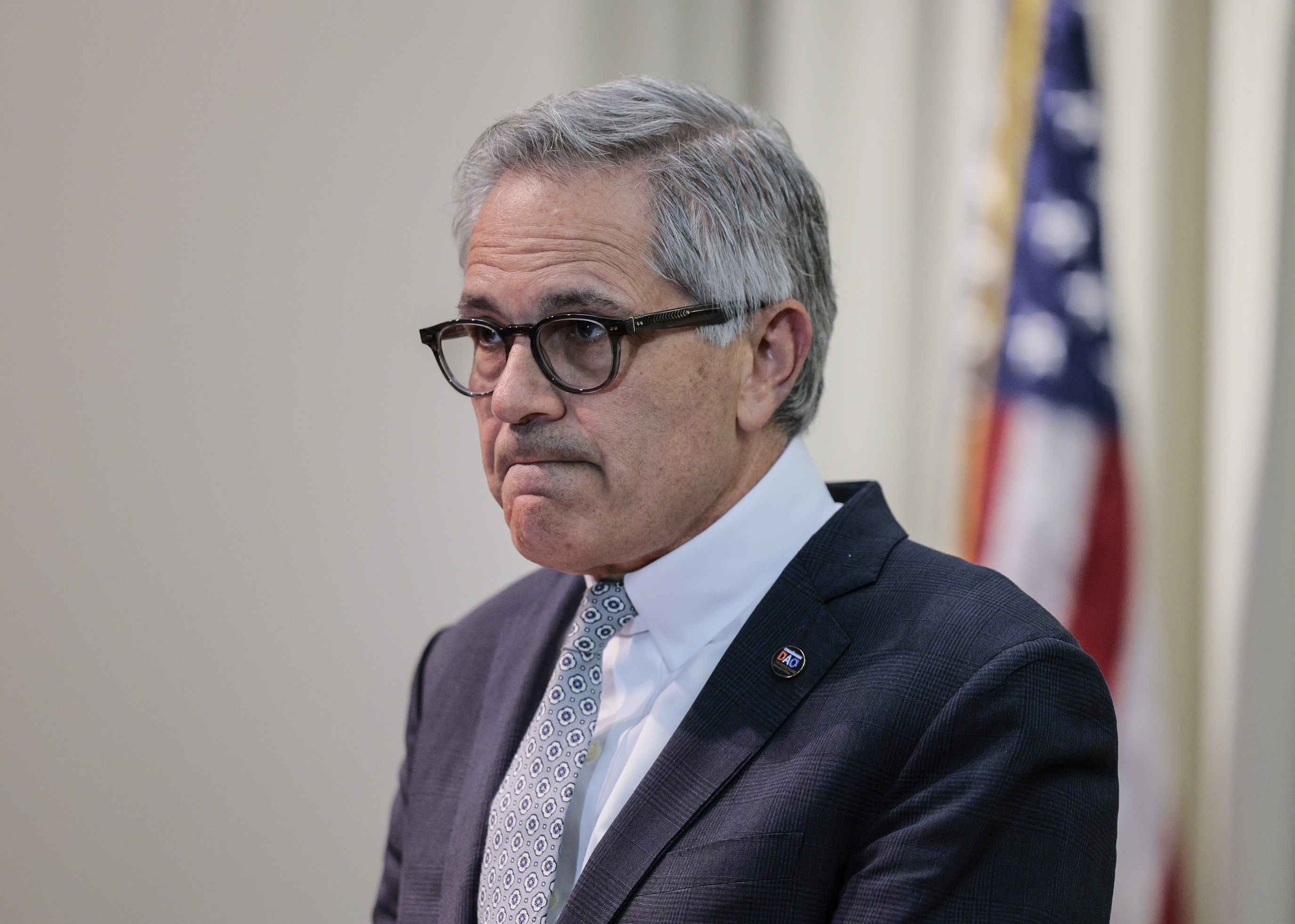
A federal judge said Tuesday that District Attorney Larry Krasner may have broken the law while overseeing a contentious post-conviction case, and he said he referred the matter to the U.S. Attorney’s Office to investigate whether Krasner should be charged with crimes including conspiracy or obstruction of justice.
U.S. District Judge Paul S. Diamond made those stunning statements in a memorandum in which he also ruled that Krasner and one of his top supervisors, Matthew Stiegler, could no longer participate in the case — a matter in which a man is seeking to have his murder conviction overturned.
Diamond wrote that over the last several months, as he conducted hearings to learn more about how attorneys in the district attorney’s office handled that case, testimony from some of Krasner’s staffers revealed actions by Krasner and Stiegler that Diamond called “troubling,” “disturbing” — and potentially illegal.
Those actions, he wrote, included pressuring other staffers to take steps to protect Stiegler and blame one of his subordinates, urging staffers to lie to Diamond in court, and threatening “consequences” for those who did not follow Krasner’s orders.
“I have thus reluctantly concluded that Philadelphia’s highest law enforcement official and one of his top assistants may have violated the law,” Diamond wrote. “In these circumstances, with the issuance of this Memorandum, I refer the DAO, Mr. Krasner, and Stiegler to this District’s United States Attorney’s Office for investigation and other appropriate action.”
In a statement Tuesday, Krasner said, “I respectfully and vigorously disagree” with Diamond’s findings, adding: “I look forward to appealing to the higher court as soon as the law allows.” He said he could not comment further because the case is pending.
Stiegler did not respond to a request for comment. A spokesperson for the U.S. Attorney’s Office declined to comment. That office would have to determine whether to open an investigation or file charges. Diamond, as a judge, cannot do so himself.
The filing was the latest explosive development in the case, which is centered on Dennis Johnson’s 2009 conviction for second-degree murder. Johnson has been fighting to have that conviction overturned, and the matter before Diamond began years ago as a routine petition in federal court.
But in recent months, the case has led to a series of unusual revelations about the inner workings of the district attorney’s office as various lawyers have worked on aspects of the case. And it comes as Krasner’s office has faced increasing scrutiny over the way it has acted in other murder appeals — including a forceful opinion from the Pennsylvania Supreme Court, which said Krasner’s office had misled judges so frequently and flagrantly in such matters that state prosecutors must now review instances when his office says a conviction should be overturned.
Diamond, in his filing Tuesday, said the assertions in his courtroom — made primarily by members of Krasner’s staff — were not only proof of significant internal disagreements about Johnson’s case, but also “evidence of possible criminal wrongdoing by Mr. Krasner and Stiegler.”
Contentious internal discussions
The origins of the controversy began to take shape in 2022.
That year, after the district attorney’s office had spent years opposing Johnson’s bid for freedom, then-Assistant District Attorney Jaclyn Mason filed a brief changing course.
In her filing, Mason agreed with Johnson’s lawyers that his trial counsel had been ineffective. She also said the office had discovered additional problems with the case while reviewing it again, and she recommended that Johnson’s conviction be overturned.
A federal magistrate — relying on Mason’s brief — agreed, but Diamond was the judge with the power to accept or reject the recommendations. And this spring, he scheduled an evidentiary hearing to evaluate some of the evidence before deciding how to proceed.
That led to a series of contentious developments within the district attorney’s office, prosecutors have since testified.
First, Mason’s supervisors in the law division reviewed her brief and found a series of what they called “material misstatements.” They decided they needed to try to withdraw Mason’s filing and apologize to Diamond for the mistakes.
They asked Mason to sign on to the filing with them, but she declined and resigned instead. She has since said she filed her brief only because Stiegler pressured her to do so, and she thought her supervisors, in preparing an apology, were angling to make her a scapegoat on Stiegler’s behalf.
During testimony before Diamond in recent months, her supervisors said that was not true. But the supervisors — Katherine Ernst, Steven Wildberger, David Napiorski, and Peter Andrews — said Stiegler and, eventually, Krasner did try to persuade them to direct blame toward Mason.
Potential crimes?
In the supervisors’ telling, Stiegler asked them to review every case Mason had handled to find other errors in her work. That way, Stiegler suggested, Mason could be painted before Diamond as a “rogue” prosecutor who was routinely making mistakes in problematic filings.
Krasner echoed that potential course of action, and even described it as a “good idea,” the supervisors testified.
Diamond said those actions were “troubling.” He wrote that Krasner “did not simply learn of the Stiegler proposal; he urged the Law Division supervisors — who serve at Mr. Krasner’s pleasure — to implement it and to present a false narrative to the Court.”
And Stiegler, he said, was “urging the DAO to present the Court with a false account to shield himself.” Diamond said that he found all of Stiegler’s testimony “contradictory, evasive, or outright dishonest” and that Stiegler may have committed perjury while on the stand.
In addition, Diamond said, as internal discussions continued about how to proceed in the case, Krasner repeatedly rejected requests by the law division supervisors to refer it to the attorney general’s office. The supervisors generally agreed that was the appropriate course because the inner-office drama surrounding the matter was hampering their ability to handle it properly.
But Krasner, they testified, was vehemently opposed — in part because of his disdain for people who worked in the attorney general’s office. And during some meetings, they said, Krasner said he wanted to “protect the office”; expressed opposition to telling Diamond about the referral deliberations; and said they would face “consequences” if they did so, which they took to mean being fired.
Diamond, in his memorandum, said such a threat “could amount to obstruction of justice.” And he said the efforts by Krasner and Stiegler to present a false narrative to the court “might amount to conspiracy.”
It was not immediately clear Tuesday if federal prosecutors would agree with Diamond’s assessment, or if they would seek to empanel a grand jury to evaluate it.
Johnson’s petition, meanwhile, remains on hold. Diamond said the district attorney’s office could continue to handle the case moving forward, but it was not clear who might do so.
All of the law division supervisors have already recused themselves, and Diamond said Tuesday that neither Krasner nor Stiegler could have any role in the matter. He also said he also would not allow an outside attorney selected by Krasner to handle the matter on his behalf.
One evening last week, City Council President Kenyatta Johnson stood on South Broad Street and greeted his fellow lawmakers as they arrived at Steak 48.
Johnson had invited them to the swanky Center City steakhouse to “reconnect, share conversation, and enjoy each other’s company outside of City Hall,” according to an invitation for the Sept. 9 “members only” event obtained by The Inquirer.
Council resumes for its fall session Thursday — and after the way things ended in the spring, the city’s legislators may have needed the opportunity to break bread together.
When lawmakers last met in June, they approved a $7.1 billion city budget that left all sides feeling dejected. Council turned away a series of tax proposals from Mayor Cherelle L. Parker, including a $1-per-ride levy on rideshare companies like Uber and Lyft, and ended up passing a budget that omitted a number of members’ own priorities and left unanswered how the city will help the Philadelphia School District navigate its funding crisis in the long run.
In addition to representing a new low in Parker’s relationship with the legislative body of which she was once a member, some Council members also questioned their own negotiating team’s handling of the ordeal.
Councilmember Mike Driscoll noted last week that while he was not “pointing fingers,” Council could have added more money in the budget for line items requested by lawmakers, such as funding for community groups.
“I’m disappointed and pissed off at the way it played out,” Driscoll, who represents parts of Northeast Philadelphia, said in an interview. “Our priorities weren’t analyzed in a more thoughtful [way]. … We do the amendments. [Parker] doesn’t. We could have put money in.”
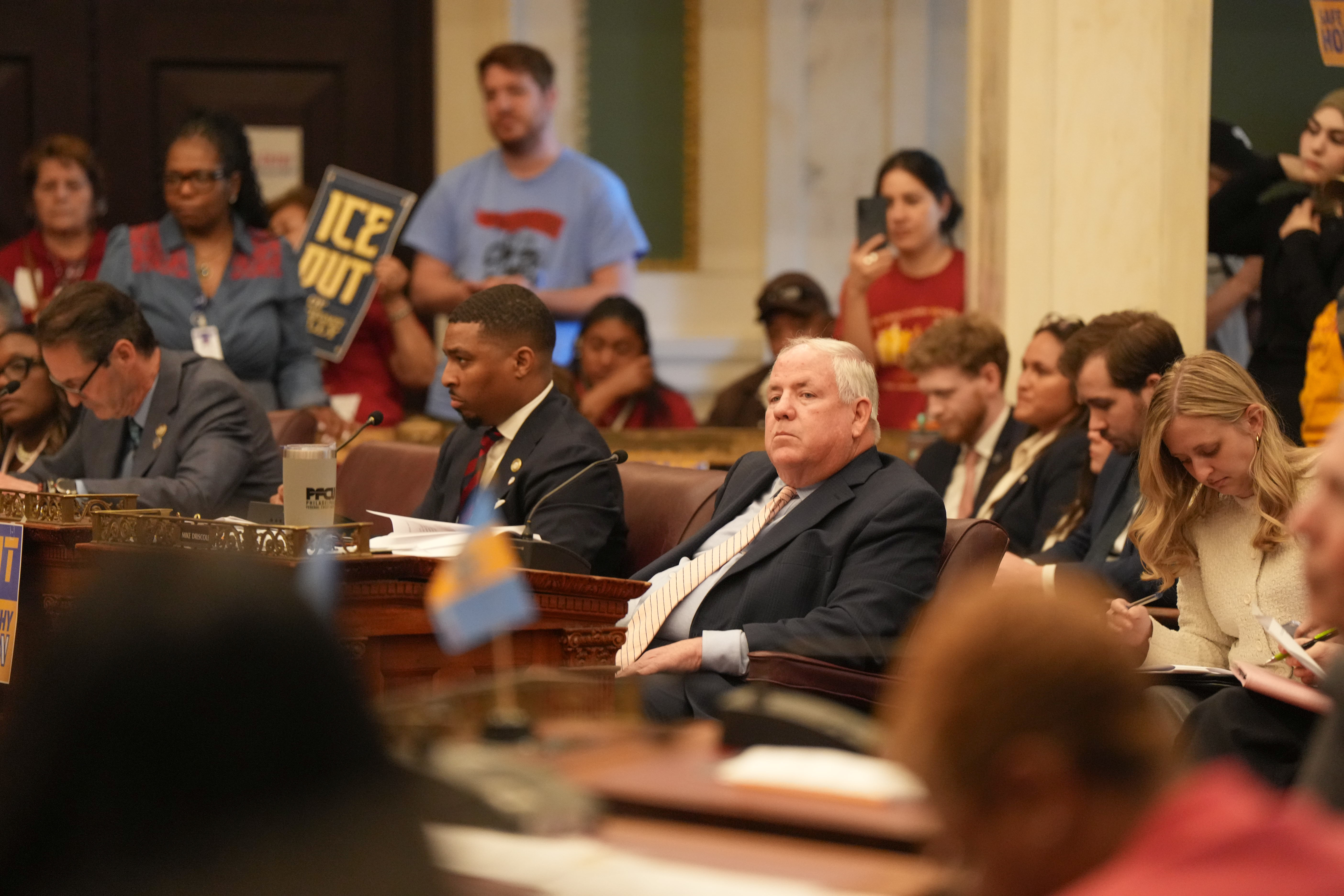
Councilmember Michael Driscoll in Philadelphia on April 23, 2026.Jessica Griffin / Staff Photographer
An Inquirer reporter saw at least 11 of Council’s 17 members at the Steak 48 event, meaning a majority, or quorum, of Council was present. The Pennsylvania Open Meetings Act, or Sunshine Act, requires legislative bodies to notify the public if a quorum is present for a meeting at which official business is discussed.
But Johnson said at the beginning of the dinner that would not be happening.
“Tonight we do no official business,” Johnson said in an interview. “Just social. Welcome back to City Council. Eat and drink and be merry. No policy on the table. No legislation on the table. Just having a good time.”
Johnson’s invite directed members to RSVP to a Council staffer’s city email address. Johnson said his campaign picked up the tab.
“Everyone facing reelection next spring knows they have to be able to point to real accomplishments on the important issues voters care about,” City Hall lobbyist John C. Hawkins said. “And this fall is their last opportunity for them to address the most pressing issues that were not fully resolved in the spring budget process.”
Budget fight hangover
When Council and the mayor in the spring failed to reach a deal over new tax revenue to plug a $48 million hole in the school district’s budget, Johnson said Council had helped identify one-time savings in the city budget to fill the gap for a year while vowing to explore new recurring revenue streams for the district.
Johnson has not yet scheduled a hearing on schools funding, and Council’s dissatisfaction with the district appears to have been mounting.
Mayor Cherelle L. Parker, Council President Kenyatta Johnson, and Superintendent Tony B. Watlington Sr. arrive for an announcement at the School District of Philadelphia Headquarters on Wednesday, June 10, 2026 in Philadelphia. Monica Herndon / Staff Photographer
He said in a statement this week that Council will honor its commitment, but also alluded to finding that money in the district’s own budget, despite school officials saying they are navigating a $300 million structural deficit.
Johnson said Council is awaiting the results of a performance audit of the school district that is being conducted by City Controller Christy Brady. He said that report “will help Council identify any available funds to support recurring funding.”
New arena, who dis?
In the fall of 2024, Council wasconsumed by the debate over the 76ers’ proposal to build an arena in Center City.
Lawmakers spent much of the session debating the economic benefit of the project, while opponents cried out that it would displace businesses and residents in nearby Chinatown.
Despite Council approving it, that project was scuttled by the Sixers, who instead teamed up with Comcast, which owns the Flyers, to plot a different project: a joint venture that would bring a new arena to the South Philly sports complex. Earlier this month, they released the first renderings of what the Spectrum-inspired arena could look like.
There will likely be spirited discussions about it all in Council — at some point. But don’t expect a redux this fall of the all-out brawl that was 2024.
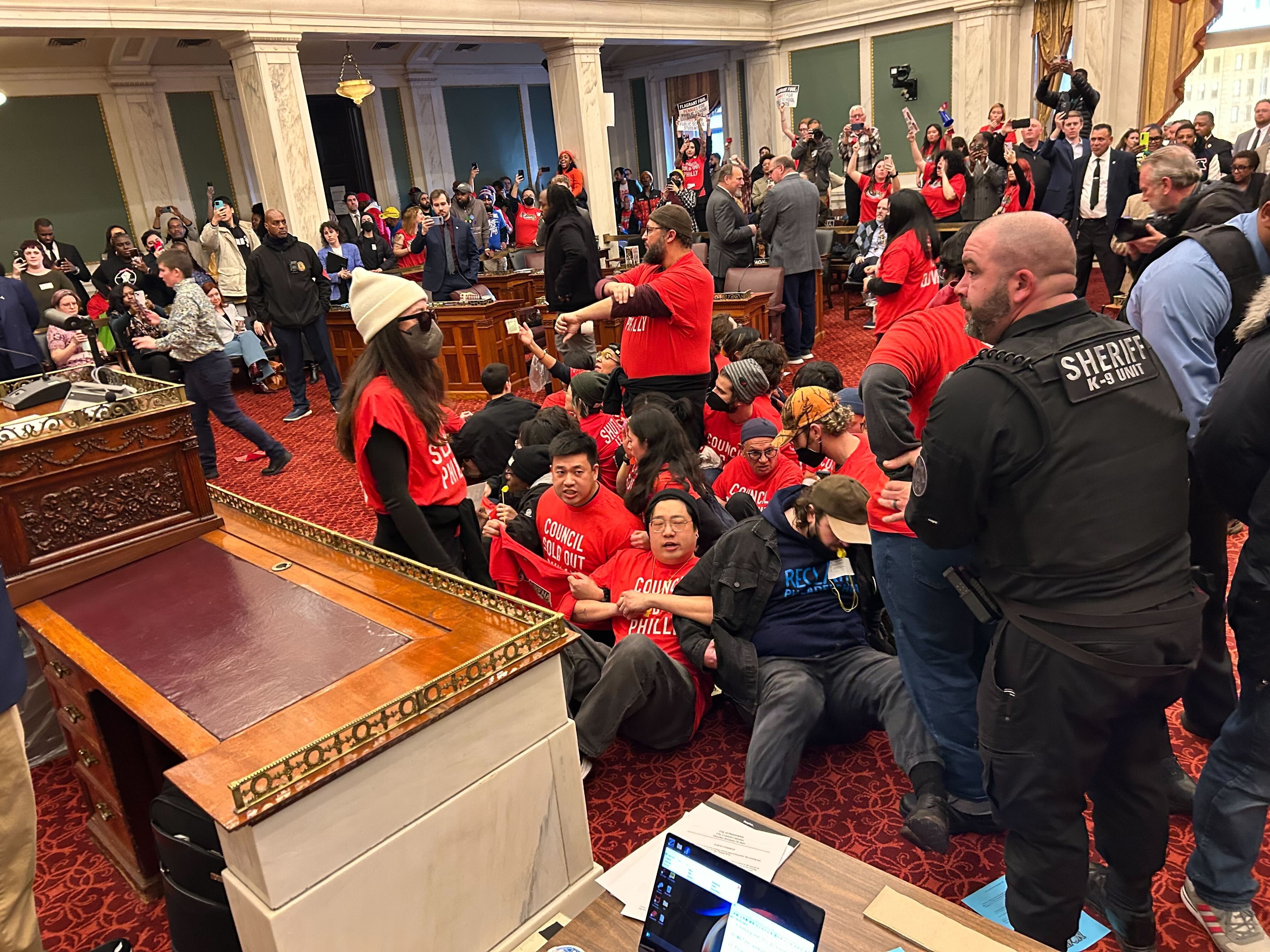
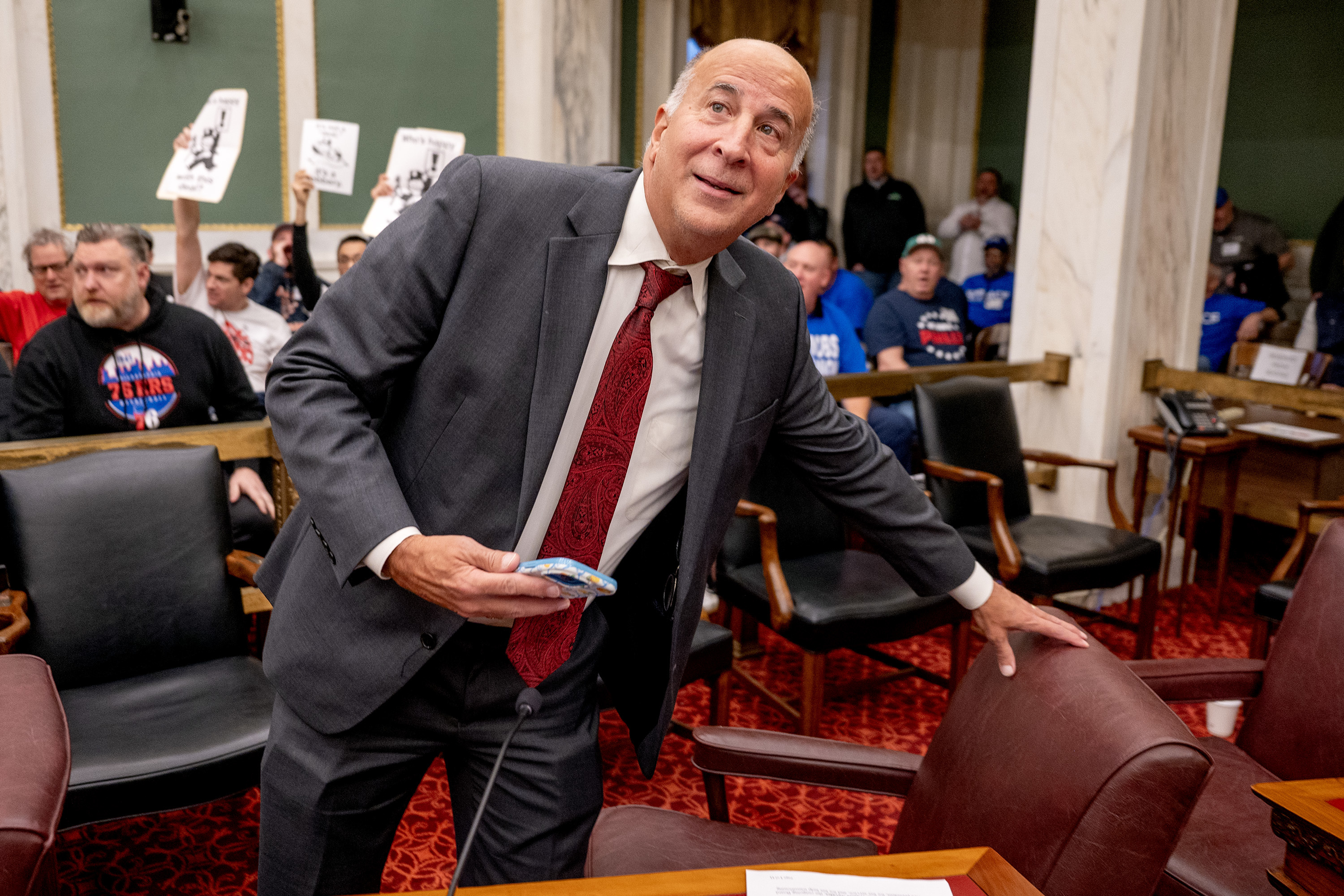
Protesters link arms as sheriff’s deputies attempt to remove them from Philadelphia City Council chambers as the council is scheduled to vote on final approval for the Sixers’ proposed Center City arena on Thursday, Dec. 19, 2024.Sean Collins Walsh / Staff
The stadium district falls in Johnson’s 2nd District, meaning it will be on him to introduce legislation that would green-light the project. And he has not been in a hurry to accommodate the Sixers’ timeline, which would be to approve the project as soon as possible so the venue can open by 2030.
Johnson said in a statement that “no zoning legislation is scheduled for introduction,” and that he is working to find consensus with the Parker administration and other Council members before introducing any legislation.
“I am focused on ensuring that any future legislation concerning the new arena addresses the interests and concerns of the community around the Stadium District and in Philadelphia,” he said.
When that legislation is brought forth, it is unlikely to be anywhere near as controversial as the 76ers’ Center City proposal, which drew opposition due to its proximity to Chinatown, so long as the teams uphold their promise to not seek public subsidies.
The Asian Pacific Islander Political Alliance, which led opposition to the Center City arena, released a statement earlier this month that signaled openness to the South Philly project.
“The people of South Philly should have a meaningful voice in whether and how this project moves forward,” said Will Gross, an API PA member who is rumored to be considering a run for Council. “And if it does, it should mean good union jobs, a strong community benefits agreement, and real benefits for the people who live and work in the neighborhood.”
Trash issue continues to burn
Councilmember Jamie Gauthier has spent the better part of the last year trying to whip up support for a bill that would ban the city from shipping off its trash to be burned at an incinerator in Chester, a longtime practice she and others say is poisoning residents of the city to Philadelphia’s south.
The Parker administration opposed the measure, saying it would limit the government’s ability to carry out its normal competitive bidding process and select the best-value contractor. Gauthier failed to get a majority of Council on her side, and she never called up the Stop Trashing Our Air Act for a vote.
This fall, she will try a new tactic.
Gauthier and her allies are attempting to kill the Parker administration’s effort to approve a new contract with Reworld, which operates the Chester waste-to-energy facility where the city sends about a third of its garbage. (The remainder is hauled off to landfills.)
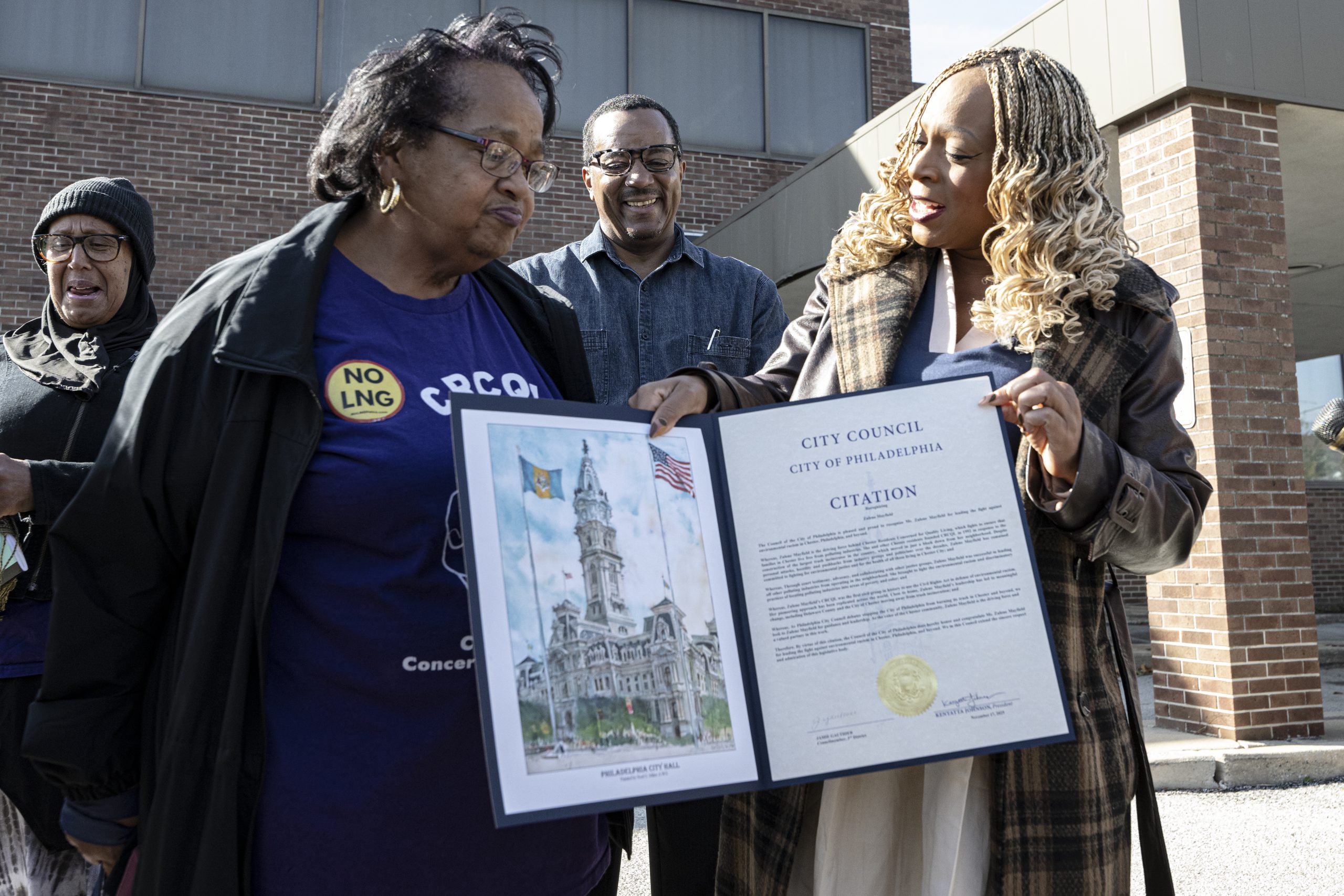
Chester resident Zulene Mayfield, left, Philadelphia Councilmember Jamie Gauthier, right, and Chester Mayor Stefan Roots meet to discuss Gauthier’s “Stop Trashing Our Air Act,” which would ban the city from incinerating waste, during a visit with lawmakers and staff in Chester, Pa., on Friday, Nov. 7, 2025.Jose F. Moreno / Staff Photographer
In July, the Parker administration announced that it intends to enter into a new four-year contract for waste processing and disposal with Reworld, as well as two landfill operators, Republic Services and Waste Management. The terms of those contracts have not yet been made public.
Council must approve multiyear contracts, and Gauthier, who represents parts of West and Southwest Philadelphia, said she is planning a full-court press to get her colleagues to “block Mayor Parker’s dirty deal with trash incinerators.”
The question is whether she can get eight other members on her side to reach a majority of Council. She is likely to find support from three fellow progressives, and she is expected to be joined by Councilmember Isaiah Thomas, the Democratic majority whip, at a Thursday news conference calling on the city to end its contract.
Councilmember Mark Squilla takes his seat in chambers Wednesday, Dec. 11, 2024, before a scheduled committee vote on Sixers arena related legislation was postponed,Tom Gralish / Staff Photographer
Meanwhile, Councilmember Mark Squilla said he has been working with the administration on a plan to build out a “circular waste” system that would replace incineration and landfilling over time with composting and waste “digestion.”
“The incinerator bill …. doesn’t solve a problem we have: to reduce our waste,” Squilla, whose district includes parts of Center City, South Philadelphia, and the river wards, said in an interview. “If we can reduce our waste by going to composting and digestion and other forms, we then eliminate all of our trash. Therefore end up with the result of what the goal should be, [which] is to get as close as possible to zero waste.”
Squilla’s proposal, which would involve “a long-term contract to attract providers to be able to build out a possible digester to decrease the amount of food waste,” could make it easier for Council members sympathetic to Gauthier’s goals but skeptical of her incinerator bill to approve the administration’s contract with Reworld while committing to a long-term solution.
The business tax, revisited
Separate from the school district revenue, some Council members are hoping to advance measures that would provide tax relief to businesses.
Council two years ago approved a 13-year schedule of rate cuts that would dramatically reduce the business income and receipts tax. But at the same time, Parker moved to eliminate a tax break that primarily helped small businesses after its legality under the Pennsylvania Constitution was challenged in court.
The elimination of the tax break — which excluded from taxation companies’ first $100,000 in revenue — has forced thousands of small firms and sole proprietors that make less than that threshold to begin paying a tax from which they had been effectively exempted.
Driscoll worked with tax experts to find a workaround that could pass legal muster — exempting certain types of businesses, such as sole proprietors, from the tax entirely — and he is planning to call up for a vote his bill this fall.
Thomas, meanwhile, said he will introduce a resolution Thursday to hold hearings this fall on the feasibility of reducing the net income portion of the business tax “much sooner” and more “aggressively,” meaning an acceleration of the tax cuts already scheduled.
The measures are likely to spark opposition from more progressive members of Council and could be tricky to navigate for Parker, who wants to make Philly more business-friendly but may not want to forgo additional revenue.
Members eye priorities as election looms
With next year’s election looming — and all 17 members indicating they intend to seek new four-year terms — the fall session is also likely to see movement on a myriad of issues championed by individual legislators.
Majority Leader Katherine Gilmore Richardson said she will propose bills to “protect communities from harmful nuisance businesses and improve processes around code violations,” continuing her efforts to crack down on businesses that neighbors say attract crime.
Councilmember Rue Landau, who represents the city at-large, said she is “tackling the impact of emerging technologies, making Philadelphia more affordable for working people, and ensuring equity remains at the center of how we serve our LGBTQ+ communities.”
Landau said she also plans to introduce a resolution calling on the state to ban automated license plate readers like Flock cameras.
The Philadelphia Council members inside the caucus inside City Hall in Philadelphia, Pa on Thursday, June 11, 2026.Aidan T. Gallo / Staff Photographer
And Councilmember Kendra Brooks will propose new protections for temporary workers and tenants facing eviction, according to her spokesperson, Kathleen Melville.
Brooks, a progressive who represents the city at-large, will also fight for additional funding for reproductive healthcare providers, a priority of hers that was left out of the budget following Council’s impasse with Parker, Melville said.
“That was her biggest focus going into the budget,” Melville said. “She had the same experience as every other Council member in that none of her budget priorities made it into the budget.”
Several members have also said that they want to bolster the city’s property tax relief offerings after the administration this summer released its citywide assessments that will mean higher taxes for thousands of homeowners.
The most likely move would be for Council to amend the city’s tax code to increase the popular homestead exemption, which currently exempts the first $100,000 from a home’s taxable value if the owner lives in the dwelling as their primary residence.
Johnson said Council “will review all tax-relief options” this fall.
Landon Dickerson stepped into a South Philadelphia sports bar Monday night and started answering questions, and anyone there who cared to understand the reality of professional football should have stopped chowing down on cheesesteaks and crab fries and listened closely to him.
Dickerson didn’t break any news about his health or his status as the Eagles’ starting left guard. The Inquirer’s Jeff McLane took care of that, revealing that the team was placing Dickerson on injured reserve because of bone bruising in his right knee.
For at least four weeks, Dickerson will be out of the lineup, and backup Drew Kendall will probably replace him, and the easiest, coldest reaction is for Eagles fans to cheer that change and celebrate that their favorite team’s running game has a chance to be functional again. At best, they might laud Dickerson for acknowledging publicly what everyone who watched him could see: that he was nowhere close to 100% physically, just as he was a less effective player throughout last season after undergoing knee surgery and suffering through a host of other injuries, and that he shouldn’t have suited up Sunday at all.
“Honestly, to address the elephant in the room, I played like [poop],” he said during an interview on WIP 94.1. “I was a complete liability [Sunday], and again, that was my fault. I know I said earlier in camp I shouldn’t be out there until I feel healthy. A few weeks ago, got rolled up on in practice. I thought as weeks went by, it would get better, and it didn’t.”
Eagles offensive lineman Landon Dickerson learns he's being placed on IR on the air. Dickerson admits he played like “s**t and was a complete liability yesterday.” pic.twitter.com/xTXOVZz7A6
His stint on injured reserve, he said, might allow him to “have a good stretch at the back of the season as opposed to what happened last season, which was go out and limp it through for 18 weeks. I don’t think anybody wants to see that again because that was just ugly. I don’t want to do that again because that was just some B.S.” But his admissions only raise the obvious questions: If Dickerson was so compromised, why was he out there? Why not simply let Kendall start?
This, of course, is where pro sports generally and the NFL specifically get tricky and uncomfortable, especially for those who want to close their eyes and plug their ears and root for their team … and who don’t want to contemplate the potential cost of that victory. Dickerson felt an obligation to be on the field, sure, not just because he owed it to his teammates but also because he owed it to himself. It’s how he perceives himself. He’s 27. Football in high school. Football in college. Football as the only job he’s ever known.
If he’s not lining up across from a defensive tackle or end and trying to pancake that guy, if he’s not in the huddle or on the sideline, if he’s not testing himself as an individual, if he’s not sharing in the camaraderie and common mission of his teammates, then who is he?
“We’re football players,” Dickerson said. “That’s what we do for a living. When you take that away from us, when you’re not doing what you know you can do, it hurts. It’s just kind of like taking your identity away from you. It’s one of those things where you keep fighting for it. You’re like, ‘I’ve got to keep doing this until somebody pulls me out on a stretcher or something else.’ But then you’ve got to look at it and say, ‘Is it about you? Or can we put somebody else out there right now who is going to do better?’”
That’s an admirable, unselfish approach for Dickerson to take. But it’s likely cut with another, more practical perspective: that as accomplished and talented as he is, there’s no guarantee that, once he leaves the lineup, he’ll get his job back.
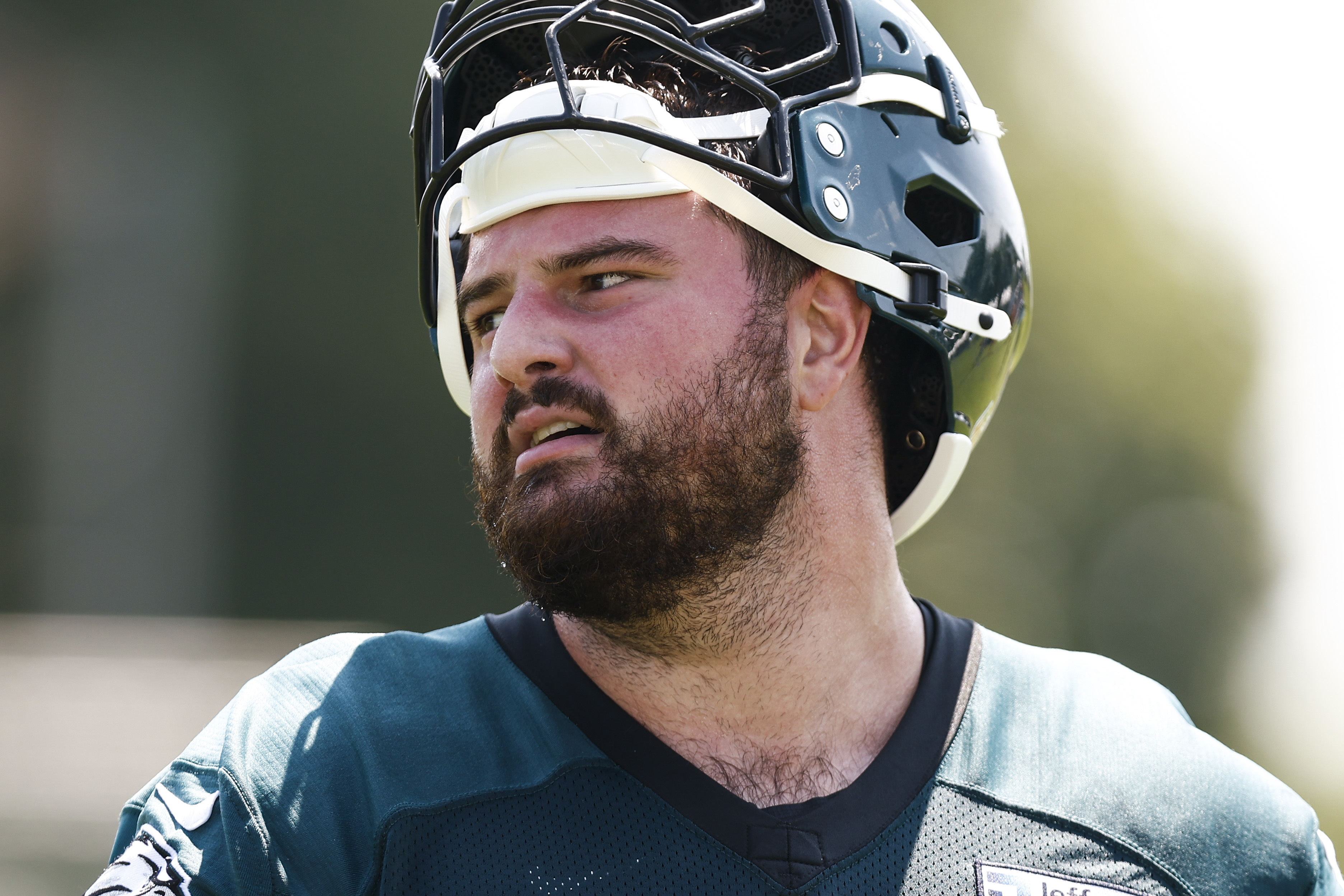
Landon Dickerson’s Pro Bowl citations do not guarantee him a place in the lineup when he returns from injury. Yong Kim / Staff Photographer
What if Kendall is a revelation at left guard? What if Dickerson’s knee doesn’t heal enough to allow him to play — or to play at the Pro Bowl level he did in 2024? Does anyone really believe that the Eagles or any NFL franchise would remain so loyal to someone in Dickerson’s shoes? And any fans suggesting that Dickerson has earned the right to return, regardless of the circumstances, should be honest with themselves:
If the Eagles are rolling, if the offensive line looks great with Kendall, how would you react if they removed him and reinserted Dickerson? Would you be so sympathetic to Dickerson then, or would you worry first and foremost about whether he’d be able to keep Jalen Hurts’ pocket clean and open holes for Saquon Barkley?
Would you tell him to keep his butt on the bench for the sake of your own hopes and happiness?
Were you all that sympathetic to him Sunday, when it looked like the Eagles might lose?
You ask why Landon Dickerson played against the Commanders, why in doing so he basically dared coach Nick Sirianni to make the difficult decision to bench him, why he was willing to damage the cohesion and performance of the Eagles’ offensive line, and the question answers itself. Next man up is a convenient cliche. Too many people forget or don’t give a damn about its corollary: First man, out. Sometimes for good.
Big Daddy Graham was as multifaceted as he was funny. He was frugal and generous, goofy and poignant, a college dropout who was brilliantly smart.
He didn’t go to church, but had a special reverence for the Blessed Mother. He could tell fantastical tales, like driving from Sea Isle to 94.1 WIP’s studios in under an hour, but could also be searingly honest.
He could recite Monty Python as easily as J.D. Salinger, Rodney Dangerfield as easily as Jack Kerouac. His musical tastes ranged from Frank Sinatra to Weezer.
In anyone else, these might seem like contradictions, but in Graham, they fit perfectly. It was this paradox that made him a great overnight radio host; Graham was never short on topics, even when he was short on callers.
Every weeknight, from around 2 a.m. to 6 a.m., he would guide the Delaware Valley through the expanses of his zany mind. Philadelphia sports was the draw, but the West Catholic grad often took detours, sometimes in the most literal sense.
Why does the exit sign on the Garden State Parkway, for the Atlantic City Expressway, say “Camden,” and not “Philadelphia,” Graham once mused, while other road signs, heading north, say “New York City” and not “Newark”?
“He could never let that one go,” said his longtime producer, Mike Angelina.
Big Daddy Graham’s generosity is often heralded by those who knew him. Courtesy of Big Daddy Graham
The show provided a balm for the late-night workers and the early risers, the drunkards and the restless. But it came at a cost. Graham’s shift was exceptionally hard on his body. As his wife, Debbie, got ready to go to work, her husband would be taking Xanax to go to sleep.
His daughters, Keely and Ava, tiptoed around their Mullica Hill home so as not to wake him. But even with these efforts, Graham still wasn’t getting enough rest.
When he wasn’t working overnights, he was hosting Quizzo, or a comedy show with Joe Conklin, or a one-man show; or writing a play, or a book, or a memoir.
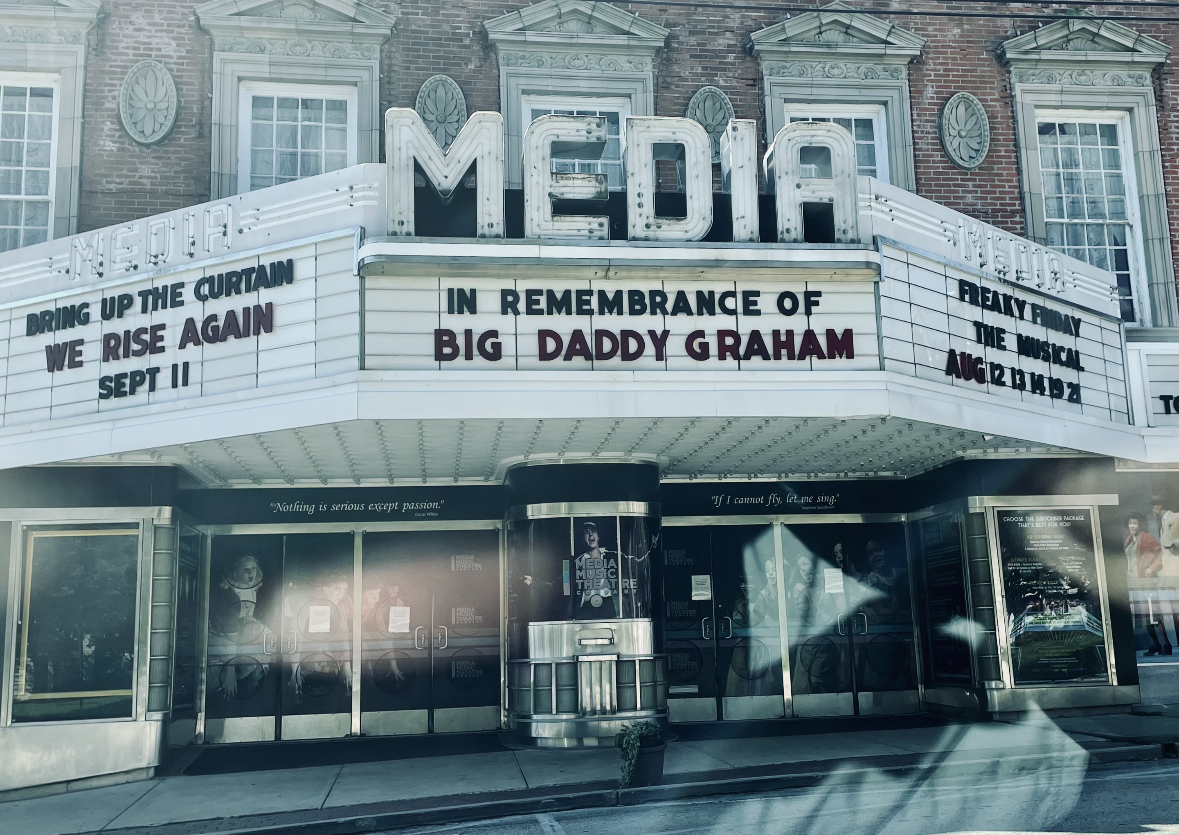
Eventually, this frenetic pace caught up with him. In July of 2019, while vacationing in Sea Isle, Graham suffered a spinal stroke in his back that left him paralyzed from the waist down. He died of heart failure on Sept. 8, 2021. He was 68.
The radio host never appreciated the mark he made on the city that shaped him. But that mark was indelible. In the days after he died, callers flooded WIP with their favorite Big Daddy memories.
And five years later, they still remember. Ava has worked at the station since 2016, and has hosted Quizzo in the region since 2010, and to this day, she gets stopped by people who listened to her father.
“The amount of times I’ve heard, ‘He made me feel real while I was working,’” she said. “Because nobody was there [at that hour], and he was a part of their life.
“That whole thing about him not realizing he was enough … I’m like, ‘Do you know how many people you helped?’”
Big Daddy Graham and wife Debbie.provided by Graham Family
Southwest Philly roots
Long before Big Daddy became Big Daddy, he was Eddie Gudonis, a tall kid with bushy hair who lived in a rowhouse at 70th and Elmwood.
His father, Albert, worked at the Navy Yard, while his mother, Mary, stayed at home before later taking a job at a roofing supply company. Eddie was the third of four children.
He spent most days playing basketball at Finnegan Playground, where friends called him Hedge Head for his thick and unruly brown locks.
The nickname was fitting. Even as a child, a conversation with Eddie could go in virtually any direction: local sports, but also music, movies, literature. By the time he was 11, his sister Janet had brought him to his first concert: James Brown at the Uptown Theater.
His brother, Tony, taught him about up-and-coming artists like Jimi Hendrix and David Bowie. Mary, an avid reader, would go to the library once a week, check out five books, and hand them to her son.
Graham showed an emotional vulnerability at a time when few boys and men did. His best friend growing up was a kid named Rick Ruppert, who lived on Saybrook Avenue, about four blocks away.
They bonded in elementary school over their shared fascination with gas station road maps. But Graham and Ruppert became even closer in the sixth grade, when they started to play basketball together at Finnegan.
After pickup games, the middle schoolers would walk home as slowly as possible, discussing the things they felt they couldn’t discuss anywhere else, like girls, and money, and insecurities. Sometimes these conversations would last hours, with Graham and Ruppert circling their blocks.
“We were just two mongrel kids that grew up in a working-class background, that had wonderful families,” Ruppert said, “but you don’t get to talk about stuff. You don’t even know what to talk about.”
A young Rick Ruppert and Big Daddy Graham.provided by Rick Ruppert
Despite his sensitivity, adolescent Hedge Head was as unruly as his hair. After graduating from West Catholic in 1971, as president of his class, Graham earned a full academic scholarship to La Salle.
College didn’t suit him. For as well-read as he was, Graham hated studying and was not shy about it. His freshman year, a sociology professor assigned an essay about the history of violence in America.
Instead of taking the task seriously, Graham turned it into a joke.
“He wrote about violins in America,” Ruppert said, “He was that arrogant. You can imagine what this assistant professor, or grad assistant [said].
“He told me he did that, and the first thing I said was, ‘You a-hole!’ And he said, ‘Well, I thought it would be funnier!’”
The future radio host dropped out shortly after. His father got him a job at the Navy Yard, which he may have enjoyed even less than La Salle. Graham had a slight phobia of enclosed spaces, and was now spending his days cleaning the inside of a dark, loud tank, with a face mask covering his mouth.
The company he kept wasn’t pleasant, either.
“He had this guy he worked with, and he would chip out the inside of the tank,” said Graham’s friend, Tommy Bristow, a singer-songwriter who goes by the stage name Spins Nitely. ”Cursing in between words. Turn up the air-con-[expletive]-ditioner. One of those guys.
“When Eddie quit, [the chipper] said ‘See ya later, a-hole.’ That was his goodbye to the Navy Yard.”
Big Daddy Graham’s life changed when he met future wife Debbie.provided by Graham Family
He tried other gigs but none matched his creative (or anti-authoritarian) spirit. In 1976, the year Graham met Debbie, he was a drummer in a band called Dewey Street, doing odd jobs to supplement his income.
He had a brief stint as a milkman, one that ended when his truck broke down and he abandoned it in the middle of the road in Delaware County. Soon after, Graham took a job at the local Sheraton, working at reception and as a doorman.
But everything changed in 1980 when Graham saw an ad in the paper for an upcoming show at Society Hill Playhouse, George Bernard Shaw’s Androcles and the Lion. He asked Debbie if he should try out.
“And I said, ‘Yeah, get your butt out of bed and try out,’” she recalled. “And he got the part, as the lion.”
Graham joined the Playhouse for 18 months, performing throughout the community, and a few years later, began writing his own parody songs, like ‘Let’s Call in Sick,’ and ‘Nuns!’
The songs were picked up by WMMR in 1984, but were not recorded under the name “Eddie Gudonis.”
From that point on, the performer was forever known as Big Daddy Graham.
Becoming Big Daddy
Graham’s stage name was bestowed upon him in 1973, hundreds of miles away from Philadelphia. He and Bristow were driving a car on behalf of an auto transport agency to Fort Lauderdale, and had stopped at a gas station in Georgia.
The United States was in the midst of an oil embargo, but the 20-year-olds had a certificate entitling them to a full tank of gas.
The attendant wasn’t convinced of its authenticity. Graham stormed into his office as Bristow sat in the car, watching the quarrel through the rearview mirror.
He could tell his friend was animated; Graham’s hands were flying as he frantically waved the certificate in the air. All of a sudden, the attendant walked out and started filling their tank.
Bristow asked what Graham told him.
“That we worked for the U.S. government,” Graham said. “And we’re going to put the whole weight of the U.S. government down on your little gas station! We’re going to be thoroughly checking your taxes!”
“Woah,” Bristow replied. “That’s not a laddie move. That’s a daddy move!”
Graham concurred, and added some spice.
“That’s a BIG daddy move!” he said.
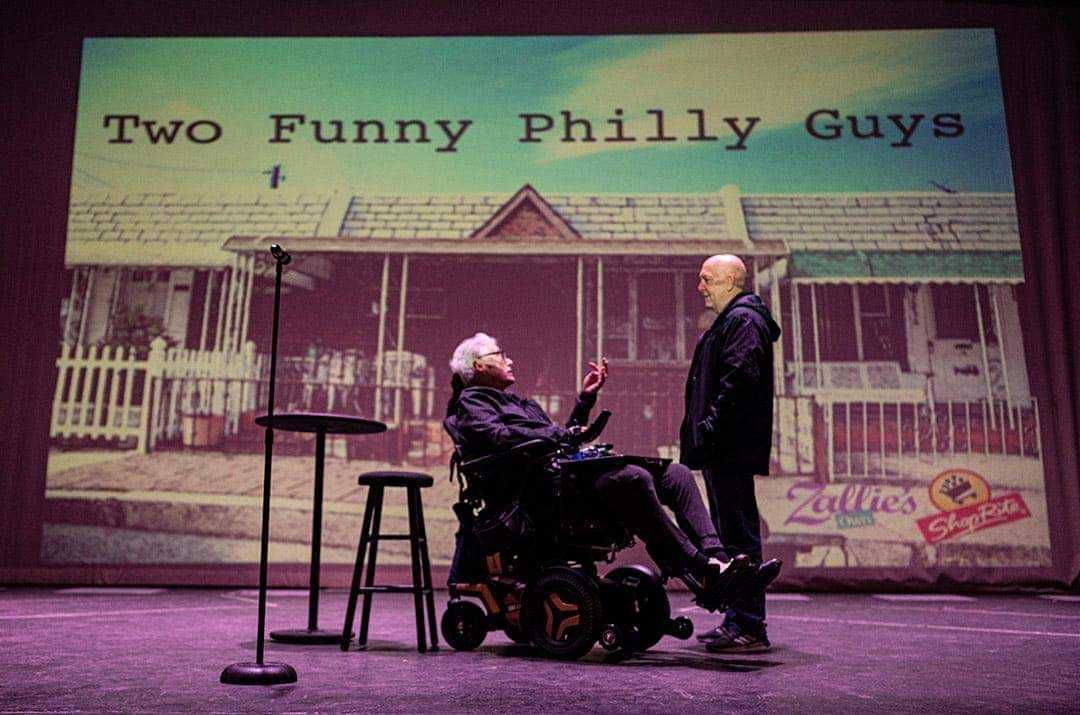
Big Daddy Graham (left) and Joe Conklin perform during a “Two Funny Philly Guys” comedy show.Courtsey of Joe Conklin
Bristow refused to call his friend anything else. By the time he embarked on the comedy circuit in the 1980s, he was Big Daddy Graham, his surname a nod to Graham Chapman of Monty Python.
Graham performed parody songs in rock and comedy clubs all over North America, taking any gig available. He and Debbie married in 1982, and she began to travel with him, and Graham would sing along to cassettes that she played. The young couple continued this even after Debbie gave birth to Keely in 1984, bringing their infant daughter on the road.
But once Ava was born in 1988, this became unsustainable. Graham desperately wanted to be home with his girls. So he found a way, performing only in nearby clubs. In 1995 he accepted a job as a cohost of a new afternoon radio show on 1210 AM, The Sports Attack, with Neil Hartman and Scott Graham.
It was an atypical pairing. Neil and Scott had polished voices and years of broadcasting experience. Big Daddy spoke with the biting accent and unfiltered tongue of his Philadelphia youth.
But their contrasts made for compelling radio, and Hartman and Graham quickly realized that Big Daddy wasn’t just an on-air persona. If anything, it only captured a small fraction of his everyday quirks.
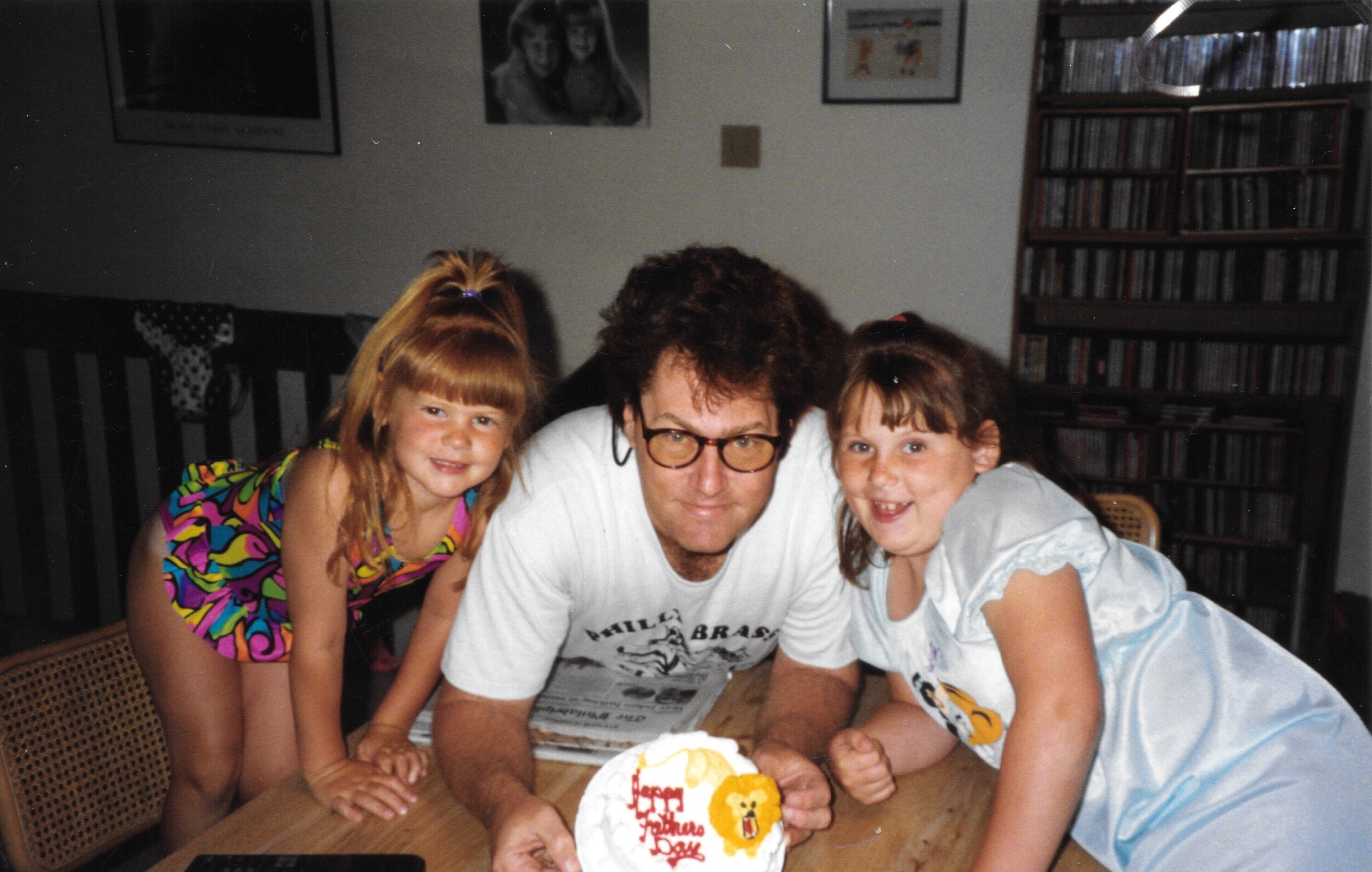
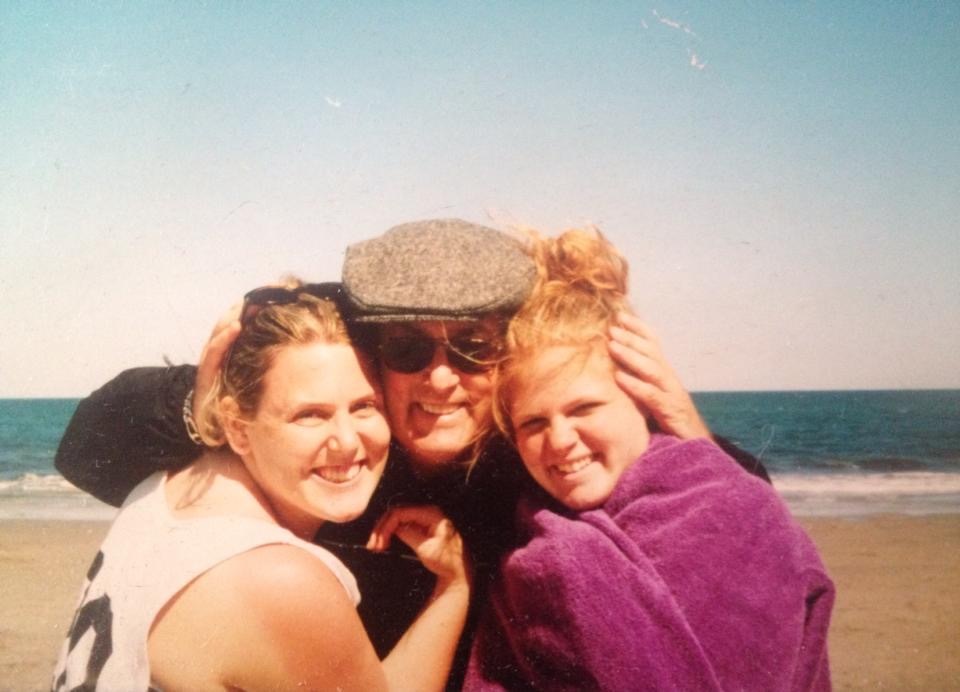
Big Daddy Graham with daughters Keely (right) and Ava.provided by Graham Family
Hartman’s desk was next to his cohost’s, and he’d often see him paying his monthly bills. But Big Daddy liked to include an extra twist, tucking into the envelope a picture of a cat, or maybe a New Yorker cartoon.
“And then those people would send [the bills] back,” Hartman recalled. “‘We’re so sorry, but you accidentally sent this picture.’ And he just did it as a goof.”
Added Bristow: “He used to write notes on the bills. Like, ‘You robbers!’ Or something like that. ‘Thieves!’”
Big Daddy played a similar game with telemarketers.
“He’d tell them to hold on, and walk away from the phone,” Conklin recalled. “Put them on hold.”
Not long after The Sports Attack debuted, the show started hosting remote broadcasts from Veterans Stadium. Big Daddy loved being there, but not for the players. Instead, he gravitated to the everyman types that he grew up with: ushers, vendors, security officers.
One day, Phillies team president David Montgomery walked up to the booth.
“Big Daddy walks directly over to David, and says, ‘You work here, right?’” Graham recalled. “And then he starts to talk about how he can get [his parking] validated.
“And David just starts laughing. He loved Big Daddy from that second on.”
Big Daddy Grahamhandout
A man made for overnights
Rob Charry first heard Graham’s voice on WMMR in the 1980s. He was raised in Fern Rock, far from 70th and Elmwood, but to the then-WIP weekend host, Big Daddy sounded just like the kids he’d grown up with.
A few years later, Charry joined a men’s softball league in Chestnut Hill where he met Tony Vollmer, Graham’s sister’s boyfriend. Every now and then, they’d talk about The Sports Attack cohost, and how much of a fit he’d be at WIP.
Charry began to mention this to his program director, Tom Bigby, long before a job opening even presented itself. In the summer of 1996, The Sports Attack was taken off the air; by 1997, WIP was looking for its new overnight host.
Graham kept his shift for the next 22 years. His show was unlike anything else on radio. He’d always talk about sports — this was sports talk, after all — but couldn’t fill four or five hours with that alone.
So he made magic out of the mundane. Segments included “Snack of the Night” — a play-by-play of what he was eating — and “Ditty of the Night” — a song, usually in honor of a caller’s birthday or anniversary.
There was the “Wrong” segment, in which he corrected himself for a mistake he’d made earlier, and the “Childhood” segment, in which he reflected on his upbringing, and the “Bother” segment, dedicated solely to things that bothered him.
He was not above using this time to unleash a lengthy rant on a stranger — a rude patron at CVS, for example.
“This person quickly sped up to beat him to the pharmacy counter,” Angelina recalled. “And he’s like, ‘Well, I held the door open for you. Why are you trying to beat me to the counter?’”
Longtime WIP overnight host Big Daddy Graham, seen here in 2015 alongside the Phillie Phanatic.
Somehow, Graham was able to find regular callers, even early in the morning. There was Joe in the Navy Yard, Mike from South Philly, and Jimmy in Germantown, who, according to Angelina, “always had something crazy going on.”
Comedians would also call in, usually to get a rise out of the Southwest Philly native. One night, minutes after Graham ripped Pat Croce, Conklin rang WIP pretending to be the Sixers executive.
Graham bought it — so much so that when sportscaster Bill Campbell tried calling the next day, the host didn’t believe it was him.
“The real Bill called his show,” said Conklin. “He started giving Bill Campbell a hard time. He wouldn’t let him on. It was great.”
Local law enforcement also got in on the joke. Conklin’s brother-in-law, John McCabe, worked for Cheltenham Township Police Department. Sometimes, when he and his squad were at the station late, they’d call Graham.
“We’d make up a fictitious guy,” McCabe said. “Like, ‘I’m Big Joe from South Philly,’ and say that he played for Notre Dame. ‘I’m gonna try out for the Eagles. You think I can make it?’ That kind of stuff.”
Big Daddy’s WIP coworkers soon learned of the idiosyncrasies Scott Graham and Hartman were long familiar with. Glen Macnow once invited the overnight host to a dinner party at his home.
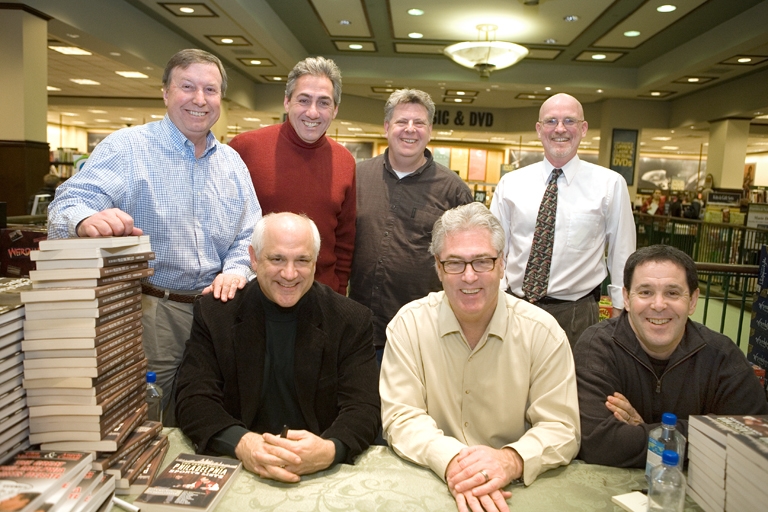
Big Daddy Graham (seated in center) with Philly media friends (from top left) Ray Didinger, Sal Paolantonio, Reuben Frank, Gordie Jones and (seated from left) Glen Macnow and Jayson Stark at a book signing. provided by Glen Macnow
Aside from the pot roast, Graham wouldn’t touch any of the food.
“He raided my refrigerator for ketchup,” Macnow said, “which he used generously on the roast, and raided our bread drawer for like six slices of bread. That’s who he was.”
But these coworkers also learned of his capacity for empathy. When Macnow had double knee replacement surgery in 2006, it was Graham who drove to Havertown to visit him.
Angelina was only 18 when he started to produce Graham’s show. The host would regularly ask if he needed anything, like gas money or food; during the summers, he’d offer Angelina his spare room in Sea Isle.
“On air, people would tease him, and he would play this persona of being cheap, but he wasn’t,” Angelina said. “He never allowed me to pay for anything. He was just very, very generous.”
Lessons from an overnight host
Twenty-five miles south of the studio, Graham’s family saw a side of Big Daddy that few people knew. The radio host was a romantic, taking Debbie to countless shows in Philadelphia and New York.
For Christmas in 2002, he gifted his wife a leather-bound book. Each page contained a favorite memory, handwritten in purple ink. There were meals she cooked, outfits she wore, and the story of when they started dating, full time, in the summer of 1978.
Big Daddy Graham and daughters Keely (left) and Ava.provided by Graham Family
He was just as dedicated to his daughters. Graham never missed one of Ava’s field hockey games or Keely’s tennis matches (even if he watched with a highlighter in hand, prepping for his show).
When Keely gave birth to twins in 2017, doctors discovered that her daughter, Lucy, had a heart defect. Less than 24 hours later, the baby was transferred to CHOP to undergo open heart surgery.
Graham was coming off his overnight shift. He went straight to the hospital and stayed awake for the next seven hours, sitting in the waiting room with the rest of his family.
“I kept saying to him, ‘I want you to go home,’” Keely said. “Because he was up all night. But he wouldn’t leave.”
Life with Graham wasn’t always easy. He was extremely hard on himself, lamenting that he hadn’t achieved more in his career. His daughters would try to remind him of how much he had to be grateful for: a beautiful house, a loving family, an audience that adored him.
But nothing seemed good enough. And Graham’s spinal stroke in 2019 only deepened this sentiment. A man who had spent his entire life on the go was suddenly unable to walk. No amount of hustle would change that.
And yet, Graham hustled anyway. He hosted a classic rock podcast from his living room. He attended a book signing with Macnow in 2019, worked a private event a few months later, and another show with Conklin in February of 2020.
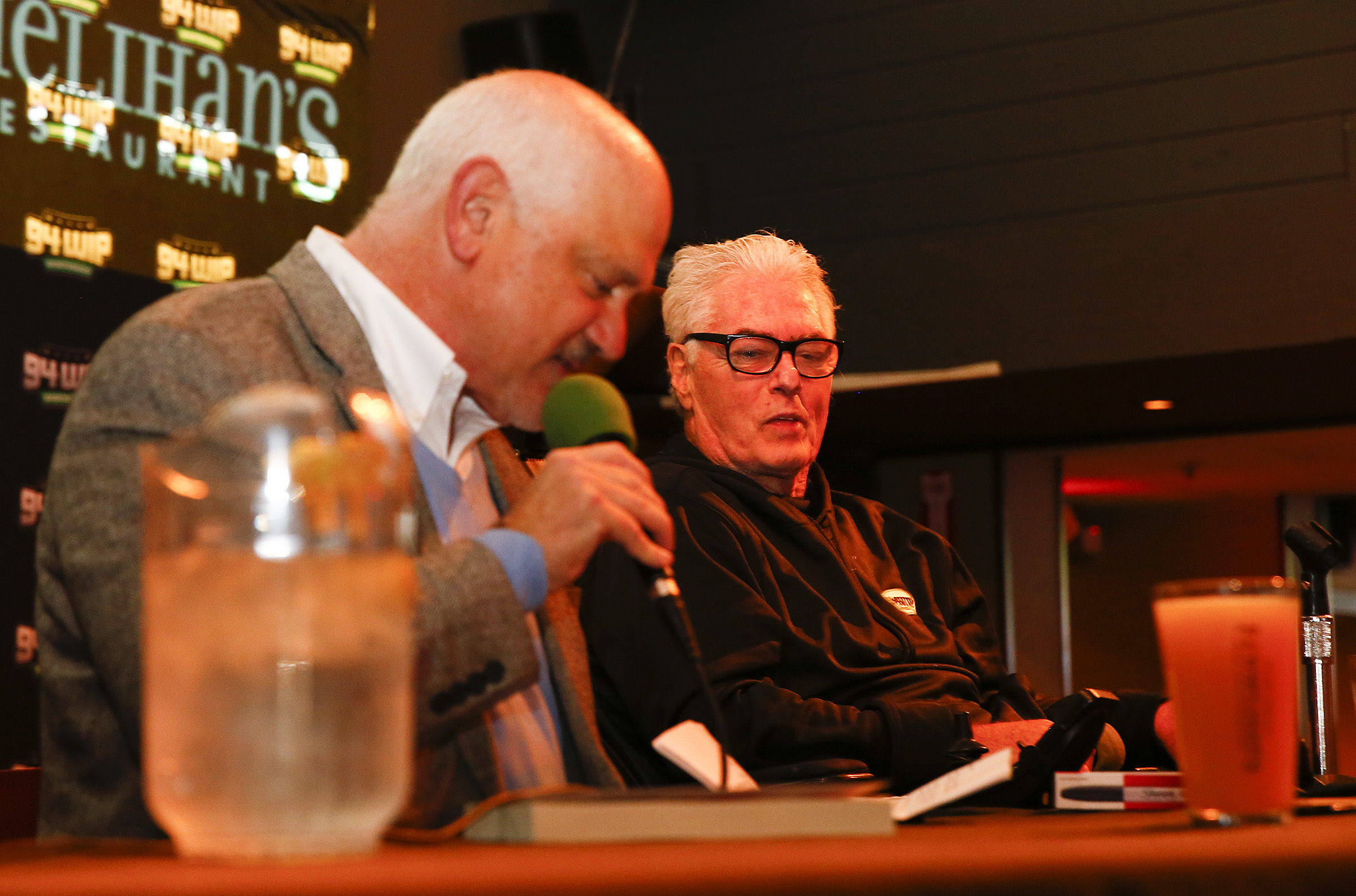
Big Daddy Graham (right) with Glen Macnow during The Great Book of Philadelphia Sports Lists (Completely Revised and Updated Edition) sold-out event at P.J. Whelihan’s in Cherry Hill on Nov. 21, 2019. YONG KIM / Staff Photographer
He even started writing a book, Ravings of a Mad Man from a Wheelchair, which Debbie keeps at home. It didn’t bring the spontaneity of overnight radio, or the thrill of performing in front of a live audience. But to Graham, this work was still worth doing.
After 12 weeks at Magee Rehabilitation Hospital, Debbie became her husband’s primary caretaker. She’d clean his wounds, lift him out of bed, and manage his 26 pills a day, among other previously basic tasks.
The stroke changed both of their lives in an instant. Debbie, who had gone to nursing school decades ago, was now a full-time nurse again. She sold the Shore house, in part because she couldn’t take care of it, but also due to the emotional scarring.
“It was hell,” she said. “It was really hell. I mean, believe me, I miss my husband. I cry every day. I’ve cried every single day since his accident happened. I see therapists. I’ve gone to bereavement groups.
“But there is something where I can actually say that God did answer my prayers. I did not want him like that. He didn’t want to be like that. He did not want to live like that.”
Graham would often tell his wife that he’d wished he’d gone back to school to become a teacher. She’d gently remind him that he already was, that his lessons were there for anyone who cared to look.
And they still are today. Big Daddy Graham taught people to work hard and thoughtfully. To love unconditionally. To embrace their quirks, no matter how eccentric, and to share their vulnerabilities, no matter how daunting.
And of course, to remember that every call matters — even the ones that arrive at 3 a.m.
Neshaminy Mall, a 58-year-old Bucks County institution, will not see another holiday season, according to Bensalem Township Mayor Joe DiGirolamo, who said the complex will close by the end of October.
“It’s very bittersweet,” DiGirolamo said, “but the mall has been going downhill for the last few years.”
The 1-million-square-foot center has struggled with rising store vacancies and fewer customers, becoming fodder for TikTokers mourning their teenage stomping grounds.
Neshaminy Mall in Bensalem, Pa., on Monday, July 22, 2024.Monica Herndon / Staff Photographer
Like in Exton, Neshaminy’s Boscov’s will remain open, DiGirolamo said, as will the AMC Movie Theater and Barnes & Noble bookstore.
A handful of other mall tenants must close up shop by the end of October, DiGirolamo said. In November, township officials plan to remove the mall’s dioramas, which depict key moments in U.S. history that took place in the Delaware Valley, as well as a bronze Native American statue, for preservation.
Historical dioramas in the Neshaminy Mall, as seen in 2024, will be preserved when the mall closes.Monica Herndon / Staff Photographer
The mayor said the property’s owners,Lakewood, N.J.-based Paramount Realty, want to knock down the mall and build something new in its place, though the company had not applied for a demolition permit or submitted redevelopment plans as of Tuesday. Such plans would require approval by township council.
The exterior of the old Macy’s at the Neshaminy Mall, as seen in 2024.Monica Herndon / Staff Photographer
A few have been transformed, or are in the process. In Media, Delaware County, the 1-million-square-foot Granite Run Mall was demolished in 2016 and replaced by a mixed-use town center with apartment buildings, new retail, and medical offices.
At the Neshaminy Mall site, near U.S. Route 1 and the Pennsylvania Turnpike, DiGirolamo said he’s “hopeful they are going to rebuild it in a way that most malls are rebuilt,” in the town-center style with housing and outdoor walkways.
As for the indoor mall’s final days, the mayor said he expects them to be quiet, with some tenants vacating before their leases expire.
DiGirolamo, a lifelong resident of Bensalem, said he remembers when the mall opened in 1968. It was a “regional mall,” he said, that attracted out-of-town visitors.
A faux storefront covered the old Macy’s at the Neshaminy Mall in 2024.Monica Herndon / Staff Photographer
A Philadelphia Daily News article about Neshaminy Mall’s opening called the $25-million complex “America’s most modern shopping center,” with the largest branches of Sears Roebuck & Co. and Strawbridge & Clothier at the time.
A few years later, the Oxford Valley Mall opened in nearby Langhorne. Oxford Valley, which is being partially redeveloped with apartments, will be Bucks County’s only enclosed mall once Neshaminy closes.