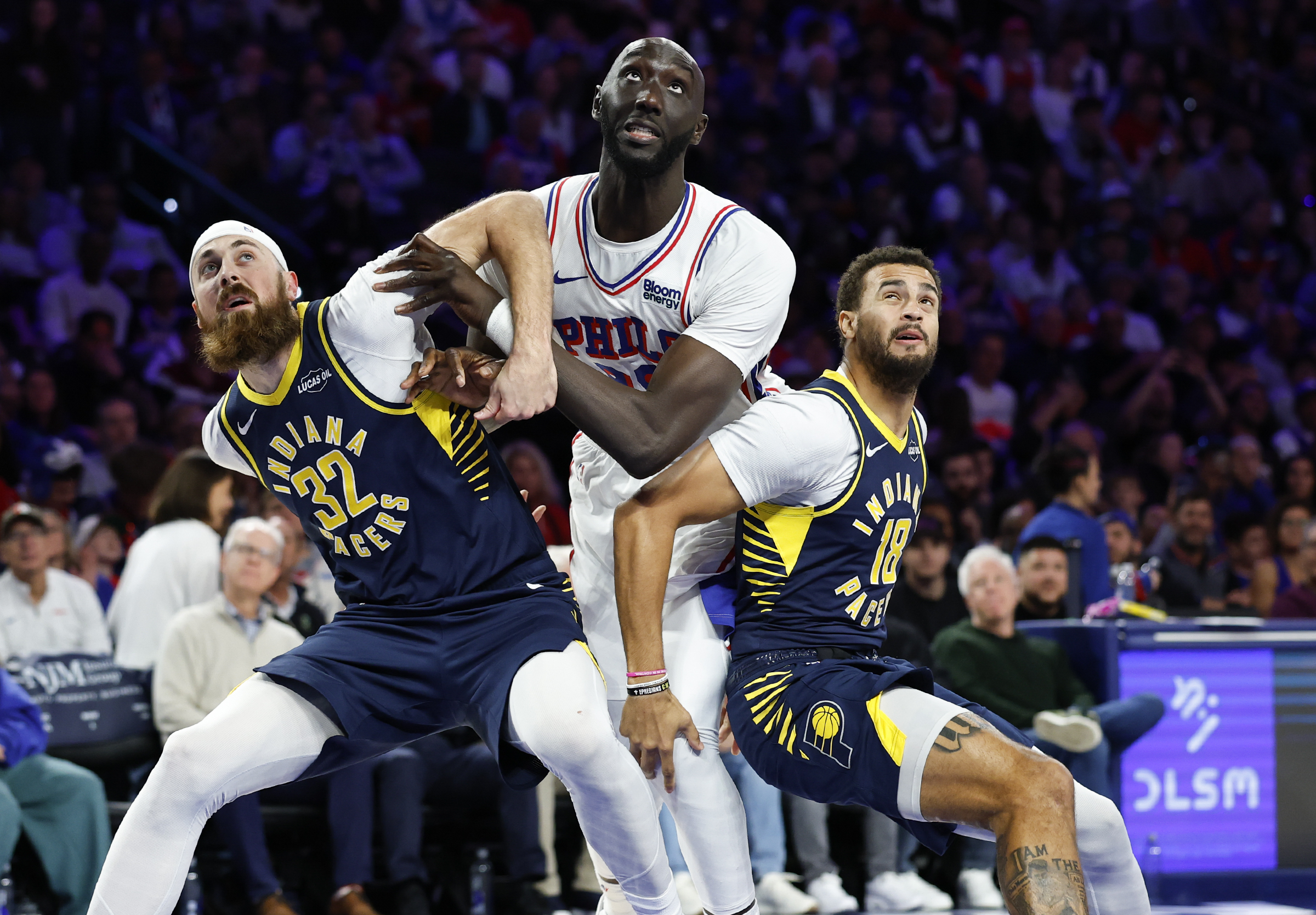
Midway through the third quarter, Xfinity Mobile Arena swelled with the sound of several thousand people nudging their seat mate with an elbow. Soon, the sound became a roar. It seemed spontaneous at first. The action on the court had paused as the Sixers walked toward the free throw line. You may have needed to look around a bit to see what the fuss was about. But, then, Tacko Fall is a guy who is hard to miss.
“It was pretty loud,” said Fall, the 7-foot-6 backup center who at 31 years old is attempting to complete his long-in-progress transition from curiosity to reality. “It was hard not to notice.”
It would be overselling things to say that the Sixers have figured out life without Joel Embiid. Even more so to pinpoint Fall’s five minutes of action in a 131-124 win over the Pacers on Sunday. The Sixers survived Embiid’s (scheduled) absence on the interior mostly because they scored enough points that his absence didn’t matter. For that, thank Dr. Thunder (Jaylen Brown) and Mr. Lightning (Tyrese Maxey), as well as some expert-level quarterbacking from the old GOAT (LeBron James).
Say this, though: Fall’s minutes mattered. He spent only five of them on the court. But the Sixers were up 74-71 when those minutes began, and they were up 87-83 when they ended. Fall didn’t exactly fill up the box score, departing the game with zero points and three rebounds. But his length caused some disruption on the defensive end, both around the rim and when contesting shots on the perimeter.
“I think it was excellent from the standpoint of we just needed him to buy us some time there,” Sixers coach Nick Nurse said after the game. “Just get those guys a little more rest and get their minutes a little more manageable. We did put [in] a little zone when he’s on the floor a while ago, and we were able to get to it for the first or second time this year. I think that helped us as well. Just changed the rhythm of the game a little bit. I think he gave us some great minutes and a nice lift.”
Fall’s minutes mattered first and foremost on a personal level. It had been six years since he’d played this much in any NBA game. The intervening years had seen him bounce between professional leagues in China and New Zealand. Both countries were as far away from his native Senegal as the United States had been. The basketball was even further.
Undrafted out of Central Florida, Fall spent two seasons with the Celtics from 2019-21. The noteworthy nature of being one of the tallest living humans was far greater than his playing record. He logged just 139 minutes in 26 games with the Celtics. Then, after a brief stint with the Cavaliers in 2021-22, he signed to play in China.
And that was that.
Or so it seemed.
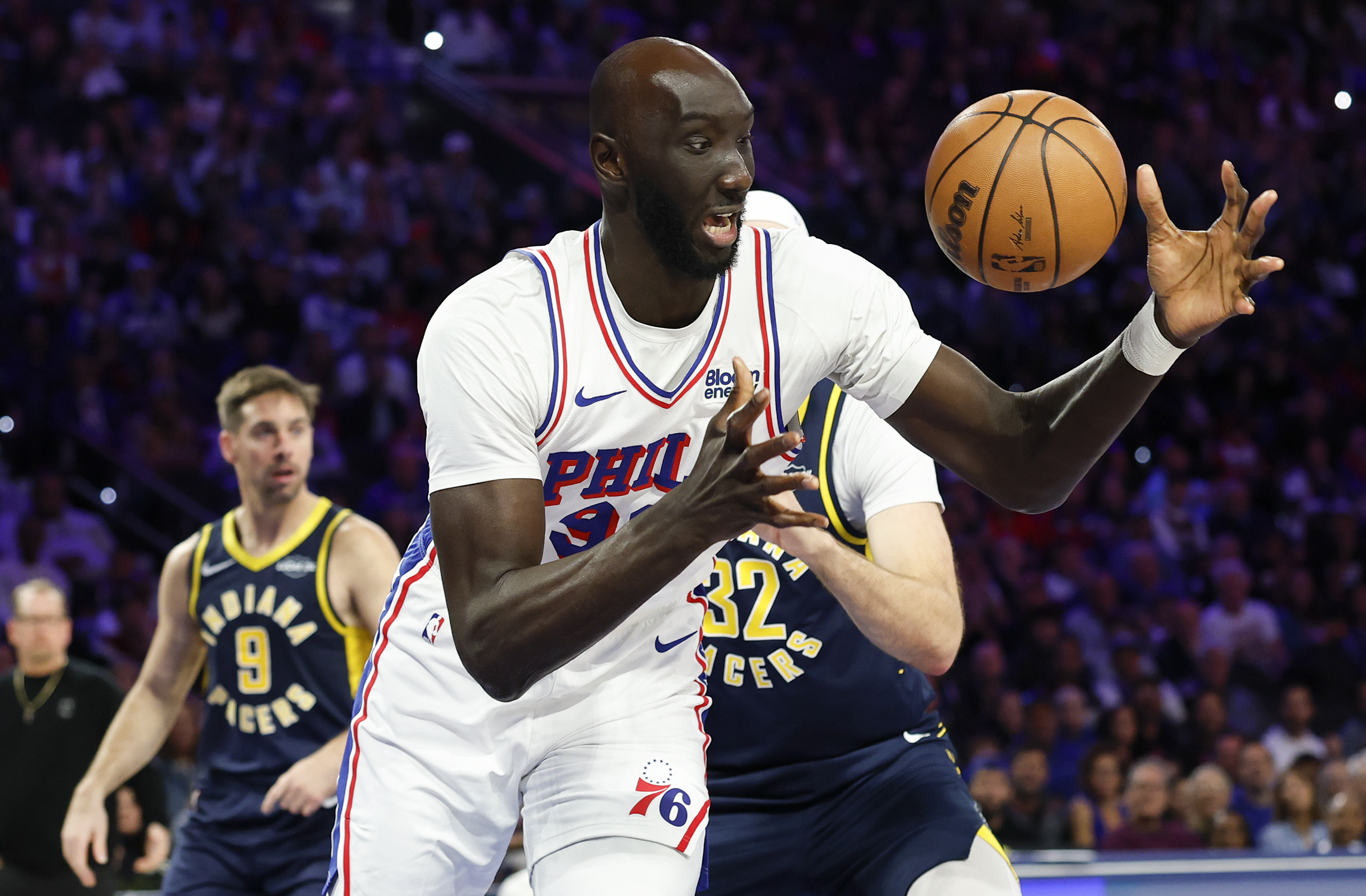
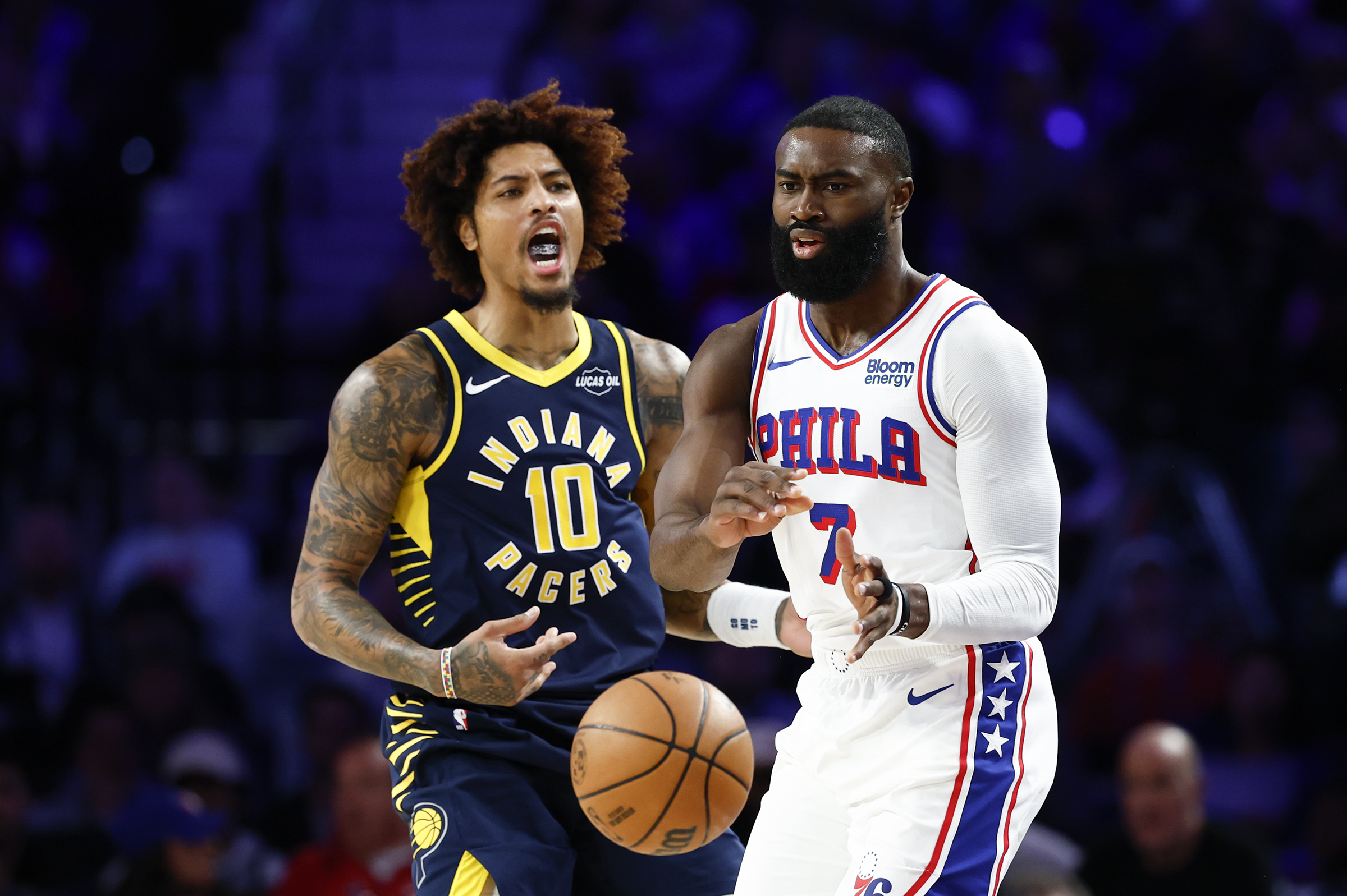
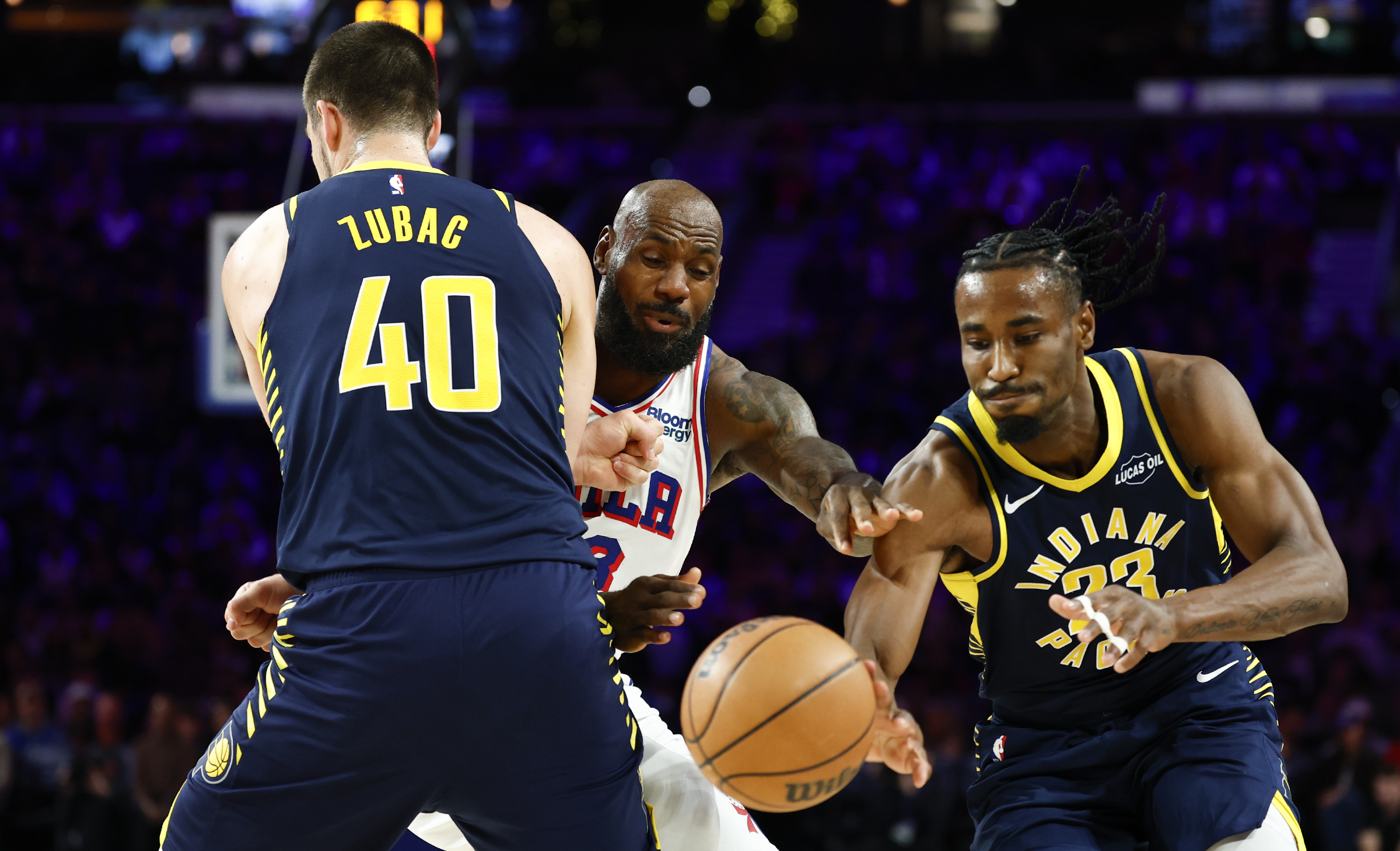
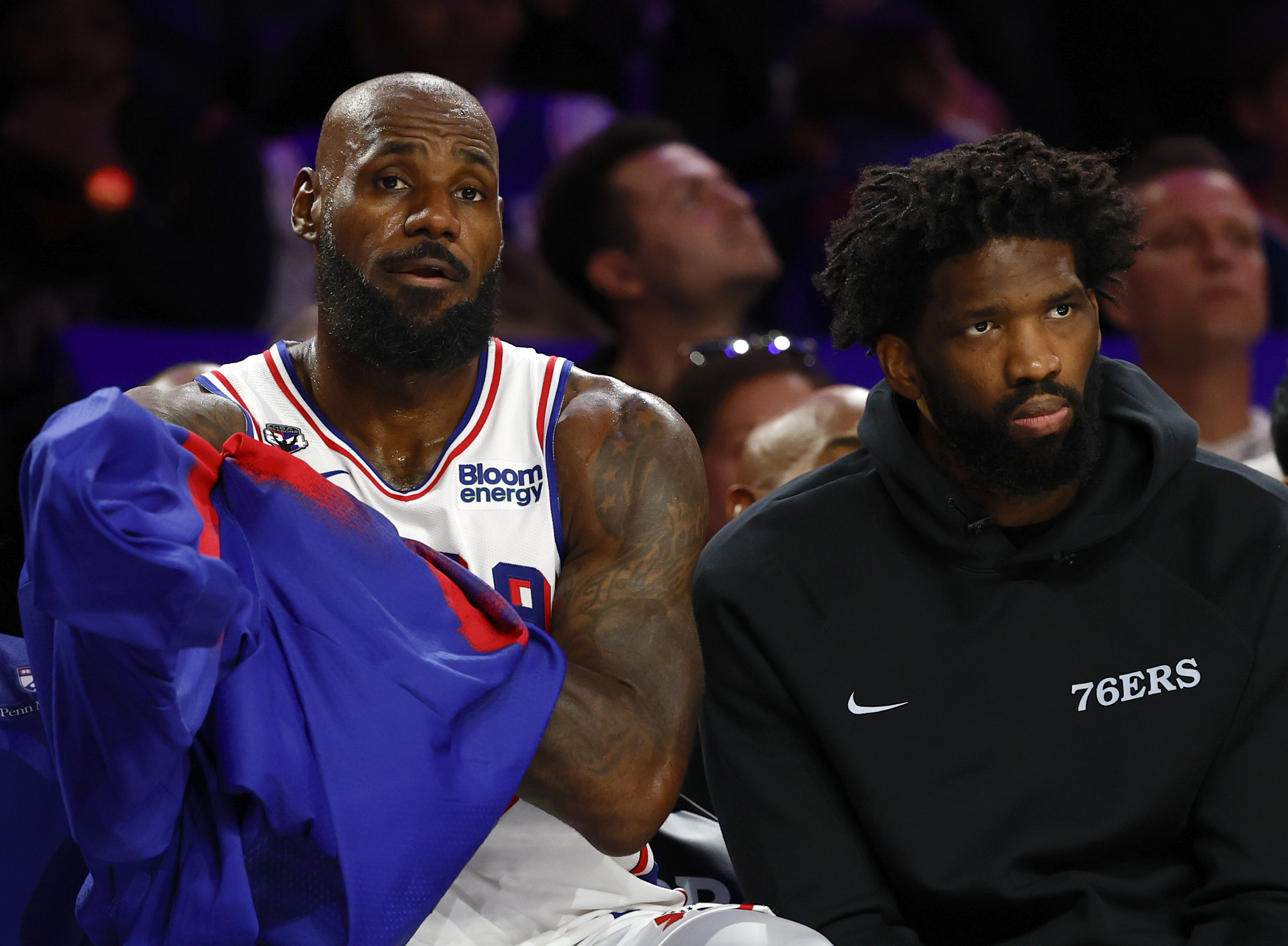
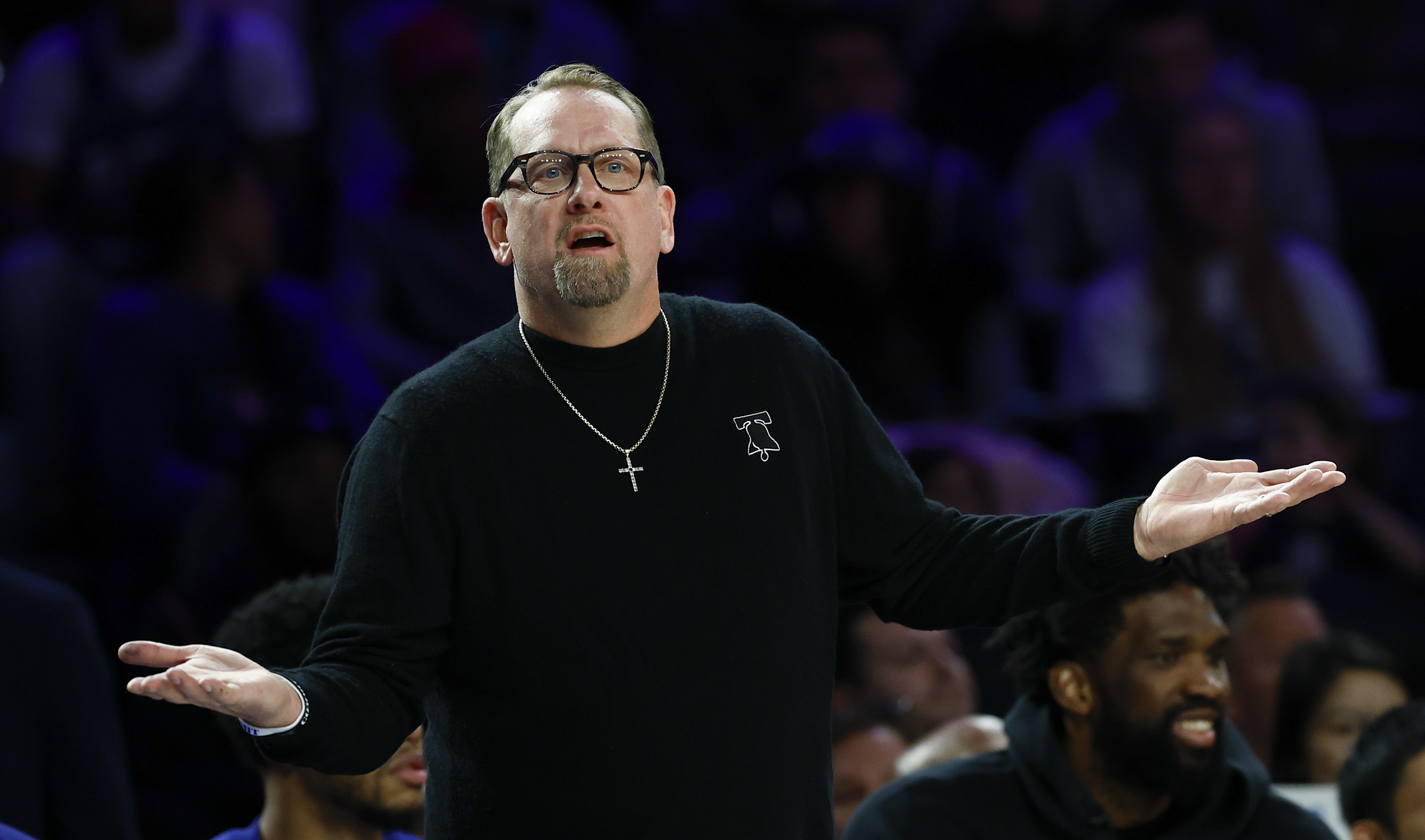
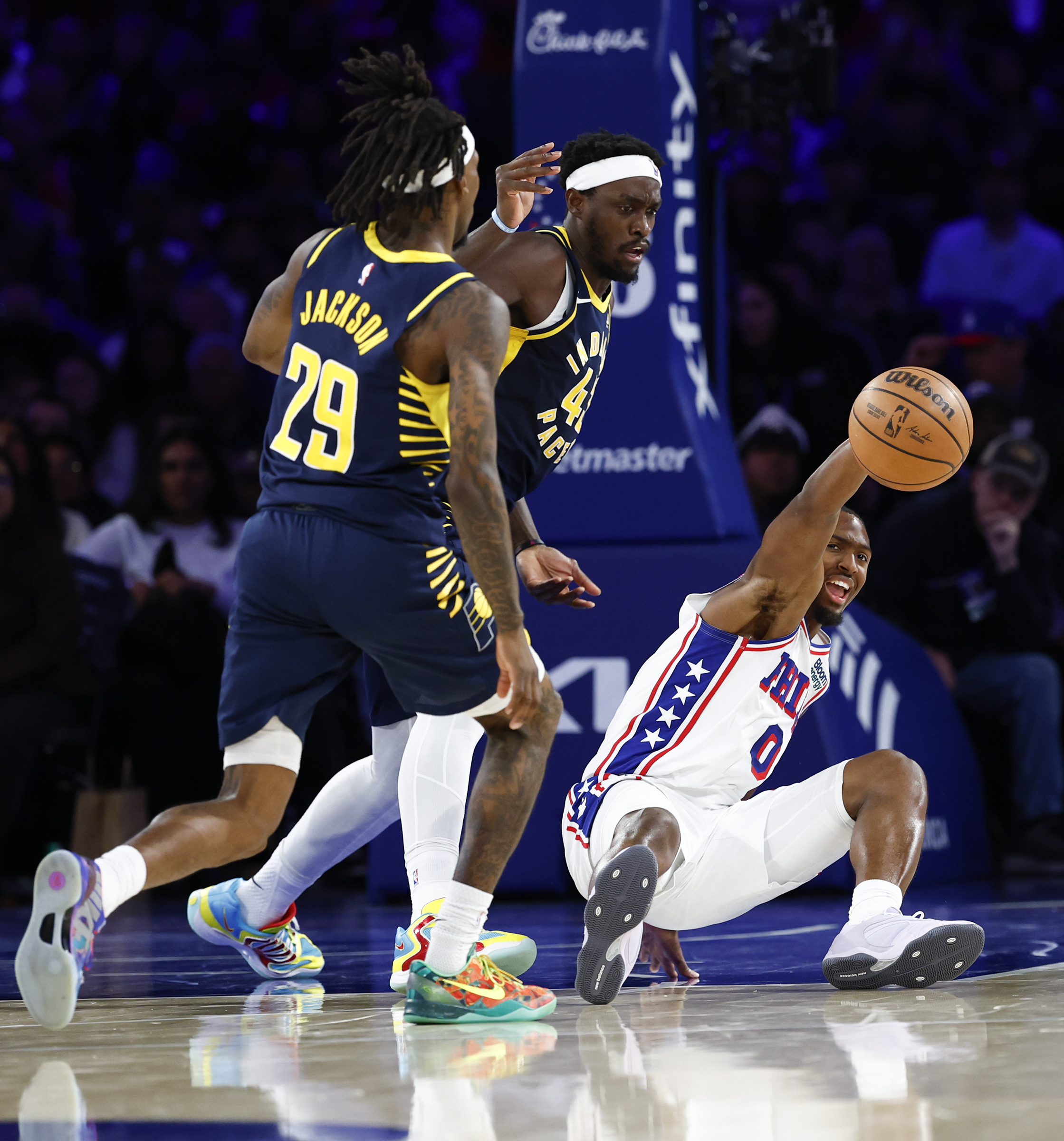
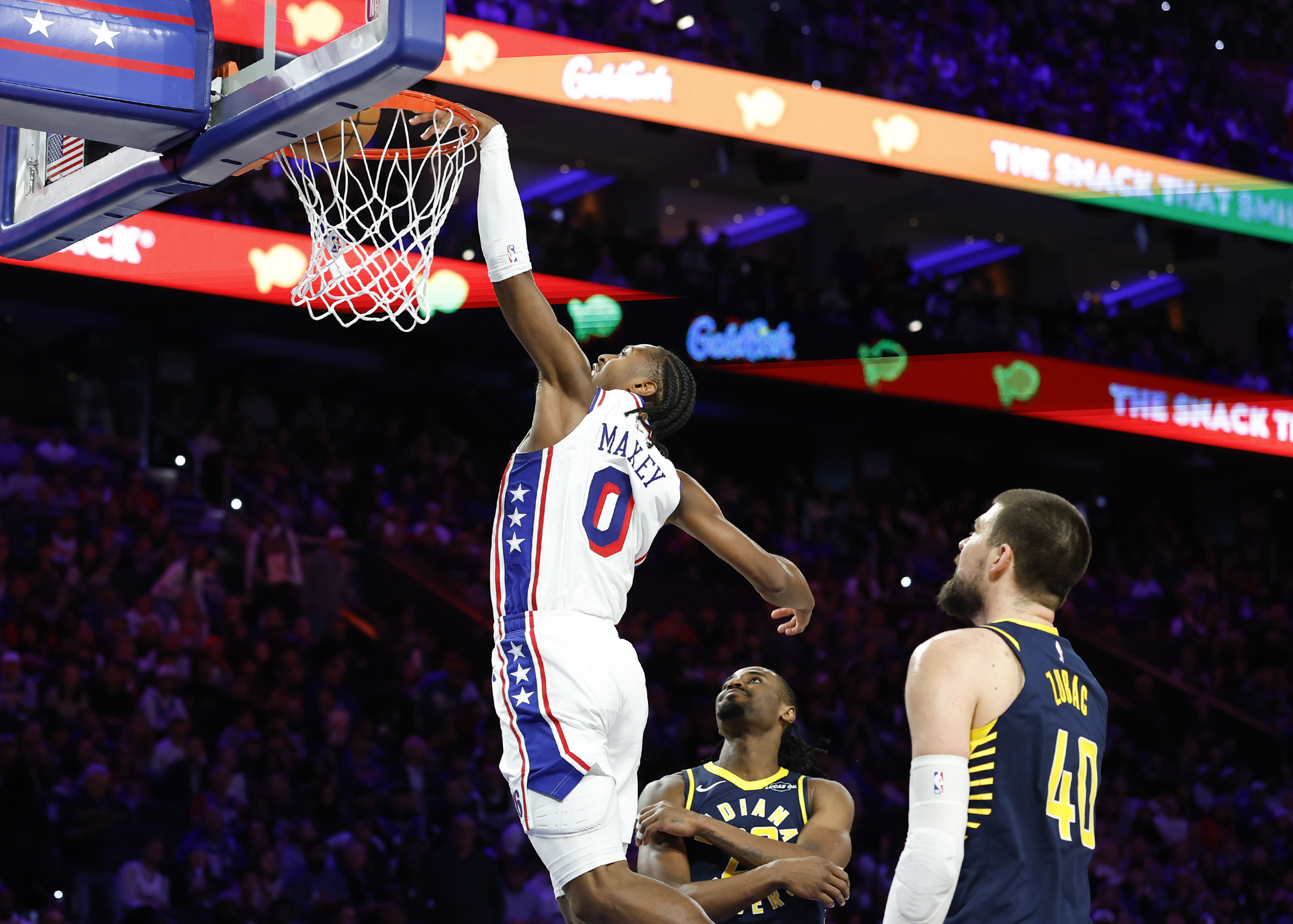
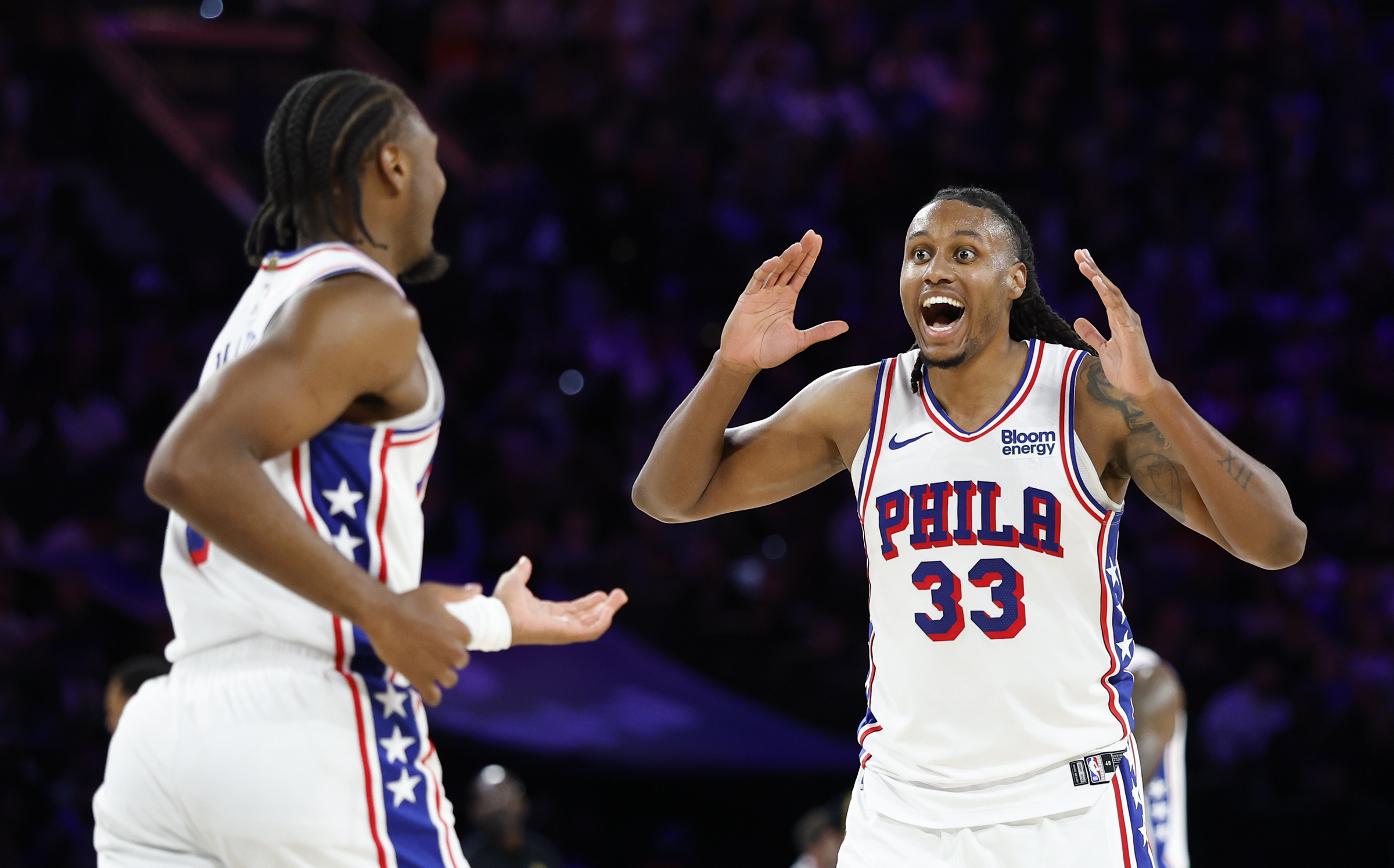
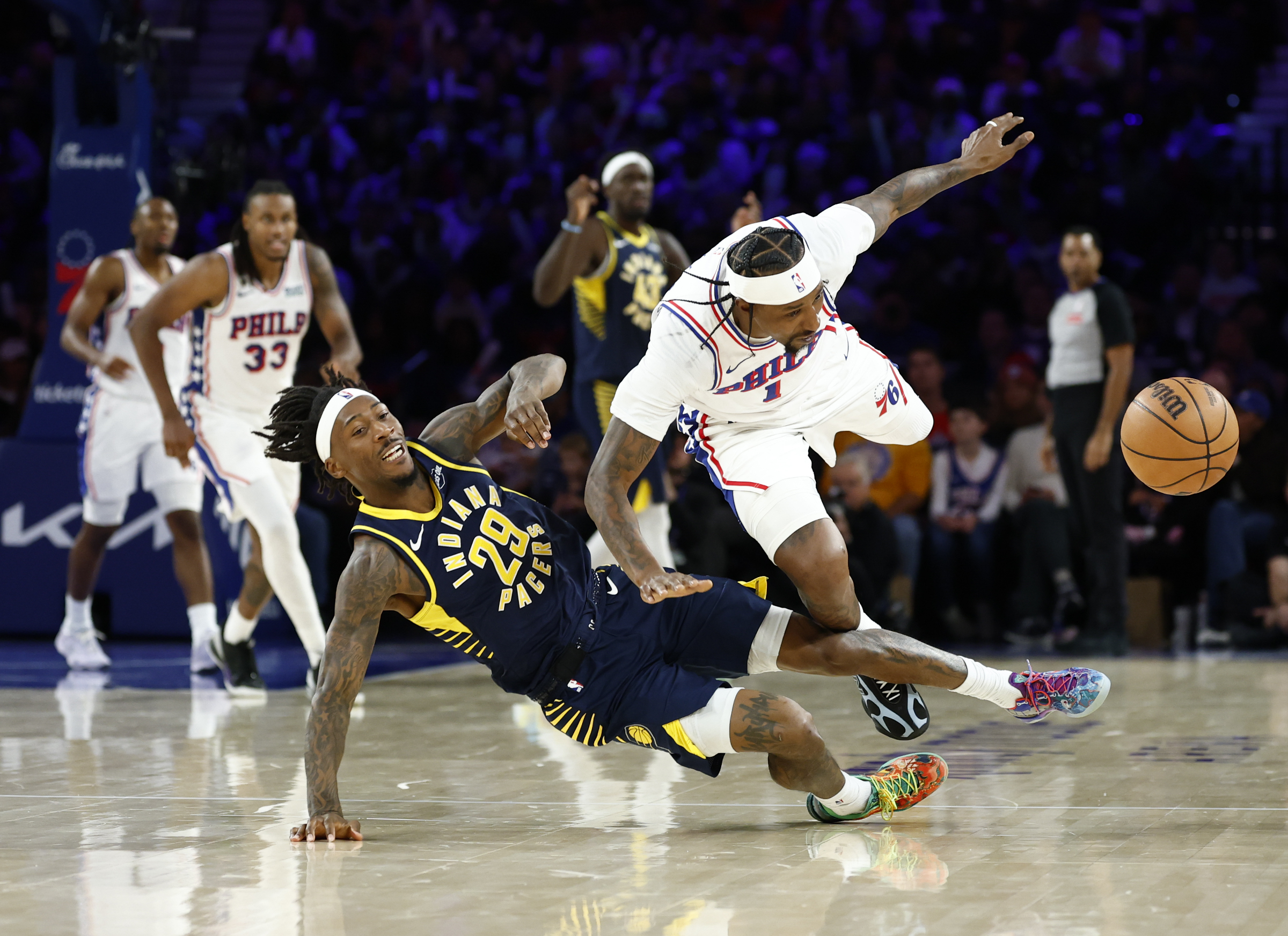
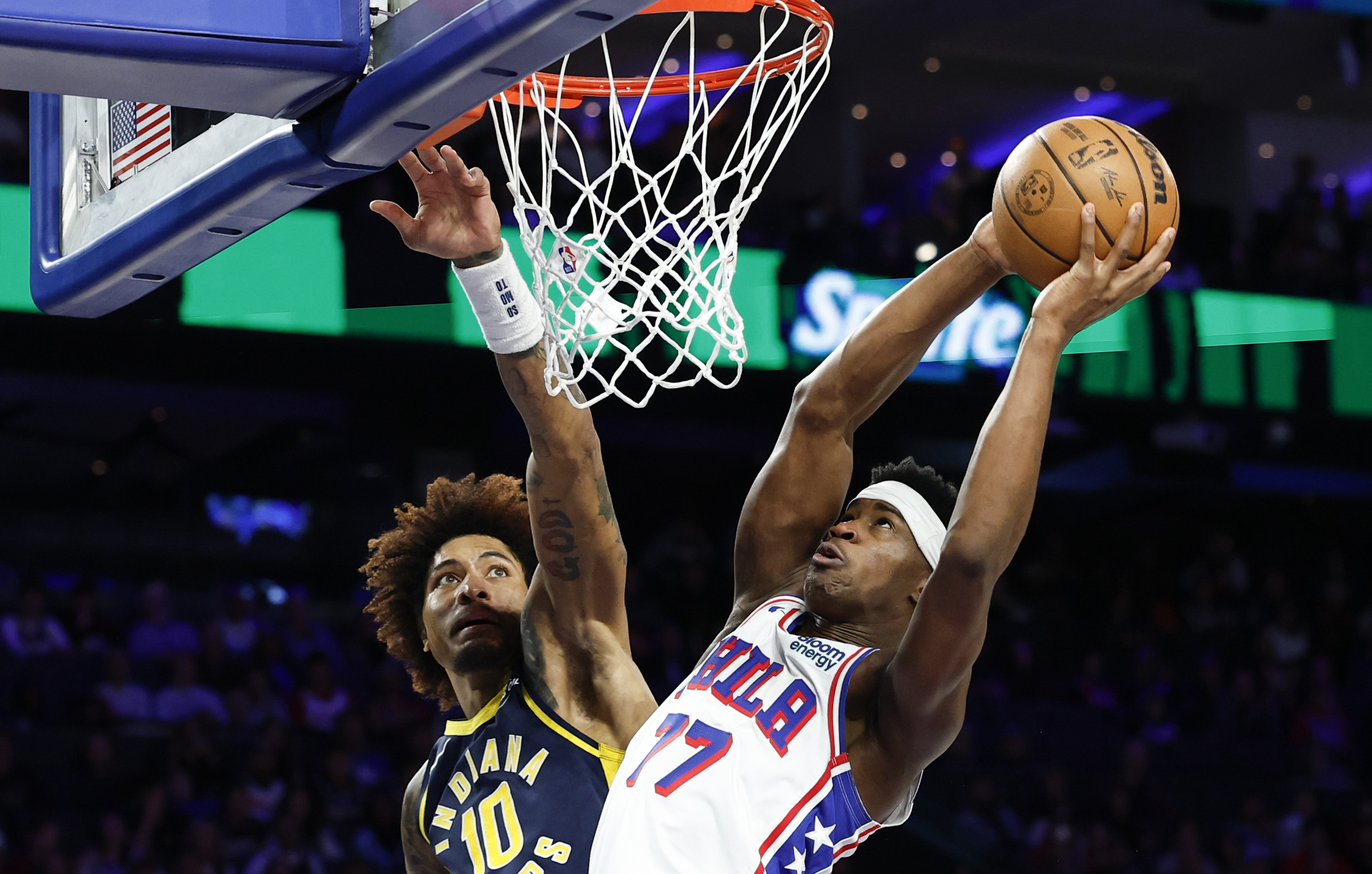
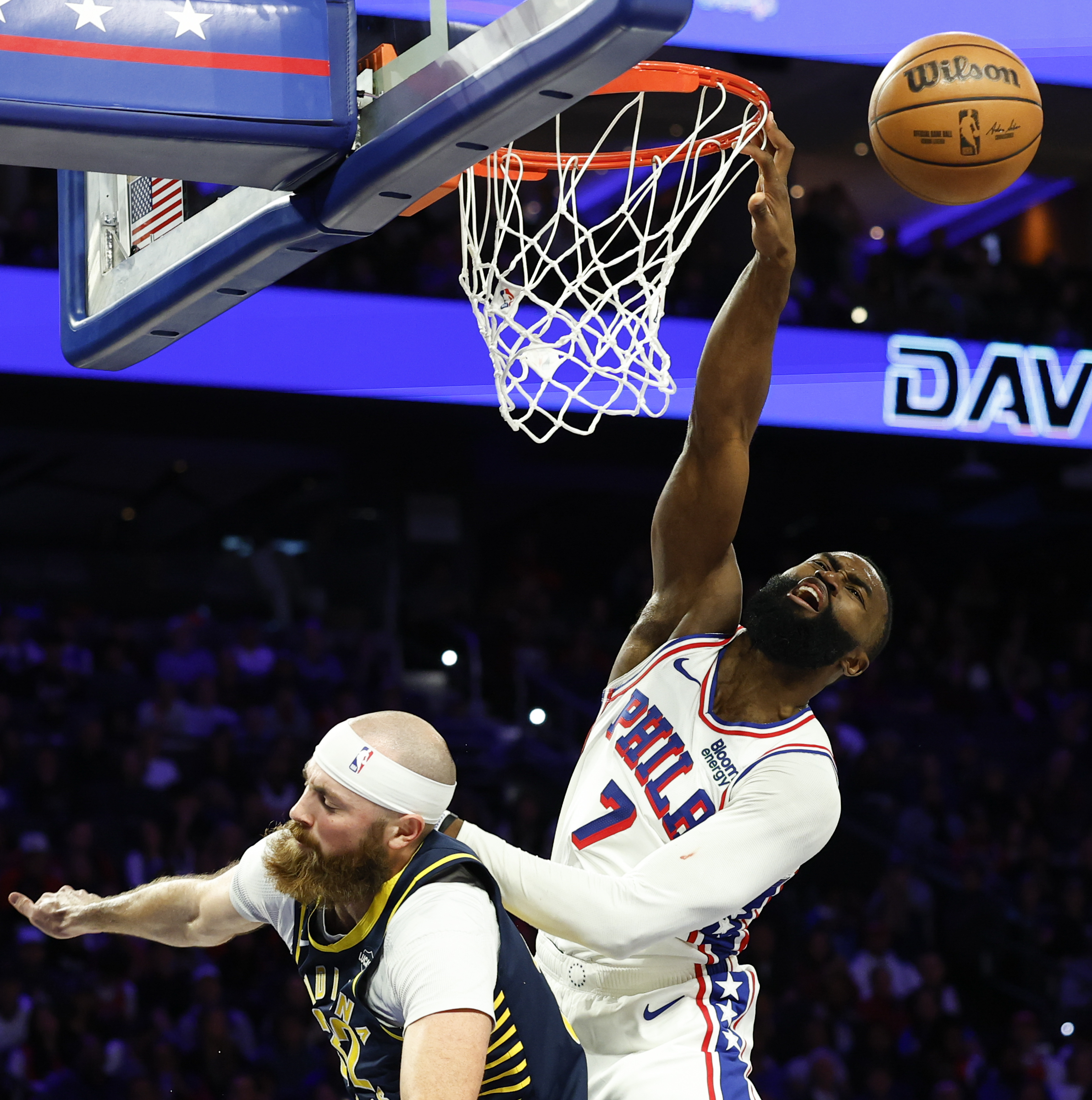
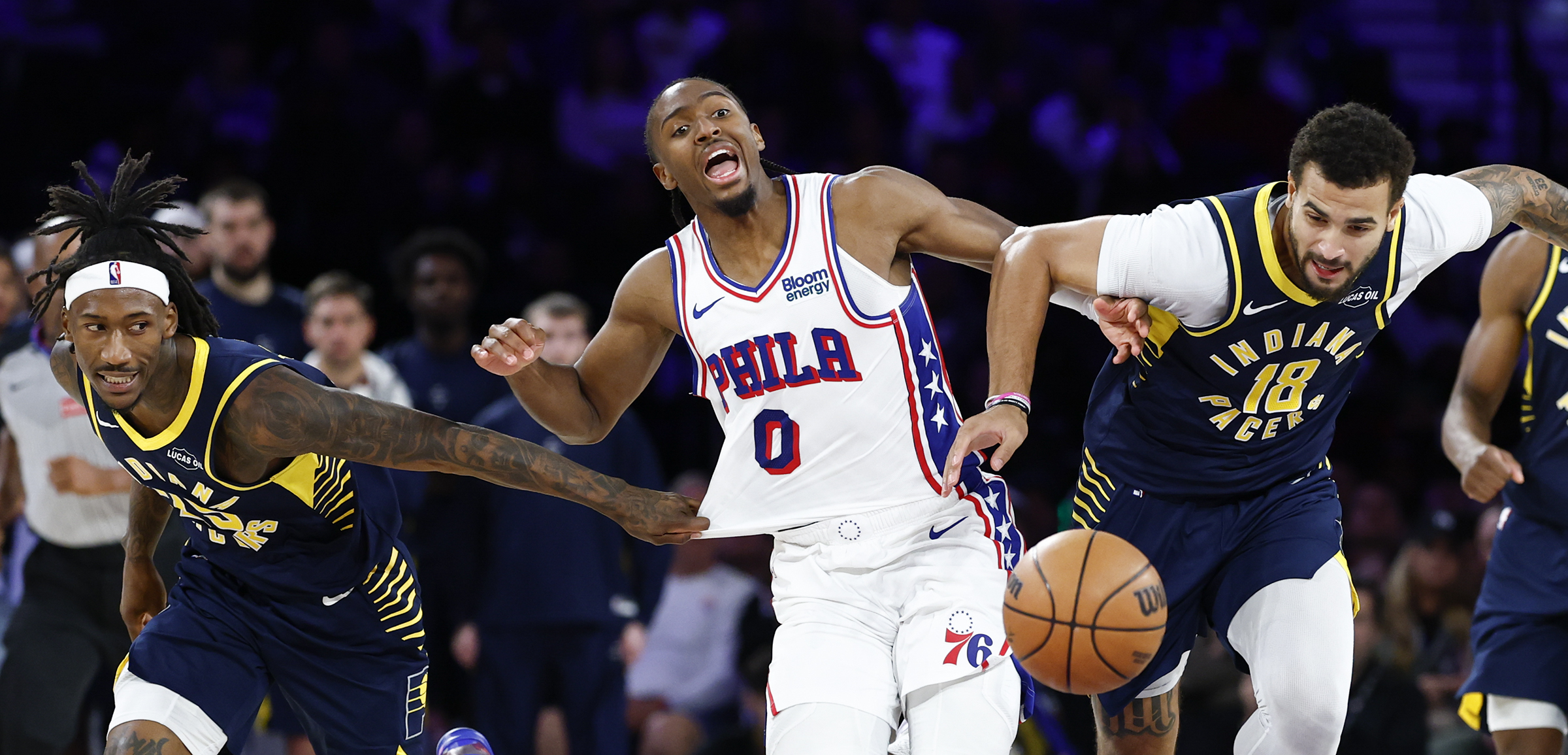
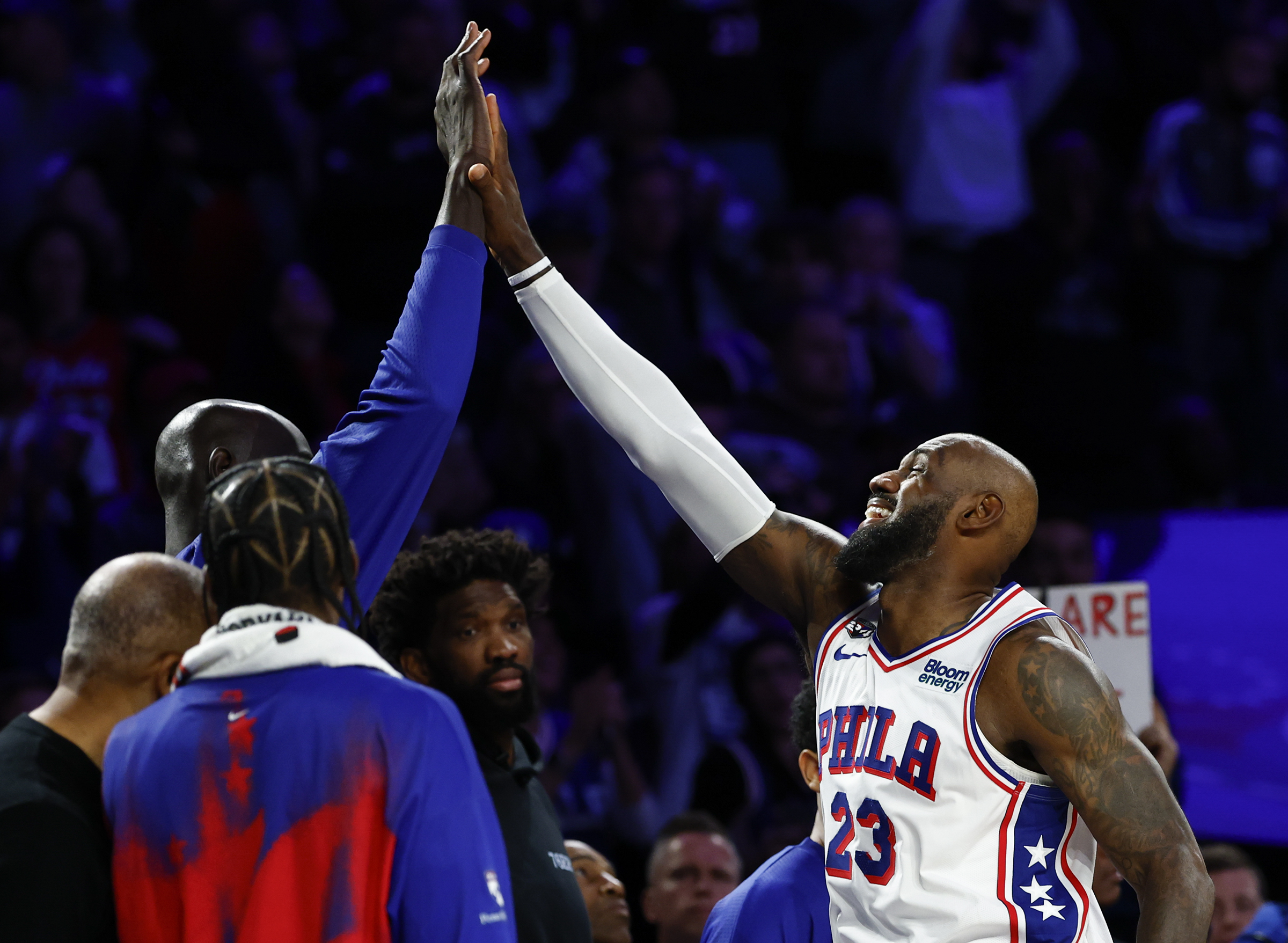
Sixers guard Jaylen Brown attempts to catch the basketball against Pacers guard Kelly Oubre Jr.,during the first quarter.Yong Kim / Staff PhotographerSixers forward LeBron James reaches after the basketball against Pacers center Ivica Zubac and guard Aaron Nesmith in the first quarter.Yong Kim / Staff PhotographerSixers forward LeBron James sits with center Joel Embiid during the second quarter.Yong Kim / Staff PhotographerSixers head coach Nick Nurse questions a foul call on his team during the second quarter.Yong Kim / Staff PhotographerSixers guard Tyrese Maxey loses the basketball against Pacers forward Pascal Siakam and guard Quenton Jackson during the second quarter.Yong Kim / Staff PhotographerSixers center Tacko Fall battles for rebounding position against Pacers center Jay Huff and forward Jalen Slawson in the third quarter.Yong Kim / Staff PhotographerSixers guard Tyrese Maxey dunks the basketball past Pacers guard Aaron Nesmith and center Ivica Zubac in the third quarter.Yong Kim / Staff PhotographerSixers forward Jabari Walker reacts after teammate guard Tyrese Maxey dunked the basketball during the third quarter.Yong Kim / Staff PhotographerSixers forward LeBron James raises his arms during the third quarter.Yong Kim / Staff PhotographerSixers guard Kentavious Caldwell-Pope gets tripped going after the basketball against Pacers guard Quenton Jackson in the third quarter.Yong Kim / Staff PhotographerSixers guard VJ Edgecombe drives to the basket against Pacers guard Kelly Oubre Jr., during the fourth quarter.Yong Kim / Staff PhotographerSixers guard Jaylen Brown gets fouled driving to the basket against Pacers center Jay Huff during the fourth quarter.Yong Kim / Staff PhotographerSixers guard Tyrese Maxey gets fouled late in the fourth quarter against Pacers guard Quenton Jackson and forward Jalen Slawson.Yong Kim / Staff PhotographerSixers forward LeBron James high-fives his teammates after leaving the game late in the fourth quarter.Yong Kim / Staff Photographer
When the Sixers signed Fall to a two-way contract this summer, the news was greeted mostly with a sense of nostalgia. He was still 7-6, and he still had a Hollywood name. But he was 31 years old, and had played a mere 37 regular-season games in the NBA, the most recent coming in December 2021.
Any buzz from Fall’s reemergence quickly subsided as a training camp hip strain sidelined him for the start of the season. The season began, and the Sixers once again had an obvious hole behind Embiid. Their first loss came on the back end of a back-to-back, which was also Embiid’s first load management day. As shaky as the Sixers superstar was on the offensive end, his defense had no replacement. Through 13 games, they were nearly 10 points worse per 100 possessions on the defensive end. Until Sunday, Fall had been limited to a handful of garbage time minutes in two blowouts.
“There’s just not much of a body of work,” Nurse said before the game.
That’s not as true now as it was when Nurse spoke those words. You can say that, at the very least.
There were a lot of different story lines competing for attention in the win over the Pacers on Sunday. Sentiment belonged to James, as it usually does. The old GOAT passed Jason Kidd on the NBA’s all-time assists list. He did so in vintage fashion.
Even more material than James’ brilliant halfcourt passing were the performances of Brown and Maxey. The duo combined to score 58 points on 21-of-37 shooting. They are quickly becoming the basketball version of those thunder-and-lightning NFL backfields we often hear about. Together, the Sixers are a bulldozer that can also go 0-to-60 in 3.5 seconds whenever it chooses to.
We also shouldn’t overlook Dean Wade’s performance, a man in the midst of his semi-renaissance. He is logging uncharacteristic minutes, 35 of them against the Pacers. Wade drilled three three-pointers and finished plus-10. His presence is even more critical when the Sixers are without Embiid. Same goes for Jabari Walker, the undersized big who grabbed seven rebounds and hit 3-of-6 three-pointers in 25 minutes.
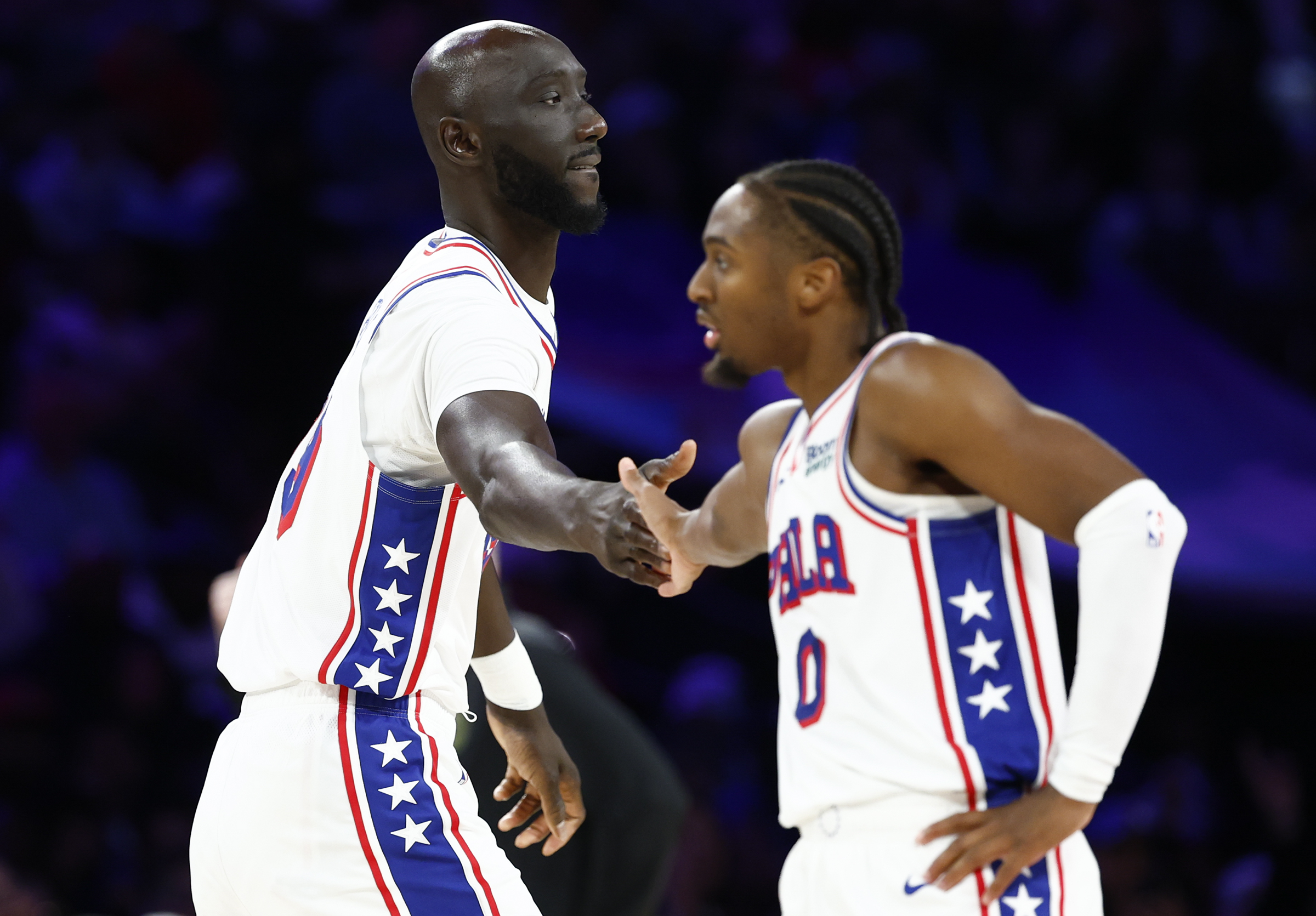
Tacko Fall and Tyrese Maxey slap hands during Sunday’s game against the Pacers.Yong Kim / Staff Photographer
Absent a dependable presence behind Embiid, the key for the Sixers will be scoring in bunches and piecing things together from there.
For at least one game, Fall was a sliver of a piece.
“Nobody knows what tomorrow brings,” Fall said. “I’m just focused on today, whenever my name is called. Like you said, I’ve worked very hard. God has brought me back here, and I’m thankful, and I’m ready.”
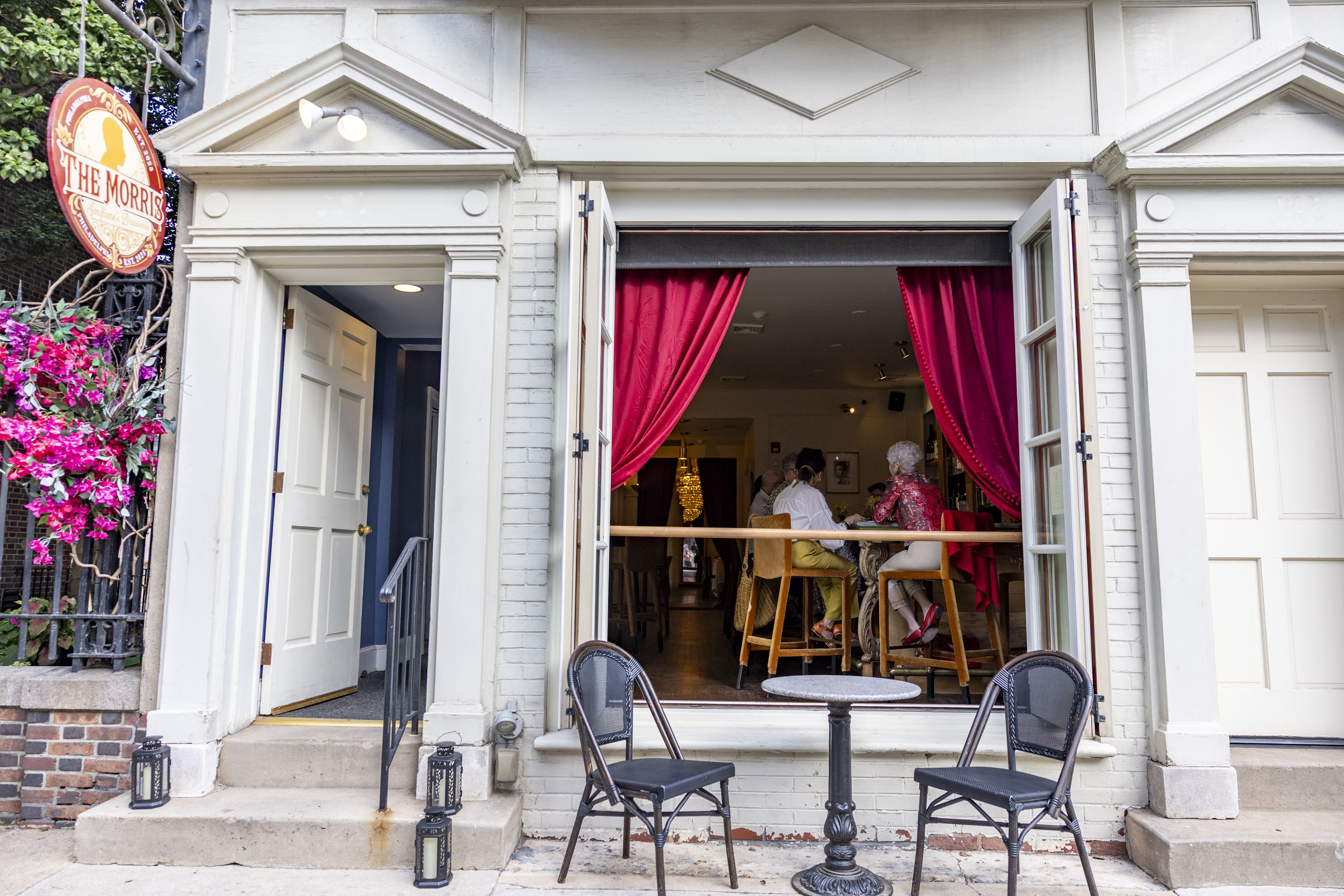
The French classics are gone from Soufiane at the Morris. So is the chef who made them.
Less than five months after opening, owner Soufiane Boutliliss has taken over the kitchen at the Morris House Hotel in Washington Square West, replacing much of the restaurant’s French-Moroccan menu with dishes rooted in his Moroccan heritage.
The abrupt transformation followed an Oct. 3 staff walkout that temporarily closed the restaurant.
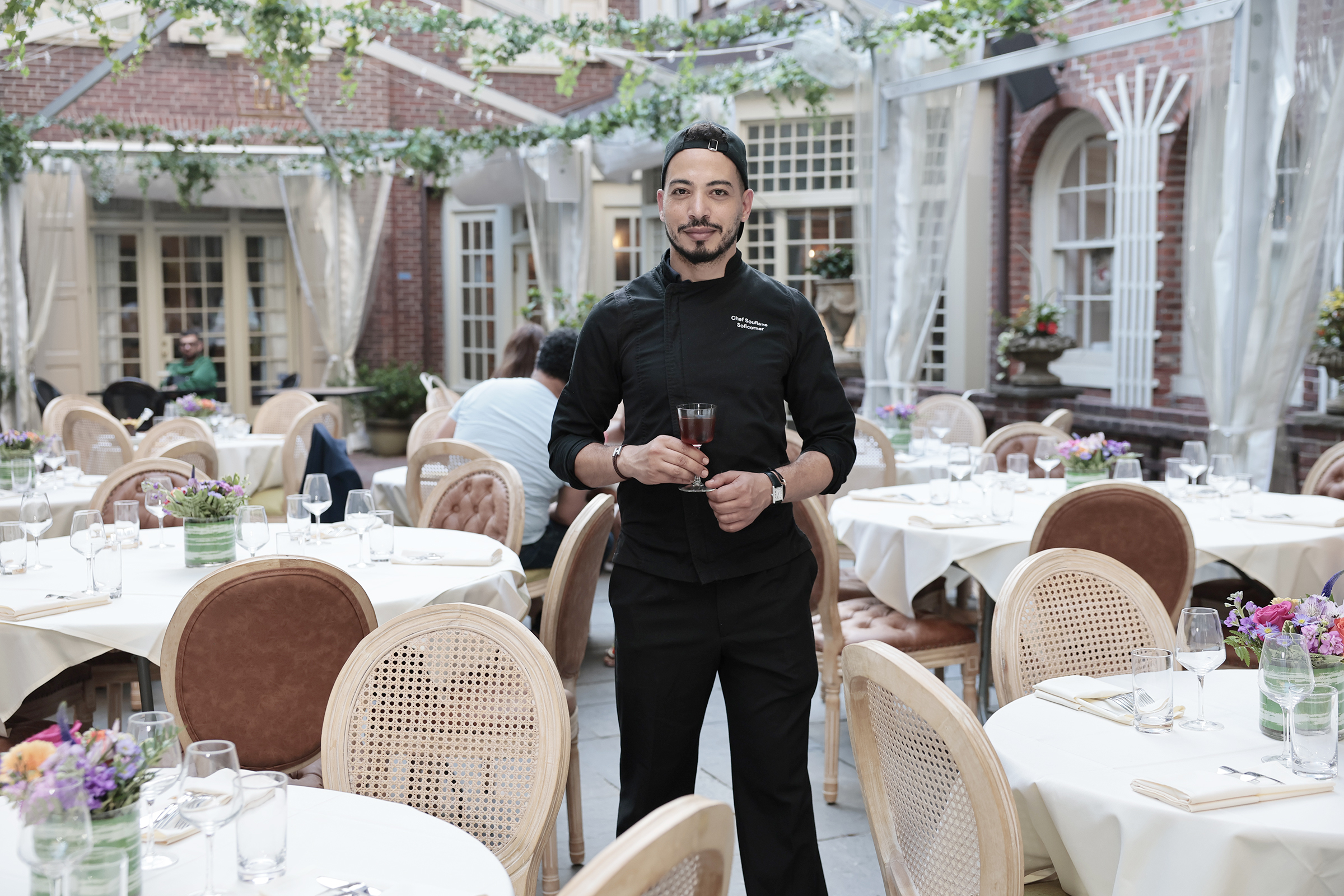
Chef-owner Soufiane Boutliliss in the garden at Soufiane at the Morris on May 27, during a preview.Elizabeth Robertson / Staff Photographer
Former executive chef Henry McGuigan and other employees said the walkout followed months of late and missing paychecks dating back to the restaurant’s opening in early June. McGuigan and two sous chefs were subsequently dismissed in what management called a financial and organizational restructuring.
Boutliliss acknowledged payroll delays but blamed administrative errors, excessive kitchen staffing, and his own failure to control labor costs. He said he had left too much responsibility to others.
“Maybe that was my mistake,” Boutliliss said. “I trusted people, and I paid a very high price for it.”
A turbulent start
Boutliliss, a Moroccan native raised in Paris, entered Philadelphia’s restaurant scene in September 2023 with Sofi Corner Cafe, a small, largely daytime restaurant on Locust Street. It developed a following for French café staples inspired by his Parisian husband, Christophe Mathon, and Moroccan specialties, particularly couscous and tagines.
Soufiane at the Morris was a much bigger undertaking, with a full bar, 45 indoor seats, and 55 outdoors at 225 S. Eighth St. McGuigan, whose resumé includes Zahav, Laser Wolf, Lucky’s Last Chance, June BYOB, and Tavern on Camac, was hired in the spring to oversee a menu ranging from escargots and steak frites to chicken tagine and couscous royale.
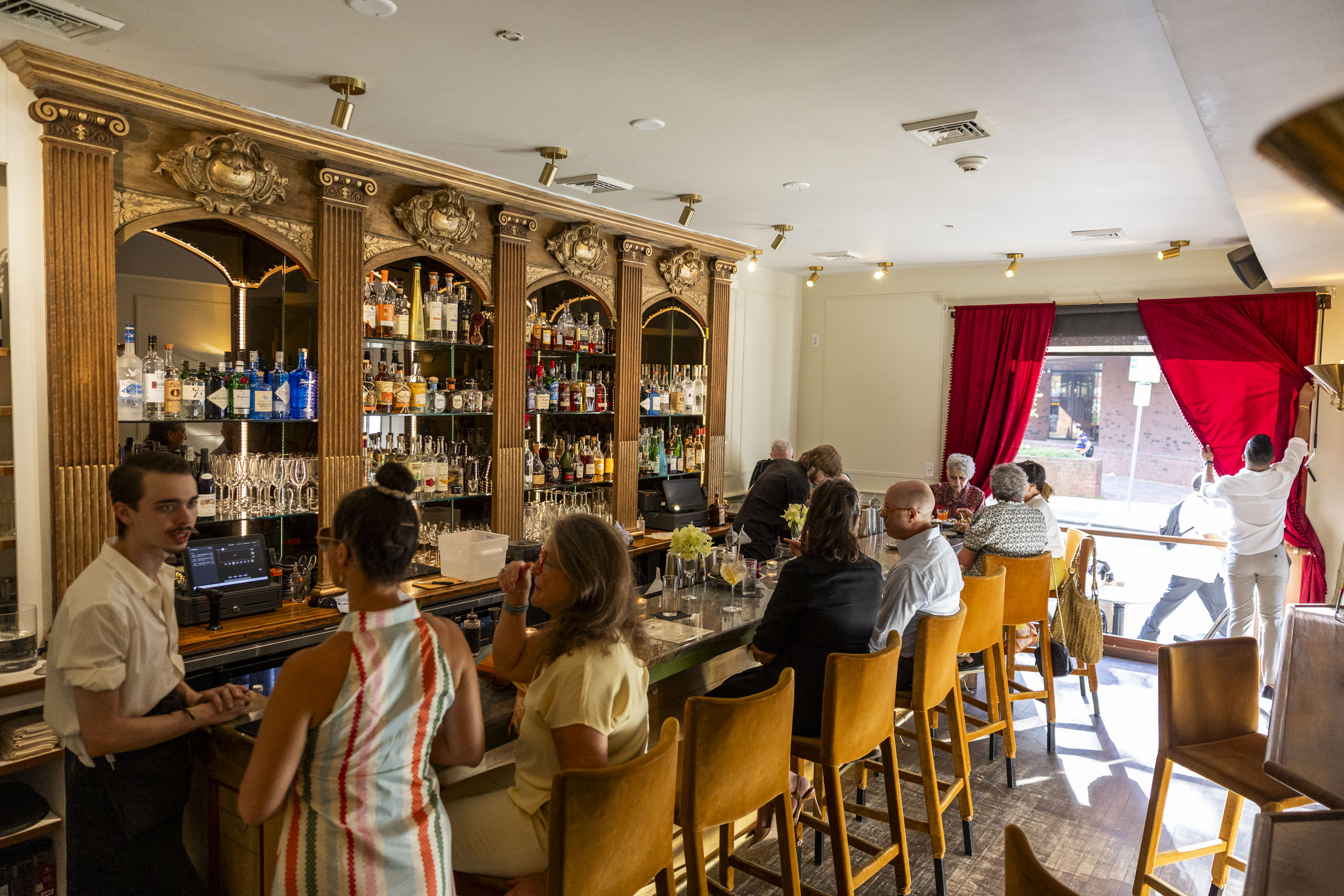
The bar at Soufiane at the Morris on Sept. 10.Tyger Williams / Staff Photographer
Growing pains are common at new restaurants, and turnover is a fact of life. But behind the beauty and grace of Soufiane’s historic hotel setting and secluded courtyard, the operation over the summer and early fall was anything but tranquil. Accounts of what went wrong differ widely, from who controlled staffing and spending to what prompted the walkout.
Employees described bounced paychecks, missed direct deposits, and mounting frustration. “People were not being paid and were very upset,” said Matthew Morphet, who was hired in July to oversee payroll. “They were already on the verge of organizing a walkout by then.”
Payroll problems
While Boutliliss insisted that every Soufiane at the Morris employee was paid, several employees said otherwise.
McGuigan said pay had been unreliable almost from opening day. Direct deposits failed to arrive, he said, and replacement paper checks sometimes bounced.
Chef Henry McGuigan plating beef tartare smoked under a cloche with lavender and quail egg at Soufiane at the Morris.Elizabeth Robertson / Staff Photographer
“We’d tell the staff, ‘I promise you’re going to get paid today. They told us the checks are coming,’” McGuigan said, referring to himself and other managers. “Then the checks wouldn’t arrive, or the money wouldn’t be there.”
Some employees quit; others confronted their managers. Several former employees, who requested anonymity because of Philadelphia’s close-knit restaurant community, corroborated the payroll problems and shared with The Inquirer documentation of their filings with authorities.
One bartender filed a claim with the state Bureau of Labor Law Compliance, alleging being owed $4,109. A server filed a wage-theft claim with Philadelphia’s Office of Worker Protections, alleging being owed $3,500.
McGuigan said he is owed $5,000 to $6,000 and is seeking legal counsel.
“I don’t care about the money I’m owed anymore,” he said, adding that he was more concerned about the hourly workers.
The bar at Soufiane at the Morris.Elizabeth Robertson / Staff Photographer
Boutliliss attributed delays to a former top manager’s tip calculations and incomplete employee records, which he said disrupted direct deposits and required payments by check. He also said some employees were on the books but never worked.
The former manager, who requested anonymity, showed The Inquirer records of two of her own biweekly payments she received through Venmo. One, sent July 10 from an account she did not recognize and marked “payroll,” carried a 2.99% seller transaction fee that she said she was asked to absorb. She pushed back.
The former manager, who described herself as biracial, also filed a complaint with the Equal Employment Opportunity Commission alleging that she was paid less than her predecessor, a white man. Boutliliss denied discrimination, saying their duties differed. The former manager said last week that the EEOC had ended its investigation. She was issued a right-to-sue notice, allowing her to pursue the matter in civil court, and said she is consulting her attorneys about next steps.
Decision-making in dispute
Boutliliss said labor costs had grown unsustainable. During the restaurant’s first month, he said, payroll reached roughly $90,000 against $60,000 in sales.
At times, he said, 11 kitchen employees were working while the dining room had only four occupied tables.
Chicken tagine remains on the menu at Soufiane at the Morris.Tyger Williams / Staff Photographer
He also questioned timekeeping practices, saying some employees recorded hours outside their assigned shifts or clocked in remotely. Some kitchen workers, he said, began at 7 a.m., although dinner service did not start until 4:30 p.m.
Boutliliss said he repeatedly asked McGuigan to cut costs.
McGuigan disputed that account, saying he kept kitchen labor costs at roughly 15% of sales — about half of the standard for a white-tablecloth restaurant.
He said Boutliliss received schedules in advance and regularly discussed staffing levels with him, including how hours were allocated among salaried and hourly employees. McGuigan said they frequently reduced staffing even after schedules were issued in order to control the cost of labor.
Boutliliss said he initially left scheduling to McGuigan and became more directly involved as problems mounted. Even then, he said, schedules that were supposed to arrive by Thursday frequently reached him as late as Sunday or Monday, leaving little opportunity for meaningful review.
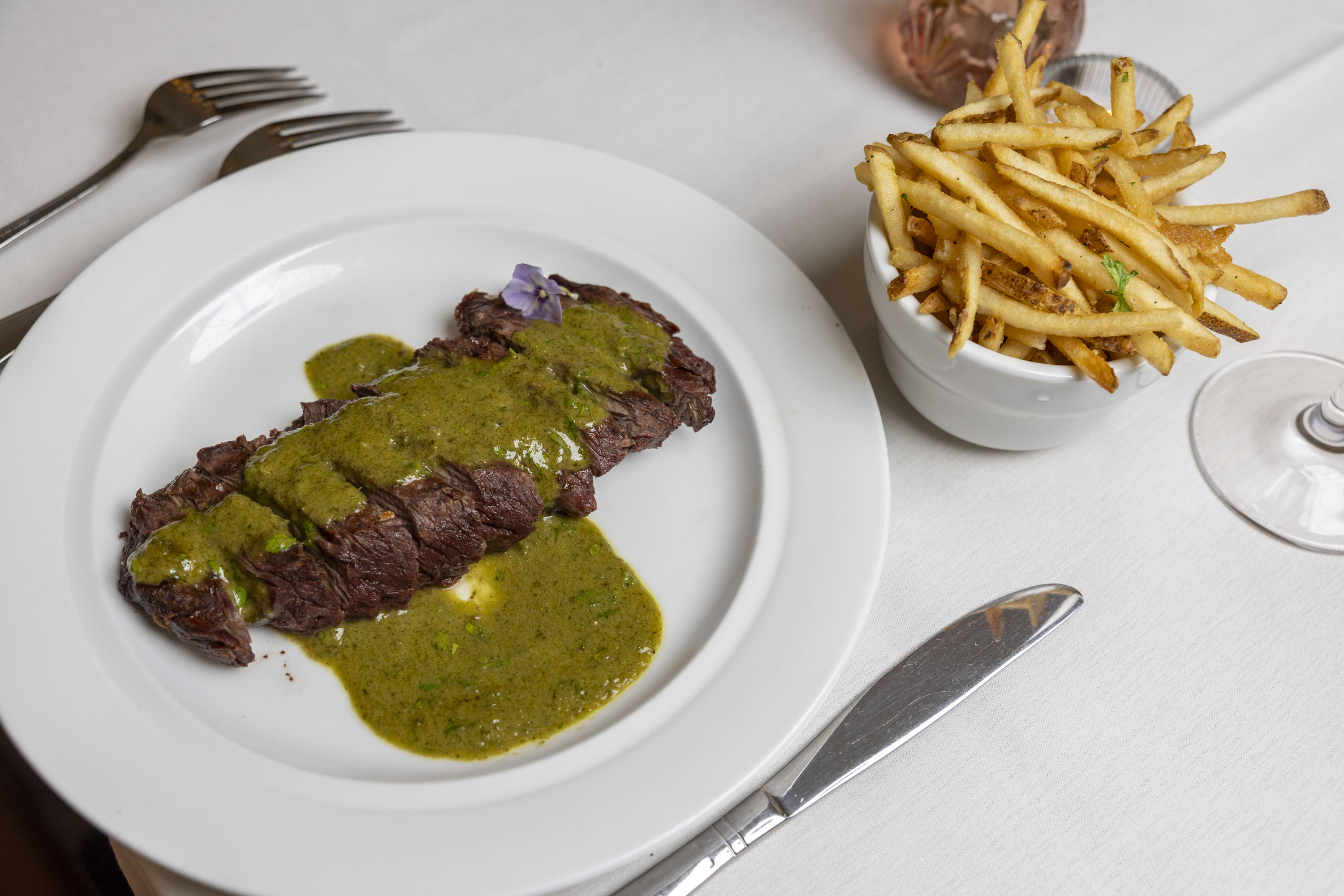
Steak-frites were part of the menu before Oct. 3 at Soufiane at the Morris.Tyger Williams / Staff Photographer
He also said he saw employees working in the kitchen who had not appeared on the schedules submitted to him.
“Approving a schedule based on the information provided to me is fundamentally different from approving staffing arrangements that were never properly disclosed,” Boutliliss said.
McGuigan described Boutliliss as an absentee owner. “Not being there, you really can’t see what was going on day to day,” he said.
Boutliliss said he met weekly with McGuigan to address staffing and operational issues, only to be repeatedly assured that problems would be corrected.
The events also brought into focus another disagreement: how much responsibility Mathon, Boutliliss’ husband, had exercised over the business.
Public records identify Boutliliss as the restaurant’s sole owner. Boutliliss describes Mathon as an adviser at both Soufiane and Sofi Corner, not an owner or employee.
McGuigan and Morphet said Boutliliss routinely deferred to Mathon to deliver difficult messages and enforce decisions, casting Mathon in what McGuigan called a “bad cop” role.
Come Saturday, the restaurant had 100 reservations on the books.
McGuigan and the former manager said they approached Boutliliss about payroll in the morning. Boutliliss said he was transferring funds to cover it and told McGuigan that employees would be paid the next day or by Monday at the latest.
McGuigan said that front-of-house employees refused to work, making dinner service impossible, and that he and the kitchen staff subsequently left around 1 p.m. Boutliliss maintained that most front-of-house employees were willing to work.
The restaurant closed for the night.
On Oct. 6, McGuigan said, he received notice through the scheduling system that his employment had been terminated, effective immediately. Two sous chefs received similar notices, he said.
A smaller operation
The walkout and dismissals left Boutliliss to rebuild.
The restaurant now operates with a much smaller staff, and its menu reflects Boutliliss’ growing emphasis on Moroccan cooking, veering away from the French items — beef tartare, escargots, French onion soup, steak frites, and curried mussels — LaBan praised in his review. All have disappeared.
The chicken tagine remains, along with Moroccan pain perdu and lemon tart. Couscous royale, an elaborate platter of chicken, lamb, merguez, and vegetables, has given way to separate chicken and vegetable versions. Newer offerings include lamb and prune tagine, harira soup, and vegetable tagine. Quiche Lorraine and croque monsieur are among the few French holdovers.
Boutliliss recently added chicken pastilla, a savory-sweet Moroccan pastry, and plans to further explore Moroccan cuisine on future menus.
Asked whether he regretted taking on a project so much larger than Sofi Corner, Boutliliss acknowledged that the restaurant’s troubles had depleted his savings. With no outside investors, he alone bears the losses.
He hopes the leaner operation and a return to his Moroccan roots, which he said has been well-received, will put the restaurant on firmer footing.
“Sometimes you give someone a chance to build a career,” he said. “If you build your career and I build mine, we can grow together.”
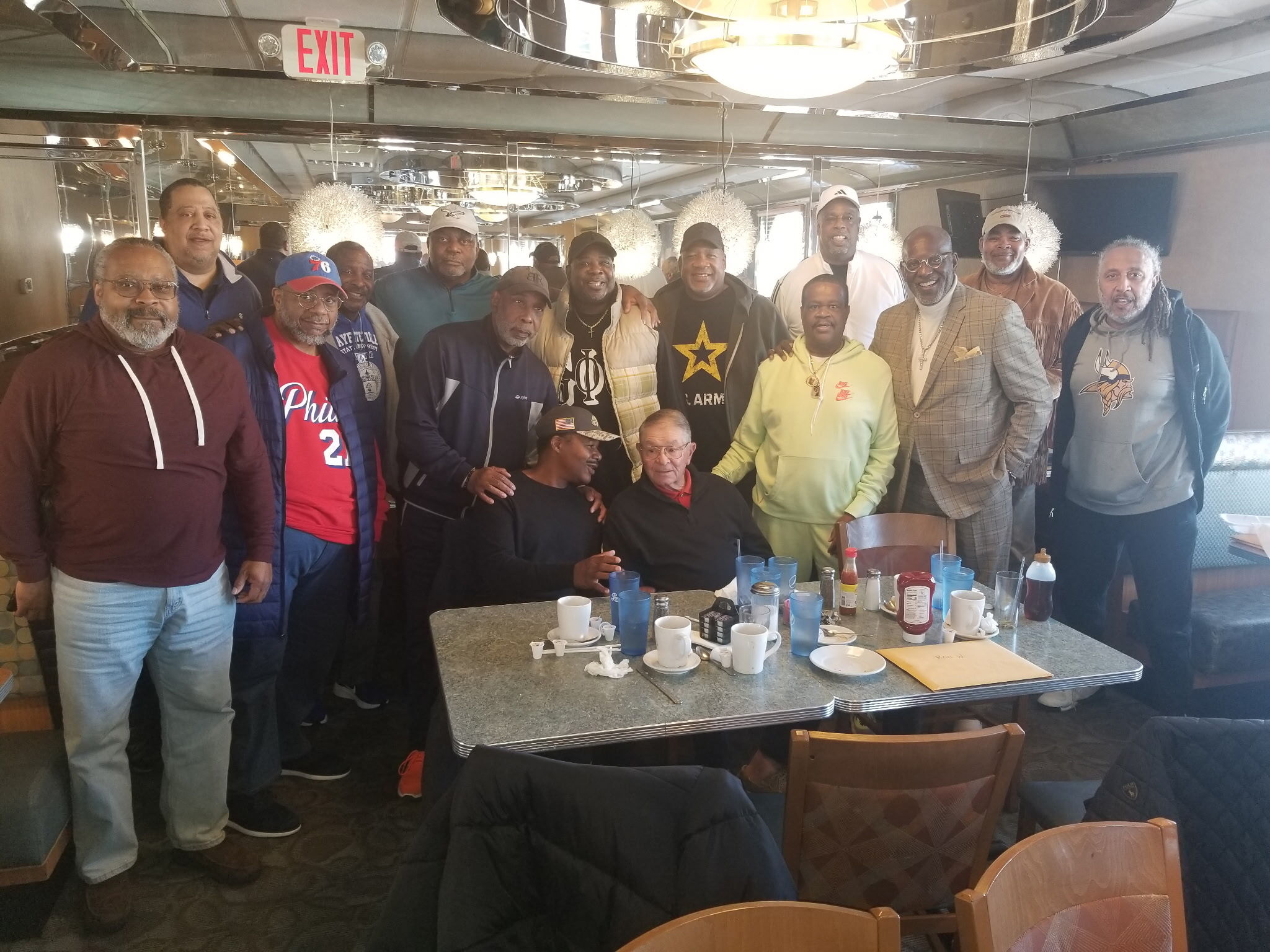
Every three or four months, on Saturday mornings at 9, a group of men filter into the Royal Diner in Lansdowne. They head straight to the back, where a couple of tables are pushed between two booths.
For hours, the men sit and laugh over coffee and eggs, sharing stories of their youth. Most are in their 50s and 60s, some younger, but all attended West Philadelphia High School, and almost all were on the basketball team.
This tradition was started by Vince Ross, a Penn alum who played at West from 1975-78. Not long ago, he realized he was only seeing his former teammates at funerals and wakes. He set out to change that.
Now, as many as 40 Speedboys descend on the restaurant off of Baltimore Pike. It’s such a regular occurrence that they don’t call ahead. The staff at the Royal has come to expect them.
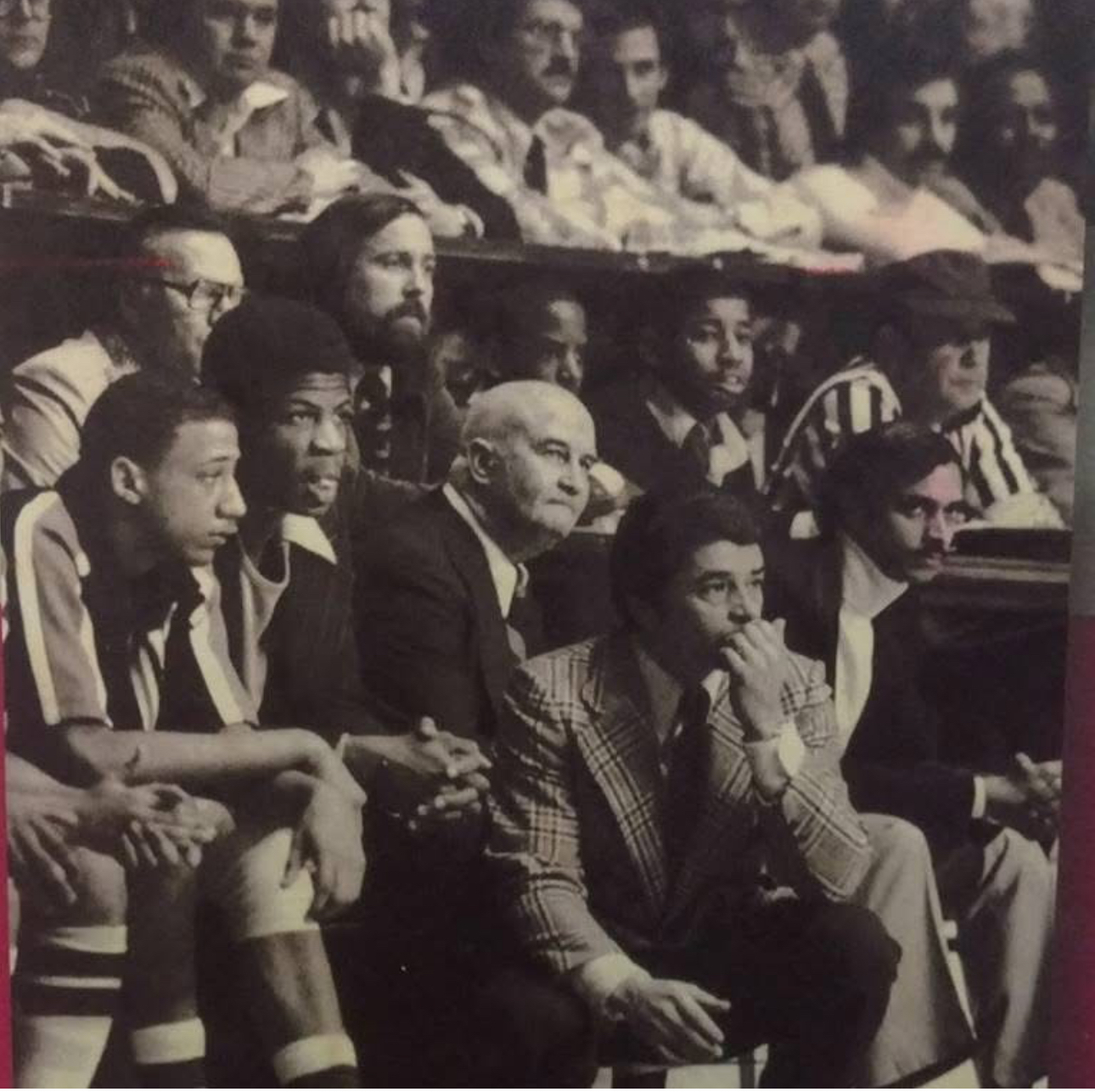
There was one man who stood out among the rest. He was short (5-foot-7), and in his 80s, often wearing a collared shirt. Players knew Joey Goldenberg as “Mr. G,” “Coach G,” or “G,” but no matter how they referred to him, he was always present.
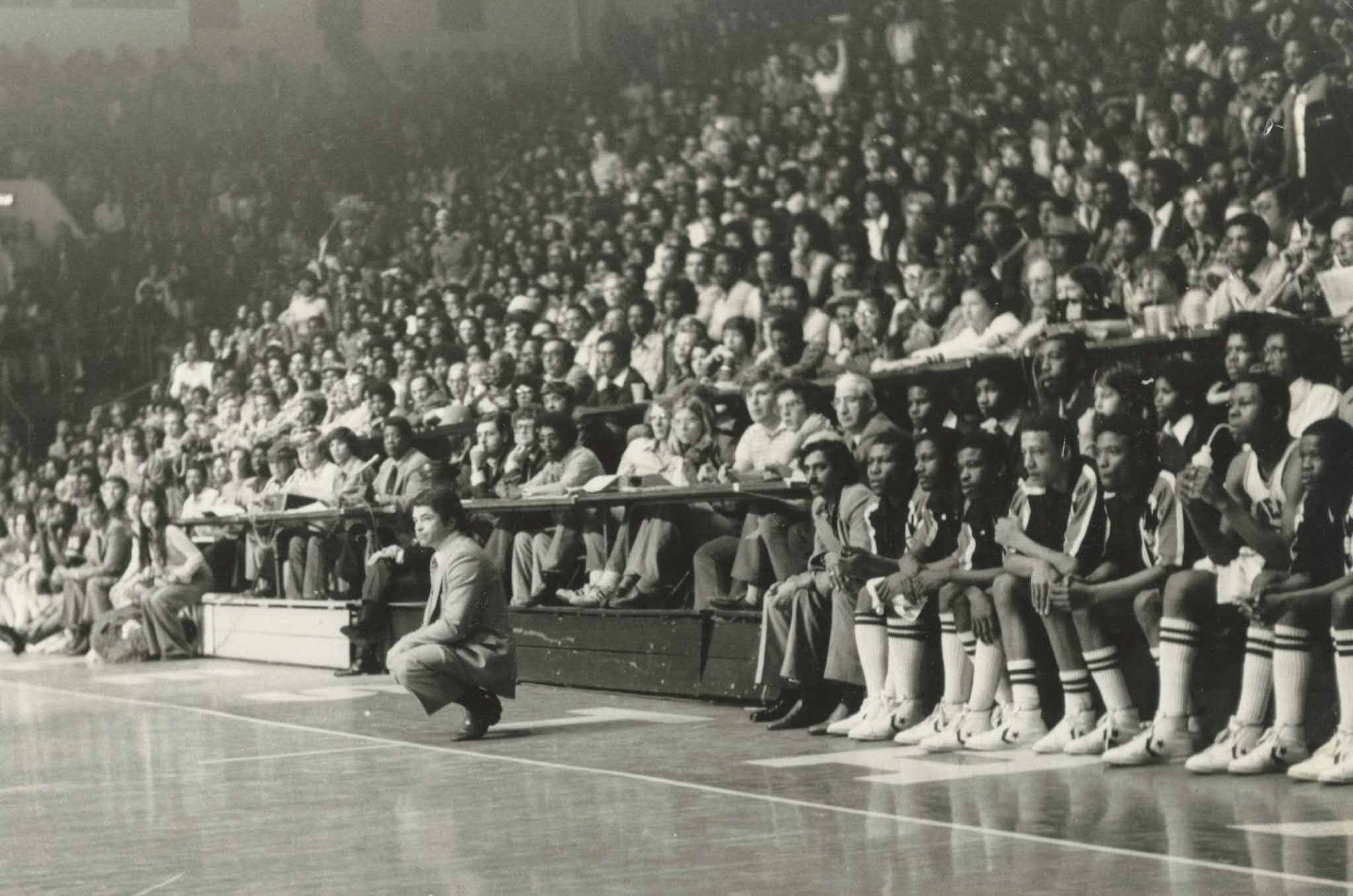
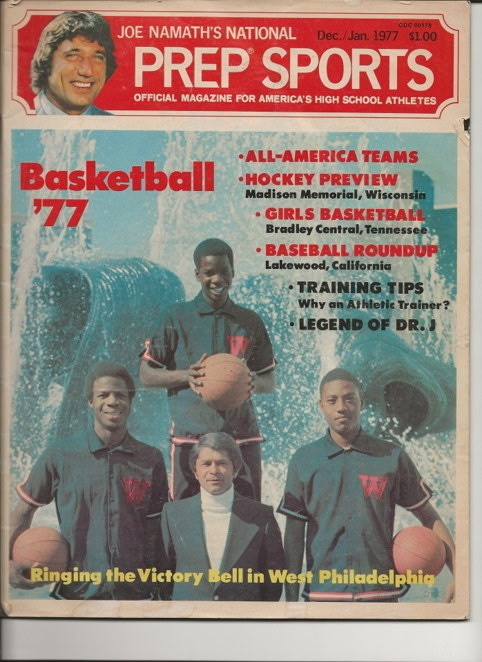
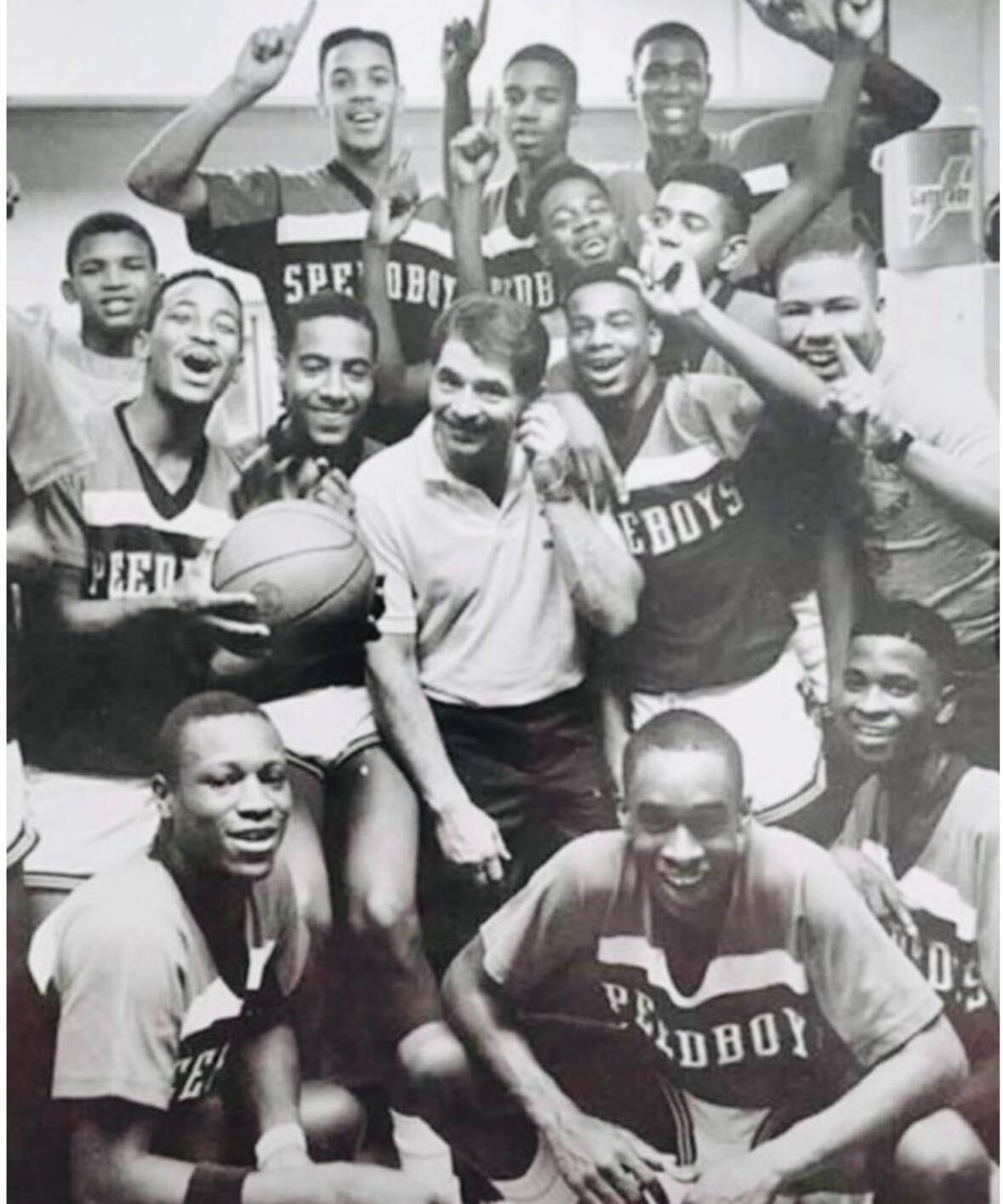
Over his 21 seasons at West Philly, Goldenberg led the Speedboys to a record of 410-86 (.827). Only Andre Noble at Imhotep (.829) owns a higher winning percentage for a high school boys’ basketball coach in the city’s history. From 1974-78, Goldenberg’s teams won five straight Public League championships and four straight city titles, including the 1976-77 squad that went 30-0.
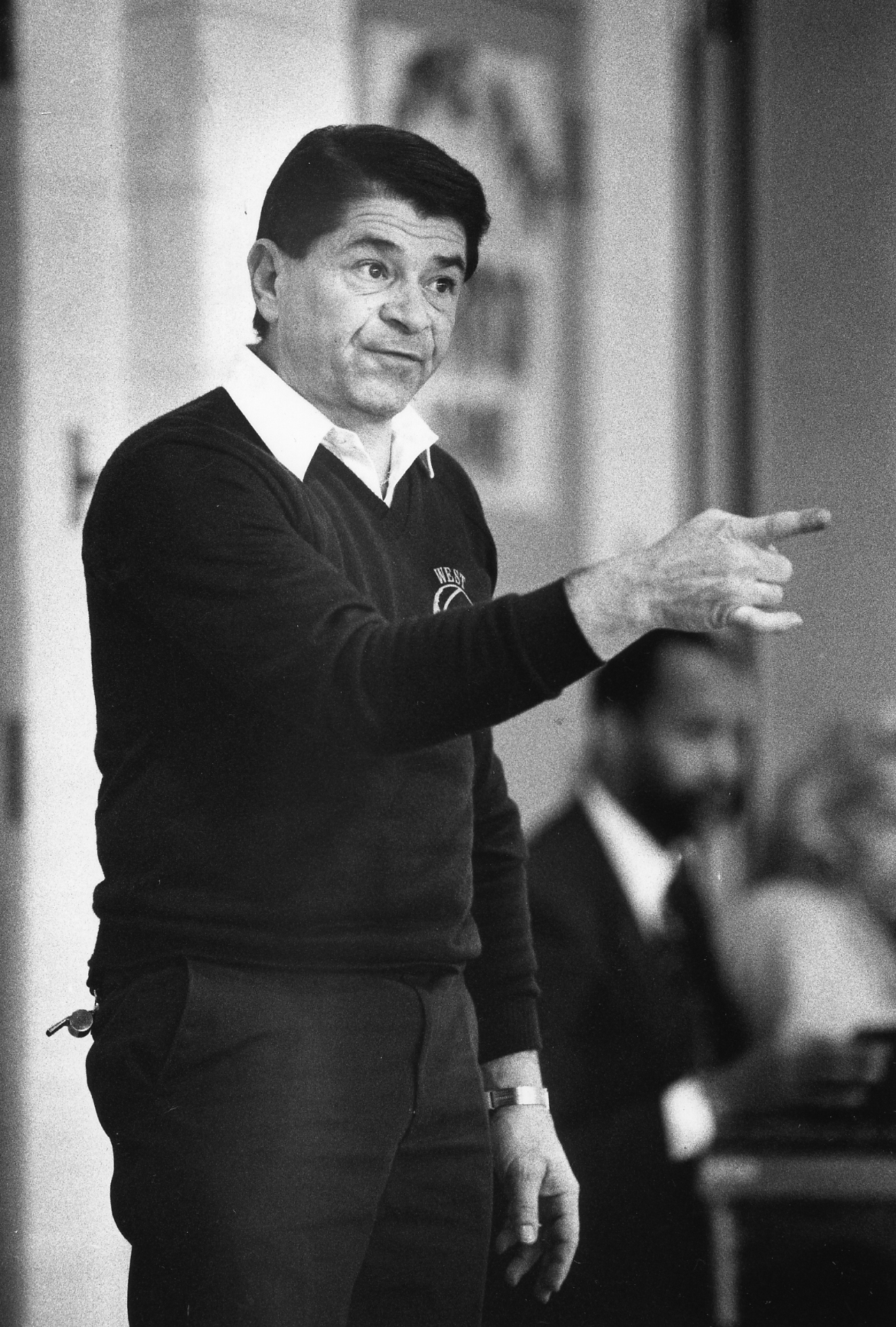
Joey Goldenberg’s West Philly teams received national attention for their dominance.Photo courtesy of Goldenberg family
Goldenberg put a premium on conditioning, which allowed hisplayersto trap and force turnovers with pressure defense, and then fast break on offense. The Speedboys’ depth enabled them to keep a quick pace throughout games.Theresultwas a relentless style of play, one that proved formidable for even local college teams that the teenagers scrimmaged.
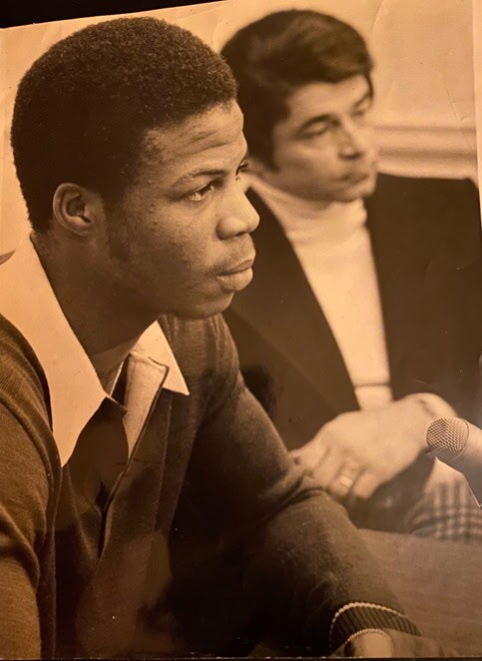
But despite all of thissuccess, the coach’s impact transcended sport. Gene Banks, a six-year NBA forward who was a standout at Duke, said Goldenberg was “like my white Jewish father.”
Other Speedboys concurred. Darryl Warwick, Class of 1977, credited Coach G with helping him on his journey tosobriety. Arnett Woodall, Class of 1982, noticed that Goldenberg would make an extra effort to check on him, because he knew he had an inactive parent.
Luther Collins, Class of 1975, never made the team. But that didn’t stop Coach G from finding the high schoolera spot. Before long, Collins was sittingat the scorer’s table, keeping the book.
“[Goldenberg] wanted me to follow a path, no matter if I played on the court or not,” he said.
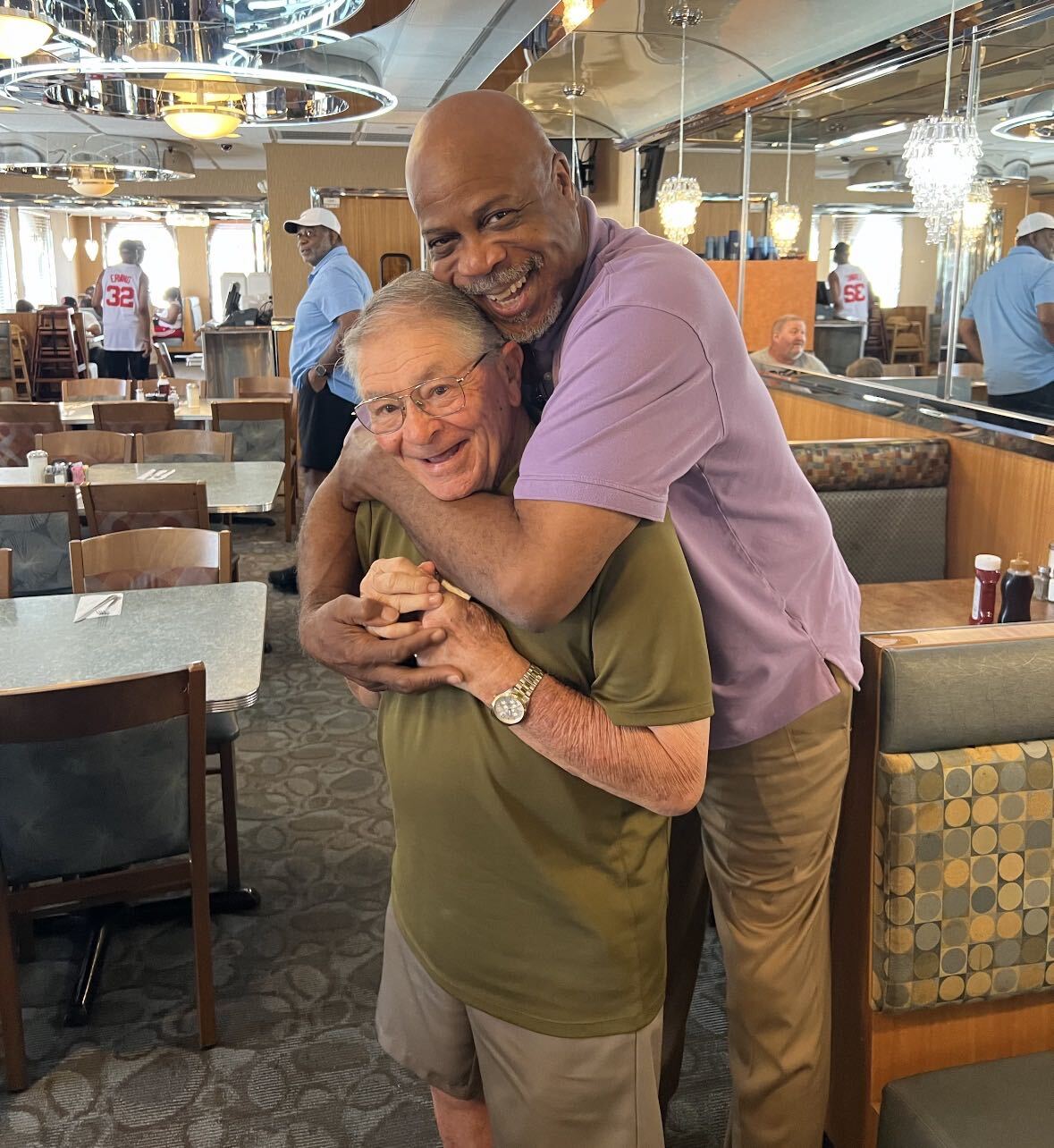
Once the coach heard about the Speedboys’ quarterly breakfasts, he began to attend them all. At the end of each meal, players would reach for their wallets, quibbling over who would pay G’s bill.
The answer was no one.
“We were always fighting [about that],” recalled Greg McKinley, Class of 1978. “And he always refused. He said, ‘I’m one of the guys, I’m a real Speedboy. I’ll pay for my breakfast like everybody else.’”
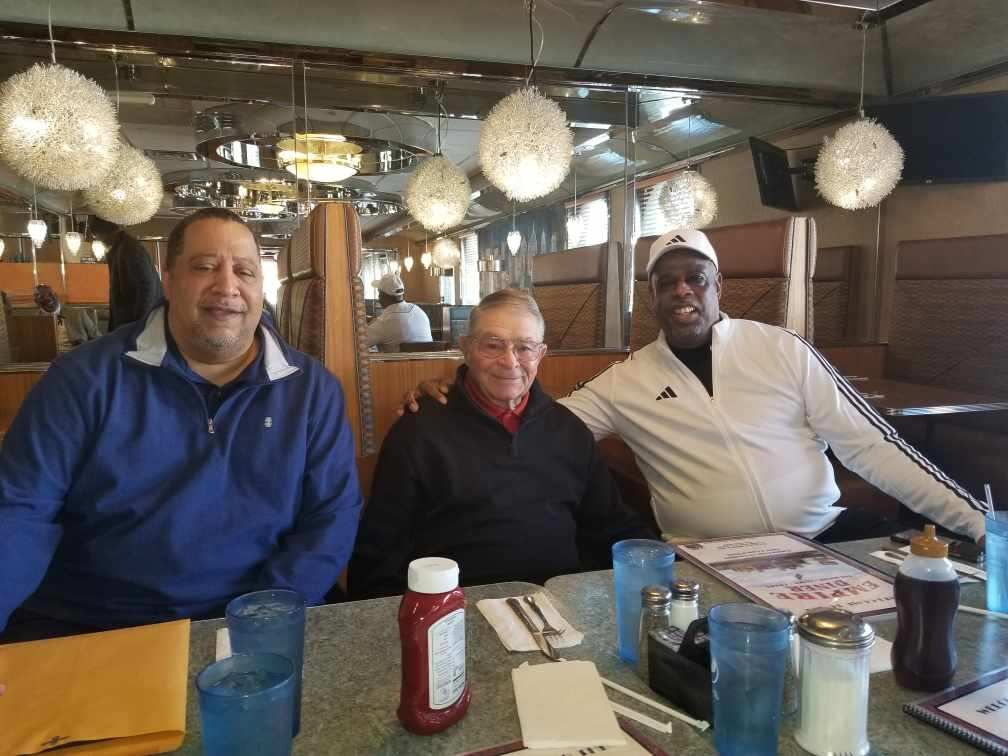
“Coach G” with his former Speedboys at the Royal Diner.Courtesy of Greg McKinley
Goldenberg wasn’t as locally renowned as Speedy Morris or Bill Ellerbee, but in West Philadelphia, he was a titan. So, when he died last month at age 89, his players were distraught.
But they’re determined to live by the lessons he taught them; to spread the gospel of Goldenberg, wherever they go.
“To let him down and not carry on, and be the way that he taught us to be, it would be blasphemy,” said Woodall. “To not follow on like coach.”
Becoming ‘Coach G’
Goldenberg grew up in the same community as many of his pupils, on the 5000 block of Windsor Street in Southwest Philadelphia. He attended the same high school — West Philly — where he was a starting point guard, facing Overbrook teams that included Wilt Chamberlain.
By the time he left for Temple in 1955, to play basketball for Harry Litwack, the demographics of his birthplace had started to shift. West Philadelphia was in the midst of a transition, from a majority white to a majority Black neighborhood.
When Goldenberg returned to his alma mater in 1963, the school looked completely different. Not everyone embraced this at the height of the civil rights movement, but the health and physical education teacher did.
As he worked his way up from cadet coach (10th grade), to junior varsity coach, to varsity head coach in 1969, Goldenberg developed a reputation for being tough but fair. He went beyond the typical duties of his job, getting to know his roster on a deeper level.
Coach Joey Goldenberg with his Speedboys team on Dec. 18, 1986.provided by Goldenberg Family
These interpersonal relationships allowed him to tailor his approach. Goldenberg was aware of whether a player’s father or mother was in their life. He’d notice if a player’s family wasn’t regularly in the stands.
From there, he’d give them the support they needed.
“Even though he was teaching us, he was also understanding how Black kids live, too,” said Warwick. “You try dealing with different [personalities] every day, all of us coming from different living environments. And [some] don’t want to play ball some days, and you argue with this person, argue with that person.
“Not one time, while I was on the team, did I see anybody try to start a fight with him. Very few people argued with him. He understood that none of us was perfect.”
His patience did have a limit, though. Woodall and a teammate, Howard Evans, remember a day in the early 1980s when a Speedboy burglarized the locker room. Woodall returned from practice to find his hard-earned money stolen from hispants pocket. He was incensed.
So was Goldenberg, who had the player expelled. But before Woodall could retaliate, the coach pulled him aside.
He explained that the burglar was gone. There was no need for the teenager to take his anger out.
“He said, ’Thirty seconds can change the course of your life,’” Woodall recalled. “I still use that quote today.”
Joey Goldenberg made lasting connections with his players throughout his career (and won a lot).File Photo
Incidents like these were rare. Goldenberg ran a disciplined program, and most of his players obliged. This was in part because the roster was competitive to make. West Philadelphia was brimming with basketball talent, honed at local recreation centers like Sherwood and Cobbs Creek.
It was not unheard of for 150 high schoolers to try out for varsity. And if you were lucky enough to get a spot, there was no guarantee you’d get one the following year. So, the players heeded Coach G’s rules.
The high schoolers were always on time. They embraced the 45 minutes of fundamentals at the start of each workout. They didn’t add any creative flourishes (behind-the-back passes, gratuitous dribbling) and dutifully hustled through his drills (which Banks said were harder than those at Duke, where he played for Bill Foster and Mike Krzyzewski).
Above all, the Speedboys made sure to never miss a practice. Especially not ahead of a game. Banks learned this the hard way. On March 9, 1977, the day before the Public League Championship, practice was moved to the Palestra.
Banks was sick and stayed home from school. He showed up at West Philly that afternoon, looking for his teammates. They were nowhere to be found. Goldenberg decided to hold firm, benching the McDonald’s All-American in one of the biggest games of his high school career.
(The Speedboys won without him, defeating Overbrook, 61-51).
This punishment sent a message that endured for years to come. Evans was generally a strong student, but received a D on a test in the fall of 1984. His mother contacted Goldenberg, asking that her son only play two quarters.
Joey Goldenberg was not afraid to bench a great player like Gene Banks (second from left).provided by The Goldenberg Family
Evans hoped his coach would make an exception. But then he remembered Banks.
“And I’m thinking, if he sat him, there’s no way he’s going to let me get by,” Evans said. “If he did that to Gene Banks, he’s going to crucify me.”
(Goldenberg did not, in fact, let him get by. But he did allow the point guard to choose his quarters).
Abiding by this code wasn’t easy. But the familial environment that Goldenberg created made it all worth it. He and his wife, Claire, would routinely host players for barbecues and dinners.
Over the summer, the couple ran a sleepaway camp in Bucks County. More than a few Speedboys came along, working in the kitchen to make some extra money and get out of the city.
Many of the West Philadelphia natives took their first flight because of Goldenberg. In the 1970s, his teams began to travel to tournaments across the country. They started with cities within driving distance — New York, Washington, Pittsburgh — but eventually expanded to places as far as North Carolina, Florida, and Las Vegas.
It didn’t take long for the coach to appreciate the impact. On one road trip in 1976, to Johnstown, Pa., Goldenberg saw one of his players, Terry Scott, holding a portable TV. He asked him why he’d brought it.
From left to right: Greg McKinley, Coach G, and Vince Ross at breakfast at the Royal Diner.Courtesy of Greg McKinley
Scott explained that he wanted something to watch in his hotel room. It dawned on the coach that his substitute guard had never stayed in a hotel before. He turned to the group and informed them that each room would have its own color TV.
“The bus went berserk,” Goldenberg told the Daily News in 1982. “Guys were yelling and screaming. That was my first awakening. I realized how beneficial it was to take the kids out of Philadelphia.”
His greatest expedition came in 1983, when the Speedboys flew to Honolulu. Getting there took a year of fundraising. Every morning, before school, Goldenberg and his assistant coach, Phil Umansky, would pick up soft pretzels, selling one for a quarter and five for a dollar.
Thirty-four thousand pretzels later, they were on their way to The Aloha State, to compete in the Iolani Classic.
Players walked along Waikiki Beach in their spare time. One day, a couple of them went snorkeling. Evans can still remember the water; so clear he could see the fish below.
“I’m used to the city, with brown water,” he said. “That water over there, it was clean. I think everybody smiled for the first two or three days.”
Joey Goldenberg and Gene Banks on the day Banks committed to Duke.Photo courtesy of Goldenberg family
A West Philadelphia legacy
To Goldenberg, there was no shelf life on a coach’s love. His commitment to his players transcended their time at West. The PE teacher went to their games and college graduations. Sometimes, he’d just call to check in.
Even after Goldenberg retired, in 1990, he found another job in the sport, running the Wildwood Basketball Coaches Clinic with a few friends, before he was hired as director of the Sixers’ youth basketball camps. But through it all, he always made time for his Speedboys.
Warwick was one of Goldenberg’s brightest stars, earning a scholarship to Hampton University, prior to entering the 1981 NBA Draft. The Atlanta Hawks selected him in the sixth round, but Warwick was released during the preseason, later signing with some minor basketball leagues.
In the mid-1980s, the former point guard began to struggle with substance abuse. One night in 1986, he awoke in a University of Pennsylvania hospital to find Coach G and Claire standing by his bedside.
Warwick was overcome with emotion. He hadn’t seen his coach in years; all of a sudden, Goldenberg was sharing the same refrains he did in high school, reminding his pupil to give himself grace.
“It was so uplifting,” Warwick said. “He didn’t give a damn about basketball at the time. He cared about me. [Coach G] and his wife cared about me.”
His struggles continued until 1991, when he got clean. Goldenberg saw Warwick shortly after. He grabbed the young man’s cheeks, and looked at his face, buoyant and vigorous, and could tell that he was doing something right.
Warwick has been sober ever since. He eventually became a social worker, staying in that role for 28 years, joining a number of Speedboys who have given back to their community.
Joey Goldenberg with Gene Banks, who went from West Philadelphia High School to Duke to the NBA.courtesy of Gene Banks
In 2004, Woodall opened West Phillie Produce, a market that provides fresh fruits and vegetables at an affordable price. Collins spends Tuesday nights at his alma mater, helping students prepare for college and job opportunities.
Goldenberg’s son, Mike, said that if anything, this is what his father was proudest of. Not the records, or the titles, but the players who poured into West Philadelphia, just as he did long ago.
And if anyone questions this legacy, they can head to the Royal Diner, at 9 on a Saturday morning. There, they’ll find a group of joyous middle-aged Speedboys, taking up tables and booths in the back, sharing stories of a man who did so much more than win.
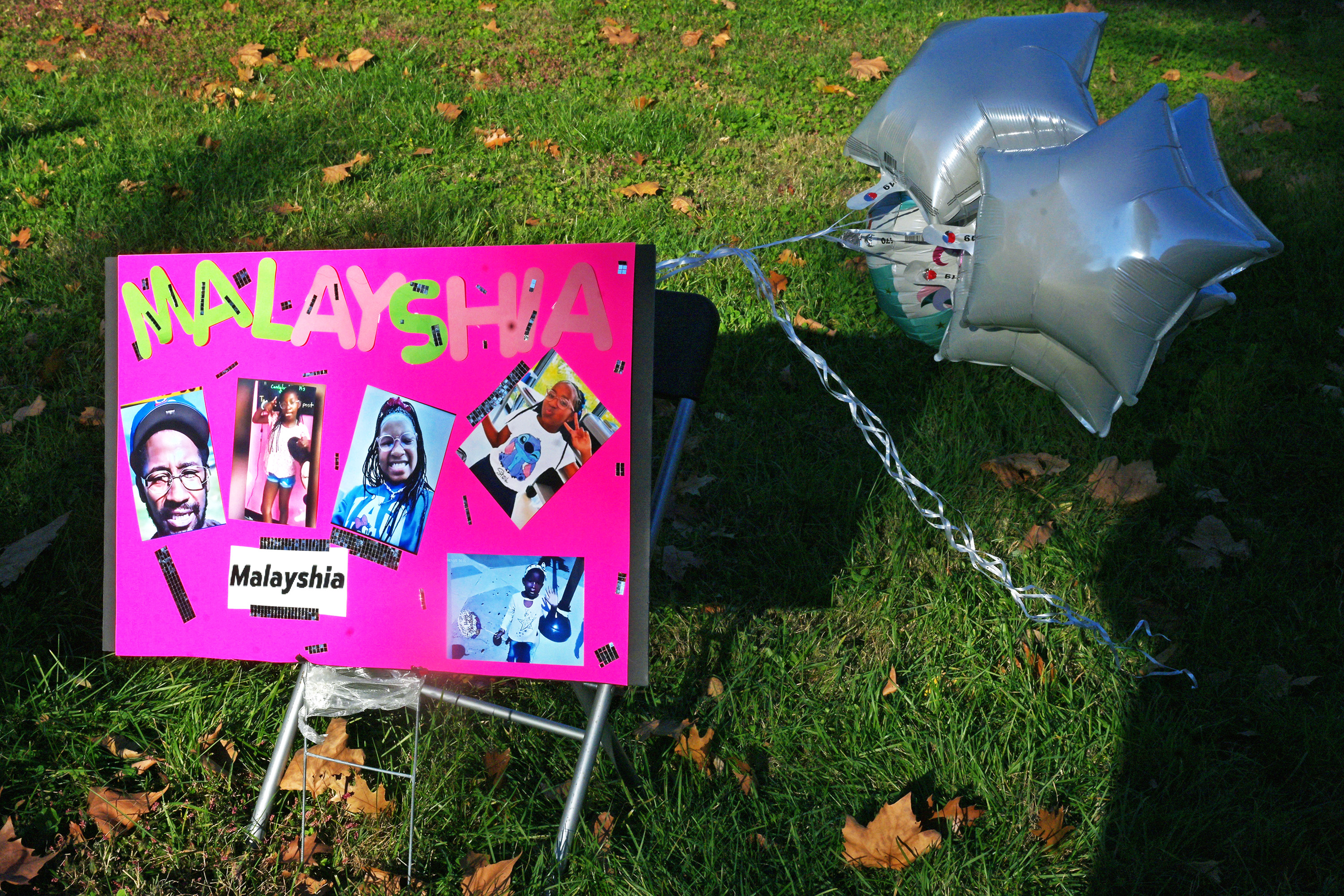
Malayshia Allford’s parents were arguing in the parking lot of a Springfield Township strip mall when someone called police. Her mother tried to board a SEPTA bus with the girl — but herfather pulled them back to the sidewalk. Then, he struck the mother in the head, police said.
That 2020 incident, and the investigations that followed, prompted a caseworker to remove Malayshia, then just 4 years old, from her mother’s home in Philadelphia.
Over the next six years of her short and tumultuous life, she would be shuffled through at least three homes by Philadelphia’s child-welfare system. On Nov. 5, one of those foster parents, Carprice Williams, was charged with killing the 10-year-old girl and leaving her body in the trunk of a car.
Williams was a Philadelphia fifth-grade teacher whose disciplinary style, including withholding lunch from students, worried colleagues and drew complaints from some children and parents. She had been a foster mother to at least four children dating back to 2019 or earlier. In 2021, another child who was placed in her care was hospitalized with what a doctor deemed near-fatal injuries.
The story of how their paths collided raises serious questions about the systems the city and state have in place to keep children safe, and to vet those who care for them.
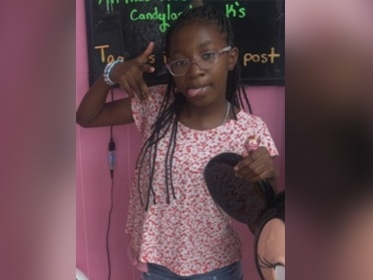
Malayshia Allford, 10, was missing for more than a week before her remains were found inside the trunk of a car in South Jersey.Courtesy of Philadelphia police
Years in the system
Some of Malayshia’s relatives had not seen the child since she was a 4-year-old with a heart-melting smile and an affinity for Minnie Mouse. That’s how long she had been in the child-welfare system.
A caseworker had temporarily removed Malayshia from her mother’s home after the domestic incident. In April 2021, a Philadelphia Family Court judge found the home unsafe, noting that drugs had been found in the child’s bedroom and that the mother failed to seek care after she suspected her daughter had been sexually abused.
Malayshia was placed with a relative, and allowed weekly supervised visits with her parents.
The court noted that Malayshia’s parents, Everine Brown-Ward and Nazir Allford, had not cooperated with the child-welfare agency, and had sent threatening messages, including a shooting threat, to the relative who was caring for the child. The father also assaulted a child-welfare caseworker, according to court records. Allford’s brother, Nafis Horne, said the parents were grieving and not ready to comment.
A lawyer, Michael Graves Jr., was appointed to represent Malayshia’s interests, according to court records dating to 2021. Graves did not respond to messages.
Frank Cervone, who for years led the Support Center for Child Advocates, said his office and the city’s public defender both require lawyers to conduct twice-a-year in-home visits. But there are no such standards for private, court-appointed lawyers such as Graves.
“Most of them simply don’t do that,” Cervone said. “They don’t see it as part of their practice.”
In 2022, both parents were arrested after taking Malayshia from a supervised visit at Catholic Community Services in Northeast Philadelphia. Both pleaded guilty to interfering with custody. After that, they no longer were allowed visits, relatives said.
Still, multiple family members said, there were other options for the girl, who had three siblings — two in foster homes, and one living with a maternal aunt, Yolanda Brown.
By last year, Malayshia was in a different foster home. But caseworkers found that she was physically and sexually abused there, according to Nadeem Bezar, a lawyer representing Malayshia’s estate.
That’s why she was removed from that home and placed with Williams, he said.
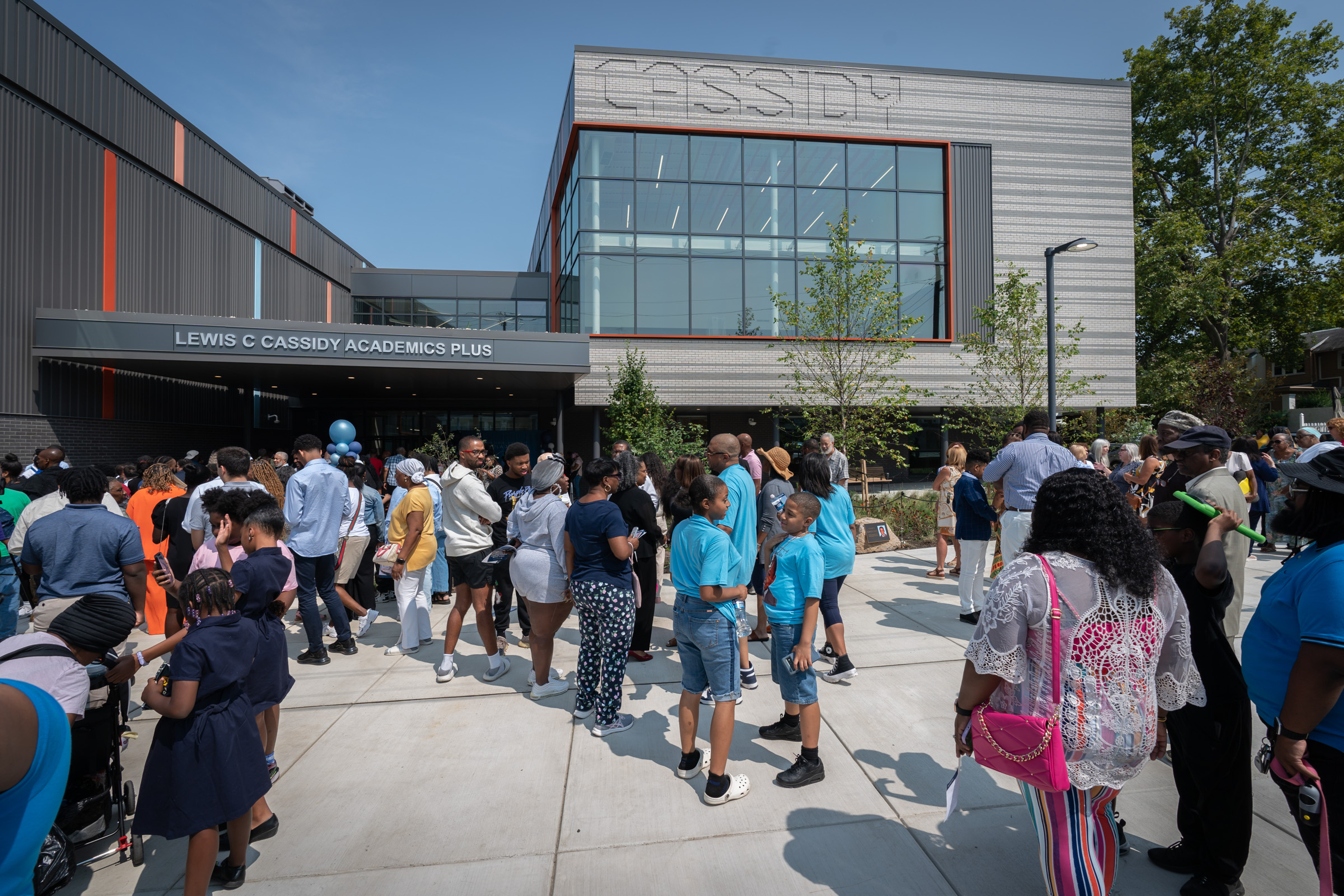
Visitors attend the opening of the Lewis C. Cassidy Academics Plus School in a 2024 file photo.Jessica Griffin / Staff Photographer
‘The care just wasn’t there’
A fifth-grade teacher at Lewis C. Cassidy Academics Plus in Overbrook, Williams, 36, was known as a disciplinarian with what some coworkers described as an imperious attitude.
She demanded to be called Dr. Williams, according to two coworkers and a parent, and touted a doctoral degree from Drexel University on her LinkedIn page. Asked to confirm that, a Drexel spokesperson said only that Williams had earned a master’s degree from the university in 2015.
A parent and a school staffer both said they had complained to the principal about what they viewed as harassment by Williams, and believed others had as well.
Cassidy parent Justin Forte said Williams seemed frazzled by her large class and ill-equipped to manage behavioral issues.
“She wasn’t handling things right,” said Forte, who said Williams had singled his 11-year-old son out for reprimands and repeatedly prevented him from eating lunch, in violation of district policy.
“The first thing a teacher’s supposed to do is care for children,” he said, “and it seems like the care just wasn’t there.”
Stephen Ford, who taught fifth grade alongside Williams, said she was an effective teacher, but stern. While some other teachers try to infuse teaching with humor, he said, “I didn’t hear a lot of laughing in her room.”
A Cassidy gym teacher, Corey Blakey, who also runs after-school and summer programs, said Williams repeatedly punished students in her class by forcing them to spend their lunch period in her classroom. He said the principal ended up warning her against such discipline.
Cassidy principal Herman Douglas did not respond to a request for comment.
“She’s really possessive,” Blakey said, adding that she urged students not to join an enrichment program and told him to remove certain students from after-school programs.
After observing a tense altercation between Williams and another staffer, Blakey urged the other staffer to file a complaint, he said.
Williams attended Lower Merion High School and Rosemont College, and was first licensed as a teacher in Pennsylvania in 2013.
She was hired by the Philadelphia School District as a substitute in 2015, taught at Young Scholars Charter School for the 2015-16 school year, and was a district teacher from 2017 through 2023, including at Thomas Mifflin School in East Falls. Philadelphia School District officials declined to provide further details about her postings or to comment.
A former friend of Williams’, whose daughter was in the teacher’s fifth-grade class at Mifflin, said troubling patterns were apparent back then: Williams was harsh with some children, but overly involved with others, ordering them UberEats to her classroom and hosting them in her home.
The friend, who asked not to be identified because she did not want to be associated with Williams’ alleged criminal conduct, said her daughter and some peers were enthralled with the teacher because she was “was more on their level. If they talked to each other crazy, she did it, too.”
Then, while visiting her home, the woman said, Williams punched her daughter with a closed fist.
“I put Carprice out of my house when she punched her,” the friend said.
In 2019, Williams took in a 14-year-old foster daughter, Maria Campbell, who said Williams punished her for taking snacks — locking her in her room during the pandemic for what seemed like months and forcing her to write out an apology over and over. When she got the chance, Campbell, now 21, said, she ran away and never saw Williams again.
On June 27, 2020, Williams took in two foster children in her rented rowhouse on Simpson Street in West Philadelphia. Six months later, records show, they were removed after one was hospitalized with severe brain bleeds, malnutrition, and vitamin deficiencies that a doctor said indicated that food had been withheld. Because of the apparent abuse and neglect, a state “near fatality” review team recommended that Williams “never be permitted to care for other foster children.”
Police investigated, according to the state review, but made no arrests because the child did not disclose what caused the hemorrhaging. In October, according to a lawsuit that did not name Williams and was later settled out of court, a child protective services report laid out detailed allegations of abuse by Williams — grabbing a child by the braids and slamming her head to the floor, smacking her in the face, forcing her to squat for long stretches.
Yet, the state review team report, finalized more than a year later in November 2022, makes no mention of that information. A state spokesperson said Williams had successfully appealed the finding of child abuse and had her record expunged.
Though the state maintains a registry of foster care providers, it is not clear if the information about that incident made it into the registry. Nor is it clear whether the Family Court judge, the Philadelphia Department of Human Services (DHS), or the foster care agency that certified Williams consulted that database. The agency, Pennsylvania Mentor, did not respond to requests for comment. Philadelphia DHS Commissioner Kimberly Ali said Saturday that she could not comment on any individual case, but that under state law it is the foster agency that is in charge of approving caregivers.
By early 2025, Williams had a young son of her own and was hired at Cassidy. And that summer, she took in another foster child, Malayshia.
She called the little girl May May. And, according to her friend, Williams said she had plans to adopt the child.
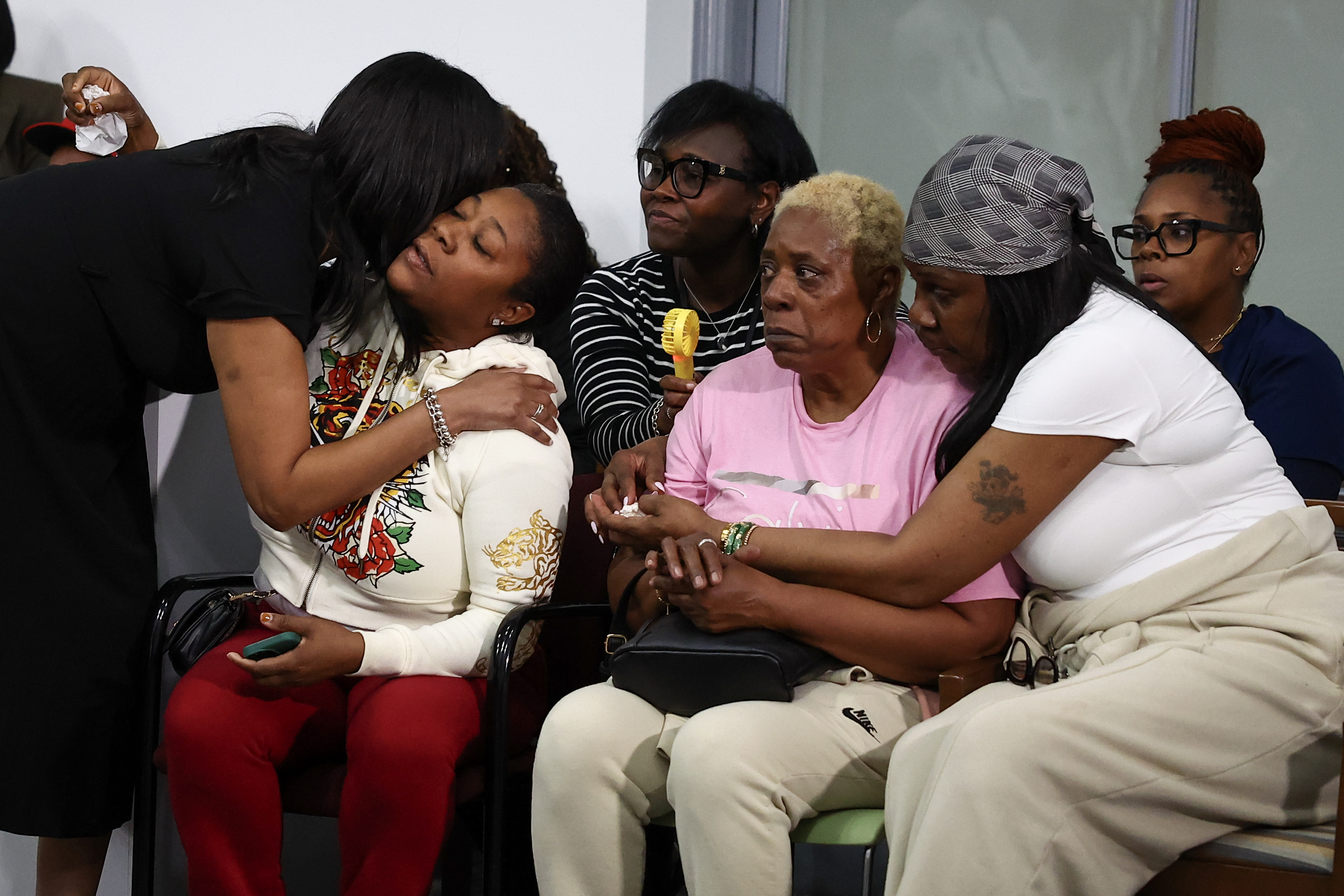
State Representative Morgan Cephas hugs Malayshia Allford’s aunt Marketa Brown, at a press conference at Philadelphia District Attorney Larry Krasner’s office on Thursday, Nov. 5. The family had gathered as Krasner announced charges against Carprice Williams.Monica Herndon / Staff Photographer
‘A really good kid’
This spring, according to Blakey, Williams asked to enroll Malayshia in summer programs he runs at the school and with the Tiger Woods Foundation. That is when he got a chance to meet the girl.
Blakey was impressed by the 10-year-old’s enthusiasm and curiosity.
“She was not a perfect student, but near to that. She was happy-go-lucky. She wanted to be in the program. She wanted to do all the activities. She wanted to do everything,” he said. “She was a really good kid.”
But Malayshia did not show up at Robert E. Lamberton School on Friday, Oct. 23.
Over that weekend, two witnesses who visited the home saw the child in bed, not moving, according to a police report. Williams did not report the girl missing until Monday afternoon. And when she did, she told Malayshia’s aunt that the girl’s parents had taken her.
As police, FBI, relatives, and neighbors began a frantic search, according to the report, Williams faked affectionate texts to cover her tracks. One phony text from Malayshia read, “Mommy I know you are waiting for me to come home but my family they don’t want me to be adopted. … I love you.”
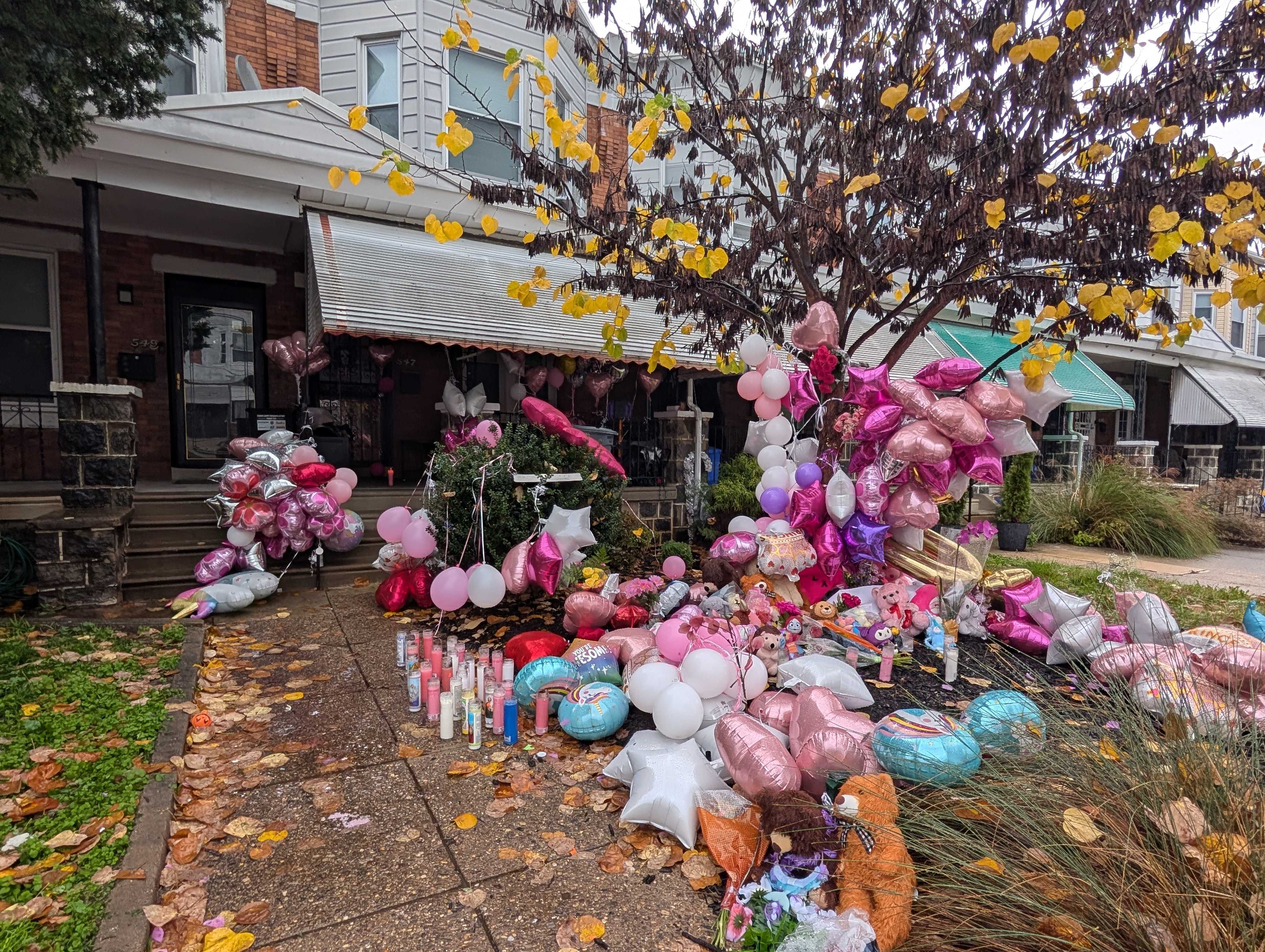
Mourners placed candles, balloons, and stuffed animals outside 547 North Simpson Street, where Malayshia Allford lived with her foster mother Carprice Williams.Jesse Bunch
Days later, investigators identified a man caught on video leaving Williams’ home dragging a cumbersome, oddly shaped bag with a long strand of braided hair trailing from it. The man, a relative of Williams’, eventually led them to a car parked in Lindenwold, South Jersey. Malayshia’s body — bruised and battered, with a fractured rib and whiplike marks on her legs — was in the trunk.
Witnesses later told police that Williams had thrown Malayshia down stairs, beaten her with a phone cord, deprived her of food, and forced her to wear a heavy vest and walk up and down the stairs. Williams denied that, telling police that the vest was only calming, and that Malayshia might have fallen but was not pushed.
But Malayshia’s relatives said they are still trying to understand how a failure this profound was possible.
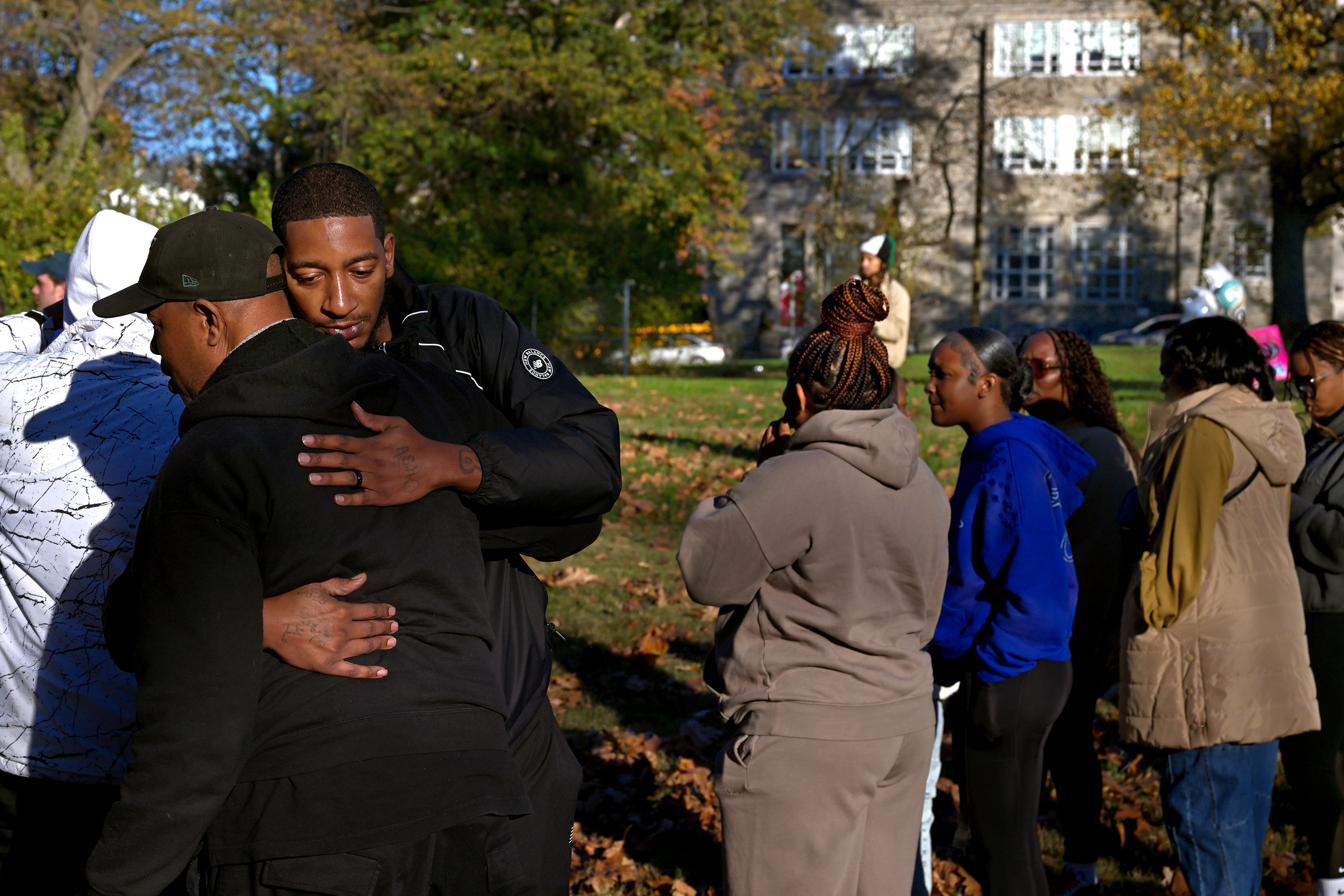
Nafis Horne, Malayshia Allford’s uncle, embraces a family member on Sunday, Nov. 8 in Morris Park in Overbrook as they gathered remember the young girl.Tom Gralish / Staff Photographer
Last weekend, more than 200 people gathered in Morris Park in Overbrook to release balloons in Malayshia’s memory.
Nafis Horne, her paternal uncle, said he would have gladly taken in his niece. But no officials ever reached out, he said.
He said his sister, Nyfisha Allford, had sought custody of the little girl but got nowhere, despite city and state policies prioritizing placements with relatives over foster care.
“My sister tried to get her,” Horne said, “but that fell through the cracks.”
Staff writers Ellie Rushing, Jillian Kramer, and Jesse Bunch contributed to this article.
The National Association of Realtors’ annual survey shares insights into the characteristics and behaviors of recent homebuyers and sellers.Michaelle Bond / Staff
High home prices and elevated mortgage interest rates are keeping some aspiring homebuyers on the sidelines of the housing market. But people are still buying and selling homes in the Philadelphia area and across the country.
So who exactly is doing the buying and selling? Each year, the National Association of Realtors surveys recent buyers and sellers to learn about them and get insights into their behavior.
story continues after advertisement
NAR started publishing these reports in 1981. Its latest national survey covers sales that happened between July 2025 and June 2026.
Test how much you know about recent housing market trends.
Question 1 of 10
What was the typical age of a first-time homebuyer?
CorrectIncorrect. XX% of other readers got this question right.
The median age of a first-time buyer remained at an all-time high of 40.
Question 2 of 10
What share of first-time homebuyers paid in all cash?
CorrectIncorrect. XX% of other readers got this question right.
That’s the highest share on record. The median age of an all-cash first-time buyer was 54.
story continues after advertisement
Question 3 of 10
What was the most popular source for first-time buyers’ down payments?
CorrectIncorrect. XX% of other readers got this question right.
First-time buyers were most likely to say they used savings for their down payment. But 10% said they used an inheritance, which is the highest share on record.
Question 4 of 10
From last year’s survey to this one, the share of first-time homebuyers ___________.
CorrectIncorrect. XX% of other readers got this question right.
The share of first-time buyers rose slightly to 22% from last year’s record low of 21%. Repeat buyers are still driving the housing market.
Question 5 of 10
What was the typical age of a repeat homebuyer?
CorrectIncorrect. XX% of other readers got this question right.
The median age remains at an all-time high.
Question 6 of 10
What was the typical down payment for a repeat buyer?
CorrectIncorrect. XX% of other readers got this question right.
Meanwhile, the typical first-time buyer put down 9%.
Question 7 of 10
Homebuyers are most likely to be a married couple. What is the second most common group?
CorrectIncorrect. XX% of other readers got this question right.
20% of homebuyers were single women, 8% were single men, and 6% were unmarried couples. 4% were non-romantic roommates, an all-time high.
Question 8 of 10
How long had the typical home seller lived in their property?
CorrectIncorrect. XX% of other readers got this question right.
That’s an all-time high.
Question 9 of 10
The typical home that buyers purchased was built in what year?
CorrectIncorrect. XX% of other readers got this question right.
16% of buyers purchased a new home, while 84% bought one that was previously owned.
Question 10 of 10
Recent buyers typically purchased a home that had how many bedrooms?
CorrectIncorrect. XX% of other readers got this question right.
The median size of a recently sold home was 1,900 square feet with three bedrooms and two bathrooms.
One of the most unusual offerings in the cornucopia of events occasioned by our country’s 250th birthday is “A Nation of Artists,” an extraordinary exhibition that takes a fresh look at the history of American art. Spread over two museums, the show implicates nearly 1,000 artworks gathered from three collections that span four centuries.
The whole is indeed greater than the sum of its parts.
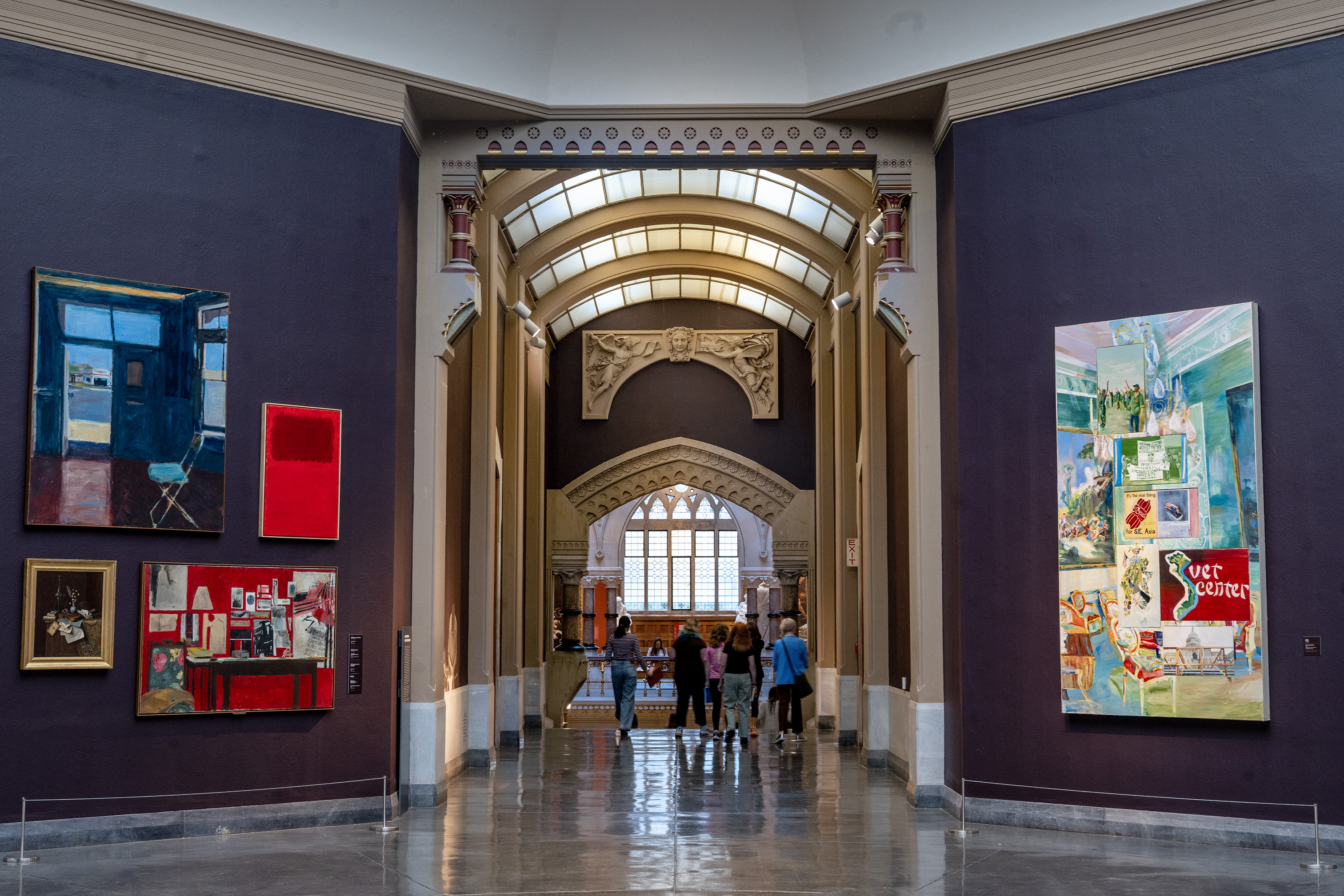
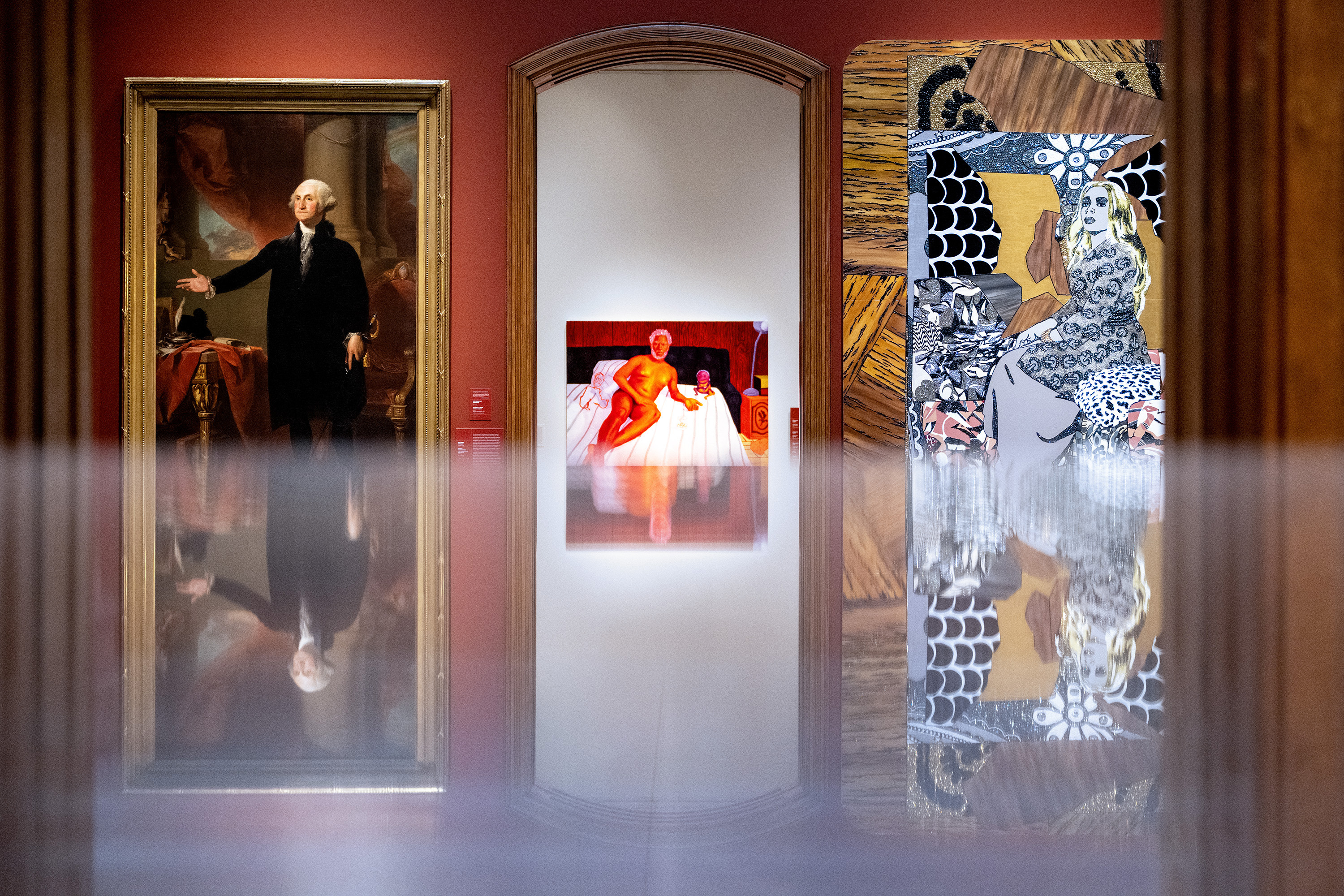
“A Nation of Artists” occupies 19 galleries at the Philadelphia Museum of Art (PMA) and nearly all available space at the Pennsylvania Academy of the Fine Arts’ Historic Landmark Building (PAFA). Intermixed with the museums’ permanent collections are about 100 masterworks from the Middleton Family Collection of American Art, on public view for the first time.
“The beauty of ‘A Nation of Artists,’” says PMA curator Kathleen Foster, “is that the two grandpas collaborated with the Middleton Collection to enhance their ability to tell the story of American art history.” To Foster, “There is no single story of American art — it’s a patchwork of different ideas, an amalgam.”
Skylights in the newly renovated Furness and Hewitt building at the Pennsylvania Academy of the Fine Arts Wednesday, May 6, 2026,“A Nation of Artists”Tom Gralish / Staff Photographer
The dualinstallations, like nonidentical twins, were simultaneously conceived yet endowed with distinct mien and appearance. To identify art that best exemplified history’s blended narratives, each curatorial team scrutinized the galleries and storage vaults of their respective collections. Burrowed within the origin story of each institution are clues to why and how the halves differ.
PAFA opened in 1805 as a museum and school with a curriculum modeled on traditional European academies. Not long after, it began to collect “the art of our time.” PAFA’s enduring identity as the nation’s first art museum and school reflects the founders’ intention to “promote the cultivation of the Fine Arts in the United States of America.” It helps explain why, in their portion of “A Nation of Artists” galleries, work by recent graduates hangs near legendary elders who studied at the school a century or two earlier.
The PMA, 75 years PAFA’s junior, was likewise established to teach and to present art. Then called the Pennsylvania Museum and School of Industrial Art, it started in Memorial Hall, the art gallery of the 1876 Centennial Exhibition in Fairmount Park.
The institution uniquely made space for “applied arts” such as furniture, jewelry, and clothing, a clear sign of the modernity of their interests. Their purview widened in the 1890s when they began to buy and collect contemporary painting and sculpture.
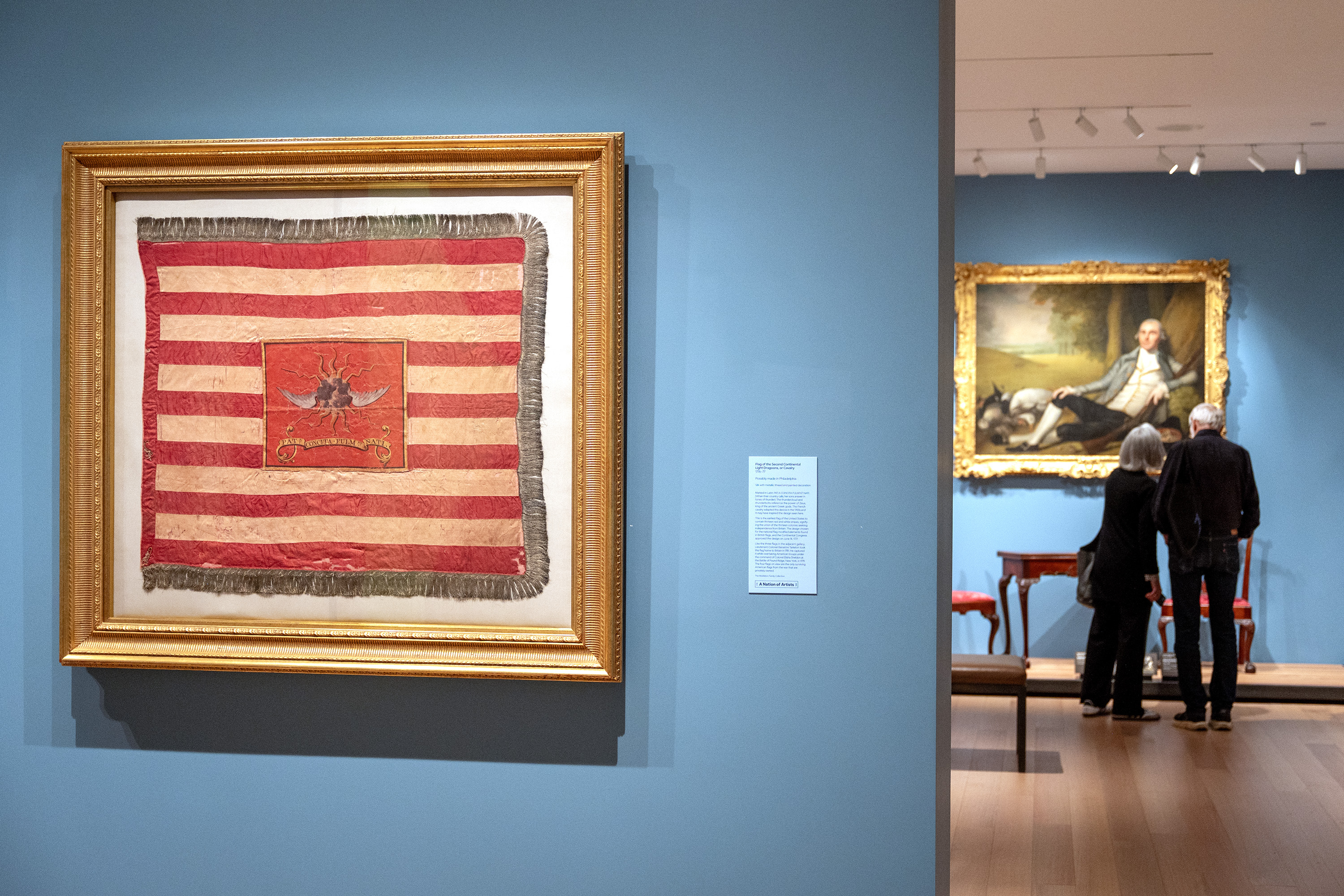
“The Flag of the Second Continental Light Dragoons,” possibly made in Philadelphia, is displayed at the Art Museum. It is the earliest flag of the United States to contain 13 red and white stripes.Tom Gralish / Staff Photographer
Gems at PMA
From the vantage of the PMA’s Grand Stair Hall on the second floor, a supersized trailhead marks the route to “A Nation of Artists.” The way forward leads through a corridor with a small selection of American watercolors and drawings made in response to the terrain of the New World. The section’s title, “New Eyes,” is a fitting note to self for what’s ahead.
The PMA galleries designated for “A Nation of Artists” bracket the years from the 1680s to the 1950s. The newly renovated galleries on the second floor tackle the 19th and 20th centuries, while art from the first 200 years is on the first floor, in the museum’s splendidly reinstalled galleries of early American art, which opened in 2021. Seventeen works from the Middleton Collection are there, in companionable proximity to charismatic old-timers.
The earliest United States flag to contain 13 red and white stripes, The Flag of the Second Continental Light Dragoons, (1776-77) is a Middleton loan, as is Charles Willson Peale’s monumentalGeorge Washington at Princeton (1779), painted a decade before the subject became president.
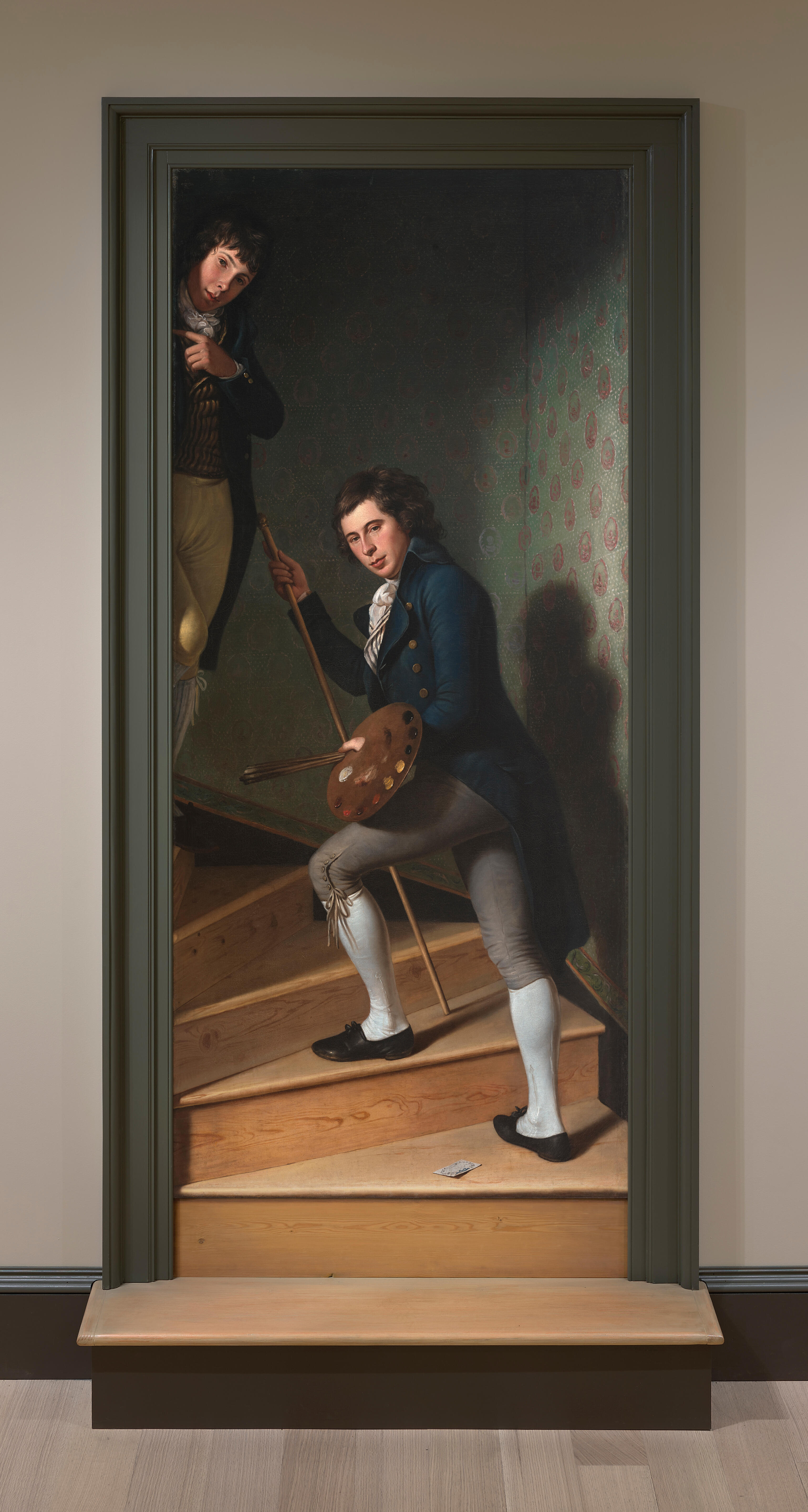
“Staircase Group” by Charles Willson Peale. Jason Wierzbicki
A few steps away is PMA’s Staircase Group (1795), Peale’s startlingly illusionistic portrait of his sons paused in mid-ascent. It was so realistic that, reportedly, a distracted Washington once nodded at it in passing. The entire first-floor area constitutes an “unadvertised special” of the upstairs galleries. Explore it the day of your visit or save it for another day — it’s that worthwhile.
Works in the newly renovated Furness and Hewitt building at the Pennsylvania Academy of the Fine Arts.Tom Gralish / Staff Photographer
Head over to PAFA
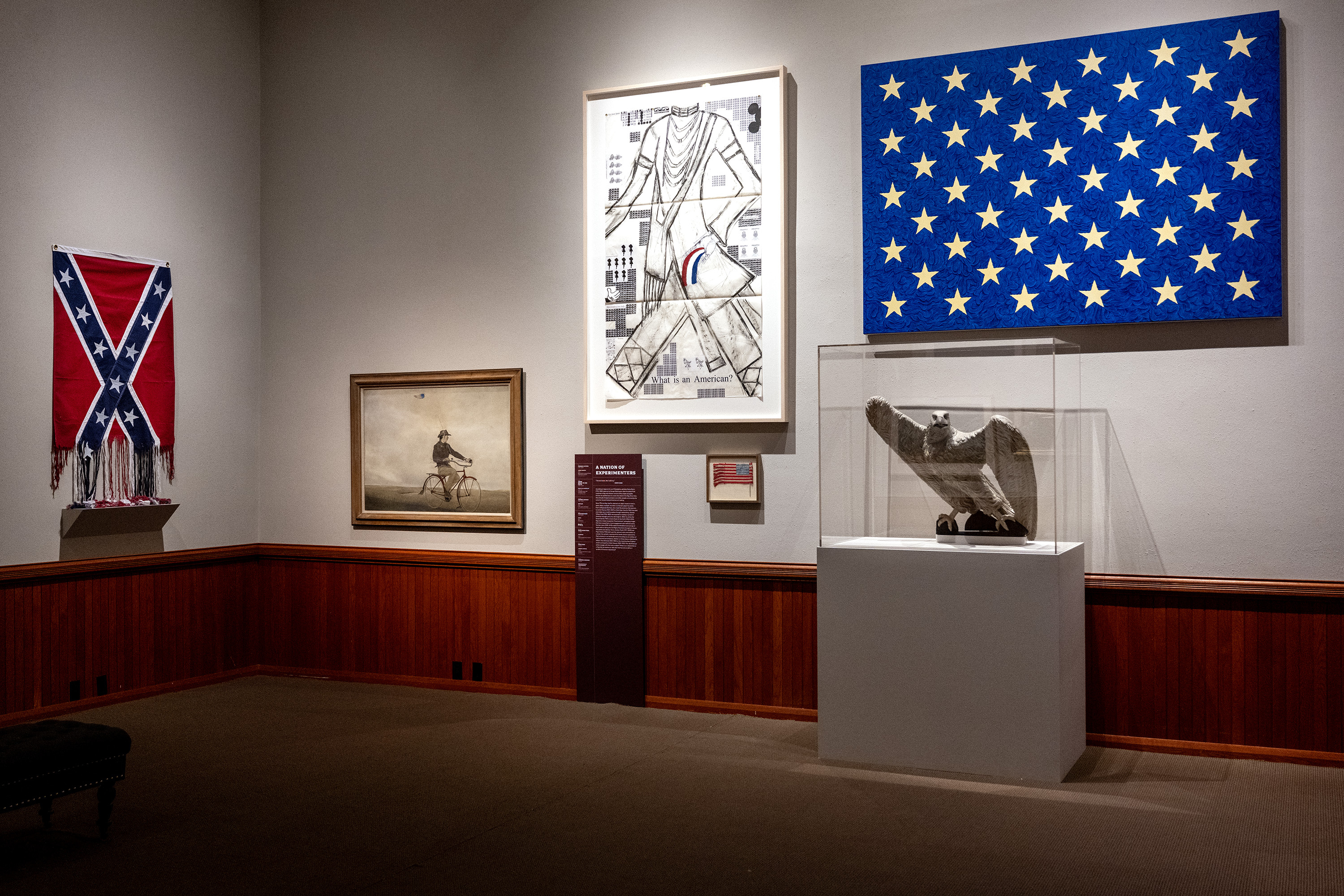
At PAFA, “A Nation of Artists” begins a few steps from the front desk, in a section entitled “A Nation of Experimenters.” Relinquish expectations that art history here unfolds in chronological sequence, as it does at PMA. Throughout PAFA, intergenerational clusters of provocatively unalike art shelter under thematic umbrellas.
Every work in this introductory gallery references the American flag or issues of national identity. Standouts include Sonya Clark’s ongoing performance work, Unraveling (2015 to present), made with a Confederate battle flag that she partially deconstructed, thread by thread. In Andrew Wyeth’s Young America (1950), a rider isn’t looking where he’s going as he pedals across a desolate landscape. Both Norman Lewis’ painting Redneck Birth(1961) and William Rush’s emblematic sculpture Eagle (ca. 1810) voice the unspoken query of Jaune Quick-to-See Smith’s large lithograph (2001-03) What is an American?
Norman Lewis’ “Redneck Birth.” Courtesy of the Pennsylvania Academy of Fine Arts
Midway upstairs, there’s an independent, outwardly unrelated display of Fred Wilson’s MASTER PLAN(2004-2009), a suite of delicate photogravures commissioned by PAFA’s Brodsky Center. An intriguing, conceptual inquiry into the subtle ways museum floor plans affect visitors, it prompted me to draft another “note to self.”
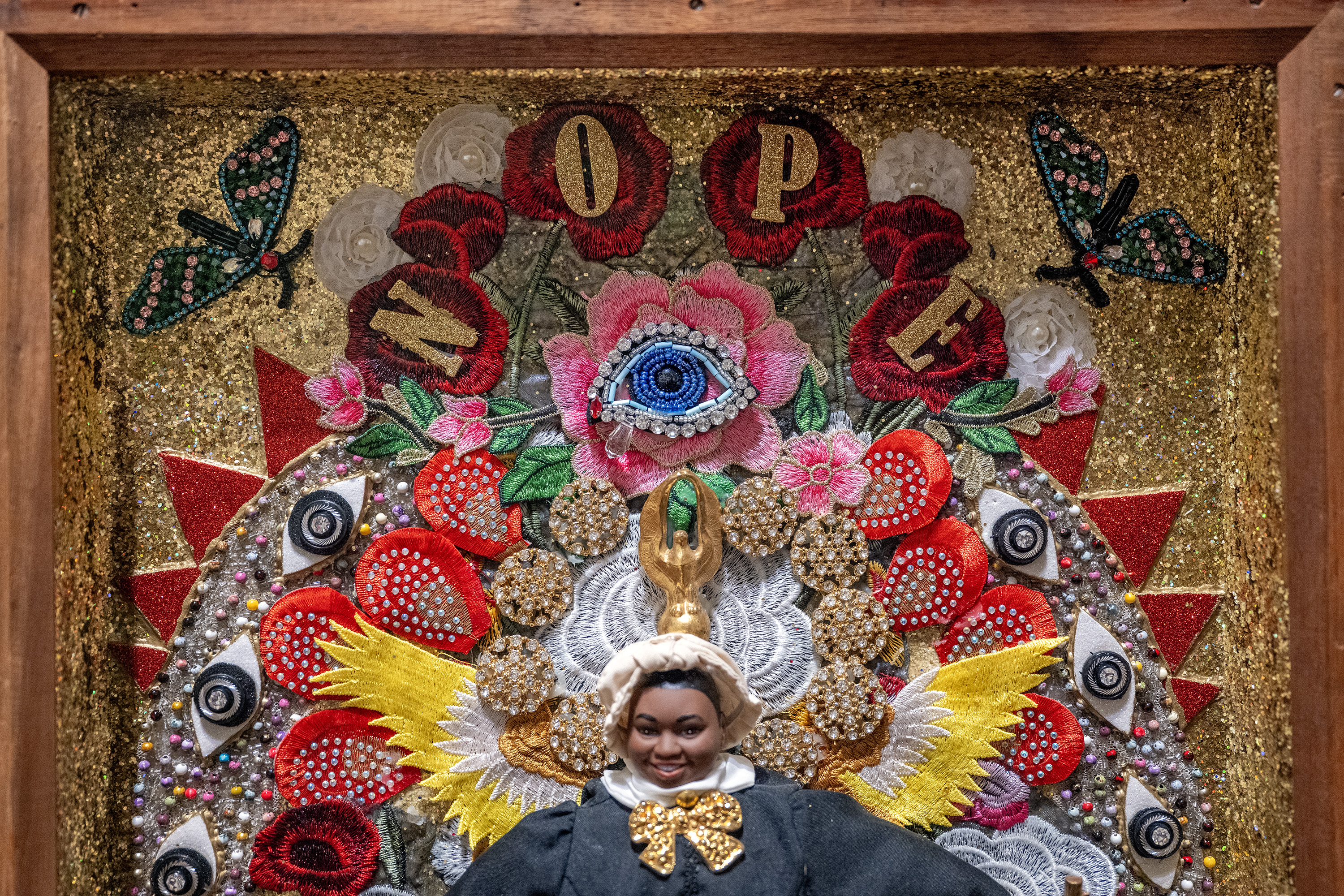
Detail of “Declaration of Independence” by Vanessa German.Tom Gralish / Staff Photographer
A diverse nation
“A Nation of Artists” offers rich, tangible proof of the creative complexity of American art. The curators’ strategic arrangements stimulate many educational takeaways. Equally potent provocateurs are the juxtapositions and connections we notice on our own. Here are some of mine.
African Americans are integral to the narrative weave of the show.“Prosperity, Abundance, Inequity,” the overarching theme of a PMA gallery of mid-19th century art, includes one less obvious thread.
Amid the eye-catching trappings of wealth is a utilitarian stoneware vessel by Dave, an enslaved potter. Although literacy was illegal for enslaved people in South Carolina, Dave inscribed the jar with his name, a rhymed verse combining a biblical reference with the jar’s use, and the date, 1859.
That same year in West Virginia, an ardent abolitionist received a death sentence for raiding the federal armory at Harpers Ferry.
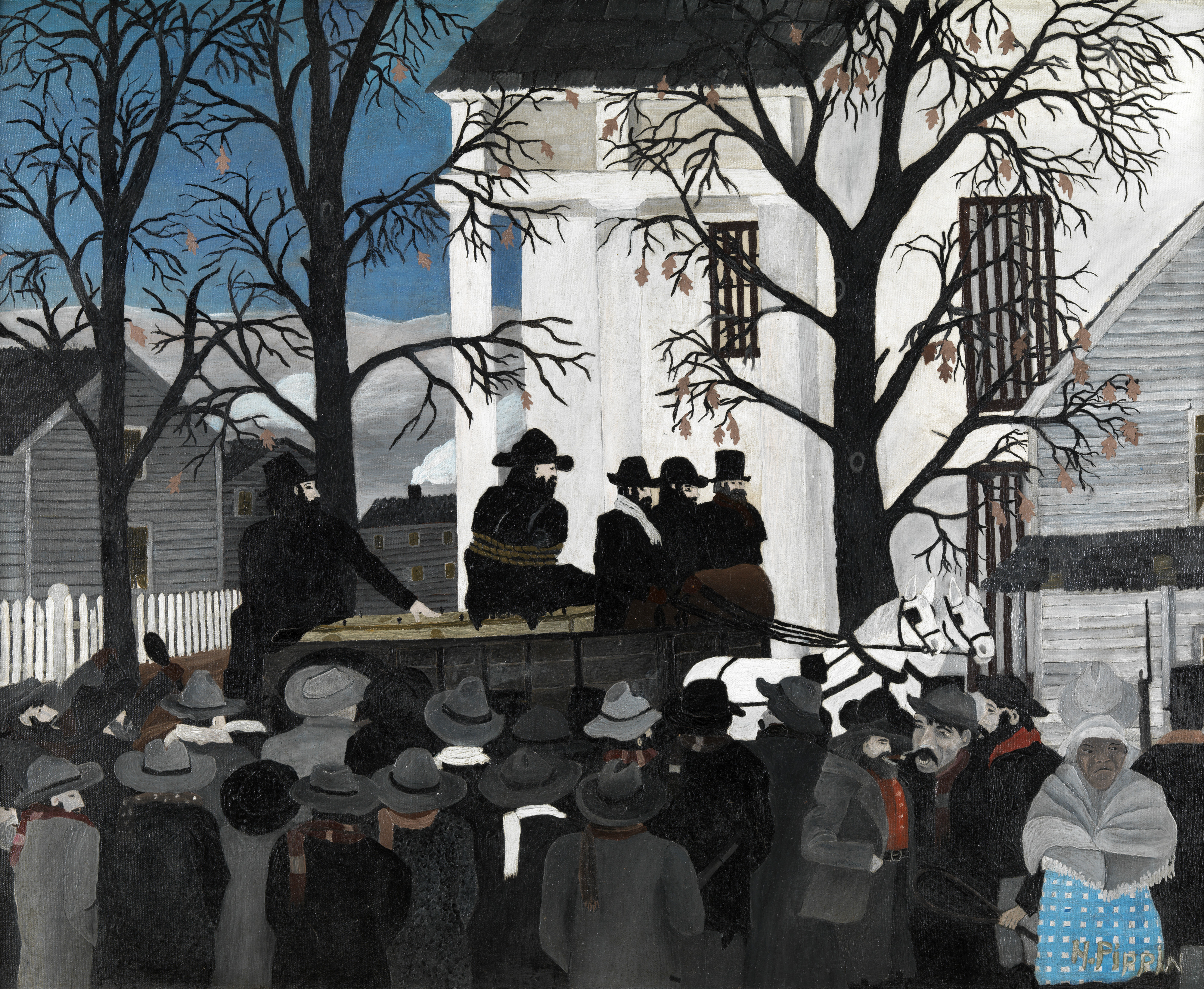
In PAFA’sJohn Brown Going to His Hanging (1942), Horace Pippin visualized a crowd of male onlookers facing the gallows-bound wagon in which Brown sits on his own coffin. The one Black woman may be his grandmother, who, while not an eyewitness, was the likely source of his information. Unforgettably, she’s the only person turned to meet our gaze.
“John Brown Going to His Hanging” by Horace Pippin.Barbara KatusFlorine Stettheimer’s “Picnic at Bedford Hills.” Courtesy of the Pennsylvania Academy of Fine Arts
The city of Philadelphia links two works painted 200 years apart at PAFA. John L. Krimmel’s Fourth of July in Centre Square (1811) is a delightfully detailed survey of a broad range of the population. It wasn’t people but the record of their actions that snared my attention a few galleries away. In Alex Lukas’ lengthy horizontal painting Untitled (2012), the stigmata of old tires, vandalized walls, and posters ornament an unidentified Philly riverbank.
Although I was acquainted with the modernist Florine Stettheimer’s whimsical paintings, it was a treat to find two of them. In PAFA’s Picnic at Bedford Hills (1918), the artist taps her memory of the languorous luncheon she enjoyed with a small group of friends, Marcel Duchamp among them. In PMA’s Spring Sale at Bendel’s (1923), a melee of bargain-crazed ladies behaves in amusingly unladylike ways.
Florine Stettheimer, “Spring Sale at Bendel’s.” Courtesy of the Philadelphia Museum of Art
Benjamin West’s familiarity with the customs and attire of Indigenous Americans is evident in his iconic, grandly scaled Penn’s Treaty with the Indians (1771—72) at PAFA. To paint it, he tapped firsthand knowledge, having grown up near Indigenous communities in what is Swarthmore today.
In West’s painting, authentically garbed players enact an imaginary account of the founding of Pennsylvania a hundred years earlier, an ostensibly beneficent goods-for-land exchange between Penn and representatives of the Lenape. West’s prominent placement of a bare-breasted Native mother nursing her cradleboard-bound infant is less a compositional device than it is a nod to Eurocentric interest in exotic details.
Benjamin West’s “Penn’s Treaty with the Indians.”Courtesy of the Pennsylvania Academy of Fine ArtsSanford Gifford, “A Coming Storm.”Courtesy of the Philadelphia Museum of Art
Several works at PAFA catapult us forward by hundreds of years. Skywalker/Skyscraper (Allegory) (2012), a knockout, mural-size rainbow made with reclaimed wool blankets, is by Marie Watt, a member of the Seneca Nation of Indians. She chose blankets as her material because, like all everyday objects, they can carry “extraordinary histories of use.”
Dyani White Hawk, an artist of Sičáŋǧu Lakota ancestry, painted PAFA’s stunning She Gives (Quiet Strength VII) (2020). This monumental, abstract composition of marks in layered patternsalludes to the rhythms of traditional beadwork and porcupine quillwork.
Two hundred years after West, the Indigenous man in Andy Warhol’s screen print Cowboys and Indians (1986) at PAFA, was a person Warhol had never seen. As had other Pop artists, Warhol had only represented a representation. In this case, it was the U.S. coin known as the Indian Head Nickel.
Andy Warhol’s “Cowboys and Indians (Indian Head Nickle).” Courtesy of the Pennsylvania Academy of Fine Arts
At PMA, I connected paintings with works from their hitherto unexhibited collection of native artifacts.Dogfish Pile Driver(before 1893), is a masterfully carved toolby the Northwest Coast craftsman identified as a “Nuxalk Artist Once Known.” An invited advisory committee of Indigenous curators, scholars, and culture bearers selected the work on view. Many object labels include their commentary.
It takes a minute to spot the Native Americans in Sanford Gifford’s A Coming Storm (1863), a showstopper of a painting. A demon cloud commandeers attention as it approaches the banks of Lake George in Upstate New York. Then we notice a small, marginalized group of Native people on the shoreline, a literal and metaphorical indication that the area was within the homelands of the Iroquois Confederacy.
Works in the newly renovated Furness and Hewitt building at the Pennsylvania Academy of the Fine Arts Wednesday, May 6, 2026. “A Nation of Artists”Tom Gralish / Staff Photographer
Visitors find more than one important work by Pippin in each venue, as is true of other celebrated artists such as Thomas Eakins, Violet Oakley, Winslow Homer, Henry Tanner, and Cecilia Beaux.“A Nation of Artists” runs into 2027, encouraging multiple visits to both museums.
Of course, Hippocrates didn’t have the show in mind when he noted “ars longa, vita brevis.” Although his insight that “art is long and life is short” refers to the time required for proficiency, it’s another useful “note to self” when attempting to predict just how much time it might take to reap all the exhibition has to offer.
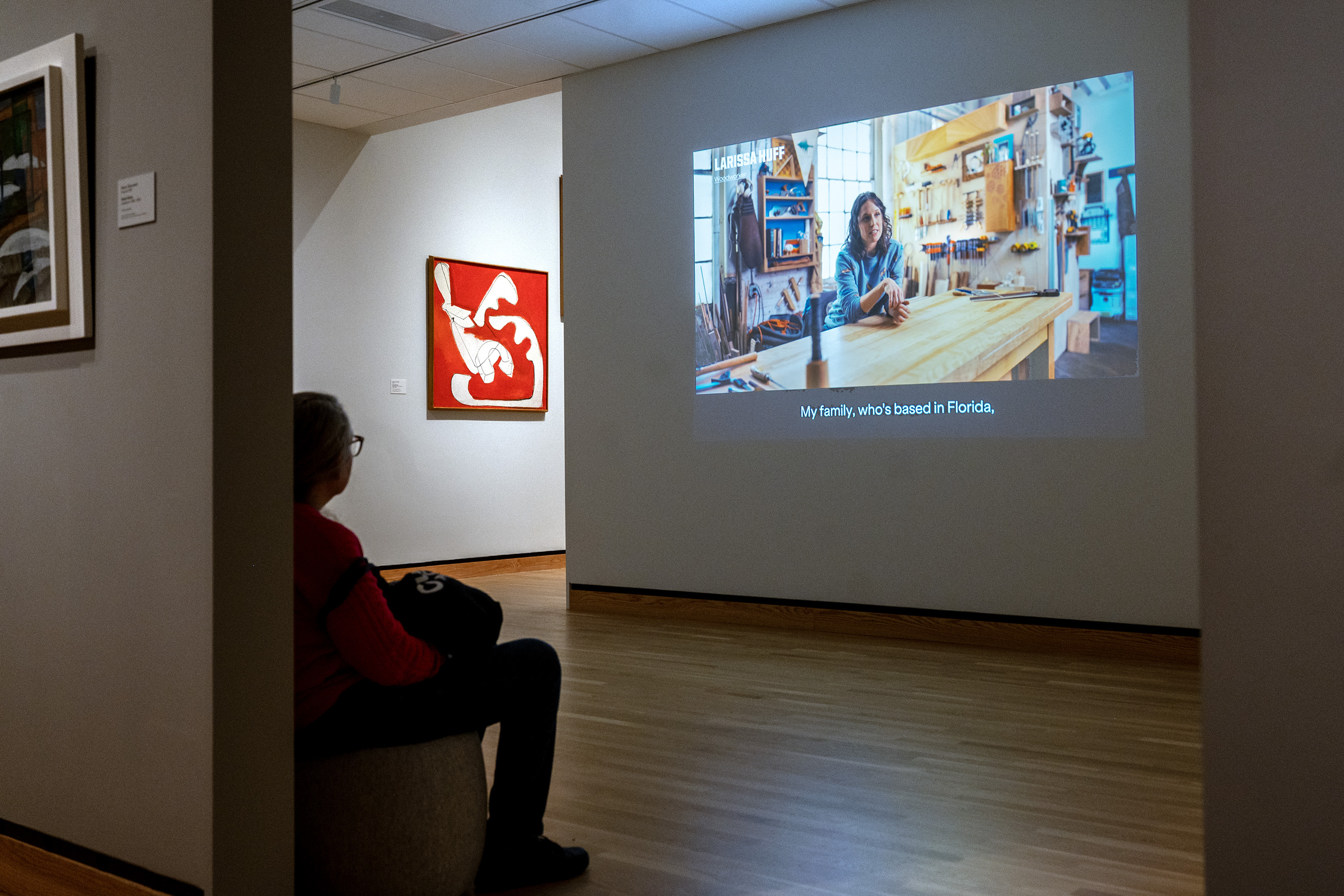
Philadelphia-based woodworker and artist Larissa Huff is featured in a video in the “A Nation of Artists” show at the Philadelphia Museum of Art Monday, May 4, 2026, in the newly renovated American galleries which were closed for several years.Tom Gralish / Staff Photographer
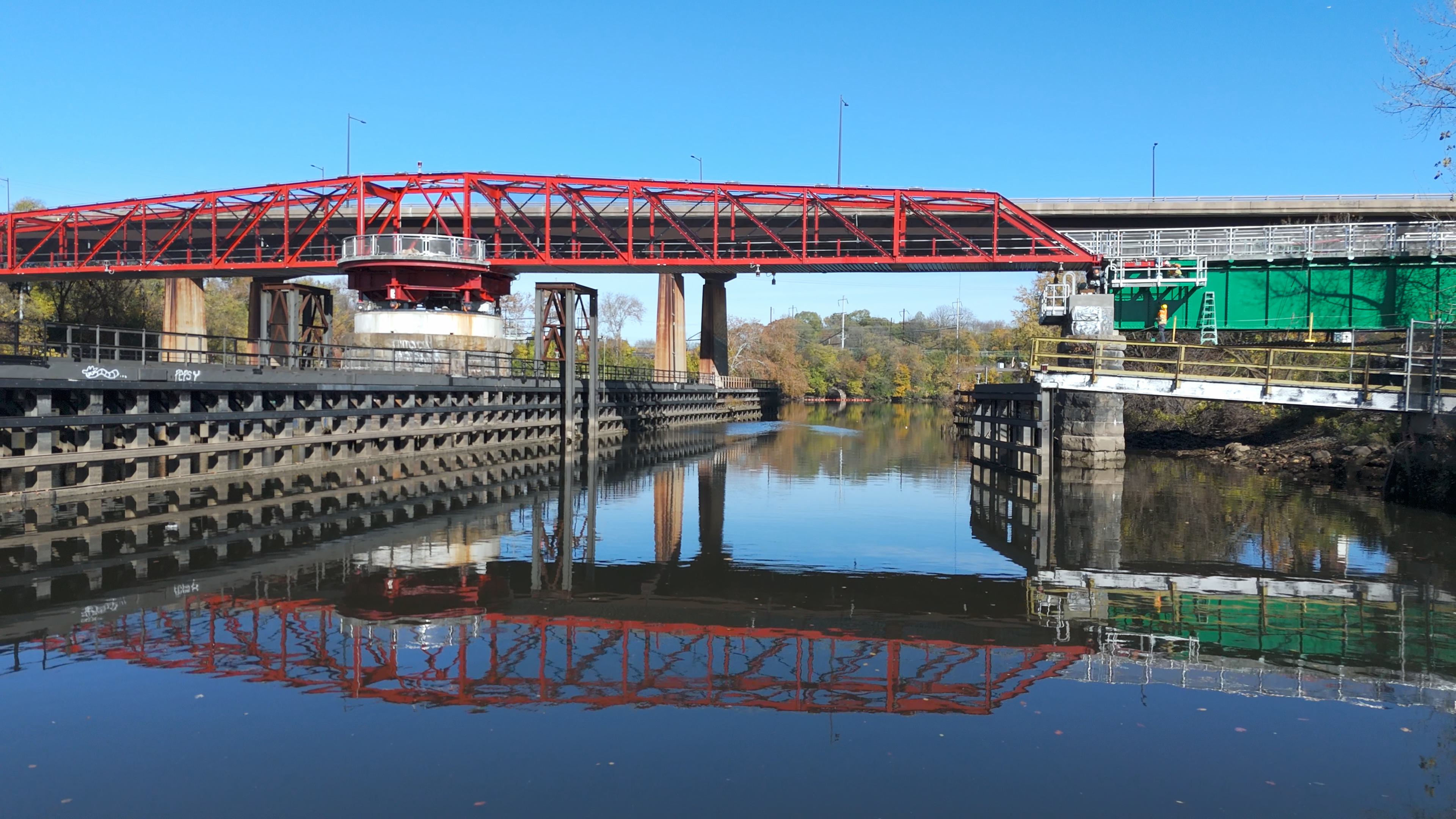
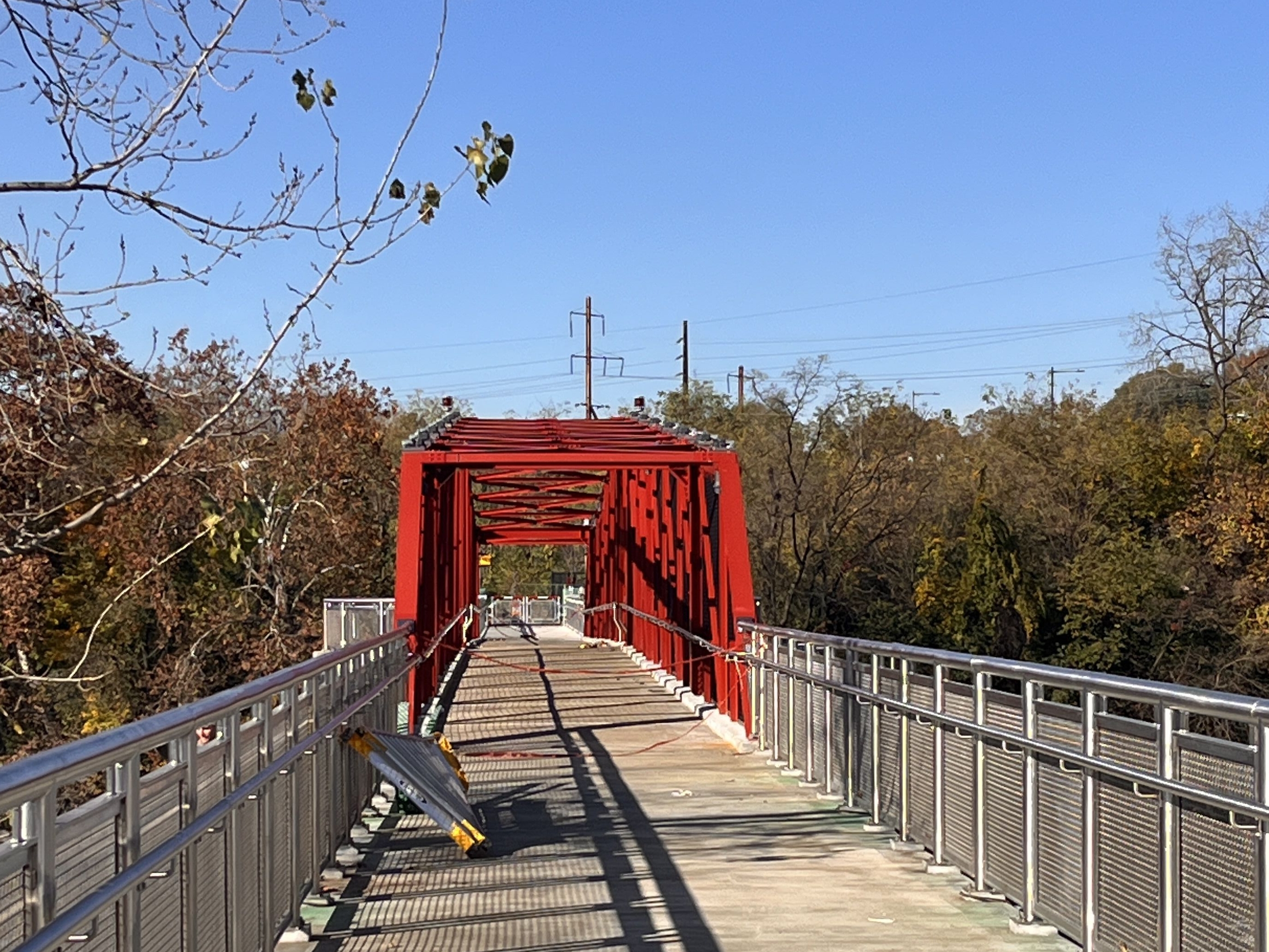
A red steel bridge swung over the Schuylkill in one of its final tests before opening to the public.
Its 225-foot span and 60,000 pounds of mechanical drive equipment pivoted into place with precision, joining the east and west sides of the river.
“It is kind of like a Swiss watch,” Tyler Barile, assistant chief construction engineer for the Philadelphia Streets Department, observed during a test of the new bridge Wednesday. “All those pieces have come from all over the country to fit together with tolerances to thousandths of an inch.”
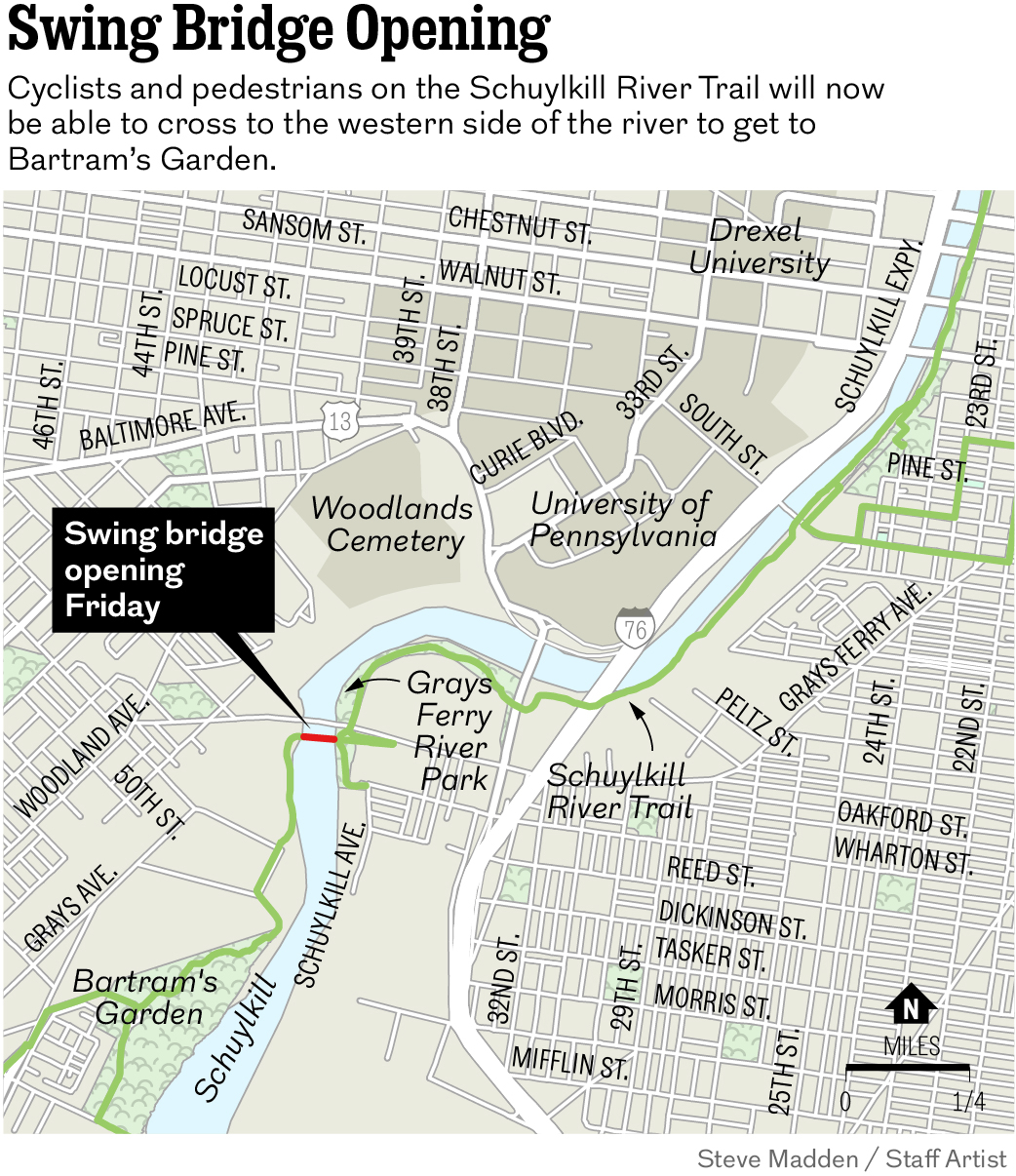
The $28 million bridge officially opens Friday to thousands of runners, cyclists, and walkers using the Schuylkill River Trail. They will be able to cross unimpeded from Center City through South Philadelphia to Grays Ferry. They will come out just above Bartram’s Garden.
Officials call it a major engineering achievement for the Schuylkill River Trail in Philadelphia.
Map of a new swing bridge opening Friday connecting the east and west sides of the Schuylkill River TrailSteve Madden
Connecting historic landmarks
The bridge was built through a partnership between the nonprofit Schuylkill River Development Corp. (SRDC) and the city. SRDC works with the city on the Schuylkill corridor from the Fairmount Dam to the Delaware River, branded as Schuylkill Banks, which is part of the much larger Schuylkill River Trail.
“The bridge fills an important gap that connects not just the east and west river banks,” said Heather Saeger, interim CEO of SRDC, “but it also connects Bartram’s Garden to Fairmount Waterworks, both National Historic Landmarks.”
The crossing links approximately 1.5 miles of trail to the south with three miles to the north, creating about 4.7 continuous miles along Schuylkill Banks with the bridge included.
Beyond Schuylkill Banks, the opening extends unbroken riverfront trail travel to over seven miles north to Ridge Avenue in Manayunk, where plans are underway for a connector to the rest of the Schuylkill River Trail that now extends to Reading.
Saeger emphasized that adding the swing bridge alongside the Schuylkill Banks boardwalk and cable-stayed bridge that opened in 2025 is “hugely important for completing that vision, building momentum for future trail sections.”
Past trail expansions have dramatically accelerated use. Average weekly trips by users on Schuylkill Banks grew from 8,000 during its 2000 opening to 37,000 now, at Walnut Street, after the cable-stayed bridge opened, Saeger said.
In the year to date, counters have logged 431,159 cyclist and 1.4 million pedestrian trips on the segment.
The new crossing also serves as a critical stepping stone for future southern extensions toward Passyunk Avenue and, ultimately, Fort Mifflin. It unlocks a dedicated commuter route between Southwest and South Philadelphia.
The bridge will remain in place across the river for trail users most of the time, swinging open only occasionally to let marine traffic pass. The city will get notice far in advance through the U.S. Coast Guard and can schedule the closing of the trail.
In all, it takes about three minutes from start to finish for the gates on the pedestrian walkway to close and the bridge to open or close.
A view from the top of Philadelphia’s new $28 million swing bridge. The ladder was being used by a worker performing last minute work.Frank Kummer
Why a swing bridge?
The idea for using a swing bridge to cross the Schuylkill dates to 2009, said Chariss McAfee of Charles Loomis Chariss McAfee Architects. The firm volunteered with the nonprofit Community Design Collaborative’s Infill Philadelphia initiative, which explores development opportunities through design.
At the time, the group was studying connections between Wharton Street in South Philadelphia and Bartram’s Garden.
Separately, the SRDC and city officials were considering building a pedestrian bridge over the existing swing bridge at the same location. That bridge was adjacent to the traditional Grays Ferry Avenue bridge, which has a pedestrian walkway but is not connected to the trail on both sides.
McAfee and the Infill Philadelphia group believed that building over the infrastructure of the old swing bridge would require a new bridge to be very high with steep ramps.
The swing bridge was built in 1902. Conrail acquired it in 1976 and removed it from service in 1984.
The Infill Philadelphia team proposed rehabilitating it.
“We suggested that they really consider reusing the swing bridge,” McAfee said, “because it would put the people crossing it, the bikers and the pedestrians, closer to the water.”
That concept drew support.
“It’s going to be wonderful to actually cross and come over on the other side pretty much at the bank level,” McAfee said this week, “and not have to come down another massive ramp.”
Philadelphia’s new $28 million swing bridge spanning the east and west sides of the Schuylkill, Wednesday, Nov. 11, 2026, in Philadelphia. It officially opens to users of the Schuylkill River Trail on Friday, Nov. 13.Gabriel Coffey / Staff
Built in Coatesville
The city adopted the concept of a bank-level swing bridge, but structural realities required building a new truss atop the historic stone piers.
It took about eight years from planning and funding through to construction and installation. The bulk of the funding came in 2015 through a federal grant.
The swing bridge work involved construction that had to navigate around I-76, active CSX rail yards and tracks, and private commercial landowners along the riverfront. And it included building over a tidal riverfront.
Removing the old bridge and assembling a new bridge posed significant challenges, said Barile, the city engineer. The old truss was frozen open, and removing it risked destabilizing it. Because it rested on a pivot, workers had to cut a little off one side, then a little off the other side repeatedly to keep it balanced.
The new bridge had to be built and assembled to rest on the original stone-and-masonry piers and abutments already anchored in bedrock.
A center pivot balances the new bridge with so little friction that workers were able to spin it by hand during assembly.
Motors came from California, electrical controls from Chicago, various machinery from Miami, and gearboxes from Niagara Falls. The main truss was fabricated in Coatesville.
South Jersey-based AP Construction is the general contractor, and Philly-based Urban Engineers provides construction management oversight.
“You’re not just ordering a truss online, and it gets you a two-day shipping,” Barile said.
The Eagles are 52.9% through their season. They are 2-7 at the bye week. They are likely without their starting quarterback, Jalen Hurts, for the rest of the season. They have suffered a rash of injuries on offense that neutered the attempt to revamp the scheme under first-year coordinator Sean Mannion, who may not survive his first NFL season as a play-caller.
For The Numbers has their playoff odds at 0.4% with 47.1% of the season remaining.
That’s a lot of pretty meaningless football to get through. It’s a lost season at the Jefferson Health Training Complex, and there are various reasons for that. Injuries, roster depth, and an inadequate offensive scheme share the brunt of the blame.
But there will be reasons to continue watching this Eagles team moving forward. Even if you have to squint.
Here are six storylines worth following when the Eagles get back from their bye.
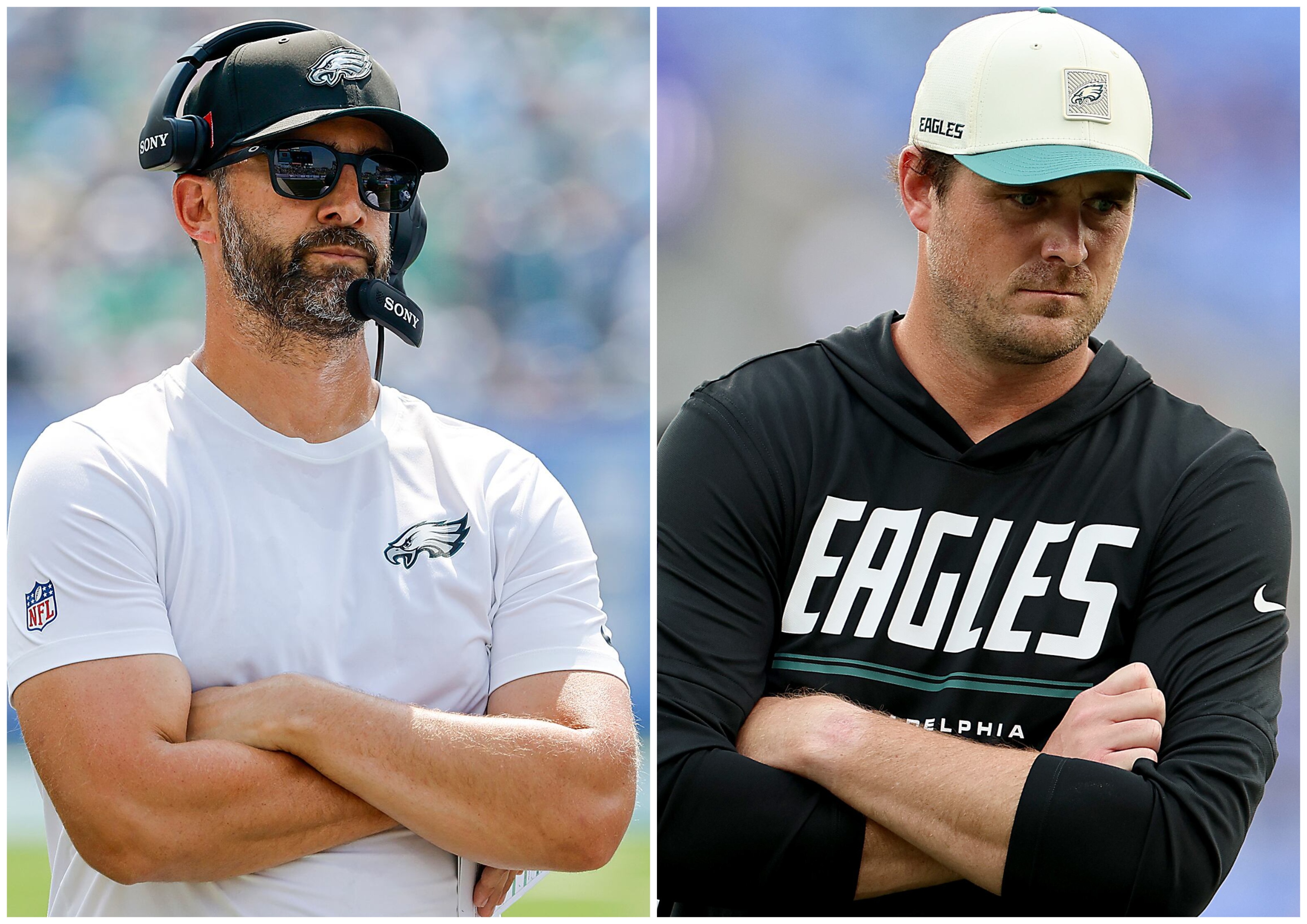
Nick Sirianni (left) has publicly had Sean Mannion’s back, but the Eagles offense continues to make negligible progress With Mannion in charge.Inquirer Staff Photographers
The coaching staff
Nick Sirianni wouldn’t rule out coaching changes after the game Sunday, but he did say a day later that no changes have been made.
“Right now, like I said earlier, we’re going through our self-scout process,” he said. “Guys are working on studies right now and we’re determined to figure things out and get on the right track, and that’s what we’re worried about right this particular time.”
That wasn’t a ringing endorsement of Mannion staying in his current role.
Could the Eagles make a change at play-caller as soon as this week? Could they move on from offensive line coach Chris Kuper?
The self-scouting process won’t be kind to either coach.
If Mannion remains in his position for the rest of the season, it’ll be worth watching if the offense can show signs of life, with Joe Milton or whoever is taking snaps at quarterback.
There’s also the Sirianni of it all. Will Jeffrey Lurie and Howie Roseman think injuries and a flawed roster outweigh the rest of the problems and decide to keep him? Is there a number of consecutive losses that warrant an in-season firing?
Sean Mannion has a tall order in achieving growth with an offense down to several backups. David Maialetti / Staff Photographer
Is the next backup quarterback in the room?
There were a few reasons the Eagles benched Tanner McKee and went to Milton last week. McKee wasn’t playing well enough, and they thought Milton and his mobility playing behind an offensive line that can’t figure out its protections could provide the Eagles a spark to get them back into the playoff race.
We saw how that went.
But beyond the 2026 implications, the Eagles know the season is in hospice, and they need to be on a fact-finding mission the rest of the way. At the quarterback spot, that means evaluating who is worth keeping on the roster. When Hurts returns next season — if Hurts returns next season — is his backup on this current roster? Is his No. 3?
McKee’s contract expires after this season and there doesn’t seem to be a scenario where he’s the No. 2 in 2027. The Eagles would be wise to get some looks at Milton and later rookie fifth-round pick Cole Payton to see what they have.
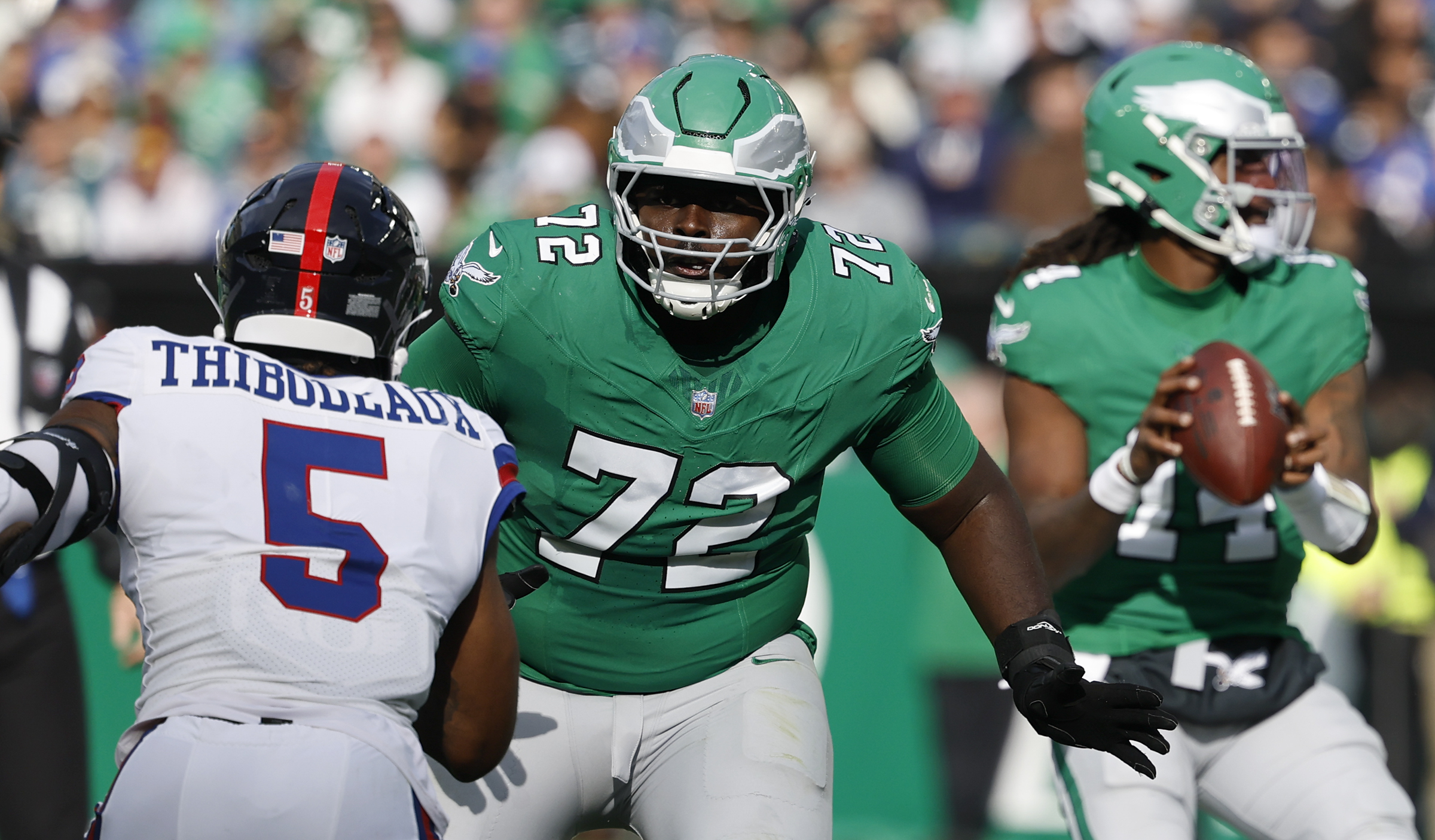
Right tackle Markel Bell (72) has received a trial by fire that will continue through the end of the season.Yong Kim / Staff Photographer
The young guys
Lane Johnson’s abrupt retirement opened the door for rookie third-round pick Markel Bell to take over as the starting right tackle.
Injuries to DeVonta Smith and Dontayvion Wicks have allowed first-round pick Makai Lemon to see a greater target share than he otherwise would have.
Trading Cam Jurgens to Baltimore in early October meant second-year interior lineman Drew Kendall could go through his first extended stretch as a starter.
Safety Andrew Mukuba’s rookie season was cut short to injury last year, and he’s still learning on the job.
There have been good moments and not-so-good moments from all of the above, and the continued development of the first- and second-year players will provide insight on where the Eagles need to allocate their resources most in the offseason.
For example: If the Eagles want to be a contender in 2027, is Bell ready to be a starting tackle on a team that has championship aspirations? It’s hard to say.
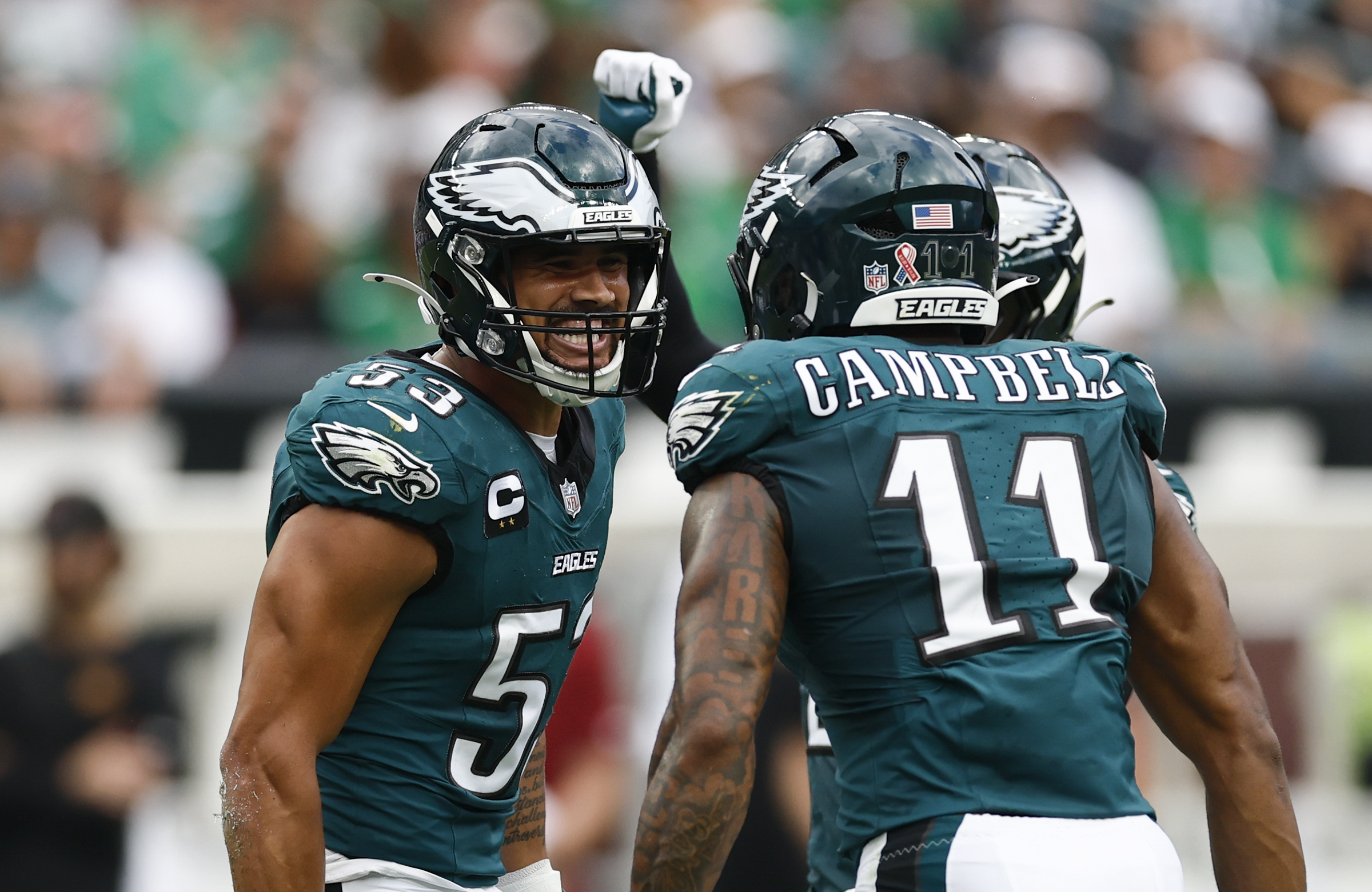
Eagles linebackers Zack Baun (left) and Jihaad Campbell after a stop against the Washington Commanders in Week 1 — a happier time for all. Yong Kim / Staff Photographer
The linebacker situation
Notice that Jihaad Campbell wasn’t mentioned above? That’s because the linebacker situation deserves its own discussion.
Campbell, who has missed the last two games with hamstring and quad injuries, wasn’t playing well enough to keep Jeremiah Trotter Jr. out of a rotation at linebacker next to Zack Baun.
When Campbell returns from his injury, will the 2025 No. 31 pick step back into the rotation?
“We’ll see where Jihaad’s health is moving forward,” Vic Fangio said last week.
Will Campbell cede even more time to Trotter? If so, what does that mean for the 22-year-old’s future with the team?
Saquon Barkley has gutted his way through injury but at what point would that no longer make sense?David Maialetti / Staff Photographer
How many Eagles are shut down?
Smith hasn’t played since Oct. 18 when he aggravated a nagging hamstring injury that kept him out of the two previous contests. He has played in just four games this season.
Wicks, meanwhile, has played in six.
Saquon Barkley has been playing banged up.
Barkley has been adamant about playing, saying that until the Eagles are mathematically out of the playoffs, he still believes there’s a chance.
That time will come soon enough. Will the Eagles shut Barkley down at that point? Will it be worth bringing Smith back or just letting his hamstring rest in a lost season to preserve his health?
Will the Eagles keep some mileage off of Jordan Mailata’s body over the final weeks in the winter?
Can you tell we’re running out of sexy storylines?
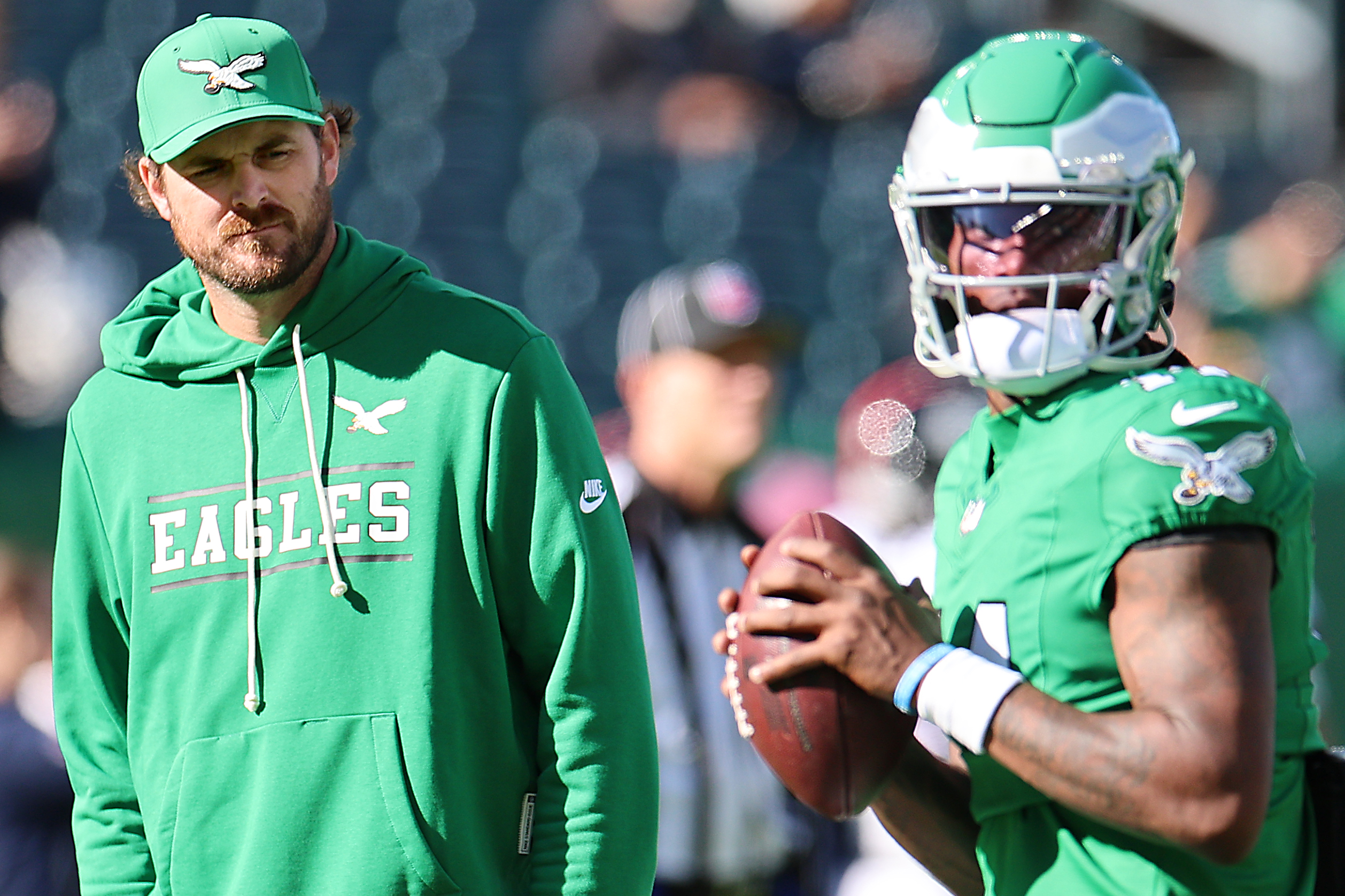
What does the future hold for Jalen Hurts?David Maialetti / Staff Photographer
What happens with Hurts?
OK, we saved a good one for last.
Hurts was back in the building this week, but how often will he be around? What will the NFL and NFLPA review of the handling of his blood clot situation reveal?
Beyond that, what is his status for 2027? Do the Eagles want him to be the starter next season? Does he want to be the starter here next season?
Some of those answers won’t be learned until after the final whistle sounds in Week 18.
But Roseman’s big move at the deadline, dealing Jordan Davis for a first-round pick and a second-round pick, gave the Eagles even more asset ammunition to make changes in the offseason.
DESTIN, Fla. — The SS United States broke speed records crossing the Atlantic in its heyday. It did not break any records for what ended up being a very, very slow sink to the bottom of the Florida Panhandle.
It was a spectacle of a retirement full of 11th-hour dramas, including lawsuits and a longer-than-expected sinking process, worthy of a vessel used to a life of celebrity and notoriety.
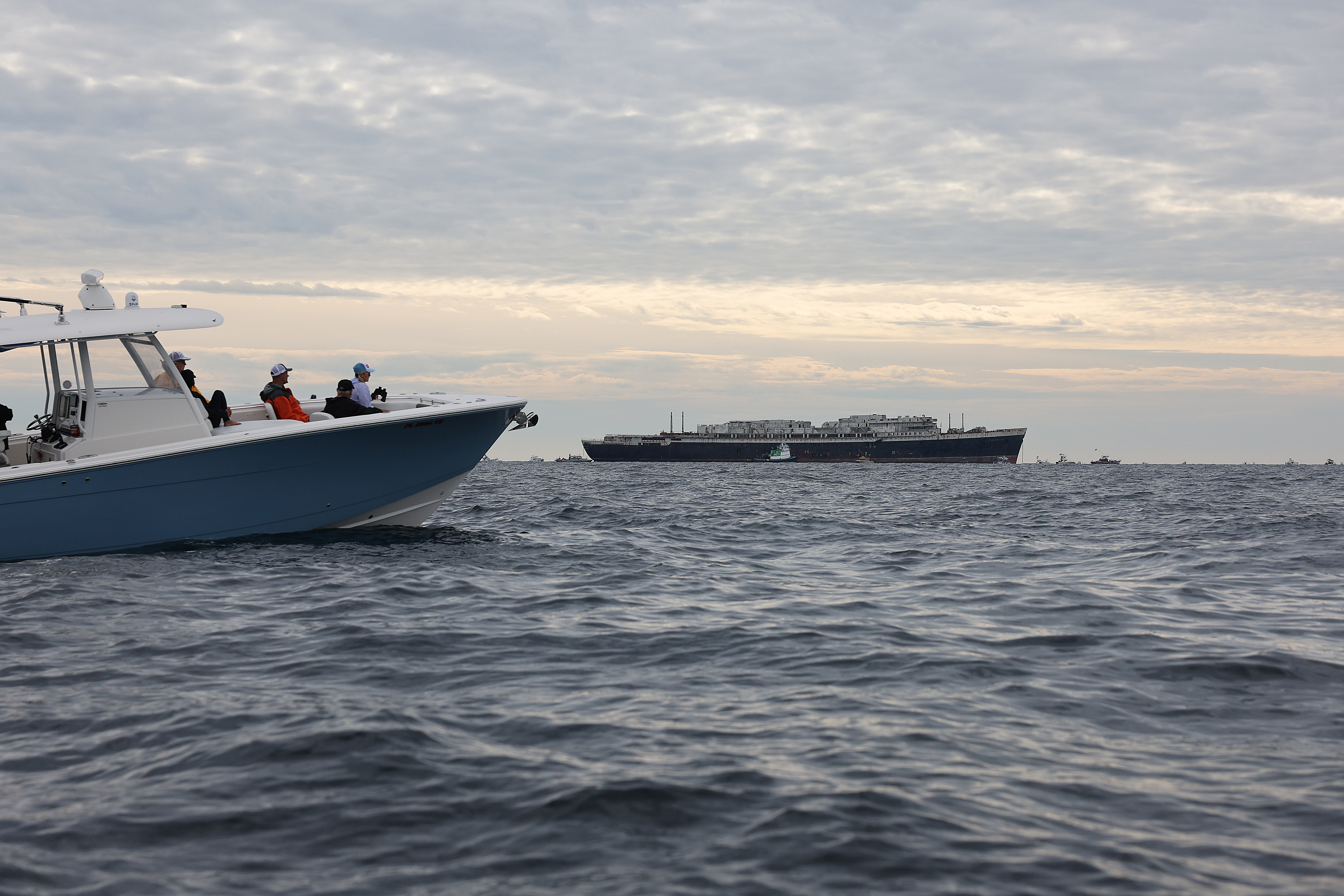
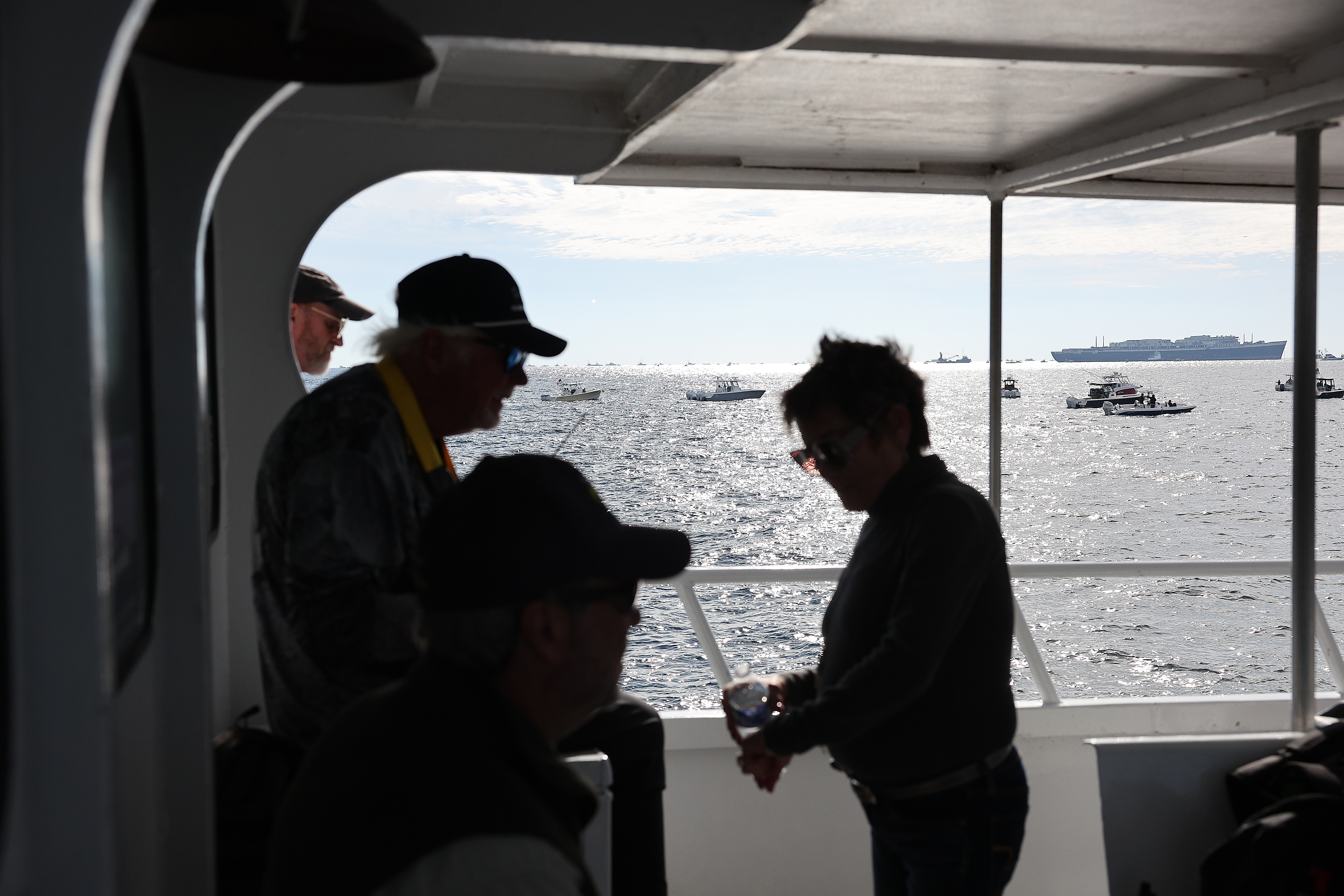
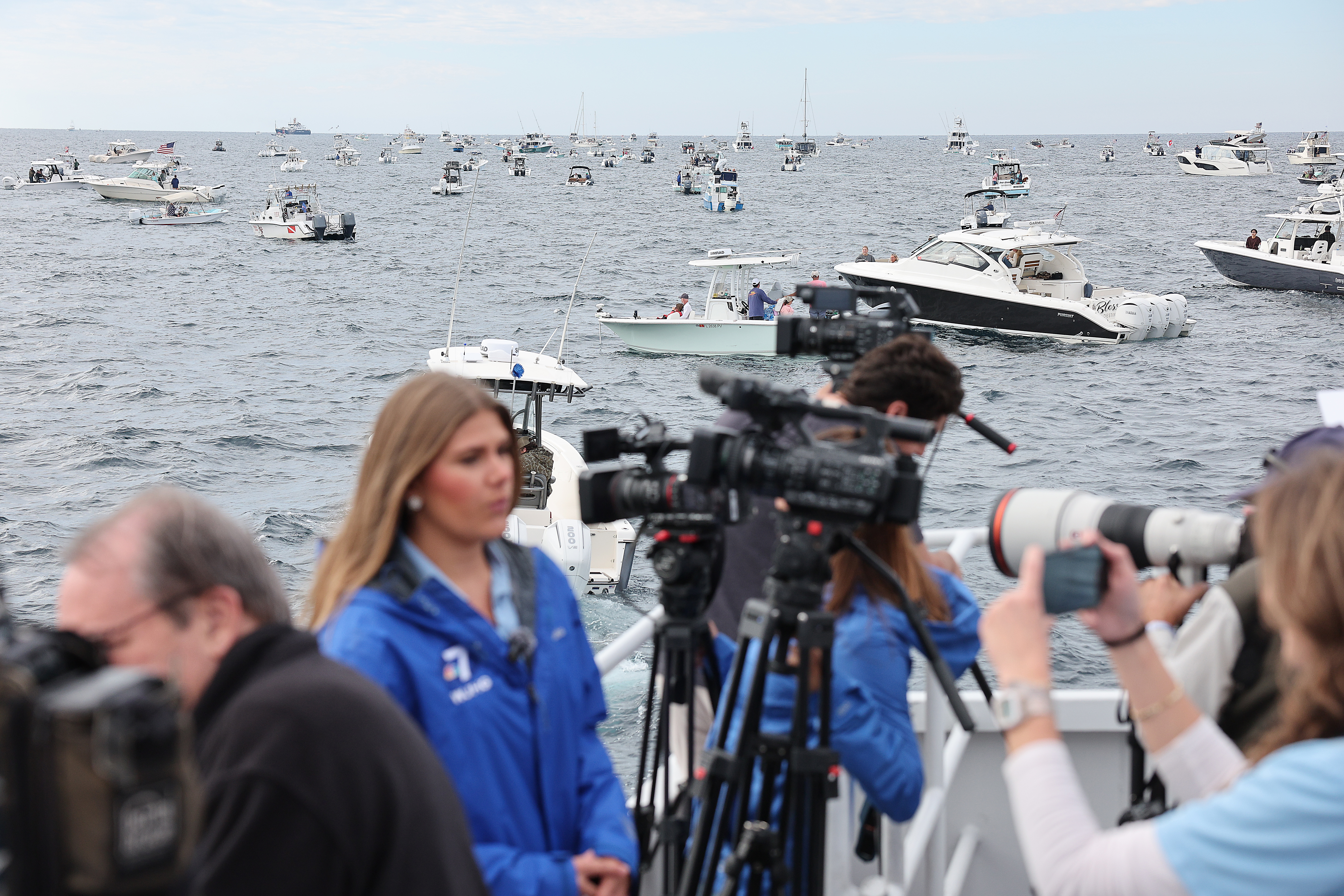
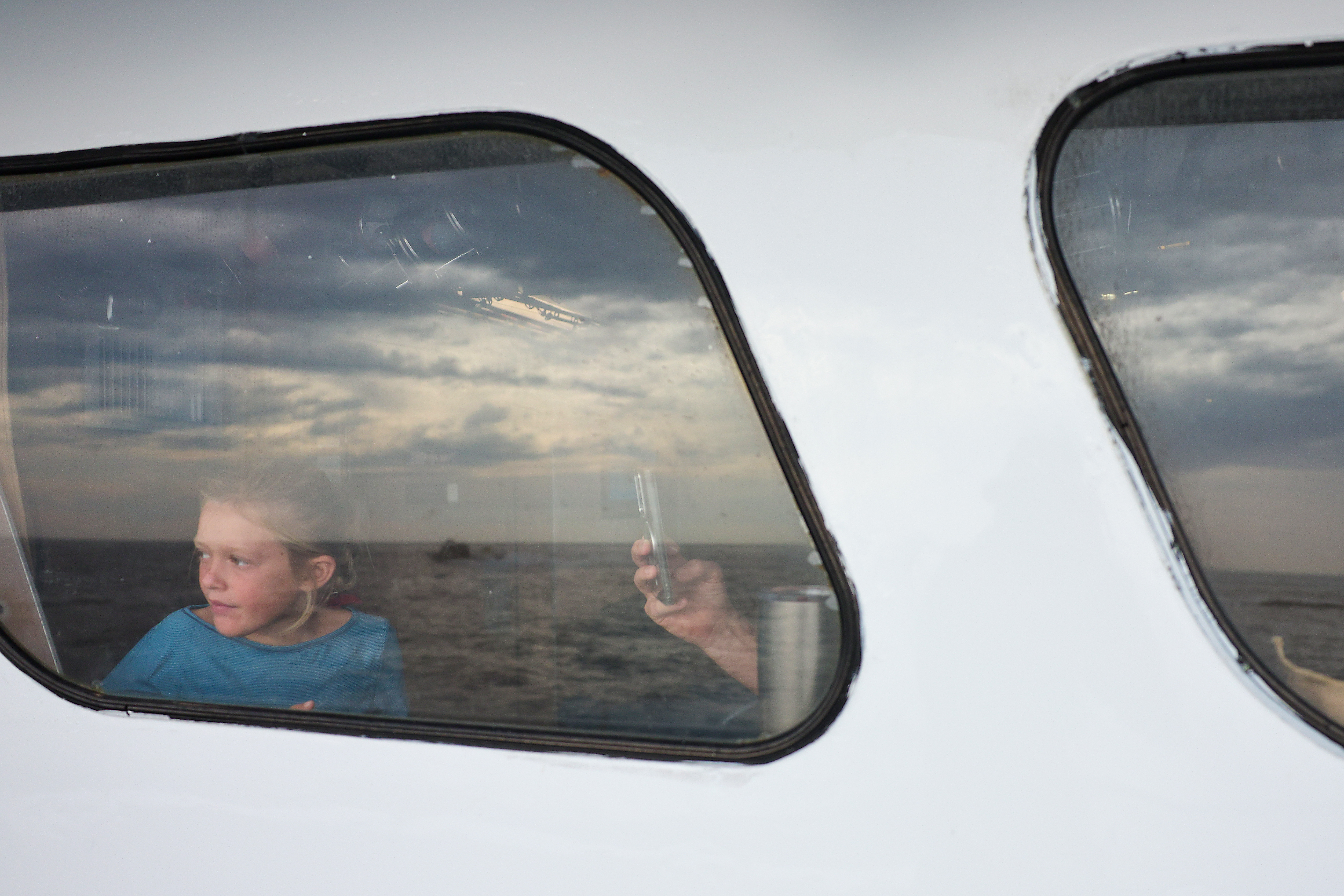
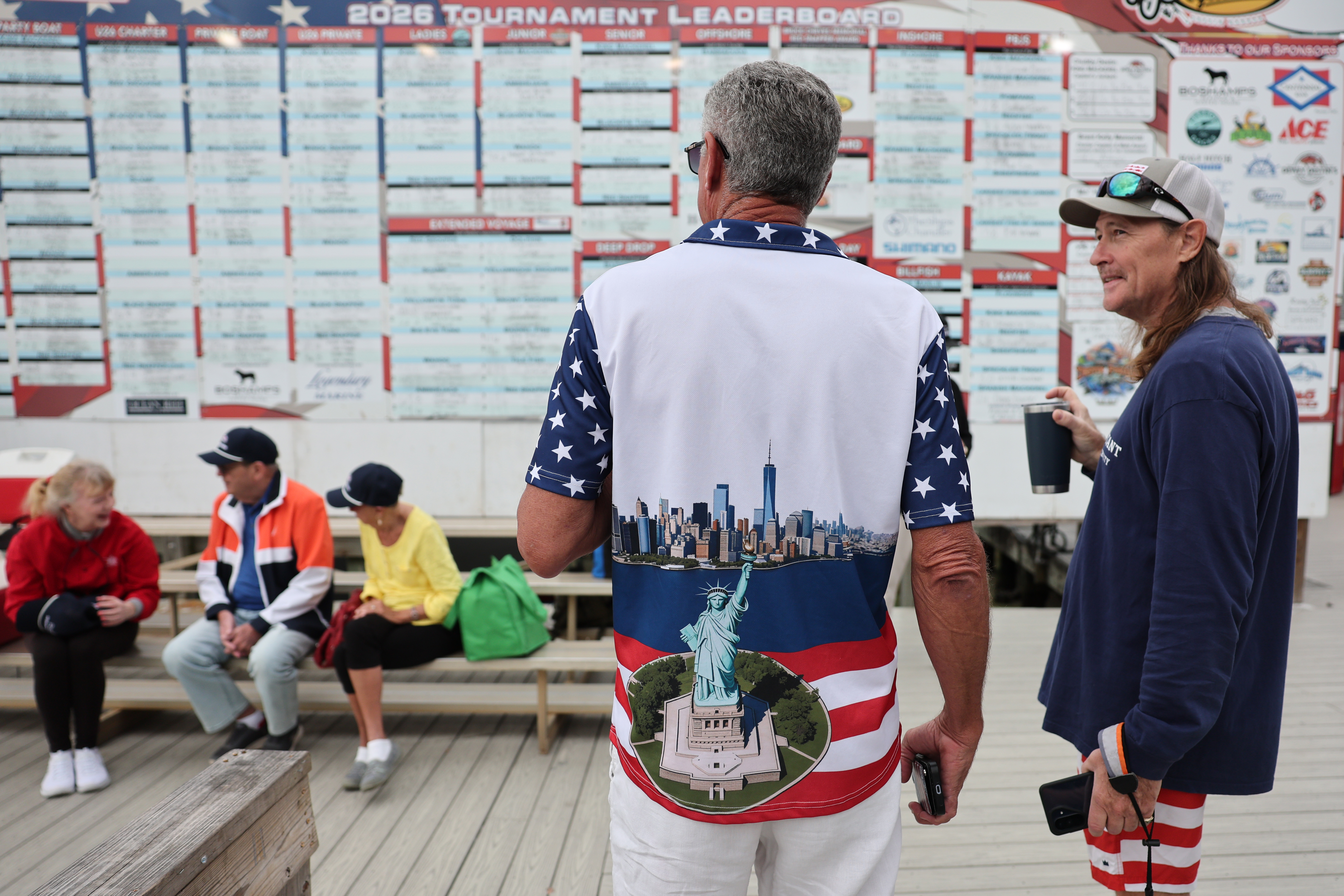
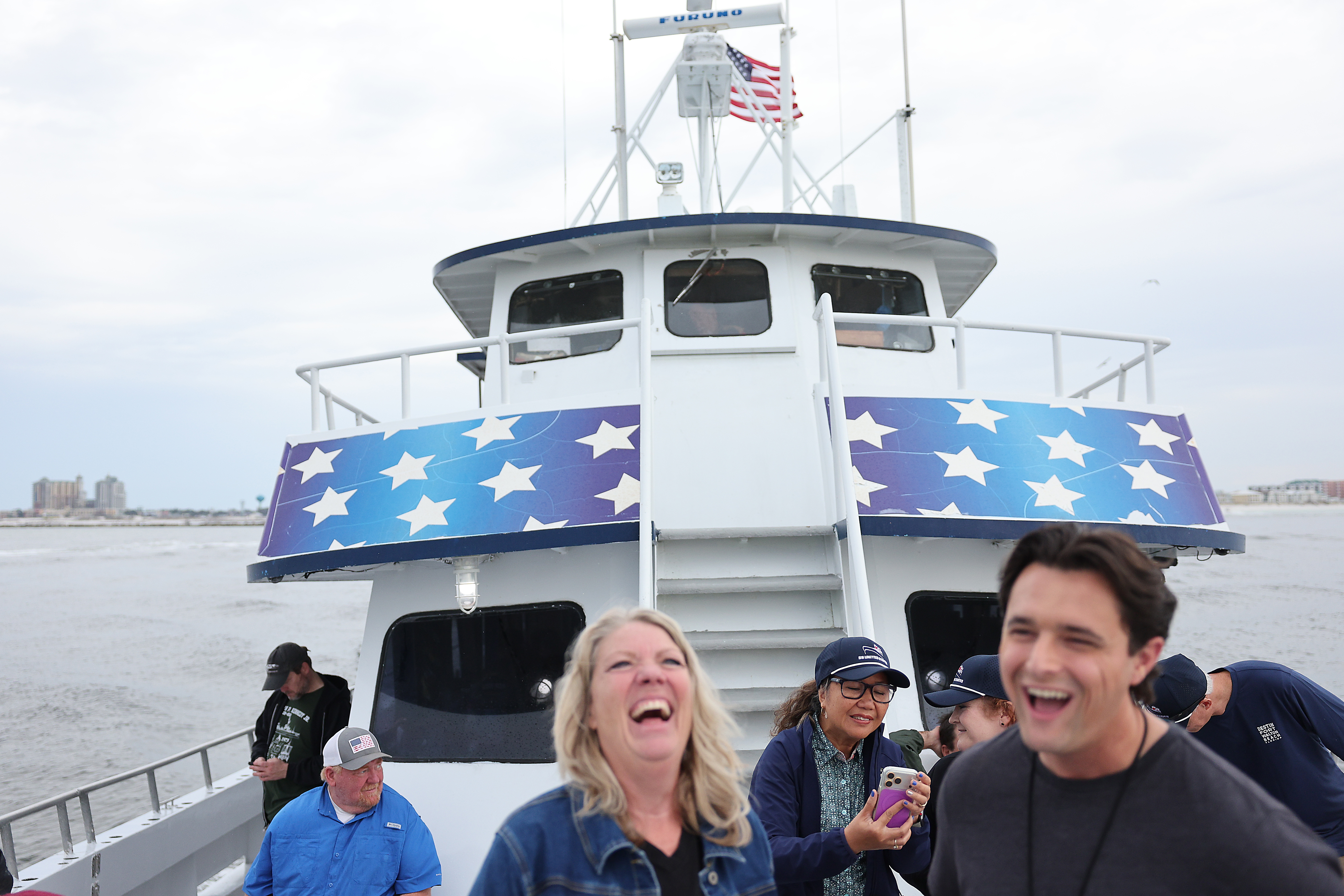
Hundreds of boats tried to get as close as the U.S. Coast Guard would let them, angling for a better view of the slow drop into the Gulf of Mexico, with some passengers coming from as far as California and Philadelphia.
At about 10 p.m. Philly time, the ocean liner finally submerged to take its place on the Gulf floor. The ocean liner’s final moments, scored by sweeping string music, had a cinematic feel as the water overtook one side of the vessel and then the rest.
“This is history,” said Panama City Beach resident PJ Hughes, knowing little else about what her day had in store aboard the Gulf Breeze and unknowingly foreshadowing the unexpected delays. “I’m just like a little puppy dog. We might be out there for about six hours, I don’t know.”
For many, the trip to sea was much longer than that.
The ocean liner had to undergo some last-minute prep when it was supposed to begin the controlled flooding. The sinking was then much slower than expected when it finally began, submerging inches by nightfall, not feet. It was not immediately clear when the process would end, said the Okaloosa County officials in charge. Many captains took the news as a sign to turn back, with floodlights doing little for those trying to see the vessel slowly dropping into the sea.
It was an anticlimactic return to shore as buzzes wore off and light sunburns set in.
The event had drawn media from across the country. Reporters descended on Destin to cover the once-unthinkable sinking of one of the last and fastest ocean liners the United States ever produced.
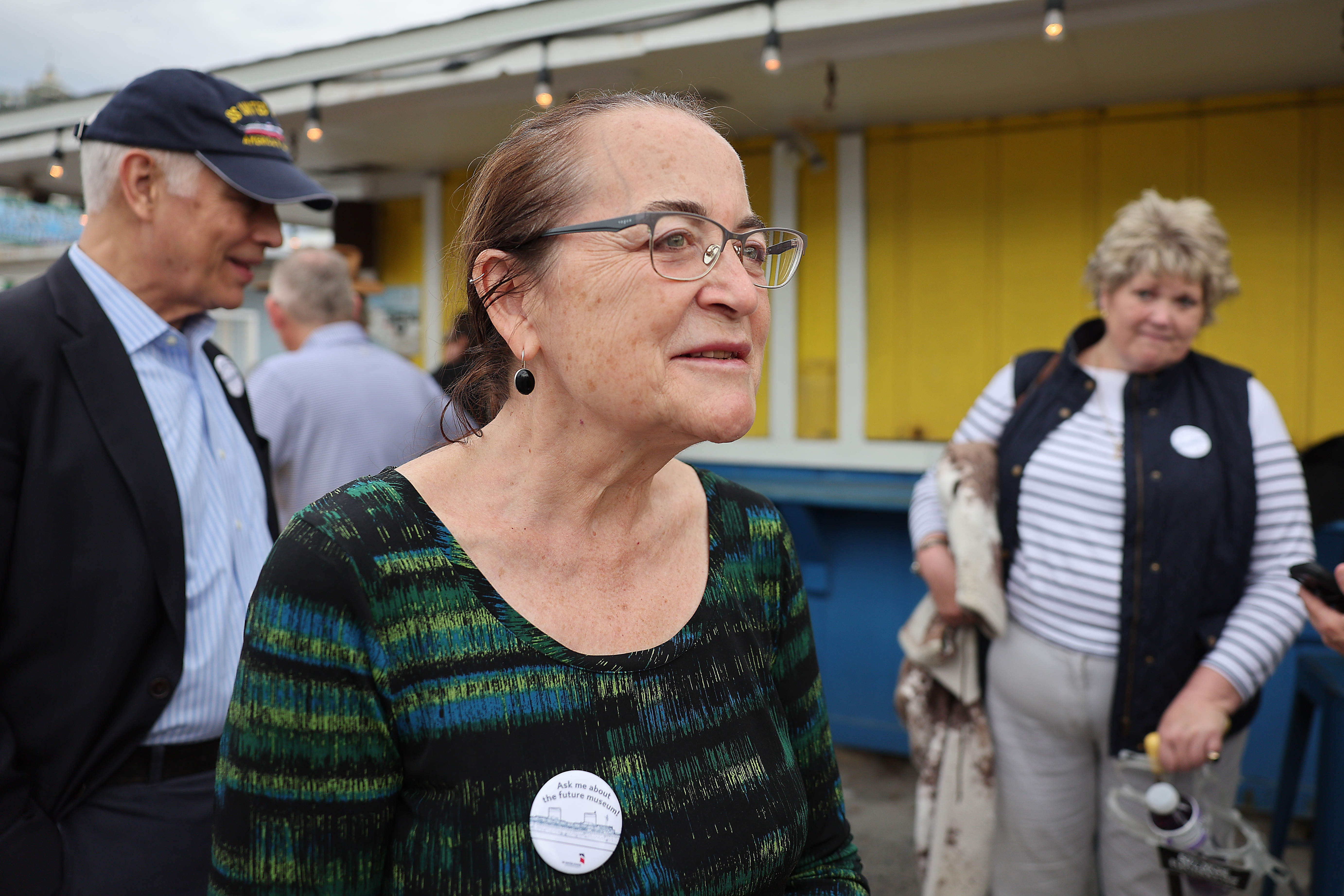
“It is very emotional,” said Susan Gibbs, granddaughter of the vessel’s designer, who desperately fought for redevelopment as the head of the SS United States Conservancy.
“It’s almost overwhelming. We tried for decades to save the ship, keep her afloat. But this is a poignant, poignant transition, and may she rest in peace.”
Susan Gibbs, who is the granddaughter of the architect of the SS United States, talks about the sinking of the SS United States outside Destin-Fort Walton Beach, Fla. on Wednesday, Nov. 11, 2026. The ship will become the world’s largest artificial reef.David Maialetti / Staff Photographer
Gone were the days when the ship carried close to 8,000 quarts of ice cream and 500 pounds of caviar for guests looking to travel in luxury. A household name like Marilyn Monroe, Judy Garland, or Grace Kelly had not stepped aboard its decks in decades. And the SS United States, stripped of its furnishings and gutted, would not be considered a secret military weapon by anyone — it once could transport 14,000 troops.
The SS United States spent close to 30 years as a Philadelphia resident that locals loved or loved to hate. Stripped of its remaining interiors in the 1990s, its frame acquired the rusty patina of a shipwreck, deemed an eyesore by many, dubbed the Ikea boat because of its proximity to the Swedish big box store’sSouth Philadelphia location.
Various owners sank more than $40 million into buying, maintaining, and unsuccessfully reimagining the SS United States during its time in Philly. But they all eventually learned the gutting of the ocean liner only made redevelopment ambitions all the more difficult to pitch.
The SS United States could not move on its own and required extensive environmental remediation. Restoration was estimated to run to the tune of $400 million.
No one took the bait.
The conservancy took to selling its namesake for $1 million in 2024 as an alternative to sending it to the scrap heap. It is now focusing its advocacy efforts to fundraise and build a museum in Okaloosa County, Fla., that will feature more than 10,000 artifacts, including the first-class bar. The conservancy also has possession of the vessel’s two iconic, once red-and-white smokestacks.
Warren Jones is one of the conservancy members who is now directing his energy to building the museum.
He noted the irony of waiting for the SS United States to sink aboard a boat named the American Spirit. Even so, he maintained the sinking was a rebirth better than the scrapyard or, worse, a purgatory on some pier — not unlike how the vessel existed in Philadelphia.
“That would be disrespectful,” he said, looking onto the vessel. “You know that would be what people would remember the ship as, and that’s not right.”
Onlookers like David Heath, 62, put it more bluntly.
“This is probably the best outcome rather than it being made into razor blades,” he joked.
Some of the most fervent critics of reefing the vessel also appeared resigned to the idea Wednesday. No protesters showed, as once suggested, and the final lawsuit to stop the sinking was dismissed Friday.
Spectators wait for the sinking of the SS United States outside Destin-Fort Walton Beach, Fla. on Wednesday, Nov. 11, 2026.David Maialetti / Staff PhotographerBoats approach the SS United States before it’s sinking outside Destin-Fort Walton Beach, Fla. David Maialetti / Staff PhotographerBoats gather for the sinking of the SS United States outside Destin-Fort Walton Beach, Fla. David Maialetti / Staff PhotographerA spectator with patriotic shoes waits on the deck of the American Spirit boat for the sinking of the SS United States outside Destin-Fort Walton Beach, Fla. David Maialetti / Staff PhotographerSaylor Jeter looks out from the American Spirit charter boat on the way out to the sinking of the SS United States outside Destin-Fort Walton Beach, Fla. David Maialetti / Staff PhotographerGreg Gill (left) and Darren Engelberger chat before heading out to watch the sinking of the SS United States.David Maialetti / Staff PhotographerA pelican mingles with spectators who are planning to watch the sinking of the SS United States.David Maialetti / Staff PhotographerA fan of the ship wears a pin touting a possibility of a museum for the SS United States. He was there for the sinking of the SS United States outside Destin-Fort Walton Beach, Fla. David Maialetti / Staff PhotographerSpectators gather on the America Spirit boat as it travel out to the sinking of the SS United States outside Destin-Fort Walton Beach, Fla. David Maialetti / Staff Photographer
A fresh start
Okaloosa County jumped at the opportunity to sink the SS United States 22 nautical miles southwest of Destin-Fort Walton Beach. The area has undergone a bit of an artificial reef renaissance in the last decade under Alex Fogg, the county’s natural resources chief.
Unlike the Florida Keys or the Caribbean, Destin-Fort Walton’s shores do not have natural reefs.
“We rely on artificial reef habitat, things we intentionally deploy to be reef habitat for the fish to thrive, for people to have places to go fishing, and for places for people to go diving,” Fogg said earlier this year.
Okaloosa County has deployed hundreds of concrete structures and smaller ships in the last decade but by reefing the SS United States, the county aims to cement its place as a diving attraction.
“Divers are going to have that place completely swamped up for the first four or five years,” mused Jim Westbrook, captain of the American Spirit, a charter boat.
Westbrook welcomes what hosting the world’s largest artificial reef will mean for tourism, but as someone who would visit for fishing, he knows he will have stiff competition.
“I expect to maybe fish it in 2030,” he joked. “I’ll have to go out when it’s nasty. Otherwise, there’ll be 20 and 30 dive boats anchored up on it every day.”
David Landsman, who was a visitor on the SS United States as a kid, waits to depart on a charter boat for the sinking of the SS United States outside Destin-Fort Walton Beach, Fla. on Wednesday, Nov. 11, 2026. The ship will become the world’s largest artificial reef.David Maialetti / Staff Photographer
The vessel is expected to draw divers of all abilities. Because the SS United States’ main deck is expected to hover about 60 feet underwater, it will be perfect for those starting out. Meanwhile the bottom is about 175 feet, ideal for the technical diver.
Local diving companies confirm people are already booking trips for this month. People have the all-clear to explore the gutted vessel as early as Thursday, weather permitting. Marine life will be limited in the first few weeks, limited to bait fish. But scientists expect groupers, snappers, amberjacks, and sea turtles within the year.
As the American Spirit headed back to shore full of dejected spectators, Jones, the member of the Conservancy, couldn’t help but laugh.
A quote by William Francis Gibbs, the vessel’s designer, came to mind, he said. Gibbs used to say the vessel couldn’t catch fire, sink, or be caught.
“Well, we’ve caught her, but she hasn’t caught fire, and she definitely hasn’t sunk yet,” Jones joked, as the American Spirit headed back to shore.
At sundown, Paul Wright would drive up and down Kensington Avenue in his Ford Explorer between the Erie-Torresdale and York-Dauphin stations, looking for his niece. He checked her into at least four drug rehabs in Camden, Trenton, and Philadelphia, but she would always run.
He had not seen her in years, and hoped she had finally found sobriety and moved away.
“I have some closure,” he said, his voice shaking. “But now I need answers so I can kind of try to figure out what led up to this.”
During a September news conference, police explained that a trove of video and photographic evidence recovered from searches of Horsch’s Olney residence pointed to the possibility that at least five of the seven women were dead.
One victim, who had not previously been named at the request of a relative, was a 25-year-old woman who appeared unconscious and with visible injuries in some recovered photos.
Paul Wright said two family members have told him that investigators were referring to his niece, and a police source confirmed to The Inquirer that the woman was Lelia Wright, whose first name was pronounced Leah.
Wright said he spoke with a detective who declined to provide exact details on the circumstances of her death because he is not considered next of kin.
“Short of not telling me, he told me it was her and she was gone,” said Wright, 49, a construction foreman and father of four.
Wright said relatives told him that police were able to identify her from tattoos on her neck, chest, and back.
“I can’t lay her to rest, I can’t get her cremated and put her with her dad or her grandmom,” he said. “I can’t do anything for her because, as far as I know, she was dissolved in liquids or buried somewhere.”
Paul Wright in Tredyffrin Township, Pa., tried pulling his niece off the streets of Kensington for years. Monica Herndon / Staff Photographer
A chance car stop on June 19 led to the arrest of Horsch’s son, Eugene, after police discovered guns, drugs, and a fake ID made out in the name of another missing woman, Blair Tonzelli. Eugene Horsch is in prison on federal charges, but has not been accused of violent crimes involving the deaths or disappearances of the women. Raymond Horsch died last year.
The discovery of Tonzelli’s ID prompted a sprawling investigation into the Chew Avenue home. For months, crews have excavated pipes, sewer lines, and sections of the front and back yards. Inside, they have torn up floors and taken down walls in search of forensic evidence.
Police have uncovered numerous videos and photos from Horsch’s home they have said seem to show real violence and actual killings.
“Usually when we have a homicide investigation, we have a body, we have body parts,” Police Inspector Raymond Evers said at an August news conference.
“This time we do not.”
A hard life
Life had never been easy for Lelia, Wright said.
Her biological mother, who could not be reached for comment, took her and four siblings to Virginia from Philadelphia when Lelia was little. Relatives intervened after it became clear the woman was unable to care for the children, and Lelia’s grandmother — Paul Wright’s mother — was granted custody, he said.
Since the age of 5, Lelia had been raised in Philadelphia by her grandmother, Julia Wright, her dad, Thomas Wayne Wright, who died in 2019, and his longtime partner, the mother of five more children.
Paul Wright pitched in, too, and for a long time, Julia Wright, Thomas Wright, and Paul Wright lived in three rowhouses on the same block on East Arizona Street near Coral in Kensington.
Lelia dropped out of school and started using drugs as a teenager, Wright said. Her grandmother, whom Wright described as a “no-nonsense mama bear,” put bells on the bedroom doors of Lelia and her two sisters to alert her when they snuck out.
“I can’t tell you how many times my mom would call me and tell me that Lelia ran off, to go find her, and I would go find her and bring her back home,” he said.
When her grandmother died in 2011, at age 71, a devastated Lelia turned to drugs to ease the loss.
“That was probably the catalyst that finally put her out there,” Wright said. “That was the thing that just drove her away.”
Court records show that she was arrested in Philadelphia and Montgomery County at least 11 times between 2012 and 2016 for minor offenses, principally drug possession or sex work. She was repeatedly described as homeless in arrest records, sometimes listing the offices of social service provider Prevention Point as her home address.
Nearly all of Wright’s Philadelphia arrests occurred between the 2800 and 3500 blocks of Kensington Avenue, placing her right in the area where Raymond Horsch picked up drug-addicted women to pay for sex or pornographic work.
Wright said the last time he saw Lelia, she was on Kensington Avenue near M Street, talking to an older man in a dark minivan.
“C’mon, let’s go, Lelia,” Wright called out to her. “We’re going to rehab.”
Lelia took off.
The man in the minivan stepped out, and Wright said he smashed the back driver’s side window with his fist, shattering the glass. The man walked to the back of his car to get something, and Wright said he punched him in the head.
He doesn’t remember the date. He doesn’t know if this man was Horsch.
“What if that old guy was him?” Wright asked. “What if that last time I saw her was the last time he was out looking for girls? These are all things that are going to be pinging around in my head now for the rest of my life.”
Lelia’s contact with the court system abruptly ended in December 2016. She was not formally reported missing at the time of her disappearance.
Over the years, Wright called the morgue, police, prisons, and hospitals multiple times.
“No one ever had any unclaimed bodies or anyone with that name,” Wright said. “So there was always still a hope that she was out there. There was always the hope that she might have gone somewhere and got clean.”
He never had her cell number. He assumed she used burner phones, and she had no presence on social media.
“Now I feel like I failed,” Wright said.
With no human remains yet found, Wright said, he will never have the real closure he seeks. He still thinks about the last night he saw her. What if he had been able to stop her from running?
“I went after her,” he said. “She got away from me, and that was the last time I ever saw her.”
He is convinced that there is more to the story.
“We can’t do anything to him [Horsch] because he’s dead, but there’s no way this could just be him,” Wright said. “Who helped him? How many other victims are there?”