Three Philadelphia-area athletes were recently arrested in connection with an April assault in Old City that left the victim with a concussion, a broken nose, and two chipped teeth, among other injuries.
Charles W. Foulke and Masiia Acrey, both 18, have been charged with aggravated assault, conspiracy, simple assault, recklessly endangering another person, and harassment.
Jalen Millevoix, 19, was charged with criminal mischief and conspiracy.
Foulke is a former starting quarterback for St. Joseph’s Prep who transferred to Glassboro High School in the last schoolyear. Acrey is currently a cornerback at St. Joe’s. Millevoix played football at Eastern Regional High School in New Jersey and graduated in 2025, according to his social media.
As first reported by Syracuse.com, Foulke and Acrey are Syracuse University football recruits. The university’s athletics department did not immediately respond to a request for comment, but a source familiar with the football program’s thinking told Syracuse.com the school still considers Foulke and Acrey part of the 2027 football class.
The incident started with a “noogie” just before 2:30 a.m.on April 12, according to Philadelphia police.
The group of athletes encountered a man and woman outside waiting for their rideshare when one of the football players proceeded to rub his knuckles against the man’s head. The interaction appeared to have ended after the man told the group to knock it off.
But as the rideshare arrived, one athlete gave the man another noogie. The man lunged in response, took a swing, and the group began to attack him.
Police said the victim was taken to Thomas Jefferson University Hospital with abrasions to the left side of his face and body, requiring stitching for his nose, which was also broken. The rideshare car was also damaged in the scuffle.
Millevoix was arrested May 23 and released without bail, with his preliminary hearing scheduled for June 22. His attorney, Gregory Joseph Pagano, could not immediately be reached for comment.
Foulke was arrested May 26 with his unsecured bail set at $200,000 and his preliminary hearing scheduled for July 10. His attorney, Joseph Kelly, declined to comment.
Acrey was arrested June 3 with unsecured bail set at $50,000 and a preliminary hearing scheduled for June 22. His attorney, Fortunato Perri Jr., could not immediately be reached for comment.
Philadelphia can now add two more food awards to its shelf.
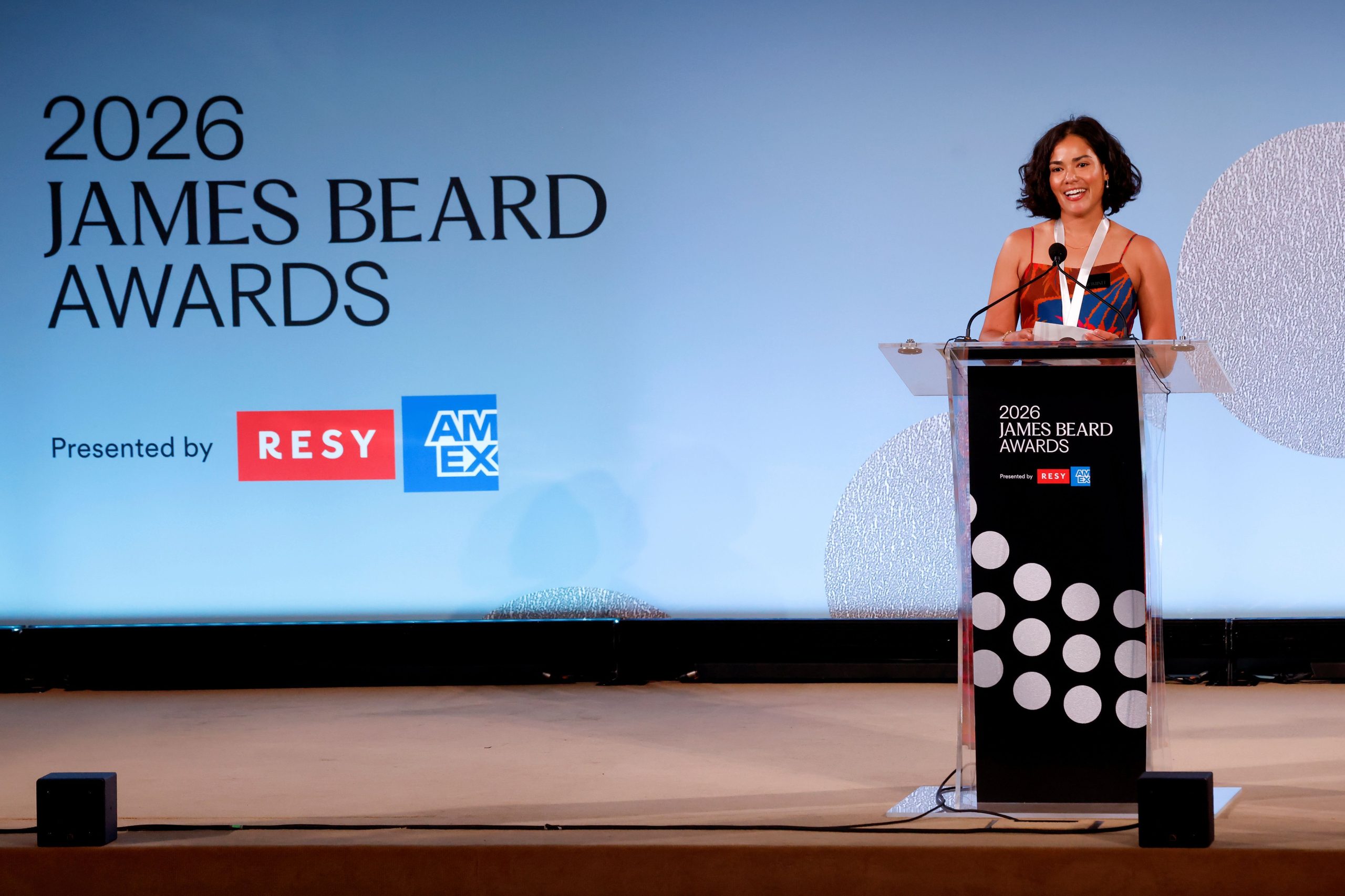
Restaurants and chefs from the City of Brotherly Love took home wins in two categories Monday night in Chicago at the 2026 James Beard Awards, considered to be the most prestigious restaurant industry honor in the United States.
The showing builds on the momentum of last year, when Mawn’s Phila Lorn took home the title of Emerging Chef, an award he dedicated at the time to “the assumption” that the Cambodian noodle house in Bella Vista wasn’t “popular enough,” “focused enough,” or ”good enough” to win.
Now the assumption isn’t that Philly is an underdog. It’s that we’re a full-on culinary powerhouse.
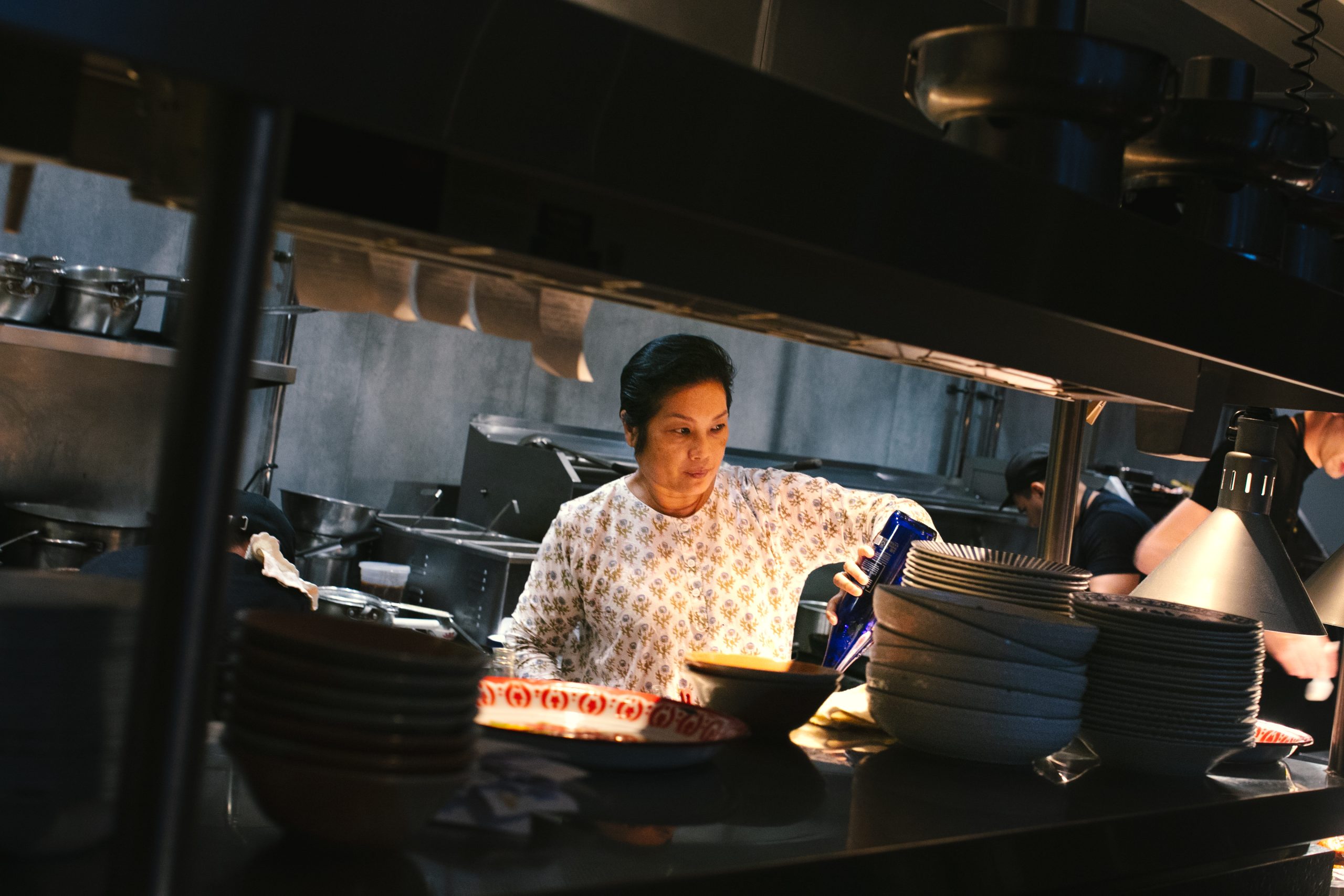
Suntaranon originally opened the restaurant — known for its ornate dumplings — in 2019 in what is currently Mawn’s location, where it was nominated in 2020 for Best New Restaurant. In 2022, Kalaya moved to a bigger space just off Frankford Avenue in Kensington, where it has flourished, earning a Michelin Guide recommendation, a spot on The Inquirer’s The 76, and, in 2023, Suntaranon’s first Beard Award for best chef, Mid-Atlantic.
Chef Chutatip “Nok” Suntaranon as seen through the line at her restaurant Kalaya in Fishtown on August 22, 2024.Neal Santos
“This award means a lot to me because it’s validation for Thai food and validation for the city of Philadelphia that we’re a world-class food city,” Suntaranon, in a shimmering floor-length orange gown, said backstage.
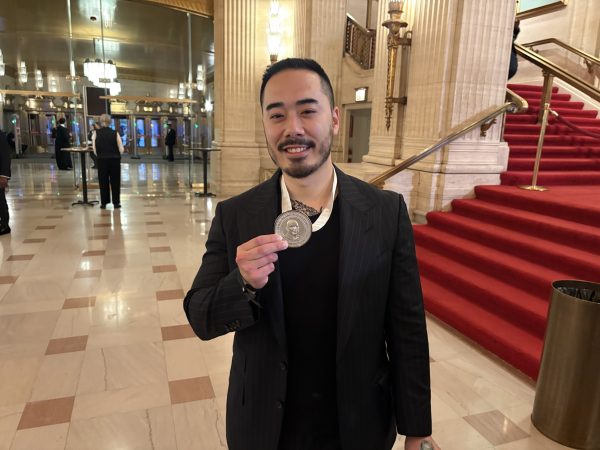
Chef Jesse Ito of Royal Sushi & Izakaya on Monday night took home his first James Beard Award, for best chef, Mid-Atlantic. “It’s been a long ride,” Ito said from the stage at the Lyric Opera theater.
Indeed it has.
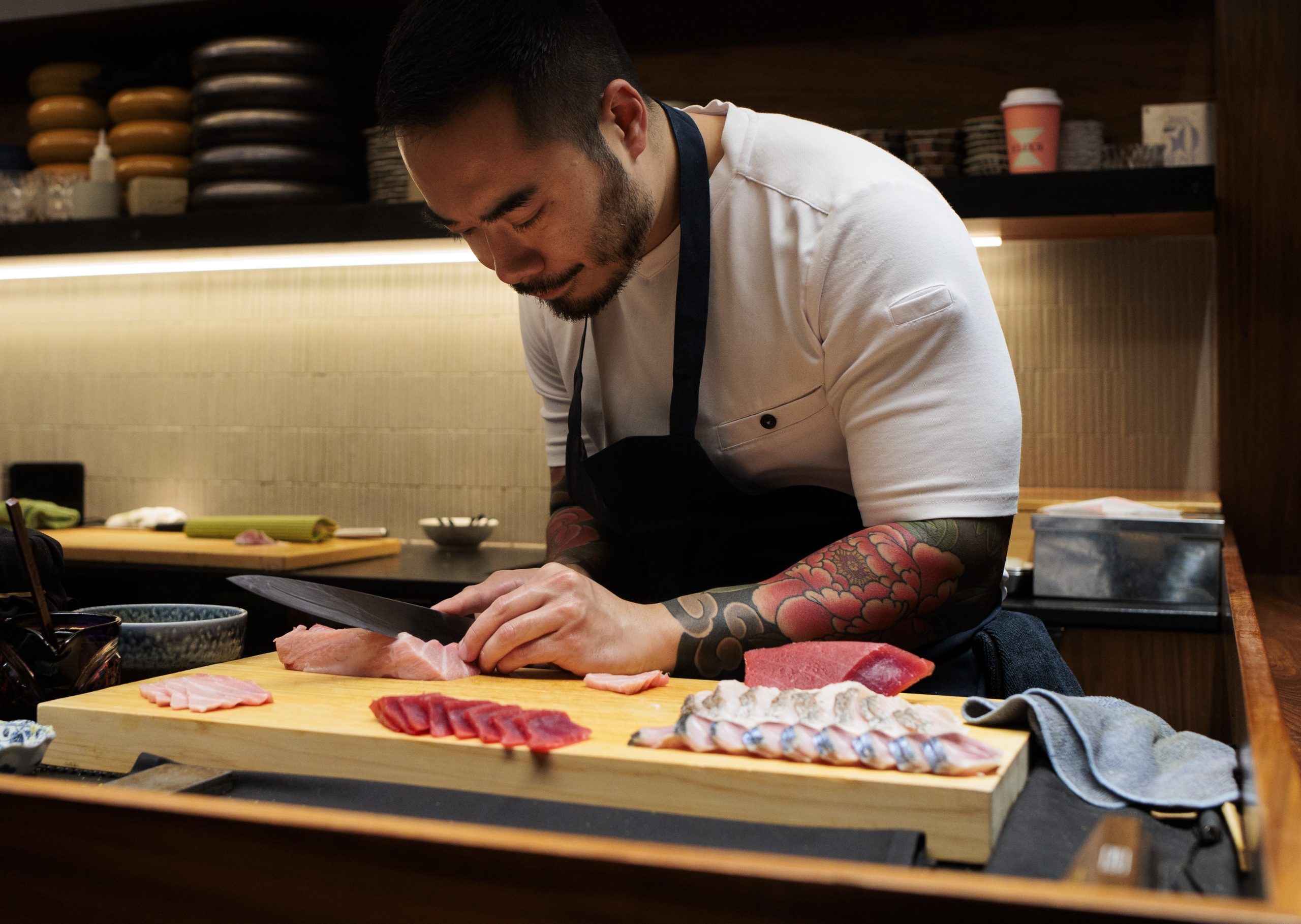
The chef behind the notoriously-hard-to-get-into Queen Village omakase counter and its more casual bar and restaurant has been nominated nine times for the award, which honors the top culinary talent across Pennsylvania, New Jersey, Delaware, Maryland, Virginia, and Washington. This go-around, Ito beat outtwo-time finalist Amanda Shulman — whose Her Place Supper Club earned one of Philly’s first Michelin stars last year — and Omar TateandCybille St.Aude-Tate of Honeysuckle, who transformed their cafe-market into a Michelin-recommended prix fixe restaurant in 2025.
During his acceptance speech, Ito invoked the oft-quoted Serenity Prayer and thanked his parents, who ran theCinnaminson and Haddonfield sushi restaurant Fuji for 40 years, before selling. It’s where Ito worked his first restaurant job as a dishwasher, and a place he has long credited for helping him find his footing in the restaurant industry.
Chef Jesse Ito prepares a course during the omakase at Royal Sushi and Izakaya on Tuesday, Oct. 28, 2025, in Philadelphia.Monica Herndon / Staff Photographer
“We went through so much,” Ito said, choking up. “Restaurants are glamorous, and it seems great, but we went through so much hardship. I’ll never forget the struggle just to get here.”
Royal Sushi’s success has also, at times, been its greatest challenge: The $355, 16-seat omakase prepared by Ito is one of the toughest seats to score in Philly, which potentially led to the restaurant losing out on a Michelin star last year. At the same time, the restaurant earned a spot on North America’s 50 Best Restaurants list in 2025 and high praise from The Inquirer, landing on The 76 two years in a row.
The pendulum swing of accolades keeps Ito on his toes. He told The Inquirer over the phone Monday night that he wasn’t certain what made this year different from all the others.
“I don’t know how it all works,” Ito said. “I came to Chicago 99% certain that I was going to lose.”
Now that he’s won, Ito plans to celebrate by singing Harry Styles’ “Sign of the Times” and “Creep” by Radiohead at karaoke — somber choices for a victorious night.
“They’re just my songs,” said Ito. “I have to sing them.”
Who else represented Philly?
Philly restaurants and chefs didn’t take home medals in every category.
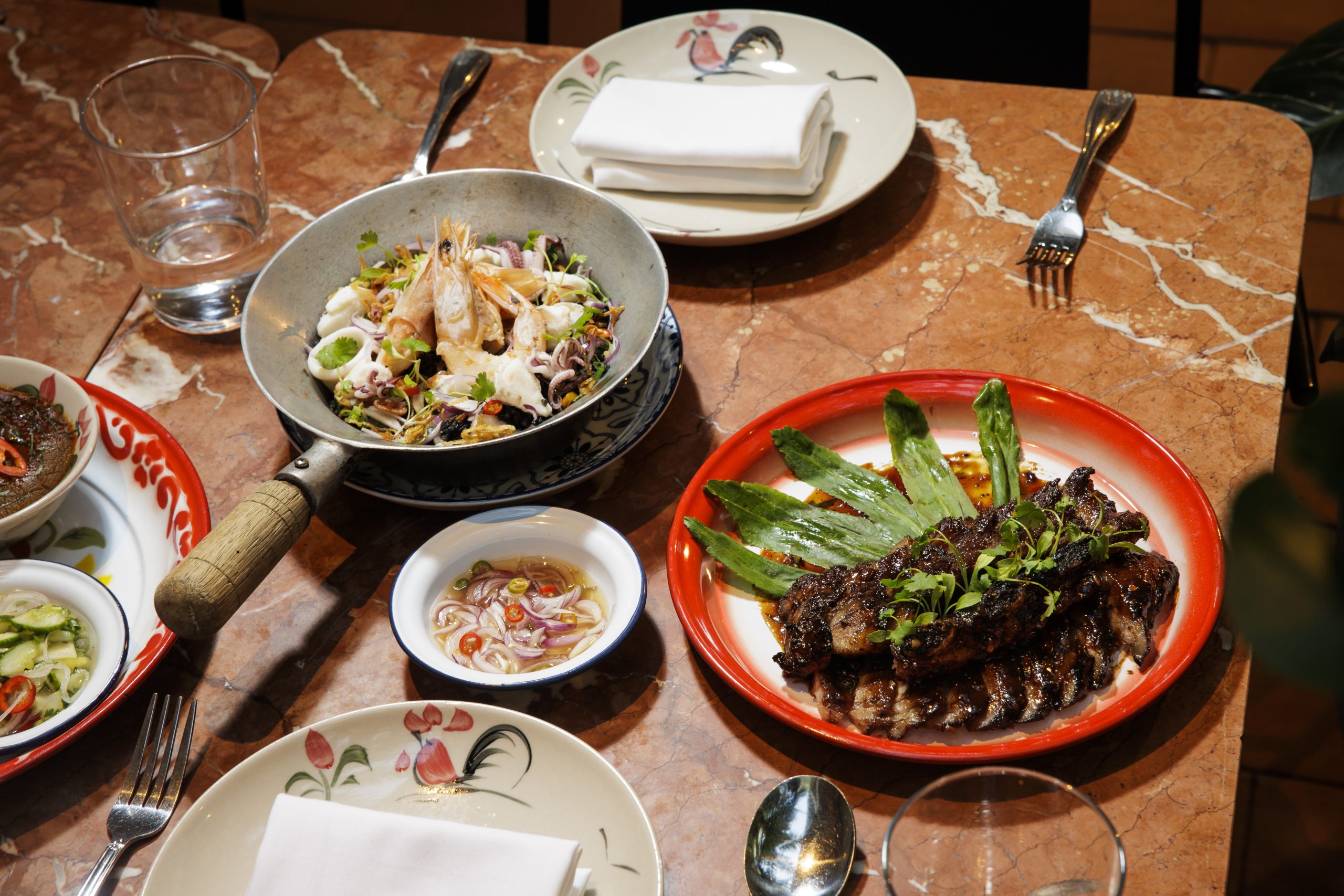
From left: The gaeng pae, khao mun klone, and moo yaang prik at Kalaya on Wednesday, Sept. 3, 2025, in Philadelphia.Monica Herndon / Staff Photographer
First-time nominee Justine MacNeil did not take home the award for outstanding pastry chef or baker, which went to Susan Bay of Washington’s buzzy Vietnamese restaurant Moon Rabbit. At Fiore — the East Kensington cafe MacNeil co-owns with husband Ed Crochet — the former fine dining pastry chef churns out thousands of classic Italian pastries a week, from oversize maritozzi to pistachio cornetti that have earned praise from 2017 James Beard Award-winner Greg Vernick and Inquirer critic Craig LaBan, among others.
Friday Saturday Sunday lost out on its second Beard Award on Monday, this time for outstanding bar. Itsdownstairs, first-come-first-served Lovers Bar was nominated for the honor, which instead went to Portland, Ore., whisky bar Scotch Lounge, a recent addition to the list of North America’s 50 Best Bars from World’s 50 Best. Friday Saturday Sunday won its first Beard award in 2023 for outstanding restaurant, and earned one of Philly’s first Michelin stars in 2025.
The deluxe nigiri box for take-out at Royal Izakaya, in a photograph from 2020.Courtesy Royal Izakaya / Jesse Ito
The Inquirer also took home hardware of its own Sunday night during the James Beard Media Awards, also in Chicago. Inquirer staff photographer Monica Herndon won for narrative photography for “The hunt for life-giving ‘country food’ in the Canadian Arctic.” The photo essay chronicled the food traditions of the Inukjuak, a remote Inuit community in northern Québec. It accompanied reporting from Inquirer food critic Craig LaBan about how the community continues to hunt and preserve foods such as caribou and beluga despite the challenges of climate change.
Philadelphia had 13 semifinalists across eight categories when the Beard Awards were announced in January. They included chef Greg Vernick for outstanding restaurateur; Amá’s Frankie Ramirez for emerging chef; Almanac in Old City for best new bar; and deli magnate Russ Cowan and Michelin Green Star winner Ian Graye of the vegan restaurant Pietramala, both for best chef, Mid-Atlantic.
All three were later eliminated from the finalists’ list.
CHICAGO, ILLINOIS – JUNE 13: Monica Herndon, winner of the Narrative Photography Award, speaks onstage during the 2026 James Beard Media Awards at the Art Institute of Chicago on June 13, 2026, in Chicago.Jeff Schear / Getty Images for the James Beard Foundation
The night’s showing adds one more win from February when Center City stalwart Oyster House was named an American classic, which honors local restaurants across the U.S. with “timeless appeal that serve quality food and are beloved by their communities.” Representatives from the Philly mainstay were in Chicago to receive their medals in person.
“I am very fortunate that I live in Philly. People are loving and caring [here]. People are strong, and we all come together to support one another,” Suntaranon said. “Go Birds!”
Jay and Patty Wright attended a wedding Saturday night in Red Bank, N.J., and Game 5 of the NBA Finals was at halftime when it was time for them to head home.
Watching Jalen Brunson, Mikal Bridges, and Josh Hart is like watching his own children, Wright said, and he wasn’t going to miss this. Patty took the wheel, Jay put the game on his phone in the passenger seat. The game was nearing its end when it was time to exit the Blue Route.
They weren’t going to make it home in time, so the Wrights pulled off the main road and onto a side street. They watched the ‘Nova Knicks win their first NBA title and end a 53-year New York Knicks championship drought in a Radnor cul-de-sac.
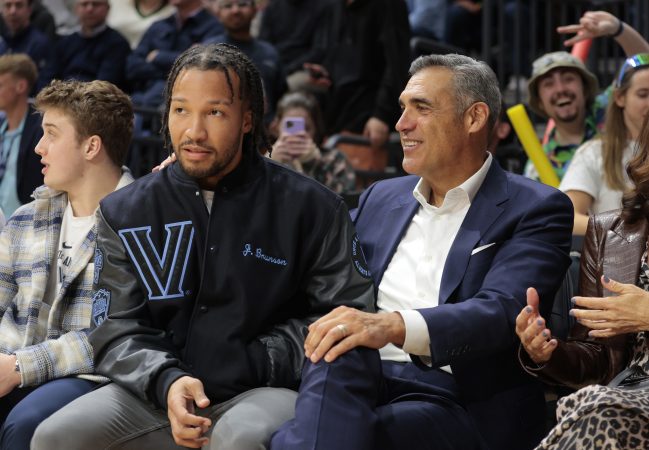
Wright intentionally stayed out of the spotlight during the playoff run. He did a spot on ESPN’s Inside the NBA because the guy who asked him to come on was his old producer at Turner Sports and Wright wanted to do him a solid. He reluctantly attended Game 4 because Rick Brunson, Jalen’s father and a Knicks assistant, asked him to. He sat near the court with Patty on one side and Billy Lange — the former St. Joe’s head coach, and former Villanova assistant who is now in the Knicks’ front office — on the other. The epic comeback was followed by singing Frank Sinatra and Jay-Z, hugs with his former players and celebrities like Stephon Marbury and Spike Lee. It was, Wright said, “one of my favorite sports moments of all time.”
Josh Hart shares a moment with his @NovaMBB coach Jay Wright!
But it was maybe fitting that he watched the series end in the car with Patty, just the two of them, proud “parents” watching the guys who played a huge part in delivering the family and the school two NCAA national championships.
“What I enjoy about coaching is just sitting back and watching them all grow and then being a small part of their lives when they make a change or are accomplishing something and they call me or text me to ask me advice or share something with me,” Wright said Monday. “That’s what you love. It just happens to be that these three are doing it on the world stage and you’re watching them handle it with such maturity.
“It’s really heartwarming, like if you watch your own kids do it.”
Wright, 64, is a sort of basketball dad to Brunson, Bridges, and Hart. You don’t need to squint to see the style of play Wright and his coaching staff instilled in the trio during their time at Villanova. The staff would tell them that they would teach the “Villanova way” during their time playing college basketball, and it was up to them to take that to the next level and put their own spin on it.
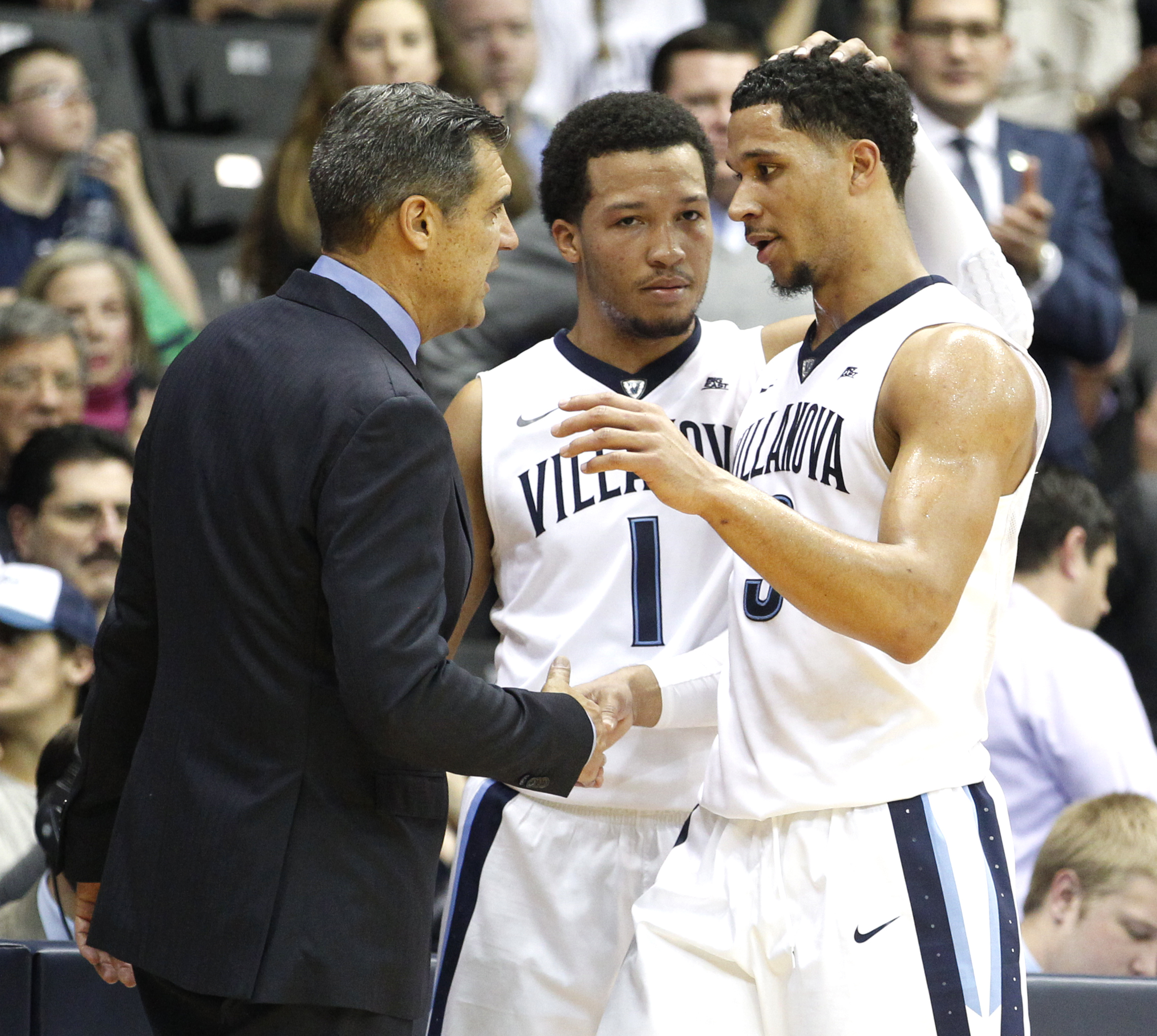
Jay Wright, Jalen Brunson, and Josh Hart during a 2016 Villanova win over Temple.Charles Fox / Staff Photographer
“You see things that they specifically took from our program,” Wright said. “You see the mentality that they took from our program. You also see what they added themselves to that, their own individualism, their own level of maturity, their own level of knowledge of the NBA game that I don’t have. It was fascinating for me to watch that.”
There was no doubt this trio would end up contributing in the NBA in some capacity. Hart, who graduated from Villanova in 2017, was a first-team All-American. Bridges and Brunson left a year later after another title. Brunson was the player of the year.
Wright talked to scouts both years. Hart, he told them, would be one of the greatest competitors a team could find. They didn’t need to worry about what position to play him at. Bridges, he said, would be the type of player who was capable of being a leading scorer but had the IQ to understand winning was more important than anything.
He was right about those two evaluations. But Brunson? Wright thought he could be a point guard on a championship team. And that would be fine if he left the evaluation there. He’s right about that. But Wright thought he would need a leading scorer next to him. Dallas, where Brunson played before New York, was the perfect setup, Wright thought. Brunson could be the lead guard, but Luka Dončić was there to provide the bulk of the scoring.
“I didn’t think he would be the guy that would score 45,” Wright said.
Brunson, the Finals MVP, joined Michael Jordan as the only players in NBA history to score 45 in a road clincher. He averaged 11.2 points in the fourth quarters of the five Finals games. He is now in a new stratosphere of fame and is on a Hall of Fame type of path.
All of this has been a unifying moment for the university and for the former teammates of the trio. It was alumni weekend and the school held a watch party on campus Saturday night. Later that night, after the Wrights pulled away from that cul-de-sac and returned to their home, Wright got a text message with a picture. On the court with Bridges was Phil Booth, a former teammate who now works with the Minnesota Timberwolves, and former Villanova walk-ons Matt Kennedy and Tom Leibig.
“Personally, it has been a thrill for me,” Wright said. “I’m proud of all of them.”
JIM THORPE, Pa. — Long considered one of Pennsylvania’s most popular and scenic hikes, the Glen Onoko Falls Trail was also one of the state’s most dangerous.
Many people have been injured on the steep rocky trail, 85 miles north of Philadelphia, in Jim Thorpe, Carbon County. Others have died. In 1983, David R. Carlyon, 23, of Hazleton, dove across the top of the falls, trying to save his 3-year-old nephew, Ian Russell. Both fell and died. Over the last 50 years, at least 10 hikers have died.
When the Pennsylvania Game Commission closed the trail in 2019, citing safety and trail deterioration issues, Thomas Russell recounted the tragic day his son died.
“I saw him,” he told The Inquirer in 2019. “I saw him clutching at vegetation, at a branch or something, and I guess his hands slipped, or it didn’t hold, and then he was gone.”
Russell did not want the state to close the trail, however.
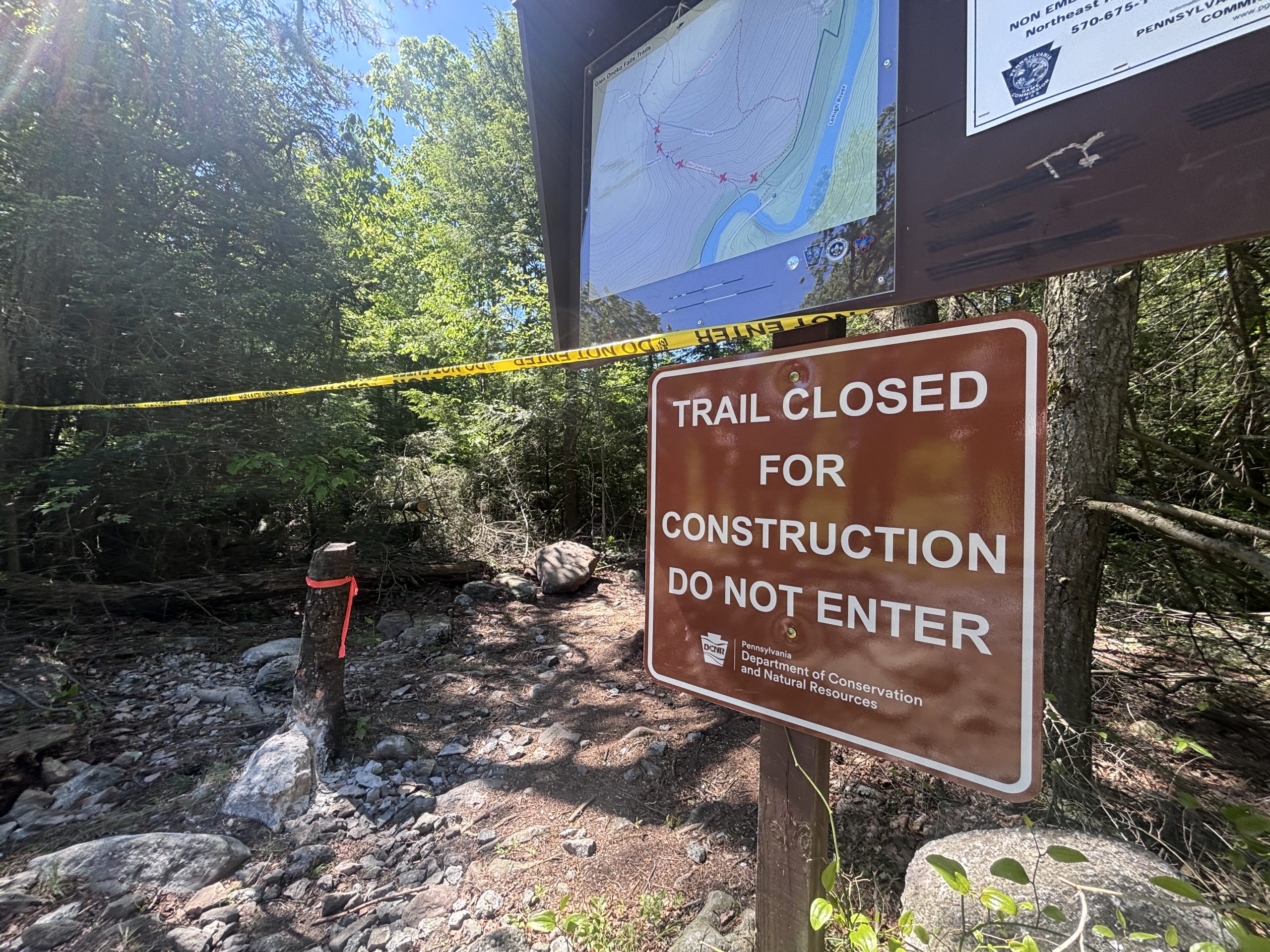
Now, seven years later, it’s still closed and being transformed into a safer destination. The Pennsylvania Department of Conservation and Natural Resources’ Outdoor Corps has begun a project that will make the trail safer for hikers and more easily accessible to first responders who have to rescue the injured.
The project, according to DCNR, is expected to take anywhere from three to five years. When finished, the trail would reopen and become part of Lehigh Gorge State Park.
A portion of Glen Onoko Falls Trail is being reconstructed to allow for easier access in case of emergencies.Jason Nark
Members of the Outdoor Corps have been methodically moving or smashing large boulders on the upper portion of the trail, creating a safer route for first responders to reach injured hikers with UTVs. Many of the trails would be wider when the work is completed.
It’s sweaty, calculating work that often requires heavy hydraulics to move boulders that weigh more than cars. Some of the biggest rocks — most of them sandstone — have earned names, like Belinda, Gertrude, and Turkey Leg.
“When we crush a rock open, that’s the first time the inside of that rock has seen daylight in millions of years,” one Corps worker said.
Earlier this month, a worker with the Pennsylvania Outdoor Corps discusses boulders that will be removed or pulverized on the Glen Onoko Falls Trail.Jason Nark
In 2019, the Pennsylvania Game Commission cited overuse as an additional factor in the decision to close the trail. More than 8,500 people signed a petition at the time to keep the trail open.
Despite the closure and citations issued to hikers found on the trail, it has remained popular, officials said. Officials said the trail is even more dangerous, with hydraulics under high tension to move rocks, during the reconstruction process.
“Even though it’s closed, the public still comes on here,” said Rich Fritsky, regional supervisor for the Pennsylvania Outdoor Corps. “They ignore the signs. They duck under the ropes, but it’s extremely dangerous.”
A hiker had to be rescued just a month after the trail closed, and in 2022, a 72-year-old hiker fell and died there. On a recent tour, two hikers were resting by the falls.
“Last winter, a guy was ice climbing and had to be rescued,” said Timm Berger, the district director for State Rep. Doyle Heffley.
On a recent gathering at the trail rehabilitation site, Berger said Heffley’s office has received countless calls over the years from hikers asking when Glen Onoko will reopen.
“People are anxious,” Berger said.
The popular website AllTrails.com lists Glen Onoko Falls as a difficult hike where proper shoes are required. The trail is a 3.7-mile loop and ascends easily, with flat terrain, for about a quarter-mile beyond the parking lot, following Glen Onoko Run closely. But it grows steeper and rockier as it goes upward, with some narrow ledges that appear to be eroding and some steep drop-offs. Often, hikers need to scramble over wet rocks.
AllTrails also warns hikers that the trail is “temporarily inaccessible,” but many are not heeding the warning.
“It started off fairly easy, but then got fairly difficult,“ one hiker wrote on AllTrails in March. “I can definitely understand why the trail is closed.”
A sign near the middle falls on the Glen Okono Falls Trail uses a skull and crossbones to warn hikers just how serious the threat of danger exists on the trail at this point. The Pennsylvania Game Commission closed the main Glen Onoko Falls trail in Jim Thorpe on May 1, 2019.MICHAEL BRYANT / Staff Photographer
Haverford College students have publicly advocated for the school to consider removing U.S. Commerce Secretary and mega donor Howard Lutnick’s name from the library.
Behind the scenes, an older group has been pushing, too.
About a dozenvocalHaverford alumni have come out in strident disagreement with president Wendy Raymond’s decision in April not to take stepstoward considering the removal of Lutnick’s name.
Several in the group have called for Raymond’s resignation, while at least one said he had withheld his donation. Some were critical of Lutnick even before Department of Justice documents released earlier this year showed he had contact with sex offender Jeffrey Epstein as recently as 2018, long after Epstein pleaded guilty to obtaining a minor for prostitution and soliciting a prostitute.
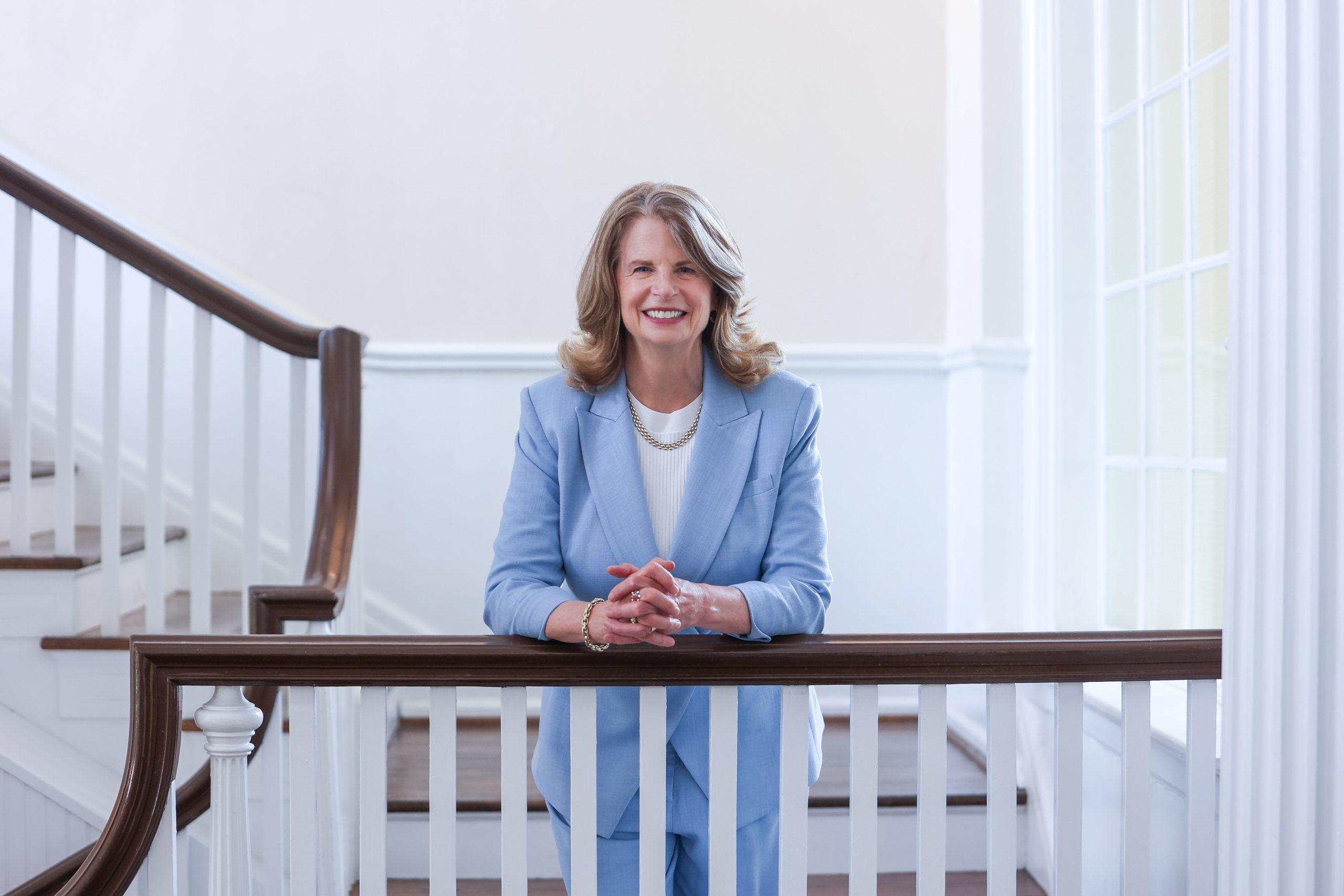
Haverford College president Wendy Raymond has led the college for seven years and previously announced she would step down next June.Courtesy of Haverford College
But Raymond stood by and explained her decision during a Zoom call last week with former board members, and the current board chair said Lutnick himself feels that he is being targeted in a witch hunt, according to accounts of the meeting.
Among the concerned alumni is Norm Pearlstine, a 1963 graduate who served on Haverford’s board of managers from 1986 to 1989 and is a former editor of the Wall Street Journal, Forbes Magazine, the Los Angeles Times, and Time Inc. and former chief content officer at Bloomberg.
“I am appalled,” Pearlstine wrote to Raymond on May 3, days after she announced she would not initiate a committee to consider removing Lutnick’s name from the library. “You should resign immediately so Haverford‘s board can replace you with a leader who puts principle ahead of principal.”
Another alumnus wrote that he would not advise his grandchildren to attend Haverford.
“I cannot imagine that my granddaughters or grandsons would want to enter the Lutnick library or the Lutnick cafe or for that matter, any other building on campus with his name on it,” wrote Joseph Schulze, a 1963 graduate and retired Michigan school superintendent who grew up in the Philadelphia area.
Adi Ignatius, a 1981 graduate and journalist who is editor at large of the Harvard Business Review, said he donated to Haverford every year until 2025, when he withheld his money because of the Lutnick matter.
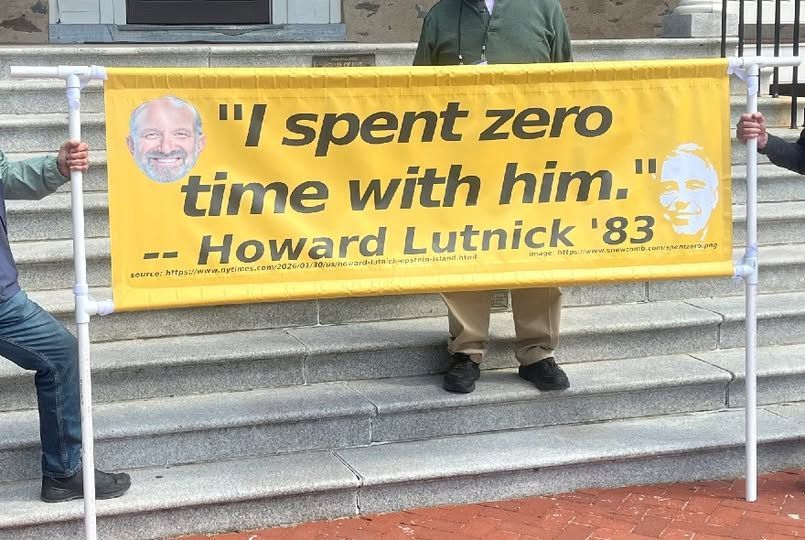
Haverford College alumni from 1971 hold a banner on campus about Howard Lutnick during alumni weekend.Courtesy of Chuck Durante
Haverford in a statement said many community members who oppose removing Lutnick’s name have also written to the college or told Raymond they are againstthe creation of a review committee that was requested through a student resolution this spring.
“President Raymond felt it was in the best interest of the college to reject the resolution because she did not believe this matter met the threshold necessary to constitute a committee given the college’s established standards and the information available to us at that moment,” the statement said.
But, the college said, “the matter is not closed.” Haverford is continuing to monitor “publicly available information” and “community sentiment” on the issue and Raymond or her successor could choose to initiate a committee, the college said.
Haverford not ready to make an ‘indictment’
Raymond, in the June 11 Zoom call with former board members, said she regarded creating a committee close to an “indictment” and did not think the threshold had been met, according to an email account of the meeting by Pearlstine obtained by The Inquirer. Some concerns about Lutnick are political, she said, and she is not willing to consider politics in her decision-making about a renaming committee, according to accounts of the meeting.
Students and alumni have pointed out that Lutnick had previously said he had not been in a room with Epstein, whom he found “disgusting,” since 2005, yet he testified to Congress earlier this year that he had visited Epstein’s private island with his family in 2012 and exchanged emails with him in 2018.
ButRaymond, who has led the college for seven years and previously announced she would step down next June, said in Tuesday’s meeting that she did notthink Lutnick’s lying about when he last had contact with Epstein was enough of a trigger.
Some alumni, supporting Raymond’s decision, have noted there is no evidence Lutnick participated in Epstein’s crimes or improprieties.
“I understand that students might feel strongly in support of wanting to change the name, but I don’t believe there’s a basis to do so,” said Robert Swift, a Philadelphia lawyer and former board member who was on the call Tuesday. “I have serious differences with Howard politically, but that’s not relevant either.”
Swift, 79, a 1968 Haverford graduate who served on the board for 12 years, said Lutnick, a former chair of the college’s board of managers, was generous and served the board well.
“His heart was in the right place,” Swift said.
Some were calling for Lutnick’s removal even before the Epstein connection because they did not like his politics, said one alumnus who asked not to be named because of the sensitivity of the matter.
“I don’t think it’s fair to remove someone’s name from a building simply because you don’t like their politics,” the alumnus said.
George Parker, a 1960 alumnus and a professor of finance at Stanford’s Graduate School of Business, said Haverford should rely on its Quaker roots, which requires governing by consensus.
“We do not have consensus,” Parker, a Quaker originally from the Philadelphia area, said of the Lutnick matter, “and where we do not have consensus, I do not think we should take action.”
Lutnick’s relationship with Haverford
Haverford has been in contact with Lutnick. Michael B. Kim, chair of Haverford’s board of managers and a private equity firm leader in Korea, said during the Zoom call that Lutnick communicated he is especially hurt that his alma mater is taking part in what he feels is a witch hunt, according to meeting accounts.
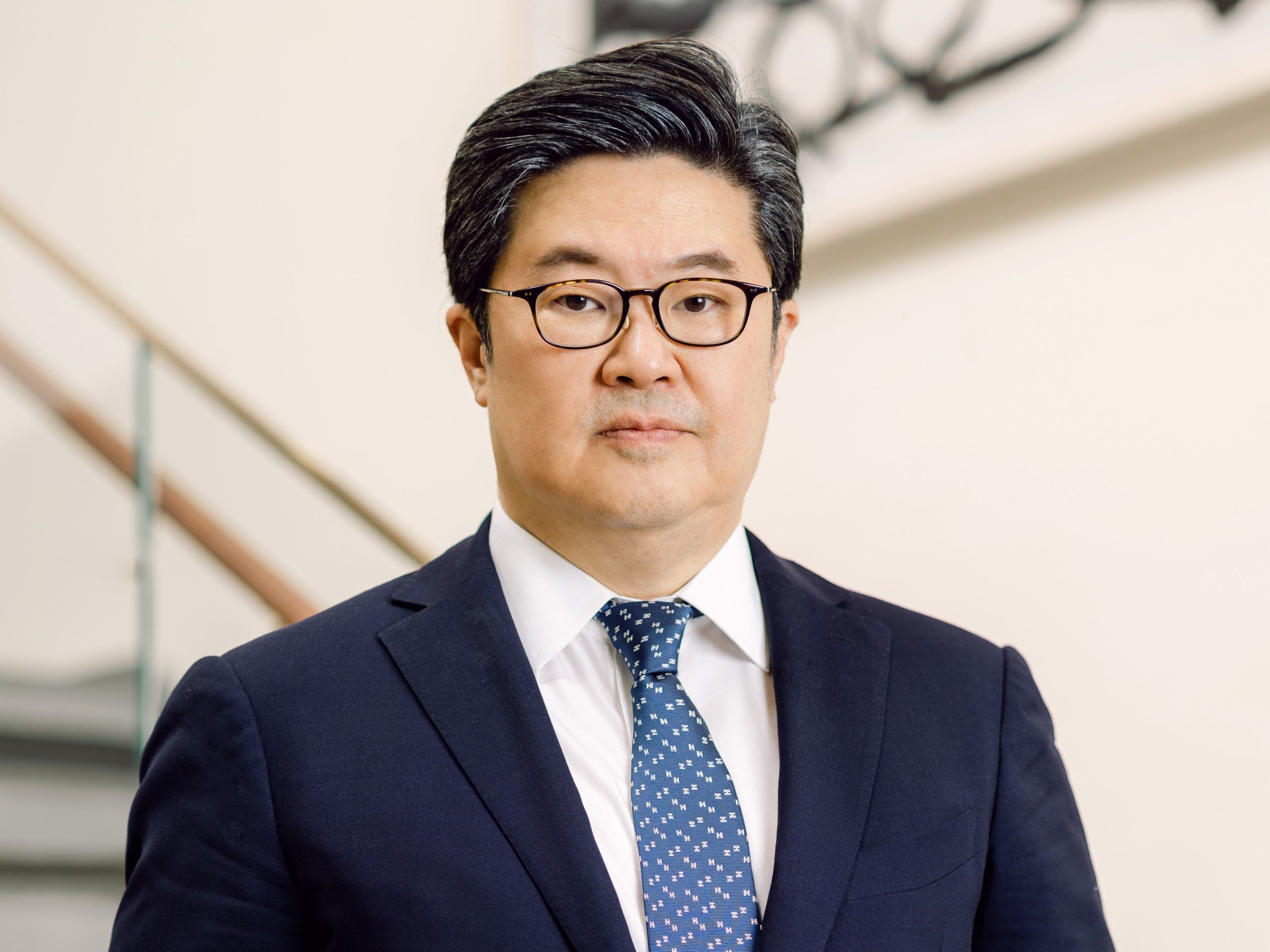
Michael B. Kim, chair of Haverford College’s board of managers.Courtesy of Haverford College
The board agrees with Raymond’s decision, he said.
Lutnick’s relationship with the highly selective, small liberal arts college on the Main Line goes back decades. He lost his mother to cancer when he was in high school and then his father one week into his freshman year. Haverford’s president at the time waived his costs and he graduated in 1983 with an economics degree.
Former chairman of financial firmCantor Fitzgerald, he served on Haverford’s board for 21 years, the last three as chair, until 2015. His name was put on the library after a then-record $25 million donation he and his wife made in 2014. Lutnick has given the school $65 million and is one of its biggest donors.
His Epstein ties gained scrutiny earlier this year. A Commerce Department spokesperson told the Associated Press that Lutnick had had “limited interactions” with Epstein, with his wife in attendance, and had not been accused of “wrongdoing.”
A request to the Commerce Department’s press office to speak with Lutnick got no response.
Under Haverford’s gift policy, the school can rename a building if “the continued use of the name may be deemed detrimental to the college, or if circumstances change regarding the reason for the naming.”
Schulze, the former school superintendent, said he thinks that threshold has been met and a full discussion is needed.
“Somebody else should take over if [Raymond’s] not ready to do that,” he said.
Rob Riordan, a 1964 graduate and Trenton native who lives in Cambridge, Mass., said he was upset Raymond did not honor a request from an overwhelming majority of students at a plenary meeting who requested a committee be formed
“To me, that felt like a violation,” said Riordan, 84, an educator who helped start charter schools in the San Diego area.
Several alumni pointed out that nearby Bryn Mawr and Swarthmore Colleges have removed names of controversial figures from buildings in recent years.
Pearlstine, who was on the Tuesday call, first wrote to Raymond and Kim in July 2025, urging that Lutnick’s name be removed. His concerns are not political, he said, but rather about behavior that conflicts with Haverford’s values.
“Howard Lutnick is a powerful Trump administration cabinet officer who proudly helps the most lawless President in our country’s history implement policies that trample upon human rights, due process, rule of law, and respect for the independence and integrity of institutions of higher learning,” he wrote.
It was not always that way. Ignatius, 67, who lives in Stonington, Conn., said he recalled interviewing Lutnick on stage at Haverford in 2015 and the good will in the audience toward him. Lutnick, who lost his brother andmany of his company’s employees in 9/11, talked about the aftermath and how the company helped care for victims.
“His trajectory since then has been similar to Rudy Giuliani’s,” Ignatius wrote to Raymond and Kim last August. “He has squandered the goodwill he built up after 9/11 and become a partisan troll, espousing values that are inconsistent with — and offensive to — the ideals that Haverford stands for.”
Through much of Mayor Cherelle L. Parker’s first two years in office, most political insiders in Philadelphia assumed she would cruise to reelection.
After all, no mayor in the last eight decades in the deep-blue city has lost a bid for a second term. And Parker is backed by the city’s long-powerful Democratic establishment, contributing to the foregone conclusion that their allied mayor would win again.
Even some of Parker’s staunchest critics on the left admitted privately that they were resigned to her serving eight years in office.
Then last month, conventional wisdom started to crack.
State Rep. Chris Rabb — a democratic socialist and an anti-establishment firebrand — won a tightly contested battle for an open seat in Congress, prevailing over Parker’s endorsed candidate and even carrying the 50th Ward in Northwest Philadelphia, where Parker is ward leader.
Now some of the activists who lead the city’s largest left-leaning organizations think that race showed that Philadelphians are ready to pick a progressive over the Democratic establishment. And they are looking at next year’s mayor’s race again, asking the question: Is Parker vulnerable?
“We would love to have a progressive challenger in this race,” said Sergio Cea, political director of the progressive group Reclaim Philadelphia. “The establishment was really defeated on all fronts this election cycle.”
In a little more than 10 months, Parker, a centrist Democrat and the city’s first female mayor, will be up for reelection. She has not officially announced a campaign — doing so would trigger strict fundraising rules and limits — but all signs indicate she intends to run again, including an already huge campaign war chest.
Any challenger to Parker would be considered a significant underdog. The mayor has the power of incumbency, and can point to progress on her 2023 campaign promises to make the city safer and cleaner, not the least of which is a historically low homicide rate. Thousands of residents are getting their trash picked up twice a week, and polls consistently show that more Philadelphians say they think that the city is heading in the right direction now than when Parker took office.
She even seemed to recover politically after one of her lowest moments: the eight-day municipal worker strike last year that left so much garbage piling up that it became colloquially known as “the trash strike.” Parker, through her signature unyielding negotiating style, muscled her way to an agreement with the union.
Today, she is supported by most of the city’s elected officials and powerful organized labor groups. Ryan N. Boyer, the head of a coalition of deep-pocketed building trades unions, said recently that any challenger to Parker would face “annihilation.”
“This is Philadelphia, there are always people who want to run for mayor. But mayoral elections are decided on whether people think their city is moving in the right direction,” said Aren Platt, executive director of People for Parker, the mayor’s political campaign arm. “Mayor Parker has been underestimated her entire career, and she has a habit of proving people wrong.”
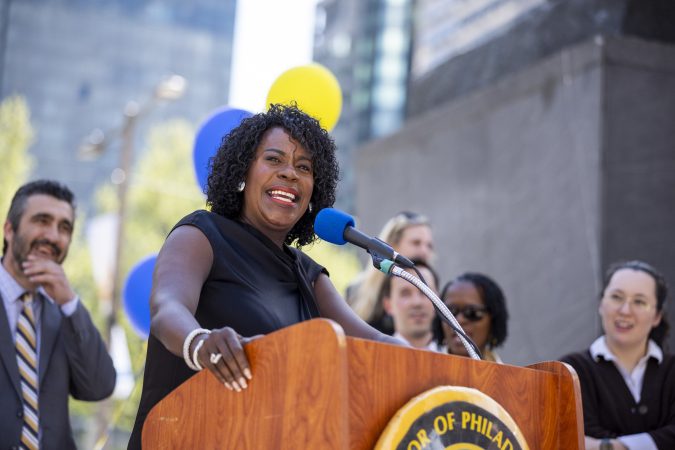
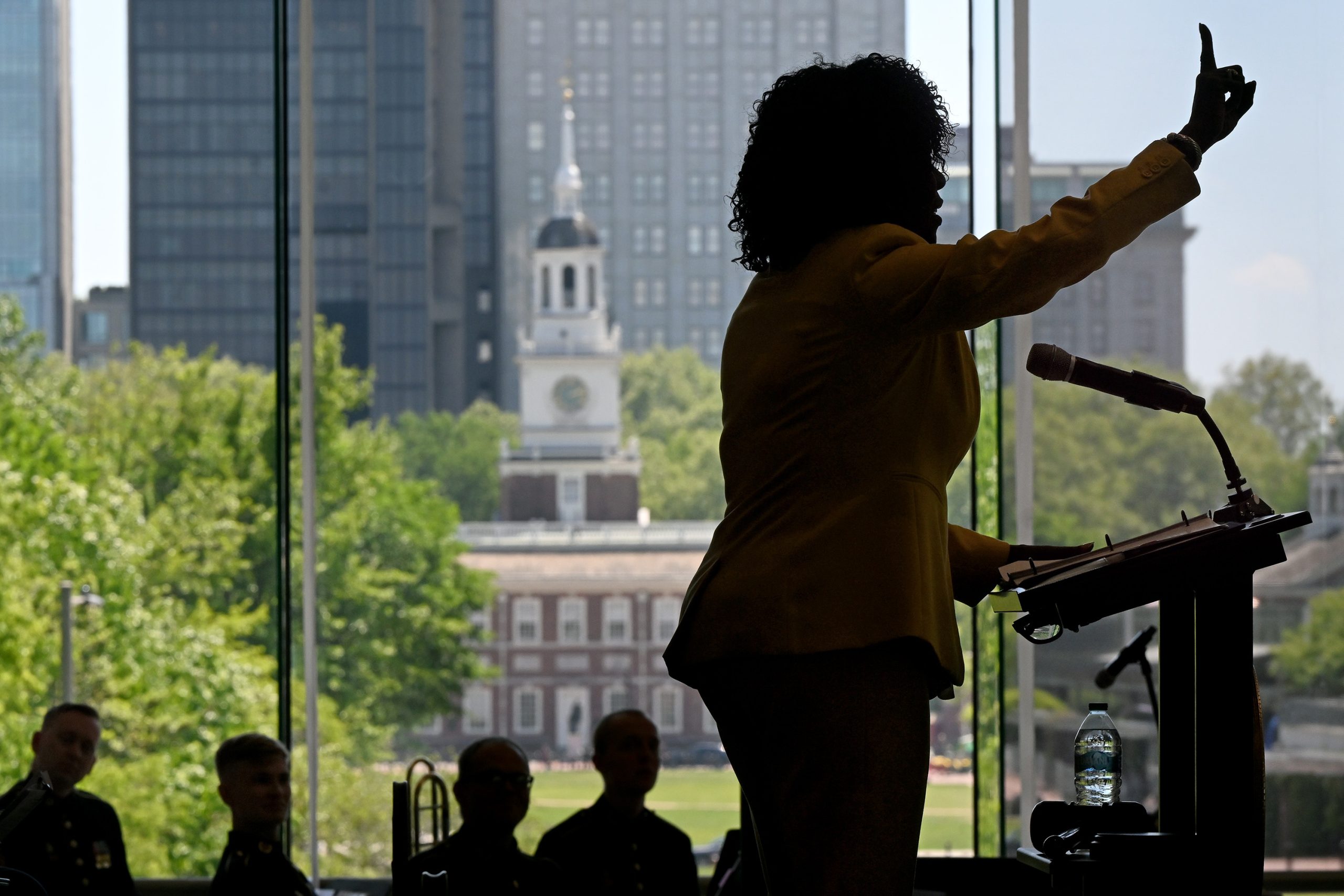
Mayor Cherelle L. Parker raises a finger with her call-and-response “One Philly, A United City” mantra ending her speech during a ceremonial meeting of the Pennsylvania Senate at the National Constitution Center across the mall from Independence Hall on May 5.Tom Gralish / Staff Photographer
However, some on the left see a coalescence of forces that could bolster their chances: national frustration with the Democratic establishment that has manifested in leftist wins, a widespread anti-incumbent sentiment, and liberal rage toward President Donald Trump, whom Parker has largely avoided maligning publicly.
“If you just have the right candidates that are able to speak to the dissatisfaction of Democratic voters in Philadelphia,” Cea said, “I do think [Parker] is in trouble.”
But the biggest question for Philadelphia progressives in the approaching mayoral race remains: Who could be their candidate?
The potential challengers
Jack Inacker, a Democratic strategist based in Philadelphia, said there are few, if any, challengers to Parker who could pull off a win in 2027.
“The progressive infrastructure now has built up in a way where, if you squint really hard, you can see a path to a progressive challenger,” Inacker said. “The problem is that [Parker] is one big mistake away from being beatable, but she’s not beatable yet. And people know that.”
Candidates have plenty of time to decide. Paperwork to get on the ballot likely would not be due until March.
Perhaps the most talked-about potential challenger so far isDistrict Attorney Larry Krasner, the city’s most prominent progressive. He has not ruled out a run for mayor, and he has recently publicly criticized Parker and some of her closest allies.
Last week, he invited media to walk along with him while he hand-delivered a letter to the mayor’s suite in City Hall to express dissatisfaction with his office’s budget. Parker called the move “stunting.”
Platt, in a thinly veiled shot at Krasner, said in a statement that “what we’ve seen recently is too many politicians focused on generating headlines rather than solving problems: manufacturing controversy, looking for someone else to blame, and confusing political theater with leadership.”
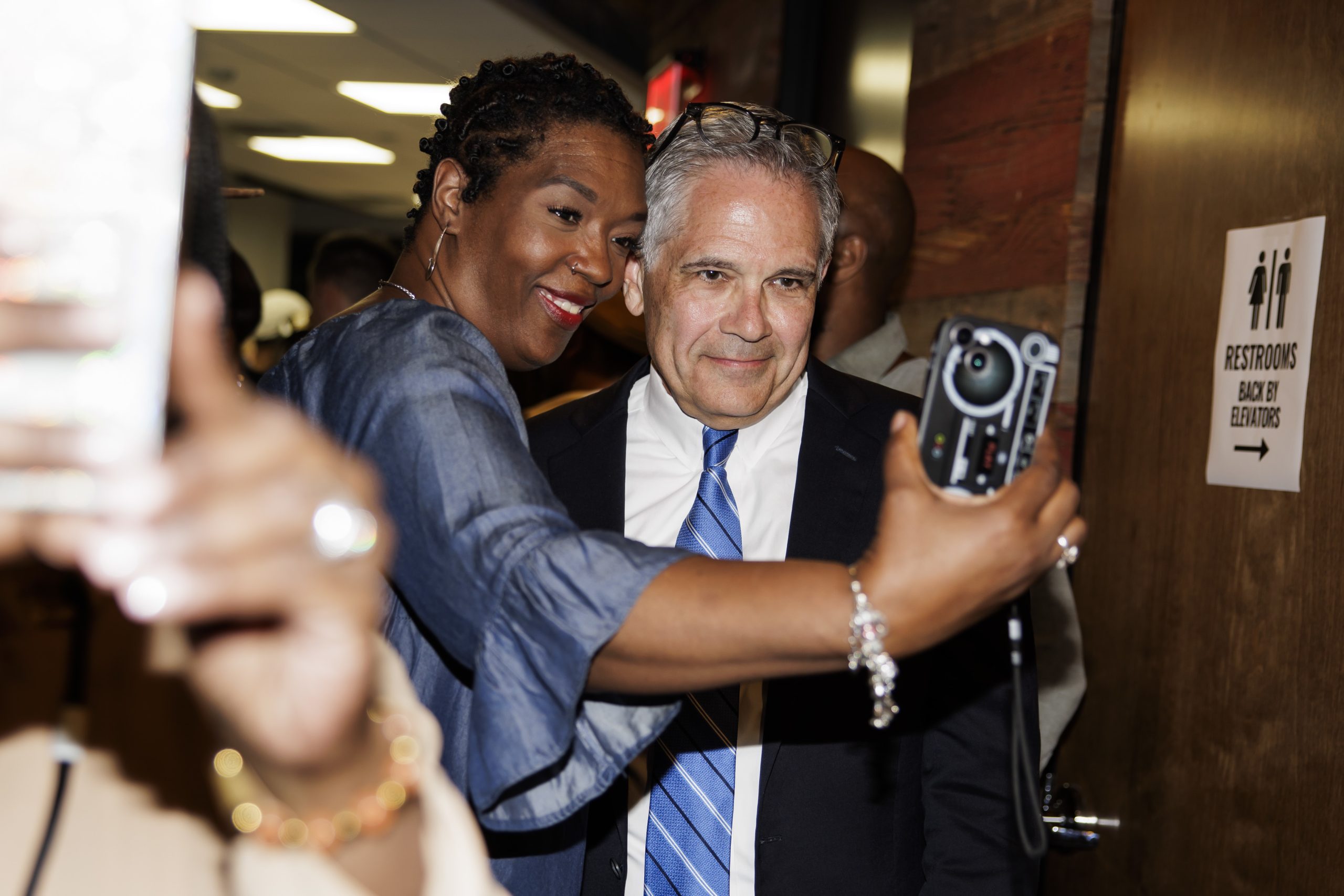
District Attorney Larry Krasner greets supporters during his election night party at the Pipeline Philly coworking space on May 20, 2025, in Philadelphia. Krasner defeated challenger Patrick Dugan both in the Democratic primary and in the general election.Monica Herndon / Staff Photographer
Krasner has won citywide election three times, twice winning reelection in landslide fashion. He is one of the nation’s most well-known progressive prosecutors and one of the city’s most polarizing figures. His base of support includes the city’s left, as well as a large swath of Black voters and elected officials.
But it was Parker’s political family — the vaunted Northwest Coalition of the some of the city’s most storied Black politicians — that was key to Krasner’s political ascent. Challenging Parker could be seen as a betrayal by some in the voter-rich northwest corner of the city, and his base there could fracture.
Krasner has also in the past struggled to keep up with his opponents in fundraising. Any challenger to Parker would likely need to bring in well over a million dollars, a sum of money that Krasner has never raised before.
Several other elected officials are seen as potential challengers to Parker, including several sitting members of City Council.
Councilmember Isaiah Thomas, who represents the city at-large, has long been rumored to have ambitions for higher office. He has been elected citywide twice, and recentlywas among the most vocal opponents of the Philadelphia School District’s controversial plan to close 17 schools.
And he has allies both on the left and in the city’s business community, the latter of which has been frustrated with a Parker administration policy shift that increased the tax burden on small businesses.
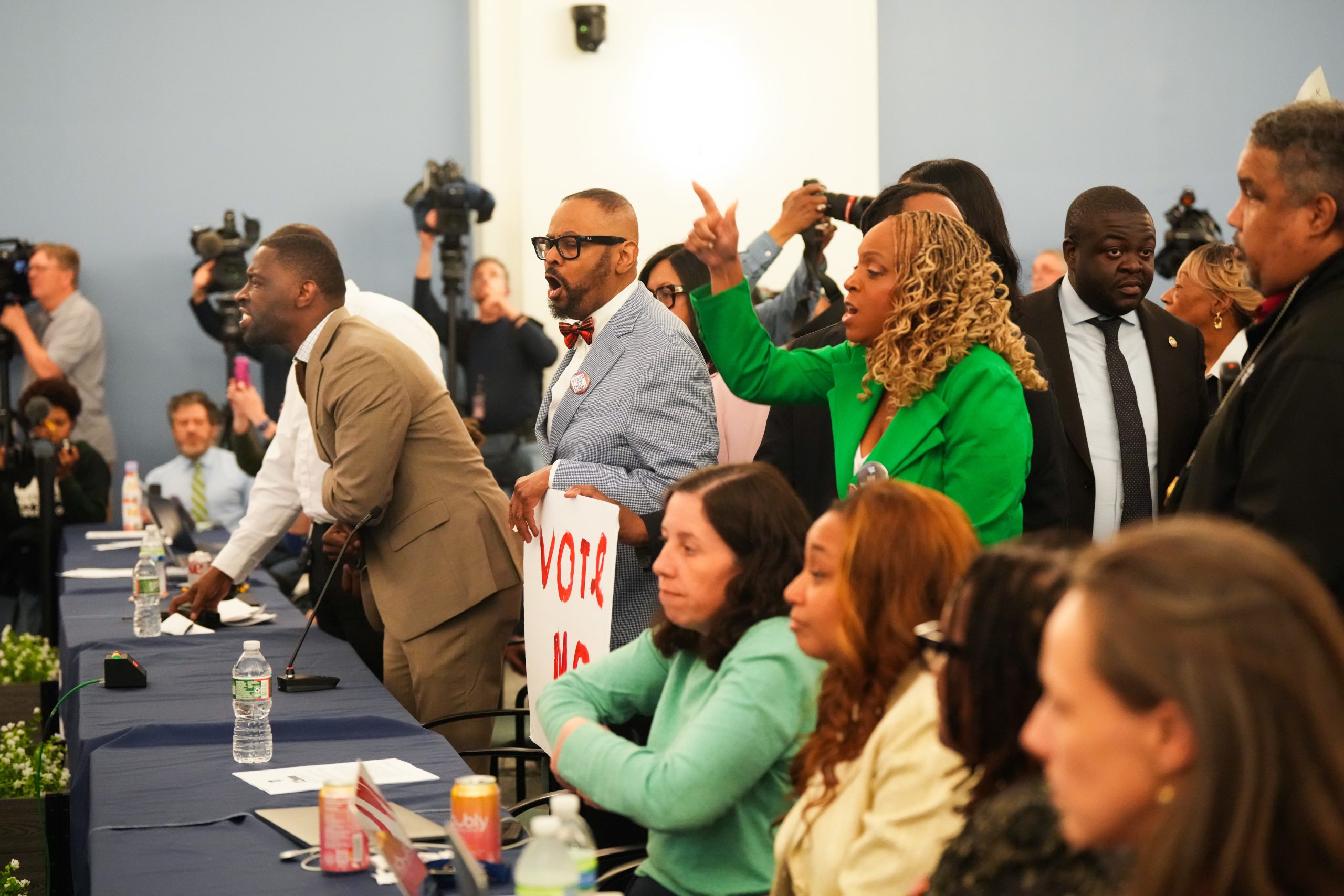
Councilmembers Isaiah Thomas (from left), Curtis Jones Jr., and Jamie Gauthier protest at an April school board meeting as the board prepared to vote on the facilities plan.Jessica Griffin / Staff Photographer
Thomas said last week that he is focused on his job in City Council.
“That job right now is hard enough, looking at the affordability crisis, the crisis around public education, and other issues that we’re facing,” he said.
There’s also two-term Councilmember Jamie Gauthier, who represents parts of West Philadelphia and has positioned herself as one of Council’s chief critics of the Parker administration. She said earlier this year that running for mayor “could be interesting one day,” but that she would not run if she did not see a clear path to victory.
She said in a statement that her focus is “finishing what we started on City Council, especially building affordable housing.”
Gauthier added: “But it’s clear Philadelphians are hungry for leaders who will put working families above big business.”
And there is Councilmember Kendra Brooks, the de facto leader of the city’s left-leaning coalition and a member of the progressive Working Families Party. Brooks, who represents the city at-large, has twice campaigned and won citywide.
A political adviser to Brooks said she is focused on her work in City Hall and running for reelection to Council, as well as “building Black progressive political power through the WFP.”
What do progressive gains mean for the 2027 mayor’s race?
Parker’s camp sees strength in her numbers.
In March, the mayor’s political arm commissioned a poll that found that 60% of respondents approve of the job Parker is doing as mayor, while 33% disapprove. Her approval rating was even higher among Black voters, older voters, and residents of Northwest Philadelphia — one of the highest-turnout areas of the city.
Mayor Cherelle L. Parker (right) hugs Rachel O’Neal, executive of the Friends Childcare Center, at the unveiling of a new playful learning hub at Sisters Cities Park on Thursday.Jessica Griffin / Staff Photographer
Cornell Belcher, one of the top Democratic pollsters in the nation, has conducted polling for Parker dating back to her mayoral campaign. He said that a key indicator of voter attitude toward an incumbent mayor is the number of residents who think the city is heading in the right direction.
The results this spring, he noted, were “dramatically different” from when Parker was first campaigning for the office. In April 2023, Belcher measured that 66% of Democratic primary voters in the city were dissatisfied with the direction of Philadelphia.
Today, he said, 62% are satisfied.
Still, other polls have shown potential warning signs for Parker.
In three polls that were conducted this spring in the 3rd Congressional District and obtained by The Inquirer, an average of 48% of Democratic primary voters said they had a favorable view of Parker and 41% had an unfavorable view. The polls, which measured voter attitudes in roughly half the city, were conducted by three different firms, and they were commissioned by different campaigns and organizations.
Approval and favorability ratings are not apples-to-apples. An approval rating is often considered a more reliable data point for an incumbent executive, because it measures attitudes about job performance, not reputation.
Belcher, who founded his polling firm 25 years ago and polled for former President Barack Obama, said he would not draw conclusions from polls of a congressional district that includes only half the city and was taken in a different election year. And he questioned other pollsters’ methodology in Philadelphia, a city that is tricky to survey.
“A city like Philadelphia, with all its different racial and ethnic groups, getting that right is hard,” Belcher said. “The more diverse an area is, the more work you have to put into getting it right.”
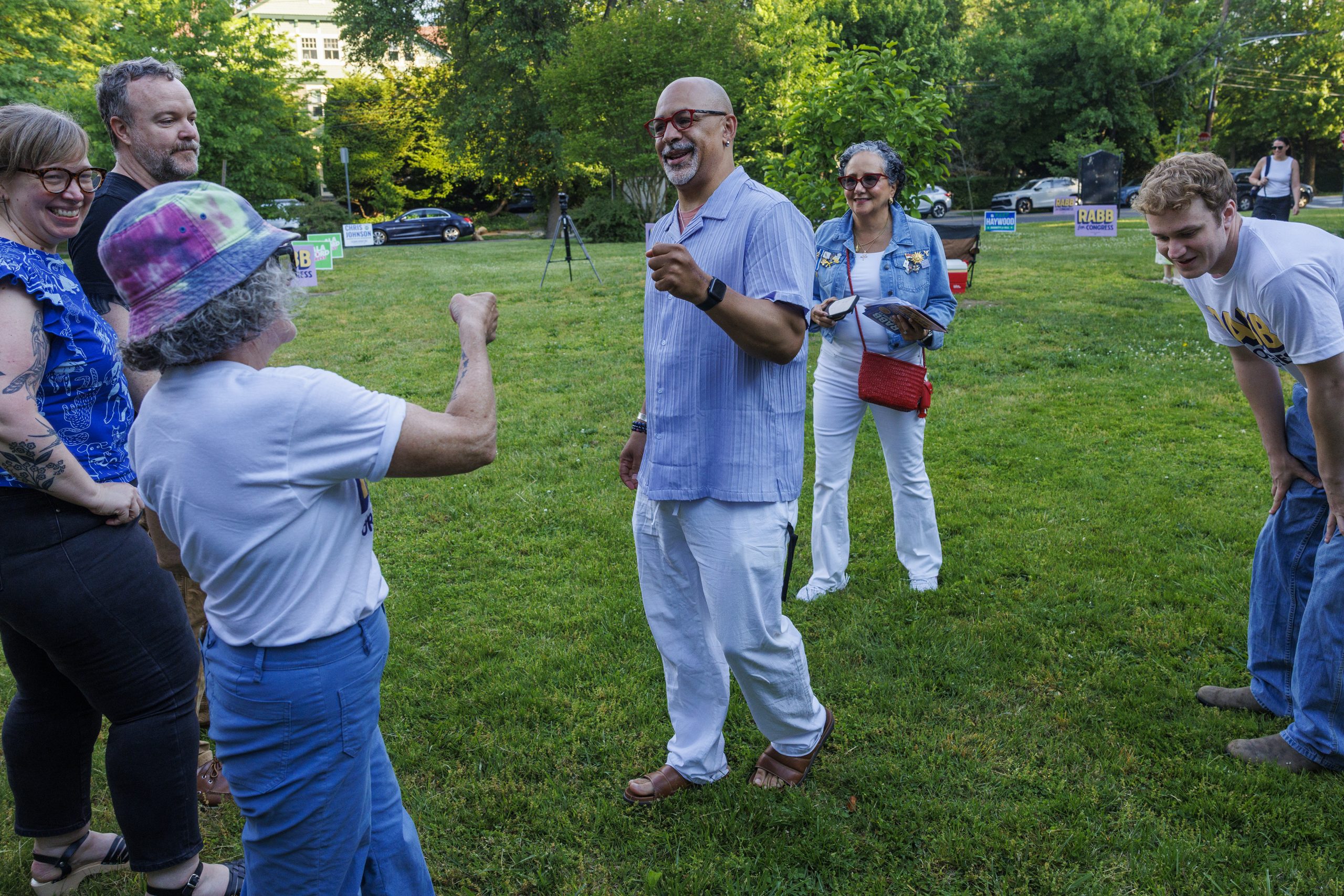
Chris Rabb greets supporters on election day. He is arriving to his polling place to vote, Grace Epiphany Episcopal Church, on May 19.Alejandro A. Alvarez / Staff Photographer
The results of last month’s congressional race energized progressives, in part because Rabb performed well in parts of the city that Parker carried when she won the crowded open Democratic mayoral primary in 2023. An Inquirer analysis found that more than a quarter of Rabb’s votes came from divisions that voted for Parker in 2023.
Rabb won his Democratic primary in a race that included three front-runners. But mayoral reelection battles in Philadelphia have historically been head-to-head, meaning the winner will look to reach 50% of the vote, a more challenging proposition for an ideological candidate.
“The mayor is organized, and her coalition across Philadelphia is strong,” Platt said. “They may not be active on Reddit, but they’re there, and they believe in what she’s doing because they can see the results in their neighborhoods.”
It took 96 years, but the most sacred version of the beautiful game came to Philadelphia.
Both the city and the match met the moment.
Extra public transportation, hydration stations, and modest traffic framed an evening of graceful and powerful football, the kind every other nation reveres except ours.
Amid the spectacle of team jerseys, flags, and team benches covered by vibrant roofs identifying the sides in national colors, the grass was the star. The stadium’s normal turf is a ragged Bermuda thatched with 5% plastic to withstand the cleated NFL rhinoceroses who usually play there. For the World Cup, it was transformed into a flawless pitch, golf-course quality ryegrass and bluegrass, the sort of surface you on which could imagine Jason Kelce lying on his back and making snow angels.
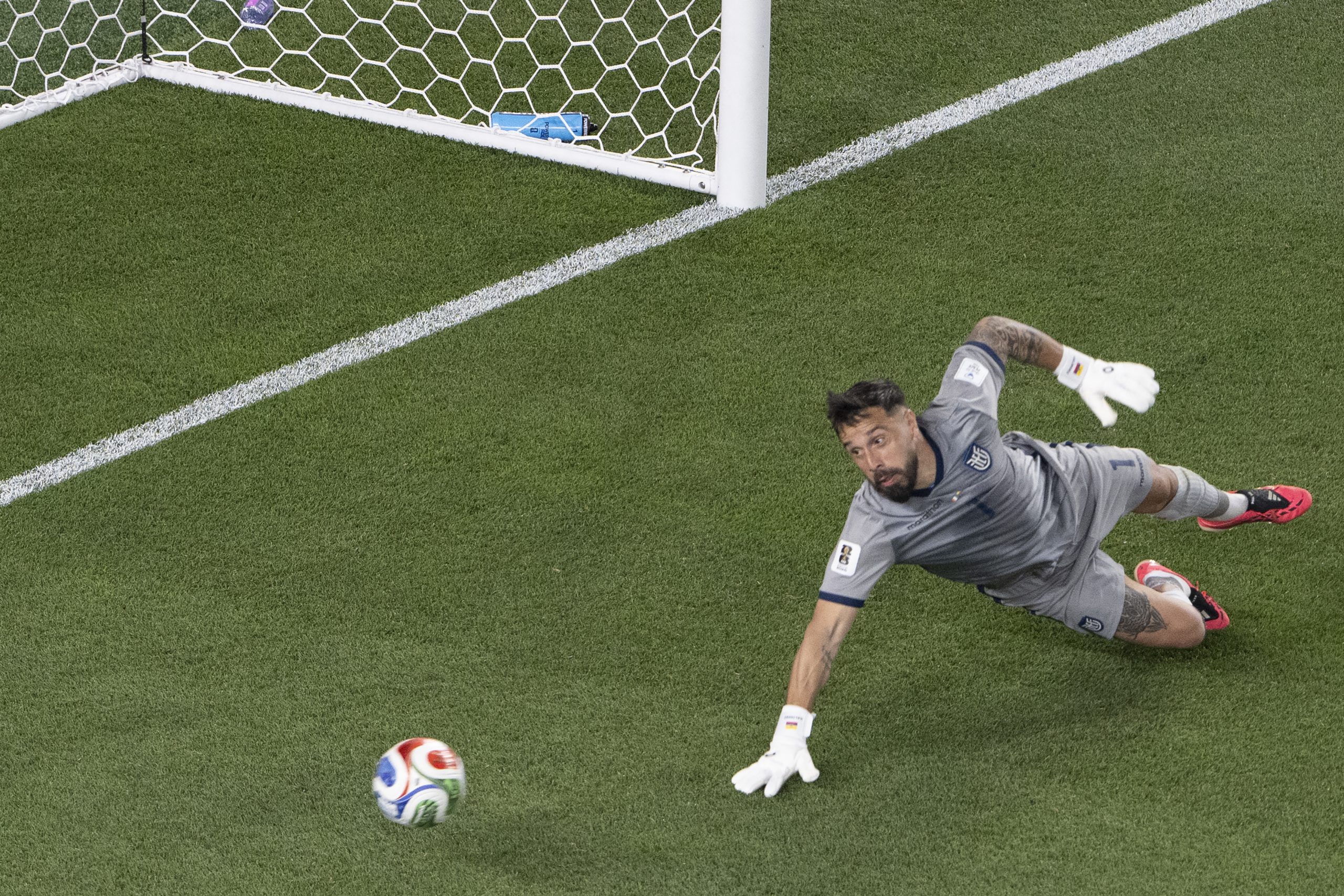
Ecuador goalkeeper Hernán Galíndez watches as the ball crosses the goal line on a shot by Ivory Coast’s Amad Diallo late in the second half of Sunday’s game.Jose F. Moreno / Staff Photographer
Viewed through an international lens, even a soccer game this insignificant still was the most significant sporting event in the history of the city. A town that has seen two World Series titles and a Stanley Cup won within its borders has never hosted anything that riveted folks on six of the continents.
What comes close? Maybe Rocky Marciano, when he knocked out Jersey Joe Walcott in 1952, and won the heavyweight championship. Maybe not.
More moments will come, since the group-stage match between Ivory Coast and Ecuador is just the first of five such games. On July 4, Philadelphia will host an elimination game in the Round of 16, and then that will become the most significant sporting event in the history of the city.
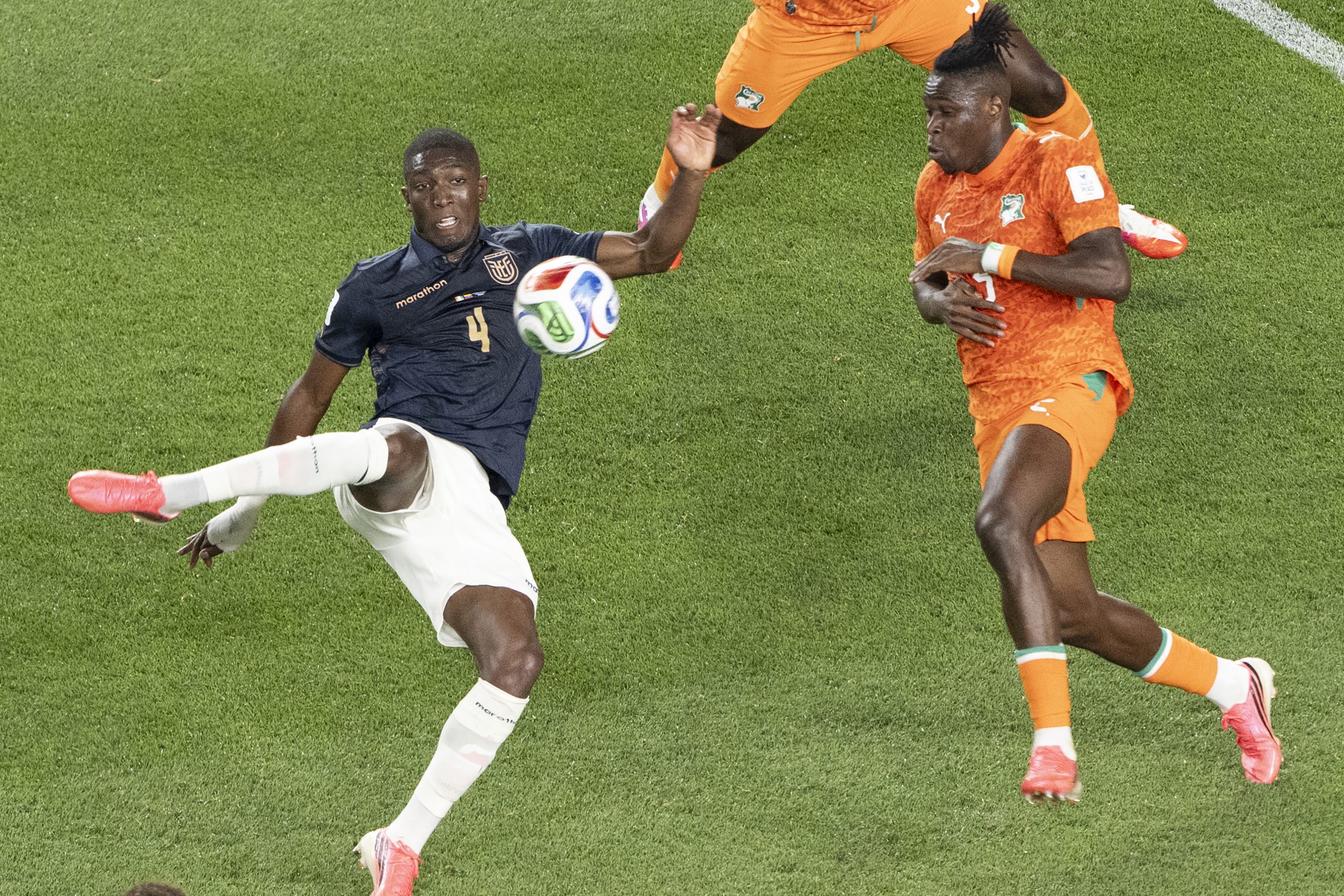
The difference was deserving of the night’s significance. At the top of the box, Amad Diallo, who plays for Manchester United, redirected a simple cross from Wilfried Singo with his left foot in the 90th and final minute of regular play. Given eight minutes of stoppage time, Ecuador could not break through.
Three crucial points to Les Elephants, following the 1-0 final.
After three days of pre-tournament watch parties and fan fests (the Cup began in Mexico City on Thursday), Philly’s hot, sticky, 90-degree moment finally arrived.
The city, four weeks removed from the PGA Championship at Aronimink and four weeks from hosting the Major League Baseball All-Star Game at Citizens Bank Park, finally seemed to grasp the magnitude of the world’s biggest single-sport sporting event landing at its doorstep.
The catalyst: How about the 4-1 thunderbolt win the United States laid on Paraguay in Los Angeles on Friday night.
Ecuador hit the crossbar twice in a first half and nearly scored on a blast from Flamengo’s Gonzalo Plata just before the water break in the second half. Ivory Coast hit the crossbar six minutes into the second half. All of those shots drew gasps, but gasps of different timbre; either delight denied or disaster averted, because the gasps were almost completely Ecuadorian.
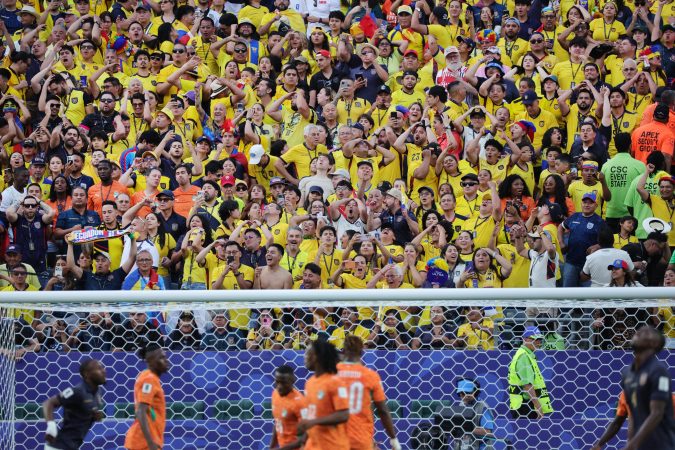
Ecuador is nearly 3,000 miles from Philadelphia, but, for two hours, the stadium served as an Ecuadorian colony, its fans wearing yellow, accounting for 90% of the 68,247 fans in the seats. If they’d issued 60,000 pairs of goggles, they’d have had 60,000 Minions.
you can totally trust the little green guy leading you into a cave full of monsters 😉 Trey Parker is the voice of Goomi in Minions & Monsters. Only in theaters July 1. pic.twitter.com/je5rfPaxAQ
Little wonder. About half of the approximately 850,000 people in the United States who claim a connection with Ecuador live in either New York or New Jersey. Most estimates of Ivorians in the U.S. don’t even reach 10,000.
After the 5 p.m. SEPTA Broad Street Line express was taken out of service at Race-Vine because a door wouldn’t close, the 5:15 local train was inundated with Ecuador enthusiasts when it hit the City Hall stop.
The cars were full to bursting by the time they hit Walnut-Locust, yellow jerseys shoulder to shoulder and chest to chest, men and women alike. As the train pulled out a song arose, full throat and deafening in the hot, cramped subway car:
“¡Vamos, vamos ecuatorianos, esta noche tenemos que ganar!”
Or:
“Let’s go, let’s go, Ecuadorians, tonight we have to win!”
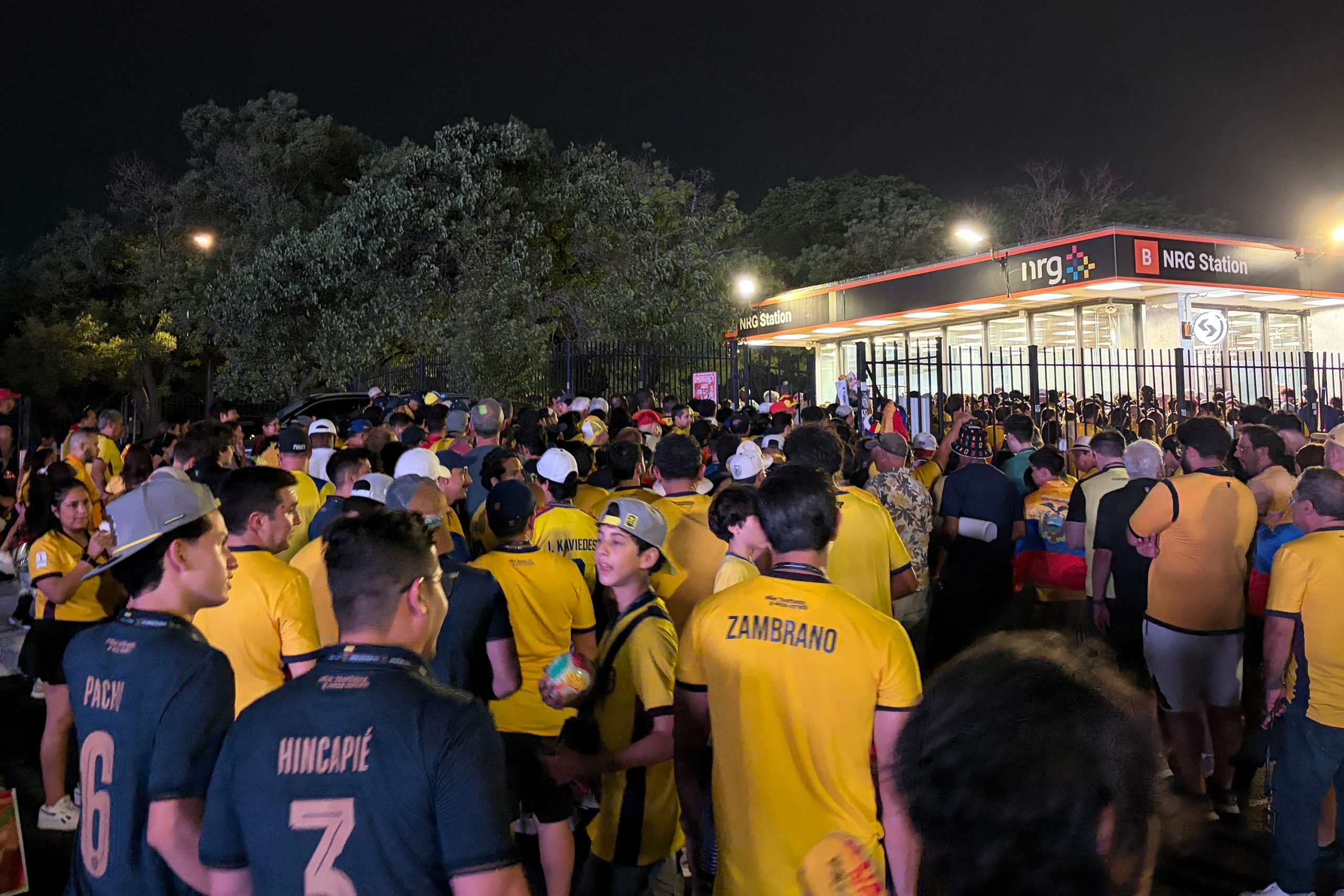
As the throng exited up the stairs of NRG Station, their hearts and voices swelled again. The song rang out again and again during the match.
Unfortunately, the Ecuadorians were not singing on the subway ride home.
Fans wait outside SEPTA’s NRG Station near the stadium following Ivory Coast’s victory over Ecuador Sunday night.Michelle Myers
Only the Olympics does a better job than FIFA capitalizing on nationalistic spectacle, and Sunday night was no exception. The stunning FIFA World Cup 2026 emblem tapestry laid on the ground covered the midfield circle. Replicas of the flags of Ecuador and the Ivory Coast took up most of the rest of the pitch in front of the goals, crescents cut in the extra fabric to frame the FIFA logo tapestry at midfield. The teams stood on their respective sides of the circle, facing the south stands, as the anthems played.
The match occurred where the Eagles play, at Lincoln Financial Field, which must be referred to as Philadelphia Stadium during World Cup games. FIFA has a strict policy that prohibits references to sponsors who don’t give FIFA money.
That said, Sunday’s affair was nothing like an Eagles game. It was far more elegant.
When Ivory Coast dawdled, La Tri — a nickname for Ecuador’s fans, who wear the tricolor yellow, blue, and red of the flag — booed and whistled. It was not unlike the response of Eagles fans whenever the Cowboys score.
Fans of the American version of football might balk at the contention that soccer is a bigger deal, and lovers of the Olympics might contend that the ever-shifting collection of summer and competitions matters more. They are wrong.
Ivory Coast’s Wilfried Singo, right, defends against Ecuador’s Jean Michaël Seri during the second half of a FIFA World Cup Group E match on Sunday.Jose F. Moreno / Staff Photographer
The World Cup is a different animal than the Olympic Games, concentrated and egalitarian. You don’t have to own a horse or skis to prepare to compete in the World Cup, just a ball.
The only thing in America that reflects a World Cup is an NFL season. Consider the first 17 games, the regular season, the group stage. Consider the playoffs the knockout Round of 16.
The NFL season in its entirety and intensity is the one comparison that might allow most Americans to understand the depth of investment and emotion other nations harbor for soccer.
And, when you factor in the fact that virtually every man, woman, and child in many of these countries have played the sport, then you can better comprehend why soccer is, for so many people on earth, as much religion as it is diversion, and how sacred evenings like Sunday can be for anyone connected with the Ivory Coast or Ecuador.
The folks who organized it all understood the gravity of the moment.
Meg Kane, CEO of Philadelphia Soccer 2026, had measures of both delight and relief in her voice as she sat in the stadium parking lot Sunday night.
“It’s been an exciting four days,“ she began, noting that there were 36 more to go. “I think everything we hoped this would be has been borne out.”
The delight was easy to source: She had just seen a really good soccer game in a grand stadium with two excellent teams, snuck in just minutes before a thunderstorm, with little or no complication.
The relief was probably based on the reception most of the millions of residents had given these unusual visitors.
“People in Philadelphia are excited to be hosting something like this,” Kane said. “Philadelphians love when people choose to spend their time here.“
The best news: Philadelphia gets to do this five more times.
Independence Blue Cross, the Philadelphia region’s largest health insurer, launched this month a policy designed to move care into lower-cost surgery centers and away from hospitals and clinics that can generate payments twice as high for the same treatment.
The policy started June 1 echoes Medicare’s efforts to slow federal healthcare spending by paying the same price for outpatient procedures such as colonoscopies and knee surgery in hospitals as in surgery centers.
Pressure from employers to control costs has similarly motivated IBX and a newer regional competitor, Pittsburgh-based Highmark, which implemented a similar policy on Jan. 1. Both companies’ policies affect people with low risk of complications who are covered by commercial insurance or Medicare Advantage.
When doctors seek insurance authorization for certain procedures, IBX reviewers will ask whether doctors can treat low-risk patients in a surgery center, according to the company’s chief operating officer Richard Snyder.
“This is a gentle move,” Snyder said. “We’re not willing to force you to change doctors to have your colonoscopy or your service, but we want docs to get privileges in ambulatory surgery centers.”
The region doesn’t have enough low-cost surgery center capacity for a large-scale move to that setting, Snyder said. That means the policy might not hit hospital finances right away.
But the implication is that the policy could take a harder edge in the future. IBX’s goal is to spur the development of more surgery centers — either by the incumbent health systems or by new competitors, Snyder said.
Even now, the potential for delayed care and denied coverage has several regional health systems worried. Temple University Health System, for example, does not own ambulatory surgery centers, so the time could come when it has to coordinate care with outside providers.
The money at stake
Surgery to remove torn cartilage on the knee can cost $7,190 when performed on an outpatient basis in a hospital, nearly three times the $2,477 cost in ambulatory surgery centers, according to Philadelphia-area commercial insurance averages from heath prices data firm Turquoise Health.
Smaller gaps exist for hernia repairs and colonoscopies with a biopsy, Turquoise reported. Another data firm, Medscout, showed that a majority of those colonoscopies had already shifted to ambulatory surgery centers by 2024. The shift was far less advanced for hernia repairs— a procedure IBX is targeting.
(function(){function e(){window.addEventListener(`message`,function(e){if(e.data[`datawrapper-height`]!==void 0){var t=document.querySelectorAll(`iframe`);for(var n in e.data[`datawrapper-height`])for(var r=0,i;i=t[r];r++)if(i.contentWindow===e.source){var a=e.data[`datawrapper-height`][n]+`px`;i.style.height=a}}})}e()})();
Some physicians’ groups already are seeing opportunity in commercial and government insurers’ increased emphasis on surgery centers as a way to reduce spending — as well as regulatory changes that allow more procedures to be done in free-standing surgery centers.
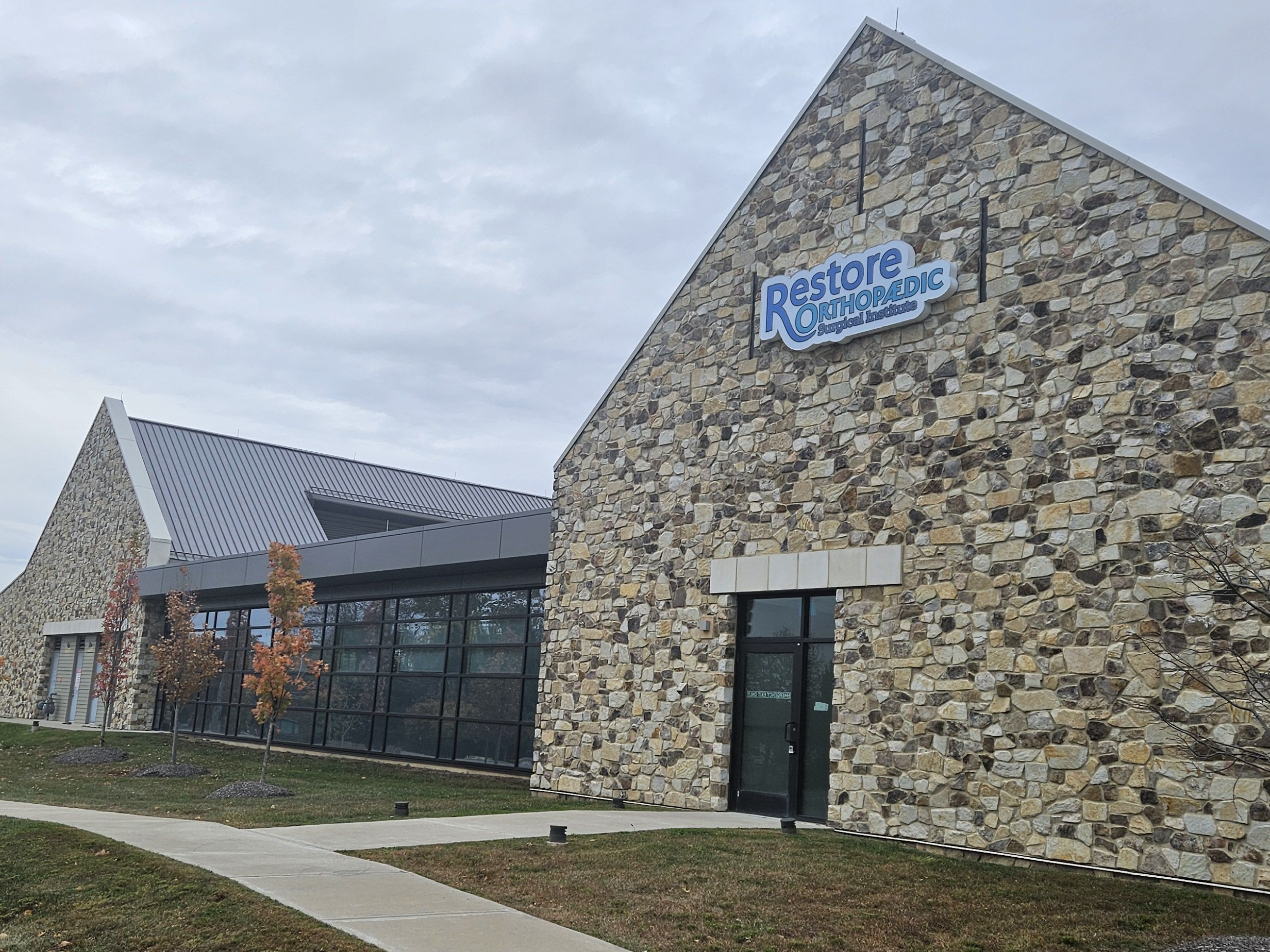
Restore Orthopaedic Surgical Institute in Chadds Ford, founded by a group of Delaware doctors, has been quickly become a high-volume joint-replacement center.
In the coming year, Rothman Institute plans to open three surgery centers in the Philadelphia region, the private practice’s CEO Christian Ellison said.
Restore Orthopaedic Surgical Institute in Chadds Ford has grown quickly to become one of the top joint replacement destinations in Southeastern Pennsylvania after opening in March 2023. The center is positioned to take advantage of an effort by Highmark and IBX to move outpatient procedures from high-cost hospitals to lower-cost surgery centers.Restore Orthopaedic Surgical Institute
Potential consumer impact
Several major health systems said the new site-of-care review policies raise questions about the potential impact on patients, without commenting on the implications for their finances.
Because Temple University Health System does not have any ambulatory surgery centers, “the policy will require certain studies and procedures to be referred outside the health system. This could create additional coordination requirements and may contribute to delays in testing, crucial diagnosis, and/or treatment,” Temple said in an email.
Main Line Health also said it anticipates the policy “could disrupt established care pathways, including in circumstances where surgeons lack privileges at available free-standing surgery centers,” the nonprofit said in a statement. Main Line has ownership interest in three surgery centers in Philadelphia’s western suburbs.
The University of Pennsylvania Health System said it will “advocate for our patients’ best interest and appeal any service denials based on the clinical and nonclinical exceptions outlined in the policy.”
Additional concerns for consumers include complexity, confusion, and possibly more risk of having care denied to what can already be a burdensome prior authorization process, said Christine Monahan, assistant research professor at Georgetown University’s Center on Health Insurance Reforms.
Monahan said she understands insurers’ impulse to steer people to lower-cost settings, but called policies like IBX’s “maybe not the most efficient way to handle the inefficient pricing in the system.”
The economic and political backdrop
The biggest increases in healthcare costs in 15 years are hitting employers this year, according to Mercer’s National Survey of Employer-Sponsored Health Plans.
The average increase was 6.7%, according to the February survey of 161 chief financial officers, who were not identified.
The increases are substantially higher than broader inflation. “It becomes more of a tax on employers,” Snyder said. “Next to salaries, many will tell you, that’s the biggest line item” in their expenses.
IBX has taken other steps to reduce healthcare spending, such as in 2015 introducing a benefit design that includes a preventive colonoscopy with no out-of-pocket costs for the patient at what are called Preventive Plus facilities. Elsewhere, they have a $750 co-pay.
Highmark and IBX have new policies designed to move more outpatient procedures and treatments out of high-cost hospitals and into lower-cost surgery centers.Pablo Martinez Monsivais
Medicare has pushed for the last decade to pay the same for services in hospital outpatient departments as in doctors’ offices and surgery centers.
Medicare prohibited most new off-campus hospital clinics from billing at hospital rates in 2017. So-called site-neutral payments expanded in 2019 to include clinic visits. This year, the government applied the standard to payments for drug administration, such as chemotherapy.
Highmark Health Plans’ approach
In the first five months of under new policy, Highmark Health Plans has found some health systems are willing to accept lower surgery center rates for procedures performed within hospitals.
“What we’ve found is that a number have been willing to do that,” said Kate Musler, chief financial officer for Highmark’s insurance arm. “It may be advantageous for them to have that volume flow through the hospital and keep some volume there, it’s just not necessary in terms of the expense level.”
Musler cited bariatric surgery as an example of how technology and surgical practices have advanced to the point where a hospital is no longer needed.
It’s too early to say how much savings the new policy has generated, including in Southeastern Pennsylvania, Musler said. Highmark has seen its policy accepted at different levels across the five states where it took effect.
Some hospital systems are proactively shifting care to surgery centers to reduce costs, said Musler, who oversees Highmark underwriters helping employers understand their health expenses.
“We hear directly from employers who are making very difficult decisions,” she said. “It is now more than ever a question of whether they can afford employee health.”
As President Donald Trump sinks deeper into an Iran quagmire, he looks like a loser for joining an ill-planned war of choice and failing at peace talks.
Even if a U.S.-Iran memorandum of understanding (or MOU) is signed soon, this will not be a “peace deal” but will merely kick negotiations on all the tough issues down the road. And the MOU will most likely leave the U. S. worse off than before the war.
Yet, on another front, the Ukraine war, where Trump is supposedly still working on a peace proposal, the president has new opportunities to advance a reasonable deal and be lauded as a winner.
Kyiv, through incredible bravery, fortitude, and technological brilliance, has finally turned the tide against Russian aggression via its innovative drone war. The conflict is far from over, but Russia has been stalled for months, gaining almost no ground, and is now losing more men than it can mobilize.
And President Volodymyr Zelensky has just proposed freezing the war along current lines while negotiating directly with Vladimir Putin in a third country, an offer the Russian leader immediately refused.
Yet, Trump continues to aid the loser, Putin, and to undermine the advances of the increasingly visible winner, Kyiv. He has cut off all military aid to Ukraine (even though Europe will pay for the weapons), including vital air defense systems Kyiv desperately needs to destroy the ballistic missiles Putin is raining down on civilians. POTUS is also resisting bipartisan efforts in Congress to restore limited Ukraine aid and add sanctions to Russia.
The House just passed the Ukraine Support Act in a bipartisan push that overcame Speaker Mike Johnson’s efforts to block it, but the White House has strong-armed pro-Ukraine Republicans in the Senate to sit on a similar measure. The GOP‘s cowardice has become a national embarrassment.
If Trump insists on going down in history as a foreign policy loser (or a Russian dupe), Senate Republicans must decide whether they want to share the shame.
It is pathetic to watch how the Kremlin has been making fun of Trump’s weakness. The president keeps claiming he doesn’t want to provoke Moscow by sending more weapons, yet his vacillation has made him a punching bag on RT, the Kremlin’s mouthpiece TV outlet.
“Vladimir, STOP!” Trump begged on Truth Social on April 27, after massive Russian drone and missile attacks on Kyiv and other cities. “Lets get the Peace Deal DONE!” He told reporters he thought Putin would listen. Haha!
“What Vladimir Putin doesn’t realize is that if it weren’t for me, lots of really bad things would have already happened to Russia, and I mean REALLY BAD. He’s playing with fire!” POTUS posted on May 27. RT posted sarcastically: “Trump’s message leaves little room for misinterpretation. Until he posts the opposite the next morning.”
A Kremlin spokesperson dismissed his remarks as “emotional overload.” Trump appears unaware of Kyiv’s extraordinary achievement in bringing the war home to Russia, hitting deep into the country with mid-range and long-range drones that take out military bases, oil depots, refineries, bridges, and rail lines.
When I spoke to Ukrainian military officers as they were displaying videos of sophisticated drone operations to business and political leaders at the Munich Security Forum in March, they told me their goal was to interrupt Russian supply lines and thus cripple military logistics inside Russia and inside Russian-occupied territories.
Another main point was to finally bring the cost of the war home to Russians, since Kremlin-controlled media and internet constantly portray Russia as winning.
Even under President Joe Biden, Ukrainians were frustrated that U.S. aid, notably medium- and long-range missiles, was conditional on their not being fired into Russia — lest it “escalate the fighting.” Under Trump, who has cut all aid, the Ukrainian military feels no such compunctions.
This approach is succeeding. Fuel shortages are spreading across Russia, and fuel supplies in Crimea have reportedly run dry last week, after Ukrainian drones took out two land bridges to the Russian-occupied peninsula.
Even more embarrassing to Putin, he was forced to curtail the huge annual May 8 and 9 World War II Victory Day military parade due to fear of Ukrainian long-range drone strikes.
Yet, Trump refuses to take advantage of Russia’s new weakness and to endorse Zelensky’s call for a freeze along current military lines. Instead, the president’s ill-equipped negotiators have swallowed Putin’s demand that Kyiv surrender critical cities, which Russia has been unable to take by force.
Even more idiotic, Trump has failed to take advantage of Zelensky’s year-old offer to share Ukraine’s brilliant drone technology and swap just-in-time, battle-tested drones and interceptors for U.S. weapons. This, at a time when the unacceptably slow pace of U.S. drone development has put America on the back foot in the Iran war, and forced our military to use $2 million missiles to down $50,000 Iranian Shahed UAVs (as unmanned aerial vehicles are called).
All of America’s Sunni Arab allies are begging Kyiv for help downing Iran’s drones, as U.S. private companies are rushing to test new drone innovations in Ukraine. Even some Pentagon officials are waking up to how much they need Ukraine’s help, yet Trump remains aloof — and still blames Ukraine, not Putin, for causing the war.
My only explanation for such stupidity is that POTUS has never gotten over his anger at Zelensky for rejecting the president’s famous 2019 demand in a phone call to dig up (nonexistent) “dirt” on Biden. That phone call was the basis for Trump’s first impeachment.
I’d add to the mix Trump’s envy of dictator Putin’s total control of everything in Russia and his past, frequent displays of bare-chested masculinity. (Perhaps the choice of a bizarre UFC mixed martial arts match for his birthday on the White House lawn Sunday is a way for POTUS to play catch-up.)
The result, however, is that America rejected the vital help of an important Ukrainian partner at a critical moment in the Iran war, while aiding a Russian adversary who is assisting Iran. And the U.S. president has squandered hundreds of scarce Patriot and THAAD long-range interceptor missiles in the Iran war, which, if Europe could have purchased them for Ukraine, could have saved that country’s urban infrastructure.
Instead, Trump refuses to put Ukraine in the queue for receiving new missiles when the woefully slow U.S. production lines are sped up. And he has just halted a scheduled deployment of Tomahawk missiles to Germany, supposedly from fear of upsetting Russia, even though Putin is now openly threatening Europe.
From June 15 to 17, the leaders of the G7 group of the world’s top industrial nations will meet in France, on the shores of Lake Geneva, and French President Emmanuel Macron has invited Zelensky to speak. The topic will be Ukraine, and Trump will have a chance to strongly endorse Zelensky’s proposal.
I don’t expect much from Trump, who has complained about Russia being kicked out of the former G8 after invading Ukraine. But who knows? Maybe POTUS will decide he doesn’t want to be a loser after all.
I won’t be photographing any of the FIFA World Cup games here, but I did make The Inquirer’s sports photos Big Picture gallery for the second week in a row.
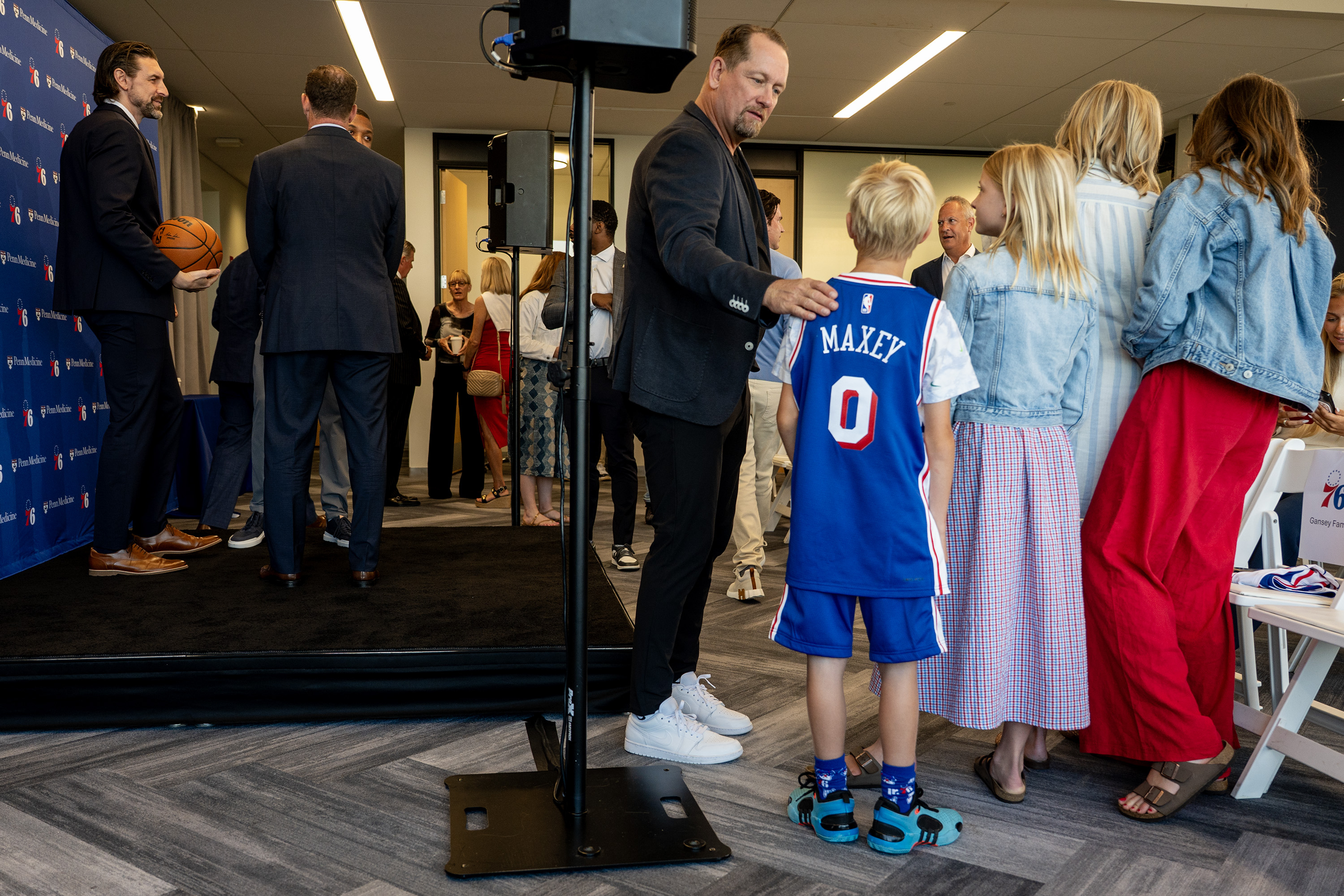
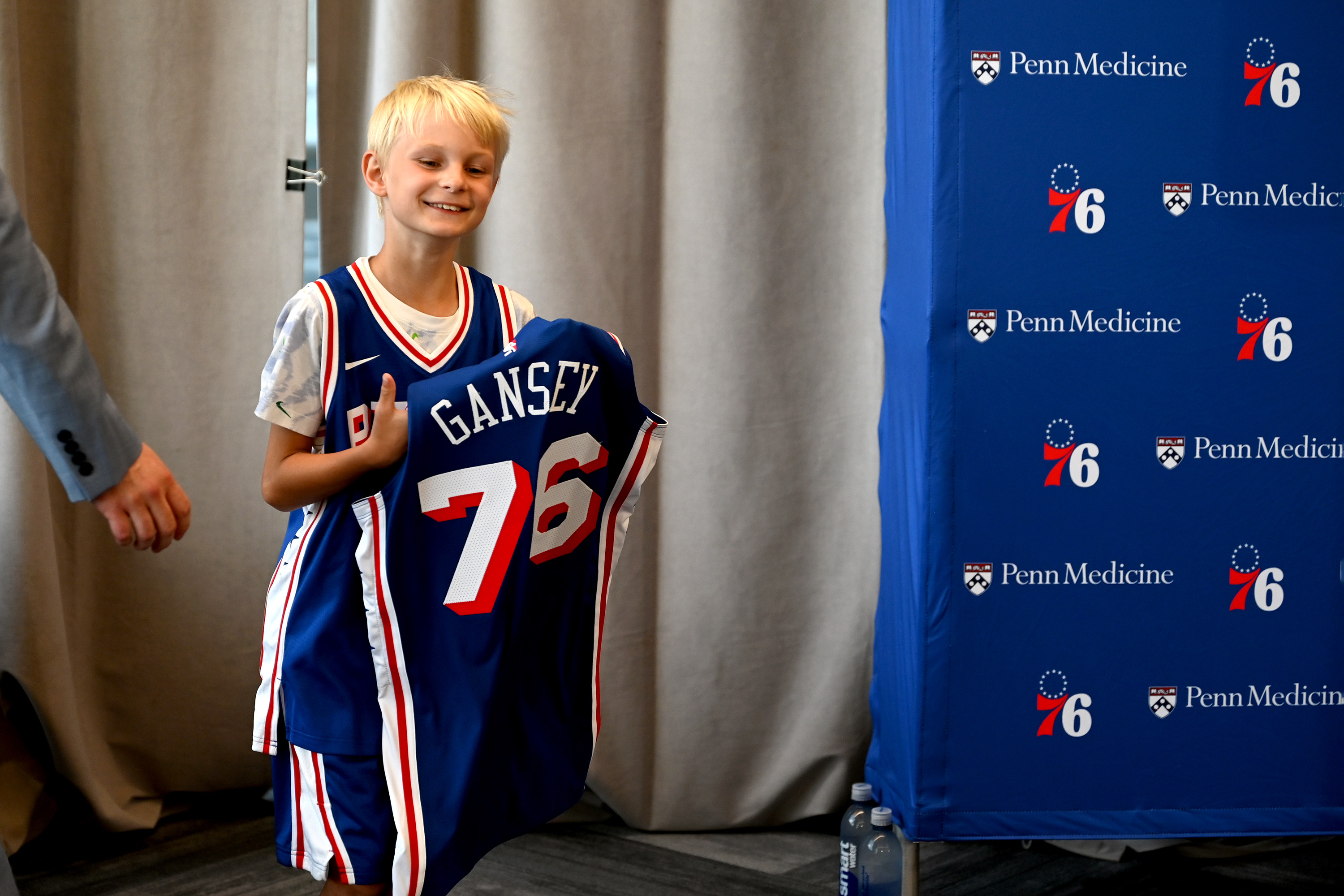
And again, my inclusion is not a traditional action photo. It’s from a press conference and the subject — Sixers new president of basketball operations Mike Gansey — isn’t even the focus of the image.
Sixers head coach Nick Nurse talks to Griffin Gansey, 8. wearing a Tyrese Maxey jersey after his father Mike Gansey (rear, far left) finished up his first press conference as the Sixers new president of basketball operations. Nurse was greeting Amy Gansey, and their other three children after the event.Tom Gralish / Staff Photographer
I also photographed him posing with team executives, holding a basketball, then a Sixers jersey, followed by his comments and Q & A with reporters, but I was more interested in the periphery, and stayed around after it was over — and most of the media left for more comments downstairs by the other executives (the featured image at the top).
Later in the week in Center City, I passed a youngster in full graduation cap and gown. I often play the role of street photographer so I walked behind them for a block.
The photographer is reflected in front window of the restaurant as he arrives with Lynnette Lucas and her granddaughter.Tom Gralish / Staff Photographer
If I were not a curious journalist I would’ve moved on, but I said hello and introduced myself as we walked together. Lynnette Lucas was taking her granddaughter Faith Green, 6, for a special lunch after her kindergarten graduation at Mastery Charter School. Lucas takes all her grandchildren to the Chili’s near the Convention Center for celebratory meals where the staff treats them well, especially server Tevin Jones. Faith was headed to a party with the rest of her family, with cake and ice cream later in the day. I switched from street photographer back to visual journalist and headed to my next assignment.
There are different definitions for street photography, but I always like what William Eggleston said: “Often people ask what I’m photographing, which is a hard question to answer. And the best what I’ve come up with is I just say: life today.”
Which brings me to my good friend and Inquirer photo colleague Alejandro A. Alvarez. Starting today Philadelphia will wake up differently. For decades, before the coffee shops unlocked their doors and the metal roll-up shutters were opened on newsstands Alex was already there. A street photographer who chases the morning light, Alex retired from the newspaper yesterday, almost exactly 38 years — Monday, June 13, 1988 — after he first stepped into a newsroom as a full-time newspaper staff photographer, at the Wilkes-Barre Times Leader.
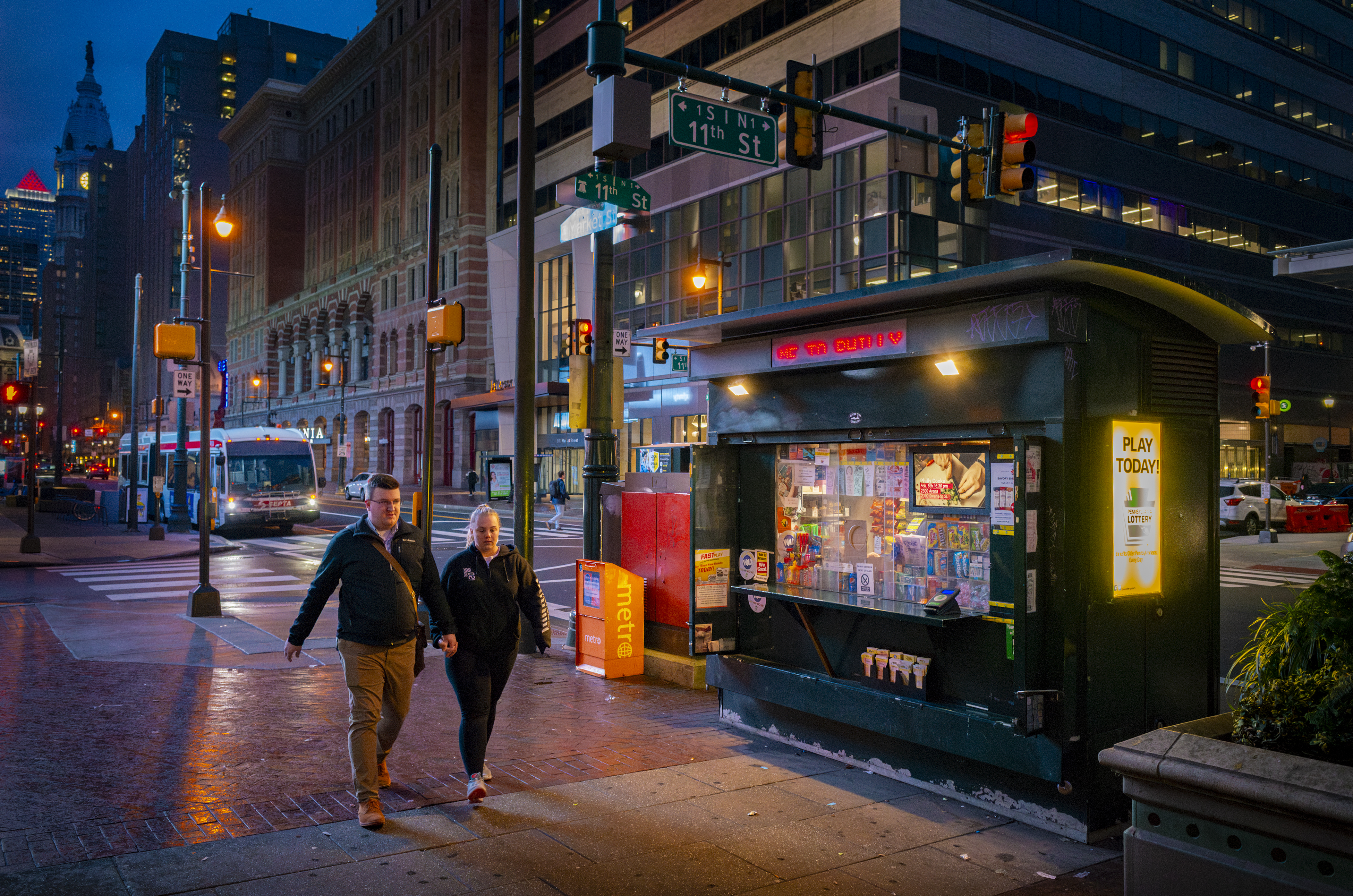
Jan. 10, 2019, 6:50 a.m. Along Market East at 11th Street.Alejandro A. Alvarez / Staff Photographer
That is not to say he won’t still be there with his camera, waiting for the sun to rise and bathe the sidewalks and neighborhoods with the day’s first warm light. He describes himself as a “professional wanderer about town, documenting the people and places I see.”
And I will probably see a lot more of him now as he will have more time for the street photography he most enjoys.
Readers — and his editors — will miss his breaking news coverage, as he will no longer be checking the news websites, apps, and tips from sources before heading out pre-dawn to visually report on the aftermath of overnight shootings, fires, or accidents. He usually filed his news photos before the reporters even turned on their computers.
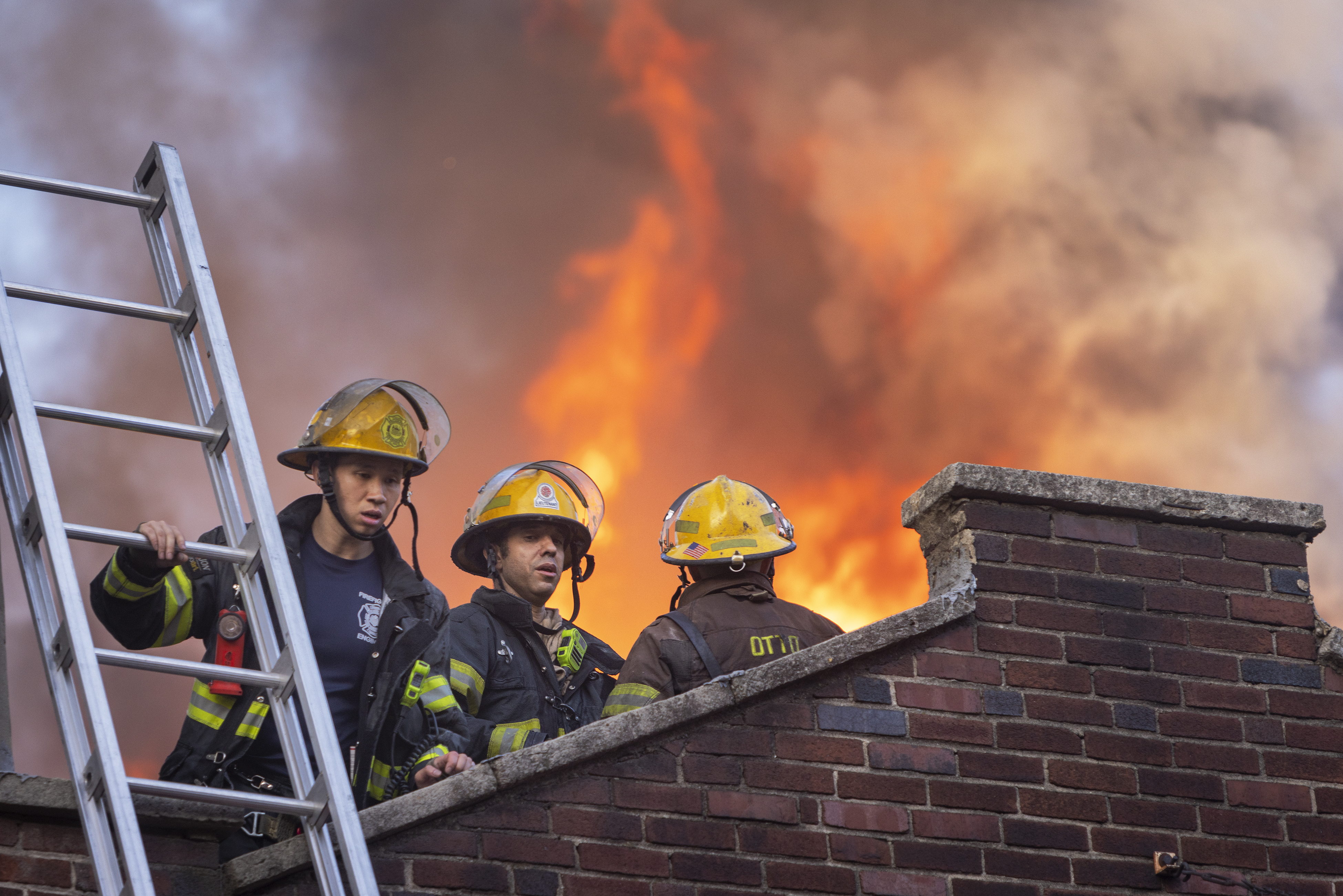
June 21, 2022, 5:54 a.m. Firefighters in the 900 block of Race Street moments before extinguishing a flare up.ALEJANDRO A. ALVAREZ / Staff Photographer
The way he sees the city however, will endure and readers will still see his work, whenever Inquirer.com or the Inquirer or Daily News needs a photo to illustrate a story about SEPTA, or pedestrians and city workers, bikers and joggers and dog walkers — in all kinds of weather, they will tap into the admirable archive of his images in our digital library.
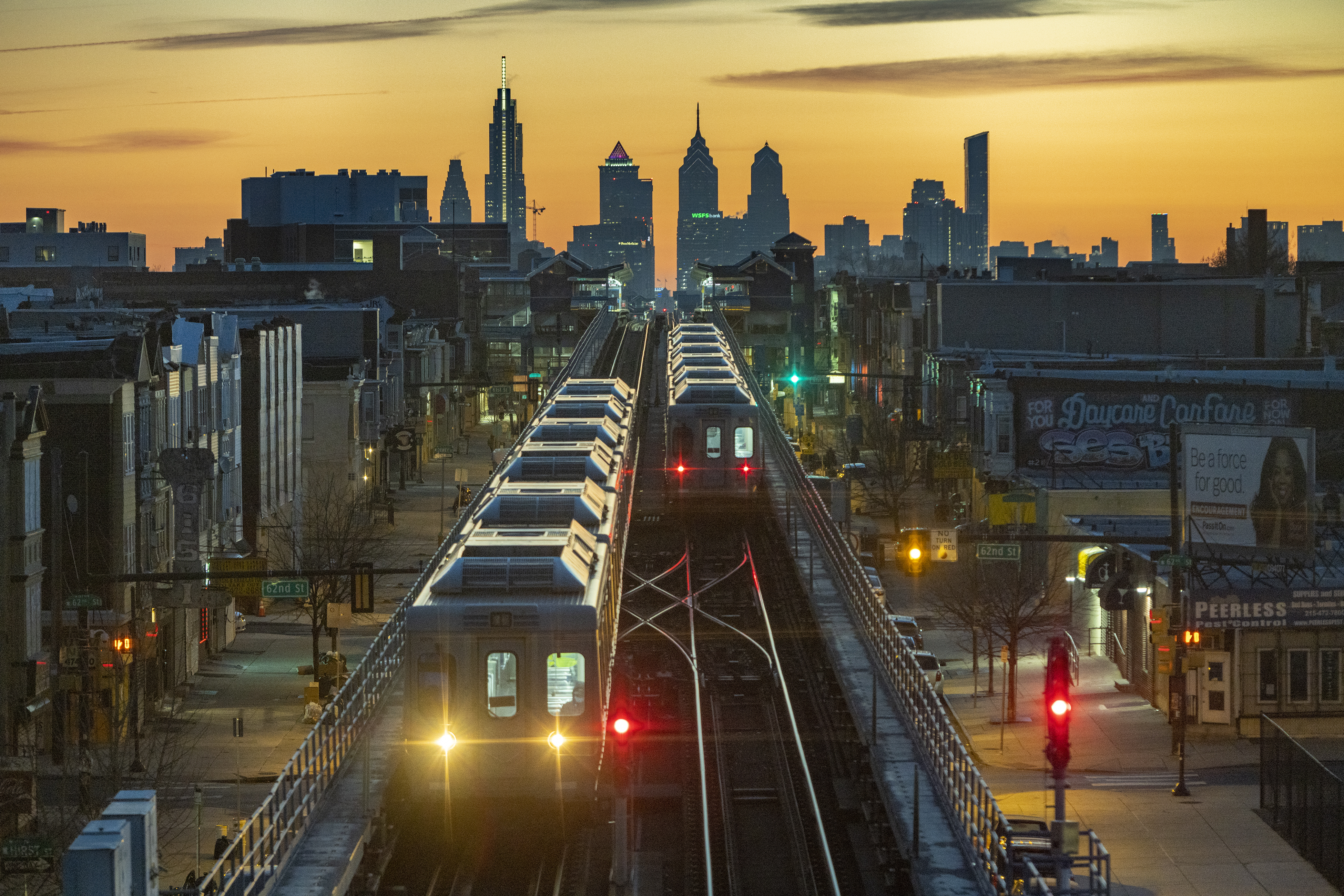
Dec. 21, 2022, 6:55 a.m. Market-Frankford SEPTA trains come and go from the 63rd Street station.Alejandro A. Alvarez / Staff Photographer
At The Inquirer, Alex photographed protests and elections; changes in the seasons and weather; parades, celebrations and memorial; kings and criminals. Yet his most memorable images came from those seemingly unremarkable mornings.
April 2, 2020, 7:30 a.m. The shadow of the photographer on a wall at N. 6th and Callowhill Streets as he chases morning light.Alejandro A. Alvarez / Staff Photographer
Since 1998 a black-and-white photo has appeared every Monday in staff photographer Tom Gralish’s “Scene Through the Lens” photo column in the print editions of The Inquirer’s local news section. Here are the most recent, in color: