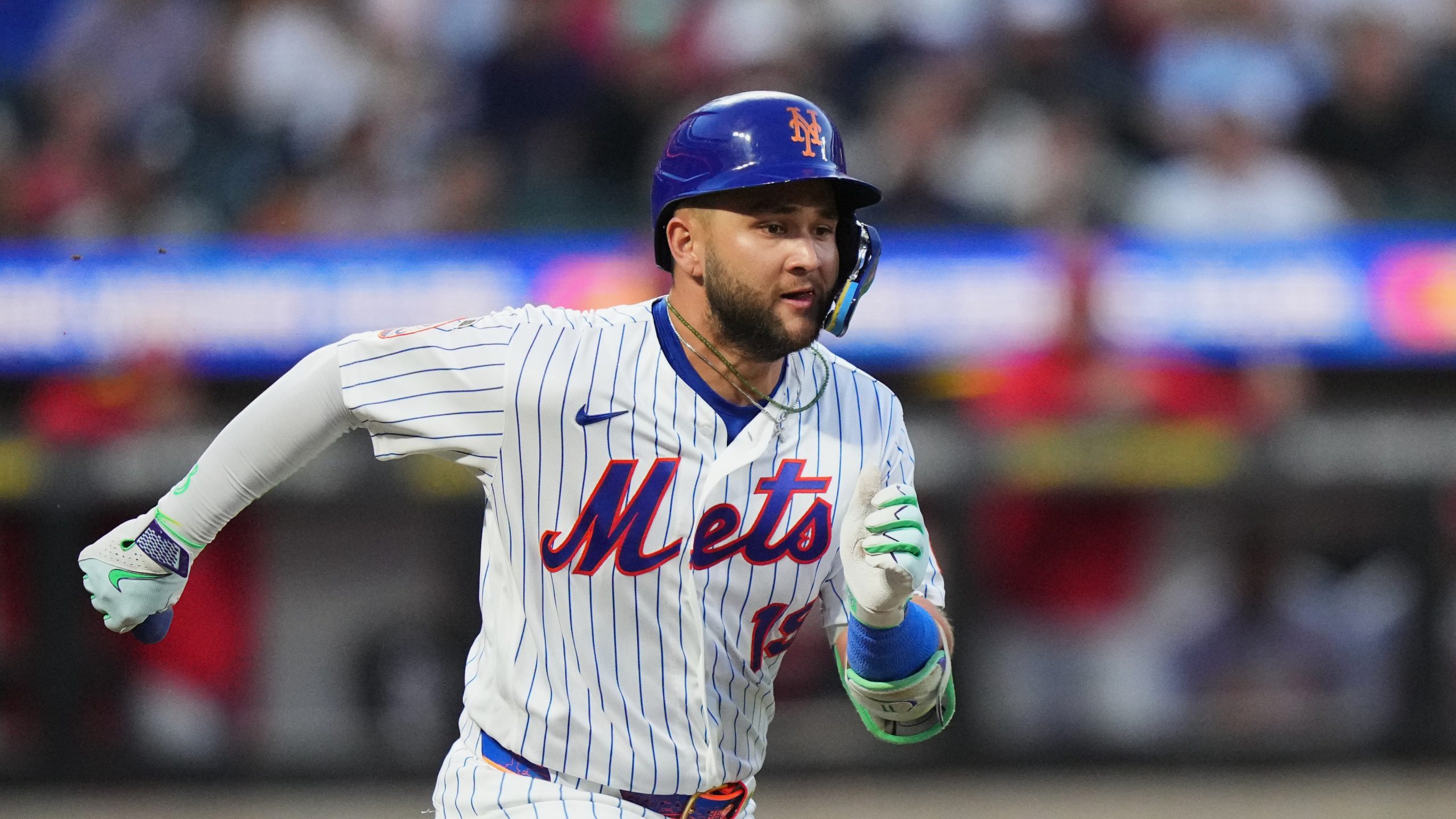
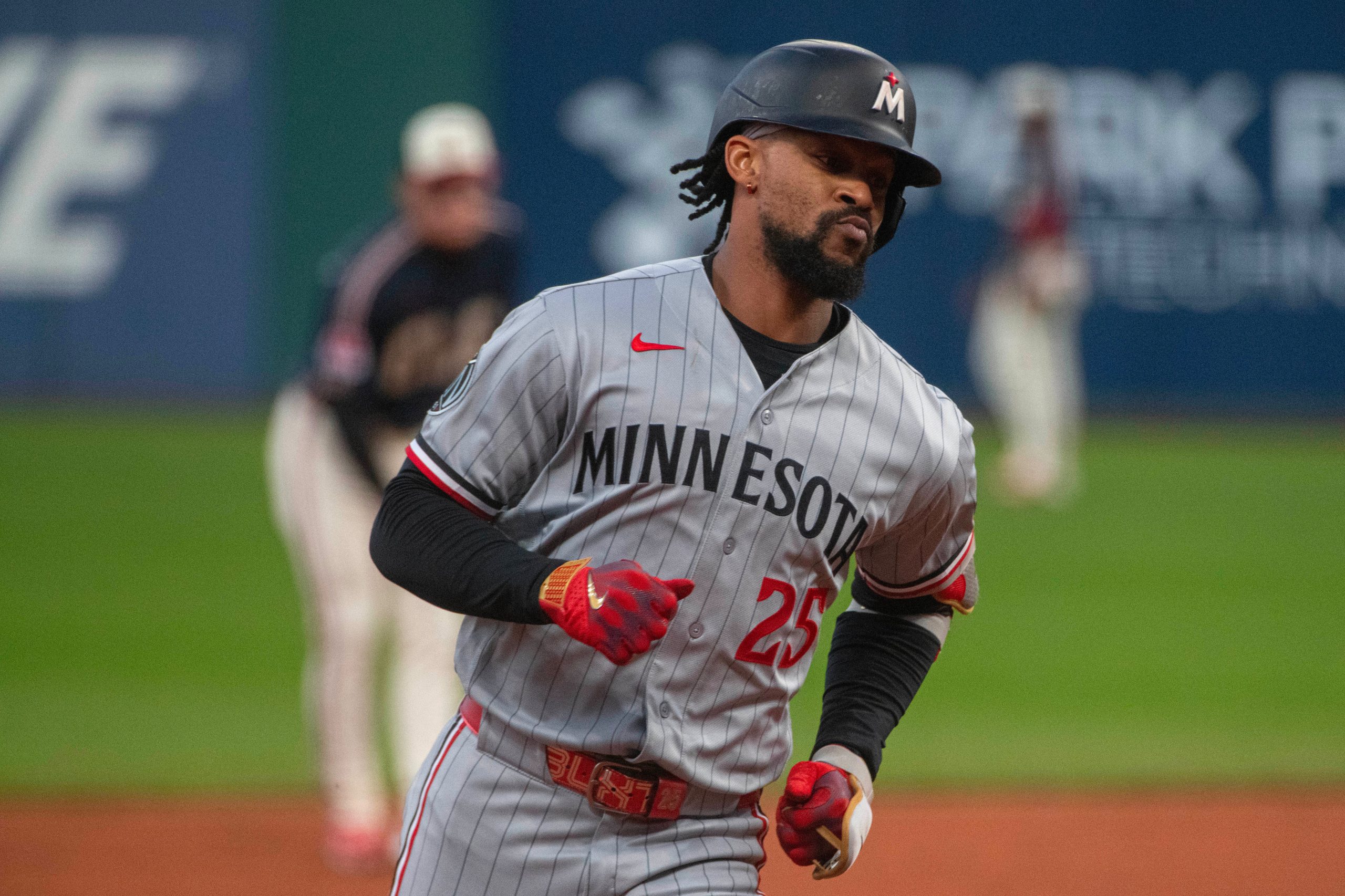
Five months later, almost to the day, Bo Bichette stepped in the batter’s box in Citizens Bank Park.
Boooooooo!
(No, they weren’t calling his name.)
Depending on who you ask, Bichette was either on the verge of signing with the Phillies or deep in talks about their seven-year, $200 million offer. It was the middle of January, a pivot point in the offseason.
“I thought it was an opportunity, for sure,” he said. “But there was definitely things that needed to be worked out for that to become a possibility. So, no, I didn’t think that [it was close].”
In any case, Bichette is in town this weekend with the rival Mets, who swooped in with a short-term (three years), high-salary ($126 million) deal with two opt-outs. And not that anyone has forgotten, the visit is a helpful reminder that the Phillies still are searching for a big right-handed bat.
Bo Bichette, who signed with the Mets over the Phillies’ seven-year, $200 million offer in January, is in town for the first time with his new team.Frank Franklin II
The trade deadline is six weeks away — 6 p.m. on Aug. 3, if you want to set a calendar reminder. It’s a long way from here to there. The market hasn’t taken shape and likely won’t for a while.
Entering the weekend, 12 National League teams and 11 in the American League were no more than three games out of a playoff spot. Some are more realistic contenders than others; none is ready to wave the white flag.
“It’s pretty quiet right now,” Phillies general manager Preston Mattingly said this week on Phillies Extra, The Inquirer’s baseball podcast. “You’re talking to teams and checking in, and we’re having conversations to kind of lay some groundwork. But pretty quiet right now.
“I’m sure over the next two to three weeks to one month, things will start to pick up a little bit.”
The Phillies made a small trade last week to address a lack of outfield depth after losing Adolis García to a season-ending muscle tear near his right shoulder. They sent two minor leaguers to the White Sox for platoon outfielder Derek Hill.
It’s possible they will have to make a similar trade for starting pitching depth after demoting Andrew Painter to triple A with a 7.06 ERA.
But the deadline represents a chance to take a bigger swing. And the perception within the sport, based on conversations with league sources, is that the Phillies are prioritizing a right-handed hitter for the top half of the order to offset lefty-swinging Bryce Harper, Kyle Schwarber, and Brandon Marsh.
Let’s take a still-too-early dive into a few players who may be available before the deadline by dividing them into categories:
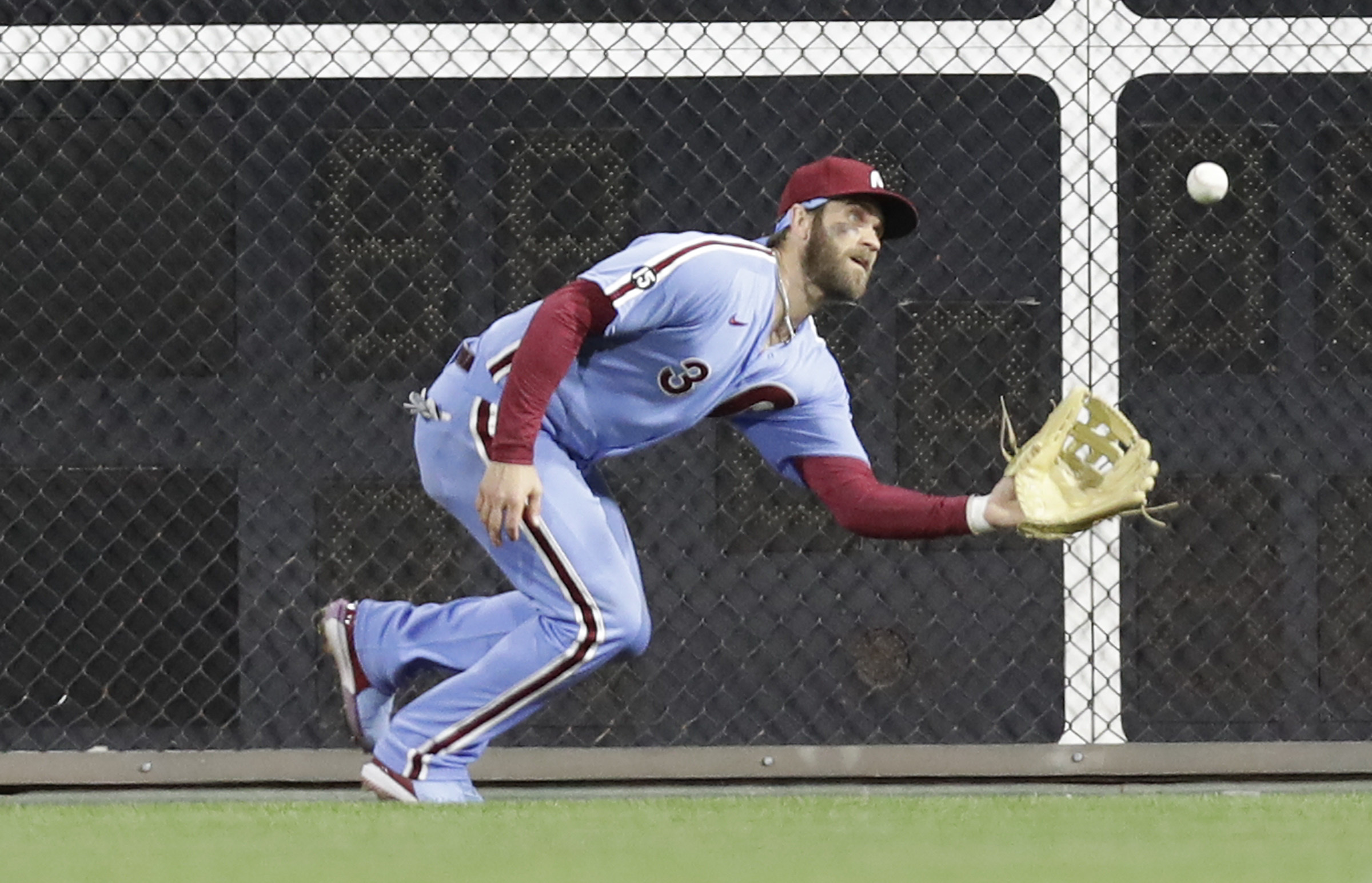
The Phillies haven’t shown any interest in moving Bryce Harper back to the outfield.YONG KIM / Staff Photographer
Non-outfield options
The outfield is the most obvious place for the Phillies to add a hitter.
Unless …
“I’ve said it multiple years before — and this year, still — for the right player, I would do it,” Harper said of moving back to right field. “I mean, that’s as real as it gets. I don’t want to do it long-term. But if the right player comes along and that’s what we need, or if that’s what we want, I’d be open to it at any point.“
Could the right player be Willson Contreras? Or fellow first baseman Christian Walker? The free-falling Red Sox could move Contreras, who is under contract next year for $18.5 million. Astros owner Jim Crane once vowed to never be a seller. But if Houston keeps fading, Walker and third baseman Isaac Paredes could bring value.
Harper hasn’t played right field since April 2022, when he tore a ligament in his right elbow. He moved to first base a year later.
“I still feel like I can throw a baseball from right field, and I can catch a fly ball,” Harper said. “It’s been a long time. But, yeah, I would do it in a heartbeat for us to win a World Series, without a doubt.”
But the Phillies didn’t take Harper up on his previous offers, and it doesn’t sound like they’re about to start.
“I know he’s always been very open-minded to trying to help the organization however he can, but we haven’t talked to him,” Phillies president of baseball operations Dave Dombrowski said this week. “And I really don’t contemplate it because I really like the way he goes about his business at first base. … I’m looking at him as being a first baseman.”
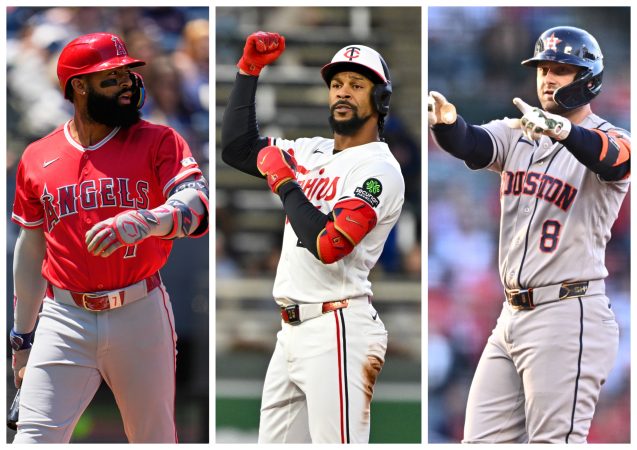
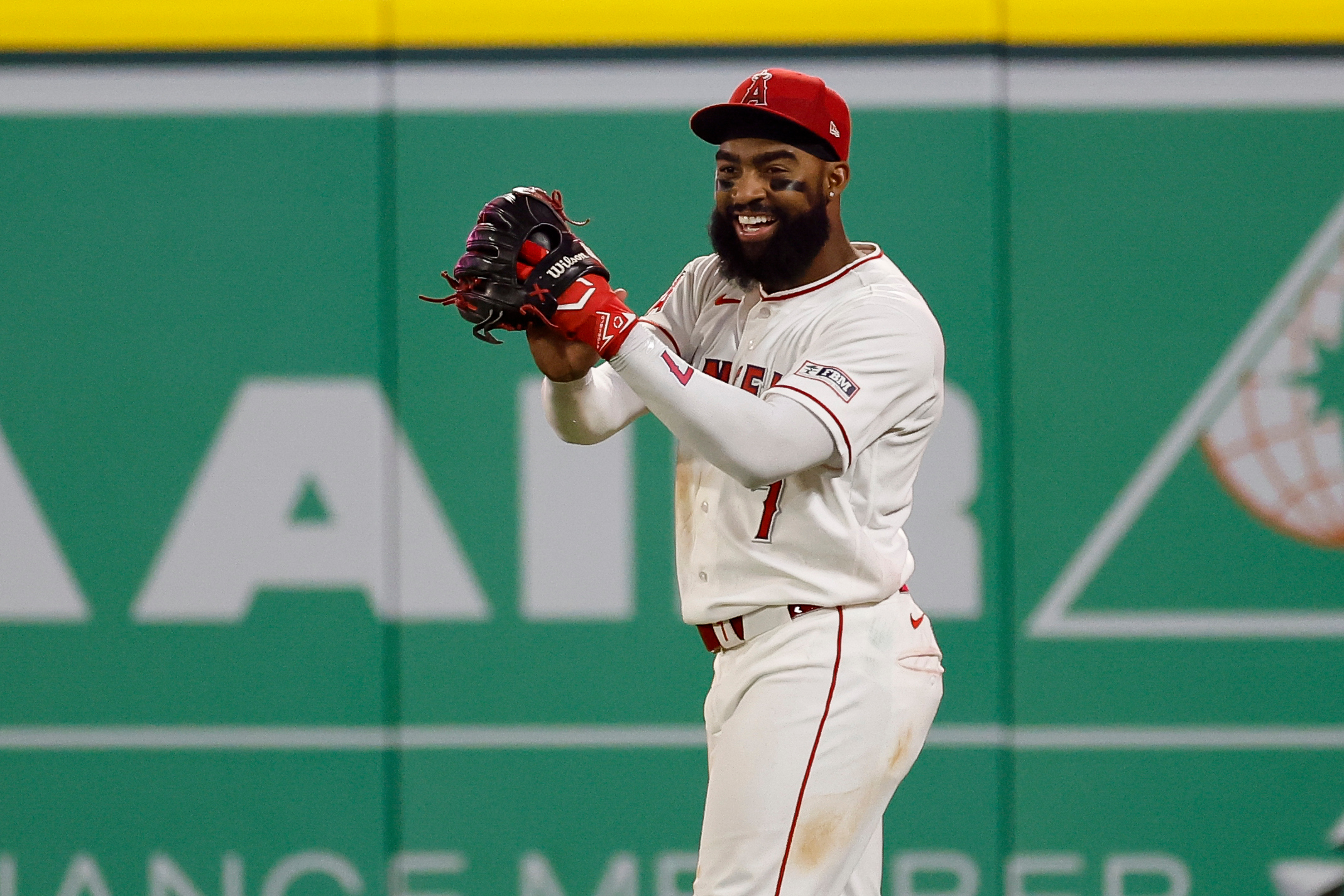
With the Angels sinking to the bottom of the American League, outfielder Jo Adell could be on the move at the trade deadline.Caroline Brehman
Midrange outfield targets
Drafted a year apart, Marsh and Jo Adell came through the minors together with the Angels and became close friends.
What if they were reunited with the Phillies?
“That’d be kind of a cool reunion if they could get Jo there,” former Angels manager Joe Maddon said on a recent episode of Phillies Extra. “Because that man’s got some power.”
Indeed, Adell broke out last season with 37 homers and a .778 OPS. The 27-year-old’s production has dipped (10 homers, .683 OPS through Thursday) and isn’t helped by a 2.9% walk rate that ranks among the lowest in the majors.
But Adell would fit the Phillies as a right-handed hitter who bashes lefties (.862 OPS through Thursday). His defense has improved over the years in right field, too.
And the Angels are headed for their 11th losing season in a row. With one year left on Adell’s contract, this might be their time to cash in, especially if they won’t move Mike Trout, who went on the injured list this week with a hamstring strain.
Taylor Ward, a former Angels outfielder, represents an option as an outfield rental. A right-handed hitter and a free agent after the season, he has been an on-base machine for the Orioles, reaching at a .394 clip through Thursday, though he hit only three homers.
Lefty-hitting outfield options
The Phillies had seven left-handed hitters in the lineup Wednesday against Marlins ace righty Sandy Alcantara.
“I actually like it,” interim manager Don Mattingly said. “I do. I just think hitting left-handed against righties, it’s an advantage, right? And there’s pitchers that get righties out maybe better. … It just takes certain pitches away from a righty.”
Said general manager Preston Mattingly: “I probably would side on the side of my dad. I don’t think it’s a bad thing to run out seven, eight, nine left-handed hitters vs. a right-handed pitcher. And I think we have [lefty hitters] that are well equipped to hit lefties.”
File that away. Because although rival evaluators are expecting the Phillies to hunt for a right-handed hitter, Dombrowski may not shy away from an appealing left-handed bat.
Maybe someone like Jarren Duran. The Red Sox will have a surplus of outfielders when Roman Anthony returns from an injured finger. Duran, drafted by Boston when Dombrowski headed its baseball operations department, could finally be the odd man out in left field.
Twins center fielder Byron Buxton would be among the most coveted hitters on the market if he waived his no-trade clause.Phil Long
Pie in the sky
At last year’s All-Star Game, Byron Buxton pledged his allegiance to the only organization he has known.
“I’m a Minnesota Twin,” he said, “for the rest of my life.”
Buxton actually has control over that. The 32-year-old center fielder has no-trade protection and no desire to waive it, even after the Twins traded 10 players at last year’s deadline, including star closer Jhoan Duran and center fielder Harrison Bader to the Phillies.
Amid another stellar season (23 homers, .919 OPS through Thursday), Buxton is doubling down on his loyalty.
“I ain’t said nothing about leaving, nor will I,” Buxton told The Athletic. “I’m a Twin.“
But what if the Twins sell again at the deadline? What if they move ace Joe Ryan and catcher Ryan Jeffers? Maybe that would change Buxton’s tune. Maybe not.
The Phillies appear to lack the prospect capital to get him anyway. Justin Crawford and Gage Wood might be a start. But the farm system is in the bottom third of the sport, according to many evaluators, after the Phillies used Mick Abel, Eduardo Tait, Starlyn Caba, George Klassen, and Sam Aldegheri in deals over the last two years.
“We feel good where our system’s at,” Preston Mattingly said. “We’re not concerned about a lack of assets in the minor leagues. A lot of times you see that top-100 [prospects] list. That’s not necessarily what teams internally talk about, and those are not the players they ask about.”
It would be moot anyway if Buxton wants to be a Twin forever.
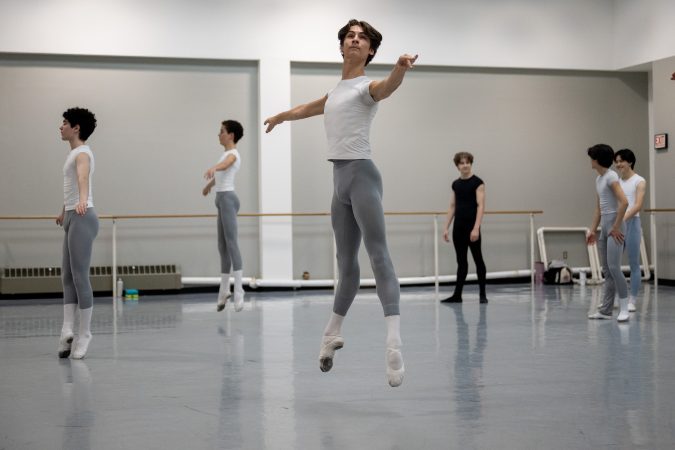
In February, the ballet student at Philly’s Rock School for Dance was one of only 38 boys (81 dancers altogether) from around the world selected to compete at the elite Prix de Lausanne in Switzerland.
He didn’t win a prize at the Prix, but he made the final and got something else valuable: a scholarship to finish his studies at England’s prestigious Royal Ballet School.
But that’s not all. Metcalf also qualified to compete in the Youth America Grand Prix Final in May in Houston.
YAGP, a much bigger competition, attracts thousands of students from 50 countries competing in locations all over the world for months leading up to the final.
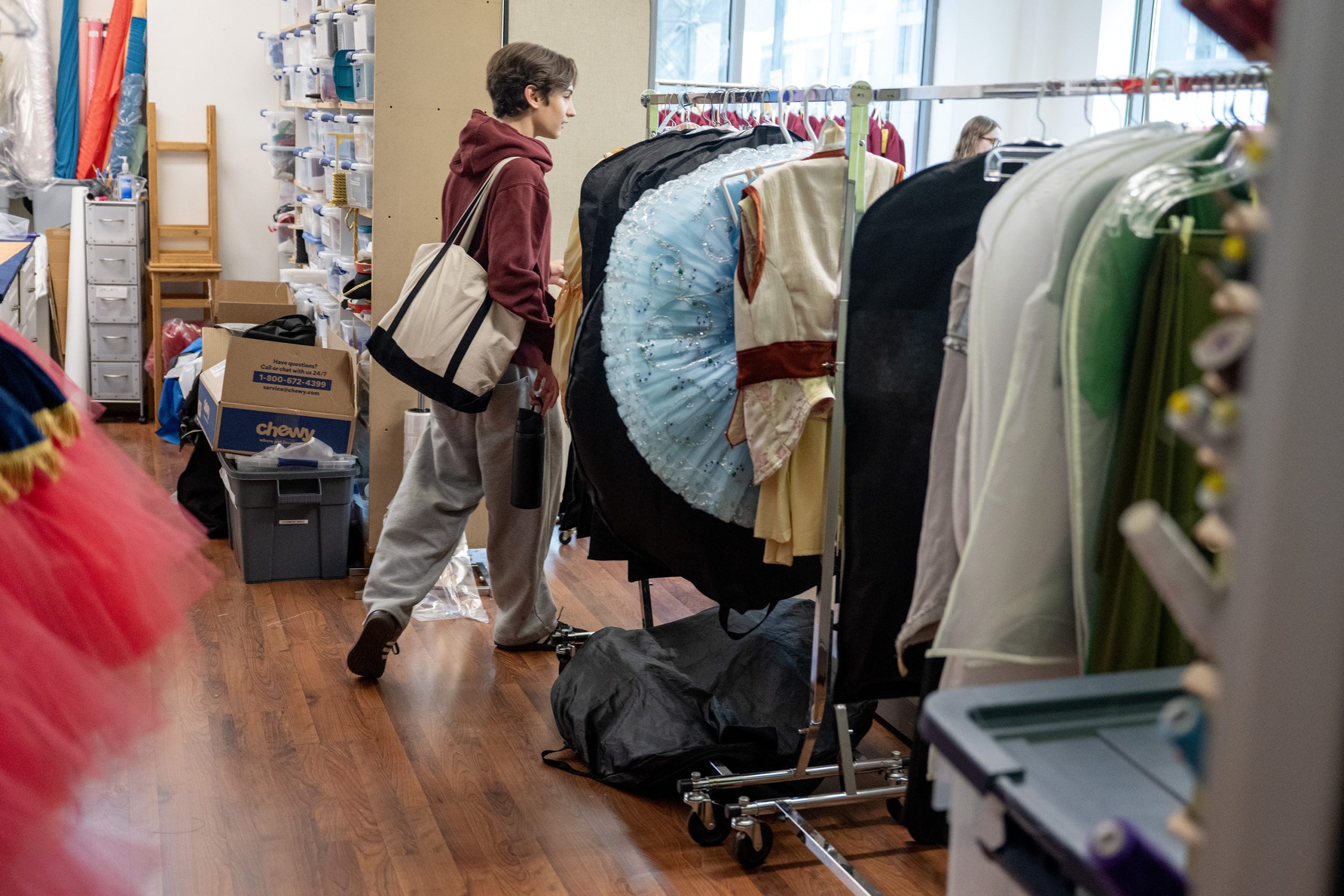
Blake Metcalf stretches and watches his classmates at the Rock School for Dance.Tom Gralish / Staff Photographer
“There was a moment prior to YAGP [Final] where Blake and I spoke,” said Rock president and director Peter Stark, who coached Metcalf, “and I said to him that he didn’t have to do YAGP as he had his plans secured for next year.”
But Metcalf, who grew up in Lake Mary, Fla., and attended many competitions with his mother Sheri’s dance school, Xtreme Dance Studio, wanted to finish out that chapter.
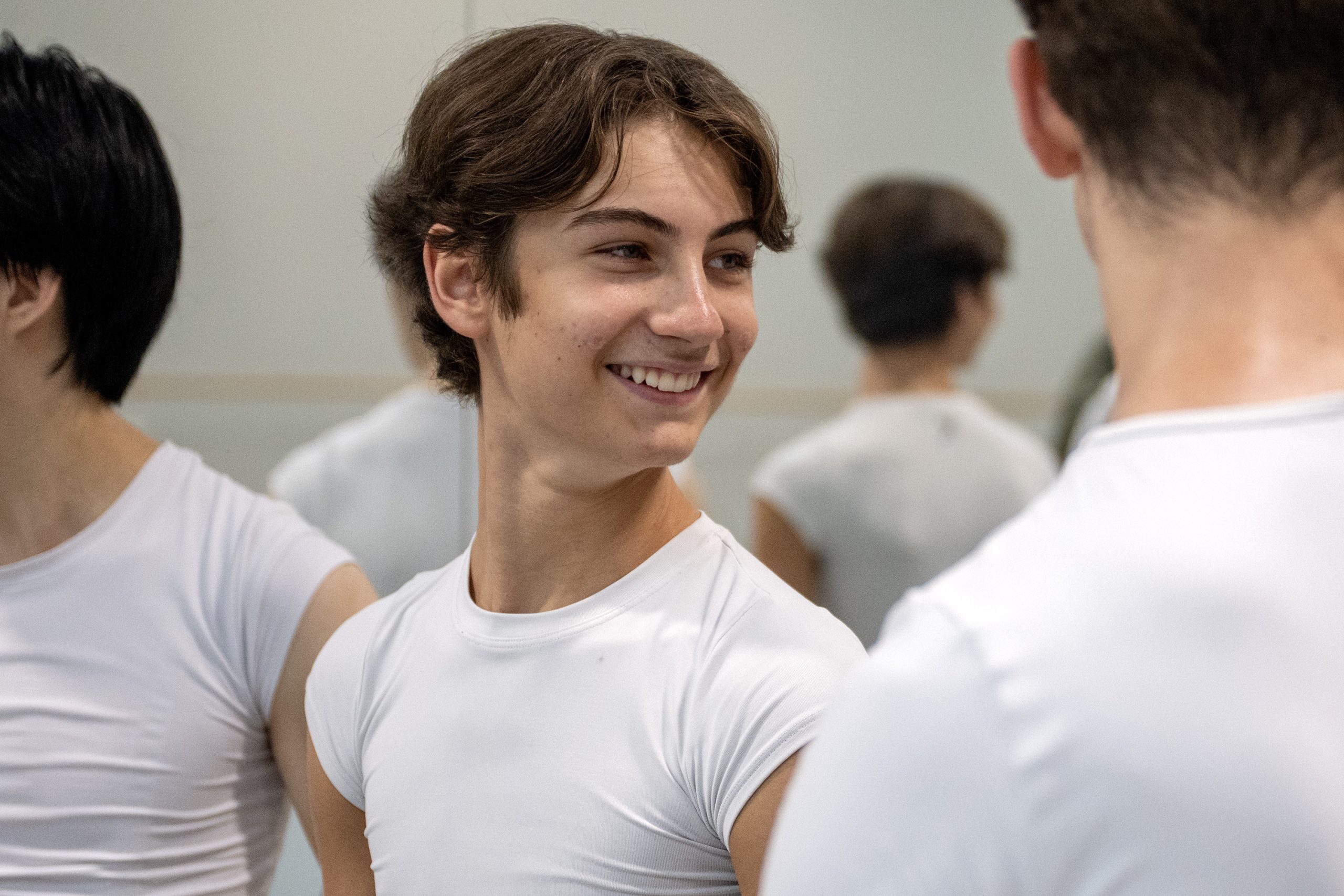
Blake Metcalf in class at the Rock School for Dance.Tom Gralish / Staff Photographer
“I was like, ‘Let me just have fun, I don’t care what happens, just have a good week,’ ” said Metcalf, who recently turned 16. “And then I made it to the final round, I was like, ‘Awesome, that’s great, first-year senior.’”
He was then invited to perform in the gala that closes out the competition, “and that was mind-blowing to me,” he said.
“I was like, ‘Oh my gosh, I’m surrounded by so many people, like professionals I look up to, that I never thought I’d even see in person, dancing on the same stage.’”
When the awards were announced, Metcalf was among the top 12 senior men. His name was the first announced, because he was the youngest, he assumed.
But he had won first place while, he later added, dealing with a cyst in one hip and a muscle strain in the other.
“I look to my right and it’s just these super tall men,” he said.
The YAGP Final turned out well for Metcalf’s classmates as well. In addition to his win, students from the Rock received three second-place awards.
“It was an extraordinary week for the Rock School,” Stark said. “For the second year in a row, we advanced more students to the final round than any other school in the world, and we ended up being the most awarded school at the competition.”
Blake Metcalf in men’s class at the Rock School.Tom Gralish / Staff Photographer
Metcalf, Stark said, “was in a different zone at the finals and it showed in his performances. “Some of the same judges [at the Prix and YAGP final] were especially impressed with his growth.”
“Mr. Stark warmed me up every day for competition, and he took it very slow, didn’t force anything,” Metcalf said, explaining how he succeeded despite the injuries. “I kind of kept it calm and clean, and then saved myself for stage.”
So what changed between February and May?
“I think at Prix de Lausanne, I saw so much incredible talent,” Metcalf said. “I was really inspired, I subconsciously pushed myself more. I came back to Rock, and I was like, ‘alright, let’s do it, like let’s work,’ and I started improving more.”
“Blake has an extraordinary instrument for dance physically with excellent proportion and line with great flexibility and strength,” Stark said. ”However, what really makes Blake special is both his intense focus in class coupled with heartfelt artistry on stage.”
Next year in England, Metcalf expects to work on “my power, my bigger jumps. It’ll come with age,” he said, “it’ll come as I get more muscle. But yeah, I definitely need to work on my strength and my power.”
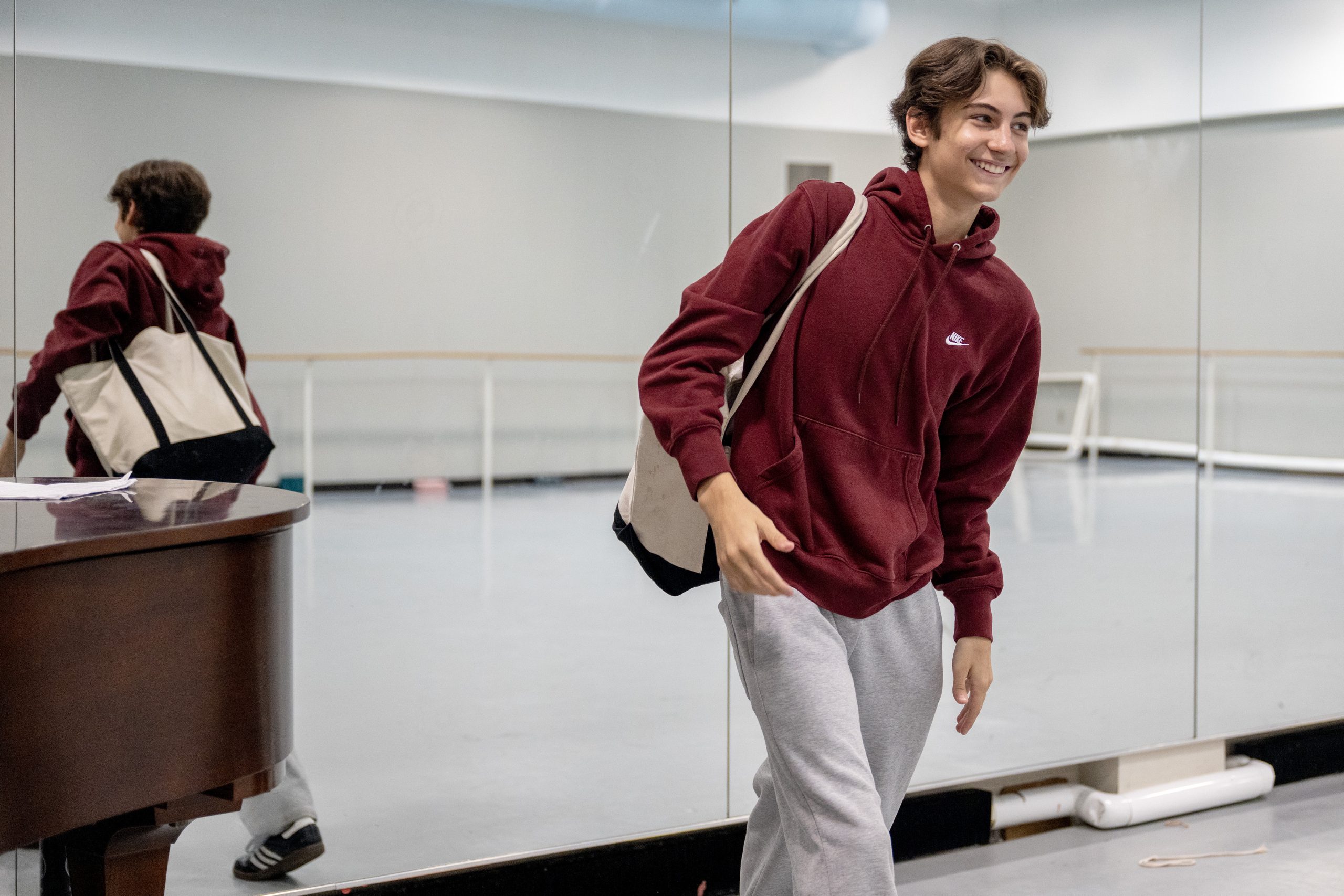
Blake Metcalf leaves the studio after class at the Rock School.Tom Gralish / Staff Photographer
Metcalf started dance when he was 5 or 6, after watching his sister, Ash, (now a New York-based actress) dance and compete with his mother’s school.
“I really wanted to be a dancer, and my mom was like, ‘Alright, Blake, we’ll see, we’ll see.’”
His mother, he said “tried to get me to go into sports because she wanted me to … go to a college, go the academic route. But I would beg my mom every day, because I looked up to my sister a lot as a kid. Ever since then, I just started getting more and more classes, and then I left all the other worlds behind.”
He started with hip-hop. Classical dance didn’t come until he was about 11, when someone at his mom’s studio noticed that he had good feet for ballet.
Soon enough, he’ll get that degree as well. The three-year program at the Royal Ballet School not only prepares its students to join a ballet company, but it also awards its students a bachelor’s at the end.
Blake Metcalf leaves the Rock School after class.Tom Gralish / Staff Photographer
Metcalf had never studied anywhere but his mom’s school when Stark invited him to train at the Rock School two summers ago. He enjoyed it so much that he begged to stay for the year, even though it meant leaving his family and his Boston terrier, Cannoli.
It was Philly where he really began to shine, said Metcalf, who also enjoys drawing, crocheting, knitting, and reading.
“Rock has really refined me as a dancer,” he said. “Rock has also helped me mentally, it has helped me mature, have my own mindset, not worry about what else is going on and just focus on myself.”
After years of anticipation, the World Cup has finally come to Philadelphia, and the city is rising to the occasion.
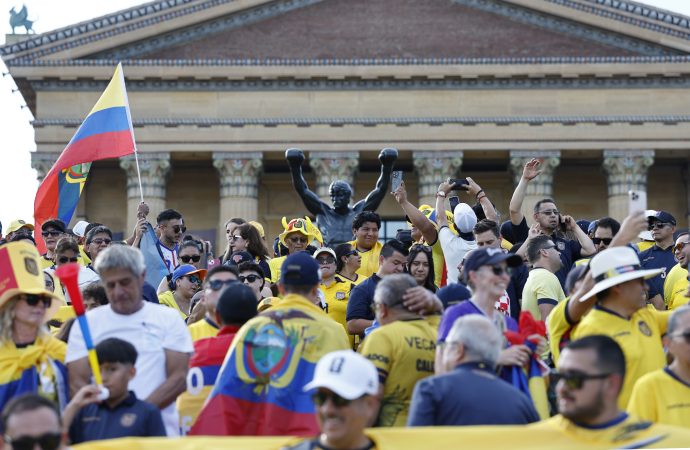
The FIFA Fan Festival, located at Lemon Hill in Fairmount Park, has free admission and is open daily. During Mexico’s 2-0 win over South Africa in the tournament’s opening match, Mayor Cherelle L. Parker watched and celebrated there alongside fans of El Tri.
The city’s sizable contingent of Mexican Americans made the stretch of grass their own, but they weren’t the only ones. According to the Philadelphia Visitor Center, more than 100,000 people visited the fan festival over the four-day opening weekend. Attendees have given the experience positive reviews, with one notable exception: bike parking, which has been scarce despite officials urging visitors to leave their cars at home.
Also, a success was opening night at Lincoln Financial Field, which has been renamed Philadelphia Stadium for the tournament. While fans of Ecuador left disappointed after their team’s 1-0 loss against Côte d’Ivoire, they could quickly make their way to one of the city’s bars — some of which won state approval to stay open until 4 a.m. during the World Cup — to drown their sorrows.
Not so in places like Boston or New York City — two of the other 11 American cities selected to host tournament matches — where officials have resorted to closing major streets near transportation hubs to accommodate the crowds. Those cities have also dealt with extensive gridlock.
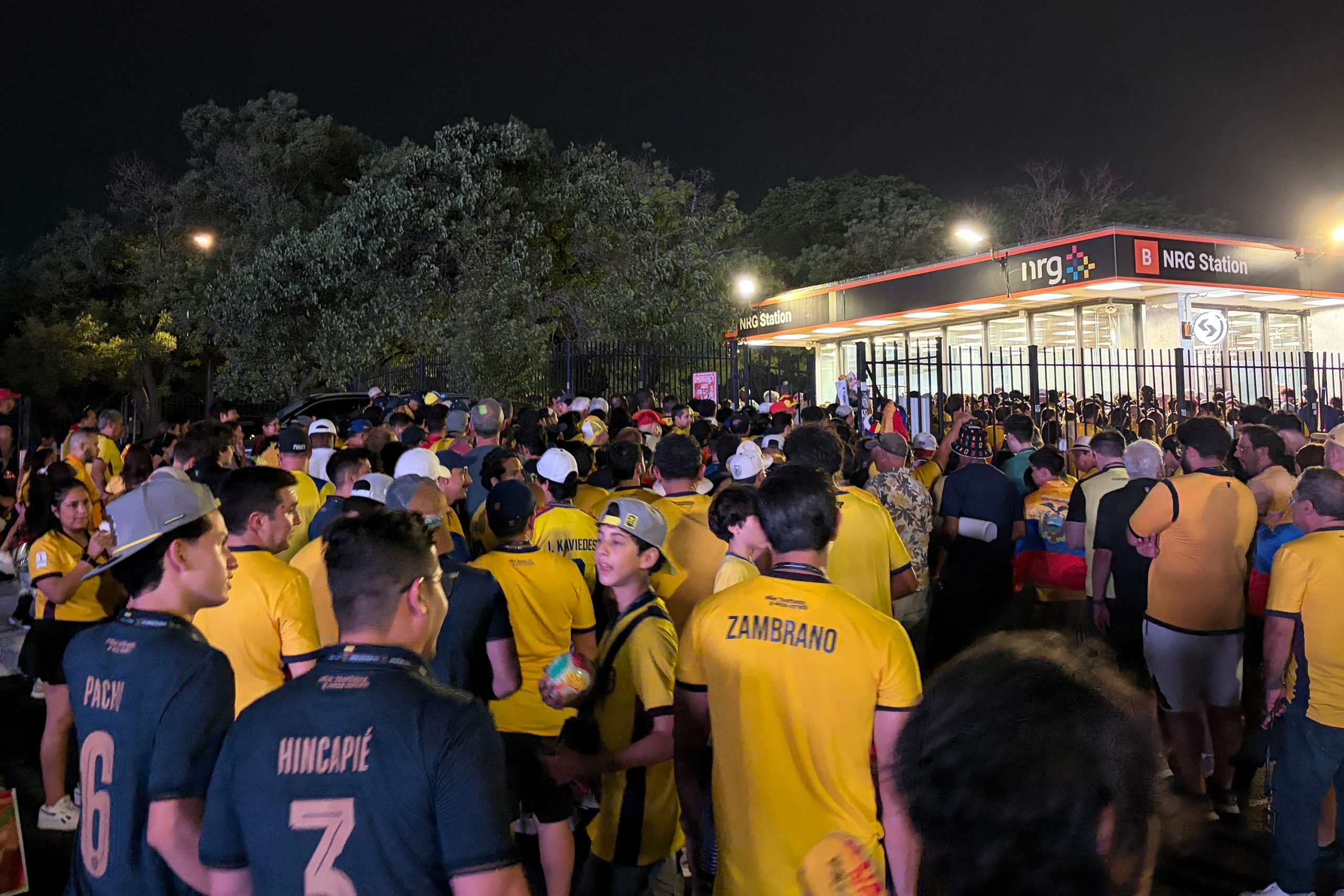
Fans wait outside SEPTA’s NRG Station near the sports complex following Côte d’Ivoire’s victory over Ecuador Sunday.Michelle Myers
The various efforts to fight North Jersey congestion still left some fans waiting for a ride home well after midnight. Spectators at other World Cup sites also faced steep costs for using mass transit, with New Jersey charging $98, and Massachusetts charging $80 for the train and $95 for the bus.
In Philadelphia, however, costs are far lower for fans. Getting to a match via the Broad Street Line doesn’t require any charges beyond the system’s usual one-way fare — $2.90. And, thanks to a sponsorship agreement with Airbnb, rides back to Center City are free beginning at halftime and continuing until two hours after the match concludes.
While SEPTA is operating additional service to support games at the sports complex and the fan festival, that has not come at the expense of trips for anyone else. Per SEPTA, roughly 19,000 people used NRG Station to get home from the game.
National media outlets have taken note of Philadelphia’s moment — no small thing for a city accustomed to skepticism. The Washington Post praised the city as a model of affordability and access. Inquirer soccer writer Jonathan Tannenwald has detailed how Philadelphia became the envy of fans from across the country, thanks to a yearslong fundraising and organizing campaign.
Given this effort and the city’s comparatively straightforward mass-transit situation, it is worth wondering why FIFA did not award more games to the Delaware Valley. There are just six matches scheduled in the city, as compared with nine in Dallas, and eight in Atlanta and New Jersey. All have experienced the kind of regional congestion woes we have so far avoided here in Philadelphia.
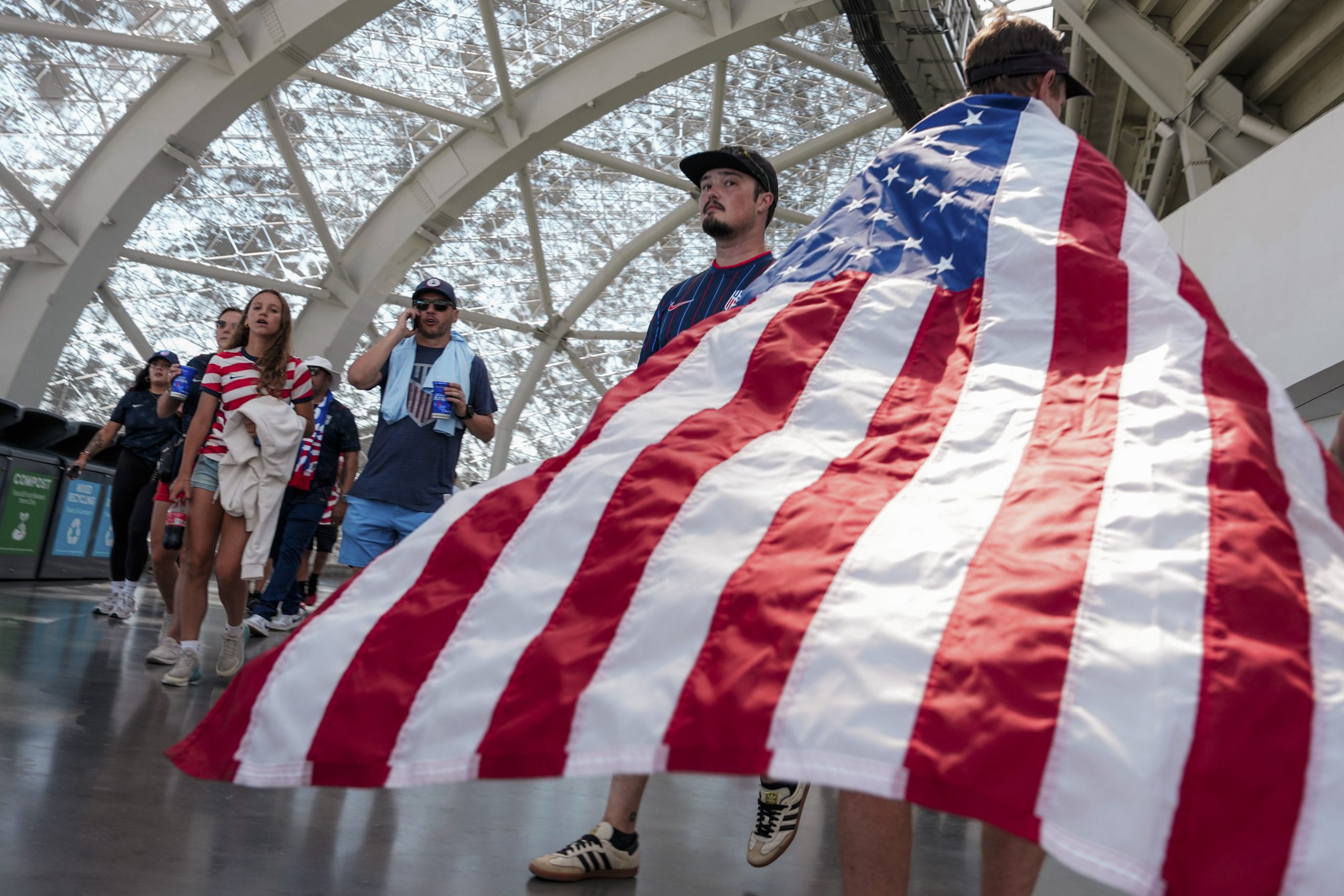
A fan wrapped in an American flag ahead of the World Cup soccer match between the U.S. and Paraguay at Los Angeles Stadium in Los Angeles on Friday.GABRIELA BHASKAR
That said, it hasn’t all been kudos. Those who live closest to the Fan Festival in Fairmount Park have borne the brunt of the match-day fallout during the festivities so far. Residents have complained about noise, traffic from road closures, dangerous motorists, and hiccups with the temporary parking permit system, with four vehicles mistakenly towed.
With the festival running through July 19, city officials should work to mitigate these issues, perhaps by putting up sound barriers, installing no parking signs in the surrounding neighborhoods, and stationing police near streets that have seen an uptick in reckless driving.
It is likely impossible to host a major event like the World Cup without any negative impacts, but Philadelphians can be proud that, so far, we’ve shown the world our best face.
Philadelphia Sheriff Rochelle Bilal announced last week that she has appointed new top officials to fix a series of financial issues, including the dysfunctional sheriff’s sale process. She just won’t say who the people are.
The Inquirer has learned that two individuals she has tapped for those roles have each lost their own properties in a sheriff’s sale and faced other serious financial issues.
George Gossett Jr., a Roxborough-based lawyer and former assistant district attorney with close ties to State Sen. Sharif Street (D., Philadelphia), confirmed this week that he will be Bilal’s next undersheriff, charged with overseeing sheriff’s sales.
Gossett replaces Tariq El-Shabazz, who retired from his $200,000-a-year position as undersheriff in May on the same day Bilal was hit with a court order demanding she fix a sheriff’s sale system that has left winning bidders waiting a year or more to get their deeds.
As undersheriff, Gossett will serve as Bilal’s top legal adviser and second in command of the 380-person office as it seeks to shore up the sheriff’s sale process, personally signing off on deeds.
Yet at a foreclosure sale just two months ago, Bilal’s office auctioned off a North Philadelphia rowhouse that Gossett owned. The sale followed years of missed mortgage payments, liens over unpaid utility bills and other costs, and building citations from the city, court and propertyrecords show.
Gossett, who previously worked in the Philadelphia Register of Wills Office, said in a statement Tuesday that the foreclosure on his Nicetown rental property “gives me firsthand knowledge of the sheriff’s office’s operations, which I will bring to bear in my new role.”
“As a lifelong Philadelphian, I’m honored to serve as undersheriff,” Gossett said. “I believe that my experience in law enforcement, as a small businessman and as an attorney in private practice will be an asset to the sheriff as we seek to improve public safety and ensure an orderly sheriff’s sale process.”
Bilal’s news release last week said that her unnamed undersheriff would “oversee daily operations, strategic planning initiatives, personnel management, and operational coordination across the agency.”
The sheriff has also hired William Brownlee Sr., a West Philadelphia pastor whose recently updated website describes him as “Deputy Chief Financial Officer and Project Manager for the Philadelphia Sheriff’s Office.”
Besides being a pastor, Brownlee has been a motivational speaker, real estate investor, and serial entrepreneur who has dabbled in everything from childcare to credit repair.
He also has a 15-year paper trail of serious financial troubles.
The money was meant to fund part of a multimillion-dollar renovation project of the building, but ended withlenders selling off the boarded-up church earlier this year to satisfy millions in unpaid debts.
Brownlee is also behind several failed business ventures that resulted in the pastor declaring personal bankruptcy three times.
In 2023, hefiled a petition to legally change his name for what he said were “spiritual reasons,” according to a court filing, only to have the request denied after a lender he owed more than $600,000 opposed the change.
“It is believed,” an attorney for the lender wrote, “that petitioner seeks a name change for the purpose of evading creditors.”
He has lost two properties at sheriff’s sale to private lenders, most recently in 2024. And in a November 2025 bankruptcy filing, Brownlee disclosed liabilities totaling $5.3 million, including nearly $1.5 million owed to the IRS.
A Philadelphia judge also held him in contempt of court last year for not responding to a Wisconsin bank’s attempts to collect $89,000 following an out-of-state judgment against him.
Brownlee, in an email Wednesday, disputed the amount of back taxes he owed and said he had sought to change his name because his father’s debts and other records were being confused with his due to the similarity of their names.
“I do not deny that I have experienced serious financial hardship,” he wrote. “However, the story of that hardship is not simply a story of irresponsibility or evasion. Much of it occurred during and after two major marital breakdowns, including divorce proceedings around 2015 and a later separation and divorce process between 2022 and 2024. Those seasons caused significant personal, financial, and organizational disruption.”
In November 2021, Bilal’s spokesperson and former campaign manager Teresa Lundy promoted Brownlee’s network of businesses, known as Divine Services, in a Metro Philadelphia column.
She wrote that Brownlee’s companies offered “childcare, beauty supplies, hair styling, estheticians and related services, financial services, credit repair, interior design, event planning, real estate development and management, photography, and entertainment.”
Neither Bilal nor Lundy would comment this week on Gossett’s or Brownlee’s hiring dates, why they were selected, their salaries, or why the office has yet to officially release their names.
Lundy said in an email that the office’s “reorganization plan extends beyond personnel; it is a holistic approach for better delivery of services to the residents of Philadelphia.”
Still holding the deed
In the early 2000s, Gossett beganpurchasing several dilapidated properties across Philadelphia, including one at sheriff’s sale.
He later sold most of these properties. However, in 2007, Gossett took out a $50,000 mortgage on a three-story rowhouse on North 18th Street in the city’s Nicetown section that he purchased for $8,500 in 2004.
Inspectors cited it as an unlicensed rental in 2012. In 2020, the city again cited Gossett because residents were living in the house despite its lack of a heating system, a permanent kitchen, or a certificate of occupancy, according to city records.
That same year, Deutsche Bank went to court to file the first of three suits to foreclose on the property, listing a $45,000 default. Gossett was able to come up with enough money to stave off foreclosure, but the property was declared vacant by inspectors in 2024, according to city records.
“Unfortunately, after many years of ownership, my company was unable to make that rental property work financially,” Gossett said of the rowhouse. “After I walked away from it, squatters began living there. My efforts to remove the squatters were hindered by the COVID pandemic.”
In March 2025, Deutsche Bank filed suit against Gossett again, securing a $78,000 judgment against him. In April 2026, Bilal’s office sold the property to the bank for about $58,000, according to court records.
Gossett still maintains technical possession of the building today because the deed has not yet been processed by Bilal’s office. A city lien for the costs of sealing the vacant propertyis still marked as active.
Gossett also runs acompany called Urban Owl Construction Group, which does home repair and other services. He has faced three small-claims suits by Urban Owl clients who said the company did sloppy work or skipped out on promised repairs completely. Gossett noted that he won two of the cases and a third was settled.
He said he will continue running Urban Owl while serving as undersheriff. He is also currently doing criminal defense work in Philadelphia, but said he would transfer those cases to other attorneys to avoid potential conflicts.
El-Shabazz, Bilal’s previous undersheriff, was fined $16,000 by the city’s ethics board in 2023 after he acknowledged operating a private legal practice representing criminal defendants who were being prosecuted by the Philadelphia District Attorney’s Office, in violation of city ethics rules.
Lundy and El-Shabazz initially denied he was doing criminal defense work in the city, but weeks later he agreed to pay the fine.
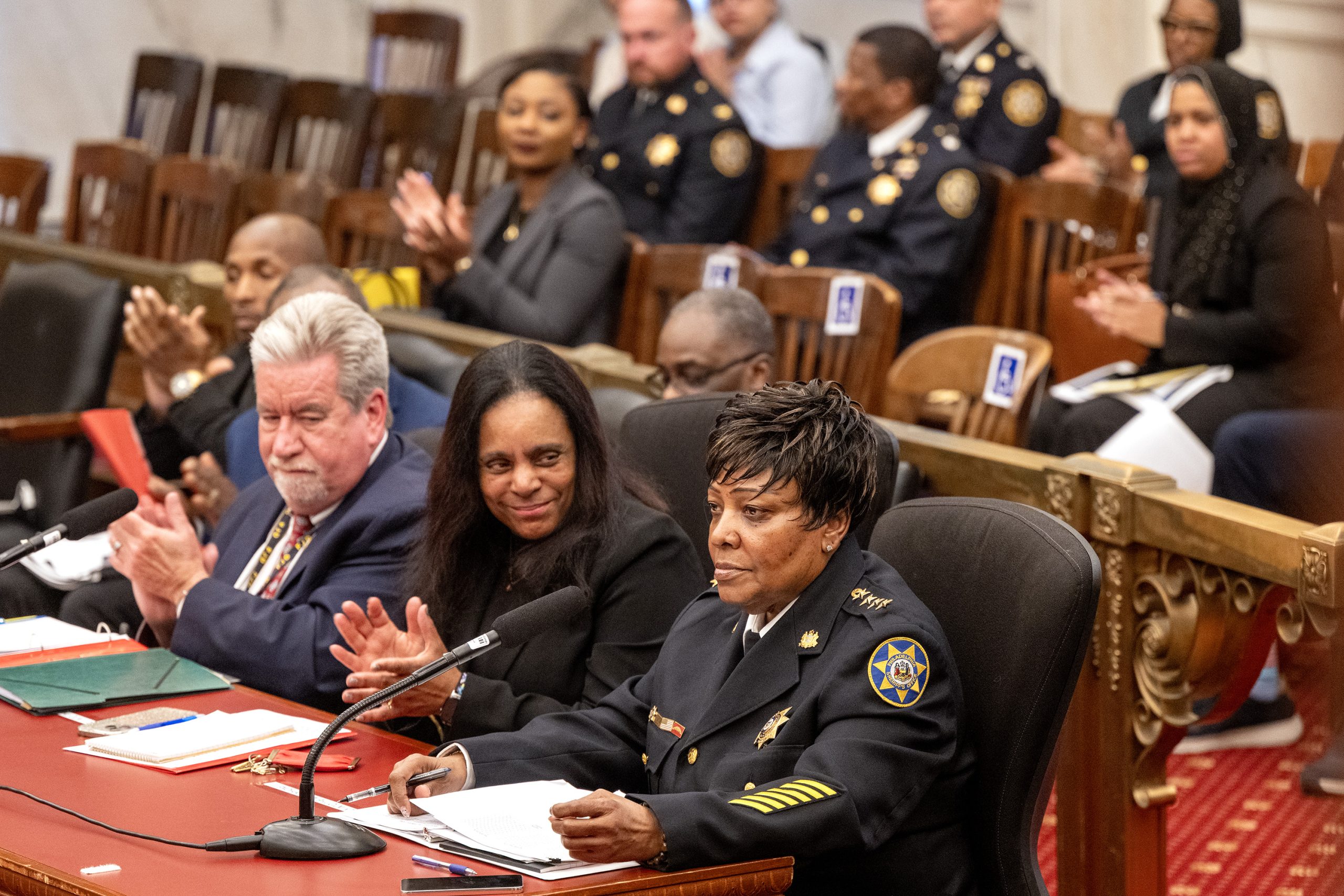
Sheriff Rochelle Bilal (right) is applauded as she testifies in City Council during a budget hearing April 28, 2026. She’s brought in new top officials to overhaul the office, but won’t say who they are or how much they’re paid.Tom Gralish / Staff Photographer
Gossett, who attended Central High School with Street, was previously hired for a job in Orphans Court under Register of Wills Tracey Gordon.
He left Orphans Courtin 2024 after Gordon was defeated by John Sabatina Jr., whose office indicated in internal records that Gossett had been hired on Street’s recommendation. (Gordon also now works for Bilal as a sheriff’s sales service representative, according to city payroll records.)
Street later hired Gossett for a state job as a legislative aide from February 2024 to September 2024, and the lawyer later served as campaign treasurer during Street’s unsuccessful congressional run this year.
Although Bilal declined to confirm Gossett’s ascension to undersheriff, Street sent The Inquirer a statement praising his hiring.
“George, a former assistant district attorney, is an experienced and highly qualified attorney who I’ve known since high school,” he wrote. “I’m proud of his return to public service with another law enforcement agency and believe he will serve the people of Philadelphia well in his new role.”
Under water
Brownlee’s first experience with sheriff sales came after he defaulted on a loan linked to a business called Divine Styles Salon, which was auctioned off in 2017.
Later, as Brownlee’s failed redevelopment of Emmanuel Christian Center was unfolding, Brownlee was also underwater on a $600,000 mortgage he had taken out from lender Univest to finance the construction of a business called Divine Daycare at a property he owned on 52nd Street.
Univest sought a judgment against him in 2023, and the property was sold off at a foreclosure sale in 2024.
In April of this year, about a month after the conclusion of his most recent bankruptcy case, Brownlee appeared with both Street and Bilal at her office’s Autism Awareness and Neurodiversity Resource Fair.
At that time, he was described as the chair of the “Honorary Deputy Sheriff Coalition.” But he told The Inquirer this week he had since been formally hired as a project manager “based on my professional experience in banking, real estate, leadership, ministry administration, and project coordination.” He describes himself on Instagram as “deputy CFO.”
Bilal’s new hires will have to move fast to comply with the judicial order.
By mid-July, Bilal’s staff must file a list of all sheriff’s sales since she took office in January 2020, along with detailed financial records, and names of all staffers or contractors who worked on sheriff’s sales during that time. She also will be required to show a plan for streamlining the process.
Two weeks later, Bilal or a representative must appear at a public hearing before a judge to explain why a special master, a title agent, or someone with similar expertise in real estate should not be brought in to oversee the auctions.
Painter was sent to triple A Wednesday evening, a few hours after his hard-to-watch rookie season got even uglier. The Marlins pounded him for six runs on six hits, including two homers, and knocked him out after two innings of a 12-4 matinee rout in Citizens Bank Park.
And so, Painter heads back to the minor leagues with a 1-8 record and a 7.06 ERA, the second-worst mark among 115 pitchers with at least 60 innings.
The Phillies announced Painter’s demotion at 6:15 p.m., a little more than two hours after the final out. They will make a corresponding roster move Thursday before opening a three-game series against the Mets.
After the game, interim manager Don Mattingly wouldn’t commit to having Painter make his next start, saying “it’s something we’ll probably talk about.”
The conversation happened quickly. After Mattingly spoke with reporters, president of baseball operations Dave Dombrowski and general manager Preston Mattingly poked their heads into his office, just as they do after most games.
It seems Painter was Topic A.
Phillies rookie Andrew Painter gave up six earned runs on six hits, including two home runs, in two innings against the Marlins on Wednesday. Jose F. Moreno / Staff Photographer
The situation is nuanced. The Phillies remain bullish on Painter as a high-end starter. For now, they’ve asked only that the 23-year-old righty keeps them in games. He hasn’t done that lately, allowing six, five, six, and four runs in his last four starts and pitching a total of 15 innings for a 12.60 ERA.
So, although the Phillies continue to believe in Painter, and while they don’t have appealing alternatives in triple A, they couldn’t allow him to continue to pitch every fifth game.
“The fastball’s just getting hit right now,” Painter said after the game, before the demotion. “So, you know, I think we’ve just got to evaluate. Just trying to find out who I am as a pitcher right now.”
And who is he?
“I’ve had to lean heavily on spin,” Painter said. “Sweepers and sliders have been great for me. Earlier in the year, the changeup was great, and right now, I’m kind of searching for it.”
More than anything, though, Painter can’t locate his fastball. At least not the one that overpowered hitters in the low minors.
It hasn’t been the same since he returned from a two-season absence after Tommy John elbow surgery in July 2023. It came and went last year in triple A, where he had a 5.40 ERA in 22 starts. Major leaguers were hitting .382 and slugging .573 against it entering the week.
And that was before the Marlins’ Kyle Stowers and Owen Caissie teed off on center-cut heaters for two-run and solo homers, respectively, as Painter left the Phillies in 2-0 and 6-2 holes.
“I don’t know if he feels like he can really get down the mound and really get after guys because he’s searching for that feeling that he had before,” catcher Garrett Stubbs said. “And it’s really hard.”
Andrew Painter fell to 1-8 with a 7.06 ERA, second-worst among 115 pitchers with at least 60 innings.Jose F. Moreno / Staff Photographer
Painter’s fastball velocity hasn’t dipped. His trust in the pitch, however, clearly has. Mattingly wants Painter to pitch with more “aggression.” Painter has talked about having greater conviction.
Neither is apparent.
“It’s just trying to get him to get out there and have that dog mentality that Philadelphia represents,” Stubbs said. “Go out and just kind of say [bleep] it and get after ‘em.
“He knows that it’s in there. He just needs to go find it.”
Painter has appeared downcast after recent starts. He sat facing his locker, dressed in full uniform, last Friday in Milwaukee. Even as Mattingly and pitching coach Caleb Cotham highlighted the positives, the results have been wholly negative.
Painter said his confidence is “about as good as it can be right now under the circumstances.” But he’s also human. Mattingly guessed Painter’s belief in himself “almost has to waver some.”
“He’s been pretty resilient to this point,” Mattingly said. “But I’m sure it’s wavering.”
Painter will search for his fastball in Lehigh Valley. His replacement isn’t apparent. The triple-A rotation consists of Tucker Davidson (6.50 ERA), Alan Rangel (3.74), Bryse Wilson (6.29), Brian Keller (4.35), and Chuck King (4.02). Rangel, the best of the bunch, started Wednesday night for the IronPigs and could slide into Painter’s spot.
Mattingly said the Phillies were encouraged by Painter’s between-starts bullpen session. But Painter’s fastball failed him again. And after a 33-pitch second inning, which included an 11-pitch at-bat that ended with Xavier Edwards’ two-out infield single, Mattingly went to the bullpen.
Painter said he can feel it in his hand when he throws a fastball that has “a little more life.” He’s trying to recapture that feeling more consistently. It’s elusive.
“It’s tough,” he said after the shortest start by a non-opener Phillies starter since Jesús Luzardo lasted two innings last July 4. “You can have the best secondary stuff in the world, but everything kind of plays off the fastball.
“We’ve been searching for some things, and it’s gotten a little better than what it was. But it’s still obviously not to the extent of what it was pre-[surgery]. So, just trying to make adjustments and figure out what’s going to have the most success.”
Maybe the answers are in triple A.
“It’s going out there and having a few good outings in a row where you can keep getting after it and know that my stuff’s going to be in the zone and get guys out like he wants to,” Stubbs said. “And a lot of it probably is that confidence piece, right?
“The expectations are high, and everyone wants to win, and the city wants to win. He’ll get there. I have full confidence that he’ll get there.”
In videos posted online, firearms instructor Eric Franks taught others how to handle guns safely.
“If you don’t have a leg strap on … your firearm’s going to be flapping out,” the 57-year-old Wynnefield man said in an Instagram video demonstrating how to properly secure a“battle belt,” a tool for holstering guns and equipment.
So some people who knew him found it hard to fathom that Franks, a retired Philadelphia firefighter, father, and business owner, walked up to a group of police officers on a West Philadelphia street and got into a confrontation that ended in gunfire.
“The biggest thing he taught was restraint, situational awareness,” said Randy Robinson, a friend and fellow member of That Gun Talk, a firearms training organization Franks helped found during the pandemic.
Robinson said Franks taught students: “The last thing you want to have to do is pull your firearm.”
Police were called to the block around 10:30 p.m. that night for a report of a shooting on 54th Street, not far from Mingle, a popular event space Franks owned that had hosted a teenager’s birthday party that evening.
Alerted by his son to the nearby gunfire, Franks made his way to Mingle, near where he began to argue outside with several police officers who told him they were trying to establish a crime scene, according to surveillance footage and police accounts.
As officers investigated a vehicle that had been struck by bullets, Franks approached and began complaining about crime and policing in the area, said a source familiar with the case who spoke on the condition of anonymity to discuss an ongoing investigation.
He appeared frustrated, the source said, that officers had not yet cordoned off the area around the vehicle with crime scene tape, and became increasingly agitated as officers repeatedly asked him to step back so they could do their jobs.
Video obtained by The Inquirer appears to show Franks yelling at officers, then pushing one, before stepping back and pulling a gun from his waistband.
Franks then fired multiple shots at the officers, who took cover behind nearby vehicles, according to the video and police accounts, and four officers returned fire. Three officers — including a sergeant — were struck by gunfire. Franks was shot in the chest and the leg and later died at Thomas Jefferson University Hospital.
Police have not released the names of the injured officers or identified those who discharged their weapons that night. One officer was shot in the face, one in the hip, and another in the leg, officials said. A 43-year-old officer was released from the hospital on Tuesday, police said, following the release of a 39-year-old sergeant on Monday.
The shooting remains under investigation by the police department’s officer-involved shooting unit and the Philadelphia District Attorney’s Office.
DA Larry Krasner said investigators from his office had visited the scene, spoken to witnesses and Franks’ family, and reviewed video footage and other evidence. He said his office — like Franks’ family and members of the community — has questions about what happened that night.
James Funt, an attorney for Franks’ wife, Michelle, and his two children, said he,too, is looking for more informationon what transpired in the moments before the gunfire.
“That’s all the family is looking for — a full, fair, and thorough investigation,” Funt said.
Meanwhile, those who knew Franks say the shooting ran counter to the behavior of the man they knew — an advocate for responsible gun ownership and reducing crime in the neighborhood.
Franks was a founding member of That Gun Talk, a local chapter of the National African American Gun Association formed in 2020 to promote self-defense training among Black gun owners, according to Robinson.
He said he was puzzled that Franks would resort to violence in a neighborhood he had urged local leaders to make safer.
In recent years, Franks had brought his concerns to City Councilmember Curtis Jones Jr., who grew up near the Franks family in West Philadelphia and was familiar with his older brothers.
Jones said in a recent interview that Franks had spoken with him multiple times about his frustrations with crime and policing on the business corridor near Mingle.
“What he wanted was better enforcement of laws, and felt frustrated with the reality of our ability to patrol in a way he thought [the corridor] deserved,” Jones said.
And Franks once visited Jones’ office to discuss firearms education for city residents, as well as the possibility of opening a Black-owned shooting range in the neighborhood, an idea Jones said he did not agree with.
The Council member recalled that Franks’ relatives were among the first to open a business on the 54th Street corridor in Wynnefield in the 1970s, a variety store not far from where Franks was killed.
“This whole tragedy, it’s bizarre, ironic, and I grieve for everybody,” Jones said. “The officers that were shot, the family — Franks was a patriarch, the community respected him.”
Funt, the family lawyer, agreed.
Franks cared about “getting more police on the beats, trying to get drugs out of the neighborhood,” Funt said. “I think it was in that spirit that he went there,” to the block in West Philadelphia, on the night he was killed.
How that instinct led to the gunfire that wounded three police officers and ended Franks’ life is a question police and prosecutors will seek to answer as their investigation continues.
Staff writer Ellie Rushing contributed to this article.
Mike Gansey’s tenure in Philadelphia isn’t off to a great start, but it has nothing to do with the 76ers.
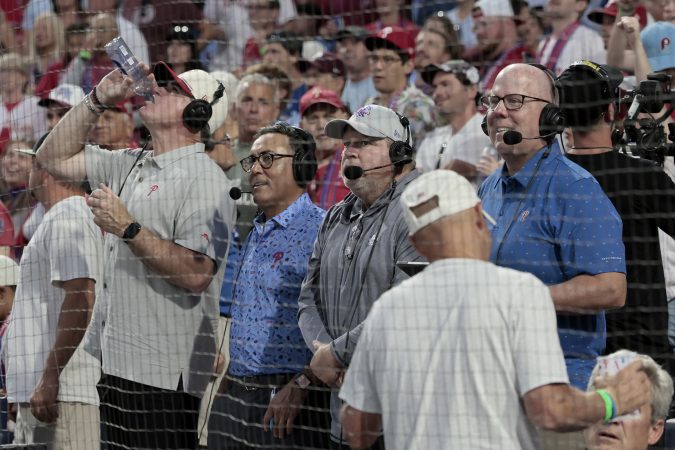
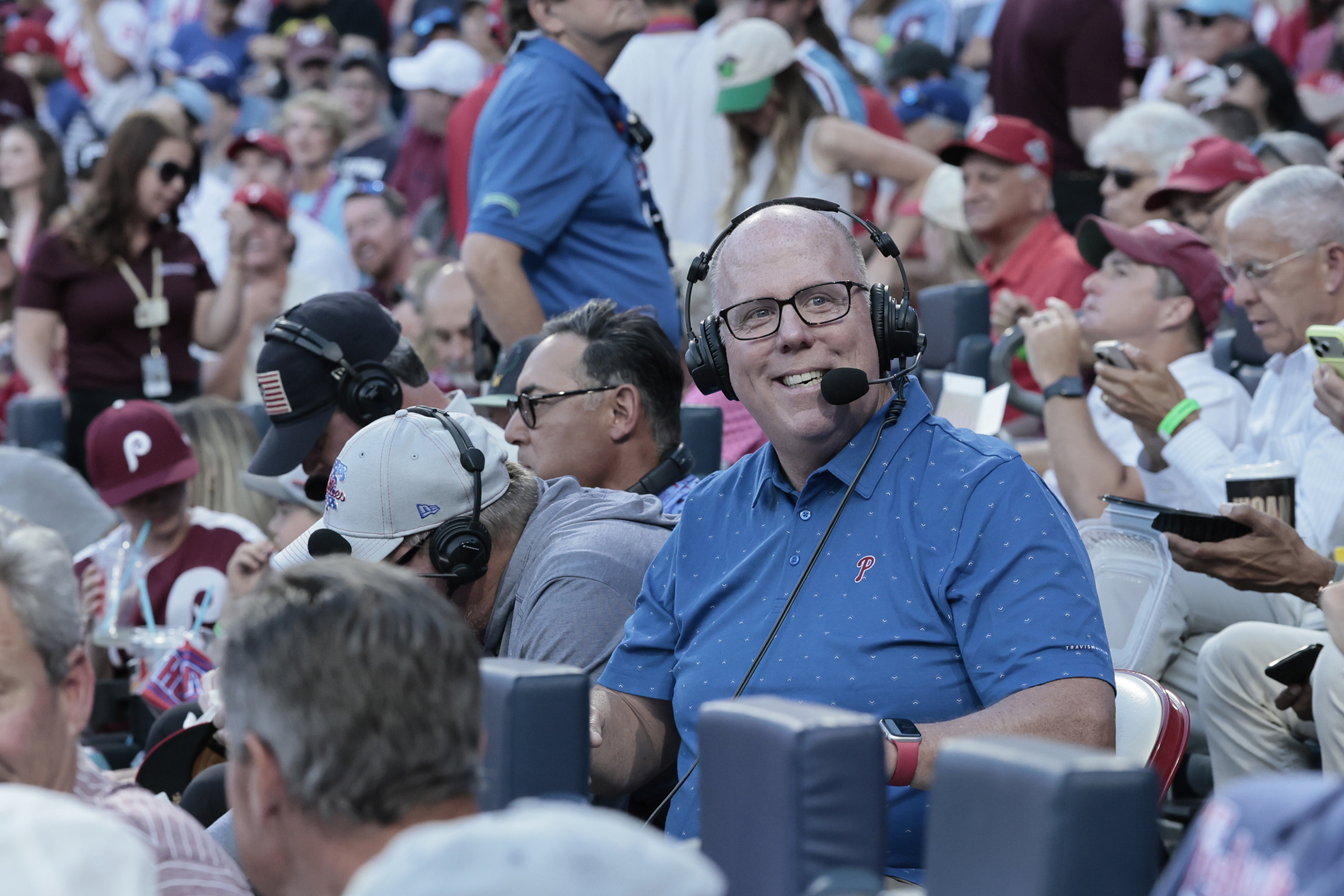
The Sixers’ new president of basketball operations joined NBC Sports Philadelphia’s annual broadcast from the stands Tuesday night alongside coach Nick Nurse, with Phillies pitcher Jesús Luzardo cruising through four innings.
“No hitter’s still intact,” Gansey said, immediately drawing a groan from Phillies announcer John Kruk.
“Oh boy,” Kruk moaned.
The very next pitch, Miami Marlins third baseman Javier Sanoja hit a single to left field, ending Luzardo’s no-hitter.
While Tom McCarthy quickly moved on to discussing what’s going on with the Sixers, Kruk sat silently annoyed, a knowing grin on his face as he quietly chewed his gum.
Sixers new president of basketball operations Mike Gansey just jinxed Jesus Luzardo's no hit bid on the Phillies broadcast💀 pic.twitter.com/bMnsPFBg2K
Kruk and Gansey share a West Virginia connection. Kruk grew up in Keyser, W.Va., while Gansey finished his college basketball career with the Mountaineers.
“I lived in Morgantown for two years,” Gansey said.
“And your liver’s still intact?” Kruk shot back.
Kruk and the rest of the NBC Sports Philadelphia crew — McCarthy, Ruben Amaro Jr., and Ben Davis — had prime seats right behind home plate at Citizens Bank Park Tuesday to watch the Phillies blowout the Miami Marlins 8-2.
Tom McCarthy is in his 20th season as the TV voice of the Phillies. Elizabeth Robertson / Staff Photographer
It was the 11th time the broadcast waded out into the stands, an annual tradition (with a break for COVID) dating back to 2014. And no offense to everyone else, but Kruk is easily the star of the show, consistently tossing out a well-timed joke or unvarnished opinion just when the broadcast needs it.
“How do I say this politically … sometimes these umpires aren’t really great,” Kruk said when asked about the Automated Ball-Strike Challenge System.
His best line of the night came when he told Nurse his poster was hanging in an office at Florida Gulf Coast University when they were recruiting Kruk’s daughter, Keira (who ended up attending Berry College in Georgia).
“My wife played volleyball there,” Nurse said, noting she was sitting elsewhere in the stands.
“I didn’t want to bring it up, because 50% of people get divorced,” Kruk joked.
There was also Kruk’s deadpan response to a pop-up that came down just to the left of the broadcast crew in the stands.
Sitting behind home plate was a first for NBC Sports Philadelphia, but announcers have previously called games for the network from above the bullpen, behind the Phillies’ on-deck circle, from Harry the K’s restaurant, behind the dugout, and from the outfield, where McCarthy actually snagged a home run hit by Atlanta Braves slugger Freddie Freeman.
The station also brought its studio show into the stadium, with Amy Fadool and Ricky Bottalico set up in Section 109 during Phillies Pregame Live. And it took the opportunity to ding Kruk when highlighting Citizen Bank Park’s best food and drink options.
— Phillies Fan in Montréal (@Montreal_Hohhot) June 16, 2026
The broadcast also featured a brief interview with Flyers head coach Rick Tocchet, which led to a side trip down memory lane.
“Do you remember, probably in the late ’80s, doing a signing in Aston, Pennsylvania at a bank?” Davis said. “I rode there on my bike … I went in and you had the long hair and a black and white photo. You signed it for me, and I still have it at my parent’s house.”
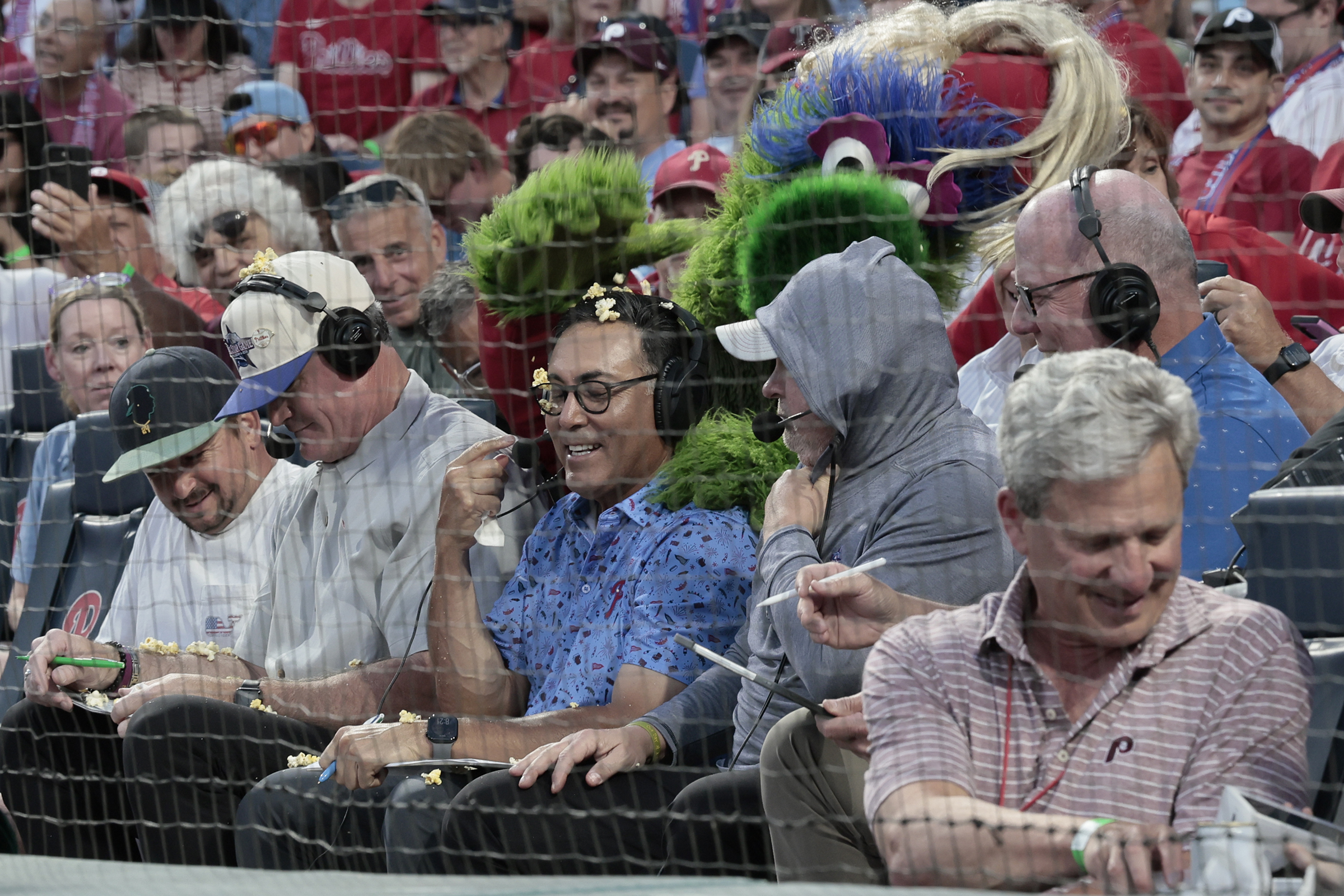
The night wouldn’t have been complete without the Phillie Phanatic tormenting Kruk. But the veteran broadcaster quickly put his hoodie on in the sixth inning when the mascot came tumbling by holding a giant bag of popcorn, which he dumped all over Amaro.
The Phillie Phanatic roughs up the Phillies announcers during the Miami Marlins at Philadelphia Phillies MLB baseball game at Citizens Bank Park in Philadelphia on Tuesday, June 16, 2026.Elizabeth Robertson / Staff Photographer
“Does anybody want any popcorn?” Amaro said.
“I see where you’re reaching to get it. Absolutely not,” Kruk responded.
Considering the lack of action by the Marlins, it’s no surprise the Phanatic and his antics with the Phillies announcers snuck into the Marlins’ TV broadcast.
The Phillies will go for the sweep Wednesday at 1:05 p.m., with McCarthy and Kruk in the booth. The pair will be back to call the first of a three-game series against the New York Mets Thursday night before handing the weekend games off to Fox on Saturday and NBC for Sunday Night Baseball.
The good news is NBC is bringing Kruk back to call Sunday’s game, pairing him up with former Mets reliever John Franco and play-by-play announcer Jason Benetti.
At a grand-reopening celebration at Stateside Live!, Stateside Vodka president Matt Quigley’s wife, Megan, grabbed his arm and beckoned to the crowd around them in disbelief.
“It was just such a prideful moment of like … we’re here to stay,” Quigley said.
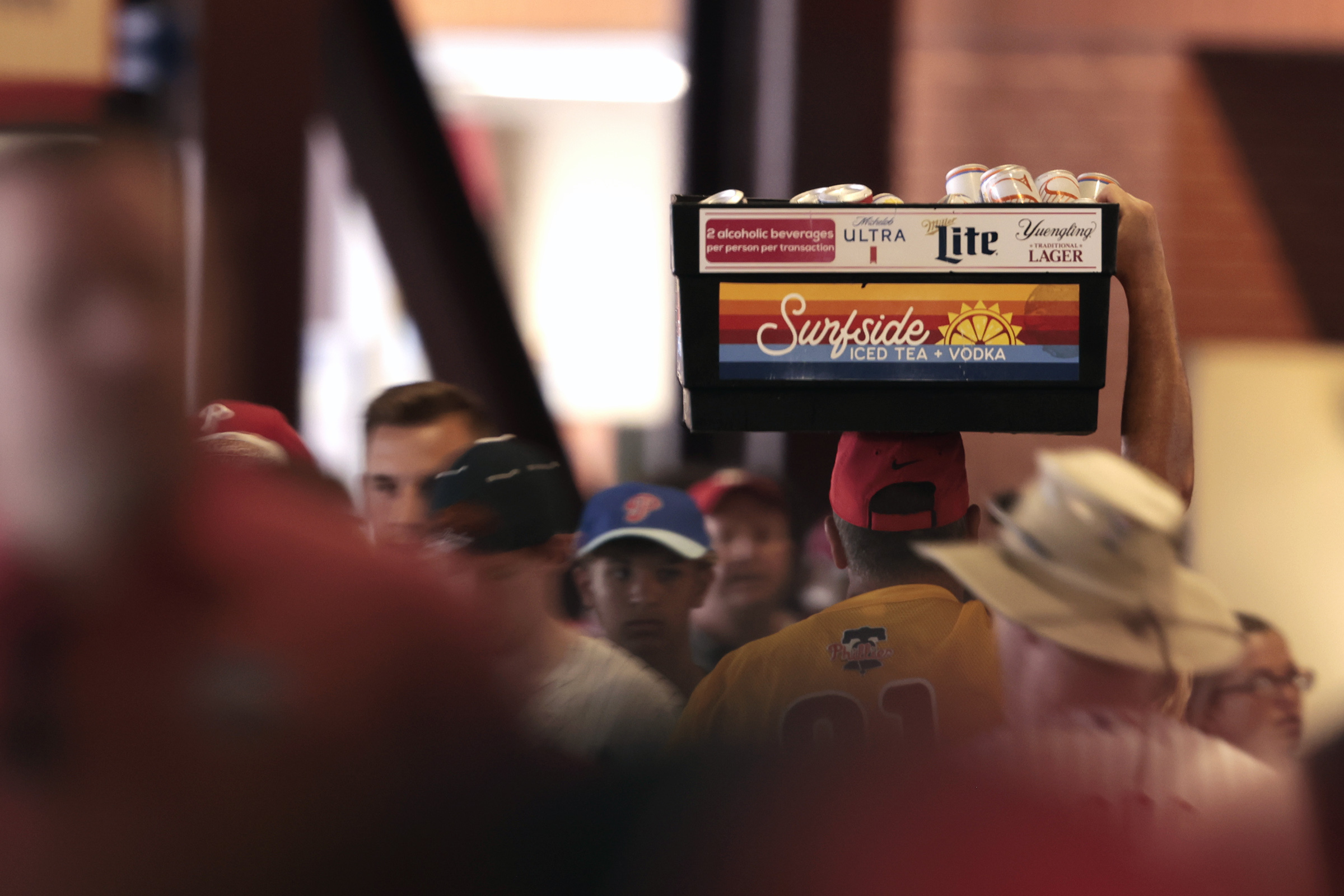
Just a couple years earlier, fellow cofounder and CEO Clement “Clem” Pappas looked around Citizens Bank Park to see as many Surfsides as Miller Lites in the hands of Phillies fans: “Holy s —, this is happening,” Pappas recalled thinking at the time.
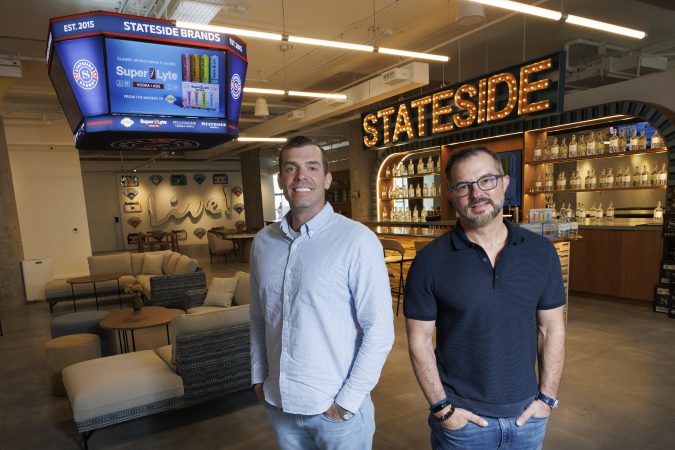
At their massive new Center City headquarters last week, Pappas and Quigley said Surfside’s astronomical rise still feels surreal.
In 2015, the area natives founded Stateside Vodka in a distillery near Kensington with their brothers, Zach Pappas and Bryan Quigley. The company started selling canned vodka sodas in 2021. But they launched into a different stratosphere when they debuted their spiked teas and lemonades in 2022.
Stateside Vodka’s taproom near Kensington is pictured in 2017, when it was called Federal Distilling. TOM GRALISH / Staff Photographer
Branded as lower-calorie, better-for-you booze, the Surfside cans took off. The cofounders said they sold 200,000 cases in the first year, then 1.3 million in 2023, nearly 5 million in 2024, and a whopping 11.1 million cases last year.
The “slammable” 4.5% ABV cans, as Matt Quigley describes them, are particularly popular in the summertime, a three-month period that accounts for about half the beverage company’s retail sales.
So far this year, Stateside is on track for 70% growth in overall sales, and a 65% growth in Surfside sales, according to the company. That comes after a record year in which the company recorded 111% overall sales growth.
(function(){function e(){window.addEventListener(`message`,function(e){if(e.data[`datawrapper-height`]!==void 0){var t=document.querySelectorAll(`iframe`);for(var n in e.data[`datawrapper-height`])for(var r=0,i;i=t[r];r++)if(i.contentWindow===e.source){var a=e.data[`datawrapper-height`][n]+`px`;i.style.height=a}}})}e()})();
As a private company, Stateside does not have to publicly disclose earnings, and executives declined to share specific sales figures.
While Surfside has accounted for about 90% of sales in the past year, the top executives are bullish on their latest invention, a sports-drink-inspired canned cocktail called Super Lyte. They said the new beverage had sold nearly 400,000 cases in three months, meaning it could outpace Surfside’s early growth.
“The initial response is way beyond our expectation,” Clem Pappas said. “It feels like another hit.”
The company has achieved this success without the backing of an alcohol giant like Anheuser-Busch InBev or Molson Coors, which together manufactures hundreds of brands.
Quigley, 42, and Pappas, 52, said they’ve been approached by nearly every big beverage company, but they have no interest in selling anytime soon.
“As long as you’re still having fun, I see no reason to hang up the metaphorical cleats,” Quigley said.
“I don’t want to sit on the bench. I want to be in the game,” Pappas said. “We still think it’s early days.”
Stateside keeps Philly at its heart amid national growth
A wall at Stateside Vodka’s new Center City headquarters shows a handful of Surfside’s 170 partnerships.Alejandro A. Alvarez / Staff Photographer
In Stateside’s earliest days, Quigley recalled confiding in Pappas about a pipe dream: “If we ever get super successful, I want a sick office in a high-rise in Center City.”
More than a decade later, they have moved from a temporary office in Feasterville-Trevose, Bucks County, to a chic new headquarters at 11th and Ludlow Streets in Market East.
The company plans to stay put for at least 10 years, the cofounders said. For now, about 80 employees work there four days a week with room to grow.
On a recent day, the office was humming during a new-hire orientation. While everyday operations include the same mundane tasks required of any business, the top bosses pride themselves on keeping the vibes light. “We’re not selling, like, car insurance,” Quigley said.
The bright industrial-style space occupies 34,200 square feet across two floors. It is centered around a long bar with a backlit Stateside marquee, a replica of the one at the tasting room. Nearby, there’s an open lounge with couches, underneath a miniature Jumbotron. Ads for Surfside, Super Lyte, and Stateside rotate on the screens.
Office happy hours are a given.
“That’s part of the special sauce,” Pappas said. “We’re in the drinks business.”
Philadelphia has always been at the heart of the company. It’s where they landed their first partnership with the Phillies, which fueled Surfside’s rise. At Citizens Bank Park, the cans have been the top-selling spirit since 2023, according to Stateside executives, citing figures from concessions provider Aramark.
Across the city, the cofounders still run the 7,500-square-foot Kensington-area tasting room and distillery, the latter of which they hope to turn into an event venue.
The distillery has been outgrowing its space for a while. But the need intensified in the past year as the vodka’s retail sales increased 120%.
They attribute the boost in part to greater name recognition thanks to Stateside Live! They said they hope to move vodka production to a larger facility somewhere in the Northeast.
Sales of the original Stateside Vodka, displayed at the company’s office bar, have grown 120% year over year.Alejandro A. Alvarez / Staff Photographer
The cofounders have also stayed local: Quigley, a Fort Washington native, lives in Kensington, and Pappas, originally of Vineland, is in Haddonfield.
Stateside’s reach, meanwhile, has expanded far beyond the region. The company employs about 340 nationwide, up from around 30 in 2022, executives said, and they sell in all 50 states through a network of more than 200 distributors.
Across the country, Surfside has racked up 170 partnerships, including with MLB teams, music festivals, and colleges. Super Lyte has already acquired more than a dozen partnerships, too, including at Penn State, where they said it will be sold at Beaver Stadium this fall.
A hawker carries drinks, including Surfsides, around the concourse at Citizens Bank Park in 2024. The brand now has 170 partnerships at venues nationwide.Elizabeth Robertson / Staff Photographer
In many ways, the cofounders said, they’re trying to replicate the strategy that proved successful with Surfside at Citizens Bank Park: Connect with consumers somewhere where it feels only natural to grab a refreshing, familiar-tasting beverage.
“You’re at a hot baseball game,” Pappas said. “You got a hot dog. You got a soft pretzel. You got an iced tea” — or, rather, a Surfside.
Compared to seeing a new canned cocktail at a beer distributor, he added, “It’s more of an authentic, emotional connection.”
A beverage hawker sells Surfside cans during a Phillies game at Citizens Bank Park in 2024. Surfside has been the stadium’s top-selling spirit since 2023.Elizabeth Robertson / Staff Photographer
Surfside succeeds with familiar tastes
When customers first sip a Surfside or Super Lyte, the taste is likely familiar, perhaps even comforting. It’s similar to iced tea, lemonade, tea cooler, or Gatorade, drinks that for many have been staples since childhood.
That’s intentional, Pappas and Quigley said, and is one of the reasons they think their products have become so popular.
“If you remember your first beer, it was like, ‘Oh God, who wants that?’ It’s bitter. It’s foreign,” Pappas said. “It’s an acquired taste.”
But when it comes to these canned cocktails, “these are not acquired tastes,” he added. “They’re light. They’re easy.”
Quigley said he got the idea for Super Lyte after years of mixing vodka into Gatorade and throwing the bottles into beach bags on summer vacations. He recalled thinking: “I can’t be the only person in America that’s been doing that for a long time.”
The initial uptake of Super Lyte confirmed that, he said.
Super Lyte launched in March with four flavors: fruit punch, orange, lemon-lime, and blue chill.
Surfside now has 16 variations of iced tea, lemonade, iced tea-lemonade, and green tea. A 12-ounce Surfside contains 100 calories, 2 grams of sugar, and no carbonation, while a 12-oz Super Lyte contains 90 calories, no sugar, and no carbonation.
Stateside Vodka’s new product line, Super Lyte, is displayed at the company’s new Center City headquarters.Alejandro A. Alvarez / Staff Photographer
In the alcohol industry, “we’re meeting what was previously an unmet demand,” he said. It’s “all the convenience and the alcohol level of [a light] beer, where you can drink a few of them and you’re not getting sloshed.”
Even younger consumers — who are least likely to drink alcohol, according to recent surveys — are gravitating toward Stateside products, with high sales in some college towns.
Pappas and Quigley said they don’t see drinking rates declining much farther. Instead, they predict an evolution in the market, with an even greater focus on ready-to-drink cocktails.
Matt Quigley (left), Stateside’s president and cofounder, talks about the company’s products with fellow cofounder and CEO Clement Pappas.Alejandro A. Alvarez / Staff Photographer
So Stateside’s leaders plan to keep crafting new products, they said, which is one of the reasons they have turned down acquisition offers.
“Big, publicly traded multinational companies just aren’t great at innovating,” Pappas said.
Stateside has now established “enough of the back-end capabilities to really compete pretty effectively,” he said, without losing “that entrepreneurial spirit” and the drive “to innovate and disrupt.”
At the moment, he said, they are working on several beverage ideas, none of which are ready for publication.
But it seems unlikely they’ll dabble in nonalcoholic drinks. As Quigley noted, “then it would just be iced tea.”
Julian Lurie wanted to push the Eagles beyond their normalities. Two years into his nebulously titled role in “business and football operations strategy,” the owner’s son had immersed himself in all facets of the team, but he had taken particular interest in — and authority over — original content and social media.
For NFL teams’ multimedia departments, schedule release day is their Super Bowl, and the Eagles’ creators had come up with a concept that was off-color by team standards. There would be censored curse words and jokes made at the expense of opponents.
Lurie loved the idea — which called for passionate Eagles fans to undergo psychological evaluations — and saw it as cutting edge. But a few senior leaders weren’t comfortable with the swearing and ridicule and liked it even less after watching the first cut. Lurie still advocated for the video, but he listened to counterarguments, and edits were made.
“There was a compromise,” a senior leader told The Inquirer.
Julian Lurie’s title with the Eagles is “business and football operations strategy.”Chris Szagola
Obscenities and insults were taken out — but not all of them. Asked how Lurie could hold that much sway without having an official executive role, a high-ranking team source gave the following explanation:
“His last name.”
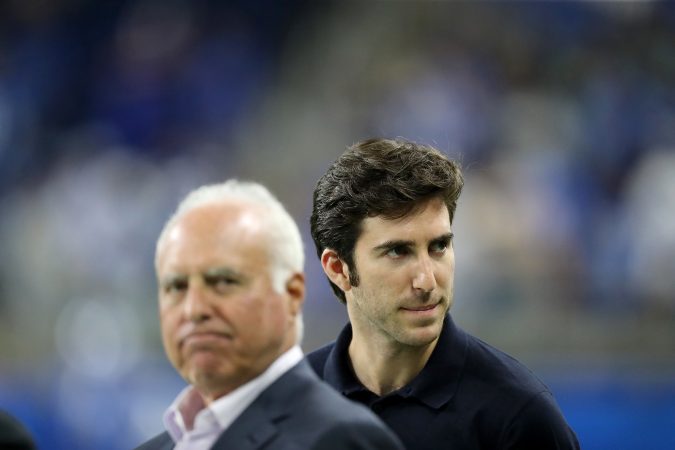
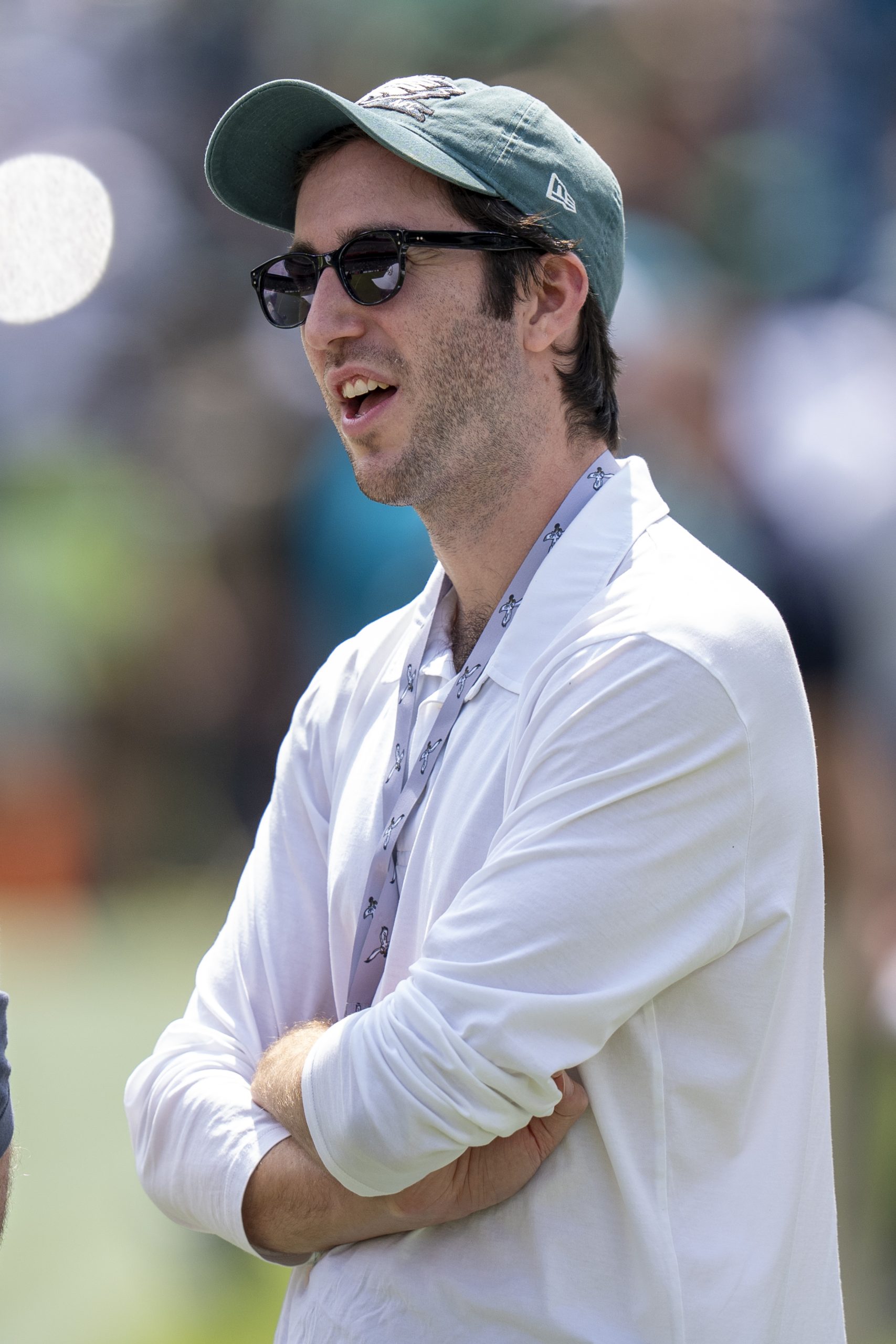
Lurie is not just Eagles owner Jeffrey Lurie’s only son, he is his successor. And while that reality has caused occasional challenges since he took a formal role in the family business four years ago — and as management navigates his increasing influence — many key figures within the organization believe the younger Lurie already has been an asset.
“He is really smart. He’s very creative. He’s very empathetic,” an Eagles source said. “He’s really good at putting himself in other people’s shoes. He’s fair, and he listens and is making a real attempt to understand everything about the organization.”
The Inquirer spent the last several months talking with nearly two dozen Eagles sources, past and present, as well as other NFL sources familiar with the team’s inner workings, about the 31-year-old Lurie. Many sources requested and were granted anonymity because they were not authorized to speak publicly on the subject or felt they couldn’t speak freely if named.
The Eagles declined interview requests for the Luries and other key members of the organization for this story.
The interviews with sources revealed Julian’s already considerable prominence. They also depicted an intense but thoughtful young man who was born not only into great privilege, but with a shared civic passion for the football team his father bought in 1994, the year before Julian was born.
“If I lived in Philadelphia and I was an Eagles fan, I would feel really good about him as a steward of the franchise in the future,” a team source said. “I really do think he cares about the team and the city and the players.”
To prepare for his eventual birthright, Julian has delved into the nuts and bolts of operations. From affairs as expansive as spending on the business and football sides to matters as minute as the strains of grass on the practice fields, he has asked the “why” behind the “what.”
His 74-year-old father remains chairman and CEO and has said he has no plans of ceding control, even if he now spends less time in Philadelphia than previously. But Julian has been a part of decision-making for some time now, which may come as a surprise to outsiders who know next to nothing about the Eagles’ future owner.
Inside the Jefferson Health Training Complex, his standing — if not his title — is clear.
“I didn’t even know he had one,” an Eagles staffer said about the younger Lurie’s job description. “To everyone here, he’s an owner.”
And as an owner, Julian can sit in on every high-level meeting. On the business side, it might be about the exploration of a new stadium concept or corporate sponsorships. On the football side, he may be present for team meetings or sit-downs on free agency and the draft. And he’s often in the building.
Jeffrey Lurie has final say and still exerts control when it comes to major decisions. But he has longtime direct reports in team president Don Smolenski and general manager Howie Roseman, whom he has empowered. The same applies to sixth-year coach Nick Sirianni.
In his first few years with the Eagles, Julian might have sat in the corner and said nothing. But as his understanding of the team has grown, so has his voice. Like his father, he is a questioner.
“He likes to ask the opinions of people,” a high-ranking team source said of the younger Lurie. “Some people here don’t like to be questioned. But he’s a smart guy, and he doesn’t think he has all the answers. He’s willing to change his mind.
“He says, ‘I’m not right all the time, but I want people to be real and be honest with me.’”
The initial ambiguity about his role and his relatively speedy inclusion into decision-making, however, led to an adjustment period and occasional bumps in the road. The biggest sticking point, according to several sources close to the situation, was over the budget.
“When you add another dynamic to that, there’s always growing pains,” a team source said, “but not to the point where relationships have suffered.”
The Eagles have been one of the most successful NFL franchises over the last decade, having won two Super Bowls and gone to the playoffs in eight of the last 10 seasons. Smolenski, who has overseen business operations since 2012, and Roseman, who was given full authority over football in 2016, have built a robust enterprise.
That growth has mirrored the increase in wins. But there has been some bloat, and Julian took it upon himself to examine the Eagles’ expenditures. Some of that was for his own knowledge in preparation for when he succeeds his father.
But the Harvard graduate also wanted to explore more efficient ways to allocate spending, team sources said. “Honest conversations” were had, according to one source close to the situation, and Julian eventually came to appreciate much of the existing process. He also was credited with making suggestions that contributed to on-field success.
“From where he’s started to now,” a team source said, “it’s like night and day.”
His more significant contributions have come in presiding over fan-facing parts of the franchise, like original content and image and likeness. Julian spent two years working for Overtime, a sports media company based in New York, before joining the Eagles. And before that, he was a member of the NFL’s Junior Rotational Program, a two-year undergraduate internship.
His bosses at both outlets said Julian was serious-minded, hardworking, and brought zero entitlement to the job.
“He’s quiet, but he has a sense of humor and he laughs, and he’s willing to use that constructively,” former Overtime CEO Dan Porter said. “It’s not like he fits hardcore into some archetype like that. He’s honestly just a young person wanting to add value and learn in the world.
“And he also just happens to, a) be really smart, and, b) his dad owns the Eagles.”
Jeffrey Lurie is widely considered one of the NFL’s best owners after his three-plus decades in the league. His son will have big shoes to fill when the time comes. Julian is an outside-the-box thinker like his father, but he also wants to bring a younger sensibility to the Eagles — as he did with the schedule release video — sources close to him said.
He’s also become the more visible Lurie at team headquarters. But the elder Lurie, who spends most of his time at his West Palm Beach, Fla., estate, said his absences aren’t representative of a loosening of the reins.
“Maybe I still have a lot of gray hair, but I am probably more involved than ever, ironically,” Jeffrey Lurie said in March. He added, “It’s not that it’s behind the scenes. It’s very overt. But I will talk to my executives more often and probably with more intensity because I have a son that’s growing and learning everything.
“And, so, he can both watch how focused and intense I am still and yet, at the same time, learn from all the executives we have.”
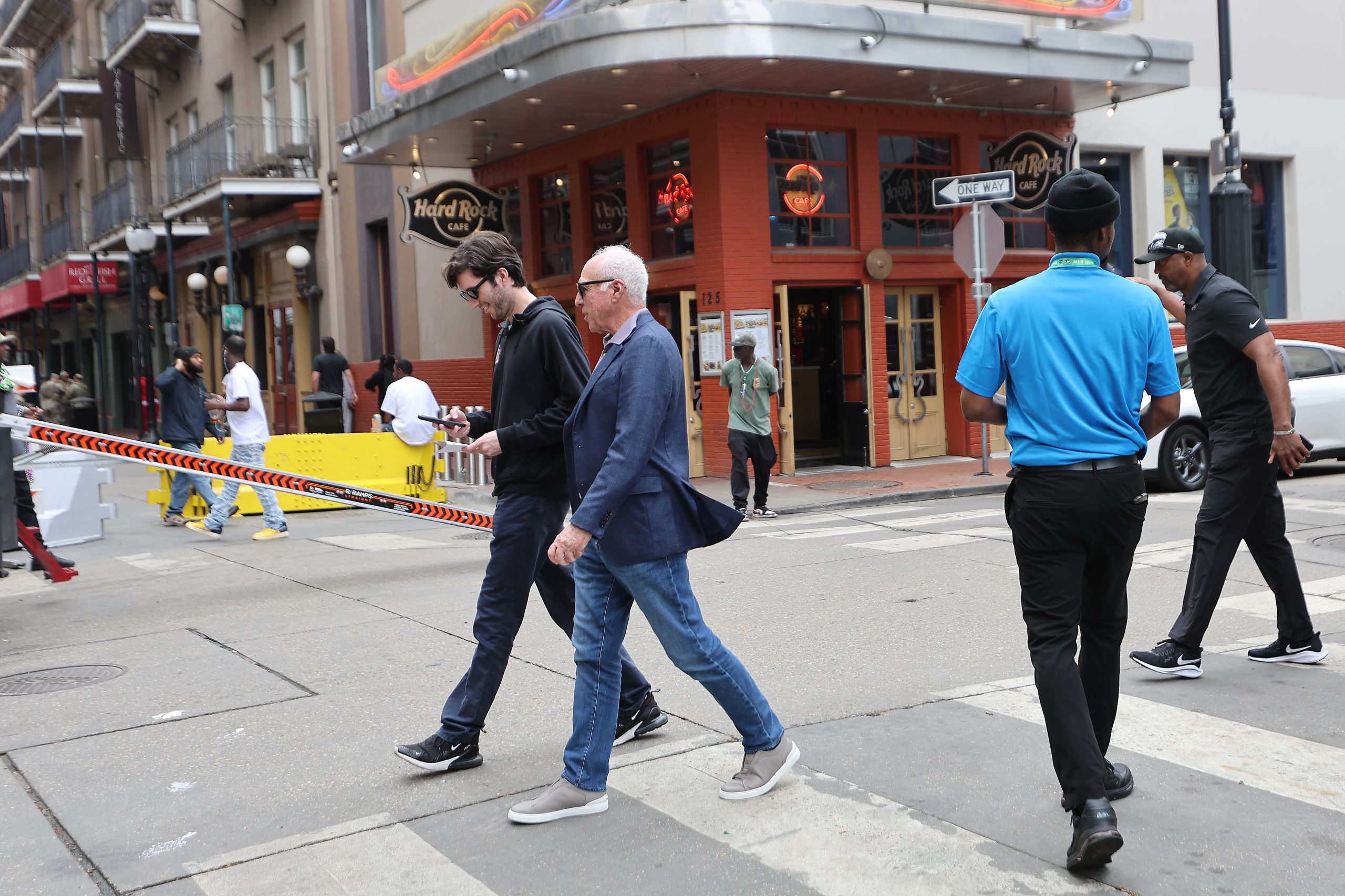
Julian Lurie (left) and his father, Eagles owner Jeffrey Lurie (right), walk across Bourbon Street during Super Bowl week in 2025.David Maialetti / Staff Photographer
Be a learner
Jeffrey said he has no plans to retire soon. When he talks about his good health in private, he often mentions his mother, Nancy Lurie Marks, who recently turned 99. But that hasn’t stopped some team leaders from wondering about a timeline regarding Julian’s succession.
“There’s no timeline, but I love the way it’s been going,” Lurie said three months ago at the league meetings in Phoenix. “He’s quite involved in the business operations, the football operations, philanthropic operations, marketing. He’s getting a great, great sort of feel for everything, and that’s the best way to do it.
“It’s not to speed it up.”
NFL owners recently approved succession plans for two teams. Last year, the Colts transferred Jim Irsay’s ownership to his three daughters following his death. And in March, the league affirmed the plan for Raiders owner Mark Davis, who doesn’t have children, to give a minority owner, Michael Meldman, the option to purchase a majority stake.
NFL ownership has long been a family enterprise. More than half the league’s 32 teams remain under family control, with prominent last names like the Rooneys, Maras, and Hunts having owned prosperous franchises for 60-plus years.
There also have been family-run teams that haven’t thrived or experienced generational decline.
The 49ers have not been one of them. Team owner Jed York, like Julian Lurie, was brought into the fold of his family’s franchise in his mid-20s. As “special projects manager,” he worked in every department of the 49ers and recalled that one of his first stints was in the equipment room, where he helped sew players’ names on jerseys.
By age 30, York had become CEO. While his Ohio-based parents, John and Denise York, remained principal owners until 2024, he effectively ran the organization.
“It was Undercover Boss without the undercover part,” York said.
He said his transition to power happened organically.
“I think the organization sort of accepted it and sort of dictated when it was going to happen more so than me or my parents,” York said in an interview with The Inquirer. “Like, it just became clear when people started coming to me for answers and not necessarily waiting until my parents came out from Ohio to be able to make decisions and move forward.”
Jeffrey may not be in Philadelphia as often, but he still returns for games, favorite events like the draft, and various other days. He was present for most of the workouts that were open to reporters this spring — at a much higher rate than last season.
Either way, team employees still look at the elder Lurie as being the boss.
“Julian is here every day, so we do see him more,” a team source said. “But Jeffrey is still viewed as the owner.”
Julian’s office at “the Jeff” is situated near his father’s and Smolenski’s. That is by design. Among senior leaders, he spends most of his time with Smolenski. But he has conversations with many staff members, even if he is described as naturally introverted.
He’ll drop into any office, not necessarily with a purpose, but just to chat, often about every staffer’s favorite team. Some sources consider his way with people one of his strengths.
“You got to be a learner,” said Porter, who recently stepped down as Overtime’s CEO. “You have to understand that as soon as I am the CEO, I’m in a bubble. I only know what the people who talk to me tell me, right? You [have to] make people feel seen and heard because you want them to give their all to an organization.
“But you also don’t want your experience of the company to be in a very small echo chamber.”
So while Smolenski continues to make final decisions on the nonfootball side, Julian will gather intel on his own. That might include talking to facility manager Chris DeBellis about operations at Lincoln Financial Field or vice president of grounds Tony Leonard about how to install heaters under the practice surfaces so they no longer freeze.
The Eagles’ practice facility, previously known as the NovaCare Complex, is undergoing renovations with an expansion of the training room and eventually the locker room. Julian has been a part of planning, but he’s also explored other possible changes like a full-length indoor field.
Many of his inquiries have been about the Eagles’ expenses.
“I don’t see what he’s been doing as any different to anyone whose dad said, ‘Here are the keys. Go in there. See what you think,’” a team source said. “This is going to be his team someday. He wants to understand how it works from a fundamental level.”
Julian Lurie has a way with people, some of his colleagues say.Monica Herndon / Staff Photographer
Productive conversations
While it’s unclear if Julian’s budget analysis was a Jeffrey directive or not, some staffers felt the team’s accounting could have benefited from a fresh set of eyes. In some cases, spending was cut. It could have been something sizable like the budget for food and beverage or something less significant like the number of hats ordered for employees.
The money often was then redistributed into other resources, such as the facility expansion. But other sources for revenue were explored as well, like selling naming rights to the cafeteria.
“I don’t think the goal was necessarily to cut costs. I think it was to understand what we’re spending on,” a team source said. “NFL teams — we’re not perfect in our spending. Things can get distorted over time. They can get out of whack. I think it’s healthy to evaluate that.”
The Eagles are always looking to be prudent. Jeffrey has long entrusted his lieutenants with fiscal responsibilities. But his son’s increased involvement and “probably being more into the bottom line,” according to one source, faced resistance from some staffers.
“The easiest way to impact the bottom line is by cutting expenses. And that is great in the short term, and you definitely improve margin,” an NFL source familiar with the Eagles said. “But if you have unlimited resources and the business is successful on the field, off the field, is that really a common-sense approach?”
Some of the excess could have been people. For instance, why have X number of full-time employees in the ticket office when it’s mostly a seasonal job? Did the Eagles really need to send as many staffers to the Senior Bowl and the NFL combine as they had for years?
On the football side, the Eagles have had considerable growth. That’s not exclusive to them among teams in the booming and hypercompetitive NFL. But Roseman has constructed a multifaceted operation that has depth in many departments.
Julian’s new oversight meant that staffing and salaries were questioned, like having three highly paid senior advisers in personnel when the Eagles brought back former Jets general manager Joe Douglas last year.
But Roseman’s modus operandi has been to have a deep bench in case there are departures. When former senior adviser Dave Caldwell left for the University of Florida in December, Douglas already was in the fold. Just recently, he was promoted to senior vice president of player personnel.
Last month, assistant general manager Alec Halaby stepped away from the Eagles, and the well-regarded Adam Berry was promoted into his position. Two years prior, vice president of football administration Jake Rosenberg left the Eagles, and Roseman had Bryce Johnston waiting in the wings to manage the salary cap.
Rosenberg sought other opportunities after seemingly reaching his ceiling with the team, but some Eagles sources wondered if his exit was precipitated by Julian’s deconstruction. The Atlanta Falcons poached Johnston in May. His replacement, Grant Reiter, is a relative unknown with far less experience.
Two sources compared staff reductions to playing Jenga.
“If there’s a high headcount, it’s hard to pull it apart and say, ‘This is responsible for this, this is responsible for that,’” one of the sources said. “You never know which thing you pull is going to be the thing that causes it to fall down.”
Rosenberg declined to comment. Johnston didn’t respond to an interview request.
It’s hard to argue with Roseman’s approach, considering the Eagles’ success, which has come with multiple head coaches and starting quarterbacks. Roseman hasn’t been perfect, of course, but Jeffrey Lurie has given him ample room to take big swings and make corrections when there are misses.
Julian made inquiries based partly on the Eagles’ staffing vs. other organizations. There was an acclimation phase with some give and take, and ultimately an understanding of Roseman’s process that has improved over time, team sources said.
“I think they have a productive relationship,” one source said. “I think they can walk into each other’s office and have productive conversations.”
The Eagles’ largest expense is on player contracts. There’s a salary cap, but no team has spent more on their roster over the last decade. According to Jeffrey Lurie, that aggressive mindset won’t change.
“This is where the emotional part probably gets in the way. I can’t help myself,” Lurie said in March. “Try to have every edge you can and willing to spend the cash. And I think we have a chance to win multiple more Super Bowls. There’s nothing I want more than that third Lombardi.”
Jeffrey remains integral to Roseman’s major roster decisions. After years together, the two can communicate in shorthand. The general manager still has his direct line to the owner, and their process is “overall, similar,” a team source said. There’s just now an additional layer.
“When it comes down to final decisions, I still feel like that’s totally Jeffrey,” a team source said. “But Julian has been a part of all of it.”
“Julian is here every day, so we do see him more,” a team source said. “But Jeffrey is still viewed as the owner.”David Maialetti / Staff Photographer
Roll up sleeves
When Jeffrey Lurie purchased the Eagles in May 1994, he was 42 and a longtime New England Patriots fan. He had tried to buy his boyhood team just the year before. But the Hollywood executive, who had worked for his family’s movie theater company, shifted his attention to the franchise located roughly 300 miles south of his native Boston.
Jeffrey and then-wife Christina Weiss Lurie, married for two years, arrived in Philly with daughter Milena when he bought the team. Julian was born the following year. When Jeffrey was first publicly asked about his son in March 2022, he focused on Julian’s inherited passion for the Eagles.
“Obviously, he grew up in the family that owns the team,” Jeffrey said then. “He’s an avid Philadelphia sports fan. He loves the Eagles, loves the NFL. He really has a great feel for many aspects of the sport.
“He’s going to have so much more going into it than I ever did if he chooses to want to someday own and run the team.”
Jeffrey had exposed his son to various aspects of the family business for years, but in January 2021, he had him participate in interviews for a new head coach. Julian handled questions related to analytics.
While it might have seemed peculiar at the time that he would be involved despite not having a formal role with the Eagles, associates describe Julian as an “analytical thinker.” At the league’s junior program, he rotated through four groups focused on strategy and development.
Grace Senko, currently vice president of media strategy and business development at the NFL, was one of Julian’s managers. They worked closely on the league’s licensing of media rights and spent time tracking performance in the burgeoning digital streaming of games. It sometimes was menial work.
“There was a lot of nights the two of us were here, the only people working to pull together very large amounts of data,” Senko said. “Because of how much we were pulling in together, we made a lot of mistakes. And Julian — he has a lot of integrity. If something is wrong or he makes a mistake, he owns it. … He is willing to roll up his sleeves.”
After the completion of the two-year rotation, Julian went to Overtime, a media company that says it “builds disruptive” content “at the next generation of sports fans and athletes.” The company is perhaps best known for Overtime Elite, its developmental basketball league for high school-age players. Porter, the former Overtime CEO and a Philly native, heard through an intermediary that Lurie was interested in his startup.
“Julian’s very intense, but he’s also very reserved,” Porter said. “He’s just very deliberate. And so, in our first conversation, I was like, ‘Oh, he’s clearly extremely smart and very, very focused, but he’s not that kind of person in an interview who’s going to, like, talk for 10 minutes straight.’”
Julian reported to Porter as senior manager of business strategy. He focused on analytics and helped create, for instance, a free-to-play app that took aspects of betting apps and was designed for consumers under 21, Porter said.
All told, Julian spent four years working in New York. Senko, who also had gone through the NFL’s junior program, said she worked with other family heirs and that Julian, like many who had connections, overcompensated to avoid claims of nepotism.
Porter said Julian was unassuming at Overtime’s Brooklyn office.
“He’s got a different burden, maybe, than most people,” Porter said. “He’s a serious guy, but he’s not unfriendly. Smiles. He’s just serious about his job. He was integrated in the culture. He wasn’t like some weird guy in the corner. He was a part of the company.”
Julian was in some ways shielded by his protective parents. When The Inquirer did a feature on Weiss Lurie in 2010, the names of her children were withheld from the story at her request.
Milena and Julian attended the Shipley School in Bryn Mawr. One teacher, in a school website post, recalled a junior-senior football rivalry game in which Julian and other seniors wore fake bushy mustaches like then-Eagles coach Andy Reid as Jeffrey watched from the sideline.
When Julian attended Harvard to study philosophy, he watched Eagles games at the Baseball Tavern, a local bar whose owner had been a fan of new coach Chip Kelly. Julian might have been among the progeny of one-percenters who went to the elite university, but he didn’t carry himself that way, a fellow student said.
“You’re around a lot of kids from billionaire families that are out of touch and act like their s— don’t stink,” a former Harvard classmate, who asked not to be named, said. “That wasn’t Julian. That card never got played.”
Dan Porter, Julian Lurie’s supervisor at Overtime, said: “He’s a serious guy, but he’s not unfriendly. Smiles. He’s just serious about his job.”David Maialetti / Staff Photographer
Going to the Eagles
Julian’s destiny was different from most, though. In early 2022, he decided to leave Overtime for an official post in the family business.
“One day he just called me and he said, ‘Thanks, it’s been amazing. It’s time to move on. I’m going to the Eagles,’” Porter said. “And I was like, ‘Yeah, of course.’”
Julian already had been spotted at offseason NFL events like the Senior Bowl in Mobile, Ala., that January, but the Eagles didn’t announce his role until June of that year. His listed title, which reads more like a department — “business and football operations strategy” — reflected the duality of his position as he went about learning both arms of the organization.
It took Julian some time to find his footing, team sources said. He initially latched onto the decade-older Halaby, a fellow Harvard graduate who oversaw the analytics department at the time. It was a natural entry point considering his mindset and experience.
But Julian also took an active interest and lead in Eagles media content. He began to flourish.
“He’d come in, sit in the corner, not say anything, so a few people felt uncomfortable,” a team source said. “But the more that he got comfortable, the more he got involved, he started to throw out ideas and people saw it.”
Julian oversaw promotional videos that captured the local zeitgeist. He heard quarterback Jalen Hurts use the phrase, “It’s a Philly thing,” and made that a rallying cry for the 2023 playoffs. And he was behind the “Yo” hype video ahead of the 2024 opener in Brazil.
He has become, in some ways, the point person for the Eagles’ social media team.
“He wants it to be a really good fan experience. He wants people to enjoy using the Eagles app or seeing their posts on Instagram,” a source close to Lurie said. “Social media is a big part of an NFL footprint these days. It’s how a lot of fans connect with the team.”
He is, after all, one of them. Porter, also an Eagles fan, said he knows not to text Julian after losses. Like his father, Julian also has a passion for football. Last season when the Eagles played the Packers at historic Lambeau Field, he opted to watch from the bleachers rather than in a suite with team executives.
“He wanted to experience the game from that vantage point,” a team source said.
Julian watches a lot of games and has an interest in all its intricacies. He’s a part of strategic meetings when it comes to personnel and scheme. He might ask why a certain draft prospect has a red flag for character concerns, for example, or why the Eagles have made certain schematic choices, sources who have been in those meetings said.
Julian has a keen eye for X’s and O’s and he will query coaches. He often does his own research and he comes prepared, a team source said.
“It’s never like, ‘I have answers,’” a coach said. “It’s like, ‘I want to understand this.’”
During interviews with offensive coordinator candidates this offseason, Julian handled questions pertaining to player performance. His father has allowed him to sit in on head coach interviews dating back to 2016, knowing how important that responsibility is for an owner.
But for some in the organization who have been around since Julian was young and may have viewed him through that lens, there was apprehension about his presence. Although most have appreciated his development, a few believe he’s overstepped at times.
“There’s growth that still needs to occur,” a source said.
Not only does Julian have to balance his increasing involvement with any perception that he’s meddlesome, but he also has to walk the delicate line between his long-term goals and the shorter-term thinking of current leaders.
There is a generational strain that can exist in succession plans. York said he had a mentor in Patriots president Jonathan Kraft, son of owner Robert Kraft, who has been his father’s right-hand man since 1994. York said he has spoken to Julian on occasion and wants to be a sounding board for him, like Kraft was for him.
“I know there aren’t many people in these positions that can help you think through, ‘Well, how do you tell your dad or your mom that you want to do something a little different than they did, and do it in a way that’s respectful?’” York, 46, said. “How do you handle those things?
“How do you see something as a younger person in the NFL that you want to take the league in a different direction than … a bunch of guys that are in their 60s or 70s or 80s?”
San Francisco 49ers owner Jed York, an example of a family generational transfer of power that has succeeded, already has a good relationship with Julian Lurie. Charles Rex Arbogast / AP
Own path
Julian, like his father, is willing to push boundaries to gain advantages. Jeffrey likes having different perspectives in a senior leadership team that now includes his son. Jeffrey still mostly defers to Smolenski and Roseman in major decisions. He often just wants to see the finished product.
But Julian has been more hands-on than his father when it comes to details, for instance examining the blueprints of the practice facility expansion into the former NovaCare rehab center.
“He has a mindset for how he wants to lead and that’s going to be different in some ways,” a team source said. “He’s not trying to be exactly like his father because that’s not entirely his personality. He is his own person.”
Julian is a foodie and avid golfer like his father, but he does not flout his privilege, those who have observed him say. He might have the second-best parking spot at the “Jeff,” but he doesn’t ask for police escorts or special accommodations on game days, sources said.
He may engage in “casual conversation” with players before or after games, a veteran said, but he isn’t overly chummy. That is in part deliberate. He knows his limitations. But it’s also Julian being true to himself. He’s not as outgoing as his father.
“You can’t read Julian as well,” a team source said.
That can make more unsure members of the organization at times uneasy. Many value his brevity.
“I think he has a very kind of quiet confidence around him and when he says things they have a lot of weight to them,” Senko said, “because he’s not one of those people that just like speaks to be heard. He speaks when he has something important to say.”
His voice carries weight because he’s viewed as an owner, even if he’s not yet the Eagles’ principal owner. Some senior leaders expect Julian to eventually have an executive role in the front office.
The 59-year-old Smolenski could stay aboard until the next stadium deal is in place. There are other internal candidates to succeed him, like former Eagles player Connor Barwin, who currently is head of football development and strategy.
It doesn’t matter what title Julian is given. He already is involved at a senior level. And while the Eagles have absorbed his inclusion — and won a Super Bowl in the process — there is some question of the future as Julian advances.
“It remains to be seen how that goes,” a team source said.
If he were to become president, would he, like Smolenski, stay exclusively on the business side? Would he cross over into football, like predecessor Joe Banner did during his roughly 20-year tenure? Would the title matter?
Jeffrey signs off on all major football decisions. He has, on rare occasion, pushed for his preferences in the draft, sometimes with great results (e.g. Hurts), sometimes not (J.J. Arcega-Whiteside). But he has by and large delegated to Roseman.
For years, Jeffrey and his general manager standing together on the sideline before games or at practices conveyed their abiding partnership. They still strike that image, but Julian might also be in the picture, or alone with his father.
Few Eagles sources expect the dynamic at the top to change as long as the Eagles keep winning. Jeffrey has given the 50-year-old Roseman as much autonomy as any general manager. But if that power were to be curtailed, the two-time NFL executive of the year would have obvious options elsewhere if he wanted to leave.
“We’ve been successful. We’ve done things the right way. Sometimes maybe not in the most traditional way,” a team source said. “But as long as Jeffrey’s in charge and likes the direction of the team, he’s going to think, ‘If it’s not broke, we don’t need to fix it.’”
And Jeffrey has no apparent plans of abdicating his power. There may be some uncertainty about how often he’ll be in Philly once work is completed on a yacht he is having built near his Florida home, but he has been more present this spring, team sources said.
“If you want to live a long time, I was always told don’t ever retire and keep that intensity going,” Lurie said in March. “I love owning the Eagles. I love trying to make us even better in every way and that’s what I’m focused on.
“That’s why my energy’s high.”
But Julian, as the NFL-approved heir, remains only a heartbeat away from the throne.
There will be no Succession-like maneuvering for future control among family members. Weiss Lurie stepped down as director of the Eagles Charitable Foundation in 2019 — seven years after the Luries’ divorce — although she remains a minority owner. Jeffrey married Tina Lurie in 2013, but she has no official role in the organization, nor does the 32-year-old Milena.
Few, if any, within the franchise believe it will suffer the decline that can occur when families bequeath assets. Julian himself is unmarried and without children.
His devotion, for the time being, is to the Eagles.
“I respect the way he’s grinding and going about it,” York said. “It is not easy to be in his position, in his situation, especially with how successful his father has been. He’s trying to make his own path, and he’s working as hard as he can, and I respect the heck out of that.”
His ownership is written, if not his future. But Julian continues to show maturation. In the Eagles’ most recent schedule release, senior leaders again didn’t like the direction of the video. Alternative ideas were offered, one of which Lurie agreed was better.
“He is open to listening,” a team source said, “open to evolving.”
There was cursing from players in the video that wasn’t bleeped out, but it generally was wholesome entertainment. It wasn’t as inoffensive as the 2023 version that predated the controversial psych evaluation concept, though.
The 2023 video featured an Eagles employee listed directly above Julian, deep into the staff directory, and the only one other than the leader of “business and football operations strategy” to work in his own department:
“Director of joy” — mini goldendoodle and team pet — Reggie White Lurie.
In a forceful and scolding opinion, the Pennsylvania Supreme Court ruled Tuesday that District Attorney Larry Krasner’s office misled the courts, “violated its duty of candor,” and submitted false statements when asking a judge to vacate a 2004 murder conviction.
In the opinion released Tuesday, Justice Kevin Dougherty wrote that prosecutors’ pattern of misleading judges in seeking to overturn murder convictions is so troubling and recurrent that, going forward, before Krasner’s office seeks such relief, judges must notify the state attorney general’s office and allow it to review the case.
The decision amounted to one of the most scathing rebukes yet of Krasner’s efforts to revisit decades-old convictions, and arrives amid intensifying scrutiny of the office’s Conviction Integrity Unit and appeals division, whose handling of post-conviction cases has drawn criticism from judges in both state and federal court.
Just last week, Krasner’s office reversed course in a separate murder case, writing in a federal court filing that one of its prosecutors had made “material misstatements” and submitted “legally erroneous” statements when seeking to overturn a man’s murder conviction. The office sought to withdraw its recommendation to grant the defendant a new trial.
Supreme Court of Pennsylvania Justices Kevin Brobson, Christine Donohue, David Wecht, Debra Todd, Sallie Updyke Mundy and Kevin Dougherty in 2023.Provided by Administrative Offic
By giving the state attorney general authority to intervene when Philadelphia prosecutors decline to defend a conviction, the high court added a new layer of oversight to the state’s largest prosecutor’s office — a rare step that reshapes who controls post-conviction litigation in Pennsylvania.
Krasner, in a video statement shared late Tuesday, said the high court’s ruling “undermines the value of a vote in Philadelphia as compared to every other county.”
In the video, which featured images of the Rev. Dr. Martin Luther King Jr. and Rosa Parks, Krasner compared the pushback to his criminal justice reform efforts to those of other social justice movements.
“First they ignore you — we’re past it. Then they laugh at you — we’re past that. Then they fight you — and we have been fighting for 8½ years,” he said.
While four justices — Dougherty, Sallie Updyke Mundy, P. Kevin Brobson, and Daniel McCaffery — agreed there are systemic concerns about the district attorney’s office, three — Debra Todd, Christine Donohue, and David Wecht — supported neither that narrative nor the court’s remedy.
Wecht cast the lone full dissent, arguing that the case did not warrant the Supreme Court’s intervention and that the lower courts already have the tools necessary to prevent improper concessions by prosecutors.
The case at the center of the court’s ruling was that of Lavar Brown, who was sentenced to life in prison without the possibility of parole after a jury convicted him of second-degree murder in the robbery and shooting death of Michael Richardson, a North Philadelphia Rite Aid worker, in 2003.
Brown was later convicted of shooting and killing a second man, Robert Crawford, in 2005, and was sentenced to death — in part because of the first conviction.
In this 2019 photo, Kristi Richardson looks at photos of her husband, Michael Richardson, who was shot and killed during a robbery at the Rite Aid where he worked in 2003.JULIE SHAW / Staff
In post-conviction court filings, Brown’s attorneys said the prosecution’s case in Richardson’s killing largely relied on the testimony of two witnesses — including one who, in a statement to police, implicated a teenage girl who was incarcerated at the time of the murder. The witness’ earlier statements were never provided to his trial lawyers, the attorneys said, which violated his right to a fair trial.
When a Common Pleas Court judge later granted Brown a new trial, the families of Richardson and Crawford took the unusual step of asking Pennsylvania’s highest court to intervene.
The families said Krasner had a conflict of interest because two of his former law partners had previously been involved in Brown’s case. They also argued the district attorney’s office was trying to “circumvent” the courts by conceding relief in the Rite Aid killing, which had served as an aggravating factor for his death sentence.
A photo of Robert Crawford in the home of his sister Suzette Crawford March 27, 2019. Robert was shot to death in Philadelphia in December 2003. His killer, Lavar Brown, is on death row.TOM GRALISH / Staff Photographer
The Supreme Court agreed to hear arguments in March 2025. And on Tuesday, six justices agreed that Brown’s conviction should not have been overturned and ordered a new hearing in the case.
Dougherty, in writing the majority opinion, was scathing in his assessments of prosecutors’ conduct.
In a case involving a murder conviction and death sentence, he wrote, the district attorney’s office’s “fidelity to its duty of candor should have been at its zenith. Regrettably, it was anything but.”
The opinion said prosecutors did not disclose a memorandum in which a key witness, Ronald Vann, identified Brown as being involved with the murder, even as they asked Common Pleas Court Judge Glenn Bronson to vacate the conviction.
Instead, the court said, they asserted that the document was irrelevant to Brown’s claims.
Krasner’s office also tried to keep the victim’s families from accessing it.
But the memorandum was “unquestionably relevant” to the case and showed a consistency over time of Vann’s statements, the opinion said. That Krasner’s office would say otherwise “rings hollow and smacks of post hoc rationalization,” the court said.
“The memorandum would have poured salt on the ‘fertile ground’ for impeachment envisioned by the DAO,” the ruling said, adding that withholding the document was a “breach of its duty of candor” to the court.
The high court also said prosecutors filed a joint stipulation with Brown’s attorneys that “was false in multiple respects,” including mischaracterizations of the timeline of witness statements to police.
The justices said prosecutors had not interviewed a single witness or investigator who had handled the case, and rejected their claims that it had conducted a “thorough, independent review of the records in this case.” Krasner’s office, the court said, “cut corners and shirked its duties in conducting its post-conviction ‘investigation.’”
The court reversed Bronson’s order granting Brown a new trial.
To “promote just outcomes” moving forward, the opinion said, the courts handling appeals must notify the attorney general’s office of any case in which Krasner’s office plans to seek relief, and give state prosecutors the opportunity to review it and weigh in on whether the decision is appropriate.
A lawyer for Brown could not be reached for comment. The Pennsylvania Innocence Project, which had filed a brief supporting Brown and the district attorney’s office alongside dozens of other prosecutors’ offices, former judges, and defense attorneys, declined to comment.
Da Larry Krasner speaks during a May 2026 press conference. Jessica Griffin / Staff Photographer
Chris Lynett, the lawyer who represented the families of Richardson and Crawford, said the high court’s opinion supported their belief that Brown’s case — like others — had not been scrutinized closely enough by prosecutors.
“We can’t just say that if we feel uncomfortable with a conviction that we are going to overturn it,” he said. “You need a full record, you need honesty, and you need an evaluation.”
Lynett, who worked as an assistant district attorney in Philadelphia for five years before leaving the office in 2020, said its leadership needs to “think about what they’re doing and what they’re encouraging their line prosecutors to do in court.”
The attorney general’s office had filed an amicus brief in support of the families, arguing that, since 2018, Krasner’s office agreed to overturn convictions in 115 cases with little to no meaningful opposition to defendants’ claims.
Attorney General David Sunday, a Republican, said in a statement Tuesday that his office is grateful to serve “as a check on this process for the citizens of Philadelphia and ensure that the interests of victims’ families are represented.”
When an investigation shows that a defendant was wrongfully convicted, his office said, prosecutors have a duty to remedy the situation — through the established court processes.
“As the Court noted,” his office said, “this case is about the failure of the process in Philadelphia, both as to this defendant and many others.”
Krasner, for his part, stood by his office’s policies. Philadelphia is on track to record the fewest homicides in recent memory, he said in the video, and correcting past mistakes builds trust in the criminal justice system.
Acting as an adversary in overturning wrongful convictions, he said, “doesn’t help safety, it doesn’t help democracy, it doesn’t help freedom, but that’s OK. Because we know where we are in the fight, and once we get past the fight, we all win.”