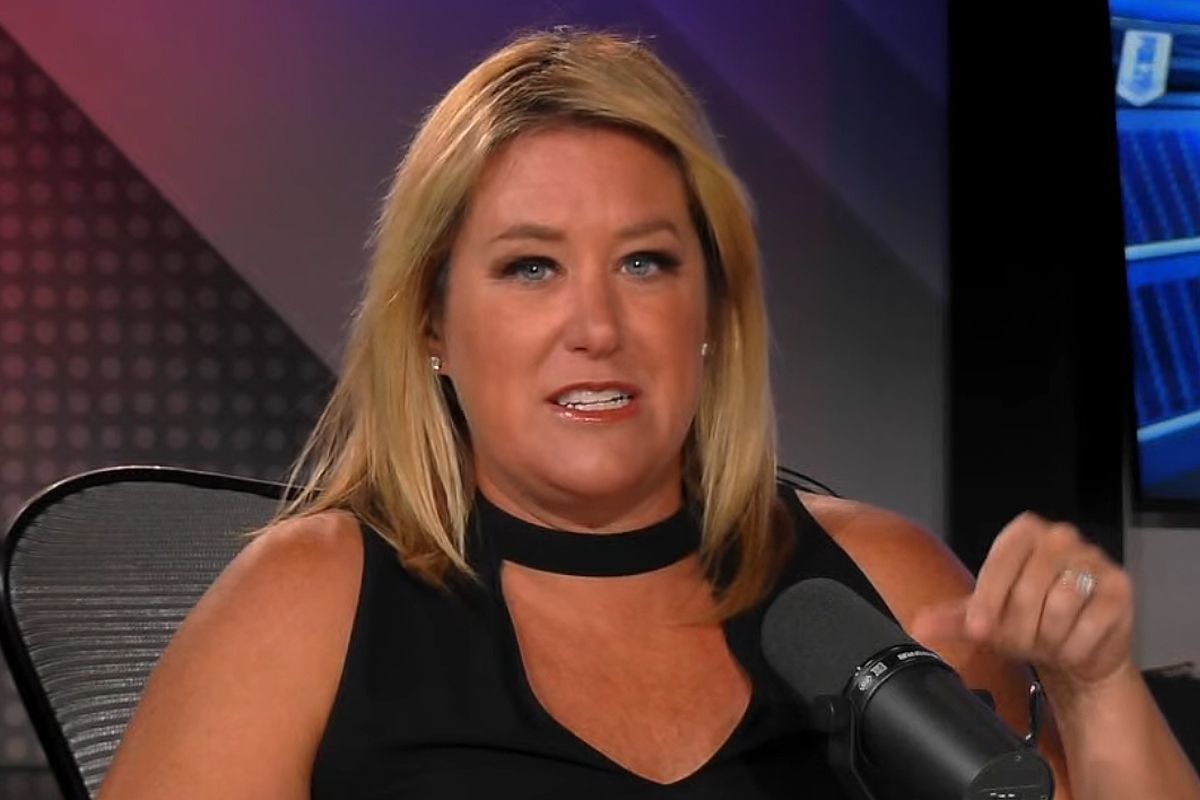
Ahead of anchoring her first Philly sportscast in more than two years (947 days for those counting), Jamie Apody’s focus was squarely on her feet.
“I’m mostly rusty with high heels. Oh god, it’s a disaster,” Apody said Monday night before making her debut as a sports anchor on Fox 29.
Apody, who spent 18 years as part of 6abc’s Action News team, is getting an expanded role at Fox 29. In addition to her regular appearances on The Phantastic Sports Show, which began in 2024, Apody will anchor the station’s Saturday 10 p.m. newscast and pop in elsewhere as needed.
“It’s not a full-time thing, but who knows? Maybe it’ll become that. That’d be awesome,” Apody said. “But I’m so thrilled to be doing what I love again.”
The expanded role will also include reporting, which will put her back into the stadiums during a busy year for Philly sports, featuring the World Cup, the MLB All-Star Game, and the Eagles heading to London.
“I’m more than ready,” Apody said. “I do think it’s going to be a little weird … not to mention starting with a different station’s name on the microphone after all this time.”
Jamie Apody has been working with Fox 29 since 2024.Fox 29
She certainly has plenty of experience. For the bulk of her tenure at 6abc, Apody anchored the 5:30 p.m. edition of Action News five days a week and was a regular at the city’s stadiums covering the teams.
It was even difficult for Apody to return to Citizens Bank Park and Lincoln Financial Field as a fan, something she avoided for about a year. Ultimately, she was forced back to the stands by her three young sons, all of whom are diehard Philly sports fans.
“It was really hard. Harder than I thought,” Apody said. “For a while there, those stadiums and ballparks really reminded me that I wasn’t able to do what I love more than anything, so it was hard for me to face. I actually made the choice not to face it.”
After leaving 6abc, Apody reached out to most of the stations around town and had meetings with both NBC10 and CBS3. But she really hit it off with Fox 29 executives Jim Driscoll and Dennis Bianchi, and said working for the station has been “a breath of fresh air,” recalling the words of former 6abc sports director Gary Papa, who hired her in 2006.
“He once told me, ‘You don’t know what you don’t know. You don’t even know what you know,’” Apody recalled. “The first time I walked in the door [at Fox 29] two years ago, I couldn’t believe what I’d been missing.”
She’s not the only Action News alum at the station. Former 6abc sports anchor Jeff Skversky, who also sparked speculation by his sudden TV exit in 2021, joined Fox 29 as a freelance reporter in 2025 after first contributing to The Phantastic Sports Show.
“I think it’s such an amazing fit,” Apody said of Fox 29. “I almost wonder what things would have been like if our paths crossed earlier.”
The least-loved New Yorker since Boss Tweed, the Donald on Monday took it upon himself to ruin pregame plans and pleasures of thousands by becoming the first sitting president to attend an NBA Finals game.
It tracks: Trump always seeks to steal the shine from winners, and the Knicks, fueled by NCAA champs Jalen Brunson, Josh Hart, and Mikal Bridges, were winning like nobody’s business. They had won 13 consecutive playoff games and held a two-games-to-none lead over San Antonio when they took the court at Madison Square Garden.
Trump’s presence created traffic snarls and ingress nightmares, and he was buried by boos during the singing of the national anthem, but nobody in the joint paid him much mind after that. He’d wanted to sit with Spike Lee and Larry David courtside, but the Secret Service (and perhaps his more sane advisers) persuaded him to retreat to a suite. There, in the shadows, he rested as the streak ended, a 115-111 downer in Game 3.
Later, Trump blamed Karl-Anthony Towns. He wasn’t wrong.
Look, it wasn’t all Trump’s fault, or KAT’s fault. It wasn’t anybody’s fault, really.
Well, maybe it was the refs’ fault. That’s what Knicks coach Mike Brown claimed.
“They outshot us 14-3 [from the line] in the third quarter. Maybe we did foul. But they fouled, too,” Brown said. “If they do this, 24-8 [in the second half], in Game 4, it’s going to be tough to win.”
It will be interesting to see the league’s reaction to Brown’s comments, since he was fined twice in 2024 for interactions with officials before he was fired by the Kings.
“That didn’t cost us the game,” said Towns, who finished with just 11 points. “We turned the ball over. We didn’t execute. We didn’t do the things that got us 13 straight wins in a row.”
It was a very non-’Nova-Knicks night, the sort they cannot afford against an assemblage like San Antonio’s.
The Spurs won nine more regular-season games than the Knicks. Third-year center Victor Wembanyama finished third in MVP voting this year and was Defensive Player of the Year, De’Aaron Fox was an All-Star this season, Keldon Johnson was this season’s Sixth Man of the Year, and guard Stephon Castle won Rookie of the Year last season.
Wemby had 32 points, eight rebounds, six assists, and three blocks. Castle has 23 points. Fox had the dagger and eight assists.
They are a very, very good team.
The Knicks trailed by five with 9 minutes, 18 seconds to play when Brunson, who leads the Knicks like he led the Wildcats, returned to the game. That set the scene for another comeback, like Game 1 in the Eastern Conference finals against the Cavaliers or Game 2 on Friday in San Antonio, Texas. Those comeback wins branded these Knicks the same way the gritty, deep Villanova teams were branded when the won NCAA titles in 2016 and 2018 under Jay Wright.
Alas.
The Knicks got 32 points from Brunson. They got 16 points and nine rebounds from Josh Hart. But they got just two points from Bridges, the hero of Game 2 just three nights before.
Alack.
Whether it was the 13-game run, the 53-year drought, or the presence of the president, Brunson & Co. were making no excuses.
“There are going to be a lot of distractions, positive and negative,” Brunson said. “Most important is how we compose ourselves as a team, and we have to make sure we have accountability as a team.”
Brunson hit a putback-and-one, a jumper as the shot clock expired, and a three-pointer with 33.7 seconds to play that cut the lead to three points, but Fox’s jumper with 12.2 seconds and two late free throws from Castle were just enough.
You felt early that not even the steely pedigree forged on the Main Line almost a decade ago would be enough Monday.
Wembanyama had nine points and a blocked shot in the first five minutes. Bridges committed two fouls and a turnover and had his shot blocked in the first four minutes.
That’s how the Spurs built a double-digit lead. A constellation of stars of stage and screen looked on, hoping for a sweep, the sweetest possible end of a 53-year title drought. From Lee to David to Ben Stiller, they all felt it. The Knicks seemed … affected. Tight. Flat.
Mostly, anyway.
The Knicks took their first lead when Brunson — who else — canned a 25-foot three-pointer with just over four minutes left before halftime. He hit it over Wembanyama, reluctant to extend his defense too far, lest Brunson burn him to the basket again.
About a minute later, with the Knicks down by four, Castle bulldozed Brunson while pursuing an offensive rebound. Hart scored on the ensuing possession and tied it at 54. Hart’s trey gave the Knicks the lead again, and Brunson dropped another 25-footer on Wemby. Brunson’s feed with 9.6 seconds soon sent Towns to the line, where he made both free throws, the end of a 14-3 run, and the Knicks’ halftime lead was 64-57 after they dominated the second quarter, 42-24.
But the Spurs won the third quarter by eight, scored the first six points of the fourth, and held off the valiant ’Nova Knicks.
They resume the series Wednesday, but don’t expect Trump to be back.
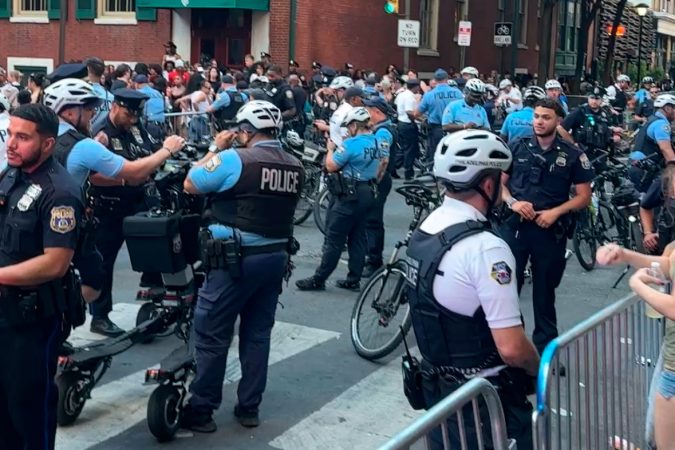
Fifteen people were arrested at a Pride celebration in Philadelphia’s Gayborhood on Sunday, authorities said, and the response drew criticism from some LGBTQ+ residents over how police handled crowd control at the event.
Images of police officers engaging with attendees in Center City circulated widely across local social media feeds on Monday, featuring criticisms of what some considered to be an outsize and aggressive law enforcement presence.
In one image shared on X, a police officer on a motorcycle appears to push against a woman’s chest, and, in another photo, pushes the woman against a garage door while arresting her.
And in yet another clip, a row of police officers — two of whom were wearing face coverings — formed a line to clear a barricaded Gayborhood street while officers on motorbikes rode along the sidewalks.
Joshua Stokem, a New Jersey resident who regularly attends the city’s Pride celebrations, said he had never seen that large a police presence during such festivities.
“They were definitely getting more and more aggressive” as the gathering stretched into the early evening, said Stokem, who works as a promoter for LGBTQ+ events at city bars.
Councilmember Rue Landau, herself a member of the LGBTQ+ community, said in a statement Monday that LGBTQ+ constituents had reached out to her office in “outrage” and that she was working to better understand the department’s strategy.
“Police brutality has no place at Pride,” she said.
The revelry outside some of the city’s best-known gay establishments was not affiliated with the official Philly Pride March and Festival event that took place on the Benjamin Franklin Parkway throughout the day, Stokem said. But many attendees migrated from the Philadelphia Museum of Art to the Gayborhood that afternoon, he said, where post-parade parties have become tradition.
Hours before police dispersed the crowd, Stokem said, guests were surprised to arrive and find that several Gayborhood blocks around 13th and Walnut Streets — cordoned off in years prior for attendees to wander — were instead blocked with metal barricades, limiting crowds to the sidewalks.
He said that layout caused large groups of people to pack into the corridors outside bars and restaurants and, in his view, created confusion and exacerbated some of the issues attendees had with police.
For their part, police said they deployed 600 officers for Sunday’s Pride events — including 150 officers to the Gayborhood — to maintain public safety.
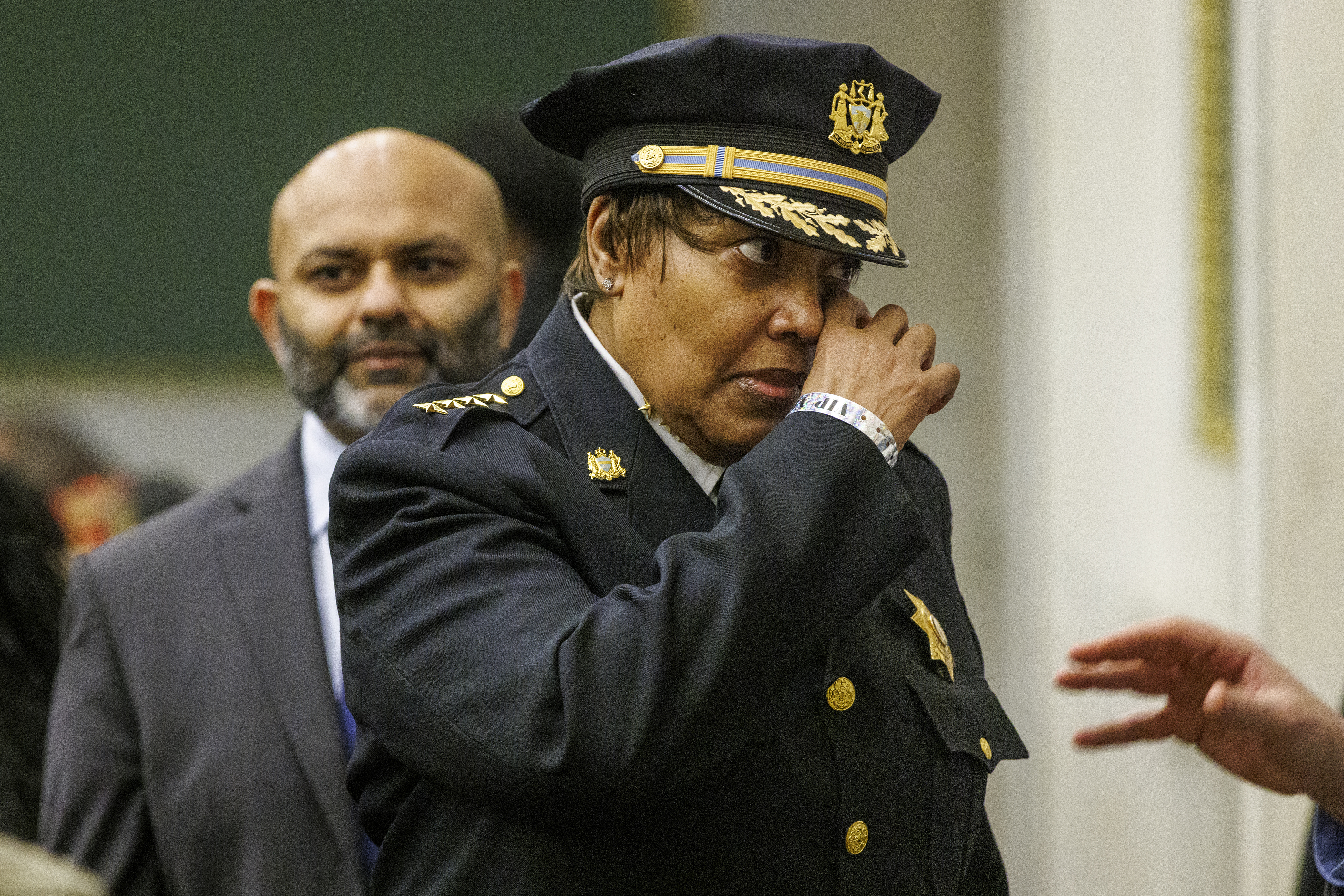
Police Commissioner Kevin Bethel said in a statement that the celebration was “by all accounts, a successful event attended and enjoyed by thousands of people.”
Still, “as crowd sizes increased in the Gayborhood, officers responded to a growing number of public safety concerns, including fights, disorderly behavior, blocked roadways, and the challenges associated with safely managing large crowds in a confined area,” Bethel said.
Bethel said the department had expected the Parkway celebration to gradually transition to the Gayborhood event, but that did not happen.
Instead, he said, two separate gatherings were essentially happening at once, creating a situation that was “challenging to manage safely” and led to the decision to clear parts of the neighborhood.
“That decision was not made in any way, shape, or form because people were celebrating Pride,” he said.
In all, 15 people were arrested, according to Bethel, primarily for offenses related to disorderly conduct. One person was arrested on a charge of aggravated assault of a police officer.
Bethel said the department was aware that some officers were wearing face coverings, which are not part of the department’s official uniform, while dispersing crowds.
“We are currently working to identify the officers involved,” the commissioner said, adding the department would determine whether discipline was necessary.
Stokem, the Pride attendee, was one of the social media users who documented the police presence. He said he left the Gayborhood around 7:30 or 8 p.m., when officers with batons ramped up enforcement.
“Police, dressed up as if we’re going to riot, basically start steamrolling the street,” he said. ”They’re just like shoving everyone to a corner and expecting us to … honestly, I didn’t know what they were expecting.”
Some of those arrested appeared to be teenagers who were not part of the Pride celebration, Stokem said, but had nonetheless taken part in the revelry and were behaving disorderly and fighting outside nearby non-LGBTQ+ bars.
“I don’t think it’s OK for that to be happening, but what are you going to do about it?” he said of those altercations and his frustration with the resulting police response. “Because now you’re punishing the entire community.”
Sheriff Rochelle Bilal on Monday announced a major restructuring of her office to reduce chronic deed-processing delays following property auctions — a problem she previously claimed she’d fixed.
Among several leadership changes, Bilal said she has hired an undersheriff, although her spokesperson would not confirm the identity of the new second-in-command.
A news release about the shake-up also outlined other planned improvements, such as the creation of a public-facing “deed tracker” that would allow winning bidders at sheriff sales to follow the status of their deeds.
Philadelphia’s independently elected sheriff is charged with auctioning off thousands of tax delinquent and foreclosed properties every year, but many bidders have complained about waiting a year or more after paying to get a deed of sale.
Last month, Bilal was hit with a court order demanding she speed up this process, or face consequences.
The “comprehensive operational reorganization plan” the sheriff unveiled Monday includes the hiring of sales technicians to improve customer service around sheriff sales, which have been plagued by complications since Bilal took office in 2020.
In addition to the post-sale delays, for example, almost all tax-delinquency sales were halted between 2021 and 2024 after Bilal attempted to award a no-bid contract to an online auction house without the approval of city contract lawyers.
Now, more than halfway into her second term, Bilal pledged to do better.
“The Philadelphia Sheriff’s Office continues to evolve to meet the needs of the public we serve,” Bilal said in the news release. “This reorganization represents our commitment to operational excellence, accountability, and ensuring residents have greater access to information and services.”
The announcement comes just six weeks after Bilal told City Council, during a pitch to increase her office’s budget by more than 50%, that sheriff sales were going “full blast.” She said processing delays after auctions have been resolved and that any ongoing delays were the buyers’ fault.
“If you believe them that run to the newspaper — ‘Oh I ain’t got my deed’ — well they never tell them they didn’t pay the invoice,” Bilal told Councilmember Cindy Bass at the April hearing.
But interviews with real estate agents, investors, and attorneys, as well as court documents and city records, showed that is not true. Some even said the problems had gotten worse since The Inquirer first started tracking the delays in mid-2024.
At April’s budget hearing, City Council members praised Bilal and declined to press her on the deed problems.
City judges have proven less deferential.
Last month, in response to a lawsuit over the delays, the judges filed a court order threatening to appoint a “special master” to oversee auctions if Bilal doesn’t get a handle on the situation.
The May 13 order, signed by Common Pleas Court Judge Paula Patrick, supervisor of the court’s commerce division, requires Bilal to come up with a plan for “promptly” delivering deeds and distributing post-sale funds, which must occur before a property can be resold.
The same day the order became public, the sheriff announced the retirement of Undersheriff Tariq El-Shabazz, a lawyer who oversaw deed filing and was previously the office’s highest paid staffer, earning $200,000 a year.
While the sheriff’s office said in Monday’s news release that it is “pleased to announce the appointment of a new Undersheriff,” Bilal’s spokesperson, Teresa Lundy, did not give the person’s name.
“As of now, I have not confirmed the hiring of the new undersheriff or any other specific positions,” Lundy said in an email.
Lauren Cristella, president and CEO of the good-government group Committee of 70, which has called for abolishing the sheriff’s office, noted that Bilal “spent years resisting accountability” and appears to have taken action only in response to lawsuits and a court order.
“Philadelphians shouldn’t need to sue their own government to get basic services fulfilled,“ Cristella said. ”Reorganization plans are only as meaningful as their implementation.”
The euphoria at Chris Rabb’s election night party last month hadn’t even started to wane before the democratic socialist and his supporters — dancing and hugging after capturing a rarely open Philadelphia seat in Congress — spoke of setting their sights even higher.
Taking on the city’s Democratic establishment to defeat a pair of more centrist candidates in the heated 3rd Congressional District race was a momentous win on its own. But the reckoning, they promised, wouldn’t be confined to Philadelphia’s borders.
“It’s going to change not just our city, but our entire commonwealth,” Rabb said in an interview amid the celebration at a Germantown banquet hall.
It was a sentiment echoed that night by key figures in Rabb’s coalition — from the head of the Working Families Party to Pittsburgh’s U.S. Rep. Summer Lee, the only other democratic socialist representing a part of Pennsylvania.
With the 2026 Pennsylvania Democratic primary in the rearview mirror, that conversation has broadly and quickly turned to the next biggest prize in the state: the U.S. Senate seat held by Democrat John Fetterman.
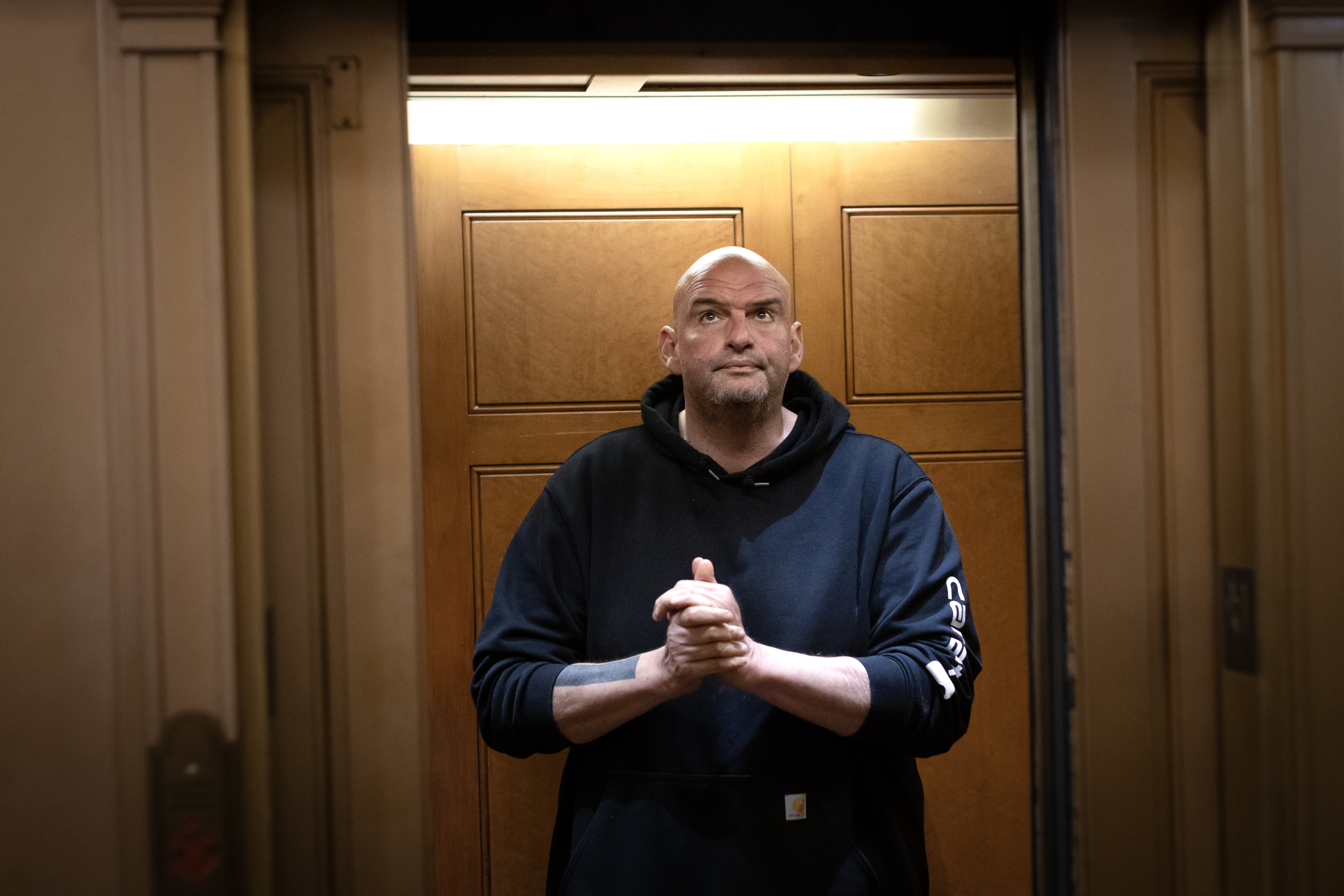
The senator has not said whether he will run for a second six-year term in 2028. But in an unusual situation for an high-profile elected official, a robust intraparty competition to replace him is expected to start either way in the next year as Fetterman increasingly sides with Republicans and as polls show that his support among Democratic voters has nose-dived.
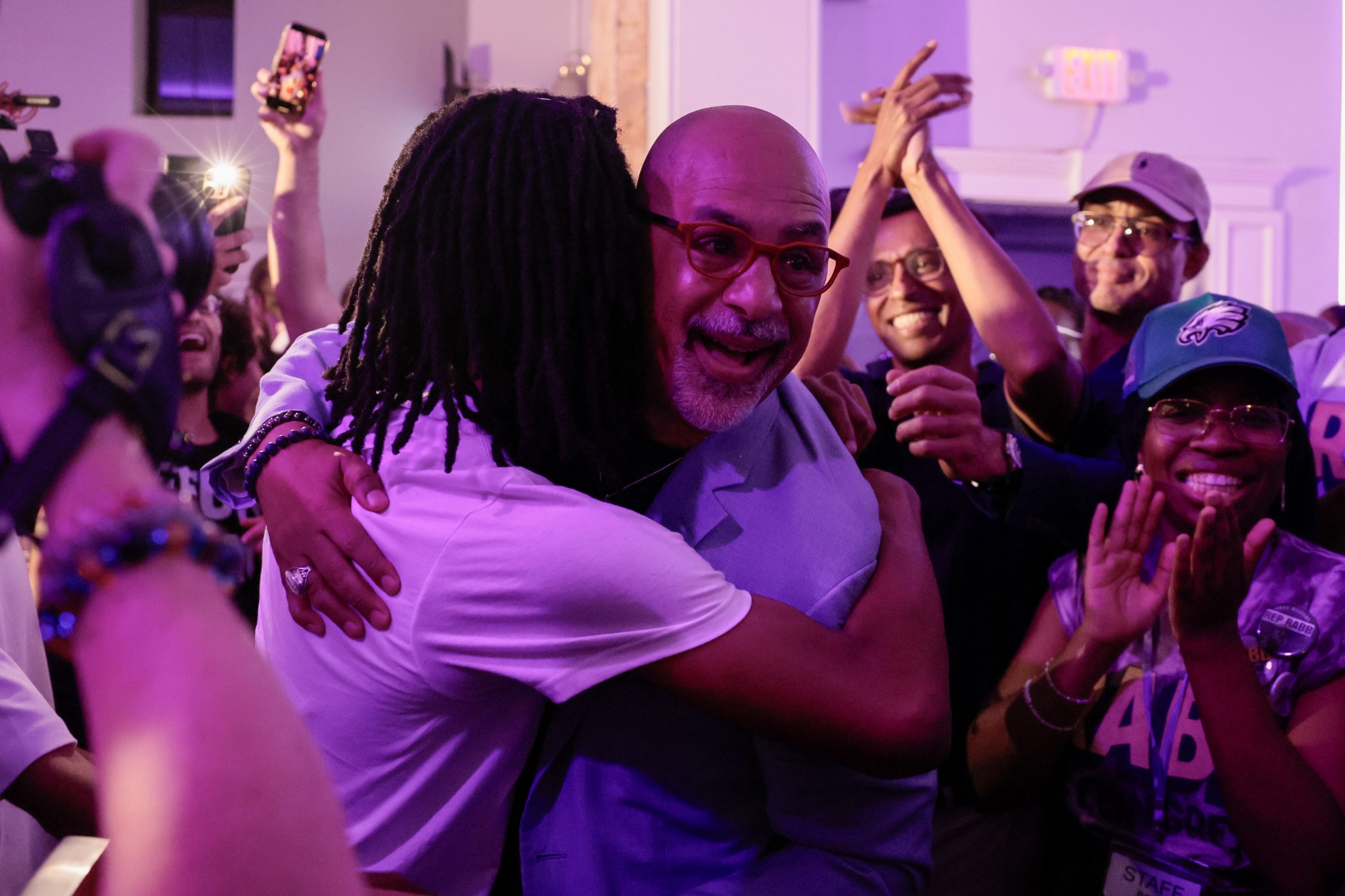
State Rep. Chris Rabb is hugged by his son, Issa Rabb, during his primary election night event at Victorian Banquet Hall on May 19.Elizabeth Robertson / Staff Photographer
Some Democrats who watched Rabb emerge from a competitive race, notching one of the left’s biggest wins yet in Pennsylvania, see an opportunity — one that extends the energy and momentum to boost a well-organized, progressive, anti-establishment candidate in the Senate primary.
Other strategists and activists say that’s a tall task, particularly in a swing state that rarely strays from electing more centrist politicians statewide.
“Anytime you have success, it breeds enthusiasm, which translates into more volunteers, into more money — everything you need to run a campaign,” said Mike Mikus, a Pittsburgh-based Democratic strategist. “But every election cycle is different. Every campaign’s different. The quality of candidates are different. And anybody who says that any one race signifies a permanent change within a party is mistaken.”
‘A huge impact on the political landscape of Pennsylvania’
In his campaign to succeed U.S. Rep. Dwight Evans, Rabb, a five-term state lawmaker, won 44% of the vote. He was up against State Sen. Sharif Street, who had the backing of the city Democratic apparatus, and physician Ala Stanford, a political newcomer endorsed by Evans.
That progressive infrastructure — the coming together of different groups to knock doors, make calls to voters, and unleash a significant independent advertising campaign in a way that rivaled the official Democratic Party organization — is likely the most important way that the left can use the experience of Rabb’s campaign to replicate its success elsewhere, strategists said.
It’s a template that could have “a huge impact on the political landscape of Pennsylvania,” said Rotimi Adeoye, a Philadelphia-based Democratic strategist who worked in the office of former U.S. Sen. Bob Casey.
In a district packed with Democratic voters, Rabb’s ability to turn out progressive voters should draw the attention of anyone looking to win the state’s Democratic Senate primary in 2028, Adeoye said.
“If a Democrat running statewide can learn from some of these organizational groups to build a strong, relational and community-based organizing campaign in Philadelphia and the surrounding suburbs in Montgomery County, Bucks County — they’re going to have a really big chance of winning,” Adeoye said.
In a sign that those efforts could coalesce around a Senate candidate, one of the groups that helped usher Rabb to victory remains the only major Democratic entity in the state to have publicly started laying the groundwork for a challenge to Fetterman.
The Working Families Party, which backed Fetterman in the 2022 general election after originally endorsing State Rep. Malcolm Kenyatta in the primary, said in November it would organize an effort to oust him. A “Primary Fetterman” website launched in January is equipped with a “Fetterman sell-out tracker” — highlighting his votes for Trump’s cabinet nominees and opposition to war powers resolutions that would rein in his military strikes, for example — and instructions for donors on how to request a refund from his campaign.
The website remains the extent of the group’s efforts so far to rally public support and back a new candidate, though its work is expected to pick up after this year’s midterm elections. For now, the party is looking forward to bringing new members who worked to elect Rabb into its fold.
“Our goal is always to keep building on the work we do each cycle and the success we have each cycle,” said Nick Gavio, the Working Families Party’s Mid-Atlantic communications director.
One PA, another statewide group in that progressive coalition, has not yet had internal discussions about the Senate race but it supports the Working Families Party’s position as a member of its steering committee, executive director Steve Paul said. He said more than 150 members of One PA mobilized for Rabb by talking to thousands of voters.
Winning a high-profile congressional race only helps add to that organizational infrastructure, making them “sharper for the next thing,” Paul said.
“I think it shifts what’s possible, politically — what people can envision,” he said.
Potential progressive roadblocks
Mikus said progressives have increasingly surpassed “more establishment Democrats” in their ability to run strong campaigns, including in his area of Western Pennsylvania where candidates like Lee have emerged in the last decade.
Democratic primary voters are also more progressive than they were 10 years ago, he said. But campaigning on a far-left — or a far-right — platform doesn’t often equate to success on a statewide level in Pennsylvania, a swing state where successful candidates tend to walk a “fine line” that appeals to both swing voters and a message that excites their partisan base, Mikus said.
“You’ve seen this time after time in presidential elections here in Pennsylvania,” Mikus said. “Hillary Clinton versus Bernie Sanders. Joe Biden versus Bernie Sanders. The vast majority of voters in Pennsylvania will go with the more mainstream Democrat.”
J.J. Balaban, a Philadelphia-based Democratic strategist and ad maker, said the party runs the risk of “drawing too big of a conclusion” based on a single election — particularly one like Rabb’s where candidates only needed to appeal to Democrats.
“Democrats really need to think hard about what it will take to win statewide in a purple state, which Pennsylvania clearly is,” Balaban said. “What it will take to win a general election in Pennsylvania is very, very different than what it will take to win in literally the most Democratic congressional district in the country.”
After recent years of tough losses — including the ousting of Casey by now-U.S. Sen. Dave McCormick, a Republican — Democratic voters will likely have a “tremendous thirst for candidates who have a credible case to make that they can win the general election,” Balaban said.
Fetterman, whose office did not comment for this story, has insisted that Pennsylvania’s purple state status means he should appeal to both sides of the aisle and not demonize the other side.
“Look at the people that are winning the primaries in our party right now, and look at their views on Israel,” Fetterman said at an American Jewish Committee conference in Washington this week.
On stage with McCormick and the head of the Jewish advocacy organization, Fetterman painted Graham Platner, the expected Democratic nominee for a U.S. Senate seat in Maine, as a “Nazi sympathizer” and connected him to Rabb.
“People also in our state, too. Rabb, he won, and he ran on being a very, very anti-Israel guy,” Fetterman said. “It’s actually a virtue [in the modern Democratic Party] … It’s heartbreaking for me. And if it isolates me, then so be it.”
Who might run?
Of the Democrats widely considered to be eyeing a campaign to replace Fetterman, the public jockeying has so far been limited to criticisms of the incumbent.
Former U.S. Rep. Conor Lamb, a moderate who represented a suburban Pittsburgh district before Fetterman beat him in the 2022 Senate primary, has frequently lambasted him.
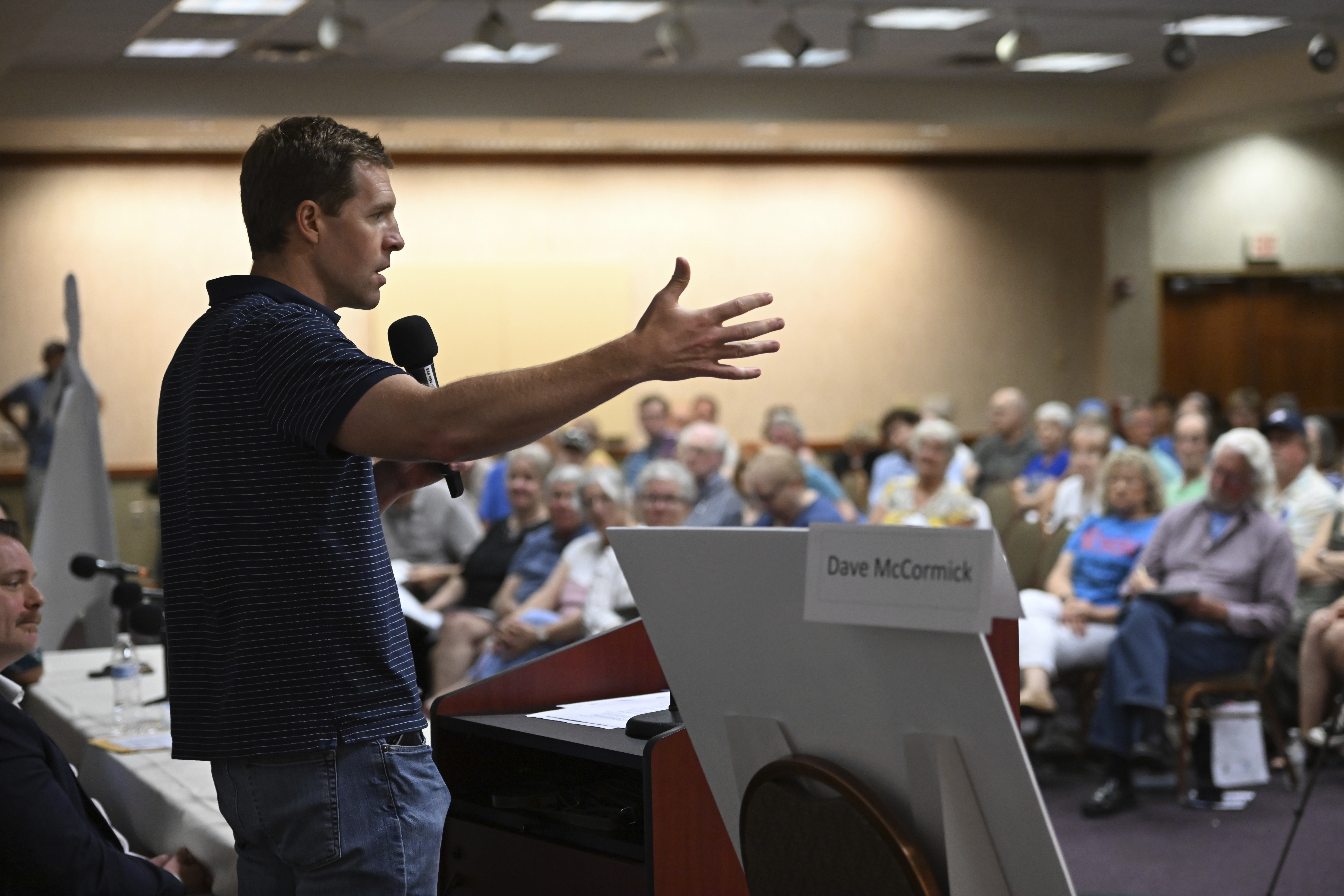
Conor Lamb speaks to the crowd at a town hall-style event organized by progressive groups at Central Penn College on June 22, 2025, in Enola, Pa. Marc Levy
And U.S. Rep. Chris Deluzio, who succeeded Lamb and leaned into progressive economic populism, has taken a less direct tack while noting the differences between himself and Fetterman over issues like Trump’s military interventions abroad. Deluzio has occasionally reposted others’ criticisms on social media — including one from Gavio, the Working Families Party spokesperson, last week that called Fetterman’s reversal on eliminating the filibuster “a new low” and “an indescribably massive backtrack from everything he ran on.”
None of the three have ruled out running.
Boyle is expected to weigh a Senate campaign vs. staying in the House to take a rare opportunity to lead the powerful budget committee if Democrats win the majority in November. Lamb, who’s remained highly active in Pennsylvania politics, said in an interview that he’s hoping to serve again and would run for office if he feels he “can be of service to the state.” Deluzio, who is also heavily involved in helping Democratic candidates across the state, said he’s focused on his reelection this year and that “we’ll see what 2028 holds.”
“I am not at all interested in seeing us lose this Senate election, and I certainly have gotten a lot of encouragement to look at 2028,” Deluzio said.
Progressives have also mentioned Lee, the Rabb ally who’s been a vocal member of the leftist wing on Capitol Hill while taking leadership roles in areas like securing the release of the Jeffrey Epstein files.
U.S. Reps. Summer Lee and Chris Deluzio, both Pittsburgh-area Democrats, speak outside the Moshannon Valley Processing Center in Clearfield County on May 28 after getting a tour of the facility, the largest detention center for undocumented immigrants in the Northeast.Sam Janesch / Staff
With potential candidates still several months away from making their decisions, it’s unclear who might try to take up the progressive mantle if Lee does not run, strategists say.
The field could also grow considerably. Other potential candidates could jump in, including the three other current Pennsylvania Democrats in Congress or former lawmakers like Susan Wild, who lost a swing congressional district in the Lehigh Valley in 2024. Wild said she’s “not ruling out” a run but she’s more interested in thinking about good female candidates in general since no woman has ever won a Pennsylvania U.S. Senate seat.
On the prospects of a battle between different factions of the party, Lamb said he believed Democrats had broadly learned a lesson — from Fetterman’s election in 2022, where he ran on being a reliable Democratic vote in the Senate — that was beyond ideological policy tests.
“Fetterman taught Democrats in Pennsylvania that you have to have a character test. Anybody can run around the state promising you these further left solutions, and that they’re going to be a thumb in the eye of the establishment, and they’re going to channel all your anger and dissatisfaction. And then that person can turn on you on a dime,” Lamb said. “The fact is that we have to evaluate our candidates based on whether they have integrity and they’re going to keep their word and, honestly, whether they have the work ethic to be a senator day in, day out.”
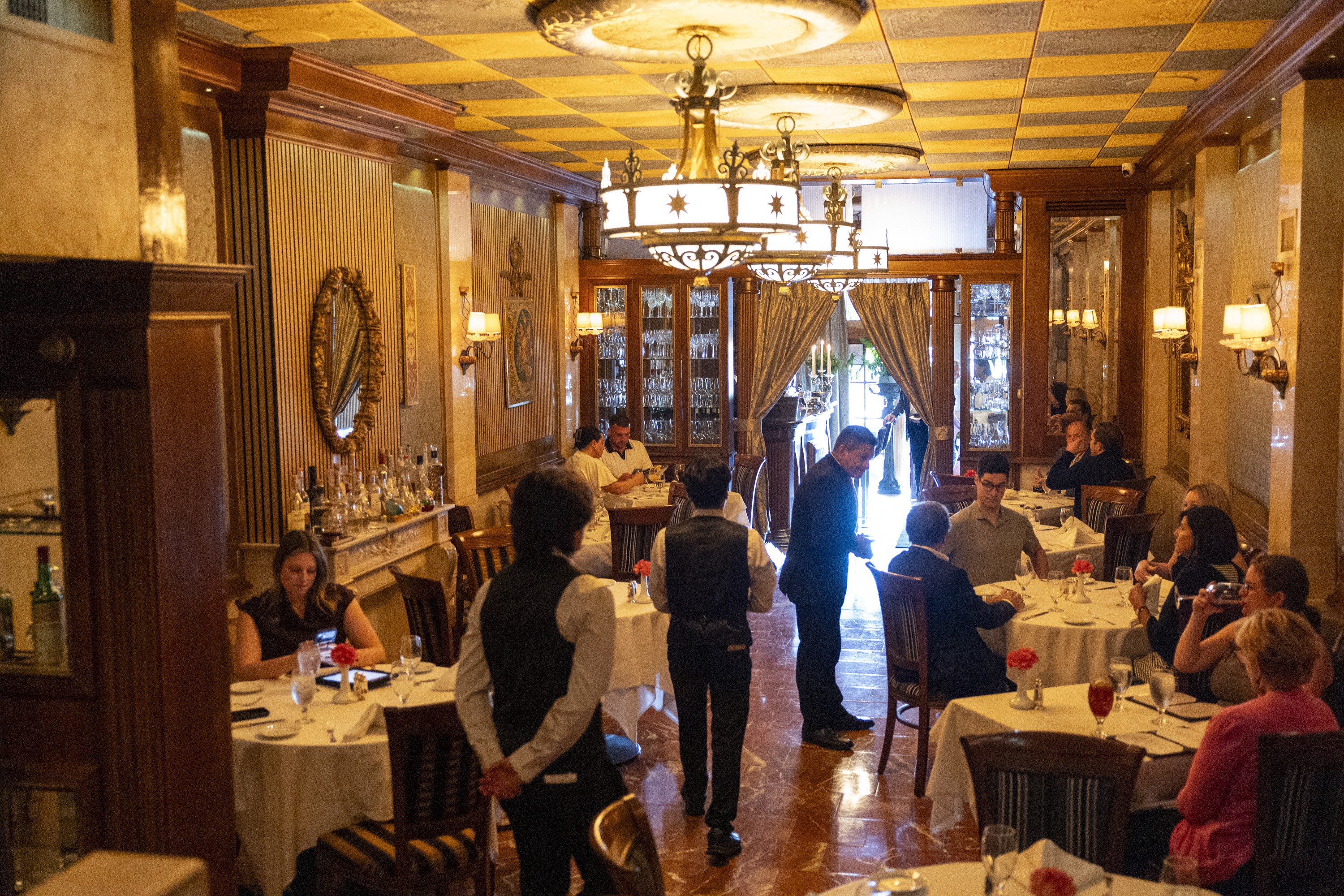
We were led to a table lost in the shadows in the farthest corner of La Famiglia. The tall white candle waiting for us was lit and its flickering wick filled the space with a bright warm glow that revealed a posh little nook — the lavishly muraled walls wrapped around a table padded with silken napkins and not one, but two layers of linen tablecloths. Our view of the room revealed a world that still hummed with fine-dining trappings that, outside this venerable Old City space, have nearly disappeared.
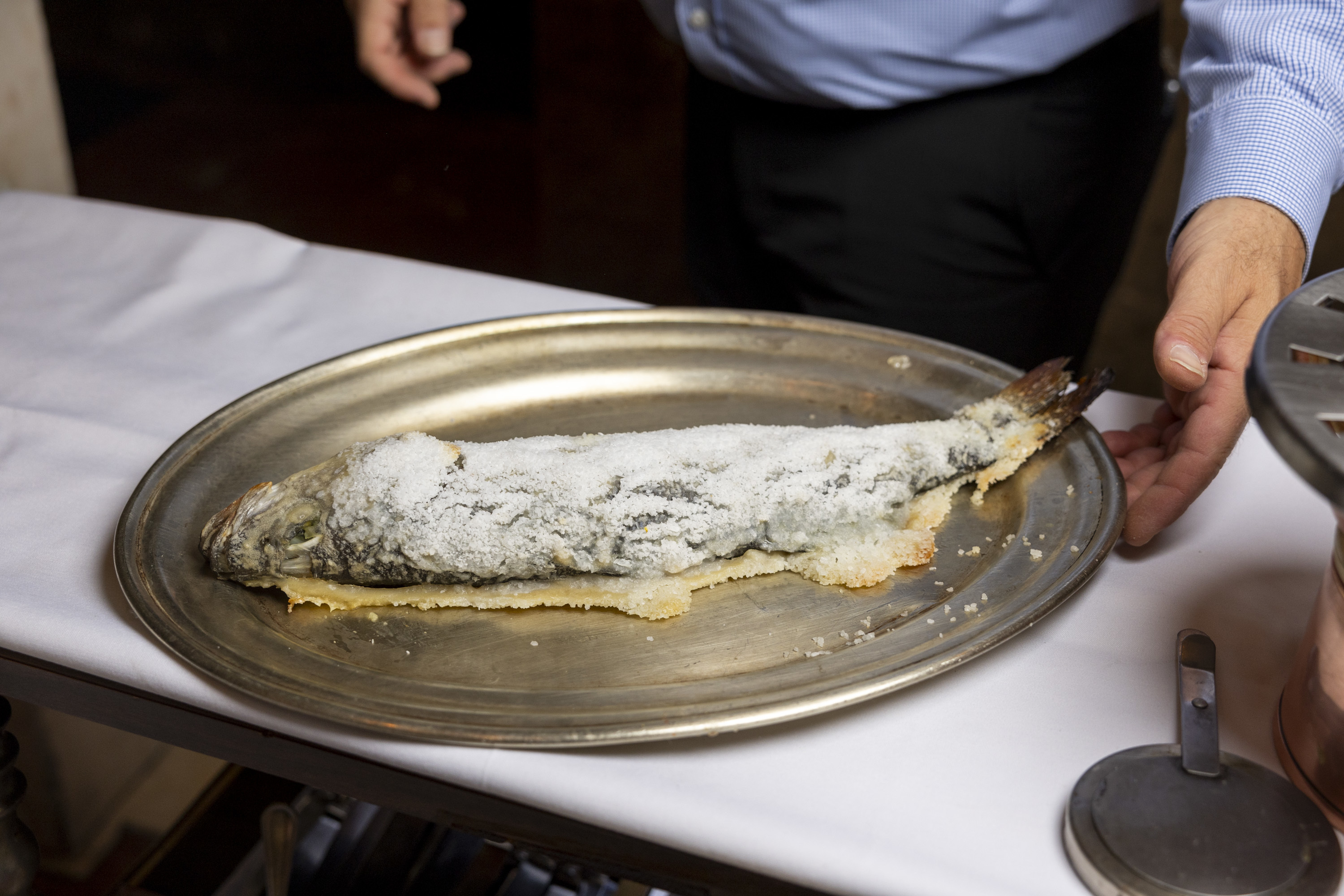
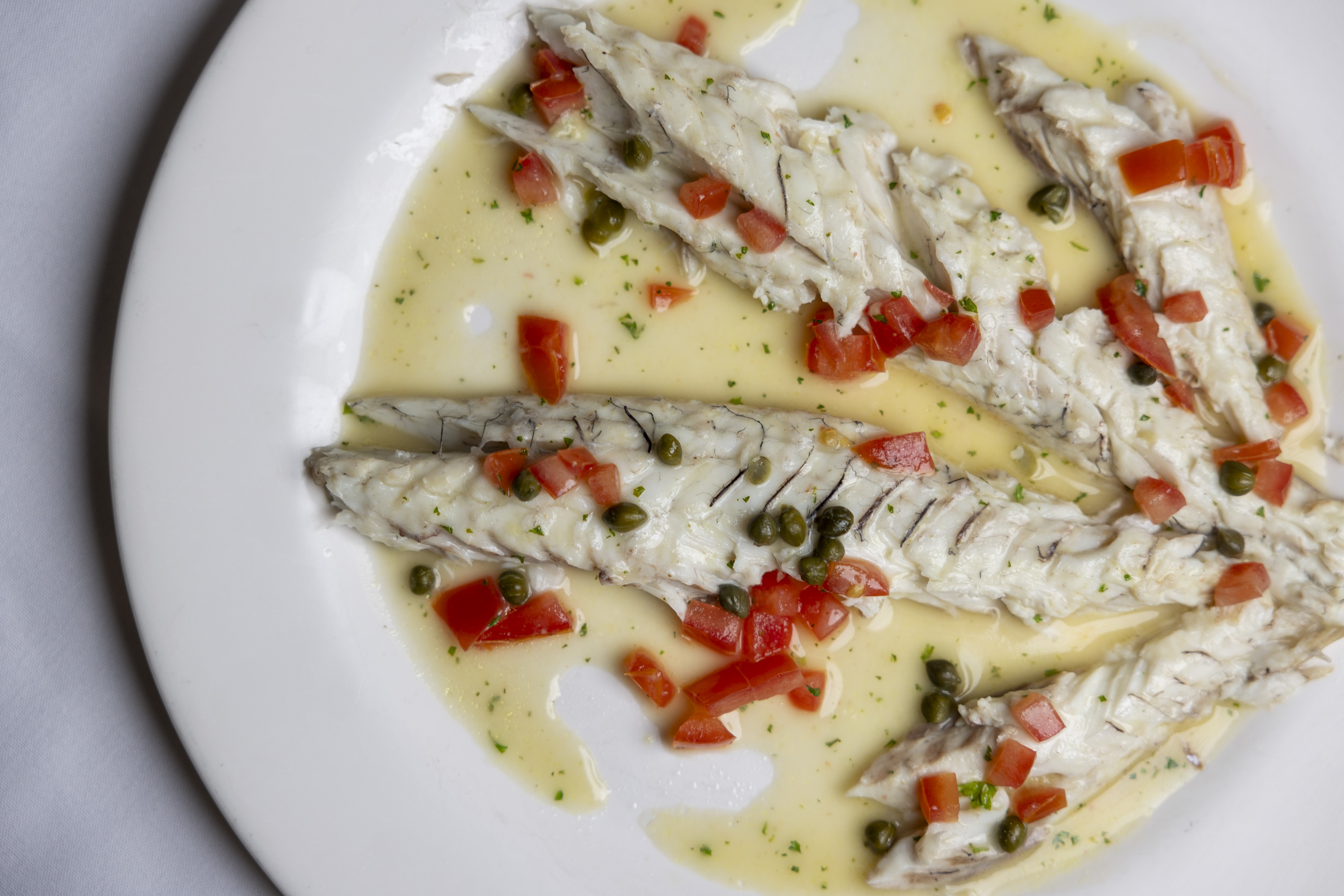
Crisply suited servers rolled guéridons across polished pink marble floors to decant grand old wines from La Famiglia’s legendary cellar. Other carts bearing whole branzinos entombed in salt crusts paused tableside, where the fish were deftly deboned into a bloom of fillets, then glossed with olive oil, tomatoes, and capers. I haven’t seen so many men eating in blazers in years.
The branzino at La Famiglia in Philadelphia. The fish is baked whole in salt before it is filleted tableside.Tyger Williams / Staff PhotographerThe branzino at La Famiglia.Tyger Williams / Staff Photographer
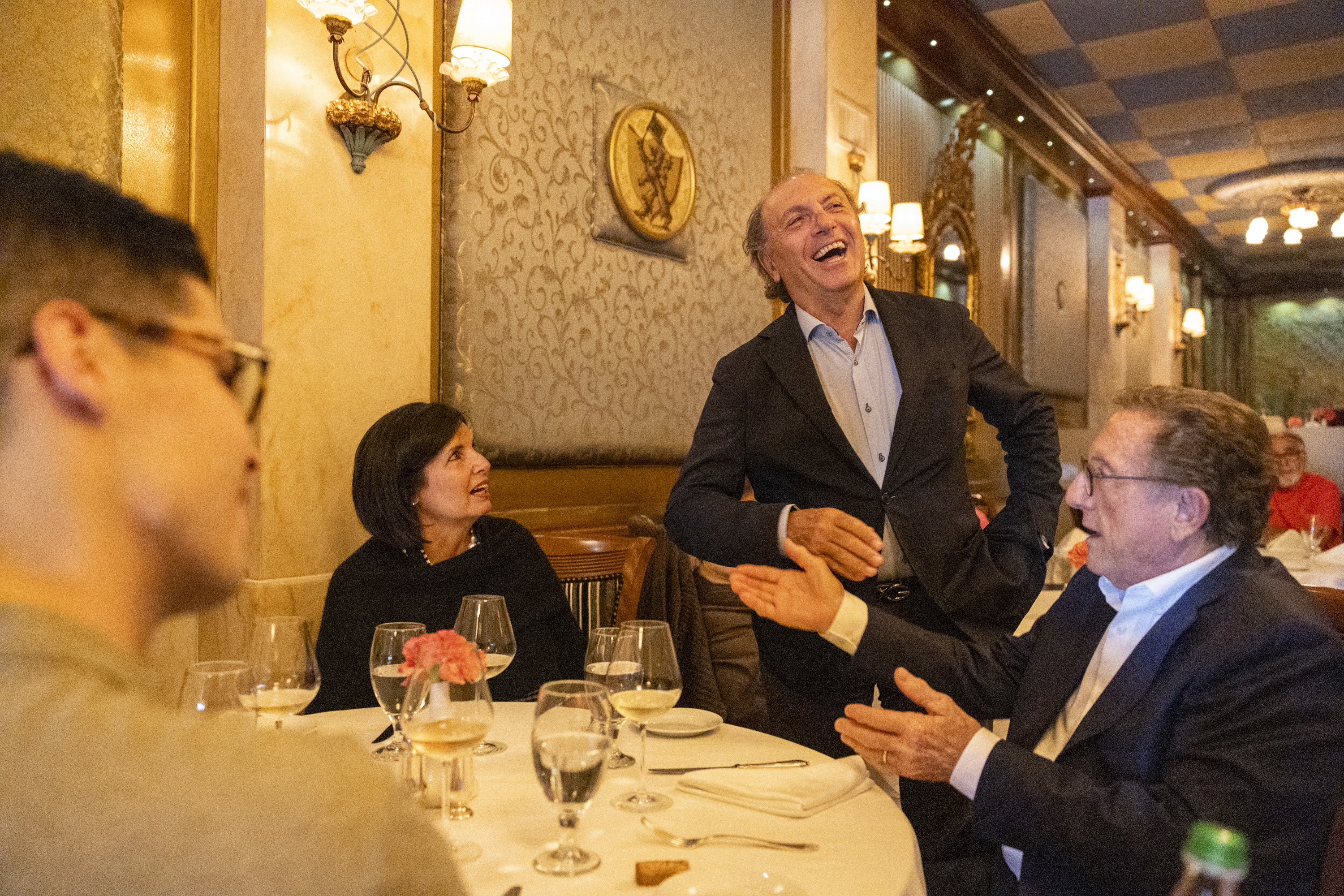
“Back in the ‘70s and ‘80s, people used to come here really really dressed!” says co-owner Giuseppe Sena, 73, recalling the era shortly after he and his brothers founded La Famiglia in 1976 with their parents, and his father Carlo “Papa” Sena’s classic Neapolitan cooking drew the city’s most well-heeled gourmands. “The women would come in chinchilla furs and so many diamonds the restaurant would be sparkling!”
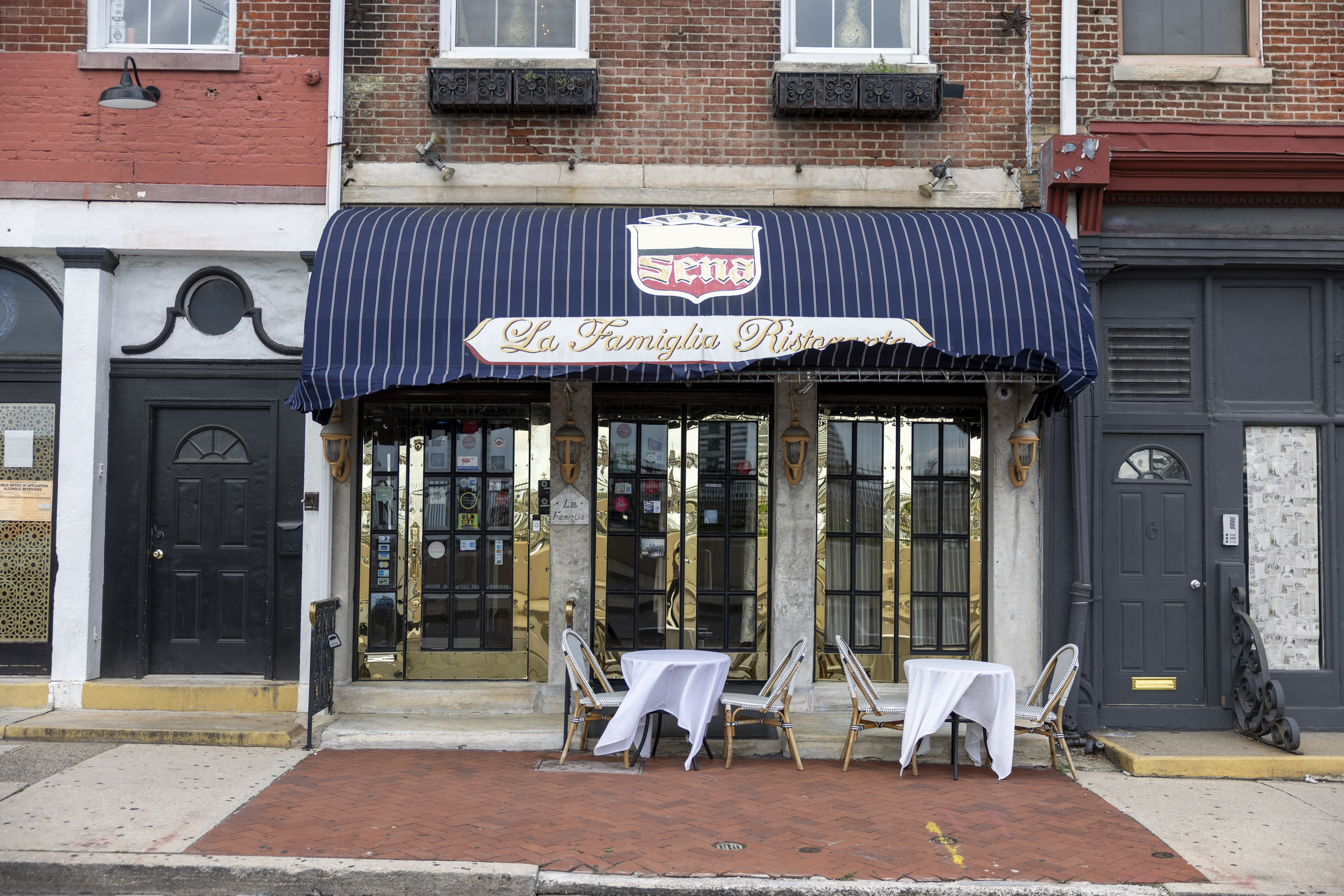
Many longtime customers are still regulars. I ran into my retired rabbi here the same night that I ran into the retired poll judge from my local voting ward, both discerning eaters. The hushed tones and formal hospitality, as well as this menu’s fondness for center-cut meats, porcinis, and hard-to-find old wines, still appeals to a certain generation. The yet-to-retire and under 60 set? They are far rarer in the gilded confines of 8 S. Front Street, a Colonial-era building that was once a tea warehouse.
Diners at La Famiglia in Philadelphia.Tyger Williams / Staff PhotographerThe outside of La Famiglia.Tyger Williams / Staff Photographer
It’s been over two decades since I last reviewed La Famiglia, and even then I considered it old-fashioned, not to mention too expensive. But revisiting this classic 23 years later, I view it now through a different and fonder lens, not only because the cooking was more consistent, but because the context has shifted.
La Famiglia is among the last of a generation of continental-style restaurants with European-born chefs and well-starched dining rooms that ruled Philly’s fancy Italian scene in the late 20th century, including long-gone destinations such as Gaetano’s, Monte Carlo Living Room, and the original La Buca. But it has earned its status as a survivor. After two absolutely delicious recent visits, I can attest it’s clearly more than just a museum piece.
Set against the diverse riches of Philadelphia’s current Italian dining scene, from the stalwart red gravy icons of Italian American cooking (Villa di Roma, Dante & Luigi’s) to the alta cucina of Vetri, regionalists such as Le Virtù or Irwin’s, the nostalgia revivals of Palizzi Social Club and Bomb Bomb Bar, along with fresh contemporary takes from Emilia, La Famiglia’s retro experience still occupies a unique and worthy place to dine. With check averages for a complete meal between $90 and $100, it’s still a big night out but nowhere near the top of Philly’s current price range.
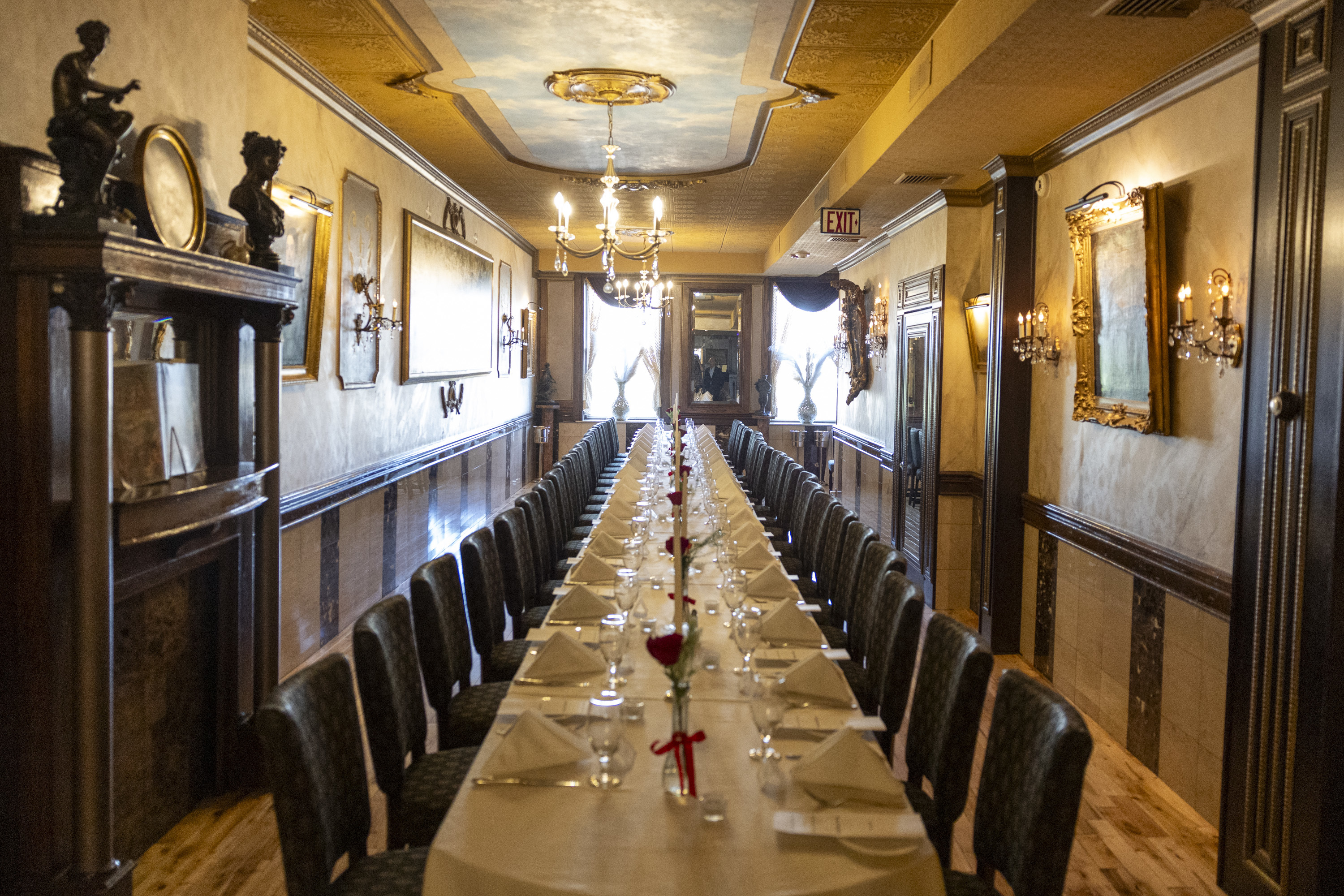
Upstairs event space and large dining area at La Famiglia.Tyger Williams / Staff PhotographerCo-owner Giuseppe Sena shares a laugh with Dawn and Luca Sena, of Society Hill, regulars and relatives, at the restaurant in Philadelphia.Tyger Williams / Staff Photographer
The menu isn’t exactly innovative, but has been updated multiple times over the years. An overall delicacy remains to the cooking, now under the care of current chef de cuisine Luis Yauri, that, guided by Giuseppe Sena and his nephew, Carlo, follows a direct lineage to the recipes and techniques Papa Sena had perfected at Zi Teresa in Naples before coming to Philadelphia in 1967.
You can taste some of those original dishes on a throwback menu for the month of June in honor of La Famiglia’s 50th anniversary, including snails in spicy red sauce and gnocchi Sorrentina. But the signature pasta, penne alla Famiglia, is the only original dish that still lingers on the current menu — and for good reason. The quill-shaped tubes are glazed in a buttery sauce tinted pink with fresh tomatoes, lightly sweetened with caramelized onions and dotted with savory nubs of rendered prosciutto, the epitome of patient cooking.
The founder’s elegant approach is also still evident in fried appetizers that employ only the finest grain of housemade breadcrumbs and an insistence on using only egg whites, rather than the more typical and heavier method of whole eggs with a flour dredge. The resulting wafer-thin snap on the crocchette just barely contains the whipped potato centers laced with three kinds of cheese. The rounds of eggplant are so sheer and deftly fried they form a fork-tender stack, along with truffled porcinis, fresh tomato sauce, and mozzarella, of a dreamy Parm-like starter called a tortino.
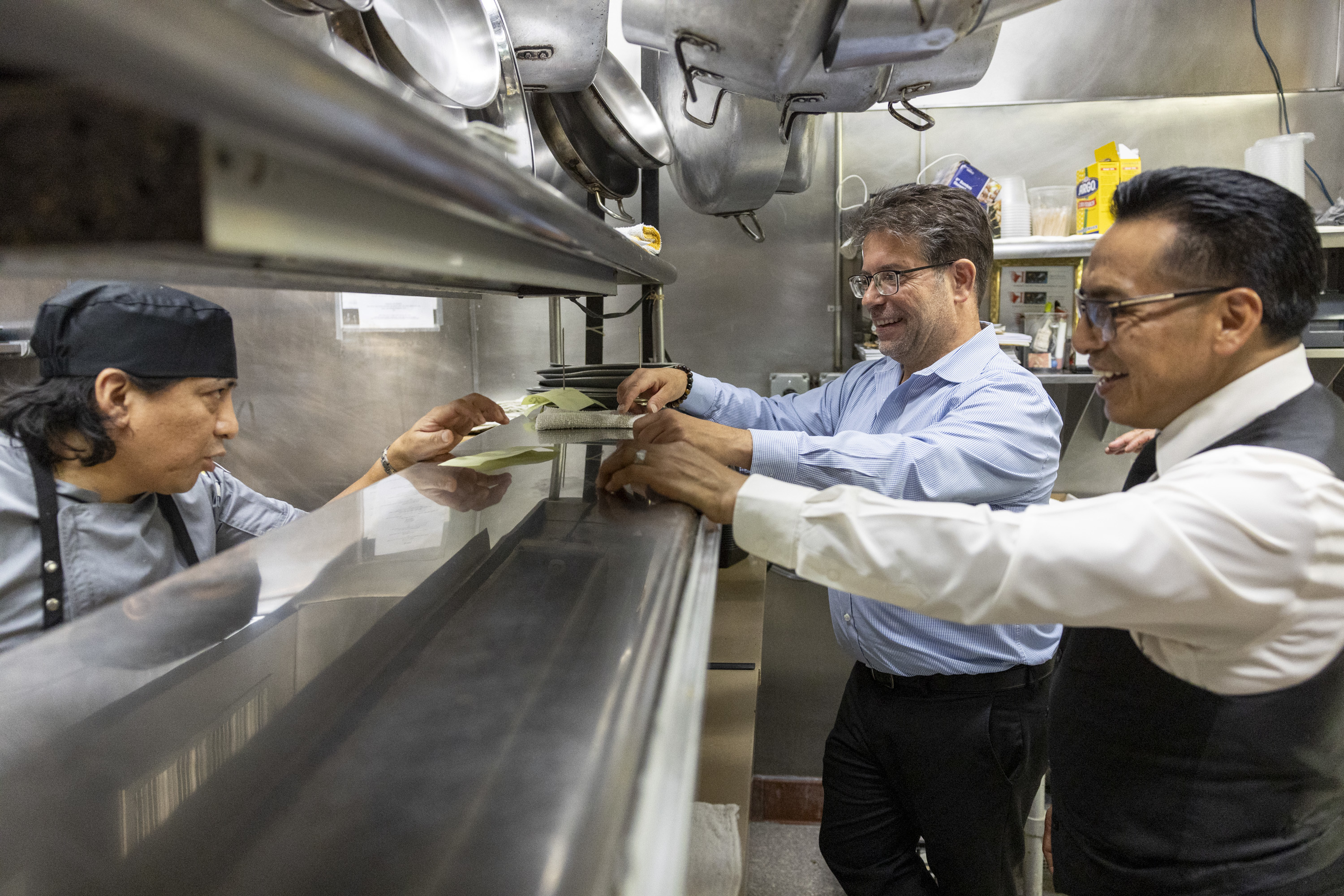
Carlo Sena, general manager and co-owner of La Famiglia, in the back of the kitchen checking orders in Philadelphia.Tyger Williams / Staff PhotographerTriangolo ravioli stuffed with burrata in eggplant cream sauce at La Famiglia.Craig LaBan / Staff
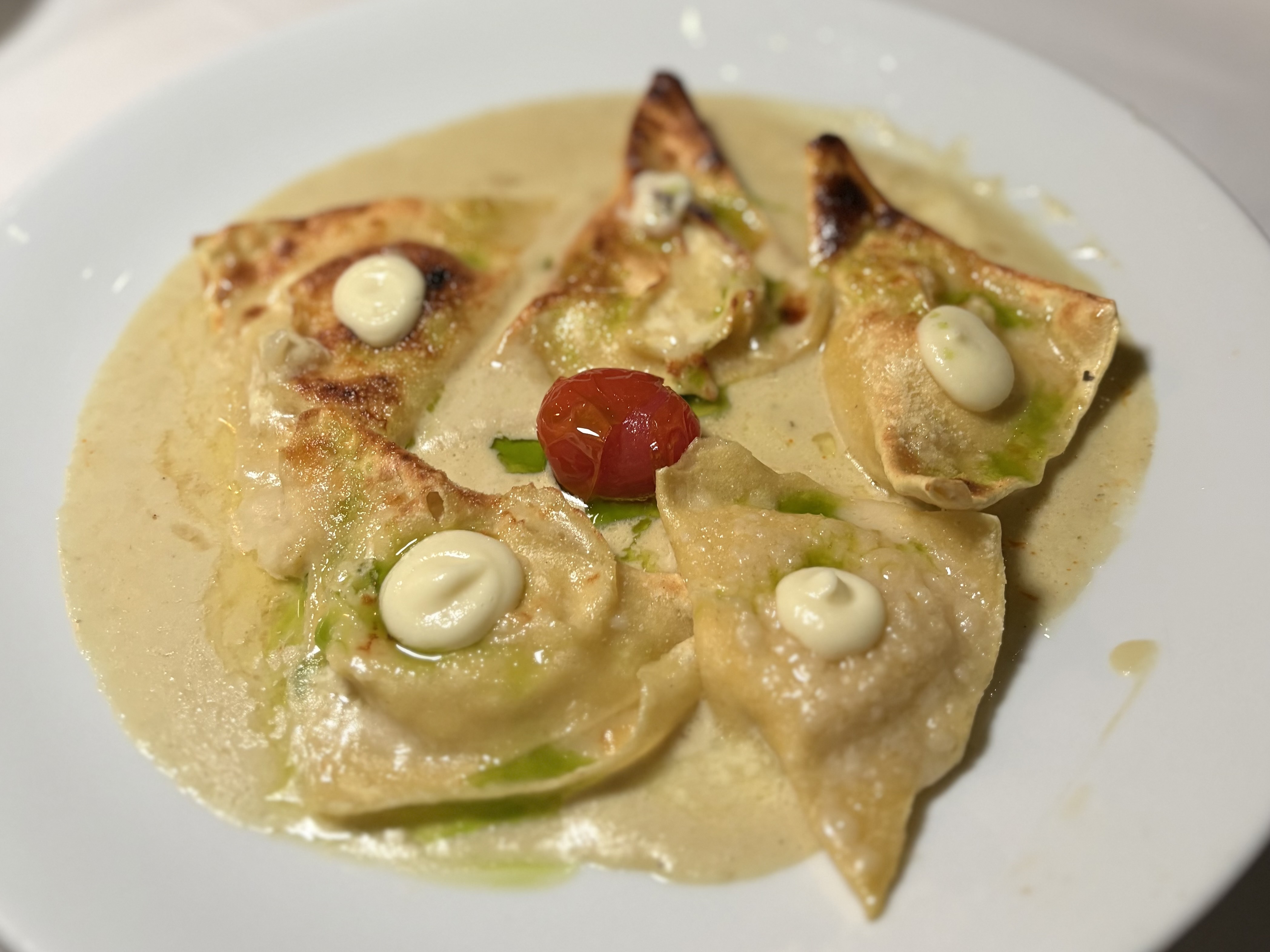
Some of my favorite dishes here are unfashionably drab but deliver vivid flavors, like the vitello tonnato that dabbed silken-soft pads of veal tenderloin with a tonnato sauce that zinged with the briny umami of pureed tuna, capers, and anchovies. I could also taste Neapolitan sunshine in the eggplant cream that glazed the burrata-stuffed triangolo ravioli that arrived lightly broiled to a cheesy crisp.
For the most part, these plates have largely been updated with splashes of flavorful herb oils that add colorful halos to the refined sauces that are always in service of La Famiglia’s sweet spot: luxury proteins.
The pork chop at La Famiglia.Tyger Williams / Staff Photographer
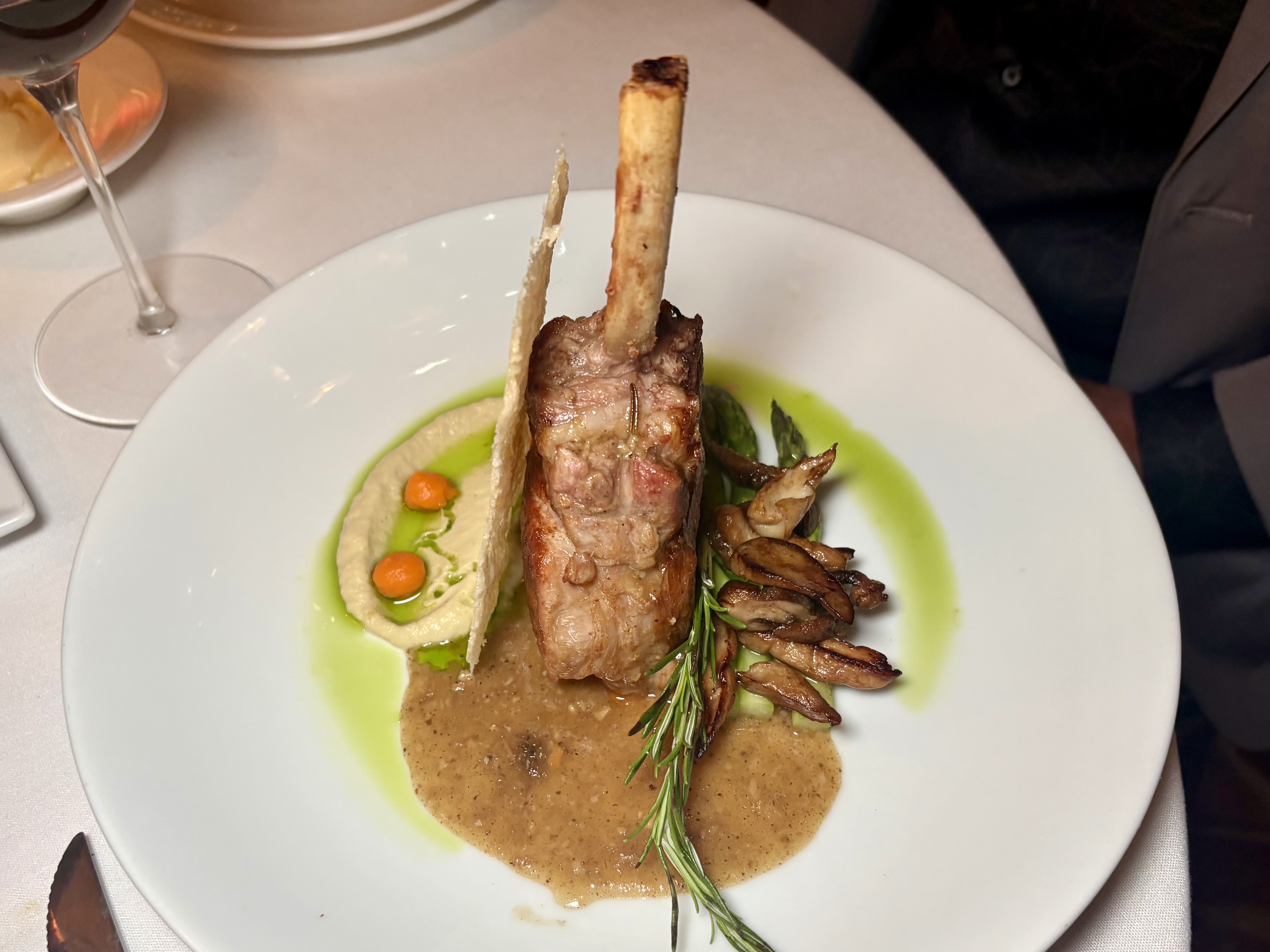
A ruby-rare hunk of grilled ahi tuna comes sliced on the bias atop a sun spot of pureed tomatoes and olive oil, a Mediterranean tableau framed dramatically by a crispy ring of baked pappardelle. An incredibly tender veal chop arrives standing upright against a crisp frico of a Parmesan cheese over porcini cream sauce dotted with carrot mousse.
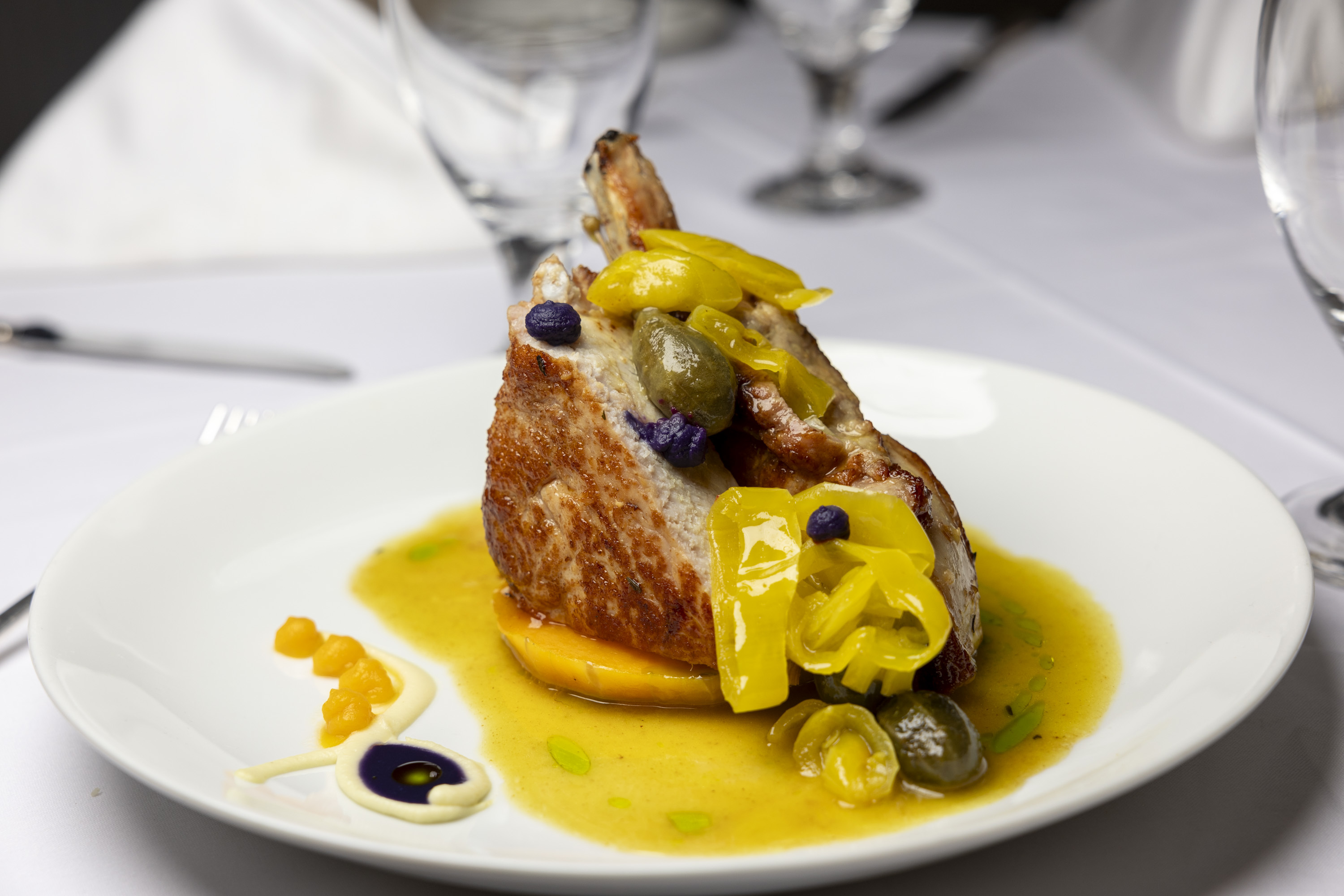
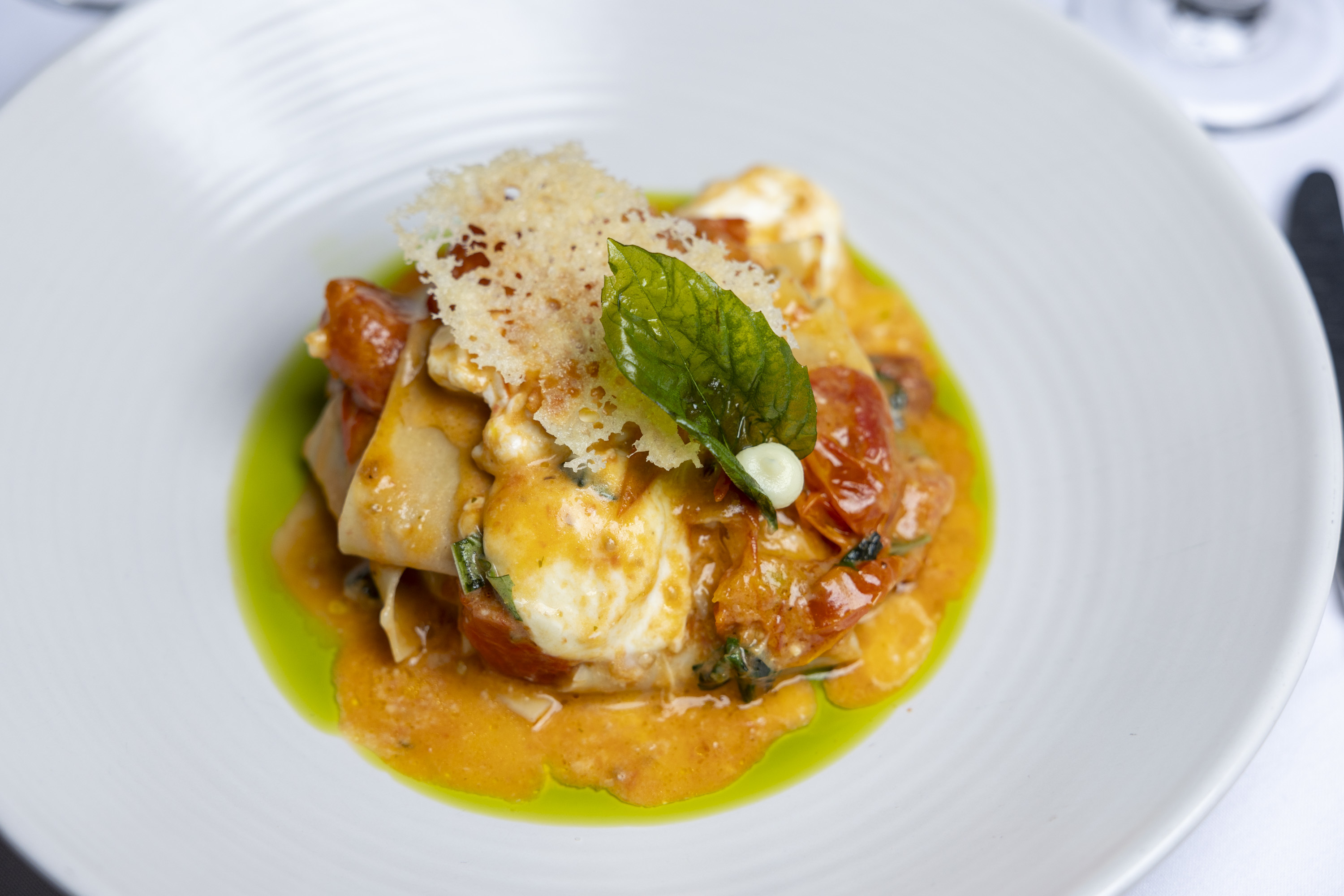
An amazingly juicy pork chop channels South Philly swagger with zesty banana peppers added to its white wine sauce, alongside plump caper berries. Filet mignon, a plush cut I almost never order over less tender but more flavorful steaks, rises here on a rich Barolo wine sauce infused with juniper and rosemary. The veal Milanese, meanwhile, whose breadcrumbs are pounded directly into the meat, is superbly crisped before it’s topped with a juicy fresh salad of tomatoes and red onions. A pappardelle special was all about showcasing fresh burrata chunks that wept a lush milkiness into the juices of lightly roasted cherry tomatoes to form their own kind of tangy orange sauce.
The pappardelle with burrata and roasted tomatoes at La Famiglia in Philadelphia, Pa., on Thursday, May 28, 2026.Tyger Williams / Staff PhotographerA veal chop is served with porcini sauce at La Famiglia Ristorante.Craig LaBan / Staff
If there was one savory disappointment, it was the puny nuggets of lump crab that came with scallops for the linguine, an uncharacteristic dip in quality for a restaurant that prides itself on luxury.
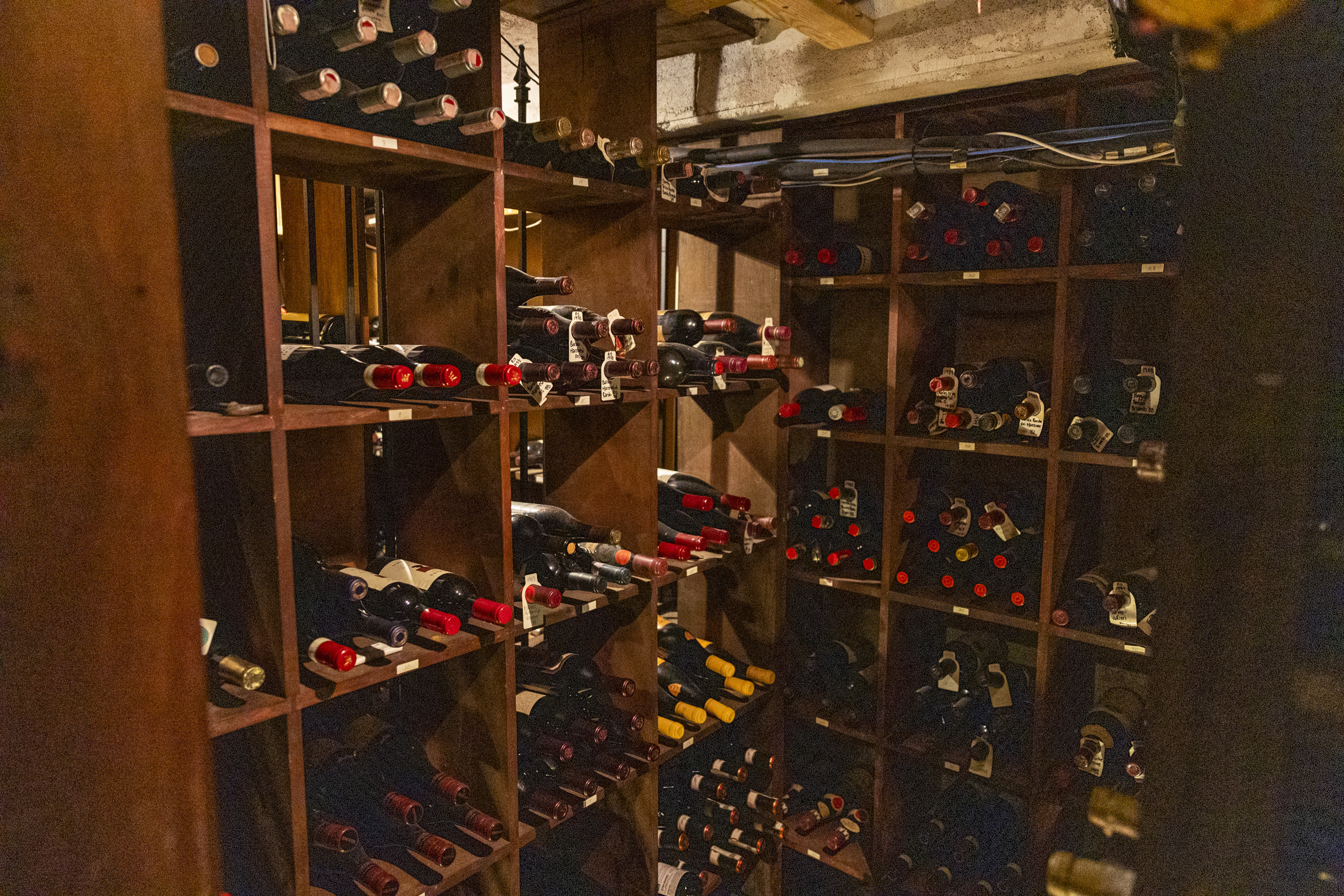
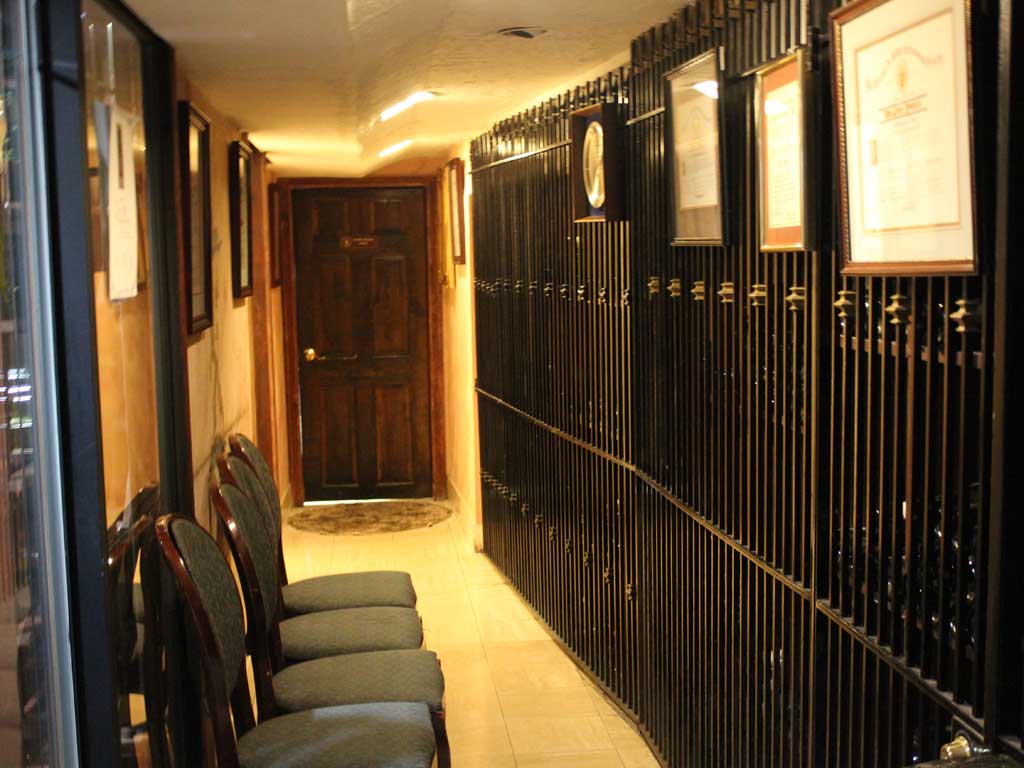
One other gold-plated aspect of La Famiglia that remains steadfastly exceptional is the wine cellar, whose 12,000-plus bottles and 912 selections are kept in the dank chill of temperature- and humidity-controlled cages in the basement. A trip to this subterranean treasure cave is essential, not only since it’s the corridor to the restrooms, but because you can also view illuminated holes in the ground where colonial-era privies were excavated during La Famiglia’s construction in the mid-1970s, a reminder that this address occupies one of the oldest corners of the city.
The downstairs wine cellar at La Famiglia.Tyger Williams / Staff PhotographerCellar at La Famiglia, 8 S. Front St.MICHAEL KLEIN / Philly.com
Decades of collecting and careful preservation have resulted in what is still one of the city’s greatest assemblages of vino, largely Italian but international in scope, from a 1945 Brunello di Montalcino Riserva that had been walled off for protection during WWII, to 19th-century Madeiras, as well as verticals of late-’70s and early-’80s California cabs from Heitz Cellar and Beaulieu Vineyard. The restaurant has increasingly begun offering premium wines by the glass — Barolo and Amarone — as a nod to current drinking trends. (An iPad has also replaced the massive old “wine bible.”)
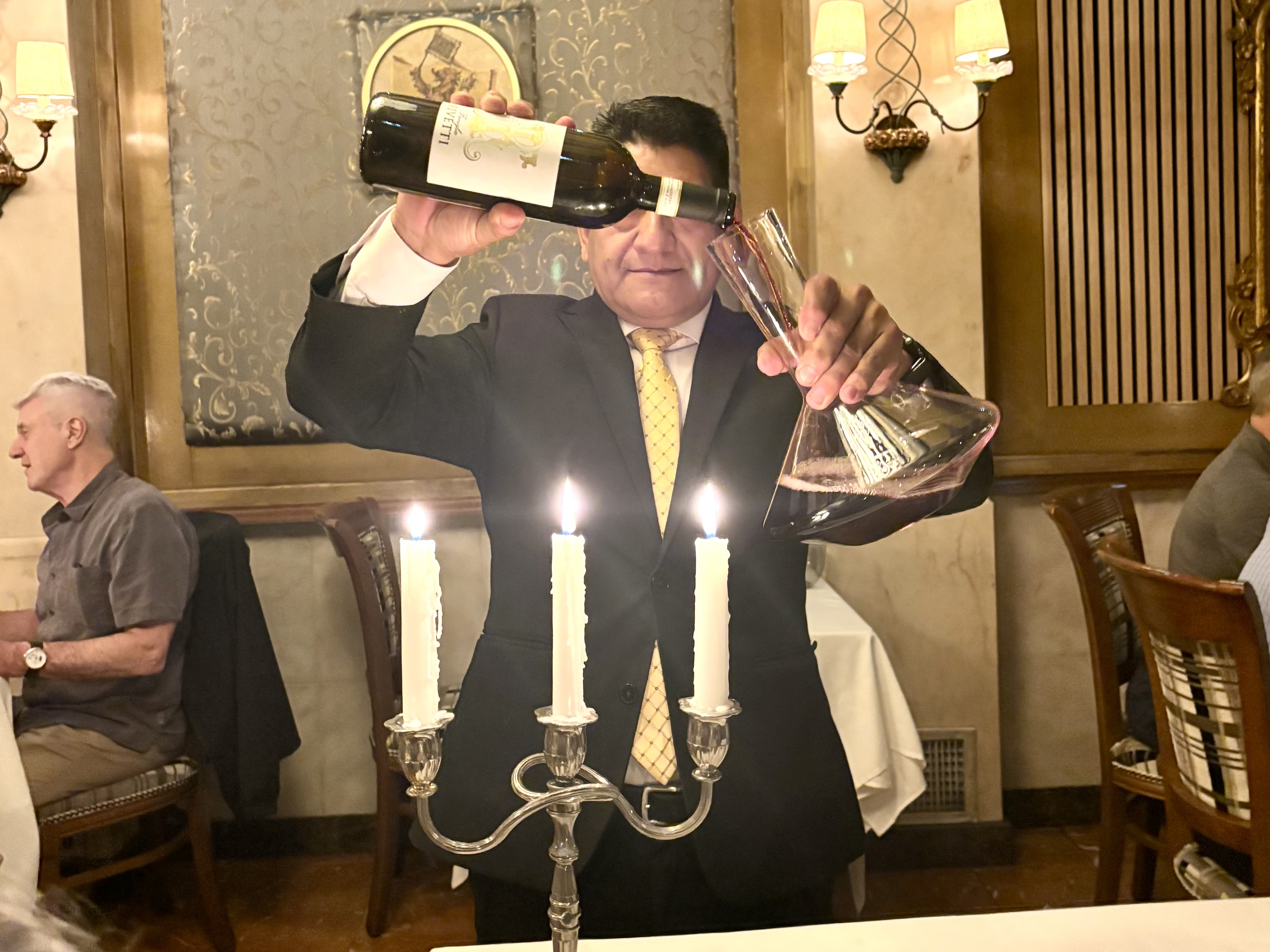
We decided to go all in and indulge in a bottle of Barbaresco. The sky’s the limit there, including the last $4,000 bottle from 1961 that was Angelo Gaja’s first vintage. We didn’t have the time for anything so old to be opened far enough in advance (not to mention the budget), we took maître d’ Jesus “Gaetano” Maldonado’s spot-on suggestion of a 2019 Famiglia Rivetti for $195.
Maître d’ Jesus “Gaetano” Maldonado decants a bottle of Famiglia Rivetti Barbaresco at La Famiglia.Craig LaBan / Staff
After a careful tableside decanting over a flickering candelabra to scout for sediment, the wine was luminous within 15 minutes of touching air, a gorgeously supple red with notes of black cherries, tobacco, rose petals, and spice that boosted the flavors of every dish on our table with a shine of glamour.
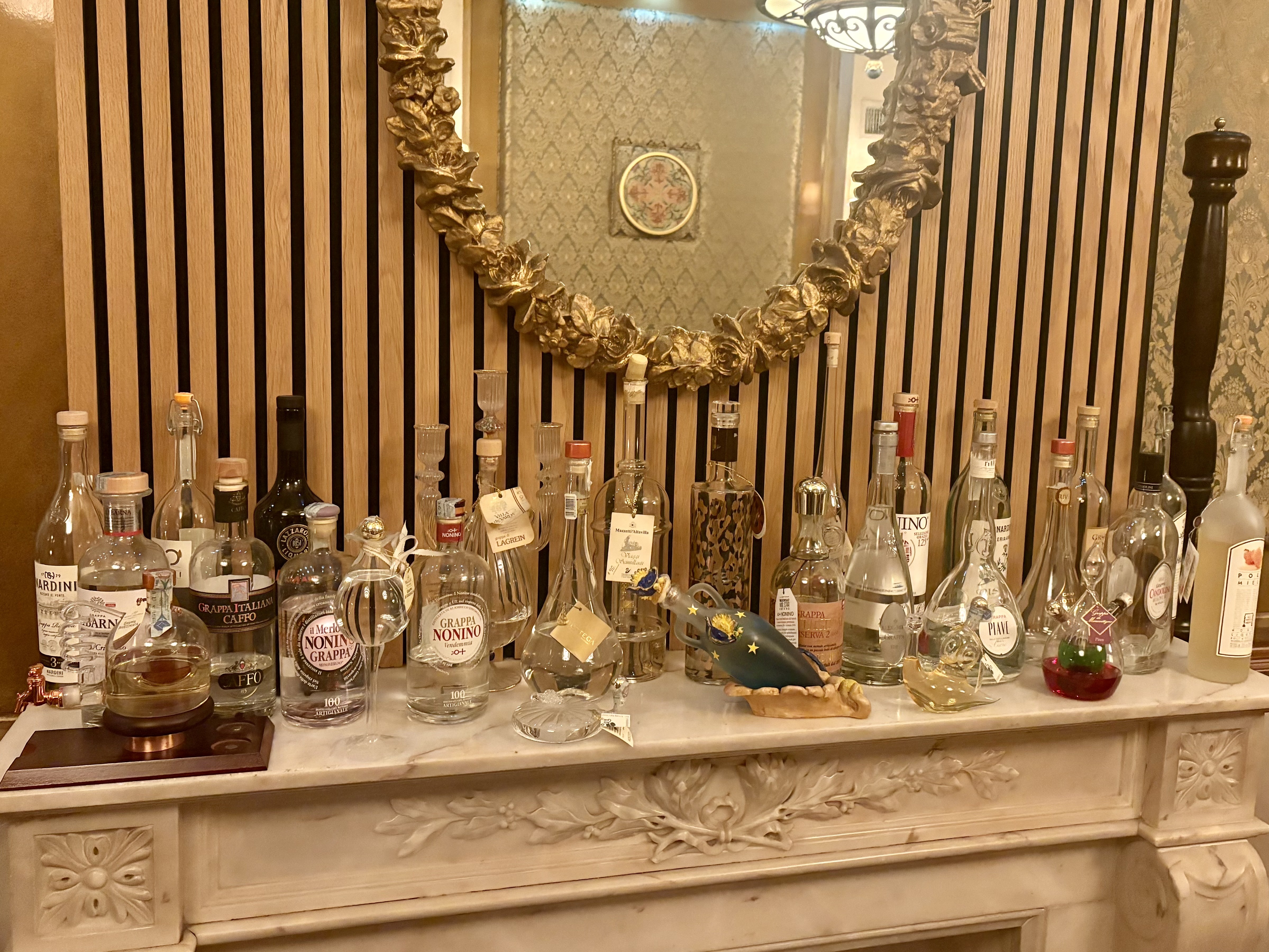
When it comes time for dessert, La Famiglia unfortunately settles for the tiramisu, cheesecake, and cannoli clichés, which were fine but unexciting, and mostly not made in-house. But the ristorante’s alcoholic assets, not surprisingly, offer a beguiling alternative: a collection of nearly three dozen rare grappa bottles beckon from a marble fireplace mantel. I sipped a little snifter of the clear and fruity brandy, an aged Rossi d’Asiago Dal Toso Elegance made from five different grapes, and it warmed my gullet and flooded my mind with a glow of contentment that felt like a forgotten pleasure. Decadent. Out of fashion. But undoubtedly still beautiful, not unlike eating at La Famiglia itself.
More than two dozen grappas line the fireplace mantel at La Famiglia Ristorante.Craig LaBan / Staff
La Famiglia Ristorante
8 S. Front St., Philadelphia, Pa. 19106, 215-922-2803;lafamiglia.com
Dinner Tuesday through Saturday, 5 to 9:30 p.m.
Entrees, $25-$75. Gluten-free pasta available.
The dining room is not wheelchair accessible, except with the assistance “of two strong guys.” The bathrooms, however, are located downstairs and completely inaccessible to wheelchairs.
Menu Highlights Arancini; crocchette di patate; vitello tonnato; tortino di melanzane; penne alla Famiglia; ravioli with burrata in eggplant cream; tuna with heirloom tomato sauce; veal chop with porcini sauce; pork chop with banana pepper-caper berry sauce; whole branzino in salt crust.
Drinks Italian-themed cocktails are a solid start to the meal, but the legendary wine cellar is the main attraction, a 12,000-bottle collection offering some of the world’s most famous Italian, French, and American producers. While the bottles (priced with generous mark-ups) tend to suit big spenders, La Famiglia’s much improved collection of wines by the glass, with choices under $20 along with more premium options hovering below $30, keep quality sipping within reach.
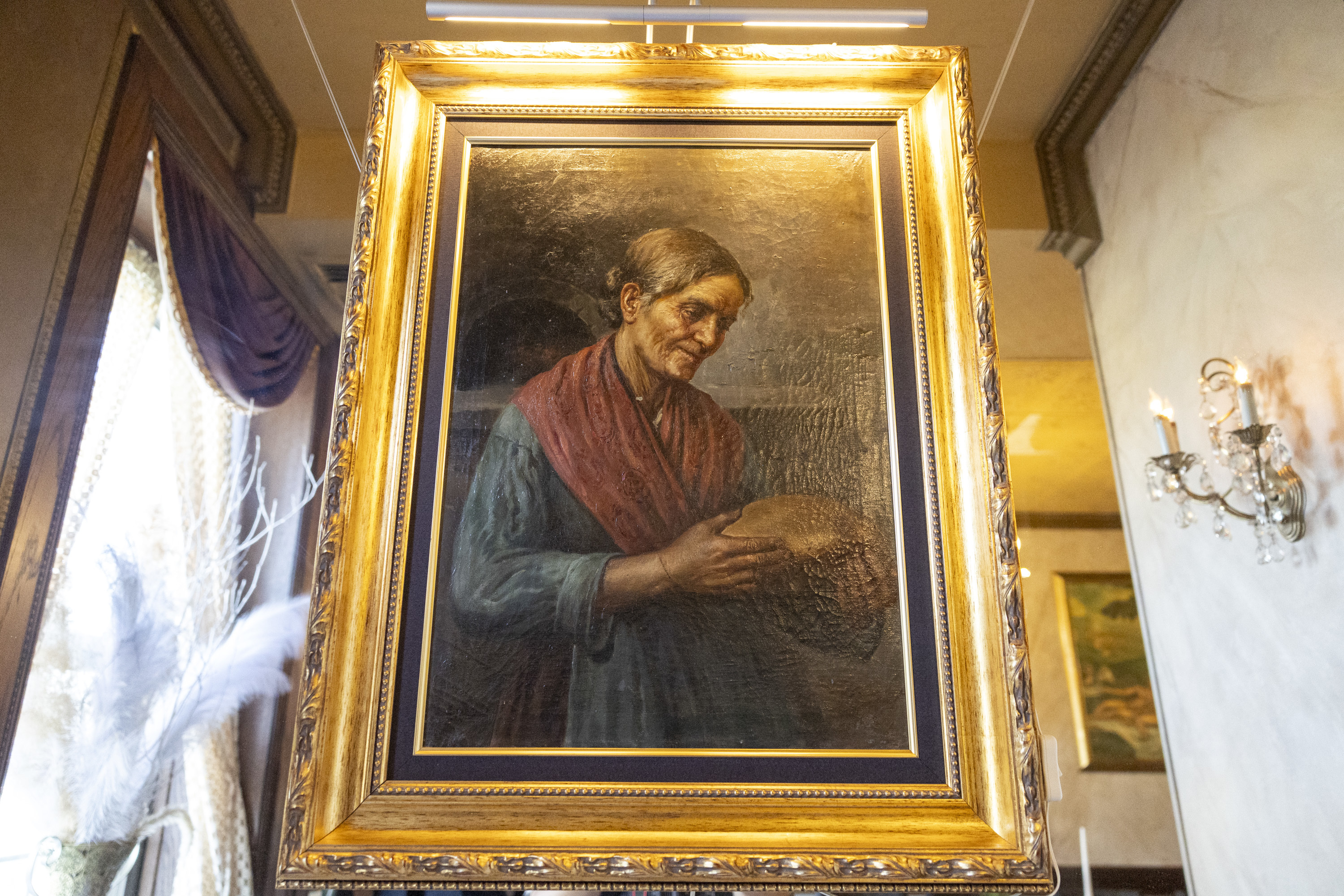
A painting of Giuseppe Sena’s great-grandmother Rachele Labbiento, seen upstairs in the event space and large dining area at La Famiglia.Tyger Williams / Staff Photographer
James Develin was raised in Gilbertsville, Pa., on the voice of Merrill Reese and the mystique of Brian Dawkins, “Weapon X.” But in the wake of Super Bowl LII on Feb. 4, 2018, he felt sad.
There was good reason for this. The fullback was in his sixth season with the New England Patriots. He’d won two Lombardi trophies, in the 2014 and 2016 seasons, and was eager to add a third.
But the Eagles were a team possessed. They were dominant in the trenches. Bursts of offense came from unlikely contributors. Backup quarterback Nick Foles had the game of his life.
Develin returned home a few days later to a barrage of clips from the Super Bowl parade. Hoagie shops started selling sandwiches called “Philly Special” and “Philly Philly.”
Every Wawa had championship T-shirts on display. Develin couldn’t even get his coffee without being reminded of the worst loss of his career.
“Losing that one … you were so close, and now you know exactly what the Eagles are enjoying,” Develin said. “And you’re home, watching them doing it, right outside your front door. Man, that was tough.”
Life has gotten easier since then. Develin retired in 2020, but won a third Super Bowl with New England before that. He began to pursue a career in business.
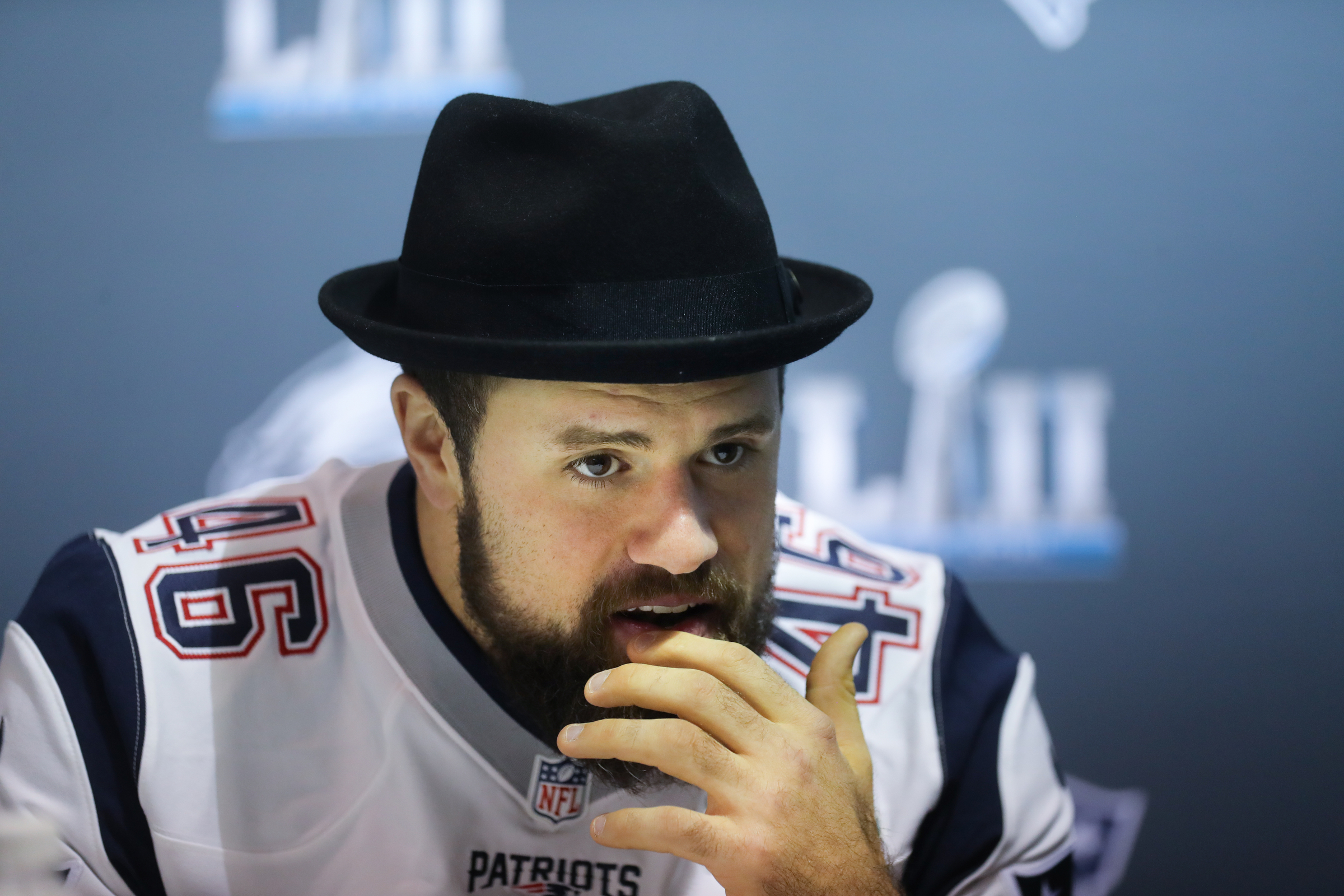
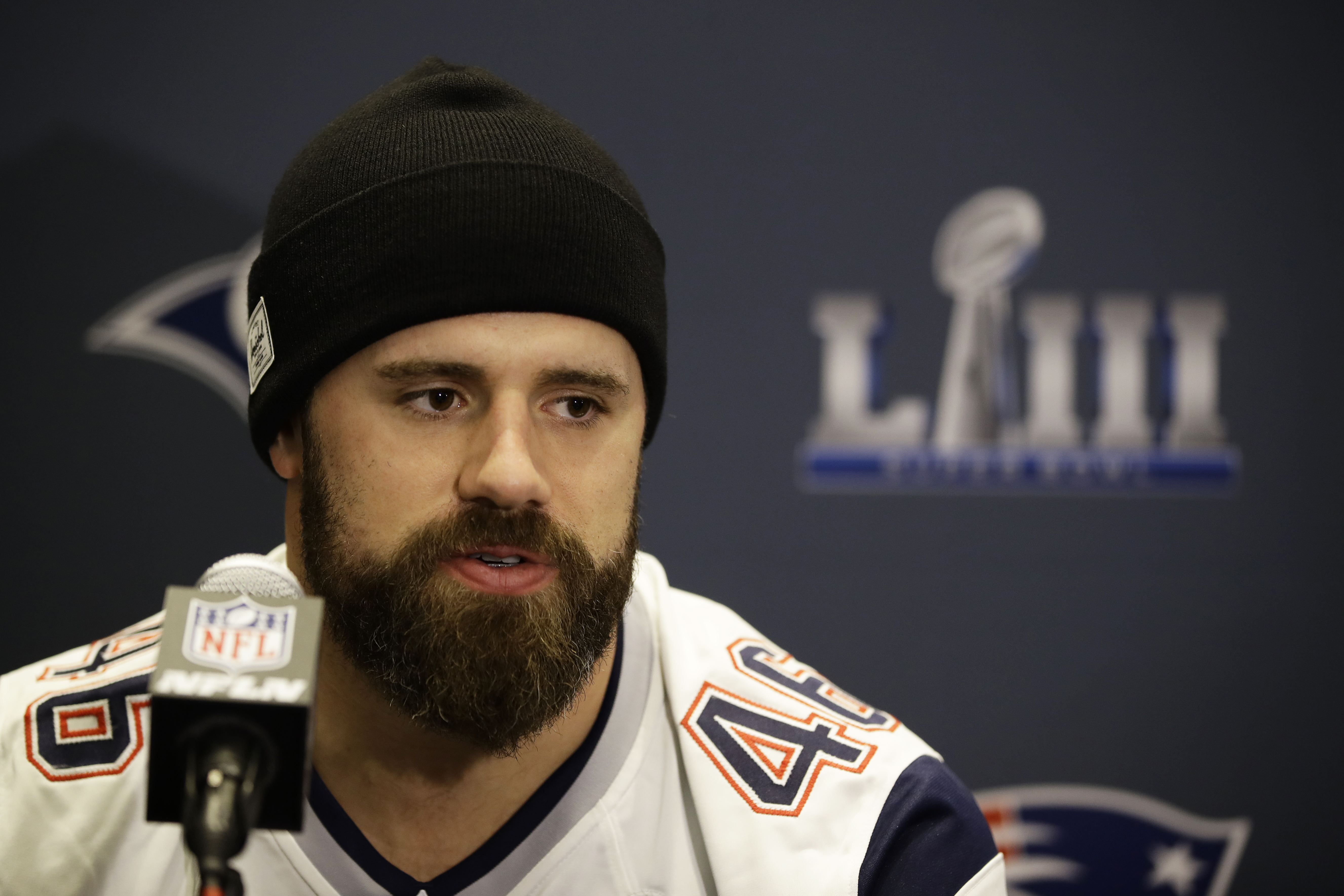
James Develin, pictured at a news conference days before his Patriots’ Super Bowl LII loss to the Eagles. David Swanson / Staff Photographer
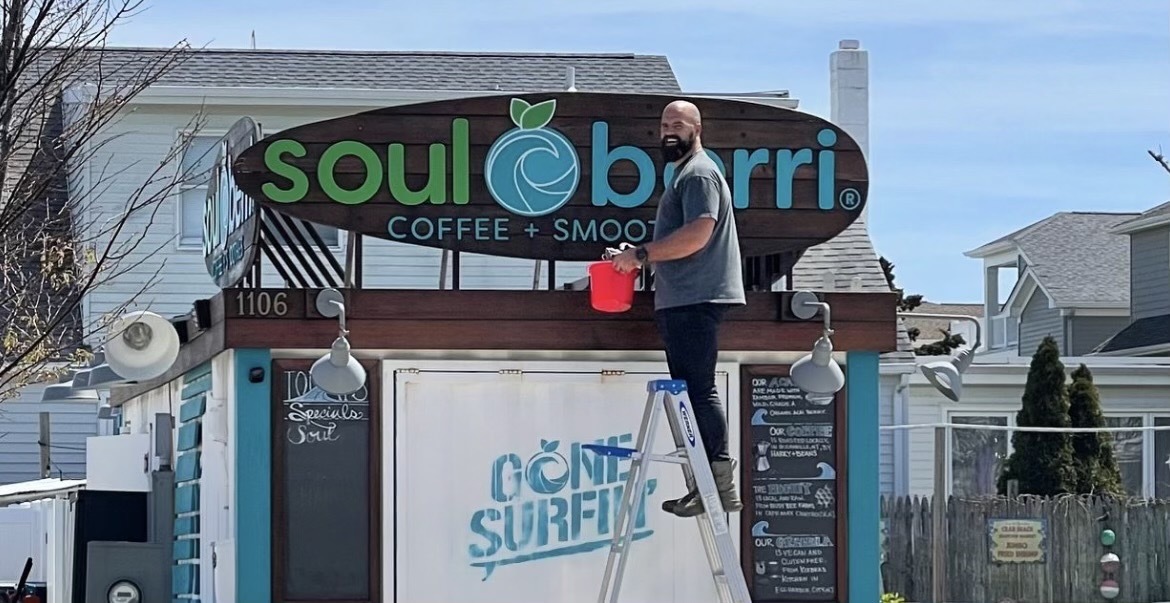
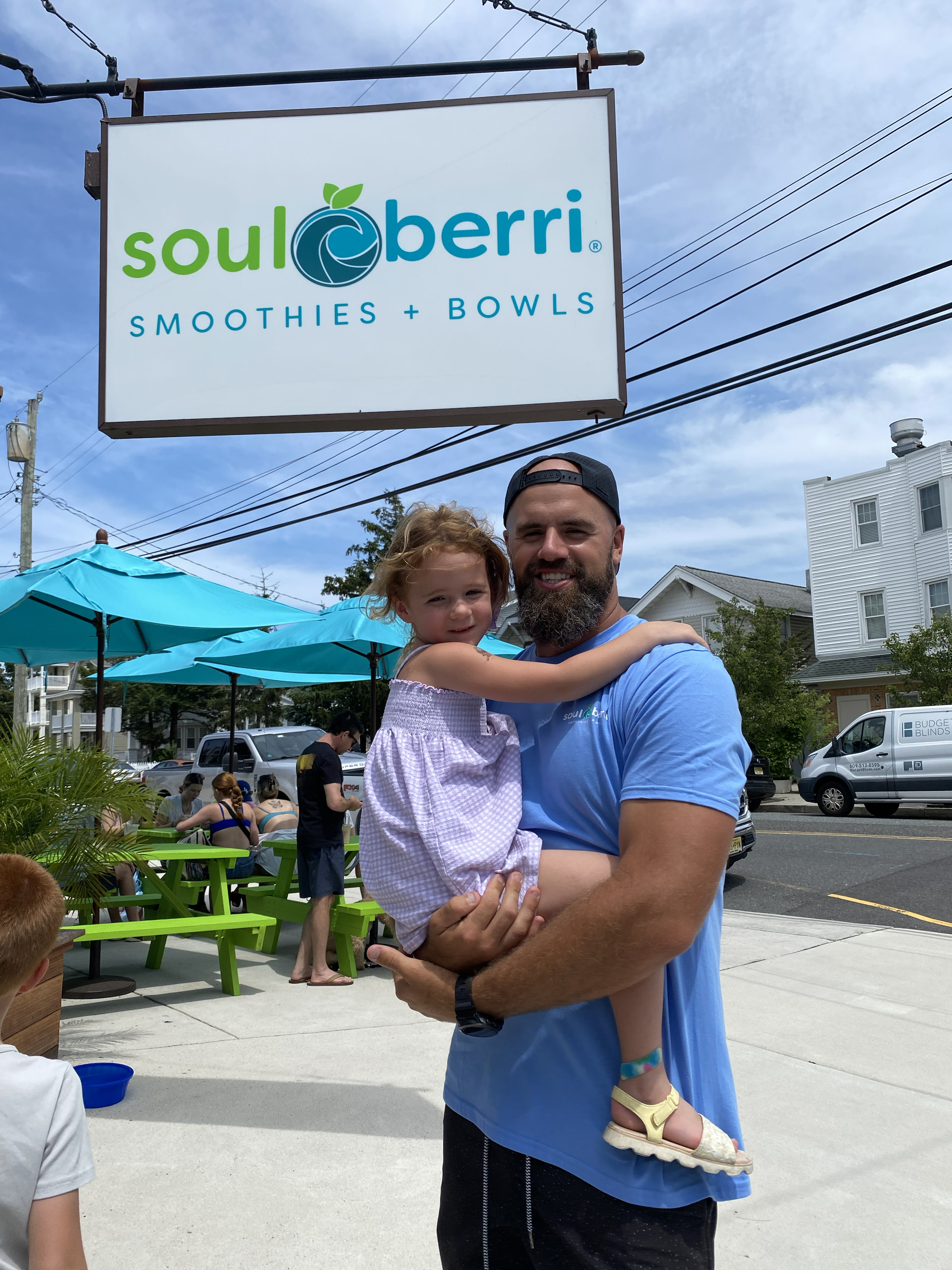
He and his wife, Jenny, grew up together and decided to stay in the area. They moved to Collegeville and got a place down the Shore. In 2021, Develin purchased Soulberri, a smoothie shop in Brigantine where he was a frequent customer.
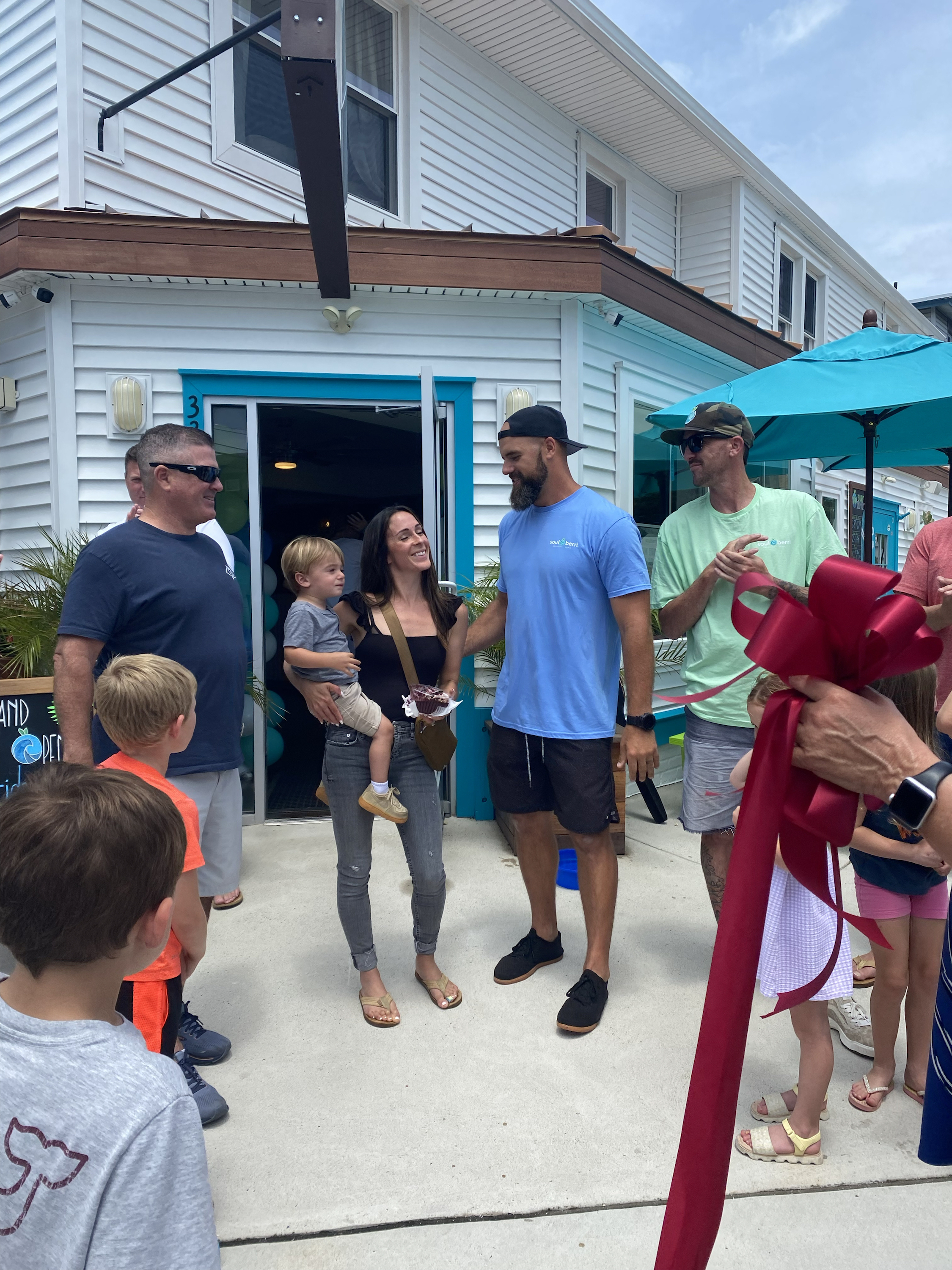
The longtime Patriot is not your typical athlete-turned-entrepreneur. During the summer, he’s at Soulberri every day. When Develin added a location in Ocean City in 2023, it was he and general manager Ryan Bonanni who built it from the ground up.
Develin handles payroll. He sands and stains mahogany wood benches. He plants flowers and paintswalls.There is no task too small for the former fullback.
“He doesn’t like to sit around,” said Bonanni. “He’s hands on.”
It has been an interesting and atypical career path, one that is not short on irony.Eight years after Super Bowl LII,Develin is selling açai bowls and dairy-free ice cream to people who actively rooted against him.
But the former Patriot has embraced this.
“Every once in a while, someone driving yells, ‘Go Birds,’ or something,” he said. “And it could be anybody. Because 90% of the area is Eagles fans.
“And I have no qualms with that. I understand what it’s like being an Eagles fan. So I am all for it.”
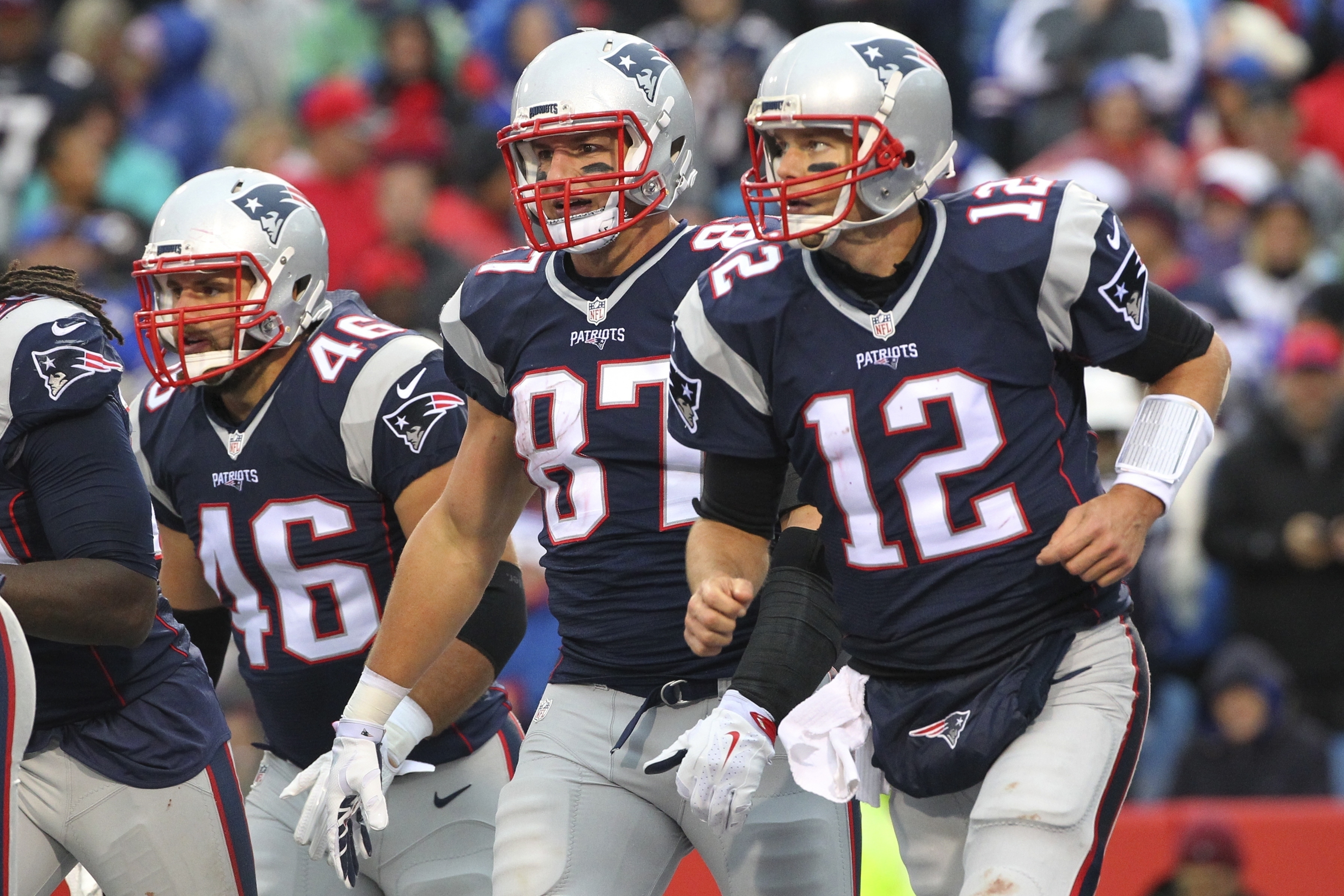
James Develin (46) played alongside some of the biggest NFL stars of his era including Rob Gronkowski (87) and Tom Brady (12). Bill Wippert
From ‘hating’ Tom Brady to becoming teammates
It was not long ago that Develin was one of those fans.
He says he can still remember picking up hoagies on Sunday afternoons as 94.1 WIP hummed in the background. Develin’s father, Jim, lived and died with every snap, and passed his unbridled enthusiasm on to his kids.
James Jr. started following the team in the early 2000s, a successful era of Eagles football. He gravitated to the ruthlessness of Jeremiah Trotter, the dynamism of Brian Westbrook, the passion of Dawkins.
He also experienced the heartbreak. Develin was 16 years old when the Eagles made it to their second Super Bowl during the 2004 season, against none other than the Patriots. He was in his friend’s basement in Gilbertsville, watching it on a big-screen TV with some neighbors.
Develin described the aftermath as a “somber scene.”
“That game was a tough one, because it was somewhat close, and in the end, in typical Eagles fashion, they would just kind of break your heart,” Develin said. “McNabb’s throwing up. T.O comes back on the broken leg. You just wanted them to do it, but they didn’t quite have enough ammo in the gun.”
He added: “I was hating on Tom Brady and the Patriots so bad.”
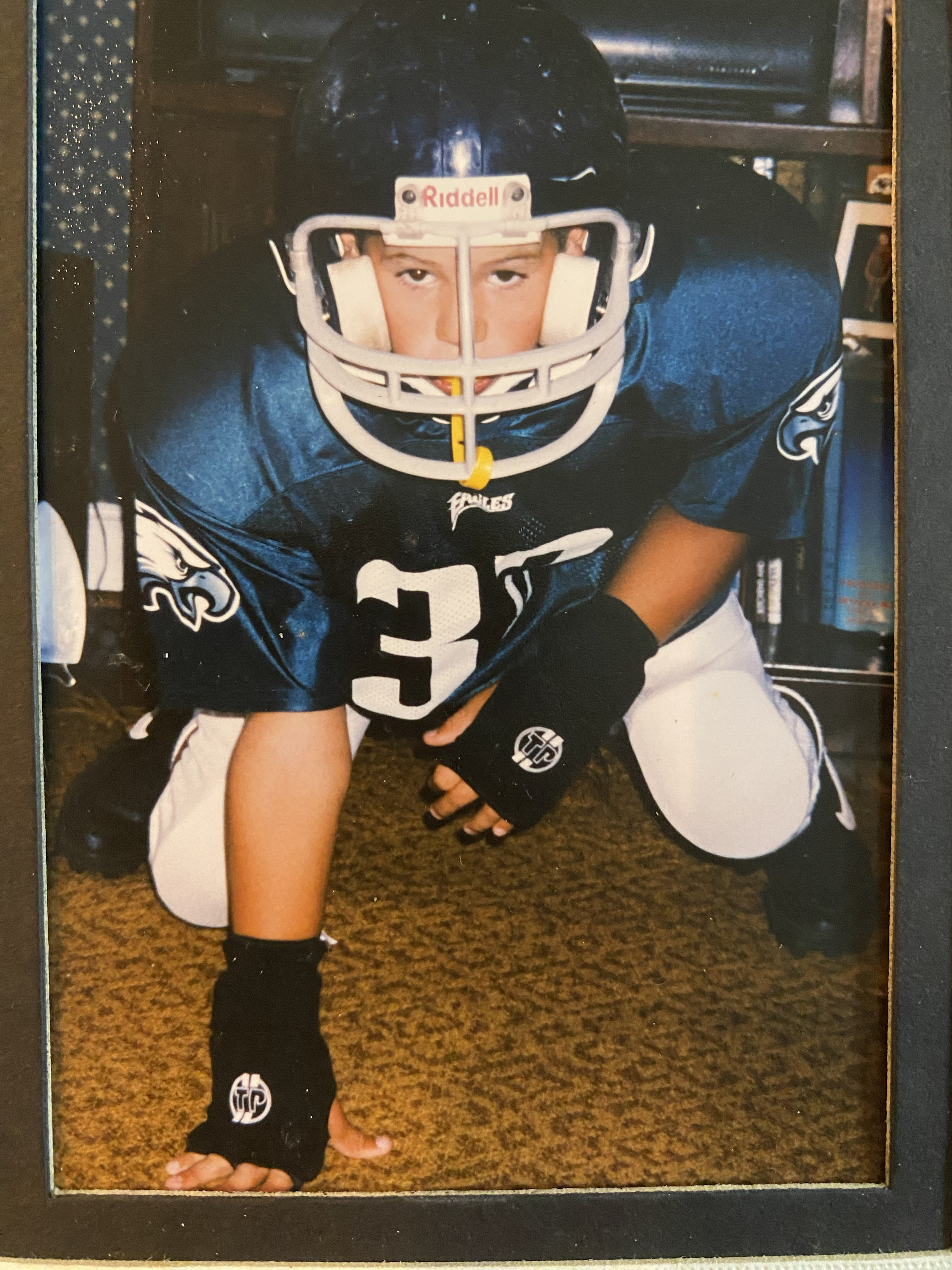
James Develin rooted for the Eagles as a youth in Gilbertsville. courtesy of James Develin
After graduating from Boyertown High School in 2006, Develin attended Brown University, where he studied mechanical engineering. He played football all four years, primarily as a defensive lineman, and had success — but not enough to attract NFL attention.
Nevertheless, Develin was itching to stay in the game. The Ivy League alum had few resources to do so. No teams or agents reached out initially; Jim Ulrich of Enter-Sports Management eventually did, in late 2009, and brought Develin on as a client.
The Cleveland Browns invited him to a tryout ahead of rookie minicamp in the spring of 2010, but he was quickly cut.
Not long after that, Ulrich reached out to longtime former Cowboys scout Jim Garrett, who lived in Monmouth County, N.J., and was the father of then-Cowboys assistant Jason Garrett. Ulrich asked if Develin could have a workout.
The Eagles-loving Develin family had mixed feelings about this.
“I remember my dad making a comment, like, ‘Man, I want you to succeed, I want you to get in the NFL, but if it’s the Cowboys … man, that might be a tough sell,’” Develin recalled.
But Develin’s first gig in professional football would come not with Dallas but the Yard Dogs of the Arena Football League, a team that paid $200 per week ($400 for active players).
Develin lasted just over a month, playing in only one game in 2010. Later that year, he tried out for the Florida Tuskers of the United Football League, and earned a spot as a backup fullback, a position he’d never played with regularity.
The team’s starting fullback developed vertigo, and all of a sudden, the rookie found himself playing every week. NFL teams began to call.
He bounced around practice squads, from the Cincinnati Bengals in 2010 and 2011, to the Patriots in 2012, before finding a permanent home in New England.
James Develin would develop into an NFL veteran and win multiple Super Bowls at a position he had never played before becoming a pro. Matt Rourke / AP
By 2013, Develin was appearing in every game. He was now teammates with the quarterback he derided from a Gilbertsville basement in 2004, and realized that Brady wasn’t a “cry baby,” like he’d originally thought.
“When I got there in 2012, I was a practice squad guy,” Develin said. “I had a tumultuous journey, playing in two different leagues, changing my position, and doing the whole thing. He didn’t know me from anybody.
“I could have been there one day, and gone the next. But he gave me the time of day, introduced himself, and said, ‘Hey, we’re happy to have you.’”
The Patriots re-signed him in the summer of 2015. By 2018, Develin had a Pro Bowl appearance, 81 regular-season games and 10 playoff games behind him.
When it became apparent that Philadelphia would be his opponent in the Super Bowl, his heart sank.
“I was like, ‘Are you kidding me?’” Develin said. “Do I have to play the team I grew up idolizing?’”
The Develins had about 30 family members in attendance at U.S. Bank Stadium in Minneapolis. James was able to get tickets, but so was Jenny, who had a cousin who worked for the Eagles at the time.
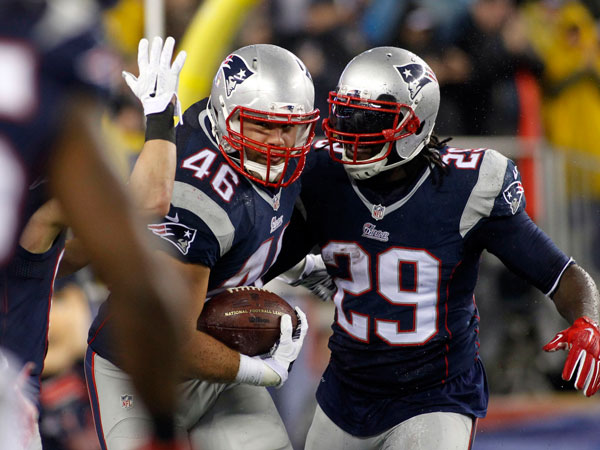
James Develin (46, with future Eagle LeGarrette Blount) played in 97 NFL games (regular season and playoffs) across seven seasons.
They were not all donning Patriots gear. The fullback estimated that of the group of 30, about 25 people were in green and white. Some tried to be diplomatic.
“There were a couple cousins who wouldn’t wear Pats stuff, but they didn’t want to wear Eagles stuff to disrespect me, so they’d wear my college jersey,” he said. “The only person to ever wear a Brown University jersey to an NFL game.”
In the first quarter, after the Eagles went up 3-0, the Patriots started driving down the field. They had second-and-4 from the Eagles’ 8-yard line, and Develin was tasked with blocking Nigel Bradham.
He’d blocked Bradham before, when Bradham was with the Buffalo Bills, and felt confident he’d be able to do it again. But on this night, the linebacker was more explosive than ever.
Bradham beat Develin across his face and tackled running back James White for no gain. It’s a moment the Gilbertsville native thinks about often. If he’d made that block, perhaps the Patriots wouldn’t have had to settle for a field goal.
“Man, if I had just made that block, would it all have been different?” he mused. “Would I have had to sit around and watch Jason Kelce’s Mummers speech for the next two months?
“It is such a such an Eagles fan thing to happen. I had a front-row seat to them winning their first one, but I’ll never be able to really enjoy it, because it was at my expense.”
James Develin and his family became business owners in Brigantine and expanded the operation to Ocean City. courtesy of James Develin
A ‘little haven’ in Brigantine
After Develin retired in early 2020, he decided to take a year off. He enrolled in business classes through the NFLPA, and eventually ended up working for the players’ trust, as a liaison between the union and its members.
He and Jenny and their four kids spent the pandemic at their Shore house in Brigantine. They fell in love with the quiet beach town. It wasn’t too congested, even during summer holidays.
Life was simpler, almost by necessity; Develin said there was “pretty much one of everything” on the island.
“It became our little haven,” he said. “I just fell in love with the speed of life down there. Even in the winter, going down there, and just the small-town feel.”
A mutual friend introduced Develin to the owner of Soulberri, Will White, who was looking to sell the business. Develin bought it in October of 2021, and dove right in.
The cadence was completely different from what Develin was used to. Instead of getting ready for minicamp in the spring, and training camp in the summer, he was now on Soulberri time, figuring out when to apply for a mercantile license, and pay for insurance.
James Develin (second from right) has rekindled his Eagles fandom despite his Patriots connection. courtesy of James Develin
But he was a quick study, and made it clear that he was willing to learn. Even before Develin became owner, he had one of Soulberri’s long-tenured employees give him a tutorial.
She walked him through every station, from washing the dishes, to filling the blender, to topping off the açai bowls. It was a busy weekend, but the former fullback wanted to try a shift himself.
So he got behind the counter, and worked for a few hours.
“It was chaotic,” he said. “I didn’t know the recipes, so I felt like I was holding everything up. But I started to get the hang of it.”
Every now and then, locals will ask if he’s the “football player,” but it doesn’t come up often. And now that Develin is back in the area, he has rekindled his Eagles fandom.
His kids wear their father’s jersey, but also Dawkins’ and Reggie White’s. They’ve watched “Weapon X” highlights over bowls of cereal.
Now that Develin has more free time, he is teaching them the unabridged history of the franchise, including “deep cuts” like former quarterbacks Ty and Koy Detmer.
“So they understand that it wasn’t always the Eagles going to Super Bowls,” he said. “There were a lot of lean years, too. But we’ve had good players, so respect the team and understand what your fanhood means.
“I loved growing up here. That’s why I came back here. That’s why I want to raise my kids around here. Even though I won a lot of games as a Patriot, I still have a lot of respect and loyalty to this area.”
As a general rule, Sam Marshall is not used to drawing a crowd.
At 70 years old, with glasses and a plop of silver hair, the Haverford grandfather is a semiretired regulatory lawyer with a fondness for trains and the print version of the Wall Street Journal.
Yet, there he was last month, at a wedding in Big Sky, Mont., loitering near the dance floor when a young woman approached.
“You’re famous!” she said.
Before Marshall could respond, the woman was grabbing her friends and pulling them over.
“Hey!” she called out. “This is the guy from that group we follow!”
Such is life these days for the Tonics, a men’s a cappella group made up largely of Main Line fathers and grandfathers who might very well be the city’s hottest musical act.
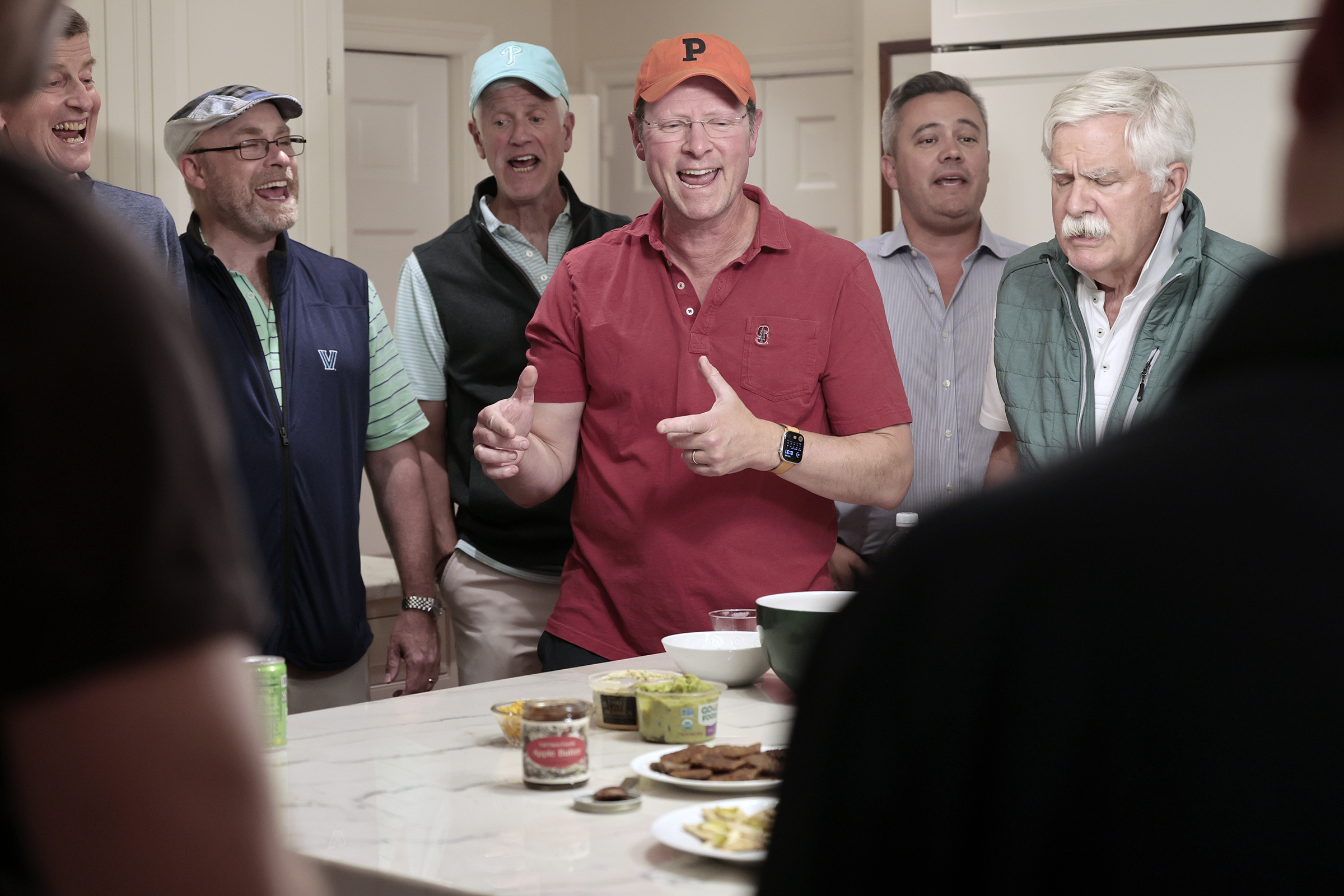
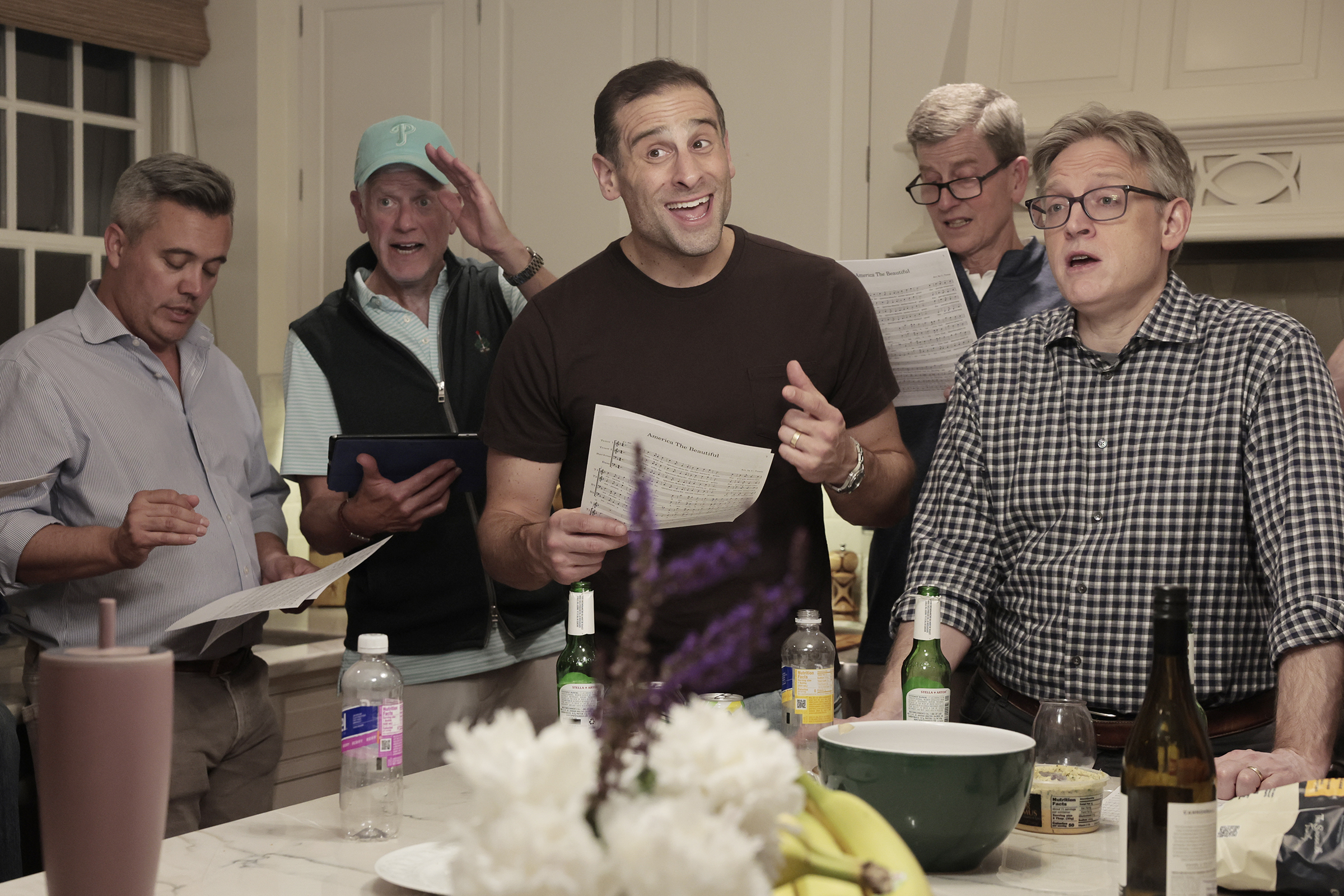
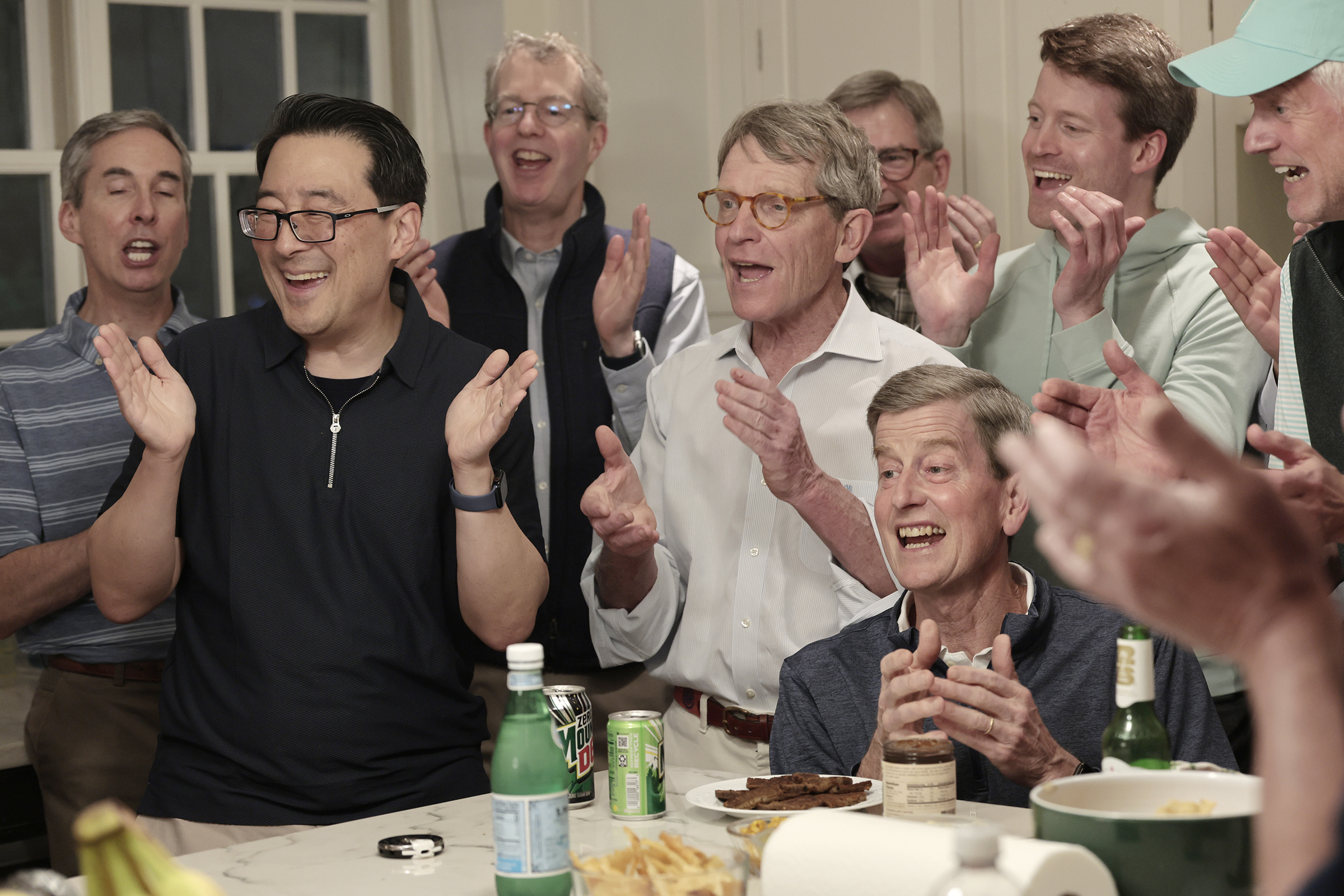
Since videos of the group’s endearing kitchen rehearsal performances began circulating on social media recently — racking up millions of views — no one can seem to get enough of Philly’s a ca-fellas.
In the comments section of their videos, the Tonics’ most ardent fans break down everything from their impressive hairlines to their choice of rehearsal snacks.
Elizabeth Robertson / Staff Photographer
Online, the Tonics are putting up kittens-doing-cute-things numbers: 2.9 million Instagram views for a rousing rendition of “Lean on Me”; 4.1 million for a performance of “Werewolves of London.”
Supermodel Gigi Hadid is a fan. The singer Michael Bublé responded to their rendition of his song “Haven’t Met You Yet” with a string of heart emoji.
So meteoric has been their rise, meanwhile, that they’ve broken U.S. containment.
“Evidently,” says Mike Reese, a 46-year-old Wayne resident who sings second tenor for the group, “we’re very popular in Australia.”
The appeal is undeniable; in a digital world where every piece of content seems carefully curated, the Tonics have remained their unassuming selves.
Of the group’s 19 members, most are middle-aged and older — with full-time careers as doctors, lawyers, and educators. Their collective look — an assortment of khaki slacks, quarter-zip sweaters, and sensible loafers — might best be described as CPA chic. It is not uncommon, meanwhile, for one of the group’s members to pull a handkerchief from his pocket mid-performance and blow his nose.
During a Saturday afternoon performance at a restaurant in Wayne last month — where even the waitstaff couldn’t help clapping along — supporters clamored to make clear they’d been fans before the group’s mainstream success.
“I have all of their CDs,” said a woman named Esther, from her perch at the bar. “I put them on when I’m paying bills.”
Unlike many of their musical contemporaries, the Tonics did not set out for musical stardom.
Back in 1990, a couple of them — who’d previously been part of a cappella groups and missed the camaraderie — got to thinking: Why not get some guys together and do a little jamming?
They began meeting every Thursday night, rotating between members’ homes, where for two hours they could leave their stresses — family responsibilities, demanding careers — at the door and enjoy a little old-fashioned harmonizing with the boys.
“There’s something very spiritual that happens when you’re standing in a group and singing a song, making harmony together,” says Peter Evans, one of the group’s original eight members.
It wasn’t long before they were movin’ and snappin’ their way into the hearts of the masses — or at least the occasional graduation party, bat mitzvah, and assisted-living facility.
Through the years, they managed to achieve a modicum of local renown. They performed “The Star-Spangled Banner” at Phillies games. They recorded four studio albums. A catalog of their music — covers of hits spanning the decades — is available to stream on Spotify and Apple Music.
It wasn’t until earlier this year, however, that things started to get a ca-crazy.
Youngmoo Kim (right) serves as the Tonics’ music director and de facto social media manager. Elizabeth Robertson / Staff Photographer
The Tonics’ crescendo
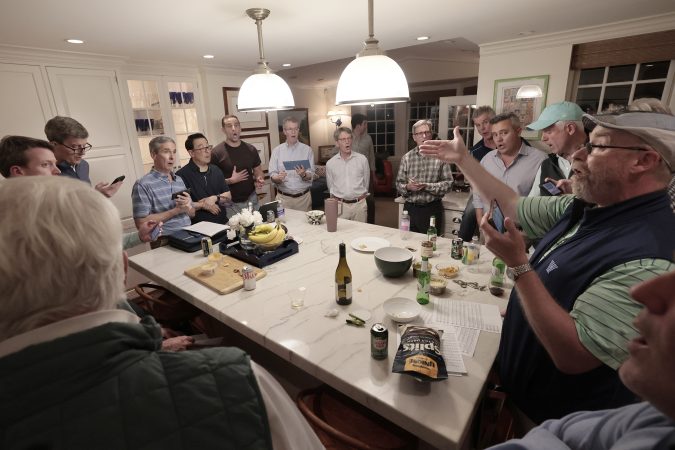
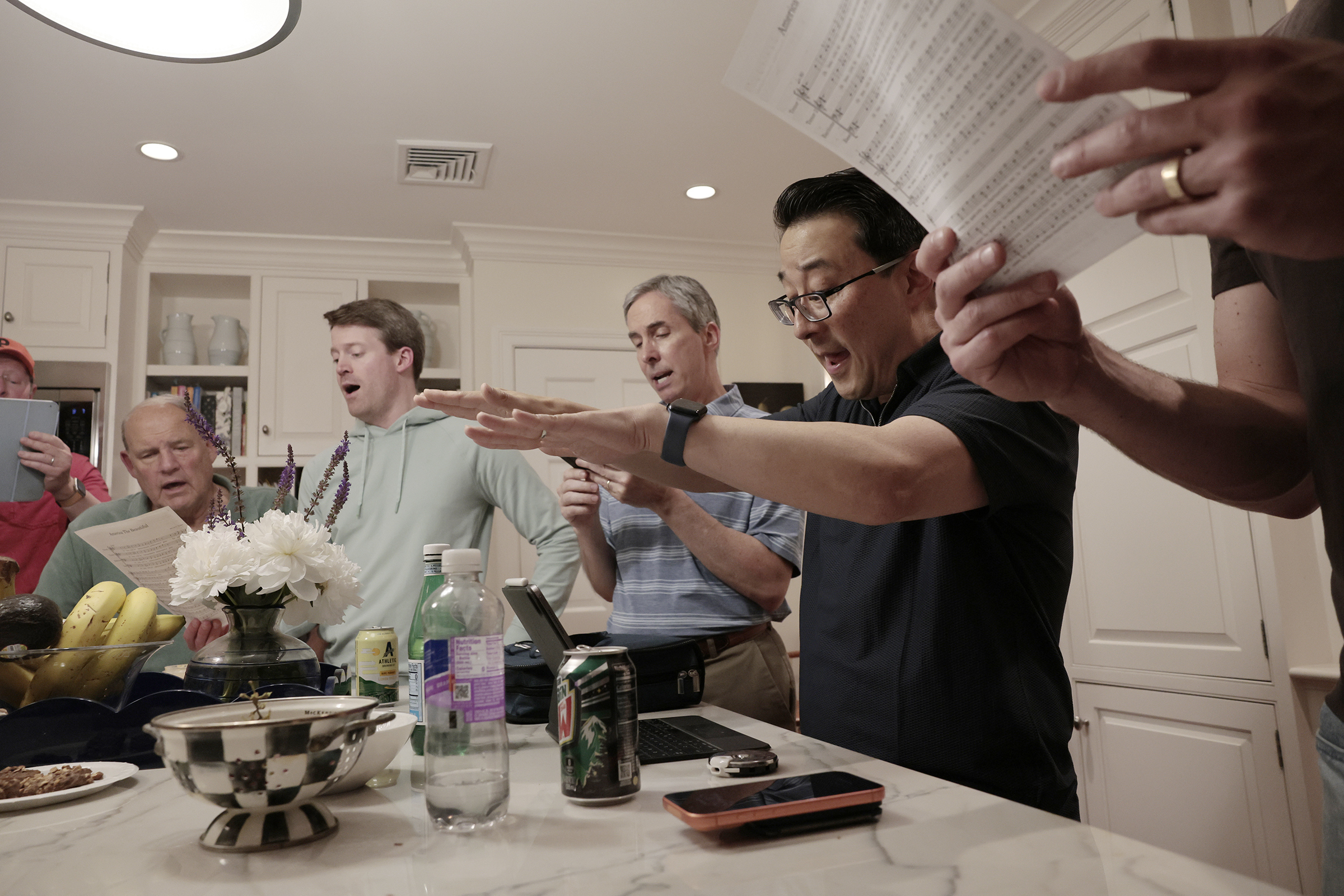
During a rehearsal one evening last November, the group’s members stood around a well-appointed kitchen island, belting out a rendition of “Drift Away.” Someone captured a short video of the performance, and afterward, Youngmoo Kim — the Tonics’ 53-year-old music director — posted it to the group’s sparsely followed Instagram page, thinking little of it.
Maybe it was their wholesome vibe. Or the earnestness of their instrument-less performance.
Maybe, at a time when adult males — especially those over 50 — report feeling increasingly lonely, it was simply the novelty of a group of men gathering to do something that didn’t involve “golf and cigars and bourbon,” says Philip Pearson, a 57-year-old Tonic from Chestnut Hill.
“To be able to carve out a couple hours to do something special with a bunch of guys you like to hang out with is a pretty special thing these days,” adds Reese.
Whatever the reason, the Tonics struck a chord.
When Kim checked the group’s Instagram page a few days later, he was astounded.
“I’m used to seeing 300 views,” he says. “All of a sudden, it was 300,000.”
The majority of the group’s 19 members were part of college a cappella groups, including several who performed with the renowned Tigertones at Princeton University. As for the viral success? “We have no idea why this happened,” said Philip Pearson, a longtime member of the Tonics. Elizabeth Robertson / Staff Photographer
More videos followed, and soon, Instagram feeds across the world were filling with a dozen or so middle-aged guys from the Philadelphia area cutting loose around a kitchen island — their impassioned performances rivaled only by the stream of good-natured jokes that accompanied them.
“Room full of good credit,” read one comment on Instagram.
“A case of sparkling water hates to see these fellas coming,” read another.
“I just know they have a [favorite] length of grass.”
These days, everyone’s jockeying for a piece of the Tonics.
There were the folks from North Carolina who wanted to book the group for a summer wedding. And the woman from Chicago who begged the group to record a “Happy Birthday” video for her fiancé, a huge fan. (The Tonics — whose performance fee ranges from free dinner to $1,000 — agreed, but only after ensuring they weren’t being pranked.)
There have been collaboration requests and brand partnership offers, including one — much to the confusion of the group’s members — from a company selling skinny jeans.
“You’ve seen our shapes — our shapes are not all great,” says Jim Buck, 66, of Bryn Mawr, a cofounder of the Tonics. “But if they’re really looking to appeal to a bunch of 40-to-70-year-olds, then we’re your guys.”
In addition to serving as the Tonics’ beatboxer, Ed Glassman (center) is a teacher at Springside Chestnut Hill Academy. When the group went viral recently, his students didn’t miss a beat. “It was a full day where every kid that came up to me that day had seen that video,” Glassman said. “They were having a good time with it.”Elizabeth Robertson / Staff Photographer
Their future
The Tonics, of course, would not be the first band to succumb to the pressures and temptations that accompany overnight fame.
But while there has been the occasional sign of their newfound stature — “I do notice that maybe people comb their hair a little more before rehearsal,” says Marshall — the group’s members insist that they have remained cool and levelheaded about the whole thing.
Indeed, at a recent Thursday night rehearsal in a leafy Haverford neighborhood, there were no signs of swollen heads or raging egos. As they trickled in, the group’s members mingled and backslapped. They picked from an assortment of snacks — a family-size box of Triscuit crackers, some Di Bruno’s-sourced cheeses — and hammed it up in that uniquely suburban-dad kind of way.
“We got a photographer here tonight,” someone quipped. “Don’t pick your nose!”
“Bad-lookin’ guys in the back!” called another.
On this night, however, there was plenty to do. There was their suddenly packed calendar of gigs to prepare for — at the Woodmere Art Museum, the Wayne Music Festival, the Philadelphia Cricket Club.
And their forthcoming live performance on Australia’s The Morning Show.
And so, as the evening sunlight dwindled and the diet soft drinks flowed, the Tonics took their places around the kitchen island — van Gogh at his canvas — and got to work.
The Tonics’ members have a variety of careers. Among the group are teachers, attorneys, and several doctors. “We have pretty much every affliction covered,” joked Tonics cofounder Jim Buck. Elizabeth Robertson / Staff Photographer
During the early 1990s, back when I was a business reporter for the Daily News and brand-new to Philly, one of my first challenges was to figure out who the local players in corporate and political circles were. It didn’t take long before I came across Lorina Marshall-Blake.
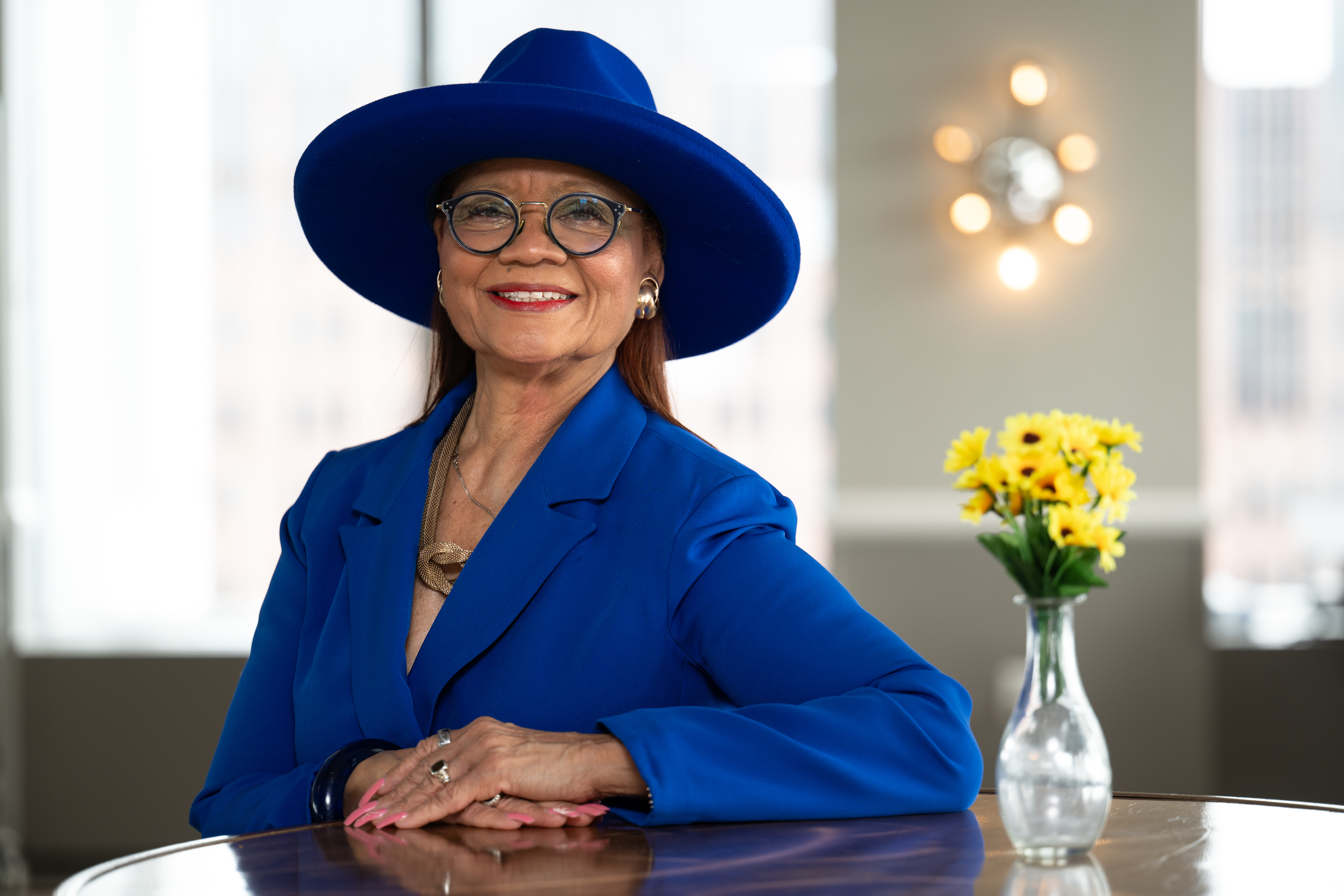
She stood out partly because of her penchant for wearing exquisite hats. But it was also because Marshall-Blake was the newly installed vice president of government relations at Independence Blue Cross. I would see her at meetings and events across the city. She seemingly knew everybody in business and at City Hall — and could work a room like no other. Not only was Marshall-Blake a mover and shaker, but it was clear she was well-liked and respected, as well.
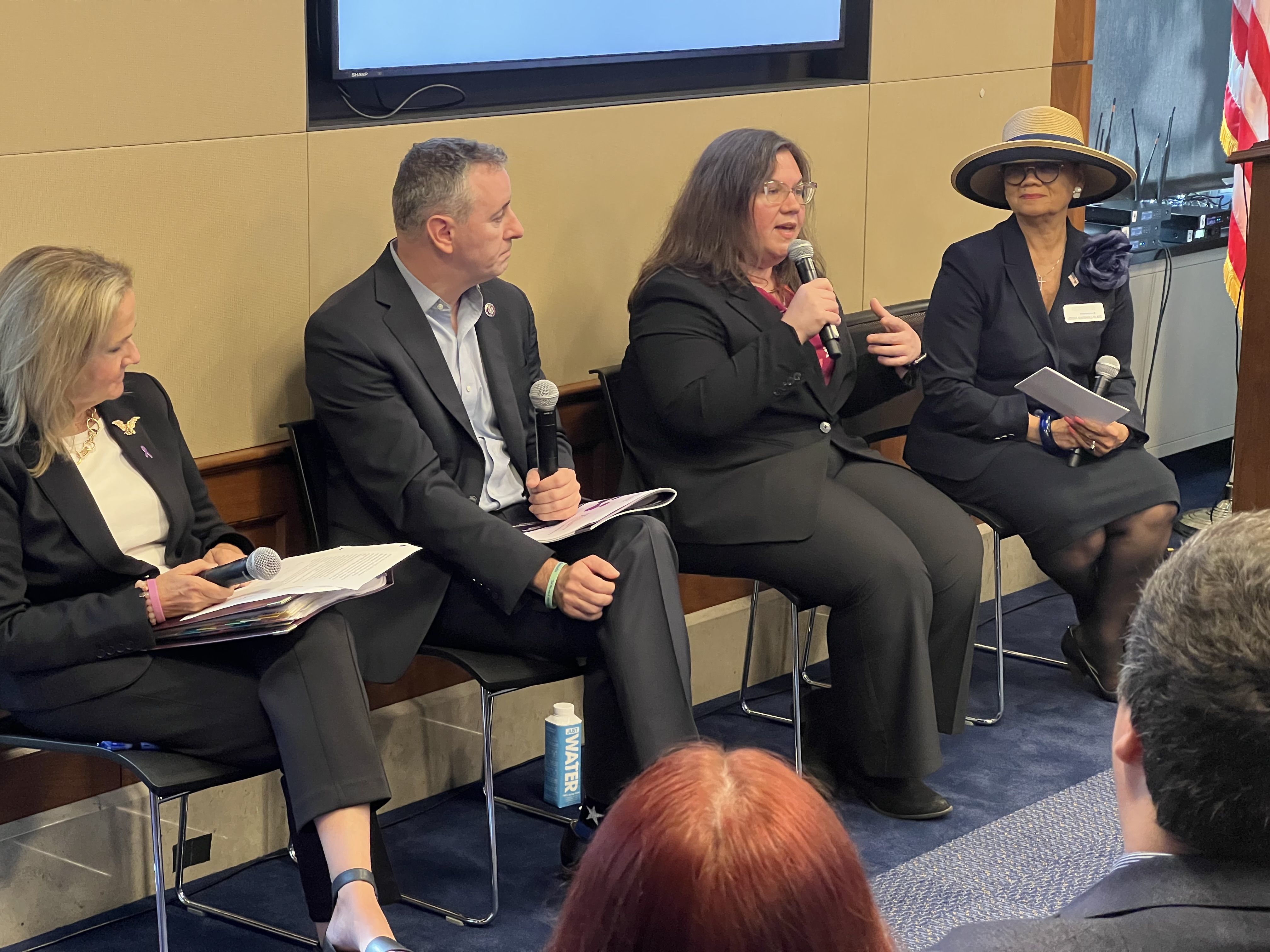
Lorina Marshall-Blake at a meeting in Washington, D.C., with U.S. Reps. Madeleine Dean and Brian Fitzpatrick, and Kristina Canfield of the Association of Recovery in Higher Education.Courtesy of Independence Blue Cross
“Lorina Marshall-Blake has a way of making people feel seen and supported the minute she walks into a room,” Kelly Munson, president and CEO of Independence Blue Cross, said. Marshall-Blake, she added,is an example of “how you lead matters just as much as what you lead.”
Watching Marshall-Blake’s career trajectory from afar, I was in awe. There aren’t many women — much less Black female executives — who have experienced the kind of success she has, especially during the early 1990s. The proverbial glass ceiling that blocks qualified women and people of color from advancing in the workplace is stubbornly thick, but Marshall-Blake was somehow able to break through it.
In 2011, she wasnamed president of the Independence Blue Cross Foundation, the company’s philanthropic arm, which has distributed more than $90 million in grants to various local causes — including a program that provides scholarships for Philly-area high school students to attend nursing school.
When I learned earlier this year that Marshall-Blake intended to hang up her fancy hats after 35 years at Independence Blue Cross, I felt a little sad, because it marked the end of an era.
“She’s an iconic person given what she achieved during that period of time,” said A. Bruce Crawley, the public relations guru who met Marshall-Blake when they were both students at the now-defunct Charles Morris Price School of Advertising and Journalism.
Crawley, who founded the African American Chamber of Commerce, watched her career over the years, and “was amazed at the progress she was able to make because she was always just a nice person.”
Back then, he believed that to succeed in corporate America, “it required a certain toughness.” Crawley added, “I thought that she maybe would be challenged by having to be tough, but she was able to do that in a way that didn’t grate on people, and she was a very productive executive.”
When I reached out to Marshall-Blake earlier this year about doing an exit interview, she informed me she will continue working with IBX — just not in a full-time capacity.
Lorina Marshall-Blake chats with Jenice Armstrong at the Pyramid Club in March.Erin Blewett / For The Inquirer
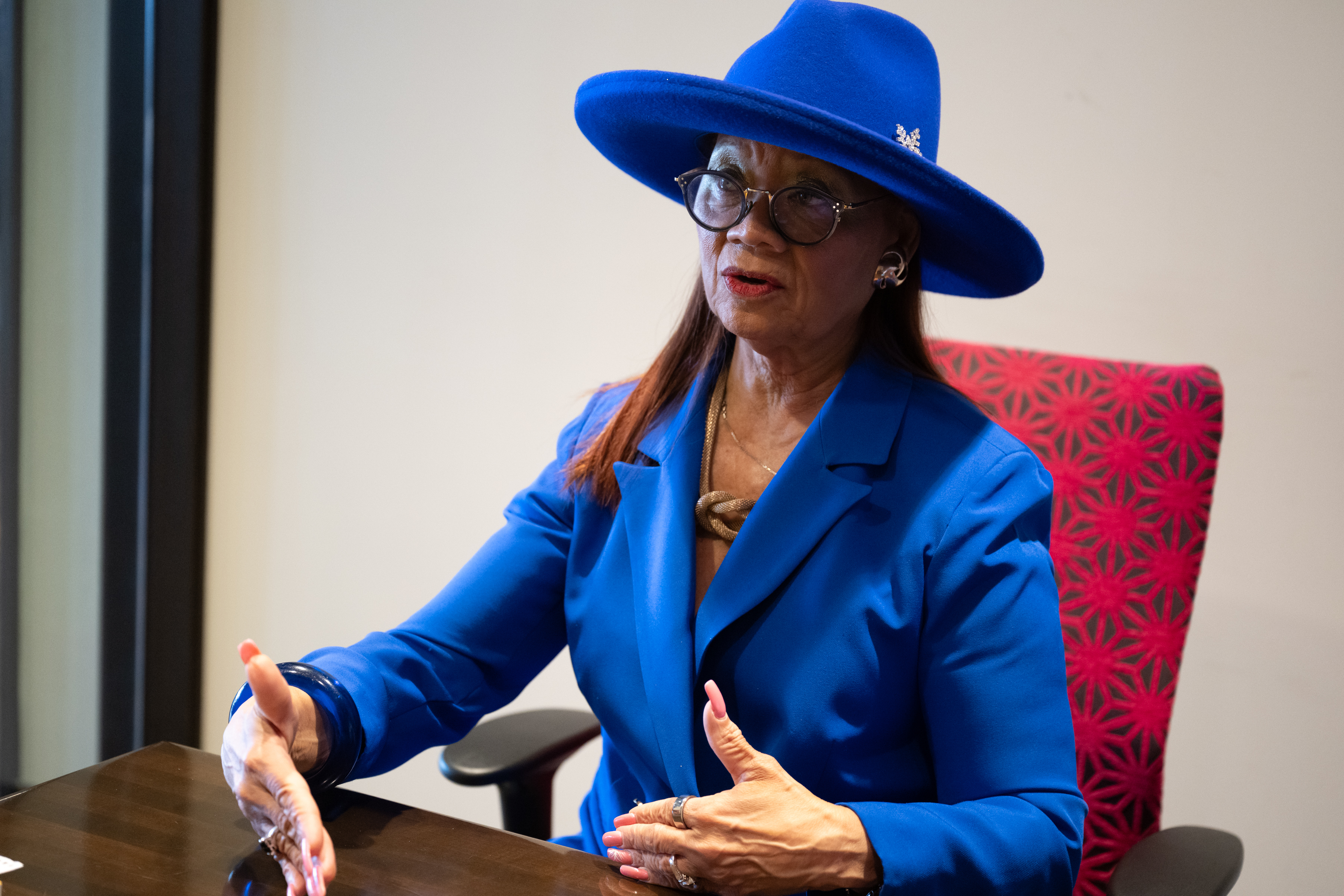
But I still wanted to meet with her to talk about her next chapter, as well as toglean some wisdom about succeeding in corporate America. We agreed to meet at the Pyramid Club on a chilly, overcast day. When she walked in, Marshall-Blake lit up theroom in an electric blue pantsuit with, of course, a crisp matching chapeau.
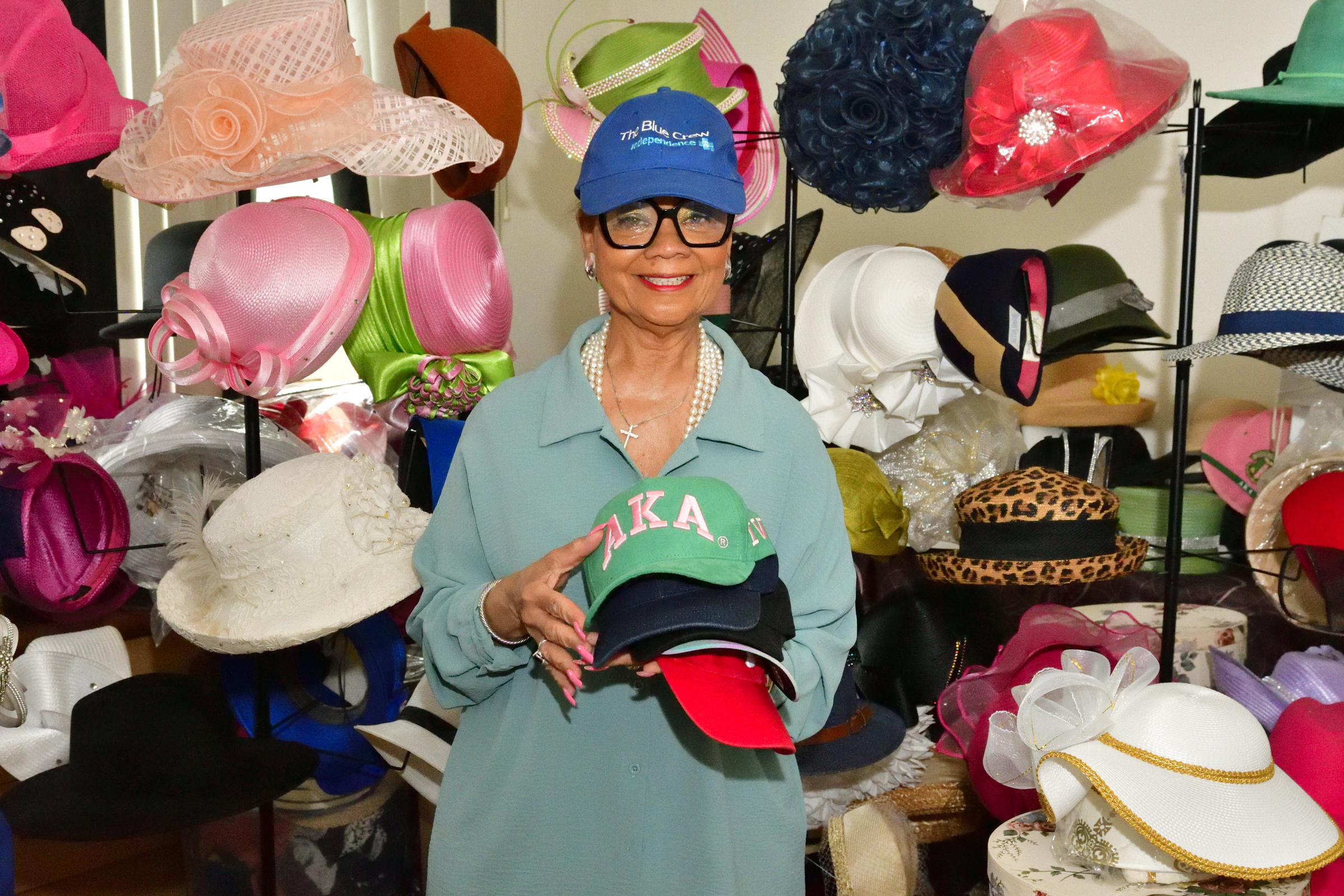
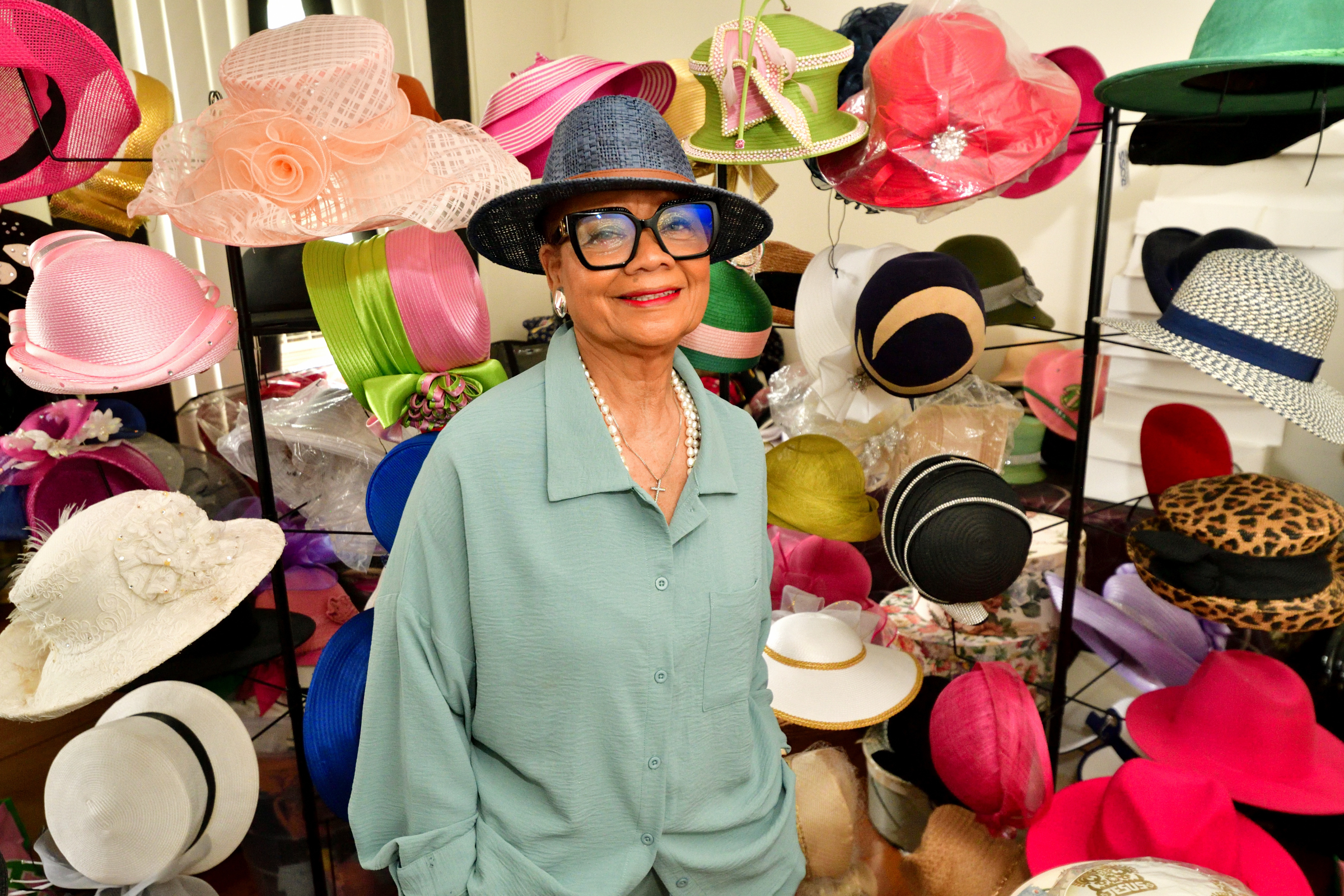
She told me she has an entire room in her home filled with hats, many of which were given to her as gifts over the years.
Listening to Marshall-Blake talk about growing up as a middle child in a family of five children in a modest, four-room house on the 600 block of North Yewdall Street in West Philadelphia, I thought about the considerable challenges she faced along the way. Her mother was a homemaker; her father was a welder until he was injured on the job.
“I didn’t know I was poor until somebody told me I was poor,” she said.
After graduating from Overbrook High School in 1968, where she was a cheerleader and class treasurer, Marshall-Blake won a scholarship to attend Temple University. But her college dreams were put on hold because she couldn’t afford books.
She went on to hold a series of low-level jobs at Philadelphia Gas Works, Cigna, and a local law firm, and took undergraduate classes before finally graduating from Antioch University in 1983.
Marshall-Blake got her first big career break in 1980, when PGWnamed her vice president of government relations and urban affairs — a role she fully embraced. She said she worked to learn everything she could about the organization from the ground up — literally.
“I donned my meter reader outfit and read meters,” she told authors of the 2020 book, They Carried Us: the Social Impact of Philadelphia’s Black Women Leaders. “I climbed underneath buildings and got in ditches with the guys. I got on the phones. I wanted to know the people that really carried PGW. If there was a gas explosion, I was there. It was more than just showing up. I was present.”
Lorina Marshall-Blake dons a full fascinator from her collection …Bastiaan Slabbers / For The Inquirer… and an Independence Blue Cross cap.Bastiaan Slabbers / For The Inquirer
In 1990, she completed her master’s degree in government relations at the University of Pennsylvania. The following year, she moved to Independence Blue Cross, where she had been named vice president of government relations.
“I’ll always remember the first day I walked into Independence Blue Cross on June 1, 1991,” Marshall-Blake said during a retirement reception in her honor at the company’s headquarters earlier this spring. “This work for me was more than a job. For me, it was ministry.”
March 31 marked her last official day as a full-time employee at Blue Cross, but her consulting agreement with the insurance giant began immediately. She said she welcomes the slower pace of her new role. She’s 75. It’s time. She’s ready.
Still, stepping into her next act will be a major adjustment. Marshall-Blake is working on letting go of her usual “got-to-do-this” mindset. The 20 unpacked boxes in the middle of her living room can stay where they are. She’ll get to them when she gets to them.
Lorina Marshall-Blake wears a classic coffin-top Stetson …Bastiaan Slabbers / For The Inquirer… and then a mushroom crown hat with a downturned brim.Bastiaan Slabbers / For The Inquirer
Marshall-Blake, who is also an associate minister at Vine Memorial Baptist Church in West Philly, said she recently offered up a simple prayer: “Lord, let me accept retirement with grace.”
She accomplished so much during her time in corporate America; I’m sure she will do the same during this season in her life, too.
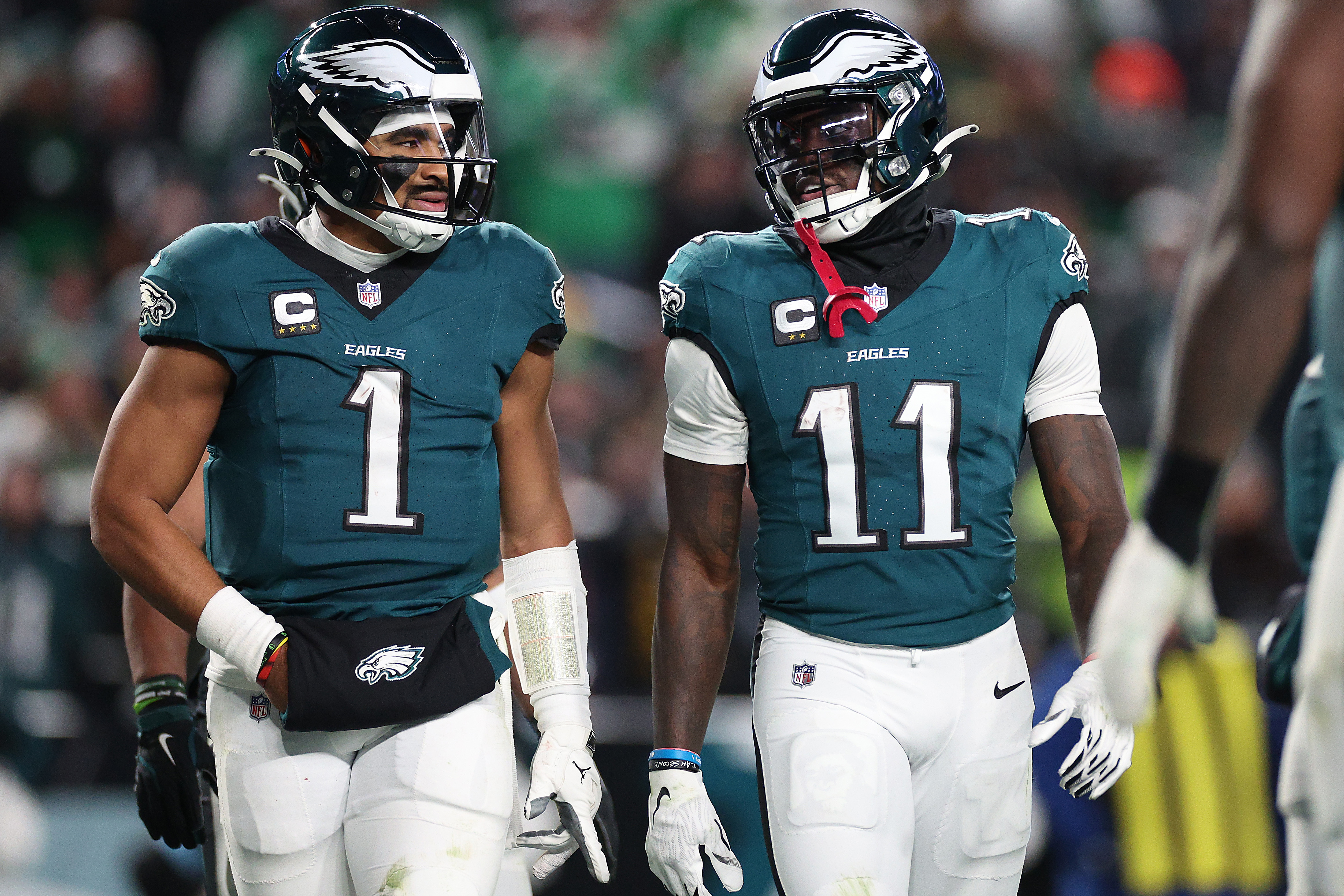
A.J. Brown now is a Patriot, an ironic misnomer since he’s such an obvious traitor.
Philadelphians generally seem relieved that Brown’s diva act no longer will be a distraction for a perennial title contender. That’s just A.J. fatigue. What he has done is no better than what Carson Wentz did five years ago: hamstrung his franchise, dissed the fan base, and hung his teammates out to dry.
After Brown signed a three-year, $96 million contract extension in April 2024, he spent most of the next two years complaining. His main complaint: His skills were being wasted in an Eagles offense designed by Nick Sirianni and quarterbacked by Jalen Hurts, even though it was potent enough to win Super Bowl LIX.
During the 2025 season, Brown reportedly requested to be traded. He greased the rails to that end, continually whining, culminating in a midseason social media post in which he called the offense a “[bleep]-show.”
That prompted owner Jeffrey Lurie to publicly meet with Brown, after which Brown refrained from further criticism. However, at that point, it became inevitable that Brown would be traded.
And that, inevitably, would hurt the team.
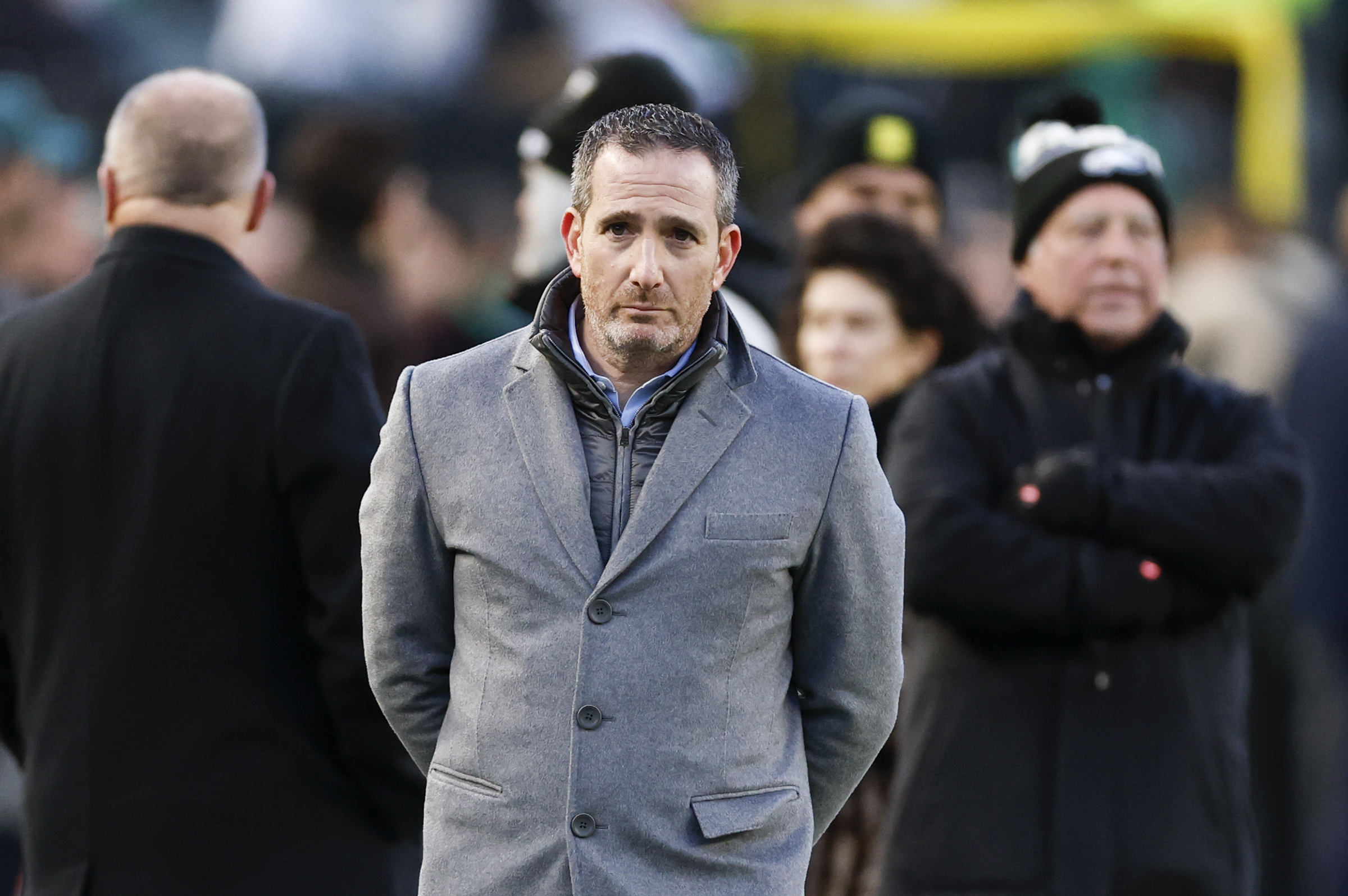
Before the draft in April, sources say Howie Roseman asked for a first-round pick in 2026 or, at worst, in 2027. Nobody bit. On June 1, the first day of a new league year, when a salary cap hit would be spread over two years, Roseman settled for a first-round pick in 2028 and a 2027 fifth-round pick.
It will hurt the fans, now deprived of supporting the best receiver in franchise history.
It will hurt the front office, since Brown’s departure will dent the salary cap $43 million, the fourth- (or fifth, depending on how you look at Daniel Jones and the Giants)-highest amount of dead money ever absorbed and the most dead money of a non-quarterback.
More than anyone, though, it will hurt his teammates.
Why?
Because the Eagles cannot immediately fill the talent void left by Brown. This is partly because Brown has cost them so much money against the cap, so the Eagles would not be able to sign a player of his caliber. Which means there is a massive drop off in total roster talent.
This leaves the rest of the players in a difficult spot.
Every player has a finite window in which he can win. Over the past few seasons many of the current Eagles had a choice of where to play, and many chose the Eagles because the Eagles had an elite roster, and no skill player on that roster was more elite that Brown.
His 14.8 yards per reception rank first among receivers with at least 275 catches since 2022. His 5,034 receiving yards rank fifth. He is different.
When Brown signed his extension, Eagles in the locker room, Eagles in the coaches’ offices, and Eagles in the executive suites reasonably expected at least four more seasons of this sort of production from Brown.
Instead, they have a $43 million hole on the ledger over the next two years. In the short term, at least, this could be catastrophic.
It was nearly so last time.
Carson Wentz sulked, then struggled, then forced his way out of Philly. YONG KIM / Staff Photographer
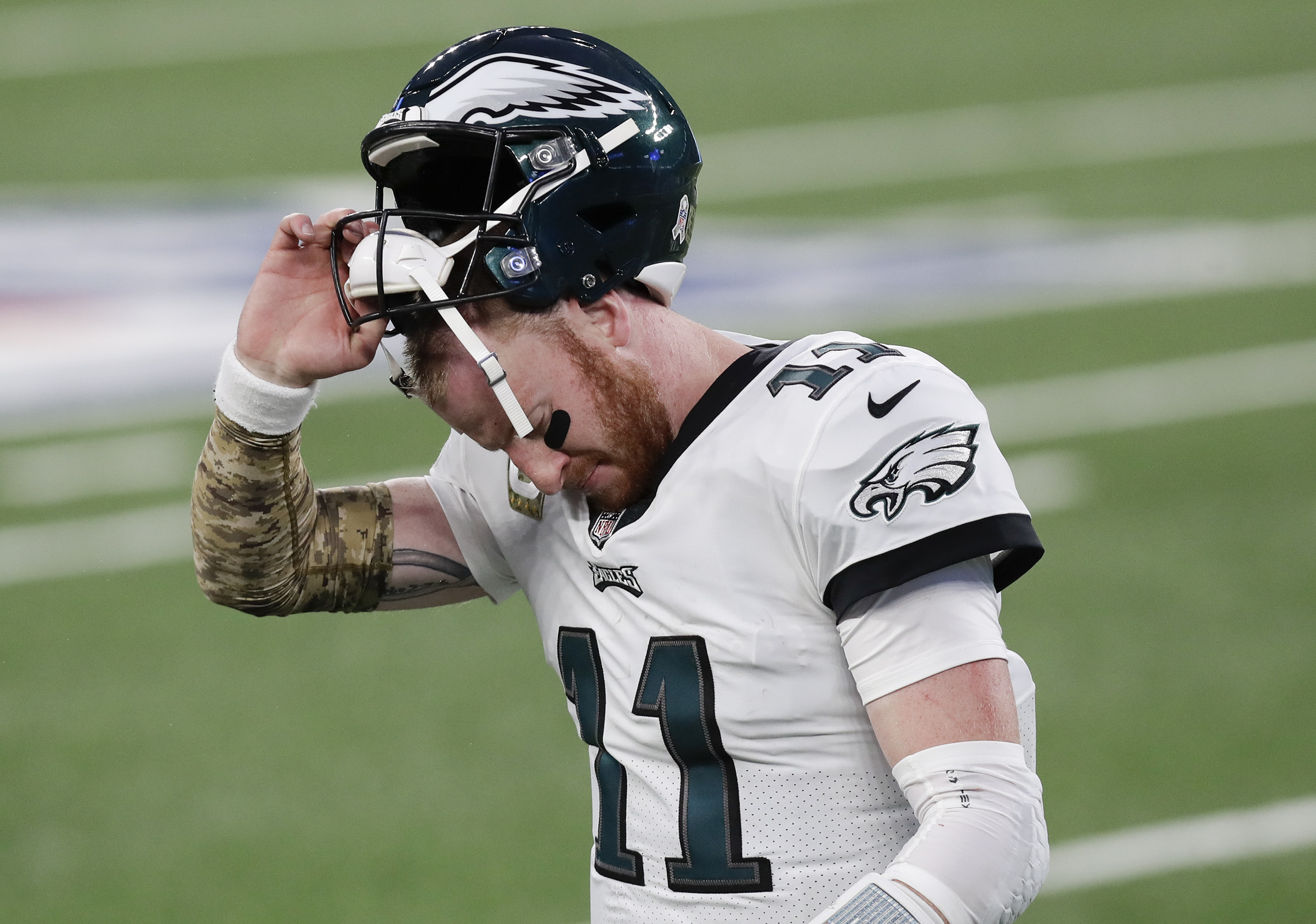
Carson Wentz
The reason Ginger Jesus went Judas on the Birds differs from Brown’s, but it is no less shameful.
Wentz resented that the Eagles took Hurts in the second round of the 2020 draft. This, despite their stated intent to use Hurts as a long-term insurance policy against Wentz’s frequent injuries. In the meantime, Hurts would be used as a gimmick player, in the manner of Saints utility man Taysom Hill.
Wentz then was outraged when he was benched late in the 2020 season after throwing 15 interceptions and taking 50 sacks, numbers that would lead the league at the season’s end despite Wentz playing in just 12 games. After the season, after getting coach Doug Pederson fired, Wentz still forced a trade.
That carried a $33.8 million cap hit, which was the NFL record at the time. Hurts took over as a second-year project quarterback of a team in disarray coached by a relative unknown in Nick Sirianni.
He rebounded with 27 touchdown passes with seven interceptions and rebounded with a 94.6 passer rating in 17 starts for the Colts, who, with an inferior team, matched the Eagles’ 9-8 record but missed the playoffs. Hurts threw 16 TDs with nine picks (but added 10 rushing scores) and was horrid in a playoff loss.
It began something great. Wentz’s career fizzled as Hurts led the Eagles to two Super Bowls. But, in 2021, it wasted a prime year for such players as Lane Johnson, Fletcher Cox, Brandon Graham, Jason Kelce, Darius Slay — players who chose to remain Eagles with the understanding that Wentz would be their quarterback.
Why would they expect that?
Because in June 2019, Wentz had signed a four-year, $128 million contract extension … that didn’t kick in until 2021.
That’s right.
Wentz took a $66 million bonus to play for the Eagles from 2021 to 2024, but he didn’t take a snap for the team in that span.
Not bad work if you can get it.
Howie Roseman found a path out of the Carson Wentz quagmire and history may reflect that he did the same with A.J. Brown. Yong Kim / Staff Photographer
No pain, no gain?
Fate, genius, and effort combined to make lemonade from Wentz’s sour grapes.
Fate, in that Wentz stayed healthy enough to convert the conditional pick in 2022 into a first-rounder.
Genius, in that Roseman used the first- and third-round picks from the Wentz trade as part of the capital to add DeVonta Smith, Jalen Carter, Jordan Davis, and, yes, even Brown. Can he do the same with the less valuable haul from Brown’s trade?
Effort, in that no player in the NFL has worked harder at becoming the best player he can be than Hurts. He has his limitations, but Hurts is a Super Bowl MVP with three Pro Bowl nods.
If you’d like more irony, then you might like this:
If Hurts doesn’t produce in the offense of new coordinator Sean Mannion, then Roseman might have to use the first-round pick he got by trading Brown to draft Hurts’ replacement.
You know who’d help Hurts produce in the new offense?