Tag: Weekend Subscribers

  • Founder of Kensington anti-violence nonprofit arrested for knife attack on SEPTA train, authorities say

    Founder of Kensington anti-violence nonprofit arrested for knife attack on SEPTA train, authorities say

    A well-known activist and founder of a Kensington anti-violence nonprofit was charged with aggravated assault and related crimes for attacking a woman with a box cutter during an argument on a SEPTA train last week, authorities said Thursday.

    Rosalind “Roz” Pichardo, 48, was taken into custody days after the July 17 assault, which left the victim in critical condition with deep lacerations to her face and chest that required more than 70 stitches to close, according to the Pennsylvania Attorney General’s Office, which is prosecuting the case.

    Pichardo is the founder of Operation Save Our City, a nonprofit that offers social services to people who have experienced grief, addiction, or trauma from exposure to violence, according to the group’s website. She also runs “Sunshine House,” a storefront on Kensington Avenue where people in addiction can drop in for meals, clothes, and other forms of support.

    She has been involved with other anti-violence and victim services organizations throughout the city and has received at least two city grants for her work.

    Last week, one day before the assault, Pichardo touted a $20,000 grant that Operation Save Our City received from the Philadelphia Office of Public Safety.

    And in 2024 and this year, the Philadelphia District Attorney’s Office awarded Pichardo’s organization $25,000 and $10,000, respectively, through its violence prevention microgrant program.

    Pichardo declined to comment Thursday. No attorney for her was listed in court documents.

    Around 9 p.m. Friday on an eastbound SEPTA train near Eighth and Market Streets, prosecutors say, Pichardo assaulted a woman with a box cutter. They said the conflict began when the two women argued on a platform at the transit agency’s 15th Street Station.

    The victim told investigators Pichardo “got smart with her” after she asked a man who was blocking a platform bench to move so she could sit down, according to an affidavit of probable cause for Pichardo’s arrest. She said she, in turn, “got smart” with Pichardo.

    During the spat, the victim said, Pichardo complained about “how rude young people are” and called her entitled for asking the man to move.

    The women then boarded the train, where the argument continued, and they “both got in each other’s face and started fighting each other,” the woman told investigators, according to the affidavit.

    At some point during the scuffle, the woman said, Pichardo pulled out a box cutter and assaulted her. She told investigators she felt warmness on her face and felt “a lot of blood.”

    The attack left the woman with severe lacerations on her cheeks and her chest that, in addition to needing stitches, required surgery to help her regain muscle movement, the documents said.

    Pichardo was taken into custody by SEPTA transit police but released the same evening.

    Investigators said technical issues initially prevented them from viewing surveillance footage captured within the train car, but they later recovered footage from an adjoining car that showed portions of the incident.

    On Wednesday, Pichardo was charged with two counts of aggravated assault, simple assault, possessing an instrument of a crime, reckless endangerment, harassment, and disorderly conduct.

    She was released from custody after posting 10% of $25,000 bail, court records show.

    The case will be handled by the attorney general’s special prosecutor for mass transit, a position created by the state legislature to address what Republican lawmakers said was the failure of District Attorney Larry Krasner to prosecute violent crimes on or near SEPTA properties.

    A spokesperson for Krasner’s office declined to comment on the case and referred questions to the attorney general.

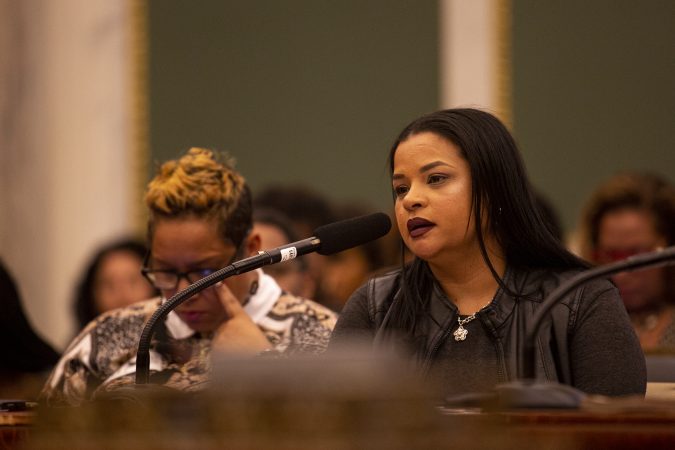
    Pichardo appeared to address the matter in cryptic posts on Facebook, where she frequently promotes her activist work to her 23,000 followers.

    On July 18, one day after the assault, she posted a photo of a SEPTA train car with the caption: “Lord please give me strength to get through this pain.”

    And on Wednesday evening around 9 p.m., she updated followers: “I’m Good .. I’m Home and trusting the process . My head is up..”

    In addition to founding Operation Save Our City in 2012 and later Sunshine House, Pichardo has worked as a lead educator with the harm reduction nonprofit Prevention Point and as a trauma victims advocate in Temple University Hospital’s emergency department.

    Staff writers Ellie Rushing, Aubrey Whelan, and Jillian Kramer contributed to this article.
  • McGlinchey’s Bar is back on the market as Center City’s pub scene continues to shift

    McGlinchey’s Bar is back on the market as Center City’s pub scene continues to shift

    Center City’s tavern landscape is shifting again.

    The building housing the shuttered McGlinchey’s Bar is back on the market after a planned sale fell through. Chef-restaurateur Townsend “Tod” Wentz wants to sell the Hayes, the American tavern he opened in the former Irish Pub building on Walnut Street near 12th. And Cherry Street Tavern, another historic watering hole whose owners announced plans to sell earlier this year, appears close to finding a buyer.

    The biggest surprise may be McGlinchey’s.

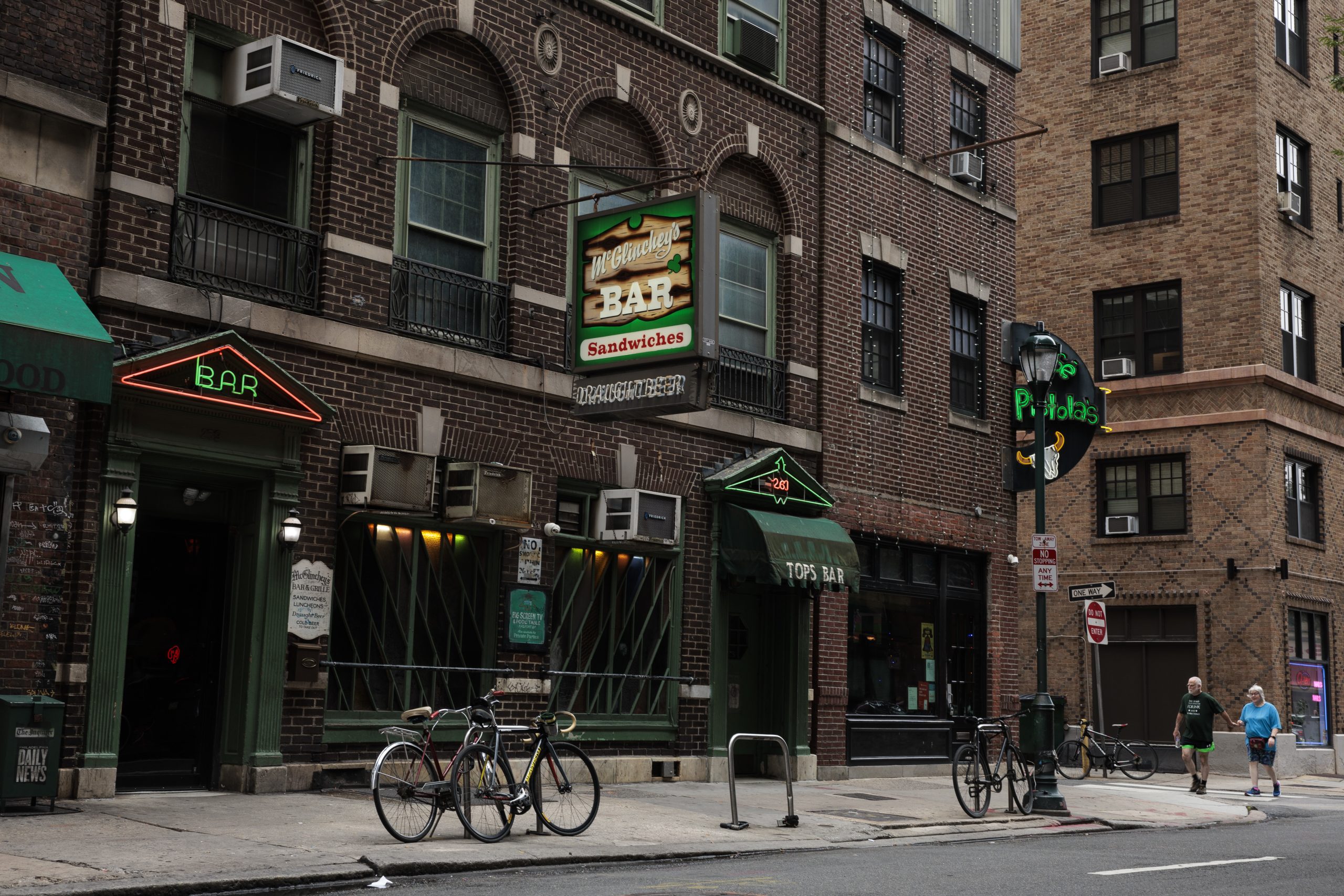
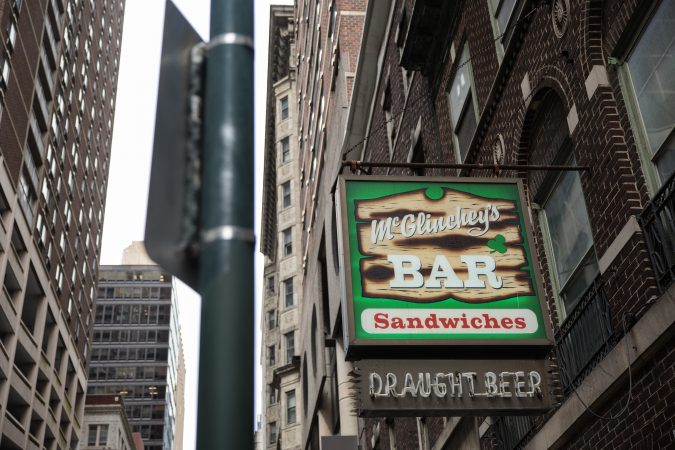
    The building housing McGlinchey’s had been a bar for 90 years before last summer’s shutdown.Monica Herndon / Staff Photographer

    In April, Alterra Property Group confirmed that it was under agreement to buy the building at 259 S. 15th St., home to McGlinchey’s for more than 90 years before the dive bar closed in summer 2025. But Leo Addimando, Alterra’s cofounder and managing partner, said Wednesday that the company “decided not to proceed.”

    The building is listed by Nadia Bilynsky and Dennis Carlisle of MPN Realty at $2.45 million. The offering includes the liquor license, two bars, a stage, a small kitchen, and a shell-condition third floor. The property, which occupies nearly 5,000 square feet, is being marketed as a turnkey bar-restaurant opportunity or a redevelopment site.

    A few blocks east, another familiar address is available.

    Wentz has listed the Hayes, his 268-seat American tavern at 1123 Walnut St., through Veronica Blum and Joe Scarpone at MPN with an asking price of $2.93 million. City records show that it sold for $2.3 million in 2019.

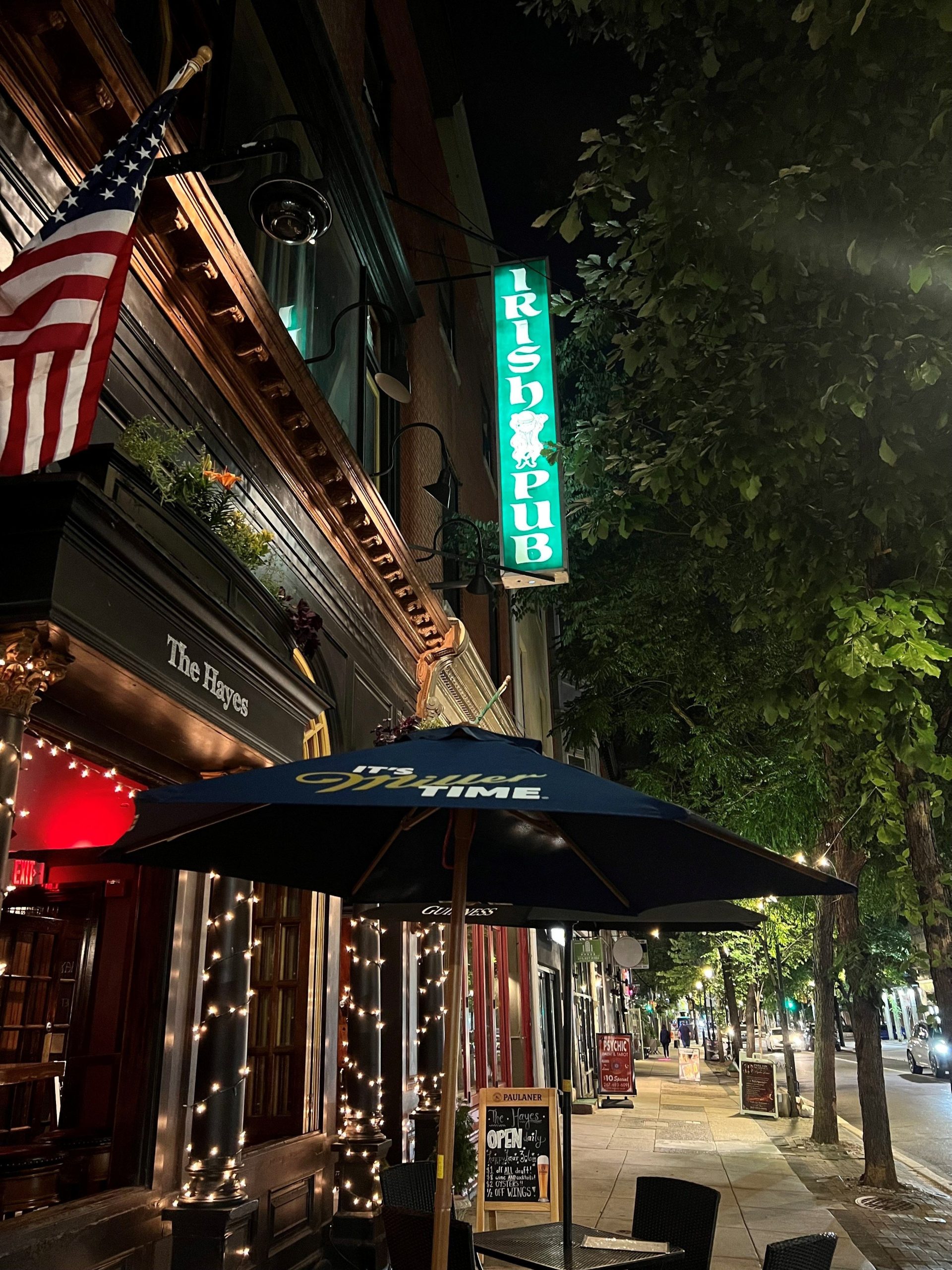
    The Hayes, at 1123 Walnut St., previously was the short-lived Pearl Tavern, after many years as the Irish Pub.Michael Klein / Staff

    Wentz said he intends to keep the restaurant open until a sale.

    Wentz said the decision reflects a personal shift after years of expanding his restaurant group with his wife, Gordana Kostovski. “I want to take advantage of the increase in the real estate market,” he said. “I think it’s time to capitalize on some things and put some money to work elsewhere in my private life.”

    “I just kept opening restaurants instead of buying a shore house or buying a bigger home,” said Wentz, 58. “I don’t want to go into my 60s with that same mindset.”

    The Hayes at 1123 Walnut St., seen on June 16, 2026, still has the original sign of the Irish Pub, its previous occupant.Michael Klein / Staff

    The Hayes occupies one of Center City’s best-known tavern addresses.

    Richard and Catherine Burke opened the Irish Pub there in 1980, bringing with them the concept they had established in Atlantic City. For nearly four decades, it was a gathering place for lawyers, police officers, theatergoers, and neighborhood regulars, known for its carved wooden back bar, inexpensive food, and walls covered with framed newspapers and playbills.

    When longtime operator Mark O’Connor closed it in July 2019, he said he wanted to focus on the second Philadelphia Irish Pub location, at 2007 Walnut St.

    Wentz bought 1123 Walnut later that year, briefly opened Pearl Tavern before the pandemic derailed those plans, then renovated the property and reopened it as the Hayes in 2023. He owns Oloroso next door as well as Caribou Café across the street, A Mano in Fairmount, and Oltremare in Rittenhouse. A sixth restaurant, Townsend on East Passyunk, is closed pending repairs from water damage after a fire next door in May.

    The listing includes the 6,776-square-foot building, restaurant equipment, liquor license, and outdoor seating. The restaurant occupies the first two floors, while the upper levels contain office and unfinished space. The through-block property extends from Walnut Street to Moravian Street.

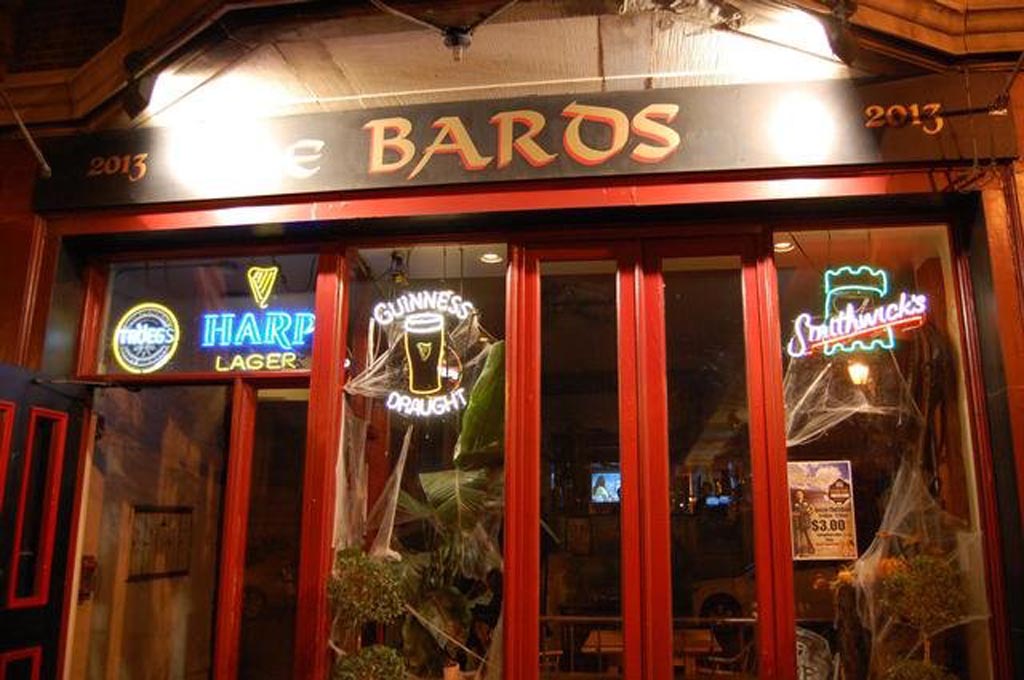
    The Bards at 2013 Walnut St. closed in 2020.

    The Hayes’ listing is the latest chapter in a broader reshaping of Center City’s pub scene. Over the last two decades, Philadelphia has lost a number of big names: Downey’s at Front and South Streets closed in 2016 after four decades. Finnigan’s Wake, the sprawling multilevel pub at Third and Spring Garden Streets, closed in 2014 and is now GoPuff’s headquarters. In 2020, the pandemic led to numerous shutdowns, such as Manny Brown’s at 512 South St. and the Bards at 2013 Walnut St.

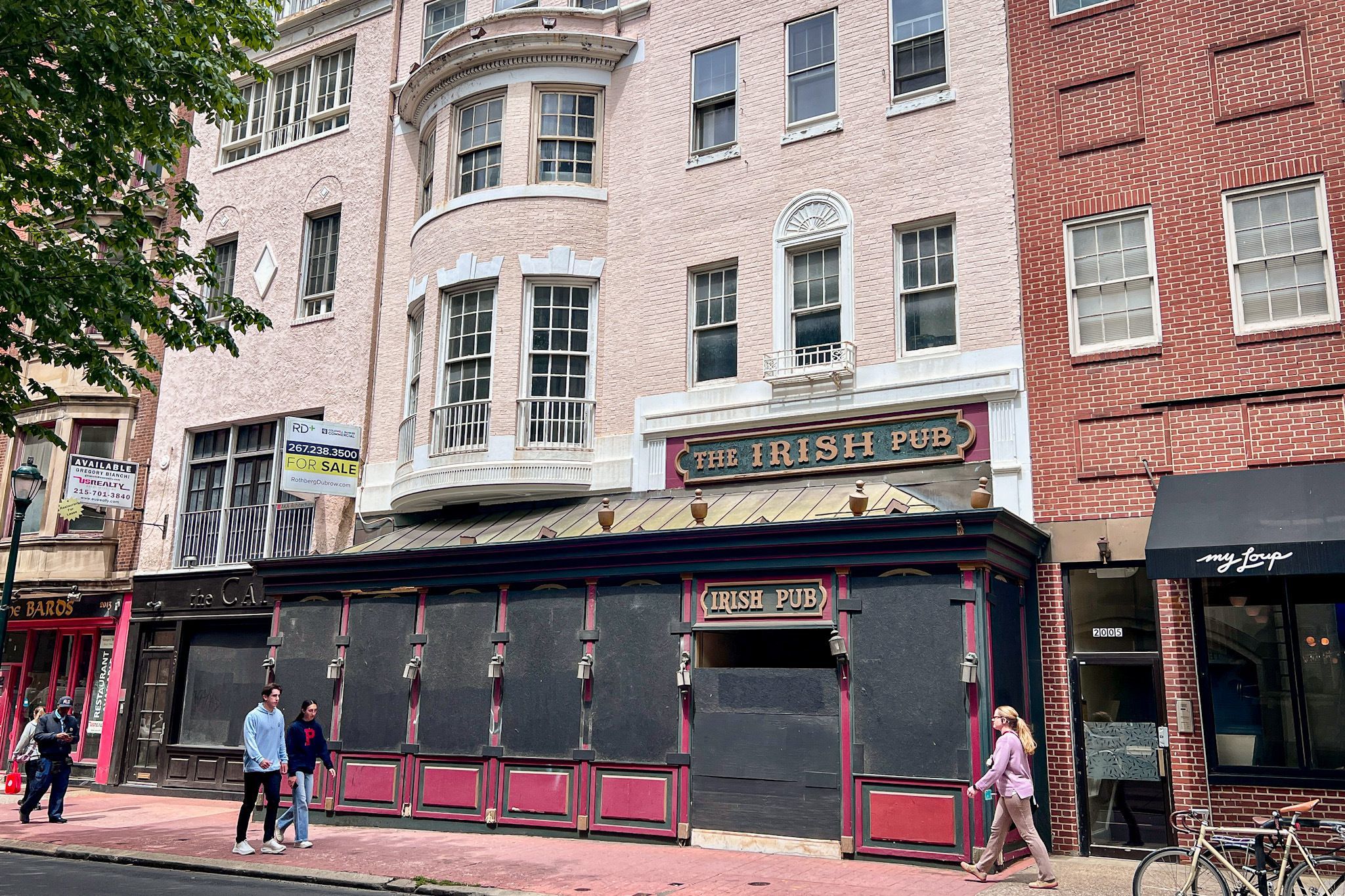
    The sister Irish Pub at 2007 Walnut St. also never reopened after the pandemic. Earlier this year, restaurateur Dan Tsao, owner of EMei, purchased the property for a future hospitality project. One of the remaining stalwarts, the Black Sheep at 17th and Latimer Streets, was closed by a fire in May, though owner James Stephens said he hopes to reopen by Christmas.

    The former Irish Pub, 2007 Walnut St., on April 30, 2026.Michael Klein / Staff

    Meanwhile, Cherry Street Tavern, whose owners announced plans to sell earlier this year, also appears headed toward new ownership. A manager told The Inquirer on Wednesday that a sale is believed to be close, though no agreement has been announced publicly.

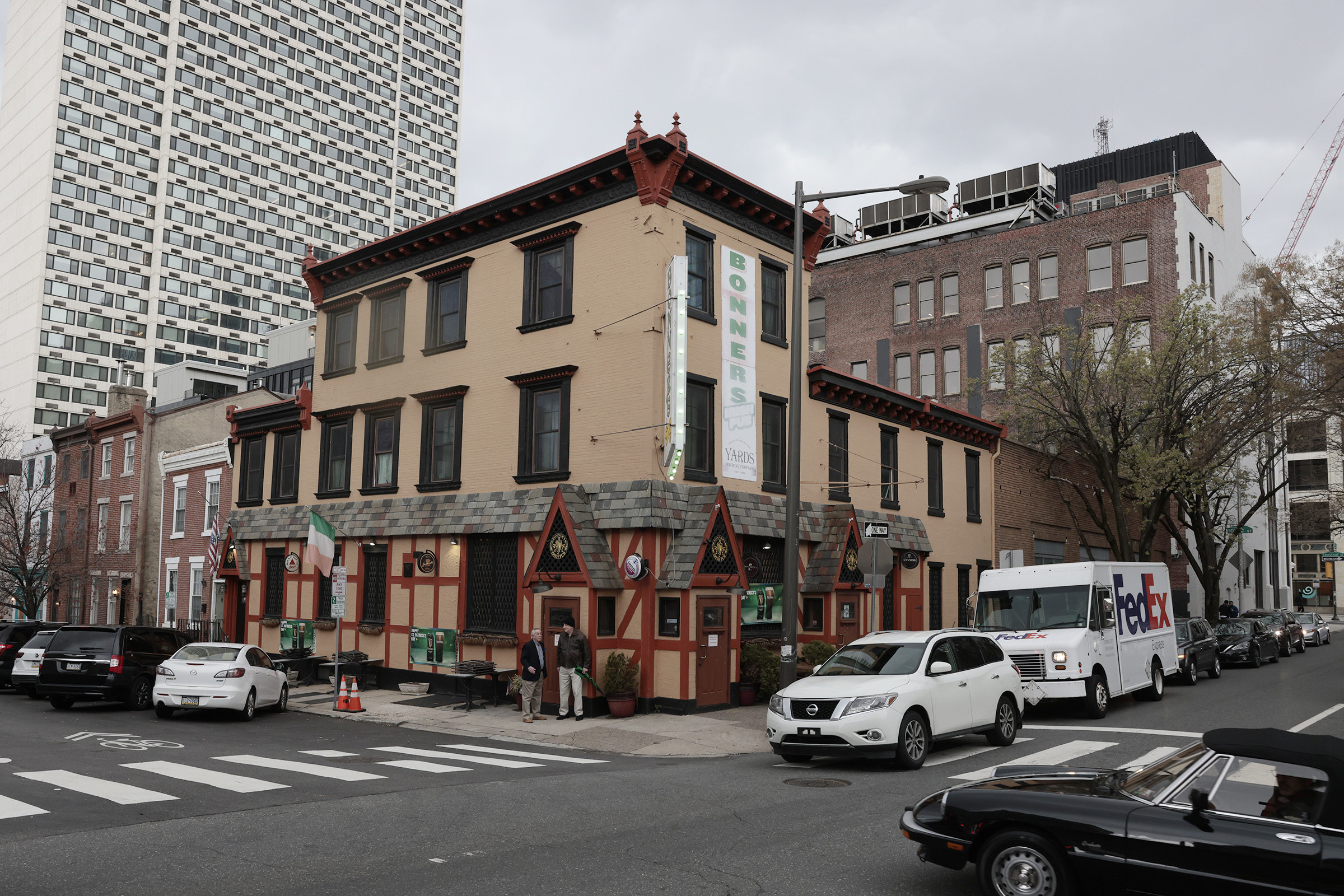
    Meanwhile, the longtime Bonner’s Irish Pub’s future is secure, said owner Danny Bonner, who opened at 23rd and Sansom Streets in 1994.

    Bonner, 71, put the building on the market in 2024, hoping to attract a developer. Instead, he struck a deal with the owner of the property next door to pursue an apartment project that would incorporate a new Bonner’s into its lobby.

    Bonner’s Irish Pub at 120 S. 23rd St. in April 2024.Elizabeth Robertson / Staff Photographer

    Bonner said one preliminary plan calls for a roughly 3,200-square-foot Bonner’s, about 900 to 1,200 square feet larger than the current pub. There is no timetable for the development, whose price tag Bonner estimated at $45 million to $55 million. The existing bar will remain open until construction begins.

    “Where I’m located, we’re fortunate,” Bonner said. “We get professionals, union guys, and loyal neighborhood customers.”

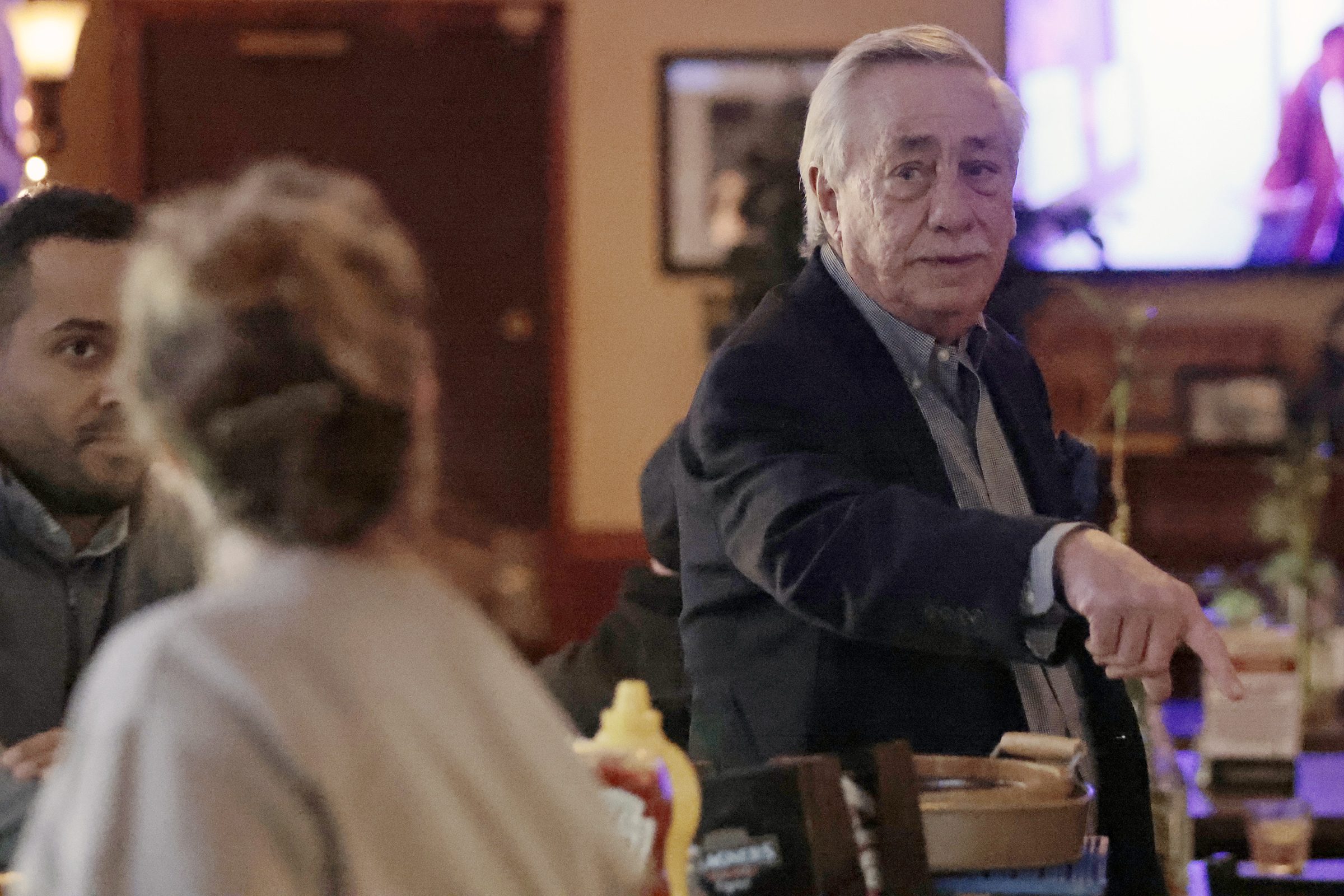
    Bonner’s Irish Pub owner Danny Bonner chatting with patrons in April 2024. Elizabeth Robertson / Staff Photographer

    Bonner hopes the project will allow the bar to outlast him.

    “You have to leave some kind of legacy,” he said. “We’re losing too many mom-and-pop operations. All these big franchises are coming in. Philadelphia is still a city of neighborhoods, and we’re losing that. My customers walk in, and while I don’t know every single one, I probably know 70% of them by their first name.”

    Staff writers Mike Newall and Jake Blumgart contributed to this article.
  • It started as a joke. Now, three Philly friends are the proud owners of their very own garage.

    It started as a joke. Now, three Philly friends are the proud owners of their very own garage.

    It was a very Philly problem.

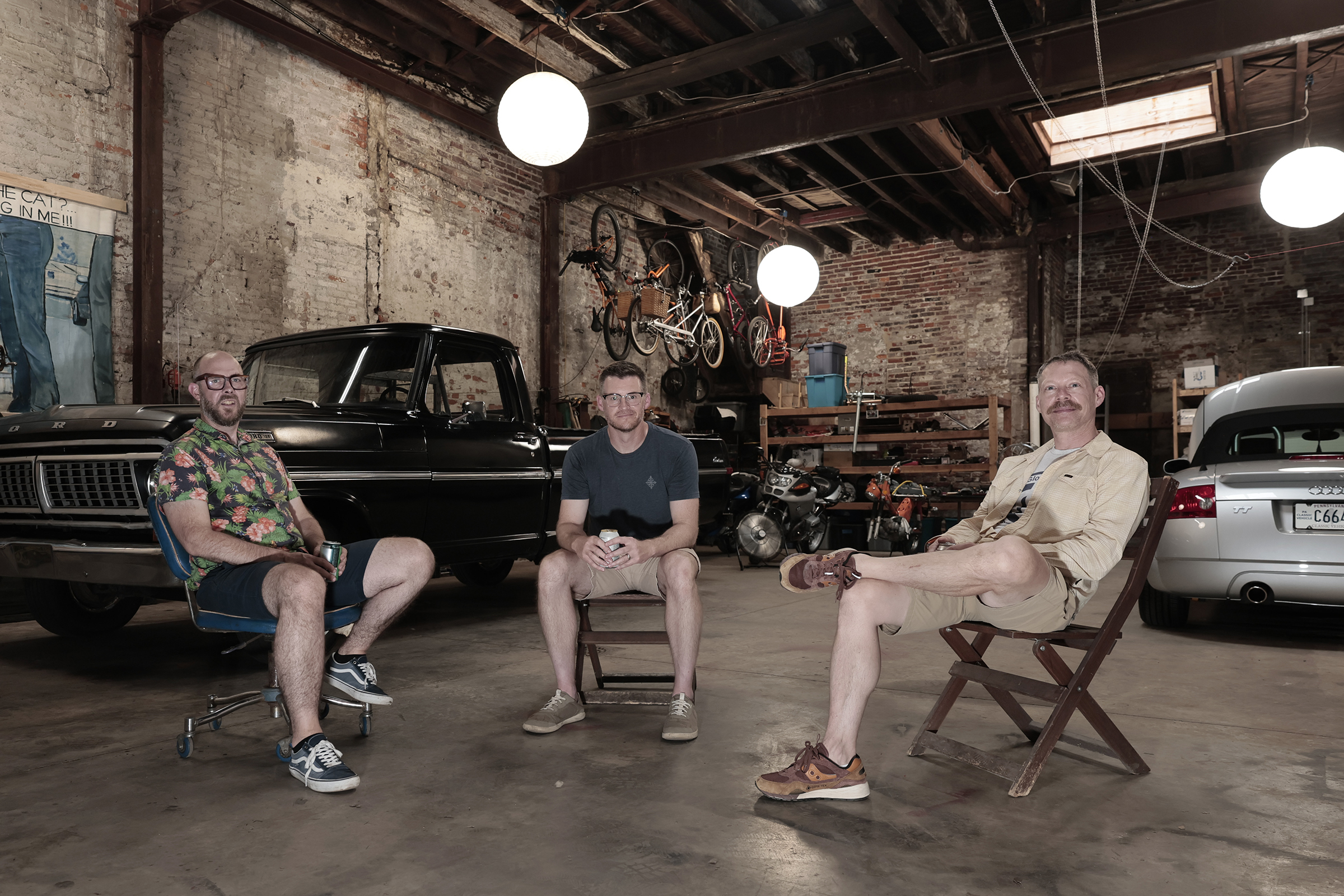
    Corey McMillan, Luke Elrath, and Jeremy Stock were longtime friends. All in their mid-to-late-40s and all self-described “motorheads,” the South Philadelphia residents loved to spend their free time restoring old vehicles and, over the years, had come to amass a small assortment of trucks, cars, motorcycles, and bicycles.

    It was a side passion, started as a way to save money on mechanic fees or escape — for an hour or two, at least — the stresses of daily life.

    The issue was, this was Philly, where century-old rowhouses dominate the local housing stock and a home garage is notoriously difficult to come by. While they all owned at least one classic vehicle, none had a garage of his own.

    Then, last spring, came a crazy idea.

    What if we bought one ourselves?

    Making do

    Through the years, the three friends had done their best to make it work: They’d tinkered on sidewalks or rented out space in under-the-table — and sometimes dubious — commercial garages. Elrath was so desperate for space that, for a time, he used the living room of his apartment as a workshop for bicycle-related repairs.

    “I’d roll back the [rug] and get to work on the hardwood floor,” he said.

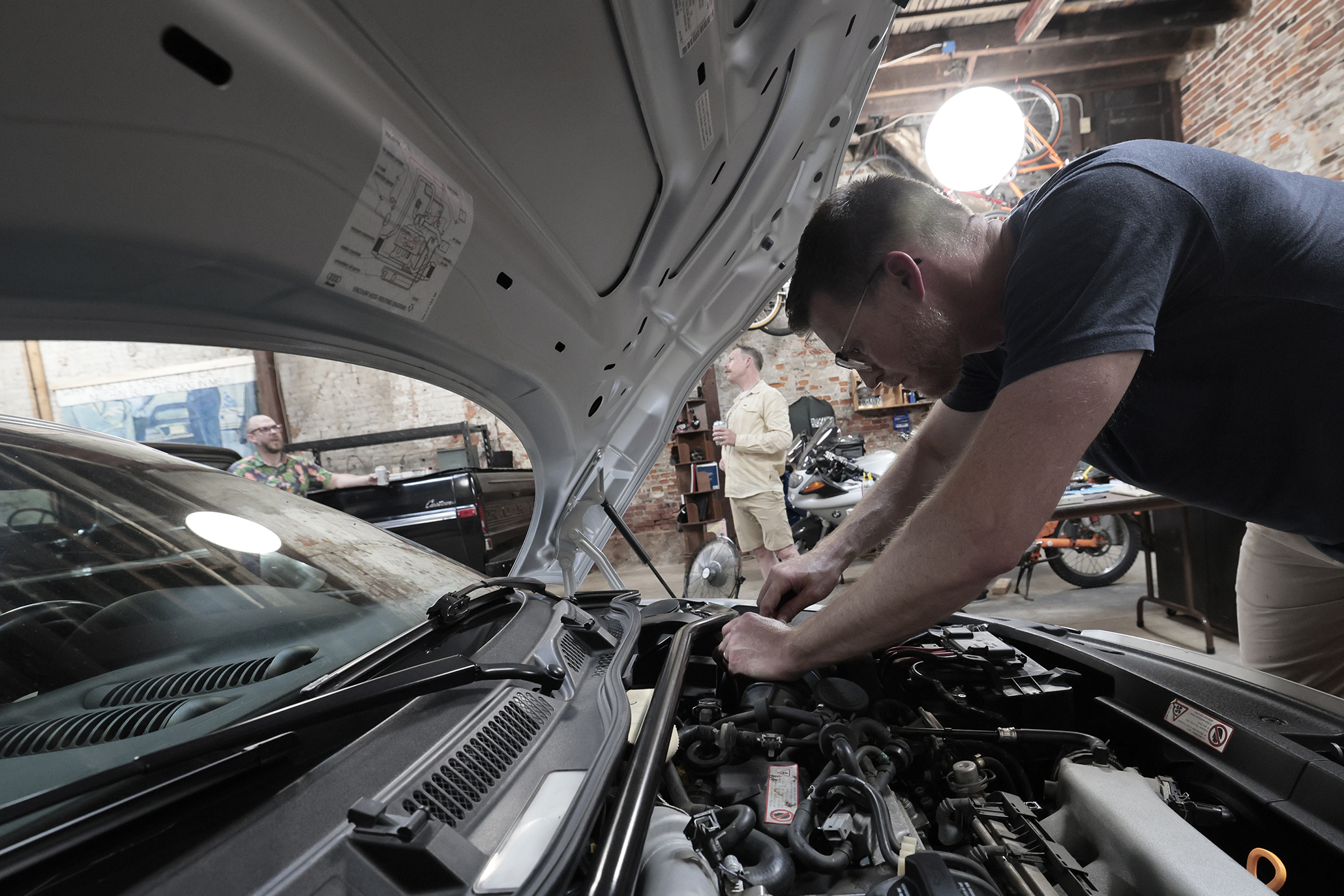
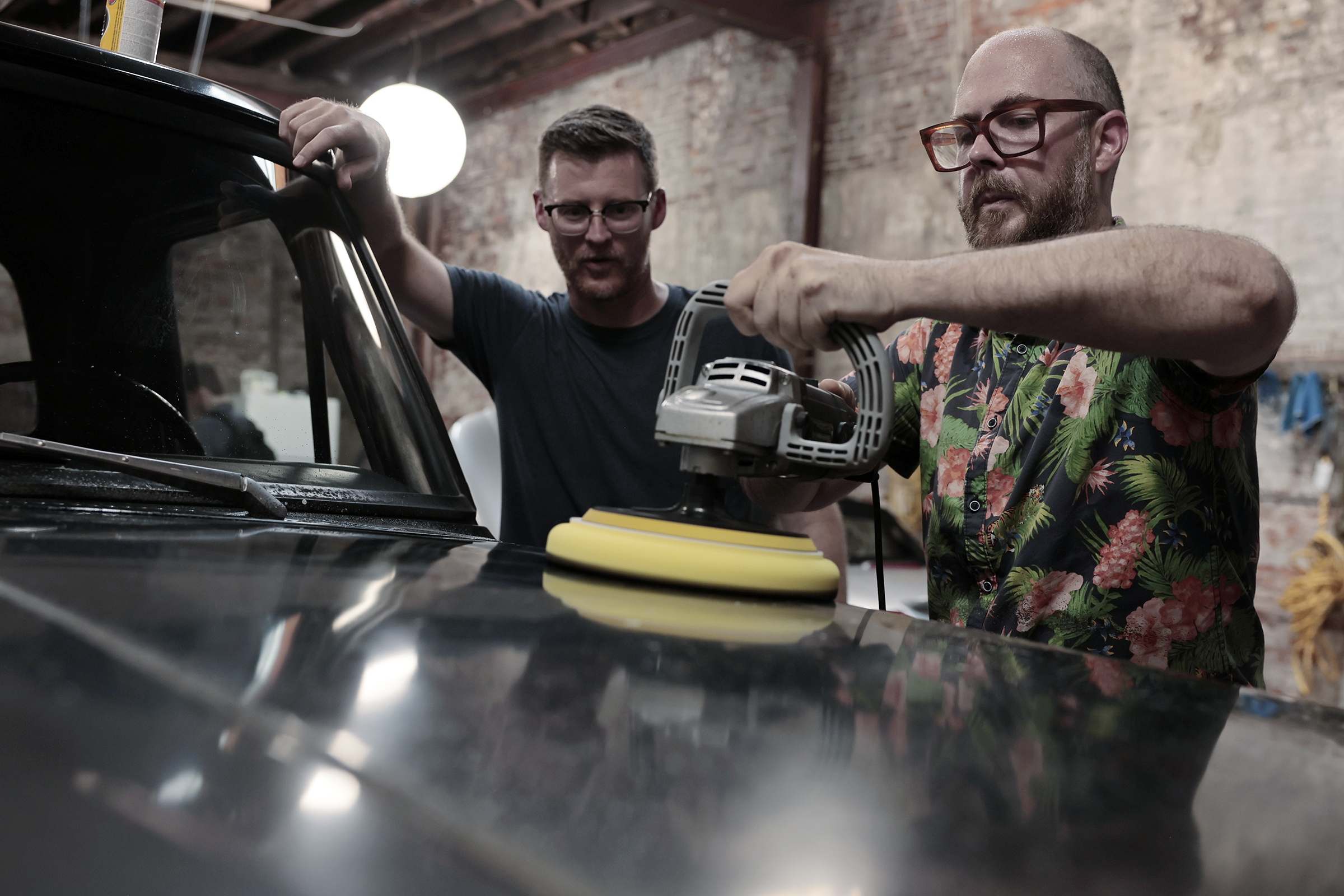
    Jeremy Stock (right) works on his 2001 Audi TT Roadster as Luke Elrath (middle) and Corey McMillan (left) chat in their South Philadelphia garage one evening earlier this month. The group bought the garage together so they would have a place to work on their cars, trucks, motorcycles, and bikes.Elizabeth Robertson / Staff Photographer

    As the years passed, they’d largely accepted this as the price of city living, making do however they could.

    McMillan, 49, kept his 1970 Ford Truck at his family’s place in the Catskills, working on it only when he could make the trip up from Philadelphia. For the 2001 Audi TT Roadster he was restoring, Stock found a cramped space over the river in Haddonfield that was “so small I couldn’t work on the car at all.” Elrath rented a spot in a garage that doubled as a storage unit for the Mummers — grateful to have even that.

    “If that was all I had for the next decade, I’d consider myself at least lucky for that,” he said.

    Then, one day this spring, McMillan — who by day works as a professor at the University of Pennsylvania — stumbled upon a curious Instagram post.

    It was a property listing, for a sizable South Philly garage. 3,000 square feet. Brick walls and a reinforced concrete floor. Located on a narrow, nondescript residential street. Listed for $380,000.

    Notably, it was located within a mile and a half of each of their homes.

    ‘Absolute heaven’

    McMillan texted the listing to his two buddies, who over the course of the day traded a flurry of bemused texts — daydreaming of what they’d be able to do with a space all their own.

    “It was a full day of talking about it like what would we do if we won the lottery,” said Stock, 46, who works in marketing technology for a pharmaceutical company.

    It was all in fun, insists McMillan. “Just kind of like, Haha, isn’t this funny?”

    But when Stock woke up the next morning, there was something about the idea he couldn’t shake.

    I just can’t get this out of my mind, he texted the group.

    Neither could Elrath, it turned out. Or McMillan, who was already preparing for how he might broach the idea with his wife.

    Jeremy Stock, a former detailer, (left) guides Corey McMillan as he restores the paint on his 1970 Ford F-100 truck nicknamed “Boone” in their South Philadelphia garage earlier this month. Elizabeth Robertson / Staff Photographer

    That weekend, the three of them went to look at the space.

    It was a cavernous, nearly windowless structure. There was no heat or air-conditioning. A rusted beer fridge stood in the back. In one corner was a small bathroom, which was easy to find considering it had no walls — just a toilet and sink anchored to an elevated patch of concrete.

    “Absolute heaven,” Stock said.

    Gettin’ wrenchin’

    Soon enough, the three were running the idea past their wives. And though it took a bit of getting used to — “Buying a second property was not on my 2026 bingo card,” said Danielle Burrows, Stock’s wife — everyone ultimately bought in.

    Not long after, McMillan was meeting with a transactions lawyer, who helped navigate the three-way purchase, and, suddenly, they were signing the sale documents — the proud owners of a South Philly garage.

    “It all happened so fast,” said McMillan. “It didn’t feel real. It still doesn’t.”

    They began moving their things in early June, said Stock, “and immediately got to wrenchin’.”

    Recently, McMillan brought his Ford Truck from the Catskills to the garage, and has begun working on it a couple times a week. Elrath, 49, who works as a subject matter expert investigating bicycle crashes, has three motorcycles and a slew of bicycles on-site, and tries make it over to the garage five days a week to tinker with them.

    Stock is preparing to take ownership of a 1970 Triumph TR 6, a sporty British roadster in need of significant work, which, he says, will “be a nice multiyear project that we’re going to take on.”

    “As the budget allows,” his wife quickly added.

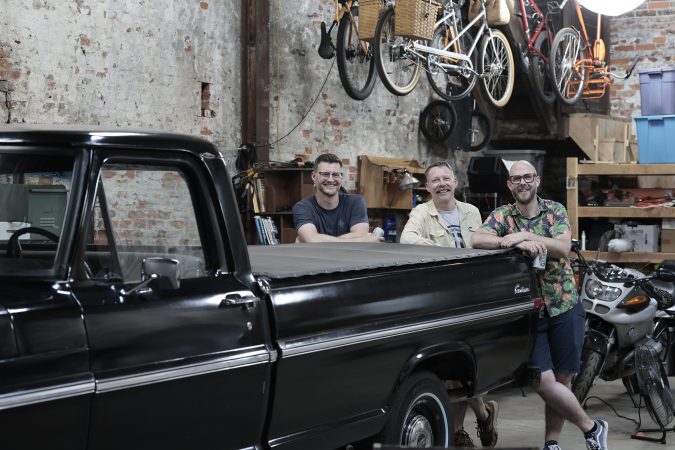
    From left, Corey McMillan, Jeremy Stock, and Luke Elrath in their South Philadelphia garage.Elizabeth Robertson / Staff Photographer

    Settling in

    On a recent evening inside the garage, the three friends still seemed in awe that it had all come together so nicely. So far, they agreed, it’s been a revelation. Working side by side, they’re able to share tools and the technical know-how they’ve accumulated through the years. Maybe best of all, it’s been an excuse to see each other regularly. Their wives have begun using the hashtag “GarageWives” in the friends’ group chat.

    A month and a half in, meanwhile, the place is starting to feel like home. McMillan’s wife found a used espresso maker. Someone brought over some old speakers. There are rumors of a potential couch.

    There is still plenty left to do; there are plans to add a lift, and the rotting wood floor of the upstairs hay loft needs replacing.

    On this night, however, they seemed perfectly content as they worked on their respective vehicles in satisfied silence — the only sound the clank of tools, the hum of a pair of floor fans, and the sweet crack of a fresh fridge beer.

    Heaven, indeed.

  • ‘Phillies Extra’ Q&A: John Middleton on All-Star Game highlights, firing Rob Thomson, and the trade deadline

    ‘Phillies Extra’ Q&A: John Middleton on All-Star Game highlights, firing Rob Thomson, and the trade deadline

    John Middleton spent months overseeing preparations for Philadelphia’s first All-Star Game in 30 years.

    “I think of it like my daughter’s wedding,” the Phillies owner said in February. “I’m excited; I’m looking forward to it. And I know I’ll be really happy the day after when I wake up and it’s done.”

    Well …

    After the baseball world left town, Middleton sat down with Phillies Extra, The Inquirer’s baseball podcast, to recap how the city did during its week at the center of the baseball universe.

    But he also talked about the upcoming trade deadline (Aug. 3), Wall of Fame ceremony for Chase Utley (Aug. 7), and Field of Dreams Game in Iowa (Aug. 13), in addition to his and president of baseball operations Dave Dombrowski’s futures at the top of the Phillies’ organizational masthead.

    Watch the full interview below and subscribe to the Phillies Extra podcast on Spotify or Apple Podcasts.

    Q: Now that it’s over, is there a lasting memory that you will take from the first All-Star Game in Philadelphia in 30 years?

    A: I don’t think I have one in particular … if this were a one-day event like it was in ’76, where they came in, flew in on Sunday evening or Monday morning, and had fielding practice and batting practice Monday afternoon, and played the game on Tuesday and left, maybe you have one. But it’s a five-day event now, and so I’ll just kind of give them to you chronologically, the ones that really stand out.

    For me, the standard I use is what’s quintessentially Philadelphia. … you could have great experiences in any other city, any other ballpark during those five days, but they’re not Philadelphia-based driven experiences. The first one was the attendance at the All-Star Village. I’m told that we blasted every attendance record they had. I know in terms of recent attendance figures, I mean, we did [25,000]-plus the first day, 25-plus the second day, nearly 23 the third day, and over 22 the fourth day. We were at 93,800 and some odd attendees over the four days, and if you looked at the more recent history, they were all kind of in the [12,000] to 15,000. So, this is an enormous increase … And I’m told that it is literally the largest attendance they had over the course of an All-Star Village in any year. So that’s, to me, quintessentially Philly. The fan base responding to that opportunity was extraordinary.

    I think the Home Run Derby was incredible … I doubt they’ve ever had a Home Run Derby like this. What [Cardinals slugger Jordan] Walker did was extraordinary. The finals between the two of them [Walker and Kyle Schwarber] was unbelievable. You couldn’t have scripted it frankly any better other than Kyle winning, but you’ve got to take your hat off to Jordan Walker. He hit six consecutive home runs absolutely on his last ball. Any one of those that he didn’t hit would have resulted in a different outcome. But the fans were so electric. The stadium was electric. It felt like a late postseason-clinching game in a postseason series. It was just wonderful, and that was quintessentially Philadelphia.

    I think the third one I would point to is the red carpet. The way they had it set up, you were in the backstage area and you couldn’t really see anything out there. And you kind of came through the pathway, and you walked through a door, and staring in front of you was a red carpet laid out. There were thousands of fans, and rising above it all was Independence Hall and the steeple, and that was an emotional moment. And you couldn’t have that in any other place in this country but in Philadelphia. And frankly, you could have it in Philadelphia in five or 10 years, and it wouldn’t be quite the same because it wouldn’t be the 250th birthday of the country. You won’t have that chance to have that moment again, in my opinion, until the tricentennial, and I’m not planning to be around to experience that one.

    And I guess the last one I would point to is the entire pageantry surrounding the All-Star Game itself. I think Miles Teller’s moment, his speech was extraordinarily moving. I think the recreation of the Sandlot moment after the fifth inning was unbelievable, and that again is just kind of quintessentially Philadelphia.

    The Phillies fired manager Rob Thomson on April 28 after a 9-19 start.Erik S. Lesser
    Q: Just because I haven’t talked to you since it happened, could you take me through the emotions of the day Rob Thomson was fired, from your perspective?

    A: I, personally, find terminating someone the most difficult and the most unpleasant part of being an executive. I’ve been doing this for over 45 years … and it was horrible the first time I had to do it, and I can’t tell you that it’s particularly better or easier nearly 50 years later. You’re really disrupting somebody’s life significantly, and you never can forget that.

    I think the hardest part about doing something like this is the judgment between how much time you give something. Do you let it go further? And when do you draw the line and say, ‘Enough time has passed. We have to make the decision?’ And frankly, as the old expression goes, not to decide is actually to make a decision. You’re deciding not to decide, and Dave and I talked about this a lot and have talked about it a lot. And we kind of finally reached the same point. And we obviously had done that in the past with Joe [Girardi in 2022], and I really trust Dave’s judgment on these things. And that’s not just the two of us talking. It’s a whole bunch of people talking, and it took awhile to get to consensus. But the consensus was that we needed to kind of do something.

    Rob was great about it. … Rob knows he’s always got a place in the organization. It’s really up to Rob to decide where and when and how, and we’ll work him in. I made the point to Rob, I said, ‘Look, Rob. Charlie Manuel got fired in August of ’13.’ And I said, ‘Look at him; he’s back, and everybody loves him, and everybody from in the organization, the fan base loves to have him back, loves to have him around. Gets a huge ovation every time he’s introduced. Ruben [Amaro Jr.] was fired. He’s back, albeit he’s an announcer, but he’s welcomed back. He comes to all our alumni events, and we love having him around. And I told Rob, I said, ‘It’s going to be the same thing with you. It’s just when you’re ready for it.’

    A decision like this is never so black and white that everybody’s going to agree with it. There are people who are going to say that we waited too long. There are people who will say that we didn’t wait long enough. There are people who say that other people should have been fired. I’ve read all those comments. I don’t agree with them, but that doesn’t mean that I’m right and they’re wrong. But I get paid to make a decision. Dave gets paid to make a decision, and that’s kind of when we thought we needed to do it. And I will tell you, the aftermath [under interim manager Don Mattingly] more or less supports the decision. You can argue that we maybe should have moved earlier. Maybe we would have had a better record today had we moved a week earlier, five days earlier, or three days earlier. But the reality is, you just need to set the organization on a path that’s going to hopefully result in the best season you can possibly have. And I think we’re on that. We’ve got to be healthy. But if we remain healthy, we’ll be in good shape.

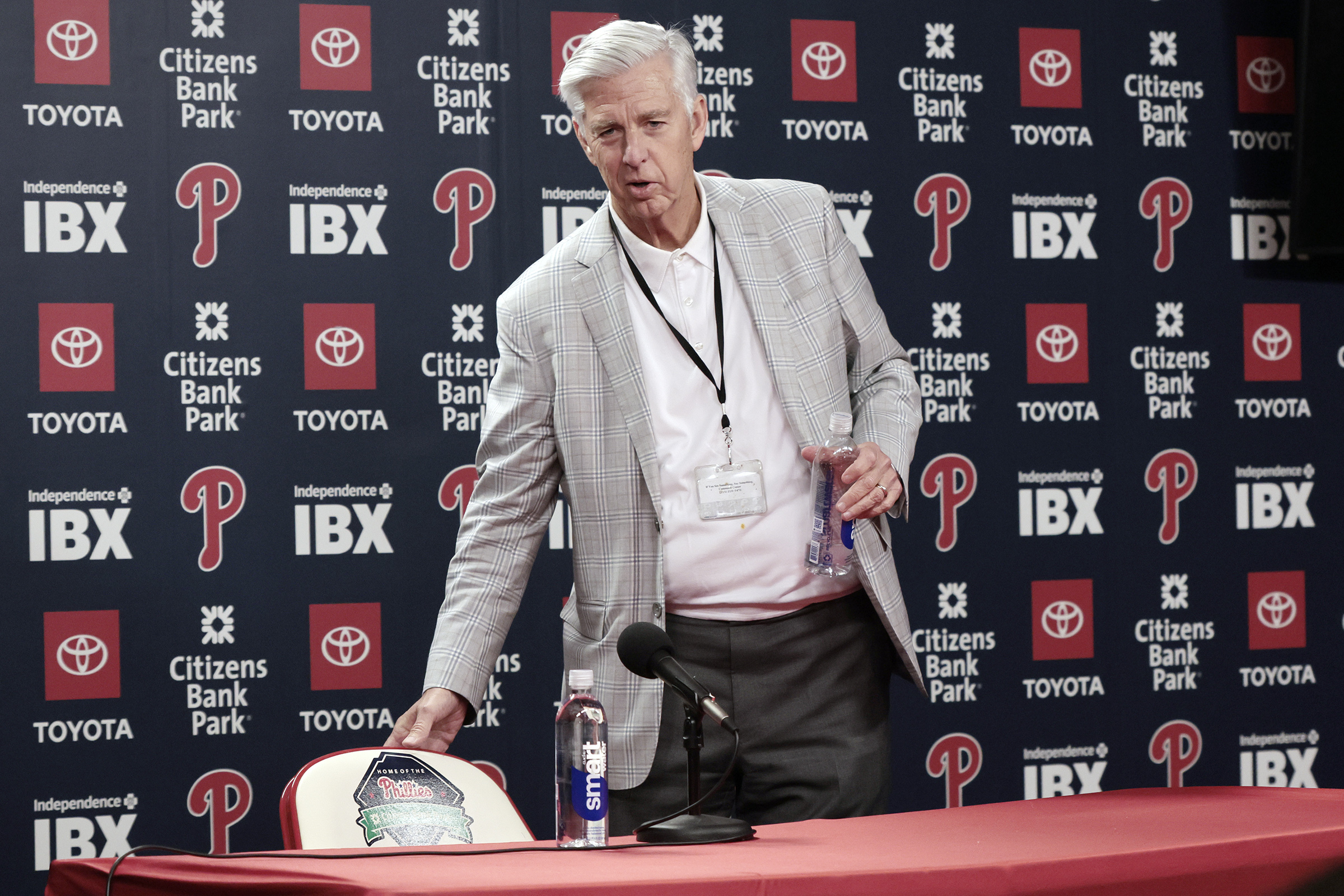
    Phillies president Dave Dombrowski has a lot of work to do before the trade deadline.Elizabeth Robertson / Staff Photographer
    Q: The trade deadline is roughly two weeks away, and this one is especially intriguing because nobody knows what the rules are going to be beyond 2026 in terms of whether or not there’s going to be a salary cap. How do you and Dave go about doing what you have to try to do to win right now when you don’t know what the landscape is going to look like next year?

    A: … I think you have to be aware of it. You have to ask questions about it. But at the end of the day, because the range of outcomes is so wide, I think you have to kind of just do what’s in your judgment is in the best interest. And philosophically, Dave and I approach these things as kind of maximizing our ability to win today with maximizing our ability to win in the future. And reasonable people can disagree about how you actually implement that philosophy and how you think about an individual trade, the players you’re getting, who the players are that you’re giving up, what the salary is you’re taking on, and all of that. But that remains our philosophical construct, and we’re going to move down that path.

    That kind of also gets you back to health. Because obviously if somebody gets injured, an important player gets injured in particular, that changes your understanding of the team and what you have to do to maximize the rest of the season in the postseason. So, all of those things are out there and they’re playing.

    … there’s like four or five teams in the National League that are within say three games of the final wild-card spot. It’s really hard to trade away players if you’re one of those teams and say ‘I’m going to give up and try to get some younger players.’ Most of those teams are going to turn out to try to be pushing to add players to kind of bridge that gap and get into the playoffs. I mean we were there in ’22. It’s exactly where we were, and so I think that makes it very difficult because if you look in the National League and the American League, there’s a handful of teams that are quote unquote out of it. So I think most teams are kind of in it, and that really shrinks the pool and rise prices up.

  • Two players who could help the Phillies address their biggest trade deadline need

    Two players who could help the Phillies address their biggest trade deadline need

    An underrated stat as we look ahead toward the trade deadline: The Phillies are 42-15 in games started by Cristopher Sánchez, Zack Wheeler, or Jesús Luzardo.

    Impressive? Sure. But also jarring, due to the simple math that follows.

    The Phillies have a 56-46 overall record. Which means they were 14-31 in games started by anybody other than Sánchez, Wheeler, or Luzardo.

    Let that number marinate. The more you do, the more you might begin to rethink the Phillies’ trade deadline calculus. This time of year, there are wants and there are needs and there are would-be-helpful-to-haves. A lot of folks seem to have relegated starting pitching to that third bin. In reality, it might be Dave Dombrowski’s most pressing order of business.

    The Phillies don’t necessarily need a fourth Cy Young-caliber arm. They shouldn’t be looking for 2009 Cliff Lee or 2010 Roy Oswalt. They can set their sights much lower than the Tigers’ Tarik Skubal or even the Twins’ Joe Ryan. Maybe even lower than Boston’s Sonny Gray. At the same time, Dombrowski needs to be thinking bigger than this year’s version of Walker Buehler or Noah Syndergaard. The Phillies don’t just need someone who would give them a fighting chance in a late-season, must-win game against the Braves. They need someone who could potentially start Game 1 of the National League Division Series. Let’s begin our argument there.

    1) Who is the Phillies’ fourth starter in the postseason?

    They won’t make it through October without needing one. Unless their October is tragically brief. The Phillies could need someone outside of the Big Three as soon as Game 1 of the NLDS. All it would take is losing a game in the wild-card series, which would force Luzardo to the mound for a decisive Game 3. Assuming the usual one off day before the start of the NLDS, none of the Big Three would be on normal rest for Game 1.

    Even if the Phillies do have the top of their rotation lined up for the first three games of an NLDS, that still leaves Game 4. They were blessed with an extra off day last year against the Dodgers. That won’t be the case this year if Major League Baseball sticks to its previous pattern of alternating the extra off day between leagues.

    After their series concludes with the Dodgers on Wednesday, the Phillies face top teams like the Yankees, Rays, and Braves.Yong Kim / Staff Photographer

    2) Will the Phillies even make it to the postseason with the status quo, given the gauntlet that awaits?

    This week’s series against the Dodgers is the first of 11 that they will play against either the five winningest teams in the majors or three of the teams nipping at their heels in the NL playoff chase.

    It breaks down like this:

    • Six games against the two winningest teams in the American League (Yankees, Rays)
    • Six games against the two winningest teams in the NL, with two vs. the Dodgers already in the books
    • Seven games against the Braves, who entered Tuesday with a three-game lead in the division
    • Twelve games against the Cardinals and Marlins, both of whom were within four games of the Phillies in the loss column as of Tuesday
    • Factor in series against the Diamondbacks, Nationals, and Mariners and 43 of the Phillies’ 62 games post-All-Star break will feature opponents who entered Tuesday with a winning record.

    The Braves series looms especially large.

    The Phillies have a stretch in early September when they will play the Braves seven times in 10 days with no off days. Given the schedule, they’ll need someone other than the Big Three to face the Braves in at least two of those seven games.

    And what about the last week of the season? The Phillies are currently lined up to finish the year with six games against the Brewers and Rays. In order to line up the Big Three for a wild-card series, the Phillies would need a fourth and fifth starter to pitch two of the three games against the Rays. Even if they aren’t fighting for a playoff spot, they could be fighting for the right not to travel to Atlanta, Milwaukee, or Los Angeles for the wild-card round.

    3) Trading for a fourth starter could help the bullpen more than trading for another bullpen arm.

    To be clear, this isn’t an either-or. The Phillies clearly need to add some form of reinforcements for a bullpen that lost setup man Brad Keller for the season. José Alvarado offered some reason for hope in his appearance against the Dodgers on Monday. Orion Kerkering, less so.

    But innings are innings. The fewer of them that are pitched by starters, the more relievers must pitch. You’d rather have a starter coming out of the ’pen in a must-win postseason game than a reliever starting. Look at Luzardo in Game 4 of last year’s NLDS loss to the Dodgers.

    A couple of names that should at least intrigue the Phillies.

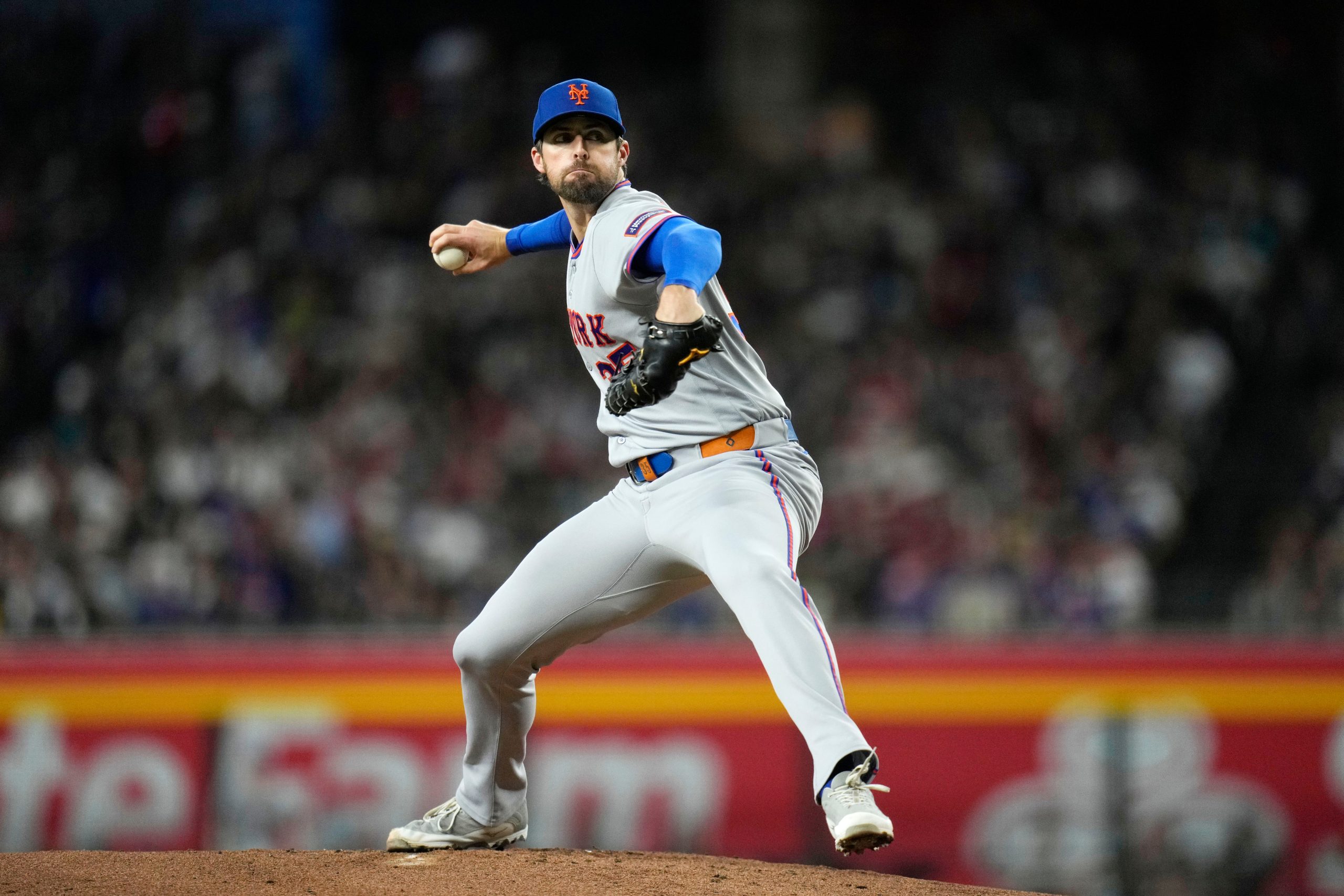
    Clay Holmes has a 2.39 ERA in nine starts this season for the Mets.Ross D. Franklin

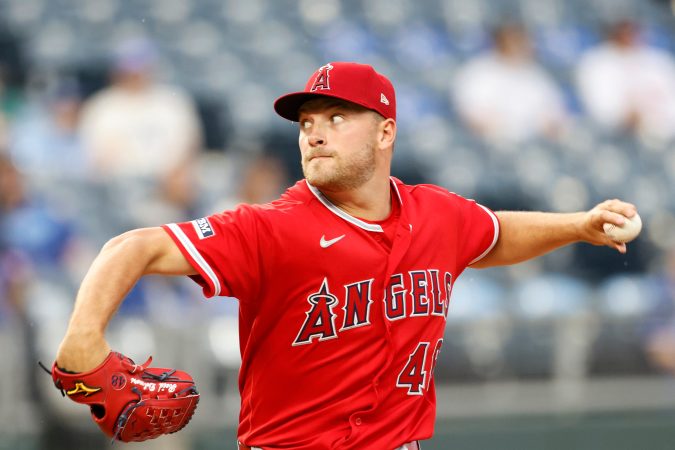
    Reid Detmers of the Angels and Clay Holmes of the Mets are both potentially available. Holmes, a right-hander, is presumably the most available, given that he is currently working his way back from a broken leg and has a player option for next season. Detmers, a lefty, still has two more full years left until free agency and is under contract for a meager $2.63 million this season. Only 27 years old, with borderline elite strikeout, walk, and home run numbers, he could end up costing more than the Phillies are willing to pay.

    Cost aside, both Detmers and Holmes have the kind of profile that should have the Phillies working the phones. Holmes was a longtime setup man with the Yankees who moved into the Mets rotation last season. Detmers moved to the bullpen last season after a disappointing year as a starter but has since rejoined the rotation. Either would dramatically improve the Phillies’ flexibility, both down the stretch and through the postseason.

  • Penn and CHOP researchers lost millions in federal funding for healthcare research last week, forcing programs to close

    Penn and CHOP researchers lost millions in federal funding for healthcare research last week, forcing programs to close

    Children’s Hospital of Philadelphia researcher Christopher Forrest has spent nearly a decade training early-career scholars on how to design studies that improve care for kids with congenital heart disease, stroke, and influenza.

    That work ended last month, when he had to shut down his PEDSnet Scholars program. The federal funding designated for it stopped coming last fall.

    Forrest received official notice last week that the Agency for Healthcare Research and Quality (AHRQ) had canceled his $5 million grant — originally intended to last through 2028. The letter gave no specific reason, stating only that continuing the grant was not “in the best interest of the Federal Government.”

    PEDSnet Scholars trained researchers to study how healthcare systems can be organized and financed to improve health outcomes. It was one of 16 such programs nationwide funded by AHRQ. Another program site, located at the University of Pennsylvania, received an identical cancellation notice last week from AHRQ.

    “These are not controversial topics,” Forrest said.

    Eighty-two affected grants totaling an estimated $211.6 million as of Tuesday had come to the attention of AcademyHealth, a nonprofit that supports health researchers and has been tracking AHRQ grant cancellations. Those include funding for research projects, career development, training programs, and centers.

    Some researchers received letters saying their work did not align with the agency or federal government’s priorities, followed by a list of the priorities, AcademyHealth president Aaron Carroll said.

    However, many of these projects appear to be directly aligned with priorities, he said.

    One involved a randomized trial of antibiotic stewardship — efforts to encourage careful and responsible use of antibiotics to avoid resistance — across 40 hospitals. Yet in the letter canceling it, antibiotic resistance was listed as a priority.

    “It can’t possibly be that all of these grants that are seeking to improve the quality, safety, and efficiency, and patient-centeredness of healthcare delivery are all incompatible with this or any other administration’s priorities,” said Scott Halpern, a Penn health services researcher whose funding was also canceled.

    Billions in scientific funding have been disrupted under President Donald Trump’s administration over the last year and a half, prompting lawsuits and court reversals in certain cases.

    The Department of Health and Human Services did not respond to requests for an exact count of the grants impacted, saying in a statement that the AHRQ director determines “whether continuation funding is in the best interest of the federal government.”

    “To be clear, these grants were not terminated — they were not awarded continued funding,” the HHS statement said.

    ‘Incredibly demoralizing’

    In late 2025, Halpern had planned to hire a new staff member for the Penn PORTAL program, one of the 16 AHRQ-funded training programs, separately funded from CHOP’s program.

    His team identified a candidate, but — unable to access funding from their $5 million grant since the fall — delayed extending an offer.

    The position was ultimately eliminated. They also rescinded offers to train new scholars in the program.

    Halpern received his official notice last week that his grant, set to continue into 2028, was canceled. He had only spent $1.5 million of it so far.

    Instead of having 10 trainees this month as planned, the Penn program has zero.

    “To not have the resources to support the people who will make a difference in the future is incredibly demoralizing,” Halpern said.

    He drew on philanthropic resources and a roughly $150,000 commitment from Penn Medicine to finish training his first cohort. However, the second cohort of scholars was stopped midway.

    As a result, projects on improving translation services for hospitalized patients and expanding access to hormone therapy for menopausal women were canceled.

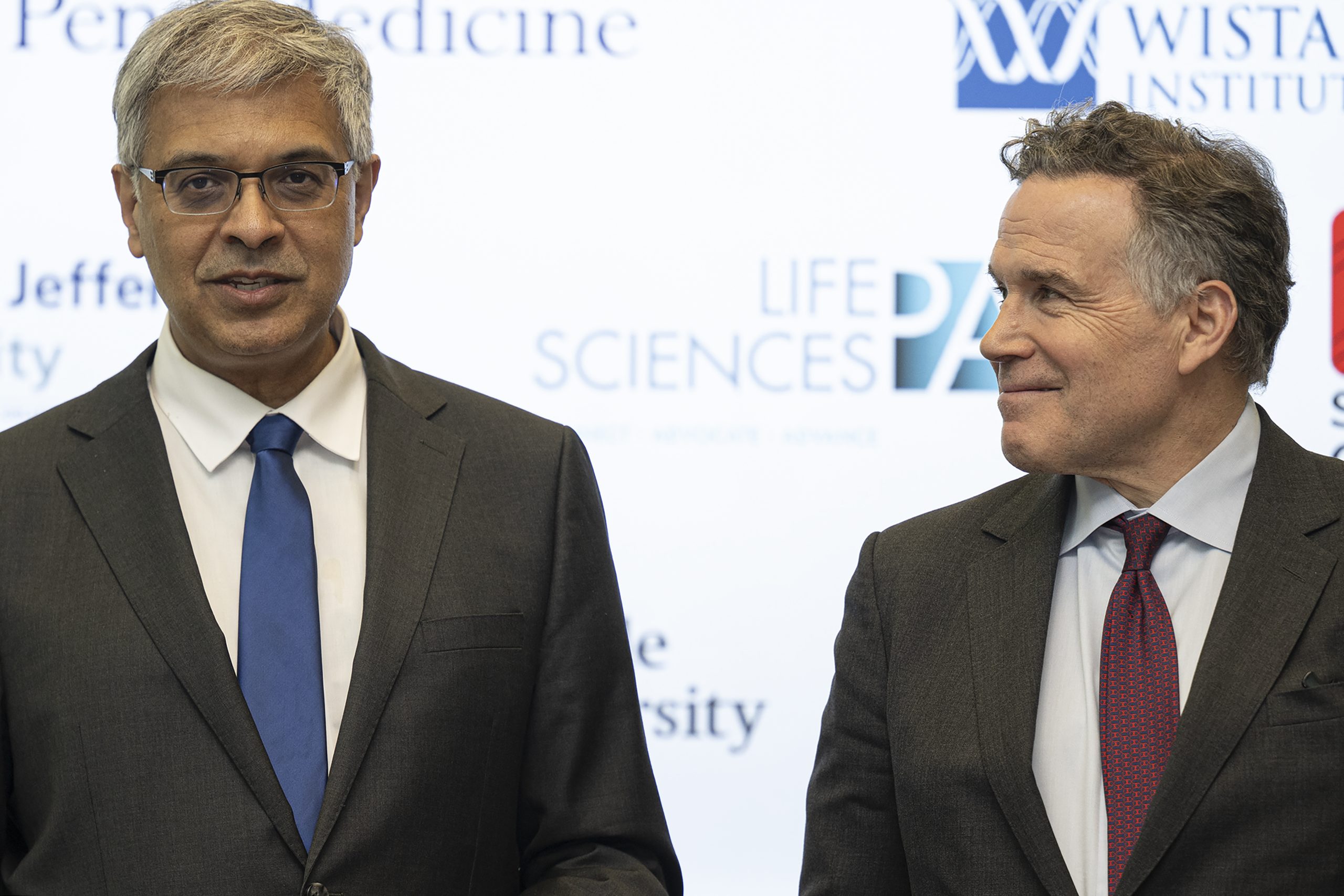
    Jay Bhattacharya (left), director of the National Institutes of Health, and Sen. David McCormick (R., Pa.) speak to the media in March, after touring University of Pennsylvania facilities to highlight NIH-funded research in Philadelphia.Jose F. Moreno / Staff Photographer

    Grant cancellations from AHRQ will have longstanding impacts on advancing healthcare in the United States, a Penn Medicine spokesperson said in a statement, declining to answer more specific questions.

    “Some research projects at Penn Medicine have felt those cuts at their core and impactful work now cannot progress as planned,” the statement said.

    CHOP did not respond to a request for comment.

    In limbo

    Penn researcher Jaya Aysola had not heard as of Tuesday whether her AHRQ grant is canceled, but she assumes the notice is coming.

    She had received a $3.8 million grant to serve as a coordinating center for the 16 training centers starting in 2024. The grant should have been renewed for its second year last November, but that didn’t happen.

    At first, she was told by the agency that it was delayed due to the government shutdown. Then she was told it was held up due to a lawsuit filed by the Society of General Internal Medicine, a physicians group, in August over AHRQ shutting down its grantmaking program.

    Since then, “it’s been radio silence,” she said.

    All but roughly $300,000 of her grant remains unused. Unable to access funds since last fall, she had relied on bridge funding from the university to support staff and research faculty.

    When that funding ended earlier this year, she had to find new jobs and projects for three of her full-time employees, as well as three part-time employees.

    “We already shut down most of the operations,” Aysola said.

    The work she has done since has largely been pro bono with her personal time and limited internal funding.

    Aysola convened a meeting this spring with the 16 AHRQ-funded training centers to discuss how other programs were bridging the gap in funding. Most had paused on accepting new trainees, and have prioritized finishing the current cohort’s work.

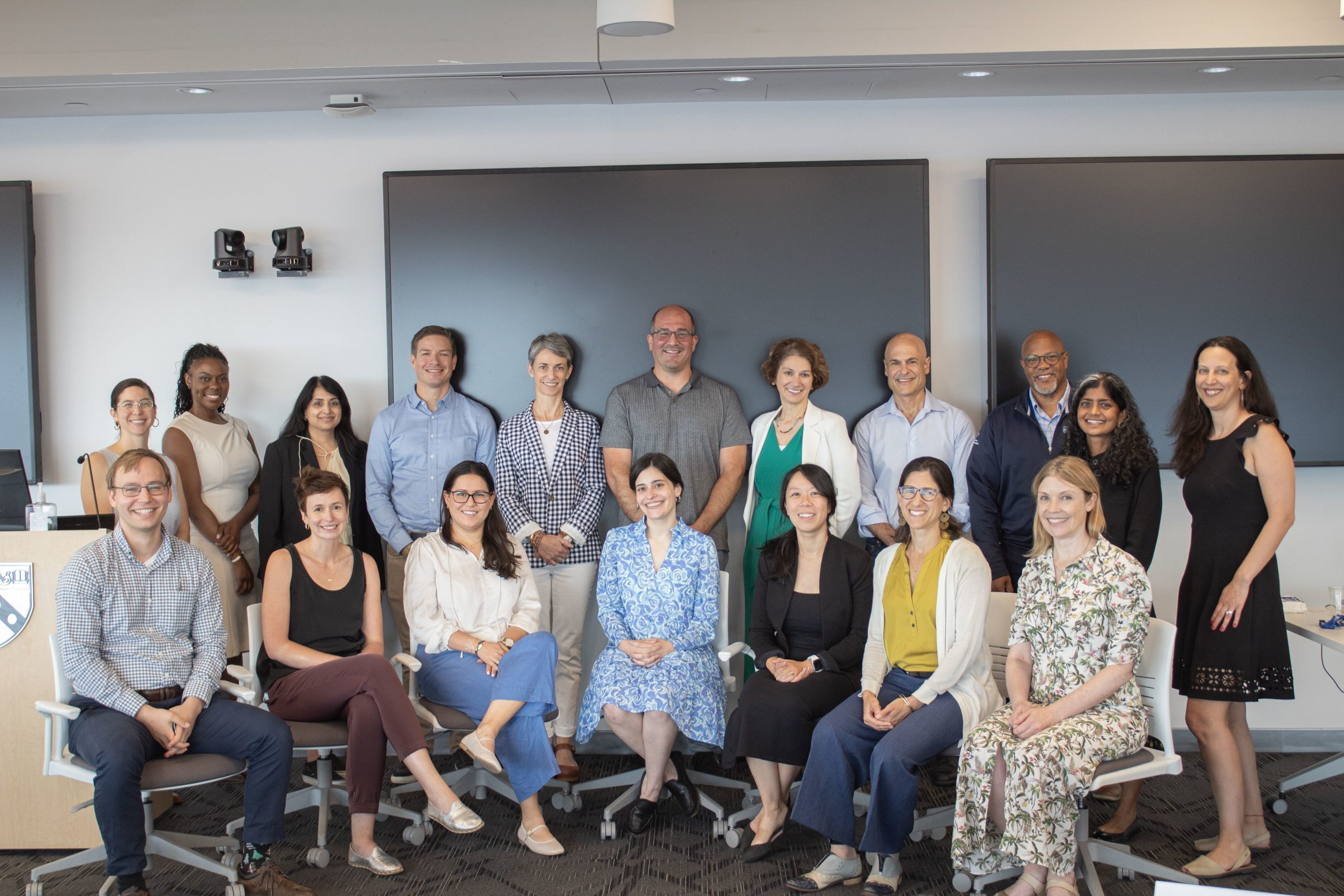
    A July 2025 group photo featuring scholars and faculty leaders in the Penn PORTAL program, which was affected by recent cuts to AHRQ grants.Courtesy of Scott Halpern

    At Halpern’s Penn PORTAL, the first cohort of scholars’ projects have already been implemented. Across the Penn health system, they “are yielding improvements in the patient experience of care,” Halpern said.

    None of the projects led by later cohorts, who would have been trained had the full five years of funding been maintained, are likely to see the light of day, he added.

    He hopes to bring awareness to what he considers an inappropriate cancellation of AHRQ funding. Many organizations are exploring options in terms of advocacy and potentially legal engagement, he added.

    CHOP’s Forrest estimates 30 faculty will never be trained due to PEDSnet Scholars losing its grant funding.

    “It’s very sad because it’s been so instrumental to my career, and I had hoped that it would be instrumental to the career of many of our junior faculty,” Forrest said.

  • Kyle Kendrick feared the worst after his son was hit by a car. Now Kyle Jr. is back on the field and hitting homers.

    Kyle Kendrick feared the worst after his son was hit by a car. Now Kyle Jr. is back on the field and hitting homers.

    Kyle Kendrick used to walk into the batting cage he built in his Clearwater, Fla., backyard and just stand in it. He dreamed of having something like this when he was a kid and the former Phillies pitcher was in awe of what he had.

    “I would just look around and say, ‘This is sweet,’” said Kendrick, a member of the Phillies’ starting rotation from 2007-14.

    It was there that he spent hours throwing batting practice to his son, Kyle Jr., as the son fell in love with the dad’s game. Kendrick even installed lights so his boy could keep swinging. The batting cage became their place.

    “They grow up fast,” Kendrick said. “Pretty soon, he’ll be in high school and then college, and he won’t want to go into the cage anymore.”

    For a few weeks last fall, the dad wasn’t sure if his son would ever be able to get back in the cage after the 12-year-old was hit by a car driving nearly 50 mph while he was walking across the street near his home.

    Kyle Jr. broke both femurs, had his mouth wired shut, and spent a week in the hospital after six hours of surgery. The Kendricks first feared their son wouldn’t make it. Next, they wondered if he’d ever play baseball again. And then they watched him leave his wheelchair to get back into the batting cage with his dad.

    The son sat on a bucket in the cage 18 days after the crash while his dad bounced baseballs toward him. He nabbed each hopping grounder with ease and fired throws back to his dad. There was no fear, his mother Stephenie said. Kyle Jr. was back in the cage.

    “I was just so proud,” his mom said. “This kid was just hit by a car and he wasn’t even flinching. It didn’t faze him. He was so driven to get back. He was on that bucket swinging the bat. He was catching and throwing. He was fielding ground balls. I was amazed.”

    ‘Oh my gosh’

    Kyle Kendrick kept calling his son’s phone, wondering where he was after he rode his bike that Sunday to fish in a nearby lake. Finally, a police officer answered. He told Kendrick that his son was in a crash and he had to get there fast.

    “I actually heard the sirens from my house,” Kendrick said. “I was like ‘Oh, my gosh.’”

    Kyle Jr. was riding his bike home when he stopped at an intersection so he could walk his bike across the street. A driver waved him on and the boy started to cross. But another car did not see him. The boy was launched into the air before crashing down onto the car and striking the pavement. The driver was not charged. There were ambulances, firefighters, and a crowd of people there when the dad arrived. It was the worst experience of his life, Kendrick said.

    He called his wife, who was driving home from a meeting for their daughter’s volleyball team.

    “He couldn’t speak,” Stephenie said. “The cop got on the phone and said they had to helicopter him to the hospital. I said, ‘Helicopter him there? Why? Why can’t he take an ambulance? Is he going to survive? How bad is it?”

    Former MLB pitcher Kyle Kendrick poses for a portrait with his wife, Stephenie LaGrossa Kendrick, and their children, Sophia, Kyle Jr., and Sloane at their home in Florida. Octavio Jones / For The Inquirer

    The son underwent a bevy of X-rays and MRIs at Johns Hopkins All Children’s Hospital in St. Petersburg, Fla., where doctors learned that he broke both femurs but somehow did not have a spinal or head injury. Even his teeth were mostly intact as the boy lost just one.

    The crash happened three years after Stephenie’s brother Chris died. Kyle Jr. was close to his Uncle Chris, who loved to fish. She asked her late brother on the way to the hospital to pull some strings and limit the damage.

    “I swear he had a hand in it,” Stephenie said. “Every doctor said, ‘He shouldn’t have survived this. This is a miracle.’”

    The boy’s face looked like he had gone 12 rounds when his mom saw him in the hospital. His jaw was broken but he still managed to say, “Hi, mom.” Stephenie told her son to show everyone how tough he was. He did just that.

    He screamed when his legs were pulled into traction but he fought through it. His pain medication was limited overnight to prepare for surgery in the morning and the boy bore the discomfort. He was tough.

    “He really is very tough,” his mom said. “And it’s mentally tough.”

    The parents sat in the hospital cafeteria for 6 hours while their son underwent surgery.

    “That was the longest and most emotional time,” Kendrick said. “It’s six hours of surgery and he’s under for a long time. As a parent, it’s the worst.”

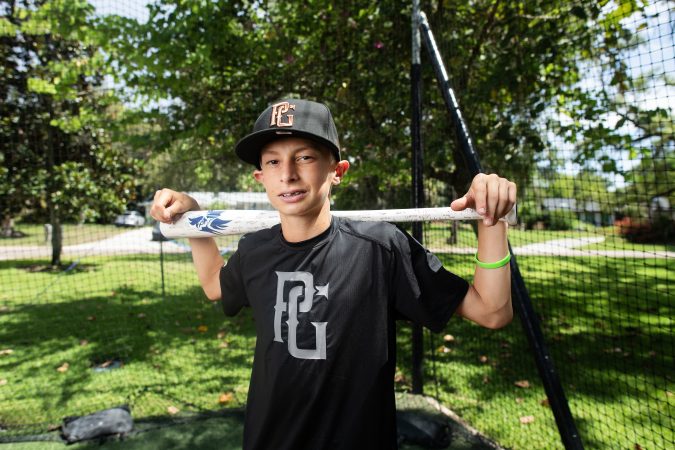
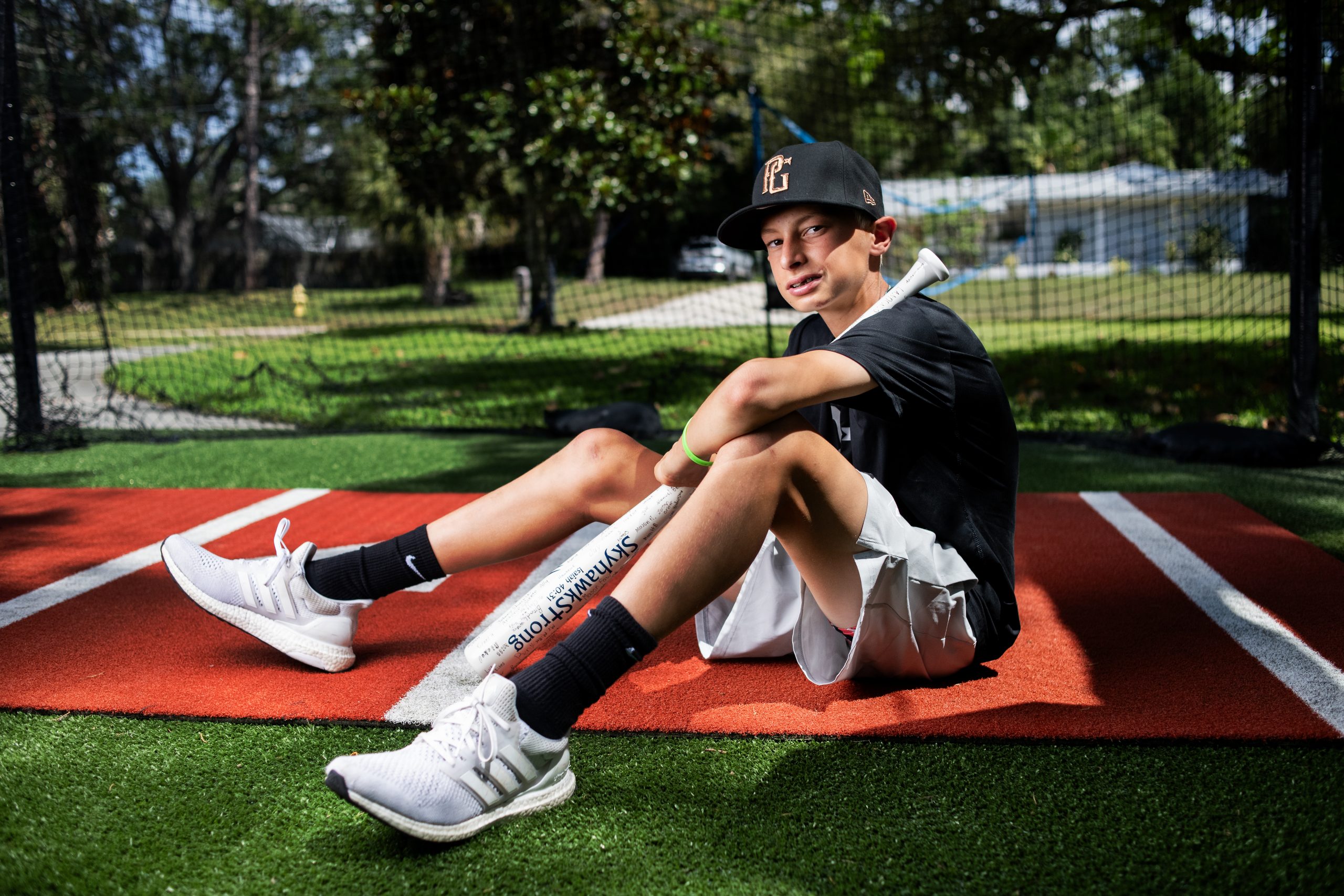
    Former Phillies pitcher Kyle Kendrick thought his son was going to die. Six months later, Kyle Jr. is playing baseball again after being hit by a speeding car.Octavio Jones / For The Inquirer

    The surgeon installed metal rods into Kyle Jr.’s femurs through his hips and was so precise that he left the tiniest scar. The doctor told the parents that their son would heal in six months. That sounded a little optimistic, the dad thought. But they were clean breaks, the doctor said. There were no growth plate issues. The boy would bounce back. He got lucky, the doctor said.

    The boy stayed in the hospital for a week with his mom while dad stayed at home with their daughters, Sophia and Sloane. Everyone at the hospital was great, mom said. Well, everyone except for the people who kept removing and inserting the catheter.

    “I was like, ‘OK. No more students are coming in to try the catheter. We’re going to use your best person who knows how to use a catheter and that’s what we’re going to do,’” said Stephenie, who lives in Florida but still has the accent of the girl from Glenolden who attended Archbishop Prendergast. “I pulled out a whole Delco thing there. You don’t even know. I was real nice until I was like, ‘That’s enough. Now leave the friggin’ catheter in until he can pee on his own.’”

    ‘Back on the horse’

    Kyle Jr. returned to school in early December, less than a month after the crash. His buddies at Skycrest Christian School pushed the sixth grader’s wheelchair around the halls and carried his books. He went snowboarding just three weeks after surgery. The doctor was right.

    Kendrick took his son to fish at the spot where he was headed that Sunday and they went back to the scene of the crash. He bought his son a new bike.

    One of their daughters used to ride horses, and the trainer always put her right back on the horse if she fell off. There’s no guide instructing parents how to deal with a crash like this. So the Kendricks did what they thought was best.

    “We got right back on the horse,” Stephenie said. “He’s a badass. He really is.”

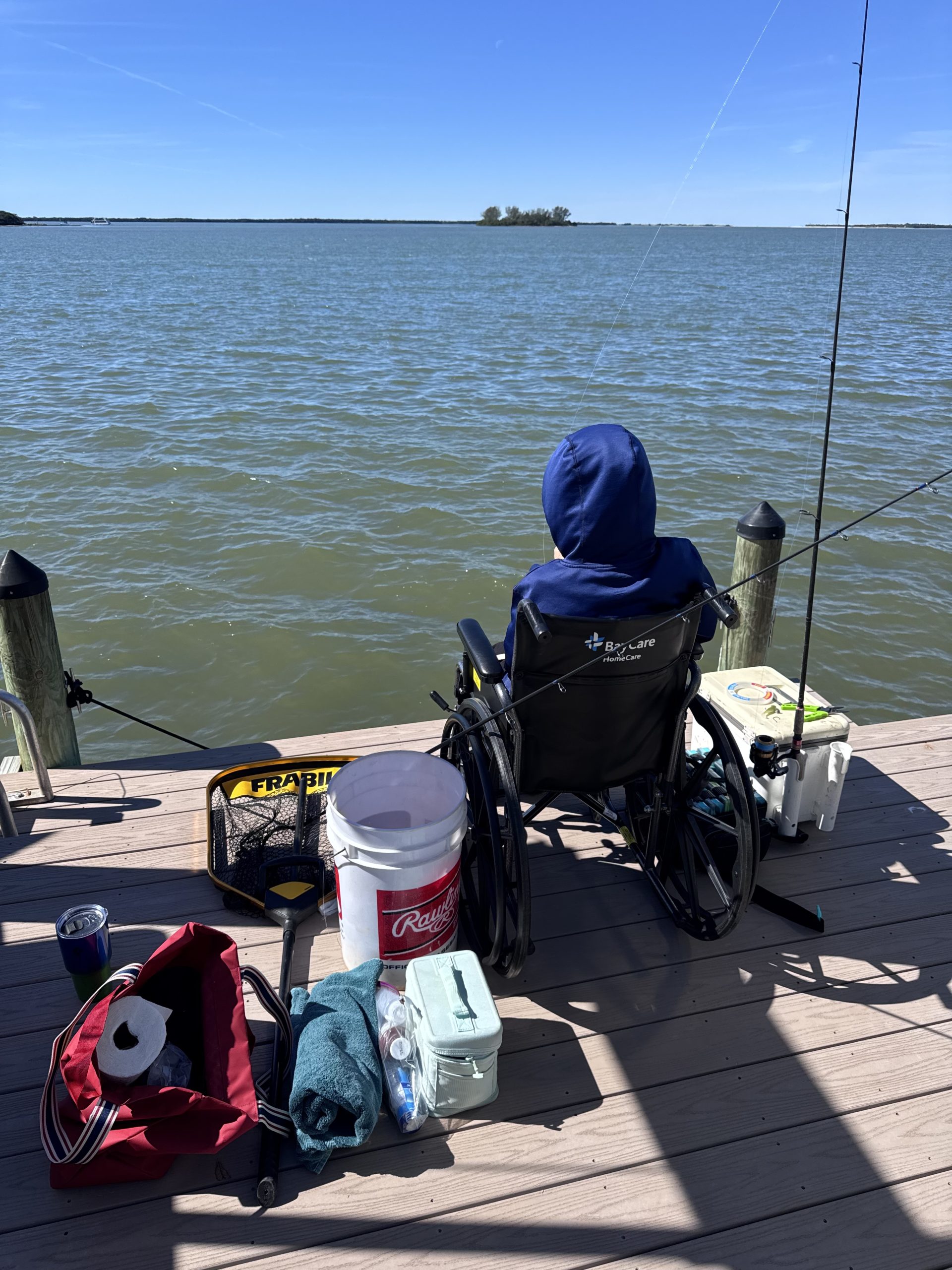
    Kyle Kendrick Jr. fishes from his wheelchair weeks after he was hit by a car while heading home from fishing in the same spot. His dad, former Phillies pitcher Kyle Kendrick, drove him back to the spot.Kyle Kendrick

    And they got the boy in the cage. Kyle Jr.’s travel team — which is coached by his dad — had a trip planned for June to a tournament in Cooperstown, N.Y. The fields are named after big-league parks and nestled in the valley near the Baseball Hall of Fame. This was a trip the father and son had been looking forward to. But Kendrick worried his son wouldn’t be able to make it.

    He played his first game for the Florida Burn in January as his dad used him as a designated hitter to keep him out of the field. His Burn teammates wore his number on their batting helmets and some of the other parents cried. He was back, but the Kendricks noticed their son’s confidence wasn’t where it used to be.

    He had missed weeks of baseball and had trouble timing his swing. They couldn’t fault him if he was tentative still from the crash. The father and son kept working.

    “He’s a good coach,” the son said. “It’s a lot of fun to hit with him and then to have him as my coach. Just working with him and learning what he learned is really cool. It’s special.”

    Kyle Kendrick said his son being “able to play at 100 percent after this is a miracle.”

    “When I got back out there with him, I said, ‘This is so cool,’” the father said. “He could’ve passed. And now to still play? He could’ve been paralyzed. Just to be out there doing baseball stuff is unbelievable.

    “I really didn’t think he’d be able to play again. I didn’t know how he’d move. A lot of thoughts go through your mind. For him to come back, he looks normal if not better. We’re very lucky and grateful. It’s cool to be back with him. To see him on the field was awesome for me.”

    He made it to Cooperstown and the team’s first game was delayed until near midnight. The boys didn’t play that night until way past bedtime. They were a bunch of friends on a baseball trip. They slept in bunks for a week, traded pins, ordered pizza, went to the Hall of Fame, and watched fireworks. Playing late at night was perfect.

    It became even better when young Kyle got hold of a pitch and drove it to center field. His first homer came seven months after a crash that gave his parents the worst scare of their lives.

    “It was freezing cold,” Kyle Jr. said. “I could hardly feel my hands. I got a high pitch and I just swung up at it.”

    He circled the bases and his teammates — the same kids who left a giant banner of support on his lawn when he was in the hospital — rushed toward home plate. Kyle Jr. slowed his jog as he neared the gang of kids and skipped onto home plate as his buddies went wild.

    “That felt so good,” Kyle Jr. said. “Everyone was pumped. Everyone was jumping because it was my first one.”

    A day later, he did it again. It was “oppo taco,” he said of his opposite-field homer.

    The kid who fell in love with baseball in the batting cage his dad built was back doing what he loved.

    “I just love to play,“ he said. ”It’s a lot of fun.”

  • One of DA Larry Krasner’s top advisers once sent $100 to a man in prison for murder who’s now appealing his conviction. It’s under investigation.

    One of DA Larry Krasner’s top advisers once sent $100 to a man in prison for murder who’s now appealing his conviction. It’s under investigation.

    The Philadelphia District Attorney’s Office is investigating ties between one of DA Larry Krasner’s top advisers and a man serving life in prison after prosecutors learned that the official sent the man money years ago and did not disclose it.

    G. Lamar Stewart, chief of external engagement and government affairs in the DA’s office, said he sent $100 to Anthony Sutton in January 2021 to support Sutton’s mentorship program, “Mann Up,” for men incarcerated at State Correctional Institute Phoenix.

    Sutton, 61, who is serving life in prison for killing a man in Germantown in 1984, has been appealing his conviction for more than a decade.

    The issue came to light last week, after the prosecutors assigned to Sutton’s appeal were reviewing his prison records and noticed that Stewart was among those who had sent Sutton money in recent years.

    The records showed Stewart did so only once, Krasner said.

    The payment raised concerns, in part because Stewart had organized and participated in meetings between Sutton’s defense attorney, Krasner, and prosecutors about the case, according to a source familiar with the matter.

    Krasner’s office has opposed Sutton’s appeal and said his profession of innocence lacked merit.

    When the prosecutors discovered the payment, it was quickly brought to the attention of Krasner, who then asked his office’s special investigation unit to investigate, according to multiple sources familiar with the case. The inquiry remains ongoing.

    Stewart, who is also senior pastor of Taylor Memorial Baptist Church in Nicetown-Tioga, was working as the head of the office’s community engagement unit at the time of the donation. In an interview, he said he used his own money to support Sutton’s program as part of the faith-based charitable work he does to assist families and community organizations across the region every holiday season.

    “I thought that the work that they were doing was positive, transformative, and it was geared to helping reduce violence in Philadelphia and to make communities and families whole,” he said.

    He said he did not know of any way to reach the organization other than to send it through Sutton directly. “I was very intentional to make sure that my name was listed because when you’re not trying to hide anything, you just do things above the board,” he said.

    District Attorney Larry Krasner (left) and G Lamar Stewart, head of the Community Engagement and Government Affairs at the DA’s Office, outside the President’s House in Independence National Historical Park in February 2026.Tom Gralish / Staff Photographer

    During a brief hearing in Sutton’s case on Monday, Assistant District Attorney David Napiorski, supervisor of the office’s law division, told Common Pleas Court Judge Giovanni O. Campbell that his attorneys needed additional time to investigate Sutton’s case after they found that someone in the office had put “money on the defendant’s books in prison.”

    “That needs to be investigated by the office thoroughly before we can take any further action,” Napiorski told the judge.

    Stewart said he did not try to influence the outcome of the appeal or advocate for Sutton. He acknowledged that he attended at least one meeting about Sutton’s case, but said his job requires him to coordinate and attend meetings with Krasner.

    Krasner said that he saw no issue with Stewart’s donation or subsequent participation in meetings, and that his office’s inquiry and prosecutors’ comment in court Monday “establishes integrity.”

    “G. Lamar Stewart gave a small amount of money for an organization … and then this office decided to oppose Mr. Sutton’s request. Where’s the issue?” he asked.

    He added: “Any rock we haven’t flipped yet, we will flip. Preliminarily, it seems quite clear that this was a donation given for a completely legitimate purpose.”

    Sutton did not immediately respond to a request for comment sent through a messaging app for people in prison. His attorney, Jason Javie, said Tuesday that he did not know anything about Stewart’s payment to Sutton and declined to discuss the matter further.

    “My focus is 110% on the exoneration of Mr. Sutton,” he said.

    The revelation comes amid mounting scrutiny over Krasner’s office’s handling of post-conviction matters. In a forceful ruling last month, the Pennsylvania Supreme Court said Krasner’s office had a pattern of misleading judges when seeking to overturn old murder convictions.

    Last week, in a separate, controversial federal appellate case, a former assistant district attorney in Krasner’s office said prosecutors were “colluding” with defense attorneys to find the most effective way to have the murder conviction thrown out. And then, on Monday, in a striking court filing in that same contentious case, two supervisors in the law division said Krasner had instructed them to litigate the matter in a way that would “protect the office.”

    And now, the office is investigating a case connected to Stewart, who has worked in the DA’s office since 2019 and is one of Krasner’s most trusted advisers.

    District Attorney Larry Krasner at a press conference in May, denouncing criticism of his office leveled by Republican members of the House Judiciary Committee.Tom Gralish / Staff Photographer

    Stewart, who is paid $154,500 annually, oversees the office’s community engagement, public affairs, and communications strategies, and acts as a conduit between Krasner and other public officials. Since Robert Listenbee retired as first assistant district attorney in January, Krasner has not named a successor — and several prosecutors say Stewart, who is not a lawyer, has effectively absorbed parts of that job. He often helps coordinate sensitive matters in cases, including relocating victims and witnesses.

    He is respected by many in city government and across the community. Mayor Cherelle L. Parker, speaking at Krasner’s inauguration ceremony in January, mentioned Stewart as one of the office’s most essential staffers.

    “District Attorney Krasner, as a moment of personal privilege, I want you to know that G. Lamar Stewart is one of the most committed, committed, committed members of your team in engaging in community outreach, and he represents you well, sir,” she said to applause.

    Stewart, born and raised in Germantown and North Philadelphia, served in the U.S. Army and worked for the Philadelphia Police Department before joining Krasner’s team in 2019. At his church, he runs a nonprofit called Taylor Made Opportunities that offers job support and mentorship to young men in the neighborhood, and supports families of homicide victims.

    Stewart said he donates to community organizations, and provides meals, Christmas gifts, and other means of support to crime victims’ families each year, using his personal money.

    He does not typically disclose those donations to the DA’s office, he said, and it has never been a problem.

    “My Christian faith is rooted in giving, in love, in showing up for the least of these, showing up for those who have been harmed, for showing up for those who are trying to rehabilitate and be accountable for the harm they caused to bring healing to our community,” he said. “For anyone to suggest that me giving through a faith lens, in the interest of good for community, is problematic for me, that is an infringement upon my faith tradition and my religious rights.”

    Krasner said he did not think it was necessary for Stewart — or other employees in the office — to disclose donations.

    “I don’t know that it makes sense to require 700 employees, especially if they’re doing so on a faith basis, to disclose everyone they give donations to,” he said. “It’s certainly something we could think about.”

    In Stewart’s case, his money went to support a program run by Sutton, better known as Benny Doo, who was sentenced to life in prison after a jury convicted him of first-degree murder in the shooting death of Richard Berry in the Pelham section of Germantown in December 1984. In the early 1980s, prosecutors said, Berry hired Sutton and other members of his crew, called the “Ghostbusters,” to retrieve jewelry that had been stolen from him, and agreed to pay with “a few ounces of blow and a couple thousand dollars.”

    Berry never paid up, and after he started avoiding Sutton and his crew, Sutton killed him, prosecutors said.

    But Sutton said prosecutors violated his right to a fair trial when they failed to turn over police documents — including polygraph results and police interviews with several witnesses — to his defense attorney. One man who testified at trial has also since come forward to recant his testimony.

    Prosecutors, in a court filing in May, said Sutton failed to show how those issues could have changed the outcome of his trial. His appeal, prosecutors wrote, was untimely and lacked merit.

  • ‘A rough day’: ESPN, NFL Network layoffs reportedly include Karl Ravech, Tom Pelissero

    ‘A rough day’: ESPN, NFL Network layoffs reportedly include Karl Ravech, Tom Pelissero

    ESPN went through another round of layoffs Tuesday, this time stemming from its purchase of the NFL Network.

    The cuts targeted both on-air talent and behind-the-scenes employees, according to sources not authorized to speak publicly. The layoffs are part of wider cutbacks at Disney previewed in April by CEO Josh D’Amaro and a consolidation of employees at ESPN and the NFL Network.

    In a note to staff Tuesday morning, ESPN chair Jimmy Pitaro said the company was forced to “make some difficult decisions about job impacts” stemming from the merger, and that the moves were intended to “best position us for the future.” Employees were being notified Tuesday, Pitaro said.

    “While most of the job impacts are tied to the acquisition, we will also notify colleagues in other parts of the company today that their positions have been impacted,” Pitaro added.

    ESPN declined to comment.

    Longtime ESPN announcer Karl Ravech is among those reportedly being let go. Brett Davis, Brett Davis-Imagn I

    Karl Ravech, a veteran ESPNer who called the Phillies’ win over the Los Angeles Dodgers Monday night, was among those let go, first reported by The Athletic’s Andrew Marchand.

    Ravech had been with ESPN since 1993, covering baseball for more than three decades in a variety of roles, including as the voice of Sunday Night Baseball for four seasons. He had been slated to call the Little League World Series for ESPN next month.

    NFL Network insider Tom Pelissero was also reportedly among the cuts. He’s been with the network since 2017 and is one of the network’s top insiders, along with Ian Rapoport and Philly native Mike Garafolo.

    Rapoport signed a multiyear contract with ESPN in April.

    ESPN also parted ways with former Carolina Panthers quarterback and NFL MVP Cam Newton, as first reported by Outkick’s Bobby Burack. Newton has been a frequent guest on First Take with Stephen A. Smith during the NFL season.

    Longtime NFL Network analyst Charles Davis, best known for calling NFL games on Fox and CBS, was also let go, according to The Athletic. This fall he’ll replace Gary Danielson as CBS’s lead college football analyst on Big Ten games alongside Brad Nessler.

    Other ESPN staffers reportedly let go were veteran SportsCenter anchor David Lloyd, sports injury analyst Stephania Bell, and ex-NFL linebacker Bart Scott, who cohosted an ESPN radio show in New York City with one-time 94.1 WIP host Chris Carlin.

    Boxing and MMA reporter Andreas Hale and staff writer Dan Hajducky both announced their own layoffs on social media.

    “I’ve been here before. Change is constant, but the outcomes are uncertain,” Hale wrote.

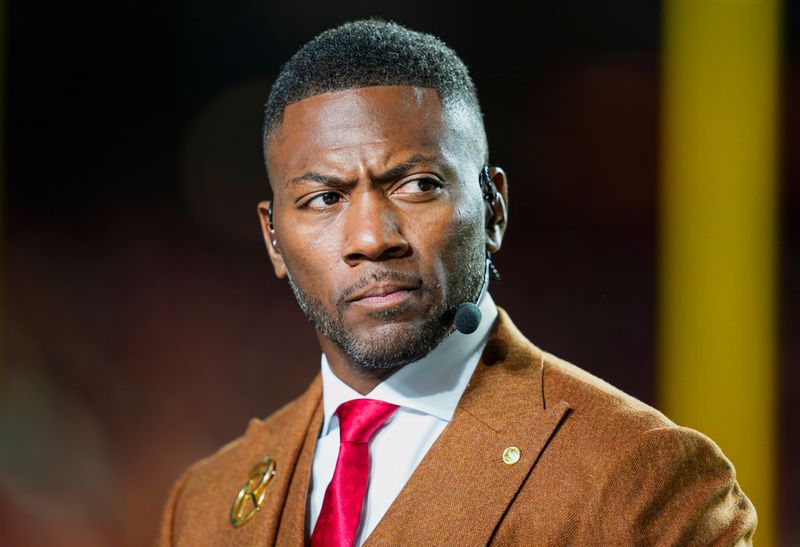
    Ryan Clark pulled from live show

    Ryan Clark was pulled off NFL Live Monday and informed he was being let go. Jay Biggerstaff, Jay Biggerstaff

    Layoffs arrived early for Ryan Clark, the former NFL defender turned TV analyst who has been a star at ESPN for the past decade.

    As first reported by The Athletic, Clark was taken off the air midway through NFL Live on Monday and informed he was being let go after reporters began inquiring about his status with the network.

    In an Instagram post Tuesday morning, Clark described the incident as “madness.”

    “My peace is with God, and my humility comes from within,” Clark wrote. “I’ll continue to build myself so the world can never strip me of what’s real.”

    Clark joined ESPN in 2015 and has been a prominent personality across the network’s NFL programming and daytime shows, including Monday Night Countdown with former Eagles star Jason Kelce.

    In 2024, Clark signed a three-year contract extension after going public with his dissatisfaction with the network

    Stephen A. Smith reacts to cuts

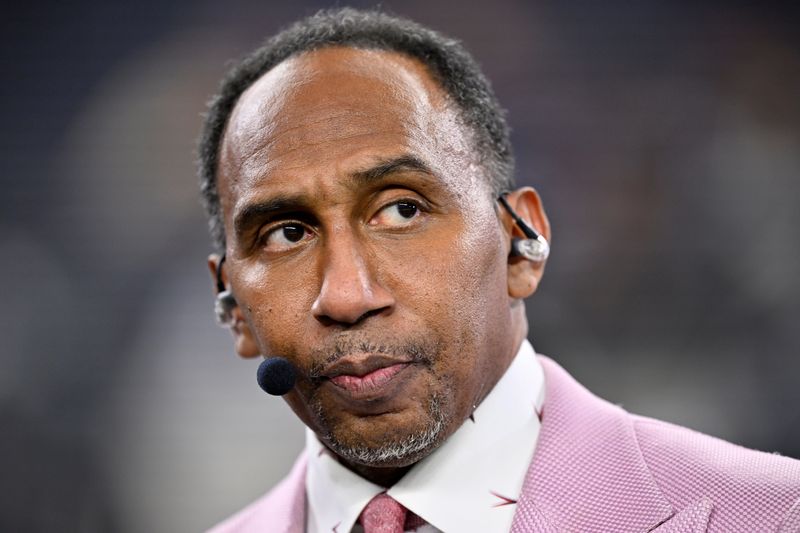
    Longtime ESPN host Stephen A. Smith was particular upset by Ryan Clark’s ouster. Jerome Miron/Imagn

    Longtime ESPN personality and First Take host Stephen A. Smith called it a “rough day” at the network.

    While several regulars from his show were among the cuts, the one-time Inquirer columnist and reporter was particularly irked by Clark’s ouster. Smith described him as “arguably the best NFL analyst in America.”

    “The bosses know I’m not happy about this decision. I’ve made that very, very clear,” Smith said Tuesday afternoon on his SiriusXM show Straight Shooter, adding later in the show, “Was I asked what I thought, what my feeling were? Yes, I was. And of course I said we have to keep him.”

    Smith also spent time outlining all the cutbacks ESPN has gone through dating back to May 2013. A lot of familiar names were forced out the door in the past decade-plus, including Jeff Van Gundy, Jayson Stark, Todd McShay, Zach Lowe, and Ed Werder.

    “This ain’t the days when ESPN could just hire and hire and hire some more without ever having to let go or lay off anybody,” Smith said. “Those days are long gone.”

    ESPN purchased NFL Network and NFL Media in February in a deal valued between $2.5 billion and $3 billion. As part of the deal, all NFL Network staffers and personalities became ESPN employees, and the league took a 10% stake in the network.

    NFL Network isn’t going anywhere, and will still have original programming, including Good Morning Football, and will broadcast a handful of NFL games.

    It’s the second round of layoffs at ESPN in recent months. In the spring, about 30 behind-the-scenes staffers were let go as part of companywide layoffs that reportedly impacted around 1,000 employees.

  • Soccer’s lingering post-World Cup problem, the new and ugly era of Brady-Belichick, and other thoughts

    Soccer’s lingering post-World Cup problem, the new and ugly era of Brady-Belichick, and other thoughts

    First and final thoughts …

    By the standards of hospitality, enthusiasm, atmosphere, and drama, the 2026 World Cup was a smashing success throughout the United States. Anyone who was at or in the vicinity of Lincoln Financial Field for any of the six matches there picked up on the magnitude of the event for the 48 participating teams, their fans, and the tournament’s other host cities. As meaningful as it is to cheer on a team from your hometown or home state, that power can’t compare to being invested in a club that represents your home country.

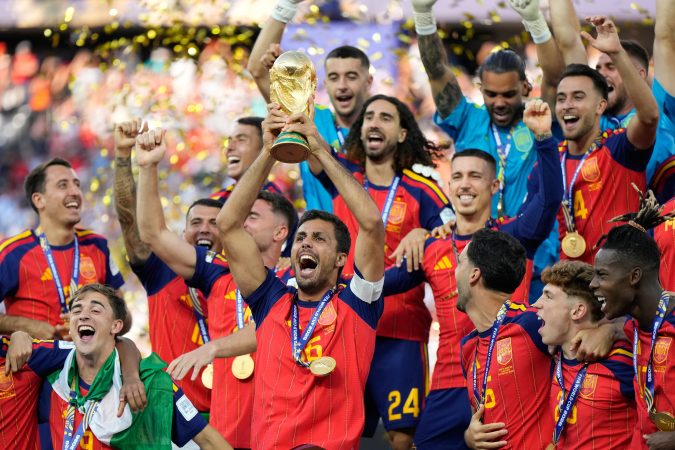
    Now, in the aftermath of Spain’s 1-0 extra-time victory Sunday over Argentina in the championship match, come the inevitable questions: Will this World Cup help soccer gain a greater foothold (no pun intended) in the U.S.? Will it inspire the sport’s leaders here to improve the grass-roots training and development of coaches and players? Will it allow soccer to penetrate the bubble of conversation among casual sports fans in the way that the NFL and, to a lesser extent, Major League Baseball, the NBA, and (once every two years) the Olympics have? Will talk-show hosts start ranting about it? Will certain markets become true hotbeds for Major League Soccer? Late June through mid-July is a relative dead zone in the major-sports calendar here; will people tune in when they have other, more traditional options?

    It’s certainly possible that soccer is finally having its moment in the United States and that its popularity, as women’s basketball’s has in the last several years, will soon surge. But there’s a reason to doubt that it will, or at least a reason to think it will struggle to attract and keep fans, and the reason is about as basic as it gets.

    Flopping.

    Yes, criticizing soccer players for embellishing injuries lapsed into cliché long ago. The thing about clichés, though, is that they tend to be true, and the cold reality is that flopping’s place in soccer makes the sport less attractive to those who don’t already love it. For all the cracking down that FIFA has done on flopping, a player who bounces up immediately after being taken down on a slide tackle is less likely to draw a foul than one who writhes on the ground as if his opponent had just gone full Kathy Bates-in-Misery on him. Fouls lead to free kicks and set plays, and free kicks and set plays sometimes lead to goals, so any semblance of contact often leads to the kind of overacting that only Nicolas Cage could appreciate. The potential payoff of flopping incentivizes players to do it.

    “When it is beneficial,” a 2016 study published in Frontiers of Psychology concluded, “soccer players can and do successfully feign injury to stop the game. Consequently it is possible that others might also successfully feign injury, pain or disease when motivated to do so.”

    This aspect of soccer’s culture cuts against one of the strongest attractions people have toward sports: They are witnessing, and want to witness, athletes display physical courage. (It’s worth noting, lest anyone lapse into any insulting gender stereotypes, that female soccer players flop far less often than their male counterparts.) Pelé called soccer “the beautiful game,” and the sport’s experts and aficionados fall back on that phrase often, and it can apply. As evidence, go watch a replay of the gorgeous header pass from Nico Williams that set up Ferran Torres’ World Cup-winning goal. But it’s rare that a soccer team earns praise for its toughness or grit, for the factor that so many fans of football, hockey, and other sports prize in their players.

    The quarterback who hangs in the pocket to deliver a deep downfield strike … the wide receiver who goes over the middle to catch that pass … the Conn Smythe Trophy winner who can’t lift the Stanley Cup because he separated his shoulder three weeks earlier … the guard who slashes into the paint and takes an elbow to his or her face from a center 6 inches taller and 40 pounds heavier … the tired starting pitcher who still wants the ball in the eighth inning … the figure skater who risks tumbling to the ice for the sake of a triple Salchow — competition is more compelling and the athletes more admired for these qualities and circumstances. Look at the backlash around the NBA against the Oklahoma City Thunder’s foul-hunting style of play, consider Carli Lloyd’s criticism of Christian Pulisic, and you understand the collective-action problem that soccer has to overcome before it will be fully embraced here.

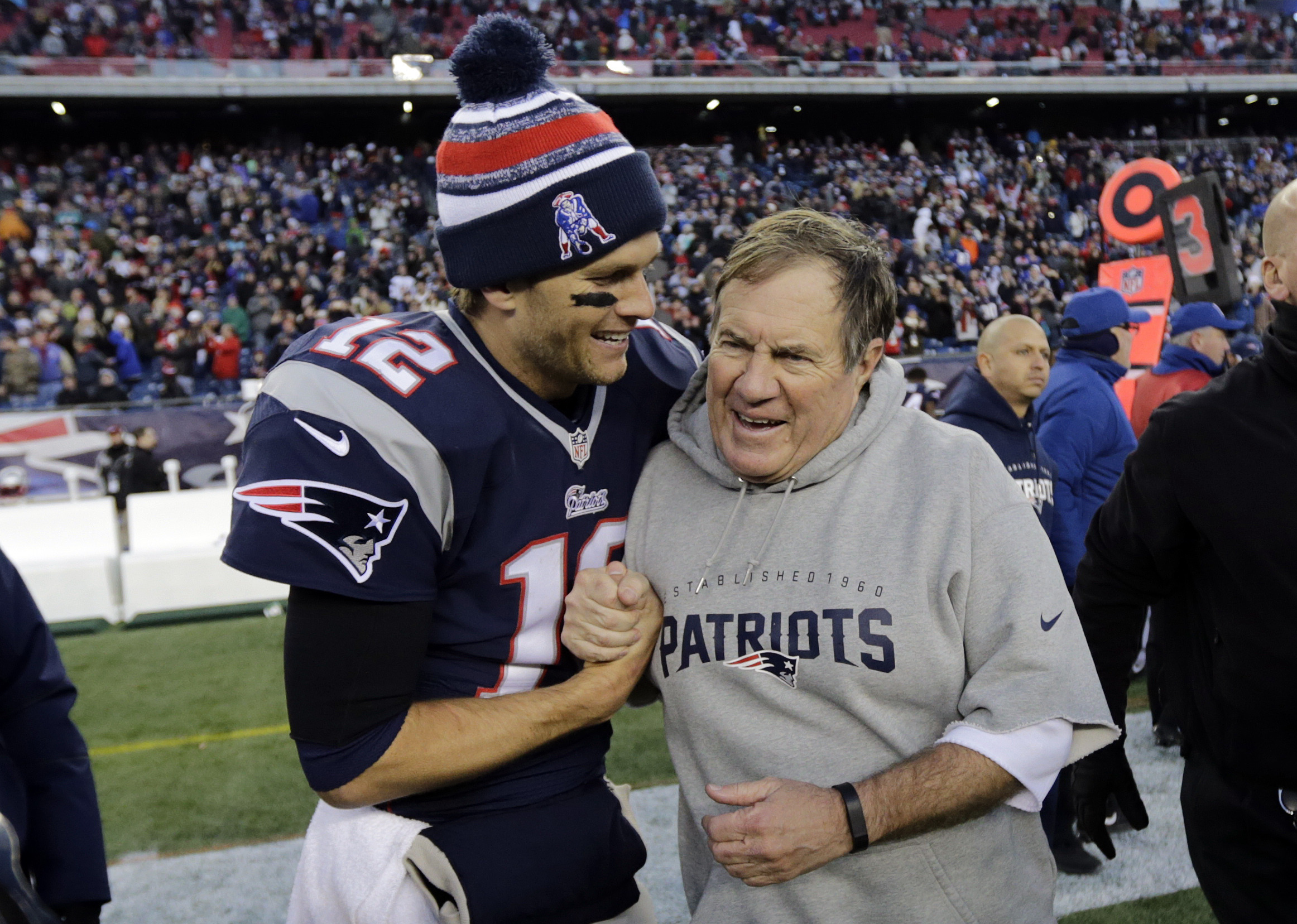
    Tom Brady and Bill Belichick have become embarrassing. Charles Krupa

    Grow up, GOATs

    One is fiddling around with pro wrestling publicity stunts. The other has been fiddling around with a romantic partner 49 years his junior. All this time, everyone thought that Tom Brady and Bill Belichick’s greatest achievement was the six Super Bowls they won together. Turns out, their greatest achievement was that each apparently kept the other from falling into a humiliating midlife crisis.

    Domo delivers

    Shoutout to longtime Daily News/Inquirer scribe Paul Domowitch, whose new book, Just Give Me a Chance to Fail: The Life of NFL Hall of Fame Linebacker Sam Mills, hits stores next week. If it’s anything like the rest of Domo’s football journalism, the book will be smart, thorough, and impossible to put down.