On Thursday, we released The Inquirer’s first list of the Philadelphia area’s 25 best athletes under 25 years old. But since that list was limited to those who currently play in Philly, we thought it was only fair to tip our cap to athletes who are originally from the region but no longer play here.
Here are 11 young college and professional athletes (listed alphabetically) who got their starts in Philly but currently star elsewhere …
Abdul Carter
New York Giants | Age: 22
At linebacker, Carter helped lead La Salle to the 2021 Philadelphia Catholic League championship before becoming a national name at Penn State. Now, the North Philadelphia native is looking to break out during his sophomore season with the Giants after being drafted No. 3 overall by the franchise in 2025. Last season, Carter finished with 25 solo tackles, four sacks, and two forced fumbles.
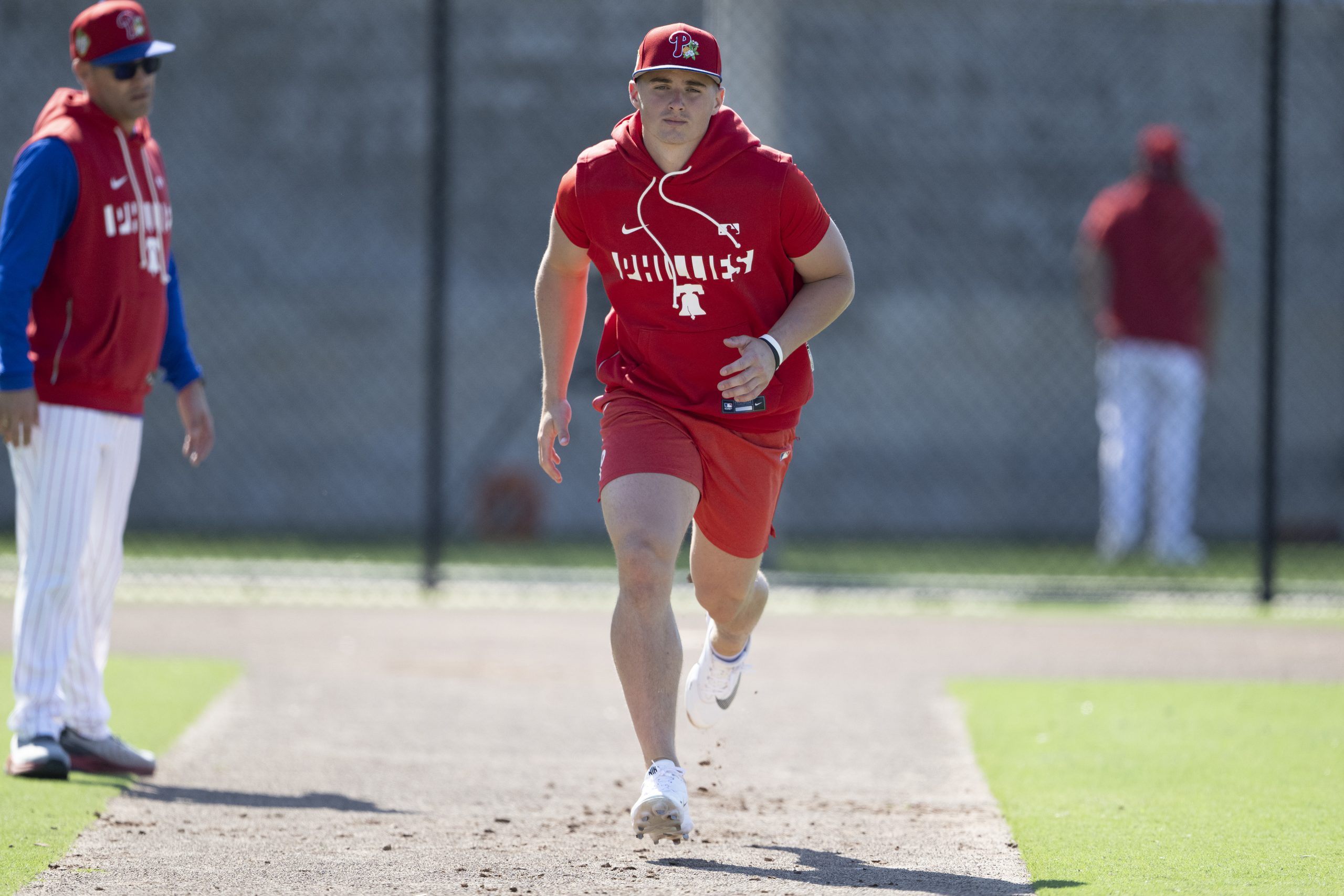
Davis was named the Atlantic Coast Conference Baseball Player of the Year after a successful sophomore season at Louisville. He led the nation with 34 home runs while driving in 98 runs. The West Chester native, who attended Malvern Prep, saw action for Team USA this summer in the inaugural World Collegiate Baseball Championship in Taiwan. The first baseman is the son of former major league catcher and Phillies color commentator Ben Davis. His younger sister, Riley Davis, is a standout lacrosse player at the Academy of Notre Dame de Namur and one of the 25 athletes to make our inaugural 25 under 25.
Tague Davis received significant attention from other programs after the Cardinals were bounced from the first round of the ACC postseason tournament, but he opted to stay in Louisville.
“Sometimes the grass ain’t always greener,” Davis told The Inquirer in July.
Dumas, a recent graduate of Eastern Regional, is heading to Arkansas for her freshman year. At Eastern, Dumas broke more than 20 program records and became the first girl to place first in three events at the NJSIAA Meet of Champions — the 400 meters, 400-meter hurdles, and 800 meters. Dumas became one of just 20 female high school track and field athletes to sign with Nike Elite — a coveted name, image, and likeness program.
“At the end of the day I’m not afraid to lose,” Dumas told The Inquirer in July.
Duren, a Sharon Hill native, played two high school basketball seasons at Roman Catholic before transferring to the prestigious Montverde Academy in Florida. After a single season at Memphis, Duren was selected 13th overall to the Detroit Pistons in the 2022 NBA draft. In the Motor City, Duren has made a name for himself as one of the most talented young bigs in the league. This past season, he was named to the All-NBA third team. He is currently a free agent but is expected to resign in Detroit.
Marvin Harrison Jr. (center) was drafted fourth overall by the Cardinals in the 2024 NFL draft.Richard Rodriguez
Marvin Harrison Jr.
Arizona Cardinals | Age: 24
Harrison Jr. was a star at St. Joseph’s Prep before playing college football at Ohio State. The wideout, who owns the Philadelphia Catholic League record book, was drafted No. 4 overall in the 2024 NFL draft by the Cardinals. Despite inconsistent play at quarterback, Harrison Jr. has logged 1,493 receiving yards and 12 touchdowns through his first 29 games. He is the son of NFL Hall of Fame wideout Marvin Harrison and the older brother of Jett Harrison, a standout receiver at Prep who is committed to Ohio State.
Ryleigh Heck
Team USA field hockey | Age: 22
Heck grew up in Shamong, Burlington County and played field hockey at Eastern Regional. There, she became a three-time state champion and an All-American. After high school, Heck took her talents to North Carolina. Through four years with the Tar Heels, she has collected two NCAA championships and four ACC titles. In 2023, she was named the National Field Hockey Coaches Association Division I National Player of the Year.
Before leading the Fighting Irish women’s basketball team, Hidalgo turned heads at Paul VI High School in Haddon Township. Hidalgo was named a McDonald’s All-American during her senior year at Paul VI before heading off to South Bend. Last season, the Merchantville native averaged 25.3 points. 6.9 rebounds, 5.2 assists, and a nation-best 5.6 steals. She also helped lead Notre Dame to an Elite Eight appearance.
“It gives us motivation,” Hidalgo told The Inquirer in March. “To be able to [reach the Elite Eight] with this team, when nobody thought we were going to get past the second round.”
Johnson grew up in Voorhees and is a product of the Philadelphia Union Academy. The Union, however, were not able to retain the promising winger. Johnson, who was named to the 2025 MLS NEXT Pro All-Star game, signed with Orange County SC in January. Johnson has international playing experience, playing for the U.S. Youth National Team. He has seven goals in international play.
Gary Martin was a seven-time first-team All-American at Virginia.Tyger Williams / Staff Photographer
Gary Martin
Track and field | Age: 22
Martin, who set records at Archbishop Wood, recently finished up his collegiate career at Virginia. In Charlottesville, Martin was a seven-time first-team All-American. During the 2025 NCAA Indoor Championships, Martin won a national title in the distance medley relay, running the last leg. He recently signed a professional contract with Brooks.
Kevin McGonigle
Detroit Tigers | Age: 22
McGonigle, a standout at Bonner-Prendergast, now stars at shortstop for the Detroit Tigers. The Media native has an on-base percentage of .384 and has scored 82 runs. This season, McGonigle made his All-Star debut at Citizens Bank Park and played in front of his “fan club” — a group of fans from Archbishop Prendergast High School that have traveled far and wide to watch him play.
Sessa, a Schwenksville native, won a national championship at North Carolina during her freshman season. After a single year with the Tar Heels, Sessa transferred to Northwestern. Her winning ways followed. Her sophomore and junior campaigns at Northwestern both ended with national titles. The two-time Big Ten Offensive Player of the Year is looking to go 4-for-4 by adding another championship to cap off her collegiate career.
She also has her eyes set out for the 2028 Olympics in Los Angeles.
“If I have a bad practice day, I let myself think forward a bit and just say, ‘You know what, this is good, I’m learning something new,’” Sessa told The Inquirer earlier this month. “This preparation will help me further in the future for the L.A. Games.
Find yourself debating our 25 under 25 list? Well, maybe this list will help explain some of our reasoning — or give you something else to talk about.
Several athletes, ranging from high school to professional, just missed the cut. Some turned 25 earlier this year, while others were considered but didn’t quite crack the final list.
However, this gives you a glimpse into the name’s to look out for in next year’s 25 under 25. With that being said, here’s our top Philly athletes who missed the list.
Just aged out …
Tyrese Maxey
Since Maxey’s rookie season in 2020-21, he has been on an upward trajectory to becoming the focal point of the 76ers. The point guard was named NBA Most Improved Player and earned his first All-Star selection in 2023-24.
Maxey’s stellar fourth year led to a five-year, $204 million max contract. Lingering injuries derailed his 2024-25 season, but he made up for it last season, when he became the franchise all-time leader in three-pointers, surpassing Allen Iverson.
He also earned his second All-Star nod and was named a starter for the Eastern Conference. Let’s also not forget his highlight moment when he recorded a career-high 54 points to become the second player in Sixers’ history to record at least 50 points and nine assists in a game.
Eagles defensive tackle Jalen Carter, 25, is the highest-paid defensive tackle in NFL history.Monica Herndon / Staff Photographer
Jalen Carter
Carter still has some time to claim the title as best defensive tackle in the NFL, but he has established himself as one of the top players in his position in just four seasons in the league.
Carter received back-to-back Pro Bowl nods in 2024 and 2025, despite missing time while recovering from shoulder injuries last season. His 2024 season might have been his most productive, as he played 79.4% of the defensive snaps.
Jalyx Hunt
There’s high expectations for Hunt after a record-setting 2025 season, where the edge rusher became the first player in Eagles history to lead the team in sacks (6½) and interceptions (three) in the same season.
As a rookie, he played 23% of defensive snaps, had 21 tackles, and recorded a half-sack in Super Bowl LIX.
Last season, he took quite a leap. He more than doubled his tackles (52) and is now preparing for his third NFL season.
Zegras, another Philly star now on a big contract, signed a four-year, $36.5 million extension, carrying an average annual value of $9.125 million, which made him the highest-paid Flyer in annual average value.
The center quickly became a fan favorite last season, his first with the Flyers. Zegras had a career high in goals (26) and was a key contributor in the Flyers’ postseason run.
Flyers stars Jamie Drysdale (right) and Trevor Zegras didn’t quite make The Inquirer’s 25 Under 25.Yong Kim / Staff Photographer
Next up …
Jamie Drysdale
In two seasons with the Flyers, Drysdale, 24, developed greatly on the defensive side of the puck and was awarded the team’s most improved player for 2025-26.
He’s dealt with numerous injuries throughout his NHL career, and, despite struggling early on in Philadelphia, the defenseman skated in 78 games while averaging 21 minutes, 33 seconds and a career-high eight goals this past season.
Barlow joined the Sixers last season on a two-way contract, but later had it converted to a standard two-year deal. He jumped right into the action and even became a part-time starter.
Before free agency began, the Sixers picked up his $3.4 million team option for the 2026-27 season. The 23-year-old is coming off the best season of his career four-year career, in which he averaged 7.7 points, 4.8 rebounds, and 1.2 assists. He made 59 starts in 71 games.
While his role certainly will change this season, the forward has shown he can be a valuable resource.
Neil Pierre
The 18-year-old homegrown talent signed a professional contract in 2023 with Union II, the club’s reserve team. In 2025, the 6-foot-5 defender signed a first-team contract through the 2028 season, with an option for 2029.
He was named MLS Next Pro Defender of the Year that season, and in January was loaned to Danish first-division side Lyngby Boldklub. He returned to the Union in July and quickly stepped in at centerback. He even scored his first goal in his second career game for the first team.
Aidan Miller is one of the Phillies’ top prospects.Jose F. Moreno / Staff Photographer
Aidan Miller
Miller is ranked as the Phillies No. 2 prospect and 61st in the MLB. However, the infielder has missed the entire season with recurring lower-back issues.
Last year, however, he was on a tear. Miller had 14 home runs, 42 RBIs, 59 stolen bases, a .264 average, and an .825 OPS across 116 games between double A and triple A.
In June, Miller underwent a radiofrequency ablation of the facet joints in his spine. The Phillies said in July that they expect the 22-year-old to play this season, though he likely won’t reach the majors.
The future …
Jasmine Jackson
Jackson has become one of the nation’s fastest hurdlers at 16 years old. The Winslow Township High junior set several records this spring. She won the New Jersey Meet of Champions with a personal-best 13.28 seconds.
Her time ranks third in state history, No. 3 all-time on the wind-legal list for sophomores, and No. 3 in the nation for the 2026 season. When she was 14 years old, Jackson broke the national record for the 100-meter hurdles in her age group with a time of 13.72 seconds.
Friends Central’s Ryan Carter (right) has been getting Division I scholarship offers since she was in eighth grade.Elizabeth Robertson / Staff Photographer
Ryan Carter
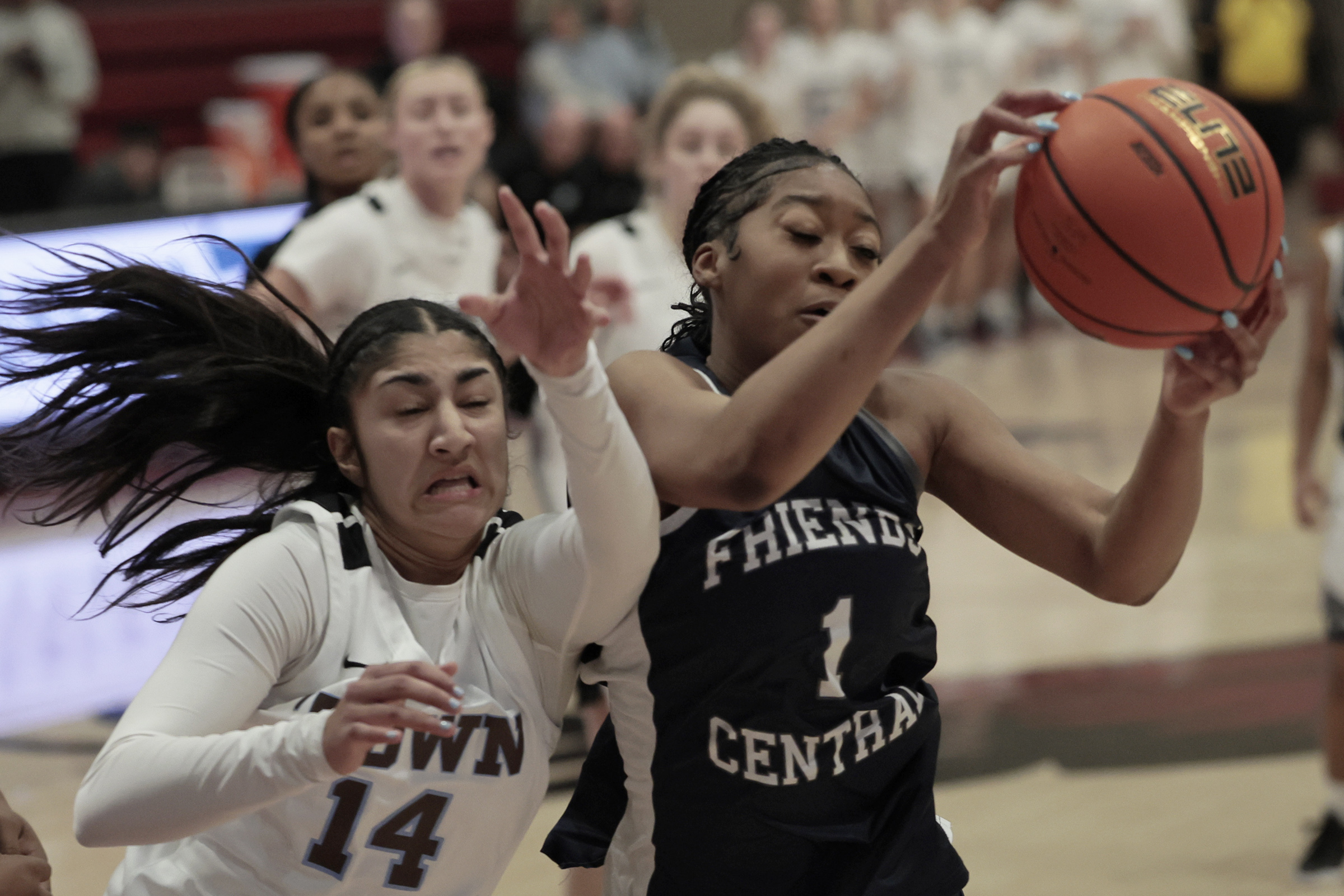
Since eighth grade, Carter has been getting looks by Division I schools and even received several scholarship offers. Now entering her senior year at Friends’ Central, the 6-foot guard is ranked nationally by ESPN as the No. 12 girls’ basketball player in her class.
She spent two years at Penn Charter, playing varsity as an eighth grader, then played a season at Archbishop Wood, where she won a state championship, and will finish her high school career with the Phoenix. She averaged 17.1 points, 7.4 rebounds, 5.6 assists, and 1.8 steals last season.
Carter recently won a gold medal with the United States under-18 national team and has more than 30 college scholarship offers, including from LSU, Duke, and Notre Dame.
Jett Harrison
Harrison, the younger brother of Marvin Harrison Jr. and son of NFL Hall of Famer Marvin Harrison Sr., is considered ESPN’s No. 6 overall player in the class of 2028. He had 15 receiving touchdowns as a sophomore for St. Joseph’s Prep.
He announced his commitment to Ohio State in July, following in his brother’s footsteps. Recently during Arizona Cardinals’ training camp, Marvin Jr. said, “he’s definitely more talented than I was ever at that age.”
Watching TV outside comes with a host of challenges: Humidity. Mosquitoes. Glare so fierce you risk losing sight of Jalen Hurts at the goal line.
And yet, people are increasingly heading to the backyard for movies, sitcoms, and sports. One industry report values the global outdoor TV market at more than $400 million in 2026 and projects annual growth of nearly 12% through 2035.
The Philadelphia region? Right on trend. According to Kim Bucholsky, office manager with All Systems Audio & Visual, the Hatboro-based company has seen a 50% uptick in outdoor installations since 2019 — “with no slowdown in sight.”
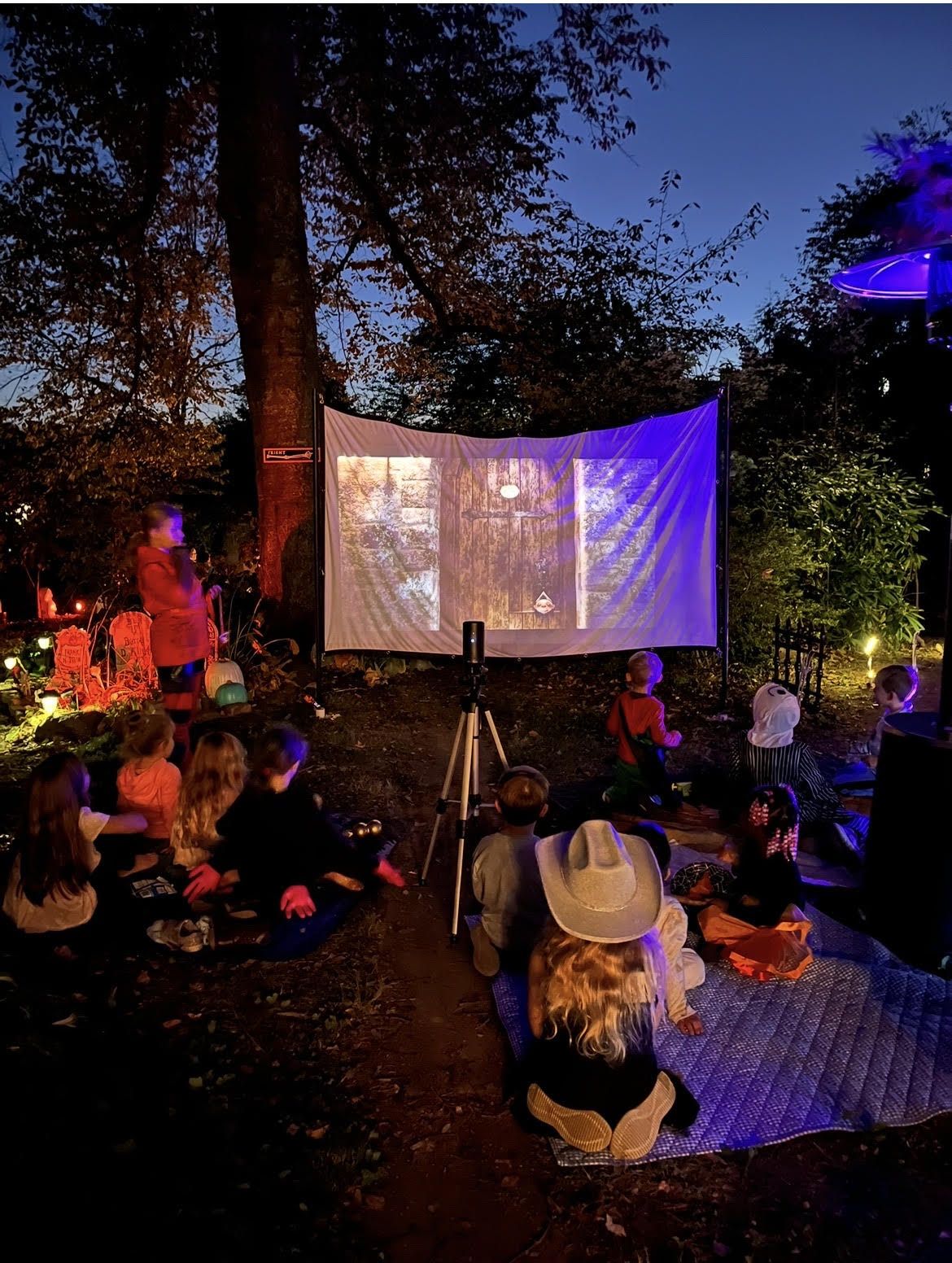
Some people are sinking hundreds of thousands of dollars into these entertainment setups; others are dragging lawn chairs and an iPad to the front stoop every time Love Island releases a new episode. The common denominator isn’t age or gender or socioeconomic status. Kids and adults, armchair quarterbacks and prestige-TV junkies, agree: There’s something special about a backyard binge.
“When the sun’s going down, the breeze is blowing, you can hear the ocean in the distance and maybe the occasional coyote, and you’re watching your favorite Philly sports team, there’s absolutely nothing better,” said Anthony Farina, a communications executive based in Cape May. “To me, this is utopia.”
So how, exactly, did the lawn usurp the living room?
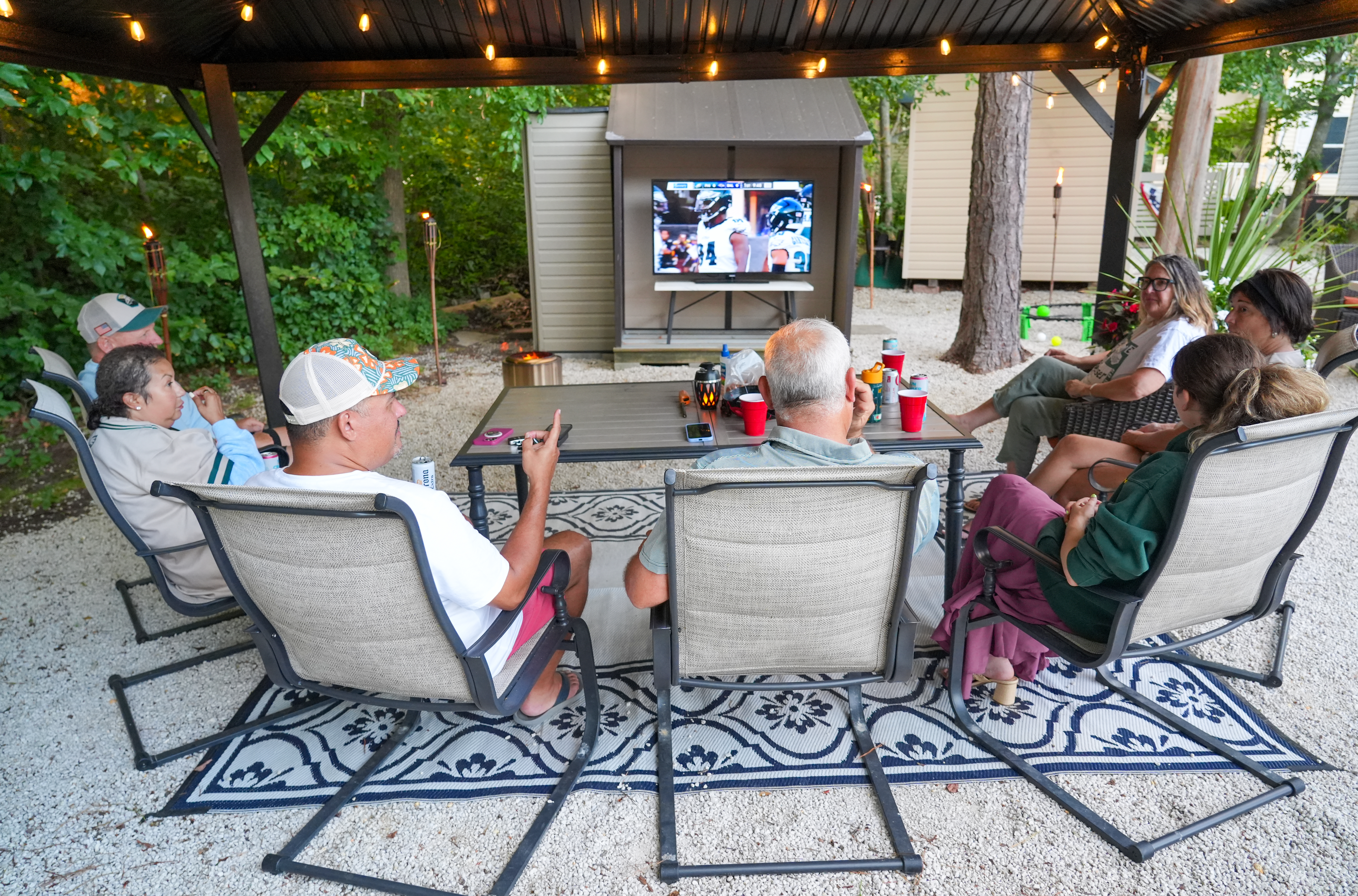
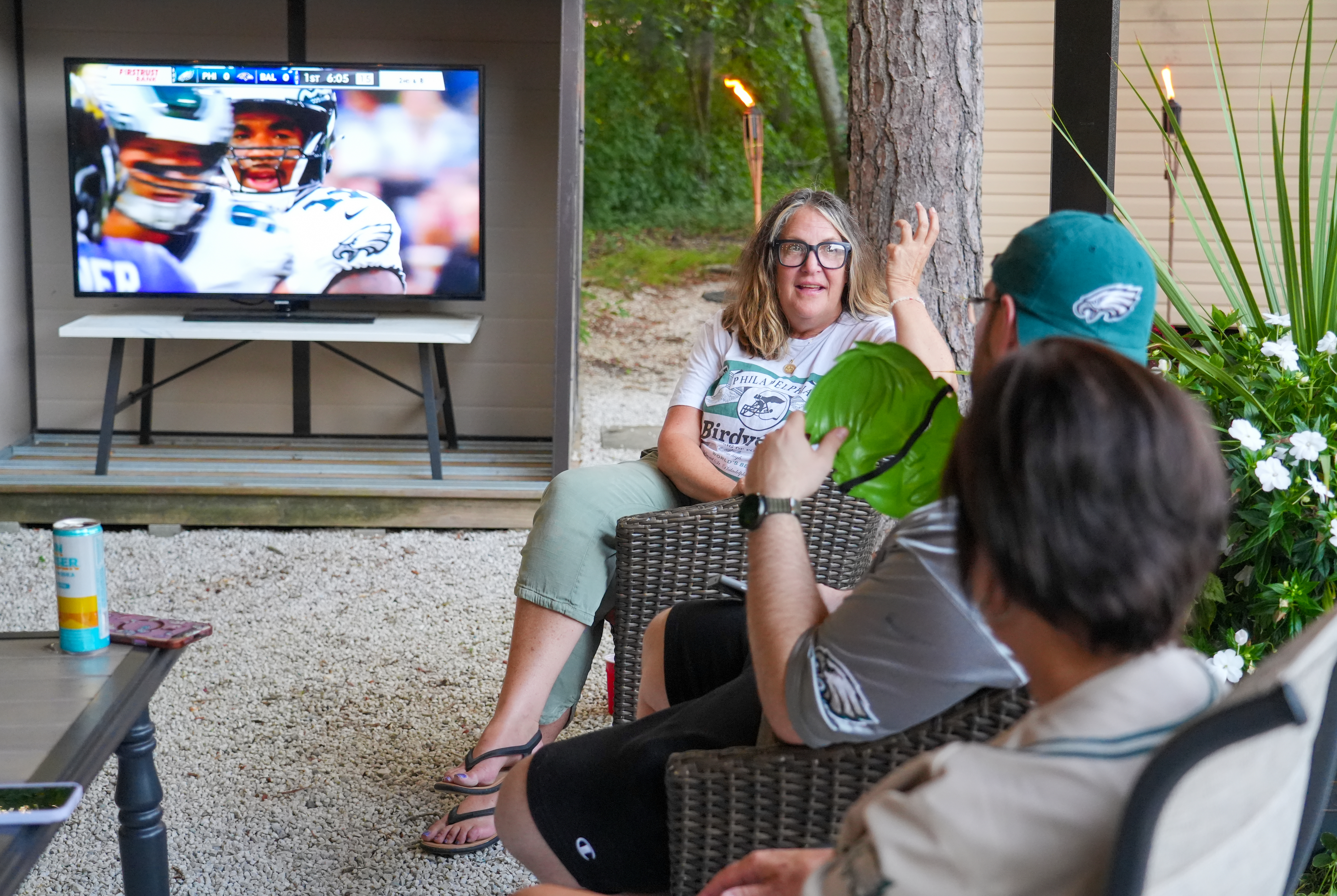
Cori Laphan talks to Randy Bock of Turnersville, as they watch the Eagles in the first preseason game of the year at her summer home in Cape May Court House. Tim Hawk / For The Inquirer
Experts say the hobby gained momentum during the COVID pandemic, when families had no choice but to hunker down at home. People invested in their spaces: pools, fitness rooms, and — yes — expanded entertainment options. Even after restrictions were lifted, the stay-put mentality stuck.
“Once you sink that money in, you have less to spend outside the home,” said Kevin Gillen, an economist with the Henderson Real Estate Institute at Drexel University. “Movie theaters, which are incredibly expensive and ruined by one loud family in the room, have not rebounded since COVID.”
But backyard viewing goes beyond financial sense. It’s also the sneakiest way to sidestep a 21st-century affliction: screen-time guilt.
“There’s a lingering bias around TV,” said Emil Steiner, associate professor at Rowan University, who lives in University City and studies audience viewing habits. “The stereotype is that you’re being a lazy couch potato staring at the idiot box while cooped up inside a dark room. But watching outside in the fresh air among friends? It feels like a free pass.”
That social piece matters. Open-air viewing has a way of turning into an event — firepit glowing, grill smoking, cooler cooling. What’s really streaming is camaraderie. Recent World Cup watch parties, from Lemon Hill to suburbia, are a proof point: Alfresco airtime is a happiness booster.
In Glenside, Emily Kelly and her family built a mount for their backyard projector screen out of a PVC pipe and some carabiners.Courtesy of Emily Kelly
“People feed off one another’s energy,” said Michael Marciante, executive director of the Partnership for Haddonfield, the town’s business improvement group. He spearheaded three viewing parties, drawing a total of 2,500 residents and visitors to a temporary screen on Kings Highway. “Outdoor viewing brings communities and neighbors together, and you can just feel the electricity.”
But before you haul your sectional onto the deck, you’ve got homework. To make the most of an outdoor viewing experience, channel surf through the following tips.
Know your why: Are you looking for romantic date nights? Neighborhood gatherings? Family bonding? Will this be a one-off thing or a permanent setup? Is your preference ultra-luxe or a bit more rustic? Zach Kades, who’s been hosting watch parties as an event manager at Soccer Post Cherry Hill, said his own home setup in Bryn Mawr involves little more than a projector and the back wall of his garage, because he likes the nostalgic, “camplike feel” it brings to a night with friends. Knowing your goal will make choosing your gear easier.
Try it out: Before his family gifted him a new TV for the front porch and a permanent mounting system, Farina spent four years carting his flat-screen and a trusty coffee table back and forth from the living room on a near-daily basis, a ritual he calls a “labor of love.” While your trial period doesn’t need to last that long, Farina does recommend a test run with your existing screen. “Notice whether people rally around it,” he said. “See if you feel the joy.”
Set your limit: Technically, you can make this work for the cost of a thrifted projector and a bedsheet flung over a fence. Or you can take the Jim Malamut route and spend more than $500,000 creating an oasis: “I call it my midlife crisis,” he said.
The mortgage lender purchased an overgrown lot behind his Linwood home and spent about three years converting it into a pool-and-bar retreat complete with three TVs (two at 98 inches and one at 75) for watching multiple games at once. No matter where on the spectrum you fall, the important thing is to know your financial cap “and stick to it,” Malamut said, “or things can get crazy fast.”
Research your tech: Purists will die on this hill: Your screen needs to be outdoor rated to fight glare with premium LED technology even in direct sunlight and withstand the elements longer than a few seasons.Others swear by less expensive, indoor screens that are shaded during viewing and protected with a water-resistant cover when not in use. Whatever you choose for your specific space, you’ll want to run a simple internet test: Stream a program from your phone or laptop in the designated spot, and see if Wi-Fi can handle the job or if hard-wired Ethernet is the better, no-buffer option. Ensure any required cables are made for outside use.
Bug off: Mantua resident Cori Laphan loves her “outdoor living room” at the Driftwood Too Camping Resort in Cape May Court House, complete with fire pit, grilling station and 55-inch TV. Only problem: things that bite. To keep the gnats, mosquitoes and greenheads at bay, she staged an offensive campaign: tiki torches, citronella candles, fans, even coffee grounds — TikTok wisdom holds that lighting them on fire inside a metal canister is a natural deterrent. Laphan, a senior-living salesperson, also took an empty planter to a local garden center with one instruction: Fill it with bug-repelling plants. “We’ve done everything imaginable,” she said. “Insects love me, and I’m still able to be outside much of the time.”
Get resourceful: If you don’t call in a team of home-theater professionals, creativity is key. Laphan’s brother-in-law, Jon Morad, reimagined a cutout in the side of a Home Depot shed intended for firewood — it now serves as an entertainment console that shades the family’s TV and offers some protection from the elements. “You have to think outside the box,” said Morad, a hospital maintenance supervisor.
In Glenside, another family built a mount for their backyard projector screen out of a PVC pipe and some carabiners — neighborhood kids sit on one side while adults watch on the other, reverse-image and all. “Our setup is definitely makeshift,” said physical therapist Emily Kelly. “But I think it feels more genuine that way.”
Learn the rules: Municipalities, HOAs, campgrounds … they all play by their own noise rules. According to Philadelphia code, your true-crime documentary or Hallmark movie marathon cannot exceed “three decibels above background level measured beyond the property boundary.” Translation: If your block’s typical soundtrack is the hum of traffic, your TV can raise that only slightly.
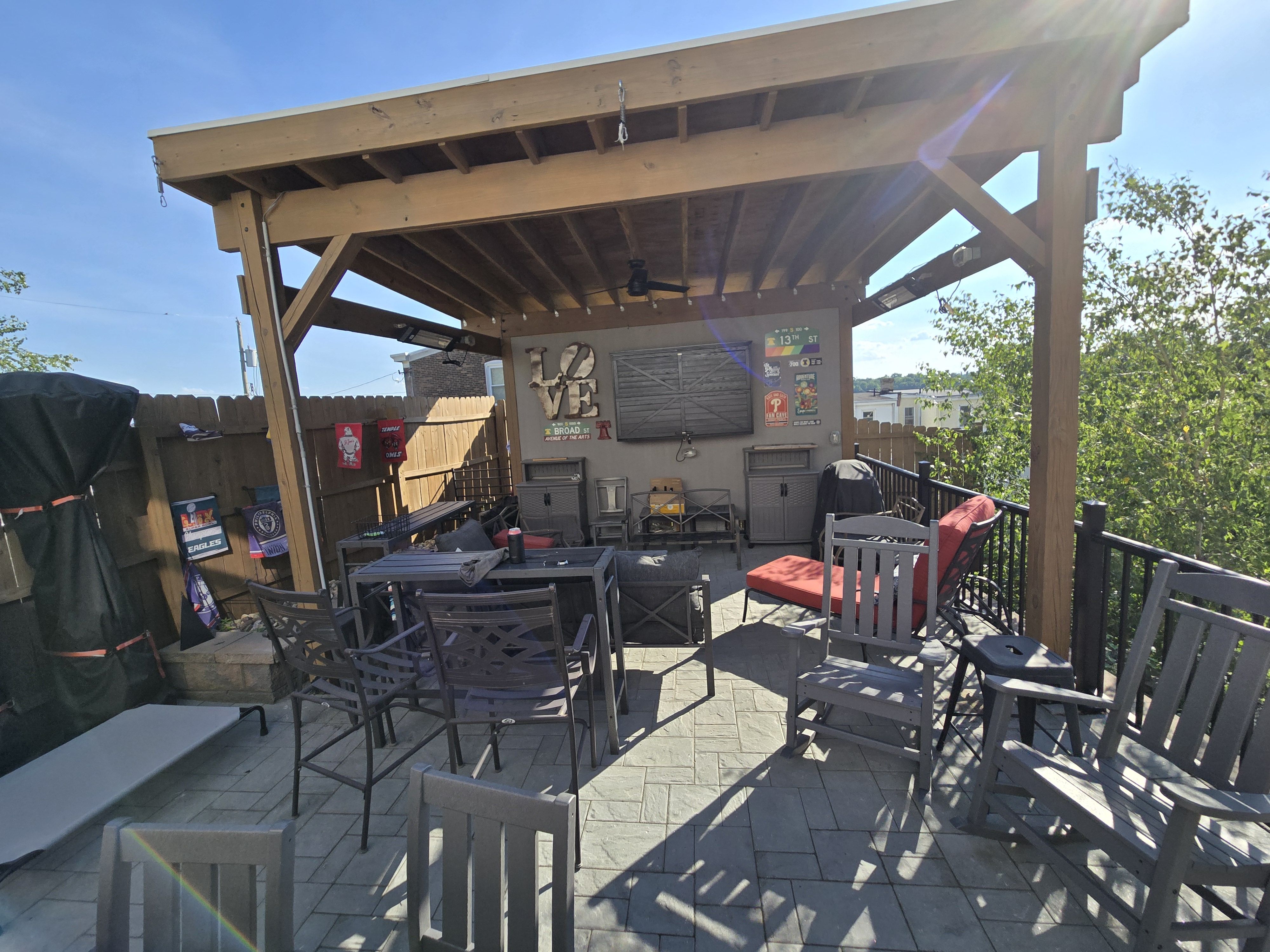
Kate Evans and her wife, a Philadelphia police officer, built a roofed pergola for watching games and movies behind their Roxborough rowhouse. They recommend investing in a soundbar, which aims audio directly at viewers so that sound doesn’t wander. “We don’t need to blare our TV,” Evans said. Be sure to check the relevant code books and, if in doubt, purchase a basic sound-level meter to ensure you’re in compliance.
Kate Evans and her wife built a roofed pergola for watching games and movies behind their Roxborough rowhouse. They recommend investing in a soundbar, which aims audio directly at viewers so that sound doesn’t wander.Courtesy of Kate Evans
Be a good neighbor: Even if you’re operating within the law, outdoor TV enthusiasts risk alienating neighbors who won’t appreciate the glow of a flat-screen after dark. Head off any tension early by inviting them over for a viewing. Or, at the very least, Farina advises: “Keep your emotions in check while watching Philly sports,” he said. “I know that’s tough to do.”
The Eagles made five trades last August, acquiring four players who eventually landed on the team’s initial 53-man roster.
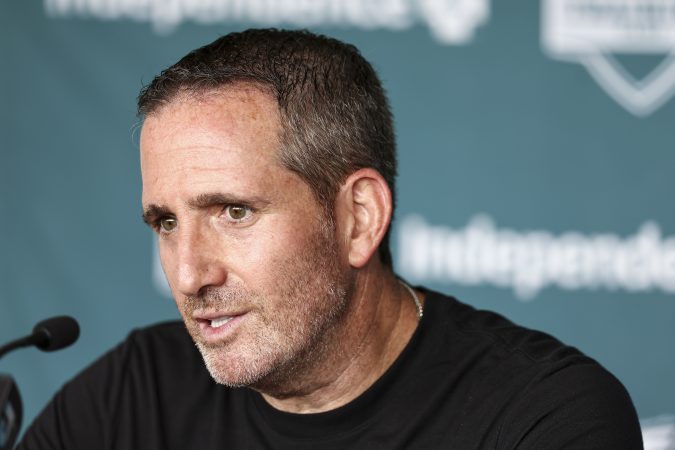
It was an active month for Howie Roseman, even more so than usual. The longtime general manager has made a habit of August acquisitions. Over the last five years, Roseman has added backup quarterbacks, a starting safety, a third wide receiver, a depth corner, and others, never shying away from upgrading the roster early, in the middle of, or late in training camp.
This August is more than halfway gone, and Roseman hasn’t yet made a trade. That could change soon, of course. The Eagles could be in need of an upgrade in a certain spot, or they may aim to acquire some draft capital.
Where might the GM be looking to make a move?
Here are some possibilities:
Quarterback
Let’s start with the obvious one.
Andy Dalton and Tanner McKee are auditioning for the backup quarterback job behind Jalen Hurts. But they’re likely also auditioning for other teams. It seems unlikely the Eagles would keep both and either cut rookie fifth-round pick Cole Payton — which would expose him to waivers — or use four roster spots on the quarterback position.
So, which of the two quarterbacks vying for the No. 2 job will go? Whichever one can fetch the best asset in return, is the obvious answer.
Philadelphia Eagles quarterback Jalen Hurts (right) walks to the field with quarterback Tanner McKee (left) and quarterback Andy Dalton (center) before the preseason game against the Ravens on Saturday. David Maialetti / Staff Photographer
Both Dalton and McKee are entering the final year of their contracts. A few weeks from now, teams could be hurting for quarterback help and might find one of them useful. The Eagles were one of those teams looking for help last season. Sixth-round pick Kyle McCord had a rough camp and the Eagles didn’t think he was ready to be the third quarterback, so they traded fifth- and seventh-round picks to Minnesota for Sam Howell and a sixth-rounder.
Dalton, the Bengals’ starter from 2011-19, has played a lot of football and recently helped mentor young quarterback Bryce Young in Carolina. McKee, meanwhile, has been a solid backup and had a stellar starting debut at the end of the 2024 season, though his 2025 start in Week 18 wasn’t as strong.
The Eagles parted with a 2027 seventh-round pick to acquire Dalton this offseason. They used a sixth-round pick on McKee in 2023. If they’re able to get a Day 3 pick for either player, it’s a pretty good result as far as asset management goes for a player who won’t play much and isn’t under contract next season.
The back end of the defense remains the thinnest position on the roster. It’s the only spot where an undrafted free agent rookie might make the team. But defensive coordinator Vic Fangio has at least publicly expressed confidence in what the Eagles have.
Perhaps it’s less of a concern since Cooper DeJean, an All-Pro nickel, will play safety when the Eagles are in their base defense. But that still leaves something like 75% of the defensive snaps to Marcus Epps, the current leader in the race to start next to second-year safety Andrew Mukuba. Epps, 30, has been a solid player in the NFL, but he also was available at the end of camp last season for the Eagles to add to their practice squad.
Behind Epps is Michael Carter II, a converted nickel who may also be the top option at backup nickel if DeJean goes down. An undrafted free agent like Max Pulley or Kapena Gushiken might make the team as the fourth safety, though seventh-round pick Cole Wisniewski returned to the practice field Monday after missing most of camp with a hamstring injury and veteran J.T. Gray, a special teams ace, is in the mix.
Michael Carter II (35) is among those in the mix at safety. Tyger Williams / Staff Photographer
The Eagles don’t have a lot of proven talent at safety. Mukuba is coming off a season-ending fibula fracture and has just 11 games of NFL experience under his belt. He’s the lone constant back there right now.
Fangio’s defense might be the best in the NFL with or without Roseman addressing the safety spot, but the thought of what could happen if the defensive backfield is hit with an injury or two might force Roseman to make a move.
Atlanta’s Jessie Bates III, for example, a veteran on an expiring contract, could be available.
The Eagles travel up to Massachusetts this week to see old friend A.J. Brown and the New England Patriots for two joint practices and then a preseason game.
It’ll provide a look at what they do and don’t have at wide receiver with Brown no longer with the team.
DeVonta Smith returned to practice on Monday after missing time with a hamstring injury, and rookie first-round pick Makai Lemon, who also has a hamstring injury, looks like he’s nearing a return to the practice field. If both players are in uniform with the first-team offense Wednesday morning, the unit certainly will look a lot different than it has in recent practices.
The Eagles aren’t lacking for top-end talent with Brown gone. Smith is more than capable of being a top-of-the-depth-chart receiver in the NFL. But behind him are players who are either unproven or aging.
Hollywood Brown has not made a visible impact in training camp. Yong Kim / Staff Photographer
Is Dontayvion Wicks ready to take the next step? Can Lemon provide an immediate impact in the slot? Is Darius Cooper more than the “dirty work” receiver Nick Sirianni described him as? Does Hollywood Brown just hate training camp and have more left in the tank? Is Elijah Moore’s NFL career nearing its end, or is there more? How much can you rely on Johnny Wilson after a season-ending knee injury last camp?
The Eagles have reasons to like the position group. A trio of Smith, Wicks, and Lemon on the field has potential, and the Eagles probably are better at spots 3 through 6 on the depth chart than they were a year ago. But they don’t have the physical presence and one-on-one catching talent that A.J. Brown had.
This position is an interesting one as far as trades go. Roseman actually could go either way. There’s a world where he gets to the end of August and realizes Hurts needs more top-end help. But there’s also a scenario that has him trading a player like Hollywood Brown, who Roseman signed to a one-year deal worth $5 million guaranteed, and flipping a receiver for a late-round draft pick because he’s comfortable rolling the dice with what the Eagles have.
Honorable mentions
Cornerback: The Eagles have arguably the best group of corners in the NFL with Quinyon Mitchell and Riq Woolen manning the outside and DeJean at nickel. But could they use better depth? Veteran Jonathan Jones, who’s in line to be the primary backup at outside corner, is out with a shoulder injury. Second-year corner Mac McWilliams has inside-out versatility, like Jones, but is he ready to be relied upon? Kelee Ringo is great on special teams but through three years hasn’t shown the coverage chops to play corner. Jakorian Bennett also hasn’t been consistent. The Eagles have a few other unproven players they like in Ambry Thomas and Tariq Castro-Fields, but Roseman could be in the market for some insurance.
Edge rusher: Jonathan Greenard’s pectoral injury has the major offseason acquisition sidelined, and while the Eagles are hopeful he’ll be ready for Week 1, his absence highlights what could be a weakness. Jalyx Hunt has emerged as a talented pass rusher, but Nolan Smith Jr. is coming off a season that was marred by injury and inconsistency, and behind him the Eagles have two veterans on one-year deals in Arnold Ebiketie and A.J. Epenesa. International Pathway Player Joshua Weru may push to make the team during his first-ever football training camp, but edge rusher is an important position to complement an interior line group that might be the best in the NFL. A healthy Greenard should make a move unnecessary, but, like cornerback, you rarely consider the value of the insurance policy until it’s time to use it.
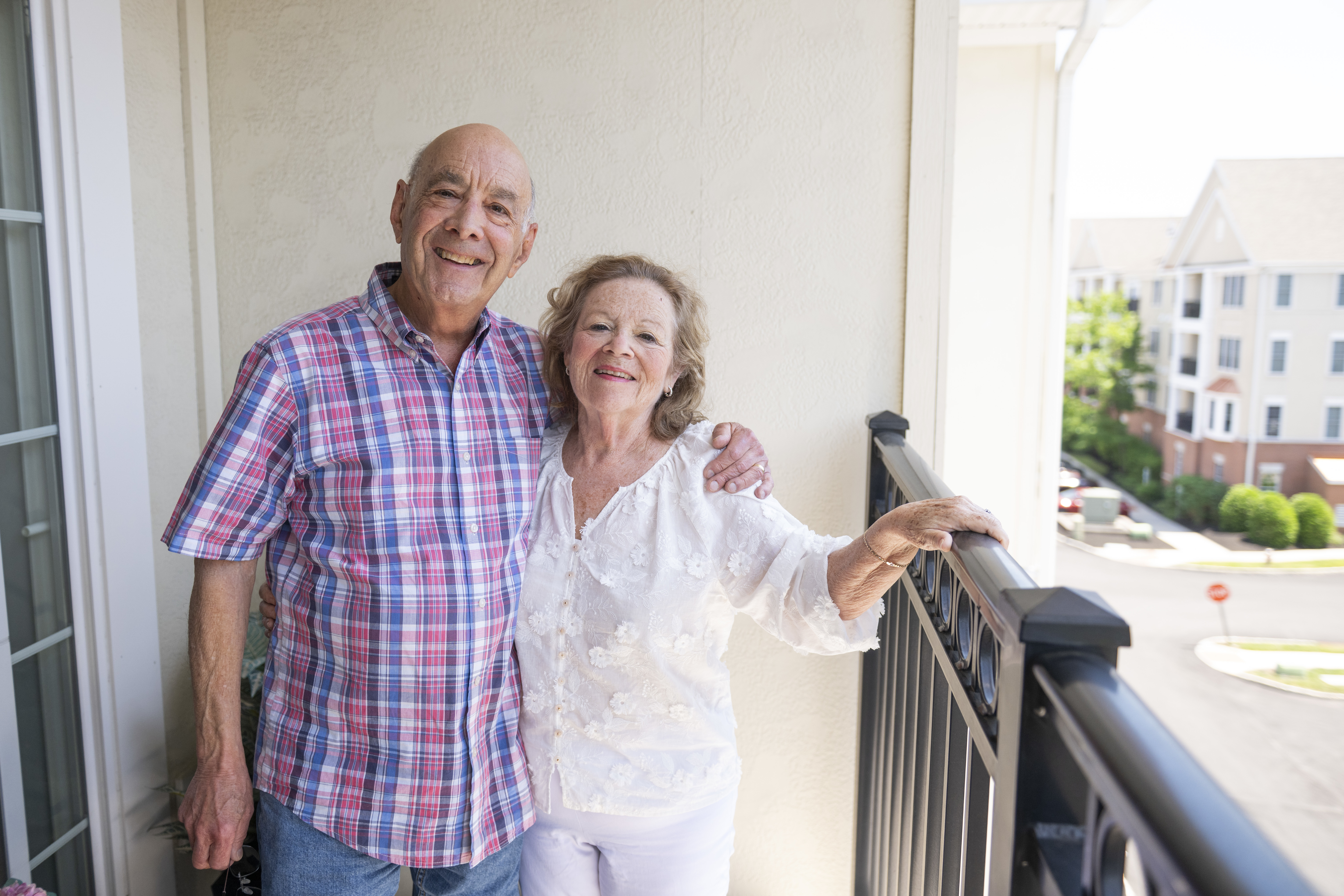
After raising their kids in Delran, Fred and Barbara Zucker were ready to downsize from the home they had lived in for 50 years. The retired couple spent several months searching for an over-55 community, but nothing seemed quite right. In March 2020, that changed.
“I was shopping at Nordstrom Rack in Cherry Hill and saw a sign for an open house at the Plaza Grande,” Barbara recalled.
They toured a 1,150-square-foot apartment with two bedrooms, two bathrooms, and a den featuring a balcony with a western exposure. The apartment was on the top floor, which meant no neighbors walking overhead, and the kitchen had a gas range. There was also plenty of closet space for Barbara’s treasured shoe collection.
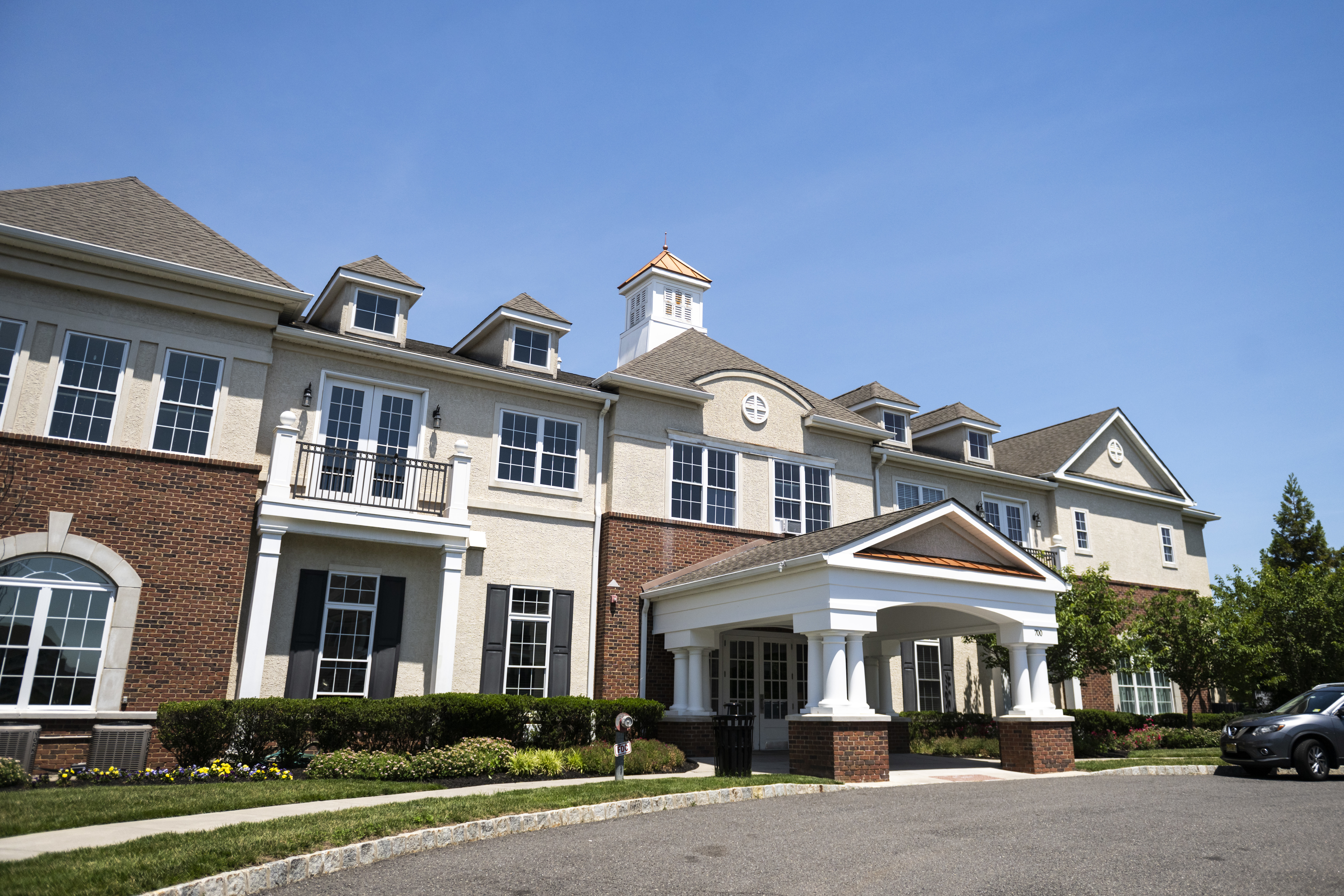
Plaza Grande, which opened in 2008, is a sprawling community with 507 units within 16 buildings. Featuring lots of amenities and surrounded by shops and restaurants in walking distance, it seemed like a perfect home to the Zuckers.
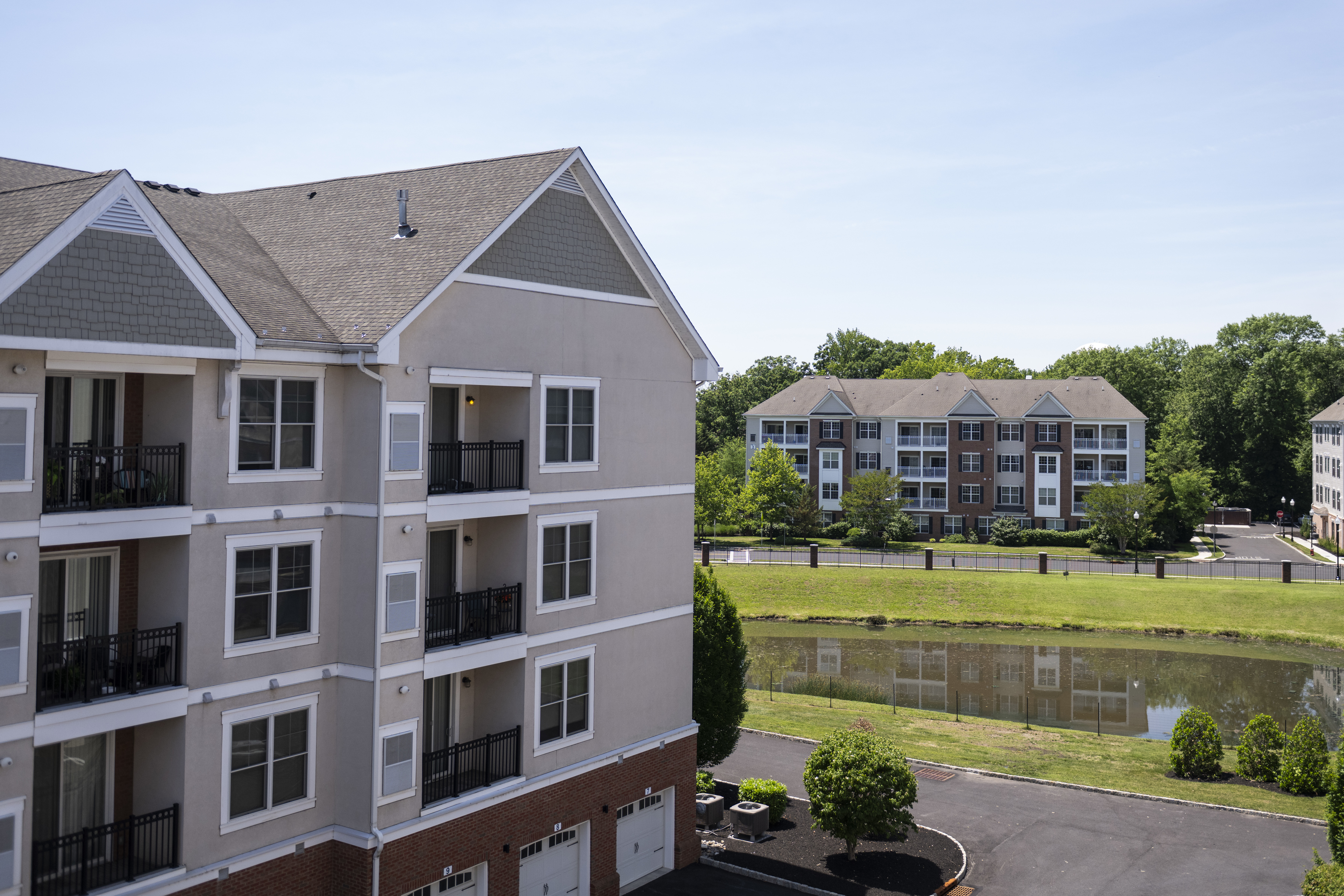
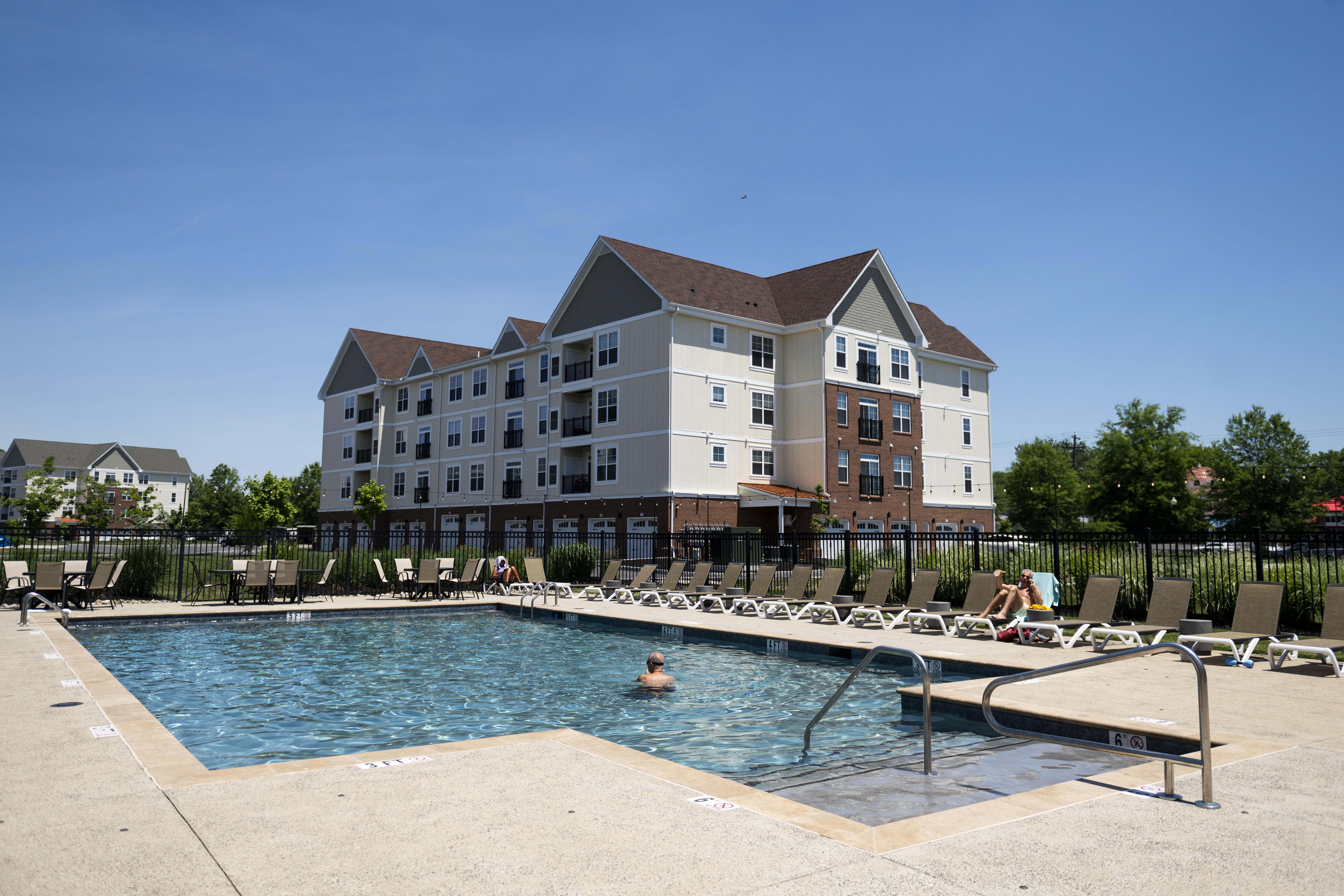
A view from the balcony at Fred and Barbara Zucker’s apartment.Allie Ippolito / For The InquirerThe outdoor pool at the Clubhouse at the Plaza Grande.Allie Ippolito / For The Inquirer
While Fred and Barbara were excited to downsize, emptying the house, where they had lived for 50 years while raising their family, was no easy task.
They had to offload most of their belongings, and with the help of a neighbor, they sold their furniture on Facebook Marketplace. Beyond Barbara’s favorite pots and pans, their televisions, family photos, and a few other keepsakes, they made a completely fresh start.
“My stuff was 50 years old, and it was time to go,” said Barbara.
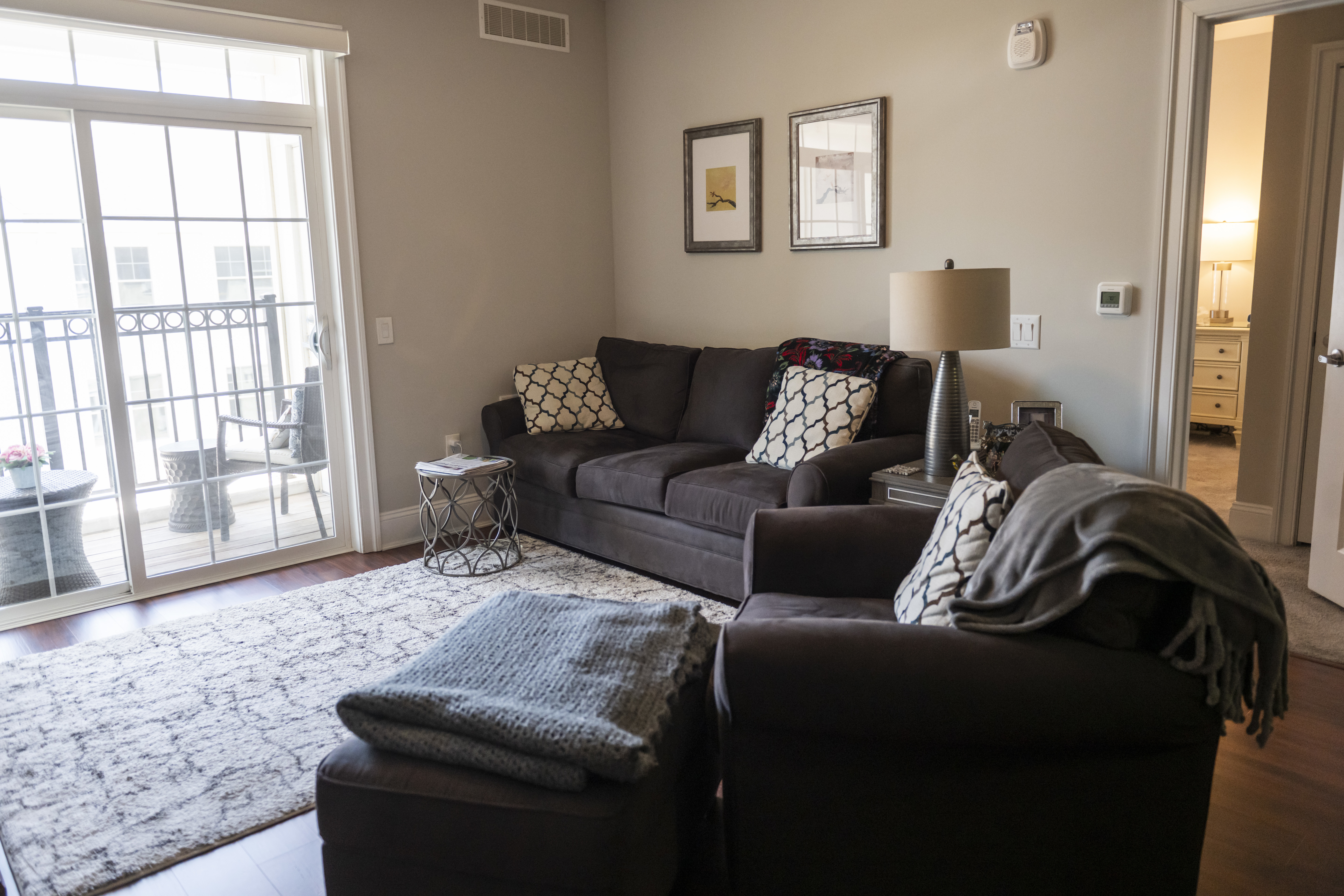
The couple shopped at Raymour & Flanigan to outfit their new apartment, starting with a comfortable, dark gray velour couch, and matching chair and ottoman for the living room. With light pouring in from the balcony, it’s their favorite spot to relax, reading the newspaper and watching TV.
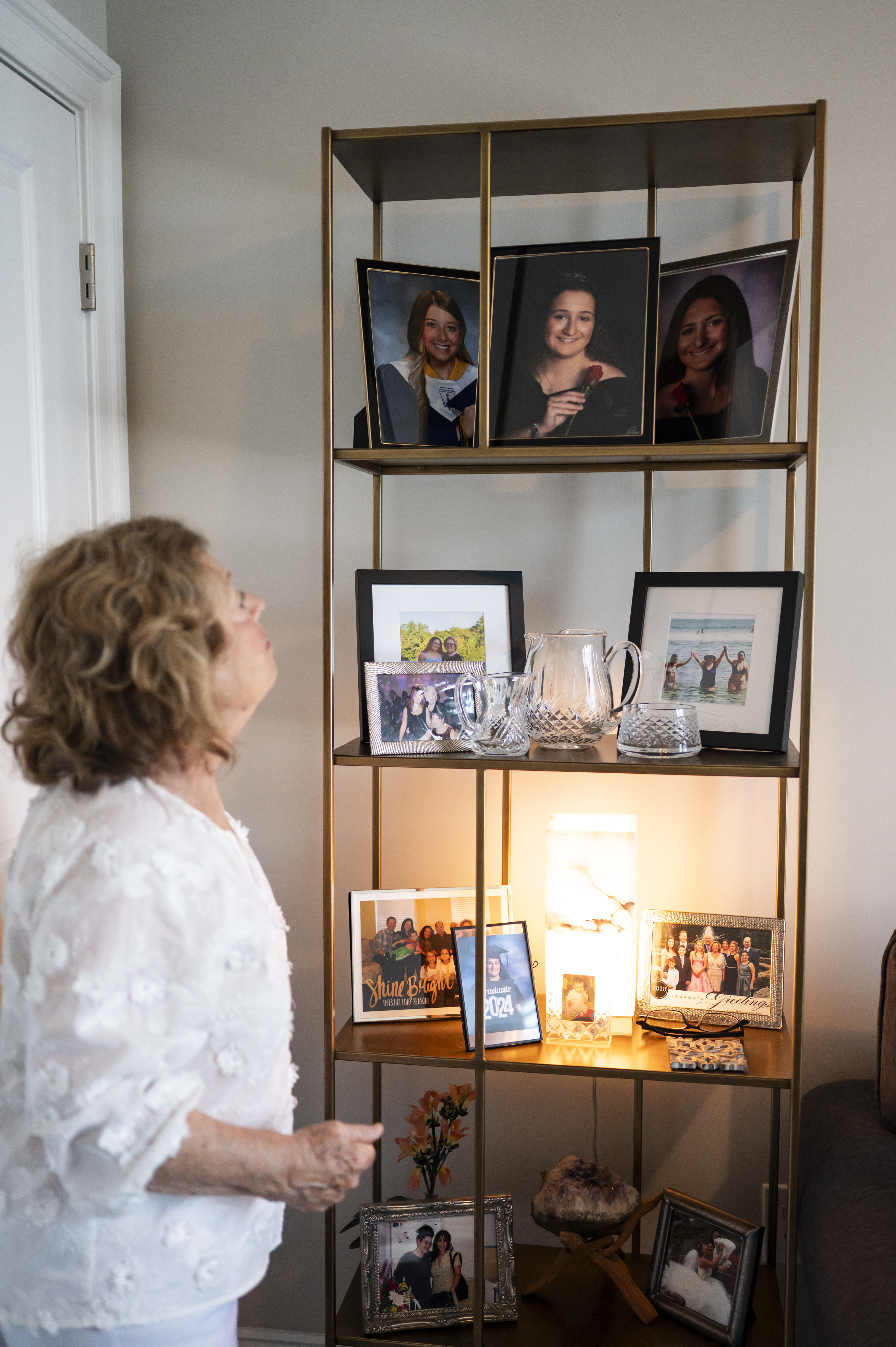
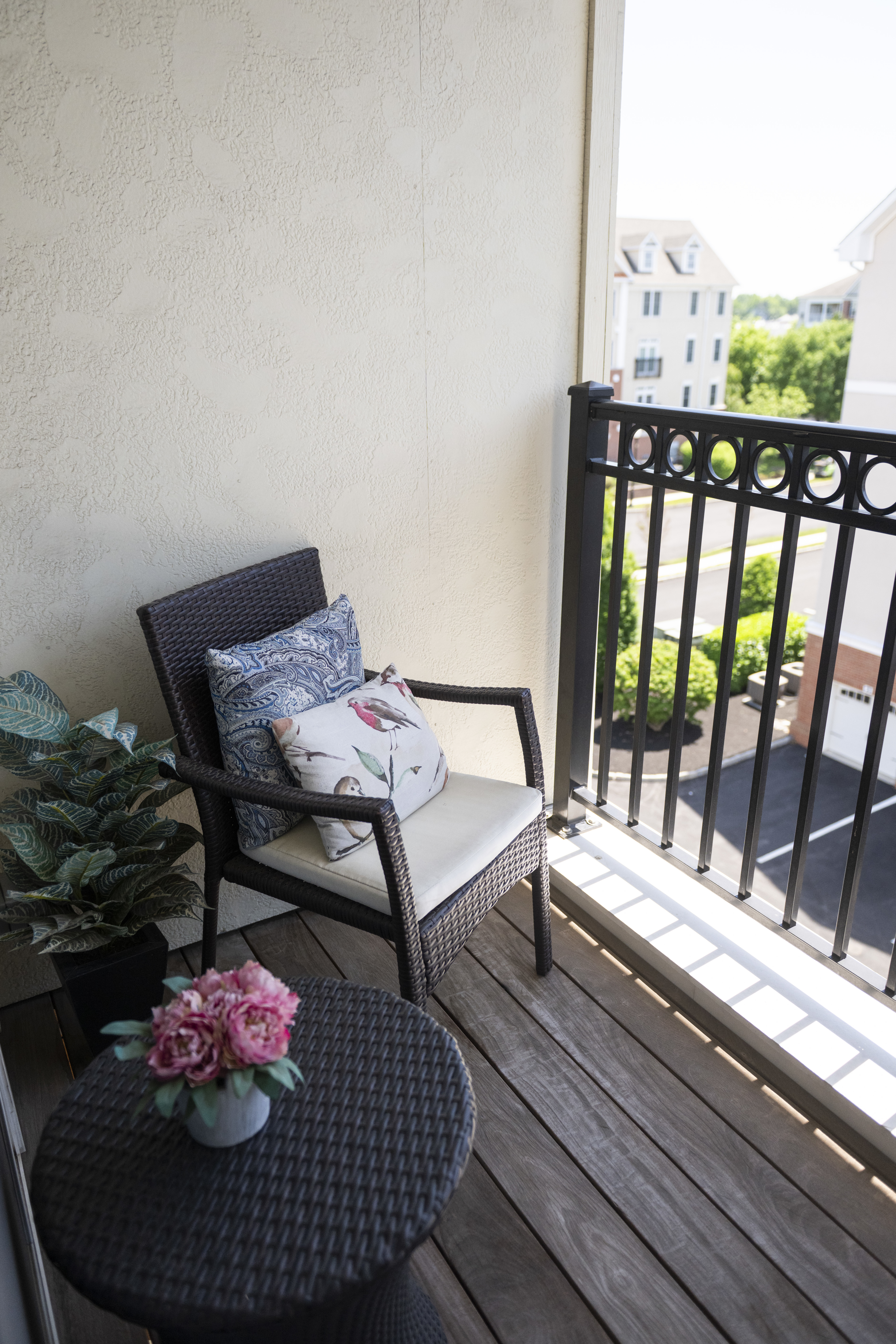
Barbara admires family photos on display in her apartment.Allie Ippolito / For The InquirerThe balcony is one of Fred and Barbara Zucker’s favorite features in their apartment.Allie Ippolito / For The Inquirer
Sliding glass doors lead to the balcony where they enjoy morning coffee, read for pleasure, or gaze at the pond below. The large, bustling community provides ample people-watching opportunity.
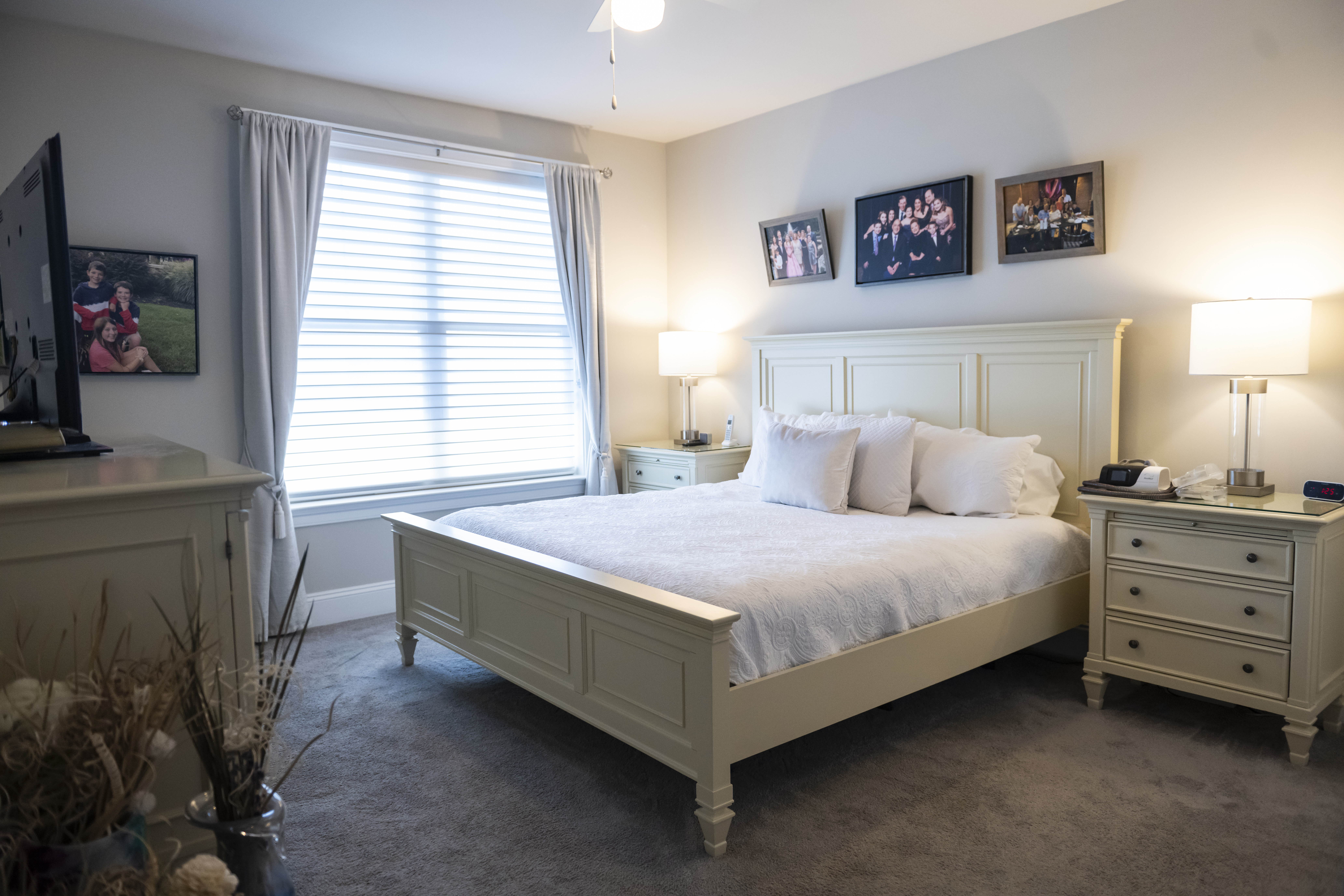
The primary bedroom features creamy white furniture with bright white bedding. Family photos from special gatherings decorate the walls.
“Family is everything,” Barbara said.
The Zuckers prefer an uncluttered look, only keeping artwork and knickknacks that have personal meaning. Souvenirs from their travels are also on display.
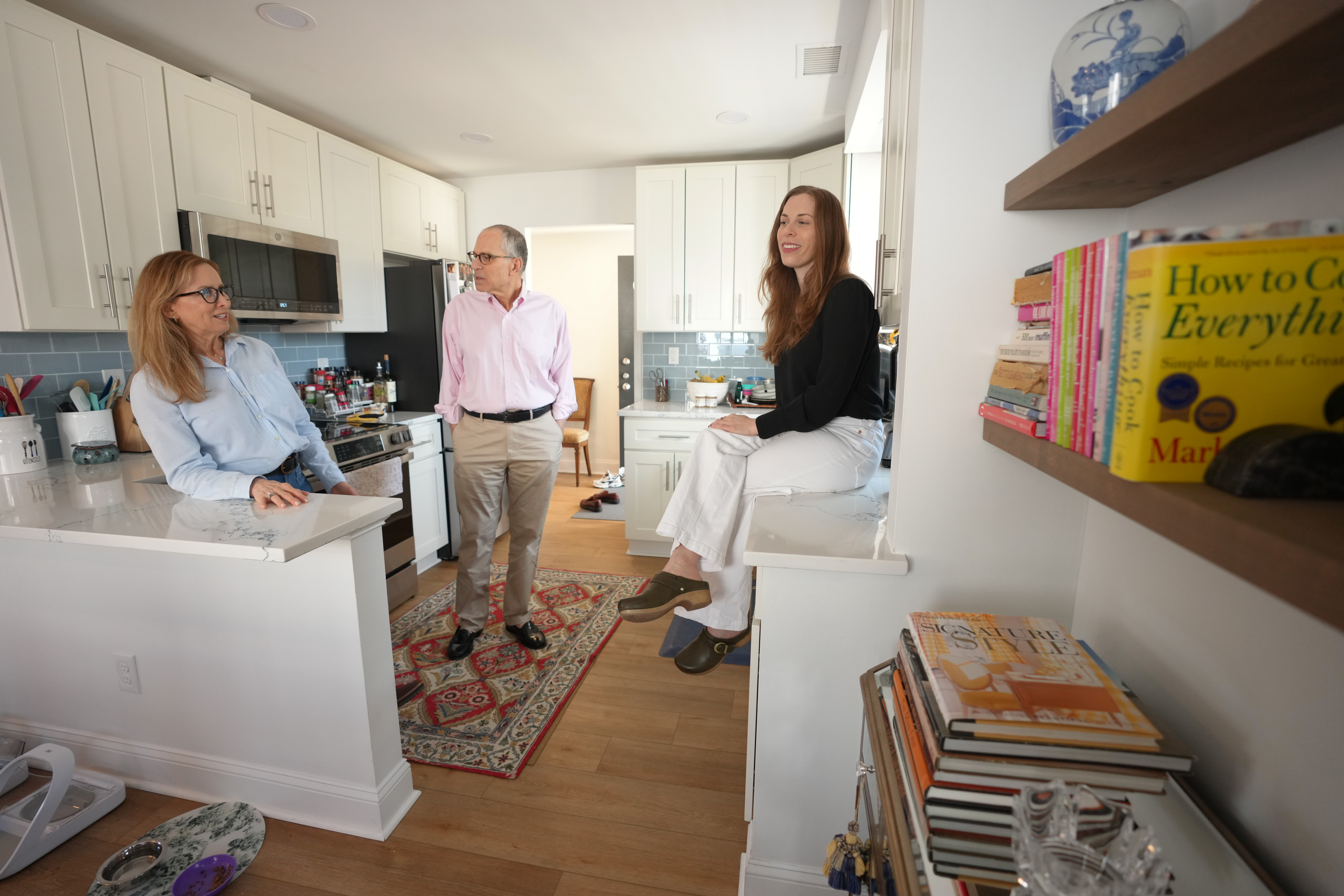
An avid cook, Barbara appreciates her new kitchen, with dark brown wood cabinets, speckled granite countertops, and a faux wood floor. The layout is roomy and the GE appliances are easy to use. She especially values the ice maker, a new-to-her luxury.
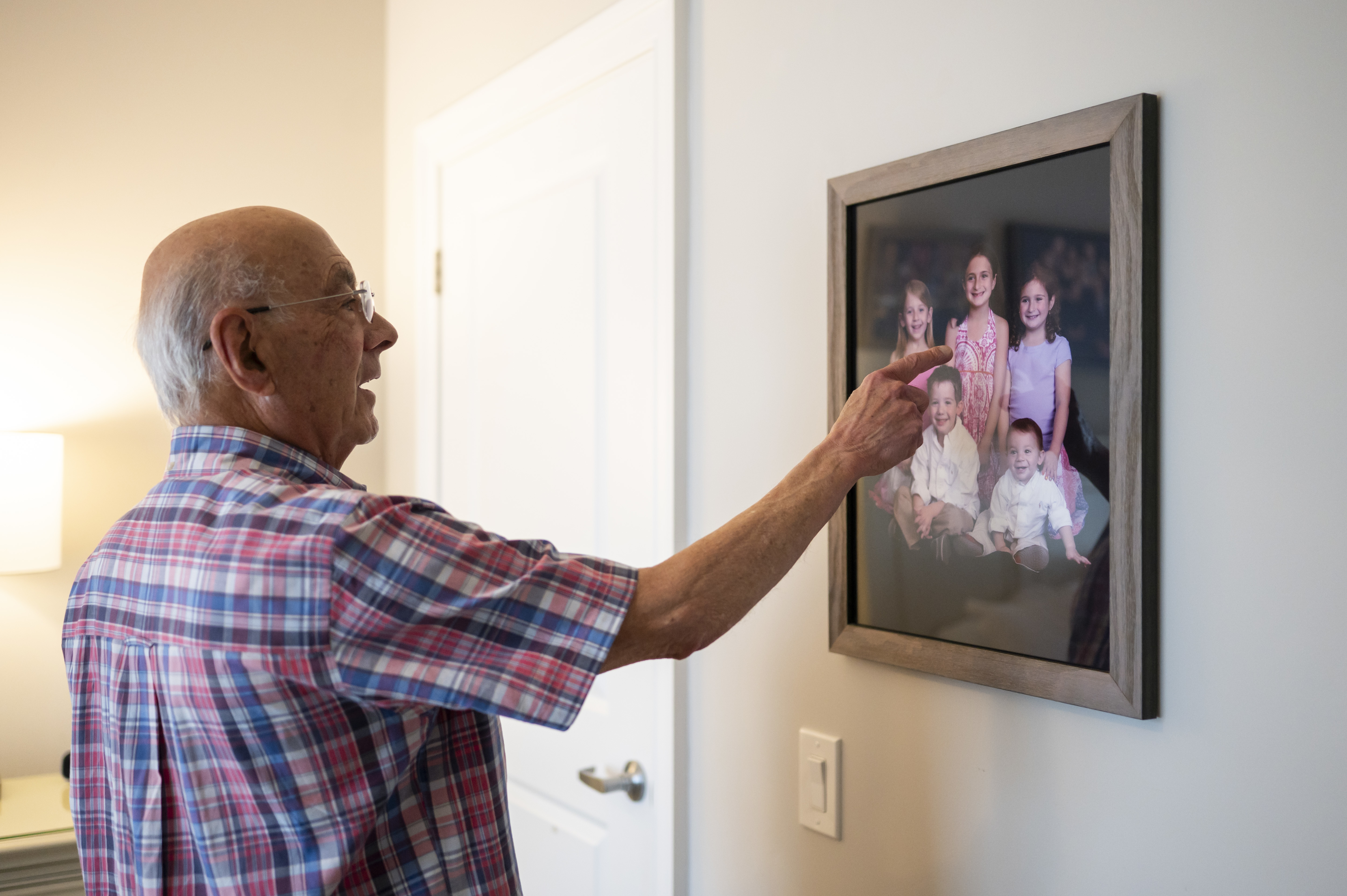
Barbara is an avid cook, often found making soup for friends. Allie Ippolito / For The InquirerThe large door to the balcony lets plenty of light into the apartment’s living area.Allie Ippolito / For The InquirerFred points to a photo of his grandchildren.Allie Ippolito / For The InquirerThe primary bedroom features more family photos and a large window.Allie Ippolito / For The Inquirer
“I don’t know what I was thinking for 50 years. Why I didn’t have an automatic ice maker?” she said.
Barbara can often be found baking cakes or stirring up a pot of hearty chicken soup to share with her neighbors. Her role has become caregiver when her friends and neighbors need some TLC.
“If somebody’s sick, I make a pot of soup,” Barbara said matter-of-factly.
It is the development’s family-like feeling that the couple appreciates the most. Along with their neighbors, they take full advantage of the abundance of amenities the community has to offer.
“Plaza Grande offers a resort-style experience for active adults 55+, anchored by an 18,500-square-foot clubhouse, the largest in South Jersey,” said Billy Procida, CEO of Procida Funding & Advisors, which developed the community.
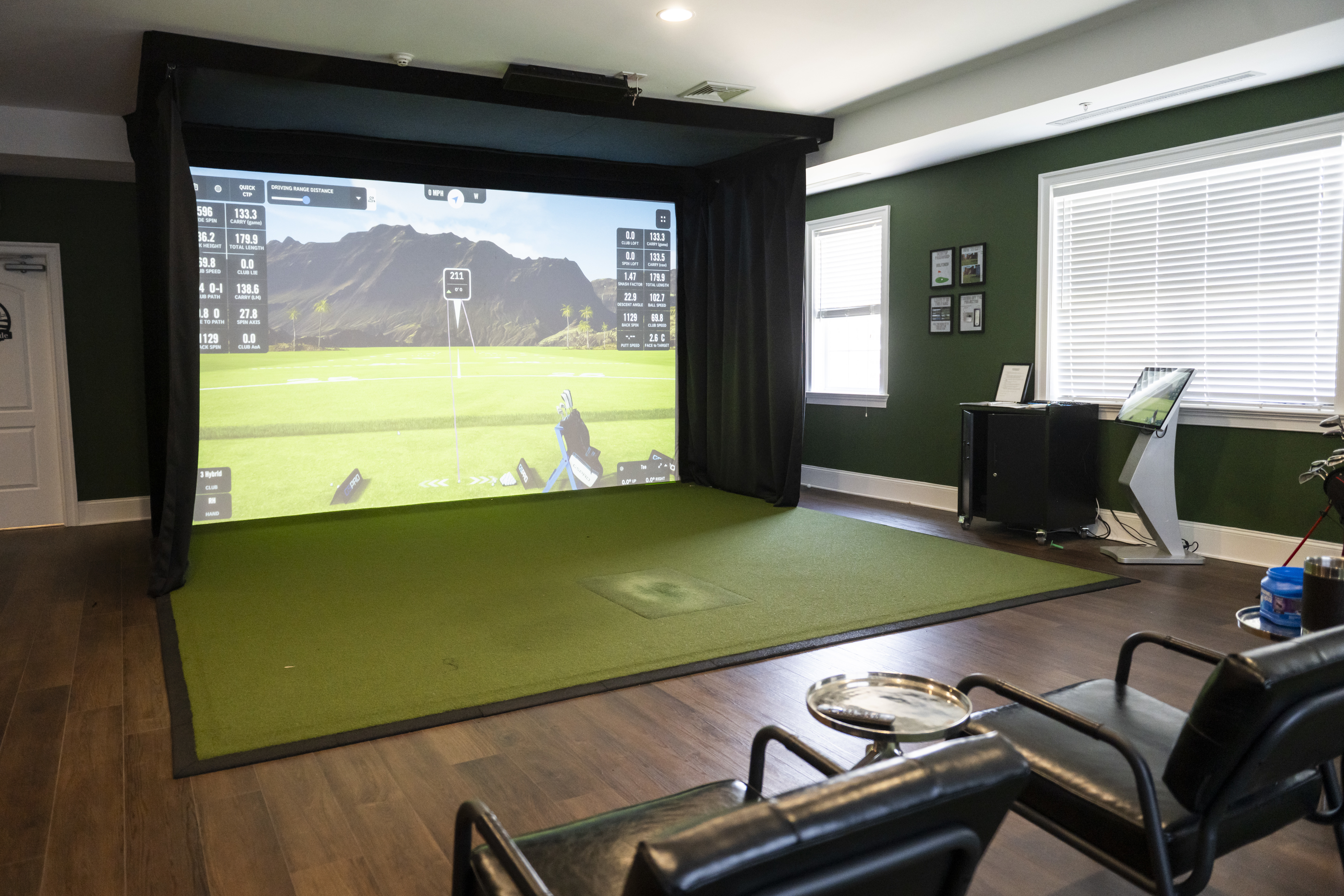
The complex features indoor and outdoor swimming pools, tennis and pickleball courts, a golf simulator, a sauna, massage rooms, and lifestyle programming.
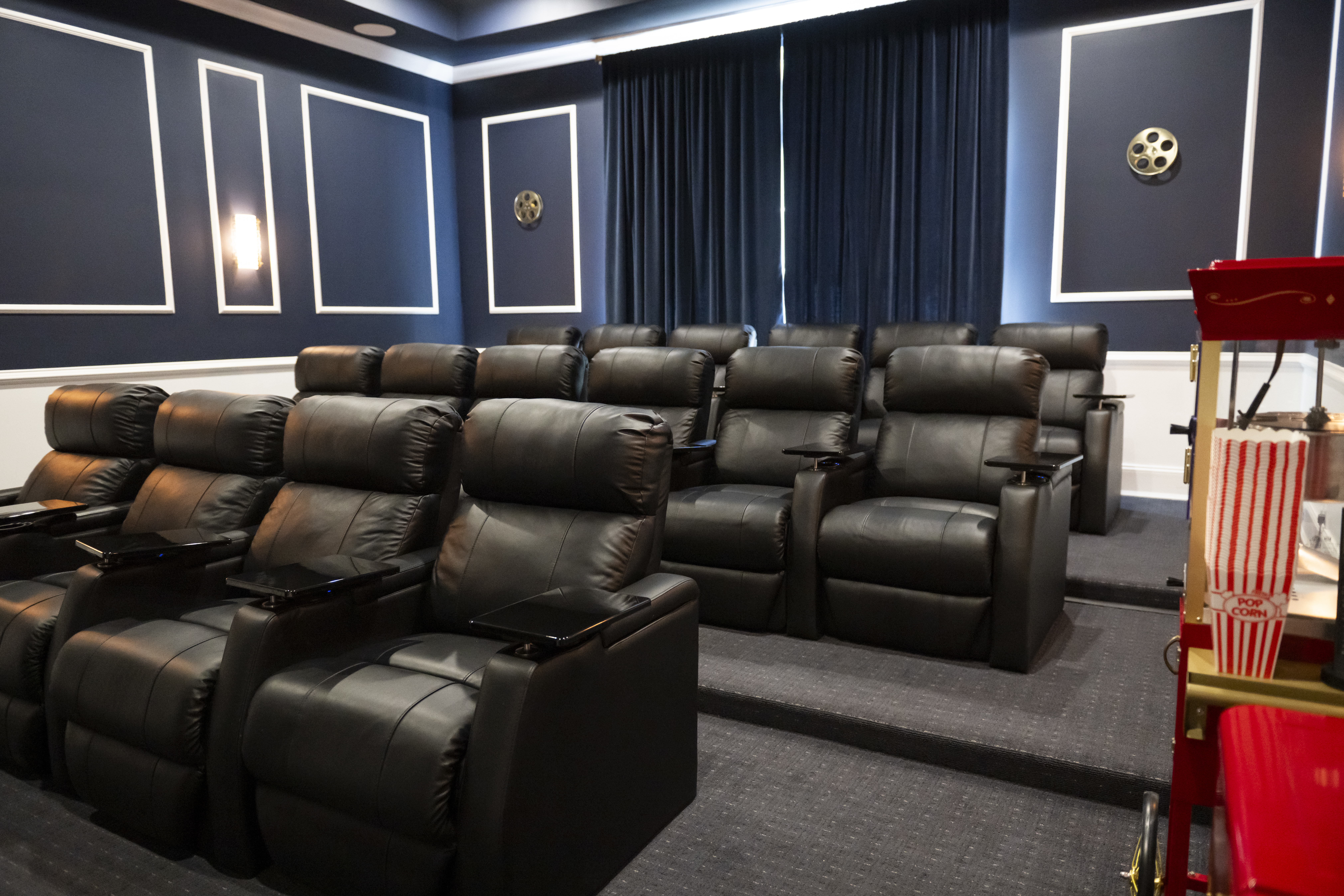
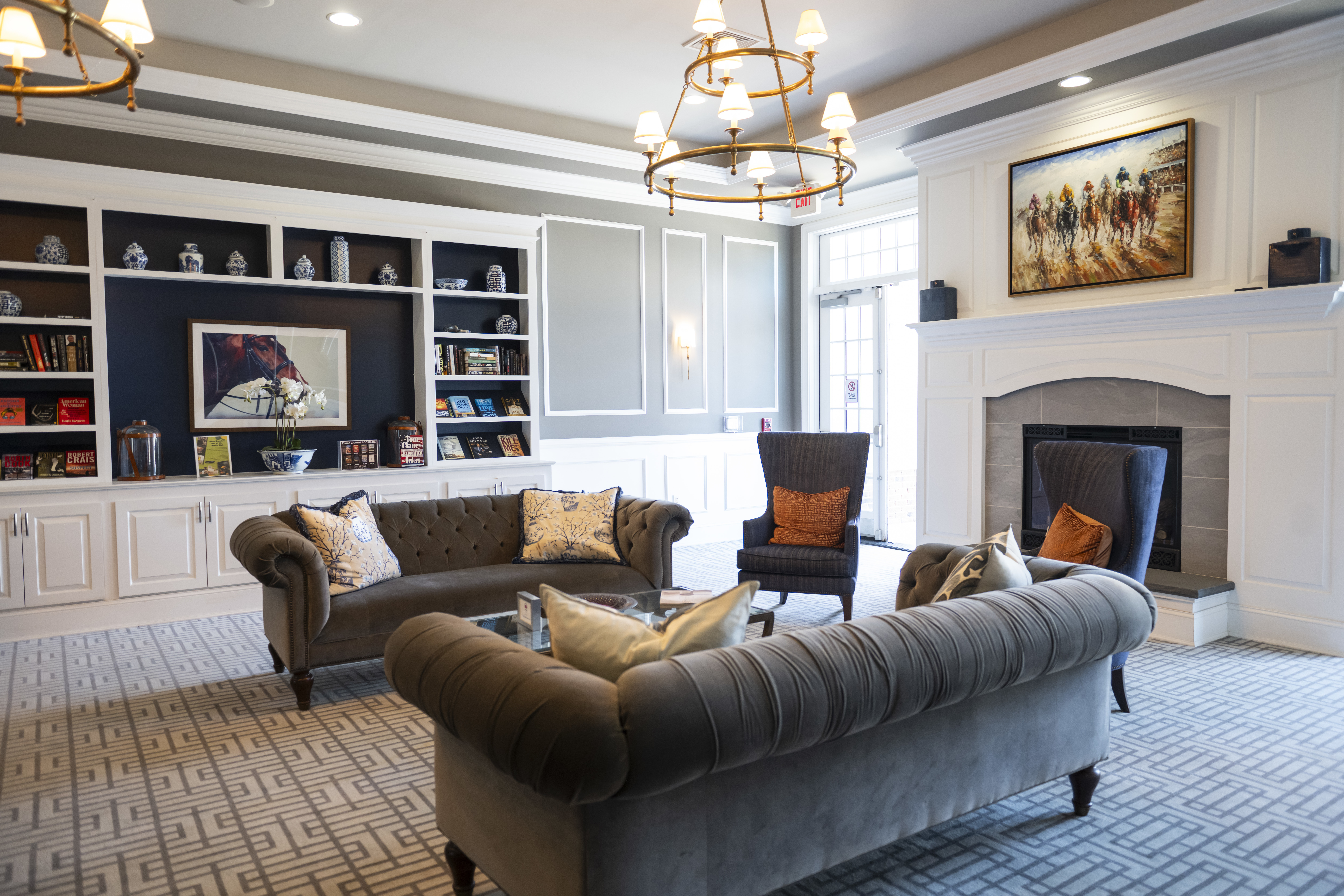
The golf simulator in the clubhouse at the Plaza Grande.Allie Ippolito / For The InquirerThe clubhouse, as seen from the outside.Allie Ippolito / For The InquirerA movie room inside the clubhouse.Allie Ippolito / For The InquirerThe clubhouse lounge area includes elegant seating and a fireplace.Allie Ippolito / For The Inquirer
“We’ve made good friends in the clubhouse, where we go every day,” noted Barbara. “We play cards and they have exercise classes and movies.”
The couple has become close friends with their neighbors, taking advantage of nearby restaurants to meet for dinner. They recently traveled to Jamaica as a group.
“Our home is a peaceful retreat for us,” said Barbara. “It is sort of like summer camp.”
Added Fred: “We are a giant family. Every day is another day in paradise.”
Is your house a Haven? Nominate your home by email (and send some digital photographs) at properties@inquirer.com.
That’s what Samantha Paige Rosen’s father told her when she was 29.
Rosen was living alone in Bethesda, Md., and struggling with what she called unrealistic deadlines at her copywriting job.
She liked being in the D.C. area and was reluctant to move back to her parents’ house in Bala Cynwyd. Plus, this wasn’t what adults were supposed to do, she thought. Ultimately, she decided to listen to her dad.
“My job was making me sick,” she said, referring to her deteriorating mental health.
The morning after she moved back into her childhood room, she already felt a difference. “The depression lifted. A lightness. A steady, quiet heartbeat,” she wrote in a 2022 essay, “Unlearning the Shame of Living with My Parents as an Adult,” for the literary publication Catapult.
That decision shaped the trajectory of her life.
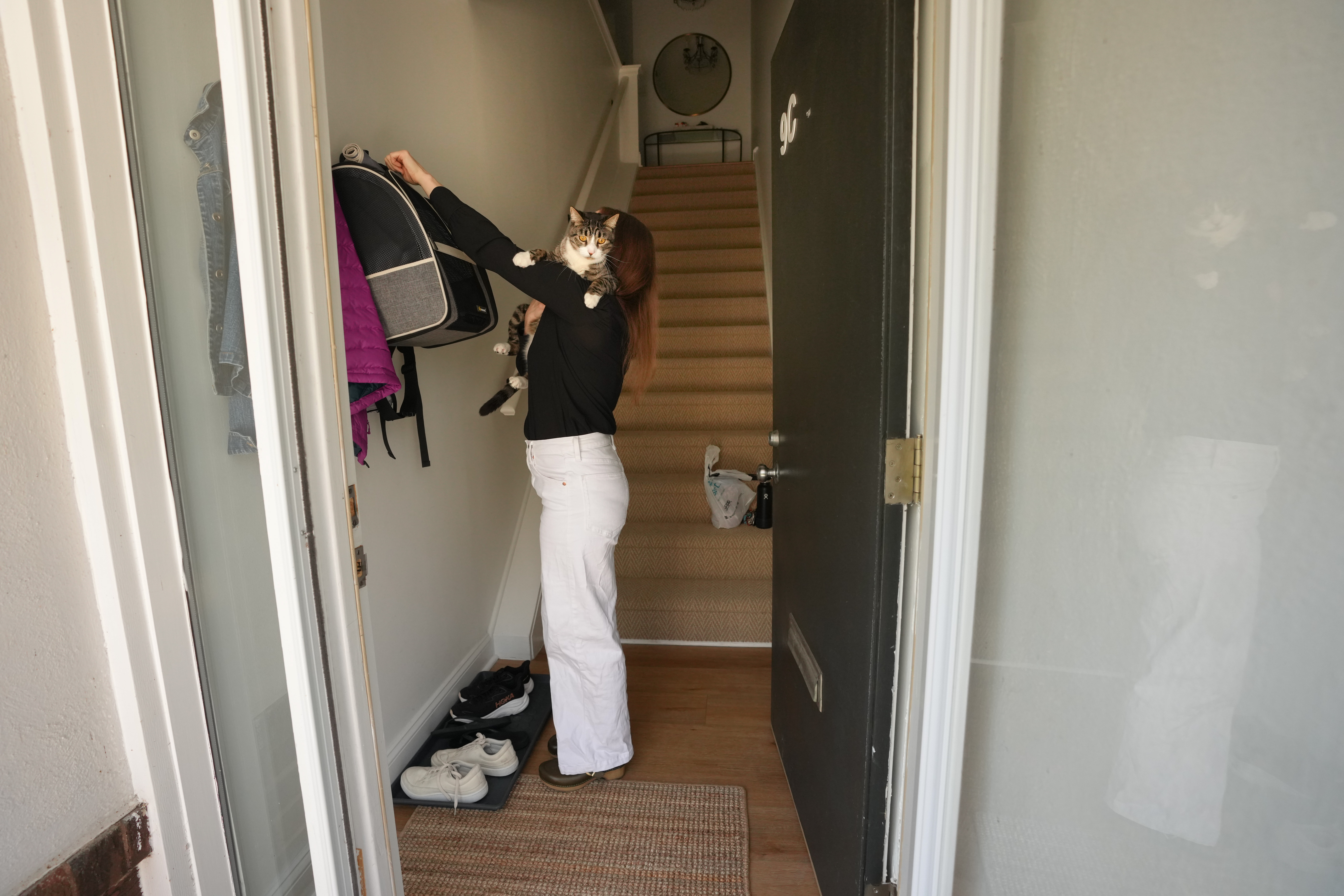
Samantha Paige Rosen, author of the anthology “Living, Together,” prepares to take her cat to her parents’ home for a visit last month. She lives in Penn Valley, a short walk from her parents’ home.Jessica Griffin / Staff Photographer
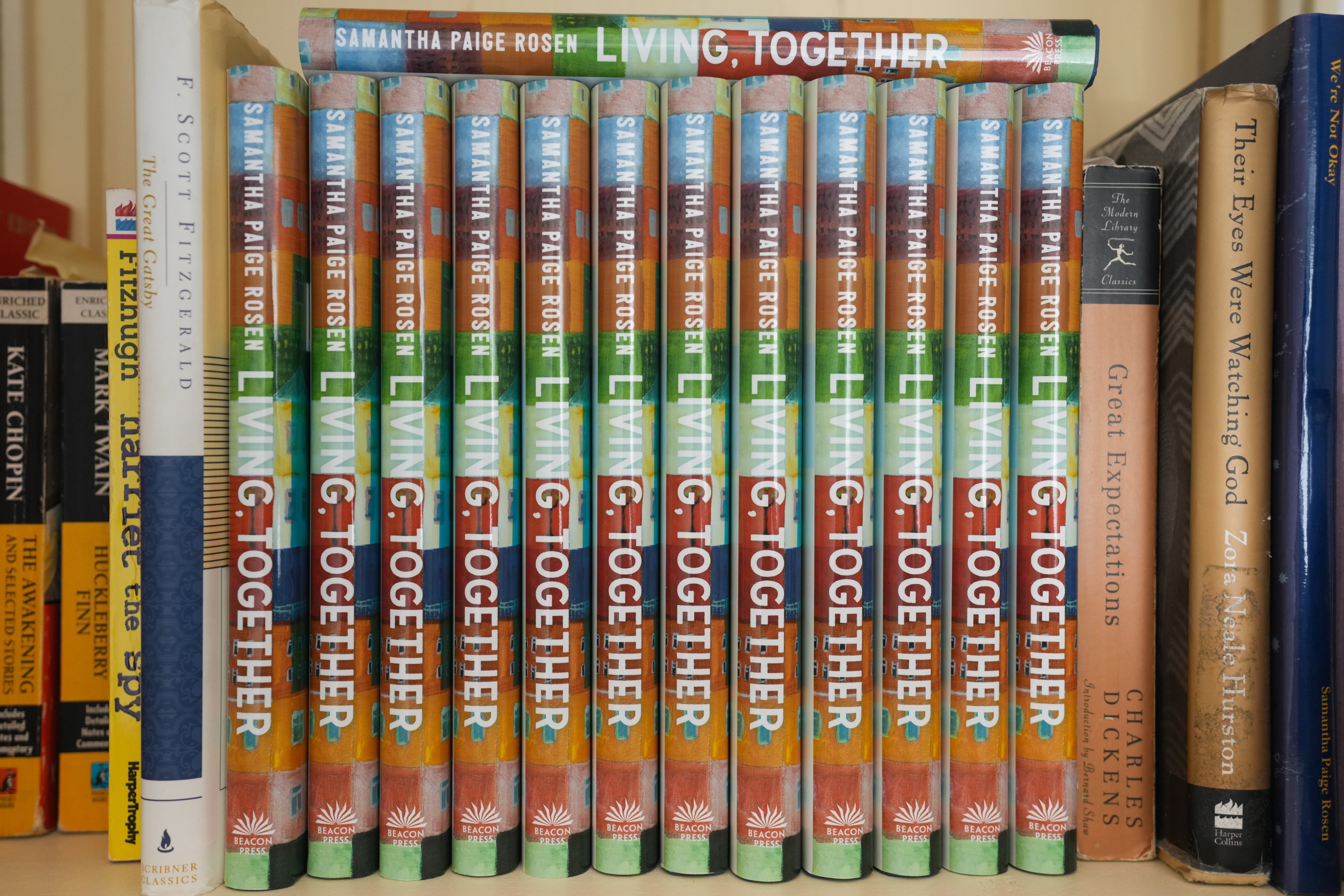
Thanks to the care provided by her parents, she was able to get well and build a tutoring business. And her experience inspired her to pitch, sell, and edit an anthology called Living, Together: Reimagining Community in the Age of Disconnection, out last month from Beacon Press and now an indie press bestseller.
The anthology, a mix of personal essays and conversations featuring 22 writers who live in the U.S., offers a window into the experience of living outside of a nuclear family arrangement. For some, that means living in a multigenerational household, a cohousing community, or three polyamorous parents and children. The book also goes beyond just housing, to focus on building community and chosen family.
Copies of the anthology “Living, Together” by writer Samantha Paige Rosen.Jessica Griffin / Staff Photographer
Novelist Sarah Thankam Mathews writes about her experience sustaining Bed Stuy Strong, the mutual aid organization she helped found during the pandemic. Author Rhaina Cohen explores her and her husband’s decision to live with their friends. Novelist Jonathan Escoffery talks about how his sense of community was shaped by his Jamaican immigrant parents and fellow writers of color.
When she was living with her parents, Rosen, now 36, said she didn’t know anyone who was living in a nontraditional setting and couldn’t find much writing about it. In a lot of ways, the book, she said, “was for me.” She wanted to hear about all the ways people were building homes and community.
It’s difficult to quantify the trend of alternative living arrangements because it’s such a vast term. But what is clear is that what Americans tend to think is middle-class “normal” — living with a spouse and children — is on the decline.
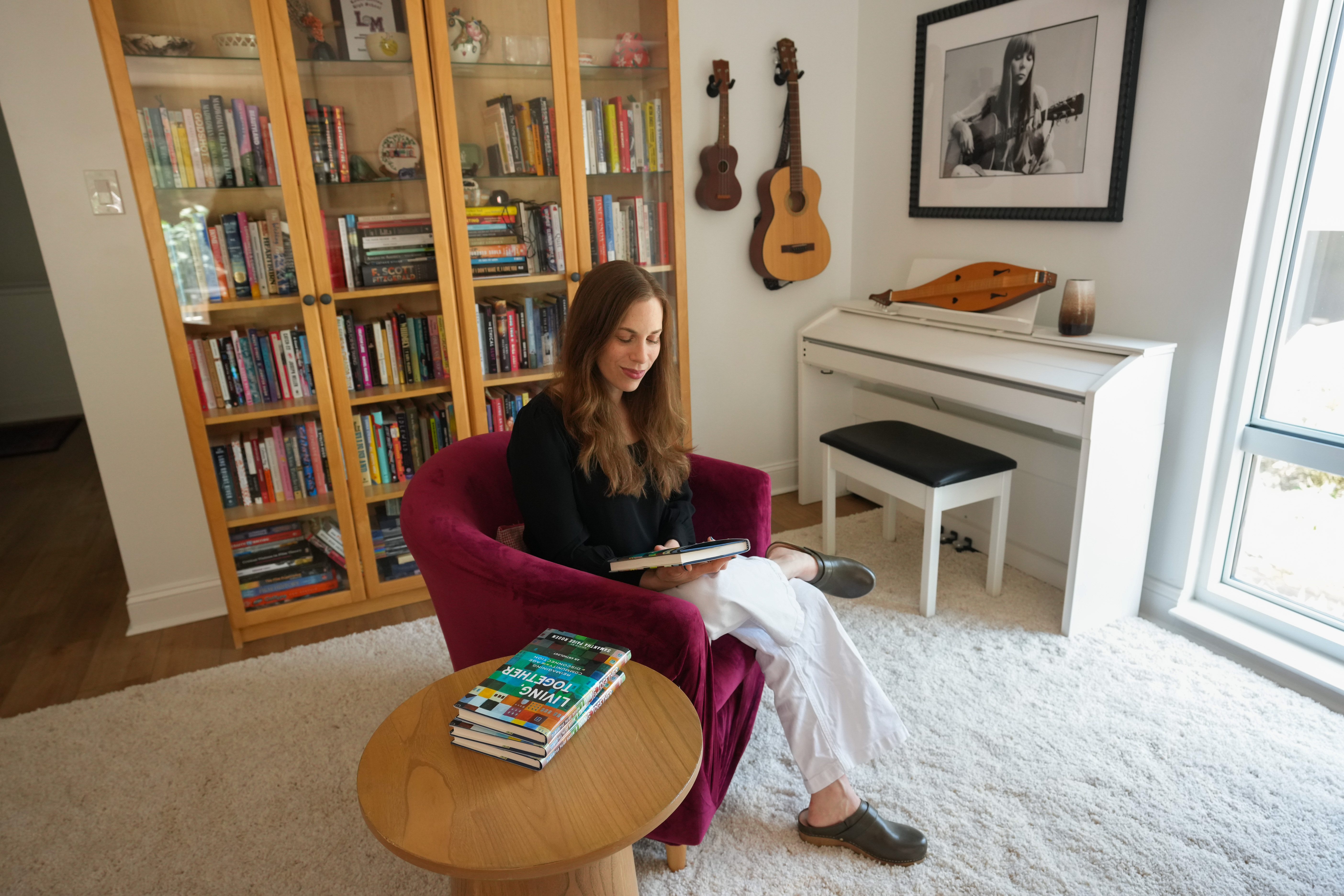
Writer Samantha Paige Rosen, author of an anthology called “Living, Together”, in her home, located a short walk from her parents house, July 20, 2026, in Penn Valley, PA.Jessica Griffin / Staff Photographer
Multigenerational and otherwise non-nuclear family living is common in several global cultures, but Rosen wanted to highlight American writers as a way to combat the thinking that more communal ways of living are suited for other countries but not here.
Living, Together fits into a growing canon of literature focused on envisioning alternative family and relationship structures. From Cohen’s best-selling 2024 The Other Significant Others: Reimagining Life with Friendship at the Center to Mathews’ 2022 novel All This Could Be Different, from Sophie Lewis’ 2022 Abolish the Family: A Manifesto for Care and Liberation to Lola Milholland’s 2024 memoir Group Living and Other Recipes, there’s a growing tide of voices calling for collectivism over individualism.
“There’s a real hunger for interdependence and people don’t know how to get it,” Rosen said. She hopes the book will open people’s eyes to what’s possible. And not just what’s great about communal living, but what’s difficult about it, too.
When Rosen lived with her parents, sometimes she’d visit friends’ places and wonder if she was doing what she should be doing “as an adult woman.” Her mom, Patty Rosen, also remembers fielding some judgment from others about her daughter’s living situation.
“When’s Sam gonna move out?” they asked.
But the Rosens said they loved living together, even with things like negotiating sound while Samantha was tutoring and dealing with her cat crying at the front door. Or being parented a little too much.
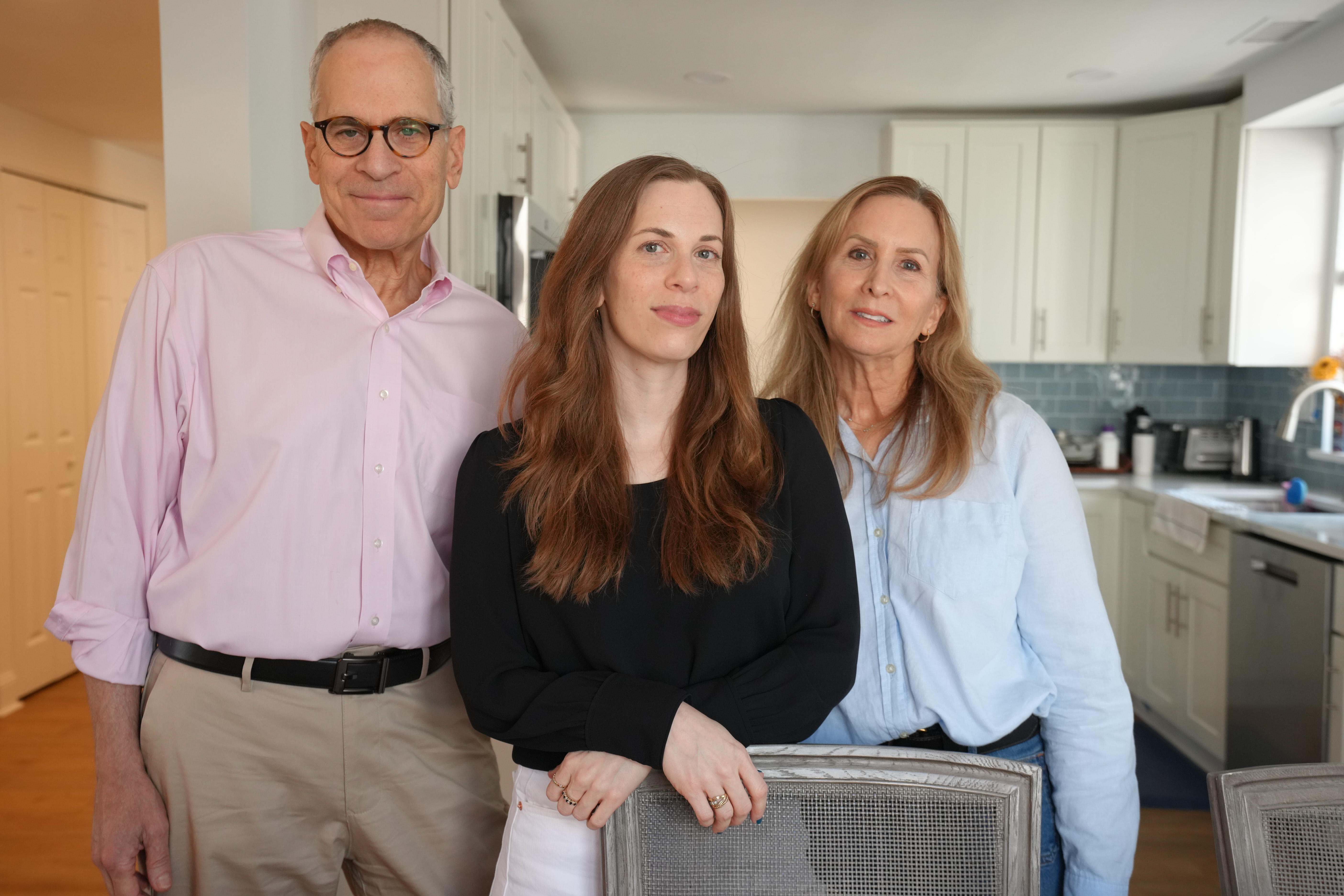
Writer Samantha Paige Rosen, author of the anthology “Living, Together,” poses with her parents in their home in July. Rosen lives a short walk from her parents’ home in Penn Valley and visits with them daily.Jessica Griffin / Staff Photographer
And going on dates? “She didn’t like to be asked about it,” Patty said.
They’d ask about the date’s name and profession, Rosen explained. “Then,” her father, Stuart Rosen, said, pretending to whisper behind his hand, “I would Google.”
In 2025, Stuart and Patty downsized and moved into a house in Penn Valley. Rosen moved into the house across the parking lot — a house she could only afford because of the years she lived with her parents.
The shift in their family’s living situation echoes something Rosen learned while working on the book.
“Those who’ve taken communal living from an idea to reality have reframed their thinking around it again and again, or gotten rid of the frame entirely,” Rosen wrote in an email. “It can last forever or for a season of life.”
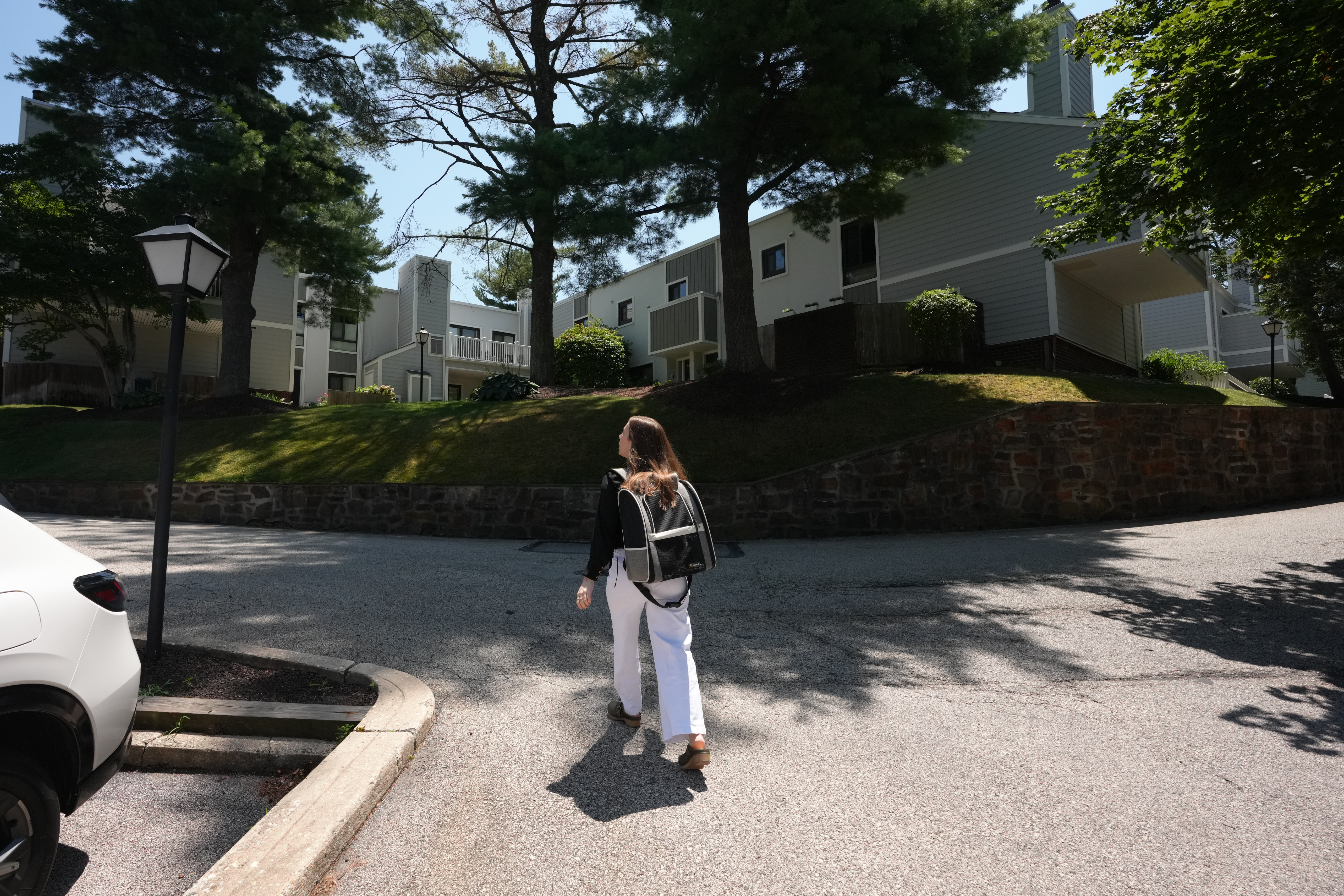
In this season of life, Rosen brings Fergal, her cat, in a backpack to her parents’ house everyday to play with their cats. Every Tuesday, she and her dad have dinner and watch a movie. Some evenings, her mom comes over after she finishes work to watch a movie in bed.
Writer Samantha Paige Rosen, author of the anthology “Living, Together,” lives across a parking lot from her parents’ home in Penn Valley.Jessica Griffin / Staff Photographer
The latest iteration of their living situation — and the potential for all the other ways she might live in the future — calls to mind something Rosen wrote in her essay.
She said she wasn’t sure what she’d choose if she had complete freedom to live the way she wanted.
“But I know I’m interested in figuring out how to live beyond the boundaries society has established for me. I didn’t always believe I was capable of that, but I am. We all are.”
Samantha Paige Rosen will be speaking about her book at the Head & the Hand, 2230 Frankford Ave., Philadelphia, as part of “Hot Debut Summer” on Saturday, Aug. 22, 7 p.m.-9 p.m.
“Living, Together: Reimagining Community in the Age of Disconnection” is available in digital and physical bookstores.
To find “A Nation of Artists” at the Philadelphia Museum of Art, you walk from the Great Stair Hall down a long gallery lined with art that’s not part of the show. The path zigs left and tightens into what looks like a service corridor, and then zags right past the bathrooms.
After this distinctly unceremonious approach, you’ve arrived at one of the museum’s most spectacular events of recent years.
Not only is “A Nation of Artists” momentous — it is billed as the “most expansive presentation of American art ever mounted in Philadelphia” — but it comes with the added juice of inaugurating the museum’s newly renovated American wing on the second floor after a 14-month closure.
The occasion brings yet another distinction: amazingly, after three more galleries open in the wing, it will be the first time in a decade that all of the galleries in the main building will have been open at the same time.
The odd journey to the second-floor American galleries has long been in place, but it seems especially odd now. It would have been nice to reopen this major piece of real estate with more of an architectural drumroll than a drab, winding hallway, especially for an institution that, after the tumultuous year it’s had, could use a thing or two to celebrate.
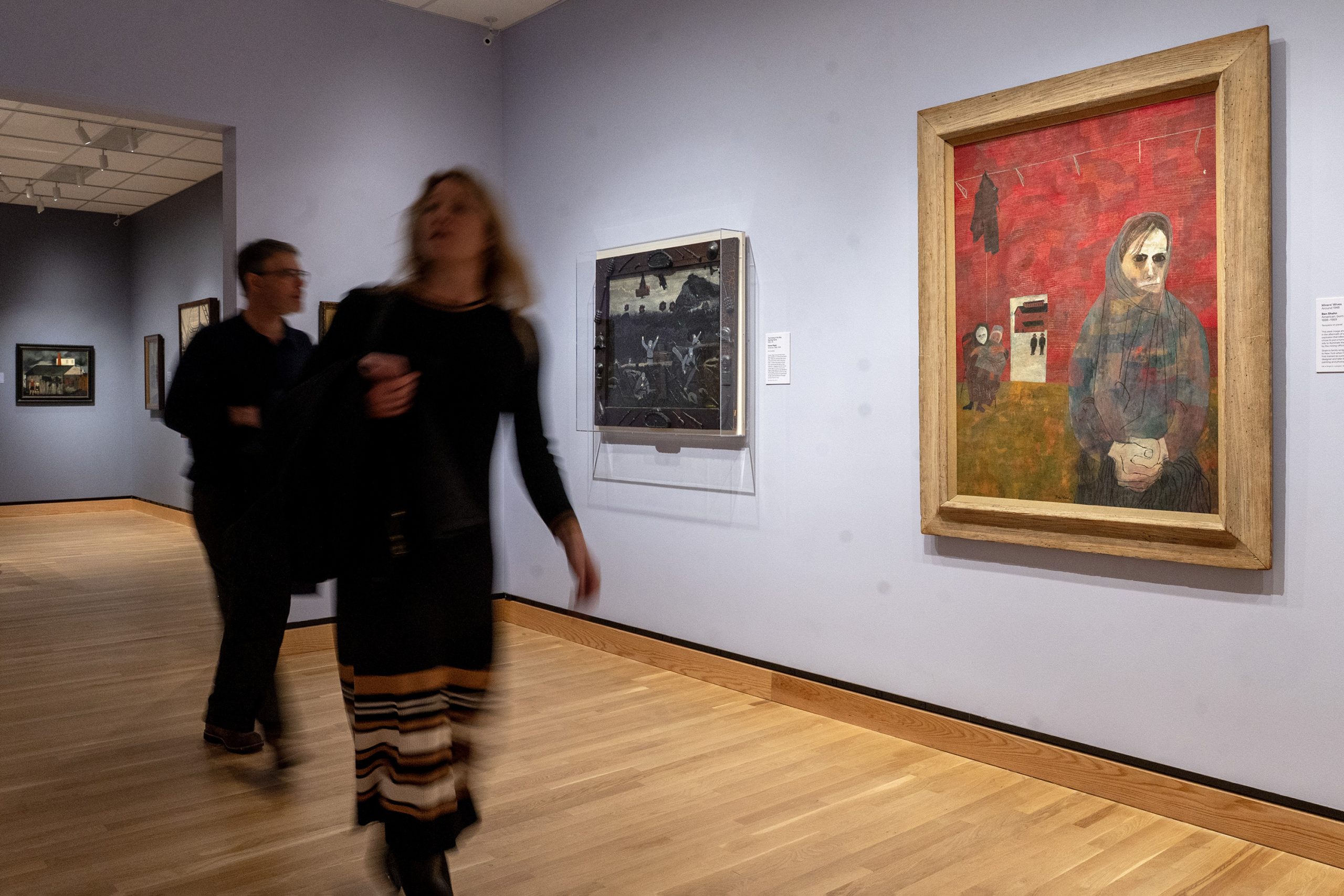
“Miners’ Wives” (right) by Ben Shahn and “The End of the War, Starting Home” by Horace Pippin at the Philadelphia Museum of Art.Tom Gralish / Staff Photographer
It might also be easy to miss the show’s greater significance to the museum and its cohost, the Pennsylvania Academy of the Fine Arts. “A Nation of Artists,” which opened in April with more than 1,000 works at both museums, arrives as a bolt of ambition as the groups work their way through deficits and reorganizations and remind audiences and funders that beyond crisis, there is art, and it is glorious.
The show is the city’s major visual arts celebration of the nation’s 250th anniversary, and while it’s an impossible task to compress the story of art in America into any single show, the overall image that emerges is not a cohesive snapshot, but a fascinating mirror.
There’s sometimes a random, almost improvisatory feeling to “A Nation of Artists” — despite the show’s attempt to place works around themes like the American West or inequity — because America is itself ever-random and improvisatory.
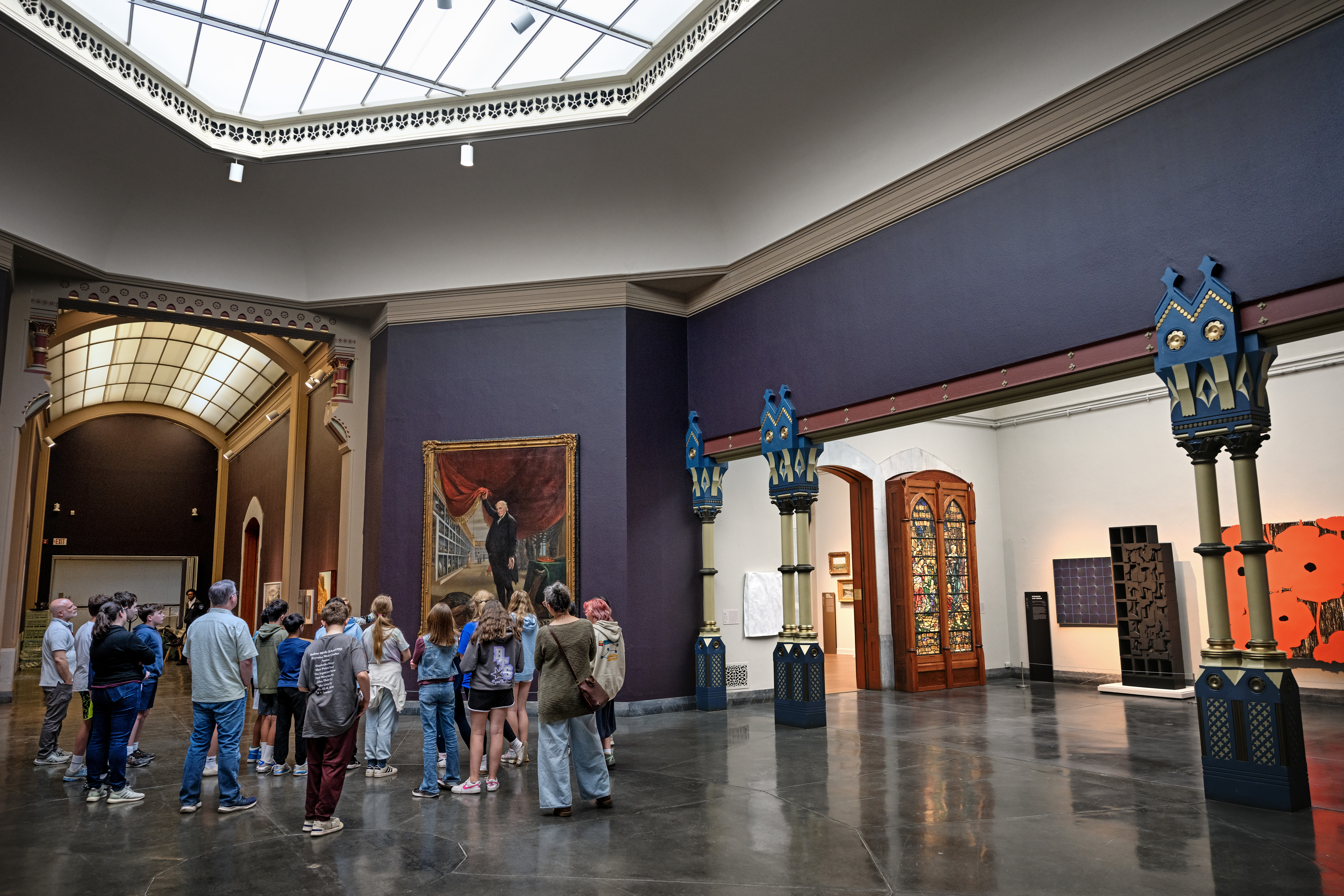
Works in thematically grouped ensembles in ‘A Nation of Artists’ in the newly renovated Furness and Hewitt building at the Pennsylvania Academy of the Fine Arts.Tom Gralish / Staff Photographer
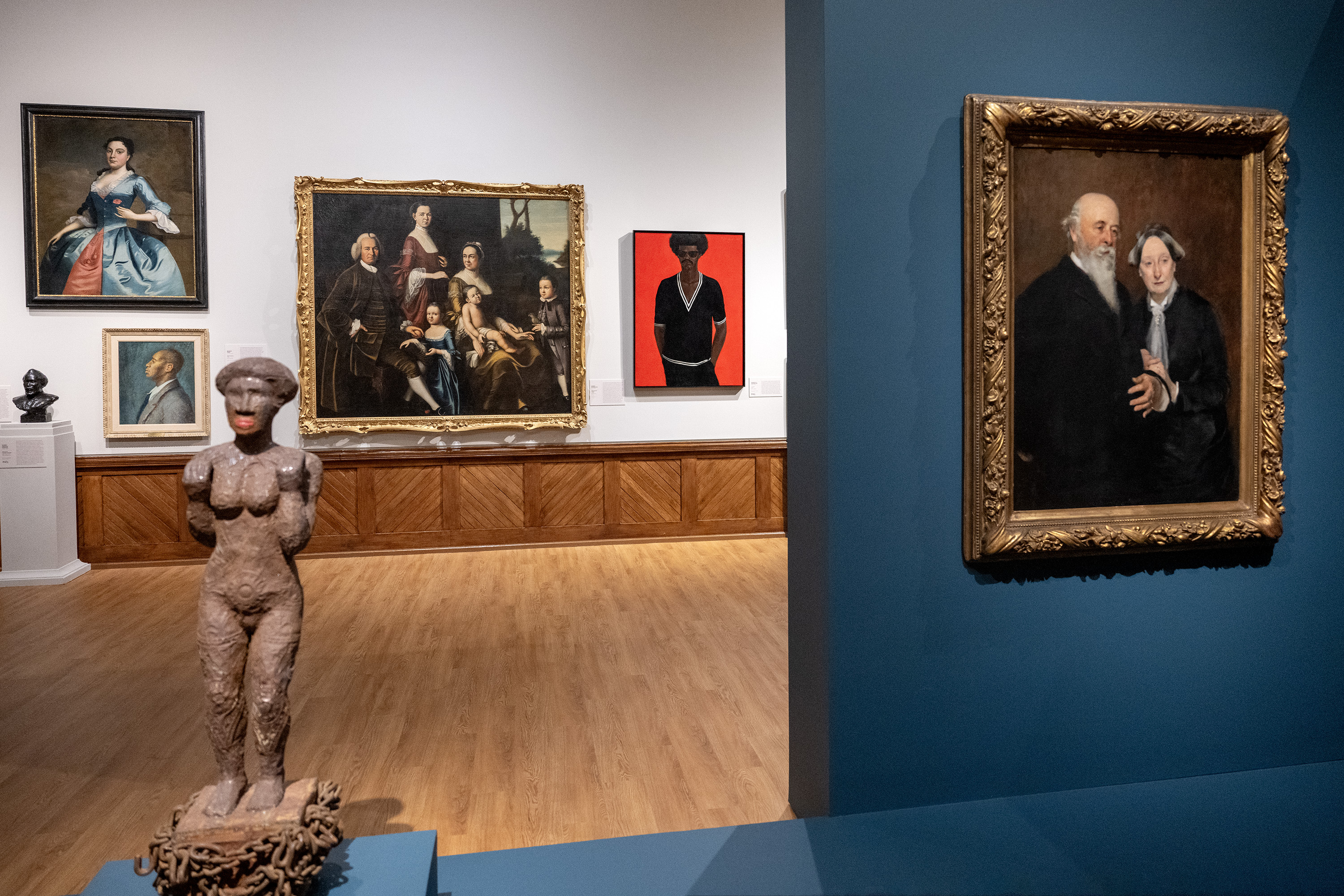
More than 120 works from the collection of John and Leigh Middleton and their family are augmenting “A Nation of Artists.” But after the show closes and the Middleton works are gone, PAFA will put in place a newly curated permanent collection, and the PMA will be left with a sweeping look at American art that starts on the first floor with earlier works and proceeds to the second to bring it up to the mid-20th century.
In other words, “A Nation of Artists” absorbs the Middleton works, but also spotlights the incredible riches in residence nearly all the time. That’s no small thing at a time when arts and culture in Philadelphia is struggling for engagement in the attention economy.
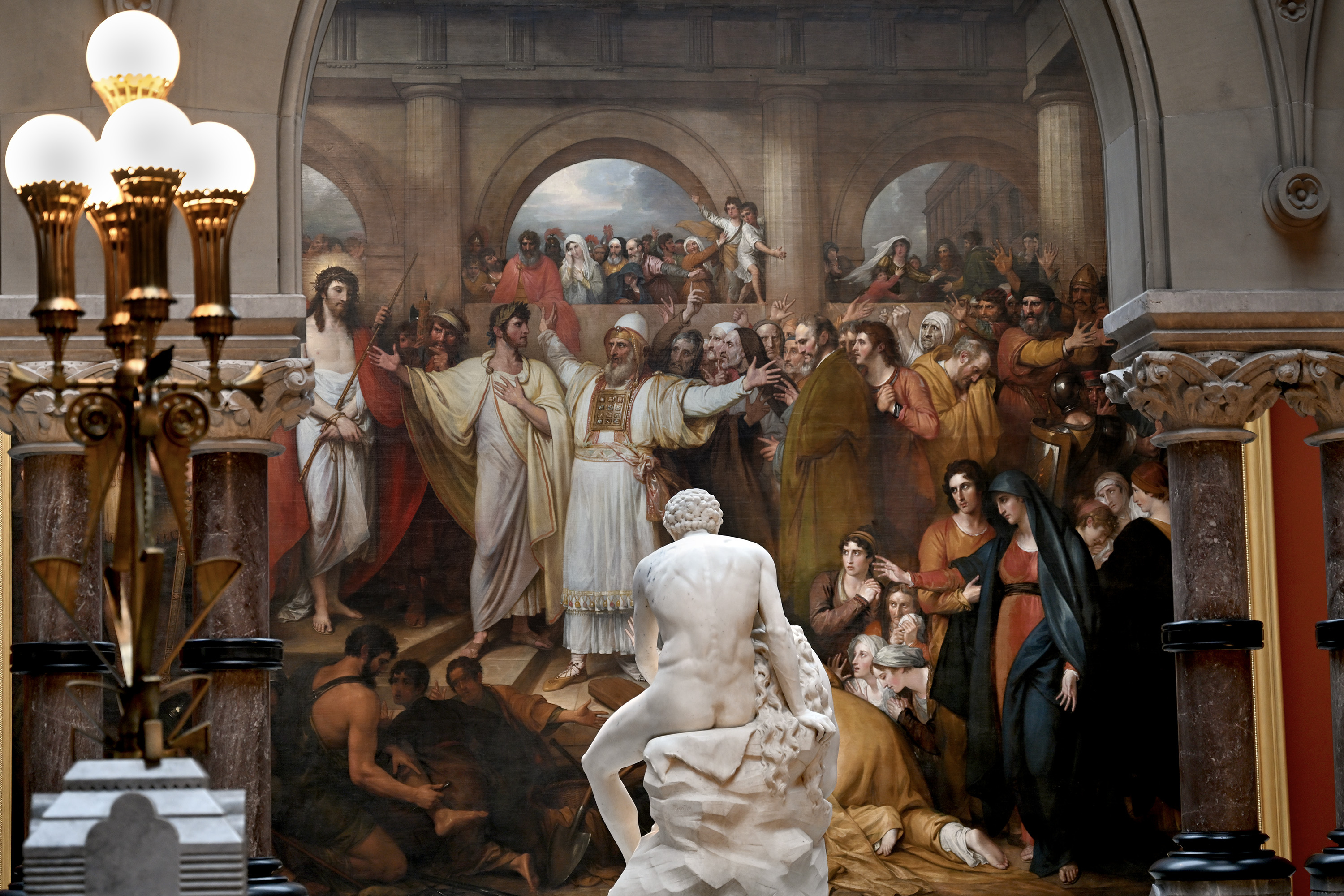
The painting “Christ Rejected” by Benjamin West and marble sculpture “Paradise Lost” by Joseph A. Bailly at the Pennsylvania Academy of the Fine Arts.Tom Gralish / Staff Photographer
A crisp reset at PAFA
At PAFA, the outside world seems to creep in in ways both positive and worrisome.
How can you admire the fruitful pedagogy at PAFA on display by generations of academy students and instructors without feeling concern for the place? The relationship between the museum and school — a specific artistic legacy unique to Philadelphia — is what makes PAFA special, and it remains to be seen whether a recently revamped certificate program at the school is the ultimate answer, artistically or financially.
The exhibition marks a crisp reset: the reopening of PAFA’s jewel of a building, the riotously detailed 1876 Furness and Hewitt-designed landmark, after a renovation project that included a new HVAC system and other renovations.
Laylights (variously utilizing natural or artificial light) in the newly renovated Furness and Hewitt building at the Pennsylvania Academy of the Fine Arts.Tom Gralish / Staff Photographer
It’s good news that there are no dramatic changes; the building continues to dazzle. I visited the show there a half dozen times, and via the church-like rose window and skylights, nature played handmaiden to art. When clouds parted, sun filtered into some of the spaces, and in one gallery the natural light made the whites and colors of George Bellows’ North River pop.
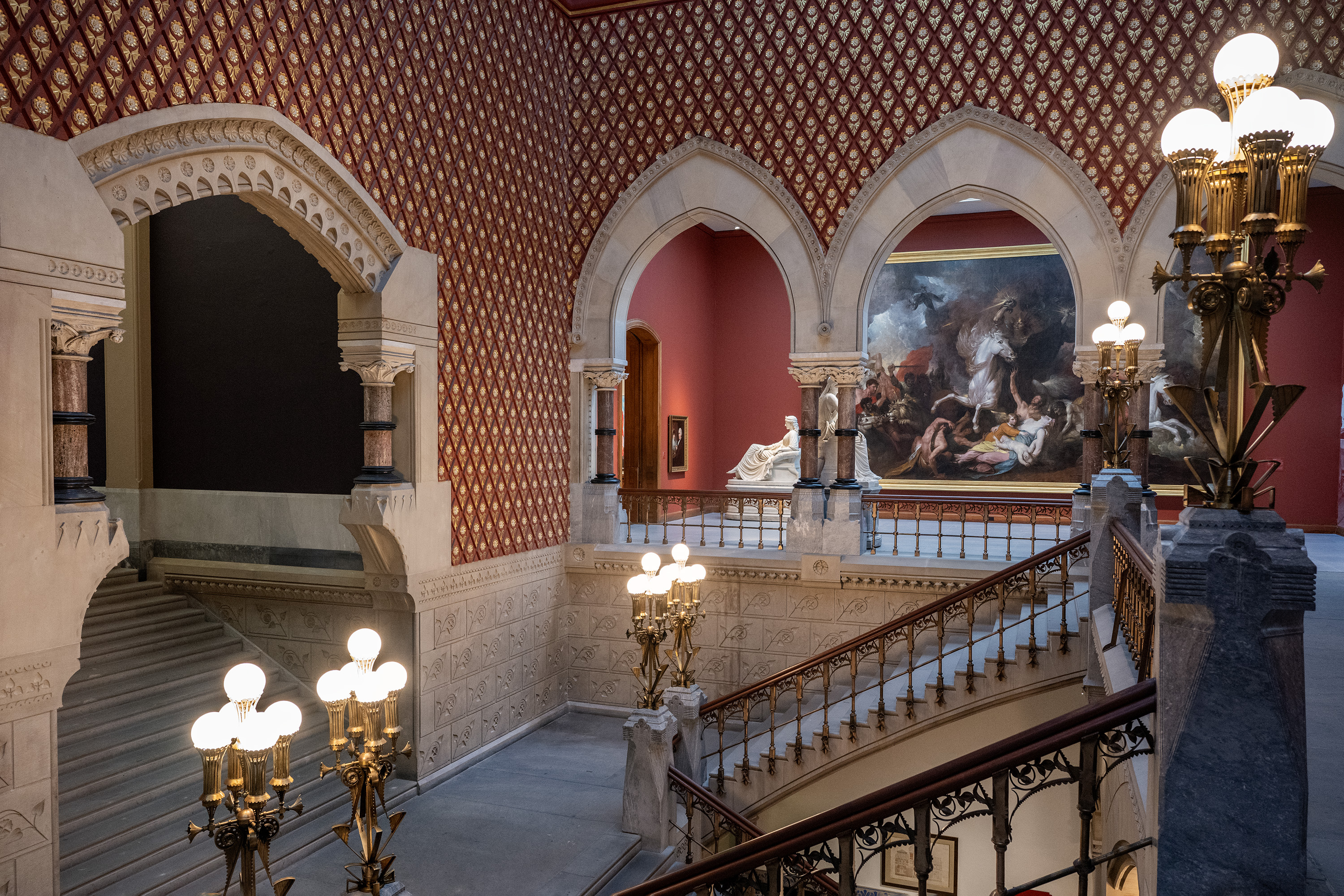
The marble sculpture “Peri at the Gates of Paradise” by Thomas Crawford in the grand staircase at the Pennsylvania Academy of the Fine Arts.Tom Gralish / Staff Photographer
On another morning, the sunlight made the grand stair hall of the Furness building practically vibrate. The smooth white of marble sculptures like Thomas Crawford’s Peri at the Gates of Paradise glowed and the stars-on-cobalt pattern beneath the skylight seemed to be showering down.
Here on this day, there was no more beautiful interior in the city.
At the Pennsylvania Academy of the Fine Arts. In the rear is the oil painting “Death on the Pale Horse” by Benjamin West.Tom Gralish / Staff Photographer
A more sequestered PMA
If PAFA maintains a lively relationship with the outside world, the PMA’s new American wing feels sequestered. There are no visible windows letting in light in the second floor American galleries — no natural light except for a small opening in a staircase.
The layout and footpath (including that unceremonious approach) is largely the same as it had been before the renovation. But the flow within and from gallery to gallery is more open, and there is now a central spine of four continuous middle galleries that opens up a vista that helps to orient the visitor. Three remaining galleries in the renovated American wing are expected to reopen, though the date is uncertain.
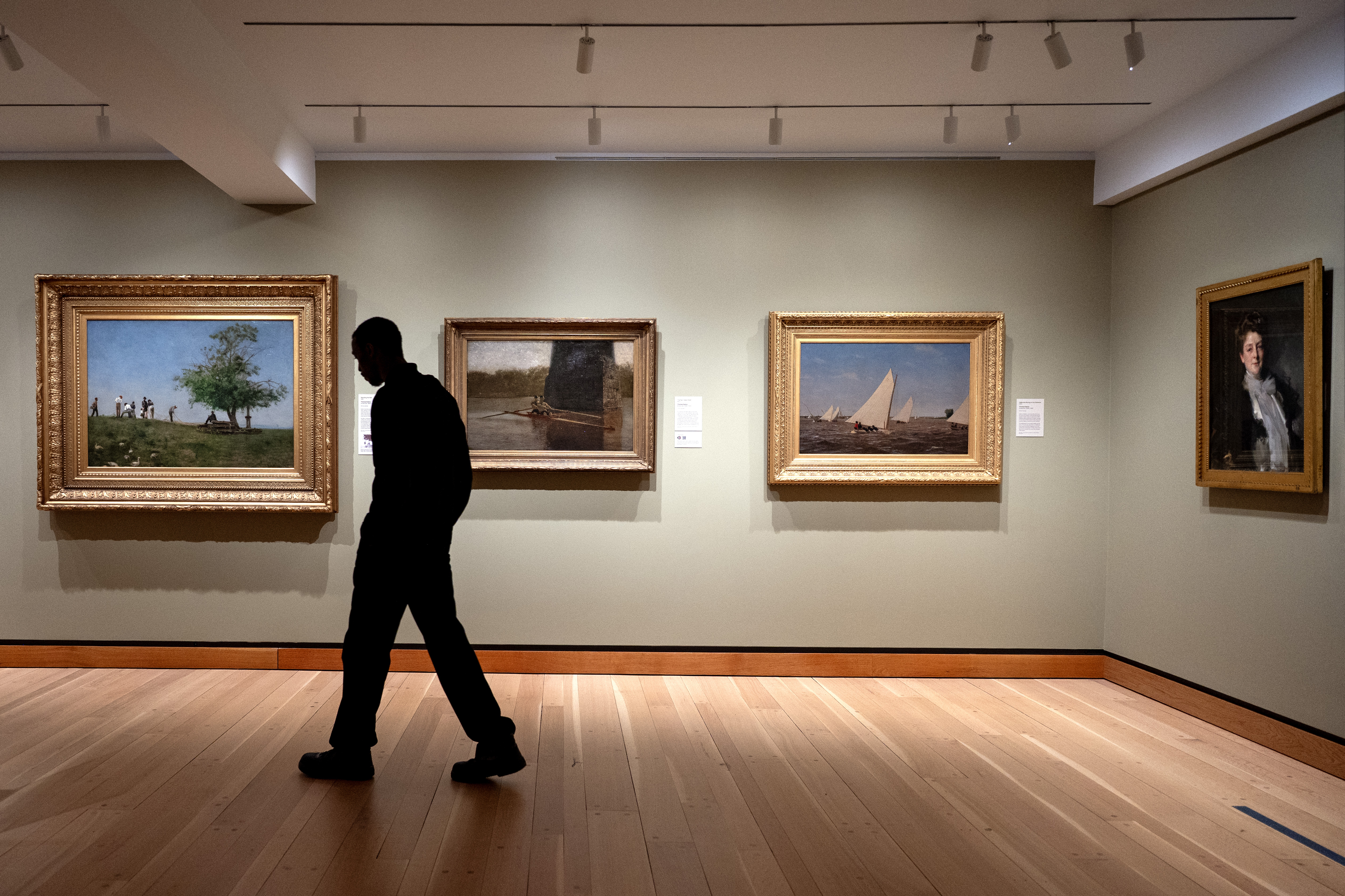
Three Thomas Eakins oils (from left): “Mending the Net,” “The Pair-Oared Shell,” and “Sailboats Racing on the Delaware.”Tom Gralish / Staff Photographer
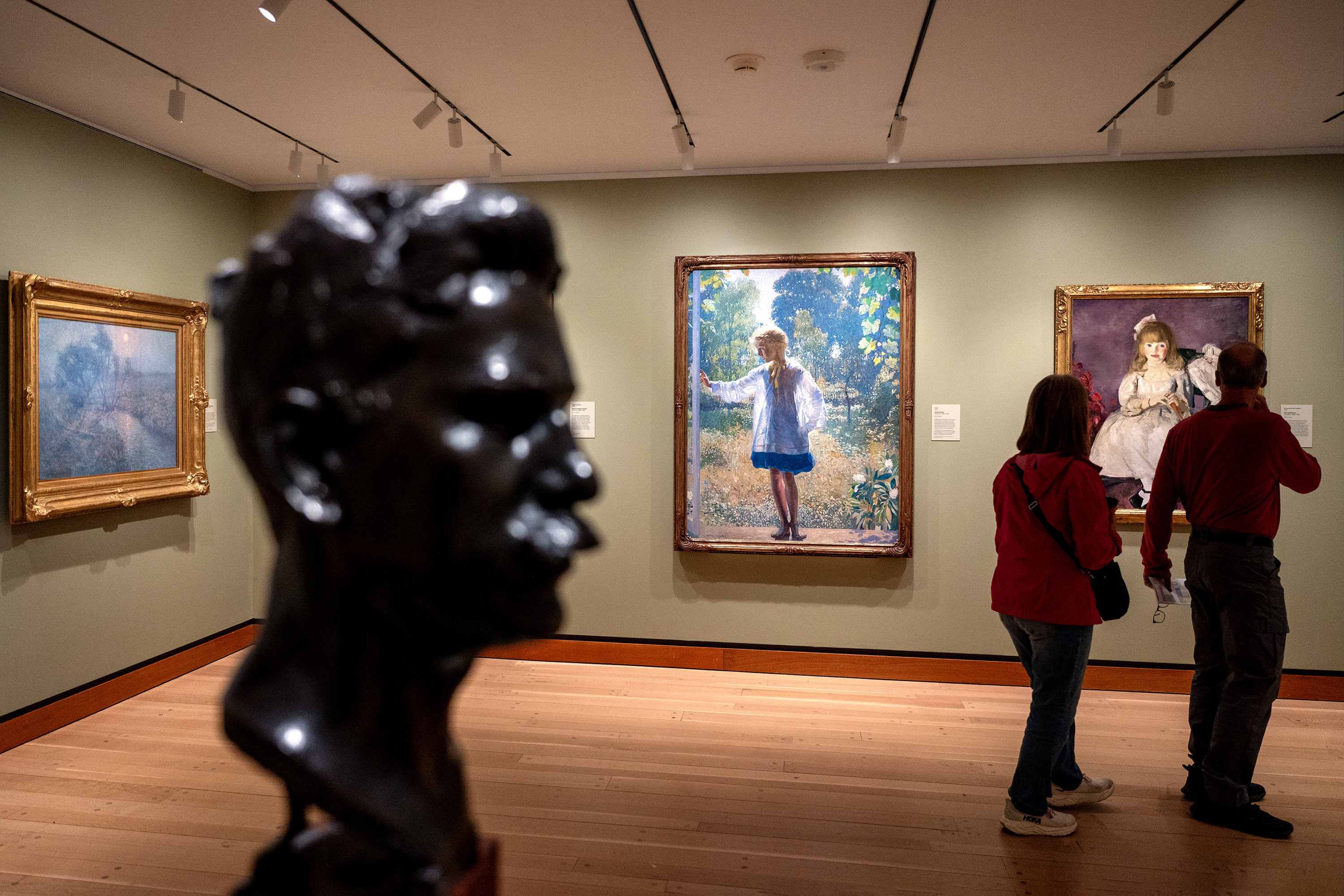
The PMA half of “A Nation of Artists” features a lot of big names (Andrew Wyeth, John Singer Sargent, Georgia O’Keeffe), as well as about three dozen works by Thomas Eakins — intimate portraits as well as epic canvases. There’s a beautiful sequence of three Eakins oils, all painted within a decade of one another, all with rivers in various hues and states of excitement: The Pair-Oared Shell, Sailboats Racing on the Delaware, and the stunning Mending the Net, a seemingly ordinary scene that gathers filmic mystery and story through minutely detailed figures mending a fishing net by the river against a gauzy beyond.
In terms of visitor experience, the new second floor American space succeeds most in moments of drama. The wall in one gallery uses a specially reproduced rich-burgundy period wallpaper, and the relationships among the paintings, furniture, pottery, and other items in the room ricochet beautifully.
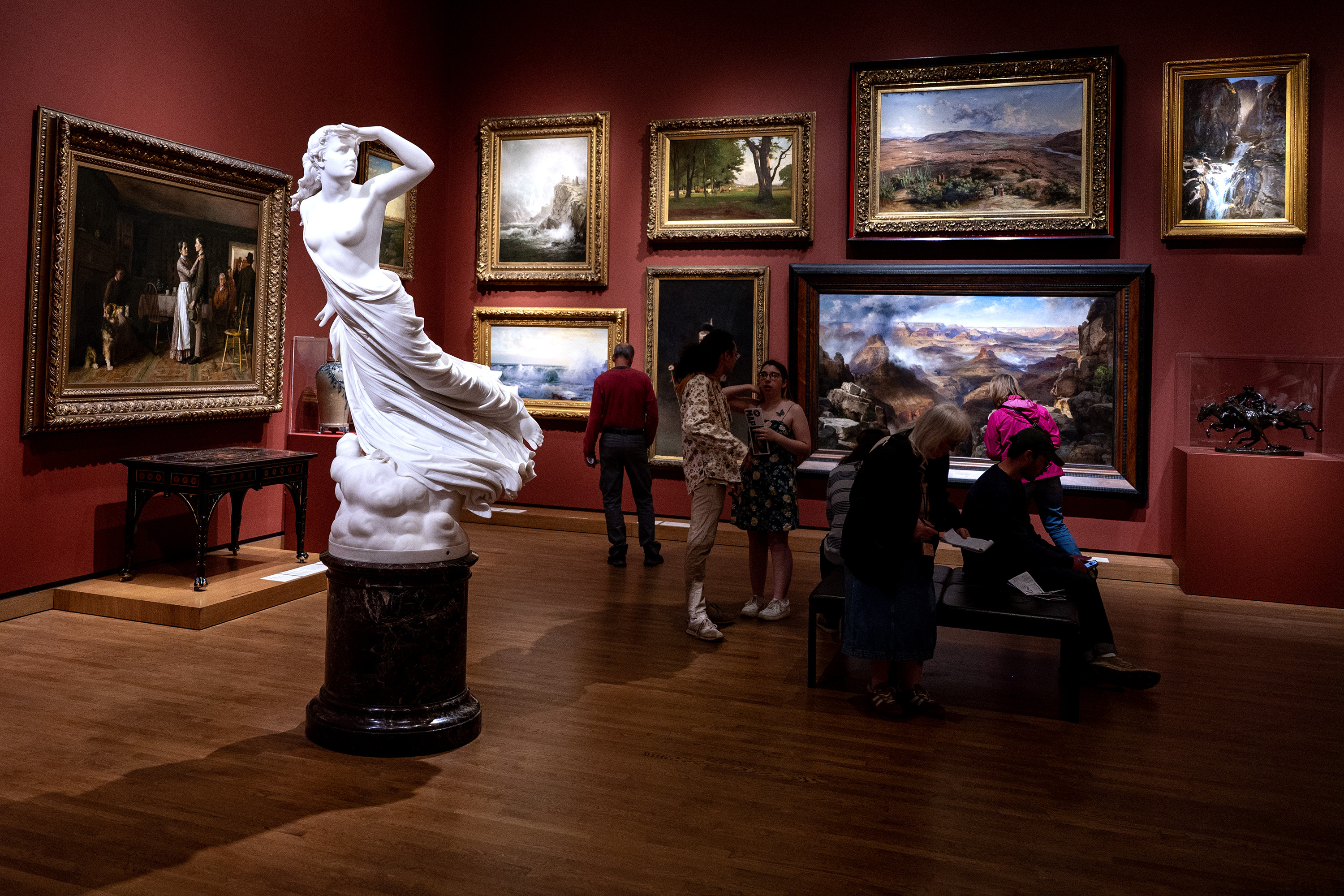
“The Lost Pleiad” by Randolph Rogers in the Philadelphia Museum of Art’s salon-style gallery.Tom Gralish / Staff Photographer
A sumptuous feeling immerses visitors in the high-ceilinged salon-style room (gallery 211) that includes vast landscapes and marble sculpture. Though it’s not immediately obvious, the first-floor American works are also part of the show, and they hold yet more Middleton works.
Classics and surprises, and a lot of charm
There’s greater poetry in the architecture at PAFA, but the work itself at both museums is undeniably impressive in scope, and especially at the PMA: painting, sculpture, furniture, silver, fabric, works in clay, and more.
The curators — Kathleen A. Foster and Alexandra A. Kirtley at the PMA, and Leah Triplett and Lea C. Stephenson at PAFA — have delivered not just old favorites, but also surprises.
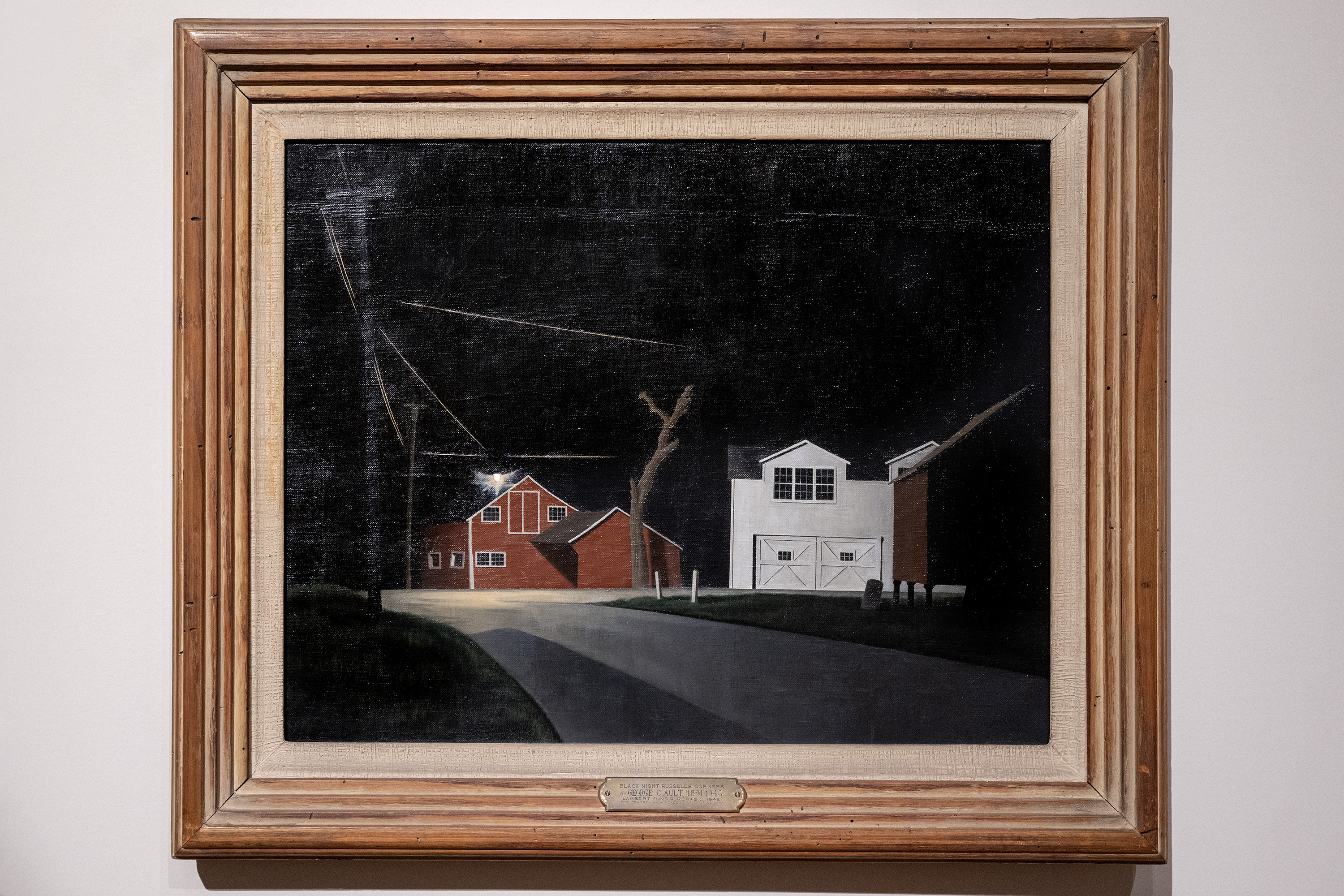
“Black Night: Russell’s Corners” by George Copeland Ault at the Pennsylvania Academy of the Fine Arts.Tom Gralish / Staff Photographer
PAFA’s classics include Winslow Homer’s Fox Hunt; the Jasper Johns Flag1960-66 from the Middletons (which the couple brought home from an auction in 2010 for $28.6 million); and George Copeland Ault’s Black Night: Russell’s Corners (1943), whose flat, cold, electric light suggesting a modern encroachment on agrarian life, can only be appreciated in person.
Among the pieces to which I kept returning: Pink Flower with Clock by PAFA 2011 graduate Aubrey Levinthal, because of the smart way it plays with the idea of photographic positive and negative imagery even though it is an oil; and Harriet Goodhue Hosmer’s Puck on a Toadstool, from 1856, whose supernatural energy is so potent that the figure appears poised to shape-shift and break free of its marble confines.
At the PMA, a single canvas has me reconsidering Edward L. Loper Sr., the Wilmington artist who had his beginnings working for the WPA. Loper’s Abandoned Ferry Terminal is a complex refraction of shadows and colors from 1958 whose geometries never seem to stop shifting.
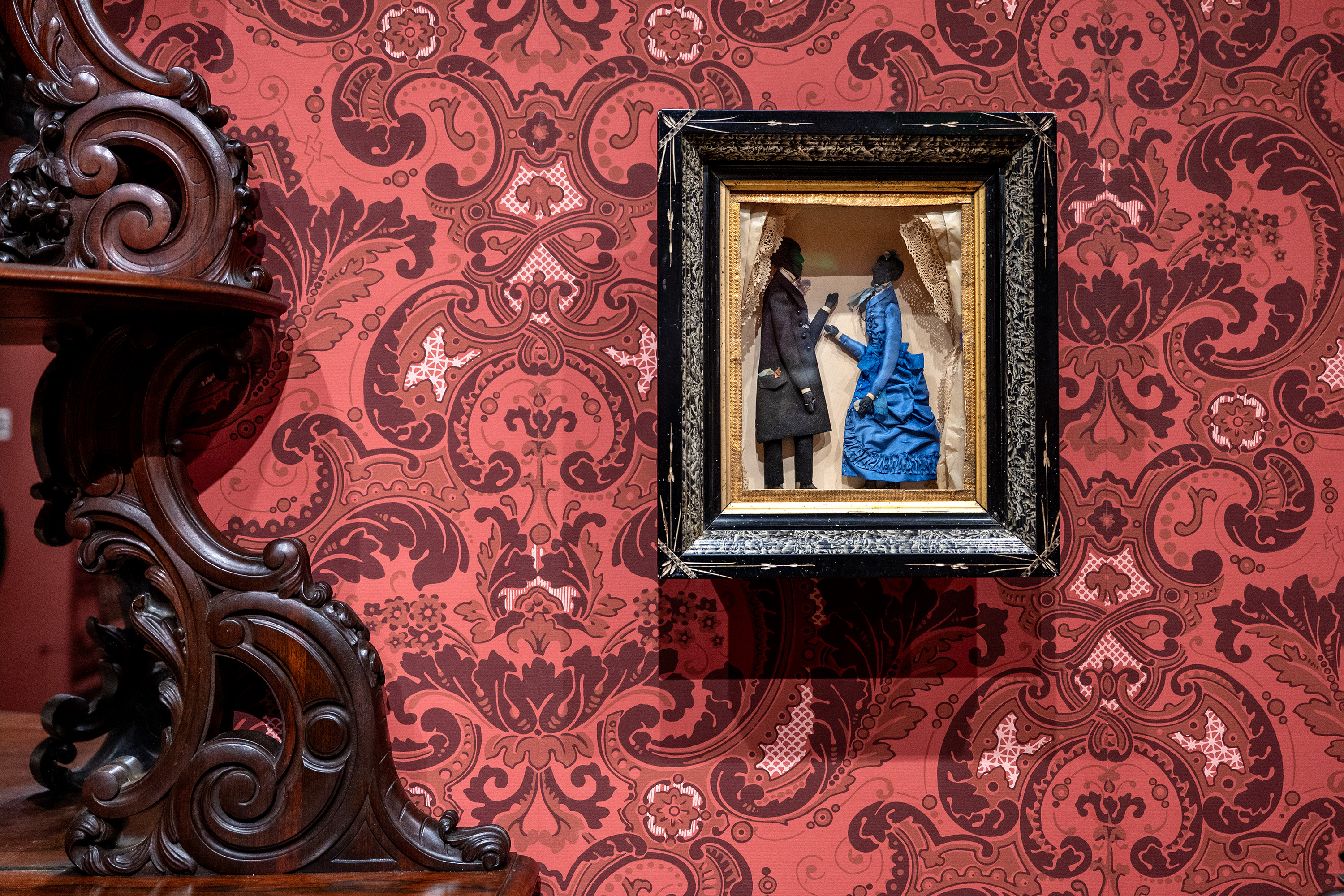
A small shadowbox of a man and woman formally costumed from around 1880 might be the most unassuming bit of charm in the entire exhibition. Its maker is unknown.
Custom wallpaper at the Philadelphia Museum of Art, with “Portrait Figures of a Man and a Woman, in a Shadowbox.”Tom Gralish / Staff Photographer
Leaning into representation
If you ever wanted a lesson in the difference how a work is displayed can make, just consider how much more substantial an achievement The Gross Clinic looked a few months ago. With bright but warm lighting at the PMA, Eakins’ 1875 canvas was frightening in its vividness, the red of blood on the surgeons’ hands glistening. Today, at PAFA, it looks a little washed out, overpowered by the light coming through the nearby rose window.
Both museums have made a conscious effort to represent a spectrum of identity — gender, regional origin, ethnicity, and so on. This is all to the good, of course. Everyone will find something relatable in this exhibition, and many will discover works that aren’t necessarily relatable on first examination but become so. This is why museums, and good curators, are important.
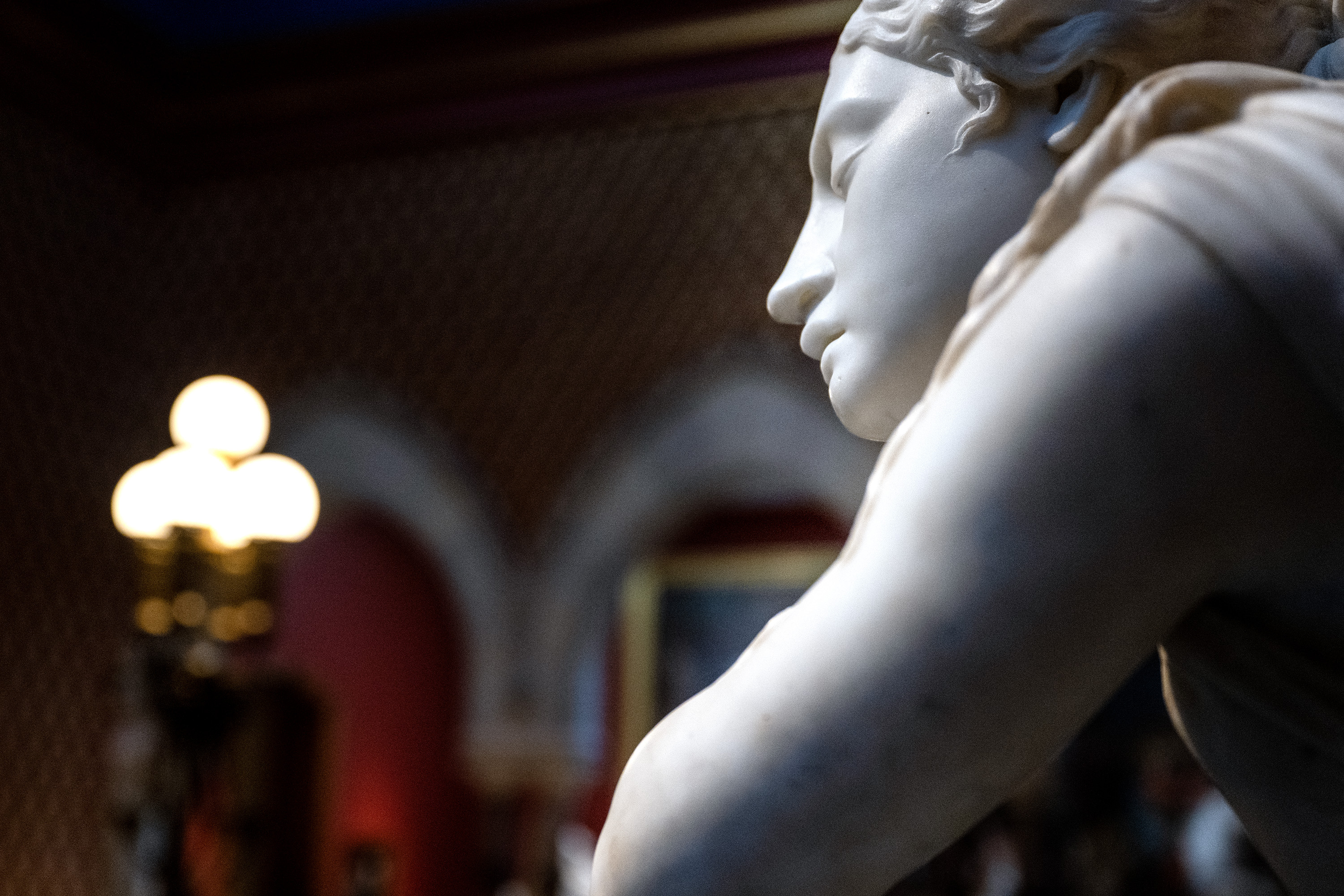
Detail of “Nydia, the Blind Girl of Pompeii” by Randolph Rogers at the Pennsylvania Academy of the Fine Arts.Tom Gralish / Staff Photographer
It’s a fascinating marker of time to think about the cultural whiplash of the past couple of years in this country, and how vulnerable the simple concept of representation now feels. The tastes of the art establishment change, and so too does how we perceive art.
How could it be otherwise? Every movement comes in with an air of moral and scholarly authority that purports to lay down once and for all an accurate cultural perspective.
The prevailing ethos arrives as the new reality. Then the next reality comes along.
“A Nation of Artists” runs through July 5, 2027, at the PMA, 2600 Ben Franklin Parkway; and Sept. 5, 2027, at PAFA, Broad and Cherry Streets. philamuseum.org, pafa.org.
U.S. borrowing is at record levels, interest rates are up, and Social Security is running low on cash. Yet new Federal Reserve Chairman Kevin Warsh has offered investors little information on whether the Fed will boost interest rates and fight inflation, or cut rates to feed growth.
As a past president of the Philadelphia Federal Reserve Bank, Patrick Harker sat in and sometimes voted at Fed Open Market Committee meetings that decided interest rate targets under Warsh’s predecessors from 2015 to 2025. He says it’s important for Fed leaders to speak clearly.
An engineering Ph.D. who grew up in blue-collar Gloucester City, Harker spent the previous 15 years, first as dean ofthe Wharton business school at University of Pennsylvania, thenas president of the University of Delaware, before he was chosen to run the Philly Fed by the search committee he headed after others declined the job.
Harker finished his second five-year Fed term in June 2025 and reported back to Wharton the next day as a professor. He says he has been putting what he learned there to use.
This interview has been edited for clarity and brevity.
How did you align while you were with the Fed?
People at the Fed asked: Was I a hawk, leaning toward higher rates to fight inflation? Or a dove, leaning toward lower rates to support jobs? I’m an eagle, loyal to this country. I’m for doing what the economy requires.
I’m where the vast majority of Americans are: They’re sick of ideology. It gets us nowhere. It drives countries to ruin. That’s never been us.
We are a pragmatic people. Let’s do reasonable stuff.
Are you worried digital finance will spin out of control?
My particular interest is around operational risks caused by technology. Those come in different flavors:
Concentration risk: Just a few key firms — Amazon, Microsoft — providing a lot of the financial infrastructure.
Model risk: Everyone using the same AI models. Some of my colleagues have found that if AI models set prices, they will collude [to illegally boost prices at consumers’ expense]. They will do the same with loans.
Fraud risk: Faster payments equals faster fraud.
Market risk, credit risk, and operational risk: We are looking down into the bowels of the systems moving the money and at cyber hygiene.
Will hedge funds’ use of insurance companies to make risky private credit loans fuel the next financial crisis?
If you pull one thread, will it start to fall apart? At the Fed, I was a bank supervisor. I worried about it. I still worry.
It’s not big enough yet to threaten the system [as mortgage losses did in 2008]. But the ‘private’ asset risks eventually all filter back to the regulated institutions.
I said that at a dinner of people in the private credit industry. They said, ‘We know what we are doing!’ They do; the first people in always know what they are doing.
But there’s only so much talent. And now you have people on the fringe taking bigger and bigger risks. And again all hell will break loose, and everyone will have to deal with it. It will go beyond the skill set of the industry.
You know Jevons Paradox? Technology puts people out of work, then becomes so cheap, demand for that technology explodes, and so do the jobs providing it.
Will AI improve productivity? It better. Our birth rate is not replacing ourselves. Our immigration policy has flatlined.
It’s the most basic rule of economics: If you want more output, you either get more workers, or better machines.
I’m more worried that in the United States, we are really bad at helping people make transitions to new kinds of work. A kid will figure it out. But if you’re 40 or 50, what do we do with you? No one cares; you can understand their anger.
Can Congress fix Social Security and the deficit?
I’m less worried about Social Security because politicians know they can’t get reelected without solving the problem.
With the deficit, they keep kicking the can down the road. It really depends on healthcare, a very large part of the U.S. budget. Economists are starting to talk about the Fed losing the ability to set rates [because it is too busy] keeping Treasury’s financing costs down. When debt gets too high, you can’t avert default.
In this country, we’ve all gone into our own herds, we don’t listen to the other side. But if there’s a vacuum in communications, someone else will fill it with their narrative instead of yours.
You protect credibility the institution built over decades by explaining yourself.
What can you make happen now that you’re back at Penn?
I’m a tenured faculty member. I put together an MBA class. I’m publishing academic journal articles on fraud in payment systems. I had to dust off my quantitative brain.
What motivates him I’m not sure, but he loves this place. His father died when he was here, and the school stepped up with financial aid, he doesn’t forget that.
What do you miss about the Fed?
One of the great privileges of the Fed, when you go to the Open Market Committee, there’s no personal electronics. For two days you have nothing to do but seriously think about what everyone else is saying.
Even if you disagree, it’s in a very professional way. To the public, Washington can look like a big food fight. But at places like the Fed, there are people seriously dedicated to their job.
Are you worried for your grandchildren?
There is hope. People worry everything’s gone nuts; we’re leaving the young people with a giant bill. And a political system that is seemingly broken.
People peddling crazy ideas understand the brain very well: Push these panic buttons. But to quote [former President Richard] Nixon, there is a silent majority who want to have a better life. Not to fight culture wars.
Old cars are breathing new life into an empty Fishtown factory.
But saying vehicles will be stored there is like saying Fairmount Park has a lot of trees — technically correct but missing the point.
Passersby on Frankford Avenue, between Delaware and Girard Avenues, will see inside what was a long-derelict factory revealing a café that’s open to the public, and further inside, through the glass walls, multiple levels of unusual vehicles.
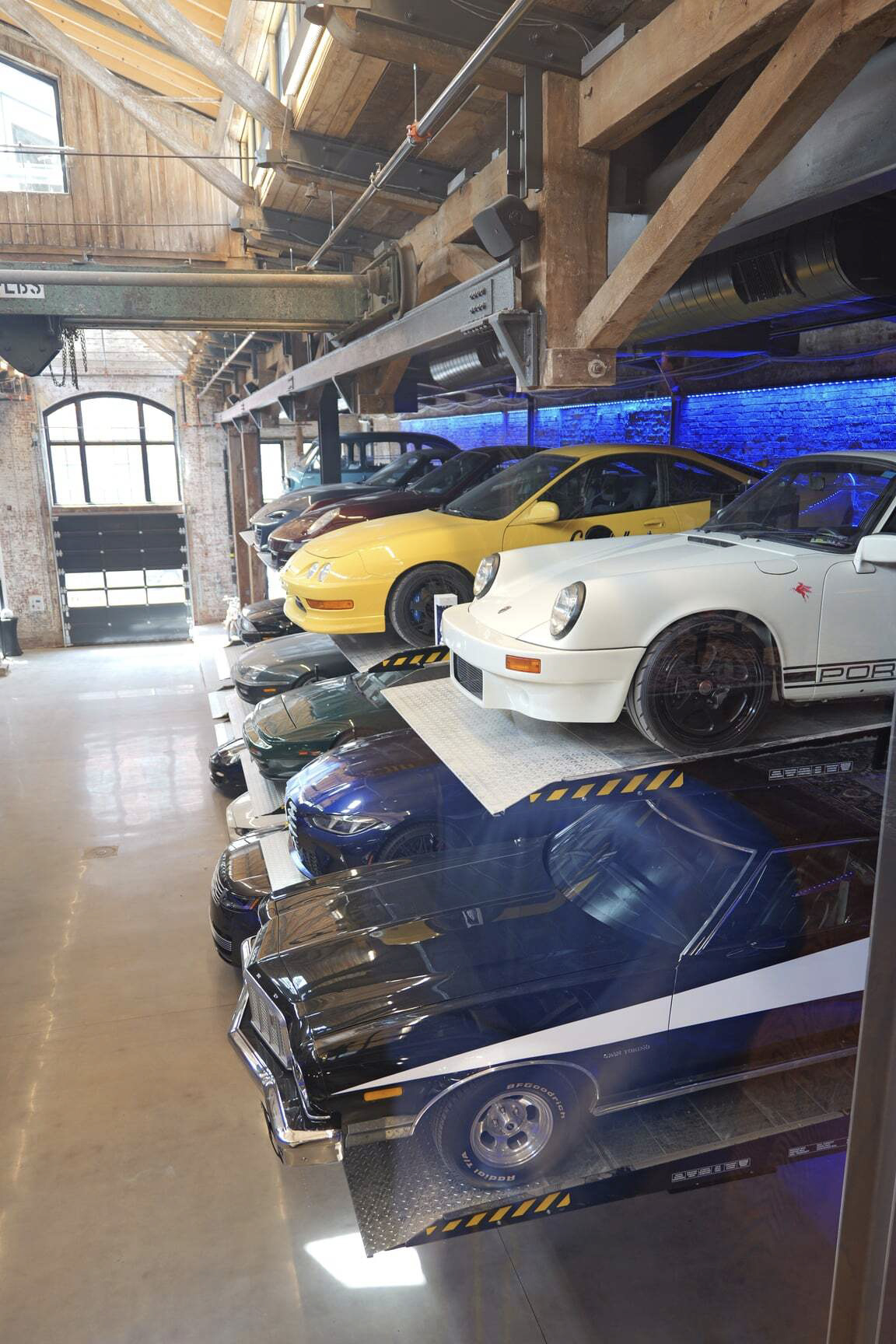
A black 1976 Ford Gran Torino owned by Tim Bryan of Fishtown sitting beneath a white Porsche 911 underneath the soaring architecture of the old factory at the Cannonball Club in Fishtown. The vehicles were set in place during a special event prior to opening. SITHA PUTH
The backdrop of the new Cannonball Club will comprise a rotating crop of cars; such rare specimens as a Citroen XM or Lotus Esprit will join more well-known offerings like a 1976 Ford Gran Torino. Beyond that glass wall, members can enjoy a multilevel workspace, café, and bar. Memberships are available for car owners and car lovers alike.
It’s the brainchild of Chris Allen, 32, who runs a similar operation in Huntingdon Valley, though that’s less a daily hangout and more a car-storage facility that also hosts special events. The Fishtown club is set to open for business Sept. 10, and the public-facing café opened last week.
In Fishtown,“I wanted people to be able to walk by off the street and see the wall of crazy cars,” Allen said as he walked through the unfinished facility in late May, amid the clang of metal and screech of power tools.
Envisioning a ‘car museum’
The architecture alone can certainly draw some eyeballs. The 15,000-square-foot facility began as the Morse Elevator Works in the late 1800s. The building more recently housed antique shops, a lighting store, and a bicycle shop.
The 75 vehicles that will fill the space will be hoisted on elevators and stacked around the building, underneath the rebuilt and refinished clerestory and exposed trusses rising far overhead.
“I don’t want this to be a high-density parking garage,” Allen said. “This is more like a car museum.”
And a club. The public cafe serves coffee and pastries, and the bar serves drinks and pub food. The facility’s website says it will be open 8 a.m. to 10 p.m. every day.
It’s not for car enthusiasts who want the freedom of hopping in their vehicles on short notice. Members need to schedule pickup and drop-off when staff are there to operate the vehicle elevators.
Allen thinks that will work fine for collectors from the neighborhood and beyond, noting the club’s proximity to I-95.
“Any collector car owner wants to get the hell out of the city immediately once they get it,” he said.
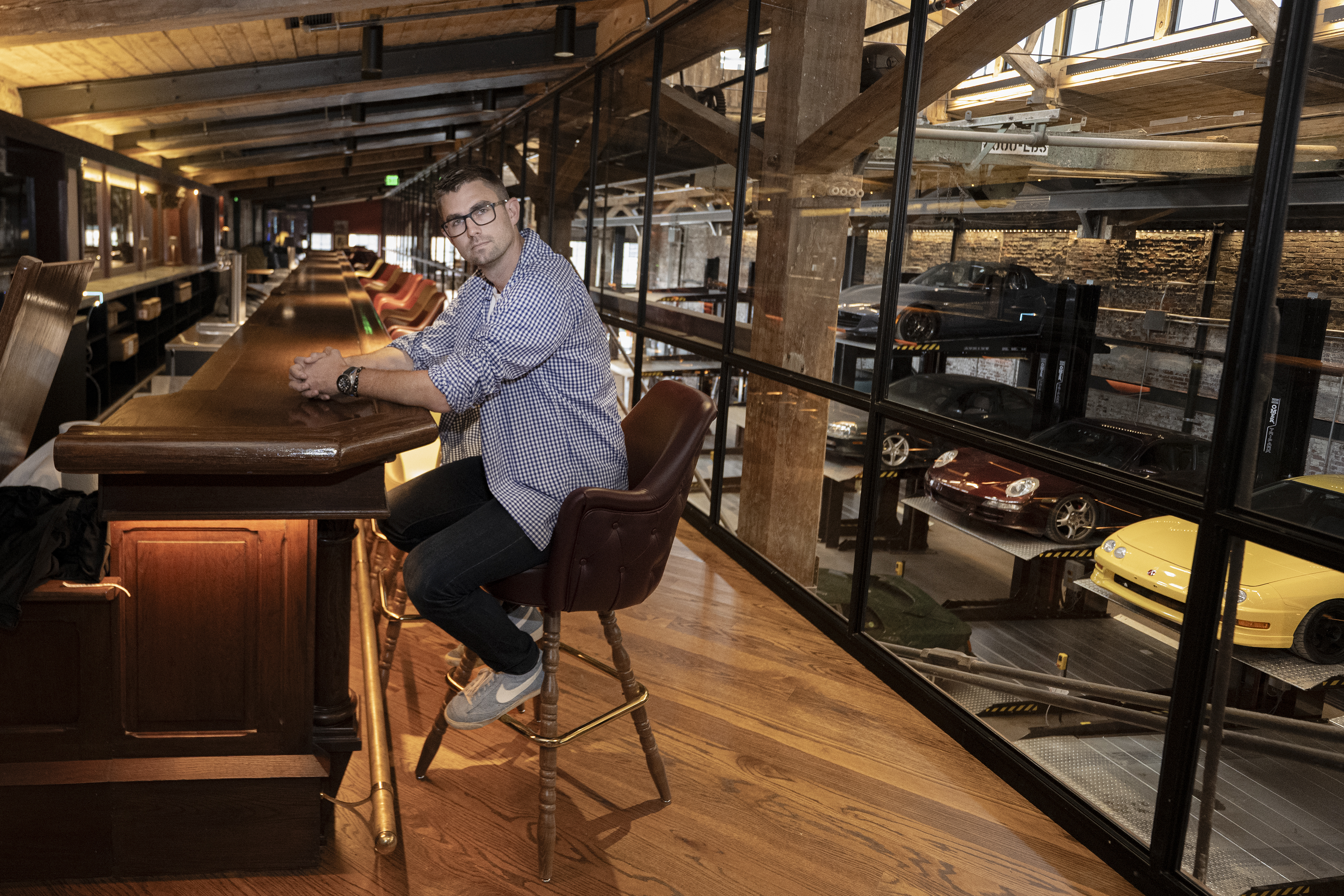
Owner Chris Allen sits at the 50-foot-long bar overlooking the vehicles on display inside the Cannonball Club, set to open in September.Jose F. Moreno / Staff Photographer
What Fishtown neighbors think
It appeals to Tim Bryan, who’s lived in Fishtown for the past six years.
Bryan will store his 1976 Ford Gran Torino — “think Starsky & Hutch, but black,” he said — at the facility. It currently is stored miles away from him at Allen’s Huntingdon Valley unit.
Bryan attended the Fishtown Neighbors Association meeting when Cannonball was still somewhere between a plan and a dream. There, residents had a chance to voice support or concerns and vote to support or oppose the zoning variance Cannonball needed to open as an entertainment center. Neighborhood support was strong, Bryan said, and only a handful of people voiced concerns, which he saw as misplaced.
“I thought they sort of thought this was going to be Lamborghinis and Porsches and elite cars and all that kind of stuff, but my Gran Torino is not a luxury car,” Bryan said.
Bryan was also pleased to see the building put to use; it’s been empty since he moved to the area six years ago.
Fishtown Neighbors Association presidentJohn Scott said the group doesn’t usually get too involved in individual projects; they’re more about addressing more general concerns, like pedestrian safety, parking, and other issues.
But Scott said the association took the opportunity during the zoning board variance meeting to make one unusual request: using the facility as a polling place. Finding appropriate, accessible locations for voterscan be difficult in a city of old buildings.
“They said absolutely, they would love to, so it sounds like they’re going to be good neighbors,” Scott said.
Even beyond Election Day, Scott sees the facility as a bonus.
“It’s different and for that alone we’re really looking forward to seeing it,” Scott said.
Scott, for example, says he loves old cars but doesn’t really want the hassle as a city dweller. Someone in his position can join for $250 a month. Members who want to store cars there pay an extra $550 a month.
‘Next level’ for car clubs
Cannonball owner Allen is a racer and a car collector himself. In early July, his team won in its class at the Historic Sportscar Racing NASCAR Classic to Le Mans Classic Circuit in France. He bought the Huntingdon Valley building just as the pandemic started as a placeto store his own vehicles, plus those of family and friends, and then grew from there. He has a team of four working with him on the project and a small group of investors.
He wants to welcome an involved membership.
“I don’t want some guy to come in here and just forget about it and not actually interact with the club. In my mind, it’s a waste of one of our spots,” Allen said.
Allen shopped around restaurants for food service but decided it would be easier to run the kitchen in-house. He plans to serve pub food and beer, wine, and cocktails.
A 52-foot bar on the second floor overlooks the main floor and an exposed-brick wall of cars rising in four levels. Rather than the car paraphernalia and gas pumps typical of this kind of project, Cannonball’s decor is something Allen calls colorful and “maximalist,” with Oriental rugs, plenty of seating options winding around the cars, big leather couches, and orange-velvet wingback chairs.
“I probably would have advised him not to spend as much money as he spent in renovating and building out this space,”said business consultant Robert Mau of Richmond, Va., who knows Allen from the endurance racing circuit, but isn’t involved in the new Fishtown business.
“What he’s doing in Fishtown takes [the car club scene] to the next level,” Mau said. “So now it’s like, ‘Let’s have a lifestyle or a culture of cars where people hang out — and, oh, if they store their car here, well, that’s great.’”
Other than the sibling facility inHuntingdon Valley, two clubs in the Philly suburbs offer a similar experience.
At CarVault Main Line in Berwyn, members must sponsor new applicants, and the setting is more storage building than historical loft. It advertises a self-serve bar and a place to watch the latest race.
Pottstown’s Red Horse Motoring Club touts its historic location in a 1922 Chrysler and Dodge dealership, with a members club and the option to rent the venue.
But nothing seems to exactly match what’s happening in Fishtown.
Club member and New Jersey resident Mike Kovac will park his 1989 Alfa Romeo Milano Verde at the facility. He was among the first 10 people to sign up. The Alfa is shaped like a 1980s Saab with a distinctly Italian front end, and it’s one of just 75 in the world, Kovac said.
Kovac knows not everyone is a car person, and that’s what he thinks will make the club work. He describes the challenge of gathering his car friends and non-car friends together.
“Now with Cannonball launching,” he said, “we have a place where it’s welcoming for both non-car people and car people, and you have that awesome backdrop of classic cars and exotic machinery.”
NOTE: This article covers sensitive topics, including drug use and violence against women. Some people spoke with reporters on condition of anonymity to discuss illegal activity or out of fear of reputational harm. Quotes attributed to Raymond Horsch are drawn from a 2013 interview on the Rialto Report, a podcast about the adult film industry; a Q&A in 2014 during his art exhibit at the Papermill in Philadelphia; and undated profiles that were published on his now-defunct erotic website.
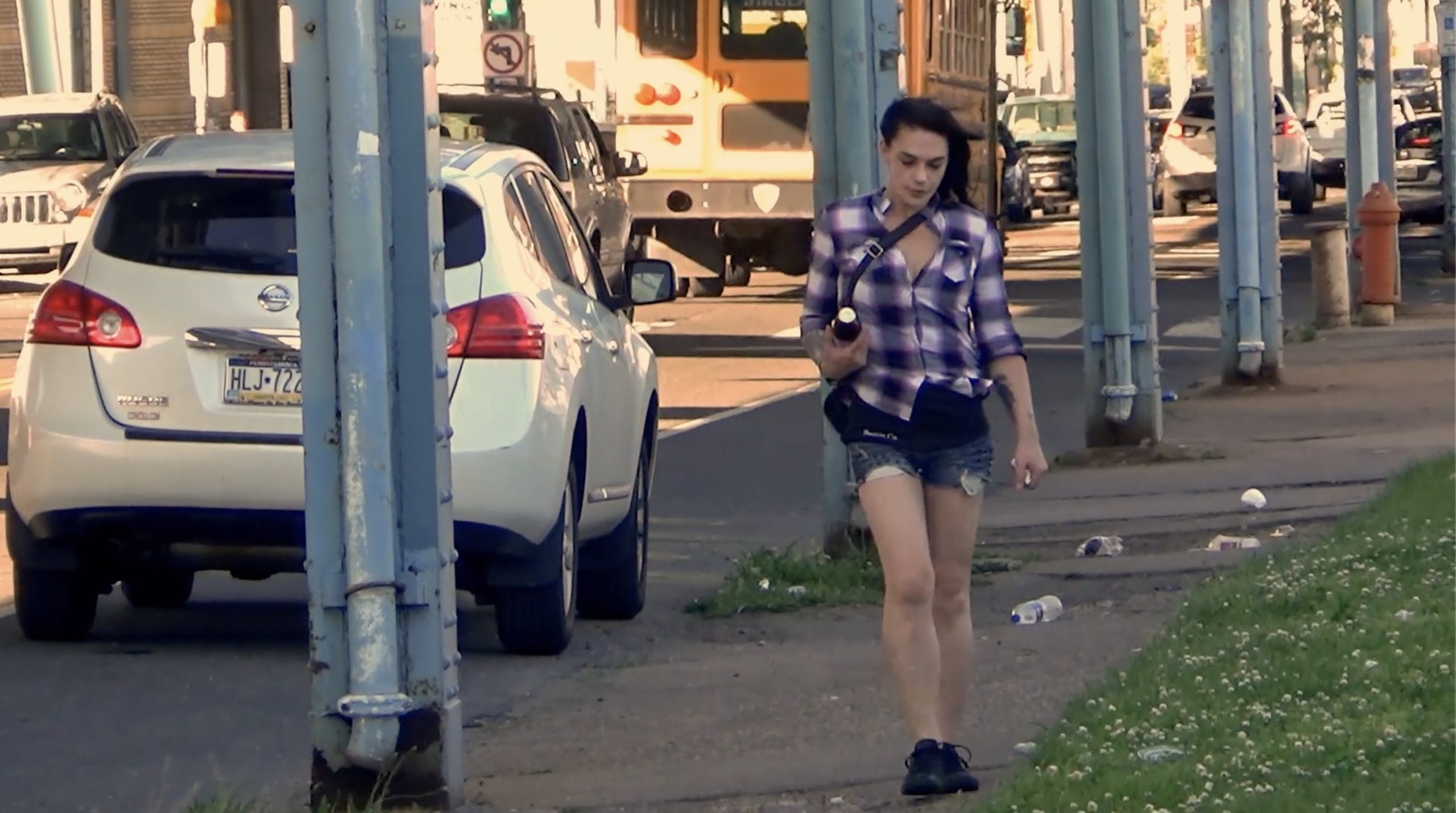
Fentanyl and crack cocaine held Krista Killen hostage, and she did whatever she could to stave off withdrawal. Sometimes that required satisfying the whims of dangerous men prowling Kensington Avenue, who looked to take advantage of women like her in the heart of Philadelphia’s notorious open-air drug market.
Raymond “R.C.” Horsch seemed different. He had a three-story brick twin in Olney, a working-class neighborhood about three miles north of Kensington. There, he gave Killen a roof over her head. A sense of stability. And drugs.
In exchange, she agreed to pose nude for Raymond’s erotic photos and videos, some simulating brutality or death. Raymond had made similar arrangements with dozens of other women in his decades-long career as an artistic provocateur.
For Killen, who was estranged from her family, the Olney house was a sanctuary from the buckled sidewalks under Kensington’s rumbling El. Yes, Raymond was exploiting her addiction. But she told friends that he was never violent and that she cared deeply about him. She viewed him as her protector.
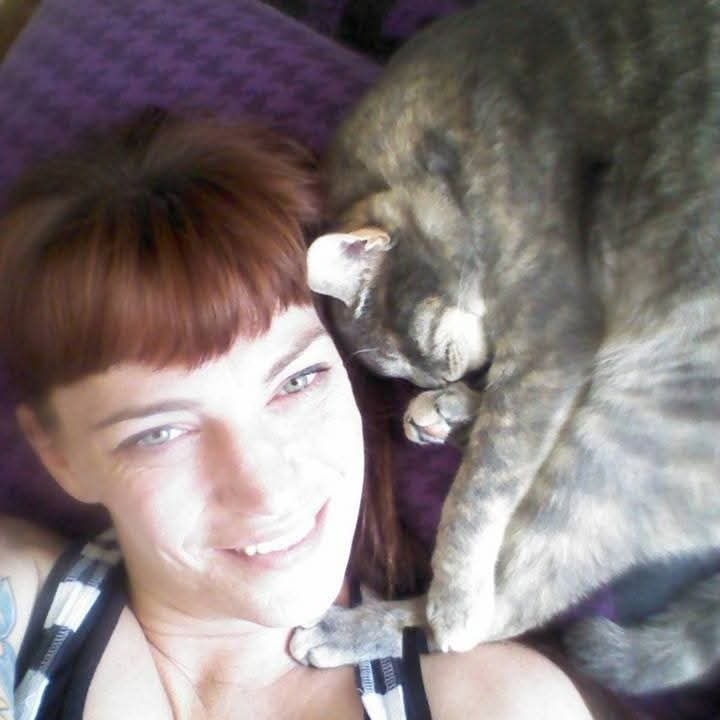
Krista Killen and BabyCat, her beloved tabby, in an image she posted to her Facebook page.Krista Killen's Facebook pages
His son, Eugene, was a different story.
Eugene scared her.
She told friends he was prone to drug-fueled bouts of rage, and he carried around knives and guns.
One night, about two years ago, she was asleep in the dark, dank basement of the Olney home. Beside her slept her beloved tabby, BabyCat.
She awoke to an earsplitting crash as Eugene shattered the lock on her door. He burst into the room, armed with a gun, screaming that he was going to kill her, according to two of Killen’s friends. Raymond, then feeble and 80 years old, had to pull his son away.
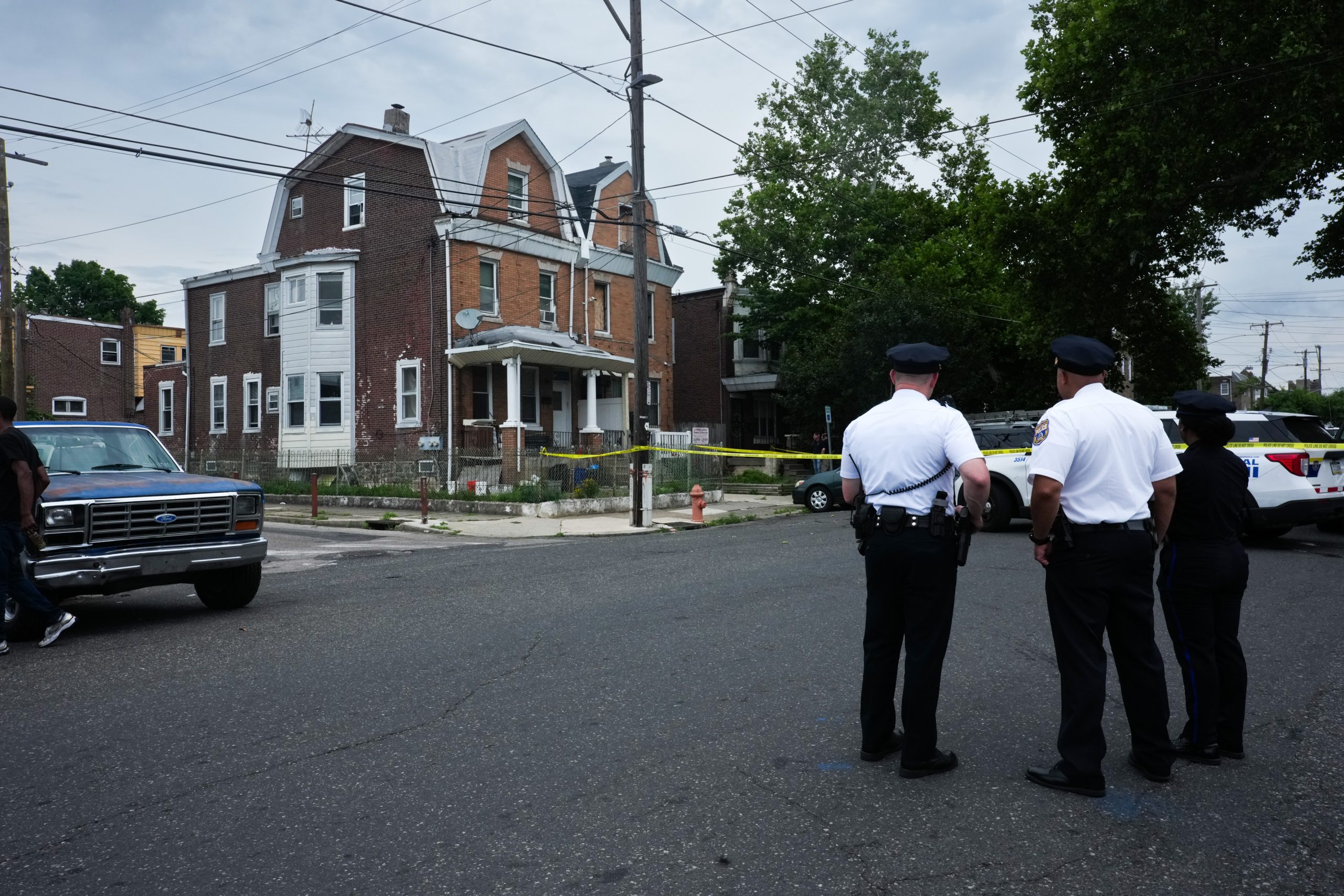
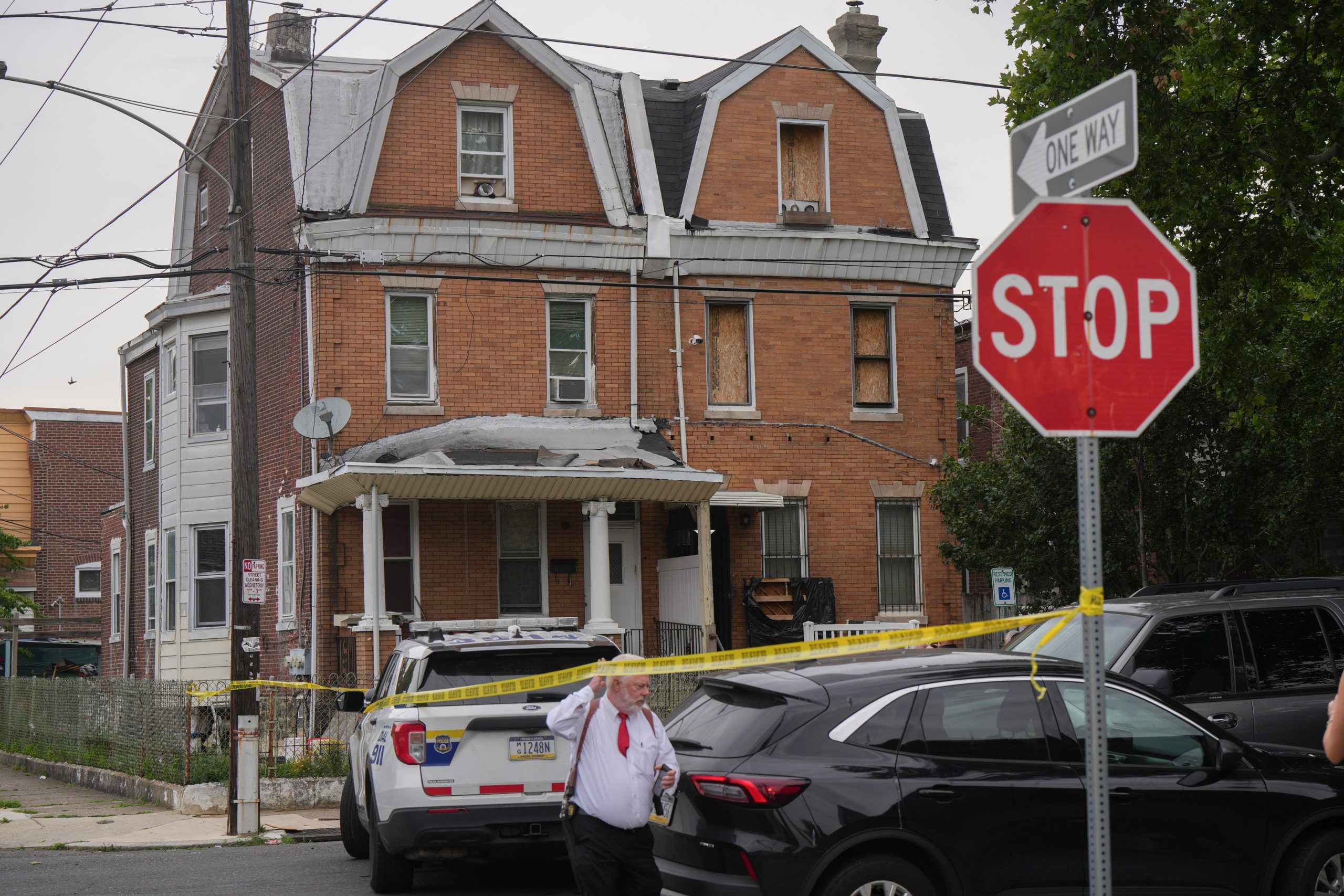
The scene of the ongoing investigation at Eugene Albert Horsch’s home at 417 W Chew Ave, in Philadelphia’s Olney neighborhood, on June 26, 2026. The home has been linked to the disappearance of two women.Jessica Griffin / Staff Photographer
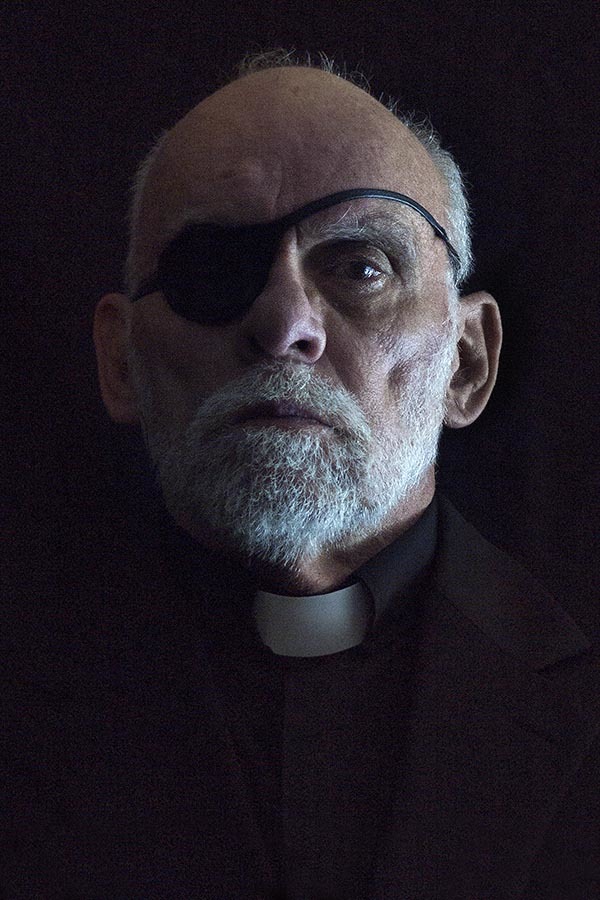
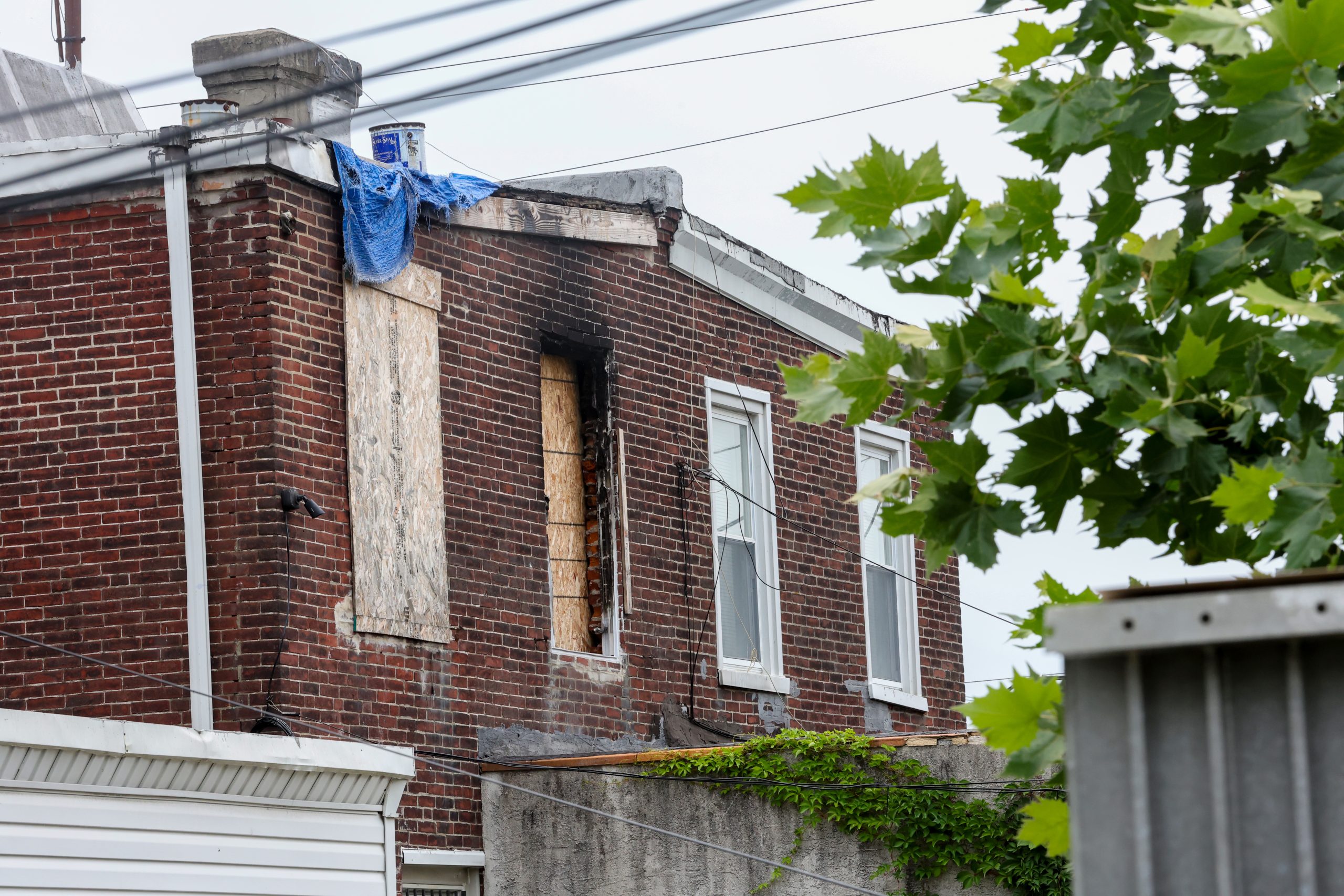
The Horsch home had long been a curious spectacle on West Chew Avenue. A steady stream of women came and went, sometimes in the company of an elderly man wearing an eye patch. The house had caught fire, leaving a hole in the roof and boarded-up windows on the top two floors. Police had raided the place for drugs.
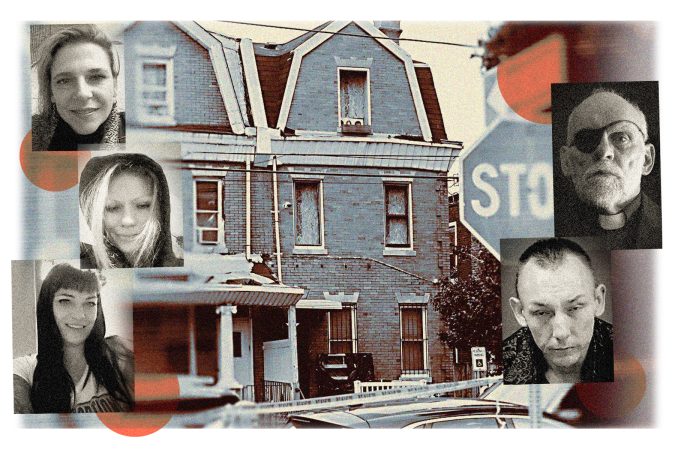
Now, the three-story property has become the center of a sprawling, macabre investigation into the disappearance of at least two women.
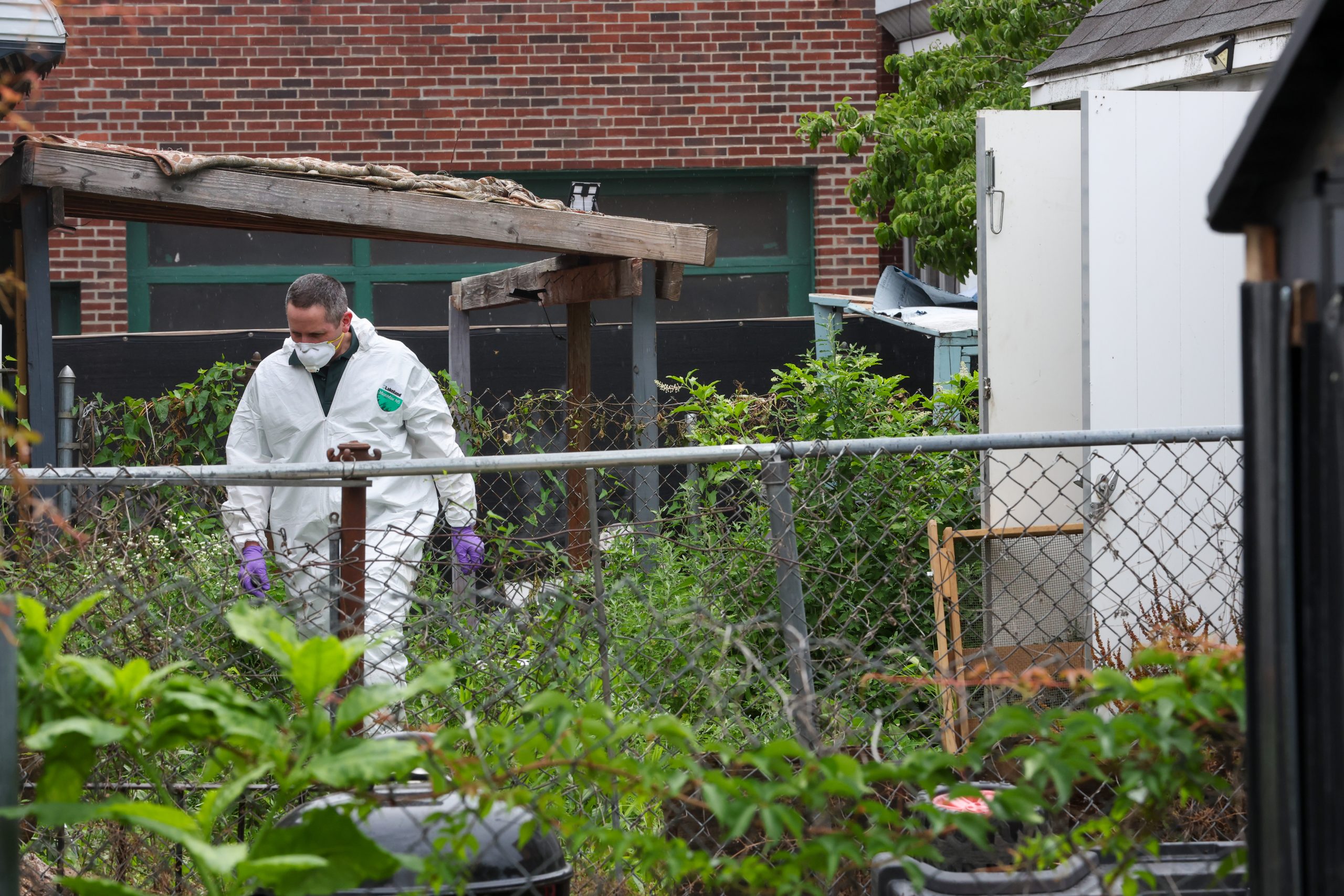
The quiet residential street in Olney has been cordoned off, as hazmat teams and excavation crews scour the house and dig up the property for clues. Federal and local investigators are interviewing people who knew the missing women and delving into their dealings with Raymond and Eugene Horsch.
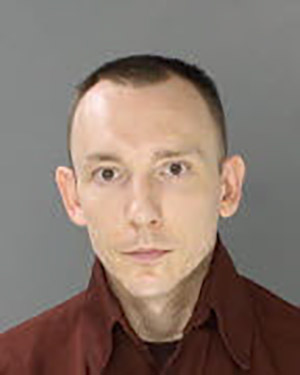
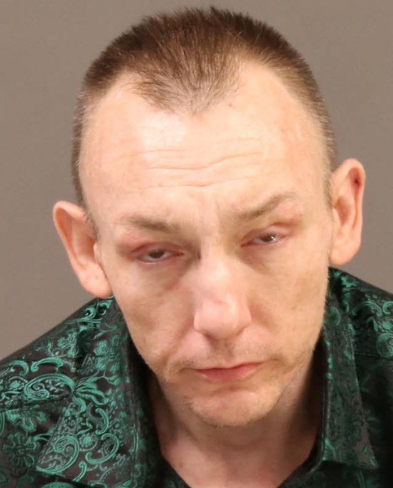
The investigation began in June, after Eugene was arrested near Independence Hall in a black BMW containing weapons, drugs, and a phony drug enforcement officer badge. With him was a frightened, seemingly drug-addled woman flashing an ID in the name of Blair Tonzelli.
Police discovered that it was a fake. The real Tonzelli had been missing for three years and was reportedly last seen at the Horsch home in Olney. The revelation renewed old questions about Raymond’s ex-wife, Amy McHale, who was reported missing in 2016 and was also last seen at the same address.
Eugene remains in jail on illegal gun and drug charges. He has not been accused of any violent crimes connected to the missing women and had been incarcerated at the time of McHale’s disappearance. Raymond died from a lung condition last year at the age of 82.
Detectives initially said they might have found a “significant amount” of blood inside the Olney house. But forensic tests determined it was not blood, and neither Tonzelli’s nor McHale’s DNA was found on the items tested, according to law enforcement sources who spoke on the condition of anonymity to discuss an ongoing probe.
But other developments have raised concern about the fates of the missing women.
An early search of the house uncovered a handwritten note that describes hurting people and makes references to serial killer Ted Bundy. And one woman told investigators that Eugene claimed to know how to dispose of human bodies with chemicals.
Raymond’s body of work as a shock-seeking pornographer has clouded the significance of those findings.
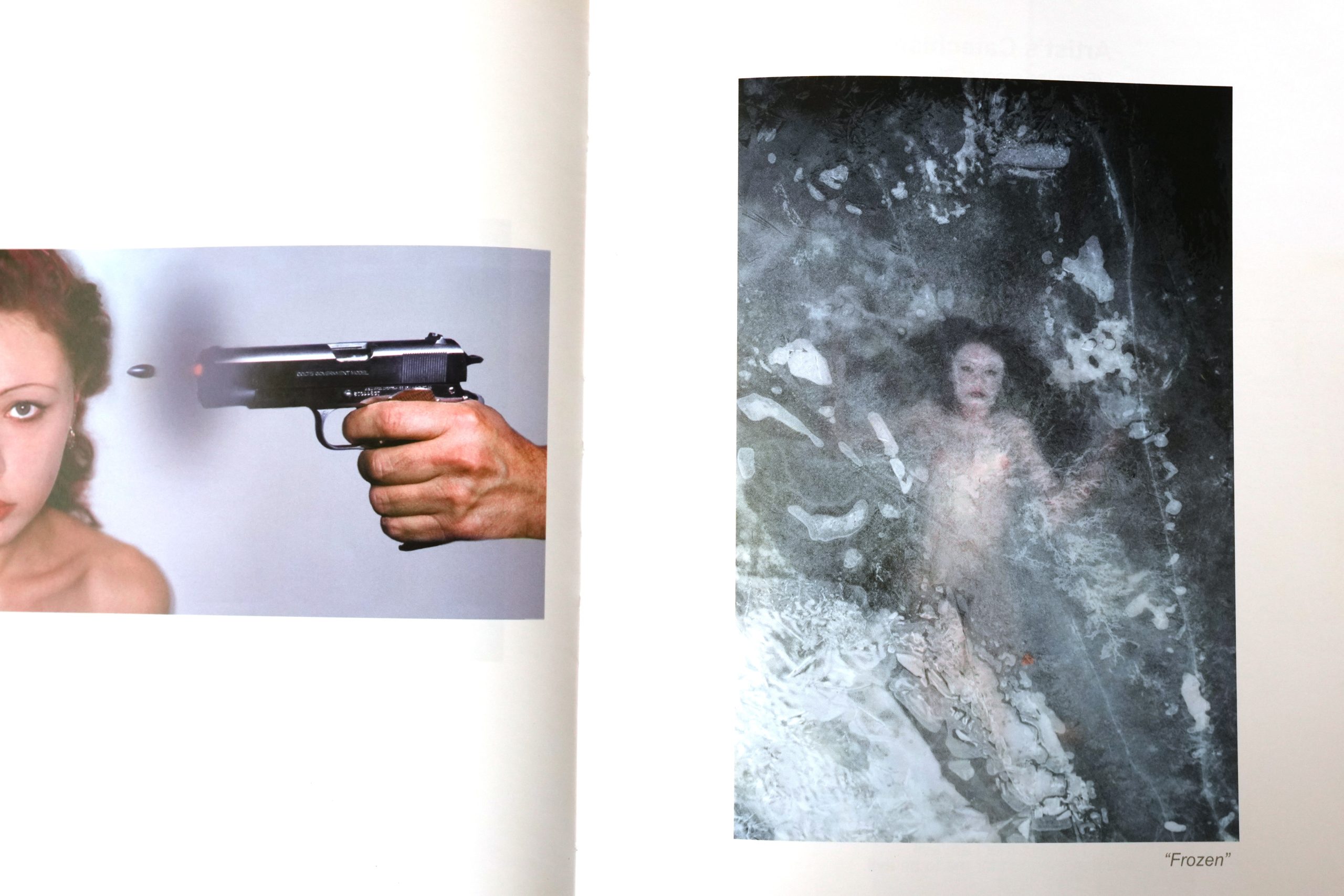
Pages from Raymond Horsch’s 2003 two-volume photobook “Eroto~ To The Prurient Interest” showing an unidentified woman, whom Raymond Horsch introduced as his “wife” Anna, depicted in multiple staged “deaths.”Obtained by The Inquirer
In a dozen films, novels, and photo books, Raymond used women suffering from addiction as props for his violent fantasies, subjecting them to simulated strangulation and drowning. He adopted the persona of an “empathetic” serial killer who murdered addicts to end their pain. And he claimed his writings were autobiographical, yet laced with threads of fiction — toying with his audiences by leaving them to discern what was real.
Meanwhile, Raymond’s sensationalistic art is overshadowed by his almost implausible life story.
An Inquirer review of hundreds of pages of police and court records, newspaper clippings, Raymond’s artistic portfolio, and interviews with more than 30 people has uncovered the saga of a thrill-seeking criminal artist and his troubled son.
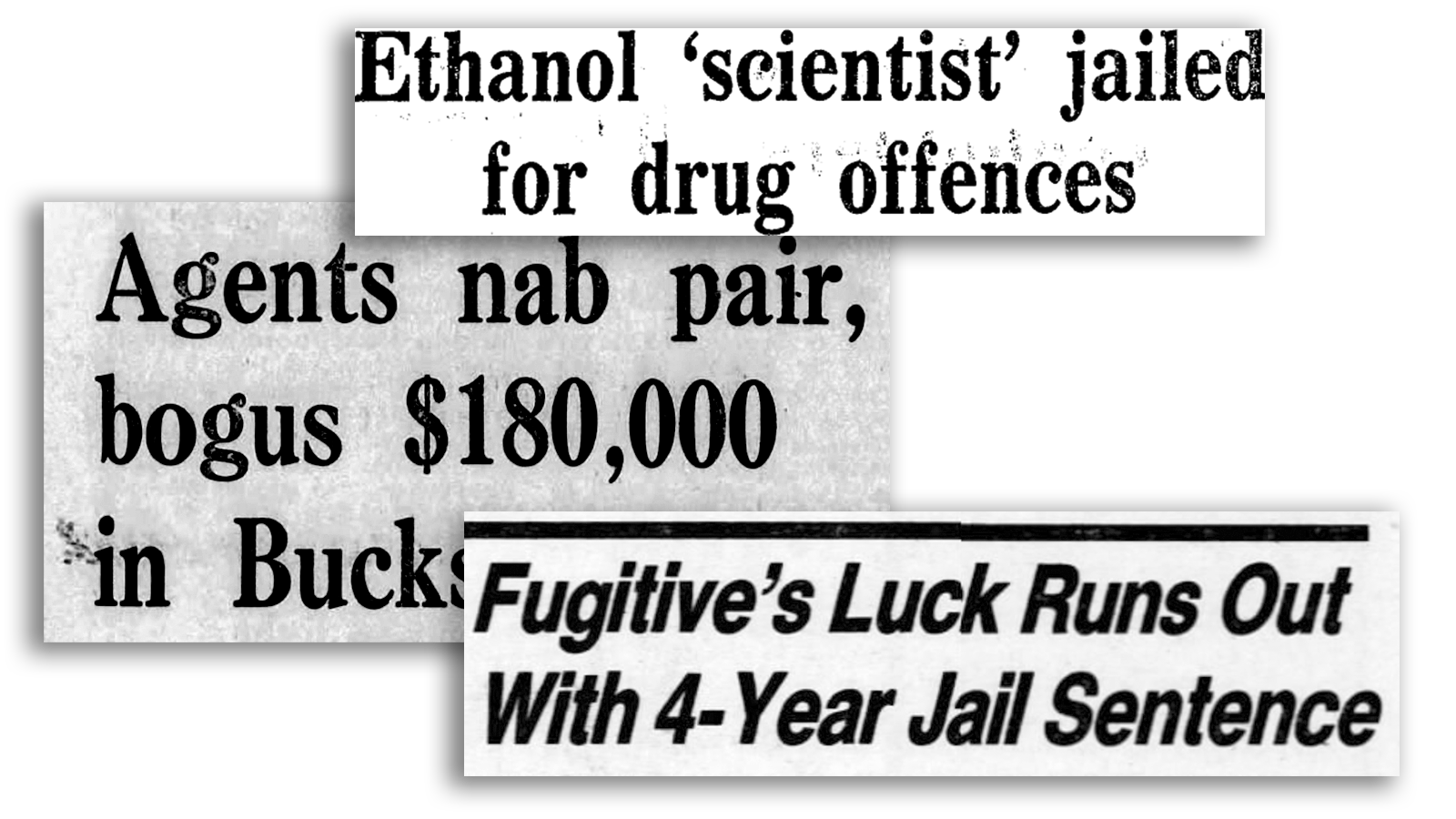
Various newspapers chronicled Raymond Horsch’s exploits, including (top) the Press of Christchurch, New Zealand, in 1985 about Horsch’s arrest in the U.S. after he was revealed to be an imposter; (middle) the Allentown Morning Call from December 1974 about the bust of his Doylestown-based counterfeiting operation; and Daily News in 1985 about Horsch’s sentencing on drug manufacturing charges.Obtained by The Inquirer
Raymond’s humble beginnings in rural Pennsylvania gave way to a career as a drug manufacturer, an identity thief, and an international fugitive in seaside New Zealand. He returned to Pennsylvania to raise Eugene and continue pursuing his dreams as a pornographic artist, luring heroin-addicted sex workers off the streets of Kensington.
At least five women connected to Raymond ultimately died of accidental drug overdoses. Among them is Killen, who overdosed last year at the age of 47, according to the city medical examiner. Eugene would later tell people close to Killen that she had died just outside his Olney house, or shortly after he took her to the hospital.
Those close to McHale and Tonzelli remain tormented by the lack of any such closure. McHale’s mom, Gloria McHale, said she always suspected that Raymond was somehow involved.
“A long time ago, before she even married him, she told me if anything ever happens to her, that he was the one,” McHale said.
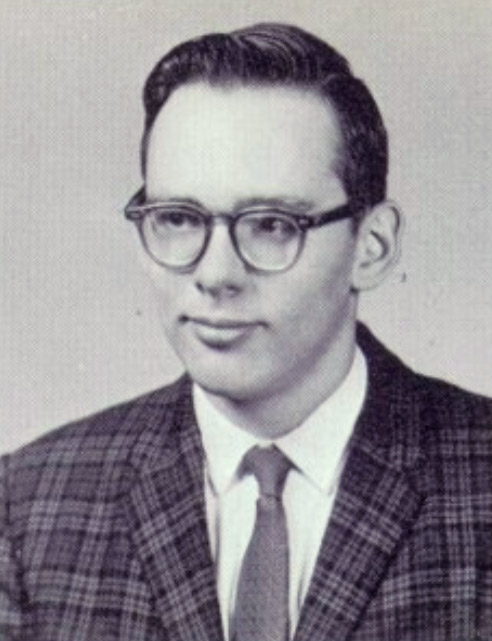
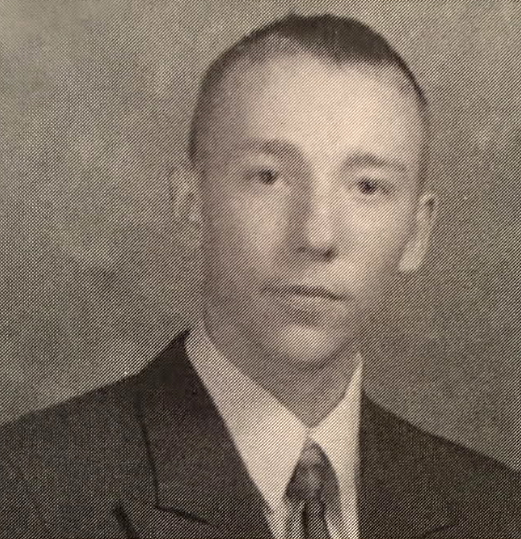
Raymond Horsch was born in 1943, the son of a World War II glider pilot, and grew up on a farm in East Stroudsburg, Pa. His parents relocated to Chalfont, in Bucks County, where he graduated in 1961 from Central Bucks High School as editor of a school magazine and a National Merit Scholar.
In yearbook photos, his dark hair is cut short, and he wears a tie and glasses with a thick black frame. He would later call his younger self a “totally asexual nerd.”
He married his 19-year-old high school sweetheart in 1964, and the couple moved to Rittenhouse Square in Philadelphia. Raymond worked commercial film and photo jobs while his wife taught public school.
Raymond C. Horsch in his 1961 Central Bucks High School yearbook.Obtained by The Inquirer
He was ill-suited for domestic life, someone who, when he watched Westerns as a kid, did not identify with heroes in white hats.
“I came out of the theater wanting to be the villain,” he said. “I certainly became a villain later in life.”
As the 1960s counterculture movement swept the city, Raymond ran the avant-garde Underground Cinema 16 — later the Roxy — on Sansom Street, then a beatnik mecca. He joined the Pennsylvania National Guard but deserted after he was moved toward active service in Vietnam. Instead of going to war, he traveled to New York City to work in film and showcase his own hyper-sexualized photography in Greenwich Village, alongside contemporaries like Robert Mapplethorpe.
His wife left him in 1970 after finding a women’s nightgown on their bed. In an interview with The Inquirer, in which she agreed to be quoted on the condition of anonymity, she said Raymond was never violent but was an “emotionally abusive” philanderer with an oppressive ego.
“Raymond really thought he was smarter than anybody,” said the 81-year-old Pennsylvania resident. “And he thought that he could get away with anything.”
During the so-called Golden Age of Porn in the early 1970s, when movies like Deep Throat crossed into the mainstream, Raymond worked odd jobs as a crewman on porn shoots. But he dreamed of making his own erotic movies.
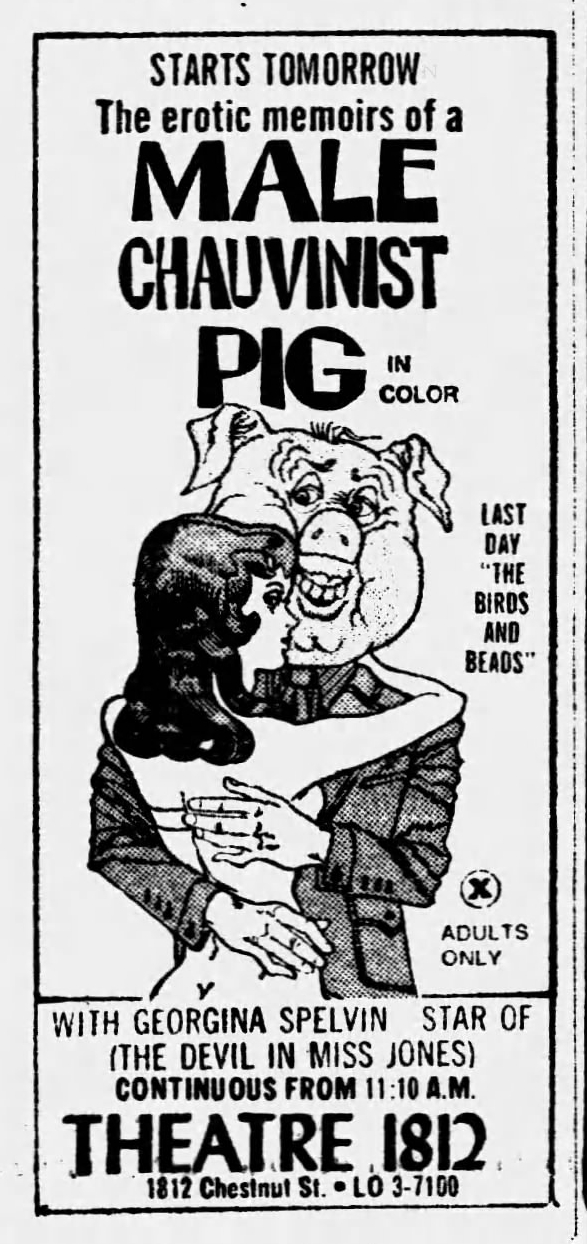
An advertisement in a 1974 edition of the Inquirer for a screening of Horsch’s cinematic debut, “The Erotic Memoirs of a Male Chauvinist Pig.”The Philadelphia Inquirer archives
He got his chance after befriending the Philly tavern owner and mob associate Salvatore “Sam the Barber” La Russa at his long-gone Bag of Nails bar at 13th and Locust. La Russa, who died of a heart attack in 1996, helped Raymond produce The Erotic Memoirs of a Male Chauvinist Pig, which featured Georgina Spelvin, the star of the well-known erotic film The Devil in Miss Jones.
Raymond’s film premiered in 1973 at the 1812 Theater on Chestnut Street. It was a low-budget effort that depicted rape, bondage, underage sex, and the titular character’s violent relationship with a drug-addicted woman — a “sweet comedy,” Raymond later joked.
Raymond’s movie did not experience the same cultural, critical, and financial success of the better-known erotic films of that era. But his mob-backed dream of becoming an auteur was soon interrupted by his other passion: crime.
In 1974, the U.S. Secret Service busted the homegrown counterfeiting operation Raymond ran in Doylestown, seizing the equivalent of over $1 million in phony $10 bills. He served two years in prison.
After he got out, authorities busted him again in 1977 for operating a methamphetamine lab in Philadelphia.
Facing more prison time, Raymond skipped bail and went on the run.
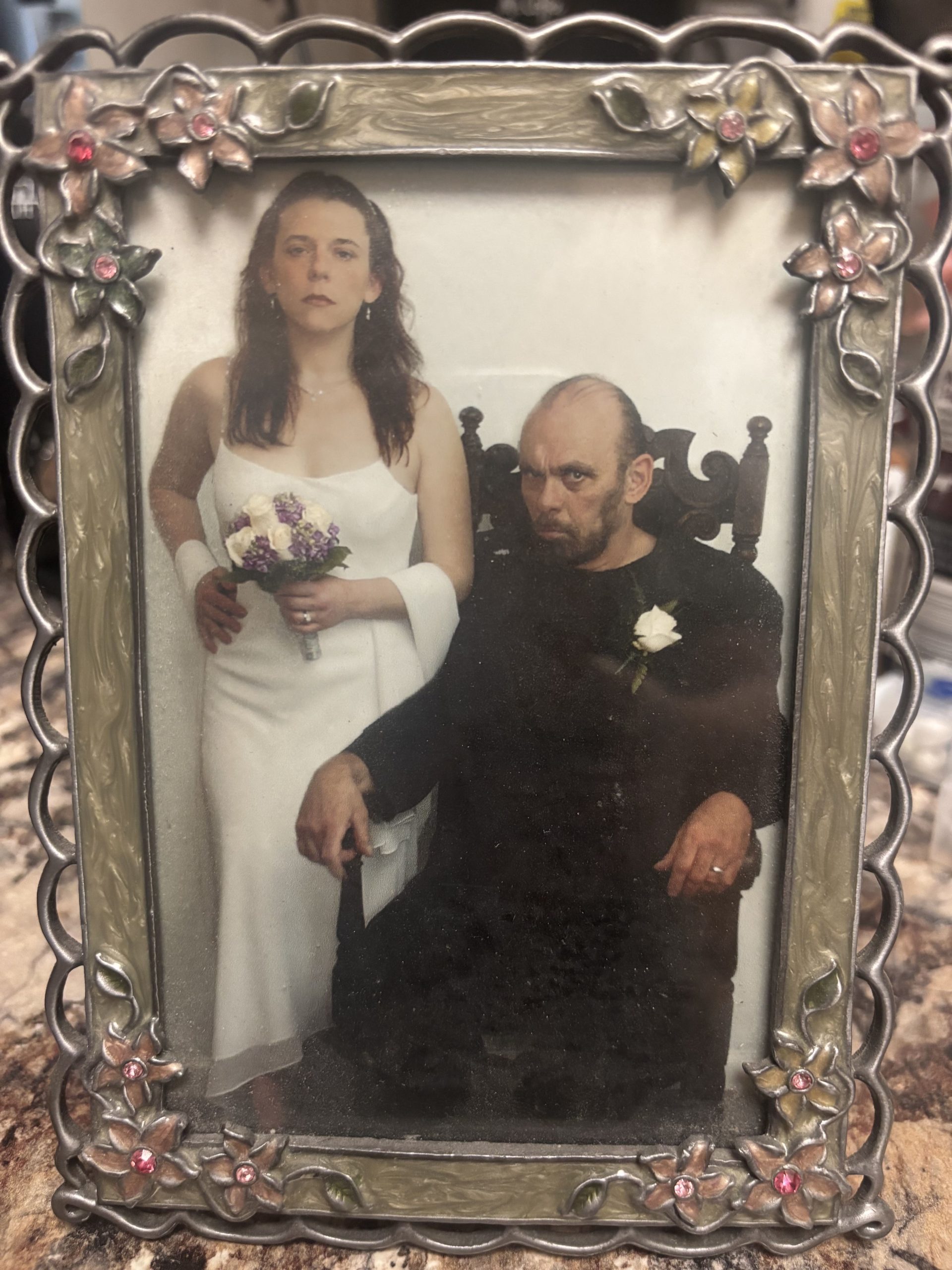
Raymond fled to the West Coast with his longtime girlfriend, Myroslawa Anna Ferkuniak, whom he met sometime after she was arrested in an LSD raid at a house near Temple University. He assumed the identity of Dr. Stanley Eugene Stokowski, a real-life chemist in California with a doctorate from Stanford University.
In 1980, Raymond married Ferkuniak in Nevada using the Stokowski alias. They boarded a plane for New Zealand to evade federal investigators.
They settled in the sleepy port city of Timaru. Raymond, whose years as an illicit drug maker had made him a skilled chemist, boasted that he had a doctorate and got a job with an alternative fuels company with a fraudulent academic transcript under Stokowski’s name. He launched a facility that converted whey into ethanol fuel.
Horsch at an unspecified location in the 1980s.Obtained by The Inquirer
In 1981, Eugene was born, entering the world against the backdrop of his father’s deceit.
Raymond traveled back to the United States multiple times using different aliases. But in 1984, he was caught reentering New Zealand with five fake passports, according to news reports. The incident sparked national inquiries in New Zealand into how a fugitive impostor had managed to get work as a prominent chemist.
Raymond did not stick around for more questioning. He allegedly broke into a house, stole another passport, and fled to America before he could be charged. He left Anna and Eugene behind, and they returned to America later.
The FBI caught up with him in Orlando and extradited him to Philadelphia in 1985. A psychologist, in a court-ordered exam, noted that Raymond had an IQ of 140 but suffered from “deep-rooted emotional problems.”
A federal judge sentenced him to four years. Raymond expressed no regrets.
“I loved being a fugitive,” he would later say. “It was always exciting, always thinking, ‘Who am I going to be today?’”
After an early release from prison in 1987, Raymond moved his family to Northeast Philadelphia and got a job as an IT director. His wife, Anna, found work cleaning houses.
Although Raymond claimed he never took drugs, he watched Anna fall into addiction.
She died in 1989, at the age of 39. She was sitting in their living room and accidentally overdosed on glutethimide and codeine, a dangerous heroin alternative prone to abuse when combined. Eugene, then just 7 years old, was in the room at the time.
Raymond, in a later interview, expressed resentment about his wife “killing herself.”
“All the while things were bad, she held it together,” he said. “Then when things were good, she fell apart. My basic reaction was anger, because she bailed out and left me with a kid to raise.”
Raymond and Eugene moved to a three-bedroom home in Chalfont, close to family. He opened a barbecue restaurant with a colleague from the adult film industry, pursued his art, and raised Eugene as a single father.
In 1994, he directed and starred in Lovers, which was produced by Femme Distribution Co., a feminist porn studio. One reviewer described it as a moody feature that intercut scenes of rape and bondage with “thought-provoking dialogue.”
But Raymond was facing the reality that his attempt to blend pornography and cinema was a commercial failure.
Raymond “R.C.” Horsch in 1999.S. E. Stokowski / Wikimedia
Now well into his 50s, he wallowed in an artistic gutter. He performed in at least eight pornographic films, primarily low-budget exhibitionist features called Streets of New York that were shot in the dumpster-packed alleys of Manhattan.
He also began photographing sex workers, using Kensington Avenue as his casting room. He would shoot photos of women working corners, often without permission, and earned a reputation under the El tracks as a lurker who offered cash or drugs in exchange for nude film shoots.
He launched a now-defunct personal website, Eroto.com, in the late ’90s. Paid subscribers could access his photos and videos depicting sexual violence and women who appeared to be shooting heroin.
Raymond saw himself as a feminist and critic of modern society, but he was unapologetic about exploiting drug-addicted women. He likened himself to the snake in a parable about a woman who cares for a serpent, only to be bitten once it reaches maturity.
“The woman asks, ‘Why?’ And the snake says, ‘Because it’s my nature.’”
Although he had a young son, Raymond didn’t let that stop him from bringing his work home.
In the early ’90s, Raymond placed an ad for a housekeeper and hired a teenage girl, 33 years younger than he was and addicted to heroin. She “looked like a child,” her mother, Charlotte Ring, said. “I think he just wanted to use her for porn.”
They applied for a marriage license in June 1999 but never tied the knot. Ring said she could not persuade her daughter to return to their nearby home in Chalfont until she eventually went into rehab.
Eugene, meanwhile, was a straight-A student, just like his dad had been, at Central Bucks West High School. But his father’s career was a source of embarrassment, according to Eugene’s former classmates, who found Raymond “creepy.”
It was no secret that Eugene’s dad worked in porn. Hanging on a wall of their home was a huge photograph of Raymond — with thinning hair and a ponytail — receiving oral sex from a woman while she held a knife to his head.
Eugene Horsch’s graduation photo in the 1999 Central Bucks West High School yearbook.Obtained by The Inquirer
Yet friends said Eugene shared many of his father’s other interests: chemistry, forgery, and eluding capture. He once swiped a lawnmower from Home Depot and wheeled it home. When his dad gave him money to go buy groceries at Giant, Eugene preferred to steal them.
“It was like a thrill for him,” one friend recalled.
Eugene’s friends called him “Gizza,” after the Wu-Tang Clan rapper “GZA.” In a trailer in Eugene’s backyard, they smoked weed lifted from Raymond’s grow operation, listened to Wu-Tang, and skateboarded on a halfpipe. According to two former classmates, Eugene sometimes smoked crack cocaine and “wet” — marijuana laced with PCP.
He had an older cousin who was a role model and one of his best friends. But when Eugene was in high school, his cousin, at age 19, crashed a convertible and died.
The loss devastated Eugene.
“When his mother died and his cousin died, he had no moral anchor,” said one relative, who asked not to be identified out of privacy concerns. Eugene “didn’t stand a chance.”
Despite their conflicted relationship, Eugene acknowledged the role his father had played in his life. In a 1999 yearbook graduation photo, Eugene eulogized his cousin and ended with a note to his father: “Thank you Dad, for all you have done for me.”
Eugene never officially graduated from Central Bucks West, according to school administrators. A friend said he forged his diploma, showing off the fake document in his bedroom. It is not clear if he completed his high school education elsewhere, but Drexel University confirmed Eugene enrolled there between 1999 and 2003.
His academic career ended in 2003, following a night of drinking at a Northeast Philly bar. Eugene blew a red light and T-boned another car. The driver suffered a catastrophic brain injury and spent 16 years in a vegetative state before dying.
In 2004, Eugene pleaded guilty to driving under the influence and aggravated assault. He was sentenced to two to four years in prison.
A wedding photo of Amy McHale and Raymond Horsch in 2004, taken during a small ceremony at his residence in Chalfont. The couple divorced a few years later. McHale was last seen at Horsch’s Olney home in 2016.Courtesy of the family of Amy McHale
Raymond was always looking for new women — particularly those who resembled his deceased wife, Anna.
He once asked one of Eugene’s high school friends, who was working at a car wash, if she wanted to star in his films. Another woman heard about him from a cellmate when she was locked up in a Bucks County jail on a drug charge. She later agreed to be photographed nude at his studio for money and drugs. He said she reminded him of Anna and asked her to star in Slaves, a 2003 film he was producing.
Raymond met Amy McHale in Kensington. She was struggling with mental health issues and drug and alcohol addiction, and she came to view Raymond as her savior after he got her off the streets. She costarred with him in a pornographic film.
McHale, 30 years Raymond’s junior, later married him beside a greenhouse in the backyard of his Chalfont home in September 2004, not long after Eugene pleaded guilty to DUI.
That same year, Raymond inherited the Olney house from his aunt. In two self-published photo books — featuring women recruited from Kensington in sexual bondage — a few pictures appear to be staged there.
Eugene got out of prison in 2006. Raymond remained in Chalfont, and he transferred the Olney property into his son’s name.
Three years later, a “highly intoxicated” 21-year-old woman called 911 to report a burglar in Raymond’s Chalfont residence. Responding officers found no evidence of an intruder, but they did find 455 marijuana plants in the basement and two shotguns.
The feds seized the Chalfont home.
After pleading guilty to three felonies and receiving a 54-month sentence, Raymond spent his time in prison writing a series of novels about serial killers and sexual deviants that he later self-published.
In 2013, when he was released from prison at the age of 70, Raymond and Eugene were together again in Olney, living in the aging family home-turned-porn studio.
Raymond described himself as a frustrated, aging porn star.
“I walk down the street seeing all these beautiful, breathtaking women who are now totally inaccessible to me. Totally off-limits now,” he said. “If I stay away from mirrors, I can still convince myself that I’m 18 years old.”
Raymond “R.C.” Horsch in character for a film role, 2014.S. E. Stokowski / Wikimedia
Raymond started wearing an eye patch, although friends were unsure if it was for medical reasons or simply to bolster his villainous persona. His art found a few admirers, including in Europe, and some of his photos appeared in an anthology of erotic art in New York City, prefaced by the prominent critic Camille Paglia.
But Raymond seemed resigned to obscurity, noting that few galleries wanted photographs of “wasted emaciated heroin junkies.”
From Raymond Horsch’s photobook “Eroto~ To The Prurient Interest”: Ligature marks on the arms and legs of an unidentified woman, and an unidentified woman in what appears to be Horsch’s Olney bedroom.Obtained by The Inquirer
He landed a 2014 show at the Papermill artist studios in Kensington. Raymond set up a slideshow photo gallery in a warehouse surrounded by needle-littered railroad tracks. The series began with photos of naked women, who became more gaunt and sickly as heroin took its toll. Several shots showed syringes dangling from arms pocked with bruises and sores.
As a finale, Raymond played a video showing the body of a naked woman. Raymond claimed she had died of a drug overdose after he had paid her for sex. The video shows her body being loaded into an oven and cremated.
Some of the attendees were shocked and disgusted. One of them, local audio-visual technician Justin Roman, recalled that Raymond was “totally shameless” when confronted.
“He was doing it all because he wants to have sex with women who are addicted to heroin,” Roman said. “And he seemed very self-aware that he could not stop this compulsion.”
Amy McHale, who married and divorced Raymond, was last seen at the Olney house and reported missing in 2016.Courtesy of the family of Amy McHale
McHale and Raymond divorced in 2008, but she kept returning to visit after he moved to Olney.
She was at the Chew Avenue home on June 13, 2016, when she called her mom to tell her she was coming home. She sounded drunk, so her mother told her to stay.
Early the next morning, McHale — a strawberry blond 44-year-old grandmother of three — left a voicemail with her daughter saying she was OK.
She was never heard from again.
McHale would sometimes be gone for a couple of days, but never much longer. Her daughter, Amanda Stofer, said McHale had been looking forward to Stofer’s forthcoming wedding.
“My mom had her struggles with addiction,” said Stofer, 38. “But my mom would not want to disappear in my life.”
Raymond told police and the McHale family the same story: She was drinking vodka and he went to bed. When he woke up, she was gone.
Eugene Horsch, in a June 5, 2017 photo. He was still in prison at the time of McHale’s disappearance.Pennsylvania Department of Corrections
At the time, Eugene was back in prison for drugs and would not be released until a month after McHale’s reported disappearance.
Detectives were suspicious of Raymond, McHale and Stofer said, but they did not have probable cause to obtain a search warrant. Eventually, Raymond stopped reaching out to her family.
“When she would disappear before, Raymond would always keep calling me,” McHale said. “After this, I never heard from him.”
Years later, Raymond, now in his late 70s, frequented a onetime crackhouse on Wensley Street in Kensington.
He would come there to “pick up [drugs] and grab the girls” for video shoots, said Anna Marie Reveron, 58, who was something akin to a grandmother for the drug-addicted women who lived there.
One of the women Raymond picked up was Blair Tonzelli. She was estranged from her family in Northeast Philadelphia and had been in and out of prison. Friends recalled her as loyal, someone who would “literally give you her last $2.”
Blair Tonzelli, in a photo she posted on Facebook.Facebook account of Blair Tonzelli
It was not unusual for Tonzelli to stay for long stretches at the house in Olney, where Raymond claimed she worked as his home health aide.
David McCarty, 72, said he stopped hearing from Tonzelli entirely in August 2022. The last time she posted on her Facebook account was Aug. 17 of that year.
Fearing the worst, two of Tonzelli’s friends reported her missing in February 2023. One told police she was last seen at Raymond’s house on Chew Avenue.
Another woman who spent time at the home described overdose deaths as a grim reality — but not mysterious cases where bodies vanish.
“I’ve lost probably six to seven friends who overdosed — on the street, in abandoned houses, in cars,” said the woman, a 37 year-old friend of Krista Killen’s who lived at the Olney house last year. “And their bodies are always found. Always.”
Krista Killen under the El tracks, as featured in Raymond Horsch’s 2017 documentary “Whore!”Obtained by The Inquirer
While an array of different women cycled through the Olney property, often for brief stretches, Killen was an old-timer.
She first appeared in Raymond’s 2003 movie Slaves and watched him eat a raw steak and drink prop blood out of a wine glass for one scene.
Years later, in Raymond’s 2017 documentary, Whore!, hefilmed Killen using drugs and describing her own behavior as “slow suicide.” Killen reflected back on her scene with Raymond in Slaves and said she had wondered: “Is he gonna f— kill me?”
“This is a movie,” he reassured her. “I don’t want you to be scared.”
Killen lived off and on in the Olney house while continuing to perform risky sex work. She ran errands for Raymond when his eyesight deteriorated, driving him around in an aging Chrysler luxury sedan.
He would get upset when she left. He once posted on Facebook a photo of Killen in withdrawal, doubled over on a toilet — just to “get back” at her, according to a friend.
Killen never feared Raymond would harm her. But she worried about what might happen if she was left alone in the house with Eugene.
“Krista was always fearful that if something happened to Ray or he passed away, Eugene would not know what to do and not know how to control himself,” said Danielle Wynne, 46, a longtime friend of Killen’s.
Krista Killen lived at the Horsch home off and on since 2016 until her death last year.Krista Killen's Facebook pages
In late 2024, after a yearslong infection in Killen’s leg, doctors had to amputate it above the knee. A month later, BabyCat died of a brain tumor. Raymond’s health was also in decline, and after he died in May 2025, Killen was suddenly alone in the house with Eugene.
Three days after Raymond’s death, a lit cigarette sparked a fire in Killen’s second-floor bedroom, where she had moved after losing part of her leg. The blaze destroyed most of her belongings, leaving charred bricks and boarded-up windows.
The back of Horsch’s Olney home on June 27, 2026, showing damage from a fire that occurred last summer and led investigators to a weed growing operation and a cache of illegal weapons.Aidan T. Gallo / Staff Photographer
The fire led to police finding guns and a marijuana grow operation inside the property. Eugene was jailed again.
The fire had torn a gash in the roof, and rain pelted into the kitchen, the dining room, and Killen’s bedroom. On Aug. 16, 2025, three months after Raymond passed, she died of a drug overdose.
Eugene announced Killen’s death on her own Facebook page.
“Please let everyone know we were in love and we were going to get married,” Eugene wrote.
Her friends said neither of those things was true.
Eugene’s life continued to unravel in the wake of his father’s death.
Neighbors said they saw him outside, quiet and jittery, often obsessively washing his black BMW. He would be dressed in a nice shirt, as if he were heading to an office, although his only means of income appeared to be selling drugs.
He was arrested again this year in March after he stabbed a man in the stomach during an apparent dispute over a woman at Eighth and Market Streets. The case was withdrawn when the victim failed to appear in court, and Eugene was released from jail in May.
Eugene Albert Horsch, 44, of Philadelphia.Courtesy of Philadelphia police
Just a few weeks later, on the morning of June 19, a U.S. Park Police ranger approached Eugene’s BMW parked near Sixth and Market. A woman inside sounded distraught.
As the ranger got closer, the woman in the back seat said to Eugene, “You’re going to hurt me.”
Inside the car, officers found narcotics, two firearms with obliterated serial numbers, and other weapons — along with a fake U.S. Drug Enforcement badge with Eugene’s photograph under the name “Eugene Frederick Steiner.”
Police called real DEA agents to the scene, who turned their attention to the woman in the car.
The 39-year-old woman told police her name was Blair Tonzelli. She showed officers an ID card bearing her photo, but with Tonzelli’s name. It did not take long to determine she was lying.
She told investigators that she did not know Tonzelli and was not aware that she was missing.
“But I think something bad may have happened to her,” she said.
She said she was afraid to enter the basement of the Olney house because Eugene told her he had hurt people there. He had never been violent toward her, she said, but he was obsessive and would sometimes sit for 24 hours outside her house. She said he had told her he knew which chemicals are needed to reduce a human body so it could be flushed down a toilet.
An investigator searches the backyard of Horsch’s home in Philadelphia, on June 27, 2026.Aidan T. Gallo / Staff Photographer
Authorities, including FBI forensic experts in hazmat suits, searched Eugene’s home. They found bank cards in Tonzelli’s name, Killen’s death certificate, and five urns containing plastic bags of unidentifiable cremains. One bore the name Raymond Charles Horsch.
Other findings only deepened the mystery of what had been happening at the house: hidden compartments, including one in a hollowed-out stair; vats filled with chemicals; and a 55-gallon drum with connections to water lines leading into a hole in the ground.
The note mentioning Ted Bundy included confessions for acts of violence, such as having “a 2ft zip tie in my pocket and a drum set up.”
“I had been ready and waiting and I damn sure showed no hesitation,” the note states. “And it was fun.”
Investigators are reviewing Raymond’s films and reading his novels for clues — giving his work the attention in death that he always hoped to achieve in life.
His books describe ways to murder women. One scene depicts a body being dissolved with chemicals in a bathtub.
That same book includes tales of Raymond’s bizarre life story, interspersed with passages that he concedes are complete fiction.
But he leaves the reader guessing.
“Would it surprise you,” he wrote, “to learn that I’m lying?”
Staff writer Michelle Myers contributed to this article.
A detective at the crime scene on Horsch’s property in Philadelphia on June 26, 2026.Jessica Griffin / Staff Photographer