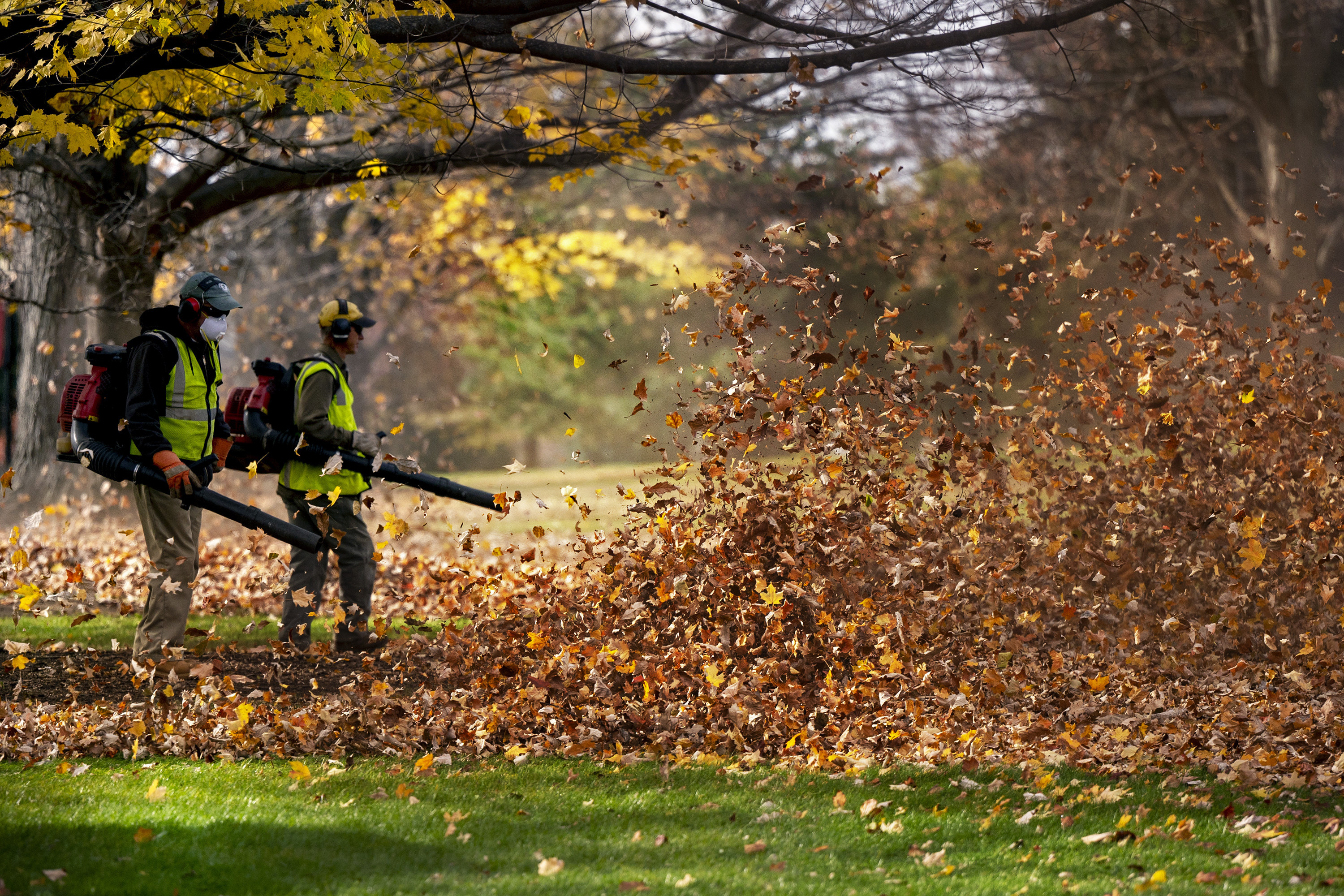
A gas-powered leaf blower ban in Lower Merion has put “tremendous stress” on township staff, as hundreds of complaints have piled up since its implementation this summer, officials said at a Sept. 9 meeting.
Officials from Lower Merion’s department of building and planning told commissioners at a recent budget meetingthat enforcement of the ban has strained resources as staff are pulled away from other work to address a growing collection of complaints. The department is asking to promote one part-time staff member to full-time and hire a seasonal code compliance officer to meet the increased demand.
“There’s a significant amount of administrative time required to enforce the ordinance, and it’s just beyond our existing capabilities to do this,” Chris Leswing, Lower Merion’s director of building and planning, told commissioners.
Leswing said investigating potential violations has pushed back other projects, requiring the department to pay increased overtime so staff can address their day-to-day responsibilities.
Lower Merion received 437 complaints of leaf blower violations and issued 49 fines from June 1 to Sept. 9, according to Ernest Pendleton, assistant director of building and planning.
In that same time frame, the department received 80 reports of all other standard property maintenance violations, including trash, debris, noise, lighting, high weeds, and grass issues.
The proposed upgrade of the administrative clerk to full-time next year would add $48,000 to next year’s budget, and hiring a seasonal code compliance officer for 22 weeks of the year would add $35,000.
The ordinance phased out gas-powered leaf blowers on a seasonal basis, starting with a ban from June 1 to Oct. 1 this year, with an eventual all-out ban beginning in 2029.
Enforcement is complaint-based. Residents are encouraged to report violations via Lower Merion’s LM Report-It app, email, or phone. Violators first receive a warning, then a $100 fine for a first offense, $250 for a second offense, and $600 for a third or subsequent offense.
Enforcing the leaf blower ban presents a specific set of issues for staff, Pendleton said. Only around one-third of leaf blower complaints include enough evidence to be verified, meaning for the majority of infractions, a township staff member must conduct an independent investigation before deciding whether to fine a property owner. Investigations often include reviewing photos and videos and driving to the site of the violation. Complaints are doubly difficult to investigate as the department’s inspectors are often “scheduled out,” meaning no one is available to look into tips as they are being called in, according to Pendleton.
“We don’t have any inspector sitting inside our building to run out to a site,” Pendleton said.
Commissioners at the meeting said residents have reported feeling uncomfortable with the complaint-based system.
“They’re feeling as though they’re being asked to report on one another in the absence of another type of system,” said Commissioner Chris McGuire, who said she is getting reports that “neighbors are quibbling because one has reported the other.”
Pendleton said hiring a seasonal code compliance officer would help alleviate the fact that “neighbors aren’t liking to have to tell on neighbors,” though he noted that all of Lower Merion’s standard property maintenance complaints, with the exception of building codes, come in through resident reporting.
“We don’t send anyone out to look for problems,” Pendleton said.
Both commissioners and staff said they expect leaf blower complaints to drop in the coming years as residents and landscapers continue to transition to electric equipment. Pendleton said adding a seasonal officer would allow the township to have flexibility to shed the position should complaints drop off.
Some commissioners seemed poised to fulfill the building and planning department’s staffing requests, but no formal votes were taken at the meeting.
This suburban content is produced with support from the Leslie Miller and Richard Worley Foundation and The Lenfest Institute for Journalism. Editorial content is created independently of the project donors. Gifts to support The Inquirer’s high-impact journalism can be made at inquirer.com/donate. A list of Lenfest Institute donors can be found at lenfestinstitute.org/supporters.
A previously healthy 17-year-old girl went to the emergency department after she had passed out while trying to walk up the stairs at home.
Fortunately, she wasn’t seriously injured as her mom caught her. The girl said she had been very tired and had unintentionally lost about 20 pounds over the last few months.
In the Emergency Department, her blood pressure was a little bit low at 100/60, with normal being closer to 120/80. On examination, she looked tired but was otherwise stable. Blood and urine samples went to the lab, and she was admitted for further workup.
Unintentional weight loss, fatigue, and syncope (fainting) are often nonspecific symptoms that can be caused by a variety of conditions, including nervous system, blood, and hormone disorders.
Sometimes, the nervous system does not respond appropriately when a person moves from sitting to standing. The sympathetic nervous system should ramp up and increase heart rate and blood pressure to make sure the brain gets the blood and oxygen it needs.
This can go awry in patients who are very dehydrated or have less responsive nervous systems. In such cases, the result can be low blood pressure when standing up (called orthostatic hypotension) and passing out.
This patient did not have any signs of dehydration, and her blood pressure stayed low whether she was sitting, prone, or standing. Sometimes drugs or medications can cause such symptoms, but her urine drug screen was negative, and she did not report taking any medications.
Blood disorders, such as anemia or cancer, are a more concerning cause of these symptoms. Anemia is when there are not enough red blood cells or hemoglobin to carry oxygen throughout the body, which can cause shortness of breath and fatigue.
Cancers can cause an increase in metabolism, also resulting in weight loss and fatigue. Thankfully, her exam and blood tests ruled these diagnoses out.
Another potential culprit might have been type 1 diabetes, in which the immune system mistakenly targets and destroys the pancreas, causing low insulin production. This can lead to high blood sugar, weight loss, and fatigue. However, this patient’s blood sugar level was slightly low in the Emergency Department, rather than elevated.
High thyroid hormones can cause high heart rate, weight loss, and anxiety; while low thyroid hormones can cause fatigue, weight gain, and depression. The patient’s thyroid levels were normal on her blood tests, so this ruled out thyroid disease as a cause.
One more possibility could have been her adrenal glands, which release several hormones that regulate metabolism, as well as blood pressure and “fight or flight” responses.
Decreased adrenal hormones, particularly cortisol, can cause decreased appetite and weight loss, low blood pressure, and low blood sugar — all symptoms that she had. A test of her morning cortisol showed a very low level, and a follow-up test showed that her adrenal glands were not producing any cortisol in response to triggers.
This finding suggested that adrenal insufficiency was the cause of her symptoms, though the root cause was still unclear.
The solution
There are many possible causes of adrenal insufficiency. Some children are born with dysfunctional adrenal glands due to genetic conditions. Injuries during birth, infections, or medications can cause decreased blood flow or direct damage to the adrenal glands and subsequently decreased function.
Autoimmune disorders, where the immune system accidentally attacks its own organs instead of infections, can cause adrenal damage. More rarely, brain injuries or tumors can cause decreased adrenal hormone production through various mechanisms.
One final laboratory test found that this patient had antibodies in her blood which were attacking her adrenal glands. This confirmed the diagnosis of adrenal insufficiency, which in this case is called Addison’s disease.
By the time of this diagnosis, she was feeling better and went home with medications to replace the missing hormones. She will likely be on replacement adrenal hormones for the rest of her life to manage symptoms.
Our advice
Vague symptoms can be common in many different conditions, some more serious than others. Children and adolescents with unintentional weight loss and prolonged unexplained symptoms such as fatigue should see their doctor to be screened for potentially dangerous causes. This may include blood work, imaging, or other tests to help determine the underlying diagnosis.
Rebecca Mirochnik is a third-year pediatric resident and Hayley Goldner is a pediatrician in the adolescent medicine department at Nemours Children’s Hospital, Delaware.
The 7th annual Seeds Philly Celebration became a solemn and spirited tribute to Indigenous arts and culture: powwow dancing and flag songs, tepee raisings and fry bread, corn husk dolls and Powowpopart.
But this year’s two-day celebration, Saturday and Sunday at Cherry Street Pier, carried added significance. Founded as a small arts gathering in Fairhill, Seeds Philly has grown to include representatives and traditional dancers from 40 tribal nations and more art booths and performers than ever. And, marking the 250th anniversary of the signing of the Declaration of Independence, the two-day event includes a special artist installation confronting hateful language enshrined in the founding document.
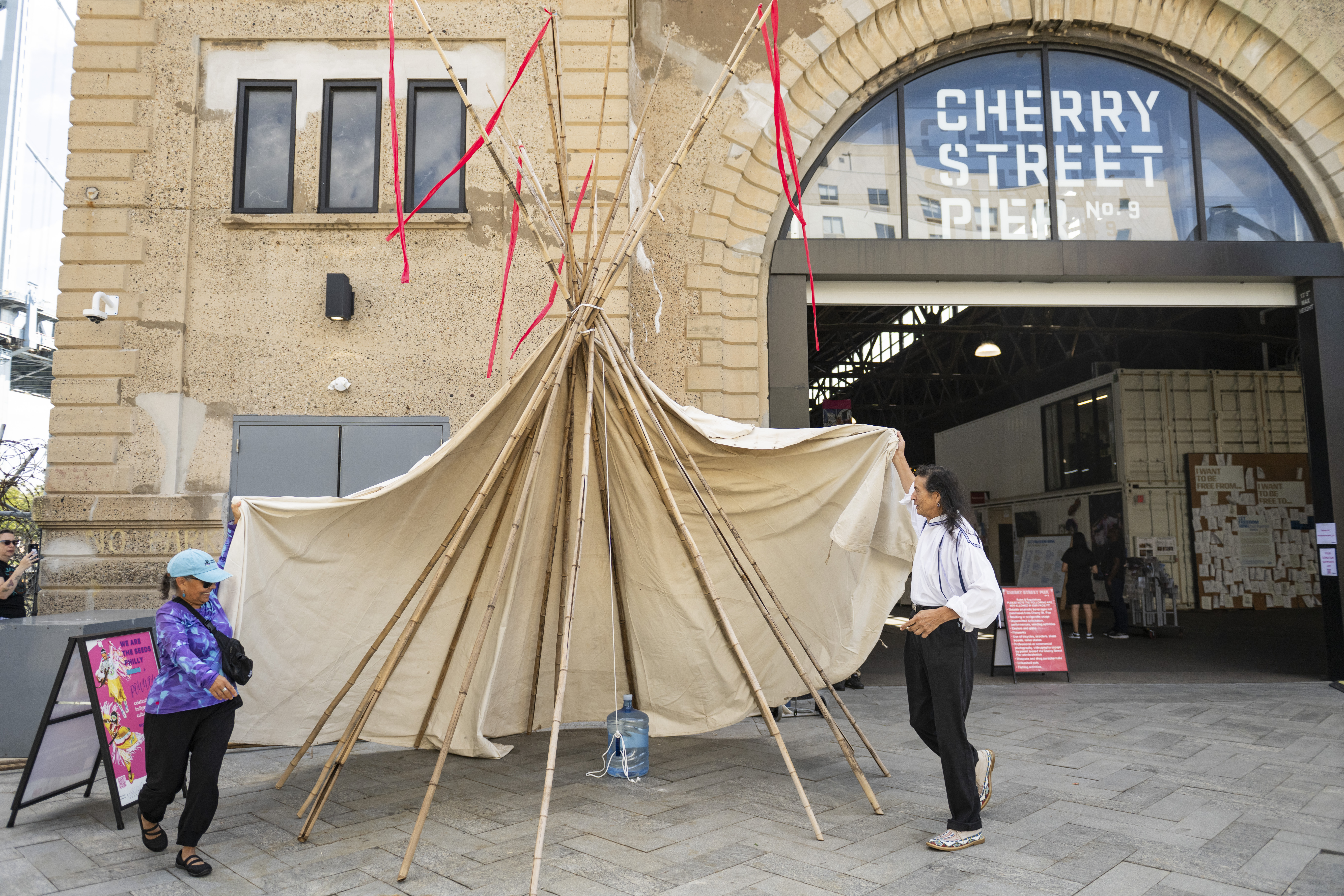
Tchin (left), artist-partner for education and cultural programs at We Are the Seeds, and a volunteer raise a Northern Plains tepee at the Seeds Philly Celebration at Cherry Street Pier on Saturday, Sept. 19, 2026.
This also may be the last Seeds Philly Celebration for the foreseeable future, organizers say. Despite all the gains — and special city funding this year — money has run out.
“I would love to see a world where the city and other private foundations would recognize that this event is absolutely critical for this city,” said Tailinh Agoyo, cofounder and executive director of We Are the Seeds, the Philly-based, Native-led organization that runs the festival. “It brings attention to the fact that this is Lenape land we are on, and celebrates not only the histories of our people, but the diversity of the Native people who live in the city now.”
Tailinh Agoyo, co-founder and executive director of We Are the Seeds, speaks to the crowd during the Seeds Philly Celebration at Cherry Street Pier on Saturday, Sept. 19, 2026.
How Seeds Philly was born
Agoyo, who moved to Philadelphia from Sante Fe, N.M., helped form We Are the Seeds in 2016 to celebrate the heritage and culture of Indigenous people in the country’s founding city. At the time, some Philly-area Native American cultural organizations were fading after generations, she remembered.
“I felt like, where do we go?” said Agoyo, a descendant of the Narragansett tribe who is raising four sons. “Where do we have our conversations? Where do we see our community?”
The nonprofit has grown to include Indigenous Listening Gardens in West and North Philly and Kensington; an Indigenous-led theater project examining the myths surrounding Philadelphia’s founding in 1682; and a popular podcast, From Here, With a View, featuring Indigenous artists, culture bearers, and activists.
“We create these types of programs and events for Native people to come together and connect and gather and dance and celebrate,” Agoyo said. “And we invite the greater Philadelphia region to be a part of it.”
But with a key private grant expiring — and the growing festival eating up much of the nonprofit’s expenses — Agoyo said the group needs time and does not know when exactly the event might return. It is bittersweet, Agoyo said, that the festival, which was expecting more than 4,000 attendees — tickets are pay what you can, with a $20 suggested donation — may disappear just as it comes into its own.
Bricks with the words “Merciless Indian Savages” are laid on the ground to be put together to make a Mohawk Rocket Kiln at the Seeds Philly Celebration hosted by an Indigenous nonprofit, We Are the Seeds, at Cherry Street Pier on Saturday, Sept. 19, 2026.
This year, the city provided funding for the festival through its 250th programming, Agoyo said. And the group plans on applying for more grants and hopes to build partnerships with leading Philadelphia philanthropic organizations.
“The reality is the world is in a really tough place and we need to make sure that we stay healthy as an organization,” shesaid. “So we need to be strong and say, ‘Let’s just rest for our health and our family’s health and our community’s health, and then we figure it out.’”
Perhaps, next year, the festival could return as a smaller event, she said.
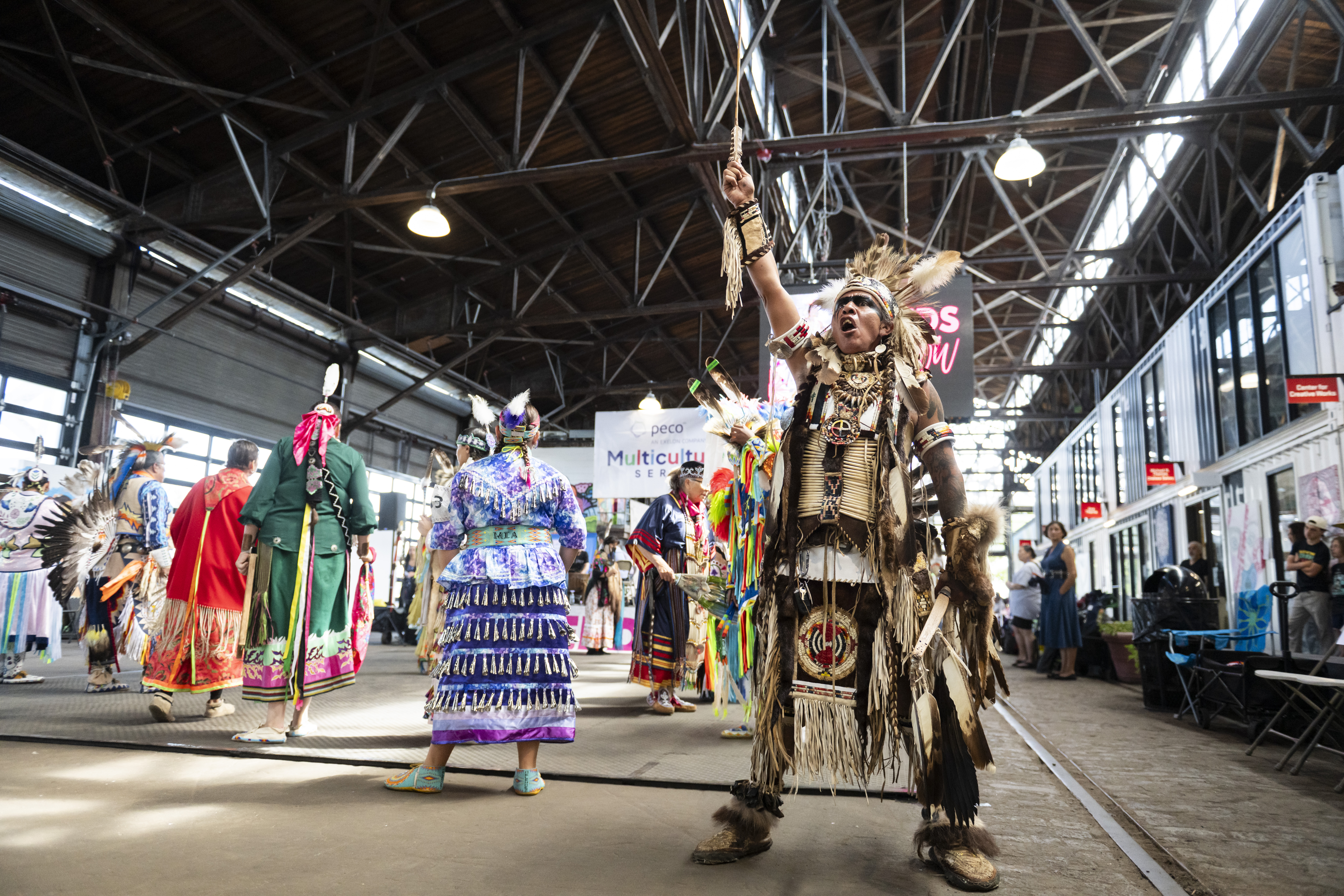
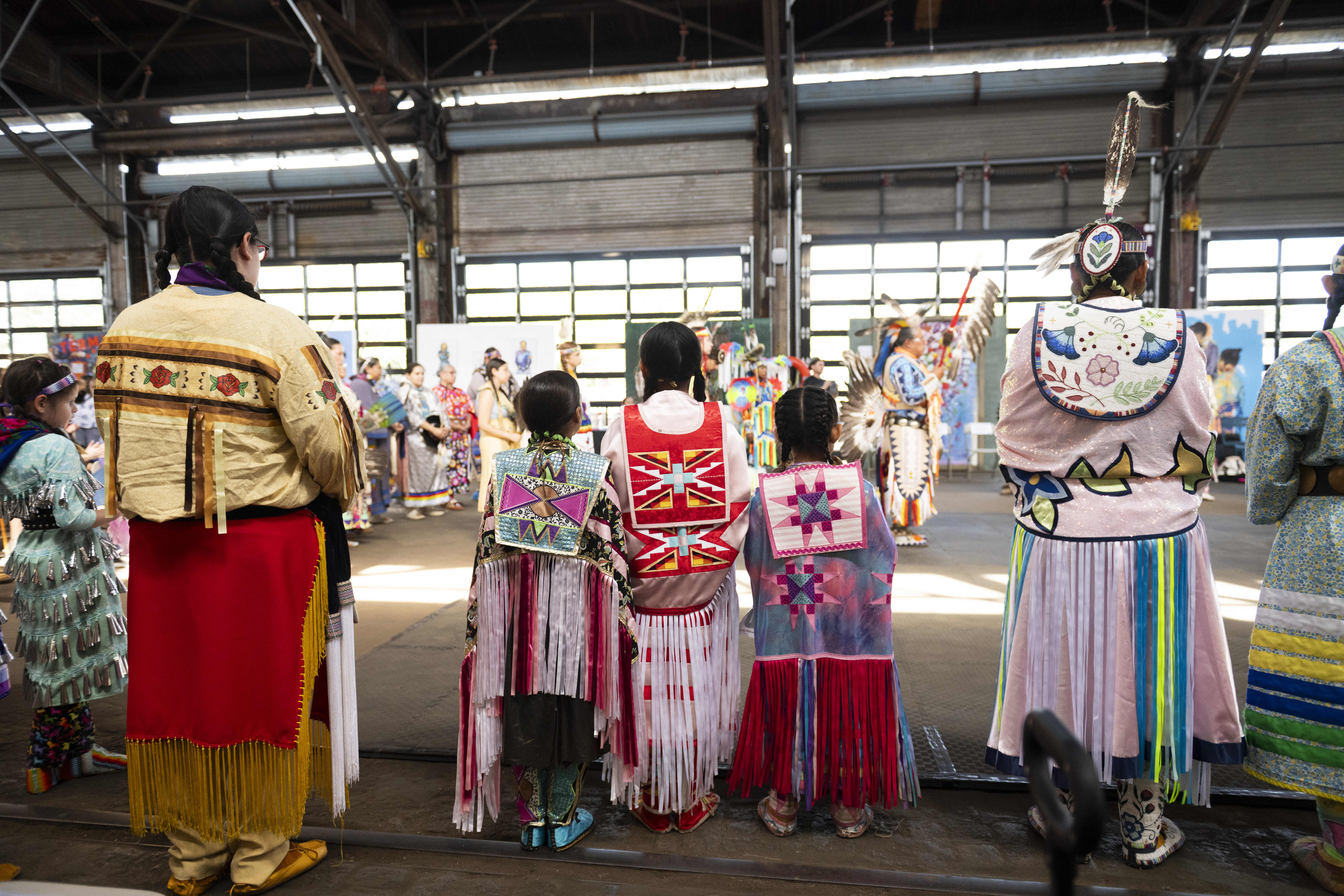
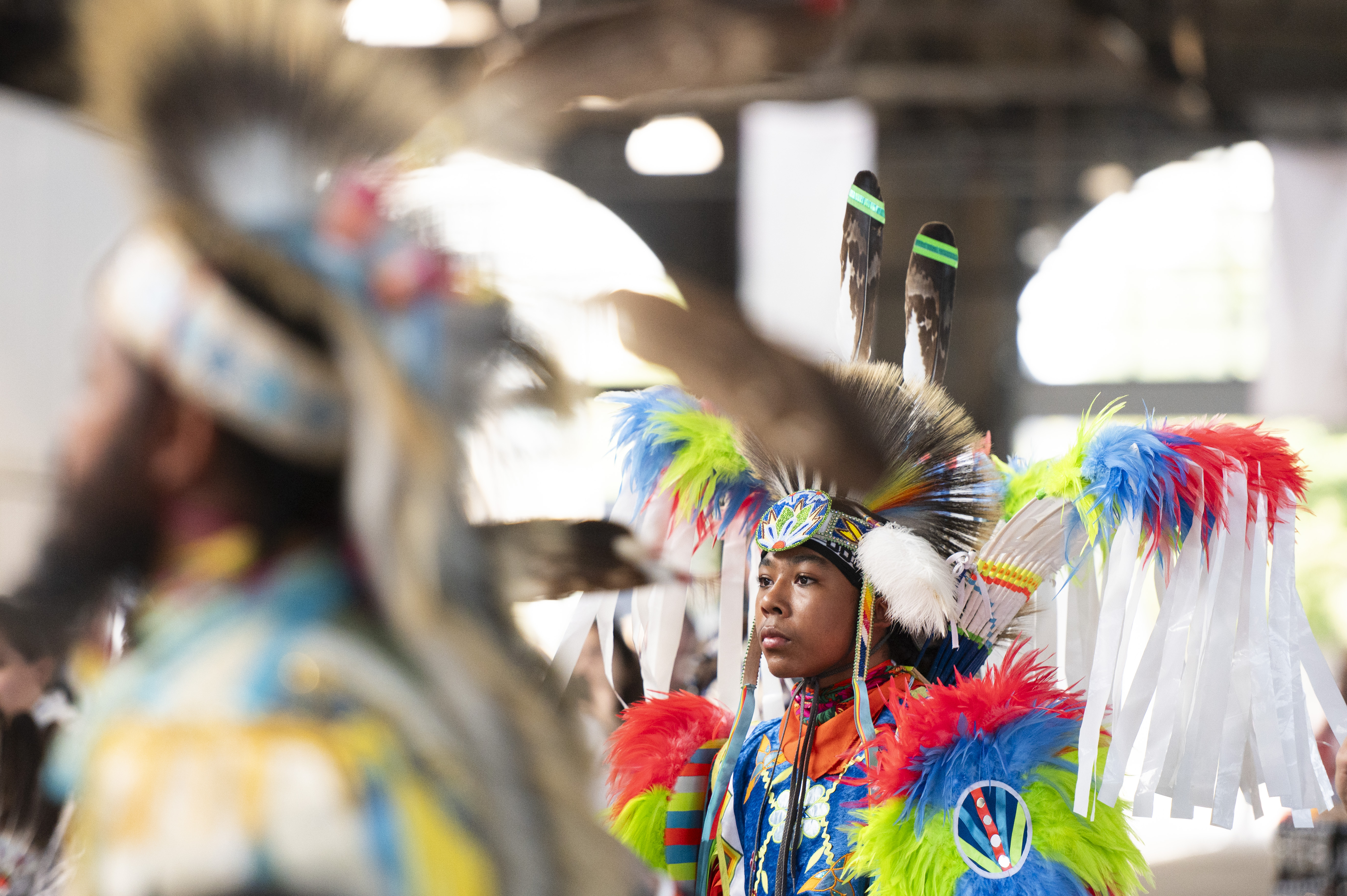
But the hard realities confronting the popular but endangered festival did not dampen Saturday’s celebration. At noon, after an honorary tepee raising, dozens of dancers processed into the powwow. Men and women from tribes up and down the East Coast danced traditional and fancy steps. Jingle dancers donning regalia adorned with dozens of clanking tin snuff lids danced steady rhythmic steps meant to promote healing. Musicians pounded beats on powwow drums made of maple wood and rawhide. Crowds flowed along the pier.
Garbed in a women’s jingle dress, Vaughnda Hilton, executive director of the Philly-based Native Nations Dance Group, said the Seeds Philly Celebration has become a premier Indigenous event.
“It shows we’re still here,” she said. “We’re keeping the culture alive, keeping the dances and songs alive. It’s who we are.”
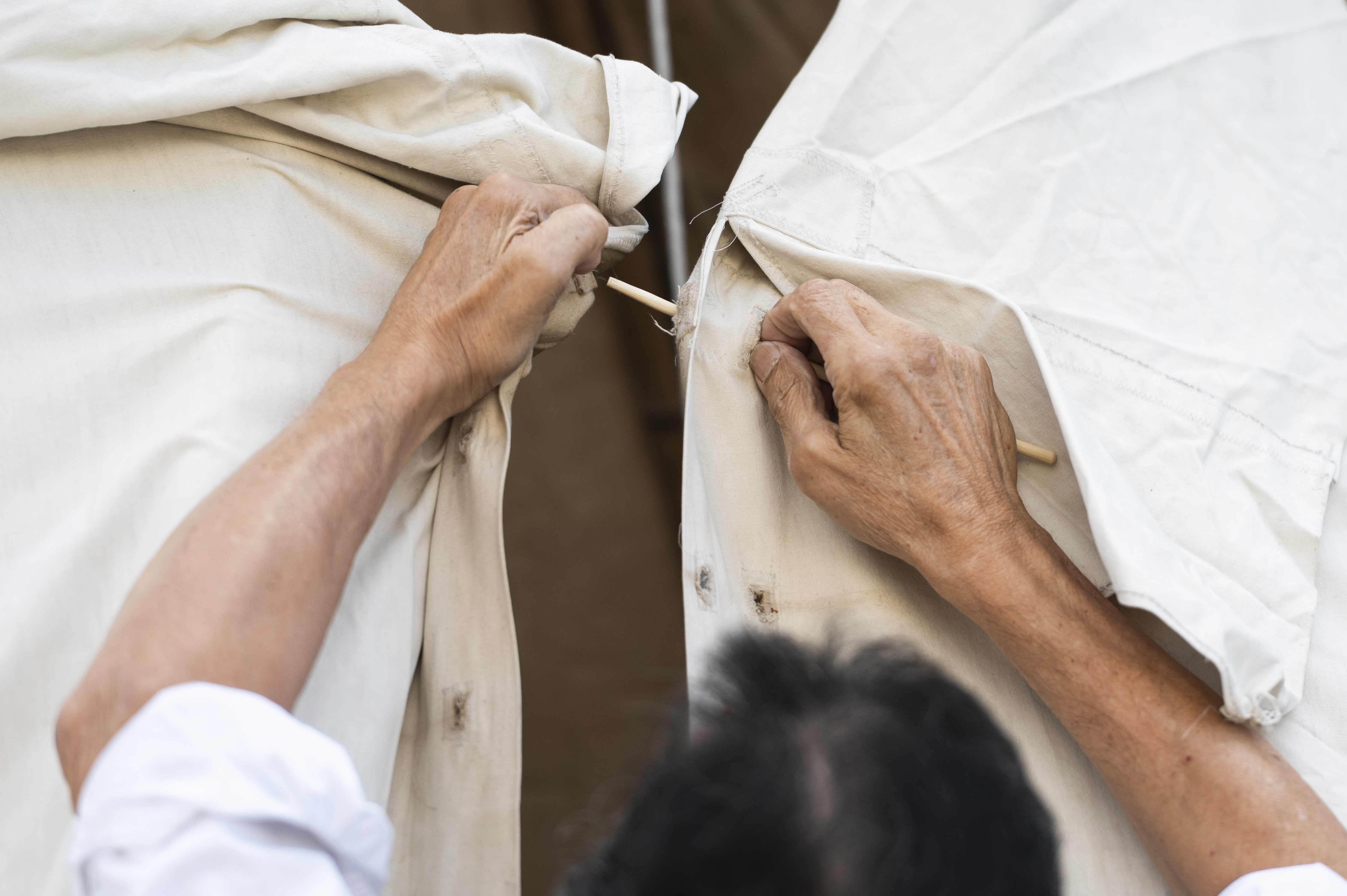
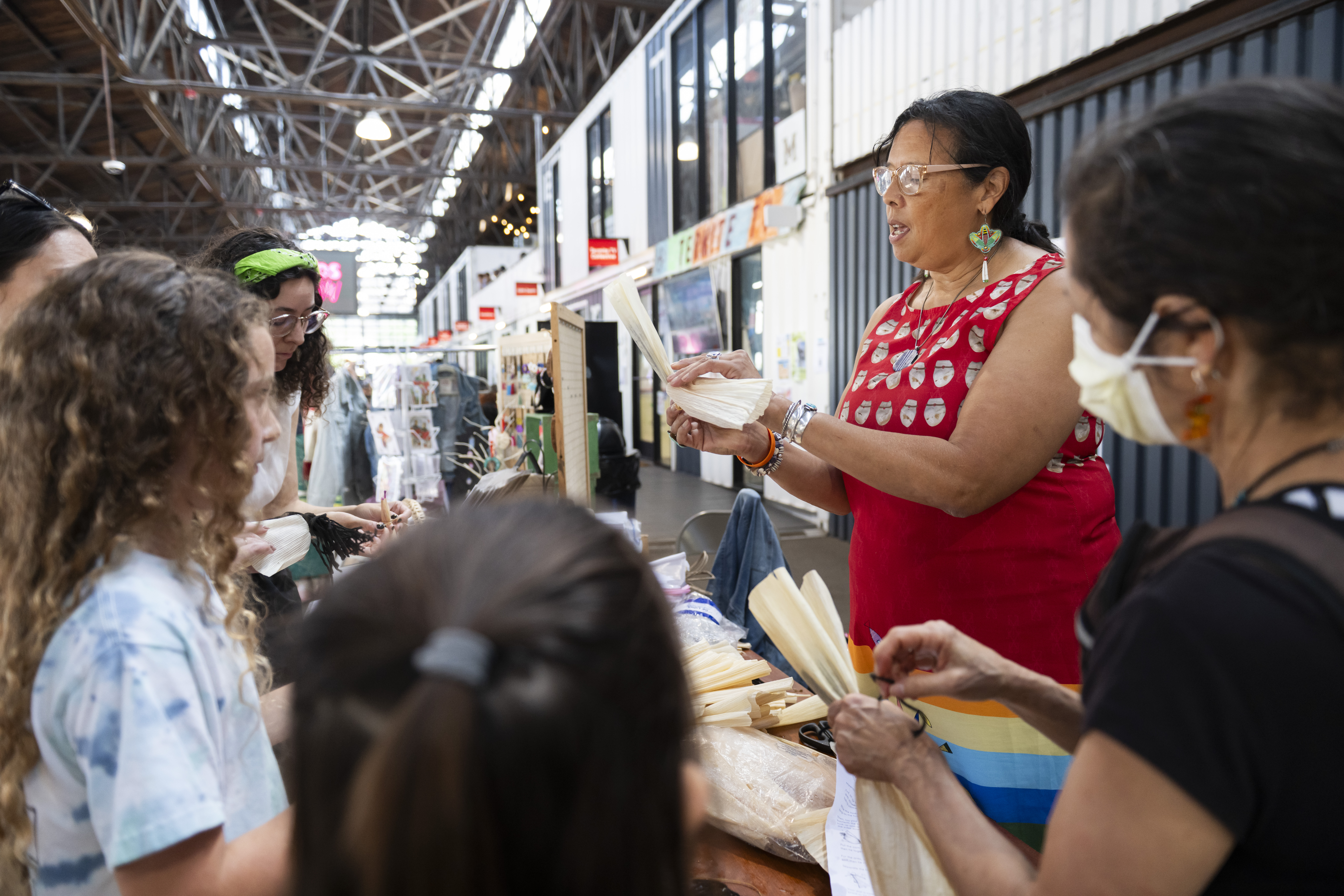
Sosakete of Akwesasne Mohawk Nation builds a Mohawk Rocket Kiln made of bricks with the words “Merciless Indian Savages” at the Philly Seeds Festival hosted by Indigenous nonprofit, We Are the Seeds, at Cherry Street Pier on Saturday, Sept. 19, 2026.Tchin, Artist-Partner for Education and Cultural Programs at We Are the Seeds, puts in a lacing pin to hold together a northern plains tipi at the Philly Seeds Festival at Cherry Street Pier on Saturday, Sept. 19, 2026.Tchin, Artist-Partner for Education and Cultural Programs at We Are the Seeds, raises a northern plains tipi at the Philly Seeds Festival at Cherry Street Pier on Saturday, Sept. 19, 2026.Tchin (right), Artist-Partner for Education and Cultural Programs at We Are the Seeds, puts the finishing touches on a northern plains tipi at the Philly Seeds Festival at Cherry Street Pier on Saturday, Sept. 19, 2026.Dancers line up for the Powwow at the Philly Seeds Festival hosted by Indigenous nonprofit, We Are the Seeds, at Cherry Street Pier on Saturday, Sept. 19, 2026.A dancer performs during the Powwow at the Philly Seeds Festival hosted by Indigenous nonprofit, We Are the Seeds, at Cherry Street Pier on Saturday, Sept. 19, 2026.A dancer wears a decorative headdress at the Philly Seeds Festival hosted by Indigenous nonprofit, We Are the Seeds, at Cherry Street Pier on Saturday, Sept. 19, 2026.Various artists and vendors are set up at the Philly Seeds Festival hosted by Indigenous nonprofit, We Are the Seeds, at Cherry Street Pier on Saturday, Sept. 19, 2026.Sherenté Harris, Head Two Spirit Dancer from the Narragansett Tribe, performs during the Powwow at the Philly Seeds Festival hosted by Indigenous nonprofit, We Are the Seeds, at Cherry Street Pier on Saturday, Sept. 19, 2026.Dancers perform during the Powwow at the Philly Seeds Festival hosted by Indigenous nonprofit, We Are the Seeds, at Cherry Street Pier on Saturday, Sept. 19, 2026.Dawn Spears, artist and Narragansett, teaches a group how to make cornhusk dolls at the Philly Seeds Festival hosted by Indigenous nonprofit, We Are the Seeds, at Cherry Street Pier on Saturday, Sept. 19, 2026.Fancy Shawl Dancers Chitanitehe Ridgeway (left) and Cory Ridgeway (right) put accessories in their hair before the start of the powwow at the The Philly Seeds Festival hosted by Indigenous nonprofit, We Are the Seeds, at Cherry Street Pier on Saturday, Sept. 19, 2026.
Farther down the pier, Roger Sosakete Perkins, a Mohawk multimedia artist and culture keeper from the Bear Clan of Akwesasne near the Canadian banks of the St. Lawrence River, prepared a special fire-working kiln he had built for the festival. Considered a founder of “Powowpopart” — a blending of Native-inspired abstract design and vintage pop culture imagery — Perkins gathered clay from a roadbed near his studio to make Mohawk bricks for the kiln. Each is enshrined with “merciless Indian savages” — a phrase that appears in the Declaration of Independence. On Sunday, Perkins will burn a piece of his own art and a replica of the declaration in the kiln. In Mohawk culture, the burning of something is symbolic of “rebirth” and “replenishing” – like the intentional land fires set to “burn out old growth and bring in new life,” he said.
The installation is meant to represent a conversation, he said, building his kiln, brick by brick, as the pier filled.
“A conversation that has needed to happen for 250 years,” he said. “A real conversation.”
Leah Santos still wears a mask during her daily Regional Rail commute into Philly.
The 35-year-old nurse from Springfield, Delaware County, never stopped implementing COVID-19-era precautions. And she’s just as careful with her 1-year-old son.
So when Santos learned in May about the growing measles outbreak in nearby Lancaster County, she started asking a new question of friends and family who regularly make excursions around the region for shopping and dining: Have you been to Lancaster lately?
“I have a child to protect at all costs. So I’m making sure I’m not in contact with anyone who’s been traveling out to Lancaster,” Santos said.
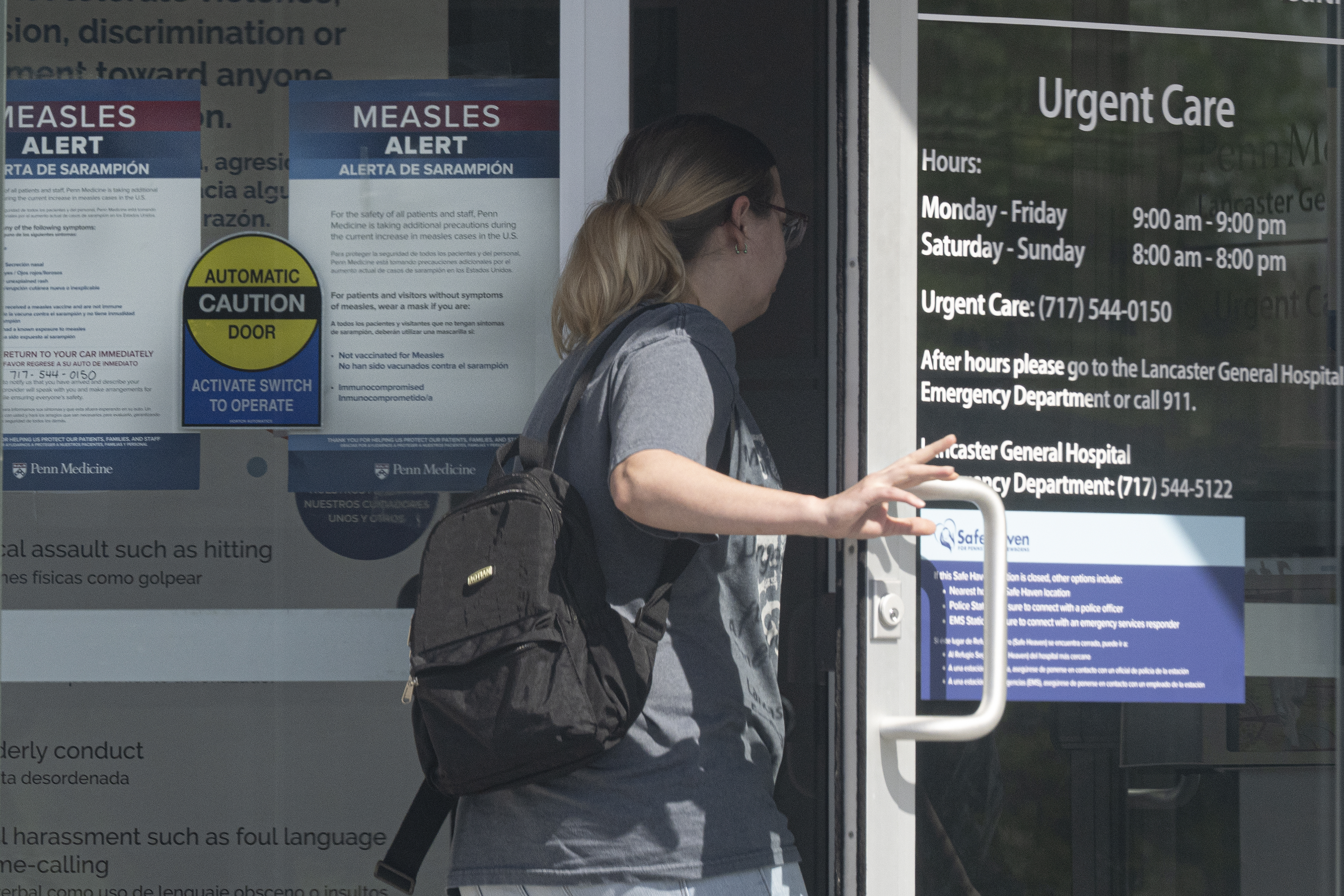
Measles alert signs in English and Spanish are posted on the front doors of an urgent care facility this month in Lancaster County amid a measles outbreak that has affected local Amish and Mennonite communities.Jose F. Moreno / Staff Photographer
A spreading measles outbreak in Pennsylvania has sickened 767 people already this year, and hospitalized 45 children under age 18. State officials have announced fourdeaths related to the outbreak: two infants in Lancaster County, a 40-year-old in Jefferson County, and an 18-year-old in Mifflin County.
Chester County remains the only Philadelphia-area county with confirmed cases — more than 65 this year, the third-highest in the state.
But in a densely populated region where crossing county lines for work and socializing is the norm, someworried parents are vaccinating babies early, delaying daycare, and weighing the risks of attending crowded festivals with their kids or visiting family in affected areas.
Measles can be more dangerous for some
Young children are especially at risk from the vaccine-preventable disease, which in severe cases can cause pneumonia, blindness, and brain swelling that can lead to brain damage.
None of the Pennsylvania residents who died were vaccinated against a virus so contagious that it will infect nine in 10 unvaccinated people who are exposed.
Measles deaths are rare,and the four deaths confirmed as “measles-associated” by Pennsylvania health officials, sparked a political standoff between Democratic Gov. Josh Shapiro and President Donald Trump’s Health Secretary, Robert F. Kennedy Jr., a longtime anti-vaccine activist.
Experts say that life shouldn’t change much for families whose children are vaccinated and otherwise healthy. But it’s important to take the disease seriously at a time when declining vaccination rates have left communities across the state increasingly vulnerable, including in the Philadelphia region.
Even as countywide immunization levels in the area remain relatively high, hundreds of kindergartens across Philadelphia and four surrounding suburban counties dropped below the “herd immunity” threshold — a vaccination rate of 95% or higher — for the 2025-26 school year, an Inquirer analysis of state data found.
This is the level at which a given population must be fully vaccinated against measles to prevent the spread of disease. In the Philadelphia region last school year, about 40% of kindergartens failed to meet that threshold, up from about a third the year before.
What are the pediatric guidelines to protect against measles?
Pediatricians typically recommend a child’s first vaccine for measles, mumps, and rubella at 1 year old, unless the child is likely to travel overseas, and then a second between 4 and 6 years old.
But Pennsylvania health officials are now encouraging a “dose zero” for children as young as 6 months old in counties affected by the state’s worst outbreak in three decades. Children can then get a second dose at 1 year old and another at 4 to 6 years old. The state is also recommending that children older than 1 who haven’t started their MMR vaccine series get two doses of the vaccine at least 28 days apart.
Santos said her son recently had his first vaccination, and her son’s pediatrician recommended he get his next shot at just 15 months old.
“We have gotten so far from knowing what vaccinations have done for us that we have no idea how terrifying this disease is,” Santos said.
‘One of those things you never think would affect you’
Caitlin Buttery of Kennett Square, in Chester County, recalls her trip, earlier this summer, to Lancaster when she was nine months pregnant, only to regret it after learning about the measles outbreak.
Now, with a healthy 6-week old baby, as well as an 18-month old, she’s avoiding the Lancaster area and also monitoring cases in her own county, where measles is circulating.
She worries about taking her children to public spaces like the YMCA or Kennett Square’s annual Mushroom Festival, which earlier this month drew thousands to the rural town.
“Measles is definitely one of those things you never think would affect you,” she said. “Now, I need to be a lot more cognizant of the chance that it could.”
Caitlin Buttery in East Passyunk with her daughter this month. The Chester County mother is avoiding the Lancaster area, the epicenter of the state’s outbreak, and also monitoring cases in her own county, where measles is circulating.Jessica Griffin / Staff Photographer
The 33-year-old said she plans to get her youngest the measles, mumps, and rubella vaccine at 6 months old.
Public health experts have warned that there are likely far more measles cases circulating in Pennsylvania than have been recorded by the state. And the disease doesn’t confine itself to county or state borders. Across the United States, more than 3,100 people this year have tested positive for the disease, the CDC said last Thursday.
(function(){function e(){window.addEventListener(`message`,function(e){if(e.data[`datawrapper-height`]!==void 0){var t=document.querySelectorAll(`iframe`);for(var n in e.data[`datawrapper-height`])for(var r=0,i;i=t[r];r++)if(i.contentWindow===e.source){var a=e.data[`datawrapper-height`][n]+`px`;i.style.height=a}}})}e()})();
Amina Lowery lives in Upper Darby. No cases have been reported in Delaware County, but health officials there did identify measles in a wastewater sample earlier this summer, meaning someone with the disease used a bathroom connected to the county’s public water supply.
Lowery opted to get her 6-month-old daughter vaccinated early. She alsoquit her job in the insurance industry to keep her daughter out of daycare, “since we can’t control what other parents decide.” She said the plan now is to enroll her child when she’s closer to 2 years old.
She feels safer having her child vaccinated ahead of a family trip later this year to Florida, which is also dealing with a measles outbreak.
“We have the research and documentation to show that vaccines work and are for the greater good. It feels like we are in the midst of societal decline,” Lowery said.
Like Lowery, Shelby Steele of Springfield opted to keep her daughter out of daycare. Her daughter is now nearly 2 years old, but Steele, a consultant who works from home, isn’t any closer to enrolling her.
“We obviously worry about the socialization aspect of things, but measles is no joke. We’d rather find more creative ways to socialize her safely for now,” Steele said.
Steele and her partner want to have another child if possible. But she said the measles outbreak “and just the current state of things overall” makes them think twice about the risks a child could face.
Steele said she’d like to send her daughter to school, but the outbreak even has her considering homeschooling. “We are having to reconsider a lot of things, schooling being one of them,” she said.
Physicians advise parents on navigating the outbreak
Pediatrician Katie Lockwood says parents coming to her Children’s Hospital of Philadelphia practice in Montgomery County say they’re changing childcare and vacation plans to avoid measles exposures.
Montgomery County has reported three measles cases this year.
“If you’re fully vaccinated and healthy, I don’t think there’s a change in how you need to operate right now,” Lockwood said.
“But if you have someone in your family who is particularly vulnerable, if they’re immunocompromised, pregnant, or unvaccinated because they’re too young, then you may want to change your behaviors.”
She advises parents to talk to school officials and daycare providers about their vaccination policies, keep sick kids home to avoid spreading illness, and make sure children are up to date on all recommended vaccines.
“It’s awful that now parents are having to make a decision between work and childcare for something that we can prevent safely with vaccination,” she said. “Not everyone has the ability to quit their job or stay home, and they may not have an alternative childcare resource.”
Like many practicing physicians today, most schools and daycares have never had to deal with a measles case. Lockwood recently had several childcare providers refer children with rashes to her practice, worried about measles.
None of the children had the disease, but “I would rather a school or a daycare overreact,” she said, explaining that keeping a child out of school to evaluate a rash that proves harmless prevents “potentially exposing a bunch of kids to measles.”
(function(){function e(){window.addEventListener(`message`,function(e){if(e.data[`datawrapper-height`]!==void 0){var t=document.querySelectorAll(`iframe`);for(var n in e.data[`datawrapper-height`])for(var r=0,i;i=t[r];r++)if(i.contentWindow===e.source){var a=e.data[`datawrapper-height`][n]+`px`;i.style.height=a}}})}e()})();
In Bucks County, pediatrician Toni Richards-Rowley often counsels parents frustrated about having to navigate the outbreak.
She also serves as president of the Pennsylvania chapter of the American Academy of Pediatrics, which has been working to educate doctors about measles and how to recognize it.
In her own practice, Richards-Rowley is also offering “dose zero” shots for children whose parents work or plan travel to affected counties.
“If a parent asks for it, even though there’s not community spread in Bucks yet, we’re not going to turn a family away,” she said.
“Measles doesn’t respect borders. Just because we don’t have an index case doesn’t mean it’s not going to happen. You do have to be fairly vigilant wherever you go.”
Correction: This story has been updated to delete an incorrect reference to Upper Darby’s geography in the region.
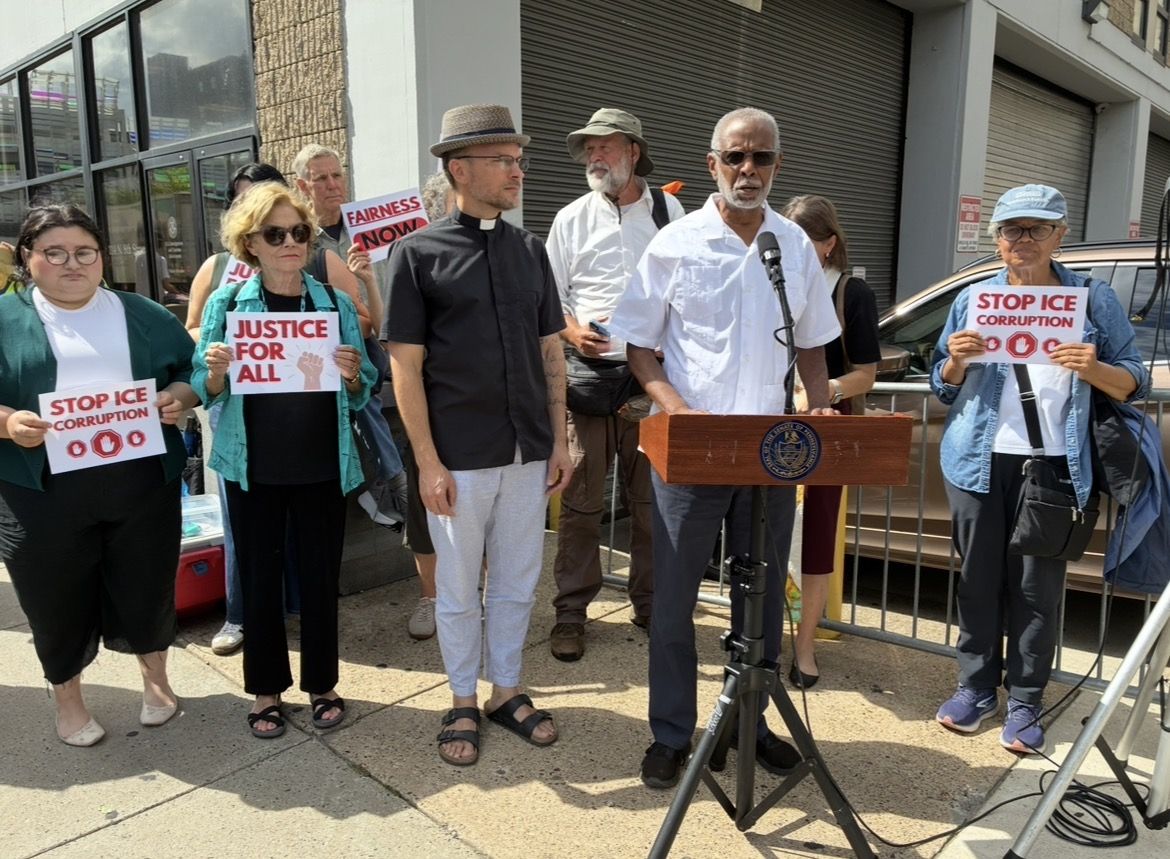
A group of clergy, political leaders, and activists gathered at the Philadelphia ICE office on Friday in the wake of a deportation officer’s suicide, condemning what they said was the agency’s destruction of lives both inside and outside its ranks.
Speakers said they said they grieved with the family of Joseph Moore, 38, who died of a self-inflected gunshot wound while parked near the Center City headquarters, and with the families of immigrants treated wrongly and cruelly by the agency.
Moore died Aug. 28 as he was facing dismissal, along with other new officers brought on amid a huge wave of ICE hiring, one that critics say has led to the employment of unqualified and unvetted recruits.
“He was an ICE agent,” said state Sen. Art Haywood, a Democrat who represents parts of Philadelphia and Montgomery counties, “but he was also a human being.”
Local ICE officials did not immediately respond to a request for comment.
Speakers called ICE a rogue agency, and called on its officers to quit their jobs.
One man, who kept vigil outside ICE headquarters nearly every day in August, said he tried to talk to officers as they went inside, and wished he could have talked to Moore.
Generally, said Jim Nicholson, who described himself as Quaker and non-violent, the officers he addressed were “not interested in being human, compassionate beings,” that they told him everyone they arrest is a criminal.
“I’m a very sorry to hear an agent of ICE committed suicide. That’s a tragedy,” he said. “If the agent had come to us, to me, I would have tried to help.”
U.S. Immigration and Customs Enforcement, charged with carrying out President Donald Trump’s mass-deportation plan, has been on a hiring binge that more than doubled the size of the agency. Now ICE has begun quietly firing some of those new officers, The Washington Post reported, citing multiple officials who said officers were put on the streets without being properly vetted.
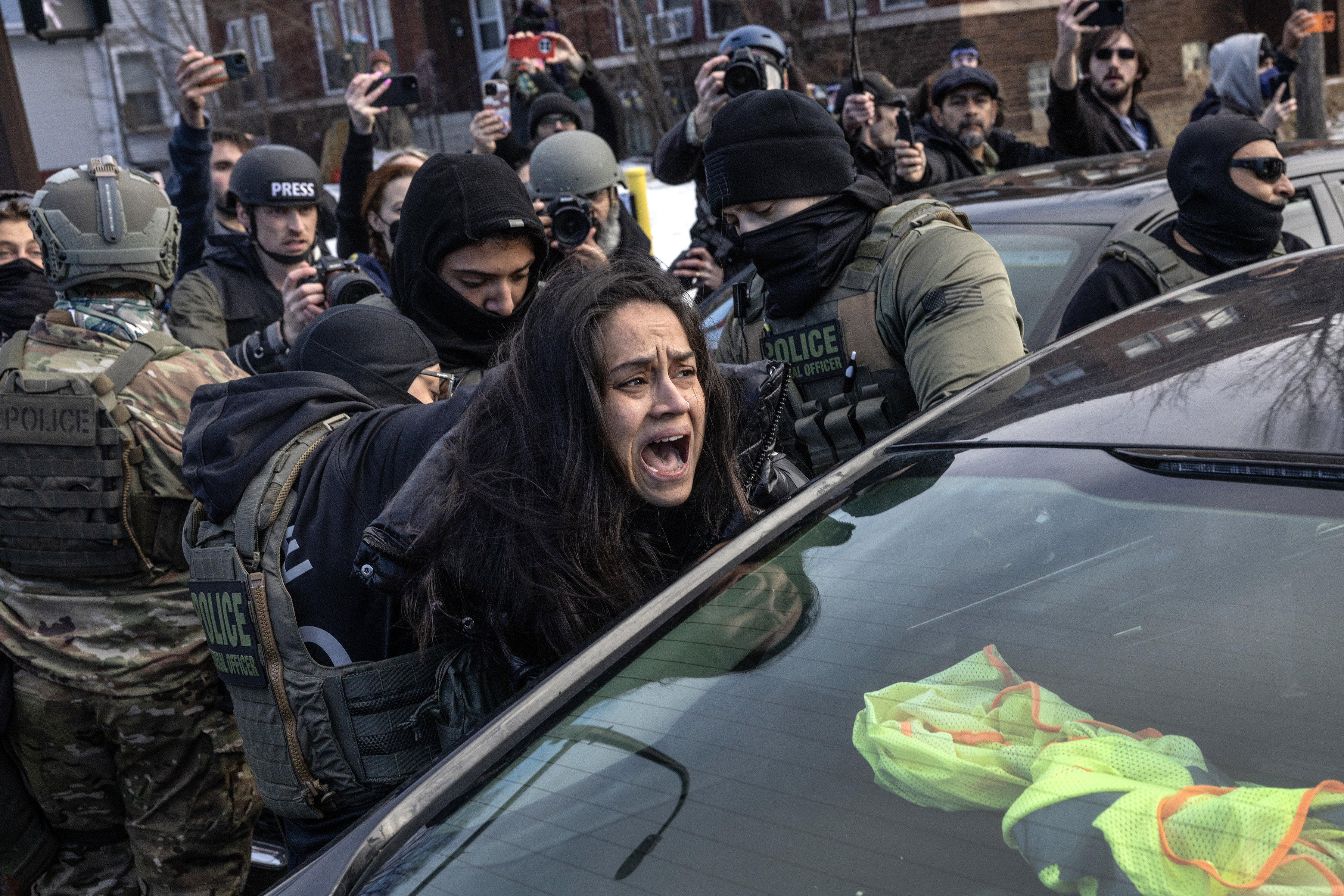
Federal agents arrest a woman after smashing her car window and dragging her from the vehicle in Minneapolis on Jan. 13, 2026. The legality of the Trump administration’s tactics during its immigration enforcement operation, known as Metro Surge, in Minneapolis early this year was challenged by a series of federal lawsuits.DAVID GUTTENFELDER
The Post reported on Monday how Moore, a Marines reservist who graduated from Cheltenham High School in 2006, died by suicide while parked near ICE headquarters.
Philadelphia police officials said officers called to the scene tried to stop Moore from hurting himself.
Police were summoned to the area of Eighth and Race Streets ― the ICE office is one block south ― for a report of an armed man in distress who had barricaded himself inside a vehicle, officials said.
The officers communicated with the man and tried to de-escalate the situation, but he drew a gun and shot himself, police said. No Philadelphia officer fired a weapon, the department said.
Police, without identifying Moore by name, said they have finished their inquiry into the death, and would provide no additional details because it involved a suicide.
In mid-2025, ICE received massive new funding for hiring — about $30 billion, part of $76.5 billion it received through President Donald Trump’s “Big Beautiful Bill.” The administration has said it wants to deport a million people a year, which would require a vastly larger ICE and extensive new detention capability.
Part of the lure was a promised $50,000 signing bonus.
ICE said the majority of new hires were police and military veterans, but an investigation by The Associated Press found evidence that applicants with questionable histories were not fully vetted or were hired in spite of their pasts.
The Post said Homeland Security would not answer questions about specific hiring decisions. It did say that some applicants received “tentative selection letters” and offers to begin working on a temporary status before being subjected to full background checks.
The hiring happened so fast that new officers were put on the streets before being adequately vetted, multiple former officials told the Post. One ICE whistleblower urged officials to halt the expansion, saying in an August 2025 memo that the “overwhelmed” agency had hired officers without checking their fingerprints or their identities, the Post said.
In recent months, ICE has begun quietly firing some of the recruits, the Post reported, citing three former DHS officials who spoke on the condition of anonymity. They said ICE has cited poor performance or red flags that should have been identified earlier.
The Department of Homeland Security rejected those concerns.
Relatives of an ICE officer who shot a Colombian man in Maine in July told The Associated Press he struggled with serious mental health issues since early childhood, and never should have been given a badge and gun. The revelations about the officer, David Brouillette, brought fresh attention to ICE hiring procedures.
The Post said Moore had dreamed of a life in law enforcement since he was a teenager. But two law enforcement agencies fired him, and others rejected him. ICE hired him in the fall as a deportation officer.
Efforts to reach Moore’s family members were unsuccessful.
His obituary said the father of two served 20 years in the Marines as both an active member and a reservist. And that he graduated with a 4.0 grade-point average from Rosemont College, where he earned a bachelor’s degree in criminal science.
This week’s edition of Shackamaxon looks at a crackdown on “smoke shops,” the Philadelphia police’s handling of traffic citations, how Harrisburg deadlines can be leveraged to fund transit, and what City Council forgot to talk about in its first session after returning from summer break.
Up in smoke?
An increasingly common frustration has been expressed across Philadelphia over the rise of what are known as “smoke shops,” which have proliferated in the city’s commercial corridors. Ostensibly operating as grocery stores, they are often locations where illegal drugs and drug paraphernalia are sold. They tend to operate late into the night and attract the ire of both residents and other business owners.
That’s why it was refreshing to see someone make a substantive move to shut them down. State Rep. Amen Brown, whose district includes parts of West Philadelphia and Logan Square, has put together an initiative he’s called Operation Breezy. Working with both city and state law enforcement, and relying on the support of members of the community, Brown’s efforts have already shuttered 13 of the establishments.
Brown’s approach uses confidential informants, many of whom come from the community itself. He told me that one of the now-closed shops had roughly 40 pounds of marijuana on thepremises, the outlets routinely sell out-of-state cigarettes, and that firearms have been seized as part of the efforts. Residents who would like to help can send an email to OperationBreezy@gmail.com or a message to the effort’s Instagram page, @operationbreezy.
Brown said he’d like to do more to stop the smoke shops, but that the best option requires action at the local level. Rather than enacting a broad-based curfew for all businesses, he’d prefer to target just the smoke shops. He says that might be possible by imposing restrictions on the operating hours of grocery stores that are smaller than 300 square feet. That’s a size below which, officials say, legitimate uses for a storefront become impractical.
Still, I couldn’t help wondering whether this incident is a natural outgrowth of the department’s policies. The Philadelphia police simply do not seem to take enforcing traffic laws seriously enough. Traffic citations have plunged over the last few decades. In the 1990s, officers regularly issued roughly half a million tickets per year. In 2023, about 45,000 tickets were handed out. These days, we celebrate an increase of a few thousand citations, even as overall stops remain at a fraction of the total pedestrian safety experts say is needed. Commissioner Bethel has said that enforcing traffic violations is a lesser priority.
While many officers blame the city’s Driving Equality Law for this decline, that measure does not prevent officers from enforcing moving violations, which are the most dangerous offenses. Failing to do so is a choice the department has made on itsown. The result of this lack of enforcement, traffic safety experts say, has been an increase in reckless and aggressive driving.
Given thata city controller report called Philadelphia’s streets the most dangerous of any major U.S. city, this lack of prioritization must change. While speed cameras and other forms of automated enforcement have made a difference along high-traffic corridors like Roosevelt Boulevard and Broad Street, they can only enforce certain offenses in certain locations. Reckless driving is an issue almost everywhere.
It is impossible to know what went through the mind of the officer who left Eugene Beauford in the street. The department has declined to publish his name, let alone make him available for an interview. But perhaps this horrific incident will prompt police brass to rethink the department’s strategy for enforcing traffic laws.
Skill game shutdown
Next month, Pennsylvania’s so-called games of skill will need to be unplugged. Oct. 13 marks the last day of the grace period the state Supreme Court gave the General Assembly to devise a taxation and regulatory scheme for the machines, devices that resemble slot machines and which are currently banned under state law. For years, legislators have debated where the machines can operate, and whether they should pay the same tax rate as existing slot machines.
By pure coincidence, there’s another big deadline approaching: the authorization period for the state-appointed SEPTA prosecutor. I’d like to propose a potential compromise for both issues. Harrisburg should extend the SEPTA prosecutor’s authority by three years, agree to Gov. Josh Shapiro’s proposed shift in sales tax revenue to support public transit, and pay for it by legalizing skill games and taxing them at the same rate as slot machines. They should also pass regulations limiting the placement of the machines and creating penalties for owners who allow children to use them.
Given District Attorney Larry Krasner’s recent struggles, extending the SEPTA prosecutor should be less politically contentious now than it was in years past. Lawmakers can also point to the significant decline in fare evasion and violent crime on the transit system over the last few years as justification.
For Philadelphia lawmakers who may be reluctant to place limits on the authority of Krasner, who has been overwhelmingly elected by their constituents three times, that kind of middle ground can provide fiscal peace of mind for SEPTA, which has been subject to financial uncertainty for three years. While Democrats seem to be pinning their hopes for approving more state funding for SEPTA on winning control of the state Senate during this fall’s elections, that is hardly guaranteed. If a deal can be reached ahead of time, it reduces the risk of a collapse. It also does not preclude additional action next year.
Finally, the need to act on skill games is clear. As it stands, it will be difficult for the commonwealth to shut down every location that houses the machines. We don’t even know how many exist. I am not a fan of these devices, which have a negative impact on the communities that host them. Regulation will make it easier to mitigate that damage and ensure Pennsylvanians see some benefit from the funds that flow through them.
Council comeback
After its three-month summer hiatus, City Council is back in session. All eyes on the second floor of City Hall will be trained on how Mayor Cherelle L. Parker will respond to a series of potentially contentious legislative proposals — from Councilmember Jamie Gauthier’s bill to stop burning trash to Councilmember Isaiah Thomas’efforts to stop at least part of the school closure plan.
City Council should hold investigatory hearings into both officials. Residents deserve better from their leaders than what both Krasner and Bilal have shown.
Bob Sumner was reffing a high school basketball game years ago when Speedy Morris, then the coach at St. Joseph’s Prep, waved him over.
Perhaps the legendary coach wanted to discuss a call or ask the ref to look for something on the court. Nope. He just wanted to tell Sumner what he thought of the ref’s beloved college football team.
Sumner’s passion for the Irish runs so deep — Saturday’s game against Michigan State marks his 50th annual pilgrimage to South Bend, Ind. — that even black-and-white referee stripes can’t hide his love for the blue and gold. Most don’t even know his name.
“People will say, ‘Bob Sumner is doing the game,’” Sumner said. “They’ll say, ‘That wasn’t Bob. That was Notre Dame Harvey.’”
Sumner, like so many Irish supporters, didn’t attend Notre Dame. But that didn’t stop him from falling for the Irish in the 1970s as a kid in Grays Ferry, where it seemed like half the neighborhood was split between Penn State and the Golden Domers.
The neighborhood — just like pockets of Northeast Philly and Delaware County — often felt like a Notre Dame satellite campus.
Sumner’s Uncle John took him as a kid to see the Irish at JFK Stadium and he used to race home with his brother after church at St. Gabriel’s to watch the ND highlight show.
In 1977, Sumner flew to South Bend with a bunch of older guys from the neighborhood who watched Notre Dame every Saturday at Dean’s Bar. Notre Dame Harvey — no one quite knows why his family started calling him Harvey, but it’s easy to explain the Notre Dame part — was born.
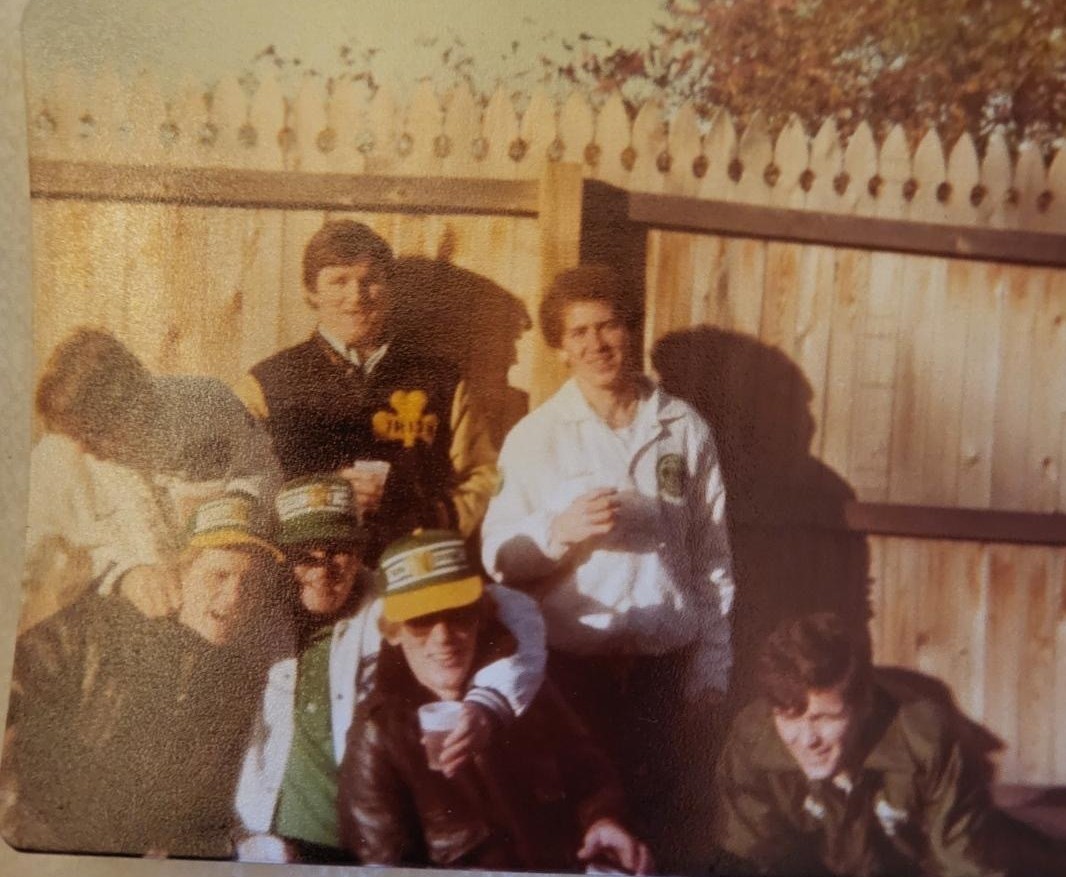
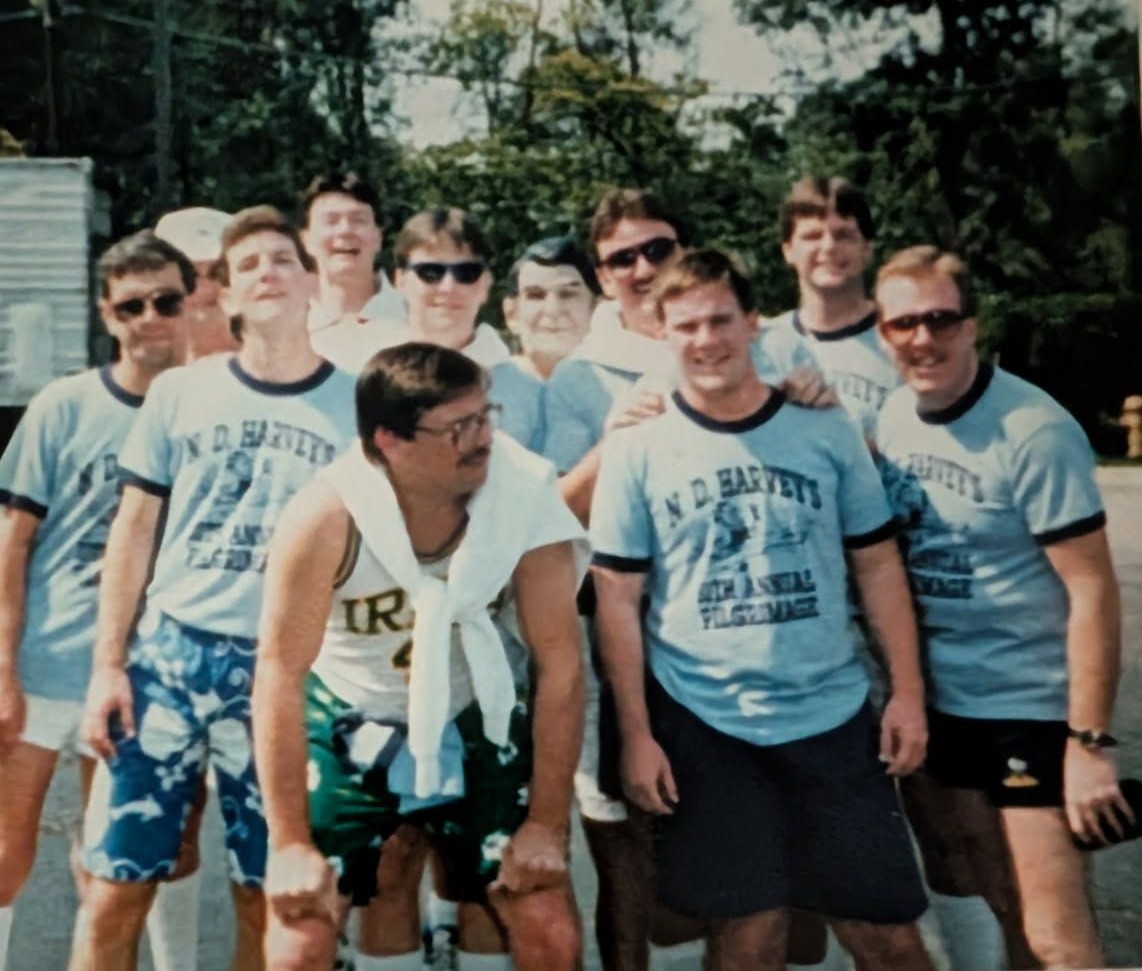
Notre Dame Harvey and the “Gang From Grays Ferry” during a trip to South Bend in 1981. They’ve made 50 straight trips to see the Irish.Bob Sumner
The Grays Ferry clan — “The Notre Dame Club of Grays Ferry,” they called themselves — went out every season as they drove Winnebagos, rented buses, and boarded airplanes to turn South Bend into South Philly.
One guy said he told his wife before they got married that the annual trip was part of the deal. Sumner even played the fight song at his wedding.
They hang in the bars, walk around campus, go to church, and even once helped paint the gold helmets. It’s hard to explain, Sumner said, until you make the trip. The school became his identity as there’s no hiding his love for ND. Even when he’s trying to ref.
“I knew I couldn’t ‘T’ Speedy up,” said Sumner who ends every phone call with a ‘Go Irish.’ “He’s a legend.”
A nail in the foot
Sumner’s first trip to Notre Dame in October 1977 came a week after the Irish wore green jerseys and blew out fifth-ranked Southern California. The team ran onto the field that day behind a wooden Trojan horse, which was still on campus when the guys from Grays Ferry arrived.
“I was jumping on it and I stepped on a nail,” said George Sumner, Notre Dame Harvey’s older brother. “I had to go to the hospital on my first night on campus.”
A nail? No big deal. Sumner got a shot at the hospital and was back with the clan that night. The Irish played Navy the next afternoon and the guys returned to Dean’s at 29th and Tasker with a win.
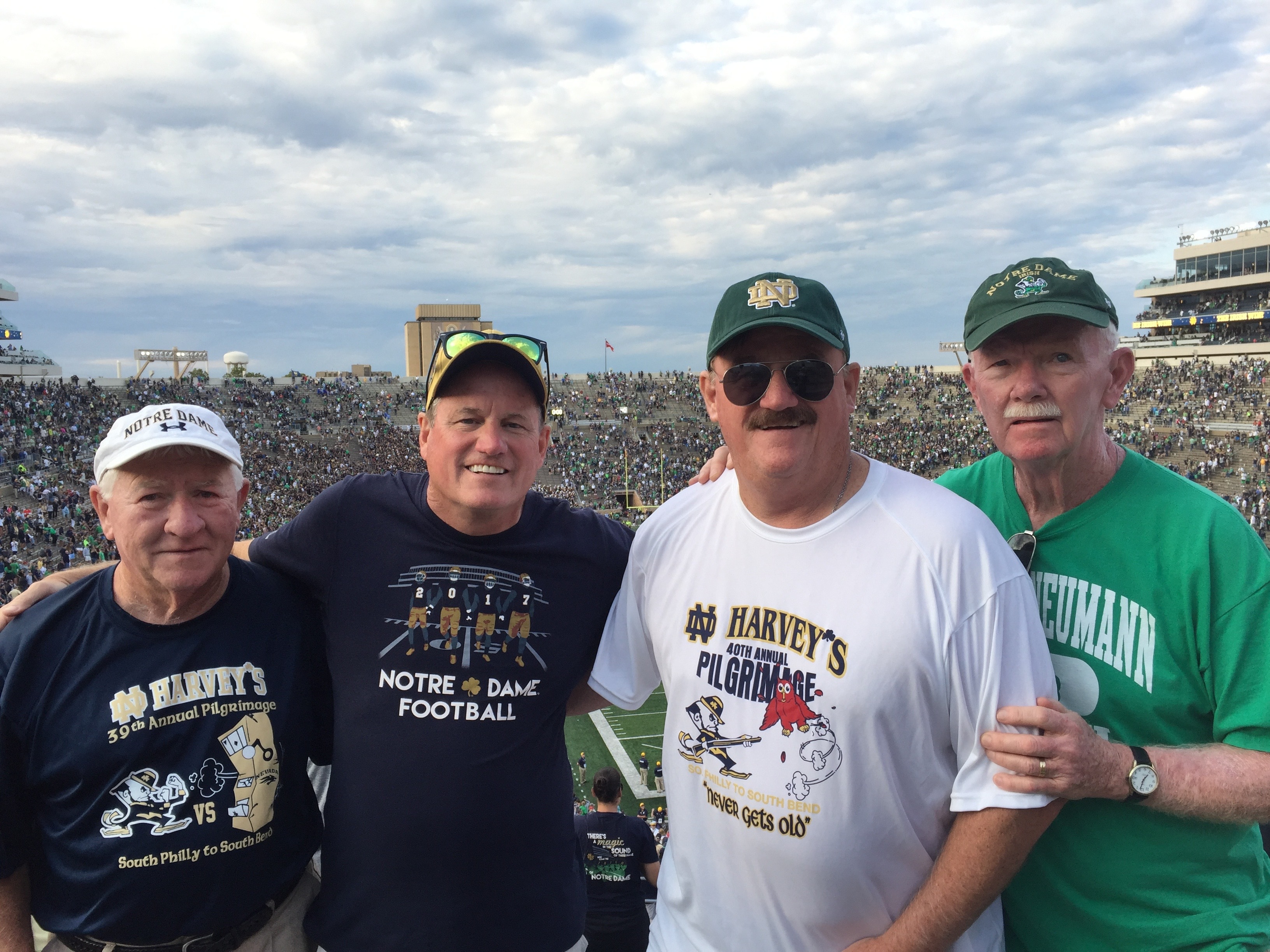
Frank Henry, Notre Dame Harvey, George Sumner, and Joe “Whitey” Gibson at Notre Dame Stadium in 2017 for the 40th annual trip.Bob Sumner
“First time in the stadium, I had the tears running,” Sumner said. “It’s something that you grew up with and you saw it on TV. But when you’re there, it’s like, ‘Oh my God. I’m here.’”
The first trips were run by neighborhood pillars Jack Keenan and Greg Horan before Notre Dame Harvey took over. They connected with alumni, found ways to score tickets to sold-out games, and have met everyone from Ara Parseghian to Will Fuller.
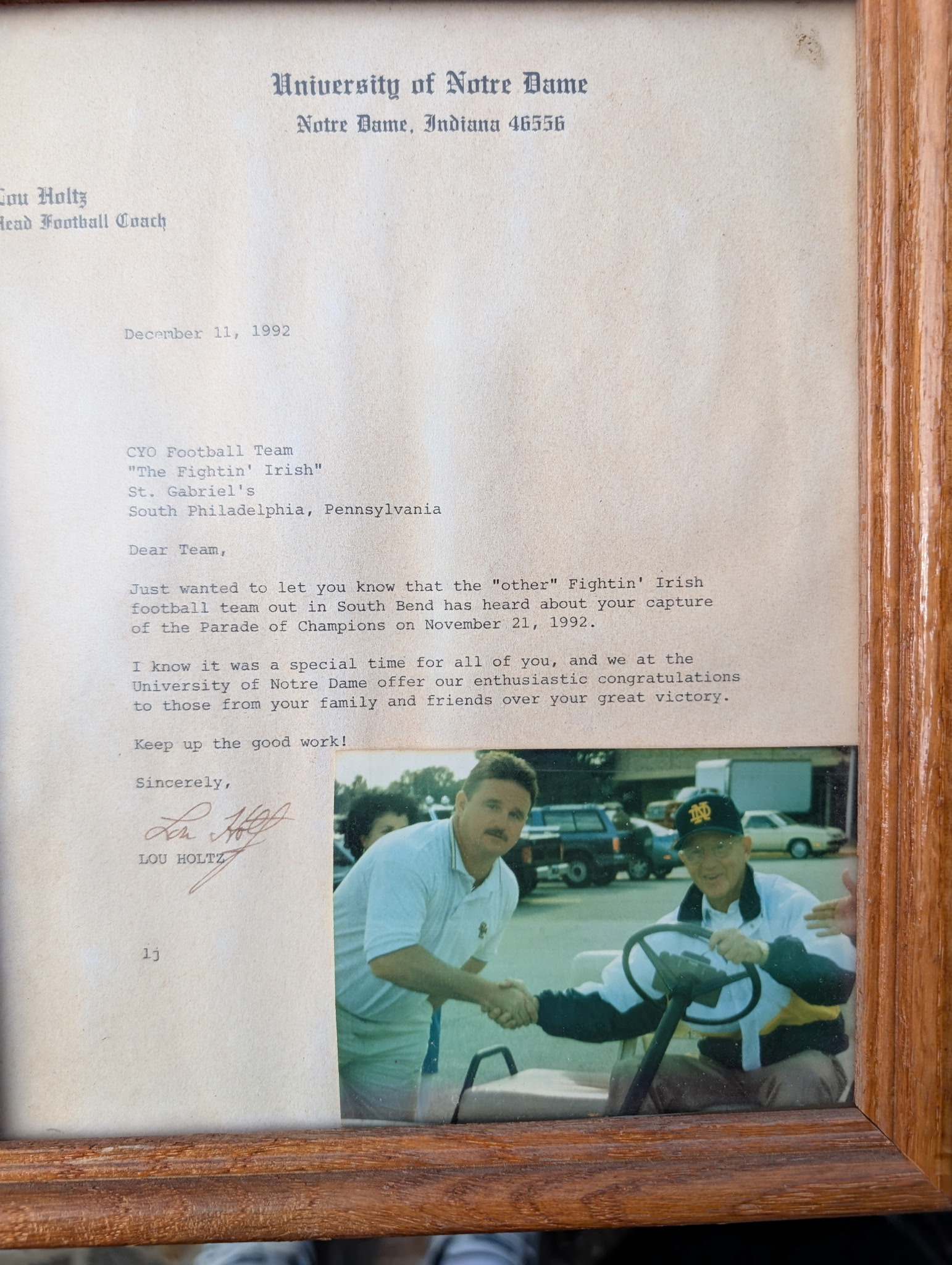
Lou Holtz even wrote a letter to Bob Sumner after Sumner coached the St. Gabriel CYO football team — of course, they’re the Fightin’ Irish — to a 1992 championship.
“Just wanted to let you know that the ‘other’ Fightin’ Irish football team in South Bend has heard about your capture of the Parade of Champions,” Holtz wrote.
Notre Dame coach Lou Holtz wrote a letter to St. Gabriel’s CYO team after the other Fightin’ Irish won a football title in 1992.George Sumner
Most of the crew who have traveled with Notre Dame Harvey are Subway Alumni, the moniker worn with pride by ND fans who didn’t go to school there. They used to pack a bus with neighborhood guys and made sure they had enough beer and hoagies for the ride.
“Going out was phenomenal,” George Sumner said. “But coming home was a long ride. Win or lose. It’s brutal.”
The annual trip became an event. For years, they parked their Winnebago next to the stadium all weekend and showered in the basketball arena. They were living large, George Sumner said.
“People say, ‘You go there,’” said George Sumner, who went to Temple but cheered for the Irish against the Owls. “I say, ‘Yeah.’ My wife says, ‘Stop lying.’ I say I go every year. But I did sneak into two classes. I snuck into a philosophy class and a chemistry class so I’ve taken classes there. Dean’s list.”
Harvey planned to leave Thursday morning before dawn, which he figured would get him to the Linebacker Lounge by 4:30 p.m.
“We’re in ND,” Harvey texted Thursday at 4:38 p.m. “Go Irish.”
They planned to have a “a couple cold ones” at the Linebacker Lounge and “go as far as their body takes us.” The 68-year-old Harvey said the crew might not stay out like they used to and has learned the importance of a good breakfast.
But the bartenders at the spot by the football stadium still know the crew from Philly as the “Grays Ferry Gang” who always pile their cash together on the bar.
“We’re Philly people,” Sumner said. “We throw up a kitty. People don’t know what a kitty is. The bartenders we know in the Linebacker say, ‘They’re all right. That’s a kitty.’”
Notre Dame Harvey and the Grays Ferry Gang in South Bend in the late 1980s.Bob Sumner
The crew is about 700 miles from Grays Ferry, but they make an Indiana watering hole feel like Dean’s, where they still gather once a year to watch the Irish. They pool their money together and tell the bartender to pull from the pile whenever someone orders a drink. The leftover cash belongs to the bartender.
“Being from South Philly and Grays Ferry, you always took care of the bartenders and treated them with respect just like a police officer,” Sumner said. “We went to Pittsburgh one time for a game and threw up a kitty with 300 or 400 dollars on the bar. Guy goes ‘What’s that?’”
Sumner gave him a South Philly education. The crew stayed for two hours and left $100 on the bar.
“He goes, ‘What’s that?’ I said, ‘That’s yours. We’re leaving,’” Sumner said. “He was almost in tears. We’re walking out the door and says to the gang, ‘By the way, guys, I open up tomorrow at 8 o’clock.’”
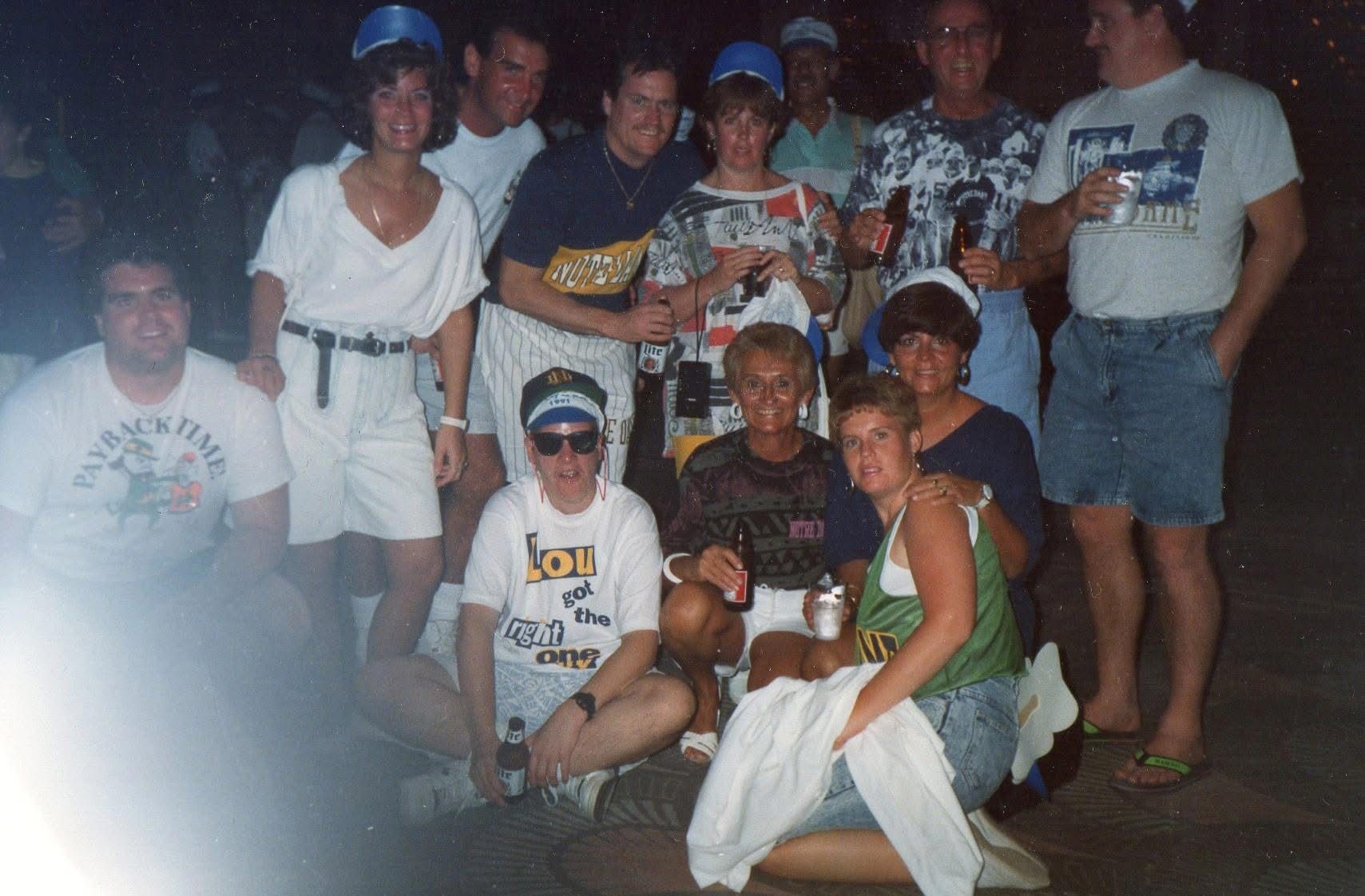
Notre Dame Harvey and The Grays Ferry Gang even traveled to Hawaii to see the Irish play in a bowl game.Sumner
The trip is planned around the game on Saturday but it has become so much more than just the four quarters. It’s the kitty on the bar, the pep rallies, the excitement when the crowds begin to fill campus on Friday, and the tailgate on Saturday — “Bring your own food,” they say — as kickoff nears.
“People still think we’re crazy,” said 71-year-old George Sumner. “But there’s so many people we’ve met and friendships formed all over Notre Dame.”
‘I felt like Rudy’
Sumner bartends each summer at Keenan’s — the North Wildwood bar Jack Keenan used to run — and one of his coworkers lives near Joey O’Brien, the star recruit from La Salle who is now a freshman at Notre Dame. Harvey needed to meet the kid and his parents so his buddy set up a dinner at a bar in Lafayette Hill.
“I didn’t even know where Lafayette Hill was,” said the guy who calls his South Jersey town “Little South Philly.”
He listened to O’Brien’s father Joe tell stories — “He’s like one of us,” Harvey said — and talked to the kid about playing at ND. Earlier this year, Harvey was wandering around campus the day before the Blue and Gold spring game when the football team walked by on their way to practice. O’Brien spotted him and asked Harvey if he wanted to come to practice.
“I felt like Rudy,” he said.
Notre Dame Harvey met Irish head coach Marcus Freeman before the 2026 spring game. The coach thought he was a player’s uncle.Sumner
A staffer brought him to head coach Marcus Freeman and introduced him as “O’Brien’s uncle.” He was in. Notre Dame Harvey — the guy who used to call into Howard Eskin’s WIP radio show to defend the Irish — watched practice on the sidelines. Eventually, he made it back to his crew after telling them he was making a coffee run. Three hours later, he had another story to tell.
“I was just out for a casual walk and one of the greatest thrills of my life happened,” Sumner said. “I was like a kid in the candy store. Everyone treated me great. Freeman must’ve really thought I was his uncle.”
As Heather Whitestone’s dream veered toward reality, her hearing aid wasn’t working and she had lost sight of Regis Philbin’s lips.
The 21-year-old Miss Alabama couldn’t hear the talk show host, or read his lips, when he announced the winner of the Miss America pageant on Sept. 17, 1994.
Rebecca Blouin — Miss Mississippi — turned to her fellow Southerner and shared the news, which broke a barrier at what many consider the United States’ most-celebrated beauty contest.
For the first time in the event’s history, which dates back to 1921 at the Jersey Shore, a deaf woman would wear Atlantic City’s most prestigious award: a rhinestone tiara.
Years of therapy taught her how to speak, and she utilized hearing aids, but Whitestone navigated her way through life primarily by reading lips.
Former Miss America Kimberly Aiken, left, crowns Miss America 1995 Heather Whitestone, of Alabama, after Whitestone won the 74th annual pageant in the Atlantic City Convention Hall in September 1994.Charles Fox
In media interviews during the pageant,she didn’t use an interpreter.
“It’s a physical challenge, not a handicap,” she told The Inquirer in an interview prior to her win. “I really believe the most handicapped people are those who have a bad attitude.”
Feeling the love
Leading up to the main event, attendees showered the Birmingham, Ala., woman with standing ovations as she made it through the pageant’s three nights of preliminary competition.
That affection carried over into the finals, when the ballet dancer dazzled judges Philbin and Kathie Lee Gifford with her talent and chutzpah.
As Christian singer Sandy Patti performed the song “Via Dolorosa,” Whitestone glided along on her tippy toes — counting beats in her head to help keep pace.
“She is an extraordinary human being,” Gifford told The Inquirer.
Crowning achievement
Whitestone was not the first deaf contestant, but she remains the only deaf woman to have won.
A reporter would later ask Whitestone about the potential challenges she faced fulfilling such a public-facing role.
“I think I’m doing just fine,” she said with a wry smile. “I mean, look at us now.”
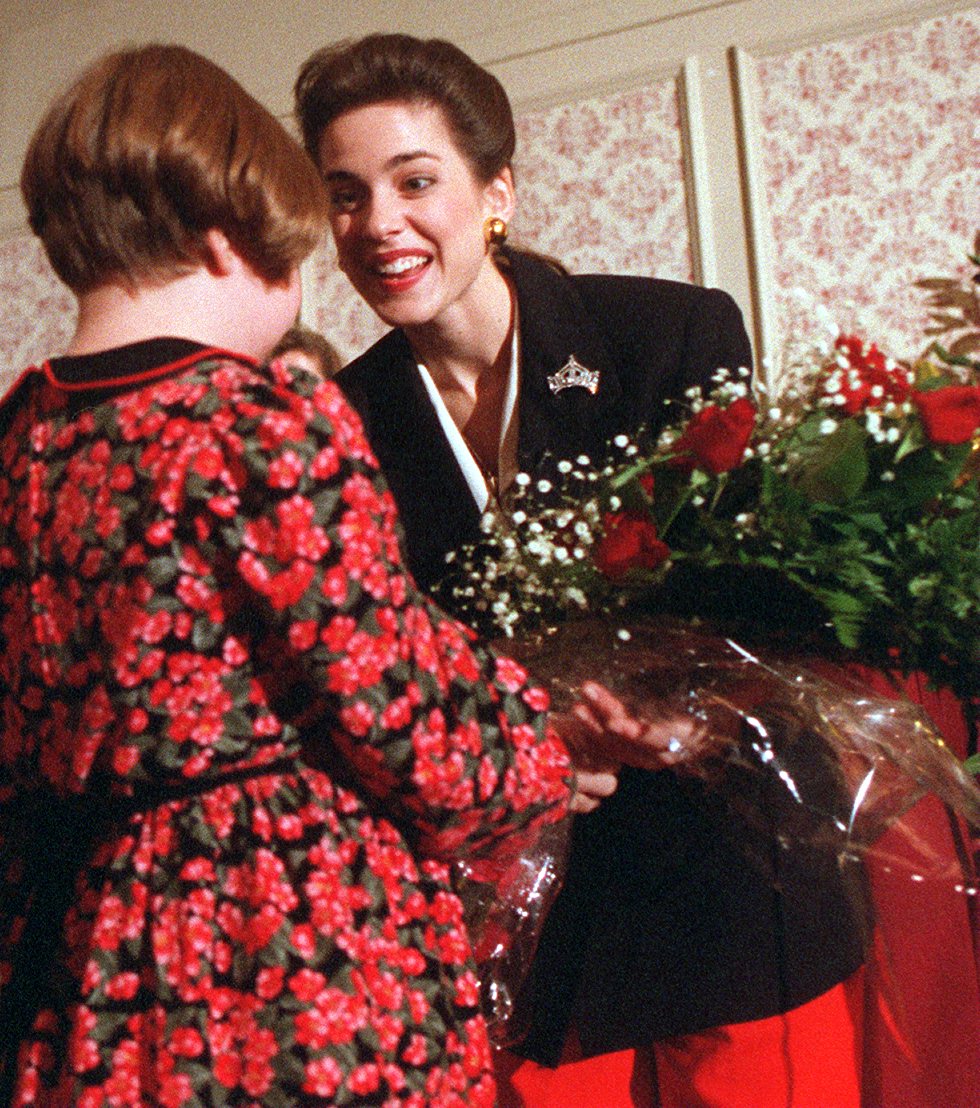
Miss America Heather Whitestone receives flowers from Christina Simeone, age 9, from Wallingford Elementary School in January 1995.G. Loie Grossmann / Staff Photographer
When Whitestone, as the newly crowned Miss America for the forthcoming 1995,took her victory walk down the runway, she raised her hand to the thousands in Convention Hall, signing “I love you.”
Whitestone couldn’t hear their response — the hearing aid in her left ear was overwhelmed by the thunderous ovation and transmitted only static — but she didn’t need to.
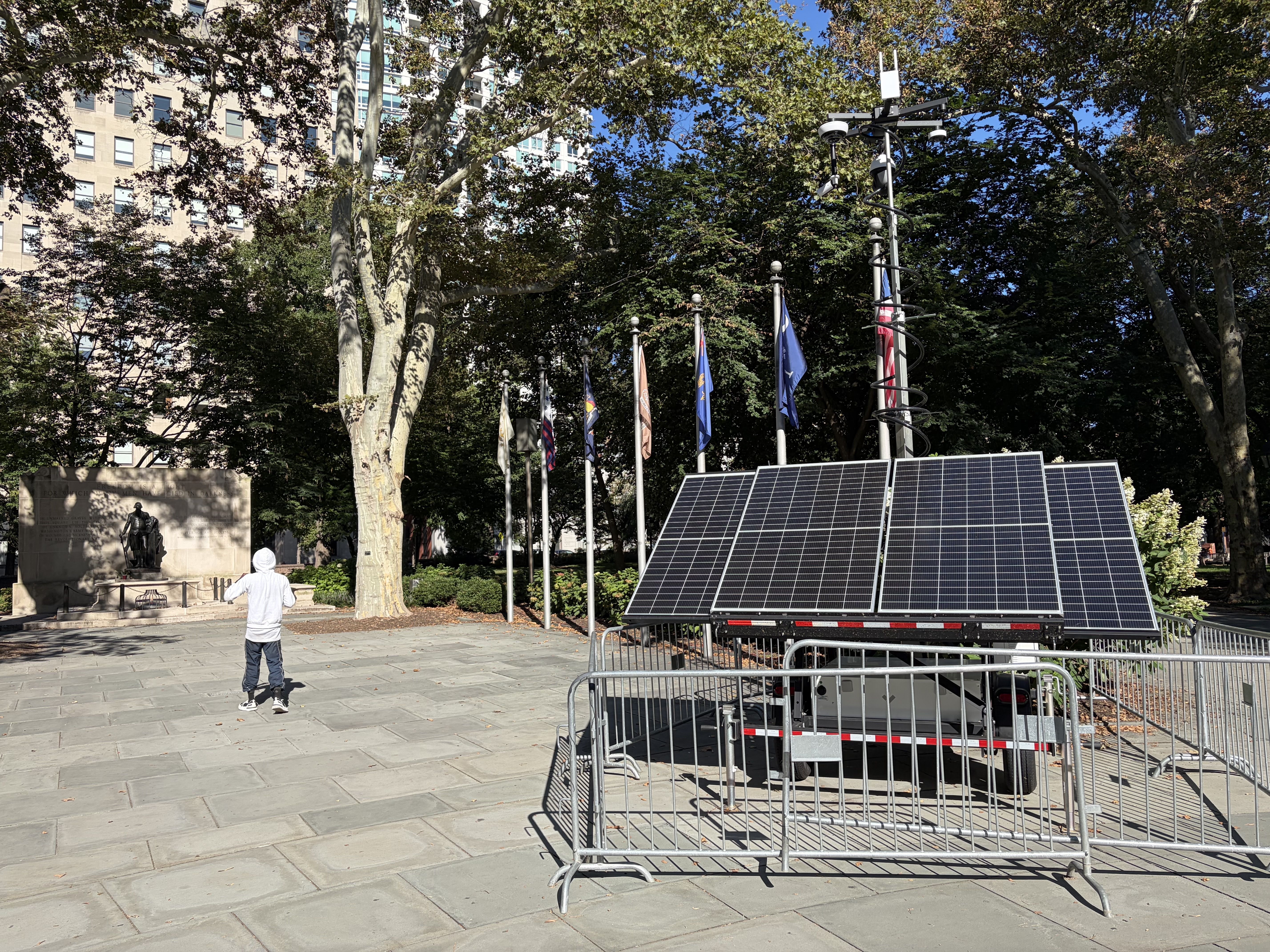
A new fixture is on Washington Square next to the Tomb of the Unknown Revolutionary War Soldier and the flags of the 13 original colonies — a fenced-off, solar-powered security camera.
Here is what you need to know about the new camera, which is not a Flock device.
Who installed the security camera?
Washington Square is part of Independence National Historical Park, and the federal government has jurisdiction over the park.
The camera was installed in July by the National Park Service in response to vandalism, according to City Councilmember Mark Squilla.
“The National Park Service has the responsibility to keep America’s most cherished places safe and free from damage for the enjoyment of the American people,” a spokesperson for the park service said. “In the past year, vandals have damaged the Tomb of the Unknown Revolutionary War Soldier.”
What do we know about vandalism in the park?
A handful of vandalism incidents in the Washington Square area have been reported this year, according to Philadelphia Police Department data.
One of the vandalism cases was in the early morning of July Fourth and was followed hours later by a separate incident.
Later that day, five people who participated in a protest were arrested. During the event outside Washington Square, an unidentified woman attempted to burn an American flag.
While the U.S. Supreme Court ruled burning an American flag is protected speech, it is a violation of city safety codes for public spaces.
The arrests followed police orders to the crowd to disperse, and the five people allegedly did not comply.
It is unclear if any specific incident led the National Park Service to install the additional surveillance measure.
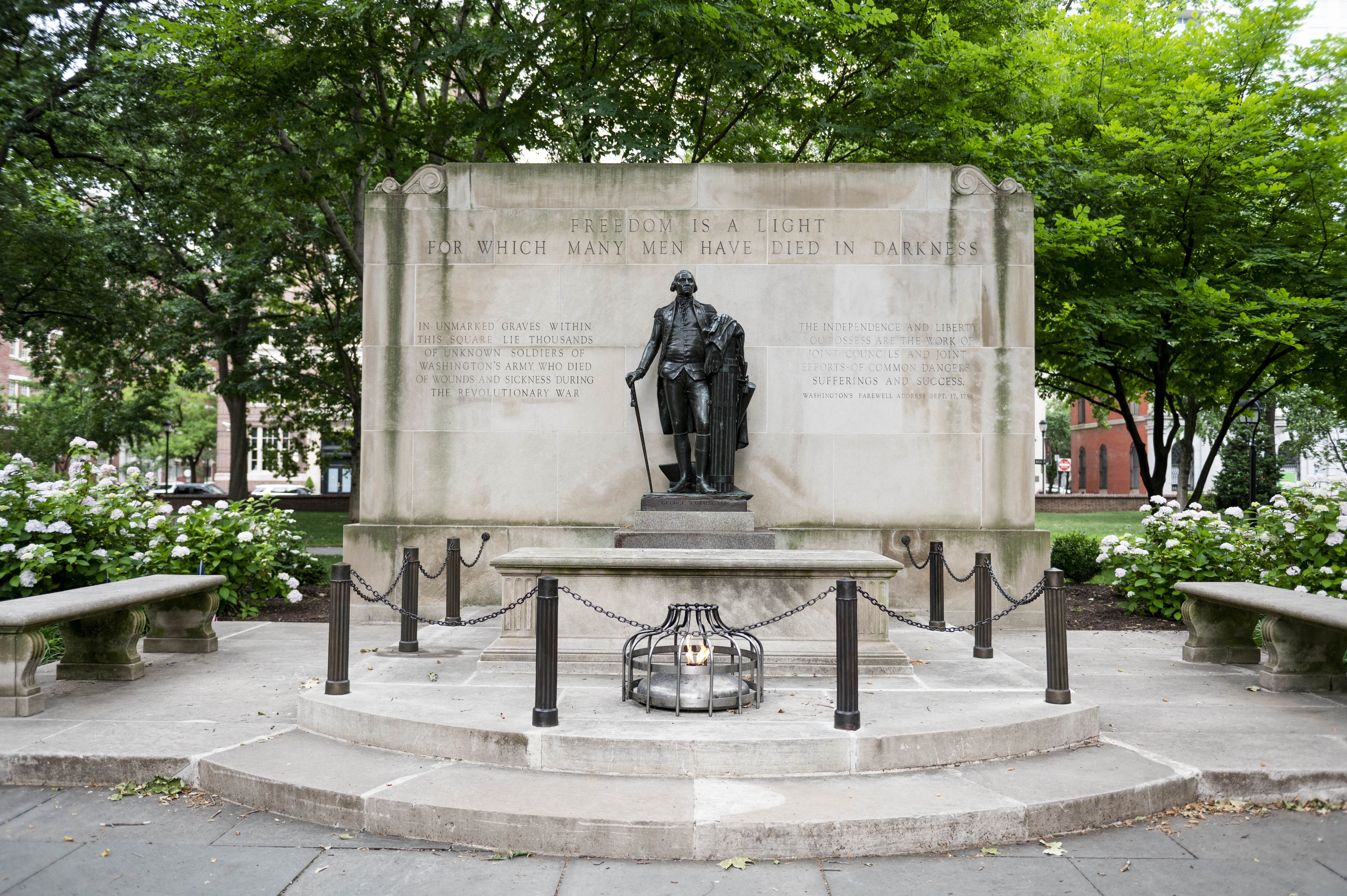
The Tomb of the Unknown Revolutionary War Soldier, which includes a statue of George Washington, was defaced with spray paint in 2020. Vandals wrote “committed genocide” on the memorial’s granite wall.
Tomb of the Unknown Soldier monument in Washington Square on Wednesday, June 14, 2023.Allie Ippolito / Staff Photographer
Is it a Flock camera?
The new surveillance equipment is not a Flock camera, the park service spokesperson said.
“Independence National Historical Park does not use Flock cameras. The park’s camera network is operated solely by the National Park Service on a standalone network with no connections to local or other federal agencies,” the spokesperson said.
LANCASTER — Amish families peer into Roberta Devers’ Honda Passport as she drives between prenatal checkups along the rolling hills of Lancaster County. They ask her increasingly frequent questions about the vaccine: Do you have some measles in your car?
Devers, 63, works asa traditional midwife in communities at the epicenter of Pennsylvania’s largest measles outbreak in more than 30 years. She belongs toa class of midwives who follow age-old practices and are unregulated by the state, unlikethestate-licensed midwives one may find in a hospital. She received the full childhood vaccination schedule but, as an adult, chose not to vaccinate her son and is part of the rising number of people in Pennsylvania refusing to get vaccinatedagainst preventable diseases due to unfounded concerns about their safety and necessity.
And she thinks she should be able to offer the vaccine to her patients, as a trusted caretaker among Amish residents.
“Babies are dying,” said Devers, who is not Amish but has been a traditional midwife for 38 years. Shesays she fearsthat Pennsylvania’s Amish community, one of the oldest and largest in the country, cannot wait to reach herd immunity. “You’re going to lose too many babies,” she said.
Devers occupies a unique vantage point from the front lines of the nation’s largest measles outbreak this year. State health officials said the deaths of two local Amish infants were measles-related, sparking a clash between Democratic Gov. Josh Shapiro and President Donald Trump’s Health and Human Services secretary, Robert F. Kennedy Jr.,over how to report the outbreak’s death toll. An 18-year-old from Mifflin County and a 40-year-old woman from Jefferson County alsodied from measles-related illnesses in recent days, according to the counties’ coroners.
As of Wednesday, the state had reported 731 cases in 38 counties. Lancaster has recorded the highest number of known cases in Pennsylvania, as the highly contagious disease has spread among the area’s significant number of unvaccinated people, including many from communities beyondthe county’s Amish population.
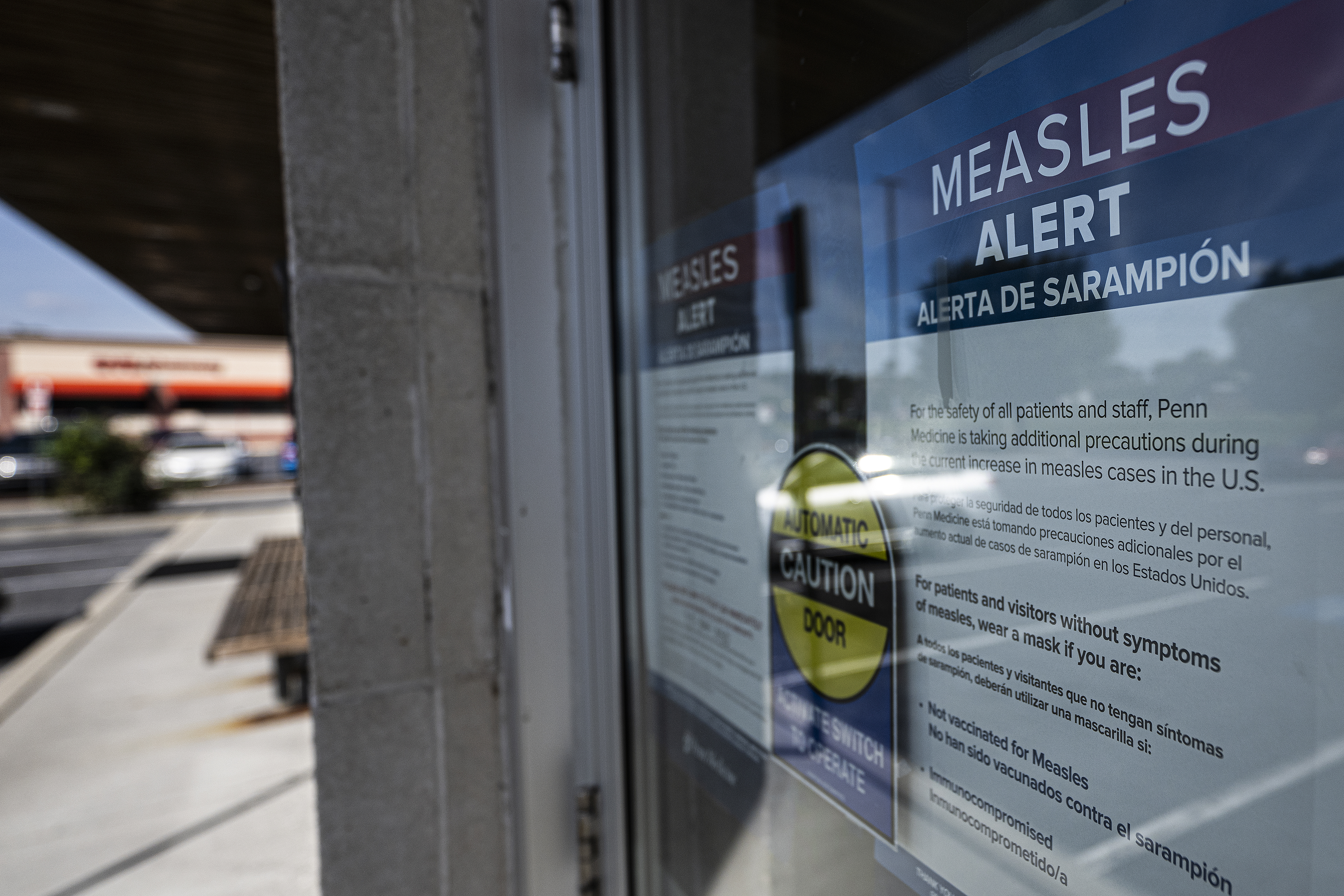
Measles alert signs in English and Spanish are posted on the front doors of an urgent care facility Tuesday, Sept. 8, 2026, in Lancaster County, Pa., amid a measles outbreak that has affected local Amish and Mennonite communities.Jose F. Moreno / Staff Photographer
Traditional midwives like Devers — also known as lay midwives or direct-entry midwives — broadly oppose being regulated by the modern medical system and often do not receive the medical and scientific training or college-level educationrequired of certified nurse midwives and midwives. Because of this, top medical associations like the American College of Obstetrics and Gynecology oppose traditional midwives from being able to practice at all. State lawalso prohibits traditional midwives from practicing medicine, such as administering vaccines or sutures.
Until this summer when it was quietly repealed in state budget documents, an unenforced 1929 law allowed traditional midwives to practice in Pennsylvania. A group of midwives have sued the state to formally recognize them, but thatwould still not permit them to practice medicine, including administering vaccines.
Yet, traditional midwives are the main care providers who oversee home births in certain Amish communities, or for people who want their help with a personal and private birth experience. Their influence is particularly prominent in Pennsylvania, which has one of the nation’s highest rates of home births. Devers’ practice, Mount Laurel Midwifery, delivers about seven babies per month across south-central and Southeastern Pennsylvania, with a number of student midwives studying underher.
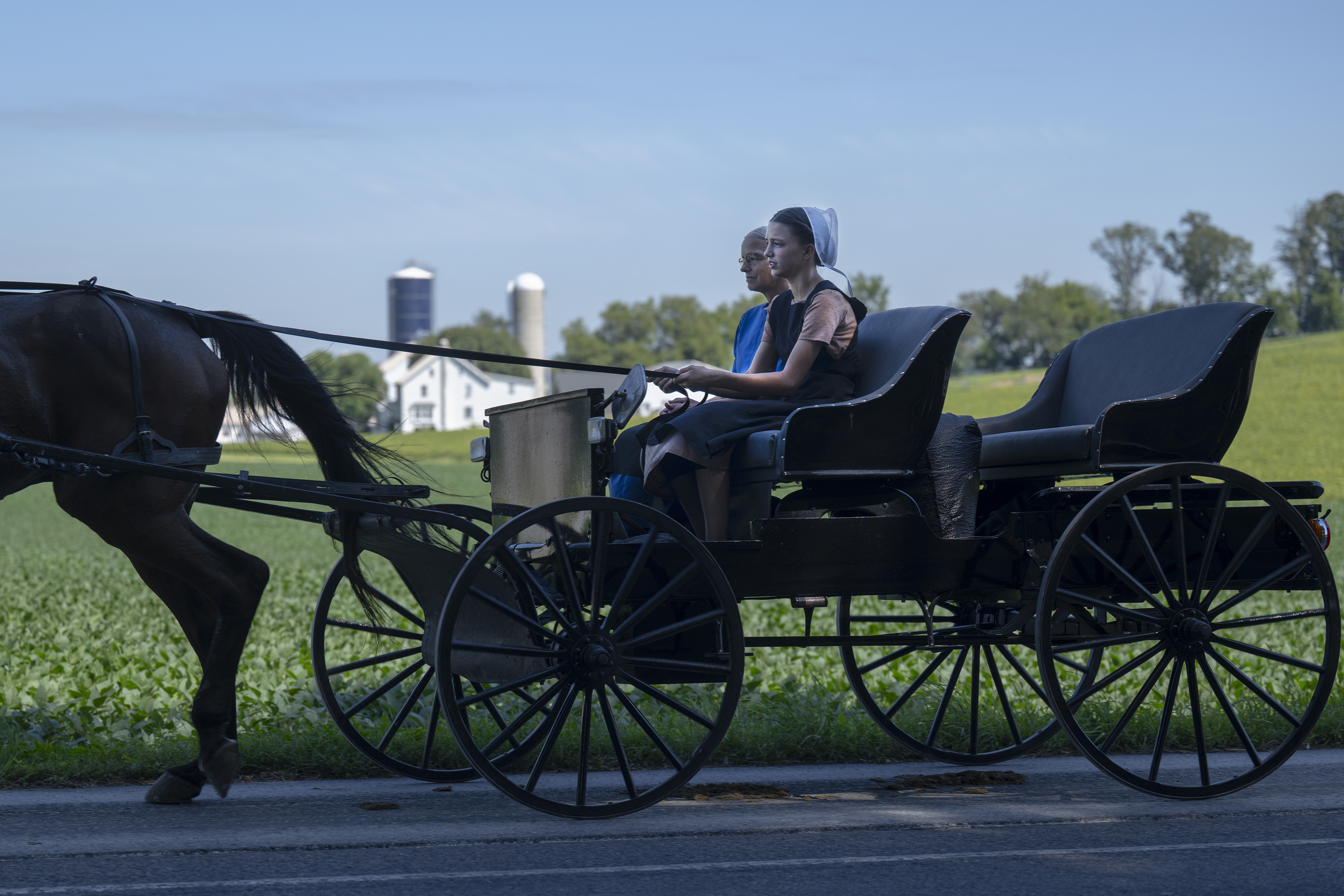
An Amish woman drives a horse-drawn buggy along a road Monday, Sept. 7, 2026, in Lancaster County, Pa., amid a measles outbreak that has affected the local Amish and Mennonite communities.Jose F. Moreno / Staff Photographer
In Lancaster, Devers’ clients are not talking about the political debate. Rather, their conversations center on the spread of measles — did she hear about the recent baby deaths, what should they do if they were exposed, does she have a vaccine with her?
Two doses of the measles, mumps, and rubella vaccine have proven 97% effective at preventing the disease, the Centers for Disease Control and Preventionsays. Nine in 10 unvaccinated people exposed to measles will acquire the disease.
Pregnant people are not eligible to receive the vaccine.
In her daily prenatal checkups, she is seeing moms who have the infection’s signature bumpy, red rash and fever, and families who have watched the sickness move through one family member to the next.
About three in 1,000 children who contract measles will die, according to the CDC. Measles can cause severe complications, especially in young children, including pneumonia and brain swelling. And measles during pregnancy can lead to pregnancy loss, premature delivery, and low birth weight, according to the CDC.
Devers said sherecently saw a case in which a mother lost her baby at 17 weeks. The Amish woman was recovering froman active measles infection at the time of the miscarriage, in addition to at least one other underlying medical condition, Devers said.
Amish families traditionally have funerals for stillborn babies or miscarried fetuses, sharing obituaries in the local newspaper. Devers attended the funeral for one such death, involving the 17-week-old fetus,last month.
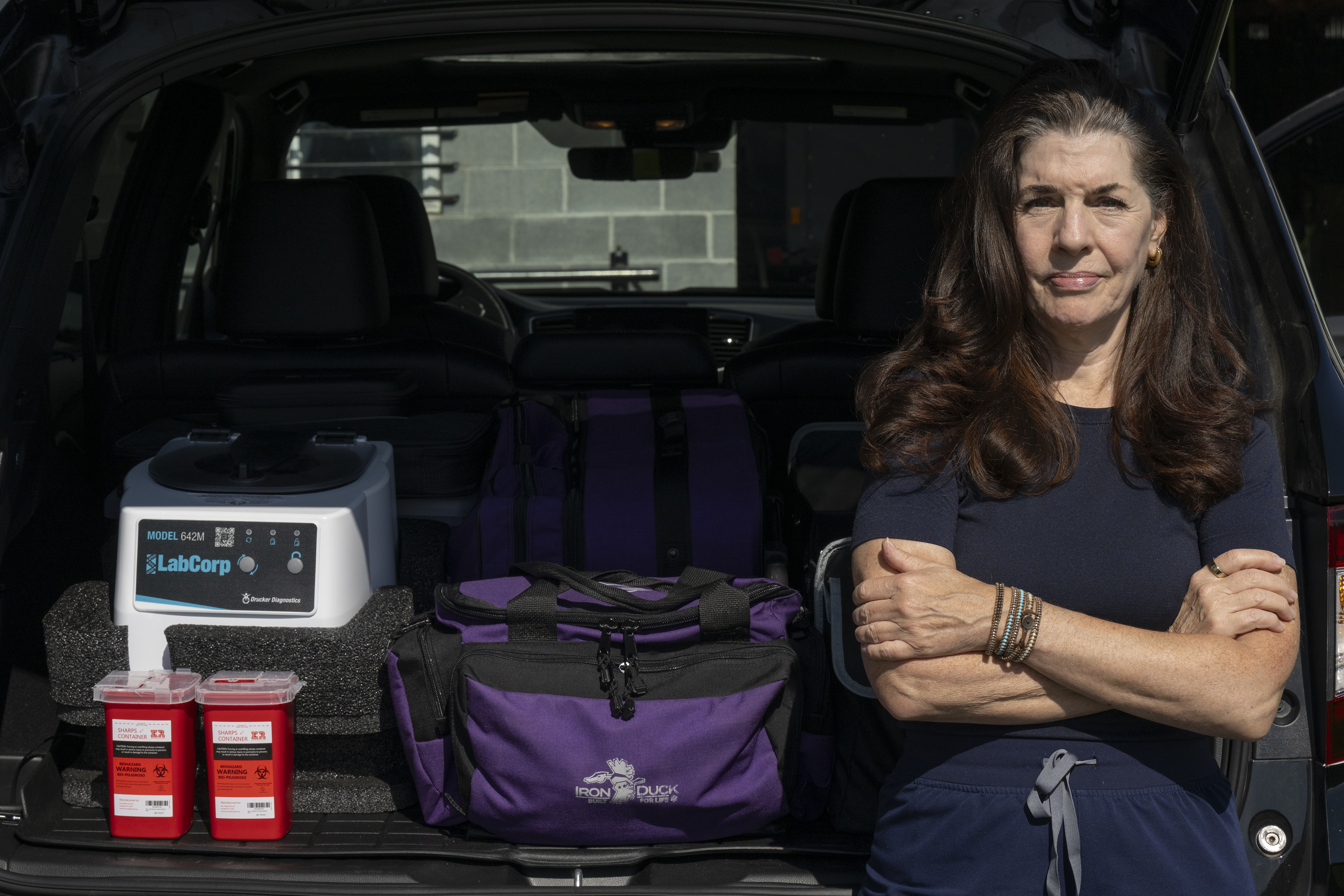
Midwife Roberta Devers is photographed Tuesday, Sept. 8, 2026, near the home of one of her Amish patients in Lancaster, Pa. Devers, who primarily serves Amish mothers, discusses the measles outbreak and why she believes unlicensed midwives should be allowed to administer MMR booster shots.Jose F. Moreno / Staff Photographer
During previouspublic health emergencies, state and federal governments have usedlimited emergency approvals to expand who is allowed to administer vaccines, though the authority was not extended to unregulated groups like traditional midwives.
Now, Devers wants state or federal health officialsto extend approval to allow traditional midwives to administer the measles, mumps, and rubella vaccine.
But the Pennsylvania Department of Health saysit does not have the authority to allow traditional midwives to administer vaccines, because they are not certified healthcare providers. Currently, state law allows licensed healthcare providers like doctors and certified nurse midwives to administer vaccines, and any expansion of the list would require an amendment to state law, spokesperson Stephanie Nojiri said in a statement.
HHS and the CDC did not respond to requests for comment. Devers said sherecently accepted an invitation fromthe CDC to participate in a paid interview to discuss how midwives serving Plain communities are approaching the measles outbreak. She sees the outreach as asignal ofthe agency’s interest in working with midwives.
The Amish and vaccines
Vaccination rates among Pennsylvania children have been falling for years. The spread of misinformation about vaccine safety reached the highest echelons of the U.S. governmentafter Trump picked Kennedy, a longtime anti-vaccine activist, to lead the nation’s health agencies.
Amish communities do not have a religious objection to vaccinations, said Steven Nolt, a top Amish scholar at the Young Center for Anabaptist and Pietist Studies at Elizabethtown College.
He said low vaccination rates in the groups, who dress in plain clothes and widely object to using technology in favor of a more traditional way of life, aredue to their partial abstention from modern medicine, as well as a lack of nearby access given their rural lifestyles.
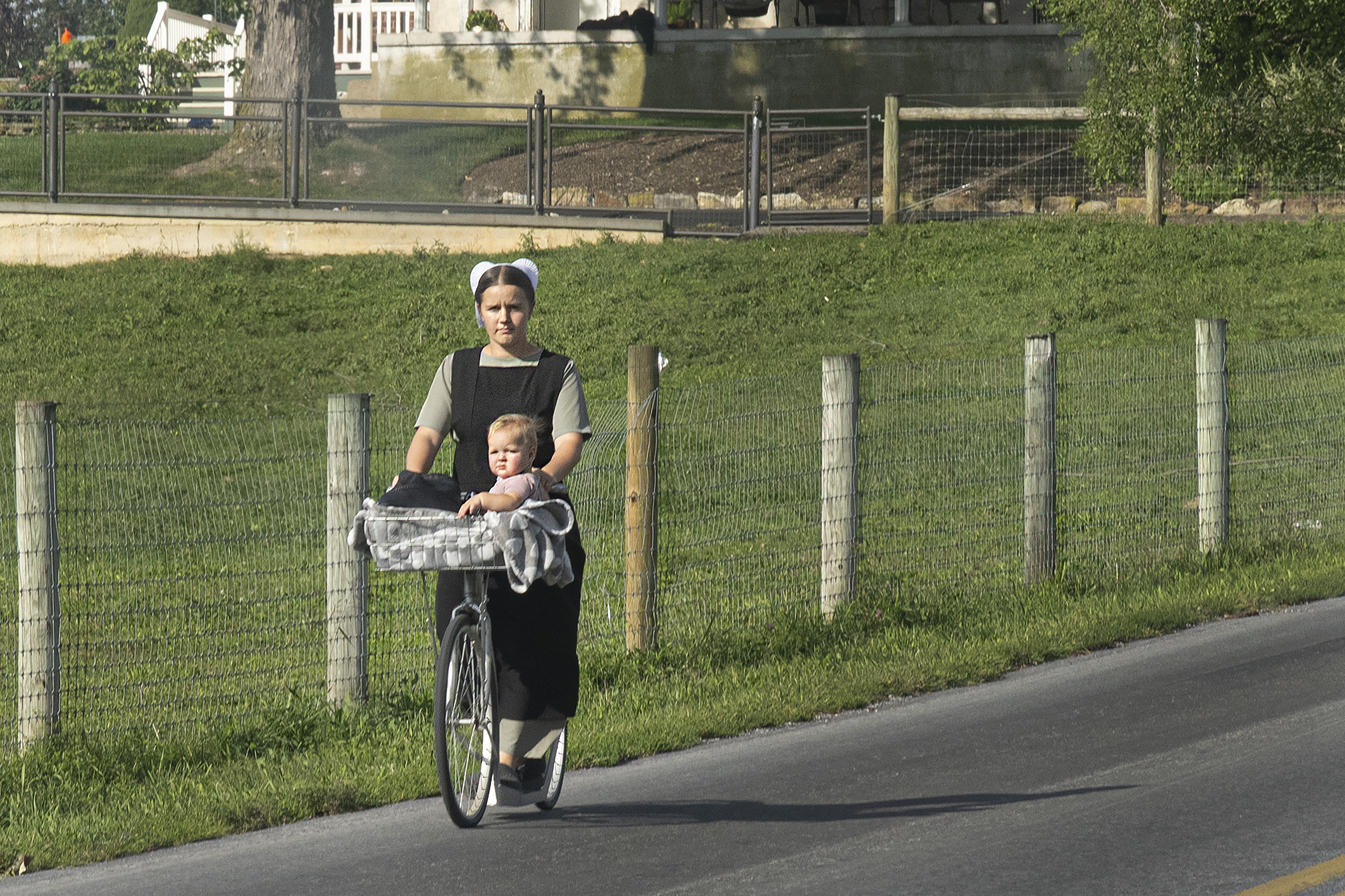
An Amish woman rides a kick scooter with a baby secured in a front basket attached to the scooter Tuesday, Sept. 8, 2026, along a road in Lancaster County, Pa., amid a measles outbreak that has affected local Amish and Mennonite communities.Jose F. Moreno / Staff Photographer
In Lancaster County, 30% of Amish families had their children vaccinated and believed vaccinations were safe and effective, according to a 2022 surveyof 433 Amish and Old Order Mennonite residents, published by Elizabethtown College and conducted by Franklin and Marshall College.
The numbers are much higher among Old Order Mennonites — a different religious group thatsimilarly dresses in plain clothes — with94% vaccinating their children and 72% believing they are safe and effective.
When a 1991 rubella outbreak spread through Amish communities, families welcomed the booster shots, Nolt said. So didAmish groups during a polio outbreak in the 1970s.
“When there would be an outbreak, that was a bit of a wake-up call,” he added. “Then people would come out for immunizations.”
Another “wake-up call” has now arrived for Lancaster’s Amish residents, Devers said.
Amish vendors work at their stands inside the popular Central Market in Lancaster, Pa., Tuesday, Sept. 8, 2026, amid a measles outbreak that has affected local Amish and Mennonite communities.Jose F. Moreno / Staff Photographer
Amish groups broadly approach their health through a “medical pluralism” lens — a term coined by Martha King, a medical anthropologist at the University of North Carolina at Chapel Hill. This means Amish communities view medical doctors, chiropractors, midwives, and homeopathic remedies as all being “on the same playing field,” rather than being supplementary to a primary care physician, as is common among most Americans, Nolt said. Sometimes Amish people will choose treatments thatcontradict each other or lack any scientific backing.
“They kind of all function in a way that doesn’t necessarily make sense the way many ‘normal’ Americans think about healthcare,” Nolt added.
Prior to his appointment as HHS secretary, Kennedy helped lead anti-vaccination efforts across the country. During a 2021 speech in Lancaster County, he mocked measles as a serious threat.
It is unclear what effect the efforts have had on Amish populations, Nolt said. During the COVID-19 pandemic, some anti-vaccine groups ran advertisements in Amish newspapers, discouraging the Amish from getting any immunizations, he added.
Devers said she largely supports Kennedy, but believes Shapiro was right to raise alarm about the need to vaccinate against measles. She said she has been disappointed in Kennedy for downplaying the dangers of the outbreak.
“My God, use your head,” Devers said. “He can’t mean this in the midst of an epidemic like this.”
Pennsylvania’s healthdepartment, in partnership with local health systems, says it has been working with Amish communities. And Shapiro has emphasized that the outbreak stretches much further than just among any one community, now that confirmed cases have spread to more than half of Pennsylvania’s 67 counties.
Since the start of the measles outbreak in Pennsylvania in April, state health officials have hosted 124 pop-up vaccination clinics across the state in locations like churches, fire halls, and private homes to give more than 4,100 doses of the MMR vaccine, Nojiri said. More pop-up clinics are planned in the near future.
But traditional midwives should be part of the solution, too, Devers argued.
“Different times call for a change in thinking,” she said.
This story has been updated to remove identifying information.