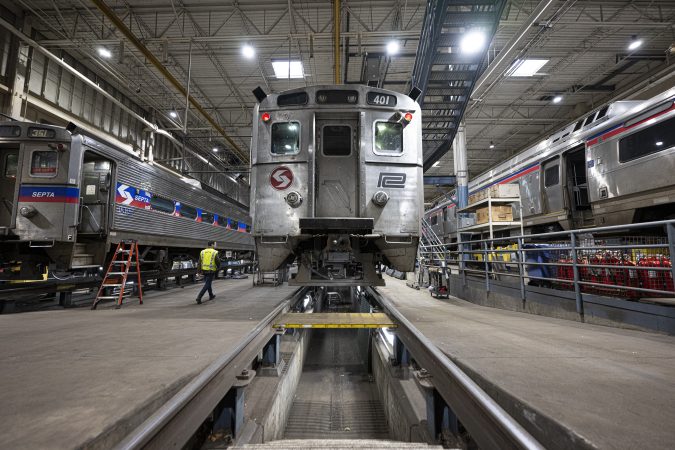
After another high-wire financial rescue from the state, SEPTA leaders are determined to flip their script in the transit funding debate from warning of calamity to showing what the system could be with more investment.
“I wanted to get away from the doom and gloom message,” SEPTA general manager Scott A. Sauer told The Inquirer.
The transit system has been chronically underfunded, but “we never pivoted to ‘Imagine what we could be if we got more than just enough,’” Sauer said.
And so on Tuesday, SEPTA is putting out “Accelerate,” its strategic vision for the next decade with investments in a new trolley fleet with stations instead of corner stops, new subway cars for the El, and a reimagined Regional Rail service with more frequent service on critical lines, many in the city.
When those and other, smaller changes are in place, SEPTA says two million people in the region will be within a quarter mile of frequent transit service — up from 900,000 today — and 100% of all trips will go through an accessible station. Today only about 60% of rail and subway stations are accessible.
It’s an ambitious goal, and that’s deliberate, Sauer said.
“You can inspire people to action when you show them what they could get for their investment,” he said.
The idea for a message shift developed as SEPTA representatives and supporters advocated for more state funding last year and lawmakers said that they didn’t have a concrete picture of what SEPTA wants to be and what that would take.
Instead of a demand, the report is framed as a menu of choices for legislators, local officials, business leaders, and the public.
SEPTA projects a structural operating deficit of $192 million in the coming fiscal year. If the state meets that, current levels of service would be preserved along with some improvements.
Beyond that — including a plan to reorganize Regional Rail so trains run every 15 minutes on lines in the city and some suburbs — would require more funding. As would making 50 old stations ADA accessible.
“If you ask me how much do you need, I would say I need enough to do what the people want us to do,” Sauer said.
Last year, Harrisburg lawmakers and the Shapiro administration failed for the third straight year to agree on a steady source of new state funding for SEPTA and other transit agencies.
The transit agency also says it has found about $30 million in annual savings, as well as increased income from advertising, parking, and real estate, and a spike in ridership during a busy summer of big events.
Sauer said SEPTA needs to chip away at changes right away, using what’s at hand, rather than waiting to accomplish a big project in a decade.
“We can’t have everything all at once, so we are trying to move methodically,” he said. “We have to show people continual improvement.”
More than a year and a half into President Donald Trump’s second term, U.S. Rep. Brian Fitzpatrick has voted against the White House and the GOP more than any other House Republican.
Yet, he has still voted with the president and his party nearly 70%and 77%of the time, respectively, during this congressional term, according to a new Inquirer analysis.
Fitzpatrick’s nuanced voting record has become a focal point of Democrats’ campaign against the five-term GOP incumbent from purple Bucks County this fall.
HisDemocratic challenger, Bob Harvie, argues that Fitzpatrick has been a “rubber stamp” for Trump’s policies and the GOP establishment when it matters most. Meanwhile, Fitzpatrick continues to tout his moderate, bipartisan brand that has proved successful in elections past.
Both of those assertions will be tested in front of voters this November as Fitzpatrick defends his swing district seat in a heated race in the 1st Congressional District, which includes all of Bucks County and a sliver of Montgomery County. Trump narrowly lost the district in 2024, despite winning Bucks County.
Fitzpatrick is voting with the president and his party less frequently during the current Congress, which began last year, than he did during the two years of Trump’s first term, when the GOP also held the majority, The Inquirer found in a comprehensive analysis of the Bucks County lawmaker’s 5,064 roll-call votes since he joined Congress nearly a decade ago.
(function () {window.addEventListener(‘message’, function (e) { var message = e.data; var els = document.querySelectorAll(‘iframe[src*=”‘ + message.id + ‘”]’); els.forEach(function(el) { el.style.height = message.height + ‘px’; }); }, false); })();
The data underscore how Fitzpatrick, the last remaining GOP U.S. representative in the Philadelphia suburbs, is able to simultaneously straddle party lines and talk about his disdain for the two-party system while also serving as a key vote in the Republican conference— a cocktail of qualities that has made him difficult to unseat in years past.
This year, Democrats are hoping that a focus on affordability issues amid a national environment that has become increasingly unfavorable to Republicans will be what it takes to unseat Fitzpatrick.
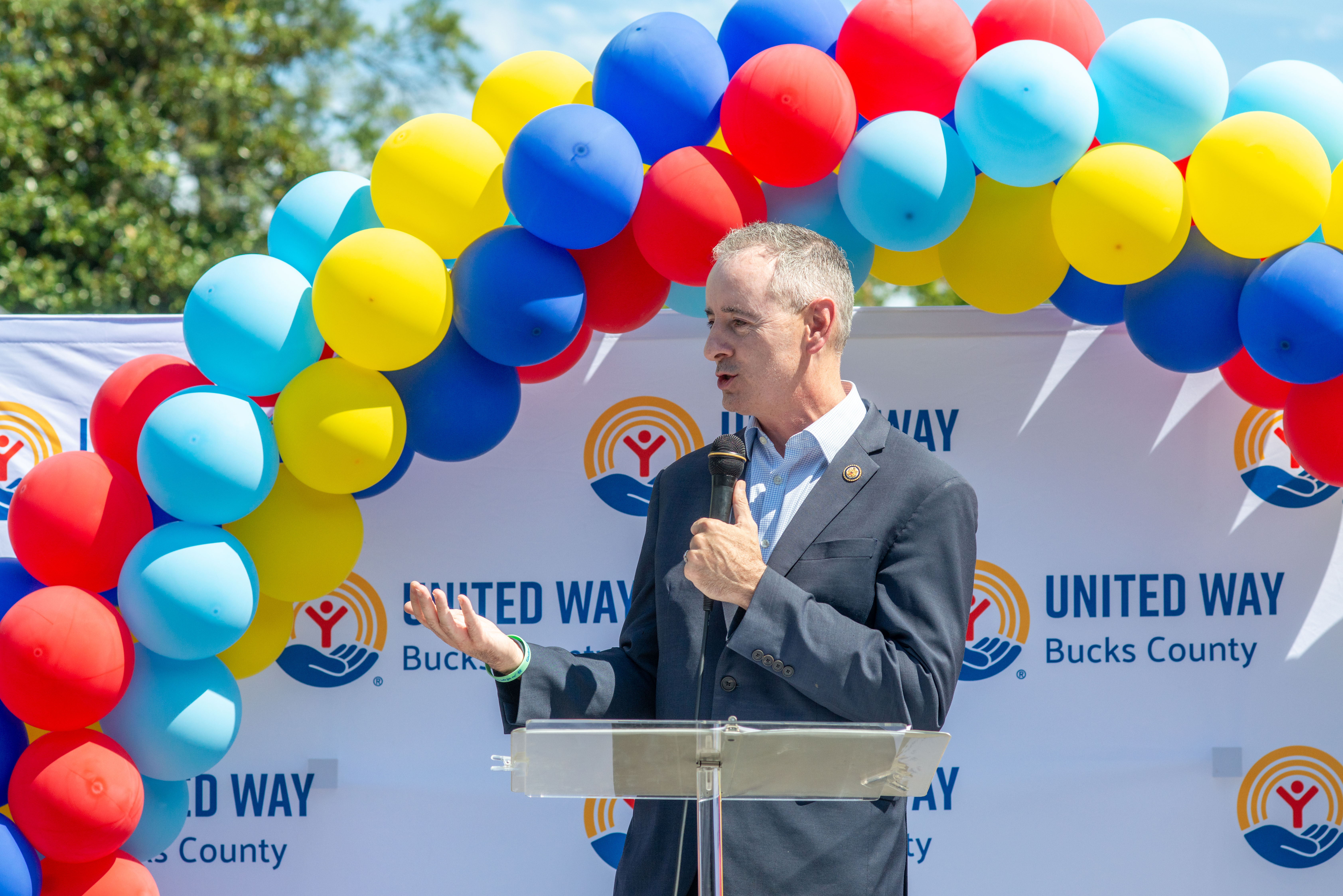
U.S. Rep. Brian Fitzpatrick (R-Pa.) makes remarks in support the grand opening of the new headquarters and expanded financial stability center for United Way Thursday, Sept. 10, 2026 at United Way of Bucks County Headquarters in Levittown.William Thomas Cain / For The Inquirer
When Fitzpatrick does — and doesn’t — back Trump
Trump and the Bucks County Republican have had their fair share of tense moments, including the president threatening the lawmaker in May for voting against him.
Fitzpatrick has continued tovote against the president recently, including on a war powers resolution torestrict Trump’s military actions in Iran.
“[Fitzpatrick’s] bosses are his constituents back home,” Heather Roberts, a spokesperson for the Fitzpatrick campaign, said in a statement. “Political party retaliation has zero impact on his decision-making.”
Since January 2025, Fitzpatrick has voted with the Trump administration’s 133 stated positions on congressional votes 93 times, according to the analysis.
(function () {window.addEventListener(‘message’, function (e) { var message = e.data; var els = document.querySelectorAll(‘iframe[src*=”‘ + message.id + ‘”]’); els.forEach(function(el) { el.style.height = message.height + ‘px’; }); }, false); })();
Fitzpatrick voted with Trump on several high-profile GOP bills, including the SAVE Act, a controversial overhaul of voting laws, and the Laken Riley Act, legislation also supported by some Democrats that requires federal authorities to detain undocumented immigrants arrested for theft-related crimes, issues that Roberts maintained 1st District voters of both parties support.
Fitzpatrick’s votes have also aligned with the White House on other legislation related to immigration, law enforcement, energy, and renaming the Gulf of Mexico the “Gulf of America.”
At the same time, no other House Republican has been less loyal to the president in this time frame. That includes every GOP member from Pennsylvania, many of whom are staunch supporters of Trump. Republicans like U.S. Reps. Ryan Mackenzie, Rob Bresnahan, and Scott Perry, who are defending their seats in contentious swing-district races, vote with Trump more than 90% of the time.
Both Mackenzie and Bresnahan spoke at Trump’s Republican midterm convention in Dallas this month, but Fitzpatrick — the only GOP member of Congress from Pennsylvania not endorsed by Trump — did not attend.
(function(){function e(){window.addEventListener(`message`,function(e){if(e.data[`datawrapper-height`]!==void 0){var t=document.querySelectorAll(`iframe`);for(var n in e.data[`datawrapper-height`])for(var r=0,i;i=t[r];r++)if(i.contentWindow===e.source){var a=e.data[`datawrapper-height`][n]+`px`;i.style.height=a}}})}e()})();
The final bill had enough GOP support — 218 members voted yes — to pass without Fitzpatrick’s vote.
Harvie, Fitzpatrick’s Democratic challenger, contended that Fitzpatrick “has mastered the art of the meaningless gesture and breaks with Trump only when he gives him a hall pass.”
“[Voters] want somebody who’s going to go there and fight for them,” Harvie said. “And, you know, people’s lives aren’t better than they were 10 years ago. And Brian Fitzpatrick and Donald Trump are the big reasons why.”
Roberts said Harvie’s criticism is “absurd” and has been “debunked many times over and in every single election cycle.” She also criticized Harvie’s voting record and said he has not exercised similar levels of independence during his time as Bucks County commissioner and Falls Township supervisor.
Back in Trump’s first term in office, Fitzpatrick sided with the White House on 59% of votes — 81% of the time in 2017-18, but dropping to almost 42% in the following two years, after Democrats gained control of the U.S. House in the 2018 midterms.
Fitzpatrick voted with his party roughly 60% of the time during both the 117th and 118th Congresses, when Biden was in office and the GOP had the majority for the latter two years of his term.
The lawmaker played a key role in getting Biden’s signature bipartisan infrastructure law passed, drawing sharp attacks from fellow Republicans when he was one of 13 GOP members to support it in the House.
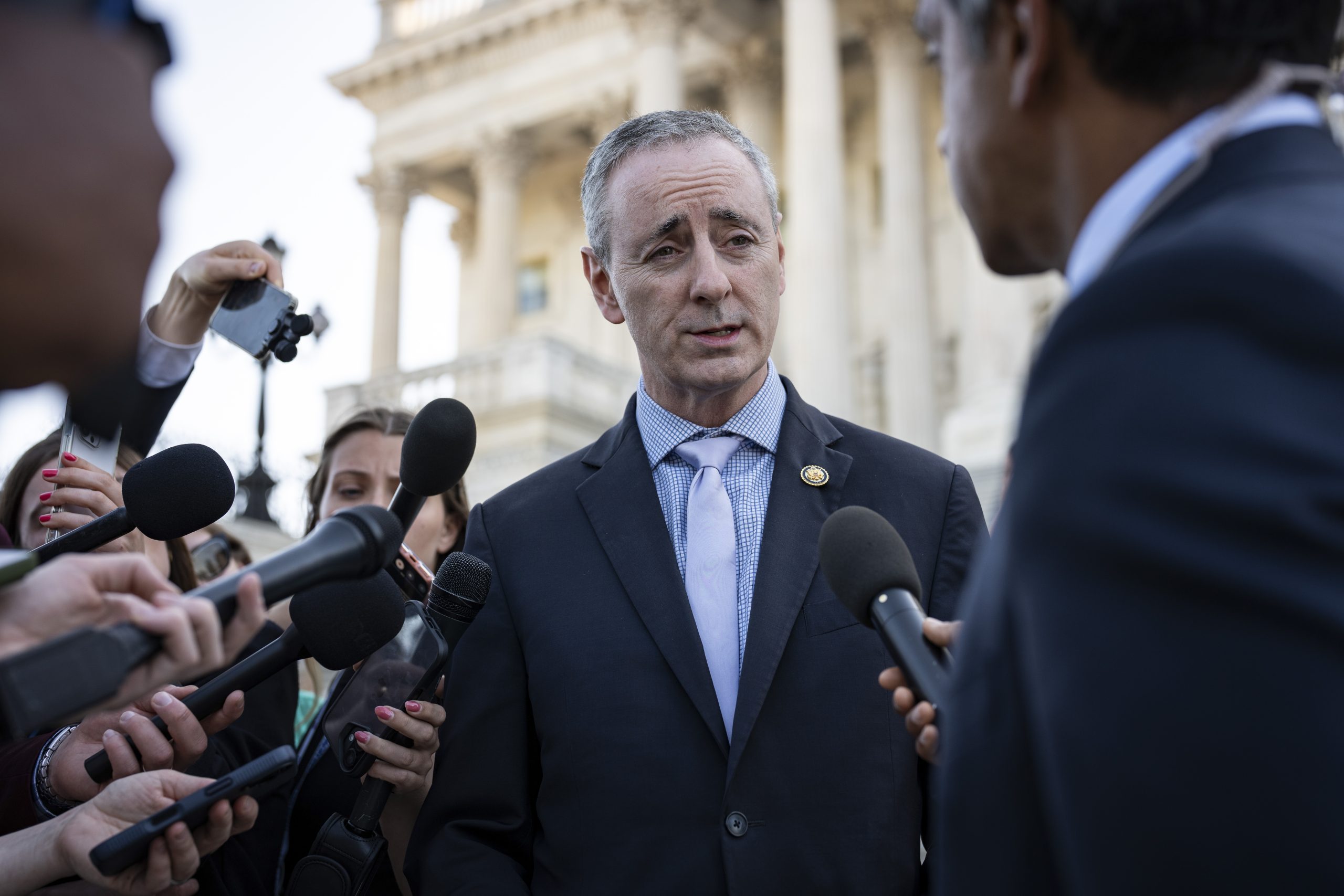
Rep. Brian Fitzpatrick (R-Pa.) speaks to reporters after the House passed an Iran war powers resolution on Capitol Hill in Washington, on Wednesday, June 3, 2026. Haiyun Jiang
What about the GOP?
Fitzpatrick’s alignment with the House Republican Conference has fluctuated depending on which party is in power.
During this Congress, when the GOP holds a narrowmajority in the U.S. House, Fitzpatrick has voted with his party 77% of the time, meaning he has split from Republicans 107 times on 472 party unity votes, defined by CQ Roll Call as instances when a majority of voting Republicans oppose a majority of voting Democrats.
That figure is the highest of his career, the analysis shows, though still far below the median of Republicans. It was a similar story during Fitzpatrick’s first term during the 115th Congress in 2017-18, when Trump was in office and Republicans had the House.
By contrast, Fitzpatrick was the least loyal to his party during the 116th Congress in 2019-20 — at 55% — when Trump was still in office, but the GOP did not have the gavel.
A congressional lawmaker’s votes are dependent on which bills make it to the floor. Currently, that is up to House Speaker Mike Johnson, a Louisiana Republican, whom Fitzpatrick has criticized for his reluctance to bring some bipartisan bills for a vote if Trump opposes them.
Fitzpatrick has introduced 249 bills as lead sponsor, and just under half — 123 — have a bipartisan group of cosponsors.
“The numbers and percentages will change from year to year based entirely on what votes are put on the House Floor,” Roberts said in her statement. “The best measure of independence is how often, and on which issues, does one vote against their own political party, regardless of who the President is and regardless of who the Speaker is.”
(function(){function e(){window.addEventListener(`message`,function(e){if(e.data[`datawrapper-height`]!==void 0){var t=document.querySelectorAll(`iframe`);for(var n in e.data[`datawrapper-height`])for(var r=0,i;i=t[r];r++)if(i.contentWindow===e.source){var a=e.data[`datawrapper-height`][n]+`px`;i.style.height=a}}})}e()})();
Jim Worthington, a major GOP donor in Bucks and owner of the Newtown Athletic Club, said Fitzpatrick’s record is representative of the purple county, home to a plethora of split-ticket voters, and shows that he is able to go against power structures in Washington.
“When you have someone who’s willing to stand up to the power of the majority and take a stand, that’s the type of guy you want,” Worthington said. “It’s pretty lonely when there’s 216 other people in your party voting for something, and you’re voting no. It takes guts, and that’s what he’s doing.”
Over the course of his time in Congress, Fitzpatrick has defected from his fellow House Republicans on votes related to economic and public finance issues, but has agreed with his caucus most on legislation connected to international affairs.
Of the 10 closest votes in which Fitzpatrick diverged from the GOP this year, three were decisive votes that blocked GOP amendments to bills.
Two others were votes in which he supported Democratic motions that fell just short of passing.
Fitzpatrick also joined Democrats in voting against fiveGOP amendments to bills thatpassed by one vote.
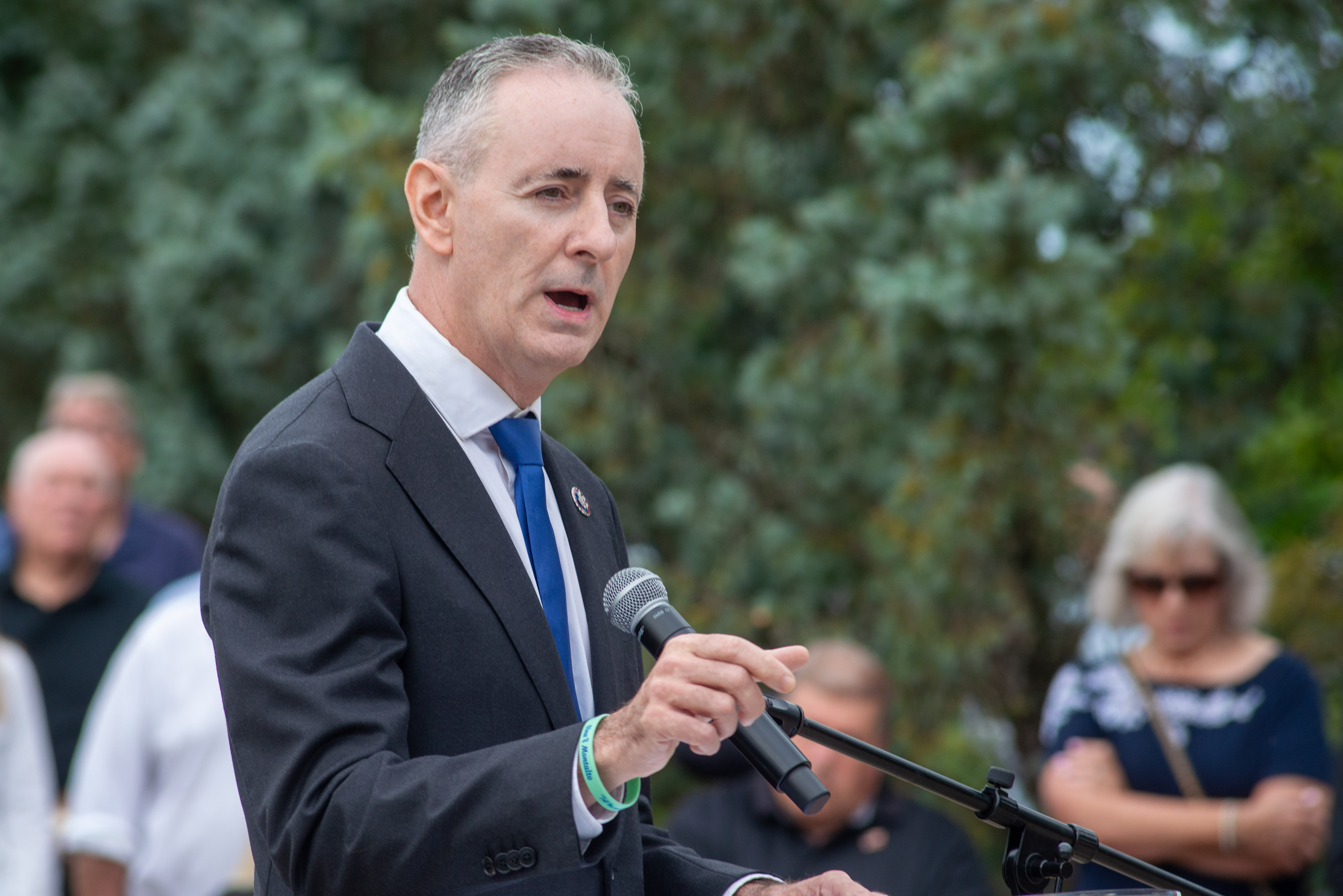
US Rep Brian Fitzpatrick speaks during the Garden of Reflection remembrance ceremonies Friday, Sept. 11, 2026 at Garden of Reflection in Yardley, Pennsylvania. The Garden of Reflection is Pennsylvania’s official state memorial honoring all 2,973 victims of the September 11 terrorist attacks, with a special tribute to 18 local residents from Bucks County, Pennsylvania.William Thomas Cain / For The Inquirer
What does this mean for the midterms?
At the U.S. Capitol on Wednesday, Fitzpatrick stood alongside members of the bipartisan Problem Solvers Caucus that he cochairs, condemning the redistricting wars both parties have engaged in and unveiling legislation to prevent a similar situation in the future.
He said in an interview that both Trump and Democrats were “wrong” to kick-start a gerrymandering spree.
“There are so many forces pulling us away from the center, when most Americans are in the center,” he said.
Fitzpatrick has been working to run on that centrist message back at home — even as he wages an aggressive ad campaign against Harvie.
But will his brand and well-fundraised campaign help him in a disadvantageous national political environment for Republicans this year?
Brittany Crampsie, a Democratic consultant in Pennsylvania, said 1st District voters should consider whether they, too, agree with Trump a majority of the time, noting that Fitzpatrick creates an “illusion” that he is independent from the president or his party.
“[Fitzpatrick] doesn’t have enough to celebrate, and voters don’t want to see him pat himself on the back for only supporting this administration 75% of the time,” Crampsie said.
She said that Fitzpatrick’s voting record will not help him survive a blue wave this time around because the issues facing the country, such as the cost of living, are too dire amid what she calls a “change election.” Crampsie said Harvie should continue to focus his campaign on both Fitzpatrick’s record and kitchen-table issues.
“Making a campaign all about opposition to Trump, we’ve seen, is not successful,” Crampsie said. “Voters want a new vision. They want a new platform. They want new ideas, and that’s what Bob Harvie is offering.”
Worthington, the GOP donor, predicted that Fitzpatrick will once again be victorious this year, noting the lawmaker’s massive coalition of labor support,which would typically go to a Democratic candidate, and voters’ desire for a moderate candidate.
“He’s a free, independent thinker. At the end of the day, he tries to do what’s right for everybody, for the majority of people,” Worthington said.
“That’s the problem — there’s too many extremes. You’re either one side or the other. It shouldn’t be like that.”
Staff writer Sam Janesch contributed to this article.
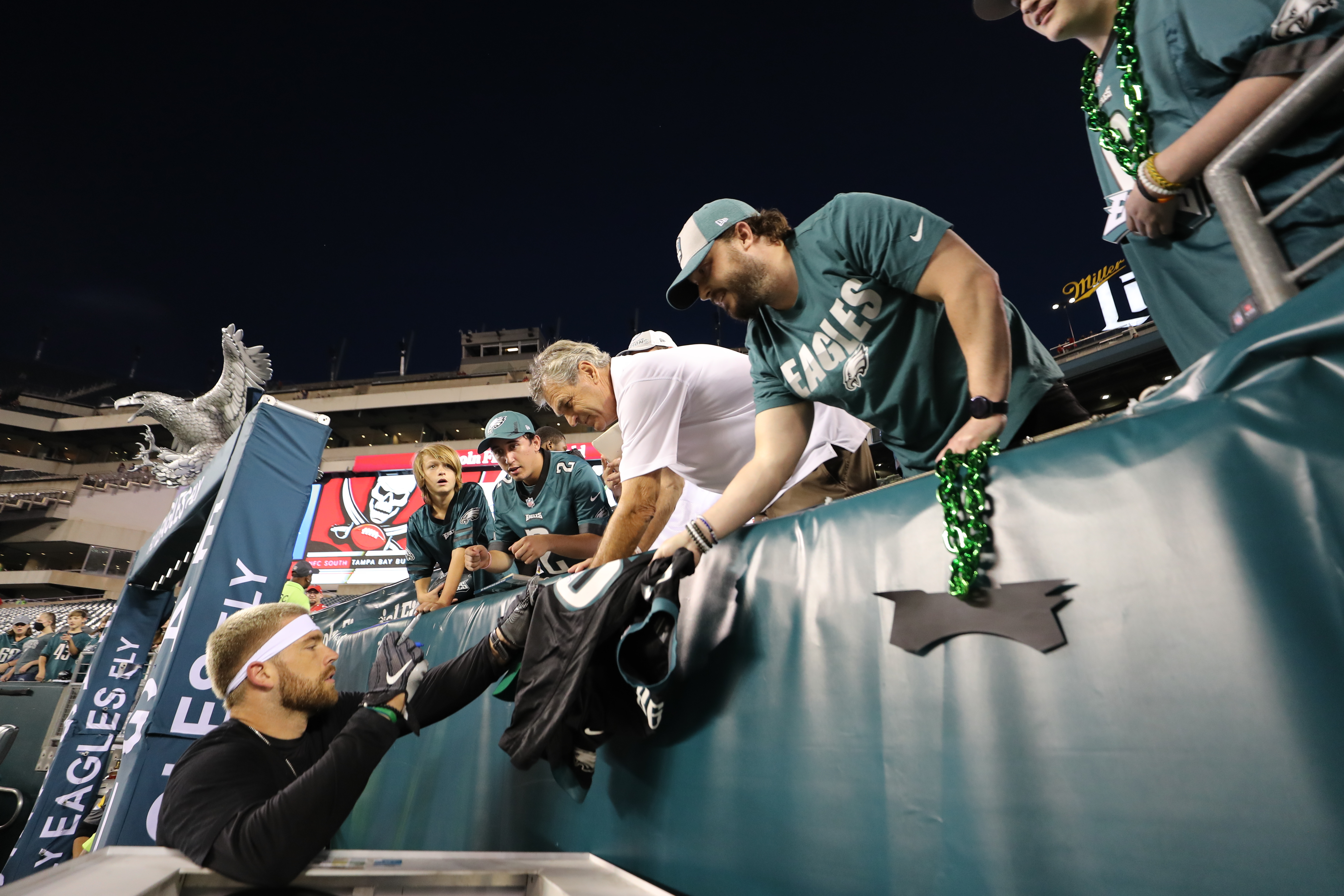
The Eagles are signing Zach Ertz, NFL sources told The Inquirer, confirming an initial ESPN report. The move comes after tests revealed that Dallas Goedert will miss multiple weeks with a sprained medial collateral ligament (MCL) in his knee after suffering the injury in Sunday’s win. Ertz, 35, will join the practice squad and is expected to be available to play Monday in Chicago.
Ertz, who last played for the Eagles in 2021, could eclipse Harold Carmichael as the franchise’s all-time leader in receptions with just 11 more catches.
To welcome him back to the city, The Inquirer put together a list including some of Ertz’s most memorable moments — both on and off the field — in Philadelphia.
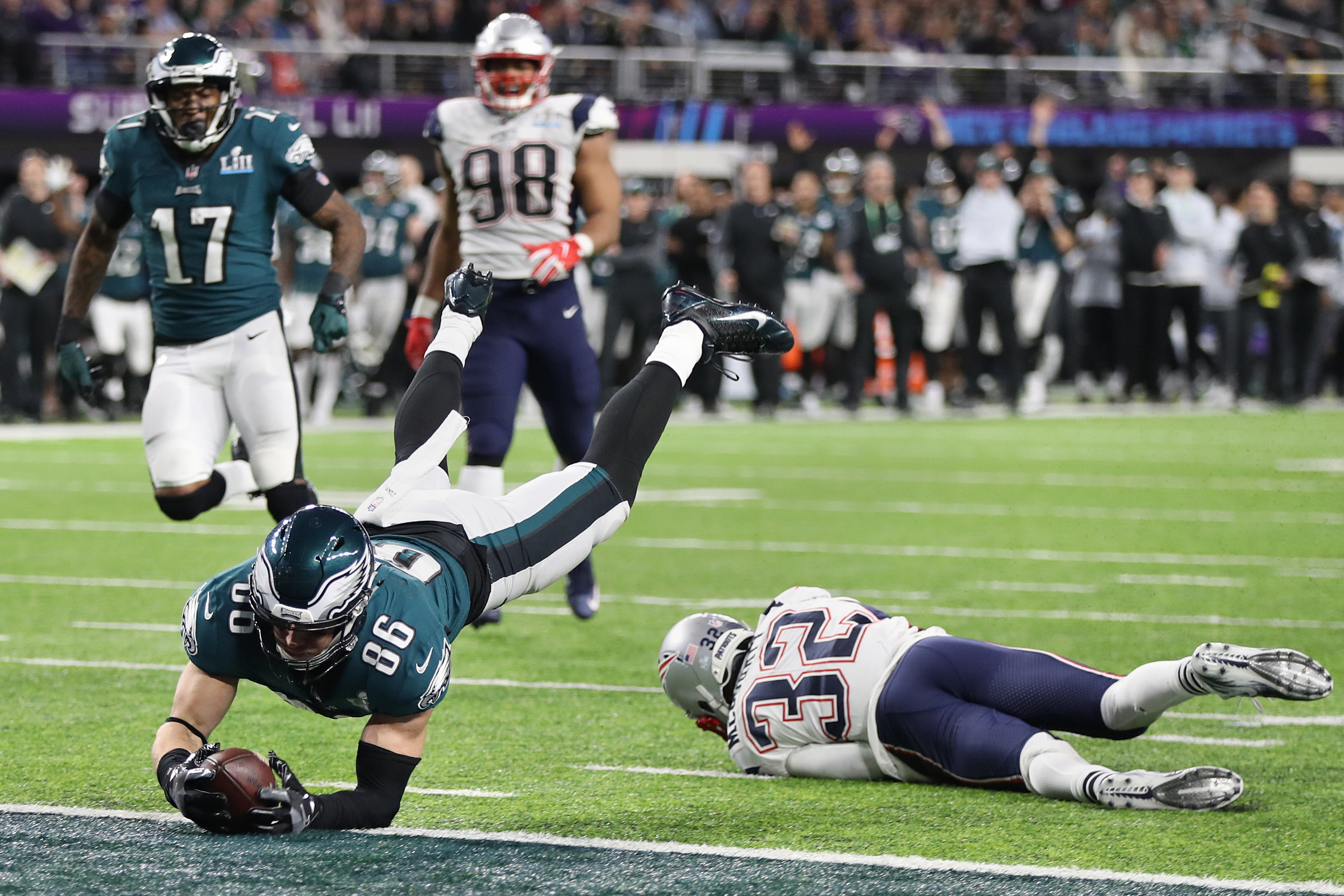
Eagles tight end Zach Ertz dives over New England Patriots defensive back Devin McCourty to score the winning touchdown in the fourth quarter of Super Bowl LII, at U.S. Bank Stadium in Minneapolis, Minnesota on Feb. 4, 2018.TIM TAI / Staff Photographer
Super Bowl LII
How else could you start this list?
Ertz’s game-winning touchdown grab in Super Bowl LII etched his name into Eagles history. On third-and-7, Ertz found the end zone on an in-route to take the lead over the Patriots with just over 2 minutes to go. He bobbled Nick Foles’ pass , but a review confirmed that the Eagles tight end had possession.
“I want to get the ball whenever the situation calls for it,” Ertz, who finished with seven catches for 67 yards, said after the game. “We have a lot of talented guys on this football team. They’ve done an amazing job building this roster. When the situation calls for it, they trusted me. That’s all I can ask.”
Record-breaking 2018
Ertz did not show any signs of a Super Bowl hangover the following season.
In 2018, the tight end had his best statistical season. In 16 starts, Ertz caught 116 passes for 1,163 yards and eight touchdowns. With the performance, Ertz set the NFL record for most receptions by a tight end in a single season. Last season, the Cardinals’ Trey McBride broke Ertz’s record with 126 passes hauled in — but he had 17 games to do it.
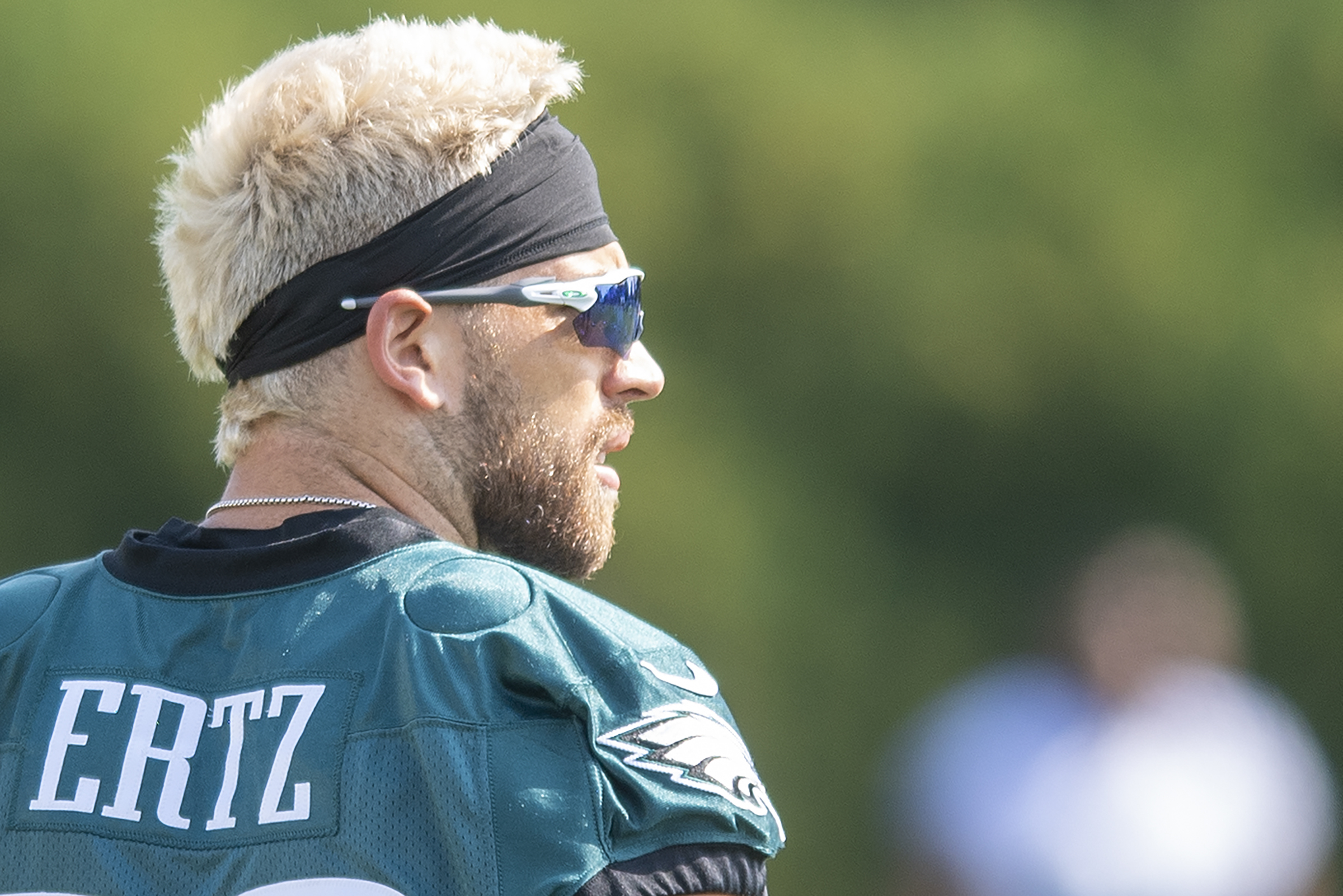
Zach Ertz shows off his blond hair during Eagles training camp in 2021.JOSE F. MORENO / Staff Photographer
Going blond … and regretting it
A short-lived, but memorable, period of Ertz’s tenure in Philadelphia was when he went blonder than usual.
In 2021, it was evident that Ertz’s tenure in Philadelphia was near the end. The Eagles were going through a period of change following the firing of coach Doug Pederson, and Goedert had emerged as the team’s No. 1 tight end. Ertz expected to be traded by the start of preseason, so he looked to have some fun in the meantime.
His idea of fun? Showing up to training camp with platinum-blond hair.
Jason Kelce decided to join. The Eagles center promised Ertz that if he was not traded by the time the season began, he would also bleach his hair. Ertz was not traded to the Cardinals until Week 7, so the two sported bleach-blond hair for the majority of the 2021 season.
“I just wanted Zach to have something to look forward to if he was still on the team, like, ‘At least Jason dyed his hair to match,’” Kelce said on his podcast, New Heights.
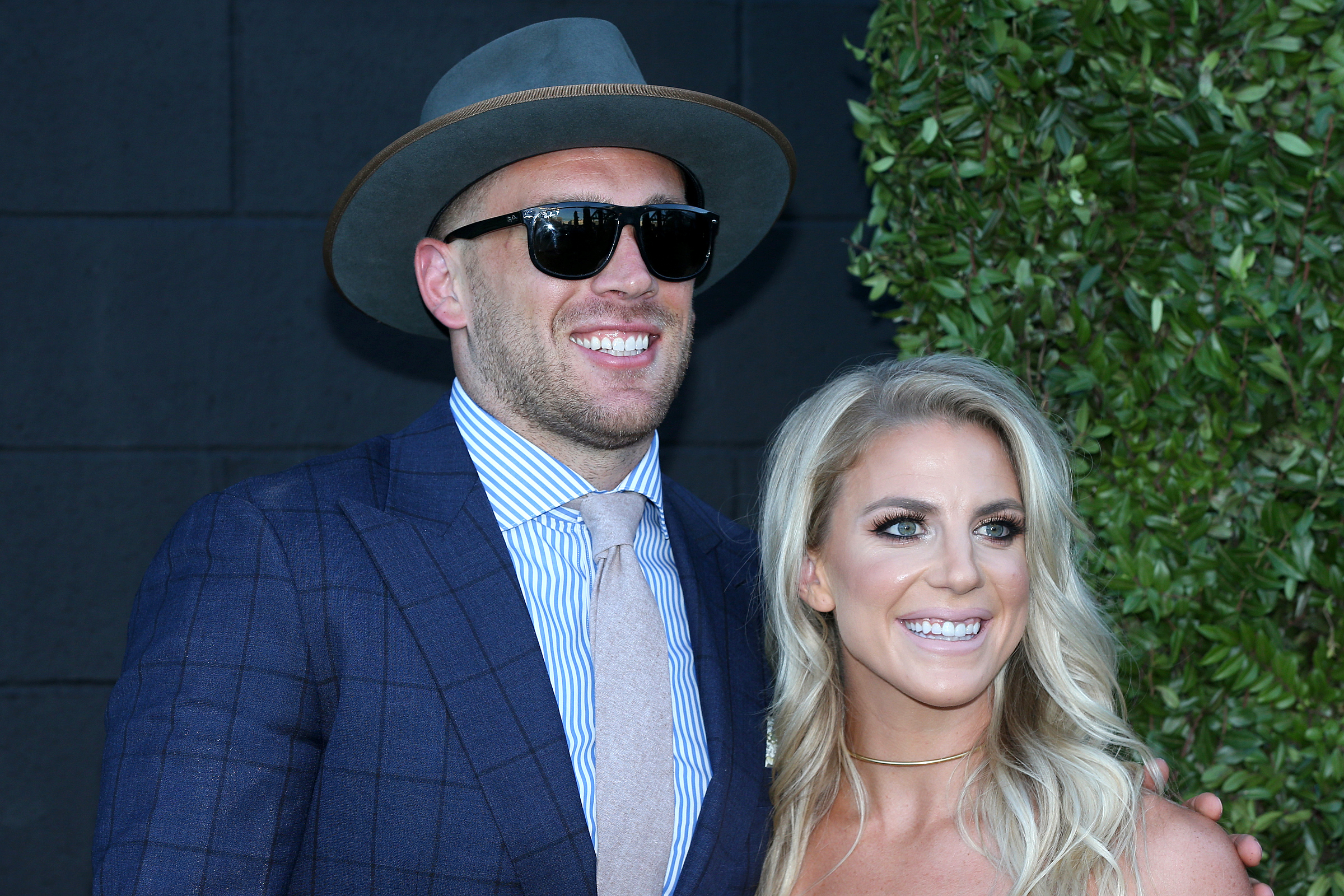
Zach Ertz and his wife, Julie, pose for photos while entering the Eagles’ Super Bowl championship ring ceremony at 2300 Arena in South Philadelphia on June 14, 2018. Players received their Super Bowl rings at the private ceremony.TIM TAI / Staff Photographer
Power couple
Before Jason and Kylie Kelce were Philly’s “it” couple, Zach and Julie Ertz ran the city.
While Zach Ertz excelled on the gridiron, Julie Ertz helped lead the U.S. women’s national soccer team to two World Cup titles. In 2015, Julie Ertz (then Johnson) starred for the U.S. at center back. Four years later, she won gold again playing defensive midfield. Julie, who retired in 2023, is widely seen as an all-time great in the sport.
A viral moment for the couple came in 2018 after the Eagles defeated the Minnesota Vikings in the NFC Championship. While confetti rained down at Lincoln Financial Field, Julie was playing a game for the U.S. in San Diego. She received the news after her match that her husband was going to the Super Bowl. She broke down in tears.
Zach traveled to watch many of his wife’s U.S. games.
“As an athlete, I feel like I have a little bit of control — or a lot of control — of the situation,” Ertz told the Inquirer in 2019. “When you’re in the stands, you have no control of the situation. You’re just praying (a) she’s healthy, (b) she’s having fun and successful. It’s definitely more nerve-wracking watching than playing.”
Zach Ertz’s connection with the city and the fan base was evident throughout his time in Philly. DAVID MAIALETTI / Staff Photographer
Saying ‘thank you’
After he was traded to the Cardinals, Ertz bought a full-page advertisement in The Inquirer to thank the city and the Eagles organization.
“Running through that tunnel every Sunday at the Linc truly changed my life,” Ertz wrote. “You have inspired me to push my limits each and every day to make sure I left no stone unturned in my pursuit to represent you the way you deserved. It was because of your love and commitment that I knew I needed to reciprocate that back every single day as a member of this team and community.”
Later in the message, Ertz wrote “Now comes the toughest part for me, saying goodbye, for now, to the city that I love.” Five years later, Ertz’s use of “for now” hits a bit different.
In 2021, Zach Ertz took out a full-page advertisement in the Philadelphia Inquirer after he was traded to Arizona
Ertz wrote: “Now comes the toughest part for me, saying goodbye, for now, to the city that I love.”
Swarthmore College has renamed the former Trotter Hall and its adjacent lawn for two Black scholars who feature prominently in its history: the school’s first African American professor and an alumnus who served as a policy adviser to several U.S. presidents and formerly led the University of California, Berkeley School of Law.
The move comes after the college last year stripped former professor Spencer Trotter’s name from the hall after the school learned Trotter had dug up a Native American burial ground in Chester County in 1899 and displayed human remains on campus.
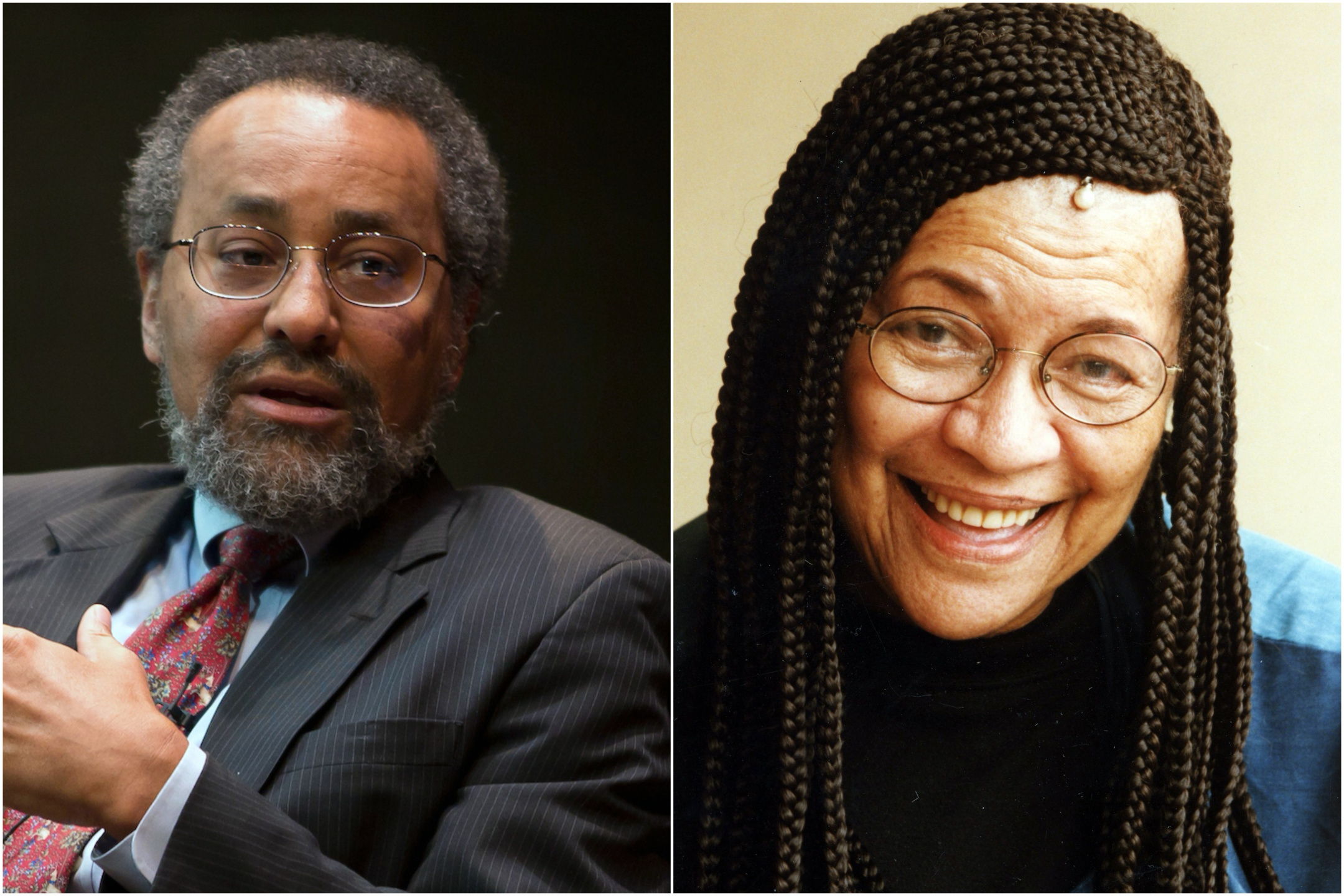
Effective immediately, the hall and its adjoining lawn will be known as Edley-Morgan Hall and Edley-Morgan Lawn, named for Kathryn L. Morgan, the late Swarthmore professor emerita of history, and Christopher F. Edley Jr., the late legal scholar and proponent of affirmative action who worked closely with three Democratic presidents and with six presidential campaigns.
“This renaming is an important milestone, but not the end of this work,” Swarthmore president Valerie Smith said in a message to campus Monday. “Our further efforts will also ensure that this reckoning with the past is appropriately documented and acknowledged so our community can continue to learn and heal.”
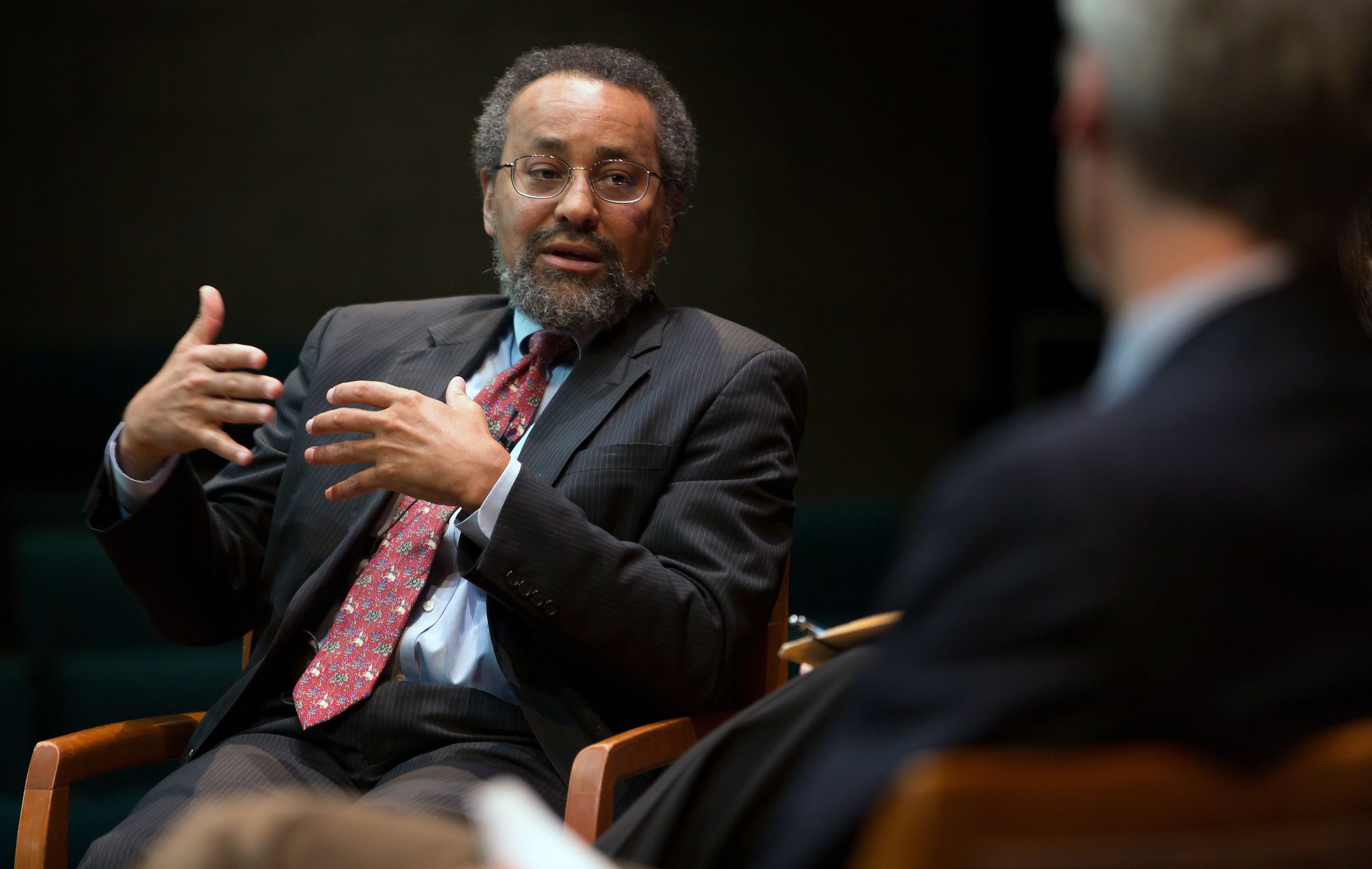
The late Christopher F. Edley Jr. is a legal scholar and Swarthmore College alumnus. Swarthmore announced it is naming the former Trotter Hall and its adjoining lawn for Edley and Kathryn L. Morgan, the late Swarthmore professor of history, who was the college’s first African American professor.Courtesy of Swarthmore College
The college undertook an extensive process that included input from more than 500 students, faculty, and staff through a campus survey, a panel discussion with other college leaders who had gone through renaming processes after controversies, a session with a leader of the Delaware Tribe of Indians, and research on potential new namesakes.
Through the process, the community concluded the new namesake or namesakes should be someone with a direct connection to the college and honor departments based in the building — history, political science, classics, and the writing associates program. The community also wanted the new namesake or namesakes to be “consistent with or expand the diversity of representation on campus.”
When the process began, of Swarthmore’s 70 primary buildings, 67% were named for people, and of those, 53% were named for one or more men, 26% for one or more women, and 21% for both, the college had said. All but two of the namesakes were white and about half were Quakers.
More than 75 names were considered for the hall, which initially opened in 1882, the college said.
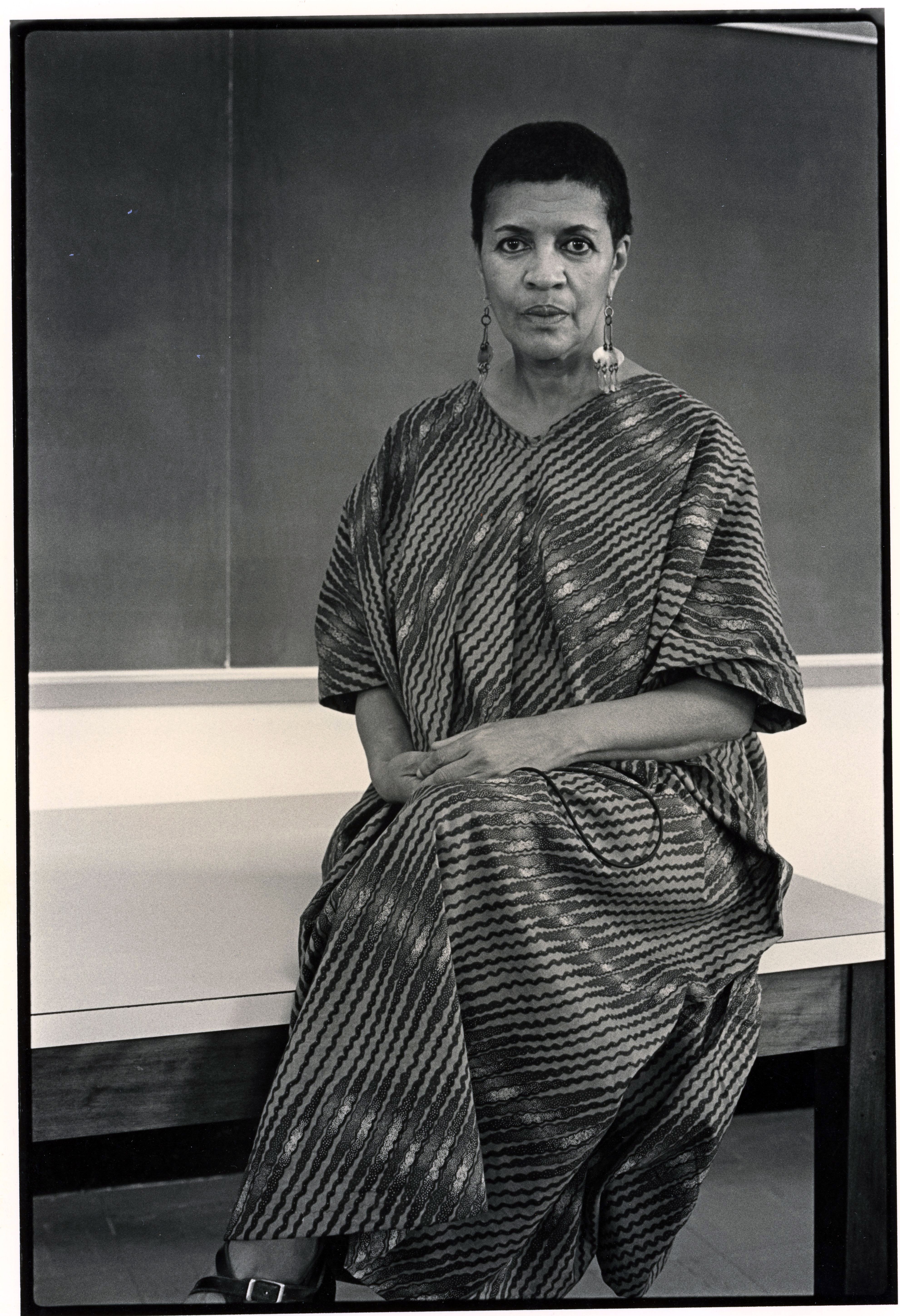
Swarthmore hired Morgan in 1970, and she joined the history department as its first folklorist, according to a 2011 Swarthmore story about her passing in 2010. She got her bachelor’s degree from Virginia State University, a master’s degree from Howard University and another master’s degree and doctorate from Penn.
She taught classes including Folklore and Folklife Studies, History through Folklore and Literature, Black Women in Historical Perspective, and Black Culture and Consciousness, according to the college. Though she initially was denied tenure, she eventually became the first Black woman to get it at Swarthmore and talked about tensions in her department in a 2000 Swarthmore College Bulletin interview, the college said in its piece.
Her work Children of Strangers: The Stories of a Black Family (1980), was the first work of African American family folklore by a folklorist.
In 2000, a scholarship was established in her name and a poetry festival in her name was held in 2009.
“One of the first things I tell my students,” Morgan said, according to the Swarthmore piece, “is to go home, look to your families, to the stories you were told as children. They’re the most important stories in the world.”
Morgan, who was born and raised in Philadelphia, was described in the Swarthmore piece as “a wise, charismatic woman who intellectually bridged the gap between W.E.B. Du Bois and Malcolm X, a militant yet gentle soul who embraced everything of interest with intensity, and a radiant presence who drew on lessons learned from her ancestors as others draw breath.”
The late Kathryn L. Morgan, professor emerita of history at Swarthmore College, was the first African American professor at the school. The college is renaming the former Trotter Hall and its adjoining lawn for Morgan and legal scholar Christopher F. Edley Jr., a Swarthmore alumnus.Courtesy of Swarthmore College
Edley, who died in 2024 and spent part of his youth in Philadelphia, got a degree in mathematics and economics from Swarthmore in 1973 and later a master’s in public policy and a law degree from Harvard. Before serving as law school dean at Berkeley from 2004 to 2013, he was a professor at Harvard. He served on Swarthmore’s board of managers from 1982 to 1993.
He worked for the White House domestic policy staff in the 1970s when Jimmy Carter was president, advising on issues including food stamps, child welfare and disability, according to an article on the Swarthmore website. During Bill Clinton’s administration, he worked in the Office of Management and Budget and served as special counsel to the president. And in 2008, he worked on Barack Obama’s successful presidential campaign and served on his presidential transition board. Obama had been a student of Edley’s at Harvard, according to Edley’s obituary in the Washington Post.
When he received an honorary degree from Swarthmore in 1999, Edley talked about what he learned at the school.
“I learned to face the limits of my intelligence, without fear,” he said, according to the Swarthmore piece. “I learned what it means to really understand something hard, only to realize that I was dead wrong, or that there was another, perhaps better way to understand it … And I learned that when there is trouble, find a grove of lilac bushes, lie down, get drunk on the fragrance, and think about important things.”
Swarthmore’s renaming process started after a 2022 article in The Inquirer that mentioned how a former Swarthmore professor and student had dug up a burial ground and moved a skeleton and objects buried with it to the college.
Swarthmore researched and discovered the professor was Trotter. The college first checked to make sure there were no remains from Trotter’s collection being improperly handled at the school; there were not. Officials found a collection of unidentified human bones that the college likely had obtained legally — but probably were initially acquired unethically — and moved them into storage.
The college renamed the building Old Science Hall last December when Smith named a task force of students, faculty, and staff members to consider the next steps.
In the wake of the devastating 2010 earthquake in Haiti, Camille Joseph and his family left the island for a better life in Philadelphia.
Joseph found that in the city, said his sister, Ophtanie. But his life was tragically cut short on Sept. 11, when first responders found the 25-year-old in the parking lot of a bustling Nicetown shopping center suffering from a gunshot wound to the chest.
He was pronounced dead shortly after arriving at Temple University Hospital. Police have not identified a suspect or motive as they continue to investigate.
More than a week after the crime, Joseph’s family members and detectives remain puzzled by the killing.
Family members say they cannot fathom why anyone would have wanted to hurt Joseph, a mechanic and a security guard at the Center City bar Time.
“It’s not fair,” said Ophtanie Joseph, who is urging anyone with information about her brother’s death to come forward. “This doesn’t make any sense.”
Sources close to the investigation said the incident began after Joseph pulled into the shopping center parking lot on the 2800 block of Fox Street in his SUV that evening.
Meanwhile, another SUV being driven by a person police have yet to identify also pulled into the lot and crashed into a wall, the source said.
Investigators believe Joseph and the driver of the crashed SUV then got into an altercation before Joseph was shot and killed, though they have yet to figure out why the two parties interacted.
After the shooting, the damagedSUV fled the parking lot along with Joseph’s SUV, which investigators believe was being driven either by a shooting suspect or someone who was traveling with Joseph.
Police were called to the scene around 5:20 p.m. and later discovered Joseph’s vehicle abandoned nearby.
Investigators are now seeking search warrants for security footage from businesses in the shopping center in an effort to piece together the moments before Joseph’s killing and identify a suspect.
Ophtanie Joseph said her brother’s death was a tragedy.
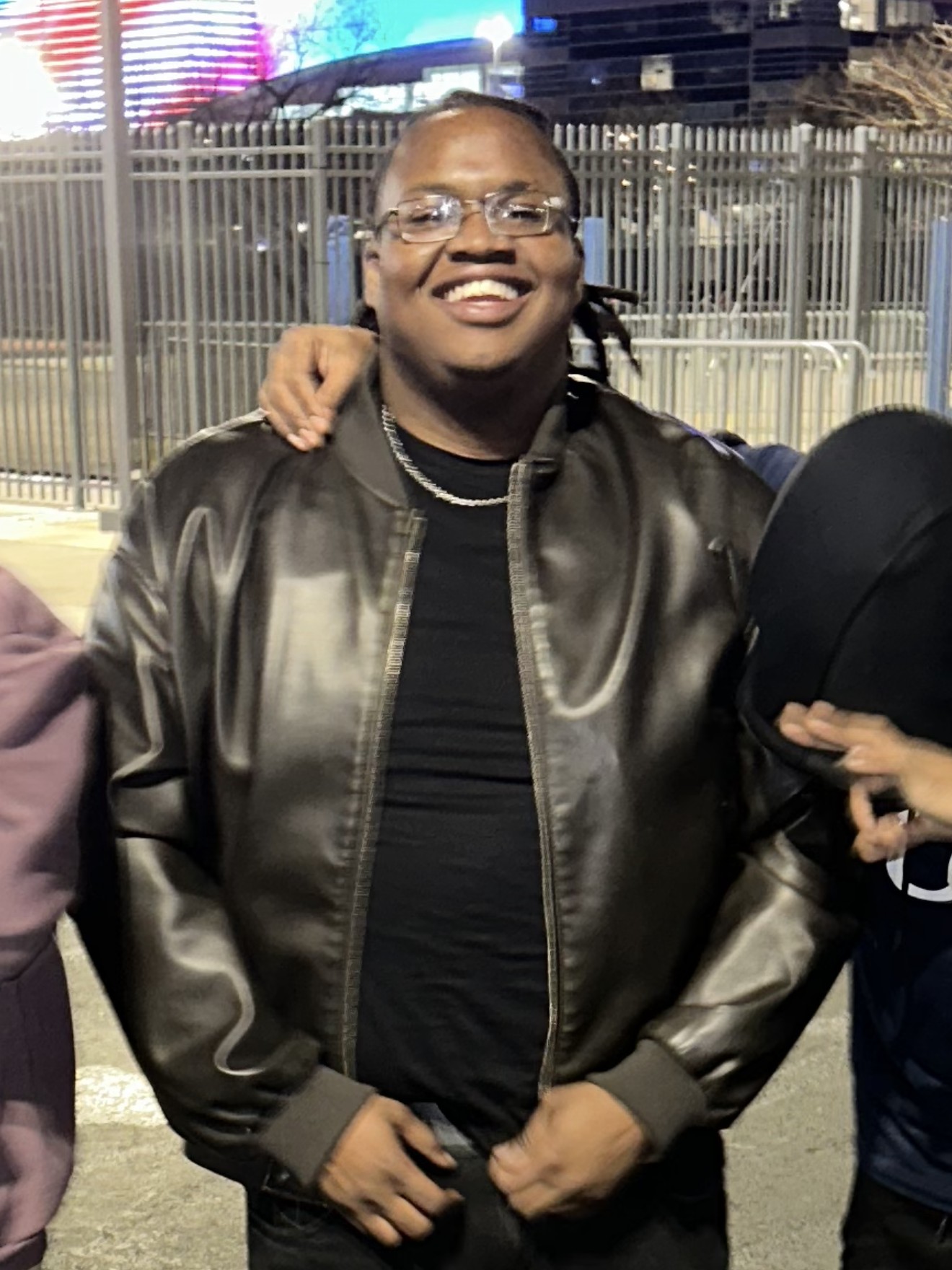
A photo of Camille Joseph.Ophtanie Joseph
He had built a life in Philadelphia after their family left Haiti, she said, attending Benjamin Rush High School, where he played the tuba in the school band and competed in soccer and baseball.
After graduation, he went to trade school to become a mechanic, following the path of his father, his sister said.
He worked at auto shops around the city and was quick to help out friends and family when they had car trouble, she said.
Most recently he worked in security at Time, a whiskey bar and restaurant on Sansom Street. Ophtanie Joseph said her brother loved his job, where he met musicians and local celebrities who passed through the lively establishment and event space.
Camille Joseph was supposed to clock in at 6 p.m. the evening of his killing, his sister said. She later learned that managers began to worry when he never showed up.
“His life wasn’t supposed to stop here,” Ophtanie Joseph said. “He had a lot of dreams: He wanted to have his own mechanic shop, he wanted to travel. He didn’t deserve this.”
A line in Philadelphia’s zoning code conflates drag performances with strip clubs, topless bars, and other adult cabaret venues. It’s a definition that City Council hopes to change.
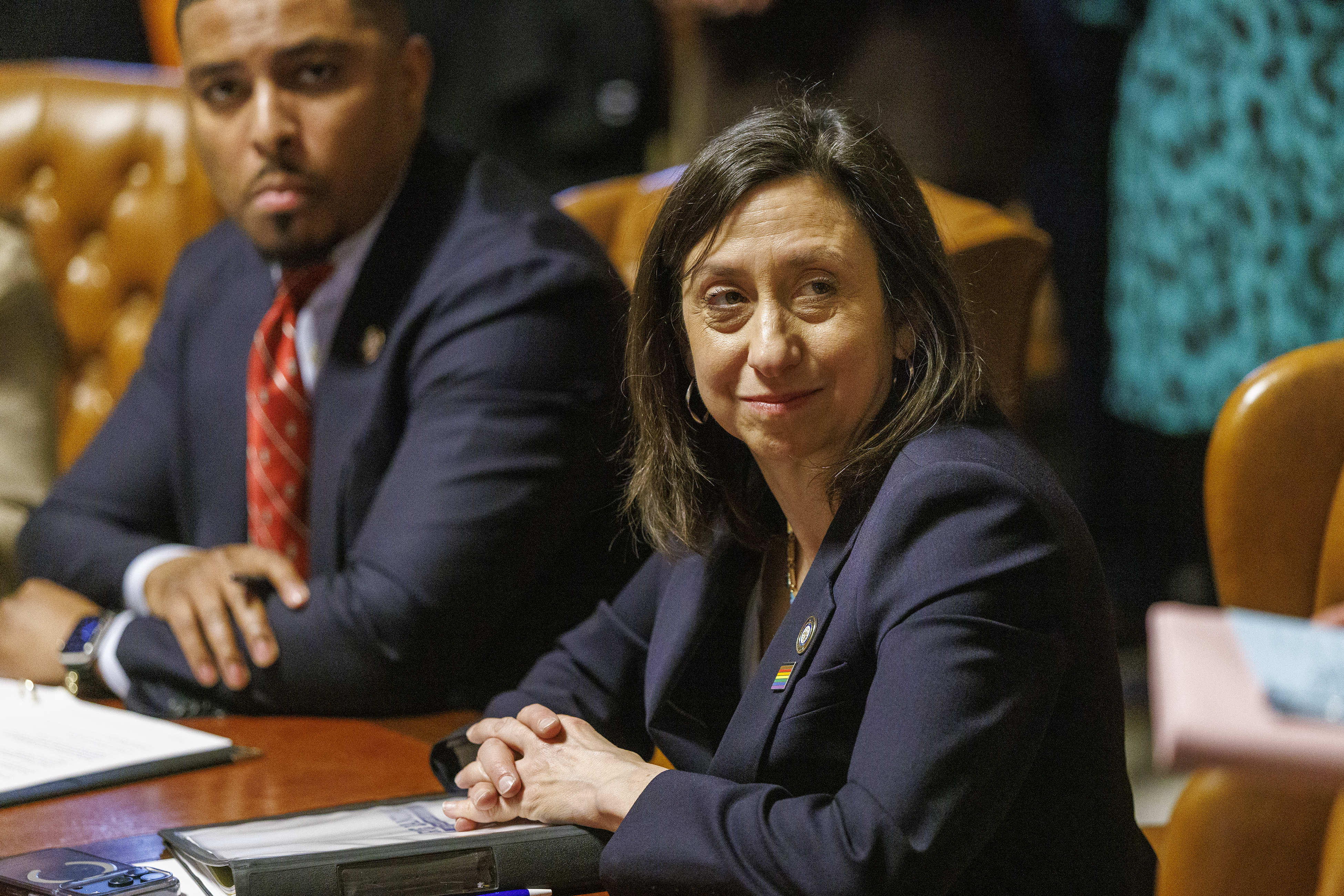
Councilmember Rue Landau introduced legislation on Thursday to remove references to “male or female impersonators” in a section of the zoning code that regulates “Adult Oriented Services.”
As currently written, Philadelphia defines an adult cabaret as a place that “features topless dancers, go-go dancers, exotic dancers, strippers, male or female impersonators or similar entertainers … dancing, performing or acting in a lewd, sexually erotic, exciting or stimulating manner.”
The distinction is similar to one found in a Tennessee law that prohibits so-called “adult cabarets” featuring “male or female impersonators” from being staged anywhere minors might see it. It also mirrors language used in similar drag bans struck down this year byjudges in Texas and Montana, and one currently up for consideration by the Idaho Senate.
If passed, Landau’s proposal would strike the provision regarding male and female impersonators.
The bill will first be considered by City Council’s Rules Committee. The legislation has the support of Mayor Cherelle L. Parker’s administration, Landau said, and has also been shared with her colleagues in City Council, who Landau described as “supportive.”
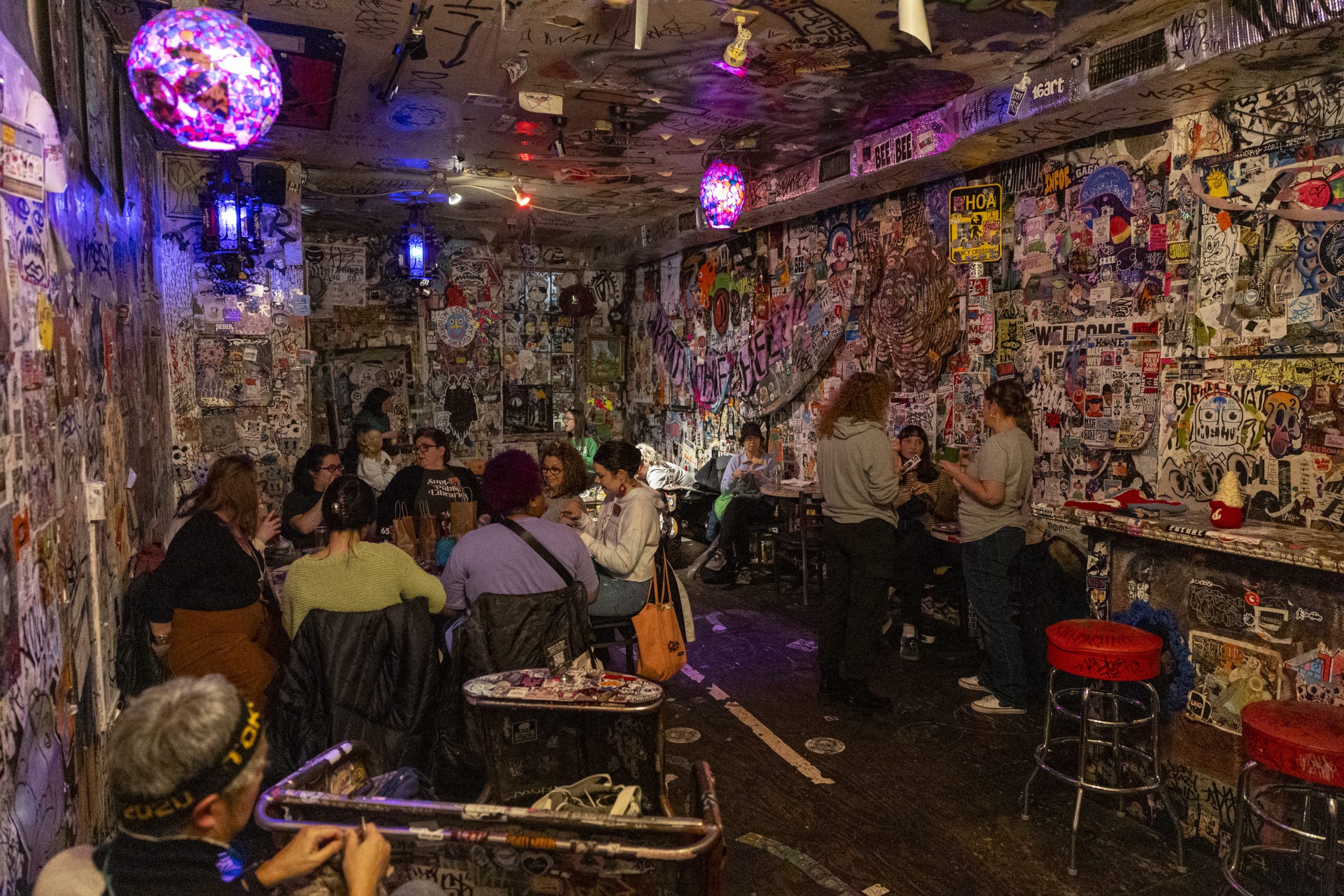
Landau’s bill is inspired by recent events at South Street bar Tattooed Mom, which has long been a go-to venue for Philly’s LGBTQ+ artists, and particularly drag performers, in part because it doesn’t charge acts.
A crowd fills Tattooed Mom. The popular South Street bar is unable to host events with music for the foreseeable future.Tyger Williams / Staff Photographer
Tattooed Mom owner RobertPerry told The Inquirer Friday that he brought what he called the “offensive and troubling language” to the attention of Landau’s staff, but was not involved in drafting the legislation.
The incident “opened my eyes to actually reading the code and having conversations … I think the [language] is so antiquated that people don’t even realize it’s there,” Perry said. “We might have initially spurred the conversation, but Landau did all the heavy lifting.”
Perry was initially instructed to seek an adult cabaret permit in addition to a special assembly license for Tattooed Mom, he told the Philadelphia Gay News in July. That same month, an L&I spokesperson told Philly Voice that the permit — which traditionally governs businesses such as strip clubs and adult theaters — is required to host drag and burlesque events.
Perry now believes that his bar doesn’t need one upon further research, he said Friday.
Regardless,Landau said Tattooed Mom’s predicament was the spark for her proposal.“They were cited in violation of this provision simply because they had a drag performance happening,” she said. “We don’t want that happening in Philly … A lot of folks rely on drag performances for their livelihood, and we just want to keep supporting them.”
Landau is unaware of L&I citing other Philly venues for hosting drag or burlesque shows without a permit. “This is thankfully nothing that L&I is usually citing establishments” over, she said.
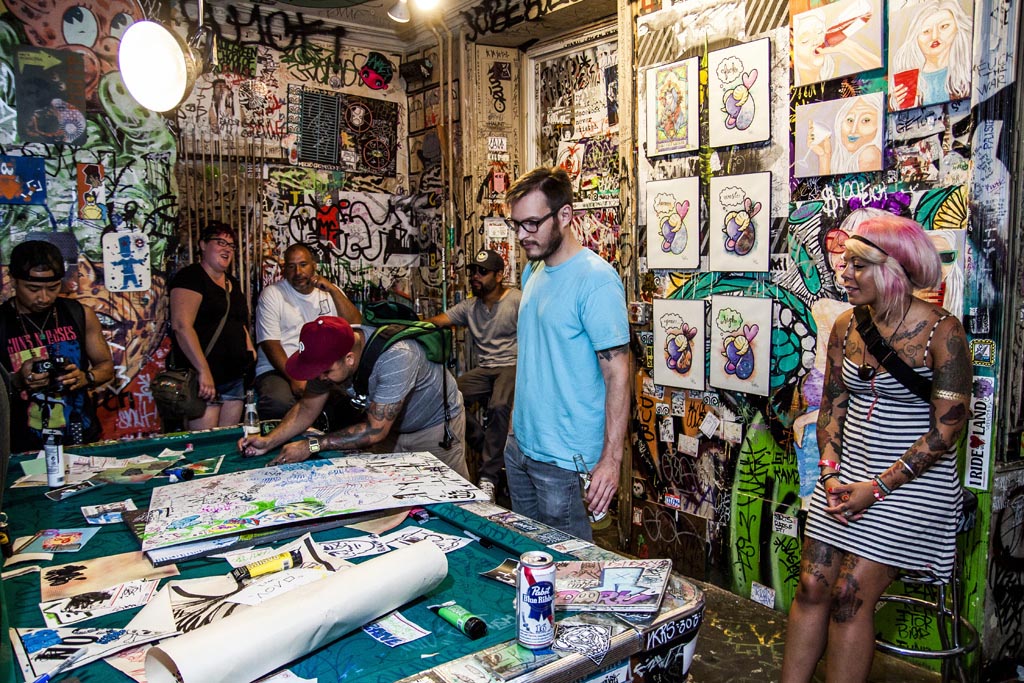
A crowd looks at art inside the South Street bar Tattooed Mom.
If passed, Landau’s legislation won’t green-light events with music at Tattooed Mom. All Philly establishments with an occupancy of 50 or more people that host music performances, dancing, or DJs are required to have a special assembly occupancy license, which costs $253 and must be renewed annually. To procure one, Tattooed Mom must first apply for a zoning exception.
The process involves holding a public meeting for community feedback followed by a separate hearing in front of the Zoning Board of Adjustment. As of March 2026, the wait time for a hearing is 180 days — or roughly six months — according to a manual from the City of Philadelphia.
Perry said he has yet to begin Tattooed Mom’s application.
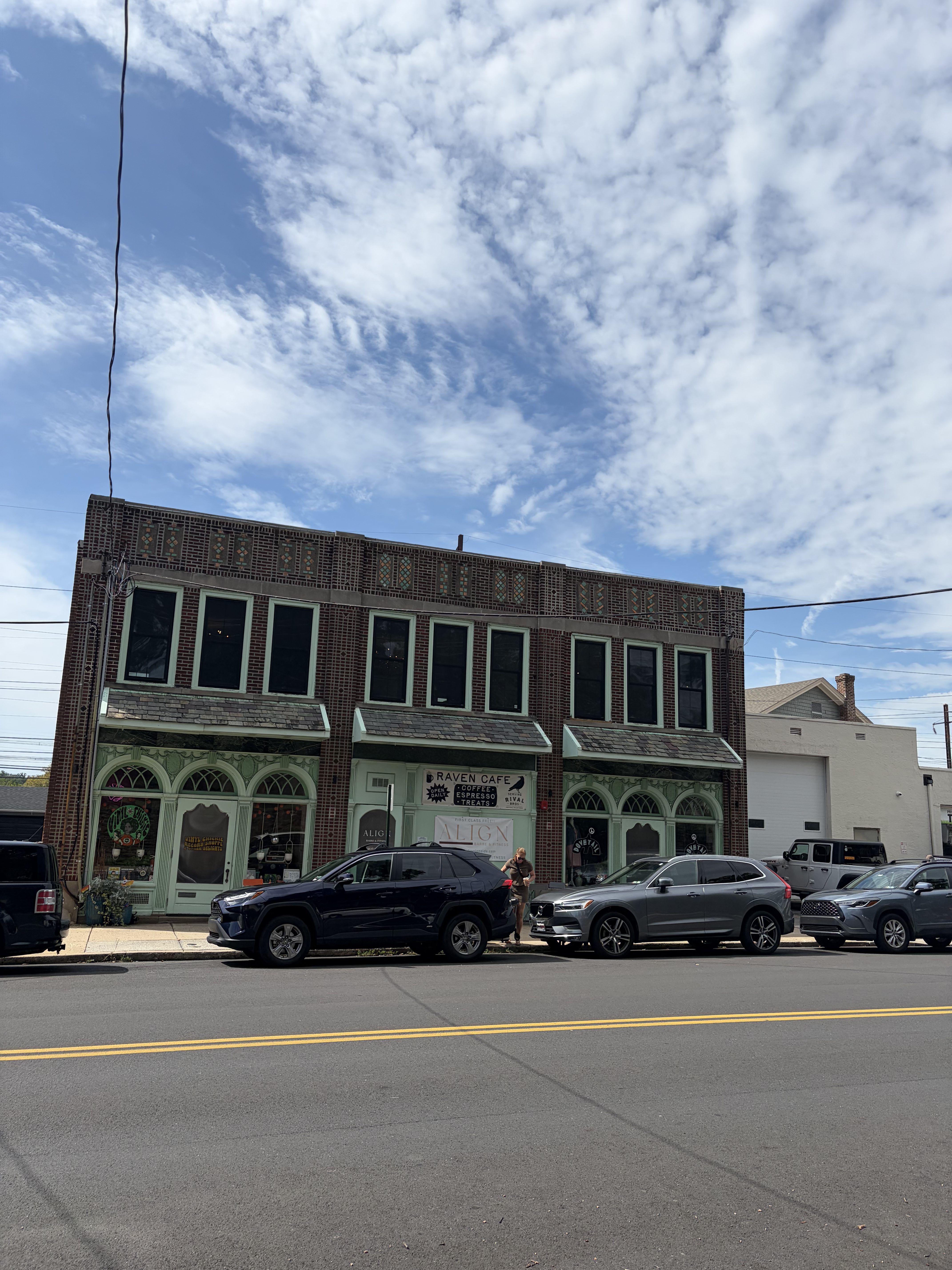
A sprawling brick Glenside building that last held an optometrist’s office is returning to its roots as developer Kevin Burke looks to build community hubs around his native Glenside.
The building at 2256 Mt. Carmel Ave. was once home to a bowling alley and billiards hall. The alley closed in 1971, and a family of eye specialists ran a glasses store there for decades.
Burke bought the 1920s structure, dubbed Glenside Lanes, in 2024. The micro-mall, which officially opened in May 2025, is now home to a barre and yoga studio, a coffee shop, a record store, and a gift shop, with plans for a music venue in the back.
Like the newly bustling Yorkway Place in Jenkintown, Glenside Lanes balances traditional retail with experiential businesses. The Montgomery County venues are part of a nationaltrend, as investors look to fill commercial space hollowed out by online shopping and post-pandemic consumer shifts.
“I think it’s the way to keep a brick-and-mortar going,” said Rhiannon Punzo, a Glenside Lanes tenant. “It’s like your community mall where you’re coming to one building that you can walk to, that isn’t corporate.”
Burke is preserving most of the bowling lane flooring — including lane guides and the alternating wooden plank style demarcating the gutters — in the back of the building, which will serve as a concert and event space as early as November. He plans to develop a similar multiuse site in Wyndmoor.
The lanes from a former bowling alley are still visible in a section of Glenside Lanes under construction on Sept. 3, 2026.Jess Rohan
But to make Glenside Lanes a success, Burke needed the right business partners.
First, he found Punzo, who runs the Dovetail shop of local artist-made gifts, and cofounded the art events company CO Lab.
Punzo connected with longtime music photographer Lisa Schaffer, who had planned to open a record store in about five years. Within months, Schaffer was opening Vinyl Chickie at Glenside Lanes.
“I want you to speed up your retirement plan,” Punzo recalls telling Schaffer.
Former professional ballet dancer Alyson Pray Ward used to park outside the building and walk down the street to her barre and yoga business, Align Studio.
“I would always look up to the second floor and think, ‘That would make a gorgeous ballet studio,’” Pray Ward said. She moved Align into Glenside Lanes last year.
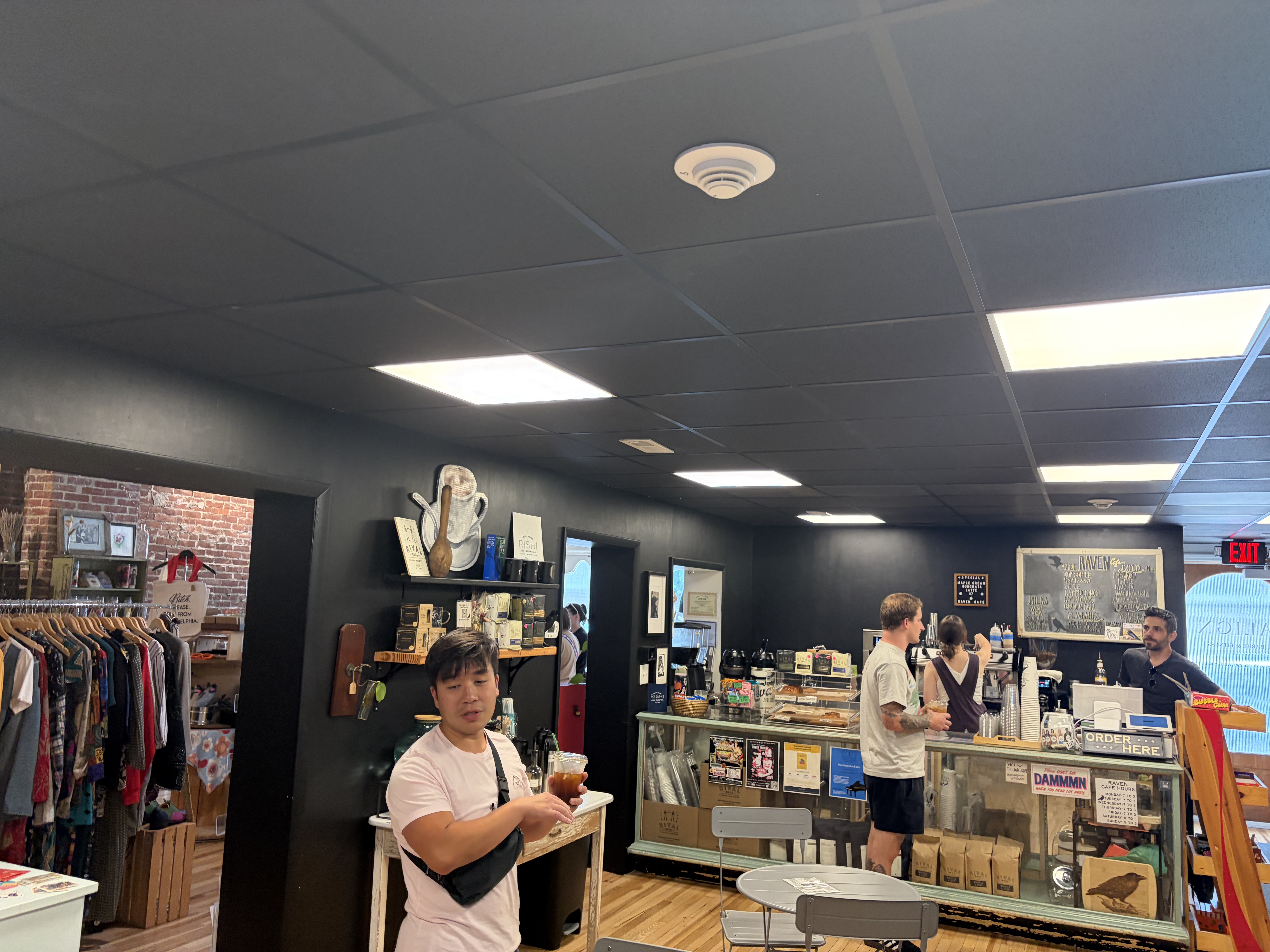
This summer, Raven Cafe began serving Rival Bros. Coffee on the ground floor between Punzo and Schaffer’s stores. The stores flow into one another, making it easier to linger, owners and workers said: Yogis might pick up a teacher gift downstairs at the Dovetail after class, and music lovers grab coffee at Raven before browsing vinyl.
Raven Cafe opens into the Dovetail gift shop at Glenside Lanes. The stores flow into one another, making it easier for customers to linger, owners and workers said.Jess Rohan
“People can honestly show up and see familiar faces,” said Christine Collins, who teaches at Align. “I’m meeting adult friends there.”
The clutch of complementary businesses is exactly what Burke had hoped for.
The goal “was definitely to bring in different businesses that would help the community,” Burke said. “I always thought the bowling alley would be a perfect spot for that, and now we’re almost there.”
The final business partner Glenside Lanes needed, Punzo said, was Glenside itself.
“The community said, ‘We want this, if you build more we’ll come,’” Punzo said. “They could’ve been just talking, but everyone who said it showed up.”
Correction: This story has been updated to reflect where developer Kevin Burke may plan a future micro-mall.
This suburban content is produced with support from the Leslie Miller and Richard Worley Foundation and The Lenfest Institute for Journalism. Editorial content is created independently of the project donors. Gifts to support The Inquirer’s high-impact journalism can be made at inquirer.com/donate. A list of Lenfest Institute donors can be found at lenfestinstitute.org/supporters.
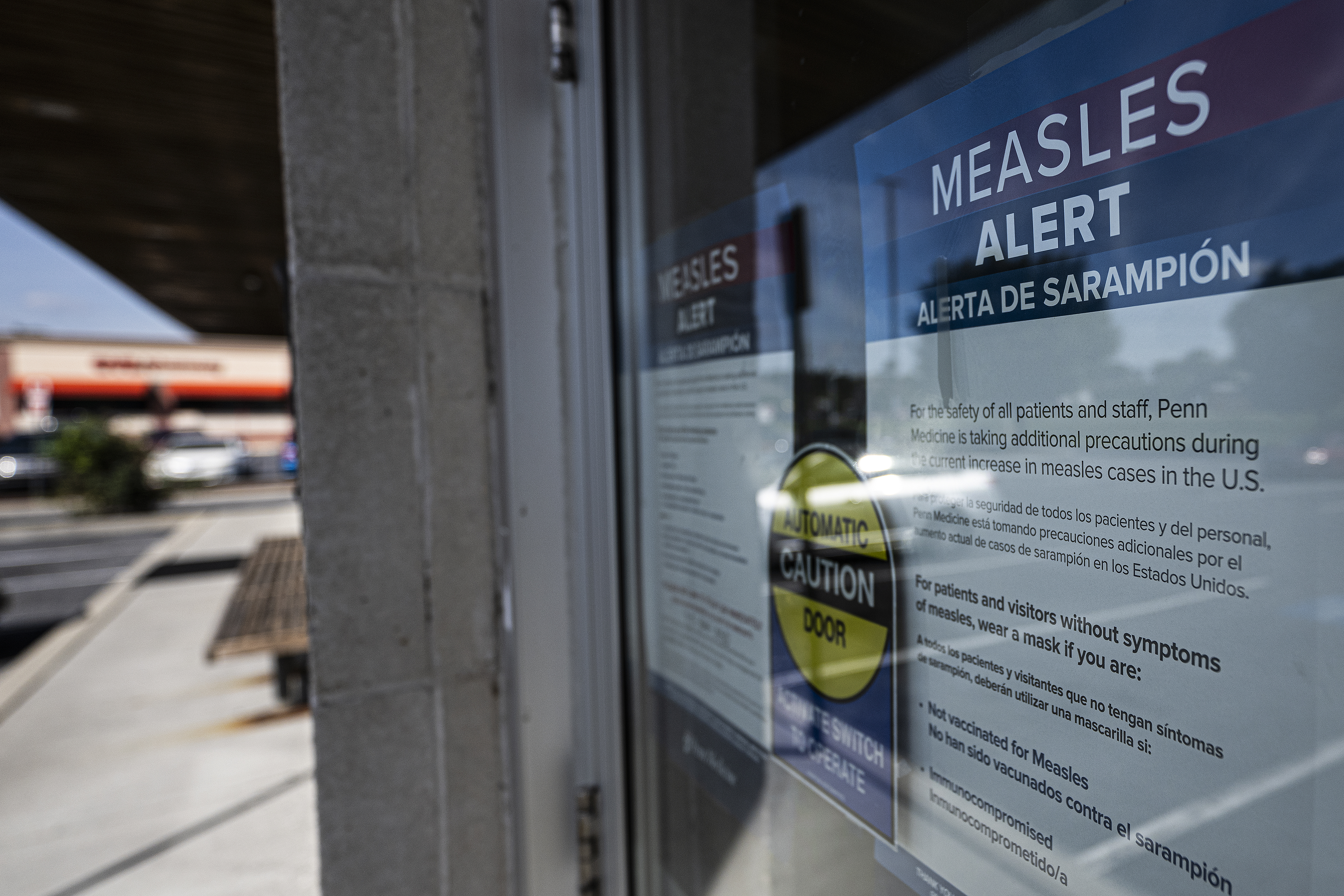
In the last month, Pennsylvania health officials have announced four measles-associated deaths but have been tight-lipped about almost every detail, beyond sharing their county of residence and that all were unvaccinated.
Most of what the public knows about the four deaths linked to the outbreak — ranging in age from a newborn to a 40-year-old — has come from local coroners in Jefferson, Mifflin, and Lancaster Counties. In one case, a family also spoke to the media.
Pennsylvania’s health department has cited state privacy laws that they say prohibit them from releasing more information. Legal and public health experts acknowledge the state faces legal restrictions, but some argue that the state should do whatever it can to ensure more information about the deaths is made public.
More details about a death, they say, help the public to understand the risks of measles and the benefits of vaccination to prevent the spread of the highly contagious disease.
Transparency around how the state defines measles-associated deaths and unvaccinated people can also head off misinformation, they said, in a highly politically charged environment.
The spreading outbreak has sickened 767 people — now the largest outbreak in the United States — and hospitalized 150people as of Friday. The deaths reported by the state mark Pennsylvania’s first in 35 years, and the most seen nationally from measles in three decades.
Here’s what to know about Pennsylvania’s privacy laws and how officials communicate in infectious disease outbreaks.
What is known about the measles-associated deaths in Pennsylvania?
State officials announced two “measles-associated” deaths in Lancaster County late last month, though they did not define the term in an initial news release on the cases. They did not provide any additional information, beyond saying both victims were unvaccinated and residents of Lancaster County.
Lancaster County’s coroner subsequently shared that he had investigated one of the deaths, involving an infant who contracted measles in utero and died shortly after birth. The baby tested positive for measles, but, the coroner said, died from a ruptured spleen. Physicians have pointed out that measles can damage a person’s spleen, putting it at higher risk for rupture.
The state has continued to characterize the Lancaster County infant’s death as “measles-associated,” meaning it occurred within 30 days of symptom onset in a person with clinical evidence of infection and a positive laboratory test for measles, and who did not die of another unrelated cause, like a car crash.
Lancaster’s coroner said a second death, in a 6-week-old Lancaster County baby, was caused by measles. The child also had Amish lethal microcephaly, a fatal genetic disorder that makes it especially risky to contract a respiratory illness like measles.
State officials confirmed two more measles-associated deaths last week.
Jefferson County’s coroner said measles led to the death of a 40-year-old unvaccinated woman with severe respiratory conditions. A postmortem test showed the woman had an active measles infection, and she had also been exposed to a person with a lab-confirmed measles case.
Mifflin County’s coroner also confirmed that an unvaccinated 18-year-old died of a rare neurological complication of measles.
(function(){function e(){window.addEventListener(`message`,function(e){if(e.data[`datawrapper-height`]!==void 0){var t=document.querySelectorAll(`iframe`);for(var n in e.data[`datawrapper-height`])for(var r=0,i;i=t[r];r++)if(i.contentWindow===e.source){var a=e.data[`datawrapper-height`][n]+`px`;i.style.height=a}}})}e()})();
Why are state and federal officials clashing over the deaths?
Starting with the initial news conference to announce the first two deaths, Democratic Gov. Josh Shapiro has traded barbs with President Donald Trump’s Health and Human Services secretary, Robert F. Kennedy, Jr., over the outbreak.
Shapiro has accused Kennedy, a longtime anti-vaccine activist, of spreading misinformation contributing to a decline in vaccination rates. Kennedy said in a social media post that Shapiro’s staff may have “fabricated” the deaths, after the Lancaster County coroner’s comments, though Kennedy later acknowledged one infant’s death was caused by measles.
Federal officials said Tuesday they were aware of the third and fourth deaths reported in Pennsylvania but have not updated the federal website tracking measles cases to reflect any of the deaths reported by Pennsylvania. They have said they will record measles-related deaths when the National Center for Health Statistics “identifies measles as the underlying cause based on death record information submitted by the states.”
Democrats and public health experts have harshly criticized the decision, saying it’s a departure from established procedures for recording infectious disease deaths.
State health officials said they have discussed the details of each case with CDC professional staff, “at length.”
“At no point did CDC staff express any concern or issue with the data we provided,” they wrote in a statement.
Why is the health department not releasing more information on measles-associated deaths? Why can coroners give out more information?
But coroners and medical examiners are county officials who operate by different rules, the state said in a frequently-asked-questions document posted online last week. Laws governing coroners’ duties and the state’s right-to-know statute allow them to provide the public with identifying details like a person’s cause and manner of death, the state says.
“Releasing additional details beyond what we did could have led to the unnecessary identification of individuals and their families. Further, the specific details of a single case do not change the important message that measles is a highly contagious virus that can cause severe illness and complications, and the MMR vaccine is the best protection against it,” state health officials said in a statement.
Legal experts say decision-making around what to reveal about a death during a measles outbreak is difficult, and privacy laws do apply to health departments.
Robert Field, a professor emeritus at Drexel University’s Thomas R. Kline School of Law, said health departments typically release aggregate data about disease outbreaks, not individual deaths.
“Confidentiality and privacy are major issues for any health department, which is why the regulations are stricter,” he said. With just a few measles-associated deaths reported, he said, releasing further details about the deaths could risk identifying families.
“A newborn dying with a ruptured spleen — there aren’t a lot of those,” he said, referencing one case in Lancaster County. “In terms of additional information, further details that would ID the patients — that would be off-limits.”
Why are some experts criticizing state officials over their communications strategy?
Releasing less information about a death risks creating an “information vacuum,” especially in a highly politically charged environment, said Amesh Adalja, an infectious disease physician at the University of Pittsburgh Medical Center.
Unlike the first two deaths, announced by the state last month without further detail, the public immediately knew more about the two disclosed last week, he noted, crediting coroners in Jefferson and Mifflin Counties who have been forthcoming with information about the deaths.
“Coroners talking in detail about cases they’ve been handling, as well as the parents of the neonate that died” provided “really important information that helped bring a lot of clarity to an information vacuum,” said Adalja, who is also a senior scholar at the Johns Hopkins Center for Health Security.
“If they assess they are bound by Pennsylvania state law in a way that county coroners are not, include coroners in the press conferences,” Adalja said.
He added that Shapiro and Kennedy’s political fight over the nature of the deaths risks overshadowing a serious measles outbreak that has sickened hundreds.
“The anti-vaccine movement has really made inroads here — people are calling this a hoax,” he said. “It’s obviously not a hoax. And there are real actions that need to be taken. It’s much harder to do that work when you [are] engulfed in some political problem.”
(function(){function e(){window.addEventListener(`message`,function(e){if(e.data[`datawrapper-height`]!==void 0){var t=document.querySelectorAll(`iframe`);for(var n in e.data[`datawrapper-height`])for(var r=0,i;i=t[r];r++)if(i.contentWindow===e.source){var a=e.data[`datawrapper-height`][n]+`px`;i.style.height=a}}})}e()})();
Arthur Caplan, a New York University professor emeritus, wrote in an Inquirer op-ed Thursday that the state should provide “maximum information” about the deaths “in order to prevent further harm.”
He sharply criticized Kennedy, accusing the nation’s top health official of spreading misinformation about vaccine safety and the threat of measles: “[Nothing] the federal government has to say about measles is trustworthy,” he wrote.
In an interview, he said state should weigh privacy obligations with the need to inform the public about whether victims had exposed others to measles.
“In the middle of an epidemic, those laws need to be pushed as far as you can,” he said.
Drexel’s Field said the state could also have emphasized that “unvaccinated” does not necessarily mean that a person chose not to take a measles, mumps, and rubella vaccine. Some people, like newborns, pregnant women, and people with weakened immune systems, are unable to be vaccinated.
“People should know that if they choose not to be vaccinated and contribute to the spread, it could affect people who did not decline vaccination by choice but are in such fragile health that there is no choice,” he said.
State officials have said that even revealing that someone was too young to be vaccinated would be enough to identify the deceased in small communities.
It’s imperative that health officials balance the need to inform the public and maintain trust amid the growing outbreak, Field said, especially as vaccination rates drop.
“If the credibility of the state health department is questioned by the public, then I think we’re in big trouble. And that would be a very unfortunate outcome of this,” he said.
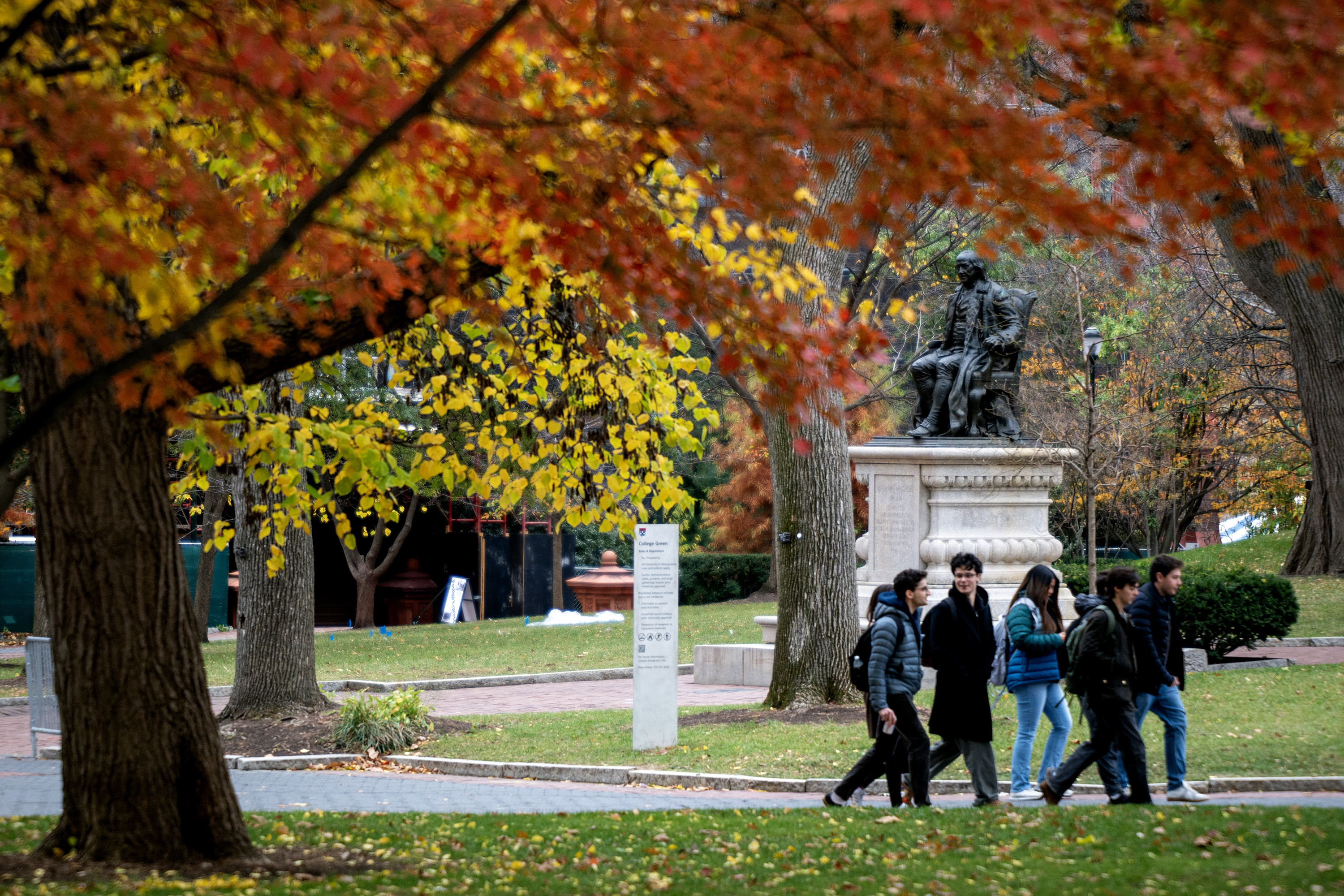
Nature already is splashing its flecks of yellow on the trees, and soon the Technicolor waves of foliage will ripple toward Philadelphia in what the experts predict will be quite a spectacular season.
Right on schedule, at 8:04 p.m. Philadelphia time Tuesday, the astronomical fall begins with the instant of the autumnal equinox, when the sun beams its direct light on the equator and nature continues to turn down the dimmer switch in the Northern Hemisphere. It is as though the trees brighten to compensate for our daily loss of 2½ minutes of daylight.
It’s the season when the night skies are stunningly crowded with winged traffic, when a remarkable 2-inch-long, Halloween-hued creature has its days in the sun.
And on the nation’s 251st autumnal equinox, we take a look at what nature might offer in the only season with two widely accepted names, “autumn” and “fall.” And we peek at the coming winter — for which a lot of people around here have other names.
Another Red October?
A beautiful view along Kelly Drive during a sunny day in the quite warm October of 2024.Jessica Griffin / Staff Photographer
For the third time in the last four years, an equinoctial cooldown is due this week, with daytime highs in the 60s, as much as 10 degrees below normal.
Monthly readings have been above normal in 15 of the last 16 Octobers. In 2024, it hit 84 degrees on Halloween. In that period, annual average temperatures at Philadelphia International Airport have been about 1.3 degrees above normal, but the Octobers have been a full 2 degrees above.
A very early line on winter
The intensifying El Niño in the equatorial Pacific is a major player in the center’s winter outlook, posted Thursday. It favors above-normal temperatures here and in most of the nation. The center eschews snow forecasts, but it does foresee a potentially active storm track along the East Coast.
A cautionary note: This whole seasonal-forecast exercise remains quite the work in progress, and last winter was yet another victory for atmospheric chaos over science. No one foresaw the 30 inches of snow for Philly or a historic snow-and-ice cover.
The ‘woolly bears’ vs. science?
A “woolly bear” caterpillar. Do those rings say anything about the coming winter?Wiki Commons
The so-called woolly bear caterpillar had long held a legendary place nationally in weather folklore, but in 1948 the forecasting reputation of the incipient Isabella tiger moths took wings.
That year a respected entomologist with the Natural History Museum in New York City ventured to a state park and announced that, based on his analysis of the caterpillars’ black-and-orange-ish rings, the subsequent winter would be mild in the New York region. His forecast was dutifully reported in a New York newspaper, and, indeed, the winter was quite mild.
He continued reporting his annual analyses (however waggishly) that correctly foretold of several mild winters.
As it happened, some of the winters in that period were so snow-deprived in the Northeast they became the impetus for the snow-making industry that has forever changed skiing.
Don’t credit or blame the woolly bears, said Douglas S. Richmond, entomology professor at Purdue University. Their ubiquitous presence this time of year all over North America indicates little more than a 100% probability that it is autumn.
A single crimson tree in Cherry Hill’s Wallworth Park greets Michel and Brigitte Mistler, from Normandy, France, as they take a morning walk while visiting their daughter in the township Oct. 22, 2025. Tom Gralish / Staff Photographer
They are quite fascinating creatures, he notes, that survive winters by producing “body fluids that function as cryoprotectants — essentially biological antifreeze.”
Their bodies actually may contain clues about the behavior of a previous season, according to Richmond.
“It’s probably better to think about woolly bears as being much better equipped with a rearview mirror than a crystal ball,” he said.
A natural place to look for clues
Bill Cullina, executive director of the Morris Arboretum and Gardens of the University of Pennsylvania, holds a collection of acorns in November 2019. Regardless of what the acorns said, that winter was virtually snowless.Jessica Griffin / Staff Photographer
Humans have had a long history of forgoing global forecast models and oscillation indexes in favor of consulting nature for winter clues.
One popular myth cited by The Old Farmer’s Almanac holds that if the acorns keep raining down from the trees like hailstones, get ready for a big chill.
Leaves would be another indicator: If they drop early, winter will be a breeze. If they linger late, those breezes might be cold.
Among Native Americans, beavers were bellwethers. The thicker their autumnal coats and stronger their lodges, the harsher the winter.
The natural world is where to look for clues about the season to come. The waning sun may dim human energy, but it is an ultra-busy time for a lot of other species. It is prime mating season for animals such as birds, bears, deer, moose — and porcupines. We won’t ask how they hug.
And birds — billions of them — are on the move.
An avian air force in the night sky
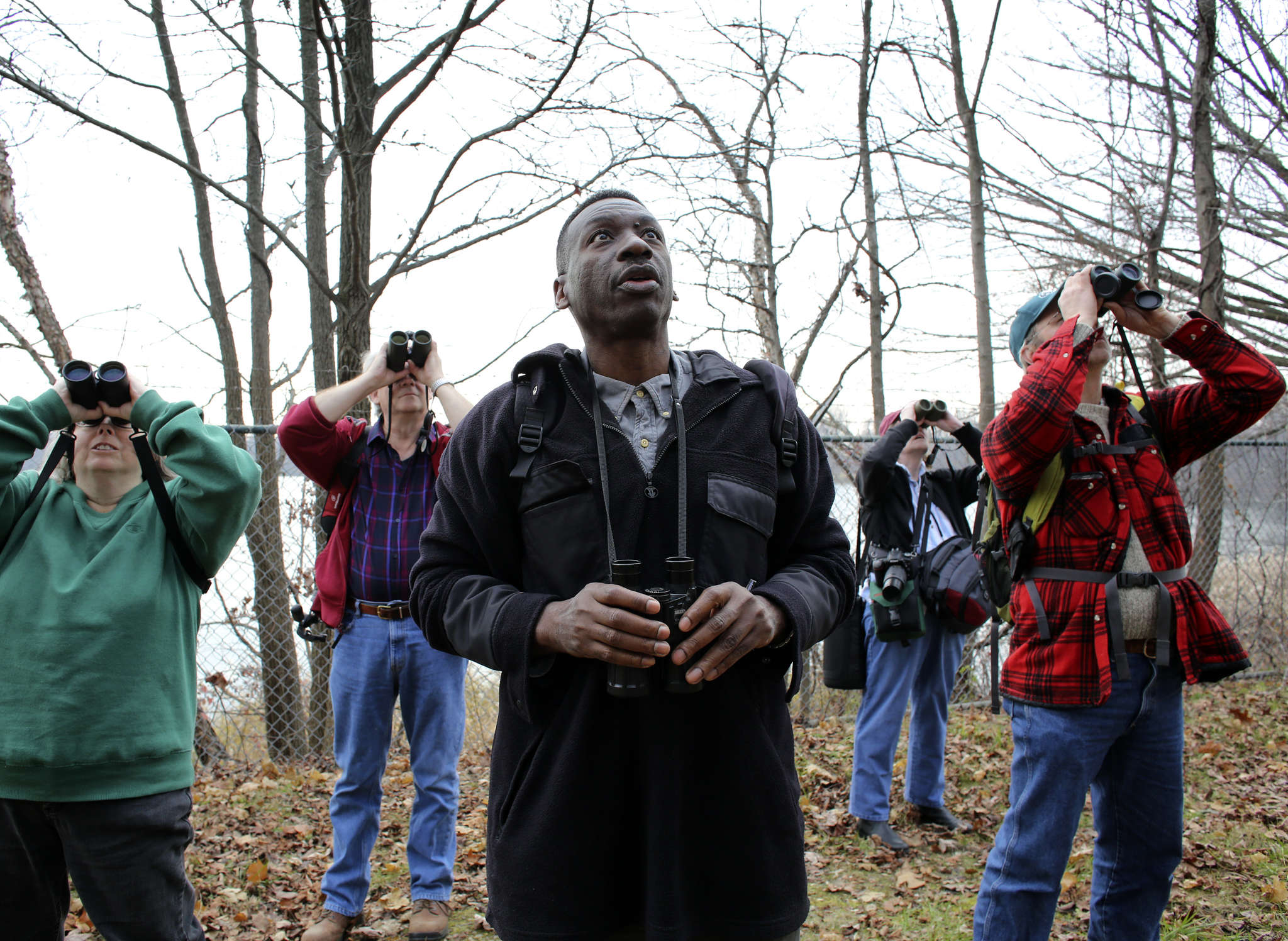
Audubon’s Keith Russell looking to the skies over Strawberry Mansion while leading a tour.JOSEPH KACZMAREK
The bird feeders and baths are getting ever emptier these days, but something quite amazing is happening after nightfall about 3,000 feet over our heads.
An estimated 1.3 million birds flew across Philadelphia on Friday night and early Saturday. And Chester County was the regional hot spot, with 3.8 million heading south-southwest, according to the Cornell University Ornithology Lab’s radar-powered BirdCast dashboard, With a tail wind from the north, they were zipping along at 25 to 30 mph about 1,600 to 1,800 feet above our heads. On the site, you can track bird traffic live, county by county.
This is the peak migration season, continuing into the first week of October, says Keith Russell, urban-conservation program manager for Audubon Mid-Atlantic, with about 300 species racing through the region, including ruby-crowned kinglets and black-throated green warblers.
To travel thousands of miles, the birds evidently use a remarkable assortment of clues from the sun, the stars, the Earth’s magnetic field, and even landmarks, according to the Cornell lab.
If anyone calls you a “bird brain,” be flattered.
Be grateful for the Earth’s equinoxes
A NASA/Johns Hopkins University Applied Physics Laboratory/Carnegie Institution of Washington image of Mercury in 2013. You probably don’t want to visit. It has lots of equinoxes but it’s mighty hot, mighty cold, and it has no atmosphere. AP
Our planet is arguably in the solar system’s sweet spot for equinoxes, which occur twice a year.
By contrast, Saturn gets one only every 15 Earth years, and Neptune every 82 years, says Harry J. Augensen, director of the Widener University Observatory and a physics and astronomy professor emeritus.
Mercury has four a year, but temperatures range from 800 degrees Fahrenheit to 290 degrees below zero.
Fifteen years ago, Chris Pieretti was just trying to get people to come around on compost.
Now, the Upper Darby resident and compost aficionado spends his days traversing the region in his truck, collecting a potpourri of food scraps in green buckets, and turning eggshells, banana peels, and coffee grounds intoa nutrient-rich, soil-like product.
Pieretti is behind Kitchen Harvest, which collects compostable materials and processes them on a five-acre site at Linvilla Orchards in Delaware County. Kitchen Harvest is, in Pieretti’s words, part of “a better, more sustainable future of a full-circle food system.”
It is part of a growing network of providers and composters across the Philadelphia region who are working to reduce waste and improve food system circularity, where scraps of food once grown in the Earth can return to it, fertilizing soil for new crops.
With Haverford Township debuting its municipal compost program this summer, joining Media and Swarthmore, among other municipalities, compost purveyors say the practice is breaking out of its crunchy origins and becoming a key part of the region’s waste management strategy.
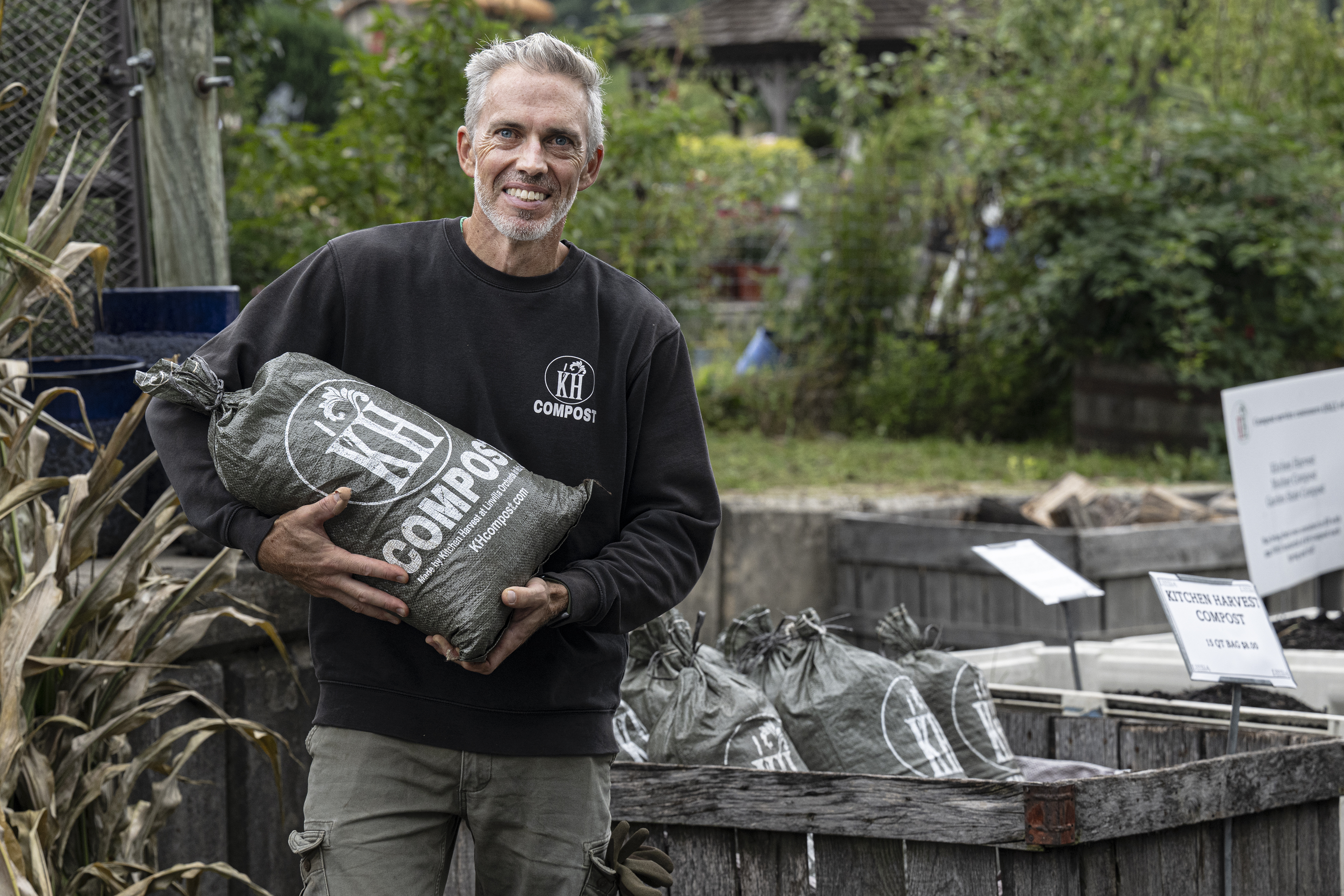
Chris Pieretti holds a compost bag at Kitchen Harvest in Delaware County. Pieretti is working with local homes and municipalities to compost food scraps and yard waste. Jose F. Moreno / Staff Photographer
What is composting?
Composting is the process of recycling organic materials like food scraps and yard waste, breaking them down into a brown, soil-like material called compost, and using that material in farms and gardens to enrich other plants and crops.
The composting process happens on micro and macro scales — in small home gardens and at multi-acre sites like Kitchen Harvest’s.
Compost advocates tout both its environmental and agricultural benefits. In the U.S., food is the single most common material sent to landfills, where it is responsible for 58% of methane emissions, a powerful greenhouse gas, according to the Environmental Protection Agency. Adding compost to soil increases its nutrient content, conserves water by helping retain moisture, and reduces reliance on chemical fertilizers, the EPA says.
“Food is only wasted when we throw it in the trash. It’s our choice to dispose of it in that method, but we don’t have to,” said Gwenn Nolan, founder of Mother Compost, a company that collects compost material throughout the Philly suburbs and brings it to the Kitchen Harvest site at Linvilla.
Going from ‘crunchy’ to ‘waste management strategy’
Many compost enthusiasts have a similar story: What started as a backyard experiment grew, through trial and error, into a way of life and, for some, a career.
Nolan, of Mother Compost, got her start asking 10 friends on the Main Line to try composting so she could test demand for a compost collection service. She bought a small truck, picking up the bins of food scraps early in the morning before heading to her job in financial services. After the pandemic, residential demand ballooned, and Nolan made Mother Compost her full-time job. Now, the company serves around 1,500 homes; schools including Bryn Mawr College and Villanova University; culinary institutions including Reading Terminal Market; and corporate offices.
Nolan collects compost in her truck and carts it out to Pieretti, whom she calls “the master mixologist,” for processing.
“It’s really exciting to see the commercial side and the institutional side coming online as well,” Nolan said. “It’s becoming more a piece of the waste management strategy than just this kind of crunchy, environmental practice that I think people thought about it before.”
Kate Jacoby, who runs Center City vegan restaurant Vedge with her husband, Rich Landau, is one of Nolan’s loyal customers. Jacoby began composting in her small Philadelphia backyard during the pandemic, expanding her home compost operation when the couple moved to Chester County in 2021 and, eventually, bringing composting to the Vedge kitchen.
“I get such a satisfaction knowing that it’s going to go into the soil and it’s not going to sit in a landfill,” Jacoby said.
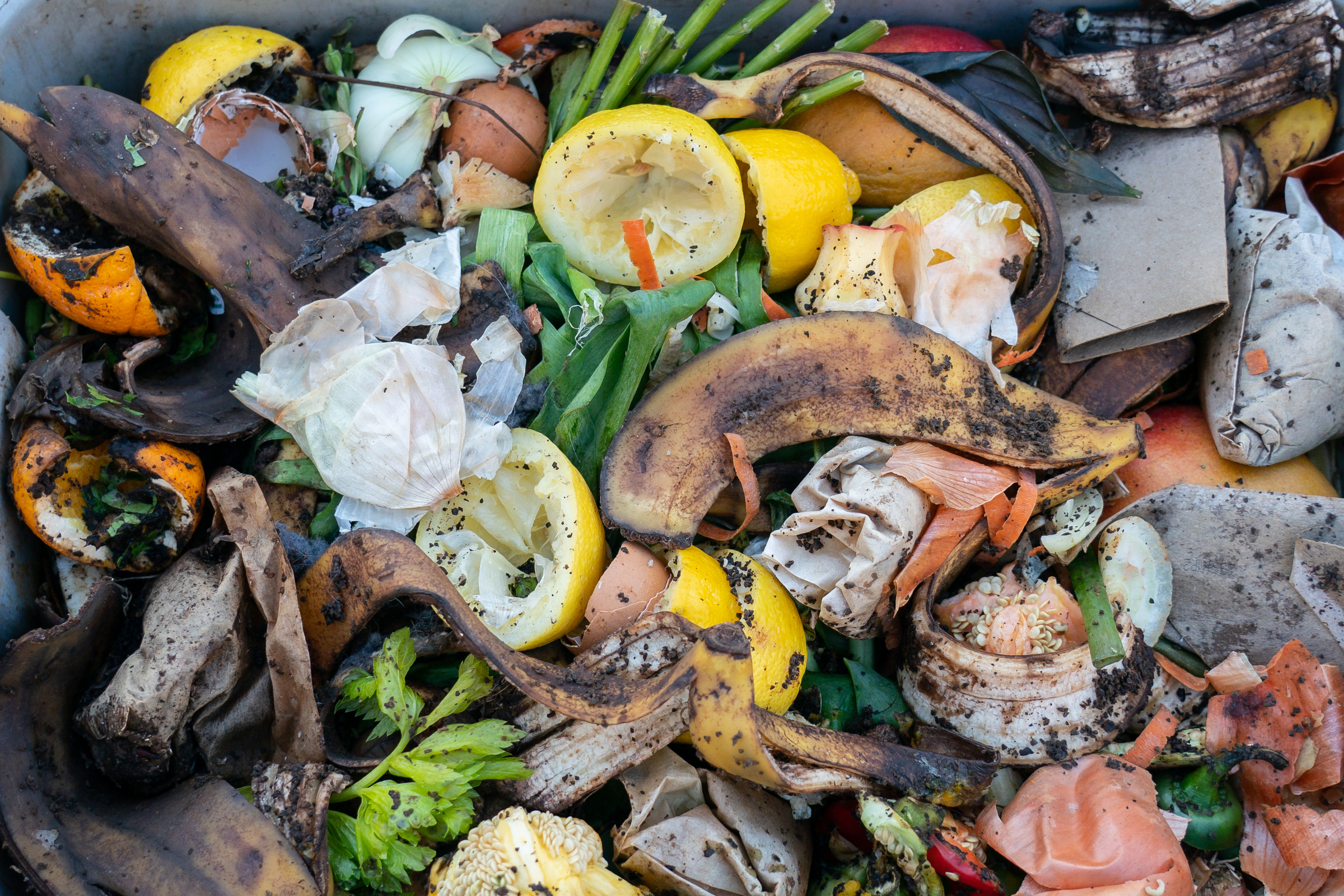
Foods scraps like banana peels, onion skins, and lemons are turned into compost. JESSICA GRIFFIN / Staff Photographer
An expanding suburban compost network
As compost accessibility grows, so, too, does the number of municipal governments offering compost services to residents.
“The community at-large really supported the idea, and the participation was really high,” Pieretti said of Media.
Many suburban programs have followed in the footsteps of Bennett Compost, which has been serving the city of Philadelphia since 2009.
Lower Merion in 2025 debuted both a community drop-off and a curbside pickup pilot program through Mother Compost and Bennett Compost. Swarthmore Borough launched a curbside compost program through EZComposting in January.
When Haverford Township launched its Kitchen Harvest partnership this summer, Pieretti felt like he had “won the compost championship.”
In July, Haverford Township collected 162 tons of organic material, an increase of 111 tons from last July, according to township manager Dave Burman, who called the program “pretty successful.” The township also collected 141 fewer tons of trash this July than the year prior.
Haverford Township’s program is optional, with no additional cost or registration process for residents.
“We’ve tried to make it as easy as we could for people to participate, and so far, so good,” Burman said.
Buckets of finished compost at the Kitchen Harvest site at Linvilla Orchards. Jose F. Moreno / Staff Photographer
At its best, proponents say, compost creates a circular system. Much of Kitchen Harvest’s compost product is used by Linvilla Orchards to feed the crops, and composters can buy back bags of the finished product at a discounted rate.
Sarah Linvill, team member at Linvilla, said the farm is grateful to work with Kitchen Harvest and to “be hosts for that kind of work.”
Composting services are “just invaluable to the community,” Linvill said.
Nolan called Linvilla “a tremendous resource for the region” when it comes to compost.
Composters like Jacoby, of Vedge, say they now cannot imagine a world where they simply toss an apple core into the trash.
“If you really, really dig down and want to get kind of philosophical about it,” Jacoby said, “when your soil is healthy and it’s full of nutrients, you’re going to have better-tasting food for yourself to consume.”
This suburban content is produced with support from the Leslie Miller and Richard Worley Foundation and The Lenfest Institute for Journalism. Editorial content is created independently of the project donors. Gifts to support The Inquirer’s high-impact journalism can be made at inquirer.com/donate. A list of Lenfest Institute donors can be found at lenfestinstitute.org/supporters.