Tag: Weekend Reads

  • Jalyx Hunt wants to remain grounded as his NFL star rises. His support of Little Flower helps him stay connected.

    Jalyx Hunt wants to remain grounded as his NFL star rises. His support of Little Flower helps him stay connected.

    Jaaqua Hunt, a longtime teacher, has a favorite saying that she shares with her students and with her son Jalyx, the third-year Eagles outside linebacker — “blossom where you’re planted.”

    “You don’t have to originate in a place to become a part of that place,” she said. “So, take advantage of where you are.”

    Jaaqua said it’s become clear that Jalyx is listening.

    He isn’t native to Philadelphia. He was born in Memphis, Tenn., but he spent his adolescence in the Orlando, Fla., area, then moved with his family back to Tennessee, then to Maryland, then to South Carolina, then back to Florida.

    In Philadelphia, though, Hunt has found a new home — and an extended family off the field.

    Hunt has an older sister, Jessica, and what he calls a “whole bunch of little sisters” in the hundreds of students at Little Flower Catholic High School for Girls in the Hunting Park section of North Philadelphia. His relationship with the school began in 2024, the year the Eagles drafted him in the third round out of Houston Christian, when he started a fundraiser for underfunded school sports programs. Little Flower’s basketball team raised their hands.
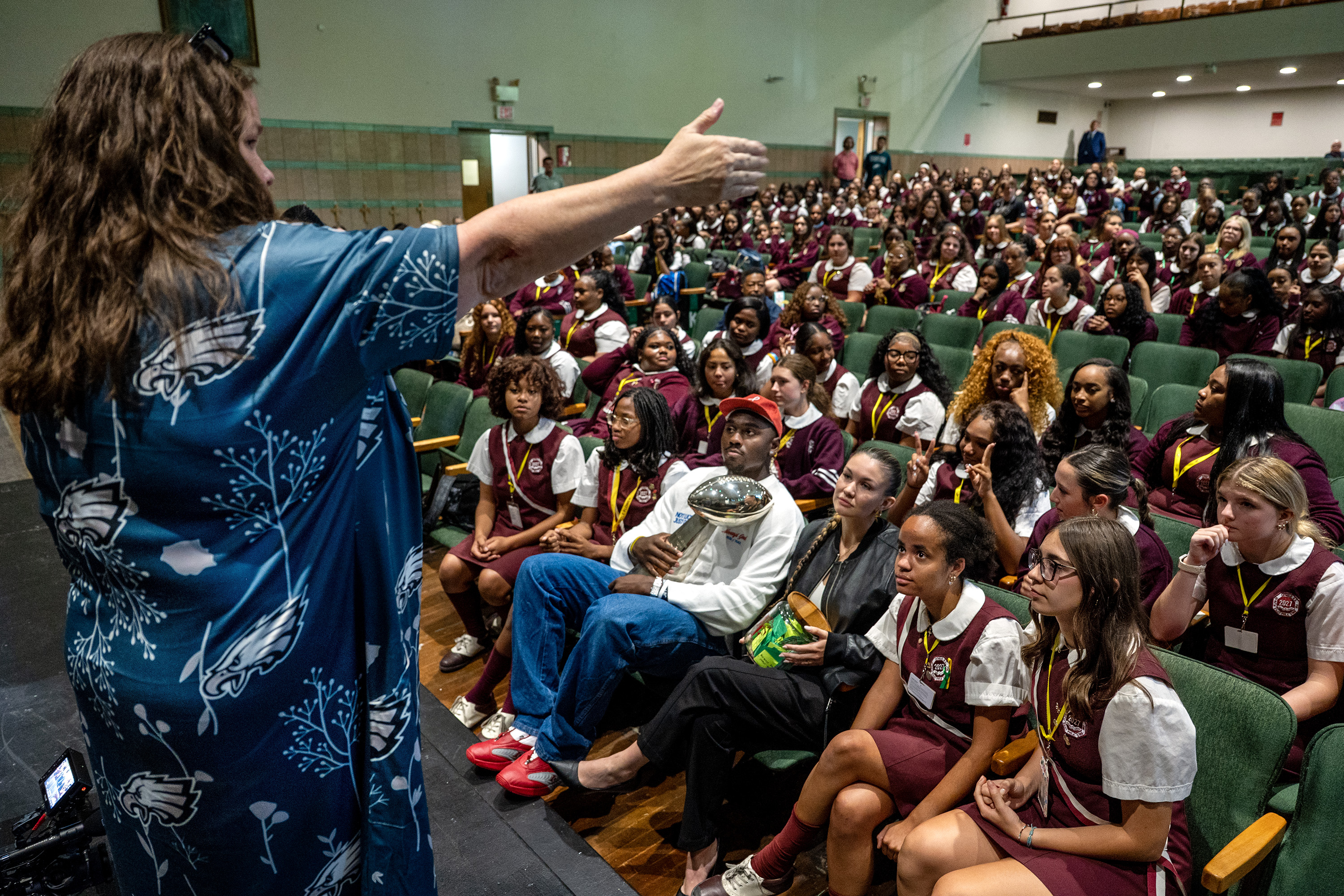
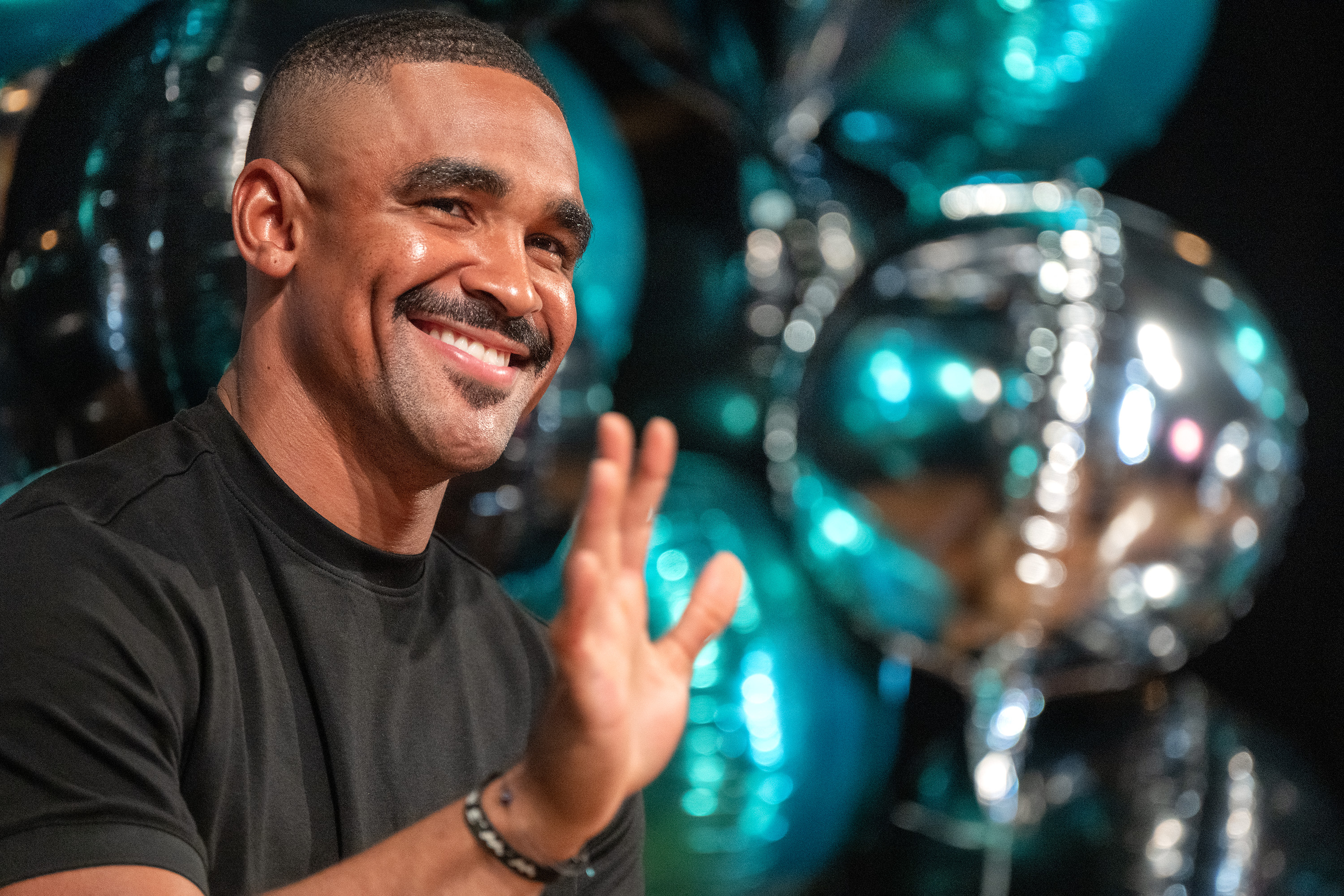
    Eagles linebacker Jalyx Hunt holds the Lombardi Trophy while school president Kristie Dugan addresses Little Flower students on Tuesday. Tom Gralish / Staff Photographer

    Two years later, Hunt hasn’t forgotten about the students. On Tuesday afternoon in the school auditorium, he announced the establishment of three scholarships and an endowment to support the Little Flower students. One of the scholarships will cover two years of tuition, while two others will cover all four. The endowment will help generate interest to fund future scholarships.

    The scholarships and the endowment have extra importance to Hunt. They’re each named after important women in his life — his mother, his sister, his grandmother, Alice, and his marketing manager and longtime friend, Rachel Booth. The initiative aims to honor the women who have made an impact in his life, all while uplifting the next generation.

    “This is longevity,” Hunt said. “I’ve had a lot of talks with [Little Flower president Kristie] Dugan, and I just know that this is something that helps out a lot. A lot of people at this school require and need some sort of help to pay tuition, and if I can do that, I would love to do that.”

    Getting involved with the Little Flower community has had a grounding effect on Hunt, which he said has been particularly important as he develops his sense of self as a player and as a person in Year 3 of his NFL career.

    “Outside of football, I know that I need to do things that remind me of myself,” Hunt said. “And one thing is giving back.”

    Jalyx Hunt (seated in front row) has become an active member of the Little Flower community.Olivia Reiner

    ‘It makes our community feel seen’

    Laniah Brooks, a 16-year-old junior at Little Flower, expected to have a typical school day Tuesday. She expected to attend her eight classes and go home in the afternoon.

    But her sense of normalcy shifted when she was called into Dugan’s office during eighth period.

    Dugan had told her father, Rodney, that Laniah was in consideration to receive a scholarship. They were to participate in an interview conducted by Little Flower staff. While Laniah and Rodney were sitting in an office, Hunt entered the room and surprised the Brooks family with the news that Laniah wasn’t in the running for the scholarship — she had already earned it.

    “It just blew us away,” Rodney said. “It is one of the best days of my life.”

    As a single father, Rodney said that without financial aid, affording tuition would be a hardship on him. The scholarship, which is named after Jaaqua, will cover the cost of Laniah’s junior and senior years at Little Flower.

    Laniah Brooks (right) and father, Rodney, who got to spend time with Jalyx Hunt and the Lombardi Trophy on Tuesday, are grateful for Hunt’s philanthropy and inspiration.Olivia Reiner

    For Laniah, the scholarship served as validation for her hard work in school. The fact that it came from Hunt — and that she got to spend time with him, discussing their shared love for anime — reminded her that her support system is bigger than she ever realized.

    “In order to thrive, no matter who you are, even if you’re like peak smartness, everybody needs somebody there, because if not, you could just burn out or give up,” Laniah said. “I feel like no matter who you are, you need that support system, because if you fall, they’re going to be there for you.”

    Hunt’s support of Little Flower began with the fundraiser in December 2024. Not only did Hunt donate a portion of the GoFundMe money to Little Flower’s basketball team, but he also visited the students and their parents in their gym. He shared advice about the importance of developing a sense of discipline as an athlete, at the request of head coach Jesse Morgan.

    Hunt’s parents, Jaaqua and James, instilled the spirit of giving within him. Growing up, they would help out children in need, whether they were giving them a place to live in their own home or paying for their registration and equipment in youth sports.
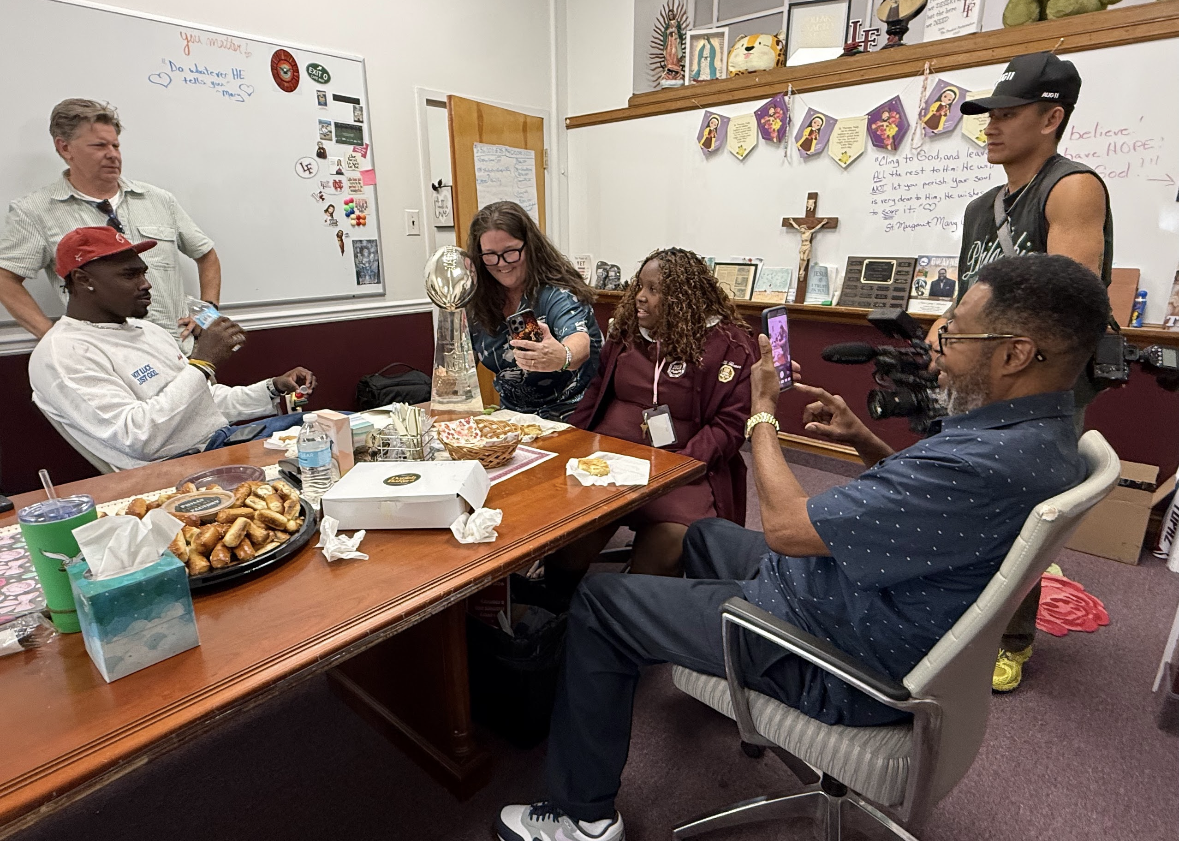
    Jalyx Hunt (left) has helped Little Flower president Kristie Dugan (third from left) and students like Laniah Brooks (next to Dugan) accomplish their shared goals.Olivia Reiner

    Jalyx continued to follow their example, and not just financially. That winter, Hunt returned to Little Flower to watch a basketball game. Dugan recalled greeting him and former Eagles defensive end KJ Henry at the door to the gym. She offered them seats behind the team’s bench, where they could have more privacy.

    Hunt declined and said he wanted to sit with the fans.

    “I said, ‘OK, but I just need you to know, people know who you are, so people are going to talk to you,’” Dugan recalled. “‘People are going to approach you.’ And he said, ‘That’s OK.’ He said, ‘I’m here as a fan. I’m not here as a football player. I’m here as a fan of Little Flower, and I’m here to support these girls.’”

    The girls have done the same for Hunt. After the Eagles won the Super Bowl that year, he returned to Little Flower for a pep rally they planned for him. They gave him a bouquet of roses, which are symbols associated with St. Thérèse, the namesake of Little Flower.

    “I love coming back just because of the people that are here, and I don’t know what it is specifically that they do in the building to make the girls so authentic, so hardworking, but you can definitely see that in how they interact with you, how excited the girls are whenever you talk to them about their future, what they’re doing at the school, that they like the school,” Hunt said.

    He wears his Little Flower sweatshirt with pride as he boards the Eagles bus to road games. He helped bring Kylie Kelce to the school to speak to students as part of their women in leadership series in April. He gave the school a shoutout during the first recording of his radio show on 94.1 WIP on Monday night.

    “Beyond the donation coming to Little Flower, Jalyx investing in our school and in our girls, it makes our community feel seen and valued,” Dugan said.

    Jalyx Hunt had a breakout season in 2025 and is looking to keep ascending on the field this season. David Maialetti / Staff Photographer

    ‘I want to impact the world’

    Hunt’s star has risen since he was a rookie standing in the Little Flower gym two years ago. Last season, he led the Eagles with 6½ sacks. Vic Fangio said at the outset of training camp that he’s looking for a big year from the 25-year-old outside linebacker.

    Fangio said he believes Hunt is capable of it. His parents have been steadfast in their belief, too, as they watched their son go from Cornell safety to promising Eagles pass rusher in a span of six years.

    “We’ve always told him that he would be in a place of greatness, and that with great placement and talent and skill comes a lot of responsibility,” Jaaqua said.

    Hunt has learned that those responsibilities exist both on and off the field, and in some ways, they are intertwined. Going into his third year with the Eagles, he said he has a better understanding of how to set himself up for success on the field. He has heeded Nick Sirianni’s advice of falling in love with the process, not necessarily the result. Hunt has perfected his routine throughout the week and has identified the details he must hone in on in practice and during film study to prepare himself for game day.

    Becoming a more intentional player on the field has allowed him to become a more intentional person off it, he said.

    When he entered the NFL, Hunt acknowledged that the celebrity associated with his job was something he fought. But he came to realize that his humility was getting in the way of the reality that he had become a public figure.
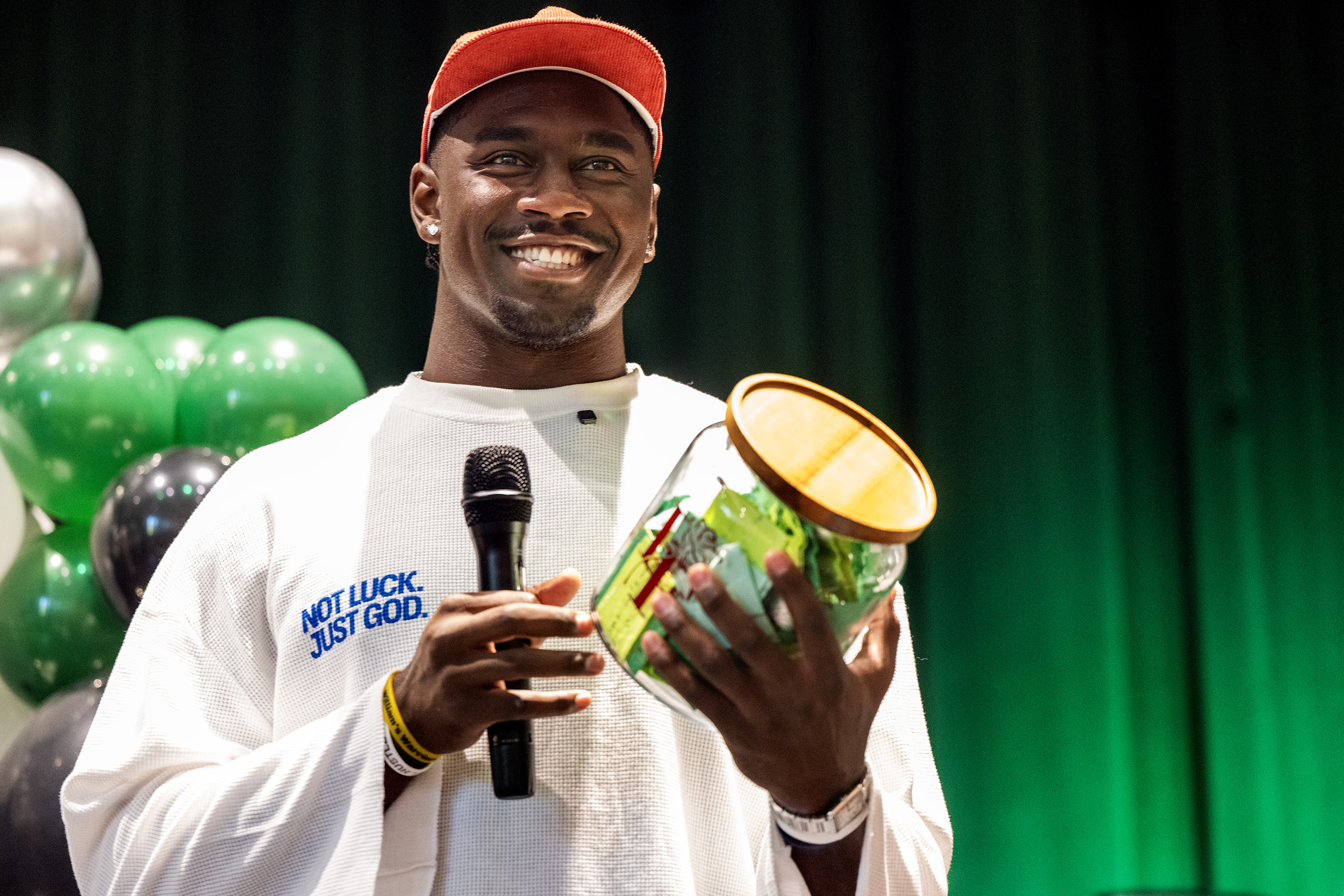
    Eagles linebacker Jalyx Hunt is given a “Blessings Jar” as he appears at an assembly at Little Flower Catholic High School on Tuesday. Tom Gralish / Staff Photographer

    Hunt expressed an understanding that he has a responsibility to use his platform for good. He wants to do it in a way that is true to himself, and his increasing support of Little Flower is part of that effort.

    “I could just be one of those people who’s in the house all the time, which is no problem,” Hunt said. “If that’s what you want to do, that’s what you want to do. But it’s not what I want to do. I want to get out. I want to meet people. I want to impact the world. I want to impact those around me, who pour into me.”

    Hunt is trying to heed his mother’s advice of blossoming where he is planted. Jaaqua is already seeing the fruits of his efforts.

    “He’s matured and has grown significantly just in his time there,” Jaaqua said. “And a lot of times when you experience that type of growth in an area, you kind of get rooted because that’s where the growth took place.

    “So he’s blossoming, as a player for sure. But more importantly to me as a person, as a man.”

  • You can cuddle cows while drinking coffee at this Montco animal sanctuary

    You can cuddle cows while drinking coffee at this Montco animal sanctuary

    Dolly is an Aries. She likes pink accessories, the feeling of freshly brushed hair, and morning coffee with friends. She also has to be the center of attention.

    No, Dolly is not a teenage girl. She’s a three-month-old Hereford calf with a job: To snuggle up with as many guests as possible at Rose Bridge Farm, a Montgomery County animal sanctuary.

    Rose Bridge Farm sits on almost 13 acres of land at 1314 Limekiln Pike in Dresher, once part of an estate owned by William Penn in the mid-1700s. When steward Kristin Sutch took over the property in 2013, she transformed it into a sanctuary for farm animals rescued from livestock auctions, dairy farms, and breeders.

    The sanctuary has 50 animals at any given moment, Sutch said, most of them babies that eventually will be adopted out to private farms and other sanctuaries. About a dozen kids — baby goats, that is — clomp around the property, climbing on lopsided trees as if they were a playscape. Freshly rescued lambs doze together in a dimly lit corner of the farmhouse, while kittens play upstairs in a renovated loft.

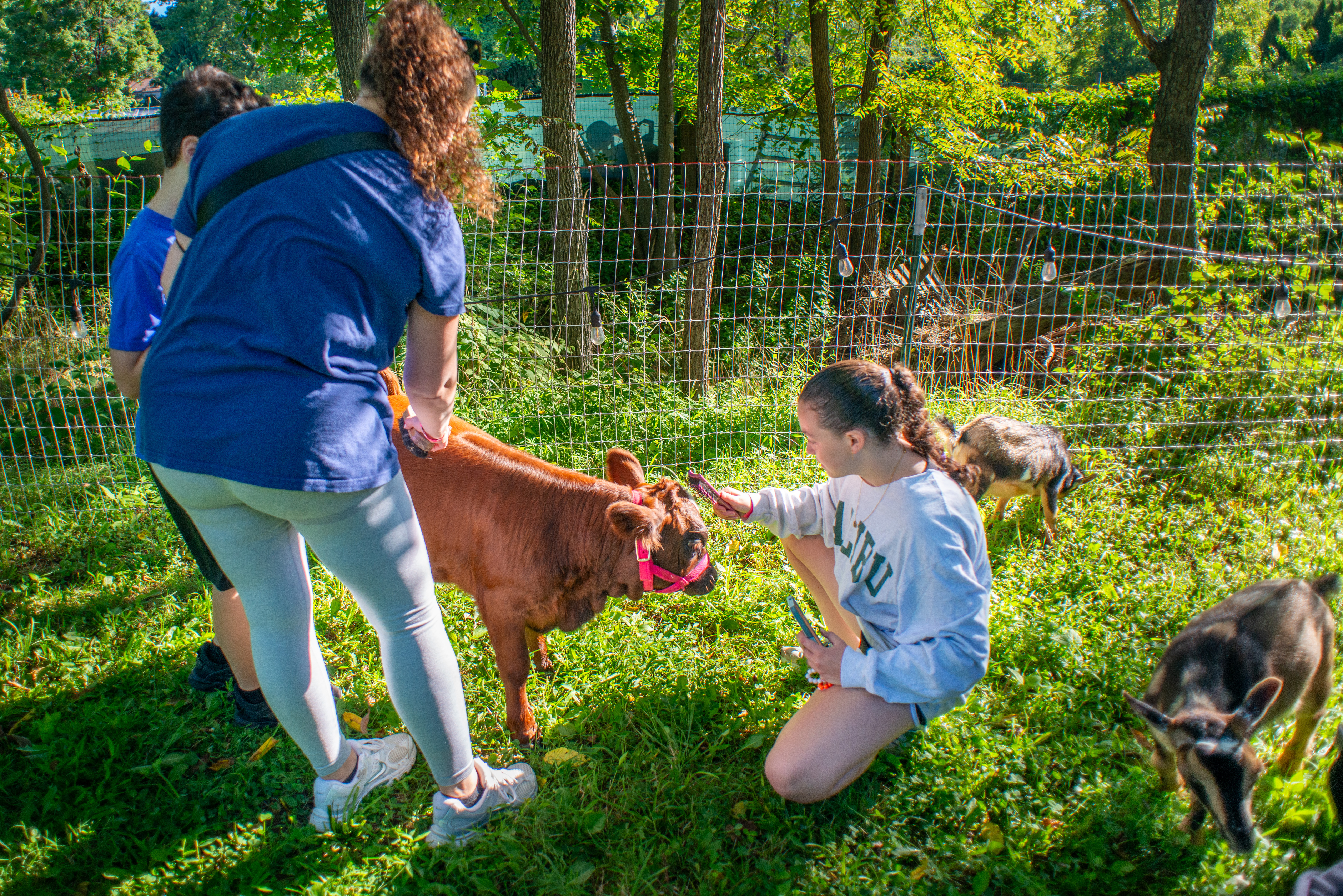
    Ava Cranshaw (left), a volunteer, and Diane Haggerty, of Doylestown, brush Teddy — a mini Highland cow — at Rose Bridge Farm sanctuary during a morning Cows & Coffee event.William Thomas Cain / For The Inquirer

    Rose Bridge has always been open to the public, offering guided animal husbandry tours, birthday parties, and the once-trendy goat yoga to offset the cost of running the rescue. Sutch, however, struck gold with a novel idea: What if people could start their morning like she does, by drinking coffee in the company of baby cows?

    The sanctuary started offering the delightful sessions — aptly named Cows & Coffee — in July. Almost immediately, videos of calves and kids staring into the camera began racking up hundreds of thousands of views on TikTok, giving Dolly and her companions the attention they demand.

    “A lot of these animals are bottle babies, so they really enjoy companionship. They’re like your dog: If you leave, they get sad,” Sutch said. “Having the public come in … [the cows are] getting as much love, snacks, and cuddles they could hope for.”

    Coffee cups with Highland cow decals from a Cows & Coffee session at Rose Bridge Farm and Sanctuary.William Thomas Cain / For The Inquirer

    During the hourlong, $20 sessions (which run daily at 8, 9, and 10 a.m.), guests start in the barn’s loft with an unlimited self-serve drip and iced coffee bar that includes sugar, nondairy milks, creamers, and cold foam alongside seasonal sprinkles.

    Next, one of Rose Bridge’s volunteers will lead the group to the farm’s pasture, where they can brush, cuddle, and bottle-feed Dolly and her friend Teddy, a five-month-old mini Highland cow with fringe bangs and a summer buzz cut that’s just starting to grow in.

    The sanctuary’s sessions are so popular that Sutch started offering an evening version branded Cows & Cocktails, where guests can sip on alcoholic iced tea and lemonade made with farm-grown mint and lavender alongside Teddy and Dolly. They’re content with booze-free bottles of milk.

    A goat eats a snack during a Cows & Coffee event.William Thomas Cain / For The Inquirer

    The events’ success has helped Sutch begin to check off a laundry list of renovations to the nearly 300-year-old farm, such as an automatic fire system, new barn doors, and eventually, a rehabbed bottle room.

    “Everything needs replacing,” Sutch said. “And you should see our vet bills, our feed bills, our hay bills. … It takes a lot to run this farm, so [Cows & Coffee] has really been a blessing.”

    Cows and goats and kittens, oh my

    It’s easy to feel chosen at Rose Bridge. When I attended Cows & Coffee on a recent crisp morning, it started with a tiny tuxedo kitten trying to climb inside my coconut cream latte. Outside, baby goats nibbled on the hem of my shirt at seemingly every turn. If I stopped petting Dolly under the chin, she’d moo as if she missed me.

    Melissa Watters, of Elkins Park, brushes Dolly during a Cows & Coffee event at Rose Bridge Farm.William Thomas Cain / For The Inquirer

    Cow cuddling has emerged as a surprising wellness trend, with farms and animal preserves from New Jersey to the Scottish Highlands getting in on the practice. Bovine snuggles are thought to reduce stress and release oxytocin, the hormone associated with social bonding and trust.

    “You look at them, especially the fuzzy baby ones, and they just make you feel all warm,” said Sutch.

    Rose Bridge caps Cows & Coffee sessions at 15 attendees, with a 10-and-up age minimum. Attendees are encouraged to brush Dolly and Teddy, and to let the calves suck their thumbs, sort of like a baby and their pacifier. For maximum bonding, Sutch recommends squatting down to the cows’ level and “talking to them like a friend.”

    Diane and Grace Haggerty, of Doylestown, brush Dolly during a Cows & Coffee event at Rose Bridge Farm.William Thomas Cain / For The Inquirer

    Dolly, who was dropped at Rose Bridge in April from the back of an SUV, wasn’t always a diva. Teddy, however, was always a ham.

    “He’s a big kisser,” said Sutch, and loves to get his floppy bangs styled.

    Rose Bridge also has a new cow in town: Lady A, a 1½-year-old mini Highland cow named after the country band. Since she’s the eldest, Sutch said, Lady A is still adjusting to socializing with the rambunctious Teddy and Dolly. But what she lacks in fans, she makes up for in friends.

    A goat walks on a tree at Rose Bridge Farm & Sanctuary, an animal rescue in Dresher, Pa.William Thomas Cain / For The Inquirer

    “She’s a little feisty,” said Susan Connolly, who drove nearly 50 miles to Rose Bridge from her home in Kendall Park, N.J. “I like that.”

    Diane Haggerty and her daughter, Grace, were partial to Dolly. “She speaks her mind and actually lets you pet her,” said Grace, who went to Cows & Coffee for her 12th birthday. “This exceeded all my expectations.”

    Admittedly, not everyone was sold.

    “I don’t know how at peace I feel,” said Katrina Miciek of Havertown. “I’m too busy making sure the cows and goats don’t eat my shoes.”

    Ella Skiles, a volunteer, kisses a lamb at Rose Bridge Farm & Sanctuary in Dresher, Pa.William Thomas Cain / For The Inquirer

    Rose Bridge Farm Sanctuary, 1314 Limekiln Pike, Dresher, rosebridgefarmsanctuary.com; Cows & Coffee runs 8 to 10 a.m. daily.

  • Sheriff Rochelle Bilal’s new undersheriff has resigned just three months into the job

    Sheriff Rochelle Bilal’s new undersheriff has resigned just three months into the job

    Philadelphia Sheriff Rochelle Bilal’s new second-in-command has left the job — three months after he arrived.

    Undersheriff George Gossett Jr., whom Bilal hired in June as part of what she had described as a major “reorganization and modernization” initiative, confirmed Monday that he had resigned from the job effective last Friday.

    Gossett said through a spokesperson that he is “excited to pursue opportunities in the private sector” but provided no other explanation for his short tenure.

    Bilal’s office has been hit with three court orders since 2024 seeking to correct alleged mismanagement, most recently in May over delays in processing deeds of properties won at auction.

    Gossett, a Roxborough-based lawyer and former assistant district attorney, was tapped in June at an annual salary of $185,000, weeks after a Common Pleas Court judge ordered Bilal to fix the sheriff sale process or face consequences.

    According to a news release Bilal issued that month, Gossett was to “oversee daily operations, strategic planning initiatives, personnel management, and operational coordination across the agency.”

    “This reorganization is about building a stronger organization for the future,” Bilal said at the time.

    It is unclear where that plan now stands, with the new undersheriff having already departed.

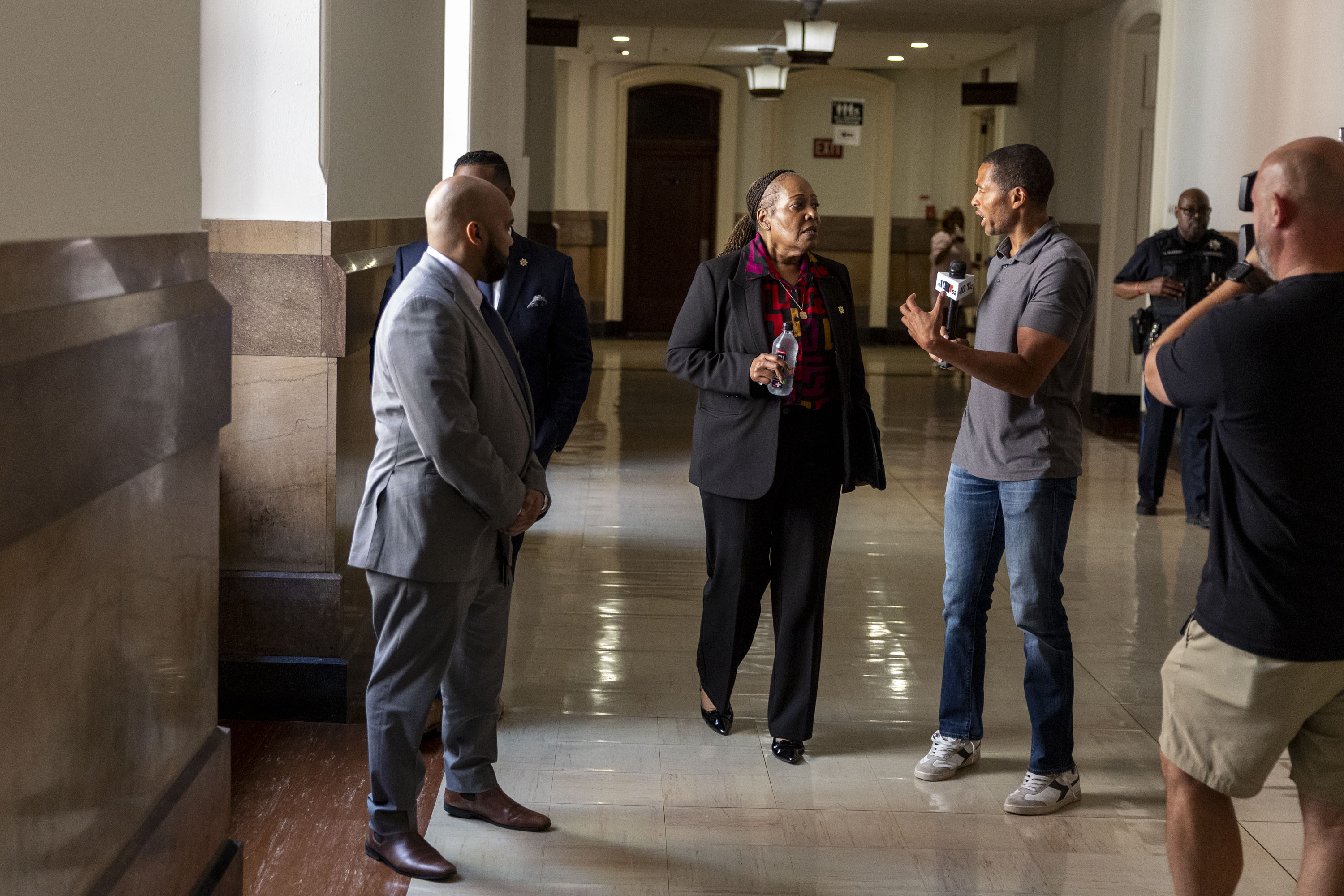
    Gossett is the fourth undersheriff to serve Bilal since she took office in 2020. Bilal and her spokesperson, Teresa Lundy, declined to provide any details about why her top deputy would leave so soon after taking the job.

    Sources in the office said that the pair did not see eye-to-eye, and that Gossett was said to have made a remark about Bilal’s “anger management” issues, which may have escalated the situation.

    Separately, Bilal last week fired Mark Wilson, the office’s codirector of real estate. Wilson declined to comment.

    Gossett’s predecessors also had rocky terms in the sheriff’s office.

    In August 2020, seven months into the job, Undersheriff Sommer Miller resigned after she said she faced retaliation for reporting alleged theft in the advertising department, unauthorized spending of public funds, and instances of extreme sexual harassment. She later claimed in a whistleblower lawsuit that Bilal had been “reading and monitoring her emails in real time.”

    Miller’s replacement, Undersheriff Curtis Douglas, left in May 2021, about a week after reports that Bilal’s office had botched a contract meant to move sheriff sales to an online platform. A spokesperson at the time described Douglas’ departure as a planned retirement.

    In May 2026, Undersheriff Tariq El-Shabazz, a criminal defense attorney who came to personally oversee the handling of deeds related to sheriff sales, also retired. He left one day after the most recent court order dropped.

    Under Bilal, who was elected as a reformer in 2019, sales of foreclosed and tax-delinquent properties have been mired in post-auction delays, with winning bidders waiting a year or more to get their deeds.

    Many auctions were halted altogether between 2021 and 2024. Court security and inmate transportation, two other key functions of the office, have also been recurring problems, with judges saying they have felt unsafe.

    In addition to Gossett, Bilal recently hired William A. Brownlee Sr. as part of the office restructuring earlier this year.

    Brownlee, a West Philadelphia pastor, a motivational speaker, a real estate investor, and an entrepreneur with a checkered financial history, has previously described himself on his website and social media as the office’s “Deputy Chief Financial Officer.” His website has since gone dark, and Bilal’s office said Brownlee currently serves as project manager. Payroll records show he is being paid $95,000 a year.

    Another new hire, Steven A. Wakefield, is a former Philadelphia Law Department attorney serving as Bilal’s deputy undersheriff in charge of deed compliance. He is being paid $120,000 a year.

    Wakefield took the stand last month and told Common Pleas Court Judge Paula Patrick, supervisor of the court’s commerce division, that the office had previously misplaced records and lost track of the distribution of some auction proceeds. Wakefield blamed the situation on a since-terminated employee who allegedly concealed the problem from Bilal.

    Bilal did not testify at the hearing. Her city-appointed lawyer had filed a motion seeking to keep her off the stand, saying the sheriff had “limited personal knowledge” of how sheriff sales work.

    Wakefield said he had enacted operational reforms, speeding the deed issuance process while largely clearing out a backlog of deeds from earlier sales.

    Even so, Patrick took the rare step of imposing six months of outside supervision of sheriff sales.

    That independent monitor has yet to be appointed.

  • Krasner hasn’t said a word about a growing exoneration controversy — but his own court filing does

    Krasner hasn’t said a word about a growing exoneration controversy — but his own court filing does

    District Attorney Larry Krasner didn’t attend the dramatic three-day evidentiary hearing recently in which four supervisors from his office testified about his conflicts of interest, job threats, and other inappropriate steps, following efforts to overturn a murder case.

    But Krasner’s take on the imbroglio can be found throughout a recent 47-page federal court filing by his office.

    The filing paints a picture of a district attorney unbowed by the controversy that has roiled his office. Krasner’s handling of the exoneration case has prompted one prosecutor in his office to step down following what they described as a loss of confidence in Krasner’s leadership. A federal judge presiding over the case also voiced concern about possible obstruction of justice, perjury, and criminal conspiracy.

    Despite admitting “serious errors” in the original motion that said Dennis Johnson was entitled to a new trial, the filing contains no contrition or introspection by Philadelphia’s DA.

    In the world according to Krasner, he’s right, and everyone else is wrong.

    Krasner’s worldview is hardened by his decades as a public defender and criminal defense attorney before getting elected district attorney in 2017. In the second paragraph of the filing, Krasner’s office blames prior district attorneys for violating “their constitutional duties” to secure convictions.

    The filing makes no apologies for how Krasner’s office handled the appeal by Johnson, who was found guilty of second-degree murder in 2009.

    After arguing for four years to overturn the verdict, Krasner’s office did a 180 in June, claiming its initial concession was “legally erroneous” and “not supported by the record.”

    The reversal came after U.S. District Judge Paul S. Diamond ordered an evidentiary hearing in May. That prompted supervisors in Krasner’s office to take a closer look at the case, in which they discovered “material omissions” in their initial concession claim.

    The blunder stems from the failure of Krasner’s office to fully investigate Johnson’s appeal, and its willingness to go along with the arguments put forward by his defense attorneys.

    Here’s the bigger problem: That appears to be the way Krasner’s office has handled other post-conviction cases. Under Krasner, more than 60 people convicted — mainly of murder — have been set free or had their sentences reduced following concessions despite no incontrovertible proof of the person’s innocence.

    Instead, Krasner’s office has conceded other cases by not mounting a substantive challenge to the arguments put forth by defense lawyers. In many exoneration cases, defendants claim their cases were harmed by their own ineffective lawyers or by prosecutors who withheld evidence; the latter, known in legal circles as a Brady violation, constitutes a major breach of the court’s rules.

    Full steam ahead

    Judge Diamond has yet to decide if Krasner’s office can continue handling Johnson’s case, or if it should be turned over to the state attorney general because of the issues aired during the evidentiary hearing.

    Regardless of the outcome, Krasner appears determined to keep conceding cases.

    “The current [district attorney’s office] administration will continue to do its duty under Brady and to self-correct moving forward, regardless of how the instant matter resolves,” the filing said.

    The full-steam-ahead approach seems obtuse given the controversy that has engulfed the office’s handling of several post-conviction cases.

    In recent months, supervisors in Krasner’s office have been disbarred and suspended for lying in federal court while seeking to overturn the death sentence of a man convicted of killing a couple in their home in East Mount Airy.

    In June, the state Supreme Court ordered judges to ask the state attorney general’s office to review any cases in which Krasner’s office wants to alter a sentence or overturn a past conviction.

    That unprecedented ruling came after the high court found prosecutors in Krasner’s office misled judges in several post-conviction cases. The court said it could no longer trust the word of Krasner’s prosecutors.

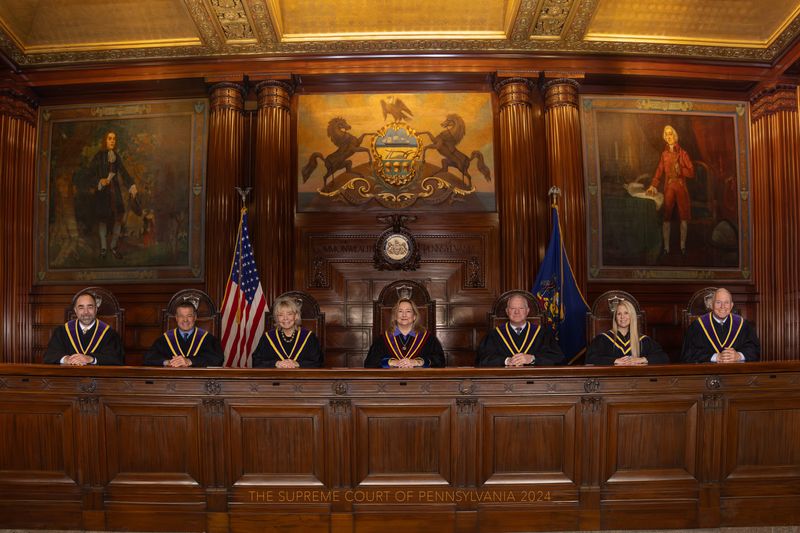
    Pennsylvania Supreme Court justices (from left): P. Kevin Bobson, David N. Wecht, Christine Donohue, Chief Justice Debra Todd, Kevin M. Dougherty, Sallie Updike Mundy, and Daniel D. McCaffery. In June, the court ordered judges to ask the state attorney general’s office to review any cases in which Larry Krasner’s office wants to alter a sentence or overturn a past conviction.Provided by Jen Barker Worley/Ad

    Office strife

    Amid that major setback came the Johnson case, which has splintered Krasner’s office.

    After Judge Diamond ordered the evidentiary hearing in May, Katherine Ernst, the chief of training in the law division, reviewed the initial motion to concede Johnson’s conviction and found multiple errors.

    Ernst worked with three other supervisors — Steven Wildberger, David Napiorski, and Peter Andrews — who all agreed the motion needed to be withdrawn.

    They met with Jaclyn Mason, the assistant district attorney who signed the original motion, and urged her to withdraw the concession and apologize to the judge. Mason argued that her supervisor, Matthew Stiegler, was largely responsible and should also have to sign the motion.

    Fearing she would be forced to take the blame, Mason quit in June. That set off a chain of events that exposed the sloppy handling of the matter.

    Mason testified in July that Stiegler, the head of the office’s Conviction Integrity Unit, colluded with defense attorneys to develop the legal rationale to have Johnson’s case thrown out.

    Mason, who was new to the DA’s office at the time of filing, testified she took direction from Stiegler, who told her that if Johnson’s claims were “good enough for the Innocence Project, it’s good enough for me.”

    To be sure, Mason bears some responsibility because she signed the motion and failed to fully investigate the defense claims. But her instinct that she would be thrown under the bus proved correct.

    The four other prosecutors testified last month that Stiegler proposed reviewing Mason’s other cases to find errors and tell the judge she was a “rogue” actor.

    Krasner backed that plan, telling the prosecutors Stiegler had a good idea.

    In the end, Krasner’s filing largely blamed Mason and said the judge “should not credit” her testimony.

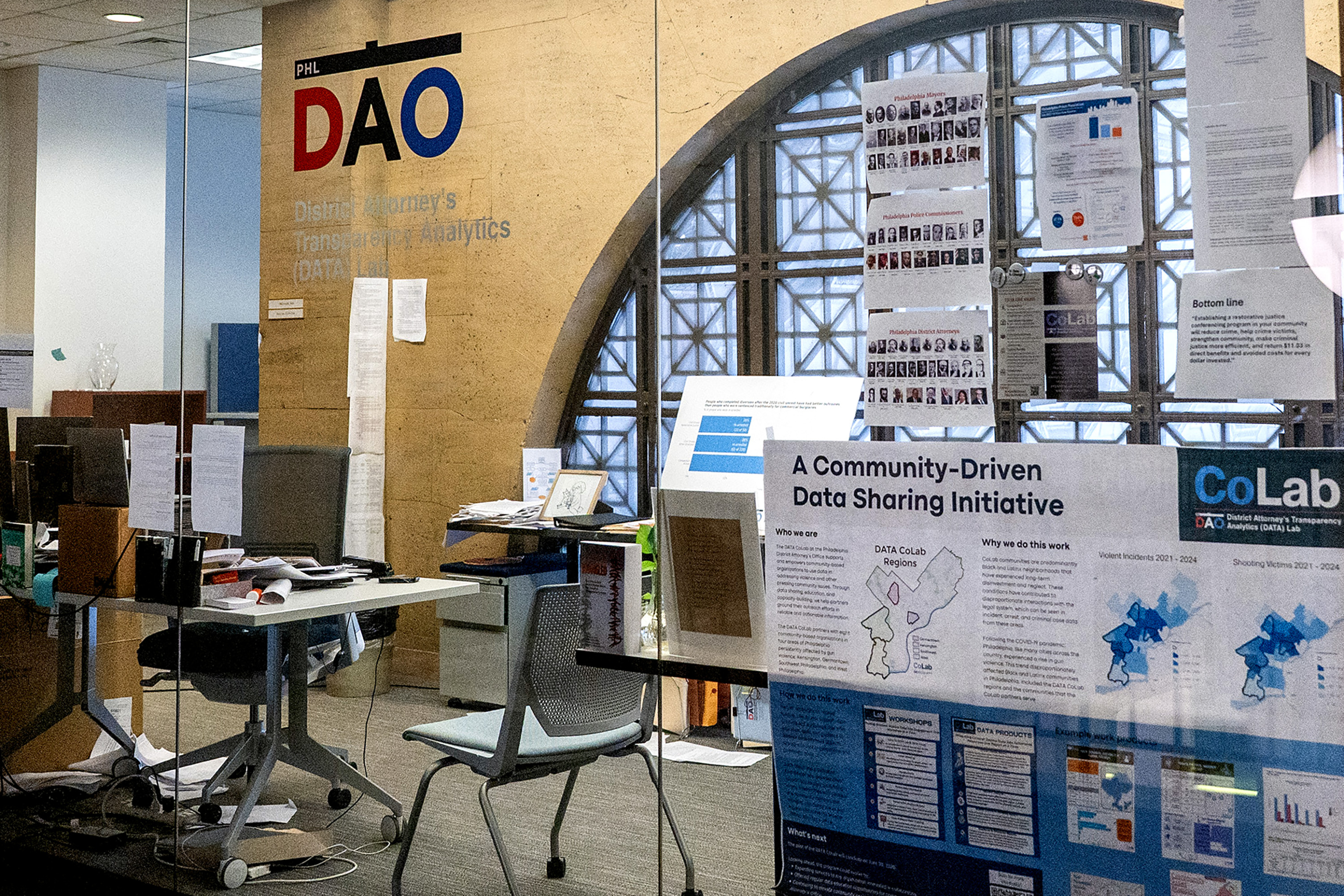
    Posters featuring criminal justice analytics adorn the district attorney’s offices in May. The controversy over the handling of an exoneration case has splintered the office, Paul Davies writes.Tom Gralish / Staff Photographer

    “Mason signed and filed a brief rife with errors that supported the defense’s request for a new trial,” the filing said. “Mason has admitted that she did not review the relevant records, including the trial transcripts, before supporting overturning a murder conviction; she may have simply cribbed and modified the filings of the defense attorneys.”

    The filing said Stiegler “failed” to detect the errors, but largely lets him off the hook. Krasner even went out of his way to change a footnote in an earlier motion that initially said Stiegler “edited several drafts” of the original Johnson filing to instead say he “supervised its preparation.” Stiegler remains in charge of the Conviction Integrity Unit even after other supervisors voiced concerns about him.

    What conflict?

    Meanwhile, Krasner remains adamant his office has no conflict of interest in the Johnson case even after four supervisors withdrew from the case, arguing that they and Krasner had conflicts after the internal machinations went from the legal merits of Johnson’s case to the self-interest of protecting the office.

    Krasner’s filing waved away their arguments and said the prosecutors who left the case acted “without authority or a reasonable legal basis to do so.” He added that he “did not appreciate” his team’s “repeated, unsolicited, and wavering advice” to refer this case to the state attorney general.
    The filing said any potential conflicts have been resolved by Krasner’s recent hiring of an outside attorney, Jean Peters-Baker, a longtime prosecutor from Missouri, to handle Johnson’s case. The AG’s filing argued that Krasner’s conflict can’t be cured by handpicking an outside prosecutor.

    Krasner’s filing did not address the testimony from his own prosecutors who said he warned them there would be “consequences” if they raised the conflict issue with the court.

    The prosecutors also said that Krasner refused to refer the case to the state attorney general because he wanted to “protect the office.” Krasner’s filing said his efforts to maintain control of the case were “entirely appropriate.”

    The filing did not specifically address Krasner’s comments revealed by the supervisors who testified that he called prosecutors in the attorney general’s office “Nazis.” But it shed light on his hatred for the state AG’s office.

    The filing explained that Krasner had a “general mistrust” of prosecutors in the AG’s office “based upon decades of observing their work.” Indeed, several prosecutors Krasner pushed out after he was elected now work in the AG’s office.

    The filing added that “any animus he may have toward individual employees of that office based upon their own actions and inactions has nothing to do with whether he correctly declined to refer a case.”

    Krasner is also apparently not a fan of Diamond, whom he views as a hostile judge, according to people familiar with the matter. Krasner’s contempt stems, in part, from the fact that Diamond spent four years in the DA’s office in the late 1970s and early 1980s, and was nominated to the federal bench by former President George W. Bush, a Republican.

    So, by Krasner’s logic, is everyone who ever worked in the DA’s office before him tainted?

    Krasner’s filing contained a footnote complaining the judge only provided a week, which included a holiday weekend, to address the disqualification issue. The filing added that any ruling that removes his office from the case would be “an abuse of discretion.”

    That seems like a particular failure to read the room given the credibility issues exposed in Krasner’s handling of exoneration cases.

    Judge Diamond’s ruling will likely have a lot to say about this fiasco.

    I’m not a lawyer, but Krasner’s filing doesn’t even seem like the way to win friends and influence people, let alone succeed in a legal argument.

  • Jalen Hurts donated $600,000 for AC at Philadelphia’s largest high school

    Jalen Hurts donated $600,000 for AC at Philadelphia’s largest high school

    Jalen Hurts was watching morning TV three years ago when he saw something that stopped him in his tracks.

    “I was very blown away by school not being canceled for snow, not for a hurricane or tropical storm, but for lack of AC,” the Eagles star quarterback said Tuesday.

    So Hurts went about doing something to fix that.

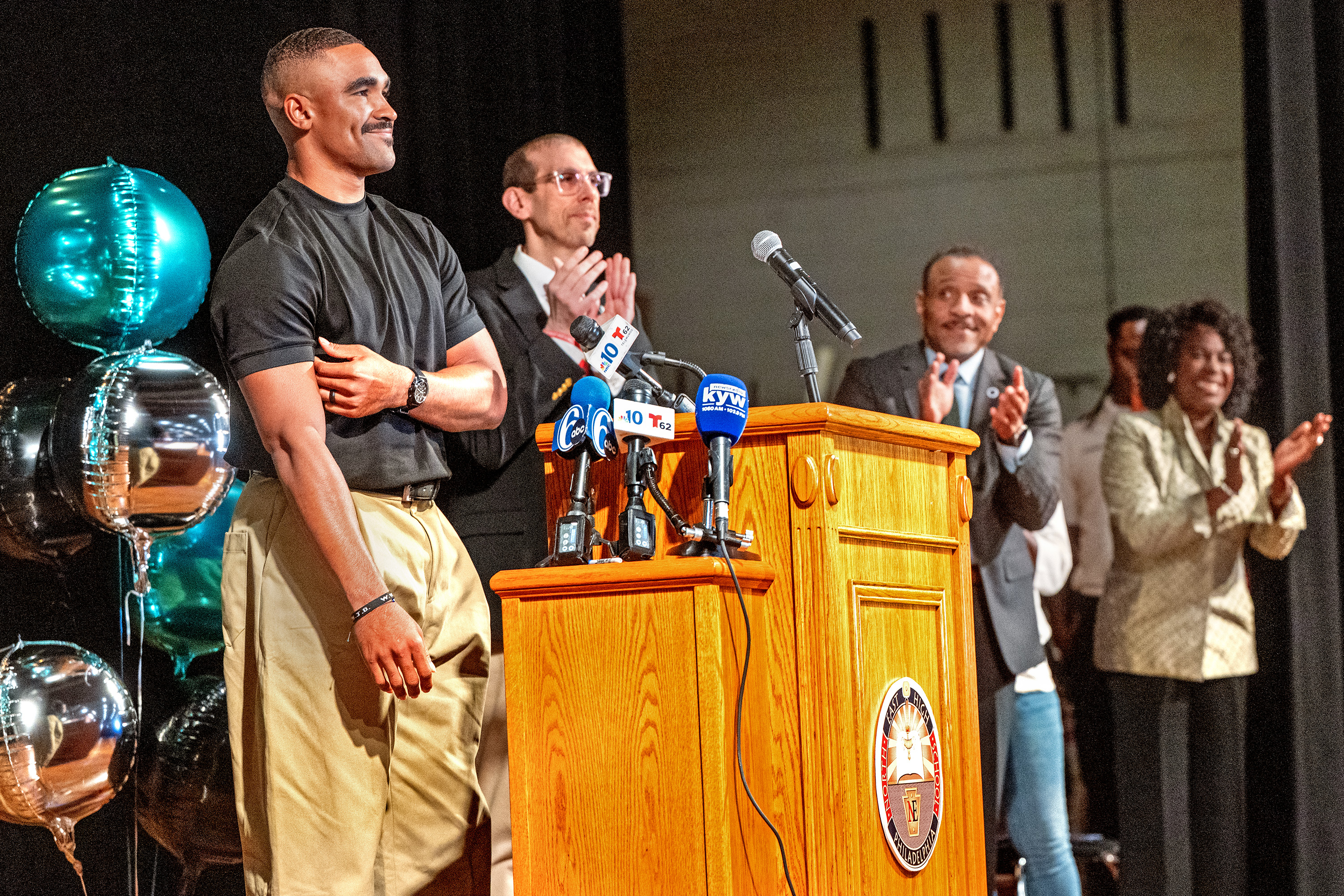
    On Tuesday, he stood on Northeast High’s stage to announce his foundation was putting up $600,000 to air-condition the school’s auditorium.

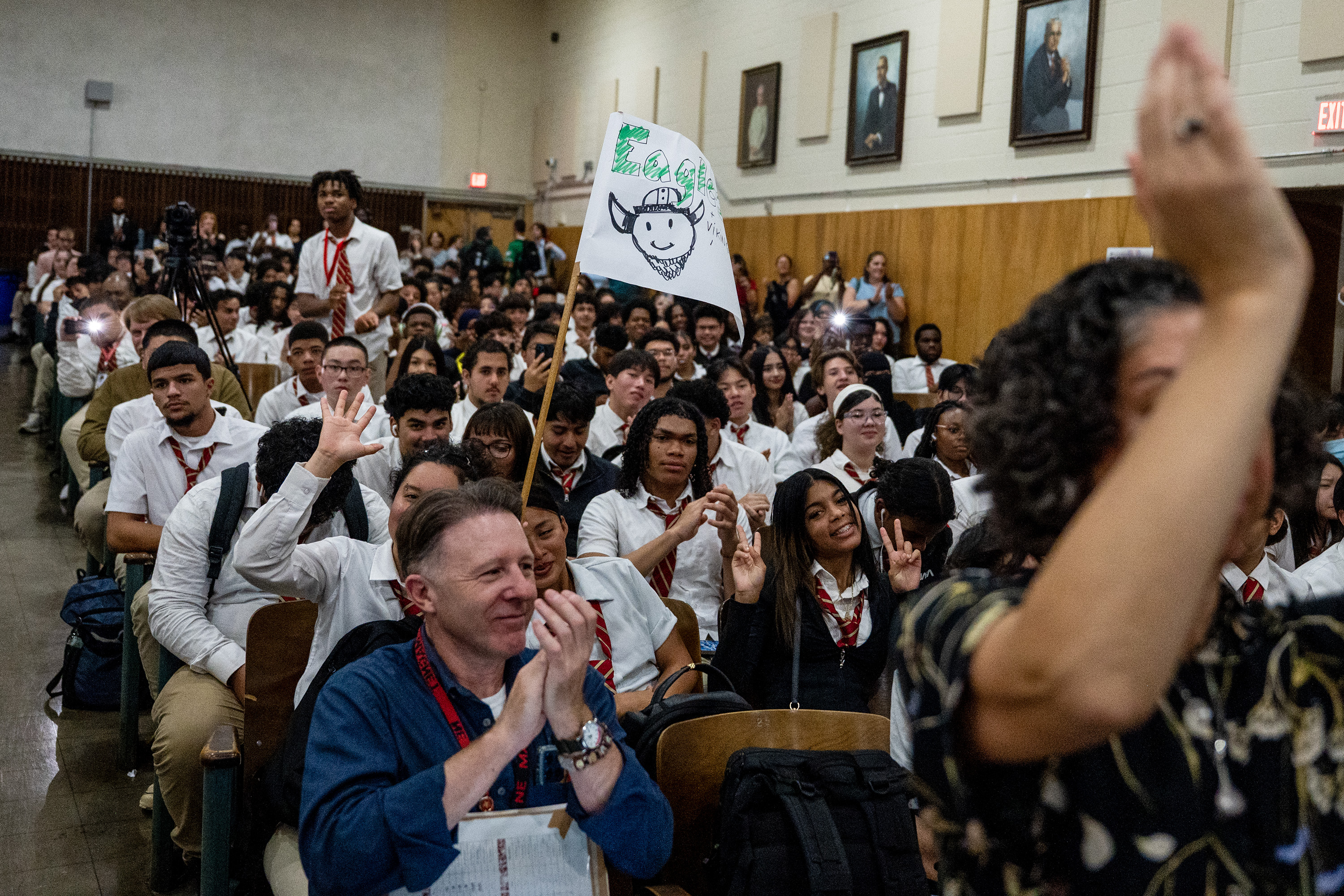
    The timing was good: Although temperatures were in the high 60s when Hurts made his announcement, it was sweltering in the auditorium, with more than 1,000 students, teachers, and dignitaries in the room. Sweat ran down the faces of members of the marching band toting heavy instruments and cheerleaders in long-sleeved uniforms. Mayor Cherelle L. Parker cooled herself with a small personal fan.

    When Hurts watched that TV spot, about half of the district’s schools were not air-conditioned. Hurts’ largesse has helped get the number down, but 52 schools — about a quarter of district buildings — still lack air-conditioning.

    Hurts, on Tuesday, said he wanted to move the needle more for Philadelphia schools.

    “Let’s get it to zero,” Hurts said of the number of schools without air-conditioning. “I want to get it to zero.”

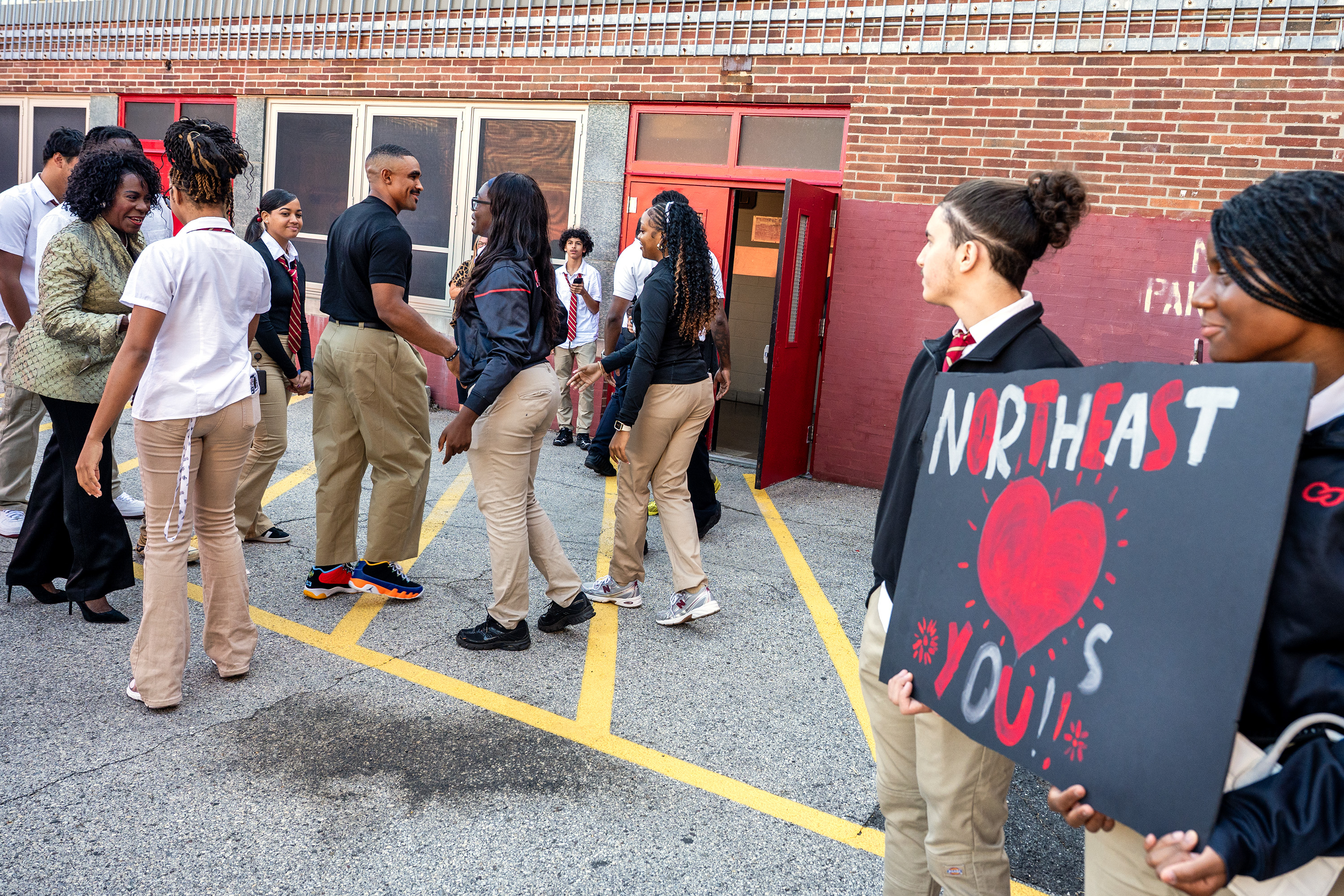
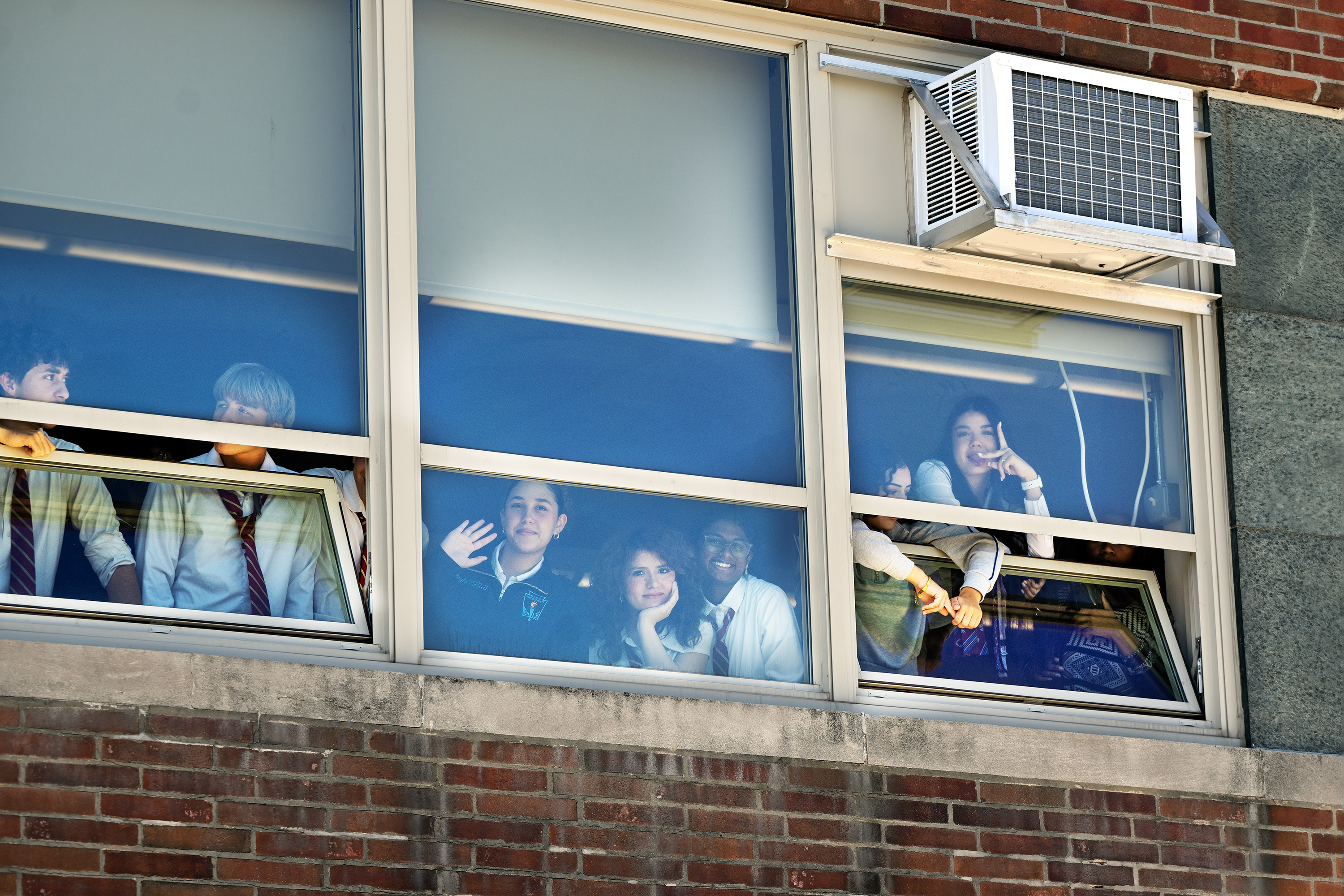
    Northeast High School watch from their classroom – with a window air conditioning unit – as Eagles quarterback Jalen Hurts leaves Tuesday, Sept. 15, 2026 following his appearance there to give the school $600k for an a new cooling system.Tom Gralish / Staff Photographer

    Asked why he was turning his attention to city schools, Hurts said he was influenced by his educator parents and the people who made a way for him.

    “It’s about service and showing up for those around you,” the quarterback said.

    Northeast High had window units cooling classrooms prior to Hurts’ announcement, but the auditorium, a hub of the school and the community, was tough to use in the spring and summer months, said Andrew Lukov, the school’s principal.

    “This changes everything for us,” Lukov said.

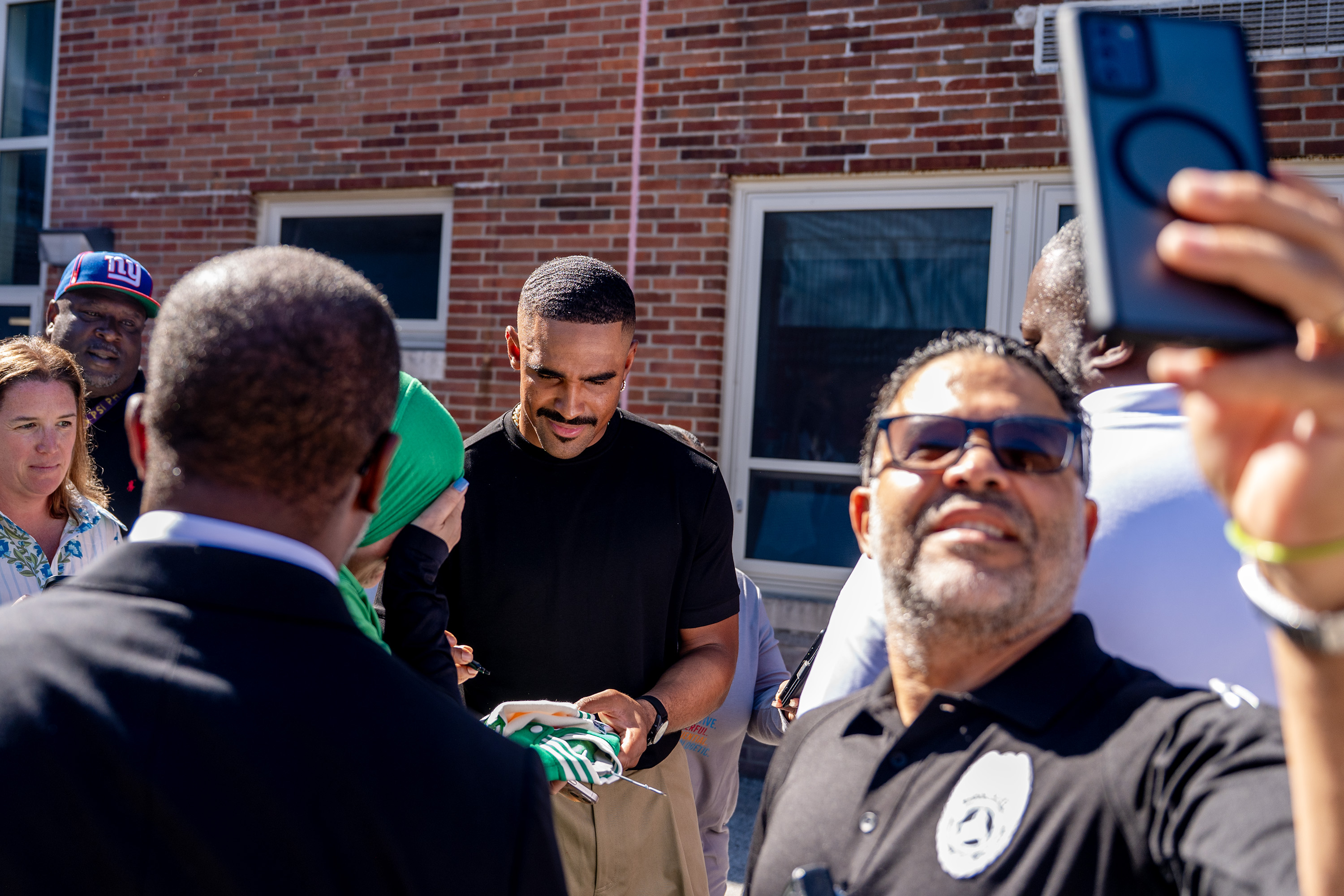
    A beaming Parker, who made sure to lead the adoring Northeast crowd in an E-A-G-L-E-S chant, spelled correctly, led the crowd in giving Hurts a standing ovation.

    “Jalen, on behalf of the entire city of Philadelphia, we say thank you for your gift,” Parker said. “You will have an impact on more than the 3,400 students who attend this school on a daily basis. You’ve also done something even more important: You’ve used your time, your treasure, and your celebrity to assist a constituency who will never be able to walk in your shoes.”

    Eagles quarterback Jalen Hurts as he appears at a rally in the auditorium at Northeast High School Tuesday, Sept. 15, 2026 to give the school $600k for an air conditioning system. With him onstage in the auditorium Northeast principal Andrew Lukov, School Superintendent Tony B. Watlington, Sr. and Mayor Cherelle L. Parker.Tom Gralish / Staff Photographer

    It feels a little surreal that a major space in an important school lacks adequate climate control in the United States, said Mekhriyona Ilkhomova, a Northeast senior whose speech earned a broad smile and a hands-over-heart gesture from Hurts.

    Hurts’ donation matters, not just because of the money but because of who he is, said Ilkhomova, a standout student and athlete.

    “It reminds us students of what we can become,” she said, “and what we can give back after becoming.”

    The state of the cool

    District officials had promised the entire system would be air-conditioned by 2027; the system appears off track to reach that goal.

    While Northeast is getting an upgrade, 52 schools lack air-conditioning.

    When temperatures are forecast to hit 85 degrees or higher by noon, those 52 schools are dismissed early. If the weather forecast calls for temperatures of 85 or higher before 9 a.m., those schools are closed for in-person instruction and remote learning days are called.

    That means unequal experiences, with students in some schools not missing instructional time when it’s hot, and those in a quarter of schools subject to interrupted schedules.

    School Superintendent Tony B. Watlington, Sr. (right) greets Eagles quarterback Jalen Hurts as he appears at a rally in the auditorium at Northeast High School Tuesday, Sept. 15, 2026 to give the school $600k for an air conditioning system. At left is Kathryn Epps, president & CEO, The Fund for the School District of PhiladelphiaTom Gralish / Staff Photographer

    Four weeks into a new school year, Philadelphia has had two heat-interrupted days at the 52 schools.

    Cooling the remainder of the 52 schools is not as simple as buying air-conditioning units: Many old buildings lack adequate electrical systems to support whole-school cooling.

    Those projects are complicated.

    An HVAC project at Kensington High went awry this summer, triggering asbestos issues that forced students and staff to relocate for the rest of the calendar year.

  • Reading Terminal Market reports nearly 6 million annual visitors, who spend $1.2 billion in Philly

    Reading Terminal Market reports nearly 6 million annual visitors, who spend $1.2 billion in Philly

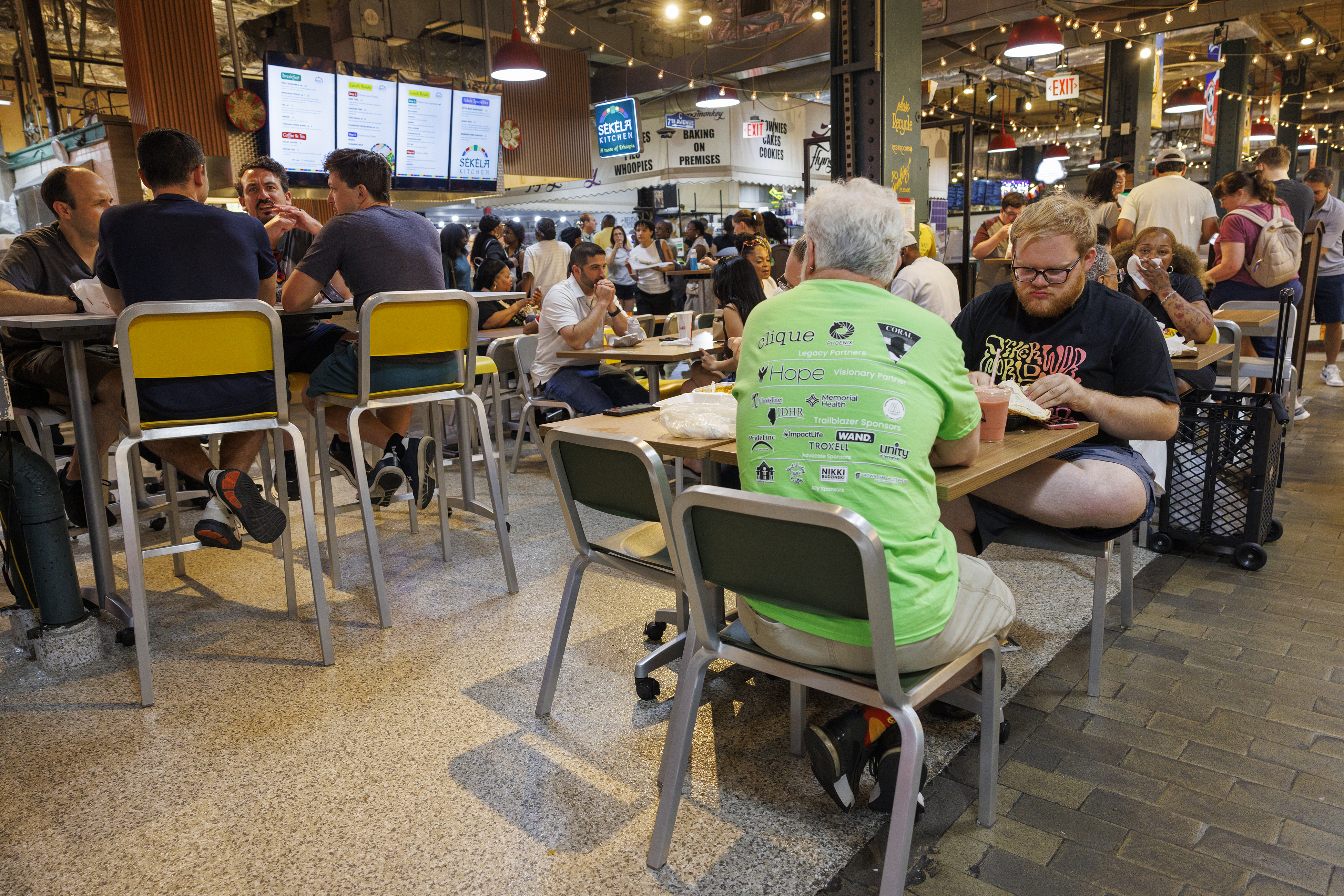
    Nearly 6 million Reading Terminal Market visitors, a mix of locals and tourists, spent $1.2 billion in Philadelphia last year, according to a new study on the economic impact of the historic Center City market.

    It’s the first time the nonprofit Reading Terminal Market Corp. has commissioned such a report, and the stats solidify the market’s status as “a beloved civic institution, and a powerful and vital economic engine for Philadelphia and Pennsylvania,” said Annie Allman, CEO and general manager. With the report, Allman said she is encouraging “continued investment in the market, its merchants, and its infrastructure.”

    It highlighted the market’s importance to lower-income residents, with 18 Reading Terminal merchants accepting SNAP and EBT benefits. This accounts for about 55% of the Center City merchants who accept food-assistance programs, according to the report. Reading Terminal Market is considered the largest EBT- and SNAP- redemption location in Pennsylvania.

    “Every dollar spent here is a dollar invested in Philadelphia — in our merchants, our hospitality industry, our neighbors, and our future,” Allman said in a statement.

    The “Feeding the City, Fueling the Economy” report — released Tuesday and conducted by the Philadelphia firm Econsult Solutions at Reading Terminal Market Corp.’s request — found that the market has contributed about $126 million worth of annual economic activity to the city of Philadelphia and $146 million to the Commonwealth of Pennsylvania. These figures include direct spending at the market’s more than 75 vendors, as well as the subsequent spending by those vendors and the employees they pay.

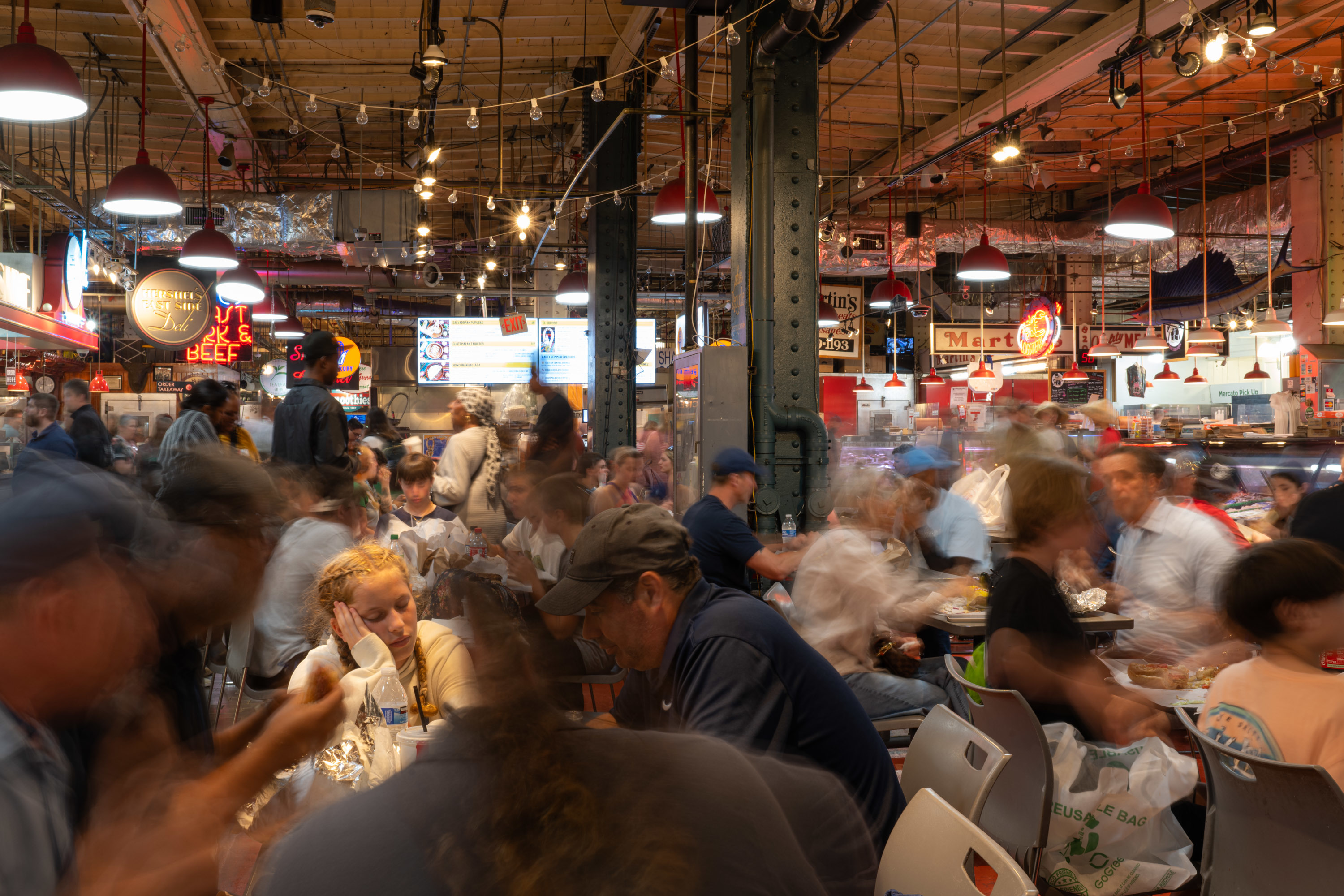
    Diners at the Reading Terminal Market in June.Alejandro A. Alvarez / Staff Photographer

    The study also cited national accolades, noting that Reading Terminal was recently named the No. 1 public market in America by USA Today travel experts.

    The new report found just over half of the market’s visitors last year, 3.1 million customers, were visitors staying overnight in the region, while the rest were Philly-area residents.

    Some Reading Terminal customers may have first heard of the market online, on a podcast, or on TV and streaming programs: The report found that Reading Terminal reached 10.8 billion people through these kinds of media mentions, equaling $81 million in “publicity value.”

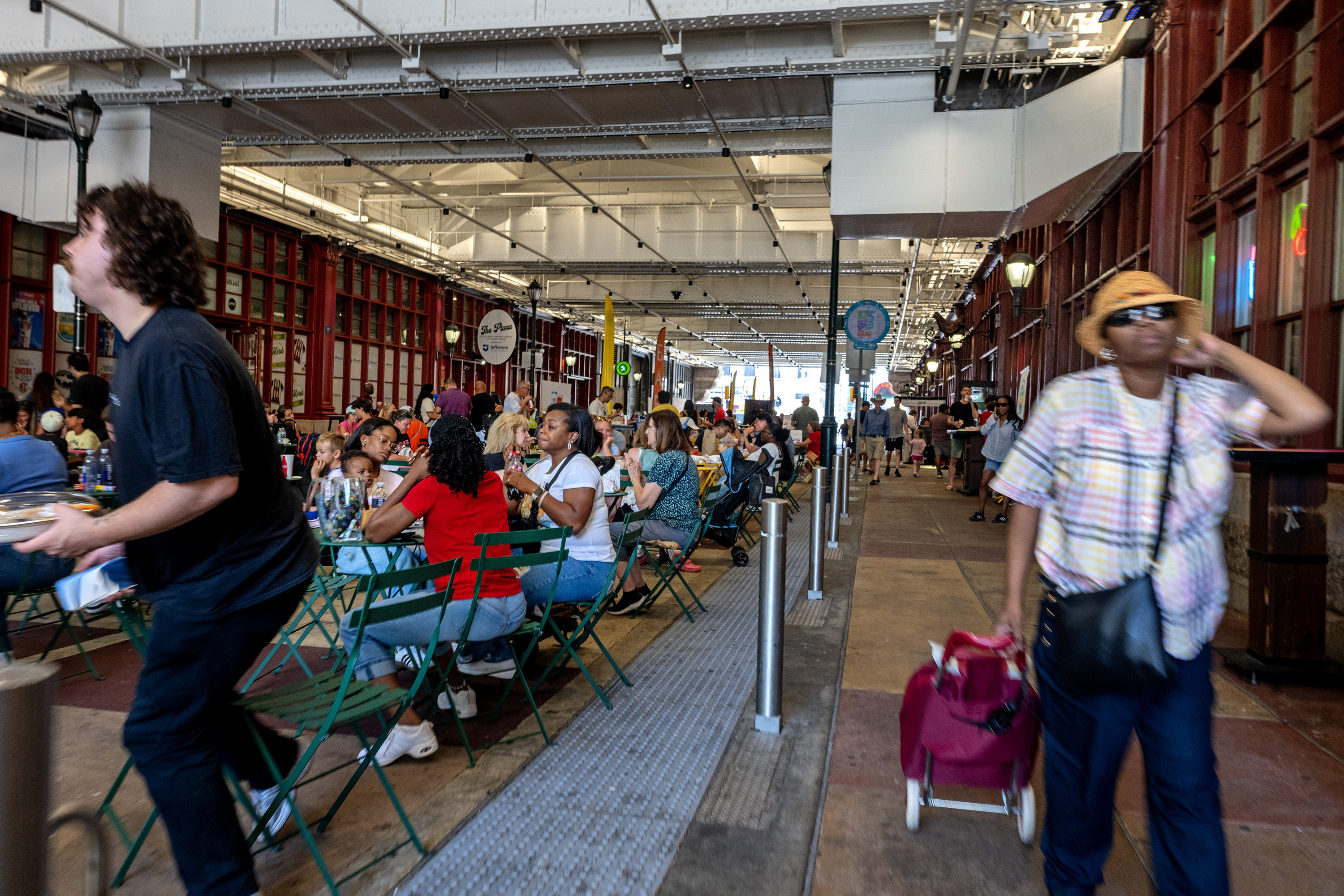
    People enjoy the pop-up outdoor area on Filbert Street at Reading Terminal Market in July. Tom Gralish / Staff Photographer

    Between the market’s merchants and the corporation that runs it, Reading Terminal pays nearly 700 full-time-equivalent employees a combined $39 million a year, according to the report.

    And market partners spend about $6.1 million a year on capital improvements, which include mechanical, plumbing, and electrical upgrades, as well as larger undertakings like the 2022 Filbert Street Project that added 15,000 square feet of pedestrian-friendly outdoor space.

    Founded in 1893, Reading Terminal is one of the country’s oldest continuously operating markets. Spanning nearly 80,000 square feet along 12th Street, between Arch and Filbert Streets, the market sells everything from fresh produce and seafood to meats and homemade baked goods.

    At its quick-service restaurants, customers can find Caribbean cuisine, Asian street food, Filipino-fusion eats, Thai food, falafel, cheesesteaks, and vegan bites.

    Allman, CEO and general manager, said 2026 “brought unprecedented global attention” to Philadelphia. This summer, the city hosted the World Cup, America’s 250th birthday celebrations, and the MLB All-Star Game. Any economic impact those events had on Reading Terminal Market, however, would be reflected in next year’s report.

    Correction: This story has been updated to reflect that $1.2 billion is the estimated total spend by Reading Terminal Market visitors in Philadelphia, not in the market alone. It also reflects how much market partners spent on capital improvements.

  • Josh Shapiro celebrates as SCOTUS protects mail voting in Pa. and elsewhere from Trump’s restrictions

    Josh Shapiro celebrates as SCOTUS protects mail voting in Pa. and elsewhere from Trump’s restrictions

    Pennsylvania Gov. Josh Shapiro celebrated the U.S. Supreme Court’s decision to block restrictions on mail voting sought by President Donald Trump less than two months before the midterm elections.

    “Donald Trump’s illegal attempt to undermine our Constitution and prevent eligible voters from making their voices heard in this election by voting by mail has failed,” Shapiro said in a statement posted to X on Monday night in the wake of the ruling.

    In March, the president issued an executive order that directed the U.S. Postal Service to help decide which voters should receive mail ballots. Shapiro, a first-term Democrat running for reelection this fall, had used his power as governor to join Pennsylvania as a plaintiff in a multistate lawsuit against the Trump administration, arguing the limits would unfairly prevent thousands of voters from being able to cast a ballot and would unconstitutionally violate states’ rights to administer elections.

    Since 2019, under a state measure known as Act 77, any voter in Pennsylvania may request to vote by mail ballot. The ruling Monday means nothing will change for those who were planning to vote by mail, whether by submitting their ballot through the mail or over the counter at their county’s election office. Eligible residents may also vote in person at their polling place on Election Day.

    “Counties will continue to administer free, fair, safe, and secure elections. And I’ll stand ready to continue protecting your right to vote — no matter what the Trump Administration tries next,” Shapiro, a likely contender in the 2028 presidential race, wrote on X.

    The deadline to register to vote in Pennsylvania’s contests, which include the governor’s race and four competitive congressional seats that could help determine control of the U.S. House, is Oct. 19. The last day to apply to vote by mail is Oct. 27. Ballots must be received by Nov. 3 at 8 p.m. to be counted.

    Trump’s directive stemmed from his long-running grievance against mail voting, despite repeatedly utilizing the method himself. He had instructed states to develop an approved list of voters, to prevent noncitizens from voting, and ordered the Postal Service to withhold mail ballots from individuals not on the approved list.

    On Tuesday, he called America’s mail voting system a “disaster” and said the justices who voted to block his order, some of whom he had appointed, “are merely a shell of their original selves” in a post on Truth Social, his social media platform.

    At the Republican Party’s midterm convention in Dallas last week, Trump asked attendees to pledge that they would vote whether they are “registered or not” and to “try to cheat like hell like they do,” despite no evidence of systematic voter fraud by either party.

    Pennsylvania Democrats and election officials in the state had doubted the viability of Trump’s order throughout the court proceedings — but said the renewed debate could still instill concern among voters that their ballots might not be tabulated.

    Secretary of State Al Schmidt, a Republican appointed by Shapiro, called the effort an “unprecedented federal overreach” into Pennsylvania elections during a news conference Tuesday, and cheered the announcement.

    “This ruling is a major victory for Pennsylvania voters and, importantly, provides much needed finality for voters and counties ahead of this year’s election,” he said.

    In New Jersey, Democratic Gov. Mikie Sherrill also applauded the Supreme Court’s decision.

    “This is another win for New Jersey voters and another loss for Donald Trump’s attempt to rig elections.”

  • Bathhouse is bringing 36,000 square feet of Bitcoin-powered pools and saunas to Philly

    Bathhouse is bringing 36,000 square feet of Bitcoin-powered pools and saunas to Philly

    A coed bathhouse is opening in Philly. Its business model involves choreographed sauna rituals and Bitcoin-heated pools.

    Bathhouse opens on Friday, Sept. 25, at 1418 Walnut St., transforming the Bellevue Hotel’s defunct basement food court into a sprawling facility with three saunas, three pools, a steam room, and appointment-only massages. The 36,000-square-foot space is the largest standalone wellness complex in Philly. It’s also the latest in a gambit to rebrand sweating as an activity that is simultaneously sexy and productive.

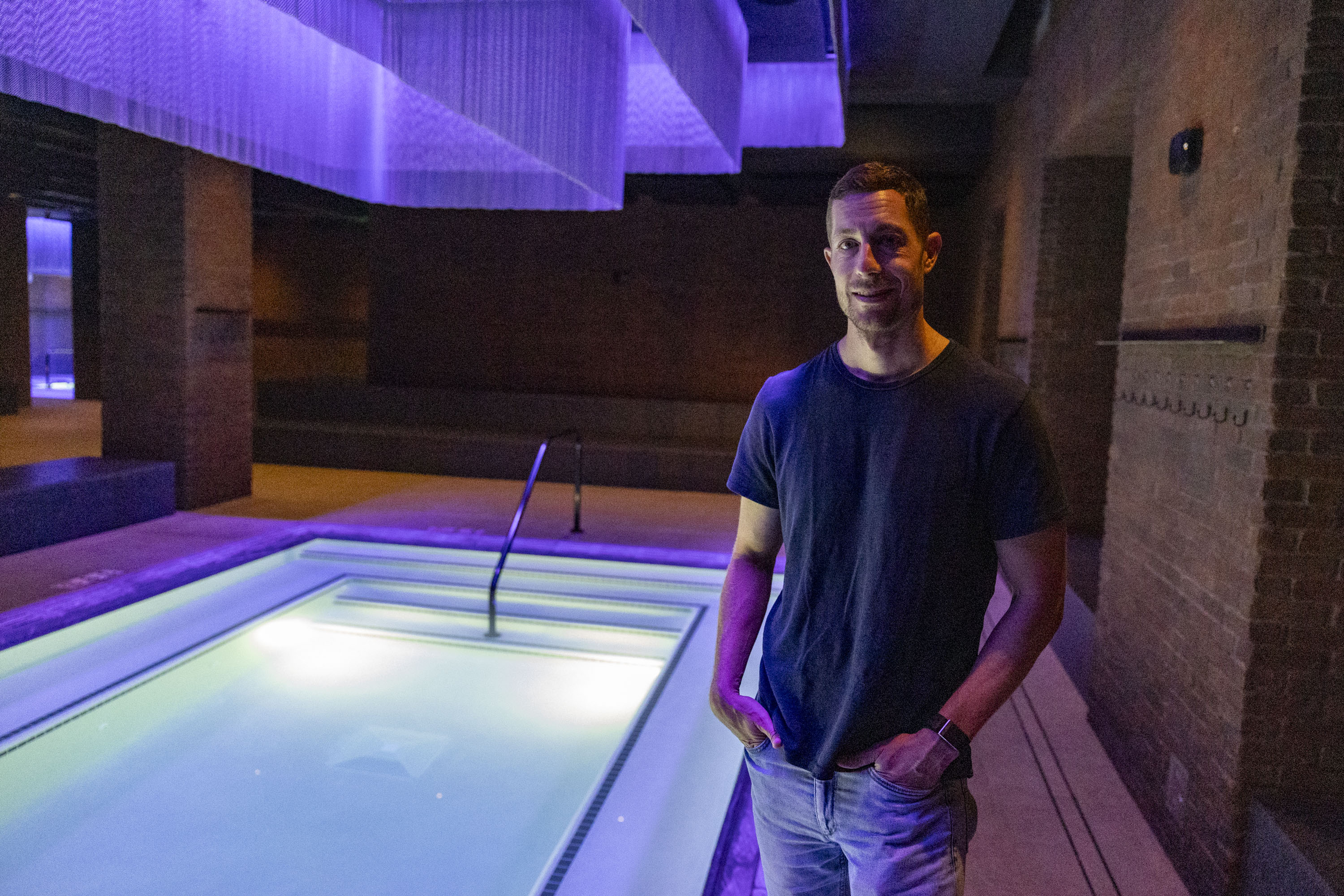
    “Our business is technically a 7,000-year-old business,” said Travis Talmadge, a certified sauna master and Bathhouse’s cofounder. “People have been building hot rooms to sweat in forever, and pools aren’t a new concept … All we’re doing is bringing the best-in-class” versions of both.

    Talmadge and his business partner, Jason Goodman, opened the first Bathhouse location in 2019 in Williamsburg, Brooklyn, with a mission to repackage the social bathing cultures of Europe and Asia to suit the United States, where bathhouses’ popularity dwindled as the stigma of the AIDS epidemic forced many to close.

    The cold plunge inside Bathhouse’s 36,000-square-foot location in the basement of the Bellevue Hotel.Tyger Williams / Staff Photographer

    After opening another New York City location in 2024, Bathhouse received a $35 million investment from Imaginary Ventures, the investment firm that previously backed beauty brands such as Glossier, Kosas, and Alix Earle’s Reale Actives.

    Now, Bathhouse is on an expansion tear. Philly’s location will be the first outside of NYC, with other outposts planned for Chicago, Nashville, Los Angeles, Minneapolis, North Jersey, and Connecticut.

    The company’s focus is contrast therapy, or switching between extremely hot saunas and cold baths in a way that’s shown to boost circulation and muscle recovery.

    Roughly 1,000 people pass through each of the company’s now three NYC locations per day, Talmadge estimated. Most, he said, are focused on decompressing before or after work. Others, he said, use it in place of happy hour with friends. Some are even on dates. None, Talmadge stressed, want a spa.

    Bathhouse cofounder Travis Talmadge is a certified sauna master who also hosts aufgusses, a traditional German sauna ritual.Tyger Williams / Staff Photographer

    “Spas really focus a lot more on relaxation and pampering,” he said. “There’s really no pampering [here]. There’s nothing relaxing about sitting in a 200-degree room or a 45-degree pool.”

    The amenities

    Bathhouse draws on Russian, Turkish, and German bathing rituals to create a distinct wellness experience.

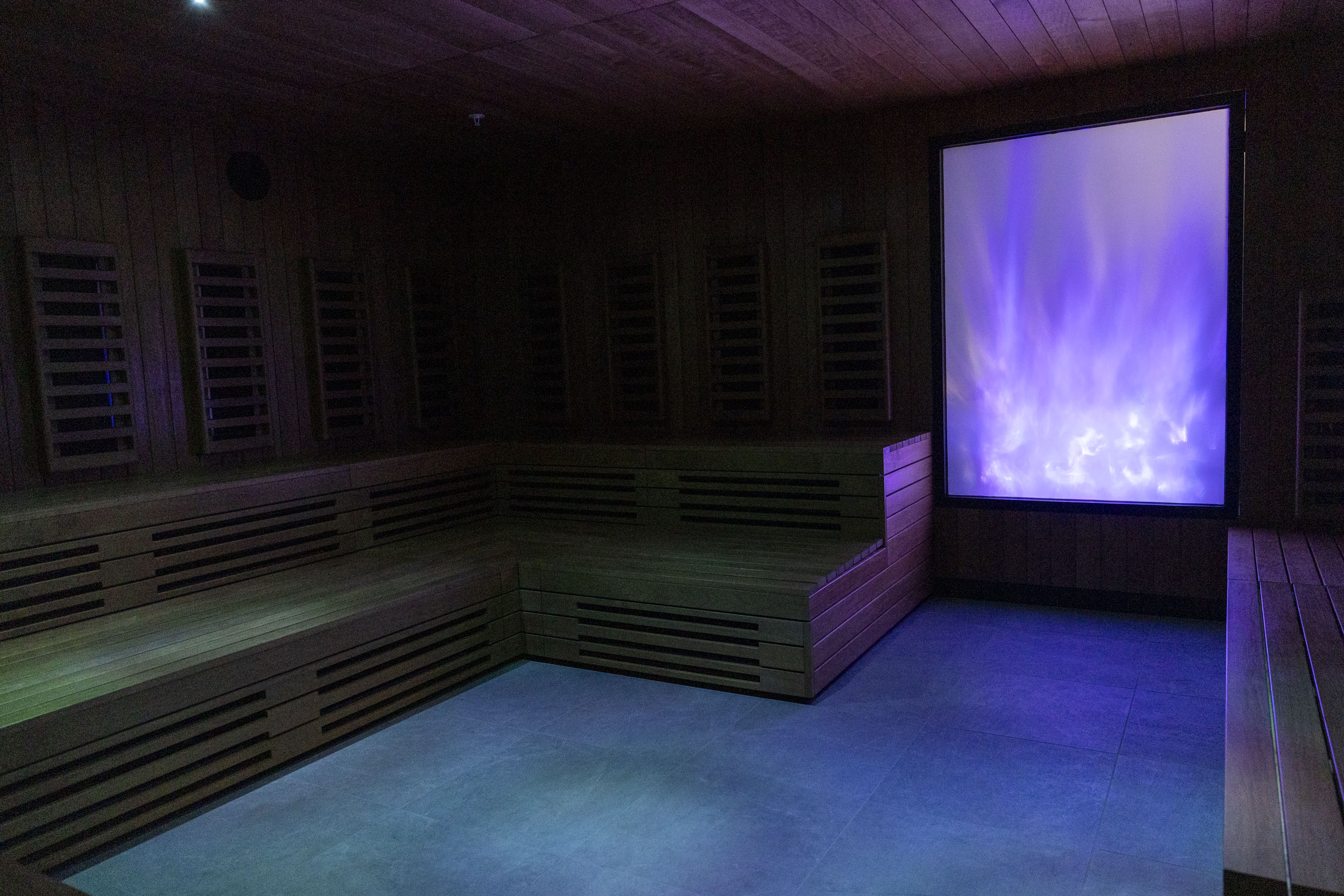
    The Philly location is launching with a steam room and three saunas: a 140-degree infrared one; a 190-degree traditional Russian banya heated by a wood stove; and a large dry room warmed to 180 degrees that Talmadge repeatedly referred to as the “event sauna.” Its lights have “the capabilities of a nightclub,” Talmadge said, and can change color to match the beat of the music during Bathhouse’s regularly scheduled sauna rituals.

    The space also has hot and neutral pools alongside a traditional cold plunge, plus private rooms for full body massages and an on-site cafe for smoothies, beer, natural wine, and light bites. (A rooftop pool and sauna will open in May, Talmadge said.)

    The dry “event” sauna room at Bathhouse heats to 180 degrees Farenheit. It’s also where sauna masters perform aufgusses — German sauna rituals — for guests.Tyger Williams / Staff Photographer

    Bathhouse is the latest addition to the revamped Bellevue Hotel, which has been rebranded as a swanky hotel with luxury apartments, a vibe-dining restaurant with an $88 baked potato, and the Bellevue Sporting Club, an upscale gym that already has its own set of saunas, steam rooms, and a cold plunge.

    Zach Seidman, head of marketing for the Bellevue, called Bathhouse “a complement” to the Sporting Club’s fitness-first offerings. “There’s nothing like it in Philadelphia,” he said.

    That’s technically true: For years, Philadelphians looking to sweat it out had to drive to the Russian baths at Southhampton Spa in Bucks County and Chung Dam Spa in Cheltenham to find something that wasn’t a tiny box in the back of a gym. Then, the city had something of a sweat-aissance after the pandemic, with pop-up saunas taking over the American Swedish Historical Museum and Schuykill Center for Environmental Education. A 26,000-square-foot “social spa” even opened in Northeast Philly last year, boasting five saunas and a snow room.

    The infrared sauna at Bathhouse is the gentlest of the Philadelphia location’s three saunas.Tyger Williams / Staff Photographer

    In theory, Bathhouse is the cheapest of them all. Day passes at the Philly location start at $29 but are subject to change based on demand and time of day.

    The sauna ritual

    Bathhouse is part of a class of wellness hubs that are fixated on providing an alternative to clubbing, based on the premise that young people are spending more on their health and less on drinking.

    Some of the company’s competitors, like Othership, are hosting raves, singles nights, comedy shows, and trivia. In Europe, meanwhile, startups are trialing sauna art therapy and concerts with varying degrees of success.

    Talmadge said Bathhouse tries to avoid trends. Instead, they are singularly focused on hosting aufgusses, a theatrical German ritual wherein a sauna master melts essential oil-doused snowballs on a bed of hot stones. To circulate the scents, the sauna master then whips towels around the room like helicopter blades.

    The hot pool at Bathhouse Philadelphia. Located at 1418 Walnut St., it is the brand’s first location beyond New York City.Tyger Williams / Staff Photographer

    In Philly, Bathhouse will likely host aufgusses every 90 minutes in — naturally — the event sauna, lead by certified sauna masters. Talmadge, who earned the title in 2021, said each sauna master has their own playbook of tricks meant to evoke a smile, if not some sort of spiritual experience. (His is a double-towel spin mixed with a bit of catch-and-release.)

    “Some people really love the aromatherapy and want to see how the scents hit their nervous system,” Talmadge said. “Other people love watching the show and are in it for the tricks … Everyone has their own experience.”

    The Bitcoin

    What, exactly, is powering your Bathhouse experience? Bitcoin, in part.

    Since its 2019 founding, Bathhouse has used small on-site data centers of Bitcoin miners to warm its pools and heated seats, extracting excess energy from the machines via pipes. The practice, Talmadge said, has helped significantly cut Bathhouses’ electricity bills while allowing them to make back some money, even as returns from the cryptocurrency have slowed.

    “It’s like a rebate,” said Talmadge with a shrug.

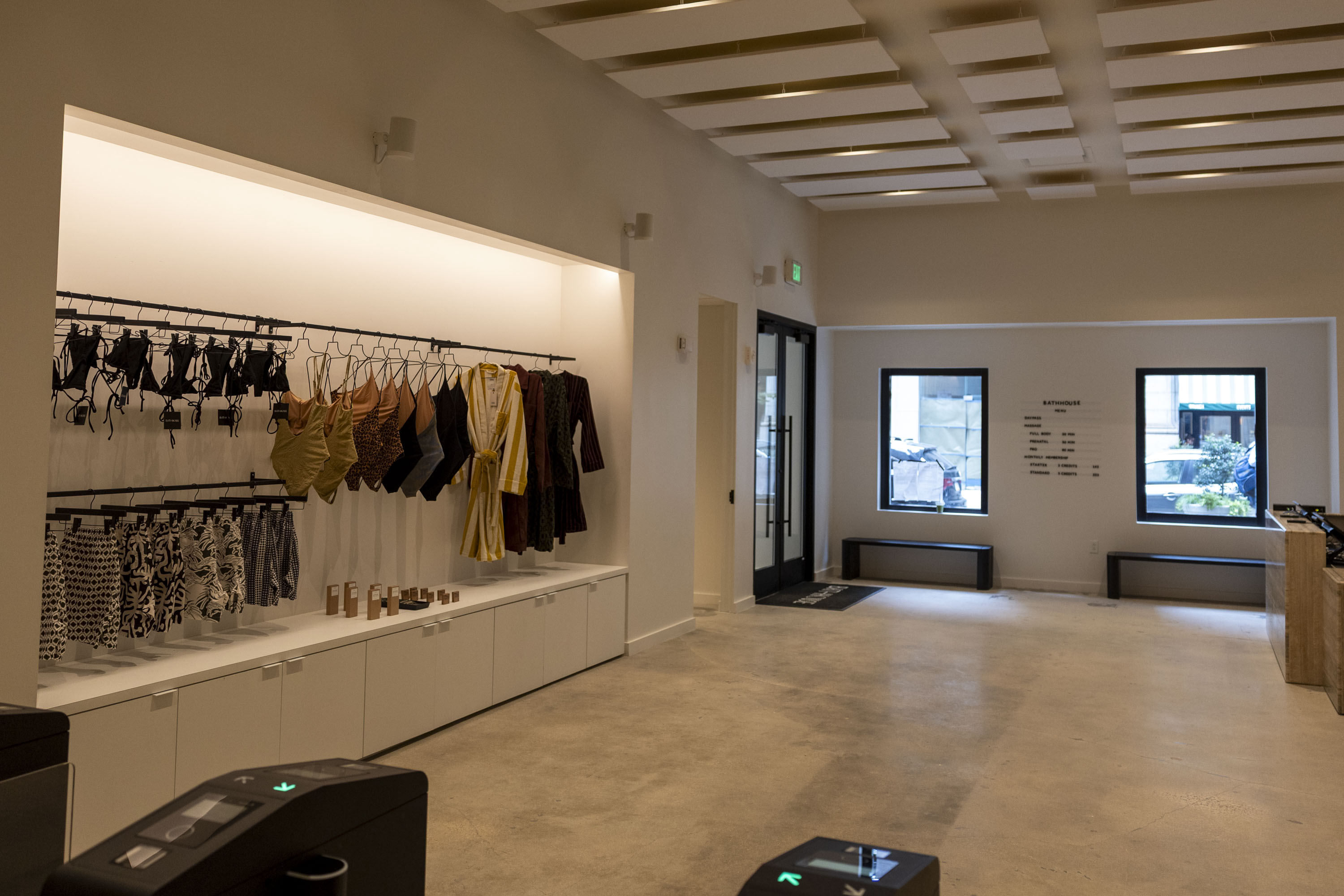
    The entrance area at Bathhouse Philadelphia, 1418 Walnut St.Tyger Williams / Staff Photographer

    If Philadelphians can get past the Bitcoin miners lurking in the background, Talmadge recommends first-timers start with 15 minutes in the gentler infrared sauna. They should also hydrate constantly.

    Those looking to maximize their sweat should lay on the top row of the Russian banya, which becomes the hottest point in the bathhouse as the heat rises.

    “That’s your belly of the whale,” Talmadge said. “The goal with the saunas is to eventually try to push yourself.”

    If you go

    📍1418 Walnut St., Philadelphia, Pa. 19102, 💵 $29+, ⏰ 8:30 a.m. to 11 p.m. daily, 🌐 abathhouse.com/philadelphia

  • Delaware Container Port plan is full speed ahead, despite lacking research showing it’s needed

    Delaware Container Port plan is full speed ahead, despite lacking research showing it’s needed

    Contractors for Delaware and its port manager, Enstructure LLC, have started work on a $669 million container port that leaders hope will attract thousands of jobs to the state’s industrial northeast near the Pennsylvania state line.

    Delaware has agreed to pay $325 million of the container terminal cost, with Enstructure, which is financed by the Blackstone private equity group and other investors, committing $225 million. Federal grants are expected to cover the rest.

    U.S. Sen. Chris Coons (D., Del.) told the crowd of construction and port workers and public officials at a groundbreaking Monday that the Delaware Container Port is designed to replace high-wage union industrial jobs lost when northern Delaware’s auto, steel, and chemical works shut over the past 20 years.

    When the port is finished by late next year, “bigger ships will come to Delaware first,” Gov. Matt Meyer said, as container ships traveling the Delaware River to Pennsylvania and South Jersey terminals passed by.

    Meyer said the new Delaware terminal would feature electric cranes and other equipment, instead of diesel power at “one of the cleanest, greenest ports in the world.”

    Shippers have been “containerizing” cargo into trailers suitable for shipping by sea, rail, and truck since the 1950s, though union leaders complain that automated cargo handling reduces the need for labor. Port managers clear land, buy cranes, and pour concrete based on uncertain estimates. South Carolina earlier this year shut a four-year-old, $1 billion container port because it attracted few cargoes.

    The site of Delaware’s new port is a former DuPont Co. titanium dioxide plant at Edgemoor, north of Wilmington. During Monday’s event, earth movers smoothed property east of a mound that sealed in contaminants left over from DuPont days.

    Coons said the site had been “the biggest dioxin pile in North America” before it was sealed and praised advocacy by the International Longshoremen’s Association for the site’s “new beginning.”

    ILA activists said they faced long opposition from political leaders concerned by the cost of a new port and from competing ports who sued to derail the project.

    Litigation is ongoing, but the work is going ahead, said Delaware Secretary of State Charuni Patibanda-Sanchez, whose father was an engineer at the DuPont plant before its 2015 shutdown. “The very complex legal situations still continues, but we will work through it,” she said in an interview.

    The new port is designed to handle 1.2 million Twenty-foot Equivalent Units (TEUs) — about 600,000 40-foot trailers. Meyer said that’s triple the capacity of the Port of Wilmington, three miles south.

    And it’s more trailers than the port of Philadelphia handled in 2025, a record year. In Philadelphia, the state port authority says it has raised $266 million from the U.S. Department of Transportation to boost container capacity at the Mustin property it acquired last year and is also growing space at the Packer Avenue terminal. “Competition among neighbors working together is good for all,” said PhilaPort CEO Rich Lazer. he added that new terminal space anywhere on the river can boost the region’s market share.

    Matthew Satnick (left) and Philippe De Montigny, are co-CEOs of Enstructure, the port management company overseeing construction of Delaware’s planned port at the former DuPont Co. titanium dioxide plant at Edgemoor on the Delaware River.Joseph N. DiStefano

    State officials did not present research supporting the need for the new terminal. Patibanda-Sanchez, who chairs the state-controlled Diamond State Port Corp. board that oversees the ports, said a study by University of Delaware researchers is not finished.

    The port will support “2,500 to 3,000″ workers when fully open by 2028, according to Bill Ashe, international vice president of the International Longshoremen’s Association and president of ILA Local 1694, which he said represents 1,500 workers at the current Port of Wilmington.

    He said the port’s rail service would be able to send stacked railroad cars to industrial sites in the region, such as the 4 million-square-foot Amazon warehouse in nearby Stanton, Del.

    Holt Logistics and its affiliates, which manage facilities in South Philadelphia, Camden, and Gloucester City, is spending more than $200 million adding cranes and expanding its container storage and service areas, Leo Holt, president of the family-owned business, said in an interview last week.

    Separately, PhilaPort, the city’s port agency, and state officials are considering a new container facility in part of the Mustin property whose $90 million purchase was announced last year.

    With all these possible container ports in the works, Holt said, Delaware is waging an expensive “race to the bottom” and should cooperate with Pennsylvania and New Jersey instead of competing.

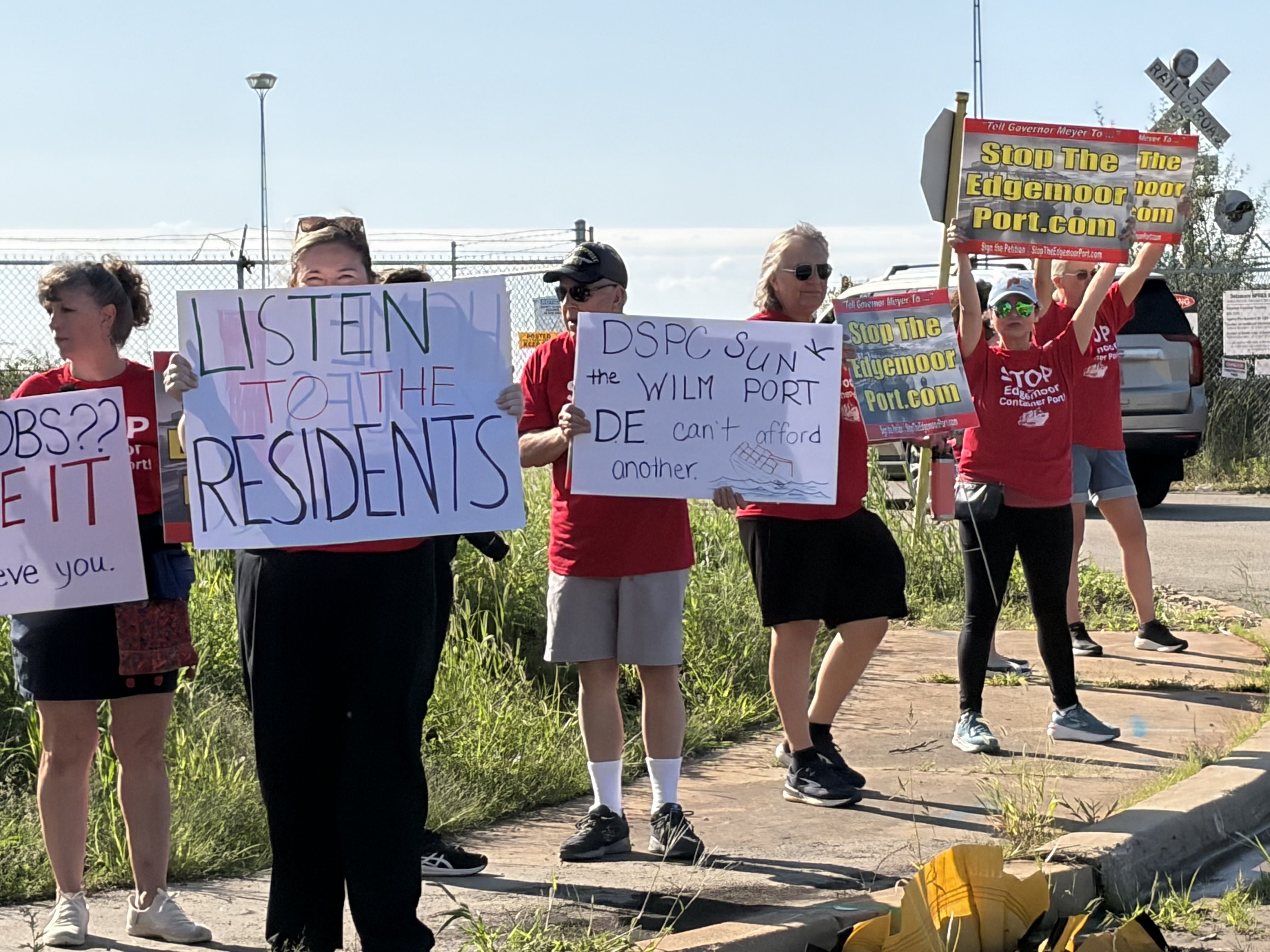
    Protesters picket at the entrance to Delaware’s planned port at Edgemoor on the Delaware River during a groundbreaking Monday attended by federal, state, and local officials. Joseph N. DiStefano

    As leaders arrived at the groundbreaking, protesters gathered at an entrance to the property holding signs urging officials to reverse the plan and backing candidates who are challenging incumbent Democrats in Tuesday’s primary.

    Karen Hartley-Nagle, a former New Castle County Council chair, said neighbors were worried about increased ship and truck traffic.

    Among the supporters who spoke after Gov. Meyer was Daniel Elkins, head of the Bellevue Community Center, which runs youth and other programs near the port. He said Enstructure had supplied food for neighborhood families after the Trump administration stopped a federal food program. He said port jobs would boost the neighborhood.

    “Thank you for bringing back opportunity,” he said.

    Delaware Gov. Matt Meyer, in a yellow tie, waits for his turn to speak at the groundbreaking for his state’s long-proposed container port at Edgemoor on the Delaware River. Joseph N. DiStefano

    Enstructure, the port operator, is a 10-year-old firm that operates more than 20 port facilities, including the port at the former U.S. Steel Fairless Works in Lower Bucks County.

    Co-CEO Matthew Satnick told the crowd he and his partner had founded the firm in Winona, Minn., in 2016, and were used to being underestimated. He promised to complete the container port “on time and budget,” with “economic development to follow.”

  • Center City is a major driver for Philadelphia housing, with room to grow, report says

    Center City is a major driver for Philadelphia housing, with room to grow, report says

    Downtown remains a hot spot for home construction in Philadelphia.

    Two in five homes recently built in the city were constructed in greater Center City, according to Center City District’s analysis of 18 months of data from the Philadelphia Department of Licenses and Inspections. The report was released Monday.

    More than 4,000 homes were built in greater Center City — defined by the business improvement district as the area from Girard Avenue to Tasker Street and from the Schuylkill to the Delaware River — between Jan. 1, 2025, and June 30. Over this period, more than 10,000 homes were completed citywide.

    (function() { var l = function() { new pym.Parent( ‘cc-housing__graphic’, ‘https://media.inquirer.com/storage/inquirer/ai2html/cc-housing/index.html’); }; if(typeof(pym) === ‘undefined’) { var h = document.getElementsByTagName(‘head’)[0], s = document.createElement(‘script’); s.type = ‘text/javascript’; s.src = ‘https://pym.nprapps.org/pym.v1.min.js’; s.onload = l; h.appendChild(s); } else { l(); } })();

    Greater Center City represents 6% of Philadelphia’s land area. But one in eight Philadelphians — more than 206,000 — lived there in 2025.

    “It’s not an accident,” said Prema Katari Gupta, Center City District’s president and CEO. She said the area’s concentration of housing reflects deliberate policy choices, the development industry’s willingness to build there, and strong demand for walkable and transit-accessible communities.

    “This matters for the whole city, not just for the downtown,” she said. “When Center City and the neighborhoods around it keep adding supply, it takes pressure off rents elsewhere.”

    The city’s housing, especially downtown, “has been a source of strength and resilience since the pandemic and beyond and has allowed our city a recovery and renewal that I think a lot of other cities would envy,” she said.

    Recent housing construction was spurred by Center City’s flexible land-use code and developers’ desire to start projects before the full 10-year tax abatement for new construction ended.

    And the area has the capacity for much more housing to be built, said Clint Randall, Center City District’s vice president of economic development.

    “Center City still has the potential to continue to be this real engine of housing production for the city at large,” he said.

    New homes built

    Last year was the second-most productive year for housing construction this decade, behind record-breaking 2024. In 2025, 3,175 homes were completed, compared with 3,811 in 2024.

    (function(){function e(){window.addEventListener(`message`,function(e){if(e.data[`datawrapper-height`]!==void 0){var t=document.querySelectorAll(`iframe`);for(var n in e.data[`datawrapper-height`])for(var r=0,i;i=t[r];r++)if(i.contentWindow===e.source){var a=e.data[`datawrapper-height`][n]+`px`;i.style.height=a}}})}e()})();

    Since the start of Mayor Cherelle L. Parker’s administration in 2024, greater Center City has added more than 7,800 homes — 26% of the mayor’s goal to build or preserve 30,000 homes during her first term.

    More than 1,300 homes currently have active construction permits in greater Center City.

    Housing construction has slowed as interest rates remain elevated, costs for labor and materials remain unpredictable due to federal policies, and developers complete projects that were part of the flood of permits issued before the end of the full 10-year tax abatement for new construction.

    Most of the housing construction in core Center City, defined as Vine Street to Pine Street, were units in office-to-residential conversions.

    The L&I data used in Center City District’s report does not distinguish between homes built as rentals and those for ownership. But downtown, most homes constructed last year and the first half of this year were in multifamily buildings, where renting is common.

    More housing supply helps moderate rent growth and keep wealthy residents from pushing into more affordable sections of the city.

    Compared with downtown Boston, for example, core Center City added a higher share of apartments over the last decade, and rents didn’t grow as much. Rents grew more slowly in greater Center City than in Philadelphia and the region.

    Future housing growth

    Randall said “the most meaningful thing Center City can do” to make housing more affordable for residents “is just be a place where as much housing gets built as possible.”

    Core Center City has a concentration of the city’s highest-density zoning districts, but many parcels don’t have as much housing as allowed or don’t have any housing, including surface parking lots.

    Center City’s core could accommodate 15,000 to 25,000 more housing units in areas where construction is already allowed, according to Center City District.

    The report says: “The density that makes certain pockets of Center City so vibrant and lively can be extended to underutilized and sometimes barren blocks, allowing more people to live in amenity-rich and walkable areas.”

    The business improvement district celebrated recent legislation that eliminated parking minimums — a major cost barrier to development — in high-density mixed-use zoning districts.

    Downtown demand

    Core Center City’s population grew by roughly 5% in 2025, according to anonymized cell phone data from Placer.ai. In the zip codes immediately to the north and south, the population grew by just over 3%. By comparison, Philadelphia’s population grew by 1.7%.

    Center City’s population density of more than 24,500 residents per square mile is more than double the citywide average density.

    (function(){function e(){window.addEventListener(`message`,function(e){if(e.data[`datawrapper-height`]!==void 0){var t=document.querySelectorAll(`iframe`);for(var n in e.data[`datawrapper-height`])for(var r=0,i;i=t[r];r++)if(i.contentWindow===e.source){var a=e.data[`datawrapper-height`][n]+`px`;i.style.height=a}}})}e()})();

    Households in greater Center City are smaller and make more money than households across Philadelphia or in the Philadelphia metropolitan area.

    A Center City District survey of apartment residents last year found that 44% of respondents moved to Philadelphia’s downtown core from outside the region, and 41% moved downtown from other parts of the city.

    Strong demand has helped fill the influx of homes that have hit the market in recent years. In core Center City, 92% of homes are occupied. In the zip codes directly to the north and south, 88% of homes are occupied.