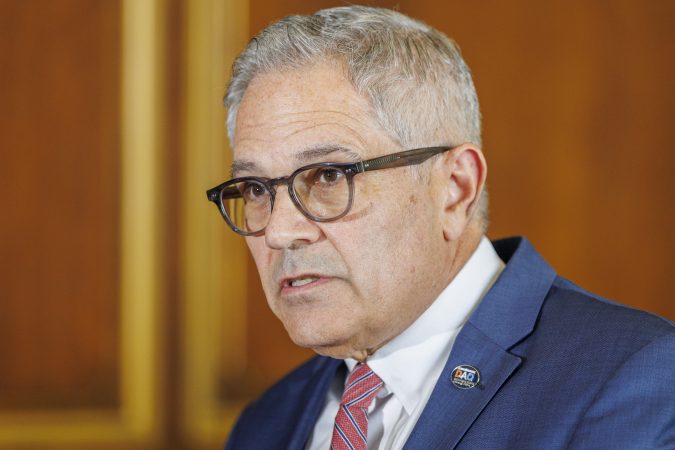
The Philadelphia District Attorney’s Office said Thursday that the two prosecutors who accused DA Larry Krasner of encouraging them to act unethically in a controversial appellate case did so in a court filing that was both unauthorized and “ill-informed.”
In a court document filed late Thursday, written by Assistant District Attorney Thomas Gaeta and signed by Krasner, the office said prosecutors Katherine Ernst and Steven J. Wildberger acted inappropriately and without Krasner’s permission when they filed a brief Monday saying the office had a conflict in the appeal of Dennis Johnson, who is seeking to have his murder conviction overturned.
The office said it had taken steps to address all of the issues it saw with Johnson’s case, and that Ernst and Wildberger’s assertions were “ill-informed” and made without firsthand knowledge because they were no longer a part of the case.
The filing primarily focused on the steps the office took to ensure it was handling the case in a legal and ethical manner — and did not directly address the two prosecutors’ contentions that Krasner had asked them to “protect the office.”
In their filing Monday, Ernst and Wildberger said they tried to persuade Krasner to allow the state attorney general’s office to take over Johnson’s appeal after the prosecutor previously assigned to the case, Jaclyn Mason, recommended that his case be overturned — a recommendation the office later sought to reverse, saying Mason’s filing was full of false statements.
U.S. District Judge Paul S. Diamond then ordered a hearing on the matter. And in explosive testimony in federal court last week, Mason said she had sought to vacate Johnson’s conviction at the direction of her boss, Matt Stiegler — whom she accused of colluding with defense attorneys. Stiegler has said that was not the case.
Mason, who has since resigned, also said she was later told to lie about the case to minimize scrutiny of the office.
District Attorney Larry Krasner at a 2025 press conference. Tom Gralish / Staff Photographer
Ernst and Wildberger, who work in the law division of the DA’s office, said that as they were evaluating the case in the spring, they tried to encourage Krasner to refer the case to the state attorney general because of issues with how it was handled.
For example, they said, Stiegler, the supervisor who they believed had made mistakes while overseeing the case, was still offering legal advice about it from a different role in the office, which Ernst and Wildberger viewed as self-interested and “inappropriate” because of his potential interest in clearing his name rather than evaluating the case on its merits.
But Krasner’s office kept the case. And as they deliberated how to move forward, the two prosecutors wrote, Krasner told them “to litigate the case in a manner to ‘protect the office.’”
Then, in late June, Ernst and Wildberger wrote, they again asked Krasner to refer the matter to state prosecutors, but “DA Krasner stated that there would be ‘consequences’ for anyone who notified the court of the conflict issues.”
Ernst and Wildberger then filed a notice in federal court saying they believed the DA’s office was beset by conflicts and should not handle Johnson’s appeal.
Krasner’s team, in its first response to the matter this week, said that was not true.
Ernst and Wildberger, they said, were appropriately excluded from the case as soon as they disclosed a personal conflict with it, and did not have firsthand knowledge of the office’s discussions thereafter.
The prosecutors “are disqualified from filing or speaking on behalf of the Commonwealth” and were not authorized to file the “notice of conflict” or to speak for the office about the matter, they said.
Any discussions Ernst and Wildberger had with the office about the case are privileged conversations they should not be able to disclose, the DA’s filing said.
To remedy the issue, the office said, it has hired a new prosecutor to handle the case who has been walled off from the ongoing conversations. Assistant District Attorney Jean Peters-Baker, who recently joined the office and has spent more than 25 years as a prosecutor, will review Johnson’s case and decide if it has merit, the filing said.
Johnson was convicted of second-degree murder in 2009 in the shooting death of Kenyatta Smith during a robbery outside a North Philadelphia convenience store two years earlier. He was sentenced to life in prison.
Johnson appealed his conviction, in part because he said his trial attorney was ineffective. Mason filed court documents in 2022 agreeing with that assertion and saying Johnson’s conviction should be overturned.
But then, this spring, others in the office reviewed the case and took the opposite view.
Ernst and Wildberger said they were prepared to testify before Diamond about the situation. Others in the office are also expected to take the stand as the case proceeds.
The judge has not yet scheduled a date for testimony.
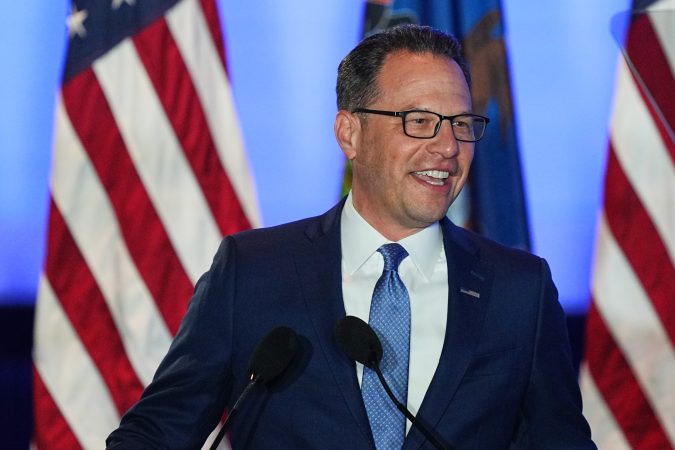
Pennsylvania Gov. Josh Shapiro was one of 26 Democratic officials from across the nation to join alawsuit challenging President Donald Trump’s administration over its efforts to compel states into sharing raw voter data by threatening federal funding for natural disasters.
“Withholding this funding will make our communities less safe and would be dangerous under any circumstance, but doing this in an attempt to undermine states’ authority over elections is reckless and unconstitutional,” Shapiro in a statement Thursday.
New Jersey and Delaware are among the other states on the Illinois-led lawsuit. The complaint, filed in U.S. District Court in Rhode Island, comes amid escalating tensions between Democratic-run states and the federal government over how best to ensure noncitizens are not voting in any elections — a situation these states say happens extremely rarely.
The Department of Homeland Securityannounced earlier this month that the Federal Emergency Management Agencywould require states to hand over theirunredacted voter rolls and adhere to significant changes in their election administration in order to receive funding for preparation and recovery from catastrophic disasters, such as major storms.
The policy puts nearly $6 million in federal aid at jeopardy for Pennsylvania, according to Shapiro.
Shapiro has routinely signed on to lawsuits against the Trump’s administration, particularly when federal funding to the state has come under threat.
Pennsylvania election officials have repeatedly declined to hand over unredacted voter rolls to the Trump administration, citing privacy concerns.
New Jersey has also refused to provide voter roll data to the Trump administration, though the federal government is using the state’s registration mishap to justify its request.
“We are not in the practice of turning this kind of personally identifying data over to the federal government because we have seen them weaponize it … and they don’t have a reputation for keeping it private, either,” New Jersey Gov. Mikie Sherrill said after a news conference Thursday.
As for the FEMA funding, New Jersey Attorney General Jennifer Davenport said in a social media post Thursday that the Trump administration “threatens our safety when it plays politics with these funds.”
While most of the plaintiffs are attorneys general, Shapiro was one of two governors to join the complaint, along with Kentucky Gov. Andy Beshear, another potential 2028 presidential contender who also leads a state with a Republican attorney general.
In a prime-time address last week, Trump called for an overhaul of U.S. election administration and ticked through olddebunked claimsabout his 2020 election loss.
Pennsylvania and New Jersey are among four states — along with California and Nevada,which also joined the suit — that the Trump administration is targeting for additional scrutiny over their voter rolls, according to a document posted to the White House website last week. The one-pager claimed widespread instances of noncitizen voting, much broader than what New Jersey said it uncovered, though election experts have suggested caution when examining these numbers.
“The Trump Administration is holding critical funding for homeland security and disaster response hostage in their latest attempt to take over our elections and perpetuate baseless conspiracy theories,” Shapiro said in his statement Thursday.
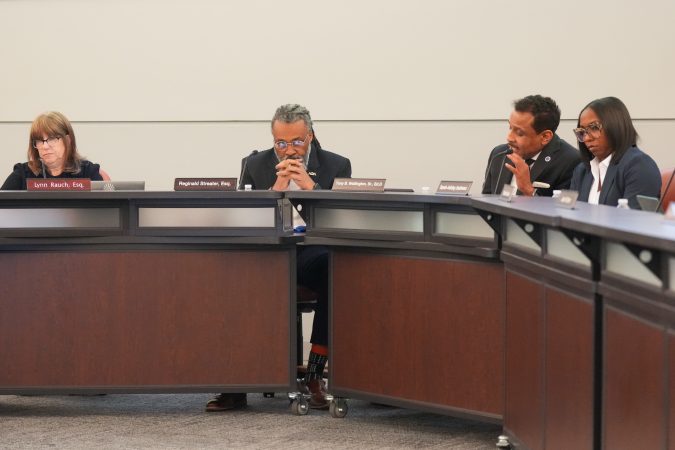
The Philadelphia school board on Thursday moved to borrow $600 million to pay employees and keep the lights on over the next several months.
The temporary borrowing, authorized at a special school board meeting, comes in two tranches — $200 million this month, and $400 million in September.
Borrowing to pay bills is a rite of summer for the district, the only school system in Pennsylvania unable to raise its own funds. The school board has had to issue tax and revenue anticipation notes for 43 of the past 45 years, officials said. Last year, the district authorized borrowing up to $1.5 billion because the state budget had not yet been passed.
“Simply put, it helps ensure our schools have the cash flow needed to open on time, pay employees and vendors, and continue serving students without interruption,” school board president Reginald Streater said at the meeting, which was held virtually.
Rates are not locked in, but chief financial officer Michael Herbstman said if the transactions happened now, the first borrowing, which is set to happen Tuesday through Bank of America, would come at a rate of 3.4%, and the September public borrowing would have a rate of 2.85%.
The move, then, will mean millions in borrowing costs for the school system.
Philadelphia, the nation’s ninth-largest school system, has about 114,000 students in 216 traditional public schools, and about 65,000 more in 83 charter schools. The district has a budget of about $4.6 billion.
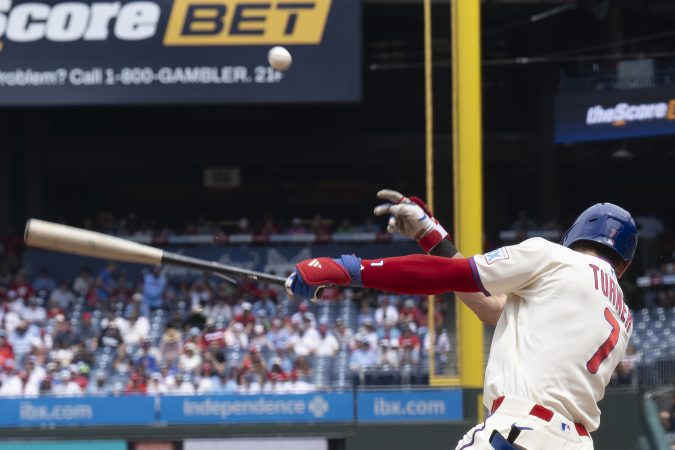
The tension between the rise of legalized sports betting and the specter of gamblers developing ruinous addictions came into sharp focus last week, between the stark recommendations of a nonpartisan Pennsylvania commission and a baseball star’s social media post.
Lawmakers could impose restrictions on sportsbook operators, such as banning in-game microbets and curtailing VIP programs, the Joint State Government Commission wrote in a 126-page study on sports betting and interactive gambling that was published July 13.
A bill to prohibit microbets and other sports gambling products that could amplify addiction is currently being drafted, said State Rep. Tarik Khan, who introduced the resolution that authorized the commission’s research.
“The scope of the problem is worse than we thought,” said Khan (D., Philadelphia).
State Rep. Tarik Khan said lawmakers are drafting legislation that will seek to prevent sportsbook operators from offering in-game microbets.Tom Gralish / Staff Photographer
He referenced surveys, cited by the study, showing that 48% of men ages 18 to 49 have an account with at least one sportsbook company, while 52% reported wagering an increased amount of money after they experienced losses.
“Sometimes you have to be very clear on what companies can and can’t do, especially when money is involved,” Khan said.
Analysts have predicted that microbets — wagers that can be made on individual plays and outcomes during a live game — could grow by $14 billion by the end of the decade.
The sports gambling industry is likely to oppose eliminating such a lucrative product, according to Joe Maloney, the president of the Sports Betting Alliance, a national advocacy organization whose members include FanDuel, DraftKings, BetMGM, bet365, and Fanatics.
“I’m just not sure that something as proscriptive as banning that market achieves what is the stated endgame,” Maloney said. “I’m not entirely sure what the problem is that they’re trying to solve.”
The same day the state study came out, Philadelphia Phillies first baseman Bryce Harper took to Instagram to explain how FanDuel had acquired a personalized video he made in 2024, which the sportsbook company then sent to Terry Thompson, a local VIP bettor who suffered from a gambling addiction.
Harper wrote that he had recorded the 21-second video — a copy of which was obtained by The Inquirer — through the video service Cameo. In it, Harper said he was doing the video on behalf of a FanDuel host. But the nine-time All-Star later said that he was not aware that FanDuel intended to use the recording for business purposes or that Thompson had an addiction.
“Had I known FanDuel’s true intent,” Harper said, “I would not have made the video.”
The state study summarized litigation that sportsbook operators are facing in Pennsylvania, including a lawsuit filed in March by the Public Health Advocacy Institute on behalf of Thompson and another man against FanDuel and DraftKings. The suit alleges that the companies profit from the compulsive nature of microbets and use VIP rewards to entice gamblers to keep betting, even after they have displayed signs of addiction.
Thompson, of Montgomery County,lost nearly $2 million to wagers that he placed with FanDuel and DraftKings.
“These companies’ profit margins are dependent on people with gambling disorders,” Khan said. “It’s clear. Did [FanDuel] tell Bryce Harper that they wanted a video for a person who had lost that much money? Of course not.”
Maloney disputed Khan’s characterization of sportsbook companies’ business practices.
He compared VIP programs to customer rewards that retailers like Starbucks or T-Mobile offer, and said bettors can easily opt out of the programs or from receiving promotional offers.
“There’s no sustainable and durable future for this industry if it is not responsible and committed to integrity,” he said. “The notion that any industry can sustain itself across a small and finite number of users is completely false.”
The regulation battle
The commission, a research and policy development agency for the Pennsylvania legislature, retraced the evolution of sports betting in the U.S. and identified measures that lawmakers could pursue to curb addiction.
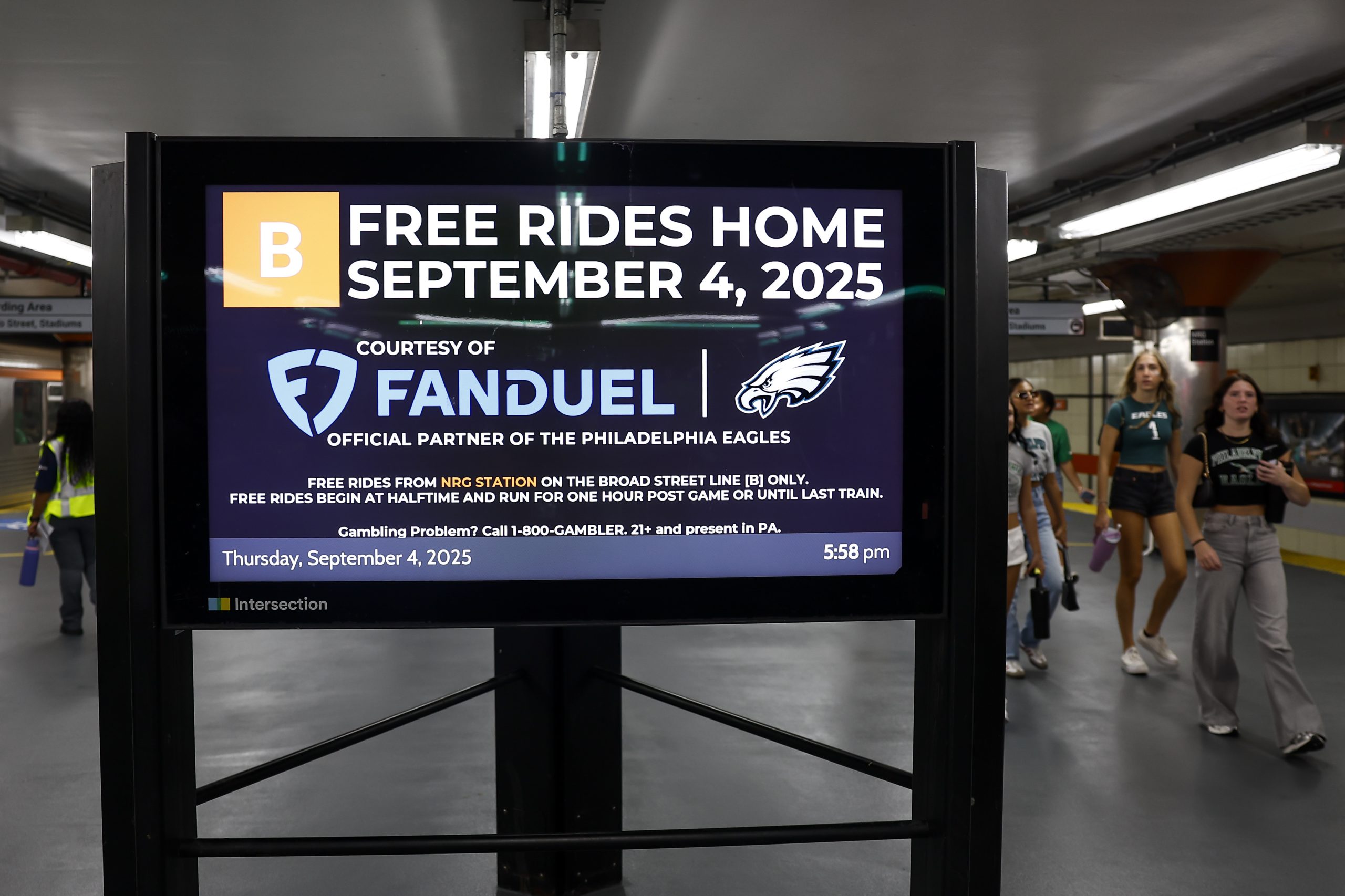
Since the U.S. Supreme Court ruled in 2018 that states could establish their own sports betting laws, sportsbook companies and lesser-regulated prediction markets have entered into highly visible partnerships with professional sports leagues and teams that once were uniformly opposed to gambling.
The rise of the sports betting industry has helped fill state coffers. Pennsylvania recorded $6.7 billion in gambling revenue in 2025, with $602 million derived from sports wagers.
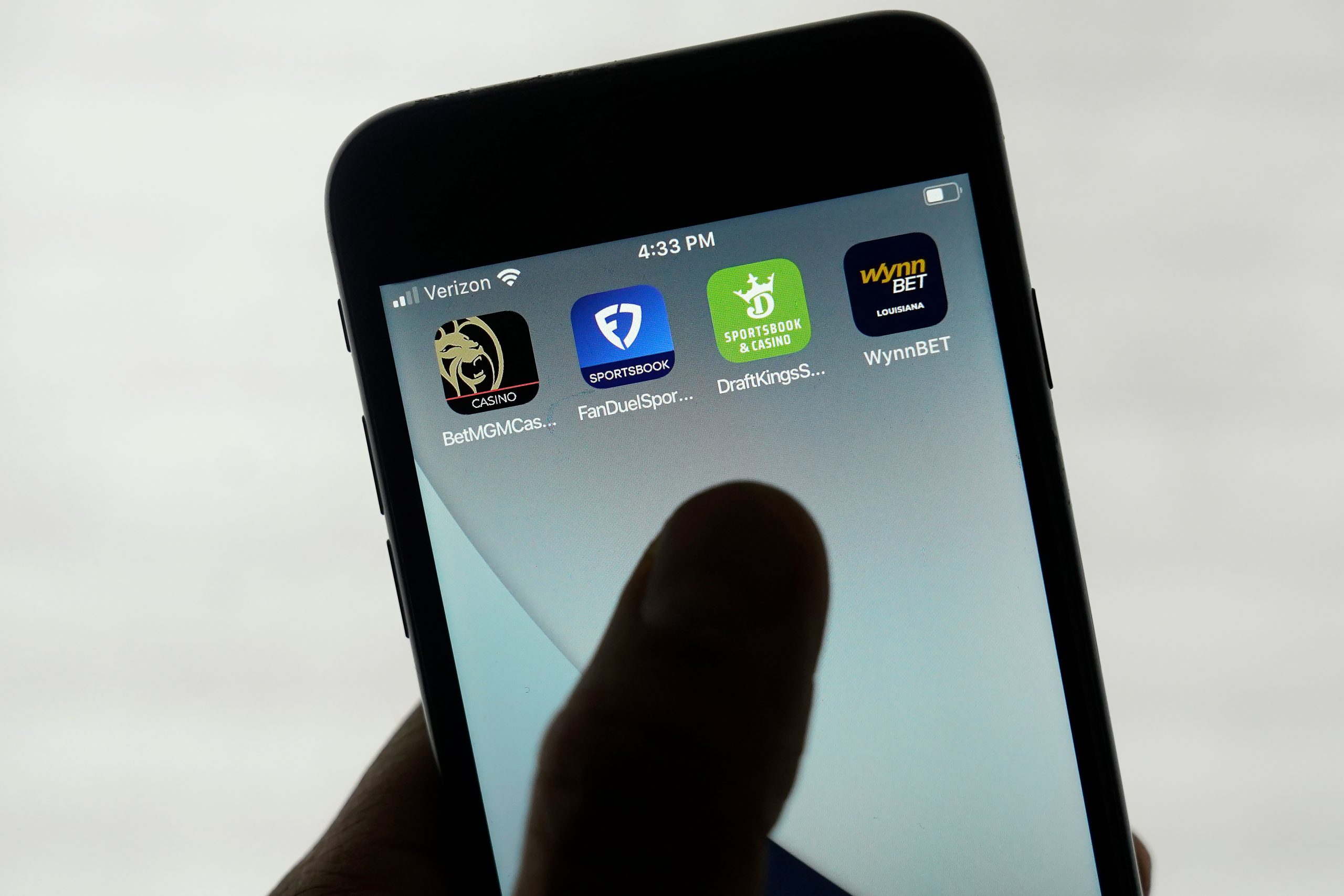
Tales of bettors who grew addicted to the instant dopamine spike of gambling on mobile devices or placing in-game microbets, then tumbled into a whirlpool of spiraling debt, have also become plentiful.
“States are waking up to the reality of sports betting now. They’re seeing a lot of the downstream impacts,” said Uttara Ananthakrishnan, an assistant professor of information systems at the University of Washington and an expert on online betting and gambling addiction.
The NFL, like other professional sports leagues, has abandoned long-held opposition to gambling entities, and entered into partnerships with sportsbook operators.Monica Herndon / Staff Photographer
Ananthakrishnan said new research suggests that gambling is not only associated with financial stress, but also can lead to more crime, suicide, divorce, child maltreatment, and housing instability, while siphoning state lottery revenue.
A recent study conducted by Pennsylvania State University’s Criminal Justice Research Center found that 2.5% to 6.4% of Pennsylvania adults may be problem gamblers, while a 2025 National Council on Problem Gambling survey showed that at least 20 million Americans reported experiencing problematic gambling behavior during the previous year.
The state commission study, meanwhile, cited a Harris Poll that found 79% of Americans believe gambling addiction is “as serious or more serious” than alcohol or drug addictions.
“It’s very, very disturbing,” Khan said.
The commission suggested that lawmakers could obtain customer data from gambling companies and have them independently analyzed to better understand which practices and products are most harmful.
It offered other, more immediate recommendations as well: preventing bettors from using credit cards to place deposits; mandating that customers limit the duration of their gambling and the frequency of their deposits; and forbidding companies from sending promotional offers to gamblers if they have logged out of their accounts, or using artificial intelligence to create individualized promos.
The study also suggested prohibiting gambling advertisements from public university campuses.
“I don’t sit here as a voice of the industry and deny the science,” Maloney said. “Gambling is an activity that can become problematic, and for some people, it can become addictive.”
But Maloney argued that many of the gambling studies and surveys that experts cite do not prove a direct link between gambling products and those who develop addictions.
“By all means, it’s a policy conversation that we absolutely want to have if the legislators are responding to highly publicized research, and confusing correlation with causation, and relying on national media interlopers who are largely transcribing academics and researchers in that space, and delivering clicky headlines,” Maloney said.
Sports betting helped drive gambling revenue in Pennsylvania to a record $6.7 billion in 2025. Jeff Chiu
Ananthakrishnan said the negative effects are real.
“I am glad Pennsylvania is recognizing the problem and looking at evidence-based policy to curtail problem gambling,” she said.
Ananthakrishnan said the legislature should act on at least two proposals in the study: Require gambling apps to use their own data to predict problem gambling behavior, rather than using the information just to convince users to place more bets; and require the apps to release anonymized player stats that could be analyzed by an independent research entity.
“This creates a pathway to design evidence-based policies that directly address the specific mechanics of digital addiction without relying solely on operator self-reporting,” she said of the latter proposal.
‘Too close to the edge’
While legislators in Pennsylvania and other states, like New Jersey, grapple with how to enforce guardrails on sports betting, leagues continue to face headline-grabbing gambling scandals.
The NFL last week indefinitely suspended an Arizona Cardinals official, Ryan Gold, who is accused of leaking information about the team’s draft plans and participating in parlay bets on NFL and college games, ESPN reported. Gold has denied any wrongdoing through his attorney. The matter is now being investigated by the Arizona Department of Gaming.
In May, a DraftKings employee was arrested in Las Vegas and charged with conspiracy and related offenses for allegedly participating in a sports betting ring with a basketball player from Fresno State.
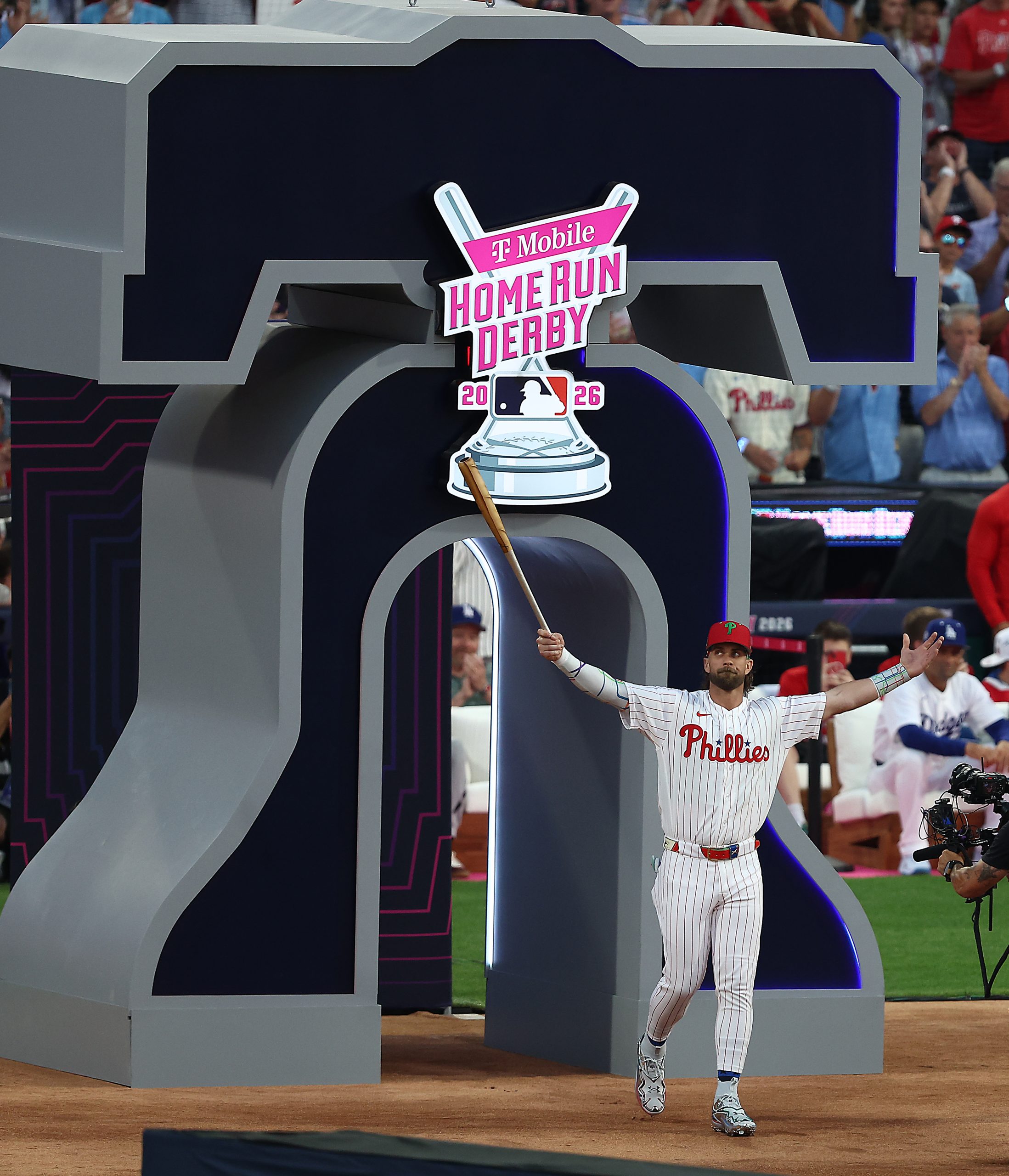
Hours before he participated in the All-Star Home Run Derby on July 13, Bryce Harper wrote on Instagram that he didn’t know FanDuel planned to use a video he recorded through Cameo as a reward for a VIP bettor. Monica Herndon / Staff Photographer
The Pennsylvania Gaming Control Board, meanwhile, is reviewing the controversy over FanDuel’s use of the Bryce Harper video.
Major League Baseball’s commissioner, Rob Manfred, told reporters that Harper did not violate the league’s collective bargaining agreement, which allows players to engage in some promotional work for sportsbooks and casinos, provided they do not encourage betting on baseball.
The gaming control board has separately proposed new regulations to address gambling addiction, said a spokesperson, Doug Harbach.
Among the changes the board wants to implement are daily, weekly, and monthly limits on deposits that bettors can make to cashless gaming systems, and prohibiting companies from implying that betting is risk-free or a way to pay bills.
“We have to make sure there are safeguards,” said Khan, the state representative. “Sometimes people get too close to the edge.”
The Inquirer will continue to report on issues related to the growth of gambling addiction — among teens and adults — across Pennsylvania. If you, or someone you know, would like to speak with a reporter, please contact David Gambacorta or William Bender at dgambacorta@inquirer.com or wbender@inquirer.com
Uber and Lyft helped flatten the taxicab industry. Now they are joining forces.
Last month, Boston became the latest city where drivers of licensed taxicabs can respond to rideshare trip requests, using apps that are integrated with the Uber and Lyft platforms.
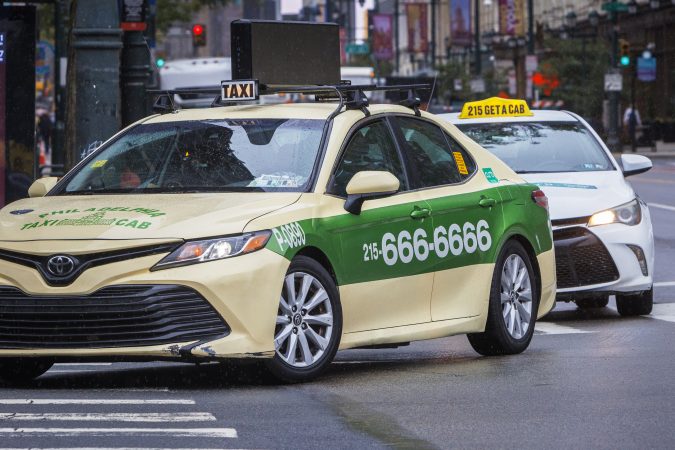
But don’t expect to see this change in Philadelphia, even as the city’s taxi business continues its free fall.
Curb, the leading app company for cabs, and Uber petitioned the Philadelphia Parking Authority, which regulates taxis in the city, to allow coordination of rides on a pilot basis but eventually withdrew the proposal.
Pennsylvania law strictly separates licensed cabs and transportation network companies like Uber, said Christine Kirlin, deputy general counsel for the PPA and former head of its Taxi and Limo Division.
“It was a handful of regulations that just couldn’t be integrated,” Kirlin said, adding that state law would need changes for it to work.
For instance, she said, taxi fares in the city are set by the PPA and cab operators are not allowed to flex prices, as rideshare companies do during periods of high demand. Drivers also need a commercial license, and taxi vehicles are subject to safety inspections — and regulatory fees — that rideshare is not.
In other cities, referrals from rideshare companies account for 30% to 60% of total taxi trips, said Dorel Tamam, vice president for mobile business at Curb.
He is in charge of Curb Flow, an open API platform that aggregates available rides from multiple sources, including Uber and Lyft, direct hails from taxi apps, fleet dispatches, and taxi ranks.
“This program is helping actually reduce idle time, increase the overall trips, giving drivers the add-on opportunity to earn more,” Tamam said.
Curb Flow is being used in 17 U.S.cities, including Newark, N.J.; Seattle; Los Angeles; New York; Reno, Nev.; and Charlotte, N.C.
Taxi rides dropped 88% from 2015 to 2025, PPA data show.
(function(){function e(){window.addEventListener(`message`,function(e){if(e.data[`datawrapper-height`]!==void 0){var t=document.querySelectorAll(`iframe`);for(var n in e.data[`datawrapper-height`])for(var r=0,i;i=t[r];r++)if(i.contentWindow===e.source){var a=e.data[`datawrapper-height`][n]+`px`;i.style.height=a}}})}e()})();
Fewer cabs are available. In 2010, a monthly average of 1,600 taxis were on the road. In 2025, there were 674, reflecting a 58% drop.
As of June, 633 taxis were active in the city, suggesting a continued decline.
“Things have not really improved. There’s less people out there driving,” said Ron Blount, president of the Taxi Workers Alliance, who believes the number could be even smaller.
“A lot of drivers do both taxis and [rideshare] switching back and forth, trying to make it work,” Blount said.
He said that Curb Flow would lead to more trips for drivers here, but that it was unclear how much their net incomes would improve.
And the average sales price for a taxi medallion, a license required for each cab to operate in the city, fell to an average of $12,857 last year.
The average price was just over $500,000 during several months of 2014, according to PPA numbers.
“We really hope one day to bring it to Philadelphia,” said Tamam, the company vice president in charge of Curb Flow. ”We’re open to further collaboration with the regulators.”
When Mayor Cherelle L. Parker faced questions about spending on Philadelphia’s Fourth of July concert, she promised a “fiscal impact report” that would help determine how the economic benefits of the concert and other major events in Philadelphia during 2026 compared with their cost to city taxpayers.
It turns out the city will have to spend a bit more taxpayer money to get to the bottom of that inquiry.
The finance department is looking to hire a consulting firm for up to $75,000 to provide “economic analysis services to better understand the economic and fiscal impact of Philadelphia’s 2026 events and related activity on the local economy,” according to a contract opportunity posted on the city’s website last week. Responses are due Aug. 5.
The contract solicitation calls for an evaluation of “event-related visitation, tourism activity, and associated economic activity” and estimates of “state and local tax revenues generated by event-related economic activity,” among other things. But it does not ask the consultant to produce an accounting of the city’s spending on those events.
Andrew Richman, a top attorney in the city law department, said the administration will also produce an analysis of the city’s spending related to the major events hosted in Philly during 2026, including the nation’s 250th birthday, FIFA World Cup games, and the MLB All-Star Game.
Fans celebrate after Mexico scores against South Africa while watching the FIFA World Cup opening match on a giant screen during the opening day of the FIFA Fan Festival at Lemon Hill on Thursday, June 11, 2026, in Philadelphia.Jose F. Moreno / Staff Photographer
“As a standard operating procedure in the Parker administration, there will be financial accounting that details every dollar and cent spent on 2026-related activities, analysis including all expenses, and economic impact of all activities and investments associated with 2026,” Richman said.
The mayor’s office did not respond to a request for comment on when that accounting will take place.
Parker instead hired ESM Productions, a for-profit company led by well-known concert producer Scott Mirkin, and renamed the event the “One Philly: Unity Concert for America,” a version of her slogan, “One Philly: A United City.”
Pennsylvania Governor Josh Shapiro and Philadlephia Mayor Cherelle L. Parker at the One Philly: Unity Concert for America on the Benjamin Franklin Parkway on Saturday, July 4, 2026, in Philadelphia.Yong Kim / Staff Photographer
The changes resulted in a much more expensive concert than in years past. The city agreed to pay ESM about $15.5 million to put on the show, The Inquirer reported after obtaining the contract. The previous year’s concert cost Welcome America about $3 million, a source with knowledge of the event told The Inquirer.
Those sums did not include costs related to city employees, such as sanitation workers and overtime for police officers who worked the event.
The city’s coming analyses, however, will include all of 2026’s major events, not just the concert.
Parker has said her administration will spend $120 million on this year’s celebrations, and she has pledged to ensure communities across Philadelphia, not just Center City, benefit from the investment, which includes beautification projects in neighborhood commercial corridors and funding for block parties and events across the city. The administration has not yet provided details on how much was dedicated to the concert or any other specific event this year.
“At the end of our celebration, you will be able to see an accounting of how that $120 million was spent,” Parker said at a July 1 news conference.
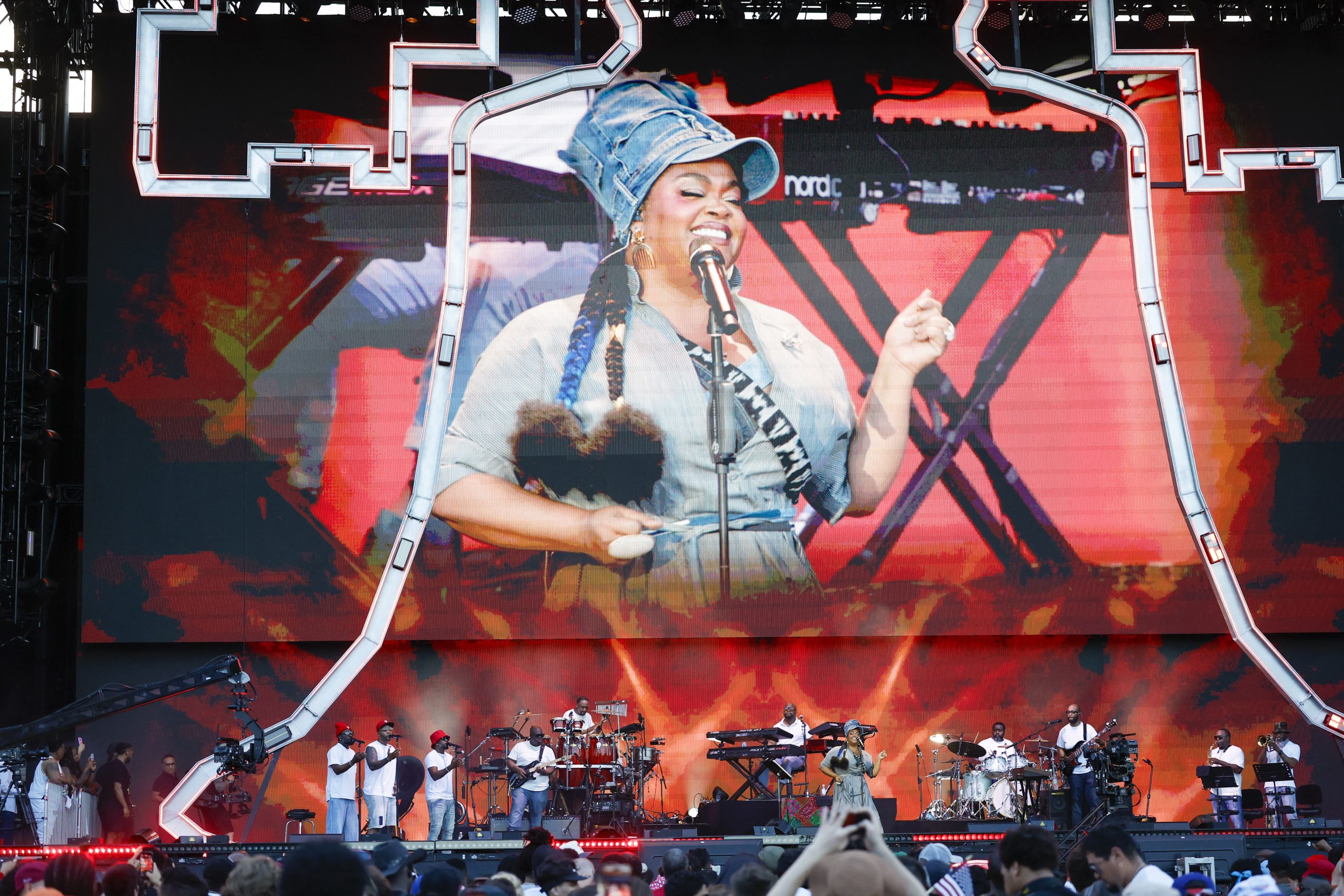
Jill Scott takes to the stage for One Philly: Unity Concert for America on the Benjamin Franklin Parkway on Saturday, July 4, 2026, in Philadelphia.Yong Kim / Staff Photographer
Economic impact analyses produced by paid consultants often include rosy estimates that public officials use to justify priorities. Academics who study their work for years have cited issues including inflated assumptions for visitors’ spending and understated or omitted opportunity costs for economic activity displaced by a large project or event.
“Most economic impact studies are commissioned to legitimize a political position rather than to search for economic truth,” John L. Crompton, a professor at Texas A&M University, wrote in an influential 2006 paper published in the Journal of Travel Research. “Often, this results in the use of mischievous procedures that produce large numbers that study sponsors seek to support a predetermined position.”
This year’s July Fourth concert was supposed to be headlined by Christina Aguilera, but the pop star ended up not taking the stage after the city paused the event around 9 p.m. due to the storm. The show resumed shortly after midnight, pushing the fireworks to about 2:30 a.m. July 5.
All other scheduled performers went ahead with their sets, including the Roots, Jill Scott, Meek Mill, DJ Jazzy Jeff, and Will Smith, who said Parker reached out to him personally to ensure he came back after the weather delay.
A soft pretzel from Philly Pretzel Factory currently has about 12 grams of protein.
But sometime soon, you will be able to buy one with much more.
The company says it is in the early stages of developing a high-protein pretzel, one of several new products it hopes will attract consumers concerned about weight loss.
“Obviously, the trend is protein,” said company president Marty Ferrill. “Even people who are on GLP-1s, they’re looking for more protein-rich foods.”
Philly Pretzel Factory is just one of the area companies changing their products to accommodate consumers who are eating less and “protein-maxxing.” The viral nutrition trend refers to an increasing obsession with eating more protein based on the idea that it builds muscle.
A recent Gallup survey reported approximately one in eight U.S. adults are taking appetite-suppressing GLP-1 medications.
GLP-1 drugs such as Ozempic and Wegovy were initially created to treat individuals with type 2 diabetes by regulating blood sugar levels, but their hunger-suppressing effects have spurred wider adoption for weight loss. A JPMorgan report estimates that by 2030, up to 30 million Americans may be using GLP-1 medications, especially as pill formats become available.
As the medications rise in popularity and appetites shrink, the food industry could face headwinds. A recent study found that within six months of starting a GLP-1 medication, households with at least one GLP-user reduce their annual grocery spending by $390 on average.
But this isn’t the industry’s first rodeo.
The low-fat craze of the 1980s and the carb-phobic diets of the 2000s also forced food brands to rethink their products.
“Until there’s a magic pill where you just don’t have to eat, period, the food industry will respond,” said Ernest Baskin, chair of St. Joseph’s University’s Food, Pharma, and Healthcare Department. “They’re going to change their product to appeal to the next generation of consumers.”
Making every bite count
Philly Pretzel Factory’s protein-enriched pretzels are an example of functional foods, which are foods that have been formulated to contain added nutrients and health-enhancing substances.
Functional foods can be especially important for GLP-1 users, who eat smaller portions but still require their necessary vitamins and minerals.
“In a world where you’re not eating as much, you want everything to count,” said Baskin.
Campbell’s, the Camden-based food and snack giant, has ventured into the functional foods market with a recent launch of five protein soups that offer 20 grams of protein per can.
The Campbell’s Company launched five new protein soups with 20 grams of protein per can.The Campbell's Company
The company also released a new protein-fortified snack option with Snyder’s of Hanover’s harvest wheat pretzelsticks, which offer 6 grams of protein per serving. (As opposed to 3 grams for a standard pretzel stick serving.)
The options “give consumers choices that fit their nutritional goals and lifestyles while helping get more out of every bite,” says Dave Chalk, Campbell’s vice president of enterprise insights and analytics.
The recipes of popular Philly foods are changing too, as consumers prioritize better-for-you ingredients. In addition to the protein pretzel at Philly Pretzel Factory, their regular pretzels are undergoing a “clean label” reformulation.
Ferrill said the company is ensuring consistent taste while changing some components: using unbleached flour instead of bleached, removing the additive potassium bromate, and replacing whey protein with a plant-based substitute. That means the franchise’s iconic pretzels will become vegan this year.
“The urgency is [greater] now than it was three years ago,” said Ferrill, noting that the company has been developing the clean-label pretzel for years.
Greater control over meals and portions
At Honeygrow, a fast-casual chain that offers salads and stir-fries, customization is another option for GLP-1 users, said Todd Miller, senior vice president of marketing.
More Honeygrow customers are choosing whole-wheat noodles — which offer 17 grams of fiber and 13 grams of protein — for their stir-fries, or crafting more vegetable-forward meals, said Miller.
A chicken parm stir-fry at Honeygrow is at the 11th Street location in Philadelphia in 2024.Jessica Griffin / Staff Photographer
“What is becoming increasingly important is the ability to personalize a meal around the nutrients and portions that matter to each customer,” Miller said.
Campbell’s is banking on similar personalization preferences. Some research shows GLP-1 users are dining out less tocontrol portion sizes and ingredients. With brands like Pacific Foods, Swanson, and Rao’s under the Campbell’s umbrella, the company’s cooking essentials business is benefiting.
“The biggest opportunity within Campbell’s portfolio is the confidence consumers have gained with cooking at home,” Chalk said.
People still want good food
Despite moving toward healthier choices, many food companies are serious about not compromising flavor.
For Honeygrow, that means continually introducing limited-time offers and keeping up to date with new ingredients to attract customers. Currently, Honeygrow’s seasonal summer menu includes a ginger scallion stir-fry and a pomegranate acai salad.
“Even though you’re on a GLP-1, that doesn’t mean that you don’t want delicious food,” said Miller.
Taste matters. When choosing what to eat, people are looking for enjoyment, comfort, and connection, said Ami Lawson, managing director of food and beverage marketing agency Quench.
“The brands that will win aren’t the ones chasing the GLP-1 trend, they’re the ones delivering foods that people genuinely feel are worth eating,” said Lawson.
Nostalgia and memory also play a significant role in food choice. Take soft pretzels, a Philly food staple.
“If you grew up eating pretzels, you’re probably going to give up other things before you give up your pretzels,” Ferrill, of Philly Pretzel Factory, said.
Apartment renters with $1,500 a month to spend can get the equivalent of one or two bedrooms in Pittsburgh, a studio in Philadelphia, or a dorm room in Manhattan.
That’s according to an analysis by RentCafe, a national apartment search website, based on average price per square foot for apartments in properties with 50 or more units.
A monthly rent of $1,500 can get tenants 750 square feet in Pittsburgh, 591 square feet in Philadelphia, and 210 square feet in Manhattan. The national average for this price is 703 square feet — 112 square feet more than in Philadelphia.
In most cities, $1,500 pays for a bit less space this year than last year. Philadelphia renters lost 6 square feet, and Pittsburgh renters lost 18.
Whether a renter paying the same amount gets a spacious home or cramped quarters can depend on the type of rental property, but it mostly depends on the location. Varying costs of living, amounts of available space, and levels of apartment demand and construction all factor into home prices and sizes.
RentCafe’s report, published this month, looks at the 200 largest U.S. cities by population and determines how much apartment space $1,500 in rent pays for in various cities. To calculate the rough number of possible bedrooms, RentCafe looked at each city’s average square footage by bedroom count.
(function(){function e(){window.addEventListener(`message`,function(e){if(e.data[`datawrapper-height`]!==void 0){var t=document.querySelectorAll(`iframe`);for(var n in e.data[`datawrapper-height`])for(var r=0,i;i=t[r];r++)if(i.contentWindow===e.source){var a=e.data[`datawrapper-height`][n]+`px`;i.style.height=a}}})}e()})();
In Philadelphia, $1,500 would not even cover a one-bedroom home in an apartment building.
In places such as Manhattan and Boston, $1,500 a month won’t even pay for a typical studio apartment. That’s the case in 26 cities. Fifteen of them are in high-cost California, including Los Angeles and San Francisco, where $1,500 would get renters 429 square feet and 307 square feet, respectively.
In 97 of the 200 cities RentCafe analyzed, $1,500 a month could pay for apartments with one to two bedrooms. Renters could get a two- to three-bedroom unit in 31 cities, mostly in mid-sized urban centers.
Rent money goes furthest in cities with relatively low costs in the South and Midwest. In McAllen, Texas, a renter with $1,500 a month to spend can get a 1,378-square-foot apartment, enough space for three or four bedrooms. In this city, apartment rents average just under $1,000.
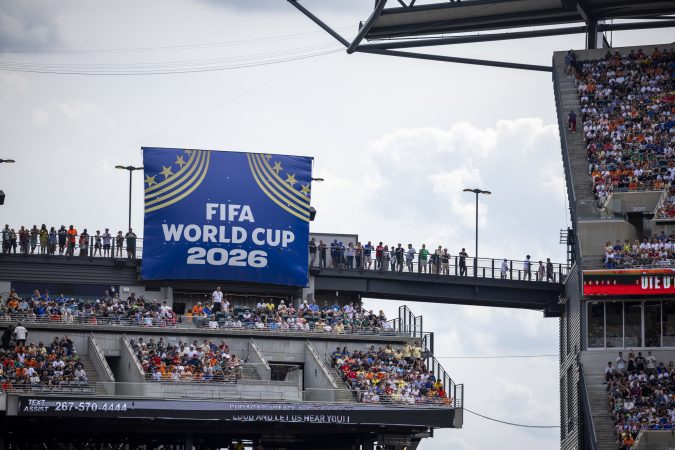
This World Cup made a huge impact on a country where soccer wasn’t always welcome, but is now. Look no further than the massive television audiences, not just for the U.S and Mexico, but across the tournament.
A stunning 63 of the 104 games drew audiences of more than 10 million viewers across Fox’s English and Telemundo’s Spanish coverage. Thirty-one topped 15 million, 18 topped 20 million, 11 topped 25 million, and five topped 30 million — capped off by 46.7 million for Mexico-England, 50.1 million for U.S.-Belgium, and 66.4 million for the Spain-Argentina title game.
Yes, that many people watched a game that had just one goal in 140 minutes of game clock, including stoppage time.
— FIFA World Cup 26 Philadelphia™ (@FWC26Philly) July 19, 2026
But while the World Cup is over, is soccer? Even the critics might finally admit it isn’t. So let’s ask some better questions.
What kind of soccer will Americans now want to watch? Will they treat the sport like track and field at the Olympics, only tuning in every four years? Or will they be interested more often, wanting to see the world’s biggest sports tapestry unfold every week?
If it’s the latter, the line of suitors is already long. The English Premier League, Europe’s UEFA Champions League, and Spain’s La Liga are among the front-runners, along with their respective broadcast partners at NBC, CBS, and ESPN.
They are the most likely to profit from the World Cup’s halo, while showcasing the sport’s biggest stars. But they can’t be alone. The pressure is rising fast on America’s domestic men’s game, Major League Soccer above all.
Philadelphia got to see France’s Kylian Mbappé, one of the biggest superstars in world soccer, in person twice during the tournament.Jose F. Moreno / Staff Photographer
No, it doesn’t have the sport’s biggest names, and for some people that will always be what matters. What about an audience that MLS has long failed to properly pursue: People who want to watch the sport in person, and forge a connection with a local team?
You can’t go to Liverpool, Manchester, London, Madrid, and so on every weekend. Once a season, sure, and a Saturday morning at a soccer bar is a fun time. But whether in Chester or the rest of the country, experiencing soccer in person is still unmatched.
This is not meant to cheerlead for the Union. They have to earn fans’ trust, and there’s a history of that not happening. These pages have long chronicled it, especially when it comes to Subaru Park’s woefully limited public transit access.
But soccer also faces a burden that other American sports don’t. Why be a Flyers fan, with no titles in a half-century? Or a Phillies or Eagles fan during the team’s fallow years of the past? Why bother with the eternal angst the Sixers inflict on a basketball city without equal?
We all know the answer, from Northeast Philly lifers to the thousands of newcomers who’ve made Center City a destination. It’s about feeling those teams are yours. Through good times and bad, nothing fuels emotions like that sense of deep connection.
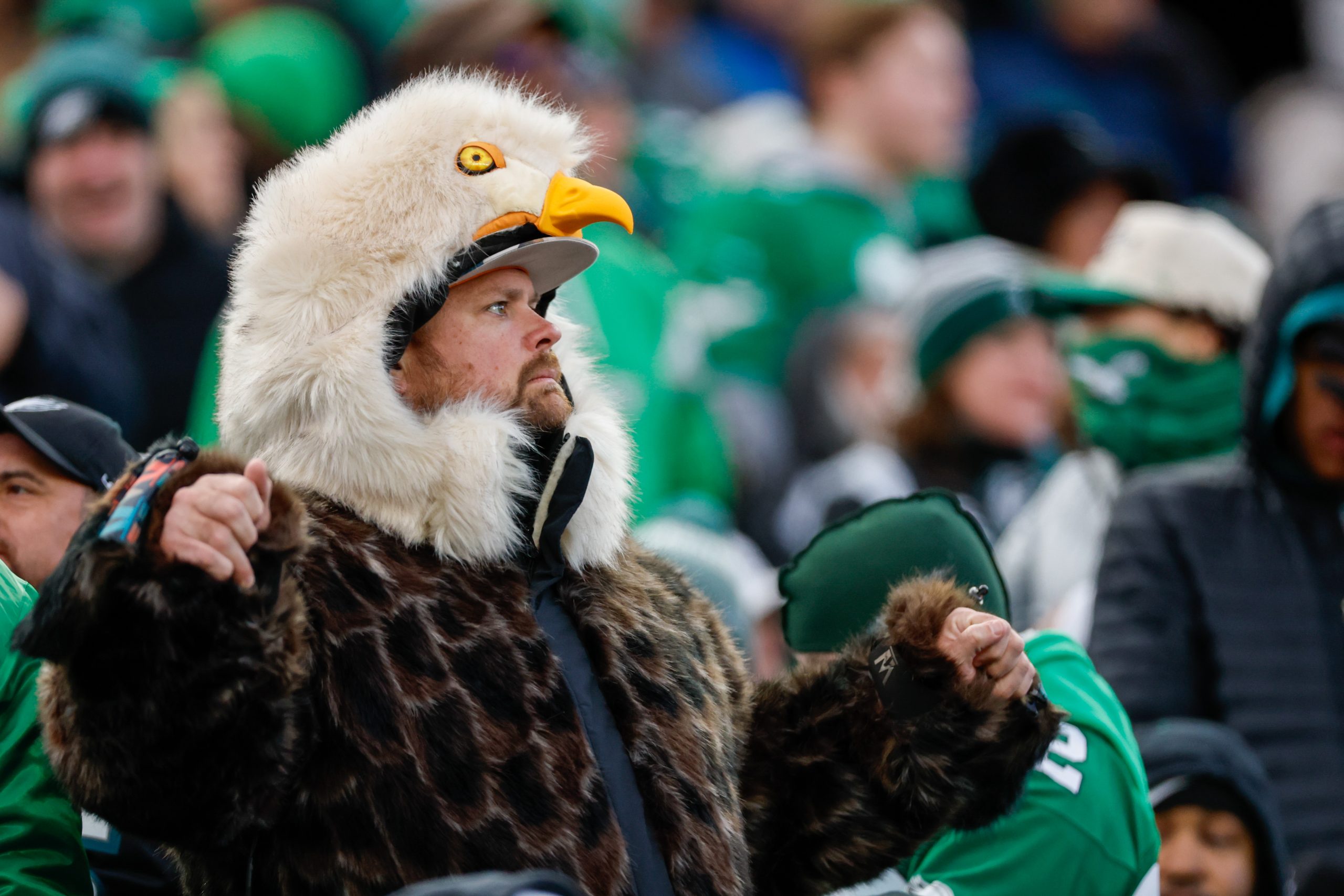
The passion that Philadelphians have for the Eagles is similar to how Europeans feel about soccer, but this city doesn’t always extend the favor to its own soccer team.Yong Kim / Staff Photographer
Emotion trumps data
For most of its 30-year history, MLS has shied away from doing the work needed to forge those bonds. Instead, it has chased sugar highs from signing big names.
That path has been profitable, to be sure, and the list is long: David Beckham, Thierry Henry, Didier Drogba, Javier Hernández, Lionel Messi, Son Heung-Min, and now Antoine Griezmann and Robert Lewandowski.
But the foundations are still missing in too many cities leaguewide, with Philadelphia high up that list. New York, Chicago, Boston, and Houston are also perennially on it.
This came to a head when commissioner Don Garber met the press at the U.S.-Australia game in Seattle last month. Behind him, a scene unfurled that American soccer fans dreamed of for decades: A thunderous home crowd in a city that not only loves the sport, but loves this country’s game specifically.
How can the league build connections like that elsewhere?
“Part of it is time and part of that is tactical; part of it is actually doing the work,” Garber said to start. He referenced how MLS “got FIFA’s permission to do Fan Fests in every market,” which sounds nice until you realize the need to ask is yet more of FIFA’s greed.
“We want to bring everybody together,” Garber said. “But we want to know, if people are going to support a World Cup match, what can we do to talk to them and give them exciting news and information and connections to become a fan of Sporting Kansas City or the Seattle Sounders? Some of that is just the data and intelligence that we’re going to gather, and be able to do that.”
He sounded good until the words data and intelligence. Because the problem here isn’t a rational one, it’s an emotional one.
For many years, the response from fans to MLS has been: I don’t care, because your product isn’t as good as others.
A league now in its fourth decade should be mature enough to shoot right back: So what? That isn’t the point.
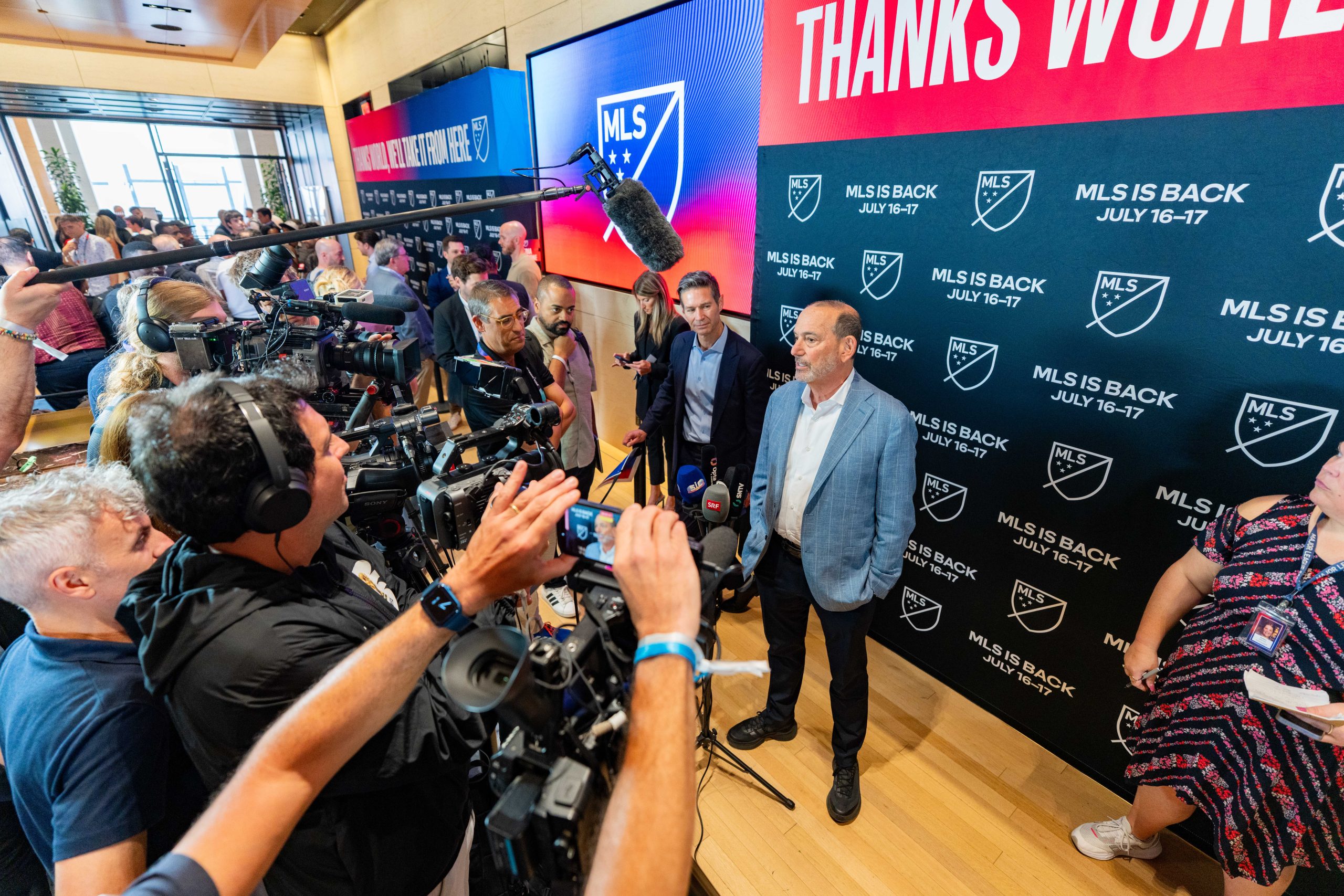
Don Garber facing the media during a pre-World Cup final publicity event at the league’s headquarters last week.Vanja Savic
There’s nothing stopping any soccer fan from watching European games on a Saturday morning and their local team on a Saturday night. Nor do some of the English Premier League’s loyalists understand England’s thriving lower leagues, where crowds can be bigger than Europe’s other top flights.
Why would a Londoner pick Charlton over giant Arsenal? Why bother in Bolton when Manchester is a stone’s throw away? It isn’t just because they dream of winning promotion. To those fans, the teams are theirs in a way the giants will never be.
MLS, meanwhile, has often been too timid to make the case.
“I will say to everybody who has said to me from the day I took this job: If you don’t believe, that’s OK,” he answered. “Right now, soccer is the third most popular sport in our country. We’ve got to make MLS a bigger part of that pie, but the market’s there and it’s up to us to convert it. If we don’t convert it, shame on us.”
That’s more like it. Because though Garber’s legacy is unquestionable ahead of his retirement next year, the league missed a big opportunity after the last World Cup. Now it risks another one.
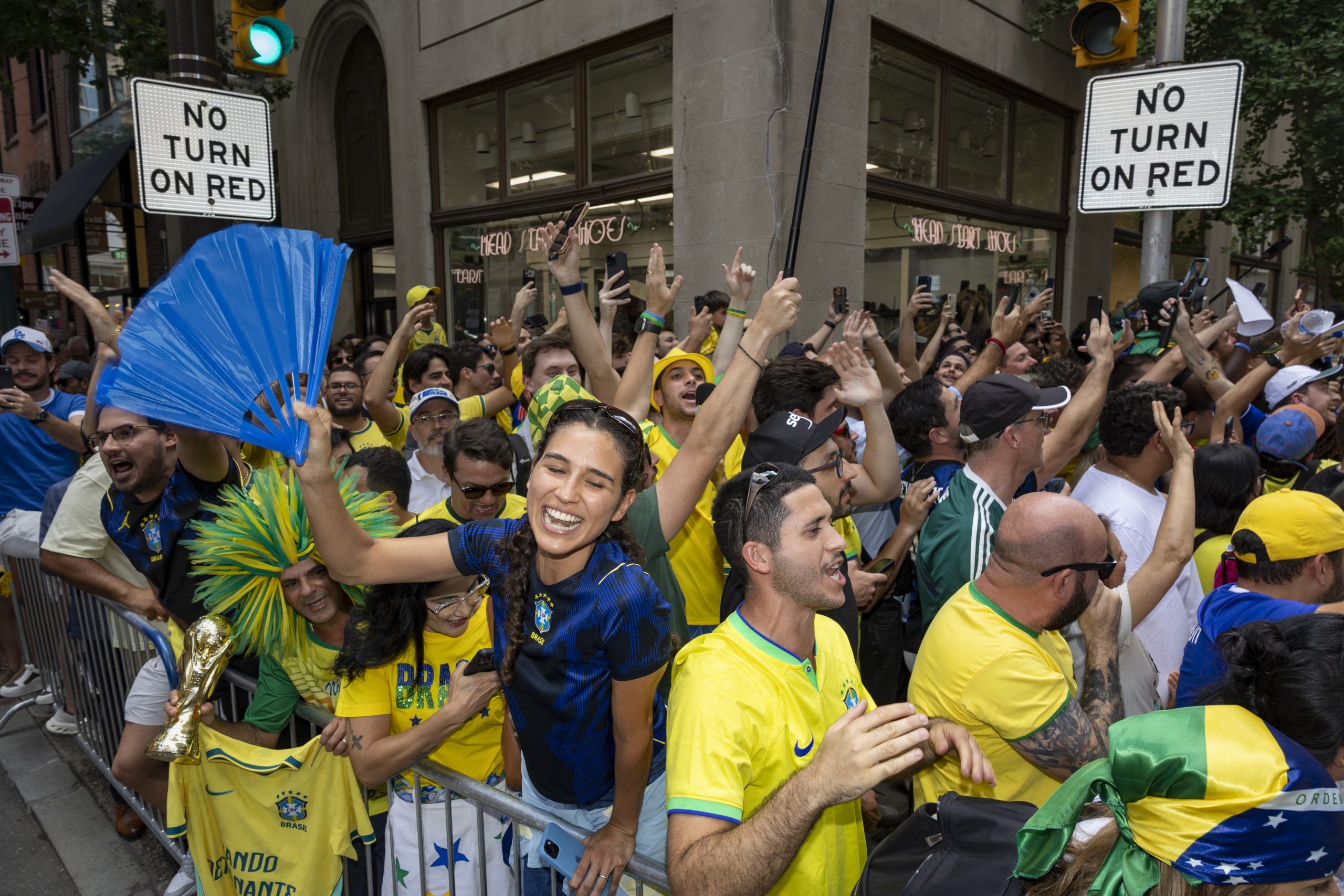
How many of the Brazil fans who electrified Philadelphia when their team played here would go to a Union game?Aidan T. Gallo / Staff Photographer
‘Not just about’ the stars
The second the 2022 tournament ended, North America’s hosting in 2026 was on the clock. MLS could easily have boasted its players featured this year — not just for the United States, but many countries. So what if they would be in Europe later? They were in the league now, and worth watching.
This summer, MLS was almost invisible during the tournament. Of course it was right to not have games, but the lack of publicity on TV was shocking. Especially on World Cup broadcaster Fox, which airs MLS games throughout the year.
And where, yet again, was the marketing heft from Apple? The world’s most famous tech brand was also pretty quiet, instead of trumpeting to new soccer fans that it has every MLS game.
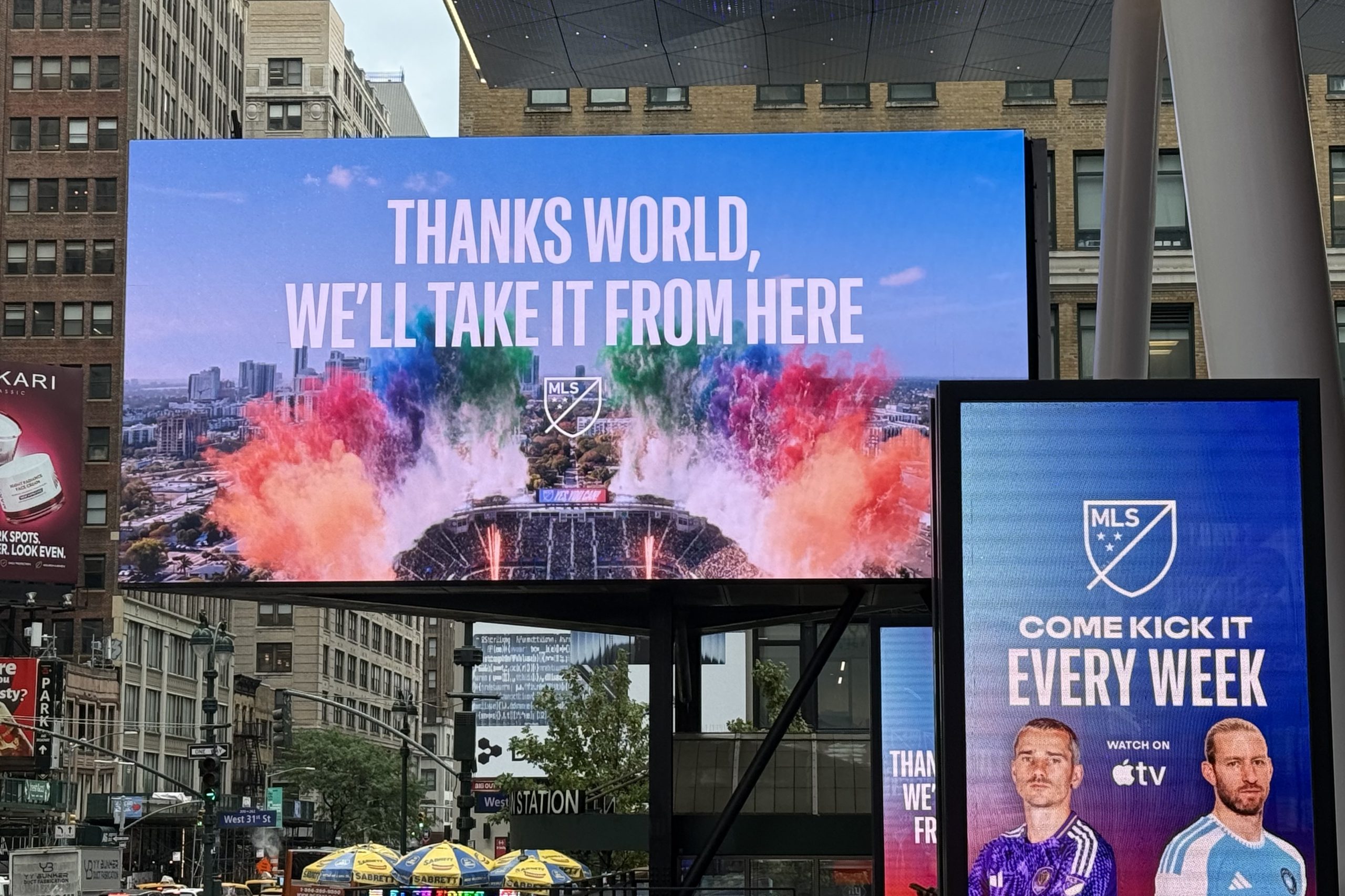
MLS bought flashy advertisements for its return from the World Cup at Madison Square Garden in the heart of New York. But will soccer fans pay attention?Jonathan Tannenwald
Rank the domestic leagues of the world by how many players they sent to this World Cup, and MLS had the second-most of any outside Europe’s traditional big five: England, Spain, Germany, Italy, and France. Saudi Arabia took No. 6 — by just two players — thanks to the exorbitant, oil-and-gas fueled salaries paid by clubs with sovereign wealth backing.
Along with that, this reporter counted a total of 115 players spanning 24 World Cup teams who play or have played in the U.S. or Canada, whether in the pros, college, or high school.
Those are marketable numbers if the league wants. But how many people know about them?
When MLS hosted the media at its new Manhattan offices last Thursday, Garber was grilled again, and seemed to get it right again.
“It’s not just about those Designated Players, the big names,” he said. “It’s about Alex Freeman, who started as a youth player, played in an academy, played in MLS Next Pro, and now is playing overseas after he was a starter for Orlando City.”
Alex Freeman (center) celebrating his World Cup goal against Australia.Manu Fernandez
As that famous poet Batman might say: Right again, commissioner.
Yes, MLS is absolutely right about Freeman, the U.S. team’s breakout name of this World Cup who moved from Orlando to Spain’s Villarreal last winter. But the league has also been too afraid to admit it’s a launchpad to Europe, even though doing so would likely bring more global eyeballs. Tracking future stars in soccer has become as profitable as doing so in basketball and football.
The Union’s game on Wednesday against Red Bull New York at Subaru Park (7:30 p.m., Apple TV) will be a prime example. At least five young candidates for the 2030 U.S. World Cup team will be on the field: the Union’s Cavan Sullivan, Frankie Westfield, and Malik Jakupović, and the visitors’ Julian Hall and Adri Mehmeti.
Soccer fans know those names are worth watching, but the new World Cup fans in town don’t yet. The burden is on MLS to make the point, and there’s no better time than right now.
The forward posted on social media that he attended the World Cup Final in New Jersey on Sunday. That came four days after he became the highest-paid Flyer in annual average value.
Zegras signed a four-year, $36.5 million extension with an AAV of $9.125 million on July 15 after filing for salary arbitration on July 5. The contract avoided a hearing scheduled for Wednesday, which he is happy about.
“I think I just had a lot of fun being at the rink and being around the guys,” he said when asked why the Flyers became a fit after just one season during a Zoom session on Tuesday. “ … I find it lucky to be surrounded by so many amazing people, from like the guys to the coaching staff to Danny [Brière, the Flyers general manager] and [president Keith Jones], Dan Hilferty, the [governor].
“So, I found that it was just a very good situation for me mentally, and it was a lot of fun on the ice, too.”
Zegras is now locked up for several years, alongside a strong core of players, including defensemen Jamie Drysdale, who signed a four-year contract Friday, Cam York, and Travis Sanheim; forwards Travis Konecny, Owen Tippett, Tyson Foerster, and Christian Dvorak; and goalie Dan Vladař.
Comfortable playing wing or center — he skated down the middle in the playoffs, which he said gave him confidence — Zegras is projected to be the top-line center for the Flyers this season.
His offseason work involves getting bigger and stronger to help in the faceoff circle — he has won just 38.9% of his draws across 349 NHL regular-season games with the Flyers and Anaheim Ducks — and a bit more skating in August, given the shorter training camp and preseason on the horizon.
Last year, Trevor Zegras took part in the Shoulder Check Showcase in Connecticut. The event raises money and awareness for mental health.Jackie Spiegel
First, there is one more date circled on the calendar for Zegras in July. On July 30, he will join other NHLers in the Fourth Annual Shoulder Check Showcase at the Martire Family Arena on Sacred Heart University’s campus in Fairfield, Conn. The puck drops at 6:30 p.m., the game will be televised on NHL Network, and “Gritty’s coming, so I’m pretty fired up about that,” Zegras said.
But the charity game, the premier event for the HT40 Foundation, is secondary to the meaning and importance of it.
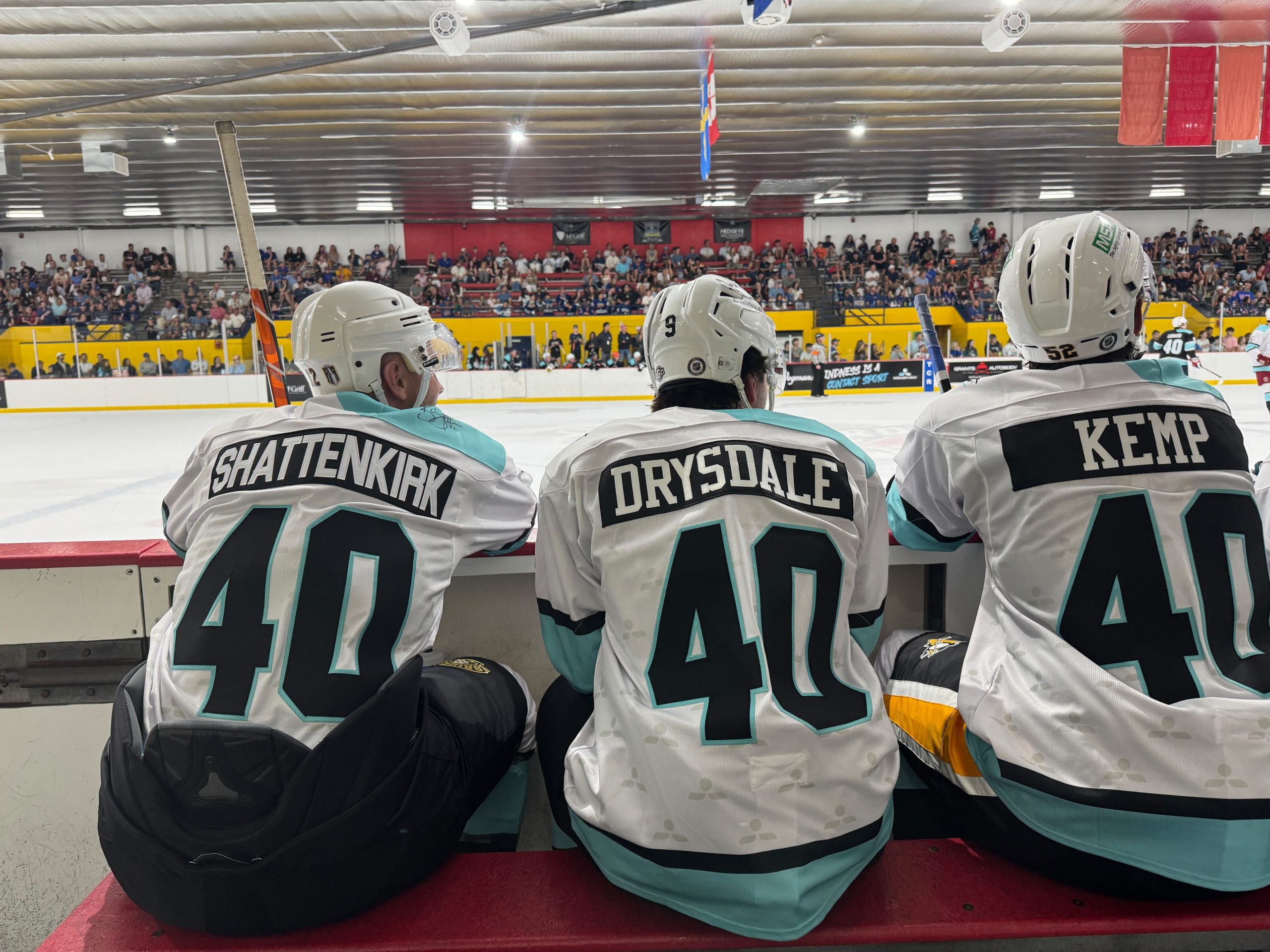
Created in 2023, the HT40 Foundation rose from tragedy. Hayden Thorsen, who wore No. 40 and was a goalie for the Junior Rangers in the Mid Fairfield Youth Hockey Association, died by suicide at the age of 16. The foundation and the game honor his memory.
“[Rob Thorsen, Hayden’s father’s] basic premise was like, ‘Who’s Hayden?’ And for him, Hayden was that kid, the guy who was always checking on his buddies,” Gary Zegras, Trevor’s father, told The Inquirer.
“If you look at pictures of Hayden, he’s always got his arms around his buddy’s shoulders.
“And so Rob’s idea was just really born out of who Hayden was, which was the guy that would ask you how you’re doing, what’s going on, arm around your shoulder, always had a smile … that simple, just act of kindness.”
Last year, Flyers defenseman Jamie Drysdale participated in the Shoulder Check event held at a sold-out Terry Conners Rink in Stamford, Conn. Flyers mascot Gritty is expected to be at the 2026 edition.Jackie Spiegel
Trevor, a Bedford, N.Y., native, also grew up playing for the Connecticut-based organization. His father, who has been with the association for more than 20 years, is the vice president and coaches a pee-wee team. He is also on the board and the secretary for the HT40 Foundation.
“I think the message is good because it’s something, as hockey players and athletes, we can all kind of relate to and get behind, and that would be checking in on each other,” Trevor said.
“You never know what somebody’s going through on a day-to-day basis, and maybe your phone call or your text is the reason why maybe they turn the corner for whatever reason. So it’s a pretty inspiring game, and I’m lucky that I got a lot of buddies that come and play in it.”
The Shoulder Check initiative was created to raise mental health awareness and encourage people to reach out to, and check in with, one another. Although the event includes a hockey game, the message intends to reach beyond the sports world to broader communities, including schools, community centers, and places of worship.
“Ten years ago, 20 years ago … you weren’t supposed to talk about that kind of stuff,” Gary Zegras said. “But you can talk about your feelings. You can ask your friends, how they’re doing. You can make sure that they’re doing OK. You can put your arm around their shoulder. It’s just so important that the younger kids see that so that something like what happened with Hayden doesn’t happen again.
“I just think these guys are role models in their world, and listen, not everybody in the country or the world knows who these NHL players are, right? In our world they’re everybody, but you know the reality is not everybody knows who they are. So while it’s a great starting point for the message, we’re doing everything to get the message out.”
Fans will be able to get autographs, interact with and watch NHLers including Zegras, former Flyers defenseman Shayne Gostisbehere and goalie Alex Lyon, San Jose Sharks forward Will Smith, Seattle Kraken forward Matty Beniers, and Ottawa Senators forward Shane Pinto. Everyone in attendance will pledge before the puck drops to “Reach Out. Check In. Make Contact.”
“Yeah, I’m a big phone-call guy,” Trevor Zegras said when asked how he reaches out. “So whether I’m driving or doing whatever, I like to check in, calling people, and seeing their face, seeing how they’re doing.”