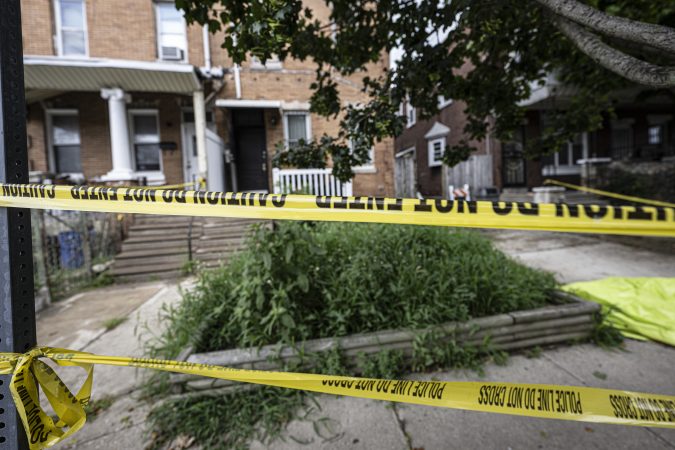
What initially appeared to be a significant amount of blood inside the Olney home tied to a missing persons investigation was not real blood, according to law enforcement sources.
Forensic testing conducted so far also has found no DNA belonging to the two missing women at the center of the evolving investigation, the sources said.
Philadelphia police and FBI agents began searching the home of Eugene Horsch last month after police arrested him with a woman carrying a fake ID in the name of Blair Tonzelli, a woman struggling with drug addiction who was last seen at the property in 2022. The probe also renewed interest in another missing person, Amy McHale, the ex-wife of Eugene’s father, who was last seen in 2016 at the same house on West Chew Avenue.
But detectives did not find the DNA of either woman on items tested so far, and while preliminary tests indicated that a significant amount of blood was present in the house, subsequent forensic tests came back negative, said the sources, who spoke on the condition of anonymity to discuss an ongoing case.
The Philadelphia Police Department did not immediately respond to a request for comment Friday.
This week police began excavating a pipe beneath the property to search for more evidence. And FBI agents are examining hundreds of pages of handwritten and typed documents, CDs, videos, and text messages for clues related to the missing women, the sources said.
Police arrested Horsch on June 19 near Independence Mall with drugs, guns, and various other weapons, as well as a phony U.S. Drug Enforcement Administration badge in the name of “Eugene Frederick Steiner.” He remains in federal custody on charges related to those offenses but has not been accused of any crimes in connection to the missing women.
Horsch, 44, was incarcerated for a previous drug conviction at the time McHale’s family reported her missing in 2016. But his father, Raymond “R.C” Horsch, who died in May 2025, has become another focal point of the investigation.
Raymond Horsch was an erotic photographer and filmmaker whose career in the porn industry dates to the 1970s. His work depicted graphic sexual violence and simulated death scenes, often involving women in addiction. Some scenes used what appeared to be prop blood. Horsch also penned semi-autobiographical novels that featured sadomasochists and serial killers.
While the forensic testing has not shown that any real violence took place, investigators continue to examine other evidence found in the home, including unpublished film and writing, law enforcement sources said. One of those items is a handwritten note that describes hurting people and references the serial killer Ted Bundy.
Shortly after Raymond Horsch’s death last year, a fire led police to search the property and arrest Eugene after they found a drug manufacturing operation and several illegal firearms.
When police searched the property again last month, they found additional drugs and guns, as well as hidden compartments, vats filled with chemicals, and a 55-gallon drum with connections to water lines in the basement.
When police arrested Eugene Horsch near Independence Mall in his black BMW, a woman with him showed police a fake ID in Tonzelli’s name. According to an affidavit of probable cause to search the Olney home, the woman told police that she did not know Tonzelli. She said Eugene never harmed her, but he told her he knew the chemicals needed to dissolve human bodies.
Testing of the pipe excavated from the property this week remains ongoing.
Pennsylvanians were well acquainted with John Fetterman’s idiosyncrasies by the time he was elected to the U.S. Senate four years ago. No one had a right, for example, to expect him to report for Capitol Hill duty with a clean shave and a pressed suit.
His supporters do deserve to be dismayed, however, at their increasingly right-leaning senior senator’s self-indulgent recent threats to leave the Democratic Party entirely. Fetterman won a competitive race as a Democrat thanks to voters who believed in him and his politics even after a stroke forced him off the campaign trail for months. If they wanted a Republican senator, they could have voted for the crudité-shopping TV doctor Fetterman was running against, Mehmet Oz.
For a man who styles himself as such a Washington outsider that he can barely be bothered to put on a pair of long pants, Fetterman is making a very inside-the-Beltway mistake. Judging by his willingness to change his positions and party at a whim, he seems to think the Senate seat belongs to him rather than the people he represents.
After nearly half the Democrats in the House voted against aid to Israel recently, Fetterman said he would leave the party should it incorporate such opposition into its platform and “officially become the anti-Israel party.” That makes his inconstancy sound more high-minded than it really is.
While the vote represented a high-water mark of Democratic opposition to Benjamin Netanyahu’s government and its wars in Gaza and Lebanon, there is no sign Fetterman suddenly finds himself in a party that believes Israel “doesn’t deserve to exist,” as the senator put it. Nearly 100 Democratic representatives took the pro-Israel side of the same vote, after all.
Nor is this some inexplicable or unforeseeable about-face on the part of Fetterman’s fellow Democrats in Congress. The party’s lawmakers are only beginning to catch up with public dismay at the conduct of Israel’s hard-right regime. One recent poll found that about a third of American adults, including a similar share of Jewish Americans and half of Democrats, believe Israeli forces committed genocide in Gaza.
That suggestion has been vociferously deflected by the Netanyahu government, which launched its campaign against Hamas in Gaza after the horrific terror attacks of Oct. 7, 2023. In a statement last week, the prime minister’s office said that “Israel has taken unprecedented wartime measures to minimize harm to civilians while confronting Hamas, a genocidal terrorist organization that uses Palestinians as human shields and deliberately targets innocent Israeli civilians.”
Even if Fetterman’s stated pro-Israel principles are accepted at face value, moreover, they don’t account for the extent of his ideological migration. Perhaps his defense of Israel can be stretched to explain his avid and anomalous support for Donald Trump’s unpopular and unsuccessful war in Iran.
But the senator has also voted for Republican measures to fund Trump’s immigration crackdown, supported his billion-dollar ballroom, objected to fewer cabinet nominees than any other Democrat, and signed off on one of Trump’s judicial nominations, the first in his caucus to do so this term. (Despite backing those initiatives, Fetterman says that his internal metrics show he votes with his party 93% of the time.)
He has also become a Fox News fixture who has accused the Democratic base — the people who, you know, gave him his job — of being “anti-American.” No wonder he is polling better among the state’s Republicans than the GOP’s own senator from Pennsylvania, Dave McCormick.
Despite Fetterman’s proclaimed “moral clarity” on Israel, he often speaks of his grievances with his fellow partisans — and his appreciation for Trump — in political rather than policy terms. He has groused about the repercussions of left-leaning Democrats’ positions for swing-state politicians like him, enthused about Trump’s sheer political talent, and lamented the electoral fate of Democrat Bob Casey, his former Senate colleague.
Maybe the senator’s red shift is motivated less by foreign policy than by an impulse to keep his job — even if it means betraying his voters. In that case, he should at least do his former supporters the courtesy of refraining from dressing up his careerism as morality.
Long Beach Island recently hosted the 18th annual Coquina Jam at Brant Beach, an all-women surfing event that raises funds for the David’s Dream & Believe Cancer Foundation and the Jetty Rock Foundation. With summer in full swing, there are many opportunities to catch waves down the shore: for example, on Aug. 22, people ages 5 to 60 can compete at Ocean City’s 7th street at the Eastern Surfing Association competition. Kids and adults alike can book a lesson up and down the shore.
Surfing might be a part of the shore experience today, but it was not always a staple of the East Coast. In fact, surfing was once seen as the domain of the countercultural West Coast. But during the 1960s, fanatics brought their boards to New Jersey in the hope of disassociating surfing with its rebellious and countercultural image—and instead promote it as a purposeful pursuit and competitive sport. Positioning surfing as no different than playing basketball, baseball, and football helped entrench it in New Jersey seaside life, while also reinforcing ideas about conformity and respectability.
Surfing’s image has evolved greatly over the years, with its roots tracing back to Hawaii. Since about the 12th century, Hawaiians of all classes and genders took to the waves. They steered large, finless, wooden boards known as alaia and olo boards.
However, by the late 19th century, an influx of American Christian missionaries into the islands pushed the “lustful” sport to the margins, casting it as incompatible with the aims of settlers and businesses. Nevertheless, Hawaiians continued to find ways to surf, and soon white settlers began to appropriate Indigenous beach culture for their own purposes.
In the early 20th century, tourism-minded opportunists including Alexander Ford Hume, Tom Blake, and writer Jack London promoted surfing to draw white American settlers and vacationers to the pristine warm waters of Hawaii. In his book chapter “A Royal Sport,” published in 1907 and 1911, London remarked, “I was chiefly conscious of ecstatic bliss at having caught the wave.” Local surfing legends Duke Kahanamoku and George Freeth then spread surfing to the mainland United States. Freeth brought lifeguarding and beach culture to Southern California, while Kahanamoku traveled the globe, showcasing his Olympic-level swimming and extraordinary surfing skills.
In 1912, after the Stockholm Olympics where he won the gold in the 100-meter freestyle event, Kahanamoku visited Atlantic City, exposing the shore resort to “the sport of kings” for the first time. In the early 1930s, Tom Blake, an innovator who manufactured surfboards for U.S surfers in the first half of the 20th century, introduced his 13-foot wooden longboards to Ocean City. But despite these early exposures, surfing did not catch on in the Garden State until the 1960s.
Movies and music were instrumental to surfing fever at the Jersey Shore. Viewers were drawn to Gidget’s (1959) Cliff Robertson as “the Big Kahuna,” a youthful nonconforming rebel who valued the hedonism of the beach and consistent access to surf over responsibilities. Young people were captivated by the carefree lifestyle found in the Beach Party (1963) franchise. These movies were fictional but spoke to growing white affluence and greater access to leisure in real-life postwar America. Teenagers flocked to local theaters to watch the globe-trotting adventures of surfers Robert August and Mike Hynson in 1966’s TheEndless Summer.
Some New Jersey teenagers embraced the fad, perhaps hoping to foster the freedom and youthful expression associated with surfing in their own waters.
Soon, surf shops popped up and down the coast, sponsoring new surf teams and providing locals with access to equipment. Ron Jon Surf Shop was founded in Ship Bottom in 1961, while Surfer Supplies in Ocean City, and Heritage Surf Shop in Sea Isle both opened in 1962. The New Jersey Hobie team was hosted by the Manatee Surf Shop, founded in Belmar in the early 1960s.
Yet as surfing proliferated along the shore, initial community reactions were sour. Young surfers were seen as troublesome, an unpredictable hazard on crowded beaches. Police, concerned parents, and hotel owners all spoke out against surfers, viewing them as vandals with unkempt, long hair, huge unwieldy surfboards, and worst of all, they used profanity and disobeyed authority figures. The presence of surfers threatened to disrupt the peace of beachside resort towns, places for respectable families who followed the rules.
In 1966, for example, authorities in Bradley Beach curtailed surfers’ access to the Kent Avenue Beach, with Police Chief Harvey Gaunt reporting that surfing was a safety hazard. He claimed that surfers “set fires in trash barrels, illegally exchanged beach badges, are often injured, are often poor swimmers, leave their boards where bathers may walk into them, use foul language, create a danger when they carry their boards, and use the beach instead of a toilet.” The litany of charges revealed an almost visceral disgust at people who surfed, evoking an ongoing moral panic about juvenile delinquency and the erosion of middle-class norms.
Made By History sponsors. FOR USE ON MADE BY HISTORY STORIES ONLY.Inquirer Staff
To overcome such associations and convince the broader community that surfing deserved a place down the shore, surfers organized, hoping to show how surfing might channel young people’s energy and coexist with other popular shore activities and sports. They formed surfing associations and clubs.
In 1963, Cecil Lear, a schoolteacher from Belmar, along with eight other members, founded the Jersey Surfing Association (JSA), aiming to garner respect for surfing as a growing American sport. In his fight to establish designated surfing beaches in New Jersey, the schoolteacher touted the positive health benefits of surfing: it provided quality exercise, and what’s more, morning surfing sessions could promote earlier bedtimes—keeping young surfers out of late-night trouble. The association hosted successful competitions during the 1960s, such as the Greater Point Pleasant Jaycee Contest and the Jersey State Open State Surfing Championships in Belmar.
In 1965, John “Bull” Carey, a real estate developer and former lifeguard and surfer, and Don Pileggi, Ocean City’s Recreational Director, founded the Ocean City Surfing Association (OCSA). They instituted a yearlong tournament schedule that operated around school breaks.
The summer season featured contests every Tuesday, where bronze, silver, and gold medals were awarded, culminating in early September with a final event, the Ocean City Open Surfing Championship. During the school year, a contest was held each school break: the Turkey Trot over Thanksgiving, the Polar Bear over winter break, and the Spring Fling over spring break.
By the middle of the decade, the surfing association was strengthening relationships with the city and local businesses. For example, in preparing for the Polar Bear Championship on Dec. 28, 1966, the OCSA worked closely with the city, the Port-O-Call Hotel, and Bob Harbaugh’s oceanside restaurant, providing free hot showers and changing rooms for frozen contestants, drum fires along the contest beaches at 14th and 15th streets, hot coffee and soup on standby, and a catered lunch for the winners.
Treating surfing as a competitive sport and potential money-maker for local businesses helped reposition surfing as a purposeful pursuit, not just teenage trouble.
However, this reframing also solidified a surfing demographic that was solidly middle class, mostly white, and mostly male—thereby marginalizing people of other identities who wished to surf. In this small way, surfing culture reinforced a history of segregation at the Jersey Shore, fortifying the beach and the ocean as mostly white spaces. Events like the Coquina Jam, an all-women surfing competition, may be eroding such boundaries today—but due to the history of how surfing came to the Jersey Shore, there is still a long way to go.
Thomas DiGiovanni is a graduate student at Rutgers-Camden interested in the intersections of race and class within sporting cultures, with a concentration on surfing history.
Made by History takes readers beyond the headlines with articles written and edited by professional historians. Opinions expressed do not necessarily reflect the views of The Inquirer.
With City Hall taking their summer break and Harrisburg finally passing a budget, this week’s edition of Shackamaxon looks at what’s going on in the courts.
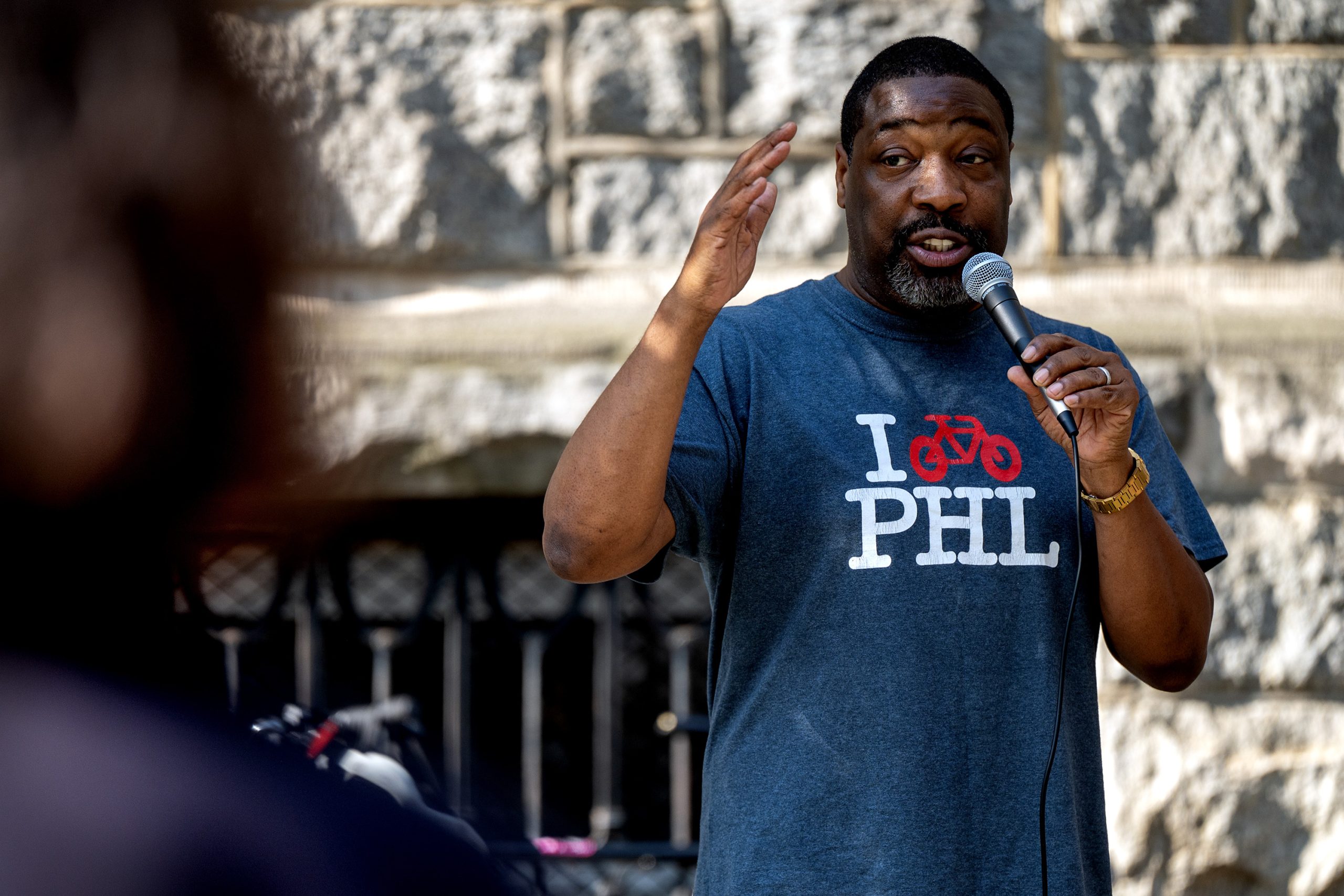
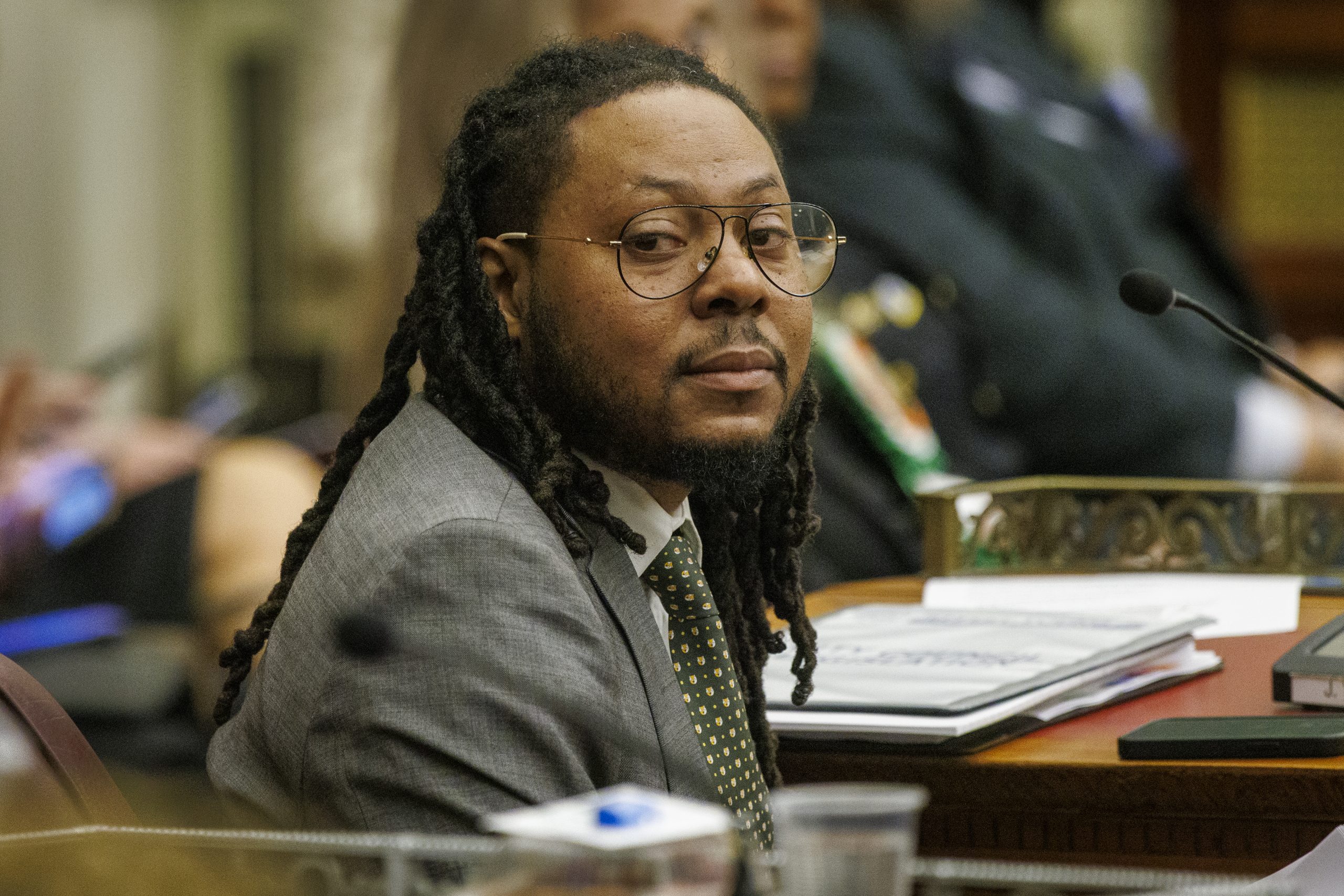
City Council President Kenyatta Johnson speaks as friends, family, and Philly Bike Action members gather at a memorial for Barbara Friedes at 18th and Spruce streets on Sunday.Tom Gralish / Staff Photographer
Street fight
It has been two years since Barbara Friedes, 30, a physician specializing in children’s cancer, was killed riding her bicycle in Rittenhouse Square. The man who struck her, Michael Vahey, was driving at 50 mph, twice the speed limit, and his blood alcohol level was measured at .16, double the limit for intoxication.
According to a prosecutor, Vahey, 69, could have easily chosen to walk home from the bar that night. Instead, he was impaired when he impatiently veered into the bike lane. Vahey was convicted last year and is now serving a six- to 20-year sentence.
But the story did not end with Vahey’s imprisonment. For once, city officials took decisive action.
City Council, led by Council President Kenyatta Johnson, passed the “no stopping in the bike lane bill.” Mayor Cherelle L. Parker pledged to add protection to the route, which could have prevented the kind of reckless maneuver that led to Friedes’ death. Yet, two years later, nothing has happened.
The blame for the holdup, however, does not lie with City Hall. In fact, Johnson made an appearance at a vigil for Friedes hosted by her loved ones and Philly Bike Action this week.
Instead, it has been the courts that have stymied the proposal. After a group called Friends of Pine and Spruce sued to stop the plan, a Common Pleas Court judge issued an injunction requiring the city to pass legislation codifying the administration’s right to install loading zones. City Council passed the legislation, only for another Common Pleas Court judge to decline to lift the injunction while the case proceeds.
Frankly, things should never have gotten this far. Issuing loading zones is the exact kind of decision the Streets Department exists for, and having City Council pass a law for every loading zone in the city is a fool’s errand.
It is certainly understandable that some neighbors would prefer to keep the status quo. The right venue to advocate for this position, however, is not the courts, but City Council. If the Court of Common Pleas fails to return control of city streets to city officials, the ruling must be appealed to the Commonwealth Court. Streets belong to everyone, not just the people who live alongside them.
If residents want to stop bike lanes, they can do what cyclists have done. They can form advocacy groups, lobby elected officials, build a coalition, and pass legislation.
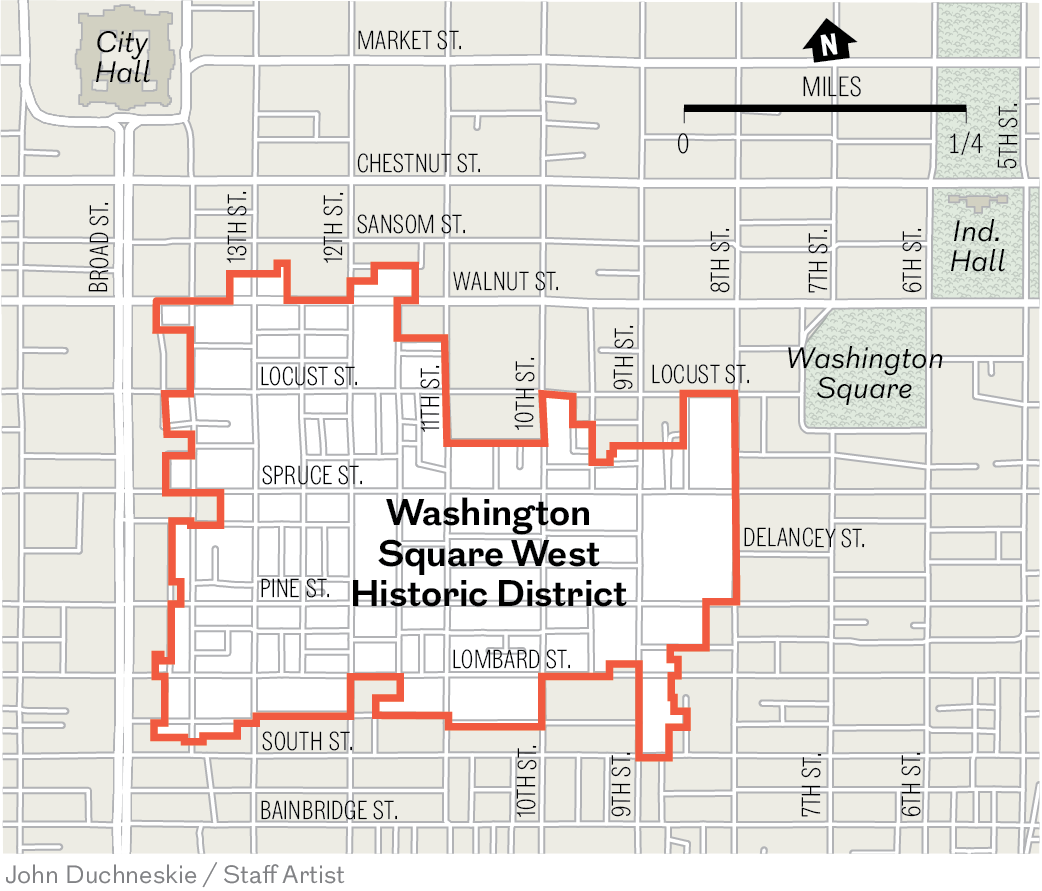
Map of the Washington Square West Historic District. Some property owners are working to eliminate or curtail the district.John Duchneskie / Staff
Historic challenge
For some Center City residents, the Spruce and Pine saga contains a bitter irony. While some of their neighbors are suing to stop the city from designing public streets, they are suing to maintain the right to design their own homes.
No one questions that the Washington Square West Historic District contains some of the city’s best architecture and links the present day to the city’s past. What’s been contentious throughout this process is how broad and restrictive the plan has been. While most districts cover a relatively small area, and typically pay homage to a specific era, style, or even architect, this district covers nearly all of Philadelphia’s history, from colonial times to the postwar era. More than 1,400 properties are listed as contributing, many of them fairly unremarkable.
As a result, property owners like Jonathan Hessney have been working to eliminate or curtail the district. Most submissions to the Philadelphia Historical Commission were in opposition to the plan, with many citing both the personal financial burden and the fact that many of the most significant properties already have individual protections.
Hessney also pointed out that Emily Cooperman, who is a member of the commission, helped draft the proposal. To some, this made the whole process feel like a foregone conclusion.
Hessney and his neighbors sued. They won an early victory when Common Pleas Court Judge Christopher Hall overturned the designation. This was appealed by the city, keeping the district in place pending an appeal. The Preservation Alliance has filed its own brief in support of the district.
Of course, the city could make everything easier by declining to pursue this suit further.
Councilmember Jeffery “Jay” Young Jr. listens during the mayors budget address at City Hall in March.Alejandro A. Alvarez / Staff Photographer
Senseless prerogative
In another legal case concerning City Hall, the Commonwealth Court has ruled against Councilmember Jeffery “Jay” Young’s efforts to block a series of housing projects in North Philadelphia. Going forward, Young and his colleagues will have to secure the mayor’s signature before granting themselves standing to oppose zoning decisions.
Young is one of Council’s most prolific users of what’s known as councilmanic prerogative, a tradition that gives district Council members final say on transportation and land-use decisions within their districts. While Council often defends this tradition as a way to ensure communities have a say, Young’s tactics usually attract the ire of his constituents, rather than representing their input.
I talked to Ruth Birchett, a lifelong resident of North Philadelphia. Birchett has worked with both of Young’s immediate predecessors, supporting them at times and holding them accountable when needed. As the founder of Heritage Community Development Corp., she’s helped build affordable housing and fought against Temple’s efforts to build a football stadium. She told me that the way Young does business is very different. He does not seek input from her or other community leaders. He goes it alone.
In particular, Birchett is upset over Young’s decision to block an affordable senior housing proposal. She took him to task in person. This situation is similar to Young’s opposition to renovations at the Cecil B. Moore Library branch. He came in at the very last minute to scuttle a shovel-ready project that had taken years of work to put together, and which had already secured funding.
Birchett told me that the development was a “no-brainer.” Many seniors, herself included, live in homes that are much larger than their current needs. Philadelphia has a shortage of affordable senior housing. If seniors like Birchett can move into new housing in their own neighborhoods, this also helps younger residents access the city’s stock of sizable homes. That’s the housing circle of life.
Instead of continuing to waste city resources by reauthorizing the appeal, Young should just let the project move forward.
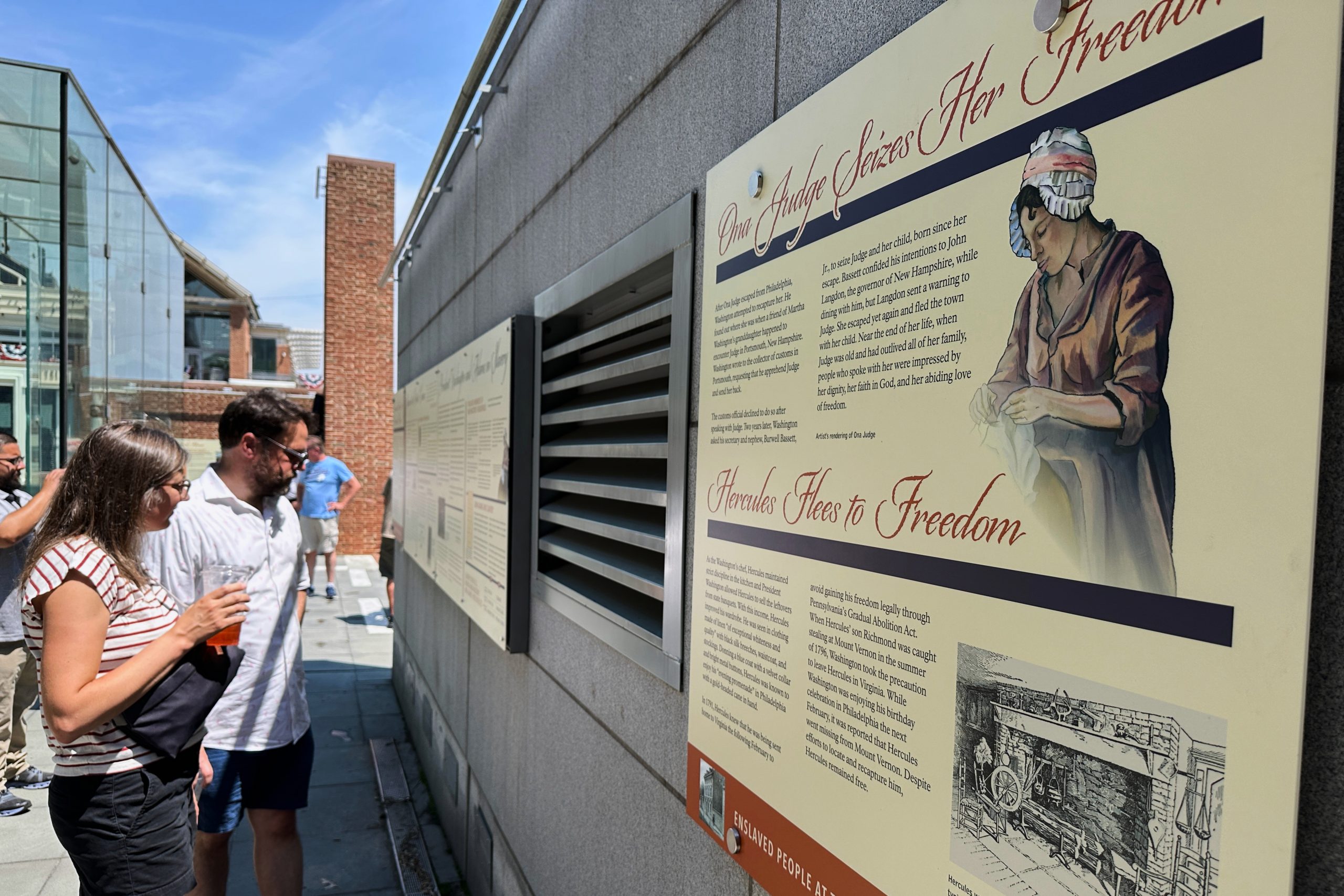
Visitors view the recently reinstalled educational panels about slavery at the site of President George Washington’s home in Philadelphia.Tassanee Vejpongsa
Washington whitewash
For now, it seems the Trump administration has won the battle for the President’s House at Independence National Historical Park. After initial victories for the city, federal courts have affirmed the White House’s right to remove panels that were first installed roughly 20 years ago and replace them with new versions that advocates say minimize George Washington’s participation in America’s original sin of slavery. Mayor Parker has vowed to restore the originals.
While some Founding Fathers, like Philadelphia’s Benjamin Franklin, realized the hypocrisy of calling for liberty while enslaving human beings, Washington showed he had no similar qualms. While living in Philadelphia, he acted with intent to evade Pennsylvania law, which stated that any enslaved person brought into the commonwealth would be emancipated after six months of continuous residence.
The former panels ensured the stories of all Americans are heard, including those who were not given the rights of liberty during their own time. They also serve as a reminder that even the greatest heroes are still human.
Washington deserves immense credit for helping secure America’s independence, and his decision to forgo the crown many assumed he’d take when he left office peacefully after two presidential terms — a precedent all but one of his successors (so far) has held to. He also deserves to be known as a man who failed to live up to the ideals he fought for.
And the next day, on July 21, 1969, the Muppets landed on televisions across Philadelphia.
But unlike the moon landing, the Muppets’ debut was a test run.
Over five days, producers of Sesame Street broadcast five hour-long test-pilot episodes on WHYY-TV’S UHFChannel 35 on televisions spread across 70 homes throughout the city.
So, why Philly?
“The station is one of the country’s top public TV stations,” Edward Palmer, then Sesame’s director of research, told The Inquirer in August 1969. “It has displayed great interest in the [Children’s Television] Workshop and has been most cooperative. And it has Channel 35.”
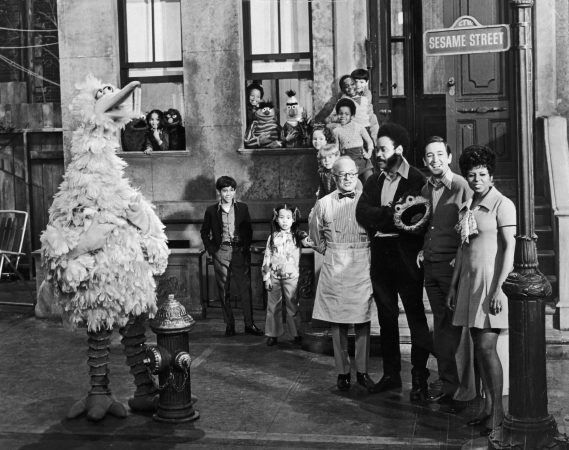
Those first few episodes, set at the fictional Manhattan meeting place at 123 Sesame Street, paired a snappy theme song with a cast of unusual and friendly oddballs.
The program, which can trace its roots to the mid-20th-century civil rights movement, would go on to delight, instruct, and entertain,thanks to the worldview and genius of Jim Henson.
But it wasn’t a complete home run.
The Philly research showed that of course the kids loved the Muppets, but they were bored by live-action street segments featuring only human actors.
This taught the producers that they had to integrate the Muppets with the human cast, and have them interact, rather than keep the Muppets and humans separate.
“Test audiences of preschoolers in Philadelphia had rejected live-action sequences shot on a mock urban street, with trash cans on the curb and laundry hanging from tenement windows,” according to Michael Davis’ book Street Gang: The Complete History of Sesame Street.
The human-operated puppets would go on to charm millions of children and parents, and their names would become iconic: The Count, Cookie Monster, Big Bird, Bert, Ernie, Oscar, Miss Piggy, Elmo, Kermit, and many others.
And they would later be joined by an endless A-list of guest stars.
Joyce Brooks is dismayed by the contractors who illegally dump behind a shopping center at 15th and Wingohocking Streets.
But it’s the neighbors who dump therewho sadden her most, she said. Some bring children with them to toss waste in a dump that has lasted 20 years, despite being cleaned out over and over again.
“That’s a legacy. Passing it from adults to children to their children,” said Brooks, who leads the Block Captains Committee of Nicetown, a neighborhood grassroots group.
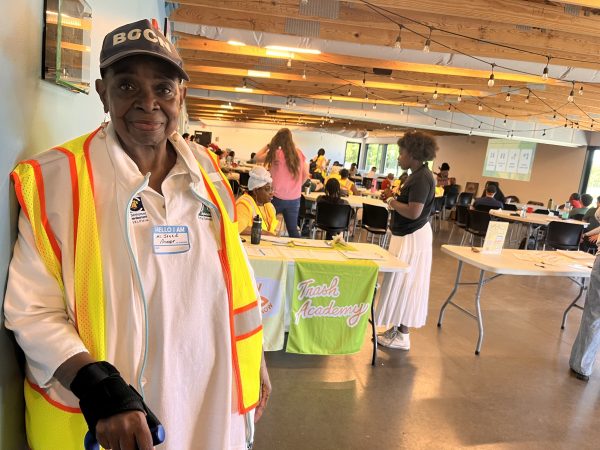
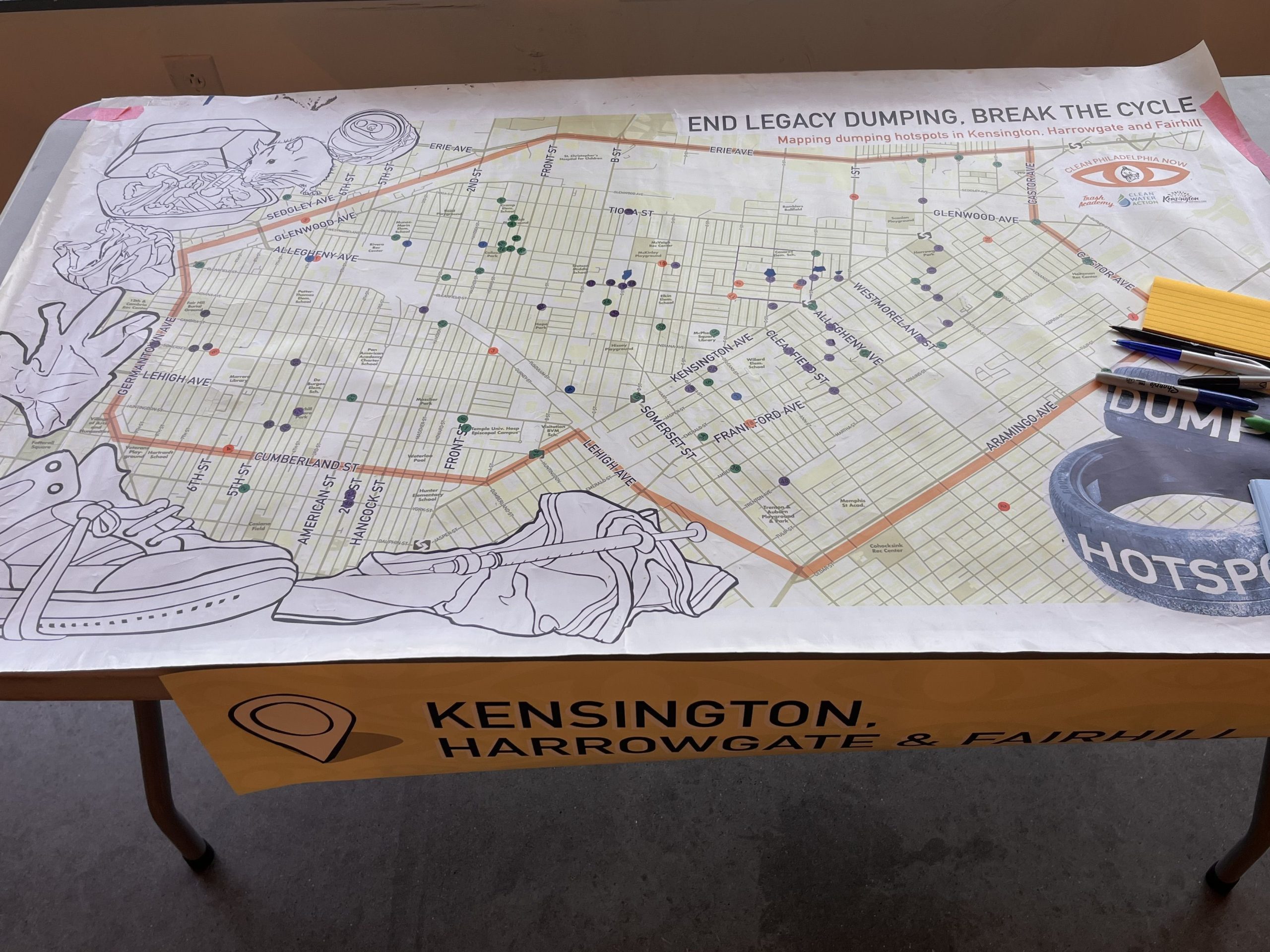
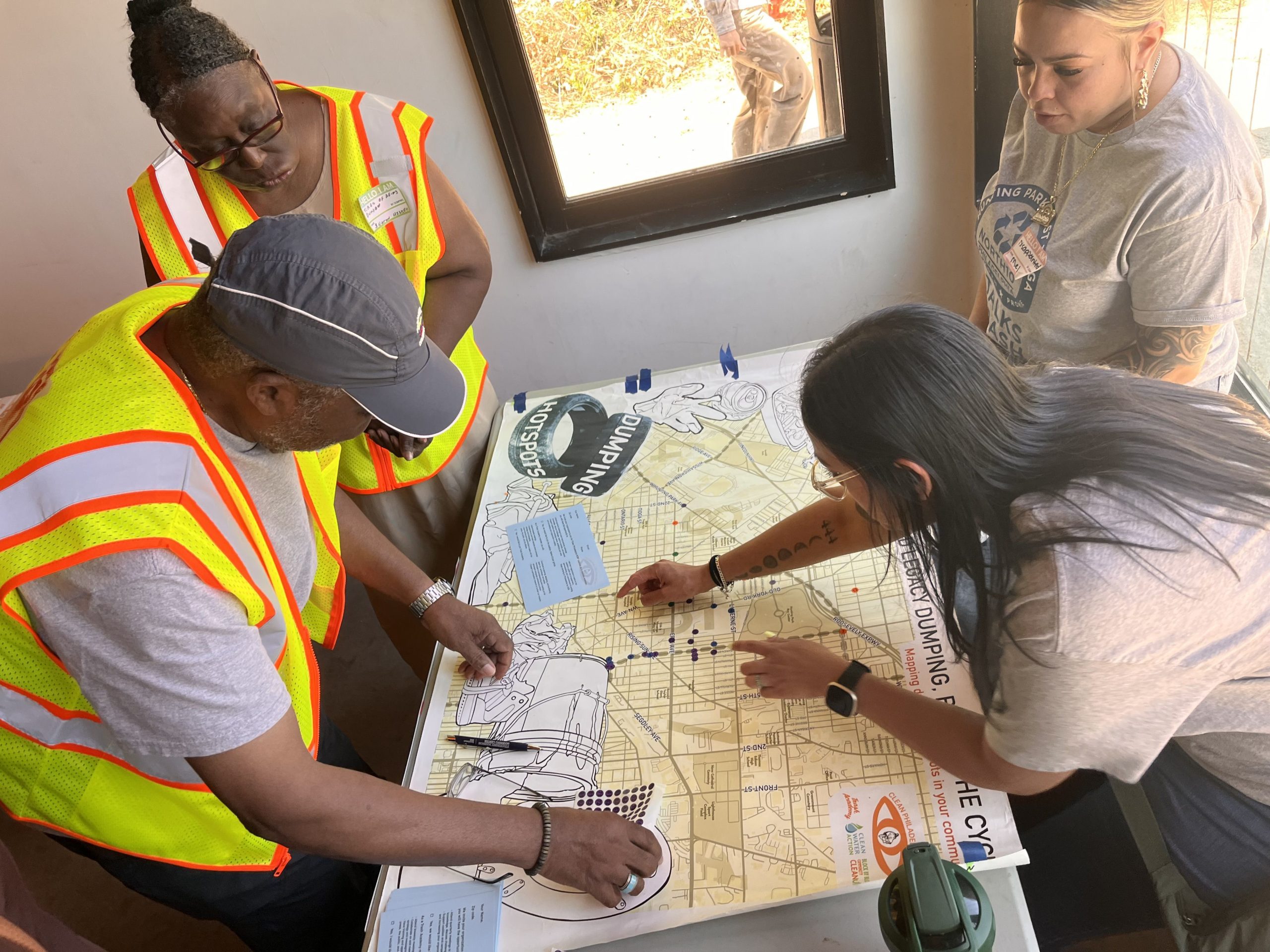
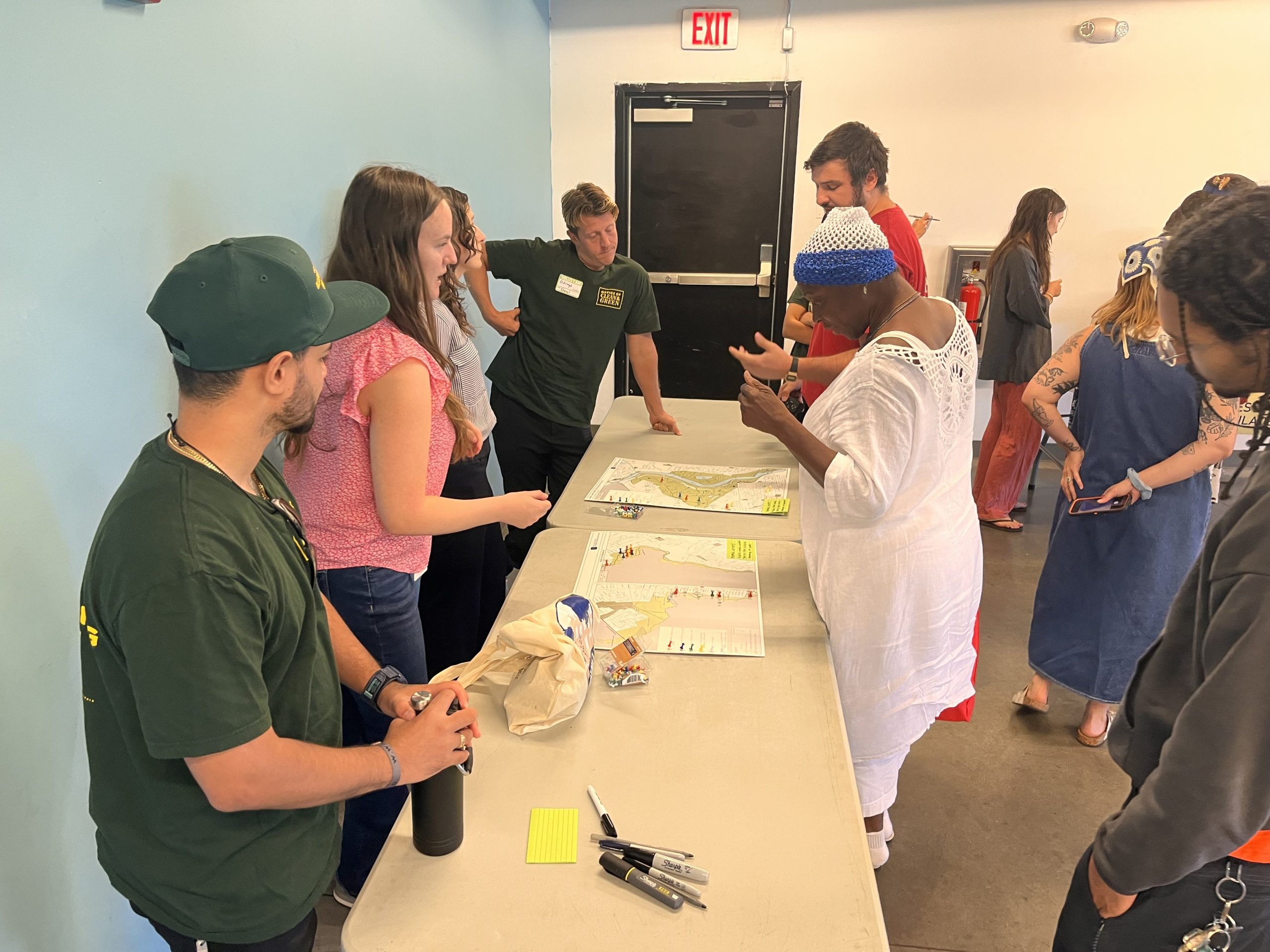
Brooks was one of about 75 Philadelphia residents representing neighborhood groups and nonprofits who gathered Thursday at the Discover Center in Fairmount Park to map by hand illegal legacy dumps scattered throughout the city.
The groups want a comprehensive, transparent map of illegal dump sites across city streets, vacant lots, and parks as a step toward being able to address them comprehensively.
The event was organized by Clean Philadelphia NOW, a collaborative with multiple neighborhood organizations and nonprofits. It pulled together community groups and residents from 11 neighborhoods.
“I just want to encourage us as a people to stop this,” Brooks said, “not just in Nicetown but all over this city of Philadelphia. … I believe there’s hope.”
Legacy dumps are one of the biggest issues affecting the quality of life in Philadelphia, said those at the event, and theywant to find solutions.
In April, The Inquirer identified one of the largest illegal dumps in the city. The dump spans more than a blockdown a slope off Pennway Street in Northeast Philly and finally comes to a dirty halt just feet from a clear creek.
One of the maps where event attendees added pins to show the locations of potential dumping sites in their neighborhoods.Frank Kummer
The root cause
Shari Hersh, a codirector of Trash Academy, one of the groups collaborating under Clean Philadelphia NOW, said the goal is not only to clean sites but also toreplace outdated waste management systems with sustainable, long-term solutions.
The Clean Philadelphia NOW initiative began mapping sites in fall 2024, initially documenting 48 dump sites in the Fairhill and Harrowgateneighborhoods. It hosts the map on its website.
While the city has heavily invested in abatement, Hersh argues that the approach falls short of addressing the root causes of the persistent “clean-dump-clean cycle.”
Hersh said community cleanups are not a solution.
She said some illegal dump sites, such as one at Ninth and Ontario Streets in North Philadelphia, have been actively dumped on multiple times a week since 2005. Simply cleaning them out does not stop dumping.
“It can’t just be the neighbors who have the time to work on it,” Hersh said. “It has to be that we have a successful waste management system in the city of Philadelphia.”
She believes dumping is fueled by several factors.
“There are a lot of reasons why there’s dumping, and there are a lot of people doing it because, to some degree, it’s normalized in Philly,” said Hersh, who lives in Fairmount. “They think, ‘It’s always been dumped there, so we’re just going to keep using it as a dump.’ And some people don’t even know it’s wrong.”
Hersh said collaborators would like to see municipal curbside composting to manage the food odors from residents putting trash out on non-collection days.
And they would like to see cost-effective voucher programs for construction and demolition waste.
“We don’t just want to manage illegal dumping,” Hersh said. “We want to end it.”
She said she did not have a final tally yet on the number of legacy dump sites but estimated the group’s current totalcould be around 100.
On Thursday, event attendees hand-pinned dumping sites to a physical map. Clean Philadelphia NOW volunteers will vet the sites against an online map to get a true count.
Hershexpects the list of illegal dumping locations could swell to 200 as they keep adding more through the end of the year.
Rosemary Duarte (front right) and Melmarys Gonzalez (back right) of the group North10 Philadelphia help mark a map of Hunting Park.Frank Kummer
A sense of pride
Dallas Herbert Sr. of the 215 People’s Alliance said he hopes the collaboration can help “create a sense of pride in the community.”
Construction waste is a big issue, he said. It worsens as homes are razed and new ones built. He calls itan “unintended consequence” of the city’s attempt to create more housing. People unload the contents of old homes at the sites. Some contractors dump debris there.
Herbert said contractors should have to show proof to the city that they dispose of waste correctly, andthe city should “hold them to account.” He said much construction waste can be recycled.
Most of those in attendance at Thursday’s event credited the city‘s focus on litterunder Mayor Cherelle L. Parker. But they would like to see more done.
Residents crowd around a table at an event organized by Clean Philadelphia NOW that focused on having residents from 11 neighborhoods map known illegal dumps sites. Seen here are maps of Cobbs Creek.Frank Kummer
A dumping voucher
Rosemary Duarte, director of neighborhood impact services for the nonprofit North10 Philadelphia, believes there are solutions. The group works to improve the Hunting Park and East Tioga neighborhoods.
She said one dump in her neighborhoodgets cleaned by the city each Tuesday and is monitored by video cameras. Still, contractors and others sneak in at night.
North10 Philadelphia has a grant from the William Penn Foundation to give residents $120 vouchers for bulk-itemtrash taken to Burns Services in an effort to curb dumping. Burns has a 13-acre Hunting Park complex where demolition debris is sorted for resale to steel mills, building-materials makers, plastics plants, and other re-users.
So far this year, North10 Philadelphia has given out $10,000 worth of vouchers, Duarte said.
The group reaches illegal dumpers by posting signs at legacy locations that read “Please don’t dump here” and telling them how to reach out for vouchers.
The state of the University Avenue Bridge, long neglected and subject to vandalism, is attracting a wave of public scrutiny. An online petition that has collected hundreds of signatures calls for the historically significant span to be secured before further damage is done.
“We demand that PennDOT and the City of Philadelphia treat this historic structure with the same respect shown to the Ben Franklin Bridge,” wrote the author of the change.org petition. “Officials must act now to secure the site from further destruction so that this beautiful bridge survives to celebrate its own 100-year anniversary in 2030.”
The Ben Franklin Bridge was feted this month with a special centenary event closing it to vehicles that drew an estimated 50,000 pedestrians, cyclists, and others.
The publication, Hidden City, also published a cri de coeur this week.
“As the Benjamin Franklin Bridge receives accolades this year for its 100-year anniversary and receives regular maintenance by its owner, DRPA, the University Avenue Bridge continues to decay, seemingly ignored by PennDOT,” wrote Kimberly Haas in an article posted Tuesday.
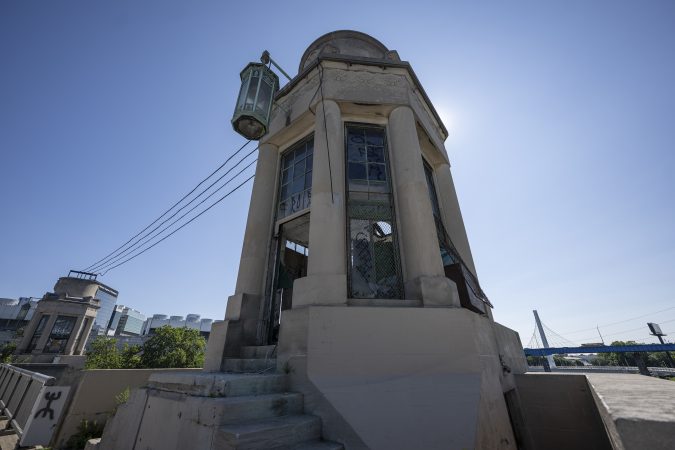
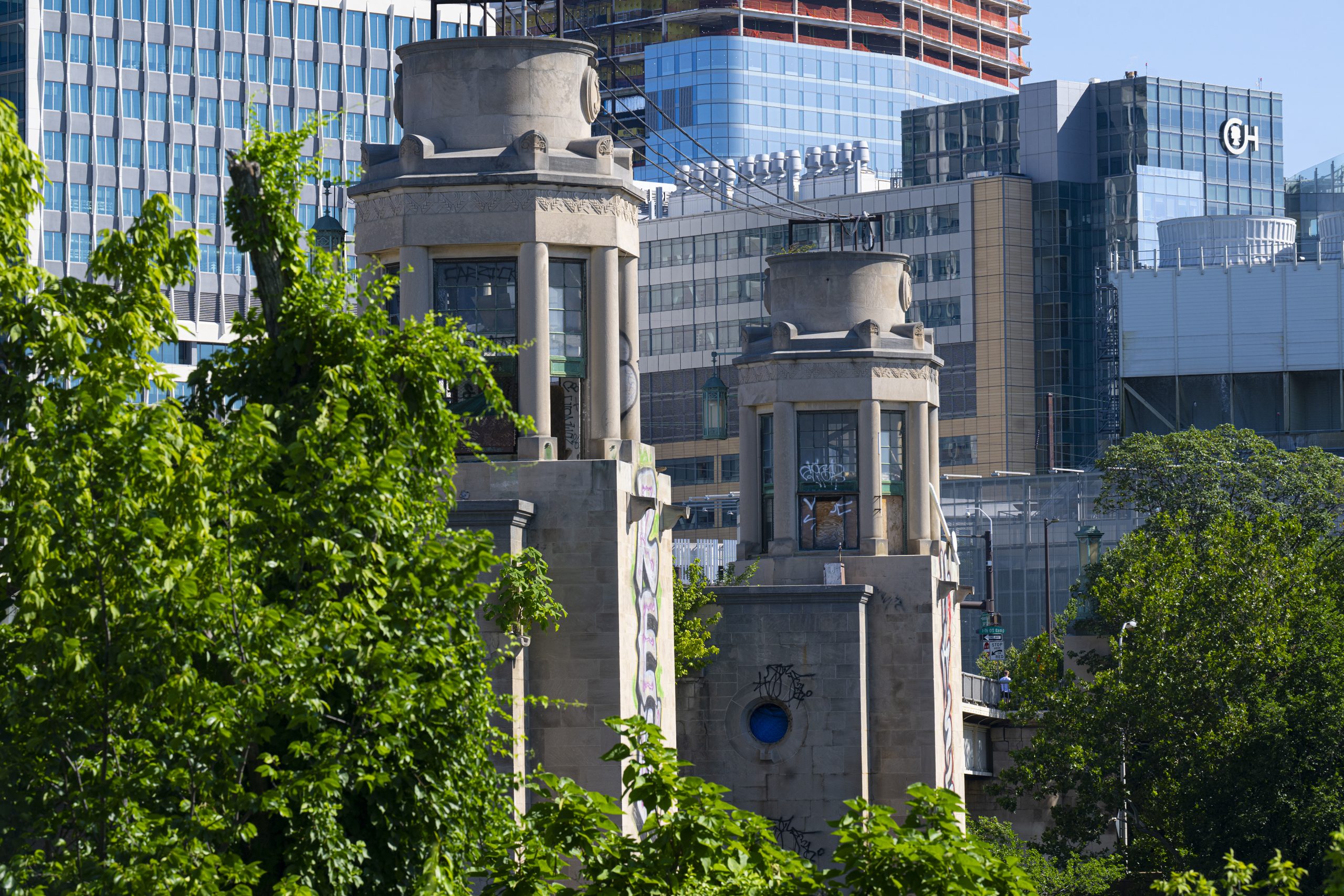
Broken windows and graffiti at the University Avenue Bridge, with the medical buildings of West Philadelphia in the background, July 23, 2026.Jose F. Moreno / Staff Photographer
A PennDOT spokesperson said that, in fact, it is in the process of finalizing a contract for work on the bridge, and that the work is expected to start “within a few weeks,” though the exact scope of the job is as-yet undetermined.
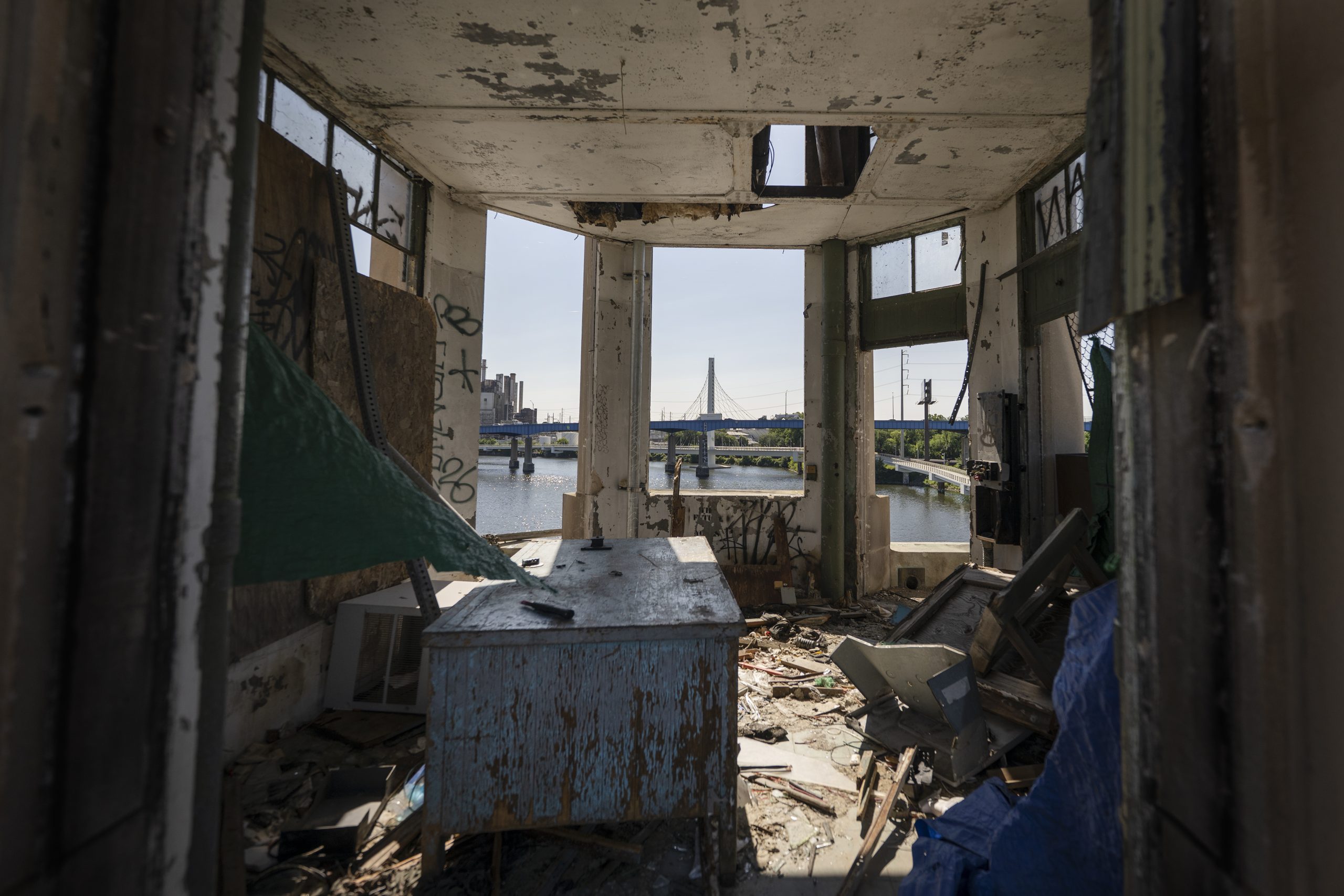
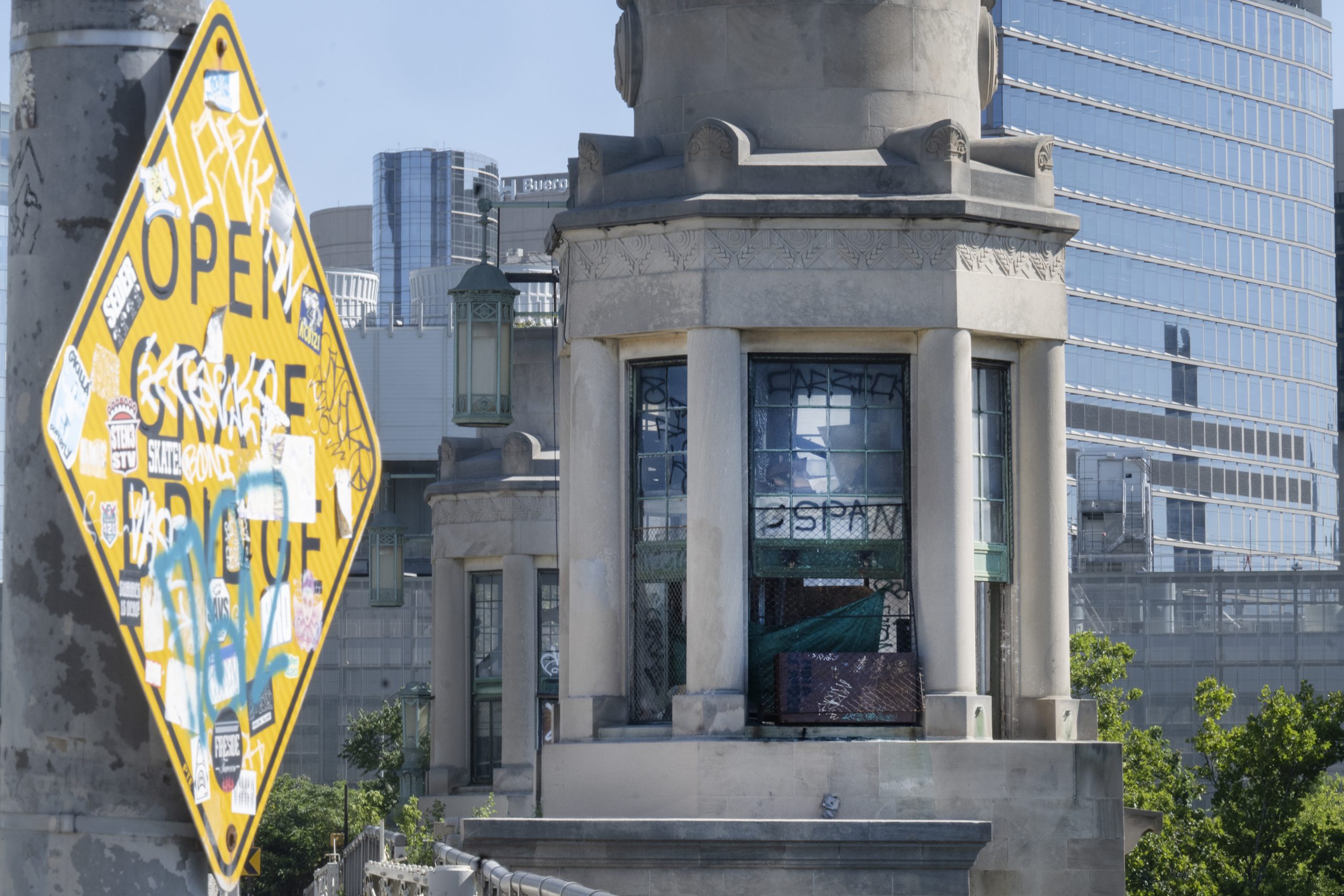
The two bridges share an architect in widely admired French-born Penn professor Paul Philippe Cret. Today, the windows on the University Avenue Bridge’s richly detailed operator houses are broken or gone, mortar is missing, stone is marred by graffiti, and some architectural elements have been stolen, the petition notes.
“The bridge must be made secure IMMEDIATELY to prevent further damage,” it states.
The Preservation Alliance for Greater Philadelphia, which characterizes the bridge as threatened by neglect and has urged its restoration, applauded the petition.
“We hope it will put pressure on PennDOT to take action to prevent further decay of the bridge and its operator houses,” said preservation alliance director of policy and communications Hanna Stark.
On the University Avenue Bridge: The condition of the operator’s house closer to Grays Ferry has continued to deteriorate in recent weeks.Jose F. Moreno / Staff Photographer
An Inquirer column in June highlighted the drawbridge’s condition, as did an article in September.
The bridge, which links West Philadelphia and Grays Ferry, is owned by PennDOT, though responsibility for its upkeep is split between the state agency and the city’s Streets Department. The city agency oversees operations, including the mechanical components that lift the bridge, which currently do not work. Graffiti removal may also fall under Philadelphia’s jurisdiction.
PennDOT handles the bridge’s aesthetic and structural components. It is responsible for cleaning up debris, and does routine maintenance on the other aspects of the bridge except for the mechanical components.
The state agency would also oversee any full major rehabilitation project, whose price tag PennDOT estimates at about $50 million. No such project is planned at the moment. The last major rehabilitation was in 1985.
The operator’s house closer to Grays Ferry on the University Avenue Bridge.Jose F. Moreno / Staff Photographer
The complete scope of PennDOT’s work expected to start in the next few weeks is still to be determined, the agency’s spokesperson said, but it will include steel repairs and fortification to prevent vandalism. Completion is expected in late 2026 or early 2027.
Damage to the bridge has continued in the past month or so at the operator’s house closer to Grays Ferry.
“It just feels like it’s getting so much worse,” said Heather Calvert, the West Philadelphia resident and regular bridge visitor who started the petition. “It’s not a big ask to secure it to keep more of the historic elements from getting lost for everyone.”
To have the bridge in this condition, Calvert said, “just makes the city look bad.”
Even at rock bottom — a 9-19 record, last place, the manager collecting a pink slip — Phillies officials figured they might still wind up buying at the trade deadline.
But would they have the prospect capital for a big deal?
“Well, there’s no doubt that we do,” Dave Dombrowski said back on April 28. “Yes.”
Not everyone shares that opinion.
With the deadline looming — set a calendar reminder for Aug. 3 at 6 p.m. — the Phillies are in playoff position and believed to be targeting late-inning relief, a right-handed bat, and a No. 4 or 5 starter. Or maybe, as one rival scout theorized this week, Dombrowski will attempt a bigger swing for higher-end starting pitching given the lack of available impact bats.
In any case, the Phillies’ farm system is ranked 29th out of 30 teams, according to Baseball America’s recently released midseason assessment. But don’t take the word of one publication. FanGraphs pegs them with the No. 24 system; MLB Pipeline’s preseason ranking put them at No. 20.
Many scouts are similarly unimpressed. One evaluator from a National League team, granted anonymity in exchange for candor, called the Phillies’ system “pretty barren,” while conceding they have a few “lottery ticket types” in the low minors.
As another NL scout put it, “Their system’s thin at the upper levels.” While some teams “have guys who could come to the big leagues and probably perform at a high level, the Phillies don’t really have that at triple A at all.”
Indeed, in trying to turn up right-handed hitting within the organization, the Phillies cycled through Otto Kemp (2-for-25, 10 strikeouts), Félix Reyes (6-for-38, nine strikeouts), switch-hitting Steward Berroa (1-for-7, four strikeouts), and now, veteran Bryan De La Cruz, who homered Wednesday night. They traded two minor leaguers last month for platoon outfielder Derek Hill.
Phillies president of baseball operations Dave Dombrowski (center) and general manager Preston Mattingly (right) push back against criticisms of the club’s farm system.Jose F. Moreno / Staff Photographer
On the pitching side, untouchable (in past trade talks, at least) Andrew Painter lugged a 7.06 ERA back to triple A in June. The best in-house replacement: Alan Rangel, a 28-year-old righty who got released in the minors by the Angels two years ago and posted a 5.40 ERA before returning to Lehigh Valley this week.
Dombrowski and general manager Preston Mattingly push back against criticisms of the farm system. Never mind, Mattingly says, that the Phillies have only two prospects (injured infielder Aidan Miller and righty Gage Wood) who are regarded among the top 100 in the sport.
“A lot of times, you mention top-100 lists, that’s not necessarily what teams internally talk about and the players they ask about,” Mattingly said recently on The Inquirer’s Phillies Extra podcast. “They’re going with a lot of the information, the data that we have internally. And we feel really good where our system’s at.”
Sure, but the Brewers and Dodgers feel the same about theirs, No. 1 and No. 3, respectively, in Baseball America’s rankings. The Braves and Cubs are closer to the middle of the pack, at No. 14 and No. 16, but still ahead of the Phillies.
It’s shaping up as an extreme seller’s market, with 22 teams entering the weekend in playoff position or within 4½ games of a wild-card spot. Some will waive a white flag before Aug. 3; others will hold firm. Regardless, the demand for players will outweigh supply.
“To me, it’s always about who can impact my team more rather than what’s my biggest need,” former major league general manager Jim Bowden said this week on Phillies Extra. “A starter probably helps the Phillies win the division more over a 162-game schedule. But to win in October, perhaps it’s the reliever or the right-handed bat that would be more important.”
Relative to most of his counterparts, Dombrowski is willing to move prospects, though he has clung to Miller and especially Painter, whom he wouldn’t discuss at the deadline two years ago for Garrett Crochet. He probably will have to change that stance now for a starter who would pitch in the postseason — and certainly for Tigers ace Tarik Skubal, the marquee name on the market if Detroit makes him available.
Even so, it’s fair to wonder if there’s enough in the Phillies’ minor-league stable to make meaningful additions to any area of the major league roster.
“What’s fascinating about [Dombrowski’s] long, successful Hall of Fame career, which is what it’s been, is that he has made a lot of trades without having good farm systems,” Bowden said. “He did it in Detroit, he did it in Florida, he did it in Montreal.”
It seems Dombrowski will have to pull another card from his sleeve this year.
Phillies infield prospect Aidan Miller has not played since the end of last season because of a lower back condition.Jose F. Moreno / Staff Photographer
Missing Miller
As a nonroster invitee to spring training, Miller’s locker was in the high-rent district of the clubhouse, wedged between Bryce Harper and J.T. Realmuto.
It wasn’t a coincidence.
The Phillies hoped to bring Miller to the majors this year, especially after he batted .356 with six homers and 22 steals over the final two months last season. Instead, the 22-year-old former first-round pick hasn’t played at all because of a lower back condition involving a degenerating disc and joint swelling.
Miller had a spinal procedure June 5, at which time the Phillies outlined “the goal to return to game activity in six to eight weeks.” Seven weeks later, updates are infrequent.
”He’s progressing,” farm director Luke Murton texted Thursday. “Back to playing catch. Some defense next week.”
Even so, the treatment that Miller received — radiofrequency ablation of the facet joints — provides temporary relief and may need to be repeated. The uncertainty about Miller’s short- and long-term health creates multiple questions, not only about his status as the Phillies’ future shortstop but also his value in a potential trade.
“If he was healthy,” an AL scout said, “he could lead a package.”
And now? It’s doubtful Miller could anchor a deal for, say, Skubal or Padres closer Mason Miller. For a trade of that magnitude, the Phillies may have to use Painter as a headliner — and even then, the Brewers and Dodgers have the prospect depth to outbid them.
But do they have the collateral in prospects to make a move for another starter, such as the Mets’ Clay Holmes, the Blue Jays’ Kevin Gausman, or Giants lefty Robbie Ray? Or will they have to aim lower, or fill a less costly need?
Among their higher-end prospects, infielder Aroon Escobar entered the weekend with a .637 OPS in double A, and outfielder Dante Nori has been sidelined for six weeks with a lower body injury. Shortstop Bryan Rincon (13 homers, .834 OPS in double A) is having a nice year, but he profiles as a second or third piece in a deal.
The top two positional prospects in the system — outfielder Francisco Renteria and shortstop Juan Parra — are 17 years old and in their first year of pro ball in the Dominican Summer League.
The Phillies traded 2020 first-round pick Mick Abel to the Twins at the deadline last year for star closer Jhoan Duran.Laurence Kesterson
Two years ago, the Phillies’ farm system was No. 14 in Baseball America’s midseason rankings. A partial list of trades since then:
Pitchers Sam Aldegheri and George Klassen to the Angels for closer Carlos Estévez.
Infielder William Bergolla to the White Sox for Tanner Banks.
Teenage shortstop Starlyn Caba and outfielder Emaarion Boyd to the Marlins for Jesús Luzardo.
Right-hander Mick Abel and teenage catcher Eduardo Tait to the Twins for Jhoan Duran.
Outfielder Hendry Mendez to the Twins for Harrison Bader.
The Phillies haven’t been burned by any of those players … yet. And the Luzardo and Duran trades, in particular, were big wins. But a continuous drain of the prospect pool led to a cumulative erosion.
“We’ve definitely been in a window where we’re acquiring players at the deadline,” Mattingly said. “We’re never recouping value, which is the state of where we’re at. It’s a great place to be, honestly, when you’re trying to compete for a championship every year.”
And after having only 12 major league debutants over the last three seasons, fewer than any team in that span, the Phillies finally graduated Justin Crawford, Painter, and Gabriel Rincones Jr. to the majors this year.
Crawford and Rincones are platoon outfielders for now; Painter, long viewed by Dombrowski as Justin Verlander 2.0, is expected back in the majors before the end of the season.
In time, the Phillies believe all three will make a greater impact, though they could also be used in a trade.
Either way, it takes time to replace them in the system.
Right-hander Gage Wood, the Phillies’ first-round pick in last year’s draft, is the organization’s top pitching prospect.David Maialetti / Staff Photographer
Gage-ing the system
The deepest subset of the Phillies’ farm system, in the assessment of three scouts, is right-handed pitching.
Start with Wood.
Or maybe bring him out of the bullpen?
Most scouts concur that Wood will pitch in the majors, but there’s disagreement about his optimal role. The 22-year-old is starting in the minors, though he has pitched more than four innings only once. He has a 3.58 ERA in double A and gained more national exposure two weeks ago by starting the Futures Game.
There may be enough interest in Wood to anchor a deal for a needle-moving player. But Wood also appears to be on an accelerated track, with the Phillies jumping him two levels to double A in late May.
“I don’t think about that stuff,” Wood said of being the subject of trade rumors. “I’m just here to play baseball.”
Several other right-handers are getting attention from scouts, but most are in the low minors. Two scouts mentioned 21-year-old righty Brad Pacheco, who has a 4.05 ERA and 78 strikeouts in 73⅓ innings for low-A Clearwater. Wen-Hui Pan and Alex McFarlane, a hard thrower who made his major league debut this week, also get decent marks.
A name to watch: Ramon Marquez. The 20-year-old righty entered the weekend with a 2.02 ERA in 10 games, including a 2.25 mark in four starts since moving up to high-A Jersey Shore.
One scout called Marquez “probably their best pitching prospect right now.”
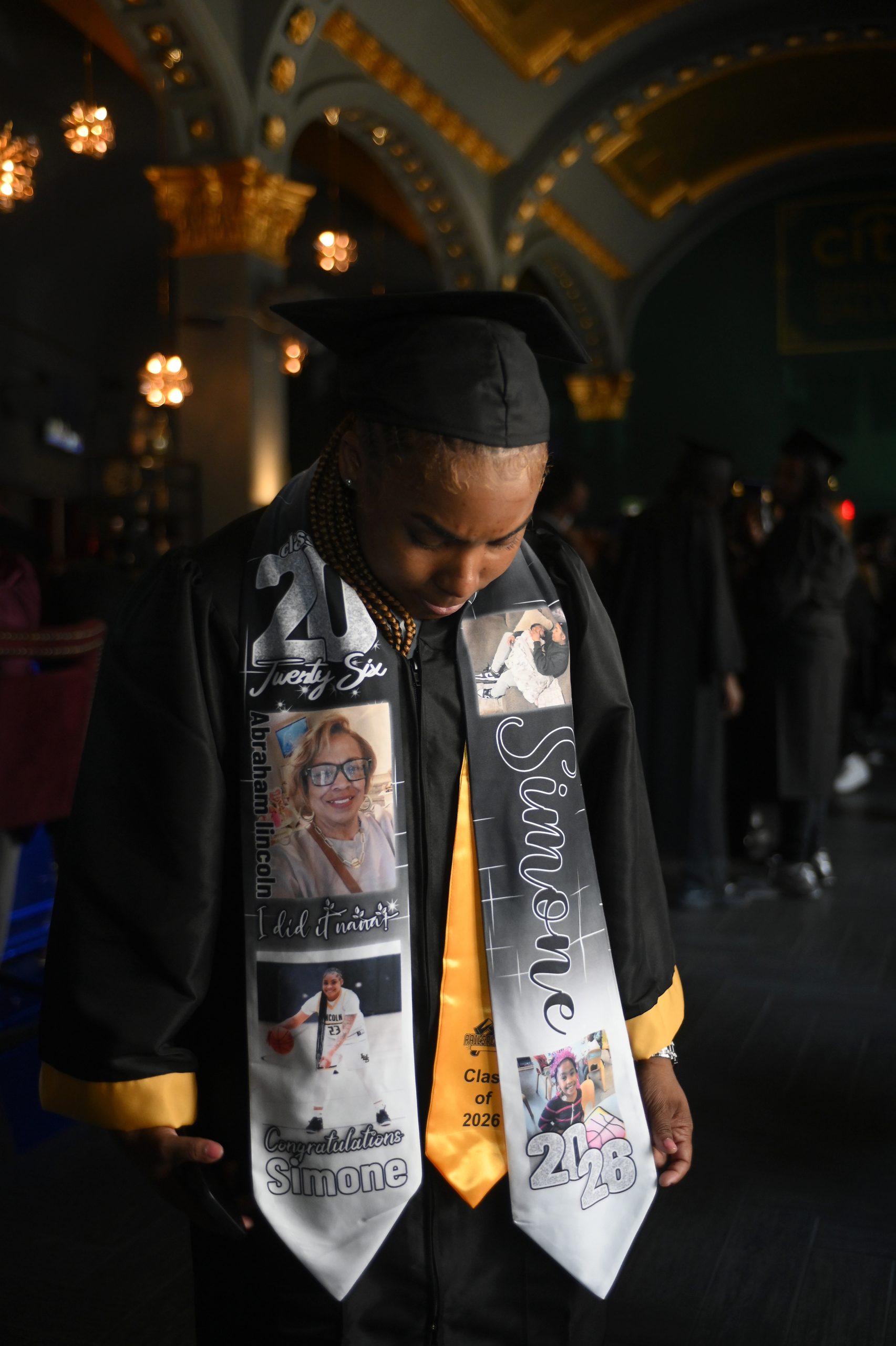
School faded as a priority when Simone Smith was a senior at Lincoln High, after her beloved grandmother died.
“I didn’t have no one telling me to get up, go to class, so I missed a lot of school,” said Smith, 18.
Her grades slipped, and she narrowly missed graduating with her class in June. But that near-miss galvanized her.
Soon to be graduate Simeone Smith remembers her late grandmother Elodee, in the green room lounge ahead of the 2026 Summer Graduation Ceremony at the Met, on Thursday.Bastiaan Slabbers / For The Inquirer
Summer school “was easy” once she buckled down, Smith said — she completed social science and English requirements, and on Thursday, she collected her hard-won diploma, one of nearly 400 Philadelphia School District students who crossed the stage at summer graduation after earning a handful of credits in summer school.
“This graduation was delayed, but not denied,” author, actor, and poet Jaylene Clark Owens told a packed auditorium at the Met on North Broad Street.
Smith, who wore a custom-made stole honoring her grandmother and will now enroll andplay Division I basketball at Georgia Southern University, was thrilled.
“It just feels great to be able to do this,” she said. “Me and my sister are the only ones that got our high school diplomas — my family has a lot of dropouts. But I wanted to do it for my Nana.”
Soon to be graduates listen to the rendering of the National Anthem and Black National Anthem during the 2026 Summer Graduation Ceremony at the Met, on Thursday.Bastiaan Slabbers / For The Inquirer
The graduation was a boisterous scene of joy and celebration: young people in an array of caps and gowns representing schools from all over the district, some in T-shirts and shorts under their robes, some in party dresses. Families wept, cheered, shouted: “You did that!” There was a steady drumbeat of applause, a sea of flowers and camera flashes, the arms of bursting-with-pride-parents reaching out to touch passinggraduates.
A beaming school board president Reginald Streater said Thursday’s graduation was no less significant or important than the ceremonies that happened in June.
Family members and friends react as graduates celebrates receiving their diploma during the Philadelphia School District’s summer graduation ceremony at The Met on Thursday.Bastiaan Slabbers / For The Inquirer
“You took ownership of your future,” Streater said. “There is never just one path to success. We believe in you, and we can’t wait to see all that you accomplish.”
School Board President Reginald Streater and Superintendent Tony Watlington shake hands with graduates during the 2026 Summer Graduation Ceremony at the Met, on Thursday.Bastiaan Slabbers / For The Inquirer
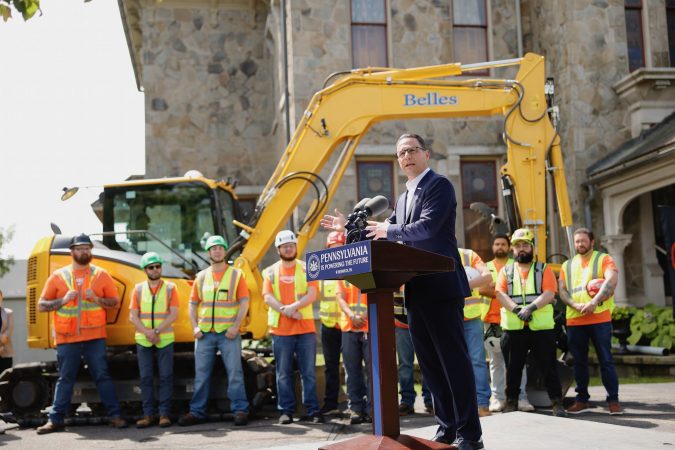
Gov. Josh Shapiro spent months preparing a set of standards he promised would “hold data center developers accountable.”
But behind the scenes, top Shapiro administration aides were drafting the framework with the input of Amazon and thepowerful data center lobby and sharing early drafts with company officials before making them public, records show.
The emails, first reported by climate change media outlet HeatMap earlier this year and obtained by an anti-data center activist in Montour County through the state’s open records law, show a cozy relationship between Shapiro’s administration and data center developers. But they also show the role the technology giants played in influencing the final version of Shapiro’s guardrails — though that influence only went so far.
Shapiro in May introduced the initiative as the Governor’s Responsible Infrastructure Development, or GRID, which are a set of transparency and environmental standards data center developers would need to meet to access state tax breaks and other incentives Shapiro asked the General Assembly to write into law. The Democratic-controlled state House approved these standards, but it’s stalled in the GOP-controlled Senate, as legislators struggle to find common ground on one of the most hot-button issues facing them today.
A spokesperson for Shapiro said the administration consulted numerous stakeholders as part of the drafting of the policies, including the Pennsylvania Building & Construction Trades Council, the Pennsylvania Environmental Council, the Natural Resources Defense Council, and more. Data center development is supported by many building trade unions across the state, which are likely to benefit from the major projects.
Environmental groups broadly support Shapiro’s proposal and want stronger regulations on data center projects. Some groups want to ensure the provisions are mandatory, instead of voluntary, as Shapiro proposed.
“As finalized, the Governor’s GRID standards set firm guardrails to protect Pennsylvania communities and hold data center developers accountable to strict standards requiring them to take additional action to ensure Pennsylvania communities benefit — and are not harmed — by these projects,” said Rosie Lapowsky, Shapiro’s press secretary, in a statement.
Shapiro, a Democrat seeking reelection this year and a possible 2028 presidential contender, has remained data-center friendly and emphasized that Pennsylvania should play a core role in the “battle for AI supremacy.”
But he has sharpened his rhetoric in recent months, citing his own personal evolution on the issue, as public opinion has also shifted with roughly 76% of Pennsylvanians across party lines opposing the projects.
“Too many of these projects have been shrouded in secrecy, with local communities left in the dark about who is coming in and what they’re building,” Shapiro said in his budget address in February.
Yet as other states like New York have put moratoriums on data center development, Shapiro has chosen to fast-track permits and support tax breaks to incentivize the massive projects, though he now believes they should meet certain voluntary standards.
Amazon has already committed to a $20 billion investment in Pennsylvania — the biggest investment in state history — to build two data center campuses in Luzerne and Bucks counties and will access the state’s sales tax exemption for data centers as approved by the General Assembly in 2021.
The Data Center Coalition — the powerful industry group made up of data center developers like Amazon, Google, Anthropic, OpenAI, and Microsoft — shared feedback on several drafts of Shapiro’s GRID principles and approved of most of its measures. But the industry still has “some significant concerns” with the voluntary program, including its clean energy provisions requiring certain percentages of its power to be from low- or zero-carbon sources.
Dan Diorio, the Data Center Coalition’s executive vice president of state policy and government affairs, described the proposed GRID program’s requirements to access tax breaks as “extensive” compared to the 37 other states that offer sales tax exemptions.
“We look forward to continuing to work with the legislature and the governor’s office on outlining what would ensure Pennsylvania remains a strong and competitive data center market,” Diorio said.
Fengqi You, an energy systems engineering professor at Cornell University and data center expert, said it’s best practice for governments to consult all stakeholders, including industry leaders. But data center developers and local communities have opposing viewpoints that must be balanced, he said.
“The right model, in my view, is to consult widely all the stakeholders, decide independently, and disclose transparently,” You said. “The standards are only as strong as the conditions and the consequences.”
But some of the conditions should not be voluntary incentives, like Shapiro proposed, You said. This has been echoed by some environmental and anti-data center groups, which argue that the provisions don’t go far enough if compliance is ultimately voluntary for the tech giants.
“It’s a useful starting point, but the incentive conditions should not substitute a minimum public protection for all,” You said. “If a company is receiving a tax exemption, then the state should have every reason to attach some very strong public interest conditions.”
‘Not ban or discourage data centers’
Ahead of Shapiro announcing his plans for GRID as part of the state budget address, Shapiro administration officials went further in their efforts to reassure companies like Amazon, which they’ve courted for years, records show.
In a Feb. 3 email, Department of Community and Economic Development Secretary Rick Siger wrote to Amazon Web Services staff that Shapiro would not “ban or even discourage data centers” and that “this new approach will not look back at projects or agreements already in place.”
Other emails, sent in March by Sam Robinson, a deputy chief of staff to Shapiro, request that Amazon and the Data Center Coalition submit their feedback and mark up drafts. Shapiro’s administration declined to share those earlier feedback drafts.
Legislators in Pennsylvania’s split General Assembly did not write Shapiro’s GRID proposal into law as part of this year’s $50.8 billion budget deal, and only enacted one new data center requirement despite near-unanimous support to repeal tax breaks for the projects. Shapiro now says he’s “considering all executive actions” he can do without the legislature.
Colby Wesner, a pediatrician in Montour County, received troves of emails from top Shapiro administration officials, top Amazon staff, and more as part of several Right-to-Know Law requests he submitted to find out more about a now-blocked project near his home.
“It’s a really insincere attempt,” Wesner said of the GRID principles. “It’s a public relations stunt.”
Now that Shapiro is considering acting on his own, Wesner said he wants to know whether Shapiro will add restrictions or continue to welcome the projects into Pennsylvania.
“Maybe he is listening to constituents and an executive action will demonstrate that he is listening to citizens,” Wesner added. “If it is, then great for him. But to date, everything he has done has been pro-data center industry.”
Amazon , for its part, declined to comment on its role in the drafting of the GRID principles, which, if approved, would not apply to their ongoing projects. Becky Ford, a principal for global infrastructure expansion at Amazon Web Services, replied to Robinson on March 18 that they “look forward to providing feedback.”
“We’re committed to being good neighbors in the communities where we build and operate, and will continue working with state and local leaders to invest responsibly and to keep creating good jobs across the Commonwealth,” an Amazon spokesperson said in a statement.