Tag: Weekend Reads

  • Philadelphia Historic District’s ‘firstivals’ have drawn super fans who have traveled from the nation’s first circus to its first zoo

    Philadelphia Historic District’s ‘firstivals’ have drawn super fans who have traveled from the nation’s first circus to its first zoo

    Christine Barnabic had already run a 5K at Belmont Plateau on Saturday morning when, still in her running gear, she hopped on her scooter and headed from her home in Fairmount to the Philadelphia Zoo. Her purse held commemorative pencils and a tattered punch card.

    When she arrived, the punch card had 10 holes in it — one for each “firstival” she had attended so far this year. At the zoo, she got her 11th hole punched, and a hat to celebrate her attendance.

    “It’s just really neat to recognize these firsts in America,” Barnabic, 42, said.

    The Philadelphia Zoo, for its part, was the first public zoo to open in the United States, in 1874. It is just one stop along the Philadelphia Historic District’s “52 Weeks of Firsts” events that celebrate Philly’s history and cultural significance by showcasing things that happened here first.

    The series launched Jan. 3, commemorating the first balloon flight in America. Barnabic missed the first run of events, but once she attended an event marking the first circus performance in the U.S., she was hooked.

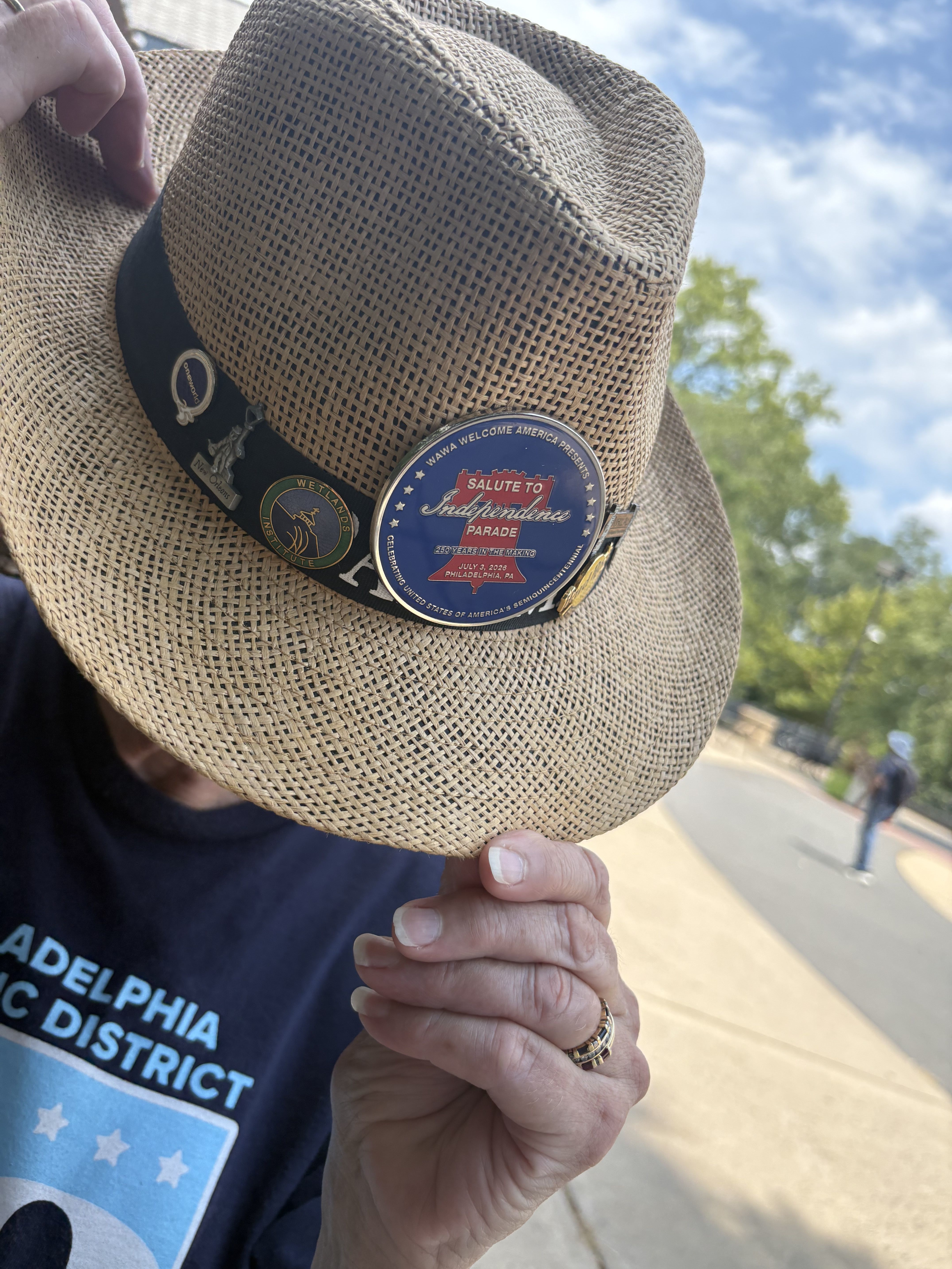
    Amanda Meiluch displays her hat adorned with pins for America’s 250th as part of the city’s 52 Weeks of Firsts celebrations Saturday, Aug. 8, 2026.Brett Sholtis

    She started posting selfies taken at each firstival and was stunned to learn she had won a prize pack including a Slinky, a record of old songs, tickets to the Betsy Ross House and Eastern State Penitentiary, and free admission to adult circus classes — each gift celebrating a historic milestone that happened in Philly.

    Barnabic said she is no history expert, but she is an enthusiast. She manages a company that does fitness tours for people who are in town for conferences or staying at hotels. To her, checking off the firstivals also boosted her knowledge.

    “And people are very friendly here,” she said.

    Todd Marcocci at Under the Sun Productions has been coordinating the events for the historic district. He said he knows at least four people who have attended all 32 events so far.

    The firstivals are often held at popular public locations, and many, like Barnabic, have been drawn in and kept coming back, Marcocci said. The zoo commemoration, for example, was held near the Ferris wheel, which is open to the public, no ticket required.

    “It’s been great, because each week there is variety. It’s beyond education. You think you know a lot about history, but everyone learns something here,” Marcocci said.

    Retired historian Lee Arnold agreed. In March, he attended the first flower show event at the Pennsylvania Horticultural Society and kept coming back.

    He has his own side quest: He is gathering commemorative items from all of the firstivals that he plans to give to the Historical Society of Pennsylvania for posterity.

    These days, Arnold leads history tours a couple of days a week for Grim Philly. He said he enjoys showing people the U.S. post office, the First Continental Congress, the first use of the phrase “United States of America,” and the invention of the Slinky, which can all be traced back to a four-block area in Old City.

    Artist Gwenn Seemel’s No. 1 captures many of the Philadelphia Zoo’s first milestones.Gwenn Seemel and Colibrí Workshop

    “It’s just wonderful. As I say to my tourists, everything started here,” Arnold said.

    For anyone feeling left out, 20 more firstivals remain on the calendar. They highlight everything from the first people to live in the region (at Penn Museum’s new Native North America Gallery) to the first modern detective story, “The Murders in the Rue Morgue,” written in 1841 by then-Philadelphia resident Edgar Allan Poe.

    (And yes, Philly invented cheesesteaks and water ice, according to the historic district, and forthcoming food-themed celebrations are on the list, too.)

    For the firstival diehards, the weekly events have also fostered a kind of community, said Amanda Meiluch, who took the train in from Penndel to volunteer at the event.

    She did not start out as a volunteer, but after a few weeks, she decided to make it official.

    In the process, the retired accountant has befriended other regulars — one of whom gave her a hat after dealing with a particularly sunny day. A week later, they saw each other again, and her friend was delighted to see that Meiluch had adorned the hat with pins celebrating the city’s history.

    “She made me happy. And I made her happy. That’s all you can do in this world,” Meiluch said.

  • Rowdy residents at Plymouth Township zoning meeting draw rebukes as they push back on big data center plan

    Rowdy residents at Plymouth Township zoning meeting draw rebukes as they push back on big data center plan

    The crowd at a raucous Plymouth Zoning Hearing Board meeting on Thursday repeatedly shouted down an attorney and expert witness representing developer Brian O’Neill’s plans for a hyperscale data center on the site of a closed steel mill.

    The hoots and hollers, which included some expletives, provoked repeated pleas for order from the board’s solicitor David Sander, who said the outbursts interfered with the court reporter’s ability to make accurate transcripts of the meeting.

    Although the two-and-a-half hour meeting was largely procedural, it was emblematic of flaring tempers throughout the region when it comes to data centers.

    The hearing, the first of at least several quasi-judicial proceedings, was held at Colonial Middle School to accommodate the number of residents expected to attend. Many have expressed fears about potential power and water usage, and pollution by a data center.

    The hearing also came on the heels of a recent social media post by Pennsylvania Gov. Josh Shapiro calling O’Neill’s plans “the exact wrong way to do development,” and public opposition by township council and Montgomery County commissioners.

    O’Neill, stung by the attacks, went on the offensive in the days before the meeting, releasing a study showing the economic might he says the data center will flex. In an interview with The Inquirer, he called his proposal the “opportunity of a lifetime” for the township, and said officials have bowed to political pressure by residents misinformed by social media.

    But residents at Thursday night’s meeting weren’t interested in the economic argument, which was set to establish who could testify and which experts could be admitted as the township considers zoning for the site.

    Frances Wood, who lives on West Elm Street, about 400 feet from the steel mill, was allowed to testify after outlining her personal health concerns regarding the data center’s potential air emissions.

    “I walk my dog every day by that building,” she said. “I also have respiratory distress and asthma related to my health as well. I will be breathing the air immediately because it is right there.”

    Residents interjected so frequently during Thursday’s meeting that Sander admonished them, especially after someone shouted an epithet.

    “We can’t get a record, and the zoning board can’t decide this case if we can’t hear the questions and answers because someone’s screaming and yelling at everything that the witness says or the counsel says,” Sander said.

    O’Neill’s lawyer, Edmund J. Campbell Jr., suggested there should have been security at the meeting.

    “I would ask that those who repeatedly disrupt the proceedings be removed,” Campbell said, to more jeers.

    What is O’Neill’s data center proposal?

    O’Neill wants to build a 2 million-square-foot data center at the shuttered Cleveland-Cliffs steel mill at 900 Conshohocken Rd., a 66-acre site along the Schuylkill. It would sprawl over 10 existing buildings as part of a reuse of a current industrial-zoned site.

    O’Neill, who did not testify at Thursday night’s meeting, cited Alan Wood, who founded what became the now-closed Cleveland-Cliffs steel mill, as an example of a job creator. That’s the same site where O’Neill wants to build a data center.

    And he noted John Ellwood Lee, who founded the nearby Lee Tire and Rubber Company, the site of which O’Neill has since developed into an office park. Both the steel mill and tire company once employed thousands.

    O’Neill said he hoped to kick-start thousands of construction jobs.

    “We’re bringing new technology to town, and we’re bringing it in a way that is sensitive to our neighbors and sensitive to the town,” he said.

    The hyperscale AI data center just outside Conshohocken would generate $21.11 million a year in taxes, according to a report O’Neill commissioned by 4Ward Planning. And it would create 5,000 construction jobs a year over a three-year period, the report said. It would result in 371 “direct data center jobs” and 468 “indirect and induced jobs,” according to the report.

    But opponents of the plan are concerned about light, noise, and air pollution. They worry about emissions from on-site power generation that’s been proposed, water use, and the impact on electricity costs, as well as the proximity to existing homes.

    O’Neill has said the facility would provide its own on-site electricity generation via natural gas-fired turbines. The operation, he has said, would be cooled by a closed-loop system that does not require outside water.

    O’Neill said the facility would utilize “dark sky standards” to ensure there is not light pollution, with outdoor lighting “less than a single soccer field.”

    He asserts that the proposed data center would not violate local noise ordinances and that his team has hired sound consultants.

    O’Neill has not named an operator or tenant, but said he is “negotiating with multiple large tenants.” He has indicated those tenants would be related to life sciences.

    (function(){function e(){window.addEventListener(`message`,function(e){if(e.data[`datawrapper-height`]!==void 0){var t=document.querySelectorAll(`iframe`);for(var n in e.data[`datawrapper-height`])for(var r=0,i;i=t[r];r++)if(i.contentWindow===e.source){var a=e.data[`datawrapper-height`][n]+`px`;i.style.height=a}}})}e()})();

    Who decides whether to allow a data center?

    O’Neill has applied for a special zoning exception so the data center can be built in the township’s heavy industrial zoning district. He argues that zoning should include data centers.

    The township zoning code allows a warehouse or laboratory, but does not specifically cite data centers.

    The township council has taken the position that a data center is not the same use as a warehouse. They said O’Neill’s application for a special exception must be decided by the zoning hearing board.

    If that exception is granted, the project would move onto the township’s land development process, which includes additional reviews, public meetings, and approvals.

    Richard Roseberry, an engineer at Colliers Engineering & Design who O’Neill hired, testified during Thursday’s zoning meeting that data centers fit in with other heavy industrial uses.

    But Charles Campbell, an attorney representing nearby property owners, said O’Neill’s team has not supplied enough information to make informed decisions, including a drawing of what’s being proposed.

    “It’s clear as day that this application is insufficient,” Campbell said. “It does not include what the applicant intends to put on the property. It talks generally about a data center … but does not provide a scale plan as required.”

    What does O’Neill say?

    Under Pennsylvania law, O’Neill argues, municipalities must have zoning for all legitimate land uses, and data centers have been recognized by the courts as a legitimate commercial or industrial use. Developers have, as a result, targeted industrial or commercial zones for data center proposals.

    A municipality cannot ban data centers under Pennsylvania law. As a result, many municipalities have raced to craft ordinances to limit their impacts.

    But municipalities are allowed to treat a land use not specifically mentioned in a zoning ordinance as a special exception or conditional use. That requires a developer to go through a zoning hearing board.

    If a municipality refuses to classify data centers as a legitimate use, a developer can file what’s known as a “substantive validity challenge,” which O’Neill says he has done because some township officials are on record as saying they don’t support his application.

    “If they don’t work with us in good faith, we’re going to get it by right,” O’Neill said.

    Sander, the zoning hearing board solicitor, ended Thursday’s hearing without setting a date for the next, saying it would likely continue in September.

    This story has been updated to say that developer Brian O’Neill did not testify at the meeting, and clarified the estimated number of jobs that would be associated with the data center.

  • Luxury homes are getting more expensive in the Philly area, but they’re still selling fast

    Luxury homes are getting more expensive in the Philly area, but they’re still selling fast

    Luxury homes in the Philadelphia area sold faster this spring than the overall market’s already fast pace, even as the minimum price to be considered a luxury sale hit a record high.

    Strong demand for luxury homes is outpacing supply in the Philadelphia metropolitan area, which is helping boost prices.

    The multiple listing service Bright MLS defines luxury homes as those sold for prices in the top 5% of the market. In the Philadelphia area this spring, that meant homes that sold for at least $1.15 million. That price is 7.5% higher than at the same time last year, according to Bright MLS.

    (function(){function e(){window.addEventListener(`message`,function(e){if(e.data[`datawrapper-height`]!==void 0){var t=document.querySelectorAll(`iframe`);for(var n in e.data[`datawrapper-height`])for(var r=0,i;i=t[r];r++)if(i.contentWindow===e.source){var a=e.data[`datawrapper-height`][n]+`px`;i.style.height=a}}})}e()})();

    An ‘accelerating’ luxury market

    In the Philadelphia region, the luxury market is “accelerating,” with homes selling quickly, said Lisa Sturtevant, chief economist at Bright MLS. In the second quarter of the year, half of the luxury homes for sale in the region sold in six days or less, compared to 11 days or less for homes overall.

    Across the Mid-Atlantic, one-third of luxury homes sold this spring were paid for with cash. The Philadelphia area had a higher share of all-cash luxury sales — 42%. In comparison, 24% of all spring home sales in the Philadelphia region were cash sales.

    Sturtevant predicts that the luxury market will continue to be more active than the rest of the market for the second half of 2026.

    Main Line community and Shore town are among top luxury zip codes

    Two local zip codes ranked in the 10 areas in the Mid-Atlantic with the highest shares of luxury home sales this spring, according to Bright MLS.

    In the Wayne area’s 19087 zip code, 37 of 88 home sales classified as luxury sales — roughly two in five sales.

    Down the Shore in Long Beach Island’s 08008 zip code, 34 of 36 home sales were luxury sales.

    Demand for luxury

    Luxury home buyers are less deterred by elevated mortgage interest rates and rising prices than entry-level and mid-market buyers. And gains in the stock market have helped boost luxury buyers’ purchasing power and demand for homes.

    The number of new pending luxury sales rose in the second quarter of the year in the Philadelphia region. They were up roughly 9% from the same time last year to a total of 1,056.

    More luxury homeowners in the Philadelphia area listed their homes for sale in the second quarter of the year than during the same time last year. The number of new luxury listings — 1,647 — increased by about 4%.

    But the Philadelphia region doesn’t have enough luxury homes for sale to meet the demand from buyers. The number of active luxury listings — 1,102 — was down almost 5% at the end of the second quarter compared to the same time last year.

    The number of closed luxury sales this spring — 889 — was relatively flat from the same time last year. Sales ticked up 0.5%.

    The number of sales would be higher if more luxury homes were on the market, Sturtevant said.

    “Unlike the entry-level and mid-market homeowners, luxury homeowners are not as likely to need to move in response to changing family or financial circumstances,” she said in a statement. “And right now, luxury homeowners, by and large, are not exercising their discretion to sell.”

    A stalled market for starter homes

    While luxury homes sold quickly and at a premium this spring, at the other end of the housing market, starter homes lingered.

    In June, the number of starter homes for sale in the Philadelphia area was up 14% from the same time last year, according to an analysis by Zillow. And sellers cut prices in a quarter of these listings that month.

    The number of starter homes sold in May was down almost 7% from the year before.

    Zillow considers starter homes to be those in the 5th to 35th percentile of home values.

    Buyers of these homes have more choices than last year, since supply is up, said Kara Ng, senior economist at Zillow. But these buyers are also facing “financial pressures” that make saving for a down payment and taking advantage of opportunities more difficult.

  • Philly’s chief paramedic was punished for reporting favoritism in the fire department, lawsuit says

    Philly’s chief paramedic was punished for reporting favoritism in the fire department, lawsuit says

    Philadelphia’s chief paramedic said in a whistleblower lawsuit that he was stripped of his leadership position for sounding the alarm about allegations of favoritism in the city’s fire department.

    Jason Centofanti, who joined Philadelphia’s emergency medical services in 2007, says fire department leadership punished him for escalating a report accusing a captain of being lenient with a subordinate who had failed to fill out required patient records because of a personal friendship.

    Centofanti, who was elevated to the role of fire paramedic services chief last year, investigated and suspected the captain attempted to cover up the conduct by falsifying an official record. But when Centofanti elevated these concerns, the suit says, he was met with a brick wall and punished.

    His plight made its way to the Philadelphia Office of the Inspector General and the fire commissioner, according to the complaint. Even though some higher-ups acknowledged the retaliatory nature of his transfer in conversation with Centofanti, the suit says, it was not enough to stop it.

    The lawsuit, which was filed Wednesday in Common Pleas Court, accuses the city of violating whistleblower protections and asks a judge to order the city to end the retaliation against Centofanti, pay him for lost wages, and compensate him with more than $50,000 in damages.

    A spokesperson for the city’s law department declined to comment on the active litigation. Amanda Martinez, Centofanti’s attorney, said in a statement that the lawsuit speaks for itself.

    Centofanti launched an investigation in January shortly after a lieutenant complained to him about the captain’s favoritism, according to the complaint.

    The lieutenant also accused the captain of harassment, but the lawsuit does not describe the nature of the allegation.

    Centofanti discussed the allegation with the accused captain, and escalated a report to department leadership and human resources.

    During the investigation, Centofanti came to believe that the captain had altered a document to cover up the alleged conduct, the lawsuit says.

    “Plaintiff explicitly stated that he believed that [the captain] submitted a falsified document for an official PFD investigation,” according to the complaint.

    The aftermath of the investigation was not what Centofanti expected.

    Martin McCall, a deputy commissioner for EMS, moved the captain to a new building at her request “to shield her,” the suit says. McCall also informed Centofanti that due to “work performance” he was being transferred back to field duty, according to the complaint, despite the chief’s work having been rated “superior” and “satisfactory” in a recent performance evaluation.

    McCall also moved the lieutenant to a new post because, the suit says, she made the accused captain “uncomfortable.”

    “The two reporters of the wrongdoing … were being transferred to less desired positions and punished for speaking out,” the lawsuit says.

    Centofanti went to the department’s top leaders and claims they were sympathetic. But that sympathy did not change his fate. An official whistleblower complaint with the city’s inspector general was not enough to reverse the transfer, either.

    He was formally transferred out of EMS administration to a field assignment in May, the suit says. His office schedule was replaced with a field rotation that requires nights, weekends, and holidays, according to the complaint. Centofanti lost his office, staff, and car.

    Coworkers have been taunting Centofanti since he returned to the field, the complaint says.

    “When are you going to learn to shut your mouth,“ one captain texted him, according to the complaint. ”Enjoy your paycut.”

  • Lucky tuna salad and fanny pack meatballs: What Phillies fans bring to Citizens Bank Park

    Lucky tuna salad and fanny pack meatballs: What Phillies fans bring to Citizens Bank Park

    “What is your spaghetti policy here?”

    Once a throwaway joke from a 2010 It’s Always Sunny in Philadelphia episode, the question has become shorthand for gauging whether a ballpark allows food from the great beyond — Ziplocked bags of cold spaghetti and red sauce included.

    Most do. At Citizens Bank Park and 26 other Major League Baseball stadiums, fans can bring in food as long as it’s sealed and can fit inside a stadium-approved bag (12 inches by 6 inches by 12 inches‚ in the Phillies’ case). Naturally, there are exceptions: The Athletics strictly prohibit outside food, while the Tampa Bay Rays and Detroit Tigers require a doctor’s note for a spaghetti bag. (The San Diego Padres even have a special exemption for food that “can be thrown as a projectile,” so hot dogs are no-go, at least in the hands of a Philadelphian.)

    Baseball’s lax food policies have long been viewed as a way to keep America’s pastime accessible, especially as ticket and concession prices continue to rise. Generally, most fans keep it simple: sandwiches, chips, fruit, or a bag of precooked glizzies.

    But in Philly, the Bank’s spaghetti policy has taken on new life as Phillies fans redefine what’s considered acceptable ballpark food, smells and food safety be damned. For some, smuggling in tiramisu or seafood is a sign of dedication. For others, it’s about committing to a bit.

    Regardless, Philly wouldn’t have it any other way.

    “As much I as love ballpark food, I don’t want to miss anything because I’m waiting in line” at concessions, said Laura Bider, a season ticket holder who prefers to tote a fanny pack full of meatballs and what she called “pocket pickles.”

    (function() { var l = function() { new pym.Parent( ‘cbp-meatballs3__graphic’, ‘https://media.inquirer.com/storage/inquirer/ai2html/cbp-meatballs3/index.html’); }; if(typeof(pym) === ‘undefined’) { var h = document.getElementsByTagName(‘head’)[0], s = document.createElement(‘script’); s.type = ‘text/javascript’; s.src = ‘https://pym.nprapps.org/pym.v1.min.js’; s.onload = l; h.appendChild(s); } else { l(); } })();

    At the start of this year’s baseball season, we asked Phillies fans to tell us about the best food they’ve taken inside the ballpark. We fully expected to hear about supermarket rotisserie chicken, booze-soaked fruit, and the best BYO condiments.

    We did. But we also received 100-plus submissions of the most outlandish things we’d ever heard: fresh mussels, hard-boiled eggs, racks of ribs, and oysters tucked inside hoagie rolls, among others. (We don’t judge, we just listen.)

    “Bring whatever feels lucky to you, whatever is going to pack you with enough protein and joy to get you through a game,” said Sarah Dlugos, 28, of Graduate Hospital. She believes her curried tuna salad helped the Phillies sail to the National League Championship in 2023. She also had a retort for skeptics: “It’s none of anybody else’s business.”

    Actually, it’s our business. Here are the wildest foods people have taken inside Citizens Bank Park, for better or worse.

    Seafood, apparently?

    Ideally, a baseball game is like an airplane: You respect legroom, and never, ever eat smelly food that spoils easily.

    Not here. In Philly, fish and mollusks are totally acceptable ballpark fare.

    Dlugos packed a tuna salad sandwich on untoasted whole wheat bread to all eight Phillies games she attended during the 2023 season. And while the flavorings ranged from dill to sriracha and sesame, the outcome remained the same: Every time Dlugos bit into her mushy, slightly warm sandwich, the Phils won.

    (function() { var l = function() { new pym.Parent( ‘cbp-sardines__graphic’, ‘https://media.inquirer.com/storage/inquirer/ai2html/cbp-sardines/index.html’); }; if(typeof(pym) === ‘undefined’) { var h = document.getElementsByTagName(‘head’)[0], s = document.createElement(‘script’); s.type = ‘text/javascript’; s.src = ‘https://pym.nprapps.org/pym.v1.min.js’; s.onload = l; h.appendChild(s); } else { l(); } })();

    “I even had tuna salad for game two of the NLCS when the Phillies beat the [Arizona] Diamondbacks 10-0,” she said. “Lucky tuna.”

    Dlugos assured us that she downed her sandwiches quickly, to limit any odor, and she recommends copycats eat their tuna before the third inning at the latest. After all, her sandwiches had already survived several Broad Street Line stops before making it to the stands.

    Haters, she suggested politely, can go kick rocks. “Whatever you do is between you and the tuna,” said Dlugos.

    Not everyone is so lucky.

    It was June 2012 when Jersey resident Dom Ellis walked into Citizens Bank Park with a bag of fresh mussels taped to his back and a dream: for Chickie’s & Pete’s to steam his shellfish and top them with a drizzle of their cheese dip.

    (function() { var l = function() { new pym.Parent( ‘cbp-mussels2__graphic’, ‘https://media.inquirer.com/storage/inquirer/ai2html/cbp-mussels2/index.html’); }; if(typeof(pym) === ‘undefined’) { var h = document.getElementsByTagName(‘head’)[0], s = document.createElement(‘script’); s.type = ‘text/javascript’; s.src = ‘https://pym.nprapps.org/pym.v1.min.js’; s.onload = l; h.appendChild(s); } else { l(); } })();

    “For some reason that popped into my head, and I thought it sounded really good,” said Ellis, now 34, of Pennsauken.

    His hopes were dashed when the Chickie’s & Pete’s staff in section 126 refused to so much as touch the mollusks. “I remember the lady looking at me like I had three heads,” Ellis recalled. “The manager was like, ‘Do you think anyone here knows how to cook mussels?’”

    Ellis said he would’ve paid at least $50 for cheesy ballpark mussels. Instead, he dumped them in the trash. To date, Ellis is so scarred that he refuses to bring food inside any ballpark.

    “A lot of people lost that day,” Ellis said. “I lost. The Phillies lost.”

    More recently, someone did succeed in getting shellfish to the stands.

    Last year, Ty, a local influencer who goes by “the Hippie Meathead,” smuggled 60 oysters inside the Bank by stuffing them in hoagie rolls, shells and all. He wrapped the rolls in tinfoil to avoid any interrogation. (The 25-year-old Rittenhouse resident declined to share his last name out of fear that his seafood habits could hurt his career.)

    Once inside, Ty put the oysters on ice that he retrieved from concessions and shucked them with a screwdriver. He slurped some straight, while others topped hot dogs and pizza slices that were shared with strangers. A few went into a beer bat filled with Yuengling. Ty chugged it like an oversize shooter.

    “It tasted like the ocean,” he said. “Oh, and victory.”

    The home cook special

    Forget peanuts and Cracker Jack: The new frontier of baseball fandom is bringing elaborate spreads to the ballpark. Dozens of Inquirer readers responded to our survey with tales of dinners spread across several innings.

    A reader from Point Breeze prepped a full steak with potatoes and shrimp scampi for night games. Another wrote via Reddit that they managed to get a full barbecue spread — smoked brisket, mac and cheese, cornbread, and baked beans — inside for a World Series game.

    Kevin Kilroy’s most memorable Phillies game involved eating lasagna and tiramisu in the stands for a birthday party. It wasn’t exactly a five-star meal: The cold lasagna was “just edible.” The tiramisu, a family recipe, was a toppled mess. Not that Kilroy minded.

    (function() { var l = function() { new pym.Parent( ‘cbp-tiramisu2__graphic’, ‘https://media.inquirer.com/storage/inquirer/ai2html/cbp-tiramisu2/index.html’); }; if(typeof(pym) === ‘undefined’) { var h = document.getElementsByTagName(‘head’)[0], s = document.createElement(‘script’); s.type = ‘text/javascript’; s.src = ‘https://pym.nprapps.org/pym.v1.min.js’; s.onload = l; h.appendChild(s); } else { l(); } })();

    “Each Phillies game is special because of the people I’m with,” said the 33-year-old Olde Kensington resident. “The food is a way to celebrate that.”

    First-time season ticket holder Alex DiDonato, 28, has already built a reputation in section 317 for bringing ornate dinners: a rack of ribs, crab cake sandwiches with homemade aioli and grilled corn, a charcuterie board, and, more recently, a DIY taco kit with ground beef, guacamole, shredded cheese, and lettuce.

    (function() { var l = function() { new pym.Parent( ‘cbp-tacos__graphic’, ‘https://media.inquirer.com/storage/inquirer/ai2html/cbp-tacos/index.html’); }; if(typeof(pym) === ‘undefined’) { var h = document.getElementsByTagName(‘head’)[0], s = document.createElement(‘script’); s.type = ‘text/javascript’; s.src = ‘https://pym.nprapps.org/pym.v1.min.js’; s.onload = l; h.appendChild(s); } else { l(); } })();

    The new tradition started as a way for her to make each game feel special. The Spring Garden resident hasn’t had a single miss yet, she said, and has plans to bring a tray of baked ziti next. The only downside: her seats.

    “We sit at the edge of our section, so every time someone comes into our [row], we have to stand up and take all of our food and dips and drinks with us,” DiDonato said. “It’s a bit of a problem.”

    Bider, with her meatball-filled fanny pack and back-pocket pickles, isn’t into all the flash. The 46-year-old from Swedesboro just wants the Phils to make the playoffs.

    (function() { var l = function() { new pym.Parent( ‘cbp-pickels__graphic’, ‘https://media.inquirer.com/storage/inquirer/ai2html/cbp-pickels/index.html’); }; if(typeof(pym) === ‘undefined’) { var h = document.getElementsByTagName(‘head’)[0], s = document.createElement(‘script’); s.type = ‘text/javascript’; s.src = ‘https://pym.nprapps.org/pym.v1.min.js’; s.onload = l; h.appendChild(s); } else { l(); } })();

    The one time she splurged on a stadium hot dog and an ice cream helmet last year, the Phillies lost to the Los Angeles Dodgers in the first game of the division series, Bider said.

    “It was all my fault,” she said. “And, no offense to the stadium, the food was nasty.”

  • He lives with his wife — and his husband, and his partner, in a 6-person polycule

    He lives with his wife — and his husband, and his partner, in a 6-person polycule

    Linden Curhart describes his home as a “spider web of connections.”

    There’s his husband, Teddy Ullrey-Curhart, whom Curhart met when he was an isolated teenager growing up in a conservative town in Virginia. The two always dreamed of getting married, and in June they celebrated their 13-year commitment in a big pink ceremony at Pastorius Park in Northwest Philadelphia.

    There’s Curhart’s wife, Travis Rosemarie Curhart-Higgins. They bonded as the two most sober people at a friend’s birthday bar crawl in 2019, and got married in 2023. (Curhart wears two stacked wedding rings on his left hand, one for each spouse.)

    Then there’s Curhart’s partner, CJ Higgins, who asked prospective dates to fill out a short Google Form expressing their interest, which Curhart did. Rounding out the group is Curhart’s best friend and “queer platonic partner,” Angie Araujo, who is married to Maxine Webber, and dating CJ. Travis and CJ are also married.

    “It’s a whole constellation,” Curhart, 28, said. Ullrey-Curhart is also in his late 20s; the rest of the crew are in their early 30s.

    The six live together as one family in a narrow, rented rowhouse near Drexel. They each have their own room.

    The polyculeJulia Duarte / Staff Illustration

    The polycule — the textbook term for a group involved in polyamory together — shares costs, and meets weekly to discuss chores and meals (usually each person cooks one night a week). They also collectively care for three cats and a hermit crab named Linda.

    “Honestly, the biggest daily challenges that we deal with are just things like, ‘please rinse your mug before you put it in the sink,’” said Curhart.

    The household is Jewish and everyone is an anarchist, Curhart said. They keep the closets stacked with street medic supplies to bring to protests and homeless encampments.

    Some of the members work in theater and some in tech; some don’t work. (Curhart is disabled and relies on the polycule to support him; Ullrey-Curhart is looking for work.) They’ve lived collectively for two years.

    “As a species, humans are pack animals,” said Curhart. “That isn’t to say that everybody should be polyamorous, but I think everybody should live in community.”

    The following, as told to Zoe Greenberg by Linden Curhart, has been edited for length and clarity.

    On proposing marriage

    I had planned a big romantic public proposal for Travis, and then COVID lockdown hit. So instead I got flowers and made dinner at home. I set it up really romantically, with candles, and proposed. We both cried.

    Teddy proposed to me while the whole polycule was apple picking. He got down on one knee and did that dramatic thing where he said my whole name in front of everybody. He talked about how long we’ve been together and how much change we’ve been through.

    Travis and I got married on the winter solstice, so Teddy and I got married on the summer solstice.

    Travis Curhart-Higgins (left) and Linden Curhart show the tattoos they got after their wedding in 2023.Elizabeth Robertson / Staff Photographer

    On what marriage means

    When I’m talking to people who are not in the polyamorous world, I’ll describe it as a “commitment ceremony.” Because I’m not legally married to anybody. But within our own communities, we just say that we’re married.

    There’s this sense of security that comes with making that decision and having it witnessed by all of the people that you love.

    On leaving the state out of the polycule

    The way that I see it is that our personal relationship, who we share our lives with, who we have sex with, who we choose to raise our kids with, that’s not the government’s business.

    But even if you’re not getting the state involved, it’s a big decision to permanently entangle your life with another person. It’s not something that I am actively seeking to do again.

    On moving in together

    All of us were living in various apartments that we hated, scattered around West Philly. We all had landlords that were crappy.

    The pitch was: all of us are broke and we all love each other, and we’re already making dinner together three times a week. We might as well just all do that in the same place. So we came together and pooled our resources and found the rowhouse.

    All of us understood that this is a family commitment. I really want to have kids someday, and these are the people who will help me raise my kids.

    Linden Curhart kisses his husband, Teddy Ullrey-Curhart, while his wife, Travis Curhart-Higgins (right) looks on. Elizabeth Robertson / Staff Photographer

    On sharing money

    We haven’t officially pooled our finances because it’s important for all of us to have financial independence and some financial privacy.

    Somebody will go grocery shopping for the whole house and then calculate an even split. If somebody can’t contribute that amount, they’ll just say, “Hey, I can’t cover mine this week,” and that’s not usually a big deal. Somebody else will step up.

    Generally speaking, we try not to give each other loans. You don’t give somebody money unless that is money that you can afford to lose.

    On distributing labor

    We try to split the work: the financial labor, the actual physical labor, and the emotional labor, so that everybody’s contributing whatever they have the most of.

    Because I contribute less money, I try to make sure that I’m doing things like making big lunches that people can have during the week. I run a garden so we can grow some of our own food.

    The polycule meets on Sundays to discuss tasks for the week. Elizabeth Robertson / Staff Photographer

    On potential breakups

    Because we’ve been together for so long, we don’t really worry about that. We don’t have concrete contingency plans, but our overarching philosophy of how we treat each other doesn’t stop if we break up.

    Fun fact: Travis and Angie are exes. They broke up before we chose to live in a house together. They had dated for a few months and then decided they didn’t have romantic feelings for each other.

    On the most important house rules

    I was worried about us getting on each other’s nerves in close quarters.

    We have a rule that we don’t have serious emotional conversations in the living room. That’s a bedroom conversation. If a conversation starts in the living room and gets tense, one of us will be like, “Oh, I don’t think this is a living room conversation.”

    Don’t gossip. If somebody tells you something emotional, you assume that it’s for your ears only.

    You try not to drag everybody in the polycule into conflicts that are just between two people.

    On a future spare bedroom

    My 10-year vision is a house with a big vegetable garden and kids and maybe a dog. And hopefully a spare bedroom where we can host people who need a place to crash.


    This story is part of a new series about life partners across the Philadelphia area.

    If you want to share your story about who you’re navigating life with, romantically or otherwise, write to lifepartners@inquirer.com. We won’t publish anything without speaking to you first.

  • New Trump-promoted Freedom Fuel station pops up in Philly. Another could be shut down.

    New Trump-promoted Freedom Fuel station pops up in Philly. Another could be shut down.

    Philadelphia drivers looking to save a few bucks at the pump streamed into the city’s newest Freedom Fuel station Friday afternoon, even while the station’s deep discounts remain a mystery.

    The station, located in Bustleton on Roosevelt Boulevard, is one of four new Freedom Fuel locations added this week. The other three are in New Jersey, including one all the way up in Morris County.

    The gas network, which was promoted by both the White House and President Donald Trump last month, is now up to 29 stations across the Philadelphia region, stretching east to the Jersey Shore.

    (function(){function e(){window.addEventListener(`message`,function(e){if(e.data[`datawrapper-height`]!==void 0){var t=document.querySelectorAll(`iframe`);for(var n in e.data[`datawrapper-height`])for(var r=0,i;i=t[r];r++)if(i.contentWindow===e.source){var a=e.data[`datawrapper-height`][n]+`px`;i.style.height=a}}})}e()})();

    Nearly all the pumps were full at Philly’s newest Freedom Fuel spot Friday afternoon, with the station selling a gallon of regular gas for $3.79 a gallon. That’s nearly 35 cents a gallon less than a Wawa just up Roosevelt Boulevard, where a gallon of regular gas went for $4.13 on Friday.

    A nearby Lukoil was a bit closer to Freedom Fuel’s prices, offering a gallon of regular gas for $3.99.

    An enduring mystery remains how Freedom Fuel has been able to consistently offer lower prices than nearby competitors.

    Experts told The Inquirer Freedom Fuel was likely suffering losses for selling fuel at such a low price, especially since many of the company’s stations don’t have robust convenience stores or car washes to create revenue.

    “It becomes unsustainable,” Eliezer Fich, a finance professor at Drexel University’s LeBow College of Business, told The Inquirer last month. “Unless prices go down. But if they do, they go down for everybody.”

    According to public records, the newest Freedom Fuel station is owned by Celik Plaza II l.l.c., which had previously run it under a “Red Lion Fuel” banner. Engin Celik, who is listed as a principal with the company, according to documents reviewed by The Inquirer, did not respond to a request for comment.

    Philly Freedom Fuel station faces closure after failing inspection

    The Freedom Fuel station on Bustleton Ave. in Philadelphia. Dana Munro / staff

    While Freedom Fuel is adding locations, it could soon lose one in Philadelphia.

    The station on Bustleton Avenue, one of at least six locations linked to Cherry Hill developer Shamikh Kazmi and his brother Syed Kazmi, has an expired fuel dispensing license and failed an inspection last week, according to city records.

    If unresolved, the station could be forced to close by Sept. 4, according to a city spokesperson.

    The Kazmi brothers, who have been embroiled in at least two lawsuits related to previous gas station ventures, could not be reached for comment.

    Freedom Fuel owners remain quiet

    Ravens special teams coach Randy Brown signed Freedom Fuel’s formation papers. Terrance Williams

    While Freedom Fuel’s launch was proudly promoted last month by Trump, the company’s owners have remained quiet about the enterprise and how they’re able to maintain low fuel prices.

    A White House spokesperson previously told The Inquirer Freedom Fuel is a private company receiving no government subsidies and not accessing fuel at a lower cost.

    “Freedom Fuel Network is a privately owned and proudly patriotic company — along with its convenience store operators, haulers, sign companies, and operational partners — that answered President Trump’s call to action to lower prices at the pump,” the company said in a statement on its website.

    Baltimore Ravens assistant coach Randy Brown, the former mayor of Evesham Township, N.J., and a self-proclaimed “proud Trump supporter,” signed Freedom Fuel’s certificate of formation in Delaware on June 23. Brown has declined to comment on the enterprise.

    Former commodities trader Yoni Gontownik also signed the certificate of formation, and has not responded to requests to comment. Gontownik and his wife, Bellen, have hosted Republican fundraisers through NORPAC, a New Jersey-based political action committee supporting pro-Israel lawmakers in both parties.

    Staff writer Ryan W. Briggs contributed to this article.

  • As this city firefighter’s discrimination lawsuit heads to court, he may get help from a new state law protecting Black hairstyles

    As this city firefighter’s discrimination lawsuit heads to court, he may get help from a new state law protecting Black hairstyles

    A Black Philadelphia firefighter headed to court after suing the city for discrimination over his hair may get some help from a recently passed law.

    Last November, Gov. Josh Shapiro signed the Pennsylvania CROWN Act, reshaping the statewide landscape for such cases. The law, which amends the Pennsylvania Human Relations Act, bans discrimination based on hairstyle, texture, or type.

    The firefighter’s lawsuit argues that the city broke both the Pennsylvania Human Relations Act and a city ordinance by discriminating against him due to his hair. The lawsuit seeks compensation and a change in the fire department’s hair policy. The city declined to comment for this article.

    According to one legal expert, the CROWN Act’s passage reflects a shifting understanding of how Black hair is viewed in a workplace setting.

    “The Pennsylvania CROWN Act makes clear harassment and other acts of discrimination on the basis of characteristics that are historically associated with one’s racial identity, like a Black worker’s locs or skin complexion, constitutes unlawful race discrimination,” said D. Wendy Greene, a professor at Drexel University’s Thomas R. Kline School of Law who is not involved in the case.

    Similar laws have been passed in 30 states, according to a legal advocacy website. On the local level, a similar rule already was enshrined in the Philadelphia Fair Practices Ordinance.

    ‘A measure of time’

    The plaintiff, 42-year-old Bariq Fluellen, said he has always wanted to work in a field where he could help people. His uncle was a firefighter, and he remembers emergency workers arriving at his home after his father died from a heart condition. “I knew these people were here to help,” he said, and he wanted to be like them.

    After a stint in college and a couple of years working at the former Manayunk Paperworks to support himself and two children, Fluellen took the civil service test and was hired as a firefighter at age 29.

    “I was elated. I knew it could be a career and not just a job for me. I knew that I would be able to sustain my family and myself and have a little extra just because of the opportunity the fire department provides,” Fluellen said.

    Firefighter Bariq Fluellen. Now that the court is ready to hear his case, a new state law known as the CROWN act is in place. The law bars employers and schools from establishing policies against Black hairstyles.Jessica Griffin / Staff Photographer

    Fluellen said that as he navigated the stresses of the job, he embraced Rastafarianism, a religion often associated with reggae music that originated in Jamaica in the 1930s.

    To Rastafarians, hair is “a measure of time” and a symbol of one’s connection with a higher power, Fluellen said. And, like most Rastafarians, Fluellen began growing out his hair.

    But as his hair grew, Fluellen got the attention of some fire department officers who were not happy about it.

    Fluellen’s lawsuit said he suffered “severe and persistent harassment based on his race” because his locs made it impossible to comply with the fire department’s hair policy. The lawsuit argues that the policy goes against the state and local rules.

    The lawsuit says the harassment began around 2021 when, at a firefighter’s funeral, a senior captain made a comment about Fluellen’s hair to his supervisor.

    His boss threatened to cut his hair, threatened to write him up, and often “singled out and humiliated” Fluellen in the company of other firefighters, the lawsuit states. The harassment caused him humiliation and physical pain due to stress and prevented him from advancing in his career, the complaint states.

    One key question is whether his lengthy locs kept him from wearing his protective gear. Fluellen emphasized that he created videos showing his supervisors that it did not.

    Nor did his hair affect his work as a ladderman sometimes tasked with rescuing people trapped in burning buildings, Fluellen said.

    “When I put all my gear on, you cannot see skin, hair, or anything else, from head to toe,” Fluellen said.

    A test

    Fluellen’s attorneys at the Public Interest Law Center first filed the lawsuit last summer, but the case sat for a year with the Pennsylvania Human Relations Commission before it was moved to Common Pleas Court in Philadelphia.

    The CROWN Act, which passed a few months later, was a bonus, said Fluellen’s attorney, Meghan Binford of the Public Interest Law Center.

    “It shows that attitudes are catching up with the law,” Binford said. The city has a Monday deadline to respond to the lawsuit, she said.

    “I think that we have a very strong case, because Bariq has shown that this does not affect his ability to do his job.”

    To Greene, the law professor, the case may also be a test for how Pennsylvania courts handle the issue at a time when many federal judges weighing the 1964 Civil Rights Act have supported employers over workers.

    “Many federal courts that have decided similar racial discrimination cases under Title VII have not protected Black workers from this pervasive form of racial discrimination but, rather, have protected employers who perpetuate racial inequality,” Greene said.

    In these cases, employers were not required to show that rules banning a Black employee’s hair were “actually related to bona fide health and safety concerns, or their ability to perform the job at hand,” Greene said.

    In addition, employers were not required to show that grooming policies were enforced equally and without racial bias, Greene said. Both of these issues will be essential in Fluellen’s case.

    Despite all the stress, Fluellen said, growing out his locs has been an important spiritual experience — and one that has garnered some support from other Black firefighters in the 3,500-person department.

    “Especially the women, in particular Black women who wear their hair in cultural hairstyles, like individual braids, have reached out to me, and said they agree with what I’m saying, and we can still do the job,” Fluellen said.

  • Chris Rabb warns of ‘great peril’ for Democrats if party ignores Michigan’s Abdul El-Sayed and other progressive wins

    Chris Rabb warns of ‘great peril’ for Democrats if party ignores Michigan’s Abdul El-Sayed and other progressive wins

    WASHINGTON — Chris Rabb is on a winning streak.

    Since his victory in Philadelphia’s highly contested Democratic congressional primary in May, the state lawmaker and presumptive successor to retiring U.S. Rep. Dwight Evans has campaigned across the country — going nine for 10 in races where he’s supported progressives against more establishment-backed, moderate Democrats.

    That wave of momentum — for a left-leaning faction hoping to transform the next generation of the Democratic Party — culminated this week in Michigan, where Dr. Abdul El-Sayed won a consequential U.S. Senate primary in the key swing state.

    Though not a self-described democratic socialist like Rabb, El-Sayed ran on a similar anti-corporation, anti-Israel platform that focused on enacting policies like Medicare for All and dismantling U.S. Immigration and Customs Enforcement.

    Rabb, who was on the ground in Detroit for the final push of the campaign and at El-Sayed’s victory party on Tuesday, said the Michigander prevailed “against extraordinary odds.”

    U.S. Rep. Haley Stevens, with establishment support and about $62 million in outside spending on her behalf, had a roughly 9-to-1 spending advantage over El-Sayed, according to The New York Times. Her loss amid that kind of massive spending “is a testament to the power of economic populism and the growing frustration with incrementalism,” Rabb said.

    “His primary win proves that economic populism and bold progressivism has growing support across the ideological spectrum among Democrats whether they’re voting in Michigan or Pennsylvania,” Rabb said.

    The five-term state representative from East Mount Airy has thrown his energy into other campaigns as his own is pretty much complete. In one of the bluest in the country, he defeated a pair of more moderate Democrats — State Sen. Sharif Street and physician Ala Stanford — and will not face a Republican opponent in the November election. The district covers about half of the city, from South Philadelphia through the Northwest.

    Rabb began looking beyond his district borders almost immediately after the primary.

    In New Jersey’s Trenton-based congressional district, he campaigned for Dr. Adam Hamawy, a former combat surgeon who has also provided medical care to Gazans during the war with Israel. In New York, he threw his weight behind Darializa Avila Chevalier and Claire Valdez, two of the democratic socialists also backed by New York Mayor Zohran Mamdani.

    He turned to other candidates in California, Colorado and Michigan as he door-knocked, called voters and appeared in virtual events.

    “Ever since May 19, which was the night I won, I’ve been paying it forward with so many amazing candidates,” Rabb said during a recent virtual fundraiser for El-Sayed in which Rabb said he was signing and giving away the pink “Philadelphia” baseball hat he was wearing to a lucky donor.

    Rabb hasn’t weighed in on every battle between progressives and moderates. He did not endorse Cori Bush, the former member of Congress and democratic socialist who failed in her attempt at a comeback in Missouri this week. He also has not endorsed every congressional candidate promoted by two key national coalitions that supported him — Justice Democrats, which has been a force behind the election of U.S. Rep. Alexandria Ocasio-Cortez and others, and the Democratic Socialists of America.

    The one candidate he endorsed who did not win was Saikat Chakrabarti, a former campaign manager and chief of staff to Ocasio-Cortez who tried to beat former House Speaker Nancy Pelosi’s hand-picked successor in San Francisco.

    And not all of Rabb’s endorsees are guaranteed to join him in Congress next year. Justin Pearson, a Tennessee state lawmaker who won a U.S. House primary on Thursday, will be the nominee in a state where Republicans redistricted this year in an attempt to root out Democratic incumbents. Pearson’s district is considered “solid Republican” by the Cook Political Report, a nonpartisan group that rates competitive districts.

    While some Democrats have questioned whether progressives can win competitive general election races, Rabb said he was “confident that strategically supporting anti-establishment populist candidates who bring with them new, more active and enthusiastic voters will significantly increase turnout in November.”

    “Ignoring the unique strengths of such candidates and campaigns will be at the Democratic Party’s great peril,” he added.

    That sentiment echoed other comments he’s made in recent months as more centrist leaders in his party questioned the progressive momentum. In June, he responded to an interview in which Gov. Josh Shapiro called the democratic socialists who won in New York an example of “performative politics.” Those candidates would now need to govern effectively, he said, adding that they were not indicative of the types of Democrats winning in Pennsylvania.

    “You’re seeing very different-looking congressional races, and certainly very different Democratic candidates here in Pennsylvania,” Shapiro told CNN, prompting Rabb to respond on social media with, “Ummm…”

    Shapiro, a popular figure as he seeks reelection this fall, has been lending his support to Democrats in four competitive congressional seats in Pennsylvania that are held by Republicans, including a swing district in suburban Bucks County. Flipping those seats in a way that could help Democrats capture the U.S. House majority has been a top priority and has further fueled speculation that Shapiro is eyeing a run for the White House in 2028.

    At the same time, Shapiro has not appeared with or supported Rabb during his campaign, though his team has said the governor looks forward to working with whoever replaces Evans.

    As Rabb has crisscrossed the country, he’s also drawn more ire from the state’s other most nationally prominent Democrat — U.S. Sen. John Fetterman, who Rabb dismissively refers to as “the F word.”

    Fetterman has included Rabb in his broad denouncements of progressives who are winning Democratic primaries. Progressives like Rabb, meanwhile, have indicated they hope to replace Fetterman with a progressive candidate in 2028.

    “Rabb, he won, and he ran on being a very, very anti-Israel guy,” Fetterman said in early June at an American Jewish Committee conference in Washington. “It’s actually a virtue (in the modern Democratic Party)… It’s heartbreaking for me.”

    After El-Sayed’s win this week against a candidate who received more money from the American Israel Public Affairs Committee than possibly any other candidate on record, Rabb and the coalition behind him have shown no signs of slowing down.

    “Ground Zero was Chris Rabb in Pennsylvania, winning a key congressional primary,” Adam Green, co-founder of the Progressive Change Campaign Committee said on the livestreamed fundraiser with Rabb this week.

    The “ripple effects of winning a battleground Senate contest,” like in Michigan, Green said, will be significant.

    “The message will be undebatable that we won, that we’re on the rise, and that we can win anywhere,” he said.

  • Police reforms in Quakertown are needed after student ICE protest, Bucks County NAACP says

    Police reforms in Quakertown are needed after student ICE protest, Bucks County NAACP says

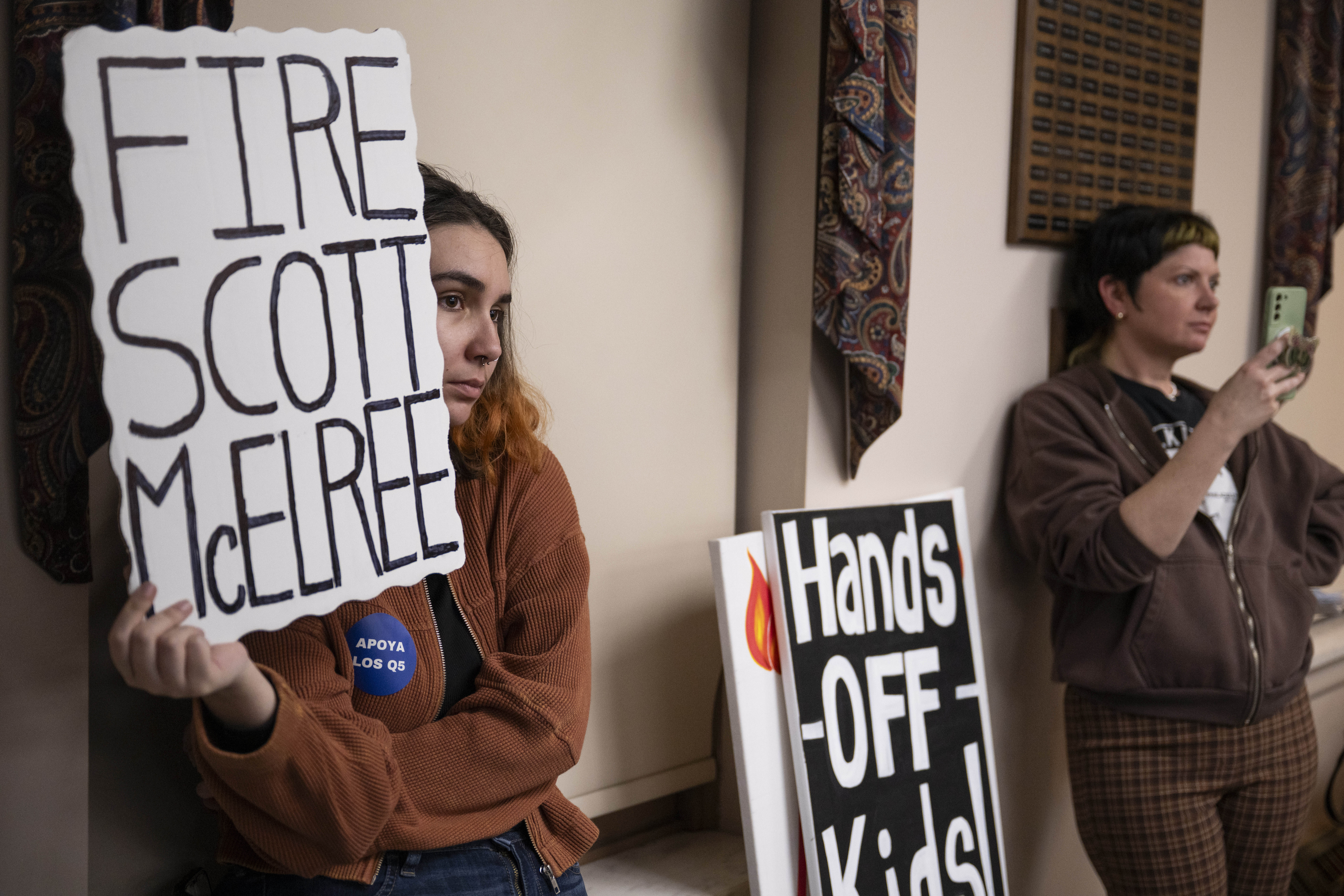
    A leader of the Bucks County NAACP and a state legislator on Friday called for reforms in the Quakertown Borough Police Department, saying an investigation that cleared Police Chief Scott McElree of criminal wrongdoing for placing a teenage protester in a choke hold during a confrontation with students earlier this year should not end scrutiny of the incident.

    NAACP president Adrienne King joined State Rep. Napoleon Nelson in urging Quakertown police to adopt stronger use-of-force policies to prevent a similar response in the future. Nelson, a Montgomery County Democrat, also said he plans to introduce legislation establishing statewide restrictions on choke holds and expanding the use of body-worn cameras, among other aims.

    The calls for change came a week after the Bucks County District Attorney’s Office concluded its almost six-month independent investigation into a Feb. 20 brawl that broke out as students protested ICE enforcement. The investigation concluded that while McElree was the “precipitating factor” in the violence — and confirmed that he held a 15-year-old girl in a choke hold for at least eight seconds — he neither committed a crime nor violated his department’s policies.

    In a 20-page report, investigators noted that Quakertown police have no policy restricting choke holds or other neck restraints and that Pennsylvania law likewise places no limits on their use. But investigators said McElree’s decision to engage with the students was “calamitous” and “led to confusion and trauma for an entire community.”

    A panel of four members of the Police Chiefs’ Association of Bucks County had previously concluded that McElree had acted reasonably during the incident. On Friday, the group issued a statement saying it disagreed with investigators’ characterization of McElree’s actions as “calamitous.”

    Investigators also concluded that several students continued assaulting McElree after it became apparent he was a police officer. McElree, who was 72 at the time, suffered what investigators described as “extensive and serious bodily injury,” including fractured ribs, multiple cuts, and a concussion.

    Five students were charged with aggravated assault and various misdemeanors in connection with the confrontation, though their cases were later resolved through diversion agreements.

    On Friday, King and Nelson said Quakertown’s lack of policies governing choke holds underscored the need for reform, regardless of the district attorney’s conclusion that McElree had not acted criminally. “No criminal charges,” King said, “cannot mean no accountability.”

    After George Floyd’s death at the hands of Minneapolis police in 2020, then-Bucks County District Attorney Matt Weintraub announced that all 39 law enforcement agencies in the county had committed to adopting use-of-force policies that met nationally recognized best-practice standards, including restrictions on choke holds.

    But by the start of this year, King said, 13 agencies — including Quakertown’s police department — had yet to update their policies.

    In a statement Friday, borough attorney Peter Nelson said the NAACP’s characterization of Quakertown’s policies was incorrect, saying that the department had adopted the proposed standards before Weintraub announced the countywide initiative. He said borough officials had reached out to the NAACP “to discuss their misunderstanding of our policies.”

    Separately, the district attorney’s office said Friday that Quakertown’s police department does not currently have updated policies in place and that District Attorney Joseph Khan is urging the borough to adopt them.

    Khan considers the adoption of the standards by all law enforcement agencies in the county “a matter of unfinished business” that he “is committed to helping complete,” spokesperson Manuel Gamiz said.

    McElree, who also serves as the borough’s manager, did not return a phone call seeking comment Friday.

    Nelson, the state representative, said the legislation he plans to introduce would include “commonsense measures to help ensure what happened” in Quakertown does not “continue to go unanswered.”

    Meanwhile, the Peace Center of Bucks County plans to host four “listening circles” in Quakertown, where residents will be invited to discuss how the conflict affected their lives.

    Barbara Simmons, the organization’s executive director, called the gatherings an “opportunity to cultivate empathy” in a community that has remained deeply divided since the confrontation.

    The sessions are expected to begin next week, with dates, times, and locations to be posted on the center’s website.