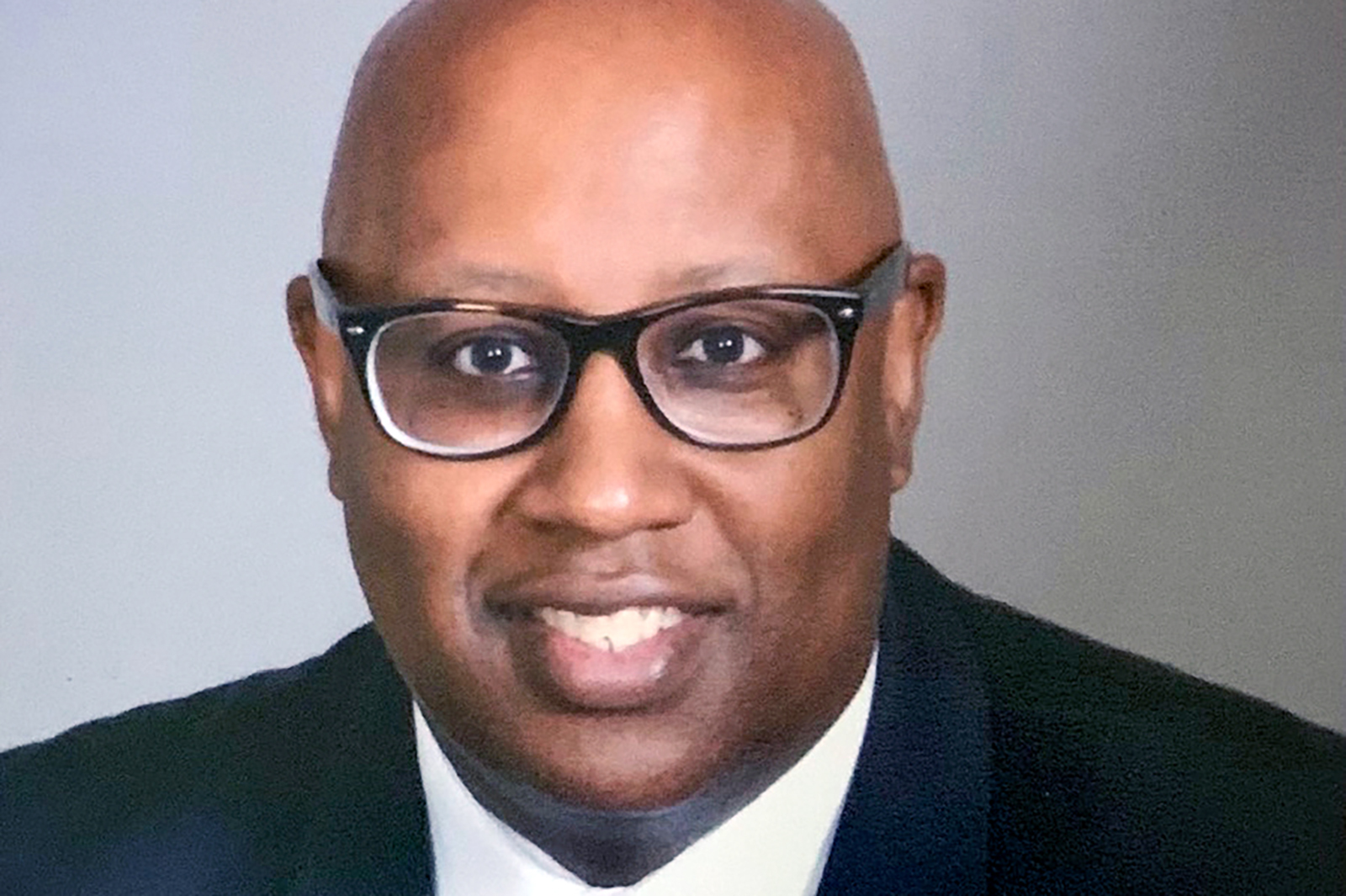
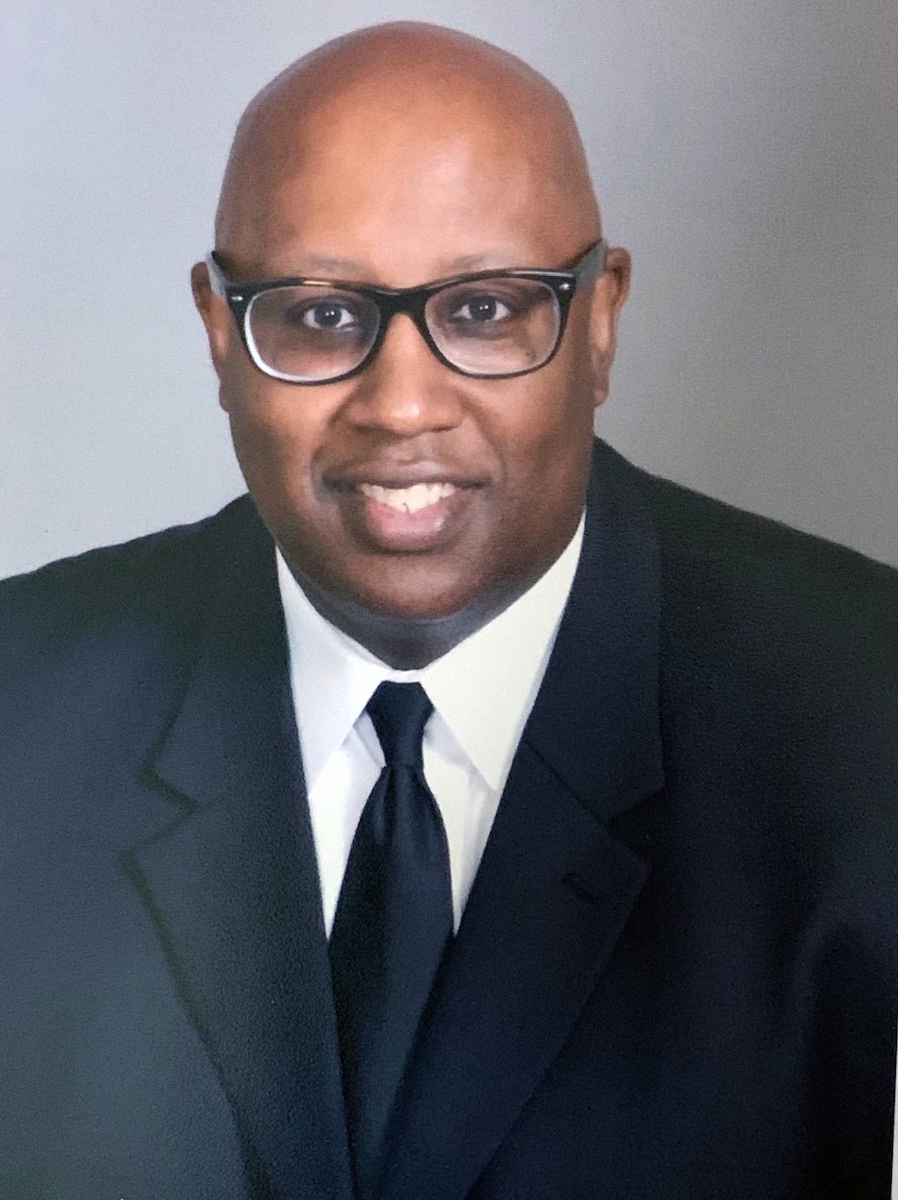
“This year has tested our community in ways none of us anticipated,” Scriven said in a resignation letter released by the district. “I have come to believe that the district is best served by a fresh start under new leadership, and that stepping aside now is the right and necessary step to allow Cheltenham to move forward.”
The resignation is effective immediately.
“The board has accepted Dr. Scriven’s resignation, and we thank him for his dedicated service to Cheltenham public schools,” school board president Leah Mulhearn said in a statement. She said Cheltenham’s director of business services, Joshua Sweigard, would serve as acting superintendent, pending a vote by the board at its next meeting Tuesday.
After canceling last year’s football season in October amid hazing allegations, the Montgomery County district announced in January that an investigation it commissioned had concluded that a “student-on-student” assault occurred on Sept. 3, witnessed by nearly 20 students.
The district failed to uncover that an earlier assault had occurred in August, Montgomery County prosecutors said. A grand jury report characterized the district’s investigation as flawed from the beginning, saying employees were dismissive when the 15-year-old victim’s mother reported on Sept. 7 that he’d been assaulted, and had wrongly taken the team’s head coach, Terence Tolbert, at his word that he didn’t instruct the boy not to tell his parents.
The employees included Tolbert. who was among the coaches charged with endangering the welfare of a child and conspiracy, “in every step” of their investigation, according to the report.
Scriven responded in a statement last week, saying that Tolbert wasn’t involved in planning the investigation. The superintendent said that “every report brought to the district’s attention was addressed based on the information available at the time.”
He didn’t respond to a number of questions about other failures alleged by the grand jury, including that employees were confused about mandatory reporting requirements, and that five football coaches lacked state-required clearances for completing training on reporting child abuse.
Football parents have also expressed frustration with the district’s response to the assaults, which also led to the cancellation of the upcoming season. Some told the Inquirer this week they urged Cheltenham not to hire Tolbert due to alleged bullying during his tenure as Abington’s coach.
In May, the school board had expressed its support for Scriven, sending a community message that acknowledged “concerns around safety and student conduct” that had challenged the district.
“Five years ago, the board invested in Dr. Scriven and his vision for the district. We continue to support him and his vision. He is a strong strategic thinker,” the board said in the May statement.
“Serving this district has been one of the greatest privileges of my life,” Scriven said in his resignation letter Thursday. He said he was “deeply proud of the work we accomplished together, and I remain hopeful for Cheltenham’s continued success.”
Editor’s note: This story has been updated to correct the year that Brian Scriven graduated from Cheltenham High School. He graduated in 1983.
Immigration advocates say at least 10 people have been arrested by ICE at Philadelphia International Airport since July 12, including a 68-year-old grandmother and the young babysitter of three children.
That comes amid a nationwide push by the Trump administration to increase arrests at American airports, spurring immigration attorneys to warn noncitizens with limited documentation that travel has become risky, including for those with valid work permits or pending applications for relief.
“People might not think Philly is being targeted, but we are,” said Vivian Chang, executive director of Asian Americans United, an advocacy group. “They’re trying to threaten people, trying to intimidate them — you can’t work freely, you can’t travel freely, you can’t fly.”
She said the arrests in Philadelphia include three people originally from Indonesia and others from India, Ukraine, China, Chile, and Argentina. Another person, a religious leader, was briefly taken into custody and released, she said.
Chang described the arrests in Philadelphia as especially troubling because the airport is owned and operated by the city.
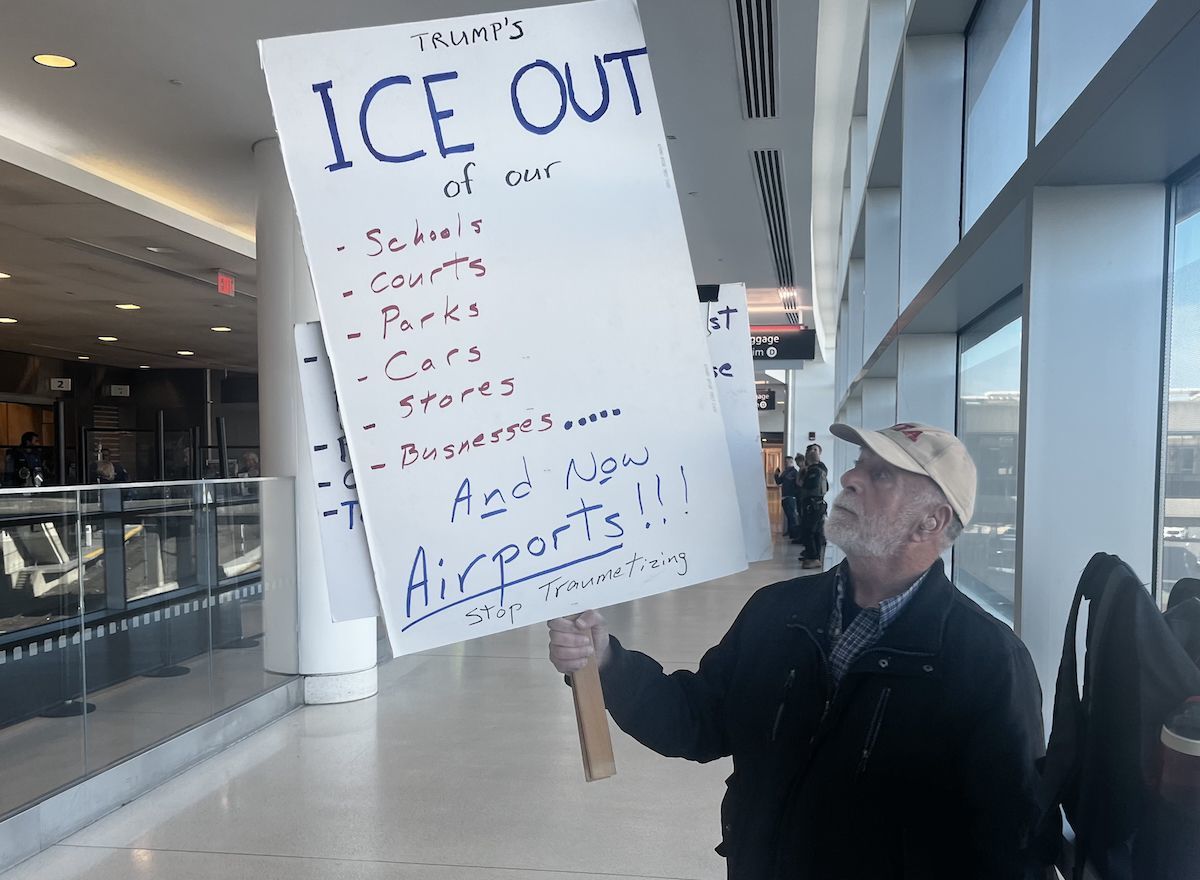
She questioned why that property would not be subject to Philadelphia’s recent “ICE Out” legislation, which bars U.S. Immigration and Customs Enforcement from conducting operations on city-owned lands and bans access to city-owned spaces, absent a judicial warrant.
Steve Papelian, 73, drove more than an hour from Nazareth, Pa. to the Philadelphia International Airport to protest the deployment of ICE agents to international airports across the U.S. on March 24. The former school teacher believes that ICE should target criminal activity, not “moms and pops with kids,” he said.Henry Savage / Staff
Sam Scavuzzo, chief of staff for the city law department, said in a statement that “federal law enforcement access to particular areas of the airport is governed by federal law.”
A spokesperson for the Department of Homeland Security said airport arrests are occurring because the Trump administration “reversed the horrendous Biden-era policy that allowed aliens in our country illegally to jet around our country.”
“Under President Trump, DHS will no longer tolerate this. This administration is working diligently to ensure that aliens in our country illegally can no longer fly unless it is out of our country to self-deport.”
The department said “being in detention is a choice,” and the federal government is offering people who are here without permission a $2,600 payment and a free flight home.
Self-deportation can preserve the right to later come back to the U.S., absent the penalties that accompany a government deportation.
DHS said people who do not leave voluntarily “will be arrested and deported without a chance to return.”
On July 11, what started out as a fun soccer trip for a South Philadelphia babysitter ended with her being arrested and ultimately moved across the country to an ICE detention center in New Mexico.
Steven Melchiorre, 35, a health worker, said that at 7 a.m. that day he dropped off his girlfriend, Iliana Lick, 30, to fly to Kansas City. Originally from Buenos Aires, she planned to see the Argentina national team play in the World Cup.
On July 11, what started out as a fun soccer trip for a Philadelphia babysitter ended with her being arrested and ultimately moved across the country to an ICE detention center in New Mexico. Iliana Lick legally entered the U.S. in 2023, though her visa later expired. She cares for the children of two South Philadelphia families.Courtesy of Steven Melchiorre
She texted Melchiorre from inside the airport to say the line was short, then did not answer his reply.
After a while, he said, Lick phoned, crying, to say she had been arrested by ICE. She was moved from Philadelphia to the Cambria County prison, which holds prisoners for the agency in south-central Pennsylvania, and in the following days was transferred to ICE facilities in Louisiana, Texas, and New Mexico.
Late Friday afternoon, an immigration judge in New Mexico set bond for Lick at $10,000, according to her boyfriend. He immediately began working to post that bond and bring her home. It was not clear how quickly Lick might be released.
DHS said Lick was arrested during a targeted operation, having overstayed her visa.
The department noted that work authorization or a pending application for immigration relief, both of which Lick has, do not confer legal status to be in the United States.
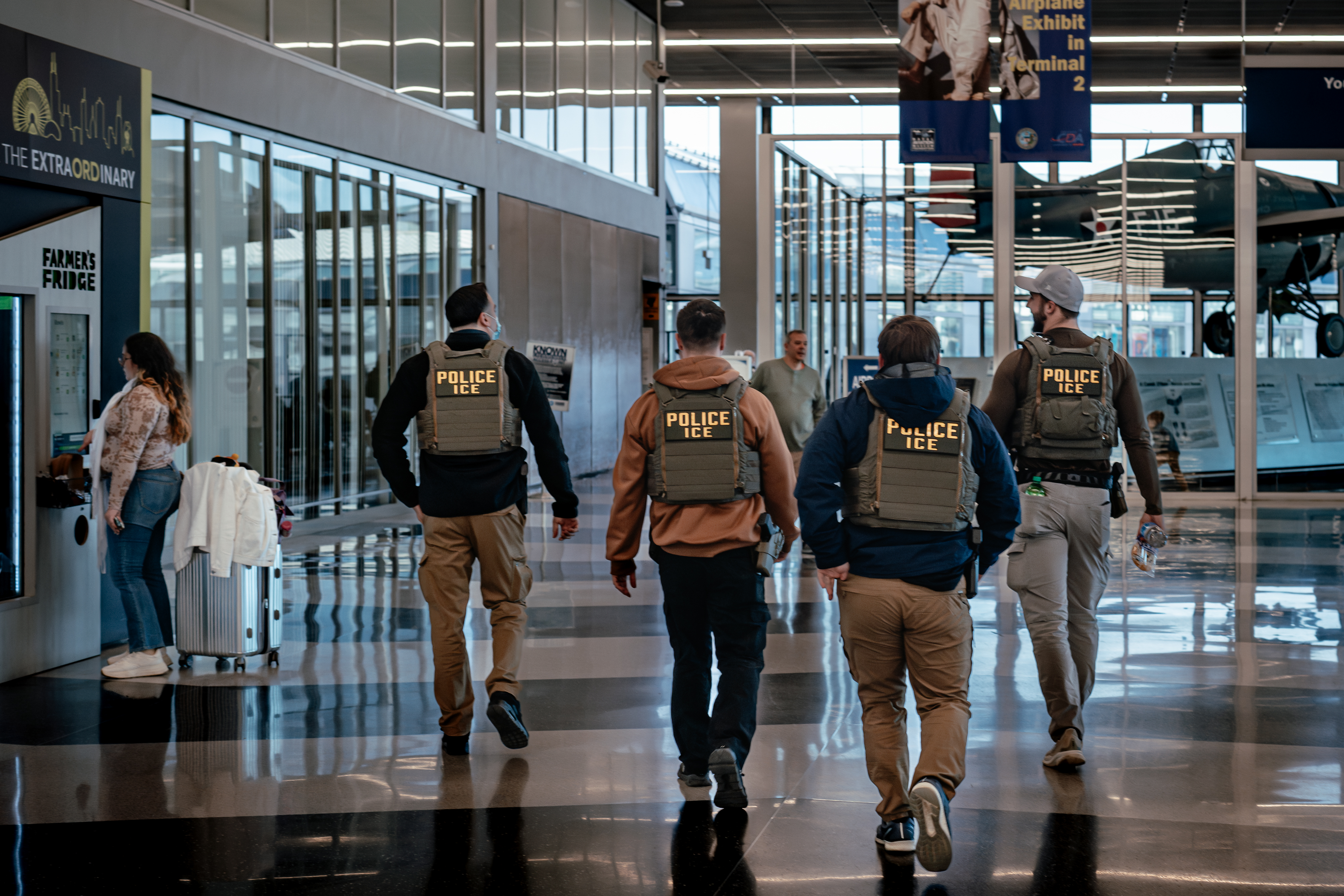
ICE began to deploy agents at U.S. airports in March, and the move was announced as a way to assist at checkpoint lines during a partial government shutdown.
The deployment quickly proved controversial, as travelers and labor unions objected, saying the agents were intimidating and lacked aviation training.
A group of federal immigration officers walk through O’Hare International Airport in Chicago on March 23, 2026. From large cities like Chicago and Las Vegas to small suburbs outside Milwaukee and San Antonio, immigrants have been picked up and detained at courthouses, ICE check-ins and traffic stops, with daily arrests doubling in the last week of June and continuing to climb.JAMIE KELTER DAVIS
Airports rank among the most sensitive public spaces in the country, traversed by millions of people, including U.S. citizens, noncitizens, and mixed-status families, California immigration lawyer Andrew Neitor wrote for the American Immigration Lawyers Association, a legal group.
The introduction of ICE agents, he said, blurs critical lines between airport security and immigration enforcement, around what authority is being exercised and by whom, and over the legal protections due to people who may be arrested.
“ICE was not intended to be omnipresent in daily civic life,” Neitor said. “Yet its footprint has expanded from courthouses to neighborhoods, workplaces, and even parking lots, shifting from targeted enforcement to visible, normalized presence.”
Last year, the Transportation Security Administration and ICE signed a memorandum of agreement that outlined how ICE would share information with TSA to identify people in whom ICE was interested, according to the memo, obtained through the Freedom of Information Act by the watchdog group American Oversight. The agreement said sharing the data would enhance national security, transportation safety, and immigration management.
On Tuesday, U.S. Rep. Rashida Tlaib of Michigan introduced a bill, the No TSA Data for ICE Act, that would bar the agencies from coordinating to conduct what her office called “a dramatic violation of privacy rights.”
The bill would ban TSA from sharing passenger names, birth dates, and other data that enable ICE to target immigrants who are in the process of changing status, including those awaiting visa extensions or who recently married U.S. citizens.
“TSA is readily offering up our immigrant residents to suffer at the hands of ICE agents so they can fulfill their daily arrest quota,” Tlaib said in a statement. “Immigrants should be able to safely fly in this country without the fear of arrest or deportation.”
Today ICE is making record numbers of arrests across the country, not only at airports but also at places that were once considered off-limits, including routine immigration check-ins.
A hat belonging to Iliana Lick sits on a table in the home she shares with her partner, Steven Melchiorre, in the Point Breeze neighborhood of Philadelphia on Tuesday, Aug. 4. Lick has remained in ICE custody since her detention at Philadelphia International Airport on July 11, 2026.Erin Blewett / For The Inquirer
In June in Philadelphia, a 36-year-old survivor of slavery who had fled Mauritania, a mostly desert land in West Africa, filed suit in federal court over the issue. He accused ICE of having unlawfully rescinded a policy that generally allowed immigrants to pursue their cases without fear of arrest.
Nationally, the rate of ICE arrests topped 1,300 a day in June, and grew again to a record 1,474 a day during the first 11 days of July, Syracuse University professor and immigration-data analyst Austin Kocher reported.
Some of those being arrested at airports had legally entered the United States, then stayed after their visas expired. That includes some, like Lick, who were seeking to legally change their immigration status while in the U.S.
Lick, now of Point Breeze, legally entered the country in 2023. She held and extended a visa, and holds work authorization and a REAL ID driver’s license, her boyfriend said. She was trying to adjust her status before her visa expired and continued to do so afterward, Melchiorre said.
Lick works taking care of three children for two South Philadelphia families.
Britni Zahodnick and her husband, Zane Schultz, have employed Lick as a babysitter for their two young children, ages 4 and 1, for more than a year. They described her as soft-spoken, kind, attentive, funny, thoughtful, and a good listener.
“She was very quickly thought of as family,” Schultz said.
Trust does not come easily for any parent preparing to place their children in another’s hands, but Lick won theirs, the couple said.
“All the things you would look for in a caretaker for your kids,” Zahodnick said.
Illiana Lick with partner Steven Melchiorre in New York City. On July 11, what started out as a fun soccer trip for a Philadelphia babysitter ended with her being arrested and ultimately moved across the country to an ICE detention center in New Mexico. Iliana Lick legally entered the U.S. in 2023, though her visa later expired. She cares for the children of two South Philadelphia families.Courtesy of Steven Melchiorre
Melchiorre acknowledged that ICE had legal authority to detain Lick. He said people should follow immigration laws — but the couple thought Lick was doing so. They did not know domestic flights were in question, having flown in the past without incident.
Melchiorre said he was surprised and frustrated by her arrest, “because Iliana has not committed any crime, hasn’t missed any fees, hasn’t missed any court dates. She wasn’t trying to dodge immigration. Being detained, it’s similar to how criminals are treated.”
Welcome to Shackamaxon, a weekly politics column focused on what’s happening at City Hall and in Harrisburg. It is named for the place where the Lenape chiefs would meet to conduct the people’s business, which is now known as Penn Treaty Park.
This week’s edition questions a plea deal, looks at Center City’s efforts to bring back daytime foot traffic, and examines the legacy of the Philadelphia wage tax.
SEPTA Transit and Philadelphia Police at the scene of the fatal shooting of SEPTA bus driver Bernard Gribbin in Germantown in October 2023.Alejandro A. Alvarez / Staff Photographer
Deterrence desired
On Oct. 26, 2023, Bernard Gribbin became the first city transit operator to die by gunfire while on the job. Family members called him “the best of the best,” and described the 48-year-old Army veteran as a man who loved Philadelphia, who proudly took out-of-town relatives on tours of the city when they came to visit, and who served the public by working as a bus operator — a demanding, underpaid, and utterly essential job.
Gribbin’s murder sent shock waves through the city’s transit agency. His colleagues were left angry and afraid.
Around that time, reporting from Mensah Dean at the Trace identified a spate of attacks against public employees. During the next contract negotiations, the Transport Workers Union demanded SEPTA install bulletproof glass to protect drivers. Operators report that management, which has long emphasized de-escalation, became even more strict about the kinds of interactions bus drivers and train conductors are permitted to have with unruly passengers. For many, this undermined their sense of stewardship of their vehicles.
The death of Gribbin seemed like a case in which prosecutors could send a message that violence against SEPTA workers will be met with serious consequences. Instead, District Attorney Larry Krasner opted to accept a plea bargain.
Gribbin’s killer, Zhontay Capers, was able to secure a conviction for third-degree murder this week, rather than first, which was her original charge. Pennsylvania law defines first-degree murder as a willful, deliberate, and premeditated killing. Given Capers shot six times and that surveillance video showed her with a firearm shortly before the shooting, there would seem to be a strong case.
Of course, there could be complications I don’t know about. Perhaps another passenger was armed, a witness recanted, or Capers stood a good chance of being declared incompetent to stand trial. Prosecutors often accept plea deals in cases in which going to court presents too much risk.
Yet, Krasner’s office refused to comment on any of these possibilities when asked. Instead, they called it an example of individual justice. Capers now faces up to 40 years in prison, rather than a life sentence. Unlike Gribbin, she may one day again enjoy the unfettered company of friends and family.
Of course, individual justice is important. And if the circumstances of a particular case merit a third-degree charge, then so be it. But Krasner has not provided any additional information or shed any light on his office’s decision-making.
Every killing is a tragedy that deserves justice, but Gribbin’s death had a magnified impact. Capers’ actions also caused public servants to be fearful of coming into work, and resulted in millions of dollars’ worth of unplanned spending in installing the protective glass.
The public deserves a fuller account of why the plea deal happened.
Happy Hour at the Air Grille Garden at Dilworth Park in 202, part of the midweek Center City District Sips after-work events.TOM GRALISH / Staff Photographer
Eventful days
Like most big city downtowns, Center City is a major employment hub. More than 300,000 people work there, representing around 42% of jobs in Philadelphia.
According to Clint Randall, the vice president for economic development at the Center City District, the amount of downtown office space has remained relatively stable for decades. That’s despite the rise of residential conversions and remote and hybrid work arrangements. Still, people are coming to the office less often, and momentum on bringing workers downtown on a more regular basis has stalled.
Thankfully, Randall and his colleagues have a plan to ensure the city’s commercial core remains as essential as it can be by leveraging its status as a regional host, with events seen as both a short- and long-term way to make Center City more vibrant.
Randall cited Center City Sips as a way to bring more people into town on Wednesday evenings during the summer. Philadelphia Open Streets, the FIFA World Cup, festivities around the MLB All-Star Game, and other smaller events have proved a major boon. They’ve brought out not just those who live and work in Center City, but also people from around the region and the world who may not otherwise have had a reason to come.
I asked Randall about the potential for event fatigue among locals. With Center City adding thousands of new residents each year, would this create pressure to draw down on hosting? Randall said that vibrancy is what brings many people to live downtown in the first place. As inconvenient as it can be to live next to major festivals, it is also a major amenity.
My own experience bears this out. I may not have made it to the Eagles’ Super Bowl parades if they hadn’t marched down Broad Street, not far from my South Philly home. Our friends and family also enjoyed the convenience of having a place to sit down and use a nonportable restroom.
A view of the Center City skyline as seen from the Schuylkill Expressway, where it intersects with the Vine Street Expessway, in May.Elizabeth Robertson / Staff Photographer
Tax switch
When Philadelphia became the first American city to institute a wage tax all the way back in 1940, the idea seemed like a no-brainer. After all, where else were people supposed to work? Suburban rail stations were packed to the brim with commuters, the Interstate Highway System did not yet exist, and anyone who wanted access to skilled workers had little choice but to open offices in Center City.
Today, however, the region looks different.
While Center City remains a major regional hub, Philadelphia has lost tens of thousands of jobs to suburban office parks. Most Delaware Valley residents drive themselves to work, and hundreds of thousands of people have moved to the suburbs. This has left us with an important policy question: How much of this shift is simply due to national cultural trends, and how much of it was caused by public policy?
A new study from René Livas and Matthew Jacob at Harvard University, working with the Progress and Poverty Institute, attempts to answer this question. They say there is a clear link.
As the wage tax rate rose between 1940 and 1976, jobs fled to the suburbs. Since City Hall began decreasing the tax in 1995, jobs have started to flow back into Philadelphia. In fact, the city recently overtook Montgomery County as the top host for office jobs in the region.
The researchers’ proposal for replacing the wage tax is based around switching to a land value tax, an idea that is popular among economists. Separate tax rates for land and property are already legal in Pennsylvania, and the city already splits the two in its own property assessments.
The idea, however, may be politically fraught. Homeowners already resent the chaos of the city’s regular assessments. Additionally, determining how much of a property’s value is inherent to its location may be easier said than done. While an 80/20 split between structural and land value is often cited as standard, levying the two individually would require significantly more research from the city’s Office of Property Assessment.
In an email, Livas suggested phasing in the switch, which would help avoid big increases. He also said that the city’s existing programs, like the homestead exemption and Longtime Owner Occupants Program, should help alleviate the burden on homeowners.
The data suggests the city could add around 26,000 jobs if this reform is pursued.
AI-powered cameras on SEPTA buses and trolleys have captured about 212,000 parking and stopping violations that delay trips since automated enforcement began last year, according to the Philadelphia Parking Authority.
The median travel time of buses in the enforcement areas dropped 41 seconds in March compared with the same month last year before the cameras, SEPTA said.
“It’s not massive, but it is appreciable,” said Matthew Zapson, manager of planning programs for SEPTA.
The parking authority has issued $14.5 million in fines from May 2025 through June 30.
But violations have trended down from the high numbers recorded in May 2025, when enforcement began.
That means hefty fines seem to be nudging more drivers to avoid adding to congestion, particularly in Center City.
In just over a year, no-stopping violations in bus-camera enforcement areas were cut in half, said Gabriel Roberts, interim executive director of the PPA, while violations for blocking bus stops decreased by 27%.
“Drivers are learning, in large numbers, to not park illegally in no-stopping zones, bus lanes, and bus stops,” Roberts said.
(function(){function e(){window.addEventListener(`message`,function(e){if(e.data[`datawrapper-height`]!==void 0){var t=document.querySelectorAll(`iframe`);for(var n in e.data[`datawrapper-height`])for(var r=0,i;i=t[r];r++)if(i.contentWindow===e.source){var a=e.data[`datawrapper-height`][n]+`px`;i.style.height=a}}})}e()})();
Violations fell from 1.8 to 0.75 per camera per hour,Zapson said.
Windshield-mounted cameras, powered by artificial intelligence, on buses in Center City and West Philadelphia are scanning for violations for about 14,000 hours per month — a rate that has stayed steady, Zapson said.
“I think that is perhaps the most telling point about the success of the program,” he said.
Measuring violations per camera hour avoids the possibility that violations appear to be down only because of lower camera use.
The penalty for parking and stopping violations is $76 in Center City and $51 elsewhere.
Tickets are sent to the owners of vehicles based on evidence gathered by windshield-mounted cameras on 152 buses on 16 routes. But human parking enforcement officers have to verify violations first.
PPA, SEPTA, and the city have partnered on the program.
Buses navigating Philadelphia traffic averaged 8 mph in Center City, slower than the national average of about 14 mph. Every year, congestion in Center City causes 1.7 million hours of passenger delays and adds $15.4 million to the transit agency’s operating costs, according to a 2019 Econsult Solutions study commissioned by SEPTA.
On April 1, cameras were added to 38 trolleys in Philadelphia, making SEPTA the first transit system to use them on streetcars. Early PPA numbers show 30,856 violations for cars and trucks blocking trolley lanes and stops.
City ordinance authorizes the camera program in Center City from river to river from the northern edge of Spring Garden Street to the southern edge of South Street. Violations also can be camera-enforced on Chestnut, Walnut, and Market Streets westward to 63rd Street. The law also covers any roadway in Philadelphia that conveys trolleys.
Zapson cautioned that a variety of factors influence bus speeds, including continued growth in ridership since the pandemic, which increases the amount of time the vehicles spend at stops to load and unload people.
So, more work is needed.
“Parking on trolley tracks or in bus lanes is a recurring issue, despite having these cameras,” Zapson said. SEPTA is working with the city and PPA “to see what other policies might be available to us,” he said.
So many young Americans who signed up for World War II in 1944 thought they were headed across the Atlantic to help pull European towns away from Adolf Hitler’s grip.
But many GIs, fresh out of basic training at New Jersey’s Fort Dix, instead ended up sleeping in two-man tents in Fairmount Park.
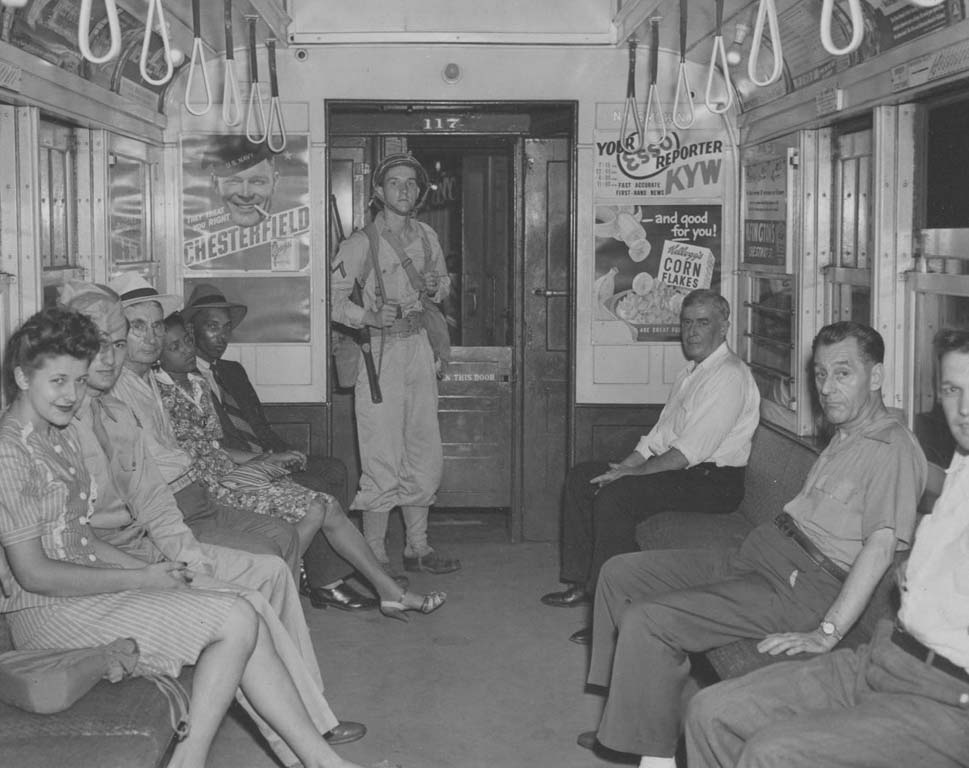
On Aug. 5, 1944, President Franklin D. Roosevelt dispatched about 5,000 U.S. Army troops to Philadelphia to intervene in an ugly transit strike.
When covering a trash strike in July 1978, the Daily News spoke with military members who were sent to the city during the tumultuous six days of the 1944 transit strike.
“I had to work on Diamond Street,” James Denning of Maywood, N.J., recalled to the Daily News. “That was worse than Germany.”
Photo shows one of the subway car with passengers with a Armed soldier during the 1944 Philadelphia Transit strikes.Culross (Phila. Inquirer)
It marked one of the first major federal interventions amid the fight for civil rights.
On Aug. 1, white transit workers with the Philadelphia Transit Co. had gone on strike over the hiring of Black trolley operators.
Black workers were now being given operator jobs, graduating to higher pay and better conditions than in their previous jobs in mechanics and labor.
The Black drivers threatened to leave their posts unless they were guaranteed protection from racially motivated attacks. And the strike itself threatened to slow down the Philadelphia war machine feeding the need for ships, tanks, and uniforms.
The Army took over the transit agency three days into the strike, and on Aug. 5, Roosevelt ordered the troops to break the strike.
The intervention helped lead to the end of the strike after six days, but federal troops remained in the city, riding streetcars 24 hours a day, keeping them moving, and protecting Black transit workers on the rails and on the roads.
Troops withdrew from the city on Aug. 17, and by early September, Black trolley drivers took their rightful places behind the wheel.
With the afternoon sun beating down, Keith Benson and his childhood friend Brian Turner meticulously tended to a lawn in Camden’s Parkside neighborhood on a recent Friday.
They took turns pushing a red lawn mower that left neat lines in the lush grass. They edged up the perimeter and pulled weeds from the sidewalk in front of the property on Bradley Street.
A short time later, the pair completed the job, packed up their equipment and sped off to their next assignment in Benson’s burgundy Ford-150 pickup.
They didn’t get paid and they didn’t want any payment, except possibly a cold bottle of water.
Keith Benson and his childhood friend Brian Turner help residents and the community by providing free lawn care, in Camden, N.J., July 31, 2026.Jessica Griffin / Staff Photographer
Benson, a Camden High history teacher, and Turner, a litigator and personal injury lawyer at a Cherry Hill law firm, are spending the summer working for free. They want to give back to the city where they have lived and worked.
“I’m grateful to be able to do it,” said Benson, 46. “We have to pass that on.”
Benson was looking for something to do when the school year ended in June. He came up with the idea and enlisted Turner to help.
They shared their plans mainly through word of mouth, friends, and social media posts. The response has been overwhelming and the two have been fielding text messages and calls to schedule appointments.
Since June, they have cut nearly 100 lawns, including 14 repeat cuts, Benson said. They hope to get back to every lawn once a week, he said. The free service is limited to Camden, and they use their personal equipment.
“When they text us, we go,” said Turner, 47, of Cinnaminson. “We always show up when we say we will.”
Camden Mayor Victor Carstarphen launched a “Camden Strong” campaign several years ago and has encouraged residents to help spruce up the community. That initiative is cleaning up neighborhoods, removing bulk trash, and restoring public spaces.
This summer, too, residents such as Elton Custis have been cleaning up their blocks on Saturday mornings for a half hour to support Camden Strong. Custis compiled a list of more than a dozen mostly elderly neighbors for Benson and Turner for the free lawn cutting. They completed them all, he said.
“I just love the fact that they started this,” Custis said. “They didn’t wait for anybody’s approval. They just got it done. They have been a godsend, that’s for sure.”
As the temperature approached 90 degrees, Benson and Turner made their fourth stop of the day on Bradley Street. They have worked on the hottest days of the summer, stopping only for inclement weather.
They cut a vacant lot adjacent to a home where Ted Davis Jr., the son of the city’s first Black judge, now resides. They also mowed his backyard.
“They’re true to their word, when they say it’s free,“ said Davis, a retired personal trainer and high school coach. ”I offered to pay but they declined.”
Davis said he was not surprised by the undertaking. He met both as teenagers when the signed up to train with him at his Smart Jox business.
“I respect them very much,” Davis said. “It’s not a lot of people who are doing what they are doing.”
Keith Benson and his childhood friend Brian Turner help residents and the community by providing free lawn care, in Camden, N.J., July 31, 2026.Jessica Griffin / Staff Photographer
Earlier that day, Turner, a former assistant Camden city attorney, had stopped in his office at Malamut Law firm and worked for several hours. The firm has supported his community service, he said.
Benson and Turner met in 1996 their sophomore year at Moorestown Friends School. Benson transferred from Cherry Hill schools.
“We didn’t like each other at first,” Benson recalled.
“He hated me,” Turner said.
They became friends that summer when Benson’s father, also named Keith, forced them to sign up for a basketball camp. The elder Benson was unaware of the tension, but believed the young Black men in a predominantly white school should be friends.
Both men graduated from Rutgers-Camden where both played basketball and Turner was named the New Jersey Athletic Conference’s Player of the Year in 2002.
Left to right: Rutgers-Camden basketball teammates Keith Benson, Robert Scott, and Brian Turner circa 2002.Courtesy of Keith Benson
Both also earned doctorate degrees — Benson in education and Turner in law. Benson lives in Camden and the two conducted basketball clinics at Camden High this summer.
“Now, they are ridiculously fast friends,” the elder Benson said. “Their friendship is beautiful and I love it.”
Whistling and humming as they worked, Benson and Turner quickly finished up the lawn on Bradley Street. There was some friendly bantering about whether the lines in the grass were perfectly straight.
“We do argue all the time,” Benson said.
“Sometimes, he doesn’t listen,” Turner quipped.
Next, the pair moved to South Eighth Street to cut the lawn in front of a rowhouse. They also cut the adjacent properties, including in front of a boarded up property on the corner.
Keith Benson and his childhood friend Brian Turner help residents and the community by providing free lawn care, in Camden, N.J., July 31, 2026.Jessica Griffin / Staff Photographer
They mowed eight lawns for the day. Both said they hope to inspire others to find ways to help their neighbors and the city.
There are two sets of questions for these 76ers. Maybe it feels like that’s always been the case. Except that it hasn’t.
The questions used to be: Will Joel Embiid be healthy? How often? To what extent? At what level of effectiveness? Nothing beyond these things mattered. Without Embiid, the Sixers weren’t a team you could even pretend to take seriously.
Things aren’t what they used to be. With or without Embiid, the Sixers feel like they have a team that will have an identity. More than that, they feel like they have a team that will have a chance. If they didn’t make that clear when it traded for Jaylen Brown, they certainly did when they formally introduced him.
The only things missing from Thursday’s press conference at Francis J. Myers Recreation Center in Southwest Philly were a marching band and a vice-presidential nominee. Upward of 100 people packed into the rows of plastic folding chairs that covered most of the width of the rec center’s indoor court and three-quarters of its length.
In addition to the ownership group and most of the front office and Brown’s family and reporters from both Philly and Boston, there were cheerleaders and game day event staffers and security guards and a DJ and a gaggle of youth from the local community.
New Sixer Jaylen Brown arrives for his introductory press conference at the Francis Myers Recreation Center on Thursday, Aug. 6, 2026 in Philadelphia.Monica Herndon / Staff Photographer
While it was Brown who keenly requested that the event be held at a local rec center, the proceedings were just as much a show of force from the Sixers that left little room for doubt about the gravity they expect their newly acquired superstar to impart on the organization.
“What an event,” Sixers first-year president of basketball operations Mike Gansey said. “It’s a special, special day to be a 76er.”
While it would be easy to sit here and wonder about Embiid’s thoughts on all of the hoopla surrounding Brown, the much more relevant question concerns their coexistence on the court. Feelings? Sure. Everyone has them. But they require political capital to matter. For much of his tenure, the Sixers adhered to a doctrine of appeasement. Several different front offices and coaching staffs operated as if they lived in fear of a trade demand. Now, the Sixers couldn’t trade Embiid if they wanted. Both sides are surely aware of that.
Besides, we’ve seen and heard plenty to suggest that Embiid is at the very least receptive to having another superstar on board. On Thursday, Brown said that the Sixers center reached out to him shortly after the trade went down. The team has an active group chat. Yes, LeBron James is a part of it.
“Me and Joel have been friends throughout the years,” Brown said. “I love soccer, so we talk about that a lot. He reached out, too, when I got traded. He reached out the same day. I talked to him on the phone. I’m looking forward to earning everybody’s trust and respect and grinding and impacting winning. That’s what I’ve done my whole career, and that’s what I plan on doing here.”
That’s all that counts in the chemistry department, for the time being. Even if Brown and Embiid have some aspects of their personalities that make you wonder about the occasional friction, the decade of close quarters competition between the two has generally revealed a healthy mutual respect. The two players shared a long one-on-one moment near midcourt in the aftermath of the Sixers’ win over the Celtics in Game 7 of April’s first-round playoff series. The two most important personality traits in any professional relationship are to mean well and to want to win the task at hand. Both Brown and Embiid have those fundamentals. That’s enough for now.
The success and failure of the Brown-Embiid partnership will be determined by how well it works on the court. That, in turn, will determine whether the Sixers have the potential to become a truly great team. Brown and Embiid are both the ceiling and the floor. Tyrese Maxey and VJ Edgecombe both have the skill profile and willingness to adapt their roles to those around him. James did it even in his prime. Now, he is at an age where one generally accepts who he needs to be. The big question marks are Brown and Embiid.
This isn’t a question of personality as much as it is a question of technical fit. There are a lot of parallels between Brown and Embiid, at least from a critical perspective. Shot selection, tunnel vision, decision-making, possession time, efficiency, pace in the half court, all have offered ample fodder for skeptics. Of the 20 players with a usage rate of at least 29% over the last eight seasons, only two have averaged fewer than four assists per game. You guessed it. Embiid and Brown.
Whether or not these criticisms are prescient or fair, Brown and Embiid are clearly the two players who have the potential to clunk the operation up to a point of dysfunction. Don’t interpret that as a disservice to either. It’s just the style of their games. Whether the Sixers reach their ceiling will depend overwhelmingly on how well Brown and Embiid adapt their games to what optimizes the collective. Each has the ability to be the player they need to be. It is not a complicated thing. Drive when you have a lane. Shoot when you have a shot. Otherwise, keep the ball moving.
“To win, you’ve got to be able to have sacrifice,” Brown said. “You’ve got to be able to have communication.”
The presence of James as a connector and secondary playmaker should help. So, too, should the presence of Maxey and Edgecombe, two of the more likable, earnest and adaptable young players in the game. But if we are going to assume that Embiid’s outlook is as promising as the reports suggest, the Sixers’ fate will ultimately be determined by his synergy with Brown.
Cheltenham Superintendent Brian Scriven resigned Thursday, a little more than a week after prosecutors charged four football coaches and six players in connection with violent assaults against a player last season in a high school locker room.
The superintendent’s resignation, effective immediately, came amid community outcry over the district’s handling of the August and September 2025 incidents, which prosecutors say both involved students attacking a 15-year-old and using a broomstick to poke at his buttocks.
Yet the district did not uncover that there had been two assaults, and administrators appeared to downplay a report from the 15-year-old’s mother, according to the Montgomery County grand jury that recommended the charges. It described a “level of incompetence” in the district that “put every young man on the football team at risk.”
Some parents who have been battling the district to take student safety more seriously said Scriven and his administration did not fail only in overseeing the football program.
“I see a complete lack of urgency,” said one mother who has been among a group of parents pressing the district since October to address violent incidents at Cheltenham Elementary School. The mother, who spoke on the condition of anonymity out of fear of retaliation for her child, said administrators still have not answered questions about how students are disciplined and how others are supported after assaults.
Another Cheltenham Elementary parent, Shanyl Jones, said her daughter, an incoming second grader, twice experienced sexual touching and comments in school. In kindergarten, a boy repeatedly touched her against her will, conduct that escalated to him grabbing her vagina, Jones said.
The boy also made sexually explicit comments to her daughter, Jones said. She reported the conduct and filed a Title IX sexual harassment case; the school moved the boy to a different classroom, she said.
After a separate boy made sexual comments to Jones’ daughter in first grade, the principal called Jones and apologized, though the boy was not moved to a different classroom, Jones said.
News of the football charges “just tore me up on what my daughter’s future would be in the school system,” Jones said. “It gave me no assurance they’re going to be able to reconcile what’s happening now.”
Scriven said in his resignation letter Thursday that “this year has tested our community in ways none of us anticipated.”
“I have come to believe that the district is best served by a fresh start under new leadership, and that stepping aside now is the right and necessary step to allow Cheltenham to move forward,” he said.
The district has not commented on how else it plans to respond to the explosive grand jury report released last week, which described the response of several employees at the high school — identified only as Employees #1, #2, and #3 — as minimizing an assault reported by the 15-year-old’s mother, and trusting the word of the head coach, Terence Tolbert, that he had not instructed the student not to tell his parents what happened.
The district did not respond to questions this week about its hiring of Tolbert — who was among the four coaches charged — including whether it had sought references from Abington, which cut ties with him after one year as its head football coach. Some parents of football players told The Inquirer they had “pleaded” with Cheltenham administrators not to hire Tolbert, whom they accused of allowing bullying during his tenure at Abington Senior High School.
Nor did the district respond to questions about whether it would take action against any employees, including those described in the grand jury report.
The Cheltenham High School vice principal whom the mother said she had reported allegations to, Mark Hoff, was named vice principal at Wyncote Elementary last month.
The grand jury report “details very troubling questions about the management and operation of the district’s athletic programs, including the football program,” school board president Leah Mulhearn said in a statement this week. “Our highest priority is the safety and welfare of the children we serve.”
Mulhearn, who did not address questions about Cheltenham Elementary in the statement, said the board was “focused on conducting a comprehensive review of the grand jury’s findings, including our policies and practices related to athletics, as the first step in implementing measures to ensure that no such conduct ever occurs again at our schools.”
The district has said a Title IX investigation into the allegations will soon be finished, with possible discipline for students. Two 18-year-old players charged as adults — the other four were charged as juveniles — have already graduated.
Community members are closely watching the school board’s next steps. Sharif El-Mekki, a nationally known Philadelphia-based educator who runs the Center for Black Educator Development and previously led Mastery Shoemaker Charter School, called on the school board in a letter to apologize to the victimized student and commission an independent investigation into the district administration’s conduct.
“Every student in Cheltenham, every teacher, every parent, and every young leader in Montgomery County is being taught something right now by how the district is responding,” El-Mekki said.
‘Environment of ongoing chaos’
Cheltenham Elementary parents said they raised concerns to administrators last October, after they heard from their children that a student touched another student’s penis sexually in class, over his clothes, in view of classmates.
Some initially did not believe it. “We would have been told about it,” said one mother, who also spoke on the condition of anonymity out of fear of retaliation against her child.
Parents began talking to one another to confirm what happened. Other parents and students told them the same child had been involved in previous sexual incidents, two mothers said.
A group of parents sent an email on Oct. 3 to ShaVon Savage, then the district’s assistant superintendent, saying they had recently learned that a student “touched another child sexually during class time” and that the child had been involved in “multiple sexual incidents over the past few years.” They asked to be notified about instances of physical or sexual assault.
In the email, shared with The Inquirer, they also asked for additional supervision and counseling for students with behavioral challenges and described an “environment of ongoing chaos” at the school, which last year served a larger number of students with emotional support needs than the district’s other three elementary schools.
Savage wrote back 10 days later, saying she needed more details “to conduct a full and thorough investigation,” according to an email shared with The Inquirer. She also said that when a situation poses a “threat to a particular school community,” the district would communicate with parents, but could not share details about particular children due to federal privacy laws.
Savage met with some parents in early November and said she would visit the school — though parents were unsure whether she did, the mothers said.
Their concerns escalated when on Dec. 5, a Friday, the school’s principal, Stephanie Junod, was assaulted by a student, according to the mothers.
That night, Scriven, the superintendent, sent an email to school parents, informing them that “while Ms. Junod was attempting to de-escalate a situation with a high-needs student, she was struck in the head by their thermos.” Scriven said the principal was “expected to make a full recovery.” Junod could not be reached for comment.
Scriven said central office staff would be at the school the following Monday “to begin implementing additional measures to strengthen safety and provide more comprehensive support for students who require additional behavioral interventions.”
Brian Scriven has resigned as superintendent of the Cheltenham School District.Courtesy of Cheltenham School District
The mothers were angry that the district had not already been providing that support. Around the same time as Junod’s injury, they said, there was an assault on a student, and “at least two” against staff members, one of the mothers said.
Parents had a meeting scheduled with Savage for Dec. 15, but administrators pushed it to January, one of the mothers said.
Scriven met with parents on Jan. 8 and apologized for not treating their concerns urgently enough, according to the mother, who said Scriven also assured parents that “the football situation had been handled.”
“Obviously, that was a lie,” she said.
Scriven met with them again on Feb. 25 and said changes would be made, including putting a behavioral specialist at the school four days a week, according to the mother.
Scriven did not mention that Junod would be resigning, the mother said — a decision announced shortly after the meeting.
‘Slow to respond’
Problems at the school continued.
On March 26, parents said, a student assaulted five staff members — including punching one in the face — in view of other children. Police came to the school.
The district did not immediately notify parents. But Scriven sent an email to the school community the next day, reporting that “an emotional support student had an episode during which he eloped from the building and engaged in physical altercations with a number of staff as they were trying to de-escalate” the situation.
“While I cannot share individual student consequences or placements, I can assure you that this situation is being addressed with the highest level of seriousness and urgency,” Scriven said in the email.
In an email the next day demanding a meeting with administrators, one parent wrote: “The frustration among parents has reached a boiling point.”
“Information is simply not being shared, and critical questions regarding the safety and education of our children are being ignored,” the parent said in the email, which one of the mothers shared with The Inquirer.
Scriven responded to the parents on April 14.
“I understand the urgency of your concerns and sincerely apologize for the delay in providing a comprehensive response,” Scriven said, in an email the mother shared with The Inquirer.
Scriven said the school’s new principal, Shareese Nelson, had needed time to settle into the job, but “we are prepared to move forward in a more formal and collaborative manner.” He invited families to the school for an April 29 community meeting.
The meeting was “highly emotional,” one of the mothers said, with parents sharing their children’s experiences. After the meeting, Scriven told a 6abc reporter: “I was slow to respond. I do have to own that, and rectify that immediately.”
Shanyl Jones recalled that administrators seemed “completely unprepared” during the meeting to address parents’ safety concerns.
In a message to the community May 6, the school board acknowledged “concerns around safety and student conduct have presented challenges that we continue to navigate.”
The board said it took “all concerns that are raised with us as a board” seriously and was paying attention to how they were addressed.
It also stood by Scriven, a former Baltimore County Public Schools administrator who was named Cheltenham’s superintendent in 2021.
“Five years ago, the board invested in Dr. Scriven and his vision for the district,” the board said, calling the superintendent a “strong strategic thinker.”
“We continue to support him and his vision,” it said.
On Thursday, Mulhearn said in a statement that the board thanked Scriven “for his dedicated service to Cheltenham public schools.” She said the board had selected Joshua Sweigard, Cheltenham’s director of business services, as acting superintendent.
While the district in May released an action plan for Cheltenham Elementary, including a safety audit, staff training, and monthly reports on school incidents, the mothers said it still has not clearly explained how it handles student assaults, and how kids who are victimized or witness them are supported.
Until it does, “beginning from kindergarten up, we are not going to see this change in any meaningful way,” one of the mothers said. “This is not a one-off event.”
Joseph LaForte was once the charismatic head of Par Funding, a Philadelphia-based lending firm that collapsed in spectacular fashion as prosecutors said he misled investors to the tune of $400 million and resorted to brutish loan shark tactics to collect on unpaid debts.
Now, despite the fact that LaForte pleaded guilty to racketeering and wire fraud charges, a website has been set up to lobby President Donald Trump to free him from a 15½-year prison sentence — part of a campaign that describes LaForte’s prosecution as a “witch hunt.”
“Stand Up for What’s Right, Free Joe LaForte,” says a scrolling banner on the website, FreeJoeLaForte.com. The site’s homepage also prominently features several images of Trump and says the goal is to “fight for [LaForte’s] presidential pardon through activism and exposing the truth.”
Websites dedicated to overturning convictions are not unusual. But the existence of the LaForte campaign comes as Trump, in his second term, has shown a willingness to grant clemency to political allies or people he believes have been unfairly prosecuted — including those convicted of fraud. And well-connected lobbyists and lawyers have reportedly started charging defendants eye-watering sums for promises of presidential relief.
LaForte does not have an official clemency application pending with the Office of the Pardon Attorney, according to that agency’s website. But the LaForte website is clear about its intent to lobby Trump for freedom.
How the campaign came together — and whether LaForte has a role in it — is something of a mystery.
LaForte’s lawyer in his criminal case, Joseph Corazzo, said he didn’t know of the site until he was contacted by The Inquirer and said he’s had no role in any potential efforts to seek clemency from Trump for LaForte.
LaForte, meanwhile, is incarcerated at a federal prison in Fort Dix, N.J., and is not scheduled to be released until 2035.
Unidentified creators
The LaForte website, FreeJoeLaForte.com, does not say who owns or runs it. And phone messages and emails left through its contact pages in recent weeks went unanswered.
One of the calls was directed to a number associated with John Sirmans, of Fanwood, N.J. And Sirmans’ name is listed as an author on dozens of PDFs that were published on the LaForte site.
It is not clear how or if Sirmans and LaForte know each other, and Sirmans did not respond to requests for comment.
PDFs on the site list another author as “Lisa Mac.” LaForte’s wife, Lisa McElhone, was sentenced to one day in federal custody for her role in the Par Funding scandal, and the Justice Department said LaForte sometimes used the alias “Joe Mack” while working at Par Funding.
Attempts to reach McElhone — including by visiting Lacquer Lounge, the nail salon she owns in Old City — were unsuccessful.
Meanwhile, a petition on change.org — which urges people to visit FreeJoeLaForte.com — is even more forceful its views on LaForte’s case, calling his imprisonment “unlawful” and saying he is “an innocent man targeted by a weaponized justice system that bends to partisan agendas.”
But the creator of the petition, which has 40 verified signatures, is listed only as “Truth Seeker,” and attempts to reach that person through change.org were unsuccessful.
Extensive coverage
One of the more prominent sections on LaForte’s website, meanwhile, is a list of more than a dozen news articles written by Milton Allimadi, a New York-based journalist who runs an outlet called Black Star News.
On LaForte’s site, Allimadi’s stories are labeled as being part of a series “dedicated to exposing the truth and corruption involved in the wrongful persecution of Joseph LaForte.”
Allimadi said via email that he did now know who started FreeJoeLaForte.com or how the Black Star News articles ended up being highlighted there.
He said he learned of LaForte’s case after speaking with the father of an inmate housed alongside LaForte. He declined to identify the person.
Allimadi said he wrote about LaForte for Black Star News because the Par Funding founder’s story had “many interesting angles.” He said he’s never spoken to anyone associated with FreeJoeLaForte.com and was not paid by anyone connected to the site for writing or publishing his articles.
Still, he said, he didn’t mind having his work promoted by LaForte’s site because that had already led to what he said was a modest but noticeable uptick in traffic and donations to Black Star News.
“Our site’s major support comes from readers who donate … and some of his supporters who read and like the articles also definitely contributed, because there was a little spike,” Allimadi said.
Another case that Allimadi covered extensively in recent months led to a sizable legal judgment against him.
Last month, a jury in Michigan awarded more than $12 million to a doctor who said Allimadi and Black Star News targeted him with a “relentless, vindictive, and malicious online smear campaign” centering on allegations of domestic abuse and sexual assault of his ex-wife.
Allimadi said his journalism was solid, and he is trying to get the verdict thrown out.
As for LaForte, Allimadi said his coverage included references to LaForte’s history of criminal convictions, and he said it was “clear from [LaForte’s] background that he’s no saint.”
But Allimadi said he also explored angles that hadn’t received much attention as Par Funding collapsed, including by raising questions about the conduct of the Securities and Exchange Commission and the court-appointed receiver in the case, which each contributed significantly to LaForte’s downfall.
“I can see why [LaForte’s supporters] would want to post such articles on their site,” he said.
Newsroom researcher Ryan W. Briggs contributed to this article.
A certain seasonal disorientation is understandable these days, and we’re not talking about whatever is going on with the planet’s climate.
The Philly-born La Colombe coffee chain began offering its pumpkin spice drinks this week, and while that may seem early for evoking the spirit of Halloween, even among its rivals — Starbucks doesn’t turn to pumpkin until Aug. 25 — La Colombe is miles behind the candy industry, which has been at it for months.
In early May, as part of its “Halfway to Halloween” promotion, Mars Inc. was offering a “Creepy Crunch” variant of Skittles, Twix “skulls,” and pumpkin-shapedSnickers.
Over the weekend, as many as 3,000 people showed up for the seasonal grand opening of the Spirit Halloween store in Egg Harbor Township — 37 days before Labor Day, and in an era when summery weather appears to be lingering longer. (Philly’s average temperatures were above normal the last five Septembers.)
Complaints about the so-called seasonal creep phenomenon are decades old, but what was once a creeping tide has mutated into a tsunami “in the last several years,” in the view of Mark Lang, associate professor of marketing at the University of Tampa and a longtime supermarket executive.
“It snuck up on us,“ said Lang, an alumnus of both Temple and St. Joseph’s Universities.
“The guardrails are gone,” he added, sayingthe creep movement was “racing forward.”
“I see the movement as accelerating,” agreed Richard George, a St. Joe’s food-marketing emeritus professor.
However, it is not as though consumers are resisting, he said. For example, Christmas shopping in October is becoming ever more popular. “Consumers want to capture these deals, take advantage of greater product choices, spread out their spending, and avoid some of the stress related to holiday shopping,“ he said.
But one premature season at a time.
What is driving seasonal creep?
Money, for one, Lang said. And competition.
Sales in the confectionary industry reached a record $55 billion last year, according to Carly Schildhaus, spokesperson for the National Confectioners Association, with Halloween an important bite of that.
Businesses have to mine everything they can from the peak seasons — which very much include the sales of candy and assorted spooky paraphernalia for Halloween and holiday gifts for Christmas — said Lang, who for 11 years was the No. 2 marketing person at the Publix supermarket chain. And it doesn’t hurt to make those seasons longer.
“If they don’t beat last year’s seasonal sales, their whole year is off,” he said
Halloween is becoming the “longest retail season,” according to Mars executive Tim LeBel, who is quoted on the company website as saying, “Culture, not the calendar, is defining the seasons and our strategy.” According to Mars, it would begin in the spring.
By Mars’ count, 30% of all 20-somethings have participated in “Summerween” events, which have been gaining media attention in recent years. As the word suggests, those areHalloween-themed parties during the sweaty season. (The phrase comes from an animated TV series episode that aired over a decade ago.)
“Summerween has gained momentum,” said Schildhaus, who also invoked the cultural factor mentioned by LeBel.
For the retailers, the seasonal creep momentum is more about the economic connection, Lang said.
Stores are not only competing against one another but also battling “category killers,” like those temporary Halloween stores that put pressure on other shops to offer similar merchandise, he said.
“Everybody is grabbing at the bag at the same time,” Lang said. “Retailers have to get their piece or the other guy is going to get it. It’s a lack of imagination. I think retailers and vendors are just out of ideas.”
People gathering for the new Spirit Halloween flagship store in Egg Harbor Township, N.J., on Saturday, Aug. 1, 2026.Tyger Williams / Staff Photographer
Will the seasons continue to creep?
The consumer response argues that it will, and George believes the seasons will continue to stretch, and not just Halloween.
Online shopping has further blurred seasonal lines, George said, since it “combines technology with information and convenience, making shopping occur whenever consumers are in the mood.”
But Lang said he was not so sure the elongations would continue to stretch into perpetuity.
“I hear people saying, ‘Give me a break,’” he said. “When you see Halloween candy in July, it’s like, enough of it.”
Jumping the seasons induces a certain “holiday fatigue,” he added.
He said he fears that what was once an occasion “feels like it’s a selling event.”
For the record, only 139 shopping days until Christmas.
Staff writer Sarah Nicell contributed to this article.