For many, a quintessential South Jersey fall includes apple picking, a warm cider, and sugared doughnuts.
But fall in the Garden State might look a little different this year after a spring freeze left farms across the region with damaged apple varieties and huge crop losses — at least $300 million worth, Gov. Mikie Sherrill said in May.
At Russo’s Fruit & Vegetable Farm in Tabernacle, which typically attracts visitors for six weeks of picking, the apple cropwas decimated by the freeze. The farm had to purchase apples from a farm in New York to sell this year, the most local they could get.
Third-generation owner Joann Gsell, 59, said she won’t know the extent of their lost profit until fall is over, but the farmers are doing their best to fill in the gaps.
Russo’s staff planted sunflower fields and popcorn plants for picking instead, both new experiments, along with their usual pumpkins. Gsell planned new events, too, spread across the picking season to draw in more customers.
“Even if we get the same amount of customers coming out, the per-dollar sale won’t be what it was when apples were available,” Gsell said. “But we really don’t know until we’re past it.”
Jersey’s apple harvest season typically begins in mid-July and wraps up by the end of October, according to a report by the state Department of Agriculture, but local farmers, who are still recovering from a tough summer of sparse berries and higher prices, say the season will likely be much shorter and will rely on success in their pumpkin fields.
Still, fall must go on, farm owners say, starting with their apple festivals.
17-month-old Rome Imbesi bites into a big apple next to his mother Kristen Imbesi, 34, of Haddonfield, after picking apples at Duffield’s Farm.Aidan T. Gallo / Staff Photographer17-month-old Rome Imbesi bites into his apple.Aidan T. Gallo / Staff Photographer
‘Figure things out’
Tracy Duffield, who has worked at Duffield’s Farm Market in Sewell for four decades, said the Gloucester County farm had to push back the start of apple picking by a month.
The freeze killed Duffield’s early apple cropplanted in January, and with half its crop remaining, it’s uncertain how long picking will last this fall.
But that didn’t stop Duffield’s from hosting its annual Apple & Food Truck Festival on Saturday, featuring apple picking, pony and hayrides, and face painting. It’s the official launch of the farm’s apple season this year.
“I compare it to COVID. You have to get creative and figure things out,” Duffield said. “It is what it is. You just make the best of it.”
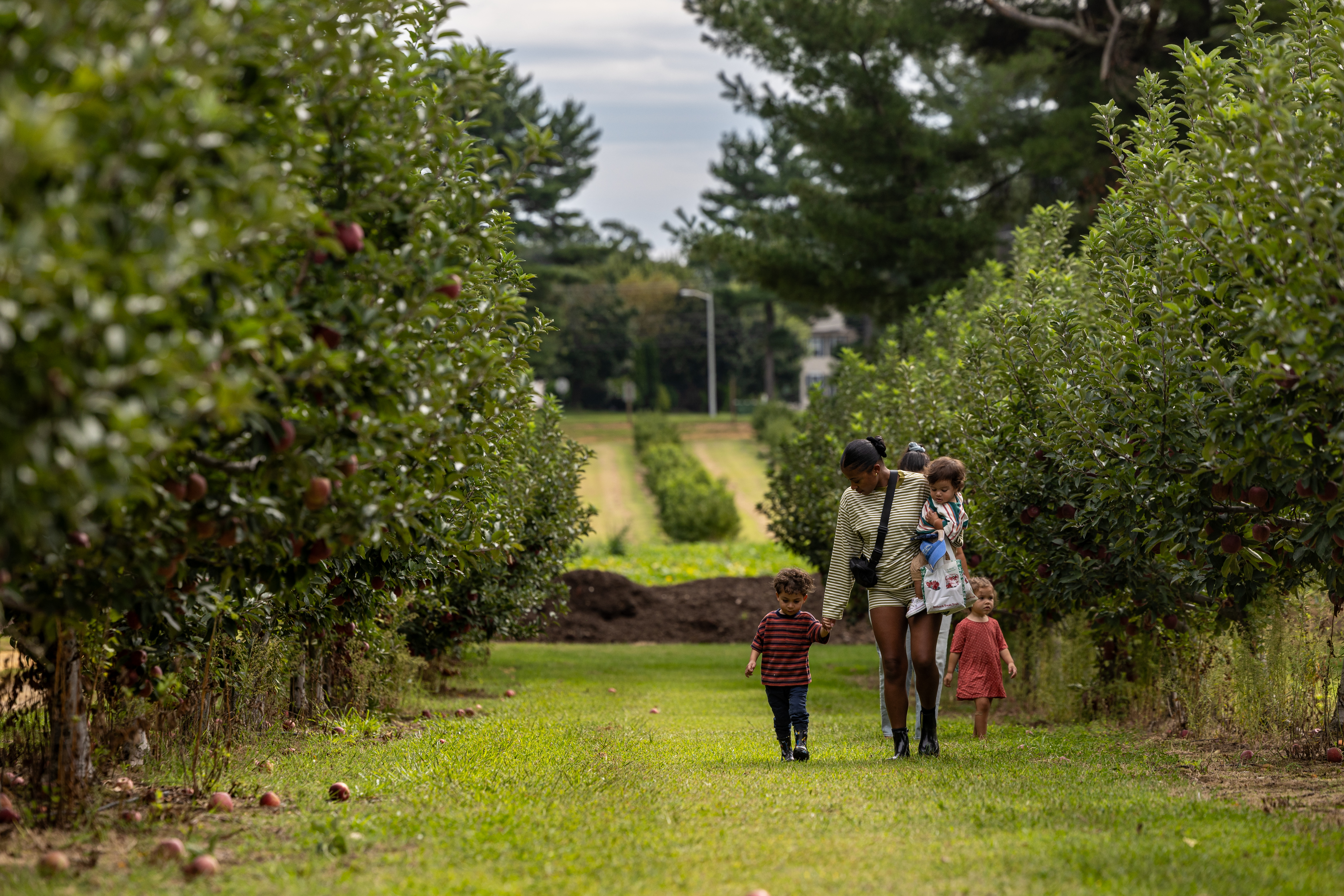
Calah Donato, 26, of Port Elizabeth, N.J., holds her son Neo, 1, while he picks an apple off an apple tree at Duffield’s Farm.Aidan T. Gallo / Staff Photographer
Duffield’s will still carry its beloved apple cider doughnuts this year, along with new apple-cider-doughnut-scented candles. But they did have to switch cider providers this year, buying from a Central Jersey-based farm instead of Mood’s Farm, 20 minutes away in Mullica Hill.
Mood’s is not making fresh cider this year, said co-owner Patti Mood, but they’ll have frozen cider from past apple seasons to get them through.
“We’ll just see how long it lasts,” Mood said. “We’re not sure what next year will look like.”
Kristine Duffield (center), the daughter-in-law of farm owner Tracy Duffield, hosts an apple-themed story time at Duffield’s Farm in Sewell on Friday, Sept. 11.Aidan T. Gallo / Staff Photographer
This fall, Mood’s doesn’t have enough quality apples to run its pick-your-own operation. At the farm’s own Apple Festival on Saturday, visitors gathered apples sourced from nearby states placed in bins in the orchard during discounted hayrides, instead of picking them off the trees.
Other farms have canceled their apple-picking operations this year. Neither Strawberry Hill Farm in Chesterfield nor Johnson’s Corner Farm in Medford have apples to pick.
Julian, who is two-and-a-half years old, makes a craft next to his grandmother Deb Carter, 69, of Washington Township, at Duffield’s Farm Market on Friday, Sept. 11.Aidan T. Gallo / Staff Photographer
Off the farm
Despite the shortage, apples are still being celebrated this year, on and off the farm. First Methodist Church of Moorestown is hosting its third apple festival on Sept. 18.
And Medford Historical Society will host its 47th annual Apple Festival on Oct. 10, their biggest fundraiser of the year.
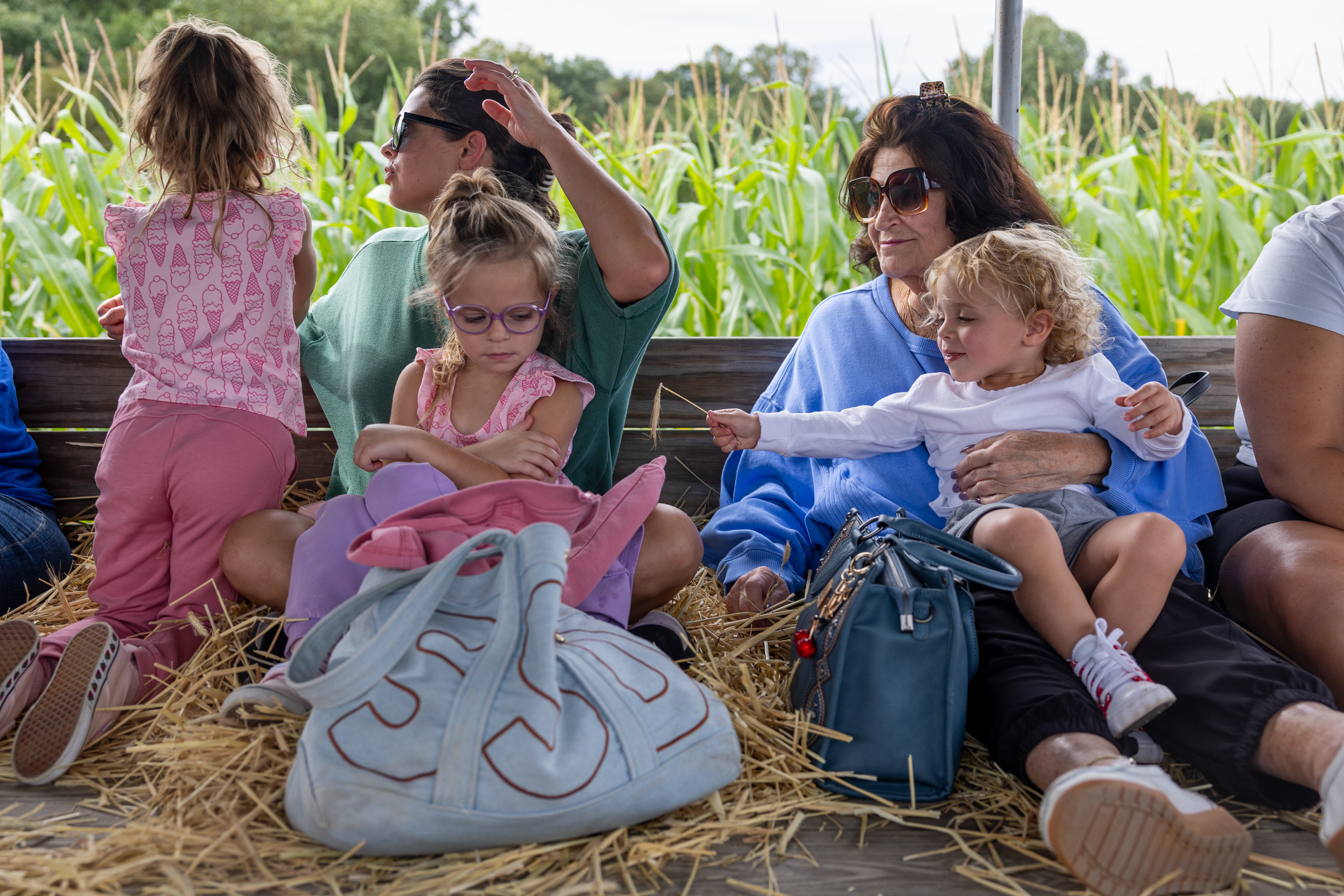
Danny, 2, attempts to poke his sister Sosie, 4, with a piece of hay while being held by his great-grandmother Joan Ballah, 80, at Duffield’s Farm in Sewell on Friday, Sept. 11. The family is local to Sewell and comes to the farm often to participate in the farm’s activities and shop the farmer’s market.Aidan T. Gallo / Staff Photographer
Thomas Gerber, copresident of the historical society, said their usual supplier in Pennsylvania lost all their apples and couldn’t provide the 320 pounds needed for the festival, so they found a different farm in New Jersey.
Families wait to enter the hayride to pick apples out in the orchard at Duffield’s Farm in Sewell on Friday, Sept. 11.Aidan T. Gallo / Staff Photographer
Amy Zorn, an eighth-generation owner of Hunter’s Farm in Cinnaminson, said their farm market has been able to buy Jersey apples from other farms, but they’ve had to pay higher rates for smaller apples compared to previous years. She hopes customers continue to support their local farms through this year’s challenges.
“There are still Jersey fresh items out there,” she said. “You might not see as many apples, but there are fall squashes, sweet potatoes, and other things coming to Jersey. I encourage people to go out to their farmers markets.”
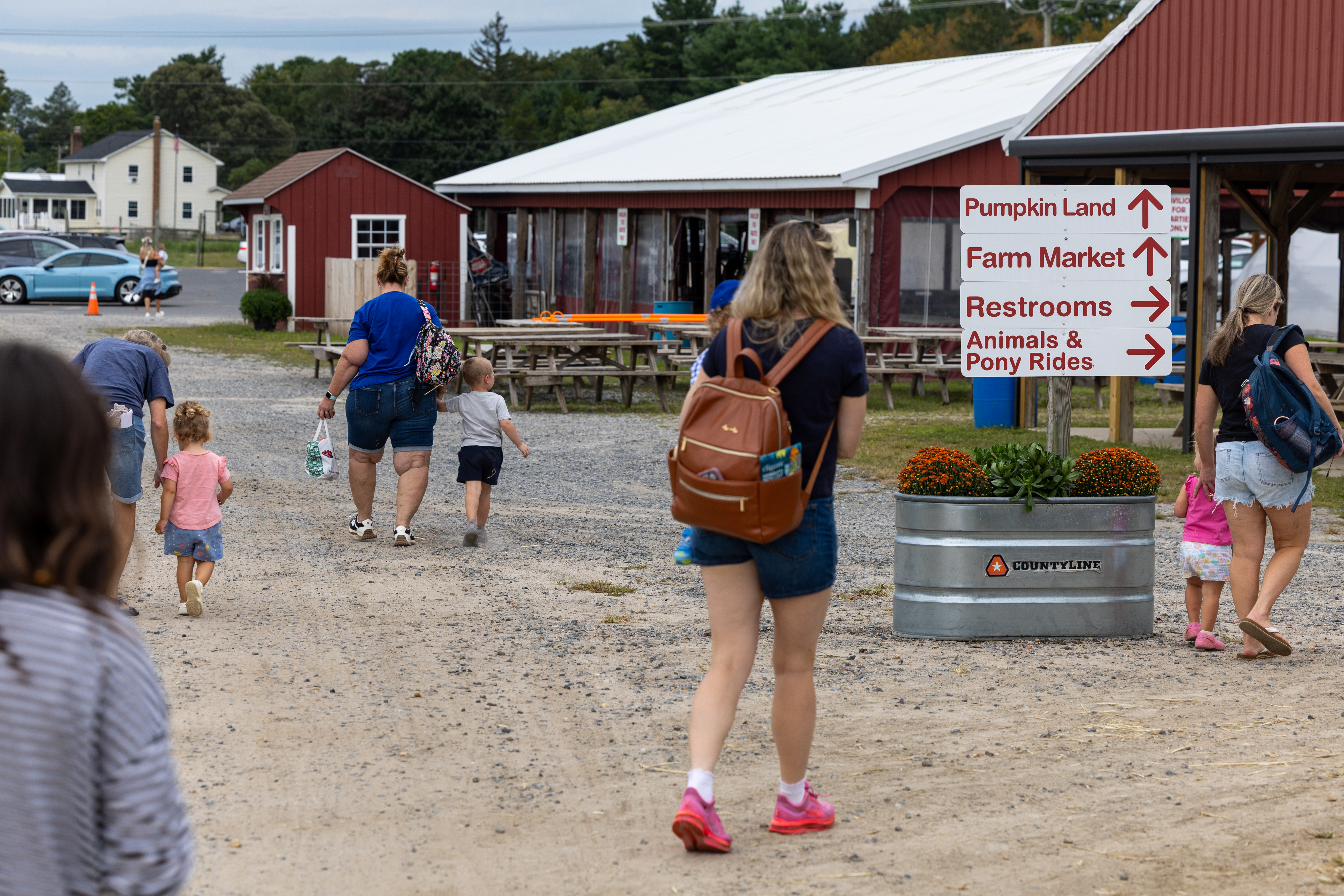
Families exit Duffield’s Farm after the apple-themed activities concluded on Sept. 11.Aidan T. Gallo / Staff Photographer
‘For the long run’
Mario Caltabiano, 31, has been farming since he was 6 years old. As the owner of MC Farms in Pilesgrove in Salem County, Caltabiano grows 14 varieties of apples, Asian pears, and several types of vegetables.
He said he’s used to freezes that take out large sums of fruit, but apples, “the hardiest things,” usually power through.
Caltabiano said one of his farms saw a total apple loss, and the other lost 90% of its crop. With about 20 apples clustered on each tree, and thousands of trees, Caltabiano said he’s not sure how long it’ll take the public to pick them all. Either way, Caltabiano has to continue to tend to the orchards to make sure the trees stay strong enough to produce fruit next season.
“This year, when fruit is 90% of your business, you have the same amount of bills. You have to take care of the trees to the very end,” Caltabiano said. “How do you make up for that?”
In recent years, MC Farms has ventured into the agritourism world, offering hayrides, barrel train rides for kids, cut-your-own flowers, and a wine garden settled in the orchards. Rising prices for fuel and fertilizer are still making work difficult, along with the destruction of most of his crops.
But Caltabiano said he plans to make it to next fall, and the one after that.
“I’m in it for the long run,” Caltabiano said. “I’m in it till I croak.”
No Philadelphia rock radio station has a richer, more colorful history than WMMR-FM (93.3). And none has showcased more on-air personalities who went on to become Philly institutions.
The station’s beginnings as a progressive rock station date back to 1968 with Dave Herman’s free-form show The Marconi Experiment. In the 1970s, DJs like Ed Sciaky, Michael Tearson, and David Dye helped turned Philly into a stronghold for artists like Bruce Springsteen, Billy Joel, and Yes.
That whole story is told by Erin Riley in The Mighty WMMR: An Oral History of Philadelphia’s Rock Radio Revolution, a new book published by Temple University Press.
The cover image to Erin Riley’s oral history book “The Mighty WMMR: An Oral History of Philadelphia’s Rock Radio Revolution,” published by Temple University Press. Riley will be in conversation with former WMMR deejay John DeBella at the Parkway Central Library on Tuesday, Sept. 15.Bruce Gore / Scott Ross / Temple University
Riley served as ‘MMR’s music director from 1983 to 1991 and is the author of the memoir A Dark Force: 20 Years with a Covert Narcissist. She gives voice to 60 interview subjects talking about the station that branded itself “the home of rock and roll.”
On Tuesday evening at the Parkway Central Library, Riley will be joined by DeBella, discussing the book and the history of the station.
The book includes DJs and programmers with names known well by longtime Philly radio listeners, such as Cyndy Drue, Lynn Kratz, “Bubba” John Stevens, as well as Mark Goodman, who became one of MTVs original VJs after leaving the station.
Also reminiscing about the station’s glory days are DJs such as former Daily News and Inquirer music writer and WMMR DJ Jonathan Takiff, WMMR and later WYSP-FM (94.1) morning host Anita Gevinson, who, Riley says, came up with the winning idea to tell the station’s story as an anecdote-filled oral history.
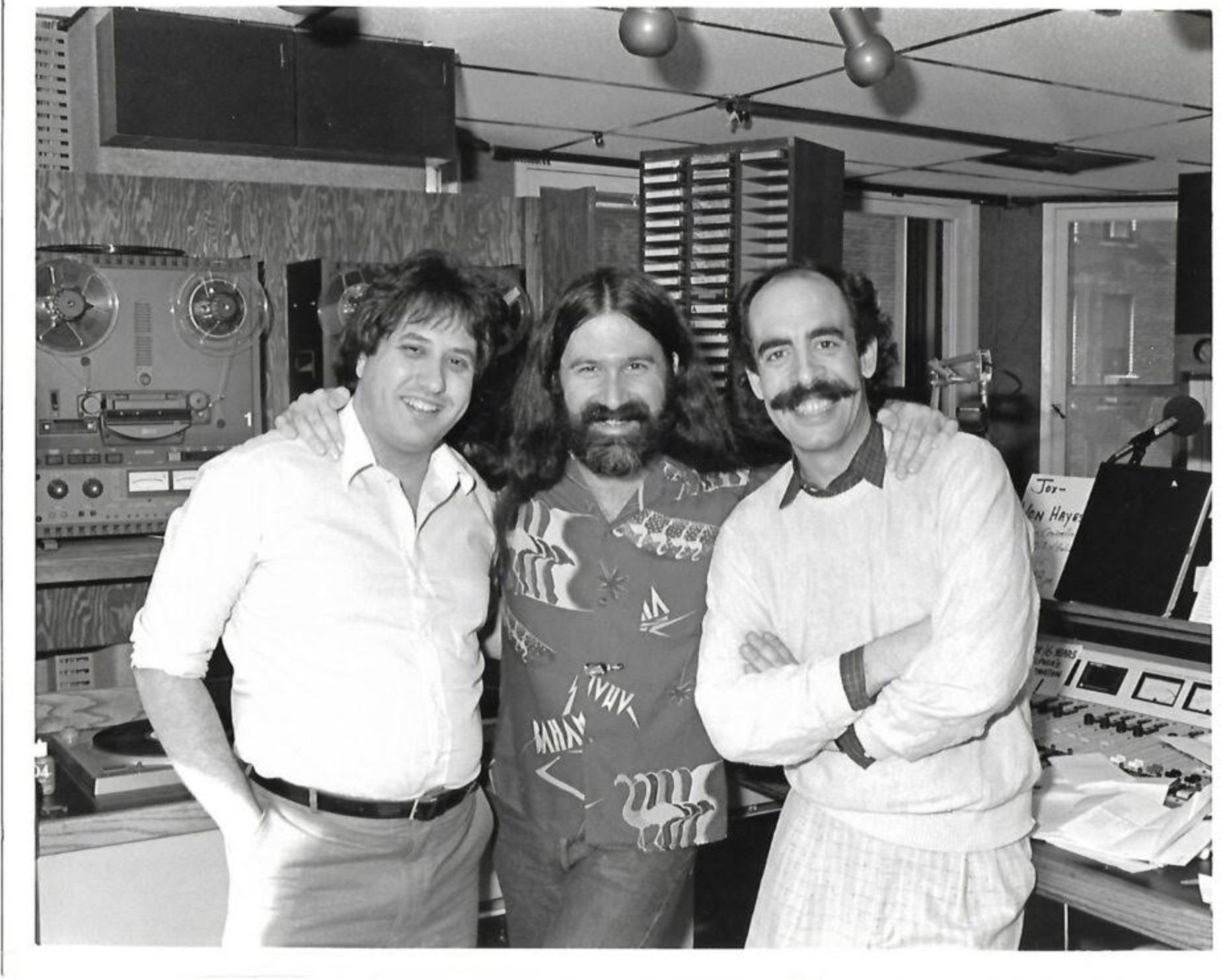
Joe Bonadonna, Pierre Robert, and John DeBella in the Rittenhouse Square studio of WMMR-FM (93.3) in the 1980s. Erin Riley, the former WMMR music director who is the author of “The Mighty WMMR: An Oral History of Philadelphia’s Rock Radio Revolution,” will be in conversation with DeBella at the Parkway Central Library on Tuesday, Sept. 15.Courtesy of WMMR
In the book, Riley writes of her first day of work at the station’s then Rittenhouse Square offices in 1983, when she met Tearson for the first time and he proceeded to immediately roll a joint during their introductory conversation.
“I figured if he’s doing it, no one’s having a problem with this,” she writes.
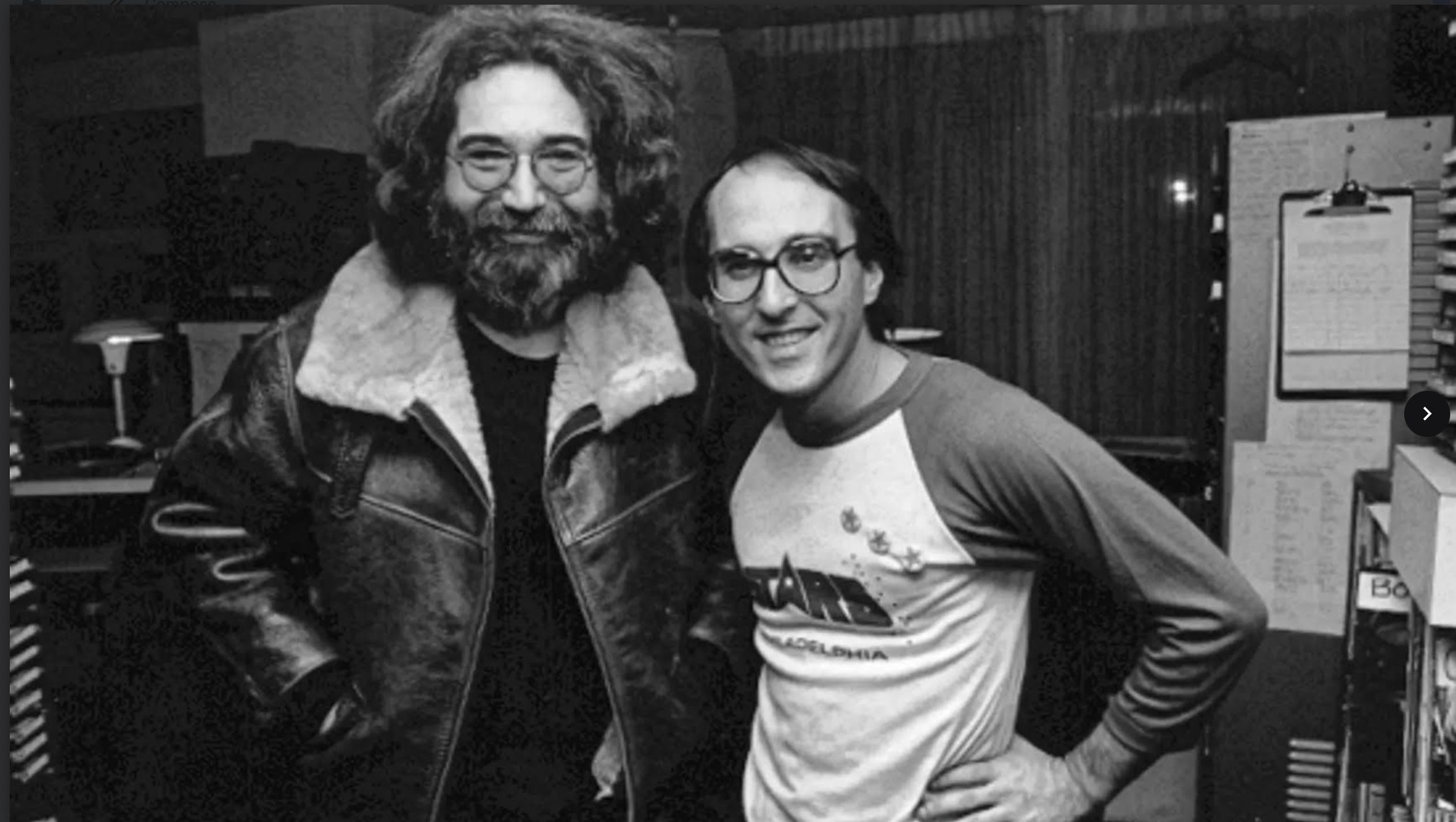
The Mighty WMMR is a nostalgia fest. Interviewees include artists like Kenn Kweder, Richard Bush of the A’s, and John Eddie telling tales of long gone hot spots like Emerald City, Grendel’s Lair, and Stars, the venue run by Stephen Starr, now a restaurateur but then a club owner and concert promoter.
Eric Bazilian and Rob Hyman of the Hooters tell of how Tearson gave the band its first big break by playing its cover of a Skatalites song on his show Gorilla Theatre.
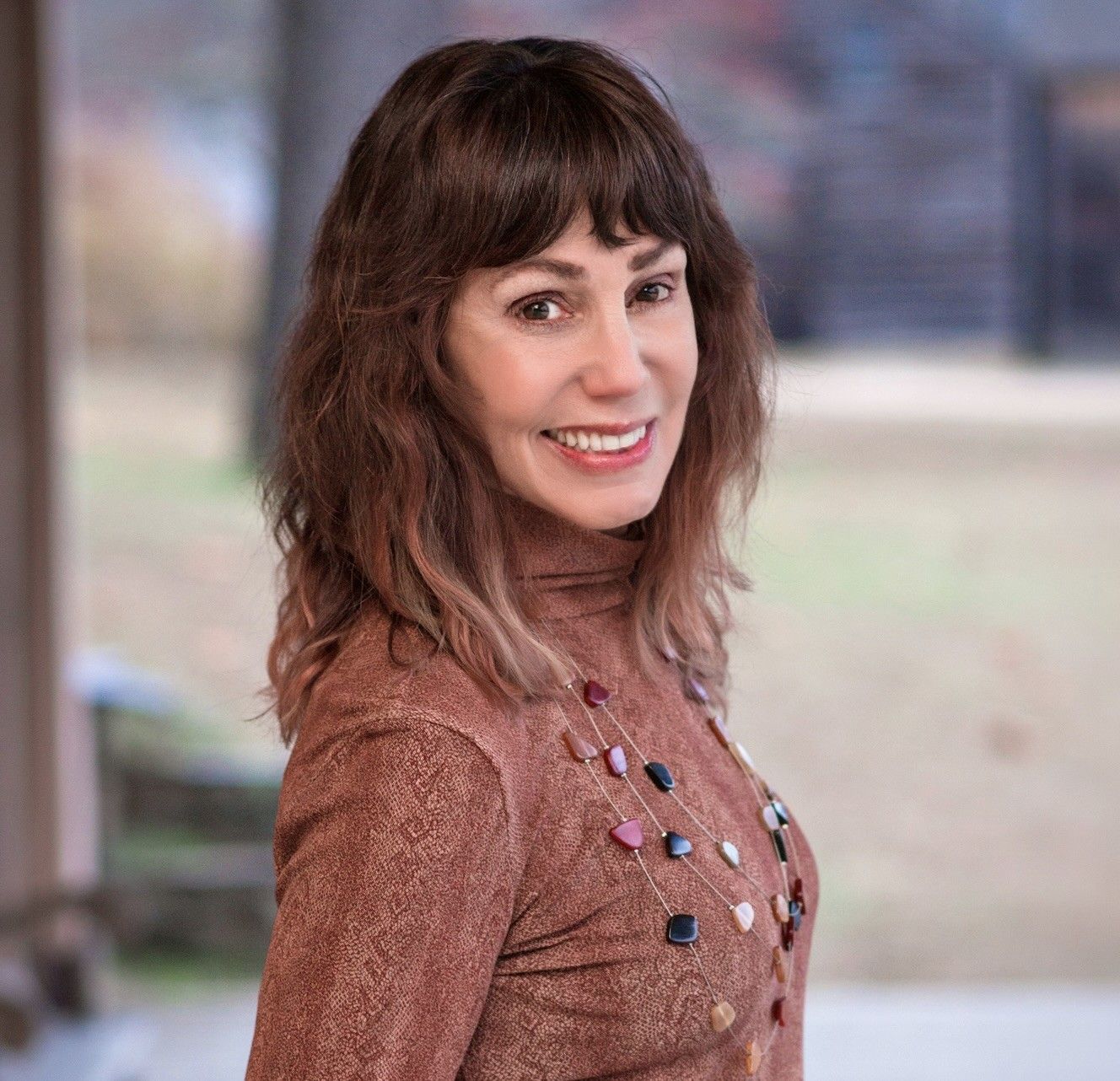
Erin Riley, author of the oral history book “The Mighty WMMR: An Oral History of Philadelphia’s Rock Radio Revolution,” published by Temple University Press. Riley will be in conversation with former WMMR deejay John DeBella at the Parkway Central Library on Tuesday, Sept. 15.Annmarie Young
Judy Sciaky, the widow of Ed Sciaky, who died in 2004, tells of her late husband’s close relationship with Springsteen, who frequently slept on the sofa at the couple’s Lombard Street house during his early 1970s salad days.
WMMR deejay Steve Martorano is one of several who warmly remembers Sciaky, who, he says, “never missed a buffet in his life.”
Springsteen once referred to her husband as “Hungry Ed” in an onstage monologue, Judy Sciaky remembers. The Boss also had a jacket made for the DJ with that nickname stitched on. She adds that Manfred Mann’s hit version of “Blinded By the Light” resulted from Sciaky introducing the band to Springsteen’s song.
Sciaky’s support for artists like Springsteen, Joel, and Warren Zevon is legendary.
“Ed was there first. He believed first, committed to them, and did what he did,” program director Charlie Kendall recalls in the book. But did Sciaky play Greetings From Asbury Park, N.J., Springsteen’s debut album, first?
No, Riley clarifies. That was Tearson, followed by Takiff the same night.
Dye, who later was the founding host of World Cafe on WXPN-FM (88.5), where his Dave’s World airs on Sunday mornings, concurs with the timeline, though Springsteen himself misremembers it in his Born to Run memoir and name-checks Dye in a chapter titled “A DJ saved my life.”
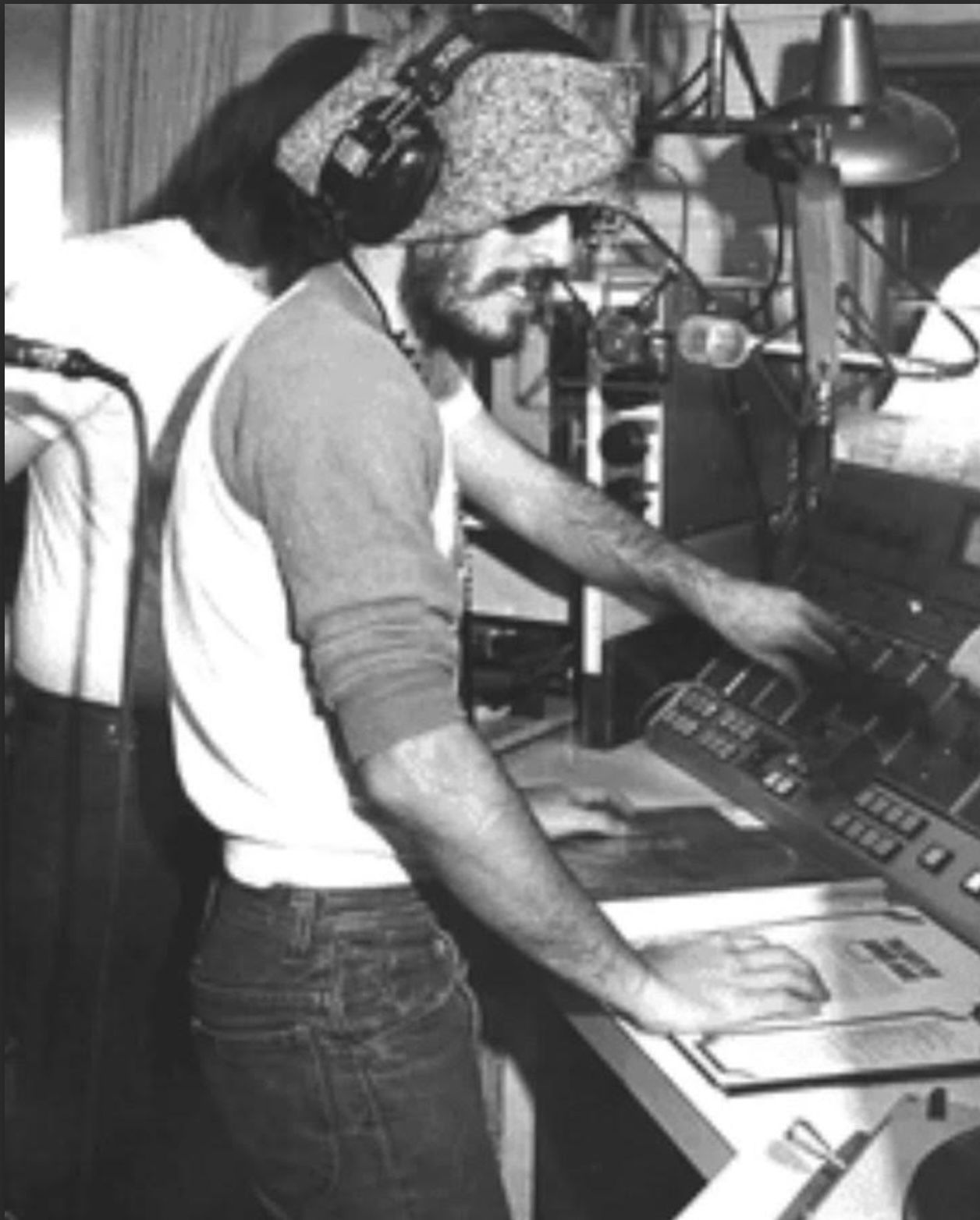
Bruce Springsteen guest DJing in WMMR’s Rittenhouse Square studios in the 1970s. Erin Riley, the former WMMR music director who is the author of “The Mighty WMMR: An Oral History of Philadelphia’s Rock Radio Revolution,” will be in conversation with John DeBella at the Parkway Central Library on Tuesday, Sept. 15.Courtesy of WMMR
Gene Shay, the late Folk Show host who made his home at ‘MMR in the early 1970s, is paid tribute to as well. As is Robert, who came to ‘MMR in 1982 and briefly worked as an assistant music director.
Joe Bonadonna, who hired him, recalls that as an assistant MD, Robert “was terrible.”
“He was so disorganized. … when he started to do part time-work on the air, it just became a natural progression for him. He was not an analytical brain, he was more of an artsy character.”
Robert, who died in October 2025, will be celebrated by David Uosikkinen’s In the Pocket during the Philly all-star band’s In the Pocket at Ardmore Music Hall on Sept. 26.
Erin Riley in conversation with John DeBella plus special guests at 7 p.m. Tuesday, Sept. 15 at Parkway Central Library, 1901 Vine St. Free. Books will be available for purchase. freelibrary.org.
On the outer rim of a Home Depot parking lot in West Berlin, N.J., a group of more than 20 people — many of them senior citizens — did their part to fight Big Brother in the searing August sun.
“It got your license plate number!” shouted one man, pointing to a black, Flock brand solar-powered license plate reader above him and then to various cars in an Oprah-like manner, albeit at a slower clip. “They’re watching you! And You!”
The camera also captured the make, model, and any bumper stickers on passing vehicles going through the shopping plaza’s main entry and exit point, whether they went to Home Depot or not, someone else rattled off. Not to mention all the police-operated license plate readers dotting the region.
Waiting for the light to turn, one driver clearly isn’t buying the “surveillance state” claims. He tells the organizers their phones are already listening, lifting his for emphasis, and flipping them the bird as the line of cars begins to move again.
Michael Cannon, 72, understands that response, but insists these cameras are different.
“This is the freedom to travel,” he said over honks of support. “I can leave my phone at home. I don’t have to shop at Amazon. I don’t have to surf the internet. I choose to use them and I realize I’m giving up some privacy.”
It’s not just that Flock cameras can capture a vehicle’s license and other details, critics say. That information goes into a much-touted national database, which is fed by hundreds of local police departments in every state but Alaska. What’s more, Flock is not the only player in the market.
Automated license plate readers from Motorola Solutions, Axon, Avigilon, Neology, Leonardo, and Genetec are already peppered across the Jersey Shore, the Cherry Hill Mall, and shopping plazas across New Jersey. Major retailers including Lowe’s, Walmart, and Ulta Beauty have embraced the technology, citing loss prevention and employee safety as the driving force. And a majority of New Jersey’s law enforcement agencies have been using the technology since at least 2023, with a $10 million funding boost from then-Gov. Phil Murphy.
The “surveillance state,” say the technology’s harshest critics, is already here and rapidly expanding with a patchwork of regulations people are only now beginning to understand.
But at the Home Depot, Adam Sheridan tried to convince passing drivers it doesn’t have to be this way.
Sheridan is an organizer with the nascent group DeFlock South Jersey, which formed over the summer as the technology was subject to a flurry of investigative pieces, from local outlets like NJ.com to national publications including the New York Times. The South Jersey group is part of an effort to regulate and limit the growing assortment of automatic license plate readers. Everyday people are filing records requests, planning boycotts of retailers using the technology, and courting elected officials across the political spectrum, urging them to introduce bills regulating the technology.
“We’re trying to educate people,” Sheridan said of the group’s efforts. “They don’t know that this surveillance system is being built without their knowledge or their consent and we have found that when you tell people, they don’t like it.”
Progressives like Sheridan see the collective concern and outrage as a boon to their cause.
“There really is a lot of alignment between very vastly different people and that’s unusual,” he said. “We can go and talk to a Republican legislator and say your voters care about this and then we can go to a Democratic politician and say the same thing.”
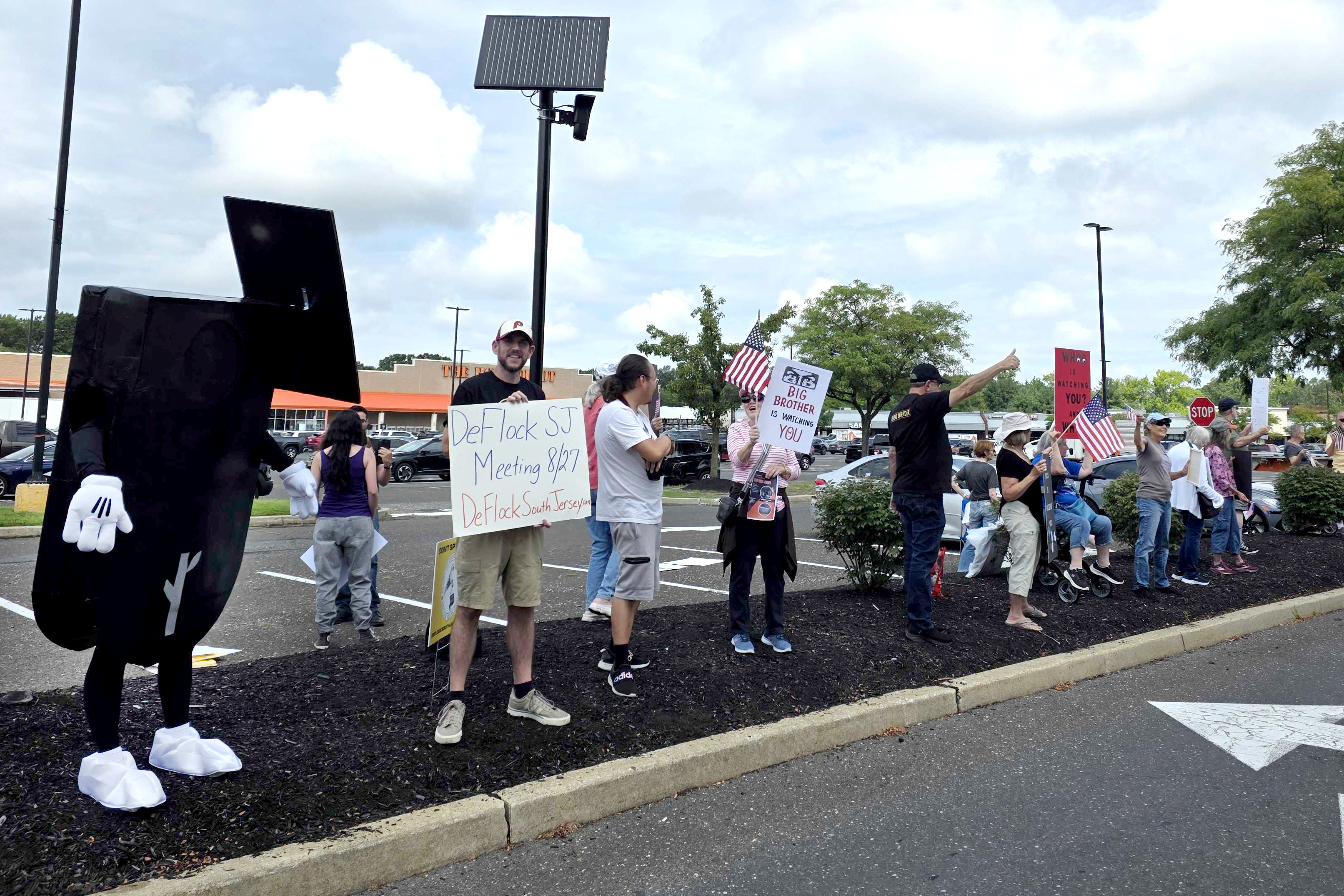
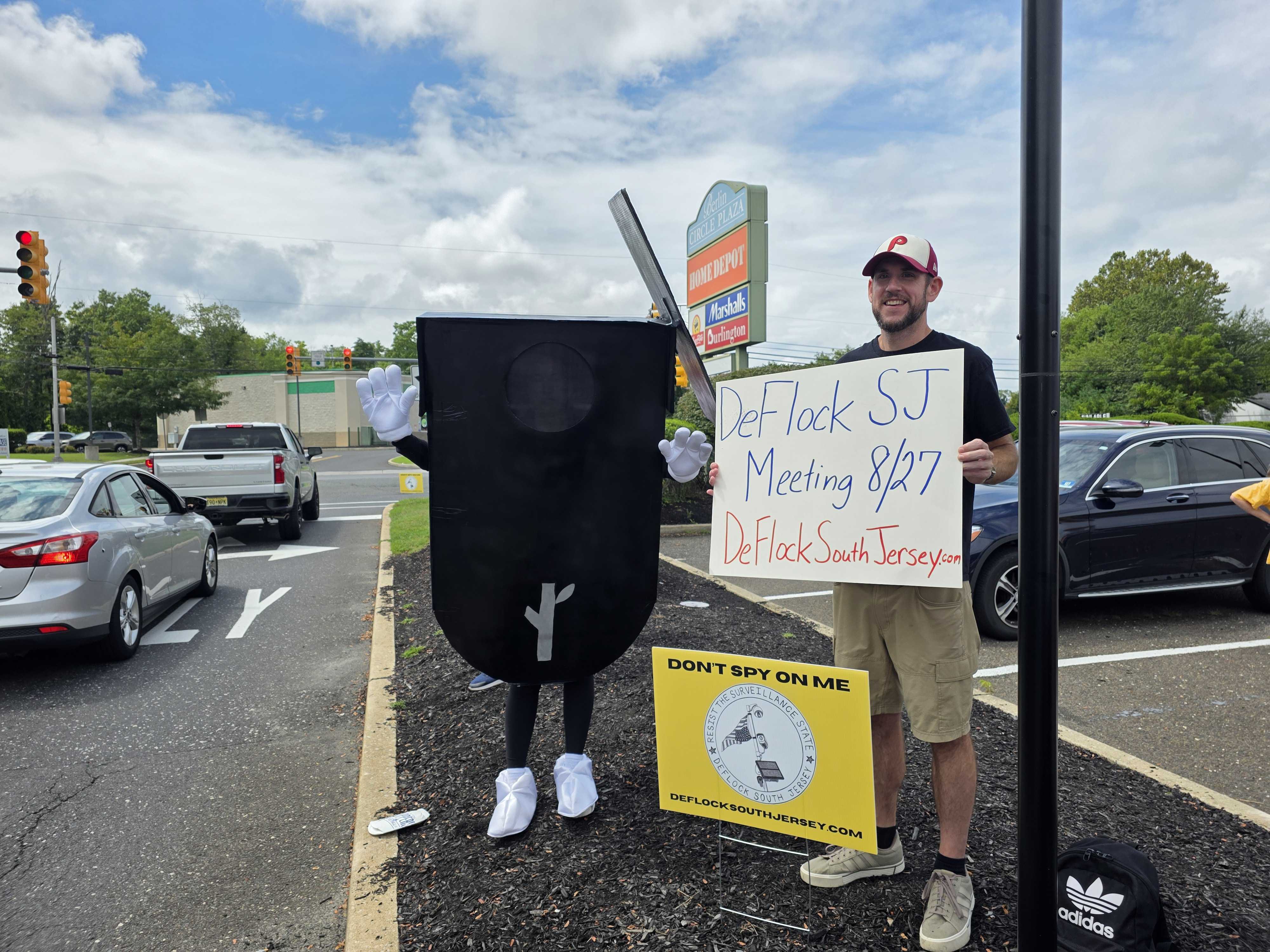
Adam Sheridan, an organizer with the new DeFlock South Jersey, alerts passing drivers to an organizing meeting in August where people hope to spread awareness regarding automated license plate readers. Flocky, a homemade mascot, acts as a visual boost.Ximena Conde
High-profile cases of abuse
One of the reasons Flock has received the brunt of criticism in the license plate reader backlash is because of a number of incidents where the technology was abused or misused.
Then there are the legal concerns, including whether the technology can help authorities circumvent the laws of neighboring states. Tech outlet 404 Media reported that police in Texas used Flock to track a woman who left the state to self-administer an abortion. While Texas prohibits almost all abortions, police were able to tap into Flock data in states where abortion is legal because of that national network.
The quandaries are not limited to Flock.
Immigration enforcement is another area where policies and safeguards can change from camera provider, to state, to police department, to private business.
Flock says it does not contract with U.S. Immigration and Customs Enforcement, but clients in states like New York have allegedly used license plate reader data on ICE’s behalf.
For its part, New Jersey limits how state and local law enforcement assist immigration authorities and Flock says it has its own guardrails, requiring out-of-state agencies to confirm that they’ll comply with state law before receiving license plate data. Yet retailers set their own policies on when data can be shared with local and federal law enforcement.
People like Sheridan, someone who organizes for progressive causes in South Jersey, worry about the use of the technology under the current political climate. Even so, he’s encouraged by the criticism the technology has received across the political spectrum.
“We think that people on the right should also be concerned about it because Donald Trump won’t be the president forever,” he said. “There will be a Democratic president, and we don’t think that that president should have these powers either.”
Privacy advocates also urge critics to look beyond Flock and consider how license plate reader technology is being used by other companies and paired with other surveillance tools.
Motorola Solutions didn’t respond to a list of questions, but the American Civil Liberties Union reports it also offers a searchable national database of vehicle information captured by its cameras.
And Leonardo, as first reported in 404 Media, is rolling out sensors to their license plate readers that would capture “unique identifiers” of phones and other Bluetooth-enabled devices in cars. The company said in a statement that this is a separate product that can be paired with their license plate readers and all that information is kept in the end users’ own database.
Critics concede this is all a lot to take in. Yet they hope to tap into the sudden interest in license plate readers and replicate some of the data center bans in New Jersey. Though license plate readers are already ubiquitous, privacy advocates believe a mass mobilization could push for regulation.
A technology used statewide
License plate readers have been around for a long time.
In New Jersey, the Office of Attorney General has led efforts to regulate the technology since at least 2010. The latest tweaks to regulation came out of the office in 2022, mandating annual audits of law enforcement agencies using the technology; requiring license plate reader coordinators to improve oversight and information sharing; and cutting the time these departments can keep data and records from cameras from five to three years.
By the time the first statewide audit was published in 2024, 517 law enforcement agencies were already using the technology, including the New Jersey State Police, NJ Transit Police Department, and various county prosecutor’s offices. The latest report auditing the use of the technology, found 523 law enforcement agencies are using license plate readers. There areabout 530 law enforcement agencies in the state, according to NJ.com.
And while agencies are told to report significant violations and citizen complaints — there were none listed for 2025 — information regarding how many cameras agencies have or how often they’ve been used in investigations is not provided.
Much of what’s known about license plate readers is coming from the companies themselves, with many of the service providers remaining rather tight-lipped.
In its more recent “impact census,” Flock reported its technology supported more than 1 million criminal investigations in 2025 across 700 law enforcement agencies nationwide, helping locate more than 10,000 missing persons. The company also claims more than 40% of its customers used Flock in more than half the cases that resulted in the recovery of a stolen car.
The Cherry Hill Police Department, however, is careful to not to overemphasize the technology’s role in solving crimes.
“In nearly every case where a reader mattered, it gave detectives a direction and the case was then built by corroborating that lead through other evidence: video, physical evidence, witness accounts, forensics,” said the department’s Capt. Sheldon Bryant.
A reader can offer a lead, he said, but proving the crime is still up to law enforcement.
The department has contracted with Flock for the last two years. Bryant highlighted several instances where the township’s 10 readers identified vehicles connected to crimes committed in and out of the township, which led to arrests.
A shooting investigation in Camden last January led authorities to a vehicle in Cherry Hill and just last month, a shooting in Cherry Hill led authorities to New York, according to the department. Cherry Hill Police obtained a warrant in the latter incident and a Flock reader picked up the vehicle’s license plate in New York, leading to an arrest.
In the last year, Cherry Hill’s system generated 2.2 million alerts, the overwhelming majority being expired registration and suspended plates — the department doesn’t use the readers to run enforcement sweeps on those. The alerts connected to criminal activity are far smaller, Bryant said. In the same year the department received alerts for about 800 stolen plates, 212 stolen vehicles, and 15 missing persons.
Many critics of license plate readers argue more granular data from individual law enforcement agencies on how they use the technology would aid in transparency.
How many people are being recorded to try to capture a select few, they ask. An oft-quoted statistic from the Electronic Frontier Foundation, which has been studying new surveillance technology for more than 30 years, noted that less than 1% of cars scanned are connected to a crime, but that’s from research looking at data from 2016 and 2017.
At the inaugural DeFlock South Jersey organizing meeting, this statistic drew denouncements from the crowd.
“I know there’s some benefits but it’s not up to us to prove we didn’t commit a crime,” said a Howell Township resident named Joe afterward. He’s a registered Republican who declined to give his last name to preserve his privacy — a common stance among the group. “I’m driving past these all the time, I shouldn’t be surveilled in case something happens.”
Fighting the warrant loophole
Consider this: Police want to stick a GPS tracker on a suspect’s car. Law enforcement would have to get a judge to sign off on a warrant in order to do so and they would only be able to track an individual’s movements going forward.
Matthew Guariglia, a senior policy analyst at the Electronic Frontier Foundation, said license plate reader technology inverts that system by collecting sensitive data all the time.
“Not only is it like skipping the judge, it’s skipping the judge and going back in time and putting a GPS device on a car 30 days ago,” Guariglia said.
The amount of time license plate readers keep that information varies by company and law enforcement agency. Amid backlash, Flock cut its retention period last month from 30 to seven days. Critics looking for greater regulation feel retention should be uniform across companies and shorter still.
One of the many tactics DeFlock South Jersey aims to take is pushing legislation that forces agencies to delete captured data after 48 hours unless it is needed as evidence. The suggested bill language promoted by the ACLU, also requires other law enforcement agencies to request access to license plate data collected by another entity. The asking agency would have to agree not to further share the data, unless required by law, or have a warrant.
Republican Sen. Michael Testa (Atlantic, Cape May, Cumberland) plans to introduce legislation for license plate reader guardrails this month, though the text has yet to become available.
“The legislation that I will be introducing will establish commonsense protections for law-abiding citizens while still allowing law enforcement to use this technology to catch dangerous criminals,” he said in July.
Back at the organizing meeting, held at the South County Library in Winslow, attendees looked over drafts of the suggested legislation and headed to DeFlock.org — not affiliated with DeFlock South Jersey. The website is an open-source project that flips the script on license plate readers. Volunteers submit the locations of cameras across the country, regardless of brand, despite the name.
Many in the room were already acquainted with the app, having sent in tips themselves. Sheridan floated the idea of a license plate reader “scavenger hunt” as a potential event to raise awareness. Boycotting retailers that use the cameras was also floated as an idea.
Joe, the Republican attendee from Howell, doesn’t mind the cameras on private businesses. Still, as Sheridan hoped, Joe left the meeting ready to take action. He’s stayed in touch with DeFlock South Jersey in the weeks since and they’re coordinating a possible meeting in Howell, Sheridan said.
Despite the technology’s ubiquity in South Jersey, Sheridan feels regulation is within reach because people like Joe are joining the fight.
“Not to be corny about it but this is an American value,” said Sheridan. “The ‘don’t tread on me’ stuff is sort of in our DNA as Americans, the government doesn’t get to watch me everywhere I go.”
As her children start second and third grades in the Colonial School District, Elise LaChapelle expects they will spend no more than 20 to 30 minutes a day on their Chromebooks — limits the Montgomery County district has announced to parents.
Colonial also no longer allows elementary school students to take their laptops home at night. “That seemed to be an acknowledgment on the district’s end that changes were needed,” LaChapelle said.
Amid a spreading backlash to screens in classrooms, public school districts across the Philadelphia region are placing more limits on technology use — including by pulling back on one-to-one device programs once touted as critical for ensuring every student had access to technology.
The Tredyffrin/Easttown School District has stopped assigning iPads to kindergartners, and students across the district’s elementary schools will no longer take their tablets home at the end of the day.
In Methacton, the district has transitioned from individual devices to a shared model for kindergartners and first graders, with Chromebooks available for center-based activities, according to a district spokesperson.
The Phoenixville Area School District has ended its one-to-one device program for kindergarten through third grade, while in Wallingford-Swarthmore, kindergartners through second graders will take fewer online assessments, and kids up to fifth grade are no longer able to search and browse YouTube.
Parents who have been pushing schools to scale back on computer use are applauding the new restrictions as a step in the right direction of promoting teacher-led instruction and reducing screen-based distractions.
But they also question how much will change in practice, because children will still have access to devices in many classrooms. Some parents who have been battling for less screen time want schools to go further to address what they see as excessive reliance on technology at older grade levels.
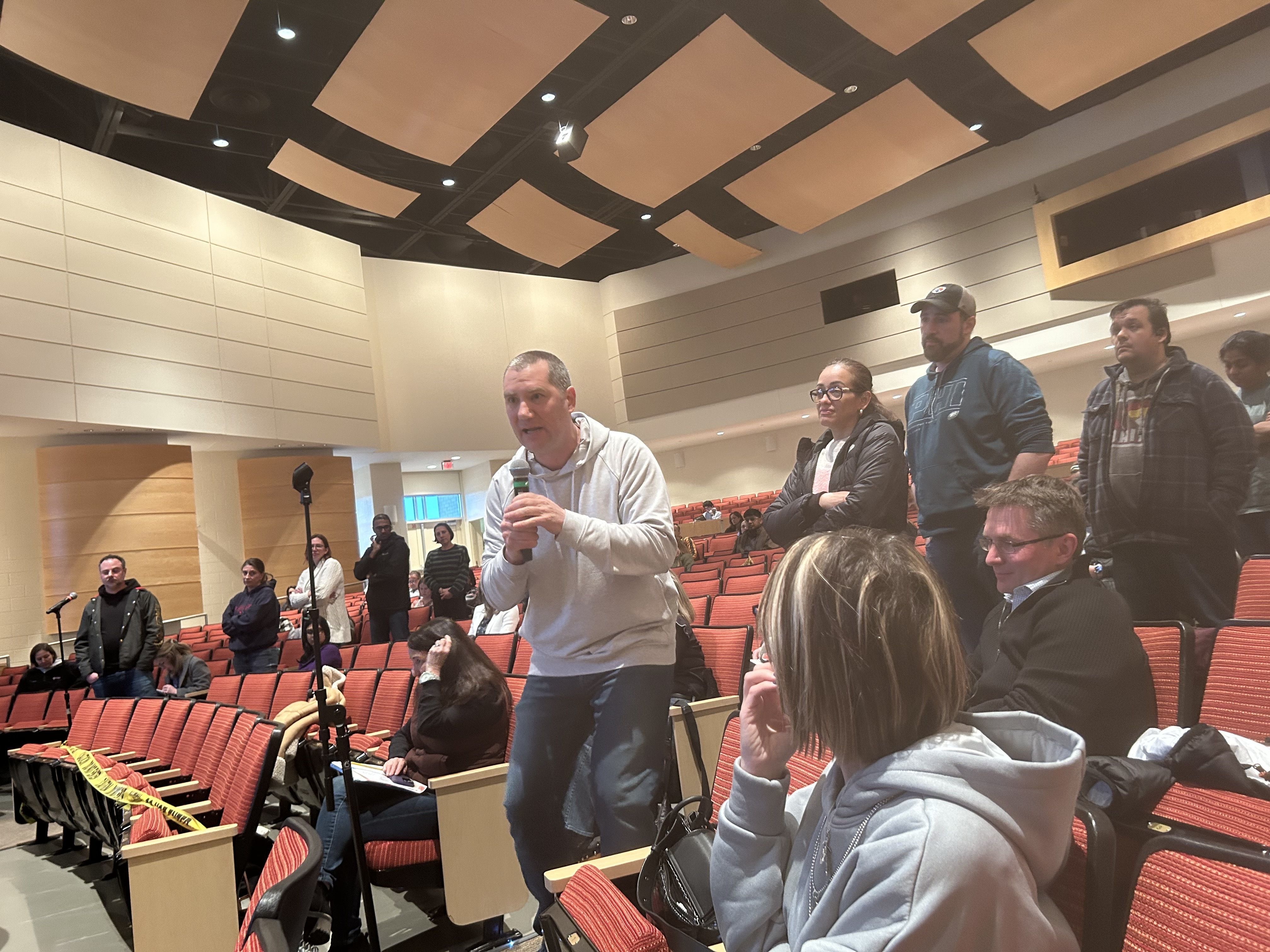
Yair Lev, a parent who opposes Chromebook use in Lower Merion schools, speaks at a March 23 forum at Harriton High School about technology use in the school district.Maddie Hanna / staff
For many districts, reducing computer usage in elementary schools “seemed like the low-hanging fruit,” said Alex Bird Becker, a Wallingford-Swarthmore parent active in PA Unplugged, a statewide group with about 5,000 supporters that advocates for limits on educational technology. But “when you get to middle school, the device culture has become really ingrained with curriculum. That’s where it gets harder to disentangle.”
Wallingford-Swarthmore, a 3,700-student district, has been soliciting applications from parents to join a new Technology Advisory Council that will advise the district on further changes, including related to device use in grades six to 12. (In Lower Merion, parents have been pressing the district to create a technology review committee that includes parent representation.)
“We know there’s even more we want to do in this area,” said Russell Johnston, Wallingford-Swarthmore’s superintendent.
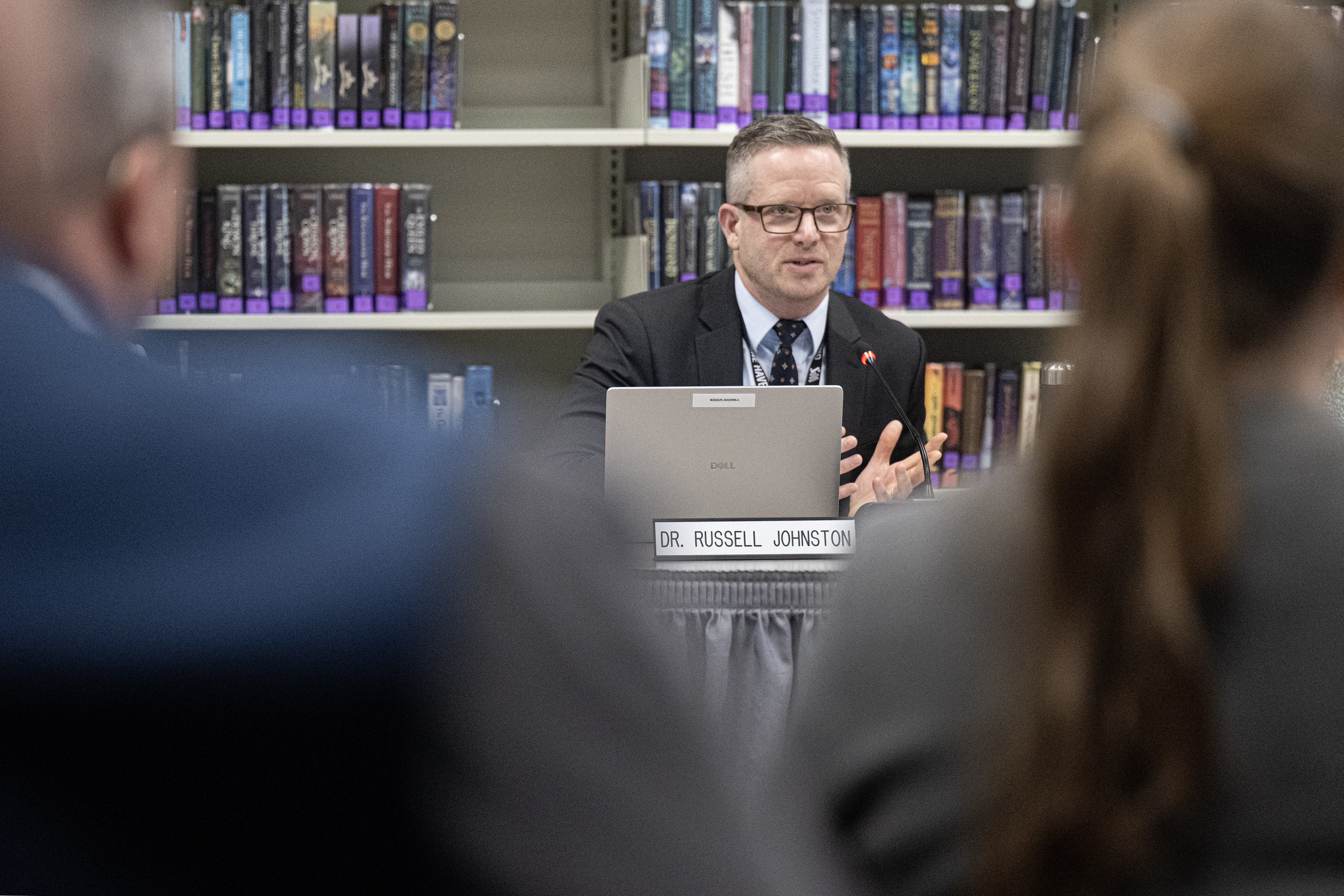
Wallingford-Swarthmore School District Superintendent Russell Johnston speaks during a Feb. 24 school board meeting in Wallingford.Jose F. Moreno / Staff Photographer
Wallingford-Swarthmore is also reevaluating how laptops are used during “curriculum enrichment” time, Johnston said, when students are broken into small groups to receive extra help.
In Phoenixville, which ended its one-to-one device program for kindergarten through third grade, “students will continue to have access to appropriate and approved educational technology for academic purposes only,” district spokesperson Nicole McClure said.
Alair Southerton, a Phoenixville parent who has been pushing the district to make changes, said the school board had approved “strong language” around when devices should be used in classrooms.
But “we’re still kind of crossing our fingers with the rollout,” Southerton said. She questioned whether teachers had clear guidance from administrators, and whether the district would consider educational technology apps that some parents object to as “gamified” as essential for learning.
“We want to really fine-tune what needs to be done on a device on a screen,” said Southerton, who is a member of a new district Edtech Advisory Council.
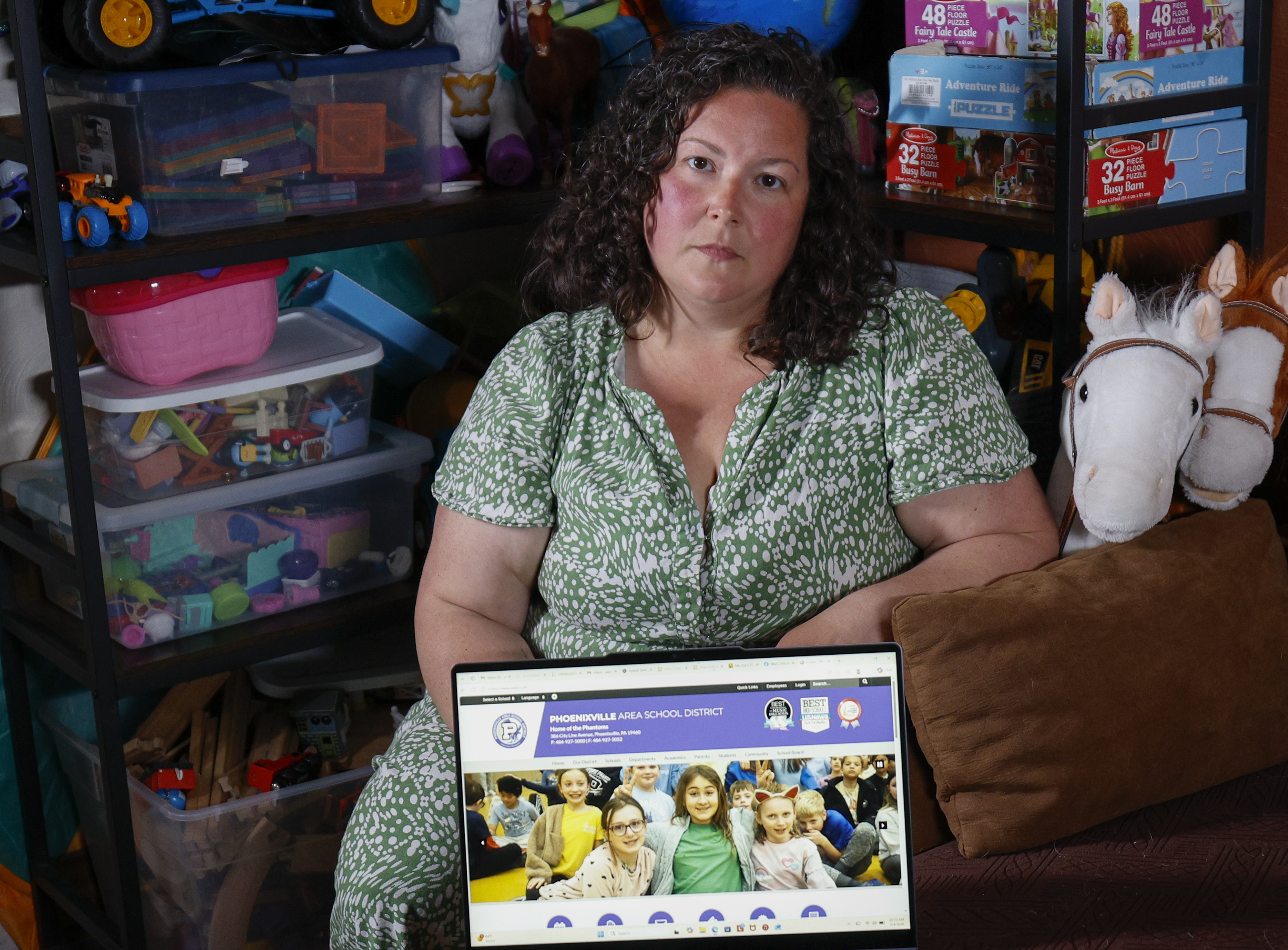
Alair Southerton, pictured at her home in May with the Phoenixville Area School District website on her laptop. Southerton is leading a group of Phoenixville parents who are calling on their district to reduce screen time in school.Steven M. Falk / For The Inquirer
While Phoenixville this fall adopted a new program, Qustodio, to let parents monitor their child’s device usage, Southerton said it has been less revealing than she hoped. The program reports which websites students accessed at 15-minute intervals throughout the school day but does not say how long they actually spent online, she said.
In Colonial, LaChapelle is awaiting the district’s launch of a different program, Securly, that will also allow parents to monitor what their kids accessed.
While the district has placed limits on screen time — 20 to 30 minutes in kindergarten through third grade, 40 to 50 minutes in grades four and five, and 2½ to three hours in grades six through 12 — “accountability and transparency are key,” LaChapelle said.
Colonial spokesperson Jessica Lester said the district had “done more this year to try to communicate what our approach is” to technology.
LaChapelle noted that in order to register her children for school, she had to consent to a list of more than 100 software programs used by the district; officials have since told her they plan to revise that, she said.
LaChapelle hopes the district will continue to make changes. Taking an intentional approach to technology use could be a selling point for districts trying to show leadership, she said.
“We’re doing and saying a lot of the right things,” she said. But “this isn’t a one-and-done conversation.”
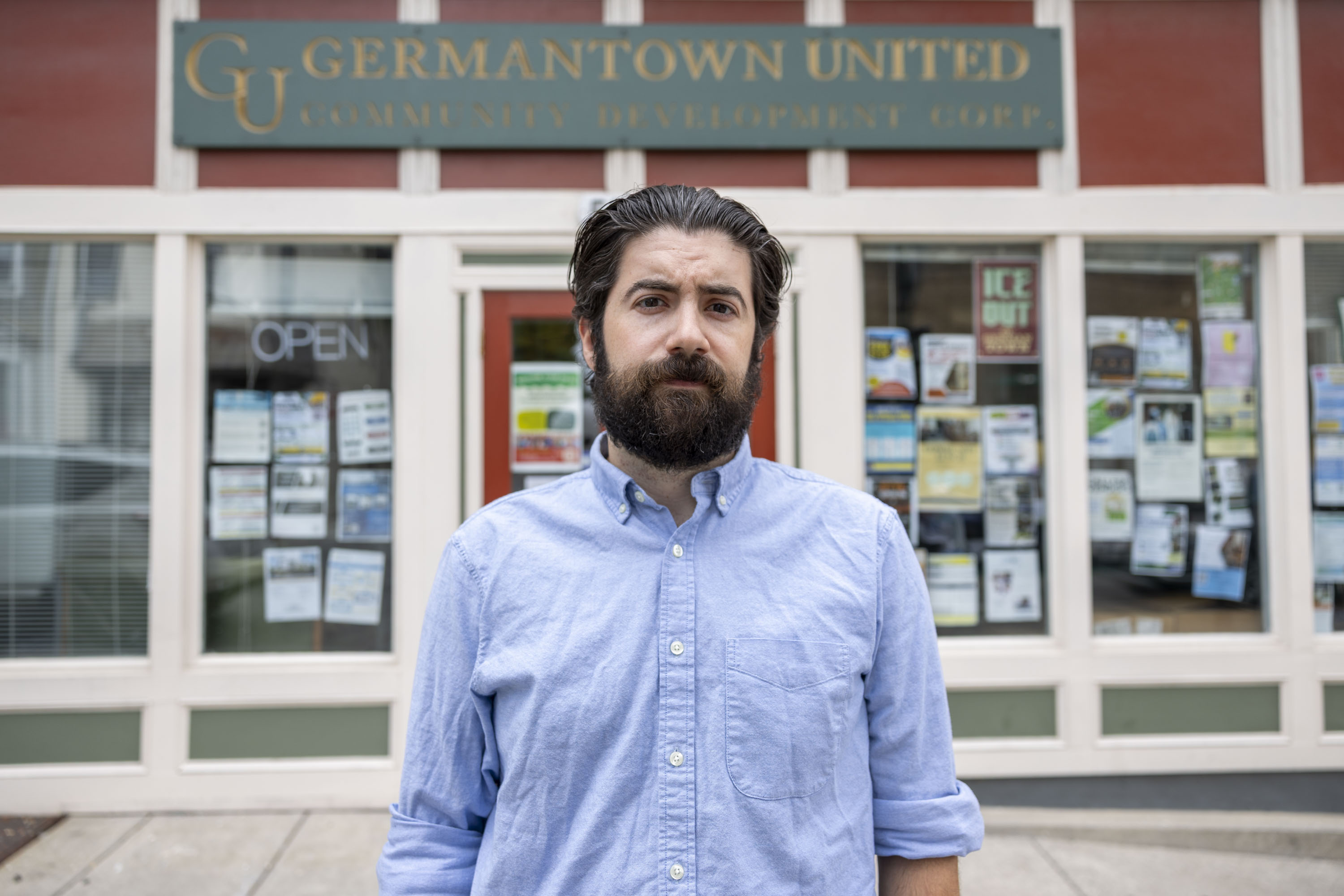
The story that’s told about Germantown’s downtown is often one of disinvestment, but a small contingent of community stakeholders and business owners are hoping to spin a new yarn.
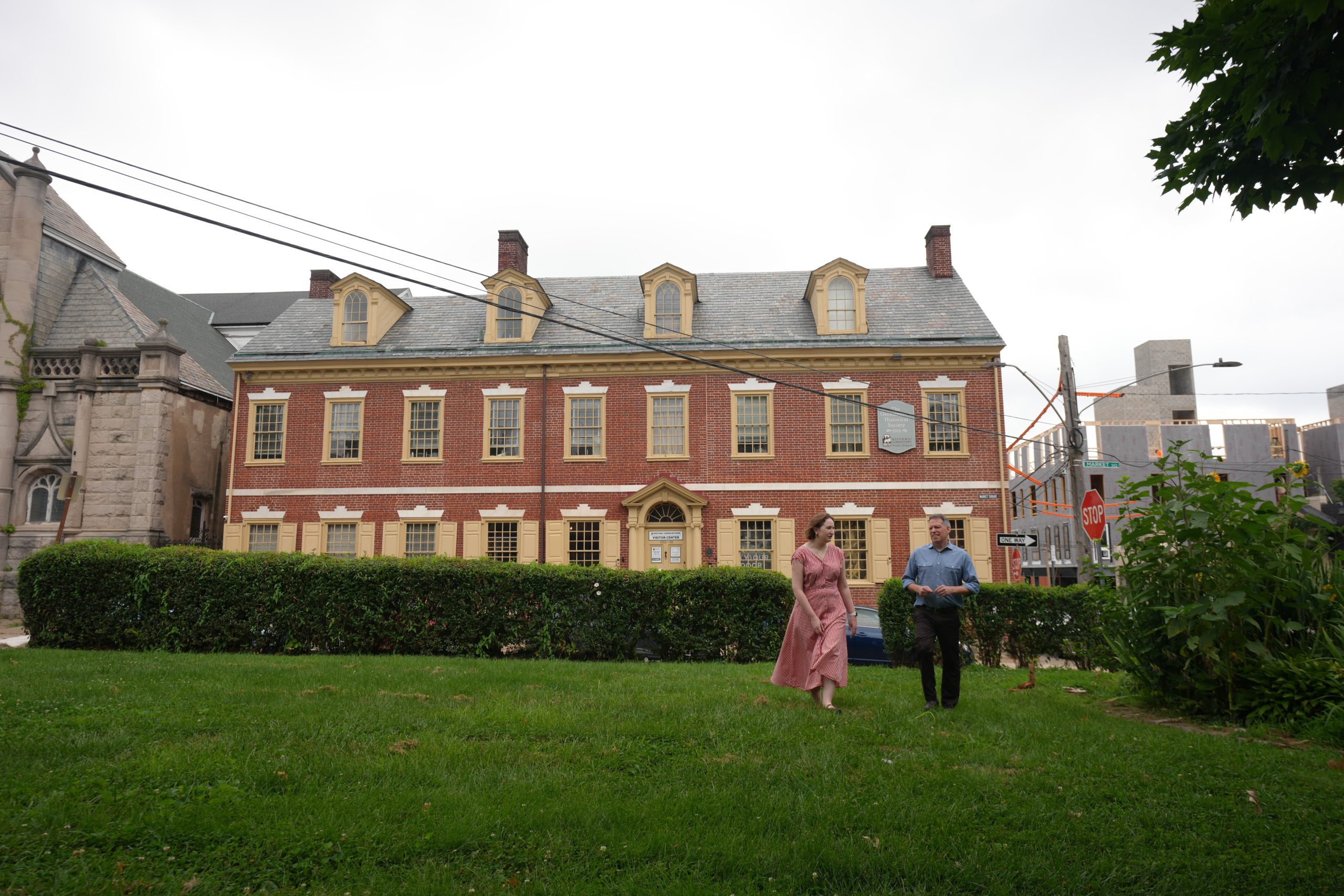
But forces big and small are working to revitalize the community: Germantown United, the neighborhood’s community development corporation (CDC), recently completed a plan to make Germantown’s business district more walkable. Historic Germantown, the neighborhood’s historical society, in July unveiled its new visitors center that aims to connect Philadelphians and visitors to the area’s deep history. And buzzy storefronts including Uncle Bobbie’s Coffee & Books, Salam Cafe, Weavers Way Co-op, Cupbearer Coffee, and Attic Brewing bring much-needed services and third spaces to the neighborhood.
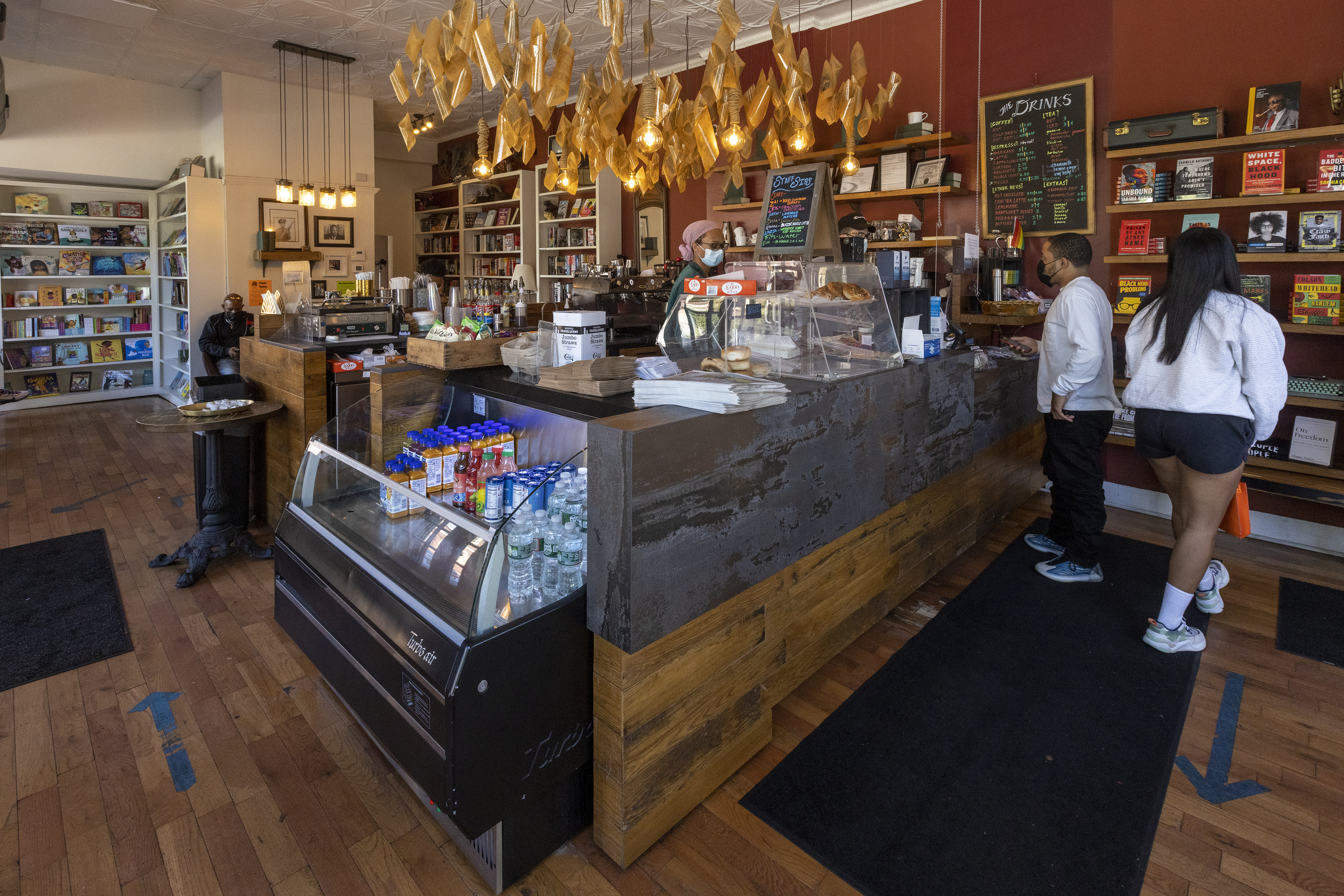
Interior of Uncle Bobbie’s Coffee & Books, 5445 Germantown Ave. Alejandro A. Alvarez / Staff Photographer
Leo Dillinger IV, the executive director of Germantown United, said new businesses have been reaching out to the CDC, the first step to lifting the business district up, “but with everything, it takes time.”
“We don’t want the corridor to change like a light switch and all of a sudden it’s actively populated with a bunch of businesses that aren’t offering affordable goods and services,” Dillinger said. “That leads into the fears of gentrification and displacement that are a major concern for the Germantown community.”
Connecting corridors in Germantown
While it has the CDC, Germantown lacks a business improvement district to fund and oversee improvements to the area. And with the 2019 disbanding of the Germantown Special Services District, after accusations of mismanagement and misappropriation of funds, the neighborhood lost a body tasked with keeping its main business corridors clean.
“We lack structure in order to have a commercial district that is thriving,” said Patrick Jones, a Germantown resident who has organized community members around efforts to redevelop its public spaces and city-owned large vacant properties. “A lot of us feel as though Germantown is a forgotten community in the 8th Council District.”
Jones said residents would like to see Germantown bring in a selection of sit-down restaurants and middle-class big box stores like Target or Giant. Dillinger said the CDC gets similar feedback.
“Right now if you want to sit down and have a nice meal, you have to go outside of Germantown to do that,” Jones said. The addition of Uncle Bobbie’s and its cafe in 2017 “started moving us in the right direction, but we want to see an actual restaurant in Germantown, and it’s just difficult to do that with the way things are right now.”
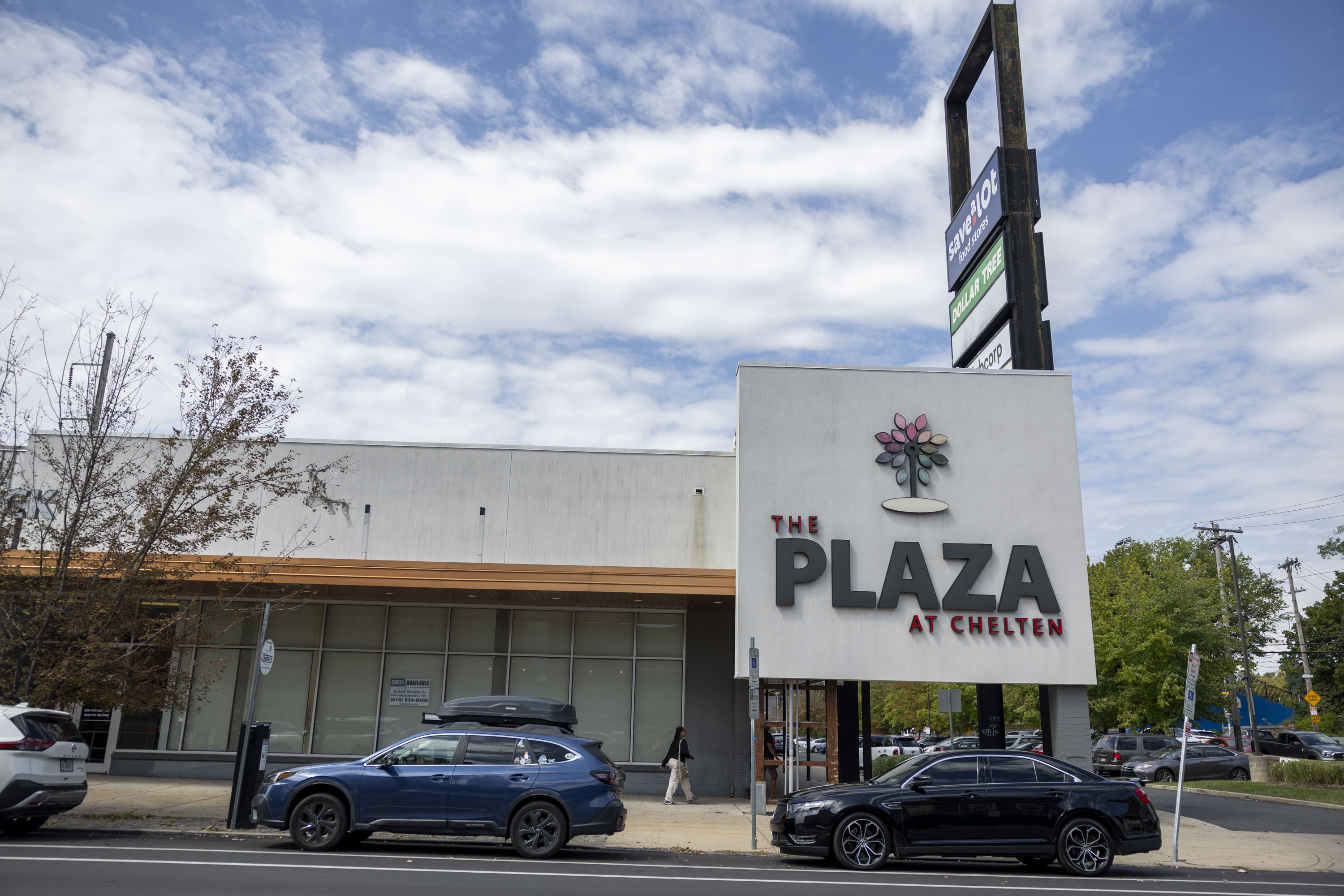
The outside of the Plaza at Chelten in Germantown.Tyger Williams / Staff Photographer
Having more organizational support beyond the CDC might allow that, he says.
“We’re lacking the resources to put attention towards advocating for ourselves,” said Laura Lacy, co-owner of Attic Brewing Co., near Wayne Junction. “You can immediately see the change when you’re driving [out of Germantown]. As you get into Mount Airy, you start to see hanging flower baskets and landscaping on corners and trash cans.”
The neighborhood’s existing business hubs also feel disconnected. That’s an issue that Germantown United is addressing with a five-year plan to better connect West Chelten Avenue, Maplewood Mall, and Market Square for pedestrians. They’re pushing for better overhead lighting, connecting business owners with the Department of Commerce’s business security camera program, and addressing cleanliness and improving greenery.
The plan also includes connecting with absentee landlords to discuss how their properties can better serve the community, Dillinger said. These landlords are at the heart of the problem, locals say.
“There’s just a lot of commercial property owners who don’t care,” Dillinger said. “There are some who do and are invested in their properties and making sure that their tenants succeed. There are also commercial properties that are sitting in a portfolio of developers’ and, as a result, they just start to deteriorate.”
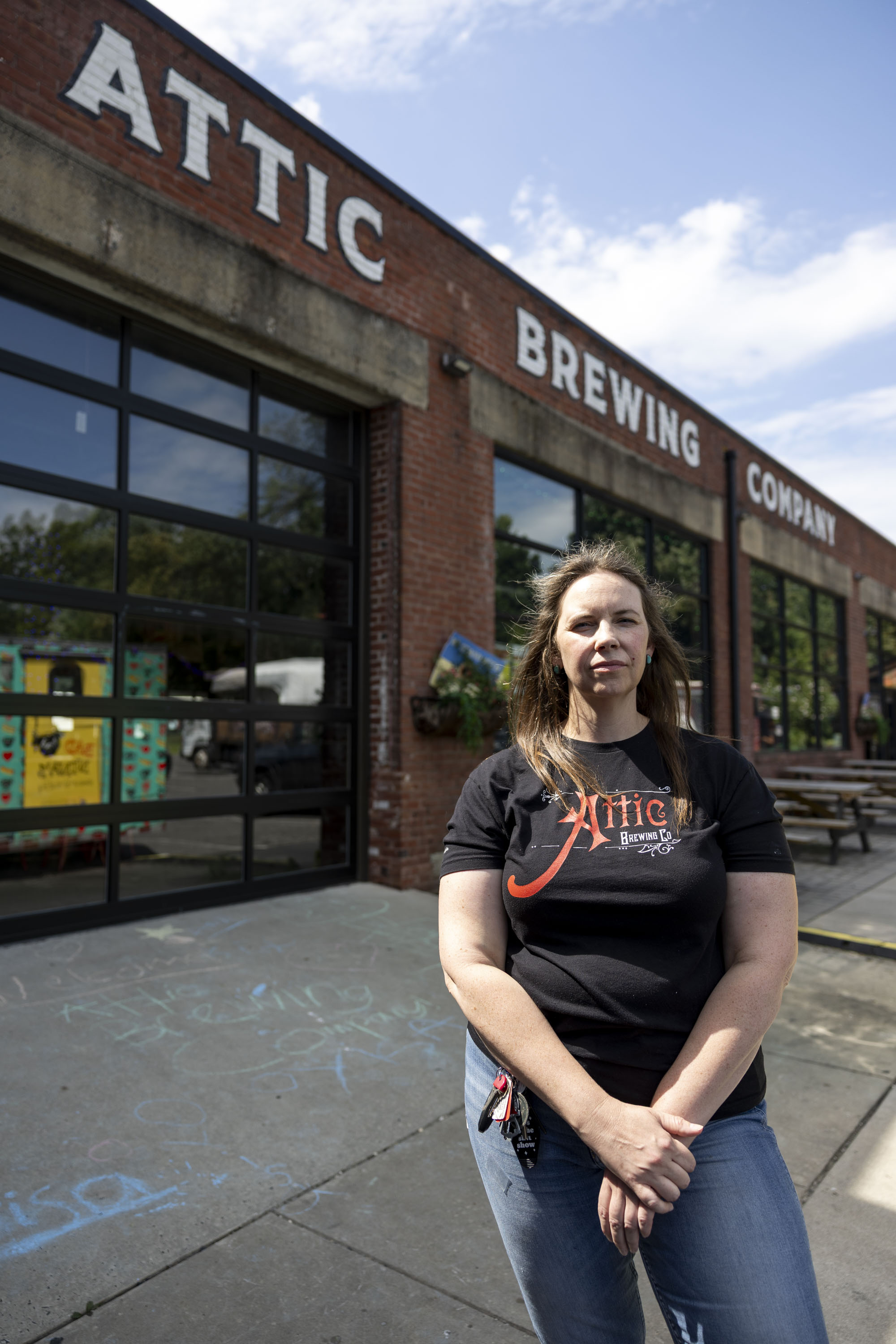
Laura Lacy, co-owner of Attic Brewing Co., outside the business in September.Tyger Williams / Staff Photographer
Street safety is also a major community concern after a spate of hit-and-run fatalities. This is a significant challenge for Attic Brewing, Lacy said.
Its location near Wayne Junction removes it from the commercial heart of the neighborhood, and her landlord’s promises to develop surrounding lots into complementary businesses never panned out. It all amounts to less visibility and awareness of pedestrians in the area.
“We’re talking about the safety of our team members. … We’re talking about the safety of our customers,” Lacy said.
Also of concern are the two vacant lots near Attic, which were part of a development plan years ago, Lacy said. “At what point does the city take it back? At what point does it become like you can’t just let this sit abandoned like this?”
Councilmember Cindy Bass, who represents the area, declined to comment for this story.
Signs of new life
Still, business activity is underway in Germantown.
Indego, Philadelphia’s bike share program, will enter Germantown this fall with 10 to 12 stations.
Kaila Temple, curator of collections at Historic Germantown, and Tuomi Forrest, executive director. The new Historic Germantown Visitor Center opened in July.Jessica Griffin / Staff Photographer
Historic Germantown’s Visitor Center opened in July. It’s a jumping-off point to access the neighborhood’s vast cache of historic cultural sites, which drive about 125,000 visits from the public and 25,000 from staff and volunteers annually who spend about $10 million in and around Germantown, according to Tuomi Forrest, Historic Germantown’s executive director.
“Our goal is that people get so interested and excited that they want to come back or expand their visits here,” Forrest said.
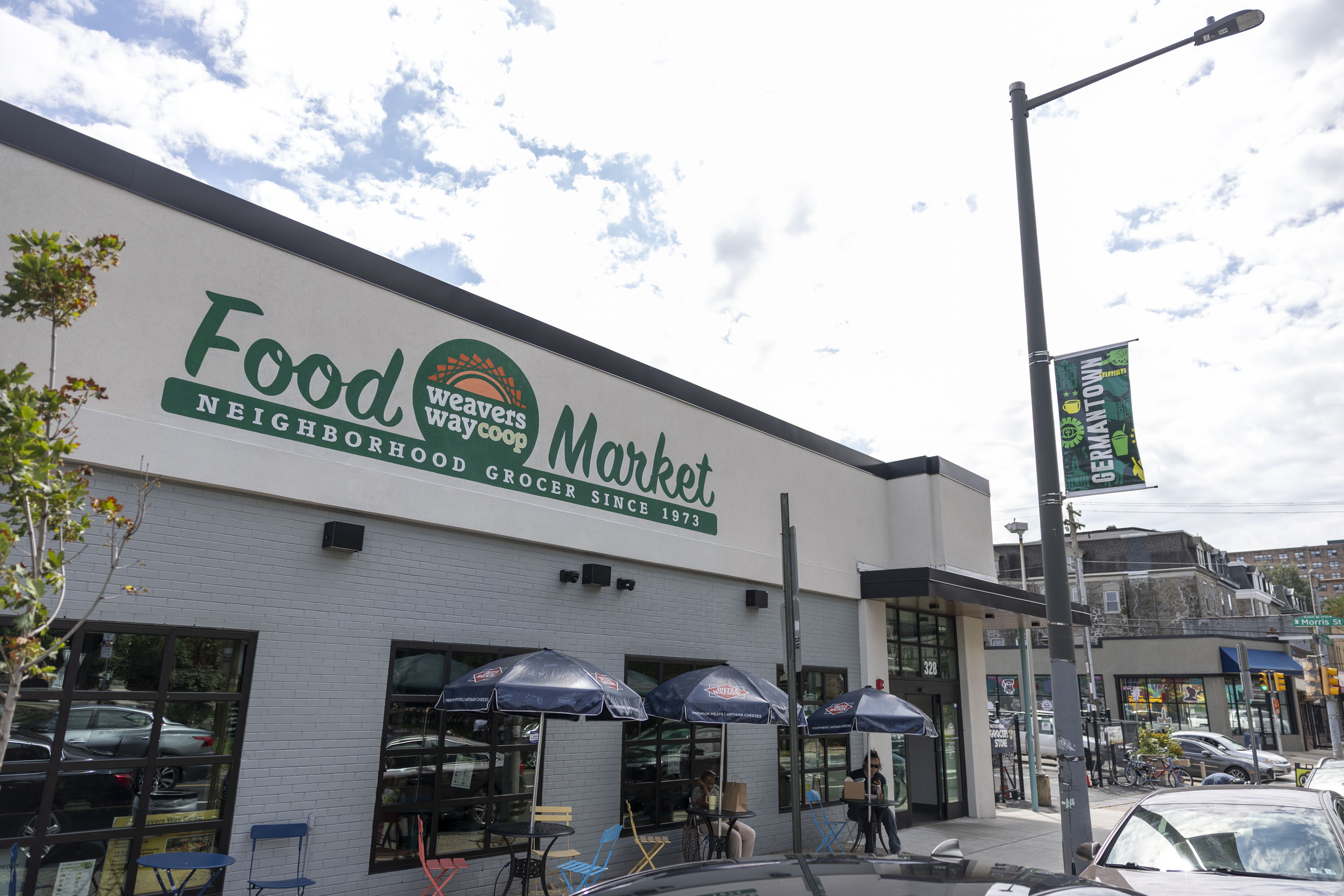
A few new businesses on West Chelten Avenue are invigorating the area. Weavers Way Co-op’s Germantown store, which opened in May 2024, has “exceeded projections since day one, and our membership in Germantown has continued to grow,” said general manager Jon Roesser. The co-op is open to the public, but its roughly 2,400 Germantown members get discounts and other benefits.
The outside of Weavers Way Co-op.Tyger Williams / Staff Photographer
“We bring a lot of foot traffic to the avenue; we have about 1,000 transactions a day,” Roesser said. “That’s 1,000 people a day coming to the corner of Chelten and Morris that previously was exactly zero because the building was abandoned.”
Complementary businesses have popped up nearby, including Cupbearer Coffee, Das Good Cafe, and Nutrition & Herbs Center.
Uncle Bobbie’s Cafe & Books is expanding its neighborhood footprint this fall and moving up Germantown Avenue from its current location at Church Lane into a 3,000-square-foot spot at the intersection of Washington Lane.
“We are excited to be in a position to grow, bring people together, and read great books,” Justin Moore, the bookstore’s general manager, told The Inquirer in April. “Most importantly, we are excited to further and deepen our ties in Germantown as a community hub.”
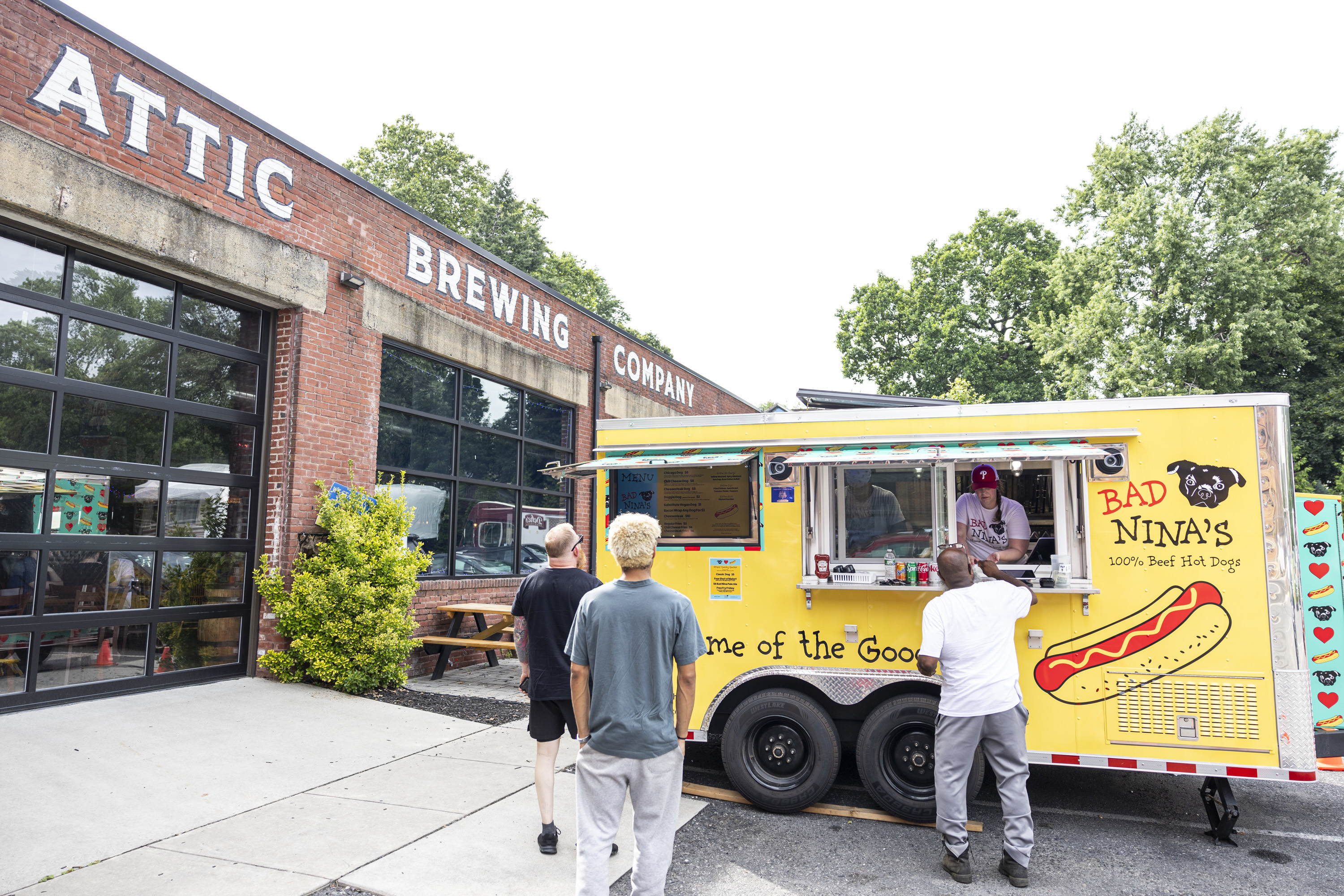
Customers line up to order hot dogs at the grand opening of Bad Nina’s outside Attic Brewing. Lacy said the hot dog stand opened because other companies did not want to bring their food trucks to the brewery.Tyger Williams / Staff Photographer
“One of the best beers in the world is brewed here in Germantown,” Lacy said. At the same time, from a financial standpoint “our business is in the worst spot it’s ever been in in six-and-a-half years.”
Attic needs to “exponentially increase the number of people” coming into the tap room to be viable, Lacy said. Getting other restaurants into the area could help. Lacy said Atticstarted Bad Nina’s gourmet hot dog cart becausefood trucks wouldn’t come to the neighborhood and the area lacks sit-down restaurant options for their patrons.
“We know that our product, our service, our space is one of the best in the city,” she said, so as the business struggles, “we start to wonder if maybe we picked the wrong location.”
As a young cop patrolling the streets of South Philadelphia, Shawn Hagan kept the Internal Affairs Division busy.
Between 2008 and 2010, Hagan, then in his late 20s, racked up a half dozen citizen complaints with allegations of physical abuse, harassment, and making racial slurs.
The city’s Law Department handled the fallout, as Hagan was named as a defendant in six excessive-force and civil-rights lawsuits between 2009 and 2015 that would later cost taxpayers more than $400,000 in settlements.
In 2024, records show, Hagan retired from the police force and decided to try his hand as a home-improvement contractor.
Now, complaints and lawsuits are rolling in again — this time accompanied by criminal charges involving the former officer’s company, Hagan Home Concepts.
Hagan, 46, is at the center of a sprawling, multijurisdictional fraud investigation that started in Bucks County and quickly spread to Delaware and Montgomery Counties.
Police in Bensalem, Upper Moreland, and Aston Townships have accused him over the last month of defrauding at least five families out of a combined $255,291 for doing a fraction of the work he had promised.
In some cases, according to court filings, he allegedly failed to use money given to him to pay for inspections, permits, and building materials.
Hagan, who lives in Northeast Philadelphia, is facing felony counts of theft, deceptive business practices, receiving stolen property, and related offenses in those cases. Police believe there may be more victims who have not yet been identified.
Neither Hagan nor his criminal defense attorney, Jeremy-Evan Alva, responded to requests for comment last week.
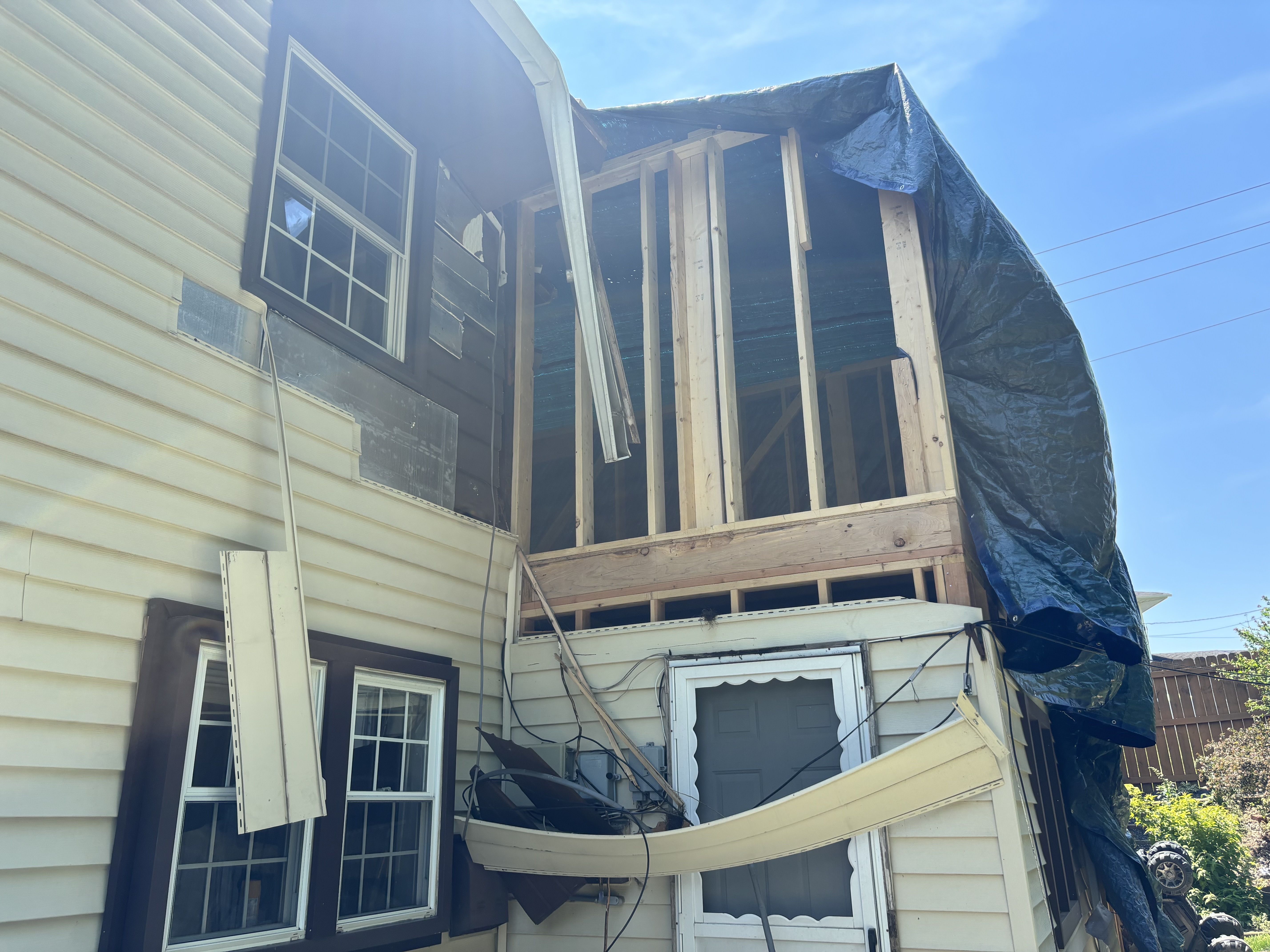
In January, Christopher Bilbao, who hired Hagan last year, moved out of the Levittown home he shares with his wife and three children as Hagan allegedly botched a major renovation for which they’d paid him $107,566.
Rainwater began pouring into the house. The electrical system was destroyed. Floor joists were left unsupported. The framing didn’t follow the architect’s specs. A township inspector found that Hagan used incorrect materials, didn’t follow measurements in the plans, and left the home uninhabitable.
“We’re still renting an apartment,” Bilbao said last week. “The whole house has been gutted. The way he left it, there was no roof on half the house. We’re hoping to get back home by Thanksgiving.”
Separate from the criminal cases, a Port Richmond man is suing Hagan in Philadelphia Common Pleas Court to recover $94,800 he said he’d paid him for a home renovation and addition that was never completed.
A similar pattern is alleged in the lawsuit: rotting wood studs, crooked foundation, tilted third floor.
Nadia Silk, the lawyer for that homeowner, said Hagan had initially told her client he’d refund his money.
“Then he just went radio silent,” Silk said. “He’s getting all this money, then not doing the work. Where’s it going?”
Silk said Hagan did not respond to the lawsuit.
Trail of destruction
The criminal investigation into Hagan Home Concepts began in May, when the Bilbaos reported to police that Hagan had essentially abandoned their project, which was estimated to cost $172,700 when completed.
Bensalem police began investigating a similar complaint, in which Hagan allegedly received $46,725 from a family for an addition to their house. He poured the foundation and never returned to complete more work, according to a police report.
In an interview with a Bensalem detective in May, Hagan said “he got in over his head and never intended to defraud” that family, the criminal complaint states.
A few days later, Hagan told an Upper Moreland Township detective nearly the same thing, according to the police report. The department was investigating a complaint from Kevin and Angela Duffy, who said he had abandoned a project at their home.
They had hired him in May 2025 to build an addition to their first floor and renovate their second floor and basement, according to the affidavit for his arrest. In five and half weeks of work, police say, Hagan and his employees were at the Duffys’ home only 29 hours, and concrete footers they had installed for the addition failed inspection.
Hagan told police he tried to return the $55,200 he collected from the family, but that it had been “absorbed into the business,” according to the affidavit.
The Duffys declined to comment for this article. They are trying to recoup their losses, plus damages, through a default judgment awarded to them in May by a Montgomery County judge.
A person familiar with the case said Hagan had been hired to build wheelchair-accessible bedrooms for the Duffys’ two children, who have an inherited neurodegenerative disorder. The family had to hire another contractor to complete the project.
Hagan was also charged with fraud last month in Delaware County. An Aston Police detective wrote in the criminal complaint that Hagan accepted $21,800 from Kate Mckenna-Delagol’sfamily “while knowing his business was failing.” Hagan was also aware that a criminal investigation was underway because he had been interviewed by detectives in Bucks County, according to Aston Police.
“He tells everybody he’s a Philly cop. That’s how he earns your trust,” Mckenna-Delagol said on Friday.She’d hired Hagan to build a deck, but “he never did anything.”
Hagan filed for bankruptcy in federal court in June, identifying three of the victims mentioned in the criminal filings as creditors, including the Duffy and Bilbao families.
All told, Hagan wrote that he owes $865,059, and that Hagan Home Concepts is no longer operating. His bankruptcy attorney, Michael Cibik, did not return a request for comment.
The Bilbaos’ Levittown home was left uninhabitable after they hired Hagan Home Concepts for a major renovation. They’ve been renting an apartment since January 2026.Christopher Bilbao
Bilbao said he had hired Hagan to work on his Levittown home after another family in the neighborhood was satisfied with a recent addition he’d built for their house.
But even that job, Bilbao said, was later determined to be faulty.
“Since then, the people that recommended him realized he did all this work incorrectly,” he said. “They’re having to redo it.”
History of police complaints
Sgt. Eric Gripp, a Philadelphia police spokesman, declined to provide details about Hagan’s disciplinary history as an officer, other than to say he was hired in November 2003 and retired in February 2024.
Citizen complaints show that Hagan was repeatedly accused of assaulting and harassing people while on patrol in South Philadelphia’s 17th District.
In an April 2008 incident, for example, a man said Hagan grabbed him by the throat and dragged him to his police cruiser. Two months later, another man said Hagan used racial slurs while stopping him.
In January 2009, a complaint was filed against Hagan and his then-partner Kevin Corcoran for harassment and verbal abuse, then another that October for physical abuse. In 2010, a complainant said Hagan allegedly pushed him to the ground and called him a racial slur.
Hagan and Corcoran “received training and counseling” from two police captains in February 2009 “regarding their Internal Affairs record and professional responsibilities,” according to a note on one complaint.
Nonetheless, Internal Affairs investigators said the allegations in those cases were unfounded or not sustained, or they exonerated the officers altogether.
(Corcoran was fired in 2014 after he detained an Iraq War veteran, drove him to a dark side street near North Broad Street, then brought him back to Center City and released him. Corcoran was later acquitted of false imprisonment and official oppression, but convicted of a misdemeanor charge of obstruction of justice).
Between 2010 and 2015, Hagan was named as a defendant in three lawsuits filed in Philadelphia Common Pleas Court and three filed in federal court, including for using excessive force that caused serious injuries, illegal searches, and false imprisonment.
In one case, Raheem Holman alleged that Hagan repeatedly punched him in the face during an unlawful stop and frisk in March 2010 before Capt. Anthony Washington beat him with an expandable baton. Holman, who was later found not guilty of disarming a police officer, resisting arrest and all other related charges, required 11 staples at Methodist Hospital to close a head wound.
The city settled Holman’s case for $95,000 and the five other cases in which Hagan was a defendant for a combined $335,000.
Inquirer staff writers Ellie Rushing and Ryan W. Briggs contributed to this article.
This weekend is more than just about breaded mushrooms for Gale Ferranto, even if her family’s farm stand continuously boasts one of the longest lines at the Kennett Square Mushroom Festival.
The two-day annual celebration, featuring educational courses on mushrooms, as well as plates of them fried, grilled, and served in nearly every other method of preparation, is a time for her to reflect on the three generations that came before her, all the way from Italy, to claim a stake in Chester County and its signature crop.
“Most family-run farms don’t last past two generations,” Ferranto, a lifelong Kennett Square resident and president of Buona Foods, said as hundreds of people milled down the borough’s main drag. ”Here, we have fourth-, fifth-, sixth-generation farms still going strong, and we’re proud of that.”
This year’s festival, Kennett Square’s 41st, is celebrating that intergenerational work, which grew a pastoral slice of the Philadelphia suburbs into an agricultural mecca: 64% of the country’s mushrooms are grown in Pennsylvania, and the majority of those farms are located here.
Colleen Farnsworth of Ardmore and her son Ambrose Farnsworth, 4, touch the mushrooms in the mushroom exhibition during Kennett Square’s 41st Mushroom Festival on Saturday. Elizabeth Robertson / Staff Photographer
Recycling sustains mushroom farming
By its very nature, Ferranto said, mushroom farming is forward-thinking. Farms, like her family’s, rely on agricultural byproducts that otherwise would be discarded.
“Recycling is a pillar of everything we do,” she said. “It’s an important message to pass on to younger generations doing this work, because what we’re doing now is shaping the environment of farmwork to come.”
In the nearby exhibit tent, Richie Forte explained that work to festivalgoers, some from as close as Delaware County, and others who traveled from as far as British Columbia to learn about mushrooms.
Forte, who’s been in the mushroom business for 30 years, following his father’s lead, walked visitors through the growing process, from spawn planted in soil to cardboard cartons placed on supermarket shelves.
He said he couldn’t be happier answering questions about a crop he’s been handling since he was a teenager. His father, he said, did the same volunteer work for many past festivals.
“In a world of private equity and big business, the fact that Kennett Square can still maintain this small, hometown feel is amazing,” he said.
“You get to a point in your life where you look around you, at the fabric of a community like this, and you realize it’s responsible for giving you everything you have.”
It’s a family affair
The farmers running the festival stands weren’t the only ones reveling in generational tradition. The event, and its signature, knit mushroom hats, have become an annual tradition for countless families in the region.
Rhiannon Betts has been driving up from Cecil County, Md., every summer for the festival for 21 years, and she and her family previously ran in the 5k race that accompanies it.
This year, Betts brought her boyfriend, Aidan Ward, with her to experience something that was integral to her childhood.
“This has always been an event that seems to put families first,” she said. “No matter what we have going on in the summer, we have to make it out here for this.”
For Corlan Blyskal and his wife, Emily, this year’s festival was the hopeful beginning of a new family tradition: The King of Prussia couple, decked out in homemade mushroom hats, brought their 10-month-old son, Knox, with them for their first visit to the event.
The self-described “mushroom-obsessed” couple gave their son his first bite of a raw mushroom, straight from the source.
People told me about a great street messiah, so I set out to find him.
The homeless men simply called him Zave, short for Xavier de la Huerta.
In the 1980s, he ran St. Joseph’s Shelter for homeless men where Front Street meets Kensington Avenue, beneath the rumble of the Market-Frankford El. He was a Franciscan friar assigned to nearby St. Francis Inn, the soup kitchen that survives on donations and still serves meals each day to homeless people, those who are unemployed, people battling substance use, struggling seniors, poor children, and anyone else with nowhere to turn.
The Franciscans have both priests and brothers, such as Zave, with the order saying it is dedicated to serving God where they are most needed. Guests don’t shuffle through a buffet line carrying plastic trays; instead, they sit at tables while volunteers deliver meals, restoring a measure of dignity of which they mayhave known very little.
The neighborhood itself foreshadowed what has made Kensington known today beyond its borders, through YouTube videos focused on exploiting images of poverty and the opioid crisis for clicks.
Once called “The Workshop of the World,” Kensington was one of America’s great manufacturing neighborhoods, home to textile mills, carpet factories, and the John B. Stetson Hat Co., which employed 5,000 people before it closed in 1971.
As factories evaporated, jobs vanished, families left. Investment in the neighborhood dried up and poverty settled over streets lined with crumbling rowhouses and inoperable, abandoned cars.
Before meeting Zave in 1989, I imagined him as a stern schoolmaster. The homeless men called him the “Mayor of Front Street,” and spoke of him with such reverence that I pictured a towering authority figure in a black cassock with half-glasses sliding to the edge of his nose.
I had been talking with the men on the corner when a crowd suddenly gathered around a little man about 5-foot-5wearing a bright red knit cap with a white pom-pom. The huddle of people trailed him like pigeons chasing breadcrumbs.
“Who’s that?” I asked.
“That’s Zave,” they said.
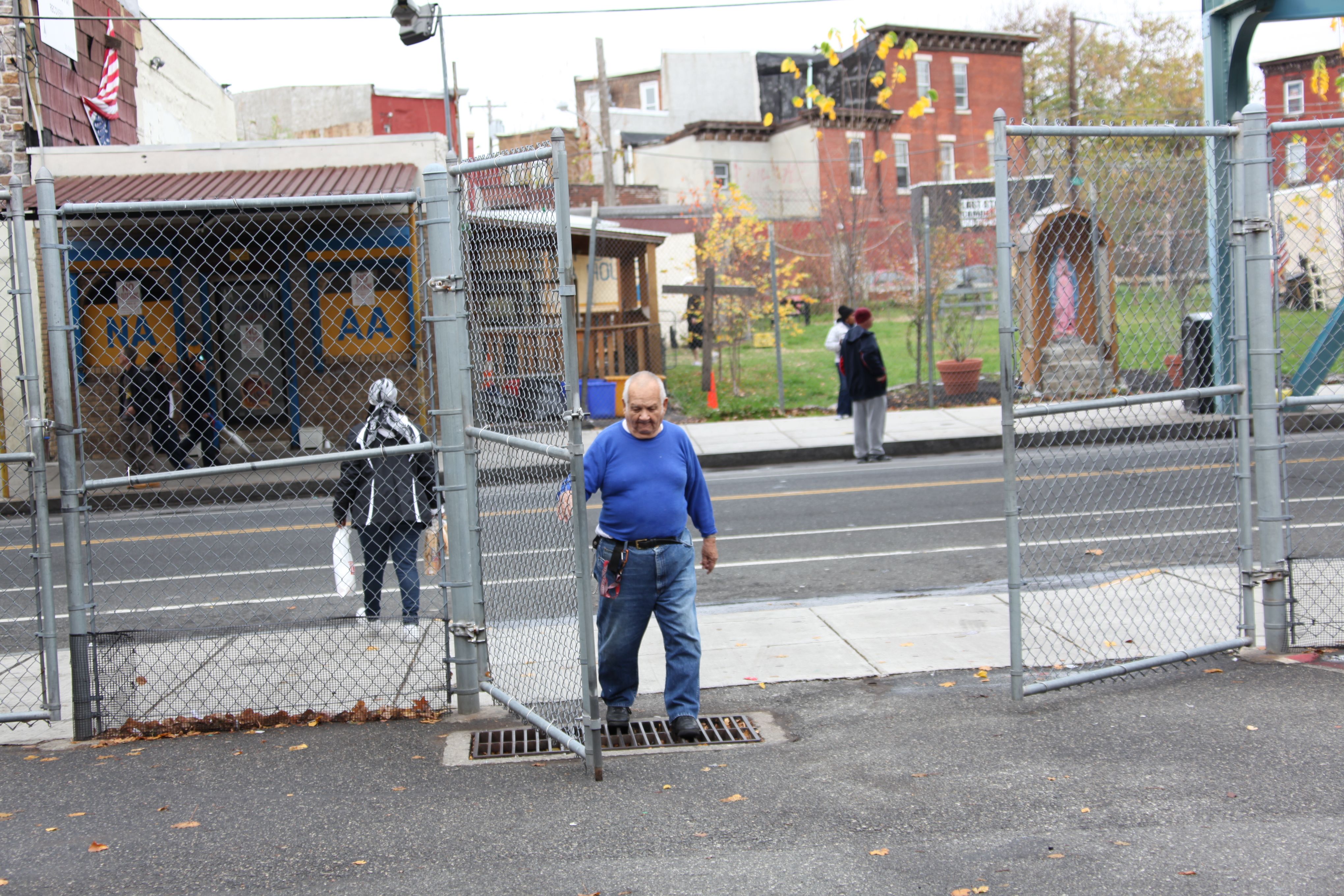
Brother Xavier de la Huerta opens the entrance gate so that people in need can access St. Francis Inn, in Kensington, in November 2011.Octavio Duran
I crossed the street, finding someone who seemed half my size, barrel-chested with a gleeful, disarming smile. He unlocked the shelter, empty during the afternoon before residents returned for the evening.
The building that housed St. Joseph’s Shelter was a narrow rowhouse that had once been Joe’s Bar, its name still preserved on the tile floor. Eight army barracks beds lined one wall. A small sitting room served as the heart of the house, where the men argued, laughed, mourned, and tried to help one another survive substance use and life on the streets.
I asked Zave what inspired him to dedicate his life to homeless men. Surely this had been his calling. He laughed.
“This is my assignment,” he said. “It’s where the Franciscans sent me.”
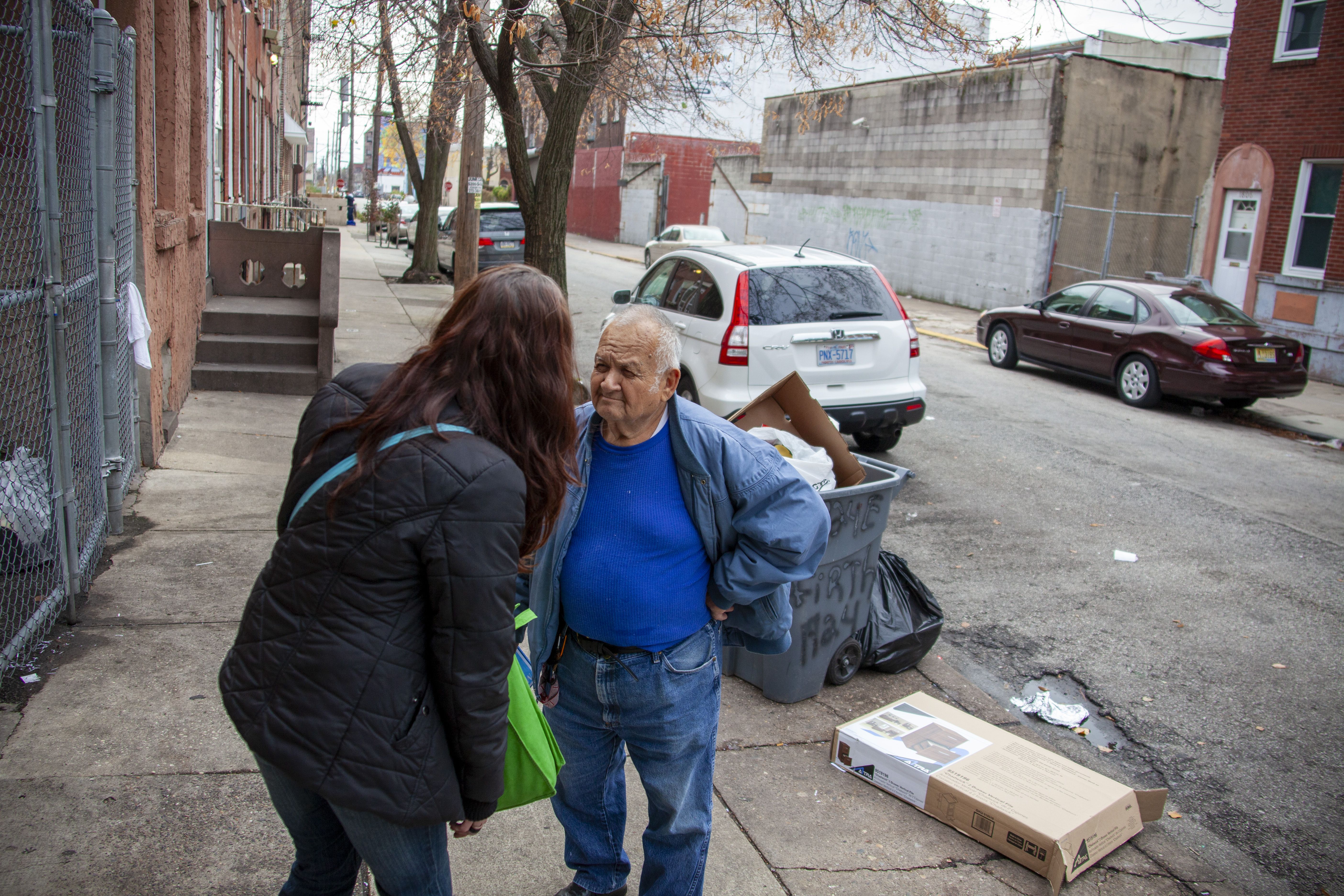
Brother Xavier de la Huerta listens to a homeless woman explaining how she needs assistance, outside St. Francis Inn in November 2011.Octavio Duran
I latervisited his sister, who lived near my Maryland home. She described her brother asa gentleman with innate kindness. When he stayed overnight at her home the first time, he asked her to replace the bed in the guest room because it was too comfortable. He rarely watched television because he lived upstairs at the shelter among the men, so he enjoyed viewing the old shows on his sister’s box.
She also told me a childhood story about a faithful dog who waited for youngZave at the school bus stop every afternoon. Neighbors were amazed at the canine’s devotion, but eventually learned the source.
On the walk home, Zave stopped at the butcher shop to collect discarded bones and carried them home for the waiting pup.
One homeless man who had spent a decade on Philadelphia’s streets described Zave to me in the most glowing terms.
Brother Xavier de la Huerta (right) shares a laugh with Brother Fred Dilger at Siena College in Loudonville, N.Y., in June 2014.Octavio Duran
“Brother Xavier, he’s like a saint,” he said. “He’s good people. Very good people. He’d take the coat off his back to give it to somebody. I feel like it’s Christmas whenever I see him; that’s the glow he has. I don’t know how somebody so little can do so much.”
One of the men I met at the shelter eventually entered drug treatment, moved into a halfway house, found sobriety, and rented an apartment. Another quiet soul Zave saved.
When I visited Zave again, he looked exhausted.
“What happened?” I asked.
“I broke one of my own rules,” he said.
He had agreed to hold one resident’s money so the man wouldn’t spend it on drugs.
“At 2 o’clock this morning,” Zave said, “he came pounding on the door demanding it back.”
There was no complaint in his voice, just another day.
Last year, Zave, now 90, celebrated 60 years as a Franciscan brother and now lives quietly in his order’s retirement home, the St. Lawrence Friary in Beacon, N.Y. He retired in 2016 after suffering a stroke, completing 37 years of Front Street duty.
Thirty years of newspaper reporting for major newspapers has introduced me to presidents, governors, celebrities, athletes, and thousands of fascinating people. Few taught me more about the meaning of a life than the little friar in the red knit cap.
Muhammad Ali once said, “The service you do for others on this earth is the rent you pay for your room in heaven.”
While Steve Gerben is known for having cocreated one of the year’s most popular Netflix comedy series, his friends and the internet are attempting to crown him with a more ribbing title: The “King of West Chester Golf.”
The Berwyn-born actor, comedian, and costar of Netflix’s Tires says the nickname is just a joke created by his costar and fellow Pennsylvanian Shane Gillis after Gerben “broke 80″ for the first time, scoring 79 on 18 holes of golf last year. It’s something that fewer than 10% of golfers worldwide reportedly do in their lifetime.
“I thought I would just get my friend to start videotaping in case it happened on the 18th hole. And then I did it,” Gerben, 43, remembers with fondness. “So Shane saw that video and was making fun of it on his podcast, calling me the ‘King of West Chester Golf.’”
Gerben’s character on Tires, Will, an anxious go-getter who sees the best in those around him, is not unlike Gerben in real life. Even when receiving praise for his golf prowess or growing television career, Gerben is more comfortable sharing credit with others and not taking the spotlight. And while he downplays his claim to the West Chester golf throne, Gerben does play golf every week in the Philadelphia region — from West Chester courses to the occasional charity event at Ardmore’s Merion Golf Club.
As his profile has grown with the success of Tires, Gerben continues to live in West Chester, cultivating a life around golfing near home and creating a local television production alongside his best friends.
“I can’t see myself leaving the area. I really love it here and it’s home,” he said. “Also, just given how I feel about golf, suburbs make way more sense — it’s just scratching the right itch for me.”
It also helps that the hit show Gerben cocreated with Mechanicsburg-born Gillis and Philadelphia’s John McKeever is filmed in West Chester off East Gay Street, inside an addition to the real-life tire shop of Gerben’s father.
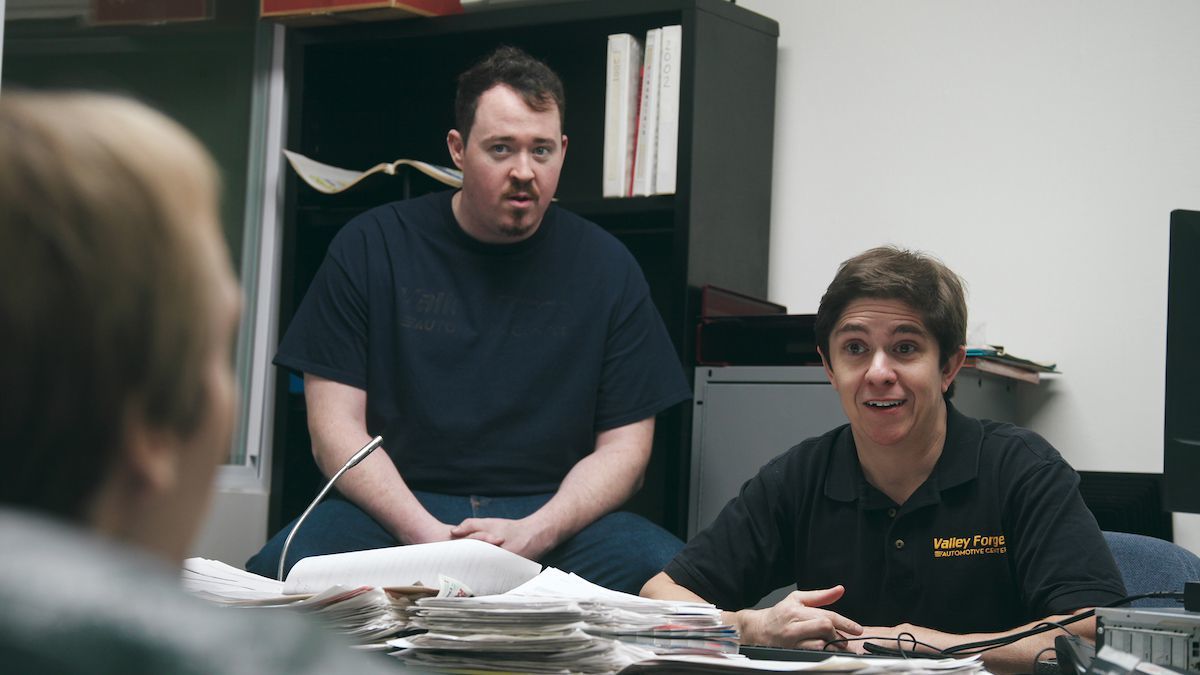
Tires, which had its season three premiere Aug. 13, follows two cousins, Will (Gerben) and Shane (Gillis) as they run the fictional Valley Forge Automotive Center, named after the previous real-life automotive business of Gerben’s father, which was sold in 2011.
“I remember after season one, my dad was on the boardwalk and he saw a Valley Forge Auto shirt in one of the stores, and he was just like, ‘This is insane,’ because it’s this company that he had for 20 years, and then gone, and now we brought it back in a way,” Gerben said.
With Gerben and Gillis on screen, and McKeever as the magic behind the camera, the Tires crew navigates the world of a Pennsylvania small business, rivalries with a national tire chain, and coming to terms with life and romance in your late 30s and 40s.
Tires was recently renewed for a fourth season. That renewal, along with the suburban life he’s created with his girlfriend and cat, has Gerben doubling down on the Philly region. One factor that now rules his life is golf, and how to keep enjoying the sport that eases his mind and boosts his confidence.
“Playing golf is a flow state for me. I get out of a perfect golf swing what I’m sure people that meditate get out of meditation or when people feel a piece of art really speaks to them,” Gerben said.
What started as something to do as a senior at Conestoga High School, joining the Valley Forge Golf Club for $8 after school, has grown into a passion that has seen him playing alongside Eagles players like Jason Kelce and appearing in vlog-style golfing videos with comedian Andrew Santino.
Golf feels like meeting up with an old flame for Gerben, who essentially gave up on the pastime as he attempted to make it in the East Coast stand-up comedy circuit in the 2010s. That’s where he met Gillis and McKeever, doing open mics at the now-closed Raven Lounge and Helium Comedy Club.
While Gillis would continue to rise in stand-up comedy, Gerben said he struggled to find footing. Yet, constants in his life were Gillis and McKeever, who reportedly were known to not take on certain projects unless Gerben could be involved.
But one thing that always sat in Gerben’s back pocket was a script for a show based on his experience working at his father’s Valley Forge tire shop that he initially wrote nearly 15 years before Tires would premiere on Netflix in 2024. Two years later, Tires’ third season debuted in the No. 9 spot on Netflix with 2.4 million views in its opening weekend.
The success doesn’t get to Gerben’s head, as he’s focused on enjoying life in the burbs and golfing as much as possible, he said. With golf swinging back into his life, the sport brings a chance of pace in a busy work schedule and/ allows Gerben, who has had arthritis since he was 2, to stay active.
“I feel so unbelievably healthy because I think it’s about like a five- or six-mile walk each golf session, and you’re not even paying attention to that, given you’re doing this thing that you just absolutely love doing, and is a little bit easier on the joints,” Gerben said.
Gerben also sees golf as a way to meet friends.
“Golf is just a weird addiction that some people have that cuts across generational barriers because you spend so much time with people on the course who have the same passion as you,” he said.
In the meantime, Gerben will continue flirting with the idea of starting his own golfing YouTube career, like “Bryan Bros Golf.” But until Tires is wrapped, Gerben said there would be no official online golf career on the horizon.
Besides, if Gillis finds Gerben’s golf videos, Gerben will never hear the end of it from his best friend, he said.
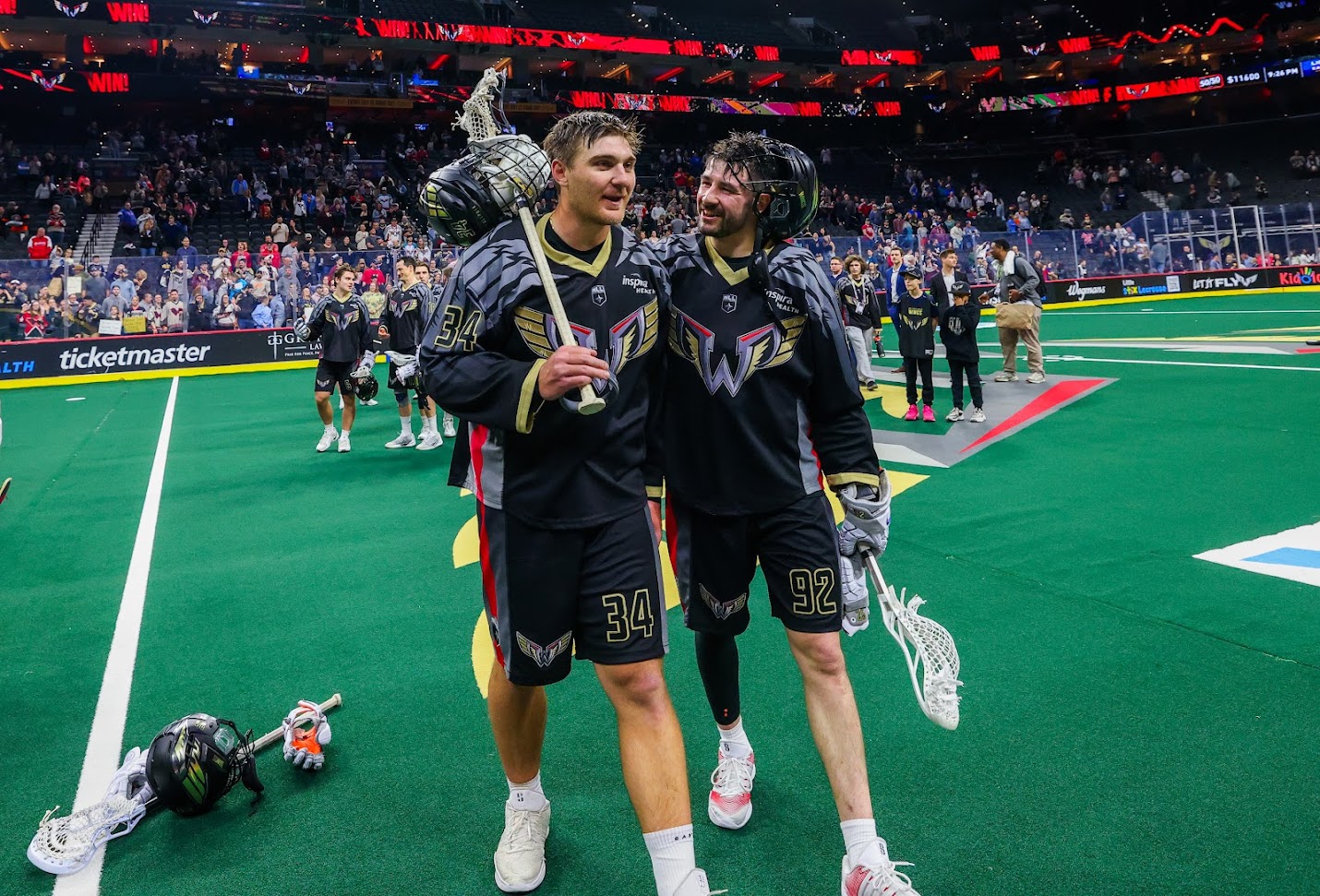
The Wings, Philadelphia’s National Lacrosse League franchise, are folding.
On Thursday, the NLL announced that the Wings and the Ottawa Black Bears would cease operations. For the Wings, the decision comes after Comcast Spectacor pulled its ownership of the franchise following the 2025-26 season. At the time, the NLL announced that it had initiated a “comprehensive process” to find an owner for the team, but the league ultimately decided to contract. The move to discontinue the Wings and the Black Bears, which also had ownership turnover, leaves the NLL with 12 teams.
“Today is a difficult day for the National Lacrosse League and, most importantly, for the fans, players, employees and partners who have supported the Ottawa Black Bears and Philadelphia Wings,” NLL commissioner Brett Frood said in a release. “These are proud lacrosse markets with passionate communities, and we are grateful to everyone who has invested their time, energy and belief in these clubs.
“As we enter our 40th anniversary season, our responsibility is to provide certainty for our constituents and move forward with 12 active member clubs aligned behind the League’s collective future.”
The NLL noted in its release that both cities “remain important markets to the NLL,” and the league would “consider future opportunities in either community if the long-term conditions and partners necessary to support a sustainable franchise are established.”
After Comcast Spectacor pulled its ownership of the Wings, it was expected that the franchise would move out of the city. The team was never included in Comcast Spectacor and Harris Blitzer Sports & Entertainment’s plan for a new arena in the stadium complex that will open in 2030.
Sam LeClair hugs Brennan O’Neill (left) after the Philadelphia Wings’ final home game at Xfinity Mobile Arena in April.Heather Barry / NLL
A dispersal draft, allowing the 12 remaining franchises to select players from the Wings and Black Bears, will be Sept. 15.
Last season, the Wings (5-13) finished with the worst record in the NLL. The franchise was established in 1987 as one of the original four teams of the NLL. The Wings became a fan favorite at the Spectrum as box lacrosse, which originated in Canada, gained popularity in the United States. The Wings relocated to Connecticut in 2014 and were renamed the New England Black Wolves. However, in 2017, the franchise was reestablished as an expansion team under the ownership of Comcast Spectacor.
The termination of the Wings franchise does not leave Philadelphia without a professional lacrosse team, as the Premier Lacrosse League’s Philadelphia Waterdogs have gained a fan base in the area. The league uses a touring model, in which teams travel from city to city as a league and franchises have “homecoming weekends” in their home markets. The Waterdogs, who played at Subaru Park last month, are slated to take on the Denver Outlaws in the league’s championship game on Sept. 20 at Sports Illustrated Stadium in Harrison, N.J. (12:30 p.m., 6abc).