A beloved Eagles player moved to our neighborhood. I have to pass by his house every time I drop off or pick up my son from daycare. And every time I inevitably stare at his house, and then tell myself “be cool, be cool.” I did one time throw a “Go Birds!” at him when he stopped his car to let me cross the sidewalk. How many more “Go Birds” do I get? Should we, as his new neighbors, pretend he’s not a Super Bowl champion?!
Earl Hopkins, Arts & Entertainment reporter
First off, living in the same neighborhood as an Eagles player is THE ultimate flex.
Second, as journalists we’ve mastered the ability to hide our fandom behind a resting reporter face, so my views may be a little skewed. But it still stands: One “Go Birds” is enough. (All right, maybe two.)
Let the man settle in the neighborhood first, then introduce yourself as if he’s another resident. I’m sure he doesn’t mind being recognized for his athletic achievements, but I recommend getting to know the person beyond the uniform first.
Stephanie, what do you think?
Stephanie Farr, features columnist
You definitely have a much cooler resting reporter face than I do. I agree that one or two “Go Birds” is enough.
It matters how close this person lives to the Eagles player. If they’re next door or two houses over from him, introducing yourself to your new neighbor — maybe with a box of cookies or soft pretzels — to welcome them to the neighborhood is a good avenue. If you live farther away than that though it will look fangirl-ish.
Earl, what do you think if the neighbors all conspired together to throw a neighborhood party and invited this Bird over? Would that be too obvious?
Earl Hopkins
I don’t think it would be too obvious, as long as people avoid swarming him with Eagles jerseys to sign. It’s summertime, and plenty of neighborhood parties are popping up across the city. It would be a good opportunity to enjoy the weather, commune with folks who have been bound to their couches all year, and it would be a chance to properly welcome the beloved Eagle into the area’s inner-circle.
Now, what if the welcome attempts and party invites are rejected? What should be the next move lol?
Stephanie Farr
Leave him alone and treat him like any other neighbor who wants to keep to themselves, or you risk ticking off someone you obviously admire. I think about what I would want if I were in the player’s shoes. I can’t imagine not having anonymity or a little peace and quiet — especially at your own house. I feel like if he wants to be neighborly, he will make it known.
Do you think approaching the Eagles player about something other than the Eagles could be a good avenue? Like, “Hey, dude. I love your topiary. Who’s your landscaper?”
(I’m assuming if this person lives in the same neighborhood as an Eagles player they have topiaries and landscapers, but it could be about anything they see they may have in common.)
Earl Hopkins
If he doesn’t want to be bothered, leave him be. He’s probably, y’know, focusing on winning a Super Bowl. Give him grace so we can feel the thrill of another championship run.
Stephanie Farr
Go Birds, but don’t randomly go up and hound Birds on the street. Sprinkle breadcrumbs and if they want to be your neighbor friend they’ll let you know. And if they don’t, take a cue from a former Eagle and don’t care if they don’t like you.
I’ve been mesmerized by kibbeh nayyeh since my days as a teenage busboy at Phoenicia, the trailblazing Lebanese fine-dining destination just outside of Detroit in Birmingham, Mich. It was my first encounter with a dish that showcased raw meat — in this case, puréed raw lamb mixed with bulgur wheat and spices. And my determination to eat as much of it as possible while on extra-long breaks in the walk-in (instead of cleaning tables) was likely one reason I wasn’t a very good busboy. It did provide, however, one of the earliest sparks in my career as a curious eater. Now, I order it almost every chance I get.
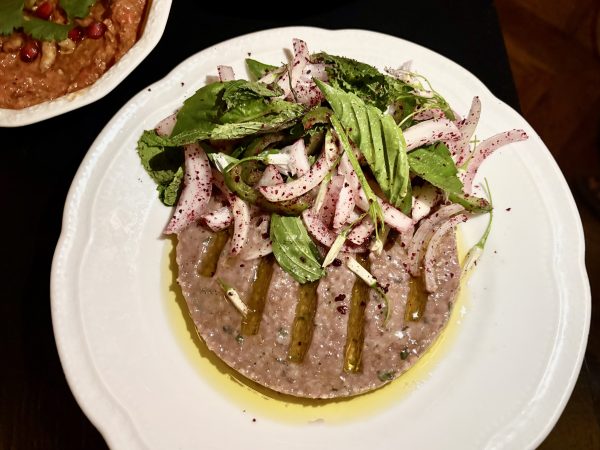
But no kibbeh nayyeh has stopped me in my tracks and triggered a childhood flashback quite like the incredibly soft and vividly spiced version at Suraya. One of the first recipes taught to executive chef Nick Kennedy by Maude El-Harouny — the Lebanese mother of co-owners Roland Kassis and Nathalie Richan — before Suraya’s 2017 opening, it’s a picture of the classic dish at its best. Lean lamb loin is puréed to a silky smoothness before it’s blended with bulgur, puréed onions, jalapeños, and herbs — basil, marjoram, allspice, mint, and cinnamon — before getting shaped into a dimpled pink puck with deep divots for good olive oil.
The spreadable, pâté-like base itself is flavorful enough, but that peppery olive oil and the garnish piled on top, with sumac-dusted raw onions and basil and mint that deliver a contrast of juicy crunch and herbal freshness, elevates the dish overall to another level. One that’s powerful enough to remind me of my first transporting raw taste of kibbeh nayyeh several decades ago. Suraya, 1528 Frankford Ave., 215-302-1900, surayaphilly.com
— Craig LaBan
Omakase at Kissho House
Omakase experiences in Philadelphia run the boardfrom the $78 tasting at Yuhiro in Fishtown to the $355 extravaganza in the back room of James Beard Award-winning chef Jesse Ito’s Royal Sushi & Izakaya. How about one with ambition and value, priced down the middle?
For that, there’s chef Jeff Chen’s Edomae-style omakase at his 12-seat counter downstairs at Kissho House, which opened last year in a former Rittenhouse law office. Chen, a Hiroki alum, delivers the goods without gimmicks, from the appetizers (octopus, asari clams, and Japanese river crab) through the nigiri sequence, which caps off with a toro hand roll and clam soup, followed by strawberry monaka for dessert. Few $150 omakases include well-sourced ingredients (anago from Tsushima, akami from Spain, uni from Hokkaido), and creative bites like king salmon with dry tomato, truffle sauce, and roe in a spring roll shell, plus Wagyu with sea bream and caviar. Kissho House, 1522 Locust St., 610-332-7387, kisshohouse.com
— Michael Klein
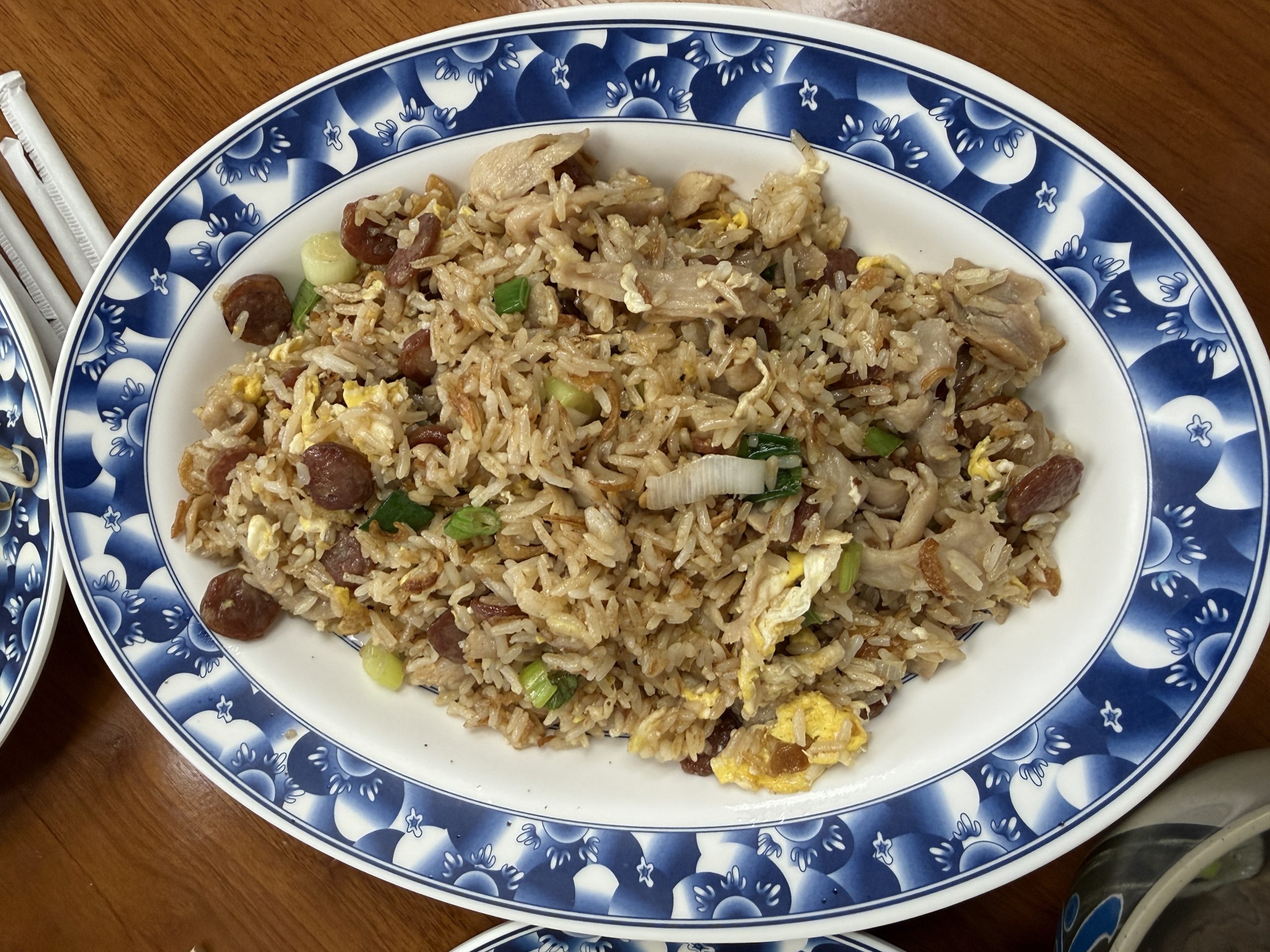
The Bai Cha Sach Mon (chicken fried rice with chinese sausage) at Heng Seng Restaurant, 2217 S. Seventh St.Kiki Aranita / Staff
Chicken fried rice with Chinese sausage (Bai Cha Sach Mon) at Heng Seng Restaurant
I went to Heng Seng Restaurant in South Philly with a craving for Cambodian dry egg noodles. At $15 for a small portion, they hit the spot, bouncy and crinkled yet firm with a side of beef shank bone broth for dipping or sipping. But there was a sleeper hit: the $17 chicken fried rice (called bai cha sach mon in Khmer) with smoky, sweet lap cheong or Chinese sausage.
I usually think of fried rice as a little silly but also a little clever — an excellent way for a restaurant to use day-old rice, which makes for better fried rice than fresh rice. So when the platter landed in front of me, I was delighted but also a little perplexed. How could these slivers of chicken be so tender and flavorful? How could the individual grains of jasmine rice have such a lovely robust texture? Heng Seng’s dishes are heavily influenced by Teochew cuisine (Chinese Cambodians are primarily Teochew Chinese, originally from the Chaoshan region in eastern Guangdong) with its exceptionally earthy, savory fried rice. With a little bit of egg, scallion, and that sweet lap cheong seeping fat into the rice, this version is certainly worth seeking out. Heng Seng Restaurant, 2217 S. Seventh St., 215-755-5390, hengsengrestaurant.com
— Kiki Aranita
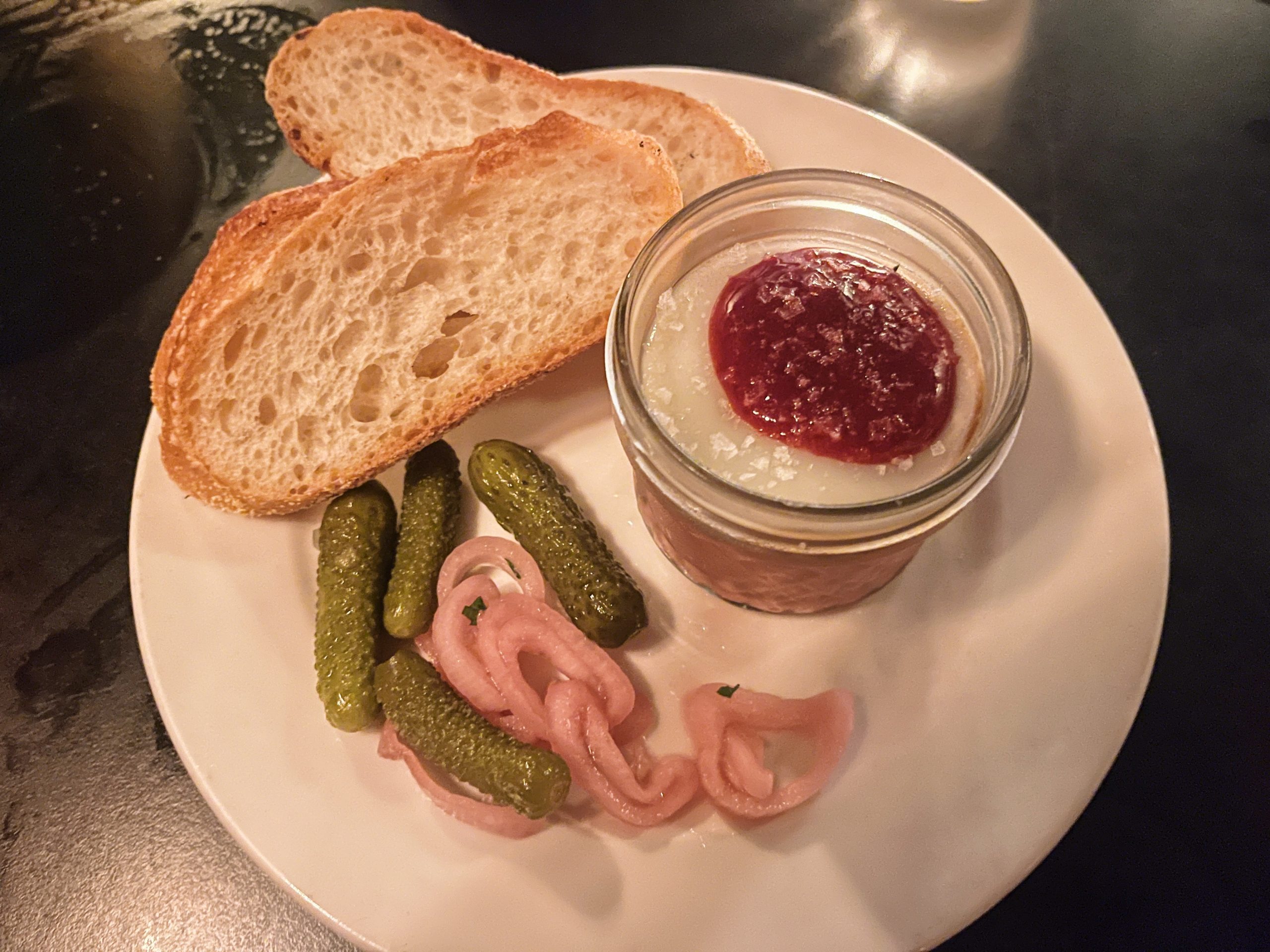
The chicken liver mousse at Royal Boucherie, 52 S. Second St.Beatrice Forman / Staff
Chicken liver mousse at Royal Boucherie
I’ve long considered chicken liver mousse the gateway drug to my beloved chopped liver. Its creamy texture and less polarizing flavor is a good stepping stone to the hard stuff — the chunkier, funkier, and less ritzy mounds of chopped liver behind the counter at most respectable Jewish delis. If it’s your first time eating spreadable liver, the mousse at Old City’s Royal Boucherie is perfect, a textbook example served in a cute little mason jar with crusty bread and cornichons on the side for dipping. Topped with a seasonal berry jam and flecks of flaky salt, the mousse has all the right flavors: a little sweet, a little earthy and rich without feeling heavy. I scraped the jar clean.
Some weekends are just dates on the calendar. Others become part of history.
America’s 250th anniversary was one of those weekends.
Philadelphia, where the nation began, became the center of the celebration. Across days marked by extreme heat, thunderstorms, fireworks, a canceled parade, and a World Cup match, The Inquirer’s photographers captured the defining moments — and the quieter ones in between — creating a portrait of the country at 250.
After days of closed streets, parking restrictions, and traffic backups leading up to the weekend, Jessica Griffin planned to ride to cover the Wawa Salute to Independence Semiquincentennial Parade. But it was canceled amid a declared heat emergency with 100-degree temperatures before she even left her house.
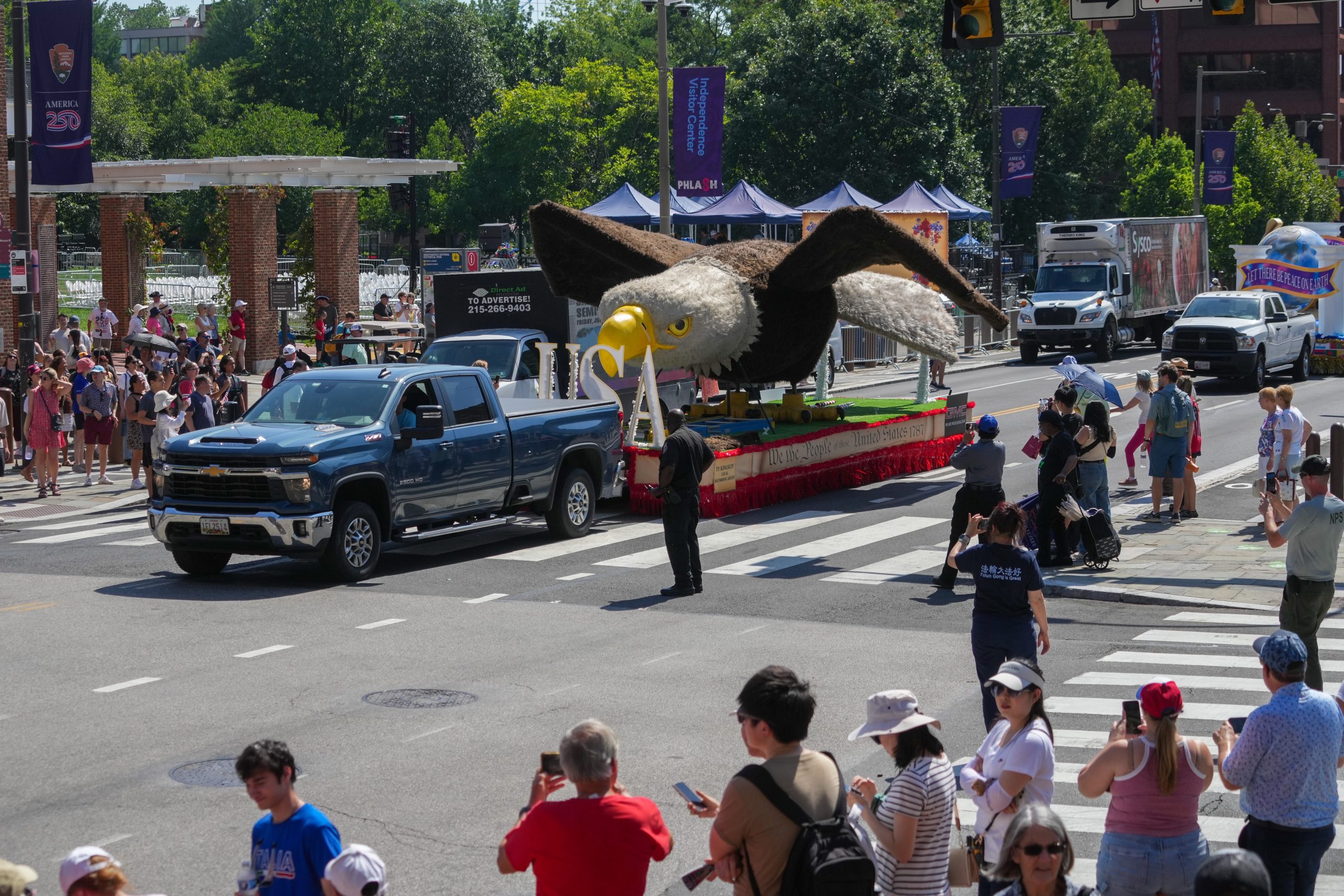
Instead, she found all the floats — moved overnight from the Pennsylvania Convention Center to Independence Mall in preparation for the parade — in an unofficial parade away from the Historic District.
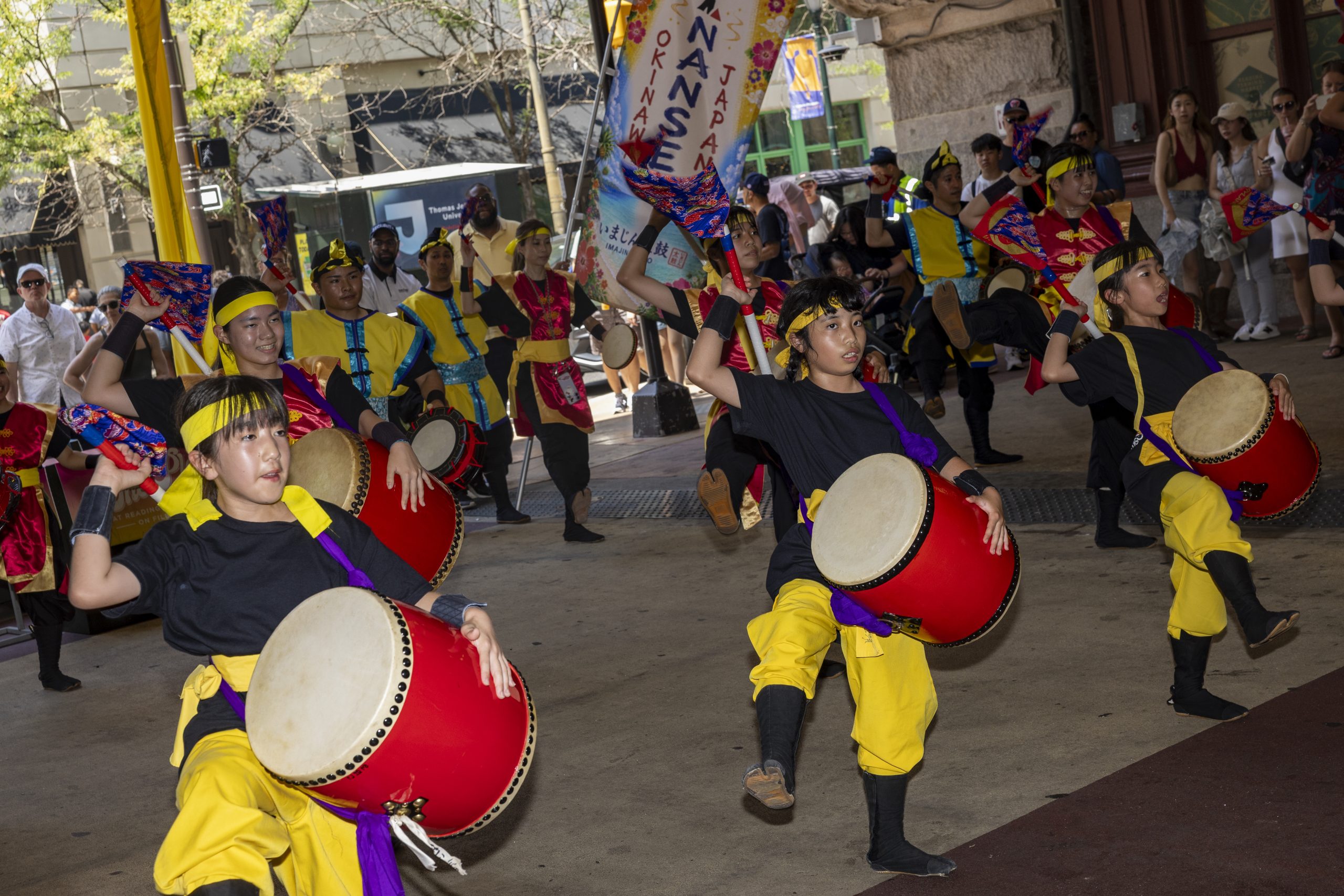
The cancellation gave the many would-be paraders the opportunity to perform around Center City. Summer intern Aidan T. Gallo photographed Imajin Taiko, a lively dance group from Nakijin, Okinawa, Japan, performing outside Reading Terminal Market.
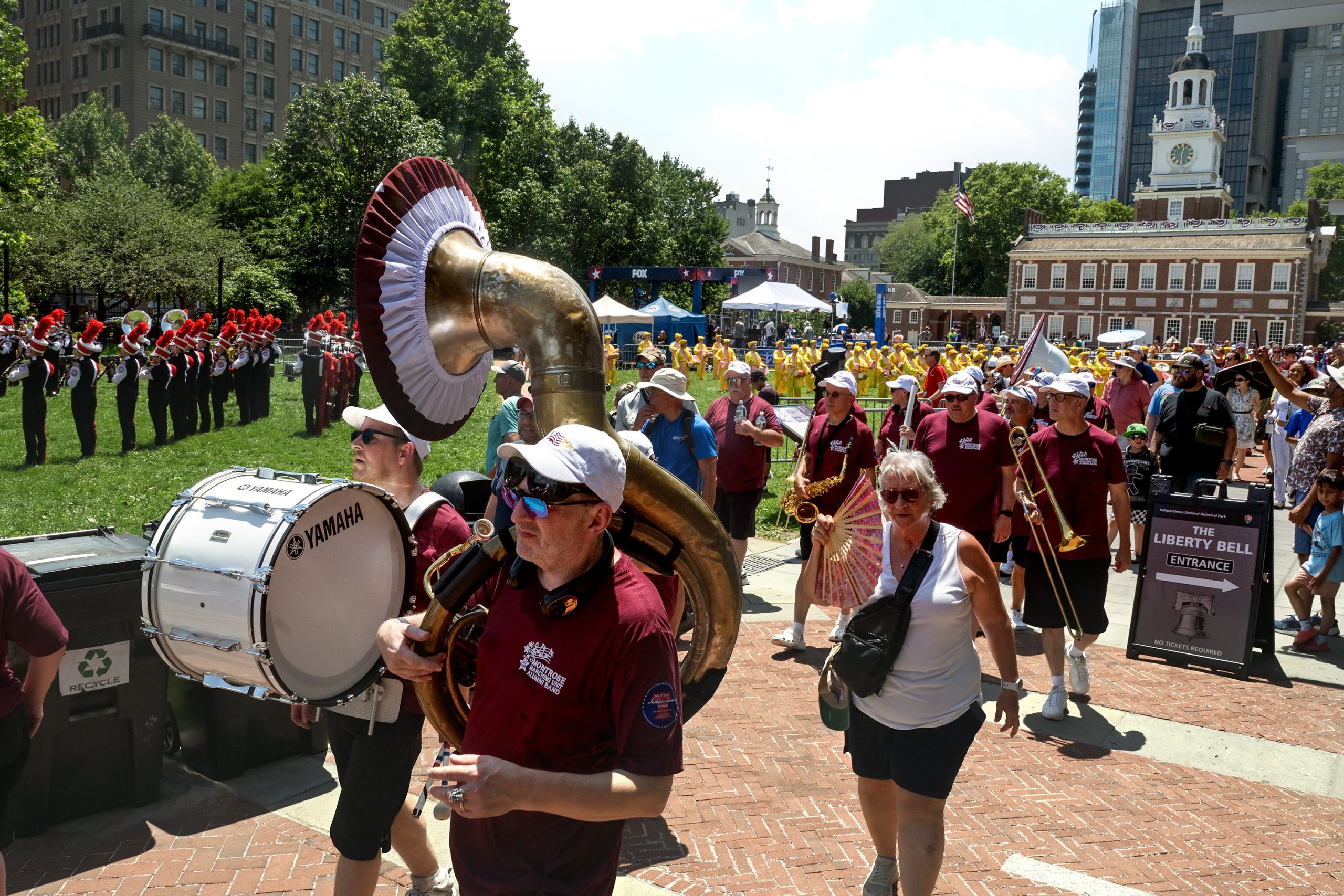
Musicians, Colonial reenactors in sweat-soaked wool, and visitors (also sweaty) wandered the Historic District looking for something to do. It led to impromptu pageantry around Independence Hall. Marching bands did their (stationary) thing, taking turns performing on the grassy mall.
Working the scene, I was able to frame three different bands at once. The Montrose Marching Unit Alumni Band from Susquehanna County was leaving as the Triuggio Marching Band, a community group from the northern Italian city of Triuggio, and a Falun Gong drum band from New York prepared to perform.
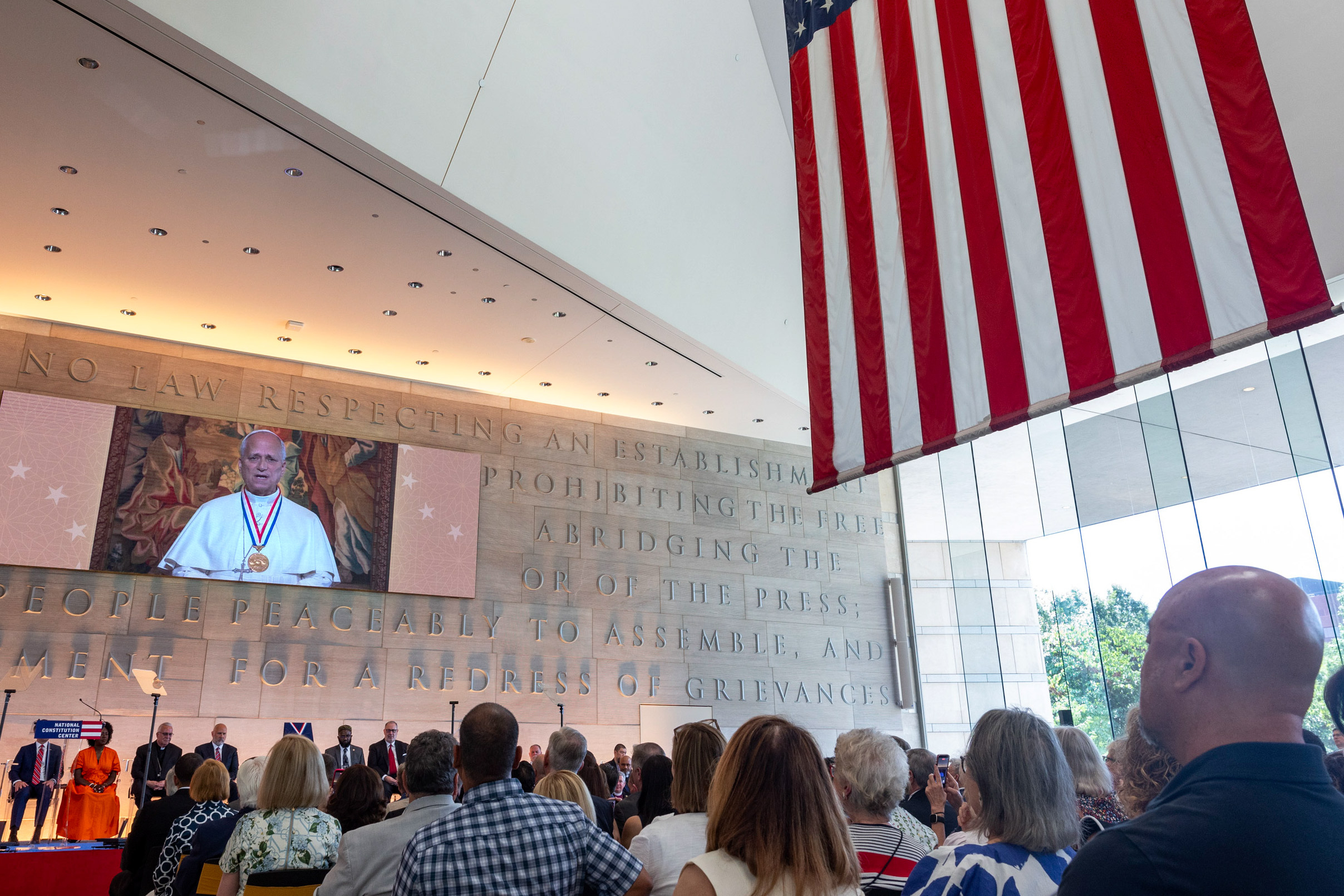
On the Fourth, Tyger Williams found photographing the National Constitution’s Liberty Medal presentation an interesting experience even though the honoree, the U.S.-born pope and Villanova alum, Pope Leo XIV, wasn’t physically there.
Finding a compelling way to photograph someone appearing only on a screen wasn’t easy, he said. “I wanted to be able to show the atmosphere when the Pope was speaking and show the impact he has to those listening to him.”
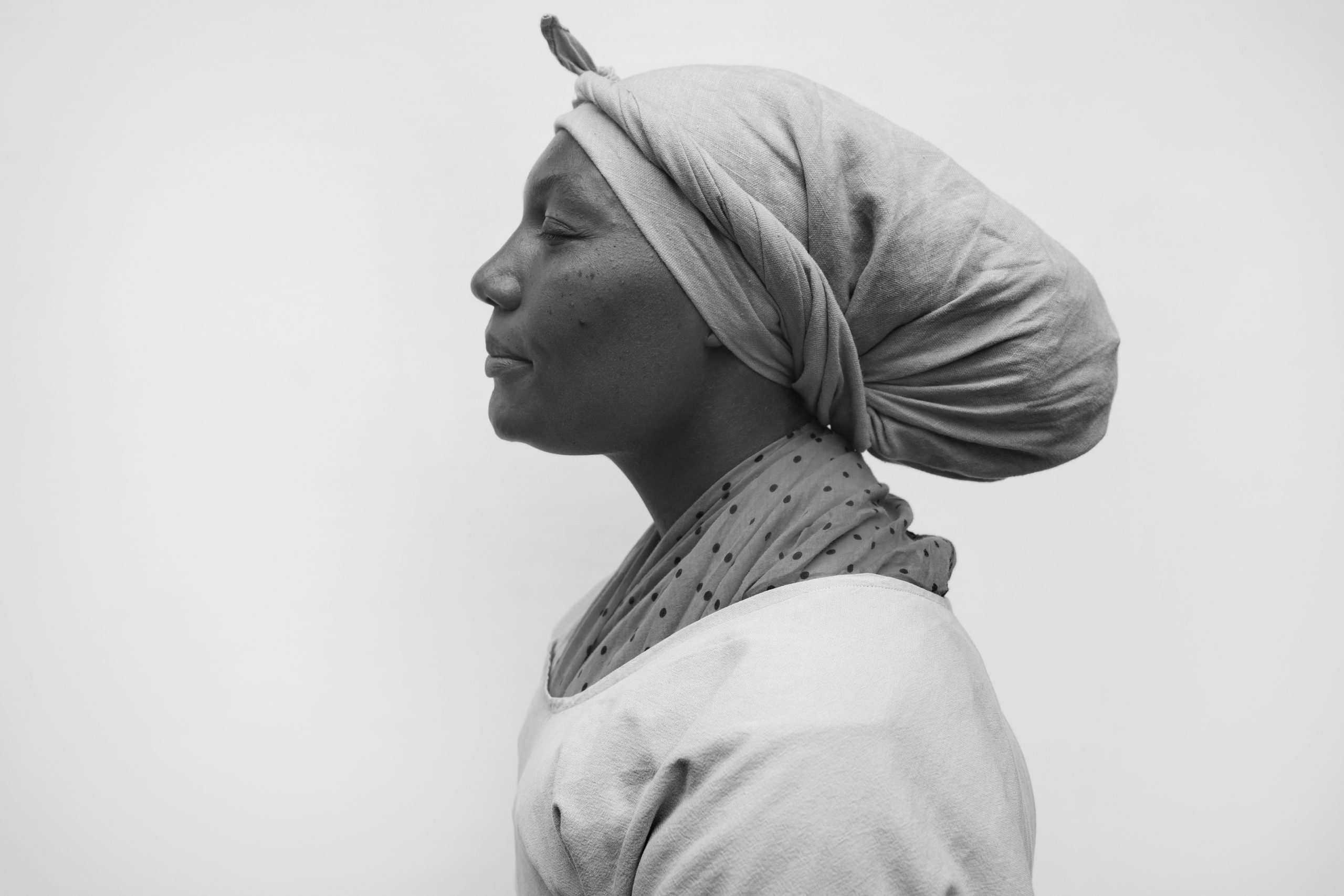
Jose F. Moreno wanted to create a simple, straightforward portrait essay on the people we often see in costume walking through the Historic District to recognize the people “whose passion, knowledge, and dedication help tell Philadelphia’s story as the city celebrates this historic milestone.”
By using a plain white background and removing all distractions, the focus remained entirely on the individuals and the history they represent. He photographed each History Maker one after another, asking them to “do nothing more than be themselves.” He only made two or three frames of each person against a plain white background.
Courtney Mitchell, who portrays Margaret Woodby, a free Black woman who owned a cake-baking business, smiled during her full-length portrait before turning slightly to the side.
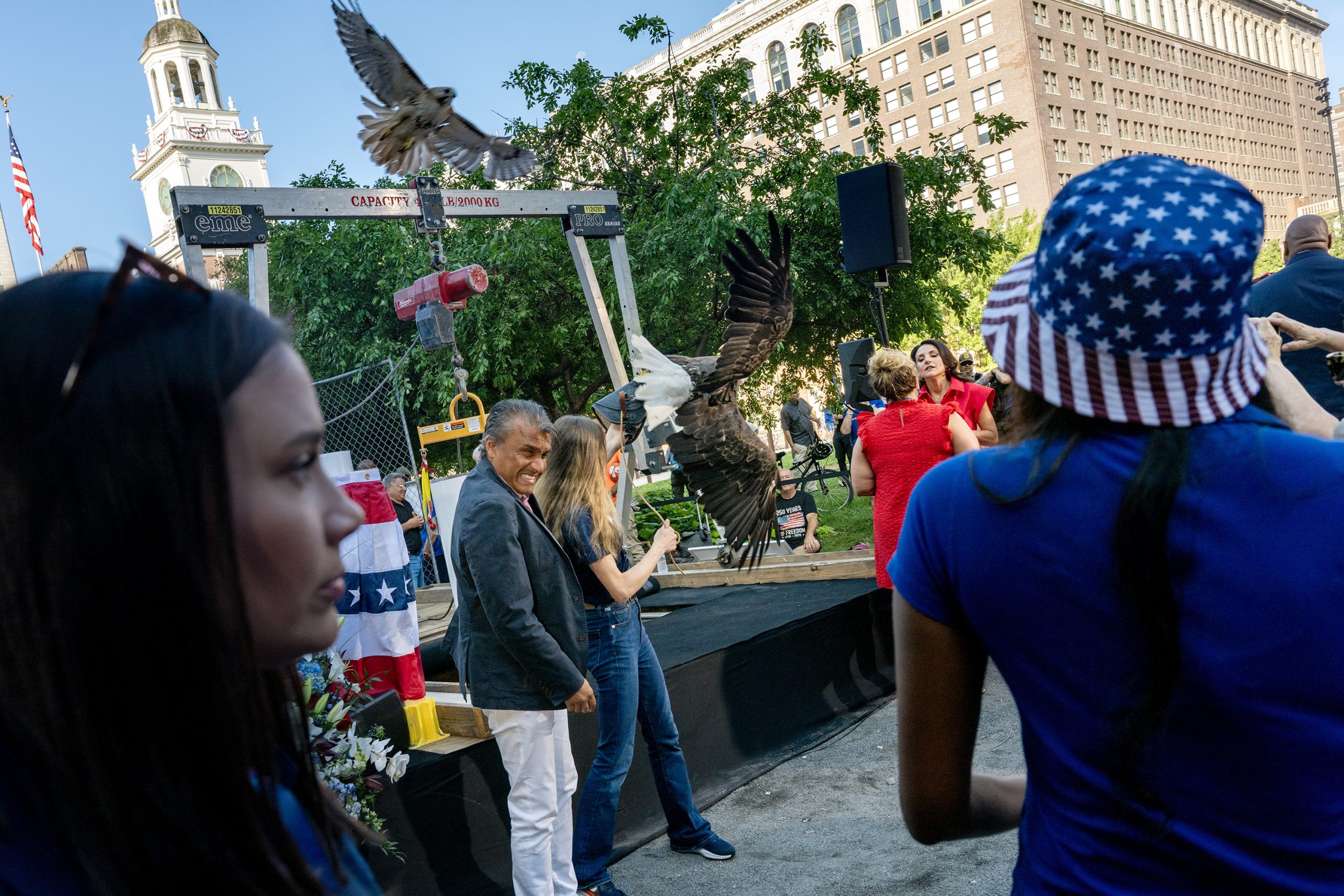
On the morning of the Fourth, I covered the burial of “America’s Time Capsule” in Independence National Historical Park. Before the ceremony, dignitaries posed with Indy, a bald eagle from the Auburn University Raptor Center. Suddenly, another bird of prey swooped down asserting its territory.
I wasn’t actively photographing the scene, but luckily my camera settings were already dialed in. I managed to capture a frame just as the hawk came within striking distance. Indy — who made her first appearance at a Philadelphia Eagles game in 2023 — and her handler spent the rest of the photo opportunity watching the skies overhead.
Also on Saturday, Gallo was back covering neighborhood block parties. In Point Breeze, he heard kids sliding down an inflatable bounce water slide — a block party staple. What he didn’t expect was to see multiple children sliding all at once, including a little girl holding onto her popsicle.
By the time she got to the bottom, the popsicle was knocked out of her hands into the pool. “Luckily, I pressed the shutter at the right times to capture the popsicle and its flying pieces mid-air.”
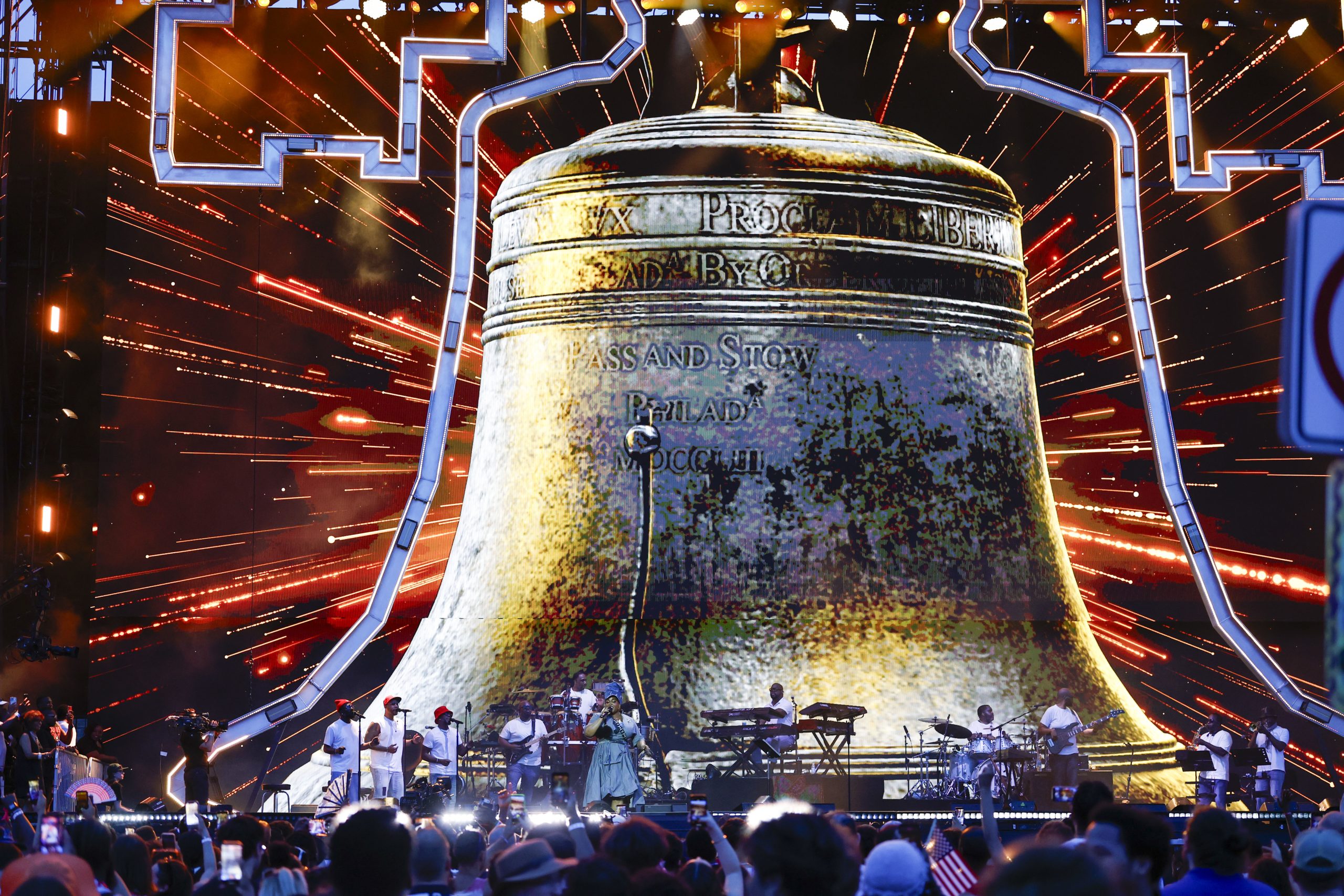
Jill Scott takes to the stage for One Philly: Unity Concert for America on the Benjamin Franklin Parkway on Saturday, July 4, 2026, in Philadelphia.Yong Kim / Staff Photographer
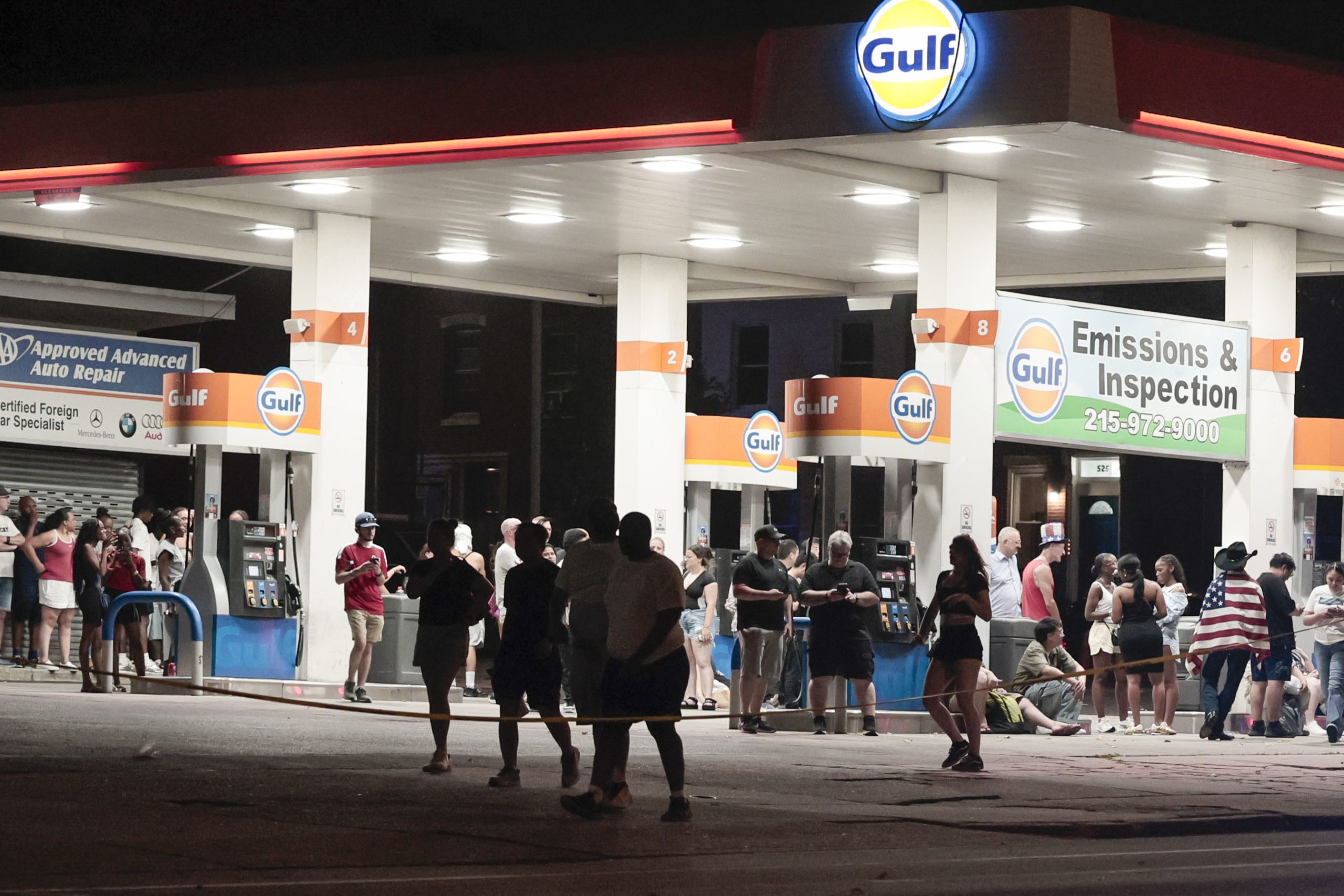
Kim and Elizabeth Robertson evacuated the area during the more than three-hour rain and lightning display, eventually taking shelter beneath the canopy of a gas station along Spring Garden Street.
Monica Herndon had been at The Inquirer for more than six years, but this was her first time covering the Parkway concert and fireworks. She “definitely did not expect to still be out there at 2:30 a.m.”
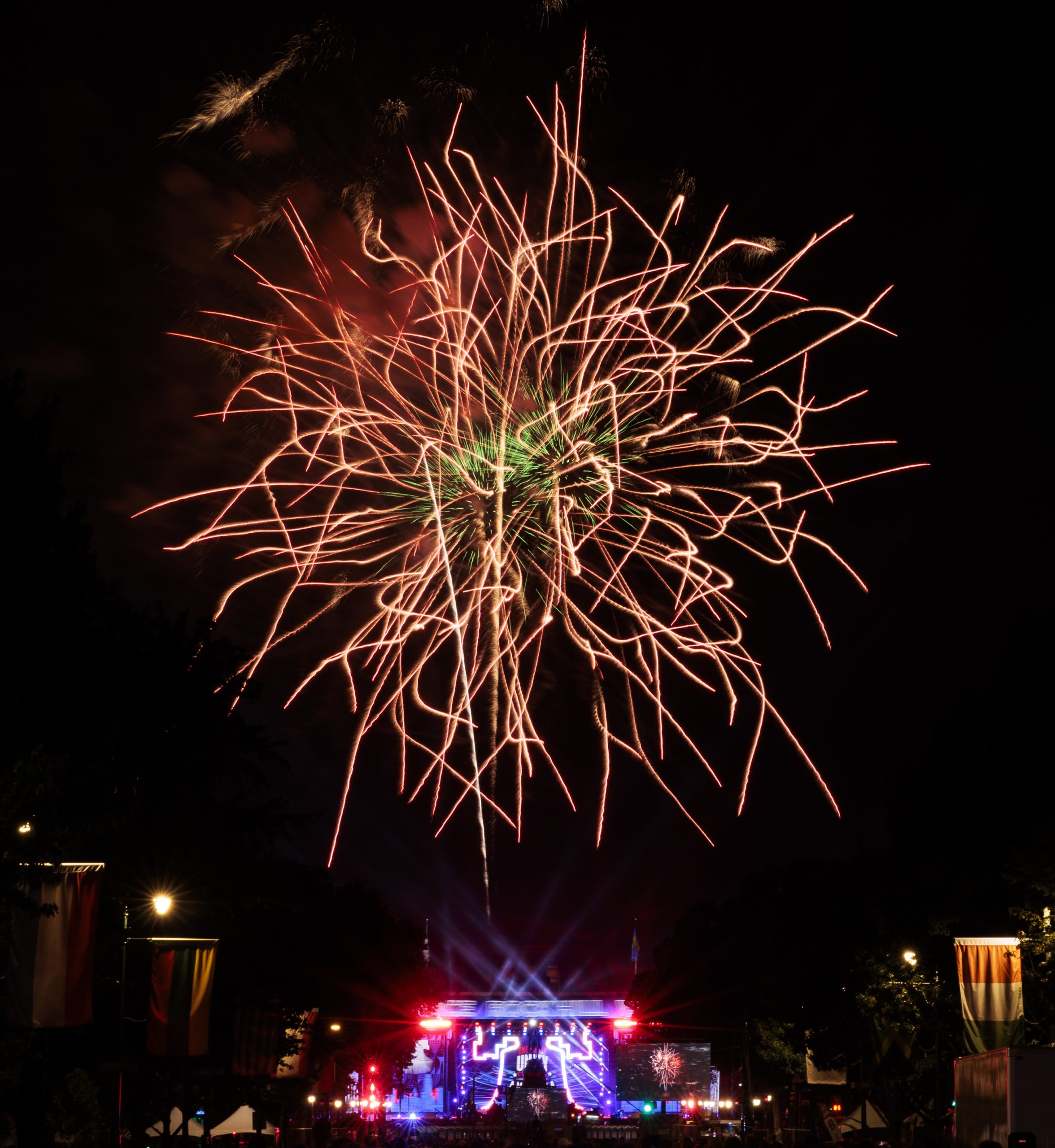
As the storm soaked the area, she waited it out in her car, “eating snacks and singing along to Christina Aguilera hits.” Once the concert resumed, she grabbed her tripod and headed down the Parkway deciding to “set up farther back than usual, hoping to make an image that felt a little different from the fireworks photos I’d seen in years past.”
Herndon used a slow shutter speed, alternating between one and two seconds, “to let the fireworks expand across the frame.” She made lots of images but liked the one with streaks of light that felt “organic and almost painterly…I also love the small starbursts created by the stage lights, a result of shooting at a narrow aperture [f/18].”
A few days before Sunday’s World Cup Round of 16 match, David Maialetti began preparing by cleaning his gear and checking his cameras. He knew the extreme heat was going to be a challenge so kept himself extra hydrated leading up to the match, dressed in loose-fitting, sweat-wicking clothing, and topped it off with a bucket hat.
“The last thing I wanted,” he said, “was to pass out during a key goal and end up a highlight on SportsCenter.”
David Maialetti / Staff Photographer
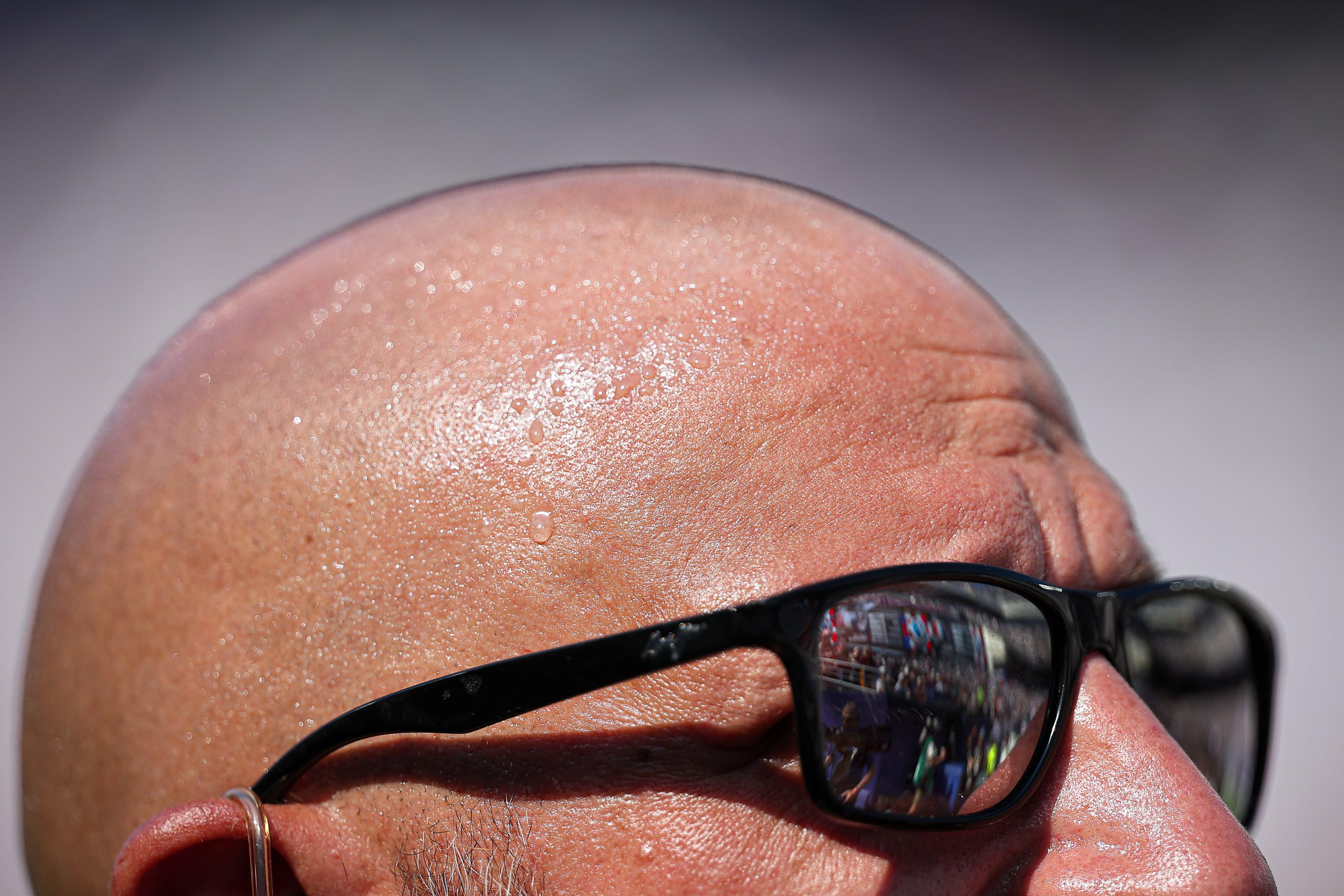
Before kickoff, he photographed fans and the sweltering conditions, including a security guard dripping with sweat before France faced Paraguay.
His game plan sounded solid on paper until he realized the top of his cameras would “feel like a sizzling frying pan.” He knew the electronics could malfunction if they overheated and “gripping a hunk of hot metal for a few hours,” would not be the most comfortable way to work. His “brilliant hack in the moment,” was to turn his camera upside down so the controls weren’t exposed to the blazing sun. “It was totally awkward like trying to ride a bicycle backwards.”
Fortunately, newer cameras automatically reorient the electronic viewfinder, so after a few minutes it began to feel natural.
His plan kept the cameras cool enough to capture France’s lone goal by superstar Kylian Mbappé. The only downside: every image had to be rotated before he could file on deadline.
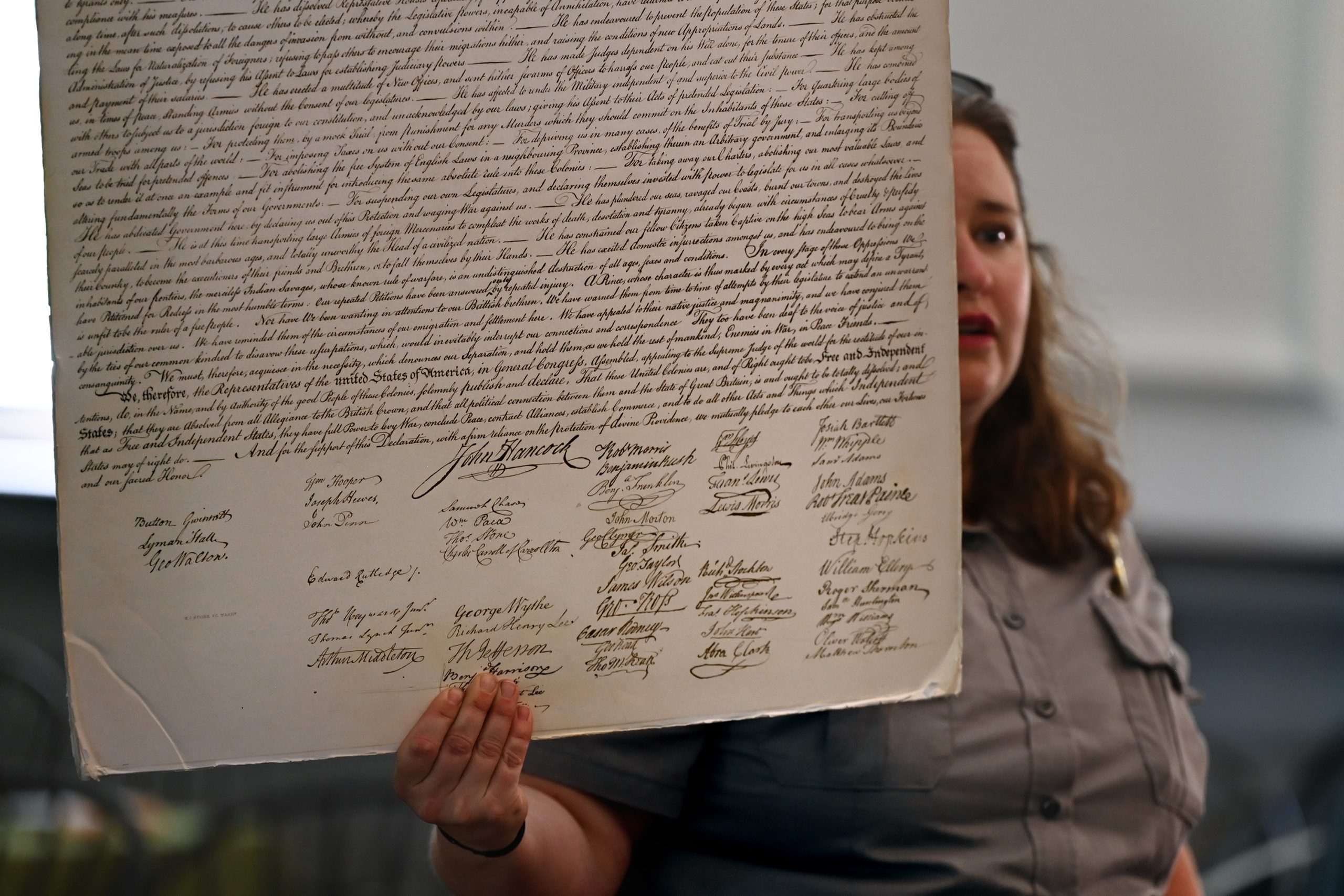
National Park Ranger Maggie Burkett holds an oversized replica of the Declaration of Independence while guiding visitors on a tour of the Assembly Room in Independence Hall (then called the Pennsylvania State House) where the Second Continental Congress met and the Declaration of Independence was adopted. Tom Gralish / Staff Photographer
In the month leading up to the weekend, I worked on a photo essay on the local Delaware, New Jersey, and Pennsylvania Founders who signed the Declaration of Independence. With help from their lineage organization, I met and photographed direct descendants of the often overlooked men who were here with the Second Continental Congress as America was born.
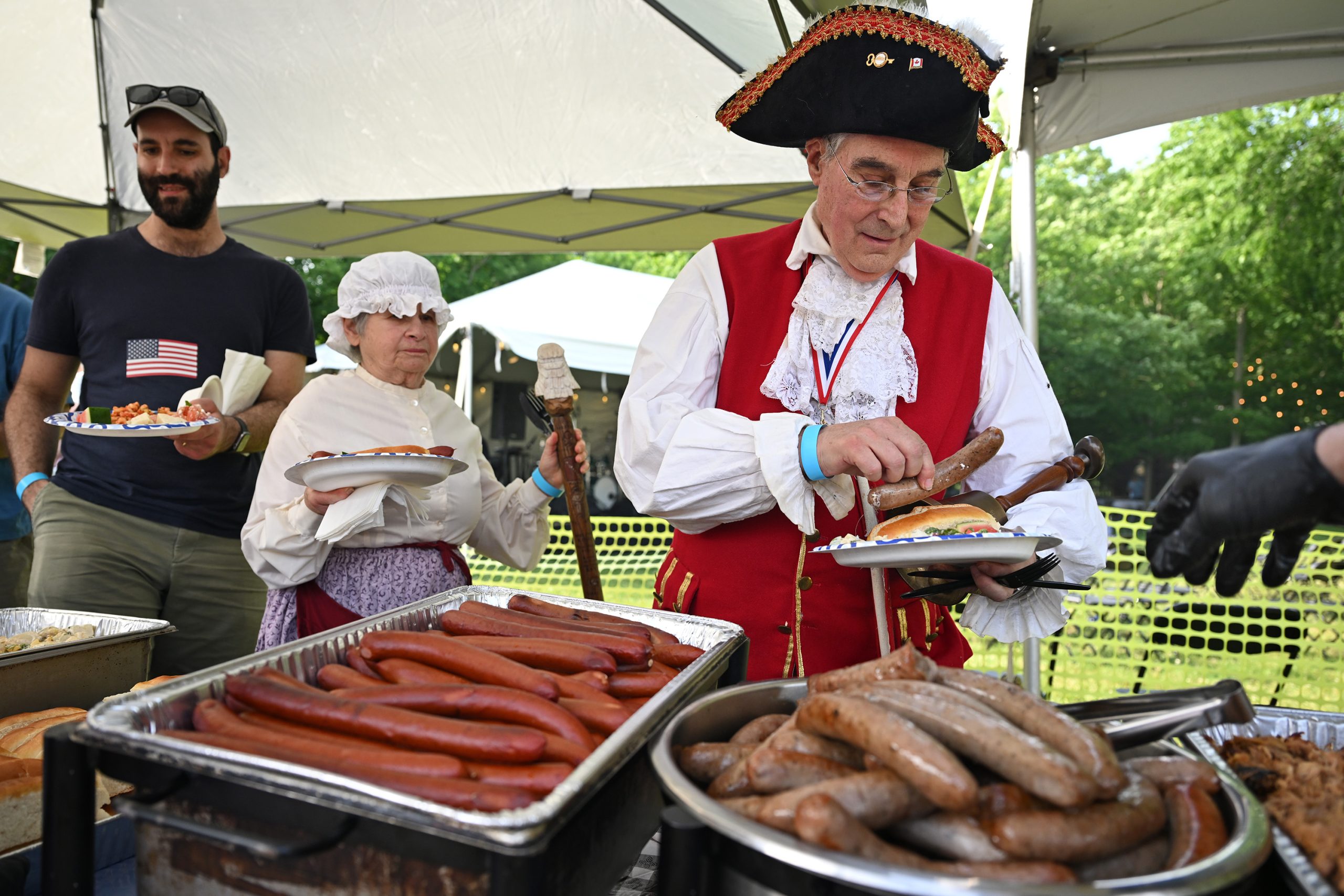
The Town Crier of Hopewell, N.J., and his wife, Stanley and Cindy Saperstein, attend Hopewell’s USA 250th Town-Wide Block Party in June. John Hart, a signer of the Declaration of Independence, is buried at the Old School Baptist Church there.Tom Gralish / Staff Photographer
Since 1998 a black-and-white photo has appeared every Monday in staff photographer Tom Gralish’s “Scene Through the Lens” photo column in the print editions of The Inquirer’s local news section. Here are the most recent, in color:
The buyer: Amanda Caroccio, 41, child and adolescent psychiatric nurse-practitioner
The house: A 966-square-foot home in Haddonfield with two bedrooms and two bathrooms built in 1924.
The price: Listed for $385,000, sold for $407,500.
The agent: Christy Oberg, Weichert Realtors
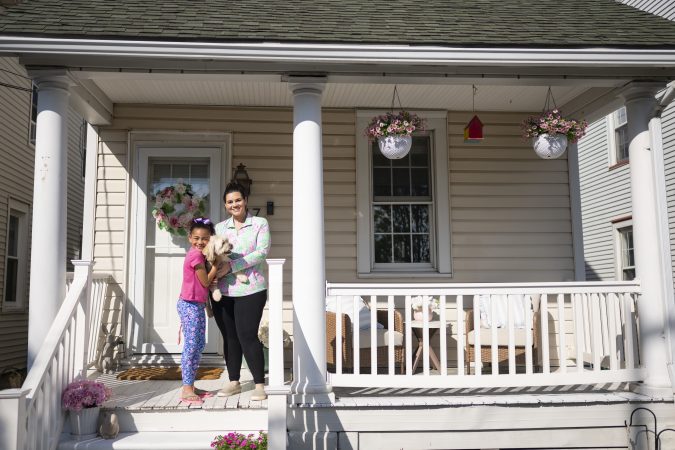
The ask: Amanda Caroccio, originally from Ocean City, N.J., was living in an apartment in Haddon Township when she reevaluated her long-term goals and decided she wanted to buy a home for her and her daughter, Giuliana, 8.
Amanda Caroccio (right) thought owning a home was out of reach for her as a single mom to 8-year-old Guiliana. She’s proud of her home in Haddonfield.Allie Ippolito / For The Inquirer
“Owning a house had always been in the back of my mind, but as a single mom, for a long time I didn’t think it was going to happen,” said Caroccio. She had money put away, but in September 2024, she began working overtime to build savings.
“There were months where I worked every single day,” she said. She cut out spending, including shopping and dinners out, except for special occasions.
The search: Education was Caroccio’s top priority for home location, and she was impressed with the Haddonfield School District. “My main goal was Haddonfield,” she said, “but I was open to Haddon Township.” Caroccio started searching in February 2025, hoping to beat the spring competition. Her budget was up to $600,000, but she was looking for something small to keep expenses down. “I wanted something that didn’t need a significant amount of upgrades,” she said.
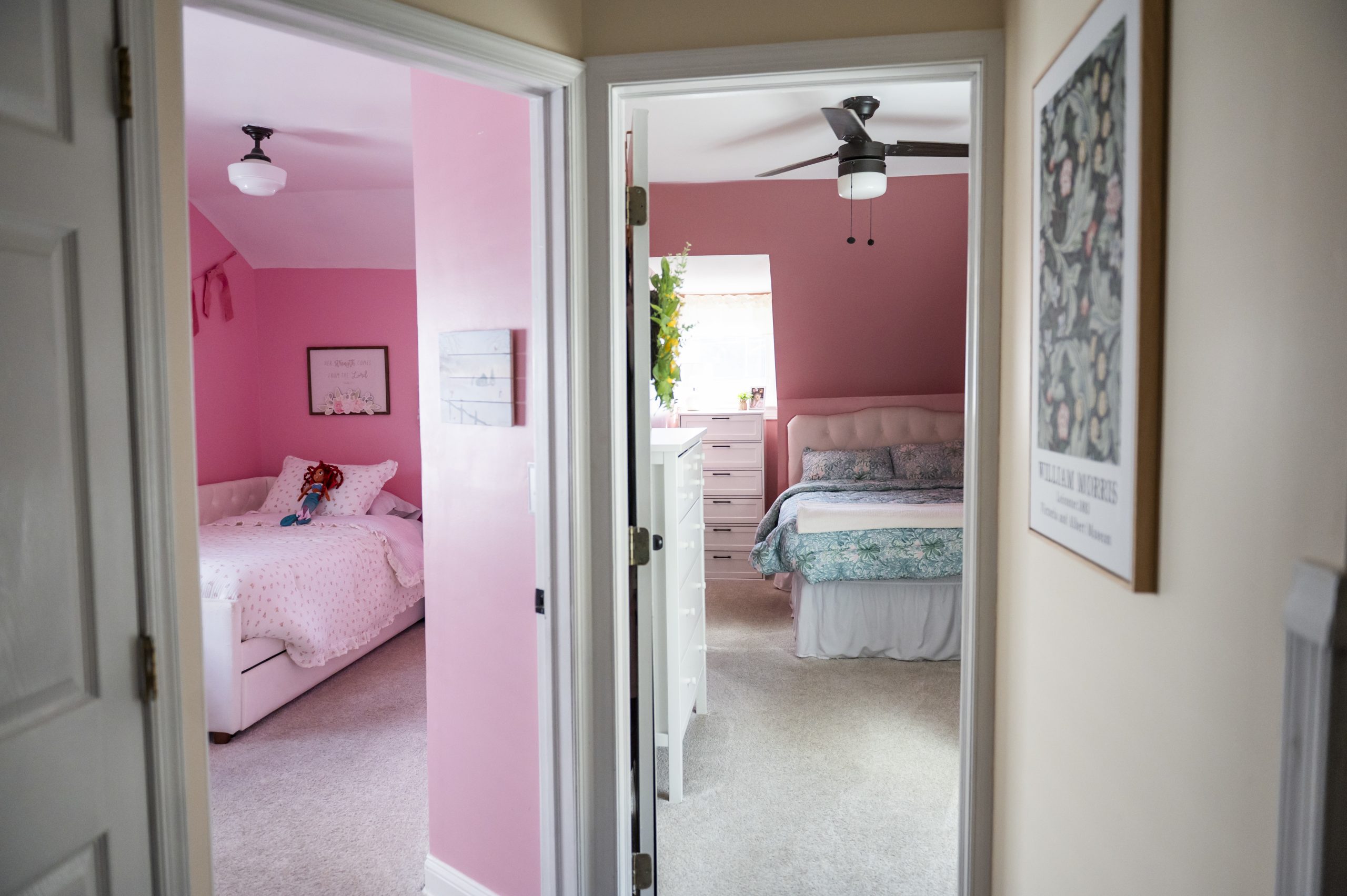
Caroccio installed new carpet in the two bedrooms. Allie Ippolito / For The Inquirer
They looked at several twins which Amanda liked, but her agent pointed out that each one had some potential structural problems, and Caroccio worried about issues with the neighboring homes.
The appeal: In mid-March, the house that she ended up buying went on the market. She saw it on Zillow, and texted her agent. It was exactly what she had been looking for. The house she’d found was in the center of downtown Haddonfield and walkable. Plus, it looked updated and like it would not need major renovations — a big priority in Caroccio’s search.
“It was my version of hitting the lottery,” said Caroccio, “because it had every single thing on my checklist: updated, small, close to downtown, within walking distance of schools.” They toured it that night.
The deal: Other people were interested, and the sellers asked for each bidder’s best offer. Caroccio offered $405,000. The sellers came back with a counteroffer of $410,000, and Caroccio negotiated to $407,500. The home inspector said that for a house built in 1924, it was in good condition. The builder-grade windows would need updating, and there were some issues with the back deck. She got a seller credit for some repairs needed, but, “nothing major.” They went under contract six days after it went on the market, and closed on April 11, 2025, only two months after Caroccio had started her search.
The money: She purchased the home for $407,500 after negotiation. It was originally listed for $385,000. She received a $6,000 seller credit. She put $41,000 down (10%), and her mortgage interest rate is 6.625%. Her closing costs were $19,000. She received a $3,000 grant credit through the Freddie Mac Homeownership Preservation Foundation (HPF) BorrowSmart Access Program which she put toward closing costs. Her monthly payment is $3,021 with escrow, interest, and principal.
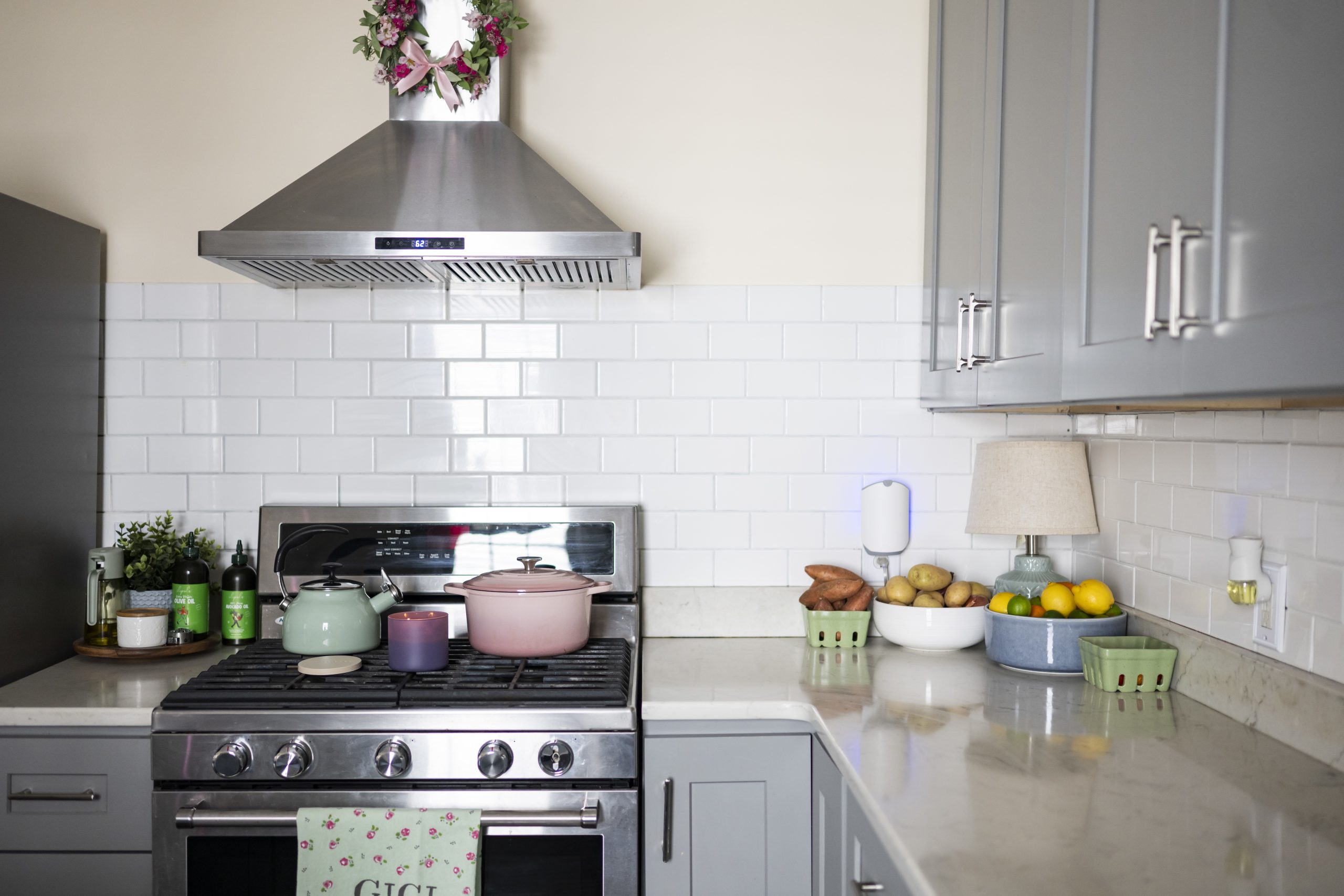
The kitchen features stainless steel appliances. Allie Ippolito / For The Inquirer
The move: To save money, Caroccio moved herself with the help of family, rather than using a moving company. “Because of the timeline with my apartment lease, I had about 10 weeks until I had to be out,” she said. She had to break her lease, paying a 1½-month rent fee, because the home-buying process had gone much faster than she’d imagined.
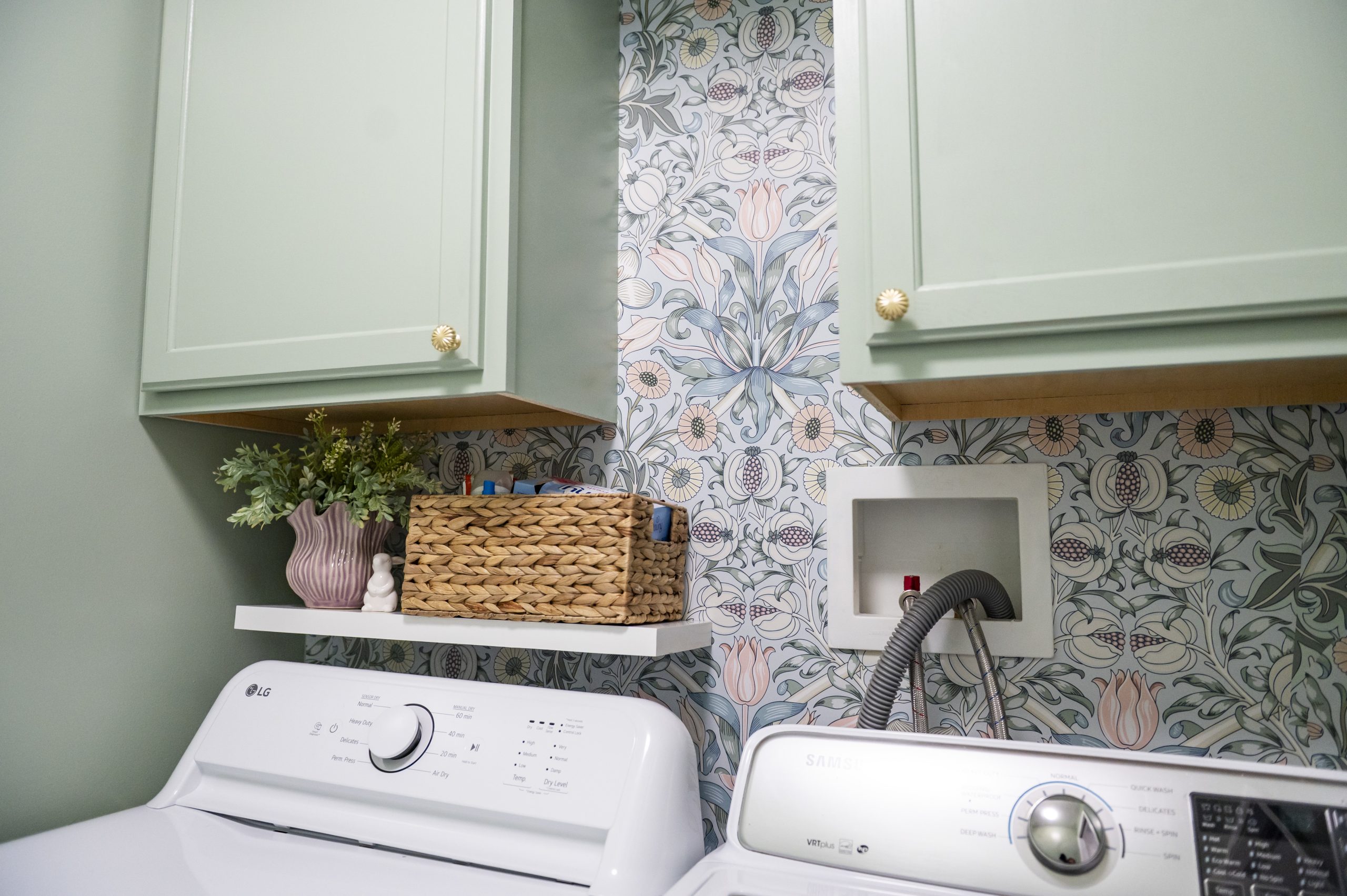
She moved gradually, getting rid of old things, and making aesthetic upgrades to the new house. She hired people to install carpets in the bedroom, painted throughout, and hung Morris & Co. wallpaper in the laundry room. She also had the outdated builder-grade upstairs windows replaced after breaking one while painting. She and Giuliana moved in on June 30, 2025.
Caroccio added floral wall paper to the laundry room.Allie Ippolito / For The Inquirer
Life after close: After a year in their new home,Caroccio and Giuliana are settled in. Giuliana completed this past school year in Haddonfield. They adopted a dog, Simba, a Havanese. Caroccio has been pleased with the ease of upkeep, and with a manageable gas and electric bill over the winter, which allowed her to keep saving. Because it’s a smaller house, she said, “our cost of living is lower, so I’ve been able to meet all of our financial goals.” Her total mortgage payment is also less than what she was previously paying in rent.
“Purchasing this home has been one of the greatest accomplishments of my life,” said Caroccio. “We could not be happier with this house.”
Did you recently buy a home in the Philadelphia area or South Jersey? Share the story of how you did it. Email Inquirer real estate reporters at properties@inquirer.com.
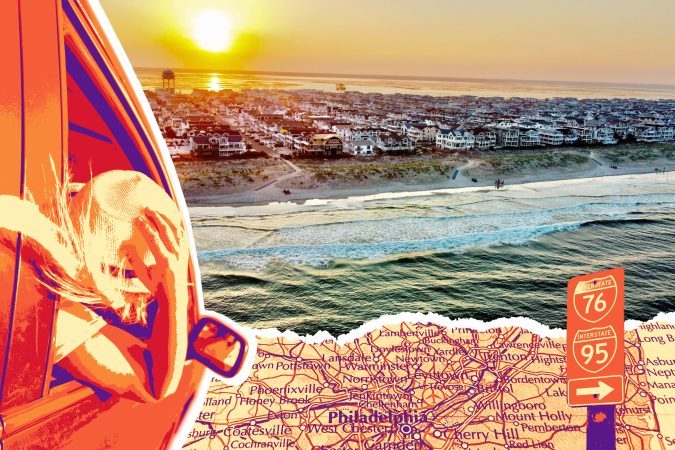
Painted on the tank of a powder-blue water tower, an anthropomorphic sun (wearing sunglasses, no less) greets drivers as they cross the bay onto the island. Next to the sun, the confident sans serif capitals of the town motto come into focus the closer you get to the beach: SMILE YOU’RE IN SEA ISLE.
Sure, it could use a comma, but at least they got the right “you’re.” No one’s debating grammar when six miles of beautiful beaches unspool from Townsend’s Inlet to Corson’s Inlet.
Technically, this is Ludlam Island, but nobody calls it that. People say they’re headed to Sea Isle, and fewer still say they’re going to Strathmere, the quiet enclave at the island’s northern tip. Together, they offer a pleasing one-two punch of barefoot luxury and blue-collar Shore shenanigans, perhaps best embodied by Shoobie emeritus Jason Kelce.
Time the traffic right and you can get there from Philly in about an hour and a half. Start the car.
After landing in Sea Isle, hang a left and point the car north toward Strathmere for breakfast. This quick drive really gives you a sense of how wispy the northern end of this island is, revealing just how narrow the island becomes, at points barely wide enough for Commonwealth Avenue. Here you’ll find Sidney’s Coffee and Eats, a beach-block bungalow slinging Liege-style waffles, protein smoothies, and egg-and-cheese croissants. After breakfast, take your cappuccino down to the beach and get those toes in the sand.
Unlike many Shore towns, Sea Isle has only a handful of hotels, while Strathmere has none. Most visitors rent houses or stay in nearby campgrounds before commuting onto the island. Fortunately, the Colonnade Inn, a circa-1883 Victorian that sits in the center of town, just a block and half from the beach, still has availability in July and August for its cute cream-and-turquoise rooms — some for less than $300 a night.
📍 4600 Landis Ave., Sea Isle City, N.J. 08243
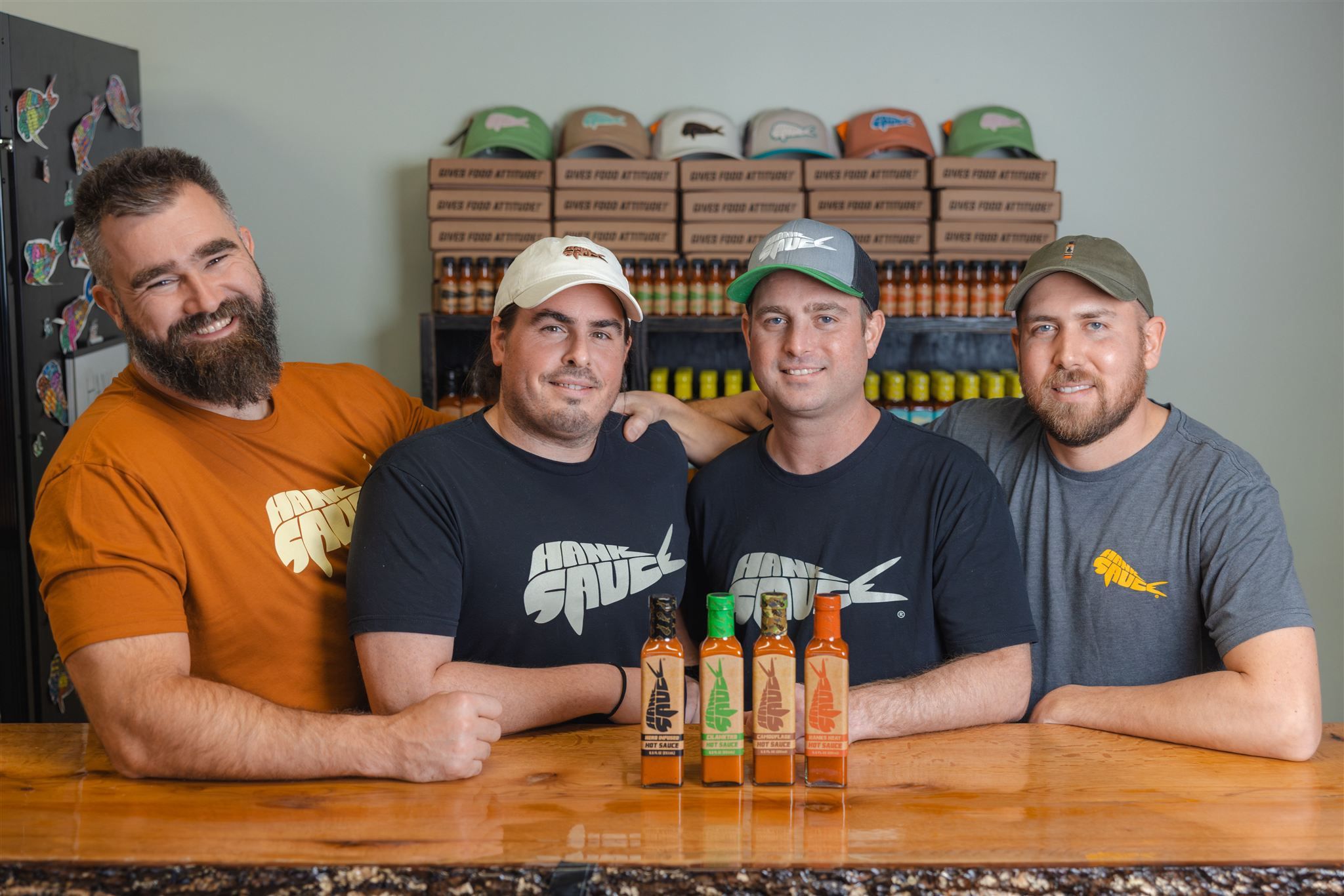
Jason Kelce with the cofounders of Hank Sauce: Matt Pittaluga (from left), Brian “Hank” Ruxton, and Josh Jaspan. Hank Sauce was founded in 2011 and is based in Sea Isle City. Kelce announced a partnership with the local brand and his family’s Winnie Capital.Courtesy of Hank Sauce
Sweat: Hank Sauce
You might recognize the square-edged bottles of Hank Sauce from the shelves of your local Acme or ShopRite, but the brand was created by a trio of friends right here in Sea Isle. Jason Kelce joined as an investor last year. Their casual restaurant serves Buffalo chicken cheesesteaks topped with blue cheese crumbles and baked wings glazed in your favorite Hank’s sauce. The tangy, herb-packed Cilanktro remains a standout. Order lunch to-go and head straight for the beach.
📍 8605 Landis Ave., Sea Isle City, N.J. 08243
Relax: Townsend’s Inlet Waterfront Park
A few blocks from Hank’s, Sea Isle comes to a rounded point where the ocean meets the bay at Townsend’s Inlet Waterfront Park. At low tide, the ocean beach fans outward into a broad stretch of sand that feels surprisingly secluded. If you can’t find a spot on the street, there’s a lot at 94th Street and Roberts Avenue. And remember: Sea Isle requires beach tags, so have $10 on hand.
📍 Beach access at 93rd Street and Pleasure Avenue, Sea Isle City, N.J. 08243
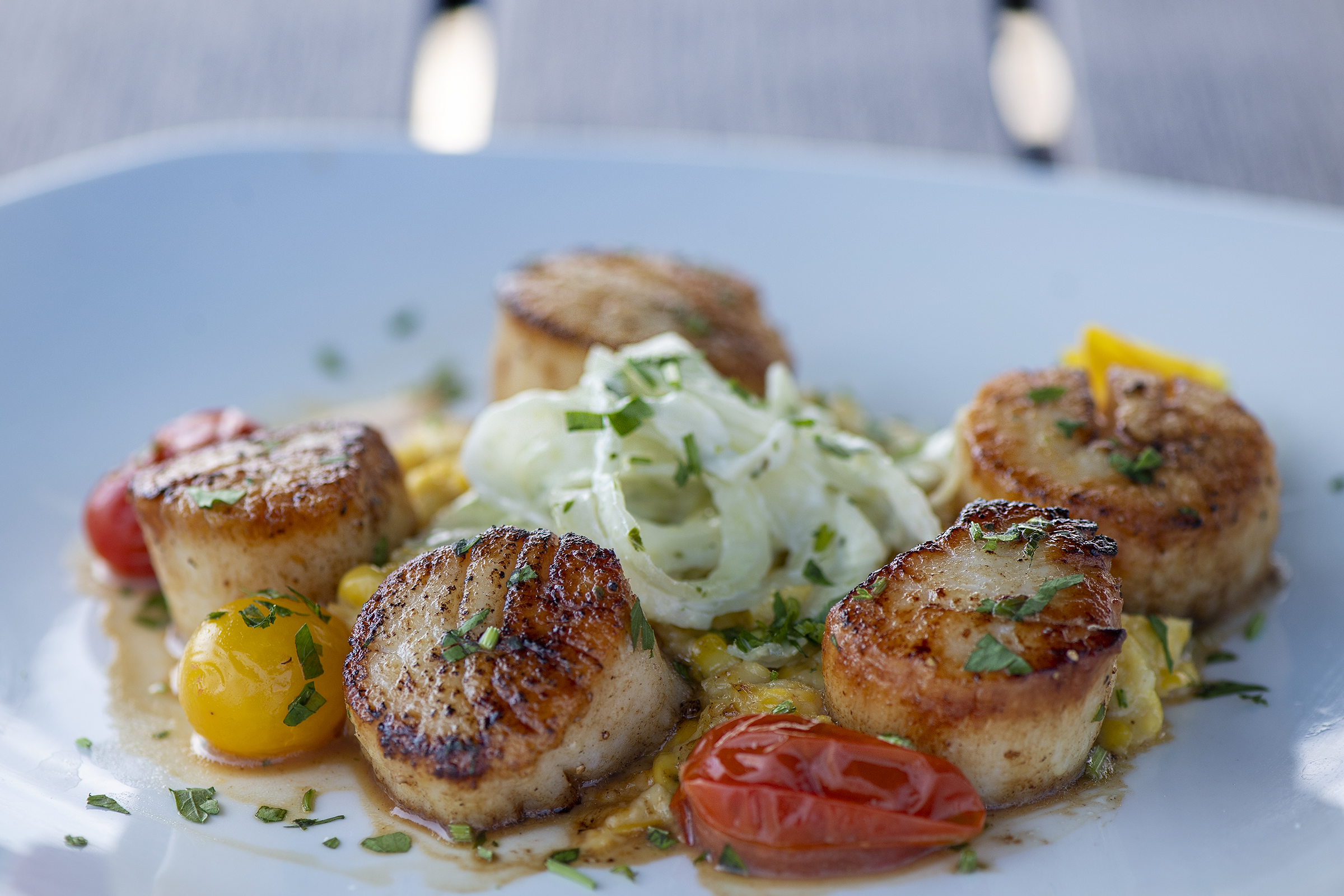
The scallop entree is shown at the Deauville Inn, in Strathmere, N.J. Friday, July 3, 2020JOSE F. MORENO / Staff Photographer
Dine: Deauville Inn
Near Strathmere’s northern tip, where the bridge crosses into Ocean City, the Deauville Inn has been welcoming travelers since 1881, when it was known as the Whelen Hotel. The establishment has been through a lot — nor’easters, ownership changes, neighborhood disputes — but remains a historic fixture of the island. (Just count the people wearing Deauville Inn hoodies on a chilly night.) Bought and renovated by Tim Fox in 2019, the waterfront restaurant, under chef T.J. Ricciardi, serves lobster rolls, broiled Cape May scallops, and Friday- and Saturday-night prime rib in “lady of the inn” and “innkeeper” cuts. Don’t forget to grab one of those hoodies on the way out.
📍 201 W. Willard Rd., Strathmere, N.J. 08248
Sunset: Strathmere Point
So far this summer, the sunsets have been particularly showy, with epic displays of hot-pink, tangerine, and lavender. Certainly, you can catch sundown from Deauville Inn, but if you wrap up dinner before dark, it’s worth walking a few blocks to the beach at the island’s north point — a huge expanse of sand shaped like a dolphin’s dorsal fin pushing into the water. Walking out there feels somewhat otherworldly, as the surf of the inlet reshapes the sands. Take a seat and enjoy the show.
📍 Beach access at Commonwealth and Seaview Avenues, Strathmere, N.J. 08248
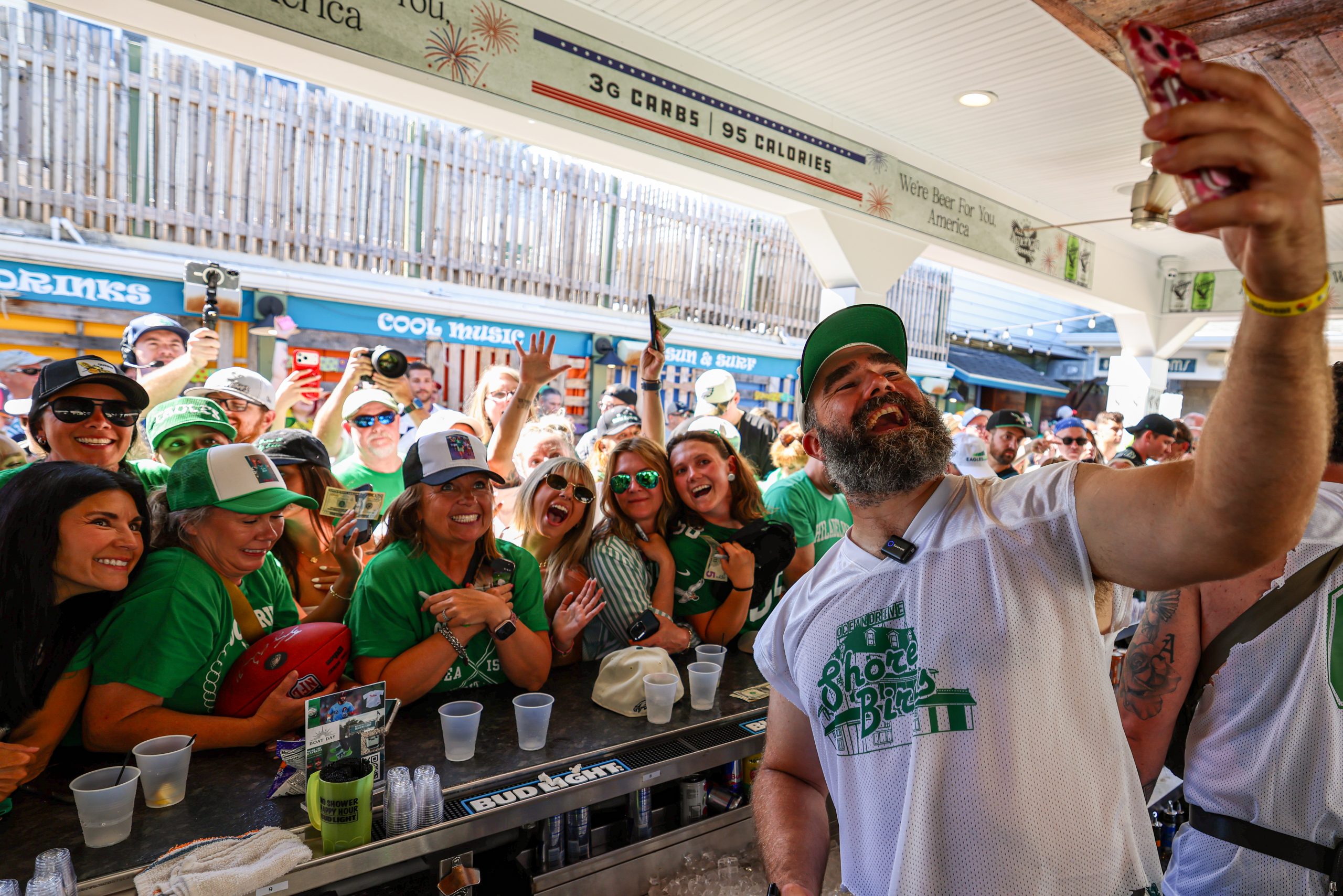
Jason Kelce takes a selfie with fans at his sixth annual Ocean Drive fundraiser for the Eagles Autism Foundation.Courtesy of the Philadelphia Eagles
Drink: Ocean Drive
Just weeks ago, Kylie and Jason Kelce’s annual celebrity-bartending benefit at Ocean Drive raised $1.26 million for the Eagles Autism Foundation. While this juggernaut event brings peak crowds to the O.D., the bar and restaurant is no stranger to packing people in from day-load to no-shower happy hour to late-night dancing. Catch a local act like Secret Service or Fat Mezz, order a Sea Isle Iced Tea, and watch the hours melt away like a rocket pop on the beach.
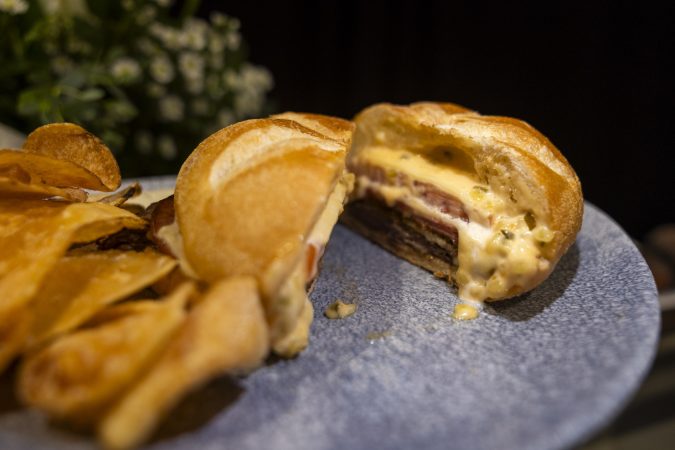
After a decade in exile, McNally’s legendary creation — chopped steak, grilled salami, melted cheese, tomatoes, fried onions, and Schmitter sauce on a Kaiser roll — is returning to Citizens Bank Park. For years, fans have mourned its disappearance, wondering why one of Philadelphia’s greatest culinary achievements had vanished from the home of the Phillies.
Now, balance has been restored.
There are sandwiches that define a city. The cheesesteak, the roast pork, the hoagie.
Then there’s the Schmitter, which looked at all three and decided they weren’t doing enough. It’s gloriously excessive, unapologetically Philadelphia, and tastes even better with nine innings of baseball.
The All-Star Game is supposed to showcase the best of Philadelphia. Now we can say: Mission accomplished.
Phillies pitcher Zack Wheeler throws the baseball against the New York Mets on Sunday, June 21, 2026 in Philadelphia.Yong Kim / Staff Photographer
Wheeler has a 2.28 ERA, struck out a career-high 14 Reds after learning he didn’t make the team, and has finished second in Cy Young voting twice. The Phillies have six All-Stars headed to Citizens Bank Park next week, yet somehow their ace isn’t one of them.
Wheeler called it “B.S.” And he’s right.
If a player is good enough to make the All-Star team but can’t pitch because of his regular-season schedule, name him anyway. Give him the honor, then replace him with someone who can actually throw an inning.
Instead, MLB managed to turn an exhibition game into a technicality, and the guy getting punished is one of the best pitchers in the sport.
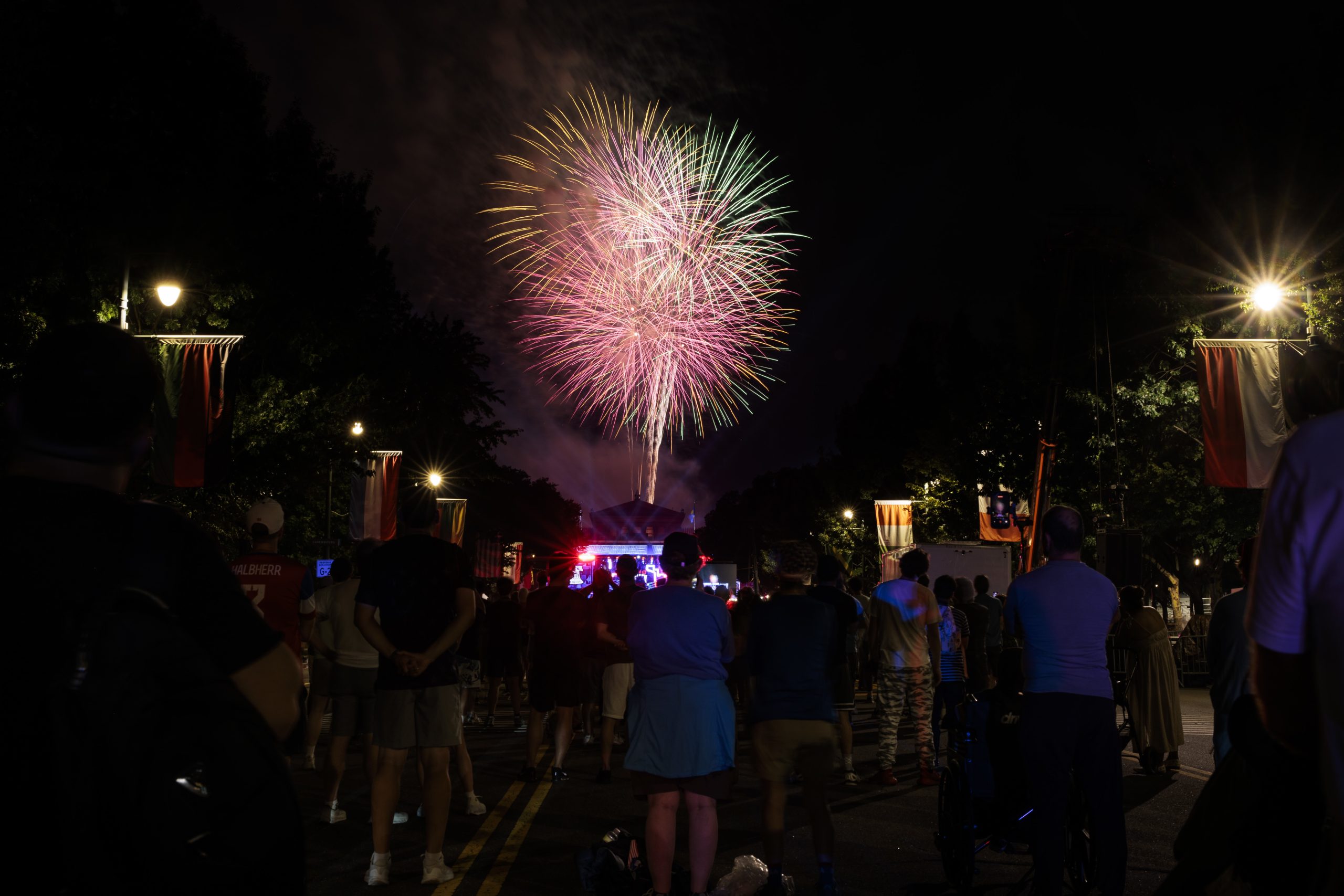
Fireworks fill the sky at the One Philly: Unity Concert for America on the Benjamin Franklin Parkway on Sunday, July 5, 2026, in Philadelphia.Monica Herndon / Staff Photographer
Yes, thousands of people were woken up. Yes, parents everywhere suddenly had children who insisted they were “still not tired.” And yes, Reddit had plenty to say.
But given the choice between canceling the city’s biggest fireworks show in 250 years or waiting out a thunderstorm, officials made what they thought was the right call.
The weather wasn’t cooperating. The fireworks were already loaded. Thousands of people came back after midnight. So Philadelphia leaned into the chaos and celebrated anyway.
Was it inconvenient? Absolutely.
Decades from now, will people still be talking about the year Philadelphia launched fireworks at 2:30 a.m.? Absolutely.
Sometimes the best Philly stories start with, “You’re never going to believe what time this happened.”
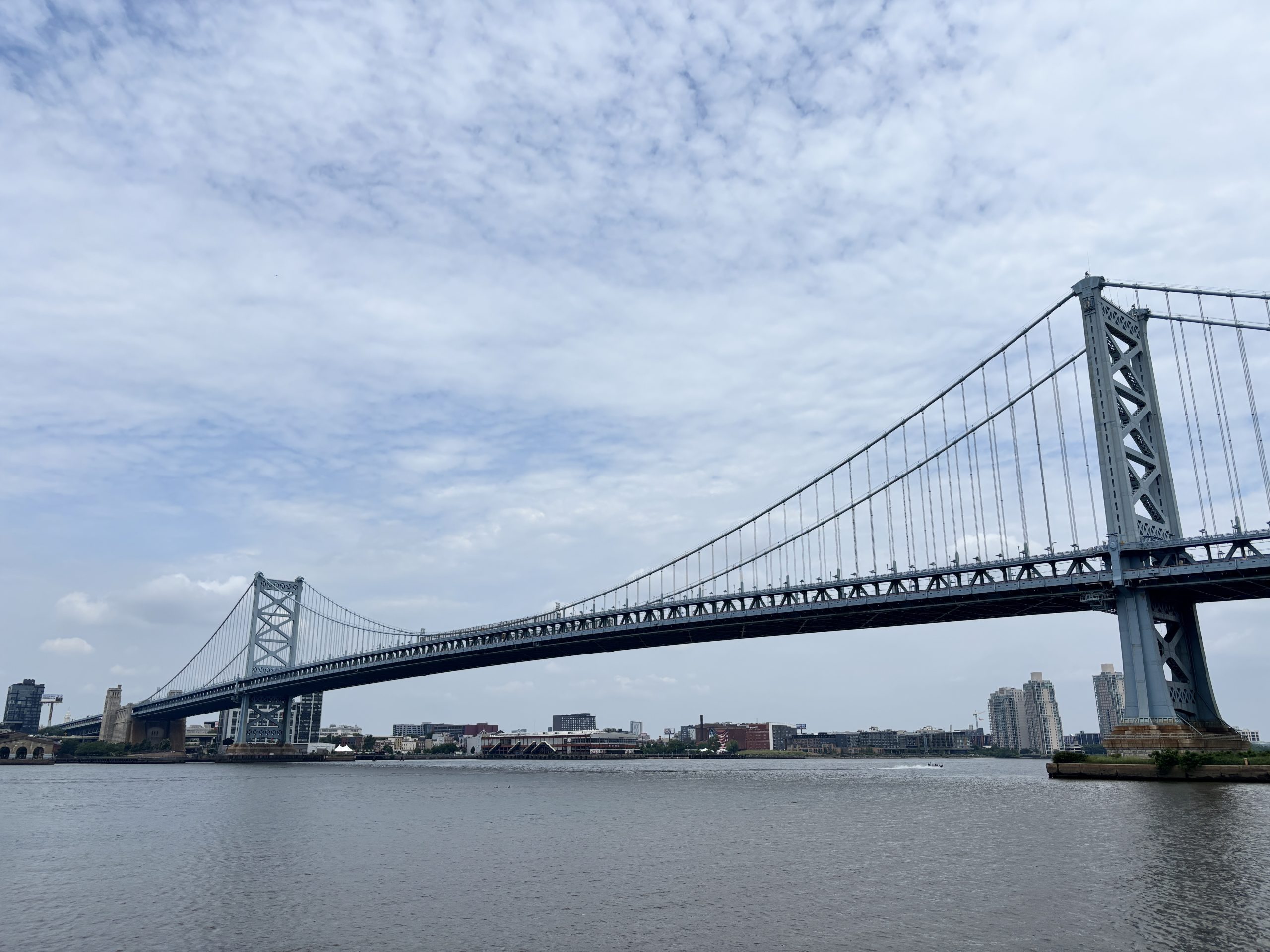
A view of the Ben Franklin Bridge from the Camden waterfront.Taylor Allen
Closing the Ben Franklin Bridge: A
Most bridges celebrate birthdays by … continuing to be bridges.
For one day, cars were banned, pedestrians took over the roadway, and people could stroll across one of Philadelphia’s most iconic landmarks in a way that’s only happened a handful of times in the bridge’s 100-year history.
It’s the kind of event that reminds you infrastructure can actually be fun.
Sure, traffic was a nightmare for a few hours.
But getting to wander down the middle of a century-old bridge with the Philadelphia skyline on one side and Camden on the other?
That’s worth a detour.
Devan Kaney, the former Eagles sideline reporter for 94.1, is seen as the Eagles play the Dallas Cowboys at Lincoln Financial Field on Dec. 29, 2024.David Maialetti / Staff Photographer
Kaney stepped into one of the most visible sports media roles in the city during the Eagles’ Super Bowl run, handled it seamlessly, and became a familiar part of the broadcast.
Now WIP still needs someone to replace her.
Sometimes layoffs are unavoidable, but it’s never a great look when talented people leave because they have to, only to be snapped up by another major market before you’ve even filled the vacancy they left behind.
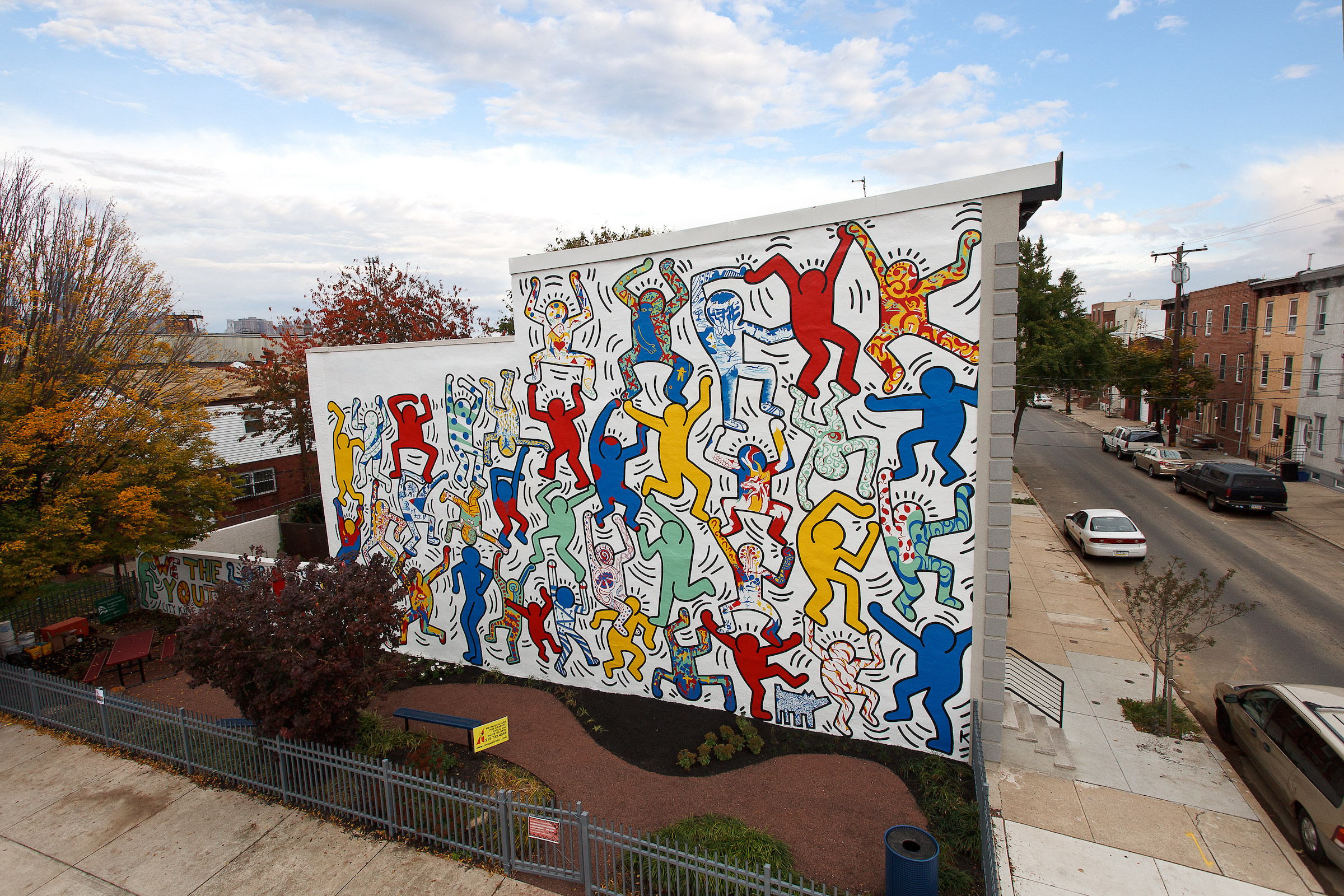
“We the Youth,” seen here in 2013, sits at 22nd and Ellsworth Streets, with a small park next to it.Steve Weinik / Mural Arts Philadelphia
Protecting a mural: A
Not every landmark has four walls.
Keith Haring’s We the Youth mural could soon become one of the few murals protected on Philadelphia’s Register of Historic Places.
It’s been part of the neighborhood for nearly 40 years, it’s the only collaborative Haring mural still in its original location, and generations of Philadelphians have grown up with it.
The preservation concerns are fair. Once you start protecting one mural, where does the list end? That’s a problem for another day. Philadelphia has spent decades proving that murals aren’t decoration. They’re part of the city’s identity.
It makes sense that eventually we’d decide one was historical, too.
To celebrate the Benjamin Franklin Bridge turning 100, this week is all about bridges. We’ll show you a photo taken in the Philly-area, you drop a pin where you think it was taken. Closer to the location results in a better score. Good luck!
Round #41
Question 1
Where can you get this view?
Loading…
ClickTap on map to guess the location in the photo
ClickTap again to change your guess and hit submit when you're happy
You will be scored at the end. The closer to the location the better the score
Tom Gralish / Staff Photographer
Pretty good/Not bad/Way off! Your guess was from the location.Spot on! Your guess was exactly at the location. Here's also where a random selection of Inquirer readers guessed.
The Cherry Street Pier offers this view of the Benjamin Franklin Bridge and the Camden waterfront. The bridge opened on July 1, 1926, for the United States’ Sesquicentennial.
Quiz continues after ad
Question 2
Where is this pedestrian bump-out?
Loading…
Elizabeth Robertson / Staff Photographer
Pretty good/Not bad/Way off! Your guess was from the location.Spot on! Your guess was exactly at the location. Here's also where a random selection of Inquirer readers guessed.
The University Avenue Bridge, which has fallen into disrepair, might be getting some attention from the Pennsylvania Department of Transportation for debris and graffiti cleanup, but the timeline is unclear.
Quiz continues after ad
Question 3
Where is this footbridge?
Loading…
Jose F. Moreno / Staff Photographer
Pretty good/Not bad/Way off! Your guess was from the location.Spot on! Your guess was exactly at the location. Here's also where a random selection of Inquirer readers guessed.
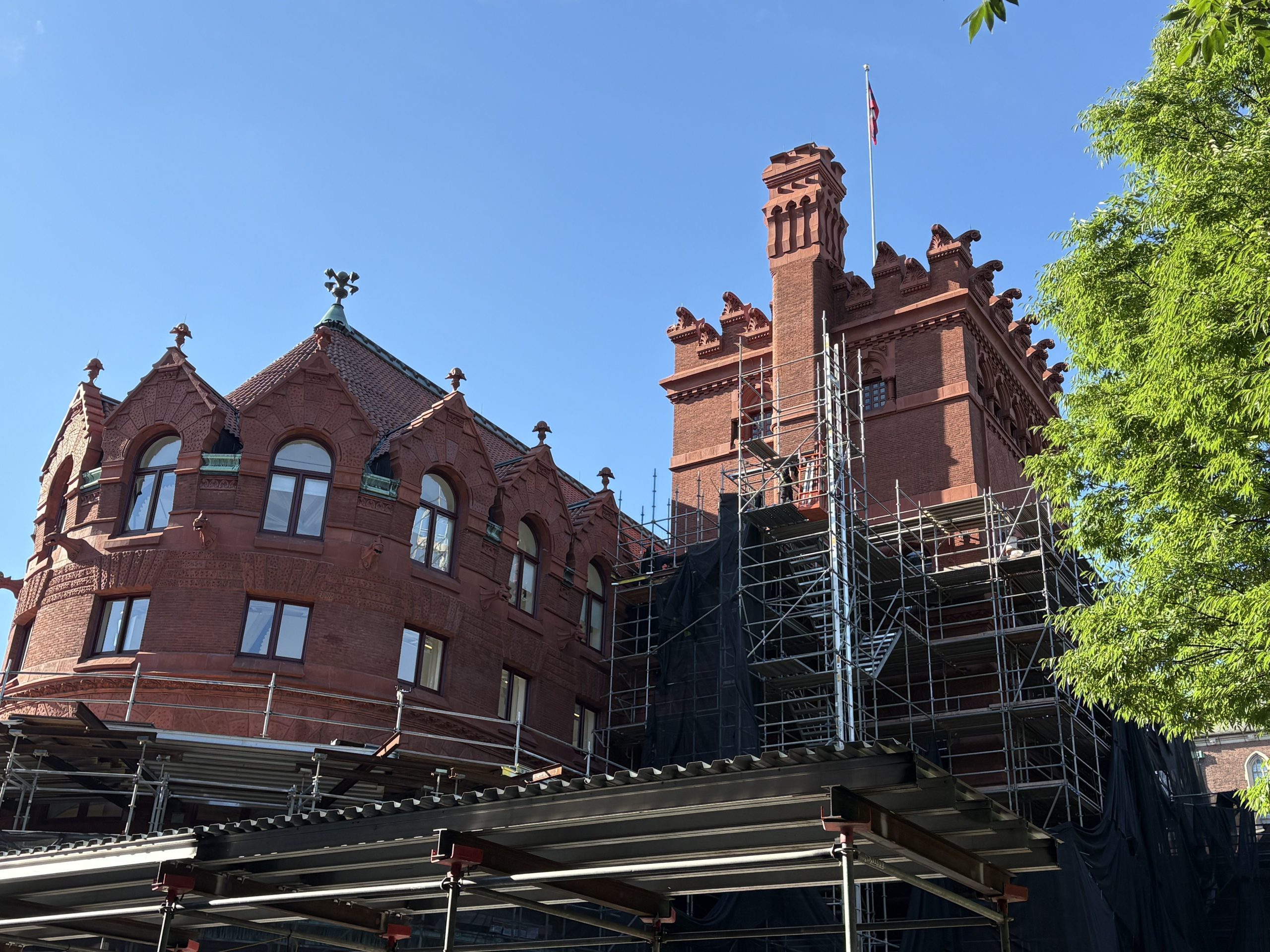
An 1891 building that looks like a castle, a cathedral, and a factory
The Anne and Jerome Fisher Fine Arts Library on 34th Street near Walnut hasn’t quite been itself lately, cloaked in a metallic web of scaffolding. But it will soon reemerge after an exterior restoration and promises to be as striking as ever.
Dedicated in 1891, the building has had frequent updates.
“There was a significant [restoration] project done in the 1980s that Venturi’s firm led. It finished around the 100th anniversary of the building in 1991, and that really brought the building back,” said Mark Kocent, Penn’s university architect, referring to the Philadelphia practice then called Venturi, Scott Brown and Associates.
The Anne and Jerome Fisher Fine Arts Library, designed by Frank Furness, at the University of Pennsylvania, July 8, 2026. The exterior of the building from 1891 is being restored.Peter Dobrin
“This is coming back 35 years later and saying, ‘OK, it’s a building that you need to continue to reinvest in.’”
If Penn’s campus is a kind of museum of architectural eras and styles, Frank Furness’s exuberant piece of distinctly Philadelphia Victoriana hits the eye as a masterpiece. Highly ornamented and rendered in deep red-orange tones, the building in one section suggests a castle, a cathedral in another, and, on yet another side, a factory.
The current restoration project, whose principal architect is Vitetta, has a price tag of $16.5 million, and includes attention to the brick and terra cotta plus cleaning of masonry; repairing of the roof; replacing some windows and repainting of windows and doors; and adding lightning protection.
“So really, just kind of tightening the envelope of the building,” said Kocent.
The project began last April and is expected to wrap up this fall.
Penn’s core campus in West Philadelphia has close to 200 buildings totaling around 17 million square feet, says Kocent, and the university conducts ongoing assessments to determine which structures need work.
Among other recent notable restorations was a $87.4 million project at College Hall finished in 2025, and a $238 million renovation of the Quadrangle Dormitories along Spruce Street and Woodland Walk now nearing completion.
The Furness library building, though, is a favorite of Kocent’s, because of its detail and character, but also for a more personal reason: He was once a student at the school himself.
“It was kind of wonderful to have studios in there back in the day where as an architecture student you could go there in the evening at sunset and you’d see the sun setting on the west side of the building, and then after pulling an all-nighter, you’d watch the sun come up on the east side.”
The Fisher Fine Arts Library is at 220 S. 34th St. within the University of Pennsylvania campus.
— Peter Dobrin
Tierra Whack’s new video is for “Candle Wax” from her new mixtape “Whack’s Museum.”PhobyMo
Tierra Whack is back!
Tierra Whack always leaves you wanting more.
The Philly rapper and singer first garnered attention with her 2018 mixtape Whack World. That 15-song, 15-minute debut revealed her to be one of the most imaginative minds in hip-hop.
Since then, Whack has sometimes frustrated fans with her limited output — there’s been just one full-length album since. 2024’s World Wide Whack stretched her stylistically into alt-R&B and pop but didn’t entirely sate the appetite of fans awestruck by her wicked wit and rhythmic command.
Whack — who was a standout star of the July 4 One Philly: Unity Concert for America in its pre-rain delay phase when she joined Jill Scott for “Norf Side” — finally does serve up the pure hip-hop her enthusiasts have been jonesing for, on Whack’s Museum.
“They said I should rap more,” she says on the opening “Whack Job,” which like much of Whack’s Museum, is a team-up with Kansas City producer Conductor Williams. “I’m the goat, show me who to go at,” she raps. “Shouldn’t have to say it, you should already know that.”
Tierra Whack (left) and Jill Scott on stage at One Philly: Unity Concert for America on the Benjamin Franklin Parkway, on Saturday, July 4, 2026, in Philadelphia.Yong Kim / Staff Photographer
Whack puts her abundant skills, predilection for puns, and interior rhyming on dazzling display throughout Whack’s Museum, which is typically concise and economical, with 12 songs clocking in less than half an hour and none lasting more than 3 minutes.
The mixtape was released on Juneteenth along with a video for “Siren” that featured visual nods to Allen Iverson and the Eagles, and a second also-filmed-in-Philly video for “Candle Wax” was released this week. On Saturday, she’ll perform in New York at the Family Style Food Festival at Pier 36.
“Whack’s Museum” is now available for streaming on music services.
— Dan DeLuca
A young Ben Franklin electrifies the stage
It’s hard to imagine Ben Franklin as anything other than the balding middle-aged man we see on the $100 bill. It’s even harder to imagine him with an electric guitar in his hands — until now.
The new musical The Sound of America imagines the story of Franklin’s younger days but with a twist: He starts a band with his buddies and discovers the electric guitar through a lightning strike.
Kohl Pilgrim, the actor bringing Ben Franklin’s rock ‘n’ roll persona to life, poses for a portrait at FringeArts during a dress rehearsal for “The Sound of America” musical on Wednesday, June 24, 2026.Aidan T. Gallo / Staff Photographer
As fame and fortune twist his morals, he finds himself abandoning his wife and bestie, and led down a dangerous path by a manipulative British lord (with a Shrek-like Scottish accent). Will Ben be able to come back to his roots, or is the power of electric rock ‘n’ roll too enticing to give up?
The show plays at the Delaware River-side FringeArts, fittingly right under the Benjamin Franklin Bridge, through the month of July.
With only two curtains separating the theater from the Fringe Bar, the show is an intimate musical experience.
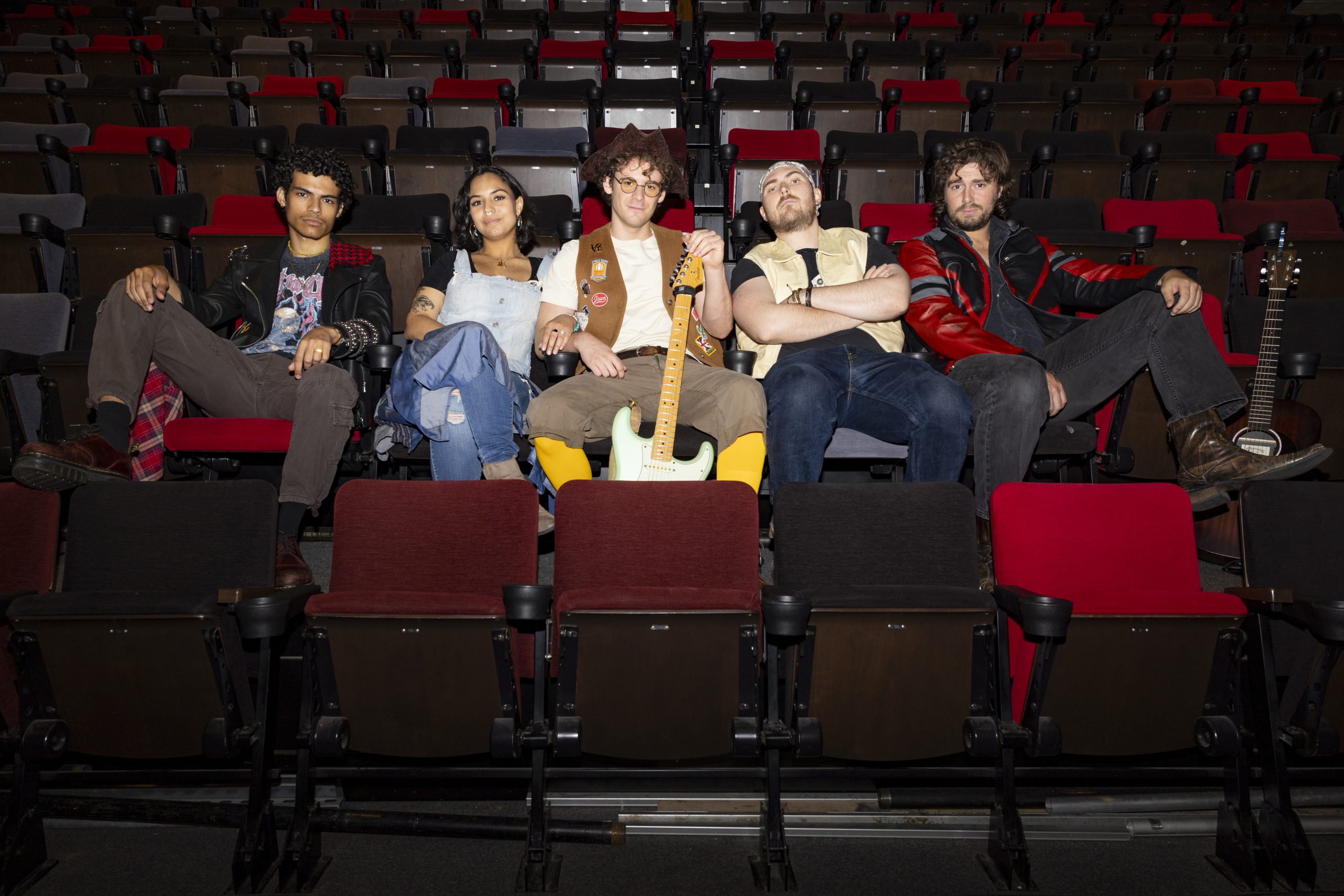
The cast of “The Sound of America” sit for a portrait during a dress rehearsal at FringeArts on Wednesday, June 24, 2026.Aidan T. Gallo / Staff Photographer
It had all of the musical elements I know and love; it felt like I was at one of my dad’s band’s dive bar gigs (which was precisely the feel creators Randall Lane and Todd Schwartz were going for).
The cast, led by Temple graduate Kohl Pilgrim, delivered their songs with ease, blending beautiful vocal harmonies and playing guitar at the same time (witchcraft, to me). Their chemistry was palpable, feeling like they never ran out of energy, even after the 2-hour show had ended.
Amid all the America 250 brouhaha, I have found it hard to find a history-related event that didn’t bore me to sleep. While this show may not be entirely historically accurate, this energetic yet flawed portrayal of a young Founding Father was endlessly entertaining, giving us a gritty Philly-style performance that I’ll never forget.
“The Sound of America” runs through Aug. 1 at FringeArts, 140 N. Christopher Columbus Blvd. Tickets start at $60. soundofamericamusical.com, 215-413-1318, or by email at hello@fringearts.com.
— Morgan Ritter
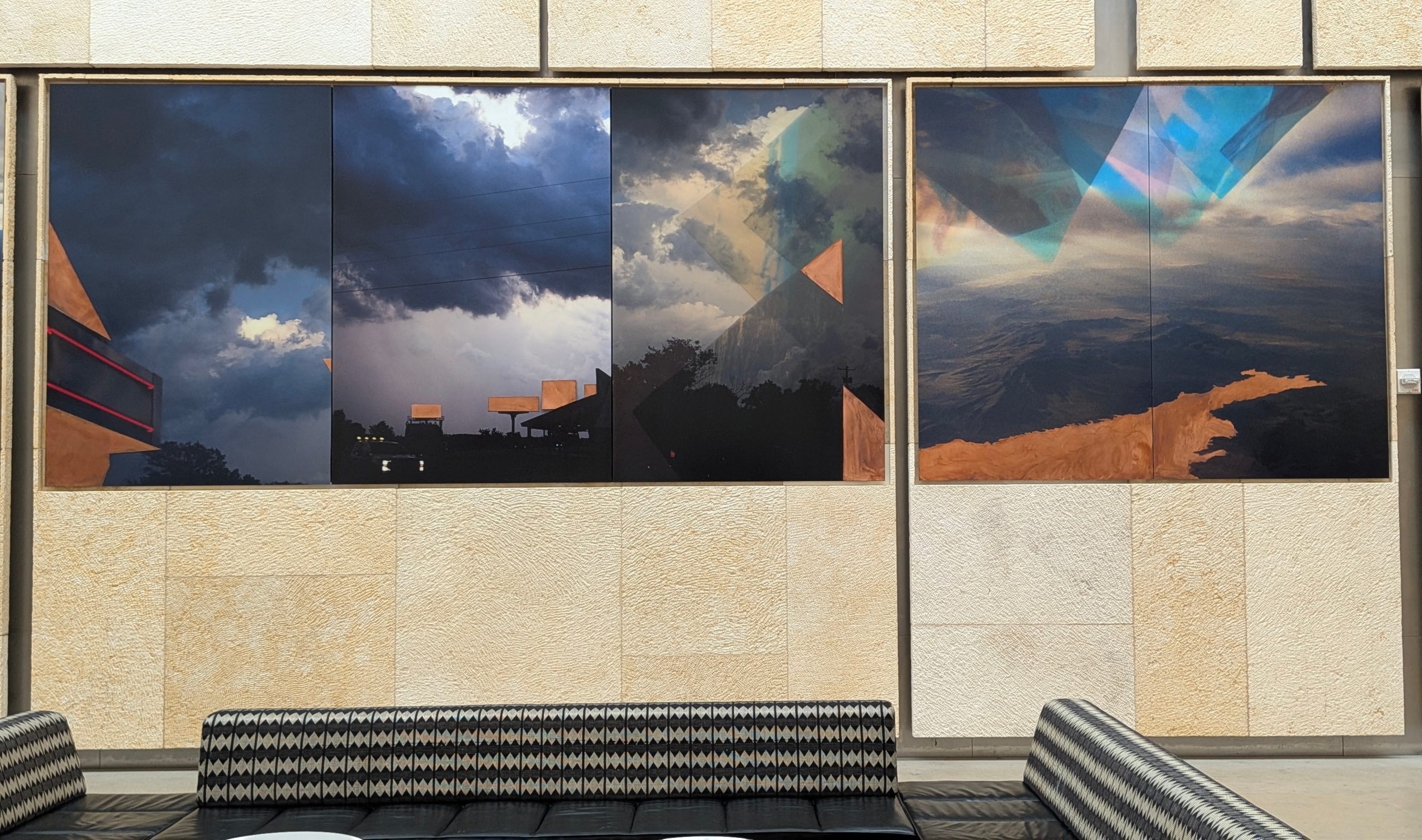
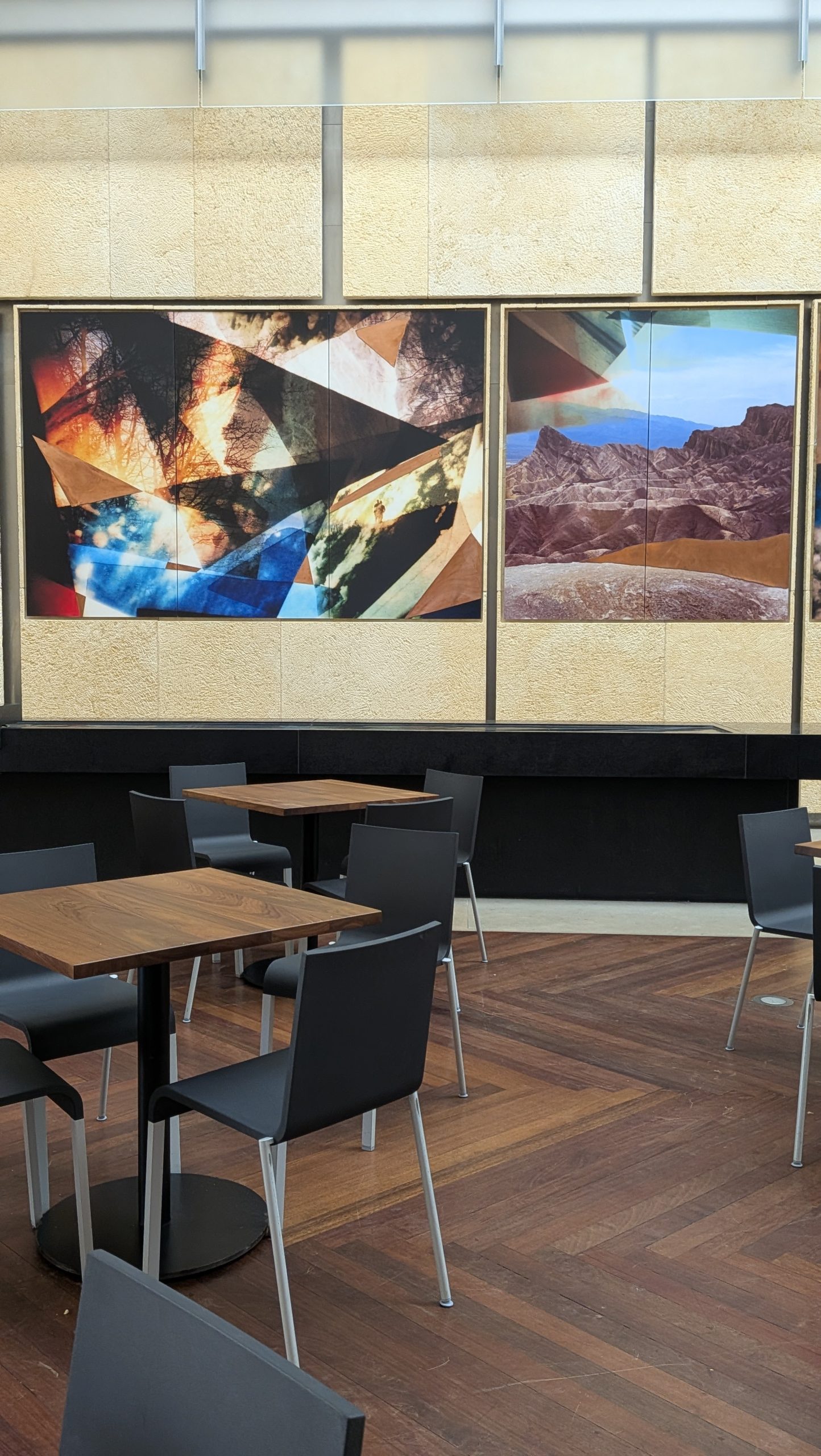
A section of the 11-panel work titled “Red Metal Dust” by artist Sky Hopinka. The artwork is on display at the Barnes Foundation’s Annenberg Court through January.Bedatri D. Choudhury
Copper landscapes and America 250
I have long admired Sky Hopinka’s films — last year’s Powwow People was one of the best of the year. I went to the “Red Metal Dust” exhibit at the Barnes Foundation expecting to see the Native American filmmaker’s video work but was pleasantly surprised when I got to the Foundation’s Annenberg Court.
Photographs of sweeping landscapes make up 11 panels that flank one side of the walls. Hopinka uses photo prints of different transparencies to recreate the terrain of Tahlequah, Okla., which, Hopinka said to the arts publication Brooklyn Rail, is “one of the bigger towns in the Cherokee Nation.”
Mountains blend into tree tops, sunsets blend into the day sky, clouds bleed into buildings, human beings form little shadows, and billboards stand against the sky. Pieces of copper glisten in part of the image. It is at once one landscape continuing through the length of 11 panels, and also a different world contained within each panel.
“Red Metal Dust” is the Ho-Chunk way of describing copper— “naming the material not as a monument but as a remainder,” the program note says. The copper on the panels is not treated with wax and will, through the course of the exhibit, change color from oxidizing. What gleams in orange in the afternoon light today may turn greenish in a few days, changing how we see and perceive the landscapes in front of us.
A section of the 11-panel work titled “Red Metal Dust” by artist Sky Hopinka. The artwork is on display at the Barnes Foundation’s Annenberg Court through January 2027.Bedatri D. Choudhury
Hopinka’s work has always focused on Indigenous lands and people’s relationship to them. “Red Metal Dust,” created to commemorate the American nation’s 250th anniversary, centers on land that has been cared for by Native Americans for tens of thousands of years before the land got called a nation. It shows us what remains and reminds us what got taken away. It bears witness to aging and change and instead of looking at the country as one chunk of a land mass, “Red Metal Dust” gives us pause to stop and look at the many layers of disruption and repair that lie beneath what meets us in the eye. It is a reminder that this land was a nation of its own people who are way older than its 250 years of history.
“Red Metal Dust” runs through Jan. 18 at the Annenberg Court, Barnes Foundation, 2025 Benjamin Franklin Pkwy. barnesfoundation.org
If you’re a regular visitor to the Jersey Shore, catching up with your longtime favorite foods, chefs, and restaurants can often tell a wider story about what’s been happening in your favorite beach towns. The economic pressure of rising real estate prices has made the arrival of a sweet little BYOB like Joy & Salt on Long Beach Island a test case for the future of the small operator. The saga of ongoing attempts to revitalize Atlantic City’s Tennessee Avenue development? It just got a fresh boost from the comeback of a talented local chef. A new gem for stellar soul food, a growing audience for deep-crusted pizza, the rise of fancy iced coffee (with everything but the taste of coffee), and sage advice on how to choose the right pasta shape all added a tasty helping of color to this week’s fresh batch of restaurant reports from LBI to Margate.
The burrata with fresh basil and plain cheese pie at Queen City Crust in Beach Haven, N.J., on Thursday, June 18, 2026.Tyger Williams / Staff Photographer
I also delve into the Ventnorian controversy over a classic sub shop that’s been remade into an artisan sourdough bakery and touched a nerve with locals who fear their community is becoming too bourgeois. Then again, when something is as good as Florida Cuts is, perhaps it’s not simply change for the sake of trends but actual progress.
Next week: new options from Cape May to Ocean City.
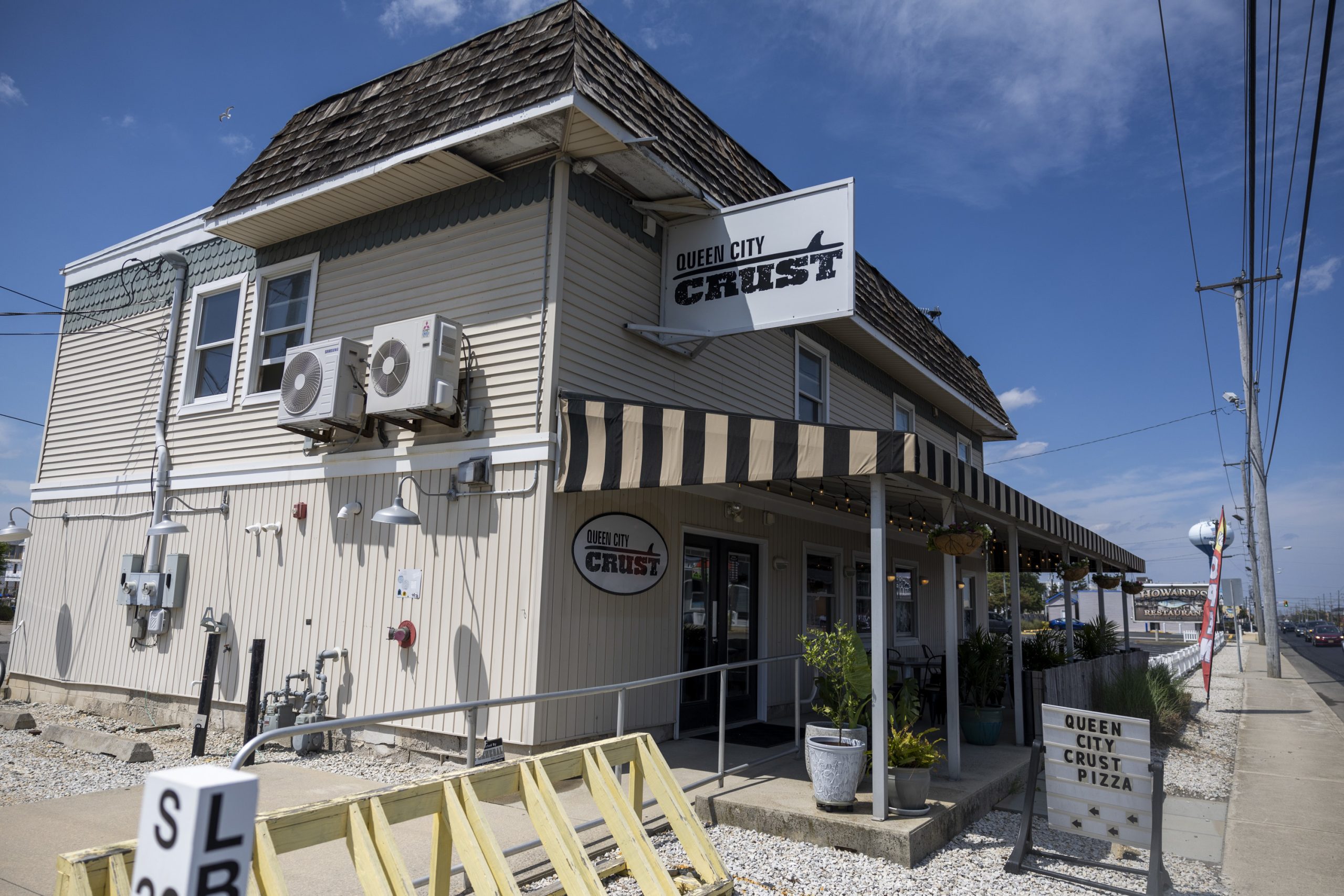
The outside of Queen City Crust in Beach Haven, N.J., on Thursday, June 18, 2026.Tyger Williams / Staff Photographer
LONG BEACH ISLAND
Joy & Salt Cafe
With a temporary sign, and an understated location at an intersection near the ocean where drivers slingshot on and off the causeway to Long Beach Island, you could easily miss Joy & Salt Cafe. But it’s worth a stop at this low-key newcomer to Ship Bottom, a collaboration between two veteran chefs hoping to claim one of the few remaining corners of the island and make what partner Jordan Miller says is “a last-ditch effort for the charm of an old-school BYOB.”
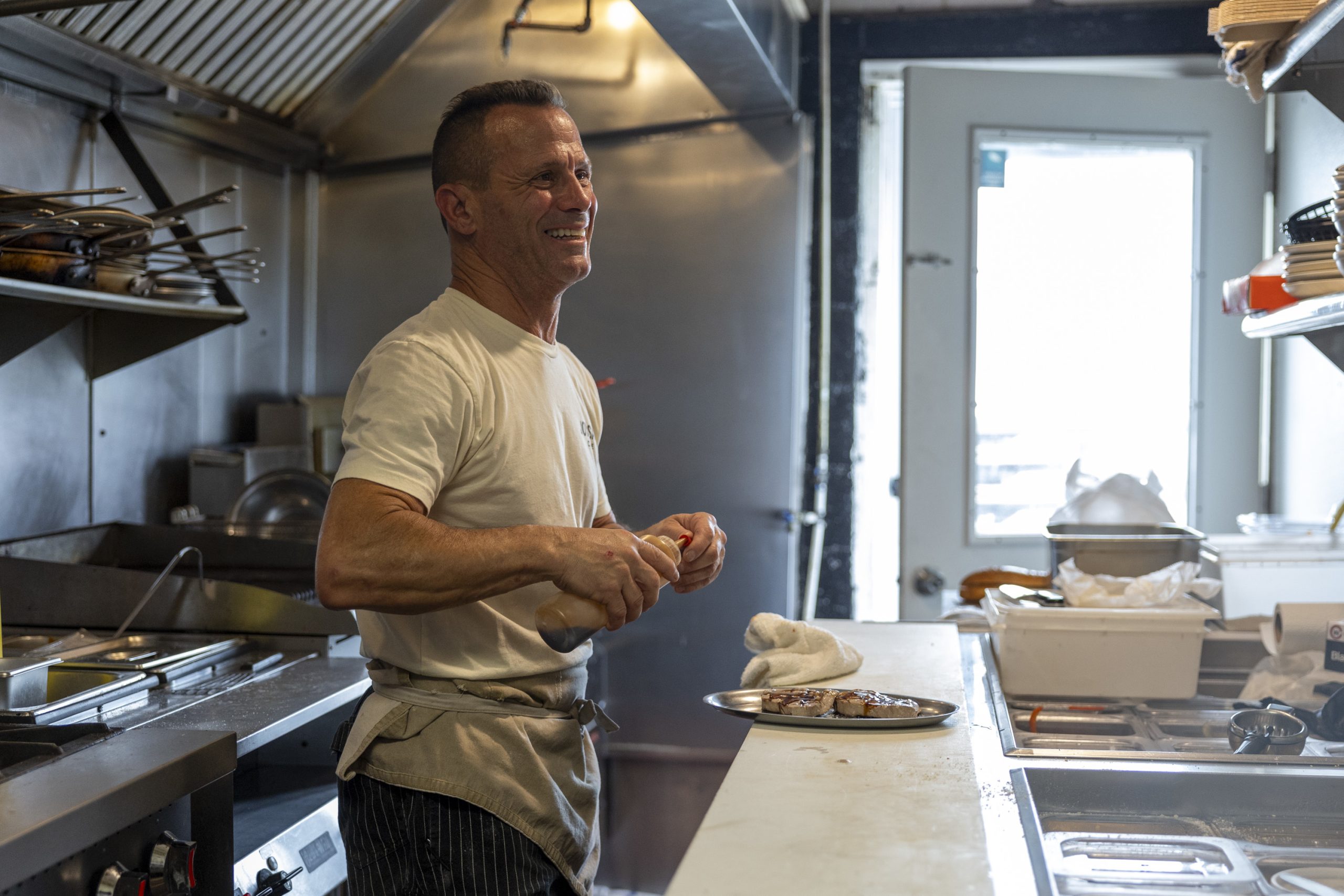
Miller and his business partner and co-chef, Jimi Savianeso, make up for the understated location with genuine hospitality and hands-on scratch cooking. The duo met cooking on the line years ago at local favorite Black-Eyed Susans. With years of fine dining experience behind them, they are opting for a more casual approach to this diner-space and channeling good local ingredients into food they simply like to eat.
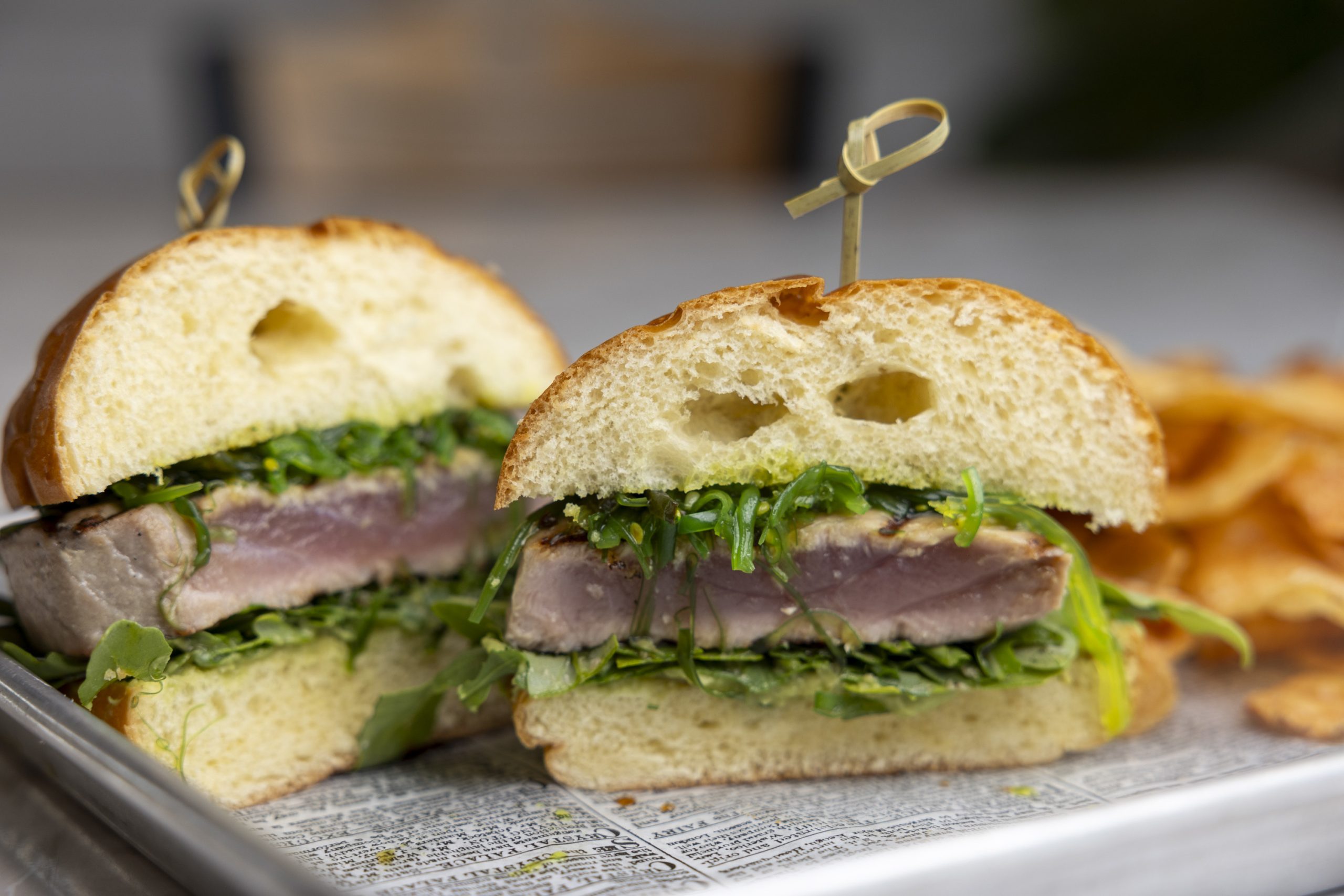
James Savianeso, chef and co-owner of Joy & Salt Cafe, working in the kitchen in Ship Bottom, N.J., on Thursday, June 18, 2026.Tyger Williams / Staff PhotographerThe grilled ahi tuna sandwich at Joy & Salt Cafe in Ship Bottom, N.J., on June 18, 2026.Tyger Williams / Staff Photographer
That could mean a flavorful chowder made from just-dug whole clams, a slice of locally fished grilled tuna on brioche glossed in house-made Japanese barbecue sauce, or a bountiful chilled shrimp cocktail tossed in a saucy Mexican-style marinade (the secret? fresh tomato juice and orange soda). The duo routinely cook fresh-off-the-boat seafood specials for dinner sourced from the nearby docks, but the menu’s default is a homey Italian touch that comes natural to Savianeso, whose North Jersey upbringing imbues his red sauce and sausage and peppers with a nonna-esque magic. That is especially evident at lunch, where Savianeso’s chicken cutlet parm drenched in super-creamy vodka sauce may well become LBI’s sandwich of the summer.
Joy & Salt Cafe, 816 Long Beach Blvd., Ship Bottom, N.J. 08008; 609-342-0794; joysaltkitchen.com
Ellis’ Chicken & Crab Cakes
Takeout can be tricky when determined diners are waiting in lines up to two hours for a seat at one of the Tide Table Group’s roster of popular restaurants on Long Beach Island (Parker’s Garage, Bird & Betty’s, Black Whale, Ship Bottom Shellfish) and in Manahawkin (Mud City Crab House, the Old Causeway Steak & Oyster House). They’ve addressed that conundrum with the creation of Ellis’ Chicken & Crab Cakes, a convenient destination for some of their greatest hits, collected in the fast-casual confines of a crisply rehabbed former antiques shop in Beach Haven that doubles as a boardinghouse for many of the company’s summer workers.
The name offers a good clue as to the specialties: the fried chicken is the same crackle-crusted, buttermilk fried bird from Parker’s Garage. The crab cakes comes in two styles, the somewhat bready OG cakes from Mud City or the baked variation from Parker’s which I far preferred, not only because they’re gluten-free, with tapioca starch for binding, but because they’re made from sweet lump crab bound with a béarnaise sauce flavored with tarragon and Old Bay. The super-plump peel-and-eat shrimp offer a worthy, non-fried option. But this kitchen’s best assets are all about the crisp. Don’t leave without a side of deep-fried green tomato tots covered in creamy drizzles of zesty pimento cheese.
Ellis’ Chicken & Crab Cakes, 208 N. Bay Ave., Beach Haven, N.J. 08008; 609-342-1100; ellislbi.com
Queen City Crust
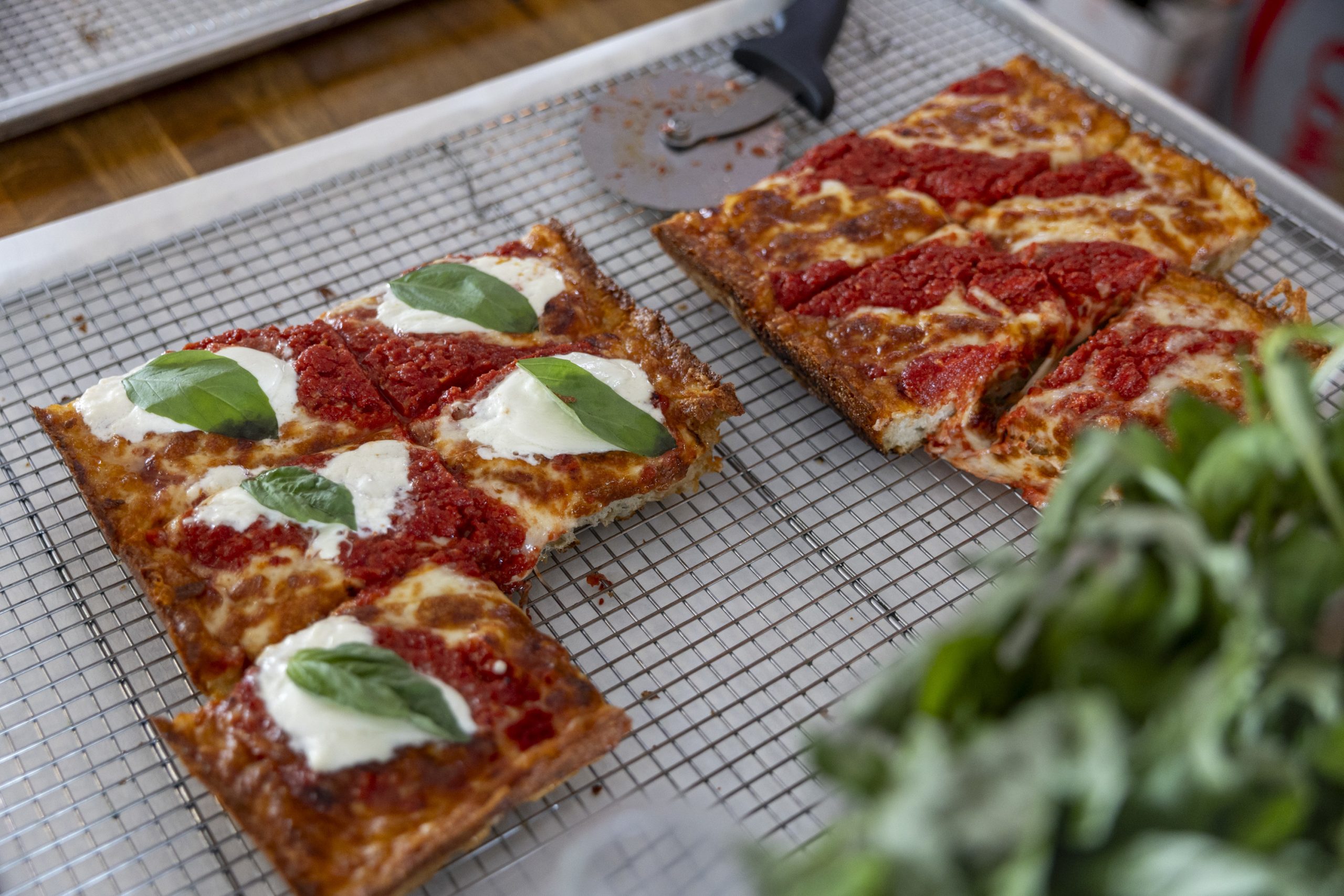
Jersey Shore pizza has been trending toward thicker crusts in recent years, rising from the cardboard-thin rounds that have long been the boardwalk prototype to heartier, pan-baked pies with flavorful slow-fermented doughs and borders that snap with crispy cheese edges. Bakeria 1010 and Squares & Fare are two outstanding examples I’ve enjoyed in Ocean City and Somers Point, respectively. Long Beach Island has also gotten into the Detroit-style pie action with Queen City Crust, a former pop-up sensation that is now in its third year as a standalone storefront in Beach Haven.
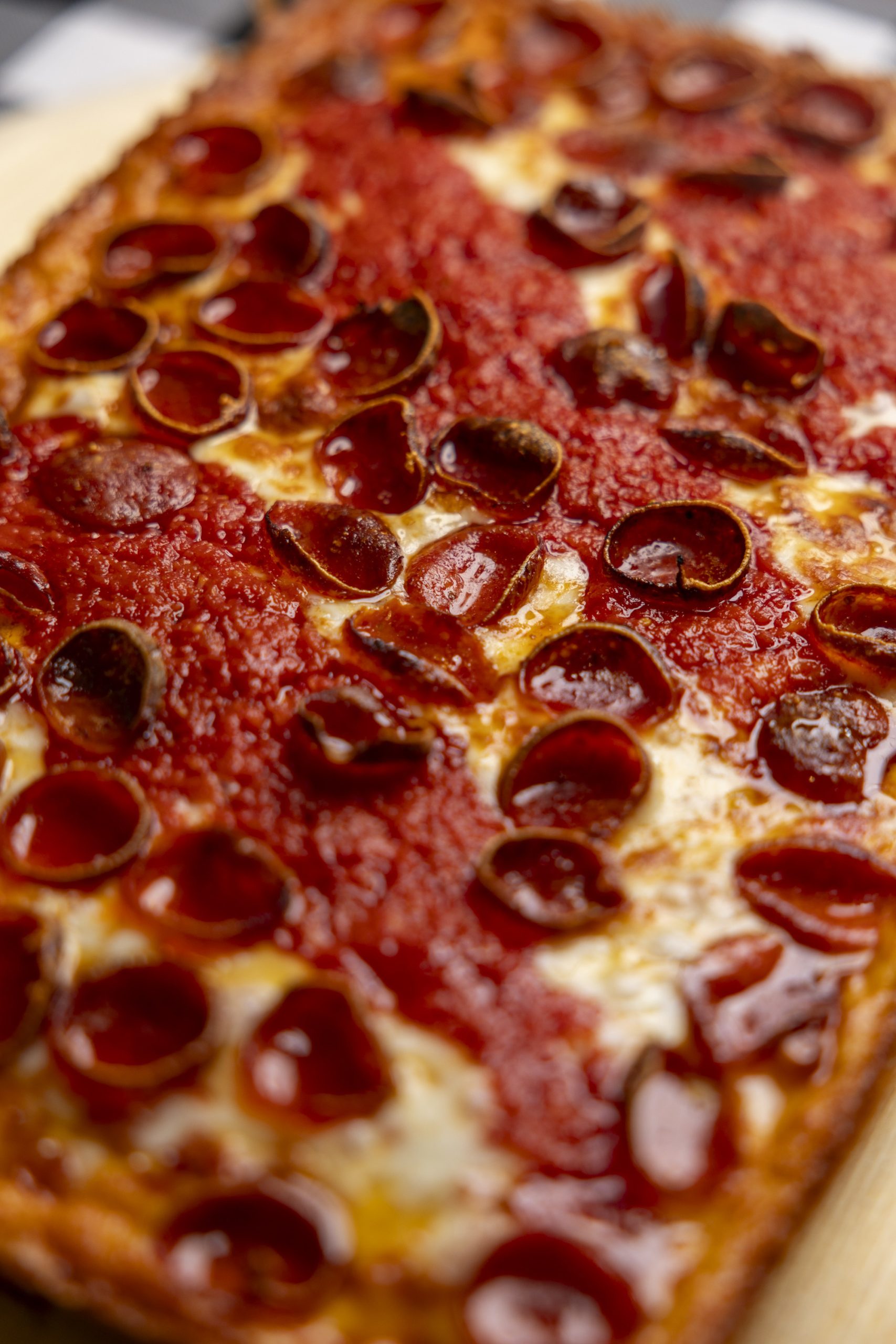
Hot honey pepperoni pie Queen City Crust in Beach Haven, N.J., on Thursday, June 18, 2026.Tyger Williams / Staff Photographer
Owner Troy Sambalino, who spends his offseason running the service pass at Jean-Georges in Manhattan, says the Detroit style, which involves a slower, lower-temp prebake followed by a hot flash to finish pies to order, is ideal for beach locations with the technical limitations of a standard oven. But he still manages to crank out 200 pies on a busy Friday night, good enough to earn him the No. 1 spot in a 2025 ranking of 55 Shore pizzerias by NJ.com.
Sambalino has a patient approach to his dough, which, after a two-day cold ferment, has both an impressively airy interior and a bottom that forms a delicate crisp against the olive oil-lined pan. Mozzarella and tangy cheddar are his cheese combo of choice, with the cheddar tucked near the edges forming a toasty crisp. One 10-by-13-inch pan can easily feed two to four people, but I appreciate that Queen City also sells its pies by the slice so you can taste a variety of toppings. From the cup-and-char pepperoni drizzled with hot honey to sausage with crunchy banana peppers, basil-topped puddles of milky burrata laced with bright tomato sauce, or a fusion pie of breaded chicken bits streaked with spicy Asian barbecue sauce, these pies offer hearty satisfaction when your teeth sink into their crusts.
Queen City Crust, 13504 Long Beach Blvd., Beach Haven, N.J. 08008; 609-661-7769; queencitycrust.com
Guapo’s Coffee House
As I steadily caffeinated during my restaurant research missions up-and-down the Jersey Shore, my encounters with confectionary-sounding coffee drinks that included “dulce de leche, “dot cake,” and “banana bread” in the titles made it clear that running a cafe in 2026 is as much about thinking like a pastry chef as a barista.
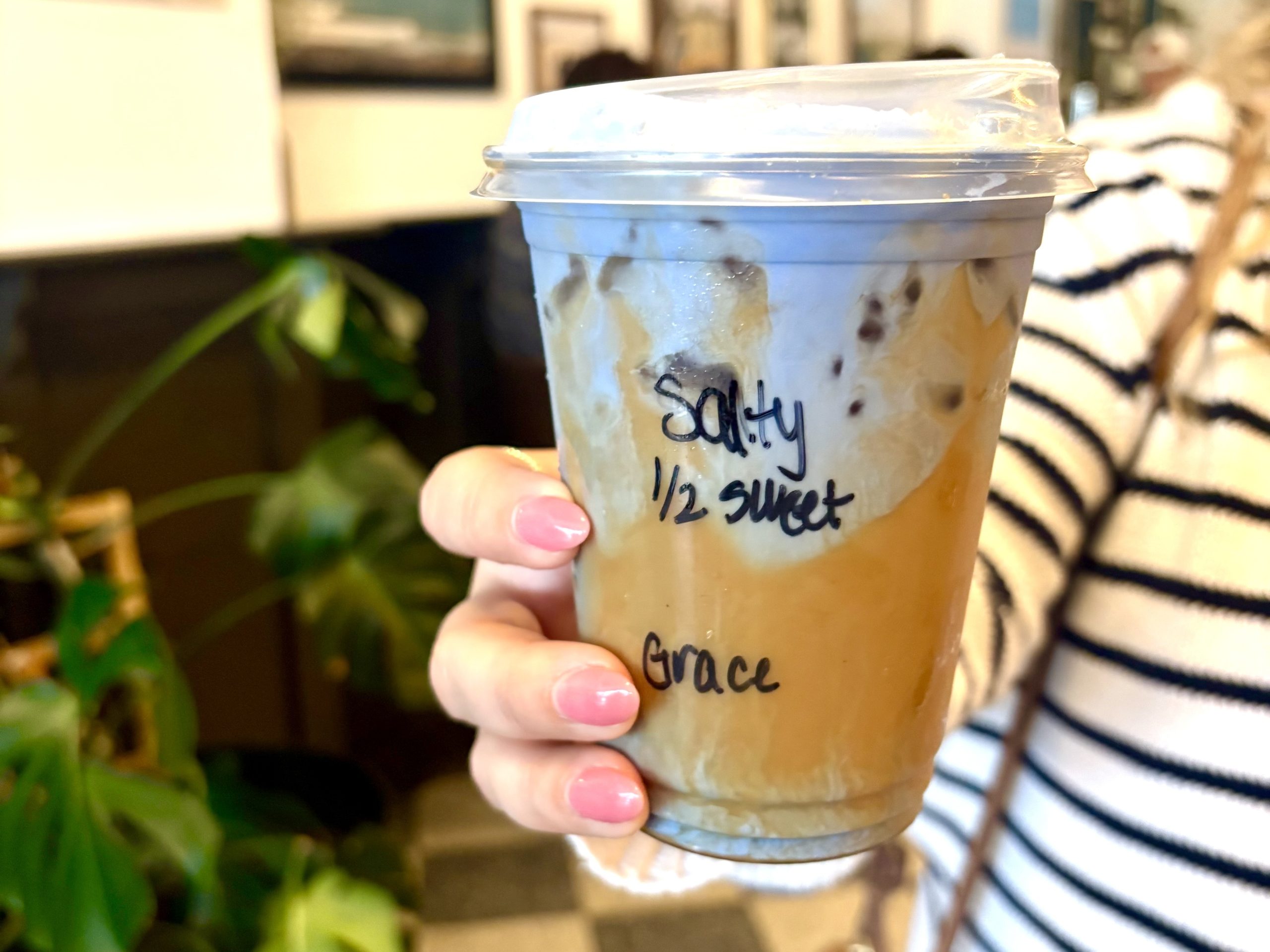
The Salty Dog iced coffee at Guapo’s Coffee House in Beach Haven blends salted caramel-sweetend espresso with whipped cream turned blue with spirulina. It’s become a viral hit.Craig LaBan / Staff
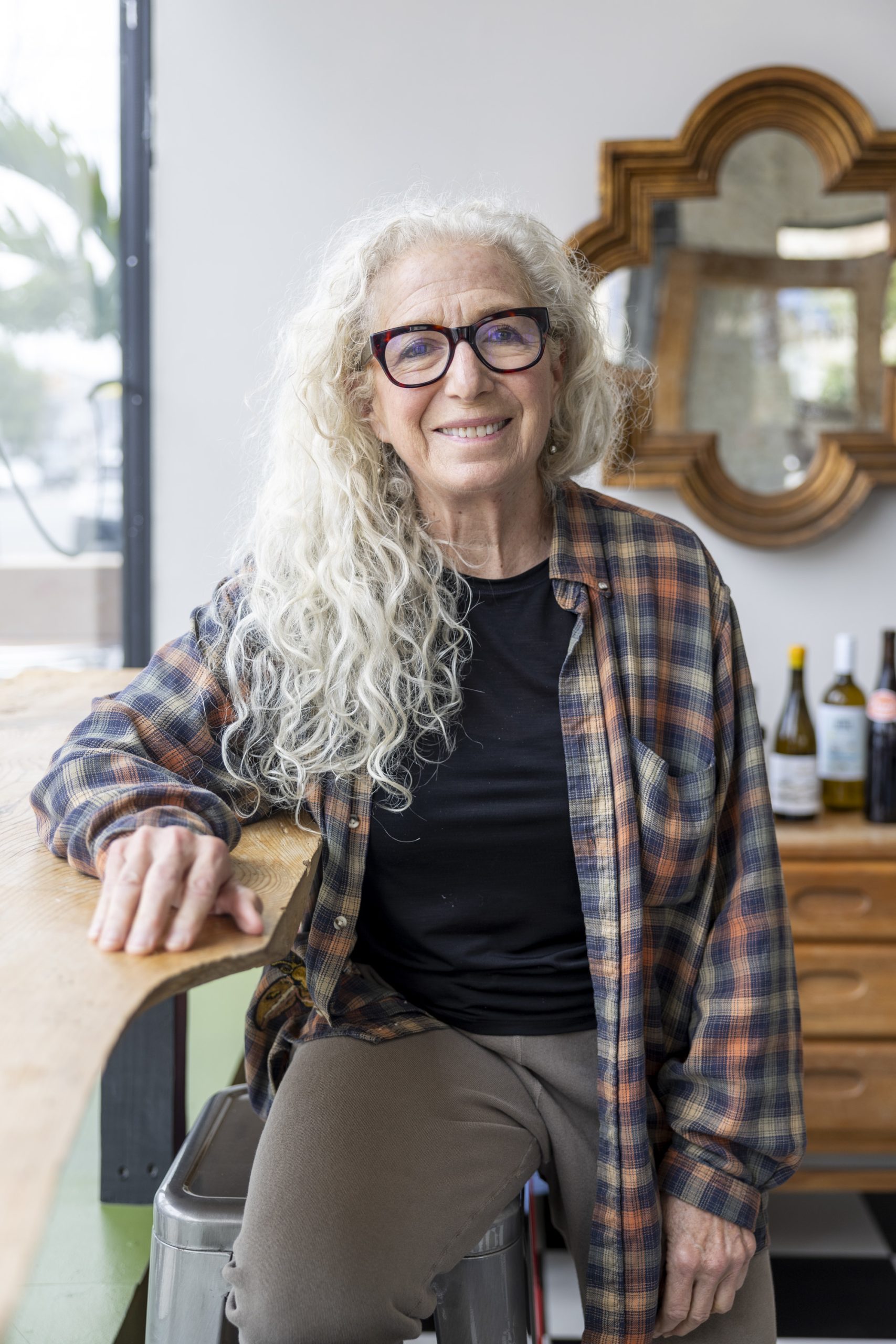
In general, I’m not a dessert coffee fan. But the reason I returned multiple times to Guapo’s in Long Beach Island is because their specialty drinks still taste like they also actually include coffee. Even owner Sammy Jo Alvarez’s most viral and colorful drink, the Salty Dog (named for her pup Guapo), still delivers a toasty undertow of the house blend of Ethiopian and Colombian beans, roasted to a medium hue by Yellow Dog Roasters in nearby Manahawkin. The secret to making creatively flavored drinks that still have coffee integrity, says Alvarez, a longtime local bartender before launching her roof deck-topped cafe in Beach Haven four years ago, is balance and focusing on natural ingredients. All the add-in ingredients here are made in-house, from the sea salted caramel syrup to the top layer of fresh whipped cream (aka “cold foam”) that she turns sky blue with organic spirulina. “Basically, it looks like a day at the beach inside a cup — and people love it.”
Guapo’s Coffee House, 106 N. Bay Ave., Beach Haven, N.J. 08008, 609-661-3504; guaposcoffee.com
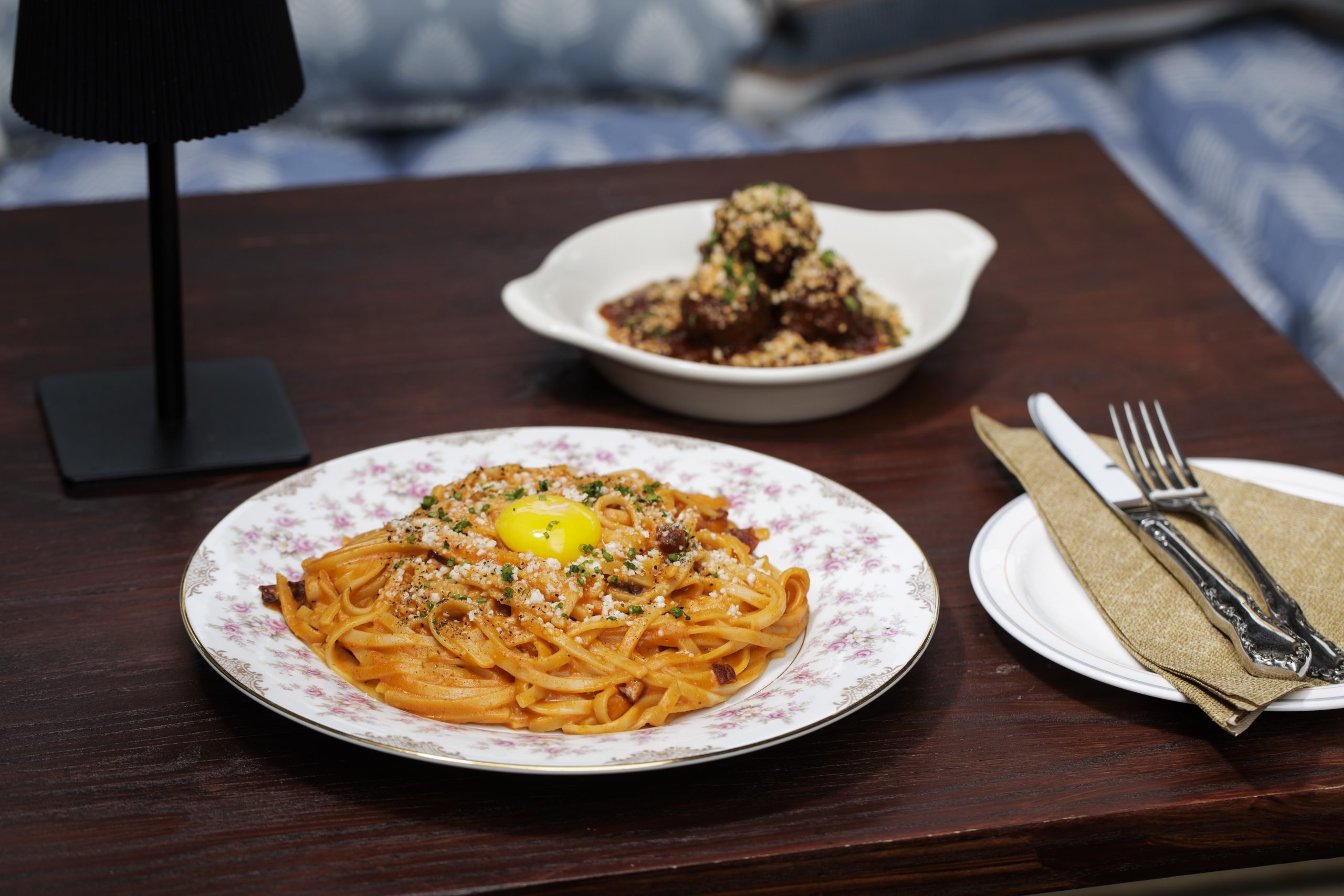
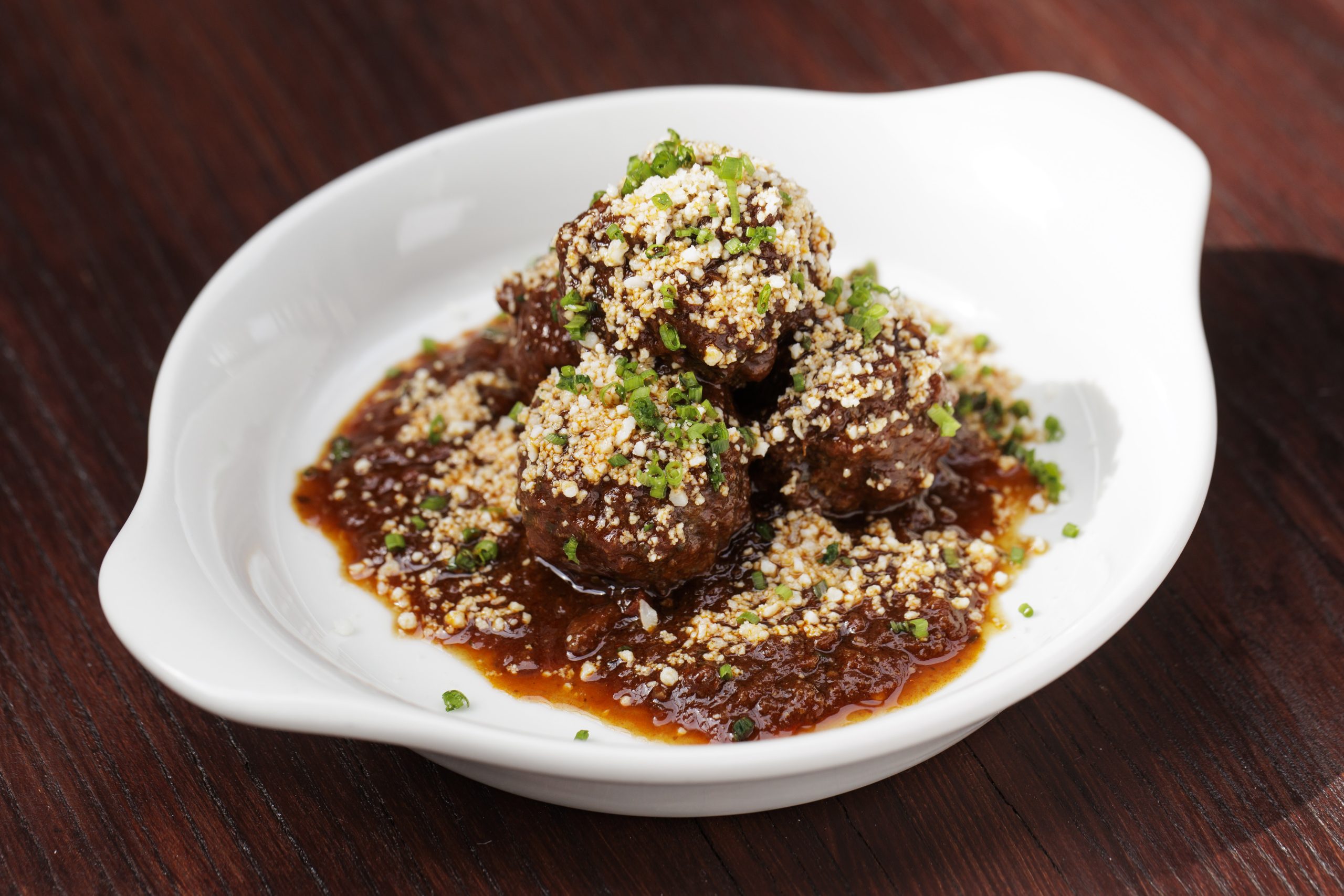
The gochujang carbonara and Oaxacan meatballs at the Iron Room in Atlantic City, N.J. The Iron Room is hidden behind a door at Bar 32.Monica Herndon / Staff Photographer
ATLANTIC CITY
Nana’s Good Eats
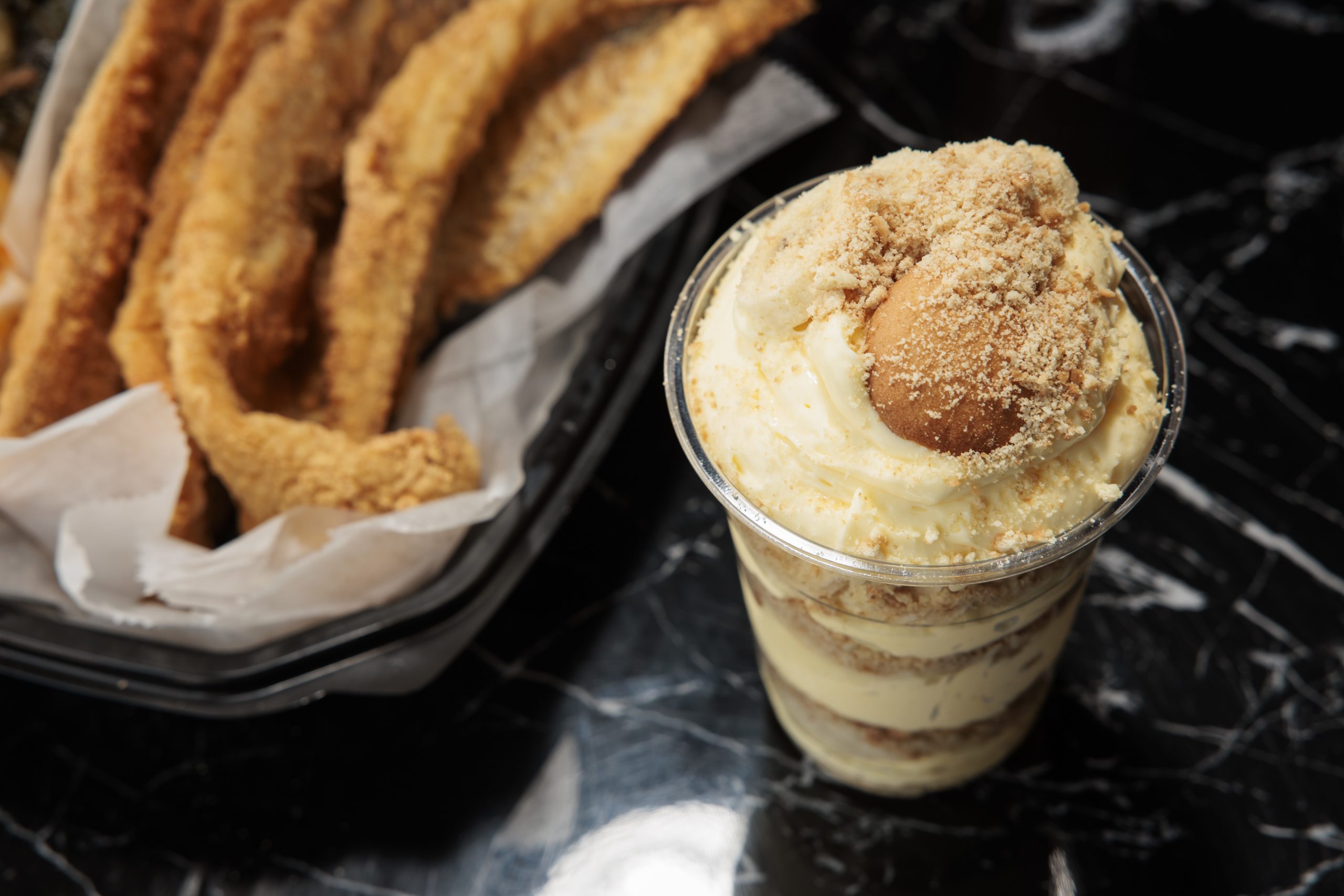
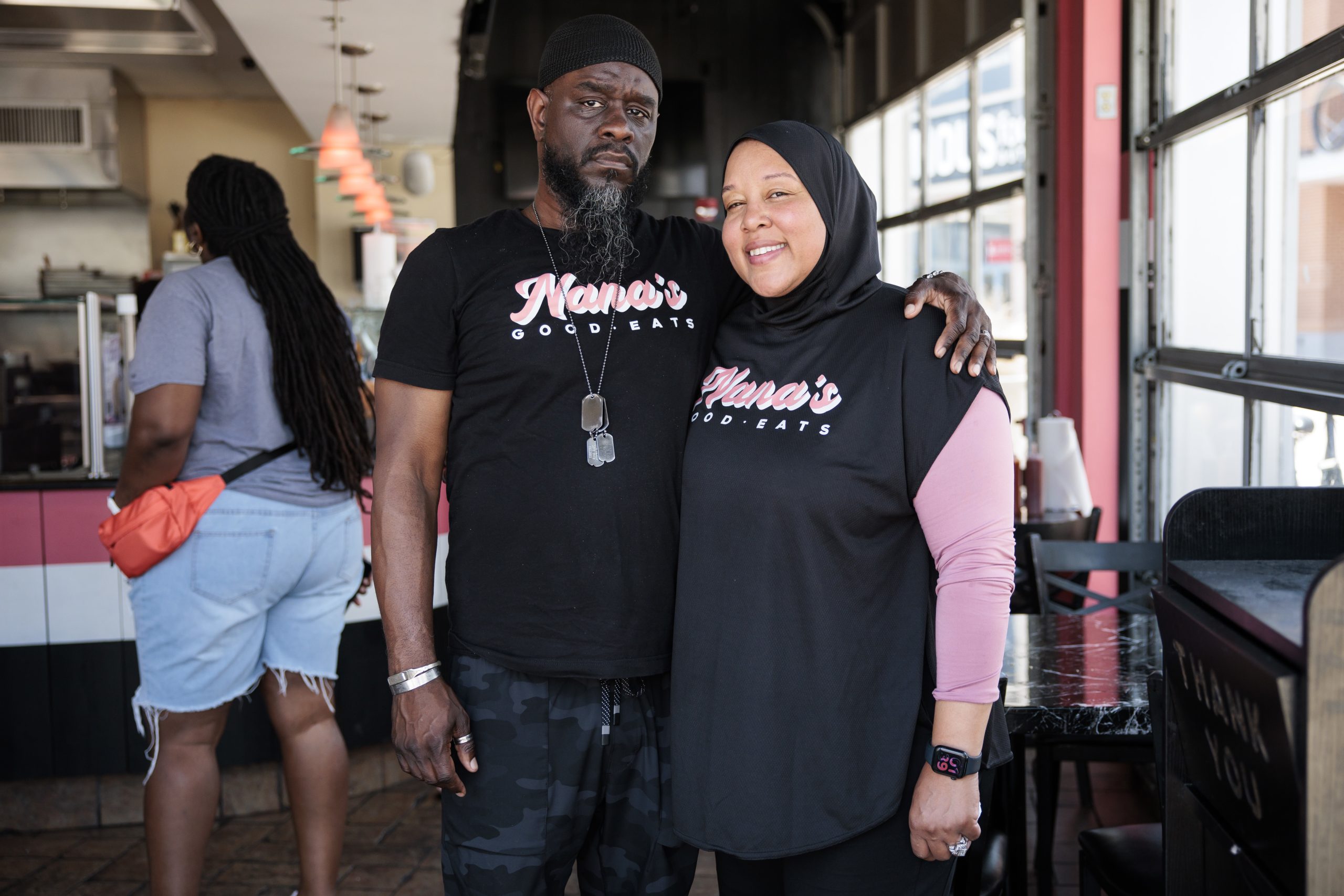
If there’s a 20 minute-plus wait for your food at Nana’s Good Eats, it’s for a good reason: nothing hits the fryer before you order from this cheerful soul food hub, located on the pedestrian pavilion of Atlantic City’s Tanger Outlet mall. The wait is absolutely worth it, because Nana’s serves up some of the most delicious fried whiting I’ve had in recent memory, a huge portion of plump and lemon-scented fresh fillets sealed inside a delicate cornmeal crust, just as owner Samantha Prescott’s grandpa Dennis McDowell, a professional chef, taught her as a little girl. (“Most parents lead with how to tie your shoe, but my grandpa started by teaching me how to stir a pot of grits so it doesn’t stick to the bottom.”) Prescott’s cooking chops are also evident in her succulent fried jumbo shrimp, as well as every side I sampled. The mac and cheese retained the almost fluffy texture of perfectly cooked cavatappi while a balanced five-cheese sauce remained creamy, not broken or greasy. The tender braised collards were infused with the whiff of smoked turkey wings and a perky finishing tang.
The OG banana pudding at Nana’s Good Eats in Atlantic City, N.J.Monica Herndon / Staff PhotographerOwners Rahman and Samantha Prescott at Nana’s Good Eats in Atlantic City, N.J.Monica Herndon / Staff Photographer
Prescott’s talent as an entrepreneur, meanwhile, answers all that savory goodness with the sweet indulgence of her first endeavor, Nana’s Good Puddin’. Prescott brought the customization concept of Cold Stone ice cream to the world of pudding in a popular dessert business she opened in 2020 in the Hamilton Mall, which she has since closed and merged into the Atlantic City Good Eats location. The build-your-own options here are vast, with 30 different base puddings (from classic flavors to white chocolate, pistachio, or Oreo cream), crunchy cookie add-ins and various different crumbles. I chose the OG banana pudding and was impressed by its banana-flavored intensity, but also by the meticulous manner in which it was constructed to order, with multiple layers of creamy pudding, crunch and vanilla wafer cookies being patiently added until, at last, it was finally handed over and I dove in spoon first.
Nana’s Good Eats, 122 N. Michigan Ave., Atlantic City, N.J. 08401; on Facebook
The Iron Room
Do you believe in do-overs? The reboot of chef Kevin Cronin’s Iron Room, Atlantic City’s favorite hidden gastropub — now in its third incarnation and second location — might be the spark that finally gives the Tennessee Avenue development some momentum. First, you have to find it. True to its speakeasy roots (the original Iron Room was located behind a liquor store) this restaurant is tucked into an enclosed back alley patio accessed through the rear door of another establishment, Bar 32 Chocolate & Cocktails. A tall green wall on one side of the 50-seat al fresco space faces an awning-covered bar where some of the best cocktails I sipped this summer — a smooth but potent Manhattan; the mezcal-washed Storm Queen — are served in antique crystal coupes inherited from Cronin’s grandmother while a retro acoustic soundtrack sets a mellow mood.
The Oaxacan meatballs at the Iron Room on Thursday, June 11, 2026 in Atlantic City, NJ. The Iron Room is hidden behind a door at Bar 32.Monica Herndon / Staff Photographer
The small plates emerging from the shipping container kitchen are pure fusion fun, with bold flavors that resurrect some established Iron Room hits, including a thick-cut hunk of candied Nueski’s bacon, truffled udon mac and cheese, and a tamari-charred hanger steak fanned over brussels sprouts. Cronin’s new creations are equally bold. The spicy Oaxacan chorizo meatballs glazed in red salsa and shavings of Bar 32 chocolate were a favorite, along with the barbecue sauced boneless Korean-fried chicken and a rich pasta carbonara blushing with Korean gochujang spice. I would have loved the shrimp toast had the top layer of crustacean paste not been turned an unappetizing gray by the addition of black garlic. Next time, I’d consider preordering one of the menu’s large-format specials: a spatchcocked whole barbecue chicken with sides; a “big ass whole snapper” with tostones, or the Ron Swanson special (a rib eye, deviled eggs, and a flight of Lagavulin) that was also an old Iron Room “iykyk” draw. Hopefully, this time it will take.
The Iron Room, 121 S. Tennessee Ave., Atlantic City (enter through Bar32 Chocolate, and head to back alley through back door); instagram.com/ironroom_ac
Bar 32 Chocolate & Cocktails
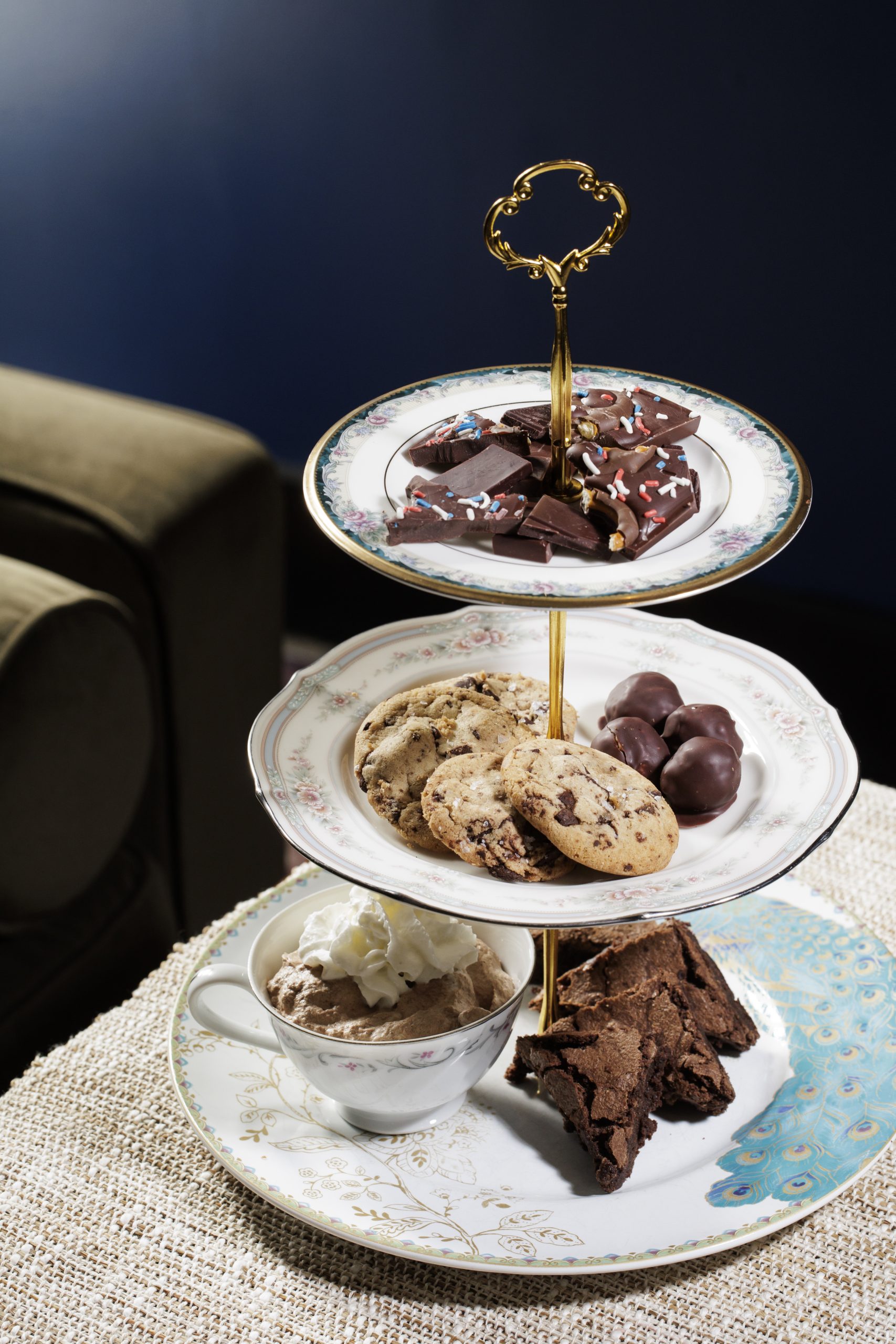
There’s no dessert served at the Iron Room by design. The separate and independent bar that fronts it has that course covered. Nicole Callazzo’s revamp of the project formerly known as Made Atlantic City Chocolate Bar has kept the original concept’s ambitious bean-to-bar chocolate production in place as the anchor for the chocolate-themed sweets menu. While there are more sophisticated chocolatiers in the region, the quality of Callazzo’s small batch chocolates made from ethically sourced cacao, which can take up to five days to make, is satisfying in a straightforward way. You can sample a little bit of several specialties on a tiered platter, which brings multiple shades of chocolate bars, double fudge brownies, chocolate mousse, and various bonbons. Try it while sipping a martini infused with the bar’s own 60% cocoa chocolate. The baked-to-order brown butter cookie skillet is also a popular choice here, if you have an extra 15 minutes to wait. But I’d return especially for one of the Bar 32 whiskey flights, which pair three different pours of Michter’s (or Whistle Pig) whiskey with different chocolates for $40. Considering the quality of the spirits, it’s a fair deal.
Bar 32 Chocolate & Cocktails, 121 S. Tennessee Ave., Atlantic City, N.J. 08401, 609-248-6960; bar32chocolate.com
“A little bit of everything” at Bar 32 on Thursday, June 11, 2026 in Atlantic City, NJ. Bar 32 offers bean-to-bar chocolate, handmade desserts, and craft cocktails.Monica Herndon / Staff Photographer
Moments at Scannicchio’s
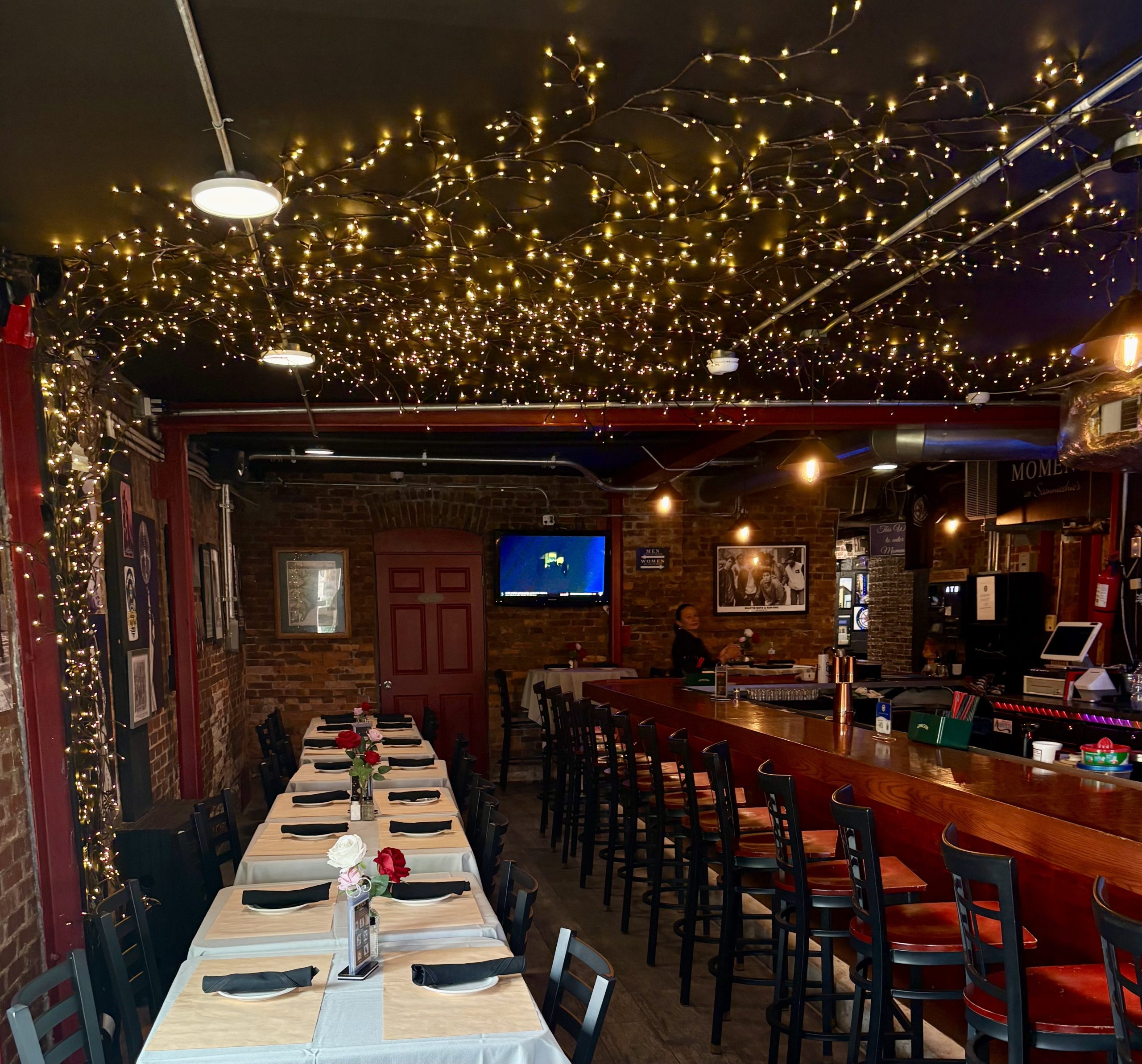
Some places are all about the food. Others revel in quirky ambiance. You can get a bit of both at this Atlantic City sibling to Scannicchio’s, one of my favorite old-school Italian haunts in South Philly. The AC experience offers the split personality of two adjoined spaces: the charming intimacy of a dark corner barroom lit with Christmas lights, and a bright sports bar lounge next door where a DJ spins retro hits for a handful of dancers while spillover dinner crowds sup at high-tops in the glow of large TVs.
The corner dining room of Moments at Scanniccho’s in Atlantic City is darker and more intimate than the neighboring lounge.Craig LaBan / Staff
A tender and massive double-cut pork chop Siciliana buried beneath a zesty gravy of cherry peppers, onions, olives, and mushrooms was the hands-down highlight of our meal. The big menu also showcases several familiar favorites from the South Philly original (clams casino, a stuffed artichoke, the sausage and figs app), although it was not cooked with the same consistency and finesse. Even so, we enjoyed the experience. And I’ll especially treasure the moment our larger-than-life server (who had a bear hug for every one of the restaurant’s many regulars) offered a memorable logic for his general preference of pasta shape with entrees: “Why should I waste calories twirling spaghetti when I can just get straight to it with penne? Stab and eat! Stab and eat!” Such wisdom alone is worth the visit.
Moments at Scannicchio’s, 2647 Fairmount Ave., Atlantic City, N.J. 08401, 609-344-5338; momentsatscannicchios.com
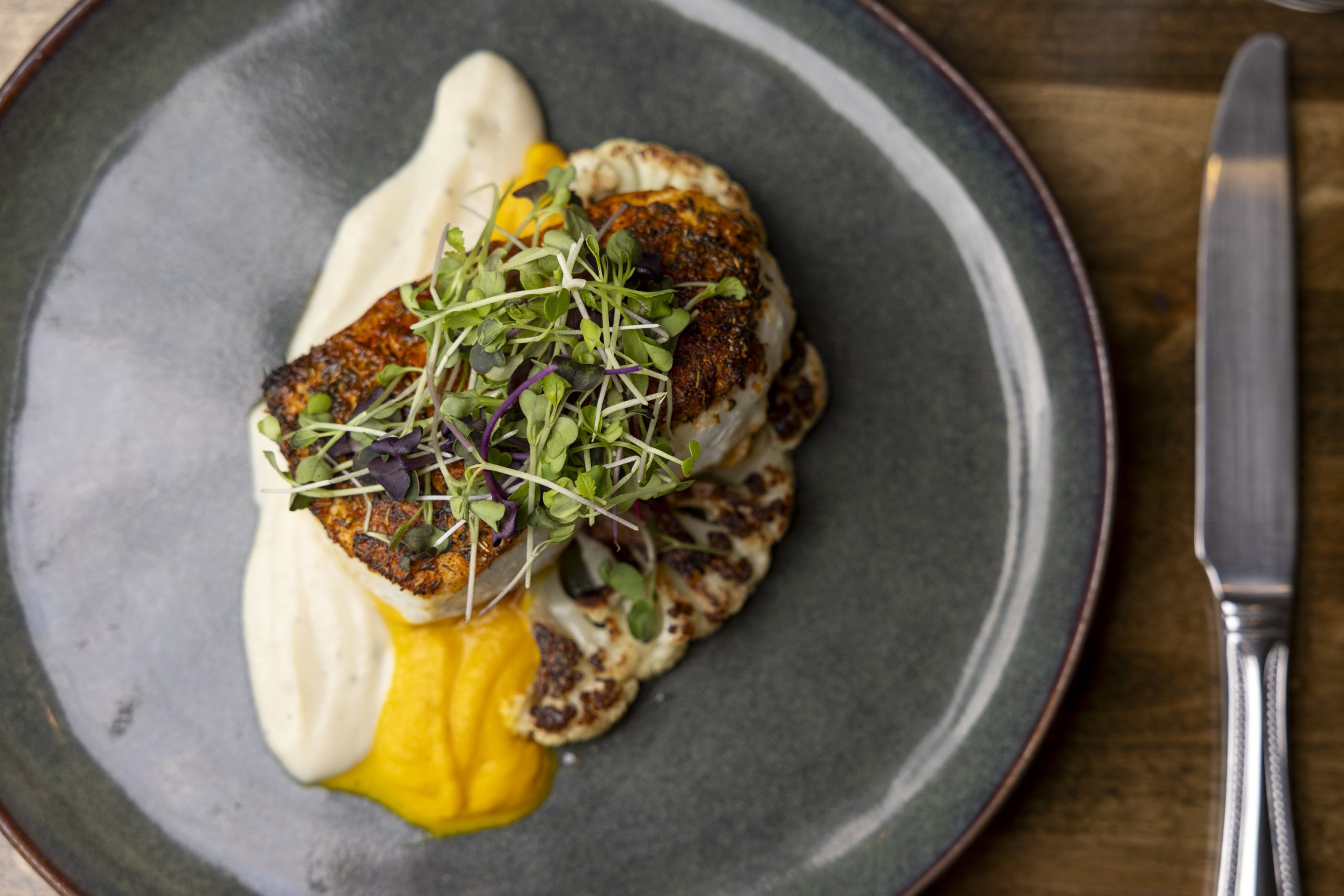
The halibut entree at Rustico in Ventnor City, N.J., on Wednesday, June 10, 2026.Tyger Williams / Staff Photographer
VENTNOR
Rustico
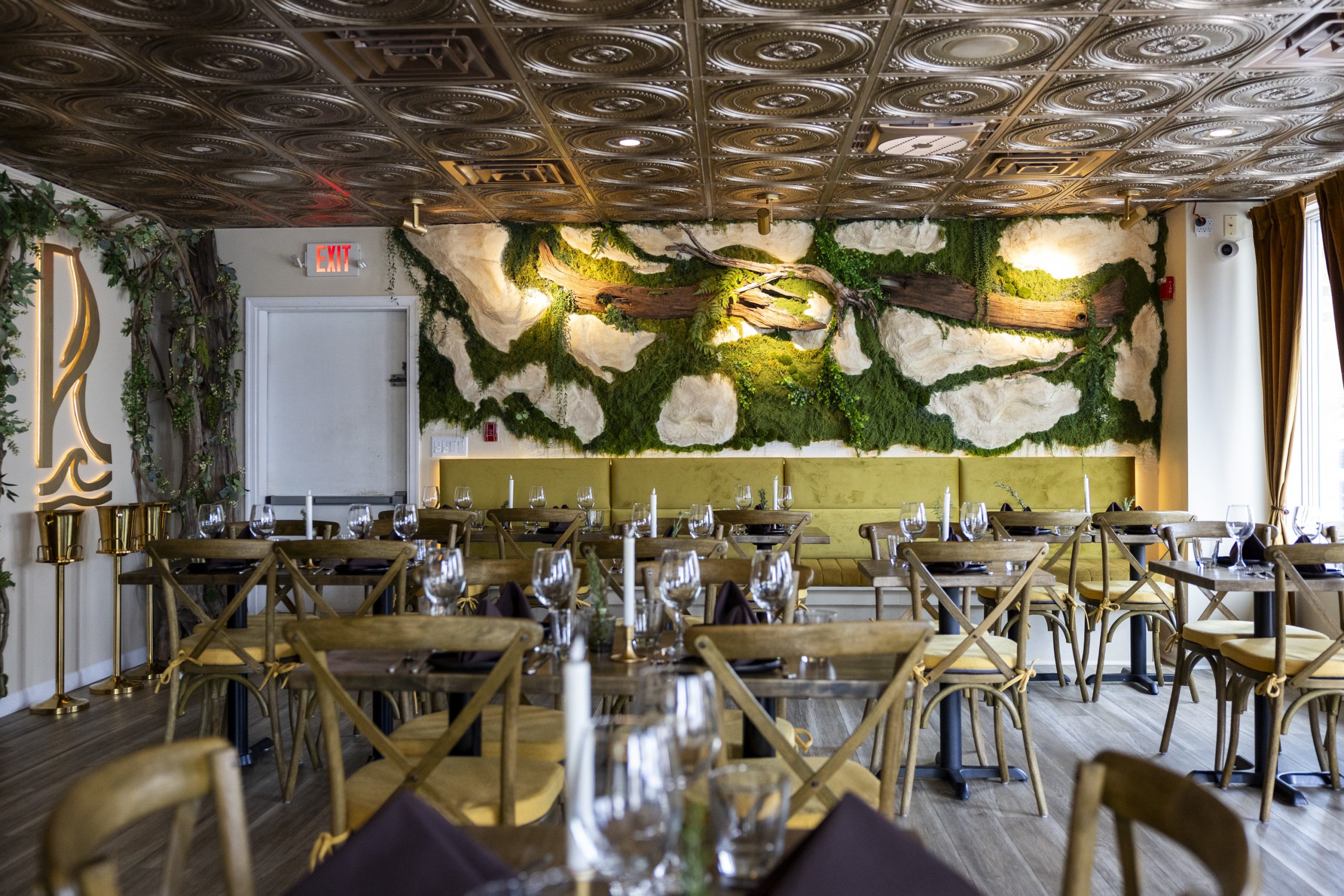
Few restaurant couples have been able to create evocative dining experiences in small BYOB spaces through DIY design as deftly as Tanya and Petar Petrov. A veritable lemon grove on the ceiling of their debut Italian hit last year, Martina’s, conjured a glimpse of the Amalfi Coast on Atlantic Avenue. This year, they’ve turned to a closer source of marine inspiration — the bay beside their Ventnor home — for the makeover of Petar’s former Cafe Velo into Rustico, a naturalistic dinner cove that wraps diners in plastered wall montages of foraged driftwood, sea moss, and rocks. The menu is still decidedly Italian. While some Ventnorians have complained to me about menu overlap between the two restaurants, the fact that waiting lists can exceed 300 names for those hoping to get into 48-seat Martina’s means there is a legitimate demand for 80 more seats at Rustico (plus 28 more outside), where devotees can order the tried-and-true arancini, linguine with vongole, and chicken Parm.
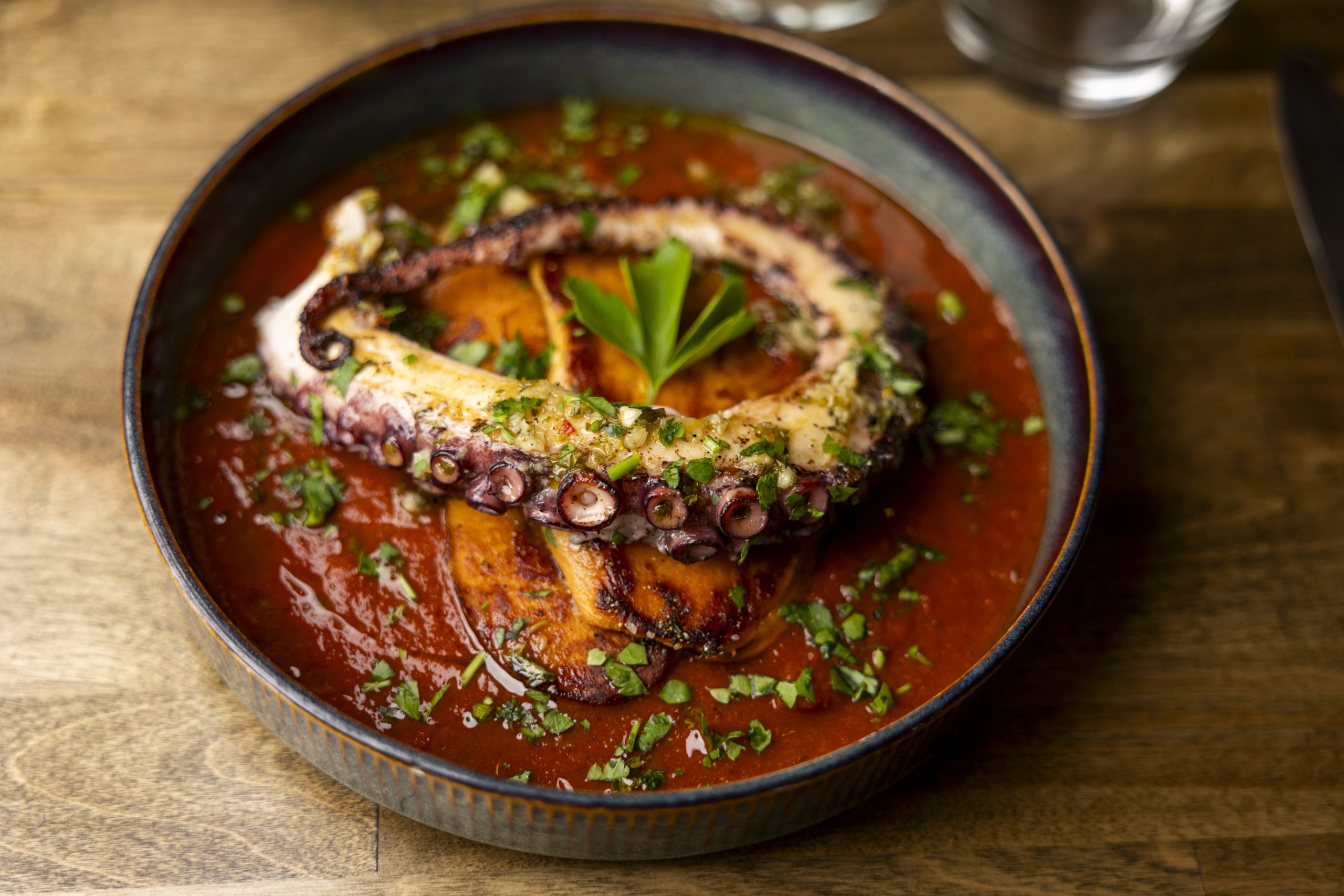
The octopus dish at Rustico in Ventnor City, N.J., on Wednesday, June 10, 2026.Tyger Williams / Staff PhotographerThe inside of Rustico in Ventnor City, N.J., on Wednesday, June 10, 2026.Tyger Williams / Staff Photographer
The chicken Parm was the least compelling thing we ate at Rustico. An unconventional starter of grilled octopus curled over a platform of sweet potato turned out to be delicious, the potato’s soft sweetness contrasting the texture of the meat while balancing the savory tomato sauce. That dish is a legacy of Cafe Velo’s early days, when the tiny kitchen would cross-utilize ingredients between the popular breakfast and dinner menus. Rustico, which expanded both its dining rooms and kitchen, has capacity now to undertake ambitious specials like broiled lobster and linguine feasts for two (very limited nightly). A soulful short rib and shiitake ragù was a hearty winner over fresh pappardelle made by Haddon Township’s Severino, whose owner is the Petrovs’ neighbor.
Fresh seafood also remains a strength, with entrees like blackened ahi tuna with red bliss potato hash and hollandaise. A moist and meaty halibut set over two-toned purees of cauliflower and carrot was also fantastic, a special-turned-standby from chef de cuisine Lorenzo Hernandez. Of course, I ordered at the very moment this kitchen ran out of halibut. Luckily, Petar had a spare portion in the fridge at nearby Martina’s, and he retrieved it just in time for this busy kitchen not to miss a beat: “That’s the beauty of having two restaurants so close,” says Petar. “Stuff happens!”
Rustico, 6525 Ventnor Ave., Ventnor City, N.J. 08406, 609-727-0499;rusticoventnor.com
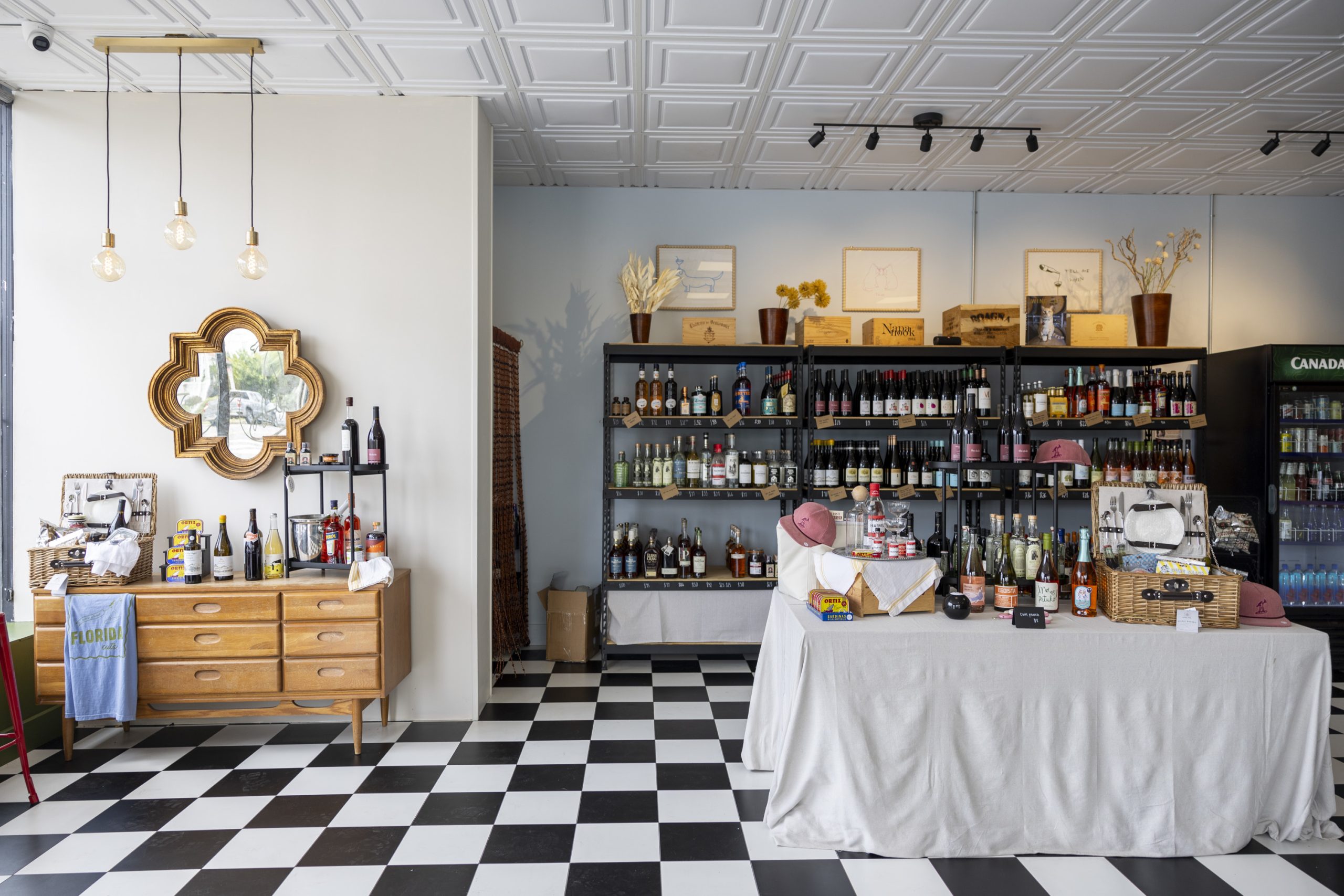
The inside of Florida Cuts in Ventnor City, N.J., on Wednesday, June 10, 2026.Tyger Williams / Staff Photographer
Florida Cuts
Cookie Till of Steve & Cookie’s bought the half-century-old Florida Cold Cuts & Liquors deli in 2022 and began to reshape it to her vision. What was a gradual makeover the first few years, most notably upgrading the sandwiches and bottle selection, became a wholesale change this spring when Till removed “cold” from the name and replaced the classic sub shop format with an artisan sourdough bakery turning out a lineup of grab-and-go sandwiches built on two kinds of focaccia and sesame-speckled semolina baguettes. The longtime tuna salad and Italian hoagie crowd is not pleased: “Cookie really took a good thing … and turned it into something nobody needed,” a reader wrote me in a direct message on social media.
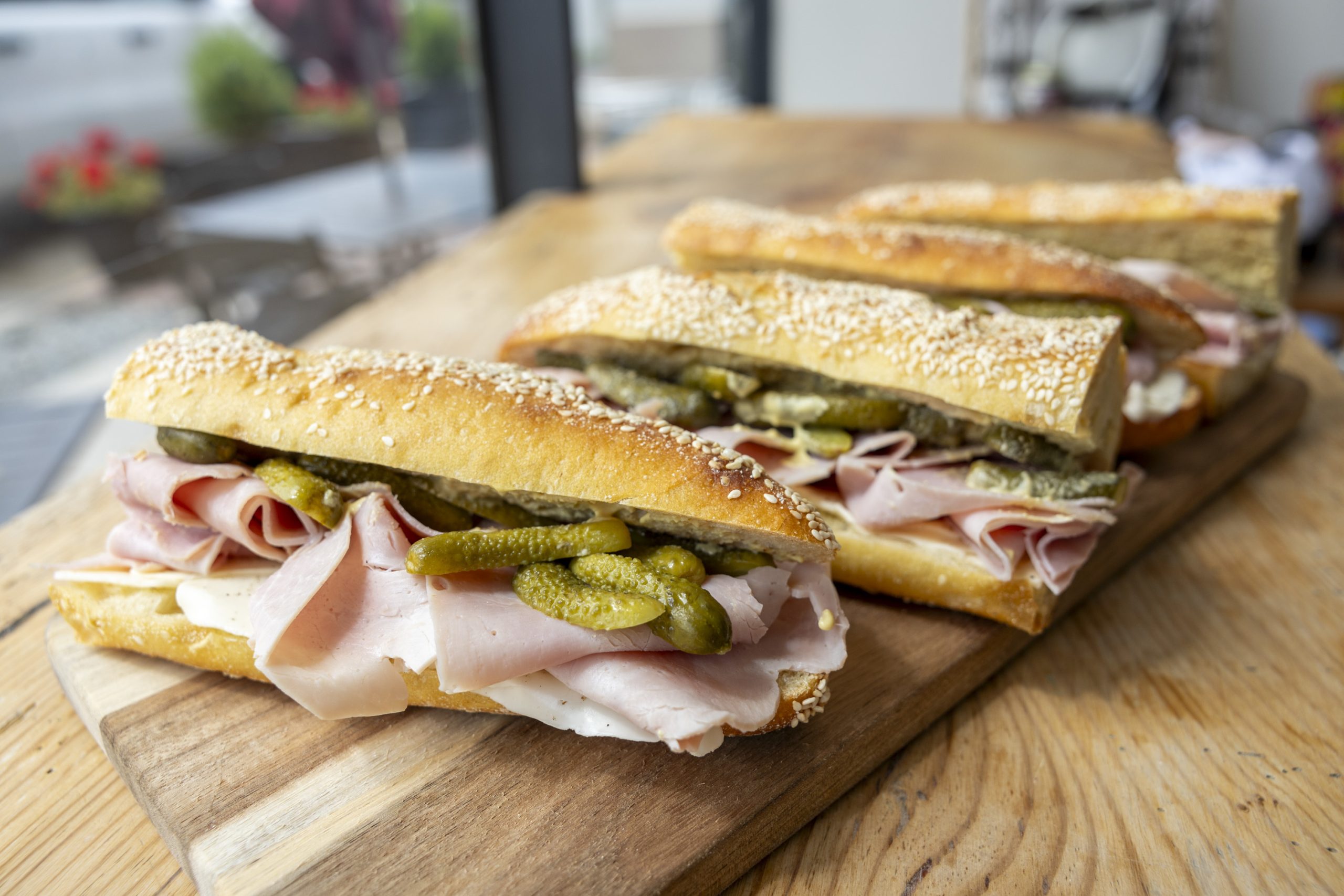
The ham and butter baguette at Florida Cuts in Ventnor City, N.J., on Wednesday, June 10, 2026.Tyger Williams / Staff Photographer
I loved the old corner shop’s house-baked tavern ham sandwiches as much as anyone, but I disagree. What makes a smart restaurateur like Till so invaluable is her willingness and wherewithal to take risks to do things differently. Till has a track record of creating top-notch progressive concepts people simply didn’t realize they needed until she made it happen, from a craft coffee shop in Ventnor No. 7311 to an interactive organic farm with a philanthropic mission at Reed’s Farm. There are plenty of places to get a classic sub on Absecon Island, but there is nothing like the new Florida Cuts, where lead baker Santina Renzi (a longtime key contributor at Her Place Supper Club), consultant Jon Taus, and sourdough specialist Victoria McHugh are working with Till’s partner Kim Richmond to create stellar loaves made from flour milled from local grains that result in bread with integrity and flavor. They’re used for original sandwiches that are largely outstanding, from the minimalist focaccia laced with mortadella, ricotta, and pistachios (all crackly crust and lush stuffing richness), to the freshly house-roasted turkey layered with Steve & Cookie’s signature “ugly tomato salad,” Gorgonzola, and crispy shallots. The tuna salad fragrant with lemon zest and crunchy peperoncini rings is a sleeper hit, while the ham and butter on a sesame semolina loaf can compete with Philly’s best.
Owner Cookie Till at Florida Cuts in Ventnor City, N.J., on Wednesday, June 10, 2026.Tyger Williams / Staff PhotographerThe soft-serve sundae with Steve& Cookie’s blueberry pie at Florida Cuts in Ventnor City, N.J., on Wednesday, June 10, 2026.Tyger Williams / Staff Photographer
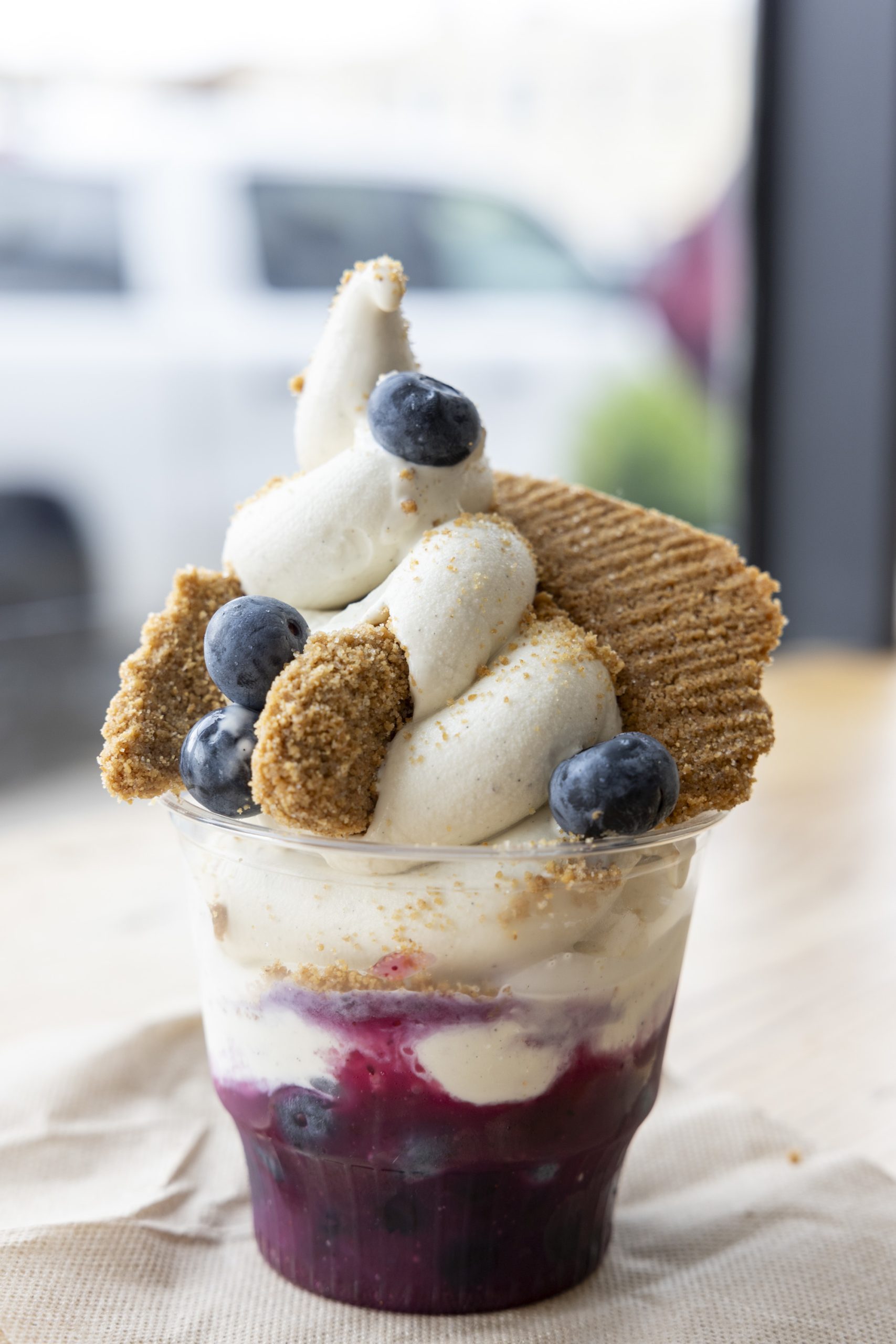
My one disappointment was the cutlet sandwich, which didn’t have nearly enough Caesar salad inside. But there were so many consolations: a fridge case stuffed with local farmstead cheeses; focaccia flatbread topped with butter-poached clams; warm rounds of fresh-baked sesame tahini cookies; shelves stocked with quality spirits and affordable natural wines. There’s also soft-serve now, offered as a sundae layered with Cookie’s famous blueberry pie. Now I definitely need that, even if I didn’t know it before I walked in the door.
Florida Cuts, 7301 Ventnor Ave., Ventnor City, N.J. 08406; floridacuts.com
MARGATE
Tideline
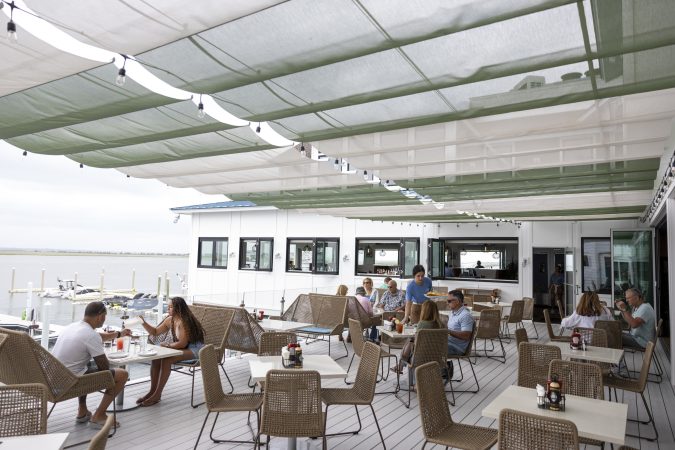
The scene at Tideline on the bay behind Margate City, where full restaurant service is offered on deck to 30 moored boats and 12 Jet Skis at a time, could make anyone have yacht envy. But this splashy yearling from the family behind Tomatoes — an unabashed gesture to the city’s ever more ritzy denizens — has room on its multifloor 240-seat bar complex for everyone else to linger, nibble, imbibe, and observe. One of the area’s most spectacular bay perches for sunset views is an undeniable bonus. Given the swanky setting, the food from chef Carlo Marsini’s kitchen is a notch better than it has to be, from the generously stuffed truffled cheesesteaks and chicken Italiano cutlet sandwiches to the shot glasses stuffed with fried soft-shell crab halves dunked into an avocado green crema sparked with poblanos.
The lobster Cobb salad at Tideline in Margate City, N.J., on Wednesday, June 10, 2026.Tyger Williams / Staff Photographer
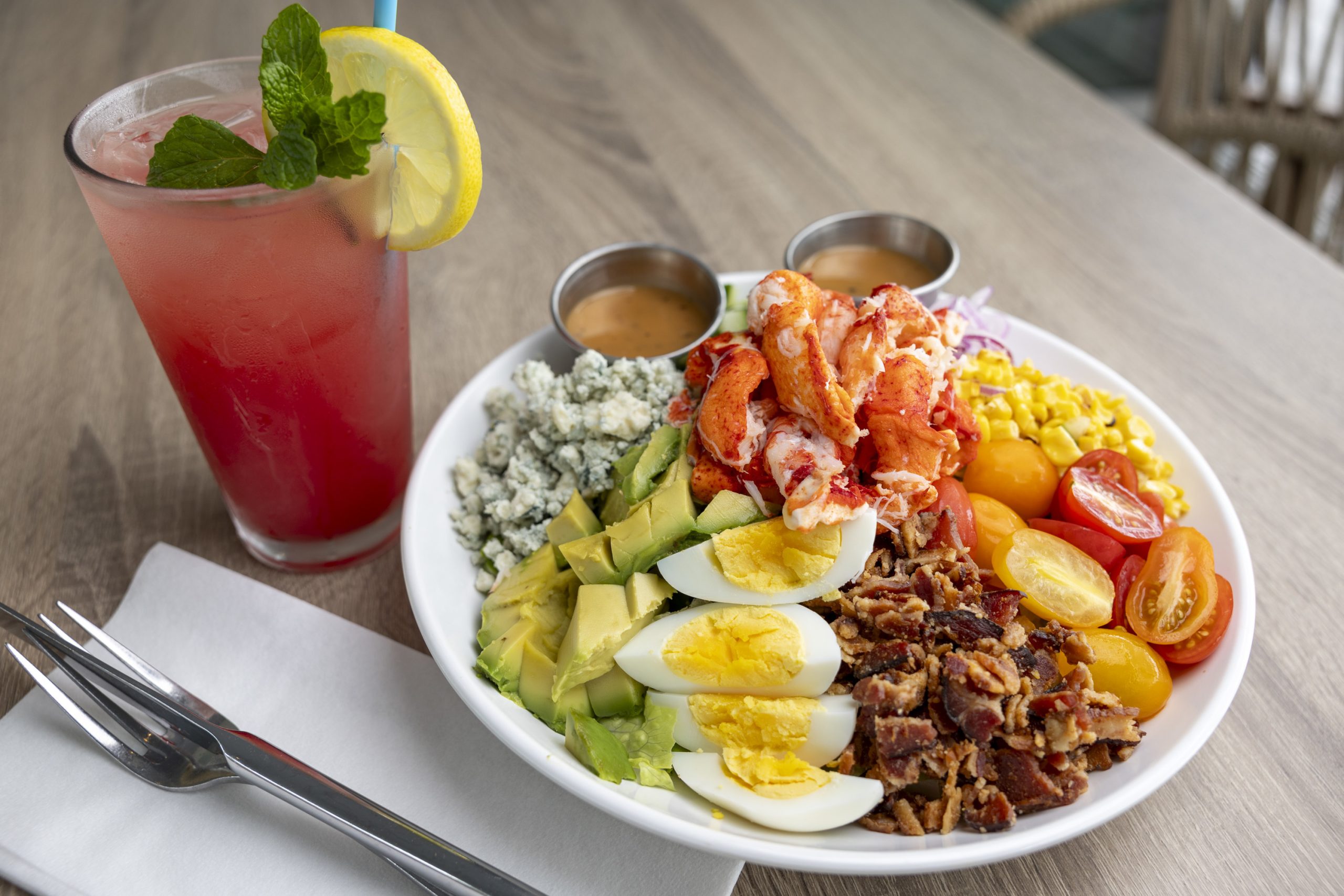
I’d definitely return for the generous lobster Cobb salad and a Dockside cocktail of watermelon juice spiked with Tito’s. But don’t get too ambitious. The items we ordered from the large plate section, chicken kebabs and a $32 coffee-rubbed pork chop, were incinerated by the grill chef. The drink menu has a danger zone, too, with a cocktail called Liquid Asset. It’s made with trendy Clase Azul Gold tequila and a chile pepper but what’s spicy is the price tag of $1.1 million. That’s because this drink comes with a 39-foot speed boat. That may be the stuff yacht club dreams are made of for some, even if there’ve been no takers yet. But unsurprisingly, this land-loving mezcal fan wasn’t even tempted.
Tideline, 9317 Amherst Ave., Margate City, N.J. 08402; 609-350-6717; tidelinemargate.com
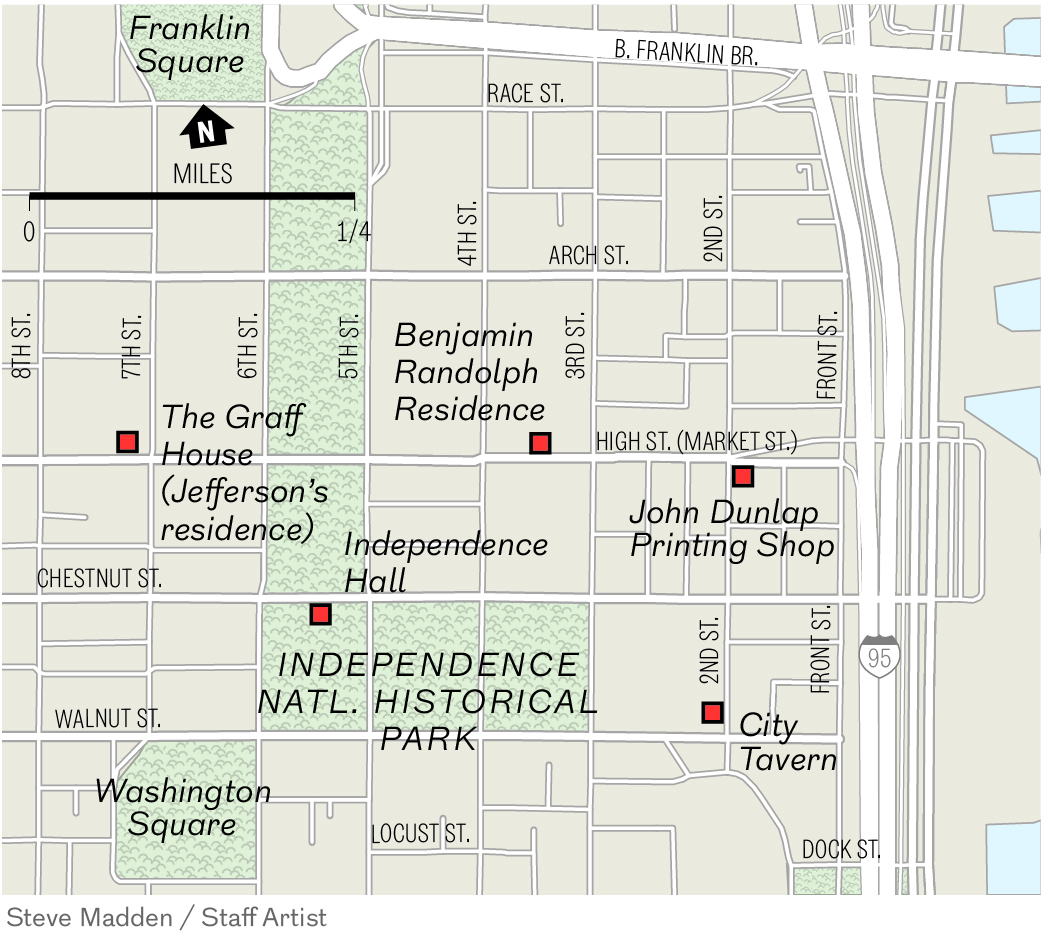
John Dunlap, 29, an immigrant from Northern Ireland who operates a printing shop at Second and High Streets, a short stroll from the Pennsylvania State House, where the rebels conspire, has watched with keen attention the epochal events of the preceding days.
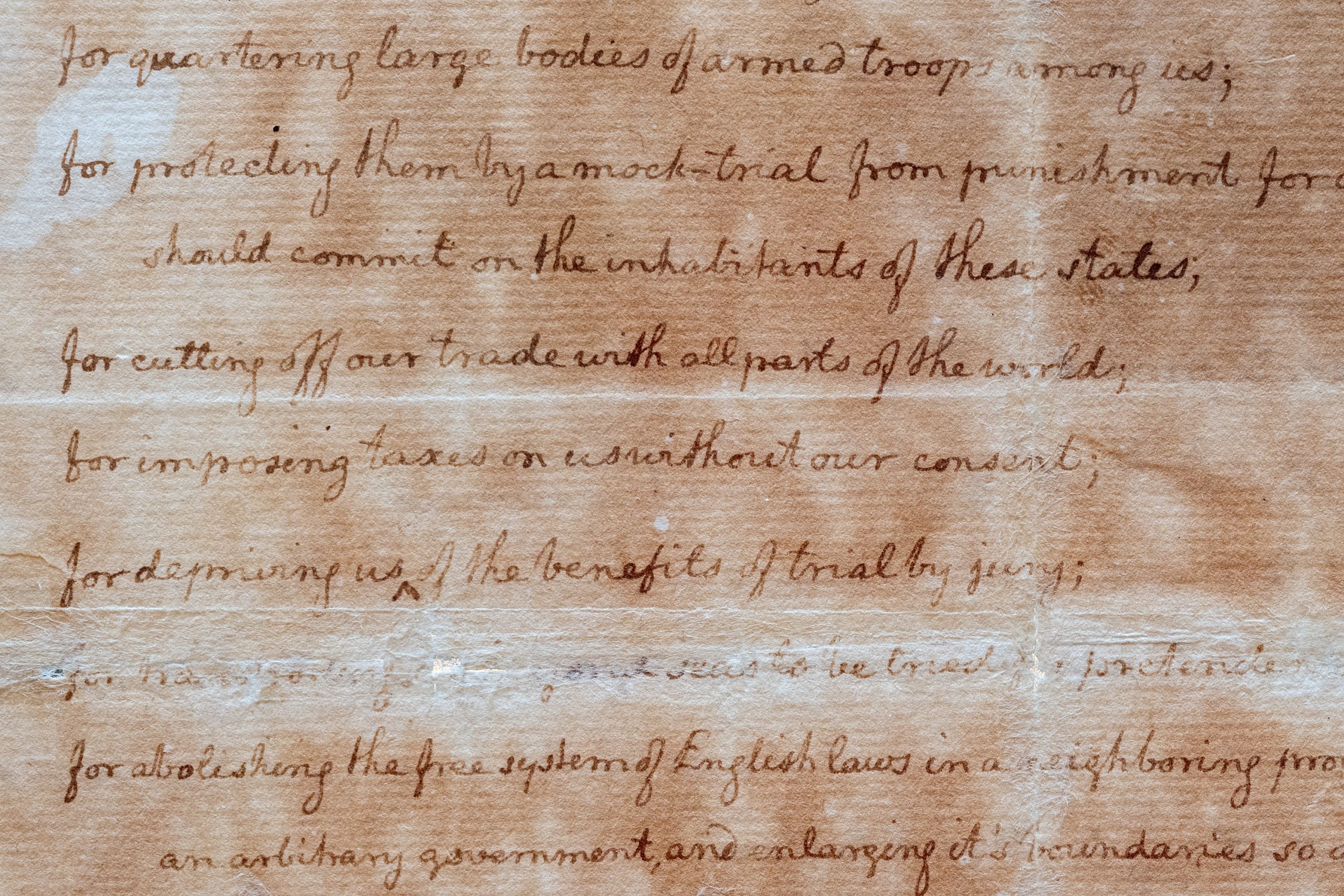
A faded copy of a draft of the Declaration of Independence handwritten by Thomas Jefferson.Tom Gralish / Staff Photographer
The exultant patriots and curiosity seekers who braved suffocating summer heat to stand watch outside the State House on July 1, when the 56 delegates of the Second Continental Congress finally commence their locked-door debate on independence. The rapture that seems to ring out from every Philly tavern and tippling joint, coffee house, and street corner on July 2, when word that Congress voted to sever ties with King George III spreads through America’s largest and wealthiest city, like a bolt from one of Dr. Franklin’s electricity experiments. The joy. Hope.
And now, as an unusually mild morning gives way to rain-laden clouds, Philadelphia holds its breath upon the brink of a mighty happening.
Cloistered inside their chambers, the delegates fiercely debate and painstakingly parse Thomas Jefferson’s draft of America’s founding creed. Its passage will formalize independence.
The ink-stained Irishman with the whipcord build of a jockey prepares the shop for the Herculean task he knows is coming. The delegates will desire to thunder out the news of American independence before the iron gall ink even dries on the Dutch paper. John Hancock, 40, charismatic president of the Congress, will want as many broadsides as Dunlap can muster by dawn. Printing broadsides by hand in sweltering, trembling candlelight — meticulously setting the type, carefully rolling the ink, and pulling the heavy presses — is messy, demanding work, the hardened printer knows. He’ll plan to toil until morning’s light.
Outside, citizens collect in High Street. Soon, the print shop door pushes open. A man, his face obscured by the sun, darkens the doorway. He holds something close. A rag paper manuscript written in fine hand, still wet from fresh changes, and borne by delicate hand to the expectant printer. Words upon which a nation now rests. A declaration.
At the Second Street boarding house of Mrs. Sarah Yard, John Adams, 40, awakes before dawn. The unyielding lawyer and farmer from Massachusetts has become accustomed to the city’s morning clarion cry of crowing roosters, ringing bells, clanking ships, and cursing sailors. But not its heat.
Behold this atlas of independence at his breaking point. Exhausted. Homesick. Hot. Beyond cantankerous that any rational being could yet flinch at the surety and necessity of American independence. For weeks, Adams answers angry letters from citizens demanding to know why Congress stalls.
“The only question is concerning the proper time for making a specific declaration in words,” Adams writes, barely concealing his own impatience. “But remember you can’t make thirteen clocks strike precisely alike at the same second.”
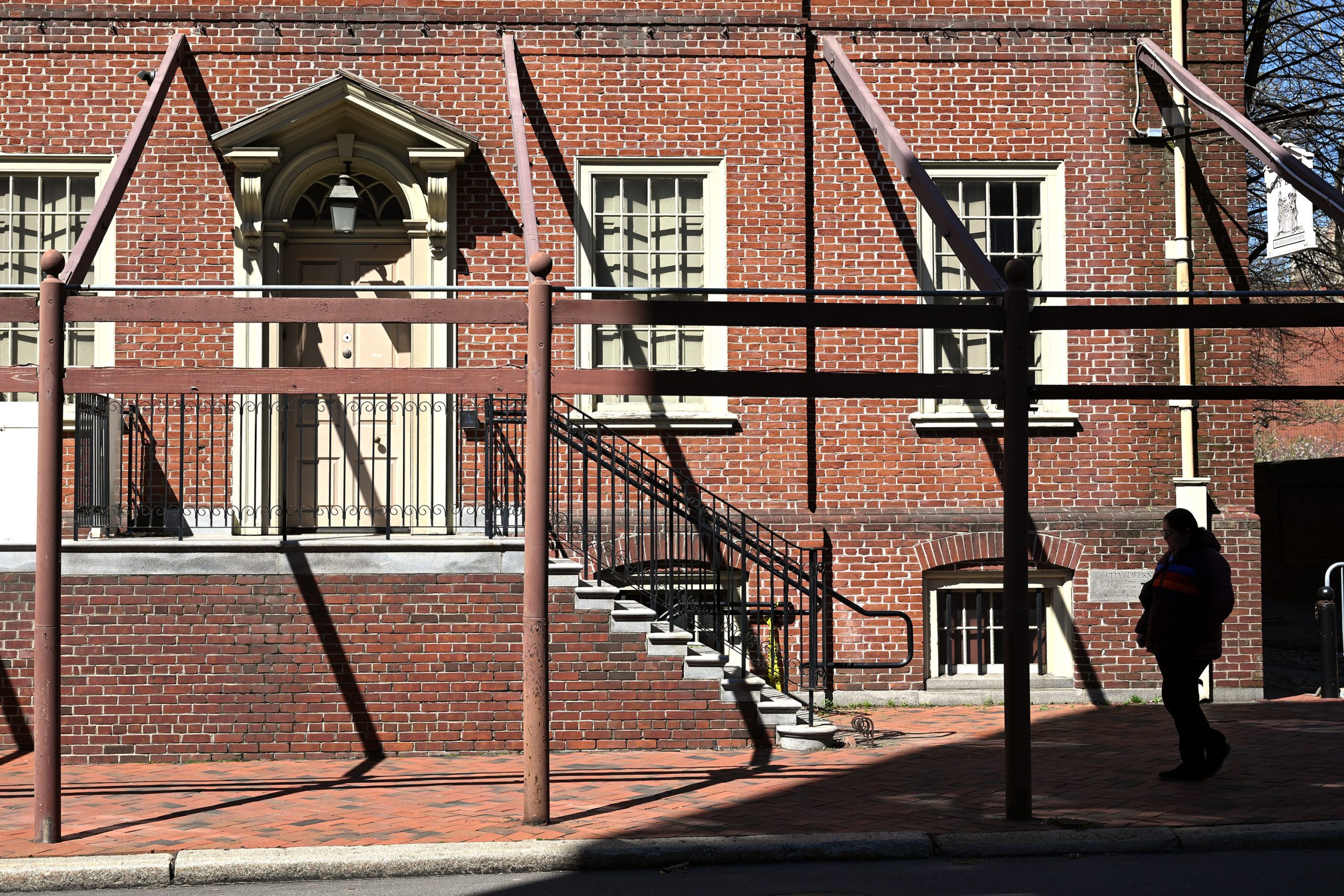
John Adams and his cousin, Samuel, shared a boarding house near the City Tavern in July 1776. This reconstruction of the original tavern was built in 1975.Tom Gralish / Staff Photographer
For nearly two years, John Adams has fought for liberty like a bruising prizefighter, while his less refined older cousin, Samuel, 53, conducts a campaign of persuasion in the shadows. No one has done more than John Adams for independence. On this morning, John Adams dresses in the twilight, wishing that he had been blessed with the graces and gifts of ancient orators.
“This morning is assigned the greatest debate of all,” Adams writes before leaving for the State House. “A declaration, that these colonies are free and independent states, has been reported by a committee some weeks ago for that purpose, and this day or tomorrow is to determine its fate. May heaven prosper this newborn republic.”
At 9 a.m. on July 1, 1776, Andrew McNair, old and gray bellman of the State House, pulls shut the chamber’s heavy doors. Hancock gavels history to order.
In the silence, rises Pennsylvania’s reluctant rebel, John Dickinson. His writings once rallied American farmers against British taxes. Now, ghostly and gaunt from illness, he remains a dogged dissenter against independence. Summoning his strength, he abides his conscience, arguing America is not yet ready.
To proceed with a declaration during an uncertain struggle would be “to brave the storm in a skiff made of paper,” he tells his colleagues, before sitting.
Outside, the heat breaks. Rain beats against the chamber’s tall windows. Thunder booms. Lightning flashes.
Adams stands. He speaks over the stormy din. His precise words are lost to posterity. He speaks for two hours. John Adams moves men.
Adams speaks “with a power of thought and expression that moves us from our seats,” Jefferson, remaining characteristically mum at his table, will later recall.
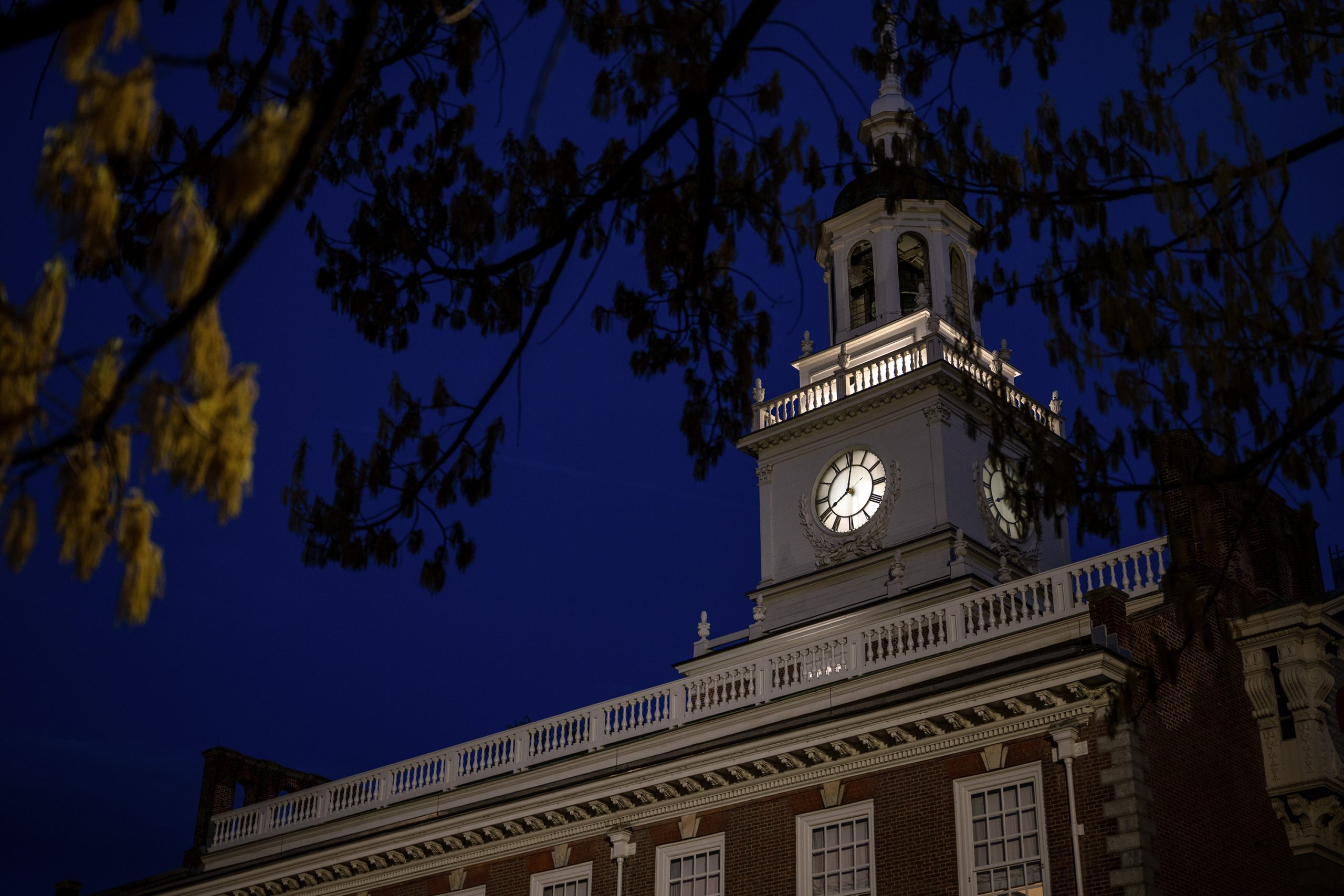
Recreating the daily hub of the Revolutionary City in 1776. You can hear the cannons from the bell tower of the Pennsylvania State House at Sixth and Chestnut Streets, where the rebels conspire. Now, it’s Independence Hall, photographed April 14, 2026.Tom Gralish / Staff Photographer
A preliminary vote is taken by candlelight. Despite popular opinion, four colonies — including four members of Pennsylvania’s critical seven-man delegation — vote no.
Late into the night, at the City Tavern, the delegates drink upon tenterhooks.
July 2, 1776
The second day of debate begins with a prosperous portent. Caesar Rodney, of Delaware, mud-splattered boots and spurs, arms akimbo, bursts in before the doors to Congress close. The gravely ill delegate rode 80 miles through the tempest to cast his vote for independence.
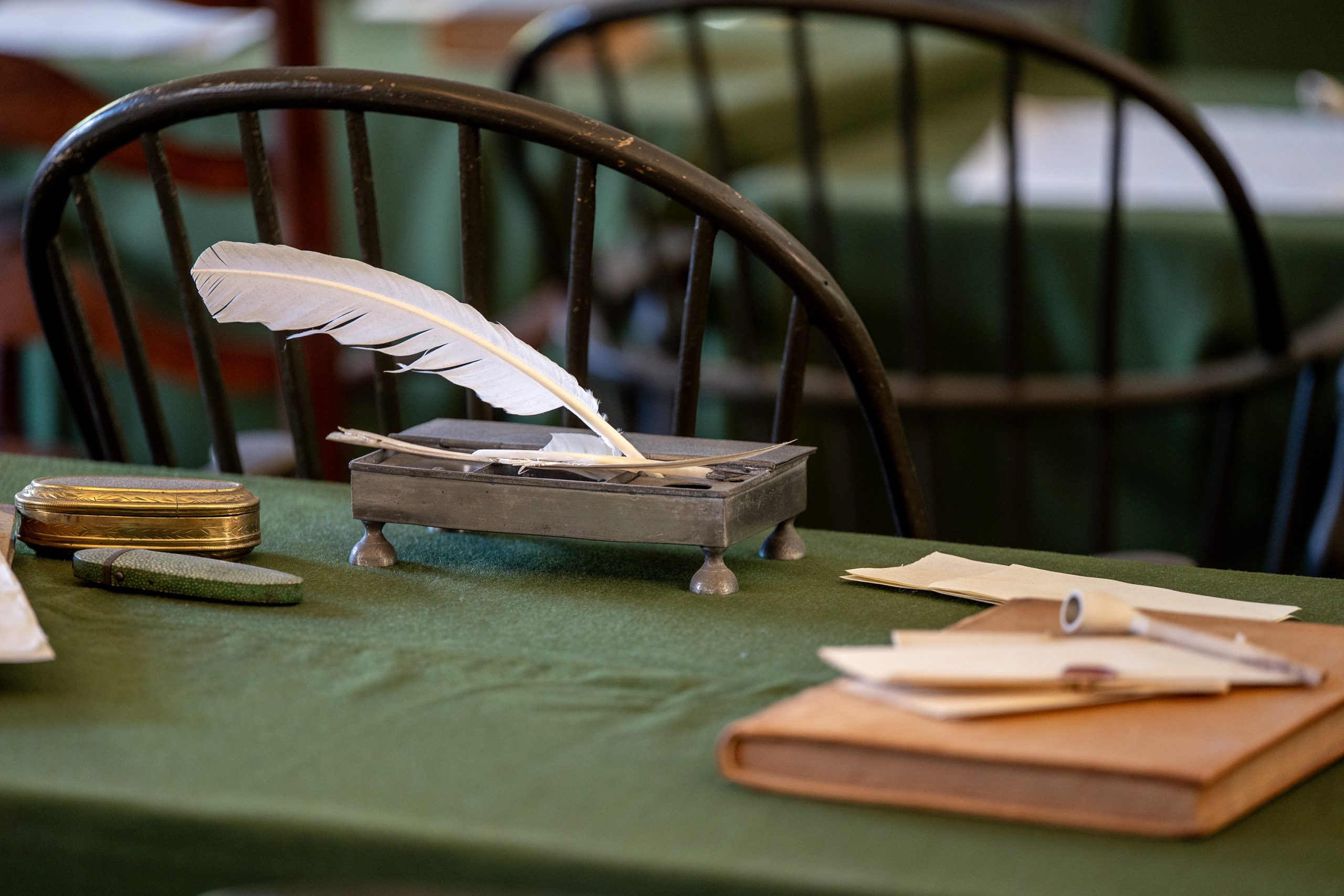
Replica desks in the Assembly Room in Independence Hall, known as the Pennsylvania State House in 1776. This is the exact space where the Second Continental Congress met and the Declaration of Independence was adopted.Tom Gralish / Staff Photographer
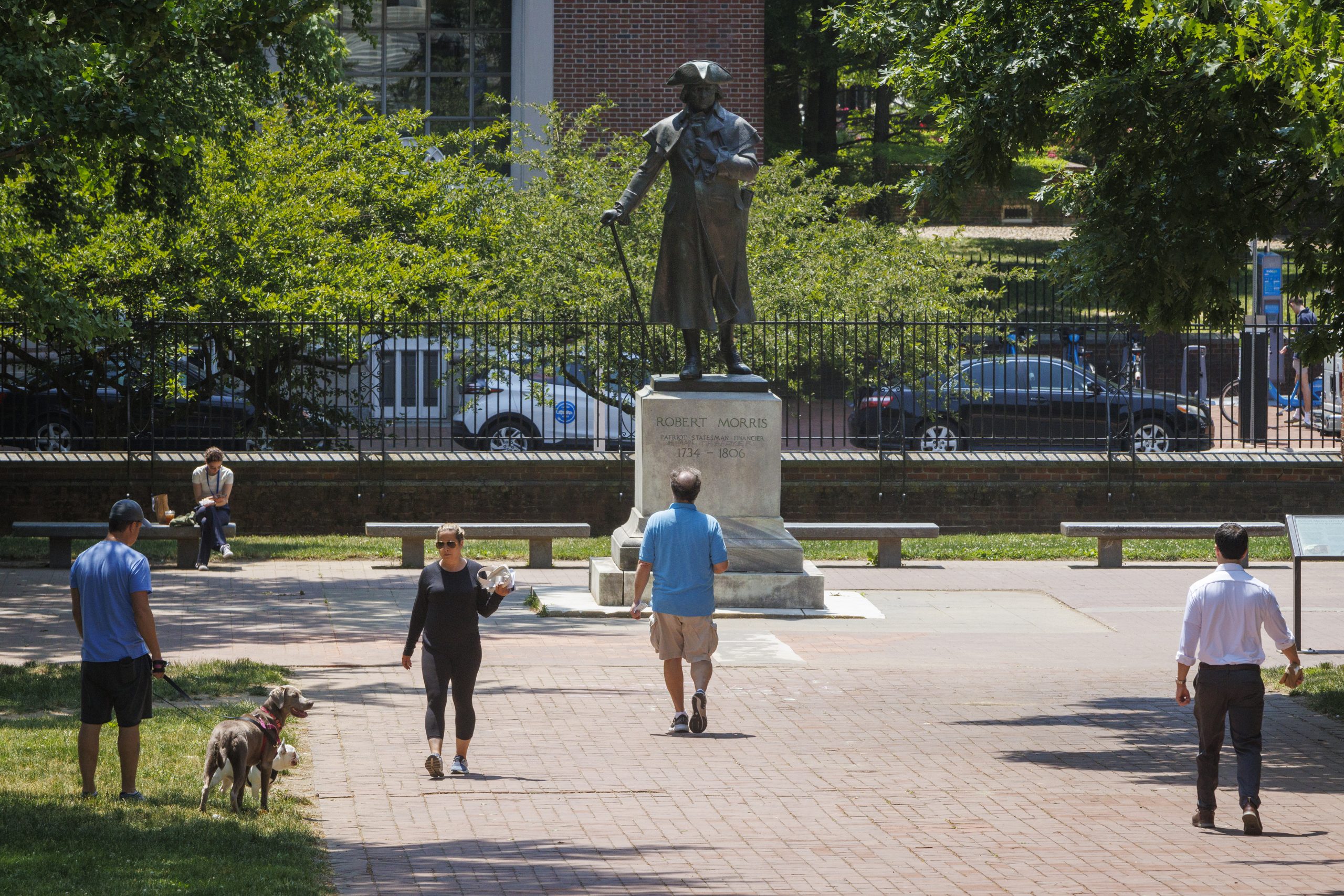
Better still are the two conspicuously empty chairs at the Pennsylvania table. Unable to vote for independence, but unwilling to thwart unanimity, Dickinson and fellow delegate, Robert Morris, voluntarily abstain. Despite his feelings, Dickinson will soon join the rebel militia — to fight for his country.
The statue of Robert Morris in Independence National Historical Park on May 31, 2023. Alejandro A. Alvarez
Again, the skies open up, raindrops drumming upon the glass.
With New York abstaining — and Pennsylvania swinging toward independence — the vote goes quick.
It is done.
Independence.
July 3, 1776
The Congress continues without a break.
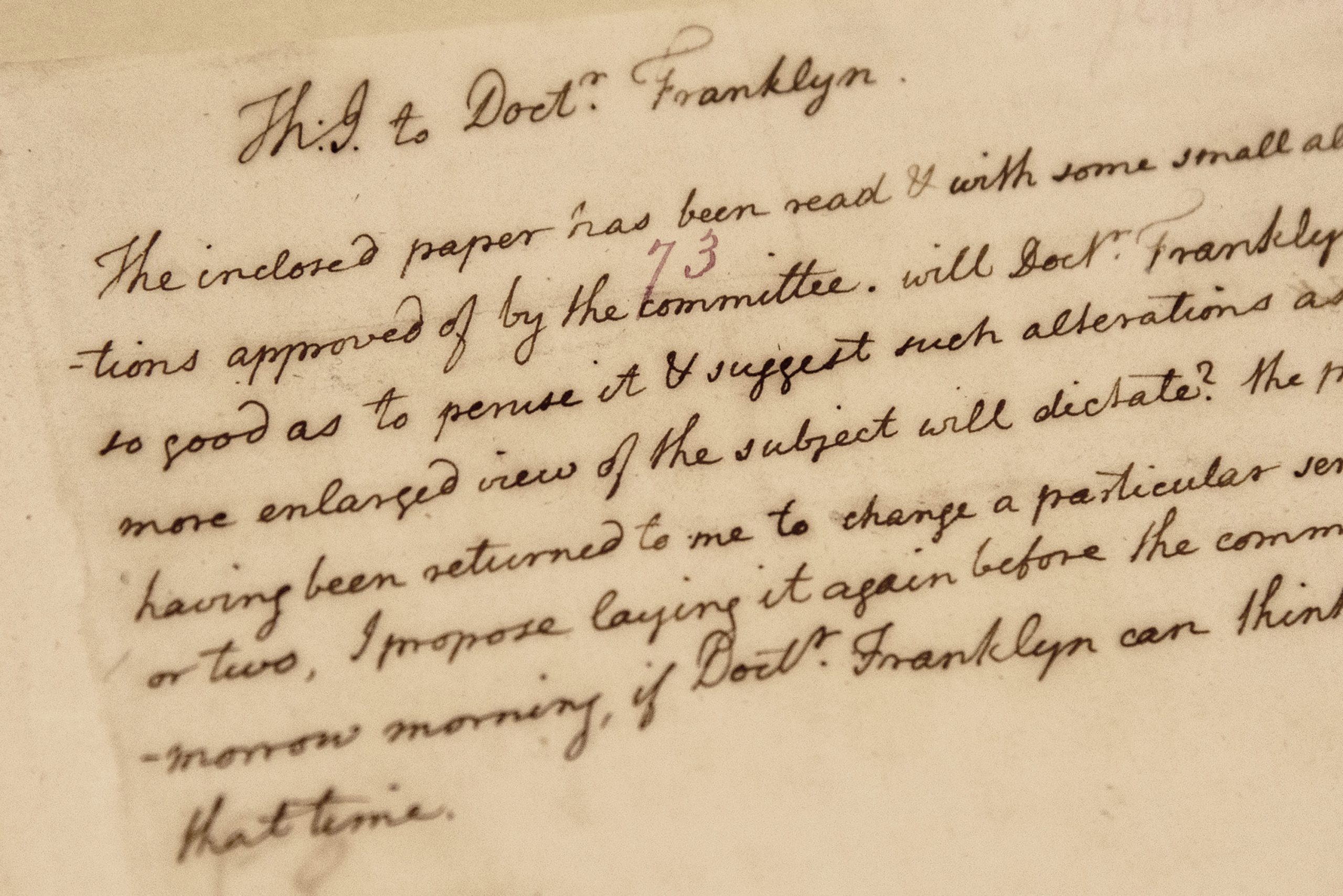
Days earlier, before handing in his draft of the Declaration of Independence, Thomas Jefferson turned to Benjamin Franklin for one last look.
A letter from Thomas Jefferson to “Doct. Franklyn” (Benjamin Franklin) in June 1776 asking for suggestions on the Declaration of Independence.Tom Gralish / Staff Photographer
“Will Doctr. Franklyn be so good as to peruse it and suggest such alterations as his more enlarged view of the subject will dictate?” Jefferson inquires, in a note delivered to the silver-haired statesman’s High Street home.
It’s Franklin, sly satirist, homespun philosopher — grand auteur of America’s self-made aura — who possibly suggests, the inspiring “self-evident” phrasing, replacing Jefferson’s initial “sacred and undeniable truths.”
And it is Franklin, 70, spectacled lion of liberty, sage of Philadelphia, tamer of lightning, dean of American charm and wit, wooer of women, broad of bow and frame, portly of paunch and plain of coat, a winsome spark dancing across his gray-blue eyes, who comforts the young writer as delegates slash away at his declaration. The winking newspaperman unspools a tale about an enterprising hatmaker who wishes to advertise his wares. By the time the hatter’s friends finish their edits, all that remains is the man’s name, and a photo of a hat, Franklin jokes.
The delegates trim Jefferson’s harsher language about King George. They excise completely his evisceration of the slave trade. Jefferson does not publicly protest.
July 4, 1776
At 11 a.m., debate is closed.
The moment will eventually be memorialized in painting. The towering trio — Adams, Jefferson, Franklin — presenting America’s credo for approval. Imagine them, these Founding Fathers. These imperfect men for the ages who hazard everything to chance a republic, and change a world.
There is little ceremony. Horseflies from a nearby stable buzz. One after another, a chorus of “Ayes.”
Delegates break the tension with gallows humor about whose necks will snap the swiftest.
History does not record the face of the man who darkens the doorway of John Dunlap’s print shop. Perhaps it was Adams, unable to yield his obsession even in its ultimate realization. Perhaps, it was Franklin, delivering the declaration with a deliciously wry aphorism. Or Jefferson, solemn and silent with the weight of his words.
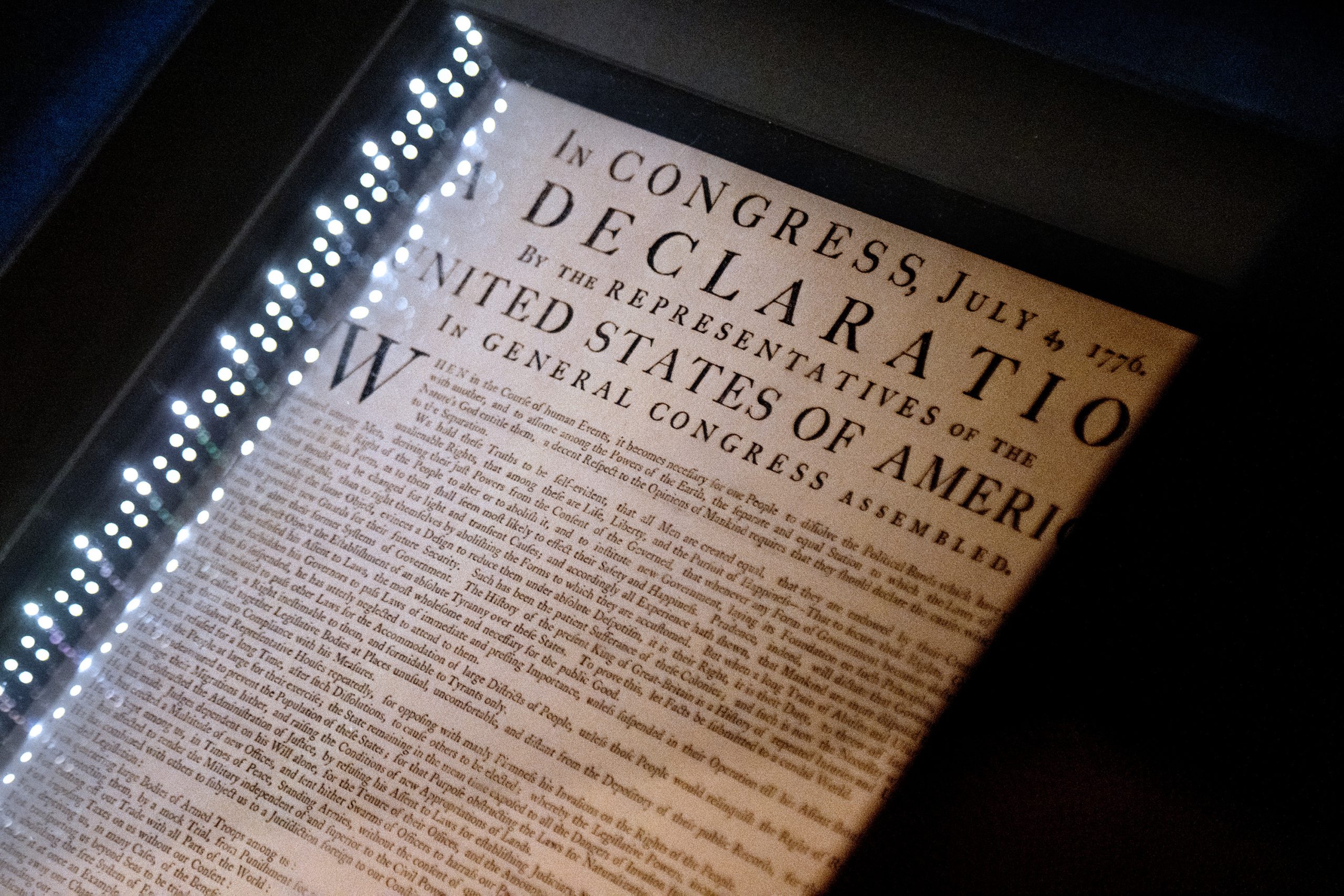
Dunlap works all night to the thumping groan of the presses. By morning, roughly 200 broadsides start to spread America’s newly minted founding document far beyond Philadelphia. Breathless riders herald the news in town squares.
In the trenches in New York, Washington orders the declaration read aloud. Bells ring. Troops parade. Bonfires alight. Candles burn. Prayers are whispered, for those sons and fathers who will die in the bloody conflict ahead.
By July 6, the Pennsylvania Evening Post, a paper published near Dunlap’s shop, prints the declaration word for word. Its previous issue had been put to press too early to capture the momentous events.
Instead, the July 4, 1776 edition included usual fare.
“To be sold,” read one back-page ad. “A NEGRO BOY, about four or five years of age.”
Crowds pack the State House yard, where the rebels had long conspired. A military officer reads the manifesto to the hushed masses.
Words that birth the American experiment on an ideal — and the sin of slavery. Words that will endure Civil War and oppression. Words that beckon centuries of American promise and possibility, triumph and failure. Words that inspire new revolutions, new freedoms, new fights. Words that transform. Words that twist. Words that promise a pursuit of happiness — but withhold so much from so many. Words that stand tested still.
Words written in Philadelphia.
An original broadside copy of the Declaration of Independence printed by John Dunlap on display in the “Great Essentials” exhibit in the West Wing of Independence Hall on July 29, 2025.Tom Gralish / Staff Photographer