It’s a common sound in Philadelphia’s historic district during the summer. I was photographing tourists in front of Independence Hall on Wednesday when the beat of a single snare drum a block away achieved its intended purpose.
Just like when the fife and drum corps would relay tactical commands over the noise of the battlefield, or regulate a soldier’s daily routine, I stopped what I was going and headed in the direction of the beating pulse.
It was coming from the normally quiet Signer’s Garden pocket park, across 5th Street.
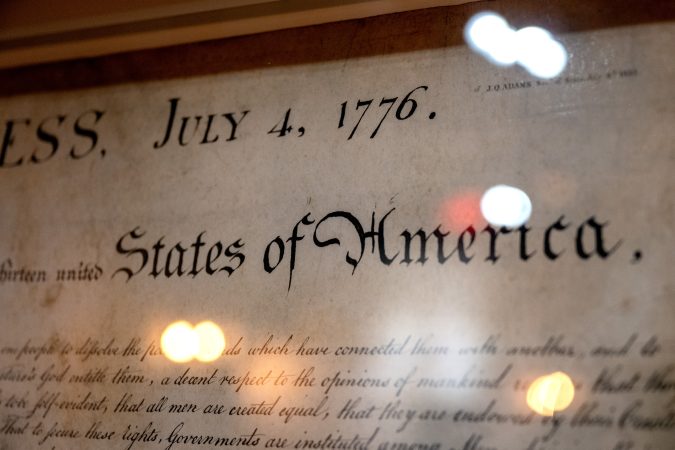
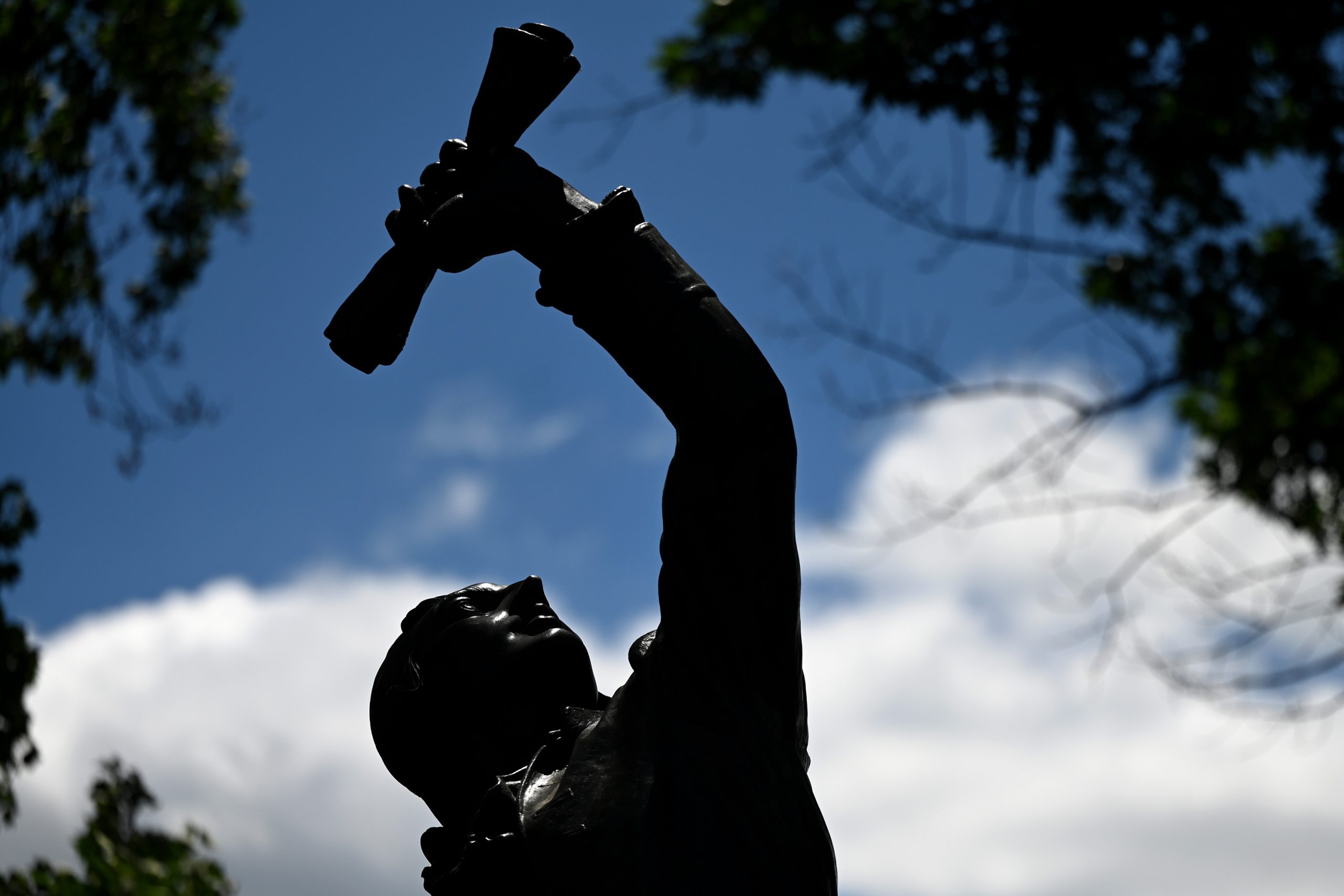
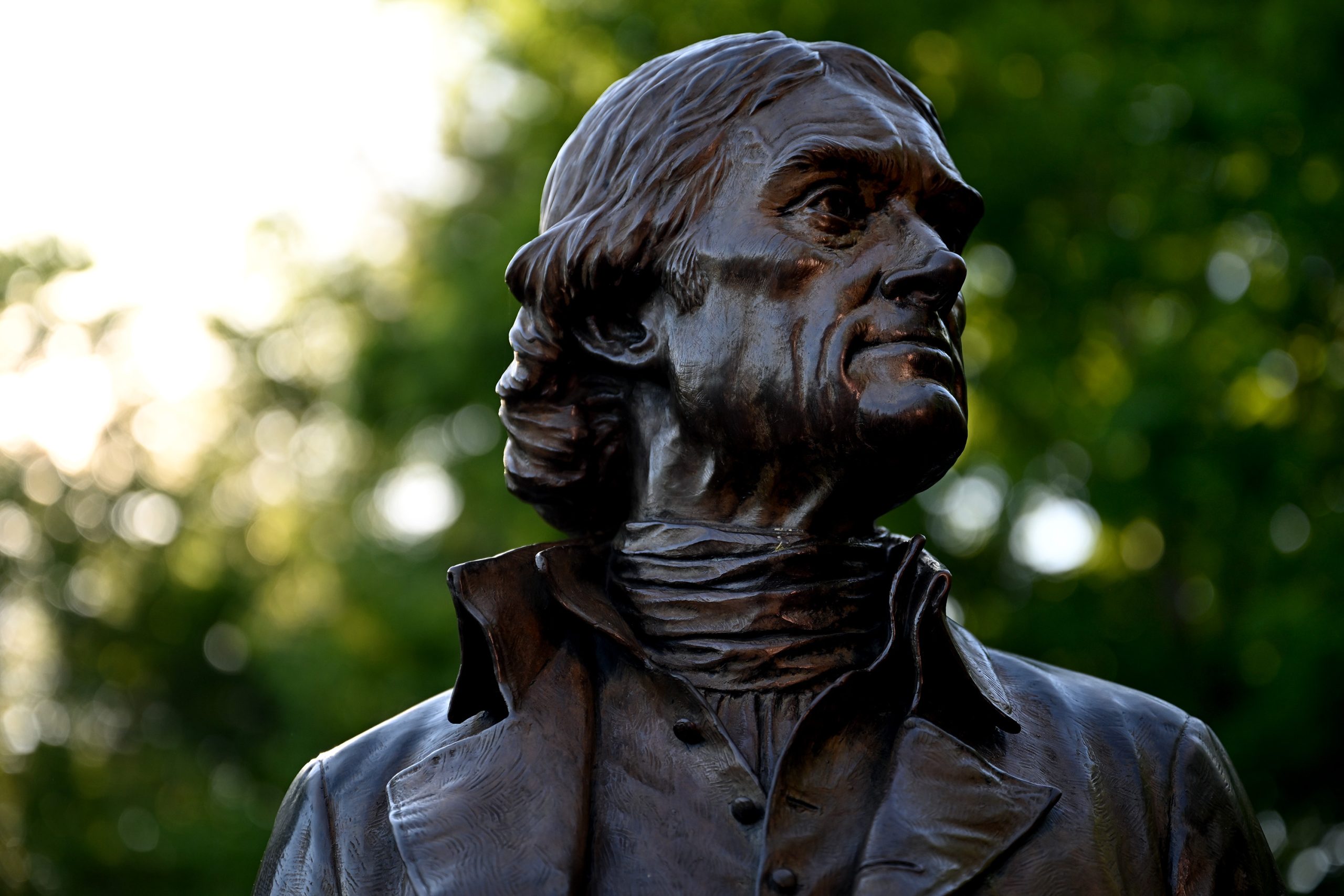
I had intended to go there anyway to photograph the statue — “The Signer” — as I am working with present-day descendants of the signers of the Declaration of Independence on a photo essay that will be posted online this Fourth of July weekend.
The statue was inspired by George Clymer, a Philadelphia merchant, statesman, and signer of both the Declaration of Independence and the U.S. Constitution. A National Park Service plaque at the entrance reads “it commemorates the courage of those who altered their lives, and ours, by affixing their names to these documents.”
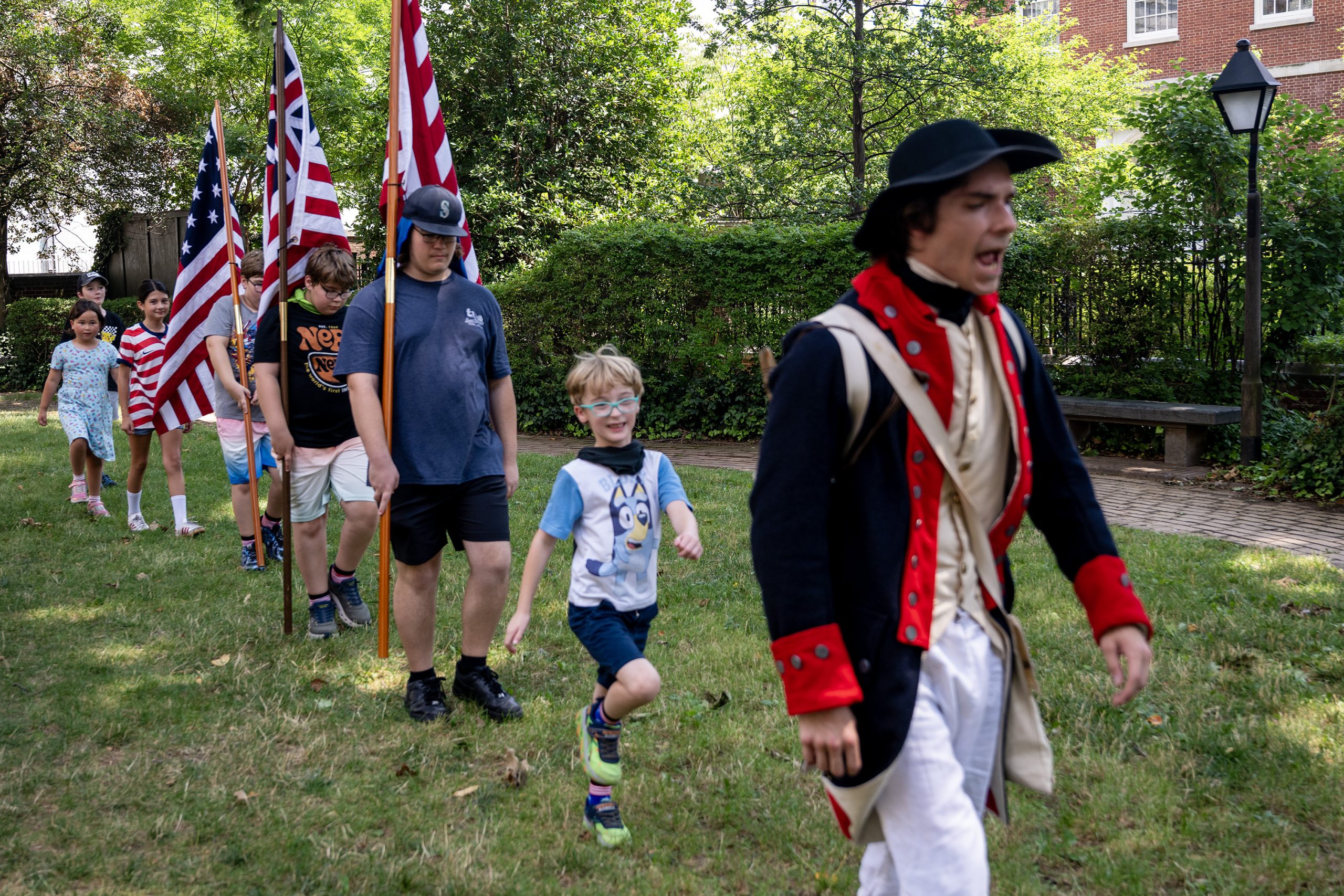
The drum was mustering holiday week visitors for a presentation by two costumed actors from Historic Philadelphia portraying continental soldiers. I watched as the tourists watched them “draft” youngsters into their performance and found myself smiling more than once at how they engaged the kids — and the rest of us in the crowd — with some of their one-liners.
Historic Philadelphia actor Lane Norris portraying Continental soldier Conrad Frye leads a contingent of young tourists in Independence National Historical Park Wednesday, July 1, 2026.Tom Gralish / Staff Photographer
Did I say, smile? I might have had a slightly more sentimental reaction. I have written before that Independence Day has always been my favorite holiday. My dad, who passed away a few years ago, was born on the Fourth of July.
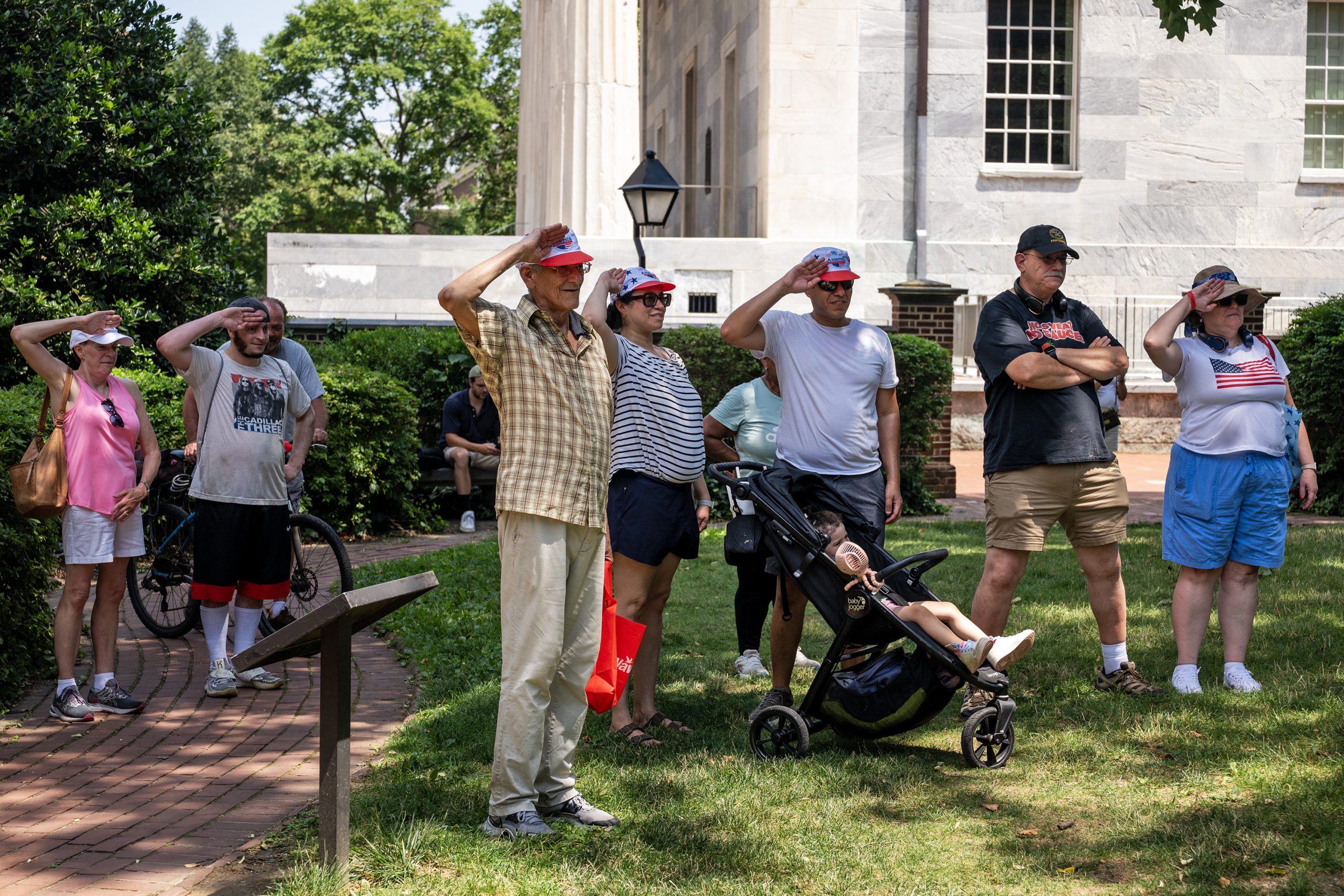
As I looked around at the crowd I could tell everyone else was also getting into the interactive and engaging program. I photographed saluting adults who I assumed were parents, mirroring the actions of their kids doing the marching drills.
Afterward, I learned they weren’t. They had a toddler still in a stroller. They were immigrants from Venezuela, and just happy to be here. Like me.
We’re still in the middle of Philly’s celebration of America’s 250th birthday (with canceled events in a declared heat emergency with 100-plus degree temperatures!). Here are more of my Fourth of July photos and those of my colleagues:
Since 1998 a black-and-white photo has appeared every Monday in staff photographer Tom Gralish’s “Scene Through the Lens” photo column in the print editions of The Inquirer’s local news section. Here are the most recent, in color:
The house: A 1,150-square-foot townhouse in Southwest Philly with two bedrooms and two bathrooms built in 1925.
The price: Listed for $180,000; purchased for $165,000.
The agent: Kristie Bergey, Coldwell Banker
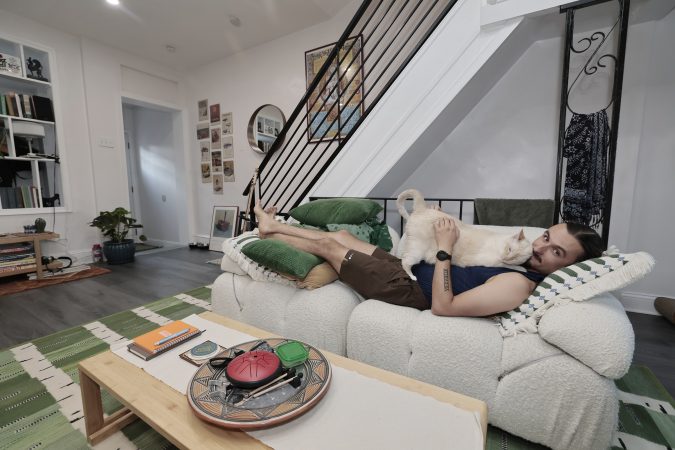
The ask: Dylan Foglesong felt like he was overpaying for his apartment. He was spending $2,600 a month, plus utilities, for a two-bedroom place in Manayunk, and the money was going toward a place he would never own.
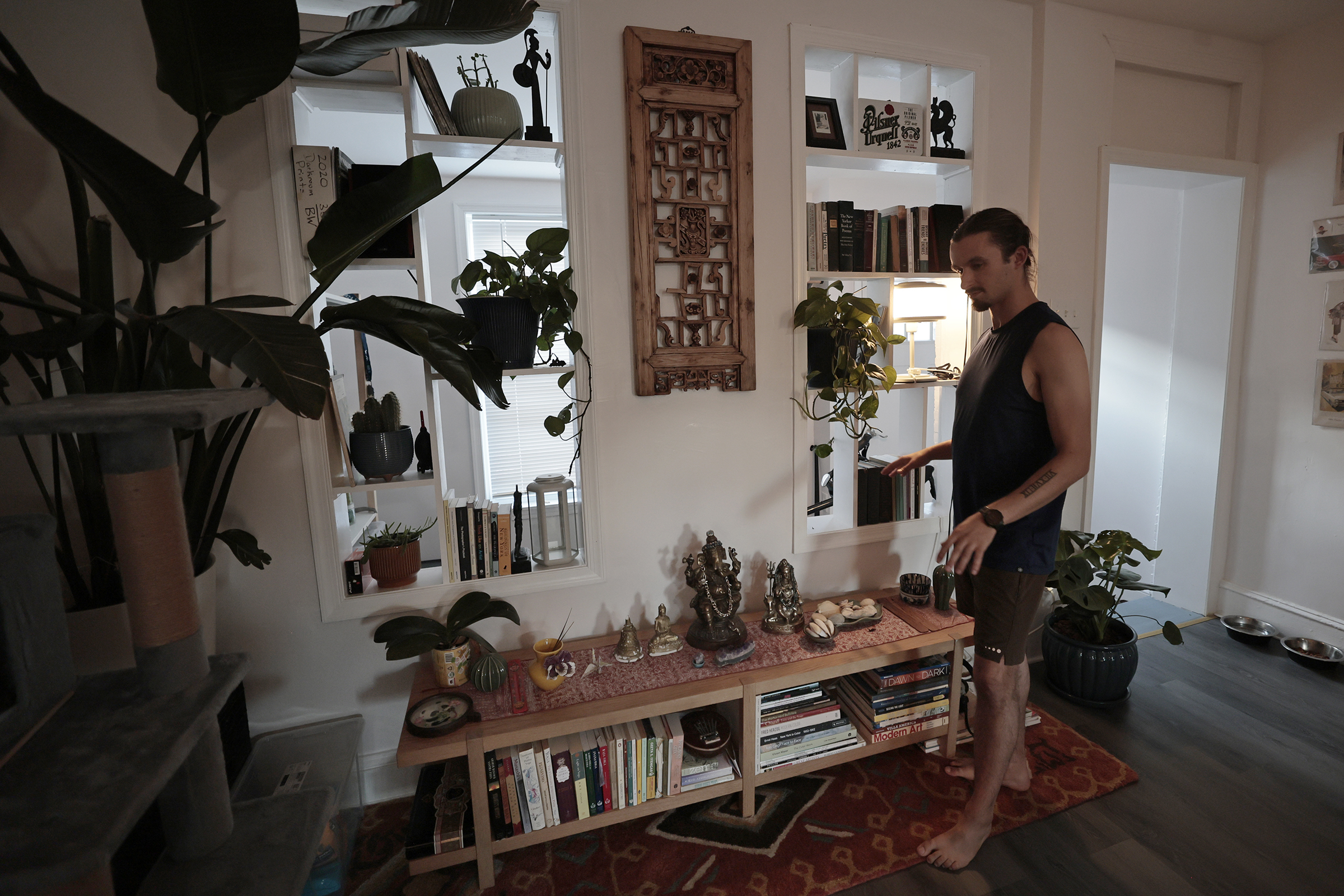
Dylan Foglesong tends to an area he calls the shrine in his home.Elizabeth Robertson / Staff Photographer
After six months, he paid the fee to break his lease and moved into a house with friends. His rent dropped to $600 a month, and because he was subletting month-to-month, he could leave whenever he wanted. He was saving more than $2,000 a month, and he realized he could put that money toward buying a house.
Foglesong had a simple wish list. As an avid cyclist, he wanted to be near multiple bike paths. He also wanted outdoor space, two usable bedrooms, and a low price. He did not care about central air or polished finishes. “I just wanted a cheap place that worked,” he said.
The search: Foglesong started searching in January,focusing on a small section of Southwest Philadelphia near Bartram’s Garden and the trail network along the Schuylkill. He wanted to remain close to Center City so he could bike to work.
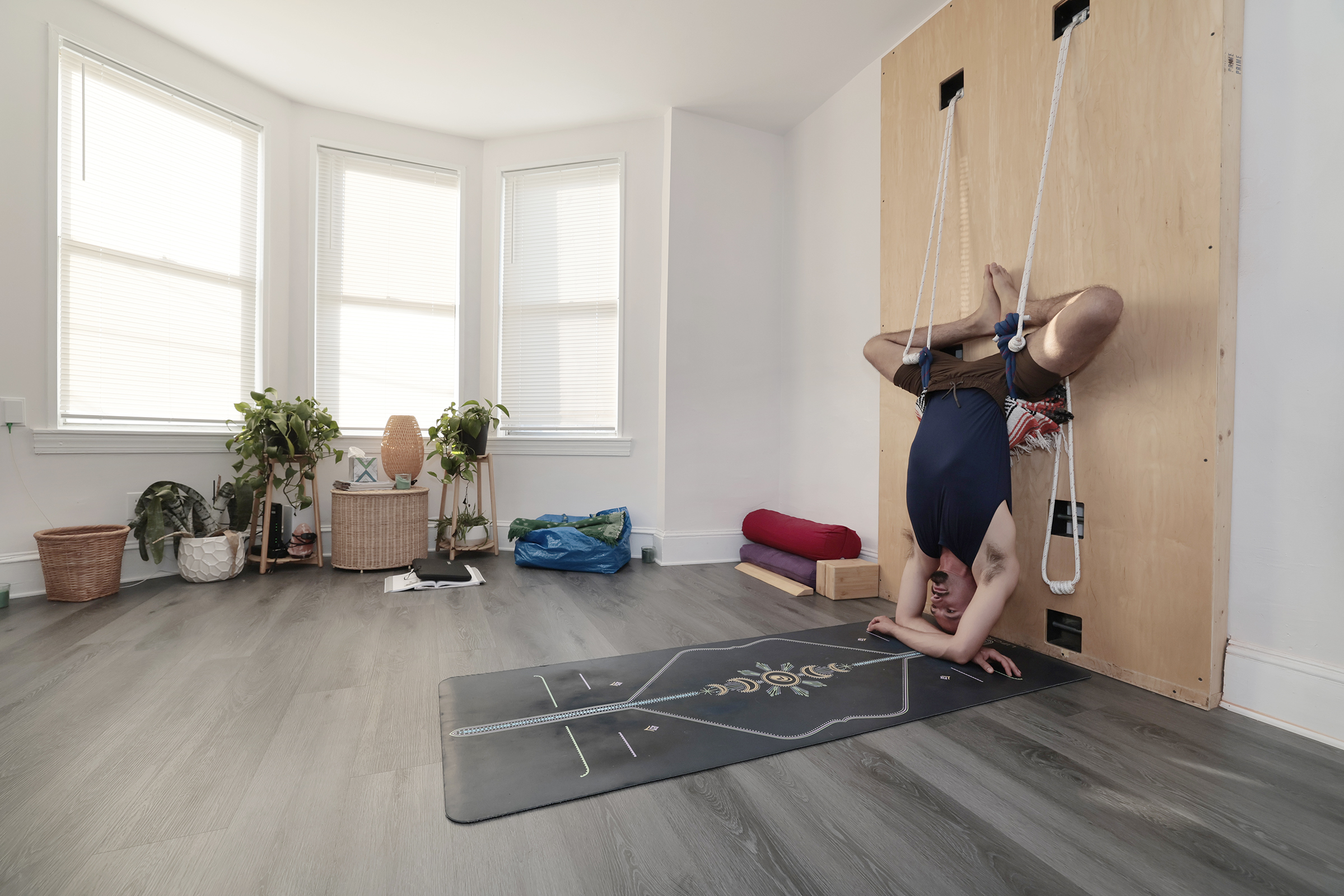
Foglesong uses the rope wall to work out in the studio of his home.Elizabeth Robertson / Staff Photographer
He saw five houses. The first one was in his ideal location, but the floors were scratched and coming up, the kitchen looked decades out of date, and the upstairs had the cramped three-bedroom layout he wanted to avoid. It would have taken too much work to reach a point where he was not “barfing every morning at how much of an eyesore it was,” he said.
The only other serious contender had a large backyard, a clean basement, and an updated kitchen. But a quarter of the ceiling in one upstairs room appeared to be collapsing because of a leak. The house was listed for about $212,000. Foglesong offered $190,000, figuring he could use the difference to repair the roof, but the seller rejected the offer.
The appeal: The fifth and final house had a great layout. Both rooms upstairs were large. It also recently had “a really thoughtful renovation,” Foglesong said. The updates included a new HVAC system and appliances, while the house also had a finished basement with high ceilings, outdoor space, and an enclosed front porch where he could store his bikes.
Foglesong also liked the location on a quiet side street with little through traffic. “It’s on the kind of street that you wouldn’t drive down unless you lived there or you knew someone who lived there,” Foglesong said. Most of the houses on the block were occupied, which made the neighborhood feel established.
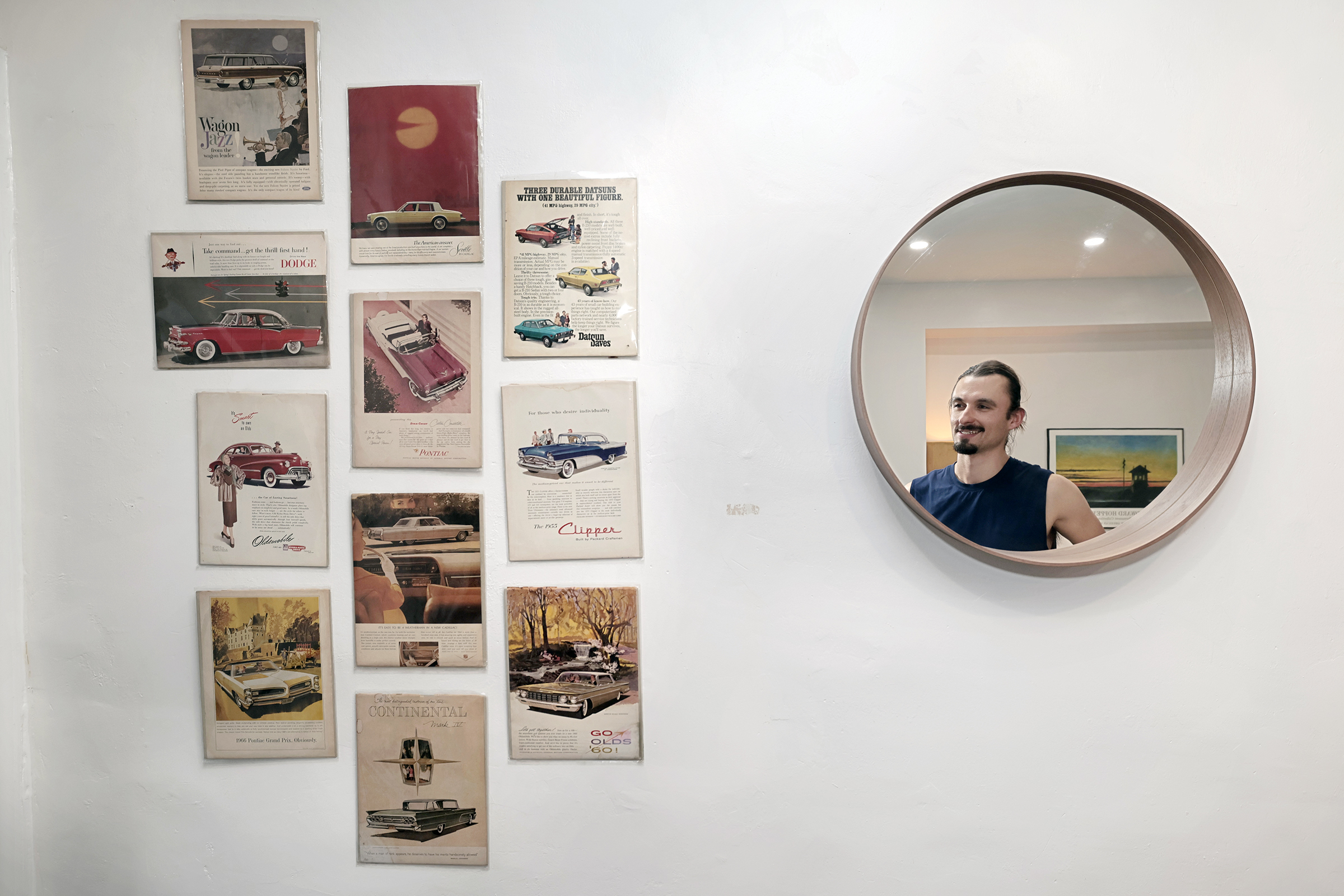
Dylan Foglesong is reflected in a mirror that hangs, next to classic car ads, in the foyer of his home.Elizabeth Robertson / Staff Photographer
The deal: The house had initially been listed for a little more than $181,000 before the seller lowered the price to $180,000. It had been on the market for roughly five months by the time Foglesong saw it.
He offered $170,000 and asked the seller to contribute 3% toward closing costs. They declined the closing assistance but countered at $165,000. The lower price ended up saving Foglesong the same amount of money, so he accepted.
The inspection was clean, save for one issue with the electrical. When Foglesong called Peco to arrange service, he learned that the house was not legally connected, even though the power was on. An electrical inspection found that the breaker box needed work, and the seller hired an electrician to set it up properly. But Foglesong still could not transfer the service into his name until the seller paid thousands of dollars in outstanding utility balances. The whole thing “seemed a little sus,” Foglesong said, but it worked out.
The money: Foglesong put 3% down, or $4,950. Including his closing costs, he paid about $11,600 out of pocket to buy the $165,000 house. His mortgage rate is 6.25%. Today, his monthly payment, including property taxes, is $1,300.
He already had some savings when he moved in with roommates, but the drop in rent allowed him to build the rest quickly. He estimates that he was saving nearly $3,000 a month. Within 3½ months, he had accumulated enough to cover the down payment and closing costs. “You take that little compromise for a couple of months,” Foglesong said about moving in with friends, “and all of a sudden you have $11,000 in your bank account.”
The move: Foglesong closed in April and moved his belongings from the shared house into a 10-foot U-Haul. Everything fit in one load, and he completed the move over two days without hiring movers or asking friends to help.
He managed it alone because he did not own much heavy furniture. His couch comes apart into sections, and he sleeps on a futon that he could fold and carry over his shoulders. For everything else, he improvised. “You put a blanket on the stairs, slide the furniture down,” Foglesong said. “You figure it out.”
Life after close: At first, buying the house felt less momentous than Foglesong expected. He had imagined “a really grand, movie-montage sequence,” he said, but moving in felt much like any of the other moves he had made during his 10 years in Philadelphia.
But as the weeks passed, the difference between his new home and the others became clearer. He was no longer paying rent for a place that belonged to someone else. He owned the house, and the monthly payment was within his budget. “It’s very grounding to wake up in a place that you can afford,” Fogelson said.
The experience also reinforced his belief that young buyers may need to reconsider what they expect from their first home. “You have to be realistic about what you can access right now,” Foglesong said. “Your first house doesn’t have to be your dream home.”
Editor’s note: This article has been updated to correct real estate agent Kristie Bergey’s name.
Did you recently buy a home in the Philadelphia area or South Jersey? Share the story of how you did it. Email Inquirer real estate reporters at properties@inquirer.com.
O little town of Bethlehem, how we see thee as just a place to visit during the holidays.
It’s true that the former steel city, tucked between Allentown and Easton along the Lehigh River, leans into — and has built a whole tourism industry around — its Christmas-themed name and roots, but there’s much more to Bethlehem than carols and holly.
The forest and river beckon in summer, and the city’s position along the Delaware and Lehigh Trail, which parallels the Lehigh Canal, puts visitors within easy access of both.
There’s an old-fashioned ice cream parlor, a grand historic hotel, a blueberry festival, even a UNESCO World Heritage Site. And if you really, really need a dose of holiday spirit, Christmas in July is right around the corner.
Bethlehem’s main street (literally, Main Street) twists up from the Lehigh River and stretches like taffy into a long straightaway lined with shops and cafes. At the foot of this drag is Hotel Bethlehem, built atop the 1741 foundation of the First House of Bethlehem and later the 1823 Golden Eagle Hotel. It has operated as Hotel Bethlehem — through periods of both glamour and neglect — for more than a century. Today, its crimson neon sign glows above the brick facade, while its rooms blend industrial touches with classic historic design. Across the street, a collection of modern suites houses the hotel’s spa. The property has been named the nation’s best historic hotel by USA Today, for five years running.
Cross the river to the South Side Historic District for breakfast — think vanilla-cinnamon French toast or loaded home fries bowls — or lunch, with options like a Cuban sandwich or cheddar-jalapeño burger. Cafe the Lodge is more than a charming cafe with a courtyard garden and art gallery. Since opening in 2012, it has provided transitional employment and housing opportunities for adults living with mental health diagnoses.
📍 427 E. Fourth St., Bethlehem, Pa. 18015
See: Moravian Church Settlements
Long before the Protestant Reformation, the Moravians were establishing a religious movement in Central Europe. Fast-forward a few centuries, and the Moravian church established an American foothold in Bethlehem whose well-preserved 18th-century buildings, cemetery, and museum now form part of the only transnational UNESCO World Heritage Site in the U.S. (sister settlements in Ireland, Denmark, and Germany comprise the collective). The Moravian Church Settlements tour explores this fascinating history, whether you’re interested in religion or simply great storytelling.
You gotta love a small-town summer fruit festival, and Bethlehem goes all in on blueberries every July. The 39th annual Bethlehem Blueberry Festival returns to Burnside Plantation the weekend of July 18 with blueberry pie, ice cream, coffee cake, lemonade, doughnuts, strudel, and just about every other indigo-colored treat imaginable. There are also live musicians, blacksmithing demonstrations, baby-goat snuggling and, naturally, a pie-eating contest. Resist the urge to yell, “Violet, you’re turning violet, Violet.”
📍 1461 Schoenersville Rd., Bethlehem, Pa. 18018
Move: Historic Bethlehem River Tours
There’s no need to decide between a paddle down the Lehigh River or bike along the Delaware and Lehigh Trail with Historic Bethlehem River Tours. Their Glendon Dam Discovery package, which launches from the Nagy’s Landing trailhead just east of downtown, pairs a peaceful two-mile downstream paddle with a six-mile bike ride to the dam’s overlook. It’s beginner-friendly and unguided, meaning you can go at your own pace, with HBRT providing all the equipment (and a shuttle back if you’re feeling lazy).
Named after a wild mushroom, Bolete isn’t just one of Bethlehem’s best restaurants. It’s one of Pennsylvania’s best restaurants. Chef-owner Lee Chizmar serves an exactingly prepared, terroir-driven menu in a stone-walled former country inn dressed with maximalist wallpaper and antique lighting. Depending on the season, you might find smoked pork chop with cherries and shiitakes, or foie gras paired with funnel cake, blueberries, and Valley Milkhouse fromage blanc.
If a town has a historic ice cream stand, and it’s summer, you should proceed immediately there for dessert. Bethlehem’s is the Bethlehem Dairy Store, a low-slung diner with neon sundaes and hot dogs in the windows that’s giving Nifty Fiftys. But “The Cup,” as locals call it, far predates Nifty, opening way back in 1927. Hand-dipped ice cream, soft serve, frozen yogurt, and sherbet comprise the roster of frosty treats, coming in flavors like dulce de leche, lemon cookie crunch, chocolate raspberry truffle, and mint Oreo.
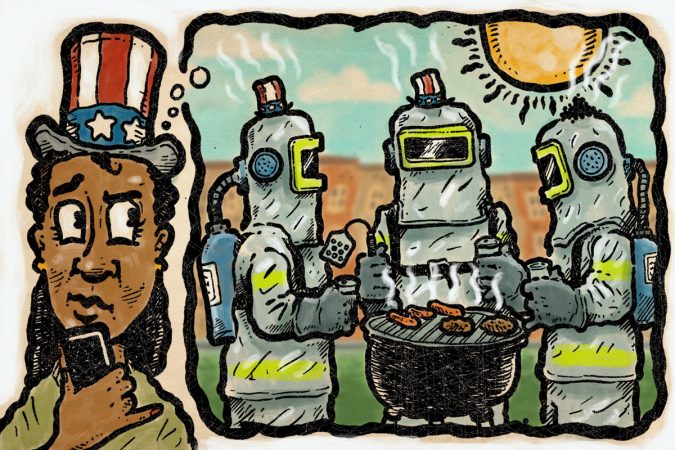
Is it rude to turn down a Fourth of July barbecue because it’s going to be 1,000 degrees? Let a woman sit inside … I’ll cook faster than the chicken.
Rosa Cartagena, Arts & Entertainment reporter
My knee-jerk response: Say no, and don’t feel guilty.
But for a better read on the situation — what’s your relationship to the host? Is this a must-do annual gathering? Are these friends you haven’t seen in a long time? Either way, we’re experiencing an extreme heat advisory, and you need to take care of yourself, so maybe staying home is the best bet.
Mike Newall, Life & Culture reporter
Before we begin, let me tell you a few facts about myself — so you can fully understand my bias. I was born with transparent skin. Nickname was Casper. I also hate sweating. Not if I’m exercising or playing sports or working. But if I’m just sitting down — I don’t want to be sweating.
I also don’t drink anymore. Given all that, I don’t ever like to be at a barbecue unless it’s in chilly Maine or I’m cooking. Because then I’ll be working, at least.
And Rosa’s right. Look after number one when it comes to heat advisories!
Rosa Cartagena
Oof, yeah, I agree with Mike — the sweat situation won’t be cute for anyone. What’s so special about this particular cookout, aside from the holiday? If it’s not an important tradition for you and your loved ones, then pass on this one and find another (cooler) time to enjoy the food and outdoors without so much discomfort. But if you do feel pressure to show up, you could always stop by early for a quick hour to show face and then duck out.
For my part, I do love the sun, and I think day drinking is the only July Fourth activity that I properly enjoy, but especially if you’re someone who’s older, or possibly have health concerns, it’s not worth the risk for some hamburgers. Protect your body (and your peace).
Mike Newall
Show your face to the bathroom mirror when you’re all sunburned!!!
Look, barbecues are just occasions to do things that aren’t enjoyable in 100-degree heat: make small talk, make sure the kiddo doesn’t get hurt or hurt anyone else, drink constant water and soda to keep boredom and nerves at bay and keep having to ask to use the bathroom (because of all that water and soda).
Rosa Cartagena
Totally true. I’d only add that it might be worth calling the host to see if their plans have shifted given the impending inferno — if they’re making adjustments to bring the party indoors, it may be worth the heat of traveling there and back. If not, just think how much happier you’ll be at home, in your AC, watching the World Cup and fireworks from the comfort of your couch.
Mike Newall
Call this host and ask them what the heavens to Betsy they were thinking of in the first place! Inviting you to such an obviously dangerous party in the first place! This selfish Meatapalozza in the middle of inhuman temps!
An event you would have to prepare an item for, pick out an outfit for, think of witty remarks for — all in the middle of Dante’s return!
But look, I’m someone who talks a big game, then goes and has the time of my life. So it’s really jump ball!
Look one things for certain. You can have a blast at a barbecue. It can be the summer kickback your soul needed. But this weather ain’t no joke.
Rosa Cartagena
Of course, there’s something really special about being outside and partying this week because there are thousands upon thousands of tourists enjoying the city and bringing such amazing, positive energy that I’d encourage everyone to experience. So if you wind up thinking, I want to have a good time during this historic, momentous celebration, I’m on your side. It could be a game-day decision. The urge to party may outweigh the dreaded sweat.
For me, I’d probably need just a couple tequila shots to make me feel invincible to the heat. (Then lots of water after, I promise.)
Mike Newall
Yes, drink responsibility! Do what you want! Have fun! And if anyone at this party brings up the 250th, just talk longly and loudly about how it all happened here. In short, be you. Be Philly. Happy 250th!
Happy 250th, America! We’ll show you a July Fourth-themed photo taken in the Philly-area, you drop a pin where you think it was taken. Closer to the location results in a better score. Good luck!
Round #40
Question 1
Where are these fireworks?
Loading…
ClickTap on map to guess the location in the photo
ClickTap again to change your guess and hit submit when you're happy
You will be scored at the end. The closer to the location the better the score
Charles Fox / Staff Photographer
Pretty good/Not bad/Way off! Your guess was from the location.Spot on! Your guess was exactly at the location. Here's also where a random selection of Inquirer readers guessed.
Fireworks over the Philadelphia Museum of Art and the statue of George Washington at Eakins Oval during the Wawa Welcome America Festival on July 4, 2023.
Quiz continues after ad
Question 2
Where is this crowd?
Loading…
David Maialetti/ Staff Photographer
Pretty good/Not bad/Way off! Your guess was from the location.Spot on! Your guess was exactly at the location. Here's also where a random selection of Inquirer readers guessed.
The crowd gathered at Independence Hall is seen through the “O” in the OY/YO sculpture across the street during the Wawa Welcome America Salute to Independence Day Parade on July 4, 2023.
Quiz continues after ad
Question 3
Where is this ceremony?
Loading…
Tyger Williams / Staff Photographer
Pretty good/Not bad/Way off! Your guess was from the location.Spot on! Your guess was exactly at the location. Here's also where a random selection of Inquirer readers guessed.
Thirteen Immigrants are sworn in as American citizens at the Betsy Ross House on July 15, 2021.
Your Score
ARank
🇺🇸 Amazing work. A star-spangled success.
BRank
📜 Good stuff. Your knowledge is self-evident.
CRank
📝 C is respectable, but you might need a few amendments.
DRank
🗽 D isn’t great. Life, Liberty, and the pursuit of improvement.
FRank
🪶 We don’t want to say you failed, but maybe back to the drafting board.
You beat % of other Inquirer readers.
We’ll be back next Saturday for another round of Citywide Quest.
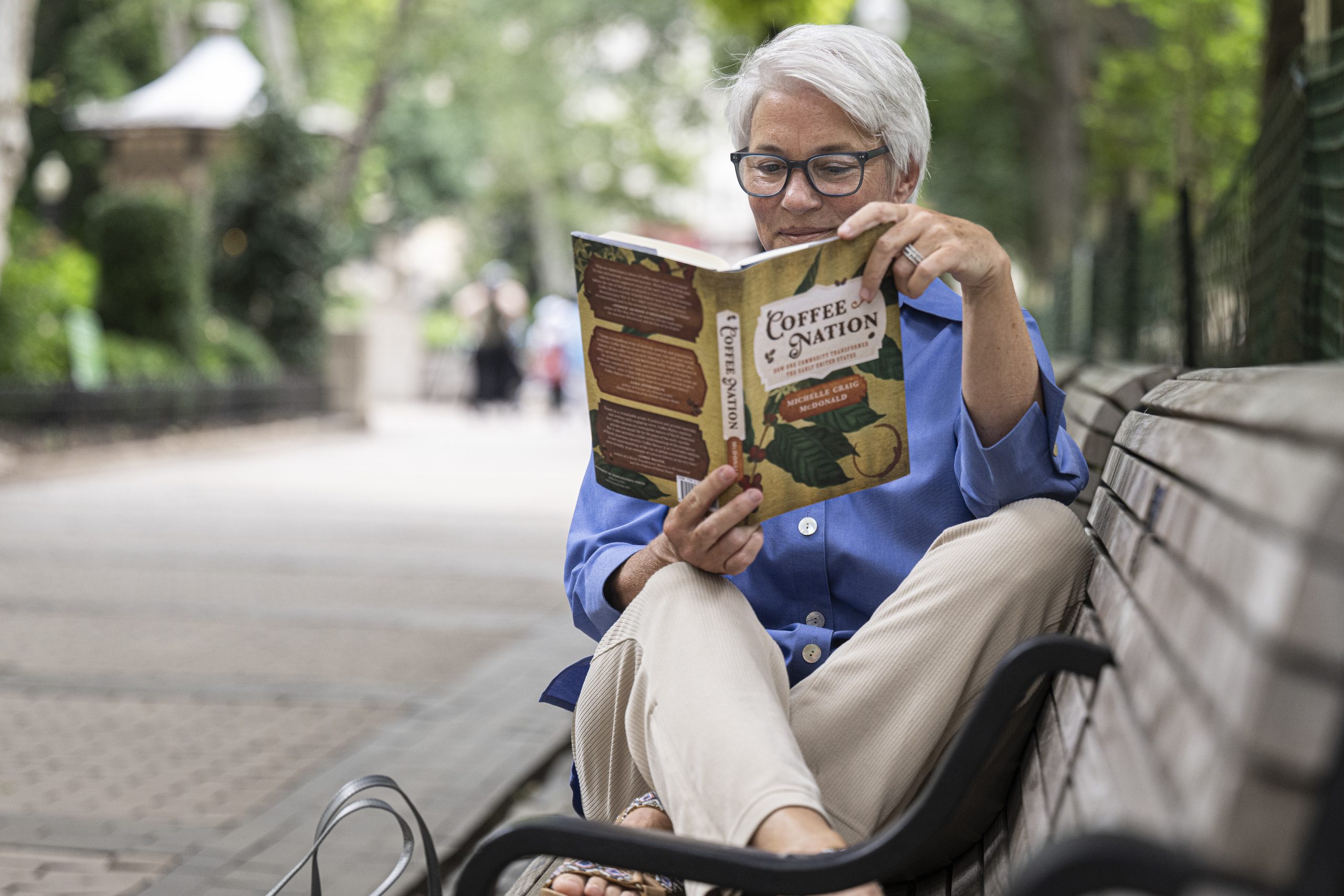
Philadelphia historian, author, and educator Michelle Craig McDonald knows her coffee. Especially the revolutionary kind.
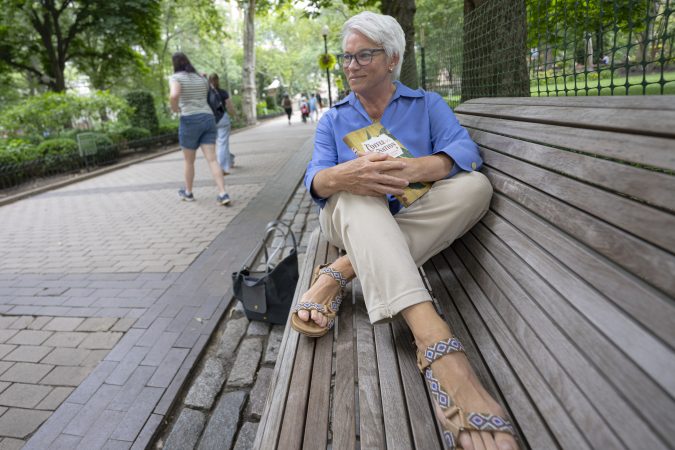
McDonald, who serves as an academic adviser for PBS’s series Drive By History, is the author of the new book, Coffee Nation: How One Commodity Transformed the Early United States.
Philly historian and educator Michelle Craig McDonald enjoys reading in Rittenhouse Square Park. She is the author of “Coffee Nation: How One Commodity Transformed the Early United States.” Jose F. Moreno / Staff Photographer
Telling the story of America and coffee, McDonald traces the bean’s beginnings from slavery-based plantations of the Caribbean and South America in the early 1700s through its prominence in Colonial life to the rebranding of the exotic good as an American staple. McDonald details the emergence of coffee shops, like the Old London Coffee House at Front and Market Streets, as critical Revolutionary-era hubs for politics and business.
“Within 50 years of our independence, the United States becomes one of the largest suppliers of coffee to the world — but we can never grow it,” said McDonald. So in this moment, when we think about independence, coffee really reminds us that the United States remains deeply tied and deeply embedded with the economies of the region. It was not just a self-sustaining nation that looked inward.”
Given the nature of her research, it’s no surprise that McDonald’s Perfect Philly Day revolves around food and drink. McDonald, a Southern California native who lives in Rittenhouse Square with her husband and fellow historian, Roderick A. McDonald, said her perfect day includes lots of coffee and cooking, a great Philly workout, and reading crime novels in Rittenhouse Square.
6:30 a.m.
My coffee pot is my first spot. I’m going to need fortification if I’m going to tackle the day’s news. I just go with the tried and true Colombian roast from Trader Joe’s.
When we are down the Shore, my favorite comes from Remedee Coffee, started by two sisters who source their beans from Colombia. It’s a great small business.
On a perfect day, this is when we do our New York Times games — like Connections or Wordle — which we do together. My sister says it’s cheating. I like to say it’s “collaborating.”
8:30 a.m.
I love cooking of all kinds, but baking is my first love. My go-to on a perfect day is a batch of scones. I have a recipe that I got online from a website called Love and Lemons. It’s a base recipe. You can make anything you want. Cranberry, orange walnut, apricot, ginger almond, or my brother-in-law’s favorite, which I know because he buys the ingredients every time I visit, blueberry lemon.
I used to head over to Metropolitan Bakery on 19th Street, which I am still mourning the loss of.
I loved their Millet Muffins and raisin walnut bread. My freezer is stuffed with both because I bought as many as I could before they closed. And I’m slowly rationing them so I don’t lose them quickly.
9:30 a.m.
We have a solid division of labor in the household. I do the cooking. But my husband does the shopping. While the scones are in the oven, he may well be on his way down to the Italian Market on his vintage 1962 Schwinn bicycle — expertly serviced by Curtis at Via Bicycle on Broad Street. He’s a fan favorite!
My husband is the provisioner of the house. I get to take what he brings back from the list — and sometimes not from the list. It feels like my own personal version of Chopped. He comes home with five ingredients and says, “What can you do with this?’”
10 a.m.
I’m hitting the gym. I do love eating, which means I need to pay the piper. I go to Pure Barrein Center City. It’s wonderful. It’s a class — a core-based workout that does weightlifting, planks, pushups. An hour there, any day I can get it, gives me enough brownie points for the rest of the day’s culinary adventures.
If the weather is nice, we might substitute a bike ride down the Schuylkill River Trail. Manayunk is a great destination.
Noon
That’s when Small World Seafood is in the area with deliveries. It’s an Old City business that was born out of necessity. The owner provided fresh seafood to restaurants during the COVID-19 pandemic. Then he began an online business selling directly to customers. You can get anything — halibut, skate steaks, steelhead trout, oysters, clams — for a lazy cooking night.
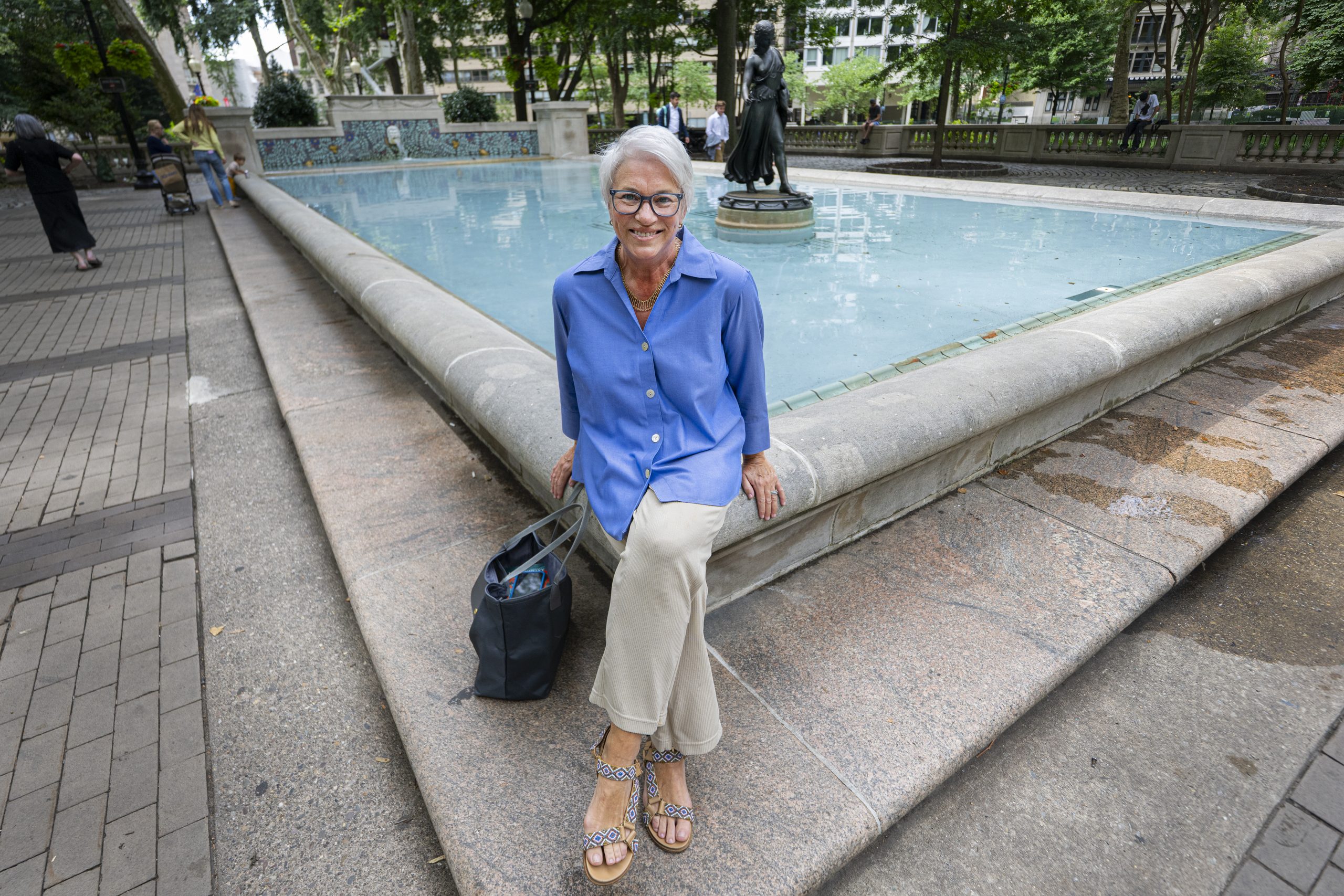
Michelle Craig McDonald’s perfect Philly day includes lots of coffee and cooking, a great Philly workout, and reading crime fiction in Rittenhouse Square.Jose F. Moreno / Staff Photographer
1 p.m.
I’ve got the fish and I’m marinating it for dinner. Steelhead trout is one of my favorites, so super easy, a little bit of soy, a little bit of orange, a little bit of brown sugar, a little bit of maple, and garlic.
2 p.m.
On a perfect day, when I can while my time away, you will find me reading in Rittenhouse Square. I have an abiding passion for crime fiction. Ann Cleeves. Donna Leon.
And if it’s not great weather, you could still find me reading, but probably in one of any of a dozen coffee shops that are within walking distance of my house.
There was a great article that just ran recently in The Inquirer about the rise of Yemeni coffee shops in the city, such as Moka & Co.
3 p.m.
This is where it’s going to get busy. I would be remiss if I didn’t bring a little history and culture into this day. The American Philosophical Society has a wonderful project called “The Revolutionary City: A Portal to the Nation’s Founding.” It’s a partnership where five Philadelphia historical institutions — the APS, the Library Company of Philadelphia, the Historical Society of Pennsylvania, the Kislak Center at Penn Libraries, and the Museum of the American Revolution — came together to plan for 2026, and all their exhibits build on each other. Now I know that’s a long afternoon. Readers can pick and choose and see the others on their second favorite perfect Philly day [laughter].
6 p.m.
My husband and I cook together. If it’s Saturday, the compulsory listen is “The Many Moods of Ben Vaughn.” Cooking is my way to unwind and my husband is an excellent sous chef.
8 p.m.
We tend to have a leisurely meal with a glass of wine or two, and review the day’s exploits. An episode of television in the evening is a good escape. We are huge PBS fans. We love British crime dramas. We are huge fans of Shetland, a Scottish crime drama, and Vera, an old British crime drama with a curmudgeonly police detective.
10 p.m.
I am not a night owl. But I will confess to a wee dram of bourbon most evenings. Then, a little more light reading. And it’s time for lights out.
This interview has been edited for length and clarity.
So The Inquirer’s Dugan Arnett, previously of the Boston Globe, went north to investigate. What followed was less a travel story and more a historical audit.
The Battle of Bunker Hill wasn’t actually fought on Bunker Hill. Plymouth Rock probably wasn’t where the Pilgrims first stepped ashore. Paul Revere never completed the ride he’s famous for. Even Ben Franklin’s grave turned out to be a replica. That’s a tough box score.
None of this is to say Boston isn’t one of America’s great historic cities. It is. The Freedom Trail is worth walking, and the city has every right to celebrate its place in the nation’s founding.
But if you’re going to challenge Philadelphia to a history contest, your greatest hits probably shouldn’t come with so many asterisks.
Meanwhile, Philadelphia is just over here with the Declaration of Independence, the Constitution, the Liberty Bell, Independence Hall, and enough actual founding history that Nicolas Cage based an entire movie around stealing it.
Philadelphia didn’t have to make a case for itself; Boston made it.
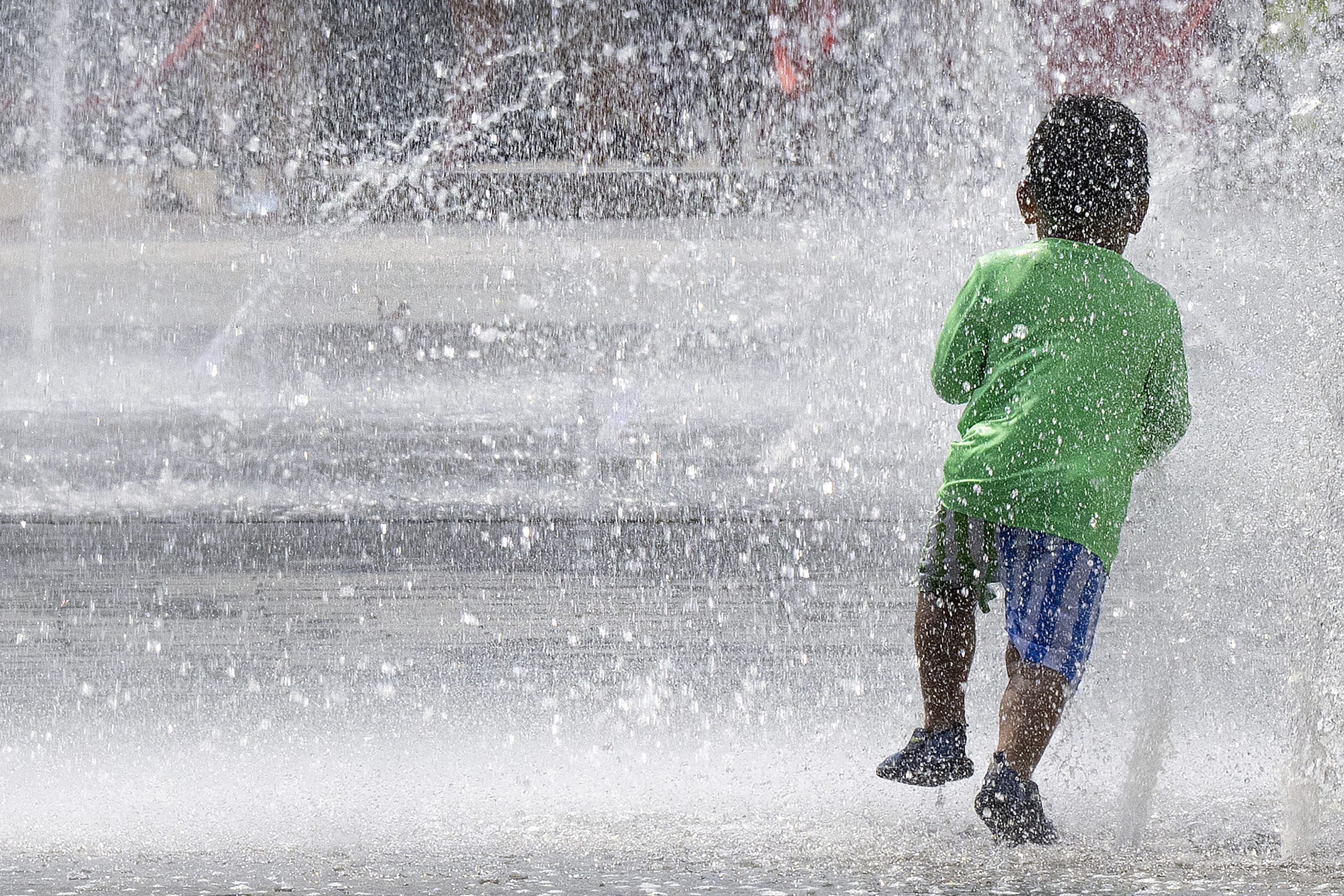
A young boy runs through the spray from the fountains at LOVE Park on a hot summer day on July 1. Temperatures are expected to break a bit Saturday into Sunday as the heat wave finally moves out of the region.Jose F. Moreno / Staff Photographer
The Fourth of July heat: D-
If there were ever a week for Philadelphia to catch a break from the weather, this was it.
Philadelphia has spent years preparing for this once-in-a-generation celebration. The city can’t control the weather, but the weather doesn’t particularly care about 250 years of planning.
Hopefully, the forecast proves just pessimistic enough to keep everyone safe without putting too much of a damper on the festivities. Because nobody wants to spend America’s birthday wondering whether it’s too hot to light the grill.
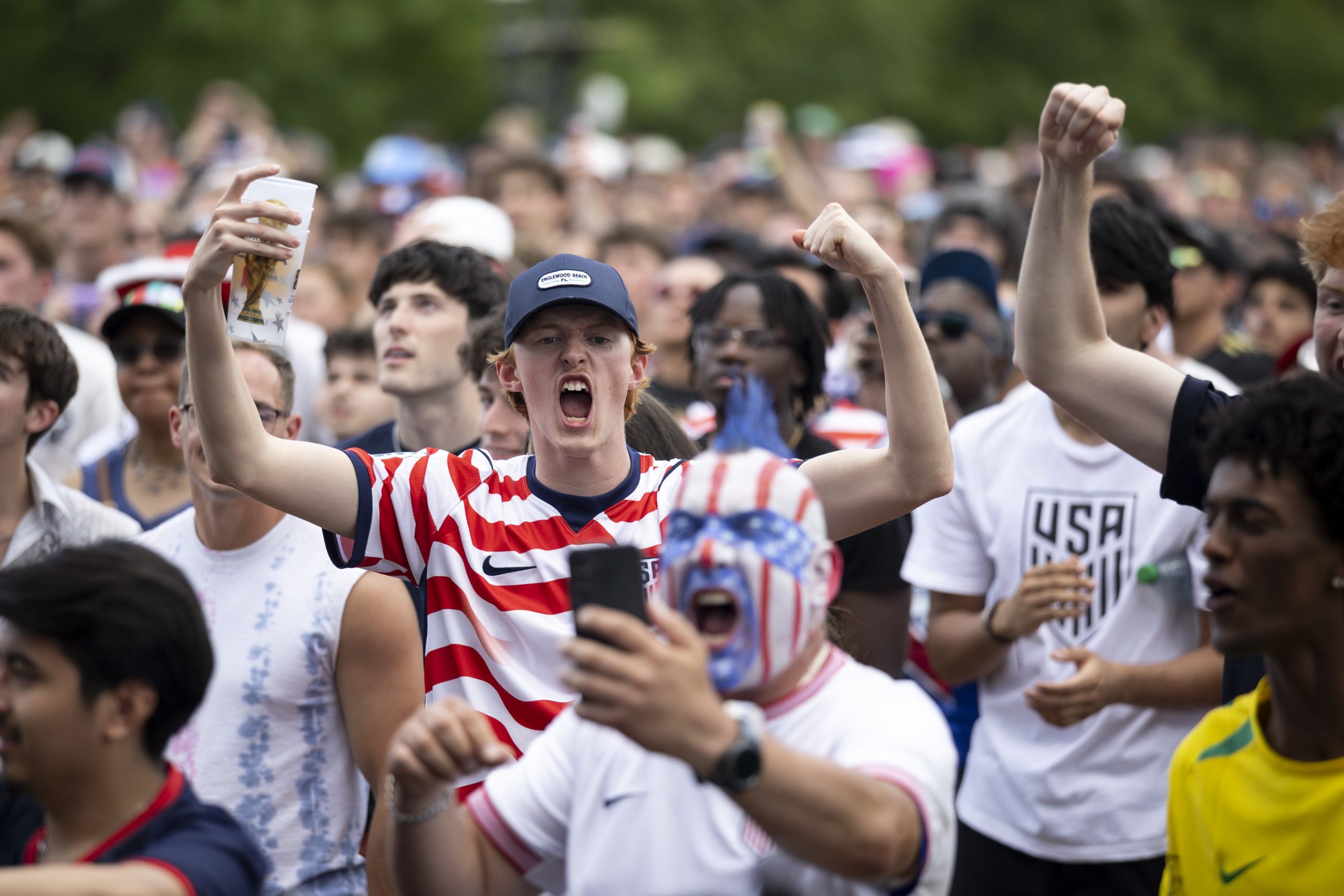
Cam Gorman, 23, of Gilbertsville, Montgomery County, cheers with Philly Sports Guy at the FIFA Fan Festival on June 19 as the USA beats Australia.Tyger Williams / Staff Photographer
To be fair, Boston only ever planned to keep the festival open through the group stage. Meanwhile, we’re still going.
As the tournament moves into the knockout rounds, Philadelphia still has a Fan Festival, another World Cup match, and America’s 250th birthday celebration all packed into the same week.
So for one more week, Philadelphia still feels like the center of the soccer world.
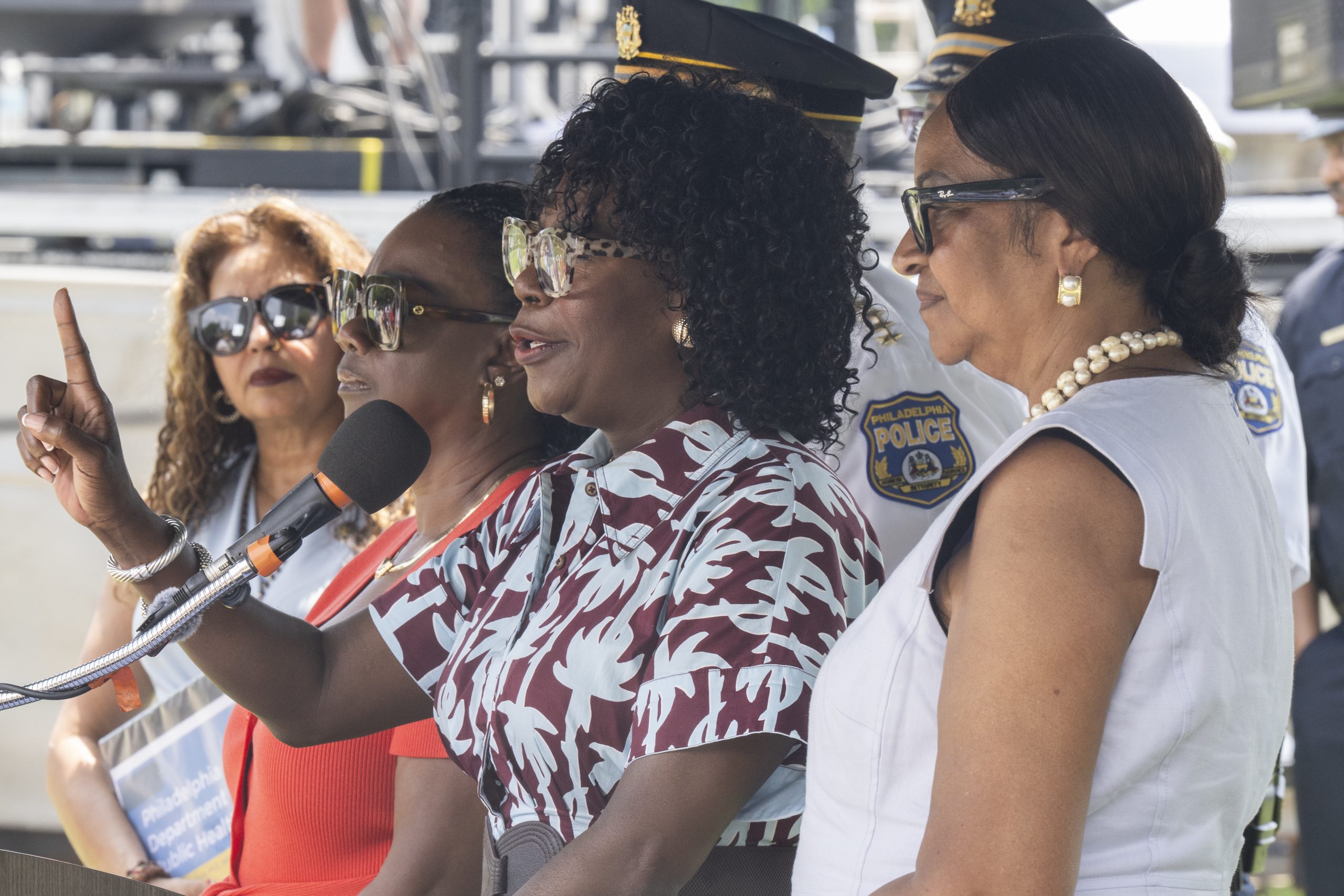
At a Wednesday news conference, Philadelphia Mayor Cherelle Parker outlines public safety and transportation plans for the July 4 concert expected to draw thousands to the Benjamin Franklin Parkway.Jose F. Moreno / Staff Photographer
If it wasn’t broken: C-
Philadelphia didn’t need to reinvent its Fourth of July celebration.
You can spend years planning a wedding, but you can’t plan for 300 Croatian soccer fans.
A Philadelphia couple stepped outside City Hall for the classic wedding photos last week and instead found themselves in the middle of a sea of red-and-white checkered print, singing and dancing. The celebration quickly became one of the most joyful viral moments of the World Cup.
The funny part is that the newlyweds weren’t the ones who got crashed. They were the ones who accidentally wandered into Croatia’s party.
The fans serenaded the couple, posed for photos, declared them honorary Croatians, and are now trying to raise money to send them to Croatia for a future trip, Billy Penn reported.
It’s hard to imagine a better advertisement for Philadelphia hosting the World Cup.
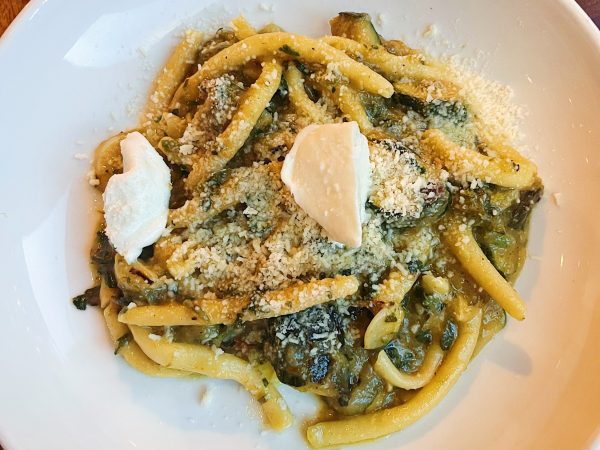
There’s something special about a thick, hand-rolled noodle. As part of its summer menu, Le Virtù’s ceppe — a chewy Abruzzese pasta shape that resembles a short and stout bucatini noodle — are made by hand and tossed in a bright squash blossom pesto. I later learned that ceppe gets its name from the wooden sticks or rods they mimic, a nice bit of pasta trivia I will stow away for quizzo. The hearty plate is topped with zucchini ragu, with a generous amount of the plant mixed throughout the dish, and mozzarella di bufala. It’s best enjoyed with a glass of wine on the restaurant’s beloved patio. Le Virtú, 1927 Passyunk Ave., 215-271-5626, levirtu.com
— Emily Bloch
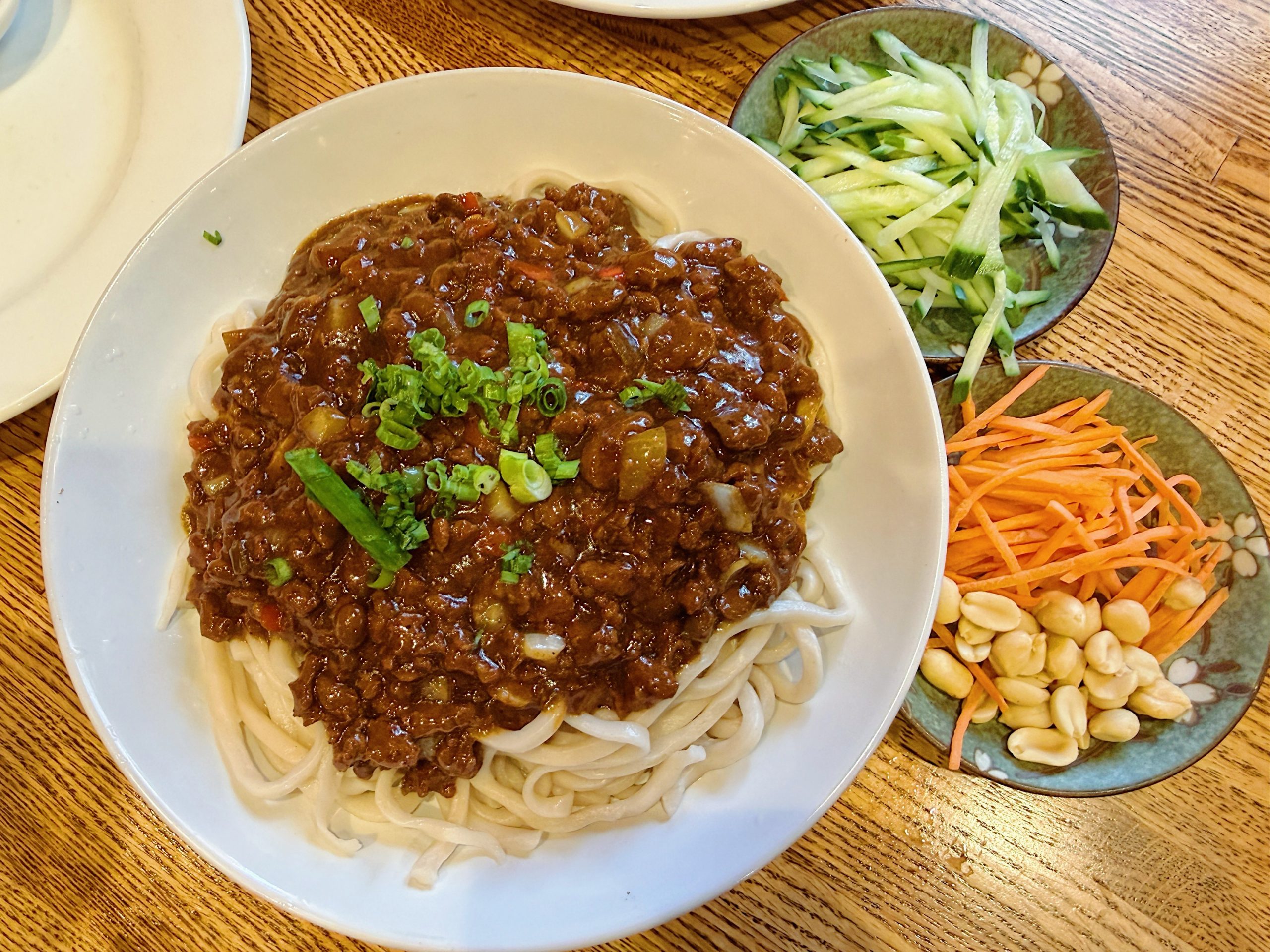
Zhajiang Mian at Opera House, 112 N. Ninth St.Kiki Aranita / Staff
Zhajiang Mian at Opera House
It has taken me far too long to get to Opera House, which opened about a year ago in the former Rangoon space. Rangoon had been my favorite restaurant in Philly for years, and I was admittedly bitter about them no longer occupying that storefront on Ninth Street. Now, I’m very pleased to report that my bitterness has now been assuaged.
Opera House is bright, beautiful, sparkling clean, a visual ode to Chinese opera that specializes in Northern Chinese food. They do have some Cantonese items on the menu (that are just fine), but the real star of the show is their $14.95 zhajiang mian. Saucy, with lean ground pork and lots of slow-cooked onions, these noodles are a true celebration of handmade textures. They’re intentionally a little wonky from being hand-stretched — some parts are thinner than others — so they sop up the super umami-rich fermented soy sauce in interesting ways. Served with sides of cucumber and carrot matchsticks and roasted peanuts, it’s likely the best version of the dish I’ve had in Chinatown, and such a beautiful play on varying textures and temperatures. Opera House, 112 N. Ninth St., 267-639-2376, operahousephilly.com
— Kiki Aranita
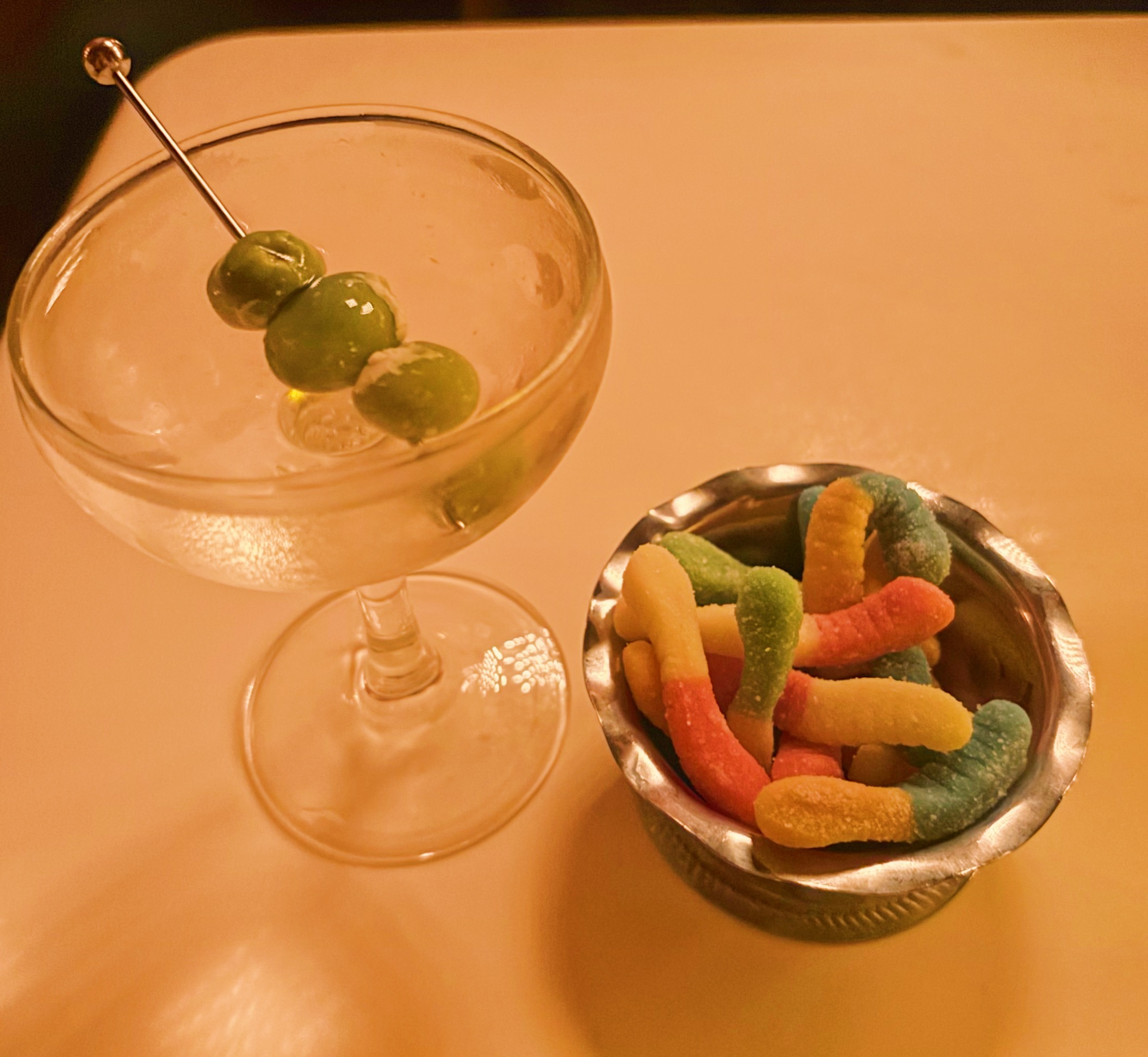
The Girl Dinner cocktail, a clarified gin martini with a sidecar of gummy worms, at Angeloni’s Club Madrid in Atlantic City, N.J.Margaret Eby / Staff
Girl Dinner at Angeloni’s Club Madrid
Atlantic City is a weird and magical place, particularly for those of us who tend to visit in 24-hour increments. I made such a journey last weekend, and the highlight was finally getting to try Angeloni’s Club Madrid, the retro-styled Italian spot that opened in 2024 from the owner’s of the beloved Tony’s Baltimore Grill. Angeloni’s was everything I hoped it would be — part cozy dining experience, part lounge party. Case in point: a DJ somehow seamlessly incorporated Norah Jones into a dance-y set.
The menu included one of the best versions of cacio e pepe I’ve had in a long time. But the star of the show is the cocktail menu, which has interesting interpretations of classic cocktails, executed with both fidelity to the drink and total whimsy. My favorite was the Girl Dinner, a perfect dirty gin martini served with a blue-cheese stuffed olive and a sidecar of gummy worms. It shouldn’t work — blue cheese and gummy worms? — but it does. It has that kind of slightly off-kilter energy that a really fun party does, where things are always threatening to fly off the hinges but somehow stay just contained enough for a memorably good time. Angeloni’s Club Madrid, 2400 Arctic Ave., Atlantic City, N.J., clubmadridac.com
— Margaret Eby
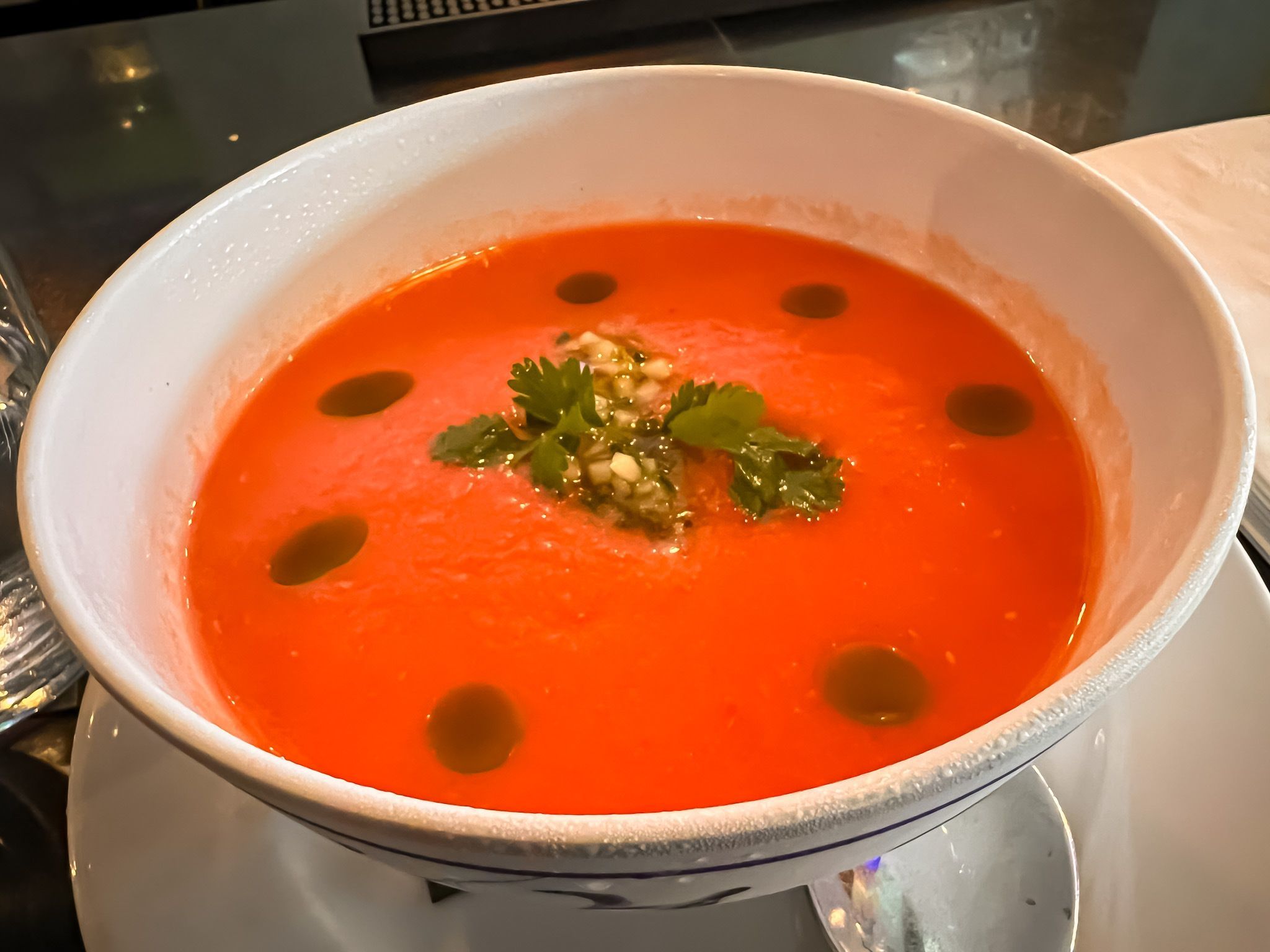
Watermelon gazpacho at Cantina Feliz, Ambler.Michael Klein / Staff
Watermelon gazpacho at Cantina Feliz
I always look to July 4 as the unofficial start of watermelon season. This year, that feels especially fitting: Forecasters are calling for one of the hottest Independence Days Philadelphia has seen in nearly a quarter-century, making cold watermelon all the more appealing. That spirit comes through in this watermelon gazpacho from Cantina Feliz in Ambler, which leans savory rather than sweet. Cucumber amplifies the freshness, while finely diced red onion and chives add bite without overwhelming the fruit. A drizzle of verdant herb oil lends richness, and the accompanying shot of sherry gives it a nutty, tangy depth. It’s a refreshing summer starter that becomes more layered with every spoonful. Cantina Feliz, 111 E. Butler Ave., Ambler, 215-646-1320, cantinafeliz.com
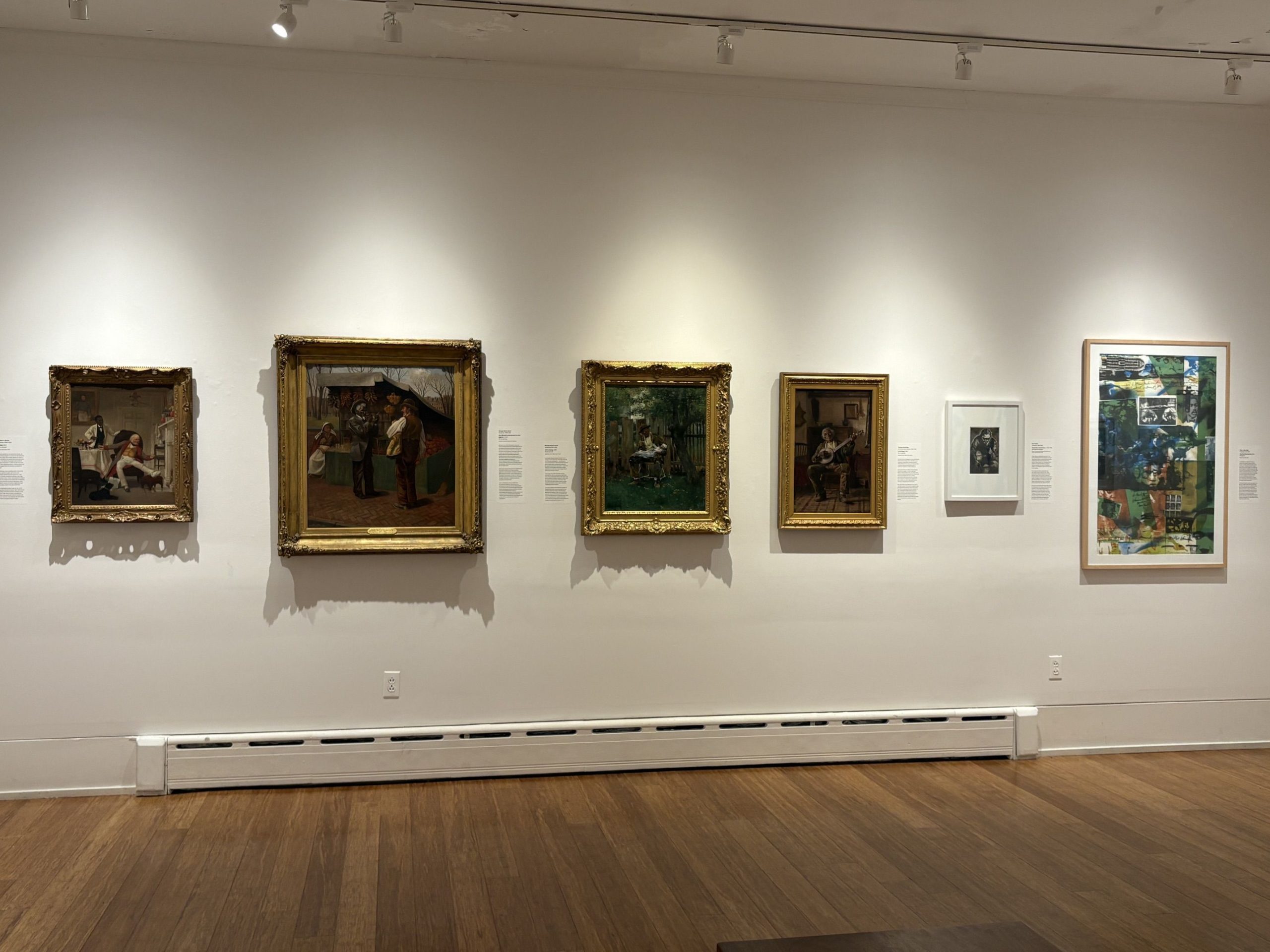
Last week, Woodmere director William R. Valerio stood in front of six vibrant works in Woodmere’s Charles Knox Smith Hall’s Antonelli Gallery.
Behind him were two works by Philadelphia painters Francis Coates Jones and Thomas Hovenden, both depicting an elderly Black person named Sam, who lived in the Germantown/Chestnut Hill area, enjoying moments in nature. Another work, a Dox Thrash etching of a man holding a banjo, suggests he’s more than an entertainer; he’s also an introspective thinker.
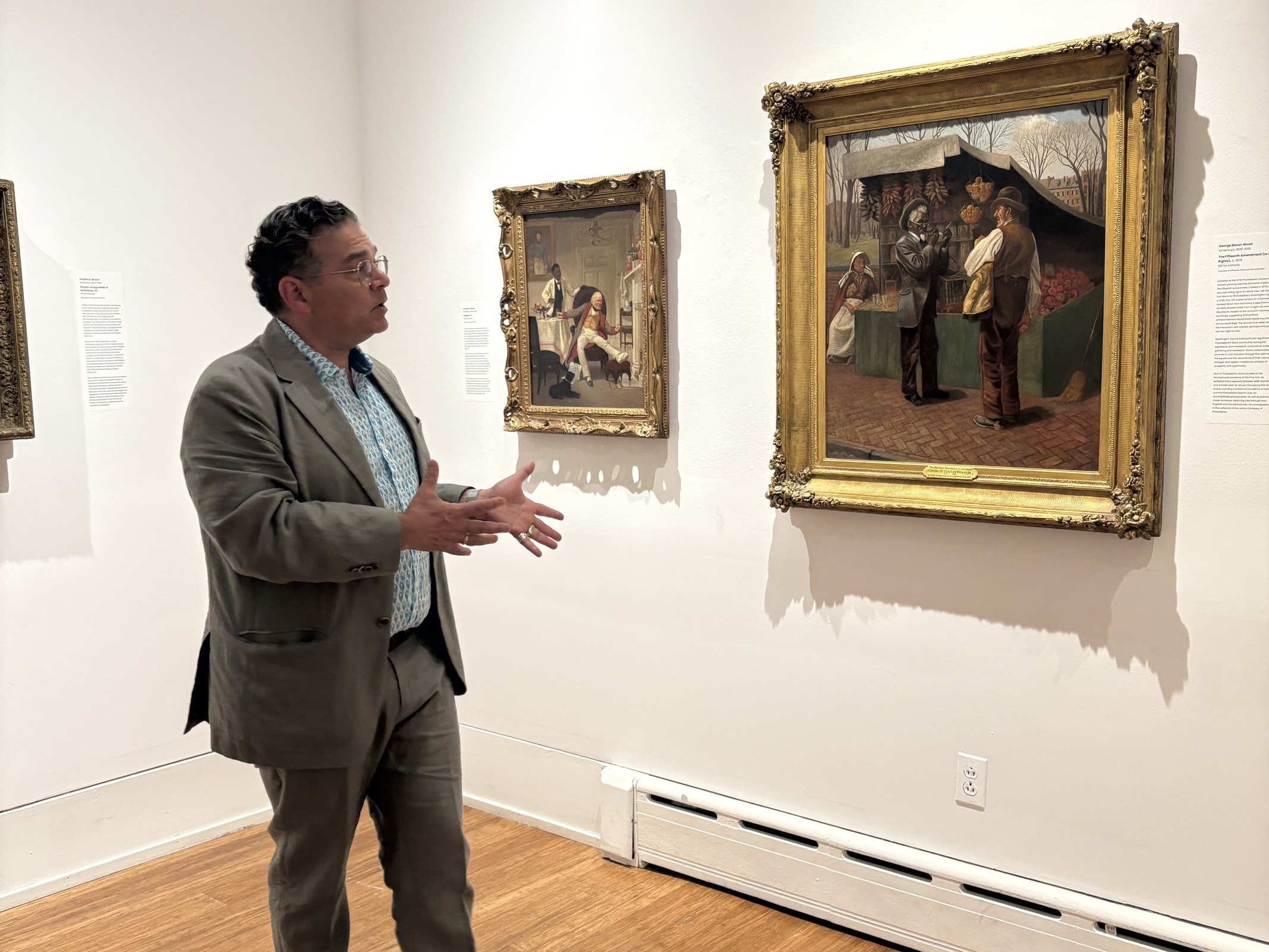
Woodmere director William R. Valerio discusses the “Arc of Promise” exhibition, featuring the work of Philadelphia artists who portray Black people with humanity. A number of the works are from the Civil War era.Elizabeth Wellington
Contemporary artist Allan L. Edmond’s lithograph, America’s Bicentennial, features luminaries Frederick Douglass, Martin Luther King, and Barack Obama alongside scenes of African American struggle and achievement.
What if America in the 19th century — when many of these works were made — embraced Black men’s humanity? Valerio asked, sparking my own questions.
What if we came to terms with how unfair treatment of women, minorities, and immigrants in the past impacted our lives today?
Would America be a different place?
These questions find answers in every nook, cranny, and inch of Woodmere’s “Arc of Promise” exhibit. Each painting, ceramic, map, or mixed media collage speaks to how Philly artists — from the 17th century through today — envisioned the idea of America.
From left to right, “Untitled,” 1874; by Charles V. Brown; Francis Coates Jones; “The Fifteenth Amendment (or Civil Rights), George Bacon Wood, 1875; “Left in Charge,” 1882; Thomas Hovenden, “I’s So Happy,” 1882; Dox Thrash, “Played Out” c. 1937; “American Bicentennial,” Allan L. Edmunds. These photos show the humanity of Black men during an era when art didn’t portray them as such.Elizabeth Wellington
But there are also several important works on loan including protest photography by Harvey Finkle and a mixed-media necklace by Teri Hislop, a member of the Lenape Nation of Pennsylvania. Henry Bermudez’s Miss America, completed in 2019, offers a layered vision of America through migration, mythology, and identity. It sits next to sculptor Hiram Powers’ “America,” in which 19th-century America is depicted as a Greek goddess.
There is a lot of pomp, circumstance, and sparkle in this lively retrospective. The must-see gallery, however, is the Schnader Gallery Hall because it includes a pristine collection of refurbished American landscapes by local 19th-century artists Frederic Edwin Church and James Hamilton featuring many a Schuylkill waterfall. Think of this gallery as a place to retreat after a bustling Fourth of July weekend.
“Arc of Promise” takes its name from watercolor artist Jerry Pinkney, a longtime friend of the Woodmere who used the term as a way to speak to an America of unfolding potential, despite its past unequal treatment of Black people, immigrants, and women.
“Arc of Promise” runs through Nov. 2, 2026, Woodmere’s Smith Hall is located at 9201 Germantown Ave.
— Elizabeth Wellington
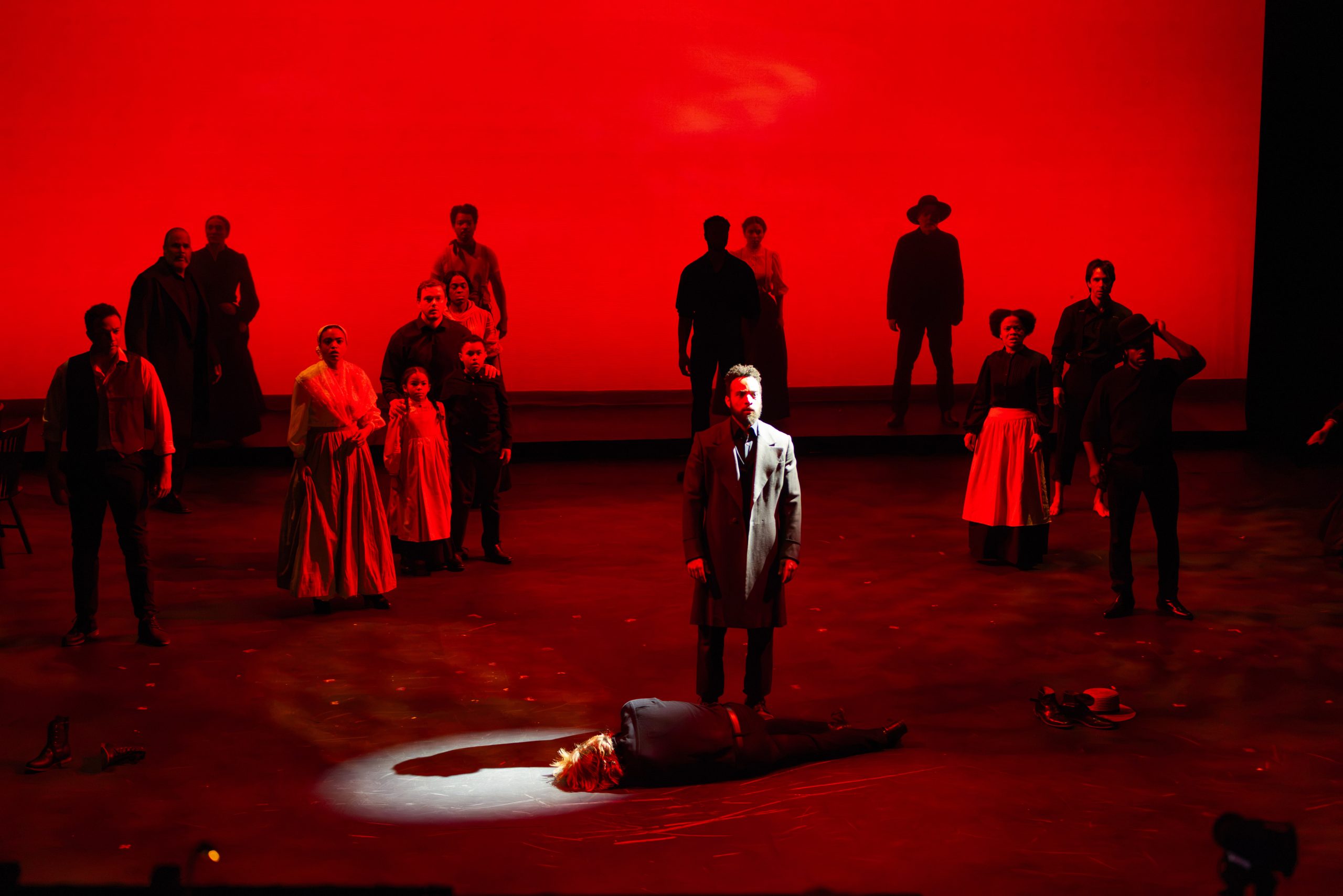
Actor John Clarence Stewart as the titular character in “Basil Biggs” at the Wilma Theater.REC Philly
Excavating history with ‘Basil Biggs’
There is something so powerful about seeing someone grapple with their personal experience of American history. As Semiquincentennial fanfare reached a fever pitch in Philadelphia, this workshop of a developing play by actor/playwright Anna Deavere Smith was a deeply moving performance about her great-great-grandfather, Basil Biggs, a conductor on the Underground Railroad. Smith learned of him in an episode of Finding Your Roots; even then, she knew his story was worthy of a play, though she didn’t start writing until a decade later.
Biggs was a veterinarian and farmer in Gettysburg during the Civil War, a free Black man who helped fugitives escape slavery and who buried the tens of thousands of soldiers who died in the war’s bloodiest battle. The Biggs family house still stands today, and Smith visited the grounds, as well as the Adams County Historical Society, while she researched the time period. There was little historical documentation about her family, so this work is narrative speculation, based on her research of the time period, much like groundbreaking scholar Saidiya Hartman’s critical fabulation: In the absence of records about African Americans, visionaries use archival materials to imagine the lives of those largely erased from written memory.
Smith crafted a riveting world that showcased fierce resilience, disarming humor, and profound empathy during a painfully divided time. The story is fueled by original music from actor/violinist Edward W. Hardy. It was an honor to experience one of the earliest presentations of this play, which will likely grow into a major production. It’s the kind of honest work about this nation’s bloody, conflicted history that feels like essential viewing for anyone who calls themself a patriot.
“Basil Biggs” ran June 26-28 at the Wilma Theater as part of ArtPhilly’s What Now: 2026 festival.
— Rosa Cartagena
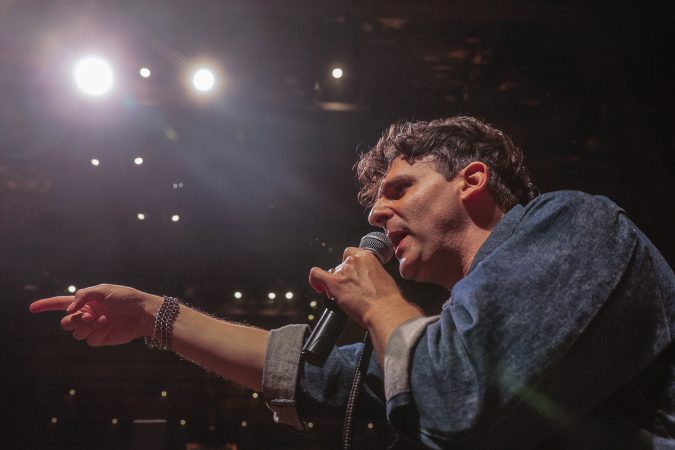
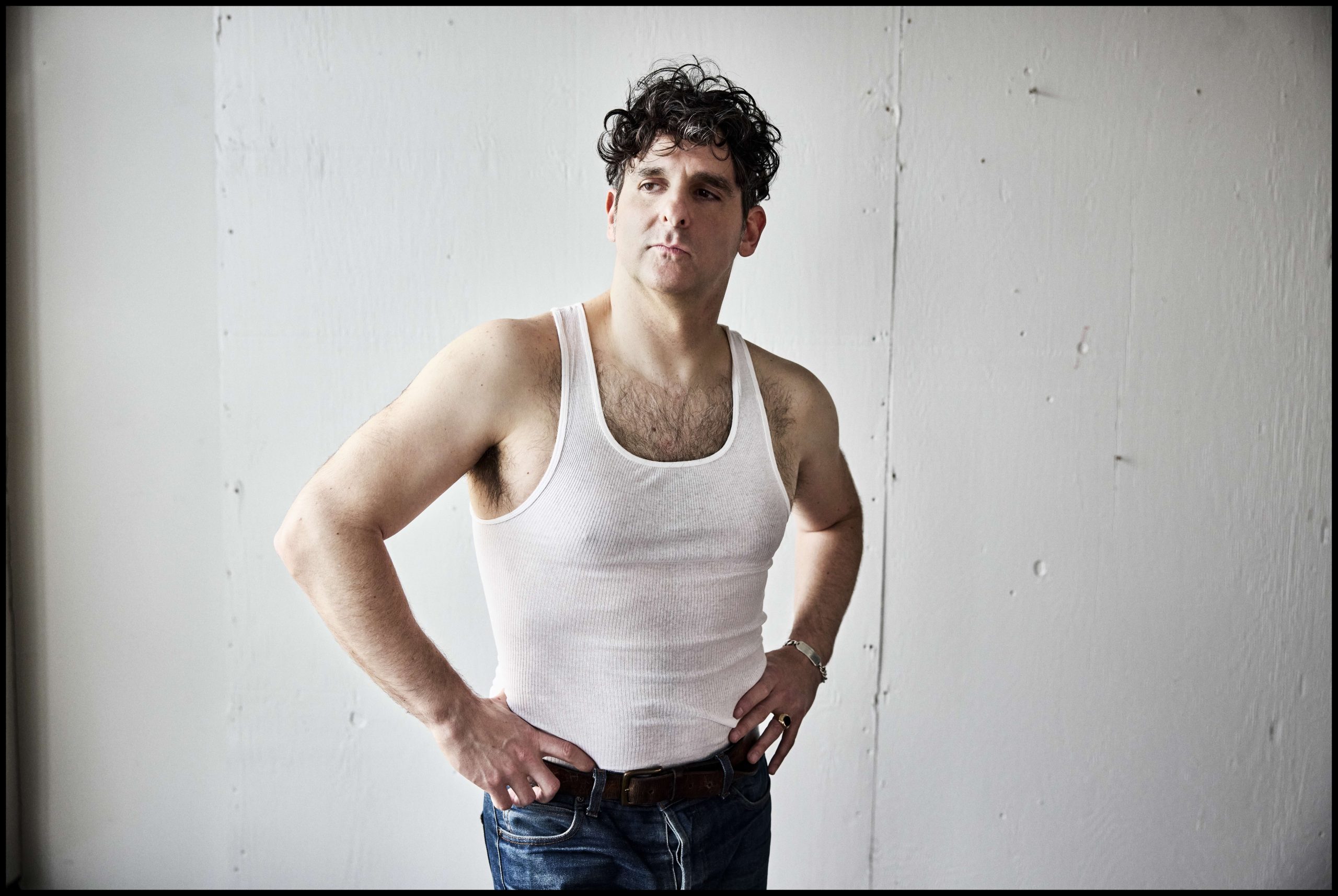
Adam Weiner of Low Cut Connie. The band’s new album is “Livin’ in the U.S.A.”Danny Clinch
Romping, stomping, piano-pounding resistance with Low Cut Connie
Adam Weiner of Low Cut Connie has stressed that the band’s eighth studio album, whose release is timed to America’s 250th birthday, is an act of resistance.
Shortly after becoming one of the first artists to cancel at the Kennedy Center after the Trump administration’s takeover of the D.C. institution in early 2025, Weiner recorded what became the title song.
As he explains in an explanatory note that accompanies the album, it addresses “the atrocity of ICE, authoritarianism, racism” and led to a full set of songs “about the times we are living through in America 2026.”
But while Weiner’s political stance is unequivocal — “I made this album to say f— you to this regime, to the brutality, and inhumanity of our tech leaders,” he writes — his music is much more subtle.
Many of the titles like “Oh Yeah” and “Get Down” on Livin in the USA are essentially party songs: romping, stomping, piano-pounding, and saxophone-wailing celebrations of diversity and sexuality that aren’t the slightest bit preachy or pedantic.
Singing a gospel of self-liberation, Weiner is accompanied by the touring LCC band, which includes singer Amanda “Rocky” Bullwinkel,” guitarist-sax player Kelsey Cork, and drummer Jarae Lewis. Occasionally, as in the grinding “Human Condition,” the songs are overt in their condemnation of life during Trump time, which he likens to “living in a house of detention.”
But in general, he heeds lessons learned from favorite albums like Bruce Springsteen’s Born in the USA and Sly and the Family Stone’s There’s a Riot Goin’ On. When delivering a heavy message, always keep the groove going and the rock rolling.
“Just because the world is collapsing,” Weiner writes in his Livin album note, “doesn’t mean we can’t go skinny dipping this weekend.” “Can’t Be Wrong” is perhaps the most grabby earworm in a tight, 10-song set whose energy never flags. In that song, the prospect of “gettin’ naked in the afternoon, or maybe later underneath the moon” leads to an obvious conclusion: “Oh babe, you know it can’t be wrong.”
“Livin in the USA” releases July 3
— Dan DeLuca
Remembering LGBTQ+ activists
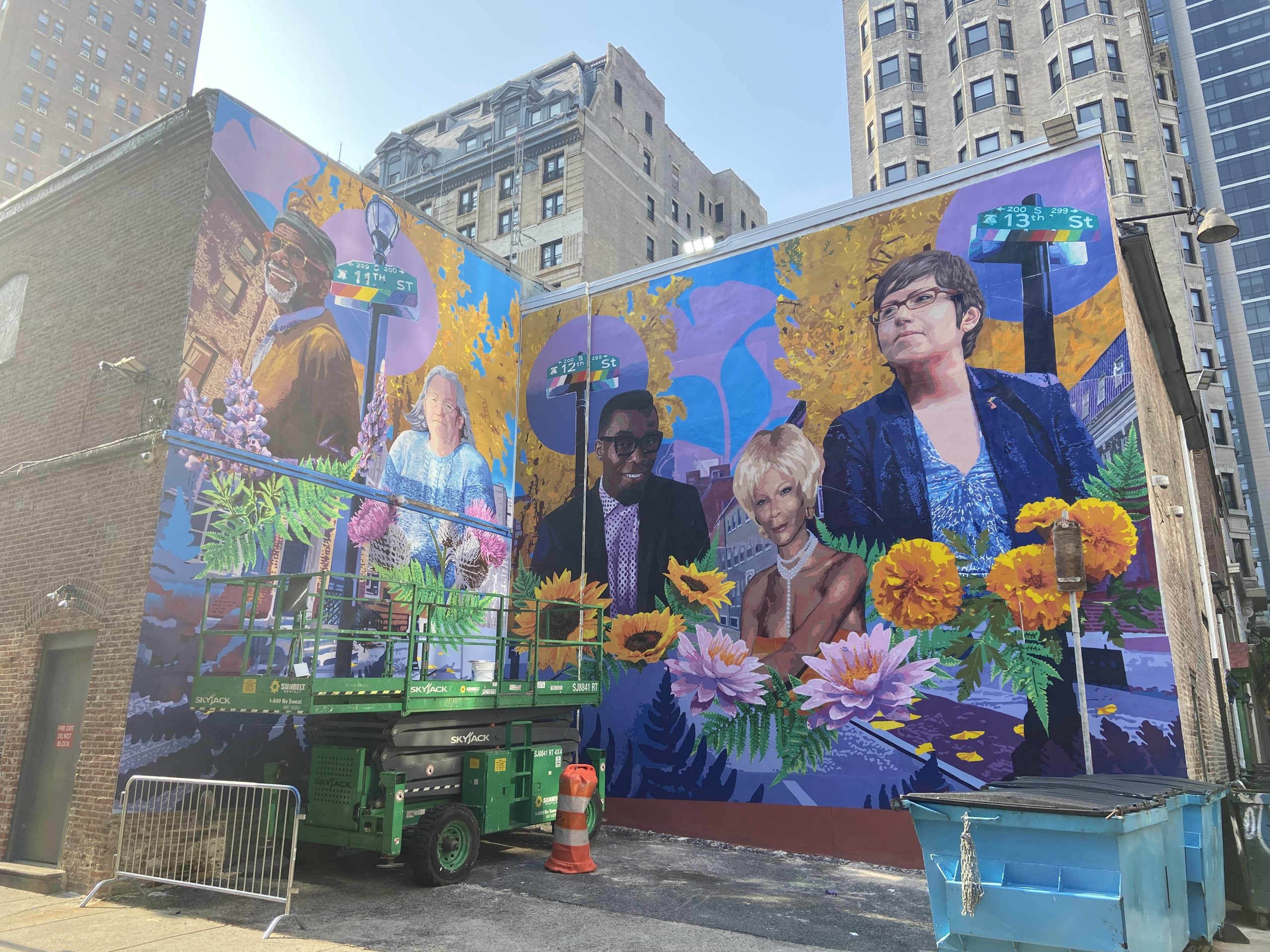
Resting in peace can also mean resting in pride and power. A new Gayborhood mural provides a tribute that does exactly that.
In Pride, In Power, In Memory is located on the side of Voyeur Nightclub at 1221 James St., a prominent spot amid Philadelphia’s queer nightlife.
The mural is located outside of Voyeur Nightclub in Philadelphia’s Gayborhood.Morgan Ritter
Painted by artist Santiago Galeas, the mural displays portraits of Gloria Casarez, Michael S. Hinson Jr., Tyrone Smith, Nizah Morris, and Dawn Munro; all LGBTQ+ activists who called Philadelphia home.
Each figure is accompanied by a flower symbolizing the person’s life and identity; Casarez’s portrait is adorned by Mexican marigolds, for example, as a nod to her heritage. The faces were all drawn referencing photos of them looking hopeful and optimistic.
The mural is strikingly bright, with vivid shades of purple and yellow illuminating the portraits.
These trailblazers pursued several kinds of activism in their lives, including AIDS awareness, trans rights, and community organization to rally for queer rights. Without them, the status of Philadelphia’s acceptance of the queer community may have looked completely different today.
“In Pride, In Power, In Memory”is located on the side of Voyeur Nightclub at 1221 James St.
America stands on the brink. The ultimate question of independence hangs over Philadelphia.
And Thomas Jefferson has a declaration to draft.
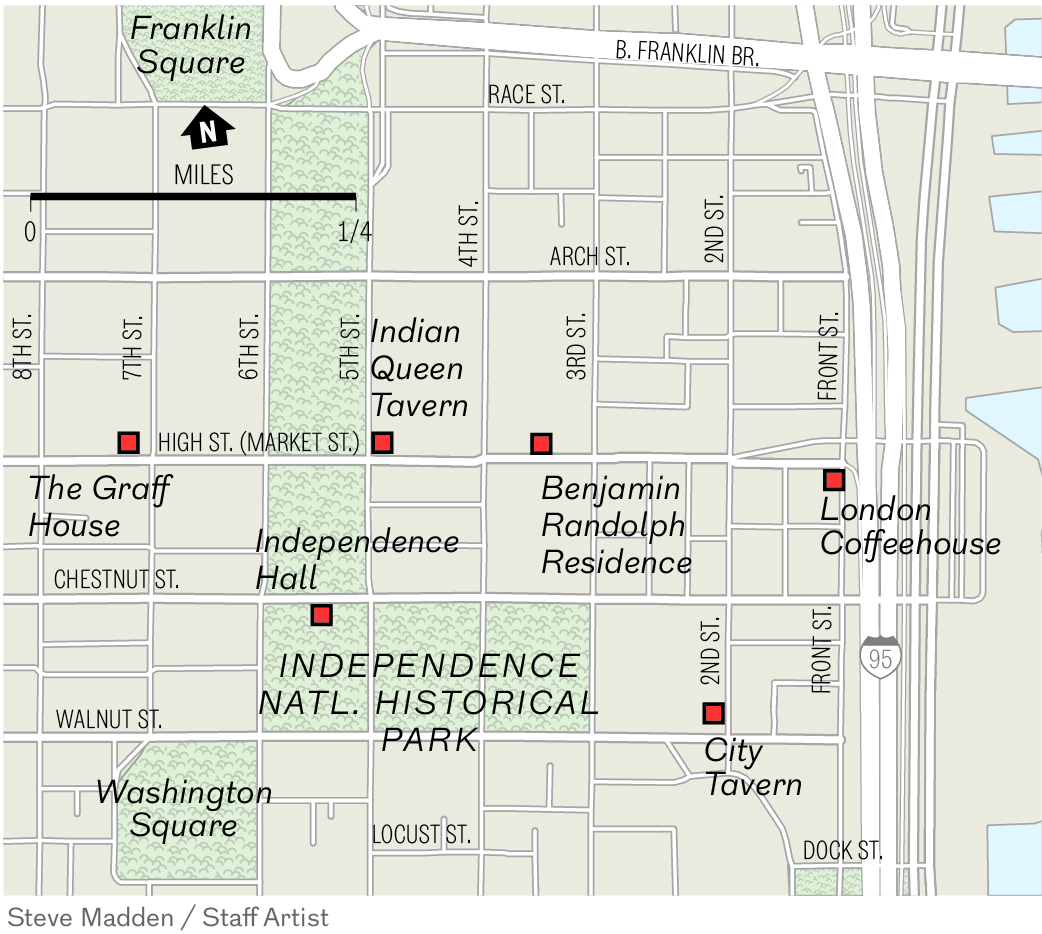
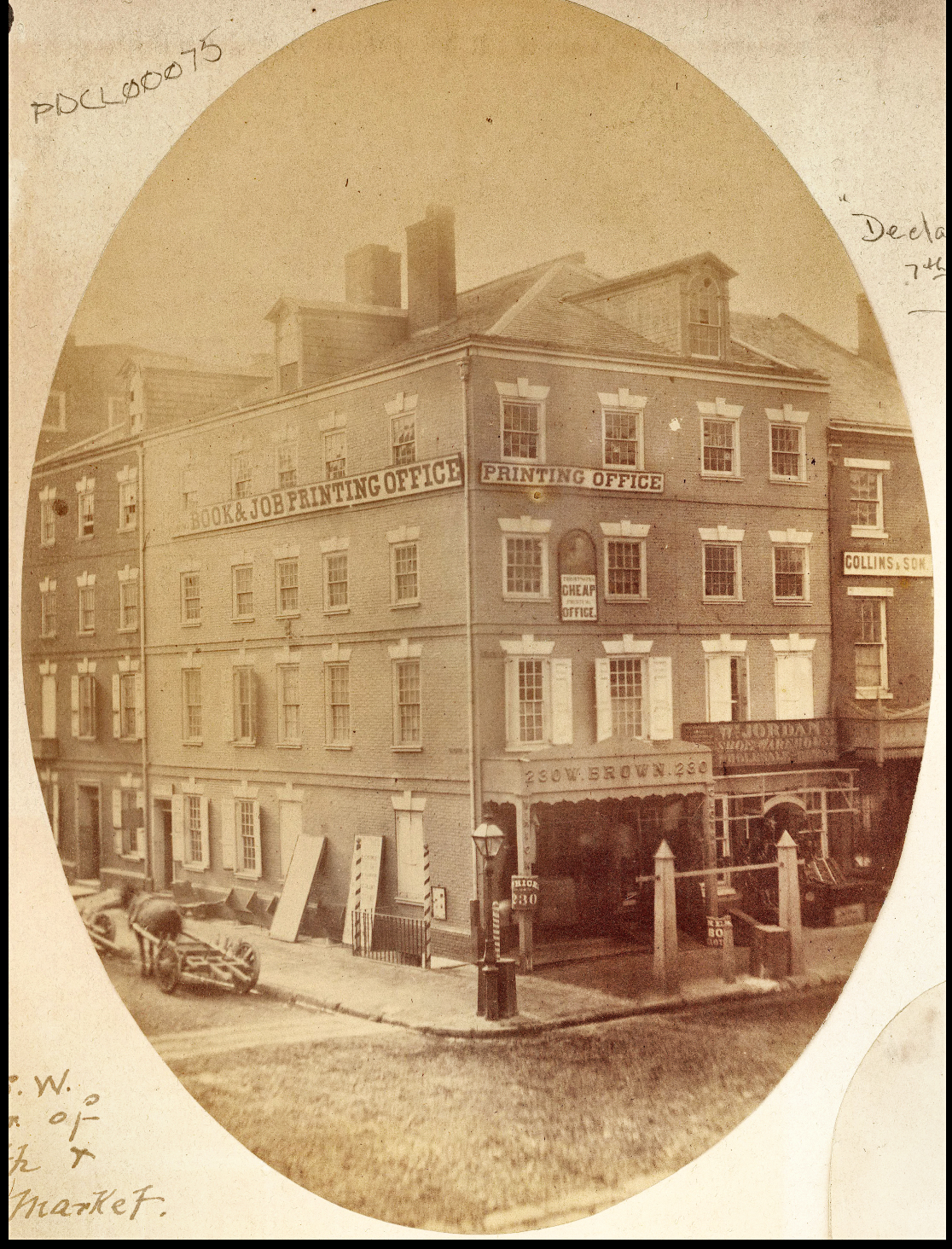
His heart is in Virginia. His “country,” as he calls it. But here he is at Seventh and High Streets, 33 years old, living in two sweltering rooms, with his chance to make his mark on history.
Unlike his fellow delegates, lodged in rooms along Philadelphia’s booming riverfront, Jefferson takes quarters along the city’s rural western edge, two blocks from the Pennsylvania State House, where the rebels conspire. The orchards and pastures bordering the downtown of British America’s largest and wealthiest city offer an escape from Philadelphia’s stifling summer heat and foul smells. Its stinking creeks, rotting trash, and unchoked illness. The verdant outpost, elsewise occupied by a bricklayer and his family, provides “the Squire,” as his friends back home call him, some small semblance of his mountaintop mansion, Monticello.
Thomas Jefferson’s Philadelphia in 1776.Steve Madden
He is living out of leather-bound trunks. Fresh air and sunlight stream through a window overlooking High Street — Philadelphia’s main thoroughfare, busy even on the outskirts. Hinterland farmers’ wagons clatter over cobbles, headed for the market. The sweet scent of fresh loaves drifts from a shopfront bakery. Jefferson’s thoroughbred — Caractacus, perhaps, his favored bay stallion, whose regal appellation derives from a first-century British chieftain — nickers in a nearby stable.
Robert “Bob” Hemmings, Jefferson’s 14-year-old enslaved valet — and half brother of Jefferson’s future paramour, Sally — attends his every need in Philadelphia, sleeping in a garret off the writing parlor.
The Declaration House, 7th and Market Streets, in 1856.Free Library of Philadelphia
The rag paper resting on Jefferson’s mahogany travel desk — a small, portable lap device of his own design that the inveterate tinkerer had commissioned from a Chestnut Street cabinetmaker upon his arrival in Philadelphia a month earlier — remains blank. His quill is still. In the shadows, a grandfather clock ticks a stately rhythm.
Tick … tock … tick … tock.
The master of Monticello is working on a deadline.
Just weeks earlier, more than four thousand Philly patriots braved driving rains to gather in the brick-walled yard of the State House. Celebrating the Second Continental Congress’ decree to form new governments apart from King George III — the masterstroke of John Adams, 40 — the drenched Philly masses thunder for independence.
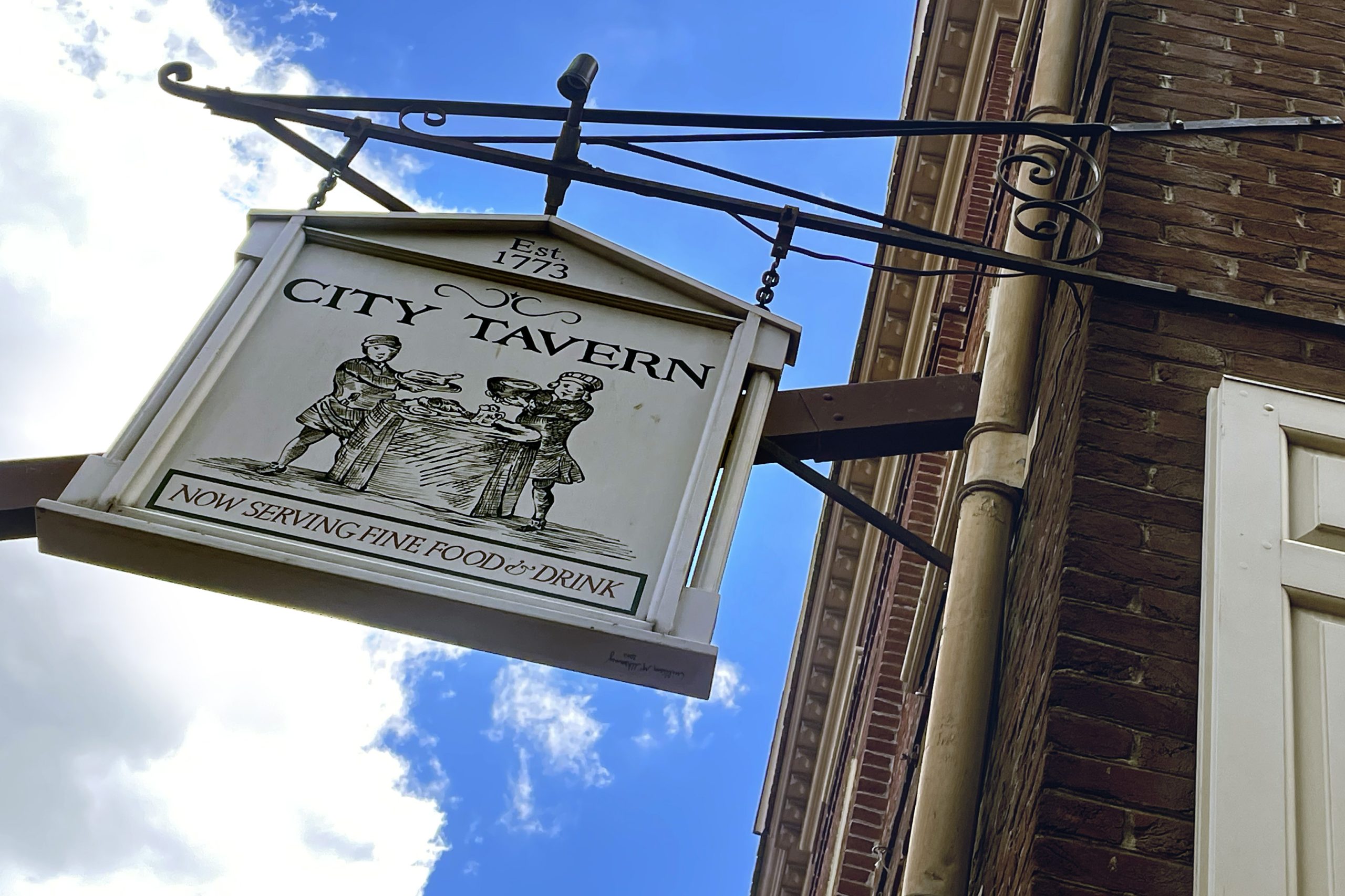
City Tavern Monday, June 15, 2026. The original building was demolished in 1854 and reconstructed in 1975.Tom Gralish / Staff Photographer
George Washington himself takes brief leave of his embattled army, digging in for an expected British assault on New York, to update the 56 congressional delegates in Philadelphia. The general’s tidings are lost to the centuries. But hear the lusty huzzahs that greet the stoic warrior at the representatives’ nightly repast at City Tavern, their unofficial headquarters.
“George Washington, and victory to the American arms!” goes the toast.
Inside the locked chamber, radicals like Adams and his older cousin, and backroom operator, Samuel, 53, lead the fight for liberty. Jefferson, whose resolve for popular government in America is unquestioned, but who detests public speaking, rarely rises.
In early June, it is Jefferson’s fellow Virginian, the passionate patriot Henry Lee, who delivers a decisive stroke, boldly uttering words hitherto unsaid in Congress: “That these United Colonies are, and of right ought to be, free and independent.”
The thunderclap is met by delay. Delegates from powerful colonies, including Pennsylvania’s own reluctant son of liberty, John Dickinson, are hesitant to cut the cord. Radicals work furiously to build unanimity.
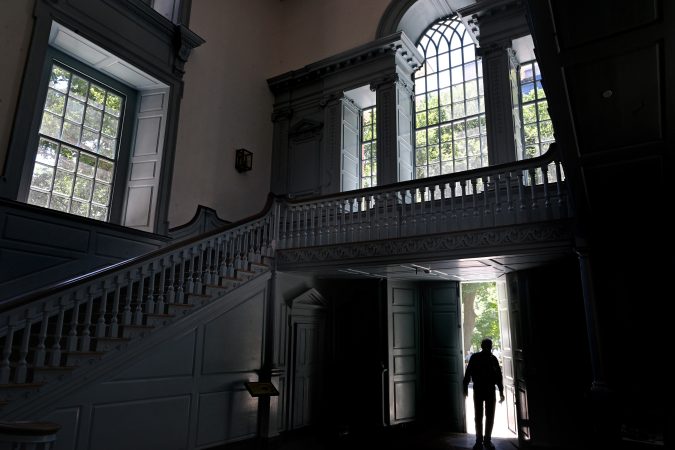
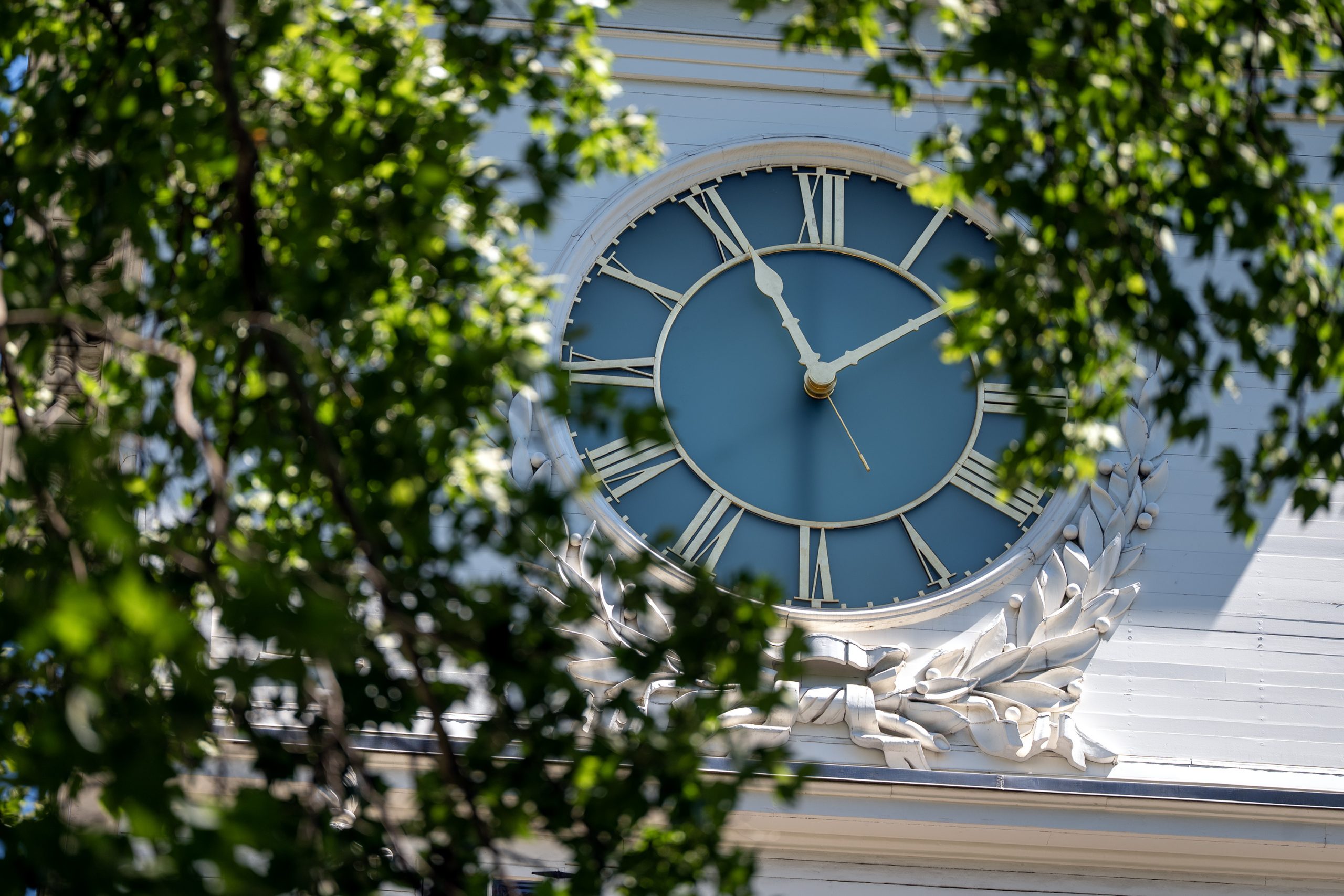
Clock tower at Independence Hall (Pennsylvania State House) Monday, June 15, 2026.Tom Gralish / Staff Photographer
Philly headlines — in the same papers publishing fugitive slave ads and notices for the sale of Black children far younger than Bob Hemmings — decry “our mortal enemy the King of Great Britain.”
“The people wait for us to lead the way,” Jefferson will note.
During the delegates’ fiery, closed-door debates, his long legs folded underneath his desk, Jefferson stays mum.
But now the poet-philosopher and slaveholder, whose bright brilliance and dark contradictions mirror perfectly the promise and sins of the nation he seeks to author, must find all the words.
A renaissance figure among the rebels
It is John Adams, in characteristically gruff fashion, who appoints Jefferson first quill. The good gentleman from Virginia is but one of five men appointed to draft America’s creed — including Adams and Franklin, home sick with gout and other ailments — but Adams argues it is Jefferson, with his “peculiar felicity for expression,” who should do the writing.
“Reason first, you are a Virginian, and a Virginian ought to appear at the head of this business,” Adams recalls telling Jefferson in the committee’s first convocation. “Reason second, I am obnoxious, suspected, and unpopular. You are very much otherwise. Reason third, you can write 10 times better than I can.”
Adams is right.
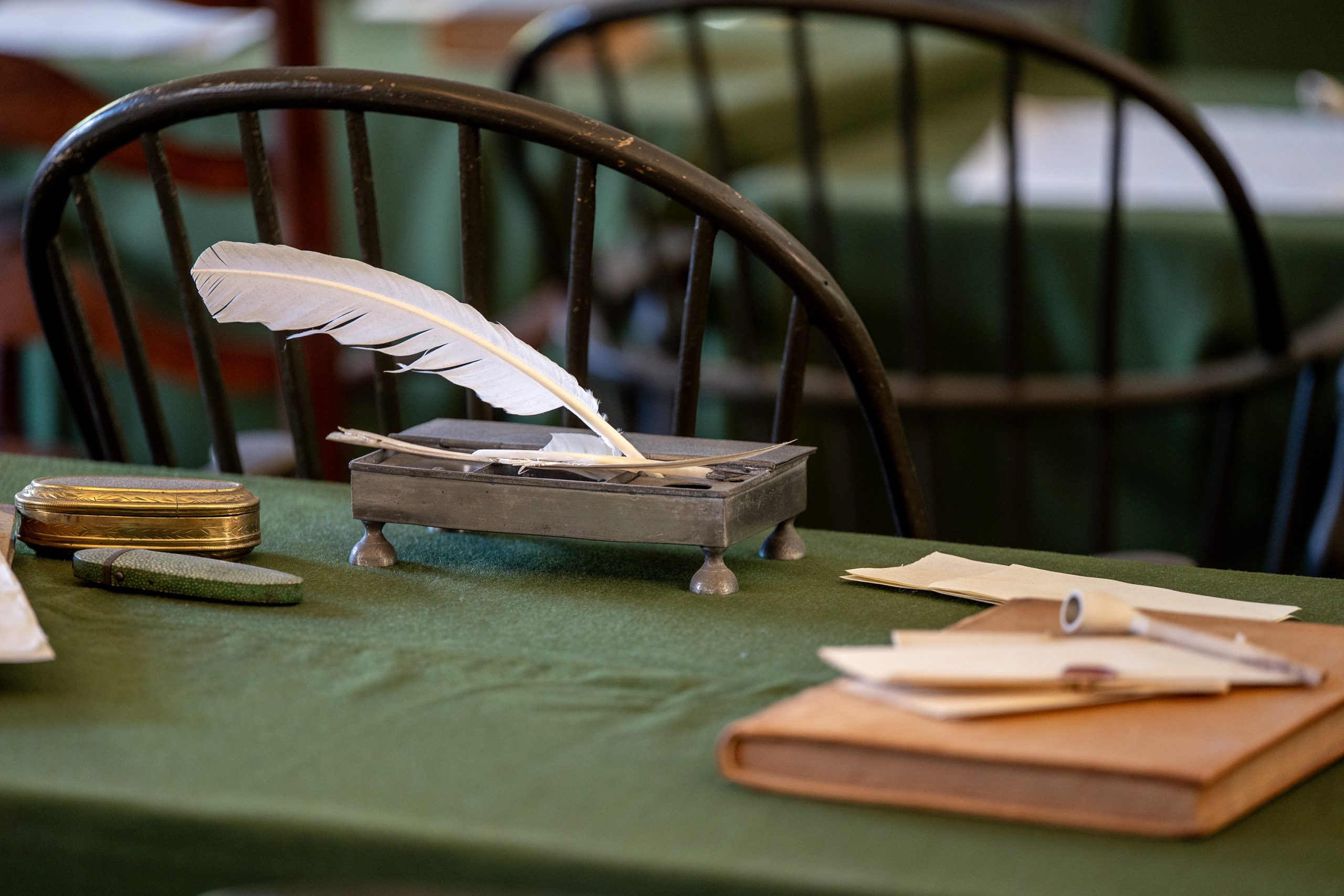
Replica desks in the Assembly Room in Independence Hall (Pennsylvania State House) Monday, June 15, 2026.Tom Gralish / Staff Photographer
Both drawn to the flame of American independence — the noblest cause of their age, and any other, they believe — the freedom fighters cut an odd coupling.
Adams, short, plump, balding, cantankerous. Jefferson, tall, lean, formidable, a shock of copper hair, freckled in the Philly heat, his illusive eyes described as blue or hazel or light gray. The Southern planter and legislator who matriculated at the College of William & Mary is soft-spoken and painfully gracious and polite, charming, flirtatious. He abhors confrontation.
Behold this true renaissance figure among the rebels.
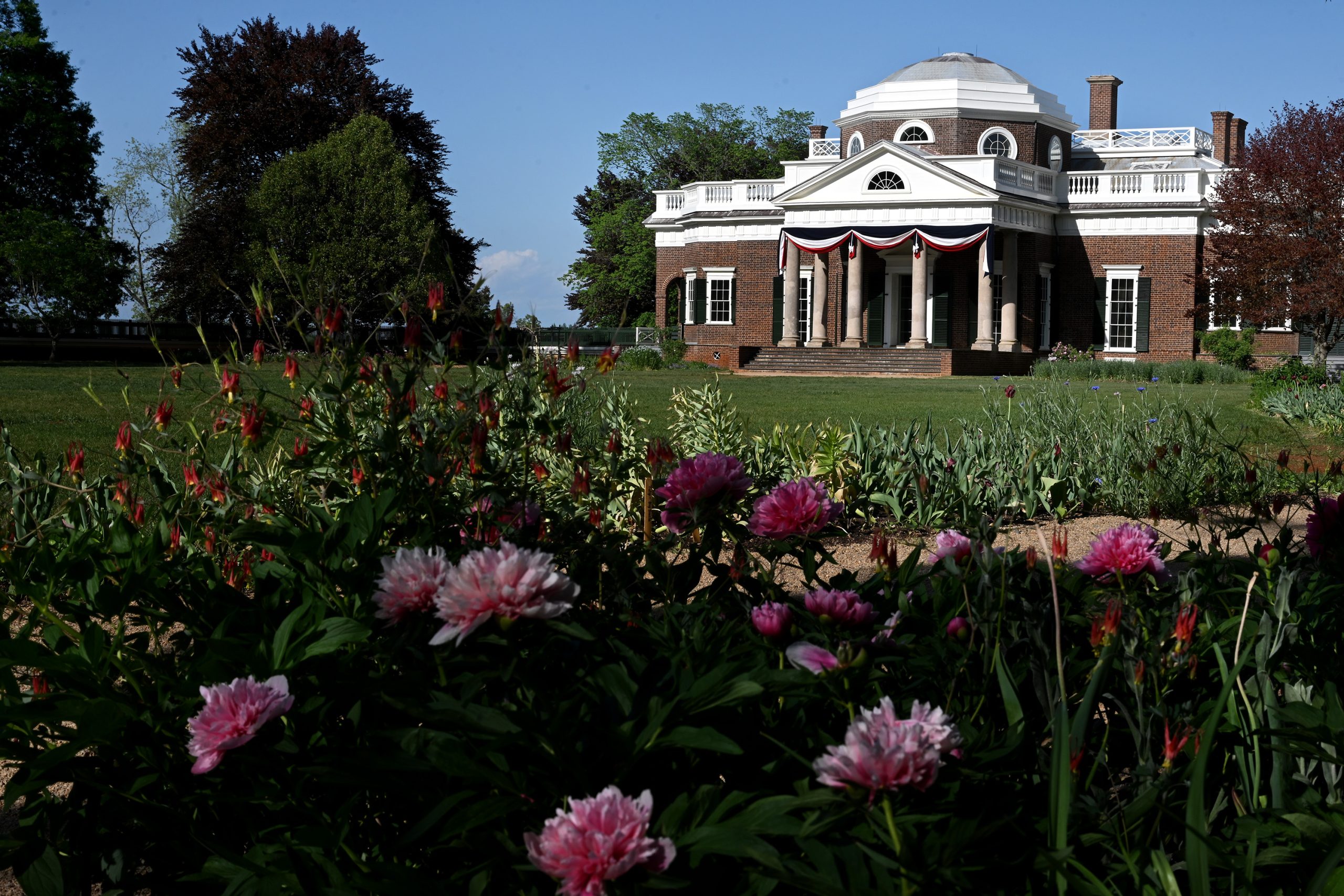
Monticello, the primary residence and plantation of Thomas Jefferson in Charlottesville, Virginia, April 22, 2026.Tom Gralish / Staff Photographer
A lover of food and wine and fine things, he studies art and history, philosophy and mathematics, science, botany, astronomy. He speaks four languages and can aptly read ancient Greek. He has been building his Palladian plantation house — situated on land more than five times bigger than the core of Philadelphia, the makeshift colonial capital city, and toiled by more than 100 chained souls — since the age of 14.
Adams, obsessive even in his sightseeing, catalogs and compares the marvels of Philadelphia — its spacious thoroughfares, leafy green spaces, commanding skyline, including Christ Church’s heaven-kissing steeple, the tallest structure Washington had ever laid eyes on, its booming ports, gleaming institutions, exotic foods, and bottomless wine, porter, and punch.
During his few hours free from the rigors of revolution, Jefferson shops.
With Bob touting bulging bundles, the Squire strolls Philadelphia’s abundant artisanal shops, buying maps and books across all his tastes — so many volumes, he commissions his favorite Philly cabinetmaker to make a specialized bookcase to ship them home — and tools for Monticello. He buys fine fabrics for his wife, Martha, whom he is heartsick for. An elegant doll for his 4-year-old daughter, Patsy. He buys a straw hat for himself, and shoes and socks for Bob. At a market stall, he pays a shilling to gaze upon a merchant’s exotic monkey.
Along with his compatriots, he sups at the City Tavern most nights, enjoying as many as three glasses of wine, but also favors the regal rusticity — and punch — of the Sign of the Conestoga Wagon Tavern on High Street.
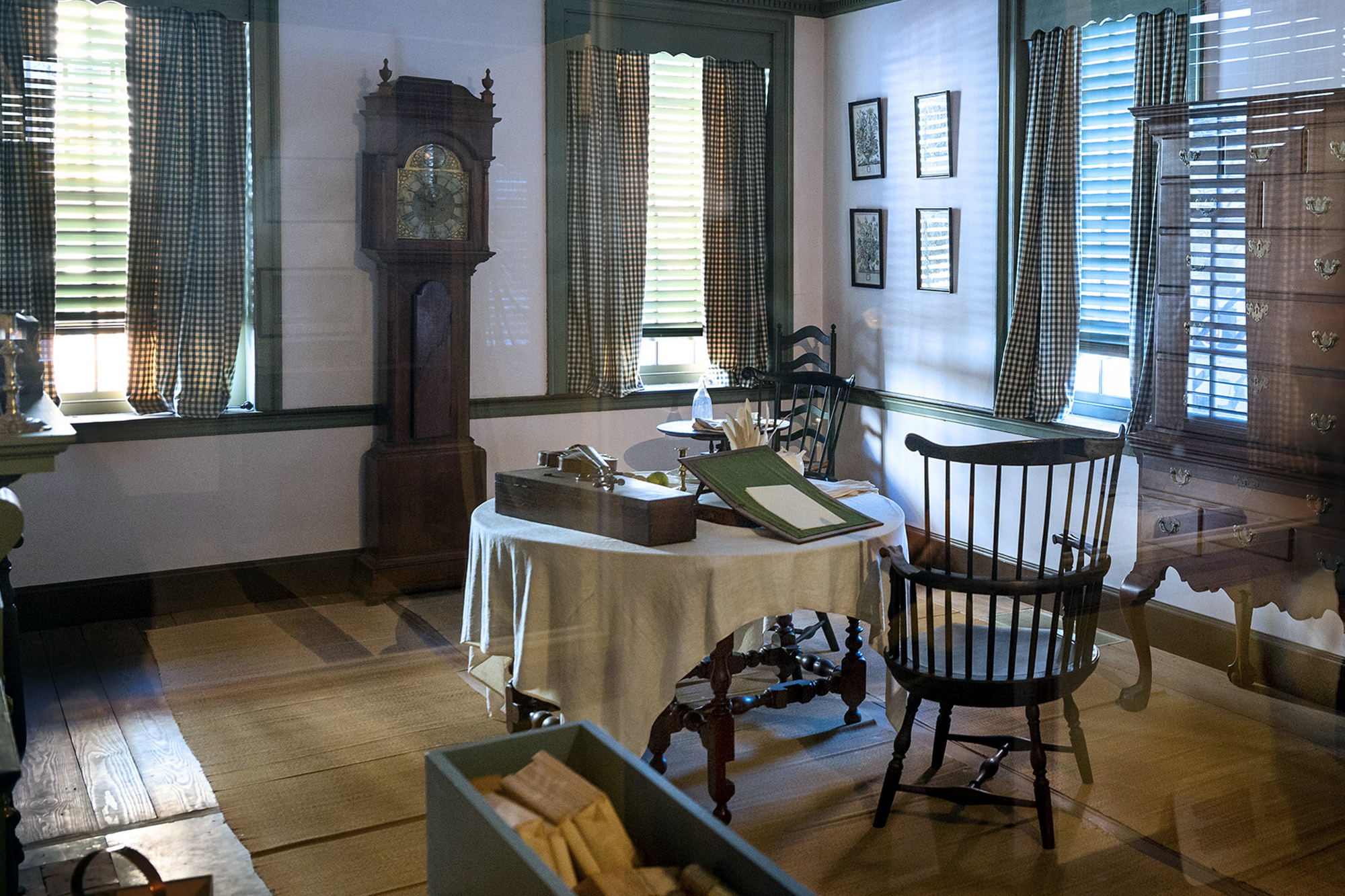
A replica of the room where Thomas Jefferson wrote the Declaration of Independence, inside Declaration House (home of Jacob Graff, Jr.) Dec. 20, 2023.Tom Gralish / Staff Photographer
Envision him, this sun-freckled Moses of American history, in flesh and bone, a living, breathing man, donning a sun hat, whose first memory is being held on a pillow by an enslaved worker, and who will within days pen the most revolutionary, if fatally flawed, manifesto ever put to parchment, walking among, but set apart from, the working classes of Philadelphia. The laboring, the indentured, and the enslaved — all those he would conversely see lifted to the altar of democracy or sold at the auction block.
See this man. And understand America.
An expression of the American mind
He envisions his task to “place before mankind the common sense of the subject.” A justification for revolution, yes. A litany of proof that King George was a tyrant — and among other things, in an epic, and ultimately unsuccessful, act of blame-shifting, responsible for the entirety of the slave trade. But not a wholly original document. Rather, a soaring summation of the American revolutionary zeitgeist.
“Neither aiming at originality of principle or sentiment, nor yet copied from any particular and precious writing, it was intended to be an expression of the American mind, and to give to that expression the proper tone and spirit called for by the occasion,” he will later explain.
Statue of Thomas Jefferson at Monticello, his primary residence and plantation of in Charlottesville, Virginia, April 22, 2026.Tom Gralish / Staff Photographer
In his parlor, with the tall clock ticking and Bob tending to tea, Jefferson works fast, pulling from his own writing — including his recent draft for a new Virginia constitution — and also from a declaration of rights for Virginia, penned by pal George Mason. From the whirling stream of his intellect, he plucks at will the inspirations and ideals of the seminal works of enlightened thinkers like John Locke and David Hume, whose writings on natural rights and freedom (“Life, liberty, and property,” Locke wrote, before Jefferson amends it for the better) provide the bedrock for the revolution.
Quickly, he begins to find his words. The rag paper fills.
“We hold these truths to be self-evident,” writes the man from Monticello.
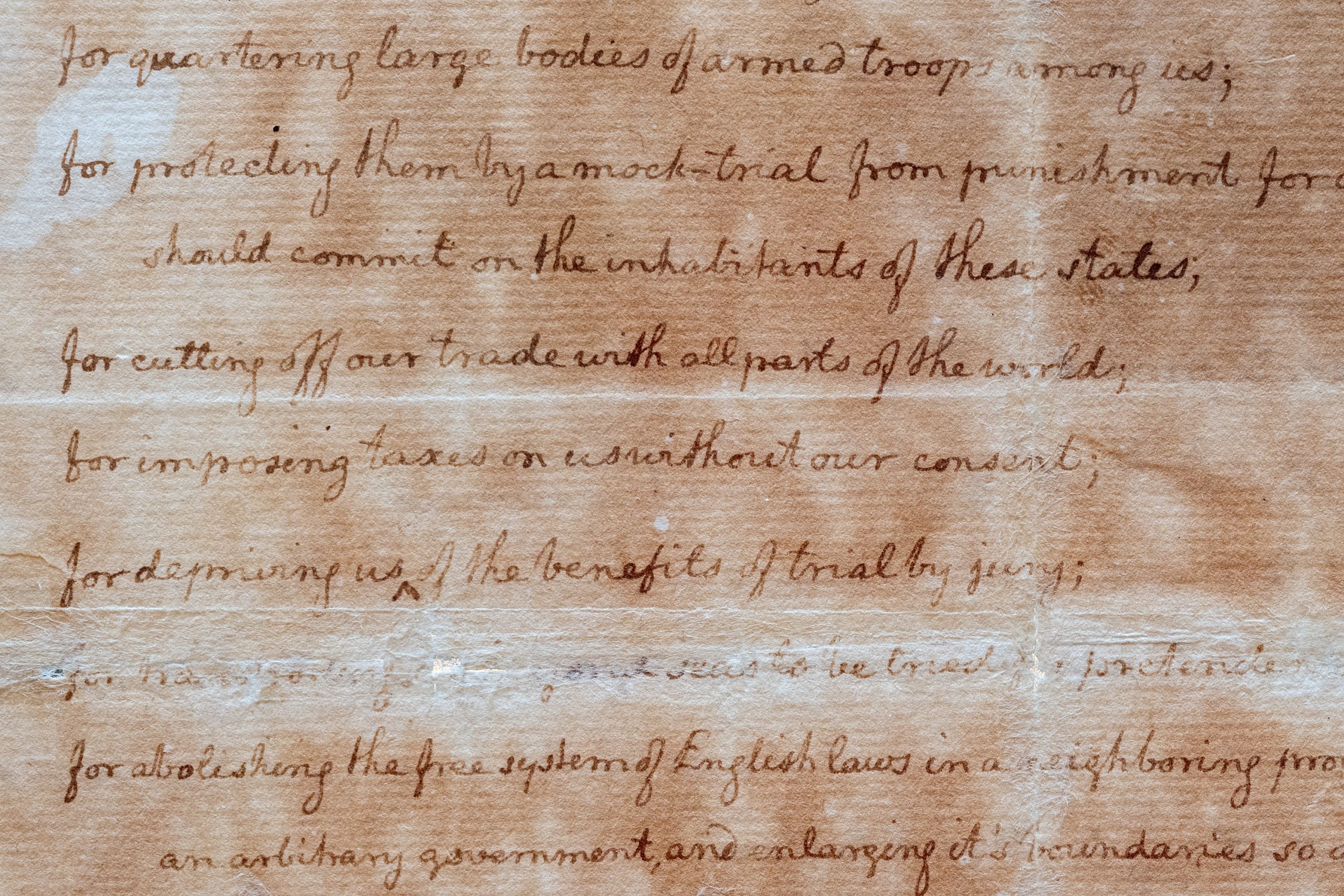
A faded copy of a draft of the Declaration of Independence handwritten by Thomas Jefferson, known as the “Fair Copy,” on display at the American Philosophical Society Monday, June 15, 2026.Tom Gralish / Staff Photographer
Dispatches from 1776, Part III will be published online on July Fourth. Read Part I here.
This historical sketch is based on interviews with Tyler Putman, manager of gallery interpretation at the Museum of the American Revolution, and Michael Idriss, manager of the African American interpretive program at the Museum of the American Revolution, as well as J.M. Duffin, assistant archivist at Penn Libraries, historian and author Michelle Craig McDonald, and Stephen Nepa, history professor at Pennsylvania State University’s Abington campus. The author also based this series on historical newspaper accounts and research from “John Adams,” by David McCullough (Simon & Schuster, 2001), “Declaration: The Nine Tumultuous Weeks When America Became Independent, May 1-July 4, 1776,” by William Hogeland (Simon & Schuster, 2010), “American Scripture: Making of the Declaration of Independence,” by Pauline Maier (Random House, 1997), “The Revolutionary: Samuel Adams,” by Stacy Schiff (Little, Brown & Co., 2022), “Cocked and Boozy: An Intoxicating History of the American Revolution,” by Brooke Barbier (Chicago Review Press, 2026), “Thomas Jefferson: The Art of Power,” by Jon Meacham (Random House, 2012), “Rum Punch and Revolution: Taverngoing and Public Life in Eighteenth Century Philadelphia,” by Peter Thompson (University of Pennsylvania Press, 1999), “The Thomas Paine Reader” (Penguin Books, 1987), and “1776,” by David McCullough (Simon & Schuster, 2005).