Tag: UniversalPremium

  • Jefferson Health sued IBX, claiming payment changes cost it nearly $100 million this year

    Jefferson Health sued IBX, claiming payment changes cost it nearly $100 million this year

    Jefferson Health says it has incurred nearly $100 million in financial losses this year because of policy changes by Independence Blue Cross in a lawsuit filed this week.

    The lawsuit, submitted Wednesday in Philadelphia Court of Common Pleas, detailed five policy shifts — including two impacting when IBX pays higher inpatient rates for hospital stays — that Jefferson says amount to breaches of the current contract between the region’s largest health system and its largest insurer.

    “IBX has attempted to use policy changes to — over time — effectively rewrite the contract” and pay less than agreed to in the contract, Jefferson’s lawsuit said.

    The suit comes less than six months before its IBX contract expires Dec. 31, adding pressure to negotiations over a new deal. Jefferson said it cared for more than 300,000 people with IBX insurance last year.

    In the last year, the nonprofit health system has shown its willingness to challenge major insurers at a time of increasing financial strain on both insurers and healthcare providers nationally.

    IBX introduced a series of payment changes impacting both commercial and private Medicare plans this year as it faces intense pressure from employers to slow the growth of healthcare expenses and from the federal government, which is trying to trim spending in Medicare Advantage plans.

    Independence declined in an email to comment on the claims in the lawsuit: “We value our provider partners, honor our contractual commitments with them, and regularly discuss any issues. It’s unfortunate that Jefferson chooses to do this in the public arena but if you’ve kept up with the news you can see this is typical of their playbook.”

    A series of reimbursement shifts

    The biggest financial impact came from IBX’s requirement, effective June 1, that certain procedures be performed in lower-cost freestanding ambulatory surgery centers, rather than in hospital outpatient departments, which often get paid twice as much for the same work.

    Jefferson estimated damages from the ambulatory surgery center rule at $35.4 million.

    Two policies affecting when IBX pays inpatient rates cost Jefferson a combined $35.5 million, according to the complaint.

    Jefferson sued Aetna in April over a similar policy that reduces payments for Medicare Advantage plans if Aetna considers patients not sick enough to qualify for full payment.

    The complaint says a policy that eliminated payment for hospital readmissions up to 30 days after discharge cost Jefferson $18.3 million. Since 2017, Penn Medicine has had a contract with IBX that does not pay Penn when patients return to the hospital within a month of being discharged.

    Finally, Jefferson said IBX has failed to pay more than $7.2 million owed under a controversial federal drug discount program known as 340B.

    “After trying to work directly with Independence Blue Cross to resolve these breaches of contract, we have been forced to take this action on behalf of our patients,” Jefferson’s vice president for payer relations, Allison Yudt, said in an email. “This action is the result of a pattern that has repeated itself time and again.”

    IBX said in its statement that it “acts in the best interest of our customers and members and protects their access to high quality affordable care.”

    Jefferson’s harder line with insurers

    Jefferson has expanded through acquisitions from three hospitals to 33 since 2015. The most recent acquisition was Lehigh Valley Health Network two years ago, creating a network that stretches from South Jersey to near Scranton.

    Amid significant losses in recent years, Jefferson has been taking an aggressive approach with insurers when it believes they are paying it less than contractually required.

    This year, Jefferson’s Lehigh Valley Health went out-of-network with UnitedHealthcare for commercial and Medicare Advantage plans. Last year, Jefferson went out-of-network with Cigna for a few weeks before reaching a deal.

  • Josh Shapiro may be the biggest fundraising juggernaut Pennsylvania politics has ever produced

    Josh Shapiro may be the biggest fundraising juggernaut Pennsylvania politics has ever produced

    The Rev. Ed Stafford first donated to Josh Shapiro in August 2024, sending the Pennsylvania governor $10 through the Democratic fundraising platform ActBlue. A few weeks later, he gave him $5. And then he made two more $5 contributions on the same day toward the end of the month.

    He would go on to make 105 separate contributions to Shapiro between that August day two years ago and early June, an average of one donation every 16 days.

    “I’ve been getting a lot of text solicitations, and his [Shapiro’s] have come by rapidly and frequently, and that’s how I got to get to know him,” said Stafford, a priest at the Diocese of Youngstown, Ohio. He was particularly impressed with Shapiro’s handling as attorney general of the Catholic Church child sex abuse scandal in the state.

    Stafford’s donations, totaling just under $1,200 over the last two years, form a microscopic share of the $60 million Shapiro has raised since the current fundraising cycle began in 2023. But smaller, repeat contributions from dedicated donors like him are one piece of a strategy — along with eye-popping checks from wealthy donors and a nationalized fundraising network — that has allowed the governor to shatter state fundraising records as he looks beyond this November’s race to a prospective presidential run in 2028.

    Blowing past prior candidates

    Between the start of 2023 and June 8, Shapiro raised more than $60 million, 56% more than the $39 million he raised at this point four years ago when adjusted for inflation.

    That figure is nearly double that of the second-best fundraiser: former Democratic Gov. Tom Wolf, who had raised an inflation-adjusted $31 million at this point in his successful 2018 reelection campaign.

    Shapiro raised the eye-popping amount from roughly 22,000 unique individuals, about 44% more than the 16,000 who had given to his campaign at this point last cycle. That is more than triple the number of donors for the closest comparison, former Republican Gov. Tom Corbett in 2014, who had only about 6,000 donors at this point in his unsuccessful reelection campaign.

    That figure does not include contributions from donors who gave $50 or less in a campaign finance reporting period, as campaigns are not required to disclose information on those individuals. When including that group, Shapiro’s campaign said, it has more than 120,000 unique contributors. The campaign declined to comment on the rest of this article.

    Perhaps most staggering, Shapiro’s current campaign has raised nearly one in every five dollars collected by every major party gubernatorial candidate since the 2010 cycle.

    (function(){function e(){window.addEventListener(`message`,function(e){if(e.data[`datawrapper-height`]!==void 0){var t=document.querySelectorAll(`iframe`);for(var n in e.data[`datawrapper-height`])for(var r=0,i;i=t[r];r++)if(i.contentWindow===e.source){var a=e.data[`datawrapper-height`][n]+`px`;i.style.height=a}}})}e()})();

    Robin Kolodny, a political science professor at Temple University, said Shapiro is benefiting from a strong personal brand, a weak GOP opponent in State Treasurer Stacy Garrity, and a favorable national environment with an unpopular president of the opposing party dragging down GOP candidates across the country.

    “This is what happens when you have a highly popular incumbent running for reelection,” Kolodny said.

    Differing motivations for large and small donors

    Shapiro has raised about $2.5 million from donors who have given $50 or less in any given campaign finance reporting period — more than any prior candidate since 2010. That is about 4.3% of his total fundraising. Garrity has raised about $530,000 — 9.6% of her funds — from such small donors.

    Among Pennsylvania gubernatorial candidates who raised at least $1 million, Shapiro’s percentage is relatively high. Only Garrity; Shapiro’s 2022 opponent, State Sen. Doug Mastriano; and 2010 GOP candidate for governor Samuel Rohrer raised a higher share from small-dollar donors. Shapiro’s 2026 run is also pulling in a slightly smaller percentage of small-dollar givers than his 2022 campaign.

    Kolodny suggested that improvements in technology have likely aided Shapiro’s hunt for smaller-dollar donors.

    “It’s so much easier to reach somebody on their phone with an Instagram post or whatever and get them to Venmo me 10 bucks, while it was definitely more steps in earlier elections,” Kolodny said.

    Stafford, whose most common contribution was for $10, agreed.

    “They make it real fast and easy to donate,” Stafford said of the multiple daily text messages he gets from ActBlue. “You gotta watch [that] you’re not pressing the button too quickly if you don’t want to let go of all your money,” he added with a laugh.

    (function(){function e(){window.addEventListener(`message`,function(e){if(e.data[`datawrapper-height`]!==void 0){var t=document.querySelectorAll(`iframe`);for(var n in e.data[`datawrapper-height`])for(var r=0,i;i=t[r];r++)if(i.contentWindow===e.source){var a=e.data[`datawrapper-height`][n]+`px`;i.style.height=a}}})}e()})();

    Dan Mallinson, an associate professor of public policy and administration at Pennsylvania State University’s Harrisburg campus, suggested an additional factor: National politics has filtered down to state politics in ways it had not in the past.

    “[Pennsylvania] voters don’t have a presidential candidate on this ballot to express support or anger [about],” Mallinson said. “So that gets translated into these other races, and Shapiro’s is obviously the most high-profile.”

    On the flip side, Shapiro has raised more than $33 million from donors who have given $100,000 or more in aggregate. That figure is vastly greater than any prior candidate for the office since 2010 and accounts for about 58% of his total funds raised. Garrity, by contrast, has raised about 21.3% of her money from such mega donors.

    Kolodny said big donors’ motivations can differ from those of more modest givers.

    For some donors, it’s practical: They want access to the halls of power in case their business interests intersect with government policy — regardless of the party in charge.

    With such donors likely viewing Shapiro’s reelection as a sure thing, Kolodny suggested their money has one place to go.

    “There’s no reason for a lot of these donors to even think, ‘Well, just in case, I should give some money to Garrity,’” Kolodny said. “There’s only one horse to bet on.”

    For other donors, it’s ideological: They share Shapiro’s moderate views and want to demonstrate their support.

    A national fundraising network

    More than two-thirds of Shapiro’s money has come from donors who live outside Pennsylvania. That figure is vastly higher than any prior candidate for governor since 2010. Only 6.4% of Garrity’s money has come from outside the state.

    Mallinson pointed out that Shapiro finds himself in a unique position among the state’s recent crop of gubernatorial candidates.

    “This is the first time Pennsylvania’s really had a governor who’s attracting the national attention that Shapiro’s gotten,” Mallinson said, referring to the widespread expectation that he will run for president in 2028. “So if we’re comparing across governors, it makes sense he’d be attracting more outside [the state] money.”

    Among the $33 million Shapiro has raised from donors who have given at least $100,000 or more over the course of the campaign, nearly 70% has come from outside Pennsylvania, with California accounting for about 29% of the money and New York accounting for a little over 18%.

    (function(){function e(){window.addEventListener(`message`,function(e){if(e.data[`datawrapper-height`]!==void 0){var t=document.querySelectorAll(`iframe`);for(var n in e.data[`datawrapper-height`])for(var r=0,i;i=t[r];r++)if(i.contentWindow===e.source){var a=e.data[`datawrapper-height`][n]+`px`;i.style.height=a}}})}e()})();

    Here, too, changes in media and technology likely play a role.

    “At an earlier point in time, we didn’t have that much information about people representing other areas that shared a characteristic or a position similar to me as the donor, but now, this is easy information to find,” Kolodny said.

    Shapiro, for example, has repeatedly emphasized the impact his Jewish faith has had on his political values and how those values are shared among adherents of many religions. That sort of openness about his identity can be appealing to donors of all faiths.

    As he learned more about the governor, Stafford, a devotee of Catholic social teaching, came to believe the two men shared similar values.

    “He’s a good, just man — a good, holy man — set on serving people, especially people who’ve been hurt and victimized, and those are the kind of leaders we need more than ever.”

    Staff writer Michelle Baruchman contributed to this article.
  • The Flyers’ rivalry with the Ducks might be the strangest part of a strange Philly sports summer

    The Flyers’ rivalry with the Ducks might be the strangest part of a strange Philly sports summer

    The Flyers’ schedule came out last week, and maybe I’m an exception in this regard, but I did not scan it immediately for games against the Penguins and Rangers and Capitals. My eyes fell on two dates: Saturday, Oct. 24, and Sunday, Jan. 3. A pair of unmissable matchups against the Flyers’ newest and most hated rivals: the … Anaheim Ducks?

    This has been an odd few months, in so many ways, for the Philadelphia sports scene. Think about some of the stories. The A.J. Brown trade watch. The reasons for that trade — i.e. his relationship, such as it was, with Jalen Hurts. The Phillies’ slow start. Their decision to fire Rob Thomson. Their inability to play reasonably intelligent baseball. The Sixers’ comeback over the Celtics. Their embarrassing sweep by the Knicks. Their decisions to fire Daryl Morey and hire Mike Gansey and trade for Jaylen Brown. Their nightly vigil for LeBron James.

    But none of those developments, none of them, compares to the sheer weirdness of the rising tensions between the Flyers and their Disneyland-adjacent counterparts. Imagine the Eagles and their fans hating the Jacksonville Jaguars or the Phillies and their fans being obsessed with beating the … Los Angeles Angels of Anaheim, and you have a sense of just how strange it is that the Ducks have become mallard non grata around here.

    It’s one thing to despise Sidney Crosby; the guy is one of the greatest players in hockey history, has won three Stanley Cups, has tormented the Flyers for years, plays exactly the tenacious, win-at-all-costs style that would make him a god if he wore orange and black, and is based just 300 miles west of the Xfinity Mobile Arena. It’s another to despise a franchise that has been in existence for just 33 years, has won just one Stanley Cup (almost 20 years ago), and was named after a children’s movie. But here we are.

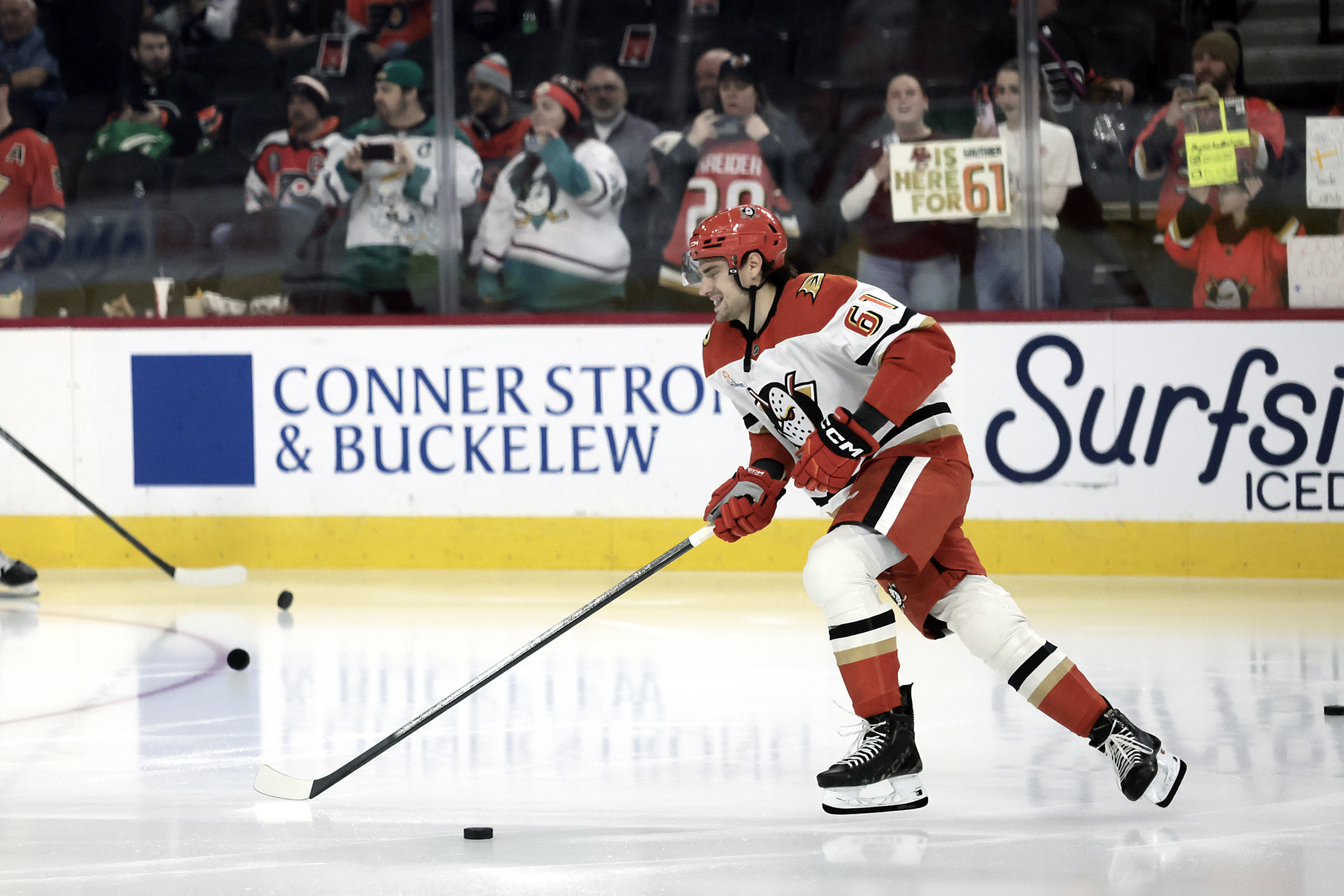
    The origins of the bad blood are no secret, at least not to anyone who follows the Flyers closely. On Jan. 8, 2024, they traded Cutter Gauthier — the No. 4 pick in the 2022 NHL draft, the prospect who was presumed to be their top goal scorer and franchise centerpiece for the next decade or more — to the Ducks for Jamie Drysdale and a second-round pick. The deal was a shocker, and when Flyers president Keith Jones said during an NBC Sports Philadelphia interview that they traded Gauthier because “he didn’t want to be a Flyer,” Gauthier’s villain status was instantly established.

    The public sentiment here, with some exceptions, went from For chrissake, the Flyers let their future get away to Who the hell does that punk think he is? And Drysdale, whom the Flyers recently signed to a four-year contract extension and whom they consider an important member of their corps of defensemen, would forever be compared to the potential superstar the Flyers felt they had to give up.

    “The only thing that it does and will continue to do moving forward is just motivate me,” Drysdale said Monday. “I want to be the best player I can for the city, for the team, for the fans, for everything. I know I still have a lot more to give, and that’s exciting for me on my end.”

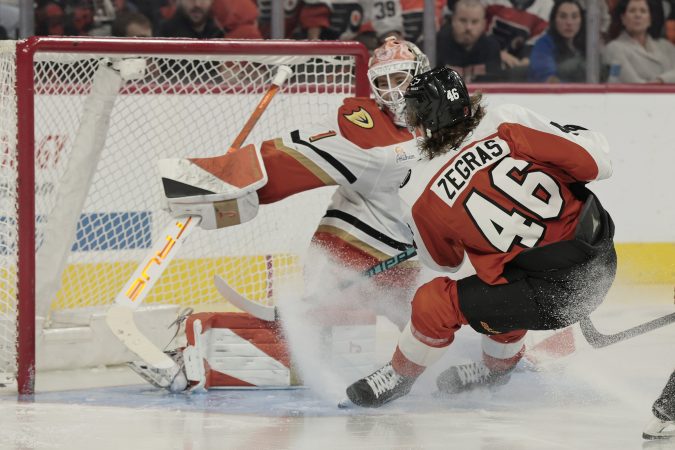
    Things have gotten only more intense since the Gauthier-Drysdale trade. It’s not just that the two franchises consummated another significant trade — and, for the Flyers, a so far highly successful one — 13 months ago, when Anaheim sent Trevor Zegras here for forward Ryan Poehling and two draft picks. It’s not just that the Flyers have beaten the Ducks all four times the clubs have faced each other over the last two seasons. It’s not just that the teams’ last matchup in Philadelphia, a 5-2 Flyers victory on Jan. 6, was loaded with checks and hits that sometimes crossed the line separating clean from dirty.

    Cutter Gauthier became an enemy for the Flyers’ fan base after his trade to Anaheim two years ago.Elizabeth Robertson / Staff Photographer

    It’s this: Of all the possible maneuvers and gambits that Flyers general manager Danny Brière could have attempted this offseason to supercharge the team’s push toward Stanley Cup contention, he and his staff decided to target Leo Carlsson, maybe the Ducks’ most important player. On July 3, they sent him to a five-year, $90 million offer sheet, one that would have made Carlsson — 21 years old, nearly a point-per-game player last season, still improving — the highest-paid player in the league.

    The Ducks always had the right to match the Flyers’ offer, and as expected, they did, and Brière and the Flyers still have to figure out how to acquire (or somehow develop) a top-line center. A disappointing result, to be sure. But from the Ducks’ perspective, the outcome of the Carlsson situation wasn’t exactly seashells and balloons. Brière made a bold move at Anaheim’s expense, forcing Pat Verbeek, the Ducks’ GM and a notoriously tough and frugal executive, to pay a price that he never would have otherwise chosen to pay to keep Carlsson — who had made it clear he wouldn’t have minded playing somewhere else. Plus, though the NHL’s salary cap is rising and will likely continue to rise for a while, the Carlsson deal promises to limit the Ducks’ ability to add or re-sign other vital players, including Gauthier.

    What we have now are two organizations that have squared off in some high-stakes competitions — on the ice, yes, but the boardroom battles between them have been even better. No, this coast-to-coast duel doesn’t immediately call to mind the fear and loathing that Philadelphia fans have had for the Cowboys, the Mets, and the Celtics. Yeah, it feels sort of silly to have a rivalry with a franchise whose spiritual forefathers are Emilio Estevez and the guy who played Pacey on Dawson’s Creek. But if it walks like a duck and quacks like a duck, it must be … well, you know.

  • The friendship of two longtime baseball coaches was shaped over decades in the Catholic League

    The friendship of two longtime baseball coaches was shaped over decades in the Catholic League

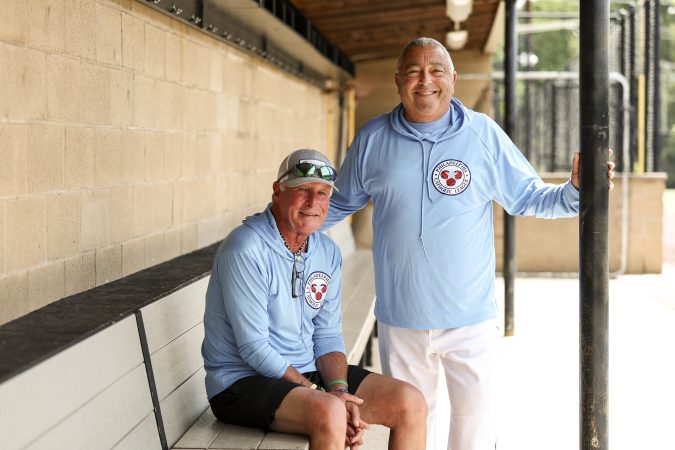
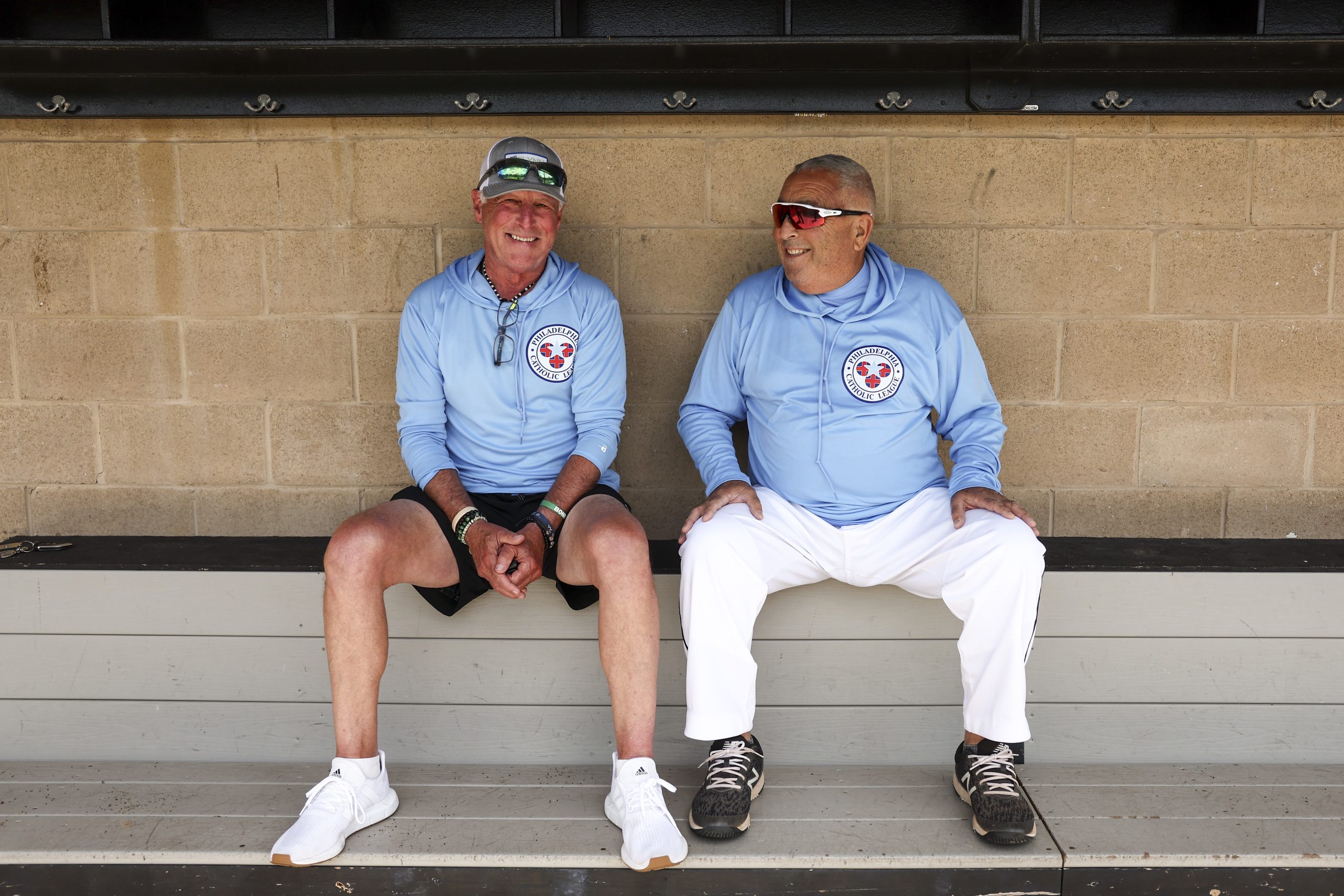
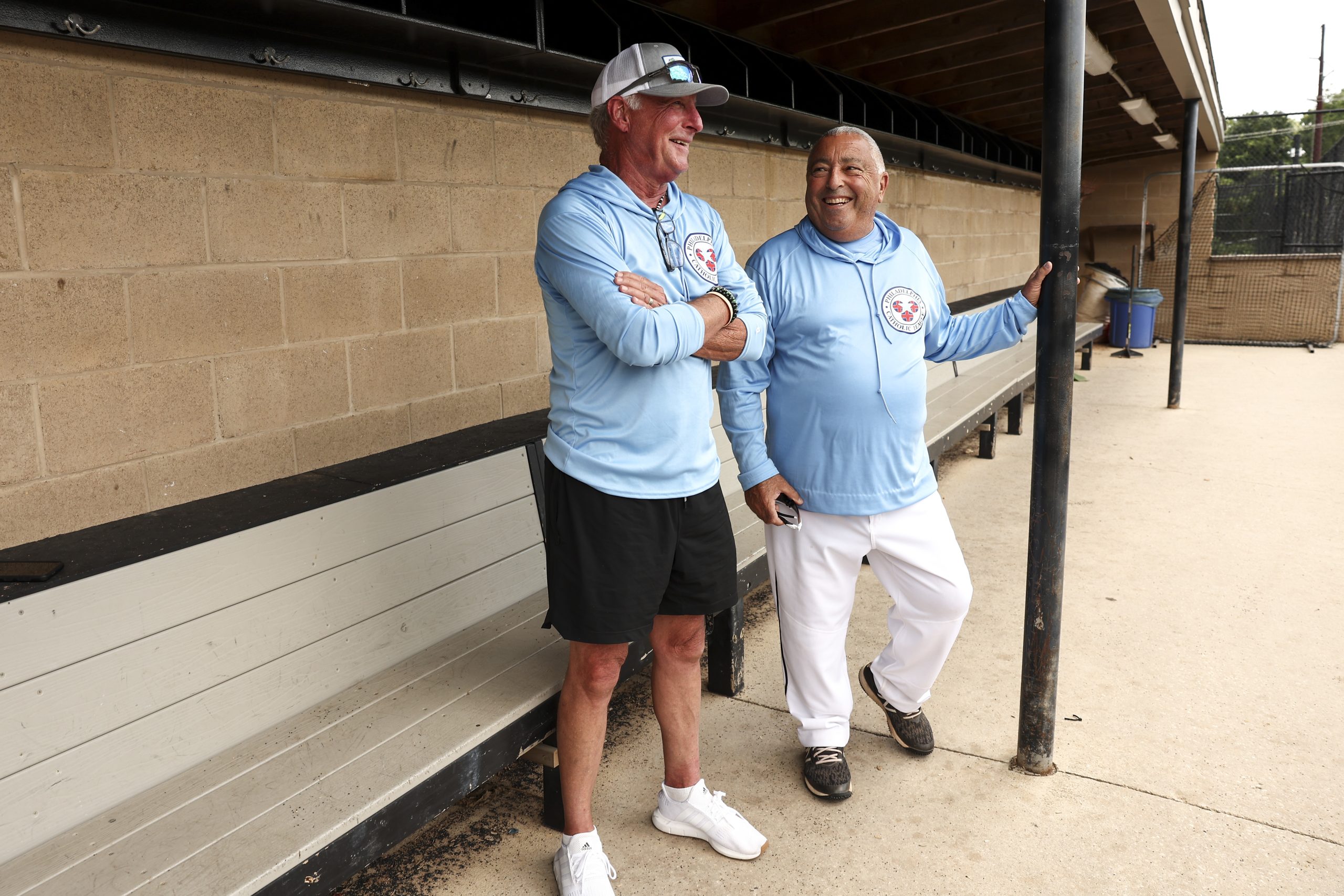
    For most of the year, Jim DiGuiseppe and Joe DeBarberie are standing in opposing dugouts. But for a few weeks each year, they’re on the same team as co-managers for the Catholic League in the annual Carpenter Cup.

    It’s an 18-year standing tradition between the pair to put aside their different allegiances — DiGuiseppe to Archbishop Wood and DeBarberie to Bonner-Prendergast — in favor of representing the Catholic League in the tournament.

    The Carpenter Cup, a tournament that features the top players from leagues across Pennsylvania, New Jersey, and Delaware, had not seen a PCL win since 2005. That was until June 8, when the pair helped lead the PCL to its first title in 21 years.

    The Catholic League team will be honored at the Phillies game on Aug. 4 for its victory.

    “It was a really good mix of players that understood that we hadn’t won in a while, and I think really took it to heart,” DeBarberie said. “There was a little bit of strategy in there, and I think we did a good job of doing that, it just fell the way we thought it was going to.”

    DiGuiseppe was head coach at Wood from 1995-2011, having joined the coaching staff a few years earlier when his son was on the team. DeBarberie began as an assistant coach with Bonner-Prendie in 2005 (while it was Monsignor Bonner) and took over as head coach from 2008-18.

    Despite sporting different shades of green and gold, the pair are longtime friends off the diamond and share a lot in common.

    They both were head coaches for more than a decade, they both saw their sons take over the helm when they stepped down, they both continue to serve in assistant coaching roles, and they share a love for the Catholic League.

    Joe DeBarberie (left) and Jim DiGuiseppe Sr. led the Catholic League to a Carpenter Cup championship for the first time in 21 years.Monica Herndon / Staff Photographer

    When DiGuiseppe’s son, Jim DiGuiseppe Jr., the current head coach at Wood, took over as the general manager for the Carpenter Cup team, he thought that his dad and DeBarberie would serve as unbiased managers for an all-star team.

    And even though the two spend most of the year in the backseat, DiGuiseppe Jr. said, the two stepped into the lead role “like riding a bike,” with the background and credentials to support their positions.

    “I think our league as a whole genuinely benefits from the structure of that and having guys like that,” DiGuiseppe Jr. said.

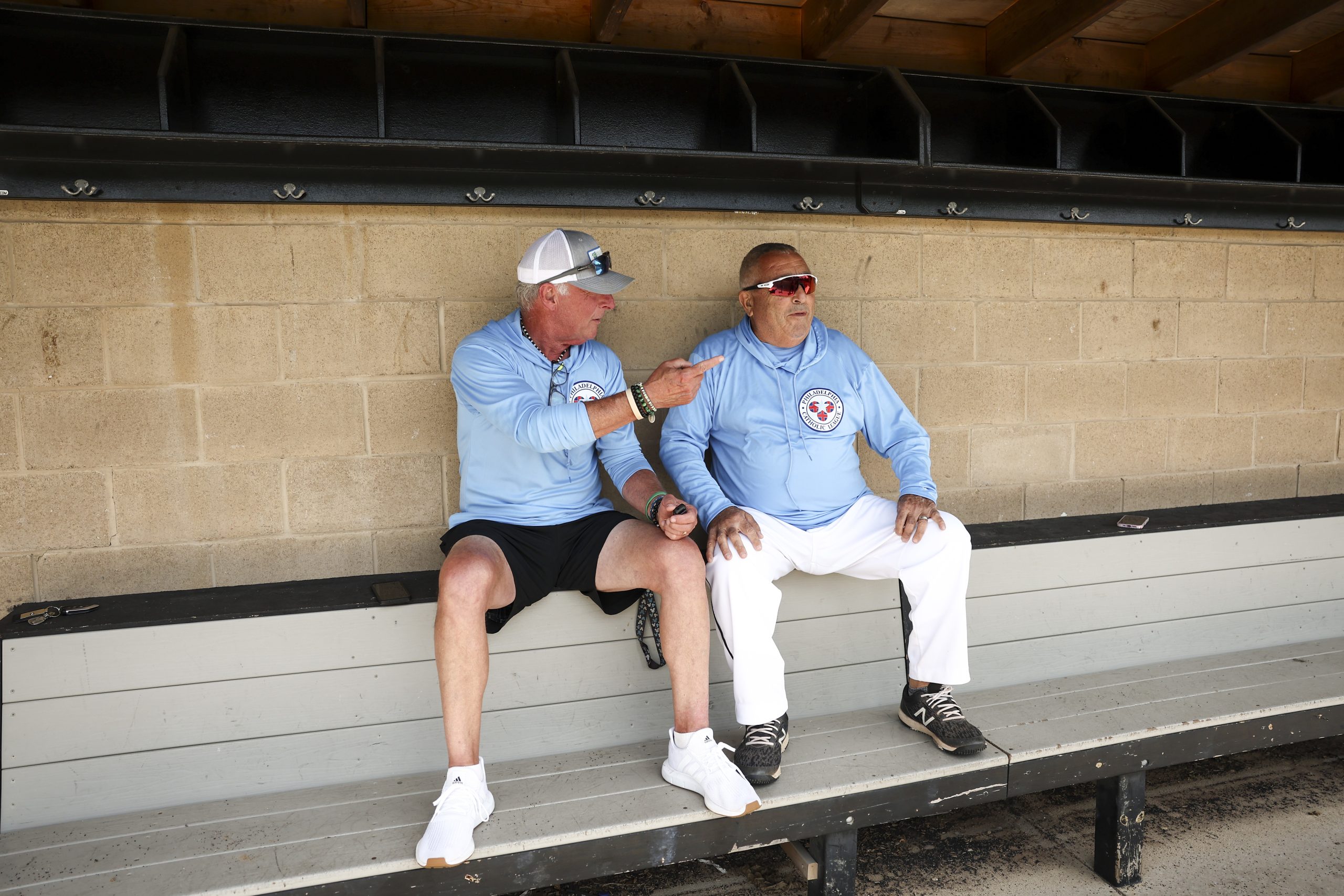
    Through their many years together, the pair hasn’t rubbed off much on each other in terms of personality. DiGuiseppe is more outspoken, while DeBarberie is quieter. But the dynamic works for them.

    “I’m fiery, I usually am on the field running, and he does all the paperwork and gives me all the knowledge that he can impart, but yeah, we’re a little different,” DiGuiseppe said.

    DiGuiseppe’s passion is hereditary. Most people warn against working with family, but DiGuiseppe has been his son’s assistant for longer than his son served his dad.

    In the dugout, the two get very animated during games, but it comes from a place of love and passion. Last season, DiGuiseppe Jr. became the winningest coach in Wood’s history with his 204th win. His father previously held the record with 203.

    “The joke of it is that we struggled early. It took me 17 years to win about 210. He won about 220,” the elder DiGuiseppe said. “[But] you always want your son to do better.”

    As for DeBarberie, with the amount of strategy that goes into the Carpenter Cup — making sure everyone is playing the correct number of innings and managing pitch counts — the knowledge he imparts comes in handy.

    His son, Steve DeBarberie, the current head coach at Bonner, said this happens during the season with the Friars as well.

    “The knowledge of having him in certain situations is invaluable,” Steve DeBarberie said. “When he’s up on the varsity staff he’ll just have little tidbits for me and put some stuff in my ear, to look out for it, to game plan for later on in the game because he sees stuff that not a lot of people see. He’s very intuitive and is always thinking ahead of the next steps.”

    This year, thinking ahead included setting the tone early with highly competitive players throughout the league. DeBarberie said they reminded the athletes that the competition they once harbored during the season was behind them and for the duration of the Carpenter Cup, they were all working toward a shared goal.

    Joe DeBarberie (left) was a head coach at Archbishop Wood, while Jim DiGuiseppe Sr. led Bonner-Prendergast.Monica Herndon / Staff Photographer

    DiGuiseppe and DeBarberie served as the exemplars for that.

    “Respect among the coaches is also transferred to the players on the various teams, and I think the fact that the Catholic League means a lot to us as coaches, kids also get that vibe,” DeBarberie said. “They understand that yes, you’re going to compete, that’s fine, but there’s no need for animosity — we’re all part of what we feel is the best league in the area.”

    There’s a “coaching fraternity in the Catholic League,” says DeBarberie.

    Along with DeBarberie and DiGuiseppe, Conwell Egan’s Jeff Manto, Neumann Goretti’s Nick Nardini, Lansdale Catholic’s Brian Ferko, St. Joseph’s Prep’s Jimmy Stinsman, and DiGuiseppe Jr. were members of the coaching staff for the Carpenter Cup.

    Both DiGuiseppe and DeBarberie were PCL Honorary Coach Award recipients for their 10 years of service as a head coach. When DiGuiseppe was honored in 2024, DeBarberie presented the award to him. This year, when DeBarberie received the honor, DiGuiseppe Jr. presented it.

    “Their personalities are very different, yet at the same time, they’re extremely close, not just in baseball, but off the field,” DiGuiseppe Jr. said. “Our families get together for dinner.”

    Joe DeBarberie and Jim DiGuiseppe Sr. say the Catholic League is “the best league around.”Monica Herndon / Staff Photographer

    Along with the friendship they formed from their time in the league, DiGuiseppe and DeBarberie also share an appreciation for a league that means “everything” to them.

    “We think that this is the best league around, just everything about it,” DeBarberie said. “Even when we’re not playing or we lost in the playoffs or whatever, and other teams are going on, I’m rooting for the other Catholic League teams to win. It’s just been such a big part from a baseball standpoint of our lives.”

  • Two players who could help the Phillies address their biggest trade deadline need

    Two players who could help the Phillies address their biggest trade deadline need

    An underrated stat as we look ahead toward the trade deadline: The Phillies are 42-15 in games started by Cristopher Sánchez, Zack Wheeler, or Jesús Luzardo.

    Impressive? Sure. But also jarring, due to the simple math that follows.

    The Phillies have a 56-46 overall record. Which means they were 14-31 in games started by anybody other than Sánchez, Wheeler, or Luzardo.

    Let that number marinate. The more you do, the more you might begin to rethink the Phillies’ trade deadline calculus. This time of year, there are wants and there are needs and there are would-be-helpful-to-haves. A lot of folks seem to have relegated starting pitching to that third bin. In reality, it might be Dave Dombrowski’s most pressing order of business.

    The Phillies don’t necessarily need a fourth Cy Young-caliber arm. They shouldn’t be looking for 2009 Cliff Lee or 2010 Roy Oswalt. They can set their sights much lower than the Tigers’ Tarik Skubal or even the Twins’ Joe Ryan. Maybe even lower than Boston’s Sonny Gray. At the same time, Dombrowski needs to be thinking bigger than this year’s version of Walker Buehler or Noah Syndergaard. The Phillies don’t just need someone who would give them a fighting chance in a late-season, must-win game against the Braves. They need someone who could potentially start Game 1 of the National League Division Series. Let’s begin our argument there.

    1) Who is the Phillies’ fourth starter in the postseason?

    They won’t make it through October without needing one. Unless their October is tragically brief. The Phillies could need someone outside of the Big Three as soon as Game 1 of the NLDS. All it would take is losing a game in the wild-card series, which would force Luzardo to the mound for a decisive Game 3. Assuming the usual one off day before the start of the NLDS, none of the Big Three would be on normal rest for Game 1.

    Even if the Phillies do have the top of their rotation lined up for the first three games of an NLDS, that still leaves Game 4. They were blessed with an extra off day last year against the Dodgers. That won’t be the case this year if Major League Baseball sticks to its previous pattern of alternating the extra off day between leagues.

    After their series concludes with the Dodgers on Wednesday, the Phillies face top teams like the Yankees, Rays, and Braves.Yong Kim / Staff Photographer

    2) Will the Phillies even make it to the postseason with the status quo, given the gauntlet that awaits?

    This week’s series against the Dodgers is the first of 11 that they will play against either the five winningest teams in the majors or three of the teams nipping at their heels in the NL playoff chase.

    It breaks down like this:

    • Six games against the two winningest teams in the American League (Yankees, Rays)
    • Six games against the two winningest teams in the NL, with two vs. the Dodgers already in the books
    • Seven games against the Braves, who entered Tuesday with a three-game lead in the division
    • Twelve games against the Cardinals and Marlins, both of whom were within four games of the Phillies in the loss column as of Tuesday
    • Factor in series against the Diamondbacks, Nationals, and Mariners and 43 of the Phillies’ 62 games post-All-Star break will feature opponents who entered Tuesday with a winning record.

    The Braves series looms especially large.

    The Phillies have a stretch in early September when they will play the Braves seven times in 10 days with no off days. Given the schedule, they’ll need someone other than the Big Three to face the Braves in at least two of those seven games.

    And what about the last week of the season? The Phillies are currently lined up to finish the year with six games against the Brewers and Rays. In order to line up the Big Three for a wild-card series, the Phillies would need a fourth and fifth starter to pitch two of the three games against the Rays. Even if they aren’t fighting for a playoff spot, they could be fighting for the right not to travel to Atlanta, Milwaukee, or Los Angeles for the wild-card round.

    3) Trading for a fourth starter could help the bullpen more than trading for another bullpen arm.

    To be clear, this isn’t an either-or. The Phillies clearly need to add some form of reinforcements for a bullpen that lost setup man Brad Keller for the season. José Alvarado offered some reason for hope in his appearance against the Dodgers on Monday. Orion Kerkering, less so.

    But innings are innings. The fewer of them that are pitched by starters, the more relievers must pitch. You’d rather have a starter coming out of the ’pen in a must-win postseason game than a reliever starting. Look at Luzardo in Game 4 of last year’s NLDS loss to the Dodgers.

    A couple of names that should at least intrigue the Phillies.

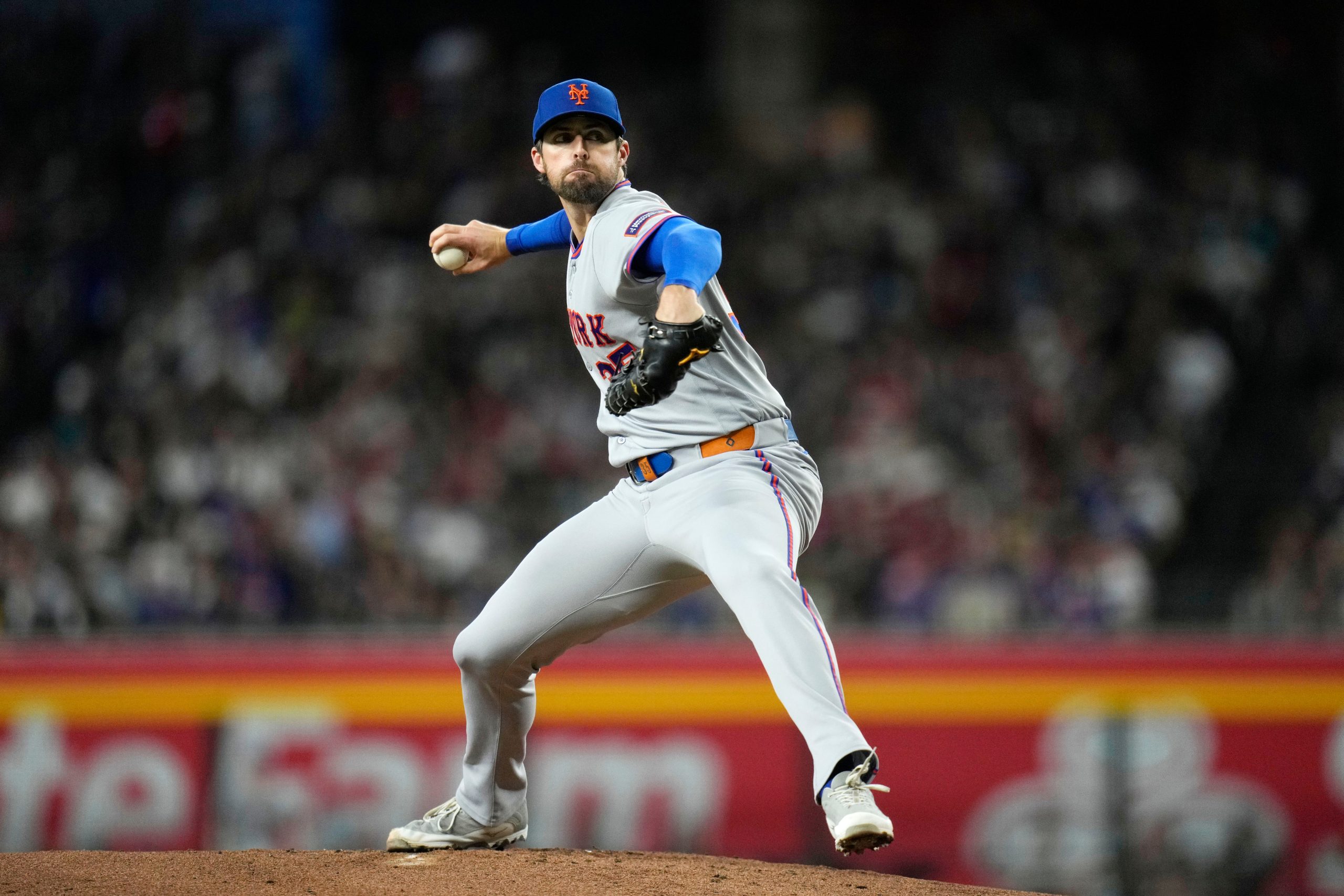
    Clay Holmes has a 2.39 ERA in nine starts this season for the Mets.Ross D. Franklin

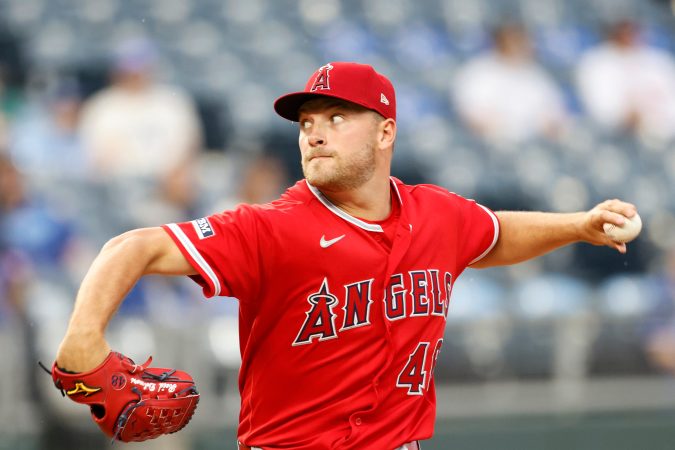
    Reid Detmers of the Angels and Clay Holmes of the Mets are both potentially available. Holmes, a right-hander, is presumably the most available, given that he is currently working his way back from a broken leg and has a player option for next season. Detmers, a lefty, still has two more full years left until free agency and is under contract for a meager $2.63 million this season. Only 27 years old, with borderline elite strikeout, walk, and home run numbers, he could end up costing more than the Phillies are willing to pay.

    Cost aside, both Detmers and Holmes have the kind of profile that should have the Phillies working the phones. Holmes was a longtime setup man with the Yankees who moved into the Mets rotation last season. Detmers moved to the bullpen last season after a disappointing year as a starter but has since rejoined the rotation. Either would dramatically improve the Phillies’ flexibility, both down the stretch and through the postseason.

  • Penn and CHOP researchers lost millions in federal funding for healthcare research last week, forcing programs to close

    Penn and CHOP researchers lost millions in federal funding for healthcare research last week, forcing programs to close

    Children’s Hospital of Philadelphia researcher Christopher Forrest has spent nearly a decade training early-career scholars on how to design studies that improve care for kids with congenital heart disease, stroke, and influenza.

    That work ended last month, when he had to shut down his PEDSnet Scholars program. The federal funding designated for it stopped coming last fall.

    Forrest received official notice last week that the Agency for Healthcare Research and Quality (AHRQ) had canceled his $5 million grant — originally intended to last through 2028. The letter gave no specific reason, stating only that continuing the grant was not “in the best interest of the Federal Government.”

    PEDSnet Scholars trained researchers to study how healthcare systems can be organized and financed to improve health outcomes. It was one of 16 such programs nationwide funded by AHRQ. Another program site, located at the University of Pennsylvania, received an identical cancellation notice last week from AHRQ.

    “These are not controversial topics,” Forrest said.

    Eighty-two affected grants totaling an estimated $211.6 million as of Tuesday had come to the attention of AcademyHealth, a nonprofit that supports health researchers and has been tracking AHRQ grant cancellations. Those include funding for research projects, career development, training programs, and centers.

    Some researchers received letters saying their work did not align with the agency or federal government’s priorities, followed by a list of the priorities, AcademyHealth president Aaron Carroll said.

    However, many of these projects appear to be directly aligned with priorities, he said.

    One involved a randomized trial of antibiotic stewardship — efforts to encourage careful and responsible use of antibiotics to avoid resistance — across 40 hospitals. Yet in the letter canceling it, antibiotic resistance was listed as a priority.

    “It can’t possibly be that all of these grants that are seeking to improve the quality, safety, and efficiency, and patient-centeredness of healthcare delivery are all incompatible with this or any other administration’s priorities,” said Scott Halpern, a Penn health services researcher whose funding was also canceled.

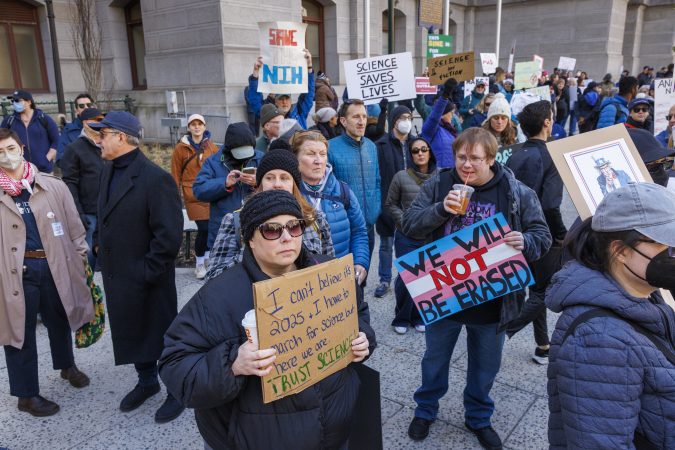
    Billions in scientific funding have been disrupted under President Donald Trump’s administration over the last year and a half, prompting lawsuits and court reversals in certain cases.

    The Department of Health and Human Services did not respond to requests for an exact count of the grants impacted, saying in a statement that the AHRQ director determines “whether continuation funding is in the best interest of the federal government.”

    “To be clear, these grants were not terminated — they were not awarded continued funding,” the HHS statement said.

    ‘Incredibly demoralizing’

    In late 2025, Halpern had planned to hire a new staff member for the Penn PORTAL program, one of the 16 AHRQ-funded training programs, separately funded from CHOP’s program.

    His team identified a candidate, but — unable to access funding from their $5 million grant since the fall — delayed extending an offer.

    The position was ultimately eliminated. They also rescinded offers to train new scholars in the program.

    Halpern received his official notice last week that his grant, set to continue into 2028, was canceled. He had only spent $1.5 million of it so far.

    Instead of having 10 trainees this month as planned, the Penn program has zero.

    “To not have the resources to support the people who will make a difference in the future is incredibly demoralizing,” Halpern said.

    He drew on philanthropic resources and a roughly $150,000 commitment from Penn Medicine to finish training his first cohort. However, the second cohort of scholars was stopped midway.

    As a result, projects on improving translation services for hospitalized patients and expanding access to hormone therapy for menopausal women were canceled.

    Jay Bhattacharya (left), director of the National Institutes of Health, and Sen. David McCormick (R., Pa.) speak to the media in March, after touring University of Pennsylvania facilities to highlight NIH-funded research in Philadelphia.Jose F. Moreno / Staff Photographer

    Grant cancellations from AHRQ will have longstanding impacts on advancing healthcare in the United States, a Penn Medicine spokesperson said in a statement, declining to answer more specific questions.

    “Some research projects at Penn Medicine have felt those cuts at their core and impactful work now cannot progress as planned,” the statement said.

    CHOP did not respond to a request for comment.

    In limbo

    Penn researcher Jaya Aysola had not heard as of Tuesday whether her AHRQ grant is canceled, but she assumes the notice is coming.

    She had received a $3.8 million grant to serve as a coordinating center for the 16 training centers starting in 2024. The grant should have been renewed for its second year last November, but that didn’t happen.

    At first, she was told by the agency that it was delayed due to the government shutdown. Then she was told it was held up due to a lawsuit filed by the Society of General Internal Medicine, a physicians group, in August over AHRQ shutting down its grantmaking program.

    Since then, “it’s been radio silence,” she said.

    All but roughly $300,000 of her grant remains unused. Unable to access funds since last fall, she had relied on bridge funding from the university to support staff and research faculty.

    When that funding ended earlier this year, she had to find new jobs and projects for three of her full-time employees, as well as three part-time employees.

    “We already shut down most of the operations,” Aysola said.

    The work she has done since has largely been pro bono with her personal time and limited internal funding.

    Aysola convened a meeting this spring with the 16 AHRQ-funded training centers to discuss how other programs were bridging the gap in funding. Most had paused on accepting new trainees, and have prioritized finishing the current cohort’s work.

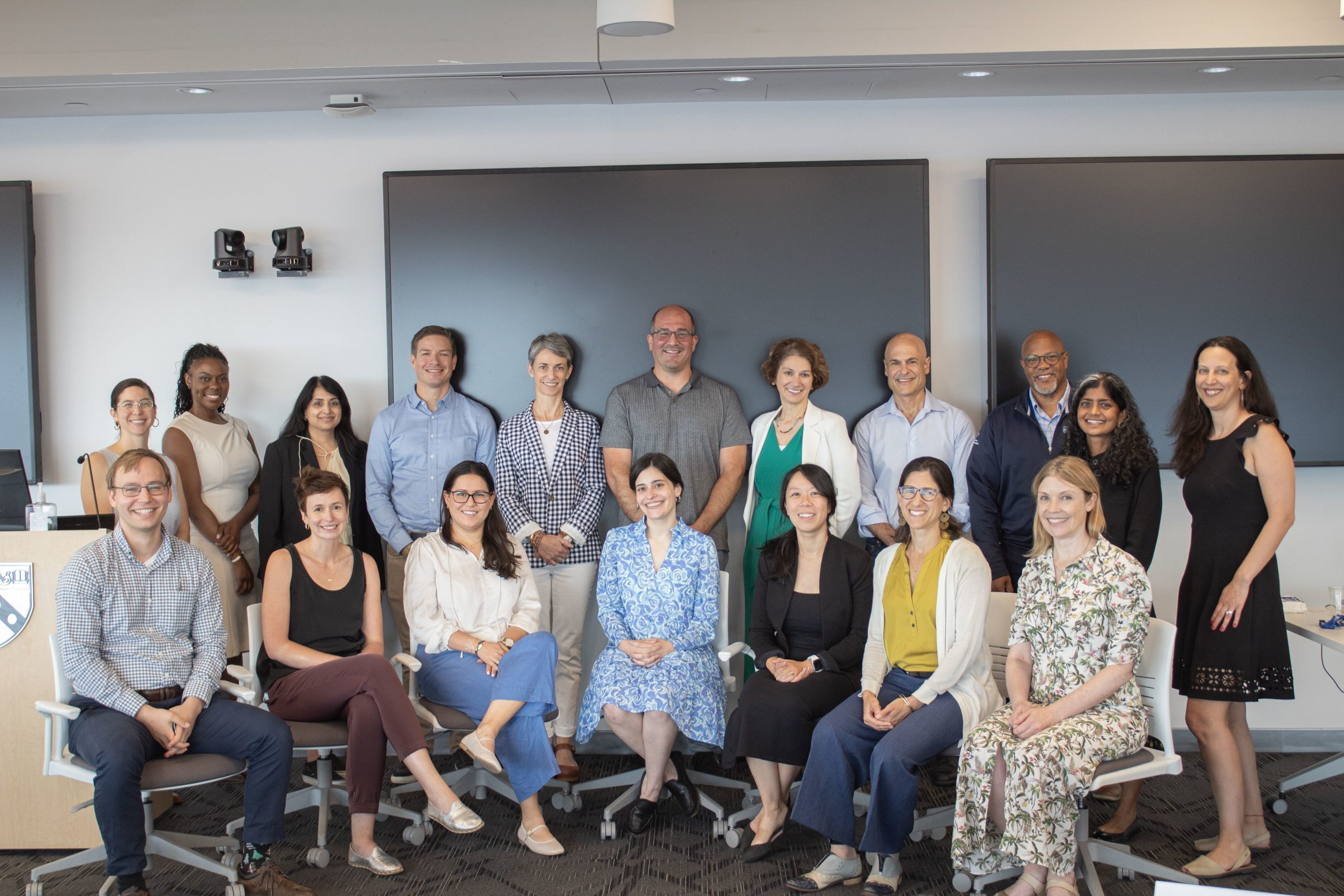
    A July 2025 group photo featuring scholars and faculty leaders in the Penn PORTAL program, which was affected by recent cuts to AHRQ grants.Courtesy of Scott Halpern

    At Halpern’s Penn PORTAL, the first cohort of scholars’ projects have already been implemented. Across the Penn health system, they “are yielding improvements in the patient experience of care,” Halpern said.

    None of the projects led by later cohorts, who would have been trained had the full five years of funding been maintained, are likely to see the light of day, he added.

    He hopes to bring awareness to what he considers an inappropriate cancellation of AHRQ funding. Many organizations are exploring options in terms of advocacy and potentially legal engagement, he added.

    CHOP’s Forrest estimates 30 faculty will never be trained due to PEDSnet Scholars losing its grant funding.

    “It’s very sad because it’s been so instrumental to my career, and I had hoped that it would be instrumental to the career of many of our junior faculty,” Forrest said.

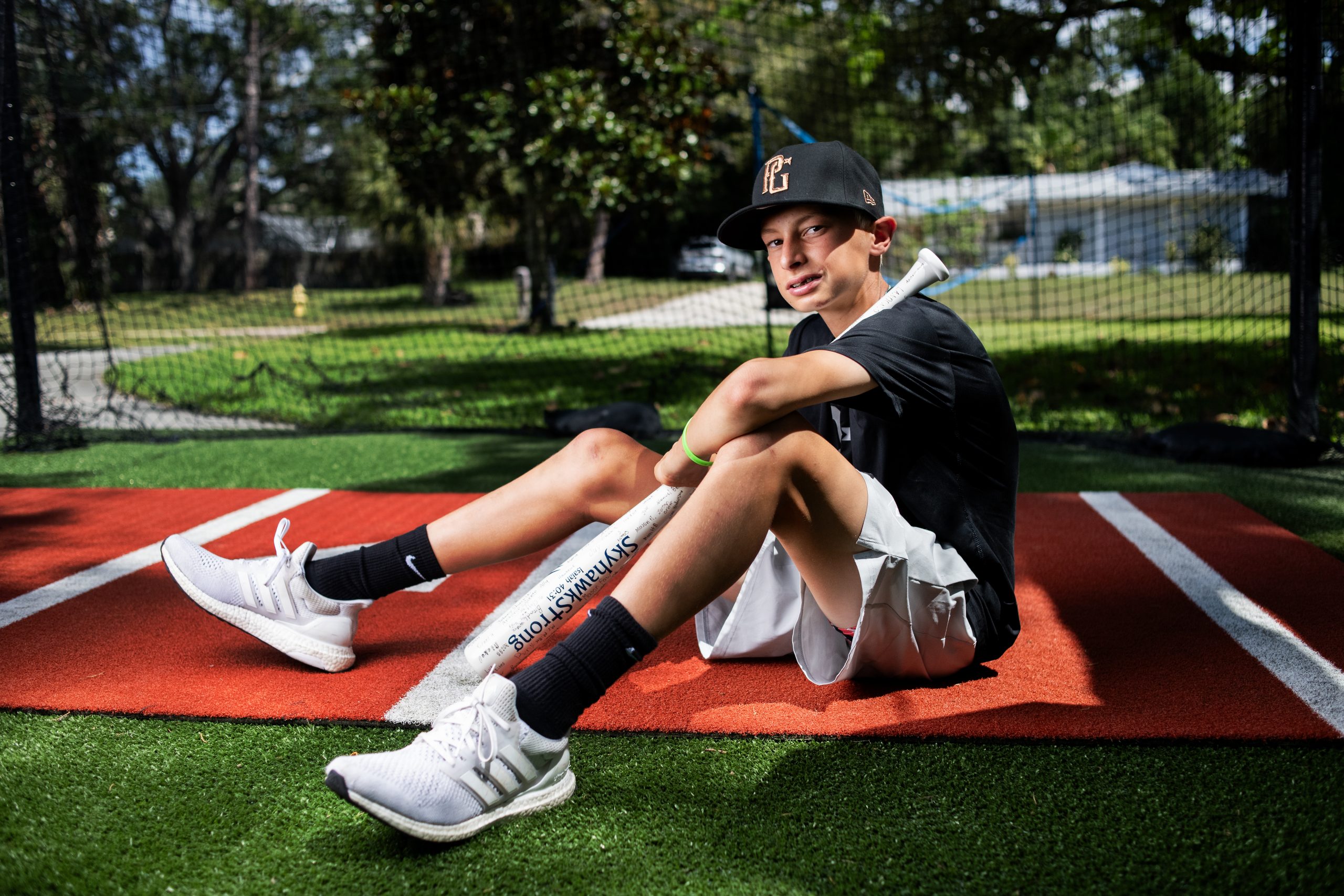
  • Kyle Kendrick feared the worst after his son was hit by a car. Now Kyle Jr. is back on the field and hitting homers.

    Kyle Kendrick feared the worst after his son was hit by a car. Now Kyle Jr. is back on the field and hitting homers.

    Kyle Kendrick used to walk into the batting cage he built in his Clearwater, Fla., backyard and just stand in it. He dreamed of having something like this when he was a kid and the former Phillies pitcher was in awe of what he had.

    “I would just look around and say, ‘This is sweet,’” said Kendrick, a member of the Phillies’ starting rotation from 2007-14.

    It was there that he spent hours throwing batting practice to his son, Kyle Jr., as the son fell in love with the dad’s game. Kendrick even installed lights so his boy could keep swinging. The batting cage became their place.

    “They grow up fast,” Kendrick said. “Pretty soon, he’ll be in high school and then college, and he won’t want to go into the cage anymore.”

    For a few weeks last fall, the dad wasn’t sure if his son would ever be able to get back in the cage after the 12-year-old was hit by a car driving nearly 50 mph while he was walking across the street near his home.

    Kyle Jr. broke both femurs, had his mouth wired shut, and spent a week in the hospital after six hours of surgery. The Kendricks first feared their son wouldn’t make it. Next, they wondered if he’d ever play baseball again. And then they watched him leave his wheelchair to get back into the batting cage with his dad.

    The son sat on a bucket in the cage 18 days after the crash while his dad bounced baseballs toward him. He nabbed each hopping grounder with ease and fired throws back to his dad. There was no fear, his mother Stephenie said. Kyle Jr. was back in the cage.

    “I was just so proud,” his mom said. “This kid was just hit by a car and he wasn’t even flinching. It didn’t faze him. He was so driven to get back. He was on that bucket swinging the bat. He was catching and throwing. He was fielding ground balls. I was amazed.”

    ‘Oh my gosh’

    Kyle Kendrick kept calling his son’s phone, wondering where he was after he rode his bike that Sunday to fish in a nearby lake. Finally, a police officer answered. He told Kendrick that his son was in a crash and he had to get there fast.

    “I actually heard the sirens from my house,” Kendrick said. “I was like ‘Oh, my gosh.’”

    Kyle Jr. was riding his bike home when he stopped at an intersection so he could walk his bike across the street. A driver waved him on and the boy started to cross. But another car did not see him. The boy was launched into the air before crashing down onto the car and striking the pavement. The driver was not charged. There were ambulances, firefighters, and a crowd of people there when the dad arrived. It was the worst experience of his life, Kendrick said.

    He called his wife, who was driving home from a meeting for their daughter’s volleyball team.

    “He couldn’t speak,” Stephenie said. “The cop got on the phone and said they had to helicopter him to the hospital. I said, ‘Helicopter him there? Why? Why can’t he take an ambulance? Is he going to survive? How bad is it?”

    Former MLB pitcher Kyle Kendrick poses for a portrait with his wife, Stephenie LaGrossa Kendrick, and their children, Sophia, Kyle Jr., and Sloane at their home in Florida. Octavio Jones / For The Inquirer

    The son underwent a bevy of X-rays and MRIs at Johns Hopkins All Children’s Hospital in St. Petersburg, Fla., where doctors learned that he broke both femurs but somehow did not have a spinal or head injury. Even his teeth were mostly intact as the boy lost just one.

    The crash happened three years after Stephenie’s brother Chris died. Kyle Jr. was close to his Uncle Chris, who loved to fish. She asked her late brother on the way to the hospital to pull some strings and limit the damage.

    “I swear he had a hand in it,” Stephenie said. “Every doctor said, ‘He shouldn’t have survived this. This is a miracle.’”

    The boy’s face looked like he had gone 12 rounds when his mom saw him in the hospital. His jaw was broken but he still managed to say, “Hi, mom.” Stephenie told her son to show everyone how tough he was. He did just that.

    He screamed when his legs were pulled into traction but he fought through it. His pain medication was limited overnight to prepare for surgery in the morning and the boy bore the discomfort. He was tough.

    “He really is very tough,” his mom said. “And it’s mentally tough.”

    The parents sat in the hospital cafeteria for 6 hours while their son underwent surgery.

    “That was the longest and most emotional time,” Kendrick said. “It’s six hours of surgery and he’s under for a long time. As a parent, it’s the worst.”

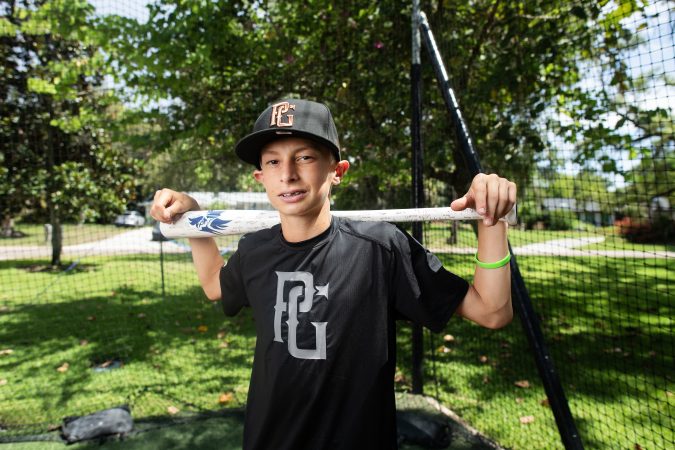
    Former Phillies pitcher Kyle Kendrick thought his son was going to die. Six months later, Kyle Jr. is playing baseball again after being hit by a speeding car.Octavio Jones / For The Inquirer

    The surgeon installed metal rods into Kyle Jr.’s femurs through his hips and was so precise that he left the tiniest scar. The doctor told the parents that their son would heal in six months. That sounded a little optimistic, the dad thought. But they were clean breaks, the doctor said. There were no growth plate issues. The boy would bounce back. He got lucky, the doctor said.

    The boy stayed in the hospital for a week with his mom while dad stayed at home with their daughters, Sophia and Sloane. Everyone at the hospital was great, mom said. Well, everyone except for the people who kept removing and inserting the catheter.

    “I was like, ‘OK. No more students are coming in to try the catheter. We’re going to use your best person who knows how to use a catheter and that’s what we’re going to do,’” said Stephenie, who lives in Florida but still has the accent of the girl from Glenolden who attended Archbishop Prendergast. “I pulled out a whole Delco thing there. You don’t even know. I was real nice until I was like, ‘That’s enough. Now leave the friggin’ catheter in until he can pee on his own.’”

    ‘Back on the horse’

    Kyle Jr. returned to school in early December, less than a month after the crash. His buddies at Skycrest Christian School pushed the sixth grader’s wheelchair around the halls and carried his books. He went snowboarding just three weeks after surgery. The doctor was right.

    Kendrick took his son to fish at the spot where he was headed that Sunday and they went back to the scene of the crash. He bought his son a new bike.

    One of their daughters used to ride horses, and the trainer always put her right back on the horse if she fell off. There’s no guide instructing parents how to deal with a crash like this. So the Kendricks did what they thought was best.

    “We got right back on the horse,” Stephenie said. “He’s a badass. He really is.”

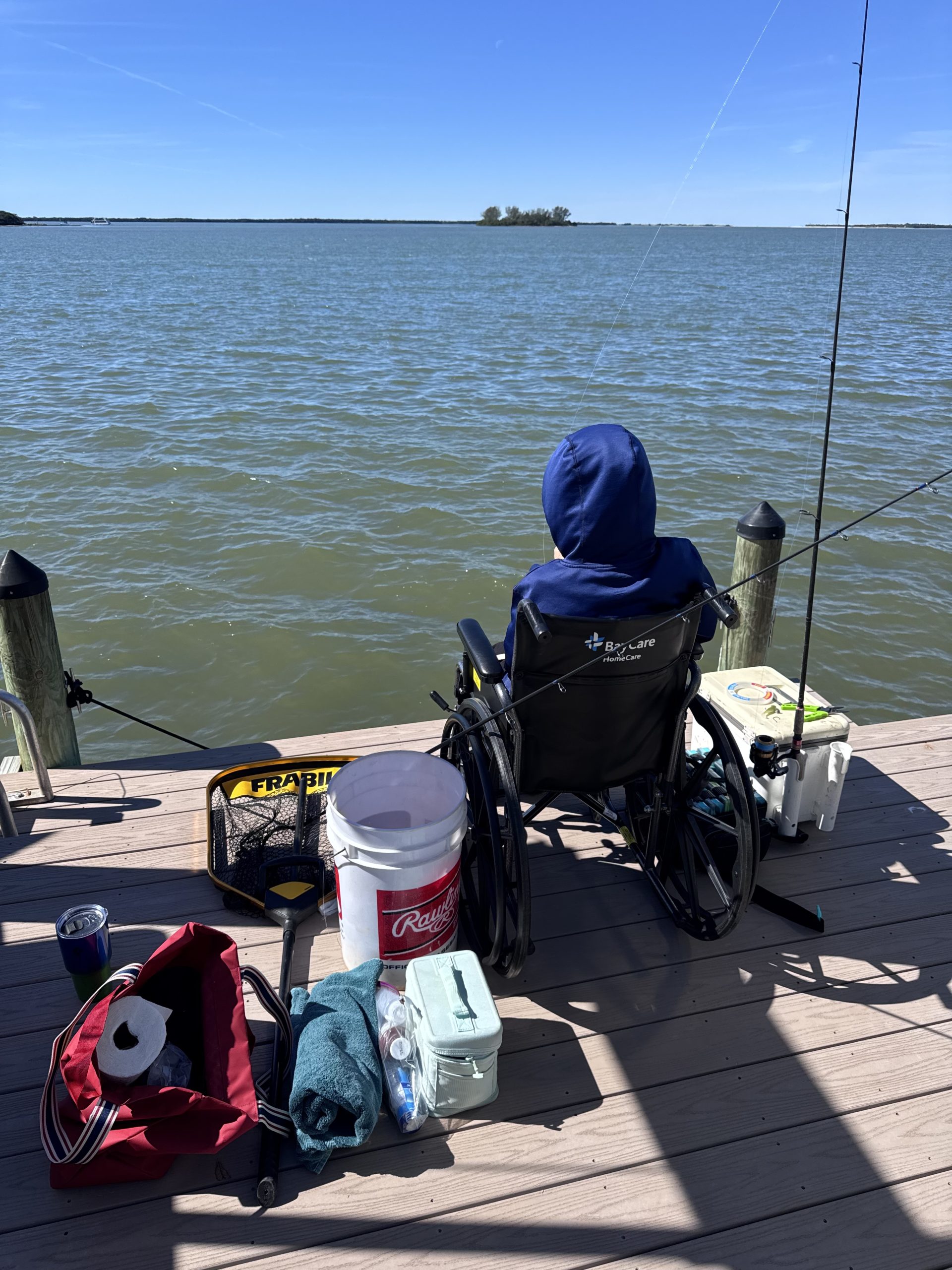
    Kyle Kendrick Jr. fishes from his wheelchair weeks after he was hit by a car while heading home from fishing in the same spot. His dad, former Phillies pitcher Kyle Kendrick, drove him back to the spot.Kyle Kendrick

    And they got the boy in the cage. Kyle Jr.’s travel team — which is coached by his dad — had a trip planned for June to a tournament in Cooperstown, N.Y. The fields are named after big-league parks and nestled in the valley near the Baseball Hall of Fame. This was a trip the father and son had been looking forward to. But Kendrick worried his son wouldn’t be able to make it.

    He played his first game for the Florida Burn in January as his dad used him as a designated hitter to keep him out of the field. His Burn teammates wore his number on their batting helmets and some of the other parents cried. He was back, but the Kendricks noticed their son’s confidence wasn’t where it used to be.

    He had missed weeks of baseball and had trouble timing his swing. They couldn’t fault him if he was tentative still from the crash. The father and son kept working.

    “He’s a good coach,” the son said. “It’s a lot of fun to hit with him and then to have him as my coach. Just working with him and learning what he learned is really cool. It’s special.”

    Kyle Kendrick said his son being “able to play at 100 percent after this is a miracle.”

    “When I got back out there with him, I said, ‘This is so cool,’” the father said. “He could’ve passed. And now to still play? He could’ve been paralyzed. Just to be out there doing baseball stuff is unbelievable.

    “I really didn’t think he’d be able to play again. I didn’t know how he’d move. A lot of thoughts go through your mind. For him to come back, he looks normal if not better. We’re very lucky and grateful. It’s cool to be back with him. To see him on the field was awesome for me.”

    He made it to Cooperstown and the team’s first game was delayed until near midnight. The boys didn’t play that night until way past bedtime. They were a bunch of friends on a baseball trip. They slept in bunks for a week, traded pins, ordered pizza, went to the Hall of Fame, and watched fireworks. Playing late at night was perfect.

    It became even better when young Kyle got hold of a pitch and drove it to center field. His first homer came seven months after a crash that gave his parents the worst scare of their lives.

    “It was freezing cold,” Kyle Jr. said. “I could hardly feel my hands. I got a high pitch and I just swung up at it.”

    He circled the bases and his teammates — the same kids who left a giant banner of support on his lawn when he was in the hospital — rushed toward home plate. Kyle Jr. slowed his jog as he neared the gang of kids and skipped onto home plate as his buddies went wild.

    “That felt so good,” Kyle Jr. said. “Everyone was pumped. Everyone was jumping because it was my first one.”

    A day later, he did it again. It was “oppo taco,” he said of his opposite-field homer.

    The kid who fell in love with baseball in the batting cage his dad built was back doing what he loved.

    “I just love to play,“ he said. ”It’s a lot of fun.”

  • Main Line Health is adding specialty physicians to reduce wait times

    Main Line Health is adding specialty physicians to reduce wait times

    In the last 16 months, Main Line Health has gone from employing no gastroenterologists to nine, with two or three more expected to start this summer.

    The hiring is part of a push by the nonprofit health system to reduce wait times for patients.

    “We are down to three weeks” from months of waiting for a GI appointment, Main Line CEO Ed Jimenez said in a June interview. The organization has also hired six GI physician assistants and nurse practitioners to speed up care.

    A similar move in urology is planned as the health system in Philadelphia’s western suburbs partially unwinds its traditional heavy reliance on outside physicians for specialty care, seeking to regain momentum after financial losses during the COVID era.

    In another shift, Main Line is replacing contracted Jefferson Health trauma surgeons with its own hires. Main Line is ending its contract with Jefferson at the end of this year.

    Overall, Main Line has hired 100 physicians since Jimenez became CEO in June 2025. About a third replace people who retired, but “two-thirds are brand new, accretive, so we’ve been very successful,” he said.

    Some of the hiring is related to the needs of patients coming to Main Line after last year’s bankruptcy collapse of Crozer Health. That includes eight OB-GYNs and one advanced practice provider hired from Crozer.

    Starting a urology department

    Christopher Hartman joined Main Line from Northwell Health on Long Island in January as medical director of urology. One of his jobs is to build the employed physician group. How big it gets will depend on its success in drawing patients.

    By targeting GI and urology, Main Line is putting itself into competition with private practices — U.S. Digestive Health and MidLantic Urology — it has had close ties with for years.

    MidLantic’s market president, Michael Hagg, is Main Line’s system chief for urology. Main Line said he oversees urologists who are not Main Line employees.

    “We continue to work and serve the communities of Main Line Health as we have for the past several decades as urologists, collaborators, and leaders across all four Main Line Health campuses, working with past and present CEOs and hospital presidents,” Hagg said in an email.

    Both MidLantic and U.S. Digestive Health grew substantially with the help of private-equity backing. U.S. Digestive was sold last year to a subsidiary of UnitedHealth Group, SCA Health, which declined to comment on Main Line’s move into gastroenterology.

    Bringing trauma surgery in house

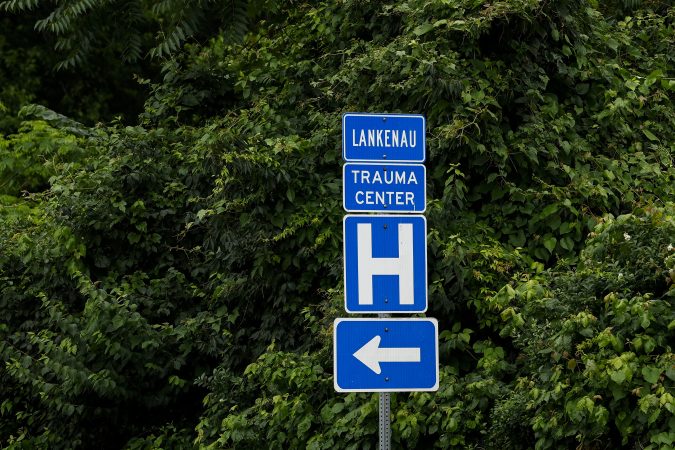
    Main Line plans to hire at least a dozen trauma/critical care surgeons to replace the Jefferson Health physicians it has been relying on for those services. Main Line’s emergency departments at Lankenau Medical Center and Paoli Hospital are Level II trauma centers.

    “We appreciate the excellent care provided by these trauma surgeons. However, at this point, we believe the time is right to bring the program in house so we can continue to grow and enhance it,” Main Line said in an email.

    Main Line declined to say how many surgeons it had already hired. It can’t hire the Jefferson surgeons for contractual reasons, it said.

    Jefferson declined to comment.

  • Soccer’s lingering post-World Cup problem, the new and ugly era of Brady-Belichick, and other thoughts

    Soccer’s lingering post-World Cup problem, the new and ugly era of Brady-Belichick, and other thoughts

    First and final thoughts …

    By the standards of hospitality, enthusiasm, atmosphere, and drama, the 2026 World Cup was a smashing success throughout the United States. Anyone who was at or in the vicinity of Lincoln Financial Field for any of the six matches there picked up on the magnitude of the event for the 48 participating teams, their fans, and the tournament’s other host cities. As meaningful as it is to cheer on a team from your hometown or home state, that power can’t compare to being invested in a club that represents your home country.

    Now, in the aftermath of Spain’s 1-0 extra-time victory Sunday over Argentina in the championship match, come the inevitable questions: Will this World Cup help soccer gain a greater foothold (no pun intended) in the U.S.? Will it inspire the sport’s leaders here to improve the grass-roots training and development of coaches and players? Will it allow soccer to penetrate the bubble of conversation among casual sports fans in the way that the NFL and, to a lesser extent, Major League Baseball, the NBA, and (once every two years) the Olympics have? Will talk-show hosts start ranting about it? Will certain markets become true hotbeds for Major League Soccer? Late June through mid-July is a relative dead zone in the major-sports calendar here; will people tune in when they have other, more traditional options?

    It’s certainly possible that soccer is finally having its moment in the United States and that its popularity, as women’s basketball’s has in the last several years, will soon surge. But there’s a reason to doubt that it will, or at least a reason to think it will struggle to attract and keep fans, and the reason is about as basic as it gets.

    Flopping.

    Yes, criticizing soccer players for embellishing injuries lapsed into cliché long ago. The thing about clichés, though, is that they tend to be true, and the cold reality is that flopping’s place in soccer makes the sport less attractive to those who don’t already love it. For all the cracking down that FIFA has done on flopping, a player who bounces up immediately after being taken down on a slide tackle is less likely to draw a foul than one who writhes on the ground as if his opponent had just gone full Kathy Bates-in-Misery on him. Fouls lead to free kicks and set plays, and free kicks and set plays sometimes lead to goals, so any semblance of contact often leads to the kind of overacting that only Nicolas Cage could appreciate. The potential payoff of flopping incentivizes players to do it.

    “When it is beneficial,” a 2016 study published in Frontiers of Psychology concluded, “soccer players can and do successfully feign injury to stop the game. Consequently it is possible that others might also successfully feign injury, pain or disease when motivated to do so.”

    This aspect of soccer’s culture cuts against one of the strongest attractions people have toward sports: They are witnessing, and want to witness, athletes display physical courage. (It’s worth noting, lest anyone lapse into any insulting gender stereotypes, that female soccer players flop far less often than their male counterparts.) Pelé called soccer “the beautiful game,” and the sport’s experts and aficionados fall back on that phrase often, and it can apply. As evidence, go watch a replay of the gorgeous header pass from Nico Williams that set up Ferran Torres’ World Cup-winning goal. But it’s rare that a soccer team earns praise for its toughness or grit, for the factor that so many fans of football, hockey, and other sports prize in their players.

    The quarterback who hangs in the pocket to deliver a deep downfield strike … the wide receiver who goes over the middle to catch that pass … the Conn Smythe Trophy winner who can’t lift the Stanley Cup because he separated his shoulder three weeks earlier … the guard who slashes into the paint and takes an elbow to his or her face from a center 6 inches taller and 40 pounds heavier … the tired starting pitcher who still wants the ball in the eighth inning … the figure skater who risks tumbling to the ice for the sake of a triple Salchow — competition is more compelling and the athletes more admired for these qualities and circumstances. Look at the backlash around the NBA against the Oklahoma City Thunder’s foul-hunting style of play, consider Carli Lloyd’s criticism of Christian Pulisic, and you understand the collective-action problem that soccer has to overcome before it will be fully embraced here.

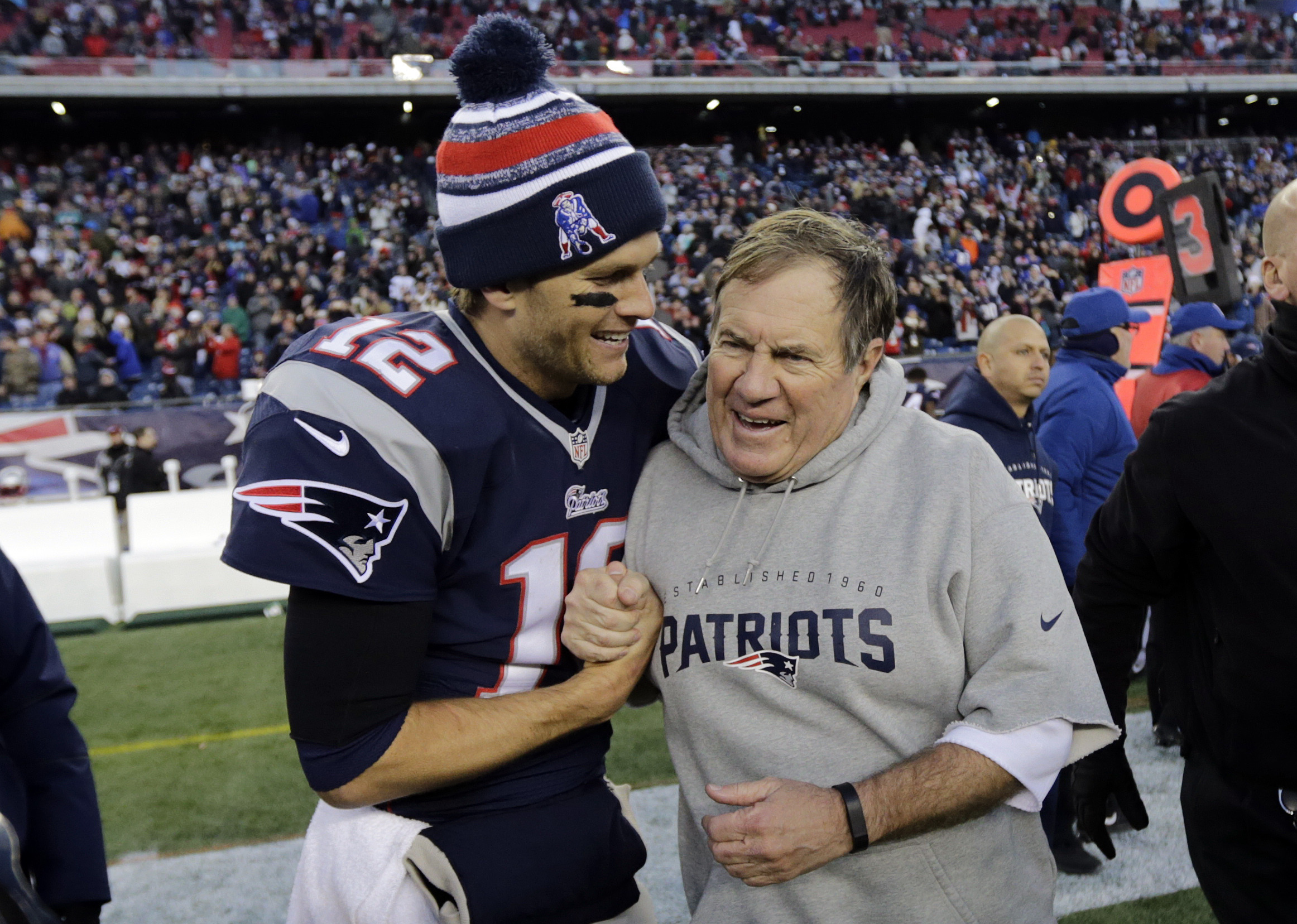
    Tom Brady and Bill Belichick have become embarrassing. Charles Krupa

    Grow up, GOATs

    One is fiddling around with pro wrestling publicity stunts. The other has been fiddling around with a romantic partner 49 years his junior. All this time, everyone thought that Tom Brady and Bill Belichick’s greatest achievement was the six Super Bowls they won together. Turns out, their greatest achievement was that each apparently kept the other from falling into a humiliating midlife crisis.

    Domo delivers

    Shoutout to longtime Daily News/Inquirer scribe Paul Domowitch, whose new book, Just Give Me a Chance to Fail: The Life of NFL Hall of Fame Linebacker Sam Mills, hits stores next week. If it’s anything like the rest of Domo’s football journalism, the book will be smart, thorough, and impossible to put down.

  • Northern Liberties’ new steakhouse is solid, but in need of a soul

    Northern Liberties’ new steakhouse is solid, but in need of a soul

    My Uber driver could be forgiven for becoming a tad disoriented as we gingerly approached Terra Grill. After all, this newly cobbled stretch of Germantown Avenue in Northern Liberties has not appeared on a Philadelphia map since the 19th century, when the massive Schmidt’s Brewery rose here in 1860 on 14-plus acres east of North Second Street.

    The legendary brewery is long gone, closed in 1987, demolished in 2000, and replaced in 2007 by developer Bart Blatstein’s original Piazza project, which supercharged gentrification of this once-industrial neighborhood. The mixed-use development quickly sputtered after an ownership change in 2013, just as nearby Fishtown and Kensington began to thrive.

    Can Terra Grill help revive the Piazza dream? I’m not convinced a steakhouse alone will do the trick, even if it’s something different for Northern Liberties. (Remember the short-lived “vibe dining” of meat-forward SIN?)

    But the development’s current owners, Post Brothers, clearly hope this modern American grill will help restore at least some of the neighborhood’s shine. It’s a $6 million anchor for the Piazza Alta, a new 1,100-unit high-rise complex targeted to families, not just the “frat boys in backwards trucker hats” that Post CEO Michael Pestronk said occupied the Piazza during its decline under their predecessor, Kushner Cos., whose tenure saw falling rents and shuttered retail storefronts.

    The exterior of Terra Grill on July 9 in Philadelphia.Monica Herndon / Staff Photographer

    The fact that there are people blithely wandering across our car’s path as we approach Terra Grill’s landscaped facade is both confusing and deliberate. Post Brothers has resisted adding road striping to the avenue (a technically private stretch now open to the public) to “prevent it from becoming a speedway.” The unmarked stones are meant to foster a street-facing, Euro-style pedestrian plaza.

    Recruiting a nationally known chef for this project in Laurent Tourondel is also part of the strategy to give the neighborhood an upscale, Center City-esque aura — signaling that this once-edgy neighborhood has a new polish on top of its existing gastropubs (Standard Tap, North Third), cutting-edge vegan cooking (Pietramala), brunch spots (Honey’s Sit ‘N Eat, Cafe La Maude) and standout BYOBs (Pera, Apricot Stone). With an apartment boom bringing thousands of new residents and median incomes skyrocketing over the last decade, the affluence and density is suddenly there to potentially support something fancy like Terra Grill, whose entrees hover in the mid-$30s before you even touch the $50-plus prime steaks.

    The interior of Terra Grill on July 9 in Philadelphia.Monica Herndon / Staff Photographer

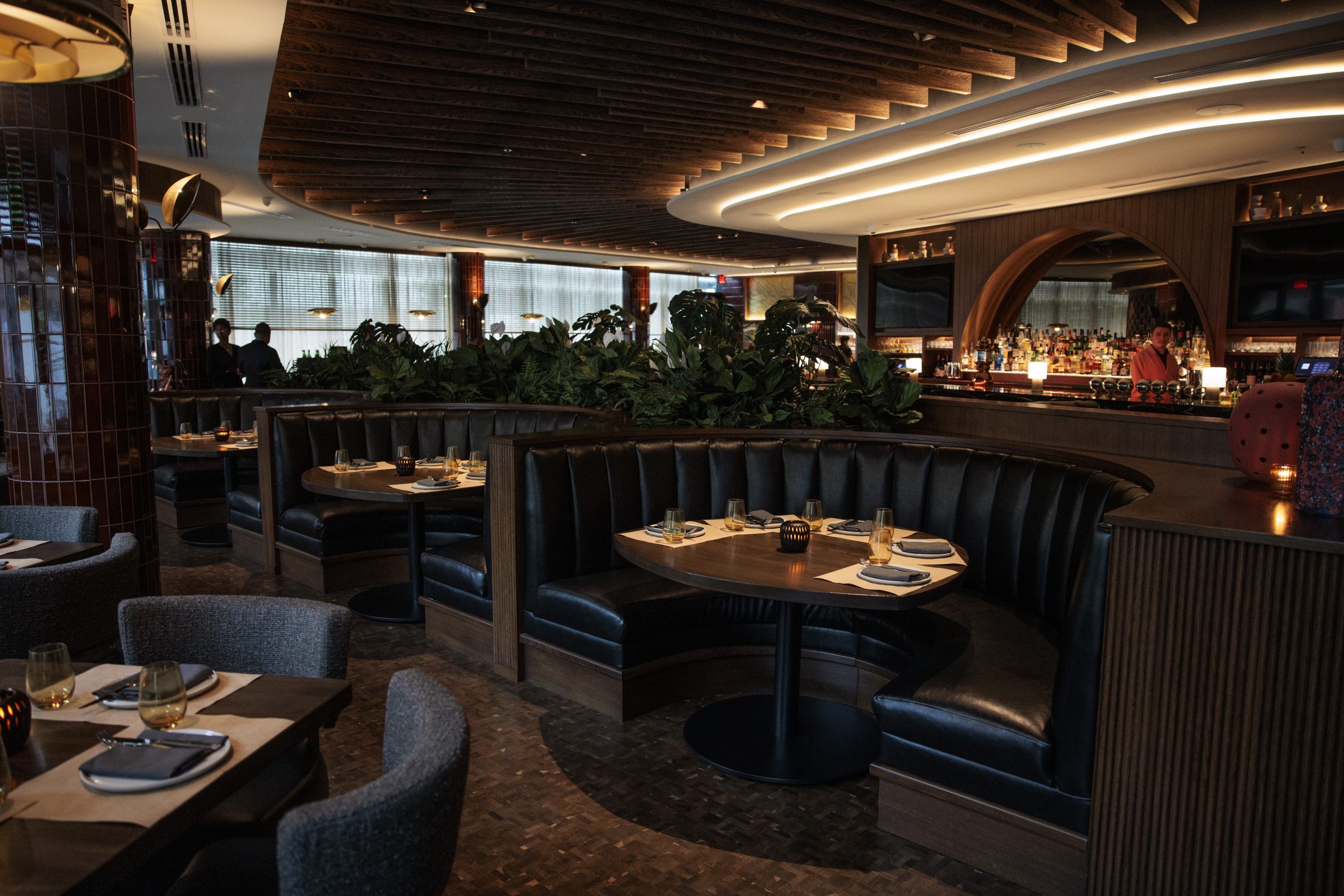
    Is it a particularly adventurous place to dine? Not especially. But that may not matter. The restaurant exudes a textbook chophouse vibe, with circular booths clad in cushy black leather, a marble-topped bar, dark wood accents, walls of wine bottles, and hot pans of fresh, salt-speckled Parker House rolls served with little crocks of whipped miso-garlic butter.

    There are culinary twists on classic cocktails to spark the meal, like the Quick & Dirty, an entry-level dirty martini washed with tzatziki yogurt and piqued with giardiniera brine, or the Golden Hour white Negroni, infused with red and golden raspberries as a nod to Philly’s Clover Club.

    The Crazy Bird and Quick & Dirty cocktails at Terra Grill on July 9.Monica Herndon / Staff Photographer

    It’s the bar program’s nod to the kitchen ethos of the French-born Tourondel, a respected chef based out of New York best known for BLT Steak (which he no longer owns) and BLT Fish, which briefly held one Michelin star and is now closed. Tourondel has since evolved into a management chef for hire, having opened 58 restaurants, from Kazakhstan to Panama, over the course of his career. He now operates 12 locations under his company, from Manhattan (L’Amico) to South Beach, where we recently dined on a delicious and stylish rendition of steak and eggs for brunch at LT Steak & Seafood.

    Terra Grill is large, with 139 seats inside and 50 on the patio, alongside the chef’s cozier and more casual Roman-inspired Scusi Pizza. But the menu is essentially straight off the Tourondel rack: quality ingredients in familiar dishes treated with a thoughtful flourish or a seasonal touch. In other words, something for everyone.

    The grilled octopus at Terra Grill.Monica Herndon / Staff Photographer

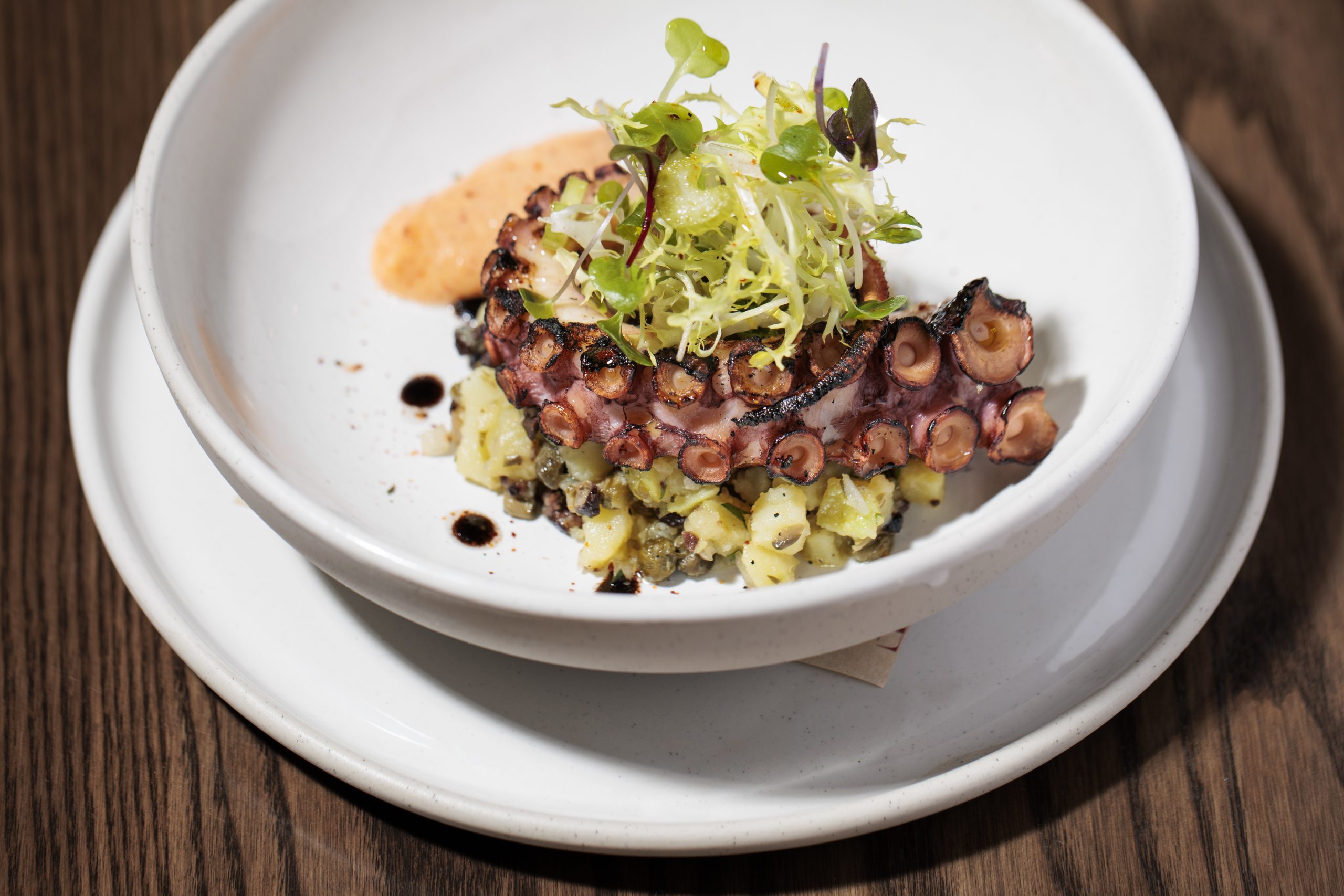
    I especially enjoyed Tourondel’s octopus starter, coiled into a thick ring with its tentacles pointing out over a hash of crushed fingerling potatoes bright with lemon, olive oil, espelette aioli, and black dots of cured-olive purée. A baked crab cake is meaty and fresh, and fun to eat from the shell that it’s been stuffed back into.

    Beside such successes, though, there are some fusion dishes that felt off-key, like the fried calamari with sweet chili dip, or the chimichurri-dabbed short ribs wrapped in bao buns whose puffy hinges had gone stale. A luxe hot dog encased in puff pastry with Gruyère and sauerkraut would have been delicious had its Wagyu dog not been so dense and rubbery. (Just as with burgers, a Wagyu pedigree does not make a hot dog better.) A tuna tartare stuffed into a flower-like bloom of shaved watermelon radishes beneath an avocado dome was flavorful and satisfying. But a mizuna salad draped with yuzu-dipped slices of yellowtail was awkward to eat and a waste of good fish.

    The prime rib eye with dauphine potato puffs and grilled asparagus at Terra Grill.Monica Herndon / Staff Photographer

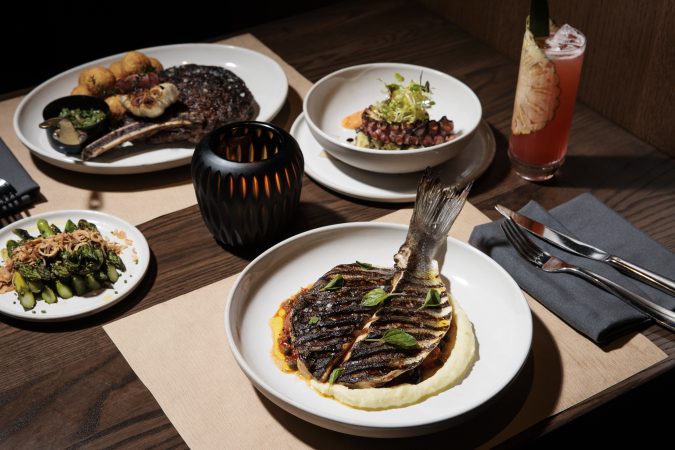
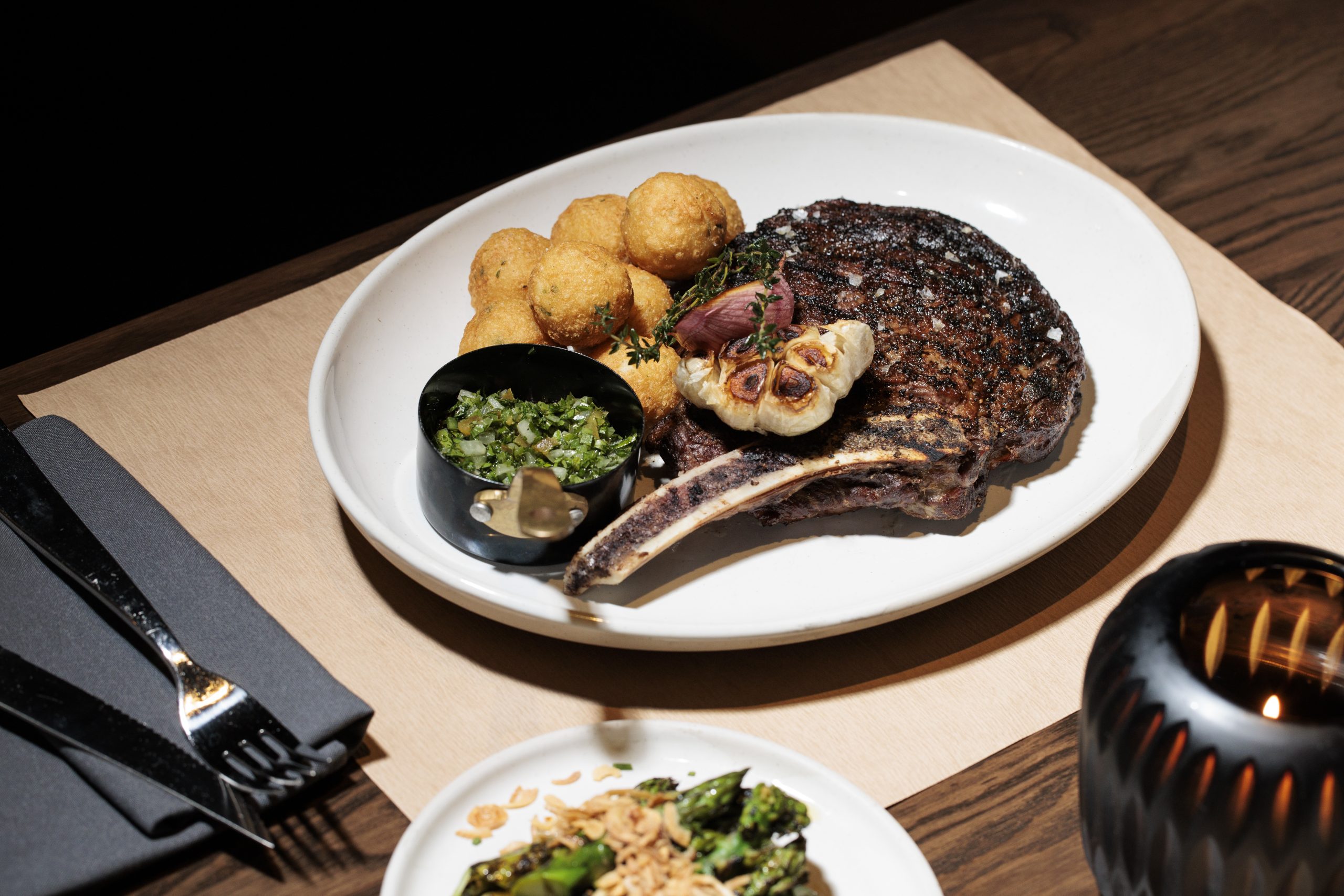
    The entrees are naturally headlined by the steaks — all high-quality prime grade (except for the Angus filet mignon) and properly cooked over the live flames of a hardwood grill, served simply with the sauce and side of your choice. The 22-ounce rib eye was the ultimate beefy cut of the four options, and also the most expensive at $98. The entry-level skirt steak wasn’t huge for $52 (and oddly, more expensive than the signature dish at Tourondel’s Skirt Steak in Midtown Manhattan), but the 10-ounce flap of black garlic-marinated beef glazed in hoisin was delicious, especially with crispy croquettes of dauphine potato puffs on the side.

    The bar at Terra Grill restaurant, 1099 Germantown Ave.Elizabeth Robertson / Staff Photographer

    Considering designer Olya Volkova’s attention to fostering the clubby comforts of a swank dining room, it’s a shame the mood is so often squashed by the glaring flash of big TVs behind the central bar. It speaks to a personality conflict this fledgling restaurant is still trying to resolve: Is Terra Grill a special-occasion destination, or a chic weekly hangout for neighbors to watch the Phillies over a $28 burger?

    I’d actually come back for that prime beef burger encrusted with seven different kinds of peppercorns and topped with molten raclette cheese — if only they manage not to overcook it next time.

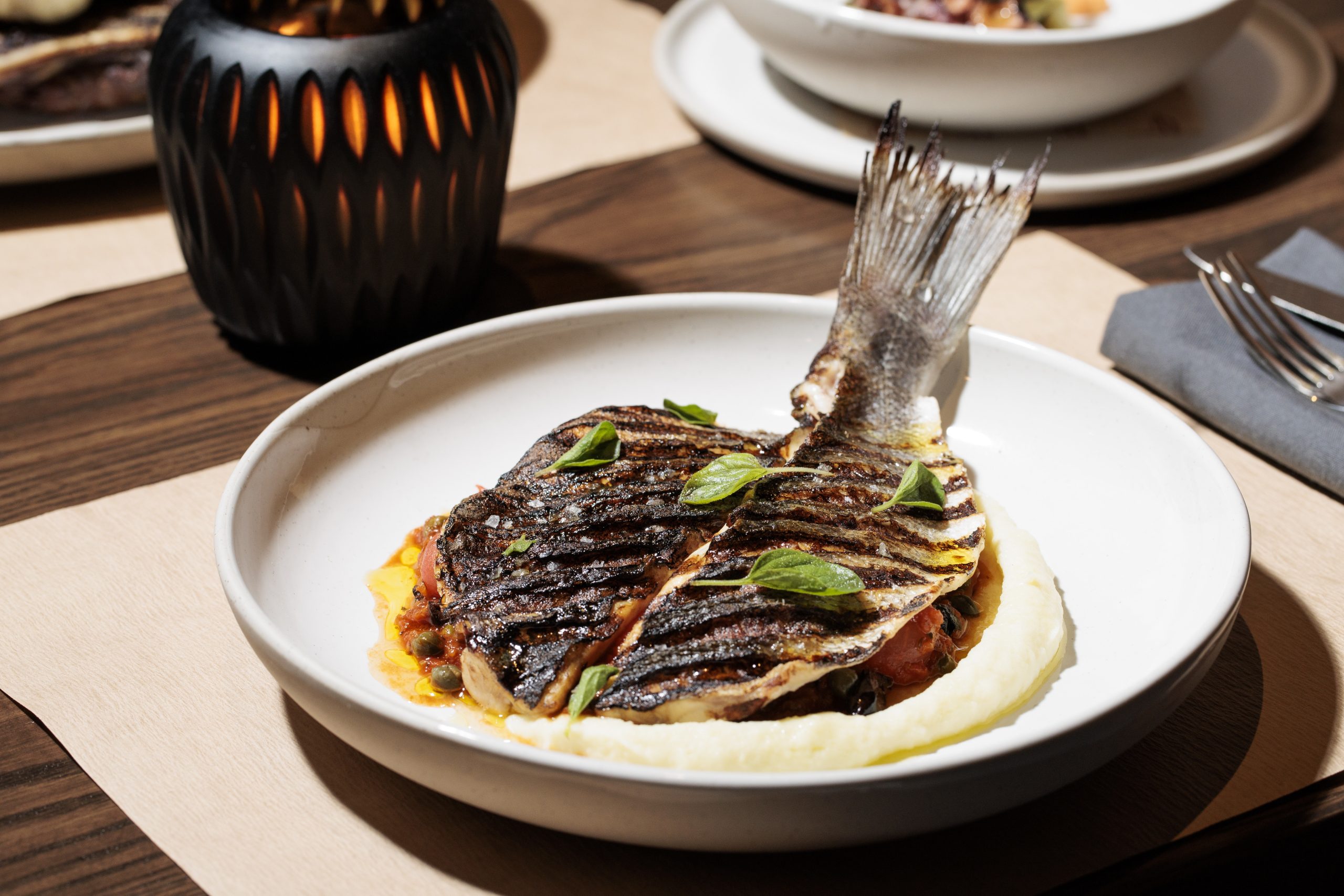
    I can also see returning for the excellent branzino, which gets butterflied and crisped skin-side down over the wood fire and served with a seasonal garnish — a lemon-soy salsa verde in spring, and now a summery puttanesca of blistered tomatoes with capers and olives. That fish is a fair deal at $36. However, even the chef conceded the entree of head-on red shrimp was “a little small” when I sent him a picture of my plate with three crustaceans for $36.

    The grilled branzino puttanesca at Terra Grill.Monica Herndon / Staff Photographer

    The rigatoni in lamb Bolognese is understandably popular with Terra’s regulars, both hearty and flavorful for $28. But it also feels random on a menu that has few other Italian flourishes — even if Tourondel’s adjacent pizzeria, Scusi, is right next door.

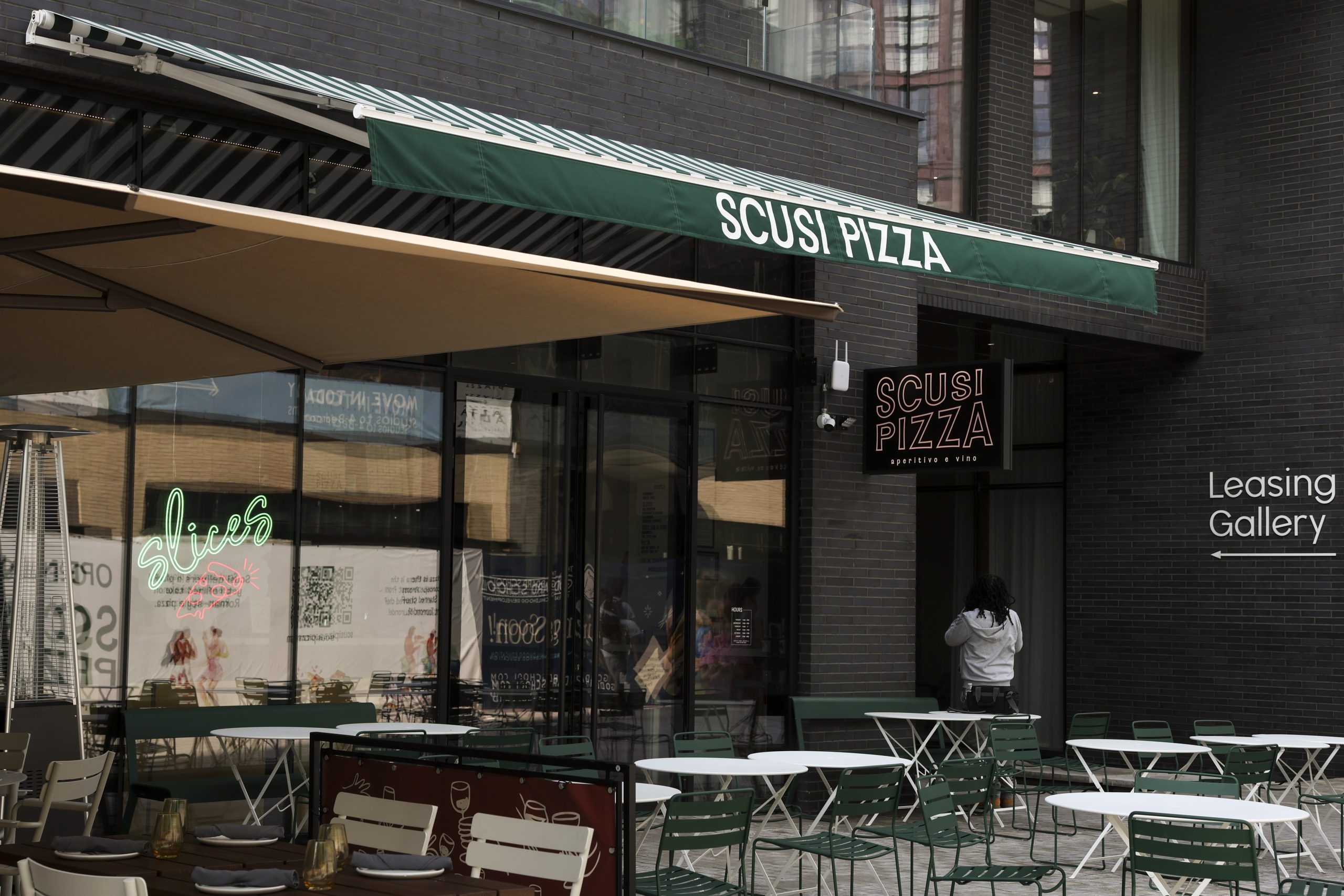
    With its blond wood, aperitivo hour, and appealing menu of salads and pies (many available by the slice), Scusi could very well be just the affordable counterpart Terra needs. But its thin-crusted Roman pies were so strangely heavy from a blend of grains, including bran, that the dough was leaden and tough. My weighty slice of sausage and pepperoni was also incinerated.

    Two slices of pizza at Scusi, located in the Piazza Alta in Northern Liberties.Craig LaBan / Staff
    Scusi Pizza next door to Terra Grill.Monica Herndon / Staff Photographer

    Having previously enjoyed Tourondel’s Neapolitan-style Sag Pizza in the Hamptons, I know he’s capable of good pies. But Scusi’s troubled crusts reflect one of the perils of having a remote-control chef conducting from out of state.

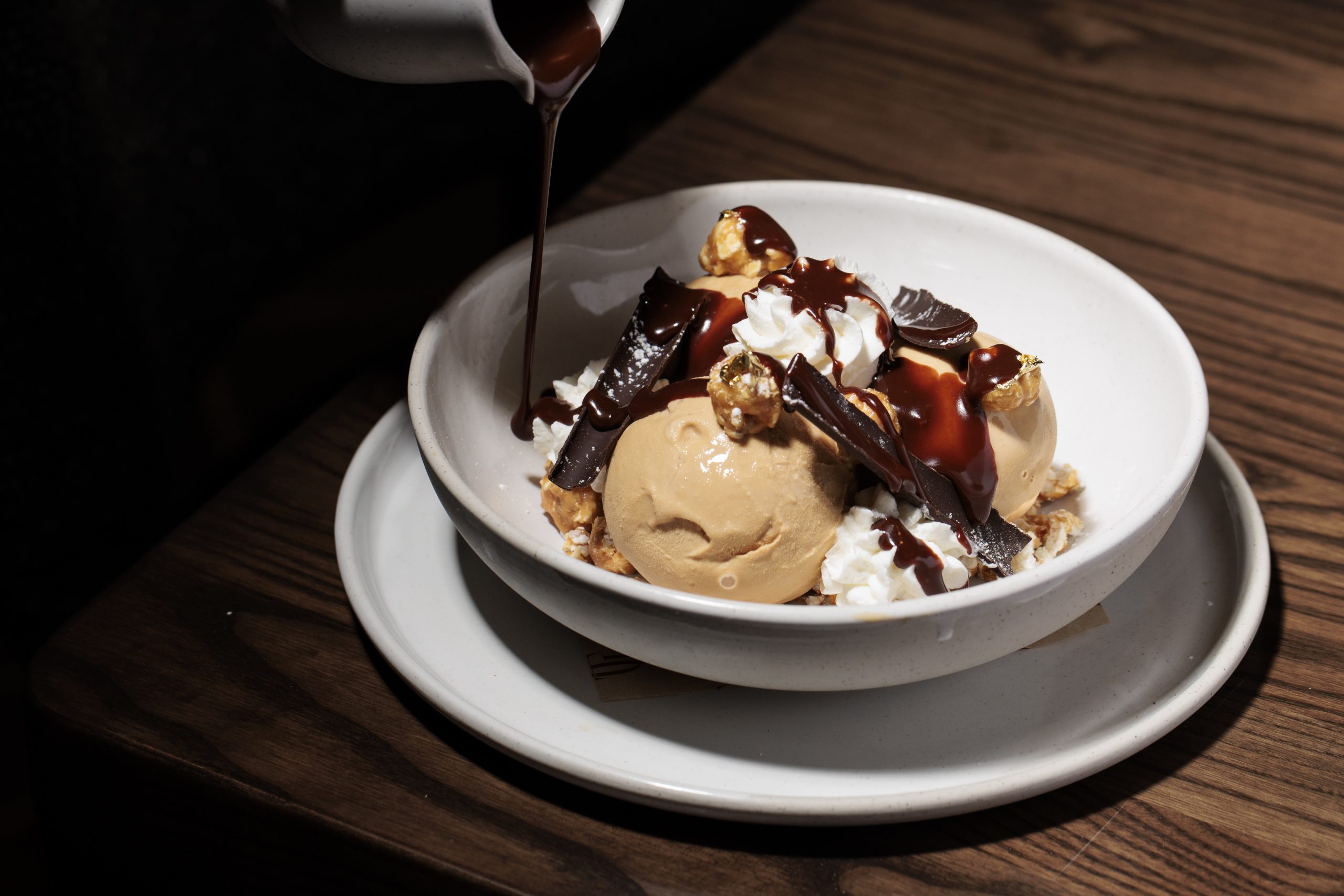
    Even more difficult than executing recipes, though, is finding the soul of a cookie-cutter concept, such that it feels like it fits the fabric of a place. Of course, in a literal blank slate like the Piazza Alta, the right restaurant can help set that tone. I did enjoy much of my food here, including the whimsical finale of a caramel popcorn sundae with a tableside chocolate sauce drizzle.

    There are good ingredients in place. And the service is friendly enough (despite some rushed pacing with the starters). But there is still a paint-by-numbers corporate energy to Terra Grill.

    The caramel popcorn sundae at Terra Grill.Monica Herndon / Staff Photographer

    Maybe its stride will come with more customers: The restaurant was less than half full during my visits. Perhaps they will materialize if the neighborhood gains the kind of momentum its developers hope to conjure — including the promise of an undisclosed local star chef slated to take a prime space across from Terra. Tourondel’s restaurants alone do not carry the gravity to fully animate this recently revived stretch of Germantown Avenue, but Terra could complement a broader scene. Just like the chaotic, slow-motion traffic patterns outside the restaurant’s doors, it feels like a work in progress.


    Terra Grill

    1099 Germantown Ave., 267-962-0011, terragrillrestaurant.com

    Dinner 5 to 9 p.m. Sunday, Wednesday, and Thursday; until 10 p.m. Friday and Saturday. Brunch 11 a.m. to 3 p.m Saturday and Sunday.

    Entrees, $28-$98.

    Wheelchair accessible.

    A little over half the menu items are gluten-free, with several others being easily modified with care to avoid cross contamination. Fried items are not available.

    Menu Highlights: Parker House rolls; fried calamari; lemon chicken parm sandos; grilled octopus; stuffed crab cake; grilled branzino; Terra burger; prime steaks (skirt; strip, rib eye); potato puff dauphine; caramel popcorn sundae.

    Drinks: Creative takes on classic cocktails with culinary twists are front and center, including a tzatziki-washed riff on a dirty martini and the rummy Crazy Bird tinged with bitter Campari. The sub-50 label wine list covers multiple styles with a balance of big names (Whispering Angel, Jordan) and lesser-known options (Decibel, Txakoli rosé). There are solid choices by the glass at $20 and under.

    The interior of Terra Grill on Thursday, July 9, 2026 in Philadelphia.Monica Herndon / Staff Photographer