Monell Chemical Senses Center is relocating to a new facility in University Cityto expand its operations and evolve its science, officials announced Wednesday.
The nonprofit research institute dedicated to studying taste and smell signed a 20-year lease at One uCity Square, a 13-story research hub, that will include more than $30 million worth of new infrastructure and facility improvements.
The new location at 25 N. 38th Street is a roughly seven-minute walk from the current home at 3500 Market St., where Monell has resided since 1971.
Monell plans to finish moving into the new space in early 2027.
“We’re just at capacity. We don’t have the facilities that are going to push us forward into the future,” said Benjamin Smith, Monell’s executive director and president.
The move has been a long time coming, as the center’s more than 150 scientists and staff have outgrown its space over the last 50-plus years.
For example, more scientists have wanted to use newer research methods, such as organoids — miniature versions of organs grown in the lab, he said. However, the current building has limited cell culture space and imaging capabilities.
“Our people are excited because we’re moving to facilities that are going to help them do more of the work that they want to do,” Smith said.
Benjamin Smith is the executive director and president of Monell.Courtesy of Monell Chemical Senses Center
More shared space, room for growth
The new space, which spans 64,000-square feet across three floors, is technically smaller than Monell’s current building. However, the design will allow for more efficient use of lab space.
The modern facility has an open layout filled with shared spaces, “as opposed to the old sort of academic lab where you were in one corner of a basement or one corner of a building and you locked your door,” Smith said.
He hopes this will encourage collaborations and interactions between scientists. That includes both within Monell and with other groups in the building.
Its neighbors within One uCity will include Dispatch Bio, Century Therapeutics, Penn NSF AIRFoundry, among other research and biotech companies. The office building opened in 2023 and is now roughly 90% occupied.
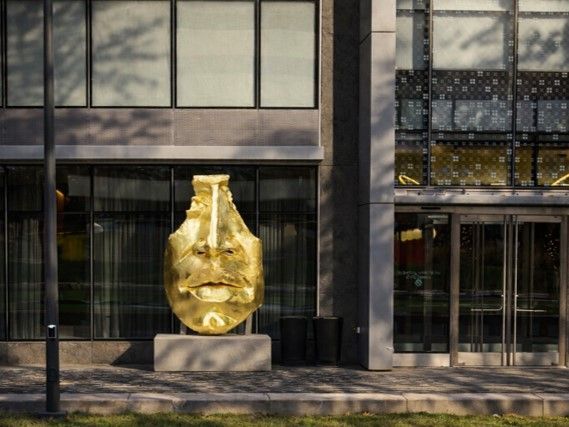
Monell’s iconic “Face Fragment” sculpture, perched outside its current building, will move, too. The giant nose and mouth will be featured at the front of the One uCity building, looking out at the lawn.
“We’re making sure that we don’t lose that legacy,” Smith said. “We take our culture and we move it into the new building and we grow it.”
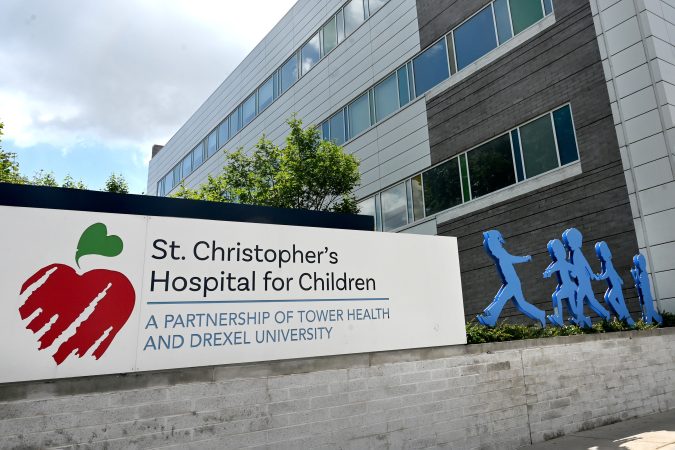
Threemajor Philadelphia-area health systems are exploring an alliance to support financially struggling St. Christopher’s Hospital for Children in North Philadelphia, its leaders announced Wednesday.
The proposed alliance would involve Nemours Children’s Health, Jefferson Health, and Temple Health, a St. Chris statement said.
St. Chris’ ownership would not change from the current 50-50 partnership between Drexel University and Tower Health.
Under the alliance, Wilmington-based Nemours would provide highly advanced, or tertiary, care. Nemours is Jefferson’s primary pediatric partner in the Philadelphia area.
The preliminary agreement announcement provided no timeline to form the alliance. It also did not mention specific financial support for the North Philadelphia institution, which has received millions from local health players following a 2019 bankruptcy and steep losses during the pandemic.
St. Chris’ board chair, P. Sue Perrotty, said the 150-year-old hospital will remain a “gateway” to care for families.
“Our goal is to preserve what makes St. Christopher’s so special while strengthening our operations, so our community-focused mission will endure,” she said.
“Whether care is delivered at St. Christopher’s or through our partners when clinically appropriate, our team will continue to coordinate every step of a patient’s journey, providing families with a seamless experience and a trusted guide throughout their child’s care.”
Beyond the critical health services St. Chris provides, the institution also plays a vital part in medical education for area medical schools, including those at Drexel, Thomas Jefferson University, Philadelphia College of Osteopathic Medicine, and Temple University.
Twice in the past four years, a coalition of Philadelphia nonprofits provided financial lifelines for St. Chris.
Children’s Hospital of Philadelphia, Jefferson, Temple, Philadelphia College of Osteopathic Medicine, Independence Health Group, and private donors provided $50 million over two years starting in 2022. Two years later, the same group, minus Independence, contributed another $30 million.
Jefferson and Temple were also part of a consortium that considered bidding for St. Chris in 2019 during its parent company’s bankruptcy. They backed out before the auction, which Drexel and Tower won with a $50 million bid.
Nemours spokesperson Shelley Meadowcroft said there was no financial support included in the agreement.
Nemours in recent years has lost affiliations with Main Line Health and ChristianaCare to CHOP. The alliance will strengthen “access to high-quality pediatric care in our region,” she wrote in an email.
“This collaboration also strengthens Delaware’s role in pediatric care by positioning Nemours Children’s Delaware-based clinical operations as a central hub for advanced specialty care, education, and innovation,” she added, “while supporting the long-term strength and mission of St. Christopher’s Children’s Hospital and the communities it serves.
In a statement, Temple University officials characterized the agreement as “non-binding letter of intent” to form an alliance “in support of St. Chris and its future.”
“The proposed alliance reflects a shared commitment to securing a future for St. Christopher’s while preserving the mission, clinical excellence and community role that have made the hospital a resource for children and families in Philadelphia and across the region,” officials said.
In 1976, when the All-Star Game came to Veterans Stadium, the Yankees’ Catfish Hunter and Thurman Munson did a midgame interview about a historic collective bargaining agreement that was ratified the night before.
Now that was a celebration of baseball.
Fifty years on, this wasn’t so bad either. MLB pulled out all the stops — and tugged on a few heartstrings, too — Tuesday night, from Miles Teller’s pregame ode about the sport’s impact on a 250-year-old country to the fifth-inning recreation of The Sandlot, including Ray Charles’ rendition of “America The Beautiful,” with All-Stars and children watching fireworks together on the field like it was some magical backyard.
“Oh, yeah, that was honestly one of my favorite parts of the game just because that was my favorite baseball movie growing up,” said Brandon Marsh, the Phillies’ first-time All-Star. “When I hear that song, it almost just brings tears to my eyes because it takes me back to being 5 years old.”
That was the point. And on that count, bravo, baseball.
All of which makes what will happen in less than five months so much more galling.
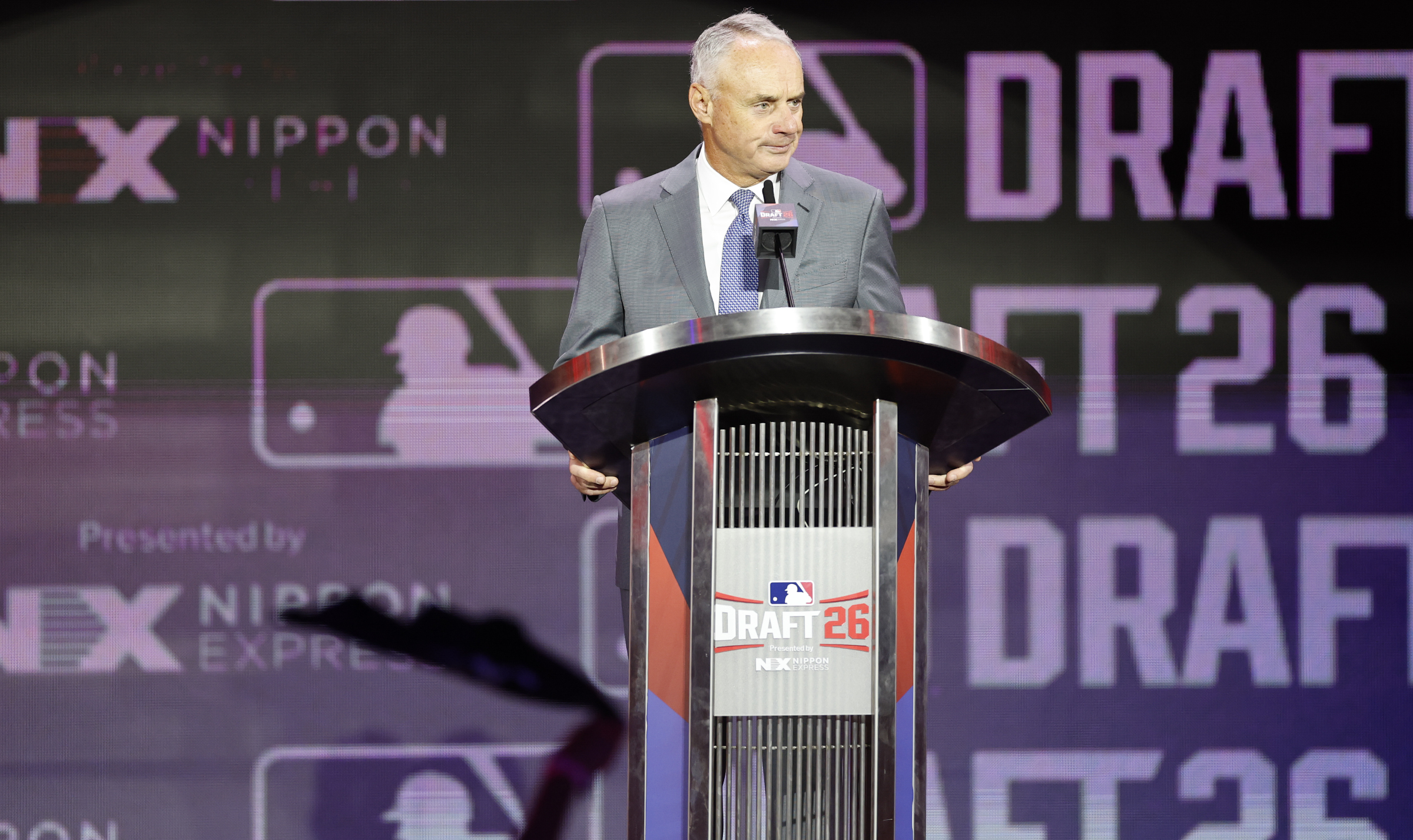
Because the owners and players agree on one thing — and one thing only: Baseball is thriving. Commissioner Rob Manfred and interim players’ union chief Bruce Meyer have the attendance figures and television ratings to prove it.
Baseball’s owners are “more united than any group in my entire time in baseball” in the pursuit of a salary cap, according to commissioner Rob Manfred.Yong Kim / Staff Photographer
Yet when the collective bargaining agreement expires Dec. 1 without a new deal — the sides can’t even agree on an economic framework within which to work — the owners almost surely will lock out the players, inciting a work stoppage that threatens to shutter the sport not only during a long, cold winter but also for part or even all of the 2027 season.
Talk about hitting the self-destruct button. Or pulling the pin out of the grenade. Pick your metaphor. They all apply.
And if you didn’t already think baseball was headed to such a dark place, well, you should’ve been in the hotel ballroom where Meyer and Manfred met separately with members of the Baseball Writers’ Association of America hours before the American League scored three first-inning runs against the Phillies’ Cristopher Sánchez in a 4-0 victory over the National League.
Start here: Meyer rejected MLB’s proposal to institute a salary cap, forever a third-rail issue for the players, on the union’s contention that baseball isn’t suffering from competitive imbalance as much as a subset of owners that aren’t trying to actually win. The players, then, are proposing changes to how revenue is shared between the teams.
“Teams in every market across the league can afford to compete; many of them are choosing not to,” Meyer said. “From our standpoint, that’s the biggest problem in the game right now.”
But the owners are “more united than any group in my entire time in baseball” in the pursuit of a salary cap, according to Manfred, who said they were influenced by internal polling of fans. (Here’s a secret: It’s really more about the owners wanting to control costs and raise their franchise values.)
And the players? Although it remains to be seen whether the union can hold — rank-and-file players with lower salaries might have different interests than superstars — the biggest names in the sport are steadfast in their refusal to accept a cap.
It goes back generations, in fact, to Philly’s 1976 All-Star Game, where the players won the right to become free agents after accruing six years of major league service. They played without a CBA for the first half, the sides trusting they would work something out.
“None of us talked about that stuff,” Larry Bowa said. “I hear it now [from players]. You hear a lot of talk about if there’s going to be a lockout. I do know that when we had these talks, [owners] always wanted a cap, and that was one thing that was embedded in our brains: ‘Don’t go for a cap. It’s not going to work.’”
And now?
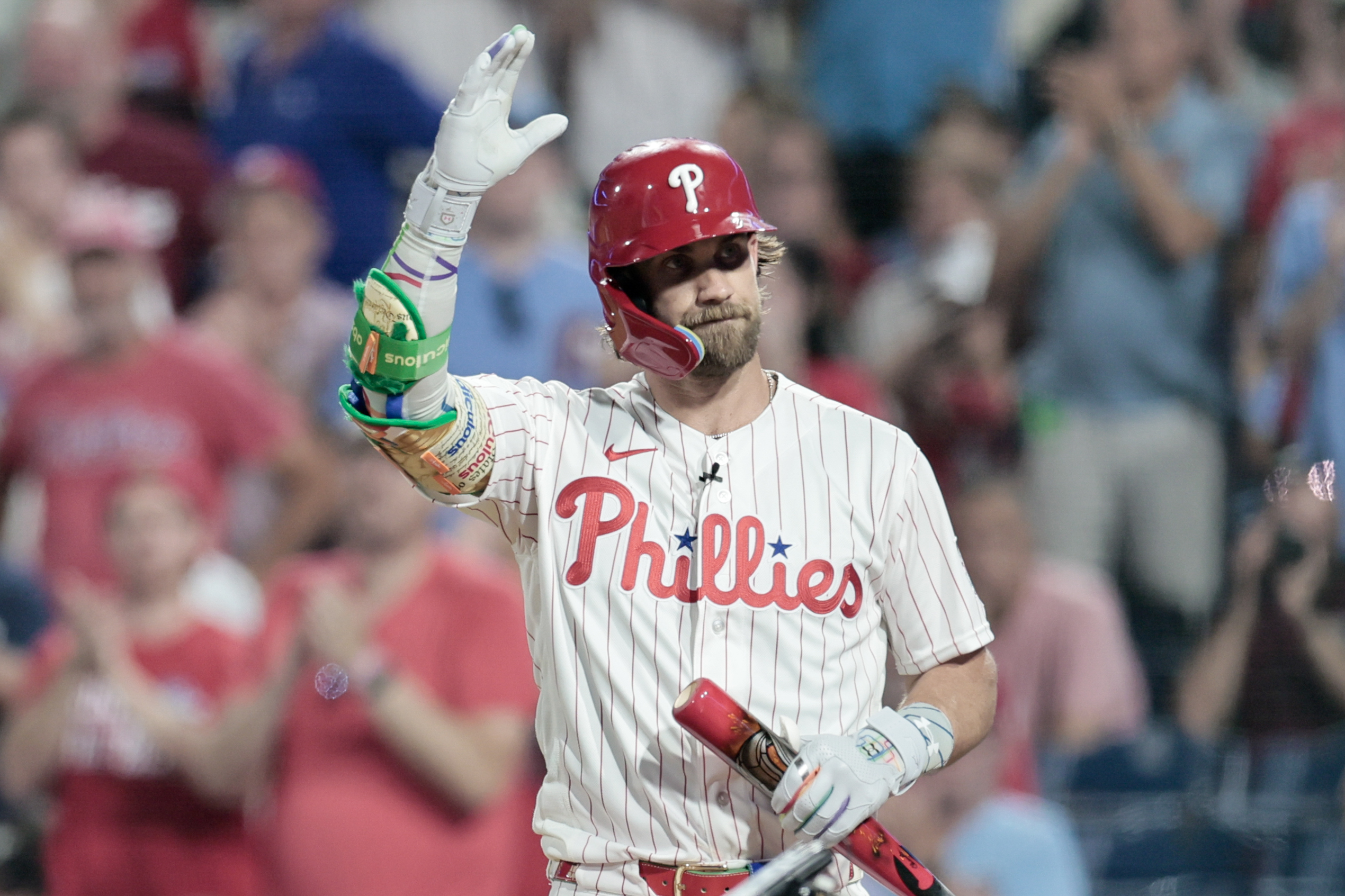
“I think the opportunity for players to get paid is what this is all about,” Bryce Harper said. “That’s why we have no cap and what we’ve done for so long, starting with Curt Flood. He started everything. So, we owe it to the guys that have come before us to do the same thing and all the young guys that are going to go through it, as well.”
Said Mike Trout: “I think [a cap] is bad for the game. The game’s in a great spot right now, you know? I just don’t support that.”
With five months before the CBA expires, this is a time for rhetoric more than serious negotiation. But Meyer blasted MLB for its advertising campaign on MLB.TV — “Level the Playing Field” — to drum up public support.
“The supposed stewards of the game have spent an inordinate amount of time trying to convince fans that they shouldn’t have hope, or that the product they’re paying to consume in record numbers is somehow broken,” Meyer said. “I think it’s perverse.”
Manfred pointed out that a small-market team hasn’t won the World Series since the Royals in 2015. Meyer noted that the Brewers and Rays are leading their divisions at the All-Star break, with Milwaukee bound for its eighth playoff appearance in nine years, including four in a row.
“It gives Bruce talking points,” Manfred said. “But from our perspective, the more important issue is, what’s the aggregate data over time? Our view of the world is that over a very long period of time, there’s a very strong relationship between [payroll] and who gets into playoffs.”
The Phillies’ Bryce Harper is adamantly against a salary cap.Elizabeth Robertson / Staff Photographer
It’s ugly. And it will only get uglier.
Five years ago, baseball went through a 99-day lockout before reaching a deal in mid-March and shoehorning a 162-game season into a compressed schedule. Back then, though, the owners and players settled their differences within the existing non-cap system.
Now, they can’t even agree on an economic structure. It’s as if the owners are speaking French and the players German.
“A salary cap is the ultimate excuse for an owner to say, ‘Gee, I would like to make the team better, but you know, I can’t,’” Meyer said. “Salary caps are bad for fans.”
Said Manfred: “I think the number from top to bottom in our sport, in terms of payroll, the gap is $441 million. It defies human experience to ask a fan to think that the bottom end of that gap has the same opportunity to win as the top end.”
A newly created nonprofit wants to borrow $617 million through tax-free bonds to buy Advantage Behavioral Health, a fast-growing South Jersey behavioral health company.
The current owner, a Connecticut private equity firmcalled Clearview Capital, isn’t walking away from Advantage, which it bought 15 months ago.
Clearview Capital and current executives will continueto own the for-profitentity that manages Marlton-based Advantage, according to a preliminary bond offering statement filed late last month.
Advantage’s proposed sale to a nonprofit called QCF Advantage LLC is noteworthyfor mixing for-profit and nonprofit business interests. It would make aprivate-equity company a keypartner ina nonprofit organization with financing from the tax-exempt municipal bond market.
Advantage’s sale price is about $520 million. That price includes $80 million being held back to see if Advantage hits profit targets after the sale. The company had $141.6 million in revenue in the 12 months that ended May 31. Most of the remaining money from the bond sale will go into reserve funds.
Like many other mental health service providers, Advantage does not accept Medicare or Medicaid. Taking only private insurance and out-of-pocket payments helps Advantage register strong profit margins amid growing demand for mental health and addiction services.
The transition to nonprofit ownership creates “a structure that’s designed for long term stability, reinvestment, and patient care,” James D. Golden, CEO of QCF’s parent company, told prospective investors in a recorded presentation.
“We can provide an efficient exit to private capital,” he said in the recording,published June 30 on a website that tracks documents related to the municipal bond market. “Tax-exempt financing is really the mechanism that makes all that possible.”
That financing will leave Advantage with an extraordinarily large debt load, said Robert Q. Kreider, a former nonprofit CEO who has no ties to Advantage. He noted that debt of that sizerequires continued strong growth to make the debt payments and have enough money to continue growing.
“The bondholders are getting such a juicy rate, they’re willing to accept the risk,” said Kreider, a consultant and former CEO of Devereux Advanced Behavioral Health.
Officials at Clearview Capital, Advantage, and QCF Advantage did not respond to requests for interviews.
Advantage’s founding and growth
Advantage has expanded to Pennsylvania and six additional states beyond New Jersey since its founding in 2017.
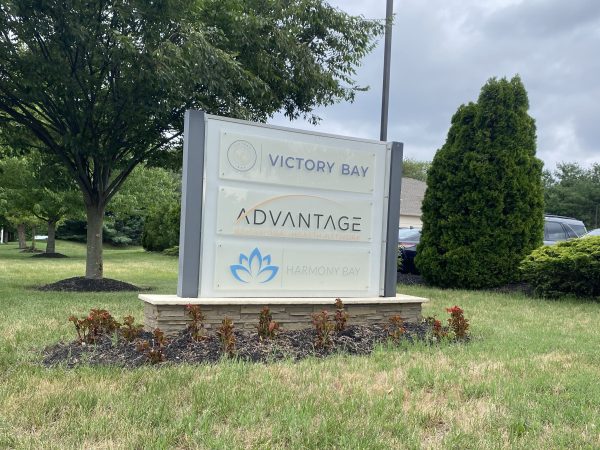
It initially providedintensive outpatient therapy through a business called Victory Bay in Laurel Springs.
It launched a telehealth version of its services, called Harmony Bay, in 2020. Outside of New Jersey, Advantage uses Harmony Bay as a way to build a presence in a new state, before introducing in-person services through Victory Bay.
(function(){function e(){window.addEventListener(`message`,function(e){if(e.data[`datawrapper-height`]!==void 0){var t=document.querySelectorAll(`iframe`);for(var n in e.data[`datawrapper-height`])for(var r=0,i;i=t[r];r++)if(i.contentWindow===e.source){var a=e.data[`datawrapper-height`][n]+`px`;i.style.height=a}}})}e()})();
Advantage alsooperates 17 sober-living houses under its Dignity Hall brandin Blackwood, Laurel Springs, Sicklerville, and several other South Jersey towns.
The average daily census of patientsat Victory Bay has soared over the last five years to 805 in the three months that ended June 30, from 81 in the first quarter of 2021, according to data in the bond disclosures. The company employs more than 700.
Despite the expansion to Massachusetts, Florida, Indiana, Maryland, Ohio, and California, the services provided in a string of buildings along Chews Landing Road in Laurel Springs accounted for 55% of revenue, most of the company’s cash flow last year.
The parking lots at several of those buildings were packed last Thursday. As part of the bond financing, 20 New Jersey properties valued at $14.4 million are being mortgaged.
New projects are under development in Absecon and Pine Brook, N.J.; Scranton, Pa.; and Lancaster, Ohio, the bond prospectus said.
A nonprofit buyer as a vehicle for private equity sales
QCF Advantage was created in April to acquire Advantage.
Owner QCF/I Inc., a tax-exempt organization based in Houston, acquires healthcare facilities that can be paid for with tax-exempt financing, according to its 990 tax form. Founded in 1997, QCF stands for Quality Care Foundation.
“We’re a nonprofit focused on improving the quality of care in the behavioral health industry. We believe mental health is one of the most persistent, complex, and costly challenges in our country today,” Golden told prospective bond investors.
QCF/I’s niche is buying for-profit businesses, often from private equity firms, while giving the sellers the option to keep managing the business, he said.
In the Advantage arrangement, QCF/I will collect 2.25% of revenue for administrative services — to be paid before bondholders.
Clearview Capital, the current private equity owner, will stay involved through an existing management entity that will collect 5% of monthly revenue under an initial 15-year contract.
Golden and Richard T. Needham together form QCF’s board. They have a background in private equity at a Houston private equity firm called Domain Capital Partners that is not related to Clearview. The phone number on the 990 led to a voicemail box that was full. A voicemail at Domain Capital got no reply.
QCF’s other businesses include a psychiatric hospital in Las Vegas and an addiction treatment center in North Jersey.
Surging debt load
Advantage had about $6 million in long-term debt at the end of 2024, three months before itssale to Clearview for an undisclosed price.
A year later, the debt totaled $52.5 million, not including a $10 million line of credit.
If the bond sale happens as expected, the company’s long-term debt would skyrocket to $604 million at the end of this year, according to the bond document.
That large debt means the success of QCF Advantage depends on continued dramatic growth in revenue and profits, according to a deal summary from Stacy DiStefano, CEO of Consulting for Human Services, a Philadelphia-based advisory firm.
Advantage’s projected annual interest expense is $42.7 million. For context, that’s about the same as the combined $42.2 million in interest paid last year by three large unrelated health systems in the same South Jersey market, Cooper University Health Care, Inspira Health Network, and Virtua Health.
Colin Studwell, Advantage’s CEO, said during the investor presentation available on Munios.com that the company is well-positioned for strong growth. He credited the management entity, known as a management servicesorganization, or MSO, that Clearview and executives, including Studwell, alreadyown.
Studwell will continue to runthe MSO, which handles operations support, billing, collections, human resources, information technology, and everything else it takes to run the business.
“Our MSO capabilities are the engine which allow us to continue to scale our services and treat more patients without any decay in clinical or operational efficiency,” Studwell said.
Whenever somebody asks me to name my favorite ballparks, I spend most of my time trying to talk myself out of the most boring possible answer.
Sure, Dodger Stadium is a personal favorite. There’s something about the way a SoCal dusk blends with Dodger Blue and the peaceful rise of the San Gabriel Mountains in the distance beyond center field.
And, yeah, you won’t find a more distinctive setting than Oracle Park in San Francisco, where Mission Bay laps against the outfield walls and the lack of a second deck gives you the sense that you are watching a baseball game on a barge. The counterintuitive microclimate only adds to the surreal vibe. Half the winter coats I own were purchased in July in San Francisco.
I can name a half dozen other stadiums that are worth a special trip. Each is unique in its own way. Yet they all have one thing in common. They aren’t Citizens Bank Park.
I don’t know if the whole world saw it on Tuesday night. But anybody who attended sure did. The 68 players. The two coaching staffs. The nearly 50,000 fans who packed the rows and the aisles and seemingly every square inch of concourse.
“Philly was awesome,” said Blue Jays infielder Ernie Clement. “What a great sports city.”
On a competitive level, South Philly’s first All-Star Game in 30 years was a ho-hum affair. The American League scored three first-inning runs off Phillies lefty Cristopher Sánchez and then engaged in an eight-inning sprint for the exit. The two sides finished with 10 hits, only one for extra bases. Kyle Schwarber, Brandon Marsh and Bryce Harper combined to go 0-for-6.
On every other level, it was a triumph.
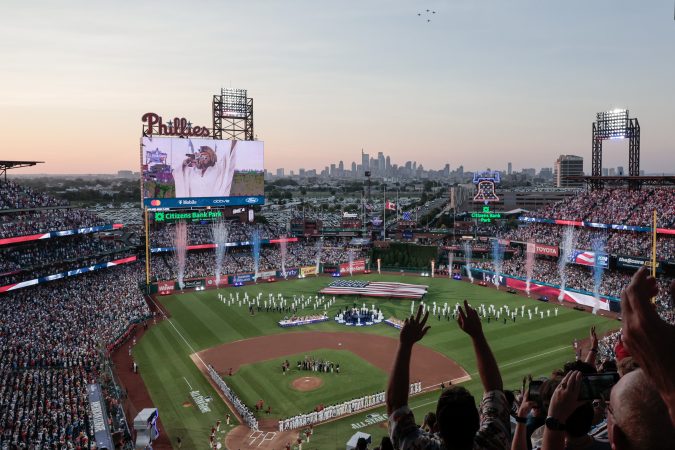
It was a triumph for the city, whose splendid skyline first gleamed and then glowed in the summer haze. It was a triumph for the Phillies organization, in particular a grounds crew and game day operations staff that has long powered one of the sport’s best extracurricular environments. Most of all, it was a triumph for the setting and its people: for a ballpark that doesn’t get the respect it deserves as one of the sport’s Crown Jewels, and for a fan base that consistently shows that a household is only as strong as its inhabitants.
For years, it seemed like a glaring oversight that 22 ballparks would host an All-Star Game before Citizens Bank Park got its turn. As it turned out, the wait was more of a feature than a bug. The bright lights and national television cameras only served to accentuate the glow of a ballpark that somehow looks even better than it did when it opened in 2004. Similar to the red brick rowhouses in the city proper, the outfield’s masonry facades have an age-defying property, especially when contrasted with the industrial steel and wide-open concrete of the concourses and seating decks. You won’t find a stadium or arena in any sport that has aged as gracefully as the house that David Montgomery (and others) built.
Earlier this spring, with the Eagles beginning their due diligence on a potential replacement for Lincoln Financial Field, Phillies owner John Middleton said he sees no reason why Citizens Bank Park shouldn’t last another 100 years.
Tuesday night was a triumph for him, then, too.
There was only one night game a year, the whole sky would brighten up with fireworks, giving us just enough light for a game
We played our best then because, I guess, we all felt like the big leaguers under the lights of some great stadium ❤️ pic.twitter.com/vlrgHEyDyE
Of course, Middleton would be the first one to tell you that the people make the place. So it was on All-Star Weekend. The real star of the show on Monday and Tuesday night was the home crowd, whose caustic electricity provided a much-needed edge for an over-corporatized event that most years feels emptier than a bowl of sugar cereal.
You saw it in the smiles that appeared on the faces of players as the crowd booed its lengthy list of civic enemies. From Yankees starting pitcher Cam Schlittler to Mets outfielder Juan Soto to anybody in a Braves or Red Sox jersey, those targeted grinned and waved in appreciation. By the end of the proceedings, it felt like an insult to be ignored.
“Like they always say,” said Soto, “if they boo you, then you’re doing things right.”
The heckling was mostly good-natured, save for an appearance by Mr. and Mrs. Met.
This was a celebration first and foremost. The event’s organizers and executors were aided by a number of ready-made story lines. They included the All-Star debut of Catholic League standout Kevin McGonigle and the homecoming of Mike Trout in his career’s twilight, in addition to Sánchez on the mound and Schwarber and Marsh in the starting lineup. But MLB also did its part. With a devastating labor stoppage potentially looming in a sport that increasingly feels anachronistic in the swirl of a country’s division and distraction, baseball managed to summon a lot of its friendlier ghosts on Tuesday night.
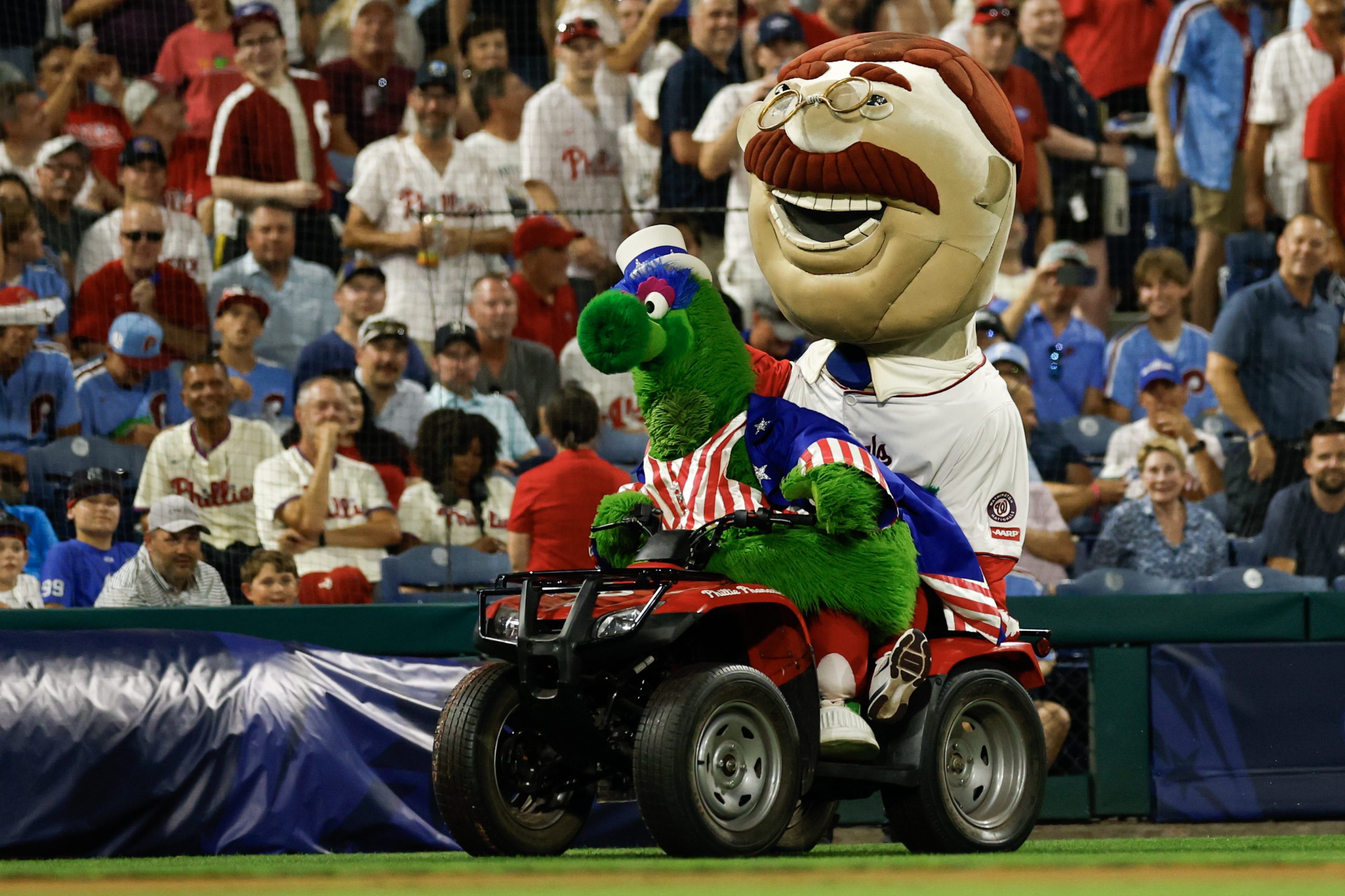
The Phanatic gives Washington Nationals mascot Teddy Roosevelt a ride during the presidents race before the bottom of the fourth inning on Tuesday.Yong Kim / Staff Photographer
The climactic moment was curiously timed and even more curiously powerful. In the fifth inning, with the stadium lights dimming and Ray Charles’ famous playing on the oversized videoboard in left field, Citizens Bank Park erupted with a fireworks display complete with players holding sparklers and Dodgers first baseman Freddie Freeman playing catch with one of the local kids who rode their bikes onto the field as part of the program.
“Like I’ve been saying the last two days, since I came up with the Braves, this is my favorite place to play,” Freeman said after the game. “I love the Bank. It wasn’t fun to play because it was Halladay, Hamels, Lee every time, but it was packed every night. It’s a great place to play. Great city.”
The best player in Major League Baseball — a player who can make a claim to being the greatest baseball player ever — will not play in Tuesday night’s All-Star Game at Citizens Bank Park. The best player on the most popular team in Major League Baseball — a player who hit at least 53 home runs in three of the previous four seasons and is among the most recognizable figures in the sport — will not play either. And the best pitcher for the franchise that is hosting the game — a pitcher who can make a claim to being the best starter in the majors for the last several years — wasn’t initially selected to be an All-Star, then was, then rejected the invitation.
If the stars everyone wants to see don’t play, does the All-Star Game still make a sound? It was a question worth contemplating Monday. It wasn’t the only one. The players who will make up the American and National League rosters Tuesday night plopped down on chairs along Ashburn Alley for the game’s media availability, and the juice wasn’t quite what it might have been.
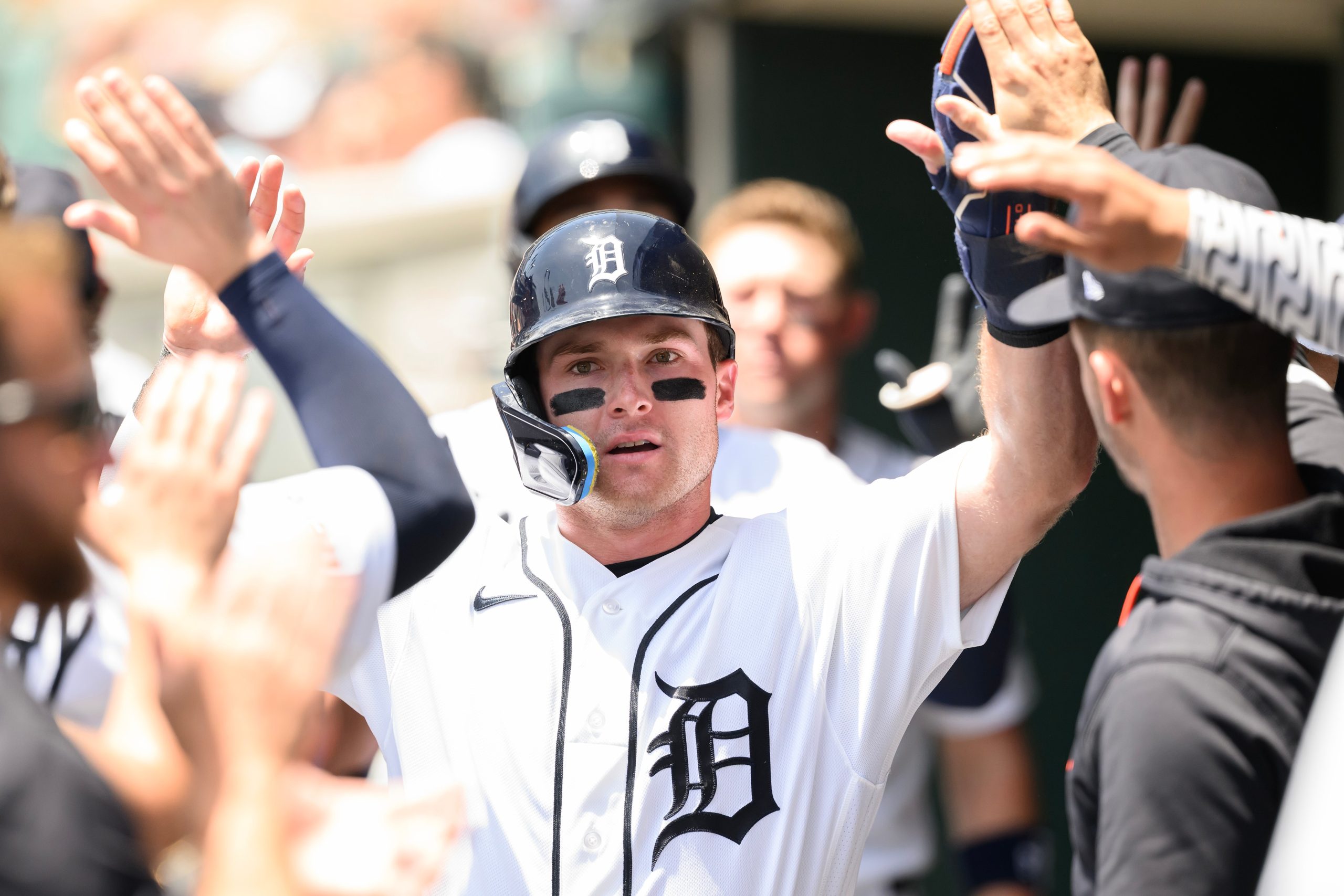
There were a couple of famous names, such as Bryce Harper and Mike Trout. There were emerging stars, such as the Washington Nationals’ James Wood and the Chicago Cubs’ Pete Crow-Armstrong. There were the grateful first-timers, such as the Phillies’ Jesús Luzardo and the Detroit Tigers’ Kevin McGonigle (a proud Monsignor Bonner and Archbishop Prendergast alum). But because of some adverse circumstances, the showcase will be without three of the game’s greatest showmen.
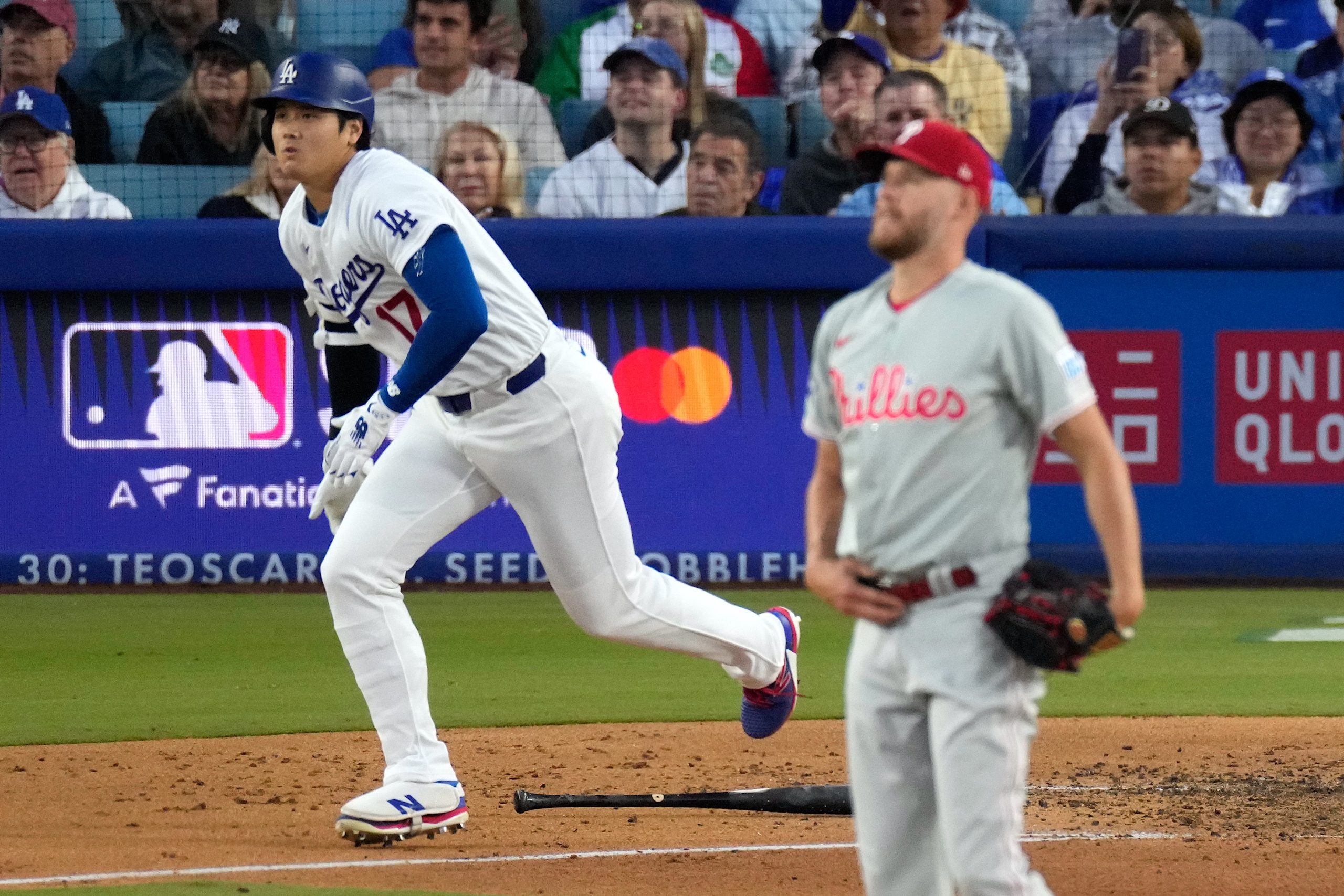
The Dodgers’ Shohei Ohtani has irritation in his left knee. The Yankees’ Aaron Judge has a stress fracture in his right rib. The Phillies’ Zack Wheeler has a bruise to his ego.
Shohei Ohtani (left) will sit it out Tuesday night along with Zack Wheeler.Mark J. Terrill
They were missed Monday and will be missed Tuesday, though their conspicuous absences weren’t all their fault. As the Dodgers’ best hitter and one of their best pitchers, Ohtani already bears some heavy obligations; he can be forgiven for declining to play hurt through even an inning Tuesday. And Judge hasn’t appeared in a game for the Yankees since May 31.
Wheeler is a different story, though, and his situation did raise the issue of the All-Star Game’s purpose. Is it a showcase for the game’s most popular and accomplished players, a chance for fans to see those stars all together at once? Is it a reward for those players whose performances in the season’s first half were particularly excellent? If so, does the game really need its longtime quota system of having every team represented?
Wheeler’s snub touched on all those topics. It had become a cause célèbre around here, of course, and he was so miffed that on Friday, when Major League Baseball offered him a spot on the NL team, he said no, telling reporters, “They disrespected me, so I’m not going to participate in it.” His nose-thumbing at MLB has garnered him a lot of atta-boys from Phillies fans and media members. Still, it would be easier to be sympathetic to Wheeler if he hadn’t been selected to the All-Star Team in 2024 and 2025 and declined each year not just to pitch but to show up to the game.
In fairness to Wheeler, he was suffering from some back tightness in 2024 and had pitched on the Sunday before the 2025 game. But in fairness to the people who make such decisions, how many times does a player have to turn down participating in the All-Star festivities before they catch the hint that he’d rather spend the break down the shore?
Maybe the honor of playing in the All-Star Game doesn’t matter as much to Wheeler as the honor of saying he’s an All-Star does, especially once it comes time for the National Baseball Hall of Fame’s voters to consider his credentials and case for induction.
But then, Wheeler’s attitude toward the game is nothing new among major leaguers, despite the common assertion (and reality) that baseball’s All-Star Game carries more meaning than the NBA All-Star Game or the Pro Bowl. If it does, it’s not by much.
“I never felt like there was that much at stake,” said Phillies manager Don Mattingly, a six-time American League All-Star selection during his 14-year career with the Yankees. “I felt like it was an exhibition, really. There was so much stuff around it, all the stuff you have to do. At game time, guys want to play, but you’re not as invested as you are in a pennant race, going down to the last week of the season. It doesn’t feel like that.”
So instead of Wheeler, the National League’s pitching staff will have the San Diego Padres’ Adrian Morejon, a 27-year-old middle reliever with a 3.42 earned-run average this season. And because the rotation schedules of Jacob Misiorowski, Paul Skenes, and Max Meyer — three of the National League’s top starters — made them unavailable to pitch Tuesday night, Luzardo was among some late additions to the roster.
“There’s two sides,” said Luzardo, who is 8-4 with a 3.51 ERA and 136 strikeouts in 110⅓ innings this season. “The child in me sees it as all the best stars in baseball getting together and playing a game. That was me growing up watching the All-Star Game. Now, being a player, it’s a reward for the success you’ve had. Obviously, there’s a lot of motivation to go out and perform every time out. You’re going to get the best out of everyone at these games.”
The question isn’t whether the fans will see these players give their best. The question is whether the players they’ll see are really the best — and how many of the best of the best really want to be there at all.
For 38 minutes, Mike Trout talked about everything from coming home for his 12th All-Star Game to the best way to order a cheesesteak. But it took all of 70 seconds to get to the good stuff.
Yo, Mike, would you ever want to play for the Phillies?
“I didn’t think I was going to hear this question,” Trout said Monday.
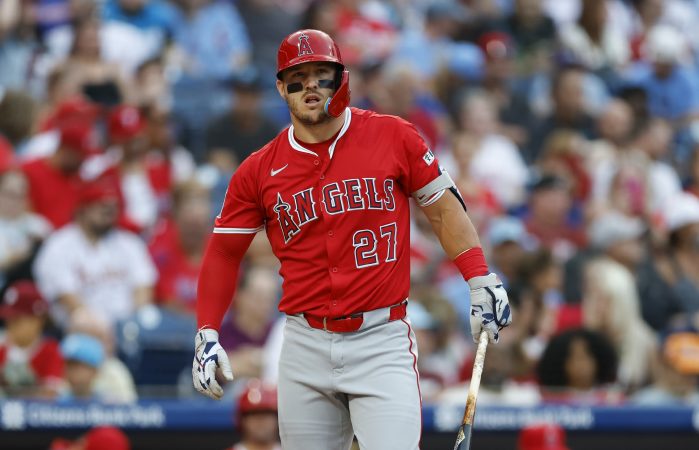
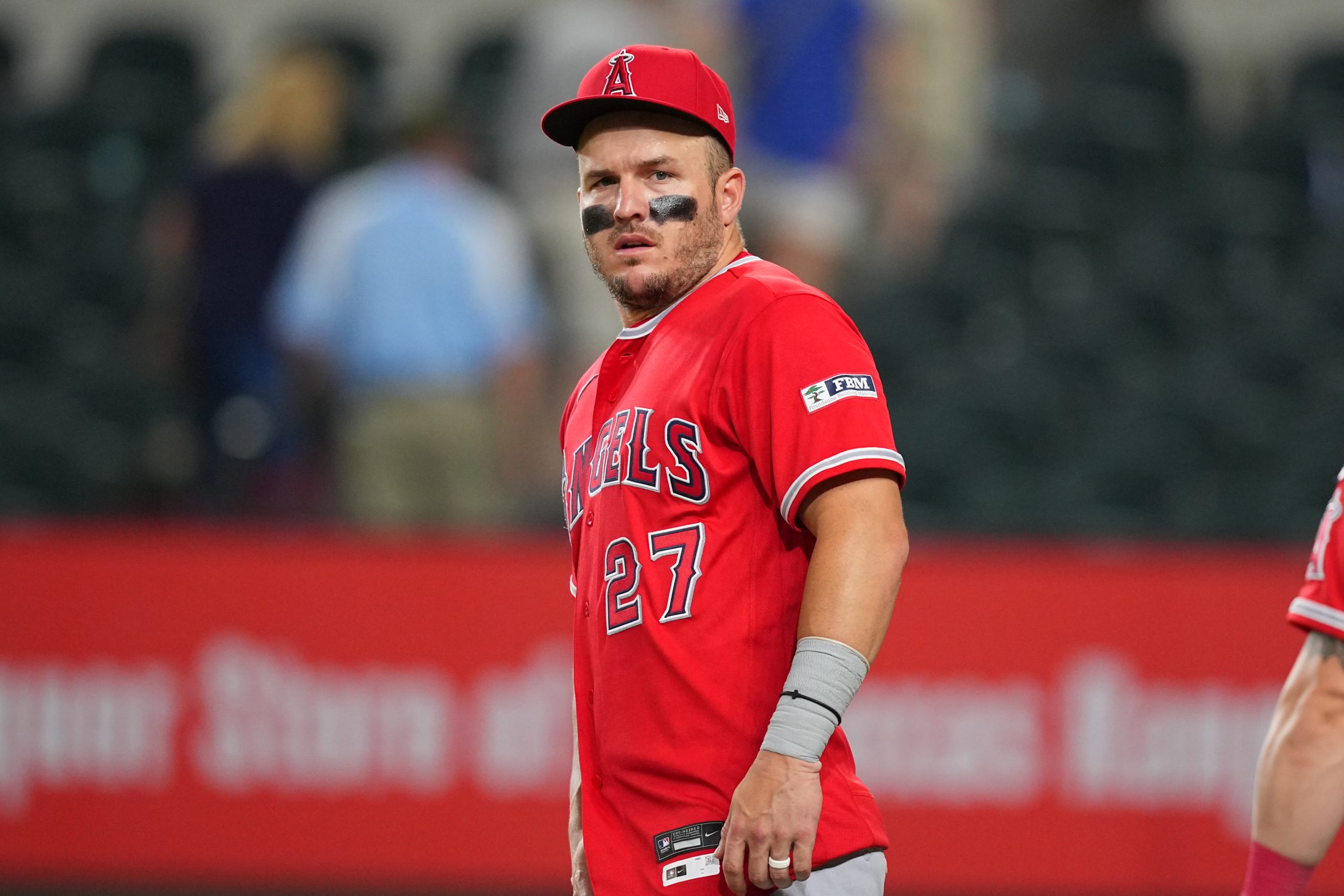
“You know, I hear this a lot,” said Trout, who famously grew up 40 minutes south of Citizens Bank Park in Millville, N.J. “I enjoy coming to Philly. I’m an Angel, obviously. I’ve got a no-trade clause, so it’s ultimately my decision. But like I said, I love Philly.”
OK, let’s get this out of the way: Trout has played all 16 seasons of his Hall of Fame career for the Angels, a franchise in the throes of its 11th consecutive losing season. The best player of the 2010s hasn’t sniffed the playoffs since 2014, a streak that won’t end any time soon if he stays in Anaheim.
And yet, as far as anyone knows, he has never asked to be traded. Not even to his hometown team, which plays across a South Philly parking lot from his beloved Eagles and Sixers.
People who know Trout doubt he ever will. Joe Maddon, his manager for 2½ seasons, said on The Inquirer’s Phillies Extra podcast that Trout might agree to a trade if he’s approached by owner Arte Moreno.
But Moreno is famously opposed to trading stars (see: Shohei Ohtani) — and especially the greatest player in Angels history. It seems doubtful that will change under newly appointed interim general manager John Mozeliak.
So, another trade deadline will come and go Aug. 3 with Trout staying right where he is.
Right?
“Like I said, I’ve got the no-trade clause,“ he said. ”It’s obviously my decision. I’m with the Angels, so that’s where it’s at.”
But Trout also said this: With the All-Star Game in Philly for the first time in 30 years, “this was circled on the list to try to get here.” He built a home for his family near his parents’ house and Trout National golf resort, with a course designed by Tiger Woods, in Millville, and has end-zone seats for Eagles games.
He also said he was happy to see first-time Phillies All-Star Brandon Marsh, his former Angels teammate. “I’ve been texting him all year,” Trout said, “just telling him how proud I am of him.”
Oh, he said this about fans who ask (beg?) him all the time if he’d approve a trade to the Phillies: “I grew up a Phillies fan, Eagles fan, Sixers fan, and I know how passionate they are about the sports teams. I go to Eagles games. I know how I cheer for the Eagles, so it means a lot. Being a fan and just seeing friends and family, I see a lot of Phillies fans when I’m at the Eagles games. I hear about it all the time when I’m there. I appreciate them.”
And Trout, who returned last week from a strained right hamstring, is exactly what the Phillies need: a right-handed hitter with power and on-base ability to hit in the middle of the order and protect Bryce Harper.
Mike Trout has played 16 seasons as an Angel and has a no-trade clause in his contract. Julio Cortez
“I love Mike, man,” Harper said. “We played [Arizona] Fall League together [in 2011]. We became friends. It’s great to see him back and healthy. Obviously it’s been a tough couple years health-wise for him. We all pull for him in the league, just because we know how talented he is and how good he is, any time he’s able to get on a national stage.”
Harper got a slap on the wrist from MLB in 2019 when he lobbied for Trout to join him with the Phillies. He wasn’t making that mistake again.
But Harper did have one prediction: “He’ll probably go deep [in the All-Star Game], I’d imagine, just because that’s who he is. It’s a lot of fun to be able to see a guy like that be able to do it in his hometown of Philly.”
Indeed, Trout will be the first batter of the 96th All-Star Game when he leads off for the American League. He has played only eight games in Citizens Bank Park, probably never in front of a crowd that will be this loud.
Trout said he will have about 20 friends and family members in attendance, including his wife, Jessica, and their two sons. He plans to stick around Wednesday, too, and play Trout National before flying back to Southern California to open the second half.
So, maybe there’s a chance — teeny and tiny, though it may be — that 18 holes in Millville and a six-hour flight back to baseball irrelevance with the sounds of a sold-out Philly crowd ringing in his ears might make Trout rethink that no-trade clause?
“I mean, it’s how I was raised,” Trout said of his loyalty to the Angels. “I was a big [Derek] Jeter fan growing up, you know? Obviously he was with one team his whole career.”
In March, Patty Martin and Liz Warren sat in an office at Monsignor Bonner and Archbishop Prendergast High School, poring over the Detroit Tigers’ 162-game schedule.
It wasn’t how the administrative assistant and math teacher typically spent their lunch breaks. But these were unusual circumstances. The women scanned each date, city, and time, looking for the right confluence of all three.
Former student Kevin McGonigle had just been named to the team’s opening-day roster. Martin and Warren were eager to see the 21-year-old shortstop play, ideally at Citizens Bank Park.
They realized, to their dismay, that this wasn’t going to happen. The Tigers were scheduled to face the Phillies only once in 2026, in Detroit. Undeterred, the Bonner & Prendie staffers continued their search.
Martin circled May 14, a 1:30 p.m. game against the New York Mets. This seemed like the perfect fit; teachers could drive to the stadium, and it was Ascension Day — a Holy Day of Obligation — which the Catholic school occasionally had off.
Only this year, it didn’t. The administrative assistant decided to throw a Hail Mary. That afternoon, Martin emailed a friend who worked for the Archdiocese of Philadelphia.
“And I said, ‘Do you think maybe somebody would allow us to close school that day?’” she recalled.
The answer was swift and unequivocal.
“‘Nah, don’t think it’s gonna work,’” Martin said. “‘Not gonna work.’ And we kind of knew, in our hearts, that we were shooting for the stars. But hey, it was worth a try.”
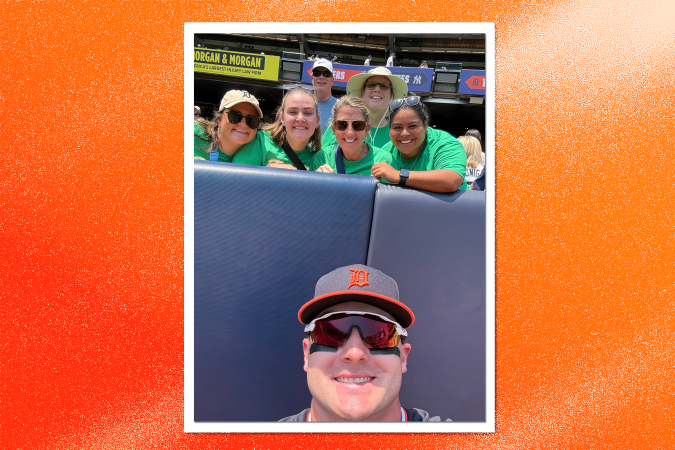
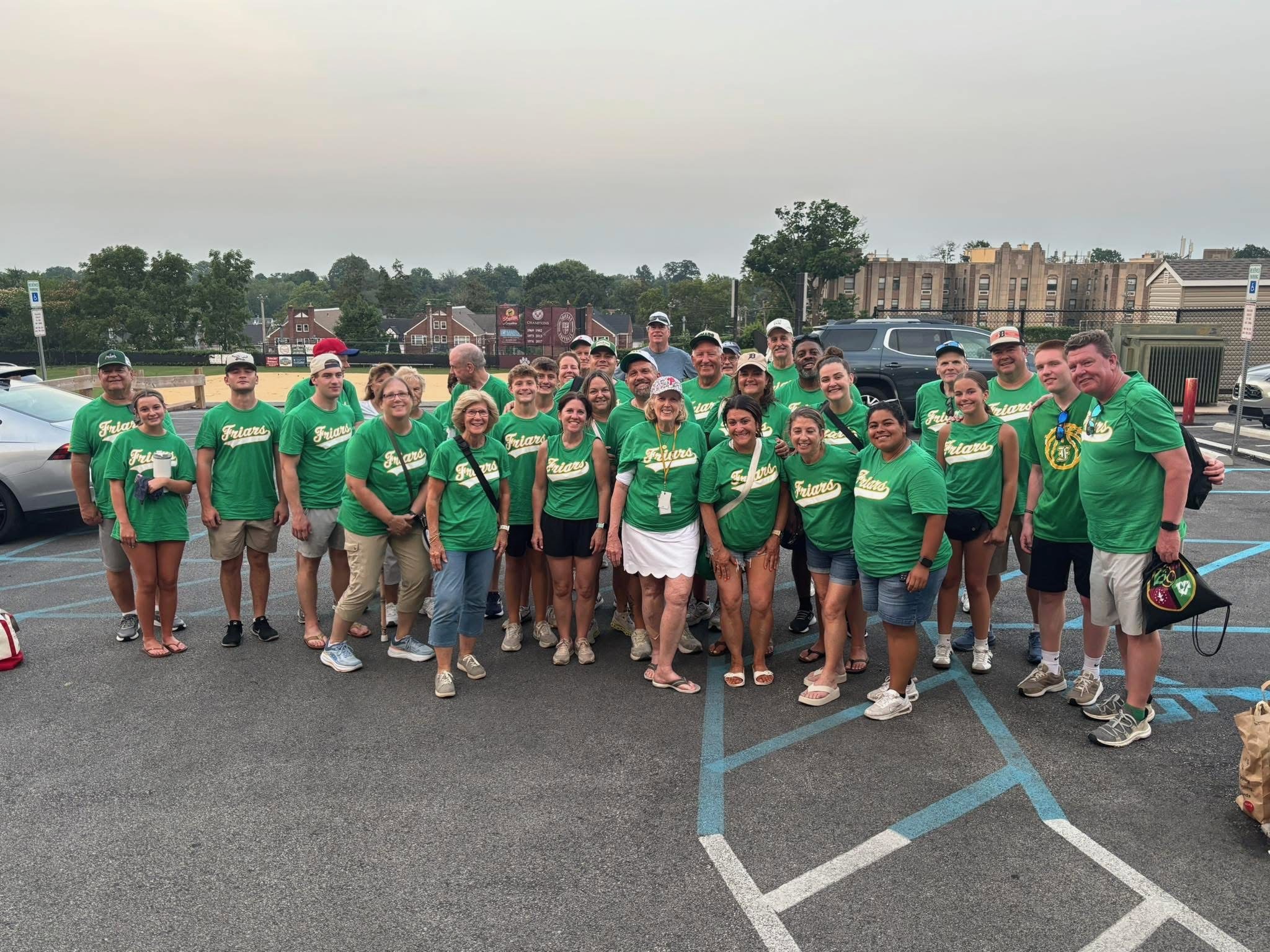
The co-workers found an alternative. On the morning of July 1, 55 members of the Bonner & Prendie community — coaches, students, maintenance workers, secretaries, teachers — piled onto a bus bound for the Bronx.
They arrived at Yankee Stadium at 12:45 p.m., donning Kelly green T-shirts with “Friars” on the front and “McGonigle” on the back. New York City was in the midst of a heat wave, but that didn’t seem to matter.
McGonigle greeted the group before the game and rewarded their efforts in the third with a 422-foot home run to right-center field. The Delco contingent went berserk.
“We’re all cheering, and everyone’s like looking at us like, ‘Who are these people?’” said Bonner’s baseball coach, Steve DeBarberie. “They’re wearing Kelly green to a Yankees-Tigers game?”
Added Martin: “We all went wild, of course, because we’re like, ‘He did that for us.’ I’m very certain, he did.”
Ever since McGonigle was drafted by the Tigers in 2023, Delaware County has shown up to support him. When he was in the minor leagues, residents traveled to places like Grand Rapids, Mich., Lakeland, Fla., and Erie, Pa.
The group from Archbishop Prendergast High School that took a bus trip to Yankee Stadium to watch Kevin McGonigle play.Jason Shepherd
They’ve attended spring training games and Arizona Fall League games and even an All-Star Futures Game. A few Bonner alums flew to San Diego in April for McGonigle’s big-league debut. Nearly 300 people made the trip to see him in Baltimore in May.
Some know the shortstop personally, but not all. Yet the Kevin McGonigle Fan Club keeps growing, and on Tuesday night, after years of cross-country travel and hourslong drives, their hometown hero will return to Philadelphia to compete in the 2026 All-Star Game.
It’ll be the first time McGonigle plays at Citizens Bank Park. To local supporters, this is almost too good to be true: an athlete who represents them wholeheartedly, on baseball’s biggest stage, mere minutes away.
“Everyone is so excited, especially for the Philly aspect,” said Warren. “Not only is it amazing that it’s his rookie year, but [also] that he gets to come home.”
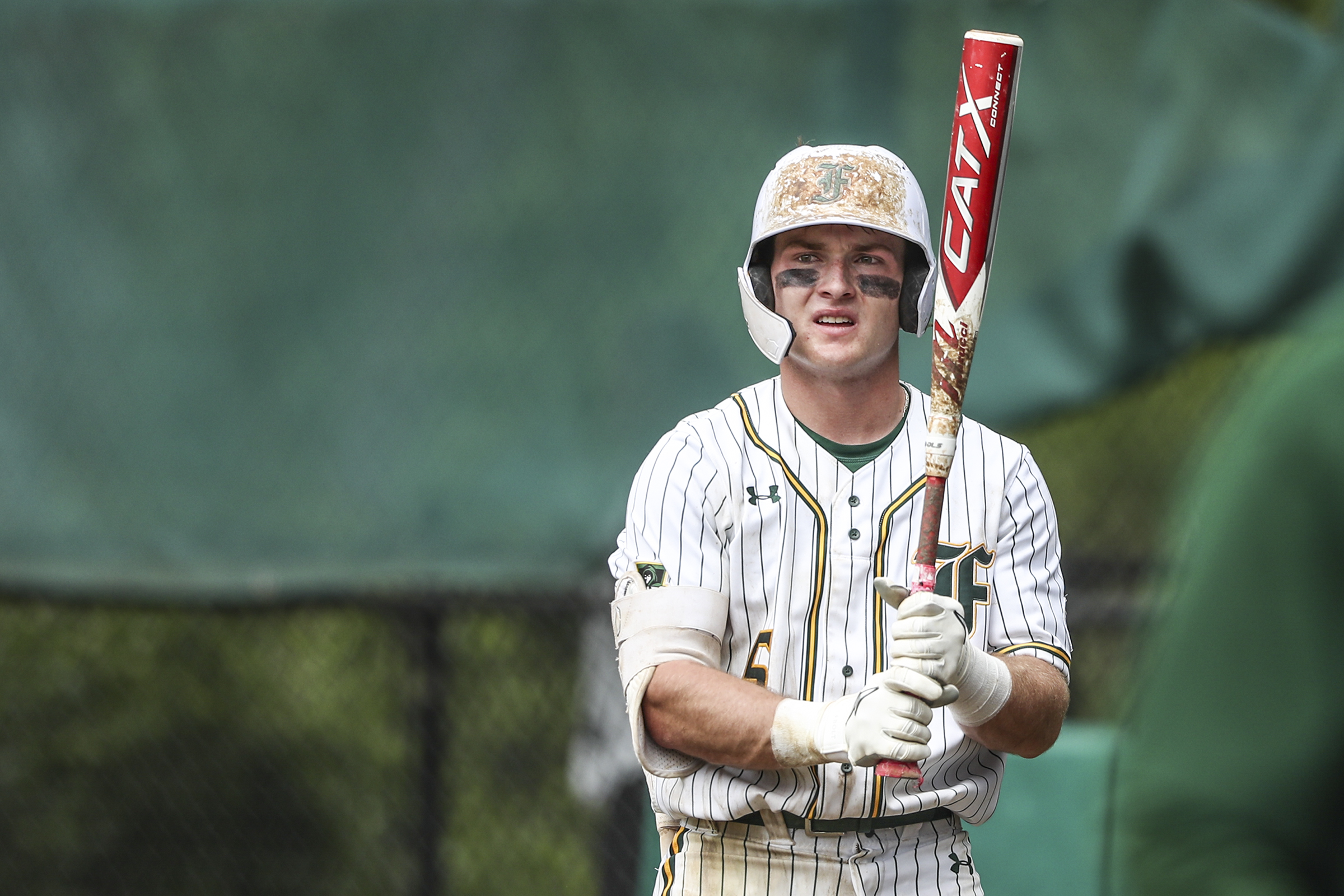
Kevin McGonigle starred at Bonner-Prendergast before being selected by the Tigers in the first round of the 2023 MLD draft. Heather Khalifa / Staff Photographer
A kid worth traveling for
Delco has gone to such lengths for a reason. The future All-Star was not the type of ballplayer built in a lab, under the careful guise of top hitting instructors. He did not have endless resources for equipment or travel.
Rather than a baseball hotbed like Florida or Georgia, McGonigle was raised in a working-class home in Aldan. His parents, Kevin George and Tracy, worked opposite shifts at a local water utilities company.
When Tracy was growing up, in Lansdowne, the sport was relatively inexpensive. Kids would share bats and gloves. She’d never heard of anyone driving far to tournaments.
But the mother quickly learned that to capitalize on her son’s talent, she’d have to invest. Kevin George learned this, too. The parents, who divorced when Kevin was young, began saving money where they could.
Sometimes this meant working more. Sometimes it meant cutting back on expenses. Tracy remembers her son and his teammates standing outside a supermarket, or wandering through The Yard Pub in Havertown, selling raffle tickets to pay for travel.
“You scraped it together, you put it away, and you used the credit cards, and you worried about the payment later,” Tracy said. “And I think any parent would do that. You do what you have to do to make your kids happy.”
By middle school, McGonigle was playing for Drexel Hill Little League,St. Bernadette’s CYO,and a local travel ball team. He’d train every day with his father, who had recently purchased a bright blue Jugs pitching machine.
The McGonigles didn’t have much yard space, but one of Kevin George’s teammates, Jac Campbell, did. Kevin George asked Jac’s father, Jim, if they could use his lawn, where he’d set up a makeshift batting cage.
The elder Campbell agreed. Kevin George moved the pitching machine 60 feet away from home plate, and began toying around with it. Before long, the device was spitting out curveballs, change-ups, and sliders.
“It was an expensive machine that threw mid-90s,” said Campbell. “It wasn’t some candy-ass machine that you would set up down at the Little League.”
McGonigle did not like that his parents were financing his passion, and would often tell Tracy he needed to find a job. But with the time constraints of travel baseball, coupled with Bonner-Prendie baseball and his training schedule, it was difficult to get hired.
So, the mother and son came up with an agreement. The future All-Star would clean the bathroom, dust the family room, and do other tasks around the house to earn his keep.
Still, the guilt persisted, especially when it came to daily expenses like gas money. McGonigle hated asking for it. Tracy came up with another idea.
“In my kitchen, I have a little box,” she said. “It’s a wooden box, and on the top it says, ‘Blessed.’ And I said to him, ‘You know what? You don’t have to ask me anymore.’
“I said, ‘I’m just gonna put money in the blessed box. Whatever you need. And then you don’t have to ask me. You don’t even have to feel bad about it.’ And it worked.”
A young Kevin McGonigle swings off a tee is in his backyard in Delco.Tracy McGonigle
McGonigle was painfully aware of his parents’ sacrifice, and determined to make the most of it. By his senior year, MLB scouts were flocking to Bonner-Prendergast for games.
This became somewhat of a spectacle, so the shortstop started leaving class early to take batting practice on his own. His hope was that it would create less of a distraction for his teammates.
“Just so that it didn’t interrupt the routine,” said his former CYO, Little League, and Babe Ruth League coach, Jason Shepherd. “His teammates respected the fact that he thought of them before himself.”
It wasn’t the first time Shepherd had seen the selfless trait from McGonigle. When he was 14, juggling travel ball and Babe Ruth, the high schooler had two tournaments fall on the same weekend.
One was in Tampa, the other in Williamsport, Pa. McGonigle decided he’d play in both. After the game in Florida, he drove through the night to Delaware County with a teammate.
The next morning, McGonigle met Shepherd in his driveway for the three-hour ride to Williamsport.
“Obviously, he was the best player on the team,” Shepherd said. “One of the best players in the state at the time. When we knew we were getting Kevin for the rest of the playoffs, it brought a lot of energy.”
McGonigle has continued to give back to his community since being drafted by the Tigers in the first round in 2023. He’s donated signed bats to Drexel Hill Little League, and has occasionally stopped in during the winter to serve as a volunteer coach.
In 2024, fresh off his first season in the minors, the shortstop donated $40,000 to Bonner & Prendie. To Campbell, it’s gestures like these that compel people to travel so far.
“If he wasn’t a good kid, you wouldn’t have half of that [stuff] going on,” he said. “You know what I mean? The fact that he’s a good kid makes it easier for everyone to want to go see him.”
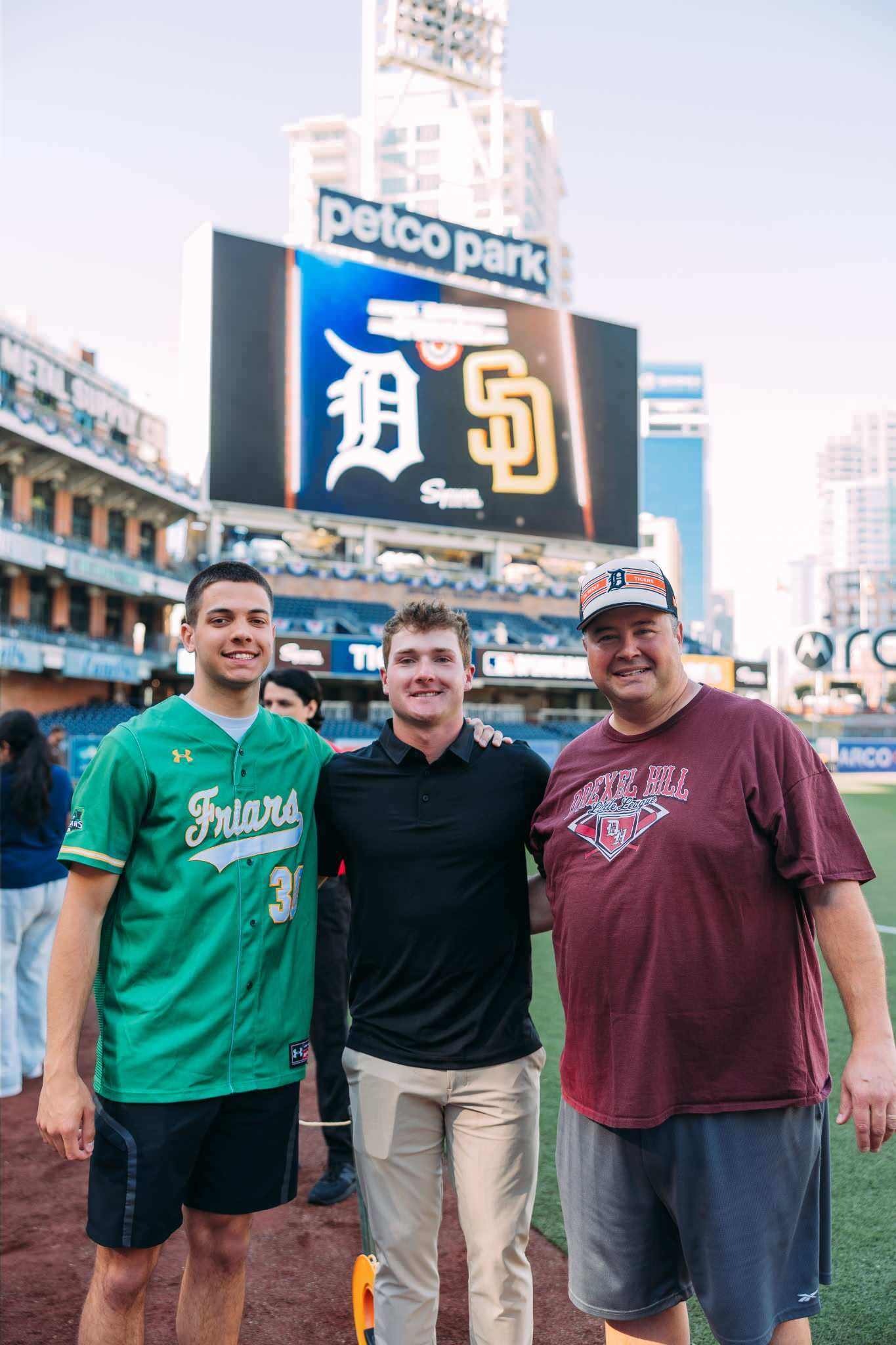
Justin Shepherd (left), Kevin McGonigle, and Jason Shepherd after McGonigle’s big league debut in San Diego.Jason Shepherd
‘I still miss home’
At times it can seem like the Kevin McGonigle Fan Club has the entire season mapped out. In April, Shepherd and his son, Justin, flew to San Diego for the rookie’s debut, but their flight was delayed a few hours and they missed most of the game.
They ended up staying for the rest of the series, and the following week drove eight hours from Delco to Detroit for his home opener. DeBarberie and four other Bonner coaches met them there.
McGonigle’s best friends, Michael Anderson and Joey DeMucci, visited him in June. Martin will watch McGonigle play in Chicago later this month. Jim and Jac Campbell willbe in Detroit in August,and DeBarberie has plans to drive to Pittsburgh after that.
But the biggest showing to date was over Memorial Day weekend at Camden Yards in Baltimore. Tracy reserved 265 tickets through group sales, and Shepherd coordinated a tailgate at Pickles Pub across the street from the stadium.
“They’re like, ‘Well, do you want us to put McGonigle on a sign?’” Shepherd said. “And I’m like, ‘No, do not make any reference to McGonigle. Just put ‘Delco tailgate.’ People will know where to go.’”
Saturday’s game was rained out, which turned the tailgate into a whole-day affair. The entire top floor of the bar was full of Tigers and Bonner McGonigle jerseys.
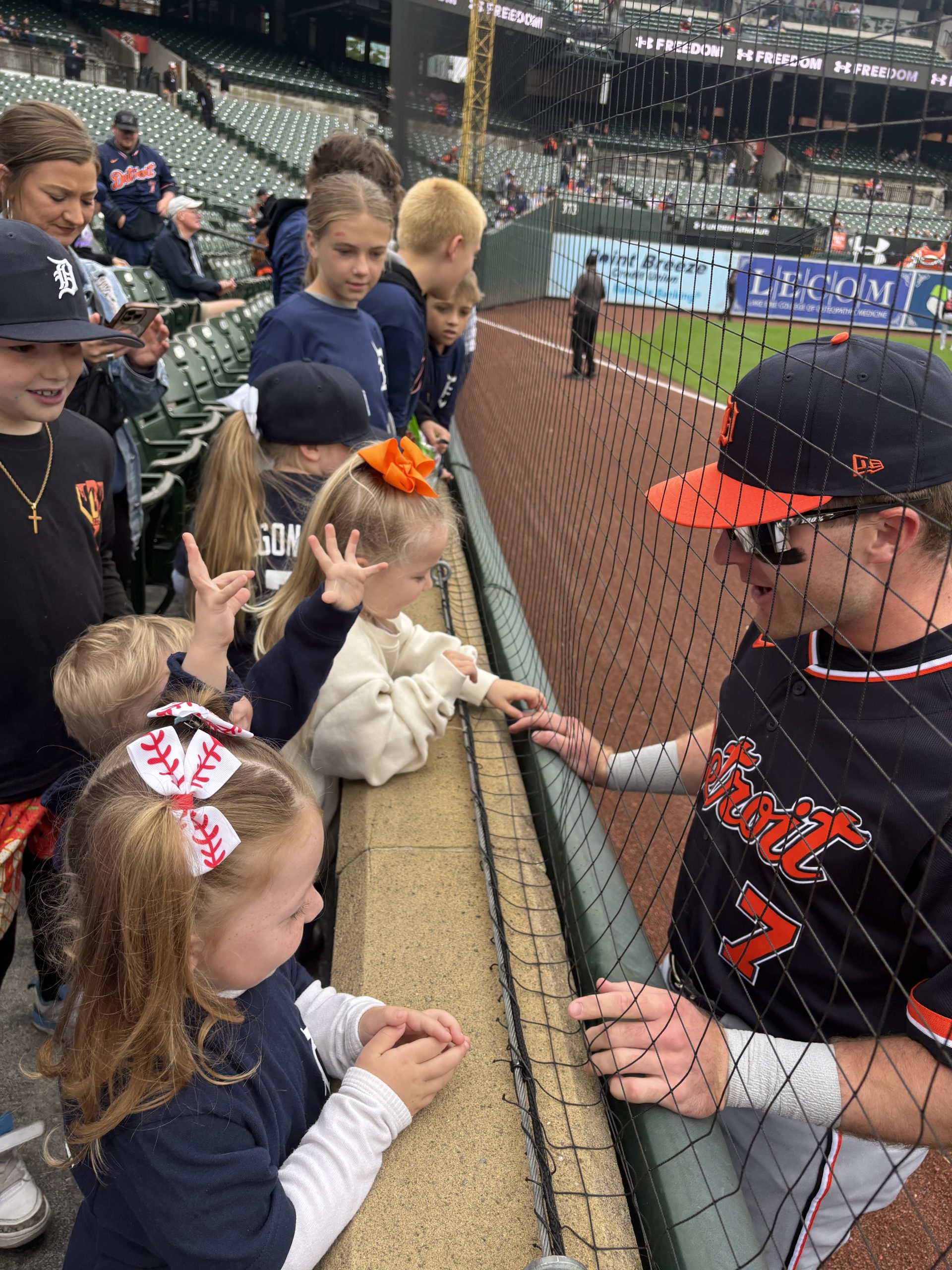
Tigers rookie Kevin McGonigle greets family and friends in Blatimore.Tracy McGonigle
It ended up being the highlight of the trip. McGonigle stopped by and stayed with friends and family for two hours, taking photos and catching up.
This wasn’t just a kind act on the shortstop’s part. Shepherd and his son visited him last November, while he was playing in the Arizona Fall League. One night, while the former coach was grilling steaks outside, he asked the future All-Star a question.
“I asked him, ‘What’s been the hardest thing so far?’” Shepherd recalled. “And he’s like, ‘Coach Shep, honestly, I still miss home.’ And it just struck me.
“I was expecting, ‘The workouts are hard,’ or, ‘This pitcher was really tough.’ He’s just like, ‘No, I just miss home.’ And I get it. No different than a kid going off to college, far away. Just homesick a little bit.”
Tigers rookie Kevin McGonigle is second in the AL with a .392 on-base percentage at the All-Star break.Lon Horwedel
Childhood bedrooms and mom’s laundry
As McGonigle wrapped up his first-half campaign, it became clear to his mother that the All-Star Game was within reach.
The rookie was near the top of a number of American League leader boards. He has more walks (60) than he did strikeouts (56), and is second among regulars in on-base percentage (.392).
But Tracy didn’t dare broach the subject. She knew her son wouldn’t want her to. So, she was surprised a couple of weeks ago when he brought up the Midsummer Classic on his own.
“He said, ‘Whether I’m in the game or not, I’m staying at home,’” Tracy recalled. “And that’s all he said.”
The shortstop reiterated this stance after the roster was announced.
“I’m coming home,” he told her. “I’m not staying in the hotel.”
Throughout All-Star Week, the eight-year, $150 million man is sharing a bedroom with his brother, Ryan, in Aldan. A signed watercolor of Cole Hamels still hangs on the wall there, alongside some framed USA Baseball jerseys and caps.
Just like any other parent with a 21-year-old sleeping under their roof, Tracy’s maternal instincts routinely kick in.
“He’ll say, ‘Mom, I can do my own laundry,’” she said with a laugh. “And I’m like, ‘But why? I’ll do it. It’s fine.’ When he’s home, in the offseason, he still has a job. He’s at the training facility every single day, all day.
“But yeah, it’s, ‘Who wants dinner? How about I do your laundry?’ He’s just a normal kid.”
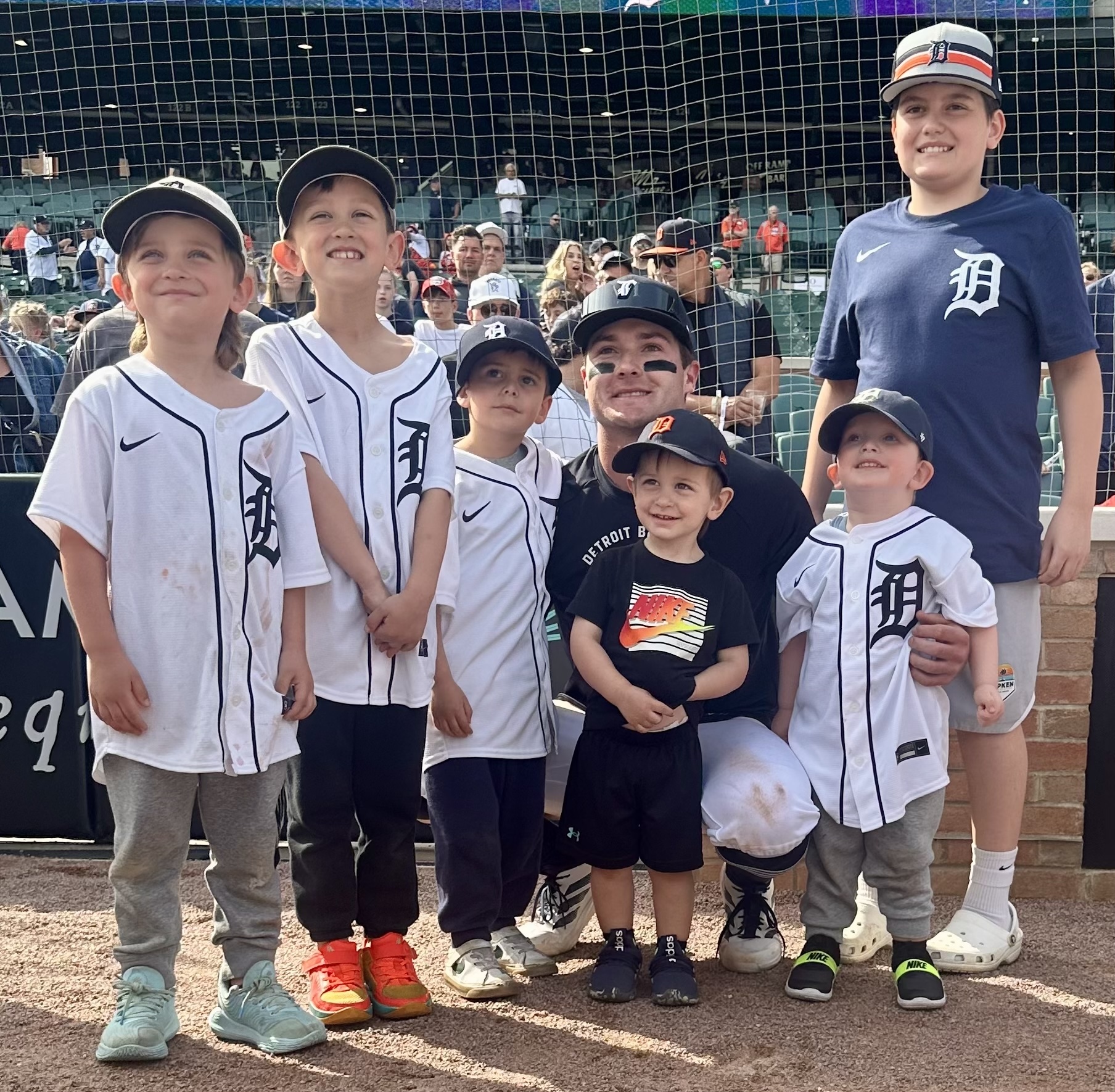
Kevin McGonigle with the kids of his former Bonner baseball coaches.Steve DeBarberie
Of course, there are plenty of things that aren’t normal. McGonigle doesn’t borrow cash from the blessings box anymore. He no longer takes swings in the privacy of Campbell’s backyard.
But amid all this change, the Bonner alumnus can always return to a place that is refreshingly static. Full of people who are proud of him, not just for his talent, but also for the unglamorous work behind it.
And if he ever needs a reminder, McGonigle can look for the Kelly green T-shirts, scattered among a sea of Tigers blue; a sign that Delaware County is never too far away.
How much does Dave Dombrowski believe in his best acquisition of the offseason?
By several metrics, Jonathan Bowlan has been one of the most productive relievers in the majors over the last 2½ months. Since May 3, he ranks among the top 15 in the majors in the following categories:
Strikeout rate (33.7%, 11th)
Walk rate (4.8%, 15th)
Strikeout/walk ratio (7.00, 8th)
Ground-ball rate (58.3%, 15th)
And then there is the most important category. Heading into Sunday, only three pitchers carried a lower ERA than the 0.86 Bowlan had posted in his last 21 outings: Robert Suarez (Braves), Luke Weaver (Mets), and Mason Miller (Padres).
That trio has logged a ton of high-leverage innings over the years. The question Dombrowski must ask himself: Can Bowlan do the same?
The answer should play a big role in the Phillies’ trade deadline strategy. The back of their bullpen has been leaking some serious oil as of late. Since June 1, Orion Kerkering, Brad Keller, and Jose Alvarado have combined to allow 18 of 42 batters to reach base in high-leverage situations in the seventh, eighth, or ninth inning. Of those 18 baserunners, nine have scored.
At this point, Kerkering shouldn’t be a serious consideration when the Phillies are projecting the top of their postseason depth chart. The 25-year-old righty’s struggles in pressure situations was a recurring theme even before last October’s meltdown in Game 4 at Dodger Stadium. Over the last two regular seasons, Kerkering has 37 strikeouts against 22 walks and hit-by-pitches in high-leverage situations. In the last two weeks, he has entered two late-game situations and then proceeded to walk three batters. There is nothing Kerkering can do between now and the trade deadline that should make the Phillies more comfortable with him high on the pecking order behind Jhoan Duran.
Orion Kerkering shouldn’t be a serious consideration for the top of the Phillies’ postseason depth chart.Yong Kim / Staff Photographer
Alvarado is fast approaching that point. The veteran lefty entered Sunday having allowed runs in eight of his last 19 outings, and at least two runs in six of them. Only two relievers in the majors had pitched as many innings as him with a higher ERA. The numbers are a little bit confusing. His 28.5 strikeout rate ranks 29th out of 171 qualified relievers. Although his walk rate is slightly worse than league average, it is markedly better than any that he posted during his prime years of 2021-24 (8.9% this season vs. a minimum of 10.5% previously). His fielding independent metrics are better than they’ve been since 2023.
Even taking all of that into consideration, Alvarado is a dramatically different pitcher than he was in 2022 and 2023, when he struck out 37% of his batters with a 2.14 FIP (3.38 this season). It’s fine to consider him a wild card vs. writing him out of the picture completely. But he won’t be anything more than a wild card before the trade deadline.
Keller? Even without the forearm issue, the Phillies haven’t seen much to make them comfortable heading into a postseason as the primary bridge to Duran. Opposing hitters have posted a whopping .856 OPS against him in high-leverage situations. In an ideal world, the 30-year-old is a sixth- or seventh-inning arm come October.
Which brings us back to Bowlan. Acquired in an offseason trade that sent Matt Strahm to Kansas City, Bowlan appears to have elbowed his way into his manager’s circle of trust. On Saturday night, Don Mattingly turned to Bowlan with two on and nobody out in the bottom of the eighth inning to protect a 4-1 lead. After hitting his first batter with a pitch to load the bases, Bowlan got Spencer Torkelson to ground into a double play. He escaped the inning with just the one run scored, walking Riley Greene before getting Eduardo Valencia to ground out.
It wasn’t exactly the cleanest audition. But maybe that counts for something. This was a big-boy spot. Middle of the order, a trio of young power hitters, two men already on base. To hit a batter and walk a batter and only allow one run at least shows a little bit of intestinal fortitude.
If Mattingly is going to make Bowlan his primary eighth-inning arm for the foreseeable future, then he is doing the right thing. At 6-foot-6 and 240 pounds, the 29-year-old righty sure looks the part. But that is still very much a hypothetical. Bowlan was predominantly a middle-innings guy during his three years in Kansas City. He isn’t a classic strikeout arm, whatever the overall numbers say this year. He has seven of them in 28 high-leverage plate appearances this season, compared with four walks. Again, though, the sample size is small. The Phillies would be wise to get a longer look at him.
In the meantime, there really isn’t a question about the trade deadline and the bullpen. The Phillies need to do everything they can to address it. A lot of people seem to want to frame it as an either/or, with regard to their clear holes in the outfield and/or from the right side of the plate. That’s not the right way to look at it. After this latest virtuoso performance by the top two pitchers in the Phillies’ rotation, and with Bryce Harper and Kyle Schwarber hitting like MVP candidates, Dombrowski can’t afford to pick and choose which holes he fills this July. Last year, the Blue Jays acquired Louis Varland and Ty France from the Twins in a deadline deal. The Phillies themselves landed Duran and Harrison Bader. They can and should be thinking quantity.
The real question right now is quality. Do the Phillies need an eighth-inning version of Duran? Or can they get by with a Varland type? A lot depends on how they feel about Bowlan. Because, right now, he looks like the only viable option.
The pandemonium at Veterans Stadium had started to quiet down after the Phillies won the 1980 World Series when John Romagnoli remembered he was wearing an all-access credential. He was caught up in the excitement, Romagnoli said. And he had to see where his pass could take him.
So the 19-year-old walked onto the field, stepped into the dugout, and wandered up the ramp that led to the clubhouse where the Phils were still celebrating their first World Series title.
“There’s Al Meltzer over there and I’m just standing back taking it all in,” Romagnoli said, referencing the longtime Philly TV sportscaster. “I’m just thinking ‘Holy smokes. This is unreal.’ There was a lot of joy just like you see on TV.”
Romagnoli’s father, Lou, was friends with the owners of the Phillies who gave the Romagnoli family tickets to Game 6 against Kansas City. Three years earlier, the Carpenter family arranged for John Romagnoli to rehab at the Vet with Phillies trainer Gus Hoefling after suffering a knee injury as a high school quarterback. Romagnoli befriended some players that summer as guys like Tug McGraw, Mike Schmidt, and Bob Boone encouraged him to keep working.
But they lost touch after his recovery. It was back to high school, Romagnoli said. And then McGraw — the pitcher who fired the strike past Willie Wilson and sent the stadium into a frenzy — spotted Romagnoli in the clubhouse.
“It was an eye lock,” said Romagnoli, now 65 and living in Wilmington. “He said, ‘Oh my gosh. This is for you.’”
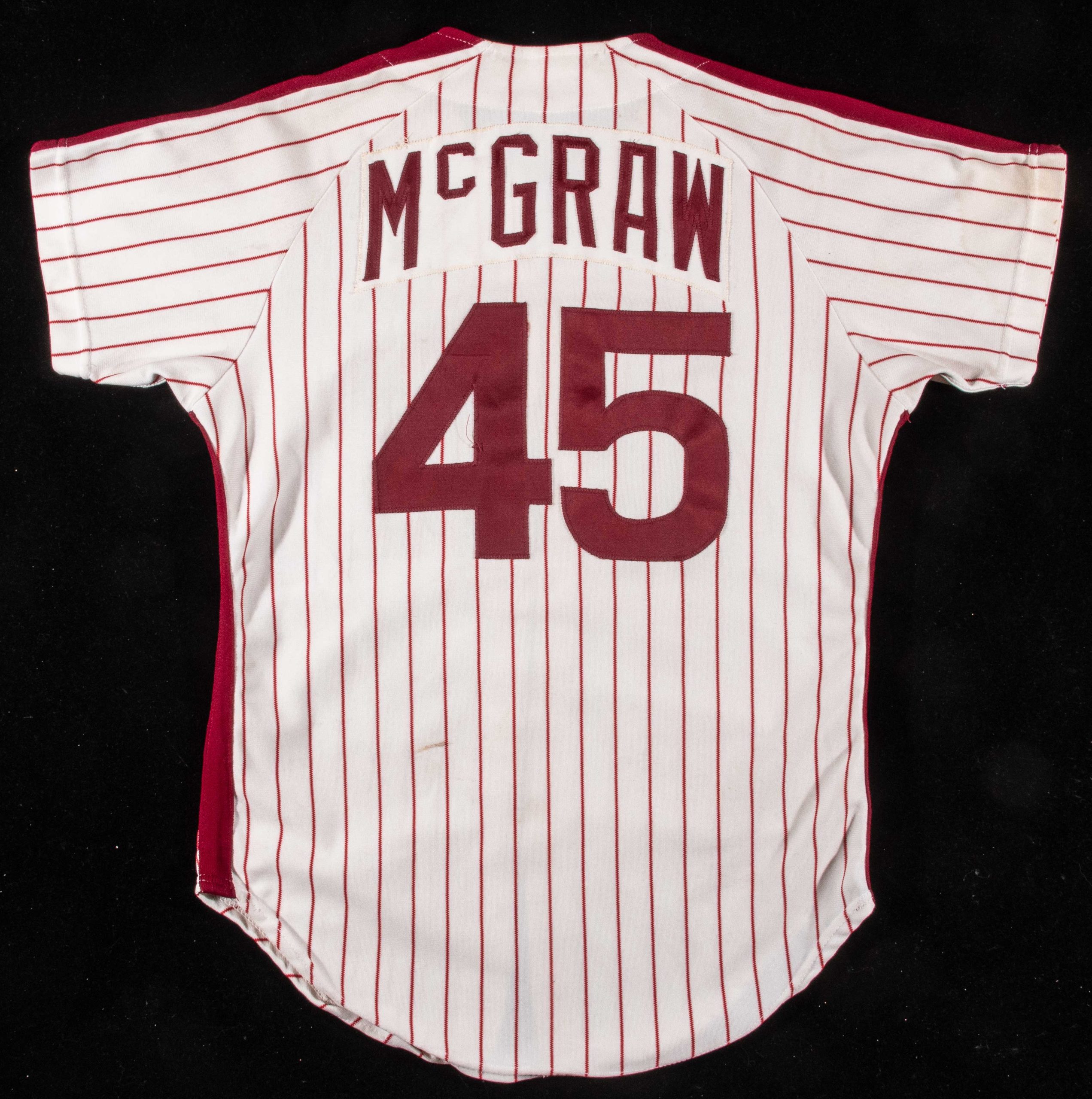
McGraw removed his jersey and handed it to the person he used to work out with in the stadium’s weight room. Romagnoli said McGraw encouraged him when he was a teenager and cried when the pitcher gave him his jersey.
“I think he liked me,” Romagnoli said of McGraw, who died in 2004 at 59. “He cared. We had a bond. He’s a special person. It was all just surreal. You’re just in the mix and it’s all happening. You’re kind of stunned just taking it all in.”
Romagnoli kept McGraw’s jersey for years in his dresser drawer, often taking it out to remember that October night when he stepped into the clubhouse. He’s ready now to part with it. The jersey will be auctioned off this week by Hunt Auctions amid the All-Star Game festiviites.
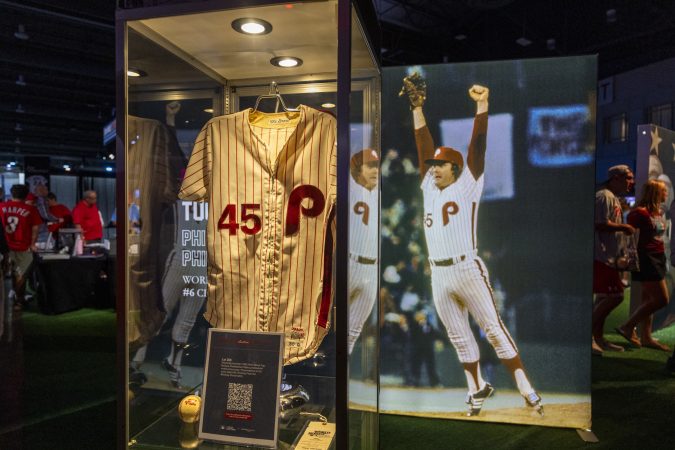
Tug McGraw’s jersey from Game 6 of the 1980 World Series is being auctioned off this week by Hunt Auctions.Hunt Auctions
An online auction closes Monday night followed by a live auction on Tuesday at the All-Star Village at the Convention Center. It is expected to be sold for more than $300,000 and a portion of the proceeds will be donated to the ALS Hope Foundation.
“Our family is thrilled that the jersey our dad wore for the final out of the 1980 World Series — the strikeout of Willie Wilson on October 21st at Veterans Stadium — has finally surfaced,” McGraw’s family said in a statement. “For more than four decades there has been mystery around what happened to that jersey, and we are grateful to have the rest of the story. Tug would appreciate the incredible story of its re-emergence more than anyone.”
Romagnoli would sometimes forget to check on the jersey for a few months, causing him to fear that moths ate it or someone stole it. But there it was in a Ziploc bag in his drawer. He used to bring the jersey to his children’s schools for show-and-tell, but the best reactions came when he shared it with people who remembered that night. They couldn’t believe he had McGraw’s jersey. He never thought about how much it was worth.
“It was about the relationship and the feeling of a friendship,” Romagnoli said.
The jersey was authenticated by MeiGray Authentication via photo matching. The company said the jersey “conclusively” matched the one worn by McGraw in Game 6. It was the real thing. But Romagnoli already knew that. It’s time for the jersey to find a new owner. Included with the auction is the credential that Romagnoli wore that night and led him into the clubhouse.
“Life goes on and you want to share it with others. That’s where we are,” he said. “It’s like a Picasso. I don’t think it should sit in somebody’s living room in Texas.”