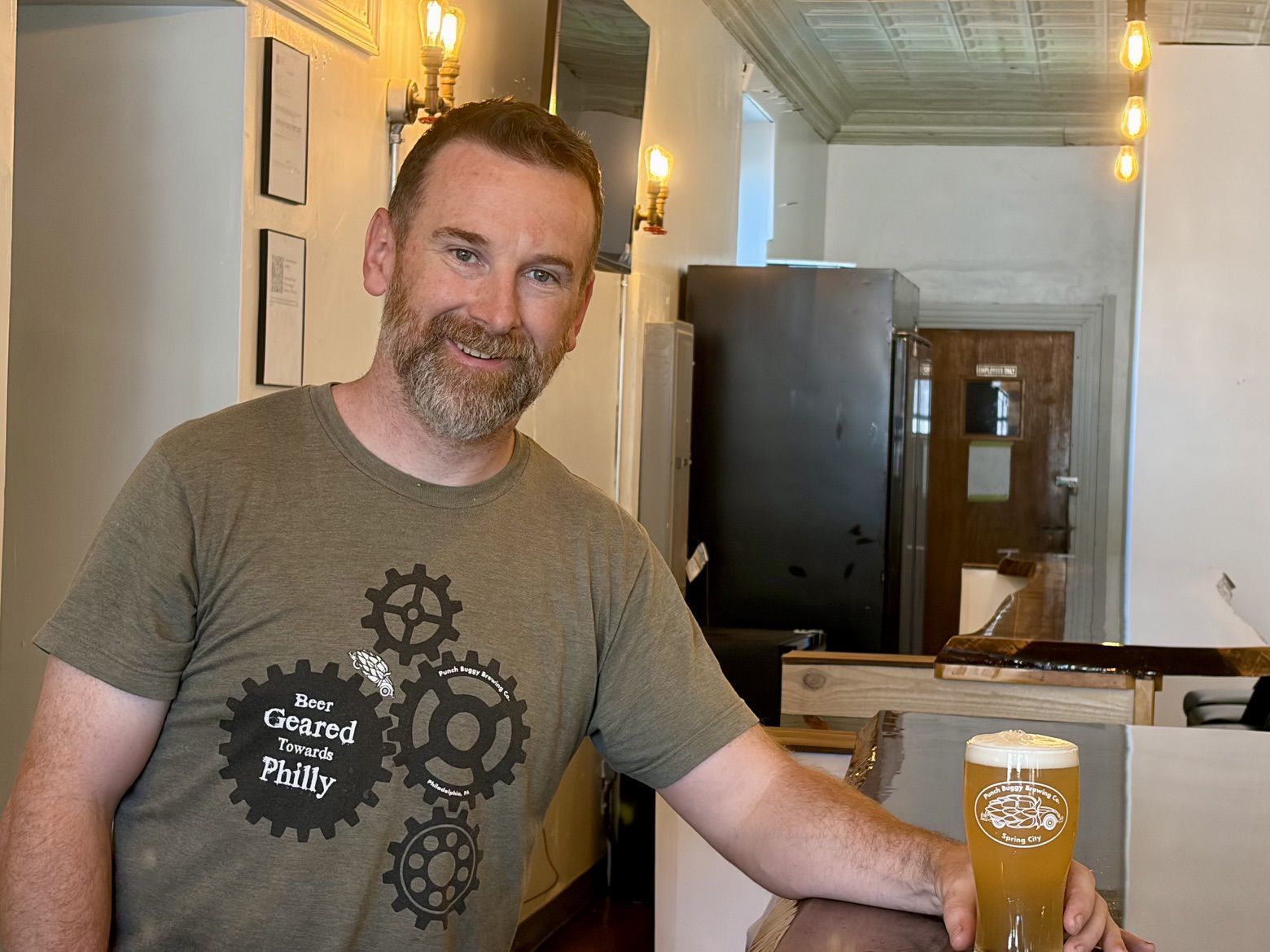
Punch Buggy Brewing Company is bringing its artisan brewery to the suburbs, with its second location opening in Spring City later this week.
“I think it’s going to be fun to see [the business] grow and thrive with the growing of Spring City right now, and the growing of the beer community,” owner Patrick Coyne said.
The brewery’s latest endeavor, which has been about a year in the making, will open its doors at its new Main Street location on Saturday. And Coyne, 42, is no stranger to the Chester County borough: He and his family moved there five years ago, and Punch Buggy has been a presence at the farmer’s market for more than two years, learning what the crowd likes and wants.
In North Philadelphia, where the brewery’s first location opened seven years ago on American Street, it’s “all IPAs all the time; lagers also,” Coyne said. But Spring City’s crowds are appreciating Punch Buggy’s sours and dark beers more than their Philly counterparts, Coyne said.
The brewery released a Spring City Lager last year — its can featured local landmarks — to announce their venture into the suburbs.
Over the past year, they have renovated an old hardware store for the brewery, refinishing its old pub-style floors, working with a local woodworker to build a live-edge wood bar, and “just adding our own little flair to every little piece,” Coyne said.
Deezy’s Famous Cheesesteaks will join the brewery to serve food. The space will have three large TVs for sports fans and a small stage to host local musicians, like during their popular Friday music nights in Philly.
“Piece by piece, the whole thing coming together has been pretty cool,” he said.
Expansion has come with its challenges, Coyne said. They’re increasing the canning of their IPAs, lagers, sours, saisons, and more. They’ve paused distribution temporarily, to make sure they have enough beer at both locations and while they get a sense of demand.
Punch Buggy Brewing is no stranger to Spring City, as owner Patrick Coyne lives there with his family. His wife runs the flower shop next to their Main Street location.John McGuire
Coyne is looking forward to being “part of the beginning for Spring City,” where the population grew by more than 11% over the past five years.
“It’s definitely an up-and-coming city,” he said. “There’s things opening every couple weeks, it feels like.”
It doesn’t hurt that the new spot is near Coyne’s home, and next to his wife’s flower shop, Wild Blooms Florals. It’ll join a swath of new businesses that havecome to the area in recent months — including Tuned Up Brewing on the same block, as well as The Gem, a speakeasy, plus more robust public parking.
“People from in town could just walk and hit three places right now,” Coyne said. “People from out of town can come and they can park and they can go to three spots and spend a whole night there in Spring City.”
This suburban content is produced with support from the Leslie Miller and Richard Worley Foundation and The Lenfest Institute for Journalism. Editorial content is created independently of the project donors. Gifts to support The Inquirer’s high-impact journalism can be made at inquirer.com/donate. A list of Lenfest Institute donors can be found at lenfestinstitute.org/supporters.
For Tina and Waverly McAlister, preparing for a retirement living near the beach has been a meticulously planned process taking about a decade.
About 17 years ago, the two Phoenixville natives thought they would buy a home there or in King of Prussia, but Pottstown was a better market for them. Waverly had been a supervisor with a precious metal manufacturing firm and Tina had been a revenue services specialist in a school intermediate unit.
Kitchen Alcove Media
So in 2009 they bought a three-bedroom, 2½-bathroom house in Pottstown on a cul-de-sac along busy U.S. Route 422. Waverly said they were attracted to the design and attention to detail.
Then, eight years ago, they bought their eventual retirement home, on Fenwick Island, Del. Since then they have split time between two homes, gradually moving possessions to Delaware.
DeckAlcove Media
The 2,648-square-foot Pottstown house features a two-car garage that can also serve as a workshop. It has extensive cabinetry, a refrigerator, and mounted television.
The house’s main level has a hardwood foyer and composite flooring in the kitchen, dining room, and family room. And the kitchen has an island, a subway tile backsplash and a sink mounted under the counter, giving a lower profile.
There is also a powder room and laundry.
The primary bedroom has a walk-in closet with custom organizers.Alcove Media
The bedrooms are on the next level. The primary has a decorative accent wall and a walk-in closet with custom organizers, and a bathroom with tile flooring.
The finished basement has a bar area with a wine and beverage refrigerator, pantry, a decorative tile ceiling, and an electric fireplace. Sliding doors lead to the patio and backyard.
FireplaceAlcove Media
The house is in the Pottsgrove School District, convenient to Philadelphia Premium Outlets and Costco.
It is listed by Pam Butera of Keller Williams Blue Bell for $575,000.
A client of mine had a check they mailed stolen before it reached their supplier. The check was altered for a different payee and amount and then cashed. Another client said someone got a copy of one of his company’s checks and created counterfeit versions using AI.
Countless clients have reported unauthorized electronic check requests made to their bank accounts, with more than a few finding out after their money had disappeared.
Check fraud is real, and it’s bad.
“Check fraud remains a major threat, and businesses are becoming much more aware of it,” said Janet Miller, senior vice president at Fulton Bank in Philadelphia. “Fraud has become so prevalent. Five years ago I’d have conversations about fraud protection with my clients, and there was a resistance to it. But now it’s like, yes, we need to protect ourselves!”
A 2025 study from the Association for Financial Professionals found that 79% of organizations experienced attempted or actual payments fraud in the past year, with 63% representing attempted or actual check fraud.
Checks, which the study says are still used by 91% of businesses, remain the single most-targeted payment method, but, according to the study, wire transfer fraud was reported by 63% of respondents, up from 39% in the previous survey, and ACH (Automated Clearing House) credits fraud was reported by 50%.
“Fraud is something that only expands,” said Tom Gregory, head of Treasury Management, Merchant and Government Banking at TD Bank. “New technologies like AI and spoofing, key logging, and social engineering are always creating new ways of perpetrating crime.”
Ask any accountant, and we’ll say that there are certainly internal controls that should be implemented at your company to help reduce the risk of check fraud. These would include multilevel approvals, better security over physical checks, segregation of duties among financial people, mandated vacations, and cross training.
But one of the best defenses growing in popularity is called Positive Pay, a banking service that helps prevent check and payment fraud. I’ve been urging all of my clients to subscribe to this service, which is offered by most banks.
Melissa Jetland, a senior vice president at Fulton Bank, says Positive Pay is a powerful risk management tool for your company’s cash.
“Think of it as the simplest way to put a gate in front of your money,” she said.
Positive Pay works in two ways. For regular paper check payments, your company electronically sends your bank a list of the checks (which includes payee, purpose, amount, date), and the bank then matches that list against the actual check payment request made by the payee. If the payment request doesn’t exactly match all the data on the list, it gets rejected.
Positive Pay also works with ACH payments. In this manner you tell the bank which vendors are allowed to make debits to your account. Any request that doesn’t have an authorized vendor will be rejected.
“If you don’t do that, the bank is obligated to post every debit that comes because in an ACH system, the originating bank warrants their validity — even if the payment hasn’t been authorized by you,” Gregory said.
Why wouldn’t most small businesses sign up for Positive Pay? According to recent market research of U.S. financial institutions, only 29% of banks and credit unions are satisfied with their current Positive Pay adoption rates. Other industry reports estimate that only about 35% of eligible business customers currently use the service, despite the recent surge in check fraud.
Yes, there is an additional cost (generally $25 to $100 per month for basic Check Positive Pay), but Fulton’s Jetland believes one of the biggest barriers isn’t cost. It’s the belief that Positive Pay is cumbersome.
“It really is lack of education,” she said. “Some owners worry that uploading check files and reviewing exceptions will be difficult and time consuming, but that’s usually not the case.”
According to research by a financial technology provider, more than 75% of banks expect Check Positive Pay adoption to increase over the next two years.
It’s effective. One study from last year by a fraud prevention services company found that 77% of users with Positive Pay reported fewer check fraud attempts or losses.
Subscribing to Positive Pay doesn’t completely protect you from fraud. Gregory says that things like daily account monitoring, setting up check and ACH blocking on your bank accounts that are never used for disbursing money is also important.
“Understand that fraud prevention requires multiple layers of defense,” he said. “There’s really no 100% ironclad fail-safe system. But layers of control and being mindful will reduce your risk.”
As an accountant, I’ve learned that fraud prevention isn’t about finding one perfect solution. It’s about building layers of protection. Positive Pay may not stop every criminal, but it has become one of the easiest and least expensive layers a small business can add.
Miller says that Positive Pay is a good insurance policy for every company’s cash.
“It’s a very manageable cost and the protection it provides is worth it,” she said.
It wasn’t always like this. I’m old enough to remember the Bicentennial celebration back in 1976. After being struck by the trifecta of the Civil Rights Movement, the Vietnam War, and Watergate, it felt as if the country was moving forward.
I lived in the nation’s capital, the epicenter of America’s Bicentennial celebration. Practically everything had a Bicentennial theme. Even the fire hydrants were painted red, white, and blue. I spent much of that hot, humid summer attending free Bicentennial-themed events such as the Smithsonian Institution’s Folklife Festival and the July Fourth fireworks display.
At our house in Brookland in northeast Washington, D.C., my parents hosted their annual backyard BBQ with the usual Southern favorites. My dad, a Korean War veteran, proudly hung the American flag from our front porch. Patriotism wasn’t code for MAGA back then. Political affiliation didn’t matter as much. Americans celebrated the nation’s 200th birthday together.
Those were happy times.
I shudder to think about what this year’s celebration of America’s 250th anniversary in Washington will be like with President Donald Trump living in the White House.
But that’s how it is with him. Trump is going to Trump. That’s why he’s furious about having his name ordered removed from the Kennedy Center for the Performing Arts.
It’s also why his scowling face appears on commemorative U.S. passports, National Park Service passes, and gold coins made specially for the 250th anniversary.
It’s not enough for him to have large banners featuring his image hanging from various government office buildings — he’d love it if he could get his mean mug on $250 bills, as well.
Take what happened after musical artists started dropping out of a series of concerts after learning it wouldn’t be the nonpartisan event they expected. The president went on Truth Social and trashed the performers, and also floated the idea of hosting a giant MAGA rally instead — featuring none other than himself.
“We should have a giant MAKE AMERICA GREAT AGAIN RALLY, for 250, instead of having overpriced singers, who nobody wants to hear, whose music is boring, and yet who do nothing but complain,” Trump posted, adding, “Cancel it.”
Cue the fireworks! Finally, the president and I agree on something. He’s right about canceling the musical performances. But in my opinion, he didn’t go far enough. Trump should cancel all of the Freedom 250 events, which have been billed as nonpartisan but were actually organized by a group formed by Trump.
At this great age, America deserves better than a president who has installed a massive red, white, and blue cage on the South Lawn of the White House for a UFC fight on Sunday, June 14, the day of his 80th birthday.
It’s problematic enough that America’s Founding Fathers were too sexist and racist to include equal rights for women, African Americans, and Native Americans in the Constitution, but fast-forward to today, and we have the griftiest of grifters in the Oval Office.
Trump has finagled it so that the IRS is “forever barred and precluded” from auditingTrump, his family, and the Trump Organization’s taxes prior to May as part of a deal to settle his $10 billion suit against the Internal Revenue Service.
And if the courts don’t permanently block it, Trump intends to create a $1.776 billon slush fund using taxpayer money that could be used to compensate rioters who stormed the U.S. Capitol on Jan. 6, 2021, among other things.
Demonstrators storm and breach the US Capitol building in Washington on Jan. 6, 2021. Victor J. Blue
Meanwhile, migrants are being systematically rounded up, denied basic human rights, and packed into squalid detention centers such as Delaney Hall in Newark, N.J., and America is engaged in an intractable and unprovoked war with Iran that has sent gas prices and the cost of living skyrocketing for all of us.
Trump is focused on the wrong things: his daily stock trades, building a $400 million ballroom at the White House, rehabbing the Reflecting Pool, erecting a giant arch in D.C., and adding a promenade onto the Lincoln Memorial.
Instead of helping heal the country’s divisions and bring Americans together, the president does whatever is best for him.
His leadership has put America in a sunken place, and that’s nothing to celebrate.
The least-loved New Yorker since Boss Tweed, the Donald on Monday took it upon himself to ruin pregame plans and pleasures of thousands by becoming the first sitting president to attend an NBA Finals game.
It tracks: Trump always seeks to steal the shine from winners, and the Knicks, fueled by NCAA champs Jalen Brunson, Josh Hart, and Mikal Bridges, were winning like nobody’s business. They had won 13 consecutive playoff games and held a two-games-to-none lead over San Antonio when they took the court at Madison Square Garden.
Trump’s presence created traffic snarls and ingress nightmares, and he was buried by boos during the singing of the national anthem, but nobody in the joint paid him much mind after that. He’d wanted to sit with Spike Lee and Larry David courtside, but the Secret Service (and perhaps his more sane advisers) persuaded him to retreat to a suite. There, in the shadows, he rested as the streak ended, a 115-111 downer in Game 3.
Later, Trump blamed Karl-Anthony Towns. He wasn’t wrong.
Look, it wasn’t all Trump’s fault, or KAT’s fault. It wasn’t anybody’s fault, really.
Well, maybe it was the refs’ fault. That’s what Knicks coach Mike Brown claimed.
“They outshot us 14-3 [from the line] in the third quarter. Maybe we did foul. But they fouled, too,” Brown said. “If they do this, 24-8 [in the second half], in Game 4, it’s going to be tough to win.”
It will be interesting to see the league’s reaction to Brown’s comments, since he was fined twice in 2024 for interactions with officials before he was fired by the Kings.
“That didn’t cost us the game,” said Towns, who finished with just 11 points. “We turned the ball over. We didn’t execute. We didn’t do the things that got us 13 straight wins in a row.”
It was a very non-’Nova-Knicks night, the sort they cannot afford against an assemblage like San Antonio’s.
The Spurs won nine more regular-season games than the Knicks. Third-year center Victor Wembanyama finished third in MVP voting this year and was Defensive Player of the Year, De’Aaron Fox was an All-Star this season, Keldon Johnson was this season’s Sixth Man of the Year, and guard Stephon Castle won Rookie of the Year last season.
Wemby had 32 points, eight rebounds, six assists, and three blocks. Castle has 23 points. Fox had the dagger and eight assists.
They are a very, very good team.
The Knicks trailed by five with 9 minutes, 18 seconds to play when Brunson, who leads the Knicks like he led the Wildcats, returned to the game. That set the scene for another comeback, like Game 1 in the Eastern Conference finals against the Cavaliers or Game 2 on Friday in San Antonio, Texas. Those comeback wins branded these Knicks the same way the gritty, deep Villanova teams were branded when the won NCAA titles in 2016 and 2018 under Jay Wright.
Alas.
The Knicks got 32 points from Brunson. They got 16 points and nine rebounds from Josh Hart. But they got just two points from Bridges, the hero of Game 2 just three nights before.
Alack.
Whether it was the 13-game run, the 53-year drought, or the presence of the president, Brunson & Co. were making no excuses.
“There are going to be a lot of distractions, positive and negative,” Brunson said. “Most important is how we compose ourselves as a team, and we have to make sure we have accountability as a team.”
Brunson hit a putback-and-one, a jumper as the shot clock expired, and a three-pointer with 33.7 seconds to play that cut the lead to three points, but Fox’s jumper with 12.2 seconds and two late free throws from Castle were just enough.
You felt early that not even the steely pedigree forged on the Main Line almost a decade ago would be enough Monday.
Wembanyama had nine points and a blocked shot in the first five minutes. Bridges committed two fouls and a turnover and had his shot blocked in the first four minutes.
That’s how the Spurs built a double-digit lead. A constellation of stars of stage and screen looked on, hoping for a sweep, the sweetest possible end of a 53-year title drought. From Lee to David to Ben Stiller, they all felt it. The Knicks seemed … affected. Tight. Flat.
Mostly, anyway.
The Knicks took their first lead when Brunson — who else — canned a 25-foot three-pointer with just over four minutes left before halftime. He hit it over Wembanyama, reluctant to extend his defense too far, lest Brunson burn him to the basket again.
About a minute later, with the Knicks down by four, Castle bulldozed Brunson while pursuing an offensive rebound. Hart scored on the ensuing possession and tied it at 54. Hart’s trey gave the Knicks the lead again, and Brunson dropped another 25-footer on Wemby. Brunson’s feed with 9.6 seconds soon sent Towns to the line, where he made both free throws, the end of a 14-3 run, and the Knicks’ halftime lead was 64-57 after they dominated the second quarter, 42-24.
But the Spurs won the third quarter by eight, scored the first six points of the fourth, and held off the valiant ’Nova Knicks.
They resume the series Wednesday, but don’t expect Trump to be back.
Penn will be well represented at the NCAA outdoor track and field championship this week.
Four members qualified to compete in Eugene, Ore., from Wednesday to Friday: junior sprinter and hurdler Ryan Matulonis, freshman thrower Jessica Oji, senior long distance runner Lily Murphy, and senior high jumper Kampton Kam.
“We’re representing distance running, sprinting, jumping, and throwing,” Murphy said. “We have a pretty wide variety of personalities and grades going on this trip, but I think it’s very representative of the diverse community that Penn track is.”
Added Matulonis: “It’s definitely super motivating. We may all be from different training groups, and we don’t practice together. But at the end of the day, we’re all able to unite because of the fact that we all wear the Penn stripes. I think it just kind of goes to show how deep our program goes.”
All track events will air on ESPN or ESPN2, while field and combined events will be available to stream on ESPN+. Here’s what to know about each Penn athlete and the journey they took to get to outdoor track and field’s biggest stage:
Ryan Matulonis, 400-meter hurdles
Matulonis, a three-time Ivy League champion, was the only male Penn track athlete to advance past the NCAA’s East first round in Lexington, Ky. In the quarterfinals of the 400-meter hurdles, Matulonis achieved a personal-best of 49.25 seconds to place second and punch his ticket to Eugene.
Although he qualified for the championship, Matulonis was hoping to break the Ivy League 400-meter hurdles record — held by former Quaker Bruce Collins — in the first round in Lexington.
“It was great to make the national meet, but I missed the record by a 100th of a second,” Matulonis said. “[The Ivy League] record is 49.24, and I ran 49.25. So that one stung a little bit, but I still got another shot to race it.
“Winning was definitely very motivating. That competitive spirit really helped me get to where I am today, and obviously that never goes away. But as you start to get closer to some of these numbers — that when you’re a freshman, they’re not as in reach — and then you start to creep closer to them, and those are things that you start to have in the back of your mind as well that you’re going for.”
Ryan Matulonis set a personal record in the 400-meter hurdlers in the NCAA’s East first round.Penn Athletics
Matulonis will likely need to break the conference record to finish first in the 400-meter hurdles finals, which are held on Friday (at 6:27 p.m.). The national champion in the event has finished faster than his personal-record every year since 1996. First, he will have to advance past the semifinals, which are slated to begin Wednesday (7:14 p.m.).
Jessica Oji, shot put
In December, at her first collegiate meet, Oji broke the Ivy League indoor shot put record. During the indoor season, she broke her own record two more times. Then, in the outdoor season, she broke the Ivy’s shot put record.
Oji was the only Quaker to qualify for both indoor and outdoor NCAA championships this year. At the indoor championships, she placed seventh in the shot put.
Penn freshman Jessica Oji qualified for the indoor and outdoor NCAA championships this year.Penn Athletics
After placing first at the Penn Relays, Oji said her dominant start is just the beginning.
“I’ve always wanted to win [the Penn Relays] while wearing the Penn stripes,” Oji said in April. “It’s been a huge goal for me. When I committed here, I was like, ‘I have to win this meet all four years.’ This is just the start of it.”
She will have a chance for a championship finish in the women’s shot put final on Thursday (7:15 p.m.).
Lily Murphy, 10,000 meter
Last season, Murphy was injured and unable to compete in the East First Round. So, when it was her turn in Lexington, the senior had more nerves than usual.
“I was really nervous going into the regional meet, but once I got out there, once the gun went off, I was like a different person,” Murphy said. “I was just so happy to be back there … A switch kind of flipped, and I was just trying to enjoy it.”
Lily Murphy qualified for the NCAA track and field outdoor championship in the 10,000 meter event.Courtesy of Penn Athletics
Murphy finished fifth overall in the 10,000 meter with a time of 32 minutes, 53.30 seconds.
Now, she is back at the championship meet. She will race in the 10,000 meter final on Thursday (7:56 p.m.) in a competitive heat. New Mexico sophomore Pamela Kosgei, the defending national champion in the event, qualified for this year’s race and is looking to defend her title.
But Murphy, who is running her final meet as a Quaker, is not letting her nerves get the best of her.
“I’ve surprised myself before,” Murphy said. “I think just being able to test the waters but also just go out there and give it my all and see how far I can go against this competition — there’s something uniquely exciting about that.”
Kampton Kam, high jump
Unless Matulonis advances to the final, Kam will be the last Quaker to compete in Eugene. The high jump final is slated for Friday (4:30 p.m.).
Like Murphy, the meet will mark Kam’s last at Penn. The six-time Singapore national high jump record holder graduated from the Wharton School three weeks ago. With the majority of his teammates and friends leaving campus, Kam has been looking for new motivation leading up to the national championship.
Over four years at Penn, Kampton Kam has qualified for three NCAA outdoor championships in the high jump.Penn Athletics
“It’s been four good years, and just to see some of my friends leave it kind of like — not drains you, but it just makes you feel … how can I keep going [if] I don’t see them anymore? It does affect you a little bit that way. But definitely super happy to make it to finals after regionals, and just have one last dance with the team.”
In Lexington, Kam defied projections. Clearing a 2.16-meter bar, he finished fifth overall despite being ranked 11th in the region going into the meet.
Friday will mark his third consecutive appearance in the meet, but he has yet to win a championship.
Five years later, the board debated whether the course should be dropped as a requirement in light of budget problems in South Jersey’s largest school system.
And while officials have assured the community that the course will remain part of the curriculum, the debate highlights the difficult choices that districts are facing during a tough budget year. In Cherry Hill, the board approved a budget that will cut 70 positions, increase class sizes, and raise property taxes to eliminate a $29 million deficit.
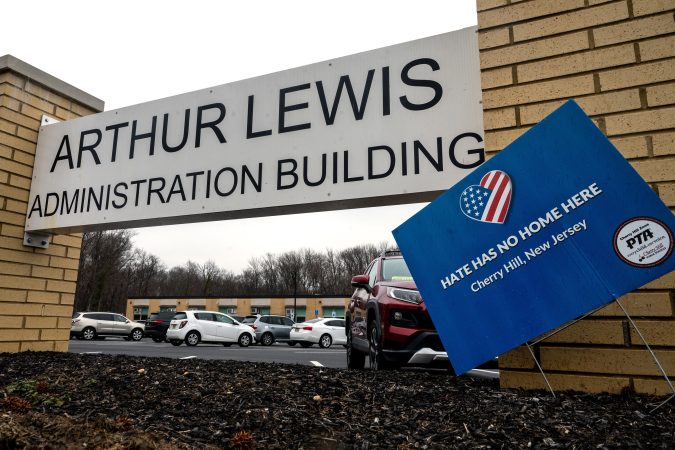
As that budget process played out this spring, board member Renee Cherfane suggested the district could reconsider African American history if future budget cuts are necessary. The idea drew pushback from students as well as community and civil rights leaders, who pledged to fight any attempt to roll back the requirement.
“Black history is an essential part of American history,” said Ma’isha Aziz, president of the Camden County East branch of the NAACP. “Teaching it helps ensure students gain a fuller understanding of the nation’s past and present.”
Cherry Hill High School East senior Skylar Adams, a member of the African American Cultural Club, said changing the course would send the wrong message. Black students make up about 10% of the district’s 11,000 students.
“In the world we live in today where the rights and voices of African Americans are constantly being challenged and minimized, now is not the time to make our history seem less important,” Adams told the board. “Making this course an elective instead of a requirement sends a message that learning about Black history is optional and not important enough for every student.”
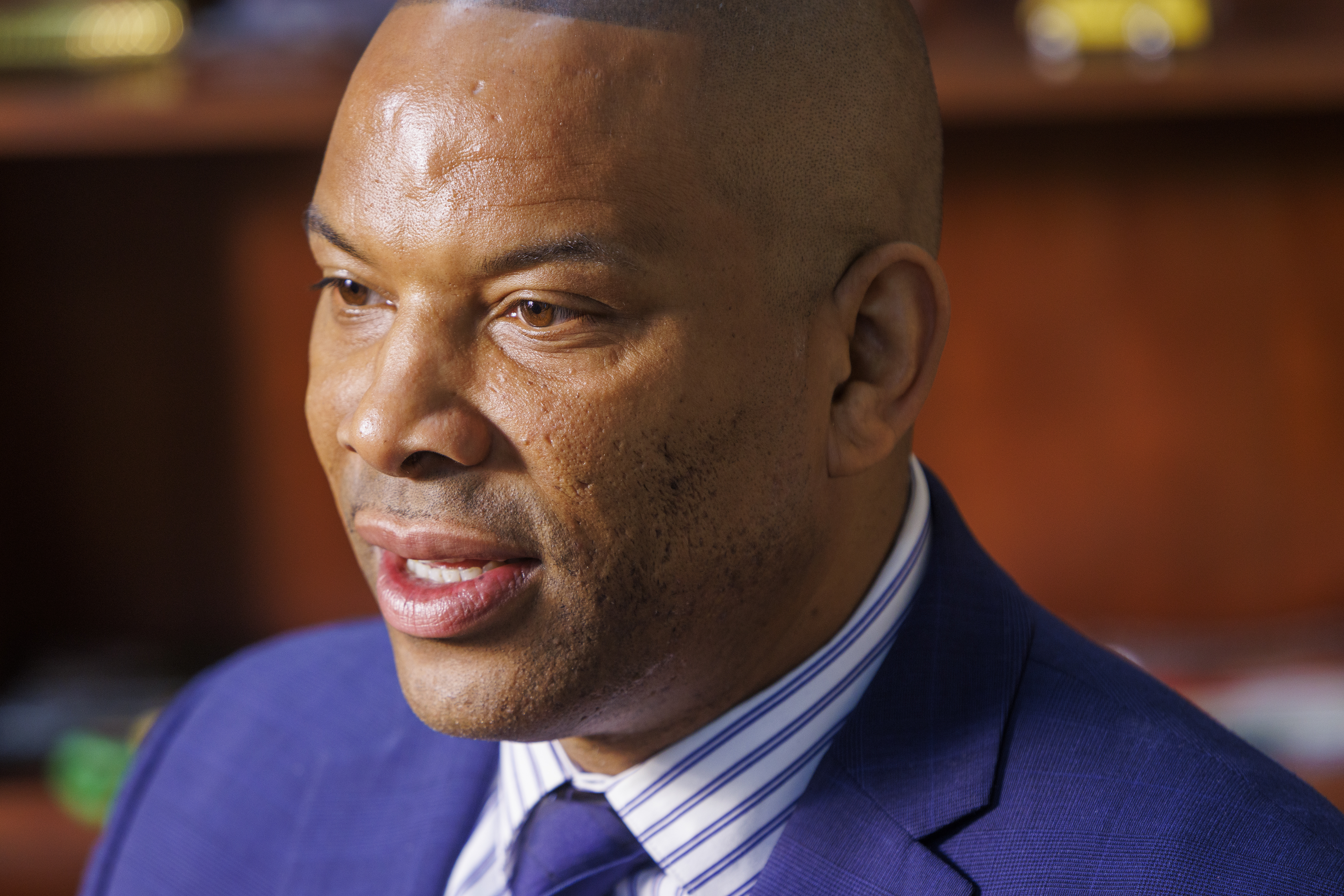
Superintendent Kwame Morton, the district’s first Black schools chief, praised students who made passionate appeals to the board to keep the course. He reassured them that the course was not in jeopardy.
“The board is not at this point taking action on any recommendation to eliminate that course. That’s not what’s happening,” Morton said.
Cherry Hill Superintendent Kwame Morton.Alejandro A. Alvarez / Staff Photographer
Here is what to know about the debate around the course:
How the issue unfolded
Cherfane sparked a heated discussion during a board meeting last month when she suggested making African American studies an elective instead of a required course. She cited the district’s $29 million deficit, which prompted layoffs and cuts.
In the event the board has to cut additional teaching positions in the future, having that class as a mandate limits options, she said. About 800 students are required to take the course every year, she said.
“It’s not about offering the class. It’s about requiring it,” Cherfane said. ”We wouldn’t be getting rid of it entirely.”
Other board members asked Cherfane to explain why she targeted that class. The district offers other electives, such as multivariable calculus, a high-level math course that few students take, that are not required by the state as a graduation requirement, said board member Miriam Stern.
Board president Gina Winters said any review examining potential cost savings should not be specific to one class. The African American history class was pitched by students and supported by the community, she said.
“I understand that it’s a tight budget, but we also have a responsibility as a board to educate our children on the things that our community thinks are important,” Winters said.
Cherfane did not respond to messages seeking comment.
How did the class get started?
By an 8-0 vote, the board approved the course as a graduation requirement in February 2021. Students who organized Black Lives Matter protests sparked by the killing of George Floyd in 2020 in Minneapolis by a white police officer asked for the class. They said Black history was mostly taught only in February.
Cherry Hill became the first district in the state with the requirement, according to the New Jersey Department of Education. New Jersey and Pennsylvania require history to be taught, but districts decide the content of their courses. Philadelphia and Camden schools also mandate a course in African American history to graduate.
The district developed a curriculum for a semester course and began offering it for the 2021-22 school year for freshmen and sophomores at its two comprehensive high schools. The district hired two teachers.
Teacher Jennifer LaShure said the course tackles topics that previously received little attention in U.S. history classes. She has included units on early African culture, arts, systemic oppression of today, anti-racism, and activism.
“I worry about the message that it sends to the students that something as important as history can be taken away,” LaShure told the board. “We see it all over, but it’s scary to see it happening right here.”
Community pushback
Former board member Corrien Elmore-Stratton, who was the only Black member of the board that approved the course as a requirement, said the need for it remains.
“… We are already having spaces and places where our students are being erased, torn down, no longer heard, misunderstood, and DEI has become a dirty word,” she said,referencing President Donald Trump’s attacks on diversity, equity, and inclusion. “It really is disheartening to hear that anyone on this board of education to think of to do.”
Carole Roskoph, a retired educator and former Cherry Hill council member, said she was “perplexed” by the discussion.
“It doesn’t make sense to me,” she said.
Motion withdrawn
Following the discussion, Cherfane made a motion to refer the issue to the policy committee to review possibly adjusting the graduation requirement for African American history. She withdrew the motion midway through voting, after a board member expressed unreadiness, and the discussion abruptly ended.
Cherfane did not reintroduce the motion at the May 26 meeting and it was unclear if the matter would be addressed again.
Other cuts, however, are moving forward in Cherry Hill and will take effect next school year.
Moments after Purdue University soundly beat Grambling State in the first round of the 2024 NCAA Men’s Basketball Tournament, Carson Barrett turned to his phone.
The Purdue guard, playing with a torn right meniscus, had sunk a three-pointer in the game’s final minutes to put his team up, 78-50. But amid the happy afterglow of victory, Barrett’s phone filled with venom.
“I hope you f— die,” read one text message that he received.
“Kill yourself for taking that 3 you f— worthless loser,” added another.
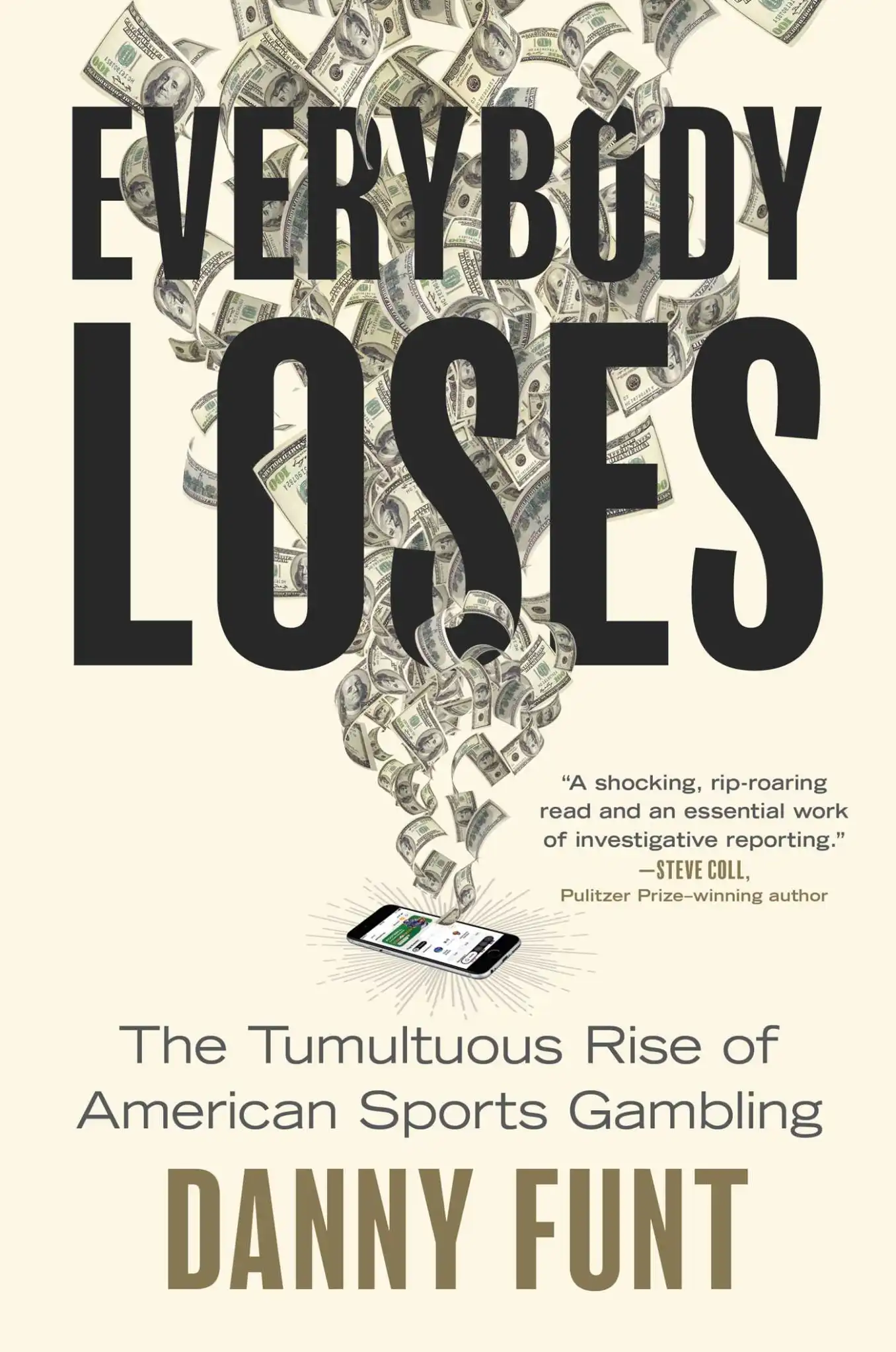
It’s the opening anecdote of the book Everybody Loses: The Tumultuous Rise of American Sports Gambling, an exploration of the fallout from a 2018 U.S. Supreme Court ruling that allowed states to enact individual sports betting laws. The decision has resulted in gambling becoming an omnipresent part of everyday American life.
Barrett became a harassment target because his three-pointer ensured that Purdue would cover a 27-point spread, explains author Danny Funt, a journalist who has written for the Washington Post, the Wall Street Journal, and the New Yorker.
While researching “Everybody Loses: The Tumultuous Rise of American Sports Gambling,” author Danny Funt interviewed officials at FanDuel and DraftKings as well as people who suffered from gambling addiction.Handout
Funt revisits critical moments in how gambling was embraced, like NBA commissioner Adam Silver writing an op-ed for the New York Times in 2014 that called for sports betting to be legalized and regulated. Silver claimed that nearly $400 billion was wagered annually on sports. But that eye-catching sum, Funt writes, was actually just a thinly sourced guesstimate.
Once states began legalizing sports betting, professional leagues abandoned their once- impassioned opposition to having any association with gambling, and entered into lucrative partnerships with sportsbook companies.
But some ex-league officials who spoke to Funt — including former NFL commissioner Paul Tagliabue and former MLB commissioner Fay Vincent — expressed lingering concerns.
“What’s going to happen is. it’s going to get out of hand. Gamblers will start fixing games,” Vincent correctly predicted. “And when that happens, Congress will intervene.”
Funt retraced the evolution of sportsbook companies FanDuel and DraftKings, and spoke with unnamed officials at each company about their business practices, including VIP managers who offer benefits — like free Super Bowl tickets — to bettors who consistently wager and lose large sums.
He also interviewed Nigel Eccles, a FanDuel cofounder.
“I love games that are beatable,” Eccles told Funt. “Unfortunately, what they’ve done with sports betting in the U.S. is turn it into a game that you can’t win, because if you win, they shut your account.”
Yet Everybody Loses isn’t told strictly through the eyes of executives and policymakers. Funt also interviewed ordinary people — a fifth-grade teacher in Connecticut and a college student from Washington Township, Gloucester County — whose lives were derailed by an all-consuming gambling addiction.
Inquirer reporters recently spoke to Funt, 34, about the research he conducted for his book, which was published in January by Simon & Schuster.
This interview has been edited and condensed for clarity.
You interviewed sportsbook industry officials. Was there anything they said that surprised you?
To hear an executive at a company say: ‘If you think about it, my job was to basically slowly bleed someone dry.’ We understand that’s the essence of gambling, but to hear an executive use those words was striking.
And there were definitely a lot of things that I didn’t expect. I didn’t realize the scope of the online VIP business at all. The things they’ll do to pamper those customers, the specifics of it blew me away: Throwing out the first pitch at a baseball game or playing pickup basketball on an NBA court.
The point of doing that is so these customers feel like [VIP managers] are their friend. So if they ever think of pulling back on their betting, they’ll lose all these perks — but also lose a friend that they’ve made.
Should regulators consider limits to prop bets or in-game microbets?
That’s something that these companies have invented, essentially, to give you a million ways of constructing same-game parlays, which are their most profitable product. So they want you to bet on limitless things, so you can construct an infinite number of same-game parlays.
The other thing with these in-game bets — which is the fastest-growing side of betting, and you can see companies like DraftKings really pushing them — is that it’s a road to compulsive behavior, if you’re betting on a minute-by-minute basis.
You could definitely restrict those bets, as far as the variety and abundance of them. But you could also mandate more of a responsibility on the operators to pick up on risky behavior from their customers, and intervene accordingly.
Funt has written for The Washington Post, The New Yorker, and The Wall Street Journal.Handout
What do you think about the gambling content that young people encounter on social media, television and at sporting events?
As far as kids go, there are a lot of data points that are really alarming. I live in Charlotte. Half of the calls to the problem gambling hotline in North Carolina are coming from parents who are so concerned about their kids betting.
There are a lot of things that made [betting] mainstream, but I have to think having A-list movie stars and our heroes in sports pitching [these products] constantly has to have an effect on kids.
A lot of people I talk to — whether it’s educators, health experts, or lawmakers — this potential epidemic of gambling among kids is what they’re most worried about.
You write about sportsbook customers who had winning streaks, and then were stunned to find that the companies limited their accounts.
That limiting comes as such a surprise to people. They think, based on the premise of legalization, that there is a relatively level playing field. Then they learn that no, the deck is stacked against you.
If you do anything that shows you’re a competent bettor, you’ll get cut down to being able to bet only pennies on an NFL game. It feels grossly unfair. There are some states looking into regulating that.
But the advertising so clearly says that this is a way to make money. I just walked by an ad for PrizePicks, which said, basically, make money because you know sports.
What’s your perspective on prediction markets, which allow people to wager on everything from Hollywood awards shows to military conflicts?
I mainly think of them as a workaround — they offer gambling by a different name, and avoid paying state taxes. But by and large, I think they’re sports-betting operators. So the question becomes: Is this the logical extension of Americans wanting to bet on more and more stuff?
Kalshi’s CEO has said their ambition is for people to bet on literally everything, eventually. But I’m curious if that’s a viable business. I don’t think the average person wants to put in the time to bet on legislation, or the weather tomorrow, or who’s going to win at the Oscars. I think that is sadly feeding people who have an addiction.
The Inquirer will continue to report on issues related to the growth of gambling addiction — among teens and adults — across Pennsylvania. If you, or someone you know, wants to speak with a reporter, please contact David Gambacorta or William Bender at dgambacorta@inquirer.com and wbender@inquirer.com
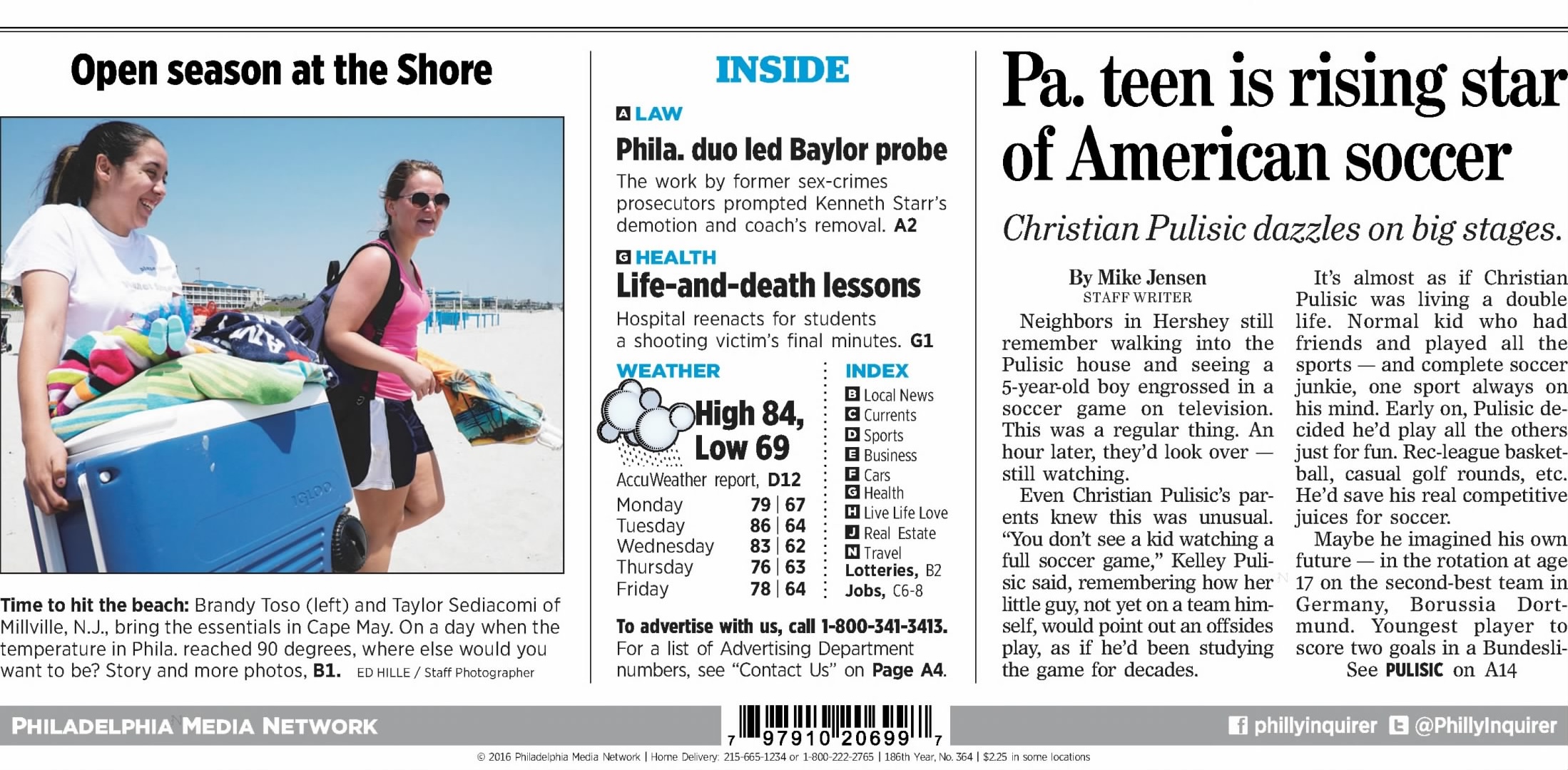
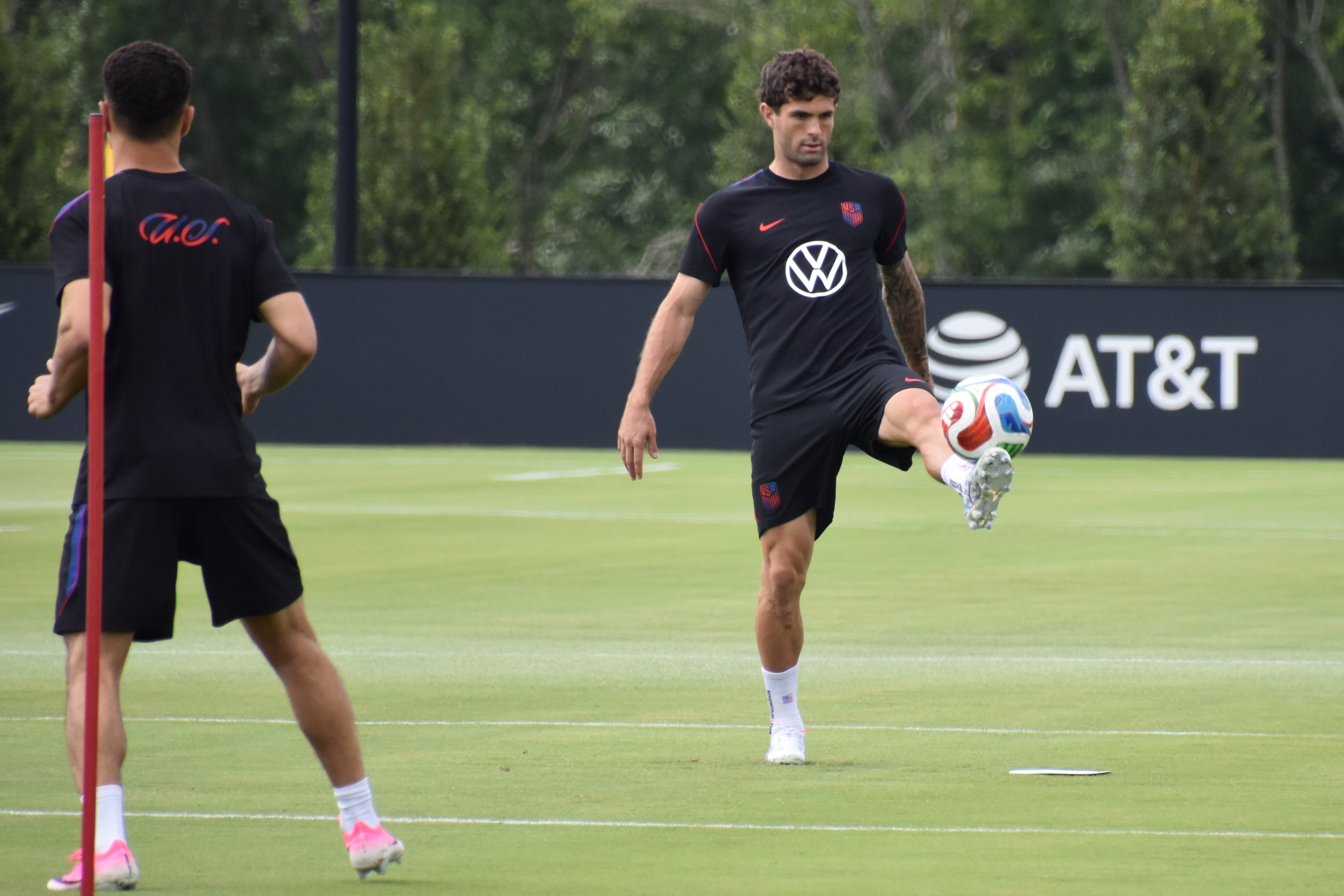
“Pa. teen is rising star of American soccer,” it said — and yes, we mean the actual newspaper, not just the internet. “Christian Pulisic dazzles on big stages.”
A few weeks after that, a then-17-year-old phenom born in Hershey came to Philadelphia as a U.S. national team player during the Copa América Centenario. He didn’t play in the Americans’ game here, but his presence alone was enough to draw attention and another round of headlines.
How many have there been since then? Too many to count, no doubt. But another from along the way still resonates now.
A clipping from the front page of The Inquirer on May 29, 2016, the first time Christian Pulisic was featured in the newspaper.Inquirer Archives
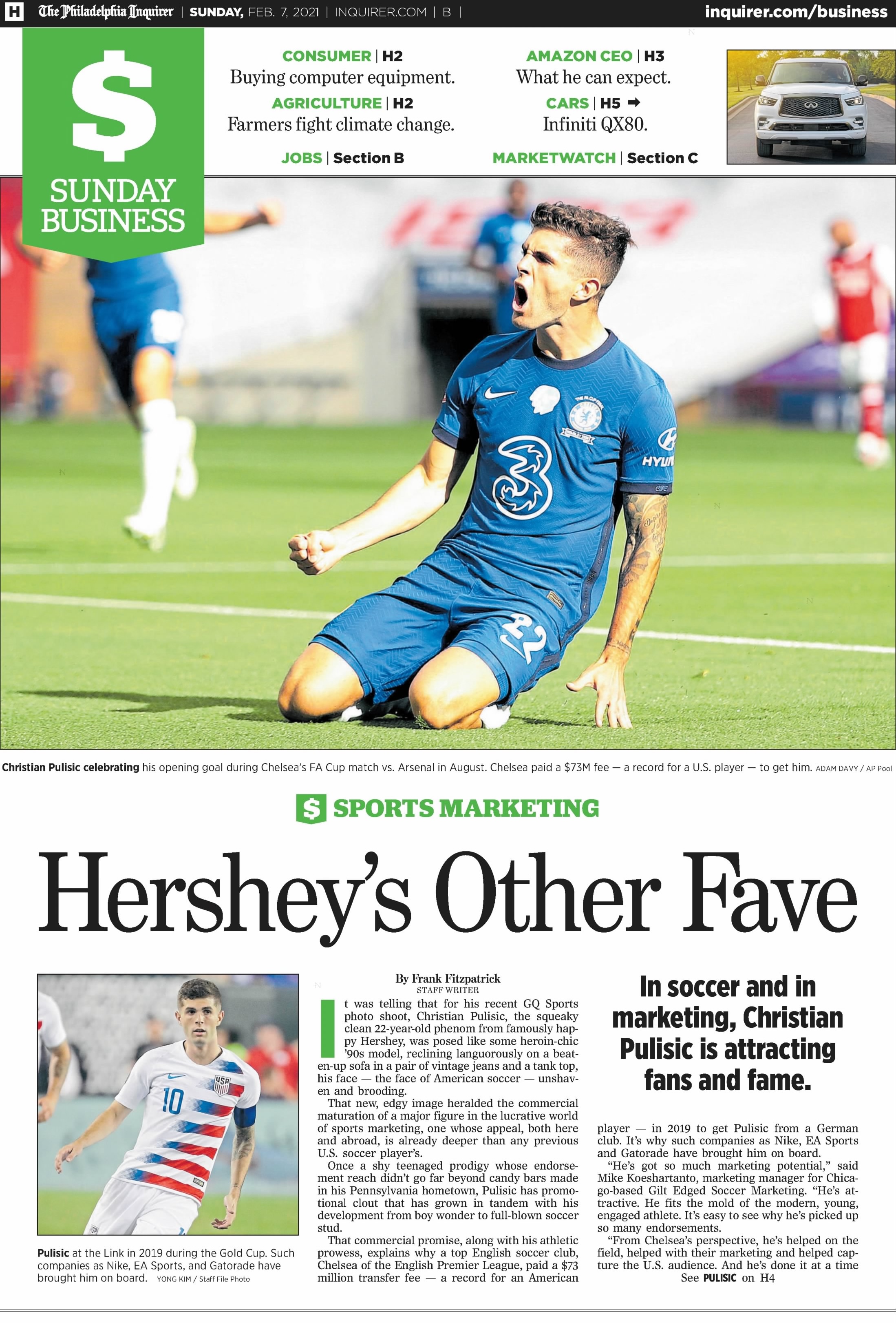
It was five years ago, this time in the business section — a feat of its own kind, along with his goals and assists.
“In soccer and marketing, Christian Pulisic is attracting fans and fame,” the big type declared, for a feature noting how rare this was for an American men’s soccer player.
Now here he is at age 27, on the cusp of one of soccer’s rarest privileges: playing in a World Cup on home soil. Pulisic is still very much an American poster boy, even as the sport has grown so much that he’s no longer the only one.
There are so many ways to measure the time that has passed. But doing so keeps bringing the mind back to the word decade.
How has it been that long already?
A clipping from the front page of The Inquirer’s business section on Feb. 7, 2021, putting Christian Pulisic in the spotlight again.Inquirer Archives
“I think of that every once in a while, and it is pretty crazy,” he told The Inquirer in an interview earlier this month, when he had a rare moment to not be as rushed as he is after games or in news conferences. “In some ways I still feel like I’m a young player. And then I realize, you see guys playing now born in [2006], and it makes you think: ‘like, wow, I really have been around for a while.’”
Not that he is old, for the record. His age is a soccer player’s prime, right on time for the biggest stage of his life.
“I still feel like I have a long road ahead of me,” he said. “It is crazy, though, that I’ve been doing this for so long. It’s not easy to maintain this level and to keep going, and I’m happy and I’m just so blessed that this is what I get to do.”
A national star, but still a hometown hero
The arrival of this World Cup has brought Pulisic a new round of endorsement deals, joining what was already a long list. They’re all on his Instagram page if you want to see them, and some are even on that old-fashioned platform called television commercials.
There sometimes feels to be a contrast between seeing him in so many ads and knowing he isn’t much of a talker on camera. He never has been, and though he has opened up more with age, he’s still never going to be the most chatty. He admitted as much again in this interview.
“I’m obviously in this position, and I think in some ways, it’s important to give my opinion on some things, and I get it,” he said, “People want to hear from me at times, and I’ve gotten more comfortable with it. But no, I haven’t changed really much, I would say.”
He added that for “people that know me and have spoken to me, it’s definitely not how people view me, and I’m OK with that. I think there’s a lot of athletes like that.”
And though these times seem oversaturated with commerce, some of Pulisic’s deals genuinely pull at the heartstrings — including his own. When a Hershey native gets his name and likeness on the city’s world-famous chocolate bar, that counts for something extra, and the company’s ads nailed the tone.
“I think I’ve officially made it,” Pulisic says in one of them, a staged phone call with his mother. “Happiness is knowing home is already rooting for you,” a chocolatier says in another, as he ships a box of bars to Milan, the player’s club soccer home. On arrival, a doorman delivers them to Pulisic, and he looks genuinely moved.
Even the biggest food conglomerate imaginable has a genuine place in Pulisic’s heart. He was one of countless kids who’d go to McDonald’s after a game. Now he’s one of nine global soccer stars on the fast food chain’s soda cups and combo meals, along with legends David Beckham, Ronaldinho, and Thierry Henry, and four big names who’ll play this summer: Canada’s Alphonso Davies, Mexico’s Santi Giménez, South Korea’s Son Heung-Min, and Spain’s Lamine Yamal.
“Driving home from soccer tournaments, the amount of times stopping at McDonald’s and picking up a nice meal there,” he said, “to now be a part of this, have this FIFA World Cup meal, have a chance to win one of my cups — obviously it’s something I just never expected.”
Even though Pulisic was speaking on the sponsor’s behalf, you can take a moment to say there’s significance in an American being in such company. Some years ago, longtime Inquirer writer Mike Jensen got a chance to interview Pelé when offered by one of the Brazilian legend’s sponsors. That was news on its own, as Pulisic’s turn is now.
‘Exactly where I’m meant to be’
Though Pulisic spends most of his days abroad, and his family moved to Florida a few years ago, he still says Hershey “will always be home.”
He spoke of “that house I grew up in,” and how “when I think of home, that’s what it is. That’s where I grew up and spent most of my life.”
He knew who he was speaking to, for sure, and for how long The Inquirer has chronicled his career. But these words also sounded genuine.
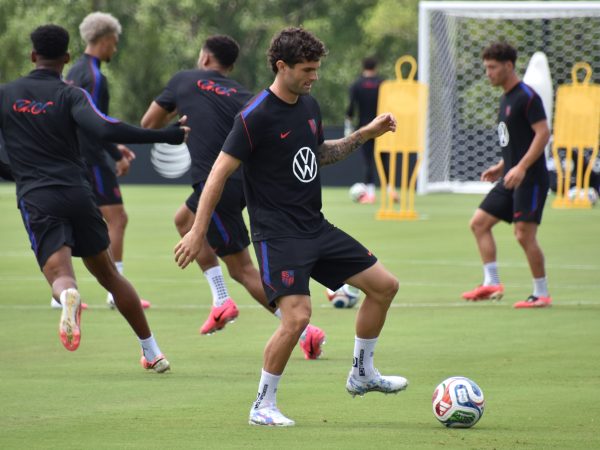
Christian Pulisic (right) has 33 goals and 20 assists in 85 games for the U.S. men’s soccer team.Jonathan Tannenwald
“I’m really proud to be from there, and that’s it,” Pulisic said. “It’s kind of sad that I don’t get to go back as much as I’d like to, with such a busy schedule during the year. But Pennsylvania, whenever my friends always talk about who they rep, Pennsylvania, that’s me. I rep Pennsylvania, central and eastern PA — it’s always a big part of my life.”
That includes being a 76ers fan, albeit casually these days; and it is, he admitted, “the only Philly team I really do support.” But that has rarely been a secret. His longtime allegiance to the NFL’s New York Jets, in particular, has been written about plenty.
(Pulisic has a small tie to the Union, too, having played for one of the club’s youth teams in a tournament in 2012. Asked if any photos exist somewhere, he said they probably do, but he doesn’t have them.)
On the field, he arrives at this World Cup in the company of teammates who are also longtime friends, especially Tyler Adams, Weston McKennie, Haji Wright, and Alejandro Zendejas.
“It just feels like this is exactly where I’m meant to be,” Pulisic said. “I’ve known some of these guys for so long, and so now to share the biggest stage with them, it’s incredible. We talked about it, we dreamed about this together.”
He described the moment as “everything we could have imagined and more, and we’re just thankful that this is what we get to do.”
Every week for the last five or six years, Scott Isdaner got another call: Are you ready to sell?
As managing partner of one of the last remaining larger independent public accounting firms in the Philadelphia region, Isdaner, 67, had watched many of his competitors — “our brethren” — get acquired by national companies, in many cases because they needed to do so to survive.
“We felt that we were in a position as a firm that if we chose to remain independent and continue down that path, that we would be able to succeed and do so,” said Isdaner, whose firm counts 70 employees, including 10 partners. “However, we’re also very mindful and realistic of what was going on in the marketplace in connection with our industry.”
The acquisition adds to a wave of deals in an industry that in recent years has seen a boom in investment from private equity and other sources of outside capital.
The companies did not disclose the financial terms of the deal, effective June 1. It came two years after Aprio received what it called a “strategic investment” from private equity firm Charles Bank Capital Partners.
And in January, South Jersey’s Bowman & Co. was acquired by a larger firm, PKF O’Connor Davies, which was backed by a Bahrain-based private equity group and a Canadian pension investment manager.
Mergers and acquisitions activity in accounting has been “unprecedented” the last few years, said Jen Cryder, CEO of the Pennsylvania Institute of Certified Public Accountants.
Private equity has invested at least $2 billion in public accounting since 2022, Bloomberg reported last year. Sovereign wealth funds and wealth management firms are also pouring in money.
Jen Cryder is chief executive officer of the Pennsylvania Institute of CPAs.Courtesy PICPA
Firms backed by outside capital accounted for two-thirds of the 129 CPA firm transactions last year, up from a 7% share just five years ago, according to Chicago-based Koltin Consulting Group, which specializes in mergers and acquisitions.
Not a lot of regional firms are left in the Philadelphia market, Cryder said. As talent shifts to national firms, that raises the question of how the middle market of closely held businesses, family firms, nonprofits, biotech, and others will continue to be served.
Clients have asked Isdaner whether they’ll still be able to call him and his team. “We’re staying put,” he said. “We’re still going to be here. … And we intend to continue to service our clients as we have, and maybe even better in the future.”
He added that employees will continue to have “career development opportunities.”
Aprio CEO Richard Kopelman said his company is “building something different in Philadelphia, a firm where every client has trusted advisers who anticipate the challenges ahead.”
Family business
Isdaner’s firm was founded in 1967 by his father and grandfather, who wanted to start a boutique firm serving small businesses. They called it Isdaner & Isdaner.
They worked with clients from the creation of businesses through sales or passage to future generations. Scott Isdaner was working as a tax attorney at a Philadelphia law firm in the 1980s when he got a call from his dad, Larry, who along with his partners had realized “they lacked a level of tax sophistication that they needed to help to continue to build and grow the practice.”
Scott agreed to join the firm. “My dad and I were best friends,” he said. “The opportunity to work with him was what motivated me ultimately to say I’ll make the leap.”
Scott became managing member in 2002. “The core mission of the firm is to serve closely held businesses and their owners, and along with that, we’ve built a significant tax practice in working with high net-worth families and individuals and family offices,” he said.
Industry challenges
In recent years technology has transformed the profession, as firms increasingly automate certain tax preparation and auditing services.
Isdaner and his partners lacked the resources to meet those technological demands, he said, especially amid the rise of artificial intelligence. Client needs also have expanded beyond the services Isdaner’s firm could provide, he said, and the firm faced challenges attracting young talent to build a future leadership pipeline.
“When you add up those three pegs on the stool,” Isdaner said, the firm “decided that we should be entertaining the path of becoming a part of a large organization.”
Why is private equity attracted to accounting?
As independent CPA firms see more and more reason to sell, outside investors have seized on the opportunity.
“Private equity investment in the accounting profession has evolved from an emerging trend to a rapidly scaling force reshaping the business of professional services,” trade publication Inside Public Accounting wrote in a 2025 report.
Cryder, of the Pennsylvania Institute of Certified Public Accountants, pointed to accounting firms’ strong recurring revenue.
“What I’ve heard [investors] say is, ‘They’re well run, they’ve got great teams, strong client relationships,’” she said.
Critics have questioned whether private equity investment will increase accountants’ focus on profits and diminish the quality of audits.
Cryder said accounting firms have “always had a profit motive,” adding that in her experience, new investors understand that a firm’s value is tied to its trust in the community.
Isdaner said Aprio wants “us to serve the same clients in this marketplace as we always have.”
“In terms of outside funds, Aprio is run by Aprio,” he said. “It was really not an issue that we’re personally concerned or worried about.”