For almost a decade, consumer and civil rights advocates have urged New Jersey lawmakers to bar companies from basing car insurance rates on socioeconomic factors they deem discriminatory and that have nothing to do with driving — things like credit history, marital status, education level, occupation, and zip code.
They renewed their plea Monday, when the Senate’s commerce committee called up a long-stalled bill for consideration — its third committee hearing since it was first introduced in 2018. The bill’s supporters expressed frustration with the legislative inaction, with Danielle Combs of the NAACP’s New Jersey state conference calling insurers’ practice “thinly veiled discrimination.”
“This proposed law is about more than car insurance rates. It’s about justice. It’s about dismantling systems that quietly but powerfully keep our communities at a disadvantage,” Combs said. “When a single mother in Newark, Trenton, or Camden has to pay double what someone in a wealthier suburb pays for the same coverage and the same driving record, that is not fair, that is not equal, and that is not acceptable.”
The latest hearing comes seven months after the NAACP, Latino Action Network, and the Latino Coalition of New Jersey sued the state to compel change. A judge agreed in April to stay the case until October so the state Department of Banking and Insurance can review the issues. It also comes as car insurance premiums in New Jersey have soared since the pandemic, a trend critics say has fueled a spike in uninsured motorists amid broader affordability concerns.
But while the Senate panel’s chair, Sen. Joseph Lagana (D-Bergen), conceded that using socioeconomic factors to set insurance rates could have “a discriminatory impact,” the committee did not act on the bill.
Four insurance industry insiders testified against the bill, and several other business groups also registered their opposition. Lagana pointed to their objections as evidence the legislation needs more work before seeing a vote.
“We have to figure out how to balance the two and what should be the policy, to make sure that people are not disproportionately impacted by something that may be a legitimate rating tool,” Lagana said. “And that’s a very fine needle to thread.”
Industry lobbyists insisted socioeconomic factors predict risk, are not discriminatory, and are an “actuarially justifiable” variable upon which they can set premiums predictive of loss.
“The bill before you today does not ban discrimination. New Jersey law already does that. The bill before you today bans accuracy,” said George McNab of the National Association of Mutual Insurance Companies.
Gary La Spisa of the Insurance Council of New Jersey defended the industry’s use of socioeconomic factors in setting rates, saying they’re overseen by the Department of Banking and Insurance and every premium increase must be justified to get approval.
Barring any consideration of socioeconomic factors would force insurers to assume that drivers with different levels of risk represent the same risk, McNab added.
“The inevitable result is a one-size-fits-all pricing that is neither scientifically sound nor fair to New Jersey consumers,” he said. “Riskier drivers would become harder to identify and would pay less than they should, while many responsible drivers will be asked to subsidize those higher risks.”
But Javier Robles, president of Latino Action Network, pushed back on that argument. He reminded the panel that about a quarter of New Jersey’s labor force is Latino, and half of those workers hold blue-collar jobs.
“When New Jersey allows insurance to charge higher rates based on education or job title, it punishes the very people who make New Jersey work. A home health aide shouldn’t pay more than a health care executive with the same driving record. That’s not risk-based pricing. That’s bias, plain and simple,” Robles said.
Basing rates on socioeconomic factors has unintended consequences, Consumer Reports’ Chuck Bell noted, saying Garden State drivers with poor credit face higher surcharges than people convicted of drunk driving.
“Somebody who does one of the most dangerous things you can do on the road is charged less than somebody with poor credit,” Bell told the panel. “People who live in lower-income neighborhoods are getting multiple gut punches because of the use of these factors, education, occupation, and credit history, and it’s really time to take action.”
That’s especially true because a person’s credit score could dip because of things outside their control, such as a layoff or medical emergency, added John Harmon of the African American Chamber of Commerce of New Jersey.
The bill’s supporters noted that other states including New York have banned socioeconomic factors in premium determinations and yet “the auto insurers continue to do business,” as Beverly Brown Ruggia of New Jersey Citizen Action put it.
Lagana assured supporters and critics alike that bill sponsor Sen. Teresa Ruiz (D-Essex) would use their testimony to tweak the bill. Ruiz did not respond to a request for comment.
The bill passed the full Senate in 2019 and 2021 but didn’t advance at all in the last two legislative sessions and has never moved in the Assembly.
The World Cup officially lands in Philly on June 14, when the Ivory Coast takes on Ecuador at the temporarily-renamed Philadelphia Stadium (aka Lincoln Financial Field) in South Philly, with five more games to follow.
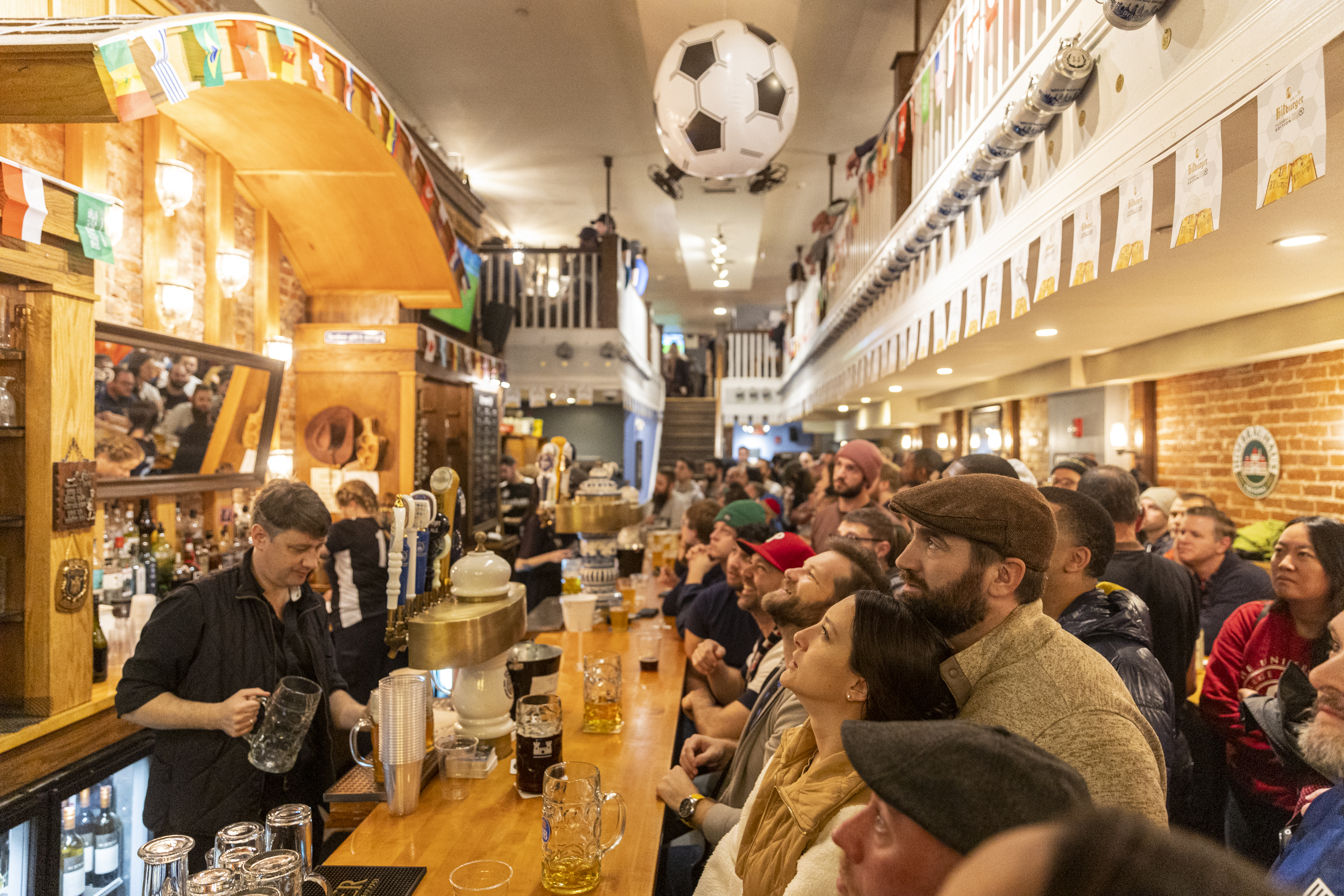
But let’s be real: Getting into a match is going to be difficult. And besides, nothing screams Philly more than taking in a game at a local bar alongside strangers and Citywides that will give you the courage to cheer even louder.
Here are 19 bars in Philly and the suburbs that are going all-in on the World Cup, including four planning to be open until 4 a.m. for late-night matches.
🍺 Bars allowed to stay open until 4 a.m.
Earlier this year, Gov. Josh Shapiro signed a bill into law permitting Philly bars to stay open until 4 a.m. for the duration of the World Cup. Just over 50 bars in the city thus far are eligible to apply for a permit to stay open that late, according to a list from the City of Philadelphia, and several told The Inquirer that extending their hours just wasn’t worth it.
On the eve of the World Cup, several bars were still waiting to get permit approval to stay open late.
These are four spots that plan to be open until 4 a.m. in Philly, from a bowling alley to a Latin American club-staurant.
The bar at Cavanaugh’s Rittenhouse, 1941 Sansom St., on Aug. 31, 2022.MICHAEL KLEIN / Staff
While Cavanaugh’s Headhouse location has a rep among Newcastle United and Liverpool fans as a solid bar for soccer matches, the sports bar’s Rittenhouse location is the one that will be open until 4 a.m. during the World Cup. Cav’s will be serving daily drinks and food specials, and is one of more than 20 bars participating in the Crawl for the Cup, a citywide World Cup-themed bar crawl, including a scavenger hunt, on June 20.
The World Cup is practically a 24 / 7 event at Mamajuana. The Latin American Northern Liberties club-staurant will be staying open until 4 a.m. on match days while also hosting Sunday brunches and watch parties for 10 games from June 13 through July 19. The club’s World Cup special promises mascot appearances, daily food specials, and limited-edition cocktails, such as the Golden Cup, an old-fashioned served in a gold globe-shaped goblet. A full schedule can be found on Mamajuana’s Instagram.
This lively Hunting Park institution will be open until 4 a.m. during the World Cup to broadcast games in its downstairs bar and upstairs night club. Tierra Colombiana’s menu spans Latin America, which means you can have arepas while Colombia plays, ceviche during Ecuador’s matches, and extra large mojitos all tournament long.
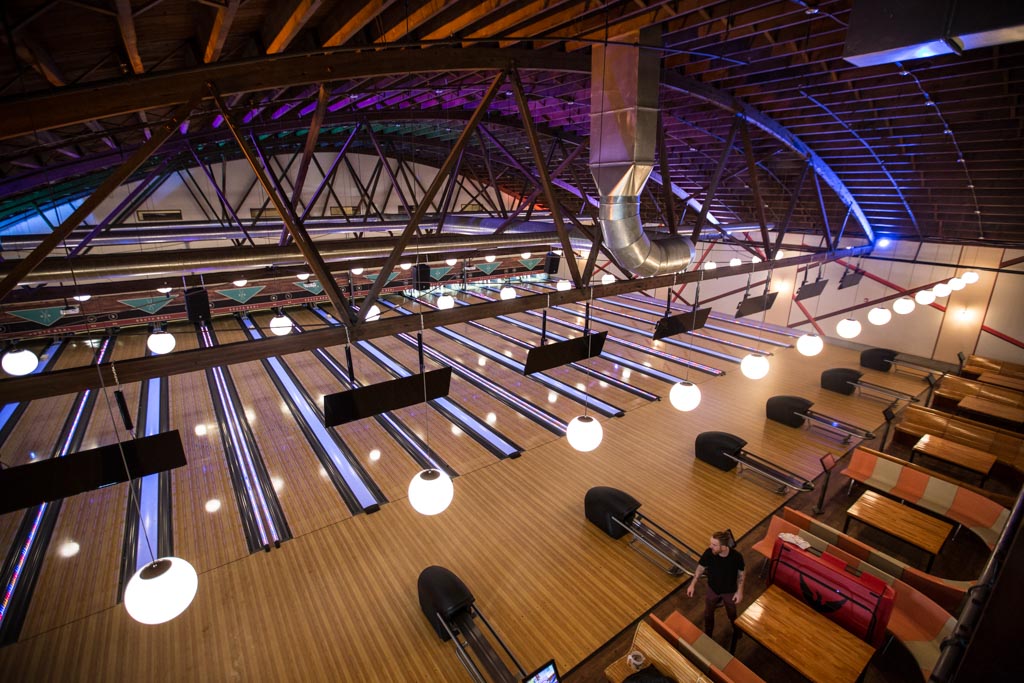
Soccer at a bowling alley? That’s literally the vibe at Oregon Avenue’s South Bowl, a bowling alley and bar (with an outdoor lounge) that is staying open until 4 a.m. to broadcast the following matches: Australia vs. Turkey on June 14, Austria vs. Jordan on June 17, and Tunisia vs. Japan on June 21. Games will play on the screens above each lane, which means there’s the potential to land a strike while watching pro athletes score goals.
If the 4 a.m. crowd isn’t your speed, these 10 Philly bars are hosting World Cup watch parties that don’t skimp on the fun — even if they aren’t going all night long.
Scenes from the opening night of Bok Bar — initially called Le Bok Fin — in 2015.Michelle Gustafson
The Black Taxi
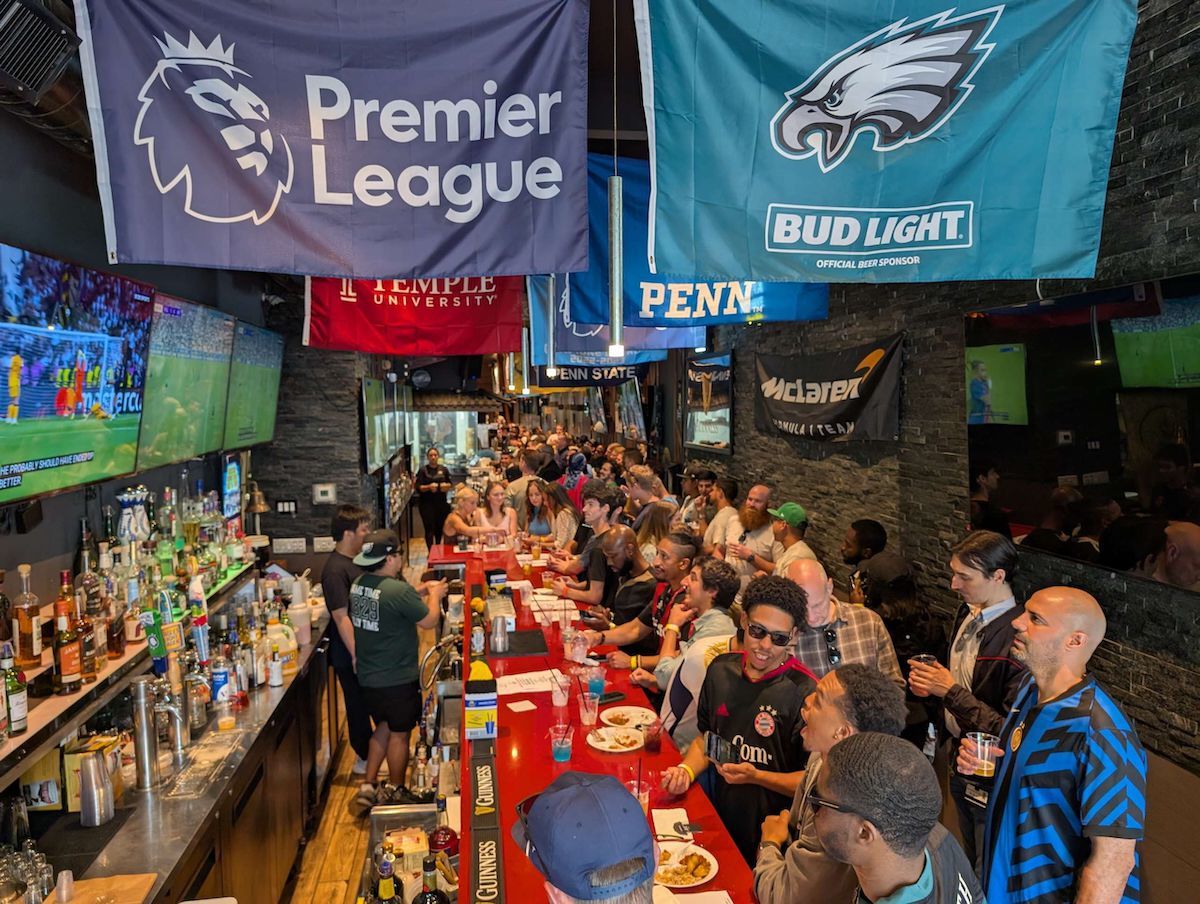
This Irish pub in Fairmount has long been a host for English Premier League matches, at one point even displaying the trophy for an afternoon of photo ops. Roughly a half-mile from the FIFA Fan Fest at Lemon Hill, this is the spot to take in a game with a perfect pour of Guinness.
📍 745-747 N. 25th St., 📞 215-232-1086, 🌐 theblacktaxi.com
All of Philly’s tournament matches will be simulcast on screen’s atop Philly’s most famous rooftop bar, which is hosting Puyero Venezulean Flavor for a monthlong food pop-up in June that includes arepas, empanadas, and bite-sized churros. Where else can you see the lights from the Linc — I mean, Philadelphia Stadium — twinkle in distance during a knockout game on July 4?
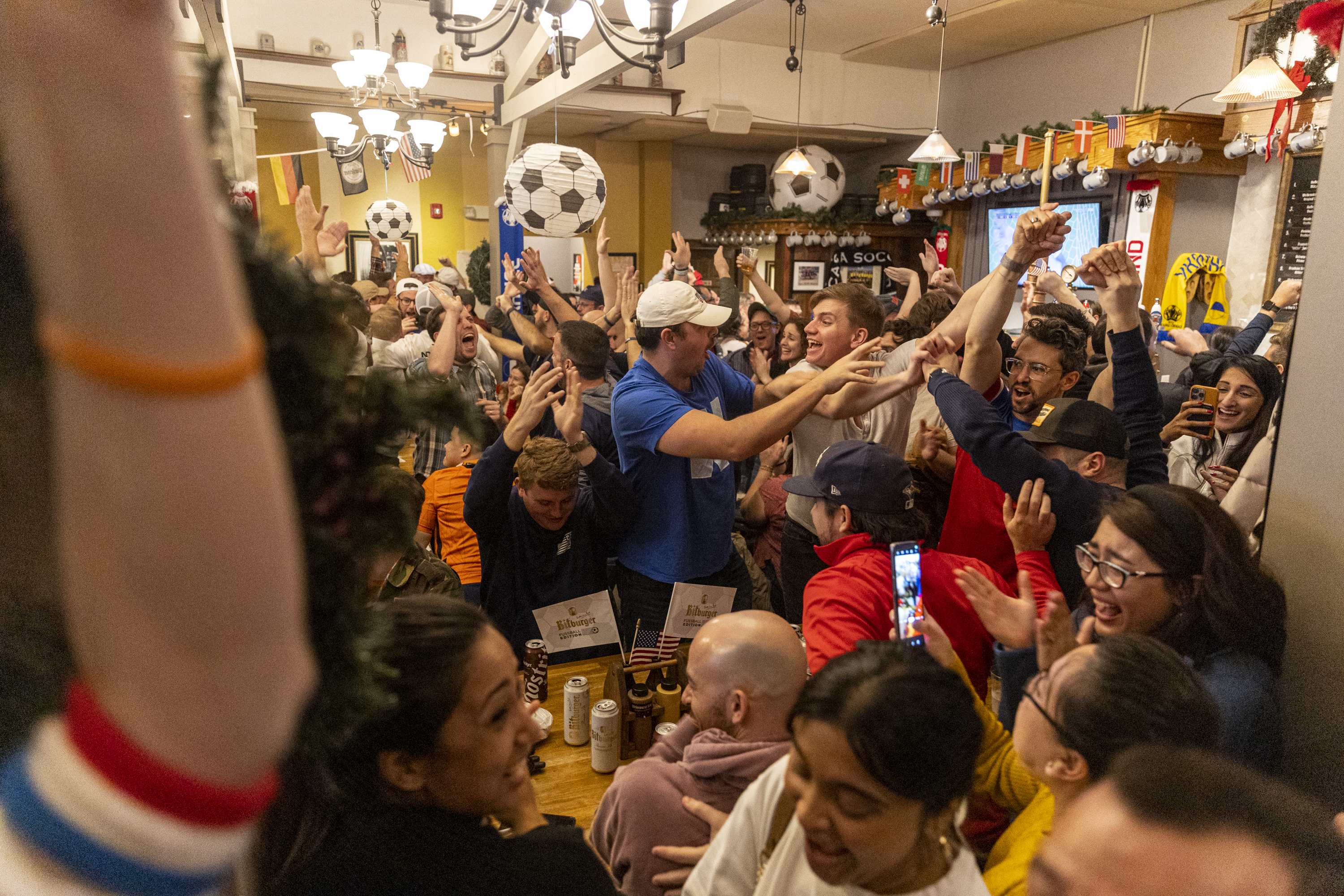
The crowd at Brauhaus Schmitz in Philadelphia cheers USA’s first goal against the Netherlands in the World Cup on Dec. 3, 2022.Tyger Williams / Staff Photographer
Bella Vista’s sprawling German biergarten is taking the party to the streets, closing down the block for free outdoor watch parties for matches on June 25, June 27, July 3, July 4, and July 19. Games will be broadcast on 20-foot-tall TVs in the middle of South Street, while indoors will feature 34 beers on tap, surprise giveaways, and burgers with novelty soccer ball pretzel buns. And on non-block party days, Brauhaus Schmitz will be still be airing World Cup matches indoors.
This Brazilian sports bar in Northeast Philly is the place to be for fans of team Brazil and is hosting not one, but two lively watch parties during the team’s match against Morocco on June 13 and Haiti on June 19. And if you’re only there for the vibes, Guanabara has a rooftop, three types of caipirinhas, and Brazilian-style cheesesteaks.
Known for its supremely satisfying smashburger, this neighborhood bar with a French twist has big plans for the Group Stage. Good King Tavern will open daily starting at 3 p.m. with an extended happy hour that features mini cocktails and street food-style snacks. Its upstairs wine bar, Le Caveau, will also be getting in on the action, which means you can sip a draft negroni and nosh on a fancy hot dog while watching your team of choice.
A bar where you can play 18-holes of mini golf between matches? Sign us up. Libertee Grounds will be gamifying its World Cup watch parties with the Pitch Passport, a punch card that rewards guest for watching every game at the bar-slash-indoor-mini-golf-course. How it works: Earn a punch for each nation when you a watch a match, which are redeemable for rewards such as a free beer, mini golf passes, or a lifetime membership. Drink specials will also be available.
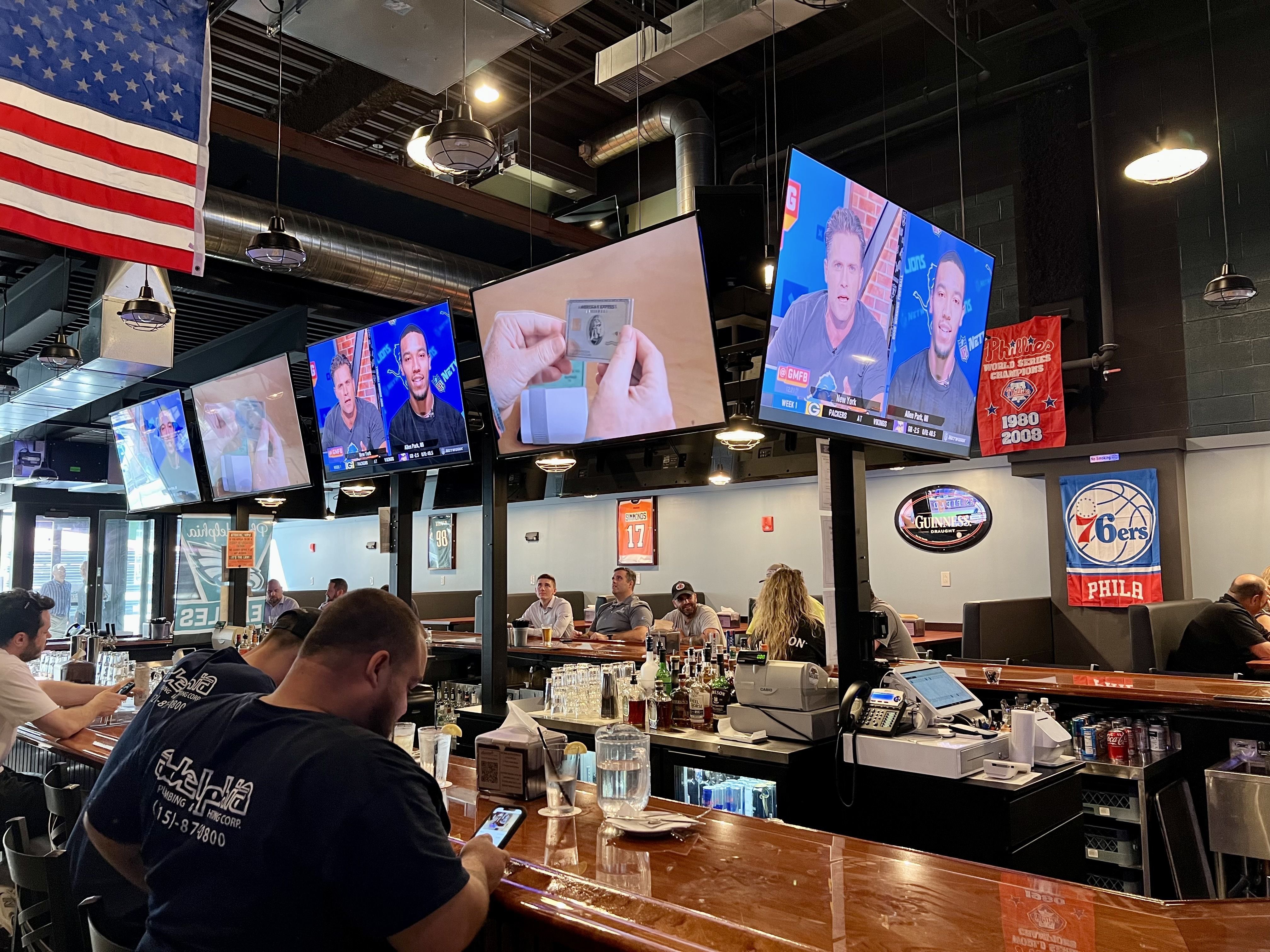
This Chinatown sports bar is committed to soccer year-round, airing everything from Premier League matches to La Liga games on its 35 TVs. Expect the World Cup to be no different. Lion Sports Bar will be airing all matches at its original location and taking over Yamitsuki Ramen across the street for a ticketed open bar and buffet. Also available at both locations: a signature World Cup pink margarita garnished with collectible Lionel Messi stickers.
This longstanding Irish Pub in Center City is the official home of Philly’s Chelsea FC and Manchester City FC clubs, so you can expect that it will be a hub for World Cup games. The bar will air all 104 matches (with the sound on!) across 14 TVs and two projectors. Weeks one and two of the tournament are bringing specials on Michelob Ultra and Stella Artois, plus a ticket giveaway on June 13 for a future match.
The real fun at this rowdy, double-decker sports bar comes during the USMNT’s matches against Paraguay on June 12, Australia on June 19, and Turkey on June 25. The American Outlaws — the official support group for Team USA — will be taking over Top Tomato during those games for block parties with a live DJ that are open to all, no RSVP required.
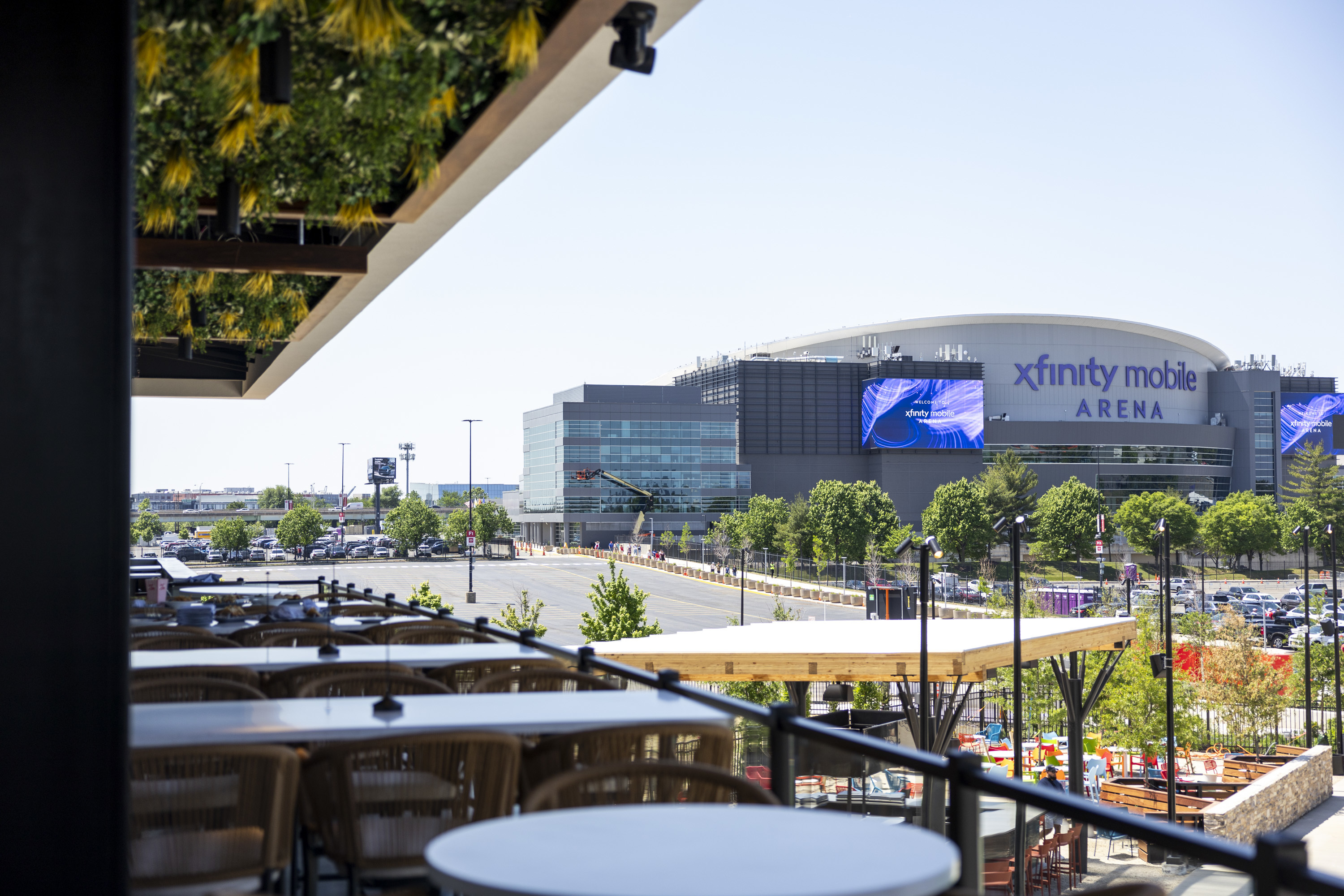
The newly renovated (and re-christened) Stateside Live! now includes a rooftop bar and beer garden. Just steps away from the action at Philadelphia Stadium, what will it offer soccer fans? The entertainment complex is hosting the official World Cup pregame for ticketholders. A match ticket and $50 will get you expedited entry and access to a tailgate with a food voucher, while $175 buys a spot at a prematch buffet with cheesesteaks, roast pork sandwiches, and open bar.
Stateside Live! will also be open to the general public during all six of Philly’s World Cup games. Matches will be simulcast on the venue’s new outdoor stage alongside a selection of food trucks.
But if you’re looking to keep it extra local during the World Cup, these bars in the Philly suburbs are going above and beyond for the World Cup, from erecting a pop-up beer garden to brewing a special IPA.
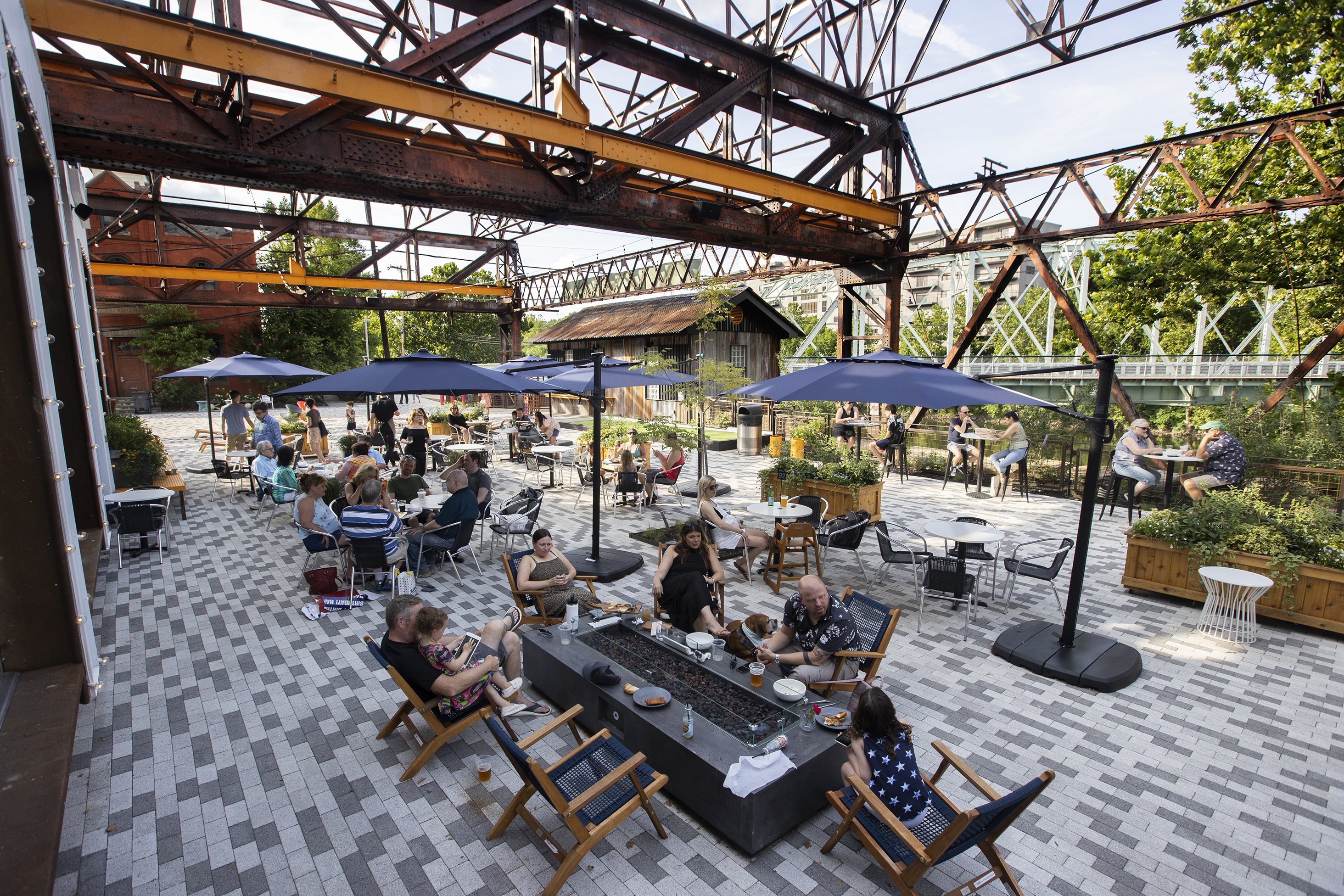
The Landing Kitchen, an all-day cafe created by Nicholas Elmi and Fia Berisha at the riverside redevelopment of the Pencoyd Ironworks on July 10, 2021.CHARLES FOX / Staff Photographer
Located in Bala Cynwyd, just across the Pencoyd Bridge from Manayunk, this all-day riverside cafe with a family friendly vibe will be broadcasting all quarterfinal, semifinal, and finals matches outdoors on a 164-inch screen. Chef Nicholas Elmi will be firing up a smoker for barbecue specials during the games, and guests are strongly encouraged to play bocce or relax at a fire pit during halftime.
Named one of the 10 best bars for watching soccer in the U.S. by the Men in Blazers, Bucks County’s Villa Capri is one of the only bars in the Philadelphia suburbs that has committed to airing all 104 World Cup matches — with the sound on. The Doylestown bar is also rolling a limited-edition cocktail menu for the tournament that includes drinks such as the $14 Equalizer margarita, which comes in passionfruit, pineapple, strawberry, or pomegranate.
This haunt for West Chester University students already has a reputation in Chester County as a Liverpool bar that airs Philadelphia Union games. During the World Cup, Kildare’s is going all in on USMNT. The bar will be shutting down a portion of Gay Street for a free, 21+ watch party during Team USA’s matchup against Paraguay on June 12. Kildare’s will also be showing a selection of other games starting at noon daily, with to-be-announced drink and food specials on offer.
Malvern’s Locust Lane Craft Brewery is hosting a pop-up World Cup beer garden in Upper Merion’s Nor-View Farm Park with free entry from June 11 through July 19. Games will be broadcast on TVs under the park’s pavilion, where attendees can bring their own chairs and enjoy a selection of $8 beers on tap, plus food from the Epicurian Garage Truck. The beer garden will open one hour before the first broadcast game and close before midnight; schedule can be found here.
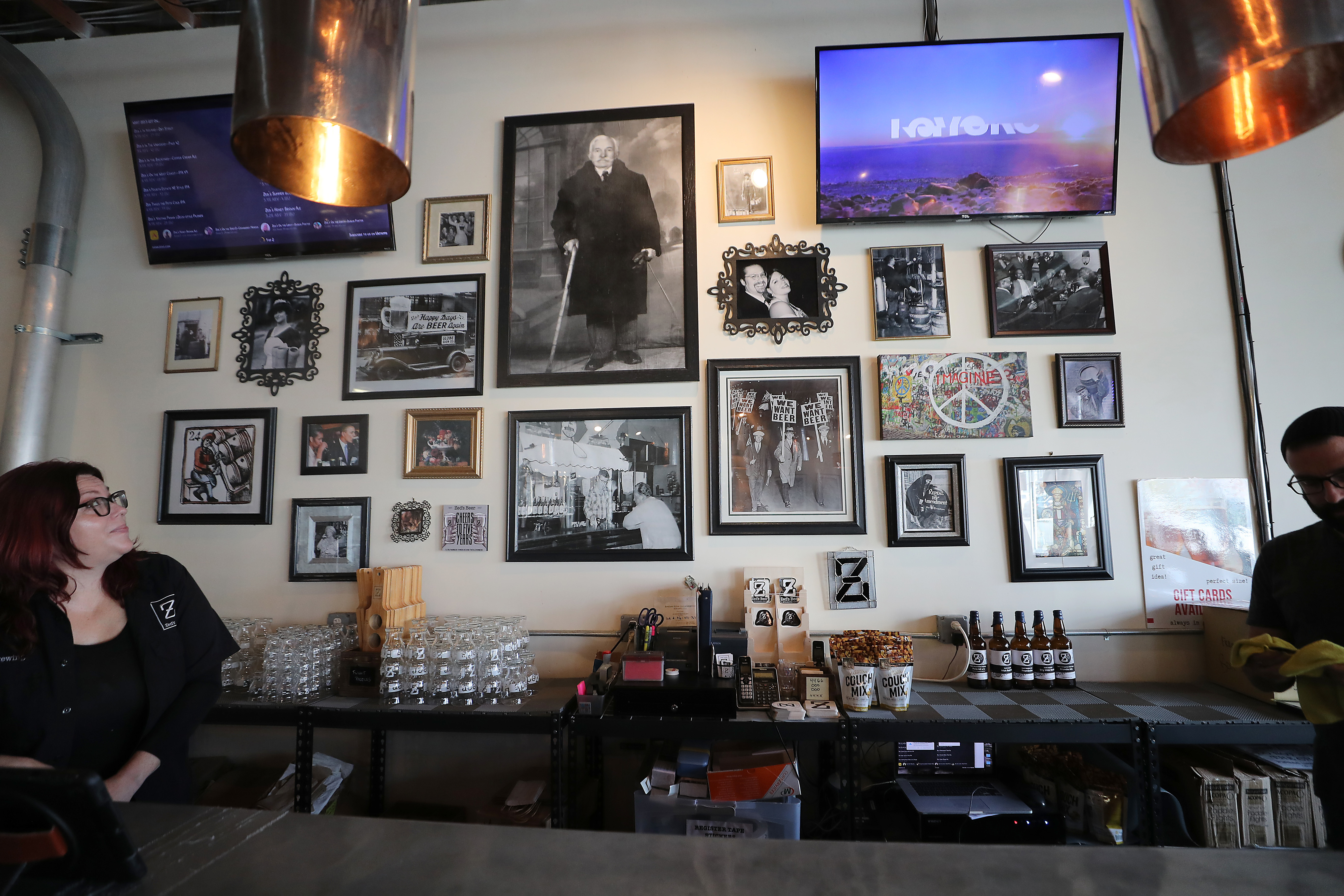
A former New Jersey Brewery of the Year, Zed’s Beer takes the World Cup as seriously as it takes its brews. The Marlton bar will be airing all Team USA matches, alongside several other key games as designated on the bar’s digital calendar. Also on offer: Soccer-themed quizzo and a new limited-edition IPA called the “48 hops for 48 teams.” Made with hops from each country with a qualifying FIFA team, this beer will be available for the duration of the tournament.
📍19 N. Maple Ave., Ste. A, Marlton, N.J. 📞 856-872-7632, 🌐 drinkzeds.com
This should be a moment for sports fans to be insanely happy. The finals are underway in both the NHL and NBA, and the matchups and the games so far have never been more compelling. Soccer’s World Cup — always the greatest show on earth — starts Thursday (see below). Yet, something seems off. If you wanted to attend Monday night’s Knicks-Spurs Game 3 at Madison Square Garden, it would have cost about $4,500 — not courtside, but in the last row. Equally insane and opaque ticket pricing has ruined the World Cup for many fans. Sports are supposed to be an escape from life’s problems, not a PowerPoint demonstration of them.
Orange-clad Ivorians bring soccer joy to a World Cup tune-up in Chester
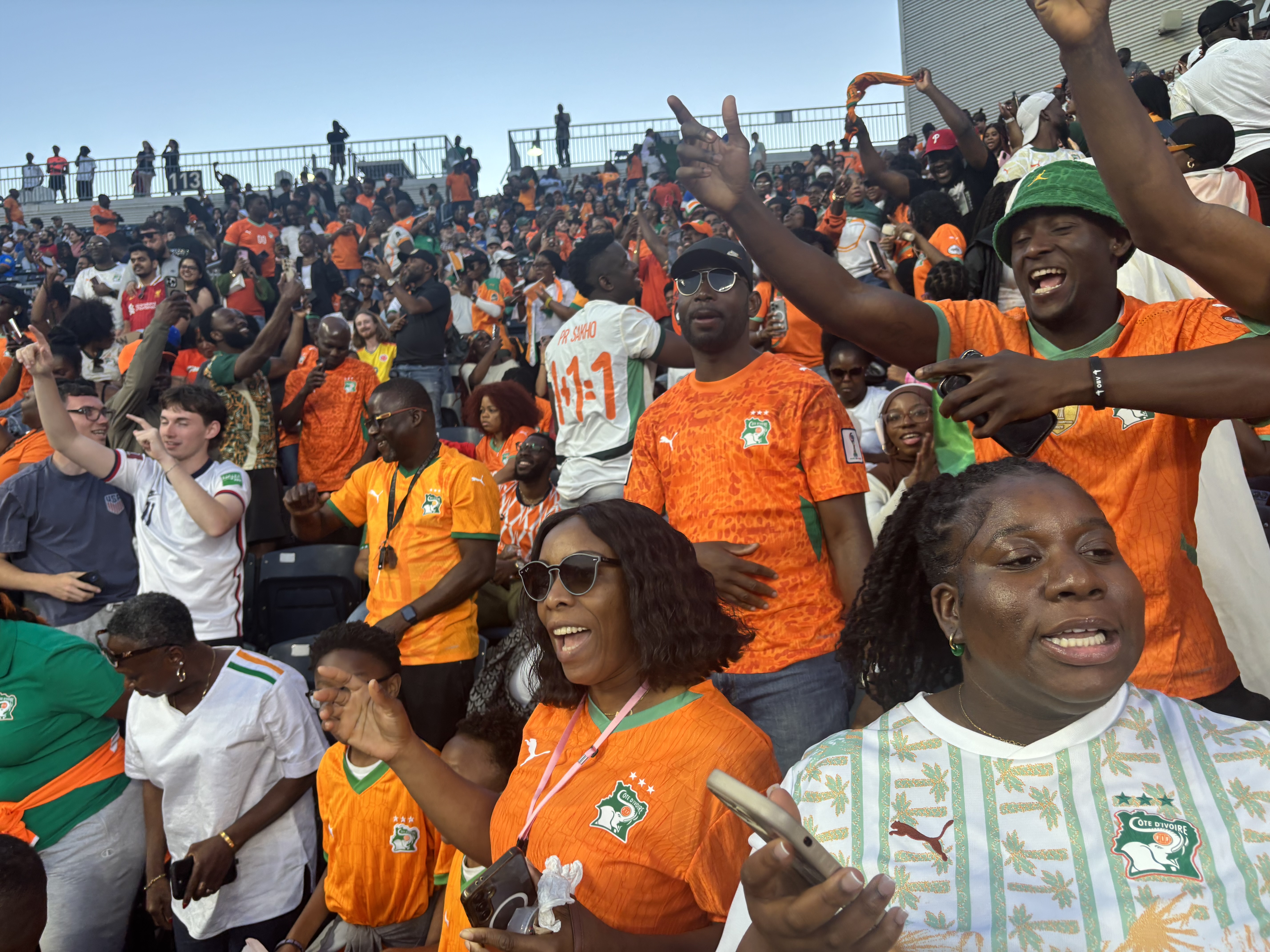
Fans of the Côte d’Ivoire national soccer team erupt in cheers during their team’s 2-0 friendly match win over the Philadelphia Union II squad at Subaru Park in Chester on June 8, ahead of the 2026 World Cup.Will Bunch
The cosmic vibes were not great Monday night. On the car radio, the news brought a new cycle of bombs dropping across the Middle East, and yet another onscreen meltdown from an American president who is stumbling toward his 80th birthday in confused anger. Reports from the eve of the much-anticipated return of soccer’s World Cup to North America were less about the game and more about U.S. immigration outrages, including a Somali referee turned away at the airport.
Then at about 6:59 p.m., I walked through a long tunnel in suburban Chester and into an undulating orange sea of pure joy.
On the green soccer pitch of Subaru Park, the national team from Côte d’Ivoire lined up in rapt attention as “L’Abidjanaise,” the national anthem of the West African nation, blared from a loudspeaker. But in the stands, fans wearing their native country’s iconic orange jerseys could not sit still, laughing and waving their cell phones, confirming with videos that their heroes were actually here, on U.S. soil.
For a you-can’t-beat-it ticket price of zero dollars, in a year of maximum sports greed, members of an African diaspora scattered along the Eastern Seaboard had driven up or down I-95 for hours to watch Côte d’Ivoire — also known by the anglicized Ivory Coast — easily win its World Cup tune-up match against the young American prospects of the Philadelphia Union II, 2-0.
Fatim Toure, 27, in her Côte d’Ivoire jersey, and her 26-year-old sister, Ferima, wearing her headwrap like many female fans at the stadium, had driven down from North Jersey to see the match, and were now beaming as they watched the kickoff from the tunnel as the sun set on a crisp, perfect June evening.
Fatim said the sisters “were filled with nationalism and pride, so we’re excited to see how it goes.”
The cheerfulness of the Côte d’Ivoire faithful who turned the 18,500-seat stadium bright orange — drowning out scattered dots of Philadelphians in the Union blue of the regular home squad — was infectious. It was truly what the world needs now.
Soccer fans like me have been waiting since 1994 with patience, then anticipation, and finally something bordering on dread for the World Cup — Planet Earth’s ultimate sporting event — to finally return to U.S. grass. With the opener in Mexico City (75% of the matches are in the United States, with the rest in Canada and Mexico) slated for Thursday, news about the World Cup and soccer’s corrupt, authoritarian-loving governing body, FIFA, has been dominated by grim headlines.
Indeed, the political rise of Trump — the stuff of cartoon satire not long after the first World Cup matches were played here 32 years ago — and his hostile border regime have sparked the greatest angst, and on the eve of the kickoff, these fears are coming true.
Top soccer referee Omar Artan from the African nation of Somalia was turned away at Miami International Airport on Saturday, denied the pinnacle of his profession by U.S. Customs and Border Protection agents for reasons still unknown. The star striker for the Swiss national squad was also initially denied entry (since reversed), while a star player from Iraq was interrogated for hours.
Players from Iran — the nation Trump decided to bomb back in late February and is still engaged in a murky war — are going ahead with matches in Los Angeles and Seattle, but U.S. officials are forcing them to immediately return to their base camp over the Mexican border in Tijuana and not stay here overnight.
Côte d’Ivoire, an ethnic melting pot of 32 million people on Africa’s Atlantic coast where French is the official language, hasn’t been immune to the xenophobic U.S. turn on immigration. The nation is one of several under a restrictive travel ban by the Trump regime, and efforts to allow visas for some soccer fans have been plagued by confusion, including a $15,000 bond that was announced, then canceled.
While Monday’s free friendly match was a gleeful coming-out party for a diaspora that’s rooted in East Coast urban neighborhoods such as Southwest Philadelphia, most acknowledged that fans back in their native Côte d’Ivoire, where soccer is the national obsession, could never afford the cost of coming here — or the risk.
“The ICE situation has killed the entire momentum of the World Cup,” a Liberian-born woman from Southwest Philly, who said she came out to support her African neighbors, told me. “America could have used this to boost the economy and generate income, but because of the whole ICE situation, a lot of people are afraid to come.”
No World Cup squad will be more deeply tied to Philadelphia than Côte d’Ivoire, which plays two of its three matches at the temporarily unbranded Lincoln Financial Field, starting against Ecuador on Sunday night. The team is training in Chester at the Union’s facilities and staying in Delaware. But with the cheapest tickets on StubHub for that Ecuador showdown starting at $836, few whom I spoke with will be attending the matches that actually count for Côte d’Ivoire’s long-shot dream of becoming the first African nation to win the World Cup.
“I wish, but I couldn’t get any tickets, unfortunately — it was too expensive,” Audrey Yao, a 32-year-old Ivorian American researcher from the University of North Carolina who was visiting Philly from Chapel Hill, told me. “So the opportunity to see the team today — that’s why I’m here.“
For many Ivorians, Monday’s free friendly was essentially their World Cup, and they partied accordingly — swaying and gyrating to piped-in African Zouglou music between breaks, and celebrating wildly as keeper Alban Lafont stopped a penalty kick for Les Éléphants against rising young Union star Cavan Sullivan.
As a die-hard — emphasis on the word die — Union supporter for their 16-year tortured history, I’ve seen some great matches in Chester, but I’ve never had so much fun.
Monday night wasn’t just how the World Cup should have, could have been. It was very much the way America is supposed to be — with people who were proud and happy to be here, with one foot still planted in their bright-orange African heritage as they lived and breathed that Philadelphia freedom, with no masked goon squads there to hassle them.
By the setting-sunlit banks of the Delaware River, there was no U.S. Immigration and Customs Enforcement, no need to raid the ATM, no bad news from outside the stadium walls. Just 90 minutes of the Beautiful Game.
Yo, do this!
Don’t expect a lot of high-class book or film reviews this month, as my waking nonwork hours are devoted to watching the World Cup. Three games to circle this week are Thursday afternoon’s opening match in Mexico City between Mexico and South Africa (3 p.m., Fox); the first U.S. match against Paraguay in Los Angeles Friday night (9 p.m., Fox); and Philadelphia’s first contest between Côte d’Ivoire and Ecuador Sunday night at 7 p.m. on FS1, or in person at “Philadelphia Stadium” if you can spare the cash.
What if the biggest story of our time isn’t Trump’s outbursts, or even the World Cup — but the growing inability of our young people to sit down and read a book from cover to cover? The latest installment in this genre comes from university professor Tyler Jagt in a searing essay for the Chronicle of Higher Education: “My Students Can’t Read.” Is the culprit the smartphone and now AI, or the lost COVID-19 years, or the teach-to-the-test dictates of the Common Core curriculum? There’s a strong case for “All of the Above.”
Ask me anything
Question: You recently wrote about data centers. Have there been any groups who have successfully gotten data center plans aborted? What do you think are the most effective ways for communities to fight back? — @silvermoonfafo.bsky.social via Bluesky
Answer: There are already signs that the backlash against these massive, noisy, energy-and-water-sucking data centers powering the artificial intelligence revolution is becoming one of the most successful grassroots movements in American history. I wrote this spring about how everyday folks in rural Montour County, Pa., successfully blocked an Amazon-backed site that started with a lot of support from elected officials. How’d they do it? I wish there was some big secret, but basically it was: showing up. They organized petitions and got big crowds to speak at county commission and zoning board meetings, and the politicians had little choice but to listen. They have money, but we have people. Never forget that.
What you’re saying about …
Well, you won’t know it from today’s soccer-heavy newsletter, but not all readers share my deep passion for the Beautiful Game. Most questions that aren’t some variation on how much do you hate Donald Trump, or John Fetterman, or the media get low responses, but my World Cup question about a favorite team besides the U.S. set a record for reader nonparticipation. Andrew Ross is rooting for Portugal because he moved there from Philly three years ago (and we are all jealous). Weekly correspondent Mary Ann Petro isn’t rooting for anyone and hopes the Yanks “go down in flames.” I’m rooting for the U.S. and Côte d’Ivoire, but you knew this.
📮 This week’s question: Few things are more outrageous these days than Donald Trump’s expensive desecration of Washington, starting with that $1 billion-or-whatever proposed ballroom at the White House. So what happens to the ballroom when the good guys retake power? Tear the whole thing down, or blow it up on national television? Or repurpose it as a community health center or midnight basketball court, or something else? Please email me your answer, and please put “Ballroom future” in the subject line.
Backstory on how an LA mayor’s race could blow up America
Everything about the doomed bid of a B-list reality-TV star, Spencer Pratt, to become a Republican mayor in the ultra-liberal enclave of Los Angeles has been utterly predictable. That includes his campaign that was big on the kind of social media stunts that an entertainment-oriented LA media loved, and short on substantive ideas for a city with big problems that are both chronic (its incurable homelessness) and acute (violent immigration raids, the 2025 wildfires). It also includes the fact that Pratt wasn’t likely to get more than the roughly 27% his highest-profile fan, Donald Trump, received in 2024 from America’s second-largest city.
And now the least surprising thing of all: The right-wing conspiracy theories that Pratt’s apparent defeat by two Democratic women of color — incumbent Mayor Karen Bass and progressive upstart Nithya Raman — is their long-sought proof of massive voter fraud, after Pratt had started the lengthy vote counting in second place.
It’s not just the usual loudmouths on X. Trump is taking the lead role, again, in spreading election lies, telling Kristen Welker of NBC’s Meet the Press in their now-notorious Wisconsin interview that the California voting was rife with fraud, and, when asked for any proof, blurted angrily: “No, they’re crooked … Just like you’re crooked.” When House Speaker Mike Johnson was asked about these lies on Capitol Hill, he only amplified them, stating that “everybody knows instinctively that something is wrong.” No proof, just “instincts.” Trump’s handpicked and apparently incompetent top prosecutor for Southern California is now threatening an investigation.
Here’s the thing. California’s elections are among the most democratic and inclusive in America. There is extensive opportunity for the convenience of mail-in voting, and voters are allowed to send these ballots right up until Election Day. Local officials then have up to 30 days to meticulously count all the votes. That means a) it takes longer to declare a winner in California than anywhere else, and b) it unexpectedly turns out there are significant differences between who votes by mail instead of in-person, and the shape of the race can change dramatically from election night to the end of the lengthy counting. To today’s GOP, any fair and measured vote-counting must be a conspiracy.
Why does it matter? Pratt loses and — according to some reports — moves out of LA. End of story, right? Not exactly. We don’t know yet what ridiculous claims California’s train wreck federal prosecutor will make about supposed election fraud, but it’s almost guaranteed that the Trump regime is looking to make California the bogus argument for extreme measures to influence the general election in November.
Sending in troops? Seizing election machines? Invalidating results? It will all be on the table for Team MAGA in November, and the fact that the former bad boy from MTV’s The Hills couldn’t get elected mayor of one of the nation’s most diverse and liberal cities will be cited as a reason. Spencer Pratt has landed a starring role in the worst reality show ever.
What I wrote on this date in 2023
Even though it was only three short years ago, memories of this week in early June back in 2023 are a little foggy — because the skies here in Philadelphia and around the Eastern Seaboard were filled with suffocating, thick smoky haze from wildfires up in Canada. Before digging up my column, I’d forgotten that a Phillies game at Citizens Bank Park was canceled because of the horrendous air quality. I wrote: “In a perfect world, [President Joe] Biden would have donned an N-95 mask Wednesday and spoken in front of the orange blur of the Statue of Liberty to declare unconditional war on fossil fuels.”
I’ve never had so many column ideas swirling around in my head as this chaotic start to the summer of 2026. Last week’s Sunday column looked at the openly fascist coming-out party for the former U.S. chief immigration raider Greg Bovino, who attended a European white supremacist conference. I said it matters a lot that he is now screaming the not-that-quiet part about U.S. xenophobia out loud. I shifted gears over the weekend and wrote about the growing panic of U.S. elites over grassroots opposition to data centers, which has sparked bizarre accusations of Chinese influence, as well as spying on activists by some police agencies. The 1 Percent can’t admit it’s really the noise pollution and higher electric bills.
Wrapping up this week’s theme in a bow, I have to say I’ve been blown away both by the quality and the quantity of The Inquirer’s coverage of the World Cup, which has truly matched, if not surpassed, some of the national outlets. Lead writer Jonathan Tannenwald, with a well-deserved reputation as one of the nation’s top soccer journalists, has been following the U.S. team in its Georgia training and at its warmup matches, profiling key American players like its star Christian Pulisic, and filing other human interest stories like a Penn soccer standout who’ll be taking the pitch for Haiti. Other Inquirer writers have contributed with in-depth features about everything from the role the late Tug McGraw’s widow played in bringing soccer to Philadelphia, to the storied history of the cinder (ouch!) pitch in Fishtown that brought Philly “attytood” to the sport’s slow rise here. That’s not to mention the comprehensive guide we published earlier this year. You won’t be able to read all this without a subscription, so now is the time to finally sign up. And let the games begin.
By submitting your written, visual, and/or audio contributions, you agree to The Inquirer’s Terms of Use, including the grant of rights in Section 10.
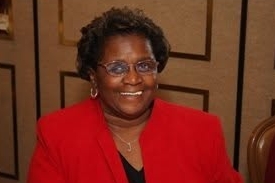
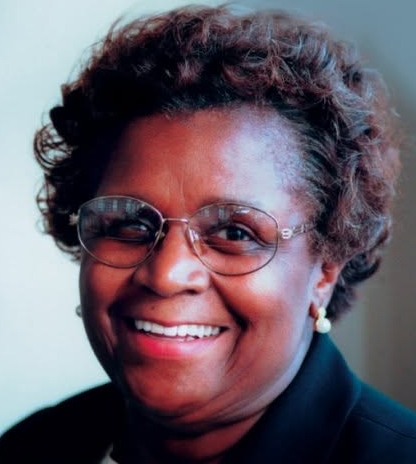
Jackie Love, 83, of Deptford Township, longtime social justice activist, Black political pioneer, former council member and the second Black female deputy mayor of Deptford Township, former director of what is now the New Jersey Division of Disability Services, New Jersey Elected Officials Hall of Famer, mentor, and volunteer, died Friday, May 29, of age-associated decline at Shady Lane Nursing Home in Clarksboro, Gloucester County.
Born in Philadelphia, Mrs. Love moved to Deptford Township when she was 13. She was reared by her grandmother, earned an associate’s degree in business administration at Camden County College in 1972, and served in government leadership roles for Deptford Township, Gloucester County, and New Jersey for four decades until her retirement in 2009.
“Her caring spirit and willingness to help her community is a true example of a servant leader,” a former colleague said on Facebook.
Mrs. Love was hired by Gloucester County officials in the 1970s to coordinate employment training programs and later to prevent and eliminate disability discrimination. She was the first director of the old Gloucester County Office for the Disabled in the 1980s and later was director of the Gloucester County Disabled Persons Advisory Commission.
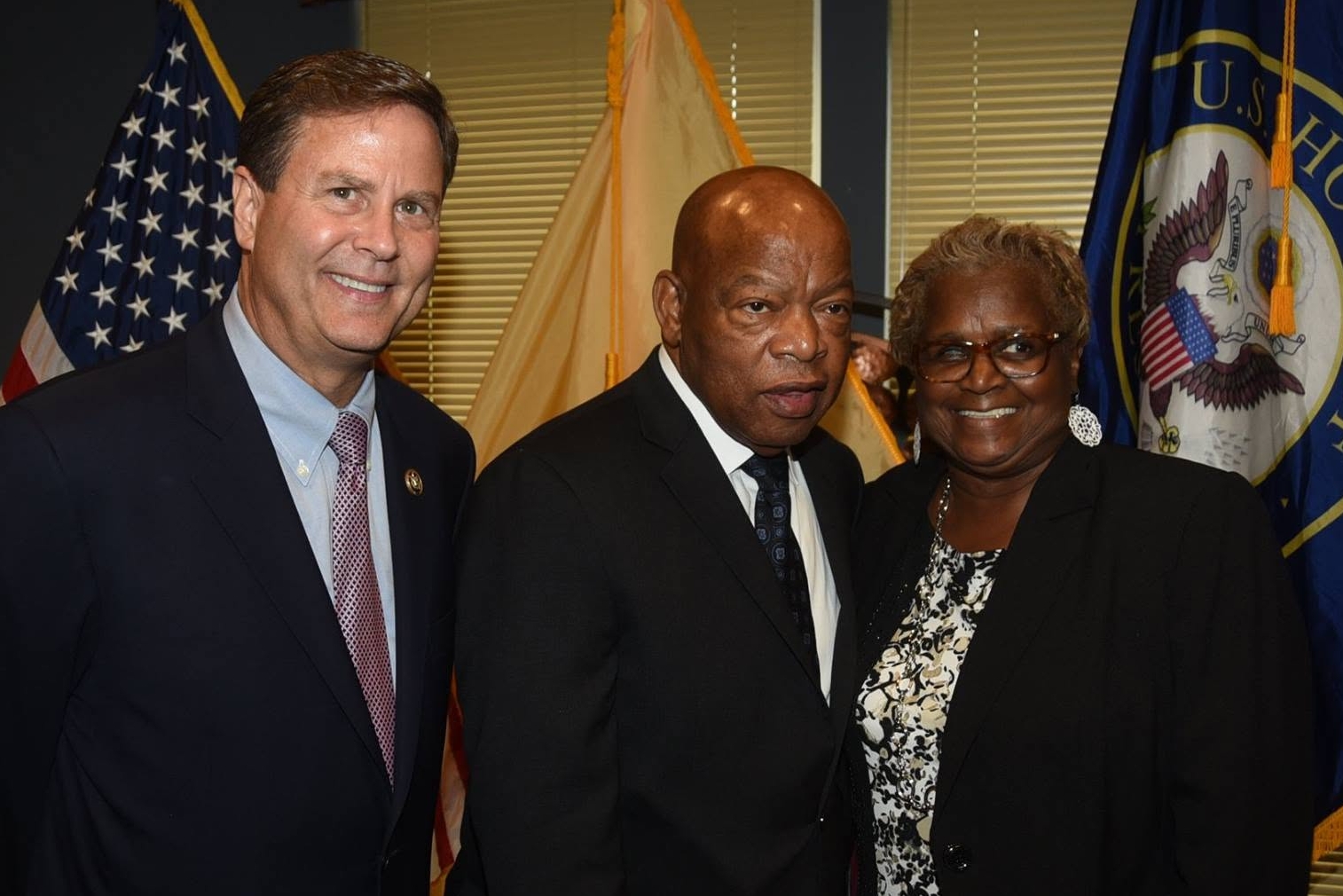
Mrs. Love stands with U.S. Reps. Donald Norcross (left) and John Lewis.Courtesy of the family
She became director at the old New Jersey State Office for Disability, now the New Jersey Division of Disability Services, in the 1990s and championed the installation of sidewalk ramps, curb cuts, and other improvements throughout the state. “We wanted to start making sure that we were accessible,” she told Front Runner New Jersey in 2025. “That’s a highlight of my life.”
Mrs. Love first ran for Deptford Township Council as a Democrat in 1989. She received more votes than any of the other nine candidates, routinely collaborated with members of both parties, colleagues said, and became deputy mayor in 1996.
“When Jackie was on council and she walked into a room, everybody knew who Jackie Love was,” Deptford Township Mayor Paul Medany told The Inquirer in 2015. “She’s known all over the state.”
As Deptford council member and deputy mayor, Mrs. Love focused on reducing juvenile crime and lobbied for sound barriers along the New Jersey Turnpike, lower speed limits on busy township roads, responsible school budgets, improvements to animal waste disposal procedures, and upgraded vendor code guidelines. In 2015, Deptford Township officials renamed Church Street Park as the Jackie Love Community Park.
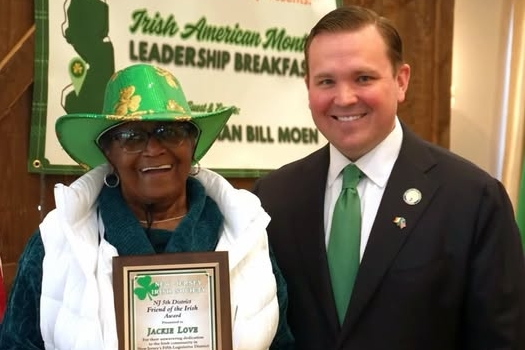
Mrs. Love stands with state Assemblyman Bill Moen in 2025.New Jersey Irish Society
“To see the future politicians and others out there playing and getting involved is another highlight of my life,” she told Front Runner New Jersey about the park.
In 2005, the editorial board for the Courier-Post called Mrs. Love “loyal, hardworking, and a team player.” In a Facebook tribute, U.S. Rep. Donald Norcross (D., N.J.) said: “Jacquelyn Love was a force for good in Deptford for generations. She paved the way for others as a Black female deputy mayor … and long remained a champion for civil rights, faith, the disabled, and many more throughout her life.”
Mrs. Love also served as a commissioner for the Delaware River Port Authority. She was active with the Gloucester County Minority Coalition, the Gloucester County College advisory committee on diversity and civility, and other groups.
She recruited volunteer poll workers and was a delegate for Bill Clinton at the 1992 Democratic National Convention in New York. In the 1970s, she traveled the country with civil rights leader Leon Sullivan and helped organize his Opportunities Industrialization Centers of America.
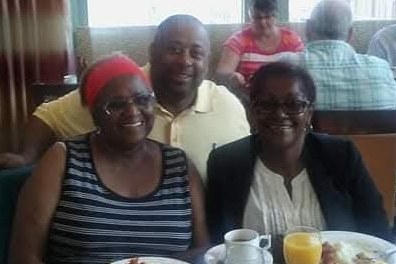
Mrs. Love (left) enjoyed time with her family.Courtesy of the family
She was named the 1987 Woman of the Year by the Gloucester County chapter of the NAACP, honored in 2005 by the Gloucester County Human Relations Commission, and inducted into the New Jersey Elected Officials Hall of Fame in 2010. In March, her achievements were recognized by the New Jersey Irish Society.
Mrs. Love mentored dozens of colleagues and friends, conferred frequently with Philadelphia Mayor Cherelle L. Parker, and volunteered at Mount Zion Wesley United Methodist Church and for the United Way. On Facebook, former colleagues called her “a once-in-a-lifetime type of leader” and “one of the most dedicated public officials I have ever had the honor of working with.”
Jacquelyn Williams was born Sept. 10, 1942. She dropped out of Woodbury High School at 17, earned her General Educational Development certificate later, and worked at first as a counselor at Ancora Psychiatric Hospital in Hammonton.
She married Arnold Love in 1972, and together they reared her daughter, Wanda, and their son, Wayne. Her husband died in 1985.
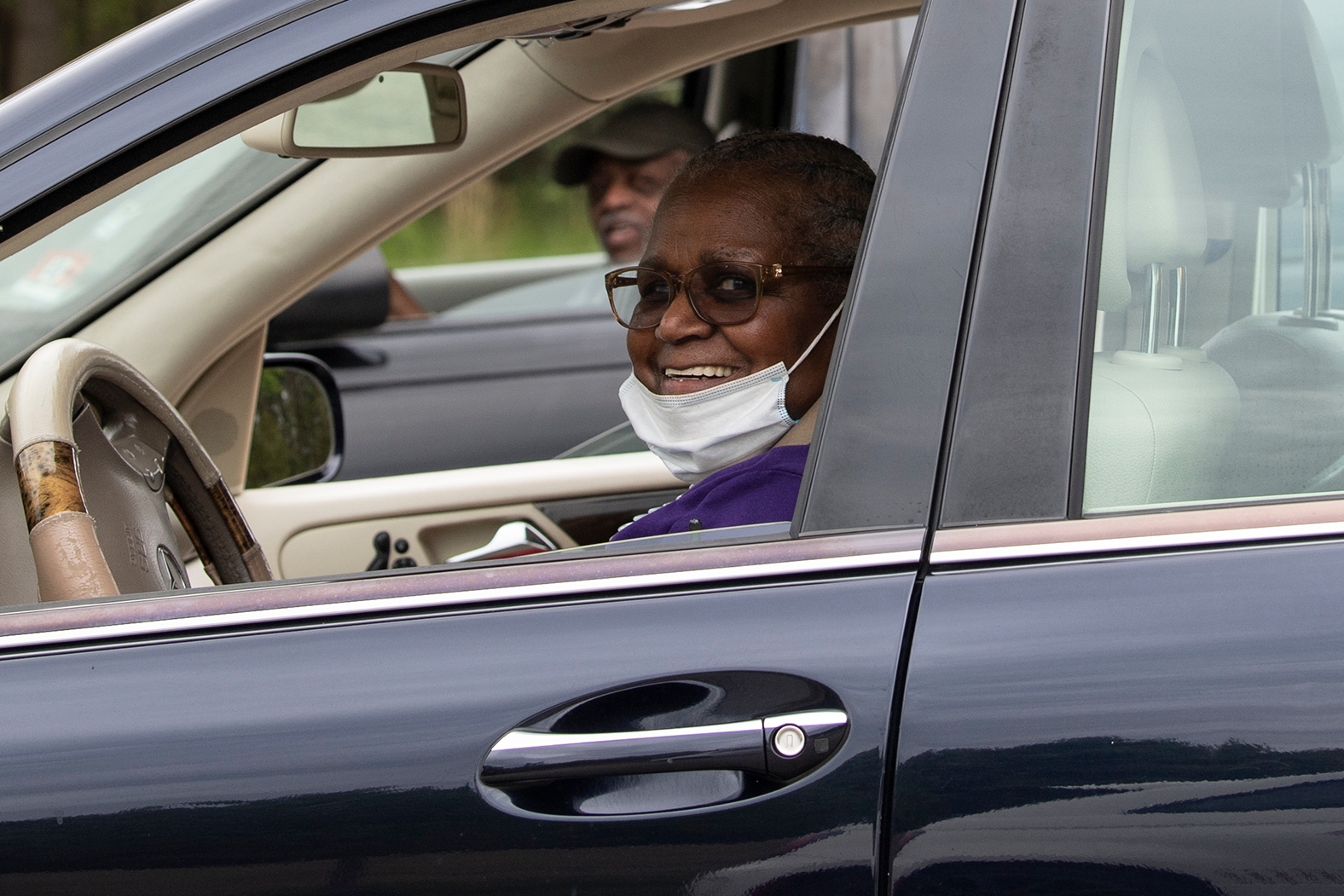
Mrs. Love participated in this 2020 drive-by salute to a friend’s 60th wedding anniversary. Jose F. Moreno / Staff Photographer
Friendly and classy, friends said, Mrs. Love wore memorable hats and enjoyed shopping at local Amish markets. She visited Amish friends in Lancaster when she was young, took classes at what are now Rowan and Rutgers Universities, and lived in Jericho for decades.
Friends called her a “cornerstone of this neighborhood” and a “wonderful down-to-earth lady.” One friend said: “Jackie set the standard for leadership and dedication to her family, faith, friends, and public service.”
Her son said: “She showed love to so many people.”
In addition to her children, Mrs. Love is survived by four grandchildren, four great-grandchildren, a sister, and other relatives.
Visitation with the family is to be from 8 to 10 a.m. Friday, June 12, at Gloucester County Community Church, 359 Chapel Heights Rd., Sewell, N.J. 08080. A service is to follow.
Friends called Mrs. Love a “cornerstone of this neighborhood.”Courtesy of the family
“Thank God it’s over,” Jordan Mailata said last week. “It was a slow pain of just, is he in, is he out?”
But NFL Network’s Mike Garafolo reported Tuesday that Brown, who caught passes from Drake Maye at Patriots camp less than 24 hours after the trade, stopped into the Eagles’ facility after the deal to pick up a few items, say his goodbyes, and leave a parting message on the wall.
Throughout the Jefferson Health Training Complex, the team has lifesize photos of franchise greats lining the walls. Underneath his picture alongside other Eagles Pro Bowlers, Brown reportedly wrote: “The best to ever play here. Always open.”
In an organization that’s had wideouts like Terrell Owens, Harold Carmichael, DeSean Jackson, and Mike Quick — not to mention DeVonta Smith still on the roster — that’s high praise he’s giving himself.
From @gmfb: A.J. Brown stopped by the #Eagles’ facility last week to pick up some items, say goodbye and leave a parting message on the wall.
Meanwhile, as for the conspiracy theory floating around on what led to the Brown-Hurts rift, Big Dom and others are adamant it’s bogus. pic.twitter.com/M134pe9j8d
Despite rumors of a rift between Brown and quarterback Jalen Hurts, the veteran wide receiver told NBC’s Maria Taylor in his first interview after the trade that he and Hurts had “no beef” — even if they are not as close as they once were.
In four seasons in Philadelphia, Brown had 5,034 receiving yards, 32 touchdowns, two Pro Bowls selections, and three All-Pro nods — plus two Super Bowl appearances and one win.
So how do those numbers compare to other Eagles receivers? Here are the team’s all-time receiving leaders, sorted by total yards. Fifteen players have recorded at least 4,000 yards with the Birds, and Brown ranks ninth, although he likely will be passed this season by both Smith and Dallas Goedert.
In addition to being ninth in total yards, Brown ended his Eagles career 13th in receptions and tied for 12th in receiving touchdowns. Where he really stands out is in yards per game — his 81.2 yards rank second behind Owens (93.5) among players to appear in at least 20 games. However, Owens, who i played parts of just two seasons in Philly, also averaged nearly a touchdown per game (0.95), while Brown averaged a little more than half of one (0.52).
The Eagles will next see Brown at joint practices with New England on Aug. 19 and 20 in Foxborough, Mass.
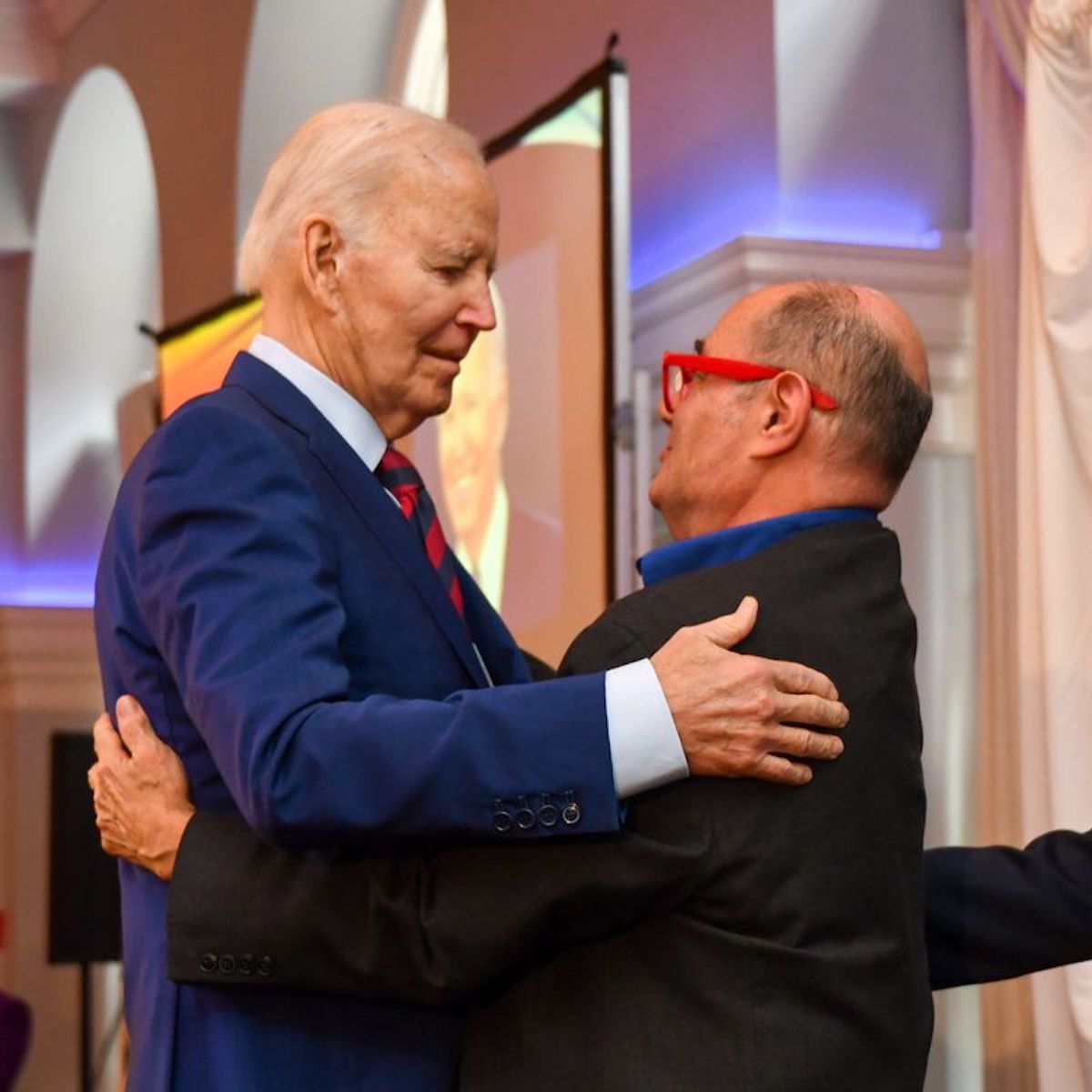
Former President Joe Biden made a surprise appearance at the annual Stonewall Awards in Philadelphia on Sunday, delivering a 20-minute speech to a packed crowd in Center City.
The award ceremony, started in 2022 by Philadelphia Gay News founder and publisher and participant in the 1969 Stonewall rebellion Mark Segal, recognizes those in the region advancing the LGBTQ rights in Pennsylvania. This year’s speakers, including Biden, took a moment to celebrate the decades of civil rights battles that led to Philadelphia becoming a cultural hub for queer people, but warned that the fight is only getting harder.
“What I don’t think straight people understand is that you have risked a hell of a lot and it’s taken enormous courage to stand here today. You risk your jobs, your families, and your very lives for the cause of equality,” Biden said. “We need that courage today more than ever before. The fellow we have as president right now is not having a very positive impact on anything.”
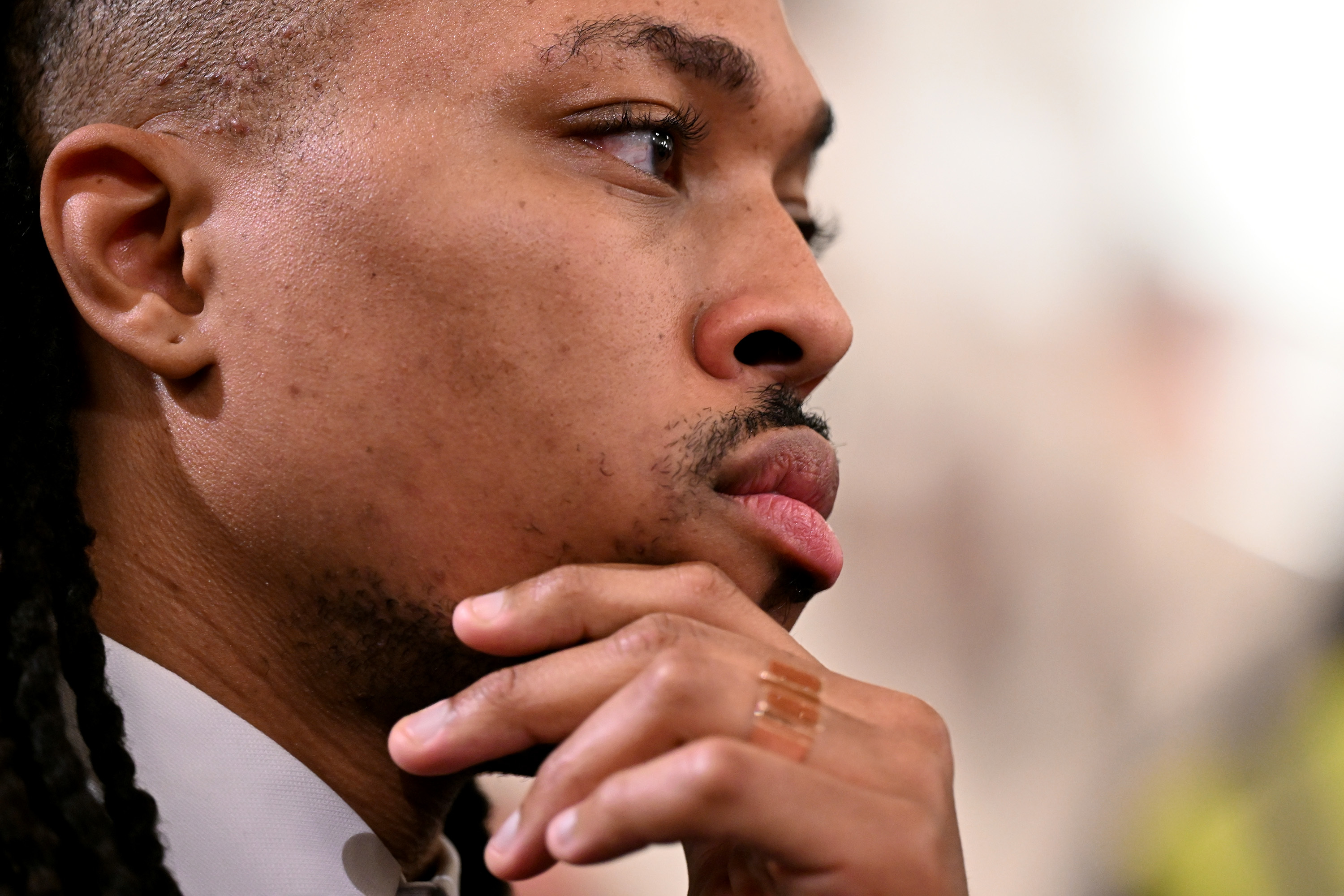
State Rep. Malcolm Kenyatta, who is a vice chair of the Democratic National Committee, surprised the crowd made up of LGBTQ organizations, media, and community members at the Arts Ballroom in the heart of the Gayborhood when he walked up to the stage with a trail of Secret Service agents and the 46th president. The ballroom erupted with cheers as the audience gave the duo a standing ovation. “I decided to bring a friend with me,” Kenyatta said to the crowd.
State Rep. Malcolm Kenyatta at the Capitol in Harrisburg on May 13, 2025.Tom Gralish / Staff Photographer
Biden delivered prepared remarks but wasn’t shy about speaking from the heart, said Segal, who witnessed the police assault on the Stonewall Inn in 1969, a moment credited for spurring the modern queer civil rights movement.
“I think that’s the magic of the Stonewall Awards. You’re in a room with people who want to feel unified and it’s a struggle out there these days thanks to the current administration,“ Segal said. ”This is the day that we get to celebrate ourselves and celebrate where we are and to say, ‘We’re never going back.’”
The president shared stories of his granddaughters fearing for their gay friends as the White House pushes policies that strip rights from LGBTQ people.
“Even though we made enormous progress, as we continue to make the final run here, progress is going to get tougher and the other team’s going to get rougher,” Biden said.
Segal said the Stonewall Awards have brought local leaders and celebs like Gov. Josh Shapiro, Mayor Cherelle L. Parker, and Abbott Elementary star Sheryl Lee Ralph to its stage in prior years. But Biden was a big surprise, said Jacen Bowman, the president of Philly Black Pride.
“We didn’t know Biden would be there, but once we saw Secret Service, we knew something was up. After his speech, he walked right over to our table and spoke to my mom about the award I won and it was amazing,” Bowman said, whose mother is still elated over meeting the former president.
Bowman received his second Stonewall Award on Sunday as he and his fellow organizers grow the organization’s cultural impact on the city and beyond. Bowman’s work hopes to not only bolster the community in a time of increased threats, but also highlight those who may get left out of the picture through murals like creating Finally on 13th, a celebration of Philadelphia’s underground ballroom culture, and remembering icons like the late Stacey Blahnik, a transgender woman and icon in the local ballroom scene whose murder is still left unanswered more than a decade later.
“I love Philadelphia and being honored for my work in the city that has made me, broken me, and uplifted me — I’m so grateful,” Bowman said.
Councilmember Mark Squilla and the Philadelphia Visitor Center received awards for their contributions to LGBTQ advocacy. Alex Niedbalski-Sykes and Ashley K. Lunkenheimer were also recognized for their contributions, including the work of Philadelphia Sisters, an organization that has vowed to bring more professional women’s sports teams to the city, especially after a WNBA team arrives by 2030.
Nine protesters arrested last year at a pro-Palestinian encampment at Swarthmore College said Tuesday that they had done nothing wrong and have no intention of pleading guilty to the trespassing charges they face.
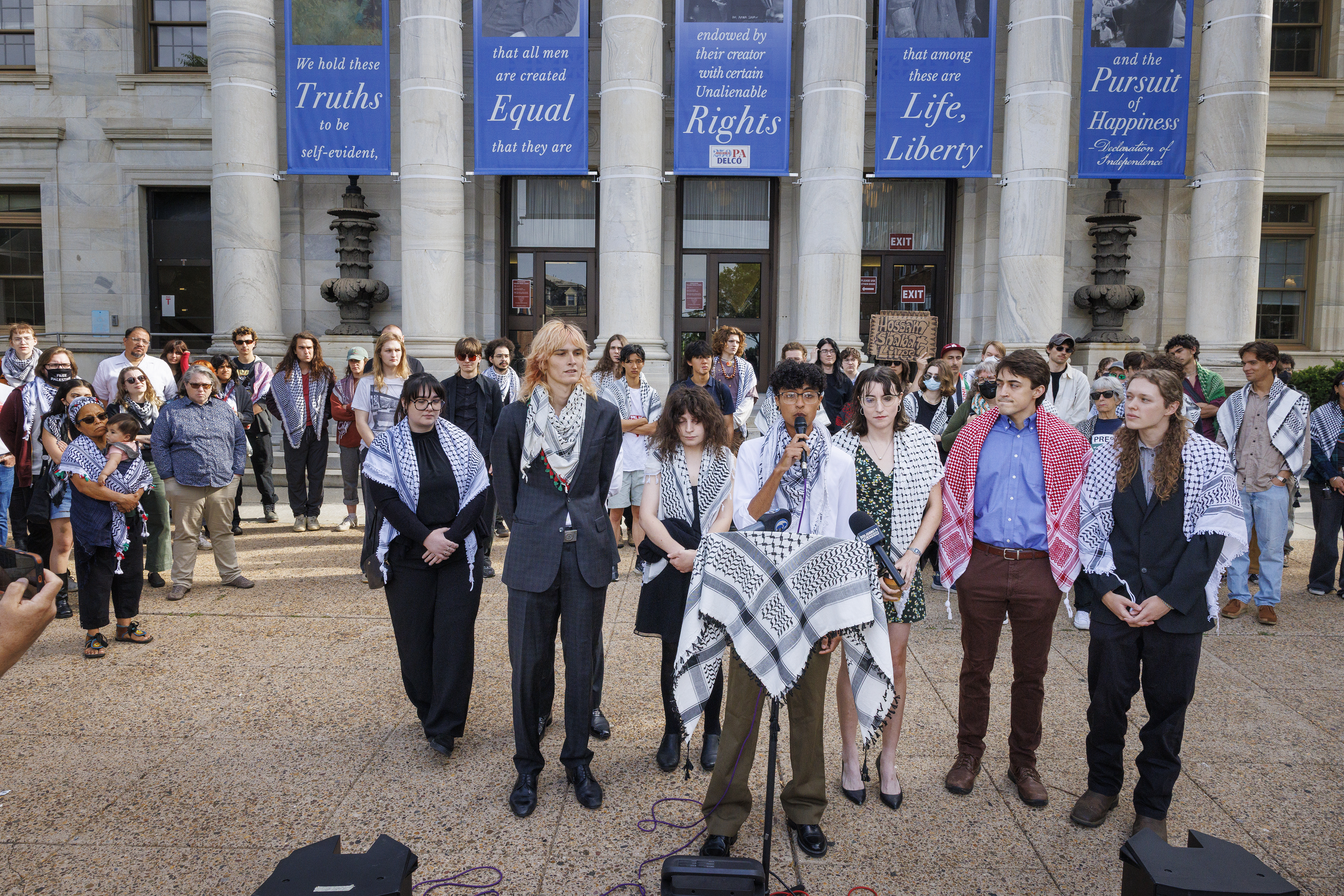
“We affirm that we are guilty of nothing because it is always right to rebel against genocide,” Jace Boland, a junior at the college, said at a news conference on the steps of the Delaware County Courthouse.
Boland was joined by his eight codefendants and a small crowd of supporters in urging prosecutors to drop what they described as “absurd criminal charges.”
The so-called Swarthmore 9 were arrested and briefly detained on the college’s campus in May 2025 when officers from surrounding police departments dismantled their encampment protesting the war in Gaza and Swarthmore’s contract with a company that does business with the Israeli government.
Of the nine people arrested, only Boland is a student at the college. Another, Brendan Cook, is a former student who was suspended for participating in an earlier protest in 2024, but the rest are not affiliated with Swarthmore, according to school officials.
Members of the group — Boland, Cook, Jonathan Britt, Mara Helen Cahill, Daria C. Dressler, Thomas Falcone, Colin Buckley Malcarney, Riley J. McManus, and Andrew Thomas — have all been charged with trespassing, a third-degree misdemeanor.
Their attorney, Marni Jo Snyder, has filed a motion to dismiss the case that will be argued before Delaware County Court Judge Dominic Pileggi on June 22, a week before the group’s scheduled trial.
District Attorney Tanner Rouse said Tuesday that prosecutors had offered the group the chance to plead to a lesser, summary offense, which Rouse described as “akin to an ‘open container’ or noise violation ticket.”
“That they want to proceed to trial as charged is absolutely their right, but so is it the commonwealth’s right to protect the interests of private citizens and institutions that do not have to abide every random person who has an issue parking on their front lawn,” Rouse said. “Private property owners have a right to say ‘please leave’ when the time comes.
“If their concern is a criminal charge or exposure to judicial punishment, there is and always has been an easy off-ramp available to them,” he added. “They have chosen not to take it.”
Jace Boland said Tuesday that he and his co-defendants “are guilty of nothing because it is always right to rebel against genocide.”Alejandro A. Alvarez / Staff Photographer
At Tuesday’s news conference, Swarthmore professor Mark Wallace said he supports the protesters and believes the college betrayed the ideals on which it was founded by having them arrested.
“How can students who live and work on a campus be charged with trespassing there while applying what they’re learning in the real world?” he asked. “Colleges should be places where large, uncomfortable questions are asked and struggled over.”
A spokesperson for Swarthmore did not immediately respond to a request for comment Tuesday.
Previously, the college, in a statement, echoed what Rouse said Tuesday — that county prosecutors had offered to reduce the charges in the case to a summary offense if the defendants pleaded guilty, but they declined.
Boland said he and the others charged would not plead guilty, fearful that doing so would discourage future activism.
“If the college can deploy state violence to protect its interests without consequence, there is no telling what levels of repression future generations of student activists will face,” Boland said. “Swarthmore College cannot continue to benefit from its reputation as a liberal arts institution that encourages activism while simultaneously crushing dissent.”
Swarthmore Borough police arrested the group in May 2025 after issuing multiple warnings to members of an encampment that had formed outside Swarthmore’s Trotter Hall.
The encampment, which protesters referred to as the Hossam Shabat Liberation Zone in honor of a journalist killed in an Israeli drone strike, was formed to demanded that Swarthmore end its IT support contract with Cisco, which also holds contracts with the Israeli government.
Swarthmore College professor Mark Wallace spoke at Tuesday’s news conference in support of the nine protesters arrested at the school last year.Alejandro A. Alvarez / Staff Photographer
Swarthmore College president Valerie Smith wrote in a letter last year that members of the Liberation Zone created their enclosure using campus property and had vandalized other parts of campus with incendiary graffiti.
Smith wrote that she “unequivocally condemn[ed]” the group’s actions and said that law enforcement officials, including the FBI, told her to dismantle the encampment as soon as possible.
“I urge these protesters to pursue a less divisive approach to expressing their views — one that aligns with not just the College’s policies, but with the mutual respect, compassion, and care that all in our community deserve,” Smith wrote in the letter.
Days before the protesters were arrested, campus police forcibly took back some of the items they had taken to build the encampment, and issued disbandment orders to people they found within it.
On the day police came to clear out the encampment, they gave protesters a 10-minute warning to vacate the property.
The protesters refused to leave, sitting with their arms interlocked, according to video of the arrests posted by the Swarthmore chapter of Students for Justice in Palestine.
All nine of the protesters charged in the case were detained briefly and released on unsecured bail.
The Lower Merion school board plans to stop assigning personal laptops and iPads to kindergartners, first graders, and second graders after facing intense pushback from parents who say kids are getting too much screen time in school.
Members of the school board’s policy committee announced the plan during a meeting Monday, along with other proposed limits on technology use. Under policy changes going before the full school board for review next week, third and fourth graders would use electronic devices stored on carts in classrooms, while fifth and sixth graders would be permitted, but not required, to bring devices home.
But parents who have accused the district of overusing educational technology said the proposed changes did not go far enough — leaving too much room for interpretation around when technology should be used, and failing to adequately restrict kids’ access to inappropriate websites.
Some parents also expressed anger that the board is moving forward with repealing the current technology policy, which contains language accommodating families who opt out of district-issued devices.
“You are removing the escape hatch,” said David Smyth, a parent from Merion Station, who said the district had produced no data supporting its use of technology. “You know that ed tech is failing, it’s suboptimal, and you don’t want to be embarrassed.”
Here is what to know about the tech debate in Lower Merion, the board’s latest policy proposal, and what happens next:
More than 800 parents have signed a petition asking for the right to opt out of one-to-one devices, according to parent organizers in Pencils Over Pixels. The group, which started a GoFundMe campaign, has distributed lawn signs and enlisted a public relations firm as part of its advocacy efforts.
But district officials have repeatedly said that the technology policy’s language is dated, stemming from when Lower Merion first introduced one-to-one devices, and that it is not possible for families to opt out.
Instead, the board has been reworking the technology policy to address when and how devices should be used in classrooms.
A revised policy after meetings with parents
The latest policy proposal outlines guidelines for technology use at different grade levels, rolling back one-to-one devices for Lower Merion’s youngest students.
“Technology shall not be used for routine classroom instruction in these grades,” the policy says. “Any use shall be minimal, highly structured, and limited to specific educational purposes such as diagnostic testing or for teacher-directed, whole-class demonstration, visual display, or state testing preparation.” (Pennsylvania’s standardized tests, which start in grade 3, are required to be administered on computers.)
In grades 3-4, the policy says, students “shall have supervised, teacher-directed access to technology resources” that stay in classrooms, while in grades 5-6, students will be permitted to bring their devices home, but not allowed to use them between classes or at lunch.
The policy describes students in grades 7-8 and 9-12 as having increased responsibility for independent technology use, but says devices should be used only for school-related work.
The policy changes are “meaningful responses” to community feedback, said Anna Shurak, the chair of the board’s policy committee, who said board members had met with concerned families.
But some parents said the policy — which says teachers should use technology “only when doing so serves a clear educational purpose” — would not adequately limit an overreliance on screens in classrooms.
“The verbiage of this policy is very carefully crafted to say nothing,” said Eleanor Stanford, a parent and a writing professor at Bryn Mawr College, who also questioned why the district was still “dragging its feet” on imposing a bell-to-bell ban on cell phones in its high schools, even as legislation advances in Harrisburg to do so. (Shurak said the district would fully ban cell phones in 2027-28.)
Parent Matthew Posey quoted the policy’s language that technology belongs in the classroom when it “genuinely amplifies human curiosity.”
“Did Albert Einstein need Kahoot or iReady?” Posey said, referring to two educational technology programs. “Is this a public policy document, or a corporate marketing brochure?”
Some parents also questioned proposed administrative regulations that include suggested time ranges for technology use by grade level. In grades K-4, the guidelines are less than 30 minutes a day; by high school, they increase to less than 120 minutes a day.
Calculating the high school upper limit as about 40% of daily instructional time, “to me, that’s way, way too high,” said Sam Handlin, a parent and a professor at Swarthmore College. He said the only way teachers would approach that time limit was either by using technology “as a babysitting device” or letting students take notes on computers, “which is just a recipe for distraction.”
Shurak did not comment on the time frames specifically but told Handlin the administrative regulations still need to be revised.
When will changes take effect?
The committee endorsed sending the revised technology policy to the full board for review next week, along with a recommendation to repeal the current technology policy.
While the board may repeal the current policy at next week’s meeting, the new policy would need to be considered a second time to before it could go into effect.
The goal is to have the new policy in place in August, Shurak said. She said the board would be directing administrators to implement changes in time for the coming school year.
Board member Jason Herman, a member of the policy committee, said some of the new policy’s language should be revised to limit “ambiguity and subjectiveness.” He also questioned why the district could not move to a content filtering model where only certain websites were permitted for students to access, rather than restricting sites after problems are reported.
Officials did not address questions around content filtering Monday, or calls from the Pencils Over Pixels group for the release of district contracts with educational technology companies and a technology advisory board that would include parents.
Sautner said the board had more work to do, including around technology questions related to the district’s curriculum.
But “we cannot micromanage” administrators through policy language, she said.
Some expressed concern that the board could overreact in response to anti-tech opposition.
“Banning technology isn’t going to be the way to ensure that our kids critically think,” said Emma Benn, who urged the board to “take a step back” before passing a new policy. “This world is a technology-driven world, and we need to make sure our children can function within it.”
WASHINGTON — The Trump administration has warned more than 500 hospitals that they are failing to provide the public with basic pricing information — arguing that the lack of disclosure is keeping healthcare costs higher than they should be.
The Associated Press obtained exclusively the list of hospitals that since April have either received letters of warning or requests to submit plans to provide transparent pricing. Failing to comply with the warnings comes with penalties as high as $2 million annually for each recipient that doesn’t create a plan to post clear pricing data.
The letters are meant to fix a fundamental problem that patients, employers and insurers might not know ahead of time the cost of blood work, an imaging test or another form of treatment, and as a result pay more than they should have. AP has posted the list of hospitals that have received letters.
The list includesthree hospitals in Philadelphia: Fox Chase Cancer Center, Friends Hospital, and St. Christopher’s Hospital for Children. Other hospitals in the region that received letters were Phoenixville Hospital, Pottstown Hospital, and Reading Hospital, all owned by Tower Health, which also is a joint owner of St. Christopher’s children’s hospital.
Christiana Hospital in former President Joe Biden’s home state of Delaware received a warning letter. Rockford Center in Newark, Del., was also on the list.
A senior administration official who requested anonymity to provide the list said that President Donald Trump plans to tighten enforcement of price transparency standards made possible by a 2019 executive order signed by Trump. More hospitals are likely to receive letters regarding the absence of pricing data, the official said.
The warnings are the latest example of Trump leaning into the message that his administration is fixing the problem of healthcare expenses that can drain a family budget. It’s a calculated pitch ahead of the November midterms at a time when affordability is a top concern for voters. But Trump is also vulnerable on this particular issue, as his administration allowed subsidies to lapse for people buying insurance through the 2010 Affordable Care Act, widely known as Obamacare.
The push for price transparency could have a particular impact on Republican strongholds like Texas, Florida, Indiana, Alabama and Louisiana, which are among the states with the highest count of hospitals that have not provided adequate information on the costs of medical services.
Texas had 42 hospitals that received warnings, more than any other state. Baptist Medical Center in San Antonio, Texas, among the state’s largest hospitals with 1,585 beds, received a letter, as did the University of Texas MD Anderson Cancer Center in Houston.
Missouri-based Ascension, one of the country’s largest hospital systems, had 13 hospitals in multiple states that received letters. The Republican state of Indiana had 34 hospitals that received letters, nearly as many as the 38 in Democratic-led California, even though California has five times more people than Indiana.
The letters reflect two competing philosophies between Republicans and Democrats over how to handle the ballooning expense of healthcare, which is also a growing risk for the federal government’s own balance sheet.
Biden’s team put more emphasis on record enrollment in Obamacare programs that increased the percentage of people with health insurance. Biden also signed a bill that allowed the government to begin negotiating prices for some Medicare drugs directly with pharmaceutical companies. That program, which has continued into Trump’s second administration, has helped knock down the list prices of some of Medicare’s costliest drugs.
The Trump administration, by contrast, has focused more on trying to find ways to provide details on pricing — such as promoting the TrumpRx site for prescription drugs — betting that doing so will lead to better and more efficient spending on healthcare as the data gets crunched.
Critics have said Trump’s negotiated prices on prescription drugs might not produce genuine savings for many Americans with insurance, while the administration has estimated savings in excess of $500 billion over 10 years.
With the various lists of hospital prices, the administration wants providers to make it easier to access the files and to ensure the information in them is legitimate, instead of being based on estimates or omitting numbers for key procedures.
The House Committee on Energy and Commerce has a hearing planned for Wednesday on price transparency.
“Transparency is the foundation of a healthcare system that rewards competition based on cost and quality,” Shawn Gremminger, CEO of the National Alliance of Healthcare Purchaser Coalitions, plans to say in his prepared remarks.
The bodies of poor and Black Philadelphians have long been exploited in the name of medical progress — even after death.
Grave robbing was a common practice among medical schools like the one at the University of Pennsylvania in the 18th and 19th centuries, when the cholera outbreak created great demand for cadavers. Medical schools paid people to steal freshly buried corpses for medical students to conduct research in the hope of developing cures.
Very often, a wealthy white population benefited from the cures derived from experimentation on these bodies.
Black Philadelphians were denied burial in the city’s cemeteries, so many of these bodies were buried in potter’s fields without tombstones.
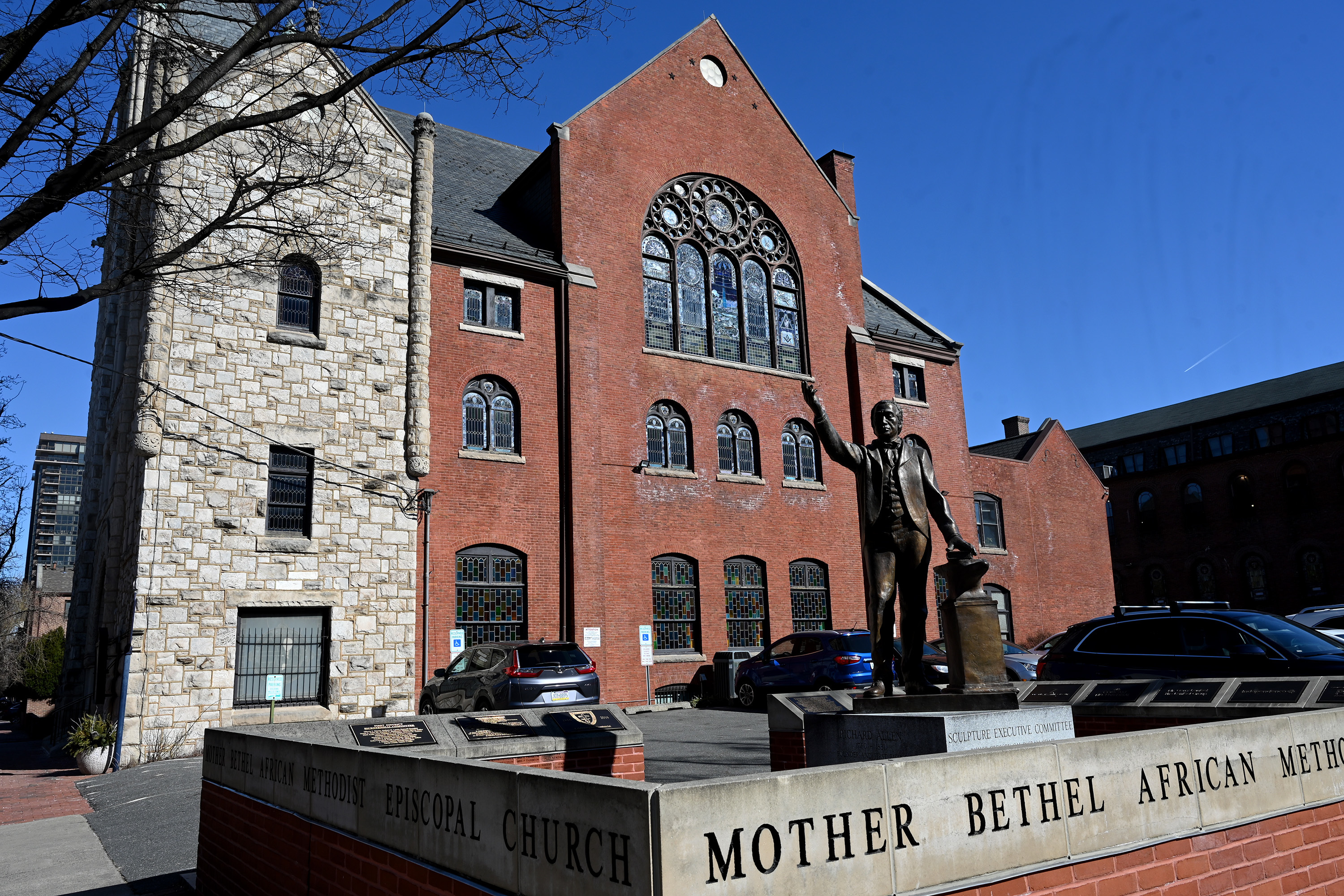
In 1794, after being denied worship at Old City’s St. George’s Methodist Church, the formerly enslaved Richard Allen founded the Mother Bethel African Methodist Episcopal Church, considered the world’s first AME congregation. In 1810, he purchased what today is called the Bethel Burial Ground.
A statue of Bishop Richard Allen outside Mother Bethel AME Church.Tom Gralish / Staff Photographer
The minister, who would go on to become one of America’s most influential Black leaders, wanted Black Philadelphians to receive a dignified final resting place, with tombstones.
Through her 2024 play The Great Privation (How to Flip Ten Cents Into a Dollar), Harlem-raised playwright Nia Akilah Robinson seeks to offer audiences a peek into this macabre history with Philadelphia roots.
“This topic of grave robbing is a subject in which I had conversations around the dinner table with my parents,” Robinson said. “It is a practice that has a long and storied history in Philadelphia, especially institutions like University of Pennsylvania medical school, and these crimes continue today.”
The play, set at Mother Bethel in 1832 and the present, is now being staged at Theatre Exile.
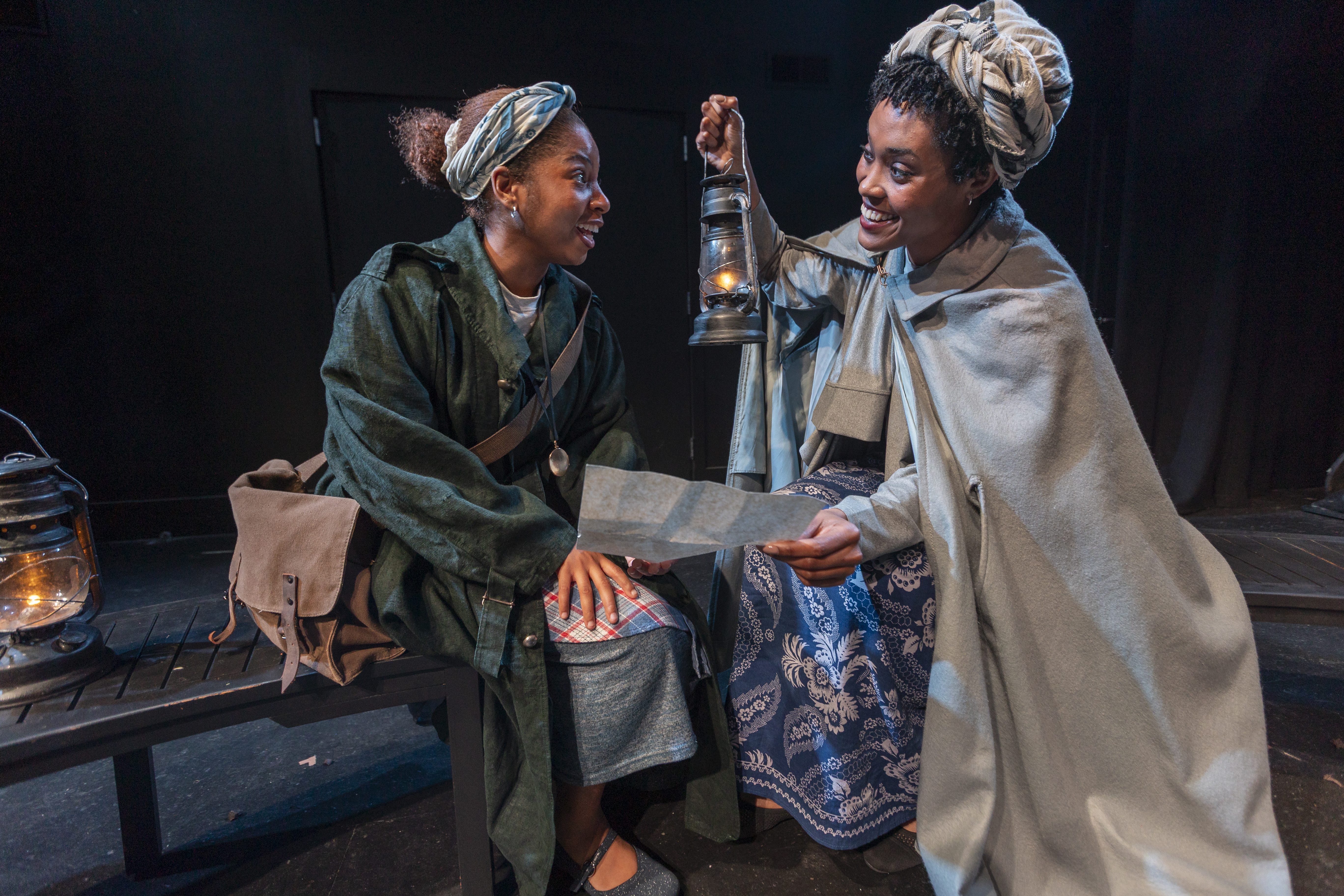
It explores the history of grave robbing in America in the name of medical progress, through the story of a Black American mother and daughter who keep vigil over their recently buried loved ones’ graves to protect their bodies from grave robbers or “resurrectionists,” who were often white.
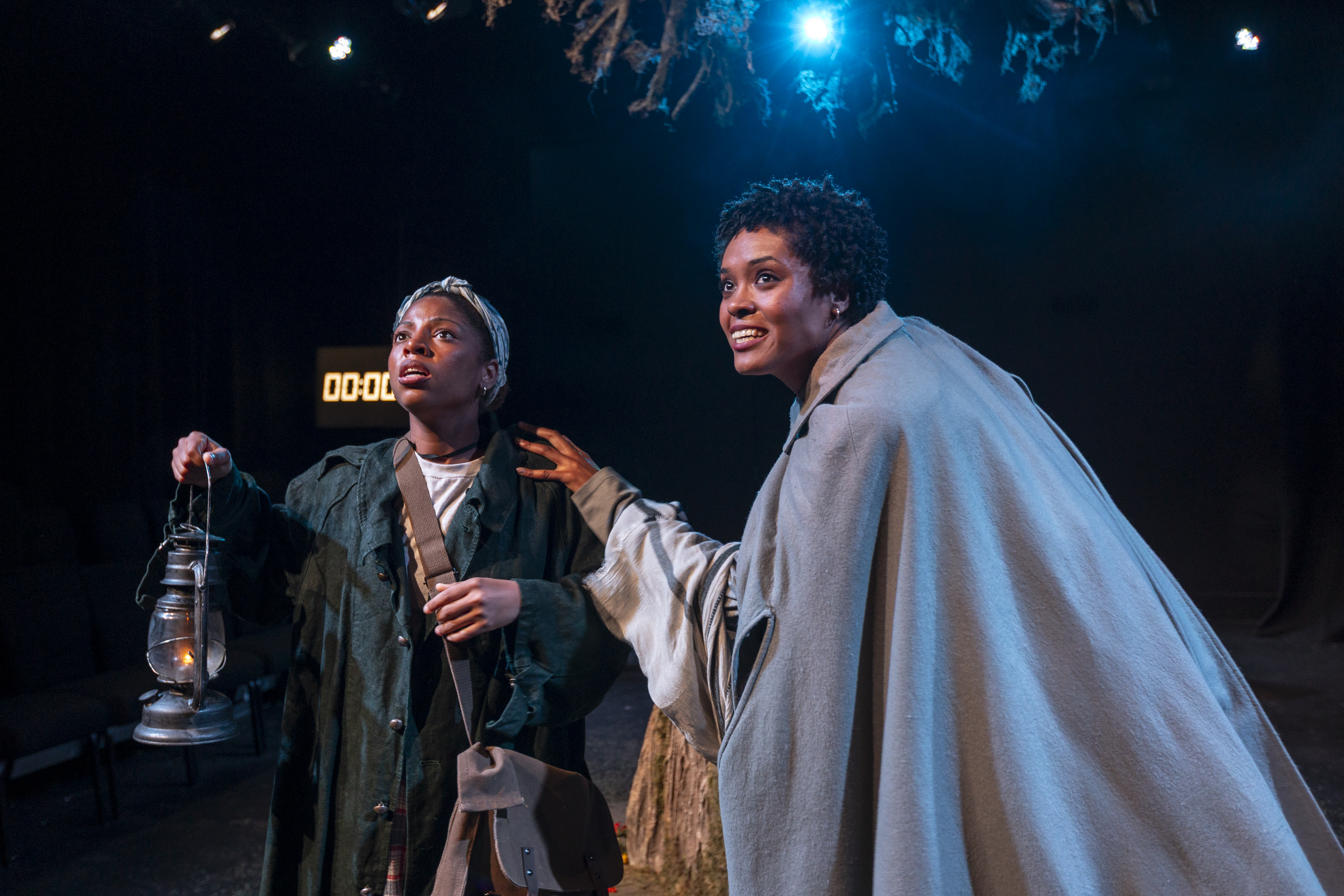
Andre G Brown, Rayne, Aidan McDonald, and Semaja Murphy in “The Great Privation (How to Flip Ten Cents Into a Dollar)”Paola Nogueras
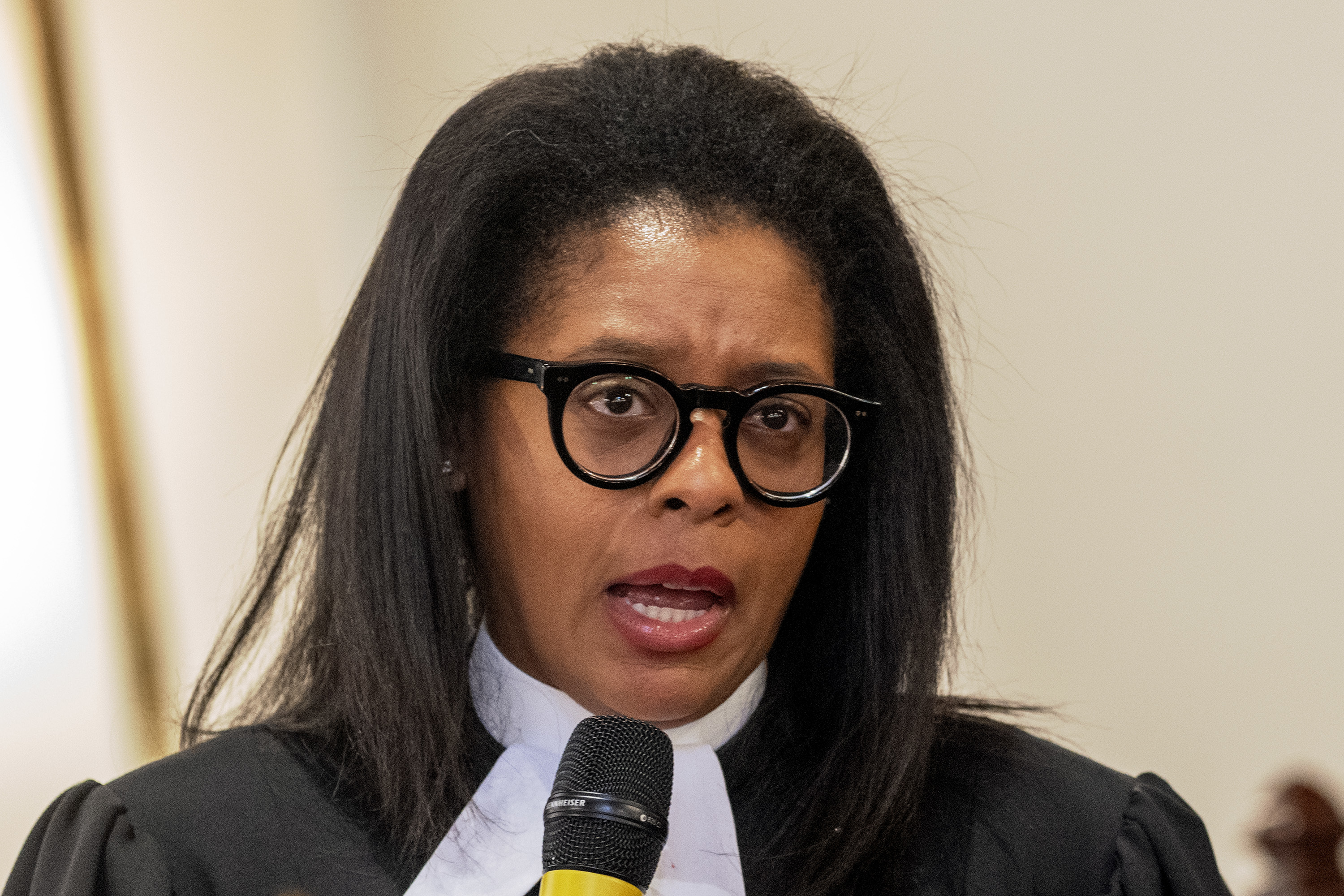
“I saw the description of a play, talking about an African Methodist Episcopal Church, 1832 graveyard in South Philadelphia,” the Rev. Carolyn C. Cavaness of Mother Bethel said. “That’s Mother Bethel! That’s me.”
The Rev. Carolyn Cavaness celebrates worship service Nov. 11, 2024 after Mother Bethel AME appointed her the first woman pastor in its history. CAVANESS-TBDTom Gralish / Staff Photographer
Robinson first drove past Weccacoe Playground and Bethel Burial Ground during rehearsals for Theatre Exile’s production. Philadelphia-based director Ontaria Kim Wilson wanted her to see the place that she had been writing about.
“When I was crossing into that block with Ontaria, as she was driving, I felt something, I can’t even explain it,” Robinson said.
“In Philly, there is a lot of respect paid toward talking about the history through those signs of what happened here. Sometimes when I go past those [historical markers], I see a tribute, and I feel a sadness. I get why it’s there and I also [think] maybe we need more plays doing that, too.”
Today, members of the Mother Bethel congregation, families visiting Weccacoe, and the thousands of Philadelphians and tourists walking past this small playground hold the juxtaposition of young life and centuries-old resting souls at once.
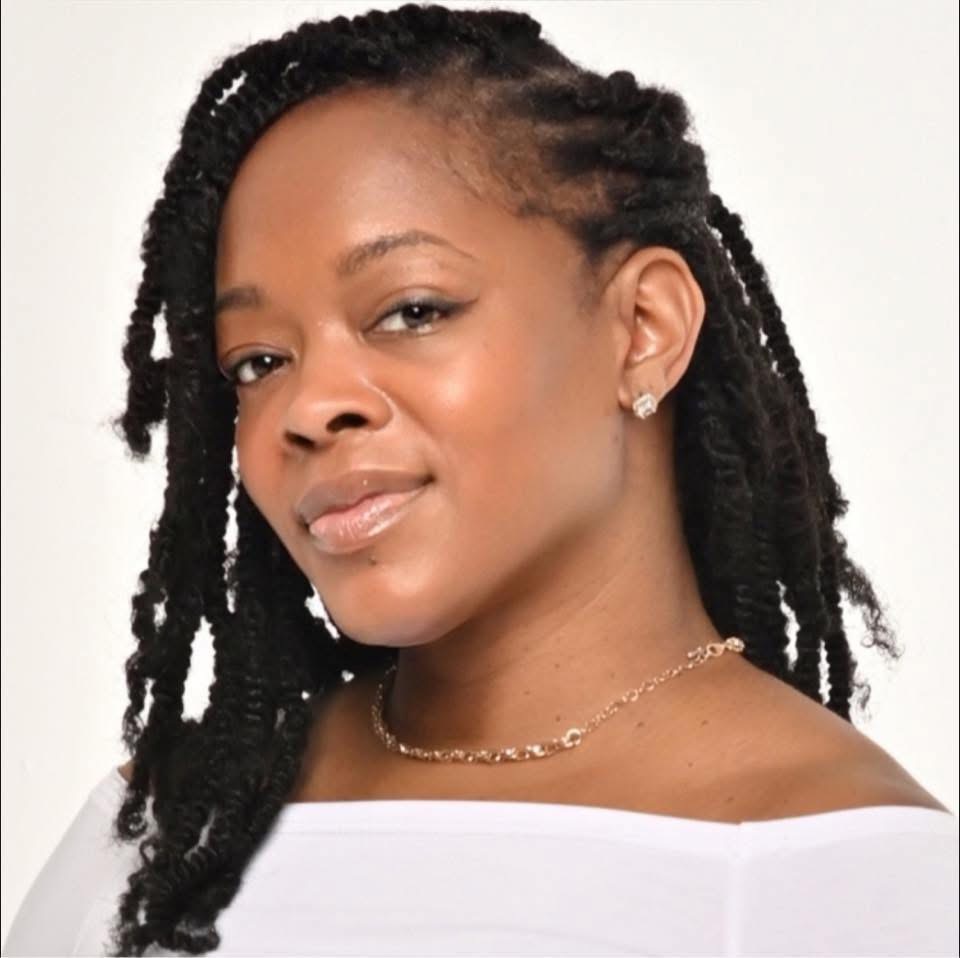
Philadelphia-based director Ontaria Kim Wilson has directed Nia Akilah Robinson’s 2024 play “The Great Privation (How to Flip Ten Cents Into a Dollar),” which is now playing at Theater ExileCourtesy of Theater Exile
Theatre Exile is partnering with Mother Bethel to offer the production crew a more real-world context to the story of the play. Cavaness met with Wilson and attended the first rehearsal and will participate in post-show discussions during the run of the production.
“You always have the contesting and the non-acceptance of Black bodies being fully human,” Cavaness explained. “‘You’re not fully human, so I can do with your pieces, I can do with your body, as I see fit.’”
Cavaness can’t help but think of Allen, who was initially buried in front of Mother Bethel.
“They would have people guarding his body. Again, this notion of protecting the dignity and of having to reinforce that and to show that,” she said.
Playwright Nia Akilah Robinson’s 2024 play “The Great Privation (How to Flip Ten Cents Into a Dollar),” is now playing at Theatre Exile.Courtesy of Theater Exile
Organizations like the Mütter Museum and Penn Museum hold the remains of Black people and Native Americans in their collections and in recent years have faced significant public backlash over their acquisition and display. The Mütter has engaged in extensive community programming regarding its background as a medical history museum while receiving criticism that its efforts to repatriate the remains of Indigenous people have moved too slowly. Penn has embarked on internment and repatriation processes that some critics and families argue have been flawed and rushed.
“We are the caretakers of this history. We are entrusted,” Cavaness said. “We have a responsibility to care for and uplift and to say their names and their stories. They just can’t go away.”
These real-world, very local connections continue to inspire Wilson’s direction of the play in preparation for sharing it with the descendants of those buried in the Bethel Burial Ground. The Great Privation could rely on its inherent didacticism, but Wilson’s direction is focused on uplifting the love story of a mother and daughter, and Robinson’s surprisingly humorous writing.
Robinson hopes the play can be received as a comedy, even as it holds so much grief.
Semaja Murphy and Rayne in “The Great Privation (How to Flip Ten Cents Into a Dollar)”Paola Nogueras
“I hope that [the audience] find themselves laughing. And I hope that Philly audiences feel like this play was written with care,” said Robinson.
“It’s Philadelphia. It’s the birthplace. It’s another chapter in who we are as a nation,” said Wilson. “And I think it’s important that, especially during this time, we grab onto any information that we can learn about this American experiment.”
“The Great Privation (How to Flip Ten Cents Into a Dollar)” runs through June 14, Theatre Exile, 1340-48 S. 13th St., theatreexile.org/tgp25