Tag: topic-link-auto

  • Folarin Balogun has delivered on his promise with the USMNT. Now a long-awaited World Cup is here.

    Folarin Balogun has delivered on his promise with the USMNT. Now a long-awaited World Cup is here.

    IRVINE, Calif. — When the U.S. men’s soccer team left Qatar after the last World Cup, the repeated lament was the lack of a No. 1 striker.

    Folarin Balogun’s name wasn’t entirely new at that point. Born in New York to Nigerian parents and raised in London, he had played for a U.S. youth squad in 2018. He started playing first-team club soccer at England’s Middlesbrough in the first half of 2022, and a brief hot streak there got him on U.S. fans’ radar.

    The next European season brought Balogun’s real breakout and a bigger spotlight. Now not only did the U.S. want him, but so did Nigeria and the England program of which he played on youth clubs from 2018 to 2021.

    For a stretch of spring 2023, the noise resembled college football teams recruiting a five-star high school quarterback. U.S. fans flooded Balogun’s Instagram page with comments, then-manager Anthony Hudson dropped hints about conversations, and even then-England manager Gareth Southgate was pulled into the chattering class.

    Folarin Balogun on the ball during Monday’s U.S. practice, the only open one the team will have leading up to the World Cup.Jonathan Tannenawld

    In March, it really looked like a recruiting circus. Around that month’s FIFA window, Balogun was spotted courtside at an Orlando Magic game, then at Yankees spring training, with U.S. Soccer’s help behind the scenes.

    Two months later, Balogun committed to the U.S. program. And in the three years since, he has lived up to the hype, with nine goals in 27 games, including one in the first World Cup tuneup vs. Senegal. Both numbers would have been higher if not for long stretches of 2024 and 2025 missed because of injuries.

    Now comes the biggest moment. Balogun, 24, almost certainly will be the Americans’ starting striker at the World Cup, beginning with Friday’s group stage opener against Paraguay in Inglewood, Calif. (9 p.m., Fox29, Telemundo 62).

    “I feel like my individual journey is a bit full-circle now, approaching the World Cup,” he said Monday, the opening day of the U.S. team’s stay at its World Cup base camp. “Especially with the World Cup being here, the opportunity to represent my nation in front of a home crowd is going to be something special for me, for my family, for my friends, and for the team. So I’m definitely looking forward to it and very proud.”

    Folarin Balogun (center) among his teammates at Monday’s practice.Jonathan Tannenawld

    His teammates know what he brings to the squad.

    “His movements: left, right, being able to hold a ball up and bring other players in, and then his movement in behind,” U.S. centerback and captain Tim Ream said. “Just being in positions, and getting himself into goal-scoring positions, is something that we’ve been crying out for for a long time with the team and the group, and he brings that.”

    Ream sat next to Balogun on the podium, so he joked about being wary of giving too many compliments. But he went on with them anyway.

    “He’s probably the most annoying striker for me to have to deal with in training because he is so quick with his movements,” Ream said. “Physically strong and able to seemingly glide past people.”

    Balogun admitted that being so close to the World Cup doesn’t feel real yet, but he knows the time is coming.

    “I think it’s probably going to start to feel more real to me when I’m lining up and preparing to go out on to the pitch and I’m hearing the fans shouting and screaming,” he said. “I definitely think it will be real to me the closer I get, but this is the first opportunity for me to play in a World Cup. So I don’t really have any expectations, and I’m just trying to stay present, stay in the moment, soak everything in.”

    There were a few moments to enjoy on Monday, when the U.S. held an open practice for fans, its only one of camp. A full house of 5,500 fans attended at Championship Soccer Stadium, home of the second-tier USL Championship’s Orange County SC, with free admission through registration with the city of Irvine. U.S. Soccer said there were over 32,000 applicants.

    Quite a few of them cheered for Balogun specifically, along with the many “USA!” chants that rose all morning.

    Fans cheering for Antonee Robinson as he walked onto the field.Jonathan Tannenawld

    “As I said before, it’s just coming to a full-circle moment, being able to perform on the biggest stage and give back to the fans,” he said. “That’s something I’m looking forward to doing, and I’m just happy I have the opportunity to do that.”

    And he hasn’t forgotten that whirlwind time leading up to his commitment and what it showed him about soccer’s growth in the United States.

    “I just remember an immense amount of appreciation from the fans,” Balogun said. “I didn’t realize at that moment how big football, soccer, was here in America. And to really feel that in full force was something that was inspirational for me. It made my decision easier.”


    Alejandro Zendejas autographing a fan’s American flag after practice.Jonathan Tannenawld
  • FIFA World Cup players who hit their heads too hard will see this Temple neurologist

    FIFA World Cup players who hit their heads too hard will see this Temple neurologist

    Daniel Feinberg can’t recall ever holding a soccer ball, but he’s ready to aid the pros playing this month at the FIFA World Cup games in Philadelphia — should one take a hard hit to the head.

    Feinberg, a neurologist and concussion specialist at Temple University Hospital, is part of a team of doctors on call to help injured players, coaches, and others in town for the games.

    The Inquirer spoke to Feinberg, who also serves as chief medical officer for Temple University Hospital Inc., in an interview lightly edited for length and clarity about his upcoming role, and what people should know about concussions.

    How did you get involved with FIFA?

    When the World Cup [medical team] was being put together, it was done under the guidance of Dr. PJ Brennan, the chief medical officer of University of Pennsylvania Health System. I was the chief medical officer of Pennsylvania Hospital until mid-March, and then I transitioned to Temple on April 1. PJ, who is my mentor and friend, said we’d still like you to be part of the medical consultative group for the World Cup coverage.

    What is your background in neurology for athletes?

    When I came to Philadelphia, I practiced at Pennsylvania Hospital for many years, and they had a large sports medicine presence. I was on the medical staff of the Flyers and the Eagles for many years. I was never on the sidelines watching all the games, but I was the one seeing them the day after. In very rare situations, I would have to meet them in an emergency room setting. I also took care of players’ families and friends, if someone had another neurological problem.

    What will your role be during the World Cup?

    I will be available to consult with trainers on the field, team physicians who are accompanying the groups, and I will see patients as necessary. Dr. Brennan will call me and say, “Dan, I need you to see player X for this problem.“ It will likely be a concussion or concussion-type symptoms, but it could be other neurological symptoms. I would see them at Temple University Hospital.

    What happens when you get a concussion?

    The brain is inside of the skull, and it’s floating in the skull — it’s not actually packed into the skull. Around the brain is fluid that communicates from around the brain all the way down the spine to the tailbone. It serves as a buffer for the brain and the spinal cord to make sure that they don’t literally push up against the bone.

    What happens when someone has a concussion is the brain actually shifts — whether it’s a neck movement, like whiplash, or a direct head hit — and the brain literally will push up against the bone or smack up against the bone.

    The severity of that impact will dictate how severe the concussion is. If there’s not much movement of the brain in the skull, it’ll produce mild symptoms, headaches, nausea, light sensitivity, sound sensitivity, maybe some balance trouble.

    If it smacks up against the skull harder, that’s when people have word-finding difficulty, memory trouble, concentration trouble, along with those other things that happen with the milder concussions.

    What do you want people to know about concussion treatment?

    People are very nervous — the parents of the high school athletes, particularly, and maybe even the college athletes — when they come in with their kids to these visits.

    They ask questions like, is my kid going to get Alzheimer’s disease earlier? Is my kid going to get a neurodegenerative disease earlier? And there’s no real proof that’s the case. A lot of what I do in these visits, especially when I’m seeing someone for the first time, is alleviating anxiety and putting to rest some of the myths.

    The vast majority of concussions only have symptoms for a few hours to a few weeks with proper guidance — which is usually rest, avoiding screen time, and staying really well hydrated. When kids or adult athletes are less symptomatic or asymptomatic, they can resume physical activity slowly.

    Is it bad to fall asleep after a concussion, or is that a myth?

    That concern comes from the idea that if someone falls asleep, they could be unconscious. And that could be a sign that a bad thing is happening, that there is bleeding in the brain, or pressure in the brain — and you wouldn’t want to miss something like that.

    The other danger signs that would go along [with risk of unconsciousness] are things you would go to an emergency room for — a bad headache, sick to their stomach, a lot of light or sound sensitivity. Those things would make me say get evaluated at an emergency room.

    When bad things happen, they’re going to happen in the first few hours. When I talk about getting a good night’s sleep, I’m talking about after they’ve been cleared.

  • Shane Victorino Boys & Girls Club getting a facelift as All-Star festivities come to Philly

    Shane Victorino Boys & Girls Club getting a facelift as All-Star festivities come to Philly

    There’s a new addition to the list of All-Star events coming to Philadelphia this July.

    In partnership with America 250, MLB Together is working to achieve 250,000 volunteer hours pledged leaguewide. It now includes an All-Star week project to refurbish the Shane Victorino Nicetown Boys & Girls Club as it approaches the 15-year anniversary of its opening in September 2011.

    April Brown, MLB’s senior vice president of social responsibility, said MLB Together works with the host club during All-Star week to carry out projects within the community.

    MLB Together’s legacy projects include work with the Veterans Multi-Service Center, Ashburn Field refurbishment at FDR Park, Tree House Books, Philadelphia Stars Negro League Memorial Park, Miracle League, and Pennsylvania Horticultural Society Garden Mobile.

    One of the MLB Together legacy projects includes work on the Philadelphia Stars Negro Leagues Memorial Park.Erin Blewett / For The Inquirer

    On July 11, the plan is for more than 100 volunteers to descend upon Victorino’s Boys & Girls Club.

    “We’ll be rolling up our sleeves and painting the teen room, putting together some new furniture, decorating, and doing some internal work, in addition to some external work,” Brown said. “Some planting and some weeding and taking care of the baseball field, which is literally across the street from the Boys & Girls Club.”

    The center, which was created to give kids a space to play and grow, originally was a century-old facility that was going to close. With the help of the Shane Victorino Foundation, the building was refurbished to open the Boys & Girls Club.

    The 2008 World Series champion, two-time All-Star, and four-time Gold Glove winner said the day the club opened has remained his favorite moment in its 15-year history, but to now renovate it with the help of the MLB is surreal.

    “Having the 250th anniversary [of America] and Major League Baseball All-Star Game, if you had told me that I’d be partnering with MLB, Major League Baseball and their projects, and what they’re trying to do with the Boys & Girls Club, it’s definitely a pinch-me moment,” said Victorino, who played eight of his 12 MLB seasons with the Phillies. “It means a lot to me as far as where it is today.”

    Shane Victorino is a World Series champion and four-time Gold Glove winner.Yong Kim/Staff Photographer

    Brown said the volunteer outings are a “great opportunity to bring everyone into the fold” and create a community off the diamond when events like the All-Star Game bring attention to baseball. During the World Baseball Classic, MLB Together participated in a beach cleanup in Miami and has been working in New York before heading to Philly in July. Fans can get involved at mlbtogether.com/a250 to volunteer in their communities.

    “I think at the end of the year when we achieve the 250,000 hours, it will be about the hours, but it will be about the community that was connected across the country,” Brown said. “Every place where we play our game, all of our 30 major league clubs and our 120 minor league clubs are all a part of this initiative, so that unifying connector of everyone rolling up their sleeves and doing good for others, it will be what’s most important.”

  • In Trump’s second term, fewer seats for women at the table

    In Trump’s second term, fewer seats for women at the table

    Nearly 10 years after their first bilateral meeting inside Beijing’s Great Hall of the People, President Donald Trump and Chinese President Xi Jinping again gathered last month for discussions about U.S.-China relations.

    Much had changed over the preceding decade. Wars had broken out in Europe and the Middle East, shifting global alliances; the coronavirus pandemic had killed millions around the world and transformed the global economy; and at the table in Beijing, the makeup of aides and advisers sitting alongside each leader for the high-level talks was visibly different.

    Images from Trump’s meeting with Xi in 2017 show Trump sitting alongside a large group of senior U.S. officials, including three women. Xi’s staff at the table also included a woman.

    During their most recent meeting inside the same room in May, every U.S. and Chinese official at the table was a man.

    The all-male delegation exemplifies a broader trend within the Trump administration’s hiring practices for senior executive branch roles that require Senate approval. Data reviewed by the Washington Post shows that Trump has selected fewer women to serve in these senior roles than during the same period of his first term. There also has been a historic amount of turnover among women in Trump’s cabinet.

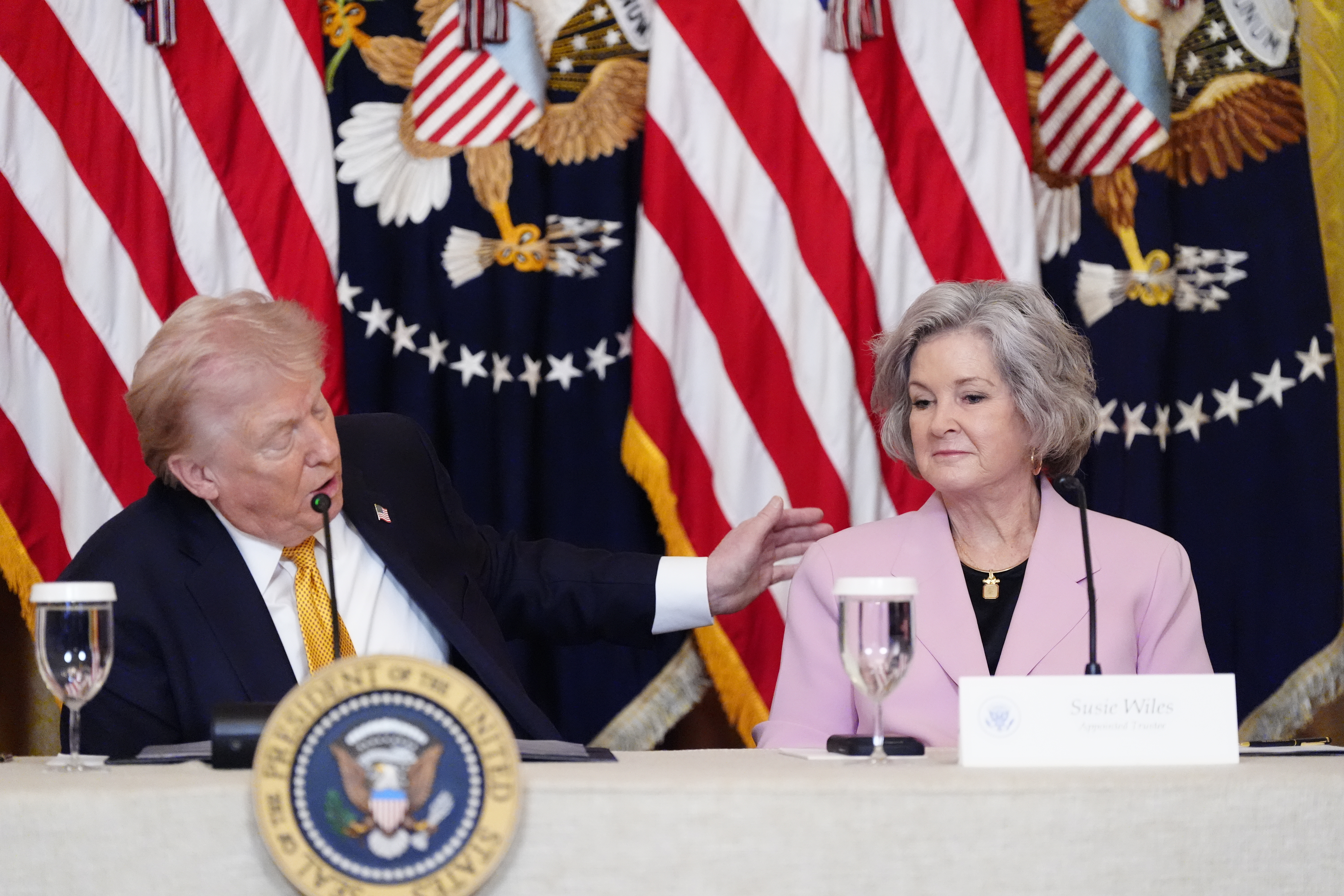
    The Trump White House has expressed pride in the fact that some key senior staff have been the first women to hold certain titles, including Susie Wiles as chief of staff, and defended the president’s hiring choices in a statement to the Post.

    “President Trump has assembled the greatest Administration in history, selecting each member of his incredible team based on one criterion: their ability to deliver for the American people,” Taylor Rogers, a White House spokesperson, said in a statement. “Unlike the identity-politics-obsessed Democrats, the President judges individuals on merit and qualifications, not immutable characteristics.”

    Lower rate of female political appointees

    According to the Partnership for Public Service, a nonprofit that says it aims to build a better government and a stronger democracy, Trump’s Senate-confirmed appointees are made up of the smallest percentage of women of any administration since George W. Bush.

    A PPS political appointee tracker, launched with the Post in 2016, monitors appointments to roughly 800 executive branch positions, a portion of more than 1,300 positions that require Senate confirmation. It includes all full-time, civilian positions in the executive branch that require Senate confirmation except for judges, marshals, and U.S. attorneys. (Military appointments and part-time positions requiring Senate confirmation are not included.)

    When excluding ambassadors and holdovers from previous administrations, PPS data show that so far in this administration, about a year and four months in, 14.53% of all nominees or Senate-confirmed political appointees — 51 out of 351 total roles — are women.

    At this point in President Joe Biden’s term, women had been nominated for 199 out of 379 roles, comprising 52.5% of appointees. And at this point in Trump’s first term, women had been nominated or announced for 41 of 173 of those roles, comprising 23.7% of appointees.

    Heather Higgins, CEO of the conservative nonprofit Independent Women’s Voice, told the Post that “the confirmation gantlet falls hardest on conservative women who can expect their families, faith, and reputations to be put through the wood chipper.”

    “Plenty of enormously talented women make the entirely rational choice to serve the country some other way,” she added. “That’s not a deficit of ambition but a market signal that women don’t necessarily see politics as the only or best lane for influence. And looking at the life of those in those roles, which is no picnic, I’d say that that’s a testament to the groundedness and judgment of women on the right.”

    But Max Stier, the president and CEO of the Partnership for Public Service, expressed concerns about the trend.

    “The evidence is clear that drawing on people with different backgrounds creates a higher-performing organization,” Stier said in a statement. “At the end of the day, our government needs leadership that reflects the diversity of the American people in order to understand and best serve them.”

    Turnover in Trump’s cabinet

    The first female cabinet member was Frances Perkins, who served as secretary of labor from 1933 through 1945. But it wasn’t until the 1970s under President Jimmy Carter that more than one woman was part of the president’s cabinet at the same time.

    Trump selected nine women to serve in his cabinet or in cabinet-level positions at the start of his second term. One of those cabinet-rank members, White House chief of staff Susie Wiles, does not require Senate confirmation. Another pick, Elise Stefanik, withdrew her nomination as U.S. ambassador to the United Nations.

    Among Trump’s presidential predecessors, only Biden successfully nominated more women to serve in his cabinet toward the start of his presidency.

    But nearly a year and a half into Trump’s second term, every departure from his cabinet has been a woman. And more female cabinet and cabinet-level officials have left their positions during this term than at this point in any previous presidential administration, according to an internal count by the Post based on a list of female cabinet members through U.S. history collected by the Rutgers University Center for American Women and Politics.

    Most recently, Tulsi Gabbard announced last month that she would step down as the director of National Intelligence effective June 30. Along with Gabbard, Attorney General Pam Bondi, Labor Secretary Lori Chavez-DeRemer, and Homeland Security Secretary Kristi L. Noem all have left the cabinet. A man was chosen to replace each of them.

    Fewer Republican women running for federal office

    The start of Trump’s second presidency also marked the first Congress since 2011 in which the number of women serving in the House and Senate declined, due to a decline in Republican women. While Democrats set a record by sending 110 female lawmakers to the House and Senate at the start of 2025, Republicans elected 40, according to data from CAWP. The number of Republican women in the House and Senate hit record or near-record levels after the 2022 midterm elections.

    There’s also been a decline in Republican women running for federal office, according to data from the Center for American Women and Politics at Rutgers. Republican women as a percentage of Senate and House candidates reached their peak in 2022.

    A record-setting 38 women filed as Republican Senate candidates in 2022. The number of candidates dropped to 21 in 2024 and has risen slightly to 27 candidates filing to run in 2026.

    Similarly, the number of Republican women registering to run for House seats hit a peak in 2022 with 261. That number dropped to 166 in 2024. So far in 2026, the number of female Republican candidates filing to run for House seats has declined further to 155 candidates.

    “Republican women are underrepresented across the board, across states, even when we look at them as a percentage of their own caucus in highly Republican states,” said Kelly Dittmar, director of research and CAWP scholar at Rutgers. “This change in a Republican administration is consistent with what we have seen before: When Republicans are in office, when they hold a state legislature, the majority party — we know that almost always there are going to be fewer women.”

    Public polling suggests that waning female representation in Washington may not be seen as much of a problem for many Republicans.

    A 2023 Pew Research study found that 5% of Republicans and Republican leaners say it is extremely or very important to them that the U.S. elects a woman as president in their lifetime. Among Democrats, 31% said it was extremely or very important. Republican women were also about twice as likely as Republican men to say there are too few women in high political offices in the country.

    “It’s odd to assume that women are succeeding only if they’re found in government rosters. That’s a surprisingly narrow definition of success,” Higgins, the Independent Women’s Voice CEO, said. “One of the lessons of the last several decades is that women don’t all want the same things, don’t make the same choices, and shouldn’t be expected to. Equality means respecting those choices, not treating every statistical difference as evidence that something has gone wrong.”

  • Pentagon labels tech giant Alibaba and electric car maker BYD as aiding Chinese military

    WASHINGTON — The Pentagon has added several prominent Chinese businesses, including the tech giant Alibaba, electric car maker BYD and search engine Baidu, to its list of Chinese military companies, preventing them from getting U.S. defense contracts.

    The list, updated and published Monday by the Pentagon, now sanctions well-known, non-state-owned Chinese companies that are not traditionally considered to be in the defense or security sector. It reflects growing wariness of Beijing’s strategy of tapping the strength of non-state businesses for military purposes.

    Created in 2021 by a congressional mandate, the list seeks to identify Chinese companies that the Pentagon considers to have links to the Chinese military — not only those directly controlled by the Chinese military and security forces but also those contributing to the country’s defense industrial base.

    When updating the list last year, the Pentagon said the Chinese military sought to acquire advanced technologies and expertise developed by Chinese companies, universities and research programs that “appear to be civilian entities.”

    The Chinese Embassy on Monday accused the U.S. of “overstretching the concept of national security and making discriminatory lists to go after Chinese companies.” It said Chinese companies observe the laws and regulations of the countries where they do business. “The U.S. should stop its wrong practice and create a fair, just and non-discriminatory environment for Chinese companies,” the embassy said in a statement.

    Alibaba, BYD and Baidu said there is no basis for including them on the list. “Alibaba is not a Chinese military company nor part of any military-civil fusion strategy,” a statement from the leading e-commerce company said. Baidu, which has expanded into artificial intelligence and self-driving taxis, said the suggestion that it is a military company is “entirely baseless.”

    BYD said in a statement it is “not a military enterprise” and that the determination “seriously contradicts the facts.” It also said it “will actively safeguard its legitimate rights and interests through all feasible administrative and legal means.”

    This year’s list has grown to 188 Chinese entities, up from last year’s roughly 130 named by the Pentagon. It already had covered companies such as DJI, a major maker of consumer drones. While a company on the list can still do business in the U.S., it faces reputational damage and could be subject to more restrictions.

    After the Pentagon released the updated list, the House Select Committee on the Chinese Communist Party called it “a warning to American businesses, all levels of government, and the American people.” It said the companies on the list that are traded publicly on U.S. exchanges should be delisted and no American company should do business with those on the list, “otherwise they are enabling China’s military ascendance.”

    In naming Alibaba, the Pentagon said the tech giant helps boost China’s defense industrial base because it is affiliated with the country’s Ministry of Industry and Information Technology. Alibaba is traded on the New York Stock Exchange.

    The Pentagon said BYD and Baidu are affiliated with the same ministry, which oversees China’s technology and industrial policies. BYD is dominant in the global electric vehicle market, and President Donald Trump said in January that he would welcome Chinese carmakers such as BYD if they built plants in the U.S. and hired American workers.

    However, a number of U.S. lawmakers have said they will seek a ban on Chinese electric vehicles.

    Another addition is the Chinese robotics company Unitree, whose dancing robots impressed Simon Cowell on NBC’s “America’s Got Talent.” The Pentagon said the company “knowingly received assistance” from the Chinese government through its designation as a small or medium-sized company that is highly innovative, highly competitive globally and critical to the country’s supply chain. Unitree did not immediately respond to a request for comment.

  • Gov. Mikie Sherrill says ICE detention center visit was strictly limited

    Gov. Mikie Sherrill says ICE detention center visit was strictly limited

    Gov. Mikie Sherrill of New Jersey on Monday was allowed to visit Delaney Hall, a detention center in Newark that has drawn protests for two weeks after immigrants inside complained about inhumane living conditions.

    Sherrill described the visit as closely controlled and limited, and she said she was not permitted to meet with or speak directly with detainees.

    “That is unacceptable,” Sherrill said in a prepared statement.

    Sherrill, a Democrat, said she would continue to ask for a more thorough inspection of the center, including a visit by the state’s Department of Health. New Jersey’s attorney general has sued the center’s operator, Geo Group, which is one of the largest private prison operators in the United States. The attorney general is asking that state health inspectors be given full access to the facility.

    Fights between demonstrators and detention center employees have erupted since last month at the front gates of Delaney Hall, with violent clashes common in the early morning hours. Demonstrators had blocked vehicles trying to leave the center, and in late May, heavily armed federal agents with U.S. Immigration and Customs Enforcement had responded with pepper spray and pepper balls.

    In a statement, Homeland Security Secretary Markwayne Mullin said his department had granted Sherrill access to the federally run facility despite the fact she is not a federally elected official. Mullin said prisons operated by New Jersey were run more poorly than Delaney Hall.

    “Gov. Sherrill won’t tell you: New Jersey state prisons face systemic health code violations,” Mullin said. “I’d encourage Gov. Sherrill to focus on her own backyard, and put the safety of her own constituents above illegal aliens.”

    During an appearance on “Fox & Friends” on Monday, Tom Homan, President Donald Trump’s top border adviser, criticized the demonstrators and argued that detainees inside Delaney Hall were treated and fed well, contrary to claims that many have made about rotten food and dirty bathrooms.

    Homan also said federal officials would send more federal agents to New York, vowing to push back against new restrictions approved by Gov. Kathy Hochul against federal immigration operations in the state. The recently passed legislation bars agents from wearing masks during immigration operations, allows agents to be sued for constitutional violations, and prohibits agents from searching “sensitive locations” such as hospitals and schools without a warrant signed by a judge.

    Homan suggested that local officials were endangering the public by refusing to help facilitate the arrests of migrants.

    “I made her a promise — you are going to see more ICE agents than you have ever seen in New York City,” Homan said on “Fox & Friends.” “It’s coming.”

    Hochul said Homan’s threat directly contradicted what Trump had said to her in a room full of fellow governors. Trump, Hochul said, had told her that the federal government would not deploy a crackdown where it was not welcome.

    “If they come here and go throughout New York state with a surge in ICE, there won’t be a Republican standing in this state,” Hochul said to a group of reporters. “Americans have had enough with the overreach of ICE.”

    Asked about Hochul’s account of her interaction with Trump, the White House said, “Any criminal illegal alien living any place in the United States is subject to removal.”

    In a social media post on Monday, New York City Mayor Zohran Mamdani criticized Homan’s threat.

    “We will not allow ICE or anyone else to sow fear in our communities,” Mamdani said. “We will stand proudly with our immigrant neighbors and reject these attacks for what they are: an attempt to divide us.”

    This article originally appeared in The New York Times.

  • Health risks of alcohol accelerate after one drink a day, study finds

    Health risks of alcohol accelerate after one drink a day, study finds

    A government alcohol study published Tuesday concluded that the health risks of alcohol start at a single drink a day. The report was caught up in controversy after drawing the ire of the alcohol industry.

    At one drink a day, the researchers found, there was an increased risk of premature death from an illness or injury directly attributable to alcohol, though it was small — 1 in 1,000 people. But the risk of premature death jumped to 1 in 25 for those who had two drinks a day, a level long considered safe for men, according to the study, which was published in the Journal of Studies on Alcohol and Drugs.

    The Alcohol Intake and Health Study was one of two reports commissioned during the Biden administration to inform an update to the U.S. dietary guidelines.

    The second report, from a panel appointed by the National Academies of Sciences, Engineering and Medicine, or NASEM, came to very different conclusions. It suggested that moderate drinking (up to two drinks a day for men and one for women) was healthier than not drinking at all, although it noted that moderate drinking was also linked to a higher breast cancer risk. Some of the panelists behind that report had financial ties to the alcohol industry.

    The second report’s finding was more palatable to the alcohol industry, which had called the Alcohol Intake and Health Study ideologically driven and scientifically flawed, and said it had communicated its concerns repeatedly to government officials over a period of several years.

    When the Trump administration finally issued the new dietary guidelines in January, they advised Americans to drink less for better health but omitted any recommendation for daily limits, in a departure from previous years.

    “The new dietary guidelines say that consuming less is better for your health, but don’t say what consuming less means,” said Priscilla Martinez-Matyszczyk, one of the authors of the new paper and the deputy scientific director of the alcohol research group at the nonprofit Public Health Institute. “This paper does, and it says that having no more than one drink a day is best for health, and that drinking above that comes with significant risks.”

    A standard drink is defined as 12 fluid ounces of regular beer, 5 ounces of wine or 1.5 ounces of distilled spirits.

    In an editorial accompanying the new paper, Robert M. Vincent, the former government official who commissioned the study, said he believed he was fired because the report produced evidence “at odds with commercial interests.” Vincent lost his job as associate administrator for alcohol prevention and treatment policy at the Substance Abuse and Mental Health Services Administration during a reduction in force last year.

    “It was going to cost the alcohol industry money,” Vincent said. “They didn’t like going from two to one for men, and they didn’t like the mention of cancer.”

    A spokesperson for the Department of Health and Human Services did not respond to a request for comment about Vincent’s statement.

    The new study, which relied exclusively on U.S. health data, assessed relationships between average alcohol consumption and the risk of disease or death from causes that were directly attributed to drinking.

    Women who had one drink a day were more likely to die of liver cancer or breast cancer than women who did not drink. And at one drink a day, both men and women were at increased risk of dying from liver cirrhosis, oral and esophageal cancers, and injuries, the paper found. The risks continued to climb with higher levels of consumption.

    Consuming more than one drink per occasion was associated with progressively higher risks of breast cancer, cardiovascular disease and injury.

    The report did find that one drink a day was associated with a lower risk of diabetes for women and a lowered risk of stroke for both men and women. However, occasional heavy drinking nullified the protective effects against stroke.

    One reason the studies reached such different conclusions is that while the new study examined deaths from causes directly attributable to alcohol, the NASEM report commissioned by Congress looked at overall death rates of moderate drinkers, including deaths not causally related to alcohol.

    Critics of the NASEM report say that people who drink in moderation often have other healthy lifestyle habits that contribute to their longevity. The moderate drinking group also included many people who consumed less than two drinks a day. Both of these factors could make the health effects of moderate drinking look less significant than they might be.

    Dr. Ned Calonge, an epidemiologist at the University of Colorado Anschutz Medical Campus who led the NASEM study, said he stood by its conclusions.

    “Alcohol research is complex and I am not surprised by different methods producing different results,” Calonge said, adding that modeling studies like the Alcohol Intake and Health Study, which use data to estimate the lifetime risk of diseases and deaths caused by alcohol, also come with potential biases.

    At the same time, he added, “I don’t believe anyone should start drinking for health reasons.”

    This article originally appeared in The New York Times.

  • ‘A breath of fresh air’: Jamie Apody’s role at Fox 29 expands following difficult 6abc departure

    ‘A breath of fresh air’: Jamie Apody’s role at Fox 29 expands following difficult 6abc departure

    Ahead of anchoring her first Philly sportscast in more than two years (947 days for those counting), Jamie Apody’s focus was squarely on her feet.

    “I’m mostly rusty with high heels. Oh god, it’s a disaster,” Apody said Monday night before making her debut as a sports anchor on Fox 29.

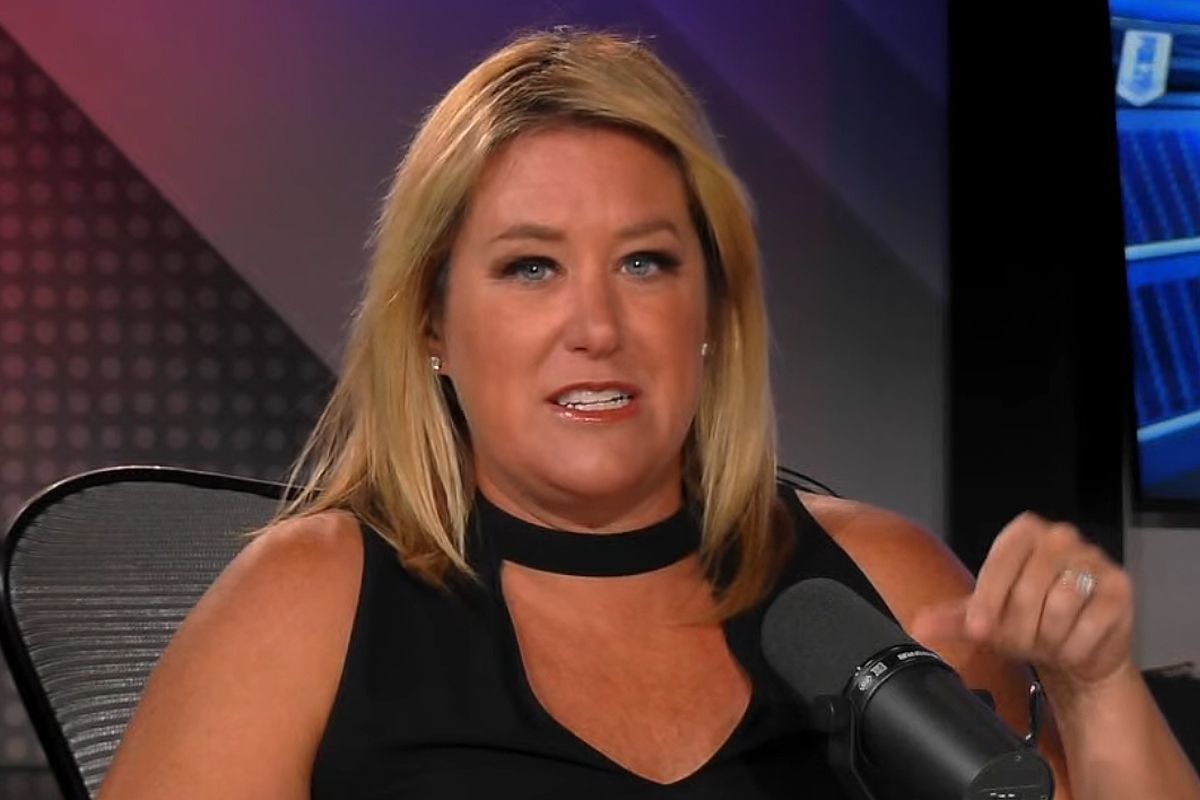
    Apody, who spent 18 years as part of 6abc’s Action News team, is getting an expanded role at Fox 29. In addition to her regular appearances on The Phantastic Sports Show, which began in 2024, Apody will anchor the station’s Saturday 10 p.m. newscast and pop in elsewhere as needed.

    “It’s not a full-time thing, but who knows? Maybe it’ll become that. That’d be awesome,” Apody said. “But I’m so thrilled to be doing what I love again.”

    The expanded role will also include reporting, which will put her back into the stadiums during a busy year for Philly sports, featuring the World Cup, the MLB All-Star Game, and the Eagles heading to London.

    “I’m more than ready,” Apody said. “I do think it’s going to be a little weird … not to mention starting with a different station’s name on the microphone after all this time.”

    Jamie Apody has been working with Fox 29 since 2024.Fox 29

    She certainly has plenty of experience. For the bulk of her tenure at 6abc, Apody anchored the 5:30 p.m. edition of Action News five days a week and was a regular at the city’s stadiums covering the teams.

    All that ended when she lost her job in 2023, a gut-wrenching experience Apody wasn’t even able to talk about publicly until almost a year later. Her unexplained departure and lengthy absence was the talk of the town, and some viewers launched a Change.org petition asking 6abc to bring her back.

    It was even difficult for Apody to return to Citizens Bank Park and Lincoln Financial Field as a fan, something she avoided for about a year. Ultimately, she was forced back to the stands by her three young sons, all of whom are diehard Philly sports fans.

    “It was really hard. Harder than I thought,” Apody said. “For a while there, those stadiums and ballparks really reminded me that I wasn’t able to do what I love more than anything, so it was hard for me to face. I actually made the choice not to face it.”

    After leaving 6abc, Apody reached out to most of the stations around town and had meetings with both NBC10 and CBS3. But she really hit it off with Fox 29 executives Jim Driscoll and Dennis Bianchi, and said working for the station has been “a breath of fresh air,” recalling the words of former 6abc sports director Gary Papa, who hired her in 2006.

    “He once told me, ‘You don’t know what you don’t know. You don’t even know what you know,’” Apody recalled. “The first time I walked in the door [at Fox 29] two years ago, I couldn’t believe what I’d been missing.”

    She’s not the only Action News alum at the station. Former 6abc sports anchor Jeff Skversky, who also sparked speculation by his sudden TV exit in 2021, joined Fox 29 as a freelance reporter in 2025 after first contributing to The Phantastic Sports Show.

    “I think it’s such an amazing fit,” Apody said of Fox 29. “I almost wonder what things would have been like if our paths crossed earlier.”

  • U.S. says it has begun strikes against Iran following crash of Army Apache helicopter off Oman coast

    DUBAI, United Arab Emirates — The U.S. military said Tuesday that it carried out strikes on Iran following the crash of an Army helicopter near the Strait of Hormuz that President Donald Trump blamed on the Islamic Republic.

    U.S. Central Command said on social media that the strikes would be “a proportional response to unjustified Iranian aggression.” Iranian state media reported that explosions were heard on Qeshm Island in the Strait of Hormuz, a critical shipping lane that Iran has effectively closed during the war, before saying that the wave of American attacks in the south has “subsided.”

    Trump said earlier in a social media post that Iran had shot down the aircraft while it was on patrol over the strait and declared that the U.S. “must, of necessity, respond to this attack.” Iran’s top diplomat said foreign military forces near the country’s territory “are at constant risk.”

    The downing of the helicopter and the resulting strikes by the U.S. military further strained a two-month ceasefire a day after Iran and Israel exchanged fire for the first time since the fragile truce took effect. Iranian state television said Tuesday that the Israeli attacks killed at least two members of the country’s air-defense units.

    Since the U.S. and Israel began striking Iran on Feb. 28, the war has shaken the global economy, driven up energy prices around the world, and made many basics, including food, more expensive.

    Officials have been unable to turn the April ceasefire into a deal to permanently end the conflict, particularly as Israel intensifies and expands its military campaign in Lebanon against the Iranian-backed militia Hezbollah.

    U.S. helicopter collided with Iranian drone, official says

    The Army AH-64 Apache attack helicopter went down after colliding with an Iranian drone, according to a U.S. official, who spoke on condition of anonymity to discuss an ongoing investigation.

    It wasn’t clear whether the collision was intentional, and official statements only said the crash is under investigation. CNN, CBS News, and other outlets earlier reported the collision.

    In the first known operation of its kind by the American military, a drone boat rescued the two aviators who were aboard the Apache attack helicopter when it went down near the critical shipping lane that Iran has effectively closed during its war with the U.S. and Israel.

    Trump said in a social media post that military officials told him “the Iranians shot down one of our highly sophisticated Apache Helicopters.” Both service members “are safe and uninjured,” he added.

    “Nevertheless, the United States must, of necessity, respond to this attack,” Trump wrote.

    Soon after Trump made his accusation, Iranian Foreign Minister Seyed Abbas Araghchi said in a social media post that the strait is “thousands of miles away from U.S. shores.”

    “Foreign forces in proximity to our territory are at constant risk on account of their own human errors, plain accidents, or potentially being caught in crossfire,” Araghchi wrote. “To reduce risk, best solution is for them to leave.”

    The downing of the helicopter further strained a two-month ceasefire a day after Iran and Israel exchanged fire for the first time since the fragile truce took effect. Iranian state television said Tuesday that the Israeli attacks killed at least two members of the country’s air-defense units.

    Since the U.S. and Israel began striking Iran on Feb. 28, the war has shaken the global economy, driven up energy prices around the world, and made many basics, including food, more expensive.

    Officials have been unable to turn the April ceasefire into a deal to permanently end the conflict, particularly as Israel intensifies and expands its military campaign in Lebanon against the Iranian-backed militia Hezbollah.

    Army crew members picked up by drone boat

    The Army aviators were rescued at 3:30 a.m. local time Tuesday, about two hours after their helicopter went down during a patrol off the coast of Oman, U.S. Central Command said.

    The U.S. service members were spotted and picked up by a drone boat that took them to another location on the water, where they were picked up by a helicopter, said Capt. Tim Hawkins, a spokesperson for U.S. Central Command. Hawkins initially said the drone took the two to shore, and he did not elaborate on the updated timeline.

    It was the first known drone rescue at sea by the U.S. military, Hawkins said.

    AH-64 Apache helicopters have been a key asset for the American military as it enforces a blockade on Iranian crude oil shipments and tankers, seeking to pressure Tehran into a deal. The helicopters have also been used by the United Arab Emirates to shoot down Iranian drones.

    The drone used to perform the rescue was a 24-foot vessel called a Corsair, Hawkins said. It’s manufactured by Saronic Technologies.

    The drone was assigned to the Navy’s Task Force 59, established in 2021 as the Navy’s first uncrewed and artificial intelligence unit that focuses on maritime security in the Middle East, including the Strait of Hormuz and the Suez Canal.

    Trump insists an Iran deal is coming

    Before he accused Iran of downing the U.S. helicopter, Trump had expressed renewed optimism over negotiations with Iran.

    “We have a good chance” of signing a deal in “two or three days,” Trump said late Monday. But he did not provide any details on why there was reason for new optimism. In the two months since the U.S. and Iran agreed to an initial ceasefire, Trump has repeatedly predicted that a deal is near.

    “We’re very close to having a very, very good, strong, powerful deal,” the president said.

    Mediators, led predominantly by Pakistan, have been trying for weeks to get a deal across the line. However, both Iran and the U.S. have taken hard-line positions.

    The U.S. wants to see Iran give up its stockpile of highly enriched uranium, which is believed to be entombed in the aftermath of American airstrikes that happened during the 12-day war in 2025. But Iran is refusing that and demanding relief from sanctions. It also wants the release of frozen assets even before a final agreement is in place, something rejected by Trump.

    Before Trump’s comments on negotiations, Qalibaf said Monday that Trump’s remarks so far on a possible deal “contradicted the agreed-upon sections,” showing that the U.S. is “neither seeking a ceasefire nor dialogue.”

    The continued fighting between Israel and Hezbollah is still a top Iranian priority as well. Lebanon’s army chief, Gen. Rodolphe Haykal, traveled to Pakistan on Tuesday. There, he met Pakistan’s army chief, Field Marshal Asim Munir, who has been a key figure in the Iran-U.S. talks.

    Haykal’s visit comes as Lebanon’s government takes an increasingly hard line on Hezbollah but remains unable to disarm the powerful militia. Hezbollah thanked Iran on Tuesday for attacking Israel “in defense of our Lebanese people,” suggesting that Lebanon’s government should take this opportunity to improve relations with Tehran.

    Israel issues a warning for Tyre, Lebanon

    Meanwhile, the Israeli military issued an evacuation warning for Lebanon’s southern port city of Tyre, including the Christian quarter, which has so far been spared from airstrikes on the city.

    Last week, Israel warned the Christian neighborhoods in Tyre that it believed Hezbollah members were among them. Many Lebanese Shiite Muslims fled to those areas as Israeli strikes hammered the Mediterranean coastal area over the past two weeks.

    After last week’s warning, the Lebanese army deployed to the Christian district of Tyre in an effort to prevent Israeli attacks there and to show that Hezbollah has no armed presence in the area. But Avichay Adraee, the Israeli military’s Arabic-language spokesperson, posted on X on Monday that the Israeli military “will have to act against their terrorist activities in the neighborhood soon.”

  • Past Present Future, beloved Main Line gift and craft store, is closing its doors

    Past Present Future, beloved Main Line gift and craft store, is closing its doors

    The interior of Past Present Future, downtown Ardmore’s beloved gift and craft store, is unmistakable. Each wall is adorned with art and collectors’ items, from hand-beaded necklaces to fruit-shaped bowls and ceramic tropical fish. Cases of jewelry sit under hanging lanterns and mobiles, and trinket boxes share shelves with colorful purses and glass figurines.

    Past Present Future, located at 15 Lancaster Ave., is the 50-year work of owner Sherry Tillman, who first opened the store in Center City in 1976 as a young graduate of the Philadelphia College of Art, before moving to Ardmore in the mid-1990s. Tillman calls the shop “part gift store, part mini-museum,” and prides herself on grouping items, from lamps to clocks to mirrors, in “ways that maximize their funky diversity.”

    Now, five decades, four storefronts, and thousands of customers later, Past Present Future is officially closing, marking the end of a chapter that Tillman says has been defined by eclectic art, changing times, and deep community ties. While Tillman is “gutted” to close up shop, in her words: “It’s time.”

    Sherry Tillman, owner of Past Present Future, chats with Ellen Balze, of West Philadelphia, a regular for many years, during Tillman’s party for friends and long-time customers in Ardmore, Pa., on Friday, June 5, 2026.Tyger Williams / Staff Photographer

    Tillman first opened Past Present Future as a toy store on the corner of 13th and Pine Streets in Center City, next to a friend’s science-fiction bookstore. The Philadelphia Daily News in 1979 called Tillman’s store “one of the wonders of the city,” a “throwback to the age of handcrafted wooden playthings, one-of-a-kind soft toys and sculptures, old-fashioned balance toys and Rube Goldberg-ish do-nothing machines.” Tillman, then a 20-something artist, took orders from customers and handcrafted toys from her workshop.

    After three years, Tillman left the Gayborhood and moved to 17th and Locust Streets, where the scope of Past Present Future began to shift, bringing in more crafts and jewelry. Four years later, Tillman moved to 18th Street between Market and Chestnut Streets. She had 2½ floors of a four-story building and, according to a 1990 Inquirer story, stocked “zingy jewelry, kaleidoscopes, cards, clocks, handmade ceramic diners that light up” and had a “top-floor gallery devoted to fun-and-funky craft items for adults.”

    By the mid-1990s, much of Tillman’s customer base had moved out to the suburbs, and the confounding pressures of crime, high taxes, and a lack of parking, plus raising her own growing family in Ardmore, spurred her to pack up her Center City store and move to the Main Line. She opened on Lancaster Avenue in 1996.

    “The fact that my business could be where my home is was so important to me,” Tillman said, reflecting on her move to Ardmore. “To be embraced and connected to this community is also important to me.”

    Sherry Tillman, owner of Past Present Future, made a board of all her articles and photos of her for her small party for friends and regular customers in Ardmore, Pa., on Friday, June 5, 2026.Tyger Williams / Staff Photographer

    Tillman’s store quickly became a magnet for artsy types, window shoppers, gift givers, touring musicians, and spiritually minded Main Line residents.

    “It’s incredible,” she said. “People come in and we talk, other people come in and they join the conversation. It’s a place where people just feel so comfortable.”

    Lorig Buckley, otherwise known as Mystic Lor at Mystic of the Main Line, said she thinks of Past Present Future as “a staple” in Ardmore.

    When people strolled into Past Present Future looking for a palm reading, Tillman would send them down the block to Mystic of the Main Line. When clients of Buckley’s needed to shop for a gift, she’d pass them along to Past Present Future.

    “My heart sank when I saw that she was closing, because it really brought a different spirit to the area,” Buckley said.

    Shannon Gallagher, a business coach who lives in Ardmore, always bought her clients gifts from Tillman’s shop, from crystals to wooden boxes with tarot cards. When she first moved to Ardmore four years ago, Tillman gave her the lowdown on all of the locals’ favorite spots.

    “She just made it feel so comfortable for us,” Gallagher said.

    Sherry Tillman, featured in the Philadelphia Daily News in 1982, holding a teddy bear at Past Present Future, back when it was located at 243 S. 17th St. in Center City. Tillman has operated the toy and art store for 50 years, first in Philadelphia and, for the last three decades, in Ardmore.Sam Psoras / Staff Photographer

    In addition to running Past Present Future, Tillman organized First Friday Main Line, a monthly arts crawl that brought music and art to the streets of Ardmore. Alongside Broomall surgeon Lt. Col. Kenneth Marx, Tillman helped create Operation Angel Wings, a donation drive that sent clothes and toys to children in Afghanistan. Most recently, she spearheaded a contest to paint a mural on the side of her storefront. The first of five winning murals will be up by July 1.

    Tillman said Ardmore has “blossomed a lot” in the years since she moved to town. Street art, interesting shops, and live music sprawl across downtown, from the newly painted Schauffele Plaza to Ardmore Music Hall (many of the traveling performers stop into Past Present Future before their shows, Tillman said).

    “There’s expressions of art around us,” Tillman said.

    Tillman doesn’t have an exact closing date yet. Past Present Future has marked down its merchandise by 20%, and Tillman said she’ll be open until there’s nothing left (“hopefully”). Tillman plans to sell the 15 Lancaster Ave. building, which she has owned for years.

    “It’s really hard,” she said, “when you think that your entire life has been this one thing, to say goodbye.”

    This suburban content is produced with support from the Leslie Miller and Richard Worley Foundation and The Lenfest Institute for Journalism. Editorial content is created independently of the project donors. Gifts to support The Inquirer’s high-impact journalism can be made at inquirer.com/donate. A list of Lenfest Institute donors can be found at lenfestinstitute.org/supporters.