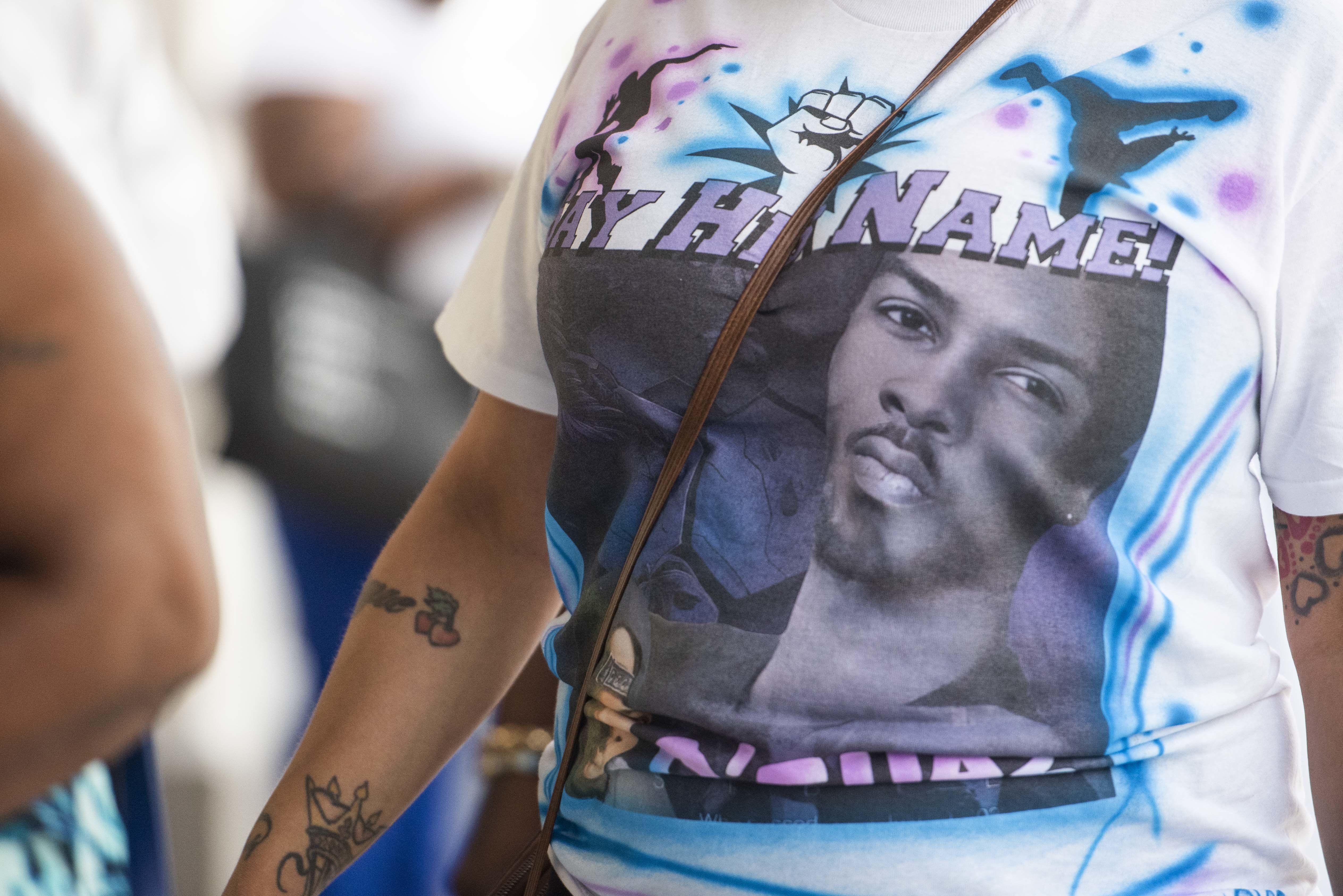
A Brooklyn man has been convicted in the killing of beloved Philadelphia dancer O’Shae Sibley, who was stabbed to death at a New York City gas station in 2023.
Dmitriy Popov, 20, was convicted of manslaughter as a hate crime and other charges related to “taunting, stabbing, and killing” Sibley, which included “hurling homophobic and anti-Black slurs,” Brooklyn District Attorney Eric Gonzalez said in a statement.
Sibley, 28, was a gay Black man, while Popov, who was 17 at the time of the killing, is white. Popov, who was tried as an adult, faces up to 25 years in prison. Sentencing is scheduled for June 30.
O’Shae Sibley at the Ailey Extension dance school in Manhattan.Courtesy Whitney Brown & Alvin Aliey
While filling up their car with gas on a Saturday night in July 2023 after a trip to the beach, Sibley and four of his friends blasted music by Beyoncé and started dancing, according to Joan Myers Brown, founder of the Philadelphia Dance Company and Sibley’s former teacher.
Popov and two associates approached the car and threatened the group with racist and homophobic slurs, telling them they did not want to see gay men dancing in their neighborhood, Gonzalez said.
His associates left the gas station, but Popov remained and continued to taunt the group of dancing friends. Ultimately, he stabbed Sibley on the side of his chest with a knife, puncturing his heart, Gonzalez said. Sibley was pronounced dead a short time later at a nearby Brooklyn hospital.
“O’Shae Sibley moved to New York to pursue his dream of being a dancer and choreographer, and his life was cut short when he was killed by this defendant, who couldn’t stand the sight of O’Shae and his friends just being themselves and living their lives openly as Black gay men,” Gonzalez said, offering his hope that the verdict would “bring O’Shae’s family, his friends, and the larger community some measure of solace.”
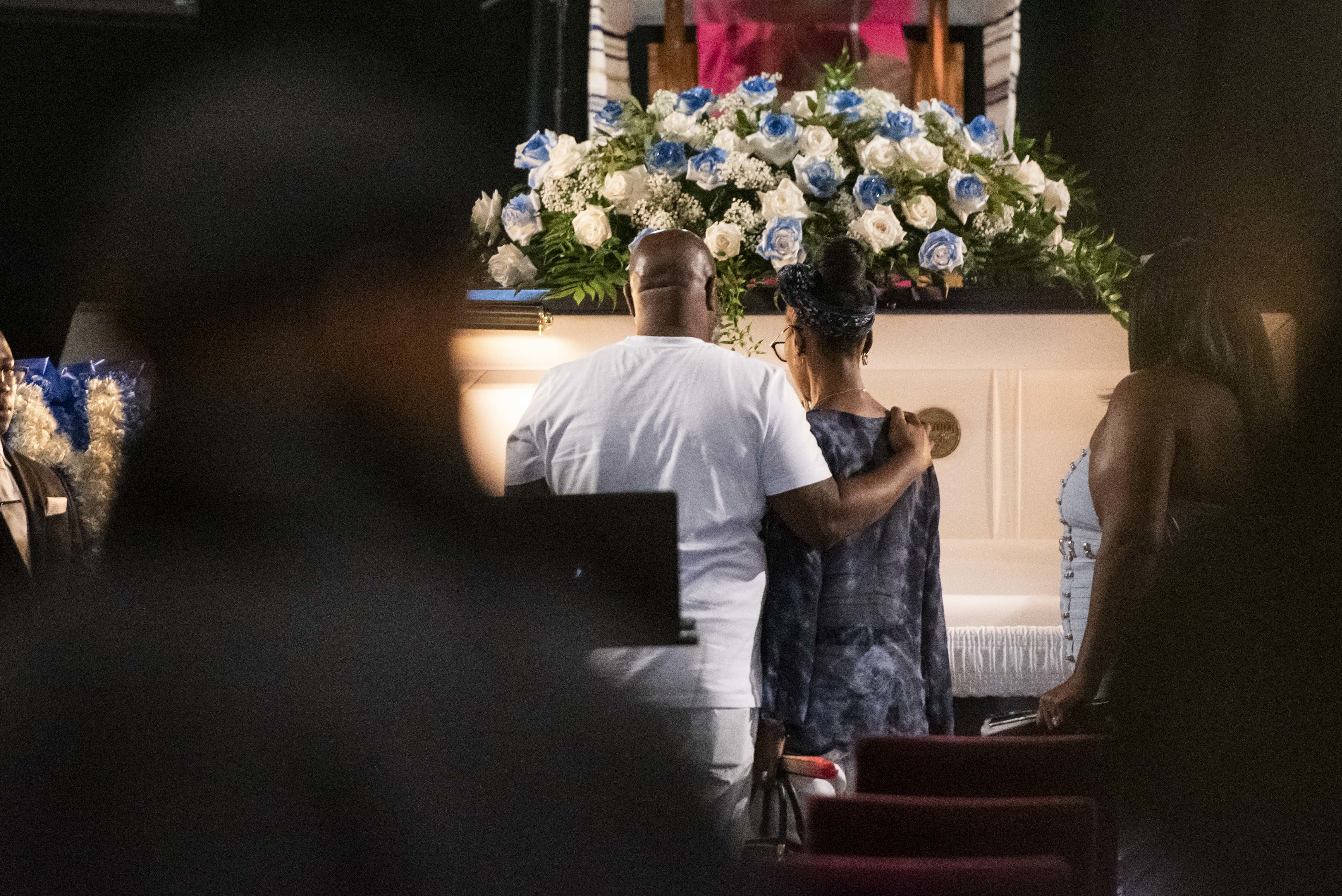
O’Shae Sibley’s parents Jake Kelly (left) and Onetha Sibley visit their son’s casket at The Met in Philadelphia on Tuesday, Aug. 8, 2023.Allie Ippolito / Staff Photographer
A North Philadelphia native, Sibley moved to New York before the COVID-19 pandemic in 2020 and landed a job as a dancer and choreographer with the Alvin Ailey American Dance Theater’s Ailey Extension. He danced in several music videos and performed at the Lincoln Center for the Performing Arts in New York.
“O’Shae was a beacon of light for a lot of us in our community that was engulfed in darkness,” Pena said then. “But O’Shae rejoiced. O’Shae was O’Shae.”
The Justice Department has opened an investigation into whether the Philadelphia Police Department has been improperly revoking people’s gun permits, officials announced Tuesday — a remarkable development that puts one of the nation’s largest police forces under the scrutiny of federal law enforcement.
In a letter addressed to Mayor Cherelle L. Parker — which the Justice Department published online — Assistant Attorney General Harmeet K. Dhillon said the investigation “will evaluate the PPD’s policies and practices regarding issuance and revocation of licenses to carry firearms.”
If prosecutors determine those policies violate the Constitution, Dhillon said, the Justice Department could take the city to court.
Dhillon emphasized that federal officials “have not reached any conclusions” in their inquiry. And she said prosecutors would seek to speak with city and police officials throughout the course of their probe.
City spokespeople did not reply to requests for comment Tuesday.
The announcement came weeks after news reports detailed that police had revoked the gun permits of five members of a Philadelphia-based Black armed citizens group.
Members of the group, the Panthers, received letters from the city police department’s permitting unit in February, alerting them that their gun permits had been terminated and offering little explanation beyond saying the decision was based on “good cause” as well as “character and reputation.”
The notifications came shortly after some members got into a verbal altercation with police officers in North Philadelphia. Panthers members were patrolling the neighborhood carrying high-powered firearms at the time, and police said the confrontation “created an unreasonable danger to public safety.”
Panthers members, including the group’s leader, Paul Birdsong, have appealed the department’s decision and are awaiting hearings on the possibility of restoring their permits later this year.
Two members have had their permits restored since challenging the decision, according to Birdsong’s attorney, Lyandra Retacco.
Philadelphia has unique laws surrounding gun permits. In the city, unlike the rest of the state, gun owners are required to have a license to carry a firearm openly, and the police department has broad authority to revoke licenses.
The Justice Department said it planned to investigate whether the Philadelphia Police Department had become overly reliant on “a vague ‘good cause’ standard” in deciding whether to cancel permits.
“It is a violation of the Second Amendment for government officials to use vague, personal discretion when determining whether to issue or revoke permits to carry firearms,” the department said.
Jonathan Goldstein, a nationally recognized Second Amendment lawyer and University of Pennsylvania lecturer, said he considered the DOJ’s aims justified, given what he viewed as the Philadelphia Police Department’s “subjective” and “arbitrary” authority to revoke gun permits and infringe on firearms owners’ rights.
The government’s enforcement, Goldstein said, was “long since overdue.”
“It is refreshing to see that the DOJ has finally taken a focus on the Second Amendment seriously,” he said.
Goldstein, who also serves on the board of the National Rifle Association, said he was not aware of any specific instance in Philadelphia that may have resulted in the DOJ’s scrutiny of the police department. He said there had been numerous cases over the years in which he believed the city’s policies around permitting had violated gun owners’ rights.
Although the Justice Department’s inquiry is new, the city has faced other challenges in seeking to tighten regulations around firearms.
Mayors and City Council members for decades have sought to ban assault-style weapons, limit handgun purchases, or prohibit guns at recreation centers, but courts have consistently found such restrictions were unlawful.
The Pennsylvania Supreme Court in 2024 also ruled unanimously against the city’s attempt to overturn a state provision that prevents the city from enacting its own gun laws.
That has not stopped city officials from pursuing litigation. Earlier this spring, Parker’s administration sued the firearms manufacturer Glock Inc., accusing the company of using deceptive marketing practices to target young people.
On the first day Olney High reopened as a traditional public school four years ago, 750 unregistered students showed up. Rosters had to be built on the spot. It took months for credits to be straightened out.
Despite forbidding obstacles, Olney soared.
On Tuesday, the first class that spent the entirety of its high school career at the “new” Olney graduated — with fanfare, joy, and a touch of wistfulness, as the school prepares for perhaps the deepest budget cuts in the Philadelphia School District next year.
The looming budget cuts prompted a subtle graduationclapback.
Valedictorian Iamdra Peguero was part of a small group that met with school board president Reginald Streater at the school Monday, imploring him to find a way to stop the budget cuts coming Olney’s way.
Olney received extra staff four years ago to address the complicated charter-to-district transition. Although it now enrolls nearly 1,000 students, officials have said they need to cut staff to balance the district’s budget.
Peguero and others have expressed alarm about what losing 17 staff members, including 13 teachers and most of the faculty who teach classes in the college-prep track, would mean to Olney.
Iamdra Peguero, Olney High class valedictorian, addresses the Olney High Class of 2026.Kristen A. Graham / Staff
Last week, Olney staffers wrote Streater a letter asking him to consider slowing the budget cuts.
“We applaud SDP for creating staffing and budgetary support for the transition beginning in 2022,” a group of eight Olney teachers wrote Streater. “These supports have helped make Olney’s transition an unprecedented success. We ask the district to extend this support, as the transition period is ongoing. We believe that a slow, planned adjustment to regular district staffing ratios over several years will allow us to sustain and build on the gains we have made.”
The Olney teachers proposed that instead of losing 17 teachers all at once, officials cut a few teachers per year until 2032-33. If the school’s enrollment rises, the cuts can be avoided.
Streater, who also spoke at the Olney graduation Tuesday, did not agree to the teachers’ proposal, but he said he was listening.
“I had a glimpse yesterday, y’all, of the passionate students and teachers that walk these hallways, and they spoke with me about proposed school changes that they don’t agree with,” Streater said in his graduation speech. “I just want to affirm them right now, and say I appreciate their appeal for different options and their strong voices. It comes from a place and people they love. That’s what it means to be in this community.”
Peguero, in her valedictory address, said she owed her success to her teachers, including many staff who are being transferred against their will because of the budget cuts.
As she spoke, several students behind her unfurled signs: “A school is its people” and “Don’t rip away our teachers and counselors.” The audience applauded.
“I want to think the teachers and staff that have supported my high school experience, especially the ones that won’t be here next year because of the ongoing school district force transfer. I speak on behalf of the class and say that we will miss you all.”
‘Restarted a school’
Olney’s graduation was also a celebration of its return to the public school system.
“All of us, four years ago, basically restarted a high school,” principal Michael Roth told students.
Olney spent more than a decade as a charter school run by the nonprofit Aspira before it lost the charter for academic and other issues. Roth said he researched but could not find any other high school in the country that had reverted to become a traditional public school.
Olney High students approach the stage on their way to receive diplomas Tuesday.Kristen A. Graham / Staff
A committed administrative team and cohesive staff built myriad opportunities and paths for students, including career and technical education programs, industry certifications, routes into union jobs, a college-prep program, internships, clubs, andsports. The school now has 10 separate majors.
There were moments, Roth said, when he questioned whether Olney, a traditional neighborhood Philadelphia high school — “not a magnet school, not a charter school, not a well-resourced suburban school” — could be great.
“Class of 2026, you threw down a Victor Wembanyama-sized dunk,” Roth said. “You answered my question with a ‘Hell, yes!’”
Ariel Lajara, an Olney High graduate and a Philadelphia assistant superintendent who was just named superintendent of the Vineland, N.J., school district, reminded the graduates in his keynote speech that the boundaries of their neighborhood are not the boundaries of their potential.
“They don’t understand that when you have to work harder for your seat at the table, you don’t just want the seat,” Lajara said. “You want to rewrite the whole agenda.”
There were alsosolemn moments. Honorary diplomas were given to the families of Marquise Saunders and Talik Bridges, Olney students who died as a result of gun violence in separate incidents in 2024.
But there was plenty of joy, too — two students collected their diplomas holding their children. Some danced across the stage. At one point, someone screamed out, “That’s my sister!”
Nick Sirianni offered his final words on the A.J. Brown saga on Tuesday.
Speaking for the first time since Brown was traded to the New England Patriots last week, Sirianni reminisced about the fond times he had with the superstar wide receiver, before offering some glowing words about his current wideouts.
“I would say there was a lot of good years here, and done a lot of good things with A.J. here,” Sirianni said before Tuesday’s mandatory minicamp practice. “Two times in the Super Bowl, I think he was [an] All-Pro multiple times, Pro Bowl multiple times. So I would say it was a good run.
“But, [I am] really excited about that room that we have. DeVonta Smith has had a really good offseason, has had five good years of being an Eagle as well. Very, very productive. And excited that he’s going to get extra opportunities that he works so hard to get. … Really excited about Makai [Lemon] and where he is this offseason and just his ability to catch the football, his toughness. I think that’s a great addition to that room.”
Sirianni highlighted the unit’s depth — which general manager Howie Roseman spent the offseason improving, knowing that Brown likely would be dealt — and gave shout-outs to Dontayvion Wicks, Hollywood Brown, Elijah Moore, Darius Cooper, and Johnny Wilson.
Nick Sirianni (left) is shown with Jalen Hurts (center) and A.J. Brown (right) after their NFC championship win in 2023.Yong Kim / Staff Photographer
Sirianni also was asked if he ever had trouble managing the once-close relationship between Brown and quarterback Jalen Hurts, which frayed throughout their time together in Philadelphia.
“No,” Sirianni said. “Relationships are so, so important. But that doesn’t mean everybody — sometimes that can get misconstrued that everybody has to be best friends. That’s not the case.”
What influence, if any, did Sirianni have on the deal, which brought a 2028 first-round pick and the better of New England’s two fifth-round picks in 2027 to the Eagles? The sixth-year head coach mostly deflected the question.
“What a good teammate that I have with Howie Roseman to be able to go to battle with,” Sirianni said. “So many things that [Brown] did that [were] good for our football team, and always will wish him the best of luck. But like I said, really excited about the guys in that room and where we are. But this is a team game, to your question, and every decision that I make and decisions that Howie makes, we talk to each other about it.”
There is good news for anyone without a steel bladder visiting the Benjamin Franklin Parkway this summer.
On Tuesday, the city opened four new “hospitality hub” restrooms along the Parkway to welcome and accommodate the many visitors expected in Philadelphia over the next two months. The restrooms come through a partnership among Philadelphia Parks and Recreation, the nonprofit Parkway Council, and Tork, a hygiene and cleaning products company.
“As we prepare to welcome residents and visitors to some of our city’s best public spaces this summer, our goal is simple: make it easy for people to enjoy Philadelphia,” said Katie Burns Kays, director of business and event development for Philadelphia Parks and Recreation, at a news conference.
“Hospitality hubs are designed to provide the services people need when spending time in our parks and public spaces, whether that’s access to restrooms, handwashing, hydration stations, seating, visitor information, or simply a comfortable place to take a break,” she said.
Each of the restroom trailers has four genderless stalls and an adjacent port-a-potty for individuals who cannot make it up the restroom steps. Each stall has a sink, soap, paper towels, and “air care” to keep it smelling fresh, according to Amy Bellcourt, a spokesperson for Essity, the parent company of Tork.
People fill the street during the Philly Pride Festival on the Ben Franklin Parkway on Sunday, June 7, 2026 in Philadelphia. Future events will have more bathroom options. Monica Herndon / Staff Photographer
The restrooms are open from 10 a.m. to 8 p.m. each day, and are staffed by an attendant who will clean the stalls at least once an hour, Burns Kays said. The locations of the four hospitality hubs are: LOVE Park, Logan Square, Eakins Oval, and by Lloyd Hall Recreation Center on Boathouse Row.
The restrooms are just part of the full hospitality hub experience. Each also includes an adjacent visitor center for information, seating, and stations for water refills, Burns Kays said.
The restrooms will be in place through the end of July, but the rest of the hospitality hubs will be removed after July 19 once the city’s major summer events are over, Burns Kays said.
The lack of permanent public restrooms along the Parkway is one of the major pieces of feedback the city has received about events there, she said, and can dissuade people from attending public events. It is possible the city will make the restrooms a permanent fixture in the future, she said.
Previously, the city installed a handful of public restrooms through its Philly Phlush pilot initiated by former Mayor JimKenney‘s administration, but the restrooms were slow to roll out and it is unclear if the city will continue to fund them once the pilot ends.
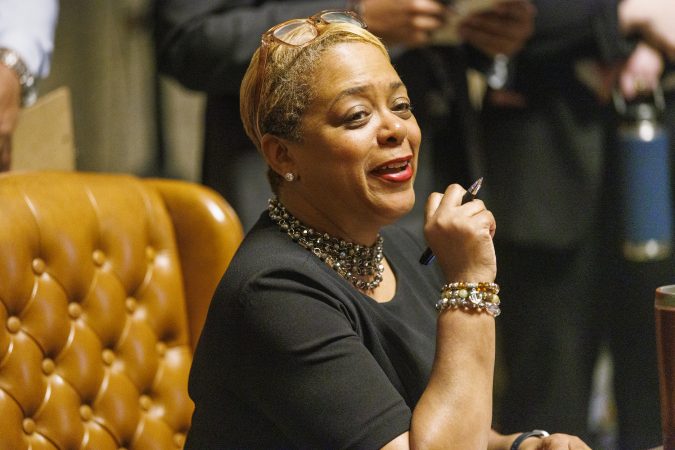
City Councilmember Cindy Bass on Monday night was facing a challenge in her bid to be reelected as the Democratic leader of Mount Airy’s 22nd Ward. Her opponent, Octavius Price, had the backing of a well-organized group of progressive activists, many of whom were newly elected as committeepeople in last month’s Democratic primary election.
As the incumbent, Bass chaired the meeting to determine her own fate as ward leader, and she held a voice vote to determine whether she or Price had more support among the committeepeople assembled at the Germantown Seventh-day Adventist Church.
A video of the meeting obtained by The Inquirer appears to show a narrowly divided room, with many people saying, “Aye,” in support of bothBass and Price. Attendees cried out for a roll call, in which the committeepeople’s votes would be counted one by one, clarifying which candidate had more support.
But Bass immediately announced herself the winner, rejected all motions from committeepeople objecting to the vote, and quickly adjourned the meeting, the video shows.
Bass, a centrist Democrat, narrowly won reelection to her fourth term on Council in 2023 and has clashed with left-leaning activists in her Northwest Philadelphia-based 8th District. A progressive takeover of Bass’ own ward could hinder her reelection chances in next year’s Council election.
She is now facing accusations that she skirted the party’s procedures for ward reorganization meetings by declaring herself the victor while denying requests for a roll-call vote.
Democratic City Committee Chair Bob Brady said Monday night that wards can use voice votes for leadership elections, especially when the results are “overwhelming,” such as when an incumbent is running unopposed. But if a committeeperson calls for a roll-call vote to ensure greater accuracy, he said, the request must be honored.
“You can do a voice vote,“ Brady said in an interview. ”If they do a voice vote and somebody calls for a roll call, you gotta do a roll call.”
On Monday night, Bass, who has been ward leader since 2018, maintained she had the votes to win another four-year term. But she did not respond to a request for comment on why she ignored requests for a roll call.
“We had the votes,” she said in an interview. “No matter what I did, some of these people are not going to be happy.”
Ward leaders and committeepeople are the frontline workers of the local party, charged with getting out the vote for Democratic candidates running for everything from Municipal Court to president.
Fights over control of the city’s 69 Democratic ward leader positions have for years provided flash points in the long-running battles pitting the party establishment against anti-corruption reformers and, more recently, the local progressive movement.
State Rep. Chris Rabb, a Northwest Philly Democrat whose victory in last month’s primary election for the 3rd Congressional District marked a landmark victory for progressives, on Tuesday linked Bass’ reelection bid to his broader criticisms of the Democratic City Committee.
“If she ‘wins’ this battle, the Philly Dem Party will lose the war,” Rabb posted on X. “Either it refashions itself around equity, accountability & transparency OR it just withers away election cycle by election cycle while Dem voters statewide suffer because … as Philly goes, so goes PA.”
Brady, who is expected to be reelected to an 11th term as party chair next week, declined to comment on the result of the 22nd Ward election, but said he expects it will be challenged. Challenges are heard by the party’s contest committee, which is made up of other ward leaders. If Price formally objects, the committee would likely hear the challenge Saturday, Brady said.
“[Price] would have to notify us that he’s contesting the election, and then we’ll hear from both sides,” Brady said.
The committee, he said, could declare a winner if members determine the results are clear, or call for a rerun of the election.
Price, a fiber optic engineer, called Bass’ handling of the election “unjust” and said he plans to file a challenge.
“I initially ran to be a committeeperson because I believe in democracy and I believe in transparency and fairness,” Price said in a statement following the vote.“This was an example of moral decay and emboldened cruelty and corruption that has made so many people disillusioned with participating in politics.”
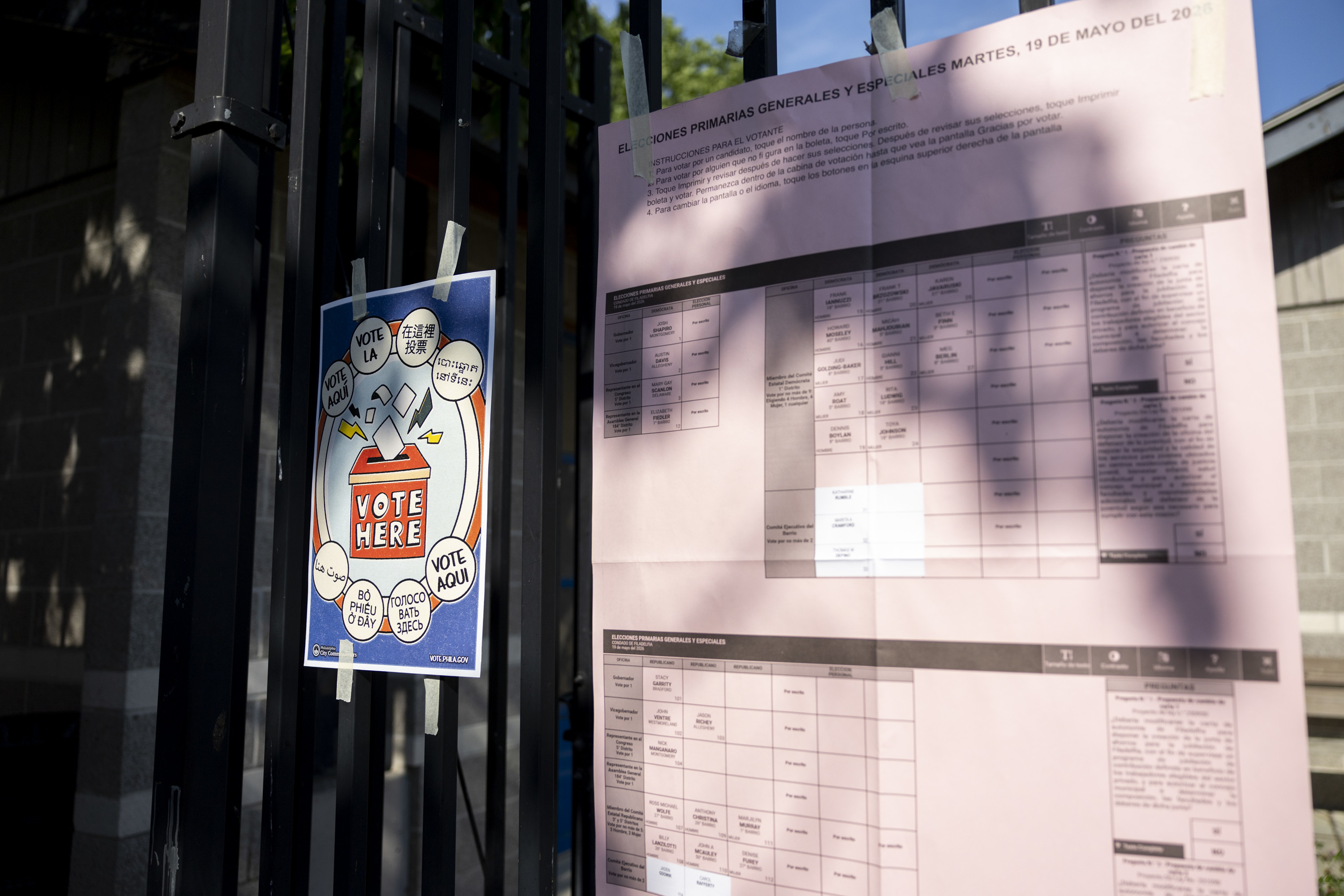
A “vote here” sign outside the polls at Marconi Plaza in South Philadelphia, Pa., on Tuesday., May 19, 2026.Tyger Williams / Staff Photographer
Another point of contention on Monday was the number of people in the room, which could become a key factor in a contest committee review of the election results because it changes the number of votes needed for a majority.
Price, whose supporters whipped votes ahead of the meeting, said that by his count at least 26 committeepeople were planning to vote against Bass and for a candidate who, like him, supports “open wards,” which allow committeepeople to vote on political endorsements rather than letting the ward leader decide unilaterally for the entire jurisdiction.
Price said his supporters counted 48 committeepeople present on Monday evening, meaning he should have had the votes sufficient for a victory.
But a sign-in sheet at the meeting told a different story.
The sheet, a photo of which was obtained by The Inquirer, listed 55 committeepeople and appeared to include a tally of their allegiances before the election was even held. Price said ward organizers who appeared to be working with Bass circulated the sheet at the beginning of the meeting. The paper showed 29 for Bass and 26 for “other.”
“Her sheet has a total of 55 people who voted, but we know for a fact that’s not the case,” he said.
Former Councilmember Derek S. Green, a 22nd Ward committeeperson who ran against Bass for ward leader in 2018, flirted with running for the post again this year. But he did not end up throwing his hat in the ring, resulting in a one-on-one showdown between Bass and Price.
Green, who was present Monday night, declined to comment on the election results.
After Price was nominated during the meeting, Bass launched into the voice vote.
“All in favor of Octavius Price, signify by saying, ‘Aye,” Bass said. “All in favor of Cindy Bass, signify by saying, ‘Aye.’”
In the video recording of the meeting, many people can be heard supporting each of the candidates. Even before Bass announced the winner, a participant can be heard saying, “roll call.”
Bass then said, “In the call of the chair, the ayes have it for Cindy Bass.” The room immediately erupted with objections.
“No, no, no — you’ve got to have a roll call,” one person said. Others shouted: “Roll call!”
“There will be no motions accepted on the floor,” Bass said over the commotion. “We’re going to have to adjourn the meeting. There is no point of order. So the motion has been made — that concludes — there is no additional business for the ward tonight. Thank you for coming.”
The tensions did not end there.
After the election, participants in the meeting clashed outside the church as a man and a woman holding the sign-in sheet refused to let other committeepeople record their attendance on the form, a separate video reviewed by The Inquirer shows.
“Y’all got to get back. Better get back,” the man told a crowd pleading to sign the forms. “Shut up!”
As the man walked away, one person can be heard turning to Green, who was caught in the middle of the fracas.
“Derek, we just wanted to get our sign-in [on] the sheet. He took it from us,” the man said.
“I know. That’s why I came,” Green responded. “It’s not right. It’s not right.”
When Bucks County-raised pop star Pink began the Tony Awards on Sunday evening, she started somewhere she would be comfortable on stage — in the air.
Suspended from the rafters, she joked about feeling underqualified to host the awards ceremony because she’s never appeared on Broadway. But actor Neil Patrick Harris assured her that she would excel as her entertaining, acrobatic self: “Listen you’re Pink, you’re singular, you’re the best.”
Then she went on to belt “Lady Marmalade” with some of Broadway’s best performers and fit right in.
The night of revelry at Radio City Music Hall celebrated the biggest theater shows with major winners including Death of a Salesman, Schmigadoon!, Ragtime, The Lost Boys, and Liberation. The latter won for best play, recognizing playwright Bess Wohl, who became the fourth woman in Tony history to win that award. (Philly audiences will get a chance to see the show this fall when Liberation runs at Philadelphia Theatre Company in October)
The biggest local highlight was director Bill Rauch, who calls New York home now but spent part of his childhood in Haddonfield, where he participated in productions at Haddonfield Memorial High School. Rauch and his codirector, Zhailon Levingston, won the Tony Award for best direction of a musical for Cats: The Jellicle Ball, a revival of Andrew Lloyd Webber’s 1982 feline musical, set in New York’s queer ballroom scene.
“Ballroom is about audacity and disruption, in the words of Junior LaBeija, it do take nerve,” said Levingston when the pair accepted the award.
“Finally, ballroom is about chosen family,” said Rauch, getting emotional. “We chose each other, my husband, Christopher Liam Moore, 42 years ago, and you and our kids, Liam and Xava, are at the heart of anything I do that has any value in this world.”
Rauch, who leads New York’s Perelman Performing Arts Center, previously directed the Tony Award-winning production All the Way, about Lyndon B. Johnson during the civil rights era. That production received Tony Awards for best play and best lead actor in a play (spotlighting Bryan Cranston), in 2014.
Rauch credits his high school teacher and mentor Jack Shaw with inspiring him to pursue theater.
“I did six shows directed by Jack Shaw, and they really changed my life,” Rauch told 6abc. “I learned by example what a great director could be, and it made me want to become a director.”
On Sunday night, Shaw hosted a Tony Awards watch party at his home in Voorhees, where he and a group of about 15 of Rauch’s old theater classmates jumped and screamed as they saw him accept the award. The revered drama teacher is still close with dozens of his former students, who reunite often to celebrate Shaw’s milestone birthdays and have created a scholarship at Haddonfield Memorial High School to fund drama students in Shaw’s honor.
One of Shaw’s favorite memories of Rauch was during a production of Shakespeare’s Twelfth Night, when the teenager powered through his Malvolio monologue while in the middle of an allergic reaction.
“The poor guy literally ended up on the floor of the stage, going through a long speech [as] his neck and back cramped up,” said Shaw. “Unbelievably, he kept going — the ultimate ‘show must go on’ spirit. He delivered the speech from his knees, still in character, and the audience had no idea …[then] we took him offstage and put him in an ambulance.”
A proud teacher, Shaw was “choked up” seeing Rauch receive the Tony recognition and praised his former student’s “remarkable need to bring theater to lots of people.”
“Theater and the drama club was a place where anybody could come and be accepted. To my way of thinking, that’s my most happy part, and Bill, as a director, has had the same kind of philosophy,” Shaw said.
Cats: The Jellicle Ball was nominated for nine awards and took home three, including best choreography and best costume design of a musical, which went to Qween Jean (who also designed costumes for Liberation). Qween Jean made history becoming the first transgender person to win a Tony Award.
Brothers Allen Joseph and Anser Bhatti own Liberty Scoops ice cream and Coffee Tea & Co., both in Old City.
They concede that the past 18 months of construction for improvements to Market Street were often tough on business, especially the coffee shop, because of fencing that had to be erected.
Now, with the $16 million renovation of Market Street complete, and the fencing gone, Joseph said it was worth it.
“It looks much better now,” Joseph said.
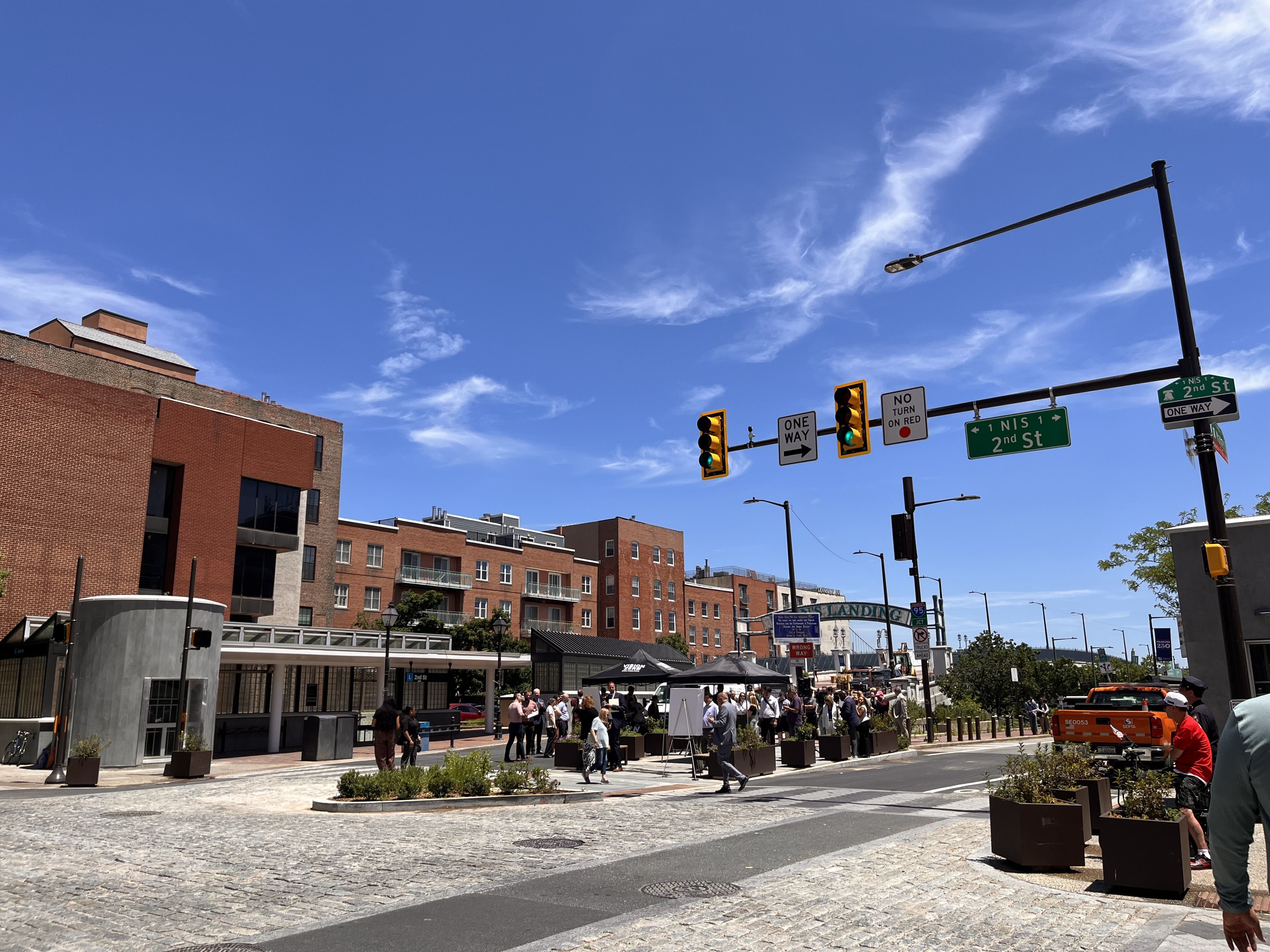
Philadelphia officials unveiled the new look Tuesday in time for the nation’s 250th anniversary. The transformation permanently narrowed vehicular traffic, added bike lanes, and built a new public plaza.
“As you can see, walking around the neighborhood is greatly improved,” said Job Itzkowitz, executive director of the Old City District, a business improvement organization.
Itzkowitz noted more open space for pedestrians, shorter distances to cross the street, and new street trees and planters, among other improvements.
“Residents, visitors, and business owners alike have already felt the impact as the fences started to come down over the last few months,” he said.
Officials launched the overhaul in December 2024 to rebuild the corridor from Second to Sixth Streets and transform the historic stretch into a more inviting place to walk, bike, and dine.
The work was to timed for the Semiquincentennial, which marks the 250th anniversary of the signing of the Declaration of Independence. Several other nearby landmarks have also been spruced up, such as Elfreth’s Alley, which recently unveiled a new pocket park, and the long-shuttered First Bank of the United States, set to reopen to the public on July 1 after a $27 million renovation.
Philadelphia city officials celebrated the completion of a $16 million renovation of Market Street, from Sixth to Second Streets. Improvements include wider sidewalks, protected bike lanes, Belgian block streetscape, and new plantings.Frank Kummer
What’s new?
As part of Market Street’s “road diet,” vehicles have been reduced to one lane in each direction, clearing way for protected bike lanes and adding dedicated left turn lanes at key intersections.
Among other improvements:
A new curbless plaza at Second and Market Streets at the base of the ramp to Penn’s Landing, allowing easier access for pedestrians.
Concrete bump outs at bus stops were lengthened to make boarding easier. The raised bike lanes were installed between parking lanes and sidewalks.
Wider sidewalks.
Belgian block streetscaping.
44 new street trees and 68 shrubs.
55 bike racks.
SEPTA also improved the look of the headhouses for the Market-Frankford Line subway at Second Street.
Officials say the transformation will reduce traffic-related injuries and deaths and better serve tourists, walkers, cyclists, transit users,and motorists.
Also taking a lead was the nonprofit Independence Historical Trust, as part of a larger plan to create better ways for tourists to navigate on foot through Independence National Historical Park, Old City, and other historic or local neighborhoods.
“The new plaza rocks,” said Mayor Cherelle L. Parker.
Parker said the just-completed project fits in with broader efforts to extend improvements on Market Street from City Hall to the Delaware River.
Bill Marrazzo, chair of the nonprofit Independence Historical Trust, called completion of the Market Street project key, given its location in Old City and near Independence National Historical Park.
“No other American city has as many cultural assets per capita as we do here in the city of Philadelphia,” Marrazzo said, “and a very high percentage of those are organized here within this one square mile of history.”
“These improvements are truly transformational,” noted Mike Carroll, the city’s deputy managing director for transportation and infrastructure.
City officials and residents of the Callowhill neighborhood on Monday night discussed design options for a park atop the Chinatown Stitch, a planned cap over part of the Vine Street Expressway.
The Philadelphia Office of Transportation and Infrastructure Systems is thinking about the day the project is complete, with preliminary exploration of a possible improvement district in the area to finance operations and maintenance.
“We’ve come to the conclusion that there’s not really a city department or even nonprofit entity that’s ideally placed to take over that maintenance responsibility,” said Christopher Puchalsky, director of policy and strategic initiatives at OTIS.
The meeting of the Callowhill Neighborhood Association was held at the Folk-Arts Cultural Treasures Charter School.
The original grant was $159 million, but the city already had spent $8.4 million on preliminary engineering and design work. The rest was rescinded.
Using either a Neighborhood Improvement District or a Business Improvement District would give the neighborhood control over the maintenance of the park and its planned connection to the Rail Park along the Reading viaduct, Puchalsky said.
City money would be subject to a yearly appropriation, and the Stitch would be “not just competing against all the other parks that need to be maintained,” he said. “The Chinatown Stitch would be competing against firefighters and social workers and pothole crews and go down the list.”
People expressed strong support throughout several rounds of community engagement for keeping a completed project safe, clean, and in good repair, Puchalsky said.
He presented three possible annual maintenance and security budgets for a hypothetical improvement district: $1.3 million; $2.2 million; and $3.8 million. A budget would depend on the size of the district and the level of services involved.
The largest budget could likely finance 24-7 security, robust maintenance, and some social service programs, while the smallest budget would provide much less.
Improvement district assessments range from 1% to 7% in Philadelphia, which would be on top of property taxes. Based on rough back-of-the-envelope math, Puchalsky said, the owner of a $500,000 property would pay $140 a year on top of a $7,000 property tax bill at the lowest end of the range and $300 yearly at the highest end.
He stressed that there is no formal proposal for an improvement district or firm estimate for assessments.
“It is a goal to try to get some kind of a neighborhood consensus about what you would like to do,” Puchalsky said. “I’m not hearing anyone jumping up and down, either angrily or cheeringly” — just reasonable questions.
He called himself “the Beast,” and he killed six people in six months.
Several of his victims were retail store workers who gave up cash or goods during robberies, and he decided to shoot them anyway. One of the victims was his mother — he shot her at her office because he wanted the payout from her life insurance policy.
On Tuesday, Keith Gibson, 44, was delivered a measure of accountability for his killing spree — one of the worst in recent city history — when a jury convicted him of four counts of first-degree murder and related crimes for the killings he committed in the city in 2021.
He was immediately ordered to serve four consecutive life sentences in prison. That’s on top of the seven life sentences he had already been handed for two murders and a string of robberies he committed in Delaware.
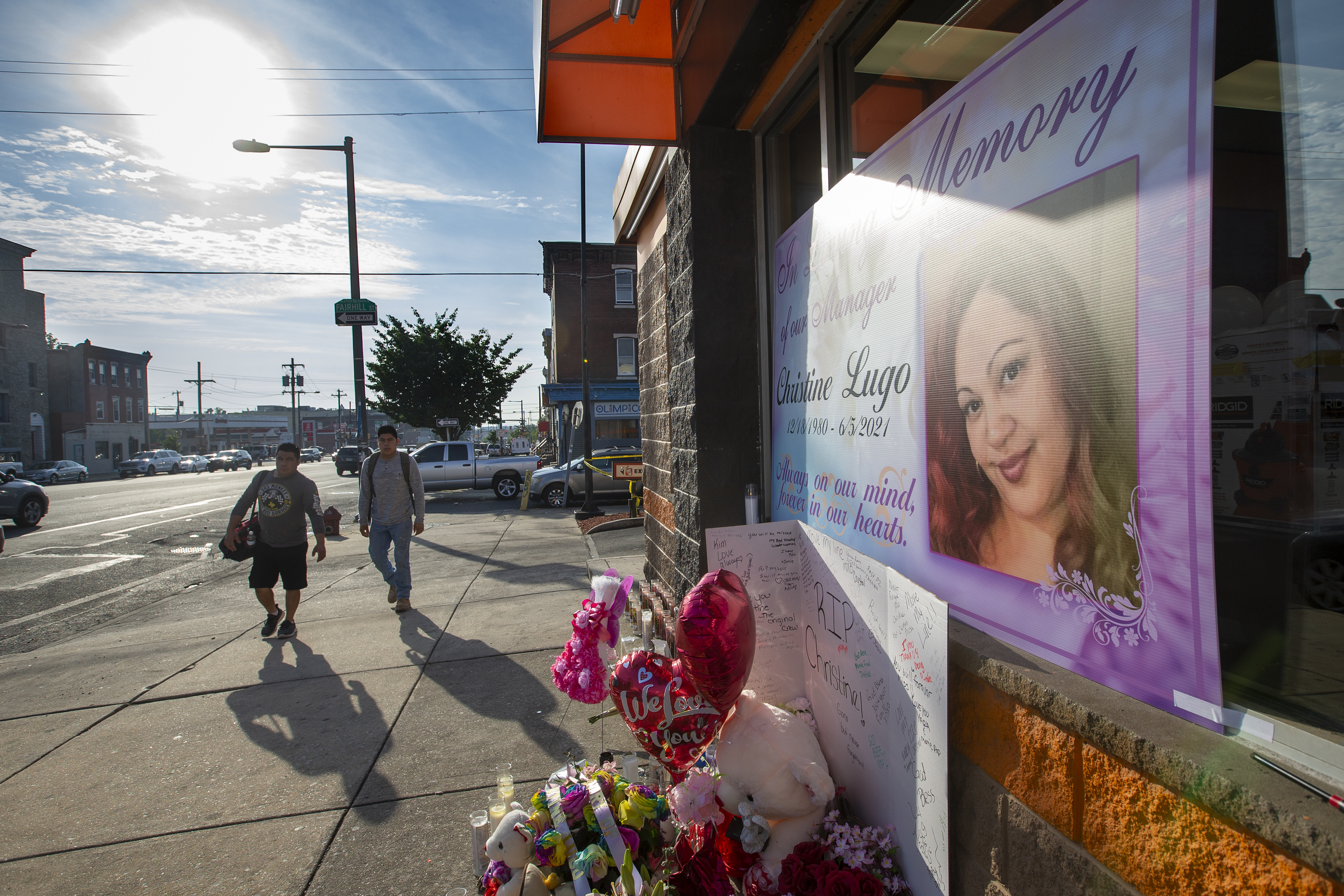
The case attracted attention when the crimes happened five years ago, in part because some of Gibson’s targets were compliant and effectively defenseless when he shot them. In one murder, at a Dunkin’ store in Fairhill, surveillance video showed an employee speaking with Gibson for several minutes and handing him cash before he shot her in the head and left her for dead.
Surveillance video showed Keith Gibson inside the Dunkin’ before he shot and killed Christine Lugo in June 2021. Courtesy of Philadelphia police
Assistant District Attorneys Jeffrey Hojnowski and Katie Wood called Gibson’s crimes despicable.
“These were regular, ordinary people, fellow Philadelphians going about their business, trying to work, and they were gunned down callously, needlessly,” Hojnowski said. “This was never about the money. This is about control. This is about dominance.”
The case also stood out because of questions about why Gibson had been free to kill in the first place. In April 2021, he was jailed in Delaware for a probation violation, and a probation officer told a judge that police considered Gibson a suspect in his mother’s killing. But the judge ordered Gibson released, and in the weeks after, he went on to kill three more people.
The weeklong trial that led to his conviction in Philadelphia relied heavily on surveillance video and ballistics evidence. Testing showed that Gibson had used the same revolver in every crime, and officers in Wilmington found the gun as they arrested him for robbing a Rite Aid store.
A former friend, Amanda Masteller, took the stand and testified that Gibson, who she said referred to himself as “the Beast,” carried that revolver everywhere — including into her house and around her children when she let him stay in a spare room from time to time.
She wanted to tell him to stop coming over, she said, but the gun and his aggressive demeanor left her afraid of what might happen if she did so.
“I was petrified of this man,” she said.
Gibson’s crimes
Gibson’s killing spree began Jan. 28, 2021, at Al-Madinah Traders store in Germantown. There, he rummaged through the shop and stole several watches. He forced employees Roy Caban and Eric Flores into a back room, where he shot Flores in the head and Caban in the back as he tried to flee.
The following week, Gibson set out after his own mother.
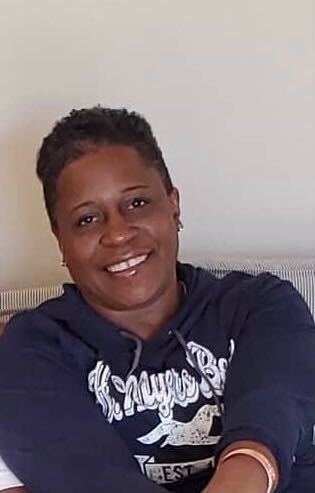
Christine Gibson, 54, was shot and killed by her son, Keith Gibson, in February 2021. She worked as the director of a mental health program at a community center in East Falls.Courtesy of David Thornton
Christine Gibson, 54, told family members she was afraid of her son and wanted him to move out of her North Philadelphia home. And, prosecutors said, she had made plans to remove him as the beneficiary of her life insurance policy.
On the morning of Feb. 8, Keith Gibson accompanied her to the United Peers Community Center in East Falls, where she worked as the director of a mental health counseling program. Once inside, he took her to a small office room in the rear of the building and shot her in the back of the head. Her body was found two days later.
Soon after, probation officials in Delaware sought to have Gibson held in jail, filing paperwork saying he was a suspect in his mother’s killing and that violated the terms of his probation from a 2010 manslaughter conviction.
But Superior Court Judge Vivian L. Medinilla declined to extend Gibson’s time in custody. He was released in late April.
A few weeks later, in late May, Gibson robbed an AT&T store in Elsmere, Del., of cash and phones, and shot and killed the store attendant before stealing her car.
And in early June, his crimes continued in Philadelphia.
Surveillance video played at trial showed Gibson wandering the city on foot before dawn on June 5. After leaving his house on the 2700 block of North Croskey Street at 4:25 a.m., evidence showed, Gibson walked about a mile and a half to the Dunkin’ at Fifth Street and Lehigh Avenue.
Christine Lugo was unlocking the store to start her shift when Gibson walked over to her with his gun and shoved her inside.
Christine Lugo was killed during a robbery at the Dunkin at 532 W Lehigh Ave. on June 5, 2021.
Cameras from inside the store captured the lengthy encounter. Lugo did not appear to panic, and was not aggressive toward Gibson. Instead, she could be seen shrugging at times and showing Gibson her wallet, as if to suggest she didn’t have anything for him to take.
Eventually, she sat down on a chair in a closet-size office and gave Gibson about $300 from the cash register trays.
Gibson then glanced at his watch, shot Lugo in the head, and walked out.
Later that day, he went to Wilmington, where he shot and killed Ronald Wright, 42, during a robbery.
His string of crimes began to unravel there three days later, when he robbed a Wilmington Rite Aid and stole a bag of cash — with a tracking device inside. Police quickly arrested him with a revolver behind a rowhouse. Ballistics tests later showed the same gun had been used at Al-Madinah Traders and in the killings of Gibson and Lugo.
Tips from the public identifying him in surveillance footage then bolstered the investigation. After Lugo was killed, police released some footage from the incident to try to identify a suspect. Masteller — his former friend from Delaware — said she saw it and called to tell police the man in the video was Gibson.
Gibson’s attorneys, Jonathan Strange and Brian Johnson of the Defender Association, said homicide detectives rushed to tie Gibson to other crimes as a means of closing old, unsolved cases. They failed to collect or test certain evidence, Johnson said, including surveillance video and DNA in some of the cases.
“The police had to take the easy way out,” he said.
Following his convictions, Gibson, in a lengthy ramble, said he was not happy with his legal representation and intended to appeal his convictions. He was not guilty, he said. And he only briefly addressed his victims’ families, saying: “I’m extremely sorry for your loss.”
It brought no comfort to the loved ones of his victims who had filled the courtroom throughout the trial.
Lugo’s children, Frances Rodriguez and Christian Lugo, said the disturbing video of their mother’s death will remain etched in their memories. Still, as prosecutors played it several times, they stayed to watch.
Left to right: Frances Rodriguez, Christine Lugo, Christian Lugo, and another family member celebrate Christmas.Courtesy of Frances
“I didn’t want my mom to be alone,” said Rodriguez, 27. “She already had to experience it alone already.”
Lugo, originally from Massachusetts, had a vibrant laugh and believed fiercely in giving people second chances, they said. She had two children and three grandchildren.
Also in the courtroom Tuesday were members of Gibson’s family, who had spent years praying he would be held accountable for killing his mother.
David Thornton, 68, said his nephew stole the golden years of his sister’s life.
Christine Gibson overcame years of addiction, he said, and went on to earn a master’s in sociology from Widener, bought a house in Philly, and was working a job she loved. She was strong, outgoing, and full of joy.
She had told Thornton she was afraid of her son, he said, but did not want to call the police.
“She’d say, ‘That’s my son,’” Thornton said. “That was her only child.”
They never imagined it would come to this.
“Some things,” he said, “are not meant to be understood.”