In New Jersey, “to-go” alcoholic beverages are officially here to stay.
Gov. Mikie Sherrill on Friday signed legislation making permanent the COVID-era provisions that allowed bars, restaurants, and other permitted businesses to sell and deliver alcoholic beverages for off-premises consumption. Intended to be temporary, those allowances were previously set to expire Sept. 1.
Moving forward, the legislation allows certain establishments to sell and deliver mixed cocktails in closed, sealed containers, and alcoholic beverages in their original containers, to be consumed away from their locations. Craft distillery licensees will also be able to sell and deliver their products under certain conditions.
“New Jersey’s small businesses shouldn’t have to navigate outdated rules just to serve their customers and grow,” Sherrill said in a statement. “Cocktails to-go worked, customers liked it, and small businesses told us it was another way to bring in revenue. Today, we’re making it permanent.”
The bipartisan legislation making those to-go alcohol changes permanent passed both New Jersey houses in late June.
In addition to restaurants and bars, under the law, other permitted businesses with retail consumption licenses, such as hotels, may also sell alcoholic beverages for delivery and off-site consumption. Deliveries can be made by the licensed business itself, or a permitted third-part delivery company.
New Jersey distilleries, meanwhile, can sell mixed drinks for on-site consumption when the beverages are made using alcohol manufactured on premises. Those businesses can also sell mixed drinks using their own distilled alcohol for off-site consumption, though the beverages must be sold in containers with a tamper-evident seal. And distilleries can also sell their own products accompanied by nonalcoholic beverages and food items that enable customers to make their own mixed drinks.
“During the pandemic, this commonsense policy helped restaurants survive one of the toughest periods in their industry’s history,” said state Sen. Declan O’Scanlon, a Republican from Monmouth County. “I’m proud that the flexibility we gave these businesses will now be permanently available to them with the signing of this law.”
Philadelphia police are investigating a fatal hit-and-run that took place early Thursday morning in the Olney section of the city, minutes after an officer left the 48-year-old victim lying on the ground in a bike lane.
Police are treating the case as two separate matters — a search for the hit-and-run driver led by crash investigators, and an internal disciplinary probe into the officer’s conduct leading up to the crash.
First Deputy Commissioner John Stanford, at a news conference on Friday, criticized the officer for failing to help the man and leaving him in a vulnerable state on the roadway.
“[It’s] very troubling to see that there is an officer that responds to this location and fails to render any type of aid to the individual prior to that individual being struck by the vehicle, being run over by that vehicle, driven over by that vehicle and that’s troubling for us,” he said.
The officer’s name has not been released. He is assigned to the 35th District and has two years on the force, Stanford said. The department placed the officer on administrative leave while the incident is investigated, Stanford said.
Police have also not released the victim’s identity as they are trying to contact relatives.
At about 1:40 a.m., a man with an “unsteady gait” was seen walking down the 5500 block of Rising Sun Avenue, Stanford said.
Video shows the officer pull his police vehicle next to the man and engage with him. During that encounter, the man falls to the ground, lying in the bike lane and partially in the traffic lane, Stanford said.
The officer pulls his patrol car in front of the man, Stanford said, and gets out to speak with him. Then the officer leaves.
Minutes later, a car stops before reaching the man, Stanford said. But a second vehicle drives into the bike lane to go around the first car, running over the man and driving away. The victim was pronounced dead hours later at approximately 6:15 a.m.
Police are searching for a 2023 to 2026 green Kia Sportage X Line series with black-and-chrome rims.
Stanford said passersby pulled the 48-year-old man out of traffic and called police.
The officer who had first engaged with the victim and then left him in the road mere minutes before was the first officer to respond to the scene, Stanford said.
Stanford said the officer did not make a police report, waiting for medics to arrive. Stanford said the officer did not render aid during this time.
Stanford said the officer did not check whether the victim was impaired or having a medical condition, calling the officer’s behavior “very troubling, very disturbing, and to be quite blunt about it, extremely disappointing.”
“It goes against everything we stand for,” he said.
Getting all prekindergarten students to consistently attend school has proven to be a challenge as the Cherry Hill district rapidly expands its program for early learners.
Absenteeism rates among the district’s pre-K students is second only to Cherry Hill high school seniors, the grade with the highest chronic absenteeism rate, according to state data. The district’s experience is similar to other districts rolling out pre-K programs with state funding, which reaches $1.4 billion in the latest budget.
“Unfortunately, I have to say that preschool had one of the highest rates of chronic absenteeism,” Farrah Mahan, assistant superintendent for pre-K to grade 12 and curriculum, told school board members at this week’s meeting. She explained some tactics being used to combat high absenteeism.
The chronic absenteeism rate, a widely used measure in education, shows the percentage of students absent 10% or more days in the school year.
In Cherry Hill public schools in 2024-25, the latest year available, the rate for Cherry Hill pre-K students was 23.5% compared with a statewide average of 29.9%, according to the New Jersey Education Department School Performance Reports.
Overall, the district’s rate was 14%, slightly less than the state average of 14.4%. However, 25.8% of all high school seniors were chronically absent — more than the statewide average of 21%.
The district’s preschool social workers and other staff members have been working with parents to get the youngest children to attend school, Mahan said.
“They’ve really been acting almost as like a social service agency, which is really sometimes what our families need, making sure that they are connected to the appropriate resources that are available in the community to ensure that their child is able to get to school on a daily basis,” she told board members.
Sometimes it is as simple as greeting students at the bus or as they’re exiting the family car in the morning or providing extra attention during the school day, she said.
“But we’ve also had some tough conversations like, this really matters,” Mahan said. “When you were in a private preschool location, maybe it was OK to take a vacation that second week, because it was more convenient and a little bit cheaper for families. But really expect your preschooler, if they’re enrolled in the program, to be in school.”
She said the focus has resulted in reducing the chronic absenteeism rates among the preschoolers.
Mahan joked that when schools open on Wednesday she looks forward to welcoming the Class of 2041.
Pre-K enrollment has increased sharply in Cherry Hill and some other districts as former Gov. Phil Murphy and Gov. Mikie Sherrill have supported free and expanded access to early childhood education.
Cherry Hill and other districts have had to rely heavily on private providers to help take on the growing enrollment as parents shift from privately paid to publicly funded preschool. The district has two district preschool locations and uses nine private providers.
With its expansion to 11 sites last year, the district was able to clear the initial wait list, Mahan said. All 559 students who applied for a pre-K seat were accepted, so the district opened up the list to additional families. A total of 93 applied and the district could offer spots for 34.
In the new school year, nearly 900 preschoolers have been offered spots. The total will include 740 general education seats, 55 preschool inclusion seats, and 96 disabled student seats, Mahan said.
The district’s program has grown from 17 classrooms after preschool expansion was announced in 2023 to 53 classrooms in the 2026-27 school year.
Mahan said the goal is to eventually expand to a projected 1,700 seats — more than a 90% increase over this coming year’s group. She said 110 classrooms will be needed to accommodate the enrollment.
The district’s private providers for the new school year are Adventure Kids, Cadence Academy, Discovery Corner, Goddard School, KinderCare, Lightbridge Academy. Primrose School, Chesterbrook Academy of Voorhees, Mosaic Early Learning of Oakland. The two in-district locations are at Kilmer Elementary School and the Malberg Early Childhood Center.
“Children who participate in early childhood education programs generally enter kindergarten with stronger foundational skills,” Mahan told the board. “The research in early childhood education states that early learning environments foster essential language skills, early literacy, and basic math concepts,” she said.
Supervision of curriculum and teaching at all 11 locations is important to the preschool program, she explained.
“It is imperative that we have consistency across all of our locations. So when we speak about our preschool private provider locations and our in-district locations, we talk about consistency across all of our guidelines, our curriculum,” Mahan said.
70and73.com is a hyperlocal news site focused on South Jersey, including the communities of Cherry Hill, Evesham, Mount Laurel, Voorhees, Medford, Medford Lakes, and Moorestown.
Lucas Byrd — a four-time All-American wrestler and a 2025 NCAA champion at Illinois — has been recognized “a handful” of times on the street. But it’s not for his dominance on the mat.
Byrd, who was recently hired as an assistant wrestling coach at Penn, has more than 570,000 followers on TikTok with his fiancée, Ellie Holzman. They met at Illinois with Byrd wrestling and Holzman starring for the Illini volleyball team. Shortly after, they began posting short videos about their relationship to social media — which quickly gained traction because of the couple’s difference in height. Byrd is 5-foot-5 and Holzman is 6-2.
“I think a lot of people find it interesting because it is such a different dynamic,” Byrd said. “Your typical relationships aren’t a girl that’s really tall and a guy that’s really short.”
Byrd and Holzman readily make reference to their height difference on TikTok. In one video, Holzman humorously pins Byrd to a wall, pretending to yell at him. The video’s caption reads, “If you see a 6’2 brunette yelling at me…. Don’t worry. That’s my girlfriend. I ticked her off on purpose. I’m exactly where I want to be.” In another, Byrd hops on Holzman’s shoulders to grab containers from a hard-to-reach shelf.
“We both believe we make a positive impact on relationship dynamics,” Byrd said. “Guys don’t like to be shorter [in a relationship], and women typically don’t like to be taller. It’s a good thing that we can show people that it doesn’t matter. Height, for some people, it could be a deciding factor, but there’s no point to limit yourself for the love of your life.”
The couple’s content is lighthearted. Many of their videos feature the two dancing together, lip syncing to viral songs, or trying new foods — including a recent review of the brunch menu at Fishtown’s Middle Child Clubhouse. In the videos, Byrd is constantly cracking jokes and making funny expressions — a side of his personality he does not show on the mat.
“When I take my glasses off and I have my shoes on, I’m in the wrestling world,” Byrd said. “I’m the guy that won a national title, and that’s who I am. But the minute I’m off, and I’m with Ellie and my family and friends, I’m just a big goof ball.”
Lucas Byrd (right) won an NCAA championship last season at Illinois.Matt Rourke
‘Easier than breathing’
After graduating from Illinois this spring, Byrd looked to move to Philadelphia to live with Holzman, who recently finished up a nursing program at Drexel.
Byrd knew he wanted to stay in wrestling and gravitated toward coaching. During the 2023-24 season, when he was sidelined with a wrist injury, Byrd coached a kids wrestling club. He enjoyed the process enough to pursue coaching at the next level.
When the Penn wrestling staff interviewed Byrd, they asked what makes him stand out compared to other candidates.
“Wrestling is sometimes easier than breathing,” he responded.
Byrd joins a Penn wrestling staff led by second-year head coach Matt Valenti. Like Byrd, Valenti is a former NCAA champion at 133 pounds, winning the title twice for the Quakers in 2006 and 2007. Valenti took the over the program from longtime coach Roger Reina, who served as the “head coach emeritus” to oversee the transition. Last season, the Quakers finished 7-4 overall and placed third in the Ivy League.
“A lot of people feel like Big Ten programs do so many things differently,” Byrd said. “They feel like they eat nails, chew them up and spit them out. But in reality, they train hard. But it’s what we’re doing here [at Penn]”
One major difference between the Big Ten and the Ivy League is the lack of opportunities for Ivy athletes to cash in on their name, image, and likeness (NIL). The conference, in an effort to preserve a sense of amateurism, boasts a blanket ban on NIL collectives. Byrd sees this as a plus.
After graduating from Illinois in the spring, Lucas Byrd knew he wanted to stay in wrestling and gravitated toward coaching.Jose F. Moreno / Staff Photographer
“I think it’s awesome that there is no NIL in a way because these guys truly want to wrestle,” Byrd said. “It’s different when you’re getting paid $300,000 to go wrestle … These guys, on top of being in Wharton, they want to come to practice.”
“I can tell you the classes I took,” he added with a laugh. “I took a yoga class and these guys aren’t taking yoga.”
Outside of coaching and growing his social media presence, Byrd is looking to pursue a mixed martial arts career — a transition many collegiate wrestlers make after graduating. He has sparred with UFC fighters, and is looking to learn more from his peers who have switched over to the sport.
“It’s the same mechanics [in wrestling and MMA],” Byrd said. “Just different ways to get there. In MMA, there’s more danger because if you don’t disguise what you’re doing, you’re probably getting kneed or punched in the face.”
The Montgomery County Coroner’s Office said Thursday that the death of a 22-year-old man shot by a police officer was a homicide caused by two gunshot wounds to the chest.
The determination confirms that Glenwood Pysher IV was killed by another person, but not whether the fatal use of force was legally justified.
Around 12:30 a.m. on Aug. 23, the Upper Pottsgrove Police Department received a 911 call reporting an active burglary at a residence, the coroner’s office said. Officers responded to the scene and Pysher was fatally shot. The officer who fired has not been identified.
“Consistent with Pennsylvania law and Coroner’s Office policy, the classification of homicide is a medical determination for death certification purposes and does not indicate criminal intent or assign legal responsibility,” the coroner’s office said.
The case remains under investigation by the Montgomery County Detective Bureau.
The Montgomery County District Attorney’s Office said that police arrived to find Pysher “in the rear of the the residence. An encounter ensued and police fired at Pysher, fatally striking him.”
Pysher’s mother, Erin, told the Inquirer that her son had been out celebrating a friend’s 21st birthday and was heading to another friend’s place to spend the night when accidentally ended up at a stranger’s home.
Pysher was about to begin his senior year at St. Elizabeth University in North Jersey, his mother said.
“This was all a huge mistake, and they killed him,” she said.
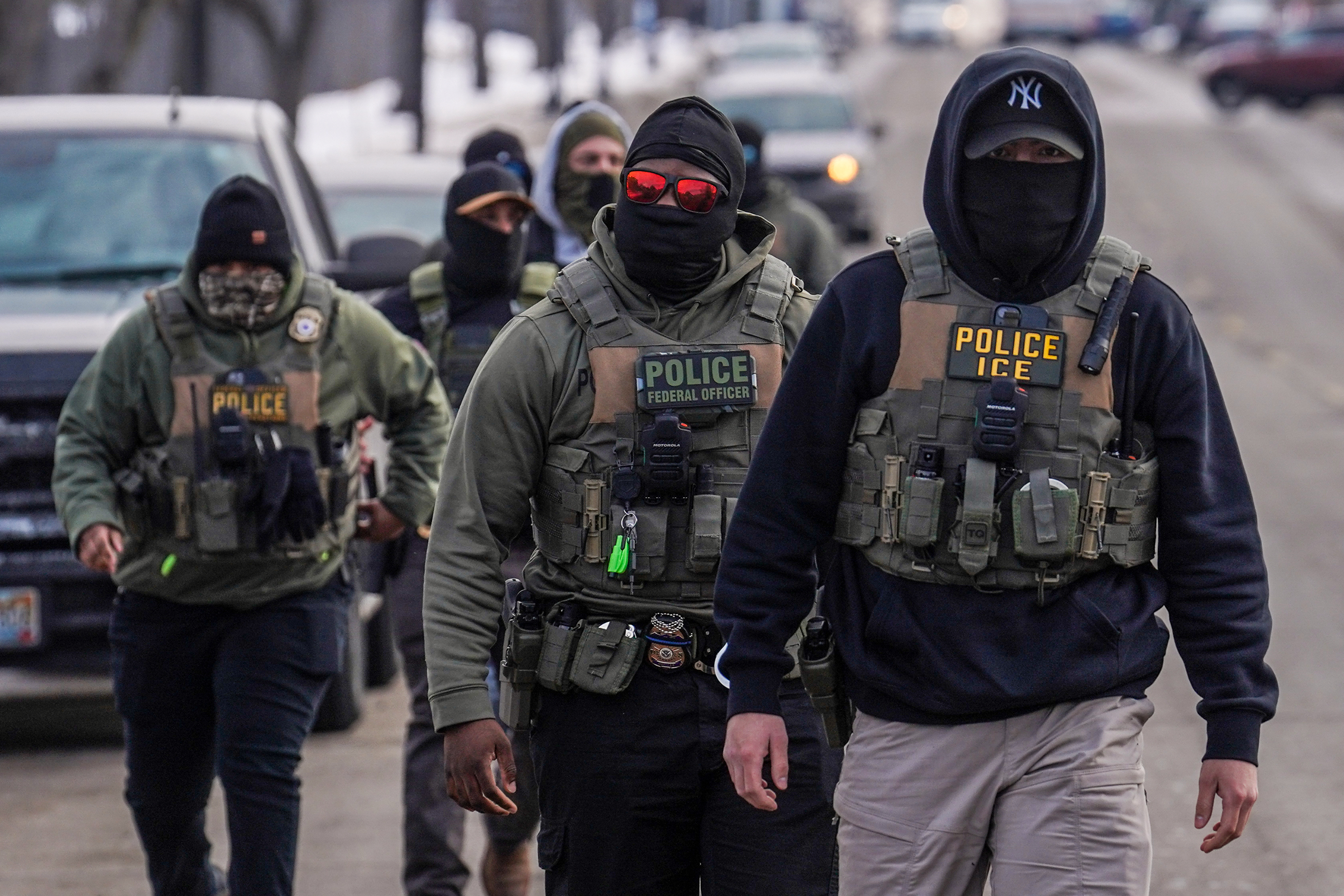
And every time, my blood boils at the rampant thuggery on display.
I abhor facile slogans, but as more and more incidents pile up, this one’s an easy call: Abolish ICE.
Smash it up. Close it down. Dismantle it. It shouldn’t be too hard, since it’s already been broken by President Donald Trump and his GOP allies in Congress, who have flooded the agency with billions of dollars and a mission directive that rewards lawlessness and recklessness.
Under Stephen Miller, the architect of the administration’s anti-immigrant policies, the goal is mass arrests and deportations, no matter the cost. A June 2025 post by the president on Truth Social made it explicit: “ICE Officers are herewith ordered, by notice of this TRUTH, to do all in their power to achieve the very important goal of delivering the single largest Mass Deportation Program in History.”
This has led to the foreseeable consequences that are playing out on America’s streets and inside immigration detention centers. The stories of abuse are so common, their number so overwhelming, that I don’t see how the agency survives.
This should not be interpreted as a call for nonexistent borders or unfettered immigration. Having spent much of my life in and around southwest Texas, I count myself among those who have a particular appreciation for the importance of humane, rational, and consistent immigration policies — but, by almost any measure, we’re getting none of the above from ICE as it’s currently formulated.
And it’s not just me or the usual left-leaning advocates who are questioning the national framework on immigration. Nearly three-quarters of Americans believe immigration is a good thing for our country, and most people prefer widening paths to citizenship rather than increasing enforcement efforts.
The prospect of doing away with ICE does not garner nearly as much support from undecided midterm voters, with just 21% of them saying in a recent poll that they favored eliminating the agency.
As I’ve written about how the administration is demonizing immigrants, I’ve heard from conservative readers who say the media is doing the same to ICE, casting it as the worst of the worst and inevitably forcing a critical look at its future.
To answer the question of what the agency might look like in the years to come — or if it should even continue to exist at all — I reached out to a few people who may know ICE better than nearly anyone else: those who’ve worked inside it.
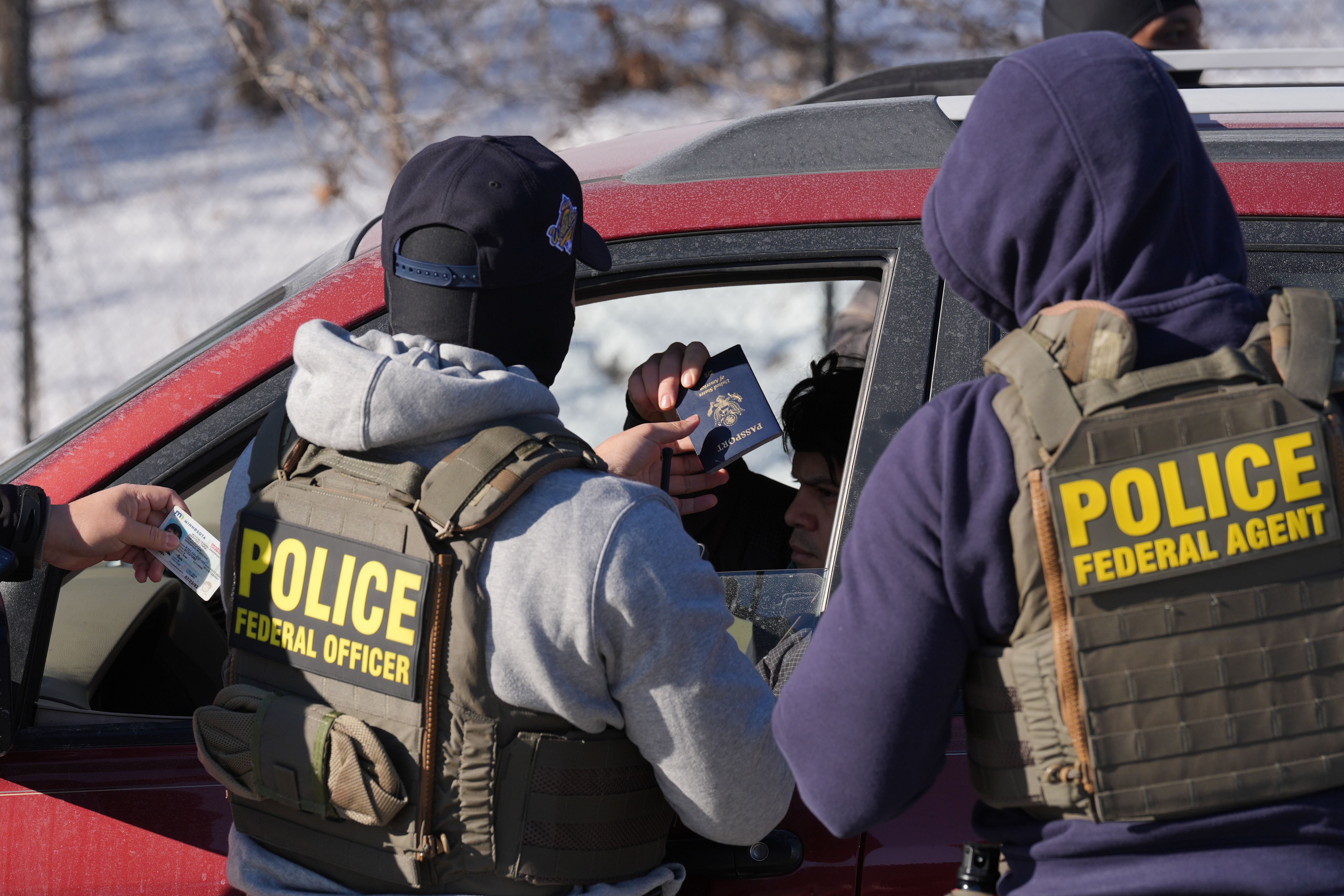
Federal agents make a traffic stop on a U.S. citizen in Minneapolis in January.Adam Gray
Changing tactics
I put the question of ICE’s future and how its agents are regarded to Jason Houser, who spent his government career at the U.S. Department of Homeland Security and is a former ICE chief of staff. The Afghanistan combat veteran told me it starts and ends with leadership.
“The tactical and operational guidance and directives from the administration are putting ICE officers in a place to be demonized,” he said. “There’s a lot of authority and power in law enforcement, and the way that power is being used by this administration for the first 18 months has been disjointed, punitive, shortsighted, and targeted at the most vulnerable communities.”
While the behavior of some agents is inexcusable, and they should be held accountable, the agency is ultimately an instrument wielded by those in power.
For example, some of the same agents who are being maligned today were redeployed to Del Rio, Texas, in 2021 to help humanely and safely process almost 16,000 mostly Haitian immigrants who were living in substandard conditions in a makeshift border camp, Houser noted.
How ICE is operating today cannot be separated from the administration’s demands.
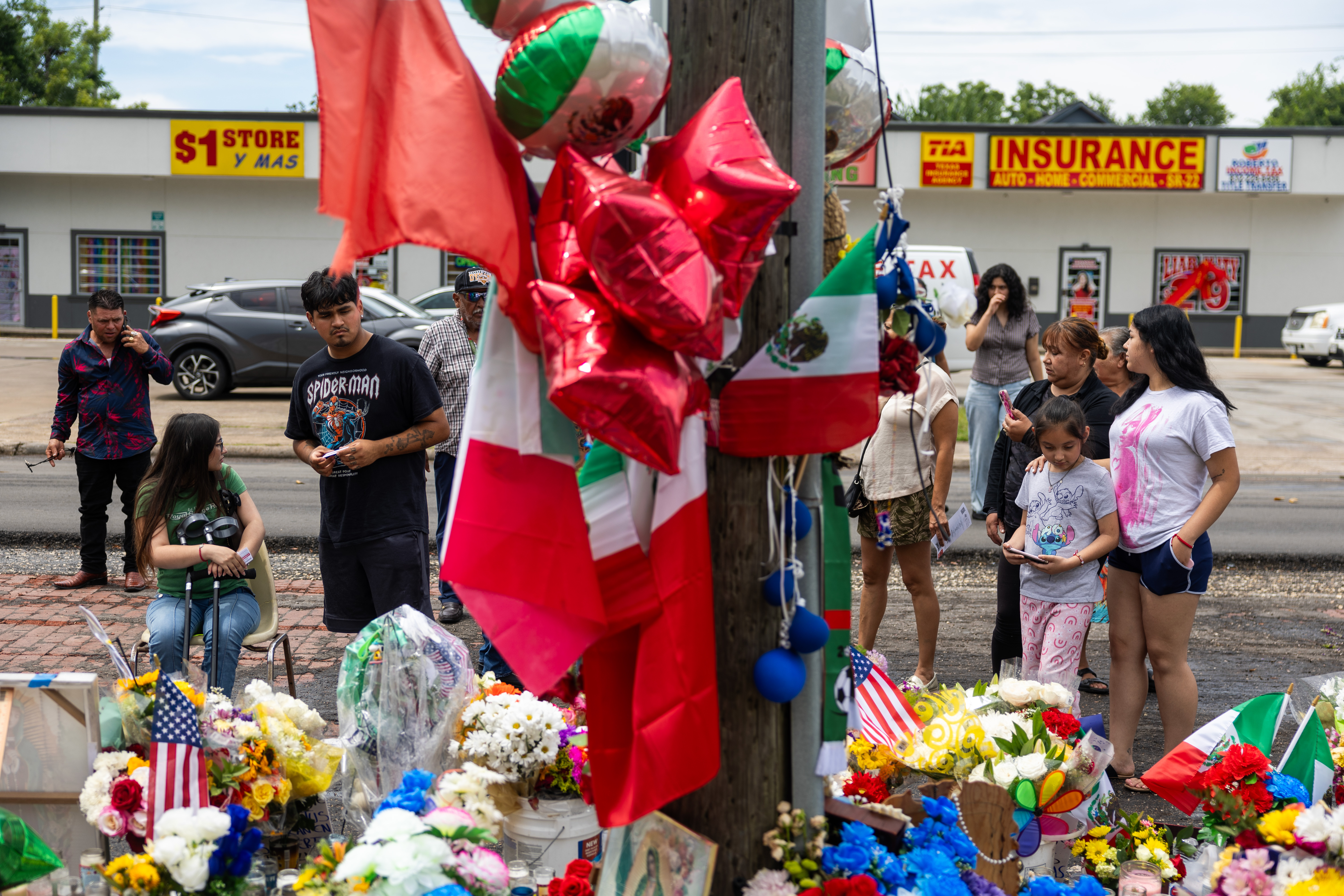
Some of the worst examples of abuse by ICE agents have come during vehicle stops, including the July killing of Lorenzo Salgado Araujo in Houston. Agents have been captured on video in high-speed pursuits, cutting off cars, and smashing windows.
Before Trump returned to office, the agency rarely engaged in these kinds of tactics, let alone used them to target noncriminal immigrants, said Joe Sifuentez, who worked for ICE until he retired in 2020.
“If it’s a bad guy in that vehicle, we have a judicial warrant, we stop them. Then we can break that window and drag that person out of the vehicle,” he said. “But that’s not what’s happening now.”
While the president campaigned on mass deportations, many voters believed the government would focus on immigrants with serious criminal records. Increasingly, that is not the case, with most people being detained only charged with violating civil immigration laws.
And in trying to fill a reported White House quota of 2,000 arrests a day, federal agents are engaged in random sweeps and racial profiling that put people at risk.
“I’m concerned that one of my loved ones could get pulled over tomorrow,” Sifuentez said. “God only knows what can happen.”
Detainees stand at windows at the Delaney Hall immigration detention center in Newark, N.J., in May, as demonstrators gather outside.TODD HEISLER
Bad math
The Republican-controlled Congress has given the administration more than $150 billion for immigration enforcement. The question is what taxpayers are getting in return. It isn’t increasing public safety, the former officials I spoke with said.
Houser pointed to a recent report by the DHS Office of Inspector General that found that as ICE shifted priorities toward immigration enforcement, its efforts to combat fentanyl trafficking declined. From fiscal years 2024 to 2025, the report said, fentanyl investigations decreased by 24%, investigative hours spent countering fentanyl decreased by approximately 30%, and fentanyl seizures decreased by almost 40%.
It’s not just drug trafficking investigations that are falling by the wayside over Trump’s misplaced priorities. ICE agents descending on a Home Depot or a Walmart to fulfill their arrest quotas fail to target the kinds of criminals the agency should be focused on.
“Real sex predators, convicted rapists, murderers, aren’t just hanging out at a Starbucks on a Tuesday, right? They’re not at the corner, walking their kids to school,” Houser said.
Mass arrests also put people in detention who do not have a final order of removal. These are immigrants who are going through the system and would generally be allowed to walk free until they had exhausted their legal options. Instead, the administration is deciding to hold them without bond for what can be an indeterminate amount of time.
Sifuentez, who oversaw ICE’s national fugitive operations program and detention facilities, told me that even under regular circumstances, detention is extremely challenging. As the government works to not only increase the number of such facilities in the country, but also how many people these places hold, the situation is bound to get worse.
“When I was in Atlanta, I oversaw a facility with 2,000 detainees. That in itself was very difficult to oversee and keep your staffing levels intact,” he said. “What do you think it’s going to be like when you ramp it up to 10,000?”
“You’re going to see more suicides. You’re going to see more people die of health conditions. You’re going to see more both mental and physical stress that leads to horrific outcomes,” Houser added. “It’s just math.”
Lorenzo Salgado Araujo, a 52-year-old Mexican immigrant, was fatally shot by ICE agents in Houston in July. A makeshift memorial took shape at the site where he was killed.ANTRANIK TAVITIAN
Abolish ICE
If ICE is being used to indiscriminately terrorize communities, and ignore constitutional protections while disregarding its public safety charge, what is the point of its continued existence? Even if you see it as a tool, if it can be abused so readily and so thoroughly by an out-of-control executive, wouldn’t the cause of sensible and coherent immigration policy be better served by replacing it?
Neither of the former officials I spoke with would endorse the call to abolish ICE, and perhaps their experiential knowledge of the agency’s complexity would keep them from ever embracing what can feel more like a facile bit of political sloganeering than anything else. After all, activists have long called to eliminate the agency, rightly underscoring the need for accountability over the lives that have been destroyed by detention and deportation — but they hardly ever offer realistic or politically viable alternatives.
Indeed, as long as we are a nation of laws, there will be the need for enforcement. In humanitarian terms, whatever agency takes ICE’s place will be judged harshly under those same standards, but exist it must.
Still, Sifuentez, until recently a lifelong registered Republican, said that at the very least ICE should be renamed and its functions divided among other agencies.
“Everybody in America should be very concerned about what’s going on,” he said. “This isn’t about politics. This is about what’s right and what’s wrong, and what’s going on is wrong.”
For his part, Houser stressed that we need migrants in this country, and we need public safety. Immigration enforcement is difficult, nuanced work and should be entrusted to those who have the highest level of training and expertise.
“No matter what the structure and organization of the bureaucracy is, there’s going to be immigration enforcement, and it needs to be handled with professionalism,” he said. “Remembering that 95% of individuals who are coming to this country want the American way of life, and that’s something to be embraced.”
Pennsylvania’s top election official contended in a letter to a cabinet secretary this week that the Trump administration’s own staff does not have “high confidence” in its claims of thousands of noncitizens on the state’s voter rolls.
In a letter to DHS Secretary Markwayne Mullin, Secretary of State Al Schmidt said the Department of Homeland Security has still not fulfilled a promise to provide a written copy of its methodology “with a list of specific data sources” for its calculation that there are more than 14,500 noncitizens on the state’s voter rolls — a claim Schmidt and other Pennsylvania officials dispute.
“We await this information,” Schmidt said in the letter, citing a virtual Aug. 13 meeting with DHS staff.
Schmidt, a Republican appointed by Democratic Gov. Josh Shapiro, told Mullin that during that meeting “DHS representatives explained that they did not have high confidence that the 14,576 individuals… were, in fact, non-citizens who had improperly registered to vote in Pennsylvania.”
The correspondence, shared with The Philadelphia Inquirer, comes amid increased scrutiny of election workers ahead of the consequential midterm elections just over two months away and as President Donald Trump has been pushing for an overhaul of the way Americans vote.
In an email response Thursday after the initial publication of this story, a spokesperson for DHS confirmed the meeting with Schmidt and said the agency “will continue working with Pennsylvania to address additional questions and correct their misunderstanding of the information provided during the meeting.”
Pennsylvania was one of four Democratic-led states — along with California, Nevada and New Jersey — that DHS claimed had a collective total of 250,000 noncitizens on their voter rolls ina July document posted at the same time Trump delivered a prime-time address on election security that waded into conspiracy theories.
The White House and DHS have provided little explanation for how they have arrived at these numbers, and election experts have said the large numbers may likely be pulling from other government data sources and include hits to names from systems that were never meant to identify noncitizen voters.
Schmidt said in the letter that he looks forward to understanding “how you attempted to match registered voters in Pennsylvania with information in DHS’s data sources and how you determined which matches were associated with greater or lesser degrees of confidence.”
Mullin said in a news conference the day after Trump’s address that leaders in any states who resist working with the department to screen for noncitizen voters would be “held accountable by fines, by penalties, and even depending on how far it goes, prison time.”
Mullin claimed on X, following Sherrill’s announcement, that more than 35,000 noncitizens could be registered in New Jersey.
Sherrill’s office has since provided updates to its estimates, sharing Aug. 19 that approximately 5,100 individuals, who were only registered from the error, were removed from voter system and about another 1,450 will undergo additional review. Roughly 340 individuals, her office said, who were registered because of the error cast a ballot at least once.
Sherrill won the 2025 governor’s race, and New Jersey went for Vice President Kamala Harris in 2024. Neither contest’s outcome would have been changed by those 340 votes.
But New Jersey’s disclosure has helped put additional pressure on the other three states targeted by DHS as November approaches. Shapiro, who is seeking a second term as governor this November, and Schmidt have continued to reject Trump’s push for a greater federal role in elections.
In closing his letter, Schmidt said he wants DHS’ additional information to conduct further review and appealed to the high stakes of the potential premature removal of eligible voters.
“The right to vote is sacred, and the cancellation of any voter registration record must be based on reliable data sources and done in accordance with Pennsylvania and federal law,” he wrote.
You can order 10 different margaritas, a tequila-spiked rendition of a Clover Club, and whole barbecued dorade for the table at East Kensington’s newest bar.
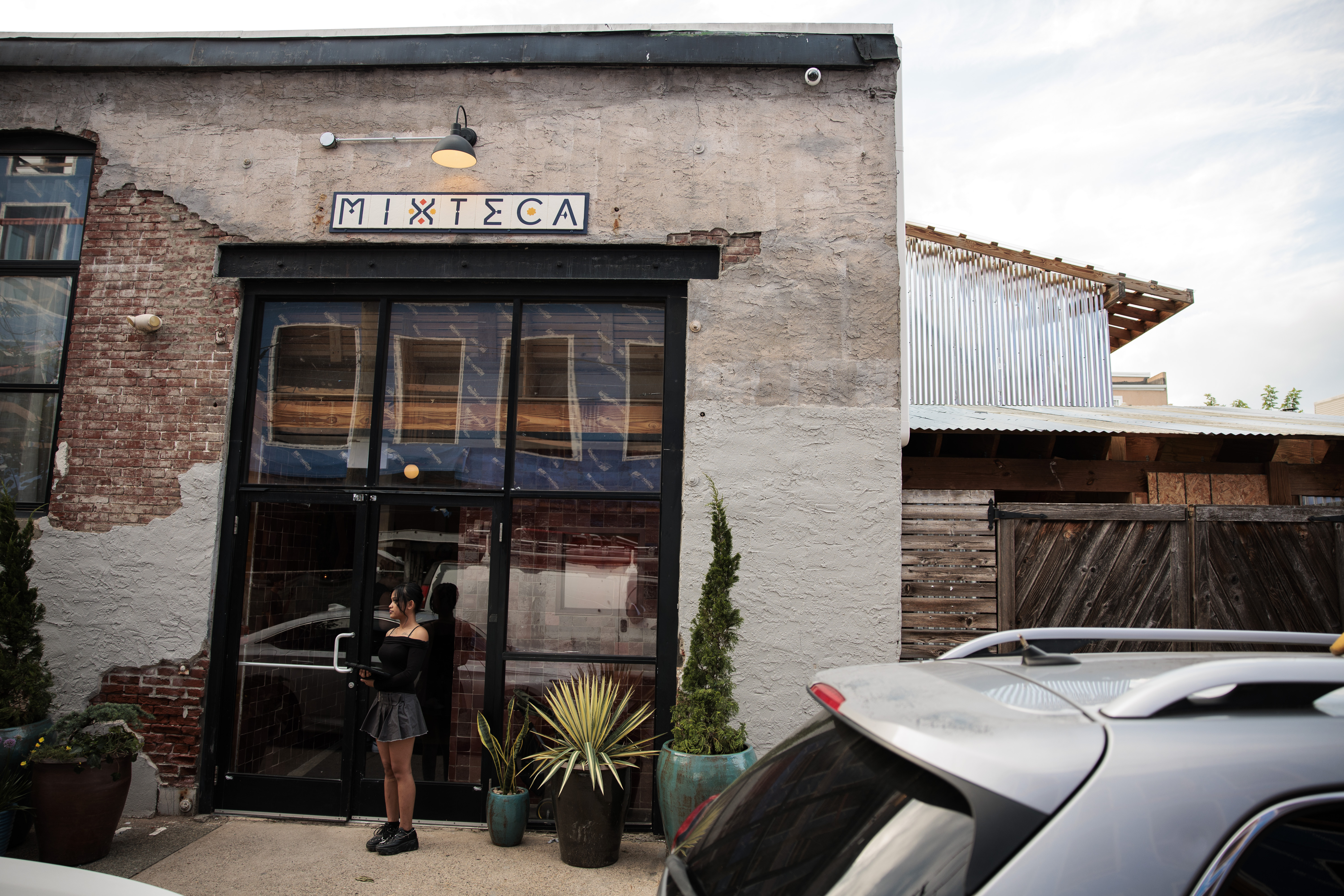
Mixteca — an agave-focused coctelería from two James Beard Award-winning bartenders — opened at 2113 E. York St. in late August, breathing new life into the space formerly occupied by the acclaimed neighborhood barMartha.
Mixteca — named after the artisan-rich region of central Mexico — is as much a tribute to Lopez’s heritage as it is an outgrowth of Lopez and Bell’s relationship. Bell worked his way up at PDT from Lopez’s barback to lead bartender and eventually owner, after buying the speakeasy and its brand from co-founder Brian Shebairo.
Victor Lopez pours cocktails at Mixteca in East Kensington.Monica Herndon / Staff Photographer
Lopez “is one of the best cocktail makers I’d ever worked with,” Bell said. “We’d play these games with him back in the day at PDT where we’d make him a drink, and he’d correctly guess the components.”
In New York, Mixteca is a bar first, with an extensive drink list of inventive takes on classic cocktails prepared with Latin American flavors, like a tomatillo gin and tonic or a Negroni infused with palo santo, a wood used for spiritual cleansing across Latin America. In lieu of a full food menu, Lopez and Bell partnered with Los Angeles-based Tacos 1986 to serve a handful of tacos and quesadillas.
The dining room at Mixteca on a friends and family night Aug. 26.Monica Herndon / Staff Photographer
Mixteca in Philly, meanwhile, is equal parts bar and restaurant, with a full-fledged food menu of Poblano-inspired share plates and nearly double the number of cocktails. The space seats 100 people across its airy, bench-lined main dining room, dimly lit mezzanine, and large patio outfitted with string lights and rainbow-colored chairs. The restaurant has an eye-catching centerpiece: a large arch over the center bar made of intricate ceramic Talavera tiles imported from Puebla. They almost create a halo over the shelves upon shelves of alcohol.
The strawberry margarita, Fish House Punch, and carajillo cocktails at Mixteca.Monica Herndon / Staff Photographer
“The high ceilings, the exterior, the energy of the neighborhood … it was perfect,” Bell said. “There’s a chaos to New York that can be exhausting, and I don’t see that in Philly.”
Lopez needed even less convincing: “I told Jeff, ‘I’ll probably move to Philly because I love it.’”
Classic cocktails with an agave twist
Mixteca’s Philly menu uses the New York location’s as a starting point for an array of drinks that draw deep on mezcal and tequila.
The restaurant has the same house margaritas on the menu — classic, made with Cointreau; and spicy, made with wasabi, cucumber, and hot honey — plus seven new flavored options, such as guava and blackberry, made with fruit juice.
The aorade asado at Mixteca. The Philly location is equal parts bar and restaurant, with a full-fledged food menu of Poblano-inspired share plates.Monica Herndon / Staff Photographer
The Philly location’s 18 signature cocktails include classics like rye whiskey Manhattans and espresso martinis as well as agave-centric counterparts, like the aptly named Puebla York (made with reposado tequila, mezcal, Cynar amaro, and cassis) and a cold brew carajillo, the popular Mexican cocktail made with tequila and vanilla-forward Licor 43.
Lopez also created versions of two timeless local cocktails: a mellower, peach-infused Fish House Punch that swaps brandy for reposado and Oaxacan rum, and a foamy raspberry Clover Club that uses white tequila instead of gin. Both go down easy.
The patio at Mixteca on a friends and family night Aug. 26.Monica Herndon / Staff Photographer
Though no executive chef heads up Mixteca’s kitchen in Philadelphia, the food menu got the stamp of approval from Lopez, who said the flavors were “the closest” to what he grew up eating as a kid in Mexico. Highlights include a bright hamachi and yellowtail ceviche; steak, mushroom, and chicken tacos served on made-to-order corn tortillas; and a whole dorade asado designed for sharing. Served with warm tortillas, white salsa, and a crisp tomato-cucumber salad, the fish sits at the center of a table like a prized catch of the day.
“We’re showing up to a party that’s already happening. We’re not the hosts,” said Bell. “We want to ingratiate ourselves.”
The exterior of Mixteca, in the former Martha space in East Kensington. Monica Herndon / Staff Photographer
Mixteca, 2113 E. York St., 215-714-3148, cocteleriamixteca.com. Hours: 4 p.m. to midnight Monday through Wednesday; 4 p.m. to 2 a.m. Thursday to Friday; noon to 2 a.m. Saturday; noon to 10 p.m. Sunday.
Michael Glatfelter routinely encounters giant piles of tires as he spins through Fairmount Park on his daily bike rides.
Glatfelter, 74, started spying the illegal dumps in secluded areas two years ago. Now he says heencounters them at least once a month and is disgusted by their persistence — even as the city clears the piles within days.
“There has to be a way of catching these people,” he said.
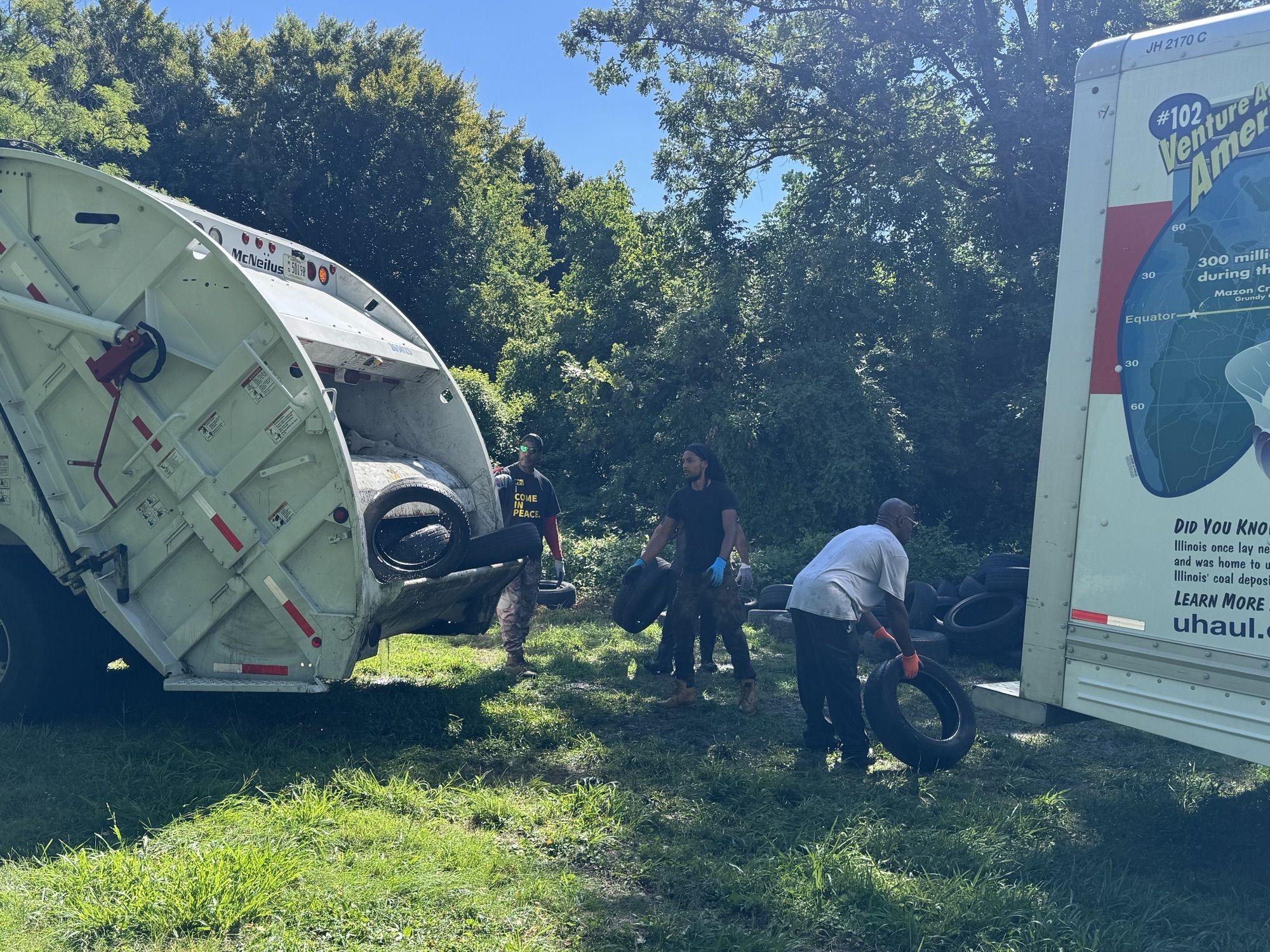
Philadelphia officials say they are also frustrated by the tire whack-a-mole and are strategizing to prevent it. They say there have been at least 40 large-scale illegal dumping incidents on parkland citywide just this year. More than one-third involved tires, with dumpers frequently bringing them in via rented U-Haul trucks.
On Tuesday, crews from Philadelphia Parks and Recreation cleared 800 tires from Fairmount Park brought in by someone driving a U-Haul. The truck and tires were abandoned near Centennial Arboretum off Avenue of the Republic.
“This is part of a broader trend,” said Ra’Chelle Rogers, a spokesperson for parks and recreation.
If caught, the dumper faces millions in fines.
For his part, Glatfelter doesn’t blame officials. He posted a video to his Facebook page earlier this month of construction trucks cleaning up a massive pile of tires, with a caption describinghow sick he was of living in a dirty city.
“I blame our citizenry. I’m sorry to say, but I think we are totally worthy of that ‘Filthadelphia’ moniker,” he said in an interview.
The tires dumped illegally Tuesday in Fairmount Park were brought in via a U-Haul truck.Philadelphia Parks and Recreation Department
‘So wide-open’
Fairmount Park is considered a jewel of Philadelphia, with more than 2,000 acres split between the east and west sides of the Schuylkill. But its sprawling network of roads and remote areas also make it easy for dumpers to access undetected.
“Fairmont Park is so wide-open, which is the beautiful thing about it,” said Natalie Walker, sustainability director for parks and recreation. “The challenge is keeping it beautiful while also preventing the kind of activity that degrades the park and takes away staff time.”
Officials are asking the public to report any instances via the 311 system and to call 911 if they spot live dumping. They are also asking the public to share information that could identify dumpers if they feel safe doing so.
The city has installed cameras in various park areas known for persistent dumping, Walker said.
Violators face fines of up to $5,000 per illegally dumped item. Over the past three years, parks and recreation has issued $1.3 million in violations for illegal dumping on parkland.
One strategy is to fortify park perimeters by blocking vehicle access without sacrificing the welcoming green space for pedestrians and cyclists, Walker said.
For example, parks and recreation has installed three new gates near George’s Hill in WestFairmount Park, a dumping hot spot.
The city has also organized cleanups and installed fencing, gates, and guardrails at other chronic dumping sites. They’ve installed bollards and boulders, as well as lock covers engineered to thwart bolt cutters.
City crews removing about 800 tires illegally dumped in Fairmount Park near Centennial Arboretum off Avenue of the Republic.Philadelphia Parks and Recreation Department
A $4 million fine?
Parks and recreation is working with police to identify the dumper in Tuesday’s incident.
That cleanup was triggered when park rangers and local partners spotted a stuck U-Haul truck abandoned next to several piles of tires. Officials determined the dump consisted of 8.4 tons of debris, translating to an estimated 800 tires.
Although the U-Haul was reported stolen, investigators are looking into whether the driver got stuck and possibly falsely reported the theft to escape liability, Walker said.
Walker said the dumper faces fines of up to $5,000 per item, amounting to about $4 million.
Illegal dumping occurs when unscrupulous shops pay people to dispose of tires cheaply and avoid disposal costs of about $100 per ton, Walker said.
The city routinely issues civil notices of violations, Walker said. She noted a 2023 incident when a repeat offender was fined $380,000 after being caught on camera dumping near Ormiston Mansion on Reservoir Drive.
Walker said parks and recreation has a grant from the William Penn Foundation to implement part of its strategy. For example, park ambassador Dan Lidon conducts daily inspections, maps hot spots, and coordinates with community groups.
On Aug., 25, 2026, crews from Philadelphia Parks and Recreation removed about 800 tires illegally dumped in Fairmount Park near Centennial Arboretum off Avenue of the Republic. The tires were brought in via a U-Haul truck.Philadelphia Parks and Recreation Department
Dumping beyond Fairmount
Residents, community nonprofits, and parks groups say dumping is widespread in other parks, vacant lots, and remote areas.
In 2024, an estimated 4,000 tires choked a wooded ravine off Newtown and Adams Avenues, a stretch of debris sprawling more than 100 feet through Tacony Creek Park. The city used its own workers as well as a chain of volunteers to remove them.
And this year, The Inquirer reported on what’s possibly the city’s largest illegal dump off Pennway Street in Northeast Philadelphia, which spans more than a city block and spills down a treacherous slope that’s difficult to access.
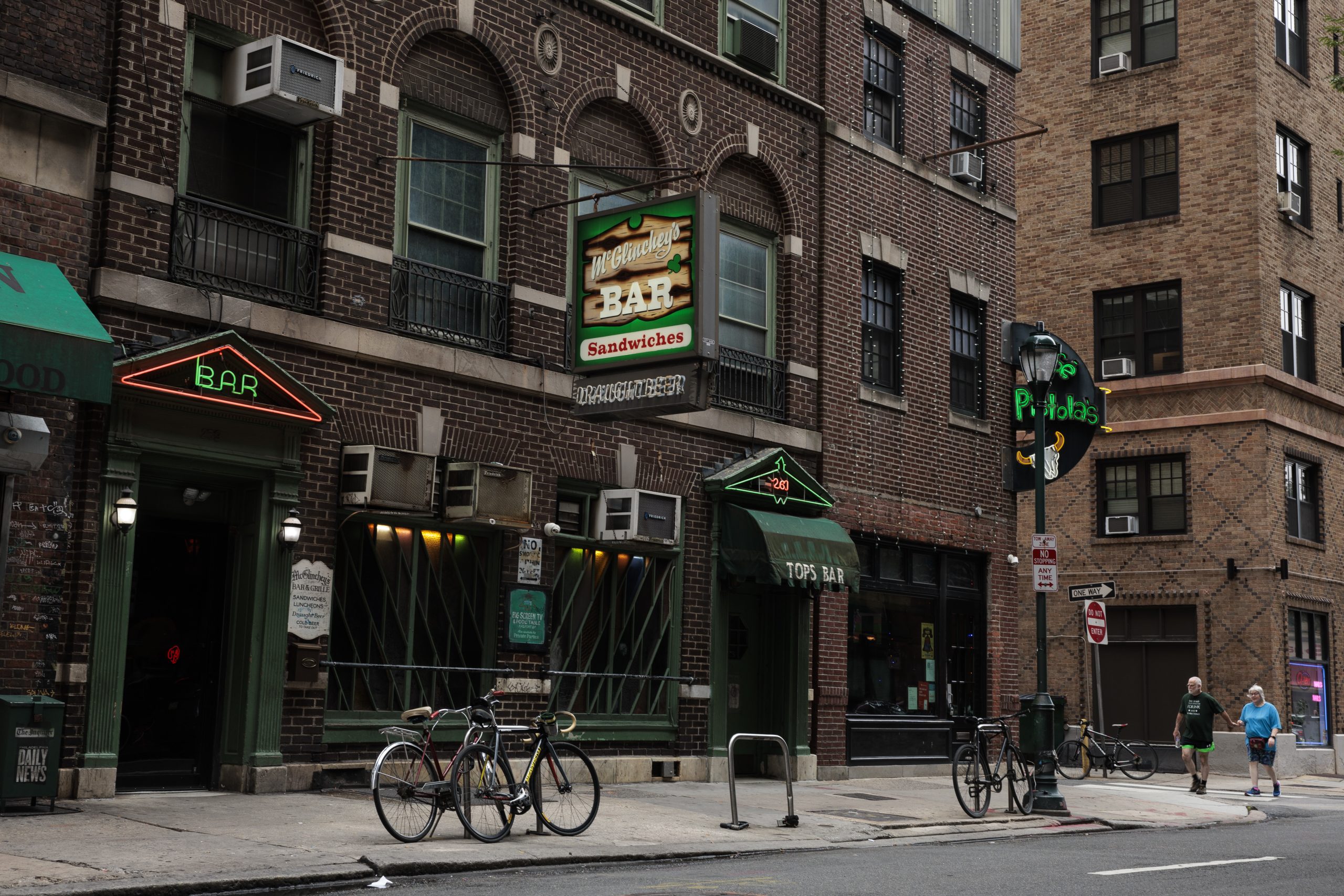
A distinctive stretch of 15th Street in Center City has lost both of its longtime bars within a year.
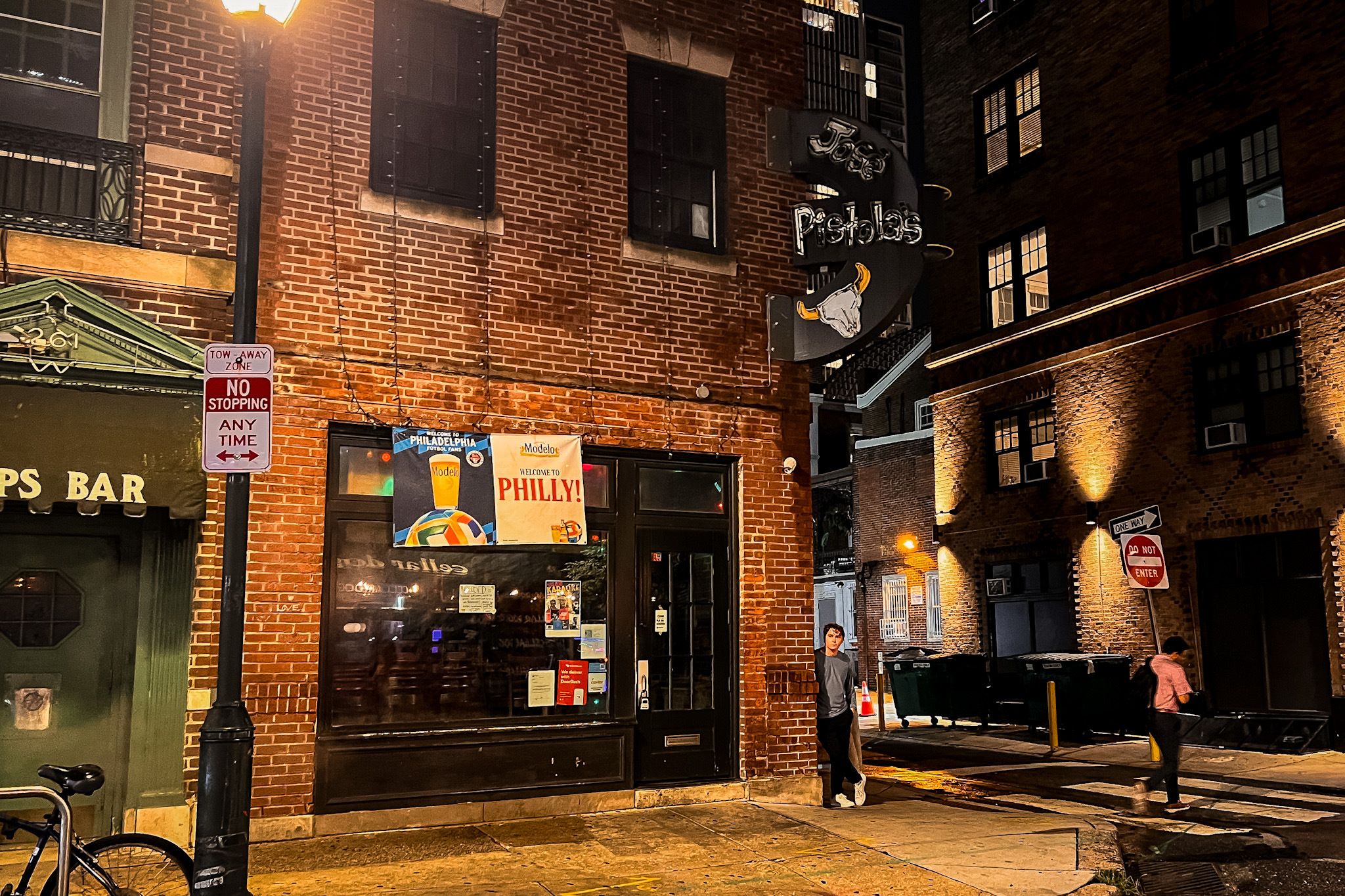
Jose Pistola’s, the Mexican-inspired craft beer bar at 263 S. 15th St., has closed after 19 years, following last August’s closing of its next-door neighbor, McGlinchey’s.
The closing of Jose Pistola’s came abruptly Tuesday amid a number of factors, including the Philadelphia Gas Works’ cutoff of its gas service. Although co-owner Joe Gunn said the business had made payments and was trying to resolve the issue, he said PGW would not restore service for three more days. . “That was the straw that broke the camel’s back,” Gunn said.
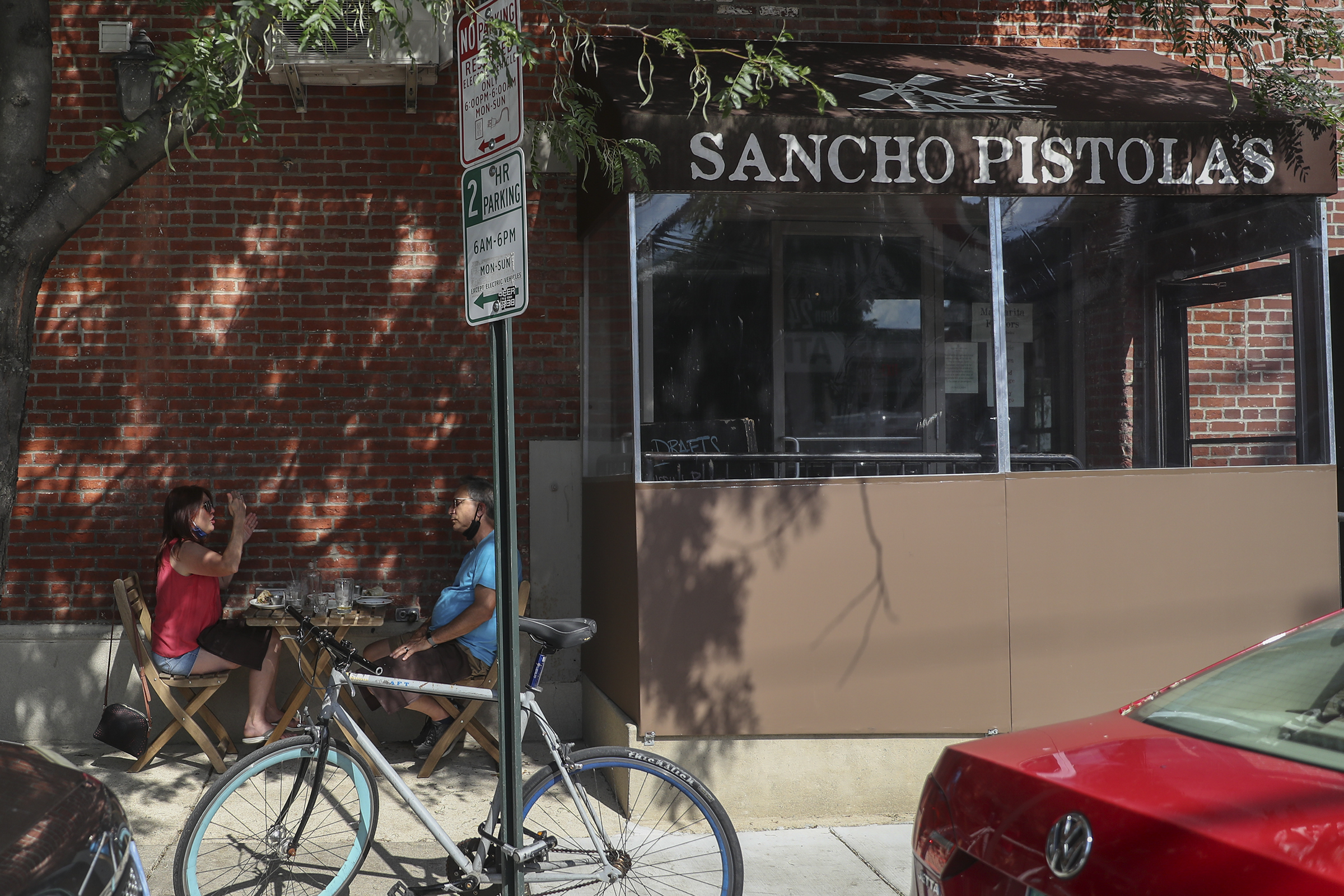
Sancho Pistola’s in Fishtown, which opened in 2014, is not affected by the Center City closing.Heather Khalifa / Staff Photographer
The closing does not affect Sancho Pistola’s on Girard Avenue in Fishtown, which opened in 2014, or Pistola’s Del Sur on East Passyunk Avenue in South Philadelphia, which opened in 2017. They are doing well, Gunn said. “They’re in no danger of going anywhere.”
In 2009, court records show, the City of Philadelphia, which owns PGW, obtained a judgment of nearly $48,000 against Jose Pistola’s. According to a 2025 court docket entry, the judgment was never satisfied. A PGW spokesperson on Friday declined to comment, saying it does not share information about individual accounts.
Gunn, saying that he did not want to blame PGW, said the interruption forced a decision that he and business partner Casey Parker had already been contemplating.
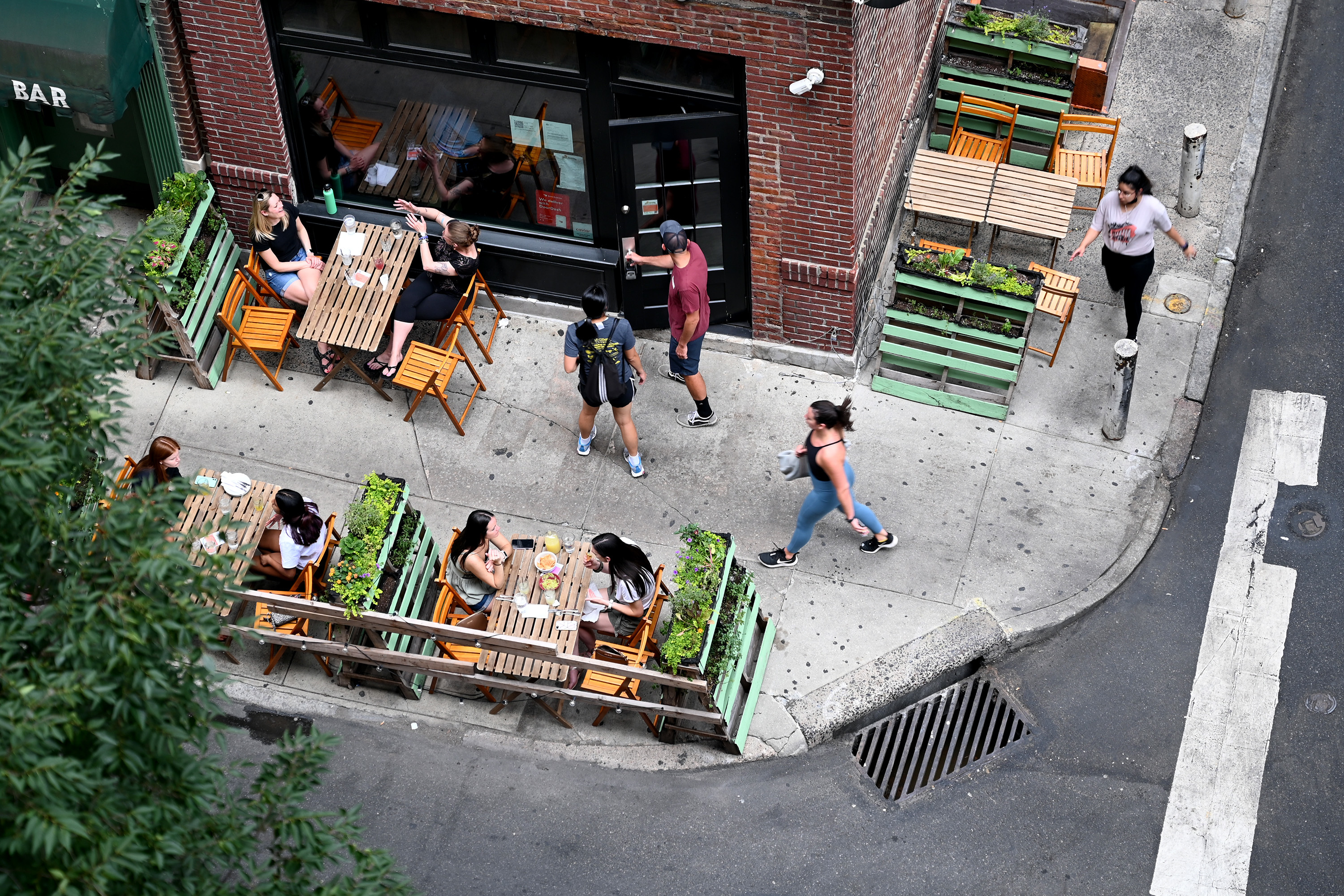
A view of Jose Pistola’s pandemic-era outdoor seating at 15th and Manning Streets in 2021. Tom Gralish / Staff Photographer
Gunn said they had about a year remaining on their lease and had been discussing a five-year renewal with their landlord. But with both Gunn and Parker now 51 and their children getting older, he said another long commitment seemed increasingly daunting. “It takes a lot of energy to play that game,” Gunn said.
The numbers were difficult, too. As other bar and restaurant owners have lamented, higher food and operating costs had squeezed the business, while the late-night trade that once helped sustain bars like Pistola’s has diminished.
“Frankly, [the bar] just never fully recovered from COVID,” Gunn said. “Coming out of COVID, the world was a different place — the price of goods, the cost of everything, and people don’t go out as much late. These younger generations are too smart to drink their life away.”
“It’s always been tight, but everything changed,” Gunn said. “And then people just don’t drink as much.”
About 25 people worked at Jose Pistola’s. Gunn said they had little warning because the owners themselves had not decided to close until the last minute. He said he and Parker are trying to place employees at their other restaurants or with friends in the industry.
“We’ll absorb what we can, obviously, in the other two places,” Gunn said. “We have a lot of friends in the business, so we’re aggressively trying to help them.”
Jose Pistola’s bar, as decorated in 2019 for its annual Jose Pistola’s Christmas Smackdown Bar Crawl.Tom Gralish / Staff Photographer
Jose Pistola’s — its name a loosely licensed Spanish rendering of Gunn’s first and last names — opened Aug. 29, 2007, taking over the longtime Copa, Too! space. Gunn and Parker were both veterans of Fergie’s Pub; Gunn had worked there for about seven years before leaving to open Pistola’s, while Parker had moved on by then.
The bar quickly established itself through its combination of craft beer, Mexican-inspired food, and an irreverent neighborhood-bar atmosphere. It became particularly associated with Philadelphia’s burgeoning craft beer movement and the early years of Philly Beer Week.
Its food grew more ambitious after Puebla-born chef Adán Trinidad joined the operation and eventually became a partner. Trinidad, whose resumé included El Vez and Alma de Cuba, brought to the menu such dishes as tortilla soup, goat sopes, carnitas-filled steamed buns, and Brussels sprout tacos that caught the attention of Inquirer critic Craig LaBan.
The partners later expanded the Pistola’s name to Fishtown and East Passyunk. Trinidad died after a fall in October 2021 at age 39.
Adán Trinidad was chef-partner until his death in an accidental fall in 2021.Rachel Delsurdo / Courtesy of Jose Pistola's
For most of Jose Pistola’s run, its next-door neighbor offered a study in contrasts.
McGlinchey’s — now on the market — was a cash-only dive bar known for low prices, dim lighting, smoke in the air, and an eclectic clientele. It endured by barely changing, while Jose Pistola’s brought craft beer and more ambitious food to an equally unpretentious neighborhood-bar sensibility.
The two businesses were nevertheless close.
“We had a great relationship with them,” Gunn said. “We loved them because of how funny they were. They were just kind of cranky, and they put up with us.”
McGlinchey’s, as seen in August 2025, was next door to Jose Pistola’s.Monica Herndon / Staff Photographer
Gunn said the McGlinchey’s closure was part of a broader change he has watched on this stretch of 15th Street between Locust and Spruce Streets.
“The whole corridor used to be more vibrant,” he said. “I think COVID wiped out a lot of those places. It changed everything for us.” The block is also home to Cellar Dog and Garage Rittenhouse.
As recently as Thursday, Gunn said, he and Parker were “still fighting to figure out a way to [save] it. But it just, I think, ran out of steam.”