In the early 1800s, Philadelphia’s loose cohort of natural scientists became obsessed with learning all they could about the plants and animal species of the New World.
They shipped dried specimens to Britain for naturalists to identify and catalog. And when the American naturalists discovered a new species, the Brits named it and took the credit for the findings in their medical journals.
When the Crown enacted trade restrictions in 1807 — ultimately leading to the War of 1812 — American botanists, herbologists, and entomologists had enough with Britain’s interference.
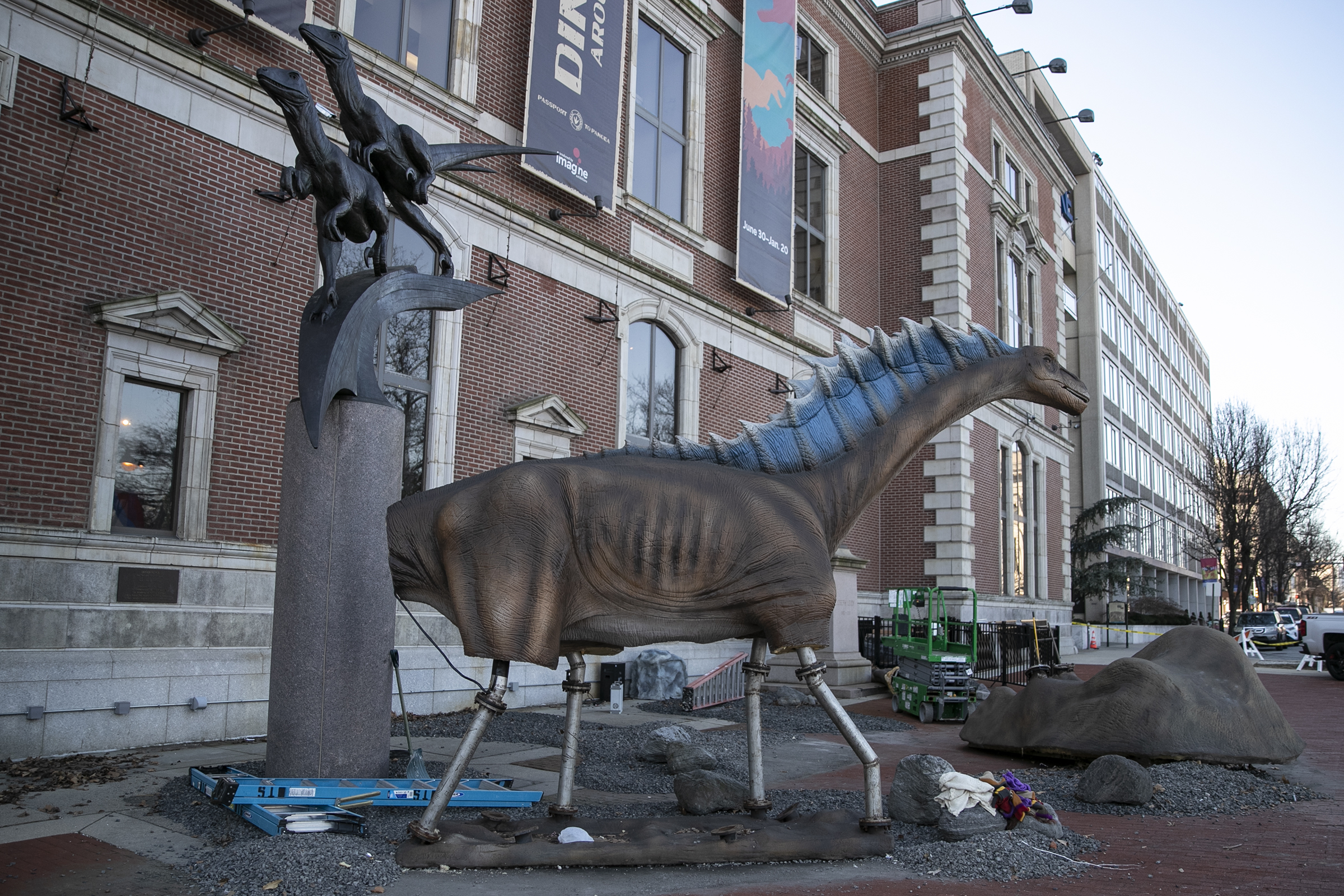
Artist Ibi Padrón Venegas’ Academy of Natural Sciences No. 1 translates his ideas of daydreams, everyday sensations, and the curiosity that comes with playing with science for his sculpture.Ibi Padrón Venegas for Colibrí Workshop
Six Philadelphia gentlemen and amateur naturalists — Gerard Troost, Nicholas S. Parmentier, Camillus MacMahon Mann, Jacob Gilliams, John Shinn Jr., and John Speakman — held a meeting Jan. 12, 1812, in Speakman’s Old City apothecary. Their goal: to map out a plan to be recognized as scientific experts on what grew on their own soil.
The Philadelphia Historic District will celebrate the academy’s beginnings at its Ben Franklin Parkway home on Saturday from 11 a.m. to 1 p.m. The party, or “Firstival,” is part of a series of yearlong fetes honoring events, places, and organizations with Philly roots in honor of America’s 250th birthday.
“Americans were doing the research and risking their lives to cull these specimens,” said Robert M. Peck, curator of artifacts and senior fellow emeritus at the Academy of Natural Sciences of Drexel University.
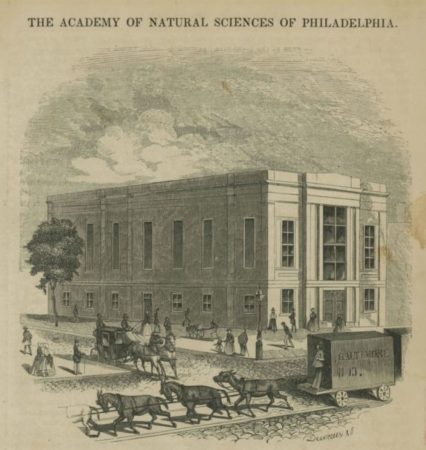
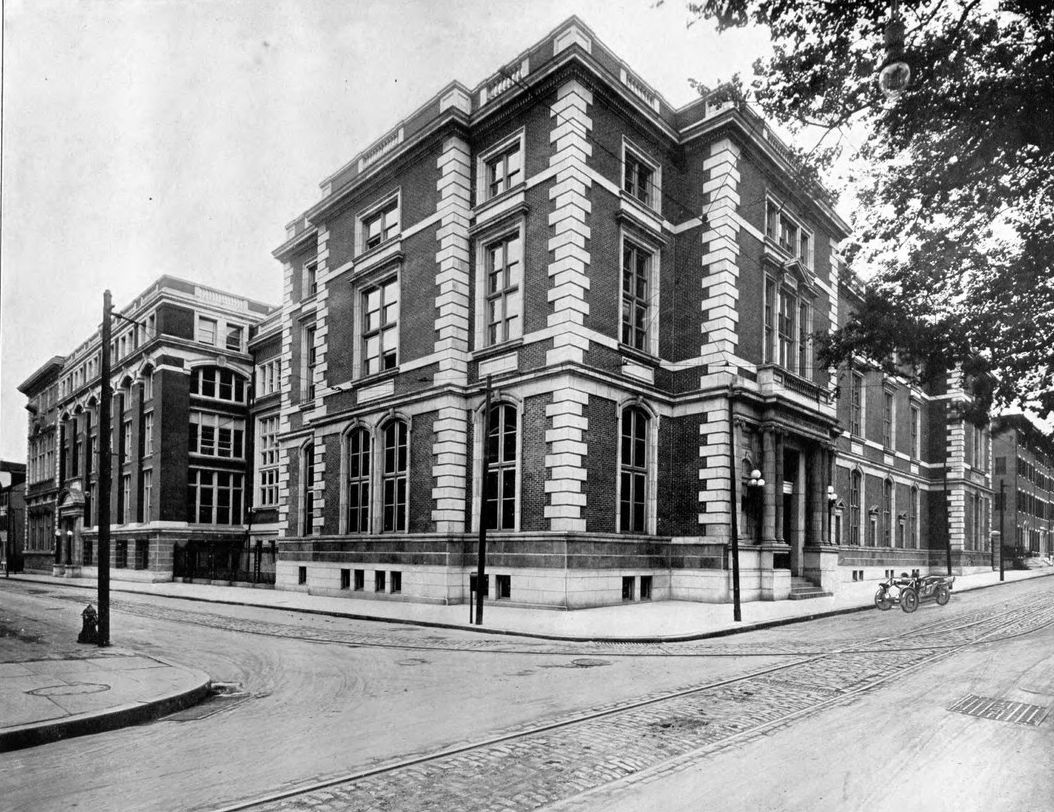
The Academy of Natural Sciences’ current home at 1900 Benjamin Franklin Parkway. This building opened in 1876 for the Centennial and stands through present day.Courtesy of the Journal of the Academy of Natural Sciences of Philadelphia
Thomas Say is listed as the seventh founder, though he didn’t attend the first meetings, Peck said. Still, Say is the most famous of the early members as he is the father of American entomology and conchology.
The academy was a private club in the beginning, opening its nature collections to the public in 1828 when it was housed at the Swedenborgian Church at 12th and Sansom.
By the mid-19th century, the academy was as important in Philadelphia’s science and education circles as Ben Franklin’s highbrow American Philosophical Society. In 1849, the society transferred Thomas Jefferson’s fossil collection to the academy, where it remains today. During the mid-19th century, the academy acquired the bird skins from John James Audubon’s collection, and the pressed plants gathered by explorers Meriwether Lewis and William Clark.
In 1868, the academy made paleontology history when Benjamin Waterhouse unveiled a 15-foot-tall complete dinosaur skeleton of Hadrosaurus foulkiibuilt from the bones of the plant-eating dinosaur excavated in Haddonfield 10 years before.
Samples of the Academy of Natural Sciences’ robust dinosaur collection as photographed in 2020. Courtesy of the Academy of Natural Sciences of Drexel University
“Before then, people didn’t understand what dinosaurs really were, how they really looked,” Peck said. “This is the first time the world had ever seen what a dinosaur really looked like and it shaped how we still see them today.”
In 1876, the academy moved to its present building on the Parkway, where, exactly 100 years later, the Please Touch Museum opened its 2,200-square-foot pilot. (It is now located in Memorial Hall on the Centennial campus in West Philadelphia.)
The academy went on to become a home base for scientists who study a wide range of climate-related topics, from global warming in Mongolia to avian bird flu in Vietnam.
The Academy of Natural Sciences in June 2020. HEATHER KHALIFA / Staff Photographer
In 2011, the Academy of Natural Sciences became a subsidiary of Drexel University, retaining its own board and legal status as a separate nonprofit organization. In April, The Inquirer reported Drexel was in discussions to sever ties with the academy unless it agreed to grant Drexel its building, endowment, and significant collections.
This week’s “Firstival” is Saturday, Aug. 1, 11 a.m.-1 p.m. at the Academy of Natural Sciences of Drexel University, 1900 Benjamin Franklin Parkway.
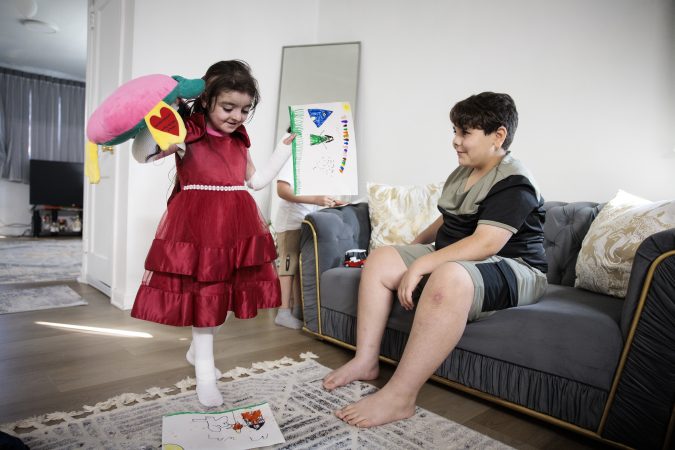
A small garden stands outside the two-story Northeast Philadelphia home where Fatima Alsalih Alti Keli and Waled Keli live with their three children. Inside, their 8-year-olddaughter, Abeer Janna Keli, sits on the couch drawing pictures with her two brothers, her small arms carefully wrapped in bandages to protect her fragile skin. The ordinary domestic scene would have seemed nearly impossible before the family immigrated to the United States from Turkey, after the civil war in Syria had prompted both parents to flee.
Over the last two years, the family’s future has been radically transformed in Philadelphia with the help of specialized treatment for Abeer. And yet, the resettlement process by which they were granted visas is threatened: When the family applied for resettlement in the United States around 2020, the annual refugee admission cap was set to 18,000. The cap this year is set to 7,500, the lowest in U.S. history.
Alti Keli, 28, and Keli, 30, had known each other through their families in Syria, but they married after both had fled to Turkey and started their family there. Once in Turkey, they applied to move to seek medical treatment for Abeer, a process that took about five years.
Abeer was born with epidermolysis bullosa, a rare genetic disorder that causes the skin to blister and tear from minor friction. Children with the condition are often described as having “butterfly skin.” Before the family came to the United States, Abeer had little access to specialized medical care. She struggled to eat because of sores in her mouth, relied on a wheelchair, and spent much of her time asleep.
“She was like a ghost,” her mothersaidin Arabic through a translator.
The family applied to immigrate through the United Nations High Commissioner for Refugees in 2020 on the basis of receiving treatment for Abeer’s disease and were connected with Children’s Hospital of Philadelphia, where Abeer still receives treatment. When they arrived in Philadelphia in July 2024, they went directly to CHOP, where Abeer stayed for 12 days before she could go home.Two years after the move, the Kelis have settled into their lives in Philadelphia.
“Now that she is here, she is talking, walking, and is happy going to school,”Alti Keli said, smiling through tears. “Her doctors saved her life.”
They moved to their predominantly Arab neighborhood after first living in Southwest Philadelphia. Struggling with the language barrier and the job search, they were feeling isolated there. The friction of daily life was a real struggle as the family balanced learning English, taking their daughter to medical appointments, finding employment, and coordinating schooling for Abeer and her brothers — Abdul Rahman, now 10, and Mahmoud, now 6.
For example, they were flabbergasted when their water bill spiked from $50 to $500 a month. Realizing their toilet was leaking, they struggled to communicate with their landlord. Those struggles have eased. In their new neighborhood, their children can easily walk to school and have made friends who share their Arab heritage. With the help of English classes, phone translators, and a refugee-support organization, the family has been able to build a comfortable life.
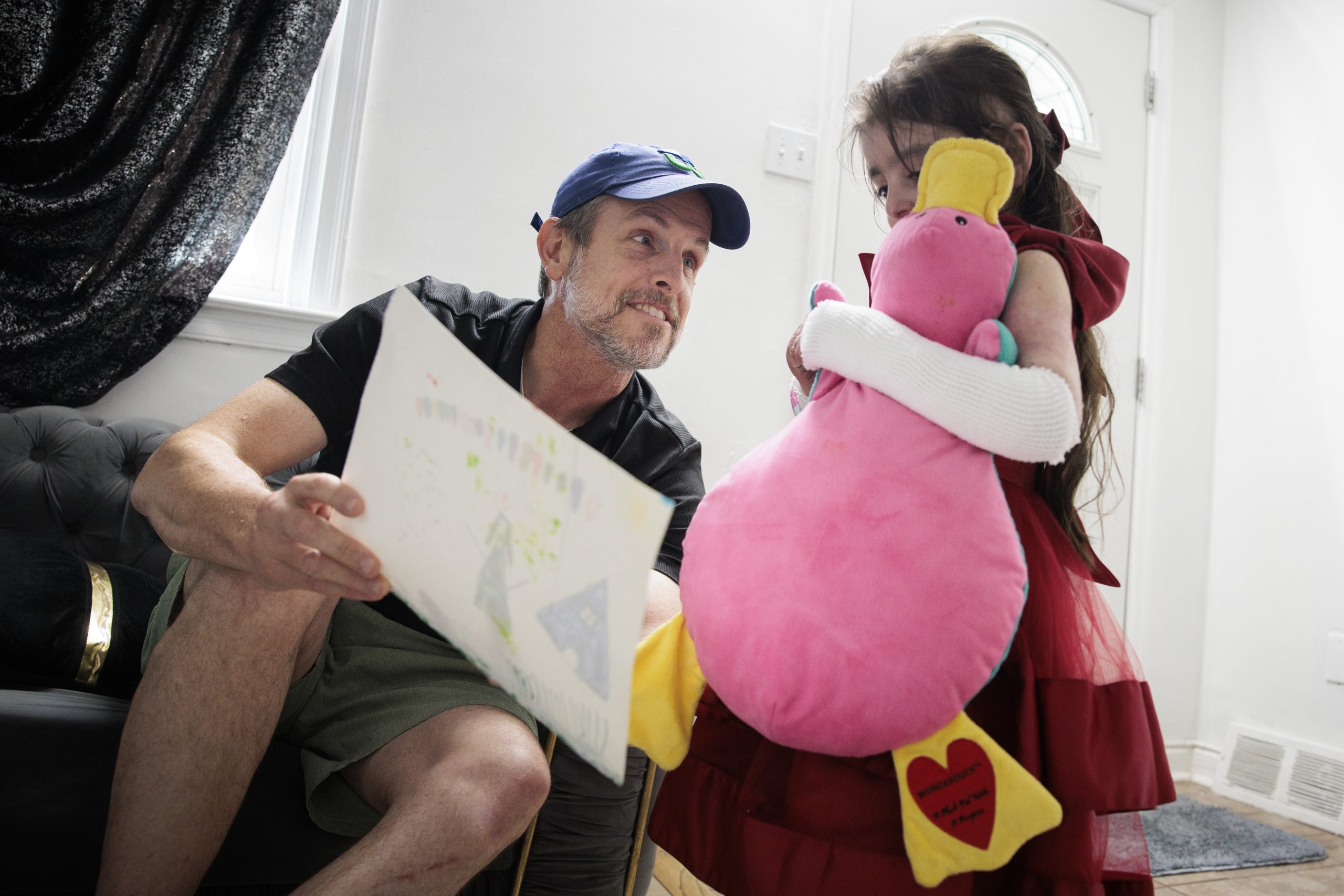
Volunteer Dan McVay talks with Abeer Keli, 8, about her drawing at her home on Wednesday, July 22, 2026 in Philadelphia. The Refugee Empowerment Support Team (REST) works with refugee families in Philly.Monica Herndon / Staff Photographer
The Refugee Empowerment Support Team (REST) helped the family confront the logistical challenges of moving to a new country. Efforts by President DonaldTrump’s administration to curb immigration have affected not only the number of refugees allowed into the country, but also the kind of help they receive while they are here. After the administration threatened to close resettlement offices in 2025 and froze federal funding, many of the offices shut down and laid off employees. Provisions in the One Big Beautiful Bill Act limited refugees’ access to government services like Medicaid, Medicare, and SNAP benefits.
REST has filled in those gaps by helping to connect refugees with employers, assisting with transportation to medical appointments, and dealing with other logistical challenges. Dan McVay, a leader with REST, said more refugees are now contacting the organization directly through Facebook, asking for help finding jobs and accessing services.
“There is no money for refugees already in the country,” McVay said.
Alti Keli, however, is “very happy with the challenge” of adjusting to life in a new country. While she takes care of the children, herhusband works in landscaping at a golf course. He also loves to garden at home and has filled the front of the house with potted plants and flowers.
McVay describes the family as very welcoming, often serving guests tea or coffee and homemade sweets.
Before the family moved to the United States, the Kelis fled to Turkey from Syria in 2014, where they married and had their three children. Alti Keli’s face contorts while describing her life in Syria, where she lost her father and four siblings, during the civil war: “It was like a nightmare.”
The family had to keep moving and did not have access to shelter, food, or even potable water.
“We had to drink dirty water,” Alti Keli said. In Turkey, life was better, but Abeer could not get the specialized care she needed.
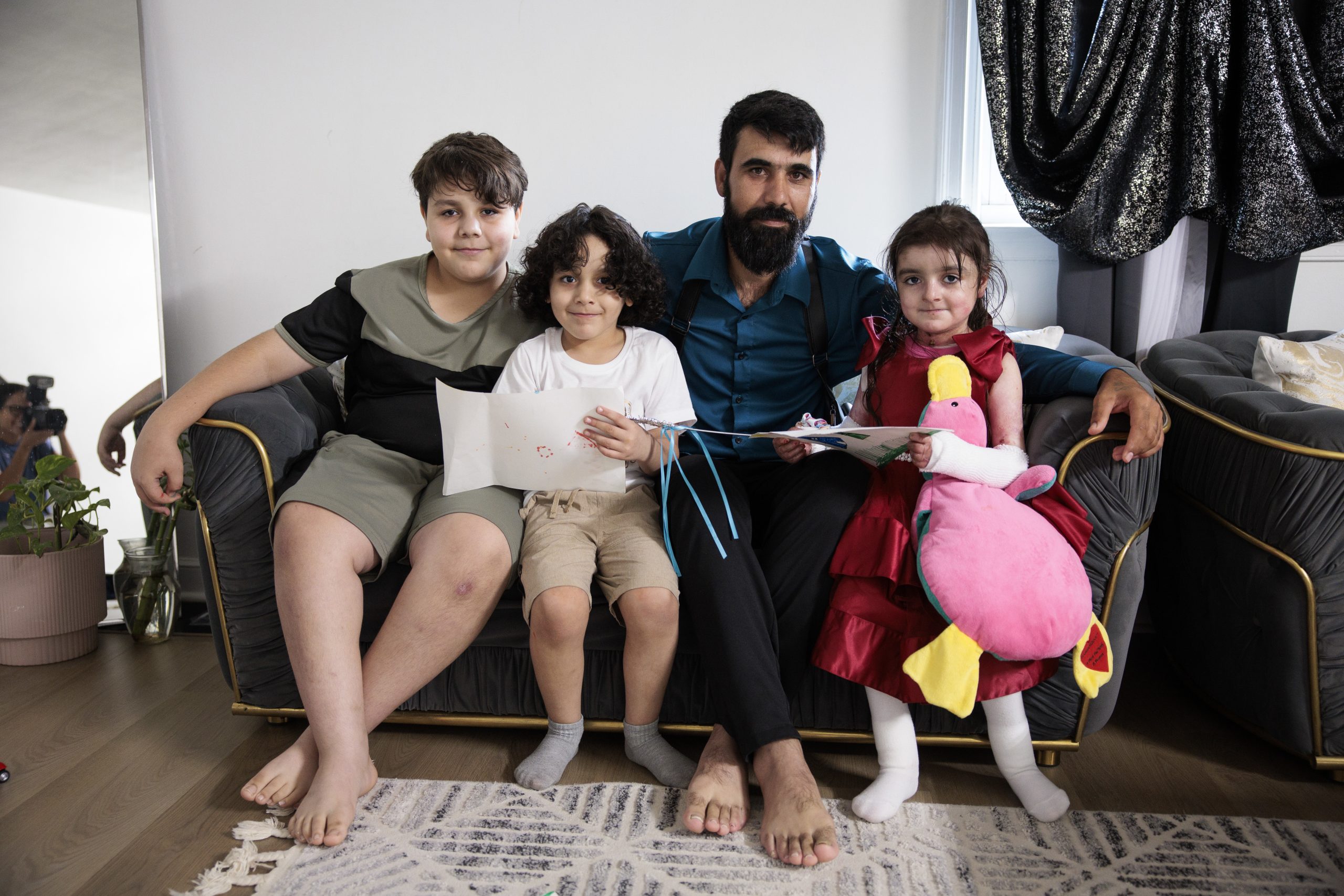
(left to right) Abdul Rahman Keli, 10, Mahmoud Keli, 6, Walid Keli, and Abeer Keli, 8, posed for a portrait at their home on Wednesday, July 22, 2026 in Philadelphia. The Refugee Empowerment Support Team (REST) works with refugee families in Philly.Monica Herndon / Staff Photographer
A United Nations spokesperson described the situation in Syria during 2013 as “a complete meltdown of humanity,” as Bashar Assad’s Russian-backed regime tried to recapture rebel-held territory. During the war, civilians were subject to chemical warfare, indiscriminate bombing attacks, and systematic torture and execution by the Assad regime.
Moving to Philadelphia was “the first step of hope,” Alti Keli said, a step that has been realized now that her daughter is doing well. “I came here for hope,” she says. “What else can I ask for?”
FOPS represents a multitude of residents who live on and near these historic, narrow residential corridors. We engaged with the city, voiced our concerns, and sought a balanced solution that maintains safety for cyclists while preserving essential accessibility for elderly, disabled, and young residents. But City Hall, so far, is beholden to a single, vocal advocacy group, and insists on designing our streets based on politics instead of data, good practice, and engineering. That is slowly changing, with our help.
In pursuing our lawsuit, we are exercising a foundational constitutional right. The judiciary exists precisely to act as a check on government overreach, improper legislative process, and a lack of transparency.
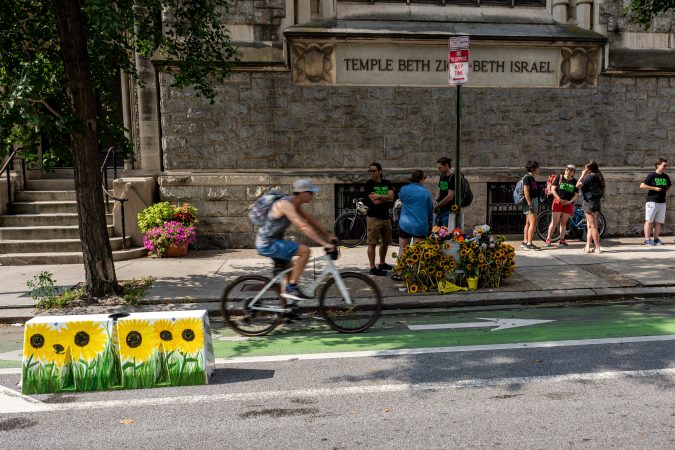
The 2024 death of Barbara Friedes was a terrible tragedy. But even in the wake of tragedy, municipal governments must follow the law and rely on sound traffic engineering. The driver in that tragic crash was severely intoxicated and traveling on Spruce Street faster than the speed limit set for I-95. Banning residential loading and erecting concrete barriers does nothing to solve the single greatest cause of traffic deaths: excessive speed.
Instead, the city’s rushed, politically driven response would make the streets more dangerous. Walled-off lanes turn narrow streets into high-speed e-bike expressways with no egress for pedestrians, separating seniors, paratransit vans, and emergency vehicles from front doors.
We all want safer streets — for all road users: pedestrians, cyclists, motorists, residents, seniors, and people with disabilities. It should be guided by data, accessibility needs, and open public input, not political decrees passed without transparency. This political coercion will soon come to your neighborhood. We’re all fighting back.
Lloyd Brotman,president, Friends of Pine and Spruce
Accountability
Sen. Dave McCormick once explicitly rejected Donald Trump’s Big Lie about winning the 2020 election. Now mum on election denial, he avidly supports the SAVE America Act, purportedly to stop voter fraud.
You may ask: Why would anyone object to proof of citizenship to register to vote? Let’s see: You need either an original birth certificate or a current U.S. passport. REAL ID? Won’t cut it. And if you’ve changed your name, you’ll need legal proof of any changes. Married? Legal proof. Divorced? Legal proof. Surely everyone has the time, access, and money to procure all these documents.
The fraud here is Sen. McCormick parroting the lies Republicans have been pushing for decades about rampant voter fraud. The SAVE Act is a draconian solution in search of a problem, intended not to protect democracy, but to subvert it.
Rosalind Holtzman, Elkins Park
. . .
Let me get this straight. The Inquirer publishes an excellent article about Sen. Dave McCormick and others who are pushing the ill-conceived SAVE America Act on us, and it concludes by saying McCormick declined to be interviewed for the article. All we get are quotes from his canned town hall, where he cherry-picks questions and offers prepared responses. But then we give the senator space for a Letter to the Editor to repeat his one-sided false arguments uncontested. Let’s have some legitimate dialogue with the senator and stop giving him space for his infomercials.
Helene Hilger,Philadelphia
Join the conversation: Send letters to letters@inquirer.com. Limit length to 150 words and include home address and day and evening phone number. Letters run in The Inquirer six days a week on the editorial pages and online.
ARIES (March 21-April 19). Your predictive guesses are more accurate than not. Use that today. Let it cue your preventive measures. As good as you are at solving problems in the moment, you get even better results if you prevent them before they happen.
TAURUS (April 20-May 20). Every group has someone setting the direction. Today’s advantage comes from understanding that vision and helping move it forward. You don’t have to be the loudest voice to become an indispensable one.
GEMINI (May 21-June 21). Small choices have outsized effects. Stay aware. Double-check your work. Keep reminding yourself what matters most. It’s easier to steer a moving ship than to reroute one that’s drifted miles off course.
CANCER (June 22-July 22). Did you mess it up in some way? Good. Until you have a collection of interesting mistakes, you’re not yet a master. The thing that doesn’t work today may become the missing piece of something better later.
LEO (July 23-Aug. 22). People think refinement is something you’re born with, but it’s more about small, respectful choices made over and over. Today your lovely instincts and steady self-control make a favorable impression that will linger for years to come.
VIRGO (Aug. 23-Sept. 22). Talk can be cheap, and it can be expensive, too. The price is paid in attention. You’ll notice who is asking for it and who is earning it. You’re inclined to give your attention to the people who say less.
LIBRA (Sept. 23-Oct. 23). You’ve established a method that works, though it’s not the only one that will. Switch the order. The beginning doesn’t always belong at the beginning. Rearranging familiar pieces can reveal a stronger story, a better argument or a clearer path forward.
SCORPIO (Oct. 24-Nov. 21). There are very few things in this world that “always” or “never” happen. So the hyperbole may be unhelpful, especially today when the odd chance is the one that actually transpires and the open mind is richly rewarded.
SAGITTARIUS (Nov. 22-Dec. 21). Your first impulse is often worth following, but not always. Today it’s those second through hundredth thoughts that are the most auspicious to follow. Well-considered strategies will be worth the time it takes to put them together.
CAPRICORN (Dec. 22-Jan. 19). You will sharpen your skills against the challenge of an equal. The match may end with a winner and a loser, but everyone walks away better for the match. A worthy opponent is a gift regardless of the outcome.
AQUARIUS (Jan. 20-Feb. 18). It’s OK to leave a project unfinished until tomorrow or next week. Returning with fresh eyes helps you notice what today’s version missed. Distance doesn’t solve every problem, but it will make the next step rather obvious.
PISCES (Feb. 19-March 20). You’ll deal with machines today, perhaps so much so that you’ll develop a craving for the human voice, touch, and yes, the human foibles too. Because without human mistakes, there is no real connection.
TODAY’SBIRTHDAY (July 30). This is your Year of the Fuse, when one spark starts a much bigger chain of events: exciting, fortuitous and transformative. The high energy cycles are complemented by stretches of serenity. More highlights: An investment in yourself pays off. A casual acquaintance becomes an important ally. Your domestic scene gets a style update that also makes daily life less work. Gemini and Aquarius adore you. Your lucky numbers are: 6, 14, 10 and 32.
DEAR ABBY: I moved into my apartment four months ago. While my sister, her son and I were moving things in, my new next-door neighbor introduced herself. She has since become intrusive. I am an introvert, and she knocks on my door wanting everything from plastic bags to cigarettes and alcohol. Every day since I moved here, she has been asking for something. She came six times yesterday. I’d like to be her friend, but she takes and I give. I’m tired. Help, please.
— OVERWHELMED IN OHIO
DEAR OVERWHELMED: A way to fix this would be to tell your neighbor the truth. Tell her you would like to be a considerate neighbor, but you are not a convenience store and do not wish to be disturbed on a daily basis. Then, when she comes around asking for cigarettes, liquor or plastic bags (which are choking our landfills and our waterways), tell her you are fresh out — and repeat it as necessary. If she persists, discuss it with the management of your apartment building.
** ** **
DEAR ABBY: My brother-in-law is currently in a relationship with a woman who was intimate with my husband many years before we married. It was a one-night thing, but now she is with my BIL and is going to be at family functions. I’m afraid it’s going to be awkward, and I’m not comfortable. My husband is supportive of whatever I choose to do. The rest of the family has no issue with it because, of course, it’s not their issue. I need advice.
— IN A DILEMMA IN PENNSYLVANIA
DEAR DILEMMA: This is not a dilemma unless you choose to make it one. A one-night stand is not a relationship, and the woman is not a cause for concern. What happened between them once, many years ago before your marriage, shouldn’t be a threat to you or your relationship with your husband’s family. If anyone is tasteless enough to bring it up, treat it with humor or say you don’t wish to discuss it. Then act like the lady you are and be cordial.
** ** **
DEAR ABBY: I’m a 17-year-old guy, and I still suck my thumb, though I do it mostly when I’m in bed. I am going to college next year and I’m worried I might get outed by a roommate if I’m caught. Is my habit that unusual, and do you have any advice on how to stop it? It’s like an addiction.
— EMBARRASSED IN THE WEST
DEAR EMBARRASSED: You are not alone in having this problem. In the past, I have heard from other adults who suck their thumbs. Comfort yourself with the thought that it’s not an addiction and not all that unusual. Stress has been known to cause people to suck their thumbs. One way to discourage the habit would be to keep yourself from becoming overly tired. Another would be to coat your thumbs with a bad-tasting substance. (Search online or ask your pharmacist to recommend something.) That, coupled with the fear of being ridiculed, may do the trick.
The University of Valley Forge, a small private Christian institution in Chester County, on Wednesday announced that it would suspend operations at the end of its summer 2026 semester.
The Charlestown Township-based college — which enrolls 589 students, according to the National Center for Education Statistics — has been facing the possible loss of its accreditation by the Middle States Commission on Higher Education.
Middle States last month issued its most serious warning — “show cause” — to the small Christian college that prepares students for leadership in the church and the world. It cited concerns about finances, planning, and governance.
Colleges need accreditation to keep their students eligible for financial aid.
The University of Valley Forge recently said on its website that it planned to charge $41,020 in tuition, fees, and room and board for next academic school year, which was scheduled to start Aug. 30.
“After much prayer, careful consideration, and consultation, the Board of Trustees of the University of Valley Forge has made the difficult and painful decision to suspend academic operations at the conclusion of the Summer 2026 semester,” the board said in a statement.
“This decision follows extensive efforts to address the University’s financial challenges, pursue strategic partnerships, and identify sustainable paths forward. These challenges have been well documented over several decades and were reflected in the recent action of the Middle States Commission on Higher Education, which placed the University on Show Cause status,” the board said.
“After careful assessment of the University’s financial realities, the Board concluded that it could not continue academic operations responsibly beyond the Summer 2026 semester,” the board said.
“To our students, we are deeply sorry. We understand that this announcement disrupts your lives, your plans, and your sense of stability, and we are grieving for you and with you,” the board said.
“Please know that until the very last moment, we had significant reason to believe there was a sustainable path forward. However, that path did not materialize in time,” the board said.
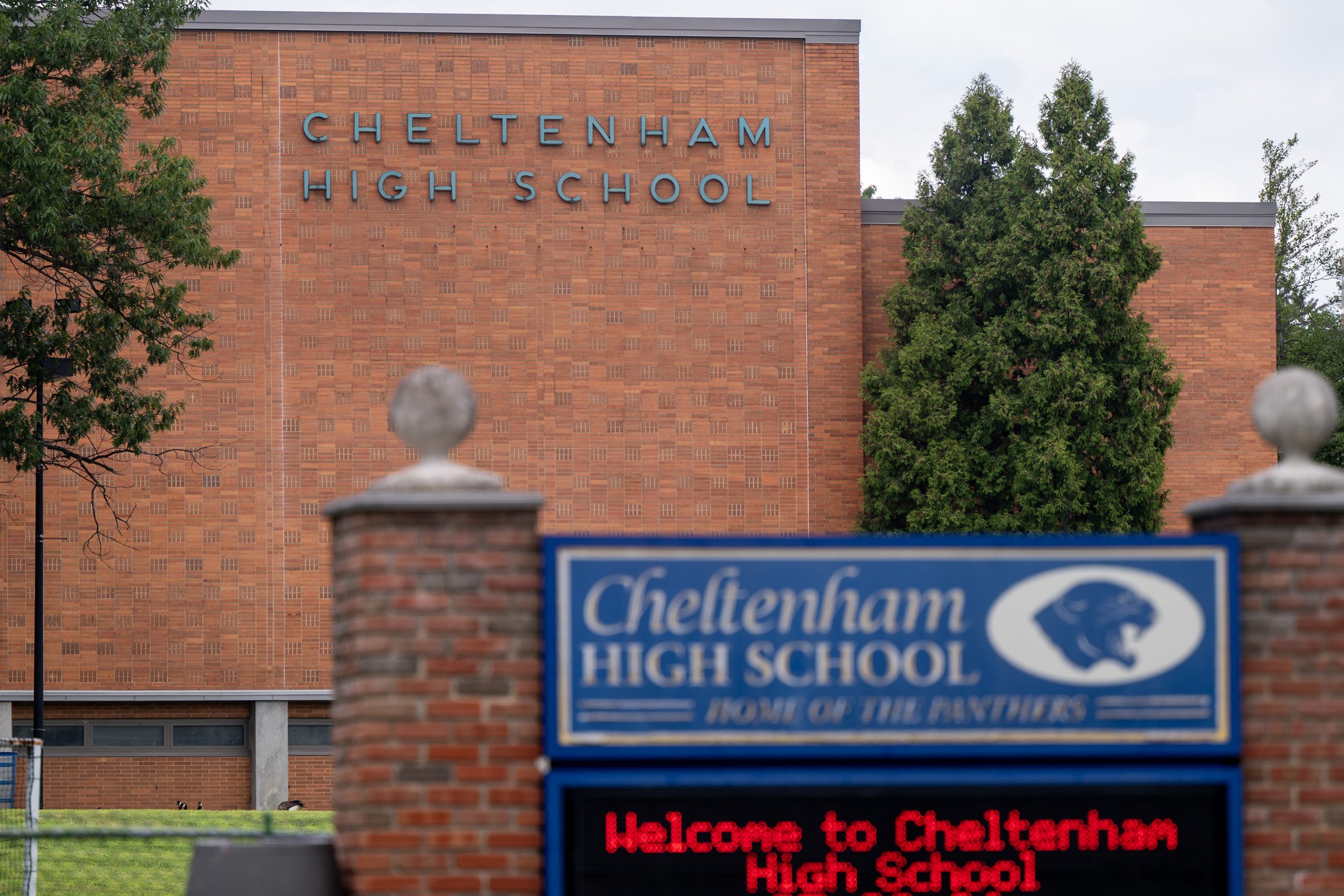
Four Cheltenham High School football coaches and six players have been charged in connection with two assaults in the school’s locker room that injured a 15-year-old player and led to the cancellation of two football seasons, Montgomery County prosecutors said Wednesday.
In two violent assaults, District Attorney Kevin Steele said, multiple football players attacked a sophomore on the team, stomped on his chest and groin while wearing cleats, and used a broomstick to poke at his buttocks.
“The assaults on this victim were not typical goofing around by teammates, or horseplay, as some of the coaches in this case called it,” Steele said at a news conference Wednesday. “They were crimes.”
After the attacks, which took place last August and September, Steele said, coaches tried to cover them up.
Head coach Terence Tolbert, 55; associate head coach Darian McFadden, 42; assistant coach Benjamin Johnson III, 45; and volunteer coach Ralph Burnley, 60, have been charged with endangering the welfare of a child and conspiracy. The coaches are no longer with the district.
Two football players, Isaiah Simpson, and Josiah Peeler, both 18, have been charged as adults — Simpson with conspiracy to commit aggravated assault, simple assault, reckless endangerment, and related crimes for his role in the September assault, and Peeler with false swearing for being untruthful to police. The two were 18, Steele said, when the crimes they are charged with took place.
The four other players have been charged as juveniles, and were not identified by prosecutors or named in court records. Two of them face charges of conspiracy to commit aggravated assault and related crimes, because authorities say they took part in the attacks. The other two players are charged with false swearing.
Tolbert, McFadden, Johnson, and Peeler were released on $5,000 unsecured bail. The two other adults had not been arraigned as of Wednesday afternoon. Only two of the defendants, Johnson and Peeler, had attorneys listed in court records.
Johnson’s attorney, Richard J. Fuschino, said his client “has been humiliated by what occurred and absolutely had nothing to do with it.”
“I do believe there is a cover-up, and I absolutely do not believe Benjamin Johnson had anything to do with it,” he said. “In fact, quite the opposite: He went out of the way to cooperate with every investigator.”
Peeler’s attorney, Jessica Mann, did not respond to a request for comment. Attempts to reach the other defendants were not successful Wednesday.
Cheltenham Superintendent Brian Scriven said Wednesday that the district appreciated prosecutors’ work on the case and the filing of criminal charges. “While no legal outcome can erase the harm that was experienced,” he said, “we appreciate that after nearly a year, charges have been announced and those responsible are being held accountable through the criminal justice system.”
Prosecutors say coaches wanted incident ‘kept quiet’
Steele said the charges followed a grand jury investigation in which witnesses described two violent assaults.
The coaches are criminally liable for the assaults, Steele said, because, while they were not present, they learned of the September incident and encouraged the victim not to tell his parents.
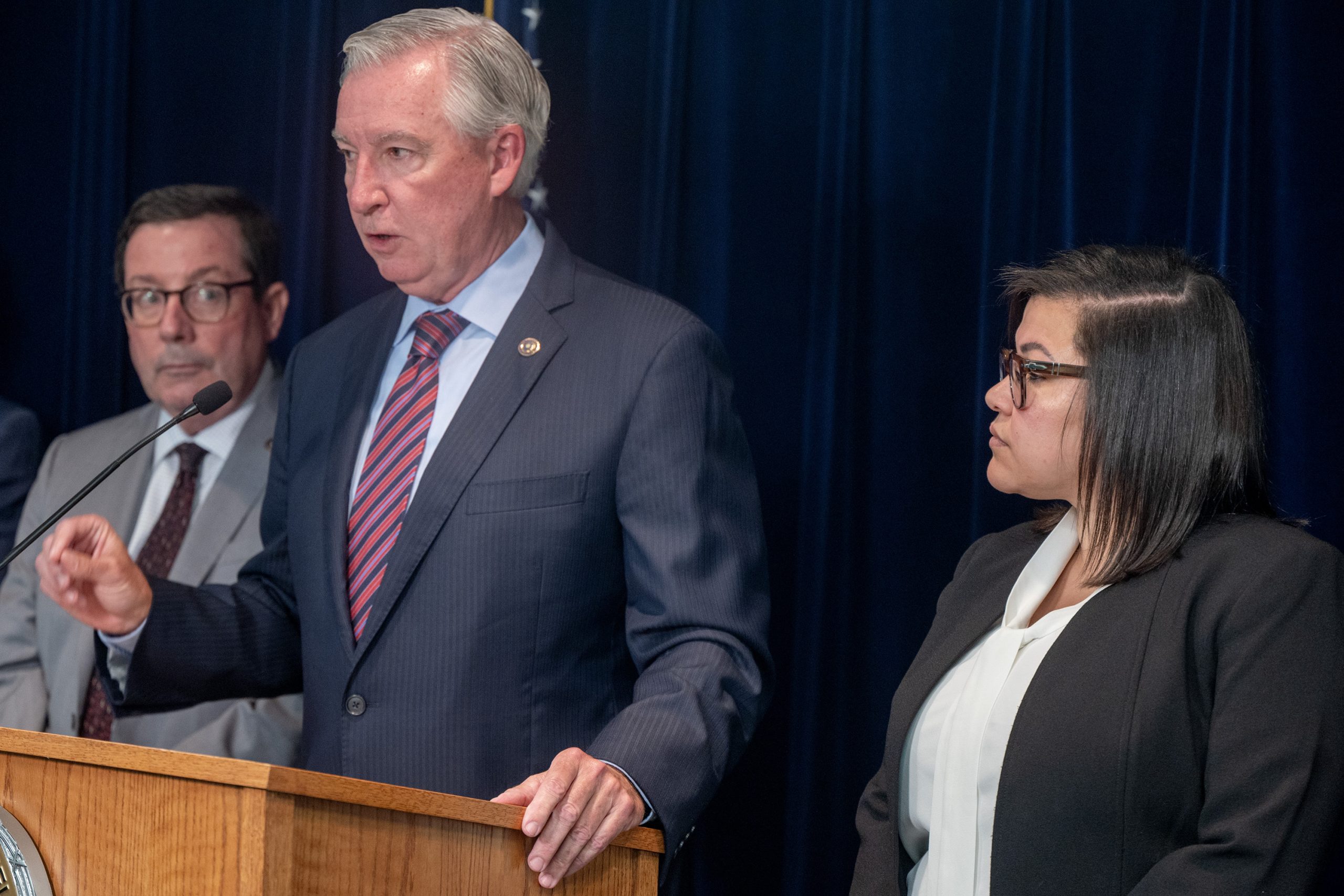
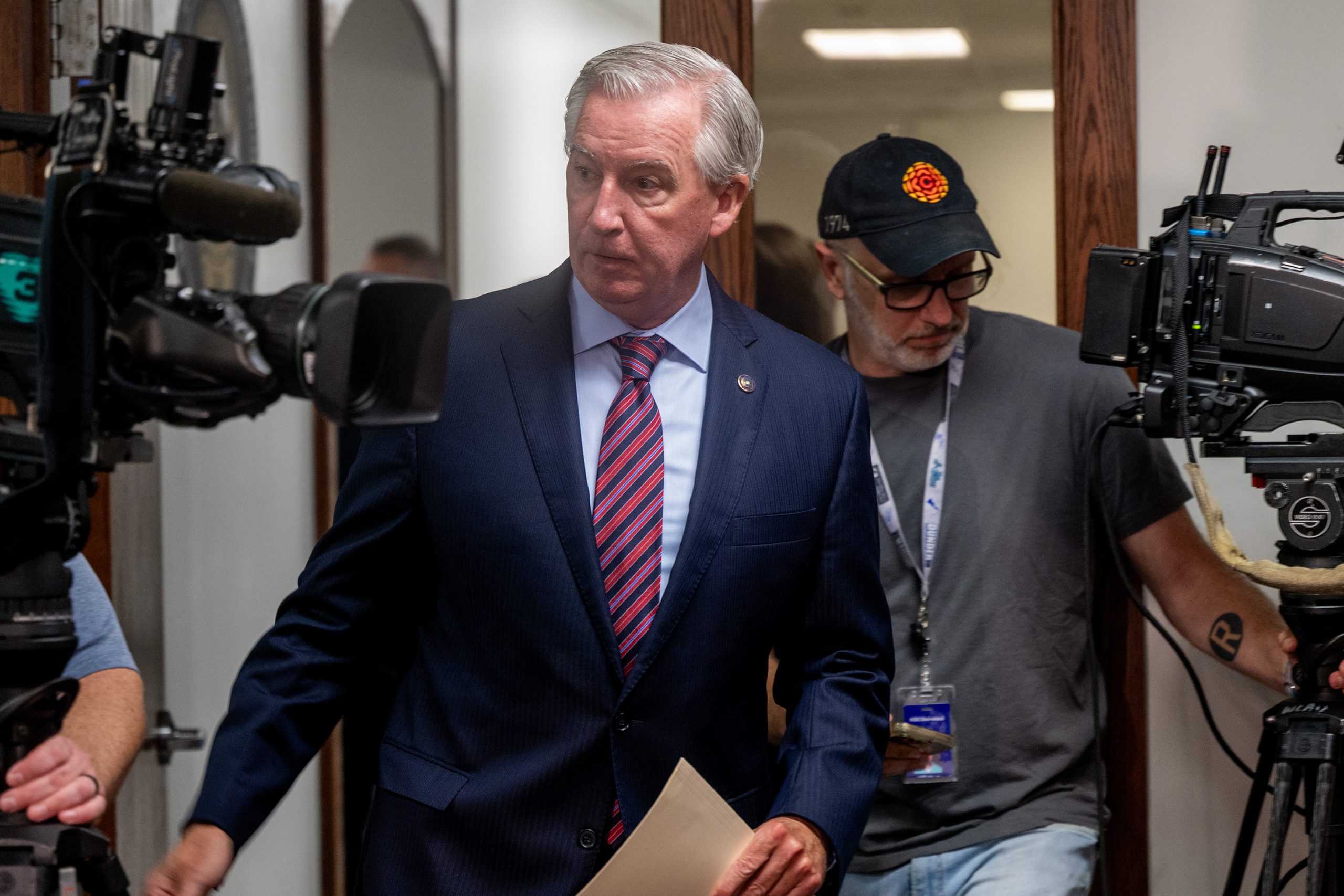
Montgomery County District Attorney Kevin Steele at a press conference Wednesday.Tom Gralish / Staff Photographer
Privately, the coaches sent incriminating text messages to one another, Steele said, expressing concern that the incident “has to be handled and kept quiet.”
McFadden, the former assistant coach, wrote “if this gets out we are [expletive]. They will cancel the whole season,” according to the grand jury presentment.
The assaults occurred Aug. 15, after a preseason practice, and Sept. 3, Steele said. He said video footage of the August incident showed several students restraining the victim, while another student poked at his legs and buttocks with a broomstick.
Players are laughing and yelling in the video, and “at least one player is chanting, ‘broomstick him,’” Steele said.
A football player who witnessed the assault, but is not charged in the case, told the grand jury that the use of a broomstick was an apparent reference to a TikTok video featuring a Meek Mill song with the lyrics “broomstick all in his butt, tell him take that,” according to the grand jury presentment.
Steele said there was no evidence that it constituted sexual assault.
Players didn’t take the incidents seriously
Several football players who testified before the grand jury characterized the behavior as “horseplay” and said they did not take it that seriously. Others said the victim had a difficult relationship with his teammates and was viewed by them as “someone who did not follow the rules during practices.”
The Sept. 3 assault, witnesses said, happened after the teen took a pair of shoulder pads from another player’s locker after misplacing his own, an infraction for which the entire team had to do extra conditioning as punishment.
Steele said that investigators did not have a video of the Sept. 3 assault but that multiple players, including Simpson and two of the juvenile defendants, kicked and stomped the victim.
The teen reported told investigators that his teammates were “trying to poke him in the butt with the broomstick,” and that they made contact with his buttocks, Steele said. He said the assault broke up when school buses arrived, and teammates left to board them.
Burnley, one of the coaches, drove the victim home after the attack, and the teen broke down in tears, telling the assistant coach he had been jumped by teammates, the district attorney said.
Burnley then texted coaches in a group chat and called Tolbert, Steele said. McFadden and Tolbert called the teen and “told him not to tell his mother about the incident because they would handle it,” Steele said.
He said the coaches were deliberate and calculating in their decision not to report the assault.
‘Serious concerns about the response’
The incident came to light four days later, when the teen’s mother said he told her he had been jumped by teammates and had pain in his genitals. She said she took her son to an urgent care center and texted the high school’s assistant principal, who called her later that day.
A front view of Cheltenham High School in Wyncote.Tom Gralish / Staff Photographer
The teen did not tell his mom that his teammates used a broomstick in the attack. He was embarrassed and reluctant to share that detail, the mother said in an interview with The Inquirer in which she spoke on the condition of anonymity to protect the identity of her son.
She said her son told her that his teammates had tried “to mess with his manhood.”
She learned about the broomstick later in September, when Cheltenham Township police called to tell her that someone had called Pennsylvania’s Safe2Say hotline to anonymously report that students had used a broomstick during the attack, according to the teen’s lawyers, Alan Yatvin and Gabrielle Turley.
Sometime in October, the district obtained a video that had been circulating in the community and depicted an assault of the student with a broomstick, the lawyers said.
Investigators initially believed that footage was from the Sept. 3 assault. It was discovered during grand jury testimony in January that the assault was from August, prosecutors said. The teen, who said he was not shown the video until this spring, also identified it as being from August, revealing for the first time that he had been assaulted more than once, according to the lawyers.
“Our client and his family are grateful to the Montgomery County District Attorney’s Office, law enforcement investigators, and the grand jury for their careful and thorough work in bringing these deeply troubling events to light and pursuing charges,” Yatvin said in a statement Wednesday. He added that the grand jury investigation “also raises serious concerns about the response by some within the Cheltenham High School community.”
The district faulted inadequate supervision in the locker room, “a failure to prioritize student safety” by coaches and volunteers, and “a toxic and negative culture” within the football program.
District officials have said a Title IX investigation, required by law when sexual assault or harassment is alleged, is ongoing.
Scriven, the superintendent, said in a statement Wednesday that “every report brought to the district’s attention was addressed based on the information available at the time.” He noted that law enforcement and the grand jury had the power to issue search warrants and compel testimony, which “brought information to light.”
In April, the district approved separation agreements with Tolbert and McFadden. Officials say none of the coaches from last season is still affiliated with the district.
The victim, who switched to virtual school after being harassed by peers after the attacks, has continued to struggle, according to his mother. She said he avoids going outside because he fears being taunted about what happened.
During Wednesday’s news conference, Steele criticized the school district and said it had failed the victim.
In its report, the grand jurors noted that they — not the school district’s Title IX investigator — discovered that two separate assaults had taken place.
“I believe the Cheltenham School District has taken the position that they don’t want police in their schools or school resource officers, and so it’s on them to address these issues,” Steele said. “So the grand jury took care of what the school did not.”
Montgomery County District Attorney Kevin Steele arrives at a press conference Wednesday to announce multiple charges in connection with two assaults in a Cheltenham High School locker room.Tom Gralish / Staff Photographer
In addition to recommending criminal charges against the players and coaches involved in the case, the grand jury filed a separate report calling for a change in state law that would require teachers and coaches to report incidents of hazing as a form of child abuse.
“While the school district claims to ‘protect and prioritize safety and well being,’ their actions in this case say otherwise,” the grand jury report said. “The administration carried out three school-led investigations that were so flawed they failed to even identify that two separate instances of hazing occurred in the locker room.”
News researcher Ryan W. Briggs contributed to this article.
A 36-year-old Camden man was charged with soliciting sexually explicit photos from a 7-year-old girl after a specially trained K-9 dog found the phone the man allegedly used to message the victim, Camden County Prosecutor Grace C. MacAulay said Wednesday.
Elmer Lao was arrested on July 22 after a search was conducted at his residence and the phone was discovered in his bedroom by a K-9 dog named Rookie, who is trained to detect electronic devices, MacAulay said.
Lao was charged with second-degree attempted manufacturing of child sexual abuse material and third-degree endangering the welfare of a child. He was being held at the Camden County Correctional Facility pending a detention hearing, MacAulay said.
On July 20, the special victims and high-tech crimes units of the prosecutor’s office began the investigation after the 7-year-old girl disclosed that a man had begun sending her messages on TikTok and by text message, MacAulay said.
Investigators determined that Lao allegedly engaged in messaging conversations with the girl, whom he knew to be 7 years old, MacAulay said.
Lao allegedly sent nude videos of himself to the girl and requested that the girl send nude photos of herself in return, MacAulay said.
“Predators often use social media and messaging apps to target children, making parental involvement more important than ever,” MacAulay said in a statement.
“I urge every parent to regularly monitor their child’s messages on TikTok and other social media platforms and to have ongoing conversations about online safety and the risks of communicating with strangers,” MacAulay said.
Anyone with information that could be helpful to the investigation can contact Detective Jessica Minniti of the Camden County Prosecutor’s Office Special Victims Unit at 856-225-8537. Tips may also be sent to CAMDEN.TIPS.
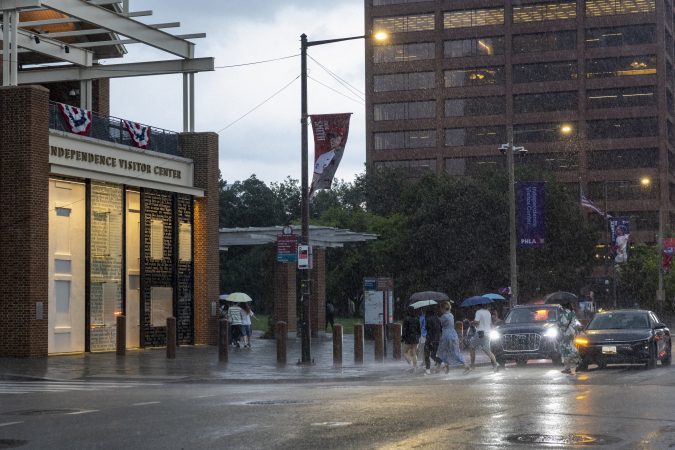
The smartphone alerts and the battery of weather watches and warnings were chilling. But they failed to capture what actually happened in the immediate Philadelphia area.
As it turned out Tuesday, not all that much happened, beyond a beneficial rainfall, some flashbulb lightning, and wind gusts that officially did not get past 34 mph. Heavy rains hammered Upper Bucks County, but around Philly, creeks behaved and flooding reports were isolated, even as damaging storms struck to the north and south of the region.
As so often occurs with summer thunderstorm outbreaks — not to mention winter storms — we learned science is playing catch-up with the atmosphere. That was evident Tuesday night, and if you feel as though you’ve seen this movie before, the forecasts and the outcomes were similar on July 18 and 21.
And expect recurrences — and surprise storms — even if the climate stops changing.
The atmosphere still is jealously guarding some of its most important secrets, said Bill Bunting, deputy director of the federal Storm Prediction Center, the national house of mayhem in Norman, Okla., that is responsible for all the severe-storm and tornado watches.
In his 40-plus years in the storm-forecasting business, Bunting said,“I have seen remarkable progress, but we’re nowhere near perfection. In the end, the science has its limitations.”
About the Tuesday night storms
Life is unfair, and that works both ways. The Philly region has had its share of storm ambushes historically, and as for what did not happen in and around the city Tuesday, “we’ll consider that a much more fortunate outcome than what could have been,” said Mike Lee, meteorologist at the National Weather Service office in Mount Holly.
The outcome was similar to that of July 18 and July 21, when the menu of threats — wind, possible floods and tornadoes, lightning — was about the same. The gusts on the 18th did not get above 35 mph at Philadelphia International Airport, andthey did not get above 30 mph on the 21st.
Bunting said this week’s storms were particularly problematical meteorologically. “The wind fields were quite strong” in the upper atmosphere, he said. “That environment was not one to mess around with.”
It was as though the system had wandered in from a different season, when cooler temperatures create sharp temperature contrasts that drive storm development,Lee’s colleague Patrick O’Hara said.
At 12:50 p.m., the storm center had seen enough to issue a broad-brush severe-thunderstorm watch that covered a huge swath of the Mid-Atlantic region, including much of Pennsylvania and all of New Jersey and Delaware.
A tornado watch followed a few hours later.
The Mount Holly office issued two tornado warnings for the Philly area — including one covering Wilmington and Chester City.
However, the two twisters verified by the Mount Holly office occurred in Talbot County, Md.
The heaviest rains — in some cases over 4 inches in Quakertown — mostly were confined well to the north of Philly. Officially, 0.72 inches of rain was measured at PHL.
Wind-damage and flooding reports around the Philly area were sparse, although Bunting advised it can take days following a storm to get an accurate assessment of impacts.
The future of thunderstorm forecasting
Bunting suggested that complaints about forecast accuracy could be viewed as forms of flattery, since they well from the public’s expectations that, in turn, well from advances in forecasting.
In 1985, Bunting recalled,he was working with one computer-model output that he received via a fax machine, and observation tools primitive by today’s standards.
But forecasting the development and movement of thunderstorms remains one of the great challenges of meteorology, and it is inevitable that storms are not going to materialize in some areas that are under a storm watch.
“You don’t now exactly where those storms will organize into a cluster, or fast-moving line segment,” he said. “So you have to put larger areas on notice.”
A wild card in any cluster or line of storms would be renegade, isolated storms, the kind that are apt to spin up a tornado, Bunting said.
For any given storm, he said, “until it forms in a larger area with similar conditions, it’s hard to pinpoint the risk.”
What would it take to pinpoint the risks? Improved understanding of storm physics, improved remote-sensing capabilities, and more powerful models, Bunting said.
“It is not a trivial challenge,” he said. “The decisions are not going to be perfect.”
That is not necessarily a bad development, he added.
“Sometimes I wonder what it would be like if we knew what the weather would be in great detail, weeks and months advance,” he said. “It seems to me it would get kind of old.”
The summer of unforgettable sports moments in Philadelphia is far from over, and Mayor Cherelle L. Parker was excited Wednesday for the next event coming to town.
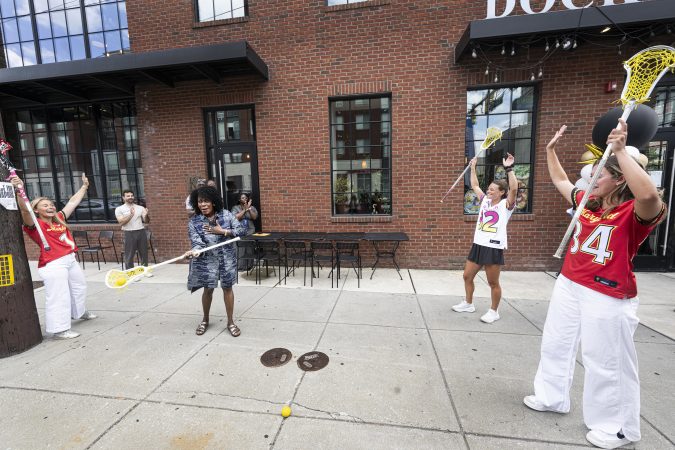
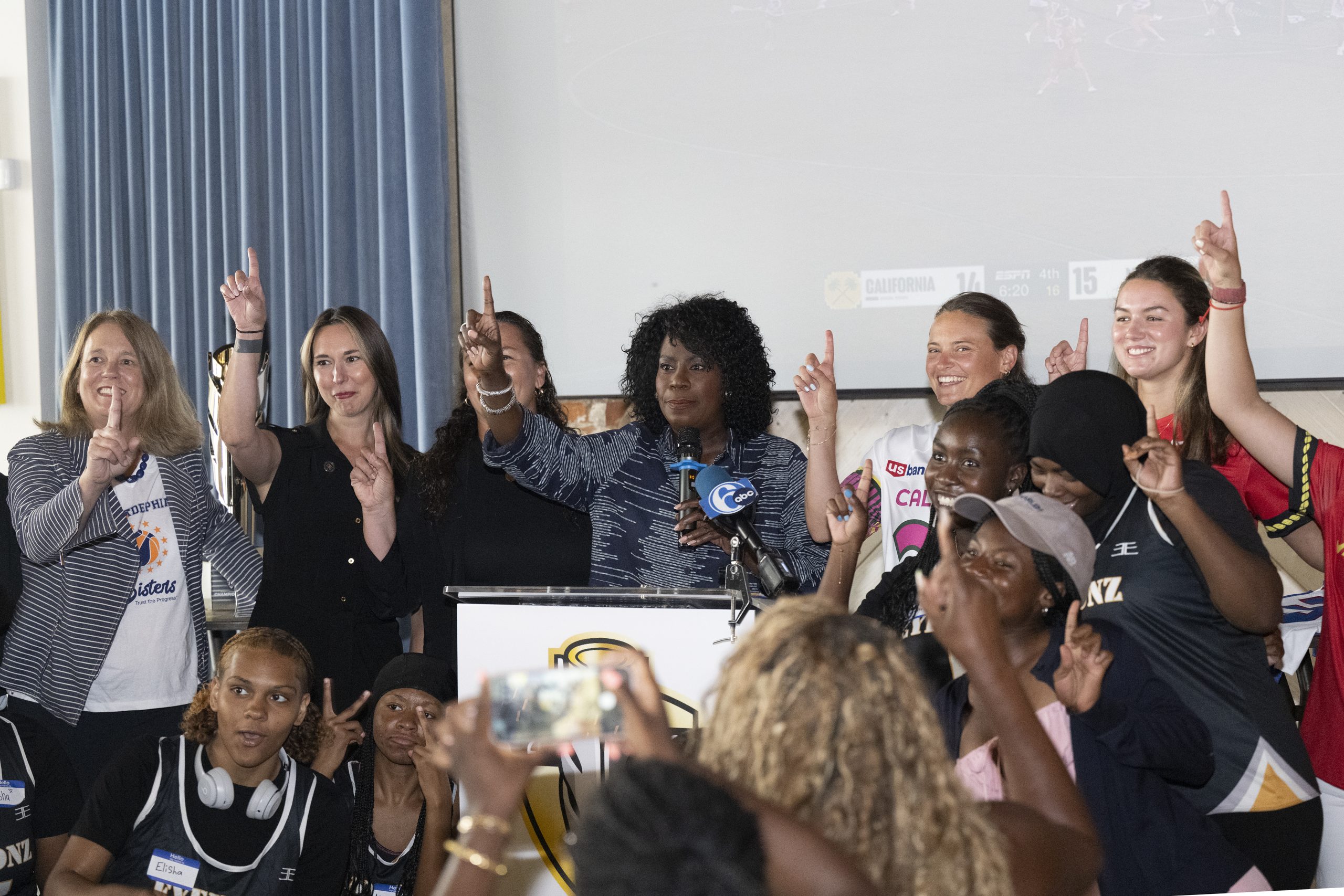
Parker and local youth lacrosse players gathered at Dock Street South to celebrate the inaugural Women’s Lacrosse League championship, which is Aug. 15 (5 p.m., ESPN) at the Union’s Subaru Park in Chester.
“For a long time, women’s sports were treated as an afterthought, a smaller version of the real thing,” said Rachael DeCecco, a USA Lacrosse Hall of Famer and Broomall native who’s the senior vice president of the PLL and WLL.
“Every young girl who’s going to watch this league will understand, without ever having to be told, that this is a real path, a real career, a real sport worth playing at the highest level. And there is no better place to host this historic first-ever WLL championship than right here in Philadelphia.”
Mayor Cherelle L. Parker (center) speaks at an event celebrating the inaugural Women’s Lacrosse League championship coming to the Philly area.Jose F. Moreno / Staff Photographer
The Philly area is a hotbed for women’s lacrosse. Of the WLL’s four teams — the Maryland Charm, California Palms, New York Charging, and Boston Guard — 18 players and two coaches have ties to the region.
Three of those players — California Palms defender Katie Detwiler (Devon, Archbishop Carroll) and the Maryland Charm’s McKenzie Blake (Haddonfield) and Abby Bosco (Penn) attended Wednesday’s event. Also in attendance was Tina Sloan Green, the former Temple women’s lacrosse coach who has been breaking barriers in field hockey and lacrosse since the 1970s.
Now 82, Green said the formation of the WLL, which is in its second season, is her legacy.
“I can’t even believe it,” Green said. “I grew up here and was the only Black female playing the sport. So this means so much to me because I know that my grandchildren, and their children, will get opportunities.”
Parker also discussed wanting to create more opportunities in women’s sports. Discussions about hosting the WLL championship, as well as bringing a WNBA team to Philadelphia — which will happen in 2030 — have been on her radar since her days as a City Council member from 2015 to 2022.
“We’re proving every year that our interests are in building and growing professional women’s sports in the city of Philadelphia. We’re doing it in a tangible way. We’re at the table,” Parker told the crowd. “This championship, to me, is about more than competition. It’s about opening doors. And in a city like Philadelphia, I can’t begin to talk about the importance of Black and brown young women being able to know that this sport, too, is for them.”
At the end of her speech, Parker invited the youth lacrosse players in attendance to join her in reciting her signature chant, “one Philly, a united city; one America, a united nation,” before leading an “E-A-G-L-E-S” chant and laughing with the players about spelling it correctly this time.
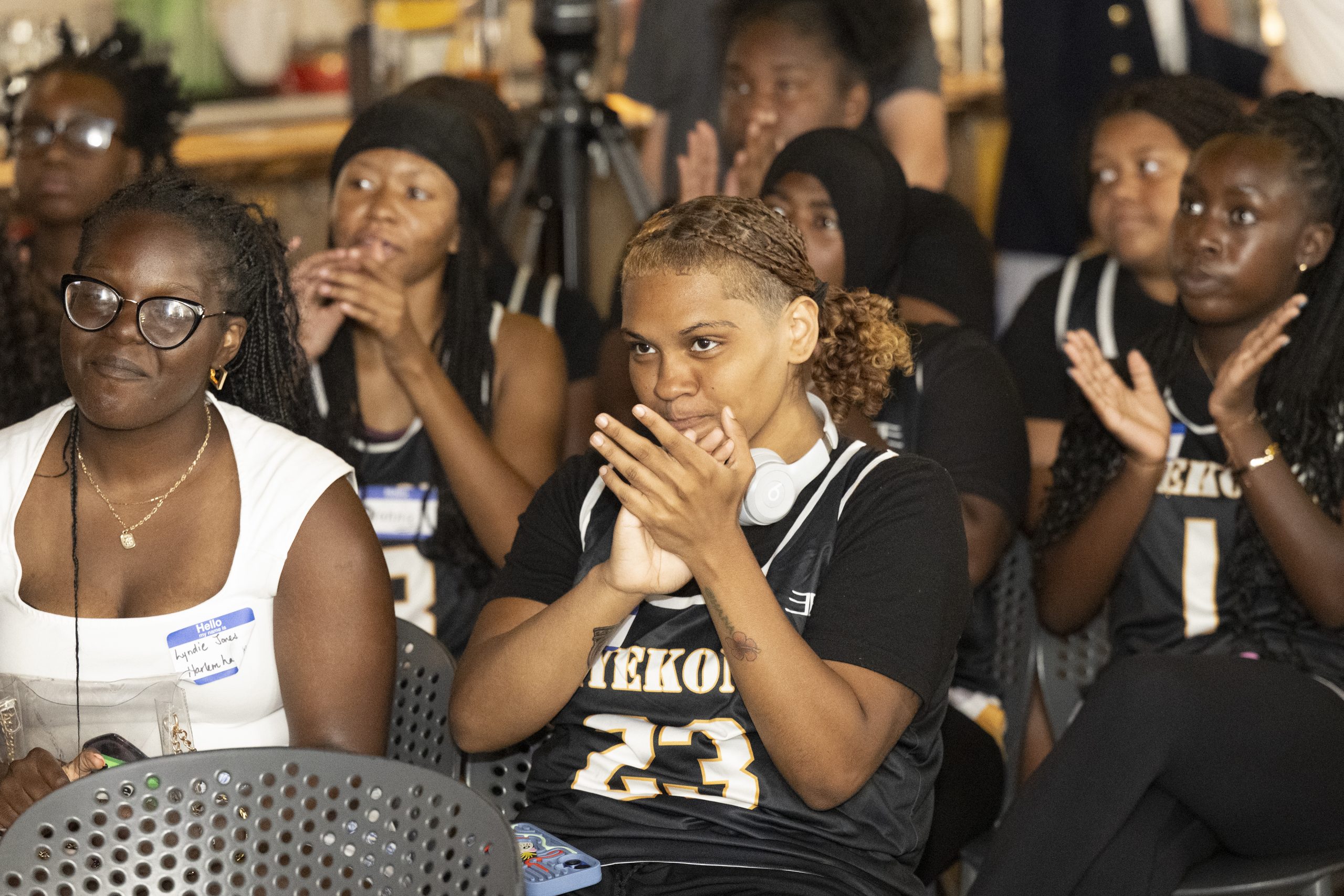
One of the young players in the crowd was Shiyann Werts, a lacrosse player and rising junior at Germantown Academy. Werts fell in love with the sport in sixth grade after being introduced to it at the Thomas K. Finletter School, where the Harlem Lacrosse program provides year-round academic and athletic support.
Since then, she has seen the sport’s popularity grow.
“It makes me really kind of emotional,” Werts said. “I’ve been seeing all the news on lacrosse, and it’s getting the recognition that I think it deserves. I’m really excited to see what the WLL will bring to that.”
Werts hopes to play college lacrosse, and the opportunity to play professionally after graduation is becoming a realistic pathway for female athletes who previously had few options to continue competing after their NCAA careers ended.
“I think it’s just super crazy growing up in the area,” Detwiler said. “When we were growing up, we didn’t have any of this. We played in college, and then it was on to the real world. So I think it’s really good for them to see what could be possible someday. It’s awesome to see.”
The WLL and the city are working together to ensure the championship reaches all parts of the community. The league is donating 2,500 tickets to nonprofit organizations, youth programs, and community groups.
Youth lacrosse players listen as Mayor Cherelle L. Parker speaks during a news conference on Wednesday.Jose F. Moreno / Staff Photographer
Ashley Walkowiak, executive director of the Governor’s Advisory Commission on Women, echoed the hopes of the room that the championship is only the beginning of the impact women’s professional sports can have on Philadelphia.
“Seeing the first WLL championship hosted right here in Pennsylvania is a powerful reminder of what’s possible when we invest in expanding opportunities,” Walkowiak said. “Philadelphia has long been a place where history is made, and this championship continues that legacy. But it is more than a game. It’s a celebration of talent, leadership, and the growing momentum around women’s athletics.”