Tag: topic-link-auto

  • The sheriff’s office doesn’t need a babysitter; it needs to be abolished | Shackamaxon

    The sheriff’s office doesn’t need a babysitter; it needs to be abolished | Shackamaxon

    This week’s edition of Shackamaxon covers data centers, property assessments, and more woes at the Philadelphia Sheriff’s Office.

    Jason Kelce with Liquid Death mascot Murder Man in an ad for the canned water and Garage Beer.Garage Beer

    Sports data center

    Former Eagles offensive lineman Jason Kelce seems to be more omnipresent in retirement than he was during his career. Most recently, he filmed a commercial for Garage Beer and Liquid Death that asked Americans to send him their urine to supply data centers.

    While conjuring a negative image of yellow liquid in a cup is probably an unwise strategy for someone who co-owns a light beer company, Kelce’s commercial had another major problem — data centers don’t actually use as much water as public perception suggests.

    In fact, the biggest threat to U.S. water supplies is something far more mundane: alfalfa farming.

    Across the arid Western states, farmers are using vast amounts of water to irrigate their fields, which are then used to feed cows for the beef industry. A single acre of alfalfa uses 1.6 million to 2.5 million gallons of water. In Utah, feed farming uses over half the state’s water supply. Meanwhile, the data centers themselves increasingly rely on closed-loop systems. The water used as coolant gets purified and reused, reducing their own need.

    The confusion over water use is emblematic of the general debate over the centers, which is rife with hard-to-vet claims. And shifting public opinion has left politicians in both parties flat-footed and scrambling to react.

    Gov. Josh Shapiro, the ever-Ambitious Abingtonian, issued his own response to the situation. Much of what Shapiro said is reasonable. He wants tech companies to pay for their own power and contribute to community benefits agreements, and to respect the Pennsylvania Constitution’s guarantee of clean air and pure water. Some of it is less sensible, specifically his commitment to local control.

    Local control sounds great in theory: Why shouldn’t communities have the final say over how they are developed? In practice, however, it is shortsighted. There are two reasons for this.

    One, the impact of data centers is regional, not local. If opponents are correct about the impact on water and electricity bills, this impact will exist no matter where the centers operate. Given the PJM grid Pennsylvanians rely on spans multiple states, there is no plausible pathway for local communities to insulate themselves from rising energy demand by blocking data center proposals.

    Two, not every community can afford to say no. Take the bankrupt city of Chester, for example. From its efforts to sell the Chester Water Authority to its role as host for the Reworld Trash Incinerator, financial considerations already play a big role in that city’s policymaking. By handing control to local authorities, the governor is ensuring cities like Chester will disproportionately play host to data centers.

    For those who believe they will have a strong negative impact on quality of life, how is that possibly fair?

    Instead, what is needed is federal, regional, or at least statewide coordination.
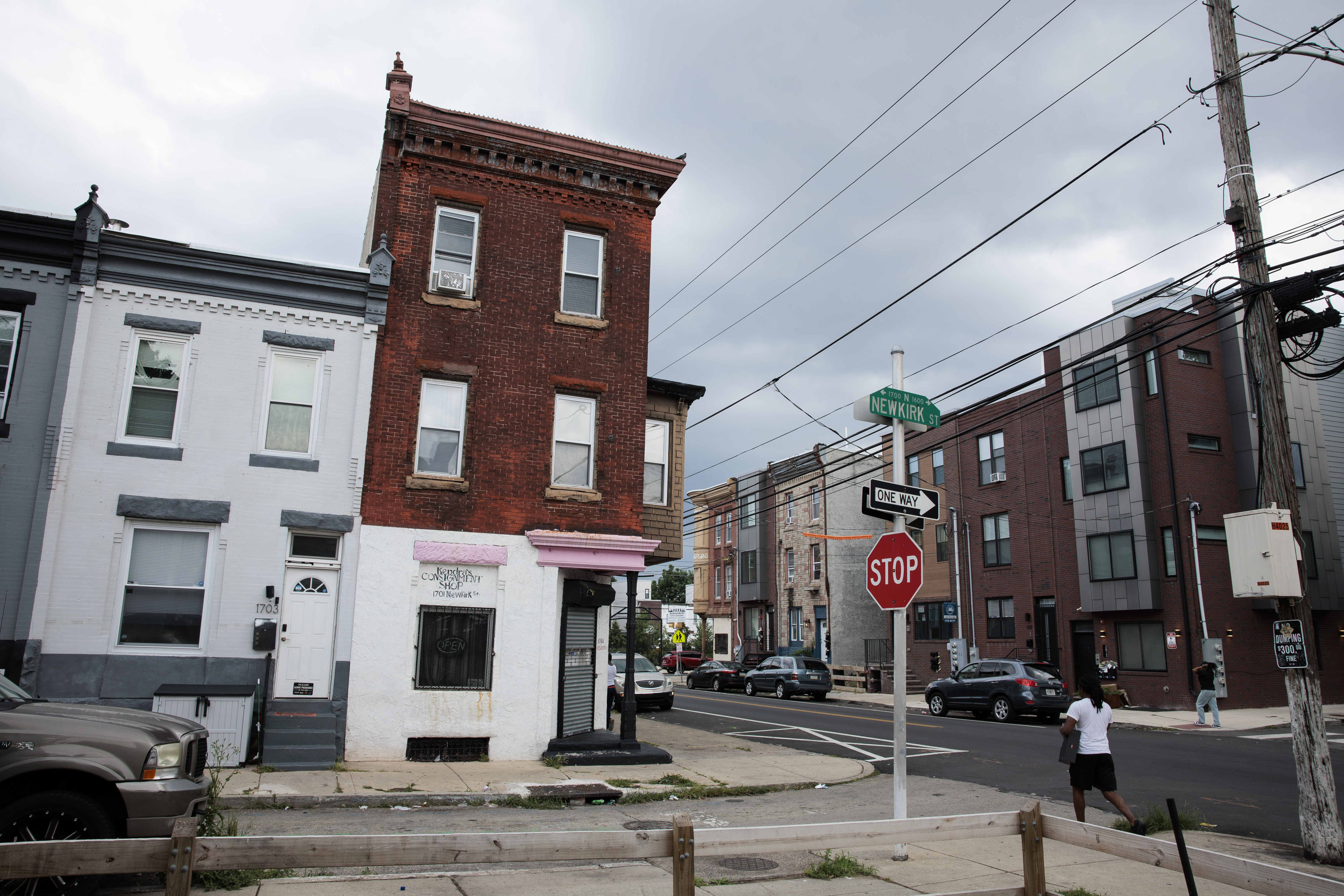
    The 1700 block of North Newkirk Street on Aug. 20. On this block in Strawberry Mansion, some homeowners saw their property assessments double.Monica Herndon / Staff Photographer

    Fair value

    Over in Allegheny County, home to Pittsburgh and many of its suburbs, the courts have ordered local officials to begin a full property reassessment, which must be completed by 2032. Pennsylvania is unique in not requiring regular reassessment.

    Pittsburgh’s values were last set in 2012, but more than a third of the state’s counties haven’t been reassessed since the 20th century. This leads to wildly out-of-whack and unfair tax bills for some residents.

    Of course, Philadelphians can tell you that regular reassessment is not a panacea for discontent. The city’s most recent valuations have set off a firestorm of consternation, especially given how many lower-income areas saw big increases. It doesn’t help matters that the neighborhoods Cherelle L. Parker used to represent on City Council, and powered her election as mayor, saw some of the smallest boosts in valuation.

    As tempting a story as the mayor favoring her core supporters while squeezing the city’s poorest neighborhoods may be, that is not an accurate assessment.

    Given the massive decrease in shootings and consistent efforts to clean and green the city, it is not surprising to see increased demand for neighborhoods like Kensington, Grays Ferry, and Fairhill. While there is still a long way to go on public safety, higher valuations are a sign of progress.

    It also should remind Council members that their theory that development drives property appreciation is faulty. Many of the neighborhoods with higher appreciation have seen little to no new development. In Northern Liberties/Fishtown, one of the city’s hot spots for new construction, values increased by just 1.7%.

    Additionally, the city has a powerful tool for protecting low-income homeowners: the homestead exemption. While the city’s stated property tax rate is 0.013998, owner-occupants pay a much lower rate. For a home valued at the city’s median of $260,000, the total tax bill is $2,239.68, or 0.008614. In Fairhill, where the median home value is $80,000, the homestead exemption eliminates the total tax liability for many residents. Boosting the exemption from $100,000 to $110,000 or $120,000 would ensure more low-income homeowners are protected from rising tax bills.
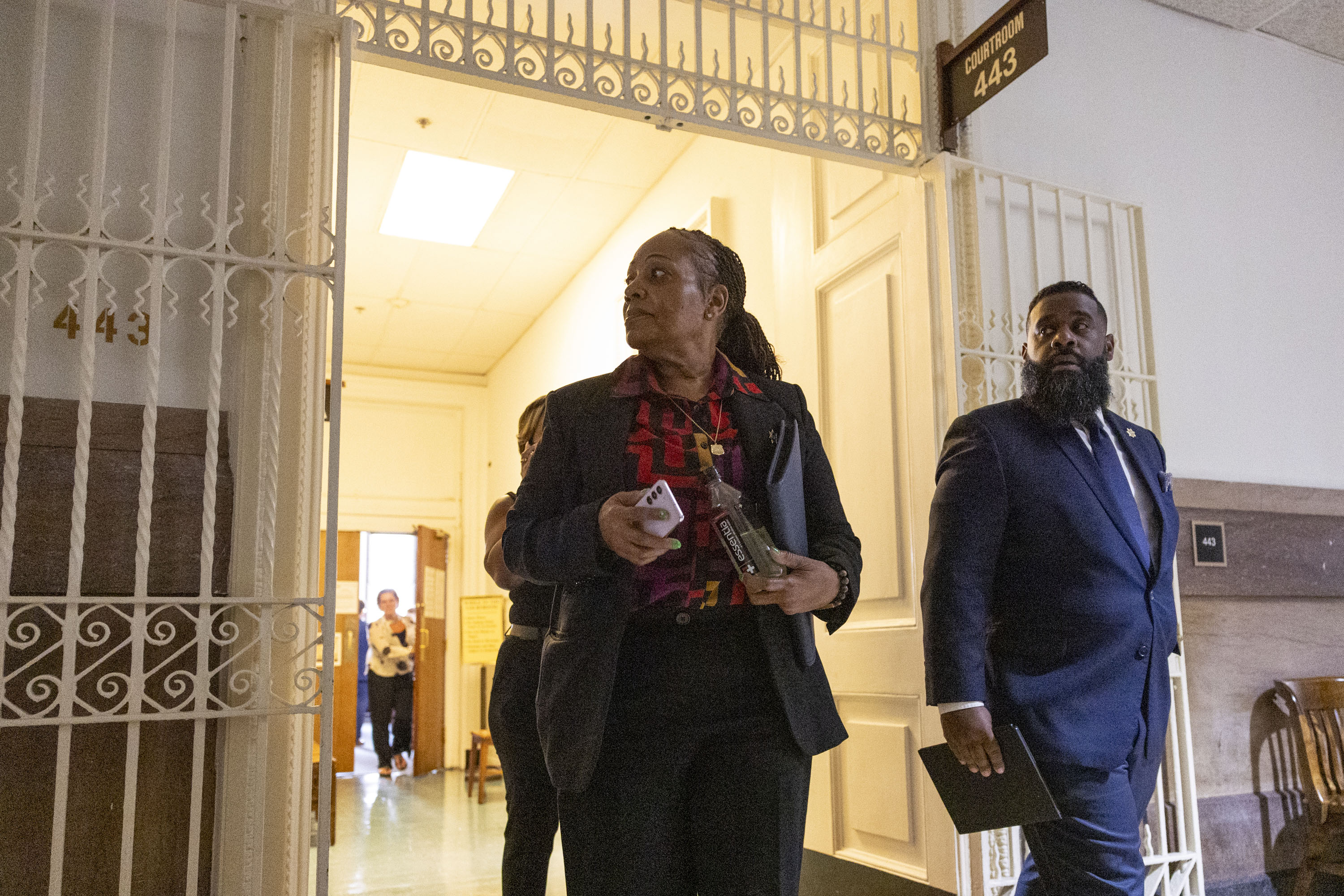
    Sheriff Rochelle Bilal is seen exiting a courtroom at City Hall on Wednesday.Tyger Williams / Staff Photographer

    Bilal’s babysitter

    Mayor Parker wouldn’t do it. City Council wouldn’t, either. Accountability for the Philadelphia Sheriff’s Office instead came from Common Pleas Court Judge Paula A. Patrick.

    After listening to a list of excuses and promises, it was clear Patrick had her fill of incompetence. The beleaguered department, which had been ordered to produce a specific set of documents months ago, suddenly released thousands of pages the night before the hearing.

    Instead of putting officials before the court with direct knowledge of why a backlog in processing property deeds began, Sheriff Rochelle Bilal instead sent Steven Wakefield, a deputy undersheriff who was hired just two months ago. Wakefield was tasked with testifying about past events he was not privy to, despite repeated warnings from the judge.

    As for Bilal herself, she claims to have “limited personal knowledge of the underlying facts.”

    Issuing deeds is one of the core functions of her job, but apparently the sheriff had no idea what was going on. Instead, Wakefield tried to scapegoat a former employee named Melissa Simpson, who had apparently been handling the entire process on her own without oversight from anyone.

    This testimony led to an agreement in which Bilal will have to identify someone to oversee deed sales for six months. A babysitter, essentially.

    While it is good to see someone holding the sheriff accountable for once, a temporary babysitter is only a partial solution. The office should be abolished.

    Sadly, that seems unlikely. Bilal may struggle to perform her day job, but she has thrived at building up political allies. She has been invited to news conferences by District Attorney Larry Krasner, remains a political player after her years running the Guardian Civic League, and faces next to no criticism from City Council. She was even honored by the Phillies as a “hometown hero.”

    Troublingly, Bilal does not even seem to have an opponent in next year’s elections, despite the continued public mismanagement of her office. That, at least, should change.

    Perhaps the Ambitious Abingtonian can find a Perspicacious Philadelphian willing to take on the challenge of replacing Bilal.


  • Winners of the Philadelphia Cycling Classic recall ‘the theater’ the race once was, and can be again

    Winners of the Philadelphia Cycling Classic recall ‘the theater’ the race once was, and can be again

    There’s a stretch along the 14.4-mile course of the Philadelphia Cycling Classic that remains a core memory for Freddie Rodriguez.

    It’s been more than a decade since his last professional race, but the former American road racer described the course as a scene that engaged all five senses.

    Rodriguez referred to it as “the theater.”

    “As you come into Ben Franklin Parkway, there’s the park on the right that feels like you’re riding into a stadium,” Rodriguez recalled this week, ahead of the race’s return after a 10-year hiatus. “It all almost feels like a track, like a velodrome; it’s a really cool feeling, and then you head down Kelly Drive, which is open and where the race opens up. And just the mix of people out watching a bike race and all of us [racers] riding really hard, it’s really a great part of what makes this race so special.”

    While the famed Manayunk Wall gets all the notoriety, Rodriguez contends that multiple sections of the course are appealing to riders and spectators alike. From going through Lemon Hill to the bottleneck of riding down Main Street Manayunk, Rodriguez says all of it is “iconic to the race.”

    Rodriguez, who won the men’s event in 2001 and placed in the top 10 on four other occasions, including a pair of third-place finishes (2008, 2012), says there was a time when the annual Classic, which has been referred to by many different names over the years, was the preeminent road race in the country.

    “I’m not kidding, it was the No. 1 one-day race in America,” Rodriguez, who will be on scene as a commentator alongside former racers John Eustace and Mark Holden for 6abc’s broadcast. “And I do believe it’s now again the number one day race in America. Hopefully, this will also help set a foundation for professional racing in the United States.”

    Eric Heiden raises his hands in victory, crossing the finish line for Team 7-Eleven, becoming the first winner of the men’s event.George Widman

    ‘Ten laps of that thing’

    It’s hard to look at the Eric Heiden’s cycling career and not call him an overachiever. The former Olympic speed skater turned cycling road racer, won the first Philadelphia Cycling Classic when it was called the Philadelphia International Championship in 1985, and parlayed a Hall of Fame sports career in cycling and speed skating. Now, he’s an orthopedic surgeon with a practice in Utah, previously serving as team doctor for a number of U.S. Olympic teams and even doing a stint for the NBA’s Sacramento Kings.

    His favorite memories mirrored Rodriguez, noting that the stretch along Kelly Drive offered a “recharge.”

    “For me, the nicest thing was riding along the river there, the Schuylkill River, just where it was nice and cool,” Heiden recalled. “It was flat and you could kind of recharge before you took that ride and headed into Manayunk, which was very hard.”

    Riding up the steep half-mile stretch of the famed Manayunk Wall has been a daunting task for amateur and professional riders alike. Akira Suwa / Staff Photographer

    But his memory of tackling The Wall, the near half-mile stretch of Levering Street in Manayunk, is a memory he’ll also never forget — but not because it was another favorite.

    “We had to do 10 laps of that thing,” Heiden told The Inquirer. “And, I’m not a very good climber; I was a little heavy for that climb. Even if you’re a good international racer, it’s a challenge getting up that thing; I’m not going to lie to you. I mean, it’s like 20% grade. Yeah. You look at that, and as you come around the corner you’re going, ‘Whoa, nelly.’”

    Heiden, who originally used bikes to cross-train for his Olympic speed skating career, ended his cycling career as an inductee into the United States Bicycling Hall of Fame. Racing in Philly, he says, was a big part of that.

    “This race proved a lot to me, not just in my abilities as a racer, but how much I was able to do,” he said. “To me, this was the first legitimate national championship where the distance was significant. The organizers, those guys were passionate about the sport, and they really put together a good experience for the riders and for the teams.

    Eric Heiden said that the Philadelphia International Cycling Classic, in all of its iterations, served as a proving ground for many cyclists, including himself. Photo by Lee Rogers

    “It was really professionally run. Our team came there expecting to win the national championships, and we had all the top guns and 7-Eleven showing up. It meant that much and was a race that was taken very seriously.”

    What does the return of the Philadelphia Cycling Classic represent?

    “This race has a strong tradition in the USA, and in the history of USA cycling,” Heiden said. “To see it once again resurrected gives us a lot of hope on where cycling is headed these days.”

  • Violence against women in a Good Good ad stains slow responders: PGA Tour, Callaway, Golf Galaxy, Golf Channel

    Violence against women in a Good Good ad stains slow responders: PGA Tour, Callaway, Golf Galaxy, Golf Channel

    The only thing more disappointing about the slow and weak response by the principals in the Good Good Golf YouTube channel scandal was its utter predictability.

    There should have been immediate distancing and disassociation from Callaway Golf and Good Good Golf after they aired an outrageous commercial that endorsed violence against women. Instead, it took almost a week.

    Why?

    Because corporate America, the foundational structure for the golf industry, hoped it would all blow over.

    It did not.

    Last Friday, an ad aired online in which Good Good Golf co-founder Garrett Clark rushes across a tee box and levels a female golfer who is looking in his bag, then stands over her, points at her on the ground, and says, “Do not touch my new driver.”

    Who thought this was acceptable? Who thought this was funny? Who thought this was anything but horrific?

    Good Good, that’s who. Of course they did.

    It’s a frat bro content creator and apparel company with more than 2 million subscribers to its YouTube channel, making goofy videos. It also sells ugly hats and even uglier shirts. When you hear some idiot on TV scream, “Get in the hole!” when a pro golfer tees off on a par-5, dollars to doughnuts he’s wearing Good Good gear, hat on backward, shirt untucked.

    Then, the commercial.

    There was, appropriately, immediate backlash that convinced Good Good to delete the ad. The backlash snowballed into international outrage, with resounding consequences.

    Cool. It took far too long.

    The ad aired Friday.

    By Saturday night the PGA Tour, Tour CEO Brian Rolapp, Callaway, Dick’s Sporting Goods and Golf Galaxy, and Golf Channel all should have cut ties with Good Good. The fact that none did until they were forced by public sentiment tells you everything to need to know about these folks and how they view women.

    In case anyone wants to argue that this commercial was not an endorsement of violence against women, know that Callaway, as penance, on Thursday committed $1 million to support initiatives that combat violence against women.

    The club in question was a driver made by Callaway in collaboration with the new hip-and-with-it brand. The ad was vetted by both Callaway and Good Good. Incredibly, it raised no alarms at either place, with anyone, until social media began its cycle of outrage.

    The irony is few brands had done as much to promote women in golf than Callaway, which has perhaps the most potent brand-to-athlete recognition relationship in the women’s game, the one-time face of women’s golf, Annika Sorenstam. She condemned the ad but, sadly, did not condemn either Callaway or its leadership.

    Callaway Golf balls shown at the Cobbs Creek Golf Course.Tom Gralish / Staff Photographer

    This comes at the height of the Caitlin Clark era, when women’s sports are surging like never before. She’s a basketball player, but she loves to golf.

    Her involvement in the game might have helped spur the biggest growth spurt women’s golf has ever seen. The COVID-19 lockdown triggered massive growth in the golf industry in the United States, and the segment that has grown the most by both percentage and raw numbers is women’s golf, up 45% and 2.5 million golfers compared to 12% and 2.3 million for men, according to the National Golf Federation.

    Callaway just scored the worst own-goal in sports marketing history.

    More than 8 million women now play golf, but the chairmen of all of the entities in question — the Tour, Callaway, Dick’s, and Golf Channel — all are men. Which might explain the slowness and gradualness of the only acceptable responses.

    So we had the scramble, and the admonitions, and the apologies, and the disassociations. The problem with all of it is, nobody wanted to do the right thing unless they had to. Everybody wanted to try to ride it out. Which means they are all as guilty as they could possibly be.

    That includes the Tour, which, on Thursday, announced that Good Good would no longer be the title sponsor of a tournament in Texas in November.

    That includes Golf Channel, which needed four days to decide to not air the Good Good edition of “Big Break,” which was due to begin Tuesday but, after sponsor Golf Galaxy pulled out, was initially pushed back a week and has since been canceled altogether.

    That includes Dick’s Sporting Goods and Golf Galaxy, which needed five days to decide to pull Good Good merchandise from its shelves.

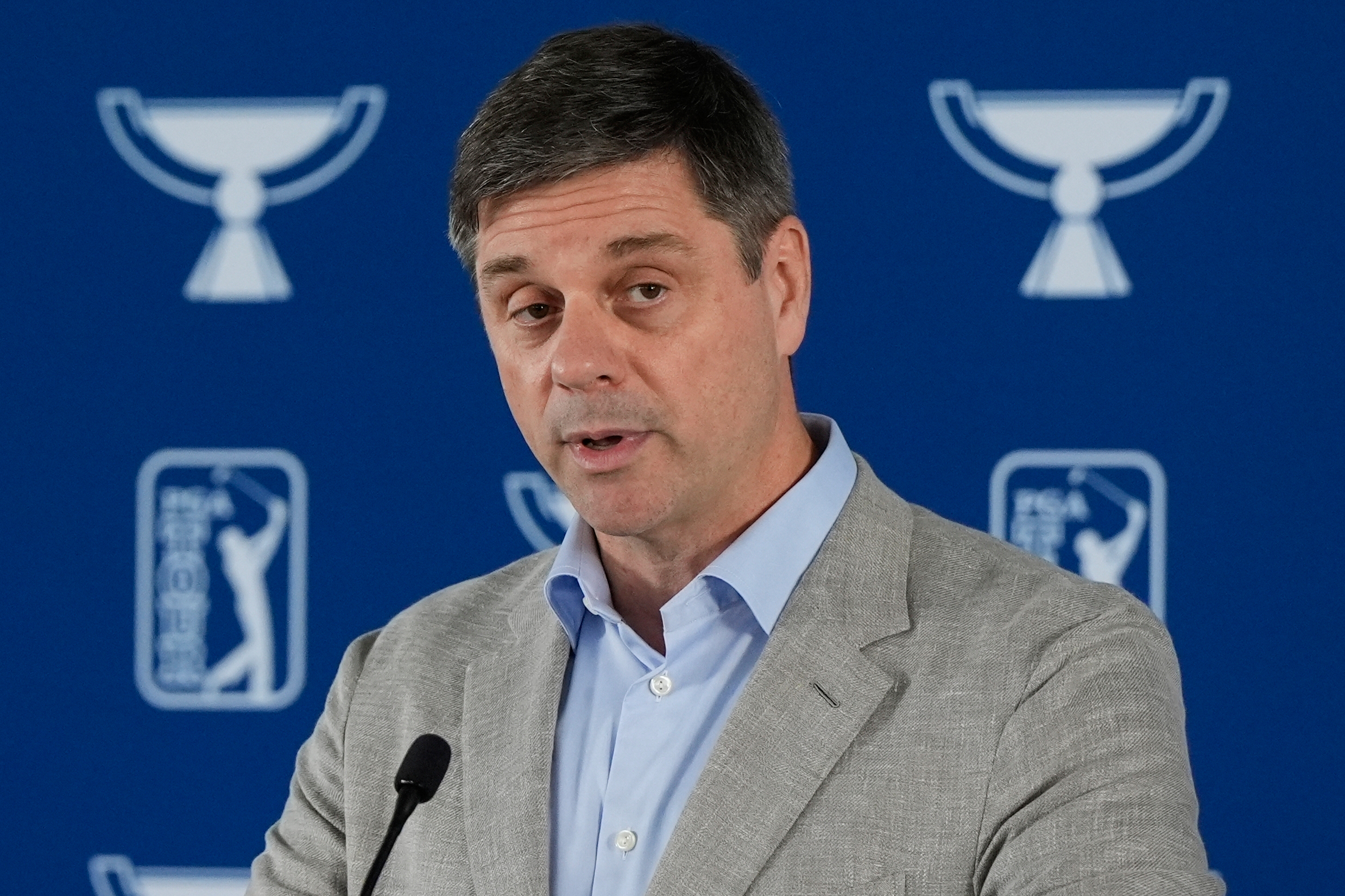
    That includes Rolapp, who only responded to the commercial’s misogyny when he was questioned at a press conference four days after the incident, then landed this stinging indictment: “I think what we saw was concerning.”

    Rolapp’s milquetoast response was a resounding reminder that, before moving to the PGA Tour last year, Rolapp spent more than two decades working for the NFL, America’s most notorious sports league when it comes to ignoring issues like domestic violence and sexual harassment in the workplace.

    That includes Callaway, whose executive roster looks like President Donald Trump’s cabinet. After one day, Callaway issued a chastisement … of Good Good. After three days, Callaway pulled the driver from its website. After six days, as its stock continued to lose value, Callaway finally cut ties with Good Good.

    Callaway’s abrupt about-face, after partnering with Good Good for three years, might have been prompted by Callaway being threatened with exclusion by huge retailers like Costco, which apparently removed access to Callaway products Thursday, at least temporarily.

    And, of course, there is Good Good.

    Clark is the general manager.

    He should resign.

    He should have resigned Saturday morning.

    Instead, five days after the commercial aired, as Dick’s, Golf Galaxy, and the PGA Tour Superstores began pulling Good Good stock from their shelves, Clark issued a rambling, 8½-minute “apology.” In it, he explains the process of the production of the ad, and insists that the woman was not injured, and that Good Good is women-friendly — as if any of this matters.

    At all.

    It does not.

    The obtuse and embarrassing statement just paints Clark and Good Good as defensive, tone-deaf, and completely uncomprehending of the gravity of the moment.

    As tone-deaf as Rolapp, the PGA Tour, Callaway, Golf Channel, and Dick’s/Golf Galaxy.

    All of them did the right thing, eventually, when forced to do so.

    But none of them did the right thing for the right reasons in the right time frame.

  • 7th Street Burger, an NYC-based chain, opens its first Philly location

    7th Street Burger, an NYC-based chain, opens its first Philly location

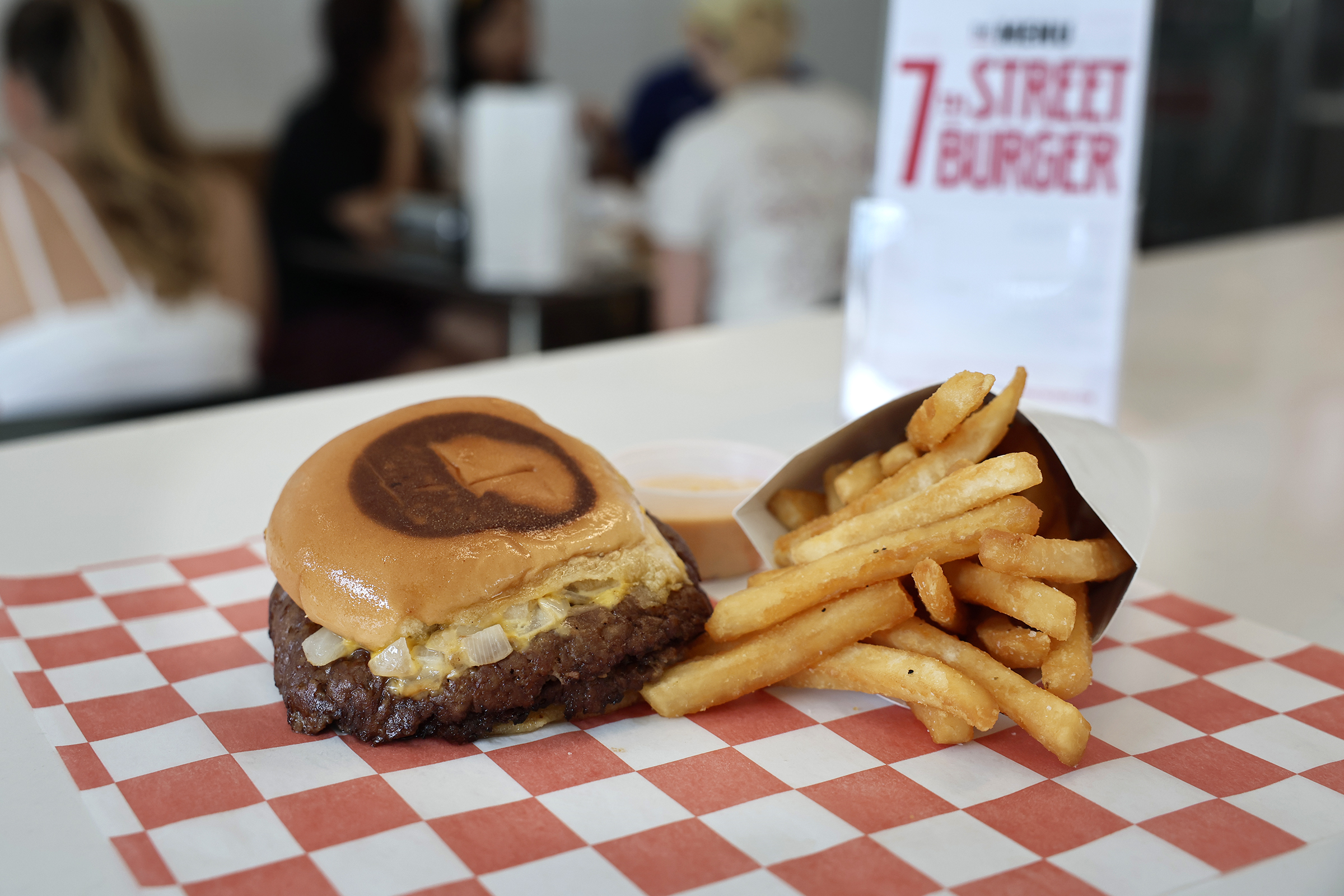
    You’d be forgiven if you walk into any 7th Street Burger and think that the burger chain has been around forever. Its spare, almost bare-bones menu of smash burgers and fries is more classic than innovative, but perhaps its austerity is part of what is fueling its growth.

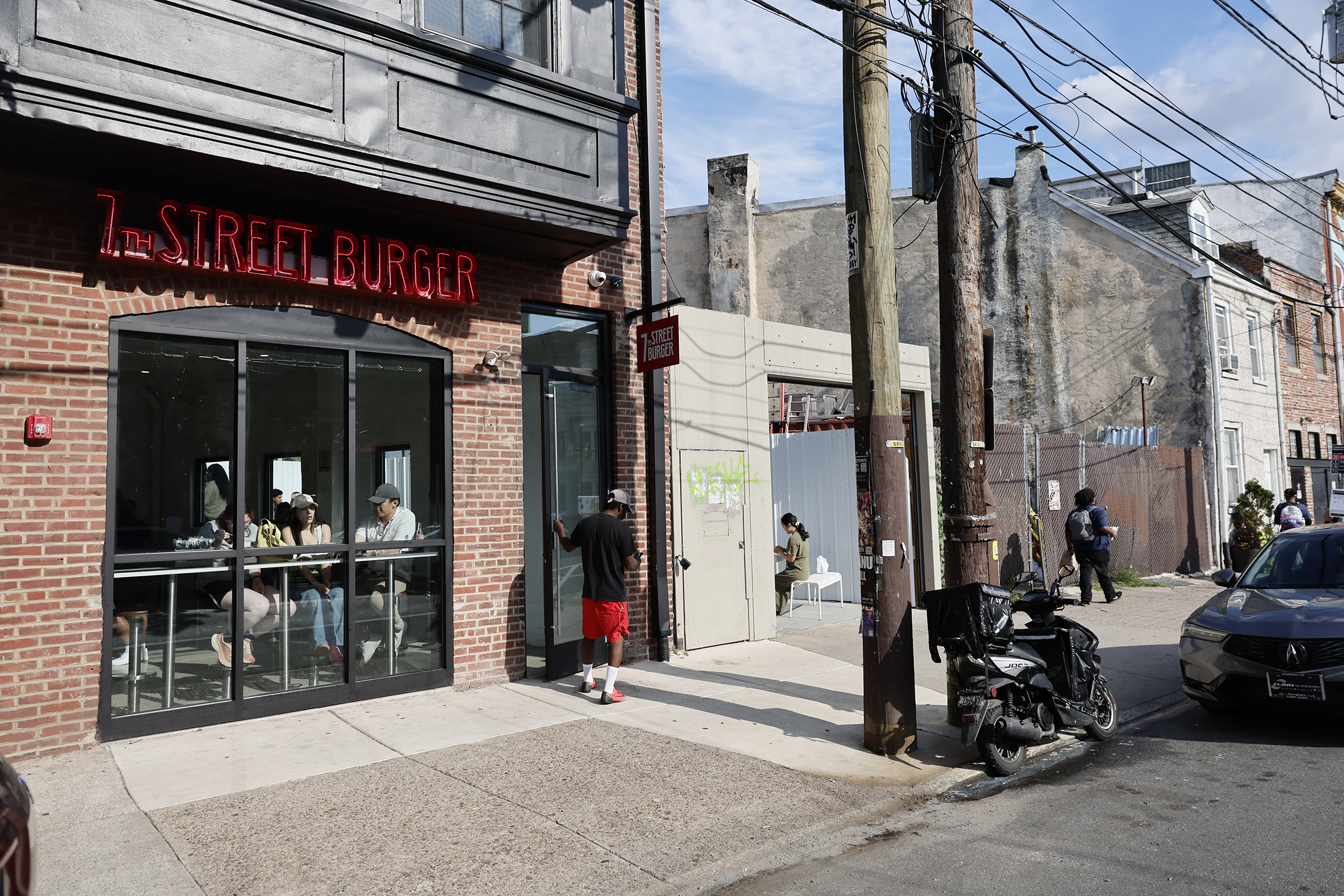
    The chain is growing at a breakneck pace. The New York-based chain opened its 35th location in Fishtown (1215 Frankford Ave.) earlier this week. It has three more Philly-area locations that are slated to open by the end of this year, in University City, Center City, and Conshohocken.

    On a Wednesday at 4 p.m., squarely between regular lunch and dinner hours, it was packed with people of seemingly every demographic, waiting in line for burgers.

    It was first opened on its namesake East 7th Street in New York’s East Village in May 2021 by entrepreneurs Kevin Rezvani and Paras Jain who “maxed out” their credit cards in order to do so. The burger joint took off. They quickly opened another location in Greenwich Village within a year. Venture capital firm Left Lane Capital invested in 7th Street Burger in 2023, and since then, the brand has been on an opening spree up and down the East Coast.

    Philly’s first location took nearly a year to open, from when the chain first took possession of the previously empty space in October.

    7th Street Burger at 1215 Frankford Ave.Elizabeth Robertson / Staff Photographer

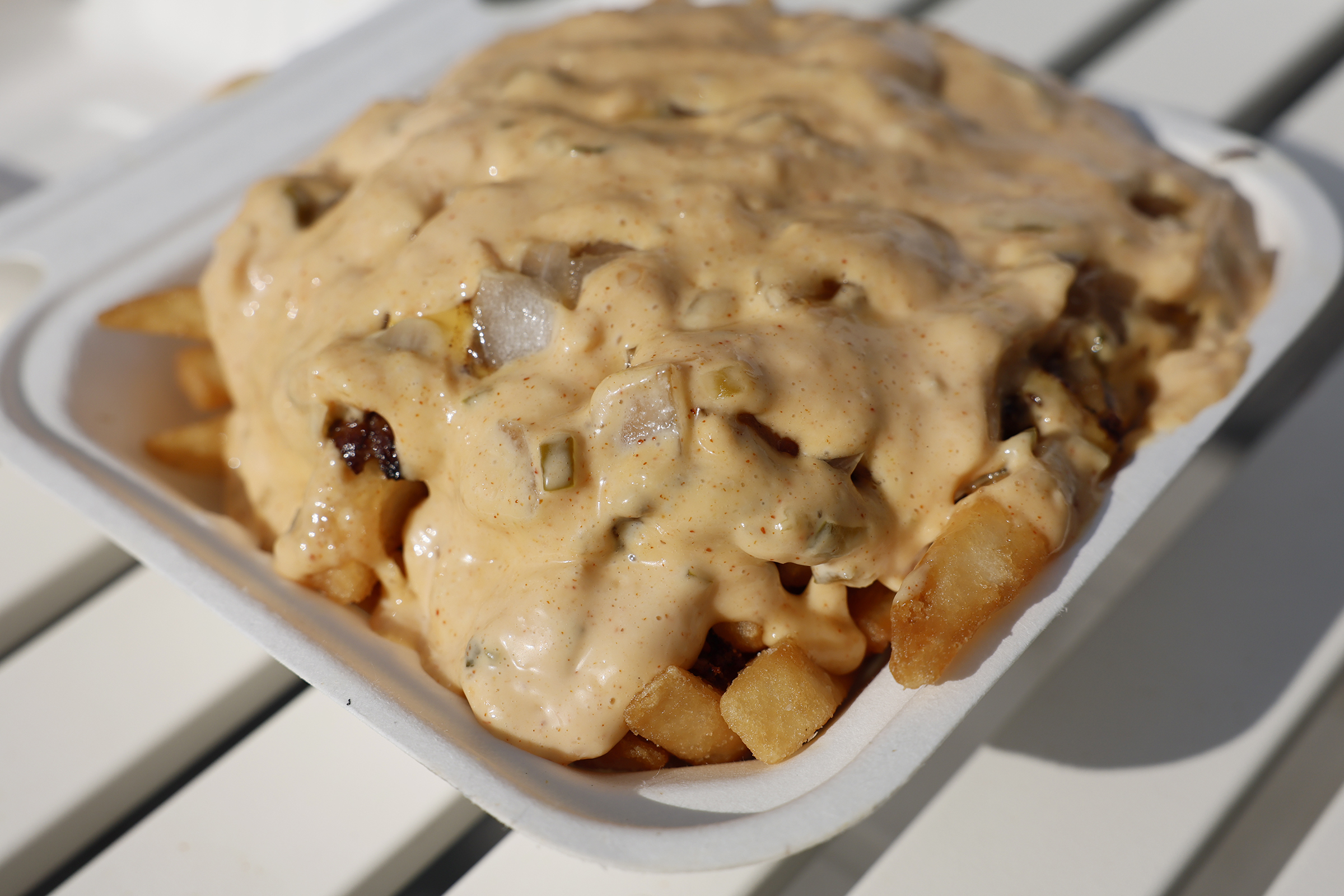
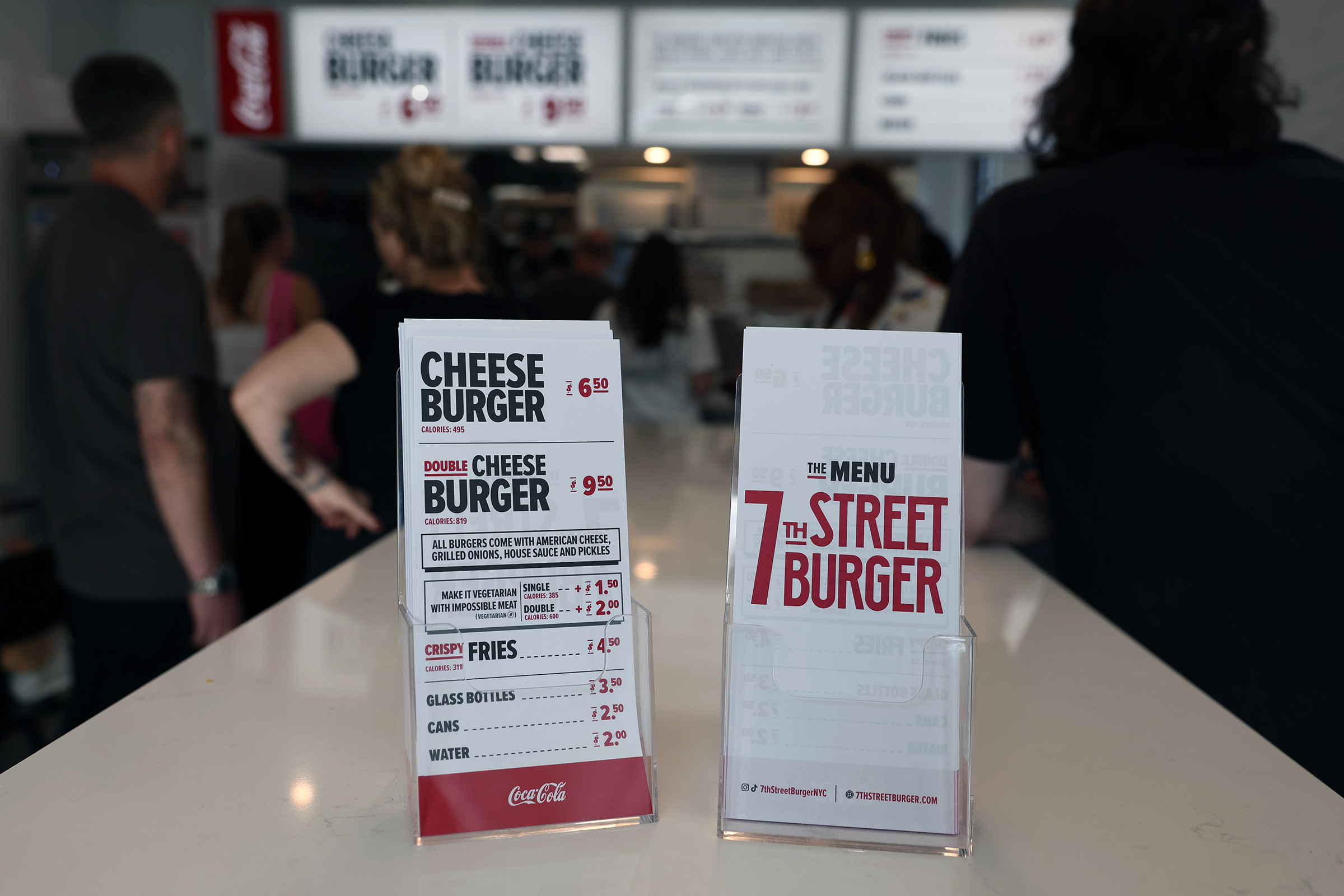
    All 7th Street Burger locations serve the same menu (at the same prices) consisting of a cheeseburger ($6.50), double cheeseburger ($9.50), and crispy fries ($4.50). Cheeseburgers and double cheeseburgers can be made vegetarian with Impossible Meat for an additional $1.50 and $2, respectively. Only Coca-Cola, Sprite, and water are available as beverages. All burgers are served on Martin’s potato rolls with American cheese, grilled onions, a mayonnaise-based house sauce that manager Frank Perez declined to give any other ingredients of, and pickles. There is a secret menu of Cajun fries and loaded fries that isn’t posted at any of their restaurants, but is rather written with a Sharpie on a takeout box at the register. Loaded fries are topped with the same ingredients as the burgers, with options to make them spicy (with a ghost pepper sauce and jalapeños).

    The loaded French fries at 7th Street Burger.Elizabeth Robertson / Staff Photographer
    The menu is limited and the same from location to location.Elizabeth Robertson / Staff Photographer

    Hours will likely change, as 7th Street Burger learns the Philly market’s demands and that of their locations’ surrounding neighborhoods. “For late night, we’ll probably extend Friday and Saturday to be closer to our New York shops,” said Perez. In New York, the locations are open until 3 a.m.

    Since opening, Philly’s 7th Street Burger has sold hundreds of burgers (Perez declined to state how many hundreds) but did note that they have sold far less Impossible Meat burgers here than in any other markets.

    7th Street Burger is at 1215 Frankford Ave. 877-428-2693, 7thstreetburger.com. Hours: 11 a.m. to midnight every day. Hours may change depending on demand.

  • NBC Sports Philadelphia’s Tom McCarthy will miss most of Phillies-Angels series

    NBC Sports Philadelphia’s Tom McCarthy will miss most of Phillies-Angels series

    One familiar Phillies voice will replace another this weekend during the team’s series against the Los Angeles Angels.

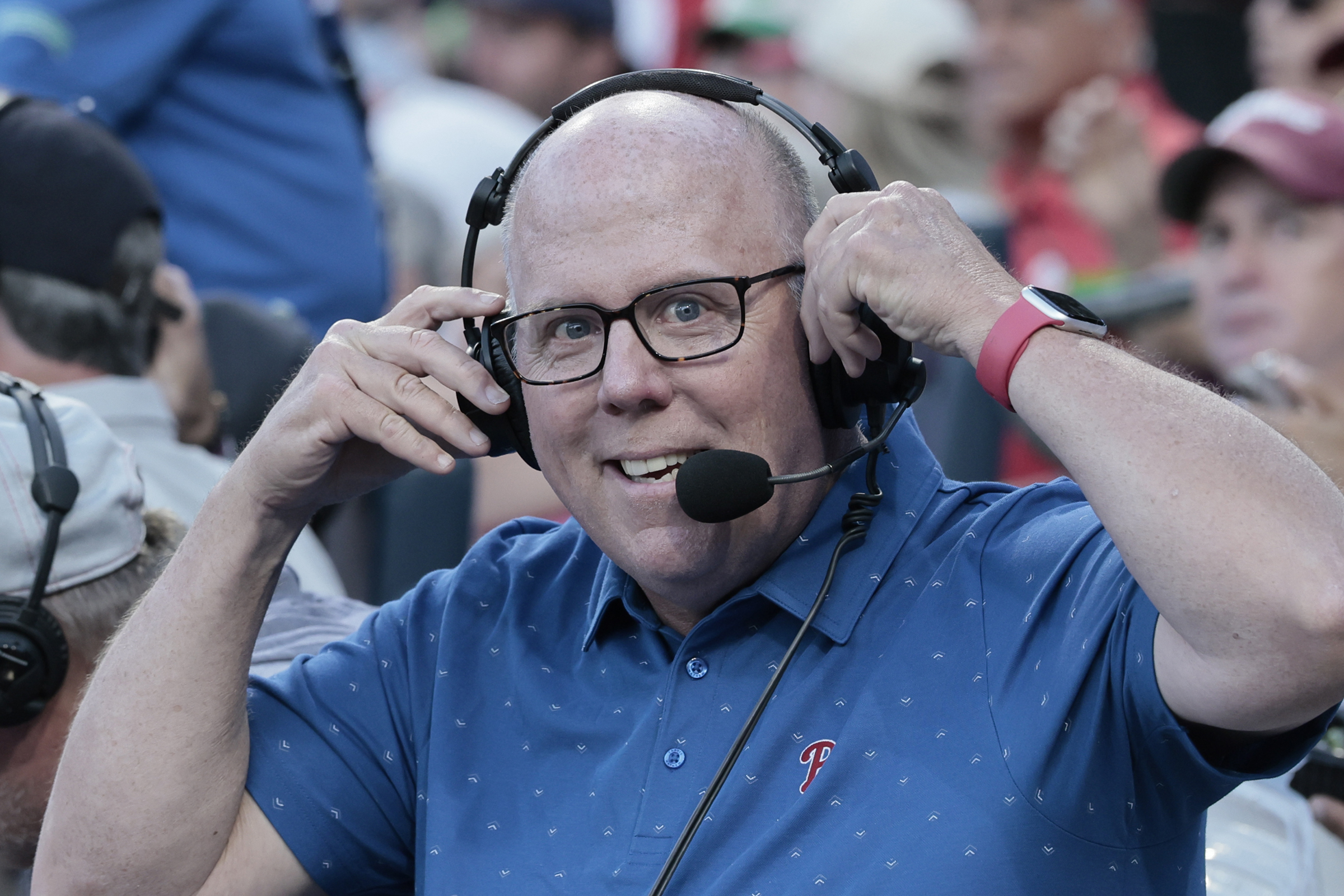
    Tom McCarthy, in his 20th season as the TV voice of the Phillies, will call Friday night’s game on NBC Sports Philadelphia alongside Ben Davis. Scott Franzke, the team’s longtime radio announcer on 94.1 WIP and other stations throughout the Delaware Valley, will take over Saturday and Sunday alongside Davis, with Gregg Murphy calling the game on radio with Kevin Stocker.

    So where will McCarthy be? He’ll be on Peacock and NBCSN calling a noon matchup between the Washington Nationals and Miami Marlins, part of an NBC Sunday triple-header. Joining him in the booth is one-time Phillies radio announcer Kevin Frandsen and four-time World Series champion Jeff Nelson.

    But unlike John Kruk, McCarthy has no issues wearing a suit.

    McCarthy initially though he might call Saturday night’s Phillies game, then take an overnight flight to Miami. But the notorious workaholic thought better of trying to navigate such a narrow window.

    “It just wasn’t prudent to get in at 5:30 a.m. to do an early game,” McCarthy said. “I like to work. I like the opportunity. I like the adrenaline rush. But I also thought it was probably better for everybody if I didn’t do that.”

    Phillies radio announcer Scott Franzke will be on TV this weekend. NBC Sports Philadelphia

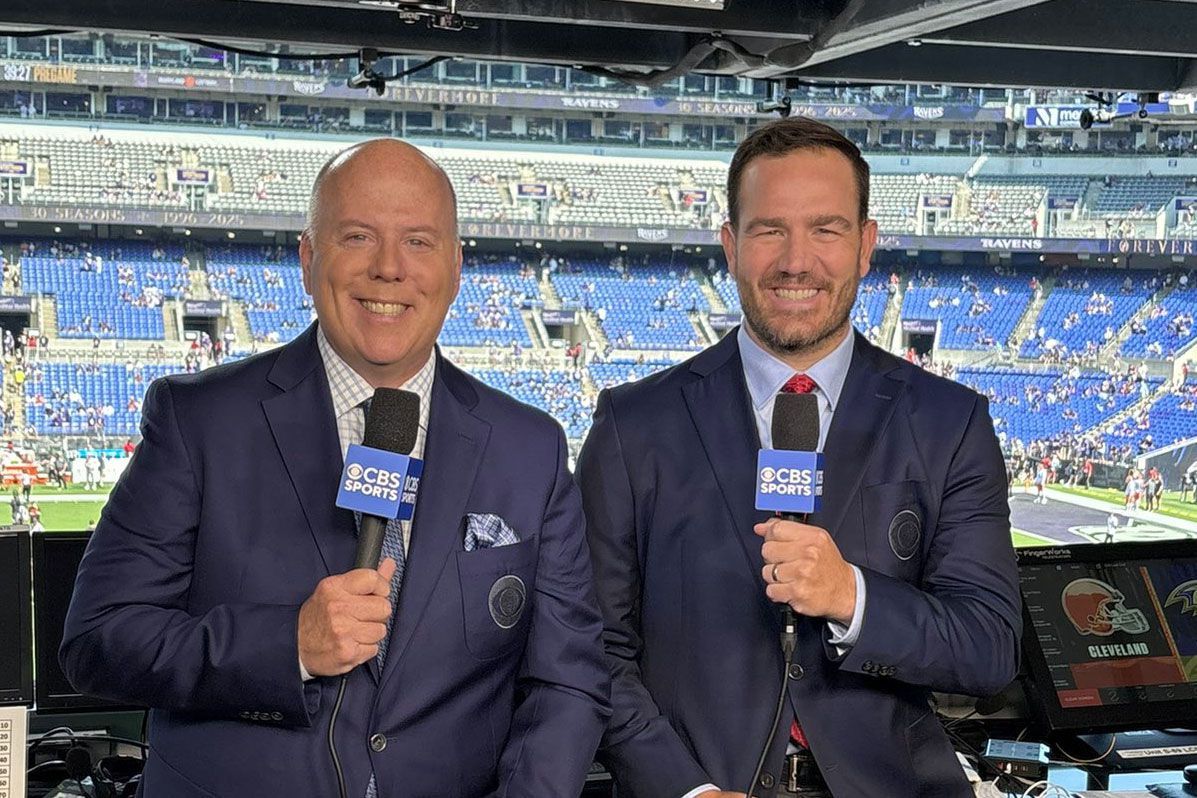
    The late-season shifting is nothing new for McCarthy or Philly fans. In addition to his role calling Phillies games, McCarthy is also entering his 13th NFL season as a play-by-play announcer with CBS. This year he expects to call around 10 games, but he won’t do it alongside Ross Tucker, who was promoted to the network’s No. 2 booth alongside Ian Eagle.

    “I’ve known him since he was 18 years old. I’m very proud of him,” McCarthy said of Tucker. “He’s one of the hardest workers I’ve ever been around.”

    Instead, McCarthy will call games with former Seattle Seahawks and Indianapolis Colts running back Robert Turbin in his first season as an NFL color analyst.

    Because the start of the NFL season was pushed back by a late Labor Day, McCarthy will actually end up missing fewer Phillies games this season.

    Last season, Tom McCarthy (left) called NFL games alongside Ross Tucker. CBS

    His first NFL game is the Week 1 matchup between the Cleveland Browns and Jacksonville Jaguars on Sept. 13, somewhat appropriate because he once called Browns preseason games. As a result, he’ll miss all three games of the Braves-Phillies series that weekend.

    He’ll also work Week 2 and Week 3 for CBS, though the network hasn’t publicly announced which games he’s calling. But thanks to national broadcasts, McCarthy will only miss a total of three Phillies games on NBC Sports Philadelphia those two weekends, though it does include the season finale against the Tampa Bay Rays on Sept. 27.

    “The Phillies are great about it,” McCarthy said. “I don’t miss any games during the regular season, kind of by design. Unless it’s my kid’s graduation. … I save it for football season.”

    The Eagles have two games scheduled to air on CBS, though the Birds’ Week 11 matchup against the Pittsburgh Steelers will be a national 4:25 p.m. game. The other is a Week 6 matchup against the Carolina Panthers.

    While McCarthy has called Eagles games on the radio for Westwood One, he’s never had the opportunity to broadcast the Birds on CBS. The streak will likely continue this season, since McCarthy isn’t assigned any games that weekend.

    “I would love to do an Eagles game. I think it’d be a hoot,” McCarthy said. “But I just roll with wherever they send me.”

    McCarthy’s absence is a Phillies tradition that goes back to the late, great Harry Kalas, who called Notre Dame football games in September and national radio games for Westwood One. He also missed games on Tuesdays and Wednesdays to do voice-over work for NFL Films.

    It was actually one of those absences where McCarthy got his first opportunities to call the Phillies on TV.

    While Sunday is McCarthy’s first-and-only regular season game for NBC, he’ll call a wild-card series next month for the network. That means for the first time, McCarthy has the chance to actually call some Phillies postseason games.

    “I don’t know if NBC would put me there or not, but I think there’s a possibility,” McCarthy said. “It would be awesome.”

    Phillies’ standings and NL playoff picture

    window.addEventListener(“message”,function(a){if(void 0!==a.data[“datawrapper-height”]){var e=document.querySelectorAll(“iframe”);for(var t in a.data[“datawrapper-height”])for(var r,i=0;r=e[i];i++)if(r.contentWindow===a.source){var d=a.data[“datawrapper-height”][t]+”px”;r.style.height=d}}});

    If the season were to end today, the Phillies would be the No. 2 wild card in the National League. That would currently mean a best-of-three series against the Chicago Cubs in Wrigley Field, with the winner advancing to the National League Divisional Series.

    Here’s how the wild-card race in the National League currently shakes out:

    window.addEventListener(“message”,function(a){if(void 0!==a.data[“datawrapper-height”]){var e=document.querySelectorAll(“iframe”);for(var t in a.data[“datawrapper-height”])for(var r,i=0;r=e[i];i++)if(r.contentWindow===a.source){var d=a.data[“datawrapper-height”][t]+”px”;r.style.height=d}}});

    Phillies news

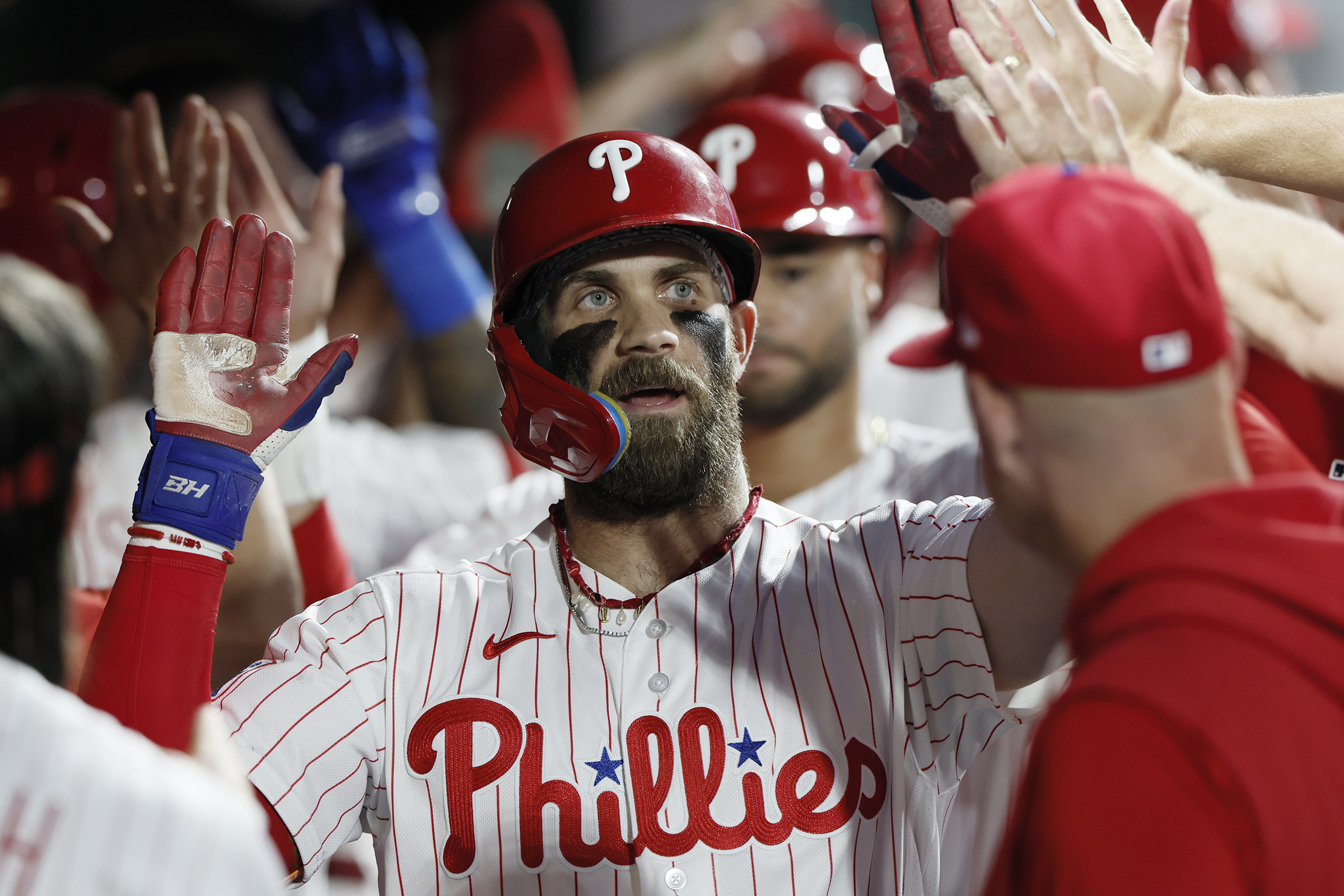
    Bryce Harper has five homers this month and is hitting .338 and slugging .600. Elizabeth Robertson / Staff Photographer

    Remaining Phillies TV schedule

    • Phillies at Angels
    • Phillies at Diamondbacks
    • Braves at Phillies
    • Astros at Phillies
    • Phillies at Braves
    • Phillies at Nationals
    • Phillies at Mets
    • Brewers at Phillies
    • Rays at Phillies
  • Upper Darby may dole out ‘quick tickets’ for overgrown grass, improper trash disposal, and other property violations

    Upper Darby may dole out ‘quick tickets’ for overgrown grass, improper trash disposal, and other property violations

    Upper Darby may soon hand out tickets for more than a dozen property maintenance and “quality of life violations,” including improper waste disposal, overgrown grass, and illegal dumpster placement.

    Upper Darby’s council earlier this month advanced an ordinance that would allow the township’s licenses and inspections department to dole out “quick tickets” for 17 property-related violations. Tickets would range from $50 to $100 and would, according to officials, allow the township to enforce property-related infractions without engaging in a drawn-out compliance process each time.

    “This is something that we really need. Our inspectors really need it,” Amrinder Singh, Upper Darby’s director of licenses and inspections, said at an Aug. 19 meeting.

    Singh said the program would give inspectors “another practical tool to address routine violations more quickly and encourage prompt, corrective action” with the ultimate goal of “trying to change human behavior.”

    Council voted to advertise an ordinance establishing the property maintenance quick ticket program and is set to vote on the ordinance on Sept. 2.

    Upper Darby currently addresses property issues through a violation and compliance process, which Singh said can be lengthy and delay corrective action. Under the existing system, code enforcement officers conduct an inspection, either proactively or following complaints. If a violation is detected, the property owner receives written notice describing the infraction and required action with a deadline. After the compliance period, the property is reinspected, and, if the issue isn’t corrected, enforcement actions can be taken, including fines, citations, and criminal proceedings before a district judge.

    Ultimately, Singh said, many property owners just ignore the citations.

    The proposed program would send tickets straight to property owners after violations are documented, bypassing the existing, and sometimes protracted, process. Money collected through tickets would go into Upper Darby’s general fund. Property owners will be able to appeal tickets to the township, Singh said. The township’s existing violation process would still exist, Singh said, and would work in tandem with the quick tickets.

    Norristown and Reading have implemented similar programs.

    The township selected the 17 specific violations because they contribute to unsafe conditions, neighborhood blight, pests, and pedestrian obstructions, Singh said.

    Upper Darby’s licenses and inspection department has received over 7,000 complaints this year, according to Singh, with around 40% being for grass and trash violations.

    At recent council meetings, residents have complained of rat infestations and improper trash storage in their neighborhoods.

    If passed by council, the quick ticket program ordinance would go into effect immediately, but fees and penalties wouldn’t be collected until Jan. 1. Singh said the four-month wind-up would allow the department to train inspectors, establish payment procedures, and engage in education and outreach with residents.

    Council members at the Aug. 19 meeting seemed poised to approve the program. Council member Myron McNeely said it is “way overdue.”

    Here’s a full list of the violations proposed for enforcement under the quick ticket program:

    • Accumulation of rubbish, garbage, or debris
    • Improper dumping or disposal of waste
    • Failure to clean up animal waste
    • Improper storage of trash containers or recyclables
    • High weeds or overgrown grass
    • Overgrowth obstructing sidewalks or public rights of way
    • Outside placement of indoor furniture or appliances
    • Exterior accumulation of construction debris or materials
    • Improper storage of hazardous materials
    • Illegal placement or storage of dumpsters without authorization
    • Unregistered, uninspected, unsafe, immobilized, or inoperative motor vehicles
    • Unsafe or noncompliant swimming pools
    • Snow and ice removal violations
    • Graffiti defacement
    • Failure to obtain required permits
    • Failure to post required permit placards
    • Failure to secure vacant unoccupied structures

    This suburban content is produced with support from the Leslie Miller and Richard Worley Foundation and The Lenfest Institute for Journalism. Editorial content is created independently of the project donors. Gifts to support The Inquirer’s high-impact journalism can be made at inquirer.com/donate. A list of Lenfest Institute donors can be found at lenfestinstitute.org/supporters.

  • Judge once again bars Postal Service from restricting mail-in vote

    Judge once again bars Postal Service from restricting mail-in vote

    WASHINGTON — A federal judge Thursday once again temporarily prohibited the U.S. Postal Service from implementing a plan to restrict mail-in voting, put in place after a directive from President Donald Trump.

    U.S. District Judge Indira Talwani had cleared the way for the Postal Service to move forward just the day before, but Thursday, she issued a new order concluding that the agency’s plan, released late last week, appeared to overstep its legal mandate and could lead to chaos by changing rules fewer than 70 days before an election.

    She wrote that a group of Democratic-led states that had sued “face irreparable harm where they are required to comply with a likely unconstitutional regulation for which compliance is practically impossible as to the 2026 midterm elections, now little more than two months away.”

    “Most plaintiff states have already ordered their mail ballots, and some are required by state law to send them to eligible voters as early as next week,” she added.

    She wrote that while the Supreme Court had “admonished” her Monday that the Postal Service had not finalized any changes when the groups sued initially, making court action premature, the stakes had changed since then because of the step the agency took late last week to formalized its plan.

    Her ruling marked the third court decision on the issue in less than a week, a whipsaw of action that threatened to confuse voters. But each delay has reduced the administration’s chances of clearing the legal hurdles to execute its logistically complicated mail-in ballot plan before the November election. She blocked the rule from taking effect for 14 days, and she had previously scheduled a hearing to discuss the legality of the rule on Sept. 3.

    In her order, Talwani explained that the prospect of the new rule suddenly taking effect carried “significant risk of their members’ disenfranchisement” for voting rights organizations, which had also sued, along with the states.

    She ticked through a list of requirements that state election officials would be required to meet to ensure delivery of ballots, including receiving the agency’s approval for new envelope designs and submitting voters’ information into an online portal run by the Postal Service.

    “Where a state or local election official does not obtain envelope and return envelope design approval, or does not upload voter information, or does not include unique intelligent mail bar codes on ballot envelopes, the U.S.P.S. will not mail ballots to voters,” she concluded.

    In March, Trump issued an executive order that required the Department of Homeland Security to create and circulate state-by-state citizenship lists to state officials. It further urged states to provide the U.S. Postal Service with their own lists of voters eligible to cast ballots by mail.

    Multiple lawsuits were filed challenging the order, arguing that Congress and the states set rules for elections, not the executive branch. The challengers also argued that no federal law gives the Postal Service the power to make those kinds of election-related rules.

    On Monday, the Supreme Court ruled that one suit, brought by a group of Democratic-led states, was premature because the administration had not started implementing its plans.

    But late Friday, just before the court ruled, the Postal Service formally published a new plan to comply with the executive order. Under that plan, the service would not deliver mail ballots in states that do not share voter data with the agency and would only deliver ballots that meet certain criteria.

    Lawyers for the Trump administration and the groups challenging the rule continue to clash over a straightforward issue: Whether or not the Postal Service’s plan would mean the agency would be taking on a new role verifying voters and potentially rejecting ballots in the midterm election in November.

    In a filing Thursday, the Postal Service denied that its proposal left room for the service to second-guess states on which voters were eligible to cast a ballot.

    “U.S.P.S. will not scrutinize those decisions or alter that information in any way — instead leaving it entirely up to the states to accurately and lawfully identify its residents who are eligible to vote by mail,” the filing said. “The Postal Service will not determine voter eligibility, ballot content, mailing or receipt deadlines, or ballot-counting procedures.”

    Instead, it described the changes as minor logistical improvements and streamlining, such as requiring voters to submit their addresses ahead of time to improve processing. It said the changes were designed “as a matter of the Postal Service’s own judgment.” Lawyers for the service argued it is authorized to adopt mail rules under statutes adopted by Congress.

    The challengers argue that the Postal Service rule is an unconstitutional violation of the separation of powers, allowing the executive branch to intrude into elections. They say that no federal law permits such action by the agency, and they assert that the Trump administration’s actions are likely to sow confusion among voters and to lead to disenfranchisement.

    The agency has repeatedly said that it would not attempt to impose the new requirements, unless it was explicitly allowed to by the courts.

    A series of lawsuits in Massachusetts and the District of Columbia by different groups have challenged Trump’s effort to discredit and erect obstacles to mail-in voting. The lawsuits have challenged both Trump’s executive order and the Postal Service rule, focusing on their implementation this year and beyond.

    This article originally appeared in The New York Times.

  • Trump used to say he saw a quick end to his Iran war, but 6 months later he claims he’s in no hurry

    Trump used to say he saw a quick end to his Iran war, but 6 months later he claims he’s in no hurry

    WASHINGTON — President Donald Trump arrives at an awkward moment for his presidency on Friday as the U.S.-Israel war against Iran reaches the six-month mark, a notable milestone for a conflict that the Republican leader repeatedly assured Americans would be a “little excursion” lasting a matter of weeks.

    The war isn’t over, though Trump claims that through bombs and blockade, he has already devastated Iran’s leadership, military and economy.

    And this week his administration said it would turn its focus to increasing economic pressure — rather than military action — to try to finish off Iran. The shifting strategy centers on threats to punish any country or entity that continues to conduct business with Tehran.

    The turn to using sanctions as the cudgel of choice comes as the administration weighs diminished munitions stockpiles after months of war, sparking concerns that the prolonged conflict could undermine U.S. military readiness in other parts of the globe.

    As the conflict grinds on, Trump’s talk of finding a quick end to the war also appears to be fading. He stressed this week that he’s “not in a hurry” to get Iran back to the negotiating table, and he continues making the case that the Islamic Republic’s leadership is on the ropes.

    “They’re not paying their troops. They’re in deep trouble. They have very little capacity,” Trump told reporters Thursday. “We don’t want to speak to them. We’re not looking to meet or anything,” he said.

    It’s unclear how — or if — Trump will address the six-month anniversary of a conflict that has already cost the United States more than $37.5 billion and done damage to his popularity ahead of critical November elections for his party. The president is spending Friday in Houston, where he’ll honor the Artemis II NASA crew for their 10-day mission around the moon earlier this year.

    Trump is declaring ‘mission accomplished’ — a phrase that hurt a Republican predecessor

    On its face, the moment is complicated for the “America First” leader who fiercely criticized his White House predecessors for wasting American taxpayer money and U.S. troops’ lives in Middle East conflicts and vowed on the campaign trail to keep the military out of “endless wars.”

    But Trump has bristled at suggestions that this war — in which no American troops have deployed into Iran — can be compared with the yearslong wars in Iraq and Afghanistan in which more than 7,000 Americans were killed.

    His Republican predecessor, President George W. Bush, was widely mocked for a 2003 speech aboard the USS Abraham Lincoln beneath a White House-produced banner that read “Mission Accomplished.” It came to symbolize a premature declaration of victory for the Iraq War, which would go on for nearly nine more years. More than two decades later, there are still U.S. troops stationed in Iraq.

    Trump’s war has stretched on far longer than he told Americans it would. It didn’t stop him from sharing a social media post this week declaring “MISSION ACCOMPLISHED 2026.” The AI-generated image features Trump against a backdrop of U.S. fighter jets, a warship and American flags above smaller images of Bush and former Iranian Supreme Leader Ayatollah Ali Khamenei, who was killed in an Israeli strike in the opening salvos of the war.

    Trump has consistently emphasized that the U.S. and Israel campaign has been devastating for Iran’s navy and air force. Iranian officials have said the country has suffered $270 billion in direct and indirect damage. Israeli military strikes in the first weeks of the war wiped out much of the theocratic government’s leadership structure, including Khamenei.

    But Iran has found leverage through its own strikes in the critical Strait of Hormuz, where relatively few vessels carrying oil and liquefied natural gas are risking passage. Trump again declared Thursday that the “Strait of Hormuz is open,” saying 24 vessels passed through a day earlier. That’s a fraction of the roughly 130 vessels that passed through the vital waterway daily before the war began.

    Trump is showing little interest in talks

    Mediators Qatar and Pakistan continue to press for a diplomatic off-ramp from the two sides. Qatar’s prime minister, Sheikh Mohammed bin Abdulrahman Al Thani, was in Tehran on Thursday to discuss a proposed plan between Iran and Oman to boost traffic through the Strait of Hormuz.

    But in Washington, Trump has shown little interest in getting back to the preliminary deal reached in June that aimed to reopen the strait and launch talks about Iran’s nuclear program. That deal fell apart within weeks after Iran started attacking ships.

    At the same time, Trump says the U.S. effort to economically choke off Tehran is working, with a U.S. naval blockade preventing Iranian oil from making it to market as the trickle of vessels carrying oil from other Gulf nations pass through.

    “We have control and we have the blockade,” Trump said. “Iran is not getting anything. Nothing is going through.”

    Iran is badly battered, but has a history of showing resilience

    There’s no doubt that the strikes combined with decades of international sanctions have battered Iran, said Aarathi Krishnan, a geopolitical risk analyst at RAKSHA Intelligence Future.

    But as Trump tries to turn to a new chapter in the war, Krishnan argues the Republican may be misguided in concluding that more pressure on Tehran — which has spent decades adapting to international economic sanctions — will produce the political outcome he wants.

    Indeed, Iran’s economy in the run-up to the start of the war was mired in surging inflation, according to the International Monetary Fund. National income per person had fallen from about $8,000 in 2012 to $5,000 in 2024, according to World Bank data.

    But Tehran has also shown resilience, selling discounted oil and establishing opaque shipping and financial networks, Krishnan said.

    “This administration has completely underestimated the Iranian resolve,” Krishnan said. “This is not new to the Iranian regime.”

    Trump must decide how far he’s willing to go with sanctions

    Richard Goldberg, who served as a senior adviser on Iran at the National Security Council during Trump’s first White House term, argues that Iran now finds itself in “uncharted waters” if the administration follows through with a truly biting campaign to pressure Iranian trade partners.

    “What we should be seeing is an attempt to seal off every escape hatch the regime has left,” said Goldberg, who is now at the Foundation for Defense of Democracies, a hawkish Washington think tank. “Use the economic power of the United States to layer a naval blockade with an air and land embargo while dropping the hammer on anyone who gives the regime access to hard currency — whether that’s in the Middle East, China or even Europe.”

    But it remains to be seen how far the administration is willing to go.

    Treasury Secretary Scott Bessent this week unveiled a campaign the White House calls “Operation Economic Outcast,” but only issued warnings to nations to cut trade and has yet to announce any secondary sanctions. Bessent told reporters the administration wanted countries to have a chance to shift away from Iran before it was too late — and acknowledged there was economic risk to the U.S., too, in moving ahead.

    China, which is Iran’s biggest trade partner and oil buyer, responded by expressing its opposition to “illegal unilateral sanctions.”

    Pressed Thursday about why he wasn’t already sanctioning Chinese banks, Trump offered a cryptic response.

    “Who said I’m not? You don’t know if I’m doing it,” Trump said. “I don’t have to announce everything, do I?”

  • Death toll rises in Nepal-China border disaster as a lake poses new flood threat

    Death toll rises in Nepal-China border disaster as a lake poses new flood threat

    KATHMANDU, Nepal — Rescuers pulled out survivors caked in dark brown mud and helicopters lifted stranded people to safety Friday as Nepal and China raced to respond to catastrophic flash floods that killed more than 500 people and left more than 1,500 missing.

    Nepal’s disaster management authority said the death toll there rose to 538, and that more than 3,700 people have been rescued. Nepali police later put the number of deaths higher at 547.

    Meanwhile there was little information on survivors on the Chinese side, where the death toll rose to five Friday as state media showed evacuations of villages and leaders’ efforts to direct the relief response.

    China’s state media previously said 558 people were missing. Across the border, Nepal’s disaster management authority said Friday that 977 people were still unaccounted for. Hundreds of them were foreigners in the area to work, trek or make a pilgrimage to a sacred peak.

    Authorities warn of further flooding from a new lake

    Nepali police issued a fresh alert Friday after receiving information that a dam on the Tibet side has burst. Security personnel and rescue and relief workers were told to stay on high alert and immediately move to a safe location if necessary.

    It is unclear if the dam bursting is related to flooding concerns over a barrier lake that formed after the initial flash floods, high up in the Chinese side of the Himalayan mountains. Chinese broadcaster CCTV said the lake was at an elevation of 2,950 meters (9,680 feet.)

    Nepali and Chinese authorities earlier warned of further flooding from the barrier lake, which was already overflowing. They urged people in potentially affected areas to move to safer ground.

    Nepal police spokesperson Abi Narayan Kafle told The Associated Press that the rescue operation was continuing but with high alert. “It hasn’t stopped,” he said.

    Although the new lake is located more than 10 kilometers (6 miles) from Gyirong Port, the hard-hit border crossing with Nepal, rescue workers heading to the disaster zone were ordered to stop temporarily Friday morning owing to concern the lake would overflow.

    Some 680 rescuers eventually reached the hardest-hit area at Gyirong by foot and via rafts after much effort. Some were dropped down from drones flown to the area, CCTV footage showed.

    Thousands of people have been evacuated, others await rescue

    Nepali Army rescuers were working to help people trapped in a hydropower tunnel in Rasuwa, part of the Upper Trishuli-1 Hydropower Project.

    Video from the scene show rescuers helping the man, covered in dark brown mud, out of the tunnel by pulling and pushing. He was one of likely dozens trapped in the tunnel.

    Army spokesperson Brig. Gen. Raja Ram Basnet told the AP the focus was on survivors.

    “It is complicated to find the entry and exit points of the tunnel because everything has been covered by mud,” Basnet said. “Our first priority is rescuing the stranded people.”

    Nepal’s disaster management authority said 3,253 people had been airlifted by helicopter from the disaster area. Survivors, including injured people, were taken to Kathmandu and other locations.

    Some felt the ground shake, then saw a ‘black storm’

    Scientists who’ve studied satellite images said bedrock underneath a glacier high in the Himalayan region had collapsed, taking part of the glacier with it. The rockfall was so extreme that it reached a magnitude 5.2 seismic measurement. The rocks and melted water then swelled the rivers in the valleys below, causing a torrent of water that swept buildings, bridges and earth downstream in Tibet and Nepal.

    Customs officer Karbir Gaire was among some of the survivors in Timure, the closest Nepalese village to the border with China, where some 1,500 people had lived.

    Gaire reached his office around 8 a.m. Wednesday and was working on his computer when he first felt the ground shake.

    “Right after the shake, I noticed a black storm coming towards us,” he recalled from Kathmandu, where he is back with family. ”We all immediately started running out, and within a few seconds, we were climbing uphill on the opposite side of our office building. I think those 10 or so seconds saved some of us.”

    Gaire doesn’t remember exactly how many people were in the office when the disaster struck, but 15 colleagues have gone missing. “It was like a Hollywood movie scene. I don’t call it a flood, it was a tsunami.”

    Families around the world hope for news of loved ones

    Nepal’s tourism board has said that among the missing are more than 500 foreigners.

    About 90 Americans were unaccounted for. U.S. President Donald Trump said the flooding was terrible to see, and he told reporters in the Oval Office he offered to provide Nepalese leaders “anything they want.”

    Rajan Tamang, a restaurant owner in New York City, said he learned from family in Kathmandu that his mother and sister were among those who died, while many other relatives and friends remained missing.

    “My family was just waking up, and they didn’t even get any information, and suddenly this flood came. Some of them are missing, some of them lost their life and only a few is alive,” he told the AP after a vigil in New York.

    Some of the missing may have been on a pilgrimage to Mount Kailash in Tibet, a sacred site for Hindus, Buddhists and others.

    Vishnuram Ramaswamy, who works at a private company in the southern Indian city of Puducherry, said that he last spoke to his mother and two sisters who were on that pilgrimage Wednesday morning. It was a highly anticipated trip, something his mother had always wanted to do, he said.

    “My mother said they were on their way towards the border area and said they’ll reach their hotel and call us,” he said. While he’s in touch with government officials, and the travel agency, there’s been no news.

    “This was the last we spoke to them. They have been unreachable since.”

  • To seed or not to seed? Philly’s old-school cheesesteak shops rethink their roll options.

    To seed or not to seed? Philly’s old-school cheesesteak shops rethink their roll options.

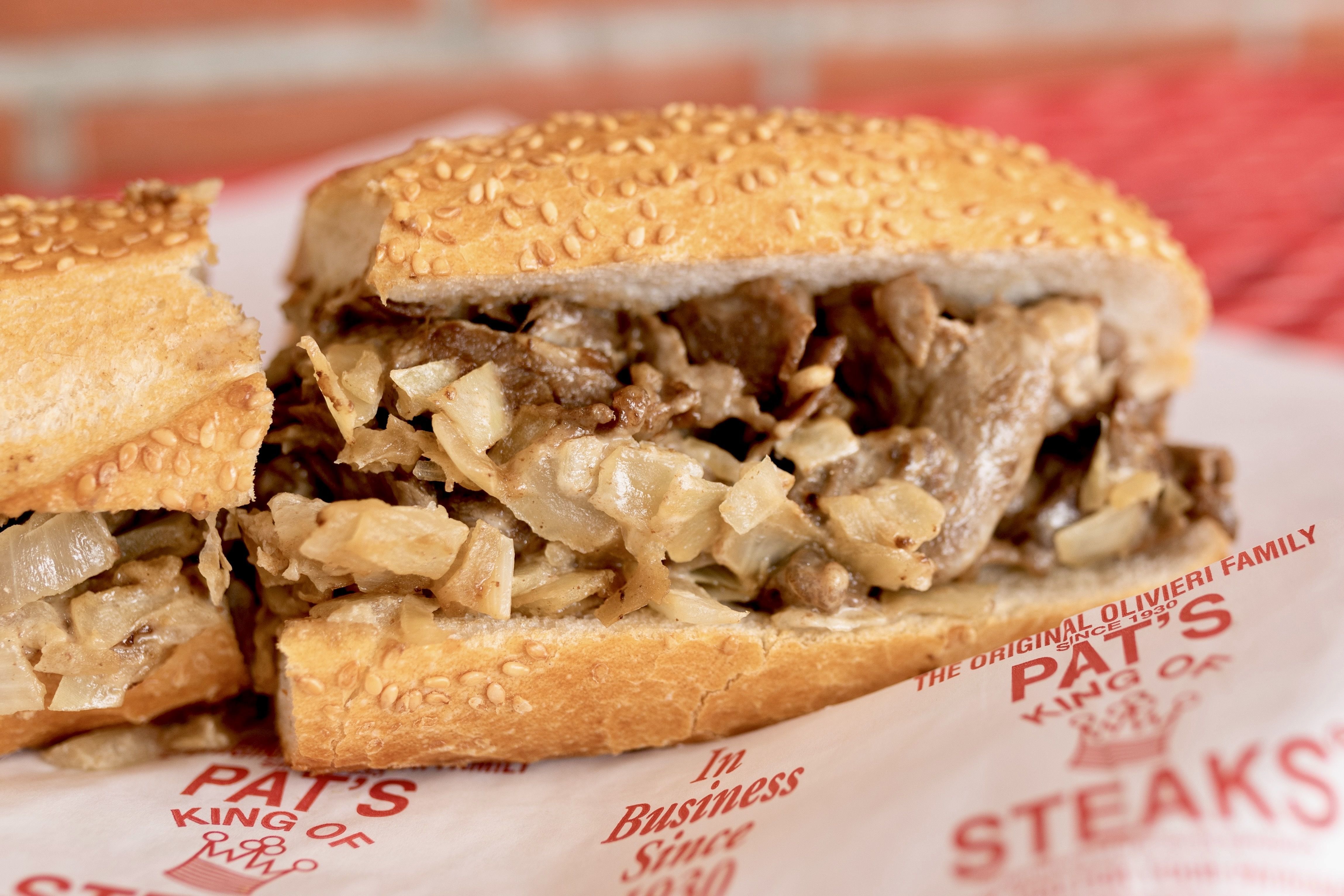
    Sesame-seeded rolls are in at Jim’s South Street — and out at Pat’s King of Steaks.

    The opposite moves by two of Philadelphia’s best-known old-school cheesesteak shops expose a divide increasingly shaped by social media. Tourists arrive expecting the crusty, seeded rolls they see online, while many longtime customers still prefer the plain rolls Philadelphia stands have served for generations.

    The seeded roll is a staple of Sarcone’s Bakery.Michael Klein / Staff

    The seeded-roll question is part of the crowded field of never-settled cheesesteak disputes: Which cheese is correct? How finely should the beef be chopped? Should the onions be diced, sliced, or chopped?

    Tourists vs. locals

    Earlier this month, Jim’s began offering seeded rolls as an option for the first time since it opened in 1976. Pat’s, which made news in February when it began offering them after 96 years of plain rolls, abandoned the experiment after only a few weeks.

    Seeded rolls tend to be crustier, and the toasted sesame adds a faintly nutty flavor. Plain rolls are generally softer and milder, putting more emphasis on the beef and cheese.

    At Jim’s, owner Ken Silver said he added seeded rolls to his Liscio’s bread order to give customers a choice. “For the most part, it’s a tourist thing,” Silver said. “Our local base is almost all plain.”

    Silver said Jim’s made the change “for the same reason we added chicken and Cooper Sharp [cheese]. People expect it from what they see on social media.” Overall so far, he said, seeded is outselling unseeded, 6 to 1.

    At Pat’s, those expectations did not translate into sales.

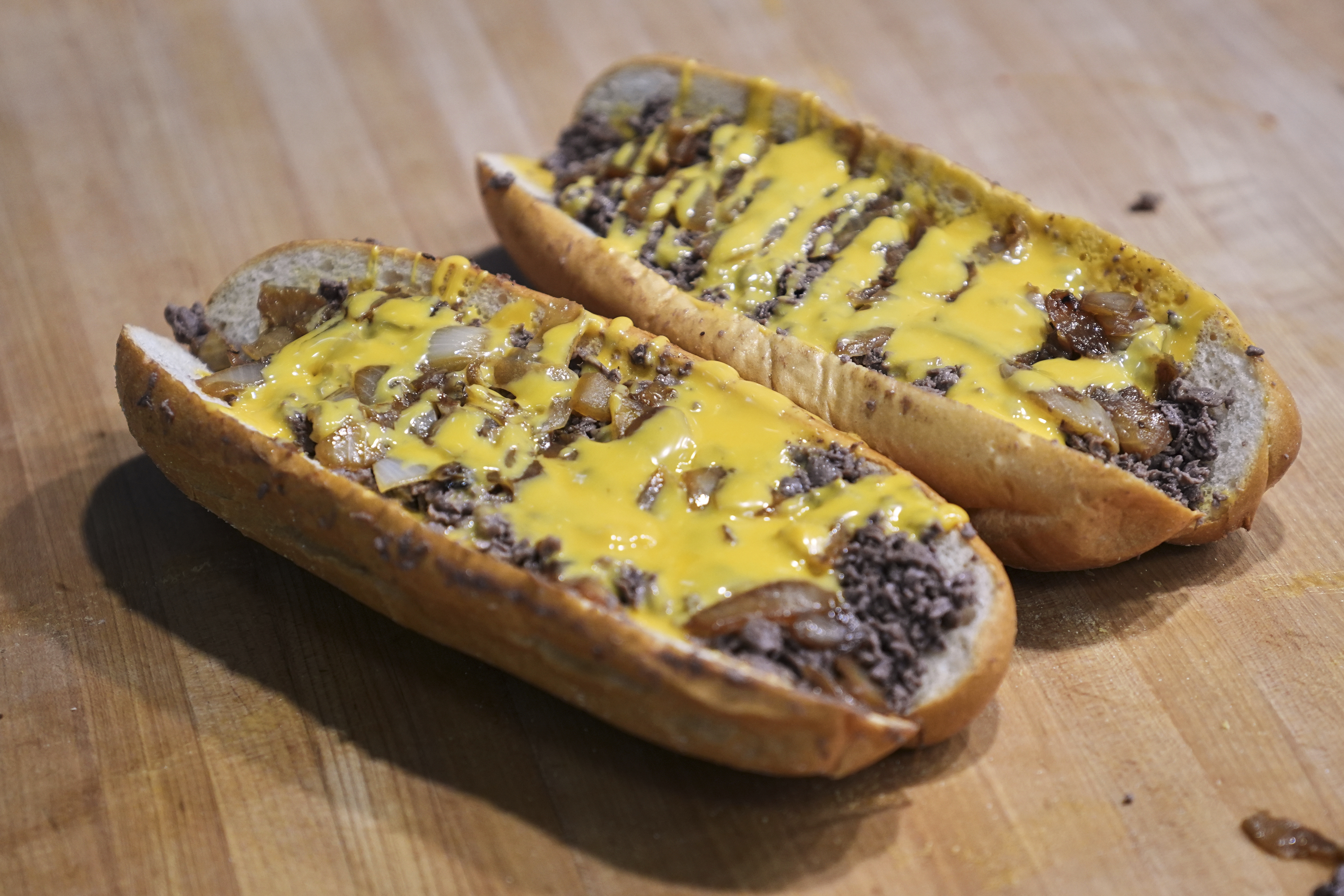
    A cheesesteak on an unseeded roll at Jim’s South Street.Matt Rourke

    Owner Frank Olivieri began offering seeded rolls in February, shortly after the death of his father, Frank P. Olivieri, who had resisted changes. The younger Olivieri initially said the limited-time offering would likely be permanent.

    It lasted a month.

    “If I got in 400 [seeded rolls] a day, by the end of the day, I was throwing out 390 of them,” Olivieri said. “Not that I’m the barometer to judge everybody else by or what influencers think you should eat, [but] not everybody who comes to Pat’s Steaks wants the [seeded] rolls.”

    How the old guard rolls

    Pat’s recently switched its bread supplier from Aversa to Corropolese, and offers plain rolls only now.

    Geno’s Steaks, across Passyunk Avenue, also has been firmly seedless since Joey Vento opened the shop in 1966. “It’s never crossed my mind,” said Geno Vento, who took over after his father’s passing in 2011. “We have our customer base, and I don’t feel that we need to change the roll [baked by Liscio]. I feel like it’s more of a trend right now. And they might put [cheesesteaks] on rye bread next. You never know.”

    Geno’s concession to the new generation is Cooper Sharp, which the shop buys in sauce form and heats up — as an option.

    At the old-school Dalessandro’s in Roxborough, owner Steve Kotridis said he began offering seeded rolls a few years ago “when it became a fad,” though he estimated that only 3% of customers order them. Dalessandro’s uses a softer Amoroso roll for cheesesteaks and a sturdier, seeded Aversa for hoagies, both with and without seeds.

    For newer cheesesteak shops, however, the seeded roll has become all but de rigueur — a style that predates social media but has been amplified by it. Famously, Donkey’s Place in Camden has served its distinctive cheesesteaks on poppy-seeded round rolls for more than 80 years.

    Seeds of change

    The seeded-roll trend launched with the hoagie.

    Louis Sarcone Jr. at the century-old Sarcone’s Bakery credits Bobby Toner of the now-closed JR’s Deli with helping establish seeded bread as a hoagie standard in the 1980s, after Toner began buying Sarcone’s seeded loaves.

    Sarcone said Primo Hoagies, founded in South Philadelphia in 1992, spread the style widely as it expanded into a 120-unit chain. Sarcone supplied Primo for years before it started using parbaked rolls supplied by another bakery.

    By 2024, Sarcone said, 90% of the rolls he baked were seeded, up from 75% a decade earlier.

    John Bucci Jr. said John’s Roast Pork began serving cheesesteaks on seeded rolls in 1987, after its supplier, Vilotti, went out of business. Bucci’s father, who was terminally ill, left the choice of a new bakery to his son. “JR’s had started making their hoagies on seeded bread, so, I figured, why not try [it] on a cheesesteak?” Bucci said.

    John’s initially bought its seeded rolls from Carangi and later switched to Sarcone’s.

    Now a cheesesteak roll

    The seeded roll’s rise as a defining feature of the modern Philadelphia cheesesteak came later, accelerated by Angelo’s Pizzeria.

    Owner Danny DiGiampietro, whose wife is Louis Sarcone’s niece, used Sarcone’s seeded rolls when he opened the first Angelo’s in Haddonfield in 2013. After moving Angelo’s to Ninth and Fitzwater in 2019, DiGiampietro began baking his own bread.

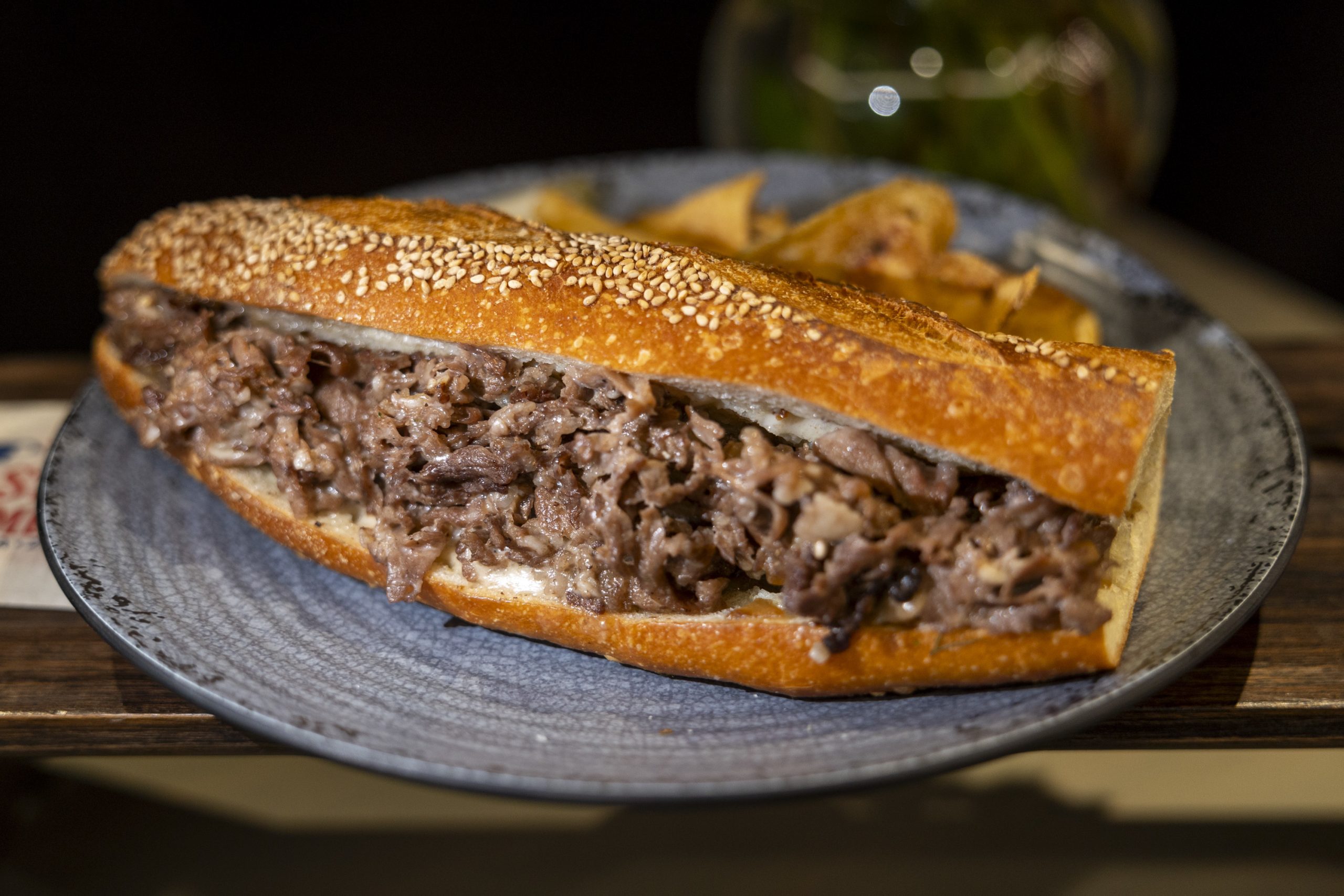
    As Angelo’s fame grew, its crusty, sesame-seeded rolls — an image widely broadcast on social media and emulated by other shops — helped define the newer-generation cheesesteak.

    Del Rossi’s cheesesteak is served on a house-baked seeded roll.Tyger Williams / Staff Photographer

    At Del Rossi’s, owner Nish Patel said cheesesteak orders were roughly split between plain and seeded rolls when he took over in 2020. Since he began baking his own rolls in 2024, virtually all have gone out on seeded bread.

    “We barely get any requests for unseeded,” Patel said.

    The contrast with Pat’s could hardly be sharper. There, Olivieri said, almost nobody wanted the seeded option.

    Jim’s now finds itself somewhere in between — offering the roll that has come to signify a Philadelphia cheesesteak to many, while continuing to sell mostly plain rolls to its longtime clientele.

    “People expect it from what they see on social media,” Silver said.