Former Phillies pitcher and 1980 World Series champion Larry Christenson died on Friday morning while on a fishing trip with family and friends in Washington state, the team announced. Christenson was 72.
Known as “LC,” he spent his entire major league career with the Phillies after being selected third overall in the 1972 MLB draft. Over 11 seasons, Christenson went 83-71 with a 3.79 ERA and 781 strikeouts in 1,402 ⅔ innings.
“It is with great sadness that we just learned of the passing of Larry Christenson, who was a friend for 50 years,” former Phillies third baseman Mike Schmidt said in a statement. “Larry was very special, the guy that kept in touch with all of us, he always had a smile on his face, he never forgot a moment he spent with you. His passing will leave a hole in all of our hearts. May he rest in peace.”
A native of Everett, Wash., Christenson made his major league debut at 19 on April 13, 1973, and pitched a complete game in a 7-1 win over the New York Mets. He went on to help the Phillies qualify for the postseason six times over his 11 seasons. The 220 games Christenson started rank ninth all-time among Phillies pitchers.
Christenson posted a career-high 19 wins in 1977. In the Phillies’ Sept. 27 victory over the Chicago Cubs that year, which clinched the National League East title, Christenson earned the win on the mound and hit a grand slam in the seventh inning.
“My heart is heavy today,” former Phillies shortstop and manager Larry Bowa said in a statement. “LC was a tremendous teammate, an outstanding pitcher, and a true friend. Win or lose, he was always the life of the clubhouse. He loved the game and enjoyed every minute of his big league career. He will be deeply missed. My thoughts and prayers are with his family.”
Following his retirement, Christenson remained an active supporter of Phillies Charities, according to the team.
“The club and its fans are forever grateful for his contributions and the legacy he leaves behind in Philadelphia,” the Phillies said in the announcement.
A 48-year-old Paulsboro man was sentenced Friday to more than three decades in state prison for sexually assaulting an underage teen girl in 2023, the Gloucester County Prosecutor’s Office said.
After an eight-day trial, a state jury in April found Jason L. Bailey guilty of first-degree aggravated sexual assault, second-degree endangering the welfare of a child, third-degree aggravated criminal sexual contact, and fourth-degree refusal to provide a DNA sample.
Prosecutors said Bailey in December 2023 sexually assaulted a girl between the ages of 13 and 16. When Bailey was arrested, he refused to provide a mandatory DNA sample, prosecutors said.
The jury also decided that Bailey was a persistent offender, based on his criminal history.
Bailey must serve 85% of his 30-year sentence for aggravated sexual assault, prosecutors said.
In April, prosecutors said Bailey faced a maximum life sentence. If he were eligible for release, he would be required to register as a sex offender under Megan’s Law and be subject to parole supervision for life.
Federal prosecutors have convened a grand jury to investigate at least one former Philadelphia Fire Department official who city investigators say facilitated a brazen overtime abuse scheme, according to court records.
Evidence of the probe became public in recent weeks as part of a lawsuit filed against the city by Anthony Hudgins, a former high-ranking fire official who was demoted after two women at the center of the overtime probe accused him of sexual harassment. He maintains that they did so only in retaliation after he exposed their wrongdoing.
Court documents made public this month include a report drafted by the Philadelphia Office of the Inspector General (OIG), which conducted a yearslong investigation into Hudgins’ claims that lower-level employees were abusing overtime. Attorneys for a woman at the center of that probe revealed that she is now the target of a U.S. Department of Justice grand jury, while the woman she is accused of conspiring with suspects she, too, is under federal criminal investigation, according to court records.
Inspector General Alexander DeSantis previously declined to release the findings of the office’s overtime probe into the fire department, saying the investigation was ongoing.
The report, dated September 2025, details claims of rampant overtime abuse by former paramedic Jacqulyn Murphy that amounted to more than $180,000 in “unjust” compensation through 2023 and 2024, well over her $94,549 annual base salary.
Murphy made some of that pay during “impossible shifts,” investigators wrote. In May 2024, for instance, Murphy clocked 22 hours of overtime while she was vacationing in Cancún. And four months later, she was paid to work 12-hour shifts every day while traveling to Las Vegas to get married, including on her wedding day and the day of her return trip home.
Investigators said that she did not act alone. Supervisor Marian Farris, they wrote, rubber-stamped the overtime approvals and manipulated tax withholding statuses for Murphy and herself. The report cited emails from Murphy’s city account showing she made biweekly $500 payments to someone named “Marian F.” for six months in 2024.
“Murphy and Farris worked together to defraud the City of Philadelphia of thousands of dollars in unearned compensation and other benefits,” the OIG report said. It calls for “heavy administrative and criminal consequences.”
Farris and Murphy did not respond to requests for comment.
In a June 4 letter included in the court filing, federal prosecutors based in Philadelphia informed Farris that she is the target of a grand jury investigation concerning bribery and wire fraud. The letter did not elaborate on the nature of the investigation.
Attorneys for Farris filed the target letter in the Hudgins case as part of a request to the court to delay discovery proceedings, citing conflicts with the federal investigation.
Murphy has not yet received a target letter, but she expects she will “given the findings of the OIG that Ms. Farris and Ms. Murphy worked together to commit fraud,” her attorneys wrote in a filing on Friday.
Farris resigned in March 2025. Her attorney did not respond to a request for comment. In an interview earlier this year after Hudgins initially filed his lawsuit and detailed some of the inspector general’s findings, Farris denied receiving cash payments from Murphy in exchange for manipulating time sheets and said any payments were innocent transactions between friends.
The U.S. Attorney’s Office for the Eastern District of Pennsylvania declined to comment.
A spokesperson for the fire department did not comment.
City Solicitor Renee Garcia said in a statement that the city “takes any allegations of fraud, including overtime fraud, very seriously, including allegations of misconduct that predated this administration.” Some of the allegations involving Murphy date back to 2023. Mayor Cherelle L. Parker took office in January 2024.
Garcia declined to comment on “personnel matters,” saying only that “if misconduct is found, we take appropriate action to implement any warranted discipline.”
The publication of the inspector general’s long-guarded report is the latest twist in a saga that has long roiled the fire department. It began with what appeared to be dueling probes, as multiple women contended that Hudgins — who was formerly the fire department’s No. 2 in charge — engaged in sexually inappropriate behavior in the workplace that included unwanted touching and intimidation tactics, The Inquirer reported in 2025.
But Hudgins has maintained those complaints were lodged by Murphy, Farris, and other associates only after he uncovered and reported their overtime inconsistencies.
His timeline was confirmed in the OIG report. Investigators wrote that Hudgins conducted an overtime review that predated a discrimination complaint filed in November 2024 by the union that represents firefighters and paramedics. That complaint listed Murphy as an alleged victim and Hudgins as a respondent.
The OIG report does not offer a conclusion related to the sexual harassment complaints.
Hudgins declined to comment through an attorney on Friday.
The city hired the law firm Campbell Durrant to conduct an investigation into the sexual harassment allegations, but that report has not been made public. Hudgins claims in his lawsuit against the city that the firm cleared him of “verbal misconduct” and found that he had “hugged co-workers.”
Hudgins was reassigned to work remotely, and then was forced to take a leave of absence.
The inspector general recommended that the city implement several reforms to prevent future overtime abuses, including retraining and rehiring the fire department’s payroll and human resources staff. The office also said the fire department should implement new overtime controls.
Garcia did not respond to specific questions about whether those changes had been instituted in the fire department, saying only that “the administration has implemented significant actions across all city agencies to strengthen its overtime procedures and protocols.”
Philadelphia police have recovered video footage that they believe shows the late pornographer Raymond “R.C.” Horsch killing a woman on camera, law enforcement sources said.
The footage, discovered on a hard drive inside Horsch’s house in Olney, appeared to show him strangling the woman at his home, said the sources, who spoke on the condition of anonymity to discuss an ongoing investigation.
Police have not disclosed the woman’s identity, but have notified a relative, the sources said. It was not immediately clear when the footage was taken, and the sources said police have not found her body.
Deputy Police Commissioner Frank Vanore declined to comment Friday. The department has said it is working with forensic experts to discern the authenticity of the materials on the 50 hard drives found in the house, a process that could take months.
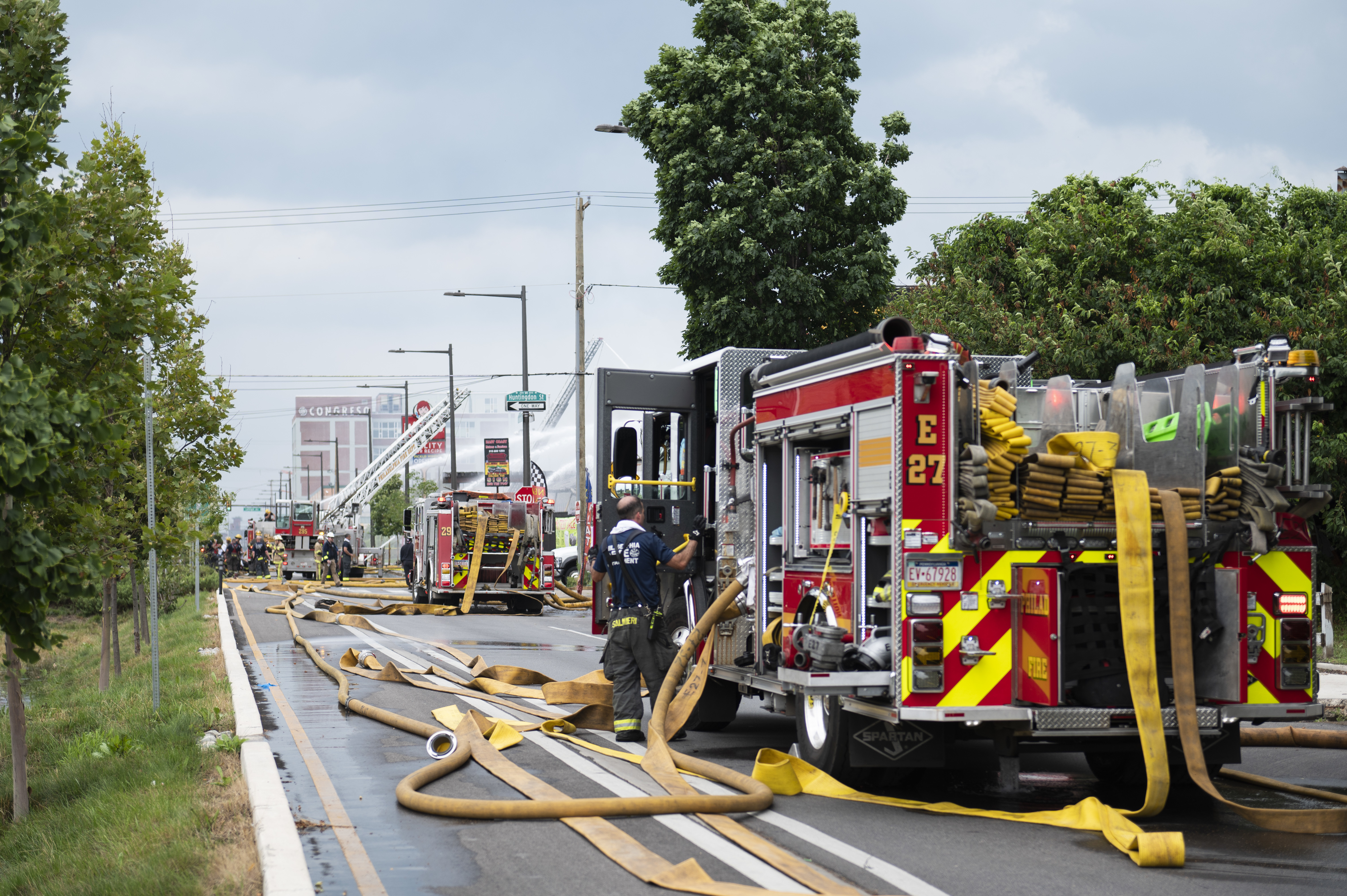
The discovery is the most significant breakthrough yet in the sprawling investigation, and means that at least five missing women are now linked to the Chew Avenue property where Horsch lived for decades with his son, Eugene.
Police have digital evidence that they believe indicates at least three of those women are dead, according to the sources. Earlier this month, police said they recovered images that showed two women who had been reported missing were inside the home and were later photographed dead there. The new footage adds a third victim.
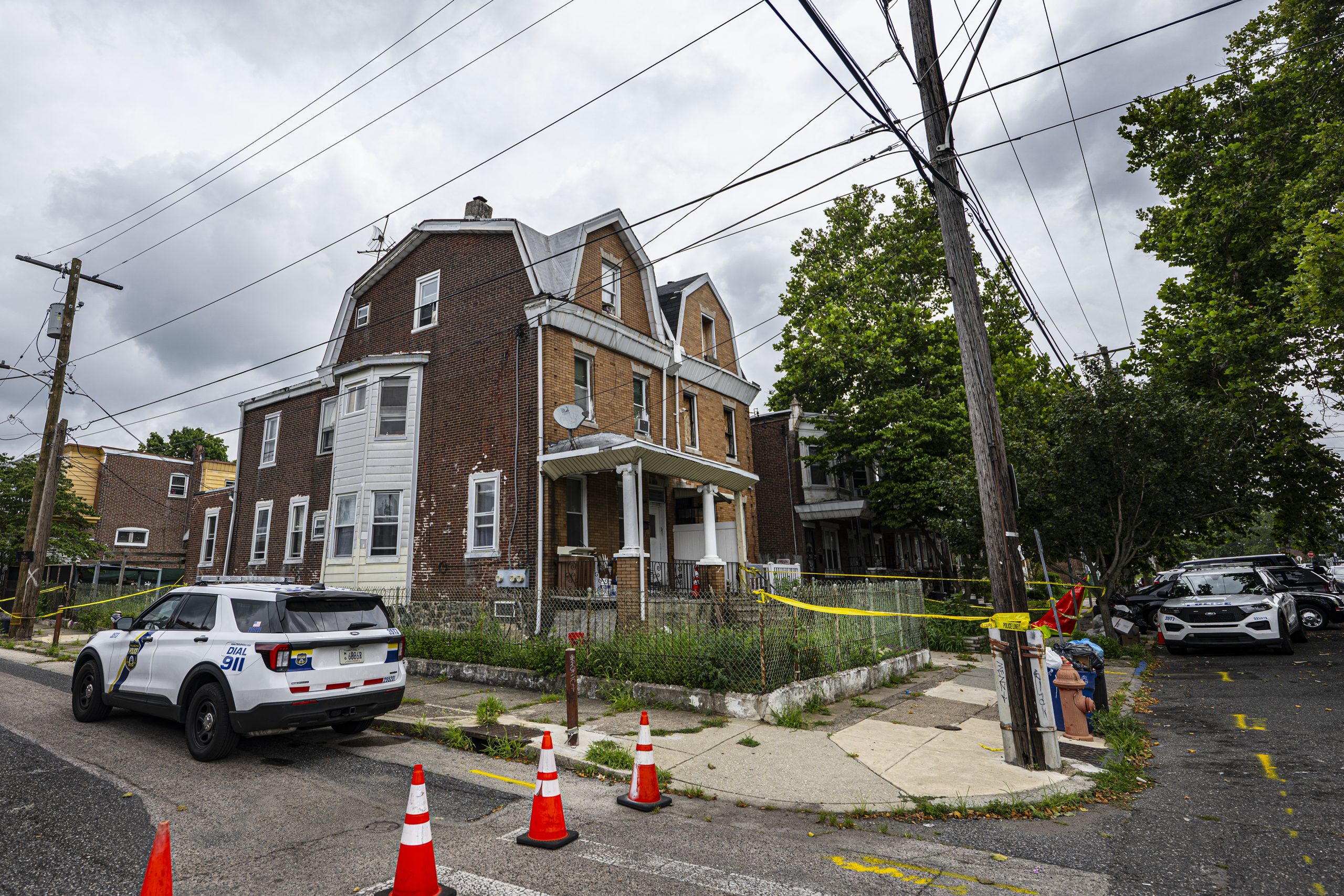
Police block the entrance to 417 W. Chew Ave. during an investigation in June. Jose F. Moreno / Staff Photographer
Sources said police expect the number of missing women connected to the home to grow as investigators sort through the hundreds of thousands of videos, photos, and pages of writings recovered on the hard drives at Horsch’s house.
The development also means police may have to confront the possibility that the property and hard drives hold evidence of killings that went undetected for years — and at the hands of a man who spoke and wrote publicly about his fantasies of killing women for decades with little scrutiny.
Horsch built a career luring women in addiction in Kensington to his home with drugs and cash. He photographed and featured them in pornographic films that often depicted graphic violence — including hangings, stranglings, and drownings. He adopted the persona of an “empathetic” serial killer who murdered addicts to end their pain, and he claimed his writings were autobiographical, yet laced with threads of fiction that often left his audience wondering what was real.
Two weeks ago, police said they had recovered “dark and graphic” images on the hard drives that indicated Maribel Fresses, missing since 2018 at the age of 27, and Gabrielle Amarando, who was 22 when she was reported missing in 2012, were dead.
Gabrielle Amarando, (left) missing since 2012 and Maribel Fresses, 27, reported missing in 2018. Police believe they were killed inside the Olney home.Obtained by The Inquirer
Police said they had not recovered footage of the women being killed, but instead had images of both women alive inside the house — and then dead. Officials have not determined what happened to their bodies.
But sources say police have since discovered additional footage that is far more disturbing.
On June 19, police said, a U.S. park ranger came upon Eugene Horsch near Sixth and Market Streets acting suspiciously inside his black BMW. When officers searched the car, they found drugs, two illegal guns, a cattle prod, and a fake drug enforcement badge. What’s more, the woman who was with him presented a license in the name of Blair Tonzelli, who had been reported missing in 2023.
Documents show that police interviewed people connected to Eugene Horsch who said he had bragged about knowing how to mix chemicals that could melt human remains and make a body so small “it could be flushed down a toilet.”
Records show that Tonzelli was reportedly last seen at the Horsch house in 2022, and Raymond Horsch posted at least one nude photograph of her — with a black eye and bloody lip — on his website. Her friends reported her missing in February 2023.
Raymond Horsch’s ex-wife, Amy McHale, who went missing in 2016, was also last seen at the Chew Avenue house. Investigators have since renewed the inquiry into her disappearance.
Amy McHale.Courtesy of the family of Amy McHale
Local and federal law enforcement searched the Horsch home in the weeks that followed the car stop and said they found an “astonishing” amount of evidence: five urns of cremated remains, more than 20 containers full of unknown chemicals and oily substances, and 50 hard drives and other electronic devices holding more than 600,000 images, 70,000 videos, and 10,000 pages of writings and drawings.
Police also found additional guns and drugs. And in the weeks that followed, investigators excavated the yard of the Chew Avenue home and recovered a piece of a pipe for additional forensic testing.
Police continue to investigate the whereabouts of Tonzelli and McHale.
Eugene Horsch, 44, remains in federal custody, charged with illegal gun possession. Police have declined to say whether they believe he played a role in his father’s business. He has not been charged with any crimes connected to the women’s deaths or disappearances.
After a summer of uncertainty around Villanova quarterback Pat McQuaide’s eligibility, he was granted a preliminary injunction that allowed him to start the Wildcats’ season opener on Friday night.
On Friday, Cuyahoga County (Ohio) Common Pleas Court judge Timothy McCormick granted a preliminary injunction that named the Patriot League as a defendant, clearing McQuaide to be eligible for league contests, McQuaide’s attorney, Richard Hamilton Jr., confirmed to The Inquirer.
BREAKING: Villanova QB Pat McQuaide will play and start against William & Mary, per a Villanova spokesperson. pic.twitter.com/iNWnLOyfuM
McQuaide started for Villanova in its season opener against William & Mary on Friday hours after the injunction was granted. He initially was deemed ineligible by the Patriot League, despite having an injunction granting him another year of eligibility on Aug. 4. The conference then rejected an eligibility appeal from Villanova on behalf of McQuaide on Aug. 22.
Friday’s preliminary injunction is the result of a separate legal battle between McQuaide and the Patriot League.
Without Friday’s ruling, Villanova would have been forced to forfeit any game McQuaide played in, according to Hamilton.
The question around McQuaide’s eligibility pertains to his season at Mississippi Gulf Coast Community College in 2022. In the original waiver request to the NCAA, Villanova argued that the COVID-19 pandemic directly led to the quarterback’s season with the junior college. Villanova described the move to a JUCO as a “necessary bridge rather than a choice to ‘use’ an additional season.” McQuaide contends that the pandemic stunted his development in high school, after which he walked on at Kent State. After one year redshirting with the Golden Flashes, he transferred to Mississippi Gulf Coast before two seasons at Nicholls State.
Pat McQuaide got the start for Villanova tonight.
Earlier today, a Cuyahoga County (Ohio) Common Pleas Court Judge granted a preliminary injunction, specifically naming the Patriot League as defendant, allowing him to play: pic.twitter.com/KKywgmI6CT
Gov. Josh Shapiro came to the Philadelphia suburbs on Friday morning to announce a new investment in a local police department. But the first question he fielded at a news conference concerned the growing confusion and political intrigue surrounding his administration’s response to two deaths associated with the state’s spiraling measles outbreak.
For the last three days, Shapiro, a Democrat, and Robert F. Kennedy Jr., the Republican heading the federal Department of Health and Human Services, have clashed over what the state has disclosed about the deaths and the consequences of Kennedy’s longtime anti-vaccination activism.
By Friday, Shapiro wanted to bring the focus back to an outbreak that has grown to more than 400 cases so far this year, saying “getting into a back-and-forth with people online who are spewing irresponsible conspiracy theories” does not “serve the public interest.”
But public health and communications experts say that the state’s initial refusal to share more information on the deaths created an environment in which anti-vaccination skeptics could spread their own narrative.
State officials announced the deaths of two unvaccinated Lancaster County residents at a news conference Tuesday, calling the deaths “measles-associated.” Their ages, causes of death, or their medical histories were not disclosed by the governor or his health secretary.
Within hours, other voices started filling the information vacuum. Lancaster County’s coroner told reporters that he had handled just one of the deaths. Coroner Stephen Diamantoni, a Republican elected official who is also a physician, said his office had examined a newborn who had tested positive for measles, but said the baby had not died from measles.
Soon misinformation and innuendo were spreading online out of the seemingly contradictory and limited details being disclosed by state officials, the local coroner’s office, and federal health leaders — all with their own political affiliations at a time when the safety of the measles vaccine increasingly divides Democrats and Republicans.
In response to the coroner’s statements, state health officials said they define a “measles-associated death” as one in which measles was present, even if measles is not identified as the immediate cause of death. Shapiro’s administration confirmed the newborn’s case was one of the two announced deaths, but offered no information on the second death.
President Donald Trump’s health secretary, Kennedy, pounced on the missing details the next day to spread misinformation. He wrote on X that the deaths may have been “fabricated” by the Shapiro administration and said in a television interview that “they cannot find any measles deaths in Lancaster County.”
Shapiro’s administration has called this inaccurate. Still, his administration has not revealed details of its medical review, beyond saying the state Department of Health’s epidemiology team had “thoroughly investigated.”
By late week, the Centers for Disease Control and Prevention, which operates under HHS, posted on X that state health officials were not sharing “information relevant to the outbreak” as it worked “to clarify conflicting information from Pennsylvania officials about whether the two reported deaths were caused by measles.”
State officials, including Shapiro, have repeatedly said the state is cooperating with the CDC.
But Pennsylvania health officials could have shared information on the patients’ ages, causes of deaths, and reasons for being unvaccinated, said Paul Offit, a physician at the Children’s Hospital of Philadelphia who heads the hospital’s Vaccine Education Center and is a vocal critic of Kennedy.
“It created fertile ground for conspiracy theories to thrive,” he said.
In a statement, a Shapiro spokesperson said the governor understands the “desire for as much information as possible to be made public.”
“However, when an individual dies, it is our legal responsibility to protect their right to privacy by maintaining patient confidentiality,” the statement said, noting this is critical to maintaining trust among communities statewide.
In a highly politicized environment in which measles cases are rising — and vaccination rates dropping — public health experts say it’s imperative for health officials to communicate accurately and transparently.
“You have to be transparent, be very clear about what you know, what you don’t know, what you’re trying to find out, and what questions are outstanding,” said Amesh Adalja, an infectious disease physician at the University of Pittsburgh Medical Center and a senior scholar at the Johns Hopkins Center for Health Security.
A lack of information from the state, he said, “created an information vacuum with people very adept at using information vacuums to spread their message.”
President Donald Trump holds a signed executive order about vaccines as Health and Human Services Secretary Robert F. Kennedy Jr. looks on Aug. 10 in the Oval Office of the White House. Jacquelyn Martin
What’s known about the Lancaster County deaths
Diamantoni said Friday that the baby died shortly after birth at a Lancaster County birthing center on Aug. 14.
Postmortem testing of the baby’s lung tissue showed that the baby had an active measles infection acquired before birth, he said.
He has not talked to the baby’s mother or the midwife who delivered the baby, and has not fully reviewed records from the birthing center where she gave birth, he said in interviews.
He told the Pittsburgh Tribune-Review that measles was listed on the baby’s death certificate, in a section of the certificate that reports other ”conditions contributing to death but not resulting in the underlying cause.”
He told the outlet that measles was included on the death certificate “to offer a broader view of the general health of the child.”
Babies can become infected with measles in utero if the mother is infected with measles and develops a rash within 10 days of giving birth, Offit said.
Diamantoni said a forensic pathologist in his office concluded the baby died of a ruptured spleen and cited trauma to the baby’s torso. He said he was unsure what had caused the trauma, and added that the baby’s spleen did not appear enlarged or infected.
Offit said that measles can cause an enlarged spleen that is then more likely to rupture — including during birth — and that it’s often difficult to tell whether a spleen has become enlarged once it ruptures.
A spleen also doesn’t have to become “massively” enlarged to rupture, he said: Measles can cause the spleen to become fragile, which also heightens the risk of rupture.
In conversations with state health officials, Offit said he learned that the patients who died in Pennsylvania would not have died were they not infected with measles.
He said the coroner should explain why the spleen ruptured, if it was not damaged from measles. Diamantoni said the office is still investigating the cause.
The state has released no additional information on the second death, and Diamantoni said his office was not handling it. He said his chief deputy spoke to the department prior to Shapiro’s news conference Tuesday.
“At no point was the Pennsylvania Department of Health told that this was not a measles-associated death,” a state spokesperson said on Friday. “The Shapiro Administration stands firmly by their comments on Tuesday.”
Public health communications
Pennsylvania’s health department has cited a state law prohibiting public access to death records, saying they cannot release more information on the deaths. Another state law requires the state to keep records of diseases confidential, except when it’s necessary to inform the public of the risk of communicable disease, a department spokesperson said in a statement.
The department “works hard to build and maintain trust in communities all over the Commonwealth — which includes doing everything possible to keep people’s identities confidential,” the statement read.
The department didn’t share information that could be used to “personally identify individuals or their grieving families” because “the circumstances of these individuals’ deaths do not change the Commonwealth’s response: Measles is a serious, highly contagious and preventable disease, and our focus remains on protecting Pennsylvanians, getting people vaccinated, and stopping the spread of this outbreak,” the spokesperson said.
But the state could have been more transparent about how they characterize deaths in a measles outbreak, said Kathleen Hall Jamieson, director emerita of the Annenberg Public Policy Center at the University of Pennsylvania.
People who are not trained in medicine may not understand the term “measles-associated,” for example, or how it differs from a cause of death, and state officials should have taken time at the news conference to explain what they meant by that term.
“You have an obligation to make sure that people don’t mishear on something as fraught as this topic,” she said.
Jamieson added that the political clashes around the deaths could overshadow a crucial point: A highly contagious disease is spreading in an under-vaccinated community, exposing children — including newborns unable to be vaccinated — to a serious illness.
“If we miss that moment, then the public health community has failed,” she said.
In a 2-1 ruling, the U.S. Court of Appeals for the Third Circuit held that ICE violated the federal immigration law and the Fifth Amendment of the U.S. Constitution by holding undocumented immigrants who have been in the country for years in detention without a hearing. The policy, enacted last summer, has been a key part of efforts by President Donald Trump’s administration efforts to ramp up deportations across the country.
The ruling will take immediate effect in Delaware, New Jersey, Pennsylvania, and the U.S. Virgin Islands.
Undocumented immigrants who have lived in the United States for decades “are entitled to due process rights beyond those provided to noncitizens at the border,” Circuit Judge Patty Shwartz wrote in the majority opinion.
The government has a legitimate interest in keeping dangerous noncitizens in custody, the judge said, but a “neutral decisionmaker” should make that assessment on a case-by-case basis — rather than a practice of detaining all undocumented immigrants indefinitely.
Circuit Judge Theodore A. McKee, who was appointed by Bill Clinton, joined the opinion written by Schwartz, who was appointed by Barack Obama.
In a dissent, Circuit Judge Jennifer L. Mascott said the ruling was inconsistent with federal immigration law.
“A bond hearing focused on flight risk and dangerousness would generate irrelevant facts, not material to individual determinations,” wrote Mascott, who was appointed by Trump.
The Justice Department disagrees with the ruling and believes its position will “ultimately be vindicated,” a spokesperson said in a statement.
“This is a huge win for due process,” said Rachel Rutter, a lawyer and executive director of Project Libertad, a Phoenixville-based nonprofit that provides free legal and social services for migrant youths facing deportation. “The Third Circuit has joined a chorus of other circuit courts striking down the Trump administration’s inhumane practice of mandatory detention of people who have spent years building lives in the U.S.”
The decision “reaffirms decades of case law stating that these people have the right to challenge their detention through a bond hearing,” Rutter said.
Nine other circuit courts have issued rulings on mandatory detention, and seven found the policy unlawful. The Justice Department petitioned the Supreme Court in June, asking the high court to resolve a split it said was “disrupting the orderly administration of immigration law.”
The mandatory detention policy was rolled out by the Trump administration last year, and has led to an avalanche of lawsuits by immigrants who challenged their incarceration and demanded a bond hearing.
These requests, known as habeas corpus petitions, were rare not long ago, but since the policy change, they’ve dominated the docket in Philadelphia’s federal courthouse. More than 1,100 such petitions have been filed since September. Between 2020 and 2024, by contrast, only 11 such suits were filed.
The Third Circuit case involved two undocumented immigrants who have been in the United States for over a decade and were picked up by ICE after the mandatory detention policy took effect. Neither has a criminal history. Federal judges in Philadelphia ordered their release, finding their detention was unlawful.
Christopher Casazza, a Philadelphia-based immigration lawyer who represented one of the immigrants at the center of the case, called the court’s decision a “great ruling that will help thousands of people.”
The benefit for immigrants, he said, would come primarily in two forms: Anyone still being detained in the region after being arrested under the Trump administration policy can now apply for a bond hearing. And going forward, anyone who is arrested will be able to ask an immigration judge for bond.
That doesn’t guarantee release, Casazza said, but it provides people the opportunity to make a case to an immigration judge, as had been the practice before the new policy took effect after Trump began his second term.
“We’re going back to the rule of law that’s been the case for 30 years,” he said.
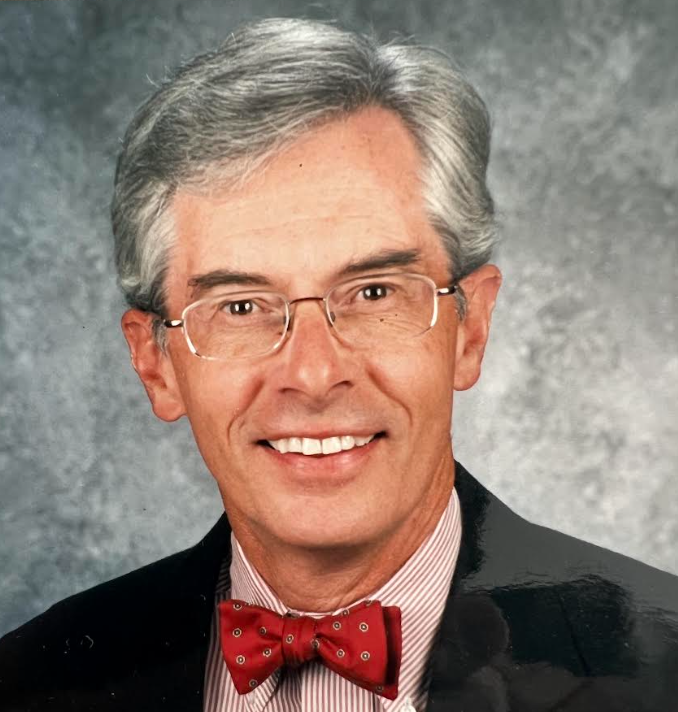
Reed E. Pyeritz, 78, of Radnor, pioneering medical geneticist, cofounder of the Marfan Foundation and the American College of Medical Genetics and Genomics, professor emeritus of medicine and genetics at the University of Pennsylvania, author, mentor, veteran, and nationally ranked masters triathlete, died Monday, Aug. 10, of interstitial lung disease at Bryn Mawr Hospital.
Dr. Pyeritz was a trailblazing expert on the diagnosis and treatment of Marfan syndrome and other inherited cardiovascular disorders. His 44 years of research and clinical work, from 1978 to 2022, advanced the understanding and management of the diseases, and extended the life expectancy of Marfan patients by 30 years.
“So many of us in the community owe Reed so much,” Bert Medina, board chair of the Marfan Foundation, said in a tribute. “His legacy lives on in all of us, thanks to his dedication.”
In an online tribute, a relative of former patients said: “Without this amazing doctor, I wouldn’t have my sister or dad. He changed the world for Marfan patients and their families.”
Dr. Pyeritz joined the faculty at Penn in 2001 and spent more than 20 years treating patients, teaching students, doing landmark studies on the value and social implications of genetic testing, and championing patient-centered care. He was codirector of Penn’s research center on hereditary hemorrhagic telangiectasia, onetime chair of the faculty senate, and a fellow at the College of Physicians of Philadelphia and other medical associations.
His “vision and scholarship fundamentally transformed the care of patients,” Nimesh D. Desai, director of the Penn Aorta Center, said on X.
Before Penn, Dr. Pyeritz spent nine years in Pittsburgh with what is now the Allegheny Health Network and 17 years at the Johns Hopkins University School of Medicine in Baltimore. In 1991, his team at Hopkins discovered that mutations in the FBN1 gene cause Marfan syndrome and followed up with new regimens to treat it.
He cofounded the Marfan Foundation in 1981 and the American College of Medical Genetics and Genomics in 1991. “It became clear that folks with Marfan syndrome could benefit by an organization that allowed them to communicate [and] to stimulate other physicians to become involved,” he said in a 2018 video interview.
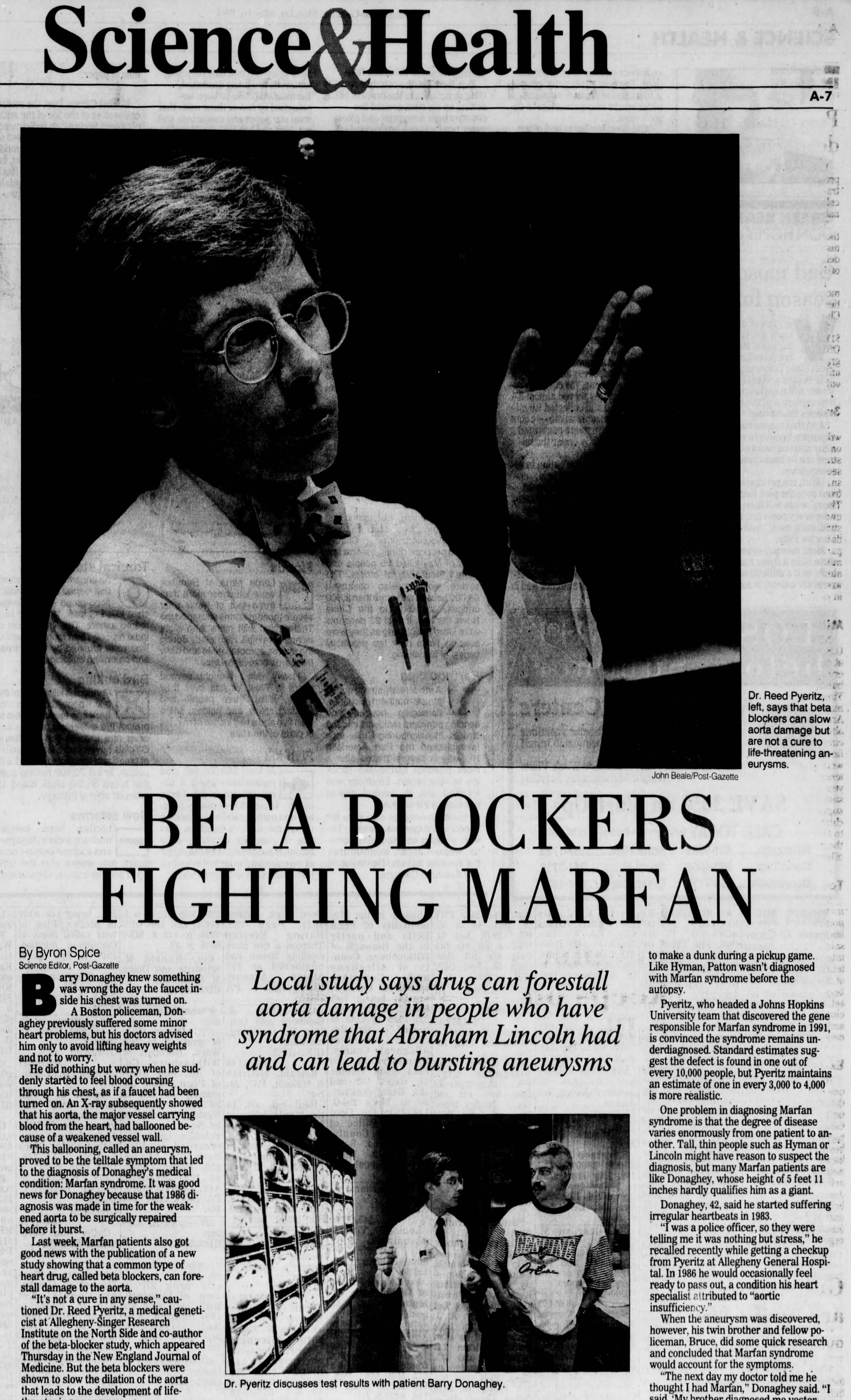
This story and photos about Dr. Pyeritz appeared in the Pittsburgh Post-Gazette in 1994.Newspapers.com
Colleagues, friends, and former patients called him “a phenomenal physician,”“a guiding light,” and “an extraordinarily reassuring presence” in online tributes. In 2018, he said: “The most gratifying thing is the fact that folks [with Marfan syndrome] are living their normal life expectancy.”
Dianna Milewicz, chair of the John Ritter Foundation advisory board, noted his “excellence in clinical care, teaching, and research” on Facebook. Michael L. Weamer, president and CEO of the Marfan Foundation, called him “a true hero” and said his “impact on our community is immeasurable.”
He served 13 years in the Army Reserve Medical Corps and earned lifetime achievement awards from the Marfan Foundation, the American College of Medical Genetics and Genomics, and other groups.
Dr. Pyeritz and his wife, Jane Tumpson, married in 1972.Courtesy of the family
On weekends, he did marathons and triathlons, and was part of a world record 100-man, 100-mile relay. His family said in a tribute: “He measured a successful life less by titles or awards than by what one gives, what one learns, whom one loves, and what one leaves behind in others.”
Reed Edwin Pyeritz was born Nov. 2, 1947, in Pittsburgh. He was fascinated by science and space as a boy, and he built rockets in his backyard and performed scientific experiments in his bedroom.
He earned a bachelor’s degree in chemistry at the University of Delaware in 1968, a master’s degree and doctorate in biological chemistry at Harvard University in 1972, and his medical degree at Harvard in 1975.
He met Jane Tumpson in first grade, and they graduated together from Mount Lebanon High School near Pittsburgh in 1965. They reconnected on the tennis court a few years later, married in 1972, and had daughters Allyson and Abigail.
Dr. Pyeritz, left in the top photo and right in the bottom photo, enjoyed time with his family.Courtesy of the family
Dr. Pyeritz and his wife honeymooned on Mount Kilimanjaro in Africa and traveled the world together for years. In April, the whole family went to Spain.
He liked to wear bow ties, build stone walls, watch the news, and spend time outside with his dogs. He followed the Pittsburgh pro sports teams closely and enjoyed Manhattans and chocolate milkshakes.
“I will miss it all,” he told colleagues at Cure HHT when he retired a few years ago. “But I am certainly looking forward to spending time with my two granddaughters, Tallulah and Penelope.”
His daughters said: “Ever an adventurer, he instilled in us the importance of making the most of every day, watching the sunrise or sunset, and cherishing the time you have.”
His wife said: “He loved without exception and reservation.”
In addition to his wife, daughters, and granddaughters, Dr. Pyeritz is survived by son-in-law Keith Hopkins and other relatives. A brother died earlier.
A celebration of his life is to be held later.
Donations in his name may be made to the Marfan Foundation, 22 Manhasset Ave., Port Washington, N.Y. 11050.
Dr. Pyeritz “loved without exception and reservation,” his wife said.Courtesy of the family
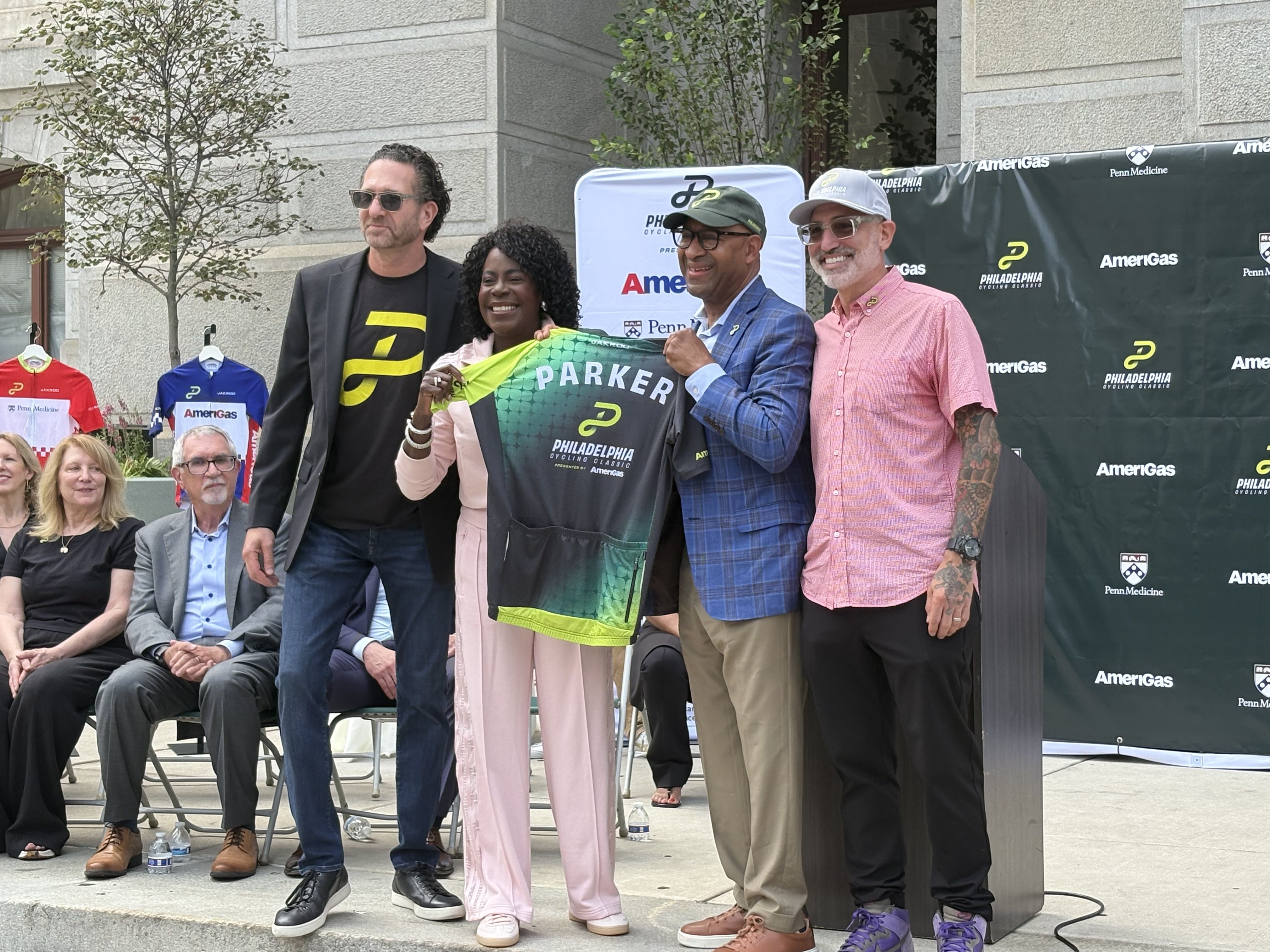
City and business leaders on Friday were gearing up for the Philadelphia Cycling Classic’s comeback after a decade-long hiatus.
The return of one of the most prestigious races in the United States has been years in the making, drawing some 200 riders — including Olympians, national champions, and emerging talents — from more than two dozen countries, to the City of Brotherly Love. It’s likely that come Sunday morning, spectators will line the 14.4-mile loop course from the Benjamin Franklin Parkway to Manayunk to witness the whooshing peloton and usher in what could become a renewed era of American professional road cycling.
“When the story about cycling in Philadelphia and bringing this race back is told for future generations to come, I want you to know for the record that it’s a Philadelphia story” — one of grit, perseverance, passion, and community, Philadelphia Mayor Cherelle L. Parker said at a news conference outside City Hall where she was bestowed a commemorative No. 1 race jersey.
During its run from 1985 to 2016, Philadelphia’s criterium reigned, known for its theaterlike scene and famed “Manayunk Wall“ with its 17% gradient. But in 2017, officials announced the race had run its course, citing increasing costs and decreasing sponsors, much to the chagrin of the city’s cycling community.
The Philadelphia Cycling Classic trophies — designed by a local metal artist — are displayed alongside the official race jerseys during a news conference Friday, Aug. 28, outside Philadelphia City Hall.Maggie Prosser
“Bringing an iconic event back to one of the most iconic cities in the world,” — according to Michael Sharp, president of AmeriGas, the race’s presenting sponsor — is due to the enthusiasm of Old City salon owner Carlos Rogers, entrepreneur Eric Robbins, and former Philadelphia Mayor Michael A. Nutter.
Officials stressed the equitability of the race, which is offering equal prize purses, $75,000, to the crowded men’s and women’s fields — a rarity in the sport, according to race director Robin Morton.
Also, the race is free to watch from the sidelines and is one of the few professional sports where the athletes brush right up against fans and front doors. During the first iteration of what Philadelphians just call “the Bike Race,” that accessibility welcomed an all-day party.
“The whole neighborhood turns up, it’s a giant block party,” competitor and Manayunk native Robin Carpenter said of his hometown. “You can kind of wander in and out of any house almost and be welcomed with open arms and a cup of beer.”
Rider Kim Stoveld, a full-time nurse at Thomas Jefferson University Hospital, hopes Philly fans, naturally, get “a little rambunctious.”
The classic nearly wraps up Philly’s generational summer, from being the epicenter of the United States’ 250th birthday celebrations, to the World Cup, and the MLB All-Star Game.
“Philadelphia proves, time and time again, that we know how to do great things and we know how to do big things,” Parker said. “Now you’ll get a chance to see what Philadelphia does with this iconic international bike race.
If you’re looking for some on-theme drinks to bring to an Eagles tailgate this season, Bird Gang Spirits has you covered.
In partnership with BOTLD, which works with distilleries nationwide, Bird Gang Spirits released a “tailgate pack” of canned cocktails. The eight-pack’s flavors are Tailgate Tea, Orange Crush, and Green Machine Margarita — which have an ABV of 7% — and Jawn Island Iced Tea, which boasts an ABV of 12%. The latest addition to the seltzer aisle isn’t just for a good time, however, said BOTLD president Andrew Auwerda.
“We thought it would be kind of a fun, new twist to do good by doing some can cocktails, with the proceeds benefiting Eagles Autism Foundation.” he said. “ It’s supposed to be kitschy, fun, and perfect for the tailgate and in time for the Eagles’ season. It’s been great working with the Eagles Autism Foundation. They’re just a real pro organization and great cause.”
Bird Gang Spirits released a line of canned cocktails. Part of the proceeds from the cocktails will benefit the Eagles Autism Foundation.BOTLD
Since the Eagles Autism Foundation was created in 2019, the team has raised millions for research, accessibility resources, and community programs. A portion of the tailgate pack’s sales will go to the foundation, and Bird Gang Spirits itself is a collaboration with the Eagles.
The team’s partnership with BOTLD began in 2023 alongside the return of the beloved kelly green uniforms. Since then, Bird Gang has released a line of liquors, from Bird Gang Spicy Tequila to “Bird Gang World Championship 2024 Irish Whiskey.”
The tailgate pack is $24 and available online at BOTLD’s website; in person at grocers like Acme, Giant, and Weis; or brick-and-mortar BOTLD locations in King of Prussia and Rittenhouse. Bird Gang Spirits is taking advantage of the booming seltzer market that has emerged in the past few years, joining brands like Surfside that have become nationwide hits as well as Philly stadium favorites.
“I mean, they’ve only been in the stores maybe a week, and it’s still rolling out to more stores, but we’re already seeing some reorders,” Auwerda said. “We’re really grateful for a great start from the retail partners.”
As for his favorite flavor?
“I think the margarita right now, for the time of the year. It’s the end of summer, but it’s still marg season.” he said. “The Jawn Island Iced Tea has a bit more alcohol, so I will save that for a game day.”