Tag: topic-link-auto

  • Dispatch Bio launches its first clinical trial to develop a universal treatment for solid cancers

    Dispatch Bio launches its first clinical trial to develop a universal treatment for solid cancers

    A University of Pennsylvania biotech spinout recently launched its first clinical trial of an experimental cancer treatment for hard-to-treat solid tumors.

    Its approach builds upon groundbreaking work harnessing the body’s immune system to fight cancer.

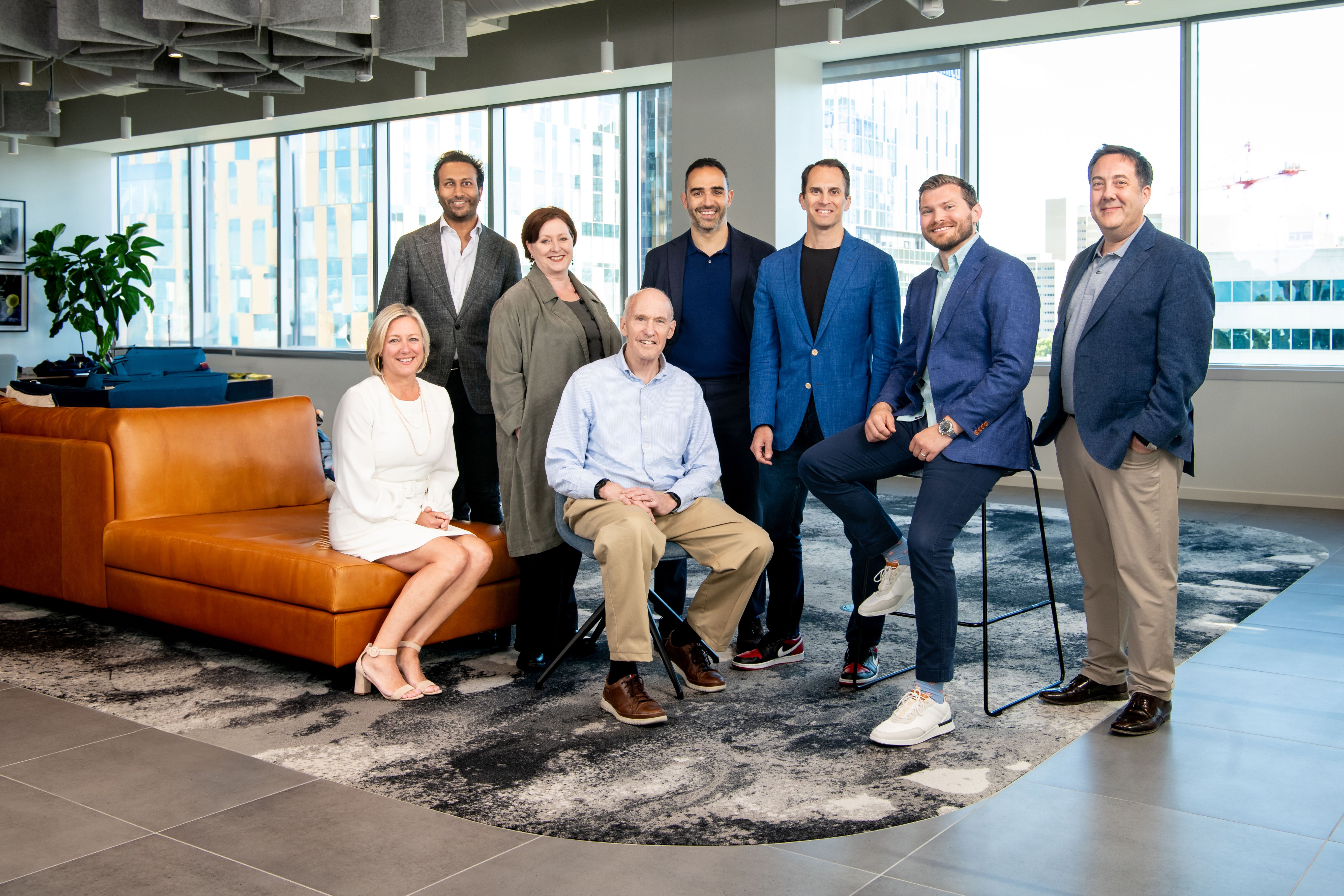
    Based in Philadelphia and San Francisco, the company, Dispatch Bio, launched a year ago with CAR-T pioneer and Penn researcher Carl June as a scientific co-founder and $216 million in funding from private investors.

    The company aims to succeed where CAR-T, an immunotherapy that genetically modifies a patient’s immune cells to recognize and attack cancer, has struggled.

    Although CAR-T has revolutionized the treatment of blood cancers, scientists have yet to replicate that success in solid tumors. By painting a target on tumors and revving up the immune system, Dispatch believes its platform could.

    It dosed its first patient earlier this month.

    “With one approach, we are addressing the two main challenges that we have faced over the last decade or so,” said Mauro Avanzi, the chief medical officer of Dispatch.

    Success is not guaranteed. Most exploratory scientific efforts do not advance to the point where they are found safe and effective in humans. Even if the results are promising, it could take years before a potential new treatment becomes widely available.

    Dispatch’s first clinical trial focuses on advanced gastrointestinal cancers, including cancers of the stomach, esophagus, and colon. The company also announced a clinical trial earlier this year in China that has not yet started dosing patients.

    If the treatment turns out to be safe and effective, Dispatch hopes to expand to other solid tumor types with significant unmet need.

    “As many patients as we can deliver that for, we will keep striving to do,” said Lex Johnson, Dispatch’s co-founder and chief platform officer.

    ‘A Trojan horse’

    Solid cancers are notoriously difficult to treat with immunotherapy for two main reasons: they’re hard to target, and they’re good at suppressing the immune system.

    To attack a cancer cell, you need to be able to find it. Sometimes cancer cells have more unique identifiable elements on the outside, but other times they don’t. Imagine trying to identify someone when all you know is that they’re wearing jeans.

    Many of the proteins found on solid cancer cells are also present in healthy tissue, making them potentially risky targets.

    Solid tumors are also good at building an environment around them that blocks and suppresses the immune system. Think of it like a protective shield.

    “They prevent your immune system from recognizing and clearing aberrant cells,” Johnson said, referring to cancer cells.

    Dispatch Bio’s signature treatment — called the Flare platform — is designed to overcome both of these challenges by tagging cancer cells with a unique target and boosting the immune system.

    The strategy revolves around a virus that, when injected intravenously, will traverse the body in search of tumor cells. Once the virus finds its target, it’ll take up residence inside the cell and tag it with a target protein called “the Flare.”

    “You can create that Flare protein to be something that is not present on healthy tissue throughout the body,” Johnson said.

    In colon cancer, for example, they would use a protein that is not present on any healthy colon cell, to avoid toxicity.

    At the same time, the Flare platform secretes chemical signals to re-engineer and reset the environment around the tumor. This enables the immune system to better attack the tumor.

    “It is a Trojan horse,” Avanzi said, describing the virus.

    When a tagged cancer cell is destroyed, it goes on to release thousands more viral particles carrying the Flare. That chain reaction helps spread the therapy’s effect across multiple sites.

    In animal studies, the platform has been able to completely clear out tumors without off-target effects or toxicity.

    But results in animals are often difficult to replicate in people, and the ongoing clinical trial is the first time the platform is being used in humans.

    The trial

    Mauro Avanzi is the chief medical officer of Dispatch Bio.Courtesy of Dispatch Bio

    If the virus successfully paints cancer cells with the target, CAR-T cells can then find and clear them. (CAR-T therapy uses what’s called a chimeric antigen receptor, a protein that recognizes a cell as cancer based on what’s on the outside of the cell.)

    The first phase of the trial involves escalating the dose of the virus alongside a standard dose of an approved CAR-T therapy to figure out the ideal regimen.

    Once Dispatch determines the safest dose of the virus, they’ll move into the dose expansion phase, where they test that dose in a bigger group of patients.

    “We are really trying to optimize the virus,” Avanzi said.

    There is no expected timeline yet for the trial.

    Dispatch is actively enrolling patients at City of Hope in California and the University of Cincinnati, and is in the process of activating four or five additional sites. They plan to open a site in Philadelphia, too.
  • O’Brien’s Water Hole in Manayunk provided much-needed hydration to racers on ‘The Wall’ for 20-plus years

    O’Brien’s Water Hole in Manayunk provided much-needed hydration to racers on ‘The Wall’ for 20-plus years

    Suzanne Edinger has lived in Pelham, Ala., since 2002, but a few months ago she began to receive an onslaught of messages from Philadelphians hundreds of miles away.

    Most were Manayunk residents. Edinger’s family members reached out. Former neighbors reached out. Old classmates and friends reached out, tagging Edinger in photos and videos on Facebook.

    They all had the same question.

    “‘Is O’Brien’s Water Hole gonna be back?’” Edinger said. “He would be tickled to death. We’d probably have to come up there for a month if he was still around.”

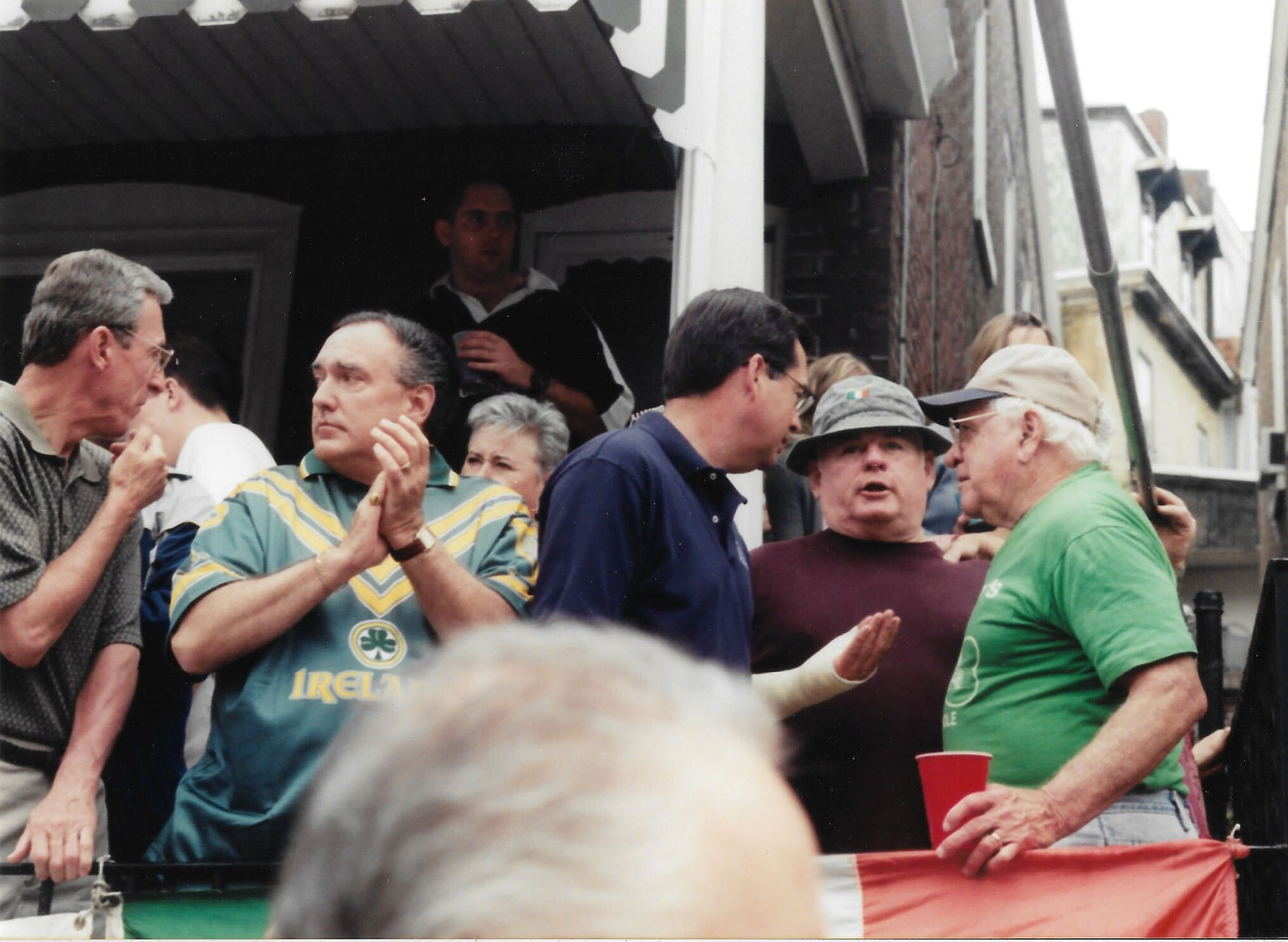
    The “he” is Edinger’s late father, Bill O’Brien, longtime steward of 320 Lyceum Ave. When the Philadelphia Cycling Classic came to town in 1985, its route ran right past his brick twin house.

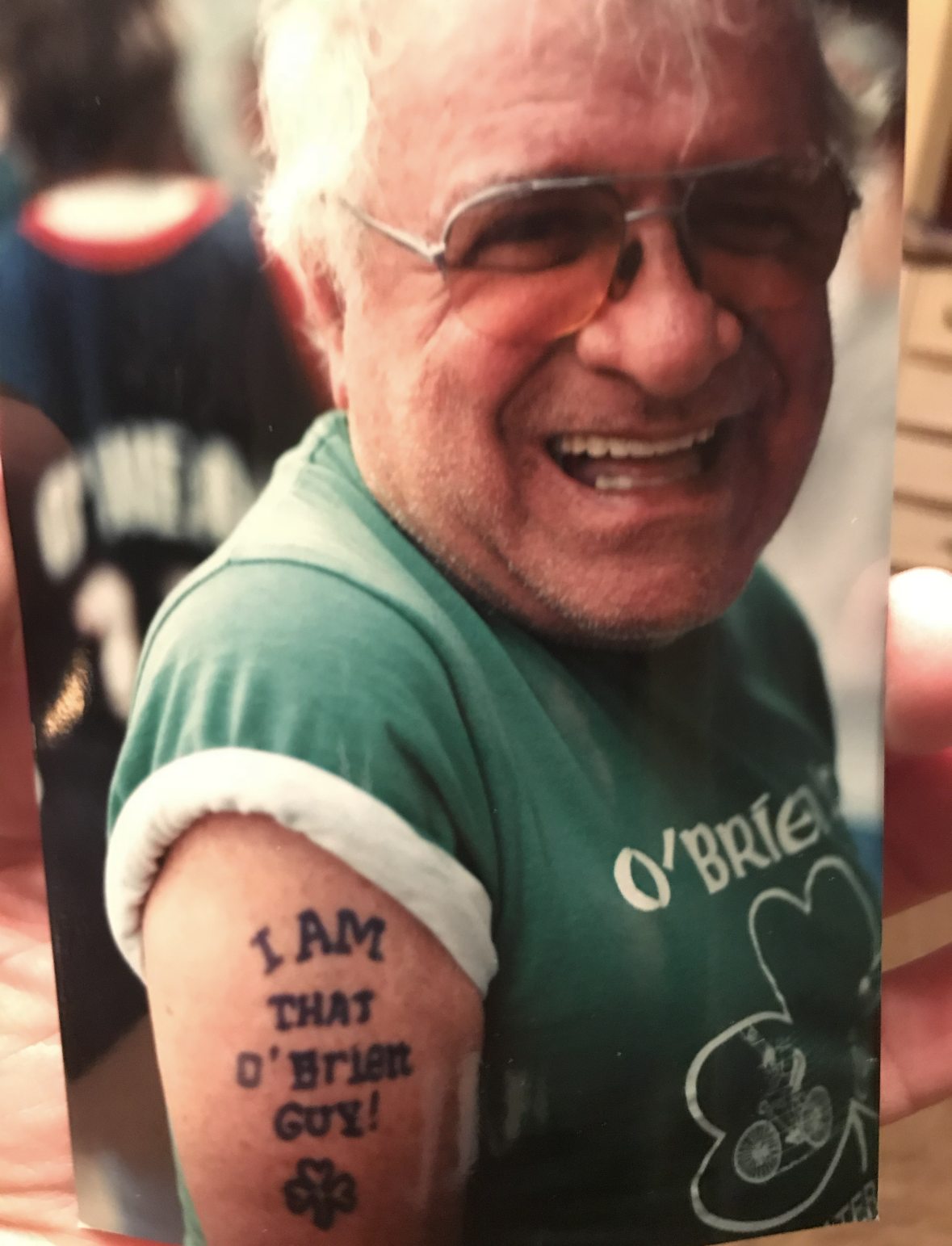
    Bill O’Brien was beloved by friends, neighbors and annual revelers at the bike race.provided by Suzanne Edinger

    While this might not seem notable for a 14.4-mile race, O’Brien’s stretch was unique. He and his wife, Evelyn, were located right in the middle of the notorious hill known as the Manayunk Wall, scaling 250 vertical feet.

    It became a pivotal point of the competition, 800 yards that could make or break a cyclist. So, the maintenance man did what he’d do for any struggling stranger: He tried to help them out.

    Throughout the first iteration of the Classic, O’Brien stood in his yard with a hose in one hand, a beer in the other, dousing bikers as they rode by. This setup didn’t last long; O’Brien realized it would impede his Budweiser consumption, and race organizers wanted an option for cyclists to avoid the stream.

    Undeterred, the North Philadelphia native headed to his workshop in search of a solution. He quickly found one. By 1986, he’d connected a single shower head to his hose, lightly spraying water atop the riders.

    By 1987, he’d added another shower head. The year after that, O’Brien moved his hose alongside his fence, so spectators wouldn’t trip over it.

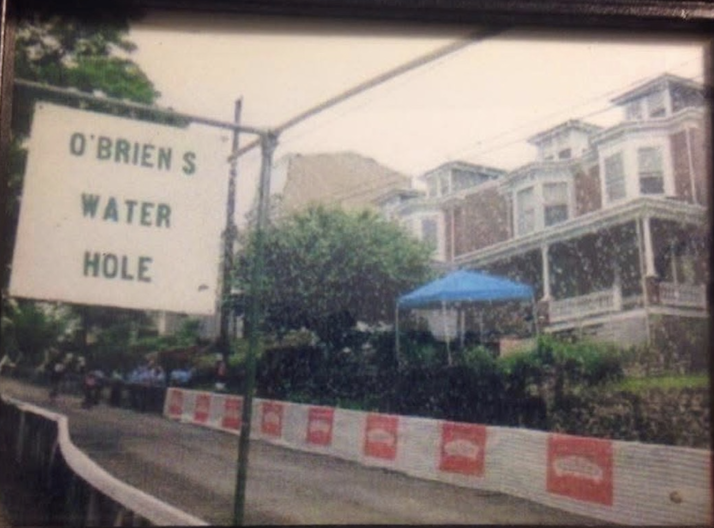
    A white wooden sign with kelly green font dangled from the pipe: “O’Brien’s Water Hole.”

    He built on this tradition over 23 years. Every version would be better than the last: a few more shower heads, “O’Brien’s Watering Hole” T-shirts, a Manayunk-themed banner, hung high above the street.

    The O’Brien Water Hole became a key party spot for racegoers.provided by Suzanne Edinger

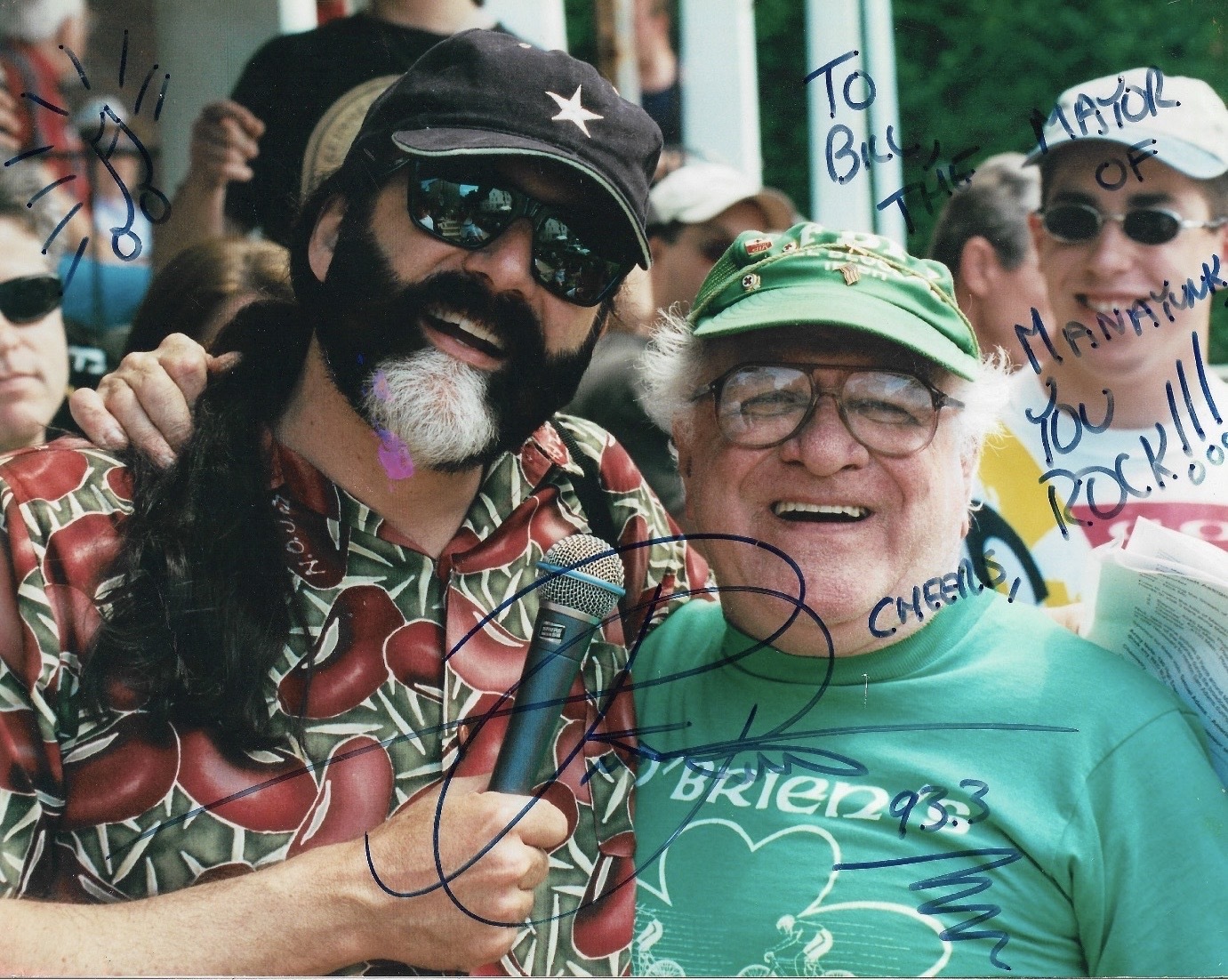
    On race day, his house would be packed with people, some of whom O’Brien knew, and many he didn’t. But “The Mayor of Manayunk” was unfazed.

    “Every year he ordered more kegs, and mom had more burgers, and she needed a bigger bowl of potato salad, and an extra bowl of beans,” Edinger said. “And he fed off of that. He just thought it was great. They saved [money] all year.

    “‘I need to get plates.’ I’m like, ‘Mom, it’s February.’ ‘June will be here before you know it!’ So, it was always buying a little of this and that, when the budget permitted.”

    The O’Briens moved to Alabama for work in 2008, and Bill died in 2019. But the lore of his Water Hole has endured.

    And on Sunday, when the Philadelphia Cycling Classic returns for the first time in a decade, locals will remember the small Irishman with the big imagination.

    “You couldn’t help but think of him when the race came up,” said O’Brien’s former next-door neighbor, Marty Costello. “Because it was his thing.”

    The community’s handyman

    O’Brien was raised with seven siblings on West Thompson Street, near the Church of the Gesú. Craftsmanship ran in his family; O’Brien’s father learned the trade from his father, who worked as a cabinet maker and carpenter in County Tipperary, Ireland.

    The lessons Bill absorbed as a child served him for the rest of his life. After he and Evelyn moved to 320 Lyceum Ave. in 1961, the handyman refurbished pianos.

    He then worked in carpentry, and then at a paper mill, before getting a job in maintenance for the Sisters of Mercy in Merion in the early 1970s. Evelyn was hired to operate the convent’s old-school switchboard a few years later.

    The O’Briens stayed on with the Sisters of Mercy for three decades. Even amid a spiritual sanctuary, the couple showed the same fun-loving spirit they’d eventually bring to the Water Hole.

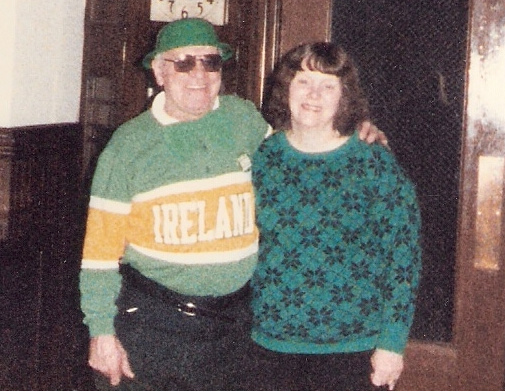
    On St. Patrick’s Day, Bill would dress up as a leprechaun, with high white socks, a green sweater, and a little black pot of gold in hand. He and Evelyn would dole out chocolate coins to sick nuns receiving medical care on the property.

    Bill and Evelyn were shocked to learn that word of The Water Hole had reached all the way to Ireland.provided by Suzanne Edinger

    The sisters loved it.

    “Those nuns were the first in line at both of their funerals,” Edinger said.

    Bill wasn’t raised in Manayunk but embraced his neighborhood wholeheartedly. He ran the grade-school CYO at St. John the Baptist for over 20 years, taking local kids on annual ski trips to get them out of the city.

    The Irishman could easily repair a leaking sink or a broken roof at his own house, but also made a point of helping neighbors with their needs, too. Before Marty Costello moved next door to the O’Briens, his grandmother, Concetta Pompizzi, lived in the same building.
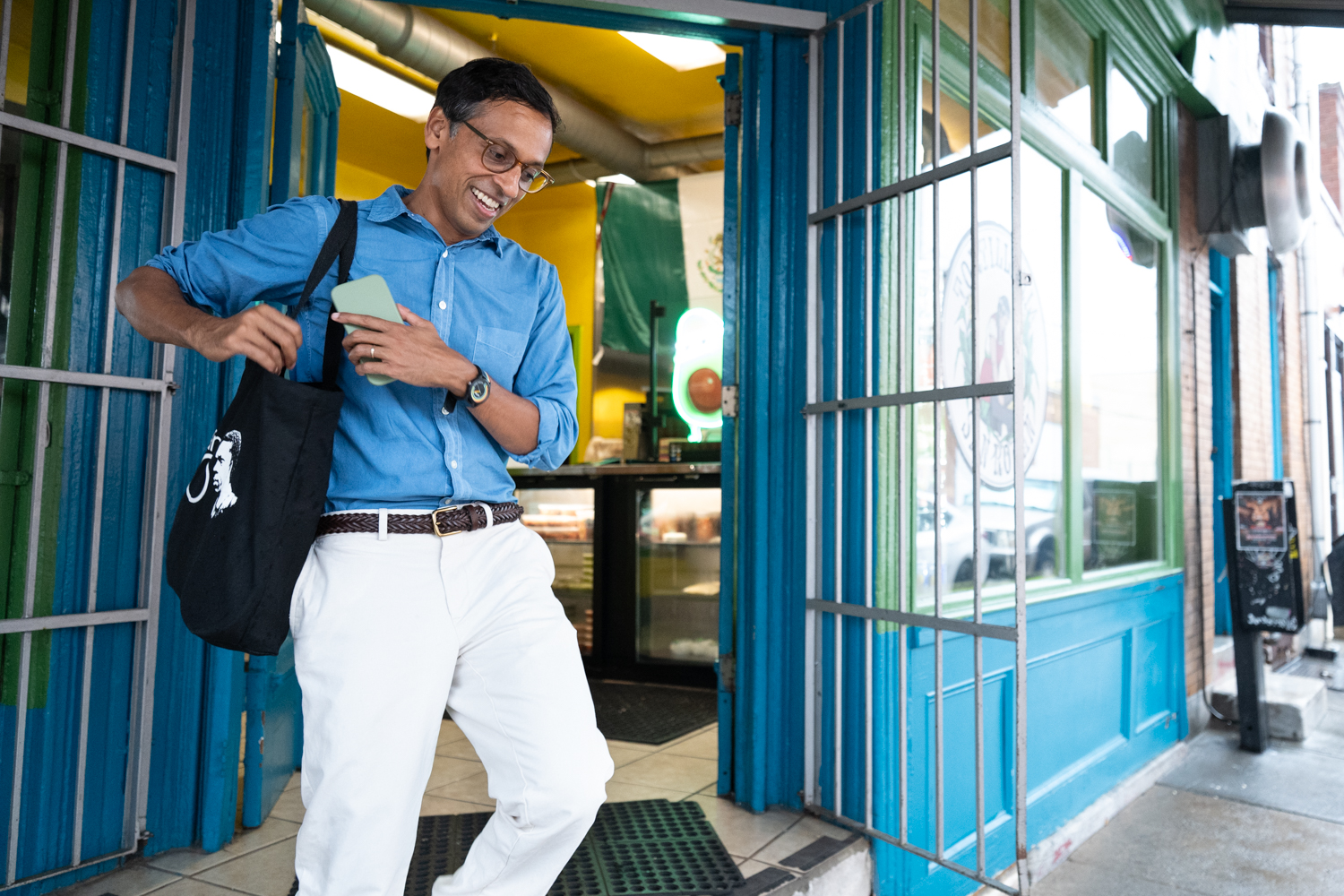
    In the 1980s, Bill fixed the railing on her front porch, a renovation so sturdy it lasted 35 years.

    “Everybody loved Uncle Bill,” said O’Brien’s nephew, Patrick. “If he wasn’t your uncle, you still called him Uncle Bill.”

    O’Brien’s handiwork and hospitality were well-known within Manayunk. But after the advent of the Water Hole, he became a much more prominent figure.

    Longtime WMMR-FM host Pierre Robert, who died last year, was a frequent visitor to Bill O’Brien’s spot on the Manayunk Wall.provided by Suzanne Edinger

    Every year, local reporters would flock to the brick twin house to interview him; Pierre Robert of WMMR was a regular visitor. This happened so often that friends began placing bets on how many TV appearances O’Brien would make in a given weekend.

    On a typical race day, the family would welcome hundreds of people to their home. One neighbor, Gerry Boyle, said he met tourists from as far as Italy, Austria, and Germany. Policemen regularly stopped for sodas and waters, race officials for food and refreshments.

    Despite all the chaos, the event was a testament to a community’s love. O’Brien never worked alone. The night before the Classic, locals would drop off kegs of beer.

    Dennis Kelly, a friend who lived a few blocks away, would bring doughnuts to make sure Bill had something to eat before he started drinking. Cousins would stand on ladders, hanging banners and flags across Lyceum Avenue.

    The work that went into assembling the Water Hole went on even after Bill and Evelyn O’Brien had left Manayunk.provided by Suzanne Edinger

    Boyle would arrive at 6 a.m. on race day to set up the shower pipes. Fitzpatrick Funeral Home would lend its nearby parking lot to O’Brien’s friends and family.

    An artistically inclined nun at the Sisters of Mercy even designed an “O’Brien’s Water Hole” T-shirt, written in Celtic font.

    One of Edinger’s cousins wore it on a trip to Ireland years later. A passerby recognized the name.

    “They’re like, ‘Oh, we see that on TV,’” Edinger said. “‘We know O’Brien’s Water Hole.’ It was just crazy. And that was a story that [my dad] just thought … that was it. His name had reached the motherland.”

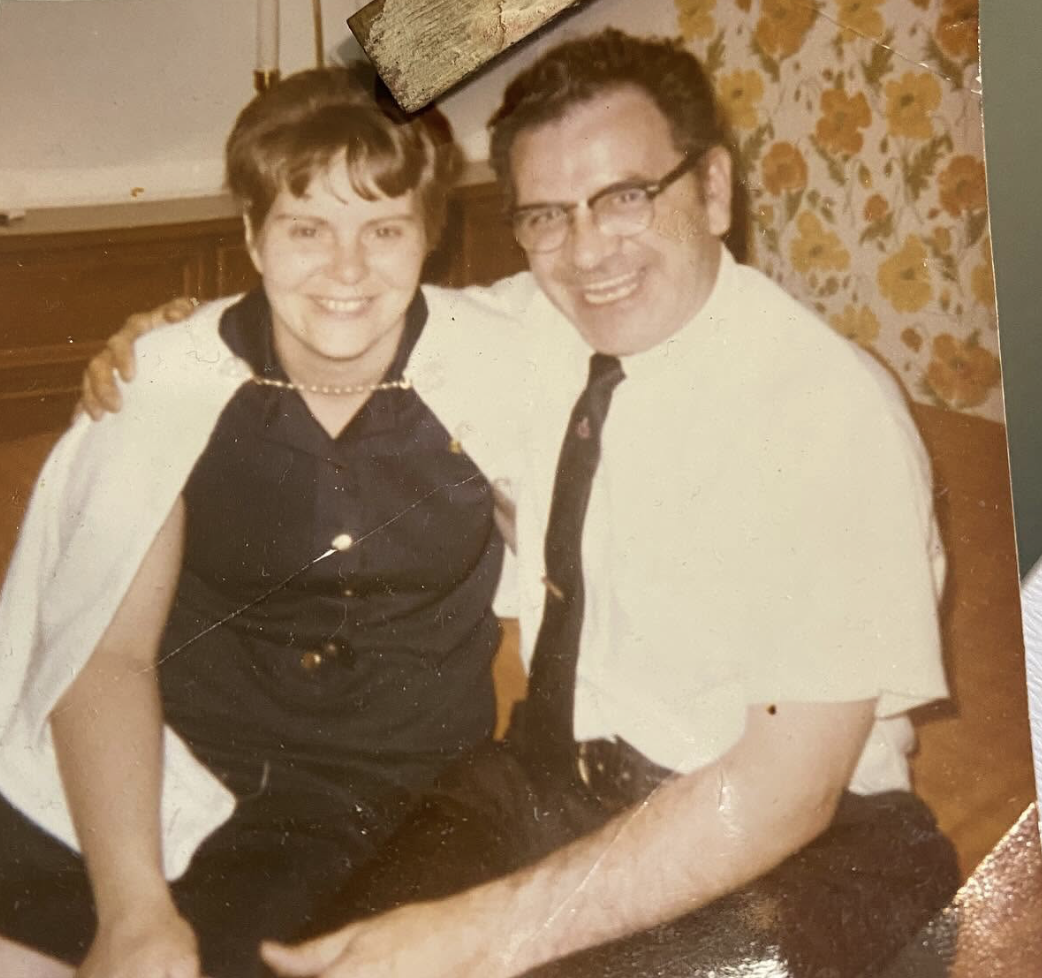
    Bill O’Brien and his wife, Evelyn, around 1970.courtesy of Suzanne Edinger

    Continuing the tradition

    After the O’Briens moved out in 2008, two friends, Gary Brett and Dan White, bought the property. They did so with the intention of keeping the Water Hole alive, and the Irishman was more than happy to assist.

    He left them with his four shower heads attached to a pipe and walked the men through his setup with the hose and the fence. Brett and White put their own spin on it, adding spray nozzles to create more of a mist than a shower.

    Just like O’Brien, the friends would host a party on race day. But it wasn’t the same without the handyman, and locals would often ask for him.

    “All the time,” Brett said. “Every year. I mean, every single year. Like it could’ve been five years after he moved out, and they’re like, ‘Is Bill here?’”

    The two men continued this tradition until the race was canceled in 2017 due to a lack of funding. O’Brien died of a stroke two years later, while visiting family in Phoenixville. He was 85.

    When his body was transported from the viewing at Fitzpatrick Funeral Home to Mass at St. John the Baptist, the driver took a special route. Instead of turning onto Manayunk Avenue, she chose to stay on Lyceum, trudging up the hill, and pausing right outside No. 320.

    The cars behind the hearse did the same, bidding a final farewell to a house that was a home for so many. It’s unclear whether the current owners will create a Water Hole of their own on Sunday.

    But even if they don’t, locals will be thinking of the man who always showered his neighbors with water and warmth.

  • The Jersey Shore bakery that helped Dominic Sessa transform into Anthony Bourdain

    The Jersey Shore bakery that helped Dominic Sessa transform into Anthony Bourdain

    Before he played Anthony Bourdain in the coming-of-age biopic Tony, Dominic Sessa’s first brush with fame was as an Ocean City, N.J., doughnut guy.

    Tony, which opened in theaters nationwide last Friday, is an origin story. It depicts Bourdain decades before he would become the executive chef of French brasserie Les Halles and eventually a prolific travel journalist, best known for shows like A Cook’s Tour, No Reservations, and Parts Unknown.

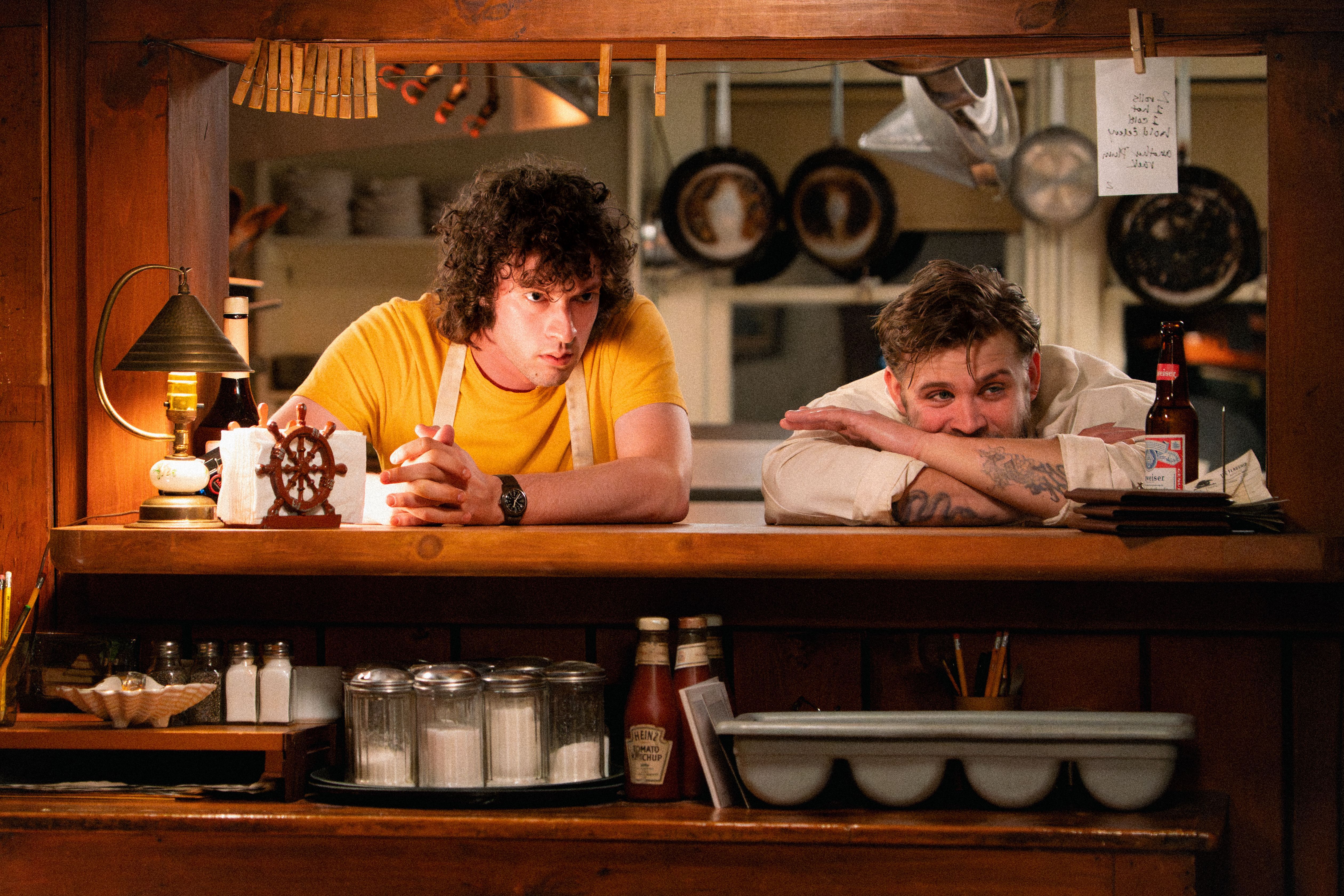
    Dominic Sessa (left) as Anthony Bourdain with Leo Woodall as a renegade cook in “Tony.”A24

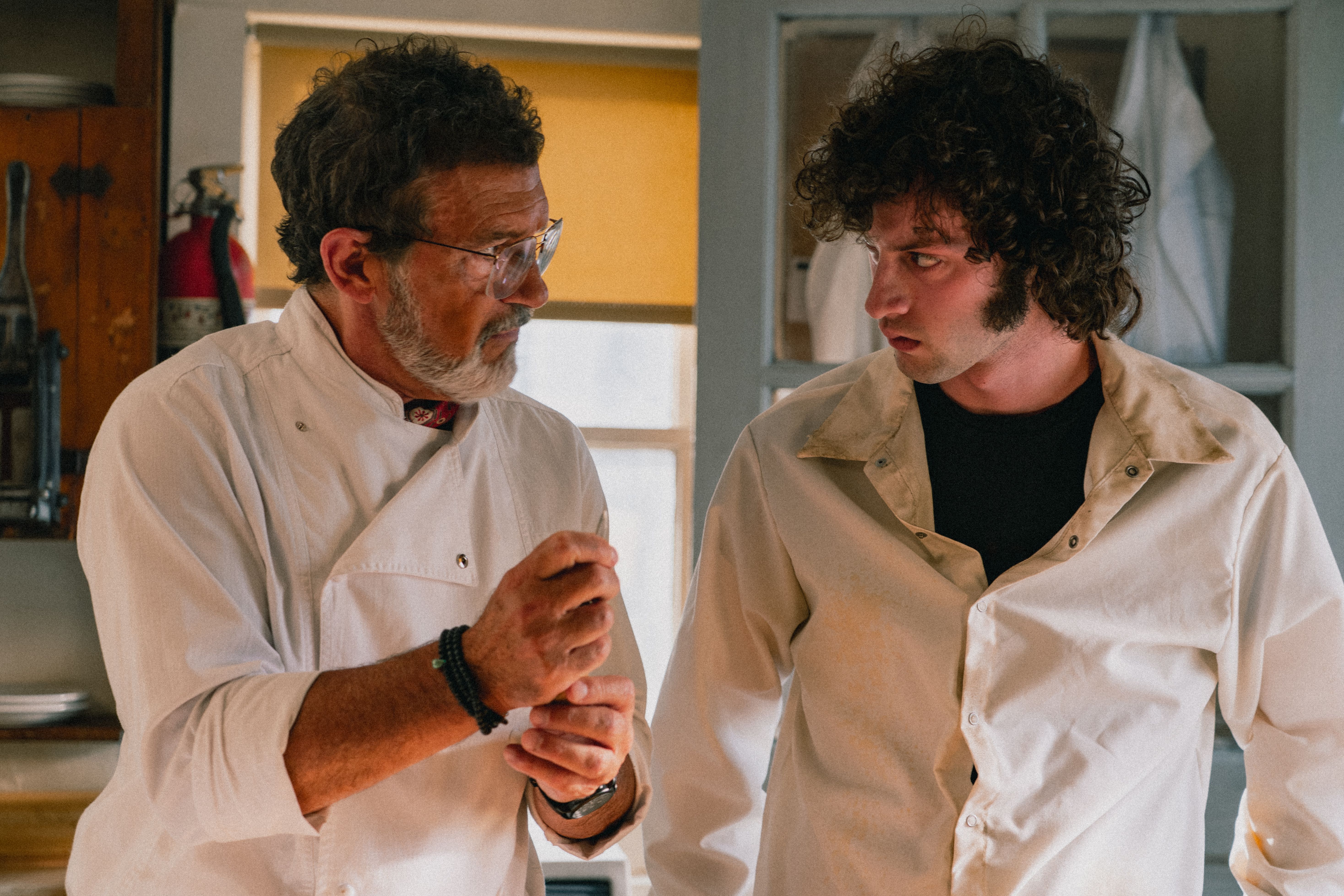
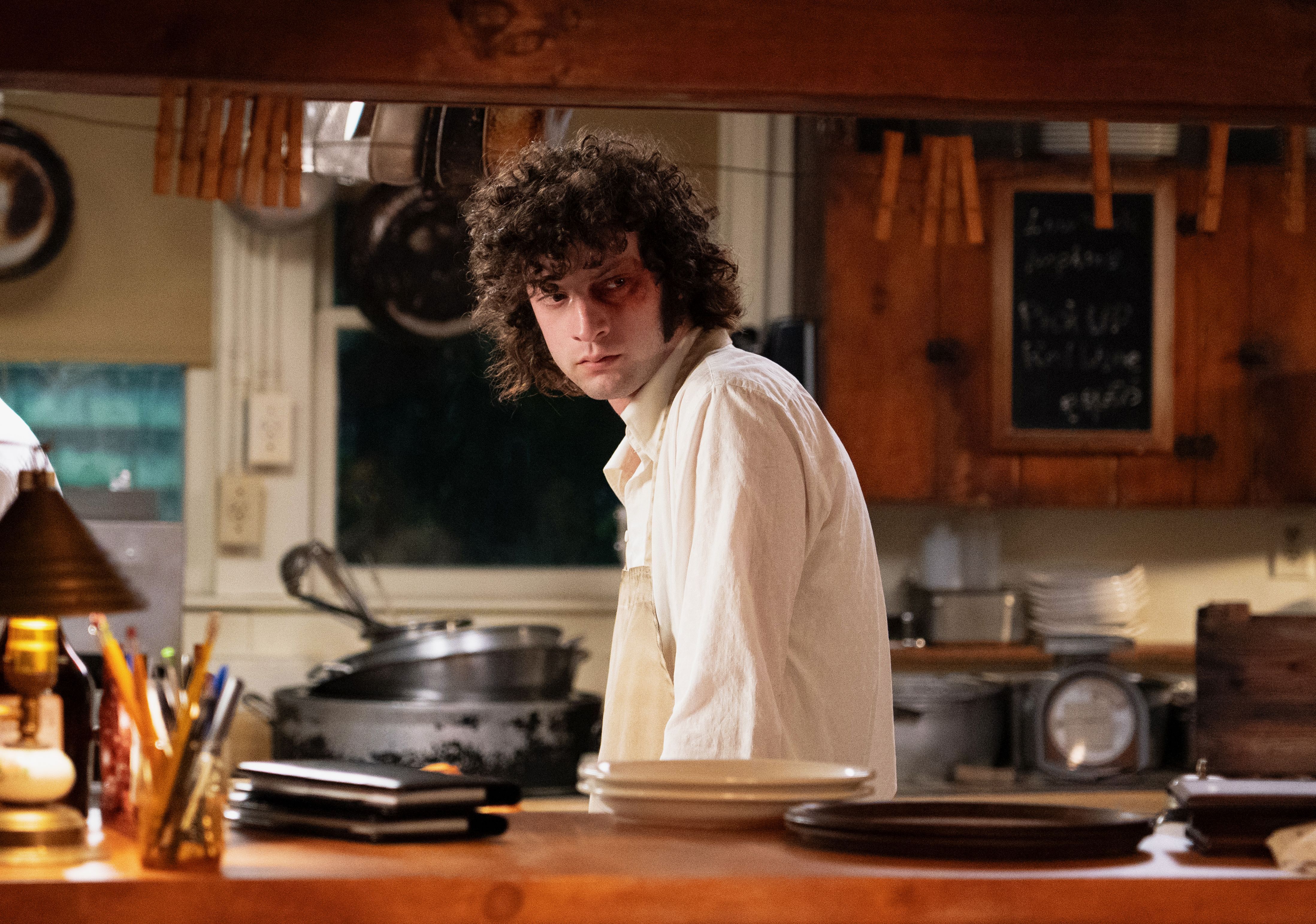
    In the film, Sessa portrays a 19-year-old Bourdain in the summer of 1973, when he found himself in Provincetown, Mass., desperate to get his would-be wife, Nancy Putkoski (Emilia Jones), to fall in love with him after losing out on a writing fellowship. A tough-yet-kind chef (Anthony Banderas) gives Bourdain a job as a dishwasher at the Flagship, a no-nonsense seafood shack where Bourdain grows from bumbling dishwasher into something resembling a cook.

    The film draws heavily on chapters of Bourdain’s best-selling memoir Kitchen Confidential, in which Bourdain romanticized a crew of talented, if aimless, line cooks and their exploits.

    “They drank everything in sight, stole whatever wasn’t nailed down, and screwed their way through floor staff, bar customers, and casual visitors like nothing I’d ever seen or imagined,” Bourdain wrote with palpable admiration.

    It’s a feeling that Sessa, 23, knows well.

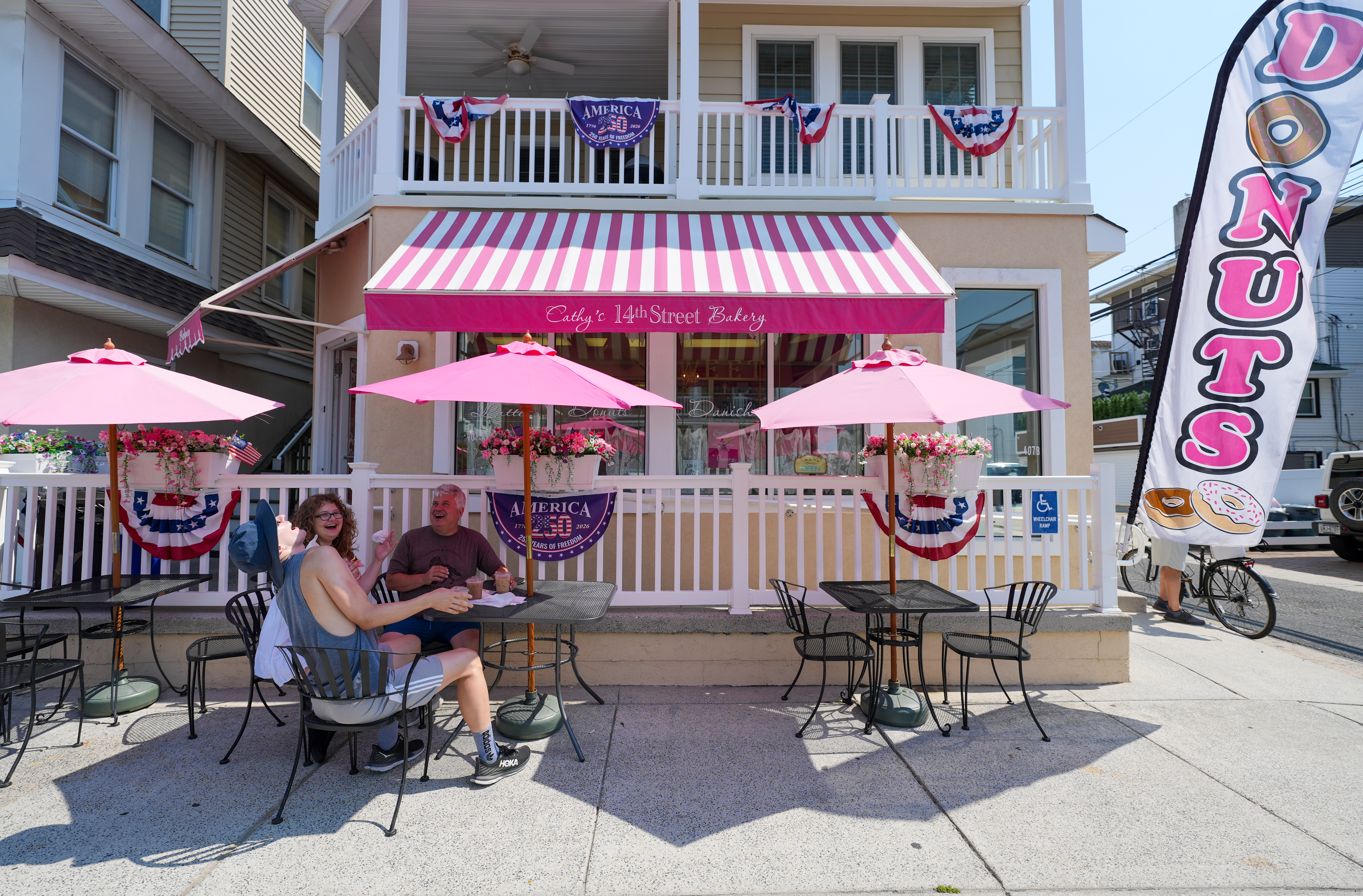
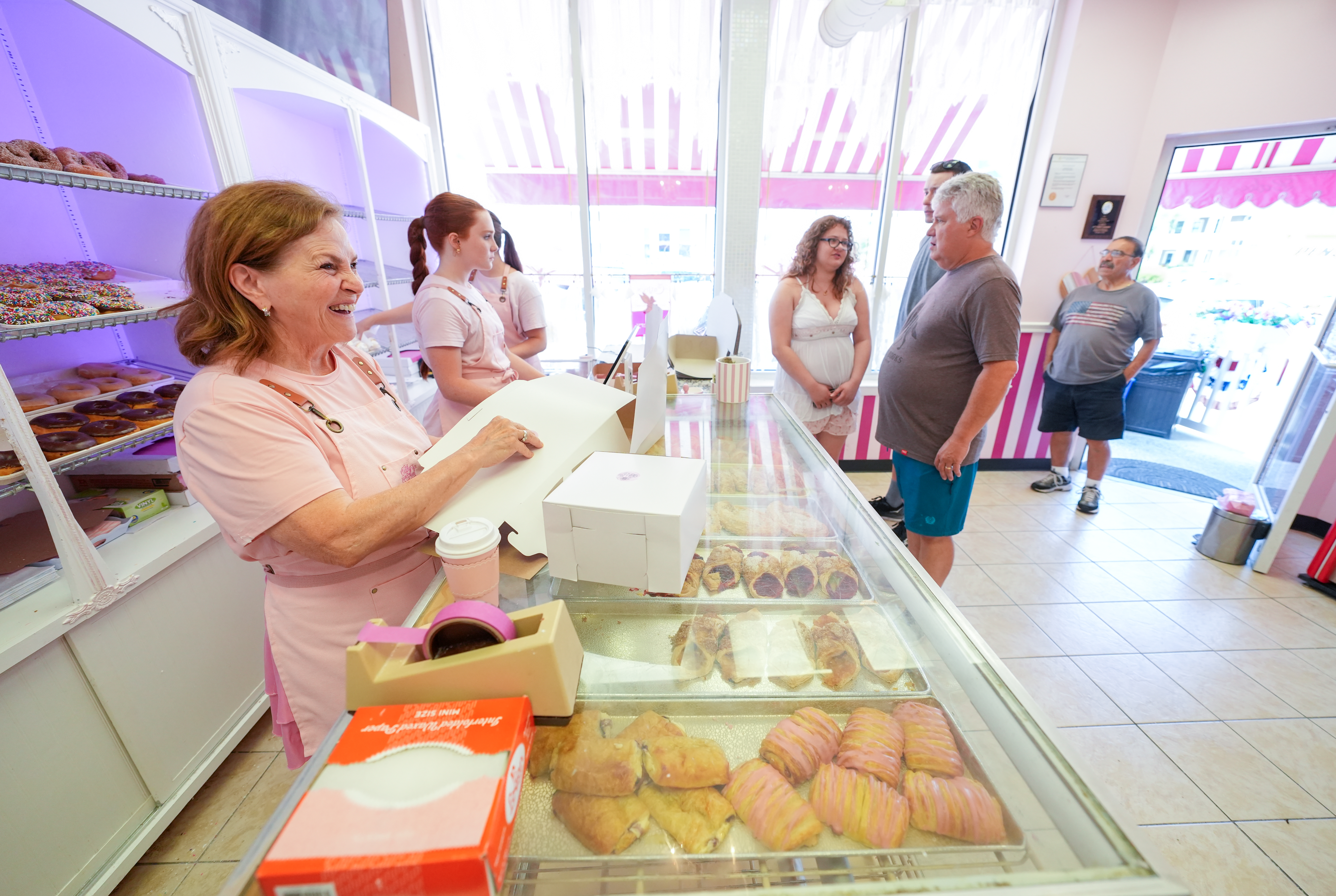
    Born in Cherry Hill, Sessa grew up in Egg Harbor Township and Ocean City, where he spent four summers working in the kitchen at Cathy’s 14th Street Bakery, a pink-and-white storefront that serves thousands of doughnuts a week.

    When Sessa started as a dishwasher there in 2016, he was 13. By the time he worked his last shift in 2019, he had worked his way up to full-fledged baker, responsible for opening the shop and preparing batches of Cathy’s famous powdered and cream-filled doughnuts from scratch.

    “I’ve hired a lot of great kids, but there are some who don’t get it,” said Cathy Greene, the bakery’s owner. Sessa “was really a natural.”

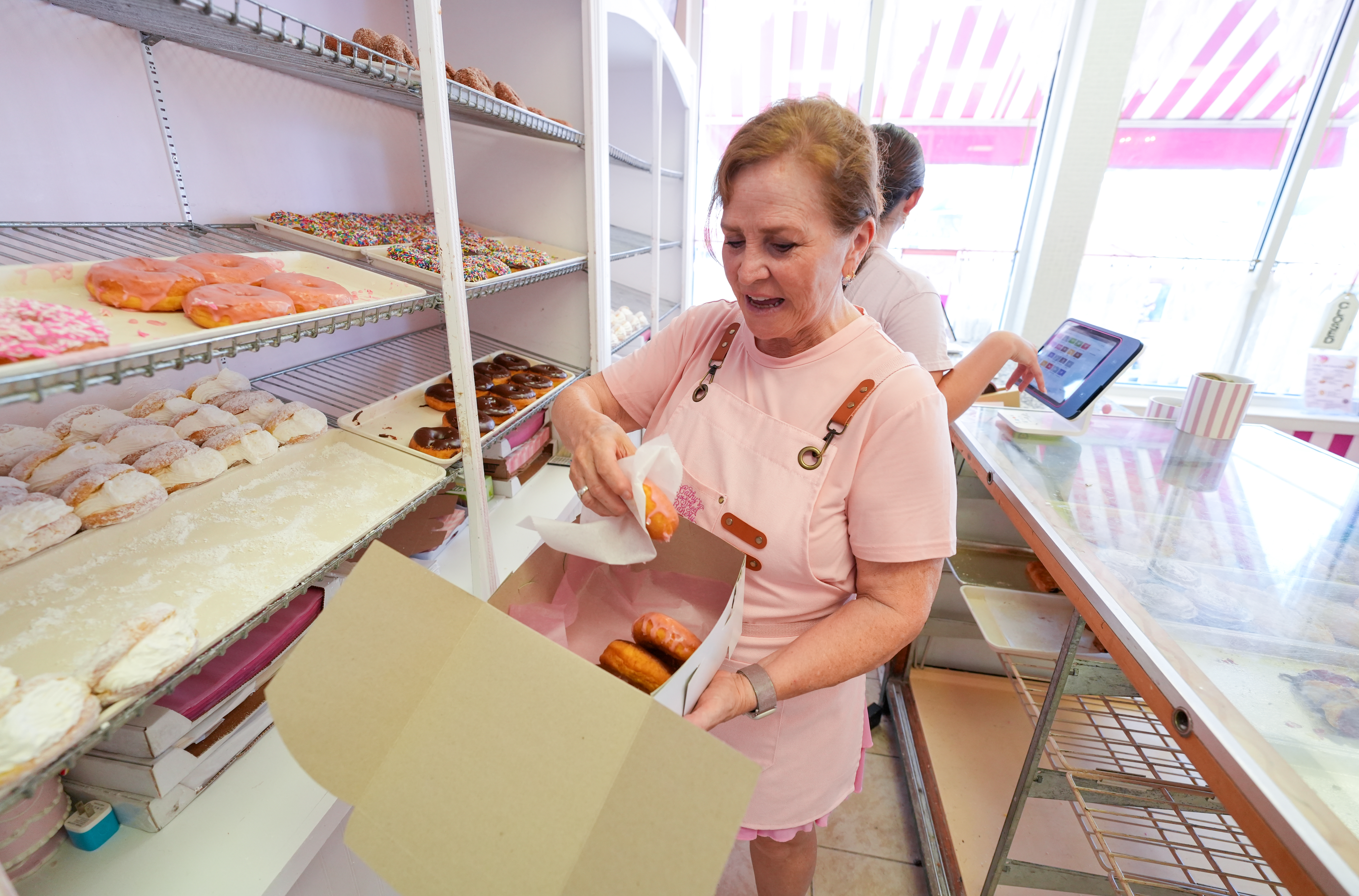
    Cathy Greene, owner of Cathy’s 14th Street Bakery in Ocean City, N.J., fills a box with doughnuts for a customer on Aug. 13, 2026. Former Cathy’s dishwasher and junior baker Dominic Sessa plays Anthony Bourdain in the new A24 biopic “Tony.”Tim Hawk / For The Inquirer

    Sessa doesn’t remember taking to it so easily. And yet, like Bourdain, he kept coming back.

    “When I first started there, it was miserable — especially at that age, waking up super-early and making batches of dough. I was just lazy and didn’t feel like finding another job,” Sessa told The Inquirer. “But every summer I’d come back and Cathy would teach me something new … The experience was one of the things that taught me how to work hard.”

    Tyler Greene, Cathy’s son, flips doughnuts in a deep fryer at Cathy’s 14th Street Bakery in Ocean City, N.J., on Aug. 13, 2026. Tim Hawk / For The Inquirer

    Doughnut summers

    Admittedly, frying doughnuts at a family-run bakery did not entirely prep Sessa for the fictional kitchen he’d step into as a teenage Bourdain. In Tony, the Flagship is full of cocaine, dirty jokes, and smashed dishes. Cathy’s, by contrast, was basically Disney World.

    Still, Sessa said the job helped him understand what motivates chefs to endure grueling hours and nonstop kitchen injuries. Like Bourdain, the actor was a self-styled troublemaker, nearly getting kicked out of his South Jersey high school before earning a hockey scholarship to Massachusetts’ prestigious Deerfield Academy, where he would eventually be discovered by director Alexander Payne and land his breakout role as a boarding school kid in 2023 Christmas comedy The Holdovers.

    Cathy’s kept him disciplined.

    Sessa used to clock in at the bakery at 4:30 a.m. to prep the day’s first doughnuts, rolling out and aerating one batch of dough while minding another batch as it proofed. In between, he’d fry up a third.

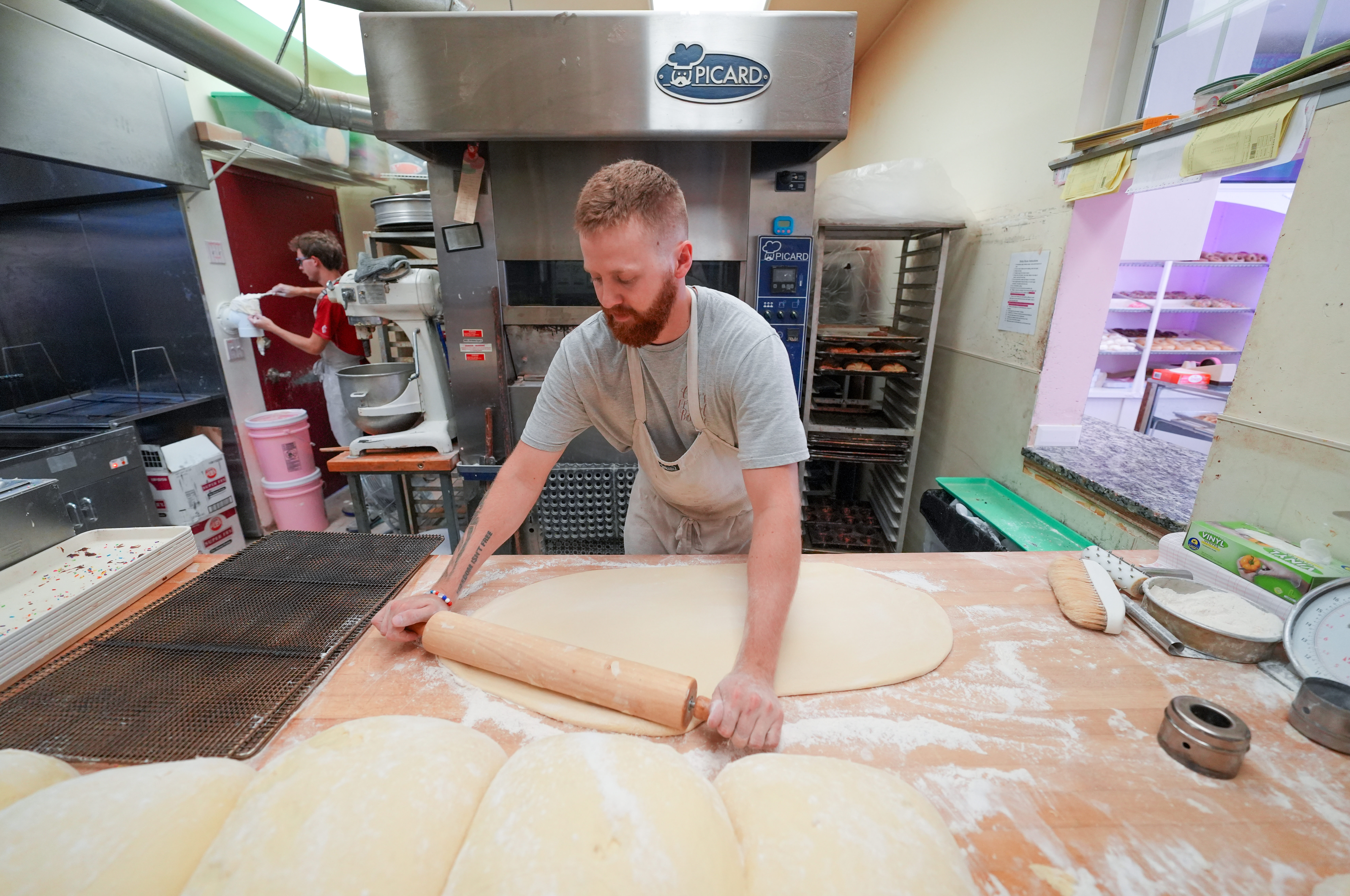
    Tyler Greene rolls out the dough for donuts at Cathy’s 14th Street Bakery in Ocean City, N.J., on Aug. 13, 2026. Former Cathy’s dishwasher and junior baker Dominic Sessa plays Anthony Bourdain in the new A24 biopic “Tony.”Tim Hawk / For The Inquirer
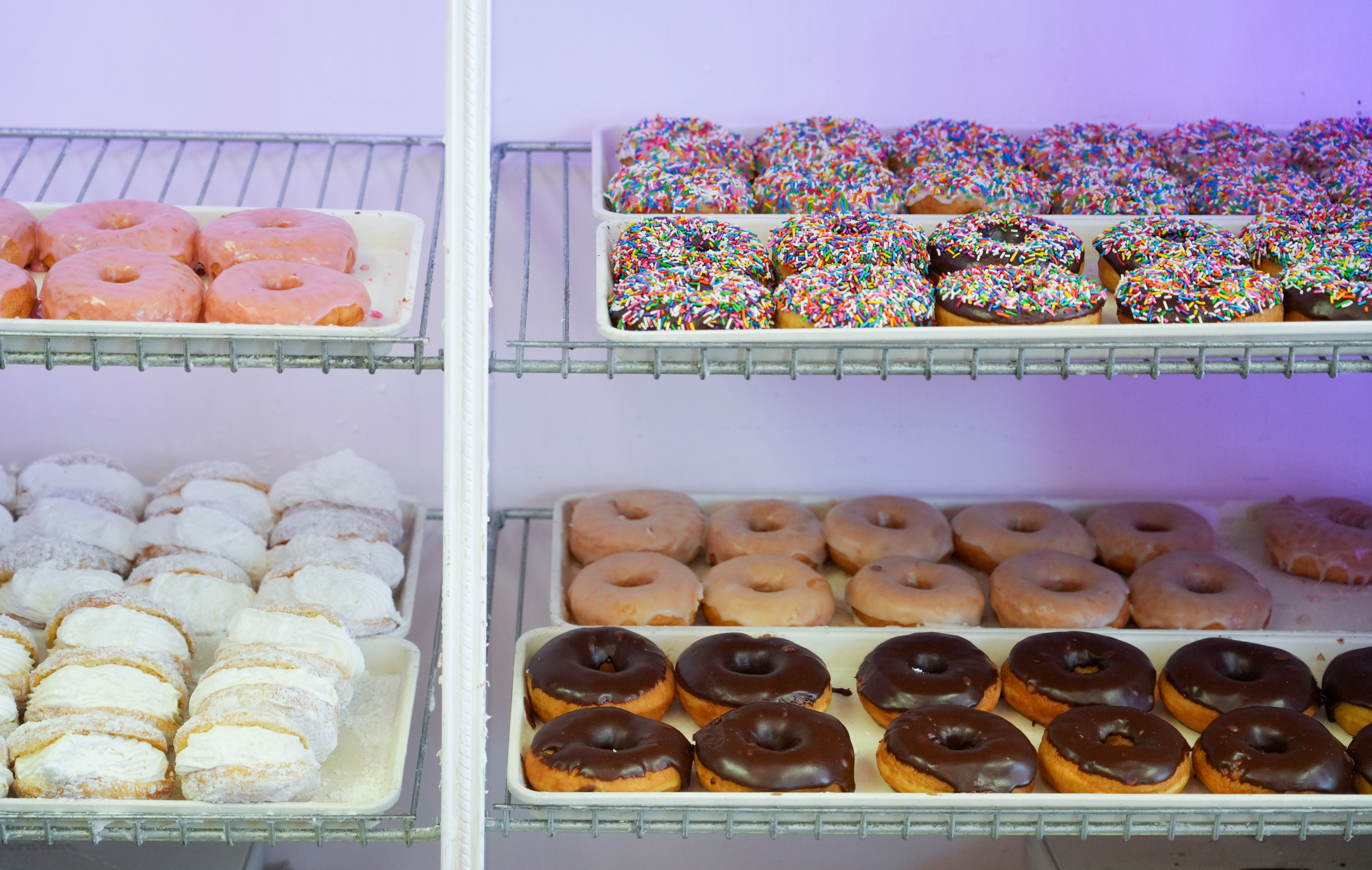
    A variety of doughnuts are for sale at Cathy’s 14th Street Bakery in Ocean City, N.J., on Aug. 13, 2026. Former Cathy’s dishwasher and junior baker Dominic Sessa plays Anthony Bourdain in the new A24 biopic “Tony.”Tim Hawk / For The Inquirer

    At its busiest, Greene said, Cathy’s sells between 1,200 and 1,400 doughnuts a day. Sessa drew on the rush — and the high stakes — while acting in Tony.

    “I related to the integrity working in a kitchen demands,” he said. “If I didn’t show up on time, everything would be messed up, and everyone would know it was [because of] me.” Plus, there was “something so gratifying” about placing doughnuts in the display case and watching customers snap them up.

    Antonio Banderas (left) as a chef-mentor with Dominic Sessa as Anthony Bourdain in “Tony.”A24

    Greene said Sessa shined when it came to the rhythm of baking and could manage the flow of the station about as well as she could. When they’d roll out dough side by side, Greene would quiz him on three-digit by three-digit multiplication. Sessa, she said, always answered correctly “off the top of his head.”

    “He was a real smart kid,” Greene said.

    Things didn’t always run smoothly. Once, Sessa recalled, he nearly ruined the bakery’s trash cans by throwing out a batch of dough with too much yeast in it. He had gotten away with the mistake — until the dough proceeded to nearly quintuple in size. “It was billowing out of the cans, on the ground, seeping into the kitchen,” said Greene. “It was pretty funny.”

    The stress of the job didn’t detract from Sessa’s favorite part: small-town notoriety.

    Passersby love to peer into Cathy’s kitchen from the street. “Kids were always interested in watching the guy who rolls the doughnuts out,” Sessa said. “It made me feel like a celebrity.”

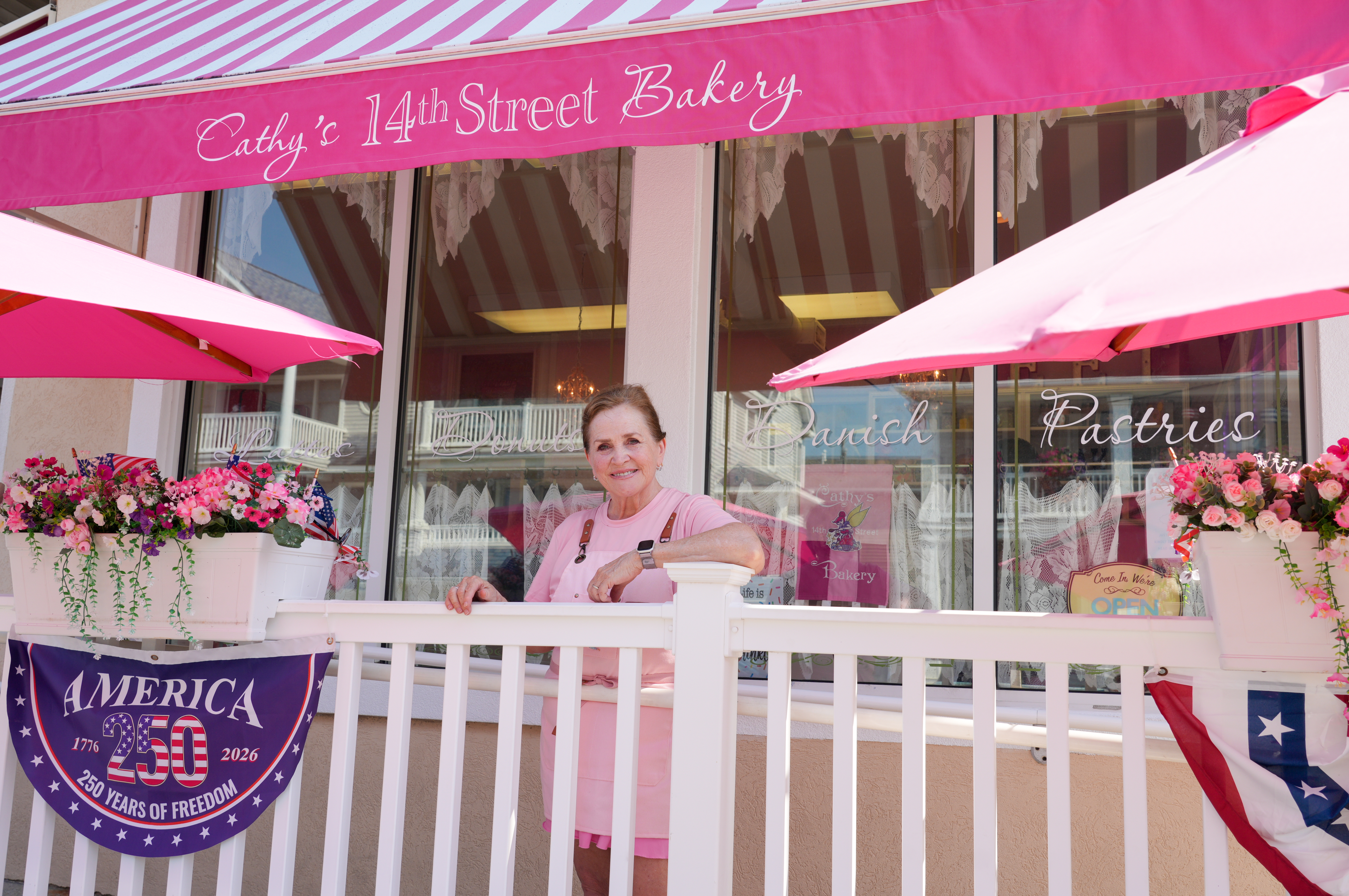
    The outside of Cathy’s 14th Street Bakery in Ocean City, N.J., on Aug. 13, 2026. Former Cathy’s dishwasher and junior baker Dominic Sessa plays Anthony Bourdain in the new A24 biopic “Tony.”Tim Hawk / For The Inquirer

    Drinking on the beach and baking hungover

    As much as Tony spins a hero’s journey for a young Bourdain (who ends the movie — spoiler — by enrolling in culinary school), it also foreshadows his struggle with substance use.

    Dominic Sessa as Anthony Bourdain in “Tony.”A24

    Bourdain, who died from suicide in 2018 at 61, had spoken candidly about his addiction to heroin and cocaine before getting sober in the 1980s. In Tony, we see the fledging chef try cocaine for the first time at his dishwashing station at Flagship with Sal (Leo Woodhall), a hard-partying coworker who relishes in showing Bourdain his favorite vices.

    Sessa’s Ocean City summers followed a similar pattern. Before The Holdovers, the actor was crossing the causeway to buy booze at Circle Liquors in Somers Point.

    “All of my friends were doing the same thing” as Bourdain in Tony, Sessa said. “We would just work so we could get paid enough to buy alcohol, drink on the beach all night, go into work hungover, sleep it off after our shift, and do it all over again the next day.”

    “We were all under 18 so we felt invincible,” Sessa said. ”It was paradise.”

    Cathy Greene, owner of Cathy’s 14th Street Bakery in Ocean City, N.J., fills a box with donuts for a customer, on Aug. 13, 2026. Former Cathy’s dishwasher and junior baker Dominic Sessa plays Anthony Bourdain in the new A24 biopic “Tony.”Tim Hawk / For The Inquirer

    Antics aside, Greene is proud of the role her bakery played in helping Sessa get into character (even if she hasn’t seen Tony yet). She just isn’t sure about cashing in on his star power. “I don’t want to be the one who is like, ‘Oh, I had Dominic Sessa here,’” Greene said. “But it’s pretty cool.”

  • My neighbor is already putting up Halloween decorations

    My neighbor is already putting up Halloween decorations

    This week’s question (Have your own? Submit it here.):

    My neighbor has started decorating for Halloween. There are six skeletons in the yard, jack-o’-lanterns hanging around the whole front of the house, fake tombstones that have punny names (I.P. Freely), and I know a lot more is coming. Halloween is more than two months away and it’s still 90 degrees outside. Is it too early for this or am I being a Grumpy Gus?

    Elizabeth Wellington, Features columnist

    Yes, you are being a Grumpy Gus, but I’m right there with you. I’m one of the people who get sad on June 21 on the summer solstice when the days start getting shorter.

    People who rush autumn get on my nerves. That goes for the stores that stock back-to-school supplies in July, and the pumpkin spice lattes available the second week of August.

    Stephanie Farr, Features columnist

    I just said last weekend “I can’t wait for Christmas,” so I’m about doing whatever you need to do to get you from now until the end of the year. That being said, part of what makes decorations special is that they’re only up for a limited amount of time every year.

    If this person wants to approach their neighbor about these decorations, how would you suggest they go about it, Elizabeth?

    EW: Ugh… you are one of those I love Christmas people… (I guess I’m a little bit of a Grinch, too).

    Honestly, I don’t think a person has the right to approach their neighbor about their decorations. Their house. Their skeletons. But perhaps the offended — and I do count myself in this group — can do some self-care to soften the blow. Perhaps you sit by your window and drink margaritas. Maybe you just close your eyes tightly when you walk by? Maybe retaliate and decorate your home with sunflowers and a “Welcome Summer!” banner in March?

    SF: I’m down with that retaliation plan, Grinchy McGrinch. Honestly, when I moved to this region I was shocked by how many holidays people decorate for. I didn’t even know that there were Thanksgiving decorations, and now everybody has a dang inflatable turkey in their front lawn in November! Heck, there are already fall and Eagles decorations around me in Delco, which should definitely get their time in the sun before folks start exhuming their Halloween decorations.

    There’s one person in my neighborhood who keeps their 12-foot skeleton up all year around, but just takes the legs off in the offseason. I think I’d definitely have to say something to them if I lived next door.

    EW: Only you can call me Grinchy McGrinch.

    But what do you say to a person about their decorations? I hate your pumpkins and cornucopia, please take them down until Sept. 1? That’s wrong, too. I think we McGrinches have to grin and bear it.

    For the record, I think Eagles decorations are about Philly pride and sportsmanship (and I’m not even a sports fan). They don’t make me grimace. They are allowed to be up year round just because. That’s contradictory, isn’t it?

    I think First Amendment rights extend to holiday decorations, even though it makes me crazy.

    SF: Bringing in the founding principles of our country, that’s some heavy fire power!

    It’s very admirable of you to grin and bear it in silence. But I also think there’s a growing portion of the population who do whatever they want and don’t care how it affects others and that does bother me.

    EW: I just don’t think putting up holiday decorations rises to the level of infringing on my rights. It’s infringing on my personal joy, yes. But not my rights. Why should I be forced to think about my future because you don’t want to deal with your present?

    SF: I guess it depends on whether you put your decorations out early to bring yourself joy or to bring joy to others. In the end, the only person you can make happy is yourself, so if you find putting skeletons up in August humerus, go for it.

    But if you put your Halloween decorations up in August to bring joy to others, they’re going to lose their luster by the time October comes.

    EW: Yeah, if you like getting all gussied up for the holiday, go for it. Nobody can stop you. Just know you might be triggering Scrooges… Your joy isn’t someone else’s.

    SF: One person’s treat could always be another person’s trick — or ick.

  • The Phillies believe again, goodbye to Dolly, and ‘National Treasure 3’ is finally real | Weekly Report Card

    The Phillies believe again, goodbye to Dolly, and ‘National Treasure 3’ is finally real | Weekly Report Card

    Kyle Schwarber and whatever the hell that ninth inning was: A+

    For eight innings last Sunday, the Phillies did absolutely nothing. Four hits, zero runs, down 4-0, and two outs in the ninth. The Cardinals had their closer on the mound, and everyone could reasonably start thinking about dinner.

    Then Edmundo Sosa cleared the bases with a double, Bryan De La Cruz tied it, and Kyle Schwarber hit a baseball 459 feet into dead center to end the game.

    Six runs, all with two outs, and we ended the game with a 6-4 win, sweeping the Cardinals. Nine straight victories. The kind of finish that had Scott Franzke yelling “It’s over!” on the radio, Tom McCarthy doing the same on TV, and John Kruk apparently deciding there was nothing he could add to the situation.

    Michael Barkann called it maybe the greatest regular-season finish he’s ever seen, which could sound like postgame exaggeration until you realize the Phillies hadn’t won a game after trailing by four or more with two outs in the ninth since 1983.

    This team lost 10 straight games in April, and now has swept three straight series for the first time in 16 years and is suddenly breathing down Atlanta’s neck. Please let this happy chaos continue.

    Dolly Parton performing on her “Pure & Simple Tour” at the Mann Center in June 2016. (Photo by Owen Sweeney/Invision/AP)Owen Sweeney/Invision/AP

    Patti LaBelle and Dolly Parton’s acrylic duet: A+

    Dolly Parton was 80, had been famous for nearly 60 years, and somehow belonged to everybody — country fans, drag queens, kids getting free books, your mom, your grandma, anyone who ever owned a rhinestone.

    Philly got its share of Dolly, from the Spectrum to the Mann and Atlantic City, where she once joked she’d keep performing until she dropped dead mid-song, “high heels to heaven.” But the clip we’ll keep replaying is her and Patti LaBelle in 1987, two icons in enormous hair and sparkly gowns, using their acrylic nails as percussion while singing “Short’nin’ Bread.” It looks less like television than two of your aunties got bored at a wedding reception and decided to put on a show.

    She once said she hoped that long after she was gone, people would look back at her career and say, “Damn, that was good.”

    And damn, Dolly. It was.

    Back to school without the heat: B

    There are certain signs that fall is coming in Philadelphia: Kids go back to school, the Eagles start playing games that count, and someone you know sets mums out on their porch.

    And, for once, the first day of school didn’t come with a 95-degree forecast.

    That matters in Philly, where 52 district schools still aren’t fully air-conditioned and hot days can mean early dismissals or remote learning. Nothing eases a parent back into the school-year routine quite like dropping a kid off and then finding out you need to leave work to pick them up three hours later.

    The district did eliminate half days this year, so families have one less factor contributing to scheduling chaos.

    And this week’s cooler mornings have been enough to make us start thinking about sweatshirts, football, and maybe opening a window at night. But next week’s forecast has temperatures creeping back toward the 90s, so it looks like we still have a wait.

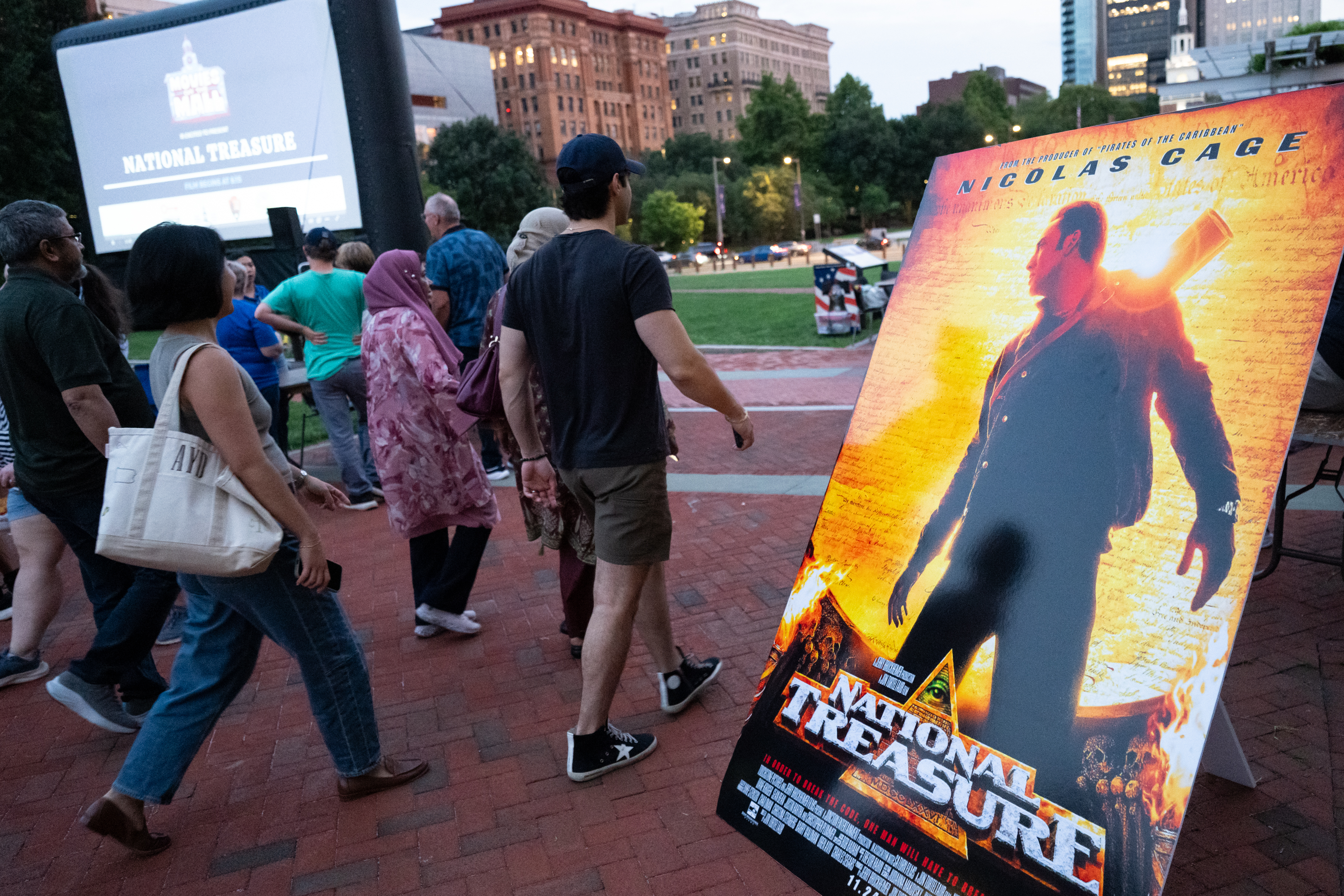
    People gather on Independence Mall for an outdoor screening of the 2004 film “National Treasure” in Philadelphia on Friday, Aug. 21, 2026. The screening was part of Philadelphia’s first National Treasure Weekend.Erin Blewett / For The Inquirer

    ‘National Treasure 3’ is finally happening: A-

    It has been nearly 20 years since Nicolas Cage last went hunting for treasure, which is an absurd amount of time to leave a man who once stole the Declaration of Independence without another important American document to steal.

    But National Treasure 3 is finally real. Director Jon Turteltaub broke the news at Philadelphia’s first National Treasure Weekend. (Where else should this announcement happen?)

    The original movie filmed some of its most memorable scenes here, and Philadelphia has spent the two decades since happily accepting National Treasure into the local canon. Benjamin Franklin signed the Declaration of Independence, and Nicolas Cage stole it.

    There’s a script, Cage is expected back, and Turteltaub says they’re trying to bring back the rest of the cast.

    No word yet on whether Philly makes it into the third movie, but after hosting an entire weekend in its honor, we better get robbed again.

    The Honey Butter Hoe Cake at Sao on Wednesday, Nov. 26, 2025 in Philadelphia.

    Philly restaurants make another national list: B+

    At this point, a national food publication naming Philadelphia restaurants among the best in the country is less breaking news and more a recurring calendar event.

    This time it’s Bon Appétit, which put Honeysuckle and Sao on its list of 19 best new restaurants in America. They join spots in New York, Chicago, San Francisco, and the other cities we’re apparently required to compete with every time somebody makes one of these lists.

    We could pretend to be surprised, but both restaurants already have plenty of hardware — and attention. Honeysuckle is Michelin-recommended, while Sao comes from Phila and Rachel Lorn, whose first restaurant, Mawn, remains one of the hardest tables to get in town.

    So yes, another national publication has discovered that Philadelphia is very good at restaurants. We’ll take the nod and act appropriately impressed.

    Philadelphia Police released an image of a masked man who had been harassing people in August 2026. The suspect, a 22-year-old man, was arrested in Las Vegas. (Philadelphia Police Department via The New York Times)PHILADELPHIA POLICE DEPARTMENT

    The masked menace has been caught: A

    Remember the guy in the creepy Halloween mask who spent a morning terrorizing people around City Hall? Well, he made it all the way to Las Vegas before the U.S. Marshals caught up with him.

    The whole thing was bizarre even by Philly standards: A man in a cracked-doll mask allegedly spent half an hour chasing and scaring people, including asking one jogger if she was “ready to die.” One woman was injured trying to get away. Then he apparently packed his bags and left town.

    There are plenty of characters around City Hall already, and we did not need one who looked like he wandered off the set of a low-budget horror movie.

  • Which member of the Sixers’ Big 5 will have to sacrifice most?

    Which member of the Sixers’ Big 5 will have to sacrifice most?

    The 76ers are entering the 2026-27 season with an embarrassment of riches. LeBron James, Jaylen Brown, Tyrese Maxey, Joel Embiid, and VJ Edgecombe have formed a group that president of basketball Mike Gansey dubbed the “Big Five.”

    They’ve said and done the right things this summer, from team workouts during the offseason to discussing their willingness to give for the greater good.

    During a recent interview, Maxey was asked about Edgecombe potentially needing to sacrifice in his second season. Maxey rejected the idea and said every player on the team will need to take a step back. But that made The Inquirer wonder: Who will sacrifice the most this season?

    With that in mind, our Sixers team offers insight on who will need to embrace the most change in order for this star-studded roster to succeed.

    Chris Hine, Sixers beat writer: Joel Embiid

    Never in his NBA career has Embiid had a usage rate below 32.9%, the statistic that calculates how often a team’s possessions end with the player generating a shot attempt, committing a turnover, or going to the free-throw line. Everyone else in the Sixers’ starting lineup has had fluctuations in their usage throughout their careers, while Edgecombe posted a usage rate of 20.1% as a rookie. Brown won a championship in 2024 alongside a higher-usage player in Jayson Tatum, while James had a career low in usage last season while ceding possessions to Luka Dončić and Austin Reaves with the Lakers.

    In other words, Embiid hasn’t often had to play in the NBA while not being the focal point of the offense or having the ball in his hands a lot. That likely will have to change this season. The seven-time All-Star center will have to make adjustments on how to impact the game more offensively while taking fewer shots and using the gravity he draws to generate good looks for his teammates.

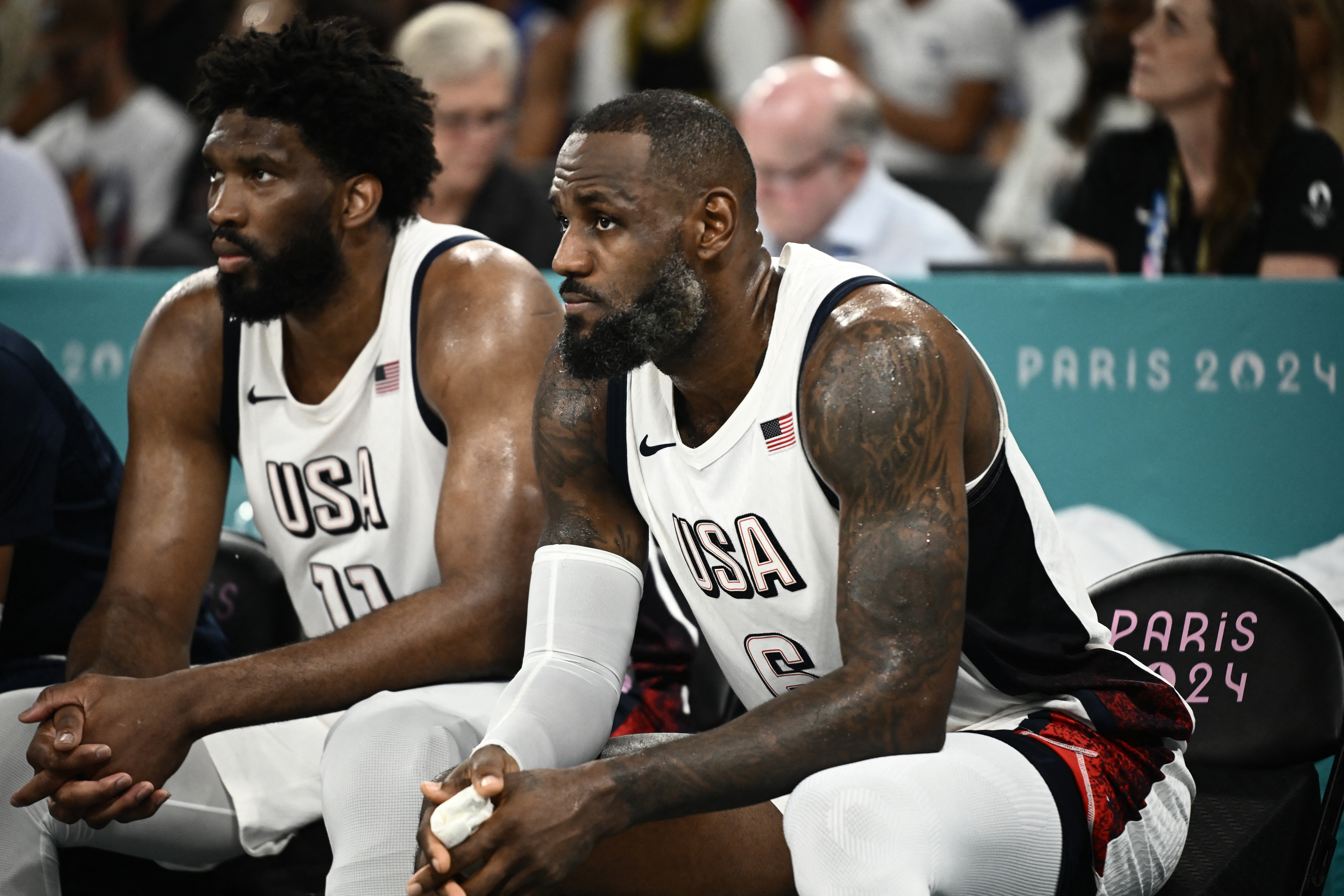
    Joel Embiid and LeBron James first played together as teammates in the 2024 Olympics. AFP via Getty Images

    If his 2024 Olympics performance alongside James is any indication, though, Embiid has shown he is willing to do that in the name of winning. Perhaps a lower usage rate in games also equates to less wear and tear on his body over the course of the season and will allow him a better chance of being in peak form come playoff time.

    One of the luxuries for this Sixers team is that anyone in the starting lineup is capable of carrying the team at any given moment, on any given night. There will still be nights on which Embiid does that, but perhaps not as much as he has had to throughout his career.

    DeAntae Prince, Sixers editor: Tyrese Maxey

    Maxey was selected with the No. 21 pick in the 2020 NBA draft as a backup point guard to provide support for Ben Simmons and Shake Milton. During the subsequent regular season, he also played fewer minutes than Seth Curry and Furkan Korkmaz.
    Let that sink in.

    Of course, he did provide a few flashes that postseason and had a breakout of sorts in his second season, but the expectation still wasn’t for Maxey to become an All-NBA-caliber player. That changed in his fourth season, when he averaged 25.9 points, 6.2 assists, and 3.7 rebounds and was named an All-Star (alongside Embiid) and Most Improved Player.

    Since then, Maxey has become the franchise, making good on the nickname Embiid gave him early in his career. Now an All-NBA player and two-time All-Star, Maxey served as his team’s unquestioned leader for the past two seasons as Embiid and Paul George struggled to stay on the court. This offseason brought about more change with the additions of James and Brown, and no player on the roster will experience a bigger change to their existence than Maxey.

    What does all that mean for him? He will be asked to share more than ever since becoming a star with the Sixers. He will share the ball, leadership responsibilities, and accolades. He will be point guard for a new “Big Five″ in Philly after finishing fifth in NBA scoring at 28.3 points and maintaining a 28.6% usage rate, which sat among the top 30 players in the league last season. Brown, at 35.1%, was third behind Dončić and Giannis Antetokounmpo. James wasn’t far behind Maxey at 27%.

    Add that Brown, a former Eastern Conference and NBA Finals MVP, was tasked with helping lead the Sixers by Harris Blitzer Sports & Entertainment president of sports Bob Myers and that James, one of the best players in NBA history, has been lauded for his ability to lead since he was a teenager. It will be Maxey’s job to keep Brown, James, and Embiid happy and continue to nurture the development of Edgecombe. Still, after getting the keys to the franchise, Maxey will need to hand a piece of it back.

  • Ben Crimm lived in silence for 25 years. Now, he’s raising awareness for non-speakers through the AACR Charity Ride

    Ben Crimm lived in silence for 25 years. Now, he’s raising awareness for non-speakers through the AACR Charity Ride

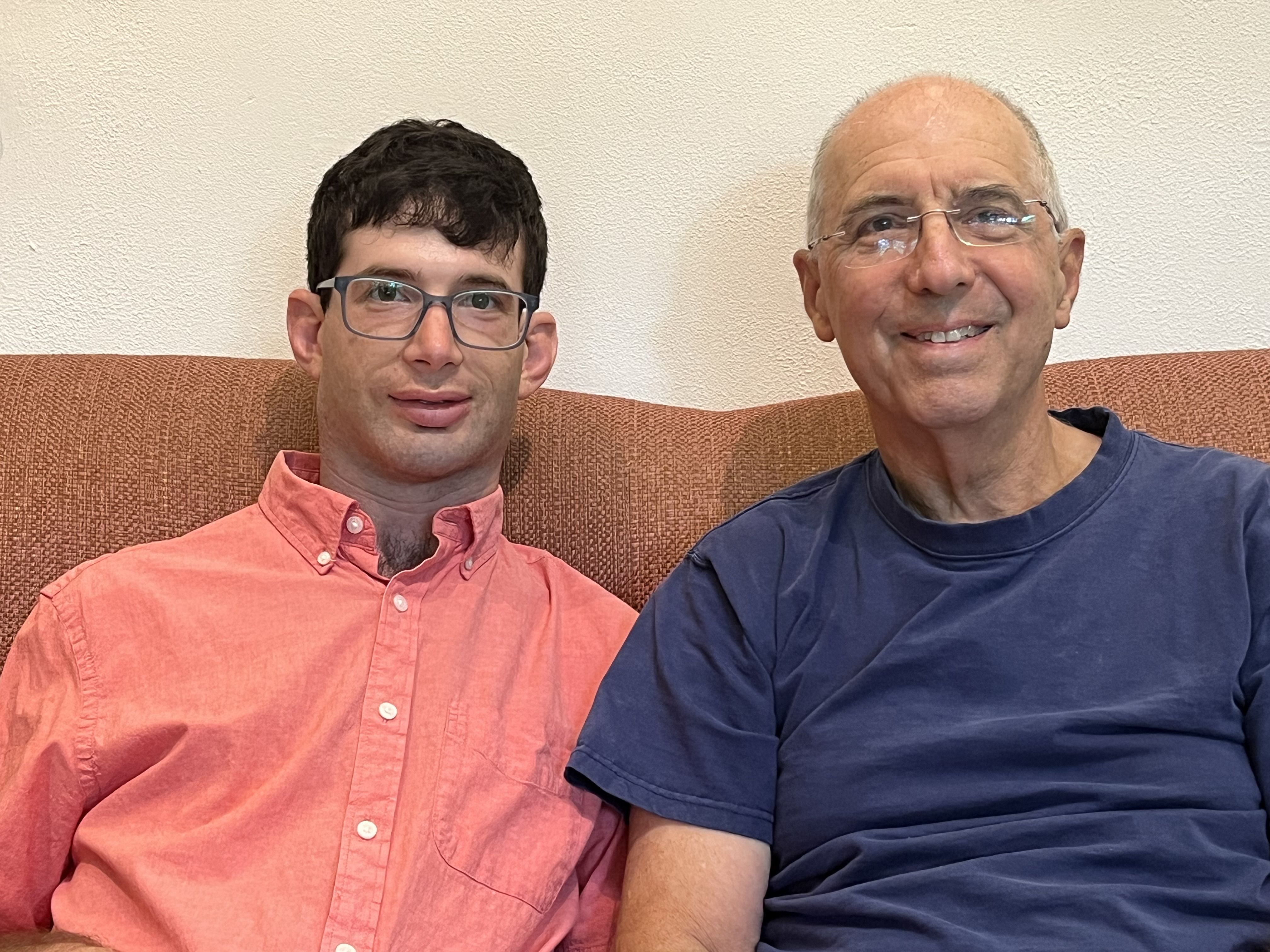
    Ben Crimm slowly lifted his arm and began to point at different letters on a laminated alphabet board in front of him. The board is a means of communication for Crimm, who is a 34-year-old nonverbal autistic individual.

    As Crimm continued to spell out his thoughts, his father, Allan, sat beside him and read his sentences aloud.

    When Ben finished pointing, he put down his hand, and Allan read the sentence he had spelled out: Non-speaking does not mean we cannot think and learn.

    Ben lived in silence for 25 years.

    After finding his voice through International Association for Spelling as Communication, he’s become an advocate for nonverbal autistic individuals.

    “This organization has changed my life in so many ways,” Ben said. “Without the ability to communicate for the first 25 years of my life, I had no ability to tell anyone what I wanted to do. Now, I do. And I have a resolve to raise awareness about nonspeakers and our capabilities and our communication access needs. Without this, I would be trapped in silence.”

    Alongside work with Spellers Empowering Education for Nonspeakers, a Philadelphia-based advocacy group founded in 2020, the Crimm family also is raising awareness through the Philadelphia Cycling Classic’s charity ride for the American Association of Cancer Research.

    Ben and Allan will ride in Sunday’s charity ride to raise money and awareness for the AACR and I-ASC.

    Both organizations are important to Ben. The I-ASC provides training and access for nonspeakers, and AACR is dedicated to preventing and curing cancer through research — a mission close to Ben’s heart after his uncle, Jon Shipp, died of lung cancer in 2006 at 49 years old.

    The charity ride will feature a 14-mile loop along the course of the professional PCC race. As both Ben and Allan prepare for the event, Ben said he’ll be staying in the back of the pack.

    “I’m not a fast cyclist,” Ben said. “[I’m looking forward to] good weather and being with so many wonderful folks.”

    Proceeds will go to the AACR, the official charity partner of the charity ride. As of Friday afternoon, the total fundraising was over $145,000, all from small-dollar donations, according to the AACR.

    “This is sort of a natural partnership where sports and healthcare come together,” said Steve Ryan, the president and chairman of the AACR Foundation. “So it’s really a natural fit for us, gives us exposure, gets people out, gets people to know what we do. It’s great for Philadelphia, great for us, great for everyone.”

    Spelling to communicate

    Ben was diagnosed with autism at 6 years old and struggled to communicate throughout everyday life. Without the ability to speak and engage in conversation, he felt “trapped” with no way to tell anyone what he was thinking or how he was feeling. Despite years of speech therapy and sign language lessons, he turned to spelling to communicate.

    The Crimm family first found out about spelling to communicate through a family friend, who had a son who had a condition similar to Ben’s. They implemented the method in Ben’s daily routine in 2017. But they never expected it to work as well as it did.

    “It was beyond our wildest dreams,” Allan said. “It has been so exciting to get to know [him], to get to know what is in that wonderful mind of [his], and to hear [his] sense of humor, [his] kindness, and [his] generosity. To know what’s inside of [him]. [He’s] such a fierce advocate for nonspeakers. [His] passion inspires everybody in the family, including me.”

    Spelling to communicate has transformed Ben’s ability to express himself and has led him to use his newfound voice as a tool to raise awareness for nonspeakers struggling to communicate and experiencing any sense of powerlessness in a world where they may feel invisible.

    SEEN has met monthly for six years and has a mission to educate others about nonspeakers, autism, and apraxia. The organization conducts eight to nine presentations a year to legislators, schools, parent groups, and national conferences.

    “It has been so incredible to have so many close friends that I can talk to over our shared life experience,” Ben said. “I love educating families of nonspeakers and especially healthcare professionals.”

    According to the Autism Science Foundation, around 26% of individuals with autism are nonverbal or minimally verbal, meaning they have difficulty with speech.

    However, this does not mean that they’re intellectually disabled. They can still form thoughts and communicate in ways that don’t rely on the voice. Allan and Ben are hoping they can continue to educate others on the topic.

    “We’ve come to learn as a family and being in relationships with so many other nonspeakers that the popular understanding of what nonspeaking autism is is not what people think,” Allan said. “It’s time for people to engage with nonspeakers and learn from nonspeakers that the lived experience really is because almost a third of all autistics are [nonspeaking]. And people have total misconceptions of what their capabilities are.”

  • The best thing Emily Bloch ate this week: Lots of fish on a Fishtown staycation

    The best thing Emily Bloch ate this week: Lots of fish on a Fishtown staycation

    It’s summer and that means I have one goal at basically all times: to be lounging in a pool. It’s the Florida girl in me, what can I say?

    So when my boyfriend, Mark, and I decided to take some days off together for a staycation, Fishtown’s Hotel Anna & Bel immediately came to mind. The boutique hotel, in a historic property that once served as a women’s home, opened in 2024 with a heated pool in its luxe open-air courtyard. A stay at the 50-room hotel guarantees exclusive poolside service, enjoyed while lounging on a cozy recliner. (Sorry, no day passes here.)

    We kicked off our first night as tourists in our own city with a meal at Bastia, the in-hotel restaurant with a Sardinian- and Corsican-inspired menu. Many excellent bites were had: skate cheeks over white polenta and sweet peppers that transported me back to the South, a bright artichoke salad with shaved Parmesan, and a morel tart that inspired at least one limerick about how good morels are.

    But one special in particular really sang.

    Mark loves eating fish and is an excellent cook, but he’s a hamachi collar skeptic, having tried so many that have been underseasoned, uninspiring, and so tough you have to scrape the should-be fatty meat off the bone.

    He had all but written off the cut — until executive chef Michael McDonough’s hamachi collar with grilled fioretto cauliflower, beldi olive agrodolce, and golden raisin glaze hit the table. One bite and Mark was sold. “It’s as if they cooked hamachi collars like they were sweet barbecue ribs,” he said.

    The grilled hamachi collar, Calabrian chili agrodolce, garlic scape salsa verde, and fines herbs at Bastia in Fishtown. Elizabeth Robertson / Staff Photographer

    The fish itself was blackened and tender, lacquered with a complex glaze, and brightened by a spritz of grilled lemon wedge. Its meat fell right off the bone and melted in our mouths.

    This special frequently appears on Bastia’s menu because the hamachi collar is leftover after the kitchen team preps the amberjack crudo that lives on the menu at Caletta, the restaurant’s moodier, more playful cocktail lounge sister. (Hamachi is the Japanese name for amberjack, aka yellowtail.)

    McDonough said the accompanying components came together out of seasonality and theme. Fioretto cauliflower — whose heads are nuttier and less dense than standard cauliflower — is at its peak. Beldi olives (Moroccan cured black olives) and golden raisins are crossover ingredients in the Sardinian, Corsican, and neighboring North African trade hub.

    My other favorite bite was good enough to order twice.

    Bastia’s swordfish skewers are a mainstay on its menu. They start with a center-cut loin that’s diced and marinated in an herb blend of parsley and marjoram. McDonough preserves the herbs’ vibrant green color by emulsifying them in oil with a little bit of ice. From there, the kebabs are grilled and finished with Sicilian olive oil, fresh lemon juice, French sea salt, and walnut pesto. The set of emerald green kabobs are served atop a bed of black rice with citrus labneh.

    Emily Bloch enjoyed Bastia’s swordfish skewers so much, she ordered them the following day in their lunch format: swapping black rice for a bed of traditional-cut fries.Emily Bloch

    We enjoyed the skewers so much, we ordered them the next day from Anna & Bel’s poolside menu, which pairs them with golden, traditional-cut fries. After a few bites washed down with Caletta’s dirty martini and tonic (a best-of-both-worlds drink off the bar’s aperitivo hour menu), we determined our future pool days have been ruined forever.

  • How to have a perfect Philly day, according to State Senator Nikil Saval

    How to have a perfect Philly day, according to State Senator Nikil Saval

    State Sen. Nikil Saval’s favorite glimpse of Philadelphia comes at dawn, on the return leg of his run across the Ben Franklin Bridge. Lately, he’s been listening to Lizabeth Cohen’s 2019 book Saving America’s Cities along the way.

    “It feels like you’re experiencing the city at a moment of total possibility,” Saval, 43, said.

    Saval was a journalist before he was a politician, writing about architecture and design for the New York Times and the New Yorker and publishing Cubed: The Secret History of the Workplace, a book about the evolution of white-collar work.

    When he first ran for state Senate in 2020, the New York Times dubbed him the “N+1 candidate,” a reference to his time as co-editor of the Brooklyn-based literary magazine. (He remains on its board).

    Now, the Democratic Socialist represents the Pennsylvania Senate’s 1st District, stretching from the Philadelphia International Airport across South Philly up to Port Richmond. He is perhaps best known for sponsoring the state’s Whole-Home Repairs program, which funds homeowners to repair and adapt their homes and served as a model for a federal pilot program that became law last month.

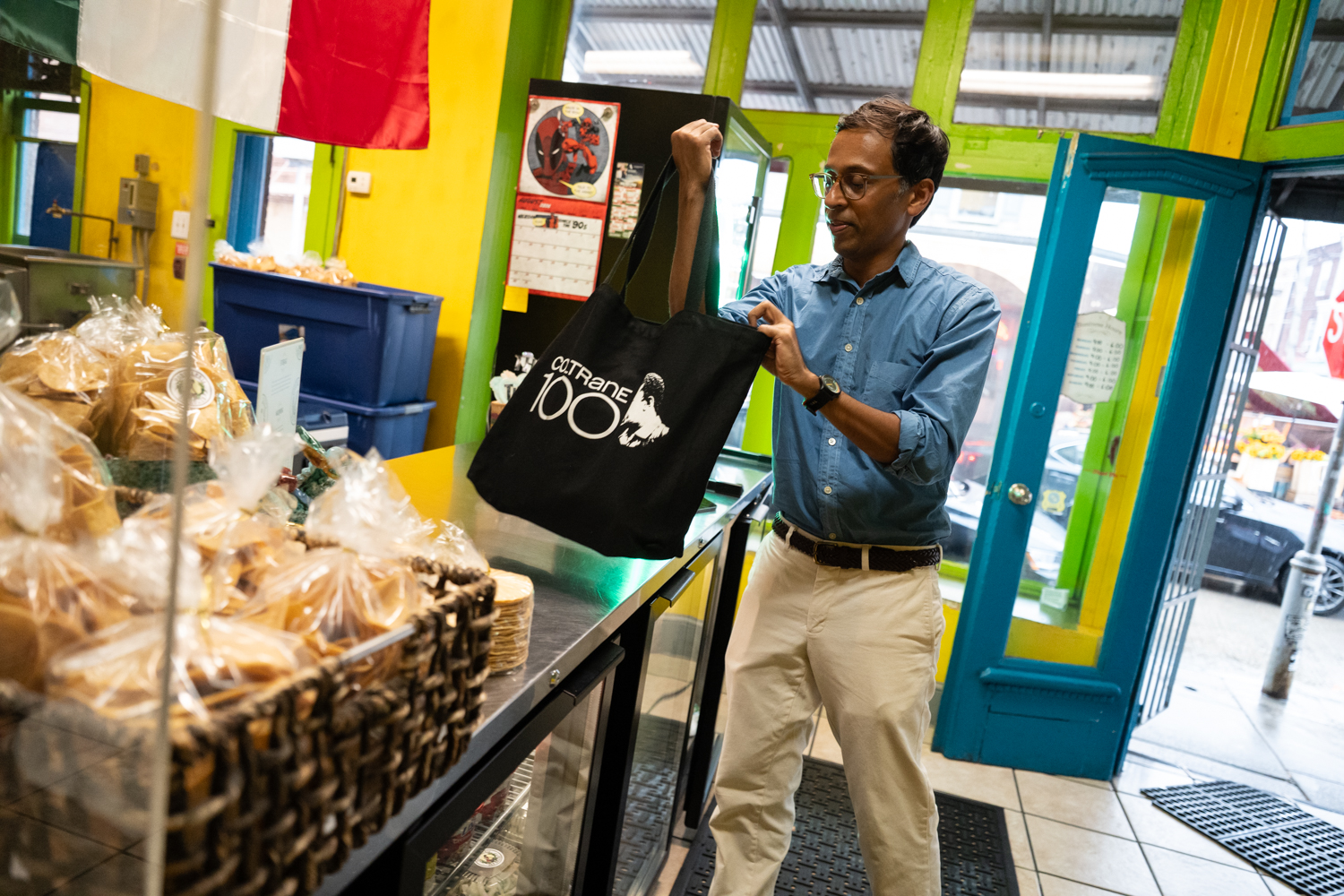
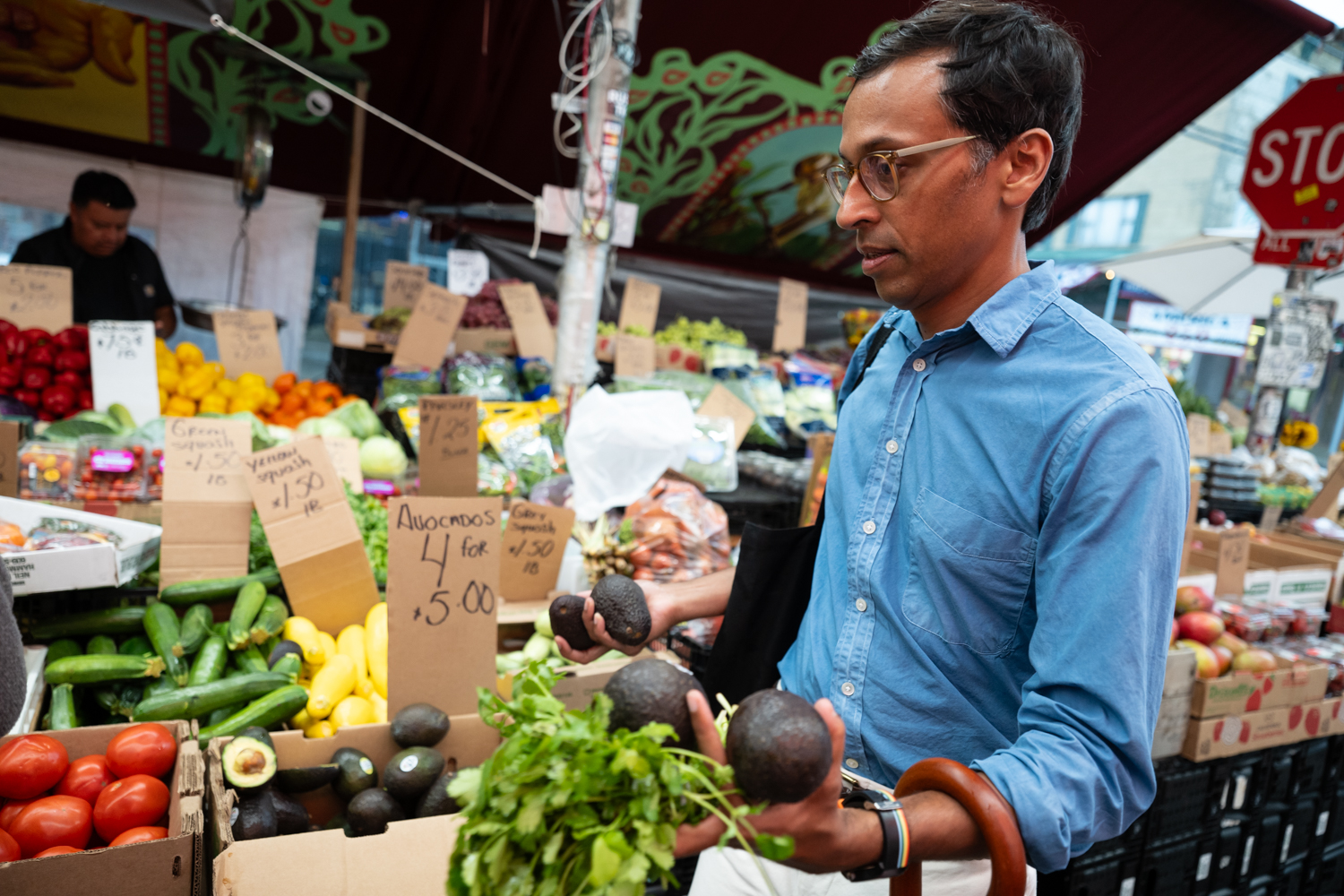
    He lives in the Italian Market with his wife and two young children. On his perfect Philly day, he buys fresh tortillas, strolls down Fabric Row, and plays a game at the Philadelphia Museum of Art inspired by the Surrealists.

    State Sen. Nikil Saval lives in the Italian Market with his wife and two young children. Erin Blewett / For The Inquirer

    5:30 a.m.

    I’m up slightly before my children. It’s a magic hour and I try to go for a run. My favorite route at that hour is to go up Fifth Street to the Ben Franklin Bridge, and then over the bridge to Camden and back. You get the best view of the city on the way back.

    7 a.m.

    My kids are up. We’ll make coffee and put breakfast together at home. We’re usually supplementing that with another coffee at some point. I’m a partisan supporter of Shot Tower Coffee in Queen Village. I feel like everyone gathers there — there have been times when it’s so populated that we will defect to Gleaners Cafe in the Italian Market, which is warm and friendly.

    9 a.m.

    My son has been taking golf lessons through First Tee at the Walnut Lane Golf Club, which is a public course in East Falls. I’m not a golfer, I have no interest. But he’s gotten into it. First Tee is really diverse.

    It turns out to be this nice morning ritual. He’s chipping balls with a bunch of kids, we sit at the snack bar with our younger son while he colors. We read the newspaper, and he eats a pretzel, because that’s naturally what you have for breakfast.

    Nikil Saval buys tortilla chips and beans at Tortilleria San Roman in the Italian Market. Erin Blewett / For The Inquirer

    11 a.m.

    Then we’ll go to Headhouse Farmers Market. We’ll get the lonsa from Aaji’s, a local brand. It’s Indian tomato relish, and it’s amazing. I give those out as Christmas gifts to my colleagues in the Senate.

    We’ll get chips and pico de gallo from Tortilleria San Roman, tortillas from Casa Mexico. We’ll get other produce from Charlie’s and pasta from Claudio Specialty Foods.

    12 p.m.

    We travel by SEPTA to the Art Museum. They have an Art Kids program, where we drop off our younger son to do an art project.

    Then we’ll spend an hour and a half with my older son in the galleries. We’ve developed this game that came out of the Surrealism exhibit. We’ll do an “exquisite corpse,” where someone draws the top third of a drawing, and then someone does the middle third, but you don’t look. Then you unfold the paper at the end and see what you come up with.

    Each of us will choose a sculpture or a painting to draw as one section.

    Nikil Saval buying produce in the Italian Market. Erin Blewett / For The Inquirer

    2 p.m.

    Next we go to South Kensington. There’s a really good vegan Puerto Rican place there, Casa Borinqueña. We also love the falafel from the Al Amana Grocery store that’s attached to the Al Aqsa mosque. They’re the best in the city.

    3 p.m.

    We take a post-lunch stroll on Frankford Avenue. We visit the Philadelphia Record Exchange, and Lot 49 Books on Girard Avenue, which is awesome.

    Then we take the 57 down to Fourth Street, Fabric Row. It’s one of these great commercial corridors because it maintains everything that’s historic, but over time it has integrated new businesses that are of a piece, like Approved Textiles. They sell really amazing products, especially this brand of Palestinian soap that we buy there. Yowie has awesome designers for goods as well as clothes. Brickbat Books has great records and an extraordinary selection of books.

    Nikil Saval leaves Tortilleria San Roman in the Italian Market with his groceries. The state senator loves to cook. Erin Blewett / For The Inquirer

    6 p.m.

    We get a babysitter and order from Tamalex, a Mexican restaurant in our neighborhood. We have a go-to order of nachos that the kids like.

    6:30 p.m.

    We love Mish Mish. It’s a good place to go with friends and get lots of things. I’m vegan, and there’s always something exciting there.

    8 p.m.

    Then we go see performing arts, anything that’s unexpected. We’re members of the Film Society, so we’ll go to a “Surprise 35!″ showing. Once a month, they’ll show a movie on 35 mm film; you don’t know what it is until it starts. We’re in a good age of repertory film in the region — the Philm Club newsletter is a good resource.

    We go to shows at Solar Myth, where they have free jazz. We also have an Opera Philadelphia subscription. That’s always novel and shocking. They’re frequently new productions. You pay $11. The audiences are totally transformed.

    10 p.m.

    If we had the energy for a post-all-of-this drink, I would go to Southwark. It feels boisterous, but private in this way where you can have a conversation. The bartenders are incredibly welcoming.

    The conversation has been edited for clarity and brevity.

  • She borrowed $11,000 from her 401(k) to transform a ‘total dump’ in South Philly | How I Bought This House

    She borrowed $11,000 from her 401(k) to transform a ‘total dump’ in South Philly | How I Bought This House

    The buyer: Tessa Maropis, 29, property manager for her family’s realty business in Texas.

    The house: An 896-square-foot rowhouse in South Philly with three bedrooms and one bath built in 1923.

    The price: Listed for $280,000; purchased for the same.

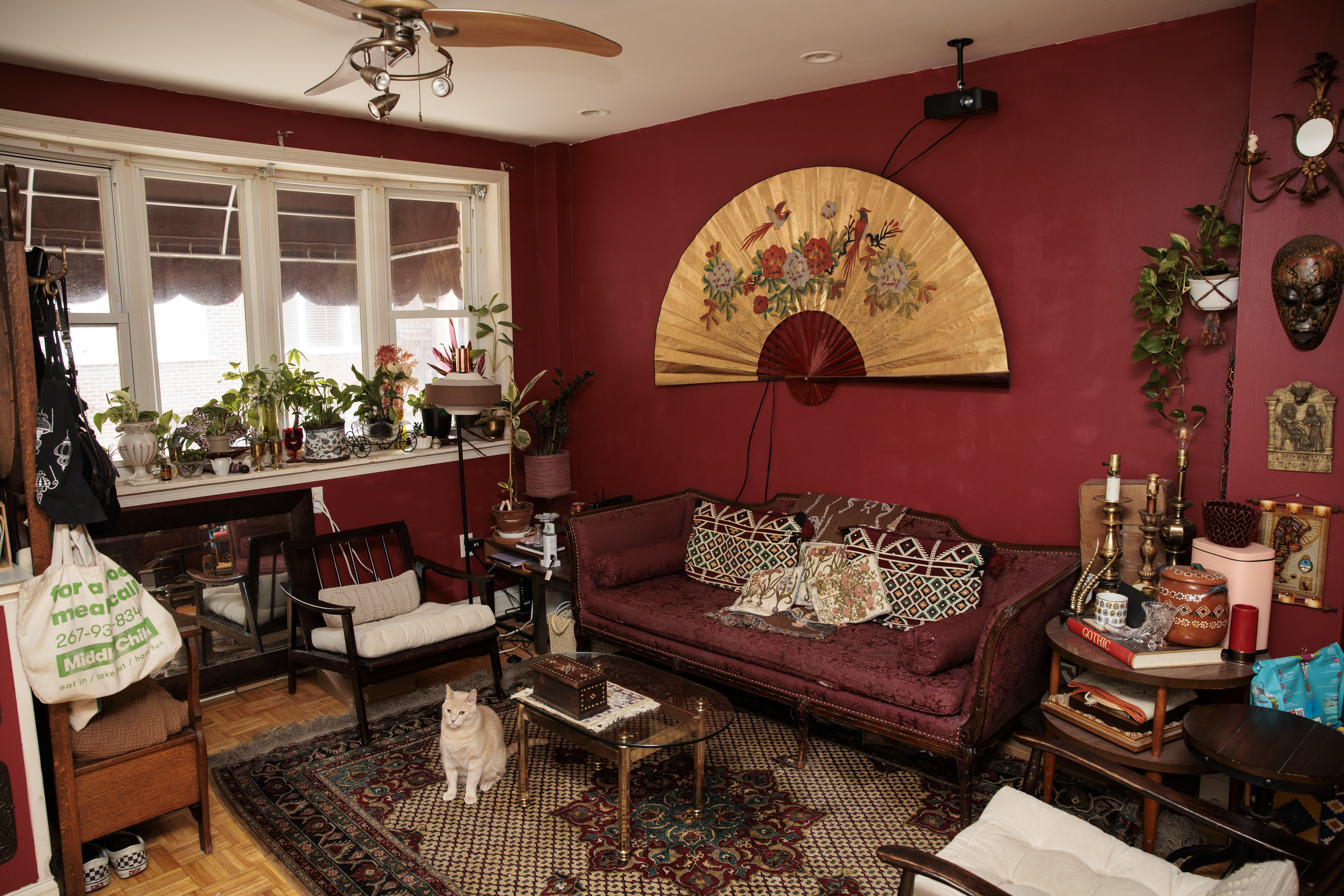
    Maropis knew her mahogany and silk couch would fit perfectly in the living room. Monica Herndon / Staff Photographer

    The agent: Salvatore Emma, Exit Elevate Realty.

    The ask: Maropis moved to Philly from Austin, Texas, in 2022 for a job, bringing her then-boyfriend with her. They signed a 15-month lease in South Philly but broke up after five months. Then they kept living together.

    When the lease finally ended, Maropis wanted to start fresh. She hoped to find a rental with a bathtub and a private outdoor space that retained its original details. She didn’t want millennial gray or a sleek Ikea remodel.

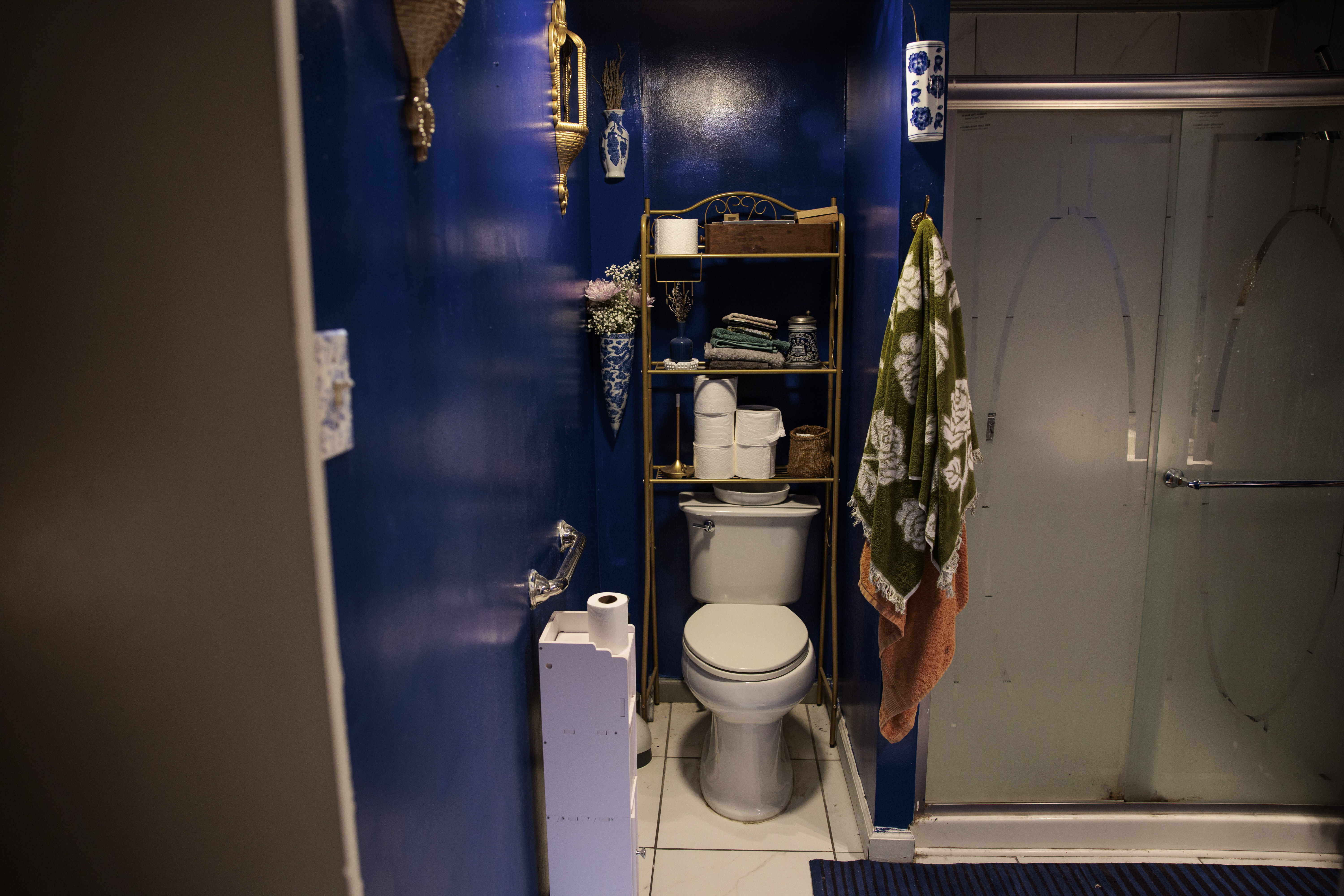
    The bathroom at Maropis’ house. Monica Herndon / Staff Photographer

    She also knew she wanted to stay in the 19147 zip code. A frightening incident had left her committed to the area: Two weeks after arriving in the city, Maropis was drugged at a bar and left near her house, she said. A good Samaritan found her and drove her safely home, unharmed.

    “As much as something terrible happened,” she said, “it showed me how surprisingly gentle and kind the community here was.”

    Maropis said she “lucked into the best community” in South Philly. Monica Herndon / Staff Photographer

    The search: Maropis had bad luck on the rental market; the apartments she liked kept getting snapped up. As her search dragged on, she found what seemed like a perfect house, but the owners were offering only a short-term lease because they planned to sell soon. Not wanting to move immediately, Maropis looked into buying the house. She prequalified for a mortgage but didn’t have enough cash to make the monthly payments affordable.

    It dawned on her that buying could be a real option if she found a less expensive place.

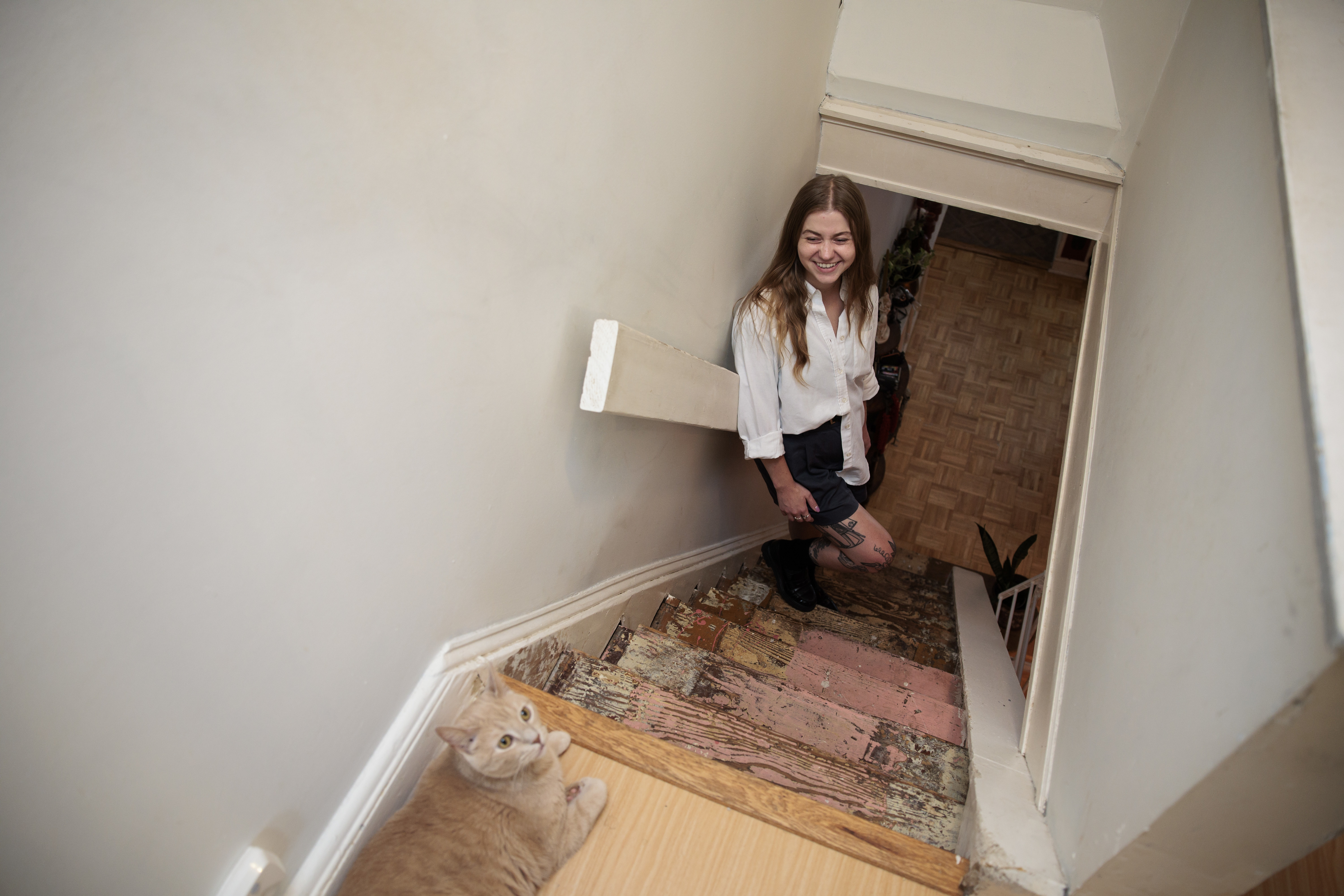
    The appeal: The first house her agent showed her had attracted little interest. It was filthy; the stairs and second floor hallway were covered in poorly maintained blue shag carpeting from the 1960s, and there were holes punched in the smoke-stained walls.

    Maropis especially loved the original bamboo parquet floors in the living room. Monica Herndon / Staff Photographer

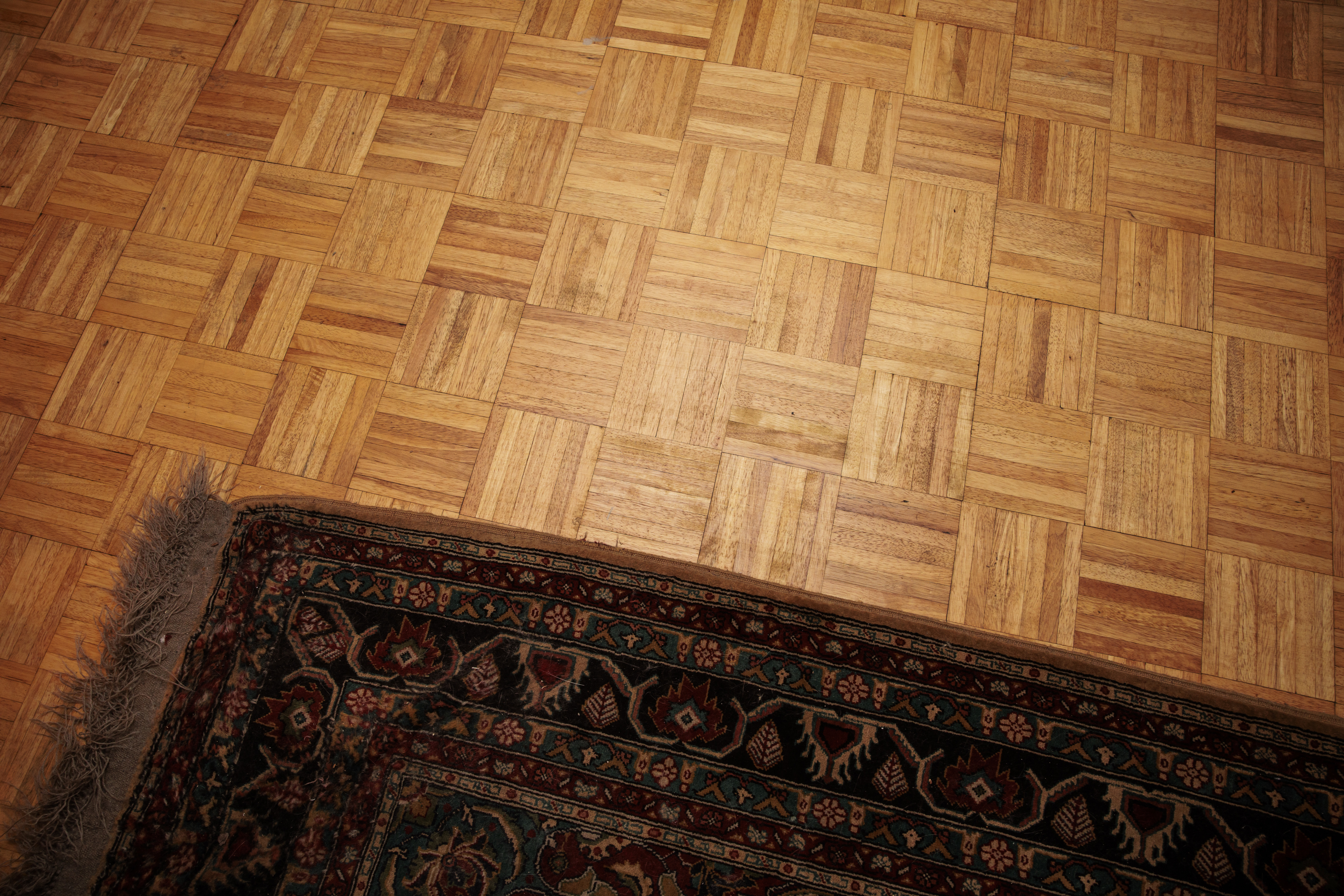
    “It was a total dump, so every person who looked at it hated it,” Maropis said. Yet right away she loved the wooden radiator covers, which looked like Victorian mantelpieces with brass grates, and the bamboo parquet floor in the living room. She could already picture a place for her mahogany and silk couch.

    She had grown up fixing houses, and she thought she could manage about 99% of the problems herself.

    “It had great bones and just needed somebody to love it a little bit,” she said. “The first time I toured it, I had a little tingle of the feeling that maybe I could actually live here.”

    The radiators have wooden covers with brass grates. Monica Herndon / Staff Photographer

    The deal: From the outset, Maropis knew she was in a good position to negotiate because the owners wanted to sell quickly. Her agent was in the same brokerage as the seller’s agent, so they were both incentivized to make it work.

    Maropis describes the stairs as the bane of her existence. Monica Herndon / Staff Photographer

    She also had leverage because of the state of the house. The inspection revealed lead pipes in the basement, a furnace that was leaking carbon monoxide, and a foundation partly chewed through by termites.

    The house had a reverse mortgage so the sellers did not want to budge on the purchase price. But Maropis negotiated a $15,000 seller’s assist, which went partly toward her closing costs and partly toward her down payment. She visited twice more before deciding to buy.

    Plants fill a corner shelf. Monica Herndon / Staff Photographer

    The money: Maropis’ decision to buy was clinched when she learned she could withdraw money from her 401(k) to put toward her down payment. For three years she had been working for the consulting company GLG, contributing 7% of her salary to her 401(k), with an equivalent company match.

    “I always considered my 401(k) Monopoly money because I don’t really think my generation will ever be able to retire,” she said. She ultimately withdrew $11,000 from her retirement account to buy the house.

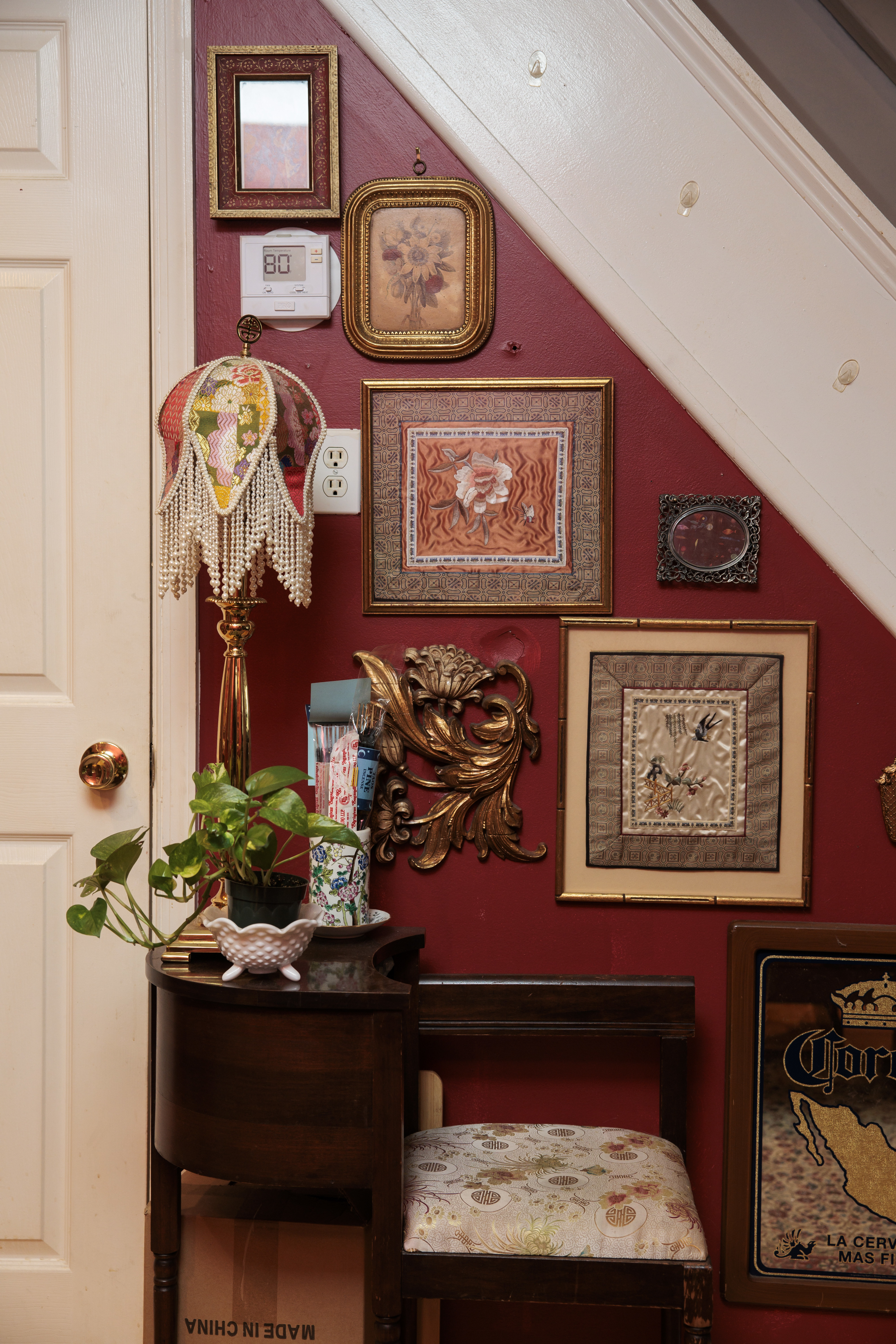
    Maropis described her style as Victorian modern; she felt the house had an “old-school feel.” Monica Herndon / Staff Photographer

    She then used her end-of-year bonus to put down an additional $5,000, bringing her down payment to 6%. She secured a Federal Housing Administration (FHA) loan for the rest, with an interest rate of 6.2%. Because of the seller’s assist, she paid only $2,100 in closing costs.

    She wanted to keep her monthly costs under $2,000, but ended up paying $2,200 per month until she refinanced in winter 2024, bringing her monthly payments down to $1,800.

    The move: Maropis closed on the house at the end of March 2023, two days after her 26th birthday.

    She moved in two weeks later, with the help of Broad Street Movers and her dad, who had flown in from Texas.

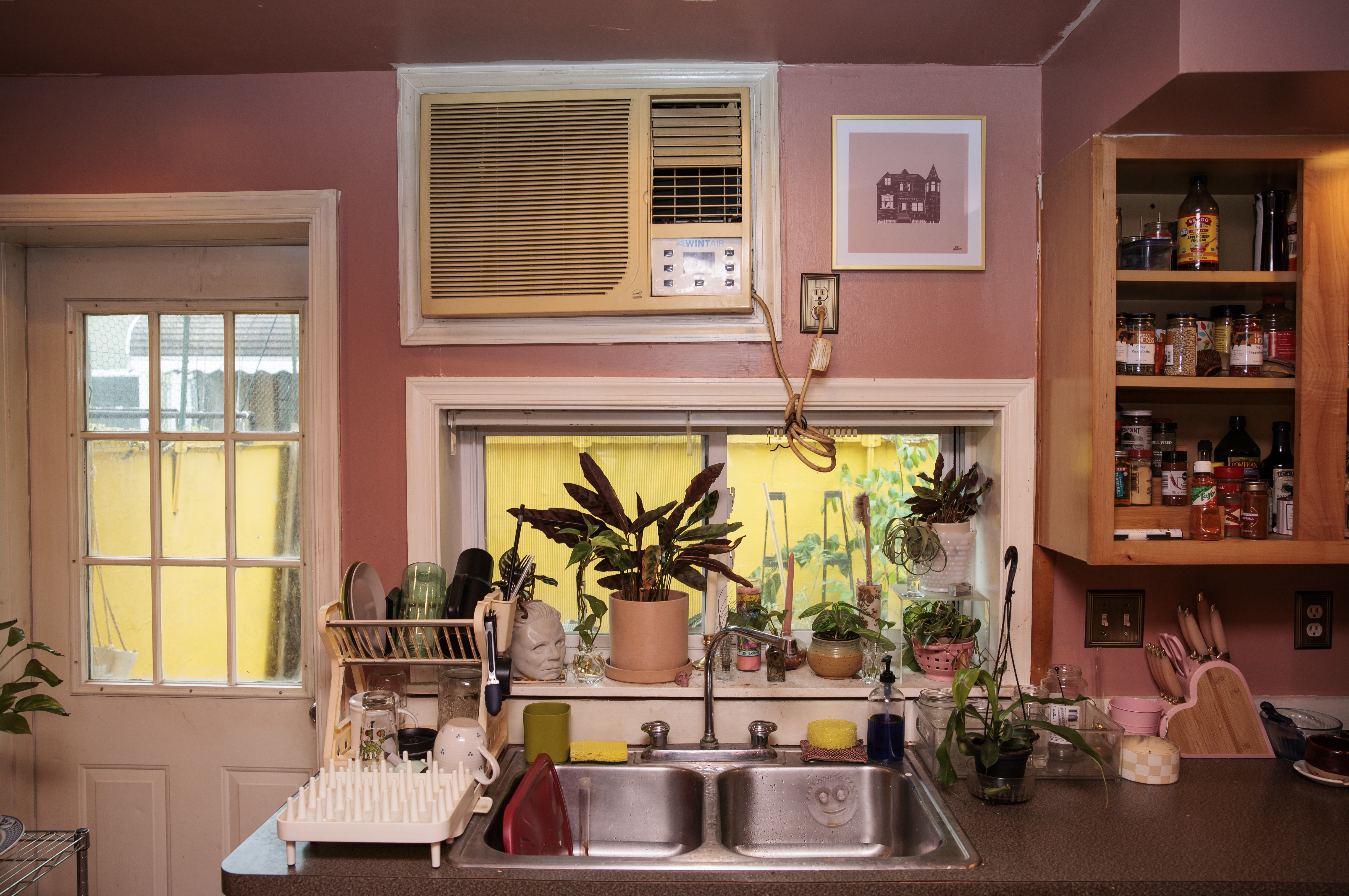
    Maropis said her next project is a renovation of the tiles, countertops, and appliances in the kitchen. Monica Herndon / Staff Photographer

    Life after close: Maropis’ life as a homeowner began with hours of scrubbing. She hired a contractor to tear out the carpets and replace them with luxury vinyl plank, but he did a shoddy job, and the vinyl is already peeling.

    Three months after moving in, she was laid off, which scuttled some of her financial plans. She had aimed to pay back her 401(k) from her salary that same year but instead owed a small tax penalty.

    Still, she’s thrilled with her home and the community it brought her. Her now-husband moved in with her in 2024, and they share two cats, Daddy and Little Cat. Grumpy’s Tavern is nearby, and she says the dive bar regulars are like her neighbors.

    Her next big project will be renovating the kitchen, replacing the counters, tiles, and appliances.

    “The progress of this house,” she said, “is one of the things I absolutely love the most.”

    Did you recently buy a home in the Philadelphia area or South Jersey? Share the story of how you did it. Email Inquirer real estate reporters at properties@inquirer.com.