Philadelphia’s fiscal watchdog said this week that a recent city review identifying thousands of property owners cashing in on tax relief programs they are ineligible for may have only scratched the surface of the problem.
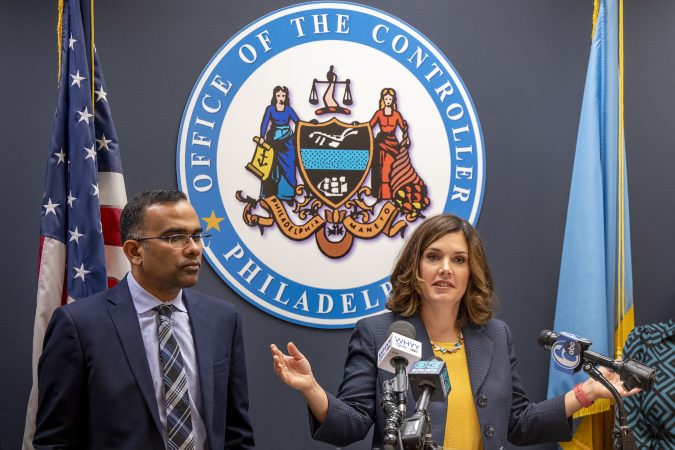
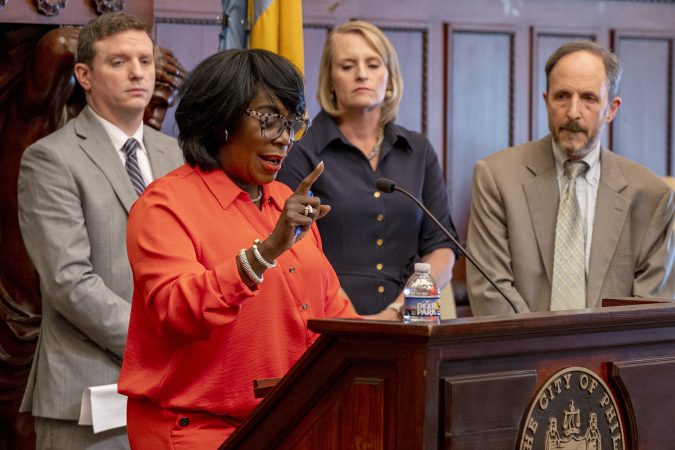
In a report released Wednesday, City Controller Christy Brady said investigators in her office had identified about 58,000 properties that are receiving the city’s popular homestead exemption tax break and may not be eligible.
That is far more than the 22,000 properties that Mayor Cherelle L. Parker’s administration reviewed in a two-year probe that officials said last week led to more than 13,000 property owners being kicked off tax relief programs in which they were fraudulently enrolled. The Philadelphia Department of Revenue said those owners will be charged back taxes totaling about $30 million in additional property tax revenue for the city and the cash-strapped Philadelphia School District.
But Brady’s report suggests the city could recover millions more in owed tax revenue. Her report says the city should review an additional 36,000 properties, an investigation that could double the money the city is owed annually to $60 million.
“Over a five-year budget, that’s a remarkable $300 million for our schools and vital city services,” Brady said in a news release.
Christian Crespo, a spokesperson for the revenue department, said in a statement that the agency’s tax benefit review unit conducts continuous compliance reviews to identify potentially ineligible properties.
Crespo cautioned that the controller identified thousands of properties with “potential risk factors,” which do not alone establish that a homeowner does not qualify for a tax exemption.
He said more than 8,000 exemptions in the administration’s initial review were deemed legitimate, meaning “a homeowner can have an indicator of potential fraud and still be eligible.”
“Revenue appreciates the Controller’s continued focus on program integrity and welcomes the opportunity to review the findings presented in the report,” he said.
The city’s homestead exemption is by far the most popular tax break offered. The free program allows for property owners who live in their homes to deduct the first $100,000 from their property’s assessed value, saving homeowners up to $1,400 a year.
About 250,000 property owners receive the exemption, for which residents must enroll to take part. Investigators in the city controller’s office found that more than one in five participants may not be eligible, including some with mailing addresses differing from the address of the property receiving the tax break.
The review identified properties with other red flags, including more than 8,000 property owners receiving the exemption whose mailing addresses are listed as outside Philadelphia.
Some were even more brazen: For example, 67 properties legally deemed vacant were receiving the exemption, totaling nearly $100,000 in annual lost revenue, Brady’s office said. In another case, one business owner received an exemption on 15 different residential properties.
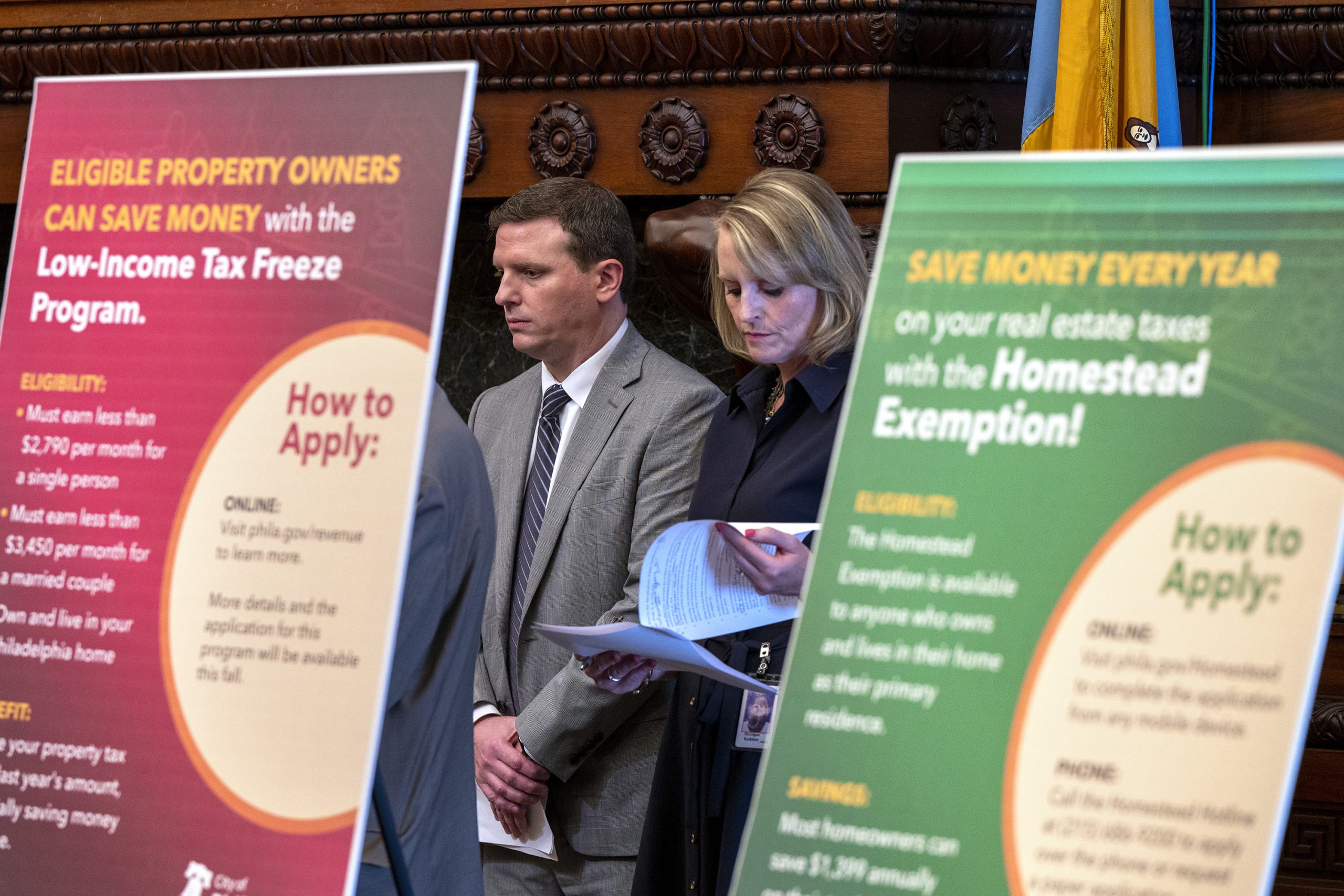
James Aros, Jr. (left), Chief Assessment Officer at the Office of Property Assessment, and Revenue Commissioner Kathleen McColgan (right) attend a Mayor Cherelle L. Parker press conference at City Hall on Monday Aug. 5, 2024, as her office prepares to release the first citywide real estate reassessment in two years.Tom Gralish / Staff Photographer
Parker administration officials have said that recovering lost revenue is a priority, especially given the school district’s financial position. The public school system is facing a $300 million structural deficit and the school board recently voted to close 17 schools.
The district is the only one in Pennsylvania that cannot legally increase taxes to generate revenue. Property tax revenue in the city is split, with 56% going to the school district and the remainder into the city’s accounts.
The current property tax rate is 1.3998% of assessed value.
Homeowners who were removed from the homestead exemption program as part of the city’s review were mailed two notices and provided an opportunity to produce evidence of their eligibility. They may still appeal the decision.
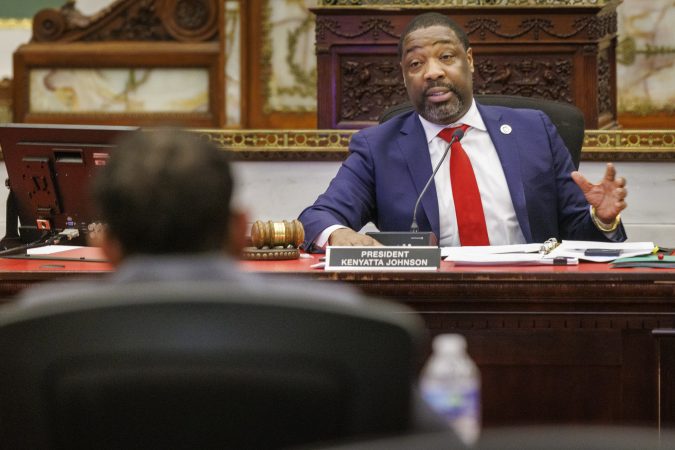
The Philadelphia School District is about to face significant new scrutiny, with City Council President Kenyatta Johnson asking for a sweeping performance audit of the school system’s management and operations.
City Controller Christy Brady has agreed to the request, which came via a letter in recent weekssigned by all 17 Council members, Johnson’s office told The Inquirer. The comprehensive review will go beyond the audit Brady’s office performs annually, delving into areas such as staffing and outside contractors.
Council laid out no deadline for the audit but made clear it is expecting the results in time for next budget season, which will begin in the new year and ramp up in the spring.
The district, one of the largest in the United States, has a $4.6 billion budget, which funds education for 113,000 students in 213 district schools and 65,000 in 81 charters. About $2 billion of that money comes directly from the city.
“While the SDP is subject to regular financial statement audits that examine the accuracy of financial reporting and compliance with applicable accounting standards, this request seeks a performance audit focused on evaluating the efficiency, effectiveness, and management of financial and operational practices, including budgeting decisions, resource allocation, internal controls, and long-term fiscal planning,” Johnson said in a statement Thursday.
The news comes during a period of heightened tensions between Council and the district, spurred by members’ frustration over the school board’s move to close 17 schools and a separate $300 million structural deficit that took Council by surprise.
Last week, at a news conference where several members “begged” the district to come to the table to negotiate over school closings, Councilmember Curtis Jones Jr. said Council has “tools in our tool belt that we will use” if the board does not change its mind about some building closures.
Jones has sponsored legislation to hold hearings on creating an independent financial authority, like the Pennsylvania Intergovernmental Cooperation Authority, to oversee the district’s finances.
Council sources told The Inquirer that there is no indication that the district has conducted malfeasance, but that given the billions that flow to the district from city coffers, Philadelphia officials want a closer accounting of how the money is being spent.
After the board voted to begin the closure process in April, multiple members of the public also called for increased financial scrutiny of the district.
Reginald Streater, the school board president, said in a statement Thursday that the board and district will work with the controller’s office “to continue strengthening our financial processes and procedures.”
Streater said the audit squares with the board’s approach to governance.
“Good governance is not about assuming we have all the answers; it is about asking the right questions, using evidence to guide decisions and being willing to improve. We look forward to understanding the proposed scope of the audit and ensuring that the examination is constructive and focused on helping the district work well for students, families and educators,” Streater said.
Superintendent Tony B. Watlington Sr. stressed the district’s academic strides, history of audits with no material weaknesses, and moves to solidify its credit rating.
Frustration over a budget deficit and school closings
Johnson, in his statement, said that the audit will reassure Council that “resources are being managed effectively and operations are functioning efficiently by the SDP,” and that he believes its findings will help inform priorities for next fiscal year’s budget.
This year’s budget season was chaotic.
After Mayor Cherelle L. Parker introduced her initial budget, Watlington ordered $225 million in cuts, including some school cuts, with 300-plus teachers, counselors, and climate staff slated to lose their positions.
The problem, Watlington underscored in remarks in March, was “not because we’re not good stewards of the dollars, but because of historic underfunding.” (The district achieved its highest credit rating ever under Watlington, who has said he wants to be the superintendent to retire the system’s structural financial issues permanently.)
Philadelphia’s school system cannot raise its own revenue but instead depends on the city and state to bankroll it, unlike every other district in Pennsylvania.
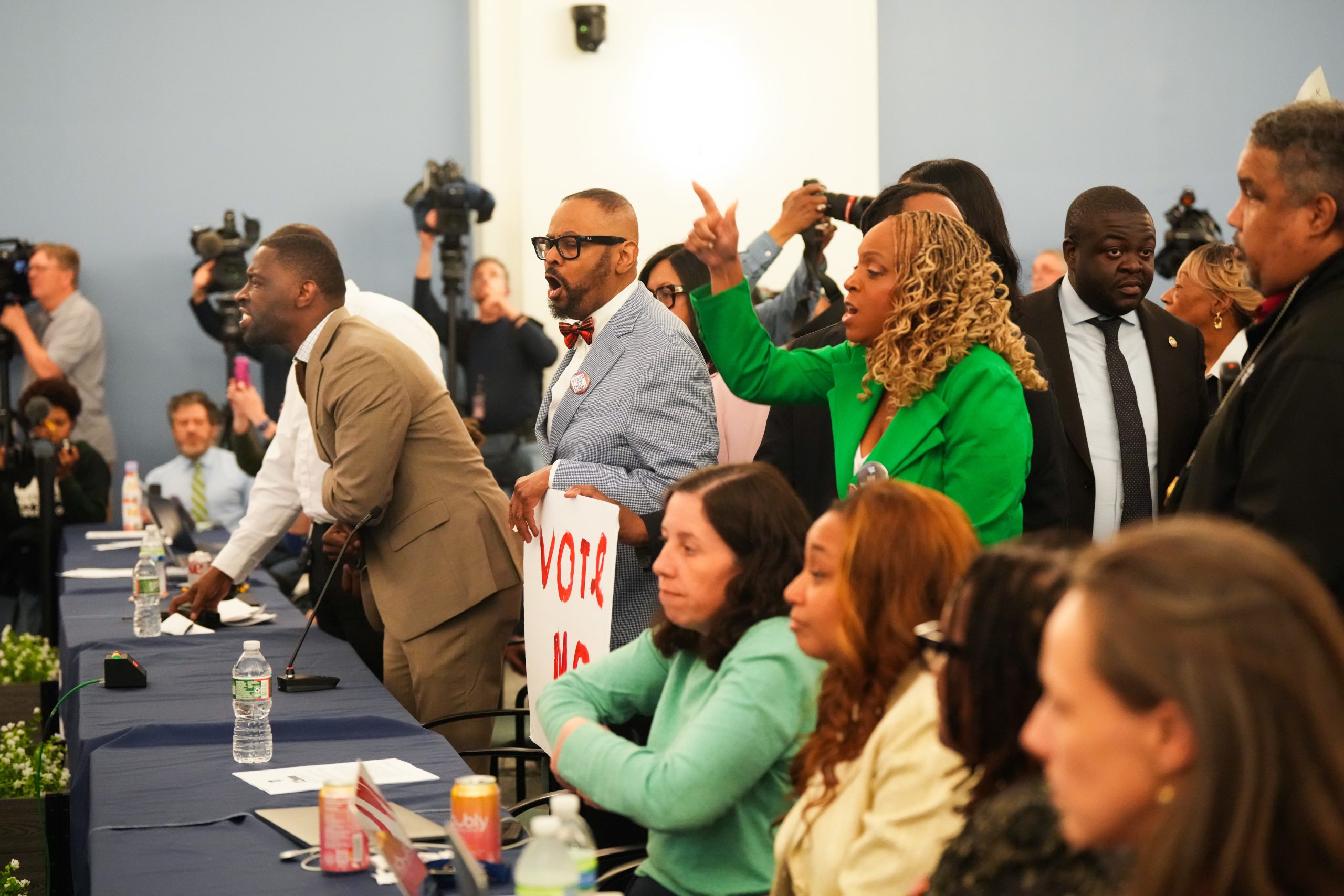
(Left to Right) Councilmembers Isaiah Thomas, Curtis Jones Jr., and Jamie Gauthier protest at Thursday’s school board meeting as the board prepared to vote on the facilities plan.Jessica Griffin / Staff Photographer
In April, several Council members took the dramatic step of repeatedly disrupting the school board’s vote in an attempt to get it to reconsider the closures of a handful of schools, including Lankenau and Robeson High Schools and Overbrook Elementary.
The school board proceeded anyway — Council approves school board members, who are appointed by the mayor, and the city’s budget, but had no formal authority over the closures.
But it quickly became clear that some Council members remained frustrated with the school system and were looking for a way forward.
Councilmember Isaiah Thomas has said he will not vote to reconfirm any school board member who voted for the closings; he and others have also said they believe it is time to rethink the school board’s governance structure.
The city, as a primary funder of the district, needs a clearer picture of what is going on, they say.
“Given the SDP’s current budget challenges, requests for additional public revenue, and recent proposals involving school closures and operational reductions, City Council believes a comprehensive performance and management review is warranted to ensure transparency, accountability, and informed public decision-making,” Johnson said in the statement. “The City of Philadelphia has a responsibility to ensure that all available revenues, expenditures, obligations, and funding strategies have been thoroughly reviewed before significant decisions affecting students, families, educators, neighborhoods, and public assets are implemented.”
What will the special audit examine?
City Controller Christy Brady (second from left, standing next to Mayor Cherelle L. Parker) is seen in this January file photo. Alejandro A. Alvarez / Staff Photographer
Brady, in a statement, said the audit will “ensure resources are being managed effectively, operations are functioning efficiently and students are receiving the support they deserve. We’ve been encouraged by the SDP administration’s response to our previous audits and the steps it has taken to implement our recommendations. We expect this audit will continue that collaborative approach and continue to produce positive results for the benefit of students, educators and taxpayers.”
Council has asked Brady to go deep, from probing into the current structural deficit and the projections used to get there to the status of Philadelphia Parking Authority revenues, both expected and received.
Brady will also look at the district’s use of reserves and its administrative costs, and she will explore “the effectiveness and efficiency of administrative and operational expenditures, including central office functions, non-instructional spending and other costs not directly tied to classroom instruction.”
She will look into how the district’s budgeting methods and long-term planning square with industry best practices, and examine contract management and consultant utilization to try to find areas “for improved accountability, transparency, and cost efficiency.”
Brady is also charged with a deep dive into the financial effects of forthcoming school closings, and the potential ramifications of the closings on surrounding neighborhoods.
Albert Gury, 74, of Philadelphia, lifelong painter, former chair of the painting department at the Pennsylvania Academy of the Fine Arts, award-winning lecturer at the old University of the Arts and other institutions, author, mentor, community advocate, and cat rescuer, died Thursday, June 25, after a long illness at the Hospital of the University of Pennsylvania.
Born in Peoria, Ill., Professor Gury came to Philadelphia in the early 1970s after a professor at St. Louis University advised him to enroll at the Pennsylvania Academy of the Fine Arts. He did, and he never left.
He earned a four-year certificate in painting at PAFA in 1976 and, starting in 1980, taught painting, drawing, figure drawing, anatomy, art history, and art education at PAFA. He was chair of the painting department from 2000 to 2022 and creator of several innovative art education programs.
He painted portraits of young gun violence victims for PAFA’s Lost Dreams on Canvas exhibit and founded and directed the academy’s popular after-school free art program for high school students in 1994. In 2026, he earned a community recognition award from the Philadelphia School District.
“This is a way for us to reach out to the community and really try to do something beneficial,” Professor Gury told The Inquirer in 2005. “We train them as if they are college freshmen, not high school kids. It raises the bar on the quality of their work.”
Professor Gury also lectured for decades at University of the Arts, the Fleisher Art Memorial, the Barnes Foundation, and elsewhere.He instructed students at Jefferson Medical College on anatomy, consulted for the city’s mural arts program, and ran art seminars and painting workshops regionally and in Scotland and Croatia.
He earned a master teacher’s award from University of the Arts and a master’s degree in fine arts at the University of Delaware in 1992. Former students called him “unfailingly caring, and supportive, and smart,” and “very generous in sharing his wealth of knowledge” in online tributes. One said: “What a great example to us all.”
In a tribute, PAFA officials said: “We remember Al not only for what he taught but for how he taught: with patience, conviction, humor, discipline, and an open heart.”
Professor Gury (center) draws and explains the nature of the human form to students at Jefferson Medical College in 2007.
In the studio, Professor Gury painted colorful figures, landscapes, still life, and portraits. His portrait Alice of Dunk’s Ferry hangs in historic Christ Church in Old City, and he showed at the Philadelphia Museum of Art, the F.A.N. Gallery on Arch Street, the National Academy of Design in New York, the U.S. Capitol in Washington, and elsewhere.
He especially enjoyed painting abstract landscapes, he said in a 2014 video, because “they are pure.” He told the Daily News in 2000: “I like to paint the things I love. I like the intimacy of small paintings. I move the paint around and put together elements in nature even if they don’t exist that way. I like to imagine things rather than just paint what is in front of me. Sometimes it becomes a little surreal.”
In 2000, critic Anne R. Fabbri said in the Daily News that many of Professor Gury’s paintings are “united by his layered brushwork, tonal depths, and the creative act that transforms color, line, and composition into a life-enhancing work of art.” He was honored by the Philadelphia Sketch Club in 2017.
In his neighborhood, Professor Gury advocated for better housing and fostered rescue cats in his home. He volunteered at the Philadelphia Animal Welfare Society and was named its 2015 volunteer of the year. The group renamed its kitten maternity ward after him.
“We are searching for words to express just how extraordinary Al was, what a profound difference he made, and how much we loved and appreciated him,” colleagues at PAWS said in a tribute. “We hope he knew what an immense impact he made, and how much better and more beautiful the world is because of him.”
Albert Francis Gury was born Oct. 23, 1951. A family friend introduced him to painting when he was young, and he spent many days roaming the galleries at the Art Institute of Chicago while his father worked downtown.
He earned a bachelor’s degree in fine arts at St. Louis University in 1973 and won scholarships, grants, and honors as both a student and a professor at PAFA. He collected quilts and rare books on art.
Professor Gury loved animals, especially cats.Philadelphia Animal Welfare Society
In 2018, his apartment building on Chestnut Street burned down in an early-morning fire. Several of his cats and parakeets perished, and much of his artwork was lost. “The whole thing is just tragic,” he told The Inquirer then.
Friends called him “a classic caregiver” and a “protector of the underdog.” Longtime friend and colleague Reza Ghanad said: “If you were feeling down, he would pick you up.”
Friend and colleague Morgan Hobbs said: “He noticed students who could have gone unnoticed without him. He had a special gift for that.”
Professor Gury is survived by several relatives.
His ashes are interred at Christ Church Burial Ground. A celebration of his life is to be held later.
The guidelinesfor how students are admitted to Philadelphia’s magnet schools are changing.
Philadelphia School District officials announced a number of shifts Wednesday that will be put into place for the application window for the 2027-28 school year, opening this fall.
It is not yet clear when the school district will open the 2027-28 application process for its 37 criteria-based schools.
The changes are:
Only students’ grades in math, English, and science will count toward students’ eligibility for criteria-based schools. Social studies grades will no longer count.
The zip codes that guarantee admission to four of the city’s top magnet schools to students are shifting. Children who live in 19132, 19133, 19135, 19138, 19140, or 19141 who meet academic criteria are now guaranteed admission to Masterman, Central, Carver High School of Engineering and Science, or Academy at Palumbo.
New to the list are 19138 — Germantown — and 19141 — sections of North Philadelphia including Logan and East Oak Lane.
No longer on the preference list are 19121 — parts of North Philadelphia including Brewerytown and Sharswood — and 19136, Holmesburg and Torresdale.
The zip code list is recalculated annually based on which sections of the city were most underrepresented for admissions to Philadelphia’s selective schools.
Students who attended a prekindergarten program at a district school now get preference for admission to that school’s kindergarten class.
Students who attended a district summer career and technical education program now get preference for admission to a career and technical education program.
More students will receive individualized review, or consideration for admission to criteria-based schools, as long as they meet eligibility requirements for any of the five schools they apply to. Individualized review applies to any student who is an English learner, or who has an Individual Education Plan or qualifies for a federal 504 plan.
The change is “to allow more students with disabilities or who are English learners to access magnet schools,” officials said.
The families, backed by lawyers from America First, an organization formed by Stephen Miller, a top aide to President Donald Trump, alleged that the school system had shifted to a “blatantly unconstitutional, race-based” admissions system.
Each of the families had children who met academic criteria for the magnets of their choice in 2022, but who did not get in. The litigation came after Philadelphia overhauled its special-admission system in the name of equity.
The settlement forced no changes to the process, which has evolved since its inception in 2021. Though zip code preference is still in place, the district no longer uses a computer-scored writing exam. It gives some sibling preference, and it guarantees admission to high school programs attached to magnet middle schools as long as students maintain high grades.
The school year started Wednesday for the 500-plus new Philadelphia School District teachers and counselors who will welcome 113,000 students back to school on Aug. 24.
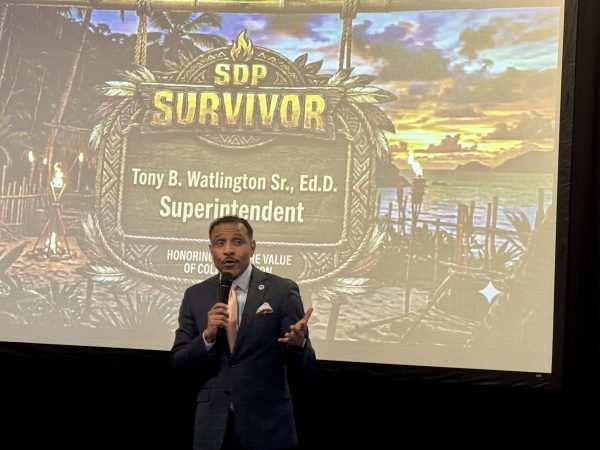
Inside the cavernous gymnasium at School of the Future in Parkside, Superintendent Tony B. Watlington Sr. pumped up the 575 new hires, telling them he was honored they chose Philadelphia.
District officials said that they have 94% of teacher jobs filled system-wide, with just under three weeks to go before the beginning of the school year. The district has 100% of principal jobs filled.
The lowest “fill rate” for school-based jobs across the system is 77%, for building engineers, followed by special-education assistants at 79%.
Some of those 340 teachers, counselors, and other school-based workers whose jobs were cut have been restored to the positions they were initially directed to leave; others have taken new jobs within or outside the system, or are “over-appointments” who do not yet have permanent Philadelphia assignments.
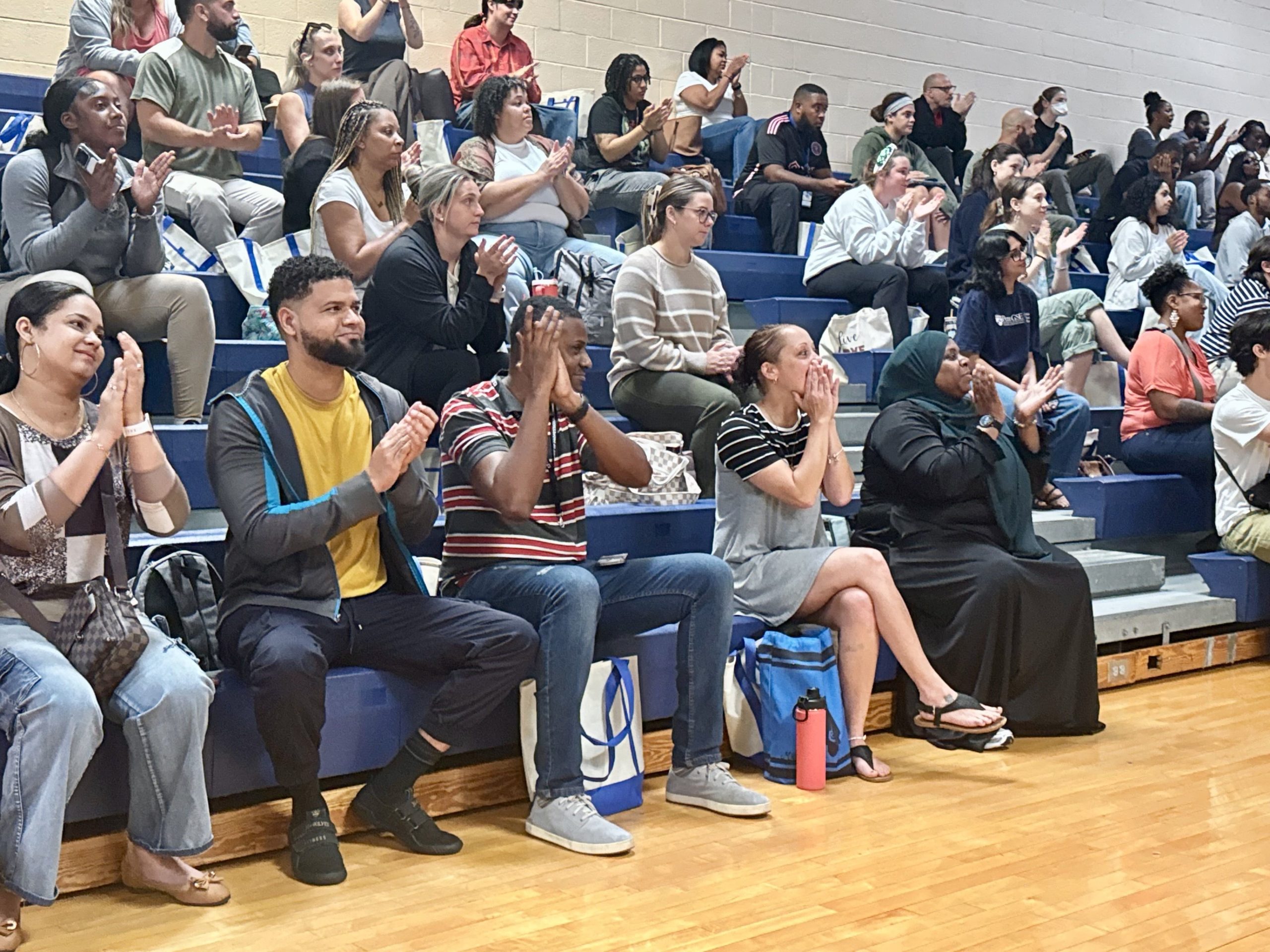
New teachers and counselors applaud a performer at the Philadelphia School District’s 2026 new hire orientation at School of the Future in Parkside.Kristen A. Graham / Staff
‘They saw potential’
Debora Carrera told the new teachers she would not have risen to become Mayor Cherelle L. Parker’s chief education officer if not for people like them.
Carrera, the daughter of parents who did not finish elementary school, grew up as one of six kids in a single-parent family. Sometimes she was hungry. Sometimes she was unable to bathe.
But “there were teachers who didn’t use those things as obstacles or barriers,” Carrera said. “But you know what they saw? They saw talent, and they saw potential in me.”
Research shows that the top factor influencing a child’s academic progress is having a well-supported, stable teacher. And the first few years of educators’ careers are crucial: Nearly half of all teachers leave the profession within the first five years.
Don’t give up, Carrera said.
“Being a teacher is the most amazing incredible profession on the planet — don’t let anyone ever tell you differently,” she said. “Are you going to feel like you’re great every day? No? But guess what: Stick with it.”
After the pep talk, Kwaku Ansah was charged up.
Ansah, who will teach students with disabilities at Philadelphia Military Academy, a small district high school in North Philadelphia, has a decade of teaching in his native Ghana under his belt. He knows there will be tough days in Philly classrooms, Ansah said.
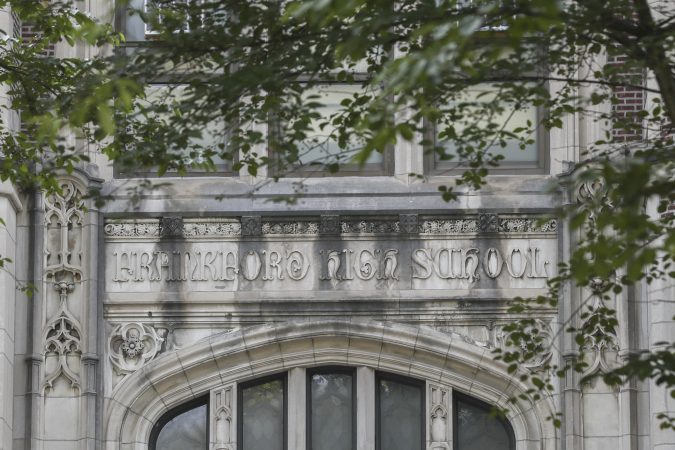
For the first time in more than a decade, Frankford High is getting a new principal.
Michael Calderone, who has served as Frankford’s principal since 2015, told the staff on Friday that he’s leaving to become the interim principal of Dobson Elementary in Manayunk.
Calderone’s move comes after the district conducted an audit of what some staff said was a “toxic” climate at the school and serious allegations about Calderone, including that he struck a student and retaliated against teachers who spoke out against him.
District officials did not comment on the results of the climate audit, but typically do not discuss personnel matters.
Calderone said, in a letter sent to Frankford staff and obtained by The Inquirer, that the move to Dobson “holds tremendous personal and professional significance for me” because he began his career there, as teacher and dean.
“Returning to lead the school where I first developed my passion for educational leadership feels very much like a homecoming and has always been a dream of mine,” Calderone wrote.
Noah Tennant, the interim associate superintendent for secondary schools, said in an email to Frankford staff that Calderone “is a school leader with a proven track record of improving student outcomes, leading school transformation, and building collaborative systems. His leadership and contributions to the Frankford High community will leave an indelible impact on all he served.”
Mary Jackson, a retired Philadelphia principal who’s served as Frankford’s interim leader in the past, will be “guest principal” while the district searches for a replacement for Calderone, Tennant said in the letter.
“In the coming months, the district will initiate a process to identify the next permanent principal who will continue the important work underway and ensure every student and staff member is supported,” Tennant wrote.
A Frankford climate audit
The first public hint of controversy happened in early 2026, when Frankford’s budget, like spending plans across the school system, was shrunk because of district-wide cuts. Calderone ordered a number of teachers’ jobs cut out of seniority order, a move that was protested by the Philadelphia Federation of Teachers, and ultimately overturned.
The PFT and teachers say the targeted educators — whom Calderone said he moved to advance academic goals — were ones who had spoken out against him, they told The Inquirer.
At the same time, a number of current and former Frankford staff raised allegations about significantculture issues at the school, and the district conducted the audit.
Michael Calderone is shown in his office at Frankford High in this 2023 file photo.Tyger Williams / Staff Photographer
According statements from multiple staffers made to the district and PFT and obtained by The Inquirer, Calderone, who earned citywide recognition for his work at the comprehensive high school, was a volatile leader who forced out many capable staffers.
Some staff said the principal screamed at adults and students on multiple occasions. They also said he made improper requests, including asking teachers to provide grades for students in classes they did not teach.
Others said he spoke openly about intentions to get rid of staff members who were not allies, to force out staff who he believed were opposed to him.
Two staffers also told the district that Calderone punched a student who had assaulted multiple Frankford staffers.The staff did not report the assault when it happened because they were afraid for their jobs, they said.
Other Frankford staffers agreedthat there was widespread discord at the school, but say those who opposed Calderone contributed to the toxicity.
Arthur Steinberg, PFT president, who had previously said that he did not believe Calderone was fit to run Frankford “or any school at all,” in a statement Monday commended the Frankford staff who brought concerns to the administration.
“Thanks to their bravery and persistence, Frankford will be a healthier, more positive place to learn and work for all,” Steinberg said. “It is our hope that whoever is assigned to replace Dr. Calderone is able to reset the working environment for staff, so that Frankford is once again the warm, welcoming school community it was before he arrived.”
‘Thank you for your trust’
Calderone, in his letter to Frankford staff, said he was particularly grateful for the community’s resilience during a tough time — the hulking main Frankford building was shut for multiple years because of asbestos issues, with students scattered between multiple buildings. He said he was also proud of Frankford’s aviation and hospitality programs, launched during his tenure at the school.
“Thank you for your trust, your partnership, and the memories we have shared,” Calderone wrote. “I have every confidence that Frankford High School will continue to thrive and achieve great things. I wish you all the absolute best. Frankford will always be the ‘Home of Champions’. But never forget: every champion was once just a contender who refused to give up. I ask you to carry that relentless, unbroken spirit with you into every new day. Thank you for letting me walk this path alongside you.”
Calderone will be moving to a very different school than the one he’s led for 11 years.
Frankford educates about 900 students in its massive Oxford Avenue building. Dobson, a K-8 on Umbria Street, educates about 250, though both have large populations of students with disabilities.
Dobson’s former principal, Khloe Williams-Lawani, accepted another job in the school system.
Superintendent Tony B. Watlington Sr. has announced a flurry of Philadelphia School District shifts in recent weeks, from promotions and principal changes to additional responsibilities for some of his senior officials.
Changes are common at this point in the school calendar, but this year is particularly busy. The district’s 113,000 students return to school August 24.
Baldwin is the former longtime human resources executive in Prince George’s County, Maryland, where she was credited with lowering teacher vacancies and recruiting a more diverse educator workforce.
Watlington, in a release, said Baldwin was “battle-tested” and collaborative.
“Dr. Baldwin brings a wealth of experience and knowledge to the district, as well as a demonstrated track record of effectively staffing schools with high-qualified teachers, increasing the number of Black and Latine educators, and working with union leaders,” Watlington said.
Baldwin officially in her new role on July 27, and will be paid $235,000.
Changes in assistant superintendents, salaries announced
Also announced last week was a new role for Kahlia Johnson, who had worked as deputy chief of talent management and recruitment selection. Johnson, the former principal of Overbrook High, is moving to become interim assistant superintendent for a network of district high schools. Johnson will be paid $197,302.
Johnson replaces Noah Tennant, who was previously announced as associate superintendent for secondary schools. Tomás Hanna, who was associate superintendent for secondary schools, moved over to become associate superintendent for student life and school operations. Hanna will be paid $221,658 per year, and Tennant’s salary will be $215,202.
In other recent changes that the district identified in recent weeks, Brenda Elliott was named deputy superintendent of academic services. Her salary is $285,488.
Michael Farrell, chief academic officer, is paid $221,658. Nathalie Nérée, chief of special education, diverse learners and wellness, has a salary of $221,658. Nyshawana Francis-Thompson, senior adviser for strategic initiatives and innovation, is paid $208,627.
Jamina Clay, assistant superintendent of school management and organization, makes $197,302. Kelly Espinosa, assistant superintendent for Learning Network 4, makes $197,302.
Interim assistant superintendents Wilfredo Ortiz and Lucy Feria, who will run Learning Networks 8 and 9, respectively,will also be paid $197,302 annually.
Additional responsibilities for Watlington deputies
Two of Watlington’s top deputies are also taking on additional responsibilities.
Alexandra Coppadge Wright is now supervising theoperations, externaland community affairs departments. Coppadge Wright, the chief of communications and customer service, was already supervising the Office of Communications, Office of Customer Service, and the Family and Community Engagement Office.
Sarah Galbally, Watlington’s chief of staff, will add the School Transitions Office to her portfolio. Galbally also handles Board Relations, Government Relations, Grants Development, Strategic Partnerships, and Strategic Planning.
Both Coppadge Wright and Galbally are paid $225,096 annually.
Naima DeBrest, a spokesperson for the district, said in a statement that the changes were necessary as the district remains “focused on balancing the budget while recruiting and appointing talented individuals who have a demonstrated track record of improving student outcomes, as we continue to drive towards becoming the fastest-improving, large urban school district in the nation.”
Principal changes
A number of district schools have new principals. They are:
Adaire Elementary, Amanda Strain. Strain had been principal of Waring Elementary.
Bridesburg Elementary, Louis Depa. Depa had been assistant principal at Pennell Elementary.
Clemente Middle School, Regina Barr. Barr had been assistant principal at Bluford Elementary.
Edison High, Albert Sniezevage. Sniezevagehad been assistant principal at the school.
Benjamin Franklin Elementary School, Ryan Sullivan. Sullivan had been assistant principal at Penrose Elementary.
Heston Elementary, Kamia Smith. Smith had been assistant principal at Heston.
Lawton Elementary, Michelle Todd-Coleman. Todd-Coleman had been assistant principal at Forrest Elementary.
Memphis Street Academy, Wayne Diggs. Diggs had been assistant principal at Mastbaum; Memphis Street Academy is reverting back to district control after being a charter school for years.
Northeast High, Andrew Lukov. Lukov had been principal of Southwark Elementary, he also has experience as a Northeast assistant principal.
Southwark Elementary, Mason Luksch Wilson. Luksch Wilson had been assistant principal at Elkin Elementary.
Bayard Taylor Elementary, Claire Charles. Charles had been assistant principal at the school.
Tilden Middle School, Jessica Culp. Culp had been assistant principal at Comegys Elementary.
Waring Elementary School, Cathryn Anderson. Anderson had been assistant principal at Bache-Martin Elementary.
Philadelphia principals are typically paid between $153,296 and $172,636 annually, with salaries set by union contract. Principals are represented by the Commonwealth Association of School Administrators, Teamsters Local 502.
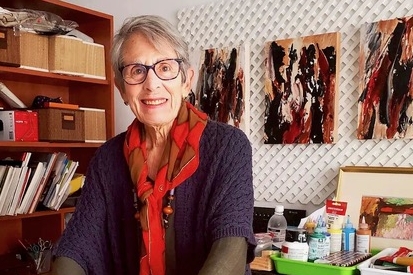
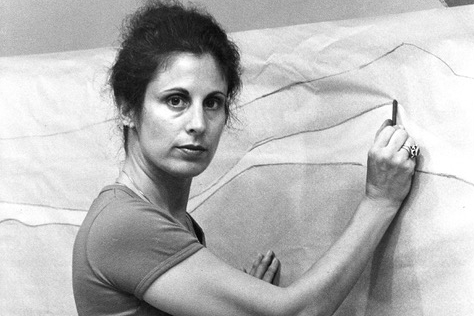
Barbara Gillette Price, 87, formerly of Philadelphia, celebrated painter and designer, former president of Moore College of Art and Design, former dean of Cranbrook Academy of Art in Michigan, former vice president for academic affairs at the Maryland Institute College of Art in Baltimore, fine arts teacher, mentor, and role model, died Friday, April 24, of age-associated decline at a hospital in Granada, Spain.
A lifelong artist and longtime educator, Ms. Gillette Price liked to skip her high school classes in the 1950s and wander around the galleries at the Philadelphia Museum of Art. In sixth grade, she told The Inquirer in 1994, her artistic talent drew attention from the teacher when her drawing of a female form was all too accurate.
She took Saturday classes at Temple University’s Tyler School of Art and the Fleisher Art Memorial when she was young, and earned a scholarship to the old Philadelphia Museum School of Art. She married artist Melville Price in 1957, moved to Tuscaloosa, Ala., in 1958, and earned bachelor’s and master’s degrees in fine arts at the University of Alabama.
She joined Cranbrook Academy of Art in 1978, the Maryland Institute College of Art in 1982, and Moore in 1994. At each stop, she renovated nearby old buildings into studios and galleries, expanded curriculum, and invigorated students with international and innovative programs.
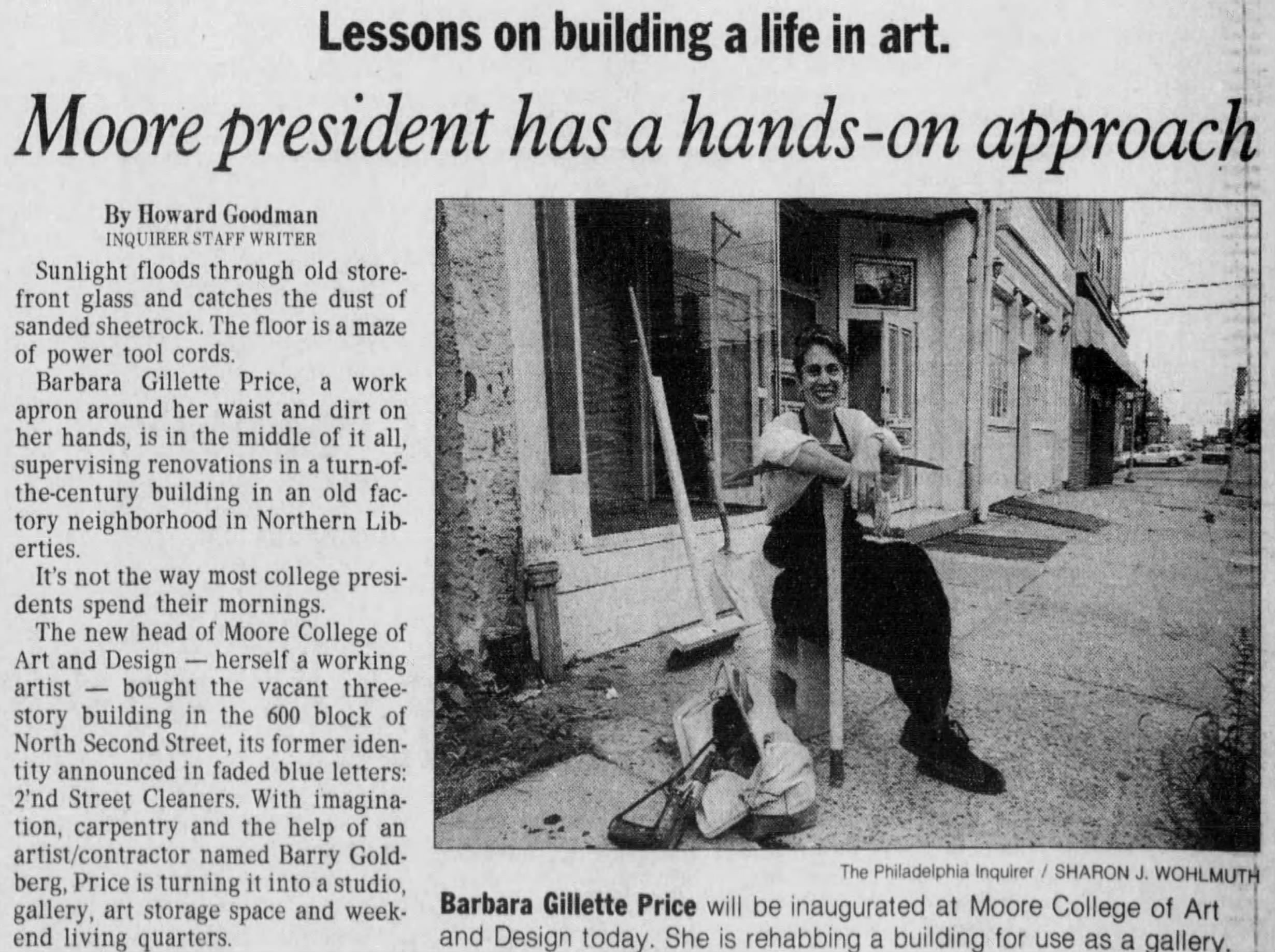
At Moore, she increased enrollment, established a career center, and personally refurbished her three-story studio on North Second Street into a gallery where students exhibited their work and handled logistics and publicity. She also forged working relationships with the Philadelphia School District and other art institutions, supervised an advertising campaign for female artists, and served as a role model for working artists in academia.
“That’s why I think my presence at Moore is a good thing,” she told The Inquirer in 1994.
In 1998, Rochelle Levy, then chair of Moore’s board of trustees, said: “Barbara has really been our ambassador out there. She has set an incredible role model for the students as a woman artist.”
Ms. Gillette Price left Moore in 1998, moved to Spain in 2000, taught art to primary school students, and continued to create and show her work. “Her commitment to arts education helped shape generations of creative thinkers,” former colleagues at Moore said in a tribute. “Her legacy lives on through the institutions she helped strengthen, the students she inspired, and the vibrant body of artistic work she leaves behind.”
Ms. Gillette Price was featured in The Inquirer when she joined Moore in 1994.Newspapers.com
One critic said her work “is of an inherent elegance that emerges from excellent craftsmanship and an intelligent narrative.”
She showed in dozens of solo and group exhibitions in Spain, Philadelphia, Maryland, Michigan, Washington, and elsewhere, and liked to work in the gallery as well as her studio. She painted about nature, light, woman’s perspectives, isolation and fear during the COVID-19 pandemic, and other topics.
“I seek to make the ordinary extraordinary,” she said on her website, barbaragilletteprice.com. “I am inspired by images I accumulate as I travel and view the world about me. This takes the form of remembered landscapes, figurative compositions, and subtle political statements.”
She was active in the Civil Rights Movement in Alabama in the 1960s, worked with the Woman’s Caucus for Art in Washington in the 1970s, and taught ceramics, painting, and drawing at the old Corcoran School of Art and Design in Washington and elsewhere. She belonged to the College Art Association and was on boards at the National Association of Schools of Art and Design, the Philadelphia Art Commission, and other organizations.
She earned grants for her painting and wrote essays and white papers about art. In one paper, she said: “The arts are the humanizing element in the education of the citizens of the 21st century.”
Barbara Amelia Gillette was born June 26, 1938, in Philadelphia. She and her family spent many summers in Atlantic City, and she graduated from Philadelphia High School for Girls.
She took piano lessons, attended Saturday concerts at the Philadelphia Orchestra for years, and hung out with high school boyfriend Edward Cutler and others at jazz clubs and the Gilded Cage coffee shop.
Melville Price died in 1970, and she reconnected with Edward Cutler. They married, had a daughter, Michelle, and lived in Washington. They divorced later, and he died earlier.
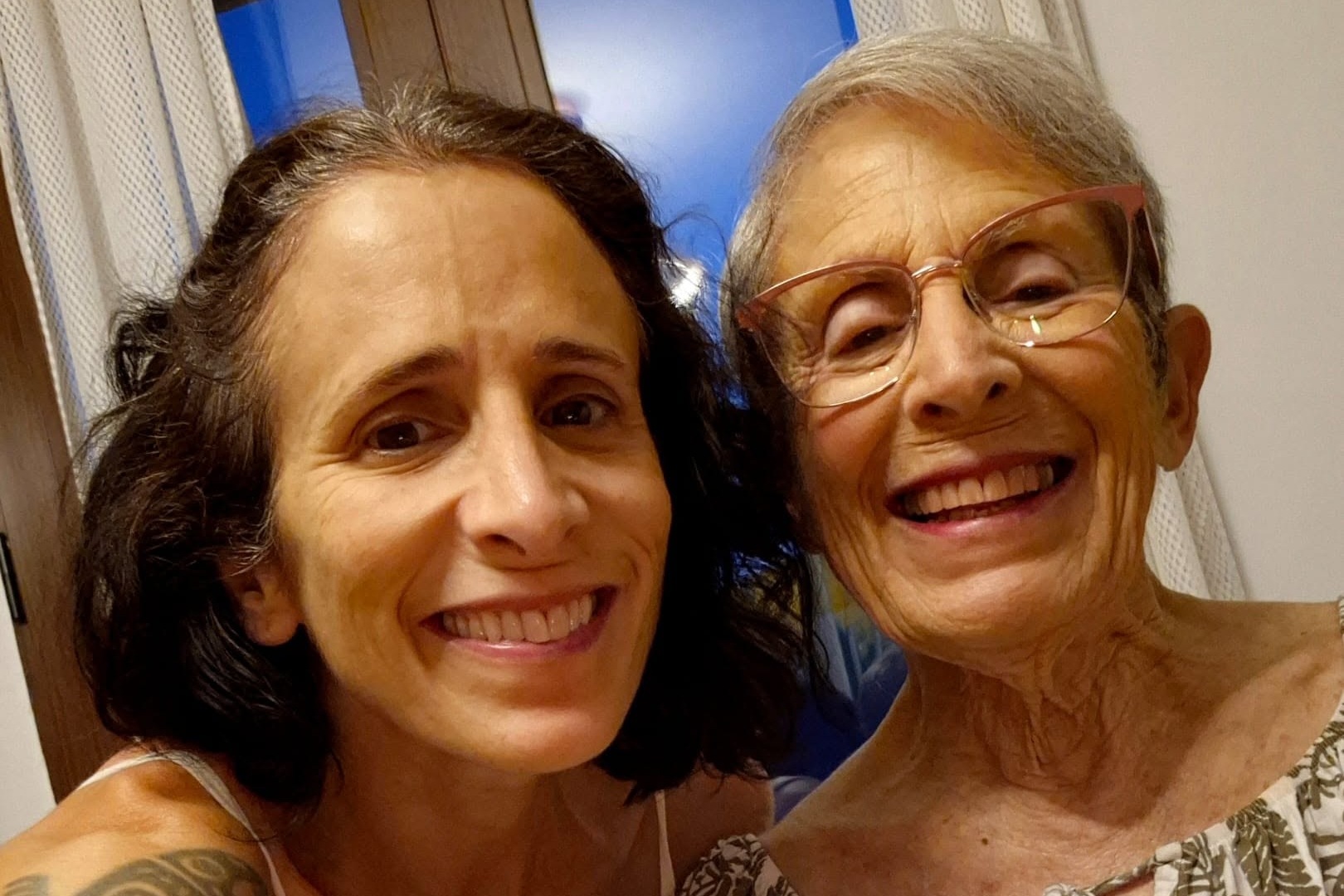
“I consider my mother’s greatest achievement to be the way she showed up as a parent,” her daughter said. “Her artistic legacy can be found in her paintings, drawings, textiles, and exhibitions. Her personal legacy lives on in the people she inspired, mentored, encouraged, and welcomed into her life.”
Ms. Gillette Price created in the galleries as well as her studio.Barbara Gillette Price
In addition to her daughter, Ms. Gillette Price is survived by a son-in-law, Eric Maroldo, and other relatives. A sister died earlier.
A state board that oversees the City of Philadelphia’s finances signed off on Mayor Cherelle L. Parker’s five-year financial plan on Tuesday, despite a structural deficit and significant uncertainty about future federal funding.
The Pennsylvania Intergovernmental Cooperation Authority, which was established in the early 1990s to monitor the city’s finances amid a severe fiscal crisis, must every year approve the five-year budget plan agreed to by the mayor and passed by City Council. The board voted 5-0 to green-light the plan.
In June, Parker and Council agreed to a $7.1 billion budget for the fiscal year that began on July 1, as well as a five-year financial plan in which the city is projected to spend more than it generates in four of those years. This fiscal year, the city is projected to spend about $550 million more than it brings in.
As has been common in recent years, the city’s budget relies on reserves and an existing surplus to avoid a significant deficit. The city is projecting that this year it will have a $364.6 million fund balance, which is the amount of money left over in the city’s general fund after liabilities are accounted for. That balance is set to decline in each of the next five years.
Parker administration Finance Director Rob Dubow said the city is on track to unlock hundreds of millions of dollars in additional revenue once its pension fund is fully funded, a major milestone that is projected to take place in fiscal year 2033.
Also on Tuesday, Alan C. Kessler was unanimously elected to serve as chair of the PICA board after Kevin Vaughn, who has chaired the board for a decade, announced he would not seek reelection to the position. He intends to remain a board member, he said.
Kessler, who has also served on the board for about a decade, is a commercial litigation attorney. He is a prominent fundraiser in the Democratic Party and has long been active in local and national politics.
As for the city’s financial position, board members on Tuesday also discussed potential risks that are largely outside the Parker administration’s control, such as the funding issues that both SEPTA and the Philadelphia School District have faced in recent years. The transit authority has warned of the possibility of debilitating service cuts, and the public school system is borrowing hundreds of millions of dollars just to pay its bills.
Parker had earlier this year proposed implementing a tax on rideshare services to generate about $50 million a year for the district, but Council members rejected her plan.
Administration officials identified existing funding for the district to stave off planned staff cuts. Dubow said Tuesday that cuts were made in each year of the five-year plan to make up for that money, but that the hope is to reach an alternative, recurring revenue generation plan before the cuts would take effect.
The biggest uncertainty for Philadelphia’s finances, the board said, is the federal government and potential policy shifts affecting funding under President Donald Trump. PICA officials warned in a report that while the city has so far sustained only limited losses as a result of slashed grants under the Trump administration, the city “will not be able to absorb federal funding reductions at a greater scale without significant service reductions.”
The city received more than $2.2 billion in aid from the federal government in fiscal year 2024, the most recent data available. More than half that money was for healthcare and other social safety net programs for poor and disabled residents.
The president has repeatedly threatened to cut off federal funding to cities like Philadelphia that are led primarily by Democrats and have relatively permissive local immigration policies. However, those efforts have been tied up in litigation.
A more pressing concern for the city, PICA officials wrote, could be the changes made last year to the enrollment criteria for social programs like Medicaid and the Supplemental Nutrition Assistance Program (SNAP).
Philadelphia is one of the poorest big cities in the nation, and hundreds of thousands of residents rely on government assistance. The Pennsylvania Department of Human Services has estimated that changes to Medicaid instituted under the Trump administration will leave more than 73,000 Philadelphians without coverage by next year.
And, the PICA report warned: Changes to federal programs can have ripple effects.
“The fiscal crisis that precipitated the creation of PICA in the 1990s,” officials wrote, “was in part due to dramatic reductions in federal programs for vulnerable individuals that the City tried to manage but was incapable of replacing.”
School faded as a priority when Simone Smith was a senior at Lincoln High, after her beloved grandmother died.
“I didn’t have no one telling me to get up, go to class, so I missed a lot of school,” said Smith, 18.
Her grades slipped, and she narrowly missed graduating with her class in June. But that near-miss galvanized her.
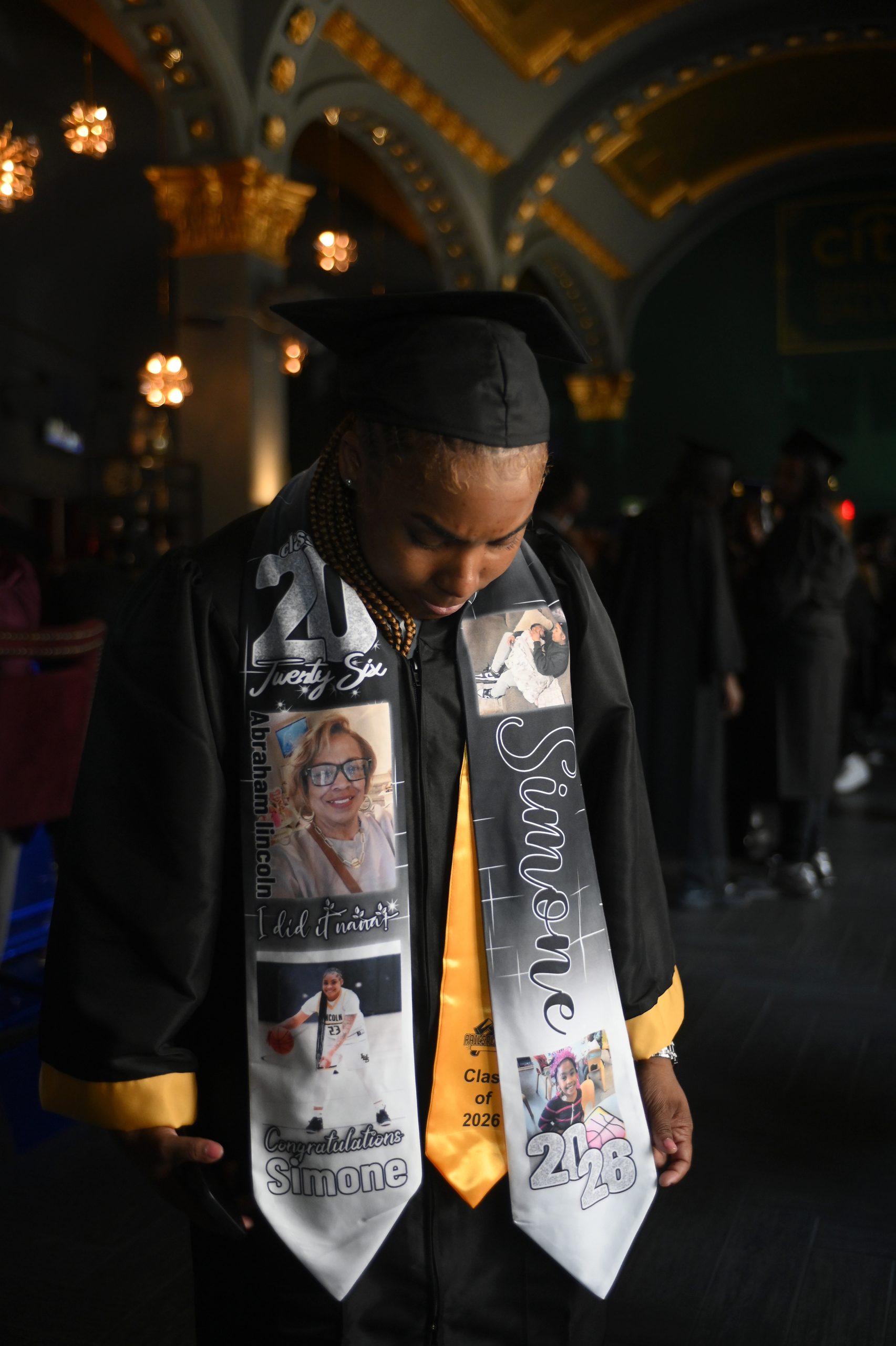
Soon to be graduate Simeone Smith remembers her late grandmother Elodee, in the green room lounge ahead of the 2026 Summer Graduation Ceremony at the Met, on Thursday.Bastiaan Slabbers / For The Inquirer
Summer school “was easy” once she buckled down, Smith said — she completed social science and English requirements, and on Thursday, she collected her hard-won diploma, one of nearly 400 Philadelphia School District students who crossed the stage at summer graduation after earning a handful of credits in summer school.
“This graduation was delayed, but not denied,” author, actor, and poet Jaylene Clark Owens told a packed auditorium at the Met on North Broad Street.
Smith, who wore a custom-made stole honoring her grandmother and will now enroll andplay Division I basketball at Georgia Southern University, was thrilled.
“It just feels great to be able to do this,” she said. “Me and my sister are the only ones that got our high school diplomas — my family has a lot of dropouts. But I wanted to do it for my Nana.”
Soon to be graduates listen to the rendering of the National Anthem and Black National Anthem during the 2026 Summer Graduation Ceremony at the Met, on Thursday.Bastiaan Slabbers / For The Inquirer
The graduation was a boisterous scene of joy and celebration: young people in an array of caps and gowns representing schools from all over the district, some in T-shirts and shorts under their robes, some in party dresses. Families wept, cheered, shouted: “You did that!” There was a steady drumbeat of applause, a sea of flowers and camera flashes, the arms of bursting-with-pride-parents reaching out to touch passinggraduates.
A beaming school board president Reginald Streater said Thursday’s graduation was no less significant or important than the ceremonies that happened in June.
Family members and friends react as graduates celebrates receiving their diploma during the Philadelphia School District’s summer graduation ceremony at The Met on Thursday.Bastiaan Slabbers / For The Inquirer
“You took ownership of your future,” Streater said. “There is never just one path to success. We believe in you, and we can’t wait to see all that you accomplish.”
School Board President Reginald Streater and Superintendent Tony Watlington shake hands with graduates during the 2026 Summer Graduation Ceremony at the Met, on Thursday.Bastiaan Slabbers / For The Inquirer