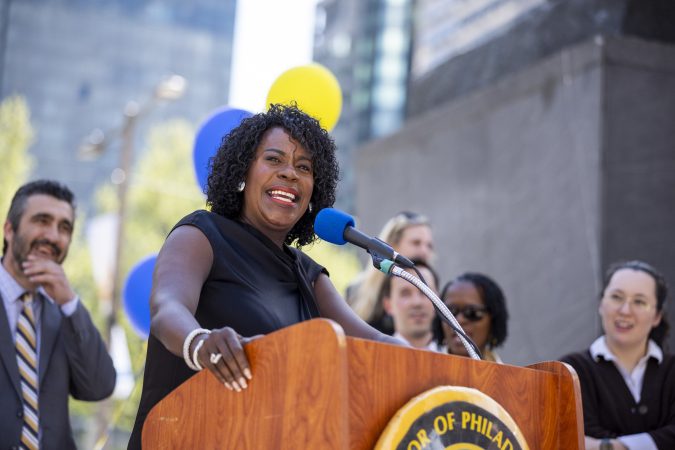
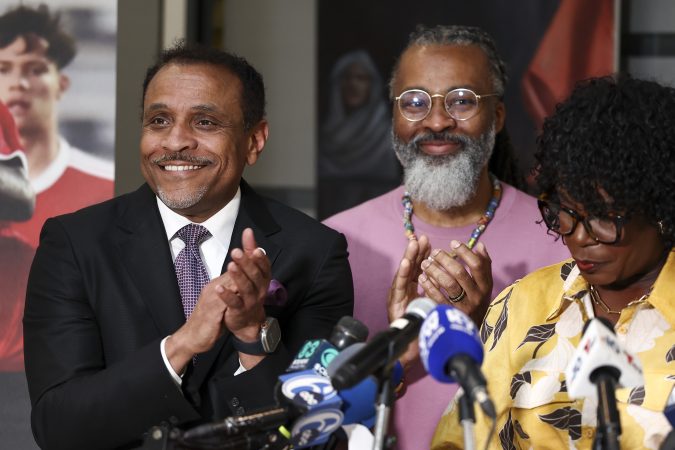
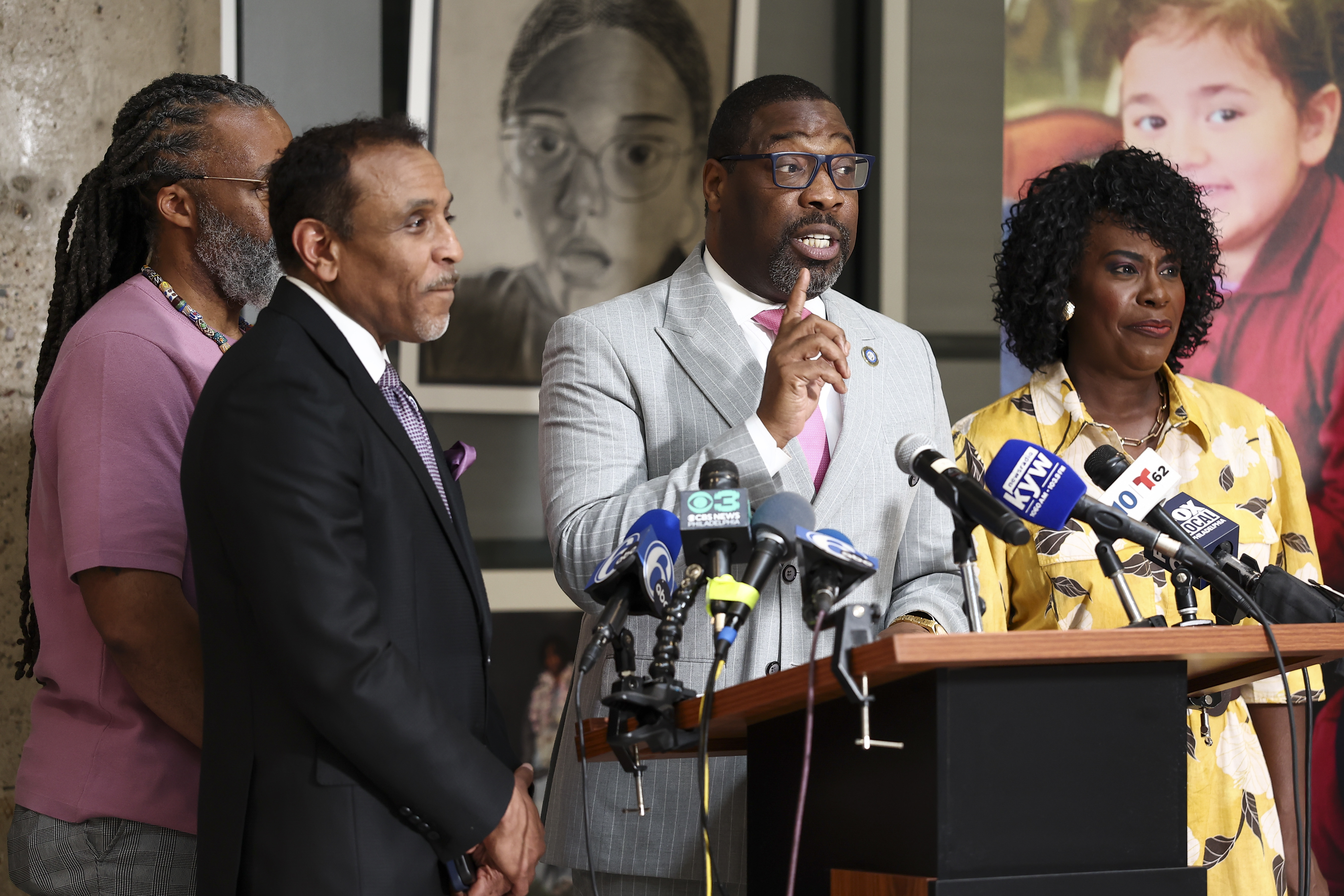
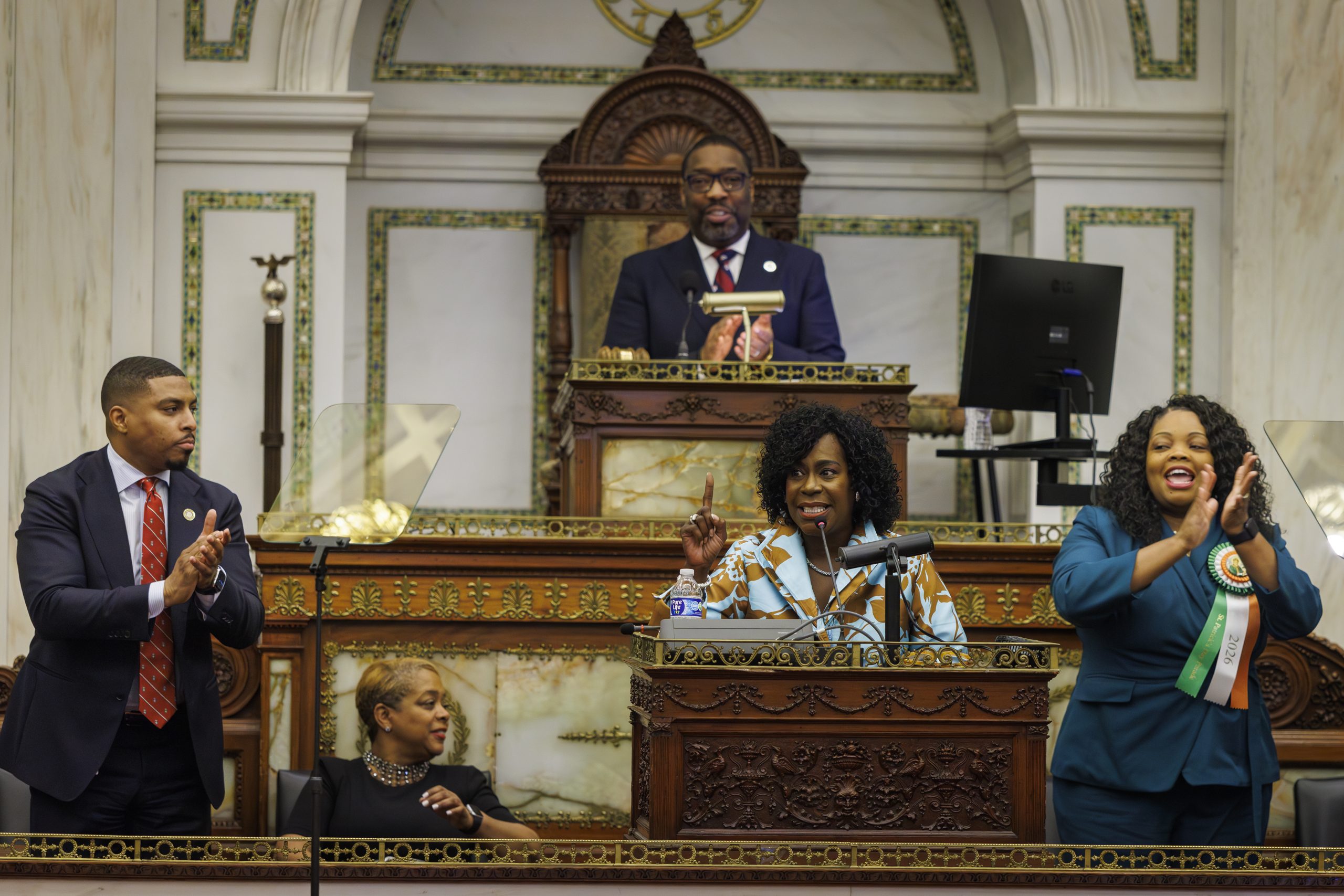
Superintendent Tony B. Watlington Sr. has promised “white-glove treatment” for families and schools affected by a facilities master plan that will close 17 schools and modernize 169 over the next decade. And he appointed a Philadelphia School District veteran to lead the charge.
Shakeera Warthen-Canty, formerly assistant superintendent of school operations and management, was recently named head of the new School Transition Office, tasked with implementing the $3 billion plan remaking schools across the city.
Warthen-Canty and four other employees will work in the new office, which will also pull in as-needed help from departments across the district — school safety, transportation, student placement, facilities, and more.
“We know that this is going to be a big task, but it’s going to be met,” said Warthen-Canty, who’s spent decades in the district as a teacher and principal. “We know there have been some challenges, but we want to make sure our communities and families know that we have a place where you can get answers.”
Warthen-Canty officially assumed the new role Wednesday ahead of the 2026-27 school year, which Watlington has designated as a planning year for schools affected by closures and other major shifts.
Experts in their communities
Initially, the office will focus on schools closing, merging, and undergoing major renovationsin the 2027-28 school year; other projects are slated to happen in subsequent years.
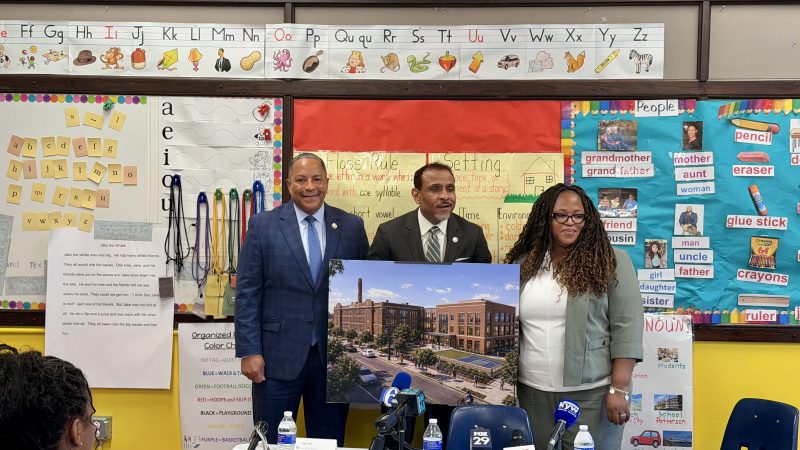
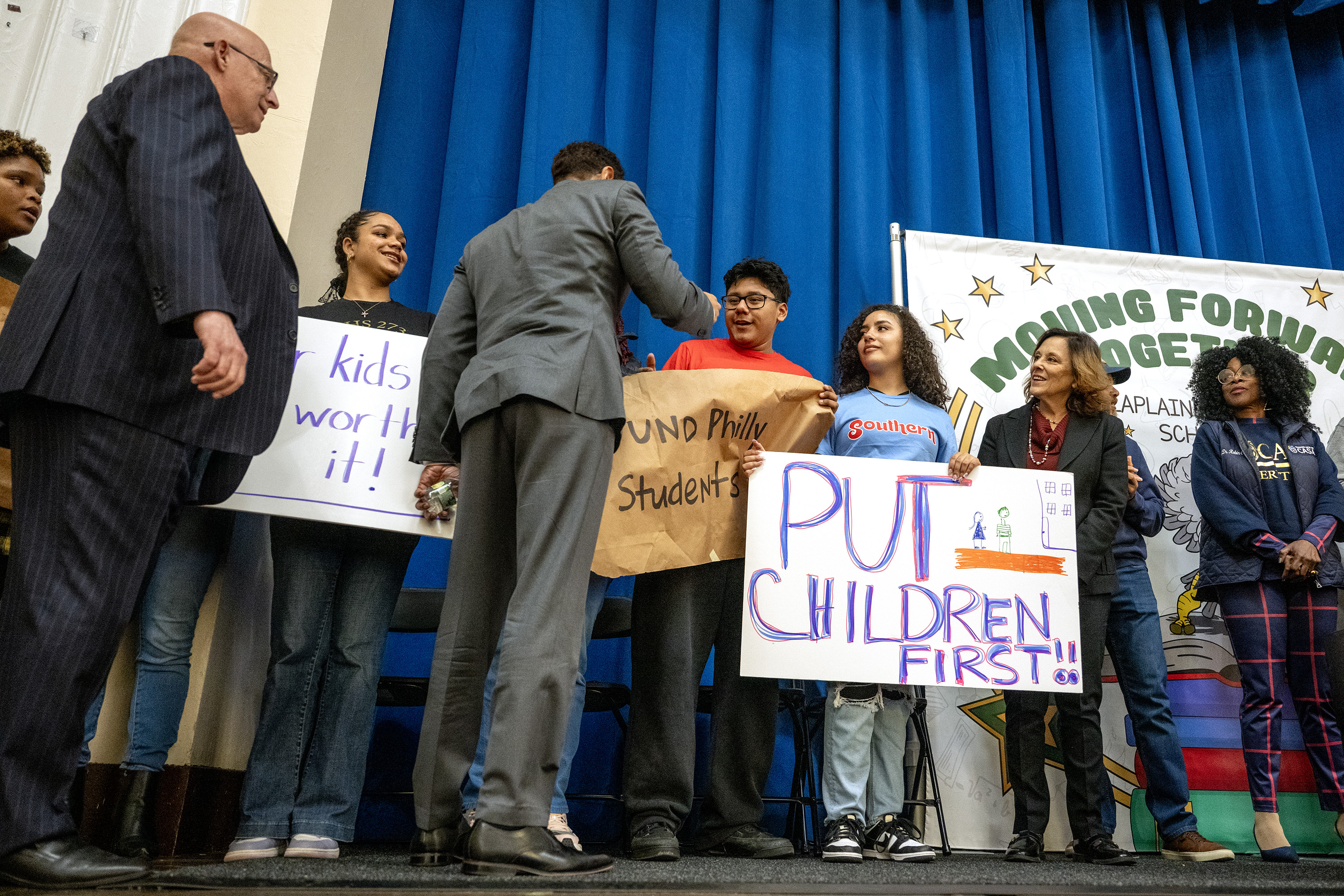
Watlington announced the office’s formal launch at Patterson Elementary in Southwest Philadelphia, a school set to undergo a $45 million renovation as it grows from a K-4 to a K-8. It will take in some students from nearby Tilden Middle School, which is slated to close.
The transition office will be key as the complex work moves along, said Warthen-Canty. Patterson is slated to get 13 additional classrooms, a new gym or cafeteria, and an elevator.
“Some of the pieces of what that looks like, what elements need to be there, we need the Patterson team to work alongside of us,” she said.
Folks on the ground “know their communities, they’re experts in their communities. And that’s a part of the planning,” she said.
System-wide, how many projects can be completed and in what time frame is not assured.
The district will allocate $1 billion of its capital budget over the next 10 years to complete some of the projects, but it’s also banking on $2 billion from philanthropic and state sources — money that’s not guaranteed.
And while Warthen-Canty believes the facilities plan will ultimately expand opportunity and better position the district to advance students’ academics, she knows some of its transitions — particularly the closures — will be tough.
“My heart goes out” to affected families and schools, Warthen-Canty said. “Even people that are being co-located or merging, those are major changes.”
Part of the work, Warthen-Canty said, is going to be convincing families in schools where those major changes are happening that should they shouldremain in the district.
In the case of the school system forcing families to leave their schools and go elsewhere, “we want to make sure that there’s extracurriculars in these schools they’re going to. We’re increasing the art and music,” Warthen-Canty said. “What are the resources we can put in place so that we’re ensuring that when the students get there that they’re going to have that well-rounded education, increased opportunities?”
HARRISBURG — Pennsylvania enters the new fiscal year on Wednesday without a state budget in place for a fifth consecutive year, while top leaders in the politically split legislature publicly disagreed over whether a deal was near.
Lawmakers in the Republican-controlled Senate and the Democratic-led House have known for months that Pennsylvania faces fiscal straits, as the state is on a path to spend more than it brings in in revenue in fiscal 2027. Top negotiators have spent weeks meeting behind closed doors about how the state should spend more than $50 billion in taxpayer dollars, in hopes of avoiding another drawn-out budget impasse.
Under first-term Democratic Gov. Josh Shapiro’s proposed $53.2 billion budget, Pennsylvania would spend $4.8 billion more than its $48.6 billion in projected revenue and would require lawmakers to create new revenue streams, cut spending, or raise taxes — or dip into the state’s reserves.
Senate Republicans on Tuesday recessed until legislators have a final budget deal to vote on, with Senate Majority Leader Joe Pittman (R., Indiana) saying that there is “no reason we cannot conclude our work early next week” and that lawmakers “have a very good trajectory in front of us.”
Pittman — a top negotiator in the closed-door talks — made those remarks just one day after a Senate committee voted to gut the main spending bill in Shapiro’s budget proposal, which was approved by the House in April, from $53.1 billion to $25 million.
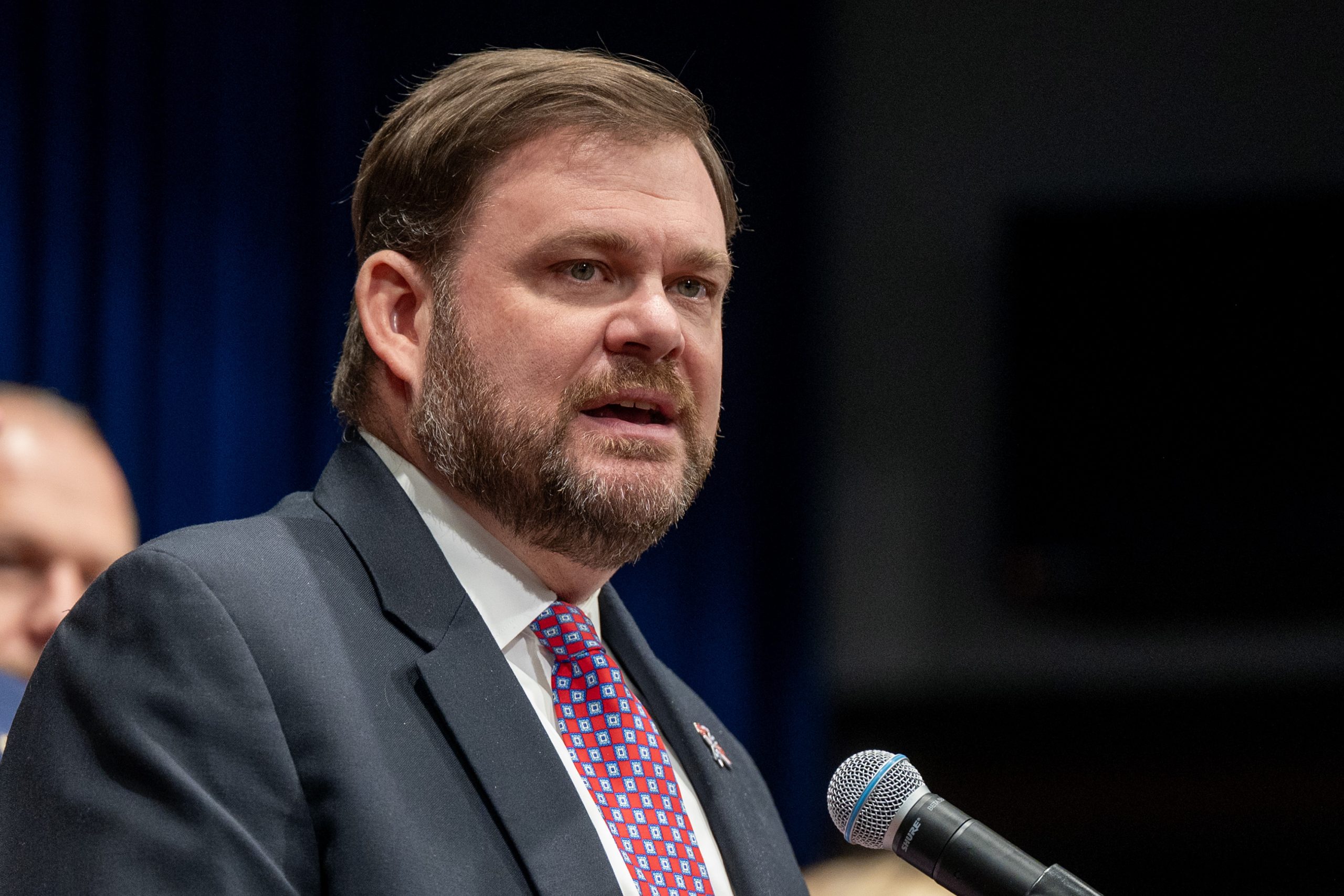
State Senate Majority Leader Joe Pittman (R., Indiana) during a press conference at the Capitol in Harrisburg in February.Tom Gralish / Staff Photographer
In a news conference Tuesday, House and Senate Democratic leaders offered a different picture: Despitelawmakers traditionally staying in Harrisburg in the days leading up to July Fourth in hopes of hashing out a deal, Senate Republicans are already packing up for the holiday weekend, the Democrats said, and are politically motivated to hold up the state budget. (House Democrats later canceled their scheduled legislative session on Thursday.)
“[Senate Republicans are] going to tell you that progress is being made, and that it’s important that we allow time for members to go home for the weekend. And by the way, it’s Tuesday,” said Senate Minority Leader Jay Costa (D., Allegheny).
“The bottom line is they’re not serious about getting a budget done, they’re slow-walking this process for weeks and weeks, and we’re calling them on it,” Costa said.
Shapiro echoed the same frustration with Senate Republicans in an interview Tuesday, adding that the Senate “decided to go home on vacation” when lawmakers are due to deliver a budget bill to him for his signature.
“I think it’s disrespectful to the people of Pennsylvania,” Shapiro said, noting that Pennsylvania has a revenue surplus. “They should be here, and they should be working. And instead, they ran away.”
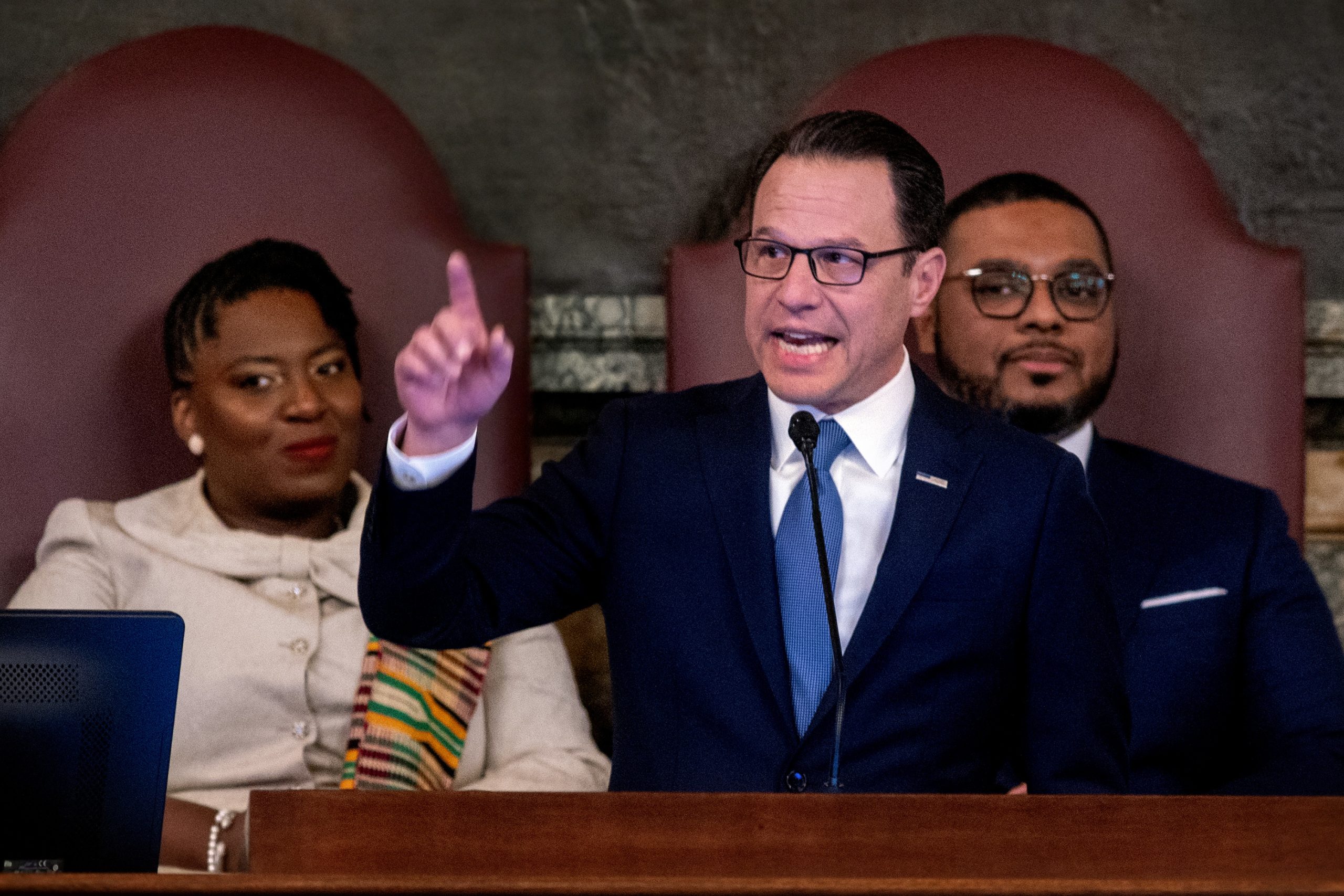
Speaker of the House Joanna McClinton (left) and Lt. Gov. Austin Davis are seated behind Gov. Josh Shapiro as he delivers his third budget address to a joint session of the state House and Senate at the state Capitol on Feb. 4.Tom Gralish / Staff Photographer
Senate GOP leaders, in a statement following their recess Tuesday, said they believe they are “well on our way to effectuating a full budget agreement in the days.”
House Minority Leader Jesse Topper (R., Bedford) told reporters that legislative leaders have been constantly in contact “over the past month” no matter if members are in the building.
“At the end of the day, the talks continue,” Topper said. “This kind of stunt feels a lot like politics.”
Top legislative leaders have been tight-lipped about what the remaining sticking points are in budget talks.
Pennsylvania is constitutionally required to deliver a balanced budget by the start of the new fiscal year on July 1, releasing state funds which are then sent to school districts, county governments, and nonprofit organizations that offer critical services to residents.
The true impact of the missed deadline won’t be felt by local governments and schools for weeks. However, these entities are often required by law to submit their own budgetsdespite inaction by the state, often leaving them unable to predict how much state money to budget. State employees and lawmakers continue to receive pay during a state budget impasse.
Last year, a nearly five-month budget impasse required schools, counties, and service providers to cut jobs, take out high-interest loans, or stop services altogether. The School District of Philadelphia, the state’s largest school district, borrowed $1.5 billion to pay its bills, resulting in $30 million in interest and borrowing costs that weren’t repaid when the state approved its annual spending plan.
Lawmakers were at a bitter standstill about whether to allocate a new, reliable funding stream for public transit, reviving the state’s long-held rural-urban divide. Members also couldn’t agree on how much to spend, until ultimately reaching a $50.1 billion budget deal in November 2025.
This year, both chambers have slim margins for budget votes: House Democrats hold a one-seat majority, while Senate Republicans have a three-seat majority with several conservative members who rarely support spending increases. This often means legislative leaders must work with the minority parties to come to a final deal.
On Monday, Senate Republicans leaders did not show up to a scheduled meeting with Shapiro and Democratic leaders, Costa said, signaling potential discord.
Legislators still need to reach agreements on a number of issues, including whether to tax and regulate so-called skill games differently from slot machines and whether the state should overhaul existing school choice programs.
Democrats have wholly backed Shapiro’s budget proposal, which included legalizing recreational marijuana and raising the state minimum wage. Republicans have emphasized a need to slow down spending, citing the state’s structural deficit.
The leaders will also trade a number of legislative priorities in closed-door meetings unrelated to state spending as part of an overall deal, such as data center oversight proposals.
In Pennsylvania, the state budget topped $50 billion for the first time last year. It had increased by 25% — about $10 billion — over a five-year period.
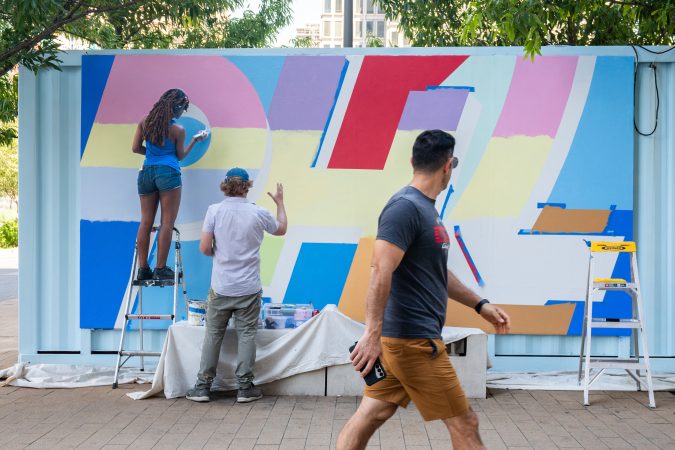
In past years, the city’s budget process has followed a certain pattern for Mural Arts Philadelphia and other groups.
The mayor’s proposed budget lists city funding at one level; City Council and others advocate for modifications at a higher level; and the budget goes back to the mayor and is finalized with the higher allocation in place.
This year was different.
Philadelphia’s nationally acclaimed program that puts colorful murals in neighborhoods and provides jobs was hoping for a boost in city funding.
Instead, the budget ultimately agreed to by Mayor Cherelle L. Parker’s administration and City Council cut funding to Mural Arts — from $5.1 million in fiscal year 2026 to $3.7 million in 2027.
Likewise the Philadelphia Cultural Fund. The group — which awards hundreds of grants to arts groups throughout the neighborhoods — was looking for increased funding in the city’s newly approved $7.1 billion budget for the fiscal year starting July 1.
But the arts nonprofit, established by the city recently, learned that it will get substantially less — $3.5 million instead of the $5 million it received from the city for the fiscal year now ending.
As a result, both groups say they will have to make deep cuts to programs.
Philadelphia’s arts and culture sector had greeted the start of Parker’s term 2½ years ago with optimism for increased funding. Today, it is “alarmed” by the cuts to Mural Arts and the Cultural Fund, said Patricia Wilson Aden, president and CEO of the Greater Philadelphia Cultural Alliance.
“We always say that your budget tells a story, and I have to say that the cultural community is disappointed and frustrated with the story being told by this FY27 budget,” she said. “Cutting the budget of signature programs like Mural Arts by 26% or decreasing funding to the Philadelphia Cultural Fund, that’s going to have ramifications throughout the city.”
Parker was not available for comment, a spokesperson said.
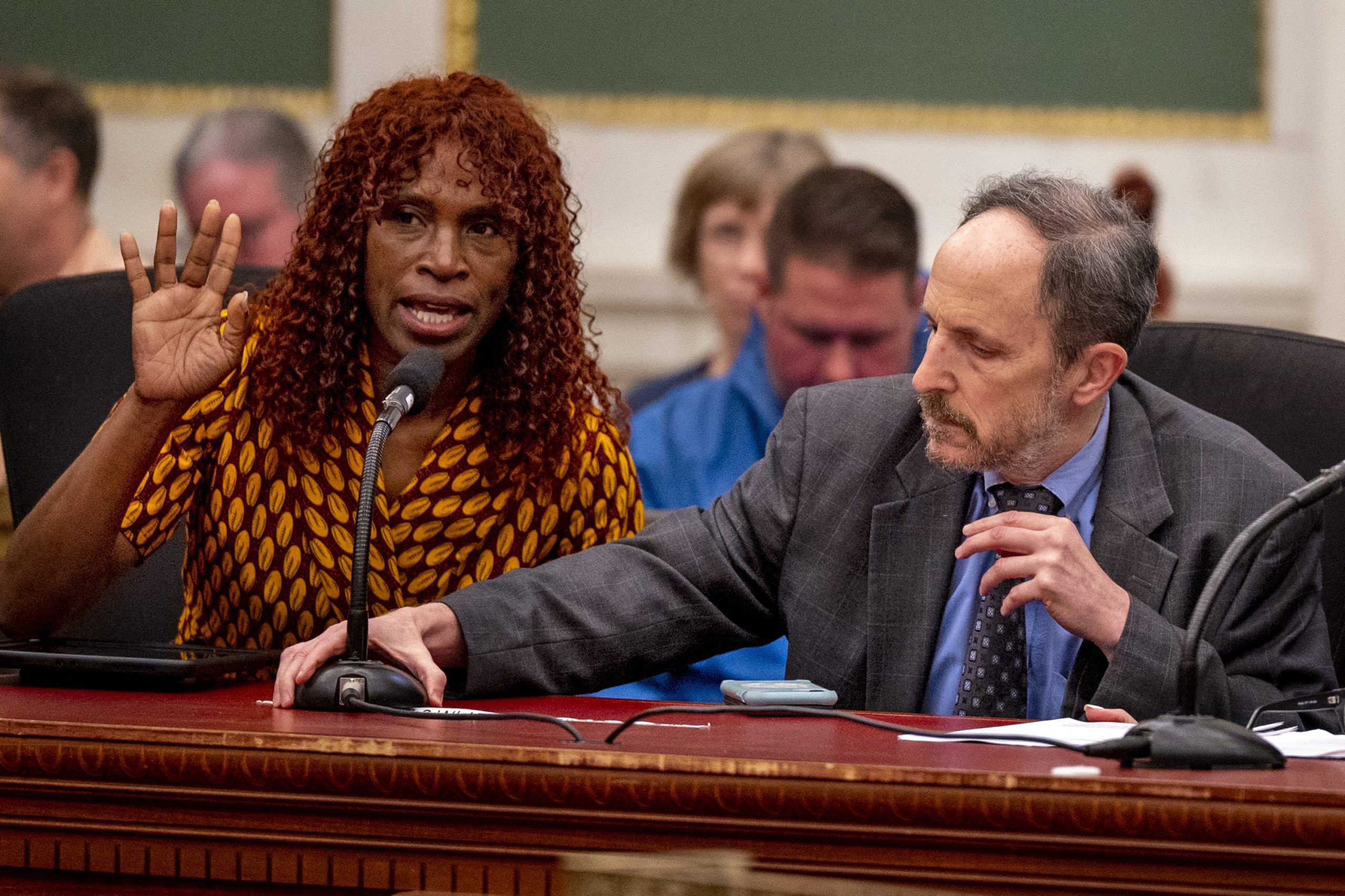
Valerie V. Gay (left) chief cultural officer with the City’s Office of Arts, Culture and the Creative Economy, and finance director Rob Dubow (right) testify at a Philadelphia City Council hearing, Aug. 8, 2024 on the collapse of the University of the Arts.Tom Gralish / Staff Photographer
Valerie V. Gay, the city’s chief cultural officer, said it was the city’s view that funding for the two groups had remained flat from 2026 to 2027, since the base allocation stayed the same and it was only the added amount that did not come through — though she allowed that “absolutely I can see how it can be perceived.”
A ripple effect
The resulting cuts at both groups promise to be substantial. The Cultural Fund will be forced to reduce the number of grants it had been expecting to distribute in the coming year, from 332 to 232. It has changed its eligibility requirements, which will eliminate grants to a pool of midsize organizations currently eligible.
“It’s going to be a ripple effect. People are going to feel it and communities are going to feel it,” said Philadelphia Cultural Fund executive director Gabriela Sanchez.
“An investment in the Philadelphia Cultural Fund is more than a budget line item,” Sanchez wrote in a statement distributed by the group. “Funding to PCF represents how the city values neighborhood theaters, cultural centers, museums, arts education programs, festivals, dance companies, community storytelling initiatives, music programs, and cultural traditions that bring Philadelphians together. These spaces are where young people discover their creativity, where seniors find connection, where communities celebrate their heritage, and where residents gather across lines of difference.”
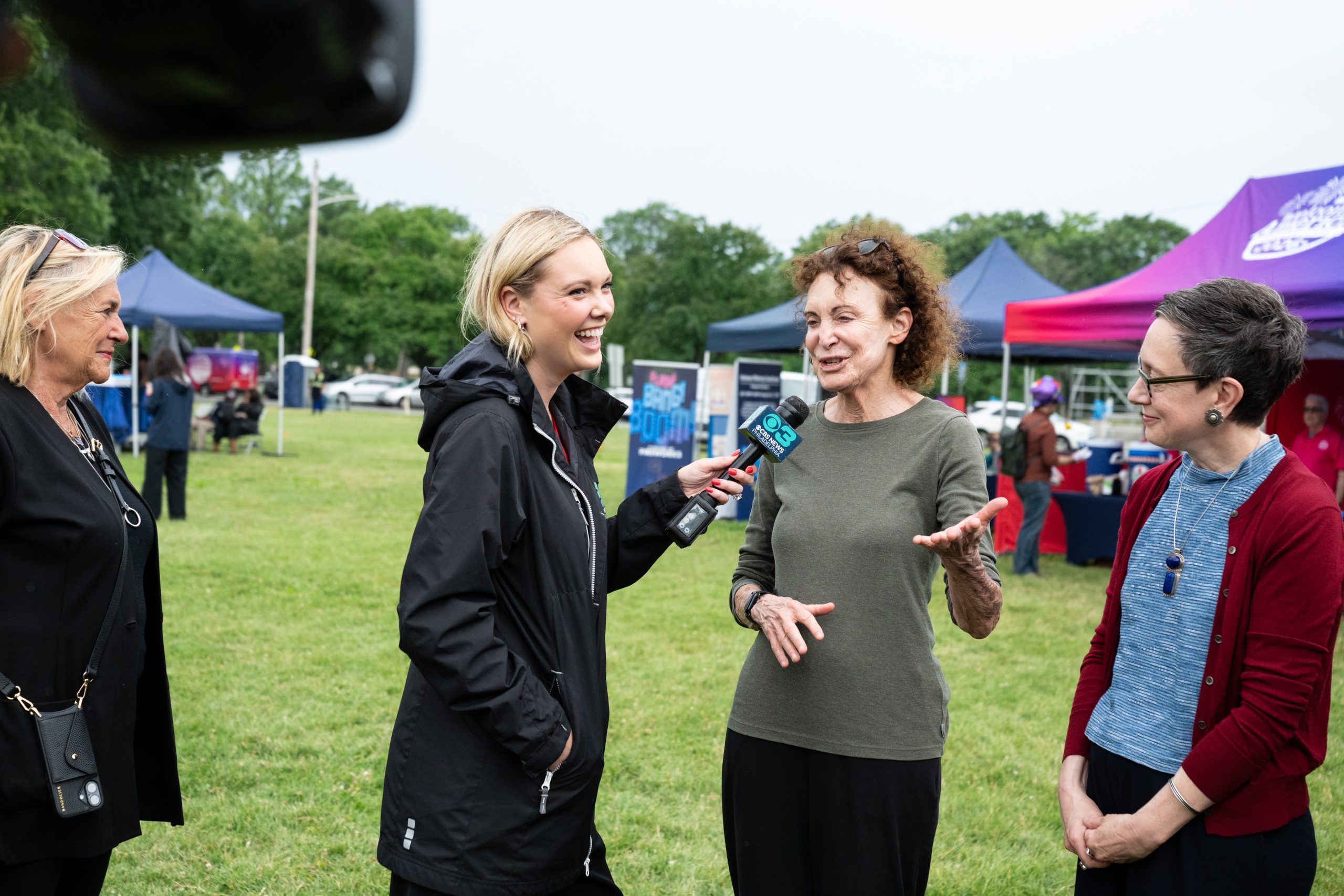
Jane Golden (center right) speaks with press at the Wawa Welcome America media preview for the Philly Fair 250, outside the Please Touch Museum in West Philadelphia, June 18, 2026. Mural Arts held a ceremonial unveiling of a 10-story-high mural replica, originally titled ‘CityKids Speak On Liberty,’ and created by Keith Haring.
Mural Arts director Jane Golden declined to comment, but an initial assessment from the group obtained by The Inquirer says that “hundreds of residents in at least 15 Philadelphia communities will lose the opportunity to develop public art projects,” and that opportunities for paid work, job training, and mentorship through the Mural Arts Restorative Justice program will be reduced by 25%.
Mural Arts will also have to cut by 75% its program of restoring and preserving the city’s murals, “putting at risk community landmarks that took years and significant public investment to create,” the impact statement reads.
Of the program reductions at both groups, Gay said: “I am always sad that any cuts are made or that any organizations are unable to do the work they thought they were going to be able to do. That’s always a sad time for us, and I’m looking forward to when we are a fully funded sector.”
A city spokesperson was unable to provide a full list of groups that in past years had received higher allocations after advocacy from City Council and others, but this year did not.
What’s behind the cuts
Aden says arts and culture has seen some significant recent “wins” from city government. Among them is the advancement of a referendum that, if approved by the mayor and then by voters this fall, would enshrine the city’s office of arts and culture, called Creative Philadelphia, in the City Charter.
The city has approved $500,000 a year to develop and implement a cultural plan for Philadelphia that would document financial needs and could identify potential pathways to establishing funding.
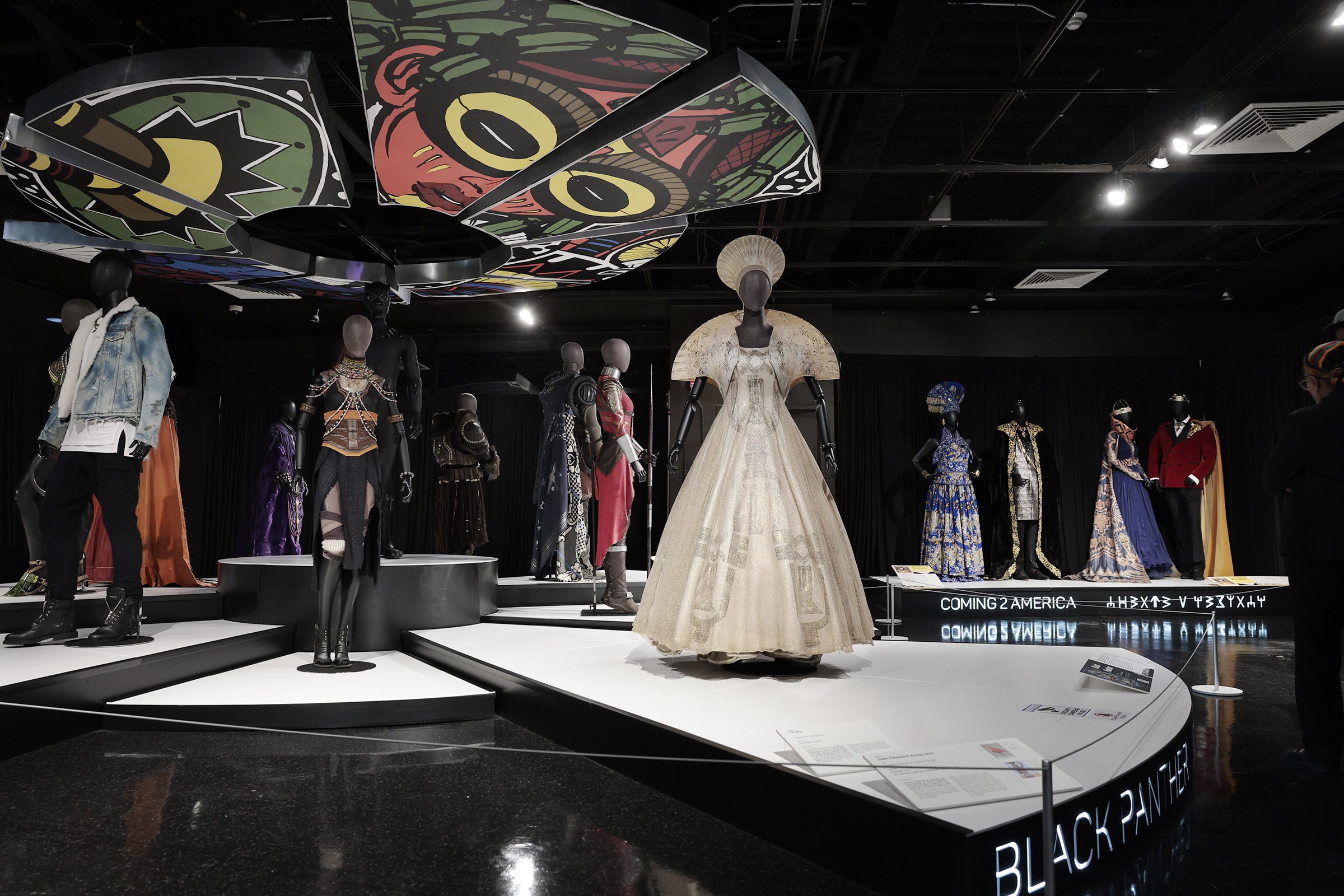
The ‘Ruth E. Carter: Afrofuturism in Costume Design’ exhibition at the African American Museum in Philadelphia, Nov. 1, 2025.Elizabeth Robertson / Staff Photographer
Sometimes the city’s support is for regular operations, and other times it is for specific capital projects. In an unusually large commitment, the city has pledged $50 million to the African American Museum in Philadelphia for its relocation to the Benjamin Franklin Parkway.
The city is providing nearly $32.5 million to arts and culture in FY27, according to a list provided by Parker’s office. While that total includes small items that might seem mundane — paying utility bills at various facilities, for instance — it also shows multimillion-dollar allocations to the Philadelphia Museum of Art, Dell Music Center, and Philadelphia Zoo.
But the arts and culture sector often finds itself fighting for adequate funding in the annual budget process. Arts leaders and others say it has been standard practice in recent memory that funding is listed at one level in the mayor’s proposed budget and after City Council testimony in budget hearings ends up being higher.
This year, the mayor “could have funded [the arts] at a higher amount,” as she did last year, but did not do so, Councilmember Rue Landau said.
The cuts came after a budget that passed without a series of tax increases proposed by Parker, including a $1 tax on rideshare services, after failing to win support from City Council. After Council signaled it would reject Parker’s tax proposals, the administration would not agree to any last-minute line items for new funding requests from lawmakers.
Councilmember Isaiah Thomas, a consistent arts supporter who, like Landau, is an ex-officio Mural Arts board member, said that with the lack of new tax revenue and the city’s extra allocation of $48 million to cover the Philadelphia School District’s budget shortfall, the funding pie for other allocations got smaller.
“This budget year, a lot of attention and advocacy went toward schools,” Thomas said. The funding cuts to Mural Arts and the Cultural Fund were “extremely unfortunate,” he said, “and I wish we could have done something different.”
The need for ‘predictable, stable, reliable’ funding for the arts
While the city’s budget is now final, there is another potential window of opportunity for funding through a midyear budget transfer process in which the city might see expenditures in certain areas coming in lower than expected, and then transfer money from those categories to other areas.
Asked whether funds might be restored through a budget transfer to Mural Arts or the Cultural Fund, Gay said:
“I think anything is on the table, but I also think nothing is guaranteed.”
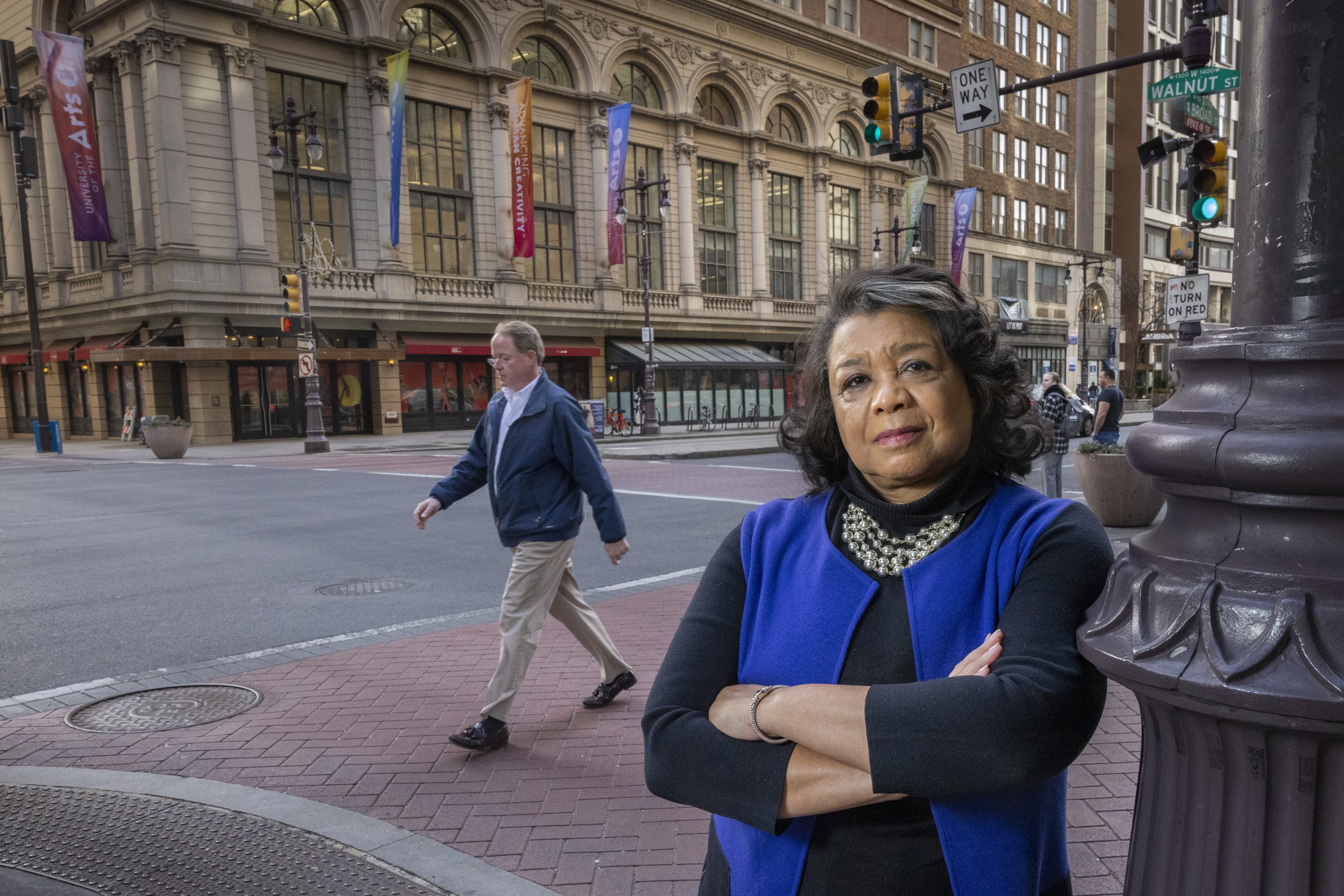
Patricia Wilson Aden, president and CEO of the Greater Philadelphia Cultural Alliance, at S. Broad Street and Walnut along the Avenue of the Arts, Feb. 15, 2023.Alejandro A. Alvarez / Staff Photographer
Any restoration of funds would happen after arts groups have already put cuts in place, and this kind of unpredictability “makes planning by these organizations very, very difficult,” Aden said.
“The practice of underfunding the arts and having Council and other entities have to go on an advocacy campaign to increase funding is illogical,” Landau said. “It is clear as day that we should be supporting the arts with additional funding every single year, so we don’t have to go through this and it won’t ever be a question mark for them.”
What is really needed, Aden said, is a dedicated arts fund in Philadelphia and the region.
“We’ve seen other regions benefit from this predictable, stable, reliable funding. And instead, here in Philadelphia, each year we have this conversation about increases and decreases and their impact. We are sometimes left to the will and whim of elected officials, and we would like to take the creative economy out of the political realm and put it solidly within our larger civic interest, so that it is stable and has the investment that is required to reach its full potential.”
Staff writer Anna Orso contributed to this article.
A judge has blocked the Philadelphia school board from voting to close a charter school Thursday amid a legal fight over the school district’s treatment of charter schools.
Common Pleas Court Judge Damaris Garcia had previously barred the district from moving forward with nonrenewal proceedings against Philadelphia Montessori Charter School, which in a lawsuit last month claimed the school system violates state charter law. But on Tuesday, the board appealed that decision and added votes on Philadelphia Montessori and Global Leadership Academy Southwest Charter School to its Thursday meetingagenda.
Philadelphia Montessori filed an emergency motion Wednesday to stop the vote, and Garcia granted its request — ordering the board to delay its vote on the charter’s future.
“It is further ordered and decreed that all actions related to the subject matter of the motion, including but not limited to the vote currently scheduled before the Board of Education of the School District of Philadelphia on June 18, 2026, are temporarily stayed pending further order of this court,” Garcia said in the order.
It was not immediately clear what would happen Thursday. Wanda Odom, a spokesperson for the board, said it does not comment on litigation. Two charter votes, including on Philadelphia Montessori, remained on Thursday’s publicly postedagenda after the ruling was released.
Following those complaints, the district is revising its evaluation framework; charter advocates have called on the board to pause renewal decisions until new standards are complete.
Philadelphia Montessori, which enrolls about 250 students, lags similar schools and the district as a whole in academics, according to district officials. The charter has called the district’s assessment methodologies “flawed” and “unreliable.”
In its emergency motion Wednesday, the charter accused district officials of a “transparent and deliberate tactic” in adding the nonrenewal vote 48 hours before Thursday’s meeting, despite Garcia’s earlier order on June 9.
The district “waited until the last possible moment” to file its notice of appeal while also scheduling a vote on Philadelphia Montessori “that directly violates the court’s order,” the charter said in the filing. Garcia had previously scheduled a court hearing for July 27.
If the board votes to start nonrenewal proceedings for Philadelphia Montessori on Thursday, it will cause “immediate and irreparable” harm, likely prompting families and teachers to leave the school even if a court later reverses the decision, the charter said in its filing.
Philadelphia School District bus drivers, maintenance workers, cleaners, and tradespeople are entering contract season.
Leaders of 32BJ SEIU District 1201, which represents 2,000 workers, are scheduled to begin talks with Philadelphia School District officials Thursday. Their current contract expires Aug. 31.
The bottom line for members of 32BJ SEIU District 1201 is higher pay, officials said.
Members’ current pay scale varies, from bus attendants, who are paid $30,762 annually, to building engineers, whose pay rate starts out at $51,155 and tops out at $77,832. The union’s highest-paid workers are its building construction workers, whose salary maxes out at $77,832.
Tradespeople — bricklayers, HVAC mechanics, electrical mechanics, plumbers, and roofers — are paid $62,899 at the top of the pay scale.
“We are the foundation of this district, and we’re not asking for the world here. We’re asking to not live in poverty, and we’re asking to help maintain our health insurance,” said Tim Finucan, 32BJ’s Pennsylvania state director.
Wages are not the only issue. Union leaders are also fighting for “a more clear ladder of opportunity for our membership to advance within the school district,” Finucan said. 32BJ also wants to codify ways it can work with the district to fill vacant jobs in a system that struggles to find qualified engineers and trades workers, including partnering with community organizations, clergy, and others to spread the word about open jobs.
“We want people to know if you can get into the school district, you know you’re going to have a good check, you know you’re going to have access to good health insurance, we know you’re going to have access to a pension,” Finucan said.
Naima DeBrest, a district spokesperson, said in a statement that officials “deeply value” 32BJ members and “will diligently engage in good faith negotiations with the hope of securing a new contract as soon as possible.”
‘We got there’
If you want to know what 32BJ workers mean to the district, think back to February, when a major winter storm dumped more than a foot of snow on Philadelphia, said Ronald Smith, a longtime district building engineer and member of the union’s bargaining committee.
“The whole city was encased in snow and ice, and the engineers still had to be there, and we got there,” Smith said.
Building engineers — who are in charge of the operations of district facilities, with responsibilities from keeping up with schools’ heating and cooling systems to making sure schoolyards are maintained — are still waiting for the extra pay they are contractually owed for working in those conditions, Smith said.
“It was a slap in the face when we had to fight to get paid for that,” Smith said. “A lot of engineers are leaving the district — they feel disrespected. Some of the fights that we have to fight, we shouldn’t have to.”
A too-small workforce affects the district and its workers in myriad ways, Smith said.
“We’re bringing in new guys without the trainees having enough time to really learn the basics of the trade,” Smith said. “It’s not really fair to the trainee, it’s not fair to the schools. A lot of these buildings don’t have adequate staffing.”
Despite friction in some areas, union officials are approaching talks with the district as partners, Smith and Finucan said. Officials are well aware of the district’s looming $300 million deficit, they said; 32BJ members have advocated for more funding for Philadelphia schools in City Hall and Harrisburg, and will continue to do so.
But union member Sherrie Gordan said it is tougher and tougher to feed and house her three kids on what she earns as a cleaner in the district.
“Even when I work overtime, so much gets taken out for taxes that it’s still not enough,“ Gordan said in a statement. ”Grocery prices keep going up, and my kids eat more every week. I spend $500 on groceries, but it’s gone in just a week. It’s not like it used to be when you could actually afford it.”
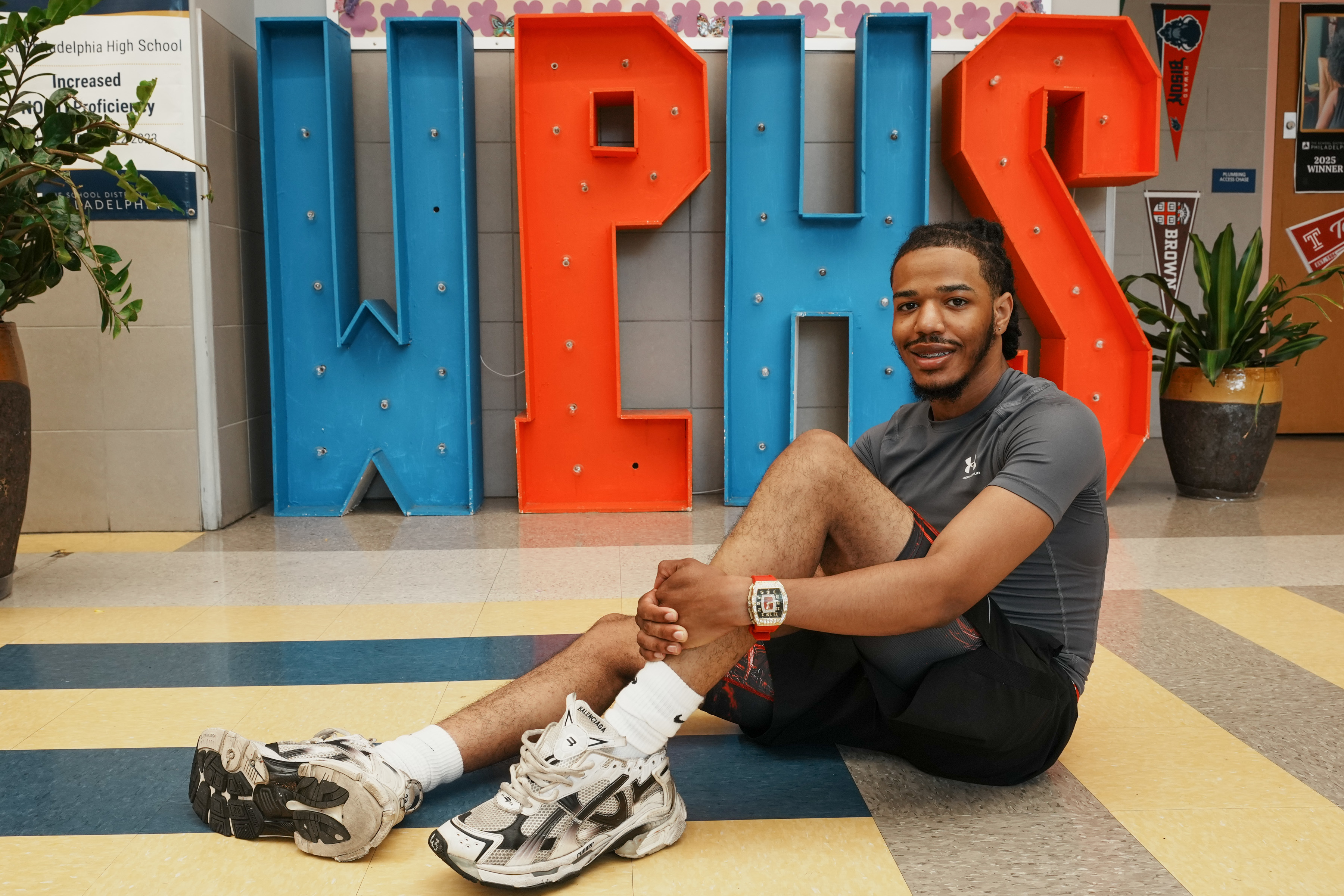
For a time, during his 10th grade year at West Philadelphia High, Smith didn’t know where he was going to sleep at night, or how he’d scrape together his next meal.
“I stopped coming to school,” said Smith. “I was not doing the right things. It got so bad that I used to come only for first period, and leave out.”
But Smith’s teachers noticed. They pulled him aside to ask what he needed and how they could help. They told him he was smart but he had to come to school andenvision a future for himself.
“That showed me I had people who cared about me,” said Smith. Those conversations, those educators, galvanized him. Coming to school steadily built opportunities — new skills, internships, paying jobs, anda solid future.
Smith graduated with honors last week after earning a citywide Philadelphia School District honor this winter and maintaining perfect attendance since 2023.
He’s employed full-time in operations with the Penn Medicine health system, a job with benefits and tuition reimbursement. He’s eyeing trade school after he socks away enough for his own car and apartment.
Jayzen Smith, a West Philadelphia student who has set a path of achievement for himself, at his school in Philadelphia, on Friday.Jessica Griffin / Staff Photographer
The diploma, the accolades, andthe steady path were not a given, said Smith, 19.
“Honestly, I thought I was going to be dead or in jail by now,” said Smith. “Everything still feels unreal.”
‘He just has this way about him’
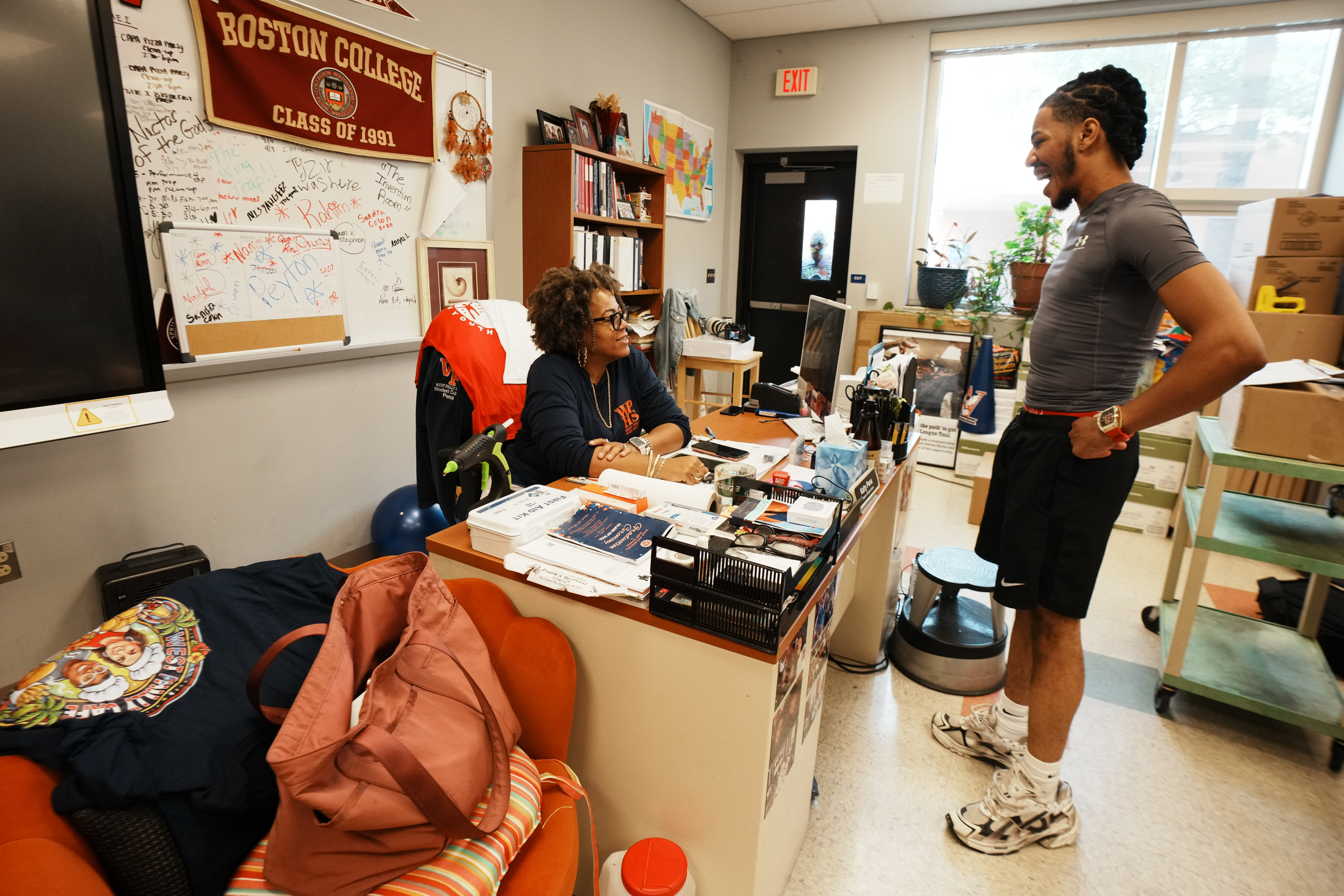
Marie Wilkins-Walker, a veteran West Philadelphia computer networking teacher, knew there was something special about Smith, even when he was hardly showing up to class.
“He just has this way about him, he says hi to everybody, and I noticed he caught on very quick — he was very intelligent,” Wilkins-Walker said.
Wilkins-Walker and another teacher set up a meeting with Smith during those low-attendance days. Just come to class, they said. You’re so smart, they told him. West is good at connecting kids with resources to fill in the gaps that might exist at home, they said.
“When we started talking about college, he told me that no one had ever talked to him about college,” said Wilkins-Walker. “He was in 10th grade, and no one had ever talked to him about college.”
Marie Wilkins-Walker, a computer networking teacher at West Philadelphia High School, talks with Jayzen Smith.Jessica Griffin / Staff Photographer
Technology wasn’t on Smith’s radar — he made music and wanted to be a rapper. But he started spending more time with Wilkins-Walker, who also serves as West’s technology coordinator, and picked up some skills.
Smith doesn’t need prompting to seize opportunities. By his senior year, he was an invaluable member of West’s tech team, fixing Chromebooks and solving staff’s IT issues. He worked for the district supporting other schools installing computer security systems and fixing broken hardware. He volunteered his services to other schools, and he held two separate internships with Penn, leading to his full-time post-graduation job.
“He’s just been an amazing young man,” said Wilkins-Walker.
Smith’s resumé is impressive but what sets him apart is his soft skills — he’s the guy who, without prompting, makes the new student feel at home, speaks to everyone who walks in the room, and solves tech problems without making anyone feel less than.
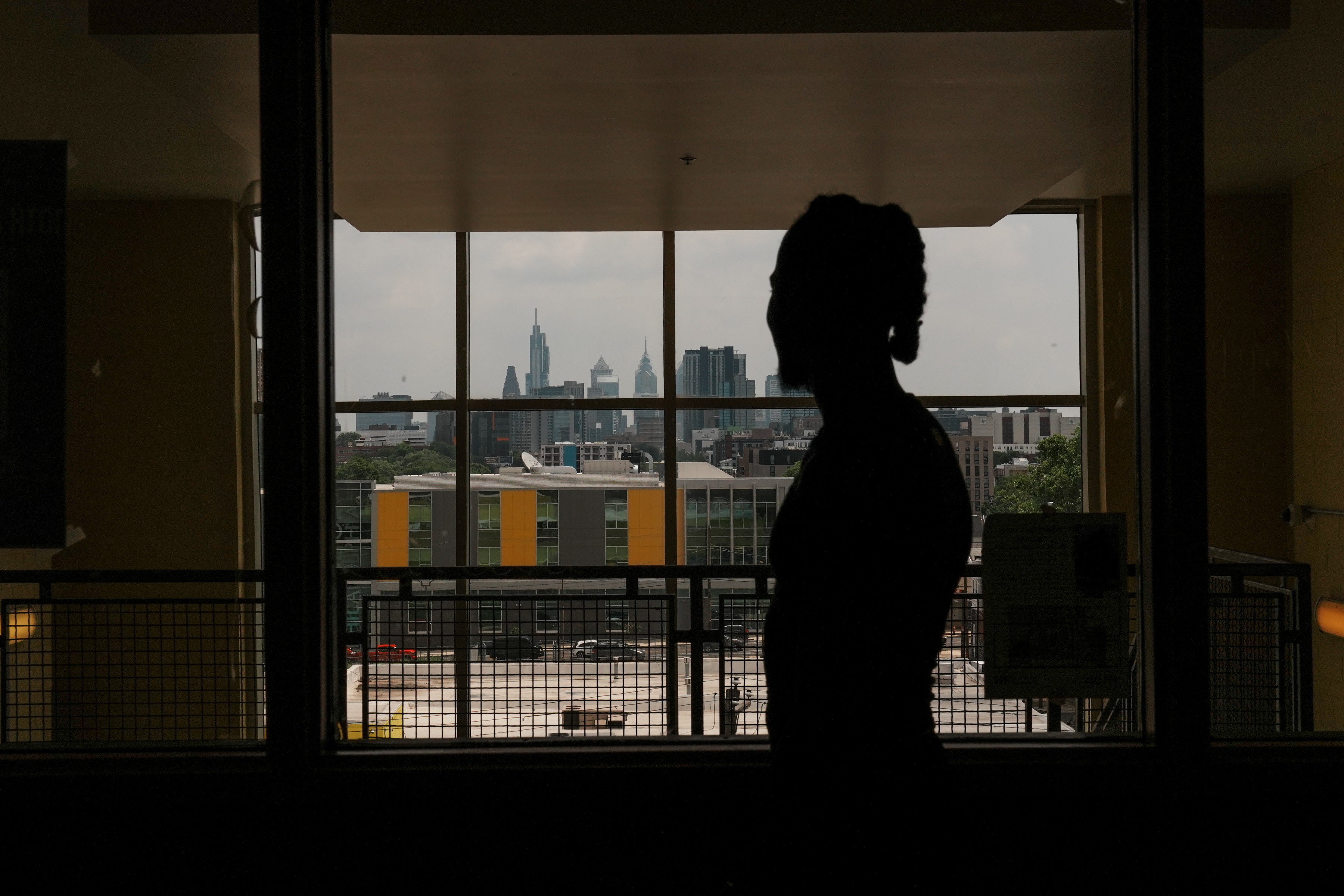
Jayzen Smith became an invaluable member of the tech team at West Philadelphia High School.Jessica Griffin / Staff Photographer
When Wilkins-Walker’s own grandson began attending West, she wanted him to meet Smith, because she knew Smith would make the boy feel comfortable, and he did.
It’s not lost on Wilkins-Walker what Smith, as a young Black man in Philadelphia, might have become.
“For our students, the line is so thin,” said Wilkins-Walker. “You don’t even sometimes know you’re crossing over to the wrong side of the room — from friends or neighborhoods.”
Keeping busy
Opportunities are what set him apart from people from his West Philadelphia neighborhood who find themselves on the wrong side of that line, Smith said.
“Keeping busy, that’s what’s keeping me out of trouble,” said Smith. “You got to find something to keep you occupied. Certain people in certain environments, if they have time on their hands, it’s tough. I grew up with them, they’re still my friends, and I just try to tell them, do what I’m doing.”
Jayzen Smith, a West Philadelphia student who has set a path of achievement for himself, at his school in Philadelphia on Friday.Jessica Griffin / Staff Photographer
Smith doesn’t talk much about the dark times. He’s more interested in the future, he said.
Smith and his mom both narrowly avoided crying on graduation day, he said, because of a mutual pact to stay away from tears. But earning his diploma has made him reflect on what he came through to get there.
“Ms. Walker,” he said, “she probably saved my life.”
Through much of Mayor Cherelle L. Parker’s first two years in office, most political insiders in Philadelphia assumed she would cruise to reelection.
After all, no mayor in the last eight decades in the deep-blue city has lost a bid for a second term. And Parker is backed by the city’s long-powerful Democratic establishment, contributing to the foregone conclusion that their allied mayor would win again.
Even some of Parker’s staunchest critics on the left admitted privately that they were resigned to her serving eight years in office.
Then last month, conventional wisdom started to crack.
State Rep. Chris Rabb — a democratic socialist and an anti-establishment firebrand — won a tightly contested battle for an open seat in Congress, prevailing over Parker’s endorsed candidate and even carrying the 50th Ward in Northwest Philadelphia, where Parker is ward leader.
Now some of the activists who lead the city’s largest left-leaning organizations think that race showed that Philadelphians are ready to pick a progressive over the Democratic establishment. And they are looking at next year’s mayor’s race again, asking the question: Is Parker vulnerable?
“We would love to have a progressive challenger in this race,” said Sergio Cea, political director of the progressive group Reclaim Philadelphia. “The establishment was really defeated on all fronts this election cycle.”
In a little more than 10 months, Parker, a centrist Democrat and the city’s first female mayor, will be up for reelection. She has not officially announced a campaign — doing so would trigger strict fundraising rules and limits — but all signs indicate she intends to run again, including an already huge campaign war chest.
Any challenger to Parker would be considered a significant underdog. The mayor has the power of incumbency, and can point to progress on her 2023 campaign promises to make the city safer and cleaner, not the least of which is a historically low homicide rate. Thousands of residents are getting their trash picked up twice a week, and polls consistently show that more Philadelphians say they think that the city is heading in the right direction now than when Parker took office.
She even seemed to recover politically after one of her lowest moments: the eight-day municipal worker strike last year that left so much garbage piling up that it became colloquially known as “the trash strike.” Parker, through her signature unyielding negotiating style, muscled her way to an agreement with the union.
Today, she is supported by most of the city’s elected officials and powerful organized labor groups. Ryan N. Boyer, the head of a coalition of deep-pocketed building trades unions, said recently that any challenger to Parker would face “annihilation.”
“This is Philadelphia, there are always people who want to run for mayor. But mayoral elections are decided on whether people think their city is moving in the right direction,” said Aren Platt, executive director of People for Parker, the mayor’s political campaign arm. “Mayor Parker has been underestimated her entire career, and she has a habit of proving people wrong.”
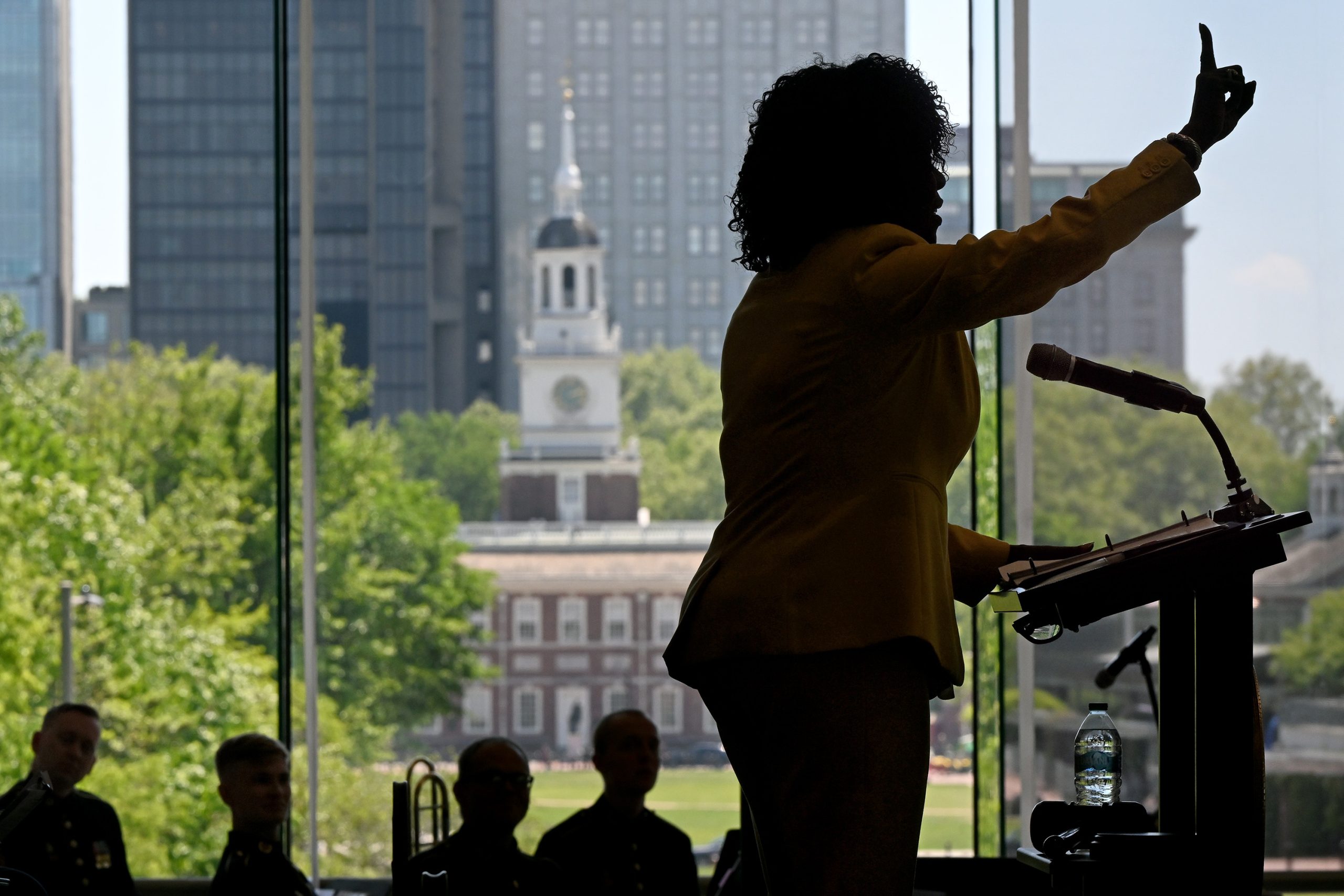
Mayor Cherelle L. Parker raises a finger with her call-and-response “One Philly, A United City” mantra ending her speech during a ceremonial meeting of the Pennsylvania Senate at the National Constitution Center across the mall from Independence Hall on May 5.Tom Gralish / Staff Photographer
However, some on the left see a coalescence of forces that could bolster their chances: national frustration with the Democratic establishment that has manifested in leftist wins, a widespread anti-incumbent sentiment, and liberal rage toward President Donald Trump, whom Parker has largely avoided maligning publicly.
“If you just have the right candidates that are able to speak to the dissatisfaction of Democratic voters in Philadelphia,” Cea said, “I do think [Parker] is in trouble.”
But the biggest question for Philadelphia progressives in the approaching mayoral race remains: Who could be their candidate?
The potential challengers
Jack Inacker, a Democratic strategist based in Philadelphia, said there are few, if any, challengers to Parker who could pull off a win in 2027.
“The progressive infrastructure now has built up in a way where, if you squint really hard, you can see a path to a progressive challenger,” Inacker said. “The problem is that [Parker] is one big mistake away from being beatable, but she’s not beatable yet. And people know that.”
Candidates have plenty of time to decide. Paperwork to get on the ballot likely would not be due until March.
Perhaps the most talked-about potential challenger so far isDistrict Attorney Larry Krasner, the city’s most prominent progressive. He has not ruled out a run for mayor, and he has recently publicly criticized Parker and some of her closest allies.
Last week, he invited media to walk along with him while he hand-delivered a letter to the mayor’s suite in City Hall to express dissatisfaction with his office’s budget. Parker called the move “stunting.”
Platt, in a thinly veiled shot at Krasner, said in a statement that “what we’ve seen recently is too many politicians focused on generating headlines rather than solving problems: manufacturing controversy, looking for someone else to blame, and confusing political theater with leadership.”
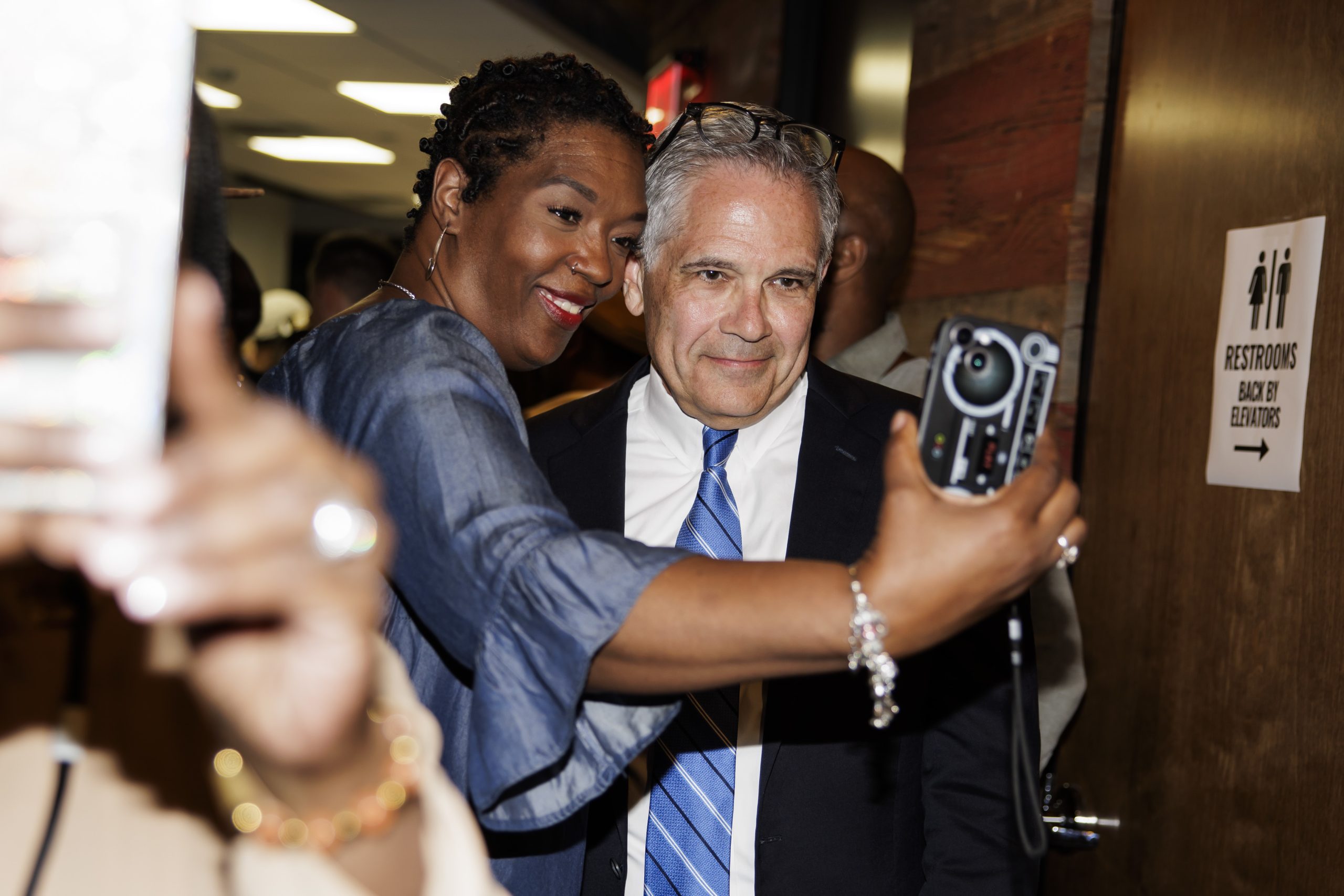
District Attorney Larry Krasner greets supporters during his election night party at the Pipeline Philly coworking space on May 20, 2025, in Philadelphia. Krasner defeated challenger Patrick Dugan both in the Democratic primary and in the general election.Monica Herndon / Staff Photographer
Krasner has won citywide election three times, twice winning reelection in landslide fashion. He is one of the nation’s most well-known progressive prosecutors and one of the city’s most polarizing figures. His base of support includes the city’s left, as well as a large swath of Black voters and elected officials.
But it was Parker’s political family — the vaunted Northwest Coalition of the some of the city’s most storied Black politicians — that was key to Krasner’s political ascent. Challenging Parker could be seen as a betrayal by some in the voter-rich northwest corner of the city, and his base there could fracture.
Krasner has also in the past struggled to keep up with his opponents in fundraising. Any challenger to Parker would likely need to bring in well over a million dollars, a sum of money that Krasner has never raised before.
Several other elected officials are seen as potential challengers to Parker, including several sitting members of City Council.
Councilmember Isaiah Thomas, who represents the city at-large, has long been rumored to have ambitions for higher office. He has been elected citywide twice, and recentlywas among the most vocal opponents of the Philadelphia School District’s controversial plan to close 17 schools.
And he has allies both on the left and in the city’s business community, the latter of which has been frustrated with a Parker administration policy shift that increased the tax burden on small businesses.
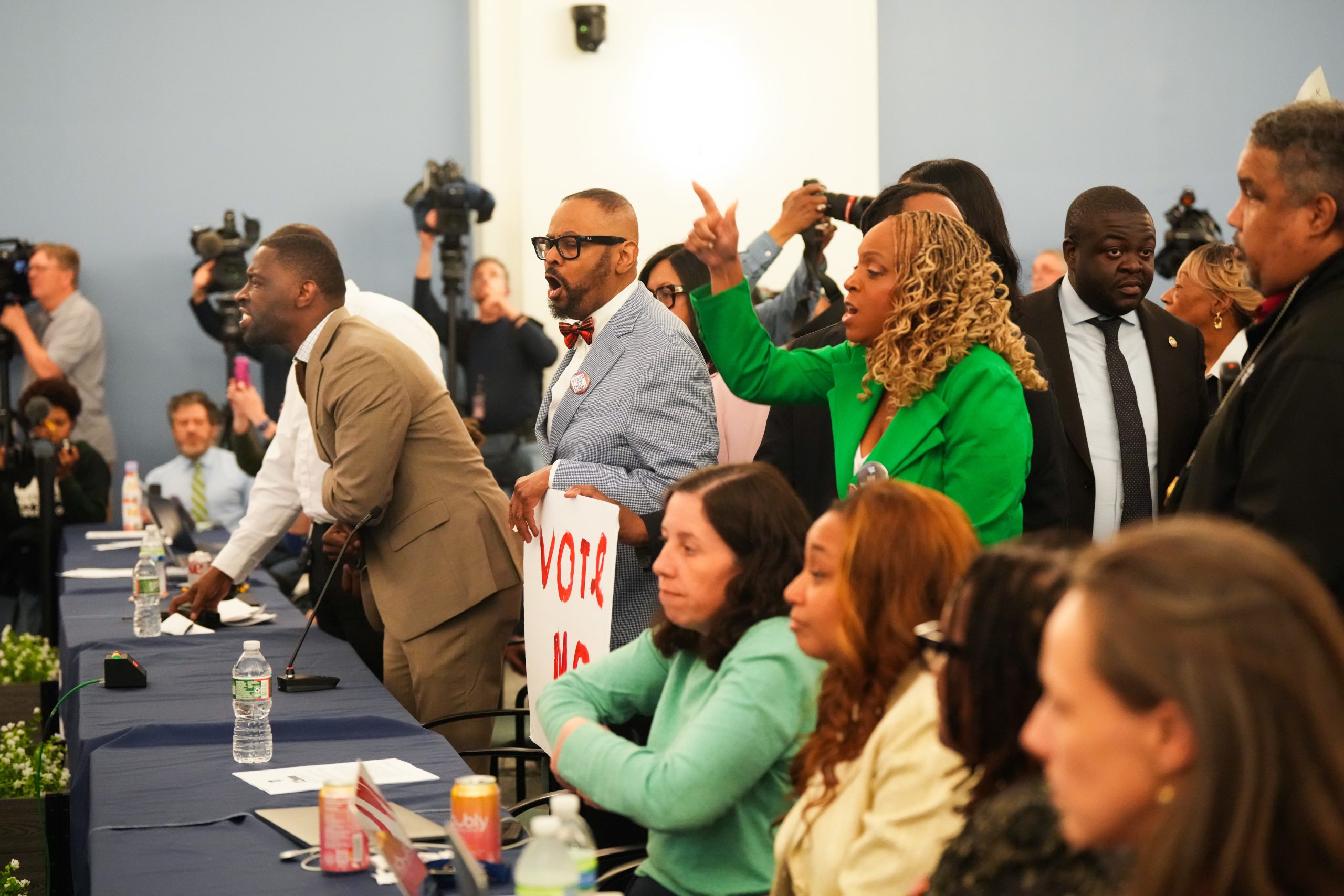
Councilmembers Isaiah Thomas (from left), Curtis Jones Jr., and Jamie Gauthier protest at an April school board meeting as the board prepared to vote on the facilities plan.Jessica Griffin / Staff Photographer
Thomas said last week that he is focused on his job in City Council.
“That job right now is hard enough, looking at the affordability crisis, the crisis around public education, and other issues that we’re facing,” he said.
There’s also two-term Councilmember Jamie Gauthier, who represents parts of West Philadelphia and has positioned herself as one of Council’s chief critics of the Parker administration. She said earlier this year that running for mayor “could be interesting one day,” but that she would not run if she did not see a clear path to victory.
She said in a statement that her focus is “finishing what we started on City Council, especially building affordable housing.”
Gauthier added: “But it’s clear Philadelphians are hungry for leaders who will put working families above big business.”
And there is Councilmember Kendra Brooks, the de facto leader of the city’s left-leaning coalition and a member of the progressive Working Families Party. Brooks, who represents the city at-large, has twice campaigned and won citywide.
A political adviser to Brooks said she is focused on her work in City Hall and running for reelection to Council, as well as “building Black progressive political power through the WFP.”
What do progressive gains mean for the 2027 mayor’s race?
Parker’s camp sees strength in her numbers.
In March, the mayor’s political arm commissioned a poll that found that 60% of respondents approve of the job Parker is doing as mayor, while 33% disapprove. Her approval rating was even higher among Black voters, older voters, and residents of Northwest Philadelphia — one of the highest-turnout areas of the city.
Mayor Cherelle L. Parker (right) hugs Rachel O’Neal, executive of the Friends Childcare Center, at the unveiling of a new playful learning hub at Sisters Cities Park on Thursday.Jessica Griffin / Staff Photographer
Cornell Belcher, one of the top Democratic pollsters in the nation, has conducted polling for Parker dating back to her mayoral campaign. He said that a key indicator of voter attitude toward an incumbent mayor is the number of residents who think the city is heading in the right direction.
The results this spring, he noted, were “dramatically different” from when Parker was first campaigning for the office. In April 2023, Belcher measured that 66% of Democratic primary voters in the city were dissatisfied with the direction of Philadelphia.
Today, he said, 62% are satisfied.
Still, other polls have shown potential warning signs for Parker.
In three polls that were conducted this spring in the 3rd Congressional District and obtained by The Inquirer, an average of 48% of Democratic primary voters said they had a favorable view of Parker and 41% had an unfavorable view. The polls, which measured voter attitudes in roughly half the city, were conducted by three different firms, and they were commissioned by different campaigns and organizations.
Approval and favorability ratings are not apples-to-apples. An approval rating is often considered a more reliable data point for an incumbent executive, because it measures attitudes about job performance, not reputation.
Belcher, who founded his polling firm 25 years ago and polled for former President Barack Obama, said he would not draw conclusions from polls of a congressional district that includes only half the city and was taken in a different election year. And he questioned other pollsters’ methodology in Philadelphia, a city that is tricky to survey.
“A city like Philadelphia, with all its different racial and ethnic groups, getting that right is hard,” Belcher said. “The more diverse an area is, the more work you have to put into getting it right.”
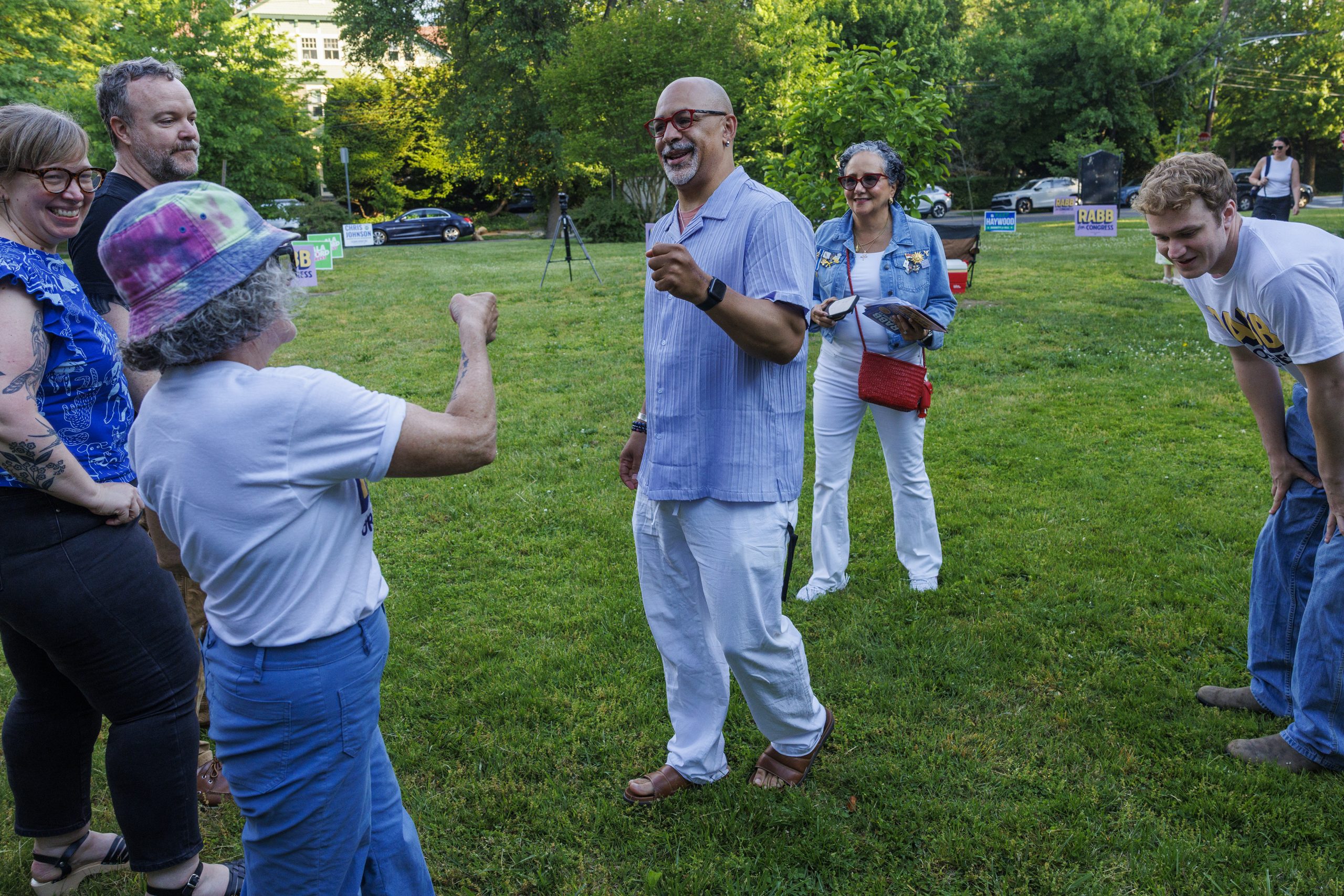
Chris Rabb greets supporters on election day. He is arriving to his polling place to vote, Grace Epiphany Episcopal Church, on May 19.Alejandro A. Alvarez / Staff Photographer
The results of last month’s congressional race energized progressives, in part because Rabb performed well in parts of the city that Parker carried when she won the crowded open Democratic mayoral primary in 2023. An Inquirer analysis found that more than a quarter of Rabb’s votes came from divisions that voted for Parker in 2023.
Rabb won his Democratic primary in a race that included three front-runners. But mayoral reelection battles in Philadelphia have historically been head-to-head, meaning the winner will look to reach 50% of the vote, a more challenging proposition for an ideological candidate.
“The mayor is organized, and her coalition across Philadelphia is strong,” Platt said. “They may not be active on Reddit, but they’re there, and they believe in what she’s doing because they can see the results in their neighborhoods.”
Philadelphia School District officials and public education advocates were relieved Wednesday when Mayor Cherelle L. Parker announced she had reached a deal with City Council that will prevent 340 classroom positions from being eliminated amid the district’s funding woes.
But as limited details about the agreement began to emerge Thursday, it became clear that the deal was less of a schools-funding program than a plan to figure one out over the next year — with the prospect of $216 million in city budget cuts taking effect if Parker and Council cannot eventually agree to adopt a new revenue stream.
“Council President Kenyatta Johnson and I publicly committed to working together to find local, recurring, predictable, and dependable revenue sources for the School District of Philadelphia over the next year to ensure that we keep these critical positions,” Parker said Thursday during a city budget bill-signing ceremony. “That is our shared goal and our commitment.”
But if Parker and Johnson do not make good on that commitment by July 1, 2027, the city will be on the hook for additional funding it has promised the school district between 2028 and 2031, including roughly $50 million in the first year of that time frame.
Council President Kenyatta Johnson speaks during an announcement at the School District of Philadelphia Headquarters on Wednesday, June 10, 2026 in Philadelphia. Philadelphia School District officials will move to restore 340 classroom-based jobs that were slated to be cut, despite top district leaders saying last week that they did not have the recurring funding needed to keep the positions.Monica Herndon / Staff Photographer
Parker, Johnson, Superintendent Tony B. Watlington Sr., and school board president Reginald Streater triumphantly unveiled the agreement to stave off the planned job cuts Wednesday. That announcement followed days of suspense after Council last week refused to pass the mayor’s proposed $1-per-trip rideshare tax, which would have funded schools, and instead advanced a city budget with about $50 million from one-time cuts that would be sent to the district as a Band-Aid for its $300 million budget gap.
Council’s move prompted Watlington, with Parker’s backing, to say the positions would still be eliminated without an explicit promise that the money would be recurring, rather than a one-time allocation.
Officials said they worked “around the clock” between Council’s rejection of the rideshare tax and Wednesday’s announcement, which Johnson jubilantly hailed as “Christmas in June.”
On Thursday, education advocates and labor leaders heaped praise on the administration for the deal.
Several district principals said Thursday they do not yet have details about exactly how much they will get back in their budgets, or how the dominoes will fall once positions are restored.
Watlington had school leaders build their 2026-27 budgets as if the cuts were happening, and many of the affected teachers, counselors, and climate staff secured new positions, some in the district and some outside the system. The restoration will undoubtedly cause vacancies elsewhere, months after other districts filled jobs for the fall.
“The win is making sure that those 340 jobs, with teachers, will not be laid off, and they will not have to second-guess if next year they’re going to come back to work,” Johnson told reporters Thursday. “And I think ultimately we can talk about sometime the ‘how’ we get to a particular end. But it’s always the ‘why.’ … At the end of the day, all of our young people still can have a chance to get a quality education.”
‘Budget sequestration’ comes to Philly?
The agreement between Parker and Johnson in some ways hearkens back to Congress’ 2011 “budget sequestration” debacle, when President Barack Obama, a Democrat, and House Speaker John Boehner (R., Ohio) agreed to severe across-the-board spending reductions that would take effect automatically if lawmakers and the White House failed to reach a “grand bargain” to restructure the federal budget.
They never reached an agreement — and the sequestration cuts, once thought of as too painful to countenance, eventually became reality.
Parker and Johnson are optimistic their arrangement for the school district and the city budget will not suffer a similar fate.
The future city budget cuts will be reflected in the city’s five-year plan, which must be approved by a state oversight board each year but is not binding legislation like annual taxing and spending measures. That gives City Hall more wiggle room to figure out how to find the money officials have now promised the district than Obama and Boehner had.
Philadelphia Mayor Cherelle L. Parker is cheered by members of Philadelphia City Council at conclusion of the budget address, Thursday, March 12, 2026. From left are council members Nicholas O’Rourke, Cindy Bass and Katherine Gilmore Richardson. In background is council President Kenyatta Johnson. .Alejandro A. Alvarez / Staff Photographer
Parker said her administration has already identified the cuts that will be reflected in the five-year plan when it is up for approval next month at the Pennsylvania Intergovernmental Cooperation Authority. But she has offered few specifics on what those potential cuts would entail.
Parker said Thursday that the city could make up part of the difference by reducing future debt repayment obligations by reducing the size of planned city bond sales. She mentioned the city’s capital budget, which funds projects like repaving roads and renovating recreation centers, but did not say how much would be cut.
And she said the city could halve its next borrowing related to her signature housing program, Housing Opportunities Made Easy. The city plans to take out a second tranche of $400 million in city bonds next year for H.O.M.E.; the potential cuts to free up money for schools could include taking only $200 million at that time, she said.
“Where did we get the money from in future years?” Parker said Thursday. “In our five-year plan, we made cuts to very important programs associated with our capital budget and even our H.O.M.E. plan — but cuts that will never have to be realized once we all make good on that commitment to generate that approximately $50 million in new, predictable recurring revenue.”
One complication in the negotiations to come is that Parker and all 17 Council members are up for reelection next year, and lawmakers are not eager to approve new taxes before voters head to the ballot box.
The Democratic primary, which effectively decides almost all elections in Philadelphia due to the city’s deep-blue electorate, will be in May 2027. The next city budget, including all tax measures for the following fiscal year, must be enacted by the end of June 2027, leaving several weeks after the election for Council to potentially approve a new tax to provide money for the district next year.
Philadelphia City Council members at City Hall in Philadelphia, Pa. on Thursday, June 11, 2026.Aidan T. Gallo / Staff Photographer
Some possibilities do not involve new or increased taxes for residents. The city, for instance, could speed up its plans to increase the share of property tax revenue that is dedicated to the district. Currently, the district receives 56% of property tax revenue, while the city takes 44%.
Parker said the agreement will allow Philadelphia to present a united front in Harrisburg as officials prepare to ask for more state funding for the city’s school district. State lawmakers in the past have pointed to disagreements among city leaders when rejecting requests for additional support.
“This is the first time … in my lifetime that the city of Philadelphia, the administration, and the legislative branch, along with the superintendent of the School District of Philadelphia and the school board, will all travel [to Harrisburg] in unity, along with all of our union partners and all of our education advocates,” Parker said. “We can stand up when we arrive in Harrisburg and say … ‘Philadelphia’s homework is done.’”
School advocates relieved
Arthur Steinberg, president of the 14,000-member Philadelphia Federation of Teachers, said the news of Parker and Johnson’s agreement came just in time. Thursday was the last day of school for 114,000 district students; staff finish the school year Friday.
“It was a very difficult year, and I’m glad that we’re able to tell them now that the positions that were cut due to this will be restored,” Steinberg said at a news conference Thursday morning outside Council chambers. “This means a lot to them. There’s stability over the summer. The communities will know who their teachers will be, and they’ll know where they’re going.”
Arthur G. Steinberg (left), president of the Philadelphia Association of Teachers, and school superintendent Tony B. Watlington, Sr. (right) greet students as they arrive onstage for Mayor Parker’s announcement March 23, 2026, of $1 rideshare tax proposal to fund city schools.Tom Gralish / Staff Photographer
Tiffany Johnson Williams said she was thrilled that cuts at her child’s school — Nebinger Elementary in South Philadelphia — and others would be rolled back.
“I am equally grateful to Mayor Parker, Superintendent Watlington, and the school board for coming back to the table and working collaboratively to reach the solution that restored our critical positions,” Williams said at the news conference. “As a parent and educator and a youth advocate, I know that stability matters.”
Councilmember Isaiah Thomas, who has had a testy relationship with the district and school board over the last several months, suggested it was time to move forward cohesively to push for more funding elsewhere.
“I think where we are at this moment is recognizing that as we come together as Philadelphians, our job now is to use our advocacy initiatives and our leverage to try to get even more resources from Harrisburg,” Thomas said.
Staff writers Anna Orso and Jake Blumgart contributed to this article.
A judge has barred the Philadelphia School District from continuing nonrenewal proceedings against a city charter — for now.
Philadelphia Common Pleas Court Judge Damaris Garcia ordered Tuesday that the school board cannot move forward with a nonrenewal vote for Philadelphia Montessori Charter, which sued the district last month. That vote would have been the first step on a road to possible closure.
Garcia said the district was barred from “proceeding with charter nonrenewal proceedings against Philadelphia Montessori Charter School, pending further order of the court.”
Garcia set a hearing on the matter for July 27.
Philadelphia Montessori‘s lawsuit claims the district violated state charter law with “shifting standards, inconsistent methodologies, and procedures that do not provide fair notice or a neutral adjudicative structure.”
Mark Seiberling, a lawyer forPhiladelphia Montessori, had asked the court to prohibit action on any charter renewals and nonrenewals, not just Montessori’s.
Votes have not been scheduled or taken for either school’s nonrenewal.
A nonrenewal vote does not mean a school closes; it instead triggers a hearing, with witnesses and evidence. The hearing officer would then recommend renewal or nonrenewal, and the board would take another vote.
The nonrenewal process, if triggered, typically takes at least a year, and schools remain open while it plays out.
Forecasters predict it could feel like 100 degrees on Thursday.
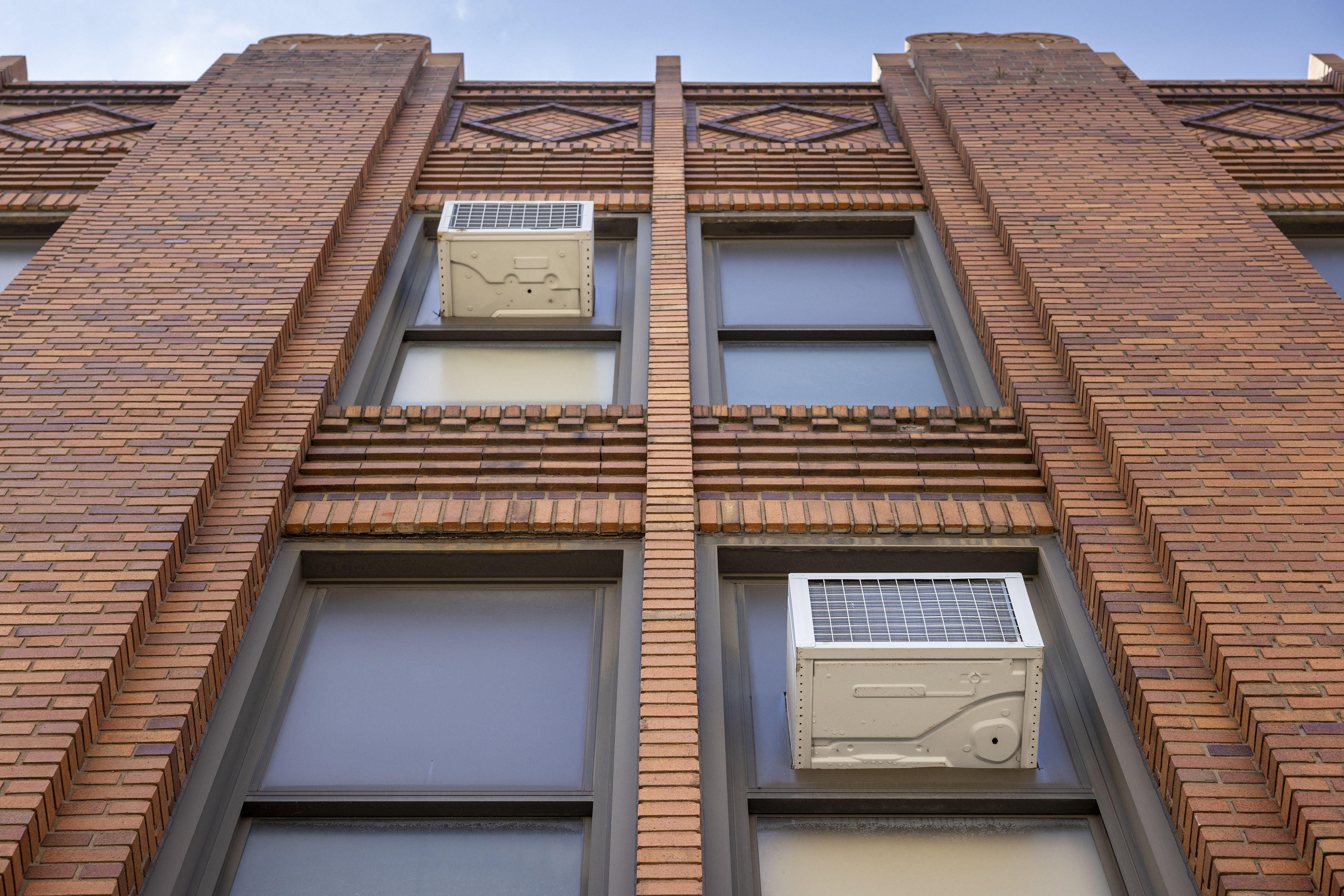
“While the district has made significant progress toward ensuring our schools are adequately cooled in order to provide safe and comfortable learning environments, there are still a number of schools with inadequate cooling systems,“ Deputy Superintendent Oz Hill said in a letter to families and staff.
The 52 schools, and early childhood programs located inside them, will all close early, and any after-school activities at those schools are canceled.
Schools’ dismissal times vary based on their start times.
While Thursday is district students’ last day of classes for the 2025-26 school year, staff are expected to report to work Friday.