Tag: School District of Philadelphia

  • After an identity hoax, one Philly educators’ group dissolves and another goes on hiatus

    After an identity hoax, one Philly educators’ group dissolves and another goes on hiatus

    After being duped by Hannah Gann, one organization closely affiliated with the Philadelphia School District teacher and activist is dissolving, and another is on a two-month hiatus pending a decision about its future.

    The moves come after Gann admitted she lied for years about her identity, claiming at times to be Palestinian, Tunisian, and Black — devastating both groups and drawing national attention to her deception. Gann recently admitted to being a white, Jewish woman, with relatives who she said were Israeli settlers.

    “After much reflection, Philly Educators for Palestine has made the decision to dissolve,” a statement read. “We are deeply grateful to everyone who participated, supported, organized, learned, taught, and stood alongside us. We are proud of what we accomplished together and of the community that was built through this work.”

    The group, which was not affiliated with the Philadelphia School District but whose members taught in the district, began in early 2024, after charter members, including Gann, organized a “teach-in” about Palestinian history and the conflict in Gaza.

    The Racial Justice Organizing Committee, established as an independent group in 2020, is “taking a two-month hiatus to rest, process, and decompress,” the joint statement said. “A decision regarding its future and next steps will be shared by the end of the year.”

    Gann’s deception was publicized by both groups earlier this month. The organizations’ members were “stunned, saddened, and angered by this betrayal,” they said at the time.

    Gann, in a 10-minute video released after the groups revealed her yearslong hoax, said that she “allowed half-truths and obfuscations to grow into outright lies,” but that she “genuinely wanted to commit to the work I was doing in spite of those lies.”

    She has said in a social media post that she was “so, so sorry. It’s so far from being enough, but I don’t know what else to say.”

    ‘Cosplaying Black’

    Most of the teachers and activists who organized with Gann have asked for privacy as they sort through the complicated “why” around her deception.

    But one organizer, furious at the damage done by Gann, shared details around Gann’s deception with The Inquirer. The activist asked that her name not be used because she feared reprisal from the community.

    Gann sought her out, deliberately befriending her, the organizer said.

    At times, the organizer said, Gann was “a little ambiguous” about her background.

    “She has moments when she tries to act extra Black, like cosplaying Black,” the organizer said. Gann often wore African print clothing and large earrings, and used African American Vernacular English. “She told people she was mixed. She told someone she was Lebanese.”

    But Gann seemed to act differently around different people, slipping on different identities as they suited her.

    Gann once talked about having attended an international school in Virginia, the organizer recalled. When the organizer asked Gann how her family, who Gann said had few resources, managed that, “she said, ‘I just used my grandmother’s address; you know how we do.’”

    And though it was not a secret that Gann attended the University of Pennsylvania, “she never ever talked about that stuff with me,” the organizer said. “She would always gloss over the Ivy League.”

    In some ways, Gann “was such a good friend; she’d do anything for you,” the organizer said — cook a dish, do a favor, show up when you needed her.

    But Gann also did things that, in hindsight, give the organizer pause.

    “She is intricately involved in teenagers’ lives, and that is very, very concerning to me,” the organizer said. “I’ve seen kids stay at her house because they got kicked out. I’ve seen her going to kids’ parties as a chaperone.”

    Members of the Racial Justice Organizing Coalition and the former Philly Educators for Palestine said in a statement they believed Gann, who teaches at the Workshop School, a project-based district high school, deserved consequences from her employer for her actions.

    A school district spokesperson said that the district cannot comment on personnel matters, but that support is being provided for any Workshop student or adult who needs it.

    The organizer agrees with the call from the Racial Justice Organizing Coalition and former Philly Educators for Palestine group for consequences.

    “I think Hannah should get fired,” the organizer said. “This has got to be so traumatizing for those kids. This is a group of kids that don’t trust adults anyway, living in Philly at this time. And they had an adult they thought they could trust, and she was lying about something so fundamental.”

    The organizer feels deeply personally duped, too.

    “She was trying to get my perspective as a Black woman, and she was white that whole time,” the organizer said. “It was disgusting. The emotional labor that she has utilized from me is so unbelievable — I can never get that time back, I can never get that trust back. I will never speak to her again in my life.”

    Further questions

    Gann’s actions had troubled some Jewish families in the district long before her deception came to light.

    Jason Holtzman, chief of the Jewish Community Relations Council of the Jewish Federation of Greater Philadelphia, said families in the district began raising concerns about Gann to the organization three years ago.

    “The communities whose identities and experiences she misrepresented were wronged by that deception and deserve honesty and respect,” Holtzman said in a statement.

    Gann’s admission that she lied about her identity “also raises serious questions about her conduct as a teacher,” Holtzman said.

    “Ms. Gann taught and spoke publicly about Israel and Palestinians while invoking a personal identity and lived experience she now acknowledges were not her own. She testified before the Board of Education as a Palestinian teacher, speaking about ‘our homeland’ and ‘my family living in a war zone.’”

    Black, Palestinian, and Tunisian communities “deserve to have their identities and experiences treated with honesty and respect,” Holtzman said. “Jewish students also deserve a classroom where they can be fully themselves, without feeling singled out or ashamed of their Jewish identity or their personal or familial connection to Israel.”

    The Jewish Federation of Greater Philadelphia in 2024 filed a complaint against Keziah Ridgeway, another Philadelphia teacher, accusing Ridgeway of injecting antisemitism into the curriculum and using her personal social media posts to threaten some Jewish parents.

    Ridgeway was ultimately kept out of the classroom for a year before she was reassigned to a new school. She has sued the district, alleging anti-Islamic bias. The suit is still pending.

    Gann was a staunch defender of Ridgeway, who posted on social media that she confronted Gann when her lies came to light.

    “I can no longer be in community with someone who caused so much harm,” Ridgeway wrote. “I hope that she gets the help that she needs.”

    This article has been updated to include the name of Jewish Community Relations Council chief Jason Holtzman.

  • State reps ask Pa. attorney general to investigate the Philly schools for alleged discrimination of Jewish students

    State reps ask Pa. attorney general to investigate the Philly schools for alleged discrimination of Jewish students

    A group of state representatives asked Pennsylvania Attorney General Dave Sunday to investigate whether a “systemic pattern of discrimination” against Jewish students occurs in the Philadelphia School District.

    Citing a congressional investigation into Philadelphia and other districts, and reports of antisemitic incidents against city students, members of the Pennsylvania House Republican leadership and Martina White, a Republican representing Philadelphia, wrote to the attorney general urging a probe.

    “The Office of Attorney General must ensure that Jewish students have a safe learning environment that is free from discrimination within the SDP,” the representatives wrote in the letter, which was sent Monday. “We ask you to investigate this matter to determine if any criminal activity occurred and take the appropriate action your office deems necessary.”

    Monique Braxton, district spokesperson, said the school system “strives to create welcoming and inclusive environments that allow our students to feel safe and heard” and has “taken steps to protect and educate students and staff against antisemitism and other forms of hate and remains committed to fostering learning environments where all students and staff feel safe and supported.”

    Sunday’s office did not immediately respond to a request for comment.

    The state representatives, in their letter, brought up allegations that some district educators “promote antisemitic content in their classrooms.”

    In 2024, the district agreed to a settlement with the U.S. Department of Education’s Office for Civil Rights after an investigation found it had not adequately investigated repeated claims of antisemitism, taken appropriate steps to respond to the claims, or maintained necessary records around the alleged acts.

    The incidents that prompted that settlement included a swastika drawn on a door, antisemitic slurs, and allegations of social media-based harassment by district teachers and administrators after Hamas’ Oct. 7, 2023, attack on Israel, and Israel’s subsequent military operation in Gaza.

    “Local parents have repeatedly indicated that these behaviors and this antisemitic atmosphere continue to persist throughout the SDP,” the representatives wrote. “Jewish students, like all students, should be able to learn in an environment that is free from discrimination.”

  • Philly schools are missing thousands of students. District employees are knocking on doors to get them back.

    Philly schools are missing thousands of students. District employees are knocking on doors to get them back.

    The Philadelphia School District is thousands of students under its enrollment projections this school year — and with an important funding deadline looming, Superintendent Tony B. Watlington Sr. is sending officials knocking on doors to drum up business.

    Central office staff and school workers have been asked to fast-track “Enrollment Acceleration,” a new, district-specific program directly engaging families that have left the Philadelphia school system, The Inquirer has learned.

    District staff — up to and including chiefs and assistant superintendents — are fanning out across the city, pounding the pavement to try to connect with reluctant families face-to-face. The door knocking began in the last two weeks.

    The effort is driven by a shrinking student body in district schools and an Oct. 1 deadline to report enrollment — which drives district funding — to the Pennsylvania Department of Education.

    District schools were 4,236 students under their projected enrollment as of Sept. 17, according to internal documents obtained by The Inquirer. District-run alternative programs had 1,051 fewer students than planned.

    The school system had projected 116,898 in district schools by Sept. 17, and 2,757 in alternative schools. Instead, its enrollment was 112,662 in district schools and 1,706 in alternative schools.

    Asked to comment on the enrollment decline, a district spokesperson said it was too early to estimate annual enrollment because the state’s verification process does not conclude until Oct. 30. But, Monique Braxton said, it’s part of a nationwide trend of dwindling public school enrollment.

    “The district’s goal is to get district operated schools as close as possible to that of last year’s number of approximately 116,898 students, such that we can grow our enrollment next school year,” Braxton said in a statement.

    Enrollment is down virtually everywhere in the city.

    Just two of 15 networks did not lose students, according to the Sept. 17 figures — Learning Network 9, a geographic network of elementary and middle schools in Kensington, Bridesburg, Port Richmond, and Frankford, and Learning Network 15, a network of magnet schools across the city.

    Voting with their feet

    Once the 2026-27 school year began Aug. 24, it became quickly clear that there were fewer district students in seats than expected.

    Many factors likely play into the enrollment decline.

    Though academics have generally been improving in the school system — Philadelphia was tops in the nation in its learning rate post-pandemic, according to research out of Harvard and Stanford — the district still struggles, with most students unable to read (33%) or do math (25%) at grade level.

    (Philadelphia charter schools’ performance is slightly worse in reading, 31%, and slightly worse in math, 20%.)

    Also a likely factor is the effect of the school board voting recently to close 17 schools in the next several years. Officials have said they are doing so to improve academic outcomes for all students, amid 70,000 empty seats citywide, a stock of aging buildings and decades of underfunding, and emphasized that in addition to the closings, they plan to spend billions on renovating 169 of the buildings they’re keeping open — though most of that plan is unfunded.

    There are other reasons, too: Some staff say the current political climate has fears of ICE keeping some students out of school. And cyber charter enrollment is growing, with some Philadelphia families choosing the virtual option because of safety fears for their children as the city grapples with a gun violence epidemic.

    “The district is a hard sell for some families,” said one central-office employee who was not authorized to speak about the enrollment decline. “You have a lot of families who have just unfortunately lost faith in a lot of the offerings that we have, and they’re voting with their feet.”

    A full-court press

    Since the surprise decline became apparent when school started, “we’ve been working hard to close the gap,” the employee said.

    At first, schools were directed to reach out themselves via calls and emails to students they expected to enroll but who never showed up. Soon, almost-daily briefings on closing the enrollment gap began, and have continued.

    Next, the administration moved to canvassing events, asking central office employees and school staff to volunteer to go out in pairs into neighborhoods to reach families. Canvassing also includes trips to neighborhood barbershops, laundromats, and corner stores “trying to convince students to return back to the district, rather than remain in whatever other option they decided on.”

    About 75 employees volunteered for the effort, the employee said. It is still ongoing.

    Some schools and departments pushed back against the call to directly appeal to students, with officials they didn’t feel comfortable sending staff into neighborhoods. Others are going out, the employee said.

    The campaign is an extraordinary step, said the employee.

    “I’ve never known an assistant superintendent or anyone going so far as this, being part of canvassing,” said the employee source.

    Much is at stake.

    “Our funding is based on numbers,” the employee said. (Both state and federal funding are tied to enrollment.)

    And the district has generally been shrinking for decades.

    In 1999, just after the first charter schools opened in Pennsylvania, the district enrolled 205,199 students in its schools. By 2025, that number was 113,735. (An additional 64,469 students were enrolled in charters.)

    The district’s enrollment rose once in the last decade: in 2024-25, jumping by 1,841 students to 117,956. Watlington said he believed the next year’s drop happened because of large-scale SEPTA bus route changes at the start of the school year.

    ‘Warm conversations’

    A second employee involved in the recent recruitment efforts said the call to canvass came with surprising urgency.

    “They said, ‘It needs to be done in the next two weeks, because our numbers have to go to the state Oct. 1,’” said the employee, who also asked to not be identified because they were not authorized to speak about the enrollment push.

    The second employee was paired with another volunteer. They received a several-page handout with instructions about how to conduct the visits, and a suggested script.

    “We’re reaching out because we want to make sure your child has a clear plan for school and see how we can support you,” the second employee said.

    Canvassers were told to ask if the family planned to return their children to the district, to begin a “warm conversation” and to help families with information about how to register for district schools. They were told to help address any barriers to registration.

    Teams were told their safety is paramount, asked to not enter homes, and reminded to end a visit if either team member feels unsafe.

    “Remember,” one handout said, “you are there to understand, inform, support and connect — not to convince.”

    The second employee wasn’t especially enthusiastic about canvassing, but felt pressure to do so.

    “What can I say on somebody’s doorstep to get them registered in the school district? Nothing,” the employee said.

    The first employee said they were not having success with families.

    “The houses I’ve been to haven’t been very responsive,” the employee said. “But I’ve been having very cool conversations with neighbors.”

    Many families aren’t home or don’t answer the door, and the employee doesn’t blame them. They could be mistrustful of authorities or people they don’t know or worry about their safety.

    Four people involved in the “come-back-to-the-district” effort said they were skeptical it would help the school system reach its projections.

    “It’s going to yield something, but it’s not going to yield enough to cover up the fact that we’re several thousand away from meeting our projection of 116,000,” the employee said.

  • What happens when kids who witness gun violence go to school? This Philly program aims to help.

    What happens when kids who witness gun violence go to school? This Philly program aims to help.

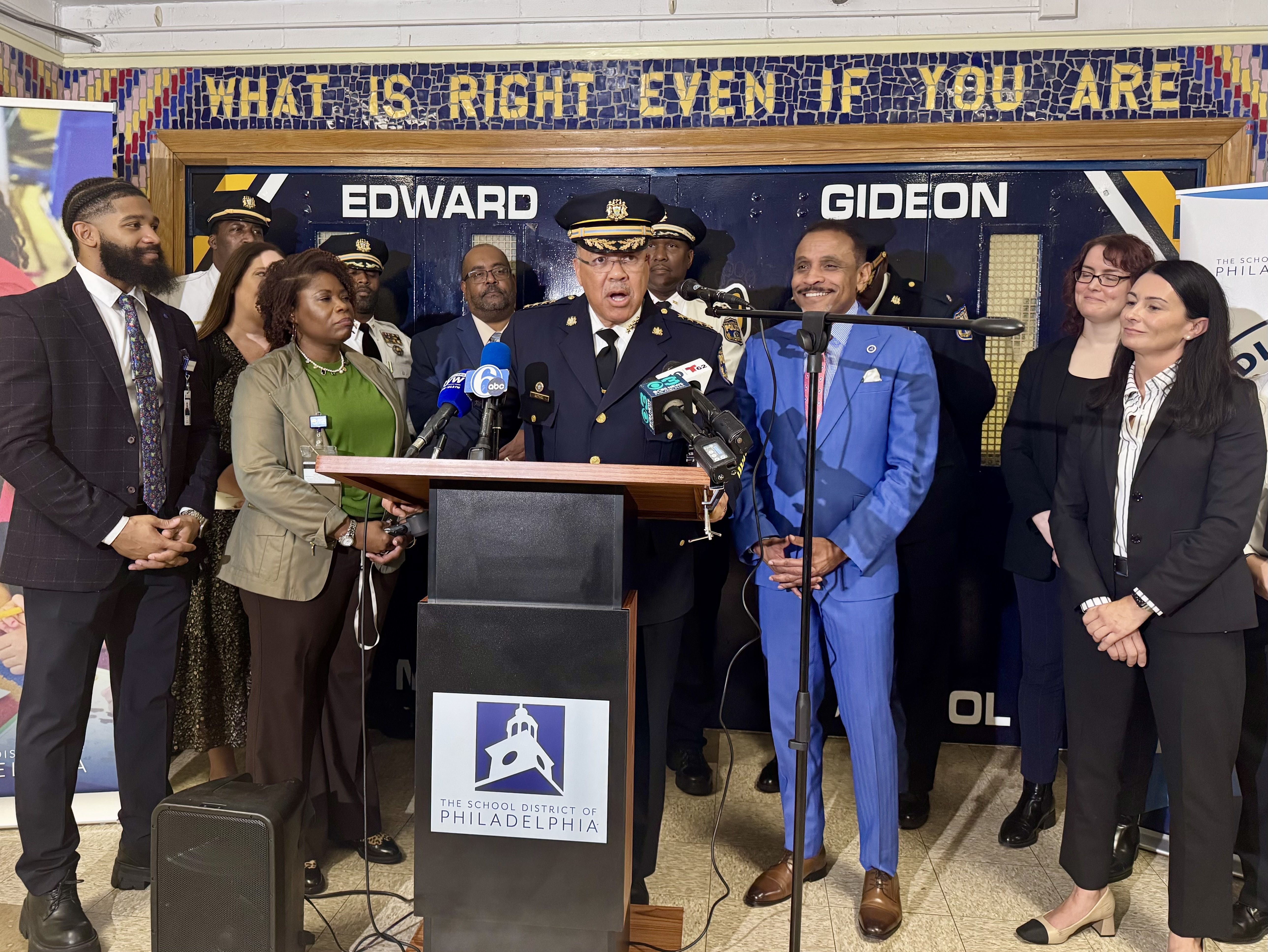
    In the past, principal Shauneille Taylor had no way of knowing when one of the children at Edward Gideon Elementary School had witnessed a shooting, or an incidence of domestic violence, or seen a parent arrested.

    The child might walk into the North Philadelphia school the next day and act aggressively, or appear withdrawn, or shut down, and adults would wonder why — sometimes, they might even assign disciplinary consequences for acting out.

    That changed with an initiative piloted at Gideon and 14 other city schools, now going districtwide, Philadelphia Police Commissioner Kevin Bethel and Superintendent Tony B. Watlington Sr. announced Monday.

    The “Handle With Care” program allows officers to make referrals to schools attended by child witnesses to crimes. Schools are then alerted that one of their children may need extra attention, with staff trained in trauma-informed practices and poised to offer more support.

    “Having that heads up has made a profound difference for our school,” Taylor said at a news conference in a Gideon hallway Monday.

    The program is the brainchild of Bethel, a former district safety chief and longtime city officer, who dreamed for years about figuring out a way to better care for kids who witnessed traumatic events.

    In 2024, the district used a $1 million federal grant to launch a “Handle With Care” pilot in 15 schools in North Philadelphia. That money paid for training and a dedicated staffer.

    A $200,000 state grant will fund the staffer’s work going forward, officials said.

    Officials “didn’t want to assume that everyone understands trauma, how to identify the warning signs, and how to provide that support,” Bethel said. “So we had the opportunity to provide training to Philadelphia police officers and school-based staff, not only on how to understand trauma, but on how to provide meaningful support. Through this pilot, we were able to provide that support to more than 70 students who may otherwise have walked into school carrying the weight of what they experienced without anyone knowing that they just needed a little extra care.”

    It’s certainly a shift from years ago, Bethel said, when “the word trauma wasn’t really part of our vocabulary in policing or frankly, much of the conversations around children and their experiences.”

    “But we understand today more than we do ever what young people experience and how those experiences affect their behavior, their ability to learn, their relationships, and their development. Our young people are exposed to significant levels of trauma,” he said.

    When children witness traumatic events, officers have the ability to trigger Handle With Care alerts. A point person at the child’s school will then be alerted — not with the details of the incident, just that this student needs extra support because of an event.

    It “gives the school an opportunity to intervene … rather than waiting until a child’s trauma manifests its way into a disciplinary action or academic, emotional problems,” Bethel said. “Early recognition creates an opportunity for early intervention.”

  • These 32 Philadelphia middle school students just got their white coats, on a path to becoming doctors someday

    These 32 Philadelphia middle school students just got their white coats, on a path to becoming doctors someday

    When Martha Glasco was growing up in North Philadelphia, she said, her opportunities were limited.

    So when a teacher told Glasco — now an adult with a bright child of her own — about a new program that aimed to give promising Philadelphia kids six years of medical-school education with an eye toward careers in healthcare, Glasco was thrilled.

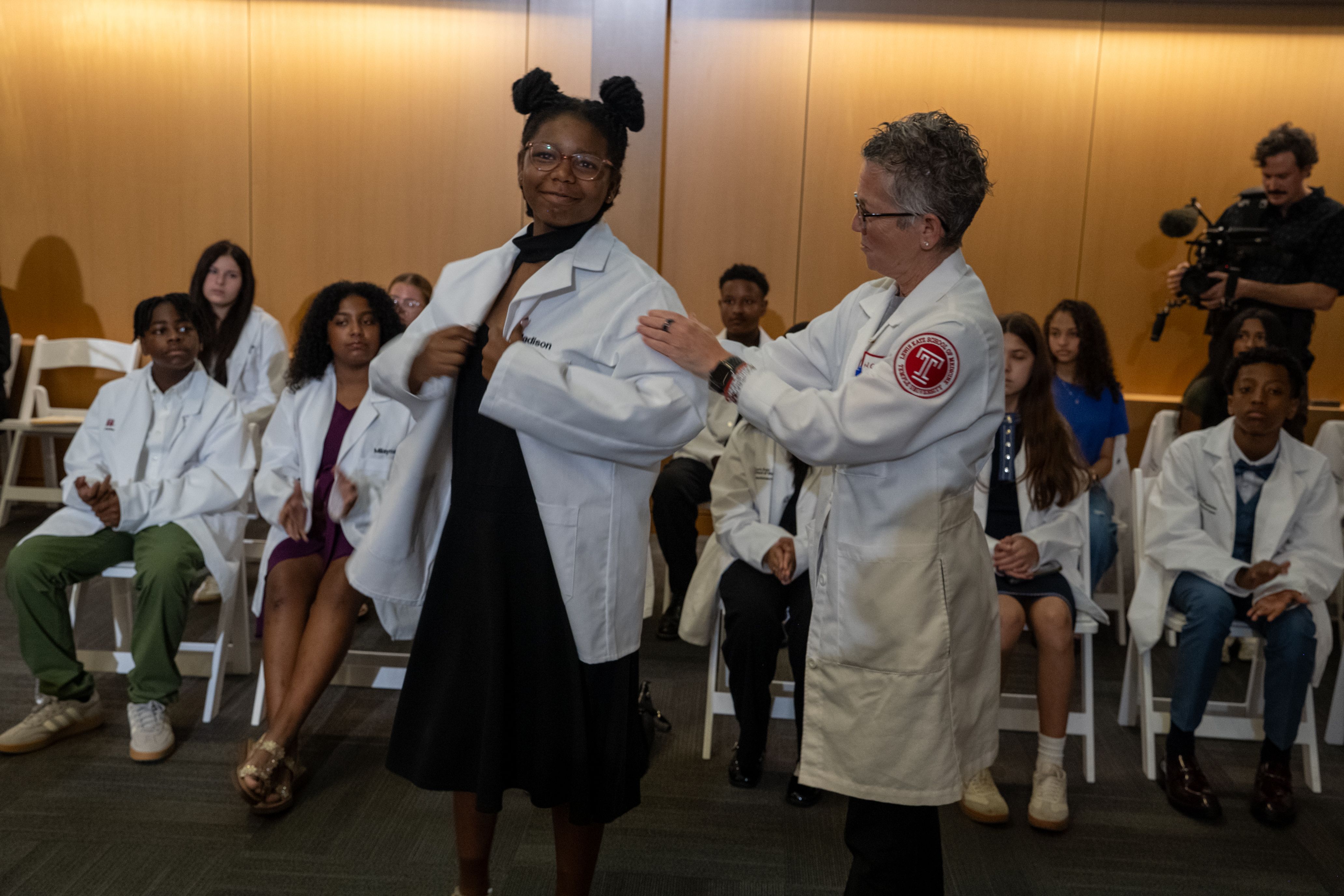
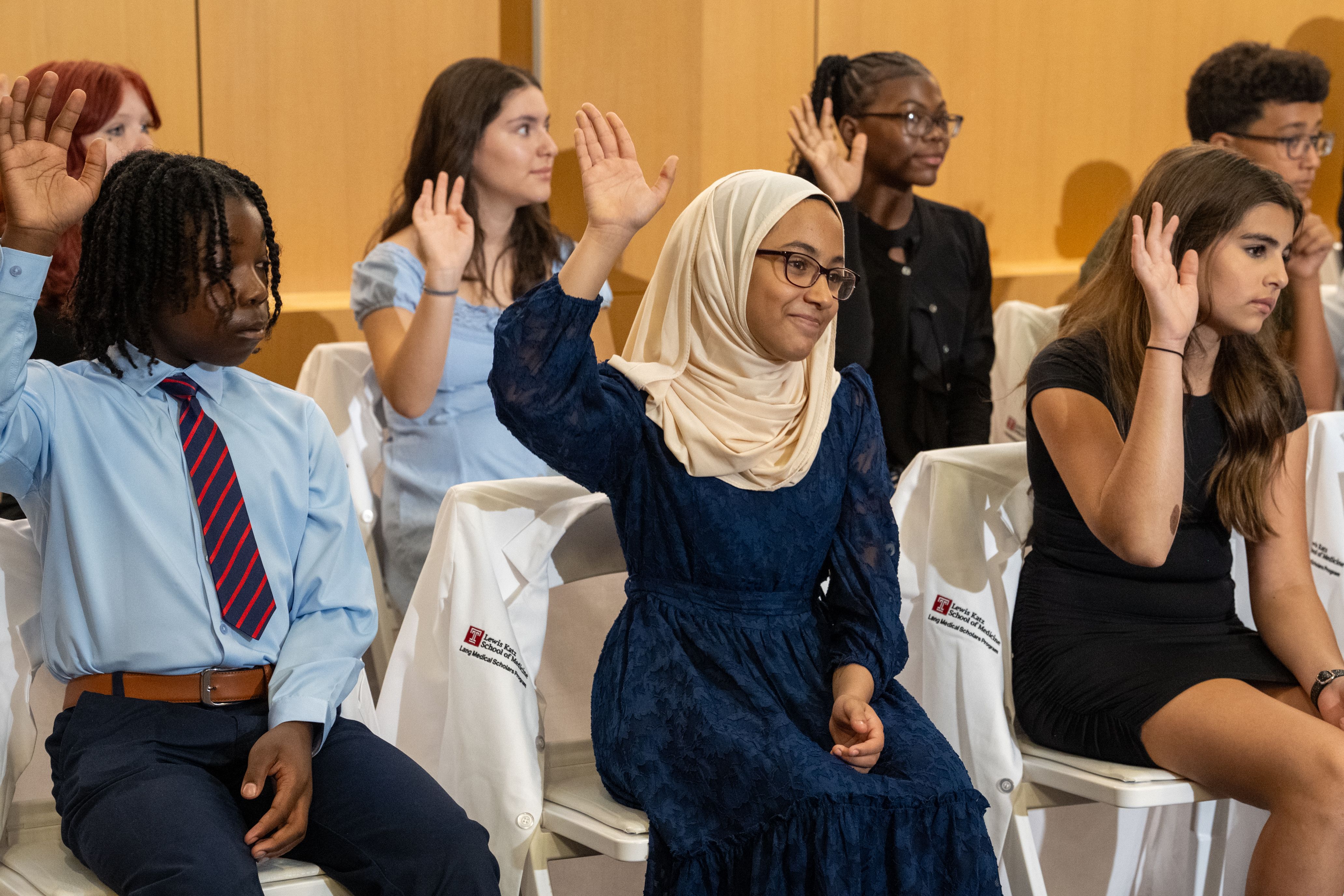
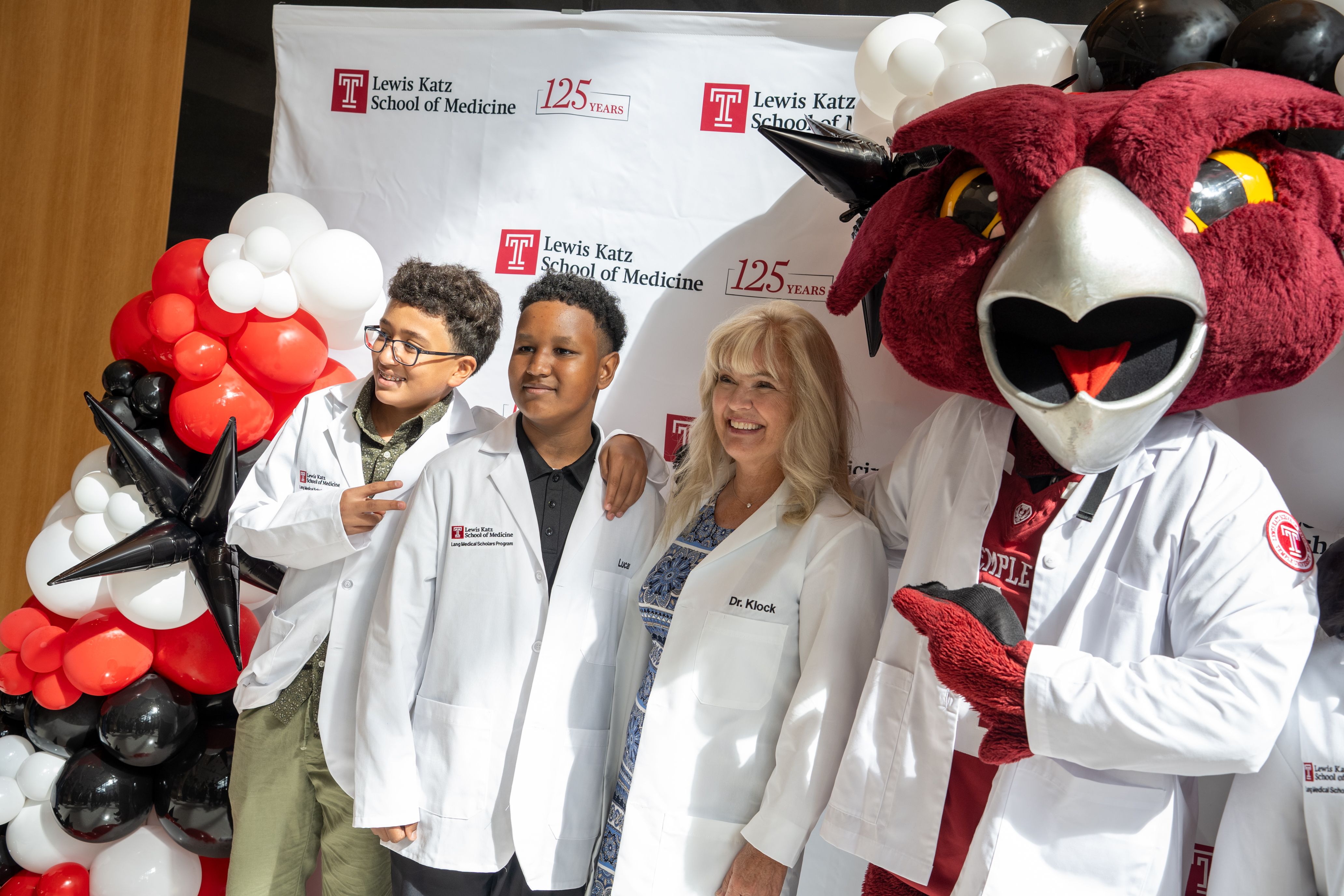
    This month, Glasco’s daughter Madison Miller slipped a white coat over her shoulders, one of 32 Philadelphia seventh graders chosen for the initial class of Temple University’s Lang Medical Scholars Program. The 12-year-old, a student at E.W. Rhodes Elementary at 22nd and Clearfield Streets, will spend weekends and summers learning about systems of the body, completing internships, and engaging in rigorous college prep.

    Seventh graders in Temple University Medical School’s Lang Scholars program prepare to get their white coats. The new program identifies promising students and gives them six years of pre-medical school education.Courtesy of Temple University

    “This is a big deal,” said Glasco, who dreams of buying Madison scrubs and a stethoscope, tangible evidence of her place in Lang Scholars and the doors it could open.

    “The passion around this, the mission is just — talent abounds and opportunity does not, right?” said Barbara Klock, the program director and its architect. Lang, she said, aims to change that for its students.

    A long-held vision

    Klock carried the idea of the Lang Scholars around for years, through a career as a Children’s Hospital of Philadelphia pediatrician and the Philadelphia School District’s chief medical officer.

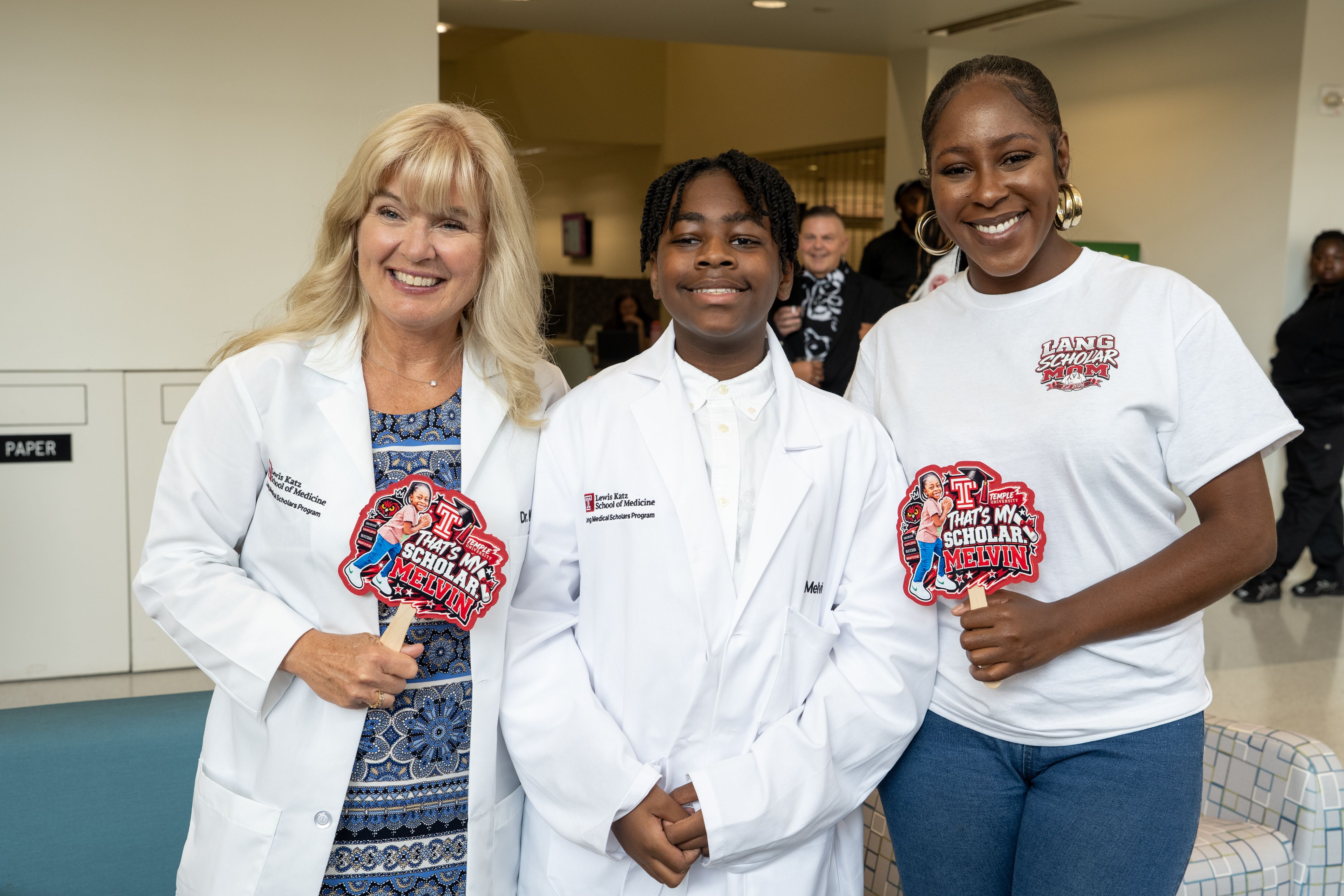
    Melvin Poulson IV, a student at Hope Partnership School, and his mother, Allison Agee, pose with Barbara Klock, director of the Lang Scholars program.Courtesy of Temple University

    Klock, who grew up in Philadelphia’s working-class Juniata Park section, was mentored by Eugene Lang at Swarthmore College. Lang, a businessperson and philanthropist, famously promised a class of Harlem sixth graders that he would pay for their college educations if they graduated from high school.

    Lang and Klock kept in touch after her Swarthmore graduation, and on one chance encounter at 30th Street Station in the 1990s, Lang mentioned to Klock that he was launching something he was really excited about.

    “He said, ‘I have this idea for a program, but the kids start really young.’ He was always, ‘If you’re going to do something, it’s got to be the best,’ and for him, the best would be going to medical school,” Klock said.

    That program, the Lang Youth Medical Program, has been thriving in New York for decades. Klock admired it from afar, and, sometimes, up close.

    “I would go on Saturdays and see the program with the dream of bringing it to Philadelphia,” she said.

    Klock decided it was time to go for her own version of that program in 2024. She reached out to Mitchell Morgan, chair of Temple’s board of trustees, via e-mail.

    “I said, ‘I have this program. I would love to bring it to Temple,’” Klock said. “I wanted to do this with Temple because of where Temple is located, Temple’s mission and vision, and they really do what they say they do.”

    Temple University Lang Scholars white coat ceremony.Courtesy of Temple University

    She expected she might hear from Morgan within three weeks. Instead, she had a response, and a connection to Lewis Katz School of Medicine dean Amy Goldberg, by the end of that day.

    In short order, the program was off and running, with Temple’s backing and philanthropic support, including some funding from Lang’s private foundation.

    Klock pounded the pavement in the 2025-26 school year, reaching out to every Philadelphia school she could connect with — district, charter, private — to ask: Can I come talk to your sixth graders about an idea? Thirty-five schools opened the door for Klock to make presentations.

    She didn’t ask counselors to recommend kids; she feared she would get only straight-A students and student council presidents. Those were fine, but she also wanted the bright-but-bored kids, the ones who were curious about science and life but maybe had hit a few bumps along the way.

    Klock hoped to bring in 20 Lang scholars for the inaugural class. Nearly 14 times that number applied, and those who made it to the interview round flat-out wowed her, Klock said. She ended up getting permission to build a class of 32 — 22 girls and 10 boys — and will grow a grade every year.

    The program’s aim is not to produce a class full of doctors. It is to produce a class full of curious and confident learners grounded in an academic medical setting. If some enter the medical field, Klock would be delighted, but that is not the main objective.

    “These are kids who are so eager to learn,” Klock said. “They want to be with other students who are eager to learn. They are incredibly curious. They ask, ‘why?’ and ‘what if?’ What I want to do is give them the chance to continue to ask, ‘why?’ and ‘what if?,’ no matter what.”

    ‘This is serious’

    Glasco was tipped off about the program by a teacher friend.

    Madison first expressed her desire to become a doctor at age 3. Her preschool teacher has a photo of Madison holding a sign stating her career goal.

    “She wants to be in the medical field, and I used to be in the medical field, so it’s actually perfect,” said Glasco, who used to work as an EMT and a medical assistant and is now a paraprofessional in a suburban school district.

    It’s not far from her North Philadelphia house to Temple’s medical school, Madison said, but walking into the Medical Education and Research Building on North Broad Street felt like a different world in some ways.

    Going to the interview was “very exciting,” Madison said, “but I was also very nervous. There were a lot of windows, and I could see everyone.”

    When she got the word that she was a Lang Scholar, Madison was thrilled.

    “My teacher was really excited, too, because he knew I was going to be in the medical field soon — kind of in medical school, like college,” Madison said. “My friends were really excited because they knew they were going to have a medical friend.”

    Madison and the other Lang Scholars received their professional white coats to kick off the program on Sept. 19. They will begin their studies Oct. 3. Klock will teach the biweekly courses on the human body, health equity, public health, and more.

    Over the years, the students will take trips, work at paid internships, sit in SAT prep courses, and receive help with college applications — all for free. They will dive into the health issues facing their communities, and have access to the same labs and facilities as Temple medical students.

    Glasco cannot wait to drop Madison off for her first day of class as a Lang Scholar.

    “I’m going to be on her really hard about this, because this is serious,” Glasco said. “I want her to get all the knowledge she can, and maintain it, so she can go further in whatever medical field she decides to do in the future.”

  • PSSA scores are still missing in Philly, but the district won’t go test optional – school board roundup

    PSSA scores are still missing in Philly, but the district won’t go test optional – school board roundup

    Leo Stober, an eighth grader at Science Leadership Academy Middle School, is frustrated. He’s thinking about applying to selective Philadelphia School District high schools, but the process is now stymied by what officials said was a delay in the release of state test scores.

    So Leo sat in front of the Philadelphia school board Thursday night to air his concerns.

    Not having access to scores “is quite frankly disrespectful, not only to the students, but also to the teachers,” Leo said.

    Students are anxious to hear how their 2026 PSSA performance will shape the schools open to them, and teachers need the scores “to find which students need extra help on certain assignments,” he said.

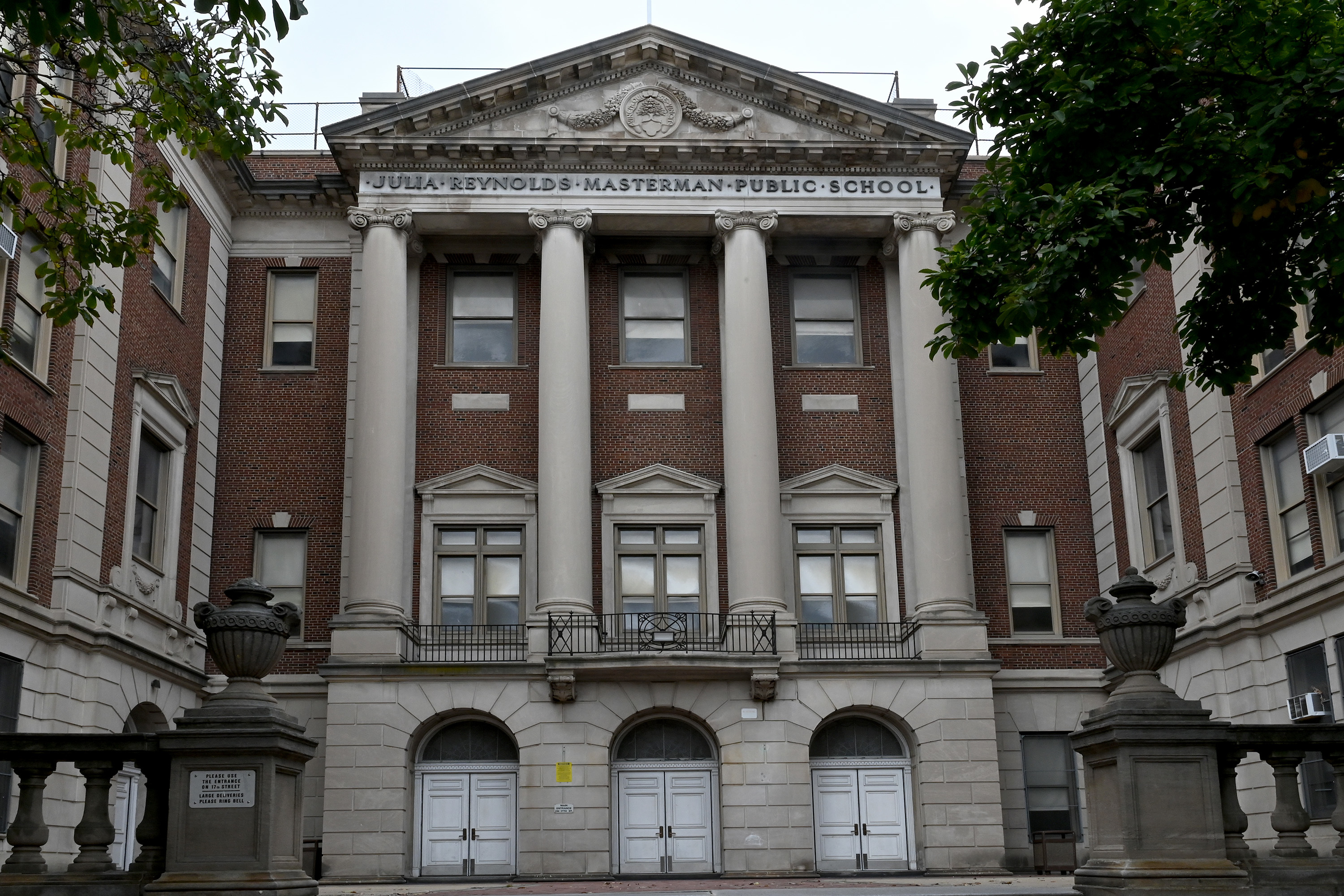
    A student’s test scores determine which schools they’re eligible to apply to: Central and Masterman require scores in the 80th percentile to apply, for instance.

    The district’s school selection process was supposed to open Sept. 8. Superintendent Tony B. Watlington Sr. pushed it back to Oct. 5, blaming the change on the state’s public release of PSSA test results.

    The Pennsylvania Department of Education sent preliminary scores to districts and schools in the spring, as it always does — one charter school official told the school board she received her early test results on June 10.

    But Philadelphia appears to be alone in the state in withholding scores from nearly all of its employees. Watlington, who has placed a high public priority on the district being the fastest-improving large urban district in the U.S., has said the delay ties to PDE pushing back its release of final statewide data to districts.

    Watlington said Thursday night that scores won’t be available when the application window opens in a week and and a half, but said he realizes “that changing the timeline may require families to adjust their plans, and we absolutely appreciate their patience as we work through this.”

    Scores will be available by the time the application window closes, on Nov. 24, Watlington said.

    Central and Masterman are only two of the 37 schools that require scores.

    Scores in the 65th percentile qualify students for Academy at Palumbo, George Washington Carver High School of Engineering and Science, Parkway Center City Middle College, and Northeast High’s International Baccalaureate and magnet programs. Other schools require scores in the 50th percentile or better.

    A student board representative asked Watlington if the shift would cause the district to consider going “test optional” — allowing students to decide whether they want to submit standardized test scores, or withhold them.

    “We’re not going to test optional,” Watlington said. “We will likely continue with what we’re doing.”

    $600,000 for a Kensington High project fix

    In other matters, the board voted unanimously to ratify — formally approve a contract that was already awarded — a $600,000 deal with a firm now charged with monitoring construction work at Kensington High.

    Hunter Roberts Construction Group is providing independent oversight and monitoring of the work at Kensington, which has been plagued with problems.

    Errors on an HVAC project at Kensington caused asbestos damage that forced the district to close the building to students, who had to be moved to a closed middle school in the Northeast, over some neighbors’ objections.

    The contractor “is expected to comply with applicable federal, state, and local laws and regulations, including, but not limited to, legal requirements for the proper abatement and disposal of asbestos and/or any other hazardous material,” the board resolution approving the contract said. Hunter Roberts began work on the project on Aug. 27, according to the documents.

    Last year, the district was criminally charged over its past handling of asbestos at city schools. After a yearslong secret probe, the school board signed off in June 2025 on a deferred prosecution agreement that comes with strict federal scrutiny of its environmental management.

    Philadelphia was the first school district in the U.S. that faced criminal charges for environmental violations.

    Hunter Roberts’ contract on the Kensington project runs through 2028.

    9.5% raises over 3 years for 32BJ

    The board also gave final approval to a contract for 32BJ, the union representing district bus drivers, cleaners, building engineers and tradespeople.

    The pact gives 32BJ’s 2,000 members 9.5% raises over three years. They’ll also get $2,350 in bonuses and 25 paid days off after the birth of a child – the first time parental leave was granted to those workers.

  • Girls’ High students protested overcrowding, including multiple classes with 50-plus students

    Girls’ High students protested overcrowding, including multiple classes with 50-plus students

    Sa’Mya Cook is a bright, eager 10th grader at the storied Philadelphia High School for Girls, but second period is tough for everyone.

    Cook is crowded into a classroom with 50 other teenagers. It’s hot, and there are not enough desks, with spillover students grabbing seats in folding chairs lining the classroom.

    “It’s too much,” Cook said of her Girls’ High African American history class. “My mom offered to take me out, she said it’s a fire hazard.”

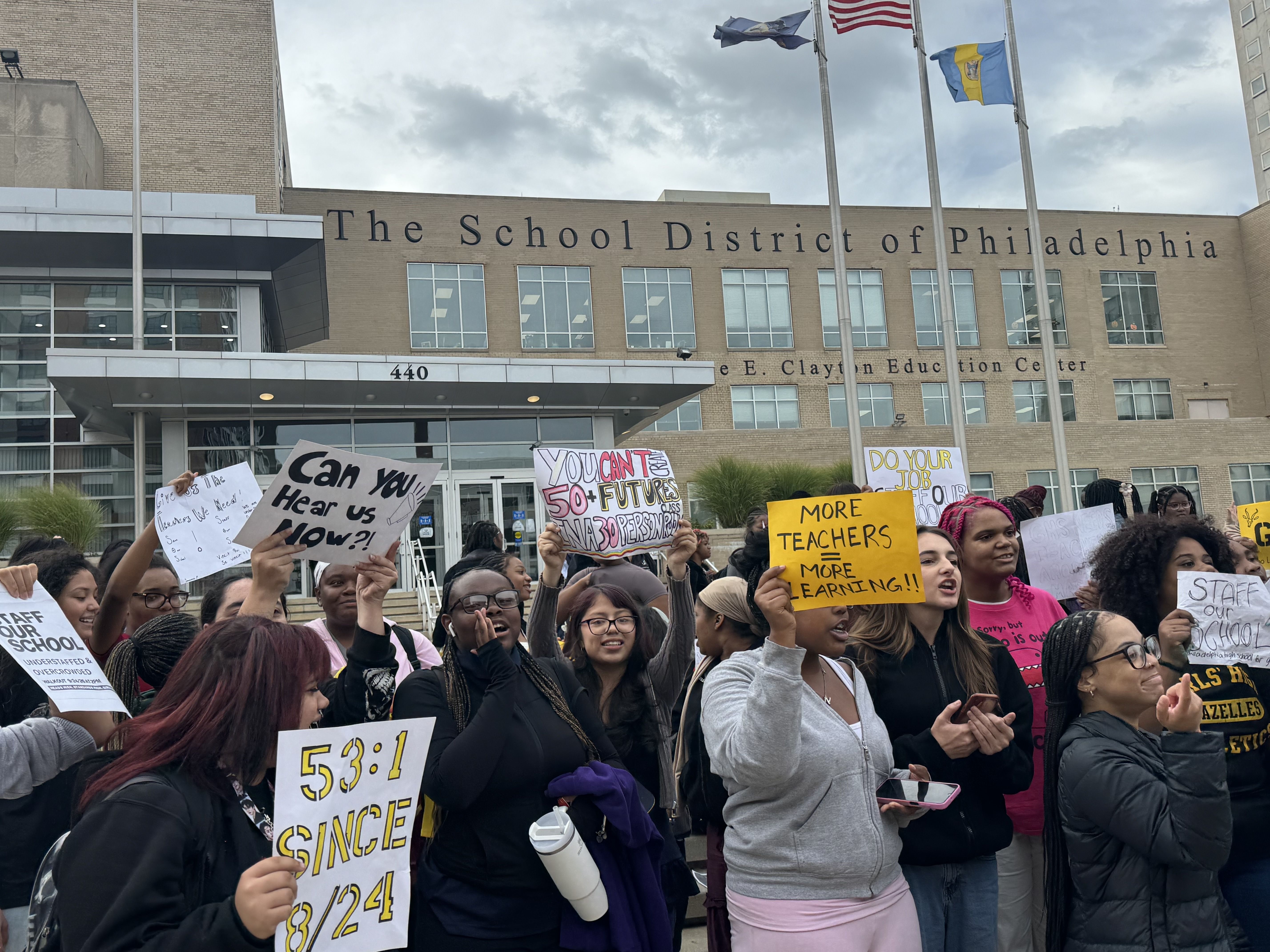
    Cook and 150 of her classmates converged on Philadelphia School District headquarters Thursday to protest conditions at their school, a magnet where rising enrollment has not been met with matching resources, students and teachers said.

    Girls’ High lost enrollment for several years. But, under Principal KaTiedra Argro, the school has reversed the trend. (The school had nearly 900 students in 2022-23, and nearly 600 last school year.)

    As early as April, Girls’ High projected a bumper 9th-grade crop for 2026-27. But the staff allocated by the central office was inadequate, those inside the school said.

    “This is not OK,” said Brooklyn Robinson, a Girls’ High 9th grader. “I am saying this because there is one teacher teaching two classrooms worth of students. We cannot hear the teacher over the amount of students that are conversating in a class. We are not fish in a barrel.”

    Superintendent Tony B. Watlington Sr., addressing the Girls’ High students at a Thursday evening school board meeting, said he would ensure fixes.

    “We want more schools to grow their enrollment, and I was not aware of the class size imbalance, but it will get immediate attention,” Watlington said.

    Students and teachers said they were not presenting new information — they had begun taking their concerns to Watlington’s team shortly after school began on Aug. 24.

    “I hope this can be a teachable moment for us when the enrollment does grow,” said school board president Reginald Streater.

    Nowhere for students to sit

    Though the Girls’ High students secured promises of relief, they were clearly frustrated that the process had taken this long, and wary of the district’s promises.

    “It’s been like this for a month,” 11th grader Jazaiah Smith said. “Nothing has changed.”

    Huge classes tax students and teachers, said Smith.

    “There’s not even enough room for everyone to sit — we have to sit on the floor,” she said.

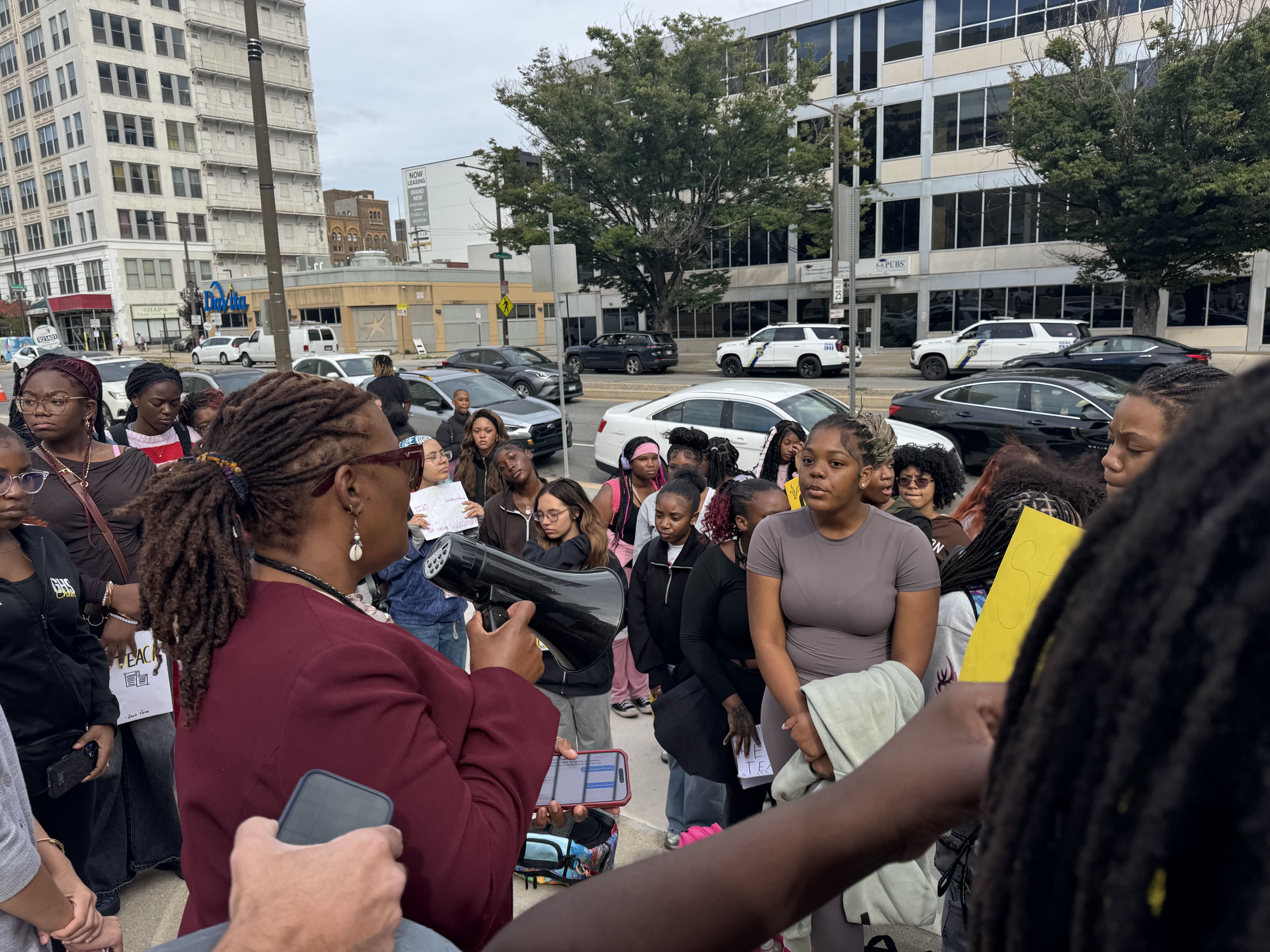
    Philadelphia School District Deputy Superintendent Brenda Elliott (center, holding megaphone) speaks to Girls’ High students who came to district headquarters to protest overcrowded conditions at the school.Kristen A. Graham / Staff

    Prior to the board meeting, Brenda Elliott, Watlington’s deputy superintendent for academics, waded into the crowd of Girls’ High students gathered outside district headquarters to offer assurances.

    After getting precise enrollment counts, the district added two teachers to Girls’, Elliott said, but has not been able to change students’ schedules to add classes because a new roster chair was unable to complete the work. Central office support should arrive Friday, Elliott said.

    “The report I received was that all of the positions had been added,” Elliott said.

    Students holding signs that said “53:1 since 8/24″ and ”Gazelles, Not Sardines,” a nod to the Girls’ High mascot, the gazelle, shook their heads.

    “We shouldn’t have to come up here and do this to get answers,” one student shouted at Elliott. “That’s ridiculous!”

    Students and teachers said there’s been shifting, inconsistent messaging from the district on how much help is forthcoming, and when it will arrive.

    Nyjera Choice, a 10th grader, has Advanced Placement (AP) African American history, a class with 40 students. Under district policy, classes are supposed to be capped at 33 students.

    The overcrowding “affects learning,” Choice said. “It affects how you focus. There’s students not receiving the proper attention that they need. We’re the next generation of Philadelphia leaders, and we expect better.”

    Christopher Canary, a history teacher who has several oversized classes, including one with 53 students, said luckily, classroom management isn’t a problem for him, even in rooms that have nearly double the number of students they should.

    “But the students are being shortchanged,” Canary said. “They have to rely on a 50th of my attention, when they deserve more.”

    Canary said he is frustrated that when Girls’ delivered on the district’s challenge to enroll more students, the district failed it — and even, for a time, said it was cutting at least one AP class to fix the issue. (It has since reversed that decision.)

    For nearly 180 years, Girls’ High has promised young Philadelphia women an excellent education.

    “And now that our new administration has done what they thought impossible, reigniting public enthusiasm for Girls’ High and miraculously raising enrollment to levels not seen in years, the district has refused to provide us with the staff necessary to adequately serve those students,” Canary said, “effectively setting us up to fail.”

  • Activists fooled by Hannah Gann want Philly schools to hold her accountable for hurting students

    Activists fooled by Hannah Gann want Philly schools to hold her accountable for hurting students

    The teacher activists who organized alongside Hannah Gann want accountability on behalf of the vulnerable students who believed the Philadelphia School District teacher was someone she was not.

    “We hope the district will take the necessary steps to hold Hannah accountable for the harm she caused, prevent any further harm to students, and provide meaningful support to the students and school community as they process what occurred,” the Racial Justice Organizing Committee and Philly Educators for Palestine said in a statement.

    Gann, who works at the Workshop School, a project-based high school in West Philadelphia, claimed for years that she was Palestinian and Black. After direct questioning, Gann admitted she is a white, Jewish woman and the relative of Israeli settlers.

    Ultimately, Gann acknowledged she is “a white woman of significant privilege and wealth.”

    Gann was a key member of both organizing groups — which are made up of district teachers but unaffiliated with the district. She led teach-ins after the Oct. 7, 2023, Hamas-led attacks on Israel, decrying “scholasticide” in Gaza and defending Keziah Ridgeway, a Philadelphia teacher who was disciplined by the district over her private, pro-Palestinian social media posts. (Ridgeway has since sued the district, alleging anti-Islamic bias.)

    Gann’s deception has earned national attention and comparisons to Rachel Dolezal, the scholar and former NAACP official who had claimed to be Black. Racial Justice Organizing Coalition and Philly Educators for Palestine members, in the statement, said they understood why the matter is receiving attention, “but for us, it is not a spectacle. The emotional harm is real and palpable for the people who knew, trusted and worked alongside, and learned from Hannah.”

    Most important, the Philadelphia activists who once claimed Gann as a friend and colleague said, the focus needs to be on her students.

    Gann remains employed by the district, teaching students at a majority-Black school who viewed her as a trusted adult, someone who helped them create community and feel protected, the Philly organizers said.

    “Finding out that someone who taught them about identity and belonging had been dishonest about her own identity could deeply damage their trust in her and other adults,” the committee said.

    The school system has said it does not comment on personnel matters, but noted that it made support available to any Workshop student or employee who needed it.

    Blackness, the groups said, “cannot be donned as a costume. Black and Palestinian identities, grief, and genocide are not identities or experiences that anyone has the right to adopt for credibility, access or belonging.”

    Gann “could’ve easily been an invaluable ally to these communities without lying about who she was,” the groups said.

    Gann has not commented beyond a 10-minute video posted to her Instagram account in which she admitted to the deception.

    “I hid my family’s background from everyone in Philly and also hid from the people in my own family what I was doing,” she said, adding that she believed in the causes she fought for despite her deception.

    Gann said she “allowed half-truths and obfuscations to grow into outright lies.”

  • A Philadelphia teacher pretended to be Black and Palestinian, ‘a betrayal’ of the activists she supported

    A Philadelphia teacher pretended to be Black and Palestinian, ‘a betrayal’ of the activists she supported

    A Philadelphia teacher is being called the “Palestinian Rachel Dolezal” after being caught lying about her background — a deception that has stirred strong emotions in education and racial justice organizing circles.

    Hannah Gann, a veteran Philadelphia School District educator, has claimed at times to be Palestinian and Black, and was so outspoken a mobile billboard once parked outside her school calling her “Philadelphia’s Leading Antisemite.”

    But Gann, it turns out, is white and Jewish, and lied about her identity for years.

    “Members met with Hannah and questioned her about her background on Thursday and after an hour of discussion, Hannah finally admitted she lied,” the Racial Justice Organizing Committee and Philly Educators for Palestine said in a statement. Gann had been a visible member of both groups. “We asked her to publicly acknowledge that she is a white woman of Jewish heritage and an Israeli settler family.”

    The groups are “stunned, saddened and angered by this betrayal,” their statement said. They said they have permanently cut ties with Gann.

    Gann, in an Instagram post, admitted the yearslong fabrication. She said she was “a white woman of significant privilege and wealth.”

    “I hid the truth or outright lied about my background to everyone in my life,” Gann said in a video post. “There is not a single person on this planet, no friend, no fellow organizer, no one in my family, no professional connection, no secret op or handler who knew what I was doing. I hid my family’s background from everyone in Philly and also hid from the people in my own family what I was doing.”

    Gann said she “allowed half-truths and obfuscations to grow into outright lies,” but that she “genuinely wanted to commit to the work I was doing in spite of those lies.”

    Gaining the trust of youth and activists

    Gann, who teaches at the Workshop School, a project-based Philadelphia School District high school, was front and center in education activism work after the Oct. 7 Hamas-led attacks on Israel.

    In 2024, for instance, Gann participated in a West Philadelphia “teach-in” on “scholasticide” — the destruction of educational infrastructure — in Gaza. Her biography for that event identified her as a Palestinian American.

    And Gann was a leading voice in defending Keziah Ridgeway, a fellow Philadelphia teacher who was disciplined by the district over her private, pro-Palestinian social media posts. (Ridgeway has since sued the district, alleging anti-Islamic bias.)

    According to a document compiled by the Philly Palestine Coalition and obtained by The Inquirer, Gann has made frequent references to Palestinian family, including a Palestinian-born grandfather whom the PPC found was actually born in Baltimore, citing historical draft records and her great-grandfather’s U.S. naturalization papers. Her family abroad live in Israel, according to the group’s extensive, footnoted research.

    Gann told people she was low on money because she was sending cash to family in Palestine, according to the PPC document. Some people sent her money as a result. A University of Pennsylvania classmate of Gann’s said she was known in college “as a self-proclaimed white Jewish woman with family in the occupied West Bank. I watched her sudden transformation after she returned to Philly from the Peace Corps [in Rwanda]. She was clearly making herself look darker using makeup and fake tan, and speaking using [African American Vernacular English.]”

    The PPC research document noted that Gann “is a teacher of predominately Black youth. She has gained the trust of young people on the basis of a sense of shared oppression. She has served as a mentor to at least one young white person who was manipulated by Hannah on the basis of a fake identity. Her access to vulnerable young people, especially Black youth, is deeply concerning, given her pattern of lying and manipulation.”

    Monique Braxton, a district spokesperson, said the school district was “aware of social media posts concerning a district employee and her involvement with an outside advocacy organization. These posts reference the employee’s involvement in an external group.”

    The district is making support available to any affected Workshop School staff and students, Braxton said. As for possible consequences for Gann, Braxton said she could not comment on personnel matters.

    Gann’s “deception has compromised the safety and security of our movement, with disproportionate harm caused to Palestinians involved in this coalition. This pattern of deceit has rattled many organizers across PPC and allied groups, especially Palestinians, fellow teachers, and individuals who have been engaging with her closely under false pretenses.”

    ‘Aggravating, infuriating, and enraging’

    Sharif El-Mekki, a prominent Philadelphia educator and founder of the Center for Black Educator Development, said a person doesn’t have to be Black or Palestinian to support those groups.

    “But honesty is the price of entry,” El-Mekki said in a social media post. Gann’s lies are “aggravating, infuriating, and enraging,” El-Mekki said, in part because “she gets to apologize after being exposed and, eventually, return to the privilege she had all along. Actual Palestinians, Muslims, Arabs, Black people, and African people do not get to put down their identities when the consequences arrive. They cannot opt out of the suspicion, surveillance, hostility, or professional consequences attached to who they really are.”

    Gann’s misrepresentations will have real consequences for Black and Palestinian people, El-Mekki said — they’re likely to face more scrutiny because of her lies.

    “They will be asked to prove themselves again,” El-Mekki said. “Their grief will be questioned. Their politics will be treated as suspect. Their criticism of the Israeli government may be distorted into antisemitism. Their opportunities may be threatened because someone else chose to use their identities as a costume.”

    Gann acknowledged these realities in her video message.

    “The fact that I lied about who I was does not mean anyone else who speaks up for Palestine is lying and does not erase the urgency of listening to voices on the ground … This also extends to the genocide and humanitarian crisis in Sudan that far too many are ignoring, the genocide in Congo, the mortally urgent need to address ICE and police brutality here as well as the prison industrial complex, imminent Philly school closings, and more. It probably has little value to hear me say this, but please do not disengage from any of these vitally urgent causes or others you care about based off my dishonesty.”

    Local social media has been abuzz about Gann’s deception.

    “Is this the first Palestinian Rachel Dolezal?” a poster asked on Reddit, invoking the name of a white former NAACP president who lied about being Black.

    “I first and foremost express deep empathy for the Palestinian people and this violation of security and trust,” one observer said on Instagram. “I reject this level of wretched disrespect and trivialization.”

  • Philly’s school bus drivers, cleaners, and maintenance workers are getting 9.5% raises in a ‘life-changing’ contract

    Philly’s school bus drivers, cleaners, and maintenance workers are getting 9.5% raises in a ‘life-changing’ contract

    Philadelphia School District school bus drivers, cleaners, and building engineers have approved a new contract — and will get 9.5% raises over the three years of the deal.

    Workers, who met to vote in person at Benjamin Franklin High on Friday, will also get $2,350 in bonuses.

    The contract provides the first-ever parental leave for 32BJ members — 25 paid days off after the birth of a child, effective Jan. 1. That perk mirrors the Philadelphia Federation of Teachers’ contract, signed last summer.

    Other details include a pay bump for maintenance mechanics performing asbestos work, more career-advancement opportunities, and protections against subcontracting.

    32BJ SEIU District 1201 represents 2,000 employees who are among the lowest-paid in the district. The contract was approved Friday by a vote of 800-80.

    Tim Finucan, 32BJ’s state director, called the contract “life-changing” for the union’s members.

    “The wage increases, healthcare protections, and other gains recognize the essential contributions these workers make to our schools and communities,” Finucan said in a statement Monday. “We appreciate the district’s partnership in reaching an agreement that will help workers keep pace with rising costs, create opportunities for career growth, and attract and retain talented employees for years to come.”

    Members’ current pay scale ranges from bus attendants, who are paid $30,762 annually under the existing contract, to building engineers, whose pay rate starts at $51,155 and tops out at $77,832. The union’s best-paid employees are building construction workers, whose salary maxes out at $77,832.

    Tradespeople — bricklayers, HVAC mechanics, electrical mechanics, plumbers, and roofers — receive $62,899 at the top of the pay scale.